Tag: RFK ASSASSINATION

  • Patrick Nolan, CIA Rogues and the Killing of the Kennedys


    The assassination of John F. Kennedy is probably one of the most written about events in 20th century American history. So given that this year marked the 50th anniversary of that tragic day, it was perhaps inevitable that we would see a deluge of books on the subject. There are some good new ones, like Jim DiEugenio’s Reclaiming Parkland, and some worthy reissues such as Gaeton Fonzi’s The Last Investigation and Harold Weisberg’s Whitewash. But, as many feared would be the case, these volumes appear to be outnumbered by books that add little or nothing to our understanding and, by and large, are being published simply to capitalize on the hoped-for resurgence of interest that such anniversaries typically bring. Dale Myers seems particularly interested in squeezing as many more pennies as possible out of the anniversary, reissuing his Tippit book, With Malice, at a whopping $65 dollars a pop – $75 if you want the honour of his Emmy award-winning autograph.

    With a personal JFK assassination library of around 100 books, I long ago stopped buying every new one to hit the shelves. Instead I save my time, money and shelf space for those books that look as if they might actually offer some genuinely new information or insight. Consequently, when I first saw CIA Rogues advertised on Amazon, I added it to the mental list of books I wouldn’t be purchasing. After all, the conclusion that rogue elements of the CIA had conspired to kill the Kennedy brothers is hardly a new one. The late, great Jim Garrison had first publicly suggested that JFK was murdered by “men who were once connected with the Central Intelligence Agency” in his NBC address on June 15, 1967. And he predicted soon after that JFK’s brother would be a victim of the same sinister forces who killed the president. Since then, a good number of writers have followed in Garrison’s footsteps and reached the same conclusion. So I expected to learn very little from CIA Rogues. However, I did note that the foreword was provided by renowned forensic scientist Dr. Henry Lee, so I checked out author Patrick Nolan’s web page. There I found the claim that CIA Rogues “is based on interviews and/or correspondence with world-renowned forensic scientist Dr. Henry C. Lee, and other notables including Kennedy aide Arthur M. Schlesinger, Jr., former FBI agent William W. Turner, Sirhan attorney Larry Teeter, RFK assassination expert Judge Robert J. Joling, and University of Massachusetts Professor Philip H. Melanson, among others.” Well, I think most would be impressed by that list. So I ordered the book.

    As it turned out, I should have trusted my initial instincts. CIA Rogues is not in any real sense based on “interviews and/or correspondence” with those named above; it is based on their published books. Checking his source notes, I came across only two references to original interviews conducted by Nolan. Almost all of his remaining 1,654 citations are to secondary sources. Talk about misleading! I had expected his treatment of the forensics would be based on new work by Dr. Lee but was disappointed to discover that it is largely derived from Josiah Thompson’s book, rather old Six Seconds In Dallas. Not that there is anything wrong with Six Seconds, but it was published in 1967 and even Thompson himself has since abandoned one of the primary tenets of its reconstruction of the assassination. So I believe it’s fair to say that there is little if anything new in CIA Rogues and, therefore, I see little point in offering a lengthy summation or critique of most of its content here. What does need addressing is Nolan’s central thesis, which is that both Sirhan Sirhan and Lee Harvey Oswald were victims of the CIA’s MKULTRA project.

    For those who don’t know, MKULTRA began in 1953 at the suggestion of Richard Helms as a project aimed at finding ways to control human behaviour. Under the direction of Helms and Technical Services Division Chief, Dr. Sidney Gottlieb, the Agency experimented with everything from sensory deprivation and electroshock therapy to LSD and hypnosis. Perhaps the most shocking aspect of MKULTRA is that many of these experiments were conducted without the knowledge or consent of the test subjects. As Nolan writes, the CIA chose “prisoners, foreigners, prostitutes, mental patients, and drug addicts…because, due to their social and economic circumstances, they typically would have little recourse if they discovered the true nature of their predicament.” (p. 19) Much documentation was lost in 1973 when Helms ordered the destruction of all MKULTRA files – approximately 20,000 records survived because they had been stored in the wrong building – so a full understanding of the scope of MKULTRA is probably not possible. However, it is widely believed that one goal of the program was the creation of a “Manchurian Candidate”. That is, a “hypno-programmed” assassin. One surviving CIA document from 1954 does mention finding ways to get a subject “to perform an act, involuntarily, of attempted assassination against a prominent [redacted] politician or if necessary, against an American official.” (Lisa Pease, The Assassinations, p. 533)

    When he was interviewed by author Dick Russell, Gottlieb denied that creating brainwashed or hypnotized assassins had been an aim of MKULTRA and suggested that such a thing wasn’t actually possible (On The Trail of the JFK Assassins, p. 242). But there’s every reason to believe it is. In 2011, British mentalist/hypnotist Derren Brown produced a series of TV shows called The Experiments, the first of which was titled The Assassin. In it, Brown took a volunteer through a series of hypnosis sessions which the volunteer believed were intended to make him a superior marksman. In reality, Brown was programming him to commit an assassination against his will of which he would have no memory. The show culminated with the unwitting gunman firing blanks at British comedian and TV personality, Stephen Fry, in front of a packed and unsuspecting auditorium. After watching The Assassin, the viewer is compelled to conclude that a mind-controlled assassin is a shockingly real possibility.

    It has long been believed that Sirhan’s behaviour before, during, and after the shooting of Robert Kennedy is highly suggestive of hypno-programming. Witnesses recalled that during the assassination Sirhan looked detached and tranquil. One of those who helped wrestle him to the ground, George Plimpton, said that Sirhan’s eyes appeared “enormously peaceful.” (Nolan, p. 253) Others reported a “sickly” smile on his face. (Pease, p. 579) More importantly, to this day, Sirhan claims and indeed appears to have no memory of shooting his pistol at senator Kennedy, or even of being in the kitchen of the Ambassador Hotel. Even under hypnosis, Sirhan has been unable to recall the assassination. When Sirhan’s defense team hired psychiatrist Dr. Bernard Diamond to put him under, he discovered signs that Sirhan had been hypnotized numerous times before. As Nolan writes, Diamond “was also struck by how reliably Sirhan would perform in a waking state what had been suggested to him under hypnosis, without recalling having been told to perform and without recalling having been hypnotized.” (Nolan, p. 269) After Sirhan was convicted and sent to San Quentin Prison, the chief psychologist there, Dr. Eduard Simson-Kallas, undertook to discover whether or not Sirhan’s amnesia was real. He ended up convinced that Sirhan had no memory of the assassination and that he was “prepared by someone. He was hypnotized by someone.” (p. 274) So it’s fair to say that there are good reasons for believing that Sirhan was indeed hypno-programmed.

    However, because Nolan wants to put MKULTRA at the centre of both assassinations, he wants to postulate that Lee Harvey Oswald was also a “hypno-programmed patsy”. Unfortunately for him, there is simply no credible evidence to support this belief and, try as he might, Nolan is unable to cobble together a convincing case. He writes of Oswald’s alleged “mood swings and irritability” which he says are “symptoms of hypno-programming”. (p. 92) He sources these “mood swings” to page 269 of Sylvia Meagher’s Accessories After the Fact, in which she includes a story of Oswald complaining about overcooked eggs at the Dobbs House Restaurant. This is hardly convincing stuff. Of course, there are allegations that Oswald beat his wife, Marina, but many of these were made by Marina herself after she was put under intense pressure to tell the authorities what they wanted to hear. As Nolan himself notes, in her earlier interviews, Marina described Lee as “a good family man” (p. 110). It wasn’t until after she was threatened with deportation that the Russian-born widow’s stories began to evolve. So these are open to question. And how would this prove Nolan’s thesis anyway?

    Further “symptoms” of Oswald’s supposed programming according to Nolan are “his rapid speech while lecturing as if by rote, and automatic writing”. (p. 110) In support of the first “symptom” he cites “a three-hour lecture on American policies regarding Cuba” that he says Oswald gave at a dinner party with “Dallas’s White Russian community.” (pgs. 110-111) When we check his source, Edward Epstein’s Legend, we discover that he is referring to an alleged three-hour “conversation” that Oswald had with Volkmar Schmidt and that there is no mention of “rapid speech”. (Epstein, p. 204) In support of the second, Nolan apparently has in mind the letters that Lee wrote home shortly after his arrival in Russia, and his so-called “Historic Diary”. Nolan writes that one of these letters contains an “uncharacteristically violent passage” in which Oswald said he was prepared to “kill any American who put on a uniform in defense of the American Government”. (p. 101) As Nolan himself admits, Oswald no doubt understood his letters were being intercepted by Russian authorities and was writing them in an attempt to prove his loyalty and gain a resident permit. And yet he somehow concludes that Oswald “no doubt had no knowledge of writing them.” (p. 102) Confused? Me too. I simply cannot follow his logic. With regard to the diary, Nolan basically repeats what others have been saying for years which is that it is full of inaccuracies and appears to have been written in one or two sittings. It hardly needs pointing out that all this proves is that the “Historic Diary” is not an authentic, contemporaneous account. In no way does that suggest “automatic writing”. Sadly, this is pretty much the extent of what Nolan could come up with as far as finding signs of hypno-programming in Oswald goes.

    In the case of Sirhan, it’s possible to identify the individual most likely responsible for hypnotizing him; CIA asset, and renowned hypnotist Dr. William J. Bryan. In fact, Dr. Bryan who, in his own words, was “chief of all medical survival training for the United States Air Force, which meant the brainwashing section”, apparently himself boasted to two Beverly Hills call girls that he had hypnotized Sirhan. (William Turner & Jonn Christian, The Assassination of Robert F. Kennedy, p. 225-228) For the role of Oswald’s hypno-programmer, Nolan offers us David Ferrie whom he claims “is known to have been a master hypnotist”. (p. 126) Now admittedly Ferrie was a strange guy who apparently dabbled in all sorts of odd areas, and I have read unconfirmed reports that he was interested in hypnosis. But I have never seen him referred to as a “master hypnotist” before. In any case, even if one accepts the notion that Ferrie practiced hypnosis on Oswald (which I don’t), this still leaves a big hole in Nolan’s theory since he has Oswald being programmed nearly four years before he moved back to New Orleans and began playing intelligence fun and games with Ferrie. Just who was supposedly hypno-programming Oswald before his fake defection, Nolan doesn’t say.

    In support of his Ferrie contention, Nolan brings up the mysterious trip Oswald made to Clinton, Louisiana but, crucially, he leaves out the visits he made to the neighbouring village of Jackson. To Nolan, Oswald’s standing in line for hours to register to vote in rural Louisiana is best explained as a test of the “MKULTRA conditioning process”. (p. 126) But the fact is that by leaving out Oswald’s appearance in Jackson, Nolan has stripped the Clinton incident of its context. Before he turned up to register in Clinton, Oswald had stopped to get a haircut in the Jackson barbershop of Ed McGehee. There he asked about job opportunities in Jackson and was told about the East Louisiana State Hospital, which was a mental institution. McGeehe suggested Oswald talk to State Representative, Reeves Morgan, who he was sure would help him get a job. When Oswald dropped in on Morgan, Morgan suggested it would help if he registered to vote. So, the next day Oswald, in the company of David Ferrie and Clay Shaw, was in Clinton attempting to register. Once he reached the front of the line, Oswald was informed that it wasn’t necessary to register in order to get a job at the hospital so off he went back to Jackson where he apparently filled out an application. (for more details see the second edition of Jim DiEugenio’s Destiny Betrayed, pgs. 88-93). It seems fairly clear that the purpose of the Clinton trip was to help get Oswald a job at the State Hospital, and had nothing to do with Ferrie testing his control over Oswald. What purpose would be served in securing Oswald such employment remains a matter of debate and speculation.

    While we’re on the subject, I cannot let Nolan’s treatment of the Clinton/Jackson incident pass without noting one other serious misconception. He writes that “Ferrie drove” Oswald in a black Cadillac that day, and that the other passenger “is believed to have been Guy Banister, based on witness descriptions, although some researchers have said the third member on the excursion was Clay Shaw”, which, Nolan says, “is unlikely”. (p. 125) This is a serious misrepresentation of the facts. Firstly, according to witnesses, Ferrie was the second passenger and not the driver. Secondly, it is not just “some researchers” who have claimed the driver was Shaw. It was Clinton witnesses John Manchester, Henry Palmer, Corrie Collins, and William Dunn. And,what’s more, they positively identified Shaw in court. There is little real doubt that Shaw accompanied Oswald to Clinton, however unlikely Nolan finds that fact. And there is also little doubt that Guy Banister was nowhere around. Because, as he told both Jim Garrison’s office and the HSCA, eyewitness Henry Palmer knew Banister from before 1963 and he was sure Banister was not in the car. (DiEugenio, p. 93)

    Returning to Nolan’s MKULTRA theory, hopefully the reader can see that there is really no credible reason to believe that Oswald was a victim of this program. But Nolan seems so enamoured with the notion of hypno-programming in the JFK case that at one point he goes completely off the deep end. This occurs when he’s discussing the Warren Commission’s star witness to the Tippit slaying, Helen Markham. Now, most serious researchers agree that Markham was somewhat eccentric and that much of her obviously coerced testimony is not to be taken at face value. And most researchers are happy to leave it there. But not Nolan. Nolan decides that Markham was “connected to Jack Ruby” because she worked at the Eatwell Restaurant where Ruby was known to eat. (Nolan, p. 161) A more tenuous connection is hard to imagine. But worse than that, Nolan decides that because she was “hysterical” when she was taken to Dallas police headquarters, and because her testimony was “odd”, Markham “may well have been conditioned or hypno-programmed”! (p. 156) This is ridiculous, nonsensical and, ultimately, fodder for the Warren Commission apologists. Making unsupported and frankly wacky claims of this nature tarnishes the author’s credibility and makes it all too easy for lone nutters to dismiss his work entirely – and that of conspiracy writers in general. And to be clear, this is far from being the only unsupported or blatantly incorrect claim in his book. For example, Nolan writes that a “201 file is a CIA personnel term that applies to individuals who are either CIA or have a contract with the Agency.” (p. 98) Wrong. A 201 file is opened on anyone in whom the CIA takes an interest. Nolan also writes that David Ferrie was found dead “shortly before he was to appear at Garrison’s JFK assassination conspiracy trial.” (p. 94) Again, this is wrong. Ferrie died almost two years before the trial began without ever being arrested, let alone charged. And finally, Nolan boldly proclaims that “Ferrie’s name was listed in Ruby’s address book.” (Ibid) It wasn’t.

    I could point out more errors and problems in CIA Rogues but there’s no need. As I wrote above, there is really nothing new in the book and its central thesis is simply not supported by the evidence. That CIA rogues were a part of the plot to kill Kennedy has been written before and in a far more persuasive manner than Nolan manages. As much as I was hoping it would be otherwise, I simply cannot recommend this book.
  • The Second Dallas


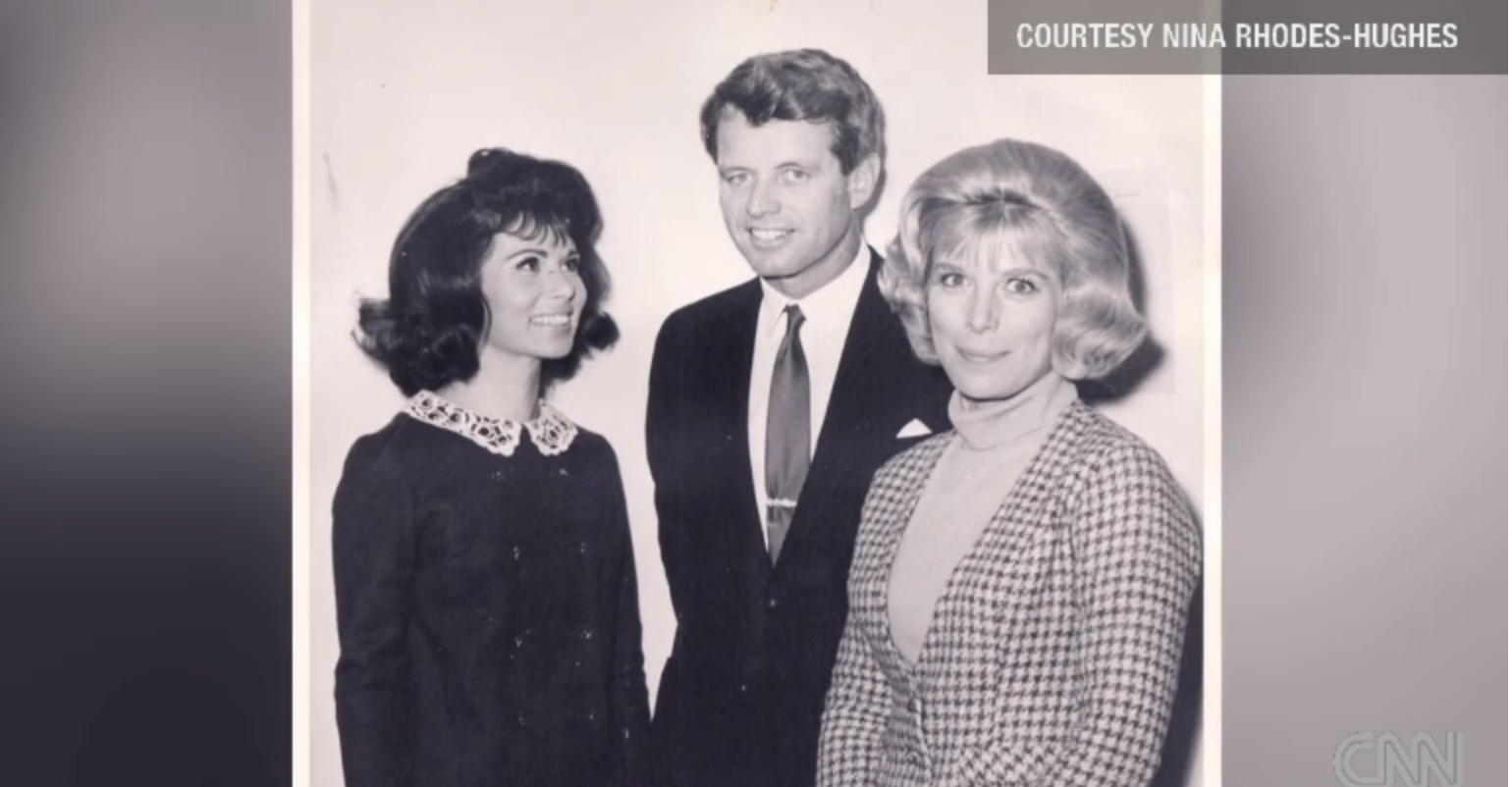
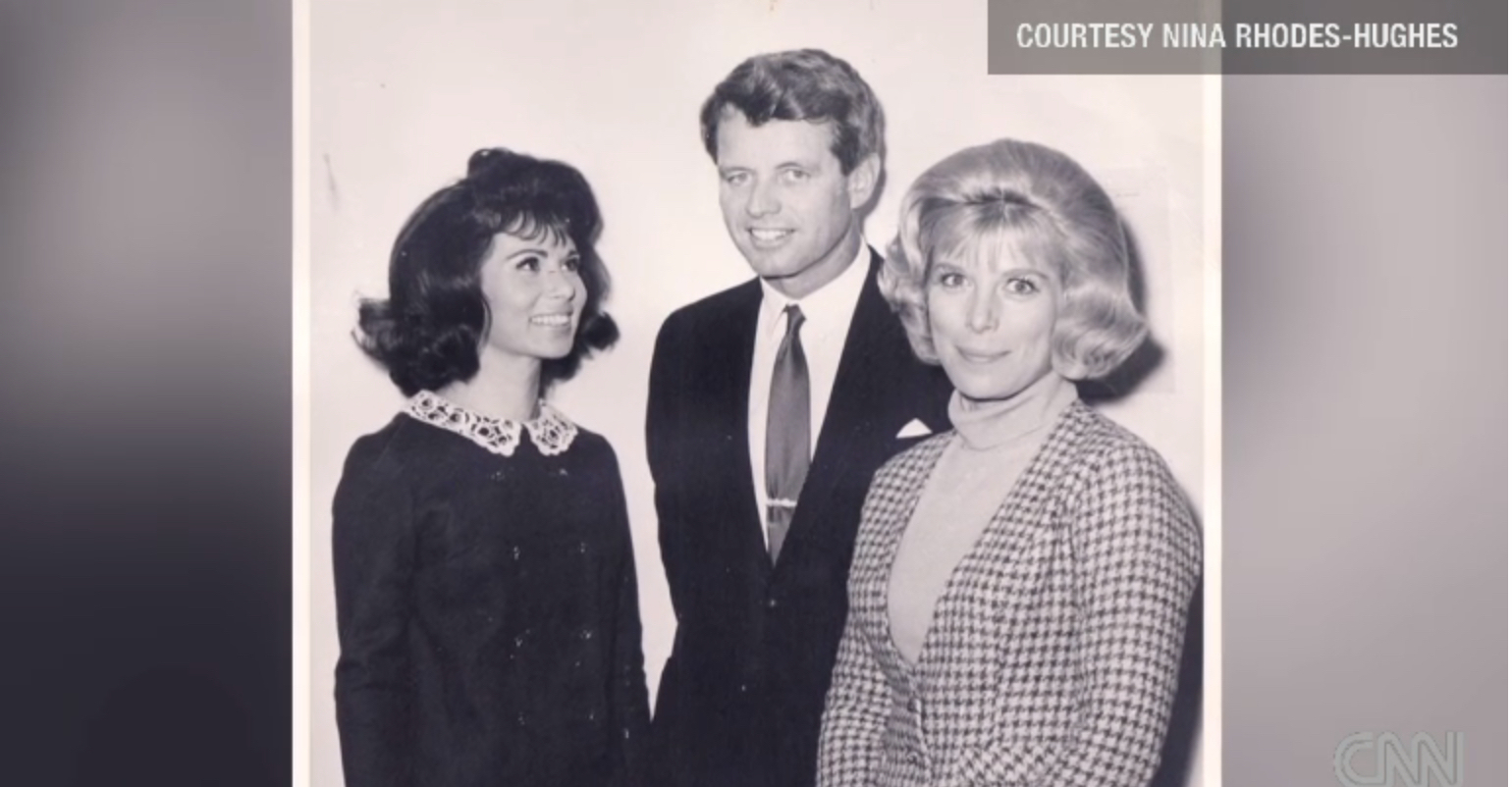
    The Second Dallas is a DVD documentary produced, written and directed by Massimo Mazzucco. It begins with Robert Kennedy on the campaign trail in Indianapolis making the famous announcement that Martin Luther King had been assassinated. It then proceeds to the Ambassador Hotel in Los Angeles. Senator Kennedy made his final victory speech after winning the California primary in the early hours of June 5, 1968. He proceeded from the ballroom and into the kitchen pantry. There, the shooting began. Senator Kennedy was shot and five others were wounded. RFK was taken to two hospitals. At Good Samaritan Hospital, after unsuccessful brain surgery, spokesman Frank Mankiewicz announced Kennedy dead on June 6th. Since Sirhan had stepped forward and been firing at RFK, he was immediately apprehended and taken into custody.

    From the beginning, as the film states, Sirhan could not recall anything about the actual shooting sequence. His last memory was having coffee at a table with a girl, the famous “Girl in the Polka Dot Dress”. One of the interviewees, the late Philip Melanson, comes on to say that this seeming mental block appears to be genuine. At least, both the defense and the prosecution psychiatrists deemed it so. At his home the police found notebooks which say things like ‘RFK Must Die” in them. Sirhan also stated that although these appear to be in his handwriting, he did not recall writing them. He also added that they did not reflect his real personality. And in fact, Sirhan had no previous past record of violence. And his friends and neighbors concurred that he seemed to be a quiet, almost introverted young man.

    At Sirhan’s trial, his defense team—headed by Grant Cooper—did not challenge any of the forensic evidence: the recovered bullets, the shooting scenario, the gun used, the eyewitness testimony etc. Cooper accepted it all at face value. Instead, he tried to use a psychiatric defense. This did not work. Sirhan was sentenced to death in the gas chamber. The California Supreme Court struck down the death penalty afterwards, so Sirhan’s sentence was then commuted to life in prison. Which is where he is today.

    But as the film notes, after the trial, many independent researchers began to uncover problems with the Los Angeles Police Department’s case against Sirhan. The film now goes into a series of segments, which depict these areas of conflict. The first area discussed is the number of bullets that were fired that night. One must consider the fact that Sirhan’s handgun carried, at a maximum, eight bullets. Yet, in addition to the bullets in the victims, there was also reliable testimony and evidence that bullets were extracted from a doorjamb and in the walls. Further, the LAPD expert, DeWayne Wolfer, had to make three of the bullets he charted do rather wild things in the air to make sure they accounted for all the shots into both RFK, and th remaining victims. Since four shots hit RFK, and there were five other victims hit, one can see, that those eight bullets had to do some real work. The film deduces that from this evidence alone, there were at least 11 shots fired.

    The next area shown supports this additional strong evidence: the Stanislav Pruszyynski audiotape. Pruszynski was a young reporter on leave to write a book about the 1968 race for the presidency. He had an audio tape recorder with him as he followed RFK leaving the podium. Sound technician Philip Van Praag analyzed this audiotape for bullet sounds. He came to the conclusion there were 13 such shots on the tape. He also concluded there were a couple of instances where the shots were spaced too closely for one person to be firing them (for a more full discussion of this issue, click here). This piece of evidence is a key element in the current appeal motion by Willliam Pepper and Laurie Dusek, Sirhan’ s new lawyers (click here for that story).

    The third aspect of the case the film explores is the famous “Girl in the Polka Dot Dress”. This was a young girl seen that night with Sirhan by several witnesses like reporter Booker Griffin and realtor George Green. After the shooting, the girl fled down the rear stairs and was seen by Sandra Serrano. As she ran down the stairs she shouted, “We shot him, we shot him!” Serrano asked, “Who did you shoot?” She said, “Senator Kennedy.” Officer Paul Sharaga heard the same. But in his report, the words “We shot him” were changed to “They shot him.”

    The fourth aspect of the crime presented is the strange case of Scott Enyart. Enyart was a high school press photographer who was in the pantry during the shooting. He says he took photos before and during and after the actual shooting. He was arrested afterwards and his photos were confiscated. Later on some of his photos were returned. But none of these were the ones taken during the firing sequence. When he asked for the rest of the photos, the police said they were classified. So Enyart waited for 20 years. He then asked the California Archives for the rest of his pictures. They said that these had been destroyed three weeks before the Sirhan trial.

    The fifth area the film visits is the topic of the destruction of evidence. Here the film centers on the disappeared ceiling panels and doorjambs, which reportedly contained evidence of bullet holes. Police Chief Daryl Gates says that since the case went to court and the man was convicted, well then, “You can’t keep junk around forever.” Gates ignores the fact that Sirhan’s appeals process was ongoing at the time these items were destroyed. He later adds, also on camera, that these items did not have evidentiary value. To which one can reply, “We are glad you are not a judge. So stop acting like one.” The film also adds in the point that DeWayne Wolfer test fired several bullets from what he said was the revolver in evidence in the case, namely Sirhan’s. But yet the folder in which he kept those test bullets did not bear the serial number of that revolver, which was H53725. It actually bore the serial number of H18602. Which actually belonged to a petty criminal named Jake Williams. And it was the same Iver Johnson Cadet model as the one in evidence. Amazingly, this folder was actually submitted at Sirhan’s trial and never challenged by defense lawyer Grant Cooper. Wolfer later tried to excuse this as a “clerical error”.

    The sixth area explored is the autopsy of RFK performed by Dr. Thomas Noguchi. The narrator now intones some familiar facts: Noguchi found that all the bullets that hit Kennedy came from behind; they came in at an upward angle, and they were fired from close range. The fatal shot entered behind the right ear had to have been between 1-3 inches away, or a point blank shot. No witness placed Sirhan either behind Kennedy or that close to the senator. Further, as Philip Melanson notes, no witness recalled a gun placed behind Kennedy’s head. Which would have been an unforgettable image. This evidence, in and of itself, eliminates Sirhan as the man who killed RFK.

    The seventh point of controversy examined is related to the above, it is the testimony of hotel maitre d’ Karl Uecker. Uecker was the man escorting Kennedy through the hotel pantry. When Sirhan jumped forward and began firing, Uecker jumped on him and pinned his gun hand down to a steam table. Uecker is a central witness for more than one reason. First, as he says here, he was always between Sirhan and Kennedy. Therefore, Sirhan could not have shot Kennedy from behind. Second, he leaped upon Sirhan right after the first shot. He had him in a headlock with one arm and his other hand was on the handgun. At the most Sirhan could have delivered two accurate shots. Every other shot was fired blindly, with his hand pinned and body down. As Uecker says, “He didn’t see anything…I had him completely covered.”

    The last point evidentiary point is a discussion of Thane Eugene Cesar. Cesar, of course, is the hired security guard who was stationed at the door leading into the kitchen. Unlike Sirhan, Cesar was behind RFK, and therefore was in perfect position to deliver the shots into Senator Kennedy. And although Cesar denies firing his handgun that night, there is a witness who says he did so fire. That is a man named Don Schulman, who worked for a TV station at the time. Schulman said the guard behind RFK fired three times. When he tried to offer this information to the authorities, his account was ignored. And although Cesar said he did not own a .22 handgun like the one in evidence at the time, it turned out that he actually had owned one at the time. The film concludes that Cesar is the most likely suspect as the actual assassin.

    The film concludes with a discussion of the idea of hypnoprogramming. Melanson states that he believed that Sirhan was programmed to fire that night and then to not recall that he had. There are clips from the 1962 film The Manchurian Candidate. There are then interviews with Herb Spiegel, an expert on hypnosis and the late Larry Teeter, Sirhan’s former defense lawyer. They both discuss how easy a subject Sirhan was for hypnosis. There is then a concluding interview with Professor Alan Scheflin of Santa Clara University about the history of CIA mind control experiments with a programmed assassin.

    Aesthetically and intellectually, I would put this film at about the level of Shane O’Sullivan’s, RFK Must Die. It does not approach the standard in this field, The Assassination of Robert Kennedy, 1992, done for British television. Unlike that film, this one is put together in a rather rudimentary way. Although there are some graphic simulations in the film, little else that has developed in the way of computer software in the last few years seems to have had an effect on this production. There is nothing very slick or imaginative about the way director Massimo Mazzucco has done his job. As noted above, the film makes a rather familiar series of points about the RFK case. But further, these points are only sketched out; none of them are gone into in any depth. Therefore, no one familiar with this case could come away from this film in any way enlightened by it. The film is then limited in its intellectual value to the entering student of the case. It is also marred by some rather amateurish errors that should have been picked up by anyone viewing the film in a rough cut. If you can believe it, in a title card near the beginning, Sirhan’s name is misspelled as “Shiran”. Later on, Thane Eugene Cesar is named Eugene Thane Cesar. A clip labeled from the original version of The Manchurian Candidate, is not. It appears to be from a Sherlock Holmes film. DeWayne Wolfer’s first name is spelled “Dwayne”. And although the film says that Sirhan was not called to testify at his trial, he actually did testify.

    Mazzucco at least tried to make a documentary on the RFK case to bring to the public some troubling facts. But today, that really is not good enough. We need films that are much more slickly and technically proficient than either this one or RFK Must Die. And we need them to be error free, or as close to that as possible. The facts of this case are so compelling that they cry out for that kind of presentation.

  • Will Sirhan be Retried? Pepper and Dusek  Advance  the RFK Case

    Will Sirhan be Retried? Pepper and Dusek Advance the RFK Case


    In 2005, the effort to reopen the Robert Kennedy murder case suffered a severe blow. In that year, accused assassin Sirhan Sirhan’s lawyer, Larry Teeter unexpectedly passed away. He had gone to Mexico to seek alternative treatment for lymphona. Very few people knew about his sickness or his attempt to seek treatment. So when he died unexpectedly, Sirhan and his case were left in the lurch. Larry Teeter had been Sirhan’s lawyer for about eleven years at the time of his passing. He had filed many petitions in both federal and state courts to try and get a new trial for his client. Many of these motions were pending at the time of his death. But since he had arranged for no other attorney to take over his files, and since he had no partner, the California Bar took control of his files. What made this even worse was that prior to his death, there had been a falling out between Teeter and Sirhan’s chief investigator, Lynn Mangan. So the RFK case now seemed stalled.

    Two things happened to change things and make this a live case today. First, as readers of this site know, in 2007, Philip Van Praag did some very important work on an audiotape discovered in the RFK Archives. This was analyzed by the audio technician and revealed to hold the sounds of as many as 13 shots. Around this time, famous attorney William Pepper also decided to take over for Teeter. Assisted by New York attorney Laurie Dusek, they have now made a pair of court filings that significantly advance the RFK case.

    As most people know, Pepper became famous for his work on the Martin Luther King case. In that particular case, he did three things. First, he served as attorney on a British TV production of a mock trial. This was sold to over 25 foreign markets, including the USA. Pepper managed to convince a jury that James Earl Ray did not kill King.

    Pepper then tried to reopen the King case in Memphis on criminal grounds. To everyone’s surprise, with the help of Judge Joe Brown, he almost did it. But when it seemed that Brown was going to approve rifle tests that would prove once and for all that the bullet that killed King did not come from the rifle in evidence, Brown was removed from the case.

    When this effort was stopped, Pepper then got the King family to file a civil claim against tavern owner Loyd Jowers, who had confessed to a role in the murder on national television. This trial went on for about three weeks in 1999. The national media boycotted it. In fact, the only reporter there each day was Jim Douglass for Probe Magazine. In a tour de force performance, Pepper prevailed for his clients. We now had an adjudicated jury verdict that the King case was a conspiracy. (See the book, The 13th Juror for a transcript of the trial.)

    Pepper and Dusek have now filed papers in federal court in hopes of reopening the Robert Kennedy case in a criminal proceeding. They are being opposed by the district attorney’s office in Los Angeles. There have been two filings so far, one in October of last year and a supplementary one in April of this year.

    The first filing is quite an interesting document. In one of the headings on the “Contents” page it actually states that one of the grounds for reopening the case is that “new evidence demonstrates it is more probable than not petitioner is actually innocent.” This, of course, refers to the audiotape analysis by Van Praag. His analysis not only demonstrates that there were too many shots fired for Sirhan to be the sole assassin but that there were two instances of “double shots”, that is when the shots were bunched too close together to be executed by one person. (Click here, for a thorough discussion of this tape evidence)

    Another section of the court filing states that Sirhan deserves a new hearing because the prosecution failed to disclose exculpatory ballistics and autopsy evidence in a timely manner to the defense. In this section, Pepper and Dusek use the Supreme Court ruling called the “Brady Rule.” It states that “the suppression by the prosecution of evidence favorable to an accused upon request violates due process where the evidence is material either to guilt or to punishment, irrespective of the good faith or bad faith of the prosecution.” (Filing, p. 28) They go on to say that evidence is deemed material if there is a reasonable probability that, had it been disclosed to the defense, the result of the proceeding would have been different. (ibid)
    The document then goes on to mention three specific instances where this occurred:

    “First, the state failed to disclose a bullet recovered from Senator Kennedy’s neck during the autopsy; second, the state had evidence of bullets at the scene that it did not disclose to defense counsel; and third, the state violated Brady in delaying its disclosure of the autopsy report.” (Ibid, pgs. 28-29)

    This first instance relates to the work of Lynn Mangan and discussed by Lisa Pease in her milestone essay on the RFK case. (Click here for that article.) In a nutshell what Mangan and Pease were arguing was that at the new inquiry set up by Judge Wenke in 1975, there was a question concerning one of the bullets entered into evidence. Originally, the bullet was recorded with the markings ‘TN 31’ on the base. Yet that bullet was not entered into the Wenke hearings. Another bullet marked ‘DN TN” was so entered. Where was the other bullet that allegedly was removed from Kennedy’s neck? This is a crucial issue in the RFK case. For it touches on the credibility of the state’s firearms witness DeWayne Wolfer. Wolfer testified twice that this bullet was the one taken from RFK’s neck and that he matched it to the handgun in evidence. (ibid, p. 30) If it can be shown that either the state held back on the actual bullet, or even switched bullets, this would be enough under Brady to reopen the case.

    The second instance pertains to the fact that there were more bullets found and seen in the pantry than could have been fired by the handgun in evidence, which held 8 bullets in the cylinder. The Pepper/Dusek filing begins with the testimony of FBI agent William Bailey in that regard. (p. 31) He signed an affidavit in 1976 saying that “I…noted at least two small caliber bullet holes in the center post of the two doors leading from the preparation room. There was no question…that they were bullet holes and not caused by food carts or other equipment in the preparation room.” (ibid) The lawyers then advance this argument by saying that there is evidence in FBI photos that these bullets were in fact removed. (ibid, p. 32) They then mention two witnesses who saw the same holes in the center post. (ibid) This evidence of extra bullets, strongly indicative of a second gunman, was never disclosed to Sirhan’s defense.

    The third instance of non-disclosure by the prosecution was with Dr. Thomas Noguchi’s autopsy report. Noguchi was the coroner in LA at the time. Since he was a friend of Dr. Cyril Wecht’s, he understood all of the problems with the autopsy of President John Kennedy. He therefore consulted with Wecht before he began the examination. The result was an autopsy that has been praised in several quarters as being one of the most thorough and painstaking ever written. And Pepper and Dusek include a copy in the filing.

    It is quite interesting to compare this document with the autopsy report in the JFK case. (Click here for that report.) The JFK report is about six pages long. Noguchi’s report is over ten times that length, with sub sections that in themselves are longer than the JFK autopsy report. Unlike the JFK case, Noguchi actually listed all the exhibits that he studied in order to reach his conclusions. For example he actually listed all the photographs he studied, both of the crime scene and of the autopsy. He then listed all of the personnel involved with the autopsy, from the pathologists, to the assistants, to the photographers to the observers. Whereas one could easily read the JFK autopsy report in a matter of minutes, Noguchi’s report takes at least two hours to read and properly understand.

    Sirhan’s trial began jury selection on January 7, 1969. There is no formal receipt or message indicating the prosecution ever turned over Noguchi’s report. There is a defense memo by Robert Kaiser saying that the autopsy defined the muzzle distance to RFK as being between one and two inches. (ibid, p. 33) But this was dated February 22, 1969 — well after the trial started and two days before Noguchi’s testimony. The Brady Rule requires that disclosure “be made at a time when disclosure would be of value to the accused.” (ibid)

    There is little doubt that Noguchi’s autopsy contained material evidence that was exculpatory to the defendant. Because he concluded that all the shots came from behind RFK, at very close range—a matter of inches—and at extreme upward angles. As the attorneys note, each interviewed close witness stated that Sirhan was always in front of RFK, at least a foot away, and had his arm extended out straight.

    Now this would seem to be very important evidence for Sirhan’s defense. That is, if it had arrived in time. But there is a question of competency. And this relates to the third ground for reopening the case: Sirhan was denied effective assistance of counsel. (p. 34) It is very clear that as Pepper and Dusek write, Sirhan’s legal team failed to investigate other legal defenses Sirhan could have had before settling on diminished capacity. Like perhaps, Sirhan was actually innocent because he was set up. Sirhan’s team also agreed to stipulate to the evidence presented against him, that is they did not argue its provenance or authenticity. And finally, they never asked for a continuance before Noguchi testified in order to completely assimilate his report. (ibid, p. 34)

    In fact, the most serious problem in this regard is that Sirhan’s lawyers made their strategic choice of a defense without any real investigation. (ibid, p. 36) Also, attached to the filing is a letter by Sirhan saying that his attorneys always assumed he was guilty and they drummed this into him. This came about because of the stipulation to the state’s evidence and the lack of any real inquiry. Or as the filing states,

    “…counsel also was ineffective in failing to investigate alternative defenses. Defense counsel in this case conducted zero investigation into the facts surrounding it, taking at face value everything that the state asserted.” (p. 39)

    Even when he was offered the professional help of criminalist William Harper, who had real doubts about whether the bullets in evidence matched Sirhan’s handgun (ibid, p. 40), lead lawyer Grant Cooper admitted that he never retained an independent ballistics expert to analyze the bullet evidence. (p. 40) This then allowed Wolfer to get away with his highly questionable testimony about the provenance of the neck bullet and the slugs matching the weapon. In fact, as Pepper and Dusek argue, Cooper did not “proffer any cross-examination of the state’s presentation of the ballistics evidence.” (p. 41)

    The attorneys summarize that the cumulative effect of the new evidence, the suppressed evidence and the ineffective counsel not only attest that the outcome of Sirhan’s trial would have been different, but that “no reasonable juror would have convicted him in the light of the new evidence.” (p. 44) They further argue that the totality of the new and suppressed evidence “unequivocally shows that there was in fact a second gunman.” (p. 45) And they then write, based on Noguchi’s autopsy, that not only was there a second gunman, but that Sirhan could not have fired the shots that killed RFK. (p. 48)

    They conclude with the evidence that Van Praag has adduced which shows that 13 shots were fired that night which “conclusively demonstrates the existence of a second shooter.” (p. 50) They then say that when a court considers an actual innocence claim, they should “consider the probative force of relevant evidence that was either excluded or unavailable at trial.” (p. 53) They then ask for a writ to reopen the case. (p. 56)

    In April, Pepper and Dusek submitted a supplement to this filing. The defense hired Harvard professor Daniel Brown, an expert in trauma memory and hypnosis, to interview Sirhan for over 30 hours. Brown got Sirhan to go further in his memory of that night then anyone has. One of the keys to the RFK case has always been the famous “Girl in the Polka Dot Dress,” the girl seen with Sirhan on the night of the murder. Witness Sandy Serrano said that she saw the girl going up the stairs that night with two men, one taller and one shorter than the girl. Sandy said she later recognized the shorter one as Sirhan. After the murder, Serrano saw the girl leave with only the taller man. Sirhan had previously stated that his last memory of the night was having coffee with the girl and then being led to the pantry, where RFK was killed. He was later seen in the pantry standing next to the girl before he pulled his handgun and started shooting.

    The question has always been this: If in fact, the girl was the accomplice who was supposed to guide Sirhan into position for a post hypnotic suggestion to trigger his firing, why on earth would she wear such an unforgettable white dress with black polka dots to do so?

    It seems that Brown may have solved this mystery. Like many others, Sirhan liked to go target shooting with his handgun. And he had done so quite recently. In these papers he said that the girl’s dress sent him into “range mode” believing he was at the firing range seeing circles in front of his eyes. Under hypnosis Sirhan recalled the girl pinching him on the shoulder and spinning him around to see the RFK entourage entering the pantry just before he fired.

    It’s an impressive filing. As Pepper has said elsewhere, in comparing the King and Kennedy cases, the RFK case would be even easier to win in open court. Let us hope he and Dusek finally get that opportunity. If they do, and with Brown’s help, we may all learn what really happened at the Ambassador Hotel in June of 1968.

    – Jim DiEugenio

    Sirhan filing 2011
  • Dean T. Hartwell, Dead Men Talking: Consequences of Government Lies


    How did it happen? How did this country get into the sorry state it is? America today is a place where presidential elections are stolen in broad daylight – and the Supreme Court then sanctions the thievery. Where a debacle like 9/11 takes place, and yet not a single person gets fired. A country where an administration can launch a phony war with Iraq – needlessly losing thousands of young men and women and countless billions in dollars – yet the Speaker of the House says that giant fraud was not grounds for impeachment. A country in which the Dow Jones Industrial Average has increased over 1,000% since 1972 – yet both the middle class and working class are worse off now than they were then. A country where a con artist like Bernie Madoff could actually rise to be president of NASDAQ. A nation whose politicians allow casino-like gouging on Wall Street, and then when the bubble bursts, the tax-payers bail out the looters to the tune of a trillion dollars. And they have to, because if they don’t their IRA’s, pensions, and annuities could disappear. It’s a country where the moderate Republican Party of Eisenhower became the extremism of Gingrich and DeLay. The US is a place where a right-wing foreign billionaire like Rupert Murdoch can convince a large part of the public that somehow his interests coincide with theirs. It’s a nation whose populace is so cowed and misinformed that they could consider a shallow frat boy like George Bush Jr. for president – not once, but twice. And then, when he cheats his way into office both times, the MSM actually tries to cover up for him. After all, the only price paid was the financial bankruptcy of the USA. A country, which, as conservative banker Charles Morris has written, is “hopelessly in hock to some of the world’s most unsavory regimes.” And part of that transfer of wealth was made possible by companies like the Carlyle Group, led by former “representatives of the people” like George Bush Sr., James Baker, and John Major.

    In other words, the USA today is a second-rate nation which veers violently from national scandal to senseless war back to national scandal. And the purveyors of neither the wars nor the scandals are ever actually called to account for their sins. Consequently, the cycle continues downward. With no real light at the end of the tunnel. When you can pull off a crime like what just happened on Wall Street, and make average Americans foot the bill – well, that should tell you what the USA has become: a giant ATM machine for the wealthy. Except in the end, you find out they had access to your account. And the politicians in Washington don’t really give a damn.

    How did things go so awry? To the point where, to use some appropriate hyperbole, America reminds some of the last scene of fire and smoke in Nathanael West‘s memorable apocalyptic novel The Day of the Locust. Many people are aware of the condition of course. Which is why alternative forms of media have arisen. Because, to put it mildly, the MSM has not done a very good job keeping the wolf from the door. In fact, many citizens think they helped the animal up their sidewalk.

    For me, alternative media has not been up to the task, at least not yet. As I have noted on this site, the likes of blogs like Firedoglake and Daily Kos and Talking Points Memo have been rather disappointing. For me, before a nation can deal with its present, it has to be able to face its past. Its real past. In other words, the public has to be made to understand the depth and breadth of the historical crimes in order to explain how, for instance, an administration can simultaneously fire eight US attorneys and lie about it before Congress. And the following Democratic administration chooses not to try any of the perjurers or the perpetrators. This is pretty much saying that the law is what the occupiers of the Department of Justice say it is. And in the case of Don Siegelman, Cyril Wecht, and others, new Attorney General Eric Holder replies, “Well, too bad, but I guess it was.”

    For those of us who recall a better America, this will not do. Therefore we have tried to give history back to the people in an honest and investigative way. We did it when Lisa Pease and myself published Probe bi-monthly. We tried to do it in our book, The Assassinations. And John Kelin and I do it here on this site, e.g., Roger Feinman’s fine essay on Sonia Sotomayor.

    Dean T. Hartwell has now made his contribution.

    His short book, Dead Men Talking, is subtitled Consequences of Government Lies. It is a concise attempt at what some people call revisionist history. Except that it stretches across the decades from 1963 to 2001, nearly forty years. The Assassinations, was also an attempt at revisionist history. But it only covered five years: 1963-68. It took in the murders of President Kennedy, Malcolm X, Martin Luther King, and Senator Robert Kennedy. We did that because we thought that by centering on those four people, we could concentrate on both one time period, and also one method of covert operation: the assassination of political leaders by gunfire. Then, in the Afterword of that book, I tried to isolate these events by saying they constituted a landmark in American history. Hartwell decided to take two of these assassinations – the Kennedys – and combine them with the attacks on the USA of September 11, 2001.

    Hartwell begins the book by countering the mocking tone that the MSM uses to discount the idea of “conspiracy theories.” One method he uses is rather simple: If the official story is harder to swallow than an alternative theory, then the public has every right to question the official story. Especially when it makes no sense anyway. The idea that a mediocre – or worse – rifleman like Lee Harvey Oswald could actually better the performance of almost every marksman who ever tried to duplicate his alleged feat is hard to swallow. And when you add in the fact that the Warren Commission could never duplicate the condition of the magic bullet, i.e., CE 399, in any of their tests – and actually tried to cover that fact up – well that gives us reason to wonder. He also mentions the recurrent use of a patsy, or what he terms a scapegoat. The labeling of Oswald as an anti-social Marxist helped to compensate and distract from the weakness of the evidentiary case against him. The author also notes that the official investigations often fail to properly address relevant and controversial facts that are necessary to uphold their stories. In the JFK case for instance, an example would be the location of Oswald in the Texas School Book Depository at the time of the shooting.

    Hartwell also mentions other precedents for government officials lying to the public about acts of state. Two being the Gulf of Tonkin Incident, and the 18 1/2-minute gap in the famous Nixon-Haldeman tape three days after the Watergate break-in.

    I am not going to analyze in any depth his discussion of what happened on September 11, 2001. I have read only two books on that subject, plus a few essays on the web. If you can believe it, I have never even read anything by David Ray Griffin. And Griffin is the 9/11 equivalent of Mark Lane. Hartwell lists some of the most common anomalies that the critics of the official story have enumerated: the ignored warnings both domestically and from abroad; the failure of any interceptor jets to get close to either Washington or New York; the acrobatic tight turn taken by Flight 77 before it hit the Pentagon: the confluence of war games that morning which tended to confuse radars; the incredibly fast collapse of Building 7, which was not hit by any planes. (I must note in this regard, when Tucker Carlson had scientist Stephen Jones on his show, he showed this collapse. But he edited out the complete fall. All you saw was the beginning of the collapse, and the actual bouncing of the rubble.)

    I cannot make any real judgment about Hartwell’ s work on this case since, as I said, I am in no way an authority on it. And I don’ t feel ashamed in admitting that. One can only thoroughly investigate so many of these scandals. And I feel I have done that with the JFK, MLK, and RFK cases. But it seems to me that Hartwell has hit the highlights and used the work of some of the credible critics e.g. Griffin, Mike Ruppert, Michel Chossudovsky.

    Let me add one last thing about this case. I managed to watch some of the live hearings of the 9/11 Commission. It convinced me that the days of so-called Blue Ribbon Commissions should be officially ended. This was especially obvious during the questioning of Condoleezza Rice, which I thought was actually kind of embarrassing. I later learned that the Executive Director of the Commission, Philip Zelikow, had 1.) Worked on the transition team of George Bush Jr., 2.) Been appointed to his Foreign Intelligence Advisory Board, and 3.) Co-written a book with Rice. In fact, after the attacks, Rice had him rewrite the initial report on what the American response should be to the new threat of terrorism. In light of all this, even Warren Commission sycophant Max Holland – who knows Zelikow personally – has declared that Zelikow should not have been the director of that Commission.

    II

    In his discussion of the assassination of President Kennedy, Hartwell first lists the main official findings about three shots and three shells. He then brings in the common questions about this. Namely that some people heard more than four shots, and that the presence of the shells do not prove they were fired that day. He then begins to critique the work of Gerald Posner and his accent on the presumed psychology of Lee Harvey Oswald. Hartwell notes that Posner’ s intent is somehow to denote a motive. He adds that this is “misplaced since motive makes no difference in a criminal conviction.” (p. 73)

    He then shifts the focus and adds that what occurred both directly before and after is quite important. (p. 74) In other words, where was Oswald at the time of the shooting? Hartwell, relying somewhat on the work of noted critic Howard Roffman argues that he probably was not on the sixth floor. He then goes after the Commission’ s star witness in this regard, Howard Brennan. (p. 76) For instance, Brennan once said that he actually saw the fatal shot hit JFK, and that he also saw the assassin stay at the window for three or more seconds after the fatal shot hit. (ibid) Both are dubious since they seem mutually exclusive.

    Hartwell then goes into Oswald’ s alleged movements after the shooting, concentrating on the testimony of policeman Marrion Baker. This is the motorcycle officer who stopped his vehicle and then climbed the stairs in the Texas School Book Depository. He allegedly encountered Oswald at the second floor lunchroom. Hartwell questions the efficacy of the timing of the reconstructions. (p. 77) Hartwell then uses the testimony of Dr. Robert Hunt before the House Select Committee on Assassinations. After studying the photos of the boxes in the so-called sniper’ s nest, he concluded that someone had moved the boxes about two minutes after the shooting. As Hartwell writes, that person could not have been Oswald. (p. 79)

    From here, Hartwell briefly discusses the provenance of the alleged rifle that was supposedly ordered by Oswald. He acutely states that no one at the post office recalled handing the rather large and bulky package to Oswald. (p. 80) And he also notes the problem of the post office box being signed for in Oswald’ s name only. Yet the rifle was ordered in the name of A. Hidell. If Oswald picked up the rifle, he would have had to show that he actually was the bearer of both identities. An event which probably would have gone up to the supervisor and which surely would have been remembered.

    Hartwell then goes on to the highly controversial palm print evidence. He notes that the palm print was taken off a part of he rifle that was only exposed when the rifle was taken apart. Which, as Ian Griggs has shown, was very hard to do. He also asks why did the Dallas Police not match this alleged palm print off the rifle to Oswald’ s on the 22nd. Especially since Oswald had given the police such a print that day. (p. 81) He also asks a pertinent question first posed by the illustrious Sylvia Meagher. How did the FBI later match the palm print taken from the rifle to a palm print taken from a card? Wouldn’ t the first be curved? (p. 82) I should add here, Hartwell mentions in passing the Barr McClellan/Walt Brown story about the matching of a previously unidentified print from the sixth floor to the late Mac Wallace. (p. 85) This was featured during the (quite disappointing) 40th anniversary installment of Nigel Turner’ s The Men Who Killed Kennedy. Since I have taken a lot of time criticizing Reclaiming History, I should note here that Vincent Bugliosi does a creditable job on this issue. He called McClellan’ s fingerprint expert Nathan Darby and told him there was a problem in his forensic methodology. The unidentified print from the sixth floor was a palm print. Yet, the prints Darby had from Wallace were his 1951 fingerprints. He asked Darby if he had developed some new technology to compare the two. Darby pleaded blind innocence. He said he was only given two fingerprints, one from a card and one a latent. He said, “I wasn’ t given any palm print. They were both fingerprints. Of course, you can’ t compare a palm print with a fingerprint.” (Bugliosi, p. 923) Let me add this about the matter: from the moment I first saw him, I never liked Barr McClellan. He was too glib, too fast-talking, too confident and oh so convenient. He arrived out of the woodwork to attract and confuse the masses on the fortieth anniversary.

    Hartwell goes on to raise some familiar questions about the murder of Officer Tippit, also – according to the Warren Commission – allegedly killed by Oswald. He recites the argument about the time factor working against Oswald. He was last seen by his landlady standing outside his rooming house at 1:04. Yet the most credible time placements of the Tippit murder are at around 1:09 or 1:10. The Warren Commission’ s “probative” witness, Helen Markham, said the shooting happened at 1:06, a fact that Commission supporters, like Dale Myers, manage to discount when they defend her. (Sylvia Meagher, Accessories After the Fact, p. 254) Witness T . F. Bowley looked at his watch when he saw Tippit’ s dead body on the street. It said 1:10. (Ibid) The late Larry Harris, a foremost expert on this case, told me that he thought the time of the murder was 1:09. This all makes it hard to believe Oswald could have been involved since the necessary distance traversed by him was about 9/10 of a mile. (Hartwell, pgs. 90-91) He would have had to be running or jogging the whole way. Which no one saw him do. (Meagher, p. 255) The author then goes into the confusing mélange of the ballistics evidence in the case. The bullets could not be matched to the gun, and the cartridges do not match the bullets: the shells were 2 Westerns and 2 Remingtons, while the bullets were 3 Westerns and 1 Remington. And he thankfully brings up the matter of the Oswald wallet found at the scene. (p. 92) Which creates an insurmountable problem for the Commission stalwarts. Because a.) Oswald would have never done this if he was the actual killer, and b.) The official story has Oswald’ s wallet being discovered on the way to the station – while he left another wallet on the dresser at the Paines that morning. Which equals Oswald as the Man with Three Wallets. (See Reclaiming Parkland, First edition, pp. 101-105). This is powerful evidence that Oswald was not at the scene and was framed.

    Using this as a cue, Hartwell then takes up an alternative view of the crime. He mentions the famous testimony of the witnesses who saw a man who resembled Oswald running down an embankment outside the Texas School Book Depository a few minutes after the murder. People like Roger Craig, Helen Forrest, Marvin Robinson, and Richard Carr all said essentially the same thing on this point. (p. 99) This Oswald double could have then been used in the Tippit murder, and then been the man who was seen early, at 1:00, by attendant Butch Burroughs at the Texas Theater. He was then escorted out of the back of the theater and was seen by witness Bernard Haire. (pgs 100-101)

    Hartwell ends this discussion by asking some sensible questions about the Commission’ s story. First, if Oswald was an ideologically motivated killer, why didn’ t he admit it like other assassins e.g. Booth, James Guiteau, and Leon Czolgosz. (p. 101) If he meant to disguise his act why did he have the rifle and handgun shipped to a post office box with his name on it? When he could have purchased the rifle over the counter with cash, no questions asked. If he was planning on killing Kennedy, why is there no credible evidence of him target practicing in advance? How could he have been so sure that no one in the building would see him unwrap the weapon and assemble it? If he had planned the assassination, why didn’ t he wear gloves? Why did he first drive in the taxi past his rooming house, and then rush inside it and leave so quickly? If he really shot both Kennedy and Tippit, why did he then not try and leave Dallas via bus? (pgs 103-104)

    Hartwell concludes that the failure of the Commission to adequately address any of these important issues shows that their purpose was not to solve the crimes but to disseminate a cover story to be in turn picked up by the major media and force fed to the public. (p. 105) He also notes, as Deputy Consul for the House Select Committee on Assassinations Bob Tanenbaum did: the amount of evidence slanting used by the Commission was enormous. In other words, the Commission never selected evidence favorable to Oswald. If the case were as easy as the Commission states, this practice would not have been necessary. (p. 114)

    III

    The final case discussed by Hartwell is the assassination of Sen. Robert Kennedy in June of 1968. The author begins by outlining what most citizens consider the open and shut case against the convicted gunman Sirhan B. Sirhan: He was standing in the kitchen pantry of the Ambassador Hotel with a gun amid 73 witnesses. Kennedy was struck down and later died. He then tells us Sirhan was convicted at trial after his lawyers stipulated to the evidence the prosecution presented against him. Hartwell notes this was done to aid in their plea of diminished capacity, which would have been difficult if they outlined a conspiracy. Sirhan was then sentenced to death but had his sentence altered to life in prison by decree of the Supreme Courts of both the United States and California.

    The author begins to chip away at the prosecution’ s case using the autopsy of Dr. Thomas Noguchi. Hartwell shows how the findings of Noguchi contrast significantly with what the best and closest eyewitnesses said happened. The four shots into RFK (one actually went through the top of his jacket) all came from behind and at very close range. Yet no witness said that Sirhan ever got behind Kennedy or that close to him. (p. 119) He also uses the quite credible testimony of hotel maitre d’ Karl Uecker who said he grabbed Sirhan’ s gun hand after the second shot. Therefore how could Sirhan have delivered the others with any degree of accuracy? (ibid)

    Hartwell outlines the pros and cons of the case against security guard Thane Eugene Cesar as the actual assassin. (p. 122) And he later adds that the Los Angeles police treated him way too gently. He then goes to the testimony of Sandra Serrano and Lt. Paul Sharaga. (pgs. 123-124) These two witnesses begin to outline the role of the two accomplices who probably entered the Ambassador that night with Sirhan. And they also begin to outline the role of the Girl in the Polka Dot Dress. This is the woman seen with Sirhan prior to he shooting and who is part of his last memory before the shooting. A memory of drinking coffee with her and then following her out of the room and into the pantry. Properly, Hartwell then sketches the ordeal Serrano was put through at the hands of Lt. Hank Hernandez to make her withdraw her testimony. Lawyer Hartwell notes, this kind of brutal treatment is usually reserved for suspects, not witnesses. He also adds, that sometimes witnesses do misrepresent. But there is usually a discernible motive. There is none with Serrano. (p. 126)

    Hartwell then describes how there were too many bullet holes in the pantry than were possibly emitted by Sirhan’ s eight shot revolver. (p. 128) He even quotes infamous LAPD criminalist DeWayne Wolfer on this point: “It’ s unbelievable how many holes there are in the kitchen ceiling.” (p. 128) He adds that it turned out the LAPD could never clearly link any of the bullets in RFK to Sirhan’ s weapon.

    The author then analyzes four points offered up by critics of the LAPD: 1.) There were more than eight bullets fired, 2.) There was another gunman besides Sirhan 3.) There was a non-shooting accomplice 4.) Sirhan was hypnoprogrammed to do what he did. (p. 130) After giving the pluses and minuses of these issues he decides that the official theory does not hold up, and neither do the arguments of its supporters like Dan Moldea. (pgs 130-140) Finally, he uses the now famous Stanislaw Pruszynksi tape, recorded the night of the murder, as tested by audio technician Phil Van Praag. This tape is powerful evidence for there being too many shots fired that night and for them being too close together. (Click here for more on this.)

    Hartwell produced this book on his own. There are the spelling mistakes, typos and spacing errors to prove it. And as I wrote in part 6 of my review of Reclaiming History, the issues involving the testimony of Wesley Frazier and Marrion Baker in the JFK case are even worse than what he deduces. But these things are easily forgiven since this is not a corporate effort, but a citizen’ s book. A citizen who is greatly bothered by what has happened to his nation. How voting, as proven by Florida in 2000 and Ohio in 2004, cannot be relied upon anymore. (p. 151) How trying to get elected officials to do something about serious government crimes does not work, since there is no upside in it for them. (p. 152) How the rather attractive alternative of moving elsewhere means leaving these troubling issues in America behind. And, as everyone knows, the MSM is no help. He proposes taking advantage of the new media to spread the word to others and the rest of the world. (ibid) It won’ t be easy, but it is necessary. If not we will maintain the system that allows these crimes and they will continue to pollute the body politic. Which, as we see now, is harmful to us all. The evidence for that, as I noted at the start, is all around us.

    When I finished the Afterword to The Assassinations I wrote that, as in Camus’ The Myth of Sisyphus, after the murder of RFK, those who believed in him and his cause felt like the stone was at the bottom of the hill. And they were alone. Today, we are not. History has caught up with some of the public. They don’ t like what America has become either. In that regard, we need more people like Dean Hartwell. Because if The Assassinations was a pebble thrown into the polluted stream, this book provides another stepping-stone beyond it. And hopefully, one day, a man the stature of Carroll Quigley will arrive to trace the decline from November 1963, to March of 2003, filing out the entire canvas with color and perspective. In order to make the public face the fact that, yes the forces that killed the vibrant progressive energy of the sixties won, but what did they bring us? The answer is: Less than zero. Or as James Joyce once wrote for his alter ego, Stephen Dedalus: “History is a nightmare from which I am trying to awaken.” Few who were alive in 1963 would argue the fact that the country we live in today does not resemble what we had then. Hartwell’ s effort is that of a true patriot offering an attempt to bridge that gap and explain how it all happened. For the benefit of us all.

  • Jesse Ventura & Dick Russell, American Conspiracies: A Textbook for Alternative History

    Jesse Ventura & Dick Russell, American Conspiracies: A Textbook for Alternative History


    Jesse Ventura in Dealey Plaza
    (CTKA File Photo)

    In my recent review of Voodoo Histories by David Aaronovitch, I spent a lot of time explaining why the organization of the book destroyed its credibility. The topics it covered were dictated by media coverage rather than a serious study of history. Coming on its heels, just a month later, American Conspiracies by Jesse Ventura and Dick Russell, rushes right into the breach. Talk about good timing.

    The first three sentences of American Conspiracies set the tone of what will be good in this book that was not good in Aaronovitch: “First of all, let’s talk about what you won’t find in this book. It’s not about how extraterrestrials are abducting human beings, or the Apollo moon landing being a colossal hoax perpetrated by NASA, or that Barack Obama somehow is not a natural-born American citizen. I leave these speculations to others, not that I take them seriously.”

    And on that note we’re off.

    ORGANIZATION

    So how are Ventura and Russell going to explain conspiracies to us? They take 14 separate topics, in order: the Lincoln assassination; the attempt to overthrow FDR; the JFK, Malcolm X, MLK, and RFK assassinations; the Watergate scandal (however, not the Woodward version but the Jim Hougan version); Jonestown; the October surprise; the CIA drug connection; the stolen elections of 2000 and 2004; 9/11; Wall Street; and the “secret plans” to end American democracy. As I noted in my Aaronovitch review, these are much closer to the topics that make sense for a political researcher to investigate – note the absence of reference to Princess Diana.

    Each chapter begins with a little box explaining what the situation is, what the official word on it is, and Ventura’s take on the subject, and ends with a short paragraph on what he feels should be done about it. These add to the textbook feel of the work – the only thing missing are discussion questions. And, by and large, the book does a good job of synthesizing the main idea of each topic with solid information. One assumes that a great deal of the research came from Russell, and he gets this across well while keeping Ventura’s distinctive voice throughout.

    As noted, they begin with the Lincoln assassination, which is an acknowledged conspiracy, though seldom written about by political researchers. Their version is an interesting one, based largely on Blood on the Moon by Edward Steers, Jr., but leaves out some of the little details, such as the fact that Mary Todd Lincoln suspected Secretary of War Andrew Stanton’s involvement in the plot to her dying day. (The background for this is quite interesting but left to the reader to investigate. Stanton and Lincoln had prior very public disagreements, and Stanton, after Lincoln’s murder, had screamed at Mrs. Lincoln and ordered her removed from his sight because she was so upset.) Additionally, while there are conspiracists who assert that Jefferson Davis was involved or even the progenitor of the Lincoln assassination, it is not often noted that Davis had been the target of a Union assassination attempt just weeks before. (See James Hall’s article, “The Dahlgren Papers: A Yankee Plot to Kill President Davis,” Civil War History Illustrated No. 30 Nov. 1983). On the other hand, this is perhaps too academic a complaint. There is a real benefit to beginning the book with an established conspiracy to appeal to the general reader, and it might bog things down to get into too much detail too fast. In that mindset, it makes sense to take a more conservative approach.

    This is also true for the chapters on the various assassinations. In general, they rely on the best works (for example, Pepper and Melanson on MLK, Turner & Christian and O’Sullivan – the book, not the documentary – on RFK, and heavily on John Armstrong, Douglass, DiEugenio and Pease, and Russell himself on JFK) in each area. And in each case the chapters serve as solid introductions for their subjects. While some material should perhaps have been left behind (Barsten’s MK-ULTRA thesis in the MLK assassination is a little too out there to be explained in a few paragraphs, although the authors do a creditable job), the material is generally well-handled.

    With respect to new material, there is some new research in the book, mostly concerning Mike Connell and election fraud. Connell was an IT person who worked for Karl Rove. Not only had Connell built websites for George W. and Jeb Bush, but also for Swift Boat Veterans for Truth, famous for their poisonous and baseless attacks on John Kerry’s military record. (p. 137) Connell knew the dirty details behind both election-fixing and emails that would implicate Rove and Bush in multiple criminal dealings. In December 2008, three months after a subpoena was issued to Connell to testify about these matters, he died in a plane crash. (p. 140) Others have promoted this story – Mark Crispin Miller talked about it on television and raised the possibility of foul play – but Russell and Ventura did some legwork on this case and the conclusions are in book.

    BACKGROUND

    The best parts of American Conspiracies tend to rely on Ventura’s own background in politics and as a SEAL team member to enhance his credibility in drawing conclusions. This is especially true in the chapter on the CIA drug conspiracy, which draws together a lot of good information and makes some intelligent inferences about it. For example, he discusses the fact that in pure economic terms, drugs make more profit for the U.S. then they do for the countries actually growing and exporting them:

    But even though 90 percent of the world’s heroin is originating in Afghanistan, their share of the proceeds in dollar terms is only 10 percent of that. It’s estimated that more than 80 percent of the profits actually get reaped in the countries where the heroin is consumed, like the U.S. According to the U.N., ‘money made in illicit drug trade has been used to keep banks afloat in the global financial crisis.’ (p. 122)

    A simple but cogent observation. The book further illustrates:

    “Not including real estate transfers, there’s an estimated inflow of $250 billion a year coming into the country’s banks – which I suppose is welcomed by some as offsetting our $300 billion trade deficit.” (114) The authors also go into a timely history of the Mexican drug cartels and their relationship to the U.S. In 1947, when the CIA was created, the DFS was also created – the Mexican version of the CIA. Since that time, drug traffickers have been protected by the United States. This was clearly described by the late Gary Webb in his seminal book Dark Alliance, but also in several others. One example raised by the book involves the traffickers who murdered DEA agent Enrique Camarena, who were protected by their U.S. connections. (p. 124)

    As with all the chapters, there are certain omissions – to leave out Alfred McCoy from a bibliography in writing about drugs and covert operations is inexplicable.

    DISAGREEMENTS

    I have certain quibbles with the book – the information on the 9/11 attacks is a real mixed bag, including some things that I find to be disinformation. But 9/11 is always a contentious issue and Ventura and Russell do focus on several good points, including the all-important Norman Mineta testimony. However, Ventura talks about the Pentagon missile theories and actually urges people to see Loose Change. Like his television program on 9/11, he also relies heavily on the testimony of Willie Rodriguez, who has been a questionable figure in the movement. On the other hand, he does invoke the lack of military and FAA response, and unlike most critics does so having actually been in the military and seen traffic controllers at work. (p. 143) He also talks about a 2003 memo in which the idea to paint a U2 surveillance plane in U.N. colors to fly over Iraq is floated. If Saddam fired upon it, this could be played up as an attack on a U.N. plane and made the instigator of a war. As Ventura notes, this has certain echoes of the Operation Northwoods documents floated during the Kennedy presidency and turned down by JFK. (p. 185) He also notes, quite rightly, that 10 months prior to 9/11, Donald Rumsfeld had approved major “changes to the Army’s [Continuity of Government] plan.” He correctly identifies this as a “shadow government.” (p. 191) In the bibliography of the 9/11 chapter, one finds only Peter Dale Scott’s excellent book, The Road to 9/11, and the work of David Ray Griffin, which explains much of what is good and bad in his analysis.

    This does point out what is a flaw in the book and in Ventura himself: which is a certain excess of credulity at times. As anyone who has tried to navigate the minefield of political research in general, and 9/11 in particular, one encounters all sorts of bizarre claims and “witnesses” who may be telling no truth, some truth, or the whole truth at various times. It is a weakness of the book that, in having to jump quickly into a topic and then leave it behind for something else, the information tends to be muddled together, good, bad, and questionable, with a certain lack of prioritization. The bibliography shares this trait as well. In his chapter on the Jonestown case, the best work has actually been done in two articles, one by John Judge and the other by Jim Hougan. Hougan is greatly relied upon both in this chapter and the Watergate chapter, and one can find both authors’ work in the endnotes. However, there are only two books listed on Jonesstown, and one is John Marks’ The Search for a Manchurian Candidate, a fine work but with a limited connection to Jonestown.

    Having said all this, one can always find things to argue with in textbooks, and this one remains terrific as an introductory volume. For the dedicated researcher, there are tidbits of new material here and there, but the primary purpose of this book is to serve the uninitiated, and on that score Ventura and Russell park it. The book is readable, fast-paced, and short: well-tailored to today’s public. The hope is, of course, that some of those who read this book will move on to deeper and more complex books, but even if they don’t, American Conspiracies serves them well.

  • Edward M. Kennedy: A Multilayered Object-Lesson in Political Courage


    Here’s a remarkably indirect comment by Mike Barnicle on MSNBC’s Morning Joe: “He knew that he had a certain luxury that his three brothers didn’t have.”

    Translated, it means that Edward M. Kennedy, 77, the youngest of four Kennedy men for whom their father had the most ambitious and tragic hopes, did not die a violent death.

    The sentimental commentaries that consumed our media in the aftermath of his death—all richly deserved—did not do justice to the underlying realities of intrigue and risk in which Ted Kennedy proved himself a hero of his time, and ours. A “managed” and timorous media will see to it that certain taboos are observed.

    “There’s got to be more to it,” Ted Kennedy told Sander Vanocur of NBC News on the plane carrying Bobby Kennedy’s body to the East Coast for interment in June of 1968.

    Of course there was “more to it” in the slaying of the presidential candidate—although you wouldn’t know it if the mainstream media were your only source of information.

    Ted’s two older brothers had been victims of domestic political conspiracies of the most lethal sort: they were assassinated. Countless people were aware that an attempt on JFK’s life would be made. J. Edgar Hoover himself knew for months of plots to kill Kennedy—and did nothing. Bobby, who had said after Dallas that “I thought they’d get one of us, but Jack, after all he’d been through, never worried about it. I thought it would be me,” expressed his renewed sense of risk during the tumultuous 1968 campaign: “I can’t plan. Every day is like Russian roulette.”

    Americans who believe that Jack and Bobby were not victims of conspiracies are at best naïve or ignorant, at worst in full-blown denial. (“It can’t happen here.”) Study the evidence.

    The “heir apparent,” who had come to the Senate in a special election in 1962, was in private deeply suspicious of the forces behind the assassination of JFK, although in his new memoir True Compass, the late senator, it has been widely reported, writes that he has always accepted the lone-assassin findings of the Warren Commission.

    Re-elected seven times, he would play a constructive role in some 300 pieces of major legislation. He recognized—as did many of his mentors and colleagues—that he possessed legislative qualities that Jack had never displayed, and that Bobby as a senator from New York was too impatient—not to mention anguished and distracted—to cultivate.

    The Kennedyesque environment in which she found herself took an alcoholic toll on Ted’s wife Joan, and he too drank heavily—and womanized. In July of 1969 a party of Kennedy cronies and loyal female associates culminated—in circumstances that are unclear to this day—in the drowning death of Mary Jo Kopechne, who had worked tirelessly in Bobby’s 1968 campaign. Ted Kennedy, who had probably been drinking heavily, was pilloried for lying about what he had done—or had not done—to save the young woman, who was found in a car that he had allegedly been driving. He was pilloried for leaving the scene of the accident in the middle of the night and failing to contact authorities for nine hours. He was pilloried for special treatment in being charged with “leaving the scene of an accident after causing injury” and receiving a light sentence of incarceration, which was suspended. Soon thereafter, he addressed the nation in shame and regret. His political prospects had been dashed.

    But his detractors wanted several pounds of flesh. “Chappaquiddick” became a term of derision for legions of Kennedy-haters in the land. Refusing to resign, the villain of this sad story returned to the Senate in a neck brace. In 1972 he decided, for reasons of his own safety, not to run for president. The forces threatening him, he said, “are kind of self-evident.” (They included Kennedy-haters in the CIA.)

    Jack Kennedy had received some 400 death threats annually during his short-lived “thousand days.” Ted Kennedy in the late 1960s and through the 1970s received even more—the majority of them, no doubt, from extremists of the right including white supremacists, fundamentalists, Catholic—haters, liberal—haters, and the like. (Which political party might have fanned these fires?)

    The impetus for substantial health-care reform will take strength from EMK’s courage, his energy, his compassion. As an expression of his stature and legacy, we have the testimony of Boris Kast, a Jewish refusnik whose emigration with his family to the U.S. was negotiated by EMK in the 1970s. Said Kast in an NPR interview: “He’s one of those rare people whose major role in life is to help people.”

    A lion of the Senate indeed—and with his death the end of an epoch in which those responsible for the political murders of two of his brothers have never been brought to justice. The phrase national disgrace barely suffices.


    H.C. Nash, a native Virginian, lives in Williamsport, Pa. He is working on a book entitled Patsy of the Ages: Lee Harvey Oswald and His Nation 46 Years Later.

  • Robert Joling, J.D. & Philip Van Praag, An Open and Shut Case


    An Open and Shut Case is an indispensable volume for those with a serious interest in the Robert Kennedy assassination. While some of the information – and especially some of its core conclusions – are based on evidence that has been called into serious question, about which I will have more to say below, there is more than enough interesting and solid work here for this book to warrant a place on your shelves.

    The book’s title comes from a quote from the Police Chief Edward Davis, who said the RFK assassination case was clearly “an open and shut case,” based on the eyewitness and physical evidence in the case. That’s true, of course, but not for the official story. As An Open and Shut Case clearly shows, the eyewitness and physical evidence are absolutely consistent with two facts: at least two guns were fired in the pantry, and Sirhan’s gun did not fire any of the shots that hit Senator Robert Kennedy.

    The book is the product of a collaboration between Robert Joling, J.D., who has studied this case for years, and Philip Van Praag (the last name rhymes with “Craig,” not “bog”), who is much newer to the case and focused primarily on a newly surfaced recording from the pantry. Joling is a past president of the American Academy of Forensic Sciences (AAFS) and was a licensed attorney for 57 years, 40 of which he devoted to criminal and civil trial work, including some homicides. Van Praag has spent 45 years working in the audio field, with 35 of those years devoted to magnetic media.

    The book’s authors met through the work of a third person, Brad Johnson, a producer at CNN International. Brad has been looking into this case for years, and has attempted to collect every possible video and audio recording of the assassination of Robert Kennedy. When he stumbled upon evidence of a recording made in the pantry at the time of the shooting, he tracked down a copy and searched for a qualified sound engineer to examine it. Johnson found Phil Van Praag, and Van Praag’s findings about this recording are detailed in the first chapter of the book.

    Just after midnight on June 5, 1968, Robert Kennedy finished his acceptance speech, having just won the California primary in the race for the Democratic Party’s nomination for the presidency. Kennedy exited the Embassy Ballroom of the Ambassador Hotel in Los Angeles and crossed east through the pantry area, an almost hall-like room, on his way to speak to the press in the Colonial room. Sirhan Bishara Sirhan (pronounced “Sear hahn”) stepped forward and fired a gun. Kennedy was taken to the hospital, where he died a day later. Five other people were also wounded by bullets, but none fatally so.

    The most famous of those wounded in the pantry, Paul Schrade, RFK’s union chair and an officer with the United Auto Workers union, contributed the Foreword to the book. Schrade opens with a quick summary of the case, and of his own initial rejection of the “conspiracy theories” about a second gun, which sprouted up within days of the assassination.

    Schrade had his eyes opened to the conspiracy aspect of the case by Congressman Allard Lowenstein (D-NY), who visited him at his home in 1974. Lowenstein took Schrade to visit Lillian Castellano and Floyd Nelson, two early and excellent researchers in the case. They showed Schrade solid evidence that more than eight bullets were fired in the pantry. Schrade joined their efforts, and, with the help of others, including the LA County Board of Supervisors and CBS, obtained an order for a court-appointed panel to re-examine the evidence. I’ll call this panel the Wenke Panel, for convenience, after the Judge who ordered it. A large part of the book focuses on the work of the Wenke Panel, and the final conclusions of the authors depend on the Wenke Panel’s findings, a problem to which we’ll return later.

    There are many anecdotes and interesting items learned firsthand by the authors which make this book truly “new,” and not just a retelling of the evidence of others. For example, Joling details how a personal acquaintance who worked for the CIA called him at one point, when Joling, as president of AAFS, had set up a special committee to review the firearms evidence in the Robert Kennedy case. His CIA associate said the Agency did not like what he was doing, and ordered him to stop. Joling became upset with his contact’s “‘hoity-toity’ attitude and demanding demeanor” and forcefully but politely told him he was not interested in the CIA’s “‘Sunday School’ games” and asked the person never to contact him again. Another time, Joling found a bug on his home office phone. Joling recounted other incidents of obvious harassment from people whose connections he could only suspect. He noted these only occurred at the height of his direct involvement with the case, and ended after the Wenke Panel concluded its work. Both Phil Melanson and Jonn Christian had accounts of being threatened, which are included here as well. The obvious question is, if there was no conspiracy, who was so intent on keeping these people from pursuing their work in the case?

    The most important new piece of evidence discussed in the book is the Pruszynski recording. While most people are familiar with the famous audio piece in which a reporter describes the aftermath of the shooting (“Get the gunä get the gunä take his thumb and break it if you have to!”), this new tape was lost to history until Brad Johnson, a producer for CNN International, rediscovered it by noticing a listing of it in the California State Archives record finding aid. And, unlike the other recordings, this one had captured the period of the shooting. Stanislaw Pruszynski, a print journalist, had inadvertently left his hand-held recorder and microphone on as Kennedy exited the stage and entered the pantry. Brad searched for a sound engineer willing to use his expertise to analyze the tape. He found Van Praag.

    The first chapter in the book deals with Van Praag’s work with this recording. The tape, according to Van Praag, shows at least thirteen distinct sounds, and possibly more, that match the sound pattern of gunshots. As the realization sets in that Kennedy has been shot, screams may have covered additional shot sounds. Since Sirhan’s gun could only hold eight bullets, this is prima facie evidence of two or more shooters.

    In addition, Van Praag noted that there were two pairs of sounds where the shots were too close together to have been fired from the same gun. Van Praag’s assertion that the two shots were fired too close together was tested on a 2007 Discovery Times cable TV special. A noted firearms expert could not pull the trigger on the Sirhan gun fast enough to make either of the double shots.

    In addition, Van Praag found that five of the shots, including one in each pair of the “double-shot” sounds, bore a distinctly different sound signature from the other shots. Van Praag sought a second gun that would leave the bullets marked in the same way as the Sirhan gun. The only gun known (to the authors) to have the same rifling characteristics as the Iver Johnson 55 Cadet in evidence for the crime was an H&R 922. Curiously, this is the exact model the guard Thane Eugene “Gene” Cesar owned. Cesar later claimed he had sold it before the assassination, when he had actually sold it after.

    Cesar is a likely candidate for being a second shooter because the medical evidence shows RFK was shot four times, all from within a distance of one to four inches. The fatal shot, a shot behind Kennedy’s right ear, was made from a distance of not more than one and a half inches. The only person near enough to have made those shots, per the testimony of Cesar and others, was Cesar. Cesar held Kennedy’s right elbow in his left hand and was pulling him gently through the pantry. Kennedy stopped and talked to a few people, and was just turning front again to continue on his path when he was hit.

    Van Praag tested the same kind of gun that Cesar was using and found some remarkable correlations to the shot sound patterns on the Pruszynski tape. Van Praag dismisses the notion that these sounds could have been balloons or firecrackers, as those have a sharp attack but die off quickly, unlike bullet shots, which register a more symmetrical signature. In addition, Van Praag recorded some test shots from the same distances that Pruszynski was at various points during the recording, a crucial point other tests have not duplicated. Pruszynski was about 40 feet away as the shooting began, and then entered the pantry in the middle of the shooting.

    Van Praag is quick to point out problems with the tape. It was “enhanced” by the FBI to improve sound clarity. The tape is also out of sequence in a couple of places, suggesting the tape was likely edited. But the tape also contains some sound segments that authenticate it as having been made at the Ambassador Hotel that night, as they can be matched up to other audio from that night, and the sequence containing the shot sounds appears to be unedited and in its original order.

    The chapter on the sound evidence may be hard to follow for those not versed in sound technology. Maybe I was just tired when I read it, but I found Van Praag’s in-person presentation at the June 2008 COPA conference in Los Angeles much clearer. Having seen the presentation, the text makes more sense to me now than it did on my first reading of it.

    One chapter seems to have no purpose other than to attempt to discredit Sgt. Paul Sharaga of the Los Angeles Police Department (LAPD). Sharaga claimed that, within a few minutes of the shooting, as he was setting up a command post at the southern end of the Ambassador Hotel, an older Jewish couple told him they had seen a girl in a polka dot dress run by with another man and that the girl was saying “We shot Kennedy.” Sharaga has often been used to buttress Sandy Serrano’s account of the same thing – a girl and a guy running down the back staircase in a state of glee, with the girl saying, “We shot him, we shot him.” When Sandy asked, “Who did you shoot?” the girl responded, “Senator Kennedy” and kept running.

    The book makes clear that the authors believe Sandy Serrano was telling the truth as she knew it, and includes in an appendix the transcript of her awful interrogation at the hands of Lt. Hank Hernandez, who had worked for Agency for International Development, a well-known CIA front in Latin America. But the authors question Sharaga’s veracity, as the tapes of the radio communication do not show any communication from Sharaga regarding a girl in a polka dot dress. Still, as the authors note, it’s possible Sharaga had a second avenue of communication available.

    The authors also fail to note that the LAPD did, in fact, put out an APB for a girl in a white dress with black polka dots, which wasn’t cancelled until days later. Since the LAPD clearly didn’t believe (or didn’t want to believe) Sandy Serrano or Vincent DiPierro, two witnesses with provocative accounts (DiPierro claimed a girl in a white dress with dark polka dots was chatting with and possibly even holding Sirhan until just before the shooting began), it seems likely that the APB went out because of other accounts, possibly Sharaga’s.

    In addition, Sharaga noted that when he said his suspect description was different from that of the suspect in custody and urged the dispatcher to continue to repeat his different description (of a tall, thin blonde man), Inspector Powers came on the radio and shut Sharaga down, saying that Rafer Johnson and Jesse Unruh had said there was only one shooter and not to “get anything started on a big conspiracy.” The authors ignore that Sharaga had that part right, and cut off the transcript before that exchange.

    The authors make a direct insinuation that Sharaga’s account is not reliable because, they say, when Powers implied that the “we shot him” statement might have been something like “he was shot,” Sharaga didn’t interject anything to correct him. Why should he? Sharaga didn’t hear the exchange, and it would be considered disrespectful for a lower level officer to argue with the Inspector over the airwaves. They suggest that Sharaga’s silence lowers his credibility. I disagree. They also point to the missing mention of a girl in a polka dot dress in the early traffic. But why did the police put out the APB for a girl in a polka dot dress? Whose account did they believe?

    I asked Van Praag if there was any possibility the police tapes had been altered. He declared that impossible, given that there were several tracks recording at the same time, and that no editing had been done.

    So perhaps Sharaga was indeed communicating through a second channel, something the authors themselves suggest, but discount, because no evidence for that has surfaced. But absence of evidence is not necessarily evidence of absence, and while Sharaga’s initial report regarding a girl in a polka dot dress never surfaced, that doesn’t mean it didn’t happen. I’ve spoken to Sharaga and found him to be an honest, unembellishing witness. Given how the LAPD burned, lost, and otherwise destroyed evidence of conspiracy in this case, I think there’s an explanation we simply haven’t found yet that will reconcile Sharaga’s account with the extant evidence.

    And since the authors never really looked into the girl in the polka dot dress (this is evident by the fact that they say she was wearing a black dress with white polka dots, when over 20 witnesses reported a suspicious girl in a white dress with dark or black polka dots), the authors missed the fact that Serrano’s account also appears to have been corroborated by at least two additional witnesses not counting Sharaga. And when I talked to Sharaga, he told me he never even heard of Sandy Serrano until years later. I continue to find his account credible, and wonder where the rest of the story will ultimately lead.

    The best and weakest part of the book is, unfortunately, the same part – the ballistics discussion. The book spends a great deal of time and gives full credibility to the findings of the Wenke Panel.

    The panel did discover a couple of layers of deception, and for that they are to be commended. They were given a photomicrograph and told that it showed a comparison of the Kennedy neck bullet to a test bullet. The panel found instead it was a comparison of the Kennedy neck bullet to that of another victim, William Weisel. In other words, one of the pieces of evidence used to convict Sirhan was thrown into serious question by this finding.

    The panel also found that Sirhan’s gun could not be matched to any of the bullets recovered in the pantry, but since two of the victim bullets at least matched each other, there was no evidence of a second gun.

    Lowell Bradford, a forensic expert chosen by CBS to be a part of this panel, also noticed something unusual. The test bullets came from an envelope marked with the wrong gun number. The Sirhan gun was number H53725. The test bullets came out of an envelope in which the gun number was listed as H18602. (The LAPD responded that was a clerical error, and that the bullets had, indeed, been fired from gun H53725.)

    So the panel concluded that the LAPD had been playing fast and loose with the evidence. But had the panel looked at the evidence as closely as Lynn Mangan, Sirhan’s former neighbor and longtime researcher, did, they would have found something much more important, which would negate all their conclusions: not one of the bullets had the original markings etched into them at the time of recovery.

    When bullets are retrieved from victims in a crime, the police scratch initials and other markings so they can later prove those bullets were the ones they claimed them to be. This ensures the bullets cannot get accidentally or deliberately switched.

    But markings are only useful if people actually check for them later. If no one checks, the wrong bullet can be introduced into evidence. And that is exactly what appears to have happened with the three bullets the panel matched to each other – the Kennedy neck bullet, the bullet from William Weisel, and the bullet retrieved from Ira Goldstein.

    The purported Kennedy bullet should have had “TN31” marked on its base, placed there by Thomas Noguchi, who confirmed his markings in court, explaining that he always used his initials and the last two digits of the autopsy case number for such markings. But the “Kennedy” bullet the Wenke Panel examined had “DWTN” on its base, calling into serious question whether any conclusions based on this bullet have any relevance, since this bullet can not be linked to any bullet recovered from the pantry victims. The markings on the Weisel and Goldstein bullet the Wenke Panel examined also do not match the markings recorded into the official record when the bullets were first recorded.

    In other words, no conclusions from the 1975 panel are relevant, because the bullets the panel examined do not appear to have been the ones fired in the pantry! I’ll even suggest the substitution was deliberate, since the bullet marked DWTN was clearly supposed to indicate it had been signed by Thomas Noguchi, but Noguchi stated under oath he always uses his initials and the autopsy case number. So someone seems to have deliberately mismarked this bullet, hoping no one would notice. And had it not been for Lynn Mangan, they might have gotten away with it.

    In addition, according to a letter Larry Teeter (Sirhan’s attorney at the time) sent the California State Archives that was provided to me by Lynn Mangan (as part of the “Robert F. Kennedy/Sirhan Evidence Report” she put together with Adel Sirhan, Sirhan Sirhan’s brother), on August 3, 1994, Mangan, Teeter, and Adel took Lowell Bradford to the California State Archives to reexamine the bullets. Bradford noted that it was impossible to read the markings on the base of the bullets, as grease had obscured the markings on the ends of the bullets. Bradford stated the grease could further damage the bullets, prompting Teeter’s letter to the Archives asking that the grease be removed. Bradford was adamant, says Teeter, that the grease was not on the bullets when he viewed them in 1975. “There goes your evidence, down the drain,” Bradford said, per Teeter.

    Unfortunately, the authors do not appear to have been aware of this problem when they wrote their book. And that’s a big problem for the authors, as their thesis re the shooting in the pantry is woven inextricably to their mistaken supposition that Cesar had to have shot not only Kennedy, but Weisel and Goldstein too, since the three bullets the panel examined matched each other. The authors suggest that Cesar was firing almost by reflex, without even realizing he was firing. While I feel that argument strains credulity on the face of it, it’s also completely unnecessary if Cesar did not, in fact, shoot Weisel or Goldstein. And there is no evidence that he did, once you discount the seemingly irrelevant conclusions of the Wenke Panel.

    Without the Wenke Panel’s limitations, you have a much more plausible scenario: Cesar fired the shots that hit Kennedy and probably at least one that entered the ceiling tiles, as all of the four shots that hit Kennedy were from a distance of one to four inches (the neck bullet having entered from a distance not greater than one and a half inches) and in a back-to-front direction. In addition, all the shots were at an upward angle, and in two cases, very steep upward angles, so whoever made those shots may well have missed and hit the ceiling instead. If that was the case, it would match Van Praag’s analysis showing five shots that didn’t match a separate eight shots.

    Another part of the ballistics discussion focuses on the cannelure issue. Cannelures are ring-like groove markings on bullets. Different bullet types from different manufacturers have different numbers of cannelures. If bullets with different cannelures were found in the pantry, that would be good evidence of a second gun, because a shooter typically fills a gun from a single box of bullets, so the bullets found in the pantry should have all had the same cannelures if they all came from the same person.

    In 1974, a panel at the American Academy of Forensic Sciences discussed Ted Charach’s film “The Second Gun” and Pasadena criminalist Bill Harper’s photographs of the bullets. Harper’s photos showed a different number of cannelures between the Kennedy bullet and the Weisel bullet, indicating two different guns were likely used.

    Lowell Bradford, the expert CBS picked to join the Wenke Panel, concluded after examining the bullets presented to the Wenke Panel that the bullets did have the same number of cannelures, and that this was detectable in color photos and by direct examination, but not detectable from the black and white photos Harper had used. But what we don’t know is, which bullets did Harper originally photograph? If Harper was given the actual bullets to photograph, and we know that Bradford was given substitutions, it’s possible both were correct, but were looking at different bullets. In other words, I think Harper’s conclusions should stand unless disproven by an examination of the actual bullets from the pantry, not the ones Bradford examined as part of the Wenke Panel.

    As I noted, the ballistics discussion is both the best and worst part of the book. The worst parts are those that rely on the Wenke Panel’s findings, which, for reasons stated above, appear irrelevant. But it’s also the best section because authors present a great deal of information showing Dwayne Wolfer’s mishandling of the evidence in careful detail.

    The authors also did a fine job on the witness section. They present a table showing the closest witnesses, and their estimates of where Sirhan’s gun was relative to Kennedy, and the LAPD’s conclusions that each of those witnesses were wrong, because if even one of them was right, that meant Sirhan didn’t kill Kennedy, and that was clearly an untenable position for the LAPD to take.

    The book is also filled with interesting personal accounts, primarily from Bob Joling, as he had followed this case with great diligence for many years, and knew many researchers. For example, Joling describes how he worked with Lowell Bradford and Dr. Mike Hecker, who had analyzed the famous “Nixon tapes” to examine three other audio tapes made in the pantry. Hecker concluded the tapes showed conclusively there were ten shots fired. Joling thought this was solid evidence, and had Hecker sign an affidavit to that effect. But then they found out that these tapes were not made simultaneously, and all of them started immediately after the shots were fired. Hecker then rescinded his identification of the sounds as gun shots.

    Ironically, Joling’s experience of having once been burned didn’t make him twice shy when it came working with Van Praag. And that’s my only fear. While Van Praag’s work seems logical, I’m no sound expert, and I do not feel I am personally in any position to judge the veracity of his analysis. It sure fits into the story as we know it so far. It would make sense if it were true.

    The book is certainly easy to read, and clearly presented. So long as you understand that some of the material is incorrect (such as the girl wearing a black dress with white polka dots) and outdated (anything gleaned from the Wenke Panel bullet comparisons), there is still much to recommend here.

    One final caveat: the book makes reference to a DVD and lists items which can be found on the DVD. But the book being sold currently does not come with a DVD, because the rights to some of the video clips they wanted to use were too expensive to make distributing the DVD feasible. So just know that if you get the book, you will not, as of this review, get the DVD with it.