Tag: RFK ASSASSINATION
-

Does Paul Street get paid for this junk?
I really hope the answer to the question posed by this article’s title is no. Why? Because Street’s latest exercise in fruitiness is nothing but a recycling of two previous columns he wrote. His current article, which was supposed to be a salute to the memory of Martin Luther King, is really no such thing. It is actually a cheapening of King’s memory, because Street chose to elevate King at the same time that he denigrates President Kennedy. But beyond that, the article is ironically titled, “Against False Conflation: JFK, MLK and the Triple Evils”, since Street himself is guilty of conflating one column he did in January on King with another he did in February on Kennedy. The latter was posted at Truthdig; the former at Counterpunch. What he does in his current effort at the latter site is largely a cut-and-paste job of the two articles. Which is what I mean about hoping he does not get paid for this stuff.
I demolished his February piece on Kennedy at length already. (See Paul Street Meets Jane Hamsher at Arlington for the ugly details) But what he does now is make believe that demolition did not happen, and he simply modifies it slightly to serve as the first part of his worthless essay. So if he is getting paid, it’s easy money.
When I heard of what he had done, I emailed Counterpunch and asked if I could reply on site. After four days I received no reply. Therefore, I will reply here again. And to place Street on warning: whenever I hear about more of his nonsensical writing on the subject, I will reply in the future. Especially since his scholarship is so bad that this is like shooting fish in a barrel. In fact, Kennedys and King may end up with a special section called “Street is a Dead End”.
As I stated, Street slightly modified the first part of his hatchet job on President Kennedy. He opens his article by aseerting that he does not pretend to know the full stories behind who killed Kennedy or King. But he cannot help but list the lone gunman option first. Anyone who has the slightest interest in the subject would howl with laughter at anyone who would proffer that option today. That Street leaves it open tells us a lot about the argument he wishes to make. For if he did admit that JFK was killed by a high-level plot, it would tend to undermine his nonsensical thesis.
This is especially true in light of the fact that so many of President Kennedy’s policies were altered and then reversed after his death. For example, there were no American combat troops in Vietnam on the day Kennedy was killed. By the end of 1965, not only were there 175,000 combat troops in theater, but also Rolling Thunder—the greatest air bombardment campaign in history—was operating over North Vietnam. We can make other comparisons to the same effect from the scholarly literature that Street refuses to consult. For example, by reading Richard Mahoney’s JFK: Ordeal in Africa, one can see that a very similar trend followed in Congo. By reading Lisa Pease’s essay about the giant conglomerate Freeport Sulphur, one can see the same trend line in Indonesia. (See JFK, Indonesia, CIA & Freeport Sulphur) By reading just a few pages from Donald Gibson’s masterful volume, Battling Wall Street, one can see that it occurred in the Dominican Republic as well. (See pages, 76-79) By reading Robert Rakove’s fine overview of Kennedy’s revolutionary foreign policy, one can see that the same thing happened in the Middle East, where Kennedy favored Gamel Abdel Nasser. After his death, Johnson and Nixon moved back to favoring Iran and Saudi Arabia, with disastrous results. (See Kennedy, Johnson and the Non Aligned World.) The story of Africa outside the Congo also followed a similar plot line. And the reader can see that by reading Philip Muehlenbeck’s Betting on the Africans.
What is remarkable about Street’s articles is that there is no evidence at all in any of them that he read any of this material. Consequently, in addition to the ignorance he shows on the subject, there is also a tinge of arrogance involved. Does he think that since he knows better, somehow he is above reading the latest scholarship on the subject? Well, that is one way that he can keep his screeds coming, isn’t it?
The other point that he implies with his opening is that the assassinations of the Sixties are not really linked in any way. Again, this is quite a difficult thesis to swallow. Lisa Pease and I wrote a 600-page book on that very subject called The Assassinations. There, with rather intricate and up-to-date evidence, we tried to show how the four major assassinations of the decade—President Kennedy, Malcolm X, King, Robert Kennedy—all shared similar characteristics in both their outlines and design, and in the cover-ups afterwards. We also offered a final essay in which we tried to show that it was the cumulative effect of those murders that brought us to the election of 1968: the coming of Richard Nixon and the rise of the hard right to power—a phenomenon that drastically altered the social and economic landscape of this country, and from which it may never recover. One only needs to look at what happened after Nixon left office: how Jerry Ford allowed Donald Rumsfeld and Dick Cheney to bring the Committee on the Present Danger into the White House and do battle with the CIA over their estimate of the Soviet Threat, an unprecedented event. The people they brought in—Paul Nitze, Paul Wolfowitz—thought as Rumsfeld and Cheney did: namely, that Henry Kissinger, Nixon, and Alexander Haig were too moderate. (See Jerry Sanders, Peddlers of Crisis.)
That remarkable, little noted occasion had two effects. First, it gave birth to the neoconservative movement, and its later cast of characters, e.g., Jeanne Kirkpatrick and Richard Perle. Second, it was the final burial of Kennedy’s progressive, visionary foreign policy. And I do not just mean his attempt at détente with Cuba and the USSR. I also mean his attempt to mold a policy concerning the Third World which was not bound to Cold War ideology, but which was characterized instead by an effort to understand and ameliorate the problems of nations coming out of the debilitating state of European colonialism.
Indonesia and Congo offer the two most notable examples. And if Street had done a little bit of reading on the subject he would have known better. For as Susan Williams wrote in her study of the murder of Dag Hammarskjold, Harry Truman made a curious comment when he heard about the UN Secretary General’s death. He said, “Dag Hammarskjold was on the point of getting something done when they killed him. Notice, I said ‘When they killed him.’.” (Susan Williams, Who Killed Hammarskjold?, p. 232) Why on earth did Truman say this? We did not learn why until Australian scholar Greg Poulgrain published another book Street has never read. It is called The Incubus of Intervention. In examining how Kennedy’s Indonesian policy was opposed by Allen Dulles, the author talked to George Ivan Smith, a close friend and colleague of Hammarskjold’s at the United Nations. Smith revealed that Hammarskjold and Kennedy were secretly cooperating not just on the Congo, but on the problem of Dutch occupation of West Irian, which Indonesian leader Achmed Sukarno felt should be a part of Indonesia. Smith added that Kennedy had let former Democratic president Truman in on that cooperation. That is why Truman made the comment he did. (Poulgrain, pp. 77-78. For a fuller discussion of the Hammarskjold/Kennedy nexus, see Hammarskjold and Kennedy vs. The Power Elite)
What is so remarkable—in fact, admirable—about this revelation is this: Kennedy kept his pledge to Hammarskjold even after the UN Secretary General was killed! As anyone who reads Mahoney’s book, or Lisa Pease’s essay, or Poulgrain’s book will see, Kennedy was diligent throughout his abbreviated term on both fronts. He personally visited the United Nations on two occasions to ensure that the UN would not forget what Hammarskjold was doing in Congo after he died. And Kennedy allowed American troops into battle to stop the secession of the Katanga province, a move sponsored by Belgium and, to a lesser extent, by England. (See Desperate Measures in the Congo)
The same was true of Indonesia. Kennedy stuck by Sukarno until the end. He engineered the ceding of West Irian to Indonesia under the negotiated guidance of his brother Robert. President Kennedy had also arranged a state visit to Jakarta in 1964, in part to stave off the confrontation between Sukarno and the United Kingdom over the creation of the Malaysia federation. When Sukarno wanted to expel foreign corporations, Kennedy negotiated new agreements with them so that Indonesia would benefit from the profit split, which JFK requested be 60/40 in Indonesia’s favor. After Sukarno was overthrown, that split was 90/10 in favor of the companies. (Poulgrain, p. 242) Without Kennedy, Sukarno lasted less than two years. President Johnson now backed Malaysia in the dispute with Sukarno, and consequently, Sukarno withdrew from the United Nations. As Lisa Pease notes in her above-referenced article, President Johnson altered Kennedy’s policy towards Sukarno very quickly, and within 12 months the CIA started to plot his overthrow.
These are just two examples. But they typify President Kennedy’s overall foreign policy. If Street can show me another president since him who did these kinds of things in two separate instances—that is, attempt to foster a revolutionary, nationalist government against European imperialists, and work with the United Nations to do so—I would very much like to hear about them.
Ignoring the above two cases, Street brings up Vietnam in relation to the issue of Kennedy and the Third World. Here Street says that there has been since 1991 an ongoing debate on whether Kennedy was going to withdraw. He states that the debate was between Oliver Stone and Jamie Galbraith on one side, and Noam Chomsky and Rick Perlstein on the other. He then claims that, somehow, the latter two writers have won that debate. First off, Chomsky has not done any new work on Vietnam since before 1991. But secondly, other authors have done new and important work that is based on new material. Real historians like Howard Jones, David Welch and David Kaiser have uncovered new evidence to make the original argument, first offered by John Newman in 1992, even stronger. For Street to even bring up Perlstein shows just how threadbare he is. For Perlstein did nothing but reiterate Chomsky’s dated, musty and unconvincing polemics. To note just one difference in the quality of scholarship: Welch offered up declassified tapes of Lyndon Johnson actually admitting that he knew Kennedy was withdrawing from Indochina and thus had to cover up the fact he was breaking with that policy. (Welch, Virtual JFK, pp. 304-14) I ask the reader, how much more proof does one need? Well, how about Assistant Secretary of Defense Roswell Gilpatric revealing that his boss Robert McNamara told him that Kennedy had given him orders to wind down the war? (Welch, p. 371) Is Street, who was not there, going to say he knows better than Johnson and Gilpatric, who were in the room?
This relates to the overall comparison of King with the Kennedys. As anyone who studies American history understands, after the Civil War, the states of the former confederacy passed local and state laws which created the conditions of segregation throughout the southeast: from Texas to the Atlantic Ocean. No one wanted to challenge these laws out of fear of violent retribution from white terrorist groups, but also because of the political price that was going to be exacted. The most that any president did was Harry Truman, who decided to integrate the armed forces. Which really did not cost him much politically, since it was invisible stateside.
From the beginning, the Kennedys decided that they were going to take the issue on, no matter what the price. They decided they were going to use the Brown vs. Board decision as a legal basis to break down the structure of segregation. Kennedy announced this before he was elected. And he stated he was prepared to lose every southern state at the Democratic Convention because of that stand. (Harry Golden, Mr. Kennedy and the Negroes, p. 95) Which, of course, completely contradicts Street’s dictum that the Kennedys were constricted on civil rights because of votes in the South.
But prior to that, during the debate over the 1957 civil rights act, Kennedy stressed the prime role of Title 3 in the bill. That clause allowed the Attorney General to enter into a state to enforce school desegregation. When Kennedy, in no uncertain terms, came out for Title 3, he began to lose support in the South. It got worse when he made a speech in Jackson, Mississippi—let me repeat: Jackson, Mississippi—where he reiterated that he supported the Brown vs. Board decision as the law of the land. (Golden, p. 95) Again, this is before he entered the White House.
It did not change once he was elected. Kennedy had his civil rights advisor Harris Wofford draft a long memorandum on how to strategically attack the segregation problem. Wofford advised that the president use a series of executive actions to forge a path and build momentum until it was possible to pass a bill over a filibuster in the Senate. (Irving Bernstein, Promises Kept, p. 47) To anyone who studies Kennedy’s presidency, it is common knowledge that this memorandum furnished the design of his plan to attack the bastions of southern racism.
His brother, Attorney General Robert Kennedy, understood this out of the gate. To the Kennedys, civil rights were simply a matter of doing the right thing. As RFK said, “it was the thing that should be done.” (Robert Kennedy in his Own Words, edited by Edwin Guthman and Jeffrey Schulman, p. 105) The Attorney General announced this in public at his famous Law Day speech at the University of Georgia in May of 1961. In other words, three months after the inauguration, RFK went into the Deep South and said he was going to support Brown vs. Board in the courts. Does Street think this helped him get votes for his brother in the South?
Quite the contrary. But, as many have noted, what these pronouncements did was provide a catalyst for the civil rights movement. They finally had someone in the White House who was on their side. This sparked King and his allies to incite even larger displays of civil disobedience. As Bobby Kennedy noted later, the emerging images and films of Bull Connor’s actions to stamp out the Birmingham demonstration were the impetus that made his civil rights bill possible. JFK used to joke about it by calling it ‘Bull Connor’s Bill’. (Guthman and Schulman, p. 171) It was that, plus Kennedy’s showdown with Governor Wallace at the University of Alabama, that provoked Bobby Kennedy to suggest his brother go on national television and make his famous speech about civil rights. That powerful oration was then followed by the Kennedys helping King arrange the March on Washington in August of 1963. (Bernstein, pp. 103; 114-15) This provided the ballast to start Kennedy’s civil rights bill on its path through Congress.
One of the most bizarre things Street says in his article is that, somehow, the Kennedys were responsible for things like the killing of civil rights workers in the South. In his mad crusade, is he trying to blame the Kennedys for the rise of the Klan? That began about ninety years before Kennedy entered the White House. Or is Bobby Kennedy to be blamed for J. Edgar Hoover’s lack of rigor in counteracting white racists? As Burke Marshall, who was in charge of the civil rights division at Justice, once noted, it was Bobby Kennedy who had to push Hoover and the FBI into investigating civil rights matters. (Guthman and Schulman, p. 139)
In his zealous jihad, Street can do what he wants to rewrite history and rearrange the make-up of government bodies. He can blame the whole Reconstruction Era on President Kennedy. He can ignore what Hoover failed to do. He can discount all the previous Attorney Generals before RFK. He can erase the record of all the presidents from Lincoln to Kennedy who did next to nothing on civil rights issues. He can cast a blind eye to the virtual inaction of President Eisenhower and Vice President Nixon in the six years after Brown vs. Board. But there is one simple truth that no one can deny: the Kennedys did more for civil rights in three years than all the previous 18 presidents did in nearly a century. That is an ineradicable fact.
And Street’s hero, Martin Luther King, knew it. This is why, in March of 1968, King told his advisors that he would be behind Bobby Kennedy in the election. At this time, both McCarthy and President Johnson were in the race, but RFK had not formally declared. King preferred Bobby Kennedy over McCarthy for the specific reason that Kennedy had a stronger record on civil rights than the Minnesota senator. And he knew Kennedy would withdraw from Vietnam. (Martin Luther King, Jr: The FBI File, edited by Michael Friedly and David Gallen, p. 572)
But further, as Arthur Schlesinger revealed through Marian Wright, it was Bobby Kennedy who gave King the idea for the Poor People’s Campaign in Washington. He suggested it to her, and then she relayed it to King. (Schlesinger, Robert Kennedy and His Times, pp. 911-12) So much for Street’s charge that the Kennedys never wanted to redistribute wealth. King very much liked what RFK offered as a candidate. As he told his inner circle, Bobby Kennedy could become an outstanding president and there was no question that King was going to formally endorse him. (Schlesinger, p. 912) But I am sure Street would say: Well, King was wrong about that one. Even though he was there.
The judging of presidents is a comparative exercise. There is no absolute standard to propose. Mother Theresa, or an equivalent, would not have been a viable candidate. With the declassification process we have had—and which Street is apparently oblivious to—presidents like Johnson and Nixon have looked worse, Nixon much worse. But the more documents we get on JFK, the better his administration appears. Street does not read them, so he does not know. But whether he denies it or not, the bottom line is simple: King was right.
It’s always nice to be able to hoist a pretentious gasbag on his own petard.
-

Ted Charach, The Second Gun
During this, the 50th anniversary of Senator Robert Kennedy’s assassination, we wish to raise awareness of his life and death. We thus follow our posting of Joseph Palermo’s interview with a link to Ted Charach’s The Second Gun.
(Click image for video link)
-
William Pepper announces petition to OAS for Sirhan retrial
By Marta Steele, At: OpEd News
-

Requiem for Rose Lynn Mangan
 We have been informed by Paul Schrade that Rose Lynn Mangan passed away in late February of this year. Many people probably do not know who she was, for the simple reason that she was a person who worked mostly behind the scenes. Off and on, she had been the chief researcher for Sirhan Sirhan’s defense team for many years. No one had spent as much time looking at the evidence in the RFK case than she did. Mangan lived in Carson City, Nevada, so it was not that far for her to drive to the Sacramento State Archives where much of the surviving evidence in the Robert Kennedy assassination was maintained.
If one studies the RFK assassination, which unfortunately not very many people do, one can see how Mangan fit into the historical backdrop on that case. At the start, very few people had any inclination or intuition that the Robert Kennedy case was anything but what it appeared. A young man, apparently in a fit of rage, jumps forward out of a crowd in the pantry of the Ambassador Hotel. He then fires at the person who, most people thought, was going to be the next president. Everyone’s eye is drawn to this young man as Bobby Kennedy sinks to the floor. Sirhan is immediately apprehended and taken to the police station. No one who was alive then can forget the next day’s death announcement by Frank Mankiewicz.
But as is usually the case in these shattering instances, something was going on that was largely undetected, even though it was happening in plain sight. First of all, a witness named Sandy Serrano was on television late that night and told newsman Sander Vanocur that she saw a girl in a polka dot dress running down the rear stairs of the Ambassador Hotel with a young man. She said, “We shot him! We shot him!” When Sandy asked, “Who did you shoot?” The girl replied, “Senator Kennedy!” She and her companion then disappeared into the night. That same evening on Ray Briem’s LA radio talk show, a professional psychologist named William Bryan called in to the program. He said that, from his experience, the suspect sounded to him like he was acting under the direction of post-hypnotic suggestion, i.e., like a Manchurian Candidate. (The Assassination of Robert F. Kennedy, by William Turner and Jonn Christian, p. 226) A young high school student named Scott Enyart took photos of the shooting at the Ambassador. He was stopped by the police at gunpoint as he left the hotel. His photos of the crime scene were taken from him—and he never got them back. As many have commented, Enyart’s pictures may have been the Zapruder film of the RFK assassination. (The Assassinations, edited by James DiEugenio and Lisa Pease, pp. 619-21)
Then there was William Harper. Harper was a well-respected criminalist who worked for, among other departments, the Pasadena police. He had a serious problem with the RFK case from the start. The reason being that he had a professional dispute with the LAPD’s chief criminalist DeWayne Wolfer. Being familiar with the shoddiness of Wolfer’s work, he had warned Sirhan’s defense lawyer Grant Cooper not to accept any of Wolfer’s findings at face value. (ibid, p. 556) Cooper did not pay heed to this well-founded warning. He actually did the opposite. He agreed to stipulate to Wolfer’s forensic findings concerning the ballistics evidence. To say the least, this had disastrous results for Cooper’s client Sirhan Sirhan. For now the trial of Sirhan became not about the guilt or innocence of the defendant; it was about Sirhan’s mental state at the time of the shooting. Because of Cooper’s blunder, Sirhan was condemned to death. But due to a later California Supreme Court decision, this was altered to life in prison.
Two things happened after Sirhan’s trial that changed some people’s perceptions about the RFK case. Art Kunkin, the publisher of the LA Free Press, ran a story by one of the very few people who had studied the actual ballistics evidence in the pantry of the Ambassador Hotel. Lillian Castellano had analyzed the bullet evidence in the case, and she came to the conclusion that Sirhan could not have been responsible for all the projectiles that had been fired that night. Especially in light of the fact that hotel maître-d’, Karl Uecker, said that he went for Sirhan’s gun after he fired the first shot and had it controlled, at the most, after the second shot. Besides Kennedy, there were five other people shot, one of them twice. RFK was shot four times. The maximum number of bullets Sirhan’s gun could hold was eight. Castellano’s article began to cast doubt on LAPD’s honesty in building its case against Sirhan. Inversely, it indicated just how inept his defense had been.
Harper had read the witness testimony from the pantry, and also the lengthy autopsy report by Dr. Thomas Noguchi. He went even further than Castellano. He concluded that there had to have been two assassins firing from two different directions. Allowed to test the bullet exhibits, he then concluded that they had been fired from two different weapons. (DiEugenio and Pease, p. 556)
When Rose Lynn Mangan became the official investigator for the Sirhan case, she and Harper became friends. He even gave her his files on the case. When his affidavit about the two firing positions went public in 1971, he became a magnet for informants inside the LAPD. One of the things he told her in no uncertain terms is: “They switched the bullets; they switched the guns.” One of the things Mangan always said about Harper was that his information always checked out. (ibid, p. 565)
Mangan served as Sirhan’s researcher from 1969-74. Then, at Sirhan’s request, she returned in 1992. In 1996 she made a memorable appearance at the civil trial of Scott Enyart vs. LAPD. As mentioned previously, Enyart was a high school photographer who was in the pantry at the Ambassador Hotel when RFK was shot. He kept on snapping photos during the firing sequence. But as he left the scene he was accosted by the police and told to turn over all of his film. Once he did, the police said they would develop the film because they needed it for the upcoming criminal trial. That statement turned out to be false, since they did not use the evidence at Sirhan’s trial. (Ibid, pp. 619-20) But when the trial was over, Enyart asked for his pictures back. He got back less than twenty per cent of them—and no negatives. He was then told that the rest would now remain secret and be archived for twenty years.
Enyart waited for almost 20 years. In 1988 the LAPD told him that his photos were now in the state archives in Sacramento. But when Scott wrote to Sacramento, the archivist told him they were not there. He concluded that they were gone, part of the many photos incinerated by LAPD in 1968. But since the police had always maintained that the destroyed pictures were duplicates, Scott maintained that his photos must still exist. And he wanted the originals returned to him. Since he was up on a steam table during the shooting, his photos would have significant monetary value.
Quite naturally, Enyart felt he was being given the runaround. He sued. The city appealed on a technicality. They won the appeal. But Scott won a reversal of that decision. The case was scheduled for trial in 1996. Then something utterly bizarre happened. Miraculously, the LAPD announced that Scott’s pictures had been recovered. Scott disagreed with this pronouncement, since these allegedly recovered photos were on different film stock, and none depicted what went on inside the pantry. (ibid, p. 620) Nevertheless, these photos were sent to Los Angeles from Sacramento via courier for use at the civil trial. They were then stolen out of the back seat of the automobile while it stopped at a gas station. As Scott’s lawyer said, “Somebody, for some reason, is making sure those photos do not reach public view.” (LA Times, 1/18/96)
At the trial, Mangan exposed another layer of perfidy in the RFK evidentiary record. The police needed to explain why and how the photos suddenly appeared out of the blue, after seemingly being lost for decades. The police tried to explain this all as a mistake in record keeping. The photos had been misfiled under another person’s name on the wrong list. By diligently crosschecking the lists, they were rediscovered. If not for the theft from the courier, all would have been explained satisfactorily.
Scott needed someone with expansive and intimate knowledge of the files at the state archives. No one was better qualified than Mangan. Clearly, the plaintiffs were unaware of who she was and were unprepared for her testimony. Mangan completely negated this LAPD cover story. Since she was familiar with all the evidence filings across all the categories, she knew that LAPD was playing a shell game. They had played around with their own property list to create a file that was not really in the Sacramento archives, under a name that was not at all related to Scott Enyart’s. (Probe Magazine, January-February 1997, p. 8) No one else could have supplied that crucial information, which helped Enyart win a jury verdict. Her testimony also indicated that the heist of the photos from the car was most likely an elaborate ruse. This is how deeply embedded the RFK cover up is inside the LAPD.
Shortly after her appearance at the Enyart trial, Lisa Pease visited Mangan at her home in Carson City. This was in preparation for a long two-part article in Probe Magazine. In that essay, it was through Mangan that the significance of Special Exhibit 10, and the dubious markings on the bullets, were explained, the latter for the first time. Mangan had documentation on Special Exhibit 10, the secret microphotograph that was supposed to be the ace in the hole if there was ever a reopening of the Robert Kennedy assassination. In the mid Seventies, there was a legal hearing under Judge Robert Wenke. A firearms panel was appointed to examine some of the ballistics evidence in the case. They examined Special Exhibit Ten. They discovered something that Thomas Noguchi already knew: this exhibit was a fraud. It purported to be a comparison photo of the Kennedy neck bullet with a test bullet fired by Wolfer. But the Wenke Panel deduced that such was not the case. It was actually a comparison between an RFK bullet and another victim bullet, Ira Goldstein’s. As Lisa Pease wrote, “So someone was pulling yet another fraud in this case by concocting evidence in the hopes of convincing a panel of experts that a test bullet from Sirhan’s gun matched a bullet from Kennedy himself.” (DiEugenio and Pease, p. 564)
But on her visit to Mangan, Pease was shown still another level of deception in the RFK case. Recall what Harper told Mangan: They switched the guns. They switched the bullets. And recall what Mangan said about Harper’s reliability: his information always checked out.
Patrick Garland was the evidence master for the Wenke Panel proceedings. In that examination, the Kennedy neck bullet, #47, bore the markings ‘DWTN’ on its base. The Goldstein/victim bullet, #52, bore only a ‘6’. But these were not the original markings. Number 47 should have had a ‘TN31’ on its base. Number 52 should have had only an ‘X’. In other words, this evidence clearly indicates that someone switched the bullets, and then made the phony photograph. Besides the inherent fraud in the false comparison, this also clearly implies that Wolfer could not get a match from the gun in evidence.
 At the time of her passing, Mangan had a book contract with JFK Lancer about her life as Sirhan’s Researcher, to be published in June, 2018. It was to be based upon the extensive files she had accumulated over the decades she had worked on the RFK case and visited the Sacramento Archives. Lancer is going forward with its publication in a revised format. Debra Conway will also be visiting Carson City to collect the Mangan files; her archives will be preserved, scanned and will be made available online along with the publication. While we await her complete files to be deposited online, anyone interested in the Bobby Kennedy case should visit her web site, which is still being maintained.
We all owe Rose Lynn Mangan a salute upon her passing. She worked the primary evidence in the RFK case like no one else did.
~Jim DiEugenio
Mangan was a guest with Len Osanic on Black Op Radio a number of times; her last appearance was on:
Show #769 Original airdate: February 11, 2016 – Listen here
Also, listen to a tribute by Bill Pepper, Jim DiEugenio and Lisa Pease:
- Show #839
- Original airdate: June 15, 2017
- Guests: Jim DiEugenio / William Pepper / Lisa Pease / Lynn Mangan
- Topics: Sirhan’s Researcher, Lynn Mangan (click the logo below and scroll down):
-

Carmine Savastano, Two Princes and a King
 Way back in 2003, Lisa Pease and myself co-authored and co-edited an anthology volume entitled The Assassinations: Probe Magazine on JFK, MLK, RFK and Malcolm X. The title is a bit misleading, because not all the essays in the book came from Probe. Four essays and the Afterword were new and were written for that volume. I was quite pleased with the book, for two reasons. First, it was unique in the sense that it covered all four assassinations. Second, the work was distinguished in both its quality, and its originality, since much of the book was based on new information.
But third, as I wrote in the Afterword, we hoped that the book provided a new prism to look at those cases. Because Lisa and I thought it was wrong to survey them only as individual incidents. They were related to each other. Especially in their cumulative impact. First, the fact that the perpetrators got away with the JFK case made it easier to contemplate the other murders. Secondly, when the slaughter was complete, what constituted the liberal left in this country was pretty much politically finished. In fact, I would argue that it has not recovered since, even though Bernie Sanders managed to stir some of the embers in 2016.
As I hoped, the book seemed to influence some in the research community. Larry Hancock began writing on both the Robert Kennedy and the Martin Luther King cases. In 2008, Cyril Wecht’s 45th symposium at Duquesne was about JFK, MLK and Bobby Kennedy. The late John Judge began to sponsor conferences in both LA and Memphis under the COPA banner for, respectively, the Bobby Kennedy case and the King case. He even sponsored one for Malcolm X. (Click here to view it) I am gratified this happened. And I hope that ripple grows and prospers. Because I believe that is one way this polarized, and psychologically crippled nation can understand why it has ended up as it has.
Carmine Savastano is the latest person who has tried to ramp up that ripple into a wave. His memorably titled book, Two Princes and a King, surveys the JFK, MLK and RFK assassinations. Quite naturally, he takes the murders up in chronological order. He tries to deal with them in a systematic way, fitting them into a formalistic analysis of which forces were involved in each. The broad outlines of these forces he groups under four rubrics. These are, an Underworld Arm, i.e., organized crime elements; an Officials Arm, that is, elected officials who suppressed evidence; a military intelligence arm, which is self-explanatory; and finally, The Conspirators, that is, the actual operatives involved in the murders. As we shall see, this framework does not work out that well for him.
II
Quite naturally, he begins the book with a discussion of the JFK case. He first examines what he terms the underworld aspects of the crime. Like others before him, he notes the increase in prosecutions against organized crime during the Kennedy administration. In certain categories the percentage increase was simply spectacular. Attorney General Robert Kennedy had gathered all the resources in his office to battle the Mob as no one had previously.
But he then makes a curious statement. He says that the Warren Commission failed to discover plausible connections between Oswald and Mafia Don Carlos Marcello. (See p. 26: all references are to the E-book edition.) To my knowledge, the Warren Commission never even investigated this aspect, so of course they would not discover them. He then makes another curious statement. He says that both the Eisenhower and Kennedy administrations used the Mob to attempt to kill Castro. (ibid) As I, and many others, have stated, this is simply not backed up by any credible evidence. In fact, the two most lengthy and authoritative examinations of the matter both concluded that the CIA started the actions and continued them. The two examinations I refer to are the Senate’s Church Committee inquiry, and the CIA’s Inspector General report. (See The Assassinations, pp. 327-30)
The author continues in this vein by noting that two of the three Mob leaders the CIA cooperated with on the plots to kill Castro—Sam Giancana and John Roselli—ended up murdered on the eve of the formation of the House Select Committee on Assassinations. He then spends some time on the figure of Richard Cain, Giancana’s undercover agent in the Chicago Police Department. Cain was eventually fired from the department and moved to Mexico. He turned informant for the FBI and CIA, but neither thought his information was high quality, especially the latter. For example, according to Larry Hancock, Cain tried to say Oswald was in Chicago plotting to kill Kennedy in April of 1963, and that the alleged assassin actually bought a rifle there at the time. (Hancock, Someone Would Have Talked, 2006 edition, p. 13) Rumors about Cain’s involvement in the JFK assassination are undermined by his son’s research in his 2008 book entitled The Tangled Web. That book uses a credible eyewitness to place Cain at the Cook County Court House on the day of Kennedy’s murder. (Click here for a brief biography of Cain)
From here, the author goes into a concise version of how Meyer Lansky, Lucky Luciano and Santo Trafficante originally schemed to open up casinos and brothels in Cuba under the dictator Fulgencio Batista. He also notes how Lansky, Luciano and Bugsy Siegel first originated an assassination enforcement arm, which later turned into Murder, Incorporated. (Savastano, pp. 29-30)
This background becomes the author’s way to introduce the character of Jack Ruby. Like Cain, Ruby was a virtual insider with the Dallas Police (although Savastano understates how many cops Ruby actually knew.) Like Cain, he was also an FBI informant. Ruby idolized the gambler and Trafficante colleague Lewis McWillie. And there was also the relationship between Ruby and the local Campisi brothers in Dallas. The Campisis reportedly took command of Mob operations in Dallas after Joe Civello died in 1970. Civello attended the famous Apalachin national Mafia meeting in New York in 1957. Ruby had dinner at the Campisi restaurant the night before the assassination. And Joe Campisi was one of the first to visit Ruby in jail after he killed Oswald. (ibid, p. 33)
From his overview of the Mob, the author segues to some of the failures of the Secret service in the JFK case. He briefly mentions the Chicago plot and Secret Service agent Abraham Bolden, and he couples this with the destruction of the 1963 Secret Service files before the Assassination Records Review Board could see them. (ibid, pp. 36-37) He also specifically mentions the incident of several Secret Service agents drinking and partying until 3 AM at The Cellar nightclub in Dallas the evening before Kennedy was killed. These and other failures he notes made it easier for the plotters to succeed.
Jumping to the performance of the FBI, Savastano states that the Warren Commission relied upon the honesty and efficacy of the FBI for its inquiry. That trust was misplaced, and this seriously compromised the Commission’s work. (p. 41) He elaborates on this by adding that the reason for this may have been due to a relationship between the Bureau and Oswald. And here he does a brief summary of that relationship and the paper record that exists concerning Oswald and the FBI. This extends at least as far back as Oswald’s defection to the USSR. He also notes that there were no reports filed with the Warren Commission on Oswald from FBI agents Regis Kennedy or Warren DeBrueys. Which, if accurate, is odd since those two men were on the anti-Castro beat in New Orleans in 1963. (ibid, p. 45)
In his discussion of the LBJ angle, his most interesting comment is a quote from Johnson assistant Marvin Watson. He quotes Watson as saying, “…the President had told him in an off moment that he was convinced that there was a plot in connection with the assassination. The president felt the CIA had had something to do with that plot.” (ibid, p. 50) He then discusses the Billy Sol Estes/Mac Wallace angle and concludes that both men were too close to Johnson for him to contemplate employing them to kill Kennedy.
In his discussion of the Warren Commission, Savastano makes a couple of dubious statements. He first says that CIA Director Allen Dulles was not actually fired by Kennedy. He resigned. This many be a matter of semantics on the author’s part. In every discussion I have read about this issue, including Howard Hunt’s in his book Give Us this Day, after two reports on the Bay of Pigs were submitted to the White House, Kennedy requested that Dulles resign. In other words Dulles was forced out. (See Hunt, p. 215) In James Srodes’ rather sympathetic biography of Dulles, he quotes the spymaster himself as saying he learned he had been fired through national security assistant Walt Rostow. (p. 547)
The other dubious statement Savastano makes here is that somehow Robert Kennedy was responsible for appointing Dulles to the Warren Commission. This is something that Philip Shenon was pushing over a year ago. And that Robert Caro also advocated in his disappointing book about Johnson and Kennedy, The Passage of Power. As I wrote in my review of that book, it was Bobby Kennedy who was most responsible for getting Dulles removed in the first place. Because he was his brother’s personal representative in the White House review of the Bay of Pigs debacle. And, in fact, RFK was so upset with what he learned about Dulles’ duplicity during the Bay of Pigs that he then requested of Secretary of State Dean Rusk that he also fire his sister Eleanor who worked at State. The reason being that RFK did not want any of the Dulles family around anymore. (Leonard Mosley, Dulles, p. 473) Further, as David Talbot writes in his book The Devil’s Chessboard, it was Dulles who lobbied the White House to get on the Commission. (Talbot, pp. 573-74)
To argue the contrary, Shenon had used a memo from November 29, 1963 written by LBJ crony Walter Jenkins. The memo said that Abe Fortas had talked to Nicolas Katzenbach at Justice and he had talked to RFK about Dulles. The problem with this memo is that it bears a time stamp saying it was entered into the system in April of 1965! Which is 18 months past the date it should have been entered. Way past the issuance of the Warren Report and past LBJ’s discussions with Warren Commissioner Richard Russell explaining how neither man believed the Single Bullet Theory. As lawyers like Dan Hardway have stated, this document could never be entered into a legal hearing. (Click here for a full review of the issue )
By saying Dulles resigned of his own volition and that Bobby Kennedy actually proffered the idea of putting him on the Warren Commission, Savastano minimizes the facts that Dulles wanted to be on the Commission, he then became the single most active member of the investigative body, that he was very much involved in its many blunders that led to its mistaken conclusions. And then after its errors were exposed, he, along with Gerald Ford, became its two most stalwart defenders. (Talbot, op. cit., pp. 588-92) One cannot say all these things about any other member of that ill-fated body.
III
The author sidelights briefly into Nixon and Watergate in an effort to show how the JFK case managed to spill over into other presidencies. He states that Nixon wanted all files on the JFK case from the CIA. (Savastano, p. 64) This may be based on the famous anecdote by H. R. Haldeman in his book The Ends of Power. There, Haldeman was trying to get Director Dick Helms to aid the White House by taking part in the Watergate cover-up. When Helms hesitated, Haldeman was instructed to allude that this may trace back to the Bay of Pigs invasion. When Helms came unglued, Haldeman took his reaction to mean that Nixon was using the Bay of Pigs as code for the Kennedy assassination.
Yet, because of further, and belated, declassification of the Nixon tapes, it appears that it was Inspector General Lyman Kirkpatrick’s report on the Bay of Pigs operation that Nixon wanted. In Stanley Kutler’s book, Abuse of Power, he features a transcription of a tape of July 1, 1971. There, Nixon states that he wanted papers on the Missile Crisis and the Bay of Pigs. But he then adds, “these are the things that will embarrass the creeps.” Charles Colson then chimes in by saying that maybe Nixon should hire Howard Hunt, his fellow alumnus from Brown University. Because Hunt told Colson that if the truth about the Bay of Pigs were ever known it would destroy Kennedy. So the implication of the conversation is that this is an extension of Nixon’s ever enduring obsession for, and envy of, Kennedy. President Nixon was trying to dig up faults in JFK’s stewardship of Operation Zapata.
But what actually appears to be the case here is that Helms knew something that neither Hunt nor Nixon knew. Namely that Kirkpatrick’s report does not make Kennedy look bad. It makes the CIA look bad—in several different ways. Even on the issue of the so-called cancellation of the D-Day air strikes. In fact, Kirkpatrick’s report was so coruscating toward the Agency that the CIA resisted declassification for decades. And they did not release it until the nineties. (Today it is available in book form, edited by Peter Kornbluh under the title of Bay of Pigs, Declassified.)
Savastano’s other comments about Helms seem cogent and accurate. Nixon did ask Helms to pay hush money to Hunt, which the Director refused to do. Therefore, the White House did so through Nixon lawyer Herbert Kalmbach. And Nixon did request that Helms provide a false cover for illegal money going through Nixon’s campaign and to the Watergate burglars. Helms agreed to do this, but about ten days later changed his mind on it. From this, the author then postulates that maybe Hunt was actually a CIA asset who guaranteed the Watergate burglary would fail and then blow up in Nixon’s face. (Savastano, p. 64) Which is a view that more than one noted author has advocated for, e.g., Jim Hougan in his classic book Secret Agenda. In fact, the minority counsel for the Senate Watergate committee, Fred Thompson, also believed this to be the case. (See Thompson’s 1975 book entitled At That Point in Time.)
Savastano mentions the famous memo where the CIA admitted they had pulled 37 documents from Oswald’s file before the HSCA reviewed it. (p. 88) And from this and other points, he concludes that he CIA has lied repeatedly about what was in the Oswald file and what is missing from it. Which relates to Oswald, the CIA and Mexico City. The author mentions the fact that the Mystery Man photos sent to CIA HQ and given to the Warren Commission are clearly not of Oswald. And that the voice sent up by the CIA Mexico City station, allegedly of Oswald’s phone calls, are not of Oswald. He also properly scores the deception that the tapes disappeared within days of the assassination. Simply not true. He even notes that there is evidence in the Lopez Report that CIA station chief Winston Scott did not think the voice on the tapes was Oswald’s. (Savastano, p. 94) He then concludes that ultimately there is no credible evidence that Oswald was at either the Cuban or Russian consulate. (ibid, p. 95) And further, Scott likely knew who the Mystery Man really was, one Yuri Moskalev, a KGB agent under diplomatic cover. (ibid, p. 97) The author concludes that the reason there is so much confusion and misunderstanding about Mexico City is not due the researchers, but because of the CIA.
The next major section of the book deals with the more obvious indications of a conspiracy. Here, the author leads off with the impersonations of Oswald in the fall of 1963, a prominent example being the Homer and Sterling Wood alleged sighting at the Sports Drome Gun Range in Fort Worth. On November 17th, a man began firing at the target next to the Woods in a very accurate manner. When Oswald’s picture showed up on TV on the 22nd, both men thought he was the man shooting at the rifle range. (p. 101) The author then notes the HSCA report stating that the box arrangement changed in the sixth floor window within minutes after the assassination. This could not have been done by Oswald, of course, since, according to the Warren Commission, he was tearing down the stairs after the shooting. Then there are the problems with the fingerprints, which even the Warren Commission had problems with. There was no indication of prints found on the rifle before it was sent to the FBI on the night of the assassination. And Sebastian Latona found none of value at FBI headquarters. A palm print turned up after the rifle was returned to Dallas. (p. 108)
From here the author goes to the autopsy evidence. He quotes photographer John Stringer as telling Jeremy Gunn of the ARRB that photos were missing from the inventory. The author then adds that Stringer said the photos of the brain are not accurate. (p. 122) Which actually understates what the witness said. Stringer actually denied he took those photos. He based this on the fact that he never used the film they were shot with, nor the technique that was used to take them. (James DiEugenio, Reclaiming Parkland, p. 164) This, and a myriad of other evidence—some of which the author mentions—strongly indicates that the brain photographs at the National Archives are not a representation of Kennedy’s brain.
There are a couple of faults in this section that I should mention. The author writes that the covered-up scandal during the HSCA about a CIA liaison tinkering with the autopsy photos was done independently of the Agency. The liaison’s name was Regis Blahut. It was discovered that the safe holding the photo was open, some of the pictures were removed, and one was actually taken out of its sleeve. A guard discovered the missing notebook on a windowsill. Blahut was interviewed three times and it was evident to even HSCA chief counsel Robert Blakey that he was lying. The CIA refused to give the HSCA Blahut’s Office of Security file, which may have revealed if he was part of an operation. Blakey, when given four options, then picked the CIA to do its own investigation of the affair. Blahut still flunked three polygraph examinations. But this aspect was kept hushed up by Blakey. Even members of the HSCA, like Richardson Preyer, were not aware of it. Predictably, even amid all of Blahut’s deceptions, the CIA acquitted itself of any broad design against the committee. (The Assassinations, edited by James DiEugenio and Lisa Pease, pp.85-87)
That secret verdict survived for about a year, until it was leaked to George Lardner of the Washington Post. His story created such a furor that the House intelligence committee decided to open a reinvestigation. They found out, among other things, that the Inspector General did not do the CIA inquiry, the Office of Security did. They also found out that Blahut left the room with the photos. And that when Blahut was called in for his first questioning, he was waiting for a call from the CIA. That committee found that Blahut was part of an undercover program codenamed MH/Child. (Washington Post, June 28, 1979, p. A6)
In referencing people who he considers as unreliable sources, the author groups James Files and Judy Baker with Gordon Novel. I agree that the first two are not reliable. But such is not the case with the late Gordon Novel.
There are major differences between him and the other two. First, as Paris Flammonde showed in his book The Kennedy Conspiracy, Novel really did work for the CIA during the preparations for the Bay of Pigs. As Lisa Pease then demonstrated in a three part series for Probe Magazine, his knowledge about that ill-fated project was informed by his experiences through the offices of Guy Banister. The infamous Houma heist, where Novel raided an arms bunker on a Schlumberger lot north of New Orleans and transported the Interarmco munitions back to, among other places, Banister’s office, is corroborated by the other participants in the raid. (James DiEugenio, Destiny Betrayed, Second Edition, p. 106) When Novel attempted to infiltrate Garrison’s office and was later found out, his odyssey afterwards was sanctioned by the CIA. There are several indications of this. One is the fact that his four attorneys were being, as he said, “clandestinely remunerated”. They had to be since Novel was not working at the time. To take another aspect, this reviewer has it from an on-the-scene witness that Novel was ultimately safe-housed in Columbus, Ohio. And that house was being electronically surveilled. (ibid, pp. 262-63) Finally, Novel was handsomely reimbursed for his efforts against Garrison. (ibid, p. 311) The startling aspect of Novel’s information is that the things he was writing about in 1977 were still being borne out by declassified documents well into the nineties. For example, about the CIA concealing Clay Shaw’s true Agency status from the public and JFK investigative bodies. (See Joan Mellen, Our Man in Haiti, pp. 54-55)
I should add that in this section, the author makes another questionable statement. He writes that there is no proof of Oswald being an FBI informant. In the purest sense, this might be accurate, since evidence does not equal proof. But consider the following. In early August of 1963, Oswald was temporarily jailed after his altercation with Cuban exile Carlos Bringuier in New Orleans. While he was imprisoned, he asked to be interviewed by an FBI agent. When the call from the police station came into the local FBI office, the employee who answered the phone was young William Walter. At the responding agent’s request, when Walter checked the index for any corresponding files he found that Oswald had a file as an informant. And that file had agent Warren DeBrueys’ name on it, one of the two agents on the Cuban exile beat. (William Davy, Let Justice be Done, p. 287) Secondly, former FBI agent Carver Gayton told the Church Committee that FBI Dallas agent Jim Hosty told him that Oswald was an FBI informant. (Interview of 1/17/76) Finally, one has to ask: what was Oswald doing requesting an FBI interview after his arrest for disorderly conduct? And why did it last for over an hour?
Before going to the MLK section of the book, I have to ask why the author designated a military intelligence arm when what he mentions there is very minimal. But most of the information he provided in this category is actually related to the CIA.
IV
In his discussion of the King case, the author again maps out categories of involvement. The first he calls the criminal aspect; the second is what he calls the Officials Hand, the third is Military Intelligence and finally the last is the actual conspirators. But he begins his review of the case by saying that the Mob—which fits into his first grouping—likely did not participate in the MLK hit. Their involvement is mostly speculation. (Savastano, pp. 160, 163) William Pepper would probably disagree with him since he presented evidence in court that suggested they did have some involvement. To the point that a local Mob agent, one Frank Liberto, supplied money to Memphis tavern owner Loyd Jowers to go along with the plot. Pepper produced three witnesses who said they heard Liberto state words to the effect that he was involved. (Op. cit. The Assassinations, p. 493) But the author dismisses Liberto by saying he had no motive. Which might be true about Liberto, but would not apply if the orders to him came from above.
The author does a nice job describing how Ray used three different aliases, all of them real people who dwelled within a five-mile radius of each other in Toronto. It is hard to think that such was a coincidence. But this seemed to help him escape the FBI manhunt for at least an extra month. As the late Philip Melanson concluded, the access to these names suggests that either Ray, or his handler Raoul, was in contact with an identity specialist. Savastano properly notes that there is no adduced evidence that Ray ever practiced with either the rifle in question, a Remington Gamemaster, or a similar rifle, in the month leading up the King’s assassination in Memphis on April 4, 1968. (Savastano, pp. 161-62)
Savastano briefly mentions that the identity of Raoul was not known. (p. 161) But at the 1999 civil trial of Loyd Jowers in Memphis, William Pepper presented six witnesses on this issue. They all identified a passport photo that private investigator John Billings had procured as being Raoul. Both Pepper and British TV producer Jack Saltman—who was filming a mock trial presentation of the King case—both arrived at the same home in the northeastern United States to try and talk to the person in the photo. A reporter from Lisbon who spoke Portuguese also arrived at the home—since the ID passport photo depicted a man entering America from Portugal. She talked in Portuguese to the lady of the house. The woman told her that government agents had communicated with them three times in three years, and agents were monitoring their phone lines. Needless to say, the man suspected of being Raoul would not submit to a deposition or appear in court. (Op. cit. The Assassinations, p. 502) Again, I wish Savastano had made the distinction between “evidence for” and “proof of”.
The author does a creditable job in setting the background for and run up to King’s murder. He lists the major achievements that King was a major part of, e.g., the Civil Rights Act of 1964 and the Voting Rights Act of 1965. He then notes how King spread out from civil rights and into broader issues like poverty and the Vietnam War. (Savastano, p. 170) He gets more specific as to time and place when he mentions the sanitation workers strike in Memphis and how King made an appearance for this cause that ended quite badly with looting and rioting. Which may have been provoked by Marrell McCullough, an undercover agent in one of the youth gangs called the Invaders. And that gang was a part of the provocations that resulted in looting. Therefore, King was intent on returning to Memphis to redeem that earlier incident. Further, a newspaper article criticized King for not staying at a black-owned hotel while he was in Memphis. This played a part in directing him toward the Lorraine. (ibid, p. 181) But upon his return, his usual black security escort was not guarding him; that detail was withdrawn. And to this day, no one knows for sure how and why this was done. (ibid, p. 172) In any case, it is clear that this made it much easier to kill King on the balcony at the Lorraine Motel.
An odd thing about his section on King is that his murder really does entail a military intelligence aspect. Yet I could find scant mention of it by the author. Savastano gives much more play to the FBI’s COINTELPRO operation against King. This largely stemmed from J. Edgar Hoover’s personal animus toward King and his innate racism. As most of us know, it included planting informants in his camp, like Ernest Withers, who was a photographer. The FBI also sent a letter and tape to Coretta Scott King in November of 1964. The tape was allegedly of King cheating on his wife, although, to people who heard it, there was no way to know if it was King. The letter branded him a hypocrite and a hoaxer. The threat was that unless he took his own life, these secrets about his sex life would be exposed.
The military intelligence aspect in the King case seems to me to be significant. In May of 1963, the Pentagon started a program that used military spies in plainclothes to monitor domestic disturbances. (John Avery Emison, The Martin Luther King Congressional Cover Up, p. 115) This program ended up with 1500 men in the field and 300 mangers at Fort Holabrid in Baltimore. The program had many leftist targets. One of them was King. They had files on King, surveillance reports on his activities, and they had wired his office at Ebenezer Baptist Church in Atlanta. (Emison, p. 122) This is quite interesting since, at the Jowers trial, Pepper introduced evidence that the Army’s 111th Military Intelligence Group kept 24-hour surveillance on King. This included his last days in Memphis. On the day King was killed, two US Army officers approached firehouse captain Carthel Weeden. They asked to be allowed to go to the top of the station. The reason being they needed a lookout point for the Lorraine Motel. (Op. Cit. The Assassinations, p. 502)
One thing I thought was lacking from this part of the presentation was a thorough exposure of how Percy Foreman essentially abandoned his client James Earl Ray by not giving him a defense and copping a plea. Something Ray’s first lawyer, Arthur Hanes, never even thought of doing. Hanes was determined to go to trial and strongly advised Ray against accepting any plea offer. This is a central part of the King case.
V
One of the most interesting parts of this section of the book is what Savastano writes about Jessie Jackson and Reverend Billy Kyles. According to one source it was Kyles who relayed a message to the police that King would not need his regular security in Memphis. Also, although Kyles claimed to have been in King’s room along with Ralph Abernathy prior to the assassination, the police surveillance logs—there is a difference between surveillance and security—place him outside. (Savastano, p. 190)
But to explain why Kyles aroused suspicion, I can do no better than to link to this video clip and urge the reader to watch it.
Recall, Jessie Jackson at that time was not a national figure in the civil rights movement. He was King’s administrator for the Chicago office of the SCLC and headed that branch’s Operation Breadbasket, which was designed to find jobs for unemployed black Americans. Jackson was in Memphis when King was killed. At the time of the shooting he was in the parking lot below. Yet Jackson later said that he was the last person to speak to King, and that King had died in his arms. To say the least, other witnesses hotly dispute those claims. But further, Jackson urged the rest of the entourage to accompany King to the hospital. This gave him the opportunity to address the media, which he did. (ibid, p. 191) In fact, he became the main TV talking head speaking about King’s death as an insider. To the point that he had the SCLC public relations director booking his appearances.
He also added that he had placed his hands in Dr. King’s blood and then smeared it on his sweater. He then appeared on TV in Chicago wearing the bloody sweater. And he used that mark to convince Mayor Richard Daley that he should speak at a King Memorial. Because of this newly acquired visibility, during a talk he had with SCLC member Don Rose at the time, he clearly implied he would now take King’s place, when in fact King had never ever said anything like that to anyone. (p. 193) Ralph Abernathy became the new leader of the SCLC. Jackson later resigned and formed his own group in Chicago, Operation Push. Finally, Jackson has never been in the front ranks promoting a reopening of the King case. During the entire nearly three year ordeal in Memphis where the King family backed the attempts by Bill Pepper and Judge Joe Brown to give Ray the criminal trial he never had, Jackson was notable by his absence.
As the author concludes, one can make the case that Jackson actually took advantage of King’s death to launch his own career. If that was his aim, he succeeded.
VI
Savastano concludes with the Robert Kennedy assassination. He begins with the familiar critique of Sirhan’s original trial lawyer Grant Cooper. Today there can be little doubt that Cooper was simply either incompetent, or he sold out his client. Because not only did Cooper not mount any kind of defense for the charges against his client, he actually stipulated to the evidence, even though the prosecution admitted to him that the bullets and ballistics evidence had a weak foundation. (The Assassinations, p. 577) Thus the trial became about Sirhan’s mental state at the time of the shooting. (Savastano, p. 205) The author properly notes that Cooper was under investigation at the time for paying a court bailiff to steal grand jury transcripts in the famous Friar’s Club case. One of the defendants in that card-cheating scandal was John Roselli, a mobster who the CIA reached out to in their plots to kill Castro. Cooper could have been disbarred for this bribery. He ended up with essentially a slap on the wrist: a thousand dollar fine. There are many, including Lisa Pease who believe that his pitiful performance on Sirhan’s behalf enabled the leniency he was shown in his own case. (p. 206)
The author reminds us that Sirhan was not a Moslem. He was a Greek Orthodox Christian. Christian missionaries brought him to America from Jordan. He did not attend a mosque and there was no library of pro-Palestinian literature at his home. Therefore, the assumed motive for the crime is dubious.
But further, there are real evidentiary problems with this case. Most of which the public has no knowledge of. The author begins his exposition of those problems with a discussion of the Stanislaw Pruszynski audio tape recording made as he followed Bobby Kennedy from the podium in the ballroom to the pantry of the Ambassador Hotel. (This link provides a tutorial on this tape) The sum total of this new evidence proves that there were more shots fired than Sirhan’s gun could carry; that the shot sounds came too rapidly to be fired by one gunman; and the sound frequency betrays two different guns being fired. When one adds in the fact that Thomas Noguchi’s autopsy showed that all the shots that hit Bobby Kennedy came from behind, and Sirhan was always in front of the senator, then clearly if Cooper had mounted a real defense, Sirhan would have been acquitted.
But it’s actually worse than that. Because all of the shots that entered RFK came from an upward angle, and the fatal shot to the head was fired at point blank range, which Noguchi specified was a distance of 1-3 inches. Sirhan was six inches shorter than Kennedy and the witnesses said that his arm was stretched straight outward. And not one witness could say that they saw the gun jammed into the back of Kennedy’s head. (The Assassinations, pp. 617-18)
The author briefly mentions the famous Girl in the Polka Dot Dress. This was the girl who was seen with Sirhan by over a dozen witnesses in the pantry. She seemed to signal him before he started shooting. Sirhan’s last memory is of her pouring a cup of coffee for him before she led him back to the pantry. She later ran down the stairs of the hotel shouting, “We shot him! We shot him!” (Savastano, p. 211) In this reviewer’s opinion, the author did not make enough of this angle to the RFK case. Because when this is coupled with Sirhan being under post hypnotic suggestion, the case for Sirhan being manipulated becomes quite strong. (Please click to this video for a demonstration)
Very appropriately, Savastano spends page after page dealing with the almost mind-boggling shortcomings of the LAPD. This includes their seemingly willful destruction of evidence before all of Sirhan’s appeals were exhausted. He also scores the manifold failures of criminalist DeWayne Wolfer who shockingly linked the recovered bullets to a different handgun! (Savastano, p. 226) Suitably, he quotes the official Krantz Report done by Deputy District Attorney Thomas Krantz to bring home Wolfer’s incredible sloppiness and, there is no other word to apply here, his negligence. As Krantz wrote, “The apparent lack of reports, both written and photographic, either made by Wolfer or destroyed, or never in existence, raised serious doubts as to the substance and credibility of the ballistic evidence presented in the Sirhan trial.” (ibid, p. 227)
The subtitle of the book is “A Concise Review of Three Political Assassinations.” In other words, the author has designed the book as something of a primer on the three cases. A way of getting the lay person interested in all three of these momentous murders rather than just the headlining JFK case. They were all clearly and demonstrably conspiracies and they all shared certain traits, which the author tries to point out. Most importantly, they resulted in a tremendous shift in power. Therefore let me end this review with the memorable quote of Congressman Allard Lowenstein:
Robert Kennedy’s death, like the President’s, was mourned as an extension of the evils of senseless violence; events moved on, and the profound alterations that these deaths … brought in the equation of power in America was perceived as random …. What is odd is not that some people thought it was all random, but that so many intelligent people refused to believe that it might be anything else. Nothing can measure more graphically how limited was the general understanding of what is possible in America.
-

Reopening the R.F.K. investigation: Paul Schrade and Congressman Allard Lowenstein (1973)
 Once again, we thank David Giglio for his help in unearthing this fascinating interview between Paul Schrade and Allard Lowenstein given over KPFK radio in early 1973.
Paul Schrade needs no introduction. He was a very effective labor leader of that era who was one of the people shot that night with Bobby Kennedy at the Ambassador Hotel in Los Angeles. Schrade has worked for decades to get the RFK case reopened, and he is still at it today. He even showed up at the latest parole hearing for Sirhan Sirhan and pleaded with the board to release the alleged assassin.
Unlike for Schrade, the modern readers probably does need an introduction to Allard Lowenstein. Lowenstein graduated from Yale Law School in 1954. He worked on Capitol Hill for Hubert Humphrey as a foreign policy advisor and then volunteered for the civil rights movement during Freedom Summer in Mississippi. One of his many other achievements: he toured southwest Africa in 1959 taking testimony about the reach and deeds of the Union of South Africa. He then wrote a book on the subject entitled Brutal Mandate. Because of that experience, he was called on to help Senator Robert Kennedy compose his landmark address given to the National Union of South African Students at the University of Capetown in 1966.
Sickened by the Vietnam War, Lowenstein started his remarkably successful “Dump Johnson” movement in 1967. He attempted to get both Kennedy and Senator George McGovern to run in the primaries against President Lyndon Johnson. When they both refused, he enlisted Senator Eugene McCarthy to run. After McCarthy nearly defeated the president in the New Hampshire primary, Johnson decided to drop out of the race.
After Kennedy was killed in Los Angeles, Lowenstein successfully ran for Congress in New York. After serving one term he was gerrymandered out of his seat by the Republicans in the state. It was about three years later that Lowenstein decided to listen to some of the complaints being first addressed about the questionable evidence in the RFK assassination. These were first surfaced by a small group of people mostly located in the LA area: Floyd Nelson, Lillian Castellano, Ted Charach. The more he listened, the more he became convinced that there really was something wrong with the official verdict in the case. He therefore became a species of a rare bird: an elected official who actually became an outspoken critic of the authorities in one of the major assassinations of the Sixties. When I say outspoken, I mean outspoken. For instance, in a speech he gave at Stanford in 1975, Lowenstein stated: “We have carried the investigation as far as we can without help.” He then named the DA’s office, the Attorney General of California, the Los Angeles Times and the LAPD as being obstructions in the search for the facts.
Lowenstein’s courageous stand helped inspire other young people to get involved in the RFK case, people like the late Greg Stone. Stone helped Lowenstein write one of the earliest essays to appear in a mainstream journal on the Robert Kennedy assassination. This was his essay in the February 19, 1977 issue of The Saturday Review, entitled “The Murder of Robert Kennedy: Suppressed Evidence of More than one Assassin”. It’s hard to believe, but that essay was the cover story for that issue, something that would seem almost unimaginable today. It is even harder to believe the following: in 1975 he appeared on PBS with William F. Buckley to address these questions about the RFK case.
Lowenstein had nothing but admiration for Bobby Kennedy. In 1971 he called him the greatest leader of the era, someone who every one else who followed would have to subconsciously be measured against. But he then sadly concluded, “We’re not going to get anyone of that quality or capacity again…” He later said something even more prescient, something which characterized the entire end of the decade of the Sixties, and all four assassinations:
Robert Kennedy’s death, like the President’s, was mourned as an extension of the evils of senseless violence; events moved on, and the profound alterations that these deaths … brought in the equation of power in America was perceived as random …. What is odd is not that some people thought it was all random, but that so many intelligent people refused to believe that it might be anything else. Nothing can measure more graphically how limited was the general understanding of what is possible in America.
~ Jim DiEugenio
Transcribed from Pacifica Radio Archives. PRA Archive #BC2125
(Scroll to the bottom for a recent interview of Paul Schade by Len Osanic on BlackOp Radio.)
REOPENING THE R.F.K. INVESTIGATION
Paul Schrade and Allard Lowenstein interviewed by Jim Berland
Jim Berland:
Godfrey Issacs, the attorney for Sirhan Sirhan has made a motion for a new trial in the case of the assassination of Robert F. Kennedy. He’s not the only one interested in that matter. With me this evening are Paul Schrade, who does labor commentary for KPFK, and Allard Lowenstein, former congressman from New York. They have also taken an interest in the case and, as a matter of fact, have recently issued a statement calling for certain steps to be taken to look into the investigation, which has resulted in a good deal of confusion, perhaps more in the Los Angeles media than in any place else as the assassination took place in Los Angeles.
One of those confusing episodes was the contradictory statements by Thomas Noguchi, the coroner in the case, at one point saying that the bullet that issued from Sirhan’s gun could not have killed Robert Kennedy, and then a couple of years later saying that Sirhan was the only one who could have killed Robert Kennedy. What other contradictions are you pointing to, and what would you like to see done about it?
Paul Schrade:
Well, the contradiction that worries me most, because I was directly involved, is that the Los Angeles Police Department has made an inventory of the eight bullets fired by Sirhan, by his gun. And that inventory says that the bullet that wounded me in the head passed through the right shoulder of Robert Kennedy’s coat. That bullet didn’t wound him, but it passed through from back to front.
I recall that I was standing behind Robert Kennedy observing him shaking hands with the workers in the Ambassador Hotel kitchen, and was to his left behind him. I cannot, in my own mind, reconcile the passage of that bullet from back to front through Kennedy’s coat and winding up in my head. He would have had to been completely turned around facing me in a totally different direction. When I was shot and became unconscious as a result of it, at no time had he moved to that position. If that’s the case, then, if we can’t reconcile that part of the inventory at the Los Angeles Police Department, then we have a ninth bullet. So, that’s one of the major contradictions that appears based upon the evidence provided by the Los Angeles Police Department and the prosecution.
Jim Berland:
What other kinds of contradictions? I know that Issacs has said in his motion that he feels that it was physically improbable, if not impossible, for Sirhan to have fired the bullet that killed Robert Kennedy.
Allard Lowenstein:
The central fact, which some how or other gets lost when you listen to Chief Davis or Mr. Busch, is that the bullet that killed Robert Kennedy went in at one inch, and the it is impossible to find any of all those people who were in that kitchen that, in fact, testified that the gun that was supposed to have fired that bullet was anywhere near one inch from Senator Kennedy’s head. Now, I find that compelling, not because eyewitness testimony is reliable. It is not and everyone knows that, but it clearly is difficult to say that a bullet that killed Robert Kennedy at a distance of one inch was fired from a gun which is variously placed at anywhere up to six feet away from him.
And when the police and the district attorney try to get past that by saying, “Nobody saw another gun, therefore it’s clear that it was Sirhan’s gun,” what they’re doing is taking the position that there are none so blind as those who will not see what the Los Angeles Police want them to see. Because in fact everyone has testified the same central fact that has to be faced, which is that Sirhan was in front of Kennedy, that even if Kennedy had turned, and he had, and had not turned back, and that’s in dispute, it is impossible for a gun to fire a bullet point blank into Kennedy’s head if that gun was feet away from him.
Now, I think that if that can’t be reconciled, if we can’t find some way to square that, that we then must go beyond our fantasy, which has always been mine particularly, and I’m talking out of a sense of my own guilt and negligence, not pointing fingers at anyone else. But we ought to get past the fantasy that’s gripped us all these years that somehow or another there was nothing here except Sirhan. What there was beyond Sirhan, I don’t know, but I’m saying that we mustn’t fantasize answers. We must try to find facts and then decide from those facts what, in fact, occurred.
So, I start with a very real concern that we not let the continual misstatement of the eyewitness testimony confuse us. The eyewitness testimony is the main basis on which Davis and Busch and these other people insist that the case is closed. They say, “Everyone saw Sirhan shooting Kennedy.” Well, everyone saw Sirhan shooting. The issue of whether they saw them shooting Kennedy has to do with where the bullet entered Kennedy, or bullets entered Kennedy, and where the people put the gun that was shooting. And so they quite intentionally turn around what the eyewitness testimony is to try to make it say what they want it to say, and it says the opposite.
So, while I have problems about the number of bullets, I think that’s the central question. Paul mentioned one of the explanations that the authorities have given for the fact that there are so many mores holes than there are bullets. They give others, of course, when they find these don’t stand up. I have problems about that, and I have problems about the fact that the bullet in Senator Kennedy’s neck appears not to be from the same gun as the bullet in the walls of his stomach. I say “appears” because we’re not making any definitive statements about that either. But what troubles me the most is when you take everyone’s view of what they saw, and you take the statistics that have been compiled about those bullets and you take the autopsy report and you add it together you have a probability factor that says, “Something is rotten in the way this thing was explained to the public.”
It’s at that point that we say, “Answer these questions,” and what we get when we raise these questions is even more troublesome because what we get is a combination of suppressing our position so that, in fact, it’s impossible to find out what it is. As for instance the Los Angeles Times, which has twice declined to report extensive statements that Paul and I have made about the facts and about our questions. Never have those questions that we’ve raised appeared, but instead of that they have taken out of context and distorted what we said and then attacked us for saying things we didn’t say.
And the same has been done now to Mr. Harper, the ballistics man in Pasadena whose affidavit has been, I think, as careful and thorough as any man’s could be on the basis of what he’s been allowed to study. And yet the papers that have reported what he has said have alleged that he has repudiated what he said without ever reporting what he said, and, in fact, what he said was that the evidence is not definitive, that the questions are serious and can be determined if we will go through certain procedures so that we have some idea of what the facts are. That, they say, is repudiation of something without ever reporting what it is he said they say he’s now repudiating.
So I get troubled about the effort to distort what we’re saying and then to discredit us. I heard poor Chief Davis saying the other day that the people on lecture tours are doing all this. That’s a sad thing for the man to say. He knows perfectly well that not only am I not on a lecture tour and not only is Paul not on a lecture tour, but beyond that all the expenses that are involved, considerable expenses, have been paid out of my rather limited pocket and out of Paul’s. We don’t get subsidized, we don’t want to get subsidized.
For a man in Chief Davis’ position to be that careless about his statements about people who are earnestly trying to get to the facts, who have met with him, never questioned his motives, never imputed Mr. Busch’s motives, we’ve tried very hard to work with them cooperatively, is disturbing because if they’re that careless about this how do I know that they can be trusted in what they say about anything else? So there’s a whole pattern that I believe has emerged since our pubic statement of distortion and of an effort to discredit, of a failure to deal with the questions we’ve raised, which has intensified our sense that there has to be an investigation.
Jim Berland:
What are the ballistic things that Mr. Harper has referred to that should be tested in order to clarify what he calls, now, an unclear situation?
Paul Schrade:
Well, one of the most important things that he discovered was the question of the cannelure. A cannelure is a neuraled ring on the bullet itself, and the reason this becomes significant is that on the whole bullet that’s in evidence that was pulled from the stomach of Billy Weisel, who was the ABC Television producer wounded that night, that bullet in comparison with the bullet that was fired into Kennedy’s back that was recovered and is still in evidence, those two bullets differ in the number of cannelures they have. Those on the Weisel bullet, there are two stripes or cannelures. On the Kennedy bullet there’s only one. That becomes important because the manufacturer of the bullets in the Sirhan gun never made more than a two-cannelure bullet, so the one-cannelure bullet coming out of Kennedy then becomes important in raising doubts that Sirhan was the only person firing a gun in there that night.
Now, the prosecution, again, raised questions about this. They say the bullets in evidence have been tampered with or damaged, yet two sets of photographs of those two bullets, one was made in 1970 under the auspices of William Harper. The other set was made through a court order received by county supervisor Baxter Ward. That second set was made April of ’74. Those two photographs, when you look at them, show no damage to the bullets, and no deterioration as Busch and Davis charge, or at least they raise that question.
Allard Lowenstein:
Hint.
Paul Schrade:
They hint that that’s the case, yet they never say, “Let’s take a look at them to find out if they’ve been damaged or there is deterioration.” So, the cannelure question becomes important because if these are two different manufacturers then Sirhan could not have fired that one bullet into the back because that bullet would have had to come from a different manufacturer. Now, the Los Angeles Police Department and the prosecution confirm that Sirhan’s gun carried the bullets of only one manufacturer, Cascade Cartridge Company. So, that’s one part of the ballistics on it.
The other is that both Harper and McDonald and, by the way, a third ballistics expert or forensic expert as they’re called, have checked out the photographs and have determined that the rifling angle and the barrel markings are significantly different. This could, then, be the basis of finding another gun involved rather than just the Sirhan gun. So, we’re asking that the gun be re-fired, these comparisons be made, that all of the bullets in evidence, seven of the eight, portions of which, or all of which, were collected by the Los Angeles Police Department. That the ballistics experts have a chance to take a look at those barrel markings and riflings and check out the manufacturer.
There’s one very good test that was canceled by coroner Noguchi on the basis of advice from the LAPD’s expert, DeWayne Wolfer. That test was called a neutron activation test. That test can determine the content of the bullets or the bullet fragments still in evidence and go a long way in determining the manufacturer. Again, if variations in manufacture show up in those tests, then we’re on the road to determining there was a second gun. So, all of these tests can be made and should be made.
It’s really very difficult to understand why Chief Davis and District Attorney Busch refuse to do this. We know that Sirhan’s moving to get a new trial. We think the issues and the questions in this case are much more compelling than anything Sirhan wants to do, and this is why we’re carrying on our independent investigation and presentation of information to the pubic because there are broader issues involved than just Sirhan’s welfare, and this is why we’re so concerned and why we raised these questions in our statement last December 15th.
Jim Berland:
I noticed that you talk about the nature of Sirhan’s trial and explain the fact that it was not a trial of fact. Could you explain that to our listeners? What actually happened at Sirhan’s trial the first time around?
Allard Lowenstein:
The defense position was that Sirhan had, in fact, killed Kennedy, but that he was of diminished mental capacity and, therefore, should not get the gas chamber. His lawyer then, his chief counsel, Grant Cooper, who’s a very distinguished member of the Los Angeles bar says now that if he’d known then what he knows now he would have had a different defense. And, in fact, one of the questions that’s disturbing is why some of the information that is clearly pertinent wasn’t available to the defense at that time, and that’s a question that, I believe, may account for some of the nervousness of the authorities.
The authorities acted at that time, I want to give the most generous interpretation I can to what’s happened on their side, they acted on the knowledge, which appeared total, and which I shared, which that is to say all of us shared. I think very few people questioned the certainty that Sirhan had killed Robert Kennedy, and acting on that certainty as it appeared then, the trial was not a trial as it would have normally been in determining the facts of what occurred. But, giving that generous interpretation of what happened, and I think it’s a fair assumption that the authorities could have believed that and therefore have assumed that anything to the contrary was confusion, giving that interpretation to it would require them now to say, “Look, in view of what has become clear we want to cooperate in finding out what did happen because this is not a matter of intentional deception or anything at the time of the murder. What this is is a question of what occurred at one of the turning points in recent American history.” Robert Kennedy was a person so potential, so beloved, really so unique for this country at that time that his demise, then, scooped out the country from its chin to its knees. It left us with a sense that almost has gotten worse with time, which is unusual with a death of a person. That that should be treated as something where it is only a historical footnote to know how it came about, understanding the impact of that death and understanding the potential lesson for the future that may or not lurk in it as to how that happened and what it portends, there is no way that a person who loves the United States and cares about what happens now can say that this has to be considered closed.
It isn’t closed, it will not be closed. It will be closed only when these tests have been conducted, and if these tests are not decisive, then so be it. Let’s at least find that out, but don’t say we won’t conduct tests because the results of those tests may not be decisive. That’s simply using an excuse to prevent trying to find out something which we have a right to try to find out. If in the end we can’t find it out, at least let it be not that we never tried, but that having tried we failed and then we have to live with it. I believe we can find out a great deal by these tests, and that what the authorities ought to be doing is to move quickly to cooperate in bringing those tests about in order that we know all that we possibly can know, and then develop from there the kind of investigation that that may dictate.
If it turns out those bullets match, if it turns out the eyewitness testimony can be reconciled, if it turns out that when the gun is test fired there is no problem of matching that with the bullet from Senator Kennedy’s neck, if the neutron activation analysis supports the theory that Sirhan’s gun did in fact, then I would say, “All right, the trajectory problem remains, but let’s accept the fact that the preponderance of evidence is that, even though it’s hard to understand, that those eight bullets did inflict those bullet holes.”
Do you see what I’m saying? Is that if any major chunk of these doubts can be allayed, as I believe they can, if they’re allayable, then the other questions, some of which we haven’t even mentioned today because they’re so numerous that they could take hours to list, we would, I think both of us, be prepared to say, “Well, we will accept as nearly definitive we can these answers.” But it’s the concealment and the dishonesty and the effort to discredit the questions. It’s the fact that when people give information from official positions they’ve told me repeatedly things which were not true, which doesn’t make me feel that they’re interested in getting to the bottom of the case. These kinds of things make what are doubts become more persistent doubts, not less.
Jim Berland:
Now, you’ve called for the release of a 10-volume report of the official investigation and of the official trajectory study. Does that include the information from the coroner’s office, and what kind of things do you expect there, or what are you hoping for? Is it common for this kind of material to be released?
Allard Lowenstein:
Well, it’s difficult to know what’s in it since we haven’t had access to it. It’s also difficult to know why we can’t have access to it since there seems to be no reason why if the information there sustains the verdict it should be kept secret. There’s no rule that requires that information of an investigation of this kind be, in effect, classified. There’s no suggestion that the national security is involved or that the foreign policy of the United States would be compromised or any of the things that would may be be used as a justification for preventing the public from having access to information which is of public concern. So, I don’t know why it’s not made available.
The kinds of information that I would like to see available to the public include, for instance, the issue of what happened to Senator Kennedy’s clothes. The reason I’m pausing is I’m trying to take examples which are not so complicated that it takes longer to explain why it’s crucial than it’s worth. Take this, one of the bullets that Paul referred to the peculiar course of the bullet that was supposed to have hit him. There was another bullet that was supposed to have gone through Senator Kennedy’s chest, hit a ceiling panel, which was an inch thick, gone through that to the ceiling above, that is the floor above, bounced off that, come back through another ceiling panel, also approximately an inch thick, and then taken off down the pantry 20 feet to hit Mrs. Evans in the head. Mrs. Evans was, at the time, troubling over her shoe, which had fallen off, and she was hit in a direction that went up, not down in her head.
One of the things that I would like to find out is what the evidence is on those ceiling panels. I’d like to see, as I’m told it can be done, which bullet holes in those ceiling panels are entry holes, where the bullets went up and where they came down. Then you understand, you find something out. If the bullet didn’t go up through one panel and down through the next, then we have to have another bullet. Furthermore, I’d like to find out whether firing a bullet through someone’s simulated chest and then through two ceiling panels that are almost an inch thick each, and then having it go 20 feet and hit a lady in another simulated head, whether there would be 31 grains left of that bullet out of the 39 that it had when it started. If so, I’d like to know that, but if not I think the police ought to want to know that because that means that their explanation of that bullet doesn’t stand up.
Now, there are a lot of other questions like that. I’m afraid I’m going on at length, and I didn’t intend to. What I’m suggesting to you is that that we submitted 23 questions over a year ago to the authorities. They could be expanded probably three or four times as much. But those 23 questions are questions which, presumably, this 10-volume report should be able to answer one way or another. I can’t believe that these questions didn’t occur to anyone til we came along. That seems to me to assume almost an arrogant attitude about the wisdom and the intelligence of the people dealing with the case. If these questions were dealt with there’s got to be some way that we can find out what the answers were to these questions, and so far the authorities have not either been able or have been willing to give us those answers. I’ll give you one other example. No, I won’t. I’ve talked too long on that question.
Jim Berland:
Well, the interesting thing is that there has been some investigation done, and the existence of a second gun is not just a matter of conjecture. What of the second gun? How did that come about? How did that discovery take place? Is there, in fact, a real second gun, or is it the figment of some other biased investigator’s imagination? Is that [inaudible 00:21:23]?
Paul Schrade:
There’s been a lot of private investigation going on over the years. Both Al and I share guilt in not recognizing there were serious questions before this. But those of us who were friends of Robert Kennedy felt very deeply about his death and it was very painful for us to even consider there was anything else involved than the one-gun, lone assassin theory because that’s what obvious was before the public. It was presented in the trial and so forth. But there were people who were diligently working at finding out more information because there were questions in people’s minds right from the beginning. One film I’ve seen on the second gun, I’m displeased with the film itself because I think that it’s not well-done. It does raise very important information, and should be seen. Although, my criticisms, I believe, are valid of that film.
Ted Chirac, who did the film, did discover something that the Los Angeles Police Department with all of their investigators and the tens of thousands of hours of investigations they claim they made, and probably did, they were not able to discover, that an armed guard in that room was carrying a gun, had pulled that gun during the assassination, although he himself said that he didn’t fire it. I’m not charging he fired it or is even a suspect in this case, but there’s some other things about him that were discovered by a private investigation. One is that he owned a 22 caliber pistol that he claimed he sold in February of ’68, months before the assassination. Well, private investigator, Ted Chirac, found out that that gun actually had been purchased by a person in September of ’68, after the assassination. So, most likely it was in the possession of this guard during the period of the assassination. Now, on the record he said he sold it beforehand.
So, that question was never explored by the Los Angeles Police. They never confiscated the gun that he said he had in the room that night, which he claims was his 38 pistol that he carried as a guard. So, the police didn’t get into this question. The police did say that they checked out everybody in the kitchen area that night who might possibly have been present during the assassination to check political background. They said nobody of extremist views or antagonistic to Kennedy was in that room that night. Yet, this same guard testified that he raised money, a small amount, for George Wallace and distributed leaflets for him. The same guard considered both Robert Kennedy and John Kennedy enemies who were selling out the country to the commies and to the blacks, and so here is a man of very extreme political views present there. Yet, the LA Police Department investigation did not discover that, or discovered it and didn’t say anything about it. So, that man ought to be checked out.
There’s one other thing that the police didn’t discover, and that is that there was a man working for the Ambassador Hotel in the kitchen who was listed by the Secret Service, according to Metro Media, listed by the Secret Service as a man dangerous to presidents. Now, I would think that man had some extreme views, and, yet, the Los Angeles Police Department never mentioned that in the investigation.
Allard Lowenstein:
Nor the fact that in Sirhan’s pocket the night he was arrested was found the key to a car and that when Sirhan refused to reveal his name and the police dispatched two detectives to the Ambassador Hotel with instructions to find a car that that key fitted so they could find out who they had at Rampart, the key fitted the car of this individual that Paul is talking about. The explanation given is that this man’s ignition was lose, and that’s why Sirhan had a key in his pocket that fitted that car. Now, one of the questions I asked a year ago, to which there may be a simple answer, is did the key that was found in Sirhan’s pocket fit Sirhan’s car?
I’m not interested in the excuse or the fact that the ignition was lose. What I’m interested in was he carrying the key to another man’s car, and if so what connection does that indicate existed between these people? These questions are among that sea or that web that I mentioned earlier on, are answerable questions, and may not indicate anything at all. But, because of the central circumstance there have to be some concern about the failure to investigate thoroughly or to answer accurately these kinds of questions.
There’s an extraordinary woman that lives in Los Angeles called Lillian Castellano who has a whole, literally an attic filled with documentation of inconsistencies in official positions. Most of those inconsistencies, if you could square the central facts, one could accept is the result of haste or bungling or human failure. But, failing to get those kinds of central questions answered, when you find that the police are saying that witnesses said things which are literally the reverse of what they said, you get troubled. I think what we’re suggesting today, as we’ve been suggesting for some time, is that if these questions can be answered, so much the better. But, if they can’t isn’t it urgently needed to find out some facts from which we can then try to understand what damaged us so much that night?
Paul Schrade:
And here the authorities have a very important responsibility in getting to the truth in this matter because there are serious doubts about the case now, and I’m sure many people agree with us on it. Yet, we find the authorities most reluctant to do anything but slam the door on us and not answer any questions. The authorities are really responsible, in great part, for the doubt, for the gaps in the evidence that we’ve discussed here this evening, and are doing nothing to allay those doubts, and therefore they have some responsibility in this. And this is why I get very, very concerned when the authorities tell us, “Well, let Sirhan take the initiative. Let Sirhan go to court. Join Sirhan in what he’s trying to do.”
Well, I’m unwilling to do that. First of all, my own personal feelings are most likely evident to most people why I wouldn’t want to do that. But just on the more serious question of the truth in this case, it’s more important that the authorities and concerned citizens get involved and try to solve these problems rather than leaving it to a person who, obviously, was there intending to kill Robert Kennedy, who said on the witness stand that he did kill Kennedy. I don’t see why the authorities allow the initiative to remain in Sirhan’s hands. And this is why we’re going to continue to insist that the authorities who, in great part, are responsible for the doubts, for the lack of a competent investigation, or their keeping information from the public, that they have an initiative in this one, too, and have a greater responsibility than anyone to get to the bottom of these questions.
Allard Lowenstein:
And since we’re recording in Los Angeles may I just say that I would hope that the citizens of this city, if nothing more came of listening to us, would insist that the Los Angeles Times, which has pretenses of being a national newspaper of quality, and has prospects of that, which I’ve admired for years as a paper that one can rely on ahead of so many other papers because of its thoroughness and fairness, that the Los Angeles Times explain to the citizens of Los Angeles what conceivable circumstance justifies refusing to report accurately questions raised by responsible people about a murder that occurred in this city. And then distorting those questions and attacking the people who raised them in a way which makes it impossible for the people of this city even to know what the issues are. I think that question ought to be put to the Los Angeles Times by the citizens of this community until an answer is obtained.
Jim Berland:
Have you received any positive response from public officials, anyone associated with the City of Los Angeles, with the congressional or senatorial delegation in California, with other public figures in the United States?
Allard Lowenstein:
Yes, I would say that there is overwhelming support, sympathy, interest from public people and that if it gets to the point to where we have to join in this kind of public, I hate even to contemplate it, of a public argument going on, that that will be marshaled. We have not asked, nor do we now want, to try to get into that situation. We still hope that there will be through the channels that are appropriate and without a political battle that there will be cooperation. But if that doesn’t happen, I can assure you that the information that is necessary to bring about major support from political and other influential people around the country will occur.
Jim Berland:
One last question, how is it that not only this assassination, but the assassination of John Kennedy should become embroiled in this kind of confusion? What is it about assassination, do you think, that leads the local authorities to apparently fix on a target as the criminal involved and be so reluctant to expand their investigation?
Allard Lowenstein:
I wouldn’t want to say something about that that I’m not sure Paul would agree with. We haven’t really talked this through, and I’m not speaking for anyone but myself. I am not now prepared to generalize about the assassinations. I am only prepared now to generalize about questions about assassinations. I’m no longer prepared to believe automatically, as I did for many years, that the Warren Commission was correct. Obviously, that seems to me now to be subject to reexamination also. But it may very well be that there were in each of these assassinations separate circumstances that produced these assassinations. They may not be at all interlocked. The circumstances attending the investigations may all be separate, even though there were similar difficulties, so that I would say first that it’s possible that the bedlam that’s caused and the horror that’s caused induces a kind of momentary incompetence among people who then cover up their own incompetence out of human concerns for their careers. That’s very possible.
I would want to expressly state that it seems to me as injudicious to go from where we are now to a conclusion that there is a pattern in these assassinations that interlocks them in either investigation or in cause, as it was as injudicious before to conclude that only loose nuts could have done these things. The one thing that I most want to do, and pledge that I will try for myself to do, is to come to no conclusions until we have facts on which we can make reasonable conclusions.
But, obviously, if we now let Los Angeles sit in its present state without understanding what the evidence is that we can get, then we are going to, I believe as Paul said before, multiply the doubts about everything because people are going to say, “Well, my goodness, if they won’t even take, the authorities, that is, won’t even take these simple steps. Why can’t they test-fire a gun? Is there a rational person who can understand why a gun can’t be test-fired? Why it should take a court fight to test-fire a gun?” There isn’t anyone who can understand that once you understand that we don’t even know if the gun was ever test-fired because the authorities say that when they test-fired it last time and they introduced the bullets into evidence they put on the exhibit, exhibit 55, the number of a different gun. We didn’t do it, they did it, and why they don’t want to clarify what may have been a clerical error by test-firing that gun and answering that question is baffling.
And so, we come back to your question, why these things occur? Maybe because there were separate circumstances that overlapped by coincidence, maybe not. But, if we don’t start to get answers to these questions, the sense that there’s something more that leads people to stonewall, which is the thing most Americans learned most clearly in the last two years, is that when authorities stonewall there’s something they don’t to have people know, and people are not accepting that any longer, I believe, in the United States. Now, if Paul wants to separate his view on that I’d be glad to yield to that.
Paul Schrade:
Well, it’s similar to that, and it raises a question of why the men who’ve been assassinated in this country are those who are in some way dealing with very serious problems Americans have, John Kennedy, Robert Kennedy, Medgar Evers, Malcolm X, Martin Luther King. You can even include the contract out on Cesar Chavez’s life that was discovered a couple of years ago. Why are these persons the targets of assassins? That question comes in very strongly in this case and has to be dealt with.
One of the convincing things that has come, to me, is that even though I knew Richard Nixon when he first began running for office and knew how corrupt he was, I still had a very difficult time believing that he would do the kinds of things and abusing the power of the presidency that he did while he was in office. And when you take that into account, plus the revelations now about the CIA being involved in domestic activities, the FBI and the military being involved in the campuses during the periods of demonstrations in the last several years, are totally corrupting the democratic system. And, using burglary and surveillance and murder as tactics in maintaining their particular form of control over the population, those things strongly motivate me in getting to the bottom of these questions.
But, this is why we also have to exercise a great deal of discipline and self control. We’ve got to get at the bottom of these kinds of questions on the basis of the evidence, and we’ve got to do it based upon what we think is a system of justice so that we get to the bottom of these questions based upon the questions we’ve raised and the answers to them. I’m willing to back away from this whole thing if the serious questions we’ve raised with the authorities are reconciled in some intelligent, rational way. And, yet, all we’re getting is stonewalling, suppressing of information, questioning of people’s motives and no real objective consideration of these questions, and this is what we’re demanding of the authorities. And, we’re going to continue demanding answers to those questions, and I’m sure the public will support us on those.
Jim Berland:
Paul Schrade and Allard Lowenstein, thank you very much. For KPFK in Los Angeles this is Jim Berland.
Written by OurHiddenHistory on Monday February 20, 2017
Interview of Paul Schrade by Len Osanic, BlackOp Radio, March 2, 2017
(If your browser is taking too much time to load the above, try clicking here.)
-

Fernando Faura, The Polka Dot File on the Robert F. Kennedy Killing
I think all of us who are interested in the assassinations of the sixties carry around certain archetypal, indelible images in our heads that symbolize those moments of horror and tragedy. Some of those images actually exist and are embedded in film or photos, e.g., Zapruder frame 313. Some of them were not actually captured on any kind of film. But they are so well described and documented that they have become real for us.
The image I carry around from the 1968 Los Angeles murder of Robert Kennedy is one that many readers of this site are familiar with. But many, many more who are not readers, and who have not done even a modicum of research on that case, have never contemplated. My image is of a young, excited, attractive girl fleeing the murder scene—the pantry—to escape out the back door of the Ambassador Hotel. She is wearing a white dress with dark polka dots. As she and a companion run down the stairs, they met an even younger RFK worker named Sandy Serrano. When Sandy asked what happened, the girl shouted, “We shot him! We shot him!” Serrano asked, “Who did you shoot?” The girl in the polka dot dress said, “We shot Senator Kennedy”. Sandy then went up the stairs to see if this was so. It was. (Faura, p. 99)
That strange, almost surreal meeting is so vivid, so compelling, that once one reads about it, it becomes almost unforgettable. It is an image that truly is, to apply that overused word, cinematic: what with its kinetic planes of motion, its vivid colors, its almost palpably dark overtones. But beyond that, and for our purposes, Serrano’s testimony is prima facie evidence of conspiracy. For the girl used the first person plural pronoun, “We.” And as many authors have noted, what made Serrano’s experience even more incriminating is that she told NBC newsman Sander Vanocur about it on national television. Albeit back east it was the wee hours of the morning when she was on, lo and behold, there it was, smack dab in the middle of the MSM. (Faura, pp. 10, 99)
At the time of the RFK assassination, Fernando Faura was employed by a newspaper called the Hollywood Citizen News. It is safe to say that no other reporter did as much work in tracking down the girl in the polka dot dress than he did. In fact, it is also safe to say that no one even came close. His work became a standard for other authors on the RFK case when they wrote about her. For example, when I interviewed the late William Turner, he had much respect for the work that Faura did on this crucial issue. And his files contained some of the stories that the local reporter penned about the RFK case.
II
Faura has now, somewhat belatedly, written a book about his experience on the RFK case. His work elucidates just how important his pursuit of the girl was. No other author has ever written at this length and depth about her.
The irony about Faura latching onto the RFK case was that Bobby Kennedy was not even his beat at the time. He was actually covering a California assembly race in June of 1968. He heard about the RFK shooting on his car radio. By the next morning he learned two important things about the case. First, that prior to being at the Kennedy celebration the night of the shooting, Sirhan had reportedly been at the headquarters of Senate candidate Max Rafferty, located upstairs at the Ambassador Hotel. (p. 13) But more importantly, the first reports about the accused assailant being accompanied by a girl shouting “We shot him!” began to circulate. (ibid, p. 16) As Faura writes, when he heard this, he immediately began to contemplate there had been a conspiracy. Even though his contacts in the LAPD—plus Mayor Sam Yorty and Police Chief Tom Reddin— were already battening down the hatches and proclaiming Sirhan as the lone assassin. The other evidentiary point that made him suspicious was that, through his reporting contacts, he learned that the police had a file on Sirhan before the RFK murder. Even though, as far as he could discern, Sirhan had no criminal record before this time. (p. 20)
Because of his interest in the case, Faura met with Sirhan’s family lawyer Dave Marcus. Marcus handled immigration problems for Sirhan’s brothers, Munir and Saidallah. Through Marcus, he also met Jordan Bonfante and Robert Kaiser from Life magazine. Bonfante was an editor, Kaiser a contributor. Marcus offered Faura the opportunity to write a book about Sirhan. Faura declined. Kaiser then accepted. (p. 28) In retrospect, one really has to wonder about the wisdom of that decision. Kaiser’s book was the first one out of the chute after Sirhan’s trial. For all of his musing about Sirhan perhaps being a Manchurian Candidate, it is still an official story book. If Faura had been first, his book would have been much more in line with what, say, Harold Weisberg did on the JFK case. It would have been a book doubting the official story. Instead we had to wait several years for the first volume questioning what LAPD had done, i.e., The Assassination of Robert F. Kennedy, by William Turner and Jonn Christian, released in 1978.
After Faura published a story based on a witness at the Rafferty gathering who saw Sirhan there, two things happened that changed the trajectory of his inquiry. Bonfante got in contact and offered to work with him on the case under the sponsorship of Life. Secondly, a man named John Fahey read the story and came to visit him at work.
Relatively little has been written about Fahey in the RFK literature. For instance, he is not mentioned in the aforementioned Turner/Christian book. Over a decade later, Philip Melanson did not mention him in his estimable The Robert F. Kennedy Assassination. What makes this odd is that both books do reference Faura. And both books do discuss the girl in the polka dot dress. In reading Faura’s book it is hard not to conclude that Fahey was his most important discovery, because it is equally hard not to conclude that Fahey spent a good part of June 4, 1968 with the girl. He then dropped her off at the Ambassador. A few hours later, she escorted Sirhan into the pantry. She then ran out and told Sandy Serrano what they had done.
Before we get into a full discussion of Fahey and his dealings with the FBI, LAPD and Faura, we should set the stage a bit more fully. For many different reasons, the RFK murder does not get the exposure it should, so even readers of this site may not be fully familiar with that case, or the importance of two related points: 1.) The issue of post-hypnotic suggestion, and 2.) The interactions between Sirhan and the girl that evening. We should concisely deal with both of these points in order to understand how important the testimony of Fahey actually is.
III
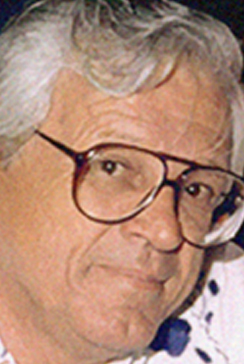
Author Fernando Faura The first psychiatrist who analyzed Sirhan Bishara Sirhan was Bernard Diamond, a professor of forensic psychiatry at UC Berkeley. He is often quoted as saying that it became obvious to him rather early that Sirhan had been previously programmed. Further, that his reaction to hypnosis was exceptionally keen, in the sense that he could easily be put under, fulfill a command given to him while hypnotized, and afterwards deny he had done it or acted under post hypnotic suggestion. For instance, as authors like Melanson have detailed, once he went under, Diamond would suggest that Sirhan later climb the bars of his cell like a monkey. Diamond would then snap him out of the trance. Sirhan would then climb on cue, e.g., Diamond would say a certain word, or make a certain facial expression. After he did it, Diamond would ask him why. Invariably, Sirhan would deny he did so.
After reviewing this record, the late Dr. Herbert Spiegel—perhaps the nation’s leading expert on hypnosis—came to the conclusion that, on a rating scale of susceptibility, Sirhan was a 5, meaning he was in a class of persons that amounted to less than 10% of the population—those who could be hypnotized very simply and easily. He also said that Sirhan’s background as a Palestinian refugee, with a childhood plagued with political violence, could be used as a hook for the programming. Spiegel added the following: these painful memories could be conjured up and then utilized as direction for the intended goal of the programmer.
Perhaps the most interesting observations on this crucial subject were those stated in a legal declaration by Dr. Eduard Simson-Kallas. Simson was the chief psychologist in Sirhan’s prison testing program. He ended up spending over 35 hours with Sirhan. Agreeing with Spiegel, he stated that Sirhan was easily hypnotized. Agreeing further, he said that the Arab-Israeli conflict could have been used as a motivation.
In one aspect, Simson went even further than Diamond and Spiegel. After spending so much time with the subject, he did not think Sirhan was sufficiently devious or unbalanced to act on his own in the murder of RFK. He stated that Sirhan had to have been prepared in advance. As he said so simply: “He was hypnotized by someone.” (These and further clinical observations were stated in Simson’s’ 33-point declaration this reviewer read out of Turner’s files.)Simson developed a degree of trust and rapport with his subject. Sirhan seemed to want to know what happened that night at the Ambassador. So Simson was in the process of attempting to deprogram him when his superiors told him to stop the procedure. Simson was so disappointed in this that he resigned and went into private practice.
Simson had harsh words for Sirhan’s defense team. Sirhan’s lawyers tried to plead diminished capacity at his trial. Diamond then stated that Sirhan had hypnotized himself. Simson could not disagree more. He wrote that it is just not possible to render oneself into such a deep state of hypnosis and then to set up blocks of amnesia so one cannot recall it. He then stated that it was a mistake by the defense—he called it the psychiatric blunder of the century—to admit guilt and then proclaim Sirhan as temporarily deranged. Since Sirhan resisted the derangement syndrome, he was not cooperative with the defense and they could not unlock his mind to find out who had planted the post hypnotic suggestions.
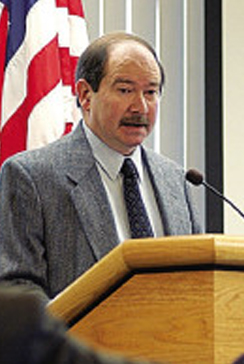
Phil Melanson How does this all intersect with the girl in the polka dot dress? When Diamond put Sirhan under, he would often ask him to perform something called automatic writing. This is a technique that, through a slow and repetitive process of writing with a pen to paper, attempts to release the subject’s deeper thoughts and feelings. Once, Diamond asked Sirhan if anyone was with him when he shot at Kennedy in the pantry of the hotel. Sirhan began to write out very slowly: “The girl…the girl…the girl.” Secondly, during his discussions with Simson—while in a normal state—the doctor asked him the last thing he recalled about that night. Sirhan replied that he recalled sitting at a small table with the girl. They were drinking coffee. She wanted lots of cream and sugar. They were then asked to leave that area. She then led him into the pantry. (Faura, pp. 210-211)
At this point, Faura begins to use excerpts from Professor Dan Brown’s interviews with Sirhan. Brown is a professor of psychology at Harvard. At the time, he was employed by attorney William Pepper, who was making an attempt to reopen the Bobby Kennedy case. Brown ended up spending even more time with Sirhan than Simson-Kallas did. Brown writes that, after Sirhan followed the girl into the pantry, he recalled getting something like a tap on the shoulder. He then went into his “weapons stance”, like he was at a target range, the visual cue being the polka dots. After firing once or twice, Sirhan snapped out of it and realized he was not at a range; then people started grabbing him and he asked himself “What is going on?”
This makes four forensic psychiatrists who have all come to the conclusion that Sirhan had been programmed. Brown states that “Sirhan has a rare combination of personality characteristics that make him highly vulnerable to … mind control methods.” He further wrote that “Mr. Sirhan’s memory report is consistent with hypnotic programming hypothesis.”
The forensic psychiatrist concluded that Sirhan’s act of firing at Kennedy that night was not the result of his conscious behavior. He wrote that it is “likely the product of automatic hypnotic behavior and coercive control. … further, that the system of mind control which was imposed upon him has also made it impossible for him to recall under hypnosis, or consciously, many critical details of actions and events leading to and at the time of the shooting … .” (ibid, p. 213) In other words, agreeing with Simson-Kallas, someone planted mental blocks in Sirhan’s mind to conceal certain keys to his programming.
To close out this aspect of the case, with all this in the record, it is now necessary to mention two other crucial evidentiary points. Serrano did not just witness the girl and one companion fleeing down the stairs after the assassination. She saw the girl also enter the hotel from that same entrance prior to the shooting. (ibid, p. 101) Except at that time, there was a second male companion with the girl, a man who she later said resembled Sirhan. Secondly, in the pantry, after the shooting, almost everyone was absolutely hysterical—shouting, screaming, weeping, attacking Sirhan. People were panic-stricken, trying to figure out what happened. People were trying to get in the room to see what had happened.
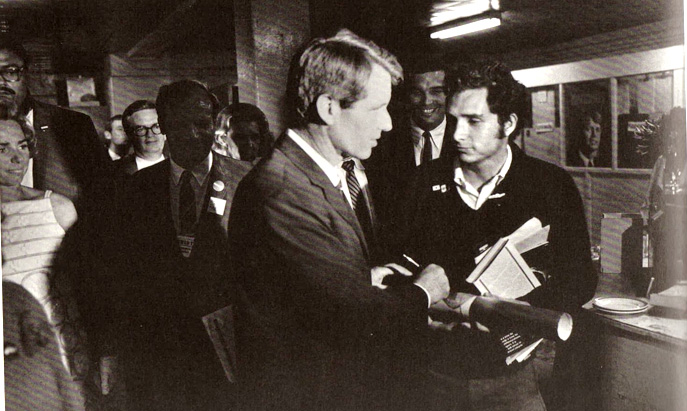
RFK signs poster for bystander Michael Wayne minutes before he is assassinated. Yet, as Faura details, there were three people who were not acting like this at all. They were not panic-stricken or overcome with grief. They were intent on escaping from the room. These were the girl, her original companion, and a man named Michael Wayne—who we shall discuss later.
As the reader can see from this brief précis, ample evidence exists that Sirhan was being manipulated. More than ample evidence exists that the girl was a key part of that manipulation. John Fahey spent the day of the assassination with the girl. He then dropped her off at the Ambassador Hotel.
IV

Robert Parry As noted, Fahey came to see Faura after he read his first story on the RFK case, which had made the front page of the Citizen-News. Faura would find Fahey’s story so fascinating, so compelling, so potentially important to solving the case, that he recorded it on tape. He then had it transcribed. (Faura, p. 33)
Fahey worked at a chemical company. He arrived at the Ambassador that morning on a business matter. While waiting in the coffee shop he met up with an attractive young girl. She would eventually give Fahey a few names, but the first one she gave him was Alice. This is one way, Fahey felt, that she was communicating to him she was doing something secretive. In fact, when he asked her directly what she was doing there, she put him off with words to the effect: I would not want you involved. (ibid, p. 36) She then walked him over to the RFK headquarters part of the hotel. She said that Kennedy would be taken care of that night, after his reception. She then said that they were being watched. Since Fahey mentioned that he needed to travel out to Oxnard later, she asked if she could join him. Fahey accepted and they drove off. But shortly after they hit the road, it became evident that they were being tailed. This seemed to genuinely upset her. When Fahey asked why they were being followed, she said it had to do with what was going to happen to RFK after his reception.
Once the pair got to Oxnard, Fahey decided to go on further to Ventura. But he noticed that there was now a different tail behind them. (p. 41) Fahey told Faura that she said some strange things that, at the time, he did not really comprehend. She mentioned getting a false passport to leave the country as soon as she could. She mentioned departing LA on a plane from Flying Tigers Airlines. She also said she had come to Los Angeles from New York City, where she had met a woman named Anna Chennault. Fahey thought she might be delusional, or inebriated.
When they arrived back at the Ambassador it was around 7 PM. She said she was staying at Olympic and Kenmore, which was nearby. Fahey commented that it was pretty clear that she knew her way about every nook and cranny of the hotel. When they got back, she went to the back of the hotel. Spooked, he did not want to be associated with her anymore. (p. 52)
After the assassination, Fahey understood what had happened. He went to the FBI, who interviewed him and said they would recall him. Fahey and Faura went over the route Fahey said he had driven with the girl. Fahey was very specific about where they stopped for lunch and where he got a flat tire. Faura then took him to the police. The reporter gave them a copy of the transcript. They also asked for the original tape to duplicate. Which, of course, Faura did not get back until 20 years later, when it was declassified at the California Archives in Sacramento. After the LAPD interviewed Fahey they told him not to discuss his story, and for Faura not to write about it. They based the latter on a gag order placed over the upcoming Sirhan trial. Faura thought it was nonsense to apply this to the press. But clearly LAPD was fearful that Fahey would give credibility to Serrano’s story.
By this time, Faura was getting suspicious about what the LAPD and FBI were actually doing. Reportedly, the Bureau had four hundred agents working the RFK case. LAPD had set up a select unit inside the force called Special Unit Senator to investigate the case. Yet both seemed to want to ignore the most credible leads. In fact, as Faura would later learn, LAPD wanted to discredit them—as they would attempt to do with both Serrano and Fahey. They actually wanted to make the Girl in the Polka Dot Dress disappear, since she epitomized a sophisticated plot to kill Kennedy.
Herbert Spiegel Therefore, Faura decided to go ahead and commission a drawing of the girl from Fahey’s memory. He then got the sketch illustrated into a portrait. This would serve as an identification instrument for other witnesses. (p. 80)
On June 19th, Fahey called Faura and told him he was going to the Ambassador Hotel. The FBI told him they had found the girl. Faura found out they were actually going to pick her up and have Fahey identify her at the Kenmore Hotel, which was behind the Ambassador. Faura called Bonfante. He brought down a photographer to memorialize the moment. The Bureau had been tipped off by Ty Hammond, manager of the Kenmore. But it turned out that the Bureau had arrived too late and the girl was gone. Disappointed and frustrated, Faura decided to give Hammond the portrait of the girl. Hammond said that yes, it looked like her. (p. 96) He also said the girl had Arab friends and she always entered the Ambassador from his hotel. She was not actually staying there, but lived in the nearby neighborhood. But he was not sure she was still there.
Just as the chase for the girl was beginning to bear some fruit, the police now called it off. On June 21st, according to the authorities—most notably DA Evelle Younger—Serrano had taken back her story. As the public later learned, this was not actually true, and it was done under duress. It was part of the attempt by local authorities to make the girl disappear. By hook or by crook. (ibid, pp. 107-08) But it actually went further than that. Because now, his sources of information began to dry up. When he went to see Hammond, he would not cooperate any further. When he called Fahey, he told the reporter the FBI had seen them together and wanted him to cut off this association.
But Faura continued to investigate. He found two other witnesses who said they saw Sirhan with the girl. Jose Carvajal who worked at the Ambassador saw the two talking with Sirhan on a terrace in front of the rear door of the hotel. Vincent DiPierro saw the two seconds before the shooting. He said that the girl smiled at Sirhan right before he began firing. When DiPierro looked at the portrait, he had only slight modifications to the illustration. (Pp. 117-20)
But as the author notes, what was so odd about this was that Faura learned that the FBI was also still looking for the girl. And so was the LAPD. But if Serrano had been discredited, and the girl did not exist, then why were they still crossing paths? And why had Fahey been fired from his job? (p. 136)
An example of the continuing search for the girl was that both Faura and the FBI interviewed a woman named Pam Russo. She said she had seen the girl with Sirhan at Rafferty’s gathering prior to the shooting. But further, she also said that someone at Rafferty’s actually tackled a man trying to escape the pantry after Kennedy had been shot. (p. 140)
Which leads us to Gregory Clayton and Michael Wayne. Clayton was the bystander who Russo was referring to who tackled a man running out of the pantry—Michael Wayne.
V
When Faura found out about Clayton, he tracked down his house and visited him in person. The witness told the reporter that he had seen Sirhan at Rafferty’s that night with the girl. (p. 151) He said that, at the Ambassador later, after he heard the first shot, he ran to the entrance of the kitchen pantry. He tackled a man running away from the murder scene. He said there were actually two men who seemed to be fleeing together. One had an object in his hand, which appeared to “flash”. The other man was in such haste that he was knocking a news photographer onto a table and into some chairs. When Clayton yelled for a nearby security guard, the man with the flashing object in his hand ran the other way, into the hallway. Clayton tripped the other man, who was then subdued by the guard. According to the witness, the man they subdued had a “look of madness in his eyes, as if he had rabies.” (p. 153) He then kept saying, “Let me go. Gotta get out of here. Let me go.” As Faura later notes, these were not the words of an innocent bystander. Clayton picked up a paper that Wayne had been carrying. It was a rather bizarre bumper sticker that read, “Kennedy Assassination a Death Hoax.”
As anyone reading the above would understand, the Clayton story suggests there was more than one gun involved in the RFK murder. As does the Brown/Sirhan transcript. Because in one of these sessions Sirhan said that, during the shooting, he saw the flash of another gun firing. (p. 212) Finally, as almost everyone who has seen a photo of Wayne knows, the running man, who said he had to get out of here, all with a look of madness in his eyes, resembled Sirhan.
Faura managed to temporarily make amends with Fahey. Like a good reporter, he did two things to try and certify his story. First, he gave him a polygraph test, which he passed. (p. 181) He then found the waitress who served Fahey and the girl at a restaurant in Oxnard. Her name was Janis Page. (p. 173) The LAPD did their best to negate both of these achievements. They got Page to keep her mouth shut after she talked to Faura, and they gave Fahey their own version of the polygraph. This was through their old reliable Hank Hernandez. (p. 185) As many authors have shown, when LAPD wanted to discredit a witness, they turned him over to Hernandez.
After this, Faura’s efforts became comparable to Albert Camus’ Myth of Sisyphus: rolling a rock up a hill, only to see it roll back down. Fahey cut off relations with him for good. Bonfante let him know that his supervisors at Life had told him that they would not finance any further inquiry into the RFK case. The author tells us that this change came after a call from Washington. (p. 191)
Faura equates the last with the subtitle of the book, the “Paris Peace Talks Connection.” Some background will be required for this aspect of the book. As previously noted, the girl told Fahey that prior to her coming to Los Angeles she had met a woman named Anna Chennault. She also mentioned that she might be able to fly out of town on CAT or Flying Tiger Airlines. (p. 61)
William Turner Anna Chennault was the Chinese wife of former military pilot Claire Chennault. Claire became famous as an aviation pilot aiding the Chinese struggle against Japan during World War II. His initial volunteer squad was called the Flying Tigers. This was replaced when the USAF formally entered the war and operated in the China-Burma-India air theater.
After the war, Chennault, a big backer of the nationalist Taiwan government, created something called Civil Air Transport (CAT). This supplied freight into Taiwan, aided the French struggle to keep their Indochina empire, and aided the Kuomintang’s occupation of Burma in the mid and late fifties. It also helped in the early years of the American occupation of South Vietnam.
Faura used the later dropping of these names by the girl—Fahey recalled them later, after his recorded interview—to perform two rather large functions. He connects the girl and Chennault to the deliberate sandbagging of President Johnson’s peace talks, and he then suggests that people like candidate Richard Nixon, future Vice-President Spiro Agnew, future Attorney General John Mitchell and Senator John Tower were in on the RFK assassination. (p. 207)
As regards the former, Faura is referring to the rather recently discovered files by journalist par excellence Robert Parry. Parry discovered a file put together by National Security Advisor Walt Rostow at the Johnson Library. That file contained information garnered by the FBI and the National Security Agency about Nixon’s efforts to subvert Johnson’s attempt to get a peace conference with the North Vietnamese prior to the fall election of 1968. Perceiving this to be a boon for the Democrats, Nixon set out to deep-six that diplomatic effort. Nixon did use Republican lobbyist and fundraiser Anna Chennault to communicate with the South Vietnamese government, advising them to stall Johnson, promising Nixon would give them a better deal once he was elected.
The problem with Faura’s theory here is that, as author Ken Hughes has shown, those efforts did not begin until over a month after Robert Kennedy was killed. It was not until July 12 that Nixon alerted Chennault that she would be his go-between for these efforts to obstruct Johnson. So if she was not aware of that function until then, how and why could she have been used prior to June 5th in the RFK plot?
Also, although Faura mentions John Tower as a possible co-conspirator, in rereading some of the literature on Parry’s fine site, Consortium News, I could not detect his name in any of the declassified files on the illicit episode. So, as far as I can see, the top-level players involved were Nixon, Agnew and Mitchell. Mitchell had been at the meeting in July of 1968 where Nixon appointed Chennault as his emissary. (In an interview with journalist Jules Witcover in 1994, Chennault did say that Tower did have knowledge of her mission. See Baltimore Sun, 8/18/2014) And FBI wiretaps seem to indicate that Chennault was getting instructions from Agnew in late October of the campaign. But all of these efforts and communications are to thwart Johnson. Just because The Girl in the Polka Dot Dress had met Chennault in New York, what is the evidence that the men mentioned above were part of the plot to kill RFK? And if they had been, the girl would not be musing about getting a passport and flight on CAT. She would have had her passport and been on a plane the next day.
From what I have learned about the RFK case from writers like Turner, Melanson, and Lisa Pease, most of the evidence inherent in the crime—the MK/Ultra aspect, the associations of the leaders of SUS Hernandez and Manny Pena, the presence of former Iranian intelligence officer Khaiber Khan at RFK headquarters—seems to indicate a CIA modus operandi.
I also have some formal criticisms of the book. Faura was, for all intents and purposes, a participant in the RFK investigation as it unfolded. He was not an academic or a historian looking back at a past event he did not have a hand in. Therefore, his book could have and should have been written from a first person point of view—but it is not. At times, the author refers to himself as ‘Faura’. Before Jim Garrison started his memoir on his inquiry into the JFK assassination, his editor Zach Sklar insisted he write it in the first person. He did this since he thought it would create personal drama and invite reader empathy, since they would be watching a real life protagonist progress through unchanneled and dangerous waters. Sklar was correct and Garrison was grateful for that advice. Well, someone at Trine Day publishing should have insisted on the same thing in Faura’s case.
Also, I would have advised Faura not to use the very short chapter approach he does, some of them being literally less than two pages. This is not the way to build and cap sustained interest. Finally, in this vein, Faura excerpts into the book long sections of taped interrogations he did. Again, not all that scintillating to read. I wish he had summarized the less important parts of the interviews and only given us the key parts in the Q an A format.
In his discussion of the Scott Enyart trial over the photos Enyart took in the pantry of the actual assassination, the (wrong) photos did not show up during the trial, but just prior to it. (p. 219) Finally, the author seems unkind about RFK researcher Ted Charach. Faura does score him for some personal shortcomings. And I agree with them. But to say that the last he heard of Charach he was still trying to sell a vinyl record—that seems really unkind and uncareful. Charach’s 1973 film, The Second Gun, was nothing less than a breakthrough in the Bobby Kennedy case. In fact, that film is still worth seeing today. Also, as reporter David Manning noted in an article on the Enyart trial for Probe Magazine, Charach was one of the key witnesses that turned the case in Enyart’s favor.
All in all, we finally have a record of one of the very, very few mainstream reporters who actually delved into one of the assassinations of the sixties. Who tried to do an honest job and who actually tried to follow the evidence wherever it was headed. He found out the hard way that the local authorities—the police, the DA’s office, Mayor Sam Yorty—did not want to do that in the least. In fact, they were determined to not only avoid that path, but to discredit those who tried. Including the author. This book is his testament to that process.


