Tag: MEDIA

  • Time-Life and Political Pornography on the 50th Anniversary

    Time-Life and Political Pornography on the 50th Anniversary


    While anticipating what the 50th anniversary of the MLK and RFK assassinations would bring in our schizoid culture, I thought, “Well, it will likely be a mixture”. The broader-based, more old-line sectors of the MSM would probably do what they could to uphold or, at least, pin down any attempt to clarify, or honestly examine, those two murders. I hoped that perhaps there would be some attempt by the newer, more independent media, to say something honest and fresh about those milestone events.

    I was a bit right and a bit wrong. Netflix did put out a four-hour documentary on Robert Kennedy called Bobby Kennedy for President which, in its last hour, actually did present some of the questions about his murder. The three new documentaries on the King case—MSNBC’s Hope and Fury, Paramount Network’s I am MLK Jr, and HBO’s King in the Wilderness—avoided the circumstances surrounding his assassination in Memphis.

    On the other hand, there was one magazine on the newsstands that did confront the circumstances of Bobby Kennedy’s murder. That was a long 90-page glossy journal edited by Dylan Howard, the man who has been handling Steve Jaffe’s stories about the JFK case in National Enquirer. And, unfortunately, that was about it for our side.

    As Milicent Cranor writes in a story that we are running at Kennedys and King, there was an attempt by the MSM to somehow put the kibosh on those advocating a conspiracy in the JFK case. After all, the 55th anniversary of that case is this year. This consisted of an article by a previously unknown by the name of Nicholas Nalli. His article was published in an “open access journal” called Heliyon, and was noted by the MSM, most conspicuously in Newsweek. As Cranor notes in her well-reasoned essay, it should not have been noted at all. It is chock-full of holes and uses sources like John Lattimer, who has been discredited many times—most often by Cranor. Her critique shows how dubious the study is; and Nalli now appears on a long list of debunked pseudo-scientists on the JFK case like Lattimer, Hany Farid and Vincent Guinn. (We will have more to say on this spurious study in a future essay.)

    To join this list of anniversary gifts was a six part series on CNN called American Dynasties: The Kennedys. This smashingly disappointing series did not deal at all with the questions about the murders of John and Robert Kennedy, but instead tried to chronicle the careers of certain members of the family. To put it mildly, it did not do a very good job in that area. (We will also be dealing with that effort in a future essay.)

    But perhaps the most offensive and transparent attempt to keep the lid screwed shut on the Pandora’s box of the political murders of the 1960s was a particularly tawdry newsstand effort by Time-Life entitled Assassins: Killers Who Changed History.

    This was a 96-page, slickly produced, pretentiously organized and deceptively written propaganda piece. It tried to place the assassinations of President Kennedy, Martin Luther King and Robert Kennedy into a large and sprawling historical and geographical backdrop, one that went back well over a hundred years and spread all over the globe, as far away as India. The magazine covers well over a dozen historical cases. But its analysis of those cases is, by necessity, very shallow. And the comparative analysis between those cases and the murders of King and the Kennedys is so diaphanous as to be risible.

    For example, in their discussion of the murder of Abraham Lincoln, the authors clearly imply that assassin John Wilkes Booth worked alone, and they term it “his plot”. Even for Time-Life, this is pretty bad. At the end of the civil war, Booth was part of a conspiracy to kill three major figures of the Union government. The two other targets were Secretary of State William Seward and Vice-President Andrew Johnson. Booth had assigned co-conspirator Lewis Powell to kill Seward. In his attempt to do so Powell bludgeoned Seward’s son, almost killed Seward, and stabbed three others. In this desperate, failed attempt, he made so much noise that his accomplice—who was to guide his escape—fled the scene.

    Booth made Johnson the target of George Atzerodt. Atzerodt checked into the hotel Johnson was staying at in Washington, and rented the room above him. But the next night, he got drunk at the bar, staggered into the street, discarded one of his weapons, and wandered into a different hotel. It took over a year to capture all of the conspirators, for one had escaped to Europe. Nine people went to trial, eight were convicted, and four were executed. Before his death, Powell said words to the effect, that they only got but half of us. If this is correct, then there were actually close to 20 people involved in this grand conspiracy. You will not read about any of the co-conspirators, or the other targets, in the four pages devoted to the subject in this periodical.

    The above is only one of the asymmetrical comparisons made in the journal. The 1981 Anwar el-Sadat assassination is another. That conspiracy involved over twenty participants. It was sanctioned by a Moslem fundamentalist group. Members of that group were arrested two weeks before the murder by Egyptian security forces. But they would not talk. Four gunmen took part in the public machine gunning. Eleven people, including Sadat, were killed. A rebellion was planned in Upper Egypt to coincide with the assassination, but it was put down. Five members of the plot were executed. Nineteen others were arrested. Seventeen were convicted and imprisoned.

    Further exposing the spin of this publication, let us deal with the listing of the1940 murder of Leon Trotsky. Josef Stalin had already sent a team of assassins to kill the exiled Trotsky at his fortified home in Mexico City. This attempt, sponsored by the foreign division of the NKVD, failed. So Stalin commissioned a smaller plot headed by former Cheka agent Nahum Eitingon. Through staunch Spanish communist Caridad del Rio Hernandez, they recruited her son Ramon Mercader. Mercader was schooled in Russia as a Soviet agent. Furnished by the Russians with false passports and false identities, he befriended a friend and follower of Trotsky. He followed her from Paris to New York and then asked her to join him in Mexico City, where Trotsky was living. He used the woman to gain entry to Trotsky’s home, befriend his guards, and win his confidence. Left alone with him, Mercader struck him with an ice pick. But Trotsky did not die immediately and struggled with his attacker. His bodyguards were alerted by the sounds of the struggle and apprehended Mercader. This caused his two getaway accomplices, Caridad, and the Russian intelligence officer Eitingon, to leave the scene and abandon the killer. They both hightailed it out of the country. Trotsky died a day later. Mercader served twenty years in a Mexican prison.

    Therefore, the murder of Trotsky was a well-planned, long gestating conspiracy. It originated with the ruler of the USSR, and his order went down to Eitingon, then to Caridad, and finally to her son. Stalin’s political objective was to kill a former rival. It only broke down and was exposed because Trotsky did not die instantly.

    Even some of the cases only mentioned in passing are spurious as comparisons. The assassination of Denver talk show host Alan Berg in 1984 was chronicled by author Stephen Singular in his book Talked to Death. Berg was a popular Denver radio host. He was an outspoken liberal and his program had a large reach throughout the country. He was provocative and pugnacious in espousing his disdain for anti-Semites and neo-Nazi groups, which flourished in the west. He engaged a member of one of these groups, The Order, on his show. He was murdered by an ambush in the driveway of his home on June 18, 1984. Five members of that group participated in the assassination. Four were rounded up and two were convicted at trial; two others were convicted on related charges. The leader of The Order was killed less than six months later during a firefight with federal agents at his home in the state of Washington.

    The concept of this cheap and tawdry creation was apparently to show that the official stories about Oswald, Sirhan, and Ray have past parallels as socio-political crimes. Yet that aim is soundly defeated by the actual facts of these, and other, named cases, facts which are not fully delineated within the pages of the magazine. In the Trotsky case, for instance, the commissioning of the conspiracy by Stalin is not made clear. So what the publication actually shows is that, contrary to our schizoid culture’s declarations, political conspiracies are not at all uncommon.

    This curtailed backdrop is complemented by an even worse censorship in dealing with the major targets of the journal. These are the discussions of the lives and purported crimes of Oswald, Ray and Sirhan. These reviews might have well have been written back in the sixties. They are so trite and obsolete that they seem mildewed. For instance, Ray is directly compared to the “killer” of Indira Gandhi as some kind of fanatic. Yet, Indira Gandhi was killed by two men, and they had another accomplice. One of the assassins was killed on the spot while the other two conspirators were later executed. Moreover, an investigating commission strongly suspected that Indira Gandhi’s secretary, R. K. Dhawan, was the inside operator who arranged the assassination.

    The two gunmen were part of the religious sect called the Sikhs and this was the reason for the murder. Assassins tries to compare this with Ray, acting alone, somehow killing King because he was a racist. As several critics of the King case have noted, the concept that Ray was a racist does not hold water. The early authors who attempted to railroad Ray for the crime—William Bradford Huie, George McMillan—did use this as a motive. And later authors who argue for Ray’s guilt adapted this from these (false) precedents, e.g., Gerald Posner and Hampton Sides.

    But as John Avery Emison wrote in The Martin Luther King Congressional Cover-Up, neither the FBI nor the House Select Committee on Assassinations (HSCA) could come up with any credible evidence to back up this presumed motive. For instance, the FBI interviewed dozens of inmates at the Missouri prison Ray had escaped from. The Bureau even talked to the warden. They still could not unearth any indication of Ray’s involvement with any race-related disturbances. (Emison, p. 73) During Ray’s three hour and forty-three minute hearing—done after his lawyer had sold him down the river—race was never mentioned as a motive. (Emison, p. 73)

    When the HSCA tried to delve into the accusations made by Huie and McMillan, they were found lacking in substance. Emison deals with this issue at length in his worthy book. (See pp. 69-91) Assassins brings up the issue of Ray “working” for George Wallace’s candidacy in 1968 in California. In fact, as Martin Hay has pointed out, the extent of this work was to drive three people to the Wallace headquarters so they could register to vote. As the reader can see, the labeling of Ray as a fanatic, and his comparison with the killers of Indira Gandhi, is simply a fairy tale.

    But beyond that, there is no doubt about the circumstances of the Indira Gandhi assassination. The killers were caught almost immediately and confessed to the crime. Ray was not caught for 65 days. And under his first lawyers, Arthur Hanes and son, he was ready to go to trial. He was even willing to refuse a plea bargain. It was not until the famous attorney Percy Foreman entered the case that this was changed. As Emison discusses at length in his book, Foreman—after first saying he would defend his client as not guilty—then changed his tune. He began applying all kinds of pressure to Ray in order to coerce him into pleading guilty. Emison details the unethical tactics that Foreman used in order to do this, which included bribery. (See Emison, pp. 131-64) Beyond that, during Ray’s hearing, the transcript had to be altered in order to conceal the facts of Foreman’s coercion. (Emison, pp. 175-77)

    The day after the pleading, without Foreman as his attorney, Ray wrote a letter to the judge and told him he would like to change his plea. But Judge Preston Battle died before he could act on the letter, which was lying open on his desk when he had a fatal heart attack. Tennessee law clearly stated that in such situations, the defendant should be granted a new hearing automatically. (Emison, pp. 203-04) That provision of the law was systematically ignored until it was changed decades later when Judge Joe Brown took up the King case and threatened to break it wide open. Needless to say, in its haste to compare Ray with the Sikh killers of Gandhi, Assassins ignores virtually all of this.

    The section on Ray, entitled “Fanatics”, also includes six pages on the Robert Kennedy assassination. There, the accused assassin of RFK is said to have killed the senator because of Kennedy’s support for Israel. First, as the facts of the RFK case dictate, there is almost no way on earth that Sirhan could have killed Senator Kennedy. Secondly, Sirhan bears next to no responsibility for the shooting he did because he was hypnoprogrammed. The key to this riddle is the presence of the famous Girl in the Polka Dot Dress. She approached Sirhan at the bar of the Ambassador Hotel, shared a coffee with him, asked him if he wanted some sugar and then led him into the pantry of the Ambassador Hotel. As Kennedy was walking through, she smiled at him and pinched him. This provoked him to start shooting. (Watch this video) The article states that Sirhan hid in the kitchen of the Ambassador Hotel before he started firing. (p. 43) But Sirhan was not in the kitchen; he was in the pantry. Furthermore, how one could hide oneself while standing next to a girl in a white dress with dark polka dots is a riddle that goes without mention. Also going unmentioned is the fact that all the bullets that struck Kennedy came in at very close range from behind, while Sirhan was always in front of the senator and at a distance of 2-5 feet away.

    In Assassins, Lee Harvey Oswald gets his own chapter. In fact, it’s the opening chapter which is entitled “Changing History”. That is an odd and inappropriate title, because none of the changes in foreign policy which ensued after President Kennedy’s murder are listed in the chapter. Not the escalation in Vietnam, not the reversal of American policy in Congo, not the move towards the overthrow of Sukarno in Indonesia, not the end of attempts at détente with Fidel Castro and Nikita Khrushchev, among others. Understanding the editorial approach of the publication, it is easy to understand these excisions.

    Almost all of this opening chapter could have been lifted from the Warren Report. It amounts to a mini-biography of Oswald. Words like “failure” and “rootlessness” and phrases like “fantasy life” are sprinkled into the eight pages. None of the new discoveries made by the Assassination Records Review board are included. Whole books have been written largely based on these new documents. Not even the older discoveries that upset the Warren Commission cardboard portrait of Oswald are included. There is not a word about 544 Camp Street and Guy Banister in New Orleans. Nothing about the journey to the Clinton-Jackson area north of New Orleans with Clay Shaw and David Ferrie. There is not even a sentence about Oswald’s alleged visit to Mexico City, let alone any of the startling information in the declassified Lopez Report about that crucial subject. Below one picture of a police officer holding up the rifle the Warren Commission accepted as being Oswald’s, the caption does say “The Murder Weapon?”. Beneath that, it notes, “an officer held up the rifle Oswald allegedly used to assassinate President Kennedy” [italics added]. But this is neutralized by a series of four photos picturing Oswald through various stages of life, which are labeled, “Evolution of an Assassin.” Needless to add, there is not one sustained paragraph mentioning all the problems with the medical and ballistics evidence used to convict Oswald by the Warren Commission.

    We would be remiss if we did not mention one truly surprising development in the press that took place around the 50th anniversary. These were a series of four lengthy articles about the Robert Kennedy assassination. Written by Tom Jackman, and linked to on our front page, they form a serious departure from the tripe written in Assassins. These articles have been the basis for various other stories that have appeared in the media about the RFK murder. The series began with a discussion of the visit by Robert Kennedy Jr. to the prison near San Diego where Sirhan is now housed. RFK’s son told Sirhan that, after months of reviewing the evidence, he had decided that he had not killed his father. This was a bold and courageous move by Bobby Kennedy Jr. And it clearly parallels the visit by the son of Martin Luther King to James Earl Ray in 1997, where Dexter told Ray he also thought he was innocent.

    Let us hope that the Washington Post series continues to be picked up and that this causes a change in some of the MSM coverage of the RFK case.

    Meanwhile, we will conclude that the Time-Life special issue of Assassins would serve well as a model for a Mad Magazine revival.

  • Jim DeBrosse, See No Evil: The JFK Assassination and the U.S. Media

    Jim DeBrosse, See No Evil: The JFK Assassination and the U.S. Media


    In his brief review of the extant historiography and the persistent mainstream media obfuscation surrounding the JFK assassination, Jim DeBrosse’s See No Evil  succeeds in offering readers a concise and penetrating analysis of the myriad ways in which the powers that be have upheld the great shining lie of the crime of the century despite a preponderance of evidence to the contrary. Focusing initially on a chronological piecing together of the aftermath of the Warren Commission and the early works by figures like Mark Lane and other inquisitive personalities not persuaded by the half-baked official narratives offered up by the government, DeBrosse then proceeds to offer some of his own theories on other culprits who may have been complicit in the plot. While the first half of the book is impressive in its persuasive appeal to those who might be not entirely convinced of how a lie so big could be successfully maintained, the latter half of See No Evil feels less inspired, and tends to meander, which is unfortunate for such a well-researched and heavily footnoted work as this. Also, while DeBrosse takes issue with the often biased favoritism expressed in the American MSM towards anything Israel, and attempts to rope the Mossad into the JFK assassination through circumstantial evidence, his approach and ultimate conclusions on this collusion seem convoluted, misguided, and ultimately do not hold up.

    Today in 2018, it almost goes without saying that President Kennedy was murdered in November of 1963 as the result of a conspiracy to remove him from office. At this point, the accumulated forensic, ballistic, circumstantial and physical evidence, along with the hundreds of eyewitness accounts, reliable insider testimonies and peer-reviewed publications, have reached a point where the official Warren-Commission story of an embittered “lone nut” Marxist firing one of the least accurate, least reliable bolt action rifles available from a sixth-floor school book depository window and successfully assassinating Kennedy, is rendered absurd. To believe it is not is to say that entire a posteriori truth-categories on which human beings rely to make informed decisions in the material world are suspect; or that all extant legal cases in which anyone was tried and convicted of anything must be reviewed if their defendants’ sentences were in any way premised on jurisprudential integrity, evidentiary chains, logical deduction, or physical evidence. To accept the official story is to admit that you have actually never read the literature or documented record of the case, which most critics of so called “conspiracy theorists” have not. If that assessment makes me one, I proudly bear the title as a theorist of conspiracy origins, since of course, everyone knows that conspiracies don’t exist, and that every history book was written by a first-person eyewitness with omniscience.

    The Gulf of Tonkin Incident, the fake nukes in Iraq, Israel’s attack on the U.S.S Liberty, the United States’ blaming Cuba for the sinking of the U.S.S Maine, the FBI’s infiltration of the Black Panthers, the FBI’s bugging of Martin Luther King’s hotel rooms, the Joint Chiefs of Staff’s Operation Northwoods proposal, the CIA’s MK Ultra mind-control experiments on unwitting subjects, their helping the OAS in the failed overthrow of  Charles de Gaulle, their successful overthrows of Arbenz, and Mossadegh, their complicity in the assassination of Patrice Lumumba, their five dozen attempted assassinations of Fidel Castro, their dosing of strip-joint patrons with LSD, their overthrow of Chile’s Allende government and the elected leadership of Haiti, the coups in Brazil, Nicaragua, and Indonesia. How about America’s recent role in the coup in Ukraine? And on and on. These are all demonstrably provable conspiracy plots. But of course conspiracies don’t exist. See no evil, hear no evil. Only those who “theorize” about them exist.

    DeBrosse begins by claiming as much, and does a truly fine job bringing even newcomers to the JFK research community up to speed on the historiography of the incident, beginning with its immediate aftermath and concluding  with President Trump’s tepid 2017 release of a number of declassified but often still-redacted documents. Based on the author’s doctoral dissertation while attending the E.W. Scripps School of Journalism at Ohio University, the 192-page book is an exploration of how the corporate media and its CIA handlers have kept the American public in the dark about one of its most heinous truths: that their own elected leader was very likely killed in a sinister domestic plot hatched by elements of the nation’s own intelligence community and associated forces.


    II

    DeBrosse’s own journey, he claims, began on that fateful November 22, 1963 afternoon, when as an eleven year old boy he was already expressing doubts about how quickly the case had been “solved.”  Two days later, when he and his parents watched Jack Ruby rush out of the crowd of nearly seventy Dallas police officers and shoot Lee Harvey Oswald at point-blank range on live television, he says his doubts were all but confirmed, along with his father’s. (DeBrosse, p. 3) Like many people who are interested in the case, DeBrosse claims he only later came to seriously investigate it, while subtly registering at an intuitive level that something fundamental had changed in America with Kennedy’s death and his replacement by Lyndon Johnson. He goes on to detail the climate of despair that befell him and his circle of friends in the later aftermaths of the King and Robert Kennedy assassinations and the Vietnam quagmire that dragged on until 1975.

    Framing his argument, DeBrosse cites a few lines from eminent historian John Lewis Gaddis as an intellectual and investigative influence on how he came to view world events and the various ways in which they may be interpreted:

    We have no way of knowing, until we begin looking for evidence with the purposes of our narrative in mind, how much of it is going to be relevant: that’s a deductive calculation. Composing the narrative will then produce places where more research is needed, and we’re back to induction again. But that new evidence will still have to fit within the modified narrative, so we’re back to deduction. And so on. That’s why the distinction between induction and deduction is largely meaningless for the historian seeking to establish causation …. “Causes always have antecedents,” Gaddis writes. “We may rank their relative significance, but we’d think it irresponsible to seek to isolate—or ‘tease out’—single causes for complex events. We see history as proceeding instead from multiple causes and their intersections.”

    This is, I think, the most important aspect of the book. It is a foundational concept in the honest and accurate writing of history, and it is so far removed—as DeBrosse amply demonstrates in his case studies—from the ways in which the MSM and its corporate-shill news anchors portray reality as to be entirely forgotten. At least in the United States, where I live, the idea that a multifaceted plot at the highest levels of government agencies could lead to a spectacular and world-historical moment like the JFK assassination is not accepted. To understand that would require things like the nuanced and painstaking work of folks like the authors published here at Kennedys and King and their predecessors like Mark Lane, Vincent Salandria, Jim Garrison and others. DeBrosse argues, quite convincingly, that the historic lens, as it were, must be focused correctly—not too widely, not too myopically—for the most accurate picture to emerge in a case as complex and byzantine as the JFK assassination:

    It can also be filtered or unfiltered to ignore or trace the connections among the evidence in its view. An investigative lens is therefore highly subjective; its view is focused and/or filtered according to one’s theories, prejudices, and even intuitions, often without the investigator’s awareness. Regardless of their subjectivity, some investigative lenses are clearly superior to others in making sense of past events for which there is imperfect knowledge. (DeBrosse, See No Evil, p. 16)

    What most of us are spoon-fed at the MSM dinner table is a carefully packaged, very safe and easily digestible nightly story that requires little attention, less thought, and which evokes plenty of reassurance or fear, depending on the intent of the programmers. This was understood at an intimate level by figures like Edward Bernays and other early practitioners of social programming who sold the First World War to an unwitting public, leading up to entrance, in 1917, of US forces into the European theater of combat. The basic premise of social engineering is that human beings are motivated by fear and reward, easily convinced of the guilt of one group and the righteousness of themselves, and susceptible to even the grandest lies if they are handled properly and if consent is manufactured. (George Creel: How We Advertised the War, 1920) Hitler infamously reverse-engineered the United States’ World War I propaganda machine for his own rise to power in World War II ; the Nazi’s own Minister of Propaganda, Joseph Goebbels distinctly cites the American model as a uniquely effective and admirable one. The very idea of a corporately managed, “fair and balanced” media is itself an ideological imposition. The truth is very often skewed, and distorted; purposefully fraudulent scholarship and criticisms ought not to be fairly treated. Orwell’s Ministry of Truth viewed itself as fair and balanced, as did the Soviet Union’s own Central Committee and associated media organs. We must decide based on the best evidence at our disposal and our critical acumen as what to include and what to dismiss, and See No Evil does a commendable  job of communicating this point.

    DeBrosse, after circumscribing his theoretical framework, then proceeds to analyze in chronological order the ways in which networks like CBS, and major newspapers like the New York Times and the Washington Post were complicit in the defense of the Warren Commission’s findings. Having been penetrated and compromised by the CIA through Operation Mockingbird since the early 1950s;  often employing intelligence agents directly or hiring witting and unwitting “assets”, these organizations, DeBrosse argues, did not merely fail in their journalistic endeavors, but purposefully participated in the perpetual obfuscation of the evidence. His brief summary of Jim Garrison’s trial of Clay Shaw and its infiltration by intelligence operatives is a concise and articulate precis for newcomers and veterans alike. In this overview chapter, See No Evil really shines, and reads as a kind of “Who’s Who” of the JFK research community, with a broad and detailed list of scholarly citations of relevant and timely pieces by researchers like David Mantik, Jim Douglass, James DiEugenio, Lisa Pease, Jefferson Morley, David Talbot, and others in an attempt to discredit the lone gunman/magic bullet thesis that remains the official JFK narrative. It is interesting to see, given this comprehensive and compelling chapter, how anyone who has not truly looked into the case could then argue that the evidence points to Oswald, as Dan Rather and others, as DeBrosse notes, maintain. Indeed, in a personal email exchange in 2014 with Noam Chomsky, we see that even an esteemed MIT linguistics professor and fifty-year critic of U.S. foreign policy can fall victim to the “see no evil” mantra: Chomsky replied to DeBrosse,

    There is a significant question about the JFK assassination: was it a high-level plot with policy implications? That’s quite important, and very much worth investigating. I’ve written about it extensively, reviewing all of the relevant documentation. The conclusion is clear, unusually clear for a historical event: no. That leaves the question open as to [who] killed him: Oswald, Mafia, Cubans, jealous husbands …? Personally, that question doesn’t interest me any more than the latest killing in the black ghetto in Boston. But if others are interested, that’s not my business.

    That response is pregnant with contradictions, and leads one to reconsider just how Professor Chomsky got as far as he did in his career. Again, what is “all the relevant documentation?” Does Chomsky have a special magnifying glass that can penetrate blacked-out redactions? Or a seer stone which can magically reveal the completely blank white pages that the CIA photocopies thirty times and slaps a barely legible cover page on before “declassifying?” Similarly, just what does Chomsky consider relevant? Is the Warren Commission relevant? Is Orville Nix’s video relevant? Zapruder’s? The testimony of Roger Craig? It’s mind-numbing to read this from a person I once admired, but goes to show you how deeply the lie is ingrained in the psychic consciousness of our nation. We simply cannot admit it happened. It’s too cognitively dissonant.


    III

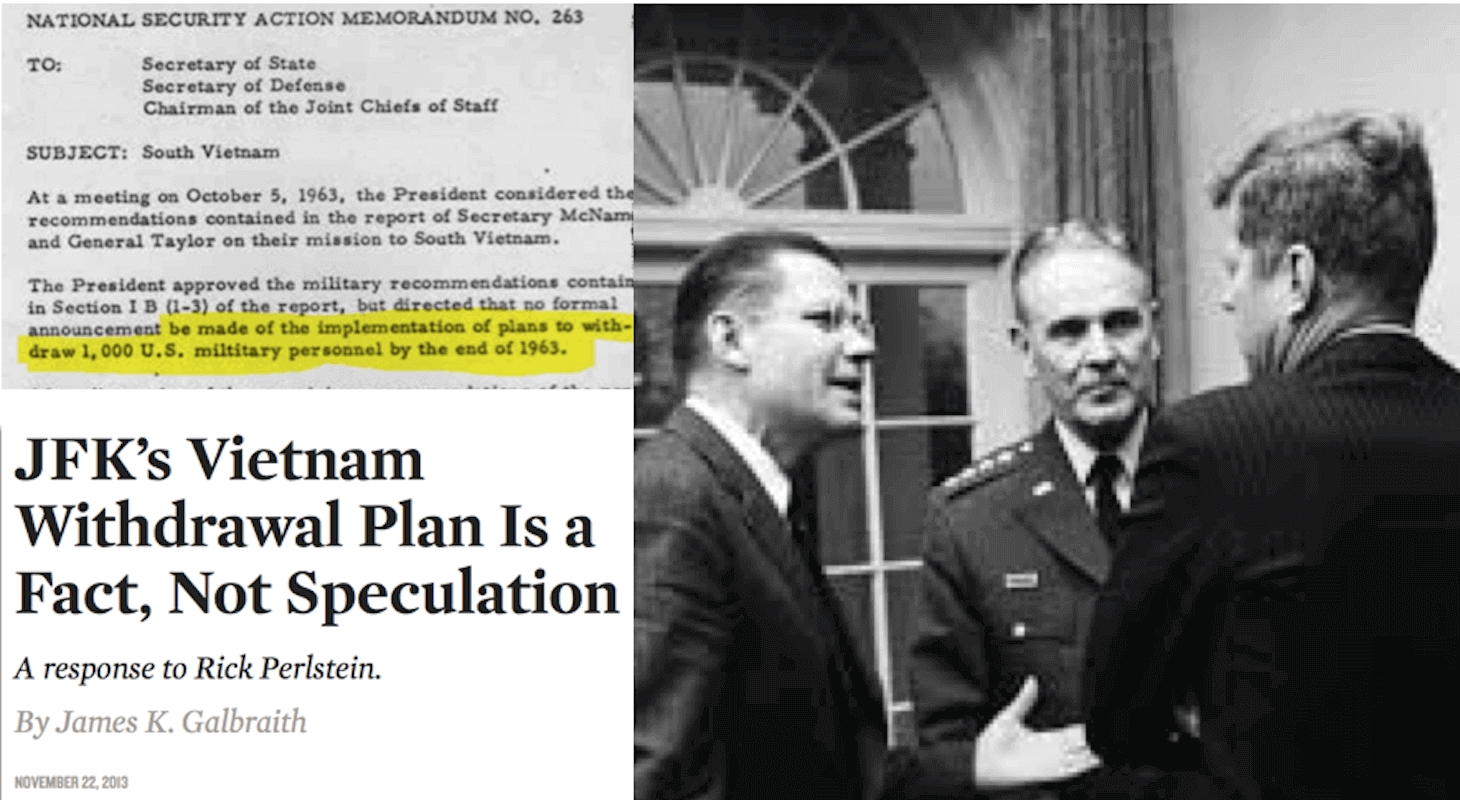
    DeBrosse’s book then proceeds, after ending the first few chapters with the recent JFK document dump in 2017—a double entendre if ever there was one—and how disappointed he is with Trump’s concessions to the intelligence community. Duly noting that perhaps no further digging will truly result in a conclusive smoking gun revelation, he still laments the CIA’s intractability in congressional and executive requests for documents and evidence. He also delves deeper into the clever ways the investigative research community is marginalized, and cites a few common techniques in which the scope of debate on topics like the political assassinations of the 1960s is narrowed to preclude a true discussion of the evidence on a national level. Among these are familiar psychological phenomena like our predisposition to self-censor to avoid ridicule, threats to our job security, a  lack of access to the original records and untampered evidence of the event, and of course, the constant drum-beat and clarion call of “OSWALD DID IT, FOLKS” that is proclaimed from the high towers of the MSM every time the event is discussed. DeBrosse correctly notes that one of the major hurdles even scholars like Chomsky cannot get over is the idea that Kennedy’s foreign policy—in particular—was sufficiently different from Johnson’s to warrant his murder at the hands of the intelligence community. He credits Oliver Stone’s film JFK for reigniting his and others’ curiosity of the case, and commends Stone for being brave enough to suggest what we now know is beyond a doubt true: Kennedy was withdrawing all combat troops from Vietnam.

    However, it is the second part of the book which ultimately is the most disappointing, as DeBrosse weirdly veers off into his own wilderness of mirrors, to quote James Angleton’s famous expression, in his attempt to rope the Mossad and powerful Israeli forces into the already broad list of suspects in the JFK assassination. While it is unquestionable that the Mossad  has been involved in numerous false flag attacks, impersonations, kidnappings, murders, hijackings, and state-sponsored terror, it seems a bit strange to push for their complicity as hard as DeBrosse does. But there is a kind of loose logic which DeBrosse brings to bear to explain his case.

    It is a well known fact now that Israel originally hid the true purpose of its Negev Nuclear Research Site in Dimona—a site ostensibly for the generation of nuclear energy—and weeks after Kennedy’s assassination, successfully brought the reactor online.  All the while, their major backers were France and to some extent, Britain. A few years later, they had a working nuclear bomb. Similarly, it is now pretty common knowledge that James Angleton, the head of the CIA’s counterintelligence division from 1947 to 1974 was also a liaison of sorts between his office and the Mossad, going so far as to meet regularly in the King David Hotel with such notable figures as Shimon Peres and other foundational Israeli zionist operatives. We now also know that the Oswald file, which originated in Angleton’s SIG unit (Special Investigations) of his counterintelligence outfit, was carefully guarded by his secretary Ann Egerter, and was not accessible until a later 201 file was opened that could be viewed in the CIA’s central file index. This has always cast doubt on the official story that the CIA was not aware of Oswald prior to the assassination of Kennedy.  To take one example, his “defection” to the Soviet Union in late 1959 and his offer to divulge secrets to the Russians about the U-2 spy plane and US radar parameters and capabilities ought to have triggered multiple alarms at Angleton’s office. For the simple fact that it was primarily tasked with protecting the CIA and the national security state from infiltration and from leaks to foreign states and their own intelligence agencies.

    And yet none of this, in my view, implicates Israel. It definitely calls into question Angleton’s role in the cover up, particularly in light of the fact that he was the official liaison to the Warren Commission, which was de facto run by his dear friend, the former Director of Central Intelligence and avowed enemy of JFK, Allen Dulles. That is a definite problem to the official story and one which could still shed light on the mysterious person researchers continue to scratch their heads about, Lee Harvey Oswald. Yet to jump, as DeBrosse does, from French OAS assassins—professional hitman (Jean) René Souètre was reportedly deported by U.S. authorities from the Dallas/Forth Worth area on the day of the assassination—to their Mossad co-conspirators, and make the deductive claim that it could have benefitted the Zionist agenda to continue their nuclear program, seems much less plausible. The major suspicious figures in the actual operations of the plot, like Ruth Paine, Guy Bannister, and David Ferrie, to name a few, have, to my knowledge, no connection with either Zionism or the Israeli intelligence services. While DeBrosse stresses that Jack Ruby, who was a Jew and who made a few bizarre allusions to how the assassination might be blamed on his people, could have had ties to Israel, this is more speculation than even loosely circumstantial evidence.

    There is no way to accurately say who indeed benefitted the most from JFK’s assassination, any more than there is an accurate way to say who benefitted the most from the Second World War, Vietnam, or the Iraq War. Diverse and multiple parties are often always involved, some knowingly and explicitly, and others the lucky benefactors of a chance event they at best intimated, or could have prevented, but did not orchestrate. In closing, I would recommend this book to anyone who is on the fence about the case through a sheer lack of time to piece together the story—which as many know, requires years—since See No Evil’s index also contains a handy compendium of books that DeBrosse deems relevant and of those which defend the Warren Commission or push a “the mafia did it” thesis. It is clear he has done his homework, read widely and deeply in the primary and secondary literature, and understands the challenges of conveying the assassination’s complexity given the journalistic barriers imposed from within and from the outside. As a professional journalist of nearly forty years who teaches the craft at a university level, Jim DeBrosse is more than qualified to speak from personal experience, and on that tip, he also succeeds.

  • Does Paul Street get paid for this junk?

    Does Paul Street get paid for this junk?


    I really hope the answer to the question posed by this article’s title is no. Why? Because Street’s latest exercise in fruitiness is nothing but a recycling of two previous columns he wrote. His current article, which was supposed to be a salute to the memory of Martin Luther King, is really no such thing. It is actually a cheapening of King’s memory, because Street chose to elevate King at the same time that he denigrates President Kennedy. But beyond that, the article is ironically titled, “Against False Conflation: JFK, MLK and the Triple Evils”, since Street himself is guilty of conflating one column he did in January on King with another he did in February on Kennedy. The latter was posted at Truthdig; the former at Counterpunch. What he does in his current effort at the latter site is largely a cut-and-paste job of the two articles. Which is what I mean about hoping he does not get paid for this stuff.

    I demolished his February piece on Kennedy at length already. (See Paul Street Meets Jane Hamsher at Arlington for the ugly details) But what he does now is make believe that demolition did not happen, and he simply modifies it slightly to serve as the first part of his worthless essay. So if he is getting paid, it’s easy money.

    When I heard of what he had done, I emailed Counterpunch and asked if I could reply on site. After four days I received no reply. Therefore, I will reply here again. And to place Street on warning: whenever I hear about more of his nonsensical writing on the subject, I will reply in the future. Especially since his scholarship is so bad that this is like shooting fish in a barrel. In fact, Kennedys and King may end up with a special section called “Street is a Dead End”.

    As I stated, Street slightly modified the first part of his hatchet job on President Kennedy. He opens his article by aseerting that he does not pretend to know the full stories behind who killed Kennedy or King. But he cannot help but list the lone gunman option first. Anyone who has the slightest interest in the subject would howl with laughter at anyone who would proffer that option today. That Street leaves it open tells us a lot about the argument he wishes to make. For if he did admit that JFK was killed by a high-level plot, it would tend to undermine his nonsensical thesis.

    This is especially true in light of the fact that so many of President Kennedy’s policies were altered and then reversed after his death. For example, there were no American combat troops in Vietnam on the day Kennedy was killed. By the end of 1965, not only were there 175,000 combat troops in theater, but also Rolling Thunder—the greatest air bombardment campaign in history—was operating over North Vietnam.   We can make other comparisons to the same effect from the scholarly literature that Street refuses to consult. For example, by reading Richard Mahoney’s JFK: Ordeal in Africa, one can see that a very similar trend followed in Congo. By reading Lisa Pease’s essay about the giant conglomerate Freeport Sulphur, one can see the same trend line in Indonesia. (See JFK, Indonesia, CIA & Freeport Sulphur) By reading just a few pages from Donald Gibson’s masterful volume, Battling Wall Street, one can see that it occurred in the Dominican Republic as well. (See pages, 76-79) By reading Robert Rakove’s fine overview of Kennedy’s revolutionary foreign policy, one can see that the same thing happened in the Middle East, where Kennedy favored Gamel Abdel Nasser. After his death, Johnson and Nixon moved back to favoring Iran and Saudi Arabia, with disastrous results. (See Kennedy, Johnson and the Non Aligned World.) The story of Africa outside the Congo also followed a similar plot line. And the reader can see that by reading Philip Muehlenbeck’s Betting on the Africans.

    What is remarkable about Street’s articles is that there is no evidence at all in any of them that he read any of this material. Consequently, in addition to the ignorance he shows on the subject, there is also a tinge of arrogance involved. Does he think that since he knows better, somehow he is above reading the latest scholarship on the subject? Well, that is one way that he can keep his screeds coming, isn’t it?

    The other point that he implies with his opening is that the assassinations of the Sixties are not really linked in any way. Again, this is quite a difficult thesis to swallow. Lisa Pease and I wrote a 600-page book on that very subject called The Assassinations. There, with rather intricate and up-to-date evidence, we tried to show how the four major assassinations of the decade—President Kennedy, Malcolm X, King, Robert Kennedy—all shared similar characteristics in both their outlines and design, and in the cover-ups afterwards. We also offered a final essay in which we tried to show that it was the cumulative effect of those murders that brought us to the election of 1968: the coming of Richard Nixon and the rise of the hard right to power—a phenomenon that drastically altered the social and economic landscape of this country, and from which it may never recover. One only needs to look at what happened after Nixon left office: how Jerry Ford allowed Donald Rumsfeld and Dick Cheney to bring the Committee on the Present Danger into the White House and do battle with the CIA over their estimate of the Soviet Threat, an unprecedented event. The people they brought in—Paul Nitze, Paul Wolfowitz—thought as Rumsfeld and Cheney did: namely, that Henry Kissinger, Nixon, and Alexander Haig were too moderate. (See Jerry Sanders, Peddlers of Crisis.)  

    That remarkable, little noted occasion had two effects. First, it gave birth to the neoconservative movement, and its later cast of characters, e.g., Jeanne Kirkpatrick and Richard Perle. Second, it was the final burial of Kennedy’s progressive, visionary foreign policy. And I do not just mean his attempt at détente with Cuba and the USSR. I also mean his attempt to mold a policy concerning the Third World which was not bound to Cold War ideology, but which was characterized instead by an effort to understand and ameliorate the problems of nations coming out of the debilitating state of European colonialism.

    Indonesia and Congo offer the two most notable examples. And if Street had done a little bit of reading on the subject he would have known better. For as Susan Williams wrote in her study of the murder of Dag Hammarskjold, Harry Truman made a curious comment when he heard about the UN Secretary General’s death. He said, “Dag Hammarskjold was on the point of getting something done when they killed him. Notice, I said ‘When they killed him.’.” (Susan Williams, Who Killed Hammarskjold?, p. 232) Why on earth did Truman say this? We did not learn why until Australian scholar Greg Poulgrain published another book Street has never read.   It is called The Incubus of Intervention. In examining how Kennedy’s Indonesian policy was opposed by Allen Dulles, the author talked to George Ivan Smith, a close friend and colleague of Hammarskjold’s at the United Nations. Smith revealed that Hammarskjold and Kennedy were secretly cooperating not just on the Congo, but on the problem of Dutch occupation of West Irian, which Indonesian leader Achmed Sukarno felt should be a part of Indonesia. Smith added that Kennedy had let former Democratic president Truman in on that cooperation. That is why Truman made the comment he did. (Poulgrain, pp. 77-78. For a fuller discussion of the Hammarskjold/Kennedy nexus, see Hammarskjold and Kennedy vs. The Power Elite)

    What is so remarkable—in fact, admirable—about this revelation is this: Kennedy kept his pledge to Hammarskjold even after the UN Secretary General was killed! As anyone who reads Mahoney’s book, or Lisa Pease’s essay, or Poulgrain’s book will see, Kennedy was diligent throughout his abbreviated term on both fronts. He personally visited the United Nations on two occasions to ensure that the UN would not forget what Hammarskjold was doing in Congo after he died. And Kennedy allowed American troops into battle to stop the secession of the Katanga province, a move sponsored by Belgium and, to a lesser extent, by England. (See Desperate Measures in the Congo)

    The same was true of Indonesia. Kennedy stuck by Sukarno until the end. He engineered the ceding of West Irian to Indonesia under the negotiated guidance of his brother Robert. President Kennedy had also arranged a state visit to Jakarta in 1964, in part to stave off the confrontation between Sukarno and the United Kingdom over the creation of the Malaysia federation. When Sukarno wanted to expel foreign corporations, Kennedy negotiated new agreements with them so that Indonesia would benefit from the profit split, which JFK requested be 60/40 in Indonesia’s favor. After Sukarno was overthrown, that split was 90/10 in favor of the companies. (Poulgrain, p. 242) Without Kennedy, Sukarno lasted less than two years. President Johnson now backed Malaysia in the dispute with Sukarno, and consequently, Sukarno withdrew from the United Nations. As Lisa Pease notes in her above-referenced article, President Johnson altered Kennedy’s policy towards Sukarno very quickly, and within 12 months the CIA started to plot his overthrow.

    These are just two examples. But they typify President Kennedy’s overall foreign policy. If Street can show me another president since him who did these kinds of things in two separate instances—that is, attempt to foster a revolutionary, nationalist government against European imperialists, and work with the United Nations to do so—I would very much like to hear about them.

    Ignoring the above two cases, Street brings up Vietnam in relation to the issue of Kennedy and the Third World. Here Street says that there has been since 1991 an ongoing debate on whether Kennedy was going to withdraw. He states that the debate was between Oliver Stone and Jamie Galbraith on one side, and Noam Chomsky and Rick Perlstein on the other. He then claims that, somehow, the latter two writers have won that debate. First off, Chomsky has not done any new work on Vietnam since before 1991. But secondly, other authors have done new and important work that is based on new material. Real historians like Howard Jones, David Welch and David Kaiser have uncovered new evidence to make the original argument, first offered by John Newman in 1992, even stronger. For Street to even bring up Perlstein shows just how threadbare he is. For Perlstein did nothing but reiterate Chomsky’s dated, musty and unconvincing polemics. To note just one difference in the quality of scholarship: Welch offered up declassified tapes of Lyndon Johnson actually admitting that he knew Kennedy was withdrawing from Indochina and thus had to cover up the fact he was breaking with that policy. (Welch, Virtual JFK, pp. 304-14) I ask the reader, how much more proof does one need? Well, how about Assistant Secretary of Defense Roswell Gilpatric revealing that his boss Robert McNamara told him that Kennedy had given him orders to wind down the war? (Welch, p. 371) Is Street, who was not there, going to say he knows better than Johnson and Gilpatric, who were in the room?

    This relates to the overall comparison of King with the Kennedys. As anyone who studies American history understands, after the Civil War, the states of the former confederacy passed local and state laws which created the conditions of segregation throughout the southeast: from Texas to the Atlantic Ocean. No one wanted to challenge these laws out of fear of violent retribution from white terrorist groups, but also because of the political price that was going to be exacted. The most that any president did was Harry Truman, who decided to integrate the armed forces. Which really did not cost him much politically, since it was invisible stateside.

    From the beginning, the Kennedys decided that they were going to take the issue on, no matter what the price. They decided they were going to use the Brown vs. Board decision as a legal basis to break down the structure of segregation. Kennedy announced this before he was elected. And he stated he was prepared to lose every southern state at the Democratic Convention because of that stand. (Harry Golden, Mr. Kennedy and the Negroes, p. 95) Which, of course, completely contradicts Street’s dictum that the Kennedys were constricted on civil rights because of votes in the South.

    But prior to that, during the debate over the 1957 civil rights act, Kennedy stressed the prime role of Title 3 in the bill. That clause allowed the Attorney General to enter into a state to enforce school desegregation. When Kennedy, in no uncertain terms, came out for Title 3, he began to lose support in the South. It got worse when he made a speech in Jackson, Mississippi—let me repeat: Jackson, Mississippi—where he reiterated that he supported the Brown vs. Board decision as the law of the land. (Golden, p. 95) Again, this is before he entered the White House.

    It did not change once he was elected. Kennedy had his civil rights advisor Harris Wofford draft a long memorandum on how to strategically attack the segregation problem. Wofford advised that the president use a series of executive actions to forge a path and build momentum until it was possible to pass a bill over a filibuster in the Senate. (Irving Bernstein, Promises Kept, p. 47) To anyone who studies Kennedy’s presidency, it is common knowledge that this memorandum furnished the design of his plan to attack the bastions of southern racism.

    His brother, Attorney General Robert Kennedy, understood this out of the gate. To the Kennedys, civil rights were simply a matter of doing the right thing. As RFK said, “it was the thing that should be done.” (Robert Kennedy in his Own Words, edited by Edwin Guthman and Jeffrey Schulman, p. 105) The Attorney General announced this in public at his famous Law Day speech at the University of Georgia in May of 1961. In other words, three months after the inauguration, RFK went into the Deep South and said he was going to support Brown vs. Board in the courts. Does Street think this helped him get votes for his brother in the South?

    Quite the contrary. But, as many have noted, what these pronouncements did was provide a catalyst for the civil rights movement. They finally had someone in the White House who was on their side. This sparked King and his allies to incite even larger displays of civil disobedience. As Bobby Kennedy noted later, the emerging images and films of Bull Connor’s actions to stamp out the Birmingham demonstration were the impetus that made his civil rights bill possible. JFK used to joke about it by calling it ‘Bull Connor’s Bill’. (Guthman and Schulman, p. 171) It was that, plus Kennedy’s showdown with Governor Wallace at the University of Alabama, that provoked Bobby Kennedy to suggest his brother go on national television and make his famous speech about civil rights. That powerful oration was then followed by the Kennedys helping King arrange the March on Washington in August of 1963. (Bernstein, pp. 103; 114-15) This provided the ballast to start Kennedy’s civil rights bill on its path through Congress.

    One of the most bizarre things Street says in his article is that, somehow, the Kennedys were responsible for things like the killing of civil rights workers in the South. In his mad crusade, is he trying to blame the Kennedys for the rise of the Klan? That began about ninety years before Kennedy entered the White House. Or is Bobby Kennedy to be blamed for J. Edgar Hoover’s lack of rigor in counteracting white racists? As Burke Marshall, who was in charge of the civil rights division at Justice, once noted, it was Bobby Kennedy who had to push Hoover and the FBI into investigating civil rights matters. (Guthman and Schulman, p. 139)

    In his zealous jihad, Street can do what he wants to rewrite history and rearrange the make-up of government bodies. He can blame the whole Reconstruction Era on President Kennedy. He can ignore what Hoover failed to do. He can discount all the previous Attorney Generals before RFK. He can erase the record of all the presidents from Lincoln to Kennedy who did next to nothing on civil rights issues. He can cast a blind eye to the virtual inaction of President Eisenhower and Vice President Nixon in the six years after Brown vs. Board. But there is one simple truth that no one can deny: the Kennedys did more for civil rights in three years than all the previous 18 presidents did in nearly a century. That is an ineradicable fact.

    And Street’s hero, Martin Luther King, knew it. This is why, in March of 1968, King told his advisors that he would be behind Bobby Kennedy in the election. At this time, both McCarthy and President Johnson were in the race, but RFK had not formally declared. King preferred Bobby Kennedy over McCarthy for the specific reason that Kennedy had a stronger record on civil rights than the Minnesota senator. And he knew Kennedy would withdraw from Vietnam. (Martin Luther King, Jr: The FBI File, edited by Michael Friedly and David Gallen, p. 572)

    But further, as Arthur Schlesinger revealed through Marian Wright, it was Bobby Kennedy who gave King the idea for the Poor People’s Campaign in Washington. He suggested it to her, and then she relayed it to King. (Schlesinger, Robert Kennedy and His Times, pp. 911-12) So much for Street’s charge that the Kennedys never wanted to redistribute wealth. King very much liked what RFK offered as a candidate. As he told his inner circle, Bobby Kennedy could become an outstanding president and there was no question that King was going to formally endorse him. (Schlesinger, p. 912) But I am sure Street would say: Well, King was wrong about that one. Even though he was there.

    The judging of presidents is a comparative exercise. There is no absolute standard to propose. Mother Theresa, or an equivalent, would not have been a viable candidate. With the declassification process we have had—and which Street is apparently oblivious to—presidents like Johnson and Nixon have looked worse, Nixon much worse. But the more documents we get on JFK, the better his administration appears. Street does not read them, so he does not know. But whether he denies it or not, the bottom line is simple: King was right.

    It’s always nice to be able to hoist a pretentious gasbag on his own petard.

  • Mort Sahl Interview with Elliot Mintz

    Mort Sahl Interview with Elliot Mintz


    Click here for the audio


    (This transcript has been edited for grammar and flow.)


    Elliot Mintz:

    KPFK listener-supported Pacifica Radio Los Angeles. My name is Elliot Mintz. This is Looking Out. Mort, this is just … I can’t tell you what a gas it is to have you here tonight.

    Mort Sahl:

    Well, we moved heaven and earth, Elliot, as you know and the listeners don’t know. There’s an abundance of riches, in addition to … First, I was doing nothing. I don’t know how many of the listeners know that. In addition to doing the show after you and I got together and we decided to do this, then of course, they called from New York and said they had a Johnny Carson show for me in that that way that they have of calling, it always sounds like Operation Headstart. They’re going to help me … Urban renewal. The fact is they have a lot of letters and they can’t hold the audience on a chain that much longer. They want to know if I’m dead or not, so they’re going to import for the show and they want to do it Monday. That would mean, of course, flying in Sunday because you have to report at noon in order to brief the producer.

    So there’s no way to do it. They won’t let you fly in that day because they’re afraid of weather delays. Then they wouldn’t let me … I said, “Well, I have a show to do in Los Angeles on Sunday.”

    And they said, “Cancel it.”

    And I said, “I can’t do that.” And then I said, “I’ll have to cancel this.”

    “Well, you’ve been canceling a lot of shows, you know, that wouldn’t look too good.”

    And then, of course, the singular morality … Then I said, “What about Tuesday?”

    They said, “Well, you couldn’t be on because Bob Hope is on Tuesday and he has a different position than you on Vietnam.” They told me that, so I couldn’t be on with him. And then I finally put it off until Thursday. I’ll be on the Carson show Thursday night for those of you who have a duality of purpose in listening to KPFK and watch NBC. Covering the full spectrum.

    Elliot Mintz:

    I think Jim Garrison once described NBC as the network who believes in the right of the people to know, right?

    Mort Sahl:

    He’s not afraid of them, which is enough in itself. And I spoke with Mark Lane this week who was in New Orleans and I’ll be down there later this week after the New York trip. And, as you know, he has a bribery, public bribery indictment against Walter Sheridan of NBC. Walter Sheridan has a strange history for a broadcaster. As a matter of fact, Bill Stout of CBS once put it this way to me, he said when it came to the Garrison case, NBC News had reported they hired a house detective. They hired one of Robert Kennedy’s lawyers on the Hoffa case to operate there.

    Mort Sahl:

    Yes. That’s who Walter Sheridan is. And he did the Frank McGee show, which was called The Case against Jim Garrison. And he went down there and Garrison has an indictment against him on the basis of trying to bribe Perry Russo; to defect to California where he would not be extradited and to discredit Garrison publicly. And Garrison also charges in that indictment that Sheridan used the phrase, “I will destroy Garrison. I’m here to destroy Garrison.” He used it many times around New Orleans. Now NBC turned that show over to Sheridan not to any of its other reporters. He felt, as he said in Playboy, Garrison that Sheridan had gone too far because they gave him equal time very quickly. They kind of backtracked.

    On the other hand we find Newsweek’s continual bias against Garrison. And I want to tell all the good liberals out there that that’s your journal. Phil Graham, the Washington Post, good social Democrat. Not Time Magazine, not a fascistic magazine, but a good liberal magazine. Newsweek hired Hugh Aynesworth to cover Garrison. They said he’s an outstanding scholar having worked for the Dallas Times Herald, an outstanding scholar. For instance, in his last exchange with Mark Lane in Dallas, he told Mark Lane something to the effect that Warren was not objective about Oswald because both of them were left-wingers, extreme left-wingers.

    Elliot Mintz:

    Wow.

    Mort Sahl:

    So that’s the guy that Newsweek feels is an authority on the case.

    Elliot Mintz:

    I want to begin at the beginning.

    Mort Sahl:

    All right.

    Elliot Mintz:

    And follow this thing very, very closely so we can really understand not only what’s surrounding the suppression of what Jim Garrison was doing in New Orleans, but also what has been done against you personally.

    Now, there was a time that you were appearing in nightclubs and making billions and billions of dollars and selling record albums and you were a comedian and the rest of it, and you didn’t talk about the assassination. Something then happened that obviously was to lead to the change of your entire life. When did it begin for you, Mort? When did you begin to begin to-

    Mort Sahl:

    Well, I began to ask questions about this case. I used to ask them socially and I couldn’t find anybody to answer me, but then I only mixed with liberals, you know. That’s like looking for an honest man and not having a lamp. Then, of course, I ran into … when I had the television show over at Channel 11. We had the … Mark Lane was coming to town. He was originally scheduled on the Joe Pyne Show and some benefactor steered him toward my program instead. And he did cancel the Pyne show and they were furious as well they might be, I suppose, about a commitment. And Mark Lane came on in October of 196-

    Elliot Mintz:

    6.

    Mort Sahl:

    6. Right. He came on with me and he made five appearances. Publisher’s Weekly and the New York Times agree that Rush to Judgment is a national best seller because of California and because of southern California and more specifically because of that program. And yeah, we sold a lot of books. I told people it was most important book in their lifetime. I told Lane when I met him that I thought he was the most important man in the country.

    Elliot Mintz:

    Rush to Judgment?

    Mort Sahl:

    Absolutely. And I think Garrison now has replaced him as the most important man in the country. Mark and I got along very well and the shows were good. We found we didn’t need the, you know, actors or fun and games or anything. We just have to talk and the people cared about it. We really got a storm going and because the people responded, I kept going with it. Then, of course, the KLAC show was in the works and I kept going with that. And when the KLAC show began to roll, of course, I got the first national interview with Garrison. I got 90 minutes on tape with Garrison and Lane, which I paid for my own trip to New Orleans because the station didn’t think it was worth it. After all, it was only a man investigating the murder of the President.

    Elliot Mintz:

    This is radio station KLAC?

    Mort Sahl:

    KLAC. And I went down there and I came back and I played that. Of course, there was great suppression. KTTV, the program director, Jim Gates kept saying to me, “Well, if theatrically …” So he would say he wasn’t suppressing me, it wasn’t a matter of censorship. It was a matter of showmanship and he said, “Theatrically, it’s boring. It just hearing you talk about Kennedy.” And even when I was finally fired at KTTV the first time, which was a year ago December, he came to my house and gave me my notice and said, “Your ratings are very bad and you’re going off.” And instead of leaving well enough alone, he then got nervous and said, “I think it’s because you just talked about the same thing all the time. Kennedy, Kennedy, Kennedy. We’re sick of hearing about Kennedy.” And I’m excising the profanity.

    You know, as we always say, speak for yourself. I haven’t found too many people in the American electorate who are really sick of talking about Kennedy. I find people who were cowed and who are fearful. Anything that happens other than having your head blown off in Dealey Plaza is somewhat anticlimactic. Sane men have grown insane on this subject. For Robert Vaughn to be quizzed by Senator Robert Kennedy, to be pursued around Senator Kennedy’s mansion, “Why was Mort Sahl fired? Why does he claim he was fired?”

    And for Robert Vaughn to say, “I was fearful of the interrogation, so I said I didn’t know.” And then for Robert Vaughn publicly to declaim , “As a matter of fact Senator Kennedy is a very busy man. He has the world on his shoulders and he doesn’t have time to even know who Mort Sahl is.” I know what makes people move this way, but I have found some continuity of integrity on the part of people in any issue but this issue.

    Now I’m skipping here chronologically, which I don’t mean to do on you, but-

    Elliot Mintz:

    Let me raise a question.

    Mort Sahl:

    Yes.

    Elliot Mintz:

    At its peak, your KLAC telephone talk show and the KTTV television show. What were the ratings like? What was the audience response?

    Mort Sahl:

    The ratings on the television show were good and healthy and I think that it’s important for the audience to know that we presented 30 to 40 minutes of sketches every week and I wrote them and I produced the program myself and I was in the office seven days a week and I did all the monologues in between and I booked the guests and I was on there for two hours. I spent seven days in that office and I made $600 a week gross.

    Now that’s a pretty cheap way to bring the show, which is sold out on sponsorship. No sponsors complained and you must be very guarded about that. When you hear remarks like KLAC made about our biggest goal is to have no sponsors. It has become a device in our society because there is an argument of the new left that capitalism will censure people it sponsors. It very seldom is the sponsors.

    Elliot Mintz:

    How were your sponsors on the program?

    Mort Sahl:

    I never had any trouble in television. We were sold out and they never complained. We even kidded them, especially the used car people. We were sold out. Gates himself said at the end of his show that when he finally discharged me for something he called insubordination, he said, “the ratings were healthy and the show was a good entertaining show, but this guy can’t follow direction”. That said many times, and of course that may be said with a gleam toward heading you off at the pass so that no one else will hire you because it is a limited industry to begin with. Limited in courage, limited in perspective, limited in goals.

    When the radio program was on at the same time, of course, I had Harold Weisberg on, I had Lane on, and we rang up tremendous ratings. Jack Thayer, who was the potentate at KLAC, brought their ratings by in the evening shift at KLAC, had a 17.7 the last time he brought them by, which meant that we passed KHJ. People were really listening. Why were they listening? Because I was talking about their President, whom they love. I was talking about the draft, which is every young man’s stake, and I was talking about where I thought it was at because I was taking their pulse. Now, because, so they … Of course, in the superstate, to paraphrase Garrison, they must drop you for not communicating.

    The fact is they dropped you because you do communicate. That’s the real grind. To reach other people. I was never such an extraordinary man until I became an ordinary man and joined the people. When I began to express really what was on their minds, but I took a different course of action. I took a course of action that satisfied me. Now when they dropped the radio program, they gave me no notice. The night they chose, I said to the audience, “Should I disappear it is not voluntary. I’ll stay here as long as you need me and you want to talk to me. And if I disappear, you must rise as an army. It is non-voluntary.” I played Kennedy’s inauguration, Roosevelt’s inauguration and a Garrison speech for 20 minutes. And the next day I was told not to report. The agency that represented me at that time did not contest this. We’re to gather they’re not interested in money in a capitalistic society?

    Elliot Mintz:

    Which agency was this?

    Mort Sahl:

    Creative Management Associates. They did not rise as an army. In fact, one of the executives up there quoted me a story by Jill Sharing in the [Los Angeles] Free Press. It’s good to know they read the Free Press, isn’t it? It’s amazing, huh? They don’t quote it when it’s not convenient though. It’s got to be the Free Press on their terms.

    Elliot Mintz:

    They’ve got to figure out some way, you know, of bringing it back home on a personal level.

    Mort Sahl:

    That’s right. Document it, bring it back home. Very well put. They dropped the show and somebody … I guess I shouldn’t betray the confidence. Somebody who’s influential here in town said to me, “You’re going to be dropped on television now. The only difference is the first time you were fired,” and a lot of you remember this. When I was fired on television, I talked about it on the radio.

    Elliot Mintz:

    Mm-hmm (affirmative).

    Mort Sahl:

    The station got 31,000 letters and reinstated me. This time-

    Elliot Mintz:

    31,000?

    Mort Sahl:

    31,000 in three days at one source, Jim Gates. I got a couple of thousand myself up in Las Vegas at Caesar’s Palace and other people at the station got letters. That was the core of them in three days. This time they cut the live show, the radio show.

    Elliot Mintz:

    Mm-hmm (affirmative).

    Mort Sahl:

    And then the television show was controlled by tape. So I immediately received a letter saying, “You’ve been fired on radio. That is regrettable. Do not discuss it on television. If you do, this will be insubordination.” And then I got a series of letters for record that would come every day, special delivery from Jim Gates at KTTV, and they would say, “Do not discuss this.” KLAC maintained that “Mort is gone but anybody’s free to … He has his platform at KTTV”.

    So Mark Lane then directed one of the young men on the Citizens Committee of Inquiry, which I want to talk about later, to call the station and say that it is obvious I’m the only public platform for the district attorney in New Orleans and therefore it is his opinion that that contributed to my being fired. They wouldn’t let the young man on the air. So since they had said I had my own platform on television, I put him on television. So they erased him from the television tape. They sent me another letter and said, “You cannot bring this up. You’re not to discuss the radio station.”

    So I checked with an attorney and the attorney said, “That means that in their interpretation for them to beat you with chains and for you to go on the air and if someone in the audience says, ‘What is that scar?’ And you said, ‘They hit me with a chain,’ that’s termed ‘disparaging’ by them. You have a right to express yourself under an FCC license granted to Channel 11 as long as you don’t disparage them.”

    So I went on the next week and I said, “That tape was erased.” The young man was on there, so they erased that tape.

    And they sent me another letter and they said, “If you mention anyone at this station by name or by title or refer to the fact that you have a radio program, you will be fired.”

    That day I was in the office and Garrison called me from New Orleans and he said, “I have an exclusive for you to break on the air. I have eyewitnesses placing Ruby, Oswald, and Shaw together in Baton Rouge. Eyeball witnesses.”

    So I went on the air and I told that on the air. And I mentioned for about three minutes, about the radio program that I isolated so that if it was cut out they could see the rest of the show, which was funny. It was a good show. Biff Rose was on. Phil Ochs was on. Hamilton Camp, Joyce Jamison. They erased the entire tape and sent me a letter the next morning firing me for insubordination in mid-contract at a time when they owed me $83,000. So that’s a capricious form of behavior you might think for a large organization.

    But they saw fit to do that over this issue. They saw fit not even to call me in, and I want to make a point here that this is not capitalism. You know, “shape up or ship out. This is the way we do things.” This is a different form. No one came to me and said shape up. It was just over. No one spoke to me. Nobody. Just the vast silence.

    Elliot Mintz:

    My guest is Mort Sahl and we’ll continue with much more.

    All right, so here you are at KTTV and KLAC with incredibly high ratings, 31,000 letters received in a period of three days, and having turned Los Angeles on to obviously the most important issue of the day. And you were fired you were through. What was it like after that, Mort. Did you start to go around and look for other jobs right away?

    Mort Sahl:

    See, KTTV, this pending legal action, I’m going to the union for arbitration through AFTRA, which I’m a member and have been for 15 years to settle this. So I’m not saying there’s a correlation between what I said about the assassination and what happened there, but the assassination is not my first experience at twisting the arm of the establishment and it’s not my first experience at being threatened or paying for it. I’m the same guy who was on the cover of Time Magazine August 8, 1960. I’m the same guy who emceed the Academy Awards with Laurence Olivier, Bob Hope, Jerry Lewis and Tony Randall in 1960. And I’m the same guy that had my own show on NBC a few years ago. I’m the same guy that’s been under contract to all three networks.

    Now, what was the attitude? You know, we have to use a very broad canvas, not a broad brush here, to see what the attitude is here. I am submitted to network shows at the same time because I have a national reputation. When I was submitted to the Dean Martin Show, the agent said, “Oh no, not that guy. Never. Because he’s making speeches and he’s gone crazy on that subject.” I’ve gone crazy. It’s only a couple of years that they were selling Kennedy to me. They thought I was for Stevenson. That’s because I like to know who I’m voting for. And I confess, when I meet a stranger, I don’t condemn them, but I ask who he is before I vote for him. That happened to me repeatedly. And of course, you know, I saw the whole liberal syndrome.

    I tried to call it the way I saw it in Los Angeles and there were many subjects on that program. And while I want to stay with the assassination tonight, I just briefly want to point out that everybody knows who they are and that since god put me into the role of holding the mirror up to Dracula, who knows very well what he looks like anyway. They didn’t stand up to be counted when they were needed. I made the appeal. I stood up there and I said, “You know who you are and you know the fight I’m in. What’s at stake is America.” That’s the reason that when Budd Schulberg went to Watts and sold the television show off it or two of the articles to Playboy, I pointed out that Bud Schulberg knows better. Before he knew the history of the Negro people, he knew the history of the Jewish people, and he knew the history of the Un-American Activities Committee and that we must all face ourselves.

    Now that wasn’t pleasant for everybody, but we have to say it on the air. I talked about all the ex-left in Hollywood and what they have become since they joined the establishment. They haven’t become right, they haven’t become anything. They had become eunuchs and I wanted to remind them and ask them if it was worth the price. Because as Garrison says, in the Faust legend, the price is you. I pointed that out. I pointed out that the country is going down the tube because we’re not … We have no hope. We have no optimism as we had under Kennedy and we’re trying to rationalize the war. I pointed out, as unpopular as it may sound, that there’s a vast store of Jewish people in this city who have turned their back on their commitment, which is survival, who have gone the other way, and who will give Ronald Reagan, a standing ovation in the Hollywood Bowl because he says the right things about Israel.

    Well, I suppose everybody will, including Omar Sharif and Danny Thomas, the only two Arabs in the show business community. But as hard as it is going down, again we have to point out that the Jewish people–and I know some here who even fled from Hitler–come full circle now and not only rationalize the war in Vietnam, but make the same error they made in Germany: that if they have enough money, they will buy out. Garrison is painting a picture of a neo-Nazi group and as Jack Ruby raved on toward the end in the jail: I helped them because it was a money deal, but I see I’m helping people who will burn my people.

    There are Jewish elements, Jewish liberal elements, that turn their back on the President and they know better. And I know some people out here and they’re in this industry and their answer to me is a large blue pencil drawn through my name in case I can get a job. And imagine that all they think they can do to a man in America is take away his right to make a living. In between, of course you’ve got the all the liberals with their knees knocking, looking the other way. I’d tell you something about the issue if I knew anything about it, but I don’t know. Well, I’m sure that they do. In fact, those who are most fearful are those who come up with the worst conjecture. Yes, I found myself completely unemployable. Completely.

    Elliot Mintz:

    You couldn’t get a job anywhere.

    Mort Sahl:

    Yeah, nowhere. You know-

    Elliot Mintz:

    What would happen when your agents would call the nightclubs, TV stations, or-

    Mort Sahl:

    What would happen is – America’s not Germany and it’s not well enough organized. So sometimes guys fall in the trap and a guy would call you and offer you a job on Friday and by the time I get back to him on Tuesday, he would’ve changed in his mind.

    Elliot Mintz:

    What happened in the interim, Mort? Who would make the telephone calls to the booking agents?

    Mort Sahl:

    Well, I did. Then after a while, I didn’t.

    Elliot Mintz:

    No, I mean, who spoke with the booking agents and the people who could give you employment and say, “Don’t touch Sahl?”

    Mort Sahl:

    Oh, you mean from the other end?

    Elliot Mintz:

    Yeah.

    Mort Sahl:

    Well, several people. A vice president of a network here in this city, and there are only three, said to my agent, “If I try to use Mort,” he said, “whom I respect, I’ll lose my job.” That’s a man with seniority I might add at the network.

    Vice president of a leading motion picture and television studio here said, “Don’t ever mention his name in this office.” That offended. That offended by it.

    Elliot Mintz:

    Were they functioning independently, Mort, because of their own hang-ups or with somebody … like who threatened the vice president of the network?

    Mort Sahl:

    Well, you don’t know… It’s hard to be both, as I told you the other night, a corpse and a detective too. 15% of this puzzle is missing because people won’t come out of the bushes and say … They will come out of the shadows and say, “We are conspirators.” I don’t believe that the government calls everybody. I think that people are sufficiently corrupt and enjoy a mutuality of interests that they will behave as they do.

    One of the leading television commentators said to me when I said, “What are you going to do about the Garrison case?”

    He said, “Oh, I’m going to stay away from him.” He told me that openly, but that would be his course. That would be his fearless course of informing the American people of who killed our President.

    The best way, of course, was for everybody to call me paranoiac and to look the other way. And I’ve had some pretty important people tell me that, because what can they do? Can they admit, again, that this is not the best of all possible worlds? Because then they might have to do a patch and we’ll have to do a repair job. But they’re not prepared sufficiently to even sweep the room and take care of it, be custodians of the room hygienically, let alone re-paper the walls and make some improvements on the property. They are all by and large a gutless breed. There are several levels here in Hollywood. There’s the level of “I’m not talented. He’s having bad luck. It might rub off on me and I’ll really be in trouble. I better keep away.” The straight opportunism. But there are some remarks that are hard to answer. There’s Bill Cosby who said, “I have a wife and kids. I can’t be seen with him.”

    Elliot Mintz:

    Wow.

    Mort Sahl:

    How’s that? How’s that? A wife and kids and I addressed my remarks to him one week. I said, “I’d like to know what you’re going to leave your wife and kids. What are you going to leave your kids in America?” We have America. That’s all we have. And the signs are that we are losing her.

    Elliot Mintz:

    Mort, what about your friends? What happened with them?

    Mort Sahl:

    My friends?

    Elliot Mintz:

    Your close friends, people who-

    Mort Sahl:

    Well, they vanished. I know they’re around because I go to see them in pictures all the time. But I’m glad that they’re still available to me on film as my memories are treasured.

    Elliot Mintz:

    Really? Was it really like that? I mean, right now-

    Mort Sahl:

    There was a social ostracism. What friends do I have now?

    Elliot Mintz:

    Yeah. How many people could you call now and say, “Hey man, I’d like to get together with you and rap,” you know?

    Mort Sahl:

    Well, you’re the newest. I would say Mark Lane, Jim Garrison, Maggie Field and Enrico Banducci at the hungry i.

    Elliot Mintz:

    I’m in pretty good company.

    Mort Sahl:

    Man. I wouldn’t go back for anything. Last week I was here negotiating for something and I had to go out to dinner. It was very interesting. I walked into a restaurant in Beverly Hills and you only have to, you know, take a flight of fancy with me now. You got to remember the breed which I was, I came down the pike and I was a great threat in 1956, ’57 and they denied me and then, of course, I made it stick with the people. So then they tried to absorb you and I was everywhere, you know, and put his footprints in the cement at Grauman’s Chinese. I emceed for television. I’m that guy, I’m the guy, I made pictures and I did television shows and I addressed people at campuses. Okay.

    So I went to the dinner and I walked into a Beverly Hills restaurant and my former manager was there, who still handles the affairs of Peter Lawford. He’s the guy who once threatened me with never working again in America.

    Elliot Mintz:

    Peter Lawford?

    Mort Sahl:

    Both of them. If I didn’t stop kidding President Kennedy. They loved him, you see. They also, these same people, then changed gloves from the left hand to the right hand and see that you continue not to work for asking who killed him. President Kennedy is very lucky that I can be objective, at least his memory is, that I can be objective about it. I didn’t love him so I can give full time to finding out who did him in. Fantastic.

    Elliot Mintz:

    You knew him, didn’t you?

    Mort Sahl:

    Yes, I did. And I wrote for him for 19 months. I said that on KLAC. Senator Kennedy, as I understand it asked Mr. Vaughn if I ever claimed that and Mr. Vaughn said, with the customary courage, “I don’t know what he said.” Well, I said it. In fact, Senator Kennedy’s had the opportunity to ask me. And for those of you who can’t get a framework on this, you must remember that I go into the White House at will. I repeat: at will. I ate with Senator Kennedy last May and I ate with Lyndon Johnson the May before that. I was in Washington for five days in July. I went to the White House. I walked through the gate. They know me, they know me and I refuse to go away. I’m like a very persistent epidemic.

    Now back to the point. So I walked into … Well, it’s interesting in light of having that access and then doing a local television show and having people running for Congress using me in the most opportunistic vein. If nothing else, they should not think that I’m a fool and they should not think I’m ambitious on the level of the House of Representatives. I’ve rejected the best, you know, so if I’m a neurotic, I’m neurotic A1. Zero cool. But anyway, back to back to the … Yeah, and I forgot to mention I used to sit in with Senator Fulbright in the afternoon at will, who I really dig. Although I’m sure that a lot of liberals out there think he’s a racist. That’s their way. At any rate.

    So I walked into Stefanino’s and I walked in with a good guy to talk some business and there sits a Mr. Evans, who doesn’t say anything to me. I’ve openly accused him on the air.

    Elliot Mintz:

    Who is Mr. Evans?

    Mort Sahl:

    Mr. Evans is Mr. Lawford’s manager, used to be my manager.

    Elliot Mintz:

    I see.

    Mort Sahl:

    Confidant to the President at a certain recreational level and who now thinks, “That guy’s killing himself by discussing the subject, the assassination. He’s doing himself in. He’s self-destructive. It’s a terrible thing to watch.” But they watched it every Friday night as long as it was on. He’s sitting in that restaurant. When people came through the door, actors who know me and know him and they refuse to speak to me during the evening. They averted their heads. There’s that much terror. And then a manager came over to me, he used to handle Georgia Harris and he said to me, “Hey, listen, I’m not with the hate group.”

    And I said, “The hate group?”

    She said, “I don’t care what anybody says, I’ll use you. I’m going to do a picture, there might be a part for you. I don’t care what anybody says.” That’s in reference to paranoia.

    The next night I was in a restaurant called Dominic’s to further conduct business, which is great in restaurants. Jim Arness came in, very jovial, good guy, but then he’s a conservative. You have nothing to fear. He couldn’t get near you because he couldn’t find your body beneath the liberals pounding it. There was a George Axelrod, who used to be my friend, who two years ago asked me to direct a film for him. He now says, “You used to be America’s conscience and now you’re America’s insanity.” That’s his reply to my plea to clean up the Kennedy case. Because it started as a toothache. It is now an abscess and eventually the patient is going to die. You have no way to get away from Jack Kennedy. You chose him and you rise with him as the phoenix or you go down in flames with him. Sorry folks. But that’s the deal.

    Now I watched all that last week. Those are all small examples, but they’re the microcosm of the whole thing. The people who are fearful to talk to you, who ask you questions and who run away from you. It goes all the way down to the actors who would run into me in Carl’s Market or the Mayfair on Santa Monica at two in the morning. It was open that late, and they’d say to me, “Hey, what’s with your friend Garrison? He better get his head examined.”

    And I’d say, “In essence, this is what’s with my friend Garrison,” because the Playboy thing was in the works, the interview was coming. I’d say, “The president reached an agreement with the Soviet Union about Cuba among other things. And he’s sent the FBI in to bust the anti-Castro Cuban exile groups’ training. And the next day the CIA gave them a blank check to go ahead and countermand his order. And that conflict is what brought the government down.”

    People say, “You’re preaching rebellion.”

    I say, “We had rebellion. The government was overthrown in Dallas for all we know.”

    And then they run off into the woods and I’ve got them coming and going, man. I got them boxed in both ways. If they accuse Johnson, which a lot of them want to do because they want to help Robert into the chair, then I say, “There’s no evidence connecting Johnson to the case and if there is, why are you nominating him and rationalizing the war in Vietnam?”

    Or then they come up to me and they say, “Well, if all of this is true, aren’t you afraid?”

    And then I say, “No, because a lone gunman did it in Dallas and he’s long gone.”

    I’ve got them coming and going because they have no position. But I tell you that I knew everybody in this town or know just that I don’t see them. And there is no studio open, there is no television, there is just a vast uneasiness because they have to meet you. They have to meet you because the plan isn’t complete. Eventually you’re going to get an invitation to a screening or a premier and you’ve got to meet them in the lobby. And that’s when they got to begin tugging at their collars. When Garrison came out here the last time to set up this thing on Eugene Bradley, everybody thought all he was doing was sitting in the Daisy. That’s what he was doing. I took him into Daisy, and we sat in there and all the actors who said I was crazy, and all the comedians, three or four of them in rebellion could have turned the tide, ran up to me and asked to meet him. They’re all on his side because he’s here.

    Can you imagine what’s going to happen if he wins? I’ll tell you all out there, and you all know who you are, what’s going to happen if he wins. First of all, we’re going to get the country back. I like that part.

    Elliot Mintz:

    Yeah.

    Mort Sahl:

    But there’s going to be a terrible retribution for those of you who denied him and think that your liberal credentials will let you change hats. You know, General Smedley Butler, the Marine Corps, talked about the revolution in Nicaragua. The vast majority of peasants had no political belief and they used to wear … the rebels had a red hatband and the fascists had a blue hatband. And most people who are smart had a hatband that was reversible.

    Garrison has charged that all the attorneys defending all the people in this case are retained by the CIA. And he stands flatly on that charge.

    Elliot Mintz:

    Now the cat defending Edgar Eugene Bradley was a former FBI man wasn’t he?

    Mort Sahl:

    I noticed that. Yeah, yeah, as a matter of fact, I noticed that too. Also the New Orleans States-Item pointed out this week, which our papers missed here, that Dr. McIntyre, Bradley’s associate there, has been active in a draft “J. Edgar Hoover for the Presidency” movement. I haven’t heard anybody bring that up since Walter Winchell. I’d hate to see Hoover step down to the presidency. But you know if that’s the will of the people let it be heard. Anyway, as Garrison always says to Mark Lane, he says, “Your sarcastic remarks about the director have made my job insufferably difficult.” But at any rate-

    Elliot Mintz:

    Let me interrupt for a second.

    Mort Sahl:

    Yeah.

    Elliot Mintz:

    Tell us just about J. Edgar Hoover.

    Mort Sahl:

    Hoover. Well, Hoover’s now 73. The mandatory federal retirement age, I should say, is 70. Johnson waived it for him. Well, of course everybody says … I mean the folklore is that he has so much on everybody that nobody can throw them out. He’s been in office 44 years.

    Elliot Mintz:

    44 years?

    Mort Sahl:

    44 years, which means that he looks upon the President as transient, for one thing, and as Garrison has said “he’s the finest director the Bureau has ever had”, and also the only director that the Bureau has ever had. So that’s fantastic. Of course the Bureau, who Mark Lane says is run, and most people agree, as a Gestapo like organization; because it reflects the views of that one man who runs it and nobody messes with him. No one ever has. All the Attorney Generals walk down the hall to his office. He doesn’t report to them. The only one to tangle with him was Bob Kennedy. That was about the only one.

    Elliot Mintz:

    What is the relationship like between Bobby Kennedy and J. Edgar Hoover.

    Mort Sahl:

    It isn’t very good. As reported in Look Magazine, when the president was killed, Hoover informed Bobby Kennedy; called him at Hickory Hill and he said, “Your brother’s dead,. He then hung up. Bobby Kennedy wanted to make certain that he realized that he was the boss; which is certainly right along with being Attorney General. By the way, as Garrison’s pointed out. Robert Kennedy had the right to arrest the members of the Warren Commission as accessories after the fact, and ask that they be hanged, which I do not believe he did, although I haven’t gone into the record.

    Elliot Mintz:

    Why? Why is Bobby Kennedy walking around with his mouth shut?

    Mort Sahl:

    I don’t know. There are several answers. One is that, of course, the best source would be him. We would have to ask him. The second is that the elements are so terror ridden that they would kill him if he said anything. The third is that it was a fait accompli and all the people in the government were then told, “It’ll be anarchy. You must go along for the good of your country.” In other words, it’ll bring the country down if they know what happened. Although ironically enough, the way they brought the country up, they brought the country down. We now not only doubt the CIA, we doubt everybody. There are people who say he has a deal with the President to carry on in 1972.

    But I will say that he has an amazing lack of inquiry about this case. When I was interviewed in Washington by Jeremy Campbell for the London Observer, funny how you’re heard in America. I was interviewed in Washington by the London Observer and the San Francisco Chronicle picked up the story and ran it on the front page on Sunday. The front page it says, “I know who killed Kennedy says Sahl,”; front page three columns with a photo headline.

    I never heard from Robert Kennedy about that even to admonish me for being irresponsible. Mark Lane has never heard from him, and certainly Garrison has never heard from him. In fact, there’s evidence that he’s tried to bulldoze the Garrison investigation. It was reported to me last May when Robert Kennedy was out here, was a dinner at which were present, Pierre Salinger, Andy Williams, Milton Berle, Robert Vaughn, and Ed Guthman, who used to be an administrative assistant to Robert Kennedy. He is now the national editor of the LA Times. And you know their view on Garrison.

    Elliot Mintz:

    Mm-hmm (affirmative).

    Mort Sahl:

    The only time they give up that cartoon section, they let Johnson offer it, is to go after Garrison. Guthman got up and said, “Gee, Mort’s through in the business and it’s a shame. He committed suicide by hanging out with Garrison and Lane.” First of all, I appreciate their concern for the postmortem about me and I appreciate the judgment that I’m through. And I wonder what would make them say that. I wonder why Garrison and Lane would be the enemy. They’re only acting as patriots. They’re proving that they love their president. Not because he’s a dead president. He’s not a remembered president or a spirit in this country.

    Elliot Mintz:

    Mort, so you believe Bobby Kennedy right now has a pretty good idea who killed his brother?

    Mort Sahl:

    I don’t know. I don’t have any idea. Garrison has said that there is no way that the President would not know what’s going on here, which is not to say he’s a conspirator. No way. I don’t know how Robert Kennedy, I don’t know what he knows. I have no idea. He’s quite enigmatic about it all.

    Elliot Mintz:

    You believe right now that President Johnson has a pretty good idea who killed Kennedy?

    Mort Sahl:

    President Johnson, of course, he must know. Just from an overlap of information, he must have some information. He must know that Lee Oswald did not do it. He has to know that. In order for this immense cover up to go on. So does the Vice President.

    Elliot Mintz:

    You’re listening to KPFK, listener supported Pacifica Radio, Los Angeles.

    Mort Sahl:

    So we walk up to the house, there’s a tricycle in the driveway, and we knock on a door and Garrison comes to the door in his bathrobe because he had the flu. And I put my hand out, I said, “I just came down to shake your hand.”

    And he said, “I hope you’re going to do more than that.”

    That was the beginning. And we sat down and we talked to him until about 4:00 in the morning, and we talked to him about everything. He’s got a great oratorical style, you know, and he’s a true believer. He really is in the liberal tradition of this country, which some people would call a liberal-conservative tradition, but prizing the individual against federalism. We went there on successive nights and he brought the detectives over to meet us, the guys working, among whom was Bill Gurvich, who later defected. You recall, he made a statement to the press defecting after he left Robert Kennedy’s office.

    Bill Gurvich who said, “Clay Shaw’s being railroaded and Garrison has no case,” was in the office and he told me with great relish how they got Clay Shaw. How Clay Shaw had come in. I asked him to come in and Garrison said, “I’m charging you with conspiracy to murder John F. Kennedy,” and Shaw said nothing. The perspiration broke out on his upper lip.

    And he said, “I’d like to go home and consider this.”

    And Garrison said, “I don’t think so.” After looking at Andy Sciambra, his assistant, because he knew that the guy wanted to clean out his apartment, they always know that. So they went to the apartment. Of course they got the whips and chains and the executioner’s gown and the shoes in the shape of coffins, which he said was a Mardi Gras costume. But of course the shoes had never touched the sidewalk. Nothing but a carpeted floor.

    Elliot Mintz:

    The shoes and the shapes of coffins?

    Mort Sahl:

    Of coffins. Then Gurvich told me that he was going to get Sergio Arcacha-Smith, another one of the Cubans who was in Dallas, but Governor Connally had not extradited. He was going to go down there. He said, “If we get the extradition, I want to go get him.” He said with great relish.

    I said, “How much is involved in going into Dallas to bring a guy back?”

    And he said, “There’s nothing involved.” He said, “I go down there and I knock on the door and he comes to the door and I say, “I got you Arcacha.’” And he said, “Then we come back.”

    And I said, “What if he resists?

    He said, “I hope so,” and we all laughed a lot.

    The detectives would come in Garrison’s den, which has a bust of Bertrand Russell up there, which the press doesn’t tell you. The press says to you Garrison has a picture of Napoleon. Yes he does, but he also has a bust of Bertrand Russell. And he quotes from Hamlet a lot. We found out a lot of things about him. We found out that when the Doubleday stores in New Orleans had James Baldwin’s book, Another Country, they censored it on the basis of pornography and were going to close the stores. And they asked the district attorney to prosecute the case. Garrison called the guys that had the store and he said, “What are you going to do? You’re going to fight this?”

    They said, “No, we’ll just pay the fine and reopen.”

    He said, “You can’t do that.”

    And they said, “Why?”

    And he said, “Because next time they’ll burn your books.” And he helped them win, even though he’s a prosecuting attorney.

    So we found out a good deal about him and his character. And the guys were walking in and out, a lot of the guys were voluntary because he only has a staff really of four.

    Elliot Mintz:

    Four people-

    Mort Sahl:

    Yeah, in the office. He’s got the greatest DAs office in the country before this case. I mean, he says he has no gray mice. They’re all lawyers who fight, who are very hard to come by, because if I wanted to name a profession that’s the lowest I would have to say the legal profession.

    Elliot Mintz:

    Why do you say that?

    Mort Sahl:

    Well, they really are the prostitutes of our time because their passion can be purchased. And because the ones I’ve met are all star struck. They talk about the scales of justice, but boy, it’s no accident that she’s blindfolded and that her dress is tattered. They are unbelievable. Anything goes.

    I had a lawyer out here for 10 years when the President was killed. He used to give presents to his clients at the end of the year. I mean, he’d send you a picture or plastic glasses. And when the President was killed, he sent a card out. It said, “Because of our great loss this year, we’re going to send the money to a donation and some of the gift to a clinic for mental health because it was a deranged person that took the life of our President.” Perfect liberalism. All looking the other way.

    There wasn’t one member of the American Bar Association who said anything about defending Lee Harvey Oswald. There wasn’t one member of the American Civil Liberties Union that went in to defend Lee Harvey Oswald. And because, as Garrison said to me in the den that night, we lost an adversary proceeding because the law wasn’t protected by lawmen. Then we not only lost our President, we lost our justice too.

    Elliot Mintz:

    Mort, we come to the point, I guess, in any discussion about this particular subject. The inevitable reality that we must confront ourselves with, however difficult that might be. Who killed John F. Kennedy?

    Mort Sahl:

    Well, as far as we can tell … I must tell you that Garrison has every confidence he’s going into court February 14th, which is a month away. I expect he will. But the scenario points toward a coalition of anti-Castro, Cuban exiles, oil rich psychotics, according to the district attorney in Texas, retired militarists, various voices of the right. That is at an operational level of the conspiracy and at the planning level. The Cubans were a good setup up because they were disenchanted with the Kennedy administration and also they were lawless. You’ve got to remember that these informants who worked for the CIA along the way, if you have government by hoodlum, what are you spawning? Every cop we know in LA has his contacts on Main Street or East 5th Street. He’s got junkies and pimps and peddlers, et cetera. But he knows what they are and he keeps them within perspective to work for the greater good as they say.

    The CIA keeps them on staff for 20 years and gives them a watch at the end of their service and that’s the difference. This undercover thing of doing what you want to, and countermanding orders of the President, and writing blank checks, and not being checked by the Congress, spawns a government by hoodlums. That is not to say that the government subsidized the assassination. We don’t know that and Garrison denies it. I said, “Why do you say ex-CIA men?”

    He says, “Because I can’t conceive of anybody in my government wanting to harm the President.”

    But the point is somewhere along the line we gave up. We gave in when the government said, “We know better what’s good for you than you know for yourself.”

    That’s why the liberalism of today, whether it’s Lawrence Sherman in the 28th District saying, “I’m going into the convention with a B-slate,” or Robert Vaughn saying, “The wars, the aberration of Lyndon Johnson and not Robert Kennedy is puny,” or Carl Reiner saying, “Dick Van Dyke and I are going to host a black tie party at the Daisy for Eugene McCarthy or dissenting Democrats.”

    This is 20 years too late, man. They’ve been drafting people like you for 20 years. So that eventually 435 honorable men in the Congress don’t even object, and nobody votes against the Un-American Activities Committee, and nobody says anything about the war, and nobody says anything about anything, and nobody says anything about murder in the streets. I’ve been crying fascism, fascism. How much success, how heady was the sensation, and how intoxicated with the fascists in this country to get to a point where they thought they could go ahead with this boldest stroke as killing him in the street? Well, obviously what makes them think they can get away with it? The experience of getting away with it over the years! They tend to get power drunk because they’ve been successful. It gets crazier and crazier. They’ve extended fascism without challenge for so long in this country, a generation since 1945, the dark days, this long night started with Roosevelt’s death. You can chart the whole thing and it gets to a point where a whole generation doesn’t know any better.

    Robert Kennedy talks about a massive retaliation and communism and capitalism and vehicular capability. You’re brought up on those terms, man. You can’t even tell when somebody is jiving you anymore because it’s 20 years of madness.

    As much as my Jewish friends aren’t going to like it, the German people weren’t born crazy. They were made so by their government. They were made in the form which is most convenient to that government, which is fascistic, which broke the backs of the unions and used the anti-Semitism as a dodge. Same thing is happening here. They’re trying to drive the American people crazy. I’ll tell you something: I think they’re succeeding. There’s great evidence in the barbarism of day-to-day life and in the lack of direction and the degree of a lack of mental health in this country.

    I’m not suggesting going to a psychiatrist because most of them are sellouts too. Sad to say because they know better, but all they want to do is to repair you and get you back on the line to keep punching out Mustang frames. That’s the trouble.

    Look what you have here. FDR dies. What was the plan? To make Germany an occupied agricultural state. But what happens afterwards? Truman goes into office and he forms the Defense Department, the Marshall Plan, he aids the fascists in the hills of Greece to “stop communism”. He founds the CIA in 1947. He gives J. Edgar Hoover a blank check, and they go ahead with the Un-American Activities Committee and they start the witch-hunts. And McCarthy comes on and bombs and the Japanese people, civilian areas, atomic bombs. And the Korean War, the bold stroke, anti-communism. We will not tolerate it anywhere. The Truman Doctrine outside the Western hemisphere. And Russia and Korea and China and Vietnam and Santa Domingo. You can see it step for step. 22 years of fascism. So that the country becomes a colonial power.

    Now, of course we’re not made for that because that’s not our tradition. So that’s the conflict. That’s why everybody’s hung up. And they say, “Well, why do the kids look so weird?” Because you’re driving their body in one direction, their head is going in another. They’re being pulled apart. We’re not made for it. We weren’t measured for an SS suit. Man, if I was going to form a fascist state, I would go to the Germans. They’re set up for it. It’s like Sinatra told me, “Buy a record company, don’t found one.” He bought one that was set up already.

    You have to be efficient. He had a commitment too, by the way.

    Elliot Mintz:

    Sinatra?

    Mort Sahl:

    I don’t hear from him anymore. I don’t hear from anybody anymore. Where are all of you or don’t you care? Because I don’t know where you’re going live. You only go to make a movie in England for three months. That’s almost closed. Where are you going to go? You can’t hide in Switzerland. You know you are an American. You’re not going to feel that good. Everybody says, “Well, if you’ve got enough money, you’ll feel good anywhere.” It’s really not true. There isn’t anything quite like America, and especially if you’re an American, you’re really going to miss it. I know you take it for granted, but you’re going to miss it. You’re going to miss the sun coming up in the morning. You don’t think so until you’re in the Holocaust and of course it’s too late.

    But to get back to your question, to stop theorizing for awhile, this group of neo-Nazis who have brought us fascism in the name of “National Security”. The facts on who shot the President are in the archives because of national security. Everything is national security. The CIA’s national security. The FBI is national security. And meanwhile you don’t recognize your own country. Look at what we have. Think of America as a body and think of the pressure points in a first aid class. Mark Lane is saying to you, “I’ve got his pulse in the left arm and it has an accelerated pulse.”

    And Jim Garrison has got the right arm and he says it. Mario Savio is up there by his right temple and he says it, and Stokely Carmichael is down by his left ankle and he says it. Adam Powell says it in his own way. Everybody tells him, and [Bob] Dylan tells them and none of these guys know each other. They don’t hang out together, as the saying goes. They say the same thing. They have that in common. The patient has a high fever and an accelerated pulse, and I can’t find anybody who cares about this guy.

    They talk about heart transplants. They don’t care what happened to America. That’s what it’s all about. You don’t have to love your parents. I’m not demanding that. Miss Liberty. What about it? What about the pursuit of the American dream? An awful lot of good men died so that a good many of you can sit out there and think about whether you want to sell out or not.

    I’m worried that it’s too late for you to sell in. That’s what really terrifies me. I don’t know whether we’re over the hill or not. Naturally, I’m going to get up tomorrow and go after it the same way. The bell rings, you come out of your corner swinging because we’ve got to keep trying because this is all we have. But it is evident, you know, nobody has to be naïve about the elements in this country. Why did I indict liberals earlier, the so-called Social Democrats in my routines when I say the far right? Because there aren’t enough evil men in this country. Their army, they are the generals, but the privates in their army, the vast ranks of the unwashed, are the liberals. In other words, evil men can only do evil because of the indifference of good men, to paraphrase a philosopher.

    And that’s what it is. The road to fascism was paved with those liberal bricks. Every young man who was headed for the left was castrated by a good liberal who wants him to fit in. And when you cock a gun and put it at the temple of a liberal, he signs the petition on the right, not on the left. There is no left in America. There is no dissension. A few university professors. How many people came up to you and said, “It’s a terrible thing what happened to Dr. Spock?” They’re just glad it didn’t happen to them. Right? The only reason I’m talking about Vietnam is because we’re talking about Kennedy. I know where they’re at. They have sold us out. That’s really what they’ve done. They’ve sold out a generation. Every time you meet a guy of 40, you have a right to spit in his face because he’s cast a shadow over your future.


  • Alec Cockburn Lives: Matt Stevenson, JFK and CounterPunch

    Alec Cockburn Lives: Matt Stevenson, JFK and CounterPunch


    The late Alexander Cockburn was an influential figure on the American Left for a long time. Born in Ireland, he moved to London and became both a journalist and author in his early twenties. About ten years later, in 1972, he moved to America and became a regular columnist for The Village Voice. In 1984 he moved over to The Nation. In 1993 he helped establish the bimonthly journal CounterPunch. He stayed an integral part of CounterPunch until his death at age 71 in 2012.

    Cockburn had a loyal following on the Left and this allowed him to publish about 20 books. I could never understand his appeal, as I learned little from either reading his columns or his books. He seemed to me to be more of a showman and self- promoter than a serious author or researcher. To me, his ambition was to be a trendsetter on the Left. Yet at the same time he did very little to justify that ambition or do anything to establish, configure, or revivify the Left. I felt that way about him both before and after his attacks on Oliver Stone’s film JFK. One of those polemics actually featured an interview with Wesley Liebeler of the Warren Commission. He never once challenged one thing Liebeler said.

    Cockburn specifically attacked one of the central features of Stone’s film: namely, the thesis that, at the time of his murder, President Kennedy was intending to withdraw from Vietnam. In advancing that thesis, Stone had relied on the work of both the late Fletcher Prouty and Dr. John Newman. Newman published a volume in 1992 that was the first book-length treatment of the subject. JFK and Vietnam was a milestone in modern American historical studies. It confronted one of the most established shibboleths of both the Left and Right: Lyndon Johnson continued John Kennedy’s Vietnam policy. Not only did the book disprove that concept, it demolished it. To the point that, after reading it, one had to think: How did that myth ever get started?

    The answer to that question was in some of the tapes declassified by the Assassination Records Review Board. The culprit was Lyndon Johnson. As shown in James Blight’s valuable book Virtual JFK, knowing that Kennedy was withdrawing, President Johnson deliberately set out to conceal that fact by coopting Secretary of Defense Robert McNamara, to the point that he even wanted McNamara to write a memo saying that he did not really mean it when he announced American advisors were coming home from Indochina. The verbatim transcripts of these conversations are sometimes startling. (See Blight, pp. 304-10) But Virtual JFK is not the only new book that abides by the Newman/Prouty thesis. Other books published since that time do the same, and with new evidence; e.g., David Kaiser’s American Tragedy, Gordon Goldstein’s Lessons in Disaster, and Jim Douglass’ JFK and the Unspeakable, to name just three. But further, in surveying those books, one will note that all of Kennedy’s military and national security advisors are on record as stating that President Kennedy was not going to enter combat troops into Indochina. This would include Secretary of Defense McNamara, National Security Advisor McGeorge Bundy, and Chairman of the Joint Chiefs, Maxwell Taylor.

    In addition to those three men, there is the written evidence of the withdrawal plan: National Security Action Memorandum 263, and the Taylor/McNamara report. The latter was the underlying basis for the former, which ordered the withdrawal of a thousand advisors by the end of 1963, and the rest by 1965. As both Prouty and Newman showed, that report was not written by Taylor or McNamara. It was written by General Victor Krulak and Prouty himself in Washington under the supervision of Bobby Kennedy, who was carrying out the orders of President Kennedy. (Newman, p. 401) It was then jetted out to Hawaii and handed to Taylor and McNamara in bound form. (Douglass, p. 187) That is how determined President Kennedy was to control the report so he could base his withdrawal order upon it.

    As Jim Douglass demonstrated in his popular book, there were several witnesses JFK had confided in about his intent to withdraw from Vietnam. Two examples would be the Prime Minister of Canada, Lester Pearson, and journalist Charles Bartlett. (Douglass, pp. 181, 188) As Douglass also noted, in his last conversation about the subject, right before he left for Dallas, Kennedy confided in someone who wanted to commit combat troops in theater, but who later admitted he was wrong about this and Kennedy was right. This was National Security Council assistant Michael Forrestal. Forrestal stated that Kennedy told him the USA had virtually no chance of winning and he wanted to educate his advisors to that point of view, so that they, like he, would begin to question the underpinnings of American intervention there. (Douglass, p. 183)

    Perhaps the most important document declassified by the ARRB was the record of the May, 1963 Sec/Def meeting in Hawaii. That document was declassified in late 1997. It actually made headlines in the MSM—for example, The New York Times and Philadelphia Inquirer. McNamara had requested timelines for each department’s withdrawal from Vietnam. When he got them at this meeting, he rejected them as being too slow. (Douglass, p. 126)

    Professor James K. Galbraith has recently done a similar summary of the case for Kennedy’s withdrawal plan. The evidence in this regard is today so plentiful that Galbraith uses a number of items not mentioned here. But still, there are elements of what this author calls the doctrinaire Left that resists this evidence. In addition to the founders of CounterPunch, there are also Tom Blanton and John Prados of the National Security Archive at George Washington University. Blanton is a case study in himself. When Michael Dobbs’ book on the Cuban Missile Crisis, One Minute to Midnight, was published in 2009, Blanton used the occasion to say that Dobbs now showed it was not JFK who saved the world from Armageddon, but a Soviet submarine commander. This was in spite of the fact that Dobbs had said on national television that Kennedy’s conduct of that crisis marked him for greatness. And anyone can see this if they read a previous book on that event, The Kennedy Tapes. That book is a near complete account of the discussions during the 13-day episode that has led even MSM authors like Fred Kaplan to pay homage to JFK’s stewardship.

    But there seems to be an almost unwritten law with the doctrinaire Left that the more one holds out against appreciating JFK, the more credence one has. This idea seems to me to be utterly silly as it is both anti-historical and anti-intellectual. One relatively recent example of this was displayed by another co-founder of CounterPunch, author Ken Silverstein. In 2015, Silverstein went public with an offer he said was made to him by Bobby Kennedy Jr. Kennedy was preparing a book on the Michael Skakel case and he asked Silverstein to be his researcher. Silverstein turned him down and said words to the effect that he would not be part of a cover up since Skakel was obviously guilty. Silverstein made a retroactive fool of himself, since Kennedy’s fine book on that case showed that Skakel had been the victim of an almost maniacal frame-up. That effort was led by the likes of Dominick Dunne and Mark Fuhrman. (See my review)

    The occasion for the preceding discussion is a recent article in CounterPunch. As part of a kind of Indochina travelogue series written by Matthew Stevenson, the author brings up Kennedy’s Vietnam policy. The title reveals the puerility of the piece: “Why Vietnam Still Matters: JFK Should have Known Better”. After an introduction describing smog problems today in Vietnam, Stevenson gets to the main theme of the piece. He describes Kennedy’s withdrawal plan as nothing but “often-heard speculation”. In other words, all that I have described above—NSAM 263, the rewriting of Taylor/McNamara, the Sec/Def meeting of May 1963, the testimony of Bundy, McNamara, and Taylor—all that and more somehow does not mean what it says.

    But Stevenson goes further than that. He traces Kennedy’s record back to his 1951 trip to Saigon. At that time France was involved in a war to regain control of its former Indochina colony. Stevenson does two very tricky things in this part of his piece. It would seem impossible today to describe that 1951 journey without mentioning Kennedy’s discussion with State Department official Edmund Gullion. But Stevenson manages to do so. That discussion was first described by Richard Mahoney 35 years ago in his seminal book, JFK: Ordeal in Africa. Gullion told Kennedy that France would not win the war because Ho Chi Minh had inspired the Viet Minh to such an extent they would rather die than return to a state of colonialism. France could not win a war of attrition in Vietnam because the home front would not support it. (Mahoney, p. 108) The strong influence this conversation had on Kennedy is evidenced by the fact that he called Gullion into the White House in 1961 to become, first his point man on, and then the ambassador to, Congo. Throughout that three-year struggle, Gullion advised Kennedy not to give in to the imperial designs of Belgium and England. Which Kennedy did not. Kennedy stayed true to the secret alliance he had made with U. N. Secretary General Dag Hammarskjold and ultimately approved a United Nations military mission there to hold Congo together in the face of Belgian/British efforts to break off the wealthy region of Katanga. (See Hammarskjold and Kennedy vs the Power Elite) That policy was altered and then reversed after Kennedy’s death by the CIA and President Johnson. (Mahoney, pp. 225-31) If you don’t mention Gullion, one does not have to mention his White House influence or relate this key angle of Kennedy’s foreign policy.

    The other trick he uses is to present a long quote from David Halberstam’s obsolete book The Best and the Brightest. What Halberstam always wanted everyone to forget, and what Stevenson goes along with is this: Halberstam wanted more, not less, American involvement in Indochina up to at least 1965. That is when he published his book The Making of a Quagmire. That book was perhaps the most extreme condemnation of American policy in Vietnam written to that point in time. And it was an attack from the Right! Kennedy knew that Halberstam’s reporting made it more difficult to execute his withdrawal plan, because it asserted that America was losing. Kennedy was using the false intelligence reports that America was winning to implement his withdrawal plan. This is why he was upset with Halberstam’s and Neil Sheehan’s reporting in 1962-63. Again, Stevenson does not elucidate this state of affairs. (See part 2 of my review of the Burns and Novick Vietnam documentary)

    After this alchemy, Stevenson then writes that Kennedy changed his tune on the issue in the mid-fifties. He can say this because he ignores Kennedy’s great Algeria speech made on the floor of the Senate in June of 1957. That speech assailed the French colonial war in Algeria and explicitly stated that the US should not ally itself with that conflict since we saw what happened to France three years earlier in Vietnam. (Mahoney, pp. 20-24) As Mahoney notes, Kennedy was attacked on all sides for this speech, including by the leaders of his own party like Dean Acheson. Now it is true that Kennedy tried to make the best of Ngo Dinh Diem. But Senator Kennedy had little or nothing to do with his installation. That was done by the Eisenhower administration, i.e., CIA Director Allen Dulles and Secretary of State John Foster Dulles. And it is strange that they are absent from this article. Because it was those two men, along with Vice-President Richard Nixon and President Eisenhower who made the commitment to install Diem. As Anthony Summers noted in his biography of Nixon, it was Nixon who first said America should commit combat troops to save the French from defeat in 1954. It was Foster Dulles who proposed using atomic weapons at Dien Bien Phu. A policy that Senator Kennedy strongly objected to. (Mahoney, p. 16) It was Foster Dulles and Eisenhower who then reneged on the Geneva Accords that were supposed to reunite the country after national elections. The Eisenhower administration then backed up Diem for five years as he and his family usurped all power and began to imprison tens of thousands of dissidents in the cities and summarily execute rebels in the countryside. In other words, Kennedy was presented with a problem that should not have been there if the free elections allowed for by the Geneva Accords had been held.

    One of the most ignorant statements in the article is the following: “Kennedy could only view Vietnam and Diem through the prism of the Cold War.” This is ridiculous. Kennedy had decided not to bail out the Bay of Pigs operation. He had opted for a neutralist solution in Laos. As noted above, the record today shows that he was willing to leave Vietnam after the 1964 election.

    After this, another statement of colossal ignorance follows. Stevenson writes that although it was LBJ who sent in combat troops and started Rolling Thunder, he was “singing from Kennedy’s hymnal together with his choir.” If anything shows the utter intellectual bankruptcy of Stevenson’s piece it is this statement. As shown above, if this happened, Johnson was unaware of it. As Virtual JFK shows, Johnson consciously overturned Kennedy’s policy and then coopted McNamara into going along with that change. I mean, how much clearer can it be than this taped conversation: “I always thought it was foolish for you to make any statements about withdrawing. I thought it was bad psychologically. But you and the president thought otherwise, and I just sat silent.” (Blight, p. 310) This plainly indicates LBJ knew that Kennedy was withdrawing and that McNamara was his point man on that plan. LBJ was so opposed to it that he thought it was “foolish”. He suffered through it because he was in a subordinate position. If one needed any more proof, in another conversation, just two weeks later, Johnson asked McNamara to take back his announcement of the withdrawal plan! (Blight, p. 310) The idea that Rolling Thunder and the troop insertion were “singing from Kennedy’s hymnal” is utter and complete malarkey. It’s a statement made not with support from the record but in defiance of the record.

    To conclude his piece of piffling, the author brings up the overthrow of Diem and the subsequent assassination of him and his brother Nhu. The author actually quotes Roger Hilsman and Averell Harriman—whom he calls Harrison—in the drafting of the infamous “coup cable” of August 1963. He then says that Kennedy went along with the telegram.

    Again, this is not writing history. It is fulfilling an agenda. There are two good sources for what happened with this cable. The first is in JFK and Vietnam by John Newman. The second is by James Douglass in JFK and the Unspeakable. Newman clearly delineates the maneuvering in the State Department by those who wished to be rid of Diem. (pp. 345-51) This included Hilsman, Harriman and Forrestal. Which is why it is not good to use them as sources. After the South Vietnamese defeat at the Battle of Ap Bac, this circle had become convinced that Diem could not win the war. (Newman, pp. 302-04) They therefore hatched a plot to deceive Kennedy into approving their plan to confront Diem with an ultimatum. As Newman describes it, they waited for the weekend of August 24, 1963, when most of the principals in the cabinet were out of town. They then manipulated the phones to get approval for a cable to Diem. They told Kennedy that CIA Director John McCone had approved the cable. This was false. (Newman, p. 348) The cable essentially told the ambassador to tell Diem that, in light of the Buddhist crisis, he must begin to discard his brother Nhu as commander of the security forces. If he did not, America would look elsewhere for leadership. If Diem refused, then the ambassador should inform the military commanders of the situation.

    The new ambassador in Saigon was Henry Cabot Lodge. As Douglass notes, Lodge disobeyed the instructions on the cable. He showed it to the military before he showed it to Diem. (Douglass, p. 164) When Kennedy returned to the White House on Monday, he was enraged when he found out what had happened. He said, “This shit has got to stop!”. When Forrestal offered to resign, Kennedy barked back, “You’re not worth firing. You owe me something … .” (Douglass, pp. 164-65) As Lodge later stated in the 1983 PBS series, “Vietnam: A Television History,” Kennedy sent him a cable that cancelled the coup. And it did not go through, at least at that time. (Newman, p. 355) But since Lodge had shown the cable to the generals, there was a perceived incentive for them to proceed at a later time.

    There had always been a question as to what ignited the coup that took place several weeks later. It turns out that Jim Douglass was correct on this point. In his book, he describes a meeting between Kennedy and AID officer David Bell in September. At that meeting Bell informed the president that the CIA had already cut off the commodity support program to Saigon. Kennedy asked him to repeat what he just said. Bell did so. Kennedy then asked him, “Who the hell told you to do that?”   Bell replied that it was done automatically when deficiencies mounted with a client government. Kennedy shook his head and muttered, “My God, do you know what you’ve done?” (Douglass, p. 192)

    William Colby was the Far East chief at the time of the Diem overthrow. Prior to that he had been the CIA chief of station in Saigon. His top-secret testimony on the matter before the Church Committee in 1975 was declassified last year by order of the JFK Act. He confirmed that the suspension of the commercial import credit program was the critical factor in reigniting the coup. (Colby testimony, June 20, 1975, p. 37)

    But getting all of this wrong, and ignoring the declassified record, this is still not enough for Stevenson. He then says that with the killing of Diem and his brother Nhu, America took ownership of the war and the debacles that were to follow.   As we have seen, before Kennedy left for Dallas, he told Forrestal America had virtually no chance to win, and when he returned he wished to lead a discussion of how the USA had even gotten involved. This was after the overthrow of Diem. On November 14, 1963 Kennedy replied to a reporter’s question that an upcoming meeting in Hawaii was about how we can bring Americans home. He then added, “Now that is our object, to bring Americans home, permit the South Vietnamese to maintain themselves as a free and independent country.” (Gordon Goldstein, Lessons in Disaster, p. 96) In other words, America had done as much as it could do to aid Saigon. And Kennedy was not going to commit American combat troops to save the day. Again, those comments were made after the Diem overthrow. It was Johnson’s decision to enter combat troops into Vietnam. There were none in theater at the time of Kennedy’s death. There were 175,000 there at the end of 1965. And Bobby Kennedy, who knew what his brother was up to in 1963, tried to convince Johnson not to militarize the conflict. (John Bohrer, The Revolution of Robert Kennedy, p. 70)

    Stevenson ends his piece with some of the most unimaginable nonsense that I have recently read on the subject. He says that Kennedy was not able “to separate the Cold War or the lessons of Munich from regional or local politics.” In Mahoney’s book, one will read an entire chapter on how Kennedy did just that from 1951-57 in written and oral communications for the entire world to see. This culminated in his Algeria speech in 1957. After that he became a hero in Africa and the unofficial ambassador to that continent, while working hard as both senator and president to decolonize the continent.   The idea that somehow Kennedy thought about losing Vietnam being the equivalent to Neville Chamberlain appeasing Hitler at Munich, is actually laughable, since that is precisely what he planned on doing after the 1964 election. He could not do it before, since it would create too many political liabilities. (Ken O’Donnell and Dave Powers, Johnny We Hardly Knew Ye, p. 16)

    Can Stevenson really not know how ignorant he is revealing himself to be? It was not Kennedy, but Johnson who voiced that opinion of Vietnam. He did so in quite literal terms, to his biographer Doris Kearns. He told Kearns the following:

    Everything I knew about history told me that if I got out of Vietnam and let Ho Chi Minh run through the streets of Saigon, then I’d be doing exactly what Chamberlain did in World War II. I’d be giving a big fat reward to aggression. And I knew that if we let communist aggression succeed in taking over South Vietnam, there would follow in this country an endless national debate … that would shatter my presidency, kill my administration and damage our democracy. (Blight, p. 211)

    In other words, not only does Stevenson attribute a false psychology to Kennedy—there is, in fact, no evidence that Kennedy ever valued Vietnam as a prime national security interest of the USA—but it was actually Johnson who thought that way about the matter. And that was the difference in the two men and their conduct of the war. If Stevenson was not aware of this then he is simply ignorant of important matters. To the point that his essay finally descends into a grotesque parody of the facts.

    CounterPunch is at times a valuable journal. In fact, I used some information from it for my book JFK: The Evidence Today, which will be released in early April. But apparently they cannot outgrow the legacy of Alec Cockburn, which they perceive as some kind of banner of lefty bona fides. As seen above, what Cockburn represented on Kennedy and Vietnam was a gross distortion of historical fact. Which is a shame when it’s done by the Left as well as the Right.


    Note: the interested reader might wish to consult an essay I wrote 18 years ago, on Cockburn’s misrepresentations in reaction to the Oliver Stone movie, “Alexander Cockburn and Noam Chomsky vs. JFK: A Study in Misinformation”, at Lisa Pease’s Real History Archives.

  • David Giglio interviews Jim DiEugenio on the Death of Bob Parry, and the Problems with The Post

    David Giglio interviews Jim DiEugenio on the Death of Bob Parry, and the Problems with The Post

    ohh the post

    A study in contrasts concerning the journalism of Robert Parry, whose singular groundbreaking investigative work did more than any other to shed light on the interconnected scandals of the Reagan era, vs the Washington Post, unduly celebrated by the eponymous Hanks/Spielberg film for its supposed role in publishing the Pentagon Papers.

    Listen to the audio and read the transcript at Our Hidden History.

  • Kevin James Shay, Death of the Rising Sun: A Search for Truth in the JFK Assassination

    Kevin James Shay, Death of the Rising Sun: A Search for Truth in the JFK Assassination


    “In 1989 I covered the opening of The Sixth Floor Museum in the former Texas Schoolbook Depository building, from where Oswald supposedly shot at the motorcade. I asked then-project director Conover Hunt why there was so little emphasis on conspiracy theories. ‘We are not here to solve this crime,’ said Hunt … That statement struck me as odd. Shouldn’t a museum that promotes this crime of the century be at least mildly interested in all aspects of the case?”

    ~Kevin James Shay, from Death of the Rising Sun (2017)


    I had been looking into the various attempts on JFK’s life when I came across an incident that was news to me. In May of 1963 JFK landed in Nashville. During a stop-over at a local high school he was approached by a man carrying a gun obscured by a paper sack. The man (whose identity was never released) was apprehended by Secret Service agents, and then (inconceivably) released. No further mention was made by the authorities of either the man, or the incident. The incident was supposedly suppressed in order to prevent any future copycat attempts. I could only find two brief mentions of this episode on the internet. One of them was in this book.

    So I went to the Amazon page where the book is listed and clicked on the link that says “Look Inside”. I read the introduction. I was impressed.

    Whenever I encounter a book about the JFK case I quickly scan it to determine if it has been packaged by a shill. If it has, then I don’t read it. Because there’s nothing more painful than having to suffer through a book about the murder of John Fitzgerald Kennedy which has the Good Housekeeping Shill of Approval on it.

    The first thing I did was consult Shay’s index—but mostly the footnotes—to view the author’s citations (there are many, many sources listed in the footnotes which you won’t find in the index). The sources he mentions are as qualified as they come: Garrison, Lane, Talbot, Douglass, Mellen, Newman, Marrs, Crenshaw, Morley, Brussell, DiEugenio, Russell, etc. He’s familiar with The Education Forum, John Simkin, Martin Hay, Gil Jesus. He’s familiar with the Fletcher Prouty Reference site.

    But mainly I was looking for certain names in particular: Gerald Posner, John McAdams, the late Gary Mack and Vincent Bugliosi, and others who make up the Wall of Shame. I was pleasantly surprised. Only one mention of Mack. Posner and Bugliosi mentioned only a scant few times. Same with McAdams.

    I felt the coast was clear—no murky water, no swamp monsters present—so I dove in.

    Why did the introduction impress me?

    Mr. Shay does not proclaim to be an “expert,” or a “researcher”. He is just a regular citizen who sensed that all was not kosher with the Official Government Explanation. He expressed natural human concern—the type most of us are born with—but which some heartless, corrupted souls are incapable of ever possessing. So he decided to look into the matter. The title of the book reflects this. It was his own personal search for the truth. The death of President Kennedy—and all the promise he represented—signified the death of a rising sun. He wanted to be able to answer his children’s questions honestly.

    As anyone who has ever looked into the Kennedy murder will tell you, it can be a complex and often daunting maze to navigate through. There are hundreds of books out there, and just as many websites and You Tube videos. It’s not unusual for one to develop myopia by focusing on one particular aspect of the crime over another. But those of us who were born with that natural human sense of right and wrong I mentioned earlier, which is what led us to this case in the first place, were simply responding to a basic, primal instinct: something smelled. And it’s equally important that we never lose sight of the outrage and disgust we first felt, and of how that disgust kept growing once we realized just how far the case has devolved into an outright mockery.

    Having said all that, here’s the catch.

    Mr. Shay decided to look at this case “from both sides”.

    Writes Shay:

    … I am some 75% certain that there was a conspiracy to kill JFK. In that vein, Oswald could have been an actual conspirator, patsy or government-hired asset who attempted to monitor and even stop the plots. I leave the door at least one-quarter open that the lone-assassin theory is correct. That’s not much, relatively speaking. But I have lived long enough to know that nothing is certain, not even death (life could continue after physical death), and taxes (see Donald Trump’s decades-long nonpayment of income taxes) … Whether he was a patsy or actually fired his rifle at Kennedy is more up in the air. If he was a shooter, he had help, and if he was trying to infiltrate and stop the plot as a government informant, he obviously didn’t do enough. But then, no one did enough.

    How anyone who has read the definitive body of material Shay has and still arrive at a figure of there being a 25% possibility that Oswald was the shooter is, frankly, baffling. My own likelihood of Oswald being the shooter would be closer to 0%. It might be higher had I never read a shred of critical information and based my opinion solely on the Warren Commission findings. And to base my opinion on the Warren Report would be silly. It’s because of our refusal to swallow such silliness that we’re all still talking about this case today. To his first point, that Oswald was somehow involved, I would venture that all of us would concur. It’s quite plain based merely on Oswald’s associations with a myriad of key players that he was up to something.

    As per Shay’s claim that he’s committed to looking at and considering the case from both sides … I, respectfully, don’t buy a word of it. I think he knows better. There are indeed two sides to this case. One side is facts. The other is deception. For him to include anything ever offered by Posner is a waste of everyone’s time. So why would he include it at all? Same with Bugliosi and the others. Similarly, for him to offer anything ever offered by Hugh Aynesworth is a compounded waste of everyone’s time. Especially when Shay later illuminates Aynesworth’s many intelligence ties, and the unscrupulous, deceitful manner by which he participated in the destruction of Jim Garrison’s case against Clay Shaw. Again—why? If I were writing a book called The Search for Truth about Who Raided My Chicken Coop at Night, I certainly wouldn’t consult the family of nocturnal weasels who lived under the shed.

    There’s an important fact about Kevin James Shay that you need to be aware of.

    He lives and works and writes in Dallas.

    Before he wrote the above passage he provided the following:

    While I haven’t been as dogged in pursuing the truth behind the JFK assassination as Penn Jones Jr., Jim Marrs, Earl Golz, Jim Garrison, David Talbot, and some others, it remains the most important and defining story I have chased in my almost four-decade journalism career. It haunts me today as much as it did in 1978. It’s more than a detective story with high-level political stakes. To truly study the Kennedy assassination and pursue the truth, you have to suspend the truth about everything you have been taught about this country, international politics, and who the good guys and bad guys are.

    You have to risk your career, reputation, and sometimes even life. You have to shuck off the laughter and ‘tin-foil hat’ comments, ignore the threats. You have to walk down a slippery slope. You have to take up a missionary’s cause without thought of monetary reward, fame, or even redemption. You have to trust no one, not even yourself. You have to reach deep within yourself to find reasons to hold onto the hope that the sun, will indeed, rise in the morning.

    One of the newspapers Shay has written for is the Dallas Morning News. I visited the Twitter page of another man who also writes for this newspaper. Not only does this man receive messages and updates from the Sixth Floor Museum, but he also provides readers the link to John McAdams’ web page.

    Then again, If I were forced to function in a mysterious and shady atmosphere, like that which continues to fester in Dallas to this very day, I might be tempted to leave the door open 25%, too. Especially if I ever hoped to work again.

    Shay lays out most of his book in a point-counterpoint fashion. He’ll describe the “official” version of a particular event … then bash it to pieces with facts. Well, sometimes. But not always.

    I do understand that he set out to write this book from the perspective of both sides. But I found this style to be a head-scratcher, and often frustrating. Simply because, and I reiterate, when someone has accumulated the knowledge that Shay has, why even bother mentioning Marina’s testimony in the first place? Or Brennan’s? We know beyond any and all doubt that so many Warren Commission testimonies were either altered, contrived, fabricated, or arrived at through coercion, witness-leading, coaching, or outright threats, to the point that almost none can be relied on as a documentation of anything that ever really happened. The same applies to the medical evidence. The same applies to the x-rays. On and on.

    The recent Houston mock trial proved what a colossal, well-crafted diversion the WC was and is. The prosecutors prefaced so many of their questions with, “Now, according to the Warren Commission,” that it literally gobbled up hours of precious time. By the time the witnesses were able to move past how their evidence or testimony compared to the Warren Report to please the prosecutors there was hardly time for anything else. If the Warren Commission report is anything at all, it’s the perfect tool for any zealous prosecutor intent on sidetracking an evidentiary proceeding, onto an off-ramp filled with red herrings, based on dubious facts that are based on a false premise, and straight into a drainage ditch.

    And yet the book still works. The farther you read, and the more he bashes the official versions to bits, the more you get a distinct whiff of just how ridiculous the official version is. He doesn’t have to hit you over the head with it. He allows you to hit yourself over the head.

    Factually, the book is pretty sound. He sprinkles in an extraordinary amount of information gleaned from a multitude of the many different go-to books that we all have in our personal libraries, as well as magazine and newspaper articles. Sometimes it’s overwhelming. It is here where the author is at his finest. The breadth and scope of what he’s compiled is quite riveting and expansive. Although he does admit that he’s not an expert and may have left a few things out. Where the book stumbles is when he offers descriptions of what the “other side” considers facts. Simply stated, those “facts” are not facts. They come from the Warren Report, Commission lawyers, or shills—many of whom have intelligence ties. Had he not included this “other side” nonsense he might have had a huge, important bestseller on his hands. But, more likely, the book would never have been published.

    There is one error that I felt was particularly egregious. It’s in the chapter about Cuba. He outlines how the CIA continually misled John and Robert Kennedy. He says both Kennedys were on board with the Cuba shenanigans, if to a lesser extent. Then JFK dies. Shay then quotes Johnson as saying that “those Kennedy boys” were running a goddamn murder incorporated in the Caribbean.

    Um, excuse me, but not only was Johnson not referring to the Kennedys when he made that comment, he never mentioned their names. Shay also gives the impression that Johnson made the comment directly after JFK was killed, implying that JFK’s alleged militancy against Cuba rebounded back to cause his own death. When in fact, Johnson didn’t make his comment until years after JFK’s death. (See, for instance, this article)

    The main reason why I am recommending this book is … because it’s out there. It’s on the shelves. It is not just researchers who buy books about the JFK assassination. Regular, everyday people buy way more copies of the same books—most of whom have no idea whatsoever about the ground-breaking progress that’s been achieved over the last fifty-four years. Zip. Zero. All they know is the false cover story they’ve been fed on TV, films or newspapers. Dutifully served up by the shills—like slop from a soup kitchen—and gift-wrapped by the morally indigent corporate media. They’re unaware of official records being destroyed, or corpses being hijacked, or autopsies being rigged, or brains going missing, or intelligence agencies blocking investigations, or bullets being switched, or Black Ops, or hit-pieces against researchers, or witnesses mysteriously dying. All they know is that a disgruntled misfit named Lee Harvey Oswald assassinated President Kennedy with a high-powered rifle, thereafter killing a police officer.

    It is for those reasons that I would much rather they bought a book like this one, than, say, one by Bill O’Reilly—or whoever the “other side’s” designated shill happens to be this week. This is why I began my article speaking about shills. Because that’s the real hurdle. We’ve laboured for over fifty years like a horde of diligent worker ants. We’ve uncovered a warehouse full of facts and information. But a gag order has been carefully and masterfully applied on a largely unsuspecting public. And they can’t even tell they’re gagging on it.

    And speaking of gags, Shay talks about how John McAdams was caught at a conference using a phoney name. Shay writes, “McAdams claimed the debunking was a ‘hobby’ for him that should be ‘fun’. Many noted that was an odd thing for a political science professor to say, since you’d think he would be interested in setting the historical record straight in such a pursuit, not having ‘fun’. McAdams also once responded to charges that he was paid by the CIA with this: ‘Those people think the CIA cares about them. It does not!’ … That led to another question: If McAdams was not associated with the CIA in some way, how did he know for sure the CIA did not care about Warren Commission critics?”

    In the Appendix he commends the people that influenced and inspired him the most. They include (among others) Jim Marrs, whose course about the JFK assassination the author attended at the University of Texas at Arlington in 1988; Mary Ferrell; Gary Shaw and the late Larry Howard (who kept the JFK Assassination Information Center going for years as a counter to the Sixth Floor Museum), and Abraham Bolden. And finally …

    There should be a special place in heaven for Jim Garrison, who went through Hell attempting to prosecute the only criminal case brought against an alleged member of a plot. Garrison’s investigation wasn’t perfect and he took some excesses, but it was amazing what he was able to uncover about a plot in the late 60s with the bulk of the government and media against him. If he had just a smidgen of help from those in powerful places, he and the staff may have broken the case wide open.

    Would it have been preferable if Kevin James Shay boldly hopped off of the fence and stopped pretending that he was just a little bit pregnant? In a perfect world it would.

    Then again, that’s easy for me to say. I’m not the one who has to live and work in Dallas.

    This baby must largely be read between the lines. Don’t throw it out with the bath water.

  • John Allen Stern, C.D. Jackson: Cold War Propagandist for Democracy and Globalism

    John Allen Stern, C.D. Jackson: Cold War Propagandist for Democracy and Globalism


    I. “The American Century”

    In this concise and penetrating analysis of a largely forgotten Cold War propagandist and public relations figure, John Allen Stern paints a complex picture of the genesis of the Cold War, capturing not only the singular influence of C.D. Jackson on 1950s American foreign policy, but the broader contradictions of the ideological battle waged against the Soviet Union by the United States.

    As has been exhaustively portrayed in many a book on the Cold War, almost immediately following the cessation of hostilities after the Japanese surrender in August of 1945, the United States found itself alone among the world’s nations in terms of hegemonic potential, nuclear capabilities and industrial might. There exists much debate as to the actual established beginning of the Cold War, and the breaking with Franklin Roosevelt’s more friendly American/Soviet aims. Many have placed the milestone—at least thematically—shortly after Churchill’s famous March of 1946 speech in Fulton, Missouri. There Churchill decried an “Iron Curtain” descending over Europe, a phrase previously used by Nazi Foreign Minister Count Lutz Schwerin von Krosigk a year earlier. Others have pointed to George Kennan’s “Long Telegram,” sent in February, 1946 while he was the U.S. Chargé d’affaires in Moscow as the most tangible departure in U.S. Foreign policy vis-à-vis the Soviet Union for the coming decade.

    In his message to the Secretary of State, Kennan described the CCCP as, “a political force committed fanatically to the belief that with the U.S. there can be no permanent modus vivendi.” His prescription was for “a long-term, patient but firm and vigilant containment of Russian expansive tendencies.” (George Kennan, “Telegraphic Message from Moscow”, 2/22/1946)

    It may be accurate to judge the posture of U.S. policy planners towards the Soviet Union in the wake of World War II as provocative, belligerent, and essentially counter-productive to their purported goal of fostering global stability. But it is worth getting into the minds of those who had just witnessed the apocalyptic horror of an unprecedented total war, the death toll of which exceeded 60 million in only six years. The unlocking and eventual unleashing of the devastating power of atomic weaponry, coupled with the economic and ideological vacuum into which Western Europe descended after the defeat of the Nazis, presented a formidable challenge to even the most sophisticated foreign relations experts. To many, everything west of the Berlin Occupation Zone lay open to communist infiltration, particularly those nations like France with previously strong socialist factions. To others, like C.D. Jackson, the new mantle of global authority gained in the wake of the Second World War presented a unique opportunity for the United States to lead the world on a moral crusade for the hearts and minds of people in beleaguered communist territories. For those who stood at this great juncture in the 20th Century, the Soviet Union loomed like a dark shadow, poised, many felt, to marshal its forces and complete its unfinished conquest of the “free world.”

    Charles Douglas Jackson stepped into this tense scene of early Cold War uncertainty when he accepted his role as special assistant to President Eisenhower. Coming from Life—where he worked alongside Henry Luce, the publisher of this quintessentially American magazine—Jackson brought both his persuasive charm and astute political observations to the job; earning the admiration of many disparate personalities, from the president to the newly appointed director of the Central Intelligence Agency, Allen Dulles. One of the first global flash points on which Jackson cut his teeth was the coup the CIA sponsored against the democratically elected leader of Guatemala, Jacobo Árbenz, in which capacity Jackson quietly aided intelligence planners in the dissemination of disinformation preceding the overthrow. While ostensibly executed as a clandestine removal of a potential communist leader about to fall into Moscow’s waiting hands, an equally compelling financial motive from the board of directors at United Fruit was also responsible for the green-lighting of the caper. It was, after all, Sullivan and Cromwell, a top American law firm that covertly supported the Nazi war machine during WWII, who represented United Fruit. And it was also John Foster Dulles, made partner at the firm during the 1930s, who was Secretary of State under Eisenhower in the summer of 1954 when the plot was unfolding, and his brother Allen, who was Director of the CIA and also a leading board member of the firm.

    Why this familiar incident bears repeating is that throughout his monograph, Stern does an excellent job of exposing this revolving door of mid-century American politics. With a near-monopoly on credibility, magazines like Life were, along with other titans of journalism like the Washington Post and The New York Times, arbiters of truth, and promulgated to a large extent the narratives of what America stood for, what its enemies sought, and how hardworking officials in Washington were vigilantly keeping them safe in their peaceful suburban enclaves. As authors like Carl Bernstein have detailed, Luce was deeply supportive of the CIA. In a 1977 exposé entitled “The CIA and the Media,” he writes, “For many years, Luce’s personal emissary to the CIA was C.D. Jackson, a Time Inc. vice-president who was publisher of Life magazine from 1960 until his death in 1964.” (Rolling Stone, 10/22/1977) It was Life which later bought the rights, within a day of its shooting, to the infamous Zapruder film in November of 1963, and closely guarded it from the public until its eventual leak on Geraldo Rivera’s “Good Night America” show in 1975, deeming it unsuitable for the American psyche. The film—altered or original—shows President Kennedy’s head snapping dramatically back and to the left. Could that possibly have persuaded Luce and his associates in the intel community from releasing it? Honest folks that they were? But I digress.

    What’s also of note is a December 6, 1963 Life article written by Paul Mandel. This extremely telling piece of the cover-up includes statements like, “Oswald was an ex-marine sharpshooter,” and “Oswald had both the time and the ability to zero-in three times.” (Life, 12/6/1963) This is interesting, given that no one—without cheating—has been able to recreate the fantastic feat in the allotted six seconds of the Warren Commission’s official findings. This includes the legendary Carlos Hathcock, a USMC sniper during the Vietnam War who held a world record—later surpassed—for a confirmed kill at 1.4 miles. (James DiEugenio, “The Lost Bullet: Max Holland Gets Lost In Space,” 11/30/2011) When he left the service, Oswald was a poor shot according to his marksmanship performance reviews. Similarly, Mandel states unequivocally that a Clayton E. Wheat Jr., director of the NRA, actually reproduced this shot in a controlled setting for Life. He “fired an identical-make rifle with an identical sight against a moving target over similar ranges for Life last week. He got three hits in 6.2 seconds.” (“The Lost Bullet”) However, as researcher Pat Speer has observed,

    Someone at the (Warren) Commission recalled the claim in the December 6 issue of Life Magazine that Oswald’s purported shots had been duplicated by someone at the NRA, and asked the FBI to look into it. The FBI report forwarded by Hoover is quite damaging to Life’s credibility. While Life claimed the shooter was an official of the NRA, it turned out the shooter had merely been recommended by the NRA. The shooter, Clayton Wheat, moreover, admitted that he’d had 8 or 9 practice shots and had used a 7.35mm Carcano in his tests, not the 6.5 mm Carcano purportedly used by Oswald. He also acknowledged that he’d fired on a moving deer target traveling slowly, 3-5 mph, right to left over 33 feet, and not at a human head and shoulders-sized target traveling 12 mph away on an angle over a distance of 100 feet or so. He also mentioned that that he’d fired at the target from a distance of 150 feet, from approximately 10 degrees above horizontal, as opposed to firing from a distance of 160-265 feet from approximately 22-16 degrees above horizontal for the purported shots on Kennedy from the sniper’s nest. In short, he didn’t reproduce the shots at all.” (Patrick Speer, A New Perspective on the John F. Kennedy Assassination, Vol. 2, p. 22)

    Equally telling is the other blatant lie in Mandel’s piece for Life, which seeks to explain the testimony of a Parkland Hospital doctor who had told investigators that the president’s throat wound was an entrance wound. Mandel claims this was due to Kennedy’s turning and waving at the crowd: “His throat is exposed—to the sniper’s nest—just before he clutches it.” (Life, 12/6/1963) Mandel cites the then-unreleased Zapruder film as proof of this, having personally viewed it. Yet no extant version of the film actually portrays this, raising serious doubt over his conclusion.

    That C.D. Jackson, on behalf of Allen Dulles, also had a CIA asset, Isaac Don Levine, ghostwrite Marina Oswald’s story for Life is equally suspect. (Stern, p. 122) Though the piece was never published, Levine, a member of the Tolstoy Foundation, a CIA-backed anti-communist front organization with ties to C.D. Jackson’s Psychological Strategy Board going back to the 1950s, spent a full week with Marina Oswald immediately before her testimony to the Warren Commission. (George Michael Evica, A Certain Arrogance, p. 225)

    Life’s publisher Henry Luce, a dedicated and vocal anti-communist, was quick to realize the unprecedented historical opportunity afforded America in the wake of the Allied victory in Europe. No serious historian can deny that the Soviet Union, however repressive and internally corrupt it truly was, actually saved Europe from fascism. Yet this was almost never spoken of in the West, and to be honest, rarely is today. During Operation Barbarossa, the German codename for the June, 1941 invasion of the Soviet Union, Hitler sent 180 divisions (nearly 3.8 million men, 3,800 tanks, 5,400 aircraft and 18,000 artillery pieces) on a mission of conquest and racial extermination which ultimately left over 20 million Russians and Ukrainians dead, as opposed to the forty-five German divisions facing the combined British, Free French, Canadian, Australian, New Zealander, and American forces in late 1942.

    Luce and his pal Jackson, like many Americans in the wake of the Second World War, viewed the outcome as something akin to divine providence, and were quick to draft a persuasive narrative of good versus evil, of a benevolent emancipatory American intervention which paved the way for the liberation of Hitler’s Fortress Europe—a narrative which continues to persuade today. There is no denying the tremendous sacrifices of the American forces in their quest to free Europe from the dark bondage of the Nazi regime. My own grandfather, a French Resistance fighter who helped rescue downed Allied pilots, never forgot that striking image of Operation Overlord’s enormous flotilla anchored off his foggy coast. But it was not a singular effort. Hitler officially declared war on the United States on December 11, 1941, four days after the Japanese attacked Pearl Harbor. It was not until November, 1942 that the American expeditionary force touched down in North Africa to begin its actual combat operations against the Afrika Corps led by Erwin Rommel. After a slow and bloody slog across Tunisia, a 1943 invasion of Sicily and subsequent landings on the Italian mainland, a full three years had elapsed from when Soviet troops began fighting for their existence as a people until the D-Day landings in June, 1944. Stalin never forgot this. And, as history would have it, the famous image of American GIs and Soviet troops embracing on the sunny banks of the Elbe river before the Russians stormed Berlin quickly dissolved into the dreaded specter of the Red Menace in the wake of that tragic global conflagration.

    For figures like C.D. Jackson, the arc of the post-war era of the late 1940s and early 1950s represented the unfolding of Luce’s “American Century,” the title of a sensational feature Luce wrote in a February, 1941 issue of Life Magazine. This thematic portrayal and its subsequent economic, strategic and propagandistic initiatives are best summarized by Stern, who explains,

    It entailed economic liberation for the United States through the integration of American business with markets and resources worldwide, for which governmental institutions were to provide the necessary “atmosphere” for expansion. That amounted to the extension abroad of American business interests, long strapped by the backward thinking of many corporate leaders. The American Century would bring as well, political and economic unity between the United States and Western Europe, along with Japan. It promised to raise living standards around the world, especially in Africa, Southeast Asia, the Middle East and Latin America—areas soon to be collectively defined as the “Third World,”—where a wealth of natural resources made them vulnerable targets for communist incursion. Above all, the American Century was to instill among Americans a sense of destiny and mission, a conviction that our way of life was right for the world, and that it was our time to rule. (Stern, p. 25.)


    II. “It’s Not Propaganda if You Tell the Truth”

    Author Stern goes to great lengths to explain the various propaganda methods and delivery systems the United States employed in its quest to combat Soviet encroachment, both in continental Europe and the world over. Citing cases like Radio Free Europe, which C.D. Jackson actually designed and helped run, and lesser-known programs, like the comical anti-communist pamphlets shoved in balloons and floated over the Iron Curtain by the tens of thousands, he does a nice job of detailing the subtler methods of Cold War spy-craft and propaganda, and gives a compelling, if cursory exposition on the intellectual history of Western social manipulation. He states,

    C.D. Jackson and President Eisenhower would answer the bellicose cries of the saber-rattlers with a clarion call of their own. Jackson outlined his “Strategy for Survival” in a rapidly changing and dangerous world: What would win the day, he promised in sermon-like prose to a wide and diverse audience, was propaganda: ‘We had better get used to it, because goodness knows we need it, and just because Dr. Goebbels and the Kremlin have debased it, that is no reason why we cannot elevate it.’ He made palatable the idea of ‘an official propaganda organization’—which, he confessed, many citizens found dishonest and un-American—by comparing it to teaching ‘a word of wonderful meaning.’

    What is striking when one takes in the ramifications of these propaganda programs is the contempt with which many of their theorists viewed the American masses. Harold Lasswell, a longtime friend of political commentator Walter Lippmann, and himself an influential Yale law professor, is quoted in Stern’s book as arguing,We must recognize the ‘ignorance and stupidity (of) … the masses’ and not succumb to democratic dogmatisms about men being the best judges of their own interests.” (Stern, 43) This art of “manufacturing consent,” later critiqued by the likes of Noam Chomsky in an eponymous book, became a fundamental part of American society by the time the Second World War had begun to unfold.

    I should note that Edward Bernays, a cousin of Sigmund Freud, was a pioneer of American propaganda. Yet conspicuously absent from Stern’s book is a discussion of the Committee on Public Information, or “Creel Commission,” which arguably was the true genesis of full-blown American war propaganda. It employed Bernays, along with George Creel, Carl Byoir and others to sell the First World War to an isolationist general population. Though he touches on the earlier role Bernays played in Calvin Coolidge’s presidency during the mid 1920s, it’s odd that given his otherwise excellent monograph, this important propaganda think-tank, which lasted from 1917 to 1919, is not mentioned. Indeed, Josef Goebbels, the Nazi Propaganda Minister, often cited Bernays as the greatest influence in shaping his own policies in Germany, and Adolf Hitler was a great admirer of him as well, even citing the Committee on Public Information as a template for his own efforts. (Dan Nimmo and Chevelle Newsome, Political Commentators in the United States in the 20th Century: A Bio Critical Sourcebook, p. 66)

    It would also have been nice if Stern had mentioned how Hitler glossed the cover of Henry Luce’s Time Magazine in 1938 in full regalia as “Man of the Year,”; or how the Führer had actually hired New York advertising agency Carl Byoir & Associates in 1933—the same Carl Byoir of Creel Commission notoriety—to actively promote “positive images” of the Third Reich. (The Observer, 12/22/2014). These collusive links between the purported bastion of democracy in the free world, the United States of America, and one of the most violent and destructive regimes in human history, remains a curious gap in Stern’s story, and are a necessary window into comprehending the Soviet Union’s very real fear of a re-armed Germany in the wake of the Second World War.


    III. “The Hidden Hand”

    What Stern does an exceptional job of showcasing is the impasse at which more nuanced thinkers found themselves when confronted with die-hard cold warriors like the Dulles Brothers and certain members of the Joint Chiefs of Staff. An especially telling episode from 1953 is one in which a young Tom Braden, fresh out of the CIA academy, overhears Walter Bedell-Smith, now undersecretary of State, on a McCarthyist tirade regarding a new appointment to the U.S. Information Program, one of the departments of the wider public relations umbrella network described in Stern’s book. Braden recalled, “I remember walking into Allen Dulles’ office one day soon after I joined the CIA, and I could hear “Beetle” Smith, whose office door adjoined the Director’s, roaring out from beyond his front door: ‘They got that goddamned communist Nelson Rockefeller running psychological warfare.’ I went into Allen’s office and said I don’t want to work here anymore. I don’t want anything to do with this.” (Stern, p. 110).

    For figures like Jackson, who by no means sought neutralism or appeasement with the Eastern Bloc, there existed a kind of middle ground. Stern does a fine job of showing the small ways in which people like him served as a necessary buffer to the brinkmanship of the war-hawks. As he notes,

    Whereas Jackson wanted to quietly capture the loyalties of the non-aligned nations and make inroads into the Eastern Bloc, as well as strengthen our position with England and France—both of whom recognized the inherent emptiness of communist dialectics and the military threat posed by Russia, but accepted coexistence and especially trade with the Soviet States—(John Foster) Dulles opted for outright coercion and applied bullying tactics.” (Stern, p. 101)


    Time and time again this story has been repeated, and Stern’s book is a necessary primer for the arm-twisting the intelligence apparatus would employ on JFK during his brief tenure as president. What is both interesting and arguably under-reported in the scholarship, is how even a former Supreme Commander of Allied Forces in Europe like Dwight Eisenhower was feeling the pressure of his newly-formed intelligence and propaganda machine.

    As Stern notes, in 1956 the CIA had urged the president to parachute weapons and supplies to the disillusioned Hungarian protesters who had taken to the streets in open rebellion against the Soviet Union. This rebellion was largely due to Western propaganda imperatives broadcast over Radio Free Europe. When he refused, many members of the intelligence community saw only weakness, not Eisenhower’s real concerns over provoking a potential nuclear exchange between the superpowers. (Stern, pp. 3-4) Also interesting to note—and the author does—is how the figures the United States had selected to lead the failed Hungarian uprising were largely former members of the fascist Arrow Cross Party. Arrow Cross had been instrumental in WWII in aiding the Nazis’ Jewish extermination program in Hungary after the Germans captured and deposed the Hungarian Regent, Miklós Horthy, through a daring commando operation led by SS Major Otto Skorzeny. Stern argues, “In contrast, Jewish refugees from the uprising told the French Press that, ‘Soviet soldiers had saved their lives.’” (p. 4) And thus in the first chapter of the book, we see the contradictions and moral hazards inherent in the intelligence and propaganda communities’ Realpolitik approach to communism, a theme that would continue to generate blowback and further tarnish the image of the United States in the decades to come.

    While Eisenhower fully supported the CIA’s overthrows of both Mossadeq in Iran and Árbenz in Guatemala, he seemed fearful enough of a final apocalyptic showdown with the Soviet Union to pursue a watered down form of détente. And it was C.D. Jackson himself who wrote the president’s iconic “Atoms for Peace” address to the UN General Assembly in 1953. This rhetorically moving—if somewhat disingenuous—speech deserves reading, as the language is quite revealing in terms of Jackson’s power to persuade:

    … for me to say that the defense capabilities of the United States are such that they could inflict terrible losses upon an aggressor—for me to say that the retaliation capabilities of the United States are so great that such an aggressor’s land would be laid waste—all this, while fact, is not the true expression of the purpose and the hope of the United States. To pause there would be to confirm the hopeless finality of a belief that two atomic colossi are doomed malevolently to eye each other indefinitely across a trembling world. To stop there would be to accept helplessly the probability of civilization destroyed—the annihilation of the irreplaceable heritage of mankind handed down to us generation from generation—and the condemnation of mankind to begin all over again the age-old struggle upward from savagery toward decency, and right, and justice. Surely no sane member of the human race could discover victory in such desolation. Could anyone wish his name to be coupled by history with such human degradation and destruction?

    Eisenhower continues:

    We never have, and never will, propose or suggest that the Soviet Union surrender what rightly belongs to it. We will never say that the peoples of the USSR are an enemy with whom we have no desire ever to deal or mingle in friendly and fruitful relationship. On the contrary, we hope that this coming conference may initiate a relationship with the Soviet Union which will eventually bring about a freer mingling of the peoples of the East and of the West—the one sure, human way of developing the understanding required for confident and peaceful relations. Instead of the discontent which is now settling upon Eastern Germany, occupied Austria and the countries of Eastern Europe, we seek a harmonious family of free European nations, with none a threat to the other, and least of all a threat to the peoples of the USSR. (Dwight D. Eisenhower, “Atoms for Peace,” 12/8/1953)


    How much of this was purely stagecraft is debatable, and as Stern notes, many within the CIA, like Tom Braden, felt it was likely a ploy to ensure the United States remained dominant in terms of nuclear first-strike capability, and served to alleviate growing tensions with Western allies in Europe who feared a Third World War extinction event. This constant shadow play, both within the U.S. foreign policy circles and in the diplomatic tensions between the United States and the Soviet Union, are a highlight of the book. As Stern reveals, it is never really clear just where even moderates like Jackson ultimately stand within this dynamic. To be clear, this is fine contribution to scholarship, for too often a monolithic Eastern Bloc is juxtaposed against a Red-baiting West in conventional narratives of the Cold War, with figures like Jackson either relegated to tertiary roles in the grand scheme of things or altogether excluded. Even sinister figures like Allen Dulles are shown in their rare finer moments, including Stern’s vignette where Senator Joe McCarthy, the towering figure of anti-communism, responsible for the nationwide purges of purported Soviet sympathizers, is attempting to fire none other than the CIA’s own Deputy Director of Intelligence, William Bundy. His crime: contributing $400 to the Alger Hiss Defense Fund.

    Braden was in Dulles’ office one day with William Bundy, and the Director told Bundy, ‘get out of here and I’ll deal with it.’ Dulles then went directly to Eisenhower and said, in Braden’s words, he wasn’t going to ‘fuck about with this mess from Wisconsin.’ Dulles bluntly told the president ‘he would resign unless McCarthy’s attacks were stopped.’ (Stern, 99)


    IV. Ignorance is Strength

    The late American political theorist Sheldon Wolin once described the United States as an “inverted totalitarian” society. By this he contrasts its more subtle and sophisticated methods of coercion and control with the more overt and brute-force tactics seen in places like the former Soviet Union. In his prescient book Democracy Incorporated, Wolin argues,

    Antidemocracy (sic), executive predominance, and elite rule are basic elements of inverted totalitarianism. Antidemocracy does not take the form of overt attacks upon the idea of government by the people. Instead, politically it means encouraging what I have earlier dubbed ‘civil demobilization,’ conditioning an electorate to being aroused for a brief spell, controlling its attention span, and then encouraging distraction or apathy.” (Sheldon Wolin, Democracy Incorporated: Managed Democracy and the Specter of Inverted Totalitarianism, 2008, p. 239å)

    Figures like C.D. Jackson, Bernays, and Luce all served this function of the state. Stern presents a fine account of precisely how this was accomplished in mid-century America, one largely unbeknownst to the general public. With dramatically fewer outlets—no internet, for one—from which to gather a comprehensive and serious view of current events, the average American in the 1950s and early 1960s was largely dependent on what these back-channel propaganda handlers were manufacturing. Though a few independent investigative outfits like Ramparts managed to get some of the less-than-savory episodes in American foreign and domestic policies out into the world, their circulation was dwarfed by the essentially monolithic mainstream print and television media.

    What truly struck me about Stern’s book was the timeliness of its publication. As we gear up for another year of the media’s predictable fear mongering— e.g., “Russia hacked the election,” “Putin murders journalists,” “Russia has weaponized Pokemon Go” (an actual CNN headline)—it’s good to have a source like this book to connect the dots. What’s fascinating is how in the epilogue, written in 2012, he notes that, with the Soviet Union gone and Russia now no longer a threat to the West, our bogeyman has become Islamic fundamentalism. Which, of course, is true; even with the alleged murder and burial at sea of Osama Bin Laden the United States is still mired in a never-ending multiple-theater “war on terror.” But how curious that even six years ago no one in America, at least not seriously, was talking about a renewed Cold War with Russia. Certainly not your average person or generally circulated periodical. And yet just last year, in an October 2017 issue, The Economist ran a sensational cover story entitled, “A Tsar is Born: As the world marks the centenary of the October Revolution, Russia is once again under the rule of the tsar.” Vladimir Putin is featured in an artistic rendering in full 19th– Century Imperial Russian military dress: in place of his bar of ribbons we find a rectangular image of a prisoner’s hands gripping a prison cell’s iron bars, under which hangs a red sickle and hammer medal. That this iconic image symbolizes the ideological opposite of their “tsar” portrait is never explained. But that’s not the point. The point is he’s a tsar, okay? Tsar = bad. Now go watch football and check your Facebook feeds folks. It would make Edward Bernays proud.

    Silly headlines like this serve as reminders of the entrenched philosophical notion of what the 19th-century Prussian philosopher G.W. Hegel once called “negative identity,” or defining yourself by that to which you stand opposed. And CD Jackson: Cold War Propagandist for Democracy and Globalism is a painful reminder of this pernicious attitude that continues to saturate both our government and media. The insights gleaned from this short text are a truly valuable addition for U.S. historians and those interested in the creation and dissemination of propaganda in a professedly free and democratic society. To these ends, Stern succeeds in showing how one forgotten figure of the past played his hand at shaping the landscape of U.S.-Soviet relations behind the scenes.

    While it would have been nice to know more about Jackson the human being—he serves more as a cryptic cipher around which is spun an investigative exposition on the Cold War propaganda apparatus—perhaps that was exactly the author’s intent, despite the fact that the title of the book would suggest a more biographical approach to the reader. Similarly, the subject would seem to lend itself better to a more chronological narration of how the psychological warfare departments and shell companies rolled out during the Cold War evolved, with planners learning from past successes and mistakes and adapting to the exigencies of the time. The book is, in fact, strangely disjointed in its organization, and Jackson himself is curiously quoted only a few times in the body of primary source evidence the author cites. Perhaps, as Stern mentions in his introduction, this owes itself to the relative scarcity of information on him. But the omission does weaken what ostensibly is a case study of this person’s life and times.

    In conclusion, however, I must say that C.D. Jackson: Cold War Propagandist for Democracy and Globalism was a pleasure to read, and I highly recommend it to anyone wishing to fill in the gaps in Cold War historiography.

  • Paul Street meets Jane Hamsher at Arlington

    Paul Street meets Jane Hamsher at Arlington


    About a decade ago I fell out of love with the liberal blogosphere. Prior to that time, I had read many of their sites assiduously, e.g., Think Progress, Daily Kos, Firedoglake and so on and so forth. Then, in December of 2008, I came across a rather mindless attack by Jane Hamsher at her Firedoglake site on Caroline Kennedy. That irresponsible and jejune jeremiad was picked up by Markos Moulitsas at Daily Kos. It was about whether or not JFK’s daughter was fit to serve in the Senate seat that Hillary Clinton was going to leave to become Secretary of State under President Obama.

    I was taken aback by the lack of any historical perspective, by the fundamental errors, and—there is no way around it—the deliberate distortion of the record. I decided to reply, and my reply ended up evolving into a three part series. This was the beginning of the end of my romance with the so-called “liberal blogosphere”. Later on, someone who worked for one of those sites read my series and confirmed all of my fears about what it had become. When I mentioned in my series the hopes some had for a revival of the likes of Art Kunkin and LA Free Press and Warren Hinckle’s Ramparts, he said, “Art Kunkin? You are dreaming my friend.” He then added words to the effect that: These people fell into this field. They don’t understand at all what real journalism is, let alone investigative reporting and research. And, what is worse, they are not interested in learning about it.

    Evidently my series did not have much of an impact, because someone named Paul Street has now repeated the hit piece begun by Hamsher and Moulitsas. Street writes for journals like Z Magazine and Counterpunch, former homes to the likes of Noam Chomsky and the late Alex Cockburn. They are part of what I call the doctrinaire Left that has done so much to lead so many good-hearted people astray in both history and politics.

    What is the occasion of Street picking up the cudgel to attack both President Kennedy and, to a lesser extent, Senator Kennedy? Well, it is similar to the occasion that Hamsher embarrassed herself about. Street did not like the fact that the Democratic Party chose Bobby Kennedy’s grandson, Joseph Kennedy III, to counter President Trump’s State of the Union address. As far as I could tell, Street did not mention anything that Congressman Kennedy said in his speech. Nor did he point to his attacks on Trump’s tax plan, or the Affordable Care Act, both of which were vigorous and effective. So, right at the start, we know that Street is going to be playing the usual shell game in his screed. This consists of distorting the adduced record, leaving key points out, and relying on folklore and not scholarship to jimmy together another cheap smear job.

    This gaming begins with the title: “Joe Kennedy III, Just Another False Progressive Idol, like JFK”. So from the outset, Street has no equivocations about what he is about to say, even though almost none of his essay is footnoted. Like many before him, he begins with the whole mildewed cliché that JFK has a stellar image today because of his glamorous wife, his charisma, and his two cute kids. Yawn.

    If you can believe it, Street begins his assault by referring to a book that is over forty years old, Bruce Miroff’s musty and obsolete Pragmatic Illusions. From here, Street now begins to argue that Kennedy was part of the upper class—what we would call the 1 per centers today—who wanted to perpetuate inequalities and had no interest in altering the “established socioeconomic arrangements.”

    How anyone could write something this false and have it published by any kind of journal—whether electronic or print media—is almost beyond imagining today. And why would one use Miroff’s book on the subject and ignore Donald Gibson’s classic volume on Kennedy’s economic policies, Battling Wall Street? Gibson’s book was published almost twenty years after Miroff’s and constitutes the most definitive statement in the literature on Kennedy’s economic program. Thus, right off the bat, Street shows us that he is not being honest with the reader; he has an agenda about a kilometer wide. Gibson’s volume was an example of real scholarship. He used documents and reports that had never been discussed in any kind of depth before. And after presenting these materials, reviewing President Kennedy’s showdown with the steel companies, and analyzing the long-term design of his national and international economic plan, he concluded that Kennedy’s economic concept was the most progressive he had seen since Franklin Roosevelt’s.

    One of the many valuable things Gibson did was to demonstrate the split between David Rockefeller and President Kennedy (Gibson, pp. 73-74). To anyone who knows anything about the structure of the Power Elite at that time, such a split would not have existed if Kennedy were part of that “one percent” exclusive club, for, as Gibson points out, when Kennedy took office, David Rockefeller had emerged as its leader. (Gibson, p. 73) In an exchange of letters, Rockefeller requested that Kennedy place reins on spending; that he raise interest rates, and also tighten the money supply. As Gibson notes, Kennedy shunted aside each of these requests. Kennedy’s chief economic advisor was Walter Heller, a noted Keynesian. Heller had nothing but derisive scorn for the rising policies of the Austrian School of Economics, soon to be popularly represented by Milton Friedman, who would become the darling of the GOP Eastern Establishment. Further disproving Miroff, both Henry Luce’s Fortune and the Wall Street Journal strongly attacked Kennedy’s expansive and remedial domestic economic policies and programs. (Gibson, pp. 58-67) For instance, in 1962, Kennedy instituted the Manpower Development and Training Act and attempted to pass a Medicare bill. (Irving Bernstein, Promises Kept, pp. 187, 256-57) Questions for Street: How would those programs uphold the status quo? And why doesn’t he mention them?

    Kennedy also opposed Rockefeller in his international economic policy, as exemplified by the Alliance for Progress, which extended loans to Latin America from the Treasury Department, thereby bypassing the IMF and Export-Import Bank. In fact, after Kennedy’s death, Rockefeller expressed his relief that Lyndon Johnson had done much to eviscerate this program. (Gibson, p. 84) But further, as Philip Muehlenbeck and Robert Rakove have also pointed out, Kennedy eschewed using military force in the Third World and instead wanted to use aid and loan programs to curry favor with nationalist leaders in these emerging nations, e.g., Sukarno of Indonesia, Kwame Nkrumah of Ghana. (See, respectively, Muehlenbeck, Betting on the Africans, pp. 73-96, and Rakove, Kennedy, Johnson, and the Nonaligned World, pp. 148-49)

    Continuing with his exercise in absurdist theater, Street now goes on to say that, somehow, President Kennedy and his brother Robert were also on the wrong side of the civil rights issue. He even writes that the Kennedy brothers were calculating their moves in this arena by counting how far they could go without losing white votes in the South. Before Mr. Street wrote that, he should have read the opening pages of John Bohrer’s new study of the Attorney General. The Revolution of Robert Kennedy begins with the AG pondering whether or not he should resign his position because he has lost the South for his brother due to his aggressive backing of Martin Luther King’s cause. That was on November 20, 1963. The reason for his quandary was that, from the beginning—when Robert Kennedy was being questioned by Senator James Eastland of Mississippi during his confirmation hearing—Eastland reminded him that his predecessor had never brought a legal action against discrimination or segregation in his state. (Harry Golden, Mr. Kennedy and the Negroes, p. 95) That was true. But in one year it all changed. In that time span, RFK doubled the number of lawyers in the Civil Rights Division, and in 12 months he had more than doubled the amount of cases that President Eisenhower had filed in eight years! By 1963, the number of lawyers in the Civil Rights Division had nearly quintupled. (Golden, p. 105) RFK then hired 18 legal interns to search microfilm records for evidence of discrimination in voting rights; and that led to him opening up 61 more cases.

    This was all a part of a preplanned strategy by President Kennedy. In October of 1960, Kennedy had told his civil rights advisory board that this was the legal strategy he planned on using in order to break the back of voting discrimination in the South. (Golden, p. 139) President Kennedy felt that with the Brown vs. Board decision, plus the civil rights acts of 1957 and 1960, his brother would be able to win these court cases and defeat the voting rights problem in the Southern states.

    President Kennedy had chosen this path since he understood that he could not get an omnibus bill through Congress because it would be filibustered in the Senate. In fact, when President Kennedy submitted one in 1962, it went nowhere (Robert Kennedy in his Own Words, p. 149, edited by Edwin Guthman and Jeffrey Shulman.) Therefore, as he had been advised by civil rights advisor Harris Wofford, he kept on using administrative actions as far as he could, e.g., the New Orleans Schools case (Guthman, pp. 80-82), the integration of interstate busing through the ICC (Guthman, p. 100), the integration of higher education at Ole Miss and the University of Alabama, the formation of the 1961 Committee on Equal Employment Opportunity, the Fair Housing Act of 1962, and the industry agreements to hire minorities involving all federal contracting (Golden pp. 60-61). There were many more, all of which Street is either ignorant of, or deliberately ignores in order to complete his hatchet job.

    In conjunction with the legal proceedings, what these unprecedented administrative actions did was to inspire African American groups and individuals to heights they had not scaled before. James Meredith applied to go to the University of Mississippi the day after Kennedy’s inauguration. (Bernstein, p. 76) As can be seen on the DVD of the film Crisis, Vivian Malone defied George Wallace in Tuscaloosa because she trusted the Kennedys to protect her, which is what RFK did by assembling over 3,000 federal troops against Wallace’s 845 state troops. All of this, and much more, gave the leaders of the civil rights movement more ballast and backing.

    It culminated in Birmingham. It was there where Governor Wallace and Police Commissioner Bull Connor overplayed their hand. The ugly images of fire hoses and barking dogs repelled Americans outside of the South, and even many in the South. Dick Gregory was on the scene. One night he left Alabama to fly home. When he got there, his wife told him that President Kennedy called and said he wanted him to phone the White House. Gregory said, “But it’s midnight.” She replied, “He said it didn’t matter what time it was.” Gregory called the White House. Kennedy picked up the phone. He told the comedian, “I need to know everything that went on, even the stuff not on TV.” Gregory spoke for about ten minutes. After he was done, Kennedy said, “Good. We’ve got those bastards now.” Gregory started to weep. (Author interview with Gregory on the Joe Madison Show in 2003)

    It was things like that, and the public face-off with Wallace, that allowed Kennedy the leverage to make his epochal civil rights speech to the nation in June of 1963. That speech is commonly referred to as the greatest presidential oration on civil rights since Lincoln. A month later he became the first white Washington politician to endorse King’s March on Washington, which occurred that August. (Bernstein, p. 114) This was the beginning of the passage of the two bills that guaranteed both civil rights and voting rights for African-Americans throughout America. It is why King, in 1968, told his advisors they would back RFK over Gene McCarthy. (Martin Luther King: The FBI File, edited by Michael Friedly and David Gallen, p. 572) I will take King’s judgment over Street’s any day of the week.

    But, Street actually outdoes himself when he begins to address President Kennedy’s foreign policy, ignoring the fact that the day before Kennedy made his civil rights speech, the president delivered his famous Peace Speech at American University. In the face of that address, Street can actually call Kennedy’s foreign policy record “militantly imperial and militarist.” He ignores not just Sukarno, who Kennedy backed to the end of his life, but also Patrice Lumumba, who the CIA helped to get rid of before JFK was inaugurated because they knew once he was in the Oval Office Kennedy would try to restore Lumumba to power. (James DIEugenio, Destiny Betrayed, Second Edition, p. 29) Street also ignores the new work by Australian Greg Poulgrain, who has broken new ground with his discoveries about the informal alliance between Kennedy and UN Chairman Dag Hammarskjold over Congo and Indonesia, one that Kennedy continued by himself after Hammarskjold was murdered. (See Poulgrain, The Incubus of Intervention, pp. 71-83)

    Street writes that somehow Kennedy was involved in the planning of the coup to overthrow President Goulart in Brazil. As A. J. Langguth wrote, the group behind the coup was called the Business Group for Latin America. It was headed by David Rockefeller. As we have seen, and as Donald Gibson has demonstrated, Rockefeller was not on good terms with President Kennedy. In fact, he had been given the cold shoulder by JFK for three years. But once Kennedy was killed, this all changed. With President Johnson in the White House and his new assistant on Latin America Thomas Mann in charge, Rockefeller and his group were now warmly received. (Langguth, Hidden Terrors, p. 104) Within a few months, a CIA operation, which Warren Commissioner John McCloy was part of, was aimed at Brazil. It was codenamed Brother Sam and this overthrow, plus Johnson’s 1965 invasion of the Dominican Republic, essentially spelled the beginning of the end of the Alliance for Progress. (Kai Bird, The Chairman, pp. 551-53; Gibson, pp. 78,79)

    In keeping with his utter ignorance of the declassified record, Street now turns to Cuba and Vietnam. He repeats the mantra that somehow the Kennedy White House was behind the plots to kill Castro. This was discredited with the declassification of the CIA’s Inspector General report in the nineties. There, the Agency admitted that there was no plausible deniability for them on this issue. But as William Davy has further discovered, when the Church Committee interviewed the co-author of that IG report, he admitted the same thing. He then went further and said the CIA had deliberately deceived Robert Kennedy about the plots being terminated. (Church Committee interview with Scott Breckinridge, June 2, 1975, pp. 30-33, 49)

    On Indochina, Street now says that somehow there is still a debate going on over whether or not Kennedy was going to withdraw advisors from South Vietnam. Again, this completely discounts the declassified record, either out of pure ignorance or by purposeful design. The record of the SecDef meeting in May of 1963 was probably the single most important declassified document released by the Assassination Records Review Board. That document shows that Secretary of Defense Robert McNamara had ordered all State Department, CIA officers, and Defense Department employees from Vietnam to show up in Hawaii with withdrawal plans in hand. When McNamara read the plans, he said the schedules were not fast enough and had to be hastened. (DiEugenio, pp. 336-37) This is all in black and white; it is not a Rick Perlstein/Noam Chomsky stunt over language. If Street has not read these records, then a conclusion is necessitated: He should not be writing about the issue, for the simple reasons that he is misinforming his readers and therefore resorting to propaganda. And it is this deliberate approach that allows him to ignore a very simple fact: When Kennedy was killed, there was not one combat troop in Vietnam. By the end of 1965, Lyndon Johnson had inserted 175,000 in theater. By the end of Johnson’s presidency there were over a half million there.

    If one can believe it, and by now one can, Street concludes his discussion of JFK’s foreign policy by saying that the kudos Kennedy gets over his leadership of the Missile Crisis is nauseating. Yet he somehow finds room to praise Nikita Khrushchev’s actions instead.

    Let us be clear about this: Khrushchev provoked the crisis by secretly moving a first strike force into Cuba. This included all three arms of the nuclear triad: bombers, submarines and ICBMs. All told, there were well over 100 delivery systems in this armada. Enough to knock out every major city in America except those in the Pacific Northwest. (DiEugenio, p. 60) The Russians lied to Kennedy when he wanted to discuss their presence there. They did this knowing he had repeatedly warned Moscow not to do what they had just done. Even after this Soviet subterfuge, and ignoring most of his advisors, Kennedy resorted to the least violent alternative: a blockade. He refused to bomb the missile silos since he felt too many civilians would be killed. And he refused to authorize an invasion even after the Cubans had knocked down an unarmed U2 plane, killing the American pilot. Which was the only fatality of the 13-day crisis. If one reads the transcripts of the tape-recorded discussions, any rational person—which Street is not—would admit that Kennedy was the person who saved Cuba from both a bombing campaign and an armed invasion. And it was his brother who helped defuse the crisis through his secret meetings with undercover KGB agent Georgi Bolshakov and Russian Ambassador Anatoly Dobrynin. All one has to do to see the difference is to read what almost everyone else was saying toward the end, especially Lyndon Johnson. (The Kennedy Tapes, pp. 590-91, edited by Ernest May and Philip Zelikow) Not just Kennedy’s advisors, but Senators Richard Russell and William Fulbright were also for a full invasion. (DiEugenio, p. 64) By the end, one can safely say that it was John Kennedy who rammed through a deal with Khrushchev: he would get his missiles out of Cuba, we would pledge not to invade the island and get our Jupiter missiles out of Turkey and Italy.

    Needless to say, Street makes not one mention of the détente that Kennedy was working on with both Castro and Khrushchev at the time of his assassination. Or the pain that both communist leaders felt about his death once they heard the news. Or that both men also believed that Kennedy had been the victim of a high-level government plot. This is the crazy cul de sac one arrives in following on the heels of Noam Chomsky.

    The truth is that Kennedy’s foreign policy—like his plan for civil rights—was largely arranged before he entered the White House. It was germinated on his first trip to Saigon in 1951 and his meeting with State Department official Edmund Gullion. It was later honed and refined until it was eloquently stated in his 1957 speech on the Senate floor attacking Eisenhower’s support for the French colonial war in Algeria. (The Strategy of Peace by Allan Nevins, pp. 66-80) In that speech, Kennedy directly referred to Eisenhower, Nixon and the Dulles brothers as repeating the same mistake they had made three years prior in Vietnam by not negotiating a peaceful way out before the inevitable French defeat at Dien Bien Phu.

    Did that tragic episode not teach us that, whether France likes it or not, admits it or not, or had our support or not, their overseas territories are sooner or later, one by one, inevitably going to break free and look with suspicion on the Western nations who impeded their steps to independence?

    Kennedy went on to say, “The problem is to save the French nation, as well as free Africa.” If Street can point out any other Washington politician who made these comments in public at this time I would like to read them. As Audrey and George Kahin wrote, in their book Subversion as Foreign Policy, at no time since World War II

    … has violence—especially on a militarized level—in the execution of covert American foreign policy been so widespread as during the Eisenhower administration. Especially was this so with respect to US relations with Third World countries … .” (p. 8)

    All one needs to do is recall Arbenz in Guatemala, Mossadegh in Iran, the attempted coup against Sukarno, and the murder plots against Lumumba. Kennedy formulated his foreign policy in opposition to this Dulles/Eisenhower/Nixon backdrop. And he specifically said on the eve of the 1960 Democratic convention that he had to win, because if the nominee was Johnson or Stu Symington, it would be a rerun of Foster Dulles or Dean Acheson. (Muehlenbeck, p. 37; I should note that Kennedy was correct about Johnson, as exhibited in Vietnam, Brazil, the Dominican Republic and Greece.) As George Ball said, Kennedy’s policies stated that if we did not encourage nascent nationalism, then America would be perceived as part of the imperial status quo and we would lose out to the USSR. Therefore, to compete with the Russians we had to side with those promoting change. (Muehlenbeck, p. xiv)

    It was these ideas about the Third World which stopped Kennedy from bailing out the CIA’s failed Bay of Pigs invasion, prohibited him from admitting combat troops into Vietnam, and prevented him from bombing the missile sites in Cuba during the October, 1962 crisis. This gestalt concept is easy to understand if one studies Kennedy’s career. And I have been at pains to elucidate these distinctions on more than one occasion. The last time I did so, I pointed out how Kennedy’s ideas were opposed to the stated objectives of the Council on Foreign Relations, proving once more that Mr. Street is flat wrong about Kennedy being part of the Eastern Establishment.

    As I wrote, the occasion for this leap into the abyss is Street’s outrage over Joseph Kennedy’s speech answering Trump. He is about as reliable and honest on the younger Kennedy as he is on JFK and RFK. For example, he writes that the congressman is against single payer health care. Not true. And he does not link to his speeches on Trump Care or Trump’s tax plan.

    As I noted at the start, I left the liberal blogosphere a decade ago. From reading Street, I made the right choice.