Tag: LEE HARVEY OSWALD

  • Dick Russell, On the Trail of the JFK Assassins – Richard Case Nagell: The Most Important Witness, Part 2


    In reviewing Dick Russell’s new anthology book, On the Trail of the JFK Assassins, I noted how it revealed just how long the author had been writing about the JFK assassination. It goes back to at least 1975. And in my review I noted the multiplicity of subjects Russell had covered in that regard. These two factors, hitherto not fully revealed, shed backward light on his earlier JFK book, The Man Who Knew Too Much, in both its incarnations (1992 and 2003).

    Nagell1
    Richard Case Nagell
    Nagell2
    Richard Case Nagell

    When I first read Russell’s 1992 version of the book I was disappointed in the work. That book got a lot of exposure and was strongly pushed by its publisher. Russell got TV exposure and also an article in the LA Times. I thought the book was bloated, confusing, maddeningly meandering, and – most of all – wasteful.

    Why the last? Because, like others e.g. Jim Garrison, I have always believed that Richard Case Nagell was one of the most important witnesses there was in the JFK case. The only two rivals he has in regard to a conspiracy before the fact are Sylvia Odio and Rose Cheramie. Yet in the 1992 version of the book, Nagell’s story got lost. Actually, the better phrase would be it got buried. And today, in the aftermath of the current anthology, I think we can see why. In 1992 Russell was so eager to put so much of what he had been working on in the last 17 years into that book that he lost sight of the forest for the trees. This was unfortunate since, as anyone can see from reading On the Trail of the JFK Assassins, nothing else Russell wrote about in the JFK case ever approached the importance of Nagell. I could have easily foregone every sentence about Mark Gayn, and the Japanese International House etc. in the 1992 book for just one more section about Nagell. Russell did not understand this. And neither did his original publisher. This is what editors are for. To give a book wholeness and perspective. To tell a writer when he is wrong.

    Lachy Hulme finally did that. Hulme is an Australian actor who Russell is lucky enough to have as a friend. Hulme has a strong interest in the JFK case. And he understood the mistake Russell made in his first book. He convinced Russell to reissue the book in 2003 and he helped him edit out a lot of the pork. As we shall see, not quite all of it. But a very large portion of it. The text now comes in at a much more manageable 466 pages. The appendices and footnotes are about another hundred. The important thing is that now the Nagell story stays on center stage. It is not frequently consigned to sideshow status. Or, at times, completely absent. And that is the way it should be. Nagell should be the star – the name above the title. Sharing it with no one.

    Russell explains why right at the start. A most compelling piece of evidence that Nagell had at the time of his arrest in September of 1963 was a near duplicate of Oswald’s Uniformed Services Identification and Privileges Card. (See p. xvii) As Russell notes, it had the picture and the apparent signature of Oswald on it. Russell did not recall this card in the Warren Commission volumes. Neither did two other researchers he consulted with at the time. (ibid) The only other place the card had appeared was in an obscure book by Judy Bonner called Investigation of a Homicide. Bonner had gotten the card from the Dallas Police. But there is something even more interesting about the mystery. In the card seized by the Dallas Police, there is an overstamp that appears which says “October 1963”. In the version that Nagell had, the imprint does not appear. Why? Because Nagell was in jail after September 20, 1963. Also, the photo of Oswald in the Nagell version is different. That photo is from a different ID card. And on that card, Oswald used his Alex J. Hidell alias. As Russell notes, this second card is believed to have been fabricated by Oswald himself, including the added picture. In other words, Nagell had to have been very close to Oswald prior to his September 1963 arrest. For he actually had access to Oswald’s identification cards. Some versed in espionage would say that this indicates Nagell might have been either a “control agent” or a “surveillance operative” for Oswald. (The cards are pictured in the photo section of this book.)

    From this information in the Preface, Russell cuts to chapter one of the text. It is aptly titled, “The Man Who Got Himself Arrested”. At this time, Nagell had other things in his possession similar to what Oswald had in November: names in their notebooks, Cuba-related leaflets, and miniature spy cameras. (p. xviii)

    Russell details Nagell’s actions in El Paso on the morning of 9/20 better than anyone ever has. Nagell first went to a nearby post office before entering the bank. He mailed five hundred dollar bills to an address in Mexico. He then mailed two letters to the CIA. (p. 1. Later on, the author reveals that one was addressed to Desmond Fitzgerald. Fitzgerald was heavily involved in both Clandestine Services and Cuban operations at the time.)

    From the post office, Nagell walked over to the State National Bank. There was a young police officer in plain sight. Nagell walked over to a teller and asked for a hundred dollars in American Express traveler’s checks. (ibid) But before Nagell could retrieve the checks, he turned and fired two shots into a wall right under the ceiling. He calmly returned the revolver to his belt and walked out the front door into the street. He stepped into his car and waited. When no one came out, he pulled his car halfway into the street. He saw the policeman from inside and stopped his car. When the policeman came over to his car with his gun pulled, Nagell put his hands up and surrendered.

    The arresting officer was one Jim Bundren. When Bundren searched Nagell one of the odd things he found on him was a mimeographed newsletter from the Fair Play for Cuba Committee (FPCC). (p. 2) When Bundren notified the FBI, lest the arresting officers forget, Nagell asked them to get the machine gun out of the trunk of his car. Of course, there was no machine gun. But there was a suitcase, two briefcases filled with documents, a 45-rpm record box, two tourist cards for entry into Mexico (one in the name of Aleksei Hidel), a tiny Minolta camera, and a miniature film development lab. As previously noted, the personal effects Nagell had uncannily resemble Oswald’s.

    On the way to the El Paso Federal Building, Nagell issued a statement to the FBI: “I would rather be arrested than commit murder and treason.” (ibid)

    Now, to anyone familiar with the JFK case, just the above would be enough to certify that Richard Case Nagell was in the know about who Oswald was and what was going to happen. But Bundren related to Russell an incident that makes it all even clearer. At a preliminary hearing for Nagell, the defendant related to the officer the obvious: that he wanted to be caught. To which Bundren replied that he knew Nagell was not out to rob the bank. The following colloquy then occurred:

    Nagell: Well, I’m glad you caught me. I really don’t want to be in Dallas.

    Bundren: What do you mean by that?

    Nagell: You’ll see soon enough. (p. 3)

    When Kennedy was assassinated, the full impact of Nagell’s prediction did not hit Bundren. But when Jack Ruby shot Oswald, it did. Bundren exclaimed to himself, “How the hell would he have previous knowledge of it? How would he know what was coming down in Dallas?” (ibid) When Bundren went to the FBI to try and talk about Nagell’s stunning prognostication, the agent he knew there told him he was not at liberty to discuss it. Bundren concluded from the experience that “Nagell know a lot more about the assassination then he let on, or that the government let on. Its bothered me ever since.” (ibid) Indicating Bundren was right about what the government knew, Russell notes at this point that one of the notebooks seized from Nagell that day was not returned to him for eleven years. The other notebook was not returned at all.

    As Nagell told Russell, the CIA was not the only government agency he tried to notify in advance of the murder. He also was in contact with the FBI. In fact, an FBI agent’s phone number was in his notebook. But that wasn’t all. He also had written down the names of two Soviet officials, six names under the rubric of CIA, a LA post office box for the FPCC, and an address and phone number for one Sylvia Duran of the Cuban Consulate in Mexico. This last was in Oswald’s notebook also. (p. 6) And not revealed until many years later, Nagell had a Minox miniature spy camera in the trunk of his car upon his arrest. The same kind of spy camera that the FBI tried to deny Oswald had for many, many years. (p. 6)

    I think it’s important to note: If the above was part of the contents of the notebook that the FBI finally returned to Nagell, imagine what was in the notebook they never returned to him.

    On March 20, 1964 Nagell wrote a note to Warren Commission Chief Counsel J. Lee Rankin. In that correspondence Nagell revealed his warning to the FBI. But he also revealed that he had made a request through the prison authorities for the Bureau to get into contact with the Secret Service about an upcoming assassination attempt. The date: November 21, 1963. Incredibly, Nagell’s name does not appear either in the Warren Report or in the accompanying 26 volumes.

    But probably the most interesting correspondence to survive is a letter that Nagell wrote to Senator Richard Russell. Russell was the former Warren Commissioner who had expressed doubts about what the Commission was doing. So much so, that he had conducted his own mini-investigation using his own investigators. Apparently, Nagell had heard of this. And in this letter Nagell, for the first time, revealed some of the specifics of what he knew about Oswald. He began by saying that he had been monitoring Oswald in both 1962 and 1963. This surveillance, plus information gathered from others, led him to conclude that: 1.) Oswald had no real relations with the FPCC 2.) He also had no real relations with pro-Castro elements, but he was gulled into believing he did 3.) He had no real relations with any Leftist or Marxist group 4.) He was not an agent or informant, in the generally accepted sense of the word. 5.) He was involved in a conspiracy to murder President Kennedy which was not communist inspired or instigated by a foreign government. (p.7, Russell’s italics.)

    The date of this letter is January 3, 1967. Before any of the discoveries of the Garrison investigation were made public. Before the domestic publication of the works of Mark Lane or Sylvia Meagher. In fact, Nagell was still in prison when he wrote it. And he had yet to be visited by any investigator for Jim Garrison.

    Later on, in a letter to Representative Don Edwards, Nagell revealed that his letter of warning to the FBI was specifically addressed to J. Edgar Hoover. He wrote it using one of his aliases, Joseph Kramer. In it he said that Oswald was part of a conspiracy to murder President Kennedy which he thought would take place in late September of 1963. (The mistaken date is why Nagell did what he did in El Paso on September 20th.) He gave the Bureau a complete description of Oswald including his true name, physical description, two aliases and his residential address. He conveyed certain data about the plot including one overt act which was a violation of federal law. And he used the name Kramer because two FBI agents in Miami knew him by that alias at the time.

    No wonder Garrison called Nagell the most important witness there is.

    II

    Russell reveals in his anthology that he first discovered Nagell through his meeting with Richard Popkin. He had gone to California to meet Popkin while on assignment for the Village Voice. But before actually meeting the most important witness, the author decided to stop in El Paso to do some research through the local papers.

    He discovered some interesting facts. When he appeared before the court on November 4, 1963 Nagell told the judge, “I had a motive for doing what I did. But my motive was not to hold up the bank. I do not intend to disclose my motive at this time.” (p. 13) Russell also discovered something that is interesting because it did not happen. Even though two FBI agents were in on his arrest, and the Bureau confiscated his belongings, no FBI representative testified at his trial. (p. 14) This is especially intriguing since, in a newspaper story of 1/24/64, Nagell revealed that the FBI had asked him about Oswald and Oswald’s activities. (p. 14) After he was convicted, Nagell leaped to his feet and shouted, “Why weren’t the real issues brought out in court!” Later adding, “They will be some time.” (p. 16)

    After his trip to El Paso in October of 1975, Russell then traveled to Los Angeles to meet Nagell for the first time. At this meeting Nagell was not really forthcoming but he did reveal that he had a photo of Oswald in his trunk at the time of his arrest, which the FBI never returned to him. (p. 26) That his mother and sister were both interviewed by the FBI after the assassination. (Which, of course, is strange since Nagell is not in the 26 volumes of the Commission.) Researching Nagell’s appeals case, Russell discovered a filing made in 1974 which was quite revealing about Nagell’s monitoring of Oswald. He wrote that although he was under contract to the CIA in 1962-63, he came to the conclusion that his inquiries in the time period which concerned not just Oswald but people like Manuel Artime and Vaughn Marlowe, were also being done for a “foreign nation”, that is the Soviets. (p. 29) This holds out the possibility that someone in the CIA was working with the original KGB agents who hired Nagell to prevent the assassination of JFK.

    As mentioned above, the FBI interviewed Nagell’s sister after the assassination. It is clear from reading this book that Nagell was quite close to her. Right after he was arrested, but before the assassination, he wrote to her that “I have refused to offer an explanation as to certain overt acts … Someday I shall explain everything in detail to you pertinent to this apparent disgrace.” (p. 37) His sister’s widower said that Nagell’s mission was to eliminate Oswald before the assassination. (p. 39) He also told Russell that the FBI visited them in 1965 to see some of the papers Nagell had sent to them. While they were on vacation, the FBI broke into their home and stole some of the documents. (p. 40)

    Nagell’s career in the armed forces was distinguished. In 1953, during the Korean War, Nagell attended the Monterey School of Languages. In 1954, he suffered through a plane crash. And although many have said that somehow this impacted him psychologically forever, the army cleared him of any kind of personality change afterwards. (p. 46) In fact, less than a month after the crash he was approved for a new intelligence assignment. (ibid) Working for Army Intelligence, Nagell opened the mail of suspected communists with postal inspectors right next to him. They broke into the offices of suspected communist organizations and stole whole file cabinets. (p. 47) It was in the winter of 1955-56 that the CIA first recruited Nagell. (p. 48) And in fact, the names of his two recruiters were found in his notebook. Russell called one of them and he confirmed that he had worked in the LA office of the CIA. (ibid) Later in 1956, Nagell was transferred to another intelligence agency called in the Far East called Field Operations Intelligence (FOI). FOI was involved in black ops: assassinations, kidnappings, blackmail etc. (p. 54)

    While in the Far East, Nagell worked in Japan. He used the aliases of Joe Kramer and Robert Nolan, and the CIA has certified this. (p. 61) It was at this time and place, Japan in 1957-58, that Nagell first met Oswald. This was after Oswald was observed outside the Soviet Embassy in Tokyo. (p. 72) Curious about what he was doing there, Nagell arranged to be introduced to the young Marine under an assumed name. (ibid) Also, Nagell told the author that both he and Oswald had girlfriends at the Queen Bee, a famous nightclub in Tokyo. (p. 76) Further, Nagell raised the possibility that Oswald was involved with him and a Japanese local in an attempt to get a Soviet intelligence officer named Eroshkin to defect. (p. 73)

    When Nagell left his Far East assignment in late 1959, he moved to Los Angeles, and a he got a job working for the state of California. But, he told the author, that he was still working for the CIA. Specifically, in the Domestic Intelligence unit, which would later be formalized under Tracy Barnes as the Domestic Operations Division. (p. 263) This is quite interesting of course since this part of the CIA was an illegal unit that was doing all kinds of weird things and it employed people like Howard Hunt, and according to Victor Marchetti, probably Clay Shaw. (William Davy, Let Justice be Done, p. 196) What makes it even more interesting is that former CIA agent Robert Morrow later revealed that in 1963, Barnes told him that he was aware of a plot to kill President Kennedy which included Shaw. We will refer to this fascinating aspect of the Nagell story later.

    After a shooting incident on the job, Nagell left his state employment. He secured a Mexican tourist card from the consulate in LA. From there, he went to visit a friend of his at the Hotel Luma in Mexico City. And this is where Nagell’s tale takes on a large and sinister dimension.

    III

    In 1966, Nagell hinted at what had happened to him in Mexico in 1962. He wrote his dear sister, “If it does eventually become mandatory for me to touch upon the events leading to my sojourn in Mexico in 1962 … (where and when it began), I shall do so, but only subsequent to being granted immunity from prosecution …”( p. 145) Nagell was now purely under the employment of the CIA. And a friend of his in Mexico, Art Greenstein, went to a party with him once where he later referred to someone he had talked to, his contact there, as a typical CIA agent. (p. 147) His mission was to serve as a double agent for the Agency in an operation against the Soviet Embassy in Mexico City. The timing of this “disinformation project” was near the outset of the Cuban Missile Crisis. And since these kinds of operations were the domain of David Phillips–who had a Cuban desk in Mexico City–Nagell hinted to Greenstein that Phillips had been an accomplice in this project. It was after the completion of this mission, when the Missile Crisis was over, that Nagell first learned of a plot to kill JFK. And he learned of it in his double agent status through the KGB. (p. 152)

    In October of 1962, a Soviet contact of his told him that he had heard that a Cuban group named Alpha 66 had been talking about a plot to kill JFK. The reason being that they had gotten wind of Kennedy’s no invasion of Cuba pledge made to close the crisis. The contact asked him to investigate the rumor to see if it was true. If it was to try and ascertain those involved, the method to be used etc. (p. 154) Nagell had barely begun his inquiry when he was called to the Soviet Embassy. Something that had never happened to him before. He was told there that it was not just a rumor. He was briefed further, furnished a number of pictures, and told to return to the USA and continue his investigation in earnest. (ibid) Alpha 66, of course, was a violent Cuban group backed by the CIA. In fact, Antonio Veciana was probably its most famous member. And Veciana famously told investigator and author Gaeton Fonzi that David Phillips was his CIA handler, and he had seen Phillips meeting with Oswald in Dallas in the late summer of 1963. And before he left Mexico, Oswald’s Soviet contact showed him a photo of Oswald since they were suspicious of him from his Soviet sojourn. (p. 155) Though, at this time, not in relation to the plot to kill Kennedy. On October 21st, 1962 Greenstein saw Nagell off from the Hotel Luma. He asked Nagell if he would be hearing from him in the future, or if he would read about him in the papers. Nagell said that he would. Greenstein then said, “Something big?” To which Nagell replied, “Yes … something big.” (p. 160)

    He first journeyed to Dallas to inquire about the status of Oswald. At this time, Oswald had been back in Texas for about five months and was carefully ensconced in the White Russian community. This had been done with the help of George DeMohrenschildt. But only after the approach to Oswald had been approved by local CIA Station Chief J. Walton Moore. After doing this, Nagell then went to both Washington DC and New York City. While in Washington he was approached by what he thought was a Soviet agent and he reported this to his CIA handlers. He was then told to go to Miami and wait in a bar to be approached by a Soviet agent. (p. 163) At this time, not sure whom he was working for, caught up in a web of intrigue, Nagell journeyed both west to Tallahassee, and south to St. Petersburg. There he checked into a Bay Pines VA Hospital complaining of headaches, blackouts, and amnesia. This was on December 20, 1962. Some commentators have used this incident, and another to be described to discredit Nagell as being neurotic or worse. But what they always leave out is what Nagell told Russell about what he learned in Florida. He had penetrated a Cuban exile group who had planned on blowing up the Miami stadium where Kennedy was to speak to the prisoners released from Cuba in the Bay of Pigs exchange. (p. 164) Nagell was trying to keep a safe distance from the plot. So far from discrediting his story, this is consistent with what he did in El Paso in September of 1963. And Russell furnishes evidence of the plot. There is an intelligence report from the Miami Police Department that says that a local Cuban was overheard saying on the night JFK spoke in the Orange Bowl that “Something is going to happen in the Orange Bowl.” (ibid) Nagell was right. But the FBI and the VA tried to smear him anyway. The FBI file on Nagell excerpted the first line of the Bay Pines report which said, “Chronic brain syndrome associated with brain trauma…” (p. 179) The FBI left out the final line of the report which declared Nagell competent upon his departure. Further, the VA exaggerated his so-called “brain trauma”. It was actually diagnosed from his previous injury as “brain concussion, cured.” (p. 180) With a witness as good as Nagell, the Bureau pulled out all the stops. Especially when he blamed Hoover for not heeding his letter of warning previous to the assassination.

    Nagell then did some work in Miami. He was checking on an alleged relationship between Eladio Del Valle and New Orleans Cuban Revolutionary Council representative and former Batista official Sergio Arcacha Smith. (p. 182) He also was checking on an associate of Dave Ferrie. This is all extraordinary of course since Smith and Ferrie will soon figure prominently in Oswald’s life, in a most intriguing manner. Nagell was one heck of an investigator.

    In April of 1963, Alpha 66 announced the opening of a Los Angles chapter. (p. 208) Consequently, Nagell decided to move to LA temporarily in order to monitor this new branch opened up with much fanfare. Nagell picked up the scent of another plot to kill JFK when he arrived in LA in June of 1963. The man the plot focused around was Vaughn Marlowe, an executive officer with the LA FPCC. (p. 210) Marlowe had written a letter to Jim Garrison in 1967 telling him about Nagell and how, for reasons unknown, he had been tailing him back in 1963. Nagell revealed in 1964 that he was watching Marlowe since he was being scoped out by an Alpha 66 Cuban who would later visit Sylvia Odio in September of 1963. (p. 211) According to Nagell, the plot was to take place during JFK’s visit to the Beverly Hilton hotel for the premiere of the film PT 109.

    When Russell found Marlowe he told the author that Nagell approached him like some kind of double agent would. He told him he was a former Army Intelligence officer who actually wanted to help Marlowe in his social causes. (p. 213) Nagell later filed a report on Marlowe that was 23 pages long. Which he kept on microfilm. (ibid) The reason Marlowe was such an attractive candidate was that he was a stern critic of JFK from the left. He had a critical poster of JFK in his bookstore front window and he organized a demonstration against him around the time of the Missile Crisis. Finally, and this made him a better candidate than Oswald–Marlowe was an ace rifleman from his days in the service. After the assassination, Nagell wrote Marlowe a letter from prison telling him not to tell anyone that he mentioned the name of Oswald in his talks with him. Marlowe then got in contact with Nagell’s mother and told him he thought Nagell was somehow involved with the JFK murder. When she dodged the point he asked her if someone had told her not to talk about the JFK assassination with anyone and she replied they had. Many years later, in 1975, Marlowe finally located Nagell and wrote him a letter. He apologized for not doing more to help inform the public of why Nagell was in jail back in 1964. (p. 218)

    On June 4, 1963, three days before JFK was to arrive in LA, Nagell did what he had done in Miami. He attempted to check himself into a VA Hospital. This time, the resident psychiatrist apparently saw through the sham and he was not admitted. (p. 219) Meanwhile, one of the groups demonstrating around the Hilton was the civil rights group named the Congress of Racial Equality. A group that Marlowe had once worked with.

    Repeat: Nagell was a good investigator.

    IV

    From here, that is around July of 1963, Nagell began to monitor the plot that finally was enacted in Dallas. But when Oswald stepped onto center stage that summer, Nagell felt that something about the motivation behind the plot had changed. Why? Nagell wrote his friend Mr. Greenstein that the Cubans had gotten wind by now of the back channel Kennedy had been working on to effect a rapprochement with Castro. (p. 239) Two of the Cubans, Angel and Leopoldo, had convinced Oswald they were actually pro-Castro. And that they wanted to involve him in a plot to kill JFK. This was in reaction to plots enacted by the USA against Fidel. If he did so, Oswald would be furnished a “safe conduct” pass into Havana by the Cuban Embassy in Mexico City. Nagell told Russell he had been in Mexico City with Oswald, but not at the time of the notorious trip discussed in the Lopez Report. Nagell had told a friend of his, John Margain, about this trip. Russell later interviewed Margain and he confirmed certain details about it. (pgs. 240-241) Including the fact that Nagell told Margain that Oswald was being set up by the CIA and the Cuban exiles.

    From here, Russell describes some of the characters and events from Oswald’s last summer on earth. Which he spent in New Orleans with a now famous cast of characters. He quotes William Gaudet saying he saw Oswald leafleting and Oswald did not know what he was doing. Guy Banister had put him up to it. (p. 253) Russell also tells us that Nagell too had the famous Corliss Lamont flyer, “The Crime Against Cuba”, but he does not tell us which edition it was. Russell produces witnesses who say they saw Oswald and Ferrie at a Cuban exile training camp that summer. (p. 256) Interestingly, Russell discusses one Carlos Quiroga, a colleague of both Carlos Bringuier and Sergio Arcacha Smith. Quiroga has often been accused of acting as a double agent. That is of posing as a pro-Castro sympathizer. Which of course, is what Nagell described as what the plotters were doing around Oswald. When Garrison aide Frank Klein interviewed Quiroga in 1967, he tried to pin the assassination of JFK on Castro. At the end of his memo, Klein wrote “This man knows a lot more than is telling us.” (p. 261) Apparently, Klein was correct. Quiroga later took a polygraph test. He indicated deception on, among others, two key questions: did he know in advance JFK was going to be killed, and had he seen the weapons to be used in the assassination beforehand. (ibid)

    The above dovetails perfectly with a memo that another Garrison investigator wrote. This was one William Martin who was the first person Garrison sent to interview Nagell in prison. Nagell told Martin that in his work infiltrating the conspiracy, he was able to “make a tape recording of four voices in conversation concerning the plot, which ended in the assassination of President Kennedy.” (Garrison Memorandum of 4/18/67) When Martin questioned Nagell about who was on the tape, Nagell replied that one of them was named “Arcacha”, and another he only identified as “Q”. (ibid) (Although later, Nagell told Russell that Arcacha was discussed on the tape, not one of the actual speakers he had recorded. P. 275)) The first person referred to must be Sergio Arcacha Smith, and the second is very likely Quiroga. Further, when Garrison tested Quiroga with the question, “According to your own knowledge, did Sergio Arcacha know Lee Oswald?”, the criteria indicated a deception. (Davy, pp287-88) It very much seems that Quiroga was hiding his advance guilty knowledge. Of course, Martin turned out to be one of the several CIA agents who helped capsize Garrison. He may be the reason the tape never surfaced. (Or that may be due to new information to be discussed later.)

    As Russell notes, most of Nagell’s time from July to his arrest in September was spent on Oswald. And although Nagell was deliberately vague about exactly what he was doing, another source, besides Garrison, shed some backward light on those activities. In 1976, former CIA agent Robert Morrow wrote Betrayal, a fictionalized account of his days in the Agency leading up to the murder of Kennedy. In that account, he named a man who was almost eerily resembled Nagell. Except in that book, he was called Richard Carson Fillmore. It was not until many years later, in the nineties, that Morrow discussed openly who the actual people in the 1976 book represented. As we have noted, Nagell revealed he worked in the forerunner of the DOD from 1959 onward. In 1962, Tracy Barnes exercised control over this newly named and organized unit. With both Nagell and very likely Clay Shaw under him. Interestingly, Morrow knew that “Joe Kramer” was one of Nagell’s pseudonyms. (p. 264) Barnes told Morrow that he had sent Nagell to New Orleans to investigate certain goings-on with the Banister-Ferrie group in the summer of 1963. As Russell notes, Nagell corroborates this part of Morrow’s story in a letter to Greenstein he wrote in 1967. There he mentioned that he had received instructions from someone at CIA HQ to join a Cuban exile affiliate of Alpha 66 in New Orleans to “find out if things were real.” (ibid) Further, Nagell later told Garrison that “Angel” and “Leopoldo” both had worked with the group Movement to Free Cuba which was supervised by Barnes. Nagell also said at the time that Ferrie knew both of these men who, of course, ended up at Sylvia Odio’s home in late September of 1963. (p. 265)

    Let me mention another fascinating linkage between Nagell, Odio, and the Garrison inquiry. Sylvia Odio always maintained that the Caucasian who accompanied the two Cubans was referred to as one “Leon Oswald”. This, of course, corresponds with the name given to the man at Ferrie’s apartment discussing some kind of assassination plot as testified to by Perry Russo. Nagell told Russell that he knew both Oswalds, Lee and Leon. (p. 287) And he said the latter showed up on the fringes of the nascent conspiracy. Nagell added that Leon Oswald worked only with the anti-Castro Cubans and made no attempt to appear pro-Castro. He also said that this second Oswald was in Mexico City somewhere between July and September of 1963. Nagell wrote to Russell that Leon Oswald was eliminated in the latter part of September by mistake. (Russell surmises that it was probably by the KGB.) This new Nagell aspect now makes three witnesses who met someone referred to as “Leon Oswald”. All of the meetings taking place in a clearly conspiratorial aspect and pre-assassination. (I should add, there is a fourth witness to this Leon Oswald. It is Ferrie’s friend Ray Broshears who said Leon resembled the real Oswald. p. 367) It sounds very much like someone was trying to confuse things about multiple Oswalds before the fact. For instance, Nagell says that the Leon Oswald he knew was killed around the third week of September. If so, Angel and Leopoldo were still using that name with what was probably the real Oswald. Further, both the KGB and Barnes strongly suspected a conspiracy to kill Kennedy forming in New Orleans with Cuban exiles like Smith, and with CIA agents like Ferrie.

    Russell implies that by the end of August and in early September, Nagell realized he was in the middle of something very big and very evil. In late August Nagell communicated to Desmond Fitzgerald of the Clandestine Services that something was clearly transpiring. (p. 275) Except at this point Nagell apparently thought the actual assassination attempt would take place in the East, in the Washington-Baltimore area. In fact, he actually tried to join Communist Party cells at the time in those areas. (p. 276) Journeying to Mexico for further instructions, Nagell could not meet with his CIA contact there. But his KGB contact told him to try and separate Oswald from the conspirators by telling him he was being duped. And if this did not work, and the plot appeared to be heading forward, to eliminate him. (p. 278) Later, Nagell told the author “If anybody wanted to stop the assassination, it would be the KGB. But they didn’t do enough.” (ibid)

    From Russell’s narrative it seems that Nagell failed in his KGB mission. He could not convince Oswald to admit he was being used. Therefore the plot proceeded. Nagell describes a meeting with Oswald in Jackson Square where this confrontation occurred.( p. 282) What seems to be happening in this incident is that you have two agents from different parts of the CIA taking orders from different chiefs. Oswald connects through officers like David Phillips and Howard Hunt through to James Angleton. Nagell works through his Mexico City contact named Bob up to Tracy Barnes. I have never seen any evidence that connects Barnes to the conspiracy. I have seen a lot of evidence that connects Hunt, Phillips, and Angleton. Because of that unseen gulf, Nagell could not fulfill his mission. What made his dilemma worse is that he also could not bring himself to kill Oswald. Feeling lost and helpless, Nagell used his old stand by trick. He tried to check into a VA Hospital. This time in Los Angeles. Again, he couldn’t pass muster. (p. 278) Because of his failure, it appears that Nagell expected to be killed. For when he visited a friend in LA, he informed him of what to do with some of his possessions in case of his demise.

    I must note here that Russell insinuates an absolutely diabolical possibility in a chapter called “The Setup”. One of the reasons Nagell may have panicked is because the CIA was freezing him out. (p. 283) He got no reply from his communication with Fitzgerald. While in Mexico, his contact failed to meet him. His only communication about the plot was now with the KGB. Russell holds out the possibility that Nagell had been duped into thinking that he was working on this mission for both sides. When in fact the CIA was using him to both monitor and confuse the KGB effort to thwart the plot. This may be why Leon Oswald was mistakenly eliminated and why Nagell was confused about the conspiracy’s ultimate location. (Although, as seen by his conversation with Bundren, he ultimately found out its actual destination.) Another possibility is that someone in the know learned about Barnes’ efforts and told him to back off.

    Nagell became so confused that he actually thought of leaving the USA and going to Eastern Europe. And his KGB contacts agreed he should. Around September 17th, he mailed a letter to the FBI alerting them to the conspiracy. He then drove to El Paso. He was supposed to meet a contact across the border, in Juarez. (p. 290) Nagell was thinking of going from Mexico to Cuba. He cruised the streets for awhile and decided against crossing over and meeting his contact. He went to the post office, and as related above, mailed the money to Mexico and wrote the letters to the CIA. (Later on in the book, Nagell reveals to Russell that the five hundred dollars was for Oswald’s expense money on his Mexico trip. p. 290) He then walked over to the bank to purchase the American Express checks. Nagell told Russell there was a reason for this. As revealed in On the Trail of the JFK Assassins, Nagell was being paid by the CIA through this company. And there is strong evidence that Oswald was also. Since there was no robbery, Nagell believed he would be tried on a misdemeanor. And that all the things in his car, plus the purchase of the American Express checks would allow him to reveal the machinations of the plot in court. But as also revealed in the previous book, the prosecution vehemently objected to any mention of American Express. And many of the things in his car were disposed of. In his first interview with the FBI Nagell actually said, “all of my problems have been solved for a long time, and now I won’t have to go to Cuba.” (p. 292)

    Oh ye of too much faith.

    V

    While Nagell was in jail, the plot he monitored proceeded forward. Russell does an OK job of outlining it. For instance, he describes the incredibly important Hunt memorandum. This was an internal 1966 CIA memorandum describing the need for an alibi for Howard Hunt for November 22nd since he was in Dallas at the time. It came from James Angleton’s office. And as anyone knows who has read Mark Lane’s Plausible Denial, Howard Hunt never did have an alibi for where he was on 11/22/63. Yet people who worked with Angleton tried to give him one at the legal proceedings depicted in Lane’s book. (Lisa Pease probably did the best short treatment of this issue. See The Assassinations, pgs. 195-198) Russell also relates the information about David Phillips’ deathbed confession admitting he was in Dallas on the day of Kennedy’s murder. (p. 272) This comes through Shawn Phillips, David Phillips’ nephew. Shawn’s father was the writer James Phillips, David’s brother. The brothers had been estranged for a number of years. James had told his son that from conversations with his brother, he understood that David did not care for JFK at all. James also suspected that his brother had a serious role in his demise. After a period of estrangement, David called up James when he knew he was dying. At the end of the call, James asked his brother if he was in Dallas the day of JFK’s murder. The CIA officer started to weep and said that yes, he had been. Since this confirmed what he had long suspected, James hung up on him. (ibid)

    While in custody, Nagell wrote a letter to the FBI again. He stated that what he did on September 20th in El Paso came from a love for his country no matter how inappropriate or incomprehensible it appeared. This note was sent by air-tel to Washington the next day. Two days after, President Kennedy was killed. (p. 347)

    To complete the cover up, Nagell was sent to Springfield prison as part of his incarceration. He was part of their behavior modification program. (p. 385) As was also-and I suppose this was just a coincidence– Secret Service agent Abraham Bolden. (See James W. Douglass’ JFK and the Unspeakable, p. 216) It just happened that both men were intelligence officers who, based on their privileged knowledge, tried to blow the whistle on the Kennedy plot. The FBI fully took advantage of Nagell’s Springfield predicament by telling the Warren Commission that Nagell was psychologically disturbed and could not be trusted. (p. 386)

    The first judge at Nagell’s trial retired before the trial actually began. He was replaced by Homer Thornberry, a close friend of President Johnson’s. Further, the CIA friendly Texas attorney Leon Jaworski recommended Thornberry. (p. 391) After his conviction and sentencing, Nagell was dragged from the courtroom screaming that the FBI had allowed Kennedy to be shot. And further that they had questioned him about Oswald before the murder. (p. 393) The FBI agents on the scene made sure that Hoover was alerted to this fact. When he was sent to Springfield, Nagell wrote a letter to his sister saying he understood why he had been sent there: “If the American people think that only the Chinese are experts at brainwashing … I am afraid someday they will be in for a big surprise when it is discovered that the FBI is not too far divorced from Hitler’s Gestapo …” (ibid) While in jail, Nagell was visited by the CIA who told him to stop talking about Oswald. (p. 401) Nagell was then transferred to Leavenworth where he was tortured. (p. 404) On trips back to El Paso for hearings on his appeal, he was beaten up.

    Nagell’s attorney, Joe Calamia, was so intent on getting Nagell freed that he got his client to cooperate with the government in a psychological ruse. An army doctor named Edward Weinstein had once treated Nagell after an airplane crash in the service. Nagell actually told the FBI about Weinstein himself. But the court made it clear that Nagell now had to lie about this in order to have any chance upon appeal. In other words, Thornberry and the FBI were striking a deal with the defendant: We will give you a chance to go free if you go along with our deceitful discreditation of you as a witness. Urged on by Calamia, Nagell went along with this ploy, but he did so kicking and screaming. (p. 408) Eventually this is how Nagell was finally released. Weinstein said Nagell had suffered brain damage from his plane accident and therefore had “confabulated” his story about Oswald and what he did in the bank. Here is the problem with Weinstein’s thesis: Nagell underwent an EEG and psychological testing at Springfield. The examining doctor wrote: “I did not find any evidence or finding suggestible of brain damage.” (p. 407) This report was deliberately kept out of Nagell’s second trial. By both the defense and prosecution. Calamia made a deal with the devil to get his client out of jail. Nagell got out in April of 1968.

    When Nagell was released the CIA gave him $15,000. He then left for East Germany on a mysterious mission. Russell believes this may have been to be debriefed by the KGB. And Nagell has also written to Greenstein hinting at this possibility. (p. 427) The context of this debriefing would have been his meetings with Jim Garrison and his volunteering to appear as his witness at the trial of Clay Shaw. And if anyone doubts how important Nagell’s testimony would have been, consider this: On February 12, 1969 while in New York, a hand grenade was thrown at Nagell from a speeding automobile. After this, Nagell went to New Orleans. He told the DA he did not think it would be a good idea for him to testify at the Shaw trial. He then turned over the remnants of the grenade to Garrison and his staff. (p. 436)

    But this game worked both ways. Nagell’s ex-wife had split and taken his two children with her. As part of his dealings with the CIA upon his release, they told him the State Department would help locate his children who he thought were in Europe. While searching for them in Spain he told a consulate officer that if they did not keep their part of the bargain, he would reveal the whole story about President Kennedy’s murder to the media. (p. 437) The CIA took this very seriously and now had the press monitored to see if Nagell was talking. (p. 438) They also began tracking Nagell throughout Europe. Further, Russell checked every CIA name in Nagell’s notebook and they all were really with the Agency. A number of them were from Angleton’s staff. (p. 439)

    In the spring of 1970, Nagell was finally alerted to the whereabouts of his children. In a rather incredible revelation to Russell in 1993, Nagell’s son told him that he recalled being in East Germany as a small child with his sister. When he revisited Germany as an adult, he recalled some of the places he had been. But he added about the earlier sojourn, “It was not with our mother. We went by plane, with some blonde woman … A very strange situation.” (p. 445) Was the CIA using Nagell’s children as bartering chips for his silence?

    The other chip the CIA used was Nagell’s retirement benefits. Which he finally received after a protracted struggle. (p. 446) But the rest of his life was very much controlled. The government was not satisfied with smearing him as being “disturbed”. His files had him pegged as a racketeer “and associated with people I never even heard of.” (ibid) His mail was monitored and stolen. Many letters Russell wrote to Nagell during the writing of The Man Who Knew Too Much never got to him. (p. 449) His handlers ordered him to stay completely clear of Russell. When he would not they ordered him to clear any talks with the author beforehand. (p. 448)

    The day after the Assassination Records Review Board sent Nagell a letter requesting a deposition, he died. When the authorities broke into Nagell’s home they found a key ring with 19 keys on it. Six of them were for footlockers in which Nagell had stored his valuables concerning his CIA service and monitoring of Oswald. While living with a niece, Nagell had told her of the contents of one of these foot lockers. Pointing at a purple one, he said “This one contains what everybody is trying to get hold of.” (p. 451)

    Nagell’s son Robert found out the location of the foot lockers was Tucson. He went there and found five of them. The one that was missing was-no surprise– the purple one. And the day Robert went to Tucson, his house was ransacked while he was gone. Someone was definitely worried about what Nagell would leave behind. When the niece was shown the inventory of what was in the other lockers she said Nagell told her about a couple of audio tapes and a couple of photos. None of these articles survived.

    The new edition of The Man Who knew Too Much closes with some compelling information not available to Russell in 1992. First, the author talked to a former military intelligence officer named Jim Southwood. Southwood actually saw the 112th Military Intelligence file on Oswald. The one that was famously destroyed after the assassination. (p. 456) While stationed in the Far East, he received a request from the 112th to do some research on Oswald and the DeMohrenschildts. Southwood told Russell that he discovered Oswald was under surveillance by both ONI and Army Intelligence while in Japan. One of the reports had Oswald frequenting gay bars. And one of them had him intimately involved with a Soviet Colonel named Eroshkin. Which, of course, would confirm Nagell’s story about his first encounter with Oswald. From perusing the file Southwood was convinced Oswald was some kind of intelligence operative. And although he could find no new info on the DeMohrenschildts, he did find out something quite interesting. All the info the 112th already had on Oswald came from that couple. And it was all of a prejudicial nature: he was a strange personality, he had weird sexual habits, and he needed to be watched at all times. As I noted in the review of On the Trail of the JFK Assassins, this contrasts dramatically with what the DeMohrenschildts toward Russell in 1975. And it is further evidence that they had been used earlier and felt badly about it later.

    Russell, with the help of Hulme, did a much better job of telling the above story in 2003 than he did in 1992. If anything, Hulme did not go far enough with the editing scissors. I would have cut out about sixty or so more pages. For example, the chapters on General Walker and the material on Charles Willoughby seem to me to have almost no relation to the Nagell story. Further, it seems that Russell never read the declassified Lopez Report, one of the crown jewels of the ARRB. Because in his discussion of Mexico City in late September, he makes some statements that are contradicted by that adduced record.

    But finally the Nagell story is in a manageable and understandable narrative form. To me it is one of the crucial and most powerful stories in the Kennedy literature. And for anyone to deny it, one must believe in something of a wild conspiracy theory. Witnesses like Art Greenstein, Nagell’s sister, his niece, his son-in-law, and his son must all be lying. And they all must be lying to the same effect. Jim Bundren and John Margain are lying and the lies just happen to coincide with what Nagell screamed out to the crowd after his conviction. When he was arrested, Nagell just happened to have all that paraphernalia in his car that was so similar to Oswald’s. And he then just happened to guess right at the mutual American Express payment method for the two spies. And Nagell just happened to have the phone number for Sylvia Duran before anyone knew how she figured in the plot. And he had a version of Oswald’s Uniformed Services Privilege Card before Oswald altered it. And somehow, what Nagell knew about the conspiracy just happened to partly coincide with what both Sylvia Odio and Rose Cheramie knew, down to the actual Cubans involved.

    Oh, really? Who is wearing the tin foil hats now? But that’s how good a witness Richard Case Nagell was.

    Appendix: Corroborating Evidence for Richard Case Nagell

    Exhibits


    Mexico tourist cards for Nagell and Aleksei Hidell (hard cover edition of Dick Russell’s The Man Who knew Too Much, p. 113)

    Nagell’s letter to J. Lee Rankin of March 20, 1964, about his prior attempts to warn FBI and Secret Service of an assassination attempt on President Kennedy (Russell, second trade paper edition, p. 7)

    Nagell and Oswald both had Sylvia Duran’s phone number at the Cuban Consulate in Mexico City (ibid, p. 6)

    Nagell had a duplicate of Oswald’s Uniformed Services Identification and Privileges card (ibid, p. xvii)

    Nagell had a copy of Oswald’s signed Social Security card (Ibid, p. 252)

    Witnesses


    Arthur Greenstein: Nagell’s friend in Mexico who he left while on assignment in late October of 1962. At that time, Nagell told him he would probably read about him in the papers since he was on to something big. (Russell, p. 160)

    Eleanore Gambert: Nagell’s sister, who he wrote to before the assassination about the bank robbery being a charade. (Letter of October 10, 1963) FBI interviewed her and her family after the assassination (ibid, p. 37–39)

    Louis Gambert: Eleanore’s husband at the time, present during the FBI interview, where a copy of Nagell’s warning to the FBI was produced (ibid, pp. 38–39)

    Roger Gambert: their son, who told Russell there was a break in at their home afterwards and some of the items from this file were now gone (ibid p. 40)

    John Margain: Nagell’s military and personal friend; a CIA acquaintance sent him an article about Nagell in 1968. Nagell had told Margain about his warning letter to the FBI and his visiting Mexico with Oswald. (ibid, 100–02, 240–41)

    Jim Bundren: Oswald’s arresting officer in El Paso in September. Nagell was waiting for him, and he told Bundren he “would rather be arrested than commit murder and treason.” He later told the guard that he really did not want to be in Dallas; when Bundren asked him what he meant by that, he said, “You’ll see soon enough.” (Russell, pp. 2–3)

    Prior attempts on JFK


    Vaughn Marlowe: Nagell tracked him as a member of the FPCC, and Marlowe later talked about Nagell visiting him before the assassination. Russell, p. 215)

    Bomb in Miami: In December of 1962, Nagell was in Florida penetrating a Cuban exile plot to bomb the Orange Bowl on December 29, 1962. There is a Miami Police report of January 3, 1963, on how certain Cubans did discuss such a bombing.

    Cross References in declassified Databases:


    Joe Kramer was the name Nagell said he used in his warning letter to Hoover in September of 1963. In a 1994 CIA release, it was revealed the CIA had Nagell files kept under this name.

    In Japan, Nagell said he saw files concerning Oswald’s relationship with a Russian colonel named Eroshkin. It was later revealed that military intelligence had files about Oswald in some kind of relationship with Eroshkin. (Russell, pp. 455–57)
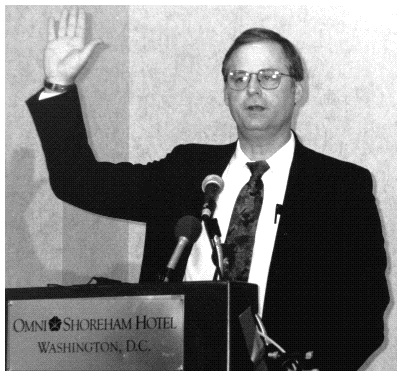
  • Dick Russell, On the Trail of the JFK Assassins – Richard Case Nagell: The Most Important Witness


    Dick Russell’s new book is an anthology of his life’s work on the JFK assassination. And one of the most revealing things about the book is 1.) How long he has been at it, and 2.) How many pieces he has written on the subject.

    The author has had a long and varied career in journalism writing about many other subjects. Russell has written for several mainstream publications e.g. TV Guide and Sports Illustrated. In fact, he was on the staff of both those magazines. And he has published more than one acclaimed book. Two of them being Eye of the Whale, and Black Genius. The main area of interest in his writing career has been the environment. So it was a bit surprising to me to discover that Russell had spent so much time and effort on what most mainstream publishers consider an eccentric topic.

    At the beginning of the book, Russell describes how he graduated from the University of Kansas journalism school and almost immediately secured a job that many young writers would consider a godsend. He was a staff writer with Sports Illustrated. But he resigned just six months later. (Why he did so is not really explained.) While making a tour around the world he met a former friend of CIA Director Allen Dulles. This man told him that Madame Nhu had President Kennedy killed as an act of revenge for the death of her husband Diem. (Interesting that Dulles seems to be the first to spread this disinformation story.)

    A few years later, Russell was freelancing for journals like The Village Voice. He secured an assignment to write about the fledgling Assassination Information Bureau which was set up to cover the formation of the House Select Committee on Assassinations (HSCA). It was while doing this report that Russell first heard of Richard Popkins’s work on the programmed assassin Luis Castillo. The then editor of the Voice, Gloria Steinem’s former CIA colleague Clay Felker, tried to discourage him from hanging out with such goofballs. But Russell persevered. And so his JFK writing sidelight, and the book, was off and running.

    There are over forty chapters in the anthology. Not all of them are devoted to separate subjects. For instance, both the first and second chapters of the book are about Popkin and Castillo. The way one measures a book like this is by this question: How many of the essays are really important, insightful, and worth preserving? By that standard the book measures small. Many of the chapters are so ephemeral, I took almost no notes. Some of the work, like a section on Antonio Veciana, is just plain dated. I mean after Gaeton Fonzi’s marvelous The Last Investigation there is not much to add on this guy. And since Russell’s work on him was from the mid-seventies, it has been superseded many times. Further, some of the chapters just do not go anywhere. Or if they do, it’s not very far. Some examples here are the sections on Gordon Novel, Ronald Augustinovich, Gerry Hemming, Larry Howard, and Loran Hall. These are all quite interesting characters. And in their own ways – except for perhaps Augustinovich – they are important to the JFK case. That is, if they had been rendered in full. Or at least close to it. But Russell does not take their stories far enough to make the profiles really worth preserving, or even reading. This, of course, may owe to the fact that magazine pieces are not meant to be done in depth or at length.

    There are other pieces that I felt amounted to little more than meandering speculation. For instance, ever since Richard Case Nagell told Russell that David Ferrie hypnotized Lee Harvey Oswald, Russell has spent a lot of time and energy attempting to show that somehow, in some way, the CIA’s MK/Ultra program figured in the JFK assassination. Unfortunately, that misguided penchant appears again here. And at much too great a length for my taste. And, even worse, without any intrinsic evidentiary justification. The author here goes on for six chapters, from pages 236-277, revisiting this diaphanous concept. Much of this reads like the worst vein of Kennedy assassination research – right down there with the infamous Canfield-Weberman ear identification of Howard Hunt as one of the tramps in Dealey Plaza. It seems to me to amount to nothing more than conspiracy smoke. Largely because it is based on unnamed sources, strained associations, and unreliable witnesses e.g. Marina Oswald channeled through Priscilla Johnson.

    There are more questionable pieces. Russell did a couple of interviews with Marina Oswald in 1992. Now there is a woman who one could spend hours with talking about just two people: Ruth Paine and Priscilla Johnson. Russell does not do much with her. She says that the Warren Commission translation of her testimony makes her sound like a fifth grader. She says there are a few thing wrong with the backyard photos. In the original pictures she says the rifle was different, there were more angles, different photos, and the background stairs are in the wrong place. And that’s about it. (I should add: John Armstrong’s book goes further on both these matters than Marina does here.) The rest of the section deals with her attempts to try and legally reopen the case. Which consisted of one meeting with some lawyers in Cambridge. Was this really worth including? There is a mildly interesting chapter about the strange death of CIA officer John Paisley. But any connection to the JFK case here is rather strained. And there is a concluding interview with Doug Horne who did much of the medical investigation for the Assassination Records Review Board. This should have been a humdinger of an interview. For me it was not. Russell has never shown much interest in the physical evidence in the JFK case. And I thought this interview revealed that lack of interest. Having just done a lot of research in this area for Section Four of my review of Vincent Bugliosi’s Reclaiming History, I can see many relevant questions that should have been asked but were not. The value of this interview comes almost entirely from the subject and not the interviewer.

    With the (rather large) ration of negative aspects now delineated, I want to mention some of the book’s more positive attributes. Russell has always been good on the private investigation of Warren Commissioner Richard Russell. Russell was the Georgia senator who suspected from the start that the Commission was a dog and pony show governed by J. Edgar Hoover and Nicolas Katzenbach. So he used people on his personal staff along with other acquaintances to conduct his own inquiry. One of the people he consulted with was Colonel Philip Corso, a retired Army Intelligence officer who had been on the staff of the National Security Council under Eisenhower. Corso did some investigating for the Commissioner and found out some interesting tidbits. He concluded that the Mannlicher-Carcano could not have performed as the official story leads us to believe. (p. 126) He also concluded that there was a Second Oswald. (ibid) Further, that Oswald had gone to Russia as part of a fake defector program being run out of the Office of Naval Intelligence. (p. 127) After doing all this inquiry he told Russell that his opinion was the assassination was a project of rogue CIA agents and anti-Castro Cubans. (ibid) Russell tended to agree with him but he said he could never get the other members of the panel to believe him.

    The opening two chapters on Richard Popkin and the investigation of the Luis Castillo case are interesting. (And, by the way, it is through Popkin that Russell ended up learning about Richard Case Nagell. p. 17) For those unaware of this fascinating case: Castillo was captured by the intelligence forces of the Philippine government in 1967. They concluded that he was a programmed assassin whose mission was to assassinate President Marcos. Once he was in custody, the government hired a psychologist named Victor Arcega to try and deprogram him. It turned out that Castillo was a Puerto Rican who was raised in the USA. And further, he seems to have been programmed as an assassin in the USA. After being beaten by a fellow prisoner, Castillo did not want to go through any further deprogramming sessions. So Arcega left and moved to Los Angeles. He was there the night of the RFK murder. When he read up on the case of Sirhan and the Girl in the Polka Dot Dress, he recognized the parallels in the two cases. He decided to return to his native Canada.

    Chapters 5 and 6 about Senator Richard Schweiker of the Church Committee and the HSCA’s first counsel, attorney Richard Sprague, are also worth reading. Especially the latter. Compared to the vast majority of official investigators on the JFK case, these two men come off exceptionally well. Schweiker sounds like Jim Garrison: “The Kennedy assassination is a mirror image proposition. What makes it hard to know what happened is that you’re struggling to find out the real focus in the mirror. And you really need two reversible ones.” (p. 42) Here’s another Garrison echo: “The more witnesses we talk to, the more they raised the fact that the Warren Commission really is a house of cards. Now it’s just prodding, pushing, shaking the tree enough to have it fall.” (ibid) Schweiker had one of his staff members, Dave Marston, working the JFK case about 90% of his time. And another worked on it full time. Further, 8 of the 11 Church Committee members consulted with him on a regular basis. (p. 43) Schweiker’s exemplary efforts gave great ballast to the creation of the HSCA and the appointment of Richard Sprague.

    The Sprague chapter is even better. It begins with his appointment as Chief Counsel and all the anxious anticipation that this choice placed in those interested in the JFK case. It then follows through with the attacks on him in the media, his mini-war with Representative Henry Gonzalez, and his eventual forced resignation. Russell interviewed him in his office in Philadelphia as the HSCA was winding down under his successor Robert Blakey in the summer of 1978. Sprague comes off as a man who went into his new job with some hopes and ideals that were eventually crushed into the ground. Again, in some respects, he comes off like Jim Garrison. Consider this comment on the media: “I feel that for some reason – and to me it’s the most fascinating part of my whole Washington experience – there is some manipulation of the press that’s successful enough that it’s not interested in a real investigation … There was a total dishonesty in the reporting of newspapers that I would otherwise have confidence in, such as the New York Times and the Washington Post. This attitude by the press was most successful in taking advantage of … individual Congressmen who were manipulated such that the press could achieve a tone to kill the investigation.” And then comes the capper in this regard: ” … there is a greater ability to manipulate public opinion by certain agencies of government than I would have believed possible … . I’ve become more interested in the media than the assassination.” (pgs. 52-53) He then goes on to get specific about particular instances of this with David Burnham of the Times, and Jeremiah O’Leary of the Washington Star. (p. 52) He notes that once he was gone, Burnham was taken off the HSCA beat. Coincidence or conspiracy?

    Further, Sprague believed that it was his investigation of Oswald that made him a target of the media. Sprague came to the conclusion that there was more of a connection between Oswald and the intelligence community “than has ever surfaced.” (p. 56) Two of the areas he was interested in were Oswald in Mexico City and the puzzle of why Oswald was not debriefed by the CIA on his return from Russia. And further, he was not going to sign any non-disclosure agreements with the intelligence community. (p. 55) In other words: what he saw, the public would see.. And if he had to subpoena information, he would. In other words, we were finally going to get the whole story about Oswald. Sprague is convinced it was this uncompromising attitude in this area that got him sacked. As he tells it: “Because of where I was at, and the timing of these attacks, that convinces me that the motivation came to kill me off.” Sprague has nothing but disdain for Blakey and his investigation. He calls it a “charade” and a “fiasco”. (pgs. 55. 56) And he concludes by commenting on Richard Helms and James Angleton. (p. 57) He says that he had a source who told him Helms had gotten the word to a Kennedy family member that the Kennedys should not back a reopening of the JFK case. He concludes that “Obviously Helms himself was one of the people that I ultimately wanted very much to interview. But not until I would be thoroughly prepared.” (ibid) In his comments on Angleton, he very interestingly compares him to Tony Boyle in the Jock Yablonski murder case. Boyle is the man Sprague convicted for the murder of labor leader Yablonksi.

    Russell penned a well-written piece about Jim Garrison in 1976. This was an article printed in Harper’s Weekly entitled “The Vindication of Jim Garrison.” It was meant to coincide of course with the installation of the HSCA. Garrison describes a conspiracy made up of elements of the CIA, anti-Castro Cuban exiles, and parts of the Mob. (p. 97) In other words, he had Anthony Summers’ design before Summers did, and before the HSCA actually got going. From here, Russell then goes into a short narrative of the Garrison inquiry and quite properly writes, “The full story of how Garrison was hamstrung would fill a volume.” Which, we now know via declassified documents, is absolutely true. Unfortunately, no one has yet written that volume. But he does include Victor Marchetti’s discussion of CIA executive meetings in which the Agency’s attempts to torpedo Garrison were kept off the record. Comments were made that such matters would be discussed after the meeting, or “We’ll pick this up later in my office.” (p. 101) And Russell details some of the actual subterfuges, like the CIA paying for certain lawyers and the CIA cooperating with judges in not serving subpoenas. (p. 101) Again, things that we can prove today with documents.

    He concludes this profile of Garrison with revelations about David Ferrie supplied by his friend Ray Broshears. He first contrasts what Broshears said to him in the seventies with what Warren Commission lawyer Wesley Liebeler told the public in 1967: Liebeler had seen the FBI file on Ferrie and he announced there was nothing to indicate Ferrie was involved in the JFK case at all. (p. 107) Yet Broshears told Russell that Ferrie called him in San Francisco shortly before his death and told him he was going to be killed. “The next thing I knew, he was dead. They said he killed himself. But he didn’t. You know it, and I know it.”(ibid) About Ferrie’s trip to Texas on the day of the assassination: “David was to meet a plane. He was going to fly them [the assassins] on to Mexico, and eventually to South Africa.” But the call Ferrie got at the skating rink told him he was not needed for that assignment. (Ibid) And finally: “He told me Lee Harvey Oswald did not kill the president. He was very adamant about it, and I believed him. All the things he told me about Oswald, I doubt he could have shot a rabbit 50 feet away.” Obviously Broshears is one of the many key witnesses Liebeler never talked to.

    Another important witness, George DeMohrenschildt, agreed with Ferrie. He says Oswald was the most honest man he knew, “And I will tell you this – I am sure he did not shoot the president.” (p. 133) He also told the author that CIA station chief J. Walton Moore had cleared Oswald in advance for him to approach him. (p. 135) If he had not, he would never have spoken to him. Which, of course, tells us a lot about George DeMohrenschildt’s relations with the CIA, let alone Oswald’s. Personally, I am glad someone besides Edward Epstein has confirmed this story. The capper for me in this section on the DeMohrenschildts was a quote from his wife Jeanna: “Of course, the truth of the assassination has not come out. It will never come out. But we know it was a vast conspiracy.” (p. 135) Recall, this is the couple that originally did the Warren Commissions’ bidding by caricaturing Oswald mercilessly in their testimony as doing things like shooting off his rifle in public parks. Evidently, they later came to feel guilty about what they had been made to do.

    Chapter 33 chronicles the famous meeting in the Bahamas in 1995 between employees of Castro’s G-2 – including Fabian Escalante – and some selected Kennedy researchers. Also on hand were Arturo Rodriguez and Carlos Lechuga. Russell summarizes some important findings presented by Escalante. First, they had verified from their end that Maurice Bishop was David Phillips. Second, they had an informant in Eladio del Valle’s organization in 1962 who said del Valle had told him that Kennedy had to be killed to solve the Cuban problem. (As an aside here, Russell adds that Nagell told him that one of the two Cuban exiles manipulating Oswald was linked to del Valle.) Third, Escalante has become convinced that what caused the exiles to act was that word had leaked out about the Attwood/Lechuga talks authorized by JFK to create a dÈtente between the US and Cuba. Fourth, Escalante confirmed that the Daniel Harker story used by David Phillips, Gus Russo and others to lend some credence to the Castro did it angle was a distortion. He says that what Castro actually uttered was “American leaders should be careful because the anti-Castro operations were something nobody could control.”

    Finally, Escalante said that Phillips had arranged to have letters addressed to Oswald from Cuba. And he showed these in a slideshow. There were five of them: two from before the assassination, three from afterwards. One of the letters, intercepted by G-2, was dated November 14th and addressed to Oswald at a hotel in Miami where he was never at. Arturo Rodriguez concluded that the text was of a conspiratorial character and that all of the letters were written by the same person, “as part of a plan to blame our country for the assassination.” (p. 223) This would be the provocation for the invasion of Cuba, which – despite the claims of Lamar Waldron – Kennedy never authorized.

    I should conclude this review with a discussion of Chapter 34 where Russell adds some new information on Nagell. In 1967, Nagell had written Warren Commissioner Richard Russell about being assigned by the KGB to initiate certain action against Oswald, who was the “indispensable tool in the conspiracy”. (p. 225) That is, the Soviets had found out about a plot to kill Kennedy. Fearing they would be blamed for the murder, they hired Nagell to infiltrate the plot and stop it. A book published in 2007 by a former Romanian intelligence officer notes that in the spring of 1963 just such action was requested by a KGB Chief named General Ivan Fadeykin: that is, the search for an agent to neutralize Oswald.

    A second interesting development is support of Nagell’s testimony is this: Nagell wrote a friend of his that his intelligence work in 1962-63 was to be paid for through American Express. And, in fact, during his trial, the prosecution objected to any mention of American Express. Why? Well, when Oswald handed a note to Lt. Francis Martello in New Orleans, in the margin was the espionage number of Michael Jelisavcic. Who was this Jelisavcic? He was a CIA asset stationed with American Express in Moscow at the time of Oswald’s defection. The FBI was aware of this fact. Hoover wrote a note to an agent in New York that in any interview of Jelisavcic, he should be closely questioned about his name and phone number being in the address book of Oswald.


    (See Part Two of this review, Richard Case Nagell: The Most Important Witness which relates On the Trail of the JFK Assassins to the first and second versions of Russell’s The Man Who Knew Too Much.)

  • Haslam, Ed, Dr. Mary’s Monkey


    I first encountered Ed Haslam back in 1992. He had written a letter to my publisher, Sheridan Square Press, about his accidental encounter with Guy Banister’s files in New Orleans in the 1980’s. The publisher sent me his essay. I found it quite interesting and felt he really had discovered who had Banister’s legendary files after his death. So I got in contact with him and put him in touch with the PBS team that was researching the area at the time. Haslam discovered the identity of the person who he encountered ten years previous. It was Ed Butler, the man who debated Oswald in the summer of 1963 and “exposed” him as a communist defector. Butler, of course, worked for Dr. Alton Ochsner’s rightwing propaganda outfit, INCA. It later turned out that INCA was closely associated with the CIA who rerouted their “Truth Tapes” throughout Latin America.

    Early on in our relationship, Ed made it clear to me that he was not all that interested in the JFK case. He was pursuing something related to it, but tangential. When I visited him at his home in Albuquerque, I discovered that he was much more interested in Dr. Mary Sherman and her relationship with David Ferrie. He pointed out to me that Jim Garrison had mentioned her in his Playboy interview as being associated with Ferrie. He had me read the brief passage:

    David Ferrie had a rather curious hobby in addition to his study of cartridge trajectories: cancer research. He filled his apartment with white mice — at one point he had almost 2000, and neighbors complained — wrote a medical treatise on the subject and worked with a number of New Orleans doctors on means of inducing cancer in mice.

    After the assassination, one of these physicians, Dr. Mary Sherman, was found hacked to death with a kitchen knife in her New Orleans apartment. Her murder is listed as unsolved. Ferrie’s experiments may have been purely theoretical and Dr. Sherman’s death completely unrelated to her association with Ferrie; but I do find it interesting that Jack Ruby died of cancer a few weeks after his conviction for murder had been overruled in appeals court and he was ordered to stand trial outside of Dallas — thus allowing him to speak freely if he so desired.

    Dr. Sherman, Haslam told me, was a world-class medical doctor who was a surgeon, professor, and researcher. I looked at him inquisitively and he delivered the punch line: “What would someone like that be doing mixed up with someone like Ferrie?”

    It was a good question. Haslam spent the next three years of his life searching for the answer. That search led him on a fascinating journey into the subterranean underground that made up New Orleans in the late fifties and sixties. (That search resulted in his 1995 book, Mary, Ferrie and the Monkey Virus, of which Dr. Mary’s Monkey is a re-titled, revised and expanded version.) It crossed paths with Garrison’s investigation of the JFK case and Ed got some valuable leads from it. But, as he told me, that was not the main focus of his quest. He wanted to find out the answer to three major questions:

    1. What was the relationship between Mary Sherman and Ferrie?
    2. What were the true circumstances of her death?
    3. Why were those circumstances covered up?

    His search began with the above noted passage from Garrison’s Playboy interview. It was filled in, and his interest bolstered, by encounters with local people from New Orleans in his youth. For example, Haslam went to school with the son of local coroner Nicolas Chetta. In class one day after the Shaw verdict, he talked about some of the things Garrison had turned up that were being ignored by the press:

    Then Nicky started talking about Ferrie’s apartment, which his father had seen the day Ferrie died … They found a small medical laboratory with a dozen mice in cages which he used for medical experiments. His medical equipment included microscopes, syringes, surgical tools, and a medical library. When they talked to Ferrie’s other landlords, they were told of a full-scale laboratory in his apartment with thousands of mice in cages. It seemed clear that he was inducing cancer in the mice! Ferrie claimed that he was looking for a cure for cancer, but Garrison’s investigators thought that he was trying to figure out a way to use cancer as an assassination weapon, presumably against Castro and his followers. (Pgs 45-46)

    Haslam then describes how a student then asked, “How could they induce cancer?” To which Chetta Jr. replied they had been “injecting mice with monkey viruses.” (p. 46)

    After a pause, another student mentioned something that probably did not have an apparent connection back then. Something about a “kid down at Tulane Medical School who was dying from the total collapse of his immune system. They couldn’t figure out what was causing it. They gave him every antibiotic they had and nothing worked.” Haslam describes another student commenting at this time: “That means they were developing a biological weapon. What happens if it escapes into the human population?”

    The teacher tried to change the subject at this time, but at the end of class Haslam was so provoked that he told a friend, “Well, the good news is if there’s a bizarre global epidemic involving cancer and a monkey virus thirty years from now, at least we’ll know where it came from.” (p. 48)

    This gripping exchange contains the essential thesis of the book in micro. And although one cannot say that Haslam proves it to the courtroom standard, i.e. beyond a reasonable doubt and to a moral certainty, he certainly does present a provocative and disturbing circumstantial case. For instance, several pages of Ferrie’s legendary treatise on cancer were found in the National Archives by researcher Peter Vea. Haslam examined them and has dated them to about 1957, and argues that they could not actually have been written by Ferrie. The information is too state of the art, the references too complete and exotic, the concepts and experiments described firsthand too advanced and nuanced. Clearly, it was written by someone at least at the level of Mary Sherman, and probably above that. He then traces the bibliography and ideas in the treatise and concludes that they center on proving the case for a viral theory of cancer. From certain idiosyncrasies displayed in the experimental protocol, Haslam postulates that the writer had to have been either Sarah Stewart or Bernice Eddy. And if he is correct on this then Garrison stumbled onto a real find that he was not aware of.

    Sarah Stewart and Bernice Eddy were two of the most respected and advanced cancer researchers in America who worked, among other places, at the National Institute for Health. Second, they were trying to prove that cancer could be transferred by a virus. Third, they were both around during the famous Salk/Sabin “sugar cube” mass inoculation for polio in the fifties. Although this is usually hailed as a triumph over polio, what many people do not know is that several children died right after getting the vaccine. As Haslam puts it: “Within days, children fell sick from polio, some were crippled, some died.” (pgs 203-204) One of the children who died was the grandson of Dr. Alton Ochsner who championed the vaccine against some doubts in high places about its safety. This is why Sabin had to refine the vaccine after its initial release.

    The doubts were articulated later on by Bernice Eddy. As Haslam notes:

    The vaccine’s manufacturers had grown their polioviruses on the kidneys of monkeys. And when they removed the poliovirus from the monkey’s kidneys. They also removed an unknown number of other monkey viruses. The more they looked, the more they found. (p. 207)

    In 1960, Eddy, who had harbored suspicions about these viruses and the vaccine, went public with her fears. At a talk in New York she stated that she had studied the monkey kidney cells used in the formation of the polio vaccine and found they were infected with cancer-causing viruses. As Haslam notes, “This was tantamount to forecasting an epidemic of cancer in America.” (Ibid) As documented by Edward Shorter in The Health Century, Eddy suffered professionally from her public warning. Quoting Shorter, “Her treatment became a scandal within the scientific community.” (p. 208)

    But right after this, Haslam presents several statistical charts and graphs (pgs 210-216), which present fairly convincing evidence that the Salk/Sabin vaccine may have caused more deaths than it cured. He outlines, at the very least, a provocative statistical case that the monkey viruses were behind a high growth in soft tissue cancers: lung, breast, prostate, lymphoma, and melanoma of the skin. I am not in any way a skilled or educated epidemiologist. But this part of the book certainly warrants a survey by one. The other connection Haslam makes here is to the AIDS virus. What he seems to be saying here is that the possibility exists that Mary Sherman may have mutated a monkey virus into HIV-1. The means being a linear particle accelerator she had available to her in New Orleans at the U.S. Public Health Service Hospital. (Haslam does a nice job of laying in the background of the research on monkey viruses done in the New Orleans area in the fifties that makes this theory possible. See Chapter 1, The Pirate.)

    Another exceptional aspect of the book is the work Haslam has done on the death of Mary Sherman. He clearly demonstrates that the police were puzzled by the bizarre circumstances of the case. Because someone smelled smoke in her apartment, her body was found early on the morning of July 21, 1964. Her body was horribly burned and hacked with a knife. Her car was found several blocks away with the keys thrown on a neighboring lawn. The first reports in the New Orleans papers state that the motive was burglary. Yet the door had not been forced open and her box of jewelry was left behind. Further, none of her neighbors heard anything that night, which is odd considering the brutal circumstances of the killing. The burglary angle was dropped and a psychosexual angle was then attached. Yet there was no evidence of sexual molestation. Three weeks after the murder the local papers announced a press blackout by the police. And the day after the press announced that the “police say they have no clue on the murder …” (p. 124) Further, the police and autopsy reports on her death were never published or made available to the public. Haslam found them after a lot of hard work and digging. And he includes the autopsy protocol in his document appendix. The most fascinating part of this document is that one of the causes of death was “Extensive burns of the right side of body with complete destruction of right upper extremity and right side of thorax and abdomen.” ( p. 354, italics added) Haslam takes these bizarre circumstances, especially the extreme temperatures needed to eliminate a large part of her right side and thus lays the ground work for what he sees as the real way she died. Again, it’s not probative, but it is fascinating.

    I should also add here as other distinguished aspects of the book, the two chapters devoted to David Ferrie and Alton Ochsner. Haslam found the valuable and detailed Southern Research report done on Ferrie. (Southern Research later turned into Wackenhut.) And he builds his chapter on Ferrie largely based on this report. It is quite extensive, going all the way back to Ferrie’s teenage years in Cleveland, Ohio. The chapter on Ochsner is also quite good; it is probably the best short essay on him that I have seen. No JFK book can come close to it. Finally, in this new edition, Haslam has added many more illustrations, pictures, and maps that let you visualize his story as he tells it.

    On the negative side, I believe Haslam puts too much stock in Judyth Baker. And his epilogue about Oswald entitled “The Perfect Patsy”, is both superfluous and shallow.

    But outside of that, this is quite an interesting, well-organized, and crafted book. Because he was an ordinary citizen working many years after the actual crime, Haslam could not actually solve the mystery of the death of Mary Sherman. But what he has given us is the next best thing: a documented, insightful, and arresting alternative to the unsatisfactory, or missing, official story. Except in this case, that alternative may have huge implications down to the present day. His work deserves attention and accolades.

  • John Newman, Oswald and the CIA (re-issue)

    John Newman, Oswald and the CIA (re-issue)


    Oswald and the CIA is not an easy book to read. And I think this is one of the reasons that it was underappreciated when it was first published in 1995. One would expect this result in the mainstream press. But even the research community was not up to the task of understanding the true value of this important work when it was originally published.

    newman
    John Newman, 1995 (Probe file photo)

    Jerry Rose’s The Fourth Decade discussed the book twice: once directly and once indirectly. That journal specifically reviewed the book in late 1995 (Vol. 3 No. 1). The reviewer was a man named Hugh Murray. His review was completely inadequate. He gave the book less than two pages of discussion. Murray never even addressed the volume’s two crucial chapters on Mexico City, which are the key to the book. (This would be like criticizing the Warren Report and never addressing the single bullet theory.) In the summer of the following year (Vol. 3 No. 3), Peter Dale Scott did something that may have been even worse. He wrote a long article for Rose’s publication entitled “Oswald and the Hunt for Popov’s Mole”. This piece seriously distorted and misinterpreted both the book itself and some of the important information Newman had unearthed. This sorry performance partly explains why the book’s achievement was never really comprehended even within the critical community.

    But to be honest, Newman made some mistakes that contributed to the book’s disappointing reception. The author felt it was important to get the book out quickly. He thought he should do so while the Assassination Records Review Board (ARRB)) was still operating in order to draw attention to its work. I thought this was an error at the time. I still do. For there were some documents, not fully processed at the time, which would have been useful to the endeavor. For instance, The House Select Committee’s Mexico City Report, aka the Lopez Report, had not yet been fully declassified. And to his credit, Newman updated his work on Mexico City with a 1999 article for Probe (Vol. 6 No. 6 ). This is included in The Assassinations.

    Secondly, because of this haste, the book is–to put it gently–not adroitly composed. Newman’s previous book, JFK and Vietnam, also deals with a complex topic: President Kennedy’s intent to withdraw from the Vietnam conflict. Yet that book is skillfully arranged and written. When I asked the author about the comparison between the two, he said, “But Jim, that book was ten years in the making.” I should also add that he had an editor on the first book. Something he did not have, at least to my knowledge, on the second.

    Third, Major John Newman was an intelligence analyst for twenty years. And he approached Oswald and the CIA in that vein. In other words, he played to his strengths. Therefore the book is a study of Oswald as he is viewed through the intelligence apparatus of the United States government. Or, as the author notes, it’s about “Oswald the file”. The author rarely tries to fill out the story or the personage. For instance, the alleged attempted suicide of Oswald in Russia is not mentioned here. Ruth Paine is mentioned once; Michael Paine not at all. Only a highly disciplined, almost obsessed mind, could hew to that line almost continuously. Or the mind of a former intelligence analyst. Consequently, because of its inherent longeurs, the book makes some demands on the reader. Which some, like Scott and Murray, were not up to.

    II

    Now, with caveats out of the way, lets get to the rewards in this valuable, and undervalued, book. No person, or body, not even the House Select Committee on Assassinations (HSCA), has ever dug more deeply into what the American intelligence community knew about Oswald prior to the assassination. What Newman reveals here literally makes the Warren Commission look like a Model T Ford. All the denials issued to that body by the likes of John McCone and J. Edgar Hoover are exposed as subterfuges. Contrary to their canards, there was a lot of interest in Oswald from the time he defected to Russia until the assassination.

    Newman first discovered this when he was hired by PBS to work on their ill-fated Frontline special about Oswald in 1993. And it was this discovery that inspired him to write the book. The CIA Director at the time of the debate in Congress over the creation of the Assassination Records Review Board had testified there were something like 39 documents at CIA about Oswald. Most of them were supposed to be clippings. Newman discovered there was many, many times that amount. Further, he discovered the Agency held multiple files on Oswald. And finally, and perhaps most interestingly, there were some puzzling irregularities within the record. (When the author expressed his continuing bewilderment about this to the archivist, the archivist replied, “Haven’t you ever heard of Murphy’s Law?” To which Newman shot back, “Every time I turn around I’m walking into Mr. Murphy.”)

    Mr. Murphy makes his appearance right at the start. Once Oswald defected to Russia in 1959 the FBI opened up a file on him for security purposes. But at the CIA there is a curious, and suspicious, vacuum. Richard Snyder of the American Embassy in Moscow sent a cable to Washington about Oswald’s defection. But the exact date the CIA got it cannot be confirmed (p. 24). Further, the person who received it cannot be determined either. Since Oswald was a former Marine, the Navy also sent a cable on November 4th. This cable included the information that Oswald had threatened to give up radar secrets to the Soviets. But again, no one knows exactly when this cable arrived at CIA. And almost as interesting, where it was placed upon its immediate arrival. (p. 25) This is quite odd because, as Newman points out (Chapter 3), Oswald’s close association with the U-2 plane while at Atsugi, Japan should have placed alerts all over this cable. It did not. To show a comparison, the FBI recommended “a stop be placed against the fingerprints to prevent subject’s entering the US under any name.” (Ibid) So, on November 4, 1959, the FBI issued a FLASH warning on Oswald. This same Navy memo arrived at CIA and, after a Warren Report type “delayed reaction”, eventually went to James Angleton’s CI/SIG unit on December 6th. Angleton was chief of counter-intelligence. SIG was a kind of safeguard unit that protected the Agency from penetration agents. It was closely linked to the Office of Security in that regard. But as Newman queries: where was it for the previous 31 days? Newman notes that the Snyder cable and this Navy memo fell into a “black hole ” somewhere. In fact, the very first file Newman could find on Oswald was not even at CI/SIG. It was at the Office of Security. This is all quite puzzling because, as the author notes, neither should have been the proper resting place for an initial file on Oswald. This black hole “kept the Oswald files away from the spot we would expect them to go-the Soviet Russia division.” (p. 27)

    Another thing the author finds puzzling about this early file is that he could find no trace of a security investigation about the danger of Oswald’s defection. This is really odd because while talking to some of his friends the author found out that Oswald knew something that very few people did: the U-2 was also flying over China. If Snyder’s original memo said that Oswald had threatened to give up secrets on radar operation to the Russians, and Oswald had been stationed at the U-2 base in Japan, there should have been a thorough security investigation as to what Oswald could have given the Russians. For the obvious reason that the program could be adjusted to avoid any counterattack based upon that relayed information. Newman could find no evidence of such an inquiry. (pgs 28,33-34) Further, the author found out that Oswald was actually part of a unit called Detachment C, which seemed to almost follow the U-2 around to crisis spots in the Far East, like Indonesia. (p. 42)

    Needless to say, after Oswald defected, the second U-2 flight over Russia–with Gary Powers on board–was shot down. Powers felt that, “Oswald’s work with the new MPS 16 height-finding radar looms large” in that event. (p. 43) The author segues here to this question: Whatever the CIA did or did not do in regard to this important question, it should have been a routine part of the Warren Commission inquiry. It was not. As the author notes, “When called to testify at the Warren Commission hearings, Oswald’s marine colleagues were not questioned about the U-2.” (p. 43) Oswald’s commander in the Far East, John Donovan, was ready to discuss the issue in depth. The Commission was not. In fact, Donovan was briefed in advance not to fall off topic. (p. 45) When it was over, Donovan had to ask, “Don’t you want to know anything about the U-2.” He even asked a friend of his who had testified: “Did they ask you about the U-2?” And he said, “No, not a thing.” (Ibid) Donovan revealed that the CIA did not question him about the U-2 until December of 1963. But this was probably a counter-intelligence strategy, to see whom he had talked to and what he had revealed. Why is that a distinct probability? Because right after Powers was shot down, the CIA closed its U-2 operations at Atsugi. Yet, Powers did not fly out of Atsugi. As Newman notes, the only link between Powers and Atsugi was Oswald. (p. 46)

    Right after this U-2 episode, Newman notes another oddity. The CIA did not open a 201 file on Oswald for over a year after his defection, on 12/8/60. (p. 47) This gap seriously puzzled the House Select Committee on Assassinations. Investigator Dan Hardway called CI officer Ann Egerter about it. It was a short conversation. She didn’t want to discuss it. (p. 48) The HSCA tried to neuter the issue by studying other defector cases. But as Newman notes: defection is legal but espionage, like giving up the secrets to the U-2, is not. (pgs 49-50) So the comparison was faulty. In fact, when Egerter finally opened Oswald’s 201 file, the defection was noted, but his knowledge of the U-2 wasn’t. This delay in opening the 201 file was so unusual that the HSCA asked former CIA Director Richard Helms about it. His reply was vintage Helms: “I am amazed. Are you sure there wasn’t? … .I can’t explain that.” (p. 51) When the HSCA asked where the documents were prior to the opening of the 201 file, the CIA replied they were never classified higher than confidential and therefore were no longer in existence. Newman notes that this is a lie. Many were classified as “Secret” and he found most of them, so they were not destroyed. Further, the ones that were classified as confidential are still around also. (p. 52)

    And this is where one of the most fascinating discoveries in the book is revealed. Although no 201 file was opened on Oswald until December of 1960, he was put on the Watch List in November of 1959. This list was part of the CIA’s illegal HT/LINGUAL mail intercept program-only about 300 people were on it. Recall, this is at a time when Oswald’s file is in the so-called Black Hole. It was not possible to find a paper trail on him until the next month. How could he, at the same time, be so inconsequential as to have no file opened, yet so important as to be on the quite exclusive Watch List? This defies comprehension. In fact, Newman is forced to conclude, “The absence of a 201 file was a deliberate act, not an oversight.” (p. 54) Clearly, someone at the CIA knew who Oswald was and thought it was important enough to intercept his mail. Long ago, when I asked Newman to explain this paradox in light of the fact that his first file would be opened at CI/SIG, he replied that one possibility was Oswald was being run as an off the books agent by Angleton. In light of the other factors mentioned in this section, i.e. concerning the U-2 secrets, the “black hole” delay, plus what we will discover later, I know of no better way to explain this dichotomy.

    III

    In his analysis of the Russian scene with Oswald on the ground, Newman made clear two important points. First, whereas most of the attention prior to this book was on embassy official Richard Snyder’s interaction with Oswald, Newman revealed a man behind the scenes, peering through the curtains: John McVickar. It was this other embassy official who asked Priscilla Johnson to interview Oswald without Snyder’s OK. (p. 72) What makes this interesting is the timing. Oswald had actually refused an interview with American reporter Bob Korengold. He had not been very forthcoming with Aline Mosby, the first journalist to talk to him. Then two things happened. First, the Russians communicated to Oswald that he would be allowed to stay in Russia (p. 73). Second, after McVickar gave Johnson the tip about Oswald, the defector agreed to meet her at her room. He arrived at nine at night. He stayed until well past midnight. (p. 72) What makes this interesting is that Newman reveals that Oswald’s room at the Metropole Hotel was equipped with an infra-red camera for the observation of its occupants-and the CIA knew this. (p. 9) Second, Oswald found out he would be allowed to stay through a Russian official who actually visited his room.

    After the long interview with Priscilla Johnson, McVickar had dinner with the reporter. Johnson, of course, worked for the conservative, and intelligence affiliated, North American News Alliance. At this dinner, somehow, some way, McVickar revealed that Oswald was going to be trained in electronics. (p. 84) Which he was.

    Besides the discoveries about McVickar, Newman actually found documents that revealed that Johnson had applied to work for the CIA as early as 1952. She then worked with Cord Meyer, who helped fund the Congress for Cultural Freedom, exposed later as a CIA conduit. At the time Newman wrote the book, it was not yet revealed that the CIA did not hire her because they later deduced she could be used to do what they wanted anyway and they classified her as a “witting collaborator.” (The Assassinations p. 435) The story based on this interview received little play in the media at the time, although it did announce that Oswald was a defector. But after the assassination, Johnson revised this original story-to Oswald’s disadvantage– and it received circulation through the wire services, including the front page of the Dallas Morning News. Thanks to Newman we now know that McVickar was ultimately responsible for it.

    Another hidden action that was first revealed in this book was that in 1961, the CIA launched a counterintelligence program against the Fair Play for Cuba Committee, which had been formed the year before. According to the author, that effort was launched by the CIA’s Office of Security, under the orders of James McCord. (p. 95) Further, this operation was done within the United States, which made it illegal for the Agency, and without the permission of the FBI. Making it even more interesting is that, as Newman first revealed, David Phillips was also part of this program. (p. 241) This program used neighbors hired as spies, and double agents posing as sympathizers, both reporting back to the CIA. (p. 241)

    When Oswald decided he wanted to return from Russia, Newman notes another appearance by Mr. Murphy. Actually two. No “lookout” card was inserted on Oswald by the State Department. Although it appears that one was prepared, it was never active. (p. 138) This would have alerted State and other agencies that a security risk had applied to reenter the country. Second, many FBI files that contained the security risk information on Oswald from 1959 are now missing. (p. 153) Finally, the FBI very selectively issued documents from these files to the Warren Commission. The HSCA got more of the picture. But in 1994, when the author went looking for the information hinted at to the HSCA, he couldn’t find them. (p. 154)

    When Oswald tries to return, he negotiates to have potential legal proceedings against him dropped. (p. 218) Interestingly, he was taken off the Watch List in 1960, then placed back on it in August of 1961. (But yet, his mail was opened even when he was off the list! p. 284) And at this time, there is the first documentary evidence that the CIA had an operational interest in Oswald. At the end of a memo about Oswald’s probable return, the chief of the Soviet Russia division wrote, “It was partly out of curiosity to learn if Oswald’s wife would actually accompany him to our country, partly out of interest in Oswald’s own experiences in the USSR, that we showed operational intelligence interest in the Harvey [Oswald ] story.” (p. 227)

    Marina got her exit visa surprisingly fast. Oswald explained his behavior there as, “It was necessary to make this propaganda because at the time he had wanted to live in Russia.” (p. 235) Oswald thought his passport would be confiscated when he returned. But, surprisingly-or not-Oswald was actually able to sign papers for a government loan at the American Embassy. A man named Spas Raikin of the Travelers Aid Society was contacted by the State Department to meet Oswald and his new wife in New York in June of 1962. The Oswalds made it through customs and immigration without incident. And without any evidence of an attempt at a debriefing.

    When Oswald arrived back in Texas, FBI agent John Fain did do an interview with him. Oswald then got a job at Leslie Welding, and started to subscribe to communist newspapers. At this point, Mr. Murphy pops up again. Even though the FBI had informants in many post offices looking out for just this sort of thing-a former defector subscribing to communist periodicals- and Oswald has signed a post office form instructing the post office to deliver him foreign propaganda, the Bureau did an inexplicable thing. In October, they closed their Oswald file. (p. 271)

    What makes the timing of this fascinating are two events. First, the CIA campaign against the FPCC begins to heat up, and the FBI opens up a similar front against the FPCC led by Cartha De Loach. (p. 243) Second, George DeMohrenschildt, the Baron, enters Oswald’s life. In his interview with the Warren Commission, the Baron tried to conceal his knowledge of who J. Walton Moore was. Moore was the head of the CIA office in Dallas who, it was later revealed, approached the Baron about going out to meet the returned defector. But DeMohrenschildt told the Warren Commission that Moore was “some sort of an FBI man in Dallas. Many people consider him the head of the FBI in Dallas.” (p. 277)

    Newman closes this section of the book with a beautiful Mr. Murphy episode. He notes that FBI agent James Hosty was now, rather belatedly, looking for Oswald and his wife. This was in March of 1963. Hosty also recommended that Oswald’s case be reopened. The grounds for this reopening? Oswald had a newly opened subscription to the Communist newspaper, The Worker. (p. 273) But, as the author notes, when the Dallas FBI office had previously learned of an earlier such subscription-to the exact same publication-it had closed his file! This recommendation had a caveat. Hosty left a note in Oswald’s file “to come back in forty-five to sixty days.” (Ibid) But by then, of course, Oswald would be in New Orleans. Newman poses the question: Was the reason Oswald’s case was closed for these six months because DeMohrenschildt was now making his approach to Oswald? (p. 277) Was another reason because Oswald was now about to enter the fray, along with the CIA and FBI, against the FPCC in New Orleans? (p. 289)

    IV

    The two finest parts of this distinguished work are the sections on New Orleans and, especially, Mexico City. Newman notes that the official story is that the FBI lost track of Oswald while he was organizing his FPCC group in New Orleans under the name of Hidell. This is when many credible witnesses place him in league with Guy Banister and Sergio Arcacha Smith at 544 Camp Street. But even though FBI agents Regis Kennedy and Warren DeBrueys were specialists on the anti-Castro beat in New Orleans, the FBI holds that Hosty did not know that Oswald moved to New Orleans until June 26th. In this book, the author demonstrates with a chart why this is so hard to believe. On page 300 he lists seven different events between May 14th and June 5th that should have caused the Bureau to realize that Oswald had moved. If you believe the Bureau, it wasn’t enough.

    The author suspects this methodical obtuseness was due to the fact that Oswald was in, what Newman calls, his “undercover” phase in New Orleans. That is, he has visited Jones Printing to order flyers with two different stamps applied, neither of them in his name. The first is under the name Hidell, and the second is addressed 544 Camp St. Newman believes that Banister was using Oswald to smoke out leftwing students and liberal professors at Tulane, like Prof. Leonard Reissman. Newman also brings out the fact that in a memo to the Bureau from New Orleans, the information that several FPCC pamphlets contained the 544 Camp St. address was scratched out. (p. 310)

    The next discovery made by the author is also arresting. The FBI says they discovered Oswald was in New Orleans at the end of June. (p. 317) Yet they did not verify where he lived until August 5th. As Newman notes, the latter is the same day that Oswald broke out of his undercover mode and contacted some Cuban exiles, using his real name. Or as the author puts it: ” … the FBI’s alleged blind period covers-to the day-the precise period of Oswald’s undercover activity in New Orleans.” (Ibid)

    On August 5th, Oswald begins to play an overt role as an agent provocateur with Carlos Bringuier of the anti-Castro exile group, the DRE. The Warren Commission never knew that the DRE had a CIA code name, AMSPELL. When Oswald is arrested on Canal Street after his famous altercation with Bringuier, he actually had the Corliss Lamont booklet, “The Crime Against Cuba” with him. This had the “FPCC 544 Camp Street” stamp on it. (As I showed in my first book, this particular pamphlet was very likely provided to Banister through the CIA itself. See Destiny Betrayed, p. 219) Newman then details Oswald’s arrest, his court date, his activities in front of the International Trade Mart-with flyers in his own name with his own address, and how Oswald now goes to the papers to get ads published for his cause. Oswald was attracting so much attention that J. Edgar Hoover requested a memorandum on him in late August with a detailed summary of his activities. This went to the CIA. When Oswald debated Bringuier on a radio program, the moderator Bill Stuckey offered the tape to the FBI. And the DRE reported the incident to the CIA. As Newman builds to his climax, all of this is important in light of what will happen next.

    After creating a lot of bad publicity for the FPCC in New Orleans, Oswald now lowers his profile again. At the Mexican consulate in New Orleans, he and CIA operative Bill Gaudet get visas to go to Mexico on September 17th .Why is the date important? Because on the day before, the 16th, the CIA told the FBI they were considering countering FPCC activities in foreign countries. A week later, Oswald leaves New Orleans on a bus to Mexico.

    What Newman does with the legendary Oswald trip to Mexico is, in some respects, revolutionary. Greatly helped by the release of the finally declassified Lopez Report, he actually goes beyond that magnificent document. According to the Warren Commission, Oswald was in Mexico City from Friday September 27th to Wednesday October 3rd. The ostensible reason was to acquire an in-transit visa from the Cuban consulate so he could travel from Cuba back to the Soviet Union. But as Newman notes, this story makes little sense and is likely a ruse. (p. 615) Oswald already had a passport to Russia, but the stamp warned that a person traveling to Cuba would be liable for prosecution. If he really wanted to go to Russia, Oswald could have gone the same roundabout route he had in 1959. The route he was choosing this time actually made it much harder, if not impossible, to get to Russia in any kind of current time frame.

    When Oswald first shows up at the Cuban consulate it allegedly is at 11:00 AM on Friday. (p. 356) Yet as the author notes on his chronological chart, he is supposed to have already called the Soviet Consulate twice that morning. (Ibid) The problem with those two calls is that they were both in Spanish which, as the Lopez Report notes, the weight of the evidence says Oswald did not speak. He tells receptionist Silvia Duran he wants an in-transit visa for travel via Cuba to Russia. But he has no passport photos. He leaves to get the pictures taken. When he returned with the photos, Duran told him that he now had to get his Soviet visa before she could issue his Cuban visa. (p. 357)

    Oswald now went to the Soviet Consulate. But here we find another problem with what is supposed to be his third call there. The time frames for the call and the visit overlap. He cannot be outside calling inside when he is already inside. (Ibid) Further, this call is also in Spanish, which creates a double problem with the call. Once inside, Oswald learns he cannot get a visa to give to Duran unless he requested it from Washington first. And the process would take weeks. Oswald now makes a scene and is escorted out. He goes back to the Cuban consulate. Oswald tells Duran there was no problem with the Soviet visa. She does not buy his story and calls the Soviet consulate. They tell her they will call her back. Embassy official and KGB secret agent Valery Kostikov calls back. Oswald’s attempt falls apart since Oswald knows no one in Cuba and the routing to the Russian Embassy in Washington will take too long. (p. 359) This call seems genuine. But as the author notes, and as we shall see, there was one problem with it: neither Duran nor Kostikov mentioned Oswald by name.

    Oswald creates another scene and quarrels with Cuban counsel Eusebio Azcue. Now, and this is important, Duran insists that this is the last time she saw or spoke to Oswald. This created a serious problem because the Warren Commission reported that she did talk to him again.(p, 408) The apparent source for this is an FBI memo of Dec. 3, 1963. The HSCA realized this was a problem. So they grilled Duran on this point. They tried three different ways to get her to admit she could be wrong. She stuck by her story. (pgs 409-410)

    Why is this so problematic? Because on the next day, Saturday September 28th, the Lopez Report says there was a call from a man and a woman to the Soviet Consulate. Further, in his interviews, Newman discovered that the Russians maintain that the switchboard was closed on Saturday. (p. 368) From this and other evidence, Newman concludes that the man in this call is not Oswald. Duran says the woman is not her. Further evidence of this impersonation is that Oswald had visited the Russian Consulate earlier that day. And this phone conversation has little, if any, connection to what he discussed there. From information in the Lopez Report, from CIA Station Chief’s Winston Scott’s manuscript, and interviews with the transcribers, there was also a call made on Monday, the 30th, from Oswald to the Soviet Consulate. This call is apparently lost today.

    Finally, on Tuesday, October 1st, there are two calls from Oswald to the Soviet Consulate. Right off the bat, these are suspicious because they are in poor Russian. Yet Oswald was supposed to have spoken fluent Russian. So again, these two calls appear to have been made by an imposter.

    But why? In the new Epilogue written for this edition, Newman writes it is because when Duran originally called the Soviet Consulate, Oswald’s name was not specifically mentioned. When Oswald then went to the Soviets on Saturday, and created another scene, this was the last of the actual encounters. The specific problem was this: There was no direct record made between Oswald and Kostikov. As we shall see, this could not be allowed. So the two calls on Tuesday had to be made. And the necessity was such that the risk was run of exposing the charade by not having Oswald’s voice on the tapes. Why was this so important?

    V

    Prior to Oswald’s Mexican odyssey, the FBI reports on his FPCC forays in New Orleans went into a new operational file at CIA, which did not merge with his 201 file. (p. 393) According to the author, this file eventually contained almost a thousand documents. Newman dates the bifurcation from September 23rd: shortly after Oswald goes to the Mexican consulate, and right about when he leaves New Orleans. The FBI report goes to Oswald’s CI/SIG soft file and his Office of Security file. (p. 394) But after the assassination, all the FBI reports suddenly revert back to Oswald’s 201 file. Only two compartments in the Agency had all of Oswald’s file-CI/SIG and Office of Security. As we shall see, there is a method to all this meandering.

    At CIA HQ, after the information about Oswald in Mexico City arrives, a first cable is sent on October 10. This cable is meant for the FBI, State Department and the Navy. This cable describes a man who does not resemble Oswald. He is 35 years old, has an athletic build, and stands six feet tall. (p. 398)

    At almost the same time this cable was sent, a second cable from CIA HQ goes to Mexico City. This one has the right description of Oswald. So therefore, in a normal situation, the officers in Mexico City could match the description to their surveillance take. But it was missing something crucial. It said that the latest information that CIA had on Oswald was a State Department Memorandum dated from May of 1962. This was not true. For just one example, the Agency had more than one FBI report about Oswald’s FPCC activities in New Orleans. Yet, for some reason, the file used to draft this cable was missing the FBI New Orleans reports. What makes these two varyingly false cables even more interesting is that Angleton’s trusted assistant Ann Egerter signed off on both of them for accuracy. (p. 401) Apparently, she didn’t know what she was signing, or if they contradicted each other. Further, Egerter sent Oswald’s 201 file, which was restricted, to the HQ Mexico City desk until November 22nd. (Ibid)

    For the first cable, Jane Roman was the releasing officer. She also participated in the drafting of the second cable. What makes her participation in all this so interesting is that she had read the latest information about Oswald in New Orleans on October 4th, less than a week before she signed off on the first cable. When Newman confronted her with these contradictory documents, she said: “I’m signing off on something that I know isn’t true.” (p. 405) She went on and tried to explain it with this: “I wasn’t in on any particular goings-on or hanky-panky as far as the Cuban situation … to me it’s indicative of a keen interest in Oswald, held very closely on a need-to-know basis.” (p. 405) Note her reference to the “Cuban situation”. For it was Oswald’s activities with the Cubans in New Orleans that was left out of the second cable to Mexico City. Therefore Mexico City chief Win Scott could not coordinate Oswald’s New Orleans activities with what Oswald had done on his home turf.

    For the second cable, the releasing officer was Tom Karemessines who was deputy to Richard Helms. It has never been explained why this cable had to go so high up into officialdom for permission to release it.

    There is one last piece to this mosaic that is necessary for its deadly denouement to be fully comprehended. Ann Egerter testified that their counter-intelligence group knew Kostikov was a KGB agent. But the story is that they did not know he was part of Department 13, which participated in assassinations, until after Kennedy’s assassination. (p. 419)

    All of this is absolutely central to the events that occur on November 22, 1963. Consider: Here you have a defector who was in the Soviet Union for almost three years. He returns and then gets involved confronting anti-Castro Cubans in New Orleans. He then goes to Mexico City, and visits both the Cuban and Soviet embassies trying to get to Russia from Cuba. He creates dramatic scenes at both places, and here is the capper: He talks to the KGB’s officer in charge of assassinations in the Western Hemisphere. By the time Oswald returned to Dallas, the alarm bell should have been sounding on him throughout the intelligence community. Especially in view of Kennedy’s announced visit to Texas. He should never have been allowed to be on the motorcade route. The Secret Service should have had the necessary information about him and he should have been on their Security Index.

    This did not happen. In fact, at the time his profile should have been rising, these false cables within the CIA and to the FBI, State, and Navy were actually lowering it. The final masterstroke, which made sure the information would be concealed until November 22nd, was not discovered until after the book’s initial publication. As stated above, the FBI had issued a FLASH warning on Oswald back in 1959. After four years, this was removed on October 9, 1963! This was just hours before the first CIA cable mentioned above was sent. (The Assassinations p. 222)

    As Newman notes, “the CIA was spawning a web of deception”. (p. 430) When JFK is killed, and Hoover tells President Johnson about Oswald’s trip to Mexico City and his visits to both the Cuban and Russian embassies, the threat of nuclear war quickly enters the conversation. But when the FBI discovers that the voice on the tapes are not really Oswald’s it does two things: 1.) It points to something even more sinister, therefore throwing the intelligence community into a CYA mode, and 2.) It forces the Agency to hatch a cover story: the tapes were routinely destroyed days after they were made. The result of all this was an investigation that was never allowed to investigate. A presidential commission whose leader was told beforehand that millions of lives were at risk because the Cubans and Russians might be involved. And it exposed an intelligence community that was asleep at the switch, therefore allowing the alleged assassin to be moved into place by the KGB. The result was therefore preordained: a whitewash would follow. And Newman presents written evidence from both J. Edgar Hoover and Nicolas Katzenbach demonstrating that the subsequent inquiry was curtailed at its inception. Deputy Attorney General Katzenbach wrote that speculation about Oswald had to be “cut off” and the idea that the assassination was a communist conspiracy had to be rebutted. (p. 632) Newman later discovered that Hoover realized he had been duped by the CIA about Oswald in Mexico City. (The Assassinations, p. 224)

    In his new Epilogue for this 2008 edition, Newman explains why only someone who a.) Understood the inner workings of the national security state, and b.) Understood and controlled Oswald’s files, could have masterminded something as superhumanly complex as this scheme. One in which the conspiracy itself actually contained the seeds that would sprout the cover-up.

    In this new chapter, Newman names James Angleton as the designer of the plot. (p. 637) He also names Anne Goodpasture, David Phillips’ assistant in Mexico City, as the person who hatched the internal CIA cover up by saying the ersatz tapes had been destroyed in October. This is evidenced in a cable she sent on 11/23 (pgs 633-634). Yet she probably knew this was false. Because she later testified to the ARRB that a voice dub of a tape had been carried to the Texas border on 11/22/63, the night before she sent the cable (p. 654). Further, Win Scott had made his own voice comparison after the assassination. He could not have if the tapes had been destroyed. (p. 635) Angleton made sure Scott’s voice comparison never became public by swooping into Mexico City and confronting, nearly threatening, Win Scott’s widow after he died. Once he was inside the house, he removed four suitcases of materials from Scott’s office. This included the contents of his safe where the Mexico City/Oswald materials had been stored. (p. 637)

    This remarkable book could never have been composed or even contemplated without the existence of the Assassination Records Review Board. No book takes us more into Oswald’s workings with the intelligence community than this one. And his section on Mexico City is clearly one of the 5 or 6 greatest discoveries made in the wake of the ARRB. The incredible thing about the case he makes for conspiracy and cover up is this: The overwhelming majority of his evidence is made up of the government’s own records. It’s not anecdotal, it’s not second hand. In other words, it’s not from the likes of Frank Ragano, Billy Sol Estes, or Ed Partin. It is material that could be used in a court of law. And it would be very hard to explain away to a jury. Imagine the kind of witness Jane Roman would make.

    Which is why it all had to be concealed for over thirty years. So much for there being nothing new or important in those newly declassified files. Angleton knew differently. Just ask Win Scott’s widow. Or read this book.

  • Jefferson Morley, Our Man in Mexico


    Jefferson Morley was one of the very few writers in the mainstream press who actually tried to print stories that indicated there was more to the John Kennedy assassination than the Warren Commission claimed. In his long tenure at the Washington Post he actually was responsible for getting into that publication two stories that showed there was more to the Oswald story than met the eye. Specifically, these were the long 1994 story on John Elrod and Lee Oswald, and a later story on the work of John Newman who was working on his book Oswald and the CIA. Two other stories that he worked on while at the Post were the attempts by Michael Scott to secure the purloined manuscript of his father, CIA officer Winston Scott, and the cover-up by the CIA of the role of George Joannides with the Cuban exile group the DRE in New Orleans in the summer of 1963.

    These last two form the framework for his recent book Our Man In Mexico: Winston Scott and the Hidden History of the CIA. Morley was an acquaintance of the attorney for Michael Scott who was trying to get the manuscript of his father’s book, entitled Foul Foe. There were things in the manuscript the CIA clearly did not want disseminated to the public. The long struggle ended with a little more than half the manuscript being handed over to the son. The way Morley integrates the other aspect of his quest is through Lee Harvey Oswald’s activities in the summer and fall of 1963. Joannides was the Agency case officer for the Cuban exile group called the Directorio Revolucionario Estudantil (DRE). In addition to making raids into Cuba for the Agency, this group interacted with Oswald in New Orleans in the summer of 1963. Most famously through the personage of Carlos Bringuier. Bringuier got into a famous tussle with Oswald on Canal Street that led to some local press attention since they were both arrested. After this, Bringuier debated Oswald on a local radio show with host Bill Stuckey. Aided by the contacts of their friend and mentor Ed Butler, the two cohorts ambushed Oswald with information about his defection to the Soviet Union. This helped compromise his local chapter of the Fair Play for Cuba Committee, of which he was the only member. Bringuier issued more than one press release after the debate. (Morley p. 174) But even more significant is the fact that Bringuier and the DRE recycled the story and the releases right after President Kennedy’s assassination. As Morley notes, this got front-page placement in major newspapers throughout the land. (p. 207) And so the legend of the alienated Cuban and Soviet sympathizer now began to take hold with the public. And this was used by the Warren Commission to somehow explain Oswald’s motivation for allegedly killing Kennedy.

    This New Orleans aspect is linked to Oswald’s strange and legendary trip to Mexico, where Scott was the CIA station chief at the time. So by telling the story of the DRE, he links it to the story of Scott’s job of surveying the Cuban and Russian embassies in Mexico City. Morley is then able to show us what the Warren Commission did with this material. So the book becomes not just a biography of Scott, but an opportunity to show how the CIA and the Warren Commission handled the alleged commie sympathizer in the months leading up to the murder of JFK. And afterwards. Morley is a skilled enough writer, about at the level of David Talbot. So he manages to cobble this together in an adroit and manageable way. The book is never really profound or moving. But it’s never dull or cumbersome either.

    II

    A little bit more than the first third of the book deals with the life and early career of Winston Scott. Scott was not a Boston Brahmin like Ben Bradlee or Des Fitzgerald. Nor was he a born member of the Eastern Establishment/CFR crowd like Allen Dulles or Jock Whitney. He was born in Alabama in 1909 near the Escatawpa River. The “house” was made up of discarded railroad boxcars. His hometown of Jemison was northwest of Mobile. Hid father worked for the railroad and the Scotts lived right next to the tracks where Morgan Scott toiled. (p. 15) During the week Win Scott and his siblings trekked three miles to school in the town of Brookwood. And like most southern families they went to church every Sunday. An early indication of Scott’s romanticism and his desire to escape these humble circumstances occurred at age 13. He and two friends decided to run away to New Orleans. The objective was to catch a freighter to France and join the French Foreign Legion. They were stopped on their journey by a friendly policeman who made a phone call and they were returned home.

    Scott won a scholarship to attend college in Birmingham. There he met his first wife Besse Tate who he impulsively married by making his father awaken a Justice of the Peace at four in the morning. Win Scott had a head for numbers so he first became a math instructor at the University of Alabama. A paper he did on the algebraic possibilities of disguising message codes caught the attention of J. Edgar Hoover. Hoover sent one of his envoys to recruit him and Scott joined the FBI in 1941. He was first stationed in Pittsburgh and then Cleveland.

    In 1944, Scott began the journey that would eventually lead to the CIA, Oswald, and Mexico City. He decided to switch over to the Office of Strategic Services, the World War II forerunner of the Central Intelligence Agency. While in Europe, he met the youngest OSS Chief of Station, a man named Jim Angleton who worked out of Italy. After the war, both OSS officers were befriended in Washington by British intelligence agent Kim Philby. Morley notes that Scott eventually suspected that Philby was a Russian double agent. Future counter intelligence chief Angleton did not. And this may have led to the eventual paranoia about CIA infiltration by the KGB, which later plagued Angleton and ended in his eventual forced resignation by Director Bill Colby.

    Along with Allen Dulles, Scot campaigned to create the Central Intelligence Agency and to grant it the power to sanction covert operations. So when the CIA was eventually established and Dulles became Deputy Director, he brought his friend and ally Win Scott into the agency that he would now stamp indelibly with his own imprint. Although Scott was not actually part of the overthrow of the Arbenz government in Guatemala in 1954, he was familiar with the players involved including an officer on the rise, one David Phillips. Through his friendship with Allen Dulles, Scott asked the Director for a job outside the United States. He wanted to be station chief in Mexico City. Dulles obliged him and Scott began his thirteen-year tenure there in 1956.

    It is here that Morley introduces the figure of Anne Goodpasture (p. 83). Goodpasture is an ubiquitous character in that she has clear but rather undefined ties to Scott, Angleton, and Phillips. Like Scott she was born in the south, in her case, Tennessee. Like Scott, she served in the OSS during the war, except she was stationed in the Far East with people like Dick Helms and Howard Hunt. After the war, she moved to Washington where she came to the attention of Angleton. And this is where I have my first complaint about the book. Goodpasture is a most fascinating character. And Morley interviewed her for two days in 2005. (See page 305) Either he does not find her very intriguing, or he took most everything she said at face value. John Newman, Ed Lopez, Dan Hardway, Lisa Pease and myself disagree. Lopez and Hardway – under the supervision of Mike Goldsmith – wrote the absolutely excellent Mexico City Report for the House Select Committee on Assassinations. Now Goodpasture was supposed to be working for and under Winston Scott in Mexico City. When the Mexico City Report – sometimes called the Lopez Report – was first declassified by the Assassination Records Review Board, I interviewed Lopez at his home in Rochester, New York. Since this was the first time I had seen the woman’s name repeatedly emphasized, I asked Lopez who she was. Surprisingly, he said that “She worked for Phillips when he got stationed down there … she handled all his projects for him.” (Emphasis added.) When I asked Ed what Phillips was doing there, he said, “He had some bullshit title, but he was in charge of almost all the Cuban operations from there at the time.” He then expanded on this by saying that since Phillips was constantly traveling from Washington to JM/Wave in Miami and to Mexico City, Goodpasture was the officer who guided his operations emanating from Mexico in his absence. In and of itself, this is extraordinarily interesting. It would make her a front tier figure in any book on the Kennedy assassination that focuses on both Mexico City and Phillips. Which this book does. But there is even more to the woman. It was Angleton who sent her to Mexico City on a counter-intelligence case. And he never lost touch with her. She worked on the famous CI case of Rudolf Abel in New York City. (The Assassinations, p. 174) Abel was convicted in 1957, and exchanged for Gary Powers in 1962. So the ties to Angleton were ongoing. In fact, Angleton stated that she was always in on the most sensitive cases. (Ibid) Further, she worked on Staff D. This was one of the most secret and clandestine operational units within the CIA. It dealt with both coups and assassination attempts.

    Now Goodpasture is a clever operator of course. So, like many operators she pleads that she was only downstairs playing the piano at the time. She wasn’t aware there was a bordello operating on the second floor. To Jeremy Gunn and the ARRB she said she was only a secretary for Staff D. She duplicated papers and copied materials. The problem with that is the fact that Angleton also said that Goodpasture was “very close” to Bill Harvey. Harvey was part of Staff D and one of the major players in the CIA plots to kill Castro under Richard Helms. (Ibid) And when Goodpasture received a career achievement award, it was on the recommendation of David Phillips. He cited her for having discovered Oswald at the Cuban Embassy. A citation rich in irony of course, since it did nothing to help prevent the murder of President Kennedy. (Ibid)

    Almost all of this, and more, is missing from Morley’s book. Goodpasture comes off as essentially a loyal civil servant who writes interesting reports about the history of the Mexico City station. Her ties to Phillips are hardly mentioned. Her connections to Angleton and his huge and powerful CI division are basically minimized.

    III

    This sets the stage for the ascension to power of John F. Kennedy. In this part of the book, I had another problem with the presentation. And it began fairly early. In regards to the Bay of Pigs, Morley writes that Kennedy had no objections to the plan. (p. 108) In Peter Kornbluh’s Bay of Pigs Declassified, the author briefly notes how Kennedy changed both the proposed landing site and the air support offered to the exiles. (Kornbluh, p. 8) Kornbluh writes that several CIA officials noted that Kennedy’s decisions severely hurt the operation’s chances for success. Two of them went to project coordinator Dick Bissell and offered to resign since they decided Kennedy’s limitations almost guaranteed its failure. Bissell assured them it would not and their concerns would be met. When the attack failed the two officials decided they had been misled, along with President Kennedy. (Ibid)

    A few pages later, Morley uses Kennedy’s famous quote about splintering the CIA into a thousand pieces after the debacle of the Bay of Pigs. (p. 112) He then adds, “He was just venting.” Oh, really. Consider Kennedy’s actions in the wake of the Bay of Pigs debacle:

    1. Appointed the Taylor Commission, an executive inquiry into exactly why the operation failed. His representative on the committee was RFK.
    2. Signed NSAM’s 55, 56, 57. These were all aimed at forcing the Pentagon into giving him more and better advice over covert paramilitary operations. And they took away responsibility for planning overt paramilitary operations from the Agency. As John Newman writes about them, they were “the first significant chink in the CIA’s covert armor since its creation.” (JFK and Vietnam, p. 99)
    3. Created an alternative intelligence apparatus called the DIA.
    4. Sent out a memorandum stating that the ambassador in a foreign country, and not the CIA, should have ultimate control over American policy in that nation.
    5. When the Taylor Commission results were submitted, Kennedy fired CIA Director Allen Dulles, Deputy Director Charles Cabell, and Director of Plans, Bissell. This clearly put the onus for the failure on the CIA. This result was quite natural since Kennedy and his brother became convinced through the inquiry that the three fired officers had deliberately misled JFK about the plan.
    6. As David Corn notes in his book on Ted Shackley, Kennedy now moved his brother into a supervisory role over many covert operations.

    As many commentators have noted, Kennedy was actually trying to exercise some degree of control over an Agency that had not really had any since its inception. Morley, I believe, downplays this aspect. And this plays into another characteristic of the book which I will note later.

    Complementing this curious and curtailed view of JFK is his even more curious treatment of Richard Helms. I can only term the substance of Morley’s portrayal of the new Director of Plans as exalted. The portrait of Helms that comes through is essentially that of a conscientious bureaucrat who has been through it all, knows the ins and outs of the political world and is a kind of fatherly figure to the Kennedys (especially RFK). This, of course, has always been the sales image that Helms has tried to convey to the public. And it was clearly evident in his autobiography of 2003, which Morley uses to a surprising degree. The problem with accepting this public view of Helms at face value is that it contrasts with the private view that, unfortunately, some reliable people have seen close up. For instance, in my aforementioned interview with Ed Lopez, he asked me if I had seen the movie A Few Good Men. Mildly surprised at what I thought was a non-sequitir, I said that I had. He said, “Remember the scene near the end with Jack Nicholson on the stand? Him screaming, “You can’t handle the truth!” I said yes. He replied, “That was Richard Helms with us in executive session. He was laughing at us, sneering at us, shoving it in our face. He had no respect for anything. To him, we were a joke.” Reportedly, when Helms emerged from that session and reporters asked him more questions about Oswald he replied, “Your questions are as stupid as the committee’s” In filmed testimony, when Chris Dodd pressed him on the CIA’s barbaric treatment of Russian defector Yuri Nosenko, Helms response was, “Well, we could put them up at the Hilton.” This is the man who, in his private writings on the JFK case, Richard Case Nagell has nicknamed “Dirty Dick.” (See Probe, Vol. 3 No. 1)

    Furthering this view, when I interviewed former CIA agent Carl McNabb before he died, he showed me a file from his days at JM/Wave. In his personal notes was a notation, “Zap Man”. I asked him what that meant. He said that one of the officers told him this was the term given to Helm’s private assassin. So I think that foot soldiers inside the Agency might have a bit of disagreement with the picture of Dick Helms that emerges here.

    Given Morley’s slant, it was not surprising to me that he could write: “Helms also had to indulge Bobby’s demands for a plan to assassinate Castro.” (p. 159) This is the kind of sentence that could be written by Helms’ official biographer, the tendentious and shameless Thomas Powers. (Who, incidentally, wrote a blurb on the back of the book.) This completely ignores both the findings of the Church Committee, and the detailed information in the CIA’s own Inspector General Report. Which was overseen by Helms himself. These plots began in the Eisenhower administration and they continued into the Johnson administration. They were deliberately kept from the Kennedys. And RFK found out about them by accident. When he did find out about them, according to his calendar, he called Helms into his office. When questioned about this meeting, Helms conveniently contracted selective amnesia. He couldn’t recall a thing about it. (For an overview of this matter, see The Assassinations pgs. 327-329) But RFK aide John Siegenthaler did recall RFK’s response to Helms and John McCone when he found out. He told them he thought it was disgraceful and had to be stopped. (Ronald Goldfarb, Perfect Villains, Imperfect Heroes p. 273)

    To be charitable to Morley, whenever one is doing a biography of a CIA officer, this kind of imbalance tends to be a problem. The reason being is that one has to consult books about these people. The books tend to be authorized, therefore sanitized. For further example, Morley uses the official biography of Allen Dulles, Peter Grose’s all too kind volume Gentleman Spy. The reason this is done is that the alternative, a really painstaking, unauthorized view of these men takes time, money, and entails dangers. Donald Gibson recalls talking to an author who tried to do such a book about Dulles. It was never published. Gibson asked him why it was not. He said, “Do you want to hear about a big conspiracy?” The other problem involved is the fact that higher-level officers or managers will not go on the record with anything not complementary to the official story. It is difficult to find those willing to talk candidly about failures, coups, assassinations, blackmail, drug-running etc. Morley does not really navigate this problem very well.

    IV

    The best part of the book deals with Oswald’s alleged visits to the Cuban consulate and Russian Embassy in Mexico City in the fall of 1963. This section of the work owes itself to the disclosures of the ARRB. More specifically to the Lopez Report and to John Newman’s important book Oswald and the CIA.

    Morley does a decent enough job in setting the stage for this crucial episode by detailing the policy towards Cuba in late 1962 and 1963. He goes through Operation Northwooods, the Pentagon plan to create a phony provocation to launch an invasion, and how JFK turned it down. He then details some of the disputes between the Kennedys and the CIA over what should be done with Cuba. People in the Agency, like Nestor Sanchez, wanted more action. The Kennedys did not. He tries to explain this by saying perhaps the Kennedys were “just using the agency and its personnel for cover as they edged toward coexistence with Castro.” (p. 158) This seems to be what JFK was doing. But its not made clear to the reader because, in another curious lacunae, Morley never mentions JFK’s back channel diplomacy with Cuba through people like Lisa Howard, William Attwood, and Jean Daniel.

    With this backdrop, Morley outlines the four secret programs through which Oswald had to come into contact with the CIA in 1963. They were codenamed AMSPELL, LIERODE, LIENVOY, and LIEMPTY. The first two programs were run by Phillips, the last two by Scott. AMSPELL was the name given inside the CIA to the DRE. So it would seem obvious that there would be documents about this interaction forwarded to either Joannides or Phillips. But as Morley notes, there are 17 months of reports–from 12/62 to 4/64– the CIA has yet to declassify on AMSPELL. (Elsewhere on this site, you can read about his struggle with the CIA to get these documents.) LIERODE refers to the camera surveillance on the Cuban consulate in Mexico City. LIENVOY refers to the wiretapping of phone lines at the Soviet Embassy, and LIEMPTY to the photo surveillance of that embassy.

    Besides the seventeen months of missing reports, the results of the other three programs are also either lacking or questionable. As many know, to this day, the CIA has yet to produce a photograph of Oswald either entering or leaving either compound. And the photo they turned over to the Warren Commission in this regard does not even resemble Oswald. (In the Lopez Report-which is scathing about her–Anne Goodpasture tries to state that she did not realize this grievous error about the wrong photo of Oswald. until 1976. The authors make it clear that they find this suggestion not credible, as they do much of her testimony.) Since Oswald frequented the compounds a total of five times, there were ten opportunities to photograph him. What happened, and why there has never been a picture produced, is one of the great mysteries of this case. The CIA has taken decades of criticism and suspicion about Oswald’s visit to Mexico City, and much of it is based on these missing photographs. It has led some people to believe that perhaps Oswald did not actually go to Mexico City, or an imposter actually made the visits. Or both. Morley tries to forward the argument that maybe there actually was a picture. He does this by quoting the testimony of Daniel Watson and Joe Piccolo in the Lopez Report. These two CIA officers related that they had either seen or heard of a photo of Oswald in Mexico City. But in the case of Watson, the witness said it was a shot from behind, “basically an ear and back shot.” And he qualified it by saying he thought it was of Oswald. The implication being the angle made it hard to be positive. (Lopez Report, p. 97) The case of Piccolo was similar. The shot was from behind at an angle. Someone in the Agency had shown it to him saying it was Oswald. When the HSCA found this man, he said he did not ever recall having such a photo of Oswald. (Ibid pgs 103-106)

    Further, the Lopez Report states that the investigators interviewed many CIA officers who were stationed in Mexico City, or worked at Langley in support of the Mexico City operation. They all stated that “the station had not obtained a photograph of Oswald from the photo surveillance operations in Mexico City.” (Ibid, p. 108) On top of that, the report adds that the investigators could not find any evidence of a photo of Oswald being sent to Langley from Mexico City at the time. (Ibid, p. 109) If one reads the report closely, the only testimony that is unequivocal about the CIA having a photo of Oswald at the time he was there is that of Winston Scott. He could not be cross-examined since he died in 1971. But what makes this fact so interesting is three things. First, Watson testified that Scott was capable of “phonying a photo if asked to produce one. I never believed Win Scott the first time he told me something.” (Ibid, p. 99) Second, that right after Scott died, James Angleton flew to Mexico City and told his widow in no uncertain terms that he wanted the contents of Scott’s safe. It was there that Scott was supposed to have stashed the photos and the tapes of Oswald in Mexico City. Angleton had been tipped of to the safe’s contents by Goodpasture. Angleton’s trip and his theft of the evidence were authorized by Richard Helms. (Morley, p. 286) Finally, Clark Anderson, the FBI legal attachÈ in Mexico City once referred to the Oswald photos as “deep snow stuff”. (Probe, Vol. 4 No. 2, p. 28) So, if the photos were fakes, that fact could never be exposed since Scott took them to his grave. Angleton snatched them up and all of Angleton’s JFK files were destroyed when he left the CIA in late 1974. (Morley, p. 201)

    The fate of the tapes of Oswald’s alleged phone calls is also part of this huge enigma. On page 117 of the Lopez Report, the authors list at least nine calls the CIA should have taped. (They also write that there may have been one or two more.) But in looking at this list, and then reading some descriptions of the calls as related to the translators who heard them, two immediate problems arise. According to the Warren Commission witnesses, Oswald spoke fluent Russian. But the voice on some of the calls is described as speaking broken Russian, or barely decipherable Russian. Second, on over half the calls, the caller speaks in Spanish. But as the authors of the Lopez Report note, the weight of the evidence says Oswald could not speak Spanish. (Lopez Report, p. 119) Morley discusses these language issues, albeit briefly, and adds one of his own. Incredibly, the Warren Commission never interviewed Silvia Duran who talked to Oswald at the Cuban consulate. There was a call made from the Cuban consulate to the Russian Embassy on a Saturday. Yet Duran always said that after his Friday visit, Oswald never came back to their consulate. So who made that call? ( Ibid p. 236)

    There are two other points about this absolutely crucial episode that Morley mentions, although not at length. First is the delay in getting the first cable to CIA HQ about Oswald visiting the Soviet Embassy. This took over a week. It has never been adequately explained. (When I asked Lopez about this strange delay, he replied: “Jim, they were using Pony Express.”) Second, the famous memo of October 10th sent to Win Scott by Langley concerning Oswald. This memo states that it contains the latest HQ information on Oswald. It did not. Morley writes that the memo was meant to keep Scott in the dark about Oswald’s recent past. (Morley p. 192) Morley also notes how many CIA staffers at HQ signed off on the false memo, and how some of them had to have known it was false since the CIA had newer information about Oswald and the DRE and the FPCC in its hands at the time. Jane Roman, one of the staffers who signed the false memo stated that its treatment indicated they had a keen interest in the subject of the memo. Roman then added that this interest was being “held very closely on the need-to-know basis.” (Ibid p. 197) She also agreed that the interest was probably operational. This fact may also explain why the cable had to go so high in the hierarchy to be sent. It went all the way up to Tom Karamessines. Who was Helms’ deputy at the time. Everyone Morley interviewed about this particular issue thought that was odd–except the co-author of Helms’ autobiography. Did the cable keep on getting kicked upstairs because people like Roman knew it was false? And then did Helms OK its dispatch through his Deputy without having to place his name on it?

    Strangely, though Morley does a good job with this memo, he completely ignores a fact directly related to it that is probably just as important. The CIA prepared two cables at this time. One that was extremely different than this one. This second memo had even less information on Oswald and it actually gave a false description of him. This particular memo went to the rest of the intelligence agencies. (Lopez Report pgs 145-146) When one sees the two cables side by side, the effect is jarring. It is hard not to conclude that certain people inside the CIA did not want to alert anyone else that Oswald was in Mexico City.

    Morley does a good enough job on the Oswald in Mexico City incident. I just wish it had been fuller and more graphic.

    V

    The last part of the book deals with the Warren Commission inquiry, Scott’s last years in Mexico City, his retirement and his death.

    As most informed students of the assassination know, the Warren Commission inquest into Oswald’s activities in Mexico City was mildly risible. The Commission sent David Slawson, Bill Coleman and Howard Willens to Mexico City. The result of their inquiry was a rather brief composition called the Slawson-Coleman report. It was declassified in 1996. I exaggerate only slightly when I state the following: comparing it to the Lopez Report is like comparing a fifth grade reader to a novel by Henry James. The trip the Commission lawyers took was arranged by Richard Helms, who thought it would be a good idea if the representatives of the Commission had a CIA case officer to escort them on their journey to Mexico. It is clear from reading the report that the trip was a set up. The three lawyers never investigated anything themselves. For instance, it was Clark Anderson who gave them the information that Oswald was allegedly at the Hotel del Comercio. Yet it took Anderson and his FBI friend several trips to find anyone there who recalled Oswald. And of the two witnesses they found, they doubted one of them. Yet Slawson accepted this. The FBI could not find a witness to a transaction for a silver bracelet that Oswald bought for his wife. They found a witness who said Oswald was at the Cuban consulate. But this witness could not identify Oswald in a photo leafleting in New Orleans. Finally, they were escorted into Scott’s company. Scott made them swear that anything he showed them had to be discussed only with the permission of his superiors at Langley. He then played them a tape of Oswald. Slawson later commented that the tape was of poor quality and he could not identify Oswald’s voice. (Probe Vol. 4 No. 1) In spite of this the Warren Commission wrote that the CIA was not aware of Oswald at the Cuban consulate until after the assassination. (See page 777) This is really all you need to know about the Warren Commission and Mexico City. Helms, who had complete control over what the Warren Commission investigation in Mexico City, seems to have got what he wanted.

    Years later, Goodpasture decided to do a complete chronology about Oswald and Mexico. After Scott read it, he decided to leave the CIA. (Morley, p. 263) His last big assignment was covering up the true circumstances of the famous student riots in Mexico City in 1968, which led to the Plaza de las Tres Culturas massacre. In 1969, Helms gave him a distinguished service award. He then retired and set up his own lucrative consulting service for those doing business with Mexico.

    Morley ends the book with some cogent comments about Angleton. He reveals that Angleton had files on the RFK assassination in his office. Including autopsy photos. This made no sense. JFK yes, but RFK? Oddly, Morley writes that a Palestinian waiter killed Robert Kennedy. (p. 282) Sirhan was never a waiter at the Ambassador Hotel. And the sentence assumes Sirhan was the actual assassin. Which jibes with the curious and unexplained statements in the book-made more than once– that Oswald shot Kennedy.

    At the very end, Morley writes that the tapes in Scott’s safe survived at least until the seventies. This is according to the testimony of CIA officer Paul Hartman. (p. 291) After Michael Scott began to request information on his dad’s manuscript, Morley suspects– from information given to Scott’s attorney– that the CIA destroyed what Hartman saw in 1987. And with it, the last and best hope anyone had in figuring from direct evidence what really happened to Oswald in Mexico City.

  • Gaeton Fonzi, The Last Investigation


    This year is the 45th anniversary of the JFK assassination, and the 40th anniversary of the RFK murder. Consequently, in addition to a flurry of new books on these two cases – plus the MLK case – publishers have decided to reissue three important books from the past. They are Gaeton Fonzi’s The Last Investigation, John Newman’s Oswald and the CIA, and Robert Blair Kaiser’s RFK Must Die. Since these three books are all important volumes, and all worth buying, I will write about each of them consecutively. Since they are all at least thirteen years old, I will not review them at length or in depth. But I will try and advise the reader of the quality, content, and scope of each work. He can then make up his mind as to whether he would like to take the time and money to invest in the tome.

    In my opinion, every person who does not have Gaeton Fonzi’s The Last Investigation, should buy the reissue. As the reader can see by perusing this list, I consider this book one of the ten best ever published on the JFK assassination. Even those who have the original might be interested in this new edition, which has everything in the first edition, plus a new Preface by Bernard McCormick, and a new eight-page Epilogue by Gaeton Fonzi. (Reissued by the Mary Farrell Foundation, it can be bought here.)

    The Last Investigation was originally published by Thunder’s Mouth Press in 1993. Unfortunately it ran into the teeth of the media buzz saw created by Gerald Posner’s ridiculous and atrocious Case Closed. Few people knew who Robert Loomis – the man who recruited Posner to do the job– was at the time. (Although Probe found out later.) So they could not foresee how he could orchestrate such a campaign. Therefore, Fonzi’s remarkable book did not get the opportunity to cross over and become a mainstream success.

    That is unfortunate. Not just for Fonzi, but for the public at large. They should feel cheated. Fonzi began his career as a writer in Philadelphia. Being located in Philly in the sixties, he had the opportunity to get in contact with two celebrated attorneys: Vincent Salandria and Arlen Specter. In the wake of President Kennedy’s assassination, these two intelligent, resourceful, and energetic men would become fierce antagonists. For from almost the day it happened, Salandria smelled a rat. He was one of the first writers to take the Commission to task in harsh terms. And in January of 1965, just a few months after the Warren Commission volumes were distributed, he wrote his milestone two-part article for the periodical Liberation. This long essay is still worth reading today as a historical landmark in the study of the medical and ballistics evidence, and as an expose of the inanities of the single-bullet-theory.

    After visiting Salandria, Fonzi went to visit Specter. Unlike the rest of the press, Salandria had armed Fonzi with facts. Fonzi’s description of his meeting with Specter, the Warren Commission counsel who authored the SBT, is one of the highlights of the volume. When Fonzi asked some informed questions of the slick, glib prosecutor, he was surprised at the reaction: “I couldn’t believe the hemmings and hawings, the hesitations and evasions I got … I had caught him off guard.” As Fonzi notes, Specter understood he had been exposed. So he later developed more ingenious rationales for what he had done. But that encounter with Specter was enough to convince Fonzi that JFK had been killed by a conspiracy. (p. 18) Further, Fonzi also concluded from his discussions with Specter, that the Commission began with the assumption of Oswald’s guilt. And they assigned Specter the job to “handle the fundamentals to support that conclusion.” (Ibid) In other words, there had not been any real investigation.

    What this book does is trace Fonzi’s journey into the next two government investigations of the crime: namely the Church Committee, and the House Select Committee on Assassinations. Not as a reporter, but as a participant. Pennsylvania Senator Richard Schweiker asked Fonzi to join his staff on the Church Committee, which was investigating abuses of the intelligence community. Schweiker and Senator Gary Hart both had an interest in the assassination of President Kennedy. So they were allowed to set up a sub-committee to investigate the reaction of the FBI and CIA to the assassination and how this impacted the Warren Commission. One of the most memorable parts of the book is Salandria’s warning to Fonzi before he goes to Washington. He tells him, “They’ll keep you very, very busy and eventually they’ll wear you down.” (p. 29)

    Fonzi ignored Salandria’s prophetic words and decided to go anyway. Almost immediately he found out that, as Salandria had warned, there would be sand traps put in his path. Clare Booth Luce sent him on a wild goose chase for a man who did not exist. He later found out she was talking to CIA Director Bill Colby at this time, and further, she was a member of the Association of Former Intelligence Officers, newly organized by David Phillips. He went on another wild goose chase in Key West for a reported sighting of Oswald with Jack Ruby. Fonzi later found out that this man also worked for the CIA. (p. 65) Finally, Fonzi memorably describes his meeting up with both Marita Lorenz and Frank Sturgis. This episode, with Lorenz answering her apartment door with a rifle, calling her agent about a movie offer, and Sturgis eventually getting arrested, is vivid low comedy.

    From here, the book begins to build its powerful argument for conspiracy in the JFK case. Fonzi’s chapter on Sylvia Odio’s meeting with Oswald – or his double – in Dallas is one of the very best in the literature. (Chapter 11) I would rank it up there with Sylvia Meagher’s work on that absolutely crucial witness, except Fonzi can reveal an aspect to her travail that Meagher could not. Namely that the Warren Commission actually joked about her, and never had any intention of taking her seriously. He combines this with the report of the Alpha 66 safehouse in Dallas where Oswald was reportedly seen. He then uses this to describe the background and activities of that particular Cuban exile group.

    And this is used to segue into his fateful meeting with Alpha 66 ringleader Antonio Veciana. Veciana had just been released from prison on a drug conspiracy charge at the time Fonzi looked him up. And, as Fonzi will note later, Veciana believed that it was his CIA handler Maurice Bishop who was behind that frame-up. Fonzi learned from Veciana that he had seen Bishop with Oswald at the Southland Center in Dallas in the late summer of 1963. In the wake of the assassination, Veciana kept his mouth shut about this of course. And when a government agent named Cesar Diosdato visited him after the murder to ask if he knew anything about Oswald or the assassination, he was even surer to do so.

    From the physical description Veciana gave, the Church Committee came up with an artist’s sketch of Bishop. When Schweiker saw the sketch, he told Fonzi that the face strongly resembled CIA officer David Phillips. And from all the activities that Veciana described to Fonzi, the investigator matched them up with where Phillips was at the time and with what he was doing. And here let me add something important. Most research done in the JFK critical community is made up of reading archival releases, perusing books and periodicals, and doing phone interviews. Reading this book, one understands the difference between that kind of work and what an actual field investigation is. They are worlds apart. People who are good at one, are not necessarily good at the other. They take different skills. The latter necessitates knocking on doors, making appointments, getting leads from one person that lead to another, taking notes and reading them at night, and finally and probably most importantly: knowing how to interview. This kind of sustained and relentless inquiry is what literally jumps off the page of this book. And to really appreciate it, you have to have done it. Fonzi is a first class field investigator. One of the best ever in the JFK field.

    Fonzi arranged for Veciana to meet Phillips face to face. Phillips acted like he never had seen him or heard of him before. (p. 169-170) This is incredible. Why? Because Phillips, along with his friend and colleague Howard Hunt, was so close to many Cuban exile groups, including Alpha 66. At this meeting, Phillips was so intent on feigning Veciana as a stranger that he asked Fonzi if Veciana was part of the Church Committee staff!

    Partly due to the Veciana testimony and the compelling Schweiker-Hart Report, the Church Committee gave birth to the House Select Committee on Assassinations. Another triumph of The Last Investigation is that it is an insider’s view of just how shabby that Committee’s work was. Fonzi details how it almost capsized at its inception due to the battle between Representative Henry Gonzalez and Chief Counsel Richard Sprague. Another memorable chapter from the book concerns the author’s attempt to interview Oswald’s close friend in Dallas, the enigmatic George DeMohrenschildt. Within 24 hours of serving him with a summons in Florida, DeMohrenschildt was dead. At this point, with Sprague being shown the door due to incessant attacks in the press, Fonzi could not even arrange interviews with DeMohrenschildt’s daughter – who he was living with at the time – or journalist Edward Epstein, who was simultaneously paying DeMohrenschildt hundreds of dollars for interviews. Those interviews were for a book called Legend, which was inspired in part by CIA counter-intelligence chief James Angleton. To say the very least, there are many questions that have never been satisfactorily answered about the circumstances surrounding the death of this most important witness. (For just one sample among many, see Jerry Rose’s essay on the subject in The Third Decade Vol. 1 No. 1 p. 21) The HSCA had an opportunity, in fact an obligation, to at least try and answer some of them. That it completely failed in that crucial endeavor says a lot about its efficacy and its legacy.

    Right after this, Fonzi relates an episode that shows us why it did not. Robert Tanenbaum, Sprague’s Deputy Chief Counsel, was out one night with some members of congress trying to collect votes to get full funding for the committee. A Republican representative, and future candidate for president, John Ashbrook approached him about that subject. He said, “Well, we really don’t mind funding the Kennedy assassination, although I didn’t think much of the man … but we’ll be damned if we’re going to fund that nigger King’s.” (Pgs. 204-205) Later, at home, Tanenbaum got a call from columnist Jack Anderson. Anderson wanted confirmation that Ashbrook had used that particular ethnic slur about Martin Luther King. The lawyer refused to confirm it. Then Ashbrook called him and tried to deny he had used the word. This was the three-ring circus the HSCA had become at this time. And as Fonzi notes, Anderson was one of the major outside forces reducing it to that sideshow.

    At this point, the new Chief Counsel Robert Blakey entered the picture. Blakey centralized the entire operation around him and his new JFK Deputy Gary Cornwell. Blakey and Cornwell were organized crime specialists. And, as Fonzi notes, their ambition was that if they found a conspiracy they would impute it to the Mob. But, above all, they would issue an authoritative sounding report. Everything else would be shoved aside in pursuit of that aim. Bases would be touched, issues would be engaged. But none of them to the point of actually being resolved. In other words, the substance of the report did not really matter. As Cornwell so memorably put it: “Congress gave us a job to do and dictated the time and resources in which to do it. That’s the legislative world. Granted it may not be the real world, but it’s the world in which we have to live.” (p. 222) Fonzi objected to this approach, saying that realistically that meant they could never actually complete a serious investigation. To which Cornwell happily replied in his immortal phrase, “Reality is irrelevant!” For all intents and purposes, this exchange sums up what happened to the HSCA after Sprague. It also explains why so much of their work in crucial areas e.g. the autopsy, ballistics, New Orleans etc. is so dubious today.

    But Fonzi soldiered on. He was able to find some sympathetic allies in Al Gonzalez, Eddie Lopez, and Dan Hardway. And those Four Musketeers helped produce much of the hidden substance of the HSCA’s work. I say hidden, since the fruits of their labors were either camouflaged or remained classified until the Assassination Records Review Board finally declassified it. In that regard, Fonzi relates his meeting with a man he calls “Carlos”. Through declassified files, we have since found out that this character is Bernardo DeTorres. DeTorres was suspected of being in Dealey Plaza the day of the assassination and actually having pictures of the crime. (See Probe Vol. 3 No. 6) Further, according to information unearthed by Fonzi and Gonzalez, DeTorres knew Oswald was not involved because he knew who actually was involved. He knew this because “they were talking about it before it even happened.” (p. 239)

    Needless to say, when Carlos/DeTorres was questioned in executive session he denied everything with impunity. He actually said: “I never worked for the CIA. I never talked to anybody associated with the CIA.” (p. 233) As he usually does, Fonzi caps this chapter with a zinger. He managed to secure Carlos/DeTorres phone calls from immediately after the time he was summoned by the committee. He had made many calls, “but the one that stuck out was the one to McLean, Virginia. I knew that billings on calls to CIA headquarters are listed under that town … .” (p. 242)

    Another interesting witness who Fonzi notes is CIA Director Richard Helms. As I noted in my review of Jefferson Morley’s book, according to Eddie Lopez, Helms was insufferably arrogant when called as a witness. When he walked outside to talk to reporters, he told George Lardner that no one would ever know who or what Lee Harvey Oswald represented. When he was asked about Oswald’s ties to the KGB or CIA, Helms said with a laugh, “I don’t remember.” When he was pressed on this point by a reporter he said, “Your questions are almost as dumb as the Committee’s.” (p. 302) Fonzi ties this in beautifully with how Blakey was either unwilling or unable to get to the bottom of Oswald’s ties to US intelligence. For instance, he points out that, among other holdings, Blakey never saw all of Oswald’s 201 file. (p. 301)

    Fonzi’s chapter on Mexico City is sterling. After briefly summarizing what the Warren Commission said about this trip (pgs 281-282), the author quotes David Phillips as telling a reporter that it was a good thing the CIA reported on Oswald being “here in September”. (p. 284) This is a fascinating statement, especially in regards to the Warren Commission. Because on page 777 of the Warren Report it says that the fact that Oswald has been to the Cuban Embassy was not known until after the assassination. Since one of his stations at the time was Mexico City, what did Phillips help report to Washington at the time that produced such misinformation? And did he know that the statement in the report was, apparently, false? If so, why did he not try to correct it? Further, in an interview Phillips did with the CIA friendly reporter Ron Kessler right before his HSCA testimony, Phillips made some interesting statements. He said he heard one of the tapes made in the Soviet embassy. He also saw a transcript. He said Oswald was trying to make a deal with the Soviets. He actually quoted Oswald as saying, “I have information you would be interested in, and I know you can pay my way.” (p. 285)

    Phillips had also claimed that all the tapes of Oswald’s calls to both embassies had been routinely destroyed a few days after they had been made. But as Fonzi notes, the problem with this is that the FBI had heard a tape of one of Oswald’s calls with the Russian embassy. Their agents determined it was not Oswald’s voice. This was after the assassination. And as the author further notes, Warren Commission attorneys David Slawson and William Coleman both said that they had heard tapes of a man who was supposed to be Oswald while they were in Mexico City investigating Oswald’s activities there. This was many months after Phillips said they were destroyed. (pgs. 286-287) There were other things that HSCA lawyer Dan Hardway surprised Phillips with. For instance, every source in both Miami and Mexico City who linked Oswald with some kind of Cuban plot emanating from Mexico City was one of Phillips’ assets. (pgs 292-293) According to the CIA, they learned of Oswald at the Russian embassy on Oct. 1st. Yet the cable on this was sent to CIA HQ on Oct. 8th. Phillips said he had signed off on it. (This is when, according to Phillips, Oswald made the “offer” he mentioned to Kessler.) Hardway had read the transcript and no such offer was mentioned. The routing slip indicated that Phillips had not read the transcripts. Further, in checking his scheduling, Hardway found out that Phillips could not have signed off on the cable since he was not in Mexico City at the time. (p. 293) Hardway came to believe that this cable had been created after the fact. And as Fonzi so memorably notes, Hardway’s questioning and his clear skeptical attitude about his Mexico City tale clearly had Phillips mentally dissheveled: he lit up a cigarette even though he already had two going. (p. 278)

    Much of the rest of the book chronicles: 1.) Fonzi’s confirmation of Phillips as Bishop 2.) His introduction into the literature of Dave Morales, and 3.) His chronicling the decline into ineptitude of the HSCA. Concerning the first, I really do not think there can be any question today that Bishop was Phillips. The number of witnesses who acknowledge Bishop and put him in exactly the place he should be according to Veciana is impressive. (See pgs. 319-320) One can question whether Veciana saw Oswald with him in Dallas. But not whether Phillips was Bishop. And Fonzi concluded that Phillips had Veciana set up on his drug charge, and may have had him shot right before the HSCA issued its final report. Interestingly, Fonzi brings up the figure of John Martino, who figures in books by Larry Hancock and David Kaiser. Fonzi interviewed both his widow and his son Edward. He writes that they told him that Martino never talked to either of them about anti-Castro Cubans being involved in the JFK case. (p. 325) Somehow this got reversed with Anthony Summers and others much later.

    Fonzi, with the help of Bob Dorff and Brad Ayers, located some friends of the late Dave Morales. Morales had been Ted Shackley’s Chief of Staff at JM/WAVE in Miami. He also worked in the infamous Phoenix Program in Vietnam. After interviewing Ruben Carbajal and Robert Walton, they relate to Fonzi the drunken tirade Morales went into at the mention of JFK’s name. It concluded with “Well, we took care of that sonofabitch didn’t we?” (p. 390) Fonzi, bless him, leaves it at that. He takes it not one foot further than the quote itself. Later writers, like David Talbot, and especially Shane O’Sullivan, have mutated and expanded this thing into Morales being directly involved in not just the JFK murder but in Bobby Kennedy’s as well. Yet this original quote says no such thing. It does not even impute direct involvement to Morales in the JFK case. (O’Sullivan even tried to place Morales – along with two other CIA officers – inside the Ambassador Hotel on the night RFK was killed.)

    Let me add one more compliment to this wonderful book. It is not just well-written. In some places it rises to the level of extraordinarily well-written. Almost every chapter is well-planned and organized. And the book as a whole contains a completed aesthetic arc to it. In that regard, let me close this discussion with a quote by Sylvia Odio. She explained why, in the nineties, she actually talked to PBS after refusing to talk to anyone for over a decade: “I guess it is a feeling of frustration after so many years. I feel outraged that we have not discovered the truth for history’s sake, for all of us.” (p. 406) She then continued with a telling perception: “I think it is because I’m very angry about it all – the forces I cannot understand and the fact that there is nothing I can do against them … We lost … we all lost.”

    An exquisite quote with which to close an exquisite book.

  • George Michael Evica, A Certain Arrogance


    A Certain Arrogance is the last published work by the late George Michael Evica. We mentioned the book in the Evica obituary on this site. There have been very few reviews or notices of A Certain Arrogance. But since the book deals with an interesting subject – and personages – I think it merits some discussion.

    The overall subject of the work is the use of religious institutions by American intelligence agencies for purposes of infiltration, surveillance, and subversion. It is a subject that interested others in the assassination field e.g. Jim Garrison. In looking through the late District Attorney’s files, I saw that he had clipped certain articles on the subject. The book studies the efforts of the American government in this area especially during and after World War II. The prime focus is on the towering figures of the Dulles brothers: CIA Director Allen, and Secretary of State John Foster. As Evica notes, the brothers – especially Allen – had a history of using liberal Protestant groups to achieve these kinds of aims. Some of the denominations Evica names as targets are the Quakers, Unitarians and other liberal Christian groups. (p. 85) One of the families that Allen Dulles exploited in this regard was the Field family: Herbert and his son Noel. The author states that Herbert Field’s Quaker-based network of World War I would become an integral keystone of Allen Dulles’ OSS spy operations during the Second World War. (p. 93) And it was Herbert’s son Noel who helped run it for Dulles. There were also Unitarians incorporated into the spy apparatus like Varian Fry and Robert Dexter. (pgs 98-99)

    Evica then points out the interesting paradox that the use of these liberal religious organizations allowed Allen Dulles an ideological mask over his operatives. Toward the end of their careers, Fry and Noel Field were accused of being communists. Yet until the end, Fry was associated with “several right-wing anti-Communist organizations closely tied to the CIA.” (p. 100) Noel Field began his government career as a State Department employee. He was a Quaker who later befriended the radical Unitarian, Stephen Frichtman, who constructed the Unitarian Service Committee in 1940. (p. 105) This committee later became part of a large umbrella group called Refugee Relief Trustees. The man supervising the Unitarian aspect of this umbrella group was Percival Brundage.

    Noel Field began his espionage career by aiding anti-Fascists trying to get out of Spain during the advent of Franco’s rule. Dulles used Field to work leftists resisting the Nazis. Then, by 1943, when it became obvious that the Allies would win the war, he began using him to strengthen church groups against communists. John Foster Dulles, for example, was a leading member of the American Council of the Churches of Christ. And he used the body “both as a stabilizing factor for … the German people, and as a stronghold against Bolshevism.” (p. 114) The body used by Allen Dulles was the World Council of Churches. At a meeting of the group in 1945, German theologian Martin Niemoeller told Dulles’s girlfriend and employee Mary Bancroft about this effort. (p. 116) This religious-intelligence union eventually became so extensive that by 1960 all liberal Protestant or Quaker/Unitarian welfare agencies were placed under suspicion by the KGB. ( ibid)

    Furthering just how secretive and extensive this nexus was is the fact that the curator of Allen Dulles’ personal papers from the time he was fired by JFK until his death was Garner Ranney. (This would include the former CIA Director’s time on the Warren Commission.) Then, after Dulles died, Ranney was one of a three-person team that governed the release of his papers through Princeton University. Ranney did the same kind of work for the Episcopalian church of Maryland. Evica notes that many of these files dealing with Field and the Unitarians have been sanitized. And the CIA cleared the boxes of cables and letters between Dulles and Field from the Unitarian Service Committee files stored at Harvard. And in fact, a writer who did a book on that Committee wrote to Evica that she had no doubt there were intelligence files on several of the upper level officers like Dexter and possibly Frederick May Eliot of the American Unitarian Association. (p. 134)

    All of the above serves as (rather lengthy) background in the book for what will be the main focus of the first and last parts. That would be Lee Harvey Oswald and his association with Albert Schweitzer College in Switzerland, and his later association in Dallas with Ruth and Michael Paine, who were first Quakers and then joined a Unitarian church in Dallas. (p. 246)

    As mentioned elsewhere on this site, Oswald’s association with Albert Schweitzer College is one of the most fascinating releases made by the Assassination Records Review Board. After a struggle with the FBI for a year, in December of 1995 the ARRB finally released a set of five documents concerning their search for Oswald in Switzerland – a place where he was never supposed to have been. This search was provoked by a request made long ago by Oswald’s mother to the FBI. She told agent John Fain that she had mailed her son a series of letters in Russia in late 1959. Some enclosed money orders. She got no reply. She was worried he might be lost. She alerted the Bureau to the fact that she had received a letter from an official of Albert Schweitzer College in Switzerland. A man named Hans Casparis told her that Lee had been expected there in April of 1960. Casparis also said that Lee had sent them a deposit registering for the spring, 1960 session.

    J. Edgar Hoover then began a search for Mr.Casparis and this college. This search occasioned the famous June 3, 1960 memo by FBI Director Hoover saying that there may be an imposter using Oswald’s birth certificate. The FBI representatives in Paris had no idea where the place was, so they got in contact with the Swiss Police. It took them two months to locate the school. (See Probe Vol. 3 No. 3) So the obvious question is: How did Oswald know about this college? It is a question the Warren Commission never came close to answering. But Albert Schweitzer College fits into Evica’s framework since it was founded by the Unitarian Church in 1953, as the Cold War was ratcheting up. Shortly after Kennedy’s murder, in 1964, the college was closed down. The FBI visited the institution twice: once in 1960, and again in 1963. As Evica notes, this may be why most of the papers on Oswald from Albert Schweitzer are gone. (The author notes that the files on the college at its Providence headquarters, where most American applicant forms were sent, were also spirited away in December of 1963.)

    Consider the facts above. Here you have an institution so obscure that the FBI in Paris never heard of it. So obscure that the Swiss Police took two months to locate it. An institution that actually closed down within months of JFK’s murder – yet Oswald only applied there; he never attended. In fact, from what we know, he never set foot in the place. Why did they then close shop, after eleven years, approximately when the Warren Report was issued? Especially since that report mentions Albert Schweitzer only briefly and in passing? (Referring to his passport application in Santa Ana California, here is the entirety of that mention: “His application stated that he planned to leave the United States on September 21 to attend the Albert Schweitzer College … .” (See Warren Report, p. 689) This is stunning in and of itself of course. Since, in any serious investigation, the mystery of how Oswald found out about Schweitzer would have been of some importance. Not to mention why he applied there, and why he did not show up. For as Evica notes, the college did not advertise in the Christian Register from 1948-59. (p. 65)

    Evica’s book tries to do at least some of the work the Warren Commission chose not to do. For instance, when he left the Marines, on his trip to Europe in 1959, Oswald mentioned attending a school in Switzerland on two occasions. (Evica, p. 17) But he did not. He proceeded to Russia. Yet the Swiss Police found out that he wrote Schweitzer from Moscow confirming that he still planned on attending the fall semester of 1959. ( Ibid, p. 18) What makes this episode even more interesting of course is that in this exact time frame Oswald is getting his so-called “hardship discharge” even though a) His mother had no real hardship, and b) There is no evidence he helped her through anything. Interestingly, he told his brother Robert that he was leaving for Europe from New Orleans where he planned to work for an export firm. When he got to New Orleans he booked passage on a freighter from an agency at Clay Shaw’s International Trade Mart. (Of course, CIA agent Shaw’s cover was that business.) In fact, on a form he filled out there Oswald listed his occupation as “shipping export agent”. (p. 17) Further, he listed his stay abroad as being for only a couple of months. Yet, if he was attending Schweitzer it would have to have been at least a four-month stay.

    One reason that the Commission ignored most of this may be that it did not want to draw attention to the holes in the paper trail. As I have noted above, some of it is missing – swept up in the wake of the FBI investigation. But even in what was left, Evica points out some tantalizing inconsistencies. For instance, Oswald sent a deposit to the school even though there is not a written record of his official acceptance. (p. 34) Yet, as the author notes, this was the official procedure as outlined by the college secretary, Erika Weibel: you were accepted first, then you sent the deposit. Further, there is no letter of introduction from Oswald to the college. In other words, there is no indication of how or why Oswald became interested in attending with his request for an application form. (p. 32) When Oswald did apply, he used the wrong form. He submitted an application form for the summer session, not the regular fall term. This short form was mailed before March 4, 1959. Yet the date on the form is March 19th. He also sent the longer, correct form on March 4th. But as Evica notes, since the college wrote Oswald that it got his incorrect form no later than March 28th ” the college could not have sent out the longer, correct form to him any earlier than March 28th, 1959.” (p. 33) So who got Oswald the longer, correct form before the college sent it out? And who told him that he sent out the wrong form in the first place? ( This is all reminiscent of Guy Banister correcting Oswald when he put his office address on his Fair Play for Cuba literature in New Orleans.)

    Well, it may be one of the denizens from Banister’s office. Evica could not find any evidence that Oswald attended any Unitarian churches prior to applying to the Swiss school. But a close friend of Oswald’s in the Marines did attend. Interestingly, it was the Warren Commission’s prime witness attesting to Oswald’s communist leanings: Kerry Thornley. At the time he knew Oswald in the Marines, Thornley testified that he “had been going to the First Unitarian Church in Los Angeles.” (p. 21) This particular church is the subject of a sixty-page FBI report at the National Archives. But when Thornley was then asked if Oswald had any connection to that church, he replied that he did not. (Ibid)

    The man who wrote Oswald’s mother, Hans Casparis, is also an interesting character. He is one of the founders of the college, and in 1959-60 he was billed as the director. In his correspondence with Oswald, Casparis changed the opening date of the spring trimester three times. But Evica could find “no record in the available Albert Schweitzer College documents at Harvard Divinity School Library supporting this schedule modification.” ( p. 37) Evica also found a student who said the pushed back start date never took place. And that Oswald’s name never appeared on any student roster. (Ibid) Need I add that almost all the records for the Friends of Albert Schweitzer College at Harvard for the 1959-60 term are missing? (p. 289)

    All these questions about Oswald, the college, and its sudden disappearance are accentuated by the questions about Hans Casparis. Casparis wrote that he had graduated from three universities and lectured at the University of Zurich. But when Evica contacted that university they said he had never lectured there. The universities he said he had graduated from were Zurich, Basel and the Univeristy of Chicago. But Evica discovered that he held no reported diplomas or degress from these three universities. (p. 78) So from Evica’s research, here you had a man who billed himself as a professor of a college who did not receive a degree from any of the academic institutions he said he attended. And this was supposed to be one of the “founders” of Albert Schweitzer.

    Almost all of the material on Oswald and Albert Schweitzer is at the beginning of the book. And for me this was the best part of the volume. Evica was not a skilled or supple writer, but when he bit into a particular issue he persevered and saw it through to the end as he saw it. No one has taken the Albert Schweitzer story as far as he has. The second reason this demonstration is valuable is it shows once again that if you press on almost any aspect of the Oswald saga, questions, inconsistencies, paradoxes in abundance come to the forefront. How many Marines in 1959 applied for a Unitarian college abroad, sent their deposit forward, and then never showed up, deciding to defect to Russia instead? But that is about par for the course with Lee Harvey Oswald. Third, the appearance of Thornley and Shaw’s ITM reminded me of a talk I had with former House Select Committee investigator L. J. Delsa. Along with Bob Buras, Delsa manned the New Orleans beat for the HSCA. He told me that one of David Ferrie’s purposes as a Civil Air Patrol captain was the recruitment of young men for future military-intelligence functions.

    As alluded to above, the long middle section of the book, ranging approximately from pages 85-219, basically chronicles how the American government used and abused religious institutions for subversive ends. This part of the volume could have used compression. In my view, about half of this part of the book could have been cut with very little of any substance lost. Evica was a friend and colleague of Peter Dale Scott, and some of the sub-headings and his approach here reminds me of Scott at his worst. For example, here are a couple of sub-headings: “The Killian/Brundage/Bissell/Rockefeller Space Program”, “The CIA, the Catherwood Foundation, the Young Family, the Philippines, and Ed Lansdale”. Like Scott, Evica does not use the rubric Chapter, but Essay. Essay Seven is titled “Percival Brundage, The Bureau of the Budget, James R. Killian Jr., Lyndon Baines Johsnon and the Unitarian Matrix.” And as with Scott, much of the material is just excess baggage. The connections are just too wide to be material or relevant. Especially in these days that are post ARRB.

    But towards the end, the relevance picks up. First, Evica presents interesting facts about Percival Brundage who was involved with Albert Schweitzer College. Brundage was a major Unitarian Church officer from 1942-54, when it was cooperating with both the OSS and CIA. But even more interesting he was a signatory to the incorporation papers of Southern Air Transport. In fact, he became one of the registered stockholders in the company. (p. 223) As many people know, this was a notorious CIA proprietary company that did major air supply missions for the Company in both Southeast Asia and the Caribbean. It originated with Paul Heliwell’s purchase of Claire Chennault’s Civil Air Transport for the CIA. Civil Air Transport was then broken down into smaller units, one of them being Southern Air Transport. SAT specialized in the Caribbean area. When the Certificate of Incorporation of the Friends of Albert Schweitzer College was filed in New York, Brundage was one of the three directors named. He served as president of the body from 1953-58. So here you had a man who played an importnat part in Allen Dulles’ religious spy apparatus, and who was a major stockholder in a notorious CIA shell company, and he just just happens to end up the president of Albert Schweitzer College and a chief member of its American support team.

    Then at the end, Evica ties the loop together by profiling the background on the Paines and how they fit into this milieu. As Evica notes, much of this material is taken from the extraordinary work done on the couple by Carol Hewett, Barbara La Monica, and Steve Jones. (Much of which was published in Probe. Evica makes good use of it, but inexplicably he leaves out some of the more important evidentiary aspects relating to the Warren Commission inquiry. This includes things like the mystery of the Minox camera and the origin of the rifle allegedly ordered by Oswald.) As the author notes, this work is so potent that it was attacked by a big gun of the GOP, Thomas Mallon in his pathetic whitewash of a book, Mrs. Paine’s Garage.

    Evica uses much of Hewett, La Monica, and Jones’s excellent work and even supplements it with other authors. He makes other good points, like the exquisite timing of the separation of Ruth and Michael Paine, which made it so convenient for Marina to move in with Ruth before the assassination. How CIA contact George DeMohrenschildt introduced Oswald to the Paines and the White Russian community of Dallas-Fort Worth. And at one of the very first meetings of Oswald with this group, Lee talked to Volkmar Schmidt for three hours. And according to Schmidt, through Edward Epstein, “Oswald violently attacked President Kennedy’s foreign policy … Schmidt baited Oswald with a negative analysis of right-wing General Edwin A. Walker and an impending American fascism.” (p. 237) Why Oswald would want to talk to Schmidt, who was a neo-Nazi fascist, is puzzling. But Schmidt concluded that “Oswald was completely alienated, self-destructive, and suicidal.” This vignette encapsules what the Warren Commission would do with Oswald several months later: pin the shooting of Walker and murder of Kennedy on him, and paint him as a sociopath. I suppose it is just a coincidence that, at this time, Schmidt was living with Michael Paine. (ibid)

    Evica closes the book with a couple who emerged as character witnesses for the Paines during the Warren Commission inquiry: Frederick and Nancy Osborn. The Osborn family, including his father Frederick Sr., was significantly involved in the American eugenics movement whose intention was to “create a superior Nordic race.” (p. 251) Frederick Sr. also worked with Allen Dulles in the organization of the National Committee for a Free Europe. (p. 254) The funding for this group eventually came from Frank Wisner’s Office of Policy Coordination in the CIA. (p. 255) These were the connections of the friends of the kindly Quaker couple who befriended Lee and Marina.

    Mr. Mallon, are you paying attention?

  • Yuri Nosenko Dies


    By Walter Pincus

    from The Washington Post

    Yuri I. Nosenko, 81, a Soviet KGB agent whose defection to the United States in 1964 and subsequent three-year harsh detention and hostile interrogation by CIA officials remains immensely controversial, died Aug. 23 under an assumed name in a Southern state, according to intelligence officials. No cause of death was reported other than “a long illness.”

    Mr. Nosenko, a lieutenant colonel in the Soviet secret police and intelligence agency, personally interviewed Lee Harvey Oswald during his time in the Soviet Union from 1959 to 1962. When Mr. Nosenko defected in 1964, he provided the first information that Oswald, the accused assassin of President John F. Kennedy, was not a Soviet agent.

    Senior CIA officers at the time, including James Jesus Angleton, the agency’s counterintelligence chief, and David Murphy of the Soviet division, did not believe Mr. Nosenko was a real defector and ordered his imprisonment. Mr. Nosenko had initially made inaccurate statements about his past, and some of his information conflicted with that provided by another KGB officer, Anatoly M. Golitsin, who had defected the year before. As a result, they considered him a plant sent by Moscow to confuse Washington about Oswald.

    Richard Helms, then CIA director of operations, in 1966 ordered that a conclusion be reached in the Nosenko case. In 1967, after passing multiple polygraphs, Mr. Nosenko was released and in 1969 he was found to be a legitimate defector. He subsequently became a consultant to the agency, given a new identity and provided a home in an undisclosed location in the South.

    Last month several senior CIA officials visited him and presented him with a ceremonial flag and a letter from CIA Director Michael Hayden honoring his service to the United States, a senior intelligence official said yesterday.

    First word of his death came yesterday from Pete Earley, an author of books on the CIA who had been trying for four years to get an interview with Mr. Nosenko. Earley said Mr. Nosenko was bothered by a book released last year called Spy Wars, written by Tennent H. Bagley, a key CIA player in Mr. Nosenko’s defection and arrest. The book continued to argue that Mr. Nosenko was not a bona fide defector, but in fact was sent to cover up the KGB’s influence over Oswald.

    “I was fascinated by Nosenko because in spite of the horrific things that the agency and government did to him — the torture and mental deprivation — in the only public speech that he ever gave at the CIA, he praised the United States as being the world’s best hope for humanity, condemned Communism and Moscow, and said he never regretted his defection nor held a grudge against the officials who had persecuted him,” Earley said.

    During his incarceration, at Camp Perry, the CIA facility in Virginia, the agency kept Mr. Nosenko in solitary confinement in a small concrete cell. He often endured treatment involving body searches, verbal taunts, revolting food and denial of such basics as toothpaste and reading materials.

    Last year, the International Spy Museum in Washington canceled a session during which Bagley was to speak, allegedly because CIA officials objected to having the Nosenko issue raised.

    In his 1992 book Molehunt, author David Wise wrote, “The ‘war of defectors,’ the conflict over Golitsin and Mr. Nosenko . . . split the Agency into two camps, creating scars that had yet to heal decades later.”

    Claire George, a former CIA deputy director of operations who worked in the Soviet division at the time of Mr. Nosenko’s defection, said yesterday that the handling of Mr. Nosenko “was a terrible mistake.” But George added, “You can’t be in the spy business without making mistakes.”

    Yuri Ivanovich Nosenko was born in 1927, in Nikolayev, a Ukrainian town on the Black Sea.

    His father, a naval engineer, rose to minister for shipbuilding under Soviet leader Nikita Khrushchev, while his mother arranged for private tutors to school Mr. Nosenko in classical Western literature from Virgil to Voltaire. He developed an attraction to western culture. Mr. Nosenko served three years in naval intelligence after his 1950 graduation from the State Institute of International Relations in Moscow. He then became a leader within the KGB’s Soviet internal security division.

    According to Tom Mangold’s Cold Warrior (1991), a book about Angleton, Mr. Nosenko’s KGB career specialized in following U.S. agents posted in the Soviet Union and in recruiting turncoats from foreign intelligence services. Mangold’s book said he also oversaw blackmail operations. Mangold asserted Mr. Nosenko eventually grew angered by what he considered hypocrisies of the Soviet system and signaled to U.S. intelligence agents his wish to defect on ideological grounds. He made his first successful contact with U.S. intelligence in 1962, pleading desperation after squandering KGB funds on alcohol. He asked for $200 to repay the money. He later admitted this was a fabrication, and his request later raised doubts within the CIA about his intentions. Would he really sell out his country for $200?

    But his propensity to drink was not a lie, and he was fully loaded when he met CIA officials in Geneva, where he was accompanying a diplomatic mission. He revealed key information about Soviet moles working in the embassies of Western nations as well as Russian intelligence methods. According to Mangold, he pinpointed 52 microphones planted inside the U.S. embassy in Moscow and how the Soviets avoided detection of the listening devices.

    But his most stunning revelations were about Oswald, notably how the Soviet agency felt Oswald was too unstable mentally to be of much service.

    None of this saved Mr. Nosenko from a bitter fate. Golitsin stoked Angleton’s increasing paranoia about double agents in the CIA and the veracity of defectors, and Mr. Nosenko soon began his 1,277 days in custody.

    After Mr. Nosenko’s rehabilitation, he looked up the disgraced Angleton’s number in the phone book in 1975 to confront him.

    It was a brief and fruitless exchange, with Mr. Nosenko rising in his passions and Angelton cool and adamant about his judgment.

    “I have nothing more to say to you,” Angelton said.

    “And Mr. Angelton,” replied Mr. Nosenko, “I have nothing further to say to you.”

  • Larry Hancock, Someone Would Have Talked


    I have spoken to Larry Hancock on several occasions. I like him and some of the Lancer Group people he is associated with, like Debra Conway. But Hancock’s book Someone Would Have Talked is a decidedly mixed bag.

    From the title, it tries to circumvent the notion that Warren Commission defenders always trot out. Namely: If there was a conspiracy to kill President Kennedy, why has no one talked about such an enterprise before or since? The book enumerates several people who did do just that. But its real aim is to outline the actual conspiracy as he sees it. And he tries to tilt that conspiracy in a certain way. It’s the way he tilts it that I have some major problems with.

    The first chapter focuses on John Martino. Martino was involved with a Mafia-owned hotel in Cuba prior to Castro’s revolution. He was then arrested and jailed by the revolutionaries. Once he was released in 1962 he began to speak out against Castro, joined up with some para-military types like Felipe Vidal Santiago and Gerry Hemming, and was also a speaker on the John Birch Society circuit. He died in 1975. But before he passed away he spoke about what he had heard of the plot to kill Kennedy to a couple of friends and to his wife. One of the friends, Fred Claasen, went to the House Select Committee on Assassinations. According to Hancock, the HSCA did only a perfunctory investigation of the claims. Later on, in Vanity Fair, (December of 1994) Anthony Summers fleshed out the story more fully. Hancock, on page 16, puts the Martino findings in synoptic form:

    1. Cuban exiles manipulated Oswald in advance of the plot and two of them were snipers in Dealey Plaza.
    2. Oswald was a U. S. government undercover operative who was approached by anti-Castro exiles representing themselves as pro-Castro.
    3. Oswald was supposed to meet an exile contact at the Texas Theater. Oswald thought he would help him escape the country, but the actual plan was to shoot him. Tippit’s killing aborted this. Therefore the planners had to have Ruby murder Oswald.
    4. The motorcade route was known in advance, and the attack was planned thoroughly in advance.

    It is interesting to note here that shortly after this, in Chapters 3 and 4, Hancock begins to summarize the story of Richard Case Nagell, another person who had knowledge of the assassination. I think to any knowledgeable and objective observer comparing the two stories, Nagell’s is more compelling. For by 1975, when the Martino story first surfaced, all of the enumerated points above were realized as distinct possibilities or contingencies by most serious researchers. The one exception being the anti-Castro exiles presenting themselves to Oswald as pro-Castro. But this would be the most speculative part also, since the only people who could actually verify it would be Oswald and the Cubans who approached him. And since I have noted elsewhere, most of the Cubans in this milieu are notoriously unreliable, that would leave Oswald.

    I said that by 1975 Martino’s information was pretty well known to serious investigators. But really, as Hancock relates it, it was known earlier than that. For by the end of 1968, all of the points — except as noted — were working axioms of the New Orleans investigation by DA Jim Garrison. To use just one investigator’s testimony, researcher Gary Schoener has said that Garrison was “obsessed” with the Cuban exile group Alpha 66. At one time, he thought they were the main sponsoring group manipulating Oswald, and that they had pulled off the actual assassination.

    One avenue by which Garrison was led to believe this was through Nagell. And one thing I liked about the book was that it summarized a lot of Nagell’s testimony in more complete, concise and digestible terms than previously presented (see pgs. 39-58). In the first edition of Dick Russell’s book, The Man Who Knew Too Much, Nagell’s story wandered and got lost in a 900-page mountain consisting of much extraneous and tangential elements. Although Hancock leaves out some rather important details — which I will mention later — he does a nice job in distilling and relating its basic outlines. Between the two, because of who he was, his first person testimony, and some evidence he had, I believe Nagell’s story easily has more evidentiary value.

    Consider: Nagell actually tried to inform the authorities in advance. When they did not respond, he got himself arrested. He was then railroaded — along with Secret Service agent Abraham Bolden — because of his attempt to talk. He then wrote letters describing his knowledge to friends while incarcerated (see Probe Vol. 3 No. 1). He then revealed to Garrison assistant William Martin his specific knowledge of two of the Cuban exiles who were manipulating Oswald. One he named as Sergio Arcacha Smith. The other who he only hinted at had a last name beginning with “Q”. This could be Carlos Quiroga, or Rafael ‘Chi Chi’ Quintero. Since Smith and Quiroga were known associates in New Orleans, I lean toward Quiroga. Nagell actually revealed that he had recorded their incriminating talks with Oswald on tape. Since he — as well as Garrison — did not know that Martin was a double agent, it is not surprising that the FBI later broke into his belongings and absconded with the tape, among other things. (Strangely, or as we shall see later, perhaps not, Hancock leaves this intriguing episode out of his book.)

    Now since Garrison was the first law enforcement authority Nagell confided in directly, and the first person to take him seriously, the DA was clearly interested in the Cuban exile aspect. Especially since Nagell’s information was being reinforced to him from multiple angles. For instance, David Ferrie’s close friend Raymond Broshears was also quite specific with Garrison as to the importance of Sergio Arcacha Smith. And when Garrison tried to get Smith extradited from Texas, the local authorities, under the influence of Bill Alexander and Hugh Aynesworth, refused to cooperate. (It is puzzling to me that Hancock, who is so interested in the Cuban groups, seems to try to minimize the importance of Smith.)

    One thing Hancock makes clear is how Nagell originally got involved in the JFK case. Like many foreign intelligence operatives, one of Nagell’s ports of call was Mexico City. As certified by his friend Arthur Greenstein and an FBI memorandum, Nagell was there in the fall of 1962. And at this time, he began acting as a triple agent: “He represented himself to a Soviet contact as a pro-Soviet double agent, while secretly retaining his loyalty to the United States.” (p. 54) It was in this pose that he became known to the KGB. When they approached Nagell they asked him to monitor a Soviet defector and his wife. The second mission they had was to infiltrate a group of Cuban exiles. The Russians had discovered a group of them in Mexico City making threats against President Kennedy for his actions at the Bay of Pigs. The Russians had garnered that part of the scheme was to blame the plot on the Cubans and Russians. This is something that, in the wake of the Missile Crisis, the Russians were desperate to avoid. From here, Hancock summarizes the stories of both Vaughn Snipes and Garret Trapnell, people Nagell suspected as being considered as pro-Castro patsies by the Cuban group (pgs 56-58). And it was this trail that eventually led Nagell to New Orleans and Oswald.

    II

    It is probably a back-handed complement to Hancock to praise him for his neat and precise synopsis on the man who Garrison called the most important witness in the JFK case. For, as noted above, he seems much more preoccupied with Martino. And with that preoccupation, the middle section of the book uses Martino’s more general information to explore what Hancock calls “persons of interest”. But right before this the author makes a most curious statement. He writes, “Knowing that Martino was part of a conspiracy and was in communication with individuals in Texas on November 22… ” (p. 61) Having read the book closely and written over 14 pages of notes on it, I fail to see how Hancock justifies this statement. As summarized above, the information Martino had could have been communicated to him through several of his Cuban exile friends. None of it connotes Martino being part of the plot. And Hancock advances no affirmative evidence to prove that point. (I should also add that the last part of the quoted phrase is ambiguous. It could mean that, after the fact, he was in contact with people who say they were in Dallas that day.)

    It is statements like this that I think seriously mar the book. It is nothing if not an ambitious book. For instance, right after the above statement concerning Martino, Hancock tries to pinpoint the exact moment in time where Oswald began being manipulated by Cuban agents. He says it is while he was in New Orleans on 8/28/63. He marks this by a letter Oswald wrote to the FPCC about a planned move. He then adds that Dallas was not actually in the assassination plan at this time. He says that at the end of August, the hit was planned for Washington in September. This is based on nothing more than a letter Oswald wrote on September 1st mentioning a possible move to Baltimore which, of course, never occurred.

    Now — and this is important — there are all kinds of things Oswald did in New Orleans that, retrospectively, could be seen as part of his frame-up. Too many to be listed here. And there are others, besides the Cuban exiles, who were involved with his manipulation e.g. Ed Butler, Guy Banister, David Ferrie, and Clay Shaw in New Orleans. (Not to mention George DeMohrenschildt and the Paines in Dallas.) For instance, there is the absolutely remarkable journey Shaw, Ferrie, and Oswald took to the towns of Clinton and Jackson which occurred about a week before this letter was written. Also, the House Select Committee on Assassinations discovered that Banister either was thinking of, or actually did send, a dead rat to the White House that summer. These things seem to me to be at least as interesting as this letter for marking purposes. But again, the author does not note them. I mention them here just to indicate how difficult it is to make an extraordinary claim like he does, actually trying to pinpoint when Oswald began being manipulated. I really don’t think this is possible. But, as we shall see, it is par for the course in this book.

    From here Hancock begins to explore those “persons of interest” he mentioned earlier. Some of the people he chooses are interesting, some of them are not. A prime example of the latter is Victor Hernandez who he spends two meandering pages on (pgs 64-65). Some others, like Robert McKeown, seem to me to be more relevant. There is also a section entitled “Oswald in the School Book Depository” (p. 69). And in this section and the pages that follow, Hancock deals with the evidence that exculpates Oswald. He does a good job with the gunshot residue testing. He writes that there was nothing to connect either Oswald’s cheek to the rifle or his hands to the pistol. And that upon hearing word of this, the FBI ordered agents not to make those facts available to anyone in order to “protect the Bureau.” (p. 73) Further in this regard, he uses the work of Harold Weisberg to show that on seven occasions the FBI had fired the rifle with the result being the depositing of heavy powder on the subject’s cheeks. (Ibid)

    Hancock caps this section nicely. After proffering up all this probative evidence, he then quotes Cortland Cunningham’s testimony to the Warren Commission. This testimony states in part, “No sir; I personally wouldn’t expect to find any residues on a person’s cheek after firing a rifle … so by its very nature, I would not expect to find residue on the right cheek of a shooter.” (Ibid)

    Another interesting part of the book is how it deals with the experiences of the late Dallas detective Buddy Walthers. This is based on a rare manuscript about the man by author Eric Tagg. Walthers was part of at least three major evidentiary finds in Dallas. Through his wife, he discovered the meetings at the house on Harlendale Avenue by Alpha 66 in the fall of 1963. Second, he was with FBI agent Robert Barrett when he picked up what appears to be a bullet slug in the grass at Dealey Plaza. And third, something I was unaware of until the work of John Armstrong and is also in this book, Walthers was at the house of Ruth and Michael Paine when the Dallas Police searched it on Friday afternoon. Walthers told Tagg that they “found six or seven metal filing cabinets full of letters, maps, records and index cards with names of pro-Castro sympathizers.” (Hancock places this statement in his footnotes on p. 552.) This is absolutely startling of course since, combined with the work of Carol Hewett, Steve Jones, and Barbara La Monica, it essentially cinches the case that the Paines were domestic surveillance agents in the Cold War against communism. (Hancock notes how the Warren Commission and Wesley Liebeler forced Walthers to backtrack on this point and then made it disappear in the “Speculation and Rumors” part of the report.)

    III

    Since Hancock is dealing in the Cuban exile milieu, he spends a lot of time on the infamous characters of Dave Morales and John Roselli. And this is where I need to mention a couple of volumes the author uses, books which I find unreliable.

    One of them is Ultimate Sacrifice, which I have reviewed at length previously. I won’t go through the myriad problems I have with that book. But as a result of that, I was surprised that Hancock seemed to actually take it seriously. Even its most questionable thesis, about a so-called second invasion of Cuba assembled by the Pentagon and CIA (see p. 200). Unfortunately, Hancock leaves out the fact that Director of Plans Richard Helms didn’t seem to know about that invasion. And neither did Pentagon Chief Bob McNamara or National Security Adviser McGeorge Bundy.

    The other book relied upon here is All American Mafioso: The Johnny Roselli Story. This is by Charles Rappleye and Ed Becker. This book, like Ultimate Sacrifice, makes extravagant claims about Roselli that I find rather strained and poorly sourced, e.g. his alleged involvement in the death of Castillo-Armas in Guatemala. One of the sources for the Roselli book is Jimmy Fratianno, a noted Mafia informant. If one walks around Los Angeles (where I live) often enough, one will eventually meet someone who knew a friend of Fratianno’s. And that person will tell you a tale Fratianno had not revealed in public before about Roselli’s involvement in President Kennedy’s assassination. I know this for a fact since it just happened to me about eight months ago. Unlike Rappleye and Becker I will not be writing about it. As Michael Beschloss has stated, there is no library with the declassified papers of Sam Giancana. Or in this case, John Roselli. So, in large part, one must rely on the word of people like Jimmy “the Weasel” Fratianno. And if you wish to aggrandize and sensationalize Roselli, then you will use a character like him. I would place the Becker/Rappleye effort somewhere on a par with John Davis’ tome on Carlos Marcello. So it was not surprising to me that the authors of the gaseous Ultimate Sacrifice were eager to use both of these works. It did surprise me that Hancock used the Roselli book as much as he did. In fact, about half his chapter on Roselli is sourced to it. He even mentions an alleged meeting between Roselli and Ruby in the fall of 1963. Yet he then adds that this is based on FBI reports that no one can produce.

    I had a similar problem with the following chapter on David Phillips. And it started right on the first page (159). Hancock writes, “Phillips was without a doubt a CIA general.” If we consider that word in its normal sense, with normal examples e.g. Eisenhower, Schwarzkopf etc. then I don’t understand it. At the time frame of the JFK assassination, Phillips was an operations officer. A man in the field supervising things getting done and done right. Not a guy behind the lines planning and approving the overall campaign. In his fine book A Death in Washington Don Freed quotes CIA Director Bill Colby (p. 81) as calling Phillips a great operations officer. So if we go by Colby’s rather authoritative account, Phillips was really a Lt. Colonel at the time — parallel to someone like Oliver North in the Iran/Contra scandal. Hancock then goes further. He applies this same spurious hierarchical title — “general” — to Dave Morales. Yet Morales was Chief of Staff to Ted Shackley at JM/WAVE during this period. I would not even apply the word “general” to Shackley at the time, let alone Morales. Or if I did, it would at most be Brigadier General, not a starred one. It was their superiors at Langley, e.g. James Angleton, who were the generals. People like Phillips and Morales were implementers. (Hancock devotes an entire chapter to Morales. Which is part and parcel of the hubbub that has attended the research community since Gaeton Fonzi introduced him in The Last Investigation. As I noted in my review of the documentary RFK Must Die this has reached the point of actually — and unsuccessfully — implicating him in the murder of Robert Kennedy.)

    Hancock uses Philips’ own autobiography The Night Watch for much of the background material on the man. He then uses one of his timelines to take us up to the famous Bishop/Phillips masquerade episode with Antonio Veciana. But surprisingly, he leaves out some of the most intriguing points about Phillips in Mexico City. Especially his work on the fraudulent tapes sent to Washington to implicate Oswald in the JFK case. For instance, Hancock does not even mention the role of Anne Goodpasture, Phillips’ assistant in Mexico City. There is some extraordinary material on her in the HSCA’s Lopez Report. Neither does he mention the utterly fascinating evidence that John Armstrong advances in his book Harvey and Lee. Namely that Phillips sent the dubiously transcribed Mexico City tapes of Oswald by pouch to himself at Langley under an assumed name. Why would he do such a thing? Well, maybe so that no officers but he and Goodpasture would have the tapes from their origin in Mexico City to their arrival at CIA HQ. This mini-conspiracy was blown in two ways. First, when FBI officials heard the tapes as part of their Kennedy murder investigation and concurred that they were not of Oswald. Second, when HSCA first counsel Richard Sprague showed the official transcripts of the tapes to the original Mexico City transcriber. The transcriber replied that what was on those transcripts was not what he recalled translating. It seems odd to me that these very important points would be left out of any contemporary discussion of Phillips. Even more so since Hancock goes into the Mexico City episode less than a hundred pages later (pgs 275-282)

    IV

    The above leads to a structural criticism of this book, namely its uneven organization. There is almost as much jumping around here as in Joan Mellen’s A Farewell to Justice. But unlike with that book, the fault is not in the editing down of a longer work. It seems here to be part of the ambitious, gestalt-like approach. Hancock the theorist is handling many different threads, and assigning them equal weight. It’s a wide grasp, and Hancock the writer isn’t up to the task. The job of Hancock the writer was to at least try and mold all these separate strands into a clean, clear narrative frame that would keep the reader’s attention and drive him forward to a convincing conclusion. To put it mildly, the book did not succeed on that level. It’s a difficult read. It does not really have a chronological organization, or even a thematic one. Which is why Hancock probably uses all those cumbersome and unhelpful timelines. The thematic approach he attempts is also weak. The chapter titles are supposed to suggest a general framework of what to find. Sometimes this works and sometimes it does not. For instance, he introduces the aforementioned Robert McKeown in Chapter 2. But then his story is not filled in until almost 200 pages later (pgs 189-191) Same with Jack Ruby. Details about him are filled in throughout the book. But they seem to me to be incomplete in themselves, and not completing an intellectual or narrative arc. This organizational problem is multiplied by other technical errors in the book’s production. For example the proper rubric to give the introduction to a book is “Foreword,” not “Forward”. In the index, even though he is mentioned prominently, you will not find the name of Robert McKeown. Conversely, my name is mentioned in the index, but it does not appear on the pages listed.

    The above production flaws accentuate the tilt in the book that I noted earlier. Although it’s a bit difficult to discern, the conspiracy I see Hancock postulating here is a kind of rogue, loosely knit, willy-nilly operation. A set of Cubans is at the bottom committing the crime (he points toward Felipe Vidal Santiago). The supervisor of this plot is Roselli, who Hancock terms the “strategist”. Since Roselli has connections to the CIA, the implication is this is where Phillips and Morales come in. To top the machinations as depicted by Hancock — and in a rather original stroke — he brings in Roselli’s friend and super Washington lobbyist Fred Black. He says Black is the guy who saw President Johnson right after he took office and had some blackmail material on him and this is why LBJ went along with the cover-up.

    Where does this information appear to come from? Newly declassified ARRB files perhaps? Nope. It’s from another rather questionable book that the author uses. This is Wheeling and Dealing, by the infamous Bobby Baker. Now again, to go into all the problems with using a book like this and with someone like Baker would take a separate essay in itself. Suffice it to say, Baker had such a low reputation and was involved with so many unsavory characters and activities that RFK pressed then Vice-President Johnson to get rid of him before the 1964 election. The Attorney General was worried some of these activities would explode into the press and endanger the campaign. Liking the protection his position with Johnson gave him, Baker resisted. He then fought back. One of the ways he fought back was by planting rumors about President Kennedy and a woman named Ellen Rometsch. The resultant hubbub, with daggers and accusations flying about, is the kind of thing that authors like Seymour Hersh and Burton Hersh make hay of in their trashy books. (I didn’t think it was possible, but Burton Hersh’s book Bobby and J. Edgar is even more awful than The Dark Side of Camelot. It is such an atrocity, I couldn’t even finish it.) Suffice it to say, Baker was forced out in October of 1963. Researcher Peter Vea has seen the original FBI reports commissioned by Hoover about Rometsch and he says there is nothing of substance in them about her and JFK. I am a bit surprised that Hancock would try and pin the JFK cover-up on information furnished by the likes of Baker and Black.

    This is all the more surprising since the author includes material from John Newman’s latest discoveries about Oswald, James Angleton, the CIA and Mexico City. To me this new ARRB released evidence provides a much more demonstrable and credible thesis as to just how and why Johnson decided to actively involve himself in the cover-up.

    To make his Black/Baker theorem tenable on the page, Hancock leaves out or severely curtails some rather important and compelling evidence. In 1996, Probe published a milestone article by Professor Donald Gibson entitled “The Creation of the Warren Commission” (Vol. 3 No. 4 p. 8). It was, and still is, the definitive account of how the Warren Commission came into being. And it was used and sourced by Gerald McKnight in the best study of the Warren Commission we have to date, Breach of Trust, published in 2005. According to this evidence declassified by the ARRB, there were three men involved in pushing the concept of the Warren Commission onto the Johnson White House. They were Eugene Rostow, Dean Acheson, and Joseph Alsop. (There is a fourth person who Rostow alluded to but didn’t name in his call to Bill Moyers on 11/24. Ibid p. 27) This trio sprung into action right after Oswald was shot by Ruby. And they began to instantly lobby Moyers, Walter Jenkins, Nick Katzenbach, and President Johnson to create what eventually became the Warren Commission. To say that Hancock gives short shrift to Gibson’s seminal account is a huge understatement. He radically truncates the absolutely crucial and stunning phone call between LBJ and Alsop of 11/25. One has to read this transcript to understand just how important it is and just how intent and forceful Alsop is in getting Johnson to do what he wants him to. (The Assassinations pgs. 10-15.) By almost eviscerating it, Hancock leaves the impression that it is actually Johnson who was pushing for the creation of a blue ribbon national committee and not Alsop! (Hancock pgs 327-328) I don’t see how any objective person can read the longer excerpts and come to that conclusion. So when Hancock states (p. 322) categorically that “President Johnson was the driving force in determining and controlling exactly how the murder of President Kennedy was investigated,” I am utterly baffled at how and why he can write this. The sterling work of both Gibson and McKnight show that this is a wild and irresponsible exaggeration.

    V

    But this puzzling aspect of the work relates to other dubious but just as categorical statements that abound in it. On page 298, Hancock writes that the Oswald as Lone Nut story was created after the fact as a damage control device and was not part of the plot. If that is true then why did Shaw and Ferrie try to get Oswald a position at a mental hospital in Jackson, Louisiana in the summer of 1963? When Garrison studied this incident he concluded its goal was to get Oswald into such a hospital under any circumstances. And then announce after the assassination that he had been there as a patient. Presto! You have the officially deranged sociopath the Warren Commission tries to portray. Also, on and dovetailing with this, multi-millionaire Jock Whitney did a curious thing on 11/22/63. He went to work as a copy editor at the New York Herald Tribune — a paper that he owned. One of the things he did was to approve an editorial that suggested that very Lone Nut scenario. (Probe Vol. 7 No. 1 p. 20) Right after making this unwarranted assumption, Hancock writes about how the plotters actually meant to portray the patsy: “The plotters were presenting Oswald as a paid Castro agent associating with Castro operatives.” (Ibid) Two questions I have about this “presentation.” First, who was paying him and how much? In other words, what happened to the money? Second, who were these pro-Castro operatives? I fail to see them in any study of Oswald. This seems to me to be, outside the fantasy world of Gus Russo, a vacuous and unsupportable concept.

    On another occasion the omniscient Hancock states that the conspirators lacked “a Dallas intelligence network.” (p. 379) Well, if your self-appointed plotters are people like Santiago and Roselli, this might be accurate. But if you unblinker your eyes, people like George DeMohrenschildt, CIA chief J. Walton Moore, Ruth and Michael Paine, and the rather large White Russian community — who, among other things, counseled Marina Oswald on her New Orleans Grand Jury testimony — these suspicious characters might serve just fine as an intelligence network.

    Finally, in a rather revealing statement, Hancock writes that if the cover-up had been pre-planned, “there should not have been the glaring problems we now see in regard to the autopsy.” (p. 299) Again, this is a real puzzler. The medical part of this case held quite strongly until the time of the HSCA. In other words for 15 years. When a strong critical movement arose against the Warren Commission in 1967, Warren Commission lawyer David Slawson — then in the Justice Department — started the move toward an official review of the autopsy. From the beginning, his intent — which he actually wrote about — was to stop the critical community in its tracks with an authoritative medical document supporting the Warren Commission verdict. Slawson’s efforts ended up in the formation of the so-called Fischer Panel, an illustrious panel of forensic pathologists selected by Ramsey Clark. They issued their report in 1968 and it predictably certified that only one assassin was involved and all shots came from the rear. This report was then used to batter both the Warren Commission critics and DA Jim Garrison, who was pursuing his case against Clay Shaw at the time. How did it achieve this aim? Because of its Washington based sanction of secrecy. Only the result was announced. The material and methodology used to attain it was kept hidden. It was not until the HSCA report, and the second generation of books on the case which followed it, that this area of evidence began to be seriously addressed. And this was in the late 70’s and early 1980’s. And it was not until the nineties, with the Assassination Records Review Board releases, that so much was finally declassified that the medical aspect began to be sharply skewered from multiple angles. In other words, what went on at Bethesda — a deliberately incomplete and deceptive autopsy conducted under military control — was not fully revealed until three decades later. Which is quite enough time to keep the cover-up intact. From a conspiratorial standpoint, the only other solution to this problem — disguising the true nature of the shots and the assassin — would have been to actually have a sniper on the sixth floor and to have him perform what the Commission actually said he did. But this could not have been done since we know today that the feat is not possible. So what did happen, the federally sanctioned cover-up, was an operational necessity which did the trick.

    These kinds of blanket yet porous statements occur quite often throughout this book. (There are many others I could have listed but, for reason of rhetorical overkill, I did not.) So although there are some interesting and worthwhile aspects to this book, overall I found it really disappointing. It is spotty, pretentious, unconvincing in its overall thesis, and uses questionable sources and witnesses to advance parts of its presentation, while leaving out more credible evidence that works against that particular presentation. It pains me to write like this, since I like Mr. Hancock and think he and his organization have done some good work. But I have to.


    Also read the update to this review.

  • Oswald’s Ghost


    It is difficult to understand why Robert Stone made his new documentary on the JFK case, Oswald’s Ghost, which is airing on PBS stations nationwide on January 14, 2008.

    There is good reason to approach this film with great skepticism. For one thing, it contains no new information. The Assassination Records Review Board has been closed down now for several years. There has been abundant time to go through the millions of new pages that have finally been declassified. Yet Stone chose not to do this. Which, of course, seems rather odd. What is even more odd is that although the film mentions Oliver Stone and his film JFK, the ARRB is never even mentioned in the picture. In other words, the body that literally almost doubled the amount of documentation available on the JFK case goes unnoticed in a film on that very case.

    That tells you something about the film. So does Robert Stone’s choice of interview subjects. There are eleven main talking heads in the film. Four of them deal with the historical, political, and sociological backdrop of the era: Tom Hayden, Robert Dallek, Todd Gitlin, and Gary Hart. Seven of them deal with the assassination itself. Two are from the conspiracy camp: Mark Lane and Josiah Thompson. Five of them are Warren Commission advocates: Dan Rather, Priscilla Johnson, Edward Epstein, Hugh Aynesworth, and the late Norman Mailer. And this quintet has a lot more screen time than Lane and Thompson.

    So clearly, with this talking head line-up, Stone basically announces that he has no interest in divulging any new information or exploring any outstanding mysteries of this case. In fact, the very first shot in the film tells us where he is headed. It is of the so-called sniper’s nest window, which the Warren Commission alleged that Lee Harvey Oswald fired from. The end features Mailer’s bloviating voice-over about Oswald’s ghost not being able to talk as we see first the accused assassin’s gravestone and then a photo of a young Lee. So far from being any kind of free form, or even handed piece of investigatory journalism, the film stacks the deck and tries to lead the viewer to a preordained conclusion.

    And if one knows little or nothing about the JFK case, that conclusion may be convincing not just because of the imbalance of the witnesses, but also because of the cinematic skill of the director. Few American documentaries I have seen have been done with the technical brio and facility of this one. In sound, pacing, montage, and use of photographic devices, the film is extraordinarily well executed. And the intermixing of audiotapes, narrative voice-over, archival footage, present day film, and witness interviews is effective at giving the film a well-knitted surface that implies texture and depth to the uninitiated.

    But for someone who is not a novice, the film and its conclusion summon up the famous Chesterton comment. The first time G. K. Chesterton strolled down 42nd Street in Manhattan, he said, “What a wonderful experience this must be for someone who can’t read.” Because as with the first and last shots, the film is a transparent set-up. There is very little discussion of the evidence. The single bullet theory is barely mentioned and is not illustrated. The magic bullet, CE 399, goes unnoticed. The Zapruder film is used, but only in a very limited way. The only time the head snap at frame Z 313 is shown it is not with the Robert Groden, rotoscoped version i.e. enlarged, slowed down, and stabilized. So therefore it does not have its usual visual impact. When Stone does show that version of the film, he cuts right before frame 313, the head snap, to a shot of Oswald walking in the opposite way. To me, this was a clear subliminal message betraying both the director’s sophistication and his bias.

    The structure of the film is essentially chronological. It begins with the events of November 22nd in Dallas. As recited by Aynesworth, Stone depicts the assassination, the shooting of J. D. Tippit, and Oswald’s apprehension and incarceration. We then watch the shooting of Oswald by Ruby and how this then provoked President Johnson into creating the Warren Commission. There is very little discussion of how the Warren Commission worked or how they arrived at their conclusions. The third movement of the film tells us about the wave of books and articles that were published in the wake of the Commission’s findings. But again, there is very little, if any, enumeration of what was in any of these books. For example, Stone creates a scene in which we look down at a kind of black pit. He then drops several of these books from above the camera and we watch them disappear into this bottomless hole. It’s quite an achievement to drop a monograph as well done as Ray Marcus’ The Bastard Bullet and try and tell the audience by visual metaphor that it means nothing.

    The film then goes to a fourth section, which is on the investigation by New Orleans DA Jim Garrison. If there were any doubts about the director having an agenda, they are quickly dispelled here. The two leading witnesses on the Garrison inquiry are Aynesworth and Epstein. This would be like doing a special on Bill and Hillary Clinton and having as your two chief talking heads Ann Coulter and Christopher Ruddy. But director Stone has no qualms about letting these two men expound at length on the DA, with rather predictable results. Aynesworth brings up the Sodium Pentothal (truth serum) session conducted at Mercy Hospital by Dr. Esmond Fatter with Perry Russo. And he dusts off the old chestnut that was used by his friend James Phelan: by rearranging the sessions in time sequence, he makes it appear that Fatter was leading, even implanting, information in Russo’s mind. The film then heightens this impression by using overexposed photography as a background. Lisa Pease previously exposed this distorting technique at length as used by Phelan. (See Probe Vol. 6 No. 5 p. 26). It was also used by Shaw’s defense team, of which Aynesworth was a full-fledged member, an important fact that the film keeps from the viewer.

    The next swipe the film takes at Garrison is his use of a questionable codebreaking device in one of Shaw’s address books to adduce Jack Ruby’s unlisted phone number. The film milks this for all it is worth — which is not very much — as we see both Epstein and Aynesworth talk about it, along with Lane. What the film leaves out, of course, is that when one is dealing with a complex, labyrinthine crime that has been well-disguised, then blind alleys and faulty hypotheses will naturally be encountered. And eventually discarded, as this eventually was. This particular attack on Garrison highlights the imbalance of the piece. For if one is going to skewer the DA about a faulty theory he eventually abandoned, then why not blister the Warren Commission about several of its dubious findings which it never abandoned? To use just one example: the condition of the magic bullet, CE 399. Why didn’t Stone show the comparison photographs of test bullets in the experiments Dr. Joseph Dolce did and then have him testify that it was impossible to get such a pristine result by shooting the bullet into flesh and bone? Dolce was a true authority in the field with no bias involved. Something that cannot be said about Aynesworth and Epstein.

    I was really saddened to see Stone allow Epstein to characterize the discovery of Clay Shaw through Russo’s characterization of Clem Bertrand as a homosexual. This is just wrong of course, as Garrison first got interested in Shaw through Dean Andrews’ testimony in the Warren Commission. (And Andrews’ testimony interested others such as Lane and Sylvia Meagher.) From this faulty assumption, Stone then goes into a segment that actually tries to characterize the Garrison inquiry as some kind of excuse for homosexual persecution. This is so irresponsible as to border on the malicious. Culminating this reckless and wild sequence, Stone allows Clay Shaw to tell us that Garrison is a character out of Machiavelli: he will utilize any kind of means to achieve his end. The message being that Machiavelli/Garrison would even falsely accuse an unfortunate closet homosexual of being a conspirator.

    And this is where I thought the film really started to break down and dissolve into a slick propaganda piece. For to discuss the Garrison inquiry and leave out what is probably his greatest discovery is ridiculous. I am referring to the address on Oswald’s Fair Play for Cuba flyer: 544 Camp Street. Which of course was the location of rabid right winger Guy Banister’s office. But if you watch the film you eventually understand why the director has to leave this crucial piece of information out. It relates to the ludicrously outdated and one-sided portrait of Oswald. Which is lifted right out of the Warren Report, only slightly moderated by Johnson and Mailer. In this film Oswald is the malcontent Marxist loner who wanted to be a Big Man in History, and strike a blow for the cause. But if Stone would have gone into the whole 544 Camp Street mystery and how it leads Oswald to people like Banister, Kerry Thornley, the Cuban exiles, David Ferrie, Clay Shaw and then later to the Clinton-Jackson incident, then the viewer will have something called cognitive dissonance. In other words, he will have to ask himself: What the heck is a Communist doing with all these nutty CIA guys who want to overthrow Castro? And the viewer might then notice another lacunae in the film: If Oswald was a communist, why has the film not produced any communist comrades who were in a cell with him? Maybe because there weren’t any? Perhaps because Oswald wasn’t a communist at all? Which is precisely what Garrison said in his famous Playboy interview.

    Relating to this last point, there is another interesting methodogical paradox with which Stone closes the section on Garrison. He has Epstein say that the DA ended up not just attacking those who defended the Warren Commission, but he then accused his critics in the press of being involved in a coordinated attack on him. At this point, an honest investigator would have asked Epstein the following questions: 1) Did the CIA distribute any of your articles on Garrison? 2) Did you forward any of your research materials to Clay Shaw’s defense team?, and 3) Were you in contact with any of the other lawyers who were defending witnesses or other suspects in the Garrison inquiry? And if Epstein denied any of this, I could have furnished Stone with documents on camera to contravene the denial. It would have been interesting to listen to Epstein’s response. But of course, with the releases of the ARRB, the very same thing could have been done with Aynseworth and Johnson. Which is probably why Stone ignored those releases. And if you do not tell your audience this about the loyalties of your “authorities” what does this then say about your honesty toward them and your own bona fides in making the film?

    After the hatchet job on Garrison, Stone moves onto Gary Hart and the Church Committee investigation. Hart mentions the CIA coup attempts, the assassination plots against foreign leaders, and the plots to kill Castro. But even here, Stone curtails his portrait of the Church Committee by concentrating on serial liar Judith Exner. And I should also note that this is essentially where the story rather arbitrarily stops. I say arbitrarily because the natural progression — both historically and by cause and effect — should have been from the Church Committee to the House Select Committee on Assassinations. The film never even mentions the HSCA. With Stone’s record, one has to postulate that one reason could have been because that body came to the conclusion that there was a conspiracy in the JFK case.

    The last part of the film essentially does two things: it pontificates about there being no real evidence produced for a cohesive and convincing conspiracy scenario, and it then hammers home the misfit portrayal of the accused assassin Oswald. Epstein does most of the former and, of course, if one ignores all the new evidence, one can get away with such a sleight of hand. But before Epstein made this pronouncement, I would have asked Mr. Stone if he ever read any of the new ARRB releases. If he said no, then I would suggest a new documentary to him based on just four areas of evidence. In order: the Clinton-Jackson incident, Oswald in Mexico City, the ballistics, and the autopsy. With just fifteen minutes on each, one could convincingly show that a) Oswald was being manipulated and impersonated in advance of the assassination b) That the “magic bullet” was never identified by the witnesses who discovered it c) That the bullet-lead evidence used to connect Oswald to the crime is phony, and d) That the Bethesda autopsy hid evidence of a blown out back of the head and multiple shooters.

    I think that would contravene Epstein rather nicely.

    The very end of the film intercuts the Mailer/Johnson triteness about Oswald –actually accusing him of shooting at Edwin Walker and killing Tippit — with people visiting Dealey Plaza and buying pamphlets on the case. The film shows us close-ups of money being exchanged in these transactions. So Stone’s parting shot is that while certain gifted writers (he actually labels Priscilla Johnson an historian) know the truth, there are those who still try and confuse the public about the facts of this case. And since the public does not want to believe a loser like Oswald killed a great hero like Kennedy, the business still goes on. You can only do this of course, if you ignore the evidence. And, as I mentioned above, that is the worst part of this whole enterprise. Oswald’s Ghost wants to take us back to 1970. It is as if the HSCA, JFK, and the ARRB never existed. Which makes me wonder about the people at PBS, which helped make this film for the series The American Experience. In 1993 they gave us the outrageously one sided Frontline special on Oswald, and now this: two Warren Commission carbon copies in 14 years.Yet this is not what PBS is supposed to be about. It is supposed to be about alternatives to network offerings. How can you have a special on the Kennedy case which features Dan Rather and call it an alternative to what the networks are offering? It is not any such thing. It is more of the same under a different, slicker disguise. But that does not make the underlying result any less cheap in its approach or worthless in its value.