Category: Obituaries

Notices of the death of important personages who were involved in some way with the assassinations of the 1960s or with their investigation.

  • Neil Sheehan: In Retrospect

    Neil Sheehan: In Retrospect


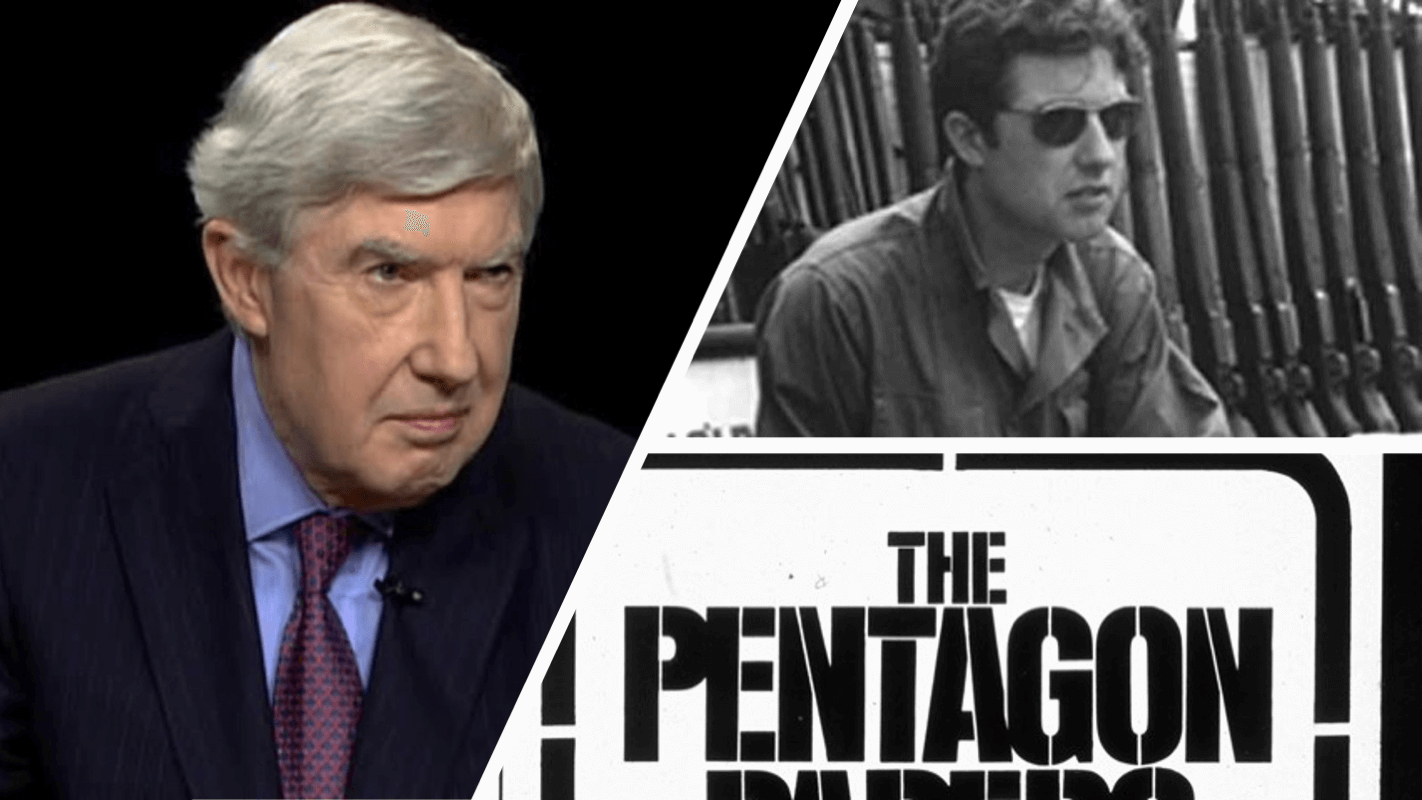
    Neil Sheehan passed away on January 7th.  His death would have attracted more attention if it had not occurred the day after the Trump/Giuliani inspired insurrection at the Capitol in Washington DC. We will give his death more than passing notice because, in a real way, the Establishment-honored Sheehan represented much of what was wrong with the New York Times, and big book publishing in general.  So if our readers are looking for an adulatory or commemorative eulogy for Sheehan, they should go over to the NY Times.  It won’t be found here.

    Sheehan was born of Irish parents  in Holyoke Massachusetts and graduated from Harvard in 1958.  After his military service he went to work for UPI in Tokyo.  He spent two years as UPI’s chief correspondent covering the Vietnam War.  It was at this time––1962-64––that he became collegial and friendly with the Times’ David Halberstam. And he was then employed by the Grey Lady.
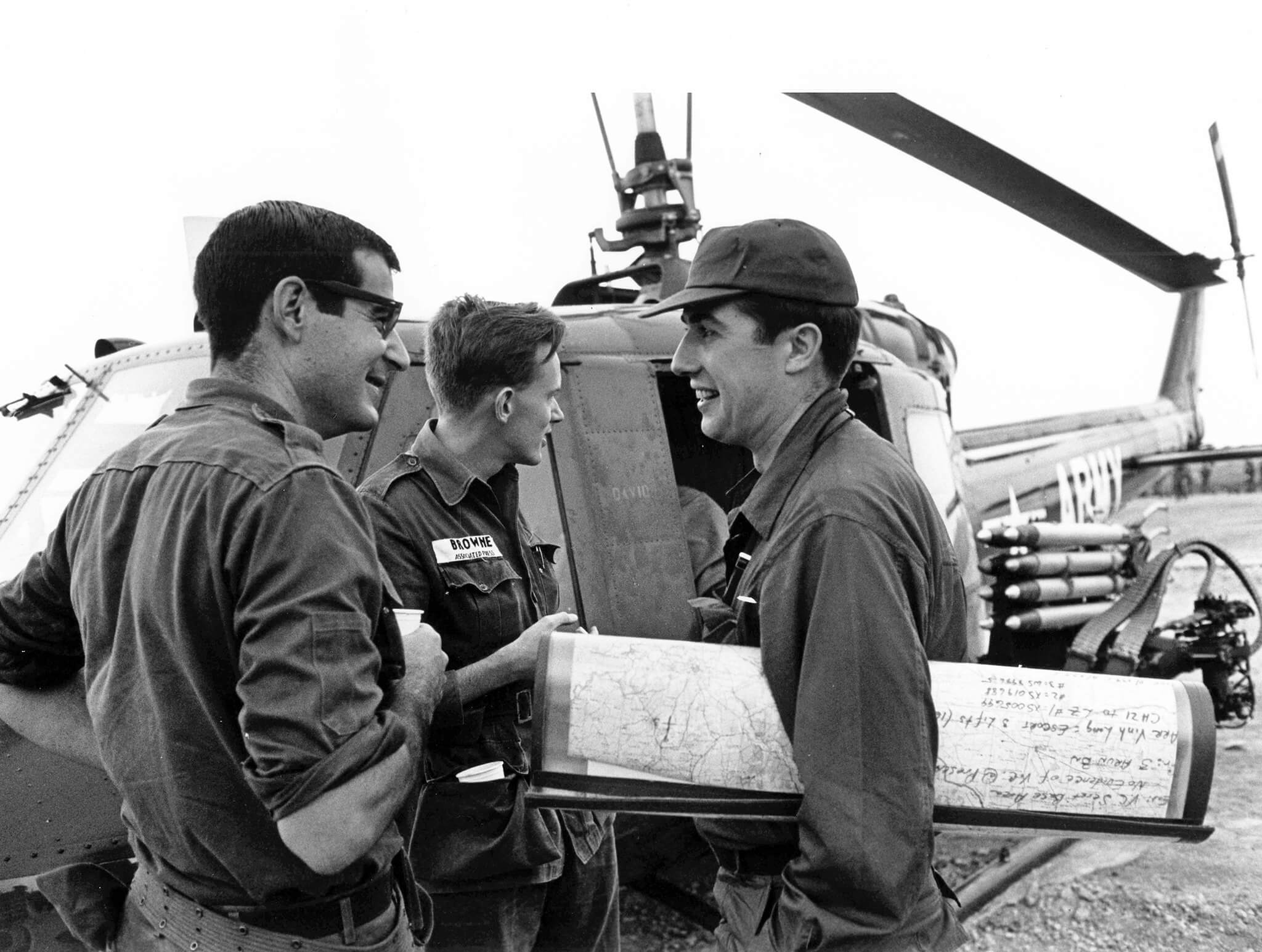
    halberstam sheehan

    As the reader can see from the picture above, Sheehan and Halberstam rode in helicopters with the military to cover the war. From the looks on their faces, they appear to have enjoyed the assignment.  In fact, in the Ken Burns/Lynn Novick documentary series The Vietnam War, Sheehan said he found these helicopter sorties exciting to be involved with.

    The commander in Vietnam at that time was General Paul Harkins.  Since those two reporters were intimately involved with the actual military operations, they knew things were not going well. Yet Harkins insisted they were going fine.  As author John Newman wrote in his milestone book JFK and Vietnam, this rosy outlook was an illusion perpetrated by both military intelligence and the CIA.  It was carried out by Colonel James Winterbottom with the cognizance of Harkins. (Newman, 1992 edition, pp. 195-97). In a 2007 interview that Sheehan did, he said that he and Halberstam had a conflict with Harkins over this issue of whether or not Saigon and the army of South Vietnam (the ARVN) was actually making progress against the opposing forces in the south, namely the Viet Cong.  He said that their impression was that Saigon was losing the war. Their soldiers were reluctant to fight, the entire military hierarchy was corrupt, and as a result, the Viet Cong forces in the south were getting stronger and not weaker.

    There is one other element that needs to be addressed before we move further. It is something that David Halberstam did his best to forget about in his 1972 best-seller The Best and the Brightest, but Sheehan was more open about in his 2007 interview.  The smiles in the picture above were genuine because Sheehan and Halberstam truly believed in winning the Vietnam War.  At any and all costs.  As Sheehan further explicated about the duo:

    … we believed it was the right thing to do. We believed all those shibboleths of the Cold War, all of which turned out to be mirages : the “domino theory” that if South Vietnam fell, the rest of––Cambodia, Thailand, Indonesia––they were all going to fall one by one.  We believed the Vietnamese Communists were pawns of the Chinese and the Russians, they were taking their orders from Moscow and Bejing.  It was rubbish.  They were independent people who had their own objectives, and they were the true nationalists in the country.  We didn’t know any of this really, but we did know we were losing the war.

    I was quite fortunate to find this interview. Because I had never seen Sheehan or Halberstam be so utterly explicit about who they were and what they were about at that time. In his entire 700 page book, The Best and the Brightest, and later in his career, I never detected such a confessional moment from Halberstam. The simple truth was that Sheehan and Halberstam were classic Cold Warriors who wanted to kick commie butt all the way back to China. They saw what America was doing as some kind of noble cause. They felt that we and they––that is, all good Americans––were standing up for democracy, liberty and freedom. As far as political sophistication went, they might as well have been actors performing in John Wayne’s propaganda movie, The Green Berets. They wanted a Saigon victory with big brother America’s help. Which is the message of the last scene of Wayne’s picture. And they didn’t think Harkins was up to the task. In fact, they did not even know what Harkins was up to with his attitudinizing about America winning the war.

    II

    Neither Harkins nor Winterbottom was unaware of the true situation on the ground. In fact, as Newman shows in his book, Winterbottom would simply create Viet Cong fatalities out of assumptions he made. Harkins understood this and went along with it. (Newman, p. 224) The idea was to control the intelligence out of Saigon in order to bamboozle Secretary of Defense Robert McNamara. (Newman, p. 225) There were honest records kept. But throughout that year of 1962, whenever McNamara would report back to President Kennedy after one of his SecDef Meetings––a conference in the Pacific of all American agency and division chiefs in Saigon––he would deliver to the president the same rosy message he had just heard. And that message was false in two senses: the number of Viet Cong casualties was exaggerated, and the number of ARVN casualties was being reduced. (Newman, p. 231)

    This intelligence deception was happening in the spring of 1962. In  November of 1961, with his signing of NSAM 111, Kennedy had agreed to raise the number of American advisors and ship more equipment to Saigon.  Therefore, the true results on the battlefield in the spring of 1962 would denote that this was not really helping the war effort. As Newman wrote, the Viet Cong “had been quick to alter their tactics to counter the effectiveness of the helicopter:  quick strikes followed by withdrawal in fifteen minutes to avoid rapid reaction … .” (p. 233)

    At about this time, in April of 1962, President Kennedy sent John Kenneth Galbraith to visit Robert McNamara in Washington. He told Galbraith to give him a report that JFK had requested the ambassador to India write about the American situation in Vietnam.  Kennedy knew that Galbraith was opposed to increased American involvement in Indochina, since he had voiced those doubts to the president before.  As James Galbraith, the ambassador’s son, said to me, Kennedy fully understood that what Galbraith would write would counter the hawks in his cabinet. (phone interview of July, 2019)  Kennedy wanted the report to go to McNamara since the Defense Secretary could then begin to withdraw the (failed) American military mission.  Galbraith did so and he then told JFK that McNamara got the message. (see this article)

    One month later, McNamara had a SecDef meeting in Saigon. After that meeting, he instructed Harkins––and a few others military higher ups––to stick around for a few minutes. He told them, “It is not the job of the U.S. to assume responsibility for the war but to develop the South Vietnamese capability to do so.”  (James Douglass, JFK and the Unspeakable, p. 120) He then asked them to complete the ARVN training mission and to submit plans for a dismantling of the American military structure in South Vietnam.  He concluded by telling Harkins:

    … to devise a plan for turning full responsibility over to South Vietnam and reducing the size of our military command, and to submit this plan at the next conference. (Douglass, p. 120)

    To me, and to any objective person, this has to be considered quite important information. First, the message is quite clear and unambiguous: McNamara is saying we can only train the ARVN.  Once that is done, we are leaving; we cannot fight the war for them. Second, it is multi-sourced: from both Galbraith, and the people at the SecDef meeting in Saigon. In addition, when word got out that Kennedy had sent the memo to McNamara, a mini war broke out in Washington over what was happening. (Newman, pp. 236-37). Then in May of 1963, the withdrawal schedules were delivered to McNamara at another SecDef meeting. (James DiEugenio, Destiny Betrayed, second edition, p. 366)

    Now, here is my plaint to the reader: try to find this step by step by step milestone in Halberstam’s book. That is, from:

    1. Galbraith visiting Kennedy, to
    2. Galbraith seeing McNamara, to
    3. McNamara ordering Harkins to begin the dismantling of the American mission, to
    4. The withdrawal schedules being presented to McNamara.

    If you can find it, let me know.  Because even though I read the book twice, I could not locate any of it.  Also, try to find it in any of the many interviews that Sheehan did that are online.  On the contrary, both men always spoke of the “inevitability” of the Vietnam War. You can only maintain such a stance if you do not reveal the above information. In fact, it can be fairly stated that, in 700 pages, Halberstam essentially gives the back of his hand to the influence of Galbraith on Kennedy. And he also completely reverses  the roles of McNamara with Kennedy in Vietnam.  Halberstam wrote that it was McNamara who went to Kennedy, “because he felt the President needed his help.” (Halberstam, p. 214) He then says, on the next page, that McNamara had no different ideas on the war than Kennedy did.

    Let us be frank:  This is a falsification of the record. It was Kennedy who, through Galbraith, went to McNamara.  And it was not for the purpose of promoting the ideas of the Pentagon on the war. Now, if the alleged 500 interviews Halberstam did were not enough to garner this information, there was another source available to him:  the Pentagon Papers––which Halberstam says he read. Moreover, he says they confirmed the direction he was going in. (Halberstam, p. 669)

    Either Halberstam lied about reading the Pentagon Papers, or he deliberately concealed what was in them. Because in Volume 2, Chapter 3, of the Gravel Edition of those papers, the authors note that because progress had been made, McNamara directed a program for the ARVN to take over the war and American involvement to be phased out. That phasing out would end in 1965.  Is it possible for Halberstam to have missed this? The information appears in the chapter explicitly headed, “Phased Withdrawal of US Forces, 1962-64.”  That chapter is forty pages long. (see pp. 160-200)

    III

    At that time period when the two reporters were in Vietnam, not only did they both want to urge America and Saigon to victory.  They thought they found the man to do it.  That was Colonel John Paul Vann. In fact, before he wrote The Best and the Brightest, Halberstam wrote another book on Vietnam, called The Making of a Quagmire. It is a book that he wished everyone would forget. Unfortunately for the deceased Halberstam, it’s still in libraries. In that book, Halberstam criticized every aspect of the Saigon regime as led by America’s installed leader, Ngo Dinh Diem. Halberstam writes toward the end that “Bombers and helicopters and napalm are a help but they are not enough.” (p. 321) He then adds, “The lesson to be  learned from Vietnam is that we must get in earlier, be shrewder, and force the other side to practice self-deception.” (p. 322) In other words, at that time, Halberstam and Sheehan wanted direct American intervention; as did Colonel Vann.

    What this reveals is something important about the trio:  They had no reservations about the war America had involved itself in. America got in by its backing of France.  When France was defeated, the USA took its place.  America then violated the Geneva Accords peace treaty that ended the war.  The USA would not hold free elections in order to unify the country. America created a new country called South Vietnam, one that did not exist before.  And they installed their own handpicked leader, Ngo Dinh Diem, to rule over it.  Diem’s early regime was stage-managed by General Edward Lansdale.  According to the first chapter of Sheehan’s book about Vann, A Bright Shining Lie, Lansdale was Vann’s hero.

    Both Sheehan and Halberstam fell in love with Vann.  They were completely unaware of what was happening in Washington, how Kennedy had decided to take Galbraith’s advice and begin to remove all American advisors.  They wanted to win, and they both felt it was only through Vann that the war could be won. They both maintained that he was the smartest man for Harkins’ position.

    There was a serious problem with the approach of these three men in 1965. None of them ever raised the fundamental question of what America was doing in Vietnam, or how we got there. Lansdale was not building a democracy.  He was building a kleptocracy. He also rigged elections so Diem could win by huge margins. (Seth Jacobs, Cold War Mandarin, p. 85) He was constructing  the illusion of a republic when, in fact, none existed. Diem was soon to become a dictator. (Jacobs, p. 84) For Vann to make Lansdale his role model is a troubling aspect of the man.

    One of the reasons Kennedy decided to get out is simple:  he did not think Saigon could win the war without the use of American combat troops.  Or as he told Arthur Schlesinger:

    The war in Vietnam could be won only so long as it was their war.  If it were converted into a white man’s war, we would lose as the French had lost a decade earlier.”  (Gordon Goldstein, Lessons in Disaster, p. 63)

    Kennedy said the same thing to NSC aide Michael Forrestal: America had about a one-in-a-hundred chance of winning. The president said this on the eve of his going to Dallas in 1963.  He then added that upon his return there would be a general review of the whole Vietnam situation, how we got there, what we thought we were doing, and if we should be there at all. (James Douglass, JFK and the Unspeakable, p. 183)

    The point about it becoming a white man’s war and the whole French experience echoes back to Kennedy visiting Saigon in 1951. There he met with American diplomat Ed Gullion who told him France would never win the war, and the age of colonialism was coming to an end. (Douglass, p. 93) That visit and the meeting with Gullion had a profound effect on Kennedy’s world view. He now saw nationalism as the main factor in these wars in former European colonies. He also thought that anti-communism was not enough to constitute an American foreign policy.  America had to stand for something more than that. (For the best short discussion of this, see James Norwood’s essay on the subject.)

    And there was a further difference between JFK and the Establishment on Third World nationalism. Kennedy did not see the world as a Manichean, John Foster Dulles split image.  Unlike President Eisenhower, he did not buy into the domino theory.  It was no one less than National Security Advisor McGeorge Bundy who said this about Kennedy in an oral interview he did in 1964. (Goldstein, p. 230) This is why, as Gordon Goldstein wrote in his book about Bundy, Kennedy turned aside at least nine attempts by his advisors to commit combat troops into Vietnam during 1961.

    IV

    It’s very clear from the interviews that Sheehan did later in his life that, like Halberstam, he had a problem with admitting Kennedy was right, and he, Halberstam and John Paul Vann were wrong about Vietnam. To fully understand Sheehan, one has to refer to the first chapter of A Bright Shining Lie, his book about Vann. That chapter is called “The Funeral”. It describes the ceremony preceding Vann’s burial. Consider this assertion about 1961:

    The previous December, President John F. Kennedy had committed the arms of the United States to the task of suppressing a Communist-led rebellion and preserving South Vietnam as a separate state governed by an American sponsored regime in Saigon.

    If Kennedy had thus committed himself, then why had he told McNamara in 1962 that he was to start a withdrawal program? And it’s no use saying that ignorance is an excuse for Sheehan.  Peter Dale Scott understood such was not the case when he wrote about Kennedy and Vietnam originally back in 1971.  Kennedy simply did not see South Vietnam as a place the USA should pull out all the stops for.  John Paul Vann did see it as such.  So did Halberstam and Sheehan.

    Sheehan also describes Ted Kennedy arriving late at the funeral and sitting in a back pew. He writes that Ted had turned against the war that his brother,  “John had set the nation to fight.”  Nothing here about President Eisenhower creating this new nation of South Vietnam that did not exist before. He then adds that John Kennedy wanted to extend the New Frontier beyond America’s shores.  And the price of doing that had been the war in Vietnam. 

    I think we should ask a question right here:  Why not mention Bobby Kennedy’s antagonism against the war in Vietnam, which was clearly manifest during Lyndon Johnson’s presidency?  In fact, as author John Bohrer has written, Robert Kennedy had warned President Johnson against escalation as early as 1964. (The Revolution of Robert Kennedy, p. 70). Kennedy had told Arthur Schlesinger that, by listening to Eisenhower, Johnson would escalate the war in spite of his advice. (Bohrer, p. 152)

    When Halberstam heard about this, he now began to criticize RFK.  How dare Bobby imagine that he was smarter than Johnson and Ike on the war. What did Robert Kennedy think? You could win the war without dropping tons of bombs and using overwhelming force?  Again, this exchange exposes who Halberstam and Sheehan really were in 1965. If I had been that wrong, I would have excised it also.

    As per extending the New Frontier beyond its borders, this is contrary to what Kennedy’s foreign policy had become after his meeting with Gullion.  JFK was trying for a neutralist foreign policy, one that broke with Eisenhower’s, and tried to get back to Franklin Roosevelt’s.  And as anyone who reads this site knows, this is amply indicated by his policy in places like Congo and the Dominican Republic.

    What Sheehan is doing here is pretty obvious.  He is transferring his guilt about who he was, and what he did while under Vann’s spell, onto Kennedy.  In fact, Kennedy was opposed to what both Halberstam was writing and what Vann was advocating for about Vietnam. As proven above, JFK did not want America to take control of the war––to the point that President Kennedy tried to get Halberstam rotated out of Vietnam. (David Kaiser, American Tragedy, p. 261) I also think this is the reason that Sheehan never acknowledged that Kennedy was withdrawing from Indochina in any interview I read with him.  And considering some of these interviews were done after the controversy over Oliver Stone’s film JFK, that is really saying something.

    V

    There are two other highlights to Sheehan’s journalistic career with the Times.  One concerned his association with Daniel Ellsberg and the Pentagon Papers.  Ellsberg had been in Vietnam on a voluntary tour under Ed Lansdale from 1965-67.  He went there from the Defense Department in order to see what the Vietnam War was really like. He spent six weeks being shown around Saigon by Vann. (Steve Sheinkin, Most Dangerous, p. 77)  As he notes in his fine book Secrets, Ellsberg came back a different man. He could not believe how badly the war was going, even though President Johnson had done what Kennedy refused to do:  insert combat troops.  By 1967 there were well over 400,000 of them in theater. This certified what President Kennedy had told Schlesinger about making it an American war and ending up like the French.

    When Ellsberg returned, he went to work at Rand Corporation.  This was a research and development company in Santa Monica.  Robert McNamara was getting ready to leave office.  One of his very last acts was to commission the secret study called the Pentagon Papers. Since Ellsberg had worked in the Pentagon, he was asked to work on the study.  He then decided that the Pentagon Papers were so powerful in exposing the lies behind the war, he needed to get them into the public record.  So he and his friend Anthony Russo decided to copy the study and make it public.

    Since the Pentagon Papers were classified, Ellsberg and Russo faced legal problems if they themselves gave the documents to a newspaper or magazine for publication. Therefore, Ellsberg approached four elected officials to try and get them entered into the congressional record.  That would have protected them legally since representatives and senators have immunity while speaking from the floor. The problem was that for one reason or another, all four refused to accept the documents. (Ellsberg, Secrets, pp. 323-30, 356-66)

    Ellsberg got in contact with Sheehan, whom he had met in Vietnam in 1965. Ellsberg had a teaching fellowship at MIT at this time.  So Sheehan drove up from New York to Cambridge in March of 1971.  Ellsberg made a deal with Sheehan:  he could take notes on the documents and copy a few pages.  He could then show those notes to his editors and they could make up their minds if they would publish the actual papers. Ellsberg left Sheehan a key to the apartment where he had them stored. Without telling his source, Sheehan ended up copying the documents with his wife and taking them to New York. (Ellsberg, p. 175)

    The Times did publish three days of stories from the papers before they were halted by a court order. What is interesting about this Times version of the Pentagon Papers––which was later issued as a book––is that it differs from the later edition previously mentioned.  For Senator Mike Gravel did read from a portion of the documents on the senate floor.  In his version, later published by Beacon Press, as noted above, there is an entire 40 page chapter entitled “Phased Withdrawal 1962-64”.  In the Times version of the papers, the section dealing with the Kennedy administration goes on over 200 pages. (The Pentagon Papers, New York Times Company, 1971,  pp. 132-344)  There is, however, no section on the phased withdrawal, and the transition from John Kennedy to Lyndon Johnson concludes with the declaration that somehow, Johnson had affirmed Kennedy’s policy and continued with it.  I cannot say that this was purposeful, since the Gravel edition of the papers is longer than the one the Times had. But whatever the reason, today that statement looks utterly ludicrous.

    Everyone who reads this site is aware of the My Lai Massacre, which occurred in March of 1968.  An army regiment slaughtered hundreds of innocent women and children at the small hamlet of My Lai. The incident was covered up within the military by many high level officers, including Colin Powell. But it finally broke into the press in 1969. It was an indication that the US military was disintegrating under the pressure of a war that could not be won.

    The exposure of My Lai caused many other veterans to come forward and tell stories about other atrocities. In 1971, Mark Lane helped stage what was called the Winter Soldier Investigation.  This was a three day event held in Detroit and broadcast by Pacifica Radio. There, many others told similar stories about what had really happened in Vietnam.

    The Nixon administration was not at all pleased with the event. White House advisor Charles Colson, with the help of the FBI, went to work on discrediting the witnesses. (Mark Lane, Citizen Lane, p. 218) Since Lane helped with the event, he knew many of the men and interviewed them. He turned the interviews into a book called Conversations with Americans. Some of the veterans expressed fear of reprisal for what they told the author.  So in the introduction, Lane explained that some names had been altered to protect the witnesses from the military. (Lane, p. 17) Lane then placed the actual transcripts with the real names at an attorney’s office in New York; a man who had worked for the Justice Department. (Citizen Lane, p. 219)

    Six weeks after the book was released, the New York Times reviewed it. The reviewer was Sheehan. In cooperation with the Pentagon, Sheehan now said that a number of the witnesses were not genuine and Lane had somehow fabricated the interviews. (Citizen Lane, p. 220) Sheehan did this without calling the lawyer in New York who had the original depositions with the real names.  It is hard to believe, but Sheehan did a publicity tour for his article. Yet he refused to take any of Lane’s personal calls or answer any of his letters.  When Lane finally got to confront Sheehan on the radio, Sheehan said that in three years of covering the war in Vietnam he had never found any evidence of any such atrocities.  When Lane asked him about My Lai, Sheehan said these were just rumors. (Citizen Lane, p. 221) Recall, this was very late in 1970 and in early 1971. The story had broken wide open in late 1969, including photos of the victims in Life magazine and the Cleveland Plain Dealer.

    In his 2007 interview, Sheehan said he became disenchanted with the war in 1967. But as the reader can see from the above, he was still covering up for the military in 1971. One of the worst parts of the 2007 interview is when Sheehan talks about his tour in Indonesia in 1965 before returning to Vietnam. He says that this was an enlightening experience for him. Why?  Because he says the communists had tried to take over the government, but they got no aid from Moscow or Bejing. He then adds that this showed him that communism was not a monolithic movement, and the domino theory was not really applicable.

    What can one say about that statement?  Besides him learning in 1965 what Kennedy knew in 1951, there is this:  There was no communist insurrection in Jakarta in 1965. And any reporter worth his salt would have known that––certainly by 2007. General Suharto used that excuse to slaughter over 500,000 innocent civilians. But in keeping with this, A Bright Shining Lie was an establishment project.  Peter Breastrup supplied the funds through the Woodrow Wilson Institute to finish the book. Breastrup worked for the Washington Post; he was Ben Bradlee’s reporter on Vietnam for years, and he always insisted that the Tet Offensive was really misinterpreted and blown out of proportion by the media. The book was edited by the infamous Bob Loomis at Random House. Loomis was the man who approached Gerald Posner to write Case Closed, a horrendous cover-up of President Kennedy’s assassination.

    Since the war had turned out so badly, Sheehan could not really make Vann the hero he and Halberstam had in 1963-65.  So they dirtied him up.  His mother was a part-time prostitute, he cheated on his wife, and he was a womanizer in Vietnam who impregnated a young girl. This was supposed to be part of the lie about Vietnam.  But Sheehan really never got over Vann, because in later interviews he said that it was really Vann who, at the Battle of Kontum, stopped the Easter Offensive. Which is a really incomprehensible statement. The tank/infantry assault on Saigon by Hanoi in 1972 lasted six months and was a three-pronged attack.  It was finally stopped by Nixon’s Operation Linebacker, which was perhaps the heaviest bombing campaign in Vietnam until the Christmas bombing of 1972.

    What Sheehan did––with his so-called inevitability of the war, disguising of Kennedy, his promotion of Vann, his misrepresentation of Mark Lane––is he helped promote a Lost Cause theory of Vietnam. This was later fully expressed by authors like Guenther Lewy in America in Vietnam, Norman Podhoretz in Why We Were in Vietnam, and more recently, Max Boot’s The Road Not Taken. The last pretty much states that Lansdale, Vann’s hero, should have been placed in charge. If so America likely would have won.

    So excuse me if I will not be part of the commemoration of Sheehan’s career. In many ways, both he and Halberstam represented the worst aspects of the MSM.  After being part of an epic tragedy, they then did all they could to promote a man who very few people would have ever heard of without them.  At the same time, they did all they could to denigrate the president who was trying to avoid that epic tragedy. 

    That is not journalism. It is CYA.  And it is CYA that conveniently fits in with an MSM agenda.

  • Gerald “Jerry” Policoff (Feb. 27, 1947—March 7, 2020)

    Gerald “Jerry” Policoff (Feb. 27, 1947—March 7, 2020)


    Longtime assassination researcher Gerald “Jerry” Policoff died in an automobile accident in Lancaster, Pa. on Saturday March 7. Jerry first became involved in the research community as a 19-year-old in 1966, when he was inspired to seek the truth after reading Mark Lane’s seminal work Rush To Judgement. The next year, he decided to buy the 26 volumes of the Warren Commission. His mother could not understand his growing obsession. When he tried to explain to her that illegitimate forces had taken power in a clandestine way, she did not understand what he meant. Then one day after he came home from one of his college classes, he noticed that she was putting away Josiah Thompson’s book Six Seconds in Dallas. She turned and said to him, “You’re right. And I don’t ever want to talk about it again.” Which, of course, explains the problem critics have with this case.

    Jerry made his living in broadcast advertising for more than 40 years, while pursuing his research and writing about the JFK assassination. His main area of interest was on the mainstream media’s inadequate and dishonest coverage of the assassination. The night Robert Groden and Dick Gregory showed the Zapruder film live on ABC TV, on Geraldo Rivera’s program Good Night America, Policoff was in the wings since he was a friend of Groden’s. Even though Rivera went to the mat with ABC in order to show it, Jerry often said that up until the moment it was screened, he, Groden, and Gregory all thought that management was going to call off the show. Thank God they did not.

    In 1975, shortly after that monumental event on Rivera’s show, Jerry was the first person to expose Life magazine’s changing the order of printed frames, and printed captions, in its October 2, 1964 issue, in order to conform to the Warren Report’s conclusions of only shots from the rear. Jerry’s subsequent article on this deception “The Media and the Murder of John Kennedy” appeared in the August 8, 1975 issue of New Times and was included in the anthology The Assassinations: Dallas and Beyond. One of his most famous and distinguished essays was called “How All The News About Political Assassinations Has Not Been Fit to Print In The New York Times”. That was published in the October, 1972 issue of The Realist. Another of his most accomplished and popular stories was “JFK: How The Media Assassinated The Real Story,” in the March 11, 1992 Village Voice, which also appeared as a chapter in JFK: The Book Of The Film. In that pungent article, Policoff became the first journalist to reveal the fact that CBS had used Warren Commissioner John McCloy as a consultant on their 1967 four-part series defending the Warren Commission. They did so without informing the audience of this fact. This had been done through the use of his daughter Ellen McCloy, who was the administrative assistant to Richard Salant, president of CBS News.

    Roger Feinman, a friend of Policoff’s, was a former CBS employee who pilfered the McCloy/Salant documents out of CBS. Roger had written several letters to CBS’ Standards and Practices division, complaining of the lapses in journalistic ethics CBS was taking to endorse the Warren Commission. In the seventies, after he was terminated, he tried to get Salant and John McCloy to admit to this illicit relationship. They both denied it, as did the CBS four-part series producer Les Midgley. But when Policoff confronted them with the actual memos—with their names on them—both Ellen McCloy and Salant were finally forced to admit what they had done.

    Although most people will remember Jerry as being the first to systematically focus on just how bad the media was in the JFK case, he had a good all-around background on the Kennedy assassination. This is why he was hired by editor Robert Sam Anson at New Times to cover the House Select Committee on Assassinations (HSCA). His contemporary reporting on that body was almost unrivaled in the field. Policoff knew how to cultivate sources who were unhappy with what the HSCA was becoming. They, therefore, confided in him, since they knew he would keep their identities secret.

    While covering the HSCA for New Times, Jerry broke the story that acoustics analysis proved that at least one shot was fired from the grassy knoll area to the right front of Kennedy and not from the Texas School Depository. As the HSCA was getting started, he appeared on the Feb. 24, 1977 episode of the PBS McNeil/Lehrer News Report to draw attention to the media’s “unwarranted deference to the official findings” on the JFK murder. He was one of very few assassination researchers afforded such opportunity by the mainstream media.

    In more recent years, Jerry served as the Executive Director of the Assassination Archives and Research Center( AARC) and, along with Jim Lesar, organized the 2014 Bethesda, Maryland conference entitled “The 50th Anniversary of the Warren Report”. He was instrumental in bringing 90-year-old Antonio Veciana to the conference to say publicly for the first time that the man he knew as Maurice Bishop, was indeed CIA officer David Atlee Phillips. Another famous guest he secured was Wesley Buell Frazier, who worked with Lee Oswald at the Texas School Book Depository.

    Jerry was an original board member of both the Coalition on Political Assassinations (COPA) and the Citizens Against Political Assassinations (CAPA). In 2013, through the group JFK Lancer, he was a recipient of the Mary Ferrell Pioneer Award, in appreciation of a lifetime searching for the truth in the assassination of President John F. Kennedy.

    Last year, Jerry became a Senior Editor at OpEd News, contributing articles and being the official screener of any submissions on the JFK, RFK, or MLK assassinations.

    After Jerry retired to Lancaster, Pa. in 2004, he became very active in progressive politics. In 2005, he formed “Progressives For Pennsylvania” which, for several years met bi-weekly at his apartment. As a fierce advocate for single-payer healthcare, in 2007 he became a Board Member and Chair of Research for “Healthcare For All PA.” He was driving to speak on Bernie Sanders’ Medicare For All proposal at the annual Keystone Progress conference in Philadelphia, when was killed.

    In 2010, he ran as the Democratic candidate for the 41st District of the PA. State House of Representatives. Despite unapologetically campaigning for single-payer healthcare, he still won 42% of the vote, which still stands as a record for any Democratic candidate in a very conservative district.

    Jerry Policoff will be remembered as being passionate in pursuit of the truth of the assassination of President Kennedy, as well as trying to make the United States a more just and equitable nation for all. He will be deeply missed.


    Articles by Jerry Policoff published by Kennedys And King:

    JFK: How the Media Assassinated the Real Story

    Specter’s Switch: an update

    For more remembrances of Jerry Policoff from Steve Jones, Gary Schoener, Lisa Pease, and Dawn Meredith, listen to the BlackOp Radio installment below:

  • The Mysterious Life and Death of James W. McCord

    The Mysterious Life and Death of James W. McCord


    Usually when a high profile person in the field of entertainment, politics or news passes away, it is noted with almost lighting-like immediacy. We live in the Internet world, one with a 24/7 news cycle. That cycle does not sleep. It doesn’t even nap.

    For some reason it did in June of 2017.

    On June 15, 2017, James W. McCord of Watergate fame passed away. That’s correct. He passed on nearly two years ago. (here is one confirmation; here is another) If one can believe it, you will not find an obituary for him on the web. If one checks, say Wikipedia, he is still alive. You will only find a date of death through Ancestry or Find a Grave.

    Corroboration comes from Shane O’Sullivan’s book, Dirty Tricks. According to the author, McCord’s family wanted to keep his passing quiet. (O’Sullivan, p. 405) They succeeded to a remarkable, in some ways, an unprecedented degree. The logical question, which I am not sure O’Sullivan asked, is this: What was the purpose behind all the secrecy? Since today, nearly no one knows he is dead, no one can ask his family that question. But with help from genealogist Rob Couteau, and on the ground investigation in Pennsylvania by Steve Jones and Jerry Policoff, Kennedys And King can confirm that O’Sullivan is correct. McCord passed on nearly two years ago—in mystifying silence. This is therefore the first obituary anyone will read about him. Which is startling considering the impact James Walter McCord had on modern American history.

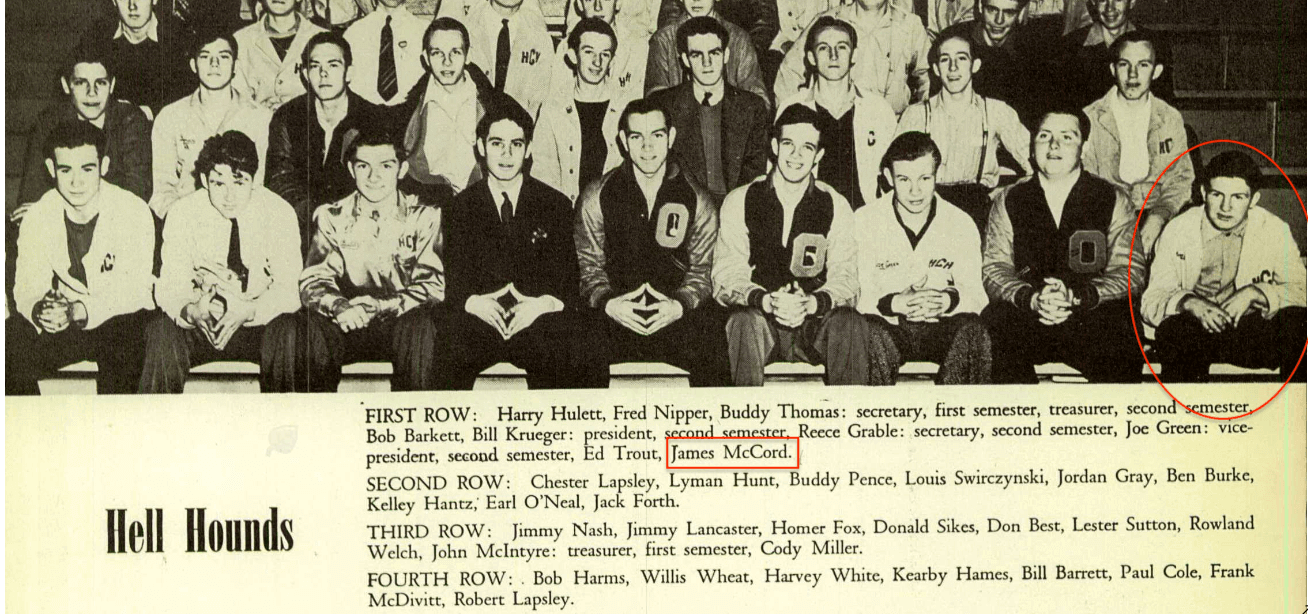
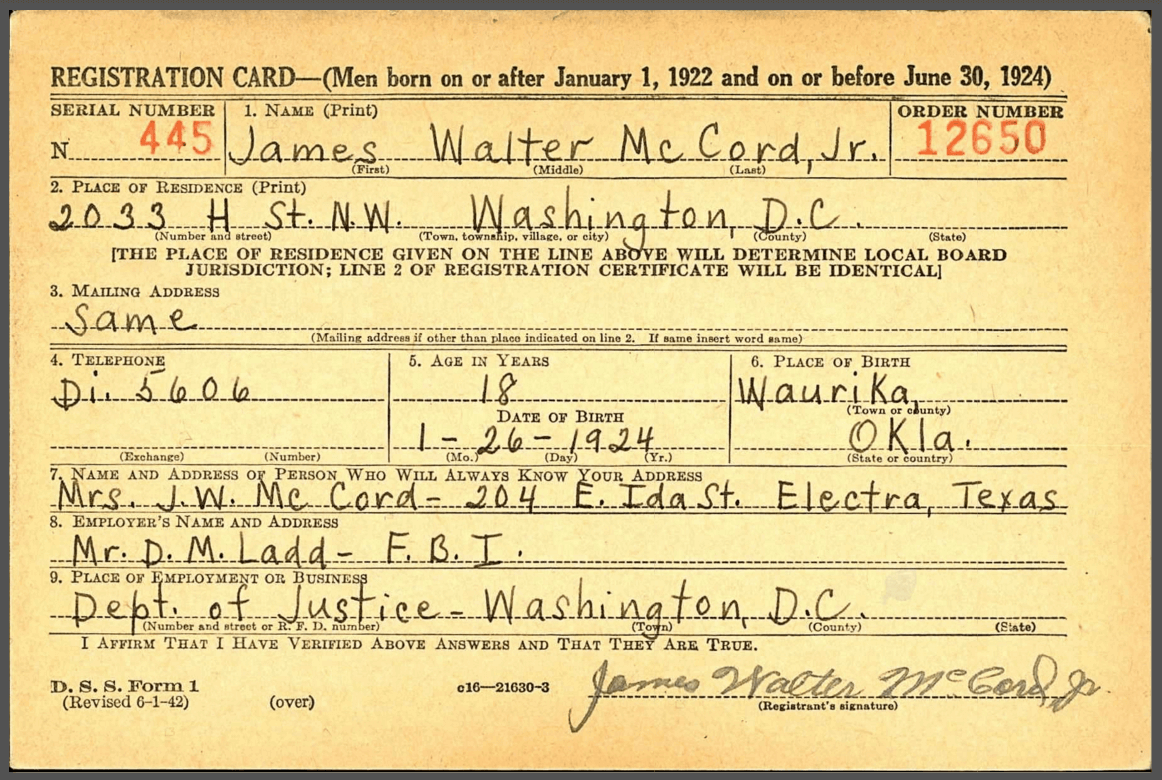
    Owing to Couteau’s work, we know that McCord’s family originated in Scotland. His great-grandfather served in the Tennessee militia during the War of 1812. McCord’s grandfather, James Allen McCord, was from Alabama and served in the Confederate army. Both his mother and father hailed from Texas. His father was a public school teacher. Although some entries place his date of birth in June, McCord was born in Waurika, Oklahoma on January 26, 1924. He attended public schools there. In 1943 he enlisted in the Army Air Corps in Miami, Florida. When that split off from the army to create the Air Force, he eventually attained Lt. Colonel status in the U. S. Air Force Reserve. After World War II, he attended Baylor before graduating from the University of Texas at Austin in 1949. He began his professional career by working briefly for the FBI. He was then employed for nineteen years by the CIA. He allegedly retired and went to work for the Committee to Reelect the President, commonly knows as CREEP, in late 1971. The man who hired him to work on the Richard Nixon campaign was Jack Caufield.

    Ambrose McCord, 
    James’s great-grandfather,
    served in the Tennessee militia
    McCord’s mother

    McCord’ high-school yearbook

    McCord’s selective service card

    McCord’s wife Sarah’s tombstone

    Caufield was a former New York City police detective. He was invited by John Ehrlichman to set up a private security agency to provide intelligence on Nixon’s political opponents. It was Caufield who first suggested forming Operation Sandwedge: illegal electronic surveillance of Nixon’s political opponents focusing on their sex lives, drinking habits, tax records and marital problems. (The Telegraph, July 11, 2012) Later on, when the so-called Plumbers Unit was formed, McCord migrated there and joined Howard Hunt for their break-ins of the Democratic National Committee. It was called the Plumbers Unit because it was partly designed to plug leaks, like the Pentagon Papers. In fact, one of the first missions the unit executed was a raid on the Los Angeles office of Daniel Ellsberg’s psychiatrist. Ellsberg had leaked the Pentagon Papers to the NY Times and Washington Post. The objective was to dig up dirt on him and smear his character in the press.

    To say that McCord was a secretive and odd person understates both his character and career. He was one of the several personages who were involved in both the John F. Kennedy assassination and the Watergate caper: two seismic shocks to the system that occurred within a decade of each other. They were both so colossal in their impact that complex and multi level cover-ups ensued afterwards to conceal their true natures. In the JFK case, it took about three years to fully expose the official Warren Report as a cover-up.

    With Watergate, where McCord’s role was much more front-and-center, it took quite a bit longer. Most analysts of that expansive and complicated phenomenon would date the beginning of its true elucidation to 1984, ten years after Richard Nixon resigned the presidency. That was the year Jim Hougan published Secret Agenda, his watershed book on Watergate. Secret Agenda is now recognized as a classic in the field. Some would go even further and deem it as one of the finest pieces of investigative political reporting in the last 40 years. No objective observer can read the book without feeling the official story handed to them on Watergate was, to say the least, both faulty and incomplete.

    What was that official story composed of? It was a combination of two factors. First, the coverage by Bob Woodward and Carl Bernstein in the WashingtonPost. This was largely supervised by editor Ben Bradlee. It was made world famous by Robert Redford in his film of their bestselling book, All the President’s Men. The second element of this official story was then adduced by the Senate Watergate Committee. In the summer of 1973 that committee’s hearings were probably viewed proportionately by as many spectators as the 1954 Army/McCarthy hearings. Led by Senator Sam Ervin, the committee pretty much followed the story that had been laid out by the Washington Post. It was this unrelenting and massive media glare that paved the way for Nixon’s resignation in August of 1974.

    One of the worst things about Watergate was that the praise and fame heaped upon Ervin, Bradlee, Woodward and Bernstein left the impression that the system had worked. Through the political and journalistic process a grievous crime had been self-corrected. We all felt good. The system had purified itself.

    A few years later, Jim Hougan walked into the FBI research library and made a request. When his documents were delivered he quickly realized that someone had made a mistake. He was getting papers that were still classified. Realizing the error would be discovered, he immediately began copying hundreds of pages from the original FBI Watergate investigation, documents that had not seen the light of day. Stuffing them into his briefcase before they were recalled, he managed to take them home. They confirmed his suspicions about what had really happened.

    Hougan opens his book with an unforgettable chapter entitled “Of Hunt and McCord”. (pp. 3-26) It is clear from these pages that Hunt and McCord lied before the Ervin Committee when they said they did not know each other prior to going to work for the Plumbers. Hougan also pointed out that when Howard Hunt retired from the CIA in 1970, that was the third time he had done so. (Hougan, p. 6) At the recommendation of Director Richard Helms, he then went to work for a CIA associated PR group called the Mullen Company. That company would then be sold by Mr. Mullen to another CIA asset, Robert Bennett. Bennett and Hunt then badgered Nixon’s hatchet man at the White House, Charles Colson, into giving Hunt a job. (Hougan, p. 33) From there, Hunt went on to perform a series of alleged intelligence assignments that were so poorly conceived and badly executed that one has to wonder if they were just Keystone Kops hijinks or something worse. Yet even though Hunt was now supposedly retired and working for the White House, the CIA continued to technically support his efforts. In fact, the Agency reviewed and extended Hunt’s Top Secret security clearance prior to his retirement. (Hougan, p. 7) His security clearance was now the same one Clay Shaw had in New Orleans. (William Davy, Let Justice be Done, p. 196)

    Four months after Hunt joined the Mullen Company, James McCord decided to retire from the Agency after 19 years of service. Although he was later billed as a technician, he worked out of the Office of Security’s secretive Security Research Staff program (SRS). (Hougan, p. 9) As John Newman later discovered, it was here where McCord teamed up with David Phillips to supervise the Agency’s anti-Fair Play for Cuba Committee campaign, of which Lee Harvey Oswald had all the earmarks of being a component. (James DiEugenio, Destiny Betrayed, Second Edition, p. 158)

    Hunt reportedly worked with McCord on Manuel Artime’s “Second Naval Guerilla” operation out of Nicaragua and Costa Rica. This was attested to by Cuban exile Harry Williams to author William Turner. (Hougan, p. 10) But Hougan dug up evidence that the pair worked together even earlier than that, back in the fifties on the Asian mainland. (p. 19) He then showed that the two men had also worked together in a domestic surveillance operation in 1969. We should add one other point. When McCord arrived at CREEP, he did not have a picture of Nixon in his office. He had a photo of Richard Helms on the wall. It was inscribed, “To Jim, With deep appreciation”. The emphasis was in the original. (Hougan, p. 22. We will reveal later a possible reason for that “deep appreciation.”)

    So just from the little noted above, the questions come rapid-fire. Why did Hunt and McCord lie about not knowing each other prior to 1972? Why did the Agency let the lie stand? Were Hunt and McCord really retired when they eventually joined, respectively, the White House and CREEP? Why was Robert Bennett so eager to get Hunt into the White House? Why was McCord working for Nixon while his allegiance appears to be to Helms? But beyond that, why did it take ten years for anyone to ask these questions?

    It is not completely accurate to write that no one investigated this aspect of the caper until Jim Hougan. There actually were two inquiries that attempted to explore the role of the CIA in Watergate. The first was the minority report of the Ervin Committee. The Republicans, led by Tennessee’s Senator Howard Baker and Minority Counsel Fred Thompson, did try to inquire into things like the role of the Mullen Company and the true goal of the burglary at the Watergate complex. Thompson and Baker theorized that the burglars’ real goal was not political intelligence for the 1972 election. It may have been surveillance of Democratic Chairman Lawrence O’Brien’s representation of Howard Hughes. Nixon’s association with Hughes, and his past attempts to bribe the president, were fairly well known at the time. The White House may have feared that O’Brien had more evidence of the same. In fact, John Meier, who worked for Hughes, told Nixon’s brother Donald that he was thinking of turning over everything that he had on Hughes. This included his knowledge of a million dollar secret donation from Hughes to Nixon. According to Age of Secrets, Don then informed his brother of this. (Probe Vol. 3 No. 2, pp. 9, 11, 15)

    Besides Baker and Thompson, the other committee that explored the CIA angle was the House Committee on Intelligence. This was led by Representative Lucien Nedzi, until he controversially resigned his chairmanship. (“House Supports Nedzi”, Washington Post, June 17, 1975) This committee did produce a report that Hougan sourced several times in his book.

    But the fact was that very, very few people knew anything about these two investigations. This overall ignorance continued even when Fred Thompson published his 1975 book based on the Baker inquiry entitled, At That Point in Time. The fact that this book was all but ignored bears witness to the enormous torque created by the Washington Post, the Woodward/Bernstein best seller, and the Academy-Award-winning hit film. A veritable whirlpool was constructed, one which carried the entire MSM along with it.

    As Jim Hougan later told me, he just never thought very much of Woodward’s reporting skills. One of the most revealing sections of Secret Agenda is in Appendix V. There the author publishes documents describing Robert Bennett’s communications with his CIA case officer. It is revealed that Bennett was actively spinning reporters like Sandy Smith and Woodward away from the Agency’s association with the Mullen Company, and selling them on the angle that his newly purchased PR company was actually “clean”. For this “information”, Woodward had agreed that these stories would not be attributed to Bennett. Bennett also had access to Senator Ervin and he had been assured that the senator would conceal the Mullen Company’s overseas role in placing agents for the CIA. (Hougan, pp. 332-335)

    To put it mildly, that memorandum raised issues about Woodward’s independence and honesty. Hougan then raised questions about the Post’s major secret source. This was the man Woodward labeled “Deep Throat” in his book. Hougan specifically raised questions about the signaling system the duo would use when Deep Throat would request a nightly meeting in a parking garage. (Hougan, pp. 291-93) Hougan and others have also explored Woodward’s military background and his high-level security clearances as part of the national security state. This has led some to believe that one reason the reporter was so keen to assault Nixon was that, unlike Bernstein, Woodward was politically to the right of the president.

    Because of this enormous propaganda apparatus, both the public and press were diverted from an alternative view of James W. McCord. Far from being a mere put-upon technician, McCord may have been a central operator. Consider just two major instances in the two-year Watergate episode. After the discovery of the break-in, the case had reached an impasse at the trial of the burglars. If they all kept silent, the conspiracy would likely be limited to them only—it would not reach into the White House. But in March of 1973, McCord radically raised the stakes. He wrote a letter to Judge John Sirica stating that perjury had been committed in his courtroom and pressure had been brought to bear for the seven burglars to remain quiet. When Sirica read McCord’s letter in court, it created pandemonium. It seemed to affirm all the stories that Woodward and Bernstein had been writing, and Bradlee publishing, in the Post.

    But, in retrospect, the question should have been: If not for James McCord, would there have been a trial at all? As most analysts of the June 17, 1972 final break-in have noted, there was something odd about the way the burglars were caught. McCord had taped the locks on numerous doors to keep them open during the break-in. The security guard, Frank Wills, had found these doors and removed the tape. (Hougan, p. 196) When the burglars entered the building at about 1:10 AM, they found a previously taped door that was now stripped. McCord then conferred with higher-ups Hunt and Liddy. According to everyone but McCord, it was he who insisted on not aborting the mission. (Hougan, pp. 197-98) The door was retaped. But after McCord entered the building, he told his low-level cohorts that he himself had removed the tape on the doors. This was not true. (Probe, Vol. 3 No. 2, p. 14)

    But that is not all that McCord had done. On the previous break-in—there were four attempts in all—it appears that McCord also switched the informational photos that had been taken inside the DNC, which were supposed to be of papers inside O’Brien’s desk, to a set of innocuous ones taken inside a Howard Johnson’s hotel room. (Hougan, pp. 153, 157) He also placed a faulty bug inside O’Brien’s office. (pp 162, 166) This from a man who when he was arraigned said—truthfully—that he had been a security consultant for the CIA. These alleged faux pas made another break-in necessary.

    Wills discovered the new tape on the same door. It was almost impossible to miss it since McCord taped as many as eight doors that night—he even taped doors on floors that would never be used, like a floor above the DNC. (Hougan, p. 207) At 1:47 AM, Frank Wills called the Washington Police Department. Just a few minutes later, the police arrived at the scene. Reinforcements soon arrived. McCord, along with four Cubans recruited by Hunt, were arrested. They were Virgilio Gonzalez, Bernard Barker, Eugenio Martinez and Frank Sturgis. Things then got worse. Surprisingly, Barker and the others had been allowed to keep their hotel keys with them. And further, neither McCord nor Hunt had sterilized the hotel rooms. Therefore, when the police entered the rooms, they discovered a treasure trove of evidence. This included their notebooks with Hunt’s name and phone number, which included the abbreviation W. House next to it. (Probe Vol. 3 No. 2, pp. 14-15) Hunt was traced to the White House. Liddy was linked to CREEP.

    But the circus even went beyond that. Hunt had paid off the burglars in sequentially numbered hundred dollar bills. The money trail would lead from Miami, to Mexico City and back to CREEP. (Probe 3.2: 14-15) And that would lead to the chairman of that body, former Attorney General John Mitchell. The notebooks with Hunt’s name and phone in them would lead to Charles Colson who ran the Plumbers Unit at the White House.

    Once apprehended—as was the case with Bennett—McCord did all he could to keep the spotlight off the CIA and on the White House. His first lawyer, Gerald Alch, had proposed an Agency cover defense. (O’Sullivan, p. 268) He was later jettisoned and replaced by Bud Fensterwald. Fensterwald wasted little time in announcing, “We’re going after the president.” (Hougan, p. 307)

    When Alch first suggested his CIA defense, McCord began to write Paul Gaynor, chief of the SRS division at CIA. He advised Gaynor to pre-empt this attempt with multiple and effective leaks to the press before the CIA defense could gain traction. Meanwhile, he would keep Gaynor informed of the legal tactics planned by the defendants. (O’Sullivan, pp. 269-70) A few days later, McCord wrote Jack Caufield at the White House. McCord stated that if Watergate was dumped off on the CIA and Richard Helms was fired,

    … every tree in the forest will fall. It will be a scorched desert. The whole matter is at the precipice right now. Just pass the message that if they want it to blow, they are on exactly the right course. (Letter of December 28, 1972)

    In spite of this warning, Helms was terminated about a month later on February 2, 1973. Around six weeks after, Caufield met with McCord. He offered him money, a job and executive clemency if he would plead guilty and remain silent. Caufield said this offer came from the highest levels of the White House. (NY Times, June 23, 2012, article by Douglas Martin.) McCord refused the deal. His allegiance was to Helms and the CIA. Shortly after, he wrote the letter to Sirica about pressure being brought to bear and perjury in his courtroom. For all intents and purposes, that is what blew the case wide open.

    Because, as McCord had warned, the Nixon White house could easily be turned into a scorched desert. And it was. Through a steady stream of disclosures by people like McCord and White House counsel John Dean, the seamy underside of the Nixon White House was placed on public display. As McCord warned, it was not a pretty sight. The secret bombing of Cambodia, the August 1971 break in at Daniel Ellsberg’s psychiatrist’s office, Nixon’s attempt to form a super intelligence group to counter student protests (commonly called the Huston Plan), the proposed fire-bombing of the Brookings Institute, etc. And, in this author’s opinion, the worst went undiscovered, because this last caper, the fire bombing of the Brookings Institute, was first thought to be part of Nixon’s war against the leaking of the Pentagon Papers. As the late journalist Robert Parry discovered, such was not the case. That proposal was really designed to find out if the evidence of Nixon sabotaging President Johnson’s Vietnam peace plan was located at Brookings. Candidate Nixon had arranged for Saigon not to cooperate with President Lyndon Johnson in his attempt to arrange a truce in Indochina before he left office. This tilted the election to Nixon and extended the war. Once in office, Nixon was worried that this evidence, like the Pentagon Papers, could be leaked to the press.

    By the summer of 1973, Nixon seemed to realize what had really happened. He called up H. R. Haldeman at four in the morning, and asked him some pointed questions:

    • “Do you know anything about the Bennett PR firm, the Mullen Company?”
    • “Did you ever employ them at the White House? Were they ever retained by us for any purpose?”
    • “Did you know they were a CIA front?”
    • “Did you know that Helms ordered Bennett to hire Howard Hunt?”
    • “Did you know that Hunt was on the payroll at the Bennett firm at the same time that he was on the White House payroll?” (Probe, Vol. 3 No. 2, p. 32)

    It was too late.

    Because of his willingness to cooperate with the court and the Ervin Committee, McCord served by far the briefest prison time of the seven men directly involved with the break in: four months. Hunt served almost ten times that long. Gordon Liddy was in prison for almost five years before being pardoned by President Carter.

    Forty-five years later, the conventional view of Watergate still largely reigns in the MSM. This is partly due to Woodward’s occasional attempts to prop up that version. For instance, when FBI officer Mark Felt was close to dying, Woodward wrote a book saying that Felt was Deep Throat. In 2017, Mr. Hollywood Mythology, Tom Hanks, then had a hand in making a truly mediocre film based on an even more mediocre book about Felt.

    But, in 2009, Ed Gray, son of L. Patrick Gray, had published an interesting book about Watergate titled In Nixon’s Web. Patrick Gray had been appointed interim director of the FBI after J. Edgar Hoover died. He supervised the initial FBI inquiry into Watergate until he resigned. He passed away before he could finish the book. It was then completed by his son. In the epilogue to that volume, Ed Gray demonstrates that Deep Throat was a composite character. And he does it with Woodward’s own notes. He also proves that Mark Felt was leaking stories to the press that sunk Gray’s nomination. The reason was Felt’s own personal ambition: he wanted the Director’s position. Again, because of the MSM censorship on Watergate, very few people know these important facts.

    The idea promulgated by Hougan, that Watergate was really a trap set for Nixon, was also a part of John Meier’s book Age of Secrets. (Co-authored by Gerald Bellett) As Bellett wrote in the introduction to the Meier book:

    Watergate was a set-up, a classic ploy as old as espionage itself. In its favor it had simplicity of execution, an irresistible bait and a spy on the inside. It was flawless. So completely were the anti-Nixon conspirators in control, that they knew an intrusion into the Democratic Party’s national headquarters was being plotted, yet did nothing to prevent it. (Bellett, p. viii)

    That last sentence refers to the fact that Lawrence O’Brien was actually tipped off in advance that the Democratic National Committee was under surveillance. He was warned of this by a prominent Democrat and newspaper publisher by the name of William Haddad. (Hougan, p. 79) Haddad was apprised of this from a private investigator named A. J. Woolston Smith. Smith apparently gained the information from an agency called the November Group. This was a set of advertising executives working on Nixon’s campaign. Liddy was the agency’s incorporator and secretary. McCord was in charge of the November Group’s security. Haddad actually told a DNC representative in advance that they would be bugged and burglarized. And that McCord and Liddy were somehow involved in the effort. Further, that other operators would be recruited from Little Havana in Miami. (p. 79)

    One of the chief investigators for the FBI on the Watergate case was Angelo Lano. O’Sullivan quotes Lano from a previous interview where he stated that he always thought the caper was a set-up. He noted that the neat arrangement of the evidence the burglars left behind at the hotel felt planted—”everything was arranged like somebody knew it was gonna happen.” And Lano could not ignore the tape:

    You’ve got a guy who’s expert in key entry, burglary [Virgilio Gonzalez]. Why did they have to put the tape back on? You put the tape on one door; it wasn’t necessary to put it on six doors. There’s always been a question in my mind [about] the response of the police department—2:30 in the morning—the placement of the items in the hotel room, the tape. To this day I still think that one of those guys tipped off the police department and it was either Hunt or McCord. (O’Sullivan, pp. 404-5)

    In 2012, Max Holland published a book about Watergate called Leak. It largely focused on the FBI inquiry. Predictably, he could not find enough space to include Lano’s insightful quote.

    As more than one person said later, James McCord was not just a technician. He was an operator. But it’s something he tried to conceal. For instance, after he moved to Pennsylvania, a reader of this site got in contact with him. He asked him about his service with David Phillips and their campaign against the FPCC. McCord said he was not a part of that; it was the FBI’s function. Since the ARRB had released those documents, I said he should question him again with the papers in hand.

    But beyond that, when Lisa Pease and I were publishing Probe magazine in the nineties, we met up with former CIA pilot Carl McNabb. He said that prior to the Bay of Pigs, he had been briefed at the Miami CIA station, since he was part of the aerial facet. He noticed that McCord was in the room and he was struck by how taciturn he was. Afterward, he asked the briefer who he was. He told him his name. He then added that he was Helms’ Zap Man. McNabb later showed me the very old notes with this information recorded on it. I asked him what the term meant. He replied McCord was his liquidator.

    Which may tie in with a quite interesting piece of information in O’Sullivan’s book. Alfred Baldwin was a former FBI agent who was recruited by McCord for the Watergate operation. He was supposed to make a log of the surveillance coming out of the Democratic National Committee. O’Sullivan found out through James Rosen that McCord told Baldwin he was in Dallas on the day of the Kennedy assassination. (O’Sullivan, p. 405) If this is true, and I am not saying it is, then it makes a quite intriguing list of CIA associated personages in that city either on the day Kennedy was killed, or a few weeks prior:

    1. Allen Dulles (James Srodes, Allen Dulles: Master of Spies, pp. 554-66)
    2. William Harvey (David Talbot, The Devil’s Chessboard, p. 477)
    3. David Phillips (Dick Russell, The Man Who Knew too Much, 2003 edition, p. 272)
    4. Howard Hunt (Mark Lane, Plausible Denial, p. 152)
    5. James McCord (Shane O’Sullivan, Dirty Tricks, p. 405)
    6. Sergio Arcacha Smith (James DiEugenio, Destiny Betrayed, second edition, p. 329)
    7. Bernardo DeTorres (Gaeton Fonzi, The Last Investigation, p. 238)

    What makes the list rather striking, as I have arranged it, is that it goes from the top of the hierarchy, through the middle, down to the lower ranks, men who would act as foot-soldiers or mechanics. Does the above explain why the McCord family wished to keep the death of James McCord so quiet?

  • Obituary for a Fake Intel Source

    Obituary for a Fake Intel Source


    Florentino Aspillaga in an undisclosed location
    circa 1995 (© RTV Marti)

    The Cuban defector Florentino Aspillaga, TOUCHDOWN in CIA parlance, died from heart disease at age 71 last month. On October 23, Miami-based Radio TV Martí broke the news with the ersatz statement that he was the head of the Cuban Intelligence Services (CuIS) in Czechoslovakia. The former CIA desk analyst Brian Latell had already aggrandized him beyond all modes of reason as being a key witness for proving Fidel Castro’s foreknowledge of the JFK assassination.

    The Jaimanitas Story

    Dr. Latell heard about it straight from the horse’s mouth in 2007 and brought it up in his book Castro’s Secrets (Macmillan, 2012, 2013). Aspillaga also revealed having told the CIA the whole story in 1987 during his after-defection debriefing.

    To believe Aspillaga, on November 22, 1963, the barely 16-year-old Cuban counterintelligence ingénu Aspillaga would have been busy monitoring CIA Headquarters and its station JM/WAVE in Miami from a listening post at Jaimanitas, a small beach town near Castro’s main residence, dubbed as Point Zero, seven miles west of Havana. Around 9:30 am (EST) Aspillaga would have received the order “to stop all CIA work” and to redirect the antennas “toward Texas.” He was told he must report back immediately “if anything important occurs.” A few hours later, he “began hearing broadcasts on amateur radio bands about the shooting of President Kennedy in Dallas.” The teenage radio wave hunter inferred: “Castro knew. They knew Kennedy would be killed.”

    Uncommon Nonsense

    It’s hard to swallow that Castro would have resorted to a radio counterintelligence prodigy or any other means of electronic intelligence (ELINT) to learn something that would have been instantly available through mass media. In 1963, info about anything occurring in Dallas during the JFK visit simply meant broadcast reports interrupting soap operas on the three national TV networks, and radio stations giving breaking news furnished by reporters covering live.

    Aspillaga was in fact a self-defeating storyteller. He told Dr. Latell: “It wasn’t until two or three hours later that I began hearing broadcasts on amateur radio bands about the shooting of President Kennedy.” [emphasis added] Radio amateurs must have just been chatting about what the commercial media had already reported. Moreover, a unique witness had given conclusive evidence against Aspillaga in 1963.

    French journalist Jean Daniel wrote a first-hand account in his article “When Castro Heard the News” (The New Republic, December 7, 1963). As Kennedy’s emissary, Daniel was talking with Castro in Varadero Beach the very day of the assassination. After a phone call by Cuban President Osvaldo Dorticós, Castro got all the news “from the NBC network in Miami.” Daniel also recounted Castro was utterly shocked and turned to him saying—about the plans for rapprochement—that everything was going to change. Which contradicts Aspillaga’s story.

    Autopsy of an Outright Lie

    On November 18, 2013, Dr. Latell was the main speaker for a lecture entitled “Castro and the Kennedy Assassination”. It was held at the Institute for Cuban and Cuban-American Studies (ICCAS) at the University of Miami. He felt sure about “Aspillaga’s most sensational revelation” because he had read it in both the English and Spanish versions of Aspillaga’s unpublished memoirs. Apparently, Dr. Latell did not realize that the talking source is the same source writing in English and also the same source writing in Spanish.

    The CIA did not come forward with the Jaimanitas story to the Assassination Records Review Board (ARRB). The Agency Release Panel responded to a FOIA request on June 28, 2013, that “the CIA can neither confirm nor deny the existence or nonexistence” of JFK-related records in Aspillaga’s debriefing. Even so, the latter is not to be found among the documents—either declassified or withheld—from the National Archives and Records Administration (NARA). A very strage set of affairs if Latell is correct about Aspillaga.

    Touchdown

    After 25 years and 13 medals in CuIS, Aspillaga had risen to the rank of Major when he took advantage of his first noteworthy assignment abroad in order to defect to the West. In November of 1986, he flew to a third-rate CuIS post in Bratislava (the capital of Slovakia, then part of Czechoslovakia) under the cover of an official from Cubatecnica, a state company in charge of Cuban workers abroad. Then, on June 7, 1987, Aspillaga crossed the border into Austria.

    His case was included in the Historical Dictionary of Sexspionage (Scarecrow Press, 2009) by British historian Rupert Allason, pen name Nigel West, because of an intimate relationship incidental to it. Aspillaga defected along with a teenage girl named Marta. The CIA station chief in Vienna, James Olson, thought this was Aspillaga’s daughter, but she turned out to be his girlfriend.

    Anyway, the walk-in Aspillaga fits better into James Olson’s definition of a “let’s cut a deal kind of guy.” In return for handing over documents stolen from the first-rate CuIS station in Prague and being squeezed by CIA and FBI debriefers, Aspillaga got a deluxe resettlement package in the United States.

    In 2012, Dr. Latell wrote that “the CIA cryptonym assigned to [Aspillaga] remains classified [and] constitutes a private, inside-Langley boast of just how highly the CIA had scored against Cuban intelligence”. Latell was again aggrandizing Aspillaga. In fact, in Olson’s book Fair Play (Potomac Books, 2006) the reader knew Aspillaga was codenamed TOUCHDOWN. But the CIA score was pathetic. Aspillaga furnished the intel that, if not all, then most of the Cuban agents recruited by the CIA from 1960 onward were working for Castro.

    The Sound of Silence

    In July and August 1987, Aspillaga gave interviews to Radio Marti, which were reported by Associated Press, The New York Times, Time Magazine, and others. There was not a single reference to the Jaimanitas story, but a lot about Castro:

    • He had a home in each of Cuba’s provinces, a fleet of yachts, and even a Swiss bank account for his personal whims.
    • He had four children luxuriously living and studying in Moscow, although only his first-born son, Fidelito, was officially acknowledged.
    • He used Panamanian General Manuel Antonio Noriega to send arms to Nicaragua, El Salvador, Honduras and Colombia, as well as to acquire U.S. high technology items and to traffick in drugs.

    In June 1988, Aspillaga referred to Castro 69 times during a radio interview with Tomas Regalado (WQBA, Miami). But there was not one reference to Kennedy. Aspillaga remained silent about Castro’s foreknowledge of the JFK assassination even when Georgie Anne Geyer interviewed him in Washington, on April 14, 1988, for her book about the untold story of Castro (Guerrilla Prince, Little, Brown and Company, 1991).

    On September 19, 1988, news came from London that Cuban diplomat Carlos Manuel Medina had fired shots at Aspillaga. He said that Aspillaga had tried to strong-arm him into defecting. After the shooting, Medina and the Cuban Ambassador, Oscar Fernandez-Mell, were expelled. However, Aspillaga went again to Regalado and, on October 7, WQBA twice broadcast an interview in which he asserted: “I have never spent a moment anywhere in England.” Aspillaga also boasted for the fun and revelry of gullible Cuban exiles in Miami: “Castro will not fall, we will kick him out.”

    Epitaph

    Apart from Dr. Latell, only former CIA case officer Bob Baer dared to broach Aspillaga’s testimony about “Castro knew it” his hallucinatory TV series “JFK Declassified: Tracking Oswald” (History Channel).