Tag: WITHHELD EVIDENCE
-
Canadian Archives sued over release of Louis Mortimer Bloomfield papers
In some Kennedy assassination circles, where theories about who was responsible for the murder of President John F. Kennedy are discussed, Louis Mortimer Bloomfield, Montreal lawyer and philanthropist, has for many decades been considered a suspect. Bloomfield is mentioned is several books on the JFK case, including Jim Garrison’s best-seller On the Trail of the Assassins. Michael Benson’s desk encyclopedia Who’s Who in the JFK Assassination, devotes two pages to him. In reading those pages, Bloomfield relates to both Clay Shaw and the mysterious European organization called Permindex. The suspicions about him did not stop Bloomfield from donating his personal papers to Library and Archives Canada (LAC). He donated his papers to LAC with only one stipulation, that they be made available to the public 20 years after his death.1 He died in 1984 and in 2004, Montreal based researcher Maurice Philipps asked LAC to give him access to Bloomfield’s papers and LAC said no. Philipps took the archives to court and in 2006 the court ordered LAC to release Bloomfield’s papers to the public.2
Now LAC has done it again. They have again barred the public from accessing Bloomfield’s papers. The reason cited for their action is “client-solicitor” privilege. As the papers donated to the archives contain letters from Bloomfield to his clients, they are protected by “client-solicitor” privilege and therefore cannot be viewed by the public. But this argument does not sync with the facts of this case. When the files were to be opened to the public in 2004, it was not “client-solicitor” privilege that was the stated reason for barring access to them. The reason for their refusal was Bloomfield’s widow, Mrs. Justine Stern Bloomfield, who asked that they not be released until 10 years after her death citing “… privacy concerns and safeguarding Mr. Bloomfield’s reputation.” 3
So why did LAC again block access to Bloomfield’s papers? There can be any number of reasons; it could be fallout from the release of the JFK files in 2017. Did this trigger concerns that more conspiracy theories would be created about Bloomfield’s alleged participation in JFK’s assassination? Is there information in the files that they do not want the public to see? In his letters to his clients did he mention the name of Clay Shaw or some other person that may have been investigated by Jim Garrison during his investigation of Kennedy’s murder? The result of their action however can only create more suspicion about Bloomfield. What do they not want the public to see?
Support, however, for the opening of his papers to the public has come from an unlikely source: Bloomfield’s nephew, Harry Bloomfield, who is also a lawyer and who lives in Montreal. In a story regarding Philipp’s battle with LAC to gain access to Bloomfield’s papers, it was stated that “Bloomfield’s nephew says he sees no reason to keep the papers shielded from public view. Montrealer Harry Bloomfield says the fight to keep his uncle’s papers behind a veil of secrecy is likely fuelling conspiracy theories tying Bloomfield to JFK’s assassination—theories that he says are completely unfounded.”4
This author has taken LAC back to court. In the case of John Kowalski v Guy Berthiaume, Librarian and Archivist of Canada, the author has asked the Federal Court of Canada to overturn LAC’s decision to block access to Bloomfield’s papers. The case will be heard by the court over the next few months and the author will update Kennedys and King on the outcome of it when it has been decided by the court.
1 Philipps v. Librarian and Archivist of Canada, Date: 2006-11-14, Neutral citation 2006 FC 1378,
File numbers: T-1517-05, section 3, Federal Court of Canada, Federal Court Decision database.
2 Philipps v. Librarian and Archivist of Canada, “Judgement.”
3 Philipps v. Librarian and Archivist of Canada, section 10.
4 E. Thompson “Dispute over releasing archives keeps lid on potential link to JFK’s death” CanWest News Service, January 27, 2007.
-
With more to come, new JFK documents offer fresh leads 54 years later

By Kevin G. Hall, At: MSN News
-

Max Holland Says Enough!
 On December 12th, Max Holland unleashed another volley in his gaseous but incontinent war against all those who remain doubtful about the official version of President Kennedy’s assassination. That is, those who do not buy the Warren Commission Report. What was the occasion for this sallying forward on his black horse? Holland didn’t like all the attention that the media had been paying to the JFK case. There had been a recent two-week debate on whether or not—in keeping with the congressionally passed law—all the documents left over from the Assassination Records Review Board (ARRB) should finally be released to the public in complete and unredacted form. What disturbed Holland is that this debate extended over into the MSM. Exaggerating only slightly, Holland’s complaint was that he was not allowed to dominate the press and air waves for that two-week period.
It does not take long for the maestro of misinformation to get to his polemical point. In paragraph five he says the newly released documents tell us nothing we did not already know. Therefore, in the cozy comfort of the pages of the Weekly Standard, he can pronounce that this whole national cacophony has been, in Max’s terms—borrowing from a famous English playwright—Much Ado about Nothing.
Which, right off the bat, tells us that Holland is up to his old tricks. The main one he uses is this: he does not reveal anything new or important to his readership, so he can then make ersatz pronouncements, like the above. In fact, his web site, Washington Decoded, specializes in this technique when dealing with the JFK case. Let us take some examples to show just how blindfolded Holland is.
Most objective observers would say that the revelation that Mayor Earle Cabell of Dallas—brother of Deputy Director of the CIA Charles Cabell—was a CIA asset would be of some importance. Especially since President Kennedy was murdered in Dallas under rather suspicious circumstances. Another document released a few weeks ago says that an electronics store owner told the FBI that Jack Ruby had been in his shop a couple of weeks before the assassination. Ruby’s companion at the time was Lee Oswald. Ruby told Oswald to write down the proprietor’s name for a complementary pass to his club. Needless to add, the Warren Commission concluded that Ruby and Oswald did not know each other. A third revelation is one that corrodes the Warren Commission mythology of Oswald being in Mexico City. The CIA had two informants inside the Cuban Embassy there. That embassy was supposed to have been visited by Oswald more than once while the alleged assassin was in Mexico City. The two informants told the CIA that neither one of them had seen Oswald at all while he was supposed to have been in that domicile. Again, this raises the most serious doubts about the Commission and its inquiry into Oswald and Mexico City. And this was an important part of the Commission’s indictment of Oswald since they used this information to portray Oswald as a communist, trying to get to Russia through Cuba. But if Oswald was not there, and in fact was being impersonated, this would alter that portrait in a 180-degree manner.
One last example: it turns out that Jim Garrison was correct about Clay Shaw. The latest documents, even before this last release by NARA, revealed that Shaw was a highly valued and compensated CIA contract agent, a fact that the Agency had done all it could to conceal from the public. (Joan Mellen, Our Man In Haiti, pp. 54-55) It now turns out that the internal deception by the CIA about Shaw appears to have gone even further. One of the ARRB releases from when it was active, 1994 to 1998, revealed that the Agency had destroyed something called Shaw’s ‘Y’ files. It now appears that the destruction of Shaw’s files extended even further, into his 201 file. (See this ARRB memo) As I have written about this matter previously, this trail of mangled files concerning Shaw affirms something that the late Gordon Novel wrote about back in the seventies. Namely that in 1964, while the Warren Commission was in session, the CIA began a cover-up about Shaw’s true Agency status that would continue through the days of the House Select Committee on Assassinations, 15 years later.
But further, some of the new releases have been enlightening about the rôle of the media in going along with this cover up. There have been fascinating revelations about the New York Times, CBS, and NBC acceding to the demands of the official story, in some cases, even after concluding the official story was wrong! Does it get much worse than that? How does one maintain a democracy when the press decides it will not pursue the facts about the murder of a president? (See “The Newly Declassified JFK Assassination Files” )
Therefore, right at the start, as he usually does, Holland fails the smell test for any responsible journalist: He is not being candid with the reader.
From there, Holland goes into a mini history/summary of what the ARRB did in its four years of active existence. Holland broaches the comical when he writes that, in its dealings with intelligence agencies, the “Secret Service was probably the most difficult agency, in that it actually tried to classify documents in an effort to keep some information secret.” As more than one reporter has documented, the Secret Service actually destroyed documents from a crucial period of time—1963—while the ARRB bill was being enacted. (See ARRB Final Report, p. 149) According to Doug Horne, who worked for the ARRB, this caused a significant disturbance within the Board as to how public they should make what they considered a deliberate defiance of the law.
Holland then concludes that many of the still classified CIA documents fall under the rubric of NBR, or “Not Believed Relevant”. The insinuation here seems to be that critics are confusing that category with those “Postponed in Full”, and thus are exaggerating the number of documents the ARRB deemed relevant but which have not yet seen the light of day in fully unredacted form. NBR was a curious designation that the ARRB accepted as a reason for maintaining secrecy. But Holland’s assertion is not correct. The NBR documents clearly constitute a separate group, a fact which anyone can figure out by just looking at how many exist. According to Freedom of Information attorney Jim Lesar, they run into the tens of thousands. And surprisingly, according to John Newman, the Cabell document mentioned above was originally classified as NBR. The latter has always been distinguished from those the ARRB “postponed”, and their counts understood to be separate.
Another dubious point the author states is that if the ARRB had stumbled across any fact that challenged the official verdict, the release would have been instantly approved. The curious point about this statement is that it comes from David Marwell, the former ARRB Executive Director. As everyone who followed the ARRB knows—but Holland does not reveal—Marwell did not endure the entire four years of the ARRB. He left after something more than two years and was replaced by Chief Counsel Jeremy Gunn. But while Marwell was there, he struck up friendly relationships with the likes of Gerald Posner, Gus Russo and, of course, Max Holland. (Doug Horne, Inside the ARRB, p. 13) In fact, Holland quotes Marwell as having been disappointed in the splurge of coverage during the October 26th period, because according to Holland, Marwell thought the goal of the ARRB was “not just preservation and transparency but closure.” If Marwell really said that, it shows why he was meeting with those three authors.
On the other hand, Gunn was less cordial with these types of authors, and he was more critical of the official story, especially the medical aspects of it. In fact, the work Gunn and Horne did on this part of the assassination is one of the most enduring legacies of the ARRB. And, in and of itself, in Marwell’s terms, it challenges the official verdict. But as Horne explains, Marwell is what the Board wanted:
There is no doubt in my mind that had David expressed concern about even the possibility of any kind of conspiracy or cover-up in the Kennedy assassination during his job interview, he would not have been hired by the Board members as their staff Executive Director, no matter what kind of archival or administrative experience was in his resume. (Horne, p. 13)
As Horne observed, the majority of the ARRB staff thought the Warren Commission had gotten the story correct. They therefore looked upon their function “as simply an exercise in restoring public trust in government by opening sealed records.” (Horne, p. 13) The most important evidence indicating that attitude was in relation to the above point. Most objective commentators would say that one of the most important achievements of the Board was its inquiry into the medical evidence. Just the new evidence Gunn surfaced concerning the mystery surrounding Kennedy’s brain was worth that effort. But as Horne tellingly wrote, “Not one Board member attended one medical witness deposition, and I was reliably informed by Jeremy Gunn that not one Board Member read the transcript of any medical deposition during he active lifespan of the ARRB.” (p. 17)
As more and more shortcomings of the ARRB become evident over time, this essential problem that Horne first exposed becomes rather important: Did the Board perform a zealous inquiry into pursuing its mandate, and was it equipped by law to do so? When one considers the cases of Terri Pike and the Air Force One tapes, the verdict would appear to be in the negative. (See “The Railroading of LCDR Terri Pike” and “ARRB Search for AF1 Radio Tapes”) And, in fact, one achievement of the 2017 effort at declassification is that some commentators are now reconsidering their original verdict on the ARRB in light of the newly declassified record.
One of the silliest parts of Holland’s silly essay is when the tries to use the Board’s work as proof that the Warren Commission verdict was left intact. Because the way he does this is, as is his technique, to ignore what the Board did. Or to assume that either Marwell or the Board would be cognizant of each and every document that the Board declassified. We know, however, that they did not read the vast majority of those 2 million pages. Take this example: he writes that the Board never found any evidence that anyone but Oswald fired the shots in Dealey Plaza. Yet during the ARRB session, Noel Twyman found a receipt for a 7.65 Mauser shell recovered from Dealey Plaza. This ties in with the first identification of a rifle found at the Texas School Book Depository being a 7.65 Mauser rifle. (James DiEugenio, Reclaiming Parkland, p. 92) Did Oswald have two rifles, and did he fire them both that day?
Holland goes on to further embarrass himself by saying that nothing the ARRB discovered indicated more than two shots entered Kennedy, or that they entered in any direction except from behind. If anything shows that Holland, in addition to Marwell, did not read the records of the Gunn medical inquiry, that statement does. The results of Gunn’s inquiry have given birth to both books and critical essays that prove just those points. To offer one example, Dr. David Mantik entered the Kennedy case after Oliver Stone released his 1991 film JFK. Much of his work is based upon the newly declassified ARRB records and the Gunn inquiry. In 2015, he published a valuable e-book on Kennedy’s head wounds. I would recommend that book to anyone interested in the case. The evidence in it contradicts both of Holland’s silly shibboleths. In fact it reduces them to nonsense. (See David Mantik, John F. Kennedy’s Head Wounds: A Final Synthesis, available at amazon.com)
But since no one edited this piece at Weekly Standard, Holland was allowed to continue in his nonsensical vein. He then goes on to say that there was never any evidence of involvement by Oswald in any conspiracy; that Oswald never worked for the FBI or CIA; and neither agency had any evidence that should have landed Oswald on the Secret Service’s Security Index prior to the assassination (which would have removed him from the Dealey Plaza area on the day Kennedy was killed).
Now, one area that the ARRB did a decent job in was the collection of the records of the late New Orleans DA Jim Garrison. Those records go beyond anything that was in Garrison’s book On the Trail of the Assassins. They caused the writing of Bill Davy’s book Let Justice be Done, Joan Mellen’s book A Farewell to Justice and the revision of this author’s book, Destiny Betrayed. In the light of those documents, the associations of Oswald with Clay Shaw, Guy Banister, and David Ferrie—who all worked with the CIA—are simply undeniable today. That activity, teamed with the aborted plot to kill Kennedy in Chicago, and what Oswald allegedly did in Mexico City, all of these should have brought Oswald to the attention of the Secret Service. But there were certain odd things that prevented that from happening. Like, for instance, the FBI removing their FLASH warning on Oswald’s file on October 9, 1963, just after Oswald’s alleged return from Mexico City to Dallas. That warning had been in effect since 1959. The Warren Commission expressed no curiosity as to its removal. In fact, they did not report its removal at all. (James DiEugenio, Destiny Betrayed, second edition, p. 356)
But, beyond that, consider this as to a relationship between Oswald and the CIA. Pete Bagley was an assistant to CIA counter-intelligence chief James Angleton for many years. British researcher Malcolm Blunt became friends with him a few years before Bagley died in 2014. In an email communication with this writer, Blunt conveyed something that seems of the utmost importance to this question. Bagley asked Blunt to map the routing of the first cables about Oswald as they went through the CIA. When Bagley asked Blunt if a pattern like that betrayed whether or not Oswald’s defection to Russia was witting or unwitting, Blunt said he was not sure; but he guessed unwitting. Bagley said he was wrong. A routing pattern like that, around all the places the files should have gone, betrayed that Oswald’s defection was witting—meaning the CIA expected it and was planning in advance. So much for there being no connection between Oswald and the CIA.
Holland then writes that the excessive coverage on October 26th betrayed a logical inconsistency. He says that since there had been plenty of time to go over the paper trail, why would the federal government ever release documents on the Kennedy case; why not just destroy them? Again, Holland discloses no such inconsistency, he just ignores that this appears to be what the CIA did in regards to Clay Shaw. (For other destroyed records, see “What you won’t find in the final JFK assassination records”)
To show the reader just how extreme Holland is, he acknowledges that he did not like many of the so-called experts the MSM used at the time in question. Many other people did not appreciate it because these talking heads showed that they knew very little about what was still being withheld, and what had already been declassified. A good example of this would be the large amount of material that the CIA was still leaving classified about assassination suspect David Phillips. (See “The Intelligence Community Flips Off America”) Dan Hardway, who worked for the HSCA, did a nice article on this issue. He should know, since while working for the House Select Committee on Assassinations, he drew up a bill of indictment for perjury in relation to Phillips’ patently false testimony. Yet this was not mentioned on any broadcast this viewer saw. (Hardway revealed the fact of this indictment at the Cyril Wecht Conference in Pittsburgh in 2013)
But Holland does not object to the commentators on those grounds. He actually states that any criticism of the CIA, the FBI or the ARRB was unwarranted. In other words, the idea that Philip Shenon—a very popular guest at the time—tried to propagate, that the CIA somehow screwed up by not reporting Oswald to the Secret Service, not even that is merited by Holland. In Holland’s solipsistic universe, historian Michael Beschloss is irresponsible when he says there are still mysteries about the JFK case and documents in the files can explain them. Holland does not even think that anything Oswald said or did in Mexico City amounted to an intelligence failure by the CIA or FBI. As John Newman wrote in his book Oswald and the CIA, even former CIA employees—like Jane Roman— admitted such was the case. But this is the second CIA employee ignored by Holland, since they both defeat his argument.
Consider what Holland is saying: Oswald was a former defector to Russia who returned to America with a Russian wife, whose uncle was in the Soviet NKVD. Oswald then goes to Mexico City seven weeks before the assassination. There, he reportedly talks to the alleged KGB head of assassinations in the Western Hemisphere, Valery Kostikov. While there, Oswald arranges for a visa that would take him from Cuba to Russia. He then returns to Dallas and gets a job on the President’s parade route about a month in advance of Kennedy arriving there. And somehow, none of that should have been reported by the CIA to the FBI or Secret Service. Even though the CIA had about seven weeks to process it before the assassination. With this, Holland resembles the late Leslie Nielson as Lt. Frank Drebin, telling the spectators, “Nothing to see here!” as the building behind him explodes in flames.
But we would not be dealing with Max Holland if something written by him did not mention the late Mark Lane. Holland found space to actually repeat his ridiculous charge about Lane’s volunteer Kennedy research group being funded by the KGB. If anything shows just how irresponsible Holland is, this phony charge does, because it was effectively demolished by Lane himself. (See “How Max Holland Duped the Daily Beast”) But Holland then extends this to say that it was Earl Warren who decided to take the ideological charge out of Kennedy’s murder by saying Oswald was only a lonely communist and there was no Cuban or Russian control.
Even for Holland, this is pretty bad. As anyone who has read the declassified record of the Warren Commission, it was President Johnson who told Warren that he had to remove Oswald from any sphere of influence by Cuba or Russia, or else nuclear holocaust was threatened. After that pronouncement, Warren was reported leaving the White House in tears. Warren was effectively neutralized after this. He did not want the Warren Commission to perform any kind of active investigation at all. He even ventured that maybe they should not even call any witnesses. (DiEugenio, Destiny Betrayed, p. 359) As recently revealed by Bill Davy at a talk at VMI, Warren told a judicial colleague at a conference in Florida that he bitterly resented what Johnson had done to intimidate him. He admitted that the Commission had been a cover-up, and he was ashamed of it. (See “Bill Davy at the VMI Seminar”) One should add that to Gerald Ford’s later conversation with French president Valéry Giscard d’Estaing in 1976, where Ford revealed that there was an organization that killed Kennedy. We already knew that Warren Commissioners John Sherman Cooper, Hale Boggs and Richard Russell publicly defected from that original verdict within just a few years. In fact, as Gerald McKnight revealed in his book, they had to be duped into going along with it in the first place. (James DiEugenio, Reclaiming Parkland, pp. 317-20) Which means that of the original seven members of the Warren Commission, five of them were either intimidated or conned into going along with the 1964 verdict. This leaves Holland siding with the likes of Allen Dulles and John McCloy, because they are the only two who are left today.
Because of his rigorous use of censorship, Holland can close with both an unwarranted assumption and a large crevice in his argument. Concerning the latter, he does not detail the fact that even to this day, NARA is issuing documents that are heavily redacted, sometimes illegible, with many containing pages that are completely blank, as well as issuing cover pages that have no accompanying report attached. If Holland was not going to detail all of this, then what was the point of his article?
Secondly, he now says that the two-week publicity binge given to the issue was so unwarranted that it reveals something has gone a bit mad with the country. This idea seems swiped from Kurt Anderson’s historically phony article that made the cover of Atlantic Monthly from September 2017. (See “How The Atlantic Monthly and Kurt Andersen Went Haywire”)
To somehow blame the state of America today on the still classified state of the record in the JFK case tells us very little about the former. But it tells us a lot about Max Holland’s JFK mania.
-
Michele Metta interviews Jim DiEugenio on JFK, the CIA, Shaw, and Italy
Michele Metta is an Italian journalist whose recent discovery of documents concerning Centro Mondiale Commerciale-Permindex has resulted in a number of groundbreaking essays on the interconnections between Italian fascists, US and Italian politicians, and the intelligence communities.
MM:
Hi, Jim. First, let me say I am honored to interview one of the best experts in the world on the plot that killed JFK. Welcome. An introductory question, just to break the ice: your name suggests Italian roots. Is that so?
JD:
Yes, both my parents were Italian.
MM:
Where does your passion towards that fundamental watershed of history, John Kennedy’s assassination, come from?
JD:
One day, many years after it was published, I picked up the Playboy interview with Jim Garrison. I was really puzzled because the guy seemed to make so much sense to me, much more sensible than the Warren Commission. So it seemed to me that he had been unfairly attacked by the media. So that posed the question as to why he had been attacked. Which meant that the mainstream media was not interested in getting to the bottom of the JFK case. And that has been verified by the new document releases that came out this year. Unfortunately we had to wait fifty years for those documents.
MM:
You are author of several astonishing books that I strongly recommend to everyone. One of them, Destiny Betrayed, highlights the greatness of Jim Garrison. Would you please explain it to our readers?
JD:
In the second edition of Destiny Betrayed, we see two things at work. First, how a very small bit of information, the address of Guy Banister on a pamphlet Oswald was handing out in New Orleans, mushroomed into the first real investigation into the Kennedy assassination, three years after JFK was murdered. In other words, the peeling back of Oswald’s true role as an undercover intelligence agent began to rearrange the circumstances of the crime. Second, the massive force used by the CIA, the FBI and the mass media to smear and to squelch Garrison’s investigation was unprecedented on a domestic level at that time. It’s usually the kind of campaign the CIA would use abroad to attack a designated political opponent. That is how seriously they took Garrison as a threat.
MM:
Why did JFK have to die?
JD:
In my opinion, this is not just a matter of any one policy issue. Some people say it was over Cuba, some over Vietnam. Kennedy was breaking with the status quo over several issues, both domestically and in foreign policy. And he did it pretty quickly. For example, he changed Eisenhower’s Congo policy within a matter of days after being inaugurated. In Indonesia, he decided to back Sukarno, when the CIA had previously tried to overthrow him. Domestically, he wanted to open up more state banks as opposed to Federal Reserve branches to make it easier to borrow money, and, unlike Eisenhower and Nixon, he really was going to move ahead on civil rights, through his brother Bobby Kennedy. In retrospect, it’s really kind of remarkable how much he did in less than three years to further the liberal ideal of progressive change. And by 1963, the Powers That Be said, “Enough is enough.”
MM:
What are the biggest bombshells you reveal in your excellent books?
JD:
In the second edition of Destiny Betrayed, I think it’s the fact that Allen Dulles went to see former president Harry Truman in April of 1964, while Dulles was sitting on the Warren Commission. Truman had written an editorial for the Washington Post, which was published about one month after Kennedy’s death. But he started it about 8 days after the assassination. He said the CIA had gotten out of control and he never foresaw such a thing when he signed the National Security Act. Dulles wanted him to retract that editorial. Truman would not. But as Dulles left, he said words to the effect that Kennedy had not really chastised the CIA for usurping his policy in Vietnam. Meaning, Dulles thought that this is why Truman had written the editorial!Which is a remarkable admission, because no one at that time thought the JFK murder was over the Vietnam issue. The other aspect was the number of infiltrators the CIA sent to obstruct Garrison’s investigation, and the lengths they went to in their surveillance and in misleading him. One of them, Gordon Novel, was hired by Allen Dulles himself to bug Garrison’s office.
MM:
You do more than write books. You are also the soul of other projects. For example: websites. Do you want to talk a bit about this?
JD:
Me and a friend of mine, Al Rossi, maintain the website kennedysandking. com, and I think it’s a good site with news and stories and visual essays about the assassinations of the Sixties: both Kennedys, Martin Luther King and Malcolm X. The Internet is one of the last bastions of freedom of speech in America. And I think it’s important to take advantage of it while it lasts. Because, with very rare exceptions, the mainstream media does not cover these cases to any serious degree. But yet, they are central to history in my view. Things would have been quite different if those four men had lived.
MM:
Are you satisfied or disappointed with the very recent release of documents about John Kennedy?
JD:
I am not satisfied with the way it was done. I do not think President Trump should have yielded to pressure brought upon him at the last minute by the CIA and FBI to thwart the actual letter of the law. This has allowed literally thousands of pages of documents to be released in redacted form, or even with whole pages blanked out. This battle will now have to probably be waged in court because Trump gave in.
MM:
As you know, I uncovered the CMC documents. Centro Mondiale Commerciale was the Italian branch of Permindex. On the CMC Board of Directors there was Clay Shaw. Thanks to those exclusive documents, I demonstrated the importance of so many Italian characters for a real understanding of what’s behind November 22, 1963. However, to my surprise, on this I met with the hostility of some US researchers. Fortunately, there are excellent exceptions: one is Oliver Stone, who has openly praised my findings. Another excellent exception is you. After taking this opportunity to warmly thank you both, I also want to ask you please to explain the risks of an examination of the JFK Assassination too confined to the US side.
JD:
I think it constricts the picture. Because what Kennedy was doing was not limited to just the USA. Therefore, his murder had an impact that was worldwide. And the people who were opposed to him were very aware of the things he was doing in his foreign policy. In regards to that shadowy entity called the CMC, the revelations about it are still coming out today, through people like you. And as far as Italy goes, in David Talbot’s book, The Devil’s Chessboard, he shows how Kennedy was pushing for a policy to pull the socialists into the mainstream of Italian politics. A policy opposed by William Harvey, a CIA officer stationed in Italy, and also the publishing family the Luces. In my opinion, after Kennedy’s death, that policy was countered by the “strategy of tension” that began to terrorize Italy. See, it always puzzled me that Clay Shaw said he was a Wilson-FDR-JFK liberal. If so, why did he have the name and address of a member of the Borghese family in his address book?And why was he a part of this Permindex association with so many wealthy, and rightwing, worldwide members in it? Because, as the new documents reveal, Clay Shaw lied on the stand when he said he was not associated with the CIA. He was a highly compensated contract agent, and his role with the CMC was a part of that, according to FBI agent Regis Kennedy. But further, the CIA we now know did all they could to cover up this part of his life, including destroying documents about him that would show how useful he was to them. In my opinion, his association with Permindex in Italy was the key to opening the door on Shaw.
(Slightly edited for continuity)
-
Fifth Public Release of JFK Assassination Records
Latest Group of JFK Assassination Records Available to the Public, at: National Archives JFK Record Collection
-

The Newly Declassified JFK Assassination Files
October 26, 2017 was supposed to be the last day for secrecy in the John F. Kennedy assassination. After 54 years, all the files on that case were finally supposed to be open to the public. In fact, President Trump actually tweeted about this occasion twice, saying how much he looked forward to it. This was a good indication that all the files would now be declassified, since only the president could halt that process.
But on October 26th, President Trump gave in to last minute pleas from the CIA and FBI. He decided not to declassify everything. He now said that he would delay things until April of 2018 so that only very small bits of information like an agent’s real name or address would be concealed. The media then told us that only 300 documents would be deferred until that new release date of April, 2018. As we shall see, this often quoted 300 number is simply wrong and vastly understates what is still being withheld.

Richard Helms The mainstream media (MSM) has been guilty of futher distortions. On a few occasions, they have reported old information as if it were new: for instance, regarding a memorandum written by FBI Director J. Edgar Hoover about convincing the public that Oswald was the lone assassin (see further below); or the transcript of then Ambassador to Iran Richard Helms’ testimony to the Rockefeller Commission which is supposedly cut off just as he is responding to the question of whether Oswald was a CIA asset. In both cases, this information has been known for some time; in the latter, the full document providing Helms’ response (in the negative) has been long available. As much as one might be inclined to excuse journalists for not being deeply familiar with the case, and thus unaware that they were inappropriately sensationalizing, it is hard to pardon the smugness with which the media asked us, for the most part, and without adequate knowledge, to accept their word that there was not anything really interesting in these releases. Like Lt. Frank Drebin in The Naked Gun, they were telling us, “Move on. Nothing to see here.”
Having actually reviewed many of these documents, I would respectfully disagree. One might ask, for instance, why the following (old) information, which has resurfaced through the release of either previously unseen documents, or of documents which have had previous deletions removed, was not mentioned. Might it possibly be because some of it concerns the mainstream media—specifically, how they cooperated with the FBI, the Warren Commission, and perhaps the CIA, in order to uphold in the public eye the dubious tenets of the Warren Report?
Consider the following previously withheld documents:
- In an FBI document dated 2/1/67, it is noted that information received from the CIA reveals that The New York Times had lost faith in the Warren Report and was working on a full-scale exposé of its tenets, which it did not consider reliable anymore. That information was attained by talking to an informant of that Agency (the former head of the FPCC, Richard Thomas Gibson) who knew a reporter on the Times. We have actually had this information in nuce for a while: see the original memo from the Director of Plans to Hoover, in which the informant’s name is redacted, but in which the source at the Times, reporter Peter Khiss (misspelled ‘Kihss’ in the documents) is revealed.
- An FBI teletype dated 12/11/63 reveals that NBC was preparing a program on the JFK case, but the producer’s policy would be to televise only “those items which are in consonance with” the FBI report.
Then, there are the following documents which were re-released but with redactions now filled in:
- A document which contains the minutes of a meeting on December 6, 1963, between LBJ and CIA Director John McCone; while the missing information which has now been filled in is of much interest (there were discussions at this point about the banning of underground tests, and the situations in Cambodia and Malaysia), one bit of “old” information contained here, and which again has gone largely unnoticed, is striking: a highly reliable CIA source reported that Russian intelligence was trying, through an Indian intermediary, to prod LBJ, RFK and Earl Warren into a thorough investigation of President Kennedy’s assassination.
- A CIA memorandum which was actually classified as OPEN IN FULL and already figured in the 1995 ARRB releases, but which has oddly received little attention, reveals that on November 23, 1963, Deputy Director of Plans Richard Helms wrote the FBI that voice comparisons of calls made to the Soviet Embassy in Mexico City had indicated the caller on September 28 was the same one as the caller identifying himself as Oswald on the October 1 call. This clashes with the story coming out of Mexico City by then, which was that no voice comparisons had been done because the recording of the 9/28 call had been destroyed before the second call on 10/1. But what is even more curious about this memo is that by November 23rd, the FBI already knew that the voice on the tape claiming to be Lee Oswald was not the same as that of the man in custody in Dallas.
- Making the above document even more interesting is a CIA Mexico City cable from just three days later. This information has also been available for some time. The Agency had two informants in the Cuban embassy in Mexico City. Neither recalled Oswald being there at any time. Yet the Warren Report said he was there on three occasions. Was he or wasn’t he? Again, if the MSM does not tell you about these reports, then that question cannot be raised. (In the re-released version, John Whitten’s name, formerly not visible, now appears, but the identities of the two assets, whose cryptonyms were LITAMIL-7 and LITAMIL-9, had already been deciphered.)

Roger Feinman These five documents alone raise some troubling questions. One being, how can we uphold a democracy when broadcast agencies like NBC collude with intelligence agencies to spin the facts about the murder of the president? Or when the New York Times decides that it does not believe the Warren Report, but then goes on to say that it does? What happened to that full-blown exposé of the Warren Commission that the Times was planning? Well, perhaps the same as what happened to a CBS special critical of the Warren Report. We know through the late CBS employee Roger Feinman that CBS reporters wanted to do a special critical of the Commission. But due to pressures from above, the reporters were discouraged from that, and CBS decided to do a four-night segment supporting the Warren Report. (See “How CBS News Aided the JFK Cover-Up”)

CBS correspondent
Eddie BarkerWhat happened at CBS is further elucidated in another declassified teletype from the FBI recovered by researcher Bill Davy (available prior to the current releases in Section 30 of the FBI Warren Commission HQ Liaison File 62-109090). This memo reveals that as early as January of 1967, CBS had decided to slant its upcoming late June multi-night documentary into, quite literally, a hatchet job. CBS was going to take books critical of the Warren Commission, like Mark Lane’s Rush to Judgment, and, as the memo, says, “tear them apart”. The informant providing this information to the Bureau was Eddie Barker, a local Dallas CBS correspondent who would appear on the CBS program. Barker, quite naturally, requested anonymity. But he added that the documentary would not be critical of the FBI and would support the Warren Report. Barker understood that the executives at CBS had already been in contact with members of the Warren Commission. He specifically mentioned Warren Commissioners John McCloy, Allen Dulles, and former Chief Counsel J. Lee Rankin. It was his opinion that they would cooperate with the production, which had not actually begun yet. One would think all this would be an interesting question for members of the so-called New Media like Rachel Maddow, or Josh Marshall, to address. But as we shall see, they did not.
Media specials and articles in places like Politico have also recently recast the spotlight on Oswald’s alleged visit to Mexico City. Ever since 1964, there have been serious issues with the way the Warren Report treated this supposed trip. One problem is that the CIA, which had covert multi-camera photo surveillance on both the Cuban and Russian embassies Oswald visited, could not produce a single photo of alleged assassin Oswald entering or exiting either building—even though he made a total of five combined visits to both places. That would mean the Agency should have ten pictures of Oswald in Mexico City. But as early as November 23, 1963, the CIA reported that it could find no picture of Oswald entering either place.
Noteworthy in this regard is the original rough draft of Warren Commission lawyer David Slawson’s report on the Warren Commission visit to Mexico City, which has also been re-released (it was previously released with restrictions in the 90s). Present in this version is a description of the meeting that Slawson, William Coleman and Howard Willens had with station chief Winston Scott. They inquired if Scott had a photo of Oswald at either the Russian or Cuban embassy. Scott replied in the negative. He said this was due to lack of manpower, funding and proper lighting supplements (see both the previous and current releases at pp. 25-26). There is no way to characterize that reply as less than a deception. From the declassified Lopez Report, however, we know that the CIA had full-time coverage of both embassies during operating hours, and that Oswald did not enter either embassy at night (see Oswald, The CIA and Mexico City: The Lopez-Hardway Report [Mary Ferrell Foundation, 2003], esp. pp. 12-46). This information tends to bring Scott into the web of the cover-up about Mexico City, the CIA and Oswald.
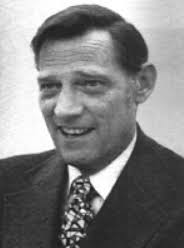
David Phillips 
Anne Goodpasture The two documents referred to earlier deepen this mystery. On November 23, 1963, CIA officer Richard Helms forwarded the above-mentioned memo to the Director of the FBI, J. Edgar Hoover. In it Helms wrote that voice comparisons made of phone intercepts at the Russian Embassy in late September and early October indicated that these conversations are “probably the person who identified himself as Lee Oswald on 1 October 1963.” There are two serious problems with this statement by Helms. First, the CIA officer in Mexico City, David Phillips, would later tell the HSCA that no voice comparisons were made, since the tapes had routinely been destroyed within seven or eight days of their origination. (Destiny Betrayed, Second Edition, p. 354) This is, in fact, what the first cable [MEXI 7023, 11/23/63, para 2] from Anne Goodpasture suggested, at least for the 9/28 recording. Goodpasture then followed this with another cable [MEXI 7025, 11/23/63, para 4] suggesting that it was the translator (Boris Tarasoff) of the two calls who connected the two speakers, i.e., that he “recognized” the 10/1 caller to be the same as the 9/28 one. Tarasoff, however, testified to the HSCA that he did no voice comparisons per se (see further Oswald, The CIA and Mexico City, pp. 164-167).
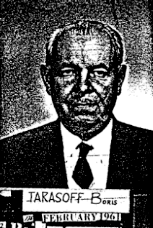
Boris Tarasoff But secondly, and perhaps more importantly, the FBI had already discovered on the day they got the Helms memo that the voice on the tape was not the same as that of the man held in custody in Dallas. In fact, Hoover had already memorialized that fact in a memorandum, and also in a phone call with President Lyndon Johnson. (Destiny Betrayed, p. 357) So where did Helms get his information from? And what was it based on? And why in heaven’s name is the MSM reporting that it was Oswald in communication with the Russian embassy, when the FBI determined that the voice on the tapes was not him? But further, the other document shows us that the CIA informants inside the Cuban embassy had told the Agency they had no knowledge of a visit by Oswald at any time. These kinds of evidentiary problems have led some to believe, with justifiable cause, that Oswald was impersonated, both at the consulates and on the phone, in Mexico City. But if the public is not informed of the facts in these documents then they cannot even begin to comprehend that thesis.

Nikita Khrushchev with JFK 
Washington correspondent
Drew PearsonOr the following fact: the CIA knew that Russian Premier Nikita Khrushchev did not believe the official story about Oswald and, in fact, was quite dismissive about it in discussions with Washington reporter Drew Pearson. Pearson and his wife had met Khrushchev and his wife in late May, 1964, while on vacation in Cairo. Pearson met with the CIA station chief there afterwards and told him about their conversations on the subject and how Khrushchev did not believe American security forces could be so inept. Pearson added that he could make no headway at all trying to change the Russian couple’s understanding. The Russian leader thought a right-wing coup had taken place. Apparently, Khrushchev felt this way from the start, since there is the previous report from December 6, 1963, that the KGB was trying to tell President Johnson, Chief Justice Earl Warren and Attorney General Robert Kennedy that no stone should be left unturned in their inquiry into Kennedy’s assassination. This report joins others on Charles DeGaulle, Fidel Castro, and Achmed Sukarno, adding to the list of world leaders who did not believe the lone gunman solution to the assassination.

DeGaulle, Sukarno and Castro all questioned the lone gunman explanation
Let us step back now a moment to review how we have arrived at our present state of knowledge. In 1998 the Assassination Records Review Board (ARRB) closed its doors after four years. It had been created due to the uproar over Oliver Stone’s film JFK. At the end of that film, it was revealed that the files of the 1979 House Select Committee on Assassinations (HSCA)—the last inquiry into Kennedy’s death—were classified until 2029. Few people knew about this massive classification, or that the HSCA had concluded that Kennedy was killed as a result of a probable conspiracy. Assaulted by thousands of phone calls and telegrams due to their exposure to these facts, Congress created the ARRB to begin to declassify two million pages of Kennedy assassination related documents.

John Tunheim and members of the ARRB meet with President Clinton It is clear today that the Board had neither the lifespan nor funding to properly complete its assignment. That assignment was not only to declassify all federal files, but also to search other repositories and seek out hidden pieces of evidence that could elucidate the circumstances of Kennedy’s murder. For the last three weeks—actually longer—we have been watching the leftover residue of their work, which results from the fact that the enabling legislation for the Board said there should be nothing still withheld 25 years after the law was passed in 1992. This clause in the legislation is what this furious debate has been all about.
The MSM did an unsatisfactory job in covering the four-year life of the Board. There were some rather sensational discoveries unearthed by that body. Some authorities would state that this new information altered the calculus of the Kennedy case. But the public never heard of it because the MSM either did not know about it, or they did know about it and failed to make it public. (See “The State of the JFK Case 50 Years Out”)
That poor prior performance has been repeated for the last three weeks. It spiraled upward into a paroxysm of chattering nabobs on Thursday, October 26th. The congressional legislation that gave birth to the Board allowed them to, at their close, grant what they called “postponements” to certain documents: that is, a document’s release would be delayed for say two years or ten years. The most sensitive documents would be given the longest postponement, which would be 25 years past the signing of the legislation, i.e., October 26, 2017. The most commonly based exemptions were if a document endangered an agent’s identity, or if it could cause the exposure of an ongoing operation. The usual numbers given for such 20-year postponements are 3,571 documents withheld in full, and approximately 32,900 still redacted in part. This past July, Martha Murphy, who is running the release project at the National Archives, declassified 441 documents in full. On October 26, contrary to what was commonly passed off in the media, there were only 52 of those documents released to the public. In the two releases since, there have been very few added to that sum. As of today, there are still over 2,700 JFK classified documents that the public has never seen!

Rex Bradford These numbers come from Rex Bradford at the Mary Ferrell Foundation, and Gary Majewski, who has been a consultant on this project at the kennedysandking.com website. They have been confirmed by Jim Lesar, a Washington Freedom of Information Act attorney. One reason that the public was so misinformed is that none of the TV hosts consulted with Lesar or Bradford, who know much more about the subject than anyone the MSM used as authorities. In other words, only 52 of the “withheld in full” documents were declassified on Thursday, October 26th; and only 2,800 of the over 28,600 documents “released with deletions” were re-released on that day. What this means is, that amid all of the media hoopla, about 2% of the former, and less than 10% of the latter were finally released. And here we are, 54 years after Kennedy was killed. Twenty years after the Board closed down. In retrospect, what President Trump did was probably about the worst thing he could have done. Because if he had followed the law, it is very likely that everything would have been declassified on that day.

Jim Lesar What makes that failure even more important is another aspect of that Thursday release. Shockingly, several of the 52 withheld in full documents still contained redactions! For instance, a 1975 CIA document describes an Agency training camp set up outside of New Orleans in advance of the Bay of Pigs invasion. In scanning over the document, I have discovered there are easily 25 deletions still in it. The reason the document may be important is that Oswald’s New Orleans friend David Ferrie was one of the trainers at this base, and CIA officer David Phillips—a suspect in the JFK murder—was in charge of sterilizing it after the invasion. (William Davy, Let Justice be Done, pp. 30-31)
But on top of that, many of the released documents are not just redacted; they contain many pages that are completely blank. And the CIA is getting very good at doing this. Now they do not even black out, or white out pages. It looks like they just photocopy a blank page over and over, or cover the entire document page with a blank sheet, so one cannot decipher anything. For example, one CIA document on Jim Garrison is supposed to be 11 pages long. Yet 8 of those pages are blanked out completely.
In addition to that lengthy redaction, there is a fascinating memo from the internal email messages of the ARRB about even more extensive concealment. In a message dated November 14, 1996, the Board is describing its approach to the CIA about documents concerning Clay Shaw and the New Orleans CIA station. In its final paragraph, it is revealed that the Board intended to ask for information about the destruction of Shaw’s 201 file. If this is accurate, then it is something that no one has ever revealed before. The closest anyone has come to it is the discovery in Bill Davy’s book Let Justice be Done that a certain “Y file” of Shaw’s had also been destroyed (p. 200). If both statements are true, and both of these refer to separate files, then they lend credence to what Gordon Novel wrote to researcher Mary Ferrell in a letter during the House Select Committee proceedings in 1977. He stated that during the Warren Commission hearings, the CIA had deliberately concealed Shaw’s true status with the Agency. Novel would appear to be a good source since he was hired by Allen Dulles to infiltrate Garrison’s office (Destiny Betrayed, Second Edition, pp. 232-33).
Beyond the outright concealment of pages or destruction of files, there are documents that the National Archives admits are simply illegible. But they declassify them anyway. Calling them illegible does not do justice to how bad they really are (see this example). Even if one scanned them using OCR software, that would not improve readability, since there is so little to recognize in them.
Another way the law is being circumvented is that in some of these releases the cover sheet describes a report, giving the reader the originating agency, the author and the subject, and listing a page count. But it does not then include the report itself! This has been done several times (see, for example, this CIA file).

Earle Cabell, CIA asset
and mayor of Dallas on 11/22/63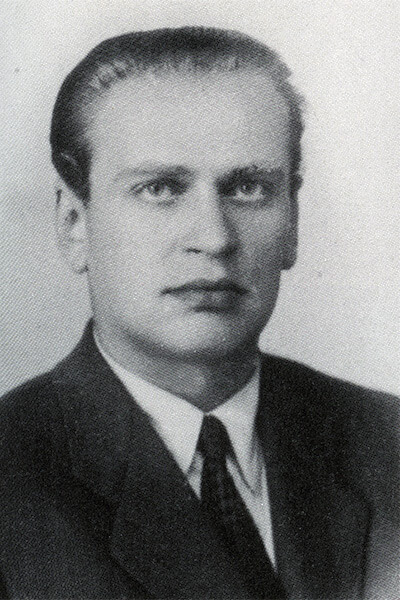
Soviet defector Yuri Nosenko There is still another category of documents that has not been discussed by the MSM. This category was labeled by the Board as “NBR”, Not Believed Relevant. It is fairly clear today that this rubric was abused. For instance, one of the most fascinating July releases was on Earle Cabell, the mayor of Dallas in 1963. It was revealed that he was a CIA asset at the time of the assassination. According to former intelligence analyst John Newman, that document was previously classified as NBR. How anyone could deem such information irrelevant is unfathomable. Lesar told this author that files on Yuri Nosenko were also deemed irrelevant. Nosenko was the Soviet defector who arrived in America in 1964 and said that the KGB had never recruited Oswald while he was in the USSR for approximately three years. CIA officer James Angleton then more or less had him imprisoned and tortured for nearly 36 months to try and make him admit he was sent over to mislead the CIA about Oswald. Author Edward Epstein, an Angleton idolater, wrote a book—Legend—endorsing Angleton over Nosenko and portraying Oswald as a communist spy. Again, it is extremely puzzling to think Nosenko documents would be labeled as irrelevant. Luckily, Murphy declassified many of the Nosenko documents and the Cabell document. But, according to Lesar, there are tens of thousands of these NBR documents that the Review Board allowed to be deferred. They must be located and declassified.
In its vapid coverage of the JFK releases, the MSM largely ignored things that were new and important, and focused, as we have already mentioned, on papers which had been released before in whole or in part. Two of the worst examples of this kind of presentation were by representatives of the so-called New Media, i.e., cable television and online journalism.

Rachel Maddow 
Tom Pettit Rachel Maddow reran a segment that had been filmed back in 1993 featuring deceased newsman Tom Pettit. Pettit visited the National Archives on the first day of the ARRB declassification. He apparently did not understand the difference between documents that were declassified and ones that were already among the exhibits of the Warren Commission, that flawed 1964 investigation into President Kennedy’s assassination, because he pointed to documents in the latter as if they had been newly declassified that day. (See this full report on that segment)

Nicholas Katzenbach On October 27th, Josh Marshall at Talking Points Memo discussed an 11/24/63 memorandum written by FBI Director J. Edgar Hoover (alluded to above) in which he stated that he was concerned that something must be issued in order to convince the public that Oswald is the real assassin. That document is a forerunner to the famous and long ago declassified document which would be typed the next day by Assistant Attorney General Nicholas Katzenbach, who Hoover had talked to the night of the 24th, after Oswald had been shot. Marshall then said that this did not necessarily indicate that Hoover had any doubts about the case and that it was not incriminating of his investigation.

Josh Marshall Apparently, Marshall was unaware of one of the keystones of the JFK case, namely the Single Bullet Theory, aka the Magic Bullet. Hoover never bought into that dictum. Which is why the original FBI report on the JFK case was not included in the Warren Commission volumes. The Warren Commission’s shooting scenario maintains that one shot, aimed at his skull, killed Kennedy; a second shot went through both Kennedy and Texas Governor John Connally, making seven wounds, and smashing two bones in the two men; and one shot missed the limousine by 200 feet, hitting the curb on a different street, and dislodging the concrete upwards, cutting the face of bystander James Tague. Hoover rejected this and said all three shots hit both men in the car. How did he manage to bypass the shot that ricocheted upward and hit Tague? He quite literally erased it. He had it carved out, pasted over and shipped back to Washington. (James DiEugenio, Reclaiming Parkland, p. 252) In other words, Hoover tried to make his verdict stick by altering the evidence. A rather important point which Marshall either is unaware of, or does not want his readers to know about.
The two men who know the state of these documents best, Bradford and Lesar, were nowhere to be seen on the domestic MSM. (Although Bradford did get on abroad.) Instead, we had people like Gerald Posner, Larry Sabato, and Philip Shenon, who conveyed none of the important information that would have explained what was really happening, or what was in the new documents.

Media darlings Gerald Posner, Larry Sabato & Philip Shenon
But there is an even larger story here about the pernicious effects of secrecy and how it has worked in the JFK case. And it’s one that no one has written about. Ramon Herrera is a computer information technology expert with a strong interest in the JFK case. He decided to clone the entire records database of the online JFK collection at the National Archives. He used some revolutionary “scraping” software he developed together with a friend from abroad. The process lasted a week and he repeated it four times, then wrote programs to compare the results, record number by record number, to make sure they were identical. With this exact copy in hand, he then extended the capability which NARA provides by making the field “Current Status” searchable. That allowed him to count the number of records for each of the three categories: “Postponed in Full”, “Released with Deletions” and “Open”. Herrera came up with a remarkable discovery. His number of records classified “Postponed in Full” is over three times as large as the official number: 9,718. One reassuring aspect of his work is that his number of “Released with Deletions” documents is very close to NARA’s. This would seem to indicate that either the Archives records on the JFK case are wrong, or Martha Murphy has not updated her database to insure a proper count of what has been released and what is being withheld.
What all of this reveals is that the ARRB process was, in large part, subverted. The Review Board did some good and valuable work. But as Lesar told this writer, Congress wanted to get rid of the public pressure, but they also wanted to do it fast and cheap. But when one is dealing with a subject that strikes at the heart of the national security state—as the JFK case does—there is no fast and cheap way to approach it. For the simple reason that the executive intelligence agencies understand the technique of waiting an opposing agency out; that is, the CIA knew it was going to be with us long after the Board left. In fact, British researcher Malcolm Blunt found an Agency internal document which contained words to that effect. Written in late 1995, the author wrote that the Agency considered the Board not so much a releasing agency—but as one setting dates for future review: in other words, as a review and postpone apparatus. In many ways, that seems to have been the case, so the Agency packed in as many postponed documents as they could. It also appears that with what President Trump did on October 26th, there will be a lot of court hearings for Jim Lesar to attend to clean up the mess that Trump and the media made of this momentous occasion.
But as Lesar informed me, there might even be instances that he cannot salvage. While trying a case directly related to the ARRB process, the attorney was advised to visit a sitting general. The general told him that after the Board disbanded, there were a lot of burning parties going on in Washington. That is how deep the secrets of the JFK case go in the capital. Which is why the MSM has never been able to deal with the subject.