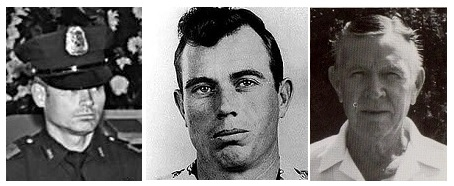
Tag: WILLIAM MENTZEL

  • The Missing Calls of Officer Mentzel Pt. 2

    The Missing Calls of Officer Mentzel Pt. 2


    The question thus arises about whether the West Davis accident call of 1:07pm was part of that set up. First as a signal to Mentzel that things were ready, and second as a pretext for Mentzel to separate from Tippit.

    Per the tape, Mentzel labors the call. He in fact determines an accident officer is on the way, accident Officer Nolan, call sign 222. There was no need for Mentzel to go. The DPD had four specialist squads which dealt with motor accidents and there were 32 such officers on duty that day (CE5002), C.T. Walker included, call sign 223.

    Indeed, Officer Summers, call sign 221, responded to a traffic call at 600 W Jefferson 25 seconds before Mentzel called clear at 1:03pm from the 400 block of W Jefferson. Mentzel didn’t go to that call then. Similarly, Summers didn’t get called for the 800 block of West Davis, despite 600 West Jefferson being closer to 800 West Davis than Mentzel – whose job it wasn’t anyway.

    Speculative question: did Mentzel know all of what was going to happen next to Tippit? Another such question: Was Mentzel duped into tricking Tippit? To consider that requires looking at what Mentzel did as well as what he didn’t do after Tippit was shot.

    A transcribed call was made to Mentzel by dispatch immediately after Temple Bowley’s call of approximately 1:11pm. There is no answer. At approximately 1:16 pm Mentzel signals “91 clear”, and the dispatcher said “91, have a signal 19 [a shooting] involving a police officer at 400 East Tenth. Suspect last seen running west on Jefferson. No description at this time”. Mentzel replies “10-4”.

    Mentzel was given information over the radio at 1:16 pm about the shooting incident as if he’d been incommunicado until he got to Tyler, hence had missed all the calls of the prior 5 minutes – those calls making it clear it was Car 10, Tippit.

    But Mentzel doesn’t do what someone incommunicado might do. He didn’t ask who the officer was, nor did he reveal anything of his or Tippit’s movements in vicinity of E 10th the minutes before Tippit was shot. He also said to the HSCA that he didn’t know the victim was Tippit until he arrived at E 10th: Which suggests a distinct lack of curiosity. Not least given that he told the HSCA he didn’t know Tippit was even in district 91 when shot. The first question should be “Who was it and what were they doing there?”

    As well as that, why would attending a traffic accident that he said was a “minor fender bender” be a reason to stop hunting for Oswald?l Mentzel’s HSCA account of the accident being a ‘minor fender bender’ reads like a trivial brush off, just like any excuse that has seen better days.

    This all leads to another speculative question: Did Mentzel not ask who the victim was because he already knew?

    Shortly after that the dispatcher calls Mentzel to tell him:-

    DIS: 91.

    Mentzel 91: 91.

    DIS: Suspect just passed 401 East Jefferson.

    Mentzel 91: 10-4.

    Unknown: Where did he just pass?

    DIS: 401 East Jefferson.

    Approximately 3 minutes after that (1:22pm) Mentzel calls:

    Mentzel 91: 91.

    DIS: 91.

    Mentzel 91: What was the description besides the white jacket?

    DIS: White male, thirty, five feet eight, black hair, slender build, white shirt, black trousers. Going west on Jefferson from the 300 block.

    [Note. Oswald did not have black hair, but Larry Crafard did.]

    The statement in Warren Commission Exhibit 2645 is ambiguous as to whether Mentzel heard the 1:11pm Bowley call, or the call to Mentzel at 1:16pm.

    Mentzel says he went to the Beckley and Jefferson intersection, but nowhere on the tape is Mentzel told to go to the Beckley and Jefferson intersection. In fact, no one is dispatched there, and by the tape Mentzel isn’t dispatched anywhere.

    Non-assigned traffic accident officer Charles T Walker was also in Oak Cliff on E 10th Street, 2-3 short blocks from where Tippit was shot. None of his radio calls prior to the murder of Tippit are transcribed either. His immediate reaction to the news of the downtown shooting of Kennedy was to go to a fire station to watch what was unfolding on TV (WC Vol VII page 34). He said he then went downtown, and then headed back to Oak Cliff when he heard of the shooting of Tippit.

    By the time Walker had arrived at the Tippit murder scene witnesses had said that the assailant had run south down Patton and headed west along Jefferson. But Walker put out the radio call saying the assailant was in the public library several blocks to the east along Jefferson. The posse of officers was thence sent in the wrong direction.

    A relevant point of geography is that the intersection of Jefferson and Beckley, is 70 yards from the alley that runs parallel and between Jefferson and 10th. From behind, 410 E 10th (it is the alley continuation of Lansing Street), it crosses Patton, Crawford, Storey and then Cumberland to reach Beckley. It then crosses Beckley and Zang and runs to behind the Texas Theater.

    That alley was the last place any suspect was seen, by Mrs Brock, at the Bellew Texaco Garage at E Jefferson and Crawford. She said she saw him walking quickly across the parking lot (FBI Report of 22 January 1964). That would have been approximately 1:10 pm.

    II

    The Warren Commission Testimony of Warren Reynolds of 22 June 1964 (WC Vol 11, page 434) is consistent with that: –

    Mr. REYNOLDS. I looked through the parking lot for him after. See, when he went behind the service station, I was right across the street, and when he ducked behind, I ran across the street and asked this man which way he went, and they told me the man had gone to the back. And I ran back there and looked up and down the alley right then and didn’t see him, and I looked under the cars, and I assumed that he was still hiding there.

    Mr. LIEBELER. In the parking lot?

    Mr. REYNOLDS. Even to this day I assume that he was.

    Mr. LIEBELER. Where was this parking lot located now?

    Mr. REYNOLDS. Corner of Crawford

    Mr. LIEBELER. It would be at the back of the Texaco station, that is on Jefferson where they found his coat. They found his coat in the parking lot?

    Mr. REYNOLDS. They found his coat there.

    Mr. LIEBELER. So that he had apparently gone through the parking lot?

    Mr. REYNOLDS. Oh, yes.

    Mr. LIEBELER. And gone down the alley or something back to Jefferson Street?

    Mr. REYNOLDS. Yes. When the police got there, and they were all there, I was trying to assure them that he was still there close. This was all a bunch of confusion. They didn’t know what was going on. And they got word that he was down at a library which was about 3 blocks down the street on the opposite side of the street.

    Mr. LIEBELER. Down Jefferson?

    Mr. REYNOLDS. Down Jefferson. And every one of them left to go there.

    If that isn’t evidence of the police not trying to find someone, then what is? The reality appears that some officers did know what was going on. Enough to confuse the rest. The ringleader of the confusion was likely CT Walker.

    From when the assailant was seen at the Texaco garage there was no sighting of the assailant until the incident at Hardy’s Shoe Shop, at about 1:40 pm on the basis of someone “looking funny”. This triggered the calling of the police for the arrest of Oswald on the premise that the person had run into the Texas Theater, opposite Hardy’s.

    But for that journey there were no witnesses on the way, not even crossing the six-lane road at Zang nor the four-lane road at Beckley. Police meanwhile were sent to the wrong places, by Walker, they east, and then Westbrook sent people north of the crime scene.

    Mentzel was local to the Oak Cliff district. From 10th at Beckley to the alley behind the garage at Jefferson and Crawford is 380 yards. Mentzel would have a shorter distance to travel than Tippit and he had the advantage of speed. It may even have been Mentzel that suggested that Car 207 went into the same alley behind 410 E 10th.

    III

    A white Eisenhower jacket was found in the parking lot at Bellew. Mary Brock hadn’t mentioned anyone taking it off there when the assailant passed her. Why would someone on the run holding a gun restrict their movement by taking a jacket off whilst holding a gun when someone is looking at them and they are about to do a disappearing trick? Jackets can be difficult to take off in normal times, even more if holding a gun.

    As Oswald in the Texas Theater wasn’t wearing such a jacket, that disposal was ill thought through, and it was never clear which officer had found it. The found jacket was announced by Officer Griffin over the radio at approximately 1:21 pm as being a white one. It is highly unlikely that this jacket was really Oswald’s. It had two laundry tags. The FBI, checked 424 laundries in the Dallas-Fort Worth area, and 293 laundries in the New Orleans area. They were unable to match either the tag or the laundry mark to any them. (See WC Documents, 993 and 1245) The Bureau’s examination of Oswald’s clothing showed not a single laundry or dry cleaning mark or tag. And although the jacket was size medium, all of Oswald’s other clothing was size small. As author Henry Hurt noted, the Warren Report does not entail any references to this extensive effort to trace the laundry marking. By doing so the Warren Commission could say the jacket belonged to Oswald, when that was very unlikely. (Hurt, Reasonable Doubt.)

    There is a catalogue of events which fit with improvised framing of Oswald for Tippit’s impromptu murder alongside the intended framing of Oswald for Kennedy’s murder.

    The gun used to kill Tippit was announced over the DPD radio as an automatic. The Oswald revolver wasn’t. (Sylvia Meagher, Accessories After the Fact, p. 273) The cartridges thrown at the scene were marked as standard practice with initials by Officer Poe. Those marks then disappeared after the evidence chain was broken by taking gun related evidence to Captain Westbrook’s office. (Hurt, pp. 153-54)

    Archived TV footage discovered in 2013 (the ‘Reiland film’) shows police officers examining a wallet at the scene outside 410 E10th before the arrest of Oswald. That wallet was then never mentioned again as an official find at that scene. (McBride, Into the Nightmare, pp. 466-67) Instead, a wallet was supposedly – for evidence purposes – taken from Oswald.

    That is consistent with the ill thought through planting of the wallet, which by virtue of the address it had in it, triggered police to arrive at 1026 N Beckley just after 1:30pm. And according to the landlord Gladys Johnson, the FBI was there also. (Sara Peterson and K. W. Zachary, The Lone Star Speaks.) That time ran against the official line that 1026 N Beckley addressed wasn’t known about until DPD Officers and County Sheriffs arrived at Oswald’s family home in Irving, and that wasn’t until after 3:30pm. But two wallets would have made it transparently obvious Oswald was being framed.

    In all there was a break in the chain of custody of: cartridges, the gun supposedly taken from Oswald, the jacket and the wallet that was found and then unfound.

    IV

    Things continued to be irregular after that. Let us contrast Mentzel’s lack of inquisitiveness to that of Sergeant Owens.

    Owens is probably the least discreet officer on the tape, meaning he asks rational questions. He said at around 1:30 pm of Tippit.

    Owens 19. Do you know what kind of call he was on?

    DIS: What kind of what?

    Owens 19: Was he on a call or anything?

    DIS: No.

    Owens 19: 10-4.

    The dispatcher saying “No”, is yet more evidence the instructions to Tippit and Nelson at 12:45pm call was a fake. But again, Mentzel hasn’t answered to reveal that he and Tippit were working together.

    Some minutes after that Owens then said this:

    Owens 19: Is Sgt H Davis 80 in service?

    DIS: Sgt H Davis 80.

    Owens 19: I think he was sent down to Elm and Central. We need somebody to notify that officer’s wife.

    DIS: Sgt H Davis 80.

    Davis doesn’t respond. But Owens’ linking Davis as the person who should tell Mrs. Tippit suggests Davis was the Sergeant commanding Tippit.

    This is Owens in an FBI memo of 20 May 1964, supplied to the Warren Commission on 5 June 1964 (CE1976) and not followed up by the Commission in its published findings.

    According to Sergeant OWENS, Officer TIPPIT had gone home to eat lunch, which was a normal and approved procedure, at about noontime.

    Sergeant OWENS advised he could not furnish any information as to when or how TIPPIT’s assignment from District 78 had been changed as he, OWENS, had gone to lunch and had not returned during the time that TIPPIT’s assignment had been changed.

    Mr. Ely. Were you on duty on November 22, 1983?

    Mr. Owens. I was.

    Mr. Ely. And what was the nature of your assignment on that date?

    Mr. Owens. Acting lieutenant, Oak Cliff substation.

    Mr. Ely. Because you were acting lieutenant in the Oak Cliff substation, would that mean that Officer Tippit would be under your supervision?

    Mr. Owens. That’s true.

    Mr. Ely. Off the record. (Discussion off the record between Counsel Ely and the witness Owens.)

    Mr. Owens. I don’t know what district Officer J. L. Angel [sic:Angell] was working, but it was my understanding that he also went to Elm and Houston.

    Mr. Ely. Well, he was working somewhere in the Oak Cliff area, was he?

    Mr. Owens. Yes; he was working in the Oak Cliff area under the same sergeant that Officer Tippit was working under

    So, by that, Tippit (78), Angell (81) and Mentzel (91) were working under the same district Officer. By Owens’ Warren Commission Testimony and Exhibit CE 2645, that Officer was Sergeant Hugh F Davis who was supervising 80’s and 90’s patrol districts, hence supervising Nelson (87) as well. Davis was a southwest supervising officer, who then reported to Owens the acting Southwest Commander who was in also in supervisory charge of patrol districts 60’s and 70’s, hence Tippit (78). But whilst at lunch, sometime before 12:30pm, (CE1976) Owens was replaced as supervisor of Tippit by Davis. Owens could not give the reason as to when or how that had occurred, despite having been the acting Commander, and having made all patrol district allocations for the start of that day.

    Bearing in mind that a bullet had been removed from Tippit’s body by 1:30 pm and an autopsy request signed, it’s remarkable that there needed to be any discussion about telling Mrs. Tippit after that. This after all was a police force that had been able to send officers to minor traffic accidents minutes after a president had been shot.

    There was clearly sensitivity. A conversation listed in the first transcript – CD-290 – disappeared in the next two versions CE-705 and CE-1974.

    531 [Despatch] ” “210 was dispatched to notify Mrs Tippit”,

    CD-290 puts this sometime before 1:40pm. It’s missing from CE-705 and the earliest mention in CE-705 to that matter is a call between 1:40 pm and 1:43pm and that transmission used the word ‘wife’ not ‘Mrs. Tippit’. The tape transcripts show that even after 2:00 pm Mrs Tippit still hadn’t been told even though it’s appearing on TV.

    At 1:53 pm there was this exchange.

    DIS: We had a shooting of a police officer which was DOA at Methodist. The suspect has been apprehended at Texas Theater and en route to the station.

    3 (Deputy Chief Stevenson): 10-4. Thank you.

    Mentzel 91: Mentzel 91 clear.

    DIS: Mentzel 91. 1:53.

    At 1:54pm there is this exchange:

    Gerry Hill (550/2): 550/2

    DIS: Gerry Hill (550/2). 550/2 (CT Walker) 223 is in the car with us. See if someone can pick up his car at the rear of the Texas Theater and take it to the station. It’s got the keys in it.

    DIS: 10-4.

    DIS: Mentzel 91. 91

    Mentzel 91:  91.

    DIS: Report back to the Texas Theater. Get CT Walker car and lock it up.

    Mentzel 91: 10-4.

    And a minute later:

    Mentzel 91: 91.

    DIS: 91.

    Mentzel 91: What do you want me to do with the keys after I lock that car up?

    DIS: Just keep them until you can contact CT Walker.

    Mentzel 91: 10-4.

    Mentzel was also told to “report back” to the Texas Theater, and his Warren Commission account via the FBI was that he had gone there, “then [Mentzel] was dispatched to the Texas Theatre, where the suspect was reportedly hiding” and the tape supports that. Mentzel’s HSCA account was that he didn’t go there.

    Added to that, Mentzel at the time felt it was more important to worry about CT Walker’s car than telling Mrs Tippit. As McBride notes in his milestone book in one version of Marie Tippit’s story, her husband left very quickly after lunch because so many officers were downtown due to the motorcade. As McBride then notes, this could imply ”that TIppit already might have suspected, before any trouble occurred downtown, that he would be needed to fill in for other officers vacating Oak Cliff” and that could suggest some knowledge in advance about Oswald. (McBride, p. 510) After all, based on the testimony of Edgar Lee TIppit, the officer’s father, Mentzel and he were looking for Oswald, and Mentzel told the widow that. (McBride, p. 427)

    Recall, although Mentzel was patrolling two districts in Oak Cliff, the dispatcher did not call him to be at large for any emergency that might come in—as were Nelson and TIppit. (ibid, p. 428) Was he at Luby’s when he learned of the assassination, or was that a “cover story for other unacknowledged activities.” (ibid, p. 429). As McBride writes,

    The confusion in this HSCA interview report nearly fourteen years after the events occurred, perhaps is an attempt to rationalize Mentzel’s erratic, somewhat mysterious whereabouts in the 8 minutes between the accident call and the officer’s belated report to the police dispatcher that he was “clear”. (ibid)

    V

    Mentzel’s misrepresentations are consistent with other discrepancies in Warren Commission testimonies, in particular those of Captain Westbrook, Reserve Sergeant Croy and Sergeant Jerry Hill. Time is easier to lie about than location.

    The Russian intelligence network concluded that they’d put the assassination down to a right-wing plot assisted by rogue elements of the Dallas Police Force. If so there would need to be covert movements of police officers and other devices to assist in it. This article doesn’t suggest that any DPD Officers were directly involved in shooting the President, pulling triggers. Quite the opposite.

    What does need to be considered is whether assistance was given to 1) ensure safe getaway of professional assassins, 2) move Oswald as the fall-guy operating under a duped pretext by car to the Texas Theatre where he would be shot.

    It is car 207 that was seen in the rear driveway of 410 E10th at the time Tippit was shot. It was not a random location as Virginia Davis said he was there so often she thought he lived there.

    Mentzel’s calls and self-account before Tippit are highly suggestive for that scenario. The accident call could be genuine. But against that is the fact that none of it was transcribed for any of the three transcripts. No accident would account for Mentzel abandoning “hunting down Oswald”, a fender-bender is hardly a priority in the face of that.

    A rational answer would be “I have something else on”

    The circumstances regarding what and when the Tippit family was told things also stick out like a sore thumb.

    The fact that the Warren Commission would never answer the questions about Oswald and Tippit straightforwardly is obvious. The Warren Commission work outline was largely based on the Nicholas Katzenbach memo to Bill Moyers, an assistant to President Johnson, written just two hours after zenOswald had been killed.

    President Johnson and FBI Director Hoover followed Katzenbach’s memo to a tee, disregarding any other leads that led to a conspiracy.

    Deputy US Attorney Nicholas Katzenbach’s memo:

    It is important that all of the facts surrounding President Kennedy’s Assassination be made public in a way which will satisfy people in the United States and abroad that all the facts have been told and that a statement to this effect be made now.

    The public must be satisfied that Oswald was the assassin; that he did not have confederates who are still at large; and that the evidence was such that he would have been convicted at trial.

    Speculation about Oswald’s motivation ought to be cut off, and we should have some basis for rebutting thought that this was a Communist conspiracy or (as the Iron Curtain press is saying) a right–wing conspiracy to blame it on the Communists. Unfortunately the facts on Oswald seem about too pat — too obvious (Marxist, Cuba, Russian wife, etc.). The Dallas police have put out statements on the Communist conspiracy theory, and it was they who were in charge when he was shot and thus silenced.

    The matter has been handled thus far with neither dignity nor conviction. Facts have been mixed with rumour and speculation. We can scarcely let the world see us totally in the image of the Dallas police when our President is murdered.

    I think this objective may be satisfied by making public as soon as possible a complete and thorough FBI report on Oswald and the assassination. This may run into the difficulty of pointing to inconsistencies between this report and statements by Dallas police officials. But the reputation of the Bureau is such that it may do the whole job.

    The only other step would be the appointment of a Presidential Commission of unimpeachable personnel to review and examine the evidence and announce its conclusions. This has both advantages and disadvantages. It [sic] think it can await publication of the FBI report and public reaction to it here and abroad.

    I think, however, that a statement that all the facts will be made public property in an orderly and responsible way should be made now. We need something to head off public speculation or Congressional hearings of the wrong sort.

    Read Part One
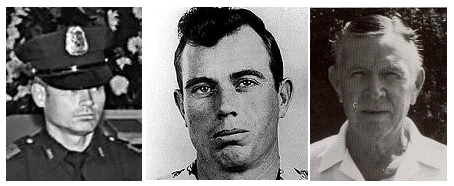
  • The Missing Calls of Officer Mentzel Pt. 1

    The Missing Calls of Officer Mentzel Pt. 1


    To recap from my earlier article, and supplement rather than duplicate references there: Officer William Mentzel’s activities need to be seen in the context of what else was happening on 22 November 1963. Several officers of the Dallas Police Department (DPD) were in Oak Cliff, Dallas, shortly after the assassination of President Kennedy at 12:30pm, on Elm Street, Dealey Plaza on 22 November 1963. One of these was Officer J.D. Tippit who was shot at approximately 1:09 pm in Oak Cliff, immediately to the south of the Kennedy assassination scene in Dealey Plaza, over the Trinity River basin.

    Just after 12:30 pm Tippit was ten miles away from his assigned district in the far south of Dallas at Gloco Service Station at the south end of Houston Street viaduct (Into the Nightmare by Joseph McBride, p. 441). That was not disclosed to the Warren Commission in 1964. In trying to account for Tippit’s whereabouts, radio Dispatcher Murray Jackson said he sent Tippit and Officer Ronald Nelson to Oak Cliff by radio call at 12:45pm because it was a likely getaway area for an assassin, and it was depleted of officers. However, from analysis of Dallas Police Department (DPD) calls not transcribed, or mistranscribed, and also Warren Commission testimonies and the statements of Nelson in 2013 to CBS, in reality, Jackson didn’t send anyone nor did he need to. In the first transcript assembled (Secret Service CD-290, 3 December 1963), there was no dispatcher call. Jackson’s call only appeared in the second transcript (CE705, 6 March 1964) and the replies of Tippit and Nelson only appeared in the third (CE1974, 11 August 1964) by which time there were no more hearings. Quoting Sylvia Meagher, McBride added that this order occurred just 15 minutes after the JFK assassination, with everything centred at Dealey Plaza, with communications jammed, but “the dispatcher took the time to call Tippit and Nelson, and give them instructions which make no sense.”

    By 12:45 pm Oak Cliff was already chock full of police officers, including Tippit, under some form of secret command, meaning not accounted for by normal police radio transcripts, nor by the inventory of police officer locations supplied by the DPD to the Warren Commission. That 12:45 pm order can be heard on the police tape, but the evidence points to it being an addition after the event.  It is consistent with Tippit and Nelson and other officers being where they should not have been.

    It took until 2013—50 years later– for Nelson to say in a CBS interview that he had been on the western side of Commerce Street viaduct at 12:30 pm, immediately across the Trinity River basin from Commerce Street in Dealey Plaza– from where he said he heard the assassination shots. He said he went straight afterwards to Dealey Plaza and saw people still cowering on the ground. By the DPD tape, he then left Dealey Plaza and re-entered via Houston Street viaduct (radio calls at 12:47pm and 12:51pm). At 12:40 pm Nelson can be heard on the tape saying “87, clear” immediately before a 12:40 pm time stamp. The dispatcher says “87, clear, twelve forty”. Those are not the movements of a man called to Oak Cliff from far to the south of Dallas at 12:45pm.

    Officer Angell was in Oak Cliff under the same hidden command as Tippit (WC Vol VII page 78), at Lansing and 8th at 12:42pm, exactly where Tippit’s last voice call can be heard at 12:54pm. Angell’s call is not transcribed in any of the three Warren Commission transcripts. Tippit’s call was mistranscribed as Lancaster and 8th. Nelson’s 12:47pm call was mistranscribed as being Officer Bass.

    Officer Parker was supposed to be in his home district of Garland, 15 miles to the northeast. The Warren Commission was told Parker was in Garland setting up roadblocks. However, Parker was actually at “East Jefferson” (an untranscribed radio call at 12:42pm), that is consistent with the south end of the Cadiz viaduct in Oak Cliff. Officer Lewis was miles from his home district near Love Field Airport. He was at 105 Corinth the south end of Corinth Street viaduct, in Oak Cliff (an untranscribed radio call at 12:47pm).

    One or two discrepancies might be explained by accident or error. But the relevance of what was withheld and perjured, is that five officers were out of their assigned districts, and four of those were in places at the end of strategic viaducts. Officer Angell brings that up to five as he then moved from the location at Lansing and 8th (12:42pm) – where twelve minutes later Tippit was at (12:54pm) – to the Corinth viaduct (12:44pm).

    The one patrol officer who should have been in Oak Cliff, Officer Mentzel, the central figure in this article, was inexplicably taking lunch for the half hour after Kennedy was shot.                            

    It is also a fact that some Warren Commission staff suspected DPD Officer Harry Olsen had conspired with Jack Ruby to have Oswald shot in the basement of Dallas Police Headquarters at City Hall on 24 November 1963. Officer Olsen was off duty in Oak Cliff on 22 November 1964, purporting to be guarding the house of a recently deceased person (their legal estate), and that location was in the vicinity of Lansing and 8th. That being the last location spoken by Tippit at 12:54pm. Fifteen minutes before he is shot.

    II

    By Warren Commission Exhibit CE2645 of 15th June 1963 Officer William Duane Mentzel is the only patrol officer overtly in Oak Cliff, Dallas, at 12:30pm, and CE2645 was the only overt record of his being there so far as the Warren Commission was concerned. Exhibit CE2645 was compiled by the FBI and says:-

    “Officer MENTZEL stated at approximately 12 :30 P .M . he stopped for lunch at Luby’s Cafeteria, 430 West Jefferson, Oak Cliff . He advised he tried on several occasions to call the station by telephone, but did not get through to the operator until about 1,00 P .M., at which time he was told the President had just been shot. He stated he left the remainder of his lunch and went into service by car radio, and was immediately dispatched to the 800 block of West Davis on an accident call, Code 7, where he remained about ten minutes handling that call . He advised he then traveled west on Davis to Tyler when he heard the call involving a shooting of a police officer in the 400 block of East 10th Street. He stated he was dispatched to the intersection of Beckley and Jefferson to look for a reported individual running away from that intersection, but was unable to locate the suspect . He stated that he, in company with other officers, entered the library at that intersection, and then was dispatched to the Texas Theatre, where the suspect was reportedly hiding. Officer MENTZEL advised he did not go north on Beckley to Zangs Boulevard at any time on that day and could not recall being within six or eight blocks of that location.”

    Why would Mentzel try to make calls to find out about something he didn’t know about?

    In light of that extraordinary statement it is particularly interesting that every one of Mentzel’s 15 phone call exchanges before 1:10pm (the times in this article are adjusted to reflect real time, not the tampered DPD timestamps) failed to be transcribed for any of the three Warren Commission transcripts. >

    Mentzel’s five calls made from 12:22pm and 12:34pm are missing. His ten calls from 1:03 to 1:10pm are missing. His only calls transcribed are those occurring after Tippit’s shooting has been announced by Temple Bowley at 1:11pm on Tippit’s police car radio, starting with the one at 1:16pm.

    A reason for not transcribing some of those calls could be that with Mentzel calling “91 clear” at 12:33pm – immediately after the 5-minutes radio jam across the assassination event ended – causes the dubious incommunicado story to fall over completely. There are sirens going in the adjacent calls. Seconds later he then called again, “91 clear for Code 5”. Code 5 means taking lunch. Who takes lunch three minutes after the President has been shot and an emergency is on?

    What kind of dispatcher allows someone to take lunch when the assassination of the President has just taken place? The dispatcher was Murray Jackson who had only been assigned to that post that week. The House Select Committee on Assassinations (HSCA) found the taking lunch story odd and reported:

    “Patrolman JACKSON worked sector numbers from 70 on up, which included TIPPIT (#78), NELSON (#87) and MENTZELL (#91) , whose movements on 11/22/77 after the JFK assassination have raised some questions. (HSCA Doc 003090).”

    Their movements would have raised more questions had the tape been analysed properly. It is clear that the dispatcher, who had only been assigned to the job in the days before 22 November was being deceptive with the HSCA. His interview for that says:

    “JACKSON was grateful to TIPPIT [referring to a violent incident when they had worked together] and said, “Thanks, partner, you saved my life”. It was with this sentiment in mind that JACKSON called “78” to figuratively save him again by coming in to cover Oak Cliff. JACKSON first told us that he wanted NELSON to stay out in District 87 which covered “Lancaster west to Thornton, Ledbetter on the north and city limits on the south”, but that NELSON was already headed downtown. The transcript does not accurately reflect this fact.”

    Jackson’s story is clearly dubious on multiple counts. Nelson in 2013 put himself on the Commerce Street viaduct by 12:30 pm, and in Dealey Plaza at 12:32 pm. Jackson’s story holds no water. It’s not surprising therefore that the transcripts are defective if Jackson was involved in producing them. With personnel and deployment being run by Captain Westbrook, then Jackson’s transfer to that position that week might not be just an accident.

    Jackson’s statement provides yet more evidence that the 12:45pm call to Nelson and Tippit was a bumbled fake. If Jackson had wanted Nelson to stay in District 87, why call him to Oak Cliff? But in any case, Nelson was already secretly in Dealey Plaza and left and came back again.

    Jackson could not have been unaware that so many officers were where they should not have been before 12:30 pm and immediately after. The problem for him was that his friend Tippit became something like collateral damage.

    Mentzel next appears on the tape saying “clear” at 1:03 pm, which is consistent with signing out after 30 minutes from his very odd lunch break. The venue of his lunch is noteworthy. Luby’s Cafeteria was in the 400 block of West Jefferson. Oswald was arrested at 1:50 pm on 22 November 1963 in the Texas Theater in the 200 block of West Jefferson. Mentzel therefore happened to be very close to the place that the person blamed for the assassination of Kennedy was arrested. It’s not surprising that anyone on the run from anything may be close to a district policeman wherever they happened to run to. But for that person to be a police officer with such a strange account of that day – with a dispatcher allowing secretive operations – this should shift things away from coincidence to him being a subject of further inquiry. It may suggest that the police knew something was going to occur at the Texas Theater.

    III        

    It is interesting to note that for the Warren Commission Mentzel found out on the phone call to HQ at about 1:00 PM that Kennedy had been shot. But his story changed in 1978 for the House Select Committee on Assassinations (HSCA 180-10103-10354). There he said a server at Luby’s told him at about 12:45 pm that Kennedy had been shot, whilst he was being served.

    This is the entirety of what was published. Underlines are where his story changed materially. By 1978 he had been promoted to Sergeant.

    Sgt. Mentzel was interviewed in Dallas at 2:50P.M. on 10/24/77. He has been with the Dallas Police Department for 20 years. Mentzel was the solo operator of a patrol car in Sector 91 (Central Oak Cliff) on Nov. 22, 1963. We were curious, after listening to the tapes of Channel One with Murray Jackson, as to what Mentzel was doing in the critical period when Officer Tippit was called in by the dispatcher to cover central Oak Cliff.

    Mentzell said that he checked out on a “Signal 5” (meal) and was at Luby’s Restaurant at the time the President was shot. He had his tray, but had not yet eaten when someone behind the counter told him that the President had been shot in downtown Dallas. He left his tray of food untouched and returned to his car. Mentzel told us that he reasoned at the time that if an assassin were fleeing downtown Dallas at the time they just might come his way. The description was not yet broadcast, but he looked for anyone or anything “unusual.” While cruising west 10th and Zangs, the dispatcher told him (91) to handle an accident at Tyler and Davis (See Radio Log Transcript #830) just before 1 PM. Mentzel said he went to 817 West Davis and found that it was a minor “fender-bender” type of an auto accident.

    He clears at about 1:16 PM. At 1:16 PM Tippit (78) is shot and killed at the 400 block of W. 10th (and Patton), but it is not until minutes later that a citizen using the police radio in Tippit’s car alerts the dispatcher and presumably Mentzell who is 17 blocks away. When he arrives at the scene, Tippit’s body has been removed to Methodist Hospital and other police are on the scene. Mentzel never knew that Tippit was in Sector 91 until after he was killed. He did not go to Texas Theatre when Oswald was apprehended. He later went to the funeral home and became part of Tippit’s honor guard.

    Mentzel said that he had worked with Tippit in the past and recalled the same characteristic Murray Jackson told us about Tippit looking down at the ground rather than at a person.

    He said Tippit probably would have said to Oswald “Wait there, I want to talk to you” and then got out of the cruiser. He said Tippit did not like to talk to citizens through the car window.

    About 11 days after the shooting Mentzel was detailed to guard Marina Oswald who was then at the home of Jack Martin at Eastern and Garland Road, Dallas. He remained there on detail until he was used to cover one of the Johnson (LBJ) girls who was attending the Cotton Bowl game in Dallas and was victim of a death threat.”

    Presumably a story of not knowing until 1:00 pm could no longer hold and the revised account also removed the need for an excuse to make phone calls. The time of departure from Luby’s changed materially. If he took lunch at 12:32 pm and left his tray and hadn’t eaten, that suggests he stayed only 5-10 minutes. He also says that the description of the Kennedy assassination suspect hadn’t been yet broadcast. With the description being broadcast from 12:45pm, then Mentzel must have left before 12:45pm.

    However, Mentzel also changed his story to say to the HSCA that he was then cruising in the area of Zang and West 10th Street before 1pm when he took a call on a traffic incident. But by the radio tapes, that call is approximately 1:07 pm (1:11pm by the time tampered tape and transcripts).

    DISPATCH: Signal 7 [accident], 817 West Davis. 1:11 [DPD time]

    Mentzel 91: 817 West Davis?

    To explain the geography here. One block east of Zang – at Beckley/Cumberland – West 10th Street becomes East 10th. East 10th* was then crossed by Storey, Crawford and then Patton the place where Tippit is shot. A distance of ½ mile. (Note, if referring to current maps of the area, part of E 10th, from Beckley to Patton is now built over). That location of Zang/Beckley at 10th is significant. Tippit was driving slowly in reaching 410 E 10th at 1:09pm – having been seen driving slowly along E 10th from west to east by people at that scene. With Tippit coming from the vicinity of Top Ten Records Shop, he would have needed to cross Zang and Beckley to get to E 10th. Driving that last ½ mile fast could be done in a minute. More slowly would be closer to 2 minutes. That places Tippit and Mentzel in the vicinity of 10th and Zang at the same crucial time – approximately 1:07pm – and there is more evidence for that.

    Journalist and author Joe McBride in his book Into the Nightmare, sets out what he was told by Tippit’s father about what was related to Tippit’s widow:

    In telling me what the second officer told Marie Tippit about the accident, Edgar Lee Tippit reported that “he said if he hadn’t been stopped, he was closer to this place [the shooting site on East Tenth Street] than J. D. was, and he’d have been [instead of] J. D. there, and he’d have gotten it.

    McBride deduces that in all likelihood the “second officer” was Mentzel.

    That information indicates that Mentzel did actually know where Tippit was. Else why would he know who was closer? Mentzel can only have known that if either he’d sighted Tippit, met with Tippit, been operating with Tippit or heard something on the radio since taken off the tapes.

    McBride then went on to say:

    Tippit’s father told me he had been informed by Marie Tippit, the officer’s widow, that J. D. and another officer had been assigned by the police to hunt down Oswald in Oak Cliff. According to Edgar Lee, ‘They called J. D. and another policeman and said he [Oswald] was headed in that direction. The other policeman told Marie.

    By that Mentzel knew where Tippit was and what he was doing. However, it’s impossible on any rational account consistent with the Warren Commission’s conclusions for Mentzel and Tippit at 1:00pm to know where Oswald was, let alone know where he would be going to. By the Warren Commission account of a bus, a taxi and a walk, even Oswald didn’t know what he was doing next.

    Mentzel also said to the HSCA that he ”never knew that Tippit was in Sector 91”.

    That doesn’t hold either. If he was cruising after 12:45pm – before being distracted by the accident – then he would have heard Tippit’s 12:54 pm call saying he was at Lansing and 8th.

    Was Mentzel at some point after 12:45 pm with others at Lansing and 8th taking instructions as to what he was to do next? Or was he still in Luby’s making phone calls for a similar purpose? By either of those outcomes Tippit and Nelson were also in proximity before 1:07 pm. But the evidence of Mentzel scrambling for inconsistent alibis prior to 1:00 pm suggests he was in Luby’s. A good reason not to send him to Lansing and 8th would be if he’d done that, he would have come face to face with Tippit, who just might have been in the process of being set-up.

    IV

    At 12:30 Mentzel was at Luby’s, 430 West Jefferson. Tippit was likely at Top Ten Records, 338 West Jefferson, just 150 yards away at 1:00 pm. There is a single unanswered call from the dispatcher to Tippit per the time expired on the tape at just before 1:00 pm “78, location” consistent with him being out of his car at Top Ten. That call was transcribed in the second and third transcripts. It did not appear in CD 260.

    Tippit was reported by the people at Top Ten Records as being there at approximately 1:00 pm having parked his car north facing on the south-east corner of Bishop Avenue/Jefferson and asking people to get out of the way to get to the landline phone.

    That was the post Warren Commission account of shop owner Dub Stark and assistant Louis Cortinas interviewed in 1981 by Earl Golz of the Dallas Morning News:

    Tippit said nothing over the phone, apparently not getting an answer.” Cortinas said “he stood there long enough for it to ring about 7 or 8 times. Tippit hung up the phone and walked off fast, he was worried or upset about something”

    Tippit sped away in his squad car across Jefferson down Bishop to Sunset, where he ran a stop sign and turned right down Sunset. Cortinas could not determine whether he had anyone else in his car.”

    Sunset is one block down from W 10th, and Bishop is two blocks west of Zang. A question arises. Why would Tippit turn onto Sunset from Bishop when the obvious way to reach E 10th from Top Ten Records by a map would be to carry along Bishop to West 10th and cross Zang to its continuation at East 10th?

    A clue is in a further statement of Cortinas at Top Ten.

    Maybe 10, no more than 10 minutes Tippit had left when I heard he had been shot on the radio.” Cortinas said. Cortinas then “Drove off in Dub Stark’s new car down Sunset, across Zang and up Tenth.”

    So Cortinas wanted to go quickly to where Tippit was shot and went the same way Tippit did, via Sunset. Doing the route via Sunset avoids traffic lights. That places the location Tippit needed to get to quickly as the other side of Zang, which is Beckley and 10th.

    Marie Tippit and family visited Top Ten Records in 2017 and were photographed there for the Oak Cliff Advocate. That event would tend to add weight to what Edgar Tippit told Joe McBride, that Tippit was doing things that the Tippit family and elements of the Dallas Police knew were not given to the Warren Commission.

    Taking what was reported by Cortinas at face value, rather than taking second-hand assumptions, may provide an answer. A caller making a call where a caller didn’t speak could mean the line was either: engaged (but that doesn’t fit with the duration), the call was unanswered, or the caller was given orders or information that didn’t require a response. A police officer taking clandestine orders off the public airwaves, on a public telephone then taking an order but not answering would be like a normal radio call, bar not saying 10-4 to affirm it.

    Mentzel’s activities after 12:45 pm were sufficiently suspicious to prevaricate about. A question is whether Mentzel was getting closer to the truth in 1978 or further from it. One bad story had been replaced by another.

    But back to Tippit. A further question needs to be asked. After Tippit had abandoned his position at the Gloco station and had gone to Lansing and 8th was Tippit told whilst there sometime after 12:54pm to go Top Ten Records, to make a call to take further instruction? Then being told on that landline to get to Beckley at E 10th as quickly as possible for a rendezvous with Mentzel? At speed, Tippit could travel to that rendezvous in just over a minute. From North Bishop, Sunset passes over Madison, then reaches Zang. Going over that – where there are no lights – he’d be on Beckley, turn left then right and he’d be at East 10th. Tippit’s erratic actions must have been triggered by something. Despite having driven fast at 1:03 pm and jumping a stop sign, by 1:07 pm Tippit was instead driving slowly to his final destination.

    Did Mentzel rendezvous with Tippit and then tell him to drive slowly to 410 E 10th? A place where, by the Warren Commission testimony of Virginia Davis, he visited so often she thought he lived there. As that was in Mentzel’s normal patrol district he must have known if Tippit was regularly there.

    Taking all of that into account there is approximately 4 minutes of Tippit’s time to account for from his leaving Top Ten at approximately 1:03 pm and setting off at approximately 1:07 pm from Zangs/Beckley to drive slowly to 10th and Patton. From Mentzel’s 1:03 pm “clear” there are also 4 minutes of his movements to account for until the traffic accident call appears at 1:07 pm, when, by the HSCA, he said he was cruising in the area of Zang and 10th.                              

    Mentzel’s story to Marie Tippit may therefore have elements of the truth, but embellished to obscure the full story. But regarding Mentzel’s true movements, how likely is that Mentzel left Luby’s at 12:45 pm and was then cruising for 20 or so minutes in the same area for no purpose (the HSCA account) and would say ‘clear’ at 1:03 pm?

    That ‘clear’ was exactly ½ hour after entering Luby’s – a lunch break. That would suggest his Warren Commission account was closer to the truth, as it would just have needed witnesses to come forwards in 1964 to say he’d been there all along making phone calls. By 1978 he would be freer to prevaricate.

    Mentzel still being at Luby’s at 1:00 pm places him 140 yards from Tippit at Top Ten. So close that under normal circumstances they could have rendezvoused by simply walking toward each other. But by 1:00 pm with Mentzel outside Luby’s he would be able to see when Tippit had arrived at and left Top Ten.

    By that scenario, maybe Tippit wasn’t sent to Top Ten merely because it had a phone; he was sent there because Mentzel could see him. The basic question concerning all of Mentzel’s conflicting accounts is ‘what did he most have to hide?’

    V

    This article posits a new theorem. One that goes even further than McBride about Mentzel. Namely that Mentzel was at Luby’s in readiness for the planned arrest of Oswald at the Texas Theater, two short blocks away.

    As covered later, Mentzel’s testimonies are also inconsistent with the radio tapes as to when he knew that it was Tippit that had been shot. If Tippit was being lured to 410 E 10th to be eliminated by ambush, then he couldn’t arrive before all the ingredients of the ambush were in place. He would need to be on hold somewhere and then released to go, directed by someone he otherwise trusted. If that person was Mentzel then he would need a signal for that to then let Tippit go. What was it that was time critical that made 1:07 pm the time to set Tippit off?

    On that point the provenance of the Commission Exhibit 2645 of 15th June 1964 is relevant. Its purpose was to deal with the bombshell evidence from Earlene Roberts to the FBI on 29th November 1963: –

    Mrs ROBERTS advised after OSWALD returned and entered his room at about 1 pm on November 22, 1963 she looked out the front window and saw Police Car No. 207 with two uniformed policemen in the car which slowed up and stopped in front of the residence at 1026 Beckley, and one of the officers blew the horn on the car and then slowly drove on Beckley toward Zhangs (sic) Boulevard. Mrs ROBERTS said the reason she recalled the number of the car was because she had worked for two policemen who drove Car 170, and she looked to see if these officers were the two officers she knew parked in front of the residence.”

    Earlene Roberts said this to the Warren Commission (Vol VI page 434) concerning Car 207:

    Mr. BALL. Did this police car stop directly in front of your house?

    Mrs. ROBERTS. Yes-it stopped directly in front of my house and it just “tip-tip” and that’s the way Officer Alexander and Charles Burnley would do when they stopped, and I went to the door and looked and saw it wasn’t their number.

    Mr. BALL. Where was Oswald when this happened?

    Mrs. ROBERTS. In his room.

    Mr. BALL. It was after he had come in his room?

    Mrs. ROBERTS. Yes.

    By her account that time was approximately 1:03 pm. It would take less than three minutes for that car to drive to the vicinity of 410 E 10th.

    This article posits that an essential ingredient of the rushed and improvised killing of Tippit was that Oswald had to be set up for that too once the decision was taken to eliminate Tippit. Someone needed to be seen running away from the shooting of Tippit so that crime too could be pinned on Oswald. As most critics, including McBride write, it is very difficult to figure how Oswald could be at the scene of the Tippit shooting if he was last seen by Roberts at about 1:04. Because the scene of the Tippit murder is 9/10 of a mile away and the best estimates are that the shooting happened at about 1:08 PM.

    If Oswald was shot in the theater, possibly by officers Walker, W. R. Westbrook or Jerry Hill (who were there for the actual arrest) the assassination of Kennedy could therefore be run as a narrative of a lone shooter, who made his own way to 1026 N Beckley by bus, and then to the Texas Theater who was then shot. Case closed. Which design FBI Director J. Edgar Hoover set out in his correspondence with new President Johnson.

    What is set out above concerning Tippit and Mentzel is an outline of a holding operation. Tippit being sent to Top Ten Records. Rationalising the timings, Car 207 could be in place by 1:07pm. That sits with the observations of Doris Holan (see prior article) of a police car reversing up the rear drive behind 410 E 10th at about the time Tippit was shot.

    Read Part Two