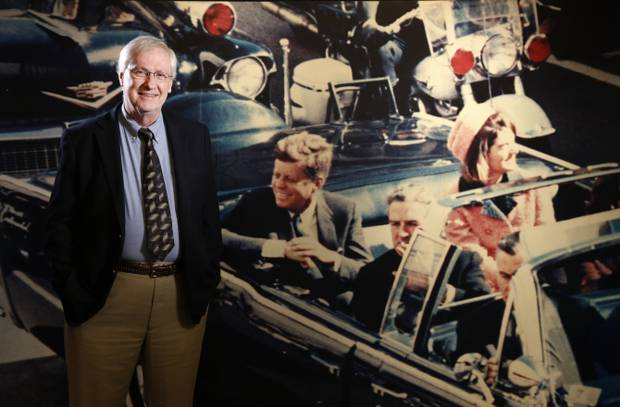
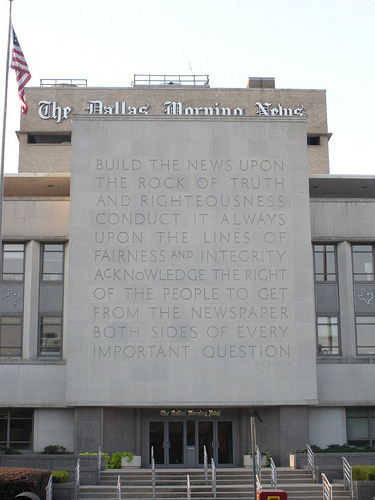
Tag: WARREN DEFENDERS

  • Ron Rosenbaum Fires the First Salvo, Part 1


    Rosenbaum and The Critics


    For all intents and purposes, on April 10th , Ron Rosenbaum kicked off the 50th anniversary battle over the JFK case in the media. He did it from his friendly perch at Slate Magazine. In his article entitled “Philby and Oswald,” he clearly connotes two things. First, he understands that the JFK community is coming very close to a unanimous vote about who Lee Harvey Oswald actually was. And second, a consensus is also gathering about who controlled Oswald, namely James Angleton. These developments – which owe much to the writing of John Newman and Lisa Pease – are very important in the JFK case. With them one can now discard the obsolete portrait of Oswald as painted by the deceitful Warren Commission. Secondly, one can now begin to indicate with authority who had control of Oswald’s files at Langley and the dance that was done with them in October and November of 1963. A dance that now seems all too deliberate. Knowing how crucial this information would be in any coming public debate, Rosenbaum decided to try for a preemptive strike about both Angleton and Oswald.

    To understand why he would do this one needs to know a bit about the history of journalist Ron Rosenbaum.

    I

    After graduating from Yale, Rosenbaum first secured a reporting job at The Village Voice. He left in 1975 and then began regularly contributing to Esquire, Harper’s, High Times, and Vanity Fair. Most recently he has written for New York Times Magazine and Slate. He has also published several books. Some of these have been anthologies of his previously published work. His most celebrated book is probably 1998’s Explaining Hitler. There the author interviewed several authorities trying to explain Hitler’s bizarre psychology.

    After he left The Village Voice, Rosenbaum first entered the JFK field. In July of 1976 he co-wrote an article about the death of Mary Meyer. Meyer was the divorced wife of CIA officer Cord Meyer who was murdered in 1964. This long article showed the hallmarks of what his later writing would be in the field. This included a trust for highly placed sources, a sneering cynicism about President Kennedy and those who thought there was something important about his presidency, and third, a strange, symbiotic relationship with and trust in James Angleton. Concerning the last, it is important to understand that this article appeared about two years after Angleton had been forced out of the CIA – in essence he was fired – by Director William Colby. Further, Angleton had been a person of interest in the Kennedy assassination to the Church Committee and, very soon, would be the same to the House Select Committee on Assassinations. But in spite of this, Rosenbaum and Nobile accepted just about all he said about the death of family friend Mary Meyer at face value. One does not have to abide by the wild schemes of Peter Janney to note that the authors should have been more circumspect about the canned counter-intelligence chief.

    But the 1976 article was really just a dress rehearsal. In November of 1983 Rosenbaum had his opening night gala. And what a bash it was. Texas Monthly has always been out to denigrate the critics of the Warren Commission. Realizing their mutuality of interests, for the 20th anniversary of President Kennedy’s assassination, Rosenbaum stepped up to the plate and smacked it out of the park for them. He penned a long article called “Still on the Case”. Rosenbaum’s essay was a slightly diluted, more concise version of the 1967 Lawrence Schiller/Richard Lewis volume, The Scavengers and Critics of the Warren Report. Except, in some ways, it was even more dishonest than that book. At the beginning of the piece, he appointed himself as the public’s tour guide, nicknaming himself El Exigente: the Demanding One from coffee taster lore. In other words, since he was a “real journalist”, he would be able to tell us what the critical community had actually developed in the 20 years since President Kennedy had been killed.

    The problem with so pompously appointing himself was simple: this was a disguise. Rosenbaum was not out in any way to fairly judge what the developments in the critical community had been for 20 years. He was not really interested in presenting any new information to the public. This is made obvious from the very opening of the article. The first two words in the subhead after the title are “Conspiracy Buffs”. Rosenbaum deliberately does not use the term “critics of the Warren Commission.” Therefore, in a stroke, he elevates the status of the Commission and lowers the status of the critics. He repeats this technique throughout the article. Consider the following usages of the term:

    buff books
    the buff grapevine
    buff biz
    ascendant buff
    buff trend
    buff factionalism
    buff fever
    technobuff
    buff theorists
    buff faith
    buff fratricide
    buff literature
    buff contacts
    second-body buffs
    Dallas buffs

    And I may have missed a couple of other turns. Clearly, from the very start, Rosenbaum was out to belittle any effort to find out the truth about the Kennedy case; but he was also out to caricature those who thought the cause worth pursuing. He jams this message home by using this term, “other assassins”, which he deliberately puts in quotes. Presumably meaning it’s a thought too nebulous to consider. As to other suspects in the case, he refers to them as The People Behind it All. That’s right, all in capital letters.

    II

    Rosenbaum opens the essay with a scene of him with Penn Jones in Dealey Plaza. Penn was demonstrating to Rosenbaum if a shot could be aimed at Kennedy from a manhole cover. This is how The Demanding One begins his search for truth and justice. It further reveals Rosenbaum’s agenda. If one were to ask ten writers to outline the shooting scenario in Dealey Plaza, I would guess that, at the most, perhaps one would say a shot came from a sewer or storm drain. More likely, none would propose that idea. But this is how Rosenbaum achieved his goal for his editors. He took the most extreme ideas in the research community and implied they were representative of that community. Which they were not. Another example Rosenbaum used as being representative was Michael Eddowes’ exhumation of Oswald’s corpse and his attempt to show that somehow the KGB had substituted an agent for Oswald while he was in the USSR. Still another example: Ron Ranftel’s published essay on the Psychedelic Oswald. This article was based on an FBI interview with a New Orleans lawyer who said a man named Oswald asked him about a book he had read by Aldous Huxley concerning the use of psychedelic drugs. If you can believe it, Rosenbaum goes on with this silly angle for two pages. (Rosenbaum, Travels with Dr. Death, pgs. 74-76) This article was so ephemeral that if you Google Ranftel’s name today you will only find it in relation to Rosenbaum’s book. But yet The Demanding One actually wrote that “The Psychedelic Oswald hypothesis offers an explanation, a way of reconciling some of the intractable contradictions he left behind.” No Ron. No one ever believed that. It was a way for you to fulfill your agenda of Reducing It All to Trivia.

    This is further exposed elsewhere by his equating of the critics with the term “deconstruction”. (ibid, p. xv) For those outside the realm of literary criticism, deconstruction refers to the 1960’s theory of criticism related to semiotics. It generally held that an author’s meaning could be divined more from the differences between words than from their reference to things they actually stood for. And that different meanings could be discovered by taking apart the structure of the language used, thereby exposing the assumption that words have a fixed reference beyond themselves. Having dealt in criticism for decades, I have never found this concept very useful. Although I could see how someone could use it in the realm of say films or novels. But in a murder case? Balderdash. The first generation of critics attacked the Warren Commission on two major grounds:

    1. Its main conclusions were not upheld by its own evidence. In other words, the Commission did not prove Oswald was guilty of killing President Kennedy or that Ruby had no help in killing Oswald.
    2. The amount of exculpatory evidence the Warren Report ignored about Oswald was shocking.

    In other words, the critics were not deconstructing text or film images. They were taking apart a criminal case piece by piece. Just as a defense lawyer for Oswald would have if the accused had not been killed by Jack Ruby. But to show just how biased Rosenbaum is, consider this passage from the essay. In describing a plaque outside the Texas School Book Depository set up by the Texas Historical Commission, he says it “still astonishes with its frank rejection of Warren Commission certainty.” Why? Because it refers to Oswald as the alleged killer of President Kennedy. To Ron, this is “astonishing” (ibid. p. 67). To anyone else, it is simply natural since Oswald never had a lawyer, let alone a trial.

    And then there are the howlers in the piece. In the acknowledgements to his anthology book, Travels with Dr. Death, Rosenbaum thanks the dozens of fact checkers at the magazines which published his essays. Including this one. (Which he retitled for its inclusion as “Oswald’s Ghost”.) Well, I don’t know what on earth Rosenbaum is thanking them for, since they allowed him to get away with some incredible errors. Which reveal that the man was either a dilettante or a fabricator.

    One of the methods Rosenbaum uses to ridicule the critics is to refer to certain recurring phenomena in the case with a rubric. The rather see-through intent behind this is to imply: “See that particular thing happened before, years ago, so why is it important now?” So when someone tells him about Carolyn Arnold, and her buried testimony about seeing Oswald downstairs during lunch after he was seen upstairs working, he writes “It isn’t the greatest missing-witness story I’ve heard. Nothing like the classic Earlene Roberts rooming house story.” (ibid, p. 63) Let us examine this passage to see just how gaseous Rosenbaum really is.

    First of all, the main point about Carolyn Arnold’s submerged story is not that it was apparently never given to the Warren Commission. Its not even that it tends to be exculpatory of Oswald. Rosenbaum notes those aspects. The key point about Arnold is this: The FBI changed her statement. In other words, they altered evidence in a murder case. When Anthony Summers interviewed Arnold in 1978, five years before Rosenbaum’s article appeared, she was immediately taken aback by what the report said. The FBI had written that, from outside the depository, she “thought she caught a fleeting glimpse of Lee Harvey Oswald standing in the hallway”. (Summers, Conspiracy, p. 77) Before Summers could even describe why her statement was important, the witness insisted this was not what she told the Bureau. First, she knew Oswald since he had come to her more than once for change. Secondly, she did not catch a glimpse of him from outside. At about 12:15 or later, she went into the lunchroom on the second floor and saw Oswald sitting in one of the booth seats on the right side of the room. Pretty nonchalant behavior for a murderer planning to be upstairs on the sixth floor in about five minutes setting up his boxes as a barricade, piecing together his rifle, loading a magazine, and lining up his target.

    The FBI altered a witness’s testimony in order to strengthen its case against Oswald. That is what is left out by Rosenbaum. And it is crucial. Because it suggests that the main investigative arm of the Warren Commission, J. Edgar Hoover’s FBI, was out to rig the case by making Carolyn Arnold’s identification much less certain than it was. Rosenbaum, striving so hard to be part of the MSM choir, wasn’t going to risk raising the ire of his editors by putting that key point in there. Even if the public needed to be made aware of it in order to understand the whole story behind the Warren Commission debacle.

    But if that’s not bad enough, Rosenbaum now screws up the Earlene Roberts aspect of his passage. Roberts, of course, was Oswald’s landlady at the rooming house at 1026 Beckley in Dallas. Rosenbaum recounts her story about Oswald coming into his room at about 1:00 PM on the 22nd, a police car pulling up and honking, and Oswald then leaving. Rosenbaum says that J. D. Tippit was then shot. He then assumes it might have been Tippit honking at Beckley. (Rosenbaum, p. 65)

    As we shall see, Ron didn’t do his homework on this issue. Roberts said there were two men in the car. Tippit was alone, so it was unlikely to have been him. (Mark Lane, Rush to Judgment, p. 169) But Rosenbaum also leaves out another key point. Roberts said that the last time she saw Oswald he was waiting at a bus stop outside her house. Rosenbaum fails to tell his readers that. Or this: the bus that stopped at that corner was headed the opposite way of the Tippit shooting. (ibid, p. 171)

    But here is Ron’s real howler. Rosenbaum says that Roberts died mysteriously before she was able to give her testimony. (Rosenbaum, p. 66) This is what I mean about thanking his non-existent fact checkers. Because Roberts testified to the Warren Commission on April 8, 1964 at the post office building at Bryan and Ervay Streets before Commission attorneys Joe Ball and Sam Stern. (WC Vol. VI, pgs 434-44) That same year, she appeared on a nationally televised CBS special. Her testimony appears prominently in several early books on the case, including Mark Lane’s best-selling Rush to Judgment. (See pgs. 168-71) Could Ron and his Thankful Fact Checkers really have missed all this? Some Demanding One.

    But El Exigente is not done spilling coffee on himself. Because then there is Ron and his 544 Camp Street Claim. In 1983, the address of 544 Camp Street, and all it conveyed, had been circulated fairly far and wide. First by the Jim Garrison investigation in the sixties. Then by the House Select Committee on Assassinations in the seventies. And then by Anthony Summers in his popular book entitled Conspiracy. That book was first published in 1980, and reprinted in 1981. It was reviewed in the Philadelphia Daily News, New York Post, Cosmopolitan, New York Review of Books, The Village Voice and the LA Times, among others. Summers begins his chapter on New Orleans with the famous Corliss Lamont pamphlet, “The Crime Against Cuba.” He describes it as an evidentiary “time bomb”. Because Oswald had stupidly stamped the address on it as follows: FPCC, 544 Camp St., New Orleans, LA. (Summers, pgs. 286-87) Summers then dutifully describes the problem with this address stamped by Oswald. Namely that there was no Fair Play for Cuba Committee office at that address. But there was an office for Guy Banister there. And plenty of witnesses saw Oswald in that office that summer. (James DiEugenio, Destiny Betrayed, 2nd edition, pgs. 111-113) Therefore, to do an article in 1983 about the state of the research in the JFK case, it would have been difficult not to address this issue about Oswald and Banister.

    Rosenbaum did address it. But in a truly weird way. A way that reveals how deep his commitment was to minimizing the Warren Commission’s perfidy. He writes that the Commission was fully aware of this issue and what it represented. (Rosenbaum, p. 81) According to Ron, the commission staffers were actually writing memos about 544 Camp Street. And when they presented their memos about it “to the harried chief counsel of the Warren Commission, it came back with these words scrawled on it: “At this stage we are supposed to be closing doors, not opening them.” (ibid)

    If the above paragraph about the Warren Commission, Guy Banister, and 544 Camp Street sounds like a fairy tale to the reader, that’s because it is. There is simply no evidence–even at this late date–after the declassification of 2 million pages of documents by the Assassination Records Review Board, that such an internal debate ever happened. And it is hard to think Rosenbaum didn’t understand that in 1983. Why? Because of his usage of the infamous line, “At this stage we are supposed to be closing doors, not opening them.” Everyone who knows anything about this case recognizes that this reply, by Chief Consul J. Lee Rankin to junior counsel Wesley Liebeler, was not made in relation to 544 Camp Street. It was made in reply to questions about the testimony of Sylvia Odio. (Edward Epstein, The Assassination Chronicles, p. 114) Again, where were Ron’s Thankful Fact Checkers? How demanding was El Exigente? The answer in regards to the Warren Commission is: Not Very.

    III

    As we know today, the FBI was very conscious of Oswald being at 544 Camp Street. That’s because some FBI agents, like Regis Kennedy, were actually at the place. (DiEugenio, p. 342) Hoover understood that to fully expose the paradox of a supposedly communist Oswald in the presence of rabid right-wingers in league with the CIA, this paradox would create a colossal problem for the Commission, the media, and the public. Therefore, as both John Newman and Anthony Summers have written, Hoover tried to cover up the fact that there was powerful evidence Oswald was indeed there. For instance, a message from New Orleans agent Harry Maynor to FBI HQ was lined out but still visible. It said, “Several Fair Play for Cuba pamphlets contained address 544 Camp Street.” (DiEugenio, p. 102) Also, when the FBI forwarded its few reports to the Warren Commission on Banister, they used the alternative address of 531 Lafayette Street. (ibid) Again, by leaving this out, Rosenbaum deprives the reader of the important knowledge that the FBI was furnishing duplicitous reports to the Commission. And the reason for that was because Hoover was not at all interested in finding out who the real killers of Kennedy actually were. If Rosenbaum had admitted this, it would have shown what a parody of justice and law enforcement the Commission actually was. And The Demanding One did not want to do that. It would have made the people he was busy caricaturing into real critics. And his editors unhappy.

    The ending section of the essay is in keeping with what has come before it. Rosenbaum makes a couple of contacts with people he esteems as the Wise Men of “buffdom”. They are Paul Hoch and Josiah Thompson. Paul Hoch, as everyone knows, is about as conservative on this case as one can get. And at the time of this article, he really wasn’t a researcher anymore. He was more or less an archivist who put out a rather undistinguished newsletter called Echoes of Conspiracy. Which was just that: a newsletter. It was not a research journal at all. In the sense that he didn’t commission articles on certain subjects in the field. Well, realizing that, Ron gets exactly what he wants from Hoch. After looking over Echoes of Conspiracy, the author writes, “Clippings. There seemed to be no edge, no direction, no sense that any of this was leading to anything.” (Rosenbaum, p. 85) Well, looking at that publication, yes you could say that. You could not say that about say, Probe Magazine in the nineties. That publication was geared to the ARRB and featured many cutting edge pieces based on the declassified materials that Rosenbaum never saw or even mentions.

    He then calls Hoch and tells him, “I get the impression that you’re shifting from being an assassination investigator to something more like a commentator.” Hoch replies, “I think that’s true.” Rosenbaum asks, “But what about solving the case?” And the response is, “I just don’t know. I just don’t know if it’s too late now.”

    If anyone can show me an instance when Paul Hoch was ever trying to crack open the Kennedy case, I would be interested in hearing about it. This is a man who once recommended that Lisa Pease read Carlos Bringuier’s book Red Friday since it had some good information in it. He also once said that he felt that the HSCA was actually improved once Richard Sprague was ousted as Chief Counsel. After a speaking panel in Chicago, which featured Commission counsel Burt Griffin and HSCA Deputy Counsel Robert Tanenbaum, Hoch said he preferred Griffin. This is the man to whom El Exigente asks the question: “What about solving the case?”

    The last interview Rosenbaum does is with Josiah Thompson. Rosenbaum writes that Thompson was a former philosophy professor of his at Yale. What results from this conversation is, again, more or less predictable. Thompson’s book Six Seconds in Dallas had been published back in 1967, sixteen years previous. The only book he had worked on in the meantime was an unpublished anthology with Peter Dale Scott and Hoch called Beyond Conspiracy. Having seen the manuscript, thank God it was never published. It largely bought into the findings of the HSCA. Therefore, as with Hoch, if Thompson did not have any edge, or direction, it was because he was not still on the case. That is clear from one of the first things he tells The Not So Demanding One. Incredibly, Thompson says that the NAA testing done by Vincent Guinn for the HSCA is “very powerful evidence that the single-bullet theory is correct. It absolutely astonishes me, but you gotta look at what the evidence is.” (ibid, p. 88. To be fair to Thompson, he does bring up a question about he provenance of CE 399)

    Of course today we know what others had long suspected. Vincent Guinn’s NAA as applied to bullet lead analysis was a sham. Or as some luminaries call it today, junk science. It has been so badly discredited by two academic teams that the FBI will not use it in court anymore. (Click here for a review.) Rosenbaum then closes the piece with this opinion: If there was any conspiracy, it was probably a Mafia hit. Which, if Rosenbaum was accurate, Thompson himself was leaning toward at the time. (ibid, pgs. 88-89) Rosenbaum confirms this in an update to his essay. Written in 1991, those four paragraphs praise the work of the late John Davis in Mafia Kingfish. He calls this the best conspiracy concept we are ever likely to get. But he finally adds that he is suspicious of conspiracy theories that make Oswald a pawn. He still feels that Oswald was more of a manipulator than a pawn, “if only of his own impersonations.” (ibid, p.91) So for Ron, it was either a Mafia did it or Oswald did it scenario. Although I am a bit confused by the last quoted six words. Does this mean that Oswald had actually tricked Marcello and Trafficante into taking the blame for what he actually did himself?

    IV

    By essentially leaving out authors like Tony Summers, George Michael Evica and their more current efforts, El Exigente had reduced the two decades of research into the JFK case into a morass of eccentricity and confusion. But even more, he had made it so unattractive, so bizarre, and so pointless, that his article would discourage anyone else from entering the field. Which, of course, is what the Texas Monthly has always wanted to do.

    But there were another lacunae in The Demanding One’s work. In his introduction to Travels with Dr. Death, the author writes about the JFK case as such: “And so investigation begets investigation begets re-investigation, and still the ghost of Oswald lurks in the static with that inscrutable smirk on his face…” What he is referring to is the sequence of first, the Warren Commission, then the Church Committee, and finally the HSCA. What he leaves out is what anyone who is familiar with those inquiries knows. The Warren Commission was not an investigation at all. It was controlled by the information given to it by the FBI and the CIA. And since the Commission had no independent investigators, it really had no choice but to go along with those two bodies. Even, as we have just noted, when they were being lied to. There is no better example of this than the Commission’s non-investigation of Oswald’s alleged journey to Mexico City. If El Exigente had interviewed either Eddie Lopez or Dan Hardway-the co-authors of the HSCA’s classified report on that subject-he would have understood that. But there is no trace that he did, or even considered doing so.

    The Church Committee was not an investigation of Kennedy’s murder. It was an investigation of the performance of the intelligence agencies in service to the Warren Commission. And it was quite negative about that performance. Scoring both the Bureau and the Agency for not being fully candid or timely with important information. Like, for instance, keeping the CIA’s Castro assassination plots secret from both the Kennedys and the Commission. In fact, the 1975 Church Committee was the first time that the plots were fully revealed. This was 11 years after the Warren Commission. But as far as the actual facts of the assassination, the Church Committee did not really investigate that aspect. But if El Exigente had talked to the co-chair of that committee, Sen. Richard Schweiker, he would have gotten an earful about 1.) How bad the Warren Commission really was 2.) Oswald’s status as a U. S. intelligence agent, and 3.) A guy named Maurice Bishop who he learned was CIA officer David Phillips, and who had been seen with Oswald in late August of 1963 in Dallas by a prominent Cuban exile official. Again, there is no evidence in the article that The Demanding One interviewed Schweiker, or even considered doing so. And, if you can believe it, after Summers, Evica and the HSCA, there is no mention of Phillips in the entire essay.

    Concerning what he refers to as the “re-investigation”, Rosenbaum is actually referring to the House Select Committee on Assassinations. What’s kind of startling, even for someone as undemanding as Rosenbaum, is that there is no notice in the essay about the split in leadership in that committee. That is, Rosenbaum does not at all describe how the first Chief Counsel, celebrated Philadelphia prosecutor Richard Sprague, was replaced by Cornell law professor Robert Blakey. Most commentators would agree that this was a very important part of the tale. Some would say it was the key part of what happened to the Committee. Or, as Bernard Fensterwald once said, “The House Select Committee sure went all to hell in a hand basket” after this. (The Assassinations, edited by James DiEugenio and Lisa Pease, p. 69) And most chroniclers would agree with that assessment.

    Why? Because Sprague was going to conduct an all out, full court, homicide investigation. Using his own professional investigators, his own experts, with no agreements with the FBI or CIA about what could be withheld from the committee or what was considered out of bounds for investigation or publication. In other words, for the first time, the Kennedy case was really going to be investigated at a federal level. We all know what happened to Sprague. Much like Jim Garrison, he was vilified in the press and infiltrators were sent in to the committee to foul his relationship with Committee chairman Henry Gonzalez. (DiEugenio and Pease, pgs. 59-61)

    What came from Blakey’s leadership was something quite different. As Cyril Wecht has stated, it was a much more controlled operation. It was much more friendly and cooperative with the FBI and CIA. And it was also much more interested in upholding the main findings of the Warren Commission. As we have just seen, the main way Blakey did this was through the now discredited bullet lead testing of Vincent Guinn. Also, there was never any real examination of the three shells at the so-called “sniper’s nest”. Something that has been now brought into serious question. (DiEugenio, Destiny Betrayed, 2nd edition, pgs. 343-44) So when Rosenbaum calls the HSCA a “reinvestigation” he is using that word much more liberally than the facts allow. And, perhaps more importantly, Rosenbaum is not telling the reader why it turned out so poorly. Or that Blakey’s “Mob did It” hypothesis was never accepted by most of the critical community. In fact, it was his fig leaf for disguising what the real findings of his committee were. Which he then tried to classify for fifty years. Until the creation of the ARRB. (For a fuller discussion of why this happened, see DiEugenio, pgs. 325-45, and DiEugenio and Pease, pgs. 51-89)

    In other words, what El Exigente leaves out of his long essay is this rather important fact: There has never been a genuine investigation of the murder of President Kennedy by the federal government. And that is why so many questions abound and why private citizens spend so much time on it. But his editors at Texas Monthly wouldn’t have liked that. Because it would have given away Ron’s game and exposed his El Exigente posturing as a cheap and transparent Wizard of Oz facade.

    But the above is only half the story about Ron Rosenbaum. And one has to understand the other half if one is to fully grasp his opening salvo on the coming November War for America’s historical consciousness. The other half is this: Rosenbaum is one of a vanishing breed. In fact, it’s almost an extinct breed. For he is one of the very few men in America who still admires former CIA Counter-Intelligence Chief James Angleton. In fact, way back in October of 1983, just one month before he wrote his hit piece for Texas Monthly, he penned an all too kind article about the defrocked officer for Harper’s. Right before the 20th anniversary of President Kennedy’s death. Was this just a coincidence? Perhaps. Perhaps not.

    But as we shall see, El Exigente does the same thing with Angleton as he does with the critics. Except in reverse. He hides the worst aspects, softens the weak spots, and covers up the man’s disasters. And, most necessary of all, he completely censors Angleton’s associations with Oswald. In other words, he repeats today in 2013, what he started back in 1983.

    We shall detail how Rosenbaum recycled what he did for 20th anniversary in preparation for the 50th anniversary in Part 2.

  • Gary Mack Strikes Again

    Gary Mack Strikes Again


    Many people expected that Gary Mack (real name Larry Dunkel) would begin to raise his profile as the 50th anniversary of President John Kennedy’s assassination began to approach. Well, no surprise, he has. In two recent articles in the Dallas Morning News, Mack/Dunkel has again inserted himself both into the JFK assassination debate and the continuing struggle over who will be allowed in Dealey Plaza for the 50th anniversary this fall. Let us take up the latter issue first.

    On March 1st, the Dallas Morning News ran an article by staff writer David Flick. The article was headlined, “Blue Angels flyover at Dallas, JFK commemoration threatened by budget impasse”. The article began with the federal budget impasse and its possible impact on what Mayor Mike Rawlings and Ruth Altshuler have planned for their Dealey Plaza ceremony. The legendary Navy jet flying team the Blue Angels might not be able to perform because of the ongoing sequester process. Altshuler, appointed by Mayor Rawlings to head the committee running the event, presented this news to a local civic group at the Crescent Hotel.

    Gary Mack, photographer unknown

    Gary Mack of The Sixth Floor Museum was also at the Crescent. Mack, who continues to go by his radio name even though he is not in radio for well over a decade, admitted that he had once been a critic of the Warren Commission. He also said that he still has questions about the murder although the case against Oswald was quite convincing. He then added what has become a continuing refrain of his, namely that there is not any hard evidence that the assassin was anyone but Oswald. To which one should add, if CE 399, the infamous “Magic Bullet”, is not hard evidence Gary, then please tell us, what is?

    The article then closes with Mack trying to address the continuing controversy about the attempt by Rawlings and Altshuler to close off Dealey Plaza on the 22nd and only to allow certain VIP ticketed persons into the Plaza. This will be an important time since, obviously, the klieg lights of the international mass media will be employed in Dallas for the event. Mack, of course, now works for the “Power Elite” in Dallas, now being represented by Rawlings and Altshuler. In fact, the newspaper that this article appeared in, the Dallas Morning News, is owned by Belo Corporation, which in large part is financing the restoration of Dealey Plaza for the fiftieth. So Mack ended the piece by saying that although there were some legitimate questions about the assassination, “. . . there is a time and place to ask them. The November event is not that time and place.”

    The reporter, Mr. Flick, apparently did not think it appropriate to ask Mr. Mack, “Well, if on November 22nd in Dealey Plaza is not the time and place, where is? Maybe Times Square in New York City on New Year’s Eve?” Clearly, the three-headed hydra—the Sixth Floor Museum, Belo Corporation, Rawlings’ administration—that set up this whole cordoning off of the Plaza at the appointed hour is feeling the heat of both the local and national exposure of their ill-conceived scheme. For instance, the Wall Street Journal ran an article on the controversy (Wall Street Journal, December 25, 2012) where Rawlings said he would be glad to meet with members of the critical community. (He later did so, meeting with Jefferson Morley and John Judge). But according to our sources, there has not been any movement off the main issue: the failure to grant access to the Plaza for any other group for that day. Therefore, leaving the critical community no choice, legal remedies are being prepared for if they are necessary. So, in addition to the bad publicity already accumulated, more may be on the way as a result of court proceedings. (Dallas Morning News, December 7, 2012).

    Dallas Morning News, Photographer unknown

    If there is a lawsuit enacted, one of the most interesting things to be found out in the discovery process is this: Who’s idea was it to file for a week long permit in order to preempt anyone else from getting one? According to information we have, this petition was originally submitted by the Sixth Floor. Who, I should add, Robert Groden thinks is also behind his continual ticketing and arrests in Dealey Plaza for selling literature critical of the Warren Commission’s findings. As Dallas reporter Jim Schutze has noted, Groden’s civil suit against the city is ongoing for City Hall has not been able to make any trespassing charge against Groden stick. Groden has since filed a counterclaim for harassment charges. (Dallas Observer, February 25, 2013). Somehow Mack, Altshuler and the Morning News could not see fit to address any of these important issues at the panel meeting at the Crescent Hotel. Since they deal with the fundamental issues of freedom of speech and assembly, that is quite puzzling. What makes it moreso is that it now appears that the Rawlings/Altshuler strategy of preemption is not coming off as cleanly as expected.

    But, in one sense, this March 1st article was really just a warm up for Mack/Dunkel. Because the next day he was the exclusive focus of another article in the Morning News. Written by another staff writer, Michael Young, the banner on this piece was, “Gary Mack and the evolution of a JFK conspiracy Theorist”. In this story, Mack tried to address exactly what caused him to turn from being a strong critic of the Warren Commission’s verdict to actually supporting that verdict. To understand this paradox, one must be informed about Mack’s history in the critical community. For a long time, in fact, well over a decade, Mack/Dunkel was part of the Dallas based critical community. For example, he wrote articles for publication in journals like Penn Jones’ The Continuing Inquiry. He met at research meetings in the area that were instituted by Mary Ferrell. When the House Select Committee on Assassinations was convened he helped surface the Dallas Police radio dictabelt recorded on the Dealey Plaza route of the motorcade on November 22nd. This recording was the basis for the acoustical testing which led to the government’s House Select Committee on Assassinations finding of at least four shots fired in the plaza, and therefore, a crossfire and conspiracy. In the eighties, along with Bob Groden, he was a main commentator on British documentary director Nigel Turner’s first installment of The Men Who Killed Kennedy documentary series.

    Today, of course, he has pretty much reversed field. Not only does he work for a museum that completely enshrines the Warren Commission, he has, by far, the highest profile of any person at The Sixth Floor. No one, repeat: NO ONE at that venue appears on TV, quoted in the media, or hosts as many cable TV specials on the case as Mack/Dunkel. And when he so appears he almost always states that the Warren Commission somehow got it right.

    In fact, Mack has hosted two of the very worst specials in TV history dealing with the Kennedy case. (Which, considering that history, is really saying something.) Specifically those would be, Inside the Target Car, and The Ruby Connection. (For just how bad those shows were, click here and here) One only has to consider the following about both presentations: Although the first show dealt with the issue of blood spatter pattern in and on the limousine, neither Sherry Fiester, a legal expert and recent author on that forensic issue, nor Pamela M. Brown, an authority on the limousine itself, were on the program. In the show on Ruby, not one authority or biographer of Ruby appeared e.g. author David Scheim. This is how much of a Baryshnikov pirouette Mack/Dunkel has performed. Not only does he now advocate—through specious methods—the now unsupportable conclusions of the Commission; he goes beyond that. He will not allow any other viewpoint to oppose him on the air or at The Sixth Floor Museum. Since, as any visitor can see, there are no books critical of the government’s findings on the assassintion on sale there. One will not see, for example, recent works by authors like Warren Commission expert Gerald McKnight or Jim Douglass on the bookstore shelves.

    So now, after many years of public silence, Mack/Dunkel how comes forward in his medium of choice to explain how he went from A to Z. Few informed people will buy his pretext. He is actually quoted in the article as saying that it was the case of Ricky White that caused his about face. For those unaware of the White case: White stated at a press conference in Dallas in July of 1990 that his father, deceased Dallas policeman Roscoe White, was part of the conspiracy to kill Kennedy and also eliminate contrary witnesses. To make a long story short, this turned out to be, at best, a false story. At worst, it was a contrived hoax. (Click here for details as to how it fell apart.)

    To me there seems to be a couple of problems with Mack’s claim. First, the Roscoe White fairy tale does not—at all— impact on the evidence in the Kennedy case. That evidence is the same as when Mack/Dunkel appeared on The Men Who Killed Kennedy. In fact, there is even more evidence of conspiracy today since the JFK Act of 1992’s Assassination Records Review Board declassified 2 million pages of documents related to Kennedy’s assassination thereby doubling the previous page count. Much of that evidence vitiates the Warren Commission even further. What those 2 million pages have to do with Ricky White is rather elusive, but since the Sixth Floor avoids it all, perhaps it’s not all that elusive for the simple matter that they don’t want to deal with it. Therefore, they censor this newly declassified evidence from their shelves.

    The second problem with this rather superfluous Roscoe White excuse is the timing of it. After the horrendous Inside the Target Car special appeared, I did an article on Gary Mack to try and explain this very question: What motivated his reversal? (Click here for that article.) From the interviews and research that I did, Gary Mack began to migrate to the other side before the exposures of the Roscoe White affair were fully aired. In fact, according to my sources, Mack’s transformation began with a notable event: his growing friendship with Dave Perry. Perry moved to the Dallas/Fort Worth area in the eighties. Through his former friend, the infamous Gus Russo, he tried to ingratiate himself with the local Kennedy research community. The problem was that few bought into the all too slick Perry as a Warren Commission critic. But one of the few who did was Gary Mack. In fact, they became fast friends. Some would say they were bonded at the hip. This friendship predated the Roscoe White affair. And, in fact, the two reportedly worked on that case together. To some of the people I talked to, it was this friendship that was central to Mack’s transformation. In fact, to one source, Perry admitted that he was Mack’s “handler”, and helped get him his job at the Museum. What makes this association even more curious is that once Perry moved into town, he also became fast friends with the CIA and FBI associated media asset Hugh Aynesworth. When “lone-nut” author Gerald Posner visited Dallas to research his now discredited book Case Closed, he reportedly stayed with Perry.

    Mack, Aynesworth and Perry clearly did not like my article. Because, first, it concentrates on this issue of the friendship and influence of Perry on Mack. Secondly, because it shows the very important relationship between Perry and Aynesworth. Today, Aynesworth is so well documented as being a government asset on this case that it’s embarrassing. Well, to everyone except Perry, Mack and the Dallas Morning News. That Perry developed this close alliance and friendship with the exposed cover up artist Aynesworth says all we need to know about him.

    Predictably, the article ends with a real schoolboy howler which is par for the course with Mack. If one recalls, in Inside the Target Car, Mack attempted to argue that no shot came from the front of the limousine, since if that were so, Jackie Kennedy would have also been injured. In looking at stills from the Zapruder film, it’s obvious that Jackie was not in the line of fire. Robert Groden was in Dealey Plaza the day of the Target Car filming and told the producer that the actors playing President and Mrs. Kennedy were seated incorrectly. But yet, on the first telecasts of the show, Mack actually broadcast this canard, that Mrs. Kennedy would be shot, which he later retracted.

    Well, here we go again. Near the end of this article Mack claims that when Oswald woke up on November 22nd, he left behind on the dresser bureau, money, “his wedding ring and written instructions on what to do if he was arrested . . . . When a man does that, he’s made a major life changing decision. He’s decided to do something drastic and dramatic.” Except, Oswald didn’t leave any written instructions that morning for his wife to find. According to the Warren Commission, this alleged note was left behind back in April, 1963—seven months previously.  It was after the assassination when Ruth Paine, the owner of the house where Marina Oswald had been staying (and where the Oswald possessions were stored), told the police to give Marina Oswald two books left at the Paine home. Ruth claimed Marina needed them since she used them every day. Tucked in one of the books was this note— supposedly written by Oswald though his latent fingerprints were not on it. Even more curious, the FBI took “seven latent fingerprints off the note; yet none of them matched Lee or Marina.” (James DiEugenio, Destiny Betrayed, Second Edition, p. 201) This was just part of the near endless stream of dubious evidence that Ruth Paine produced in the wake of the assassination. Mack made his argument for Oswald’s “life changing decision” by including evidence that didn’t exist that day.

    One wonders: do they have fact checkers at the Morning News? If so, how could a whopper like that escape them? Or maybe its just part of their mutual attempt to rewrite history.

  • The Lost Bullet: Max Holland Gets Lost In Space


    Max Holland first surfaced in the JFK case when John McAdams did, after the release of Oliver Stone’s film JFK. His first writings appeared in academic historical journals and he took aim at writers on the Kennedy case like Peter Dale Scott. For some strange and unfathomable reason, The Nation then hired him and he wrote about the Kennedy case there for a number of years. He was housed at this time at the Miller Research Center at the University of Virginia. This is supposed to be a sort of scholarly base where academics can do research through grants in aid. One of the directors there was Philip Zelikow; the executive consul of the much criticized 9-11 Commission. After writing for The Nation, he then set up his own web site called Washington Decoded. (For a very good overview of the man’s career concerning this case, click here) But some of his pieces have been turned down by more mainstream organs. So he goes where they will not be refused: the CIA’s own web site.

    Robert Stone is a long time documentary filmmaker who has made many films since his first, which was called Radio Bikini in 1988. From 1988 to 2010 he worked for PBS and The American Experience program. While there, in late 2007, he produced and directed a film about the JFK case called Oswald’s Ghost. Although the film was skillfully done, the skill covered up a rather blatant propaganda piece that ignored much of the new evidence and relied on discredited talking heads to pin the Kennedy assassination on Lee Harvey Oswald. (See my review here)

    Well, on November 20, 2011, for the 48th anniversary of JFK’s murder, these two teamed up to create another propaganda piece. Presented on the National Geographic cable outlet, it was called The Lost Bullet. The concept for this program goes way back to 2007. At that time Holland and Johan Rush wrote an article for the web site of the History Channel and postulated that the first shot fired in the Kennedy assassination actually came much earlier than anyone had previously supposed. In fact, it occurred even before Abraham Zapruder started filming! If you can believe it, the authors theorized that the first shot came just after the presidential limousine turned from Houston Street onto Elm.

    How ‘out there’ was this idea? Way out there. The Warren Commission placed the firing sequence at around Zapruder frame 210 on to about frame 313. The House Select Committee placed the first shot at about Zapruder frame 189. Holland and Rush placed the first shot before Zapruder’s camera rolled so it’s hard to apply a Zapruder frame to it. It may go back to a (theoretical) frame 107. A few months after the first installment of this bizarre theory appeared, it was then repeated in an op-ed piece for the New York Times. How bad was the piece? It was so bad that it was criticized by the likes of Gary Mack and Dale Myers. And in no uncertain terms. They made it clear they thought it was poppycock: both unfounded and sloppily researched. The Holland article went through still another transformation in 2008. This time Holland received help from Seattle attorney and JFK assassination student Kenneth R. Scearce. It was again harshly criticized from the same quarters.

    None of this seemed to matter to Holland. Or to his producer Mr. Stone. Why? Because they were on a mission. What was that mission? Well, it is pretty transparent. See, the more you push back the time for the first shot, the more time you give the (lone) assassin to fire the entire shooting sequence. This has been a consistent objective of the Warren Commission advocates from the start. Why? Because to them, it gives their fall guy Oswald the necessary time to fire the proverbial three shots from sixth floor window with a manual bolt action rifle. Holland’s thesis, as we shall see, is so weak that it’s this point that is the actual purpose of the show. (The other problem is the rapidity of the final two shots: according to ear witnesses, almost back to back, which is difficult to imagine with that Mannlicher-Carcano bolt-action rifle. Talking head Holland mentions this but does not deal with it.)

    II

    Because this is a Robert Stone production it begins with people crowding around in Dealey Plaza and shots of Robert Groden selling his literature there. As shown in his previous film, Oswald’s Ghost, Stone likes these kinds of shots. It gives him an opportunity to do four things:

    1. Show that this is an ongoing mystery that confuses the public
    2. Blame this confusion on the Warren Commission critics
    3. Show at least one critic selling his products in Dealey Plaza
    4. Ending with his recurrent theme that the real reason for the confusion is that people just cannot accept a socially maladjusted loser like Oswald killed an exalted leader like John Kennedy. (This last refrain originated with CIA asset Priscilla Johnson at the 15th anniversary. Stone actually featured this Agency shill in his previous film, without telling the viewer who she was.)

    The narration then continues with a huge whopper. The voice says something like Max Holland will now lead a team of researchers in re-opening the Kennedy case to see if Oswald could really have gotten off three shots the Warren Commission said he did. We are supposed to believe that somehow Robert Stone does not know who Max Holland really is. That he does not know that Holland has been a shameless cheerleader for the official story since at least 1994. That he has spared no time or energy in smearing the critics. Stone doesn’t know that this particular piece of flotsam he is about to demonstrate has been around (and gotten roasted) since 2007? Sorry Robert. You do know. And you are trying to sell the public that you are taking an objective approach, when you are not. Stone’s advocacy will be further demonstrated when he trots out his ballistics expert. If you can believe it, it is Larry Sturdivan. A guy who actually worked for the Warren Commission. And whom Robert Blakey actually used for the House Select Committee on Assassinations (HSCA), to prop up the ludicrous single bullet theory. With this deception, the show is not off to a good start. And it gets worse.

    The narrator now intones that this show will now tell the truth about what happened to each bullet’s trajectory that day in November 1963. But guess what? It’s the Warren Commission’s scenario: three shots, from that familiar sixth floor window; Kennedy hit twice and Connally once. If you can believe it, the narrator says something like there is a general agreement on this formula. There is none on this either with the general public or with specialists in the case. Especially when a detailed examination of the condition of the Magic Bullet i.e. CE 399, its provenance, and it flight path is provided. As we shall see, this does not happen here. Stone, Holland and Sturdivan are good con artists. They knew better than to go into this matter.

    The program now proceeds and Holland says he will work backwards with his three Warren Commission bullets. Therefore, he begins with Zapruder frame 313, the fatal headshot to Kennedy. And with this segment, the program now descends into the purest advocacy. To use one example: Stone and Holland do not even mention the fact that the entry point for this bullet was switched from where the Warren Commission originally placed it. They had it at the base of the skull, right above the neck. Both the Ramsey Clark panel and the HSCA moved this entry point upward by nearly four inches! Which means it went from the bottom of the skull to the top, at the cowlick area. Why do they ignore this problem? Because by ignoring it they do not have to explain that if the bullet came in at the base of the skull, Z frame 313 shows that the bullet could not exit at the Warren Commission’s point at the right temple, above and to the right of the ear. This problem was pointedly illustrated way back in 1967 by Josiah Thompson in his book Six Seconds in Dallas. (See page 111) Thompson also demonstrated that the Warren Commission lied about this issue in their illustrations to cover up this fact. By glossing it over, Holland and Stone continue that cover up.

    There is another issue here that the Dynamic Duo conceal. That is the mystery of the 6.5 mm fragment. The Clark Panel saw something on the x-rays that apparently the original autopsy team missed. Namely the existence of a bullet fragment near the rear of the skull. This fragment was also agreed to by the HSCA. The problem is that if that is what it is, it creates another huge problem for the official story. Because the two fragments recovered of this head shot bullet constituted the front and tail of the bullet. Therefore, this fragment must come from the middle of the bullet. So we are to believe that the bullet broke into thirds upon immediate entrance and the rear of the bullet somehow elevated itself over the center of the bullet—which was left behind—and proceeded forward and out with the front of the bullet. The show’s own expert, Sturdivan, has said this is not possible. In the words of Henry Lee, “Something is wrong here.” And neither Stone nor Holland wants to deal with it. Which shows the reader how honest they are. To the program’s credit, during this segment they show high definition scans of the Zapruder film to demonstrate that the driver, Secret Service agent Bill Greer, did turn around, but he did not shoot Kennedy. This was always a nutty theory that no serous critic of the official story advocated. But I am glad they addressed it here.

    But then the mendaciousness picks up again. They admit that Time-Life held the Zapruder film in their vaults for years without making it public. Which is true. But they then say the reason was to keep the graphic images of the headshot away from the public. Most informed people would disagree. They would say that Time-Life, with all of its ties to the intelligence community, kept this from the public because this part of the film—with its unforgettable image of Kennedy being hurtled backwards with incredible force and speed against the car seat—betrays a shot from the front. And Oswald was behind Kennedy.

    Holland does address this issue. He screen captures a frame from the Zapruder film that shows the blood mist exiting from Kennedy’s skull. It appears to be exiting slightly forward. Because of this, we are to forget about Kennedy being hit so hard from the front that his whole body rockets backward. What Holland does not say is this: When a projectile hits the skull, it creates a medical phenomenon called cavitation. This is, roughly speaking, a pressure center in the brain. This pressure center then finds a means of escape. And often, this comes from a weak point in the skull. Which happens to be near the front. In other words, the exit point has nothing to do with the directionality of the shot.

    I could hardly believe what Holland and Stone did next. Using their high definition scans from other films, not the Zapruder film, they panned across the grassy knoll. They then announced that they could not find a man with a rifle there. So they concluded the shot could not have come from the front. Uh, Bob, Max. You could just have shown a close up of the Moorman photograph and given the audience a hint of the Badge Man image. And there are others images in the canon that reveal something funny happening behind the picket fence—not on the knoll. And you then could have related that to the testimony of people like Lee Bowers and Sam Holland to close that argument. Stone and Holland did not. Which reveals this is a propaganda tract.

    III

    The show now introduces Mr. Sturdivan formally. It then proceeds to a discussion of some of the evidence against Oswald. It deals with it in about the same way it deals with the headshot. Meaning it does not at all go into the myriad problems the critics have demonstrated with it. For instance, the show mentions something called a “handprint” on the rifle. I think this word invention is to get around the fact that it was not a fingerprint but a palmprint. And of course, the show does not discuss the fact that the FBI expert, Sebastian LaTona, saw no such print when the rifle went to FBI headquarters that night. Neither does the show mention that FBI agent Vince Drain was the man who picked up the rifle from the Dallas Police to ship it to the FBI. No policeman told him at that time there was such a print on the rifle. The palmprint only appeared after the rifle was returned to the Dallas Police and after the FBI found no Oswald prints at FBI headquarters. (Henry Hurt, Reasonable Doubt, pgs. 107-09)

    This deceptive technique is fitting for what is about to happen next. Which, even for Stone and Holland, is a bit wild. Using none other than Larry Sturdivan—the inveterate Warren Commission sycophant—they now try to demonstrate that the Single Bullet Theory actually occurred. Before getting to that though, let me mention what Sturdivan had just done for the producers previously. When assaying the headshot, Sturdivan took a page from Gary Mack and his hideous Inside the Target Car. He lined up his marksman from the middle of the picket fence. Not the end. Again, as with Mack, this is deceptive. Anyone who goes to Dealey Plaza will see that the shot from the end of the picket fence is where most people think the fatal shot came from. But Mack wanted to use the other location because then he could lie to the American public and say that a shot from that location would have hit Jackie Kennedy. Which it would not have. And Mack knew that before he said it. So it was a premeditated lie. (See for yourself here)

    Well, Sturdivan repeated that same lie here. He only said it in passing, and he framed it with a conditional. But he did say it. So even after this lie has been exposed for what it is, Stone and Holland still feel fit to repeat it. This tells you all you need to know about this program. If only it had stopped there. But it does not.

    Sturdivan now trots out to Dealey Plaza, lines up the models in the car, fires a laser at them and presto! He now says that the Single Bullet Theory actually happened. Again, I wish I was kidding but I’m not. Needless to say: Garbage In, Garbage Out. First, Sturdivan lined up the models as Vince Bugliosi did in his book Reclaiming History. Using false dimensions for the car, he has Kennedy way outside of Connally. As Robert Groden will show with photographs in his upcoming book, this was not the case. Secondly, and shockingly, there was no discussion of the flight path through either man. All the program showed was two green dots on the rear of the bodies. And it appeared that Sturdivan showed the rear wound of JFK to be at the HSCA location, down the back. The obvious question here is: Then why did Jerry Ford move that location upwards from the back for the Warren Commission? Holland does not ask this question. Probably because he would then have to admit that this location makes it hard to believe that the bullet would then exit through the neck. There is then no discussion of why the cervical vertebrae in Kennedy were not cracked. Which they would have to be if the bullet exited at the neck. Neither does the show address the curious trajectory through Connally. That is, through the chest, rightward to hit his wrist and then left to hit his thigh.

    And obviously, the program does not even mention two very salient facts. First, the overwhelming evidence that the Magic Bullet, CE 399, was switched. (See here for that evidence) And second, the compelling evidence that Connally was hit by a separate bullet. Further, that the FBI knew both of these facts and was complicit in the cover up. By themselves, these two brief articles shatter the cheap dog and pony show that Sturdivan is selling here.

    Before leaving this (gaseous) segment of this phony program, let me add one more ersatz announcement in it. Like Inside the Target Car, Stone and Holland hired a military marksman. They actually say that Oswald had the same training in rifle fire that their marksman had. This is so ridiculous as to be ludicrous. Oswald had no special training at all in marksmanship. His training was the same as that of the scores of Marines he took rifle practice with. And in fact, when Henry Hurt interviewed some of Oswald’s military cohorts, they were aghast at the Warren Commission contention that Oswald could have pulled off what happened in Dealey Plaza by himself. He was that poor on the rifle range. (See Hurt, pgs. 99-100) Again, this is a fact that this agenda driven show tries to cover up.

    IV

    Before proceeding to the program’s fraudulent finale, let us remind ourselves of two main points. The show has not done what it said it would do, that is trace the bullets in the Kennedy case. It has not done this in any real way, or even come close. Further, it has not searched for evidence of any other bullets fired that day, besides the Warren Commission exhibits. Second, it has not in any real sense done a new investigation, or reopened the case. I mean, how could it with Larry Sturdivan there, the man who was involved in the original Warren Commission inquiry? (How Robert Stone missed inviting Arlen Specter escapes me.)

    But now the show is about to proceed to its closing summation. The program says there has been generally two schools of thought abut the firing sequence. The Warren Commission allowed six seconds for the shots to be spaced. This began with the president disappearing behind the freeway sign, and then ended with Z frame 313. The HSCA said the shots were begun slightly earlier than that. At about frame 189, which would allow for about seven seconds. Yet this longer time clearly allowed for a conspiracy since the first shot had to be fired through the branches of an oak tree. And almost no one would be able to believe that any marksman could have hit the target with that obstruction there. (Let us not ever forget, the greatest sniper of the Vietnam era, Carlos Hathcock, said that he repeatedly tried to do what the Commission says Oswald did. He failed every time.)

    Obviously, Holland is disturbed by these results, which eliminate Oswald as the lone gunman. So what does he do? He says that the first shot happened even before Zapruder started filming! The problem with this is that if one watches the opening frames of Zapruder’s film as the car has entered Elm Street, there is nothing to indicate anyone has fired a shot. And when Vince Bugliosi tried to move the first shot up a bit more than the HSCA did, Pat Speer showed that he embroidered some witness testimony with the liberal use of ellipsis to accomplish that goal. (See here)

    Holland first takes out a high definition scan to show what he says is someone or something in the Hughes film in the sixth floor window. Being as objective as I could be, I could not determine if it was a person or boxes. It was that obscure. And for the show to trumpet this as a “new discovery” is more pretentious gas. At the end of Josiah Thompson’s 1967 book Six Seconds in Dallas, he uses the exact same film and frames to make the argument that there are two men in that window. (See pgs. 244-46) Except Thompson brings in supplementary evidence that supports his idea—and it’s credible. To show you just how strained this film is, Holland and Stone are so biased that they go beyond saying that this rather indeterminate frame represents a single person. Holland actually said it was Oswald! For pure arrogant zealotry this might match Dale Myers going on national TV in 2003 and lying his eyes out by saying his phony computer simulation had just proven something called the “Single Bullet Fact”.

    Holland then says that the positioning of the shells at the scene proves there was an early shot and then two close together. On its face, this is silly. One might ask Stone and Holland: Did you do any experiments to prove this? But really it’s worse than that. Tom Alyea was a local TV photographer who entered the Texas School Book Depository before the building was sealed off. He was one of the very first to see the three shells lying on the sixth floor. (Michael Benson, Who’s Who in the JFK Assassination, p. 12) He had trouble filming the shells because of the boxes. Captain Will Fritz then picked them up for him to better shoot a picture. Fritz then threw the shells back on the floor! Which means, of course, that the photos of the shells we have now in the Commission volumes are not of the original crime scene. But Alyea went even further. He told certain researchers than when he first saw the shells they were not scattered as they appear in the volumes today. He stated you could span the three shells with your hand. (Interview with Larry Hancock, 11/19/11)

    I now make a further challenge to Stone and Holland: please fire a Mannlicher Carcano rifle and eject three shells from it. Do it one hundred times. Call me when you get three shells ejected perfectly within a hand span. I will tell the reader right now: I will never get that phone call.

    Holland also uses the testimony of the three depository workers below the sixth floor who later said that they heard a rifle bolt working and shells falling to the floor above them. What he does not say is that this was not their original testimony in their first Secret Service report. Patricia Lambert long ago wrote about this in a long two-part article. (See here)

    Holland also uses witnesses Tina Towner and Amos Euins for this earlier shot. But if one clicks through to the article by Dale Myers I linked to at the start, one can see that he is not faithful to what they originally said. Further, he has selectively used Euins’ testimony in two ways. First, he has cut out the parts that seem to eliminate Oswald as the assassin e.g. seeing a bald spot on the back of his head. (Rodger Remington, Biting the Elephant, pgs. 116-18) Second, he does not detail all the problems with Euins as a witness. For instance Euins told the Secret Service he was not sure if the assassin was black or white. When asked definitively, he told the Secret Service he was black. He then told the police he was white. (ibid, p. 126) When he was asked if he could recognize the man if he saw him again, he said he could not. (Ibid, p. 127) He also said he heard four shots. (Ibid p. 115)

    As the reader can see, Holland has shamelessly cherry picked the testimony of a 15-year-old boy.

    V

    Holland and Stone now proceed to the climax of their tedious opus. Holland asks: If the shot came that early, with the car that much closer to the window, how did the shot miss? This rhetorical question leaves out two key points. First, Holland and Stone have not come close to proving the shot came that early. Second, they ignore an obvious adjunct question. Namely, if the assassin was going to fire that early on Elm, why did he not fire when the car was right below him on Houston? With a telescopic site, this is close to a can’t miss shot.

    Well, this is what Holland and Stone give us as their answer to this question. They say that this shot missed because it hit a traffic light on a metal pole first. Now one has to ask another obvious question: If that were the case, when the assassin went to line up the shot, would he not see the pole and light in his cross hairs?

    But further, as Holland states, this has to be the shot that then went forward to hit near James Tague standing on a concrete island beneath the overpass near Commerce Street (and a piece of the curb cut his face). Now this Tague/curb hit had always been very difficult to explain for those maintaining the official fiction of three shots. In fact, the FBI simply decided to cut it out of their report. This eliminated the Magic Bullet fantasy from their version. And this is one reason the Warren Commission did not place that report in the volumes. But yet, the people in Dallas would not let it go away. And finally, the local U. S. attorney wrote a letter to the Warren Commission about it. The Commission then had to include the Tague/curb hit in their report. And this is one of the main reasons that the Single Bullet Theory—or as Robert Groden calls it, the Single Bullshit Theory—exists today. If one bullet hit the curb near Tague and one killed JFK, there is only one bullet left to do the rest of the damage to Connally and Kennedy.

    For Holland and Stone to include the Tague hit on the trajectory of this traffic light hit shows just how much they have migrated into outer space. Consider this: they now have a bullet smashing into a traffic light right out of the gate. But then this bullet has the torque left to fly something like 400 feet further—one and a third football fields—and then smash into a curb sending out shards of concrete, cutting open Tague’s cheek.

    Again, did Holland and Stone do any experiments on this? For the traffic light is still there. I would have liked to have seen them. I think it would have resembled a Buster Keaton movie.

    But it’s even worse than that. As Harold Weisberg found out during a protracted battle with the FBI, the Bureau did some metal testing of the curbstone after they were forced to acknowledge the Tague hit. They found something very odd. There were no copper traces in the concrete sample. (Hurt, p. 136) If one looks at the ammunition allegedly used in the shooting, this would seem impossible. The bullets are literally coated in copper metal. Therefore, as Henry Hurt concludes, this in itself proves, at a minimum, that Oswald did not act alone. (ibid, p. 138) You probably know by now what Stone and Holland do with this key information. That’s right. They don’t mention it. I wonder why.

    If you can believe it, it is even worse than that. Because it turns out the producers did do experiments with the traffic light. But only to see if a shot hitting it would leave a hole or not. Holland first reported that there was a hole in the traffic light. But it was later revealed that this was a separation in the metal that was part of the design. And in fact, on the show, Holland admits there is no hole or even a visible dent in the light today. So how does he conclude what he does, that the bullet ricocheted off the light? He says that there is a “white spot” on the light. How this proves a bullet hit it is not discussed in any way. But as Pat Speer notes, the company that did the experiments reported for the program concluded that if a shot hit the light there would have been very visible damage to it; and from street level. So much so that it would have been reported on the day of the assassination. (Follow this link to post 11)

    In other words, Stone and Holland likely knew that the reason d’être for their show was wrong–before they went on the air. Does it get much worse than that?

    This farce of a program proves that, as with the three old main networks, the cable TV channels are almost pathologically incapable of telling anything close to the truth about Kennedy’s assassination. All the rules of journalism are now thrown out the window. And farceurs like Gary Mack, Robert Stone, and Max Holland are allowed to take center stage carte blanche; with no one exercising any kind of fact checking or standards review. As discussed here, four of the last five cable programs on this case have been abysmal in every way. The only exception was National Geographic’s own The Lost JFK Tapes. But now it appears that that channel has joined up with Discovery Channel to produce a show that actually ranks with the works of Gary Mack/Larry Dunkel. Which I actually thought was not possible. But here it is.

    All that Stone and Holland proved is that documentary films can lie as much as fiction films do. In fact, they can lie even more.

  • The Real Wikipedia? The Wikipedia Fraud Pt. 3: Wales Covers Up for the Warren Commission

    The Real Wikipedia? The Wikipedia Fraud Pt. 3: Wales Covers Up for the Warren Commission


    Part 1

    Part 2

    Addendum


    As with many aspects of John F. Kennedy’s assassination, when one enters the term “Warren Commission” into Yahoo, the first site that comes up is the citation on Wikipedia. This is unfortunate.

    For as JP Mroz has delineated in detail in two previous articles, Jimmy Wales invention of the so-called “People’s Encyclopedia” has not worked out quite as one would expect. In fact, to those interested in the assassination of President Kennedy, it has pretty much been an echo of the MSM. That is, it has been protective of the Warren Commission, selective in its source material, and as Mroz proved in his first article, it even used false evidence to connect Oswald to the alleged murder weapon.1 When Wikipedia was exposed on this, they then tried to cover their tracks.2

    There are two things quite odd about this stance. First, it does not at all accord with being a “People’s Encyclopedia”. Because the great majority of citizens do not believe the Warren Commission, it does not accurately reflect public opinion.3 Second, it does not accurately reflect the most recently declassified material on the Commission either. For with the work of the Assassination Records Review Board, the criticism of the Commission has become even more heated.4 For instance, Commissioner Gerald Ford arbitrarily moved up the position of the wound in Kennedy’s back5 to align with the Commission’s most controversial invention: the Single Bullet Theory. As recent books have shown, the Commission’s performance in accurately recording witness testimony has been shown to be even more problematic than most thought.6

    Because of all this, Wikipedia has resorted to censorship in order to keep up its show of deference for the Warren Commission and its now thoroughly discredited 888-page report. As Mroz pointed out in his first article, the man in charge of the censorship office at Wikipedia on the JFK case is Robert Fernandez of Tampa, Florida. (Screen name of Gamaliel.) Fernandez is most proud of his (disgraceful) Lee Harvey Oswald page—a page that seems to have been composed with the cooperation of the infamous John McAdams.7 As Mroz further pointed out, the censorship at Wikipedia on this subject is pretty much total. And it is conducted in three ways.

    First, the sources used in the footnoting are severely limited in their scope. The vast majority of the footnotes come from either official sources, or those who support the official story e.g. Vincent Bugliosi’s book “Reclaiming History.”8 This of course severely impacts the contents of the articles.

    Second, the “Back Talk” pages (where people try to comment and edit articles) are patrolled by the staffers who work for Wikipedia. Since the organization is a hierarchy, these staffers ultimately enforce Gamaliel’s line. In his articles on Wiki, Mroz detailed his interaction with one of these staffers, which very much illustrated this point. John McAdams is perhaps the most frequent party involved in these discussions.9 The fact that his site is often used in the final articles contributes to the traffic flow at his (abominable) web page.

    Third, although the actual “References” or “Further Reading” category at the bottom of the article may contain certain books critical of the official story, this is, for all intents and purposes, simply a fig leaf to disguise the actual control of the contents. For, as we shall see here, there is very little relationship between the titles listed in the Reference section and the actual sources in the material, as none of the reference book’s information seems to be utilized on the page, perhaps this section should be labeled “Find-the-Relation-Yourself Reading.” Additionally, there are valuable sources that you will simply never see listed even in the Reference/Further Reading section e.g. John Armstrong’s “Harvey and Lee,” or articles from “Probe Magazine.”10

    As the reader can see, far from being a “People’s Encyclopedia,” regarding the John F. Kennedy assassination, Wikipedia is nothing but a tightly controlled, one-sided, and unrelenting psy-op. Jimmy Wales might as well have turned the editorship of these pages over to say, former Warren Commission counsel Arlen Specter, who must be quite pleased with Wales and Wikipedia, who have done little more than cover up for him.

    I

    All of JP Mroz’ work in this field provides good background for the Wikipedia entry on the Warren Commission. The best thing that one can say about it is that it is relatively short. But in every other aspect it is a typical Wales/Gamaliel production.

    It begins with the actual appointment of the Commission by President Johnson.11 It deals with this very important decision in—get this—one sentence! So in other words, one never understands a key point about Johnson’s decision: He originally did not want to appoint a so-called “blue-ribbon panel.” This decision was imparted on the White House by forces that were not even in the government at this time. As Donald Gibson exposed so magnificently for “Probe Magazine”12 there were two men who were responsible for suggesting the idea on the White House staff: Eugene Rostow and Joe Alsop.13 They began their siege right after Jack Ruby killed Oswald.

    rostow
    Eugene Rostow
    stew joe alsop
    Joseph Alsop, standing
    Stewart Alsop, seated


    What we know as a fact is that Johnson initially planned to resolve the matter of an investigation into the assassination by turning over the FBI report to a Texas Committee of Inquiry. That was one reason that he sent his private attorney to meet with the Texas Attorney General. Johnson floated that idea with Stewart Alsop on the evening of Nov. 25, telling him he had spent most of the day putting together how it was going to work, implying he had met with Texas AG Carr. But after a long and forceful call from Joe Alsop, his allegiance to the Texas inquiry was loosened.14 Alsop’s advice to the President to expand a plan for a Texas “inquiry” to include at least two non-Texas jurists and to leave the Attorney General’s office out of the Texas group all together.

    25 two non Texas jurists


    Alsop also assured LBJ, “I’m not talking about an investigative body, I am talking about a body which will take all evidence the FBI has amassed when they have completed their inquiry and produce a report…” This is ultimately what the Warren Commission accomplished.15

    not talking about an investigative body

    This points out how effective the Wales/Gamaliel policy of limiting sourcing material is. So to imply, as this entry does, that the Warren Commission was Johnson’s original idea is not really accurate. The declassified phone calls by the Assassination Records Review Board show that it was not that simple.16

    As I exposed in my discussion of “Reclaiming History,” this whole issue of Johnson being maneuvered and cajoled into creating something he did not originate is mostly cut out of Bugliosi’s book.17 Although Bugliosi clearly had read Gibson’s article, which was excerpted in the book “The Assassinations,”18 he completely eliminated the call to LBJ by Alsop. Yet, anyone who reads the transcript of that call will understand this was a most important step in changing President Johnson’s mind on the issue. Needless to say, this article uses Bugliosi’s book as an important source.

    This is a crucial point. Why? Because the process had been covered up before. Since the House Select Committee on Assassinations had not declassified the phone calls (that Gibson used in his article), the actual circumstances of the Commission’s creation were shrouded in secrecy for decades—not only the creation, but also the purpose.

    What Wiki is leaving out of its story is that the Warren commissioners later said they didn’t agree with what they handed to the President and the American people, but they were convinced they stopped World War III by going along with the FBI’s investigation. Eventually, even the HSCA agreed with this in their final report, that they were convinced they stopped WW3. As we all know even the HSCA “concluded in their final report that the Commission was reasonably thorough and acted in good faith, but failed to adequately address the possibility of conspiracy.”19

    Therefore, the Commission idea had been credited to other persons previously e.g. Abe Fortas, Nicolas Katzenbach.20 Some even attributed it to Johnson himself, but it was actually instigated by people outside the government who were accurately labeled as members of the Eastern Establishment.

    lyndond johnson and abe fortas
    LBJ with Abe Fortas

    The next Wiki paragraph contains a rather amusing piece of understatement. It says that “some major officials were opposed to forming such a commission, and several commission members took part only with extreme reluctance.” This most likely refers to Chief Justice Earl Warren’s resistance to head the commission that would eventually take his name.21 Again, by leaving out certain important details, Wikipedia disguises a dark but very significant truth.

    Warren was reluctant to chair such a commission because he did not think it appropriate to give it the imprimatur of the Supreme Court. In fact, in an interview Warren gave to the LBJ Library, he specifically cited this as a reason for turning down Katzenbach’s first overture on the subject.22 Warren continued by saying that Johnson then called him in personally. The president said he was greatly disturbed by the rumors going around the world about a conspiracy, perhaps involving Castro or the Russians. And that if these continued to grow, it could catapult the world into a nuclear war. Johnson then told Warren that he had just talked to Secretary of Defense Bob McNamara, and if such a thing occurred, a first strike by the Soviets would cost the USA as many as sixty million lives. Johnson then said that he had all the members of the Commission now set up. But there was one thing missing: “I think this thing is of such great importance that the world is entitled to have the thing presided over by the highest judicial officer of the United States. You’ve worn a uniform; you were in the Army in World War I. This job is more important than anything you ever did in the uniform.”23 According to some sources, Warren left the meeting so emotionally distraught that he had tears in his eyes.24

    In a transcribed conversation that Johnson had with Senator Richard Russell, he went into a bit more detail about the process.25 He said that once Warren was in his office, he refused the offer two more times. Johnson then decided to play his ace card. He said he pulled out a piece of information given to him by FBI chief J. Edgar Hoover. This concerned Oswald in Mexico City. Johnson said, “Now, I don’t want Mr. Khrushchev to be told tomorrow and be testifying before a camera that he killed this fellow…and that Castro killed him.” Johnson then confirmed that Warren did start to weep.26

    Johnson then used the same technique on Russell. He said, “…we’ve got to take this out of the arena where they’re testifying that Khrushchev and Castro did this and did that and check us into a war that can kill 40 million Americans in an hour….”27

    The important point to note here is the material Johnson used to seal the deal with Warren. Clearly, this was the information about Oswald’s visits to the Russian and Cuban consulates in Mexico City and his alleged talk with Valery Kostikov at the Soviet consulate. Kostikov would be revealed to be a secret KGB agent in charge of assassinations in the Western Hemisphere.

    Incredibly, Wikipedia leaves all of the above out. Yet it is of utmost importance in relation to what will happen inside the Commission, because Johnson’s intimidation tactics worked all too well with Warren. At the very first Warren Commission executive session meeting of December 5th, the former District Attorney of Alameda County, California came out as meek as a kitten. In his opening remarks this is what he said:

    1. He did not want the Commission to employ any of their own investigators.
    2. He did not want the Commission to gather evidence. Instead he wished for them to rely on reports made by other agencies like the FBI and Secret Service.
    3. He did not want their hearings to be public. He did not want to employ the power of subpoena.
    4. Incredibly, he did not even want to call any witnesses! He wanted to rely on interviews done by other agencies.
    5. He then made a very curious comment, “Meetings where witnesses would be brought in would retard rather than help our investigation.”28

    What Warren meant by this and why he said it seems to be of the utmost importance in figuring out what he did and what his role was on the Commission.

    But whatever his ultimate meaning, it is clear that Warren had been neutered by Johnson’s warning of impending nuclear doom. Here is the Chief Justice of the United States saying that his fact finding commission on the murder of President Kennedy should not have any of its own investigators, should not hold public hearings, should not have subpoena power, and should not even call any witnesses! Because these things would “retard rather than help our investigation.” Just what kind of murder investigation could one have without these elements?

    Now, it is true that two of these strictures were taken back later. That is, the Commission did eventually have subpoena power and they did call witnesses. But the reason this was done was because the FBI report submitted by Hoover a few days later was incredibly shabby in every way. The Commission members knew it would never fly, even with the MSM. But yet, the FBI report is the kind of thing Warren was willing to tolerate at the start. This is how cowed he was. By leaving out these details, Wikipedia conceals the truth of how bad the Commission was, what its intentions really were, and why.

    But it’s actually even worse than that. Recall what Johnson used to intimidate Warren into his cover up stance of doing no investigation. It was information given to him by Hoover about Oswald’s alleged activities in Mexico City. Again, the ARRB went further in this regard. As John Newman discovered in the released documents, Hoover later realized he had been gulled by the CIA about this subject, that is, Oswald’s activities in Mexico. Seven weeks later, in the margin of a document describing CIA operations in the USA, Hoover wrote “OK, but I hope you are not being taken in. I can’t forget the CIA withholding the French espionage activities in the USA, nor the false story re Oswald’s trip to Mexico only to mention two instances of their double dealing.”29 (italics added) After all, Hoover’s agents discovered that the tapes sent by the CIA to Dallas supposedly recording Oswald’s consulate visits did not contain Oswald’s voice on them.30

    So if properly informed, most readers would understand that Johnson used false information to neutralize Warren. Whether LBJ did this knowingly, or whether like Hoover, he did not understand at the time, that is a secondary question to this discussion. The point is that any reader of Wikipedia would not be aware of any of it. They would only know that some members of the Commission were “extremely reluctant” to take part, without understanding who they were, why they were reluctant, and how they were then coerced into joining up and most of all, how that coercion, the threat of nuclear war, compromised the Commission from the very start. After all, Warren was told that if he probed too deeply, thermonuclear war was in the wings.

    So on the two key points in how the Commission was started—whose idea it was, and how certain members were convinced to join—Wikipedia has told us literally nothing. When, in fact, there is a lot to tell.

    II

    From here, the Wikipedia entry now lists the seven members of the Commission, General Counsel, J. Lee Rankin, the assistant counsels and then the staff positions. They do not differentiate between the senior and junior counsel members. Nor do they indicate that the two sets of counsels worked in tandem with each other in certain areas of inquiry. For instance, Leon Hubert was a senior counsel who worked with junior counsel Burt Griffin on the case of Jack Ruby. The entry also does not define what certain staff members did, like Alfredda Scobey, or who interfaced with the working members and the actual Commission members.

    The next section is rather nebulously entitled “Method.” This could refer to any number of things like how the inner workings of the Commission were structured, or how the staff members prepared to interview a witness. It refers to neither. In a long direct quote from Bugliosi’s “Reclaiming History,” the entry seeks to defend against the closed nature of the proceedings. Bugliosi makes the distinction between “closed” and “secret” hearings. The Warren Commission was the former not the latter. In other words, if a witness wanted to talk about his testimony with others he could, and the transcripts were eventually published.

    Talk about damning with faint praise. President Johnson announced the appointment of the Warren Commission to the public. There was much publicity about this appointment, photo opportunities, personal profiles, etc. It was announced that by law that the Commission would issue a report. Everyone knew they were conducting closed hearings. How on earth could a fact-finding inquiry about President Kennedy’s death then be held in secret? Who would have believed such a proceeding? Especially after Ruby shot Oswald on national TV.

    What would have been much more interesting, honest, and relevant was to reveal here what Howard Roffman did in his fine book, “Presumed Guilty.”31 Roffman discovered that by January 11, 1964 Rankin had put together an outline for investigation that had some rather revealing headings:

    • Lee Harvey Oswald as the Assassin of President Kennedy.
    • Lee Harvey Oswald: Background and Possible Motives
    • Murder of Tippit
    • Evidence Demonstrating Oswald’s Guilt

    In dealing with the charges of conspiracy, which were already floating around, Rankin wrote the following rubric: Refutation of Allegations.32 In reality this outline was all too revealing about the actual methodology behind the Commission. For the simple reason that at this point in time Rankin had just assembled a staff and not a single witness had been heard. Yet, clearly, the Commission had made up its mind as to who the chief—and only—suspect was. In other words, the evidence would now be fit into a scenario of Oswald’s guilt. And no matter how ridiculous that scenario got, Rankin and the Commission would stick with it.

    And it got pretty ridiculous. Oswald getting off three shots from a manual bolt-action rifle in six seconds, no problem. A single bullet going through both Kennedy and Governor John Connally, making seven wounds and shattering two bones yet emerging almost unscathed and discovered on the wrong stretcher at Parkland Hospital. No problem. No employee of the Texas School Book Depository placing Oswald on the 6th floor near the time of the shooting, no problem. We can just get Mr. Givens to change his story and, in all probability, lie to us.33

    I could go on and on. But this was the real methodology of the Warren Commission—to fit a square peg into a round hole. If the evidence did not fit, it did not really matter. The question then becomes: How did such a thing occur? Wikipedia does not have to answer that since they never describe the bizarre evidentiary details. But one thing they could have done under the rubric “method” is to note that the Commission never provided a defense counsel for the dead Oswald. In most fact-finding committees in Washington for example, each side gets a counsel: majority and minority. That did not happen here. In fact, it was explicitly refused. When Marguerite Oswald requested Mark Lane to represent her son’s interests before the Commission, the request was denied.34

    Now, as any attorney or judge will tell you, if there is no adversary procedure, any kind of legal hearing becomes a phony sideshow. Why? Because there is no real check on what the prosecution can do. This is why rules of procedure and evidence have evolved over time—to make sure that a modicum of fairness presides over the proceedings. The method of the Warren Commission from a legal standpoint was so bizarre as to be unrecognizable. Not only were Oswald’s interests not represented by a lawyer, there actually was no judge to control the questioning and decide on the legality and admissibility of exhibits. And since there was no defense, there was no cross examination of so-called expert testimony.

    In sum, as former HSCA photographic analyst Chris Sharrett has said, the Nazis at Nuremburg got more justice than Oswald. And as anyone who surveys the Nuremburg trial proceedings can see, this is certainly true. But in not describing the actual circumstances of the Warren Commission’s method, Wikipedia can avoid that accurate comparison.

    Another point that the entry avoids is in describing the personalities who made up the Commission. There is no mention that Allen Dulles was fired by President Kennedy as CIA Director because Kennedy felt Dulles had deceived him about the Bay of Pigs operation. There is no mention of John McCloy’s national security background or his part in the illegal Japanese internment during World War II. Nor is there mention of how he helped Klaus Barbie escape from Europe to South America. Or how as High Commissioner of Germany, he and Dulles cooperated in placing former Nazi Reinhard Gehlen in charge of West Germany’s intelligence apparatus. And, of course, there is no mention in the entry about Gerald Ford’s role as an FBI informant on the Commission for Cartha De Loach. These are all common knowledge today. Yet somehow, with Wikipedia, they do not exist.

    There is one other point about “method’ that should be noted. As most informed people realize today, the idea that the Warren Commission was a solid bloc, united on each and every question concerning Oswald and the evidence, this is a myth. Sen. Richard Russell was so disappointed by the proceedings that not only did he stop coming to hearings, he started his own private investigation.35 By the end he had the two other southern commissioners, Sen. Cooper and Rep. Boggs, halfway convinced that the whole thing was a dog and pony show. And in fact, Russell refused to sign the Commission report since he did not buy the Single Bullet Theory. Rankin tricked him into signing onto somewhat modified language penned by McCloy on condition that his reservations were recorded. They were not recorded.36

    For Fernandez and Jimmy Wales, that trenchant fact of deception, which tells us so much about the Commission’s ‘method’, is not worth elucidating the reader about.

    I wonder why?

    III

    The entry then goes to a large heading which will contain five subheads. The large heading is titled ‘Aftermath’. The five small headings grouped underneath it are: Secret Service, Commission Records, Criticisms, Witness testimony, and Other Investigations.

    Wikipedia’s first and only sentence dealing with the Secret Service reads as follows: “The specific findings prompted the Secret Service to make numerous modifications to their security procedures.” This is accurate, but again an understatement. The first part of the Warren Report, titled Summary and Conclusions, ends with a list of 12 Commission recommendations. Of the 12, eight are squarely aimed at the Secret Service.37 These are expanded upon at greater length later on in the volume.38 The most obvious and famous one was to make the assassination of a president a federal crime.

    What is interesting about these recommendations is this: The Commission named virtually no specific failures by the Secret Service in its report. For instance, although tacitly admitting that the FBI should have relayed information about Oswald so he would have been on the Secret Service Watch List, the Commission goes out of its way not to assign blame for this thundering failure.39 What Wikipedia does not tell the reader is that Hoover actually did blame someone. He secretly suspended 17 agents for this precise reason: the failure to monitor and relay proper information about Oswald to other authorities. But further, the Commission did not take time to explain the circumstances of several agents drinking liquor at Pat Kirkwood’s bar early on the morning of the 22nd.40 Nor did they say anything about the Secret Service altering the protection in the motorcade by lessening the number of side motorcycles and dropping men from the rear bumper of the Kennedy limo.41 Third, there was no criticism of the very questionable decision by Winston Lawson to maintain the almost insane dogleg through Dealey Plaza, which constituted a virtual assassin’s dream of an ambush. And fourth, the Commission never comes close to mentioning the most serious Secret Service lapse of all: the failure to relay the evidence of a plot to kill Kennedy in Chicago to the advance detail in Dallas. Because of the marked similarities of Chicago to Dallas—riflemen firing from tall buildings after the limo has exited an expressway—this would have made the Secret Service alter the parade route. Additionally, they probably would even have picked up Oswald since his profile was so similar to the patsy in the Chicago plot, Thomas Vallee42.

    We can understand why the Commission never went into any explanation of the above. It’s harder to understand why Wikipedia did not.

    The entry then describes the release of documents that had been previously classified by the Commission. It is true that the Commission published 26 volumes of testimony and exhibits. But it is also true that nowhere to be found in those volumes were any of the internal working papers of the Commission or any transcript of their executive session hearings. Therefore, one could gain no insight into how these men came to their rather strange conclusions. What actually began the declassification process was when author Edward Epstein revealed in his 1966 book Inquest, that the FBI report on Kennedy’s death did not utilize the “Single Bullet Theory,” and did not account for the hit to James Tague. In that same year, the Freedom of Information Act was passed. And since it was aimed at declassifying executive branch documents, the interested public now began to see how the inner workings of the Commission were navigated.

    The next heading is titled “Criticisms.” This is how it begins: “In the years following the release of its report and 26 investigatory evidence volumes in 1964, the Warren Commission has been frequently criticized for some of its methods, omissions, and conclusion.” Well, yep, I guess you could say that. It would be sort of like saying that George W. Bush sustained some criticism for invading Iraq. The criticism has been so overwhelming that every major thesis of the Commission has been rendered dubious. And the Commission’s methodology has been shown to be so unfair and agenda driven as to be an insult to any kind of true fact-finding mission. Since it had no true investigative staff of its own, it was largely reliant on the FBI. And since J. Edgar Hoover had decided upon Oswald’s guilt within 48 hours, there was no way he would reverse field.

    The next heading is ‘Witness Testimony’. Let me quote the entirety of the contents under this: “There were many criticisms about the witnesses and their testimonies. One is that many testimonies were heard by less than half of the commission and that only one of 94 testimonies was heard by everyone on the commission.”

    It’s true that the attendance record for the Commission to be sitting en toto and hearing a witness was sparse. But this is rather a minor failing. Since, for example, commission lawyers interviewing people in say Dallas or New Orleans heard the majority of live testimony. In fact, as Walt Brown has pointed out, the actual Commission itself heard about twenty per cent of the testimony.43

    The far more serious criticisms of the testimony are:

    1.  As Barry Ernest shows in his “The Girl on the Stairs,” a book about Texas School Book Depository employee Victoria Adams, witness testimony was manipulated in more than one way. It was falsely discredited, some of it was altered, and some of it was ‘off the record’.

    2.  The Commission, e.g. Adams’ friend Sandra Styles, never called certain witnesses.

    3.  Key witnesses are never even mentioned in the Warren Report, e.g. O. P. Wright, the man who co-discovered a bullet at Parkland Hospital, which later became CE 399, the Magic Bullet.

    4.  Key witnesses were never interviewed at all, e.g. Guy Banister, the man who employed Oswald in the summer of 1963 from his 544 Camp Street office.

    5. Important witnesses were asked far too few questions e.g. Thornton Boswell, one of the three pathologists who examined President Kennedy’s body for autopsy was asked only 14 questions.[44]

    6.  Important witnesses were never asked crucial questions, e.g. pathologist James Humes was never asked why he did not dissect the track of the back wound in President Kennedy.

    These failures all seem to indicate an investigative body that did not really want to find all the facts, or even the most important ones. Further they reveal a commission that had its mind made up early, and then tapered their inquiry in a dishonest way to shore up that very early decision.

    The last heading is called “Other Investigations.” What happens here is a recurrent ploy by Fernandez/Gamaliel. He tries to imply that somehow the Commission was correct by adding that other investigations of the case “agreed” with the original one. Yet, he cannot bring himself to say that not even the FBI agreed with the Commission since it did not buy the “Single Bullet Theory.” The Ramsey Clark Panel is mentioned, but this was not even an inquiry but was a review of the medical evidence, and it changed the location of the head wound in JFK by raising it up four inches on the skull thereby forming a second “Magic Bullet.” Because according to this panel, the head and tail of this projectile were found in the front of the car and the middle was left in the rear of Kennedy’s skull. The Rockefeller Commission was run by Warren Commission counsel David Belin and investigated only a very few elements of the crime. The House Select Committee on Assassinations was altered in midstream by the fact that its original Chief and Deputy Counsel were replaced when it was clear they were going to run a full and honest inquiry into the case.

    But further, this entry does not even mention the Schweiker-Hart report for the Church Committee. This report reviewed the performance of the FBI and CIA for the Warren Commission and found it clearly lacking to the point that, what the two bodies left out had a negative effect on the performance of the Commission. Also not mentioned by Wikipedia is the investigation of New Orleans DA Jim Garrison, which surely differed in conclusions from the Commission. Finally and inexplicably, Wiki does not mention the Assassination Records Review Board that declassified tens of thousands of documents and conducted its own inquiry into the medical evidence. This inquiry concluded that the original autopsy performance left many unanswered questions about Kennedy’s death, including whether or not the photos taken now in the National Archives actually depict Kennedy’s brain.45 By deliberately leaving out these three bodies, Wikipedia/Gamaliel can falsely imply that each and every official inquiry that followed agreed or backed up the Commission.

    In the hands of Mr. Fernandez, Wikipedia has shown itself to be as bad, if not worse, than the “New York Times” on the subject of President Kennedy’s death. And it does this by using the same shameful techniques of censorship that the “Times” used.

    CTKA will continue to expose Fernandez and Wikipedia as long as they continue to misinform the public and to censor key facts about the murder of President Kennedy. We hope our readership spreads the word far and wide about these troubling practices. If Wiki cannot be trusted with the JFK case, what controversial subject in contemporary history can it be trusted with? And should it be taken seriously at all?

    Notes


    3 Wiki’s own page on the Kennedy assassination links to a 2003 Gallup poll reporting that 75% of Americans do not believe that Lee Harvey Oswald acted alone. http://en.wikipedia.org/wiki/John_F._Kennedy_assassination#cite_note-132

    5 “Gerald Ford’s Terrible Fiction” http://www.jfklancer.com/Ford-Rankin.html

    6 See Barry Ernest’s book, The Girl on the Stairs, CreateSpace, 2011, for the most recent example.

    8 Bugliosi, Vincent. Reclaiming History: The Assassination of President John F. Kennedy. Norton, 2007, 1632 p. ISBN 0393045250.

    10 Armstrong’s Harvey and Lee, or articles from Probe Magazine.

    11 LBJ did ultimately become involved with selecting the members and coerced most of them to join. http://www.maryferrell.org/wiki/index.php/Walkthrough_-_Formation_of_the_Warren_Commission

    12 Gibson, Donald. “The Creation of the Warren Commission,” Probe Vol. 3 No. 4, “The Creation of the Warren Commission”

    13 Vol. 3 No. 4 p. 27).  Rostow actually proposed ‘a commission of seven or nine people … to look into the whole affair of the murder of the President.’ (Ibid)  That fall, in a staff shuffle, he went to the State Department as chairman of the Policy Planning Council at the State Department. In 1964, President Johnson gave him the additional duty of U.S. member of the Inter-American Committee on the Alliance for Progress, with the rank of ambassador.

    “[Joseph and Stewart] were columnists with a huge reach. They were in 200 newspapers with a combined circulation of 25 million, and they wrote consistently for the “Saturday Evening Post,” and the “Washington Post.” So they had an immense reach in a country that had 170 million people, maybe 180 million people.” From a review by Eric Alterman of “I’ve Seen The Best Of It” by Joseph W. Alsop with Adam Platt, in the Columbia Journalism Review, May/June 1992.

    15] The FBI took over the case from the Dallas authorities and conducted a brief investigation; the Warren Commission subsequently relied upon the FBI as its primary investigative arm. http://www.maryferrell.org/wiki/index.php/JFK_Documents_-_FBI

    16 See Mary Ferrell Foundation for audio and transcripts of the calls with LBJ and others. http://www.maryferrell.org/wiki/index.php/Walkthrough_-_Formation_of_the_Warren_Commission

    17 Part 9 of my Bugliosi review, Part 9, now in Reclaiming Parkland.

    18 DiEugenio, James, Lisa Pease and Judge Joe Brown The Assassinations: Probe Magazine on JFK, MLK, RFK, and Malcolm X, 2003, Feral House pp. 3-17.

    19“ The Warren Commission failed to investigate adequately the possibility of a conspiracy to assassinate the President. This deficiency was attributable in part to the failure of the commission to receive all the relevant information that was in the possession of other agencies and departments of the Government.” HSCA Report, p. 256. Read more here: http://michaelgriffith1.tripod.com/failed.htm

    20 Fortas, Washington attorney and LBJ confidant since the 1930s. Mary Ferrell Foundation, Nov 29, 1:15PMPhone call between President Johnson and Abe Fortas http://www.history-matters.com/archive/jfk/lbjlib/phone_calls/Nov_1963/html/LBJ-Nov-1963_0231a.htm
    LBJ and advisor Fortas bandy about several names as possible Commissioners. After mentioning some possibilities include General Norstadt and James Eastland, at the end of the call LBJ selects the seven Commissioners named later that day to serve on the President’s Commission.

    21 Member Cooper initially refused to serve also. See History Matters http://www.history-matters.com/archive/jfk/lbjlib/phone_calls/Nov_1963/html/LBJ-Nov-1963_0309a.htm Cooper’s Wiki page has a limited mention of his serving on the Warren Commission, listing only, “He was a member of the Warren Commission, which investigated the assassination of John F. Kennedy,” and at the very bottom of the page under a hidden link that simply takes the reader back to the Wiki Warren Commission page with a listing of members, etc. http://en.wikipedia.org/wiki/Richard_Russell,_Jr.

    22Transcript, Earl Warren Oral History Interview I, 9/21/71, by Joe B. Frantz, Internet Copy, LBJ Library, pg. 11. http://www.lbjlib.utexas.edu/johnson/archives.hom/oralhistory.hom/Warren-E/Warren-e.PDF

    23 ibid., p. 11

    24 Lane, Mark, Plausible Denial, p. 42.

    25 Transcript of phone call of 11/29/3 between the President and Senator Richard Russell. History Matters http://www.history-matters.com/archive/jfk/lbjlib/phone_calls/Nov_1963/html/LBJ-Nov-1963_0308a.htm

    26 Transcript of phone call of 11/29/63 between President Johnson and Joe Alsop. Mary Ferrell Foundation http://www.maryferrell.org/mffweb/archive/viewer/showDoc.do?docId=838

    27 ibid.

    28 ibid., pp. 1, 2.

    29 The Assassinations, op cit, p. 224.

    30 ibid.

    31 Rothman, Howard, Presumed Guilty: Lee Harvey Oswald in the Assassination of President Kennedy, 1975. http://www.american-buddha.com/presumeguiltyintro.htm

    32 DiEugenio, James, Destiny Betrayed, pp. 96-97

    33 Meagher, Sylvia, Accessories After the Fact, pp. 65-69.

    34 Lane, Mark,Rush to Judgment, p. 9.

    35 Russell, Dick, On the Trail of the JFK Assassins, pp. 126-27

    36 McKnight, Gerald, Breach of Trust, p. 295.

    37 Warren Report, titled Summary and Conclusions pp. 25-26

    38 ibid., pp. 454-69.

    39 ibid., p. 458.

    40 Marrs, Jim, Crossfire, p. 246.

    41 Horne, Doug, Inside the ARRB, Vol. V, pp. 1403-1409.

    42 “The allegation, as outlined by James Douglass in ‘JFK the Unspeakable,’ Thomas Arthur Vallee was being set up and framed as a possible patsy, had JFK been assassinated in Chicago Nov. 1, 1963. The former USMC had a basic covert operational background similar to Oswald, and appears to have been set up in a similar fashion.” Bill Kelly on the Education Forum.

    43 Brown, Walt, The Warren Omission, p. 79.

    44 Ibid, p. 260.

    45 See Washington Post 11/10/98. Also, “Investigations” Mary Ferrell Foundation http://www.maryferrell.org/wiki/index.php/Investigations

  • The Real Wikipedia? Part Two: Please, Mr. Wales, Remain Seated


    Part 1

    Addendum

    Part 3


    Through the Looking Glass

    A nation that is afraid to let its people judge the truth and falsehood in an open market is a nation that is afraid of its people.

    ~John F. Kennedy

    Since the posting of our exposé on Wikipedia, Will the Real Wikipedia Please Stand Up?, to CTKA last July, we’ve been keeping an eye on Wikipedia’s “most proud1 author – the main gatekeeper of its Lee Harvey Oswald entry – Robert “Rob” Fernandez of Tampa, Florida (Wiki-screen-name: Gamaliel). And it seems he’s been hard at work. That is evident from a review of the changes that Gamaliel/Fernandez has made to the LHO entry during the intervening eight months. Given those elapsed months and the changes we’ve witnessed, we thought the time ripe to revisit the situation.

    To see clearly now what exactly has changed, let’s start with what’s most conspicuous. Perhaps the onset of the winter inspired a bit of bulking-up, because the most noticeable difference between Wikipedia’s LHO entry of last July and the current one (March 2011) is the number of footnotes: Whereas last July’s entry weighed in with 158 notes, the current entry shows a total of 195 – a hefty 19 per cent increase. And yet, as a quick perusal of the following table shows, the Table of Contents for the two differing LHO entries reveals very little substantive change between the summer and winter entries:


    Wikipedia LHO Table of Contents – Summer 2010 Wikipedia LHO Table of Contents – Winter 2011
    • 1 Biography
      • 1.1 Childhood
      • 1.2 Marine Corps
      • 1.3 Defection to the Soviet Union
      • 1.4 Dallas
      • 1.5 Attempt on life of General Walker
      • 1.6 New Orleans
      • 1.7 Mexico
      • 1.8 Return to Dallas
      • 1.9 Shootings of JFK and Officer Tippit
      • 1.10 Capture
      • 1.11 Police interrogation
      • 1.12 Death
    • 2 Official Investigations
      • 2.1 Warren Commission
      • 2.2 Ramsey Clark Panel
      • 2.3 House Select Committee
    • 3 Other investigations and dissenting theories
      • 3.1 Fictional trials
    • 4 Backyard photos
    • 5 References
    • 6 Further reading
    • 7 External links
    • 1 Biography
      • 1.1 Childhood
      • 1.2 Marine Corps
      • 1.3 Defection to the Soviet Union
      • 1.4 Dallas
      • 1.5 Attempt on life of General Walker
      • 1.6 New Orleans
      • 1.7 Mexico
      • 1.8 Return to Dallas
      • 1.9 Shootings of Kennedy and Tippit
      • 1.10 Capture
    • 2 Police interrogation
      • 2.1 Death
    • 3 Official investigations
      • 3.1 Warren Commission
      • 3.2 Ramsey Clark Panel
      • 3.3 House Select Committee
    • 4 Other investigations and dissenting theories
      • 4.1 Fictional trials
    • 5 Backyard photos
    • 6 Notes
    • 7 References
    • 8 Further reading
    • 9 External links


    In fact, a quick comparison of the above table reveals that the basic structure of Gamaliel’s/Fernandez’s2 LHO entry shows no substantive change whatsoever. Yes, there are two “new” sections that have been added to the article. But even a cursory review of these “new” sections reveals that they are anything but: Each has been created from former sections. The current section, 2 Police interrogation, is simply the former section, 1.11 Police jnterrogation, now renumbered; and the current section, 6 Notes, is nothing more than a recompilation of 15 source citations that have been taken from the former section, 5 References.

    Same Old “Truthiness

    But what about the 19 per cent increase in the article’s source materials? Might we expect that by increasing the citations of his source material, Fernandez might have tilted the balance of available evidence even slightly toward the light of objectivity? Could there be any possibility that a 19% increase in cited source material might translate to a corresponding increase in the article’s veracity?

    Fat chance.

    Yes. Fernandez is up to his same old tricks. He’s simply shoveling the same old… well… probably the best way to complete that thought is by reiterating a conclusion from last summer’s exposé:

    Wikipedia’s LHO entry is anything but a carefully crafted piece of disinformation.

    In other words, the entry remains the same crude model that it was eight months ago: It merely buttresses the bulk of its lies through a continuing policy of blanket censorship. Rest assured. All remains safe in Wiki-World. There is absolutely no chance that these additional source materials will ever risk “overwhelm[ing] the text” of Fernandez’s LHO entry.

    As we also noted this past July:

    … about 90% [of the LHO entry’s notes] are to the Commission, and the likes of Gerald Posner, The Dallas Morning News, and Vincent Bugliosi. There is not one footnote to the files of Jim Garrison or the depositions of the Assassination Records and Review Board. In fact, the ARRB does not exist for Gamaliel/Fernandez. Which is stunning, since they enlarged the document base on Oswald and the Kennedy case by 100%. But since much of their work discredited the Commission, it gets the back of Fernandez’s hand.

    And the situation remains much the same today. As with last summer’s version, the current Wikipedia LHO article has not a single reference to The Assassination Records Review Board (ARRB). This in itself is both revealing and, at the same time, unbelievably bizarre: Revealing, in that the omission of any mention of the ARRB betrays a rather transparent attempt by Fernandez to avoid any source materials that would impugn his favorite source, i.e., the 1964 Warren Commission; and unbelievably bizarre, in that the very idea that any article on Lee Harvey Oswald written in 2011 might attempt to dodge the ARRB by simply pretending as if it never existed is, well, pushing the idea of what is Orwellian beyond the extreme. Because what this tells us about the degree of contempt that Fernandez and the folks at Wikipedia have for their readership is everything we need to know: Right in line with Allen Dulles‘ famous quote that “The American people don’t read,” the folks at Wikipedia count on an ill-informed readership. For only a readership that is unaware of its own country’s history would be gullible enough to accept Fernandez’s idea of the ARRB as non-existent.

    Predictably, the overwhelming weight of source materials for Fernandez’s LHO entry still comes largely from the Warren Commission Report (WCR) and the House Select Committee on Assassinations (HSCA). These source materials are filled out for the most part by the likes of Gerald Posner, Vincent Bugliosi, Max Holland, PBS Frontline, the Dallas Morning News, and (no surprise) John McAdams’ own site, The Kennedy Assassination Home Page. In other words, Fernandez – and his wiki-compadres – adhere to the same old conventional mainstream media view of the assassination, i.e., Oswald as “lone gunman.”

    So even after an increase of some 19% of cited source material, as well as the seeming addition of two “new” sections, it seems as if nothing of substance has changed. It appears that Fernandez, in line with his self-professed prideful control as a JFK assassination information censor, simply felt the need to “rearrange the furniture.” Why? We can only guess. But without a doubt, some kind of update to the Wikipedia LHO entry was long overdue. As noted in the conclusions from our exposé of this past July:

    The purpose of Wikipedia’s LHO entry[?] … [T]o keep the reader safely within the sanitized walls of the Warren Commission’s 1964 duplicities that still attempt to peg Lee Harvey Oswald as the lone assassin.

    And judging from the changes that Fernandez has made, it would appear that he felt that those retro-fitted-1964-sanitized-walls were beginning to show the wear and tear of age. After all, we certainly had shined a spotlight on the gaping cracks. So perhaps a little spackling touch-up to the walls along with, perhaps, an eye for a fashionable Feng Shui arrangement of the furniture was in order. Yes, as it turns out, surface appearances seem to have been Fernandez’s primary concern. … Or were they?

    Are Fernandez’s recent changes merely cosmetic? Let’s pull back the curtain and take a closer look. Perhaps in doing so we’ll continue to shed light on important details that Fernandez (and those at Wikipedia who continue to support a policy of blanket censorship in regard to the JFK assassination) apparently would like to remain shrouded in darkness – at least, that is, for the uninitiated Wikipedia reader.

    Here Today…

    I think that one of the great strengths of the open collaborative approach is the fast and powerful destruction of untenable conspiracy theories. It is quite easy to watch a pseudo-documentary like “Loose Change” and to find it compelling, until you back up and do some homework with the help of sites like Wikipedia. ~Jimbo Wales,[1]02:48, 7 July 2006 (UTC); from the “9/11 Conspiracy Theories Page” of campaigns.wikia3

    So what exactly has changed within Wikipedia’s LHO entry since last summer?

    In order to answer that question, i.e., for the purpose of comparison, one needs to have access to the version of the LHO entry from last July. And quite fortunately for our readership, we took Daniel Brandt’s prescient warning concerning Fernandez’s reputation to heart. Recall that Brandt went to the trouble of saving an old webpage of Fernandez’s that Fernandez had forgotten to take down. Why? :

    “I moved it to my site as soon as I discovered it, because I knew he would whitewash it.” explains Brandt. (emphasis added)

    But certainly Wikipedia must have the means of preventing any one of its administrators from “whitewashing” its data. Right?

    As it turns out, Fernandez’s reputation for “whitewashing” appears to be the perfect fit for the policies of Wikipedia’s central governing bureaucracy – the Wiki-anti-elitist-elite – which, the reader may recall, number no more than 1.4% of all active registered users.4 Back in the day, when Wikipedia had a “circulation” of no more than 5000 unique daily visitors,5 and so had yet to appear at the top of just about every Google search,6 Jimmy Wales was already thinking ahead to the problems of control over the data of his “people’s encyclopedia.” And dreaming about a “cabal membership” and the special powers it would retain:

    I have this idea that there should be in the software some concept of “old timer” or “karma points”. This would empower some shadowy mysterious elite group of us to do things that might not be possible for newbies. Editing the homepage for example.7 (emphasis added)

    Yes, granting special editing privileges to a small select group of experienced users in order that Wikipedia might then be able to protect itself from, say, malicious cases of vandalism would be hard to argue against. But what if that same privileged group of elect administrators – Jimmy Wales’ own “shadowy mysterious elite group” – were to use their special editing capabilities to, say, permanently delete compromising information that manifestly exposes “the project” as one whose policies support dissemination of disinformation? Or, viewed from another angle, what if the elite members of Wales’ privileged “cabal” were to exercise a form of permanent suppression of information by using their special editing powers to selectively toss anything that they wish to keep from their readers down the Wiki-memory-hole?

    Now that kind of censorship would certainly be an attractive feature to a supposedly “open collaborative approach” that surreptitiously seeks a “fast and powerful destruction of [so-called] untenable conspiracy theories.”

    Undoubtedly, Wikipedia, now too, makes Cass Sunstein “most proud.”

    Going…

    Just how large and empowered would Wales’ proposed “shadowy mysterious elite group” now be? That’s anyone’s guess. As to their numbers, it’s a safe bet that Wales’ exclusive “cabal” is composed of an even more selective group of Wiki-admins than the governing bureaucracy we have called “the Wiki-anti-elitist-elite”8 – in other words, just a small fraction of the less than 1.4% of all active registered users. As to the question of empowerment, one must look to ultimate objectives. For in order for Jimmy Wales to achieve his dreamed-of control over information while at the same time keeping up the surface appearance of egalitarianism, he needs to rely upon a very small select group – his inner circle – to ensure such authoritarian control. It is to such a small select group that Wales undoubtedly entrusts the finality of decisions on all Wikipedia content.

    Would such finality on decision-making include the outright whitewashing of data? You bet. And based upon our own observations of changes to the Wikipedia LHO page – yes, we have witnessed information from that page disappear down the Wiki-memory-hole – it’s also a very safe bet that Fernandez has found his way into Wales’ elite inner-circle where “cabal membership” has its privileges.

    So, given both Wikipedia’s and Fernandez’s reputation for censorship, we were not about to have our diligent efforts in exposing the blatant lies of Wikipedia’s LHO entry “whitewashed” away. In line with the old adage, “Forewarned is forearmed,” we took the precaution of backing up the LHO entry from last July. In fact, our Wikipedia exposé from last July does not reference the current Wikipedia LHO entry, which, over time, is (of course) subject to change. Instead, all references to Wikipedia’s LHO page within the CTKA article of last summer are now a “frozen snapshot in time” of the LHO entry from last July.9

    You see, anticipating Fernandez’s penchant for “whitewashing,” we backed up Wikipedia’s LHO page from last July (–July 5th, to be exact) before we posted our original article. It will soon become clear to the reader just how important that backed-up version of the LHO entry from last July truly is in exposing Fernandez’s (and thus Wikipedia’s) hand.

    Going…

    Of all of the lies that Fernandez expected his LHO entry readers to swallow – whether lies of commission or omission – undoubtedly the most egregious that we had brought to light was his deliberate planting of outright false evidence against Oswald. Last July, as we combed through the Wikipedia LHO entry in order to shed light on its failings, we came across the following inset and accompanying caption buried about half-way through the article and on the far-right side of the page:


    200px CE795

    Fake selective service (draft) card in the name of Alek James Hidell, found on Oswald when arrested. A.Hidell was the name used on both envelope and order slip to buy the murder weapon (see CE 773) [114], and A. J. Hidell was the alternate name on the post office box rented by Oswald, to which the weapon was sent.[115]


    Here, Fernandez asserts that Oswald’s Dallas P. O. box allowed for the delivery of the alleged murder weapons because the alias to which these weapons were sent – A.J. Hidell – was supposedly on Oswald’s application for his Dallas P.O. box as an alternate name. But even Fernandez’s beloved Warren Report could not save him here. And he had to have known it. Because Oswald’s Dallas P.O. box application, which the Warren Report catalogues as “Cadigan Exhibit No. 13,”10 contains no alternate names whatsoever. What this all means is that the weapons shipped to Oswald’s Dallas P.O. box by Klein’s Sporting Goods could not have been retrieved by Oswald because existing U.S. Post Office regulations would not have permitted him to do so.

    So what did Fernandez do? He simply planted false evidence. As seen in the above inset, he tried to pass off Oswald’s application for his New Orleans P. O. box – an application that did have both A.J. Hidell and Marina Oswald listed as alternates – as Oswald’s Dallas P.O. application. This “switcheroo” ostensibly allowed Fernandez to get around the pesky problem of USPS regulations that would have made it impossible for Oswald to have retrieved the alleged murder weapons. And Fernandez’s calculated planning behind such planting of false evidence becomes apparent when one considers that:

    • By placing this outright lie within an inset to the entry, Fernandez was, for all intents and purposes, “hiding it in plain sight.” Why? Given our own empirically reasoned conclusion that Fernandez has by now found his way into the exclusive membership of Jimmy Wales’ “shadowy mysterious elite group,” then it follows that Fernandez must be keenly aware of the demographics of his readership: Most visits to Wikipedia are “bounces,” i.e., one page views only. And each of those single-page-visits – made mostly by “childless people under 35 [years of age]… who browse from school and work”11 – average less than one minute. So on a first (and, probably, only) read-through, it’s a safe bet that most of the above cited demographic will be quickly scanning most Wikipedia articles that they view. They will not be reading for depth. (Not that you’re likely to find any depth in any Wikipedia article.) Unless a sidebar to an article is specifically designed for allure, whether through color, size, or some other eye-catching scheme, then, the readership that constitutes Wikipedia’s demographic is not at all likely to focus much attention on a black-and-white inset and caption.
    • Add to this the fact that the eye reads left-to-right and then quickly back to the left, and the likelihood that Wikipedia readers might take the time to actually read this inset – placed strategically half-way through the article and on the far-right of the page – diminishes even further.
    • Out of the small percentage of Wikipedia readers who might happen to take the time to read the above inset, how many would then be likely to check out Fernandez’s assertion that “A. J. Hidell was the alternate name on the post office box rented by Oswald, to which the weapon was sent[115]” by actually linking to the footnote?
    • And then, given this same demographic, how many of those readers do you suppose would link through to the cited primary source material – what Fernandez claims is CE 697 (i.e., Commission Exhibit 697)?
    • And out of that acutely culled readership, how many who actually link through to what Fernandez claims is CE 697 would be perceptive enough to realize the game that Fernandez is playing here? That is: How many would be discerning enough to understand that Fernandez’s cited source material is, first of all, not CE 697 at all, but in fact CE 818 and CE 819 (though these Commission Exhibits do in fact appear on page 697 of Volume XVII) and secondly, that these Commission Exhibits have nothing at all to do with Oswald’s Dallas P.O. box, but are instead for his New Orleans P. O. box – the P.O. box to which the alleged murder weapons were never sent.

    You get the picture. Fernandez is well aware of his readership’s demographic and obviously and contemptuously takes them for dupes. And when the jig is up, the game is over, what does he do? He pulls a “Minitrue.”

    Down the Wiki-memory-hole.

    …Gone!

    Fernandez simply wiped out any trace of evidence that he had planted that lie about Oswald’s Dallas P.O. box. But not before his hand was forced.

    Yes, we were keeping an eye on Fernandez. And we were curious as to how this “most proud” author would respond – if at all – to having his lie exposed for all to see. The narrative of events immediately following the posting of our exposé to CTKA provides further insight into the inner-workings of Wikipedia, Fernandez, and Jimmy Wales’ “elite cabal.” The reader should bear in mind that even though we had already taken the precaution of backing-up our own copy of Wikipedia’s LHO entry to the CTKA server (from July 5th, 2010), when our exposé was first posted to CTKA last July 15th, we still intentionally linked directly to the Wikipedia site for all references to the LHO entry. We then sat back and watched.

    As judged by a number of the entries to the most widely-read message boards, it seemed that the article had generated enough interest that some were prompted to actually try their own hand at directly editing Wikipedia’s LHO entry. No doubt, this spike in activity served to focus the spotlight with an even greater intensity, not only upon Fernandez’s policy of blanket censorship, but also upon his outright planting of false evidence. In was only a matter of days before we began to take note of Fernandez’s response.

    The first thing that we noticed was that Fernandez began to play with an arbitrary renumbering of the LHO entry’s footnotes. Why? Keep in mind that, because we had at first decided to link directly to Wikipedia for all references to its LHO entry, a renumbering of these footnote references within that LHO entry would place them “out of synch” with the former numbering in our article, making it difficult – if not impossible – for CTKA readers to follow the trail of evidence that we had carefully presented in exposing Fernandez’s planting of false evidence. In other words, by changing the numbering of key references to the Dallas P.O. box within the Wikipedia LHO entry, e.g., footnote 115, Fernandez was now, in effect, forcing CTKA readers to link to information that had absolutely nothing to do with Oswald’s Dallas P.O. box and the delivery of the alleged murder weapons. Was Fernandez covering his tracks?

    It certainly appeared that way. And we weren’t about to let him get away with it. So after about three weeks of watching him play with the renumbering of footnotes, and having already backed-up the Wikipedia LHO entry from July 5th, 2010, we simply updated the CTKA article to now directly reference that backed-up version of the LHO entry that we held on the CTKA server. Thus, the LHO footnote numbers were now once again “in synch” with the July 5th, 2010 version that our exposé referenced. An attempt to confuse CTKA readers through a renumbering of footnotes was simply not going to work. Fernandez would have to try another tack. Which, of course, he did.

    But even with his alternate tack, Fernandez still – as we shall see – comes up short. And quite predictably, though Fernandez did decide to keep the inset with reference to Oswald’s “fake selective service (draft) card in the name of Alek James Hidell,” all reference to A.J. Hidell as an alternate name on the Dallas P.O. box has – pfft – now vanished from the Wikipedia LHO entry.

    Down the Wiki-memory-hole.


    The Fast and Powerful Destruction of Untenable Conspiracy Theories Cover-Ups

    Here’s how the inset and caption now appear:

    200px CE795

    Fake selective service (draft) card in the name of Alek James Hidell, found on Oswald when arrested. A.Hidell was the name used on both envelope and order slip to buy the murder weapon (see CE 773),[138] and A. J. Hidell was the alternate name on the New Orleans post office box rented June 11, 1963, by Oswald.[139] Both the murder weapon and the pistol in Oswald’s possession at arrest had earlier been shipped (at separate times) to Oswald’s Dallas P.O. Box 2915, as ordered by “A. J. Hidell”.[140]


    Clearly, when Fernandez here cites A.J. Hidell as an alternate name, he is now not being deceptive because he is now correctly referring to Oswald’s New Orleans P.O. box – the P.O. box that had both A.J. Hidell and Marina as alternate names, but also the box to which the alleged murder weapons were never sent. By doing so, Fernandez, for all intents and purposes, has backed down. And though there’s nary a trace of his having done so, his planted false evidence against Oswald (i.e., reference to Oswald’s Dallas P.O. box as the one with A.J. Hidell as an alternate) has now been removed from the Wikipedia LHO entry.

    But does this removal of planted false evidence mean that Jimmy Wales’ “people’s encyclopedia” might now be turning over a new leaf? Would Wales – with Fernandez as his entrusted LHO gatekeeper – ever possibly let slide what he considers “one of the greatest strengths of [his] open collaborative approach?” –i.e., “the fast and powerful destruction of untenable conspiracy theories?”

    Observing how Fernandez proceeds to cover his tracks tells us all that we need to know about how “untenable” he and his boss Wales consider JFK “conspiracy theories.” Because the problem that presents itself now to Fernandez (and Wales’ “open collaborative approach”) is this:

    • If Hidell’s name was not an alternate to Oswald’s Dallas P.O. box, and USPS regulations would have prevented delivery of any item with an addressee not listed on the box (either as a primary name or alternate), then how could Oswald have retrieved those alleged murder weapons sent from Klein’s Sporting Goods and addressed to A.J. Hidell at Oswald’s Dallas P.O. box?
    • And without the ability to have retrieved those alleged murder weapons from his Dallas P.O. box, then how could Oswald be tied to the murders of either JFK or Officer Tippit?

    Convenient (not to mention suspicious) Mimicry

    So how does Fernandez manage to get around this problem? Apparently, the same way his beloved Warren Commission did: Following their lead, Fernandez, too, lies and misleads. Take note of the last sentence of the above revised caption:

    Both the murder weapon and the pistol in Oswald’s possession at arrest had earlier been shipped (at separate times) to Oswald’s Dallas P.O. Box 2915, as ordered by “A. J. Hidell”.[140]

    Here Fernandez suggests by implication that Oswald must have retrieved the alleged murder weapons from his Dallas P.O. box, even though there is absolutely no evidence that he in fact did so, and even though strong evidence in fact exists that he could not have. But to uncover that strong evidence, one must upend the Wikipedia demographic by actually following Fernandez’s planted footnote 140, which currently reads as follows:

    This box had been rented by Oswald in Dallas under his own name of Oswald, but postal inspector Harry D. Holmes of the Dallas Post office testified that a notice of receipt for any package would have been left in a Dallas P.O. box, no matter who the listed-recipient for the package was, and thereafter anyone presenting the notice for the package to the office window, demonstrating they had access to the box, would have been able to receive any package for the box, without identification. See http://www.aarclibrary.org/publib/jfk/wc/wr/html/WCReport_0073a.htm Warren Report p. 121 of 912.

    Here we can clearly observe Fernandez’s means of retreat, because though footnote 140 unequivocally states that the “box had been rented by Oswald in Dallas under his own name,” Fernandez then proceeds to fall back on the Warren Commission’s own means for tying the alleged murder weapons to Oswald, i.e., “postal inspector Harry D. Holmes of the Dallas Post Office,” who effectively testified that despite USPS regulations,12 USPS would have delivered the alleged murder weapons to Oswald’s P.O. box, and Oswald must have retrieved them.

    To support his summary of Inspector Holmes’ testimony before the Warren Commission, Fernandez provides a link to page 121 of the Warren Commission Report (WCR). The pertinent paragraph from the Report that Fernandez has summarized in his footnote 140 reads as follows:

    It is not known whether the application for P.O. box 2915 [Oswald’s Dallas P.O. box] listed “A. Hidell” as a person entitled to receive mail at this box. In accordance with postal regulations, the portion of the application which lists names of persons, other than the applicant, entitled to receive mail was thrown away after the box was closed on May 14, 1963. Postal Inspector Harry D. Holmes of the Dallas Post Office testified, however, that when a package was received for a certain box, a notice is placed in that box regardless of whether the name on the package is listed on the application as a person entitled to receive mail through that box. The person having access to the box then takes the notice to the window and is given the package. Ordinarily, Inspector Holmes testified, identification is not requested because it is assumed that the person with the notice is entitled to the package.13

    If we are to believe the above WCR summary, then how can one account for the fact that, for another box Oswald rented, “the portion of the application [i.e., Oswald’s] which lists names of persons, other than applicant, entitled to receive mail” was not “thrown away after the box was closed” – as the above WCR summary states – but is in fact an exhibit preserved and catalogued by the Commission itself?14

    But beyond this glaring inconsistency, in order to fully appreciate the extent of Postal Inspector Harry D. Holmes’ false testimony that the above summary provides, one must first grasp two straightforward USPS regulations that were in effect at the time, and which Harry D. Holmes, in his capacity as a US Postal Inspector had to have known about:

    • USPS regulation no. 355.111 states that: “Mail addressed to a person at a PO Box who is not authorized to receive mail shall be endorsed ‘addressee unknown’ and returned to sender.”15
    • USPS regulation 846.53a In 1963, it was legal to ship firearms through the US mail as long as both shipper and receiver were in compliance with this regulation, which required the completion of USPS form 2162. The Post Office processing the shipment of firearms was required to retain the associated completed and signed 2162 forms for a period of four years.16

    If we are to believe Holmes, then, when it came to Oswald’s Dallas P.O. box, both of the above USPS regulations were simply ignored. A weapons delivery from Klein’s Sporting Goods, Chicago, Illinois to A.J. Hidell, P.O. Box 2915? And A.J. Hidell’s name is not on the application for P.O. Box 2915? Not a problem according to Holmes: “[W]hen a package was received for a certain box, a notice is placed in that box regardless of whether the name on the package is listed on the application as a person entitled to receive mail through that box.” And as far as any identification for retrieval of the alleged weapons, well according to the above WCR summary, Holmes tells us that “[o]rdinarily… , identification is not requested because it is assumed that the person with the notice is entitled to the package.” In other words USPS regulation no. 355.111 was routinely ignored by Holmes and his staff of Dallas postal workers.

    As to regulation 846.53a, the above WCR summary – as well as all of Holmes’ actually WCR testimony itself17 – simply ignores it altogether! And can it be any wonder why? Either Holmes would have had to have produced the retained 2162 forms related to the shipments from Klein’s or he would have had another song and dance on his hands. And from the looks of the results of their partnering with him,18 neither David Belin nor Wesley Liebeler seemed to have much confidence in Holmes’ “stage presence.” So, as far as regulation 846.53a went, it looks as if it was “mums the word.” From the get-go.

    Thus, whereas we would normally expect that the testimony of a government officer would uphold regulations, here Inspector Holmes’ testimony is put to the exact opposite purpose, i.e., to show that, in the case of delivery and receipt of items for Oswald’s P.O. box, USPS regulations were effectively ignored. How convenient. (Not to mention suspicious.) Especially when one has ample insight into the motivation of Inspector Holmes’ “testimony.”

    The Ministry of Silly Dances

    But before taking a tumble down the rabbit hole that leads to a greater appreciation of US Postal Inspector Harry D. Holmes’ motivation, a few side-steps are in order.

    As we’ve already taken note, it’s not very likely that the average Wikipedia reader would have even read through to the details of the Fernandez’s current footnote 140. And further, that if they had come this far, Fernandez expects his readers to accept Inspector Holmes’ testimony as the final word on the matter. So in the interest of exposing what must be one of the most untenable of untenable cover-ups, let’s continue to buck such Wiki-complacency. To get to the source of the matter, let’s not settle for the mere summary of a summary of Holmes’ testimony as Wikipedia and Fernandez would have us do. Let’s instead inspect a portion of Inspector Holmes’ actual testimony.19 Specifically, let’s focus in on the following telling exchanges between Holmes and Assistant Counsel to the Commission, Wesley Liebeler:

    Mr. Liebeler: So the package would have come in addressed to Hidell at Post Office Box 2915, and a notice would have been put in the post office box without regard to who was authorized to receive mail in it?

    Mr. Holmes: Actually, the window where you get the mail is all the way around the corner and in a different place from the box, and the people that box the mail, and in theory – I am surmising now because nobody knows. I have questioned everybody, and they have no recollection. The man [i.e., the P.O. box holder] would take this card out [of his P.O. box]. There is nothing on this card. There is no name on it, not even a box number on it. He comes around and says, “I got this out of my box.” And he [i.e., the postal clerk] says, “What box?” “Box number so and so.” They look in a bin where they have this box by numbers, and whatever the name on it, whatever they gave him, he just hands him the package, and that is all there is to it.20 (emphasis added)

    Notice the leading questioning that Liebeler uses here. Erle Stanley Gardner would probably have thought twice before allowing any of his fictional courtroom counsel such license. Clearly, even before Holmes answers Liebeler’s question about Oswald’s Dallas P.O. box, we already know what his answer will be. And even more clearly, Holmes’ cued response is contradicted by U.S. Postal regulation no. 355.111, which unequivocally states that “Mail addressed to a person at a PO Box who is not authorized to receive mail shall be endorsed ‘addressee unknown’ and returned to sender.”

    What this tells us is that Holmes – whose authoritative position as a US Postal Inspector required him to oversee the correct execution of USPS regulations – had to have known that he was being evasive and misleading in his testimony. What immediately ensues is most interesting. Almost as if grabbing at the proverbial fig leaf for some form of cover, Liebeler and Holmes then engage in the following curious dance of words:

    Mr. Liebeler: Ordinarily, they won’t even request any identification because they would assume if he got the notice out of the box, he was entitled to it?
    Mr. Holmes: Yes, sir.
    Mr. Liebeler: Is it very possible that that in fact is what happened in this case?
    Mr. Holmes: That is the theory. I would assume that is what happened.
    Mr. Liebeler: On the other hand, is it possible that Oswald had actually authorized Hidell to receive mail through the box?
    Mr. Holmes:
    Could have been. And on the other hand he had this identification of Hidell’s in his billfold, which he could have produced and showed the window clerk. Either way he got it.21 (emphasis added)

    Again, quite clearly, Liebeler establishes himself as the leading partner in this courtroom minuet apparently designed not to reveal but to obscure. Because any deposition of a Postal Inspector taken by any reputable counsel about Oswald’s ability to have retrieved those alleged murder weapons from his Dallas P.O. box would want to fully explore the USPS regulations in place at the time. The questions that should have been committed to the record during Liebeler’s deposition of Holmes, then, are questions such as: What are the regulations that govern the delivery and retrieval of items from a USPS P.O. box? What about the delivery and retrieval of firearms? In regard to Oswald’s Dallas P.O. box 2915, were these regulations correctly followed? If not, then why not? And so on …

    But as far as Liebeler and Holmes were concerned, direct questions such as these would have been steps in the wrong direction. They obviously had a much different pas de deux in mind: One that waltzed around real issues by offering “theory,” assumption, and hypothetical conjecture about Oswald’s actions in regard to his alleged retrieval of weapons from his Dallas P.O. box. And what amazes most here is this pair’s absolute brazenness – one that bears no shame whatsoever – about passing off “theory,” assumption, and conjecture as an actual sealing of Oswald’s guilt.

    Could Holmes have shown any more eagerness in following Liebeler’s lead than he does in the above exchange? Though Liebeler does not explicitly say so, his question to Holmes (with its built-in telegraph-cued response) – that no identification would be required of someone retrieving an item from a P.O. box – strongly insinuates that, in the case of Oswald’s Dallas P.O. box, existing USPS regulations would have either been ignored or overlooked (by Holmes and his Dallas P.O. staff), thus allowing for Oswald’s retrieval of the alleged murder weapons. At the same time, Liebeler’s clever twist of words here shields Holmes from any immediate accusation that Holmes was at all derelict in his duty as a US Postal Inspector. And without any hesitation, Holmes grabs for that shield and runs with it: “Yes, sir,” he accedes. He then practically trips over himself in his apparent eagerness to please his inquisitor. Though Holmes’ responses are merely “theory,” assumption, and conjecture – all of which could not possibly stand as any meaningful evidence against Oswald’s retrieval of the alleged murder weapons – Holmes finally and triumphantly asserts his verdict: “Either way he [Oswald] got it [i.e., the Mannlicher Carcano – the alleged murder weapon – from his Dallas P.O. box].” (!)

    Talk about circular thinking that leads to a presupposed conclusion. Apparently, as with his command of USPS regulations, logic was not a strong suit for US Postal Inspector Harry D. Holmes.

    But there’s more to Holmes’ story than is revealed in his silly dances with Commission Assistant Counsel Wesley J. Liebeler. Much more.

    The Many Faces of Harry D. Holmes

    At the JFK Lancer Conference of November 1997, Ian Griggs, a retired Ministry of Defence Police Officer, noted JFK assassination researcher, and a founding member of the UK research group, Dealey Plaza UK, presented a case study of Holmes entitled The Four Faces of Harry D. Holmes. In his presentation, Griggs makes a fairly convincing case for Holmes having greater knowledge of and contact with Oswald than we might reasonably expect from a Dallas Postal Inspector.

    What supports Griggs’ case? Firstly, Griggs admits to having benefitted from the earlier work of Sylvia Meagher and George Michael Evica, both of whom had written about Holmes’ work as an FBI informant. And as Griggs points out, though there is no documentary evidence that explicitly ties Holmes to the FBI, there is one document in particular – CE 1152 – that upon close examination does in fact reveal that in 1963 Holmes was indeed working clandestinely as an informant for Hoover’s FBI. 22 “Confidential Informant T-7” must be Holmes, says Griggs, because CE 1152 “contains many precise details which can only have been known to Harry D. Holmes in his capacity as a Dallas Postal Inspector.”

    There’s only one little aside here: CE 1152 primarily refers to Oswald’s Dallas P.O. box 6225 (which Oswald had rented from November 1, 1963 through December 31, 1963). Only in passing does CD 1152 mention Oswald’s P.O. box 2915 – the box to which the alleged murder weapons were said to have been sent. And this passing mention is of no real consequence in regard to Holmes as an FBI informant relative to Oswald’s P.O. Box 2915:

    Informant [Confidential Informant T-7] concluded by saying that on November 24, 1963, OSWALD admitted renting P.O. Box 6225 and P.O. Box 2915 in Dallas, Texas. He also admitted to informant that he had rented P.O. Box 30061 in New Orleans, Louisiana. OSWALD did not make any mention to informant concerning his use of this box nor did he admit receiving a gun at any time through any of the aforementioned Post Office Boxes.

    The point being made here is that proving that Holmes must be “Confidential Informant T-7” does not directly connect Holmes’ surveillance of Oswald’s Dallas P.O. Box 2915 – the one to which the alleged murder weapons were supposed to have been sent. And without such a connection, then the significance of Holmes’ surveillance of Oswald both in regard to time and place is significantly reduced.

    Other researchers have, however, made a case for Holmes being “Dallas confidential informant T-2” referred to within Special Agent James Hosty’s23 report of September 10, 1963:

    On April 21, 1963 Dallas confidential informant T-2 advised that LEE H. OSWALD of Dallas, Texas was in contact with the Fair Play for Cuba Committee in New York City at which time he advised that he passed out pamphlets for the Fair Play for Cuba Committee. According to T-2, OSWALD had a plackard [sic] around his neck reading “Hands off Cuba Viva Fidel”.24

    Now if Holmes is also indeed Hosty’s mysterious “confidential informant T-2,” then this raises the question: How, in the entirety of his two depositions taken before the Commission, could Holmes not have provided more telling information in regard to the delivery of weapons to Oswald’s Dallas P.O. Box 2915? After all, if Holmes had been keeping such a careful watch over Oswald and his P.O. Box 2915 in the spring of ’63, then how did he and his staff miss the delivery of a revolver and an Italian carbine to that same box? These questions aside, from CD 1152 alone it is evident that Postal Inspector Harry D. Holmes was in fact an FBI informant – at least in regard to Oswald’s Dallas P.O. Box 6225. And this very fact, especially when viewed in light of his silence on the issue of USPS regulation 846.53a and the corresponding lack of any 2162 forms that would have detailed exactly who had retrieved the alleged murder weapons from P.O. Box 2915, serves to taint his testimony. –Severely.

    But wait. There’s even more.

    According to his own testimony, Holmes played an essential part in the investigation of the postal money order that Oswald was alleged to have drawn in order to purchase the alleged murder weapon, i.e., the Mannlicher Carcano. On Saturday morning of 11/23/63 – less than 24 hours after Kennedy’s death and just hours after the Dallas police had announced finding an Italian rifle which they had designated as the murder weapon – Holmes sent his secretary out “to purchase about a half dozen books on outdoor-type magazines such as Field and Stream, with the thought that I might locate this gun to identify it, and I did.”25 Holmes then took a keen interest in attempting to tie the Mannlicher Carcano to Oswald by tracing the money order that had been used to purchase the rifle.26 That postal money order was finally identified as order no. 2,202,130,462, with a corresponding postmark (from the envelope on which it was sent) of Mar 12 10:30 am Dallas, Tex. 12.

    But there’s just one small problem with that postal money order that Harry D. Holmes worked so diligently at locating: Postal records show that the money order was purchased on the morning of March 12, 1963 between the hours of 8:00 am – when that post office opened – and 10:30 am – the time of the postmarked envelope. And work records from his employer at that time, Jaggars-Chiles-Stovall, Inc., show that Oswald was at work – present and accounted for – during that very time.27

    Deeper Down the Rabbit Hole

    The next items, taken from Holmes’ own Warren Commission testimony, are simply beyond the bizarre:

    • Holmes witnessed the assassination from the 5th floor of the Terminal Annex Building – the site of his Dealey Plaza office – with the aid of binoculars.28
    • Holmes, by the invitation of Capt. Will Fritz, was one of the few people permitted in the room during Oswald’s final interrogation on Sunday morning, 11/24/63. Moments after this final interrogation, Oswald was shot dead by Jack Ruby in the basement of the Dallas Police Headquarters, while surrounded by a phalanx of Dallas’ finest as he was being moved to the county jail.29
    • Under questioning by Commission Assistant Counsel David Belin, Holmes produced one of the infamous “Wanted for Treason” posters, which, according to Holmes had been obtained from one of the postal collection boxes. When Belin requested that the poster be marked as an exhibit, Holmes replied that he wanted to keep the original. The commission complied with Holmes’ request, marking a photocopy of Holmes’ original poster as “Holmes Exhibit 5” and returning the original to Holmes.30

    Clearly, and as judged by his own testimony, Harry D. Holmes’ interest in the JFK assassination supersedes what we might normally have expected of a US Postal Inspector. And when this apparently eccentric interest is coupled with the proof of his being an FBI informant, together with his total silence concerning USPS regulation 846.53a and related form 2165 in regard to Oswald’s Dallas P.O. Box 2195, then the picture that takes shape is one of his cooperative involvement in a cover-up.

    But don’t ever expect to find such information within that “sum of all knowledge,” Wikipedia. Because such information might tend to bring about the fast and powerful destruction of untenable cover-ups.

    I Can See Clearly Now

    “Who controls the past controls the future. Who controls the present controls the past.”

    ~Inner Party member O’Brien in George Orwell’s 1984

    Jimmy Wales would have us “Imagine a world in which every single person is given free access to the sum of all knowledge.”

    “That’s what we’re doing,”31 he insists.

    – Really Mr. Wales?

    As we have seen, both through his own statements as well as through the actions of Fernandez – a Wiki-admin obviously empowered with the privileges of “karma points” granted exclusively to “cabal membership,” Wales’ idea of “free access to the sum of all knowledge” in reality turns out to be “free access to [any information that my own “shadowy mysterious elite group” and I deem to be an acceptable part of] the sum of all knowledge.”

    In other words, as far as Wikipedia goes, everything apparently hinges on the question of control. The control of the past and the future through present illusion. Through the Looking Glass.

    Imagine such a world? The very idea that Wales and his own “shadowy mysterious elite group” of information brown-shirts could ever impose any kind of dictatorial control over the free-flow of information is absurdity itself. No, Wales supposed “control” is, in reality, trompe-l’oeil, appearance, illusion, pseudo-control. Because, as we have demonstrated through these exposés, real information is out there, available for all who demonstrate the tenacity and discernment necessary for finding it; for all with that desire to become empowered by its truth. Those creaking-cracking Wiki-walls offer no real resistance to the resolute. Yes, ultimately, Wales and his “cabal” are powerless to staunch the free flow of information that leads to such authentic empowerment.

    What Jimmy Wales and his elitist cabal do count on, however, is the game of numbers, the demographics. Gleaming most proudly at his baby – the 27 volume Warren Commission Report – Allen Dulles32 is said to have gloated, “The American people don’t read.” And though Wales and company no doubt dream about the possibility of a functionally illiterate America, it seems evident that they’ll settle for a nation of “one-page bouncers.” That is where the attack and assault upon knowledge will continue to be waged: Upon pounding waves of superficially trivial data, all equally valid and valued, all queued up and ready for presentation with the same safe “neutral point of view” designed to eradicate any connection to anything having any genuine cultural depth or politically empowering meaning, and with each viewer of the assault inured to his separation of what has been taken from him: inquisitiveness, discovery, critical reasoning, and even perhaps, an understanding of his own country’s history and thus his true place in the world.

    Public education is key. Is it any wonder then that the country is witnessing the beginnings of what is arguably the biggest assault ever in its history upon public employee unions? –which includes the livelihoods and futures of just about every public school teacher in the nation? But make no mistake here. Because though it should now be apparent that it’s “open season” upon public school teachers in America, they themselves are not the ultimate target, but simply a means to an end. The real battle here is against pupils, parents, families. And though there is certainly cause for hope in empowering the resolute-to-be, there is at the same time at least as much cause for concern about those who would deny the resolute-to-be their means to ever truly be.

    Can you ever imagine JFK and his administration being associated with the likes of “No Child Left Behind,” or its current successor “Race to the Top?” (If, without any hesitation, you’ve answered in the affirmative, then you’re either too young to remember or you’re now one of the inured.) –That’s how much this country has changed since his abrupt removal through state execution on 11/22/63.

    But ironically, it’s JFK – not Dulles, Wales, his “elite cabal,” or even Barack Obama or Arne Duncan – who has the final word here, because what JFK has to say about the true nature of that supposed “open collaborative project,” “people’s encyclopedia,” “sum of all knowledge,” is this:

    A nation that is afraid to let its people judge the truth and falsehood in an open market is a nation that is afraid of its people.

    Through its policy of blanket censorship, its misleading presentation of evidence, its planting of false evidence, and then the hiding of its withdrawal of that false evidence – all of which we have demonstrated in regard to the Wikipedia’s coverage of Lee Harvey Oswald and the JFK assassination – it follows that Wikipedia is a source of (dis)information that, evidently, fears letting its readers “judge the truth and falsehood in an open market.”

    Thus it follows: Wikipedia fears an educated readership.

    –An encyclopedia that “fears an educated readership,” isn’t that a contradiction of terms? You bet.

    “Imagine a world in which every single person is given free access to the sum of all knowledge. That’s what we’re doing.”

    – Really Mr. Wales?

    “Will the real Wikipedia please stand up?”

    Mr. Wales, we understand. You may remain seated.


    Notes

    1. from Gamaliel‘s/Fernandez’s Wiki-user page: “What I’m proudest of and spent more time working on than anything else are my contributions to Lee Harvey Oswald. The Oswald entry is even mentioned in a newspaper article (broken link) on wikipedia. If you want to witness insanity firsthand, try monitoring these articles for conspiracy nonsense.”

    2. From here on out, we’ll use the real name – Fernandez

    3. Please see: http://campaigns.wikia.com/wiki/9/11_conspiracy_theories

    4. For a detailed explanation of how this less than 1.4% figure was arrived at, please see section IV: Poking Around the Hive within Will the Real Wikipedia Please Stand Up?

    5. i.e., October, 18, 2001

    6. Current estimates – March 2011 – rank Wikipedia as the 8th most visited site in the world, with upwards of 8 million unique daily visitors. (http://www.alexa.com/siteinfo/en.wikipedia.org/wiki/Main_Page)

    7. Jimmy Wales, A proposal for the new software, memo of October, 18, 20011

    8. Ibid. (section IV: Poking Around the Hive within Will the Real Wikipedia Please Stand Up?)

    9. We invite the reader to compare last July’s LHO entry with the current entry, i.e., as of March 2011.

    10. WCH, Vol. XIX, p. 286.

    11. Ibid. (http://www.alexa.com/siteinfo/en.wikipedia.org/wiki/Main_Page)

    12. U.S. Postal regulation no. 355.111 clearly states that “Mail addressed to a person at a PO Box who is not authorized to receive mail shall be endorsed ‘addressee unknown’ and returned to sender.”

    13. WCR, p.121.

    14. WCH, Vol. XIX, p. 286. See also the New Orleans application at: Vol. XVII, p. 697

    15. John Armstrong, Harvey and Lee: How the CIA Framed Oswald, (Quasar Books, 2003), p. 453

    16. John Armstrong, Harvey and Lee: How the CIA Framed Oswald, (Quasar Books, 2003), p. 452

    17. Postal Inspector Harry D. Holmes’ complete testimony to the Warren Commission is found in WCH, Volume VII, pp. 289 – 308 (taken by Assistant Counsel, David Belin on April 2, 1964) and pp. 525 – 530 (taken by Assistant Counsel, Wesley Liebeler on July 23, 1964).

    18. Ibid., WCH, Vol. VII, pp. 289 – 308 (taken by Assistant Counsel, David Belin on April 2, 1964) and pp. 525 – 530 (taken by Assistant Counsel, Wesley Liebeler on July 23, 1964).

    19. Ibid.

    20. WCH, Vol. VII, p. 528.

    21. Ibid.

    22. WCH, Vol. XXII, pp. 185 – 186.

    23. Yes, the very same FBI SA James Hosty, Jr. who admitted to destroying a note that Lee Harvey Oswald had dropped off at the Dallas FBI office days prior to the JFK assassination.

    24. Commission Document 11, p. 2.

    25. WCH, Vol VII, p.294. Actually, the ad which Holmes did identify was from the November 1963 issue of Field and Stream, whereas the Commission finally settled on Oswald’s use of the ad from the February 1963 issue of The American Rifleman.

    26. Please see WCH, Vol. VII, pp. 293- 296.

    27. Please see WCH, Vol. XXIII, p. 605. Further, as Armstrong points out, in order to have completed his morning errand of March 12, 1963, Oswald would first have needed to walk 11 blocks from his place of employment to get to the post office where he allegedly purchased the postal money order. And then, the postmark zone 12 indicates that Oswald would have to have walked several miles west in order to have mailed it.

    28. WCH, Vol. VII, pp. 290 – 292.

    29. WCH, Vol. VII, pp. 296 – 301.

    30. WCH, Vol. VII, p. 307.

    31. Jimmy Wales, Wikipedia Founder Jimmy Wales Responds, Slashdot.com interview with Wales, July 28, 2004.

    32. For more on Dulles and the Warren Commission, don’t miss Jim DiEugenio’s A Comprehensive Review of Reclaiming History, Pt. 8: Bugliosi Hearts the Warren Commission: or how the author learned to like Allen Dulles, Gerald Ford and John McCloy (now in Reclaiming Parkland).

  • The Real Wikipedia? Part Two Addendum: Fernandez and the .38 Smith and Wesson


    Part 1

    Part 2

    Part 3


    Rob Fernandez, aka Gamaliel, is about as ignorant – and arrogant – on the JFK case as other JFK Wikipedia contributors. He has apparently implicitly trusted the likes of disinformationist extraordinaire John McAdams on several matters dealing with this very complex murder. As shown above, this trust backfired on him with the mail order dealings about the rifle allegedly used to murder President Kennedy. What is ironic though is that Fernandez seems to think that he is skating on solid ice when dealing with the weapon used to allegedly kill Officer J. D. Tippit. This is the result of pure ignorance on his part. For the issue of how and if this .38 Smith and Wesson revolver got to Oswald’s post office box is fraught with problems. Let us educate Gamaliel with information he will not find on John McAdams’ web site.

    On October 19, 1962 George Rose and Company of Los Angeles (aka Seaport Traders), ordered 500 of this type of revolver from Empire Wholesale Sporting Goods in Montreal. These were shipped to Century Arms in Vermont and then to Los Angles on January 3, 1963. (WC Vol. 7, pgs. 373-75) Once in LA, Seaport sent the weapons to be modified in Van Nuys by gunsmith M. L. Johnson. (ibid, p. 375)

    The Warren Commission states that Seaport Traders was sent a coupon along with a ten-dollar cash deposit from one A. J. Hidell at PO box 2915 in Dallas to order one of these revolvers. (WC Exhibit 790) According to the Commission, one Emma Vaughn at Seaport filled the order on March 20, 1963. The order was sent via Railway Express Agency (REA) to Mr. Hidell. (John Armstrong, Harvey and Lee, p. 482)

    This is where the story gets quite interesting. For REA was the forerunner to the modern private mail services United Parcel Service and Federal Express. So the first question then becomes: Why would you ship through a private mail company to a USPS post office box? Because, for example, both UPS and FedEx are considered competitors, the USPS will not accept their mail. And both companies have policies not to ship to government post office boxes.

    Now, just like the USPS, REA had regulations about shipping firearms. Their Vice-President, Robert C. Hendon, told the Dodd Committee: “We have always required that shipments of small arms be handled through our moneys departments and each employee handling such shipments sign a receipt for same.” (ibid) If one looks in the Warren Report for such documents on this transaction, one will not see any such signed receipt from any REA employee. (p. 173)

    According to a copy of an REA invoice from Seaport, they allegedly shipped the revolver to Hidell at his post office box. (ibid) The FBI never obtained the original of this document. (Armstrong, p. 482) Now, Texas state law required that the consumer of firearms have an affidavit from a legal magistrate testifying to his good character on hand. This should have been forwarded with the order. There is no evidence it was. Further, REA had strict rules in place about identifying the receiver of firearms to make sure the man who ordered the weapon was the man REA was giving it to. There is no evidence in the record that this was ever done: no signed affidavit, no copy of an ID, not even a signed receipt by Hidell or Oswald. In other words, as with the rifle, there is no extant evidence that Oswald ever picked up this revolver.

    Contrary to what the careless Mr. Fernandez placed on the Lee Harvey Oswald page at Wikipedia, the actual package with the handgun could not possibly have been sent to Oswald’s box. Only the USPS delivers packages to its boxes. When the package arrived in the REA office at 515 South Houston in Dallas, a postcard should have been sent to Hidell at his box. And the date of this mailing should have been noted in their documentary record of the transaction. Again, this record is not in evidence. REA possessed no documents to certify the identity of the individual who picked up the package or the date of the pickup.

    Something is wrong here. And it appears the FBI understood that. For they never tried to certify the transaction, as they did with the rifle, by checking the bank records of REA for a remittance to Seaport. Or the Seaport records for a receipt from REA. But even more surprising, there is no evidence in the record that the FBI ever visited the REA office at South Houston. Which is very surprising. In any normal investigation, agents should have been sent there immediately to find the clerk who performed the transaction, and to pick up the documents REA had in support of the transaction. Without that evidence in any form, what is the proof that 1.) Oswald ever picked up a postcard at his box notifying him that REA had the revolver, or 2.) That Oswald picked up the weapon at REA?

    The world awaits Mr. Fernandez’ answers to those queries. In light of the above facts and evidence, his statement that the revolver had been sent to Oswald’s PO Box in Dallas is nothing but ignorant mythology. That is the price one pays for trusting unreliable sources and not doing any actual research.

  • Todd Leventhal: The Minister of Diz at Dealey Plaza


    TODD LEVENTHAL – MINISTER OF DISINFORMATION

    During the Cold War and the hot wars that followed, “disinformation” was the buzz word for the false and deceptive information surreptitiously promoted by communist and foreign intelligence services.

    Promoting disinformation wasn’t something that the United States itself did, at least it wasn’t something they wanted anyone to believe they did, as it was discussed by John Barron and others who studied and wrote about the propaganda put out by the Soviets&#8217 official Ministry of Dizinformation.

    That the United States doesn’t engage in such psychological warfare is an urban myth quickly dispelled by Todd Leventhal, America’s Minister of Disinformation, whose official title is State Department Counter-Mis and Disinformation Officer. As such Leventhal has been the subject of a spate of recent publicity, especially in regards to debunking conspiracy theories.

    We’ve heard from Leventhal before, pushing the Bush foreign agenda, disputing reports that Weapons of Mass Destruction in Iraq was a false pretense for war, and more recently as the State Department’s spokesman designated to officially debunk conspiracy theories that the federal government considers serious threats-like UFOs, faked moon landings, 9/11 missiles and President Obama’s birth certificate.

    Leventhal’s official blog on debunking such “conspiracy theories” serves as fodder for legitimate journalists looking for a good column when news is slow, but most real conspiracy theorists considered him just another media spokesperson for the government, not unlike those who speak for the al Quada and the Taliban, and trusted as much.

    But Leventhal recently created a mini-firestorm when some mainstream publications began commenting on his inclusion of the assassination of President Kennedy among the “conspiracy theories” worth debunking, and his ridicule of those who believe anyone other than Lee Harvey Oswald was responsible for the murder of Kennedy.

    As the official State Department specialist and spokesperson whose job is to counter-misinformation and disinformation, Leventhal’s blog (since suspended but archived under Rumors, Myths and Fabrications1) touches on a number of controversial subjects, including AIDS, the moon landing and the war in Iraq, but the subject of the Kennedy assassination seems to have struck the most sensitive nerve.

    THE MIS & THE DISINFORMED

    On Leventhal’s official State Department web site, under the banner of “Countering Misinformation,” it is noted that, “The purpose of this webpage is to counter misinformation,” which is defined in parenthesis as “unintentional mistakes.” Their mission is also to counter “conspiracy theories, urban legends, and disinformation,” which also rates the definition of “deliberate falsehoods and distortions.”

    Originally disinformation, as explained by John Barron2, was defined as not only “deliberate falsehoods and distortions,” but contained the caveat that the deliberate falsehoods and distortions were the product of a foreign intelligence network.

    It was technically defined as “Deliberately misleading information announced publicly or leaked by a government or especially by an intelligence agency for the purpose of influencing public opinion or the government in another nation.”

    Definition of Disinformation 3

    Also see4

    While some frequent users of the word5 have adopted it and use it frequently to apply to anyone they happen to disagree with, the classical definition will be used here, in order to distinguish those who actually are agents and/or assets of a government intelligence function.

    There are clearly identifiable and categorizable disinformation agents who promote real disinformation about the assassination of President Kennedy – intentionally wrong information meant to deceive for the purpose of influencing public opinion and the government at the behest of an intelligence agency. Issac Don Levine, Priscilla Johnson McMillan, David Atlee Phillips, Virginia Prewett, Hugh Aynesworth, Max Holland, Edward J. Epstein and Gus Russo come to mind right away.6

    But there are others who echo the same Lone Nut theme who are not so obviously connected to an intelligence apparatus and, for psychological or personal reasons, appear to be just spouting plain old misinformation. In light of the strict, classical definition above, this would include academics like John McAdams, Ken Rahn and some of their cohorts like Dave Reitzes and David Von Pein. They all maintain the hoary misinformation of Oswald being both the sole assassin and a Lone Nut case, when it can be proved he was a Covert Operative and designated Patsy, as he claimed to be.7

    As the official US Government web page on the subject explains, “Some groups and individuals spread disinformation deliberately, often to try to achieve a political purpose. The media and others can make errors due to sloppiness, misunderstanding, or urgent deadline pressures, resulting in misinformation that may linger long after the initial error has been corrected.”

    So disinformation is deliberately wrong and has an intentional purpose, while misinformation is just plain wrong because people make mistakes or are often just wrong. So far so good, but then Todd Leventhal makes a big leaping jump when he says that, “Conspiracy theorists believe that vast, powerful, evil forces secretly manipulate events that actually have much less dramatic causes. Many believe urban legends, which often circulate by word of mouth or the Internet, because they put a widespread fear, hope, or suspicion into story form.”8

    Leventhal goes from trying to correct mistakes and clearly wrong perceptions to branding most of the people of the world as irrational zombies who will believe anything and “spread fear, hope and suspicion into story form?”

    Now they estimate that 75 to 80% of the people are so-called “conspiracy theorists,”9 and he’s put all conspiracy theories together in one big heap, even though, as John Judge likes to say, “not all conspiracies are created equal. “

    And as the official government conspiracy debunking web site puts it, “Some topics have been the subject of misinformation and disinformation for decades. There are many myths about depleted uranium, probably because people mistakenly associate it with weapons-grade uranium or fuel-grade uranium, which are much more dangerous substances. Saddam Hussein’s Iraq, Milosevic’s Yugoslavia, and others have deliberately fanned these unwarranted fears. Soon after AIDS was first recognized, conspiracy theories began to appear blaming the U.S. government or others for this mysterious new disease. As Russian officials later admitted, the Soviet disinformation apparatus concocted false allegations about AIDS, blaming it on non-existent Pentagon experiments.”

    Now there we have it, REAL Dizinformation – the now dizolved “Soviet dizinformation apparatus concocted false allegations about AIDS, blaming it on non-existent Pentagon experiments.” Now that’s REAL disinformation, as it is traced directly to the Soviets’ “disinformation apparatus.”10

    But then there’s that “misinformation,” or mainstream media that repeats the disinformation or otherwise wrong stories, such as “Television programs and newspaper articles repeating totally false organ and eye trafficking allegations won the most prestigious journalism prizes in France in 1995 and in Spain in 1996.”

    So people like to buy sensational stories like those on organ traffickers, and it wasn’t the first time that mainstream news editors and journalists were fooled, and prizes given out for bogus articles, as it happens all the time. Just off the top of my head I can think of three cases of Pulitzer Prize winning stories being proven false and the prizes retracted. 11

    But it’s not just such false sensational stories that people soak up, there’s the false 9/11 stories, as Leventhal points out. “After the September 11 attacks, conspiracy theories and urban legends arose, including one that falsely claimed that no Jews had died at the World Trade Center because they had been forewarned. In each of these cases and many others, it is possibly to demonstrate the falsity of these charges to fair-minded observers. That is what this webpage seeks to do.”

    Well okay, that’s a good mission, as stated – to demonstrate the falsity of such charges to fair-minded observers, but that’s not all Leventhal is doing.

    But not many people would have even noticed the web site or what Leventhal was really doing if it wasn’t for some mainstream media stories, such as the one in the Scottish Daily Record, which announced (from the Daily Record- Best of Scottish News 17 August 2010)12 Leventhal with the headline that “White House launches new web site to debunk conspiracy theories.” Since the article is so short, I will quote it in its entirety:

    “The White House has launched an official bid to shoot down conspiracy theories,” the Scottish news wrongfully announced, as Todd Leventhal’s position at the State Department preceded the reign of the Obama administration. Now that’s just plain old misinformation the Scotts on the other side of the pond just didn’t know.

    The news story continued that,

    “A new website aims to counter claims that the US government have been involved in top-secret plots and sensational cover-ups,” then zooming right in on the Kennedy assassination angle.

    “The Conspiracy Theories and Misinformaiton page – posted by the US equivalent of the Foreign Office – insists that Lee Harvey Oswald killed John F. Kennedy alone, and that the Pentagon was not hit by a cruise missile on 9/11.”

    For some reason they can’t discuss the JFK assassination alone, they have to mix it in with 9/11 or UFOs or Marilyn Monroe.

    “The site also says officials have not covered up the existence of aliens and the moon landings were not faked and filmed in Hollywood. The internet has led to an explosion of outlandish theories and rumors about the US Government.”

    Again dumping all “conspiracy theories” into one big heap, the article quotes the web sites as saying, “Conspiracy theories exist in the realm of myth, where imaginations run wild, fears trump facts and evidence is ignored.”

    Then the article quotes our good friend and Lobster13 publisher Robin Ramsay, “an expert in conspiracy theories,” who said: “It will have about as much effect as a site appealing for sexual abstinence amidst the internet’s oceans of porn.”

    Indeed, few would have noticed Leventhal’s web site and behind the scenes work if it wasn’t for these news stories, and Leventhal will certainly not convince the 80% of the world who are conspiracy theorists that they are wrong about the assassination of President Kennedy.

    As John Judge noted at that point, “In the official U.S. government website devoted to debunking conspiracy theories, JFK is lumped with all the nonsense of course,” and “we are allowed to believe anything but know nothing.”14

    TODD LEVENTHAL – DEEP BACKGROUND

    Todd Leventhal is profiled on official web sites as “the Department of State’s expert in this area,” and a professional who “has 12 years of experience in researching and countering disinformation, misinformation, urban legends, and conspiracy theories. He is available to respond to reasonable comments and requests in this area, and will do his best to provide accurate, authoritative information.”

    On his archived blog page, under About the Author, it is noted that, “Todd Leventhal is the (State) Department’s expert on conspiracy theories and misinformation – stories that are untrue, but widely believed. He enjoys reading obituaries, which tell the personal stories of people who have shaped the fabric of American life. Todd became interested in international affairs after a four-month trip to the Soviet Union, Afghanistan, Pakistan, and India in 1972. He worked for Voice of America for seven years and bikes to work year-round.”

    Under Full Biography, it adds nothing, but elsewhere15 we learn that he is Harvard educated and his office bureaucratically comes under “The International Information Programs Bureau of the U.S. Department of State” and has a small, two-person team, composed of Todd Leventhal and Sarah Womer, “who counter false stories.”

    Todd Leventhal himself elaborated on his background when he wrote that,

    “My interest in disinformation and misinformation has its roots in a four-month trip I took in 1972 to the Soviet Union, Afghanistan, Pakistan, and India. The Soviet Union’s militarization, lack of freedom, and gloominess made a huge impression on me and I began to read as much as I could about the Soviet Union and communism and decided to make this my career interest. After studying Soviet affairs, I moved to Washington, DC and eventually found a job countering Soviet disinformation at the United States Information Agency (USIA) in 1987. The Soviets had a sizable bureaucracy dedicated to churning out lies about the United States and other countries. We were busy responding to requests from U.S. embassies to provide them with material to refute lies about the United States that had appeared in the local media. It was satisfying work and in 1988 I wrote and edited the USIA report Soviet Active Measures in the Era of Glasnost, in response to a request from the U.S. House of Representatives for a report on this issue. ëActive measures’ was the term the Soviet foreign intelligence service, the KGB, used for its clandestine political influence operations, which relied heavily on spreading disinformation.”

    “In 1990, when Saddam Hussein invaded Kuwait, his regime spread a great deal of disinformation about its occupation of Kuwait and the U.S. effort to help protect Saudi Arabia and the other countries of the Gulf and liberate Kuwait. I began to counter Iraqi disinformation and was the main U.S. official doing so during the Gulf War and its aftermath.”

    (You can find material he wrote during that time here.16)

    “Later, in 1999,” Leventhal continues,

    “I wrote a monograph recounting these events, Iraqi Propaganda and Disinformation During the Gulf War: Lessons for the Future, which was published by the Emirates Center for Strategic Studies and Research in the United Arab EmiratesÖ. After the Soviet Union collapsed at the end of 1991, I wrote a report in 1992, Soviet Active Measures in the “Post Cold War” Era, which explained the more sophisticated and conciliatory political influence operations of the Gorbachev era.”

    (This report has been posted on the Internet.17)

    “After the Soviet Union collapsed, the main part of my efforts shifted to countering misinformation about the United States, especially what we called the ëbaby parts’ rumor. This rumor, which has first burst into the world media in 1987, falsely claimed that Americans or others were kidnapping or adopting children from Latin America or other regions to use in organ transplants. Despite the fact that there was no truth whatsoever to this story, it spread all over the world. I wrote about the “baby parts” rumor in a 1994 USIA report to the United Nations The Child Organ Trafficking Rumor: a Modern Urban Legend.”

    “In 1996, I was displaced from my job in a reduction-in-force within USIA and did not return to countering misinformation and disinformation until October 2002, when I came to the Department of State (USIA became part of the Department of State in 1999), to resume my previous job. I countered misinformation and disinformation during the 2003 war in Iraq, and have continued since then.”

    Leventhal shows us that fighting propaganda, mis and disinformation, and dishing it out, is a bi-partisan affair, and it doesn’t matter if the White House is occupied by a Republican or Democrat, conservative or liberal, the civil servant’s job goes on.

    While the JFK assassination may have sparked the most recent public interest and response to Leventhal’s government work, others have written and complained about him before, especially journalist Larry Chin and investigative reporter Wayne Madsen.

    In a 2006 story headlined, “Call the US State Department’s –counter-misinformation’ office what it actually is: official misinformation,”18 Chin wrote:

    The US State Dept.’s “counter-misinformation” office headed by Todd Leventhal is the subject of a nationally syndicated article originally published in the Hartford Courant, and reprinted in major papers, including the San Francisco Chronicle. Leventhal, and the Bush administration’s “truth ministry” (the US State Department “Identifying Misinformation” Web Site) was previously exposed by Wayne Madsen as a shameless attack and cover-up apparatus. Madsen himself is the target of many of Leventhal’s attacks. Since Madsen’s 1995 expose, Leventhal’s ministry has obviously remained busy. Among Leventhal’s current targets, all of which he concludes (as an official asset of the US government) are myths: 9/11 “conspiracy theories,” US plans to invade Venezuela, and the US creation of Osama bin Laden.

    Historians, investigators, journalists, researchers and academics know full well that a great number of Leventhal’s targeted items, notably the above, are not myths, “urban legends” or “conspiracy theories,” but fact, proven by official US government documents and credible mainstream news reports. The site identifies what issues this administration considers threatening enough to “debunk”— i.e. cover up, deny, and discredit. It identifies groups and individuals that the government wishes to undermine.

    It is also no surprise that Leventhal’s office has resorted to a familiar trick: lump genuine facts and real history into one cesspool along with bad, genuinely “crackpot” material, so that the important facts and real history are flushed down the pipe. Anything deemed to be damaging to the image of the US government is fair game. This includes documented facts.

    The site goes out of its way, for instance, to label John Perkins’ book, Confessions of an Economic Hitman, a work of fiction. The book details how Perkins sabotaged the economies of various nations while in the employ of the National Security Agency (NSA). Perkins responded to the State Department’s web site: “Their mission statement is a lie. So when they use their mission statement to say my book is a lie, I think it speaks for itself.”

    The very existence of this “truth ministry” speaks volumes about what this country has become, and how low this administration has stooped. Again, see the original expose by Wayne Madsen.

    The government has devoted an enormous apparatus (which includes the State Department, the CIA, a corporate media, a corrupted educational system, and more) to control what you think, openly manipulate reality, and cover up its malfeasance.

    In Wayne Madsen’s April, 2005 article19 on Leventhal, titled: Bush administration’s “Ministry of Truth” attacks American journalists who fail to adhere to the official line, Madsen wrote:

    After revelations that the Bush White House cleared a gay male prostitute as a daily credentialed member of the White House press corps and that the administration was paying journalistic shills like Armstrong Williams, Maggie Gallagher, Michael McManus, and Karen Ryan to pump out pro-Bush propaganda to the media, nothing should come as any surprise when it comes to the Fourth Estate’s buckling under to political pressure from the right-wing regime that rules America.

    What is surprising is that, in addition to using the media to concoct favorable propaganda, the Bush administration maintains an office in the State Department that keeps an eye on American and other journalists and does not hesitate to attack them for straying from the party line. To show how much censorship exists in America today, this journalist would have likely never known about the existence of a one-man office in the State Department that acts to debunk and attack anything the Bush administration deems is false. Thanks to a recent report by veteran America watcher and journalist Jyri Raivio in Finland’s Helsingin Sanomat newspaper, it can now be reported in the United States that the State Department uses taxpayers’ money to attack American journalists who refuse to parrot the Bush administration’s disinformation and propaganda.

    The head of the State Department’s Counter Mis-Information ëTeam’ is Todd Leventhal, a long-time neoconservative propaganda operative who once worked for the U.S. Information Agency’s (USIA) Bureau of Information to counter Soviet and other disinformation with his own Brand X of American disinformation. Raivio reports that Leventhal was part of the Bush administration’s effort to convince the world that Saddam Hussein had weapons of mass destruction {WMD). Leventhal also contends in the Helsingin Sanomat report that any suggestion that false WMD intelligence was cooked up by the Bush administration is merely a conspiracy theory and that the faulty intelligence on Iraqi WMD was merely a huge mistake.

    Although he is basically a one-man show (he does have a full-time assistant and one part-timer), Leventhal does not seem to produce much for his work at the State Department. Leventhal was actually laid off by the State Department in 1996 after his Cold War-era counter-disinformation office was disestablished, but he was rehired in October 2003 after the White House decided to resurrect its propaganda effort under the rubric of ëstrategic influence operations.’ Leventhal’s attacks are narrowly focused on particular stories, sources, and journalists. His web site has an explanation of how to spot disinformation ó Leventhal contends that most conspiracy theories are rarely true and that they are spread by ideological extremists, that is liberals, because right-wingers like Leventhal would never be willing to address right-wing extremism (such as Fox News, the National Review, and The Wall Street Journal editorial page) in the media. Leventhal’s dismissing conspiracies as often untrue will, nevertheless, come as a great shock to the Criminal Division of the Justice Department, which has put away many a criminal based on violation of criminal conspiracy laws.Ö..

    … … In what is frightening and amusing at the same time, Leventhal makes an offer to those who have questions about the news stories they are reading: ëIf you wish, ask us. We can’t respond to all requests for information, but if a request is reasonable and we have the time, we will do our best to provide accurate, authoritative information.’ The State Department’s website provides Leventhal’s phone number for those who wish to have him interpret the news for them: 202-203-7492. Just another friendly service from your taxpayer-funded Ministry of Truth!

    THE MINISTER OF DIZ AT DEALEY PLAZA

    That’s all a lead in to what the official government Minister of Mis and Disinformation has to say about the assassination of President Kennedy.

    Last July on his blog 20, which is called “Rumors, Myths and Fabrications, Leventhal wrote, “Last week, I did a Web chat on conspiracy theories, in which I was surprised by the number of questions on the Kennedy assassination.

    TRANSCRIPT OF WEB CHAT ON CONSPIRACY THEORIES –

    FOUR QUESTIONS on JFK Assassination:

    Q [Gerak]: Is the assassination of Kennedy a conspiracy?

    Q [Olabisi]: the Mafia and US Govt killed Kennedy and not Oswald. That’s what I believe

    Q [tito]: how about jfk assassination

    Q [Alan]: The true story behind the Kenndey assassination. Rumour has it that the CIA plotted the murder.

    A [Todd Leventhal]: The true story behind the Kennedy assassination is that Lee Harvey Oswald, acting as a lone assassin, killed President Kennedy.

    A [Todd Leventhal]: The most comprehensive book on this subject is “Reclaiming History: The Assassination of President John F. Kennedy” by Vincent Bugliosi, published in 2007. In this 2,700-page book (which includes the attached CD)”, Bugliosi establishes clearly that Oswald acted alone.

    A [Todd Leventhal]: From an early age, Oswald was a bitter, angry loner, ill-suited to working with, much less taking orders, from others. In grade school, he refused to salute the American flag. At age 13, he told his school psychiatrist “I dislike everybody.” He quit or was fired from every job he ever held, except the factory job he had in the Soviet Union. He defected to the USSR in 1959, requesting Soviet citizenship “because I am a Communist,” complaining that he “lived in a decadent capitalist society, where the workers are slaves.” Even after returning to the United States in 1962, Oswald remained strongly pro-Communist, idealizing Cuban communism-not the type of person who would be likely to want to work for the CIA, or whom they would be likely to entrust with the most sensitive mission imaginable.

    A [Todd Leventhal]: The KGB observed Oswald while he was in the USSR and concluded that he was a “mediocre, uninteresting, useless man,” in the words of Vladimir Semichastny, who headed the KGB when Oswald lived in the USSR. Semichastny added, “I had always respected the CIA and FBI, and we knew their work and what they were capable of. It was clear that Oswald was not an agent, couldn’t be an agent, for the CIA or FBI,” noting that “Oswald’s actions in Minsk [where he lived in the USSR] were not those of a foreign agent. His primary interest was in attending dances.”

    A [Todd Leventhal]: Bugliosi cites one of Oswald’s friends when he lived in Fort Worth, Texas, George de Mohrenschildt, who wrote: I never would believe that any government would be stupid enough to trust Lee with anything important … an unstable individual, mixed-up individual, uneducated individual, without background. What government would give him any confidential work? No government would.

    A [Todd Leventhal]: In April 1963, Oswald attempted to kill retired General Edwin Walker, a fierce anti-Communist.This was the act characteristic of an unstable individual who hated anti-Communists, not that of a government agent. In August 1963, he planned to hijack a plane to Cuba-not a likely activity for a U.S. government agent. In September, he travelled to Mexico City, visiting both the Cuban and Soviet embassies in an unsuccessful attempt to travel to Cuba-the act of someone who hated America, not a U.S. government agent.

    A [Todd Leventhal]: Bugliosi also points out that Oswald had no help from any co-conspirators when attempting to flee after killing President Kennedy, taking a bus and then a cab back to his room in Dallas.

    A [Todd Leventhal]: Oswald only had a total of $183.87 to his name when he killed President Kennedy. He lived in a tiny (1.5 meters by four meters) room, which he rented for eight dollars per week. Nobody had paid him big bucks to be a hit man.

    A [Todd Leventhal]: Oswald lived in a world of grandiose, make-believe delusions. He thought the USSR would be paradise; later Cuba. He told his wife that someday he would be “prime minister” of the United States – a job that has never existed. He was a nut obsessed with making his mark in history, which he, tragically, did, all by himself.

    (Read more from the above quoted Web chat here.)

    You would think that the official government spokesman on misinformation, disinformation and conspiracy theories would quote the Warren Report or the Final Report of the House Select Committee on Assassinations (HSCA), the last official government body to investigate the assassination, but instead he quotes Vincent Bugliosi.

    The former prosecutor who put Charlie Manson behind bars for engineering murders for which he was not even at the scene, can’t see the similar manipulations behind what happened at Dealey Plaza, and shamelessly promotes the official cover story of the event as if he’s solved the crime. The same exact information is provided at Leventhal’s web site.

    As John Judge notes, “The sole source of evidence are two sophomoric essays by some government hack (Leventhal) who claims to have read Bugliosi and praises his conclusions as exhaustive. I am sure he neither fully read Bugliosi nor did he read much else on the case from his illogical commentary.”

    Indeed, Bugliosi’s 2,700-page book (which includes the attached CD) is of biblical proportions, and certainly gives a false portrait of the designated Fall Guy and Patsy, one that is repeated, almost word for word, in the JFK Assassination section of Leventhal’s now suspended blog. It appears he merely quoted portions of Bugliosi and then read what he had prepared for the web site, which reads:

    The most comprehensive book on this subject is the 1600-page book Reclaiming History: The Assassination of President John F. Kennedy by Vincent Bugliosi, 21 published in 2007. Bugliosi clearly establishes that Oswald acted alone.

    In his profile of the mediocre, uninteresting, useless, unstable, degenerate, Lone Nut Loser and assassin, apparently based primarily on Bugliosi’s book, Todd Leventhal wrote:

    Bugliosi also points out that Oswald had no help from any co-conspirators when fleeing after killing President Kennedy. He took a bus and then a cab back to his room in Dallas, and then hid in a movie theater. Oswald only had a total of $183.87 when he killed President Kennedy. He lived in a tiny (1.5 meters by four meters) room, which he rented for eight dollars per week. Nobody had paid him a lot of money to be an assassin.”

    Oswald was obsessed with making his mark in history. He told his wife that someday he would be “prime minister” of the United States-a job that has never existed. He was a fool but, tragically, made it into the history books, entirely on his own.”22

    The Leventhal/Bugliosi’s “portrait of the assassin” is wrong on a number of counts, the most significant being that the evidence and witness testimony convincingly indicates that Oswald wasn’t the Sixth Floor Sniper, was not the assassin of the President and was set up at the fall guy and Patsy, just as he claimed to be.

    Besides this false and intentionally deceptive portrait of the Patsy, there are more realistic and perceptive profiles of Oswald, including the Covert Operational Personality (COP) for which Oswald sets the mold, and which I developed after reading the Secret Service/Justice Dept. Study of Assassins and potential threats to the president, which didn’t include any such personality profile or threat.

    (Secret Service Study: http://www.secretservice.gov/ntac.shtml)23

    AMERICAN ASSASSINS AND THE ORIGIN OF THE LONE-NUT THEORY

    Allen Dulles took a book with him to one of the first meetings of the Warren Commission, Robert Donovan’s The Assassins, which is about how American assassins appear to be psychologically deranged lone-nuts. Dulles gave out copies of the book to other commissioners and he recommended they read it. 24

    As detailed by Donald Gibson in his The Kennedy Assassination Cover-up (2000)25, in which he wrote in the chapter Shaping the Investigation, Gibson wrote:

    …Warren briefly mentioned the mental illness issue. Dulles then also brought this up and he began but did not get to finish a description of books he had been reading which focused on ‘the psychiatric angle.’ On December 16, Dulles was far more aggressive in his promotion of this “angle.” Dulles was handing out copies of a book which analyzed seven previous attempts on the lives of U.S. Presidents. Dulles gave this book to members of the Commission and to the Commission’s lawyers. As indicated by Dulles, the theme of the book was that such attempts were typically the acts of lone individuals, usually individuals with mental disorders.

    As Gibson notes:

    When Donovan later wrote the introduction to the Popular Library Edition of The Warren Commission Report on the Assassination of President John F. Kennedy, he applied his generalizations to the Kennedy assassination: “For the murder of President Kennedy was so horrifying, so senseless and heart-rending that the act was difficult to comprehend in terms of the average person’s experience. To anyone who happened to know the history of the assassinations of American Presidents, Lee Harvey Oswald conformed remarkably to the pattern of obscure misfits, loners, fanatics, cranks and mentally deranged and deluded men who committed these historic crimes. Indeed he even bore a vague physical resemblance to them. To millions everywhere, however, the crime in Dallas was too momentous in all its implications to be accepted as the pitifully simple thing it was, the solitary act of a deranged and deteriorating wanderer, taking his revenge on the world by destroying one of its finest living figures. Surely, it seemed to many-especially to many abroad-there must be further explanation, a more complex cause, a plot, a conspiracy.

    Donovan uses about eight different terms to suggest Oswald was a lone-nut. The official line that developed during the hours immediately following the assassination has not changed[.]

    If Dulles was more interested in determining the truth about the assassination, than promoting the bogus Lone-Nut theory, he would have the other commissioners read his own book, The Craft of Intelligence, 26 in which he quotes Sun Tzu’s ancient manual The Art of War. 27

    In the very first chapter, on page one, under the title “The Historical Setting,” Dulles notes that:

    In the fifth century B.C. the Chinese sage Sun Tzu wrote that foreknowledge was ‘the reason the enlightened prince and the wise general conquer the enemy wherever they move’ÖRejecting the oracles and seers, …Sun Tzu takes a more practical view. What is called ëforeknoweldge’ cannot be elicited from spirits, nor from gods, nor by analogy with past events, nor from calculations,’ he wrote, ‘It must be obtained from men who know the enemy situation.’

    (See: Foreknowlege and the JFK Assassination.28)

    “In a chapter of the Art of War called ëEmployment of Secret Agents,’ Sun Tzu gives the basics of espionage as it was practiced in 400 B.C. by the Chinese,” wrote Dulles, “much as it is practiced today.”

    According to Sun Tzu:

    Now there are five sorts of agents to be employed. These are: native, inside, double, expendable and living.” A native agent is one of the nationality of the enemy. An inside agent is one who lives and works in the enemy’s camp. A double agent is an enemy agent who works for both sides. An expendable agent is one that can be cut loose after achieving his goal, while a living agent is one that can get into the enemy camp and return with information.

    It appears from this description that in his short life of 24 years Lee Harvey Oswald had already served as three, maybe four of those types of agents, including inside, living, double and ultimately expendable. Despite Leventhal’s quoting of Bugliosi as saying Oswald was not the type of person the CIA or a secret organization would use, he actually fits the profile of the type of person they would use for certain missions and operations.

    (See: Oswald and the Covert Operational Profile COP.29)

    THE ASSASSINATION OF RABBI KAHANE:

    WHY IT’S IMPORTANT TO DIFFERENTIATE LONE NUTS FROM COPS

    As detailed in The Cell – Inside the 9/11 Plot, and Why the FBI and CIA Failed to Stop It, by John Miller and Michael Stone, with Chris Mitchell (Hyperion, NY, 2002),30 on November 5, 1990, a 35-year old Egyptian-born militant named El Sayyuid Nossair assassinated co-founder of the Jewish Defense League (JDL) Rabbi Maier Kahane at a hotel ballroom in New York City.

    In circumstances similar to the assassination of Robert F. Kennedy, Nossair almost escaped, having fled in a cab and shooting a policeman in pursuit, similar to the official scenario of Oswald’s escape from Dealey Plaza.

    Later, at a packed news conference, the chief of detectives of the New York City Police Department Joseph Borelli announced that Kahane’s murder was the work of a “lone, deranged gunman,” with no ties to known terrorists or conspiracies.

    But, before the day was out, detectives had tracked down Nosair’s rented house in Cliffside Park, New Jersey, where investigators carried out some 16 boxes of files that included training manuals from the Army Special Warfare School at Fort Bragg, copies of teletypes for the Secretary of the Army and the Joint Chiefs of Staff, bomb-making manuals, maps of landmark locations like the Statue of Liberty, Times Square, Rockefeller Center and the World Trade Center, and notes in Arabic.

    According to John Miller, “The FBI now says it turned the files over to the Manhattan District Attorney’s Office, after it was decided, following a series of meetings and phone calls, that the local prosecutor and the NYPD would have exclusive jurisdiction over the murder case. The Manhattan DA’s office won’t comment on what was done with the filesÖ but this much is certain: The bulk of the material remained untranslated and unread for nearly three years.”

    In addition, the source of Nosair’s national security records (U.S. Army Special Forces Manuals from Fort Bragg) had been traced to Ali Mohamed, the double-agent trainer of the Blind Shek’s al Qaeda cell that was responsible for the first bombing of the World Trade Center.

    Just as Joseph Boreli, the chief of detectives misdiagnosed the assassination of Rabbi Kahane as the work of a deranged Lone Nut, when in fact it was the work of a covert operative and a cell of Arab terrorist, the profile of Lee Harvey Oswald as a Lone Nut has prevented the proper investigation and prosecution of those actually responsible for the assassination President Kennedy. The local police in Dallas and the FBI conducted themselves in a similar manner in both instances, prefering to go along with the cover-up and put an end to the legal and judicial maneuverings rather than properly investigate and prosecute the crime.

    As John Miller tried to explain this mindset, “Now this may come as a surprise, but I consider Joe Borelli to be a friend of mine. But back in 1991 he was a loyal general, not a revolutionary, and the prevailing theory in the NYPD was, ëDon’t make waves.’ That is why a commander in those days who uncovered corruption was blamed for causing scandal rather than rewarded for cleaning house. And why a commander who called the media’s attention to a serial rape suspect was rebuked for bringing pressure on the department instead of being applauded for warning the public. So in the Nosair case, when Chief Borelli turned a blind eye to the obvious, he was merely remaining true to the culture of the NYPD. The thinking was, don’t take a high-profile homicide case that could be stamped ësolved’ and turn it into an unsolved conspiracy. To do so would create a lot of extra work. Instead of getting the press and Jewish community stirred up about the bad guys still out there, it was just so much simpler to say, the bad guy got Kahane, we got the bad guy, and it’s all over. No pressure, no panic, no more headlines.” The same thinking that motivated the Dallas Police Department, the Dallas DA, the FBI and the Warren Commission, all “true to the culture” of corruption.

    So it doesn’t seem like misinformed academics like John McAdams, Ken Rahn and their posse of disciples do much harm in promoting the Lone-Nut theory of the assassination, but they do provide the wrong and seemingly rational bases for others to adopt the same positions, those in positions of power, like Joe Borelli and Todd Leventhal, and those federal attorneys responsible for investigation and prosecution of political assassinations in the USA.

    That is the reason why all of the government records related to the assassination of President Kennedy must be released to the public, why Congress must carry out its oversight responsibilities and why grand juries should be convened in the appropriate jurisdictions to determine the truth and whether justice can still be served. The effort must be made in the name of national security and to prevent such political assassinations from happening again.

    Just as the Kahane assassination set the stage for 9/11, and could have possibly prevented additional terrorist attacks had the murder been properly investigated, the assassination of President Kennedy was perpetrated by more than just Lee Harvey Oswald, and represents something much larger, and had it been properly investigated, could possibly have prevented other political assassinations.

    And until the issue is addressed, the assassination of President Kennedy is something that will continue to come back and haunt us until it is resolved to a legal and moral certainty.


    Sources and Notes

    1. Todd Leventhal’s blog: Rumors, Myths and Fabrications

    2. John Barren – on KGB and Soviet Disinformation Dezinformatsiya; also this.

    Disinformation Department (Department A) Department A was responsible for clandestine initiatives and campaigns to influence foreign governments and publics, as well to shape perceptions of individuals and groups hostile to Soviet interests. The majority of the Departments activities were implemented by other KGB elements, or other Soviet organizations.

    3. Generic Definition of Disinformation

    Disinformation is false or inaccurate information that is spread deliberately. It is synonymous with and sometimes called Black propaganda. It may include the distribution of forged documents, manuscripts, and photographs, or spreading malicious rumors and fabricated intelligence. … (en.wikipedia.org/wiki/Disinformation)

    [Note: Black Propaganda is NOT synonymous with Disinformation. See: Linebarger, Paul; Psychological Warfare – International Propaganda and Communications by Paul M. A. Linebarger (1948, U.S. Army; Duell, Sloan and Pearce, N.Y. 1954; Arno Press, 1972) Black propaganda purports to emanate from a source other than the true one. This type of propaganda is associated with covert psychological operations. http://www.stentorian.com/propagan.html]

    4. Classical Definition of Disinformation

    Disinformation is deliberately misleading information announced publicly or leaked by a government or especially by an intelligence agency for the purpose of influencing public opinion or the government in another nation: “He would be the unconscious channel for a piece of disinformation aimed at another country’s intelligence service” (Ken Follett).

    5. Conspiracy Nutter – Professor James Fetzer. (“One of the telling signs of many disinformation artists (who may or may not be gainfully employed by some “shadowy government agency”) (http://en.wikipedia.org/wiki/James_Henry_Fetzer – Disinformation) In Fetzer’s words, “in this day and age, we all have to become experts on disinformation … According to Fetzer, “disinformation… should be viewed more or less on a par with acts of lying. Indeed, the parallel with lying appears to be fairly precise. Misinformation Fetzer defines as “false, mistaken, or misleading information;” disinformation is misinformation propounded “in an intentional, deliberate, or purposeful effort to mislead, deceive, or confuse.” Fetzer describes five levels of disinformation. Fetzer’s Disinformation and the Use of False Information: (http://www.springerlink.com/content/g1u2q540010236xq/

    6. The Dis-informed Lone Nutters with ties to intelligence agencies include Issac Don Levine, Henry and Clare Booth Luce, Priscilla Johnson McMillan, David Atlee Phillips, Virginia Prewett, Hugh Aynesworth, Joe Gulden, Edward J. Epstein, Gus Russo and Max Holland. (http://www.washingtondecoded.com/site/2008/06/simkin.html ).

    7. The Mis-informed Lone Nutters include John McAdams, Ken Rahn, Vincent Bugliosi, David Von Pein, Dave Reitzes and Max Holland. (http://mcadams.posc.mu.edu/oswald.htm), (http://www.kenrahn.com/jfk/JFK.html).

    8. Leventhal web chat quote on what all conspiracy theorists believe. (http://www.america.gov/st/webchat-english/2009/July/20090714143549iaecnav0.4049581.html)

    9. Public Opinion Polls on Conspiracy and JFK assassination. (http://educationforum.ipbhost.com/index.php?showtopic=16209&st=0&p=197414&hl=+public%20+opinion%20+polls%20+&fromsearch=1& – entry197414)

    10 Real Soviet Dizinformation – Blames AIDS on USA Chemical Warfare. (http://uscpublicdiplomacy.org/index.php/events/events_detail/1593/)

    11. Pulitzer Prizes for bogus mainstream media articles include the Washington Post reporter who made up a source for a heroin mother transmitting the addiction to her baby, which was withdrawn and given to Terresa Carpenter as runner-up for her story on a convict who promised to kill his wife when he got out of jail and did. Another WP reporter was fired for making up election coverage articles.

    12. Scotland Daily Record article on Leventhal’s web site. (From the Daily Record- Best of Scottish News 17 August 2010 http://www.dailyrecord.co.uk/news/science-and-technology/2010/08/02/white-house-launches-new-website-to-debunk-conspiracy-theories-86908-22457938/).

    (Also See: http://www.examiner.com/headlines-in-san-antonio/john-f-kennedy-assassination-and-other-conspiracies-debunked-on-new-white-house-website)

    13. Robin Ramsey – Lobster UK (See: Lobster http://www.lobster-magazine.co.uk/)

    14. John Judge (http://www.judgeforyourself.us/)

    15. Web background on Leventhal. http://www.america.gov/st/pubs-english/2005/January/20050114144117atlahtnevel1.426333e-02.html

    16. Leventhal’s Report on Iraqi disinformation during the Gulf War. http://intellit.muskingum.edu/othercountries_folder/iraq_dis.htm

    17. Leventhal’s Report on “Soviet Active Measures in the Post-Soviet Era.” (http://intellit.muskingum.edu/russia_folder/pcw_era/index.htm#Contents.)

    18. Larry Chin article on Leventhal. 2006 story headlined, “Call the US State Department’s –counter-misinformation’ office what it actually is: official misinformation,” (http://www.mail-archive.com/cia-drugs@yahoogroups.com/msg05936.html)

    19. Wayne Madsen article on Leventhal. April, 2005 article titled: Bush administration’s “Ministry of Truth” attacks American journalists who fail to adhere to the official line. (http://www.waynemadsenreport.com/)

    20. Web Site and Partial Transcript of Web Interview with Todd Leventhal. (http://blogs.america.gov/rumors http://www.america.gov/st/webchat-english/2009/July/20090714143549iaecnav0.4049581.html – Also see: http://www.america.gov/st/webchat-english/2009/July/20090714143549iaecnav0.4049581.html#ixzz0yCA7ddBu ]

    21. Reclaiming History: The Assassination of President John F. Kennedy by Vincent Bugliosi, (Vincent Bugliosi, Norton, 2007)

    22. Lee Harvey Oswald Lone Nut Profile (per Bugliosi/Leventhal) (http://blogs.america.gov/rumors/author/leventhalta/)

    23. Secret Service Study – Assassination in the United States: An Operational Study of Recent Assassination Attackers, and Near Lethal Approaches. (http://www.secretservice.gov/ntac.shtml )

    Also See: (http://www.secretservice.gov/ntac/ntac_jfs.pdf)

    24. The Assassins, Robert J. Donovan (1955, Elek 1956) http://www.amazon.com/Assassins-Robert-J-Donovan/dp/B000UD4PG2. (Robert John Donovan (August 21, 1912-August 8, 2003) also wrote PT109 and biographies of Presidents and Eisenhower, and the introduction to a special edition of the Warren Report.

    25. The Kennedy Assassination Cover-up (Donald Gibson in his The Kennedy Assassination Cover-up, 2000)

    26. The Craft of Intelligence (Dulles, Allen. The Craft of Intelligence. New York: Harper & Row, 1963. London: Weidenfeld & Nicolson, 1963. New York: Signet Books, 1965. [pb] Westport, CT: Greenwood, 1977. Boulder, CO: Westview, 1985. Guilford, CT: Lyons Press, 2006.) (Dulles credits: “For my remarks on Sun Tzu I am indebted to the recent excellent translation of The Art of War with commentaries by General Sam Griffith (Oxford, Clarendon Press, 1963).

    27. The Art of War (Sun Tzu http://www.chinapage.com/sunzi-e.html) Also see: The Divine Skeim at Dealey Plaza http://jfkcountercoup.blogspot.com/2008/01/divine-skeim.html

    28. Foreknowledge and the Assassination of President Kennedy (See: http://jfkcountercoup.wordpress.com/2009/08/22/foreknoweldge-and-the-jfk-assassination/)

    29. Oswald and the Covert Operational Profile (COP) http://jfkcountercoup.blogspot.com/2009/08/covert-operational-profile.html]

    30. The Cell –Inside the 9/11 Plot and Why the FBI and CIA Failed to Stop It (Hyperion, NY, 2002, by John Miller, Michael Stone, Chris Mitchell). P. 36-48.

  • Deeper into Dave Perry


    Remember the scene from the original Naked Gun movie, when Leslie Nielson as Lieutenant Frank Drebin talks to a crowd who was watching massive explosions at a fireworks warehouse after a doctor rode a missile into it? Nielson deadpans to the crowd, “Nothing to see here”.

    That scene sort of illustrates what Dave Perry has said about any and all conspiracy theories put forward regarding the JFK assassination.

    Which brings us to the curious case of Perry and Mary Bledsoe. Most people in the JFK assassination research community have heard the name Mary Bledsoe and the story she told the Warren Commission. In case you don’t recall, Bledsoe was reportedly Lee Harvey Oswald’s landlady for a brief time in October of 1963. She was also a witness to Oswald leaving the Texas School Book Depository via a bus.

    We will explore that situation, plus look into the Mary Bledsoe police report that has been debated in the research community. The report has been addressed by people like Jim Marrs and Jack White on the Warren Commission critics’ side, and by Perry on the Krazy Kid Oswald side. In addition, we will talk about some other interesting information regarding Bledsoe and people close to her. Information that, oddly, Perry has not noted in any of his writings on this issue.

    As a digression, let me address an important point first. Perry would probably object to me classifying him on the Krazy Kid Oswald side. The pose he has tried to maintain for himself goes like this: the Warren Commission screwed up the evidence to a point that they undermined themselves, and therefore we can never know what actually happened to President Kennedy. This was what he told Commission critics when he first moved to Dallas and tried to become friendly with the research community there. (In fact this is what Perry actually told Jim DiEugenio in a phone call right after Oliver Stone’s film JFK was released.) The problem is that, almost ever since he first appeared in Dallas, he has cooperated with his good friend Gary Mack and The Sixth Floor on more than one pitiful TV special endorsing the Oswald did it thesis. For instance, according to Mack, Perry was in on that infamous fiasco Inside The Target Car. (Click here for how bad that show was )

    But way before that, Perry was also involved in another phony Kennedy assassination reconstruction for Discovery Channel. It aired on November 19, 2003 as part of the Unsolved History series. This one tried to correct the allegedly false impression that, right after the shooting, Lee Oswald could not have run down from the sixth floor to the second floor in time for Roy Truly and Marrion Baker to seem him in the lunchroom. According to Perry and Mack, not only could it be done, but it could be done rather easily in the sensational time of 49 seconds. Which was hard to believe, since it would be over 20 seconds faster than what the Commission reconstructions were timed at. In other words, like what Vincent Bugliosi did with his shadowy sharpshooters in the introduction to Reclaiming History, the impression Perry was making is that the public perception on this issue was all wrong; the critics had been misleading everyone. Even though the information they used was extracted from the Commission volumes.

    As Jim DiEugenio showed in “Part One” of his review of Reclaiming History, it was Bugliosi who was wrong on his sharpshooter point. Because the episode Bugliosi used was not done under nearly the same conditions as the alleged one done by Oswald. And Bugliosi did not inform the reader of that important fact. (It’s no surprise that Bugliosi has kind words about Perry in his book. After all, Perry attacks the critics and condemns Oswald and that is all that matters to Bugliosi.)

    Well, Sean Murphy is one of the unsung heroes of JFK assassination forums – the places where, elsewhere, Perry tries to say no real research ever goes on. Sean began his critique of the 2003 Discovery show on the forum “JFK Assassination Research” with this: “The Dave Perry 6th to 2nd floor time-trial sequence … is one of the most dishonest pieces of television out there. The footage of the test subject strolling his way to the “lunchroom”, for instance is fake. The dimensions are wrong. The test subject is a fitness instructor.” (His name was Richard Black.)

    Perry staged his “reconstruction” in a different building, a warehouse on Ervay Street. As revealed in the show, that building is not laid out as the Texas School Book Depository is i.e. the floor dimensions are not the same. Plus it did not have the floor landings between each stairway that the TSBD does. But that’s not the worst of it. As Sean wrote: “It turns out that the footage purporting to show Richard doing the time trial … is nothing of the sort. It is a phony montage of bits of footage that have been synced in a most misleading manner to a ‘real-time’ on-screen clock.” It had to have been so. Because as Sean found out, there was only one camera used that day. This would have made it impossible to catch the whole flight down in one scene. (Unless one was using an expensive Steadicam.) Which means that when Perry showed the audience Mr. Black trotting across the sixth floor and down the stairs, we were actually seeing parts of other, and slower time trials, “as well as several staged shots taken from various vantage points.”

    In other words, the whole design was to deceive the audience with a rigged presentation. One that had no direct relation to the time clock depicted. But further, and this is crucial to our present discussion, Murphy only found out the true circumstances of the staged show through his questioning of Gary Mack. When Sean questioned Perry, Perry tried to conceal what the actual circumstances were. In other words, he was covering up the cover-up.

    Murphy’s exposure of Perry’s ethics and his Machiavellian intent help inform us what his real agenda is and has been. But let me add another instance that dramatically illustrates the personal morals and journalistic ethics Perry maintains. After Commission critic Cyril Wecht was indicted by the local Republican DA in Pittsburgh on a slew of rather weird charges, Perry printed Mary Beth Buchanan’s entire 55 page indictment on his web site. Now it is bad enough to print an indictment by a prosecutor who was part of a Justice Department at the service of Karl Rove. But what makes it worse is that Perry kept the document on his site even after the indictment, was first, drastically reduced (over half the charges were thrown out before trial), and even after the jury failed to convict Wecht of even a single charge. (It has since been removed, reportedly after Wecht’s son got in contact with Perry.)

    The evidence adduced above indicates that, contrary to what he himself purveys, Perry is not a Commission skeptic who doubts the Warren Report, and is therefore an agnostic on the subject of Oswald’s guilt. As with his 6th to 2nd floor reconstruction, the real Perry has no problem falsifying facts and evidence in order to shore up the holes in the Warren Report made by critics. He then uses that illicit process to manufacture a ‘new and improved’ case against Oswald; one that actually goes beyond anything the Commission ever did. And while doing so, he tries to personally discredit the critical community by any and all possible means. As he did by printing the flawed Buchanan indictment. This should be kept in mind in the following discussion of what Perry did and did not do in the Bledsoe case.

    Before we get to the Bledsoe police report, let’s take a look at her testimony to the Warren Commission. (See WC Vol. VI, p. 400) We should first note the following: Bledsoe was one of the few people to testify with an attorney at her side. But as author Rodger Remington has pointed out, Bledsoe’s attorney – Melody Douhit – did not just sit in a chair next to her and sip water. She intervened in the questioning in an obtrusive way. (See Remington, Biting the Elephant, pgs. 406-07)

    The reader should also be advised: Bledsoe utilized written notes to remember things, and she reversed herself more than once during her testimony. In fact, in this regard she at times sounded like Marina Oswald: “I forget what I have to say.” And Douhit added that the notes were prepared at the request of none other than Secret Service agent Forrest Sorrels. (James Folliard’s “The Bledsoe Bust”, The Fourth Decade, Vol. 2 No. 1, p. 32)

    The above two facts are especially interesting in light of the content of her testimony. For Bledsoe was an important witness for the Commission. This can be indicated by the simple fact that, although she was deposed in Dallas, there were three Commission lawyers in attendance: Joe Ball, David Belin, and Albert Jenner. And Bledsoe was important in more than one way. First, she was certain that her former renter Oswald got on a bus she was on after the assassination. And that he then left the bus after it became stuck in traffic a few minutes later at Lamar and Elm streets, four blocks from the Texas School Book Depository.

    Second, Bledsoe said something at odds with what, say Officer Marrion Baker or Oswald’s supervisor Roy Truly – who both saw him after the shooting – said about Oswald. She said Oswald, “looked like a maniac … he looked so bad in his face, and his face was so distorted.” (ibid, p. 409)

    Both Remington and Pat Speer point out the third reason Bledsoe was important: the shirt. As Remington writes, it was important to the Commission that someone testified as to the color of the shirt that Oswald was wearing at the time. And that the shirt be the same as the one he was later arrested in. Why? Because “the Commission has concluded that the fibers in the tuft on the rifle came from the shirt worn by Oswald when he was arrested …” (Remington, p.394) In other words, the FBI needed Oswald to be wearing the same shirt continuously after he left the Depository in order to match fibers taken from the end of the alleged rifle. As Remington writes, even Bugliosi admits that the evidence is confused on this issue. But Bledsoe was not. So the Commission, and the prosecutor, use her to uphold the dubious FBI analysis about these fibers.

    Before we get back to Bledsoe’s testimony, let’s take a look at what Dallas County Deputy Sheriff Roger Craig said he saw after the assassination, which seems to contradict Bledsoe.

    “As I was searching the south curb of Elm Street, I heard a shrill whistle. I looked up, and it just drew my attention, and it was coming from across the street. There was a light green Rambler station wagon driving real slow west on Elm Street.

    And the driver was leaning over to his right and looking up at a man running down the grass. So I immediately tried to cross the street to take these two people into custody for questioning. Everyone else was coming to the scene, these were the only two people leaving. This was suspicious in my mind at the time, so I wanted to talk to them.

    But I couldn’t get across the street because the city officer that was stationed at Houston and Elm had left his post and the traffic was so heavy, I just couldn’t get across the street. But I did get a good look at the man coming down the grassy knoll and he got into the station wagon and they drove west on Elm Street.

    That afternoon, after Officer Tippit was killed, they took a suspect into custody. I was thinking about this man getting away from me, the man who got into the green Rambler, and I called Captain Fritz at his office and gave him a description of the man I saw get into the Rambler. He told me, and I quote him, ‘It sounds like the suspect we have in custody, come on up and take a look at him.’

    I went into Captain Fritz’s inner office, and a man was sitting in a chair behind a desk and there was another gentleman, who I assume was one of Fritz’s people because he had the white cowboy hat on which was the trademark at the time of the Dallas homicide bureau.

    Fritz turned to me and asked if this was the man you saw. And I said yes it was. So Fritz said to the suspect this man saw you leave, at which time the suspect became a little excited. And he said, ‘I told you people that I did’, and Fritz said to take it easy son, we are just trying to find out what happened here.

    Now what about the car? He didn’t say station wagon, he said what about the car? At which time the suspect leaned forward and put both hands up on the desk and said. ‘that station wagon belongs to Mrs. Paine. Don’t try to drag her into this.’ Then he leaned back and very disgustedly said, ‘Everyone will know who I am now.’ This was not brag…he was disgusted he had blown his cover or has been caught.” (From Two Men in Dallas, and Gil Jesus’ short video, The Green Rambler.)

    The man Craig was talking about was Lee Harvey Oswald.

    As we know, the Warren Commission essentially disregarded Craig. But his story today has now been fortified by pictures garnered from the Assassination Records Review Board by researchers like John Armstrong and Anna Marie Kuhns Walko.

    II

    Yet the Commission vouched for the word of Bledsoe who, as we shall see, is difficult to believe. In fact, she appears to have been rehearsed. Also, notice in the exchange below, how delicate she is about her son Porter. She can’t seem to decide if he was at her home or not in September, right before Oswald allegedly arrived. As we shall see, Porter may play a part in this episode.

    Mr. Ball: In September of 1963, you were living there alone, were you?

    Mrs. Bledsoe: No; my son was living there.

    Mr. Ball: And he left?

    Mrs. Bledsoe: Uh-huh.

    Mr. Ball: Did you rent rooms before your son left your home?

    Mrs. Bledsoe: Well, let’s see, now, oh, yes; uh-huh, in September I –

    Mr. Ball: Except his bedroom?

    Mrs. Bledsoe: Yes; uh-huh.

    Mr. Ball: When he left you rented another bedroom, did you?

    Mrs. Bledsoe: Well yes; I am trying to. Haven’t got it rented.

    We will return to her son later. But let us first go to her identifying Oswald on the bus.

    Mr. Ball. All right, now, tell me what happened?

    Mrs. Bledsoe. And, after we got past Akard, at Murphy – I figured it out. Let’s see. I don’t know for sure. Oswald got on. He looks like a maniac. His sleeve was out here [indicating]. His shirt was undone.

    (Let’s jump a bit forward and continue with her identification:)

    Mr. Ball. When Oswald got on, you then weren’t facing him, were you?

    Mrs. Bledsoe. No; but I saw that it was him.

    Mr. Ball. How close did he pass to you as he boarded the bus?

    Mrs. Bledsoe. Just in front of me. Just like this [indicating].

    Mr. Ball. Just a matter of a foot or two?

    Mrs. Bledsoe. Uh-huh.

    Mr. Ball. When he got on the bus, did he say anything to the motorman?

    Mrs. Bledsoe. Oh, the motorman? I think – I don’t know. I don’t know.

    Mr. Ball. Where did he sit?

    Mrs. Bledsoe. He sat about halfway back down.

    Mr. Ball. On what side?

    Mrs. Bledsoe. On the same side I was on.

    Mr. Ball. Same side

    Mrs. Bledsoe. No, sir.

    (Let’s jump forward again:)

    Mr. Ball. Did he say anything to the motorman when he got off?

    Mrs. Bledsoe. They say he did, but I don’t remember him saying anything.

    Mr. Ball. Did you ever see the motorman give him a transfer?

    Mrs. Bledsoe. No; I didn’t pay any attention but I believe he did.

    Mr. Ball. Well, what do you mean he – you believe he did? Did you remember seeing him get on or are you telling me something you read in the newspapers?

    Mrs. Bledsoe. No; I don’t remember. I don’t remember.

    Mr. Ball. Did you pay any attention at that time as to whether he did, or did not get a transfer?

    Mrs. Bledsoe. I didn’t pay any attention to him.

    Mr. Ball. Well, did you look at him as he got off the bus?

    Mrs. Bledsoe. No; I sure didn’t. I didn’t want to know him.

    Mr. Ball. Well, you think you got enough of a glimpse of him to be able to recognize him?

    Mrs. Bledsoe. Oh, yes.

    Mr. Ball. You think you might be mistaken?

    Mrs. Bledsoe. Oh, no.

    Mr. Ball. You didn’t look very carefully, did you?

    Mrs. Bledsoe. No; I just glanced at him, and then looked the other way and I hoped he didn’t see me.

    As Rodger Remington has written, Bledsoe’s testimony on this issue seems confused. When asked if she might be mistaken, she says “Oh no”; but then when asked if she looked at him very carefully, she says, “No, I just glanced at him.” She also says that she didn’t look at Oswald as he left, because she “didn’t want to know him.” And she also throws in the comment that “I didn’t pay any attention to him.”

    So why did the Commission rely on her to place Oswald on the bus? Because the other two witnesses who put him there were notably worse. They were the bus driver, Cecil McWatters, and a passenger named Roy Milton Jones. As Sylvia Meagher noted, the Commission considered McWatters’ testimony too vague to put Oswald on the bus. (Accessories After the Fact, p. 76) Or as Meagher writes, “McWatters explained that he had not actually identified any man in the police line-up, contrary to the impression conveyed by his affidavit off the same day …” When McWatters did indicate a man in a line-up, he thought he was identifying passenger Milton Jones. (p. 79) As Meagher points out, it is hard to believe McWatters could confuse Jones with Oswald since Jones was seven inches shorter than Oswald and seven years younger, actually a high school student.

    Jones was a better witness than McWatters, but he still gave the Commission problems. He said Oswald was 30-35 years old, five feet eleven inches tall, dark brown hair receding at the temples, and he was dressed in a blue jacket. (ibid, p. 77) As we will see, the Commission didn’t care for that last detail, the blue jacket. But there was something else Jones told the FBI that was quite interesting. He said that after the assassination, when the bus was stuck in traffic, a policeman notified the driver that “no one was to leave the bus until police officers had talked to each passenger.” (FBI report 3/30/64) Jones then said that two officers boarded the bus and checked to see if any passengers were carrying weapons. Further, McWatters told Jones that he thought Oswald left the bus before this happened. Jones description is not a good one since, if McWatters was correct about the man leaving being Oswald, then Oswald had been sitting behind Jones. (Meagher, pgs. 76-77) The Commission didn’t care for Jones. They did not call him as a witness “or make any attempt to test his story.” (ibid p. 82)

    As the reader can see, even though Bledsoe’s testimony was not convincing, since she knew Oswald from before, she was the best eyewitness they had to put him on the bus. But let me add one more detail of how the Commission put Oswald there. It was supposedly because of a bus transfer found on him after he was arrested. The police maintained that the way the transfer was punched is distinctive to each driver. Thus they linked it to McWatters. (Hmm) Yet, as Walt Cakebread pointed out, it looks like someone ironed this bus transfer beforehand. For it is completely flat and unwrinkled, not even bent at the corners. Yet Oswald was supposed to be running with this thin piece of paper in his pocket, and then wrestling with the police.

    Let’s close this section with Bledsoe’s mention of the “maniacal” look on Oswald’s face. Again, no one who saw Oswald after the assassination recalls this: not Truly, Baker, or his landlady at the time, Earlene Roberts. And they all got looks at Oswald as long as Bledsoe’s. But further, if Oswald had gotten on this bus and walked to his seat about halfway down, why would not one other single person notice that he “looked like a maniac … he looked so bad in the face, and his face was so distorted”? Clearly, the impression Bledsoe is trying to convey is that he just committed some sort of heinous act, like killing somebody. Yet, no one else recalls this bloodthirsty look on Oswald’s face. In fact, as shown above, no one else clearly recalls him being on that bus. But not only does Bledsoe recall him, she recalls that homicidal disturbance written all over him. Maybe because it was in her notes?

    If so, perhaps the following lines were also scripted for her: “Oh, it was awful in the city … and then all of us were talking about the man and we were looking up to see where he was shot and looking – and then they had one man and taking him, already got him in jail and we got – Well, I am glad they found him.” As Folliard rather gently points out, “Such conversation about an arrested man was hardly possible at 12:45.” (ibid, Folliard)

    III

    Let us address the third reason there were three Commission attorneys on the scene for the Bledsoe deposition: Oswald’s shirt.

    Mr. Ball. You are indicating a sleeve of a shirt?

    Mrs. Bledsoe. Yes.

    Mr. Ball. It was unraveled?

    Mrs. Bledsoe. Was a hole in it, hole …

    Mr. Ball. Did he have a hat on?

    Mrs. Bledsoe. No.

    Mr. Ball. Now, what color shirt did he have on?

    Mrs. Bledsoe. He had a brown shirt.

    Mr. Ball. And unraveled?

    Mrs. Bledsoe. Hole in his sleeve right here [indicating].

    Mr. Ball. Which is the elbow of the sleeve? That is, you pointed to the elbow?

    Mrs. Bledsoe. Well, it is.

    Mr. Ball. And that would be which elbow, right or left elbow?

    Mrs. Bledsoe. Right.

    (Some testimony deleted here.)

    Mr. Ball. Now, you say the motorman said something?

    Mrs. Bledsoe. Motorman said. “Well, the President has been shot,” and I say – so, and the woman over – we all got to talking about four of us sitting around talking, and Oswald was sitting back there, and one of them said, “Hope they don’t shoot us,” and I said, “I don’t believe that – it is – I don’t believe it. Somebody just said that.

    And it was too crowded, you see, and Oswald had got off.

    Mr. Ball. How far had he been on the bus before he got off? Until the time he got on until the time he got off?

    Mrs. Bledsoe. About three or four blocks.

    I have included the exchange towards the end about the actual shooting because, if you notice, Bledsoe says something interesting: she tries to suggest that she was not worried about being killed since Oswald got off the bus. Which is in keeping with her maniacal portrayal of him.

    But let us return to the shirt. Two authors have done good work on the issue of Bledsoe’s vital importance to the FBI and the Commission in identifying Oswald’s shirt on the bus as the same one he was wearing when he was arrested. They are Pat Speer and Rodger Remington. But before delving into their observations, let us define the circumstances and the evidentiary situation. What the FBI is saying is that Oswald got off the bus, took a cab to a point near his rooming house, and went inside briefly. But he did not change his shirt. The FBI cannot have this happening. Why? Because Oswald was arrested wearing a dark brown shirt with no jacket or coat over it. The FBI lab said that there were certain fibers recovered from the butt of the rifle that matched the shirt Oswald had on when he was arrested. So if Oswald changed his shirt at the rooming house from a shirt of a different color, then something is wrong in the handling of the evidence. The implication being that the Dallas Police or the FBI sweetened the case against Oswald.

    There were two serious problems with this finding. First, while being questioned in detention, Oswald said that he did change his shirt. (patspeer.com Chapter 4b “Threads of Evidence”.) Secondly, the FBI and the Commission had a devil of a time finding any witnesses who would say they saw Oswald after the shooting with a dark brown shirt and no jacket or overcoat. Speer does a meticulous and careful job going over all the witnesses the Bureau tried to get to say that they saw Oswald with just that garb on. I don’t have anywhere near the space or time to do justice to Speer’s work here but let me save the reader a lot of time by saying that besides Bledsoe, only one witness agreed to testify to that description, Marina Oswald. And as Remington points out, at first Marina did not recall the color of the shirt. But as usual, Marina eventually identified it by rote. For the Commission later showed her a black and white photo of the shirt for identification purposes and this now refreshed her memory. (Remington, Biting the Elephant, p. 390, 395)

    Needless to say, they needed someone else. But all the other witnesses they talked to – Howard Brennan, Robert Edwards, Marrion Baker, Earlene Roberts, Mrs. Robert Reid etc – either recalled a different color shirt, short sleeves, a t-shirt, Oswald wearing a jacket, or the witness could not recall specifically what the shirt color was. For instance, taxi driver William Whaley recalled a “dark shirt with white spots of something in it.” (CD 87, p. 275. As Speer revealingly notes, the FBI report refined Whaley’s testimony to make it closer to what they needed.)

    Because of the above, Bledsoe became crucial on this issue. But yet, when first shown the shirt, Bledsoe exclaimed, “No, no. That is not the shirt.” (Remington, pgs. 398-99) But a few days later, by December 4th, like Marina Oswald, she had her memory refreshed. She asked if the shirt had a “ragged” elbow. And when shown that there was a hole there, she now confirmed it was the right shirt. (Even Bugliosi notes that the word “ragged” does not necessarily denote there was a hole there. Remington, p. 399)

    Remington points out just how problematic Bledsoe’s testimony was on this issue. So much so, that even Commission counsel Ball was taken aback at points. First, she revealed that not only had the FBI been out to visit her, but so had the Secret Service. (ibid, p. 401) Remington notes that he could find no citation for this Secret Service visit in the Warren Report pertaining to Bledsoe. And Ball seemed surprised to learn of it. When asked why she thought this was the shirt Oswald had on while he was on the bus, she replied, “Well, let’s see the front of it. Yes. See all this … I remember that.” (Remington, p. 402) As Remington notes, this rather generic reply is quite puzzling. One would think that she would know it was the right shirt by the color and the hole in the elbow. But when Ball tries to prompt her to do just that, this is what happened:

    Mr. Ball. Tell me what you see there.

    Mrs. Bledsoe. I saw the – not; not so much that. It was done after – that is the part I recognize more than anything.

    Mr. Ball. You are pointing to the hole in the right elbow?

    Mrs. Bledsoe. Yes.

    Mr. Ball. What about the color?

    Mrs. Bledsoe. Well I – what do you mean?…Before he was shot? Yes, I remember being brown. (Italics added)

    I have italicized the two parts that are key to her relevancy to the FBI and the Commission i.e. the hole in the elbow and the color. The two italicized phrases again suggest that she was coached on these points. The first one indicates that she knows the hole in the shirt elbow was most likely made during Oswald’s altercation with the police in the Texas Theater. Which occurred after Oswald stopped at his rooming house. So it would not have been visible to her on the bus. It seems someone told her about this problem previously. The second italicized phrase, “Before he was shot?” indicates the same. Someone informed her about the specific timeline required by the Bureau and the Commission. Namely that Oswald said he changed his shirt prior to being arrested. And as Remington also notes, there is another indication of this confusion in the timeline. When Ball asked her if the shirt was open or buttoned, she replies, “Yes; all the buttons torn off.” (Remington, p. 405) But yet, since no one else noted this at that time, this most likely happened at the Texas Theater.

    Let us bring up one last point about the shirt. The FBI technician who testified on the fibers found on the butt of the rifle was Paul Stombaugh. As Speer points out, Stombaugh made all kinds of excuses for an apparent flaw in his analysis: there was a problem in his supposed “match”. (Remington also notes this problem.) Stombaugh said that he found “the shirt was composed of dark-blue, grayish-black, and orangish-yellow cotton fibers, and that these were the same shades of colors I had found on the butt plate of the gun.” (ibid, p. 397) When Remington looked up the colors that composed the color of brown, they were a combination of red, black, and yellow. (ibid) Or to paraphrase Speer, I guess there is “no brown in brown.”

    After calling her testimony “incredible” (p. 406), Remington suggests that the person who may have coached her on it was her attorney Ms. Melody Douthit. He points out that Douthit was allowed to do something quite rare for the Commission: to take over the questioning of the witness for 53 questions, three pages in the volumes. (WC Vol. 6, p. 422) And she clearly was allowed to ask a leading question of Arlen Specterish length and complexity about Bledsoe’s first meeting with Oswald. But the question that was never really answered about this whole Oswald/Bledsoe renting situation is this: Why did she ask Oswald to leave? Why did she never give him his full refund? Was it because of the ruckus described in the arrest report? Because the date of the arrest report incident, October 11th, was the day before she evicted Oswald.

    IV

    When I asked Roger Rainwater, the head of the Special Collections division of TCU’s Burnett Library, about the Mary Bledsoe arrest report, he would only say, “Although I am aware that this is part of the “folklore” of the department, I have no direct knowledge or recollection of this situation.” However, the Marguerite Oswald TCU collection DOES contain another very interesting document. It is a UPI story that mentions a man named H.H. Grant, who is also mentioned in the Bledsoe police report. The report describes a tussle between one “Alek Hidell” and J. R. Rubinstein, obviously Oswald and Ruby. Bledsoe was complaining because during the scuffle, some furniture in the room she rented to Oswald was damaged. But there was a fourth person named on the report. He was listed as a witness. His name was H. H. Grant. Here is the UPI story:

    Dallas, Nov. 21-UPI-“A DALLAS BUILDER TODAY DENIED THAT HE HAD BEEN ARRESTED IN 1963 WITH LEE HARVEY OSWALD AND JACK RUBY IN AN OAK CLIFF ROOMING HOUSE – AFTER A REPORTED ALTERCATION.

    H.H. GRANT, 35, SAID HE WAS TAKEN TO THE DALLAS POLICE STATION “SOMETIME IN OCTOBER” OF THAT YEAR FOR QUESTIONING. BUT THAT HE AND TWO OTHER MEN ALSO QUESTIONED WERE RELEASED “WHEN IT BECAME OBVIOUS THAT THE REPORT WAS A MISTAKEN ONE.”

    DALLAS POLICE CHIEF CHARLES BATCHELOR SAID DALLAS POLICE RECORDS SHOWED NO RECORD OF SUCH AN ARREST.

    GRANT’S STORY CAME TO LIGHT RECENTLY WHEN SEVERAL DALLAS NEWS-MEN GOT WIND OF THE POSSIBILITY THAT RUBY AND OSWALD MIGHT HAVE BEEN SEEN TOGETHER AT THE DALLAS POLICE DEPARTMENT. THE WARREN COMMISSION, REACHING THE CONCLUSION THAT BOTH APPARENTLY ACTED ALONE IN THEIR NOVEMBER, 1963 ACTIONS, INDICATED THERE WAS NO EVIDENCE THAT LINKED OSWALD TO THE FORMER NIGHTCLUB OWNER.

    GRANT, FORMERLY OF THE FEDERAL BUREAU OF INVESTIGATION IN DALLAS, DETROIT AND OTHER CITIES, NOW OPERATES A BUILDING FIRM IN DALLAS.

    IT IS REPORTED THAT GRANT HAS RECENTLY VISITED NEW ORLEANS FOR QUESTIONING BY DIST. ATTY. JIM GARRISON, WHO IS CURRENTLY INVESTIGATING PRESIDENT JOHN F. KENNEDY’S ASSASSINATION, ALONG WITH RELATED EVENTS THAT WERE SUPPOSED TO HAVE OCCURRED IN THE LOUISIANA CITY IN MID-1963. GRANT DENIED THAT HE HAD EVER MET GARRISON AND THE DISTRICT ATTORNEY WAS NOT AVAILABLE FOR COMMENT.

    GRANT DENIED HE HAD EVER MET RUBY, BUT SAID HIS WIFE…”_

    The UPI story does not give a year as to when the story was written. But if the report is genuine, it was probably done around 1967 or 1968, when Jim Garrison was doing his investigation._Notice, according to this report, a version of the incident did happen. And parties were questioned about it. (In this regard, when John Armstrong tried to find the matching report at DPD HQ, he was told that since no action was taken – no one was booked or prosecuted – the original was probably routinely destroyed. Folliard, p. 32) Further, Grant does not deny being there during the incident, he just denies being arrested. Notice too that, according to the story, Grant was in the FBI at one time. Oswald and Ruby were both believed to have been FBI informants as well.

    In addition to this, we also have some interesting family connections with the Bledsoes. When Mary Bledsoe died in 1969, Penn Jones wrote an obituary and a brief story was done about her in The Midlothian Mirror. Jones wrote that her son Porter was in the Louisiana Civil Air Patrol with Oswald when David Ferrie was a Captain there. Where and how Jones garnered this information is not revealed. So it cannot be certified as being accurate. (See Michael Benson’s Who’s Who in the JFK Assassination, pgs. 42, 133) In addition, I have learned that in 1963, Porter Bledsoe lived with his mother Mary. I have also learned that Porter went to the School of Foreign Service at Georgetown University. In addition, the H.H. Grant who was also named in the infamous police report never denied that he was there and had been in the FBI at one time.

    If the police report is legitimate (and I stress the word ‘if’) then all three men in the report – Oswald, Ruby and Grant – could have been FBI informants at the time. And the rightwing Mary Bledsoe – she was reportedly a member of the Daughters of the Confederacy and the Dallas Navy Mothers Club – and her intelligence oriented son, would be willing to cover it all up. As, for obvious reasons, the Dallas Police would be after the fact. After all, they had two people involved in the JFK case in their hands over a month before Kennedy was killed.

    Let me add one more possible point. It is these connections that may have allowed Bledsoe to be such a pliable and cooperative witness for the FBI and the Commission.

    V

    It is necessary to lay out all this before discussing the controversy over the Bledsoe police report. Why? Because in his writing on the subject. Perry tells you nothing about any of the above. That’s right. Not a word about any of it. He doesn’t tell you how important Bledsoe was to the FBI and the Commission. He doesn’t tell you that Bledsoe was the eyewitness the Commission relied upon to put Oswald on the McWatters’ bus. Perry doesn’t tell you how she added that “homicidal look” on his face, which no on else recalled. He doesn’t tell you how she was the key witness in keeping the brown shirt constantly on Oswald after the murder, and how this helped the FBI in the matching of the fibers. (Which may not have matched anyway.) He doesn’t tell you how her testimony has hints of being rehearsed, how she brought her own notes, and how her attorney played an unusual role in the proceedings.

    The net effect of all these deletions is this: the whole controversy he details lacks any real context. Because he erases Bledsoe, and the troubling questions about her, from the picture. This allows him to perform his usual routine. That is to conceal and camouflage the failings of the FBI and the Commission, and second, to go after the critics. To the point of eliminating an alternative scenario as to the provenance of the report i.e. someone on the DPD or FBI might have faked the document to detract attention from how weak a witness Bledsoe was and how she was used to prop up the official story.

    Now let’s look at the Bledsoe police report that has been argued to be both real and fake.

    This report was found in 1994 by JFK assassination researchers Jack White, Jim Marrs and John Armstrong while browsing through the personal files of Marguerite Oswald at the Special Collections division of TCU’s Burnett Library. White and Marrs issued a press release that was printed in Probe, which, at the time was being edited by Dennis Effle. It was this press release that Perry used to attack the document as a forgery planted by mysterious conservative Dallas citizens disgruntled by how Mark Lane had made their city look silly. Perry’s theory – if it can be called one – was that the forgers wanted to make Lane look stupid when he publicized it. Apparently the plotters were not too smart. They got Lane’s address wrong somehow and the envelope containing the report was returned address unknown. An interesting point about Perry’s “research” is that although he was arguing for a conspiracy, he would never name anyone involved, or the date when the letter to Lane was sent. This is rather surprising since Perry actually said that he talked to one of the conspirators. (See, Perry’s “The Bledsoe Document Resurfaces“) In that article he does not say if he asked the nameless man how he could have gotten Lane’s address wrong. Lane was quite accessible at the time since he was traveling the country and also giving lectures in New York on a regular basis. Many, many people had access to him e.g. Ray Marcus, Marjorie Field etc. All that was necessary was to give the arrest report to one of them or ask them for Lane’s mailing address. Another way to have gotten him the report was through his publisher. A very common practice, both then and now. It’s odd that, apparently, Perry did not ask those questions.

    Perry also reports as fact that the arrest report first surfaced back in the sixties, and that it was then not investigated again until 1994. The first statement is really an assumption he makes; the second statement is false. And, as we will see, it is hard to believe that Perry did not know it was false when he wrote it.

    Concerning the first: How did Perry determine that the report first surfaced back in the sixties? He says he called Mary Ferrell. She had heard of it around the time of the Garrison inquiry and it was dismissed as a fraud. In fact, Perry wrote that the report actually got to Jim Garrison, he had a copy in 1967, and according to Ferrell, Garrison considered the report a fraud. This is a not completely warranted deduction. For two reasons. First, contrary to what Perry implies, Mary Ferrell never worked for Garrison. (ibid) You can scan through his extant files, you can interview anyone who worked for him at the time. They will tell you the same. So how is she a good source for this information? Secondly, as we have seen, there is evidence that Garrison actually interviewed a person named in the police report. Both Ferrell and Perry either were unaware of this or deliberately left it out.

    The other main source Perry uses to convey the information that the document was around for decades is a man named Randy Chapman. He also connects to Ferrell on this issue. For Mary said that she thought she got a copy from the late Al Chapman, Randy’s father. In other words, Perry was relying on the son’s memory for a document the father had in his possession about 27-28 years ago. Perry does not tell the reader what Randy’s age would have been at the time, or if he had such a strong interest in the JFK case back then to recall such a document. (Interestingly, Perry chose not to interview Marrs or White about this point. Because neither one of them, who have been in the area and interested in the case since the sixties, heard of the report back then.)

    But here is the most important point to recall about what Perry adduced from his call to Randy Chapman. Randy told him that “his father was very friendly with Marguerite Oswald and that Al did give her a copy of the report.” (See Perry’s “A CTKA Story“) The never curious Perry apparently did not ask Randy, “How would you recall such a thing? Were you there when the transfer happened?” Perry never asked another obvious question: “If the word was that the document was a hoax, why would your father give it to Marguerite if he was friendly with her?”

    Perry ends his “inquiry” into the report’s provenance with a huge understatement. He writes that his Arthurian quest has not completely resolved how the arrest report came to be found at the TCU archives or if indeed it had been fabricated. (ibid)

    But there is something that Perry may have left out of his report about his interview with Ferrell. For Ferrell told Folliard that, as she recalled it, Chapman was given the document by Lt. J. C. Day. (Folliard, p. 35) If true, this is rather important information. Because it would seem to vouch for the document’s authenticity. But if the document was forged, then it was possibly forged by someone on the Dallas Police.

    Let us address Perry’s second point: the arrest report had not resurfaced since Garrison had discarded it. This was wrong. For in February of 1992, the FBI had interviewed one Frank O. Mote about the document. What makes this interview interesting is a point that Perry ignores completely. The interviewing agent was Farris Rookstool. In Jim DiEugenio’s essay, “How Gary Mack Became Dan Rather”, he revealed that Rookstool was the FBI agent who became the Bureau’s beat cop in Dallas on the JFK case around the time that Oliver Stone’s film JFK was released. (Click here for the essay.) Further, that Perry also moved into the Dallas-Fort Worth area just prior to that time from his previous home back east. Perry had been lifelong friends with Gus Russo. Russo had ostensibly been a former Warren Commission critic who at this same time was now switching sides. (Click here for the story on Russo.)

    According to more than one Dallas based researcher, Rookstool’s job was to garner any new information coming out of the JFK research community there. One of the ways he did this was to occasionally drop in at the late Larry Howard’s JFK Assassination Information Center. By way of Gus Russo, who no one suspected of turning at the time, Perry also began to do his reconnaissance job on the JFK research community in Dallas. It appears they were both doing the same function. Except Perry was doing it in an unofficial capacity.

    If this is so, how could Rookstool have not alerted Perry to his interview with one Frank O. Mote in 1992 about the Bledsoe arrest report? And how could Perry have known what he did about Rookstool’s story, as he revealed in his article on the subject? Mote volunteered almost no information about the document. But how Rookstool discovered Mote, the document, and how Perry treats this episode is of the utmost interest.

    Rookstool says that Mote provided the document to his father! (See Perry’s, “The FBI’s Report on Frank Mote“) How Rookstool knew this, or precisely when he discovered it, is never mentioned by Perry. Neither is it explained why Mote would do such a thing. (And since Perry doesn’t reveal the Dallas Police giving the report to Chapman, he doesn’t have to explain why Rookstool never investigated the police angle.) Perry could easily shed light on those queries through his longtime acquaintance with Rookstool if he wanted to. And to detract from the importance of Rookstool and the Mote interview, Perry actually writes that the FBI did not make the discovery of the document in 1992, Rookstool did. This is a distinction without a difference. Rookstool was an officer of the FBI in 1992. His job was reconnaissance on the research community in Dallas. So if he found this out about his father, then the FBI found it out also.

    Let me make one other observation about this 1992 strange interlude: If one questions – as I do – Perry’s past attempts at moving the document’s provenance back to the sixties, this is the first time word of the document surfaced. Right after the furor over Stone’s film began.

    VI

    As previously noted, Perry tries to ridicule JFK forums and newsgroups. He titled one of his essays “Newsgroups – What Newsgroups?” The subtitle left little doubt where Perry stood on the issue: “Is there really any news on the JFK newsgroups?” Perry may want to discourage people from visiting these forums, since people like Sean Murphy are hard at work exposing some of his scams. And so is Joe Hall.

    Hall is another Kennedy researcher who frequents a newsgroup. He posts at the forum for the JFK Murder Solved site. Unlike others at more popular sites like John Simkin’s Spartacus, Hall didn’t buy Perry or his spin on the Bledsoe arrest report. So he took the report to the Dallas Police Department. He showed it to a police officer and a police secretary at headquarters. Both thought the report was genuine. Both thought the report was very indicative of a standard police report of that period, with the errors in the report common in a petty case of this nature.

    The police officer examined the report and said he felt about 90% sure the report was for real. The secretary was even more positive. And more interesting in her comments. She said she felt 100% that the report was a genuine one. She said the only thing false on it was the numbers running across the top. And she observed that these were typed on a different typewriter. There were indications of that because the dash shifted to the left on every number. But besides that, she felt the report was authentic.

    This is quite interesting. Why? Because a major way that Perry disputes the authenticity of the report is through those very numbers! (Which, according to Folliard, should not even be there. Folliard, p. 36) Yet, as the secretary told Hall, everything about the document looked real except those numbers. As Perry wrote, the numbers across the top, when matched to their numeric correspondence in the alphabet, spell out U-R-A-Fink. Yet as the secretary said, these were typed on a different typewriter. Therefore, if the document was a hoax, then it is very likely that someone else got hold of it and added this onto it to make it seem more of such. If the document is genuine, then the ersatz numbers were added to a real document to make it appear to be a false one.

    Mr. Hall talked to a librarian at the Special Collections division of TCU’s Burnett Library. As noted, this houses the Marguerite Oswald Collection. She had a fascinating tale to relate. For the librarian was very helpful to Hall. She got him everything he asked for. During their conversation she revealed that he was one of the very few people who had been there to inspect the Marguerite Oswald collection over the years. In fact, she said she only recalled three previous visits in her ten-year tenure.

    When Hall asked her about the Bledsoe police report, she had a curious response. The woman said it was not in the files, because it was not entered in the original Oswald index list. Therefore it was not a part of the donated collection. She then stopped for a moment, and said, “Wait a minute.. . I recall something else.” She then brought out another folder that held the disputed police report inside. Hall discovered from the woman that on one of the previous viewings, someone had tried to slip this report into the Marguerite Oswald collection. However the substitution was detected. Which is why she gave the inserted document to Joe in a different folder.

    Let me add why this last detail is important. First, it casts even more doubt on Perry’s “inquiry”. For if Chapman had given it to Marguerite back in the sixties, why was it not turned over to TCU? Especially since Marguerite apparently did include the UPI story about Grant. Second, when Marrs, White, and Armstrong made their visit in 1994, the report was there in a file folder. So it was not they who inserted the report. (Interviews with White and Marrs, 3/30/10) Someone else did so prior to that visit. The questions then become: Who? When? Why?

    As the reader can see, genuine or not, there is a lot more to the Bledsoe arrest report than Dave Perry ever let on. Perry’s writing is so incomplete, so one-sided, so agenda-driven as to be misleading. Which, as we have seen with Discovery Channel, is par for the course with him. I began this article with a comparison of Perry to the Naked Gun’s Lt. Frank Drebin. Specifically to his famous line, “Nothing to see here.” If you really want to investigate Mary Bledsoe and the arrest report, there is a lot to see here. And Perry won’t give it to you.

    Why?

  • The Real Wikipedia? Will the Real Wikipedia Please Stand Up?


    Part 2
    Addendum
    Part 3


    I: The Stakes

    The events that served as a catalyst for this article can be traced back to early last summer, when Jim DiEugenio, as a guest on Len Osanic’s Black Op Radio (show #430, July 2, 2009), extended a collective challenge to David Reitzes, David Von Pein, John McAdams, and Gary Mack: “I will debate any part of my Bugliosi review to any one, or any more than one of them. … Let’s see if their arguments will stand up.”

    The gauntlet was thrown. Eventually, after several weeks, John McAdams alone (and undoubtedly to the surprise of some) brazenly dared to reach down and pick it up.

    The actual debate, which consisted of a well-planned format that traversed twenty key points of JFK assassination research – all agreed upon in advance by both parties, took place in the early fall of 2009 during two Black Op Radio shows. If you haven’t yet taken in this debate, then I highly recommend that you do.1

    Why such a recommendation? Certainly not for the purpose of deciding “a winner.” First of all, let’s admit up-front that it is highly unlikely that any one of us who has taken an interest in this ongoing forty-six-plus year-old JFK debate – no matter what side we may by now have obligingly settled on – could ever truly consider ourselves impartial observers. And secondly, and more importantly, calling “a winner” to any such event would debase the topic itself, rendering it to the likes of a tawdry entertainment – a mere boxing match of sorts. And though boxing matches certainly do have their place, any discussion or debate about the murder of a president that took place in broad daylight within a major US metropolis some forty-six years ago demands higher and more careful scrutiny than one which would seek to make assessments by merely awarding pugilistic points.

    So let us be willing to accept the reality that agreement will not always be possible. “Truth,” said the philosopher David Hume, “arises from disagreement among friends.” And here, perhaps, comes the ultimate test for truth-seekers, i.e., distinguishing between true and false “friends.” Because it logically follows that those who would knowingly mislead or misdirect cannot themselves be truth-seekers.

    Which brings us to the central focus of this article: disinformation within JFK research data. But more specifically, a provable purveyor of such disinformation: that self-described “free, web-based, collaborative, multilingual encyclopedia project,” aka, Wikipedia. But before laying out the details that expose Wikipedia’s hand in plying JFK assassination disinformation, let’s continue to explore the underlying significance of last fall’s debate, by setting our hands on some deeper ramifications.

    JFK researchers will recognize that the real value that last fall’s debate provides must eclipse any aspect of “infotainment.” After all, if the audience for such a debate is one of merely entertaining “armchair sleuths” (the equivalent of TV “couch potatoes?”), then why not instead schedule debates on, say, OJ’s guilt or innocence? The obvious answer is that, in the grand scheme, JFK’s death still matters – greatly.

    In the Introduction to his thought-provoking book, JFK and the Unspeakable: Why He Died and Why It Matters, Jim Douglass explains:

    In the course of my journey into Martin Luther King’s martyrdom, my eyes were opened to parallel questions in the murders of John F. Kennedy, Malcolm X, and Robert F. Kennedy. I went to Dallas, Chicago, New York, and other sites to interview witnesses. I studied critical government documents in each of their cases. Eventually I came to see all four of them together as four versions of the same story. JFK, Malcolm, Martin, and RFK were four proponents of change who were murdered by shadowy intelligence agencies using intermediaries and scapegoats under the cover of “plausible deniability.”2

    The fact remains that the murder of John Kennedy in 1963, together with those that followed it – Malcolm X in ’65, and Martin Luther King and Bobby Kennedy in ’68 – continue to have an enormous impact upon our lives even now as we near the close of the first decade of the 21st century. For one may convincingly argue that, during those four and-a-half inglorious years – November 22, 1963 through June 5, 1968, these four public executions did not happen in isolation but rather, taken as a whole, represent nothing less than a concerted cumulative right-wing putsch that effectively shot dead the very life of our democracy. What has been at stake over the intervening four and-a-half-plus decades, and remains at stake even now, then, is truly nothing less than the brutal decapitation of our democratic republic by a ruthless national security state intent on waging a covert war against “We the People.”

    Proven disinformationists like John McAdams3 will, no doubt, scoff at such an idea, having us instead believe that it is merely coincidental that these four “proponents of change,” in the span of some four and-a-half years, were so brutally and publically slaughtered by barrages of bullets. But the facts (or “factoids,” as Prof. McAdams is fond of calling them, and by this he really means any fact that he may take issue with in his attempts to misdirect) suggest otherwise. And though the scope of this article will not permit a thorough exploration of Douglass’ premise, its validity is one that nonetheless merits diligent pursuit and testing by dedicated assassination researchers. And this, always in the face of practiced disinformationists who would attempt to ridicule or shame those who might dare to consider, let alone glimpse, the bigger picture. For isn’t this a primary objective in the dissemination of disinformation? To frame within the lowest levels of abstraction those most crucial issues that affect our well-being, not only for the purpose of confusing us but also to distract us from, and thus obstruct, the viewing of “the big picture?”

    The key point about the debate comes not from our goading on two adept competitors engaged in a point-counterpoint exchange, but instead, we ourselves being goaded by the depth of the ramifications their exchanges reveal, goaded on to greater reflection. And then the question of whether or not we come to agree or disagree with the terrain that our individual reflections may eventually cover becomes almost immaterial when compared to the catalysts that spur each of us, as true free-thinkers and “friends,” on to discerning interaction. For, as David Hume reminds us, thus arises truth.


    II: Matters of Credibility


    “I regard it as a pseudonym and I don’t really have a problem with it.”

    ~Wikipedia co-founder Jimmy Wales’ initial response to the so-called “Essjay controversy.”

    Judging from the feedback to Black Op Radio, the debate seemed to have attracted a wide audience. Yet, even after McAdams and DiEugenio had parried through hours of point-counterpoint swaps and swipes, two overarching questions seemed to persist: To what value? For what purpose?

    As visitors to CTKA are well aware, the site not only provides a wealth of information on the Kennedy assassination but also advocates that its readership go beyond the assimilation of this information. CTKA regularly posts Action Alerts, prompting its readers to take action by writing to key people in the media in regard to the dissemination of JFK disinformation. So with the fallout of feedback on last fall’s debate, especially in regard to points of disinformation, Jim DiEugenio advised Len Osanic’s Black Op Radio listeners in the same vein: “I think that we should encourage your listeners to go ahead and start putting things from, say, the CTKA site, or articles from the Mary Farrell site, or articles from the History Matters site – start putting them on Wikipedia. Let’s start doing that to counteract what McAdams is doing.”

    On the surface, this seemed like a good idea. At the same time, I had my reservations. Because, over the last several years, I had loosely followed the ongoing saga about Wikipedia’s (un)reliability as a source of information, as well as the accusation by some that, on issues of greatest import (i.e., the JFK assassination and 911, to name just two), Wikipedia is a source of disinformation. But before exploring that question, let’s first get a glimpse of a pair of incidents that have prominently raised the question of Wikipedia’s credibility. Because such a glimpse provides an entryway into the larger issue of Wikipedia’s role as a source of disinformation.

    The case of Wikipedia’s credibility is illustrated by two incidents that have been widely detailed and discussed both over the Internet and in print and broadcast media. Let’s briefly recount them here. First, in late 2005, came the notorious “Seigenthaler incident.” In a November 29, 2005 USA Today editorial entitled, A False Wikipedia ‘Biography’ 4, John Seigenthaler, himself, laid out the case for questioning Wikipedia’s competence as a reliable source of information. His complaint was triggered by this false claim that appeared within his Wikipedia biographical entry:

    John Seigenthaler Sr. was the assistant to Attorney General Robert Kennedy in the early 1960’s. For a brief time, he was thought to have been directly involved in the Kennedy assassinations of both John, and his brother, Bobby. Nothing was ever proven.5

    Now, most serious JFK researchers are aware that John Seigenthaler was a dedicated Kennedy supporter. In fact, in 1961, Seigenthaler resigned his position as a noted staff writer for The Tennesseean so he might serve as an administrative assistant to newly sworn Attorney General, Robert Kennedy. But it wasn’t just for desk duty that Siegenthaler traded in his promising career in journalism for (what turned out to be) a brief stint in politics. Real field work soon evolved. During the Freedom Rides of May 1961, Seigenthaler was called upon to serve as chief negotiator in the DOJ’s attempts to ensure protection for the Freedom Riders. And despite assurances from the Governor of Alabama, John Patterson, that protection would be provided, as the Riders approached Montgomery their promised state police escort all but evaporated, leaving them easy prey for an unruly racist mob lying in wait. During the ensuing attack upon the Riders, Seigenthaler was struck by a pipe and knocked unconscious.

    The preceding very brief encapsulation on Seigenthaler is a matter of an uncontested public record. So it is with such “bona fides” that one can more clearly view the perniciousness of the hoax perpetrated on Seigenthaler four decades later via Wikipedia. And the facts about this incident, as Seigenthaler describes them, make it difficult to view Wikipedia as completely innocent in the perpetration of the hoax. According to Seigenthaler, despite his earnest efforts to have Wikipedia expunge the above quoted defamatory statement, it nonetheless remained intact within his Wikipedia biographical entry for a period of more than four months: May 26, 2005 through October 5, 2005. Finally, after pleas to Wikipedia co-founder, Jimmy Wales, it was deleted.

    Why more than four months to correct such a blatant defamatory statement? No doubt, there is a long list of viable answers that might explain Wikipedia’s (in)action. But at the top of that list would have to be the Communications Decency Act passed by congress in 1996. To quote from Seigenthaler’s 11/29/2005 USA Today editorial:

    Section 230 of the Communications Decency Act, passed in 1996, specifically states that “no provider or user of an interactive computer service shall be treated as the publisher or speaker.” That legalese means that, unlike print and broadcast companies, online service providers cannot be sued for disseminating defamatory attacks on citizens posted by others.6

    In other words, without the threat of a lawsuit, Wikipedia has little incentive to correct any defamatory statements about anyone. So it would appear that, when it comes to a question of defamation, the court of public opinion is the only one that Wikipedia truly fears. Eventually Wikipedia did cede to Seigenthaler by making the necessary corrections he had requested. But what does this incident say about Wikipedia’s priorities, let alone any responsible journalistic oversight, when it took more than four months, the looming threat of bad publicity, and finally, the grace of Jimmy Wales to relent?

    A little over a year later, scandal struck again, this time with the so-called “Essjay Controversy.”7 And the spark that produced this Wiki-conflagration was an article written by Pulitzer Prize-winning journalist, Stacy Schiff. Entitled, Know it All: Can Wikipedia Conquer Expertise?8, the article appeared in the July 31, 2006 edition of The New Yorker. Some six months later, in February 2007, Ms. Schiff was given a resounding answer to her article’s leading question.

    It seems that a major source for Schiff’s article was one “Essjay,” a Wikipedia administrator who, hiding behind a Wikipedia screen name (as, by the way, all Wikipedia administrators do), represented himself to Schiff as a “tenured professor of religion at a private university.” He also claimed to “hold a Ph. D. in theology and a degree in canon law and [to have] written or contributed to sixteen thousand [Wikipedia] entries.” As circumstances would later reveal, “Essjay,” – real name, Ryan Jordan – had yet to earn even a single degree from any reputable undergraduate institution. In fact, at the time when Schiff interviewed Essjay/Jordan for her article, he was a twenty-four year old community college drop-out. So much for Wikipedia credentials.

    In late February 2007, largely on the prompting of Wikipedia critic, Daniel Brandt, The New Yorker provided an Editor’s Note as an addendum to Schiff’s article, stating (among other things) that:

    Essjay was recommended to Ms. Schiff as a source by a member of Wikipedia’s management team because of his respected position within the Wikipedia community. He was willing to describe his work as a Wikipedia administrator but would not identify himself other than by confirming the biographical details that appeared on his user page. At the time of publication, neither we nor Wikipedia knew Essjay’s real name. Essjay’s entire Wikipedia life was conducted with only a user name; anonymity is common for Wikipedia administrators and contributors, and he says that he feared personal retribution from those he had ruled against online.9

    And what was Wikipedia co-founder Jimmy Wales’ response to such deception from within his ranks? Later, he did publically distance himself from Essjay/Jordan and his inventively imagined credentials. But Wales’ immediate reply was telling. The February 2007 Editor’s Note to Schiff’s article quoted Wales as saying: “I regard it as a pseudonym and I don’t really have a problem with it.”

    Now one may find, based upon his resolving the four-month-long lingering Seigenthaler scandal, that Jimmy Wales has a big heart. But judging from this initial statement regarding the Essjay controversy, one would have to ask,: “What exactly was going on upstairs in that head of yours, Mr. Wales?”10 A mere misstep brought about by the use of a pseudonym? Could Wales have been serious? The dismissive nature of his reaction, which Wales had to have known would be published for all to read in a major periodical, The New Yorker, seems to reveal a naiveté betraying blindness of immense proportions. And as we shall see, such a blind eye at the top, whether intentional or not, fosters an army of equally blind and biased Wiki-worker-bees whose collective anonymous swarm provides the cover of obfuscation for what, on certain controversial subjects, can be called a disinformation machine.


    III: First Steps


    “The beginning of wisdom is the definition of terms.”

    ~Socrates

    If Socrates is correct, then we owe ourselves at least a small digression here in order to come to grips with the definition of the central term of this article, i.e., disinformation. For if we’re to be at all successful at unearthing it, we must first be able hold in our minds the strongest possible image of what it is we’re looking to uncover.

    James H. Fetzer, Ph. D., tells us, quite matter-of-factly, that “disinformation involves the dissemination of incomplete, inaccurate, or otherwise misleading information with the objective, goal, or aim of deceiving others about the truth.11

    Within his carefully worded definition, Fetzer exposes four inextricably linked essential elements that are present in any piece of disinformation: (1) source, (2) object (3) (il)logical means12, and (4) intentionality. Let’s briefly explore Fetzer’s definition by taking apart its key pieces so that we can come to a greater understanding of the extent of its practical application. And then apply it to the subject at hand.

    Fetzer’s definition recognizes the possibility of any configuration of individuals or groups acting either alone or together, with or without government or intelligence agencies, whether covert or not (though, most likely, they will be), as a potential source of disinformation.

    The definition provides a key phrase that sets off specific intentional limits: “incomplete, inaccurate, or otherwise misleading information,” as a means of focusing it upon the second essential element, i.e., the object, which will always be some form of distorted data. And here, within this essential element of distorted data, are also inextricably entwined the remaining two essential elements – (il)logical means and intentionality. For if one can prove that the object for dissemination has in fact been distorted, either through its “incompleteness,” its “inaccuracy,” or through its ability to somehow otherwise “mislead,” (e.g., fabrication of evidence) then it logically follows that one steps that much closer to the questions of “How?”, the (il)logical means, and thus, “Why?”, the intention.

    Let’s briefly examine a piece of JFK disinformation as a means of illustrating the point.

    The “Tague Bullet”: In support of Oswald as the lone assassin, the disinformationist13 here argues that Oswald alone fired a Mannlicher Carcano – which uses copper-coated bullets – from the sixth floor window of the Texas School Book Depository. But what about the lack of copper jacket on the curbstone recovered from whatever it was that struck James Tague?

    No problem. Upon striking the pavement, that copper jacket must have been entirely sheared from the bullet. (Or with Gerald Posner, the twigs of an oak tree miraculously stripped the jacket from the projectile.) Here, the distorted data is the conclusion itself, revealing the logical fallacy of circular reasoning (i.e., by implication: Oswald fired copper-coated bullets from a Mannlicher Carcano, and so the James Tague strike must have had its copper jacket stripped by striking the pavement because copper coated bullets are the only ones used in a Mannlicher Carcano and that’s what Oswald fired).

    Again, for emphasis: The point illustrated is that the distorted data that the disinformationist presents will most often be coupled with a(n) (il)logical means that upon close examination will, in turn, reveal an underlying logical fallacy. (Instances of fabricated evidence present exceptional cases to this general rule). For the purpose of a facile illustration, the above example of circular reasoning is blatant. One must recognize, however, that not all examples will be so. More subtle cases of disinformation will involve, in varying degrees, traditional logical fallacies of, say, Special Pleading, Appeal to Authority, Hasty Generalization, Straw Man, Red Herring, etc.14 15 The point being that, buried within most pieces of disinformation, one will inevitably find an underlying logical fallacy that serves as a (futile) support for the disinformationist’s distorted data. The importance of this point will become increasingly apparent as we review a specific example of JFK disinformation put forward by Wikipedia.

    Finally, we come to the fourth and final essential element exposed by Fetzer’s definition of disinformation, i.e., intentionality, for in order to categorize any piece of information as disinformation, one must first be able to demonstrate within reasonable conclusive limits intent to deceive. And this is because, though one may be guilty of faulty reasoning or research, one may, at the same time, be innocent of any intent at deception. Thus, without reasonable proof of intent to deceive, it follows that the purveyor of the information in question may himself be either misinformed, or worse, incompetent in his own reasoning or research. Thus, in either case, without a proven intent to deceive, the object of dissemination cannot truly be called disinformation, but is instead misinformation.

    In sum, as one writer on disinformation has so succinctly put it: “Disinformation requires intentionality while misinformation does not.”16 And as we shall also see in the case of Wikipedia, exposing its motive of deception, its intentionality, is key to understanding its role as a purveyor of JFK disinformation.


    IV: Poking Around the Hive


    “That ideas should freely spread from one to another over the globe for the moral and mutual instruction of man and improvement of his condition,seems to have been peculiarly and benevolently designed by nature when she made them like fire, expansible over all space, without lessening their density in any point, and like the air in which we breathe, move, and have our physical being, incapable of confinement or exclusive appropriation.” (Thomas Jefferson, 1813)

    ~from Wikipedia Administrator Rodhullandemu‘s profile page

    Wikipedia – which gets its name from the Hawaiian word “wiki,” meaning “fast” – bills itself as, “a free content encyclopedia that can be read or edited by anyone.” “Imagine a world in which every single person is given free access to the sum of all knowledge. That’s what we’re doing.”17 This is what Jimmy Wales would have us believe.

    But shouldn’t “the sum of all knowledge” also include crucial JFK research data that has been available in the public domain for decades? As I previously pointed out, Jim DiEugenio’s suggestion earlier this year that Black Op Radio listeners take up the challenge of updating Wikipedia seemed, on the surface, a practical one. Yet, as I also stated, even before taking on the challenge, I did have my doubts. How can I explain it? Let’s see: (1) Fast; (2); Anyone can edit; (3) The sum of all knowledge; (4) The Truth about the JFK assassination. I don’t know – call it intuition if you must – but somehow, somewhere, I sensed a Wiki-roadblock looming up ahead.

    At the same time, the thought did occur to me that perhaps Jim D.’s challenge did hold real promise. Not in any advance that could be made by any number of users actually updating Wikipedia with crucial JFK assassination research data, but rather, in discovering where exactly Wikipedia might “choose to draw its line in the sand.” At which point in the JFK case, I began to wonder, would those buzzing anonymous administrators who are empowered with controlling the Wikipedia “free edit process” be forced to bring it to an abrupt halt, saying in effect by their oversight actions, “This far and no farther.”?

    As I have previously stated, I had suspected that Wikipedia was in fact carefully controlling the information surrounding events of far-reaching import, namely, both the JFK assassination and 911. In fact, by letting the Siegenthaler libel hang around and gain publicity, that tended to paint JFK researchers who contributed as goofy. I was hardly alone in my suspicions. To name just a few who have voiced them: On his forum, John Simkin has devoted several pages of discussion to the topic of Wikipedia as an agent of disinformation in JFK research18. Jim Fetzer has on numerous occasions also discussed the same topic in relation to both JFK and 911.19 And, in the course of attempting to correct verifiably false information on the Wikipedia entry for Fletcher Prouty, Len Osanic, of Black Op Radio, has had his own run-ins with the “Wiki-buzzsaw.”20

    Though Wikipedia is often called “egalitarian” and “anti-elitist” because, after all, “anyone can edit,” the practical nature of the situation proves otherwise. One can state with absolute certainty that any edits to any Wikipedia articles that touch upon any level of public controversy – such as the JFK assassination or 911 – will only be allowed to stand if such edits already conform to Wikipedia’s so-called Neutral Point Of View, or in Wiki-speak, NPOV. (Caveat Emptor: the onset of the condition known as “group think” has been traced to the perusal of NPOV 😉

    Now at this point, in order to better understand Wikipedia’s NPOV, we could begin to explore the background history that led to its ongoing development and evolution. As others have, we would first talk philosophy and perhaps epistemology. It would inevitably take us into a discussion about that other co-founder, Larry Sanger (who Jimmy Wales denies was ever a co-founder), and Sanger’s mother-of-all-edit-war – stories that touched upon those prickly issues of authority and anarchy and “who rules. – Which opened the way for the sacred word of the relativity-of-truth, but which eventually tarnished Sanger with such disrepute that, in December 2001, the dot-com bust seemed just as good an excuse as any for that other co-founder (who still insists he’s not a co-founder but, really and truly, the one and only) to send Sanger packing, leaving behind in his roiling rancorous wake the torment and pangs from which grew the mission that fostered the word of the book of NPOV.

    But I’ll spare the mythos and saga. Not only because it’s already been told21, but because it’s also a distraction. “Sometimes,” as the saying goes, “the view from the sidelines is best.” But in order to appreciate that view, in order to understand the true nature of the hive, you’ll first need to inspect its basic structural mechanism.

    Wikipedia polices its site through a hierarchical structure that has administrators (“admins” or “sysops” in Wiki-speak) operating above the level of the common Wikipedia user-editor. The clout that Wiki administrators have over the anyone-is-free-to-edit Wiki-user includes at the very least the ability to: (1) delete entire articles or sections of articles; (2) protect articles from further edits by blocking specific users; (3) “revert” (Wiki-speak for “reinstate”) text more efficiently; and (4) monitor a compiled “watchlist” (Wiki-speak for a list of Wikipedia entries over which an administrator claims oversight). And when, for any reason, such administrative policing powers might prove themselves insufficient at resolving conflict, there is first, the Mediation Committee (Wiki-speak: MedCom), and then, when absolutely necessary, Wikipedia’s own equivalent of a Supreme Court: the Arbitration Committee (ArbCom). According to its own description, ArbCom “has the authority to impose binding solutions to disputes between editors.” (Beginning to smell a faint sweet scent of elitism wafting from those “anti-elitist” combs? Read on.)

    Yes, sandwiched in between admins, MedCom, and ArbCom there are also (1) bots , i.e., “automated or semi-automated tools that carry out repetitive and mundane tasks in order to maintain … English Wikipedia articles;” (2) bureaucrats, who are granted the power to “promote other users to administrator or bureaucrat status, grant and revoke an account’s bot status, and rename accounts;” and (3) stewards, who are granted the power to “change any and all user rights and groups;” and (4) a host of other Wiki-levers-and-pulleys.

    Far from egalitarian, it sounds like a hierarchical bureaucracy to me.

    Now I’m quite sure that the Wiki-speak that describes its NPOV and ArbCom processes is bound to placate the minds of the average avid Wiki-worker-bee. And that same Wiki-speak may even go so far as to assuage the doubts of some genuine Wikipedia skeptics. But such an assuagement could not possibly arrive before any genuine skeptic has had a good look at data that accurately describes the demographics of the Wikipedia user population. Why? Because a compilation of accurate statistics, available as periodic snapshots, which could show us a true picture of Wikipedia user activity by user rank, would in turn show us which groups of users are actually performing the bulk of the work for Wikipedia. But a true skeptic would not stop there. A true skeptic would want to know the level of user activity by user rank for edits that reflect user conflicts and resolutions. Why? Because this data would tell us the actual number of conflict incidents, topic of conflict, number of users, ranks of users, and the user rank where the incident was finally resolved. In other words: When, how often, by whom, at what levels of rank, and for what topics is the “Wiki-utopian” NPOV invoked, and at what levels of rank are these conflicts finally resolved.

    The problem here is that – no surprise – the user statistics that any genuine skeptic would want to see are not readily available on the Wikipedia site. The current (June, 2010) Users and Editors page for the English language quotes the current total number of registered users as 12,619,939. But don’t let this number mislead you because it cannot possibly reflect a true level of activity: A user could register an account, perform a single edit, and never again return. A more accurate statistic would be the total number of active registered users, which can be found on the Special Statistics page. Currently, there are a total of 139,664 such active registered users. And even that number cannot account for the bulk of Wikipedia activity performed, because it is all-inclusive of “users who have performed an action in the last 30 days.” Again, a single edit over the last 30 days might account for a huge majority of this total number of 139,664 “active registered users.” So we’re left guessing and wondering. Or are we?

    Wikipedia does publish current numbers for its heaviest hitters – its Arbitration Committee (11 active members), bureaucrats (36 active users), stewards (0 active users), and administrators (1,732 active users). (The number of Arbitration Committee active members is found within the preceding link of the same name; numbers for bureaucrats, stewards and administrators are found within Special Statistics.) Now, there may be some overlap among these four ranks of users, but because these numbers are so relatively small, it’s a safe bet that any overlap will be statistically insignificant. So we’ll simply total all four groups to arrive at: 1,779 heavy-hitting users.

    Exactly how heavy-hitting is this current group of 1,779 select users? In terms of the actual percentages of work that they perform, it appears that Wikipedia is not sharing that data with the public. But perhaps that question of the amount of work is moot. Perhaps the real question about heavy-hitting doesn’t involve a bit of heavy-lifting. Yes, “”Anyone can edit!”, but of the 139,664 registered users who made at least a single edit within the last 30 days, a very select group of only 1,779 users – 1.27% of all active registered users – had the collective final say on whether or not any of those edits actually stuck around.

    So the question becomes: Since such a relatively small select group of Wikipedia users is actually invoking its NPOV in order to determine “neutrality,” can the resulting point of view really be called “neutral?” I’ll leave the answer to that question for the reader to ponder, but in the meantime, here’s my own conclusion:

    Since such a small select group of Wikipedia users retains absolute power over the finality of decisions involving all of its content, then Wikipedia’s NPOV is not just a mere contrivance, it is whatever its governing elite decides it will be.

    Now before I began to take on Jim D.’s Black Op Radio challenge, I hadn’t yet plugged around in the Wiki-catacombs to the degree that I now have. So I only had just a sense of what I was up against. But enough so, I realized that finding where Wikipedia would “draw its line in the sand” would call for a careful plan of action: (1) No direct edits to any Wikipedia articles, as such edits would most likely be most visible through any administrator’s “watchlist;” and (2) Limit changes to only the External Link sections of Wikipedia articles.

    And so, on February 15th of this year, I took on the challenge by first registering as a Wikipedia user with a “screen name” of: Monticello1826.22 Though, as of this writing, Wikipedia does not currently show a record for the screen name “Monticello1826” (and perhaps this is because I have been an inactive Wikipedia user since March 15, 2010), a “user talk page” for that screen name does still exist and can be found here: http://en.wikipedia.org/wiki/User_talk:Monticello1826

    Over the course of one month, I proceeded to add a few articles to the External Link sections of Wikipedia entries that touched upon the JFK assassination. I started slowly and cautiously, according to the simple plan I described above, waiting up to a week between changes to see if they would “take.” And by and large they did. This contributions page shows a complete history of the actual changes I made under the Wikipedia screen name, Monticello1826, by simply adding links to the External Link sections of just four Wikipedia entries: (1) Vincent Bugliosi; (2) Gerald Posner; (3) Lee Harvey Oswald; and (4) Reclaiming History.

    A link to Gaeton Fonzi’s Reply from a Conspiracy Believer23 added to Bugliosi’s Wikipedia entry on February 15th presented no problem. And neither did a link to Michael T. Griffith’s Hasty Judgment: A Reply to Gerald Posner – Why the JFK Case Is Not Closed24, added to Posner’s entry on the 21st, nor John Armstrong’s Harvey & Lee: How the CIA Framed Oswald25, to the Lee Harvey Oswald entry on the 27th. After three weeks without incident, I was beginning to feel I was erring too much on the side of caution. My next Wiki-move would be brash. It was time to test the limit.

    So when I read the following paragraph within the “Backyard photos” section of the LHO entry, I knew I had found my tripwire:

    These photos, widely recognized as some of the most significant evidence against Oswald, have been subjected to rigorous analysis.[153] Photographic experts consulted by the HSCA panel concluded they were genuine,[154] answering twenty-one points raised by critics.[155] Marina Oswald has always maintained she took the photos herself, and the 1963 de Mohrenschildt print bearing Oswald’s signature clearly indicate they existed before the assassination. Nonetheless, some continue to contest their authenticity.[156] After digitally analyzing the photograph of Oswald holding the rifle and paper, computer scientist Hany Farid concluded[157] that it “almost certainly was not altered.”[158]

    Late Thursday night / early Friday morning, March 11th – 12th, I inserted Jim Fetzer’s and Jim Marrs’ co-authored article, The Dartmouth JFK Photo Fiasco26, into the External Link section of Wikipedia’s LHO entry. The next morning, I awoke to find it had been removed. And there, waiting for me on my “Wiki-talk-page,” was the ultimatum, “this far and no farther,” the long-awaited Wiki-ticket.


    V: That’s the Ticket


    “Pay no attention to the man behind the curtain!”

    ~The Wizard of Oz (1939), based on L. Frank Baum’s classic allegorical “children’s” tale, The Wonderful Wizard of Oz (1900)

    CONCORD, N.H. – The infamous photograph of Lee Harvey Oswald holding a rifle in his backyard would have been nearly impossible to fake, according to a new analysis by a Dartmouth College professor.27

    So began the Holly Ramer blip on The Huffington Post that touched off a storm of controversy last fall. With the timing of its appearance, just two and-a-half weeks before the 46th anniversary of the assassination, and short on details but big on hype, Ramer’s post appeared designed to “stir the pot.” It did. Within the next several days, it generated high traffic for HuffPo, with more than 17 pages of comments from readers. Not bad results for a post of a mere 407 words.

    “Over the years,” we were told, “many others have pointed out what appear to be inconsistent lighting and shadows [in the Oswald backyard photos]. But Hany Farid, director of the Neukom Institute for Computational Science at Dartmouth, said the shadows are exactly where they should be.” The HuffPo piece went on to explain that Farid, working with “modeling software, … was able to show that a single light source could create both a shadow falling behind Oswald and to his right and one directly under his nose,” and that “Farid’s latest finding … is in keeping with his earlier research that showed the human visual system does a poor job at judging whether cast shadows are correct.”

    Much to their credit, HuffPo editors did permit a comment posted on November 19, 2009 by one of its readers, Michael David Morrissey, to remain at the top of the comment queue for all to read, where it remains still today. Morrissey’s comment directs readers of the HuffPo piece to “a thorough and devastating rebuttal to Farid on OpEdNews.” And what would that “thorough and devastating rebuttal” be? –none other than the same Fetzer and Marrs co-authored OpEDNews.com article, The Dartmouth JFK Photo Fiasco, that had just earned me my first (and last) Wiki-ticket.

    For the benefit of those readers who have not yet had a chance to follow Fetzer’s and Marrs’ point-by-point rebuttal, let’s briefly focus on a few key points using the disinformation deconstruction technique covered in section III above. The source is, of course, Dartmouth Professor Hany Farid. And here, it is probably worth noting that, on the first page of his CV28, Prof. Farid acknowledges having received grants from: (1) the Department of Homeland Security (225K); (2) the U.S. Air Force (380K); (3) the Bureau of Justice Assistance (“a component of the Office of Justice Programs, U.S. Department of Justice,” 29 125K); and (4) the National Institute of Justice (“the research, development and evaluation agency of the U.S. Department of Justice,”30 940K) ; totaling $1,670,000. In addition, Farid’s CV acknowledges grants from the National Science Foundation (“an independent federal agency created by Congress in 1950 to promote the progress of science; to advance the national health, prosperity, and welfare; to secure the national defense … “31) totaling $1,489,000. When one adds these two sums, one arrives at a total of $3,159,000 of government funding over the course of nine years.

    Does money talk? Let’s find out.

    Continuing now with the second of our four basic elements of disinformation (outlined above in section III), the object is, of course, Farid’s findings, which have been published in the online journal Perception.32 I invite the reader to step through Farid’s four page document, the title of which poses the leading question: The Lee Harvey Oswald photos, real or fake? But before even doing that, let’s save ourselves some time. According to our deconstruction technique, we should realize that in most pieces of disinformation, the object will show itself as distorted data. Recall also that, coupled with such distorted data, we should expect to find an (il)logical means. And in the case of Farid’s findings, one doesn’t have to go to any great length to uncover his distortion of data coupled with his illogic. Because as Jim Fetzer points out, Farid has limited his digital analysis of the photo(s):

    He simply reconstructed portions of a backyard photo – we do not know which one he chose – but only seems to have reconstructed the head and neck, not a full figure corresponding to the image. Nor does he appear to have used the sun as his light source, which means that his “conclusion” is based upon a flawed methodology. Since digital photography did not exist in 1963, it is also relatively effortless to state – with a high degree of confidence – that no digital tampering of the original photos took place.33

    So at the highest level of Farid’s study, Fetzer justifiably calls Farid to task for having “violated a basic canon of scientific research, which is that all the available evidence that makes a difference to a conclusion must be taken into account. It is impossible to demonstrate that a photo is not fake by selecting one issue, excluding consideration of the rest of the evidence, and showing that it would have been possible under special conditions.”34 Simply put, Farid’s distortion of data is the limitation of his digital reconstruction to just “the head and neck, [and] not a full figure corresponding to the image,” along with his failure “to have used the sun as his light source.”35 And the illogic that is coupled with Farid’s distortion of data? Farid has, as they say, “stacked the deck.”36

    Now that we have covered the first three elements in our deconstruction, i.e., source, object, and (il)logical means, there remains just one for our consideration, intentionality. Here, Fetzer best sums the situation:

    Farid has in fact published numerous articles regarding the use of digital analysis of photographs, which suggests that he possesses the academic ability to have analyzed them properly. Even on our charitable interpretation – that he was simply unaware of other problems and had not done a search of the literature to dispel his ignorance – then at the very least we would expect that his analysis of the nose shadows would be competent.

    His conclusion supports our inference. If Farid studied more than one of these photographs, as he claims, then he should have noticed that the nose shadow remains constant across different photos, an obvious indication of fakery. In fact, the figure’s entire face remains constant in these different photographs. Either he did not know there was more than one or he is deliberately deceiving us.37 (emphasis added)

    Clearly, Farid demonstrates a level of competence as both an academic and as a digital forensic analyst – so much so that, as already pointed out, Farid has been the benefactor of at least $3,159,000 from key segments of our government.

    With that background in mind, one should now have a greater appreciation for Fetzer’s and Marrs’ article as the “tripwire” that led to the expected Wiki-ticket, –which, by the way, still stands on my Wiki-talk-page, and reads as follows:

    March 2010

    Welcome to Wikipedia. Although everyone is welcome to contribute to the encyclopedia, one or more of the external links you added to the page Lee Harvey Oswald do not comply with our guidelines for external links and have been removed. Wikipedia is not a collection of links; nor should it be used as a platform for advertising or promotion, and doing so is contrary to the goals of this project. Because Wikipedia uses nofollow tags, external links do not alter search engine rankings. If you feel the link should be added to the article, please discuss it on the article’s talk page before reinserting it. Please take a look at the welcome page to learn more about contributing to this encyclopedia. Thank you. Rodhullandemu 00:32, 12 March 2010 (UTC)

    Now in the real world, should one be stopped for a traffic violation, say, one at least has the physicality of the experience serving as an anchor to the reality of the situation. Here, by contrast, we have the anonymity of one, Rodhullandemu, whose only evidence of physicality are the keystrokes that he’s left behind on my Wiki-talk-page. And the most curious thing about the content of his message is not so much what it tells me, but what it doesn’t. Yes, I’m told that an external link that I posted to the Wikipedia LHO entry does “not comply” with Wikipedia’s boilerplate guidelines for external links, but, “exactly which guidelines?” I’m left wondering. Further, Rodhullandemu goes on to explain, in ever so politely worded terms, that “Wikipedia is not a collection of links; nor should it be used as a platform for advertising or promotion, and doing so is contrary to the goals of this project.”

    In its overt politeness and careful wording, Rodhullandemu’s response appeared to be the work of one practiced in the art of Wiki-etiquette. The response told me nothing about exactly why the external link to the Fetzer /Marrs article had been removed, but what it did tell me was that, if he wasn’t already a Wikipedia administrator, bot, bureaucrat, or steward, then Rodhullandemu was certainly auditioning to Wiki-higher-ups for the part.

    Yes, I had activated a tripwire. And yes, just as expected, they had drawn their line in the sand. And though I certainly didn’t expect any official email from a Wiki-oversight-committee stating their policy on such controversial issues as the JFK assassination, I was, nonetheless, interested in what further information I could possibly draw out from this Rodhullandemu, and whoever else might have placed the Wikipedia LHO entry on their Wiki-watchlist. And I wasn’t without my suspicions. During the weeks before I received that fateful Wiki-ticket, I had been poking around in the hive and had come across someone who might be holding such a strong proprietary interest over the LHO entry. So strong, in fact, that he probably had placed it right at the top of his Wiki-watchlist, which, of course, means that he comes from a pool of just 1,779 heavy-hitting Wiki-anti-elitist-elite. The suspect? The Wiki-admin, Gamaliel. But before we get to our prime suspect, Gamaliel, we should first return to Daniel Brandt, because Brandt provides such an inimitable means of introduction.

    “If Jimbo Wales is the God of the Wikipedia cult,” hypothesizes one critical web site38, “then “Daniel Leslie Brandt is the devil who makes them go into hissy fits by force-feeding them the apple of truth.” Remember Mr. Brandt? He’s the man whose February 2007 letter forced The New Yorker to include their Editor’s addendum to Stacy Schiff’s article, which in turned exposed the Essjay Controversy. Well, Brandt, who has resoundingly prevailed in his own private war with Wikipedia, has, over the course of his battling, taken to exposing as many of the Wiki-anti-elitist-elite as he possibly can. Why? One of Brandt’s biggest qualms with Wikipedia is that it operates under the cover of blanket anonymity, which, in turn, holds no one accountable for any content. As Brandt puts it, “There is a problem with the structure of Wikipedia. The basic problem is that no one, neither the Trustees of Wikimedia Foundation, nor the volunteers who are connected with Wikipedia, consider themselves responsible for the content. If you don’t believe me, then carefully read Wikipedia’s disclaimer. … The very structure of Wikipedia is geared toward maximum anonymity and minimum accountability.”39

    So Brandt has taken to poking the hive vigorously by “outing” a swarm of drones. His web site, www.wikipedia-watch.org (a wonderful source of information that the ruling cabal at Wikipedia would probably prefer you didn’t have access to), contains a table of prominent Wiki-worker-bees listing screen names and user rank, alongside real-world information, which includes, at the very least: name and location; and in more than a few cases, age, date of birth, real-world professional title and place of employment, as well as a convenient thumbprint photo.40 (In case you happen bump into them at your local supermarket?)

    At the top of the list is, of course, Jimmy Wales. But if you page down just sixteen names from the top, you will find our prime suspect, the Wiki-admin, Gamaliel, who in real-life is (according to Brandt’s table), Robert (Rob) Fernandez, of Tampa, Florida, USA. It seems that, during the course of his battles with Wikipedia, Mr. Fernandez must have taken to extremes in rubbing Mr. Brandt the wrong way, because in addition to appearing on Brandt’s Wikipedia’s Hive Mind page, Brandt also went to the trouble of saving an old webpage of Fernandez’s that Fernandez “had forgotten to take down.” Why did Brandt save Fernandez’s old webpage? “I moved it to my site as soon as I discovered it, because I knew he would whitewash it.” explains Brandt. (emphasis added) This concept, of conveniently erasing a problematic past act, figures prominently in Fernandez’s career as a gatekeeper.

    This old page that Brandt saved is of interest here because it tells us a little more about Gamaliel/Fernandez than he is probably willing to divulge now on Wikipedia. If you check out that saved webpage (as I had before receiving my Wiki-ticket), you will find a small self-descriptive blurb from Gamaliel/Fernandez:

    I spend most of my time on the web at a site called Everything2, an amazing project which is something like a user generated encyclopedia with a community built around it. I’m a volunteer Content Editor on the site, where I go by the screen name Gamaliel. Drop by and check it out, you’ll be surprised.

    I invite the reader to navigate to Gamaliel’s/Fernandez’s Everything2 profile page. Perhaps, as Gamaliel/Fernandez promises, you, too, will be surprised.

    What will probably not surprise the reader by now, however, is the proprietary interest that Gamaliel/Fernandez has taken to the Wikipedia Lee Harvey Oswald page. On his Wikipedia profile page, Gamaliel/Fernandez boasts:

    What I’m proudest of and spent more time working on than anything else are my contributions to Lee Harvey Oswald. The Oswald entry is even mentioned in a newspaper article (broken link) on wikipedia. If you want to witness insanity firsthand, try monitoring these articles for conspiracy nonsense.

    So having done ample poking around in advance of receiving my Wiki-ticket, I was that much more suspicious of Rodhullandemu’s overt civility. It was clear to me that the real point-man on the Wikipedia LHO entry – to which I had added the Fetzer/Marrs link – was Gamaliel/Fernandez. Rodhullandemu, was simply doing his chore-duty. (Which made me all the more convinced that Rodhullandemu was auditioning for a bigger role in the hive.)

    Over the course of the weekend of March 13th–14th, I had some extended exchanges with Rodhullandemu via his Wiki-talk-page.41 Eventually, in the face of my arguments, Rodhullandemu relented, stating: “I do not want to get into a content-based argument with you and invite you to replace the link, and see what other editors make of it. I am not a gatekeeper for this, or any other article, and am not qualified to measure competing claims here.”

    Hmm … Did I suspect a set-up here? Did I have any hint as to exactly who those “other editors” might turn out to be?

    Suffice it to say that, in the interim that transpired after Rodhullandemu so cleanly dispatched me, I had the opportunity to take a few peeks at key parts of the ongoing internal dialogue from another Wiki-talk-page. Here, culled from more than a few furtive peeps, is just one telling Wiki-speak exchange:

    Since I’m not all that big into the JFK/Oswald thing I’m not too concerned about maintaining my edits for this article. I added the opposing view because it looks like there is going to be a big blow-up over the photos. I have no interest in changing it back but if you are invested in this particular article you should probably be prepared for a lot of activity regarding the photos and the recent analysis. I have no doubt that a lot of high school and college folk pretty much pull the information for their JFK papers right out of the Wiki article and like you said, conspiracy people abound. -Preceding unsigned comment added by Grifterlake (talk o contribs) 00:22, 19 November 2009 (UTC)

    Don’t worry, we have years of experience dealing with the conspiracy folks. If you are really bored, check out the talk page archives – it’s like a never ending series of car crashes. Gamaliel (talk) 00:26, 19 November 2009 (UTC)42

    Further, this revealing comment by Gamaliel/Fernandez appears on the Wiki-LHO-talk-page within a discussion about the backyard photos:

    As I said in my edit summary, conspiracy theorists take issue with every detail of the Kennedy assassination. To include each of their challenges would overwhelm the text. Gamaliel (talk) 22:22, 19 November 2009 (UTC)43 (emphasis added)

    Here, the reader should note that, earlier this spring, I had been in touch with Jim DiEugenio about my research into Wikipedia and the events surrounding the removal of the Fetzer/Marrs external link from the Wikipedia LHO entry. Key in my correspondence to Jim was the above Gamaliel/Fernandez quote about “conspiracy theorists[‘] issue[s] … overwhelm[ing] the text.” My comment to Jim was: So, in other words, all contributions contrary to the Krazy Kid Oswald Theory are dispatched & disposed within the Wiki black hole titled: John F. Kennedy assassination conspiracy theories so as not to “overwhelm the text!” And things like the backyard photos being genuine, that Oswald ordered the rifle, that he manufactured a package to carry it to work, and that in the face of the legendary path of CE 399/the Magic Bullet, these are all not theories, but facts? To Gamaliel, that is the case. Therefore, The New York Times, Warren Report, Reclaiming History, and John McAdams’ web site are credible troves of “fact;” Probe Magazine is not.

    During a subsequent Black Op Radio show44, Jim discussed these events, and focused specifically on Gamaliel’s/Fernandez’s policy for the exclusion of anything that might “overwhelm the text.” Jim’s take on Gamaliel’s/Fernandez’s justification? “This is just crazy. This is just nutty. Because the main argument is that the Warren Commission patched together a story after the fact. And there’s so many holes in that story – because it was patched together after the fact – that it’s like a sieve. That’s the whole argument – at least the main argument, I believe – against the Warren Commission and the FBI. So if you’re going to discount all that, then, yeah, you can dismiss all this stuff as to assassination conspiracy theories.”

    In any event, as expected, Gamaliel/Fernandez deleted my link to the Fetzer/Marrs OpEd News article. It was actually anti-climactic to read Gamaliel’s/Fernandez’s reply to my request for information concerning the deletion of the Fetzer/Marrs article. What more could one expect but more Wiki-speak?

    I concur with Rodhullandemu’s initial objections. A single blog post does not add a unique resource. The article is too broad of a topic to host links targeting only small parts of the article, and the source of this link is of dubious reliability. If you look at the links already on the article, they generally are not blogs commenting on small aspects, they are broad overviews or unique resources. Gamaliel (talk) 21:28, 15 March 2010 (UTC)45


    VI: Conclusions


    “Doublethink means the power of holding two contradictory beliefs in one’s mind simultaneously, and accepting both of them.”

    ~from George Orwell’s 1949 dystopian novel, 1984

    In our brief deconstruction analysis, we’ve seen that, unless one is unduly charitable, there is an extremely high probability that Hany Farid’s four-page study on the Oswald backyard photos is a blatant piece of disinformation. Do the people at Wikipedia know this? One cannot, of course, read their minds. But what we can do is observe their behavior: It should now be evident to the reader that Gamaliel’s/Fernandez’s policy of not “overwhelm[ing] the text” by excluding any counter discussion or external links to such counter discussion amounts to a policy of nothing less than blanket censorship. And such a policy of blanket censorship on Wikipedia’s LHO entry applies not just to questions and issues concerning the so-called “backyard photos,” but also to every other aspect of the entire Wikipedia LHO entry. It is necessary to look at this page because (1) Gamaliel/Fernandez himself says it is the work of which he is the “most proud;” (2) it tells us why Wales had an uncaring attitude about the Siegenthaler dust-up; and (3) it shows that Wales doesn’t give a damn about who works in his publishing company.

    At the very top of the article, after a paragraph that briefly summarizes (1) Oswald’s arrest in the wake of the assassination of JFK and the killing of Officer J.D. Tippit; (2) his denial of being involved in either killing; and (3) his subsequent killing by Jack Ruby in front of live TV cameras in the basement of Dallas Police headquarters, we are told: “In 1964, the Warren Commission concluded that Oswald acted alone in assassinating Kennedy, a conclusion also reached by prior investigations carried out by the FBI and Dallas Police.”

    From here on out to the end of the Wikipedia LHO entry, just about all of its information is in support of the Warren Commission Report’s 1964 conclusions. With the exception of a very brief and dismissive mention of the House Select Committee on Assassination’s (HSCA) 1979 assertion that there was a ” ‘high probability that two gunman fired’ at Kennedy and that Kennedy ‘was probably assassinated as the result of a conspiracy’, ” as well as the use of a few very selectively drawn conclusions from the HSCA that duly support the 1964 Commission’s conclusions, Gamaliel/Fernandez and those at Wikipedia who are supporting his policy of blanket censorship would have us believe that there have been absolutely no new developments in the ensuing 46+ years that would merit any direct mention in the LHO entry.

    This is strongly proven by an analysis of the footnotes. In an essay of over 150 references, 11 are from the HSCA – which was the most recent federal inquiry into the case. Two are from Tony Summers’ book, Not in Your Lifetime, and two references are to the work of Don Thomas on the acoustics evidence that indicates two gunmen. In other words, of the library of several hundred books criticizing the Commission, Gamaliel/Fernandez used exactly one. The crucial work of Sylvia Meagher, Howard Roffman, Philip Melanson, Bill Davy, and John Newman do not exist for him or the readers of this essay. Which is bizarre, since it is largely that work that has placed the Warren Commission in disrepute to the point that Gamaliel/Fernnadez is one of the few who still believes it. But further, the work of Davy, Melanson, and Newman revolutionized the way we percieve Oswald. Which is not important to Gamaliel/Fernandez. The rest of the footnotes, about 90%, are to the Commission, and the likes of Gerald Posner, The Dallas Morning News, and Vincent Bugliosi. There is not one footnote to the files of Jim Garrison or the depositions of the Assassination Records and Review Board. In fact, the ARRB does not exist for Gamaliel/Fernandez. Which is stunning, since they enlarged the document base on Oswald and the Kennedy case by 100%. But since much of their work discredited the Commission, it gets the back of Gamaliel’s/Fernandez’s hand. If that is not Orwellian, then what is?

    Just how bad is Gamaliel’s/Fernandez’s work here? This is the third paragraph, which appears at the end of the introduction: “In 1964, the Warren Commission concluded that Oswald acted alone in assassinating Kennedy, a conclusion also reached by prior investigations carried out by the FBI and Dallas Police.” He leaves out the following: (1) Oswald never had a trial; (2) the Commission never furnished him with a lawyer posthumously; (3) the FBI report was so bad it was not included in the Commission volumes; and (4) even Burt Griffin of the Commission suspected the Dallas Police helped Jack Ruby enter the jail to kill Oswald. So much for the “investigations” of the FBI and the Dallas Police. This gives us a good idea of what the rest of the essay will be like.

    Some of the most conspicuous omissions from the Wikipedia LHO entry include the following:

    Within the section: 1.5 Attempt on life of General Walker, there is absolutely no mention of Walker’s own contention to the HSCA that the bullet in evidence could not have been the one that was fired at him.46 Within the same section: 1.5 Attempt on life of General Walker, we are told that: “In March 1963, Oswald purchased a 6.5 mm caliber Carcano rifle (commonly but improperly called Mannlicher-Carcano) by mail, using the alias A. Hidell.[64] as well as a revolver by the same method.[65]“, but Gamaliel/Fernandez fails to tell us that since Hidell’s name was not on the application for that P.O. Box., Oswald, in fact, could NOT have retrieved the rifle from the P.O. box alleged to have been his.47 Within the same section: 1.5 Attempt on life of General Walker, despite the statement that: “neutron activation tests later showed that it was “extremely likely” that that it was made by the same manufacturer and for the same rifle make as the two bullets which later struck Kennedy.[73]“, Gamaliel/Fernandez leaves out this: These same neutron activation analysis (NAA) tests have been thoroughly discredited by the independent work of Bill Tobin and Cliff Spiegelman48, and Eric Randich and Pat Grant.49

    Within the section: 1.7 Mexico, there is absolutely no mention of either: (a) the findings of the Lopez Report that severely question Oswald’s presence in Mexico City; or (b) the FBI’s own finding that the CIA’s Mexico City tapes of Oswald could not in fact have been Oswald.50 Within the section: 1.9 Shootings of JFK and Officer Tippit: there is absolutely no mention of the problem involved with the chain of evidence in the four shells supposedly recovered from the Tippit shooting that are now in evidence.51

    But perhaps no reference points out the utter dishonesty and unwarranted “pride” of Gamaliel/Fernandez than the footnote concerning Oswald’s Dallas post office box. This is where he was allegedly sent the Mannlicher Carcano rifle. This is the rifle the Commission named as the murder weapon. As alluded to above, and as the FBI knew, there was a serious problem with the application for that box. Anyone can see that by turning to Cadigan Exhibit 13 in Volume 19 of the Commission52Oswald’s application for the Dallas post office box. The problem here is that the rifle was ordered under the alias Hidell, yet the Dallas P.O. box was in the name of Lee Oswald. For the post office to deliver merchandise sent to an individual not named on the delivery box, two postal regulation rules had to be broken. Normally, under those circumstances, the rifle should have been returned to the mailer. So what did Gamaliel/Fernandez, or one of his cohorts like John McAdams, do to deceive the reader and get around this problem? They provided a link – footnote 115 – to the application for Oswald’s post office box in New Orleans, the place where the rifle did not go. Why? Because Oswald signed his name and listed the names of Marina and Hidell on that particular application card – the one that has nothing to do with the Dallas P. O. box. (Please see Volume 17, p. 697.53) On July 5th, 2010, the false and misleading information that the Dallas box had both names – Oswald and Hidell – on it was in the text of the essay. It was gone the next day. But the telltale footnote referenced above remained. The deliberate substitution of false evidence – the contents of Volume 17 clearly labels that P. O. box application as New Orleans – in order to mislead and create a phony case against Oswald is pure disinformation in every aspect.

    Apparently, any mention of the above proven facts risks “overwhelm[ing] the text.” Yet planting a false P. O. box does not. We could go on and on with further refuting evidence, but the above items amply demonstrate the purpose of Wikipedia’s LHO entry: i.e., to keep the reader safely within the sanitized walls of the Warren Commission’s 1964 duplicities that still attempt to peg Lee Harvey Oswald as the lone assassin. In that regard, the entry may as well have been writen by Arlen Specter.The omission of such important – some would say crucial – information in Wikipedia’s LHO entry amounts to nothing less than “the sieve” approach that DiEugenio has described, i.e., an approach that selects only WCR and FBI criteria which have been “patched together after the fact” in order to name Oswald as the lone gunman assassin of JFK.

    Recall that intentionality is a key element to disinformation; one must be able to demonstrate a source’s intent to deceive. And a blanket denial of all access to all refuting information is not just another way of “stacking the deck,” it is by its blanket nature revealing of its intentions: deception by outright censorship. Gamaliel’s/Fernandez’s comment regarding any attempts to break through such blanket censorship, i.e., “it’s like a never ending series of car crashes,” further reveals acknowledgement of, and complete confidence in, this blanket power of censorship.

    Based upon our outlined careful means of deconstruction, one would have to be extremely charitable to conclude that Wikipedia’s LHO entry is anything but a carefully crafted piece of disinformation.

    Most recent poll numbers expose the fact that a huge majority of Americans – upwards of 75% – would reject the findings of Wikipedia’s LHO entry.54 55 56 How then can Wikipedia’s 1964 sanitized version of events be seen as reflecting a neutral point of view? How can you possibly have reliable poll numbers that clearly demonstrate a resounding rejection of the Warren Commission’s findings, while at the same time, an online encyclopedia supposedly drawing its writers from the very same population sample that nonetheless demonstrates blanket support of the Commission’s findings? The simple reality of the situation reveals its absurd incongruity. Unless, of course, you happen to be among the elite 1.27% Wiki-worker-bees who happen to have the final say over the “neutrality” of Wikipedia’s NPOV. Then, it would appear that holding two contradictory pieces of information simultaneously in one’s mind while accepting both of them is obviously a practiced art.

    So goes another day in Wiki-World: “A never ending series of car crashes” from which Gamaliel/Fernandez always escapes and which always escapes Gamaliel/Fernandez. One wonders if Orwell at his Newspeak best could ever have imagined it.

    Jimmy Wales’ “people’s encyclopedia” is anything but.


    End Notes

    1. Listen to Black Op Radio show #442 Debate Part ONE, Debate Part TWO & #443 Debate Part THREE, Debate Part FOUR ; or read transcripts of this audio – MS Word format – at: Part ONE, Part TWO, Part THREE, Part FOUR

    2. James W. Douglass, JFK and the Unspeakable: Why He Died and Why It Matters, (Orbis Books, 2008), p. xvii

    3. Read about John McAdams undercover work as a disinformationist using the alias “Paul Nolan” in section III of Jim DiEugenio’s review, Inside the Target Car, Part Three: How Gary Mack became Dan Rather

    4. John Seigenthaler, A False Wikipedia ‘Biography’, USA Today, November 29. 2005

    5. Ibid.

    6. Ibid.

    7. If you dare trust it, read Wikipedia’s own take on the Essjay Controversy

    8. Stacey Schiff, Know It All: Can Wikipedia Conquer Expertise?, The New Yorker, July 31, 2006

    9. Ibid.

    10. For an evidentiary record that may help explain just what was going on in Mr. Wales head, please see Daniel Brandt’s, The Essjay Evidence, March 4, 2007

    11. James H. Fetzer, Disinformation, from www.assassinationscience.com

    12. The term (il)logical is used here for two reasons. First, in order to distinguish it from any sense of physical means, which plays no role here in our discussion here on disinformation. And second, the parentheses around the prefix of the word “(il)logical,” is to alert the reader to the fact that though all disinformation may appear logical on the surface, upon closer inspection it will inevitably be found to be illogical.

    13. This example of circular logic is implied by Vincent Bugliosi in regard to the Tague bullet. See Jim DiEugenio’s Reclaiming Parkland.

    14. T. Edward Damer, Attacking Faulty Reasoning: A Practical Guide to Fallacy-Free Arguments, (Wadsworth Publishing; 4th edition, 2000) “ATTACKING FAULTY REASONING is the most comprehensive, readable, and theoretically sound book on the common fallacies. It is designed to help one construct and evaluate arguments.”

    15. Also worthy of exploration is this online resource: The Fallacy Files: Taxonomy of Logical Fallacies

    16. http://www.truthmove.org/content/disinformation/

    17. Jimmy Wales, Wikipedia Founder Jimmy Wales Responds, Slashdot.com interview with Wales, July 28, 2004.

    18. http://educationforum.ipbhost.com/index.php?showtopic=8351&st=0

    19. http://www.youtube.com/911scholars

    20. http://www.prouty.org/mcadams/

    21.Marshall Poe, The Hive, The Atlantic, September, 2006

    22. Sally Hemings aside, Jefferson remains a model for our country’s potential. Apparently, JFK also greatly admired the man, as his famous quote during a White House dinner honoring Nobel Prize winners attests: “I think this is the most extraordinary collection of talent, of human knowledge, that has ever been gathered together at the White House, with the possible exception of when Thomas Jefferson dined alone.”

    23. http://www.maryferrell.org/wiki/index.php/Essay_-_Reply_From_a_Conspiracy_Believer

    24. http://karws.gso.uri.edu/jfk/the_critics/griffith/Hasty_Judgment.html

    25. http://www.jfkresearch.com/jfk_101.html

    26. Jim Fetzer and Jim Marrs, The Dartmouth JFK Photo Fiasco, OpEdNews.com, November 18, 2009

    27. Holly Ramer, Hany Farid, Dartmouth Scienctist, Says Controversial Oswald Rifle Photo Real, Huffington Post, November 5, 2009

    28. Hany Farid, Curriculum Vitae

    29. http://www.ojp.usdoj.gov/BJA/about/index.html

    30. http://www.ojp.usdoj.gov/nij/about/welcome.htm

    31. http://www.nsf.gov/about/

    32. Hany Farid, The Lee Harvey Oswald backyard photos: real or fake?, Perception, 2009, volume 38, pp. 1731 -1734.

    33. Fetzer and Marrs, Ibid.

    34. Fetzer and Marrs, Ibid.

    35. Also, a view of this link: http://i35.tinypic.com/35bgozc.jpg, raises the legitimate question as to whether Farid’s study ever considered more than just one of the backyard photos.

    36. Because there is much more below the surface that further demonstrates the invalidity of Farid’s findings, Fetzer’s and Marrs’ point-by-point refutation merits careful study. I invite the reader to examine the details that Farid presents, weigh these against those that Fetzer and Marrs present, and then come to his or her own conclusions based upon the evidentiary record.

    37. Fetzer and Marrs, Ibid.

    38. http://encyclopediadramatica.com/Daniel_Brandt

    39. http://www.ashidakim.com/wiki.htm

    40. http://www.wikipedia-watch.org/hivemind.html

    41. To read these exchanges in their entirety, go to: 13 Lee Harvey Oswald: External Link Deletion

    42. Archived Wikipedia Talk Page, 33 Oswald Backyard Photographs, November 19, 2009

    43. Archived Wikipedia Talk Page, Backyard photograph analysis becoming controversial, November 19, 2009

    44. Black Op Radio, Show 470 with Jim DiEugenio, April 15, 2010

    45. Archived Wikipedia Talk Page, 4 LHO entry: Removal of External Link to Fetzer/Marrs Article, November 19, 2009

    46. James DiEugenio, Tom Hanks, Gary Goetzman, and Bugliosi’s Bungle, Part 1 (see now Reclaiming Parkland): “As Gerald McKnight notes in his fine section on the Walker shooting in Breach of Trust, the Dallas Police always referred to the bullet fired into Walker’s home as being a steel-jacketed 30.06 bullet. (p. 49) But in less than three weeks after the assassination the FBI now changed the bullet to a 6.5 caliber, copper-jacketed bullet. But Walker, who actually held the bullet in his hand, was stunned when he saw how the bullet had been changed while viewing it during the HSCA hearings. Walker was so shocked that he wrote letters to HSCA Chief Counsel Robert Blakey, Attorney General Griffin Bell, and the Dallas Police Chief all protesting the bullet substitution and how it compromised “the integrity of the record of the Kennedy assassination.” (Ibid, pgs 52-53) He wrote to Blakey in no uncertain terms: “The bullet before your Select Committee called the “Walker bullet” is not the Walker bullet. It is not the bullet that was fired at me and taken out of my house by the Dallas City Police on April 10, 1963.” (Armstrong p. 511) (But to show just how powerful the forces arrayed against Oswald were, the bullet today in the National Archives allegedly tied to the Walker case is copper-jacketed. See Armstrong, p. 507)”

    47. John Armstrong, Harvey and Lee: How the CIA Framed Oswald, (Quasar Books, 2003), pp. 476-477

    48. John Solomon, Scientists Cast Doubt on Kennedy Bullet Analysis, The Washington Post, May 17, 2007

    49. Betty Mason, Challenge to lone gunman theory, Contra Costa Times, August 20,2006

    50. Armstrong, Ibid., p. 651.

    51. Jim Garrison, On the Trail of the Assassins, (Warner Books, 1991), pp. 198-200.

    52. Warren Commission Report, Volume XIX, Cadigan Exhibit 13

    53. Warren Commission Report, Volume XVII, p. 697: CE817, CE818, CE819

    54. Lydia Saad, Americans: Kennedy Assassination a Conspiracy, Gallup, Inc., November 21, 2003

    55. Gary Langer, John F. Kennedy’s Assassination Leaves a Legacy of Suspicion, ABC News, November 16, 2003

    56. Dana Blanton, Poll: Most Believe ‘Cover-Up’ of JFK Assassination Facts , Fox News, June 18, 2004