Tag: WARREN COMMISSION

  • Mary Bledsoe and the Bus – Part 1

    Mary Bledsoe and the Bus – Part 1


    Mary Bledsoe and the Bus Pt. 1

    By John Washburn

    This article deals with anomalies in Commission testimonies of police officers.  And also  previously uncommented upon side comments from citizen witnesses, such as Mary Bledsoe, Lee Oswald’s former landlady, and the bus driver Cecil McWatters.

    What emerges from all this is that the Marsalis Street bus that Oswald was said to have been on for 4 minutes, that bus was singled out for different treatment than other buses.  And also witnesses Mary Bledsoe and Roy Milton Jones described someone better resembling perhaps Larry Crafard, who worked for Jack Ruby,  than Lee Oswald.

    My prior articles have set out how Officers Angell, Parker, Lewis and Nelson were at the ends of strategic viaducts, meaning routes out of Dealey Plaza.  But that none of those positions were by overt order as a reaction to the shots fired at Kennedy. Indeed, R. C. Nelson was in place before 12:30pm, the time of the shooting. 

    Commission Exhibit 2645, which was an inventory of police officer movements at around 1:00 pm on 22 November, refers to roadblocks set up in Northeast Dallas, North Dallas and Northwest Dallas in response to the assassination. Those were north and east of the Trinity River. 

    But the logical place to place roadblocks, given the routes out of Dealey Plaza, would have been south and west of the Trinity River. But instead of that, several DPD officers were already on that side of the river, out of District. The opposite of setting up a roadblock is being in position to assist a getaway.

    II

    Below is an FBI map of the supposed getaway route taken by Oswald. But blue stars have been added for the places, where Nelson, J. D. Tippit, Lewis and Parker were: from the top, Commerce St Viaduct (Gloco Service Station), Houston St Viaduct, Cadiz Viaduct, Corinth Viaduct. A green star is the common location of Tippit and Angell at Lansing and Eighth (at different times). A yellow star is where Angell then went. The red line is Tippit’s route from Top Ten Records, up Bishop, along Sunset to Beckley and 10th, dotted for the final stage to the murder site where he was killed at 1:09pm. The purple dot is Luby’s where William Mentzel was. The red dot is where Mentzel was cruising at 1:07pm. The black star is where Jerry Hill says he was at approximately 1:21pm. 

    The map also illustrates that, if Nelson in his position, heard the gunshots at 12:30 pm then service station workers at Gloco could have as well. The time of arrival of Nelson in Dealey Plaza, his then departure and then re-arrival via the Houston Street viaduct would be consistent with that scenario, both timewise and direction. With the one-way system, a car would leave via Commerce Street Viaduct in the Oak Cliff direction and loop back via Houston Street Viaduct. The time between his “clear” and “on south end Houston Street viaduct” is 11-12 minutes hence he’s by then coming from the south. Google maps, which doesn’t assume police car travel time, has 14 minutes for that journey which averaging 20 mph, 11 minutes would be 25 mph.

    Washburn Map1

    A possible scenario to consider is that that it wasn’t Oswald escaping Downtown Dallas on the Marsalis bus but an imposter, with the objective of giving the appearance Oswald had left Downtown Dallas by that method, to visit 1026 N Beckley and then go to the Texas Theater. That would breathe meaning into the presence of Tippit at the Gloco station. 

    There were two assassination attempts prior to Dallas. Chicago on 2 November 1963 (motorcade cancelled by the Secret Service) and Tampa on 18 November 1963 which did not take place; perhaps due to the heavy protection Kennedy had that day.  A possible patsy for the Chicago plan has been identified as Thomas Vallee, and for Tampa, Gilberto Lopez. Click here for document.

    To address the possibility of an imposter, then close attention needs to be on the full statements of witnesses on the bus. Particularly so because whomsoever was on the bus got off Downtown before reaching Gloco, and Tippit left Gloco. 

    What is relevant to this line of inquiry are descriptions of the passenger identified as Oswald, the time he got off and the circumstances around the time that he got off. 

    ON THE BUS

    Mary Bledsoe – eyewitness

    Mary Bledsoe, Lee Oswald’s former landlady in Dallas for the five days from 7 October 1963, was the only witness in any way relevant to the shooting of Tippit who knew Oswald before 22 November 1964. She was on the Marsalis bus when the person said to have been Oswald got on and then got off. 

    Mary Bledsoe’s testimony of 2 April 1964 (Vol VI, p 439) says two conflicting things concerning the facial appearance of the person.

    “He was looking for a job, and called on the phone, wanted different ones, and I got the book, and papers, and tried to look for him a job, because he was a nice-looking boy, and wanted a job”. [p404], 

    But she later said of him on the bus. 

    “Mr. Ball. Did he look at you as he went by? Did he look at you?

    Mrs. Bledsoe. I don’t know. I didn’t look at him. That is—I was just— he looked so bad in his face, and his face was so distorted. [p409]”.

    Although Oswald under arrest an hour later had a black eye from his arrest, his appearance stood up remarkably well to press coverage and questioning at the police department in film and TV footage. His face is only ‘distorted’ at the point Jack Ruby shoots him. It follows that whoever Mary Bledsoe saw on the bus probably wasn’t Oswald . It may have been Crafard. Any facial distortion could be explained by the fact Crafard had no front teeth. 

    Mary Bledsoe came forward as a witness as a result of knowing that Oswald had been arrested, rather than simply recognising him on the bus. 

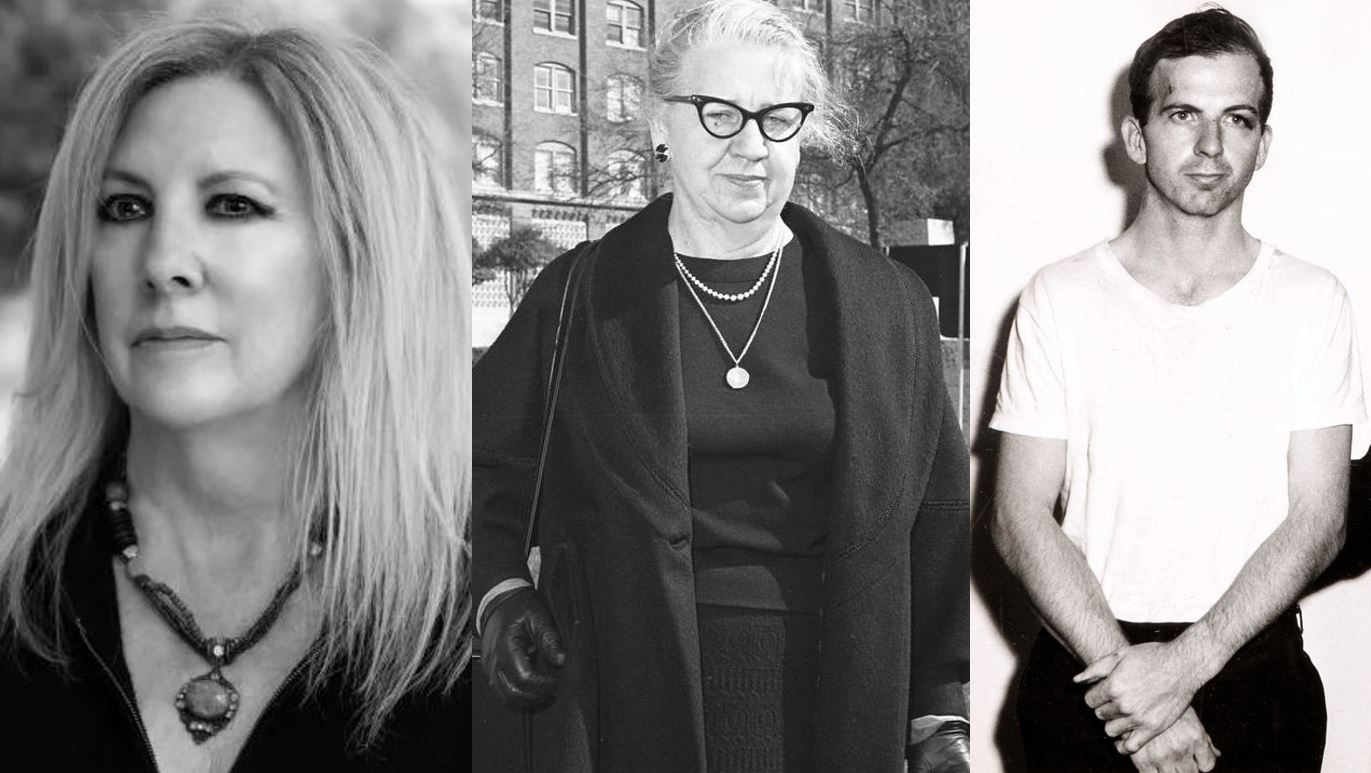
    Washburn CrafardAndOswald

    (Photo of Crafard on left and Oswald on right)

    Roy Milton Jones – eyewitness

    Roy Milton Jones was also a passenger on the Marsalis bus. He was an 11th grade student of 17 who regularly used the bus and knew driver Cecil McWatters. This is from his FBI statement (CE2641) of 20 March 1964. 

    “JONES advised that before the bus was stopped the driver made his last passenger pickup six blocks before Houston Street, that one was a blonde-haired woman, and the other was a dark-haired man. He said the man sat in the seat directly behind him and the woman occupied the seat further to the rear of the bus.

    “JONES said that after the driver mentioned this and from his recollection of OSWALD’s picture as it appeared on television and in the newspapers, he thought it was possible it could have been OSWALD. He emphasized, however, that he did not have a good view of this man at any time and could not positively identify him as being identical with LEE HARVEY OSWALD. He said he was inclined to think it might have been OSWALD only because the bus driver told him so.”

    “He said the man was not carrying any packages and he certainly did not see a gun in his possession at any time. He said the man did not seem to appear nervous or excited and seemed to him to be an ordinary passenger.”  (Emphasis added)

    That doesn’t merely indicate that the person might not have been Oswald, but it also indicates that what Mary Bledsoe saw as a “distorted face” wasn’t due to nervous pressure and distress of Oswald being on the run. 

    Furthermore, a Commission memorandum, reference 100-10461 (p 26) (Click here for document) states that bus driver Cecil McWatters on 26 March 1964 (6 days after Milton Jones’ statement above) withdrew his identification of Oswald and said that the person he recognised was Roy Milton Jones.

    Consistent with all of that, the first police description of the fugitive from the Tippit murder scene put out on police radio at 1:17pm (corrected time) was a man with black hair. Also, Domingo Benavides a witness at the Tippit murder scene who as well as being a mechanic was a mortuary barber, said the assailant wasn’t Oswald as the assailant had a square neckline and Oswald’s was tapered–a military-type cut. (Vol. VI, p. 444). 

    The stop at which “Oswald” got on the bus at Field and Elm was the closest stop to Jack Ruby’s Carousel Club at Field and Commerce (the streets ran parallel, Elm, Main, Commerce). That is where Larry Crafard said he slept the night of 21/22 Nov 1963 – and slept in past the time of the assassination – but then left Dallas in a rush on 23 November 1963. 

    The rest of this article explores evidence that may explain when, how and why did that person, assumed to be Crafard, then got off the bus when they did, and then do all of the things attributed to Oswald.

    In normal traffic conditions the bus would have arrived at Gloco between 12:45 and 12:50pm. But the traffic was not normal. As covered later. 

    A logical deduction, given the witnesses who saw Tippit arrive and then leave Gloco at speed heading in the direction of Lancaster Avenue, is that the person would get off the bus – by being removed – if Tippit was no longer waiting. 

    If Tippit was no longer waiting, then he’d be a marked man if other confederates had by then committed capital crimes. Events after Kennedy was shot, point to elements of an intended plan falling apart, with the result that Tippit was shot and Oswald, the patsy, was not killed at the Texas Theater.

    The Commission line was that only Oswald and a “blonde lady” got off the Marsalis bus at the same time in the vicinity of Lamar/Griffin and Elm. But once again, the evidence of Mary Bledsoe is interesting, and has been missed by the Commission’s assertions and most if not all subsequent researchers. In two separate statements in her testimony she lets something slip. Cecil McWatters the driver also let somethings slip. 

    III

    The Commission timeline for Oswald’s purported movements required 4 minutes for the bus to travel from Elm at Field  to Elm at Lamar. The sequence of parallel cross streets from east to west being Field, Murphy, Griffin, Poydras, Lamar. (Murphy and Poydras are now built over at Elm but still present elsewhere). 

    Commission Report page 190 sets out that:

    “In a reconstruction of this bus trip, agents of the Secret Service and the FBI walked the seven blocks from the front entrance of the Depository Building to Murphy and Elm three times, averaging 6.5 minutes for the three trips. A bus moving through heavy traffic on Elm from Murphy to Lamar was timed at 4 minutes.

    “If Oswald left the Depository Building at 12:33 p.m., walked seven blocks directly to Murphy and Elm, and boarded a bus almost immediately, he would have boarded the bus at approximately 12:40 p.m. and left it at approximately 12:44 p.m. (See Commission Exhibit No.1119-A, p. 158.)” 

    That timeline was tight as it needed to sit with Oswald then walking from Elm, over Main and Commerce along Lamar and getting a cab from Greyhound Bus Station at 12:48pm. 

    However, a detailed read of testimonies shows that simulation doesn’t fit the facts. One obvious problem is that the 4-minute simulation for the Commission was a bus “moving through heavy traffic”. Those were not the conditions on 22nd November 1963. The traffic was static because there was obstruction on Elm Street in Dealey Plaza – the road lanes Kennedy was shot in. Elm was three lanes one way, buses in the right-hand curb-side lane would stack back eastwards along Elm. 

    Furthermore, Roy Milton Jones said in his statement to the FBI that the bus was held up for about an hour not merely because of traffic conditions but also because police got on and detained them. This is his FBI statement on 30 March 1964 (CE2641). 

    “JONES advised that the bus proceeded in the direction of Houston Street and, approximately four blocks before Houston Street, was completely stopped by traffic which was backed up in this area.

    “He recalled that at this time a policeman notified the driver the President had been shot and he told the driver no one was to leave the bus until police officers had talked to each passenger. JONES estimated that there were more than about fifteen people on the bus at this time and two police officers boarded the bus and checked each passenger to see if any were carrying firearms.”

    “JONES estimated the bus was held up by the police officers for about one hour and, after they were permitted to resume, they crossed the Marsalis Bridge.”

    None of that appears in the Commission Report as a matter of interest despite the questions it begs. 

    Mary Bledsoe, said in her Commission examination that she got off the bus and got onto another bus that was behind with the “blonde woman” who’d got off when ‘Oswald‘ got off as the blonde woman was anxious that the holdup would make her miss her 1:00pm train from Union Station, which is on Houston Street. This is the exchange,

    “Mr. BALL. Did she ask for a transfer?

    Mrs. BLEDSOE. Yes; she had the man give her one, because she caught the bus before she got to the train station.

    Mr. BALL. How do you know that?

    Mrs. BLEDSOE. Well, I saw her.

    Mr. BALL. You saw her catch another bus?

    Mrs. BLEDSOE. She got on when we did. She rode a block.

    Mr. BALL. Did anybody get off when the lady got off? Anybody that was going to the train station?

    Mrs. BLEDSOE. No.” 

    Mr. BALL. Was there traffic? Was the traffic heavy? Mrs. 

    BLEDSOE. Oh, it was awful in the city, and then they had roped off that around where the President was killed, shot, and we were the first car that come around there, and then all of us were talking about the man, and we were looking up to see where he was shot and looking-and then they had one man and taking him, already got him in jail, and we got-“Well, I am glad they found him.” 

    Mr. BALL. You were looking up at where? 

    Mrs. BLEDSOE. At where the boy was shot. 

    Mr. BALL. You mean the Texas Book Depository? 

    Mrs. BLEDSOE. Yes, uh-huh.

    (p410)

    That blows apart the line that only Oswald and the blonde lady got off. But it is consistent with what is logical. Police boarding a bus would let the women off. Mary Bledsoe’s getting off the bus also throws into to the air the story of only two bus transfers, one for Oswald (and purportedly found on him) and one for the blonde lady. There would have been at least three given that Mary Bledsoe also got off the bus to get on another one.

    Cecil McWatters – eyewitness


    McWatters’ testimony (Vol II p 62) omits the police getting on the bus as well as omitting Mary Bledsoe getting off. But he does say someone got out of a car and spoke to him. He also says the bus was stalled. 

    “Mr. BALL. Where were you when you first heard the President had been shot?

    Mr. McWATTERS. Well, I was sitting in the bus, there was some gentleman in front of me in a car, and he came back and walked up to the bus and I opened the doorand he said, “I have heard over my radio in my car that the President has been —” I believe he used the word-“has been shot.” 

    Mr. BALL. Is that when you were stalled in traffic?

    Mr. McWATTERS. That is right. That is when I was stalled right there.

    Mr. BALL. Was that before or after the man got off the bus that asked for the transfer?

    Mr. McWATTERS. That was before. In other words, at that time no one had gotten off the bus.

    Mr. BALL. What was your location then, near what street?

    Mr. McWATTERS. Between Poydras and Lamar, in other words, because I stayed stopped there for, I guess oh, 3 or 4 minutes anyway before I made any progress at that one stop right there and that is where the gentleman got off the bus. fact, I was talking to the man, the man that come out of the car; in other words, he just stepped up in the door of the bus, and was telling me that what he had heard over his radio and that is when the lady who was standing there decided she would walk and when the other gentleman decided he would also get off at that point.”(p265)

    “Mr. BALL. Do you remember what he said to you when he asked you for the transfer?

    Mr. McWATTERS. Well, the reason I recall the incident, I had—there was a lady that when I stopped in this traffic, who had a suitcase and she said “I have to make a 1 o’clock train at Union Station” she said “I don’t believe – from the looks of this traffic you are going to be held up.” She said, “Would you give me a transfer and I am going to walk on down,” which is about from where I was at that time about 7 or 8 blocks to Union Station and she asked me if I would give her a transfer in case I did get through the traffic if I would pick her up on the way. So, I said, “I sure will.” So I gave her a transfer and opened the door and as she was going out the gentleman I had picked up about 2 blocks asked for transfer and got off at the same place in the middle of the block where the lady did.” (P264)

    Mary Bledsoe’s affidavit of 23rd November 1963 said

    “The traffic was heavy and it took quite some time to travel two or three blocks. During that time someone made the statement that the President had been shotand while the bus was stopped due to the heavy traffic, Oswald got off the bus and I didn’t see him again.” 

    IV

    Therefore the testimonies of Bledsoe and Milton Jones, and the slipping out of things by McWatters don’t accord with the Commission account. The bus was not slow but static, there was an intervention by which people on the bus knew that the president had been shot, and the bus was held for up to an hour by police. ‘Oswald’ got off when a man got out of a car and asked for the bus door to be opened. Roy Milton Jones said that was a policeman. 

    As to the delay, McWatters in the Dallas Morning News 28 November 1963 said 

    “By the time we had gone to the middle block of Poydras and Elm, traffic was held up. We were stalled there in the traffic. A man about 55 and dressed in working clothes got out of his car in front of us and walked towards the bus, I knew I hadn’t done anything to offend him.”

    McWatters’ testimony also says:

     Mr. McWATTERS. Yes, sir. As I left Field Street, I pulled out into the, in other words, the first lane of traffic and traffic was beginning to back up then; in other words, it was blocked further down the street, and after I pulled out in it for a short distance there I come to a complete stop, and when I did, someone come up and beat on the door of the bus, and that is about even with Griffin Street. In other words, it is a street that dead ends into Elm Street which there is no bus stop at this street, because I stopped across Field Street in the middle of the intersection and it is just a short distance onto Griffin Street, and that is when someone, a man, came up and knocked on the door of the bus, and I opened the door of the bus and he got on.”

    So, by all that, Oswald didn’t get off having been on the for bus 4 minutes from where he got on. The normal time to travel those two blocks would be 1-2 minutes. The 3–4-minute delay at that one stop added to the normal travel time would have used up the time allowed of 4 minutes, and the bus had already been stuck in traffic and delayed before that stop. 

    The Commission time, of only two minutes more than the usual two minutes it would have normally taken, is not long enough for someone to become not only agitated about the delay but agitated enough so that others on the bus would know about it. 

    But there is another issue. The bus transfer that was purported to have been found in Oswald chest pocket was cut for 1:00pm, and hence valid until 1:15pm. Transfers were cut rounding up to the next quarter hour and valid for the 15 minutes after that. Had any passenger – including Oswald – got off the bus at 12:44pm, then the transfer should have been cut for 12:45pm and hence valid until 1:00pm. So, the transfer rather than supporting the Commission line puts the time of disembarkation somewhere between 12:45 and 1:00pm

    As we shall see later, there is relevance in where the bus halted based on this exchange. 

    Mr. BALL. You were beyond Field and before you got to Griffin?

    Mr. McWATTERS. That is right. It was along about even with Griffin Street before I was stopped in the traffic.

    Mr. BALL. And that is about seven or, eight blocks from the Texas Book Depository Building, isn’t it?

    Mr. McWATTERS. Yes, sir. It would be seven, I would say that is seven, it would be about seven blocks.

    Mr. BALL. From there?

    Mr. McWATTERS. From there, yes, sir.

    This part of the testimony with questions from then Rep. Gerald Ford is also clear that the man in the car caused the door to open and ‘Oswald’ and the woman got off. 

    “Representative FORD. You gave her a transfer?

    Mr. McWATTERS. Yes, sir.

    Representative FORD. What happened?

    Mr. McWATTERS. She got off and by the time when she was talking to me that is when he got up, this gentleman here in the seat got up, at seat “M” got off. In other words, the door was never closed of the bus from the time the gentleman stepped up in the door of that there, in other words, when he said what he did, and got on back in his car, in other words, the lady got off, and the man got off, too, both at the same stop.”(P273)”

    McWaters does slip out that his bus was singled out and treated differently traffic-wise. He gives that away as he said that other buses behind him were let through when the authorities ‘opened up a lane’. Wholly consistent with what Mary Bledsoe said. 

    Mr. BALL. Was traffic still heavy along there?

    Mr. McWATTERS. Yes, sir; the traffic was still tied up, but the police, they opened up a lane there, they had so many buses and everything that was tied up, they opened up, moved traffic around that they run quite a few of these buses through there. In other words, from two blocks on this side of where the incident happened they had, in other words, they was turning all the traffic to the right and to the left, in other words, north and south.

    Mr. BALL. You went on down to Houston viaduct then?

    He later says, 

    Mr. McWATTERS. Yes, I turned after they finally let—they weren’t letting any cars through at that time but they just run a bunch of those buses through there.

    Mr. BALL. This is west. You are going west on Elm.

    Mr. McWATTERS. In other words, I am going-right here is where the police had all traffic, they weren’t allowing anything to go any further than Market Street here. In other words, all the traffic there they were moving was turning either to the right or left, on Market Street. But after they held us up there so long, of course, they run these buses in this right lane here and they did open up and let a bunch of these buses go right on down here to Houston, of course, a lot of them go straight on and a lot of them turn left to Houston Street, a lot of them go under the underpass here. (P266)

    He can only have known “quite a few” if – as Milton Jones said – they were held up for a considerable time and saw several other buses overtaking his bus. You wouldn’t know a “bunch of buses” had got through if you’d already got through”.

    McWatter’s statement to the FBI on 23 November 1964 put the delay of the bus as “fifteen to twenty minutes”. A question is was that the delay to that one stop, or the whole journey. Click here for document.

    V

    It is of note that, McWatters was reported in the Dallas Morning News of 28 November 1963, which puts him at Jefferson and Marsalis after 1:30pm.

    “The cashier of the Texas Theater immediately called the police- —who had just sped en masse to a false alarm at the Dallas Library branch on Jefferson, further to the east. The police sirens wailed again. Oddly enough it was at the library that McWatters, the bus driver who, unknowingly, had Oswald as a passenger earlier, had his second brush with fate. His bus pulled up at the intersection as a swarm of 10 or 15 police cars zeroed in on the library, *I couldn’t imagine what was going on” said McWatters. “Little did I know!*

    This incident at the library at Marsalis and Jefferson, appears on the police radio just after 1:30pm. Given the bus in ordinary conditions should have been there at 12:50pm (CE378), then the bus was more than 40 minutes late getting there. That is closer to Milton Jones’ estimate of a delay of up to an hour. Click here for document.

    To summarise all that. The bus was more than 4 minutes late, past 12:45pm destroying the Commission timeline. A person, possibly a police officer in civilian clothes approached the bus and alerted people to the fact the President was shot. Mary Bledsoe and the blonde lady also got off at the place Oswald did. The men remaining on the bus were detained for about 40 minutes by other police officers. 

    A rational deduction is that the man was a policeman in plain clothes and that ‘Oswald’ got off as a result of an intervention that was applied to that bus, not the others.

    There was no  credible ID of Oswald by Milton Jones or McWatters, and the man Milton Jones saw did not appear distressed, so that is not consistent with Oswald’s face being distorted due to stress or exertion from of long walk at speed from Dealey Plaza. Oswald did not have dark hair, or a distorted face. 

    Milton Jones also describes the man as wearing a light blue jacket. That is consistent with the Eisenhower jacket supposedly discarded by the assailant at Ballew Texaco Service Station near the Tippit murder scene that was found, despite the persons who saw him running there didn’t see him take it off.

    Click here to read part 2.

  • On the Sixtieth Anniversary of the Warren Report

    On the Sixtieth Anniversary of the Warren Report


    The Warren Report was issued to the public on September 27, 1964, 60 years ago. It had been handed to President Johnson three days prior. The report is 888 pages long.  And most of the footnotes in the volume refer to materials that had not been given to the public yet.  Namely the 26 volumes of testimony and evidence. Those volumes would not be issued until about two months later.

    Yet, both CBS and NBC broadcast specials on the Warren Report on the day it was issued to the public.  How could anyone have read the 888 pages, digested it, and then put together, respectively, a 2 hour program, and a 1 hour program vouching for the validity of that report?  For that is what happened.  The NBC show was hosted by Frank McGee and supported by Tom Pettit, who was right on the scene when Jack Ruby killed Lee Oswald. The CBS special was hosted by Walter Cronkite, with Dan Rather in support.  Was doing such a thing not a violation of journalistic ethics?  It was the equivalent of taking a government press release and announcing it as factually truthful to tens of millions of people, without any review.

    But in the case of CBS, it was even worse than that.  As the documentary JFK Revisited reveals, CBS producer Bernie Birnbaum later disclosed that the network was cooperating with the Warren Commission, from a date very much prior to the release of the report.  The cooperation extended to the fact that the Commission appears to have recommended witnesses to place on the program. (Florence Graves, Washington Journalism Review, September, October 1978). But as Florence Graves reported, it was even worse than that.  For film maker Emile de Antonio and author Mark Lane viewed some of the outtakes from the CBS program in late 1965.  They told Graves that CBS led witnesses to say things on camera, some of whom were originally uttering things that contradicted the Warren Report.  In other words, far from letting the evidence speak for itself, CBS had molded that evidence to fit what was in the Warren Report, knowing that the report had to be problematic.  

    But it then got worse.  In what amounted to a cover up of this unethical practice, CBS would not allow de Antonio and Lane to use this footage in their documentary Rush to Judgment. This was even after there was an oral agreement to do so. (Mark Lane, A Citizen’s Dissent, pp. 75-79). The two protested to a CBS executive, reminding him that CBS was in the truth gathering business.  Therefore, the network should make all the facts available to the public.  Again, the network declined.  Lane concluded that CBS had begun its production with a script, and even though the Warren Report was officially released the day of the broadcast, it was clear that CBS was in bed with the Commission for a long time. (Lane, p. 77). The case of Howard Brennan is illustrative of this.  For he was not in the initial interviews CBS did. As Lane noted, “CBS, previously unprepared for …Brennan, flew him to New York and conducted an interview with him in time to meet the program’s deadline.”(Lane, p. 78). This action was complimented by one of curtailment.  As Lane wrote, “When a witness said something that challenged the script, that portion of the interview was snipped away and turned into an out-take.” (ibid)

    As Lane concluded:

    For millions of Americans, the program provided as reliable a view of the issues as would a glance at the visible portion of an iceberg reveal its true mass and shape to an inexperienced observer. (Lane, p. 78)

    As Graves noted, CBS also kept the outtakes from all of their JFK films from the House Select Committee on Assassinations (HSCA).  In fact, CBS told the HSCA they would not surrender the cut materials even if subpoenaed.  The problem with this is that CBS had previously sold such materials, and they had an oral agreement with Lane and de Antonio.  When Florence Graves asked CBS President Richard Salant about other exceptions CBS made to this rule, Salant replied “If you have real evidence in a murder, it’s a different situation.”  Salant apparently was unaware of the humorous irony in that statement.

                                                 II       

    But it was not just the TV networks who were all too eager to praise a report they had no way of cross checking.  It was also the print media, both newspapers and magazines.  Two of the worst cases of this were respectively the New York Timesand Life magazine. About 24 hours after Oswald was killed by Jack Ruby, the Times featured a headline saying “President’s Assassin Shot to death in Jail Corridor by a Dallas Citizen.” Yet Oswald always maintained his innocence while in detention;  he never had a lawyer, and of course never stood trial. But the newspaper of record was already pronouncing him as Kennedy’s murderer. On June 1, 1964, four months before the report was issued, Anthony Lewis did a preview of its contents on page one of the Times. Just a few days after the Warren Commission volumes were published the Times issued  a compendium of this testimony called The Witnesses. Anthony Lewis wrote the introduction for that book

    In the case of Life magazine, they swooped into Dallas and snatched up both Oswald’s wife and mother and stored them in a hotel.  Life then purchased the Zapruder film and kept it from the American public for twelve years. With the Zapruder film held in abeyance, on December 6, 1963 that magazine published what can only be called a deliberate canard. They wrote that the film showed Kennedy turning his body far around to his right as he waved to someone in the crowd, thus exposing his throat to the sniper behind him. The film shows no such thing happening, or even close to happening.  But there had to be an explanation for why the doctors at Parkland Hospital said they saw an entry hole in Kennedy’s neck. This supplied one—an explanation which was utterly false.

    In the initial reaction to the issuance of the Warren Report there was no examination of two major issues of large evidentiary import. The first was the mystery of Commission Exhibit 399, later deemed the Magic Bullet.  Yet, as many have stated, even members of the Commission itself—like Arlen Specter and Norman Redlich—declared that without the efficacy of that exhibit the thesis of the Warren Report falls apart.  If CE 399 did not do what the Commission said it did—namely go through both President Kennedy and Governor Connally, making seven wounds and shattering two bones while emerging virtually  unscathed—then this necessitated a second assassin.

    But perhaps even more important, if CE399 was not genuine, if it was a plant, then this would indicate a pre-planned upper level conspiracy.  And there were indications in the volumes that such was the case.  Just look at the way the Warren report handles the testimony of Darrel Tomlinson, the hospital attendant who was the first to discover the bullet on a gurney:

    Although Tomlinson was not certain whether the bullet came from, the Connally stretcher or the adjacent one, the Commission has concluded that the bullet came from the Governor’s stretcher.  That conclusion is buttressed by evidence which eliminated President Kennedy’s stretcher as a source of the bullet.  (WR, p. 81)

    If ever there was a piece of sophistry that could easily be exposed just by reading further, this was it.  And when author Josiah Thompson decided to examine this pretentious piece of pap, it fell apart on all four legs. In ten pages of analysis and investigation he shows how Specter badgered Tomlinson in a way that would not be allowed in court. How the person who Tomlinson had handed the exhibit to—security officer O. P. Wright– had no idea on which stretcher the projectile was found.  How by interviewing other attendants in the area, it is almost certain it was not found on Kennedy’s gurney, or Connally’s.  The evidence indicates it was found on the stretcher of a person unrelated to the case, a little boy named Ronald Fuller. (Thompson, Six Seconds in Dallas, pp. 154-165). Finally, the bullet that ended up in the National Archives, and labeled CE 399, was not the bullet that Mr. Wright saw and handed over to the Secret Service.  In fact, when confronted with a picture of CE 399 he starkly disagreed and pulled a sharp-nosed, lead hued bullet out of his desk to show the difference. (The Magic Bullet is round nosed and copper coated.). Thompson was so shaken by this information that he wrote:

    …CE 399 must have been switched for the real bullet sometime later in the transmission chain. This could have been done only by some federal officer, since it was in government possession from that time on. If this is true then the assassination conspiracy would have to have involved members of the federal government and been an “inside” job”. (Thompson, p. 176)

                                        III

    The second piece of evidence that should have jolted reporters attention was the Zapruder film. By the time the report was issued, it was common knowledge in media circles that Life had bought the film. It was also obvious that they were keeping it under wraps.  When the Warren Report was released, although it was clear they relied upon the film for their bullet sequencing, the actual frames were not in the report. And, as even Vincent Bugliosi admitted, they never mentioned the most startling feature in the film: at Zapruder frame 313, Kennedy’s entire body rockets backward with such force that it appears to bounce off the back seat of the limousine.  So now, in addition to the declared entrance wound in the throat, here again was powerful evidence that Kennedy was hit from the front. 

    Where was Anthony Lewis?  Why did he not go to Time-Life in New York and ask to see the film? The other place he could have seen it at was the National Archives.

    The third piece of evidence that should have set off the antennae of any reporter was the Parkland Hospital press conference that was performed in about an hour after Kennedy was pronounced dead at that institution.  At that press conference two of the physicians who worked on the president briefed the media about their efforts.  They were Dr. Kemp Clark and Dr. Malcolm Perry.  They made some rather interesting comments.  Namely that Kennedy had a large wound in the rear of his skull, and that the throat wound appeared to be one of entrance.  It is important to underline that this was on the afternoon of the assassination, one could not get any closer to the time of the actual shooting. 

    As Doug Horne discovered while working for the Assassination Records Review Board (ARRB), the Commission requested a transcript of this press conference.  The Secret Service, through chief James Rowley, said they did not have one. This was a lie.  The ARRB found a transcript which was time stamped, “Received US Secret Service, 1963 Nov. 26 AM 11:40, Office of the Chief.” (Horne, Inside the ARRB, Vol 2, p. 647). 

    In other words, just on the surface, by the time of the release of the Warren Report any investigative reporter could have found evidence to disprove the operating theses of that report.  Namely that Oswald was the sole assassin, that all the shots came from behind, and also that there was fraud in the evidence trail.  A dead giveaway about this is that O. P. Wright’s name in not in the Warren Report.

    It is very had to believe that Arlen Specter did not know the importance of O. P. Wright.  After all, Specter was in charge of the medical and ballistics evidence for the Commission. If he interviewed Tomlinson how could he not know about Wright?  It seems he did know for in a long hidden interview that author Edward Epstein concealed for about a half century, Specter told Epstein how he convinced the Commission about his Single Bullet theory.

    I showed them the Zapruder film, frame by frame, and explained that they could either accept the single-bullet theory or begin looking for a second assassin. (The JFK Assassination Chokeholds, p. 253, by James DiEugenio, Paul Bleau, Matt Crumpton, Andrew Iler and Mark Adamczyk)

    We can properly assume then that the Commission had no interest in the second alternative, searching for a second gunman. We can also properly assume that this was a decision made by expediency and not based on evidence. This is further backed up by another question Epstein asked Specter many years previous  He queried the Commission lawyer: Why did the Secret Service not arrive at the Magic Bullet concept in December while doing reconstructions? Specter replied point blank: “They had no idea at the time that unless one bullet had hit Kennedy and Connally, there had to be a second assassin.” (ibid). Why the late Edward Epstein hid this exchange for so long is a mystery. It seems to me to be of the highest relevancy as to the operating procedure of the Commission.

                                                          IV

    In addition to there being no trace of Wright in the Warren Report, there is also no mention of the two FBI agents who were at the Bethesda autopsy that evening: James Sibert and Francis O’Neill.  Specter did an interview with these men and he read their report on the autopsy.  They both expected to be called as witnesses by the Commission, but they were not.  When William Matson Law interviewed Sibert for his fine 2005 book In the Eye of History, Sibert left no doubt as to why he was not called.  He did not buy the Magic Bullet:

    …if they went in there and asked us to pinpoint where the bullet entered the back and the measurement and all that stuff, how are you going to work it?  See, the way they got the Single-bullet theory was by moving that back wound up to the base of the neck. (ibid, p. 31)

    When asked to repeat what he thought on the subject Sibert replied with, “They can’t put enough sugar on it for me to bite it.  That bullet was too low in the back.”  When specifically asked about Specter, Sibert went even further: “What a liar.  I feel he got his orders from above—how far above I don’t know.” (ibid, p. 32). The missing names of these three men from the Warren Report and the lack of any depositions from them, amid 17,000 pages of evidence and testimony, is simply inexplicable in objective terms.

    But there was still another piece of key evidence that the Commission excised from the volumes. This was the death certificate for Kennedy that was signed by Admiral George Burkley.  When finally located, that certificate placed the back wound at the third thoracic vertebra.  Considering the projectile was entering at a downward angle, that is too low for it to exit the throat. (ibid, p. 35). Again, there is no deposition of Burkley in the Warren Commission volumes.  And when asked in an interview, if he agreed with the Warren Report on the number of bullets that entered JFK’s body, he replied with this: “I would not care to be quoted on that.” (ibid, p. 36)

    From all of the above, it is difficult not to conclude that the Warren Commission was a rigged investigation.  In fact, we have that specific information from one of the most credible witnesses that the Commission actually did interview.  Her name was Sylvia Odio. The FBI went out of their way to discredit her for the Commission.  But as Gaeton Fonzi showed, the Bureau attempt was based on fraudulent information. (Gaeton Fonzi, The Last Investigation, pp. 114-15)

    When Fonzi interviewed Odio for the Church Committee, he handed in a report of that encounter.  It was dated January 16, 1976. That report was not declassified until 20 years later.  And it was due to the JFK Records Collection Act, through the ARRB. In that interview she told Fonzi what she told the Commission through attorney Wesley Liebeler: that Oswald had visited her apartment with what appeared to be two Cuban exiles in late September of 1963.  They were looking for contributors to their anti-Castro cause.  Oswald was introduced to her as Leon Oswald. Within 48 hours, the exile called Leopoldo called her back and said Oswald was kind of loco and was talking about killing Kennedy. (Fonzi report to Church Committee) 

    That visit would be strong evidence of Oswald being impersonated in Mexico City, since they days for both events appear to overlap. How credible was Odio? When she saw a picture of Oswald on TV the day of the assassination, she fainted. She also had corroborating witnesses, including her sister who was there, and three people she confided in about the event, before the assassination. The implication being that Oswald was being set up by the Cuban exiles.

    Odio told Fonzi that after she was questioned for the Commission, their attorney Wesley Liebeler asked her to go to dinner with him.  During dinner, Liebeler kept threatening her with a polygraph test.  After that, Liebeler said:

    Well, you know if we do find out that this is a conspiracy  you know that we have orders from Chief Justice Warren to cover this thing up. (Fonzi report of 1/16/76)

    Justifiably surprised, Fonzi replied with, “Liebeler said that?” Odio responded with, “Yes sir, I could swear on that.”  After her encounter with Liebeler, Odio said to herself, “Silvia, the time has come for you to keep quiet.  They don’t want to know the truth.”  

    Which most people would deem a rather natural reaction.

                                                 V

    Let us conclude with something that the Commission almost had to know about.  Because it is in the Warren Commission volumes. (Warren Commission Exhibit 3120). This was a pamphlet that Oswald was handing  out on the streets of New Orleans in the summer of 1963. This pamphlet was called “The Crime Against Cuba”.  It was written by Corliss Lamont and printed through Basic Pamphlets. The copy Oswald was handing out  came from the first edition published in 1961. Yet that pamphlet had gone through at least five editions by 1963. In fact, the CIA had ordered 45 copies of it back in 1961.  Further, when one looks at the document in the Commission volumes one will see stamped on the last page: FPCC, 544 Camp Street, New Orleans. (Volume 26, p. 783)

    When Jim Garrison discovered this document, he did something that none of the Warren Commissioners or their attorneys did.  He went to the actual location.  He noticed Mancuso’s Restaurant and went around to the other entrance to the building which was 531 Lafayette.  In one of the most memorable passages of his book, he now recalled that this was the location of “Guy Banister’s Associates Inc. Investigators”. (Jim Garrison, On the Trail of the Assassins, p. 24) Banister was a notorious rightwing fanatic who employed young students to infiltrate left leaning groups and organizations, and the FPCC on the pamphlet stood for the Fair Play for Cuba Committee.  As far as Garrison could figure, Oswald was the only member of the FPCC in New Orleans, and he actually paid people from the unemployment office to help him leaflet. (Garrison, p. 25)

    As Garrison writes, this was”…the first evidence I encountered that Lee Oswald had not been a communist or Marxist….Guy Banister…had been using Oswald as an agent provocateur.” (ibid). This began to unveil to the DA that the FBI was in on the cover up.  For they had to know that Banister had his office there, and Banister had been a former FBI agent.  This was a serious flaw with the Commission, its reliance on the FBI for about 80 per cent of its investigative capacity.

    There is no doubt today that Oswald was in Banister’s offices that fateful summer of 1963.  Numerous credible witnesses, including two INS agents, saw him there. We also know that Banister was very upset when he learned that Oswald had used his office address on his pamphlet. (James DiEugenio, Destiny Betrayed, second edition, pp. 110-114) 

    But there is even more to the pamphlet than that. Clay Shaw’s right hand man at the International Trade Mart was Jesse Core. He happened to be on the street where Oswald was leafleting the Lamont flyer. He picked one up and noticed the Camp Street address.  He drew an arrow to that address and attached a message, “note the inside back cover”. He then mailed it to the FBI. It was also Core who summoned the TV cameras to the Trade mart to capture Oswald there. (See John Armstrong, Harvey and Lee, p. 568) So how could the FBI not have known about Oswald and Banister?

    Let us also note this pertinent fact:  The hearings of the Warren Commission were closed to the public. Only Mark Lane complained about this and so his appearances were opened. Can anyone today imagine the media accepting an arrangement for such an important event by a government agency?  

    It was left to private citizens to actually read the 26 volumes and compare them to the Warren Report.  It was people like Harold Weisberg, Josiah Thompson, Sylvia Meagher and Mark Lane who now reported, with footnotes, that the emperor was wearing no clothes. The Warren Report was an elaborate fraud.  But when organizations like Life, and the NY Times made some motions to do a reinvestigation, these were sabotaged from inside.  For example in the former case by editor Holland McCombs, who just happened to be a friend of Clay Shaw’s.  It was McCombs who retired Life’s two best investigators, Ed Kern and Thompson. (Click here https://www.kennedysandking.com/john-f-kennedy-reviews/last-second-in-dallas-part-2) This is why Thompson had to publish his work in the book Six Seconds in Dallas.

    This all held a very deleterious effect on America.  As Kevin Phillips noted in his book Arrogant Capitol, the decline in the citizenry’s belief in what the government was saying began in 1964. Prior to that time it registered in the 70 percentile. From then on, exacerbated by Vietnam and Watergate, it descended into the teens. 

    No one noticed a rather crucial event.  Just three months after the Commission released the 26 volumes of testimony and evidence, President Lyndon Johnson did something that Kennedy did not, and would not do. He sent combat troops to DaNang in Vietnam.  He actually had this landing filmed. 

    In a huge piece of tragic irony, it was that event that led to his ruin.

  • JFK Records Release: Trump at it Again, Is he For Real This Time?

    JFK Records Release: Trump at it Again, Is he For Real This Time?


    The delayed final release of the JFK Assassination records has been well documented on this website. It has been covered by the media when Presidents Trump and Biden have made historical and controversial decisions to continue delay of the release of the final Protected Collection. To best of our knowledge, over 4,600 assassination records are still withheld from the American public or redacted in part.

    Why? The U.S. Government (through the notorious Warren Commission Report) continues to officially maintain that Lee Harvey Oswald assassinated President Kennedy as a “lone nut”. The Warren Report concluded that Jack Ruby assassinated Oswald on his own in a sudden “act of passion”. The Warren Report concluded that there was no evidence that Oswald and Ruby even knew each other.

    In 1979, the House Select Committee on Associations (HSCA) dug further and concluded that Kennedy was “probably” killed in a conspiracy. The HSCA also cleared various services (that the conspiracy did not involve any group like the USSR, or Fidel Castro, Organized Crime, the FBI, the CIA or Secret Service. See Final Report, pp. 1,2). However, the HSCA also found that it could not exclude the possibility that individual members of the national syndicate of organized crime or anti-Castro Cubans were involved in a probable conspiracy to assassinate President Kennedy.

    That is the context for the obvious question: Based on the conclusions of the Warren Commission and the HSCA, why the need for continued secrecy in 2024? In 2024, 60 years have passed since the assassination, and more than 30 years have passed after Congress unanimously passed the JFK Records Collection Act of 1992 (the JFK Records Act). That is another article, and that question more than deserves an answer from the President, Congress and the National Archives and Records Administration (NARA). This article explains what those offices and agencies are in fact doing (and more importantly not doing), why it is wrong, and why it is a direct violation of the JFK Records Act. We will conclude by explaining what can be done going forward to fix the ultimate problem. That problem is continued secrecy regarding the JFK Assassination records.

    I

    It is important to briefly explain the timeline of events since October 26, 2017. Why that date? That was the date established by Congress in 1992 for the mandatory final release of all government records related to the assassination of President John F. Kennedy.

    Why did Congress approve a 25-year release period in 1992, when the assassination occurred almost thirty (30) years prior in 1963? Congress found that specific reasons could warrant delay of release after 1992. And those reasons are very specific. They are listed in the JFK Records Act. Under the JFK Records Act, the President in 2017 was permitted to authorize further delay if (and only if) a specific record met the legal standard for continued withholding. In summary, the reason for delayed release must connect to a threat to current military or intelligence operations, identities of living persons or agents who could likely be harmed by release of a record, current security or protective procedures (i.e. Secret Service procedures), or the conduct of current foreign relations, the disclosure of which would demonstrably impair national security and outweigh the public interest in immediate disclosure.

    As you can see, the prevailing theme and standard used by Congress was “current”. Meaning in 1992, the reason for delaying the release of an assassination record must then have been a current and specified concern. And that reason must still have been current and a substantial threat to the “national security” of the United States as of October 2017. Otherwise, the President, by October 26, 2017, was required to either release the assassination record(s) in full and without redactions, or certify in writing the specific reason for delay (under the standards of the JFK Act) for each and every record withheld. That presidential certification was to be in an unclassified record and available to the American public. This is what Congress required. There is no reasonable debate on this, regardless of if one still believes the Warren Report or an alternative.

    It is undisputed that President Trump failed to provide a record-by-record certification for delay past October 26, 2017. In reality, Presidents Clinton, Bush (George W.) and Obama also failed to meet that duty under the JFK Records Act. Why? In all likelihood, those presidents did not receive adequate and objective advice from legal counsel on their actual duties under the JFK Act. As explained below, President Trump clearly did not receive objective or timely legal advice on this historical issue. Or the issue was perhaps too controversial for the office of the President when other matters of transparency and “national security” were more pressing in their view. The reason does not matter. The law was clear and the mandate from Congress was clear. The JFK Act was unanimously approved by Congress in 1992. In the JFK Records Act, Congress declared in 1992: “most of the records related to the assassination of John F. Kennedy are almost 30 years old, and only in the rarest of cases is there any legitimate need for continued protection of such records.”

    So what happened on October 26, 2017? We know that Trump intended to authorize the full release of all assassination records that were still withheld at that time. He said so publicly. Instead, at the eleventh hour Trump, by Executive Memorandum, authorized a 6-month delay for agencies to review any remaining withheld records and complete the declassification job. Trump then authorized another 3-year delay, which ultimately transferred responsibility to the Biden administration. Notably, Trump did not attempt to rewrite the law. By all accounts, Trump simply authorized further delay under pressure from government agencies who were determined to keep certain assassination records secret no matter the cost.

    II

    Trump’s Executive Memorandum prompted troubling reactions by Thomas Samoluk and Judge John Tunheim of the Assassination Records Review Board (ARRB). The ARRB was an independent agency established by Congress in the 1992 JFK Records Act, whose sole mission was to ensure declassification under the standards of the JFK Records Act through an accountable and enforceable process.

    Samoluk: “It is really frustrating what has happened. Because the law said that anything that was not released … needed to be released under the law by October 26, 2017. Now there is a clause that says if the president certifies, under certain conditions, that the records would not be released. I don’t think the process under the law was followed. The records have not been released in total, and I don’t think any good reasons have been given.” (James DiEugenio, JFK Revisited, p. 389)

    Judge John Tunheim: “The information (non-declassified documents) was intended to be released in 2017. Only under extreme circumstances was a president in 2017 supposed to continue to protect records. And they didn’t, as near as I can tell, they didn’t provide that certification.” (ibid, pp. 347-48)

    Then, matters got worse. Far worse. In October of 2021, Biden issued an “Executive Memorandum” authorizing another delay until December 15, 2022 for agencies and government offices to make “final decisions” on the release of withheld records. In this Memorandum, Biden empowered agencies to make their own decisions on releasing assassination records generated by their agency. Let that sink in. President Biden told agencies, the very agencies who have maintained secrecy regarding the assassination since 1963, to run the show. To release their records when they felt “comfortable” doing so.

    In June of 2023, President Biden then issued his “Maximum Transparency” Executive Memorandum. Despite the clear mandates imposed by the JFK Records Act to establish an “accountable” and “enforceable” process for full disclosure, and despite the explicit requirement that each withheld assassination record be accounted for with an unclassified identification aid, the President’s June 30, 2023 Memorandum does not identify or account for a single withheld assassination record. Biden’s “Transparency Plans” – originated by the CIA – are the opposite of transparency. It is government secrecy in its most egregious form.

    The illegality of Biden’s orders (not approved by Congress or NARA, that we know of) cannot be understated. It was a presidential attempt (unwittingly or not) to destroy the purposes of the JFK Act – a law that Biden voted in favor of when he was a senator in 1992. Trump’s orders were also in violation of the JFK Act. Biden’s were even worse – telling agencies that they could make their own declassification decisions. If this does not ensure continued secrecy, it is difficult to imagine what could.

    III

    So, here we are in the summer of 2024. To our knowledge, the agencies with this unsubstantiated “power” have done nothing. Congressional oversight committees are undoubtedly aware of this historical declassification issue, or at least they should be. To date, oversight committees have done nothing about the fact that the Office of the President has unilaterally and illegally rewrote the law with a presidential pen. They have done nothing about the fact that the President has seized control over their own Congressional records. It is critical to note that Congressional oversight committees (both House and Senate) have express legal authority under the JFK Records Act to ensure complete declassification under the standards and timeline of the JFK Records Act. In other words, when the ARRB finished its original mandate in 1998, Congressional oversight committees had the authority and duty to take whatever action necessary to ensure that agencies and government offices complied with the JFK Records Act. A historical law that was intended to restore faith in government transparency.

    This author personally attended a meeting of the Public Interest Declassification Board (PIDB) in June 2021. According to NARA’s website, the purpose of the PIDB is to advise the President regarding issues pertaining to national classification and declassification policy. The PIDB’s mandate is to promote “the fullest possible public access to a thorough, accurate, and reliable documentary record of significant U.S. national security decisions and activities.” Further, the PIDB was established by Congress to advise the President and other executive branch officials on the “identification, collection, review for declassification, and release of declassified records and materials of archival value.”

    On the June 2021 meeting agenda (of the PIDB) with respect to JFK assassination records was a) Potential John F. Kennedy Assassination Records Collection records review; b) Increase public awareness; and c) Congressional engagement. Despite an apparent attempt by the PIDB to recognize this problem, Congressional oversight committees have done nothing. President Biden (assuming he was properly advised by the PIDB) made this historical secrecy issue even worse. Rather than recognizing the critical issue, increasing public awareness and imploring Congress to engage on the issue, the Biden administration issued “Transparency Plans” that put the declassification decisions squarely in the hands of the agencies that have held assassination records close to the vest since the Warren Commission was established immediately after JFK’s assassination.

    Donald Trump Returns

    Those who seek the right to see the remaining “Protected Collection” of JFK assassination records recently learned of some seemingly positive news. Former President Trump (running for election again in November 2024) recently made a pledge on the Fox & Friends Weekend program. Trump was asked what he would do to restore the American people’s trust in government institutions. Trump was asked if he would declassify the withheld JFK assassination records. Trump said he would declassify them and that he already “did a lot of it”.

    Trump’s feelings on the matter when leaving office are also clear. Former Fox commentator Judge Andrew Napolitano was a frequent advisor to Trump during his presidency. When discussing “unfinished business” in his presidency, Judge Napolitano reminded Trump about his unfulfilled pledge in 2017 to release the remaining JFK records. Trump said to his friend and advisor Judge Napolitano: “Judge, if they showed you what they showed me, you wouldn’t have released it either.”

    It now appears that Trump was pressured and intimidated in 2017 when he had to make a historical decision on declassification and transparency. If Trump can be intimidated, then what was to stop a lifelong politician and establishment loyalist like Joe Biden? All signs appear to point to Trump’s CIA “advisors” in 2017. Tucker Carlson reported on this, before he was fired by Fox News soon thereafter.

    Is there a Path to Success in Declassification of the JFK Records?

    We have summarized the developments in this matter since 2017, starting with Trump’s first postponement decision. A lawsuit was filed in 2022 by the Mary Ferrell Foundation to enforce the JFK Records Act, but predictably the DOJ’s lawyers have strenuously defended that legal effort.

    So what is a different path to achieving full transparency and declassification on the JFK records? The path is clear and actually quite simple. It does not matter which President takes this path. It could be Trump, Biden or another candidate running in 2024. It would be more difficult for Biden because he would literally have to do a full pivot, reverse his recent Executive orders, come up with plausible reasons for doing so, and then instruct agencies (and his own Executive team) to follow the JFK Act and be accountable for that task. Trump’s path is difficult but less difficult, and I will explain why. Any President, however, can successfully overcome the continued disturbing trend of secrecy regarding the JFK assassination records, and look like a strong and decisive U.S. President while doing so.

    If Trump is elected again, he can explain what he experienced in October 2017. He can explain what he told Judge Andrew Napolitano and why. He can explain why felt that he had no choice under last minute pressure from agencies in October 2017 (and again in 2018), including pressure from the CIA.

    During this upcoming campaign Trump can explain how he received faulty legal advice from the DOJ’s Office of Legal Counsel at the eleventh hour in making his decisions on the JFK Records, which he did. Trump can obtain an objective and clinical legal analysis demonstrating how the JFK Records Act was intended (by Congress) to operate. Trump can declare with confidence, after receiving competent and objective legal counsel, that the JFK Act was NOT intended for the President–30 years after the passage of the JFK Act–to rewrite the law with a presidential pen. Trump would surely attempt to embarrass Biden regarding his more recent orders, but the issue does not change.

    Trump can acknowledge and endorse the recent Tucker Carlson reporting. Trump can pledge to rescind and reverse ALL of Biden’s executive orders on this historical issue. Trump can pledge to issue a new executive order requiring all agencies and NARA to immediately comply with provisions of the JFK Records Act that require an unclassified identification of each assassination record still withheld and why each record should still be withheld today under the standards of the JFK Act. Trump can establish a reasonable deadline for agencies and NARA to complete this ministerial work for the remaining Protected Collection. It could be 6 months, it could be 9 months. But no more arbitrary extensions or delays. Trump could then make a final and independent Presidential decision after receiving this required information from the agencies. And that decision must relate to an identifiable harm as currently posed by a specific record(s).

    What else could Trump do? He could acknowledge Jefferson Morley’s efforts and the serious problem with George Joannides. It is now undisputed that Joannides ran a CIA anti-Castro operation that was connected to Lee Harvey Oswald. It is now clear that Joannides stonewalled the HSCA in a clandestine CIA operation determined to maintain secrecy on the CIA anti-Castro operations, no matter the cost. Trump may not go there, but the history on Joannides is clearly one of the reasons why the CIA is determined to maintain secrecy in the remaining Protected Collection.

    IV

    What about Congress? They also cannot keep hiding on this issue. Imagine the breath of fresh air in the House if instead of pursuing an impeachment that will not happen, Rep. James Comer actually called the National Archives and John Tunheim and Jeff Morley to testify about why the JFK Records are still classified? That committee is controlled by the Democrats in the senate, chairman Gary Peters of Michigan. Peters could call both Trump and independent candidate Robert Kennedy Jr. They could suggest—particularly the latter—that Congress immediately establish a new ARRB to enforce the standing requirements of the JFK Act. As events have unfolded, NARA and the intelligence agencies have proved inadequate or unwilling to do the job. At this date, there needs to be a plan to guarantee accountability and enforcement. The new ARRB would locate all the crucial Final Determination Forms (originated by the first ARRB) for remaining withheld records, make INDEPENDENT final determinations (as of 2024), and provide a report to Trump or Kennedy so they can make reliable and independent decisions on his presidential certifications for complete declassification. Both men can use this during the remaining days of the campaign. What is to stop them What is to stop both men from taking these steps supported by the actual law? Would that not resonate with the public a heck of a lot more than Hunter Biden’s drug addiction? Trump and Kennedy could contrast this plan with Biden’s rewrite of the JFK Act. For once a presidential candidate could promise to do something right about the JFK records.

    If Biden is Re-Elected

    Once placed on the defensive, President Biden can take the same steps that Trump could take. However, that would require him to acknowledge that Trump made rushed decisions with pressure from agencies. It would require Biden to recognize that Trump received faulty DOJ legal advice that was aimed at delay and delay only. That his (Biden’s) team has done more legal research and now recognizes how the JFK Records Act is actually supposed to work. Biden would have to rescind and reverse his executive orders and his “Transparency Plans” and somehow explain that they were issued in good faith but they now need a substantial overhaul. That is a tall task, especially with an opponent like Trump. However, the public should eventually appreciate the transparency and a serious effort to do the job correctly.

    To be clear, this article is not an endorsement of any candidate for the Office of the President. We have done our best to report the actual record and the issues currently at hand. The Independent, Republican or the Democratic nominee can pledge to follow the JFK Records Act and get this done. Lay out an actual plan, and a clear path as suggested above.

    V

    If Robert F. Kennedy, Jr. was elected and took a similar path, he would also be following the law and erasing the history of secrecy regarding the JFK Records. He is on record that he plans to do so. On the 60th anniversary of JFK’s assassination (November 2023), RFK Jr. petitioned President Biden to release all government records concerning the assassination of his uncle. RFK Jr.’s position is squarely in line with the language and intent of the JFK Records Act of 1992. In his petition, RFK Jr. states: “The 1992 Kennedy Records Assassination Act mandated the release of all records related to the JFK assassination by 2017. Trump refused to do it. Biden refused to do it. What is so embarrassing that they’re afraid to show the American public 60 years later?” RFK Jr. simply called upon Biden to obey the JFK Act and release all assassination records to the public. The petition received more than 20,000 signatures.

    President Seizing Control Over Congressional Records

    What Trump and Biden may not know is that they have repeatedly and illegally assumed control over “non-executive branch” assassination records. These records include House and Senate records, largely originating from the House Select Committee on Assassinations (HSCA) and the Senate’s Church Committee. Congress was very careful in drafting the JFK Records Act to not yield any authority (to the President) over non-executive branch records. Section 9(d)(1) of the JFK Records Act explicitly limits presidential authority to classification decisions on executive branch records only.

    What impact does this have on the current state of the JFK assassination records still held secret in the Protected Collection? It means that any Presidential postponement of a non-executive branch record is unlawful and that by law, every single record that originated from the HSCA and the Church Committee in the 1970’s should have been fully publicly disclosed on October 26, 2017. No questions asked. No Presidential discretion.

    When Trump and Biden made their postponement decisions, Congress should have stepped in to protect their authority over their own records and processes. To date, Congress has failed to schedule any oversight hearing or call on any official to account for non-compliance under the JFK Records Act. These officials would include NARA, intelligence agencies and of course the Executive Office of the President. As mentioned before, both ARRB Chair Tunheim and Tom Samoluk, his deputy, are on record as strongly disagreeing with the stonewalling.

    The next President can simply implore Congress to unite on this historical transparency issue and take control of its own records. To follow the language and intent of the law that it passed unanimously in 1992 to ensure proper declassification and transparency. To reconvene and appoint a new independent ARRB to do the exact job it was empowered to do under the JFK Act. A job that it did well during its life span from 1994 to 1998. The ARRB simply did not have enough time, partly because of limited funding, partly due to resistance from agencies determined to maintain secrecy no matter the cost. If there is an issue for the next President on the question of immediately declassifying the JFK Records, after 61 years it is difficult to imagine what it could be.

    Conclusion

    Over4,600 assassination records are still withheld or redacted in the “Protected” JFK Collection. The President can achieve full declassification without harming any current military defense or intelligence operations. The President can do this without posing a current harm or risk to any living person who was involved in or had confidential information regarding JFK’s assassination. The President can do this job without posing a threat to current foreign relations or policies. And if there are somehow identifiable and legitimate legal reasons for postponement that still exist in 2024, the President can simply follow the law and issue record-specific certifications for each record that could still warrant continued postponement under the standards of the JFK Records Act. It’s that simple. Otherwise, the President (whoever that may be) will have to go to Congress and request that it rescind the JFK Records Act of 1992 and pass a new law that supports the recent trend of secrecy and supports Biden’s “Transparency Plans”. In this authors’ view that would be a direct reversal of the historical JFK Records Act that was intended to ensure declassification through an accountable and enforceable process. It would be fascinating to see how that would be received by the American public and the rest of the world.

    Decisive action and leadership from the President as discussed above would be based purely on the law and the result that the JFK Act was supposed to achieve – to “fully inform the American people about the history surrounding the assassination of President F. Kennedy.” That is a direct quote from Congress in the 1992 JFK Records Act.

    Regardless of how the next President acts on this issue, remember that Congressional oversight committees are not off the hook either. Congress can re-establish control of non-executive branch records related to the JFK assassination and appoint a new ARRB if the President fails to do so. That is a point that should not be ignored. The original act was one passed by congress, with Senator Joe Biden voting for it.

    There is a path for the next President to follow the existing law that governs the declassification of JFK Assassination Records. Otherwise, the President and Congress would need to work together to re-write that law and follow the existing pattern of secrecy. The choice should be easy.

  • JFK at Sixty


    Download the video (mp4) here.

  • The Tippit Tapes: A Re-examination

    The Tippit Tapes: A Re-examination


    Set out here is new evidence drawn from an exercise comparing the Dallas Police Department radio transmissions on tapes extracted from Dictabelt recordings – held by the University of Virginia – to what was transcribed in three versions for the Warren Commission.

    Background

    Officer JD Tippit was out of his assigned District 78 in the far south of Dallas at the time he was shot with four bullets, one to the head. The time of the shooting is disputed but it appears to be shortly after 1:00pm in Oak Cliff, Dallas outside 410E 10th Street.

    His murder was attributed to Lee Harvey Oswald, allegedly on the run from shooting Kennedy on Elm Street, Dealey Plaza, Dallas, at 12:30 pm from the 6th Floor of the Texas School Book Depository (TSBD). But there was no credible explanation as to why Tippit was at 10th and Patton, nor what he was doing. There was also no credible explanation as to how Oswald left his lodgings at 1026 N Beckley at 1:03 pm-1:04 pm and then allegedly walked 0.9 miles to shoot Tippit.

    Temple Bowley chanced on the post-event murder scene at 1:10pm and announced the crime on Tippit’s own car radio. (James DiEugenio, The JFK Assassination: The Evidence Today, p. 127) An ambulance from two blocks away that had already been called by a neighbor arrived as Bowley was finishing that call. The ambulance then delivered Tippit’s body to Beckley Methodist Hospital, he was declared dead on arrival by a doctor at 1:15pm.

    The assailant was seen walking from the east, whilst the route Oswald would have needed to have taken was from the north and west. There are plenty of other discrepancies of witness descriptions of the Tippit assailant that cast doubt on him being Oswald.

    I

    More than one person was reported to have been on the scene, and a neighbor in an apartment at 113 ½ S Patton, with a view across the rear of 410 E 10th, Doris Holan, said she saw two police officers present when Tippit was murdered. She said a police car pulled up in the alley behind 404 and 410 East 10th that could only be accessed from the alley behind the houses that ran from Denver to Patton.

    More on that later. Just to say, her story has been misinformed by some on the basis she lived opposite of the murder scene and couldn’t see the back of 410 E 10th. However, she had moved from 409 E 10th to 113 S Patton in September 1963 and was living there on 22 November 1963. 113 ½ S Patton had a clear elevated view only 140 feet distance to the back of 410 E 10th and rear driveway and rear alley that the driveway was accessed from.

    There were also discrepancies regarding the discarded shells found at the scene, and an alert on police radio was that Tippit had been shot with an automatic. (Henry Hurt,Reasonable Doubt, p. 155) The handgun on Oswald purportedly had on his arrest at the Texas Theater cinema was a revolver and had a bent firing pin.

    The Warren Commission account – to give Oswald time to walk from 1026 N Beckley – had to deal with the problem of Tippit arriving at the hospital before, on its timeline, he’d been shot. For the death certificate by Dr. Richard Liquori states the time of death at 1:15 PM. The Warren Report says that TIppit was shot at about 1:16. (WR p. 155)

    Housekeeper Earlene Roberts saw the man she thought was Oswald standing opposite the rooming house address 1026 N Beckley at 1:03pm-1:04pm after police car 207 pulled up and honked.(Mark Lane,Rush to Judgment, p. 170) Car 207 had left Dallas Police HQ at (old) City Hall at 12:46 pm having taken Sergeant Gerald Hill to the Texas School Book Depository.

    Unpublished WC papers in a dossier now in the Kennedy files show that Warren Commission staff had a suspicion that Laverne “Larry Crafard” was 1 of 4 persons who they suspected might be impersonating Oswald. (Memo from Burt Griffin to staff, March 13, 1964) Crafard was a casual employee of Jack Ruby – who shot and killed Oswald at the City Hall Police HQ basement on 24 November – for just over a month in October and November 1963. He reportedly lived in a back room at the Carousel Club. He left Dallas after the assassination and hitchhiked to Michigan with seven dollars in his pocket. (Michael Benson,Who’s Who in the JFK Assassination, pp. 89-90)

    Ruby was a nightclub owning minor mobster. He’d been a regular visitor to DPD HQ for years before the Kennedy assassination. He was also in and out of the Dallas Police offices in the two days prior to his arrest for shooting Oswald. The Dallas Police Department was known for being corrupt and very right-wing with members of Ku Klux Klan serving in it, together with Klan linked Masonic lodges.

    But things were already going on before then, involving other police officers, that cannot be explained as being a reaction to Kennedy being shot.

    Oak Cliff – a likely getaway zone (per radio Dispatcher Murray Jackson). So why was it full of cops before the assassination?

    Shortly after the assassination of Kennedy, Officer Tippit was seen by several witnesses at a Gloco service station, Oak Cliff, the other side of the Trinity River basin from Dealey Plaza at the southern end of the Houston Viaduct. But that only emerged after the Warren Commission’s conclusions were made public. The evidence of the employees at Gloco gas service station, from Tippit researcher GregLowrey – is that they were absolutely certain Tippit arrived shortly after the “shots were fired” in Dealey Plaza.

    “Greg recalled his interviews with Gloco Station employees Emmett Hollingshead and J.B. “Shorty” Lewis. They were both certain that Tippit arrived at the Gloco Station “a few minutes” after the shots were fired in Dealey Plaza. Greg said “There was simply no doubt whatever about this in their minds, they were absolutely certain””.

    They then said he stayed for about 10 minutes and headed off at speed in the direction of Lancaster Avenue.

    Nothing in what the witnesses said indicate this was third-hand information, and look at where they were. Gloco was across the Trinity River basin from Dealey Plaza, 1.2 miles in a straight line (approximately where Greenbriar Streetcar station is now).

    We know that Tippit’s colleague, Officer R. C. Nelson, could hear the shots across the river basin. Nelson told CBS in 2013 he was on the western end of the Commerce Viaduct, 0.85 miles in straight line from Dealey Plaza. He heard the shots and drove over to Dealey Plaza in time to see people still cowering on the ground.

    Given Nelson – who was also not where he should have been at 12:30pm – could hear “shots fired”, then outdoor gas pump attendants at Gloco, should have been able to hear the shots too. That would explain their certainty by hearing the event, not being told it. They said Tippit stayed approximately 10 minutes then raced off at speed in the direction of Lancaster Avenue (by a road now covered over).

    Tippit was also seen at Gloco by professional photographer Al Volkland . Volkland took a famous photo from the margin of the freeway (at what is now Highway 366) of the distressed JFK limousine heading to Parkland Hospital. That would have been 12:31pm. He and his wife drove from the freeway to Gloco, saw Tippit and waved, as they knew him. It’s a 5-minute ride from where the photograph was taken to Gloco by the current road system. The Volklands said it was 15-20 minutes after the assassination.

    Those timings put Tippit at Gloco for approximately 10 minutes between shortly after 12:30 pm and perhaps until 12:45 or a bit after.Nelson placed himself in Dealey Plaza at 12:32 pm talking to witnesses. But by the DPD radio Nelson can then be heard calling “clear” at 12:40 pm (not transcribed for the Warren Commission).

    The Warren Commission transcript, CE-705, also has a call at 12:47 pm as “101’s on south end of the Houston Street viaduct.” However, the words on the tape are “87 [Nelson)] “ON, south end Houston Street viaduct”.

    There is then a faint and untranscribed call to Nelson seconds later. “87 call station 7”. That is an order to make a landline call. The south end of Houston Street viaduct is of course the position of Gloco Gas Service Station which presumably would have a payphone. The word “ON” is heavily emphasised, was he at Gloco having expected to see Tippit there but who had left? After all, Nelson told author Henry Hurt he did not want to talk unless there was a monetary reward. (Hurt, p. 162)

    At 12:52pm Nelson makes a radio call “87, out down here”, being the parlance for Dealey Plaza from 12:49 pm, when a call placed Deputy DPD Chief Lumpkin in charge in Dealey Plaza in which he calls “out down here”. Therefore, Nelson before 12:30 pm (the time of the assassination) was out of his assigned district 16 miles to the south, yet went to the assassination scene on hearing the shots, but then left Dealey Plaza for at least 12 minutes and then came back and on the way back is asked to make a landline call. Was Nelson saying “clear” to signal he’d left Dealey Plaza to go somewhere and 7-8 minutes later he’s heading back from whatever he went to do? More on where he may have gone is covered later

    But as well as – and contrary to all of that – thereis a dispatch call at 12:45pm “87 [Nelson], 78 [Tippit], move into central Oak Cliff area.” (Hurt, p. 161) With the replies.”I’m at Kiest and er Bonnie” (5 miles south of Gloco and “87’s going north on Marsalis at R.L. Thornton” (3 miles south of Dealey Plaza).

    But Nelson can’t have been heading north on Marsalis at RL Thornton from his home district, as he’d been 15 miles north at Commerce Viaduct and Dealey Plaza since at least 12:30 pm. And if Nelson had been told to go to central Oak Cliff at 12:45 pm, why did he go to back to Dealey Plaza at 12:52 pm instead? If the 12:45 pm Nelson call was genuine then his CBS account was false and the other untranscribed and mistranscribed calls are fakes. But why go to the effort to fake calls but not transcribe? (As Jim Marrs notes in Crossfire, J. C. Bowles told Gary Mack that the original tapes were taken by federal agents a few days after the assassination; Joe McBride,Into the Nightmare, p. 425)

    II

    One would also expect the dispatcher working in real time would have wondered why, if he’d made the 12:45 pm call to go to Oak Cliff, Nelson disobeyed it and went to Dealey Plaza instead.

    The provenance of the 12:45 pm call fits with it being added afterwards and being ersatz. Warren Commission staff had questioned why Tippit was so far out of his home district when shot, because the 12:45 pm call out and the responses from Nelson and Tippit didn’t exist in the first DPD transcript.

    There were three official transcripts of the DPD tapes:

    • Secret Service Copy CD-290. Logged by Warren Commission 8 January 1964, dated December 3 1963 (11 days after the assassination). Supplied by Deputy Chief Lumpkin of DPD.
    • FBI Copy CE-705. Went through Inspector Herbert Sawyer DPD dated 6th March 1964,
    • DoJ Copy CE-1974. – from the FBI for the DoJ dated August 11, 1964,

    The reason given in the Warren Commission testimony of DPD Chief Curry for the appearance of a 12:45pm call was that not all transmissions were audible:

    Mr. Rankin. Chief Curry, we were furnished a Commission Document No. 290, dated December 5, 1963, that purported. to be a radio log for your department, and it did not have any item in it in regard to instruction to Officer Tippit to go to the Central Oak Cliff area. Do you know why that would be true?

    Mr. Curry. I don’t know why it wasn’t in that log except that these logs, after they are recorded, they are pretty difficult to try to take everything off.

    However, the 12:45pm call on the tape is as clear as a bell.  One of the clearest things on the whole tape.

    The likely explanation is that the 12:45 pm call was added afterwards as an attempt to explain Tippit’s movements and jibe with the Warren Commission’s published account. However, in faking Tippit’s position they also brought in a position for Nelson to embellish the story of “depletion of officers in Oak Cliff”, but those alterations missed that Nelson’s real movements were left on the tape.

    Further, the voice of “Nelson” on the tape in the 12:45 pm call is different than his other calls on the same tape, in which he sounds like a pleasant, earnest young Texan. The voice at 12:45 pm is older and sounds almost drunk/slurred, a different accent. Also, the grammar, “87’s headed North on Marsalis at TL Thornton” is out. It’s in the third person. It should be “87. Headed North….etc”.

    The voice of “Tippit” is also different than the other Tippit calls – he normally has a very laid-back rockabilly type twang. This one was not.

    So, who controlled Tippit and Nelson (both of the SW District) that day? And as referenced above, what were the two doing that required DPD and/or the FBI which took the tapes to Oklahoma to process and then likely alter parts of them? (The intentions of FBI Director J Edgar Hoover are covered later.)

    Per the Warren Commission testimony of Sergeant Calvin Owens, Owens was the acting SW District commander for that day as Lieutenant Fulgham was doing a traffic school. Owens stated that officers Tippit and Angell were under his command, but another Sergeant took over at lunchtime.An FBI memo of 20 May 1964, supplied to the Warren Commission on 5 June 1964 never published by the Commission states:

    “According to Sergeant OWENS, Officer TIPPIT had gone home to eat lunch, which was a normal and approved procedure, at about noontime.”
    “Sergeant OWENS advised he could not furnish any information as to when or how TIPPIT’s assignment from District 78 had been changed as he, OWENS, had gone to lunch and had not returned during the time that TIPPIT’s assignment had been changed.”

    Then, what appears on the record of the Warren Commission is this testimony (Vol. 7, p. 78ff)

    Mr. Ely. Were you on duty on November 22, 1983?
    Mr. Owens. I was.
    Mr. Ely. And what was the nature of your assignment on that date?
    Mr. Owens. Acting lieutenant, Oak Cliff substation.
    Mr. Ely. Because you were acting lieutenant in the Oak Cliff substation, would that mean that Officer Tippit would be under your supervision?
    Mr. Owens. That’s true.”

    Ely clearly cannot understand why Tippit was wandering around the area in three different districts, i.e. 78, 109 and 91. (See p. 81) Towards the end, this happens:

    “Mr. Ely. Off the record. (Discussion off the record between Counsel Ely and the witness Owens.)
    Mr. Owens. I don’t know what district Officer J. L. Angel [spelling should be Angell] was working, but it was my understanding that he also went to Elm and Houston.
    Mr. Ely. Well, he was working somewhere in the Oak Cliff area, was he?
    Mr. Owens. Yes; he was working in the Oak Cliff area under the same sergeant that Officer Tippit was working under.”

    Owens is not asked who that Sergeant was nor why the command changed. He brought up Angell as answer without an on the record question that would require it. It appears as a non-sequitur after an off-record exchange with Warren Counsel Ely immediately prior to that answer.  His being “unable to furnish” is an indication that people superior to him would need to be asked that. By that, Angell wasn’t supposed to be in Oak Cliff either. Owens’ testimony vitiates the notion that Tippit was where the 12:45 pm call placed him. He was already working in Oak Cliff under the command of a Sergeant.

    III

    Per the tape at12:42 pm, and missing from the WC transcript, is Officer Angell (car 81) – saying “81. We’re still at Lansing and 8th”. That is Oak Cliff. At 12:45 pm Angell then says in a sing-song type voice “we’re going north on Industrial from Corinth” the WC Exhibit 705 did transcribe this, but wrongly, as “I’m going north on Industrial at Corinth”. That is the north end of the Corinth Viaduct over the Trinity River, consistent with having left Oak Cliff.

    At 12:54 pm there is an exchange with the dispatcher and Tippit. ”78, “78” “you are in the Oak Cliff area are you not”. Tippit says “Lansin’ 8th” in his rockabilly type relaxed twang.

    But all three WC transcripts had “Lancaster and 8th”. So, Tippit had by 12:54 pm left Gloco and is where Angell was 12 minutes earlier, Lansing Street at 8th. That is two streets to the west of Lancaster Avenue crossing where 8th Street has a bend. Angell and Tippit are in the same place under the same command , two blocks down, one across, from where Tippit is later shot.

    The dispatcher – having likely never made the 12:45 pm call – doesn’t ask why Tippit is out of his area. Just as he didn’t ask Nelson or Angell why they were doing the things they were. Instead, he wishes to know where Tippit is, and expected it to be Oak Cliff. Was Tippit expected to confirm something prior to that call, but hadn’t?

    By deduction,the dispatcher probably was in on the alteration, to assist in making it; and to tell the story after the event that the call had occurred when it hadn’t. Nelson seems not to have co-operated or else his own voice could have been used to create his 12:45pm call. Presumably too, Nelson would have told them it was a bad idea given the obvious inconsistencies elsewhere on the tape.

    Lansing at 8th is not a normal suburban road but a due north-south alley and it doglegs once it crosses over 10th to the southwest and runs as the alley behind the crime scene on E 10th by passing through what is now waste ground over Denver then on to Patton and Beckley towards the Texas Theater. The continuous telegraph poles on Google maps show the alley and Lansing are the same original thoroughfare.  The Google street car drove the whole route even over the waste ground. The rear alley of what was 410 E 10th, now renumbered 408, can still be seen with a gate in front of new 410 at the rear.

    DPD Dispatcher Murray Jackson said he sent Nelson and Tippit to Oak Cliff at 12:45 pm, as it was depleted of officers, and Oak Cliff was where an assassin on the the run might go. Looking at the Dallas map and what routes spill from Dealey Plaza, then Oak Cliff – over the viaducts – does makes sense as a getaway zone; if downtown is to be avoided as well as the route north to Parkland Hospital where Kennedy was taken to.

    Washburn Map2

    But as set out above, Jackson did not need to send any officers to Oak Cliff in reacting to the assassination. Instead, as set out below, the number of officers already there was half a dozen. Any dispatcher with ears could hear that.

    Off-duty Officer Harry Olsen was in Oak Cliff on 22 November 1963 supposedly guarding a house on 8th, the estate of a lady who had died. Olsen’s girlfriend, later wife, Kay Coleman’s Warren Commission testimony–by counting blocks by reference to her apartment on N Ewing and the 7/11 store (still there at Lancaster and 8th, it was the first 7/11 in the whole of the USA) –places Olsen on 22 November 1963 at 8th at the Lansing block. She gave him an alibi for 12:30 pm. When asked how Olsen knew Kennedy had been shot, the answer was that a friend of the dead woman had called to tell her. That block on 8th is also where researcher Prof. Greg Pulte put Olsen, by property description and counting the blocks.

    Warren Commission staff papers now on the web have an Olsen dossier. In July of 1964, J. Lee Rankin asked Hoover, “The Commission is interested in exploring the possibility that Harry Olsen…and Kay Coleman, a strip tease dancer for Jack Ruby, assisted Ruby in the killing of Lee Harvey Oswald.” Rankin then asked for phone calls of the pair for 11/23 and 11/24.

    Olsen was reportedly asked later in life whether he was involved in the shooting of Tippit. According to Michael Brownlow he said, “a lot of people followed orders that day”. (See Jack Myers, “How Oswald was framed for the Murder of Tippit”, Pt. 3) That would indicate a rogue command structure from the top rather than junior officers like Tippit and Nelson, who may merely have operated as commanded.

    Olsen lied to the FBI and Warren Commission. He said that the night after the assassination Kay and he chanced across Jack Ruby around midnight at a parking garage near the Carousel Club; they had a chat, and that they had gone there to meet a person called Johnny. However, it transpired that “Johnny” was the garage attendant Johnny Simpson and he said there was no meeting with him, but he did see the others there. By Kay Olsen’s testimony the meeting with Ruby lasted 2 ½ hours. Despite that testimony raising even more questions about a conspiracy to kill Oswald, Hoover closed the inquiry in a letter of 4 September 1964.

    Some of the Olsen Warren Commission deposition was done off the record and is not known to this author. The counsel who gave Olsen an easy ride despite the problems with his testimony was Arlen Specter, who was also the creator of the Single Bullet Theory.

    Coleman was British and divorced from her US husband. She and Olsen drove 125 miles to see Olsen’s father in Wichita Falls. They left Dallas at 2 pm Sunday 24 November 1963, arriving in Wichita at 6:30pm. They left there at 10:30 pm, to tell him they were getting married. The reason Olsen gave for being off work on 22 November 1963 was his having a bad leg. But his testimony about his movements that weekend indicates someone very much mobile.

    IV

    From the tape and transcripts and Warren Commission testimonies, there were other officers in Oak Cliff from 12:30 pm. Officer William Mentzel was at Luby’s Cafeteria on E. Jefferson Boulevard one block and 500 yards from opposite the Texas Theater on E Jefferson Boulevard. He claimed to the FBI in 1963/64 not to have known of the assassination until his lunch break ended at 1:00 pm, as he didn’t have radio contact and couldn’t get through to DPD HQ by the payphone at Luby’s as the line was always engaged.

    But he did have radio contact. The tape has him calling “91 clear” at 12:33pm immediately after the 5-minute radio jam (that jamming is suspicious) across the assassination event ended. There are sirens going in the adjacent call. Mentzel’s story also changed for the HSCA when he said a waitress at Luby’s told him at about 12:45pm that Kennedy had been shot. (McBride, p. 428)He also claimed that after 1:00 pm, that he went to the scene of a motor accident. This is also dubious. From the tape he can be heard taking the call, and he interjects several times; but he hands the assignment to another officer, Patrolman Nolan. From the tape, Mentzel was anxious – and he labors the whole incident – to establish that the western part of West Davis was the venue of the accident, rather than the eastern part.

    The potential relevance of that is that the low block numbers of West Davis form the junction with N Patton; 300 yards from where Tippit was shot five minutes after Mentzel’s interjections. Anyone responding to and going to the wrong end of West Davis could have been very close to where the Tippit murder was about to take place.

    Officer Walker at 12:30 pm was at the old Oak Cliff fire station at 706 E 10th (still there as Engine Co No 7), where 10th meets Lancaster, where he said he popped in to watch assassination coverage on their TV. That’s two blocks and 500 yards from where Tippit is shot at 10th and Patton.

    Patrolman Lewis call sign 35 per the tape (not transcribed) says at 12:47pm “105 Corinth”. That’s the south end of Corinth Viaduct, Oak Cliff. He is 7 miles out of his district in northwest Dallas next to Love Field Airport.

    Officer Parker, call sign 56, states at 12:42pm “56. E Jefferson”. East Jefferson becomes the Corinth Viaduct. He was 20 miles out of his northeast patrol district of Garland.

    All of this again scotches the line that Tippit and Nelson were called to Oak Cliff as it was depleted of Officers. It was not, not at all. Tippit, Angell, Mentzel, Walker, Lewis, Parker; and the viaducts are a common position: Tippit, Nelson, Parker, Lewis and then Angell. Then there was Olsen.

    The SW District Commander was William Fulgham, who was purportedly on other duties for the day. He was later promoted to Deputy Chief of Police, but then investigated for misconduct in October1972. Six of his 22 Second Platoon patrolmen had unexplained movements that day: Tippit, Nelson, Mentzel, Walker, Angell and Anglin.

    It would take a remarkable lack of curiosity by Fulgham not to realize that something had been going on with his officers that day. He was never called to the Warren Commission, so Owens was left trying to explain things as best he could.

    The presence of so many out of district officers in the getaway zone prior to the JFK murder and without any overt radio orders to go there because of the assassination speaks volumes. As does the failure to transcribe certain calls, misrepresenting others and faking at least one.

    Recently released CIA papers state that its interception of USSR intelligence concluded that Kennedy was shot by right wing elements assisted by a rogue element of the DPD.

    Presidential papers also show advice to President Lyndon Johnson in the immediate days after the assassination that a commission needed to be set up to conclude Oswald was the sole assassin to avoid nuclear war with the USSR. A reason for that being Oswald’s Russia connections. J. Edgar Hoover also worried about international complications. (NBC News report, 10/26/17, by Alex Johnson) Declassified tapes also set out that Oswald was being impersonated in Mexico City at the Cuban Consulate, Hoover told Johnson that the picture the CIA sent up to the FBI was not Oswald, and the tape of his voice sent to Dallas was not his. (James Douglass,JFK and the Unspeakable, p. 80) Johnson asked whether he himself was a target on 22 November.

    Added to all that, papers in the Kennedy files and now on the web–not published at the time– contain a dossier setting out how Warren Commission staff suspected Oswald was being impersonated in Dallas. In a memo dated 3/13/64 they mapped out four persons they thought might he imposters. And they asked the FBI to investigate them. One of those suspected was Larry (Laverne) Crafard, Jack Ruby’s recently hired assistant.

    Jack Ruby had picked up Crafard – a visiting fairground worker – at the Texas State Fair in October 1963. He stayed on a sofa at Ruby’s Carousel Club and the Warren Commission staff got the FBI to trace him to the wilds of Michigan, he’d gone there the weekend of 23-24 November, after the assassination. This was his exchange with Hubert, in Volume XIV of the Commission. Hubert was one of the more tenacious Warren Commission Counsels. He wants Crafard to describe the haste with which he left Dallas:

    Mr. HUBERT. What about the salary that was owed to you? Weren’t you interested in that?
    Mr. CRAFARD. I didn’t even think about it.
    Mr. HUBERT. You didn’t say goodbye to anybody when you left Dallas?
    Mr. CRAFARD. No.
    Mr. HUBERT. You didn’t advise anyone that you were leaving Dallas?
    Mr. CRAFARD. No; other than the fact that I give the key to the boy at the parking lot and told him to tell Jack goodbye for me.
    Mr. HUBERT. You did send a message of goodbye to Jack through this man?
    Mr. CRAFARD. Yes.
    Mr. HUBERT. Did you leave word where you would be?
    Mr. CRAFARD. No.

    More on Crafard’s departure is covered later. It’s difficult to comprehend how a person relying on casual work wasn’t concerned about his final salary from Jack Ruby, begging the question whether he’d been paid off by other means.

    The bus and the theater

    Aligning with the suspicion that Crafard had a role in impersonating Oswald in Dallas, are the points of detail in the observations of the witnesses on the Marsalis bus Oswald was supposed to have boarded at 12:39 pm to then disembark at 12:43 pm. Both Warren Commission timings are relevant.

    Mary Bledsoe had been Oswald’s landlady for a week in October 1963. She said Oswald’s face was horribly distorted when she saw him on the bus. But elsewhere in her testimony she’d described the Oswald who’d lodged with as a “good looking boy” who she wanted to help find a job.

    Roy Milton Jones, also on the bus, said the man he saw on the bus who sat behind him had dark hair.  Photographs show Crafard has darker hair than Oswald and was less pleasant looking.

    Domingo Benavides, a witness at the Tippit murder scene, was asked to identify Oswald in a police line-up. He said that Oswald had a tapered cut neckline, whilst the assailant he saw had a square cut neckline. Crafard had a square cut neckline in photographs. Benavides knew hair. As well as being a mechanic he worked as a barber at the Dudley Hughes Funeral Home that had supplied the ambulance to take Tippit to the hospital. Two blocks from where Benavides worked at, Tippit was shot. Benavides refused to identify Oswald as the assailant.

    Benavides put the shooting of his similar looking brother down to his failure to cooperate. Witnesses to the assailant on the run e.g. Warren Reynolds, couldn’t identify the assailant as Oswald. Reynolds did then change his mind and testify after being shot in the head on 23rd January 1964 but surviving. (Benson, pp.378-79) The person arrested for that shooting was given an alibi by a dancer, Nancy Mooney, who had purportedly worked for Jack Ruby. (Benson, pp. 296-97)

    V

    Back to maps, and downtown. Of note is that the bus stop at Field and Elm where Oswald was supposed to have boarded the westbound Marsalis bus, 7 blocks (0.4 miles eastwards) from the Texas School Book Depository, was the closest bus stop to the Carousel Club, 140 yards away at 1312 ½ Commerce Street, a 2-minute walk, and the place Crafard spent the night of 21/22 November.

    Further evidence consistent with someone impersonating Oswald are statements by Texas Theater manager Butch Burroughs who said Oswald entered the theater at approximately 1:00 pm and bought popcorn from him at about 1:15 pm.  Another person said Oswald was acting strangely, moving seats as if to find someone. (Joe McBride, Into the Nightmare, p. 520)

    Oswald was arrested on the ground floor of the Texas Theater at approximately 1:50 pm and photographed being taken out of the front – there is little to dispute about that. But witnesses at the theater said the suspect who entered the theater at around 1:40 pm had run up the separate stairs onto the balcony – the ground floor had separate doors after those stairs – and Officer Stringfellow’s arrest report put Oswald’s arrest as in the balcony. (McBride, p. 521) Bernard Haire, a neighbouring business owner, said he was shocked when years later he saw the photographs of Oswald coming out of the front of the Theatre as he’d seen the arrested person taken out the back.  (ibid)

    Deputy Sheriff Roger Craig insisted until his early death that, minutes after the assassination of Kennedy, he had seen a person he identified as Oswald – having seen Oswald in person after his arrest at police HQ, City Hall – running down the grassy bank from the road by the School Book Depository getting into a Rambler station wagon. (McBride, pp. 443-44)

    If Oswald was in the theater just after 1:00pm, then what is the probability he was on the Beckley bus, or the taxi he was supposed to have then gotten into to get to Beckley Avenue? How could he have entered 1026 N Beckley at 1:00pm to don a jacket and pick up a revolver and be standing waiting for a bus at 1:04 pm, and could he have shot Tippit shortly before Temple Bowley arrived on the scene at 1:10pm? Those are mutually exclusive events. Either Burroughs is wrong, or there was an Oswald double in place as Roger Craig’s, Bernard Haire’s, and the police report testimony seem to indicate.

    Tape tampering

    There are other anomalies with the tape and transcripts.

    Prior to 12:30pm the dispatcher called time every minute for the record bar one. After all, police records need to be accurate for legal purposes. Occasionally, single minutes might be missing. But from 12:56pm to 1:04pm, 8 consecutive time calls are missing. There are then another six calls missing prior to 1:15 pm, seven from 1:15 pm to 1:30 pm and then 10 from 1:30 pm to 1:45 pm. They then approach normal regularity after Oswald is arrested at 1:51pm, a time that is independently verifiable by the sheer number of witnesses, including the press, hence sticking with tampered time wouldn’t work. There is therefore an hour where time goes awry.

    The times that are on the tape put Bowley’s call after 1:15 pm, but the tape itself can be verified by taking calls prior to 12:50 pm, and then timing the elapse. It is quite clear that Bowley’s call by time elapsed is closer to 1:10 pm. We know that the tape was, in all probability, tampered with to add the 12:45 pm call. The tape also appears to be tampered with in order to change the time of death for Tippit.

    A reason for the 8 missing time calls being removed would be to then selectively add some new times adjacent to Bowley’s call to make it appear later than it was. Similarly, the time that was stretched fast would need to be slowed again, to catch up with reality at 1:51 pm; hence the need for 10 time stamps to be missing from 1:30pm to 1:45pm.

    Table: Time Stamps on DPD Recording

    Legend: The times with a black background indicates the time stamp is missing. A grey background indicates the radio signal was jammed.

    Note: there are two sequences, 12:56pm to 1:03pm and 1:35pm to 1:42pm, where eight consecutive time stamps are missing.

    There are other clues to the tampering which are quite crude. A verbal time stamp for 1:16 pm appears twice after a long time has elapsed. The time of 1:11 pm also appears twice. There is also a long-crackled pause and then the tape sounds like a stuck needle on a vinyl record player for a minute until ‘normality’ is restored (that also stretches the time out). With tampering on that scale, it’s reasonable to conclude that, as well as changing times and adding a fake call at 12:45 pm, that some things might be missing; and they are.

    A conversation listed in the first transcript – CD-290 – disappears in the next two versions CE-705 and CE-1974.

    531” “205 was dispatched to notify Mrs Tippit”

    CD-290 puts this sometime before 1:40pm. It’s missing from CE-705 and the earliest mention in CE-705 to that matter is a call between 1:40 pm and 1:43 pm and that transmission used the word ‘wife’ not ‘Mrs Tippit’.

    Stacking up more. There was also this conversation in the CD-290 transcript. The time of the call was between 1:25 pm and 1:32 pm (tampered time) by reference to the 2 calls on either side.

    “531”“Received information from Methodist the Officer involved in the shooting Officer JD Tippit was DOA”.

    That call is missing in the next two transcripts.

    But the tamperers didn’t address that there were two channels. Channel 2 for that day was allocated to logistics of the Presidential visit. But once Tippit was shot Channel 2 was also used for that event.

    There was a call on Channel 2 asking Channel 1 to put a call out thus: –

    “Disp” “Stand by. Notify 1 [i.e. notify Channel 1)] that Officer involved in this shooting, Officer J. D. TIPPIT, we believe, was pronounced DOA at Methodist (1:28 p.m).

    In short, the tape-tamperers took out the call that was on Channel 1 for the CE-260 transcript, but they left on Channel 2 the call asking Channel 1 to put out that call which was erased between the first and second transcripts.

    The official line was that Tippit had a lunch break at home with his wife from 11:30-11:50 am at 238 Glencairn, Dallas, 8 miles to the south from where he was shot.But the House Select Committee on Assassinations had this from Tippit’s colleague Bill Anglin and reported it.

    The committee also contacted William Anglin. Anglin indicated that he socialized with J. D. Tippit. He said in the interview that “he and J. D. had coffee or tea at “The Old Drive-In’” about 11:30-11:45 on the morning of November 22. (McBride, p. 503)

    Further doubts on Tippit having lunch at home with his wife need to reflect this entry on page 83 of the WC705 call transcript for police radio Channel 2 just before 2:00pm, which by now was being used for Tippit as well as Presidential activity.

    Car 210: Has anyone made arrangements or picked up Tippit’s wife yet?
    Dispatcher: I’m not sure 210.
    210: If you give me his address, I will go there and pick her up. I do not have anybody to send right now.
    210: I’ll call 505 for the address.
    Dispatcher: 10:4, 1:51 pm.
    …some other calls then….
    210: I’m downtown. J.D. Tippit LIVES at 7500 South Beckley. I’m running Code 2 to his wife’s house.
    Dispatcher: Yes, go ahead. 1:56 pm.

    That South Beckley address for Tippit is 4 miles to the south of where he was shot and doesn’t appear as any present or former address of Tippit per his FBI file. But there were other issues around where he lived. There was another Tippit on the force so it could have been his in error.

    VI

    But the evidence from Virginia Davis trumps it all. She was an earwitness to the shooting of Tippit and an eyewitness to the assailant running from the scene. She was one house over from where Tippit was parked and shot. This is an extract from her interview for the Warren Commission (Vol. VI, p. 458)

    Mr. BELIN. In other words, to your—to the best of your recollection, you heard the shots, you ran outside, you saw Mrs. Markham-did you see anything else when you saw Mrs. Markham?
    Mrs. Davis. No, sir: we just saw a police car sitting on the side of the road.
    Mr. BELIN. Where was the police car parked?
    Mrs. Davis. It was parked between the hedge that marks the apartment house where he lives in and the house next door.
    Mr. BELIN. Was it on your side of East 10th or the other side of the street?
    Mrs. Davis. It was on our side, the same side that we lived on.
    Mr. BELIN. Was it headed as you looked to the police car, towards your right or towards your left?
    Mrs. Davis. Right.

    That is another example of questions from some Warren Commission Counsel displaying a lack of curiosity when there are remarkable answers, then jumping to something else.

    Something had currently been causing Tippit to go to 410 East 10th enough times for it to at least appear that was where he lived. (McBride, p. 290) That is also the house with the drive at the back described by Doris Holan.

    That is not the kind of place for a chance encounter with the fugitive Oswald but a place for a rendezvous. Furthermore, the angle of Tippit’s squad car wasn’t consistent with someone driving parallel to the curb and then stopping nor pulling over with the front pointed to the curb. It was angled with the rear closest to the curb consistent with his being stopped mid-maneveur with the intent to reverse into the driveway between 404 and 410. That is not a position for anyone driving then stopping on a chance encounter.

    It’s also consistent with Tippit either living there or going their regularly.

    VII

    After Ruby’s arrest for the murder of Oswald he was asked to supply the names and addresses of his staff at the Carousel Club. The list appears as the Hall (C. Ray) Exhibit. One is: –

    “JOYCE LEE MCDONALD, a dancer whose stage name is JOY DALE, 410 ½ – 10th Street, Dallas, Texas;”

    If that was the “apartment house” of 410 1/2 E10th, it is consistent with more links to Jack Ruby, perhaps even levers to blackmail Tippit. If Tippit was leaned on by any form of blackmail to do what he was asked to do then it’s fair to assume he would be susceptible to turning if he was also misled.

    As to Anglin, he was assigned to District 79 even further south than Tippit and adjacent to Nelson’s home district next to the City of Lancaster. But at 12:45 pm he is at 1400 Corinth. That is near but past where Angell put himself. It is over the Corinth Viaduct. Had Anglin also been shot it would have been necessary to explain why he was 16 miles out of his district.

    So, from putting all this together, we can construct a scenario consistent with a professional operation to assassinate Kennedy; to move Oswald to the Texas Theater by car; and to have Crafard, who resembled Oswald get a bus, and perhaps to go to 1026 N Beckley to be seen by housekeeper Earlene Roberts.

    The purpose of an impersonation in the form of Crafard would be a decoy operation to establish the narrative that the person to be blamed for the assassination of Kennedy, namely Oswald, was a lone gunman who’d escaped without assistance. A duped Oswald would need to be shot, and blamed. Case closed.

    Crafard’s movements would need to be protected as the last thing that should happen would be for him to be arrested by good faith police activity. That scenario would fit with, as USSR intelligence concluded, a sophisticated operation from right wing interests with assistance from rogue elements of the DPD. Creating a link to the USSR of an assassination plot, by virtue of Oswald having lived in Minsk would have created a safety net, a scenario too dangerous to contemplate publicly and to incentivise a systemic cover-up from non-conspirators. That is precisely what J Edgar Hoover did with Johnson’s cooperation in transcripts and papers now available of conversations where President Johnson was persuaded not to dig further. (Douglass, p. 335)

    It is said that there were plans to assassinate Kennedy in Chicago and in Miami. If that meant there was a centrally planned intent with interchangeable cities using professional gunmen, then local factors would include the co-operation of corrupt elements of the local police, and other local elements for a decoy operation.

    It therefore would follow that Jack Ruby’s role would not be as an assassin nor necessarily needing to be aware there would be a real assassination, but to provide and fix the key elements of merely the decoy operation. Ruby told Justice Warren himself in roundabout terms that the far-right John Birch Society was involved.

    Those elements under Ruby could be accommodating Crafard. The sister of Earlene Roberts, the housekeeper at 1026 N Beckley, Bertha Cheek was an associate of Ruby, and finally Tommy Rowe in the shoe shop opposite the Texas Theater another associate of Jack Ruby (see later) who could have possibly seen Crafard run into the theatre later.

    Running with that scenario then leaves some questions:

    • why did Tippit go to Gloco and then leave at speed?
    • why was Tippit shot?
    • why was Oswald not shot at the Texas Theater?
    • why did Jack Rubenstein “Ruby” need to shoot Oswald?
    • why are accounts of timings of events confused?
    • why are accounts of bullets and revolvers confused?
  • Deanne Stillman’s ‘American Confidential’ Exposed

    Deanne Stillman’s ‘American Confidential’ Exposed


    “I think the Evidence clearly demonstrates that Oswald was entirely innocent of this crime and indeed of the two other crimes charged to him, the murder of Tippit and the alleged attack on General Walker.” – Sylvia Meagher

    When asked by Jim DiEugenio to review Deanne Stillman’s American Confidential, I was not propelled by a surge of eager anticipation, but rather moved by a sense of duty. My pursuits have yielded works such as JFK Case Not Closed, “A Presumption of Innocence–Lee Harvey Oswald”, “Assassination 60”, and “Our Lady of The Warren Commission”. Through these endeavours, I have meandered across the vast expanses of cinematic narratives, pored over literary tomes, scrutinized declassified documents, and engaged in discourse with the dwindling cadre of witnesses who observed the cataclysm at Dealey Plaza.

    As I ventured deeper into the quagmire of Ms. Stillman’s narrative—marred by historical creations and egregious inaccuracies concerning the assassination—my initial sense of obligation dissolved, supplanted by a tidal wave of frustration and disenchantment. Sadly, this piece emerges as the most regrettable encounter for me within the extensive Kennedy assassination literature. This outcome hardly surprises, given that the author cites the following works as her foundation: Oswald’s Tale, Libra, Marina and Lee, A Mother in History, Mrs. Paine’s Garage, Reclaiming History, and Case Closed. (Stillman, pp. 220-224)

    Lee Oswald, Schizophrenic Assassin?

    “If there’s any conspiracy in the case of the murder of John Fitzgerald Kennedy, it was of mother and son in a silent pact…”(Ibid, p.208)

    The problem I had with American Confidential is the serious lack of any concrete evidence supporting the authors speculative assertions on Lee Oswald. While Stillman boldly asserts that “Lee Harvey Oswald had killed the President,” she offers no tangible evidence to back up this serious charge. Mrs Stillman laments that the intricacies of the Kennedy murder “have been reduced to mind-numbing debate about forensics and ballistics that really misses the whole point.” Well Mrs Stillman, evidence is the currency of truth in the courtroom; without it, justice is bankrupt. Without tangible evidence, you’re just another person with a theory. On the question of Oswald’s motive, she borrows one of the pitiful explanations offered by the Warren Commission in that Oswald had an “urge to try and find a place in history.” she writes:

    “…in a general sense, he (Oswald) always had it in mind (the assassination of JFK). He wanted to be famous, had an urge to kill a famous person, a figure of gravitas, in order to attain fame… it’s of little consequence if (Oswald) was a patsy, a spy, a double agent… that whether or not he had accomplices or was used, whether he acted alone, as a solitary figure, a nobody, the act of destroying America’s most powerful and adored figure, a somebody, was his only route to immortality…In the end, for all the questioning and riddling over his motives in the assassination of President John Fitzgerald Kennedy, Lee Harvey Oswald was simply fulfilling his mother’s lifelong dream—to matter. In the end, they were a conspiracy of one.”. (Stillman p. xiii; xvi, p. 14) (see this)

    In my work “Assassination 60,” I dissect the flawed reasoning surrounding Lee Oswald’s purported motive—a motive both the Commission and Mrs. Stillman speculate upon with certainty. Oswald himself, with fervent denial, rebutted the allegations thrust upon him. Among his numerous declarations of innocence, he assertively stated, “I don’t know what dispatches you people have been given, but I emphatically deny these charges. I have not committed any acts of violence.” If Oswald truly yearned for the notoriety and the dark allure of being branded as Kennedy’s assassin, as Stillman confidently suggests, then why would he eschew his purportedly sought-after moment in the limelight by professing his innocence? This stark discrepancy between Oswald’s vehement denials and the motivations ascribed to him by Stillman strikes a critical blow to the speculative foundation of Oswald’s alleged intent to murder.

    Moreover, Stillman’s analysis ventures further into speculative territory with claims that verge on the fantastical. She posits that; Lee himself—was a distant relative to Robert E. Lee,” the illustrious Confederate general of the American Civil War. This leads to the insinuation that on November 22nd, “Lee Harvey Oswald, an ordinary young man out of the South by way of the (Wild) West would commit the ultimate act of defiance, (by) blowing the head off the President of the United States, in this case, an American king.” Her insinuation that Oswald was enacting a role as a Confederate revenger, emerging as a nebulous entity from “deep in the heart of Dixie,” propelled by a delusional mantra that “The South shall rise again…took out the head of an iconic family from the North.” This conjecture not only demands a significant leap of the imagination but also places Oswald in the peculiar position of being the first, and likely only, Marxist Confederate in documented history. (Stillman, p.26 p. 44)

    Stillman then comments on Oswald’s mental state. She reports; “When (Oswald) began getting into trouble in New York, aged 13, he was diagnosed as having various behavioural disorders, including early signs of schizophrenia.” (Ibid, p.58) This assertion raises further questions about the veracity of Mrs. Stillman’s claims when scrutinized against the evidentiary record.

    To assess the accuracy of these claims, we turn to the deposition of Dr. Renatus Hartogs, conducted by Commission Counsel Wesley J. Liebeler on April 16th, 1964, this testimony is crucial for understanding the context and accuracy of the psychiatric evaluation mentioned by the author.

    Wesley Liebeler. In your capacity as chief psychiatrist for the Youth House did you have occasion at any time to interview Lee Harvey Oswald?
    Renatus Hartogs. Yes.
    Wesley Liebeler.Would you tell us when that was and all that you can remember about that interview in your own words.
    Renatus Hartogs. I reconstructed this from what I remembered from the seminar. We gave a seminar on this boy in which we discussed him, because he came to us on a charge of truancy from school, and yet when I examined him, I found him to have definite traits of dangerousness…this child had a potential for explosive, aggressive, assaultive acting out which was rather unusual to find in a child who was sent to Youth House on such a mild charge as truancy from school.

    Wesley Liebeler. Can you recall what kind of institution you recommended that Oswald be committed to?

    Renatus Hartogs. I never make a recommendation as to the name, the specific institution.

    Wesley Liebeler. Do you make a recommendation as to the type of institution to which you recommend a child?
    Renatus Hartogs. Yes; I do that, either a mental hospital or training school or residential treatment center…

    Wesley Liebeler. But you do recall quite clearly that you did recommend…

    Renatus Hartogs. He should not be placed in the community.
    Wesley Liebeler. Or placed on probation?
    Renatus Hartogs. Yes; that is right.

    Wesley Liebeler. Do you recall being interviewed on this question by the FBI? … Do you remember that you told them the same thing, that is, that you recommended institutionalizing Oswald as a result of his psychiatric examination which indicated that he was potentially dangerous?
    Renatus Hartogs. Yes.

    Wesley Liebeler. Dr. Hartogs, do you have in your possession a copy of the report which you made at the time you examined Oswald?
    Renatus Hartogs. No.
    Wesley Liebeler. Have you had any opportunity to examine a copy of that report since the assassination?
    Renatus Hartogs. No.
    Wesley Liebeler. So, the recollection that you have given us as regards your diagnosis and your recommendations is strictly based on your own independent recollection, plus the reconstruction of your interview with Oswald from the seminar that you recall having given?
    Renatus Hartogs. Right.

    Wesley Liebeler. I want to mark “Exhibit 1” on the examination of Dr. Renatus Hartogs, April 16, 1964, in New York, a photostatic copy of a document entitled “Youth House Psychiatrist’s Report,” indicating a report on case No. 26996; date of admission, April 16, 1953, exactly 11 years ago; date of examination, May 1, 1953, with regard to a boy by the name of Lee Harvey Oswald… on the last page of the report there is a section entitled “Summary for Probation Officer’s Report,” is there not?
    Renatus Hartogs. Yes.
    Wesley Liebeler. And you wrote there, about two or three sentences down, did you not, “We arrive therefore at the recommendation that he should be placed on probation under the condition that he seek help and guidance through contact with a child guidance clinic, where he should be treated preferably by a male psychiatrist who could substitute, to a certain degree at least, for the lack of father figure.

    Renatus Hartogs. Yes. It contradicts my recollection.

    Wesley Liebeler. It would not appear from this report that you found any indication in the character of Lee Oswald at that time that would indicate this possible violent outburst, is there?
    Renatus Hartogs.
    I didn’t mention it in the report, and I wouldn’t recall it now.
    Wesley Liebeler. If you would have found it, you would have mentioned it in the report?
    Renatus Hartogs. I would have mentioned it; yes…

    Wesley Liebeler. And in fact, as we read through the report, there is no mention of the words “incipient schizophrenic” or “potentially dangerous” in the report.
    Renatus Hartogs.
    No; I don’t know where she has it from… (Volume VIII; p. 214-224)

    Adding to this, the esteemed Sylvia Meagher meticulously documents in her seminal work, Accessories After the Fact, “The Marine Corps medical records on Oswald for 1956-1959 consistently show no sign of emotional problems, mental abnormality, or psychosis… Oswald was the subject of psychiatric evaluation in the Soviet Union after his effort to avoid deportation by feigning an attempt at suicide. Soviet Records (CE985) show that (Oswald) was found to be not dangerous to other people…clear mind…no sign of psychotic phenomena…no psychotic symptoms. (Meagher, p.244)

    In “Assassination 60,” I delved into the narratives of various individuals who had personal connections with Lee Oswald and were, to put it mildly, completely astonished upon learning of his arrest for the Kennedy assassination. Within this collection of insights, Robert Oswald, a figure often referenced by Stillman in her work, offered a poignant declaration to the Commission. He firmly stated, “The Lee Harvey Oswald I knew would not have killed anybody.” (Volume I; p. 314). Part 1 of 6: No Motive, plus the Silenced Witnesses

    Skill with a Rifle

    “In turn they (John Pic and Robert Oswald) taught Lee how to hold a rifle… Robert’s recollection is at odds with the countless assertions from many quarters over the years that Lee didn’t know his way around guns except what he learned in the Marines (itself not inconsiderable) and even that wasn’t sufficient to have enabled his apparent facility with firearms in Dallas…”(Stillman, p. 45)

    In this section, I couldn’t help but chuckle and shake my head at the suggestion of Lee Oswald’s rifle proficiency. One has to wonder why Stillman overlooks the documented evidence. Instead, she relies heavily on the memories of Robert Oswald and an unnamed section chief at Camp Pendleton, who claimed Oswald “was good with a rifle.” (Stillman, p. 119)

    Well, I hate to break it to Mrs Stillman but there is a significant body of evidence which directly challenges this portrayal, calling into question Oswald’s capabilities with a rifle. An examination of the evidentiary record concerning Oswald’s marksmanship reveals a more nuanced picture. In 1956, Oswald scored 212 on a rifle test, marginally exceeding the threshold for a sharpshooter classification—a level that signifies moderate proficiency, achieved after rigorous training focused on stationary targets. Yet, Oswald’s subsequent performance deteriorated, with his last recorded rifle score falling to 191. This placed him in the “marksman” category, barely scraping by and indicative of subpar shooting skills.

    Lieutenant-Colonel Allison G. Folsom’s testimony to the Commission starkly highlights Oswald’s unimpressive performance:

    John Hart Ely – “He was not a particularly outstanding shot.”

    Col. Folsom – “No, no, he was not.”

    Such assessments position Oswald as a markedly mediocre shot, a perspective carried even further by author Henry Hurt’s 1977 investigation. Hurt, who interviewed over fifty of Oswald’s Marine colleagues, as a researcher for Edward Epstein’s book, Legend, collectively depicted Oswald as significantly lacking in marksmanship skills. These direct observations were then noted in Hurt’s book Reasonable Doubt. Sherman Cooley’s commentary to Hurt vividly illustrates this consensus: “If I had to pick one man in the whole United States to shoot me, I’d pick Oswald. I saw the man shoot. There’s no way he could have ever learned to shoot well enough to do what they accused him of.”

    James R. Persons and Nelson Delgado similarly attributed Oswald’s deficient performance to a pronounced lack of coordination. Delgado’s accounts to both the Commission and Mark Lane further illuminated Oswald’s notoriety for inaccuracy, highlighted by numerous misses—an aspect of his skill set that Oswald himself seemingly disregarded with nonchalance. (Reasonable Doubt; pp. 99/100. picture section)

    Oswald was such a good shot that they shipped him off to radar school… (Watch this and read this)Picture0

    Oswald & The Soviets

    Predictable as it is, the narrative here is that Lee Oswald was a genuine defector to the Soviet Union in 1959. Stillman relies heavily on The Warren Commission and Oswald’s ‘Historic Diary’ in this regard. She writes after Oswald’s ‘suicide’ attempt, that “Oswald visited the American Embassy…(and stated) I affirm that my allegiance is to the Union of Soviet Socialist Republics…(but) Recognizing that while Lee may have been unstable…temporarily denied his request.” (Stillman, p. 126)

    Stillman relates that “at some point amid his stay, Lee began to tire of Russia… it was while he made plans for departure that he met Marina.” (Oswald) and Marina applied for exit papers… (and) On June 1st, they (along with June Lee, the couples new born) left for America.” (Stillman pp.135, 136)

    Yet, this portrayal conspicuously omits several critical aspects of Oswald’s time in the Soviet Union, rendering the narrative incomplete. The exclusion of these details is not merely an oversight; it is bewildering, given their significance to understanding Oswald’s motives, and the complexity of his eventual return to the United States.

    1. Whilst serving in the United States Marine Corps, Oswald had been given a Russian language test on February 25, 1959. As Jim Garrison remarked, “A solider genuinely involved in anti-aircraft duty would have about as much use for Russian as a cat would have for pajamas. (Volume VIII; pp. 303-311; On The Trail Of The Assassins; p.23)
    2. Whilst stating his desire to renounce his US citizenship, Oswald declared to consul Richard Snyder, “I was warned you would try to talk me out of defecting…Oswald (also) offered the information that he had been a radar operator in the Marine Corps and that he had voluntarily stated to unnamed Soviet officials that as a Soviet citizen he would make known to them such information concerning the Marine Corps and his specialty as he possessed. He intimated that he might know something of special interest.” Snyder hypothesised that Oswald was speaking for Russian ears in my office.” (John Newman, Oswald and the CIA; pp. 5 -6)
    3. Oswald wrote after the embassy episode that “I’m sure Russians will except me after this sign of my faith in them.” (WR p. 393)
    4. The State Department played a crucial role in Oswald’s return from Russia to the United States, extending him a loan of $435.71 to cover travel expenses. (Meagher, p. 328)
    5. In a 1963 radio interview, when asked by Bill Stuckey how he managed during his stay in the Soviet Union, Oswald hesitantly responded, “I worked in Russia. I was under the uh the protection of thee uh, that is to say I was not under the protection of the American Government but at all times uh considered an American citizen.” (Watch this)
    6. Tennent Bagley, celebrated as one of the most skilled counterintelligence officers in CIA history, emphatically told researcher Malcolm Blunt regarding the paper pattern tracing Oswald’s defection, “He had to be witting! He had to be witting!” This statement confirms that Lee Harvey Oswald’s defection to Moscow was a deliberate act of false defection. (James DiEugenio, JFK Revisited; pp.193-194)

    One must pose a critical question to Ms.Stillman regarding the credibility of her narrative: If Lee Oswald was indeed a genuine defector to the Soviet Union in 1959, then how does she account for the lack of legal repercussions or intelligence debriefing upon his return to the United States in 1962? The absence of his arrest upon disembarking in New Jersey, or at the very minimum, a thorough debriefing by the FBI or CIA concerning his public defection and proclaimed disclosure of sensitive information to Soviet officials, casts a shadow of implausibility over her claims. This glaring omission challenges the logic of Stillman’s portrayal and invites skepticism about the veracity of Oswald’s defection narrative, rendering it perplexingly incongruent with standard protocols for handling defectors who return home.

    The Backyard Photographs

    Regarding the controversial backyard photographs depicting ‘Lee Harvey Oswald,’ Mrs. Stillman’s narrative is laden with exaggerated interpretations concerning Oswald’s thoughts and demeanor in these images. She initiates her analysis by dubiously labelling the photo as “The first selfie of a killer in the modern era,” a claim that stretches the bounds of credibility. (Recall, the pictures were supposedly taken by Marina Oswald.) Furthermore, she draws an ambitious comparison between Oswald and “Davy Crockett, King of the Wild Frontier,” suggesting that the iconic image of Crockett serves as a precursor to the Neely Street photograph. Oswald is then depicted with “the rifle at his side, pistol in his pocket, brandishing a copy of the militant,” and according to Mrs. Stillman, he even autographed the still with; “Killer of fascists, Lee Harvey Oswald” for a friend.

    The author’s interpretation ventures into the realm of the fantastical when she insinuates that Oswald, through his pose, seems to challenge the viewer with a defiant “You looking at me?… You looking at ME? Who’re you looking at—me?”—echoing a bravado reminiscent of fictional characters like the Joker and Robert De Niro’s portrayal in Taxi Driver yet predating them. She further suggests that by posing with ‘his’ rifle, Oswald aligns himself with the archetype of American gunslingers, en route to their own metaphorical ‘high noon.’ Taking her analysis to a contentious climax, Stillman posits that Oswald has become an “influencer” to modern mass shooters, a statement that not only imbues the photograph with an unwarranted level of influence but also ventures into speculative territory far removed from substantiated facts.

    Firstly, in my article, In “Our Lady of the Warren Commission”, I countered the contention that Oswald had in fact posed with these weapons at the backyard in Neely Street. Oswald told Capt. Fritz when accosted with the photograph that “the picture was not his, that the face was his face, but that this picture had been made by someone superimposing his face, the other part of the picture was not him at all and that he had never seen the picture before… He told (Fritz) that he understood photography real well, and that in time, he would be able to show that it was not his picture, and that it had been made by someone else”.

    Secondly the text at the back of the photograph Stillman is describing is the wrong version!! The George DeMohrenschildt version of the photo was not discovered until 1967, in the DeMohrenschildt storage unit. This read “To my friend George from Lee, 5/V/63”. But written in a different hand is the words, “Hunter of Fascists, Ha! Ha! Ha!” It is this photo, with its different resolution and perspective that has puzzled many writers as to its origin. As he said in his manuscript, “I am a Patsy” George was puzzled to find it in his belongings, amid record albums, upon his return from Haiti. Reportedly, the Ruth and Michael Paine had access to the storage unit. (James DiEugenio, The JFK Assassination: The Evidence Today, p. 106)

    Stillman then delivers this stunning smear. She writes; “What Lee Harvey Oswald tapped into and made his own has taken the country into years of years of violence.” This statement left me appalled and deeply troubled by the insinuation. She essentially accuses Lee Oswald of being the precursor to all mass shootings in the United States today. Further, she argues, “the bullets fired by Lee Harvey Oswald are still ricocheting across the land…the plague of gun violence and mass shootings…all over America, in malls, schools and places of work.” She describes people such as John Hinckley Jr, Robert Crimo III and Kyle Rittenhouse as “Oswald fans” and compares Oswald to Billy the Kid saying; They were not so different to mass shooters of today. I think it’s safe to say that Billy the Kid ran through Oswald’s blood— as he does through the veins of all Americans, taken over when roused by the fates.” This characterization of a man who was murdered whilst vehemently protesting his innocence, it’s nothing short of out-right slander and by doing so sets a highly dangerous precedent to future tragedies yet to unfold.

    When I related this portrayal to my good friend Walt Brown, Walt quipped; “If modern mass shooters all had Mannlichers, the population would be a lot safer.” One might also add that the first modern mass shooter preceded Oswald by five years, namely Charles Starkweather. One might also add that Principal Leonard Redden opened fire into a classroom of students at William Reed Elementary in 1960, killing two teachers.

    Due to the Marital Privilege Law, the backyard photos would not have been admissible in a court of law, had Oswald been allowed to stand trial. (Stillman, pp. xvi, 36, 158, 159, 190, 191, 193; for the problems with the custody chain of the so-called Oswald rifle see DiEugenio, p.82; WCR, pp. 607-609)

    Stillman Reels in Walker

    To further cement her claims about Oswald’s culpability, Mrs. Stillman unequivocally states, “That on April 10th, 1963, Lee had attempted to assassinate General Edwin Walker in Dallas.” Presumably aiming to paint a comprehensive picture of Oswald’s predisposition towards violent acts. (see p. 157)

    The discourse surrounding the Walker case is one I have delved into thoroughly in my article, “Our Lady of The Warren Commission.” This piece serves as a pointed critique against the assertions made by Ruth Paine and Thomas Mallon, which I had the opportunity to witness in person during a talk I attended at Irving’s Dupree Theatre on November 20th, 2023. With this context in mind, let’s critically examine the more dubious claims presented by the author concerning the Walker case.

    Claim. Mrs. Stillman makes a compelling assertion when she claims that after hastily departing from the Walker residence, Lee Oswald concealed the Mannlicher Carcano rifle within the confines of the Neely Street house.

    Testimony. Marina Oswald testified: That she accosted Lee over the Carcano’s whereabouts in the immediate aftermath of the Walker attempt; “Where is the rifle? What did you do with it? ‘Lee’ said that he had left it somewhere, that he had buried it…(by railroad tracks) (Stillman ; p.158; WC Volume I; p.16)

    Claim. Stillman provides a narrative suggesting that merely three days following the birth of his daughter Rachel, Oswald found himself amidst an assembly spearheaded by General Walker. Here, she ventures into the realm of conjecture regarding Oswald’s inner musings as he observed Walker speaking. She hypothesizes, “Perhaps he considered the fame that was almost his, if only he hadn’t missed. Maybe he thought, ‘You lucky son of a bitch… one of these days, I might try again.’

    Fact. This raises a significant question: How could Stillman possibly know what was going through Oswald’s mind? Such assertions enter the realm of fiction writing. (Stillman, p. 165)

    Claim. Stillman recounts that a mere three days post-event, upon Oswald’s acceptance of Michael Paine’s invitation to a meeting of the ACLU, a secretive exchange occurred. Oswald, in a whispered confidence to Marina, insinuated, “If only Michael knew what I wanted to do to Walker! Wouldn’t he be scared.” Like many such provocative quotes, the author does not footnote this exchange.

    Source? Given the extensive documentation questioning Marina Oswald’s credibility, and her outright denial of any knowledge when confronted with the Walker note, skepticism toward any of her accounts in these matters is duly warranted. Notably, Sylvia Meagher had explicitly stated that “Marina Oswald fabricated the whole story of the attack on General Walker—which is exactly what much other evidence suggest.” (Stillman, p. 165, Meagher, p. 130)

    Claim. Stillman notes that Oswald had taken lodging at his rooming house (1026 North Beckley) under a “assumed name—the one that, it later turned out, he had ordered the rifle used to shoot at Walker…”

    Fact. Oswald is alleged to have rented the room on Beckley under the name O. H. Lee. The Rifle and Revolver were alleged to have been purchased by an A.Hidell. (Stillman p.166, WR, pp.181-182)

    Claim. Stillman illuminates an oversight “when the FBI confiscated all of the Oswald’s possessions in the Paine house, including the garage, for some reason they left behind Marina’s childcare books, the ones that were in Russian”. She recounts “Ruth’s attempt to ensure these books reached Marina, sending them through the ‘Dallas’ police station, though she remains uncertain of their eventual delivery to her friend.”

    Facts. Firstly, it was Ruth Paine who transported the books to the Irving Police station, distinctly not Dallas, thereby ensuring the geographic accuracy of events. Secondly, the task of searching the Paine residence on November 23, 1963, fell to the Dallas & Irving Police, not the FBI. Thirdly, the question of Ruth Paine’s awareness regarding the delivery of the books to Marina Oswald comes into sharp focus, especially when considering that one of these books contained the infamous ‘Walker note.’ This note was later unearthed by the Secret Service, who subsequently confronted Ruth about it since they suspected she wrote it. Such details question the plausibility of Ruth’s claimed uncertainty about the books’ contents and their significance. This correction is further explored in “Our Lady,” (Stillman; p.205) (see this)

    Claim. (It was only after) JFK was killed that Marina came forward with a note and an incriminating picture.

    Fact. The emergence of the note occurred not merely after President Kennedy’s death but also following Lee Oswald’s, revealing its discovery to be entirely postmortem. The note surfaced when the Secret Service found it concealed “inside a little book of advice to Russian mothers.” This item had been passed to them by the Irving Police, courtesy of Ruth Paine. Upon uncovering the note, a Secret Service agent confronted Marina Oswald via phone, during which she expressly “disclaimed any knowledge of such note.” Additionally, the referencedincriminating picture’ wasn’t voluntarily provided by Marina Oswald. Instead, it was unearthed in the garage of the Paine residence on November 23, 1963, by Dallas detective Gus Rose, as part of a broader search. (Stillman; p.158, Volume VII; p.231) (see this)

    In response to Stillman’s assertion about Oswald’s involvement in the attempt on General Edwin Walker’s life, I must reiterate with absolute clarity: the body of evidence firmly aligns with the conclusion that Lee Oswald did not attempt to assassinate General Walker on April 10th, 1963. For a more detailed exploration of the Walker case and the evidence supporting this position, I recommend consulting “Our Lady of the Warren Commission.” This statement underscores a critical examination of the facts, advocating for a comprehensive understanding of the case against Oswald. (see this)

    Oswald’s Rights

    “Marguerite too often raised the subject of rights—and their violation—whenever she was talking about what happened to Lee. It was a family tradition and mother and son lived under the umbrella of defiance.”(Stillman; p. 181)

    Marguerite would often speak…when it came to how Lee was treated following the assassination…It was all about a violation of rights, and it proved once again that someone or something was out to get the Oswald family.(Ibid, p. 74)

    In my November 2023 presentation at JFK Lancer, I explored the critical issue of Lee Harvey Oswald’s rights during his detention, an issue meticulously addressed in “Assassination 60,” particularly in point 17. The Dallas Police’s handling of Oswald starkly illustrates a grave infringement of his human and constitutional rights, as evidenced by instances of unjustifiable police line-ups, extensive interrogation without legal counsel, and the propagation of unfounded ‘facts’ by law enforcement. This series of violations reached a tragic climax with Oswald’s assassination by an individual with connections to the Mob, Dallas Police and FBI. The notion that such a blatant disregard for Oswald’s rights might be dismissed as figments of Lee and Marguerite Oswald’s imaginations is not only perplexing but deeply troubling.Picture1

    Even J. Edgar Hoover, acknowledged the severity of the situation. He admitted, “There are bound to be some elements of our society who will holler their heads off that his civil rights were violated—which they were.” (see this)

    From the outset of his detention, Oswald faced a litany of rights abuses that should concern any advocate for justice and due process.

    Furthermore, Stillman’s portrayal, which attempts to trivialize the egregious violations against Lee Oswald by attributing them to a familial tradition of defiance, significantly downplays the gravity of his situation. The case against Oswald should remind us of the importance of the presumption of innocence, not as a mere formality, but as a cornerstone of justice and democracy. In this context, the words of John F. Kennedy resonate with profound relevance: The rights of every man are diminished when the rights of one man are threatened.” We should never forget that Oswald requested a lawyer come forward but the attorney he wanted, from the ACLU, Greg Olds, was bamboozled by the police. (Vol. 7, p. 323)

    Lee & Robert Oswald, November 23, 1963

    On Saturday, November 23, 1963, Robert Oswald had a conversation with his brother Lee, who was detained in the Dallas City Jail. This moment is detailed in American Confidential as;

    Robert Oswald. “Lee, what in the Sam Hill’s going on.”

    Lee Oswald. “I don’t know what you’re talking about.”

    Robert Oswald. “Now wait a minute. They’ve got you charged with the death of a police officer and the death of the President. They’ve got you’re pistol. They’ve got your rifle, and you tell me you don’t know what’s going on?”

    And then he searched Lee’s eyes, looking for a sign pf something, some emotion, and finding nothing. Finally Lee responded.

    Lee Oswald. “Brother, you won’t find anything there.”

    Does the dialogue depicted in American Confidential align with the established evidentiary record, specifically Robert Oswald’s testimony before the Warren Commission and the photostatic copies of his diary, as documented in the Commission’s volumes under CE323?

    The following details, notably absent from Stillman’s narrative, significantly alter the context and substance of the conversation.

    Robert Oswald. “…I did try to point out to him that the evidence was overwhelming that he did kill Police Officer Tippit and possibly the President. To this (Lee) replied do not form any opinion on the so-called evidence. All the time we were talking I searched his eyes for any sign of guilt or whatever you call it. There was nothing there—no guilt, no shame, no nothing. Lee finally aware of my looking into his eyes, he stated you will not find anything there.” (Volume XVI; CE323; p.13)

    The portrayal of the conversation between Lee Oswald and his brother Robert in American Confidential contrasts starkly with the version documented in the Warren Commission’s records. Stillman’s rendition omits critical details that suggest Oswald contested the evidence against him, instead presenting a dialogue that portrays him as evasive and detached. This selective omission appears to serve the purpose of reinforcing her argument that Oswald was mentally unstable and guilty of the murders attributed to him, simplifying a complex interaction to fit this narrative. By excluding Oswald’s expression of innocence and critique of the evidence, Mrs. Stillman not only alters the reader’s perception of Oswald’s demeanour but also manipulates the narrative to align with her thesis of his guilt and mental state, significantly impacting the interpretation of Oswald’s innocence or guilt.

    The Author Backs Pricilla

    One of the books the author heavily relies on is Marina and Lee by Priscilla Johnson. This is the women whom Ruth Paine and Thomas Mallon paid tribute to at the dog and pony show last November at the Dupree Theatre. Buried in the authors endnote section of the book, Stillman acknowledges “that there is some controversy surrounding Marina and Lee…(The charge is) that you shouldn’t trust anything McMillan says or writes; she probably had an affair with Kennedy and/or is/ was working for the state department…much of her testimony for the House Select Committee on Assassinations in 1976 has been redacted, which has further fuelled speculation about her possible involvement with the US intelligence community. After Marina and Lee was published, McMillan (also) translated Stalin’s daughter’s memoir into English, which added yet more heat to the fire.” However, Mrs Stillman assures us that “(McMillan’s) book is so good and so palpably authentic that (Mrs Stillman) is giving her a pass. And that “any connection with the intelligence community, while worth noting, in and of itself, is probably not relevant.” (American Confidential; p. 221-222)

    For more on Mrs McMillan, please see this.

    Basic Error in the Book Surrounding the Case

    There are numerous errors in American Confidential regarding both the JFK and Tippit cases. Below I have listed some with the factual corrections underneath each claim.

    Claim.Mrs Stillman charges that on November 22, 1963 Oswald had killed, “J. D. Tippit of the city’s police department as the officer tried to nab the fugitive on his beat in the Oak Cliff neighbourhood. (Stillman, p. 45)

    Fact. Based on the tangible evidence and eyewitness testimony, it is this reviewer’s opinion that Lee Oswald did not kill Officer Tippit. Also,Tippit was not in his assigned district at the time he was killed. In fact, he was more than three miles from where he was supposed to be.” (Reasonable Doubt; p.159)

    Claim. When describing the arrest of Lee Oswald at the Texas Theater, Stillman claims that Nick McDonald, Dallas Police Officer and Oswald fought inside the Texas Theatre. She then asserts that “The fight spilled out into the street, with the burly McDonald finally overpowering the amped-up though smaller Oswald… (American Confidential; p. 47)

    Fact. Oswald was apprehended inside the Texas Theatre, contrary to narratives of a one-on-one altercation with Officer McDonald that supposedly spilled onto the street. This is clearly evidenced by the photograph in question.Picture2

    Picture3Claim. With regards to the shocking murders of Jack Kennedy & Lee Oswald, Stillman writes, That shocking incident (Oswald’s murder) was televised, just like the JFK assassination— with the fleeing limousine and Jacqueline Kennedy trying to clamber her way out of it until she was shoved back in by a Secret Service agent… Oswald’s murder became the second homicide within a period of two days that millions of Americans watched in real time.” (American Confidential; p. 176)
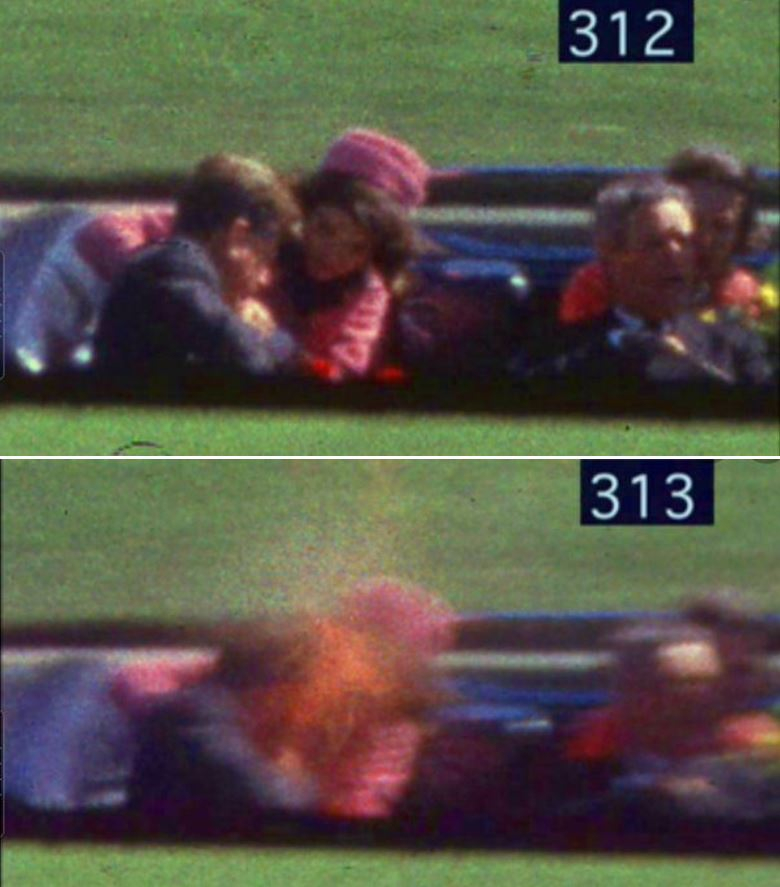
    Facts. Boy there’s a lot to unpack here. Firstly, the assassination of President Kennedy was not broadcast live, meaning it wasn’t witnessed in real-time by millions of Americans on television. It wasn’t until March 6, 1975, during an episode of ABC’s late-night show “Good Night America,” hosted by Geraldo Rivera, that the Zapruder film was shown on television for the first time. This presentation, facilitated by assassination researchers Robert Groden and Dick Gregory, sparked significant public response and outrage. The reaction to the broadcast was a catalyst for the establishment of the Hart-Schweiker investigation into the assassination.

    Secondly Mrs. Kennedy climbed on the back of the limousine to retrieve a piece of her husband’s skull which had been blasted out. Clint Hill testified; “Mrs. Kennedy – the second noise that I heard had removed a portion of the President’s head, and he had slumped noticeably to his left. Mrs. Kennedy had jumped up from the seat and was, it appeared to me, reaching for something coming off the right rear bumper of the car, the right rear tail. Whilst at Parkland Hospital Mrs Kennedy approached one of the doctors in the ER, “her hands cupped one over the other. She was holding her husband’s brain matter in her hands.”(Volume II; p. 138-139, Not In Your Lifetime; p. 18)

    Claim. In her comprehensive listing of entities, groups, and individuals implicated by various sources in the assassination, Stillman identifies notable figures such as Guy Bannister, David Ferrie, Clay Shaw, Carlos Marcello, and even LBJ. Yet, the inclusion of Mark Lane is especially astonishing. Celebrated for his pioneering investigation into the assassination, Lane’s mention in this context is not merely surprising but profoundly unsettling. It prompts a crucial and stirring inquiry: Is Stillman implying that Mark Lane, contrary to all anticipations based on his investigative contributions, might have played a part in the assassination itself? (American Confidential; p. 178)

    Claim. “The rifle was hidden in that garage… November 22, (Oswald) smuggled it out, still in the blankets and he got into the car of his friend who had been driving him to work every day since he had started at the book depository, and he headed up to the sixth floor, package in hand. (American Confidential; p. 173)

    Fact. Firstly, the Commission’s claim is that Oswald transported and hid the disassembled Carcano in a homemade paper bag (CE142), allegedly using materials from the Texas School Book Depository on November 21, 1963. Secondly, the narrative suggests that Buell Wesley Frazier, described as Oswald’s ‘friend’, consistently drove Oswald to work. This claim is flawed, considering Oswald’s visits to Irving, where Frazier lived, were limited to weekends. This discrepancy prompts a critical question: Is it being suggested that Frazier made a significant detour to collect Oswald from 1026 North Beckley for their journey to the TSBD, a scenario that diverges from well-documented facts?

    Claim. Stillman’s portrayal of the moments leading up to the assassination on the sixth floor is highly imaginative and ventures into more speculative fiction. By suggesting that; “the moment was nearly at hand, and (Oswald) may have heard more voices, had some second thoughts. The ghosts of Presidential assassins past began to appear; there was John Wilkes Booth, and Charles Guiteau and then Leon Czolgosz and they all urged him not to waiver, to join them and Oswald cocked his rifle and was ready to fire. (American Confidential; p173) When, in fact, as the film JFK Revisited shows with four witnesses it is almost impossible to believe Oswald was on the sixth floor at the time. For the simple reason that none of them saw or heard him on the stairs descending down, and they were on the 4th floor.

    The book is replete with fictional narratives akin to this, punctuating its pages with imaginative yet historically unsubstantiated accounts. It is with these observations in mind that my critique of the book concludes. (American Confidential; p. 173)

    “The evil that men do lives after them; the good is oft interred with their bones.” Mark Anthony.

    Sources:

    Feldman article on Margurite Oswald

    Martin Hay on Case Closed

    Reclaiming Parkland

  • House of Omission

    House of Omission


    For every milestone anniversary of the Kennedy assassination comes a major documentary from mainstream media. In 1993 we saw the FRONTLINE special “Who Was Lee Harvey Oswald?”. In 2003 it was the ABC special “Beyond Conspiracy”. In 2013 came NOVA’s “Cold Case: JFK”. This time around it was National Geographic’s 3-part series “JFK: One Day In America”. However, unlike the ones that came before, rather than discussing actual evidence, the new kid on the block took a vastly different approach to the case—the simple art of omission.

    Secret Service agent Clint Hill started the program off by saying “There are a few of us left. But very few.” This is hardly the case, as there are dozens of witnesses still alive from that day.

    Right off the bat, the tone of the series was clear—they were going for emotion and tugging at heart strings, sad music and all. All throughout the series this tone was nonstop. Also right away, something felt off. This is because they colorized nearly every single black-and-white film from that day. This makes it offbeat to anyone familiar with the films. They did, however, sometimes use a variety of hardly seen films throughout.

    EPISODE 1

    The first witness we are introduced to is Buell Frazier, who drove Lee Harvey Oswald to work. Here come the omissions. They have Frazier tell the basic fact that Oswald carried a package into work that day—but omitted that Frazier has always insisted it was entirely too small to contain a rifle (2 H 240), and also his strong conviction that his friend didn’t kill Kennedy.

    Up next are assassination eyewitnesses Bill and Gayle Newman. The program has them essentially tell their basic story—but omitted the basic fact that they’ve always said shots came from behind them up on the grassy knoll. (WC 19 H 490)

    Agent Clint Hill tells his story—but they omitted him describing the massive blowout in the right rear of Kennedy’s head. (WC 2 H 141) Of course, all indicative of a shot from the front. He details this in every interview he does. Why did they omit it here?

    Fellow agent Paul Landis was also interviewed—but left out was his recent revelation that he had found a bullet in the backseat of the limousine. And he too described the wound in the back of JFK’s head, and reported “that the shot came from somewhere towards the front.” (WC 18 H 759) Omitted too were these.

    The famous Zapruder film is shown—but the headshot sequence is skipped over. One has to wonder: did they omit it simply because it’s graphic, or did they omit it because it shows JFK’s head going back-and-to-the-left (implying a shot from the front)? The first seems implausible, for it has been shown in dozens and dozens of mainstream documentaries for decades.

    Strangely, when we get to Parkland Hospital, zero of the treating staff are interviewed for the program. Did they not interview these people because they have been insistent since day one that the President was shot from the front? They could’ve interviewed Dr. Ronald Jones, who’s still very much alive. Dr. Jones said in 1983: “If you brought him in here today, I’d still say he was shot from the front.” (Best Evidence, p. 705) They also could’ve interviewed Dr. Don Curtis, Dr. Joe Goldstrich, Dr. Philip Williams, Dr. Richard Dulany, Nurse Pat Hutton, etc.

    EPISODE 2

    Continuing at Parkland, we are given the impression JFK’s body was simply placed in the coffin and taken to the airport. Anyone with even a cursory knowledge about this case would know this is abominably incorrect. Completely omitted was the most basic fact that JFK’s body was illegally stolen from the coroner before an autopsy could be done. It wasn’t just stolen, there was a literal battle over the body. One of the doctors gave this shocking account: “[Agent] Kellerman took an erect stance and brought his firearm into a ready position. The other men in suits followed course…Had Dr. Rose not stepped aside, I’m sure that those thugs would have shot him.” (JFK: Conspiracy of Silence, p. 119)

    We are taken back to Dealey Plaza, and Dallas police officer Rusty Robbins tells the audience “We were in the middle of the biggest manhunt the country had ever seen.” Well, I’m no professional historian, but wasn’t John Wilkes Booth the biggest manhunt ever? That lasted 12 days. This lasted just over an hour. Mentioning briefly the Tippit murder, Robbins tells us the reason Officer Tippit pulled over the man who killed him was because he “matched the description of the guy they thought killed the President.” Only the Warren Report believed this. If that were the case, Tippit would be pulling over every white guy in town that matched the very general description. The truth is, we have no idea why the man was stopped. Completely omitted from the program were any details or evidence about Tippit’s murder.

    News anchor Bill Mercer tells the audience that “Oswald was unaccounted for” in a “roll call” at the Texas School Book Depository after the shooting. This is a common mainstream talking point. The truth of the matter is that 17 employees were never in the building after 12:30! (WC 22 H 632–686) There also wasn’t a roll call. (James DiEugenio, The JFK Assassination: The Evidence Today, pp. 123-24)

    Ruth Paine then tells her story, which is nothing new.

    EPISODE 3

    What was completely skipped over and not even mentioned was the President’s autopsy! They could have interviewed James Curtis Jenkins, who assisted the pathologists that night. He was just 19 years old and it greatly affected him. You’d think the producers would’ve jumped for an interview with him. They could’ve interviewed pathologist Dr. Robert Karnei. They could have interviewed Ed Reed, who X-rayed the President’s body. What about Richard Lipsey, Nick Rudnicki, Dr. Gregory Cross? Etc. I’ve interviewed all these men. Why didn’t National Geographic?

    Also conveniently omitted from the series is the clip shown in every documentary of Oswald shouting to reporters “I’m just a patsy!”

    The “One Day in America” program then jumped to 2 days later on 11/24 to cover Jack Ruby’s shooting of Oswald. This is told from the perspective of reporter Peggy Simpson and not the usual Hugh Aynesworth or Bob Jackson. It was very striking though seeing the film of Oswald being shot colorized.

    The program of course covered President Kennedy’s funeral. But for an attempted sentimental and human interest documentary, why on earth did they not interview any of the surviving honor guards who buried JFK? 5 of the 6 are still living! I interviewed 3 of them.

    After a lot of more sad imagery and music, the series ended with the quick caption: “On 24th September 1964, the Warren Commission concluded that President Kennedy was assassinated by Lee Harvey Oswald alone and Jack Ruby also acted alone.” And roll credits and that’s all.

    All this series did was tell the basic story of what happened that day without any details whatsoever. All it told was: JFK went to Texas, was killed in Dallas, a suspect was arrested, was killed 2 days later, and JFK was buried. That’s literally it. Nothing at all about evidence, what happened, why he died, and why it matters. It makes it seem like there’s no question at all about anything. They also made it sound like these handful of witnesses are the only ones left. Nothing could be further from the truth. This series is the biggest dud I’ve seen. As one reviewer on Rotten Tomatoes rightfully said:

    “It’s just a painfully slow version of how the news was broadcast, nothing more. Asks zero questions about the greatest cold case of all time. Avoid if you are looking for answers.”

    Another reviewer said: “Snooze fest I got 5 mins into episode 2 and turned it off.”

    One has to wonder what we will see in the next ten years.

  • Nicholas Nalli and the JFK Case, Part 2

    Nicholas Nalli and the JFK Case, Part 2


    When Cyril Wecht, MD, JD and I put out a critique of Nicholas Nalli Ph.D.’s “peer reviewed” attempt to resuscitate Luis Alvarez’s moribund “jet effect” theory[1] – that Lee Oswald’s shot from behind “jetted” JFK’s head backward – we expected he’d respond. He did. Yet, he didn’t refute our scientific claims. Instead, he bristled that our commentary was, as the title of his rejoinder put it, “The Anti-Science Attack on Scientific Peer-Review.” Our major “sin” was impugning the questionable “peer review” processes that his journal, Heliyon, used to green-light his paper.

    We stated that Heliyon was not a proper, peer-reviewed scientific journal, for it required authors to pay to publish, and it asked them to suggest whom they’d like reviewing their submission and, worse, who’d they like not to “referee” it. Given the obvious flaws in his work, we argued what seemed sensible: that Heliyon was an unrigorous, pay-to-publish, more or less “vanity journal,” and that his “peer reviewers” were likely neither true experts nor anonymous, but probably folks he chose, including long time Warren loyalist, Mr. Larry Sturdivan. Dr. Nalli responded angrily, demanding a retraction and an apology for our blasphemies that were “an anti-science slander against scientists and contemporary peer-reviewed science publishing.”[2]

    Dr. Nalli is partly right: we are against “contemporary peer-review science publishing.” But not all of it. Dr. Nalli is apparently correct that nowadays some journals like Heliyon want authors to pay and to recommend reviewers. It didn’t used to be that way. Does anyone really believe science is better when a writer can select whom he or she does and does not want reviewing her submission?

    Dr. Nalli admitted that he’d paid Heliyon. But that he neither picked, nor knew, his “referees.” He said Heliyon found them and assured him that they had the requisite expertise – in forensic science, ballistics, projectiles, trauma research, gunshot injury, head injury, and impact, etc. Finally, Dr. Nalli fumed that Mr. “Larry Sturdivan was not one of the anonymous reviewers,” although he did say that Sturdivan had “consulted with him during the writing period.”

    If the above is true, in view of the errors in the work itself, one can have faith in the fact that Heliyon dropped the ball. Dr. Nalli’s reviewers plainly did not have the desired expertise. Nor did his consultant, Sturdivan.

    For example, Heliyon’s “experts” in ‘forensic science and gunshot and head injuries’ didn’t know that Dr. Nalli was wildly proposing that JFK’s premortem brain weighed 2,100 grams, ~700+ grams more than an unblasted, adult male brain.[3] Obviously, neither Dr. Nalli, nor Sturdivan, nor Heliyon’s “peer reviewers” took the 20 seconds it’d take to fact check human brain weights. It’s something an expert in forensic science and/or head injury should have known without googling, and would certainly have spent the 20 seconds if he didn’t.

    After his howler was brought to Dr. Nalli’s attention,[4] he published a correction, claiming his 2,100-gram figure wasn’t an error, but merely an “oversight.” It was indisputably an error; the oversight was his, Sturdivan’s, and his peer reviewers not bothering to check brain weights. Backpedaling to salvage his threadbare theory, he then proposed, with Heliyon’s “peer” approval, that Kennedy’s brain may have weighed “only” 1800 grams or 1650 grams,[5] both weights still well above the normal range of a compete brain – 1,250 to 1,400 grams.

    Worse, Dr. Nalli also offered a third possibility: that JFK’s premortem brain might have weighed 1500 grams, precisely what it weighed when measured at autopsy![6]

    If by pre mortem, Nalli means before he was shot, then Kennedy’s brain was quite above average. If Nalli means after he was shot but before the autopsy, then that would of course have been after bits of it had been blown all over Dealey Plaza, the limo, its occupants, the motor cops riding to the left rear of the limo (though not the right rear), etc. And after Jackie Kennedy had handed a “big chunk of the President’s brain” to Parkland Hospital’s chief of anesthesia, professor Marion “Pepper” Jenkins, MD, during the failed resuscitation effort.[7] Moreover, as per his “jet effect” theory, that would also have been after substantial brain ejecta had shot forward, providing the propulsion that Dr. Nalli argues jerked Kennedy’s skull rearward. Not very likely.

    Zapruder frame 313 shows a mist of debris just in front of JFK’s face, but no real “plume” of brain and bone matter flying forward of him. The exiting bone fragments are flying more upward, not forward. Not discernable in the two-dimensional frame is that those bits were also traveling leftward, and were found to JFK’s left. Similarly, the “debris field” from the frame 313 head shot was principally to the President’s left-rear. (See Figure 1.)

    Picture1Figure 1. Zapruder frame 313 and sketch of documented debris field from head shot at Z-313.

    Zapruder Frame 313 (left image) shows, in two dimensions, that there is a cloudy mist in front of JFK’s face. (See Fig. 2 for comparison with a similar mist seen in a skull-shooting test.) Exiting bone fragments are going mostly upward and, as discussed, to the left. They were not actually going forward which they would have been if, as claimed, Oswald’s shot had entered through the rear of Kennedy’s skull and exited the right front. The debris field (image right) shows that most of the ejecta moved “back and to the left,” as the President’s head also did. This is evidence the shot was fired from Kennedy’s right front, the “grassy knoll,” not his right rear.

    It was thus not accurate for Dr. Nalli to accuse Dr. Wecht and I of “anti-science slander against scientists.” Our brief wasn’t remotely against science or scientists. Quite the contrary. In our two articles we defended good science as against science that was not soundly based but was put out to primarily defend the government’s case for Oswald’s sole guilt.[8] Among these examples are several individuals Dr. Nalli heralds: Nobel Laureate Luis Alvarez, John Lattimer, MD, Messrs. Larry Sturdivan and Lucien Haag, Ken Rahn, Ph.D., Vincent Guinn, Ph.D.,[9] the so-called Ramsey Panel,[10] and, last but not least, the members of the House Select Committee’s forensics panel.[11] It would appear that, Dr. Nalli’s loyalty to these luminaries seems based less on their evidence than on their eminence and loyalty to the government. Let us exemplify our disagreement.

    Luis Alvarez

    Duplication Tests

    Dr. Nalli dilates on Alvarez’s “duplication” shooting tests that he contends confirmed the “jet effect.” He reports that the Nobelist felt stung by a critique he’d received from then-philosophy professor, Josiah Thompson, Ph.D. So, he worked with Paul Hoch, one of his Berkeley graduate students, to find experimental evidence to support his creative theory. Hoch recommended that “Alvarez perform some sort of experimental test that ‘could demonstrate the retrograde recoil on a rifle range, using a reasonable facsimile of a human head.’ They experimented firing upon different targets, ultimately deciding a taped melon as the best facsimile.” Hoch noted that the melons consistently exhibited a ‘retrograde motion’ toward the shooter. Alvarez thus demonstrated that a recoil effect is indeed possible.[12] Dr. Nalli’s account is both selective and incomplete–in a word, unscientific.

    Why did Dr. Nalli never address Josiah Thompson’s discovery that, in his “peer reviewed” Am. J. Physics “jet effect” paper, Alvarez never disclosed that he fired on multiple objects, and all but the melons flew away from the rifle, not towards it? (We had to wait for Thompson to learn of it.) While Dr. Nalli admits that Alvarez got different results from shooting at different objects, he doesn’t tell readers what they were. Is selective reporting that tells the test results that support one’s theory while omitting those that contradict it scientific? Apparently yes, according to Nalli. No, according to Thompson, me, and Wecht. And then there are questions about the specifics of Alvarez’s tests.

    Neither Dr. Nalli nor Alvarez acknowledged that the light-weight target melons only recoiled after being struck with super-charged, deforming, soft-nosed bullets, not after being pierced by the slower, nondeforming jacketed bullets Oswald supposedly used. Furthermore, is a soft-skinned, light-weight melon a “reasonable facsimile” of a much heavier, bony human head, scientifically? Yes, it is, according to Drs. Nalli, Hoch, and Alvarez. No, it isn’t, according to Thompson, Wecht and me. We’ll leave that for readers as a thought experiment. It shouldn’t take too much thinking.

    We challenged Dr. Nalli that this was shoddy scientific reportage. He gave no reply.

    The “Jiggle Effect”

    Alvarez had noted that some Zapruder frames are blurred, and concluded that the blurred images resulted from Zapruder’s delayed startle reaction to the sound of gunshots. “Delayed” because the sound of gunshots traveled more slowly than light, thus more slowly than the visible action in his film. In our review of Dr. Nalli’s tribute to Alvarez, we pointed out that the Nobel winner gave a preposterous, progovernment explanation for the most dramatic of the blurred frames: Zapruder frame 313.[13]

    He wrote: “[I]n the light of this background material we see that the obvious shot in frame 313 is accompanied immediately by an angular acceleration of the camera, in the proper sense of rotation to have been caused directly by shock-wave pressure on the camera body.”[14] Although he mentioned “shock waves,” Dr. Nalli (wisely) kept a deafening silence on Alvarez’s ridiculous claim about frame 313.

    As is well known, and which we pointed out, “shock waves” from bullet blasts travel at the speed of sound, about 1,100 ft/sec. They expand as a cone behind the nose of the bullet as it slices through air.[15][16] Oswald’s supposed bullet flew almost twice as fast as the shock wave, about 2,100 ft/sec. Thus, the expanding shock wave from that missile would not have reached Zapruder in time to blur 313 if Oswald had fired it, from 270 feet away. (Only a shock wave from a “grassy knoll” shot—~60 feet from Zapruder—would have been close enough to nudge the camera and blur frame 313. This fact provides additional corroboration that the frame 313 shot came from the “grassy knoll.” If Oswald had fired that shot, frames 315, 316, and/or 317 would be blurred, and they are not.)

    It’s difficult to understand how Alvarez either didn’t know that, or didn’t check to see if he was right about it. It’s less difficult to imagine why Mr. Science Dr. Nalli never addressed this in either his peevish reply to Wecht and I, or even in his review of Thompson’s book.[17] Similarly, Dr. Nalli refused to glance through another window Thompson opened that offers a useful insight into Alvarez’s loyalties.

    The Vela Incident and Alvarez’s Politics

    Thompson reported that Alvarez had produced a government-friendly, but flat-out wrong, report denying Israel and South Africa had exploded a nuclear device in the so-called “Vela Incident.” Alvarez was promptly debunked by both expert government investigators and on-sight witnesses that Seymour Hersh personally interviewed.[18] Nalli says nothing about this incident, whether in his response to our criticizing him for ignoring it, or in his review of Thompson’s book where it is explored in extenso. It’s an episode that speaks to Alvarez’s trustworthiness when he is called upon to weigh in on issues dear to the government’s heart. This history should not be ignored when judging Nobelist’s credibility on the government’s controversial version of Dallas’s darkest day. Dr. Nalli ignored it, as he did the problems with other Warren defenders he plugs.[19][20]

    John Lattimer, MD

    John Lattimer, MD, a confidant of J. Edgar Hoover[21] and a “jet effect” aficionado, is another of Dr. Nalli’s models.

    Conducting more analogous trials than Alvarez had, Dr. Lattimer fired at human skulls using a Mannlicher Carcano. But he fired downward at them from close range, striking the rear of filled human skulls that were perched atop ladders.[22] The target skulls recoiled, but apparently not due to any “jet effect.” As we pointed out, in his book, Hear No Evil, Donald Thomas, Ph.D. explained the obvious:

    “Lattimer’s diagrams reveal that the incoming angle of the bullet trajectory sloped downwards relative to the top of the ladder, with the justification that the assassin was shooting from an elevated position…But the downward angle would have had the effect of driving the skulls against the top of the ladder with a predictable result—a rebound.”[23] (A video clip of Dr. Lattimer’s shooting tests shows the bullet’s momentum rocking the ladder forward as the skull is driven against the top of the ladder and bounces backward.[24])

    Lattimer’s downward-shooting technique was precisely what longtime Warren defender, and another of Dr. Nalli’s consultants, Paul Hoch, Ph.D. (physics) had sensibly warned against. The target should be fired upon along a horizontal trajectory, Hoch said, not at a downward angle. And the target should either be dangling from a wire or laying on a flat surface.

    Lattimer’s botched technique gave predictably botched results, yet were published by a “peer reviewed” journal. Unlike Dr. Lattimer’s skulls, the base of JFK’s skull and jaw bone were not resting on a hard, flat surface. (It is also worth mentioning that the “wounds” sustained by the blasted skulls were not, as Dr. Lattimer reported, “very similar to those of the President.”[25]) While Dr. Nalli cites our paper debunking Lattimer’s tests, and while he also cites Don Thomas’s book, Hear No Evil, he champions science by maintaining a protective silence about Lattimer’s flawed technique.

    Lattimer’s tendentious skull shooting results were of a piece with his other “peer reviewed” results: He also shot melons. “No melon or skull or combination,” he reported, “ever fell away from the shooter in these multiple experiments,”[26] a finding that deserves an honorable place in the Journal of Irreproducible Results.[27] By contrast, Warren loyalist Mr. Lucien Haag reported what happened when he fired Carcano bullets at melons: “the melons (which were free to move) remained in place, and the entry and exits holes were small.”[28]

    Douglas Desalles, MD and Stanford Linear Accelerator physicist, Arthur Snyder, Ph.D. shot melons with MCC ammo and found the same thing: the targets barely budged, though some did roll slowly away. (Lucien Haag, however, did finally get melons to recoil. But only when he fired after clipping the tips off Carcano rounds to expose the soft lead cores, justifying doing so by arguing that the tip of Oswald’s jacketed bullet would have been breached when it struck JFK’s skull.[29])

    Unscientific Practice Among Pro-Government Authors

    A glaring omission mars all the scientific “peer reviewed” JFK papers by Haag, Alvarez, Lattimer and, given our mention of it in our critique, Dr. Nalli. It is requisite, standard practice in medical/scientific journalism to acknowledge and integrate prior published research findings that bear on an author’s thesis. Writers elaborating on newly discovered aspects of the Theory of Gravity, for example, might well tip their hats to Issac Newton and Albert Einstein. Earlier, published findings that are in conflict with a submitter’s research would typically be discussed and footnoted in referenced work. This is just standard, time-honored practice in peer-reviewed scientific, as well as nonscientific journalism.

    Judging by his copious footnotes, Dr. Nalli appears to grasp this. But when it comes to the “jet effect” and duplicating shooting experiments, Dr. Nalli and jet effect promoters Alvarez, Lattimer, and Lucien Haag, observe this fundamental practice in the breach. They all avert their gaze from what is perhaps the most truly analogous, and credible, test for jet effect ever performed.

    Undertaken by the government for the Warren Commission in 1964, the Biophysics Lab at Aberdeen Proving Grounds ran duplication tests that are virtually never acknowledged by government defenders.

    Using the kind of rifle and ammunition Oswald owned, dried human skulls filled with gelatin were fired upon from the rear. Mr. Larry Sturdivan, a government employee and lifelong Warren defender, participated in those experiments. Using a film shot at 2200 frames/second, he described what happened while testifying to the House Select Committee on Assassinations.

    “As you can see,” Sturdivan swore, “each of the two skulls that we have observed so far have moved in the direction of the bullet. In other words, both of them have been given some momentum in the direction that the bullet was going … In fact, all 10 of the skulls that we shot did essentially the same thing.”[30] (Figure 2)

    Picture3Figure 2. High speed film images from Biophysics Lab skull shooting tests conducted for the Warren Commission in 1964. Note that while the bullet entered the back of the skull, the initial egress of misty material is thrown rearward from the point of entrance in the occiput, and that as much material appears to fly backward from the entry point as from the area of exit in the front. As the skull ruptures, the skull moves swiftly away from the shooter.

    Like the rearward egress of debris in first frame of this series, a mist appears overlying the right anterolateral aspect of JFK’s head in Zapruder frame 313 (Fig. 1), which offers experimental corroboration of a bullet entrance in this location. Bony fragments in the third frame of this series are blowing forward. By contrast, those from Kennedy’s skull flew upward and to the left.

    In our review, Dr. Wecht and I challenged Dr. Nalli on these government experiments. Like his heroes, Alvarez, Lattimer, Haag, et al, Dr. Nalli says not a word. This is science?

    Dr. Nalli and Neuromuscular Reaction

    In his original paper, Dr. Nalli argued that a “neuromuscular reaction” followed the initial “jet effect” at Zapruder 313-14, and it propelled Kennedy’s head and upper torso further rearward after Zapruder frame 315. Citing progovernment, nonexperts such as Gerald Posner, John Lattimer, and especially Larry Sturdivan, Dr. Nalli said that “a neuromuscular spasm is the only physically plausible mechanism known to this author.”[31]

    In our review we assaulted Dr. Nalli on this point. “If ‘neuromuscular spasm’ is the only physically plausible mechanism that Nalli knows of,” we wrote, “it’s likely because he’s ‘cherry picked’ the “expertise” of untrained, inexpert. anti-conspiracy crusaders … Were Nalli the least bit serious, or curious, he’d have scoured and cited the work of proper authorities (e.g. neurophysiologists, neurologists, perhaps even trauma surgeons). But he doesn’t; he sources nonexperts.” Among them are the pathologists of the HSCA’s forensic pathology panel, who are authorities on the victims of “unnatural deaths.” (With apologies to coauthor Wecht, pathologists are no more expert on neurophysiological phenomena of living humans than orthopedists are on pediatric asthma.)

    As we previously documented, JFK’s rearward lunge bears no resemblance to the two scientifically recognized types of “neuromuscular spasms” that have been repeatedly specified by Dr. Nalli’s consultant, Mr. Larry Sturdivan: “decorticate” and “decerebrate” neuromuscular reactions. In a filmed interview, Sturdivan demonstrated JFK’s “neuromuscular reaction.” (Figure 3.)

    Picture4Figure 3. Mr. Larry Sturdivan demonstrating JFK’s “neuromuscular reaction” to the fatal head shot.

    Mr. Sturdivan’s posture mimics neither JFK’s reaction to his fatal head injury nor an actual neuromuscular reaction.

    Picture5Figure 4.

    And here is how JFK actually reacted following the head shot at Zapruder 312-13, (Figure 5)

    Picture6Figure 5. Image left, 1/18th second before his head explodes: JFK’s head is chin-downward, tilted forward and slightly to the left. Image right, ½ second after he’s hit, it is JFK’s head that has moved backward. His back does not arch. His right arm neither flexes inward in “decorticate” posture, nor extends in “decerebrate” posture, as it would were it a “neuromuscular reaction.” Instead, it falls limply to Kennedy’s side.

    Note that JFK’s back does not arch; his legs do not extend, which would be detectable by an upward jerking of his body. His forearms do not adduct or extend as they would if his reaction was either decorticate or decerebrate; they simply drop. Unlike in “neuromuscular reactions,” Kennedy’s back passively follows his head, with no visible backward arching, or jerking.

    All this medically/scientifically-based evidence, and more, was laid out in our critique. Dr Nalli offered no counterevidence to it.

    He was similarly silent on our evisceration of his take on “neutron activation analysis” (NAA), another thoroughly debunked bit of junk science that supposedly buttressed Oswald’s sole guilt.

    Dr. Nalli and Neutron Activation Analysis

    NAA was first proffered as evidence in the Kennedy case by UC Irvine professor Vincent P. Guinn during his House Select Committee testimony. NAA is a sophisticated technique that supposedly allowed scientists to match bullet fragments from a crime scene to the bullet they came from. Guinn testified that NAA proved that all bullets and fragments from the assassination traced to but two bullets, which had been firearms-matched by the FBI to Oswald’s rifle. NAA was debunked years before Dr. Nalli ever put pen to paper on JFK. But because NAA is still touted by some anti-conspiracy evangelists, Dr. Nalli inexplicably tries to maintain it.

    For example, in his review of Last Second in Dallas, Dr. Nalli touts Guinn. He writes:

    …that it was ‘highly probable’ that the fragments in Gov. Connally’s wrist were from the ‘stretcher bullet’ (CE399) found at Parkland Hospital and that the fragments from President Kennedy’s head were from the same bullet as the fragments found in the limousine, thereby providing strong evidence that only two bullets caused all the wounds.[32] Dr. Nalli added a qualifier: “There has apparently been some degree of legitimate dispute about the NAA findings of Guinn. However, counterarguments have since been advanced from forensic experts such as Larry Sturdivan (cf. The JFK Myths) (sic) and Luke Haag. Lacking personal expertise, I shall remain, for the time being, agnostic on Guinn’s findings. Sturdivan and Haag are not to be easily dismissed…”[33]

    Dr. Nalli neither mentions nor alludes to what the “legitimate dispute” is all about, nor even who has disputed Guinn, Sturdivan, and Haag. He has a good, though not a scientific, reason not to. It would be difficult to justify why untrained, uncredentialed, crusading anti-conspiracy “forensic experts,” Sturdivan and Haag, would also happen to have expertise on NAA that’s on par with their detractors who have, contra Dr. Nalli, quite “easily dismissed” Sturdivan and Haag (as well as Guinn, and Kenneth Rahn, Ph.D., Sturdivan’s NAA coauthor).

    The ‘legitimate disputants’ Nalli didn’t think worth naming include the FBI’s National Laboratory, which abandoned the use of NAA to match bullets and fragments in 2005 because of its serious deficiencies;[34] two “conspiracy agnostic,” nationally recognized NAA authorities from Lawrence Livermore National Lab, Eric Randich, Ph.D. and Pat Grant, Ph.D., who specifically debunked Guinn’s JFK claims in the prestigious Journal of Forensic Sciences[35] (Guinn was one of Pat Grant’s professors at UC Irvine, and bore him no malice. See Grant’s “Commentary on Dr. Ken Rahn’s Work on the JFK Assassination Investigation.”[36]); a distinguished professor of statistics at Texas A&M University, Clifford Spiegelman, Ph.D., and his coauthor, FBI chief lab examiner William Tobin, who, among other things, eviscerated the flawed statistical analysis that Sturdivan, had published supporting NAA;[37] as well as others.[38]

    Furthermore, Nalli had every good reason to know of these inconvenient “alternative” facts, and not only from the “literature review” he should have done as a science writer during manuscript preparation. They’ve attracted considerable interest among assassination students. They are easily found by doing a simple google search.[39] Moreover, they were explored in extenso in a piece I wrote with coauthor Wecht that Nalli cites himself. That article included a detailed discussion of the collapse of NAA in bullet matching studies, both in the Kennedy case and elsewhere. It also provided the citations found here, with hotlinks to the peer reviewed papers and the source documents themselves.[40] Dr. Nalli averted his gaze from all this.

    Tellingly, Nalli also fails to mention that neither Sturdivan nor Haag have any primary expertise in NAA. They have no applicable training or background, and no credible NAA research, apart from Sturdivan’s debunked statistical analysis that was demolished, without refutation, by the statistics professor at Texas A&M; by the NAA authorities at Lawrence Livermore Lab,[41] and by Stanford Linear Accelerator physicist, Arthur Snyder, Ph.D.[42]

    Dr. Nalli thus puts lightweights Sturdivan and Haag on one side of the NAA scale, and these heavy-weight ‘legitimate disputants’ on the other, and says he must remain agnostic because they look balanced to him. This is exactly the kind of pro-government, anti-science, cherry-picking that skeptics have learned to expect from pro-Warren “scientific experts.” But the irony doesn’t end there.

    Referring to Thompson’s showcasing the work of the internationally recognized acoustics authority, James Barger, Nalli sniffed that “Thompson has no problem ‘appealing to authority’ when it suits him.’” Without delving into the complexities of the acoustics evidence, James Barger, is, actually, an internationally renowned authority to whom one may perfectly appropriately “appeal.” For Barger’s acoustics credentials, and those of the other acousticians who reported to the House Select Committee, easily surpass those of the so-called Ramsey Panel, the Alvaraz-selected physicists who were not acoustics trained, but who Warrenistas like to believe have debunked credentialed acoustics authorities.

    As he did with the government’s skull shooting tests at Aberdeen Proving Grounds, as well as with “neuromuscular reaction” and NAA, Dr. Nalli eschews credentialed, legitimate, published authorities, but has had ‘no problem appealing to the authority,’ and arguing from the authority, of inexpert, anti-conspiracy activists. For example, Eric Randich and Pat Grant versus Larry Sturdivan.

    Should Dr. Nalli ever want to publicly address our science-based challenges to Alvarez’s selectively reported shooting tests that “proved” his “jet effect theory;” or his “jiggle effect” explanation for why Zapruder frame 313 is blurred; or how Alvarez handled the “Vela Incident;” or John Lattimer’s “duplication” shooting tests; or the U.S. Government’s skull shooting experiments; or Kennedy’s supposed “neuromuscular reaction;” or Neutron Activation Analysis, we would be only too happy to engage and respond in the true spirit of scientific inquiry.

    We won’t be holding our breath. Interested readers shouldn’t either. For Dr. Nalli was invited to an on-line “frank exchange of views” with author Aguilar, a debate. He refused. He was then offered to debate physicist Paul Chambers, Ph.D., author of Head Shot: The Science Behind the JFK Assassination.[43] The host of the debate reassured Dr. Nalli that they would review the nature of the questions beforehand with both Dr Nalli and Dr. Chambers so Dr. Nalli would know it was not going to be an ambush.

    He refused that, too.


    Go to Part 1.


    [1] Nalli, Nicholas. Gunshot-wound dynamics model for John F. Kennedy assassination

    [2] http://jfkfiles.blogspot.com/search?q=nicholas+nalli

    [3] Nalli, Nicholas. Gunshot-wound dynamics model for John F. Kennedy assassination

    [4] Milicent Cranor. Scientist’s Trick ‘Explains’ JFK Backward Movement When Shot

    [5] Nalli, Nicholas. [Heliyon 4 (2018) e00603] Corrigendum to “Gunshot-wound dynamics model for John F. Kennedy assassination”

    [6] https://www.history-matters.com/archive/jfk/wc/wcvols/wh16/pdf/WH16_CE_391.pdf

    [7]JFK in Trauma Room One: The Missing Piece: Last Moments Before Death.” A YouTube video of Parkland Professor Marion T. Jenkins, MD discussing the assassination. This quote can be heard at and after the 5 minute, 25 second mark. Available here.

    [8] Gary Aguilar, Cyril Wecht. “Peer Reviewed” Medical/Scientific Journalism Has Been Corrupted by Warren Commission Apologists – Part 2

    [9] V P Guinn. JFK (John F Kennedy) Assassination – Bullet Analyses

    . Analytical Chemistry Volume: 51 Issue: 4 Dated: (April 1979) Pages: 484A-486A,488A,492A-493A

    [10] Josiah Thompson. Last Second in Dallas. University Press of Kansas, 2021.

    [11] HOW FIVE INVESTIGATIONS INTO JFK’S MEDICAL/AUTOPSY EVIDENCE GOT IT WRONG. Gary L. Aguilar, MD and Kathy Cunningham

    [12]https://www.academia.edu/50355206/The_Ghost_of_the_Grassy_Knoll_Gunman_and_the_Futile_Search_for_Signal_in_Noise. P. 7.

    [13] https://www.kennedysandking.com/john-f-kennedy-articles/1279#_edn78

    [14] Alvarez L, “A Physicist Examines the Kennedy Assassination Film”, American Journal of Physics Vol. 44, No. 9, p. 817. September, 1976. Available here.

    [15] “The speed of sound, known as Mach 1, varies depending on the medium through which a sound wave propagates. In dry, sea level air that is around 25 degrees Celsius, Mach 1 is equal to 340.29 meters per second, or 1,122.96 feet per second.” Available here.

    [16] Robert C. Maher. “Summary of Gun Shot Acoustics,” Montana State University 4 April 2006. “A supersonic bullet causes a characteristic shock wave pattern as it moves through the air. The shock wave expands as a cone behind the bullet, with the wave front propagating outward at the speed of sound.” Available here.

    [17] Nalli, Nicholas. The Ghost of the Grassy Knoll Gunman and the Futile Search for Signal in Noise

    [18] A brief discussion with source notes is available on-line in ref. #18, here.

    [19] See comment #3 following Nalli’s article, The Anti-Science Attack on Scientific Peer-Review. Comment posted here.

    [20] See also ref. #18, here.

    [21] See ARRB Testimony of Charles Baxter, Ronald Coy Jones, Robert M. Mclelland, Malcom Perry, Paul C. Peters, 27 Aug 1998, p. 39-42, here.

    [22] Lattimer JK, Lattimer J, Lattimer G. “An Experimental Study of the Backward Movement of President Kennedy’s Head,” Surgery, Gynecology & Obstetrics. February, 1976, Vol. 142, pp. 246–254.

    [23] Thomas, Don. Hear No Evil. Ipswich, MA. Mary Ferrell Foundation Press, 2010, pp. 362–363.

    [24] Clip from a Walter Cronkite CBS special on the assassination, with voice over by Cronkite. Note that the test skull sits flat, atop the ladder. When it is struck from above, the ladder swings forward as momentum imparted to the skull is transferred to the ladder: watch here.

    [25] Image available at: Milicent Cranor. Scientist’s Trick ‘Explains’ JFK Backward Movement When Shot.

    [26] Lattimer JK, Lattimer J, Lattimer G. “An Experimental Study of the Backward Movement of President Kennedy’s Head,” Surgery, Gynecology & Obstetrics. February, 1976, Vol. 142, pp. 246–254. Available here.

    [27] The Journal of Irreproducible Results 1980-2003. Available here.

    [28] Haag, L. “President Kennedy’s Fatal Head Wound and his Rearward Head ‘Snap,’” AFTE Journal, Vol. 46, No. 4, Fall 2014, p. 283; see Figure 8. (Copy available by request.)

    [29] Haag, L. President Kennedy’s Fatal Gunshot Wound and the Seemingly Anomalous Behavior of the Fatal Bullet. AFTE Journal, Vol. 46, No. 3, Summer 2014, p. 218ff.

    [30] Sturdivan LM. HSCA testimony, Vol.1:404. Available here.

    [31] Nalli N R. Gunshot-wound dynamics model for John F. Kennedy assassination.

    [32] Nalli, N R. “The Ghost of the Grassy Knoll Gunman,” a review of J. Thompson’s book “Last Second in Dallas” published on-line, 6/3/21.

    [33] Nalli, N. The Ghost of the Grassy Knoll Gunman and the Futile Search for Signal in Noise

    [34]FBI Laboratory Announces Discontinuation of Bullet Lead Examinations,” September 1, 2005. FBI National Press Office.

    [35] Erik Randich Ph.D., Patrick M. Grant Ph.D., Proper Assessment of the JFK Assassination Bullet Lead Evidence from Metallurgical and Statistical Perspectives. Journal of Forensic Sciences, V.51(4)717 ff. July 2006.

    [36] Pat Grant, Ph.D. “Commentary on Dr. Ken Rahn’s Work on the JFK Assassination Investigation.” Available on the Mary Ferrell website, here.

    [37] Cliff Spiegelman, William A. Tobin, William D. James, Simon J. Sheather, Stuart Wexler and D. Max Roundhill. CHEMICAL AND FORENSIC ANALYSIS OF JFK ASSASSINATION BULLET LOTS: IS A SECOND SHOOTER POSSIBLE?, The Annals of Applied Statistics 2007, Vol. 1, No. 2, pp. 287–301. Check here.

    [38] * Giannelli, Paul, “Comparative Bullet Lead Analysis: A Retrospective,” Case Western Reserve, Sept., 2001.
         * William Tobin. “Comparative Bullet Lead Analysis: A Case Study in Flawed Forensics”, www.nacdl.org The Champion.
         * Charles Pillar. “Report Finds Flaws in FBI Bullet AnalysisLos Angeles Times, 2/4/2004. Charles Pillar.

    [39] *Cliff Spiegelman, Ph.D. “What new forensic science reveals about JFK assassinationSalon.com, 12/12/2017.
          * See also: Pat Grant, Ph.D. (Lawrence Livermore Laboratory). Commentary on Dr. Ken Rahn’s (NAA) Work on the JFK Assassination Investigation.

    [40] https://www.kennedysandking.com/https://host626.com/wp-content/uploads/2016/07/AguilarWechtAFTA2015-f07.pdf

    [41] See Pat Grant’s evisceration of NAA defender, Ken Rahn. “Commentary on Dr. Ken Rahn’s Work on the JFK Assassination Investigation

    [42] Arthur Snyder, Ph.D. Comments on the Statistical Analysis in Ken Rahn’s Essay: “Neutron-Activation Analysis and the John F. Kennedy Assassination”

    [43] Head Shot: The Science Behind the JFK Assassination