Tag: WARREN COMMISSION

  • The Dual Life of Albert Osborne

    The Dual Life of Albert Osborne


    osborne bowen smallIn the field of Kennedy assassination studies, Albert Osborne is the stuff of both legend and legerdemain. Much of that is due to the tales told by the man himself. Was he Albert Osborne or, as he tried to maintain, was he John Howard Bowen? Did he sit next to and talk to Lee Harvey Oswald on his bus trip to Mexico City? And why did he leave the country after that mysterious journey? A journey so fabled that the late author Philip Melanson once called it, “Oswald’s Mexican Mystery Tour.”

    Oswald’s alleged trip to Mexico City in late September of 1963 has been the subject of abundant research and controversy. There has been much discussion about whether or not he actually took the trip to Mexico, and if that strange voyage was somehow connected to the assassination of John F. Kennedy. The FBI, at the behest of President Lyndon Johnson, investigated the murder of the young president. In public at least, the Bureau and the Warren Commission declared that their probe led to the discovery that Oswald was seen sitting beside a man named John Howard Bowen on a bus bound for Mexico City. The FBI eventually discovered that Bowen was an alias. The man’s real name was Albert Osborne. Their investigation of Osborne, as can be expected, was not complete.1 Because of that fact, a mythos about the strange figure of Albert Osborne sprung to life in assassination literature. Even the late diehard Warren Commission defender Vincent Bugliosi wrote that “many of the questions about Osborne-Bowen remain unanswered.”2

    The liveliest piece of disinformation about Osborne was printed in The Torbitt Document, sometimes called Nomenclature of an Assassination Cabal. There, Osborne is actually supposed to be in charge of recruiting the assassination team from Mexico. And in October of 1963, he is depicted as having been in New Orleans meeting with Clay Shaw and CIA associated attorney Maurice Gatlin. As is the case throughout that misleading pamphlet, there is no proof provided for any of these claims. But the evidentiary problems about Osborne stemmed from the fact that he was an enigmatic and interesting character who told many lies to the FBI. Furthermore, the man seemed to have no steady source of income to finance his many journeys from Mexico, through various parts of America, and to Europe. But even with all the mystery about his traveling and his identity, the Bureau stopped investigating him in March of 1964 without ever establishing what, or even if, he had a job. It is difficult to place the circumstances of Osborne’s life at that time into any kind of legitimate employment. He himself told stories about what he did for a living, and as we shall see, those who knew him had suspicions he was involved in espionage work.

    This article will continue the investigation into the life of Albert Osborne and will also provide a brief outline of the life of the real John Howard Bowen. We will conclude with a short discussion about whether or not the two ever met.


    In the Beginning

    Albert Osborne began his life in Grimsby, England on November 12, 1888 3 (Appendix 1). He was one of 12 children born to his father James, a fisherman, and his wife Emily.4 He attended St. James Academy in Grimsby until the eighth grade before leaving school.5 He worked as a grocer and served in the militia before enlisting in the British Army on December 12, 1906, at the age of 186 (Appendix 2).7 After joining the army he was sent abroad to serve in different posts in the British Empire. He went to India, Aden and Gibraltar, before been stationed in the British colony of Bermuda.8 His British army service records reveal that his time in the army was uneventful and that he did not participate in any military actions.

    His stay in Bermuda would be a short one. He arrived on January 7, 1914 and he resigned from the army on June 29, 1914.9 His timing could not have been better, for on June 28, 1914, the day before he resigned, the Archduke Franz Ferdinand of Austria and his wife, the Duchess of Hohenberg, were assassinated in Sarajevo, Bosnia by Gravilo Princip, a Serbian nationalist. This tragic event was the fuse that ignited the powder keg that was European imperial politics, and led to the start of World War I in August of 1914. Albert Osborne would escape the horror of trench warfare, which would become the enduring symbol of this war, by departing for the United States.

    Upon his arrival in the United States he can be found in the company of missionaries. The Washington Post reported that a man named Albert Osborne was one of a group of people who participated in a program that illustrated the life and customs of peoples in India, China and other countries. The presentation took place at the Seventh Day Adventist Washington Missionary College that operated missions in foreign countries.10 As we will see later, other newspapers in later years will also write stories about a man named Albert Osborne who gave lectures about his travels in India, and he was the same man who would go by the name of John Howard Bowen.

    In 1917 Osborne did something that cannot be explained. By that year World War I had been raging for three years and had killed millions of soldiers in Europe. But this horror did not stop him from enlisting in the Canadian Army, which had been fighting in Europe since 1914. Upon enlistment, he completed an “Attestation Paper Canadian Over-Seas Expeditionary Force” (Appendix 3).11 This document was an army application form. On it he indicated that he enlisted at Toronto, Canada on August 2, 1917 and that his present address was Nashville, Tennessee.12

    A comparison of his British and Canadian army application forms reveals that there are some important discrepancies between the descriptions of the man who enlisted in the British Army in 1906 and the man who joined the Canadian Army in 1917. There is a significant difference in his height, the year of birth is not correct and the middle names are different. These differences may suggest that someone other than Osborne had joined the Canadian army using his identity. A more likely explanation is that these differences can be explained, and that the man known as Albert Osborne who resigned from the British army in 1914 is the same man who joined the Canadian army in 1917.13

    The most compelling difference between the two application forms is his height. When he enlisted in the British army in 1906 at the age of 18, his height was 5 feet 4.5 inches.14 When he joined the Canadian army in 1917, his height was 5 feet, 9 inches, a difference of 4.5 inches.15 His British army service records provide a clue that may explain this height difference. It states that “After six months service and gymnastic courses” his height was now 5 feet 5.5 inches; he had grown one inch in six months.16 His increase in height may be explained by his age. As he was only 18 when he enlisted in the British army; he may have been young enough to have not reached his full height, as can be seen by the additional one inch he gained in the six months after his enlistment. Unfortunately, his British army service records do not provide his height when he left the army in 1914 at the age of 25, by which time he must have attained his full height; consequently, it cannot be confirmed if he had added 3.5 inches during his tenure with the British army. Both of his British and Canadian military service records also do not include photographs of him that can be compared to determine if they are the same man.

    There are two other discrepancies on his Canadian army application form. He stated that he was born on November 12, 1885; his correct date of birth is November 12, 1888. He also stated that his middle names were Victor and Emmanuel.17 These names are not included on his British army application form or on the “Certified Copy of an Entry of Birth” that provides his date of birth and his name when born.18 Osborne’s name can also be found in the 1891 and 1901 English censuses and the only name provided is Albert.19 These two differences suggest that someone else may have acquired Osborne’s personal information, and in the process of doing so did not did not acquire all of the correct data. This theory could be true if the year of birth had been the only personal information that was not correct because a person using his identity would use the date provided, believing it to be correct. This is not so with his middle names, because Osborne did not have any, and a person who had acquired Osborne’s identity would not have had any reason to state that his middle names were Victor and Emmanuel.

    Then why alter his year of birth and add these two middle names to his application form? A possible explanation is that it is an early experiment in altering his identity and may also explain the one-year discrepancy in his age on his British army application form. Eventually he would take on a completely new identity, that of John Howard Bowen, and would continue to alter his identity when he saw fit to do so. For example, on his application for a new Canadian passport dated October 10, 1963, he used his real name Albert Osborne but added the middle name Alexander.20

    Osborne’s enlistment in the Canadian army, like his stint in the British army, was uneventful. His army service records reveal that he spent the remainder of the war safely on Canadian soil, and he did not travel to Europe to join the fighting there. He did however become ill. His medical records indicate that he was diagnosed with malaria in June of 1918. He told the doctor treating him that he contracted it in Egypt in 1915 but does not state what he was doing there.21 How did he contract malaria? He may have gone to Egypt as he told the doctor treating him or he may have contracted it in Canada while serving in the army. According to an article in the Canadian Medical Association Journal, malaria was brought to Canada by infected European immigrants in the nineteenth century and did not diminish until early in the 20th century.22


    Leaving the Military

    On January 31, 1919, he was discharged from the Canadian army, and on his “Canadian Expeditionary Force Discharge Certificate” he said that his address on discharge was Nashville, Tennessee.23  According to an FBI interview given on March 3, 1964, Osborne went to Washington D.C. sometime after the war where he met a Syrian whose name he could not remember. The two of them went into the rug cleaning business and traveled throughout the United States cleaning rugs.24 Osborne did not provide any corroborating evidence to support his claim that he both met the unnamed Syrian and went into the rug cleaning business with him. But there is an advertisement in an Indiana, Pennsylvania newspaper that may shed some light on his story. The Indiana Evening Gazette published an advertisement with the title “A Letter from Mr. Osborne” that was signed by “Albert Osborne” (Appendix 4). The advertisement was placed by T.B. Buchholz & Company of Indiana Pennsylvania. The company’s services included rug cleaning for both oriental and domestic rugs.25 Could the Albert Osborne from this advertisement be the same man that also went by the name of Bowen? It is highly doubtful that Osborne would have used this company’s services. As of April 14, 1943, he was in Knoxville, Tennessee, which is over 500 miles from Indiana, Pennsylvania. Osborne may have vouched for this company’s services even though he had not purchased them; acting as a shill would be an activity that a man using false identities might get involved in. He may have also changed his story from the dubious activity of being a shill to the more lawful job of a rug cleaner when he was questioned by the FBI. The other possibility is that there was a man named Albert Osborne who resided in Indiana, Pennsylvania who had used their services.

    While it is doubtful that Osborne worked as a rug cleaner, there are numerous newspaper articles that describe a man named Albert Osborne who gave lectures and acted. On November 19, 1924, The Winston Salem Journal reported that a “Dr. Albert Osborne, who has gained much fame as a lecturer on India …” spoke about his travels in India in Leakesville, Virginia. The same article describes him as a son of American missionaries and a graduate of Oxford University in England, which he added to his biography. The article also mentions that he had been on the Chautauqua26 stage for a number of seasons.27 On February 9, 1925, The Charlotte Observer reported on a Dr. Albert Osborne who had lectured about Christianity in India, Africa and Korea. He is again described as the son of missionaries and an Oxford graduate and is described as “… of Washington, D.C. lyceum and Chautauqua lecturer…” 28 Could this be the Albert Osborne that the FBI found on the Mexican bus manifest? He could lecture on India, as he had spent about four years there when he was in the British Army. Adding the title of doctor to his name and lying about his education and his parents is not beyond what he was capable of. This information is also corroborated by his sister, Ada Amos, who told the FBI in 1964 that he was an actor and lecturer on India.29 As we shall see, this is more credible than the rug cleaning story.

    On October 9, 1925, The Knoxville News reported that the missionary Albert Osborne would be traveling to India (Appendix 5).30 Ten years later there is another man in Knoxville lecturing on life in India. His name is not Albert Osborne. It is John H. Bowen, who the newspaper describes as the “… Famous Teacher.” The Knoxville-News Sentinel report dated March 28, 1935 also mentioned that he taught in India for 11 years (Appendix 6).31 On April 14, 1935, the same newspaper said that J. H. Bowen, who had been a missionary in India for a few years, had been lecturing in different Knoxville schools about life in India.32 Is the man who is now lecturing about India and who goes by the name of Bowen the same Albert Osborne who departed for India in 1925? The similarities in the stories about India and being famous, which are mentioned in a previous story about him, are hard to ignore. Though one has to wonder if the newspaper reporters who wrote the stories, both of whom worked for the same newspaper, noticed the discrepancy in how much time he told them he spent in India.

    Another interesting question about Osborne is how he could depart Knoxville in 1925 and return to the same city using a different identity without being recognized by anybody. The exact date of Osborne’s arrival in Knoxville after his alleged 11 year trip to India is unknown, but newspaper reports indicate that he was back as early as 1934. The Knoxville-News Sentinel dated October 10, 1937 wrote that on October 12, 1934, J. H. Bowen, F. M. Long, former YMCA Secretary for South America, local businessmen and professionals met with young boys and convinced them to join a new organization called the Campfire Council.33 He was also a member of the First Baptist Church in Knoxville by November 1934.34 Assuming that 1934 is the year that he arrived in Knoxville, then how can Osborne the Indian missionary become Bowen the Campfire Council member who also speaks about life in India, nine years later without being recognized by anybody as Albert Osborne? This is difficult to explain and needs to be explored further. One possible explanation lies in the fact that the 1925 article that placed him in Knoxville stated that he spoke there but did not say that he was a long-term resident of that city. A long-term resident would most likely have had associations with enough people to make it difficult to return without being seen by people who knew him as Osborne. This may explain why he was not recognized when he returned there.


    Creating the Campfire Council

    In 1934, Osborne, using his alias Bowen, became one of the founders of the Campfire Council. The goal of the Campfire Council as stated in its “Charter of Incorporation” of 1938 by the State of Tennessee was “… for the welfare, aid, and benefit of underprivileged boys and girls …” (Appendix 7).35 The Knoxville-News Sentinel story dated October 10, 1937 read, “Such crime prevention work on the part of the Campfire Council attracted the attention of those keenly interested in the reduction of juvenile delinquency.”36

    By all accounts, the Campfire Council was a success. On April 23, 1939, The Knoxville News-Sentinel published an article, “Campfire Council Work Gets High Praise From Official and Committee.” This article painted a glowing portrait of how the Council had helped “Well over 800 underprivileged boys spen[d] their leisure time in the gymnasium and playgrounds, operated by this organization.” The boys were able to participate in events such as woodworking, painting, basketball, softball and other activities. The Council also provided, among other things, free lunches and clothing.37 Campfire Council boys were also awarded prizes. James Thompson and Herbert Sams were awarded a prize of a trip to Bermuda because they were “… outstanding members of the organization.” They were accompanied on the trip by Osborne,38 who had visited Bermuda numerous times.39 The article also mentioned the work done by Osborne: “Mr. Bowen’s work has long passed the experimental stage. During these five years, seventeen juvenile gangs have been won over to a constructive program of good citizenship.”40

    The Campfire Council’s success was followed by the creation of another organization: Boysville. Boysville was created to provide aid to delinquent boys and a meeting was planned for April 5, 1940 to discuss plans to create it. The newspaper report also stated that it was “… patterned after the Nebraska institution.”41 The Nebraska institution that was referred to was Boystown, which was founded in 1917 by Father Edward Flanagan and whose mission it was to help destitute boys.42

    Osborne’s stellar record with the Campfire Council would soon be marred by an accusation made by Charles M. Pickel who lived in the vicinity of Boysville. He said that a boy at the camp had told a man named George Sharp that Osborne, who was known as Bowen at Boysville, had stomped on an American flag. Pickel accused the boys at the camp of thievery and vandalism, and complained about the noise made by the police dogs at the camp.43 The camp at Boysville had an American flag. A newspaper article written by J. H. Bowen, dated July 28, 1940, in The Knoxville News-Sentinel reported that there was a flag raising and lowering ceremony every morning and afternoon at the camp.44 A Tennessee Highway Patrolman investigated these claims at the request of the FBI but could not find any evidence that Bowen had stomped on the flag. The only complaint that local residents had were in regard to the police dogs at the camp, of which they were afraid.45

    Osborne’s reputation again came into question in 1943 when he was accused of making sexual advances to some of the boys at the Campfire Council. This time the charges stuck, since he left the Council. His departure was mentioned in the newspaper, but the accusations made against him were not divulged. This omission would allow him to return to Knoxville in the future with his reputation intact.46


    In Canada and Announcing his Retirement

    For the next few years there are scattered sightings of Albert Osborne. In a letter to the editor in 1946, Osborne, using his alias John Howard Bowen, writes that he attended a banquet in Laredo that was attended by both Protestant and Jewish congregations.47 In 1947 he spoke at the Knoxville Cavalry Baptist Church where he told his audience that he “… was director of religious education for the Baptist Church …” for the last five years,48 even though he had only left his position at the Campfire Council four years previously. In a 1948 letter to the Knoxville News-Sentinel he refers to himself as “Reverend” and describes how Christmas was celebrated in Huajuapan de Leon Oaxaca in Mexico.49

    Osborne also traveled to Canada. A document sent by him to the Department of Veterans Affairs (DVA) in Ottawa, Canada requesting a copy of his military service certificate indicated that he was staying at the YMCA in Toronto.50 The request made by him is not dated, but was answered on June 4, 1953, which suggests that he was in Toronto sometime before June of 1953. The reason for requesting this document is not known, but on November 12, 1953 he would be 65, and he may have been eligible for veteran’s benefits because of his service in the Canadian army during World War I.

    In 1953 Osborne claimed that he retired from missionary work. “Bowen’s” retirement was announced in an article published in The Knoxville News-Sentinel on December 5, 1953.51 The newspaper’s source for this information is a letter it received from Bowen’s successor at the mission. That person’s name is none other than Albert Osborne. Osborne also mentions that Bowen’s 73rd birthday is in January and friends may write to him at Post Office Box 308 Laredo Texas. Why he is now using his real name is not certain, but he must have been confident enough to use his real name without someone in Knoxville making a connection between his real name and his alias, John Howard Bowen.

    The Knoxville News-Sentinel was not the only newspaper to publish a story about his retirement. The Knoxville Journal also wrote a story about his retirement and it was published on the same day.52 Comparisons of the two stories reveal that the stories had some similarities and some differences. His successor, Albert Osborne, is not named and the source who told the newspaper that he was retiring is not provided in The Knoxville Journal story. The same Laredo mailing address is provided in both articles, but The Knoxville Journal article invites friends to write to him at Christmas, rather than in January for his birthday. The most important anomaly in the stories lies in the pictures that each newspaper published. The pictures were not the same. The Osborne portrayed in The Knoxville News-Sentinel appears to be heavier and has a receding hairline (Appendix 8). The man portrayed in The Knoxville Journal, is wearing a sun helmet and zippered jacket (Appendix 9). He is slimmer but his hairline cannot be determined because he has a hat on. Patricia Winston and Pamela Mumford, who were allegedly on the same bus as Osborne going to Mexico, were shown the picture in The Knoxville Journal and both could not identify him as John Howard Bowen.53 The pictures may have been taken at different times, which may account for the different appearances. But one has to wonder if Osborne’s friends and associates in Knoxville recognized both men in these two pictures as the man they knew as John Howard Bowen.


    Was Osborne Really a Missionary?

    Osborne’s retirement from missionary work raises the issue of whether or not he was a real missionary. There are some witnesses that say he was one, but none of them indicated that they actually saw him engaged in this work. In a newspaper report dated September 11, 1954, Claude L. Baker Sr. of Elmo, Tennessee, who knew Osborne as Bowen, stated that Osborne was involved in missionary work in the Mixteca Indian territory in Southern Mexico.54 His statement must be questioned because the article did not say if he met Osborne in Mexico doing missionary work, or if he was told by him that he was involved in it. Reverend Walter Laddie Hluchlan, who knew Osborne as Bowen, said that he gave bible lessons for many years to boys55 who resided at his residence.56 Even though Hluchlan did not say he actually saw him teaching those boys, there could be some truth to his statement. The Osborne who resided in Knoxville spent many years working at the Campfire Council, which catered to young boys. It would not be unusual for him to work with them, so this could be true. Mrs. Virgil Dykes, who was questioned about Bowen by the FBI, told them that she never met him but made contributions to his mission, and did not indicate that she had proof that he was doing missionary work.57 Oddly enough, The Knoxville Journal published a story dated November 28, 1954 in which he said that he had now returned to missionary work. And the story conveniently included a picture of him surrounded by Mixteca Indians (Appendix 10).58 The source for this article is a letter written by Osborne, so the veracity of it must be questioned. The inclusion of the Mixteca Indians could have been an attempt by him to convince his readers that he really was working with them. And the inclusion of his home address can be construed as a way to encourage people in Knoxville to send him money to support his alleged mission. As many who have studied the CIA understand, Allen and John Foster Dulles made extensive use of missionaries and other religious organizations as cover for intelligence agents and operations.59

    During their investigation, the FBI confirmed that Osborne had a social security number (SSN) and that the number was 449-36-9745.60 His statement about having a SSN is confirmed by his application to obtain one, dated August 16, 1943, for which he applied using the name John Bowen. As can be seen on his application form, he states that he is unemployed (Appendix 11).61 This concurs with the fact that he lost his job at the Campfire Council in 1943. He also does not know his parents’ names. What is unusual about the application form is the way he spells the name “John”. The way that it is spelled is “Jno”. This spelling matches exactly the way his first name is spelled in the Knoxville City Directory in 1938 (Appendix 12).62

    It is interesting to note that in September of 1962 Osborne made a comment about John F. Kennedy’s presidency. He had returned to Knoxville to speak at a rally at the North Glenwood Baptist Church. He told Fred Allen Jr., who was the church’s pastor and who knew him as Bowen, “… that he ‘felt that it is a very dangerous thing for the United States to have a Catholic as president.’”63 He also told Allen that he did not want to stay at his place because he “… ‘didn’t want to risk getting me involved in something.’”64 This statement by Osborne must have aroused Fred Allen’s suspicions about Osborne’s activities, given that he also made comments about Kennedy’s presidency. It is an interesting fact that when the FBI interviewed Allen in 1964 he failed to mention the conversation he had with Osborne in 1962. Instead, he told them that he had received a postcard from him on February 18, 1962.65 His apparent memory lapse is notable because he remembered an innocuous postcard he received from Osborne, but did not recall an actual conversation he had with Osborne, in which he was told that he might be involved in something and had also commented on the danger involved with having a Catholic president. And the purpose of the interview was an inquiry into that president’s death.


    Osborne/Bowen, Mexico City, and Oswald

    We now come to 1963. In that year, with no visible occupation, Osborne continued his wandering ways. He was still residing in Mexico, but continued to traverse the United States-Mexican border, something he had been doing since 1939.66 It was on one of these trips that the Warren Report said he ended up on the same bus as a man who was either Lee Harvey Oswald or someone impersonating him. Was he on this bus because there was an Oswald impersonator on it, and he therefore would be able to vouch for the impersonator’s presence on the bus?

    Lyman Erickson was director of the Christian Servicemen’s Center in San Antonio Texas. This is where Osborne stayed before he died.67 Erickson knew him as Bowen. He said Osborne had told him “… ‘I traveled to Mexico with Lee Harvey Oswald, and I was called in and questioned about it.’” [emphasis added] Erickson did not quote him as saying, “‘I just happened to sit next to Oswald,’ …”68 A statement by Osborne to the FBI, however, contradicts what he told Erickson. FBI agent Bob Gemberling, in an interview with the BBC69 about Albert Osborne, said, “‘He denied he was sitting next to Oswald.’”70 Gemberling also told the BBC that Osborne’s denial about sitting next to Oswald, even though witnesses said they sat together, resulted in the FBI doing an extensive investigation of the man.71 That FBI report is over ninety pages long and features both an index and Table of Contents. (See Commission Exhibit 2195, in Volume 25 of the Warren Commission) It was due to that FBI inquiry that Osborne showed up not just in the Warren Report, but also in many books written about the JFK case. For instance, Osborne is written about by such authors as Jim Marrs in Crossfire, Philip Melanson in Spy Saga, and Anthony Summers in Conspiracy.

    The Mexican authorities had disposed of the original and a copy of the passenger list for the Flecha Roja (Red Arrow) bus that Osborne rode in Mexico. Therefore, the FBI used the luggage manifest and immigration records to piece together who was on the bus.72 This is how they found the name of Mr. Bowen. But they could not find Bowen. One problem with finding Bowen/Osborne was that he had tossed out a bundle of tall tales to the people around him on the bus. As the FBI noted in their long report, he told some passengers that he had never been to England, that he was a retired schoolteacher, and that he was working on a book about the Lisbon earthquake.73

    In January of 1964, when the FBI finally did catch up with Osborne in Mexico, he gave no clue that it was actually he on the bus. He told FBI agent Clarke Anderson that he was an ordained Baptist minister. He denied there were any English language speaking passengers on the Flecha Roja bus. He said he had not talked to Oswald, nor sat next to him as others said he did. In fact, the man he described as sitting next to him, dark-complected and Hispanic looking, did not fit the description of Oswald. During one of his four FBI interviews he was shown a photo of Oswald. He said he never saw the man before. During that interview, in February of 1964, he denied the FBI had interviewed him in January. (See the FBI report referenced above and Ron Ecker’s online essay, “From Grimsby with Love”.)

    It was not until March of 1964, while staying at a YMCA in Nashville, that Osborne finally admitted he used Bowen as an alias. He offered the Bureau the excuse that John Howard Bowen sounded more American to him. Osborne’s lack of steady income, contrasted with his extensive travels, the tall tales he spewed about the Flecha Roja ride, and his use of a dual identity, should have made him a person of interest to the FBI. There is no evidence he was. Nor is there any evidence Osborne was confronted with perjury or obstruction of justice charges in a murder investigation.

    The available evidence cannot reliably answer whether Osborne traveled to Mexico with Oswald, or if it was someone impersonating Oswald as part of a conspiracy to assassinate Kennedy. Some evidence indicates he did sit beside Oswald. Pamela Mumford, allegedly on the same bus as Osborne, was shown pictures of Osborne and she confirmed that he was the man sitting next to him.74 Sitting next to someone on a bus however does not make a person a conspirator. This could have been a coincidence. Any person sitting next to Oswald would have been questioned by the FBI and would have been considered a suspect. But Osborne’s statement to Erickson that he traveled there with him and was not just sitting beside him on the bus cannot be ignored. If the conspirators who planned Kennedy’s murder wanted someone to accompany either Oswald or his impersonator, Osborne would have been a good choice because he could explain his presence on the bus by the fact that he frequently traveled between the United States and Mexico. If possible, more research has to be done on the trip to Mexico. Osborne did not explain to Erickson why he traveled there with Oswald, and it still has not been established to an absolute certainty what the trip’s role, if any, was in Kennedy’s assassination.

    After he returned from Mexico, Osborne showed up in New Orleans at the Canadian consulate. He gave an address in Montreal as his permanent residence, saying he had been there since 1917 and that he was a Canadian national. He cancelled his previous Canadian passport and took out a new one. What makes this odd is that the previous passport was only four months old.75

    With his new, clean passport Osborne was on the move again in November of 1963. The Knoxville Journal reported that Bowen had departed New York for Europe on November 13, 1963. The newspaper stated that the purpose of his trip was a speaking tour of England, Spain, Portugal and Italy.76 The timing of his trip is an interesting coincidence. The man with dual identities, and who was allegedly on the same bus as the president’s alleged assassin, decided to leave the country on November 13th, nine days before Kennedy was assassinated.


    After the Assassination

    The FBI spoke to Reverend Walter Hluchlan about Osborne’s European speaking tour. He told them that he received an undated letter from him that stated that he had been on a preaching tour of England, Northern France, Spain and North Africa.77 The letter does not exactly match the newspaper report cited above, as Northern France and North Africa replaced Portugal and Italy. The problem with the letter is that the return address is Mexico and not Europe, so there is no European postal stamp to confirm that he had visited any of these four countries. Mrs. Lola Loving, who knew Osborne as both Osborne and Bowen,78 told the FBI that she had received a letter from him in Spain anywhere from a few weeks to two months ago.79 Her interview with the FBI however did not indicate that she showed them a copy of the letter with a Spanish postal stamp on it.80

    We know that he was in England because his brother Walter and his sister Mrs. Featherstone confirmed that he had visited them in Grimsby.81 But this is where the truth ends and fiction begins. Walter Osborne told the FBI that his brother flew to Prestwick, Scotland with scientists who were traveling to Iceland to photograph a volcano. But it was not confirmed if Osborne got off the plane in Prestwick or went with them to Iceland.82 According to the FBI he arrived at his sister’s home by train from Prestwick.83 The FBI was able to determine that he arrived at New York City on December 5, 1963 aboard an Icelandic Airlines aircraft that he boarded in Luxembourg, Belgium.84 Flying on Icelandic Airlines suggests that he made a stop in Iceland. It is unlikely, however, that scientists, assuming that there was a group of them that went there to photograph a volcano, would allow him to accompany them on their trip since he did not have a scientific education.85 Osborne probably made up the story about the trip to Iceland and he flew on an Icelandic aircraft to corroborate his story about being there. He most likely said that he met the scientists in Prestwick because he arrived at his sister’s home from a train and this would add credibility to his story. To this day, his trip to Europe after the assassination is shrouded in mystery, and we do not know where he was on November 22, 1963.

    For the wandering Osborne, his final destination was a hospital in Texas. He died at the Medical Arts Hospital in San Antonio on August 31, 1966.86 His “Certificate of Death” attributed his passing to a number of problems, one of which was kidney failure. The person who informed the authorities of his passing was Reverend Lyman Erickson. 87 When the FBI found out about his death they told him not to speak about Osborne’s passing. In an interview with the Knoxville News-Sentinel in 1993, Erickson said he was told by the Bureau “… ‘to forget everything I knew about him, told me to forget I ever knew him, and told me to never to speak of this matter to anyone.’”88 Reverend Erickson complied with the FBI request and asked Roy Akers Funeral Chapel in San Antonio, where Osborne’s remains had been sent, “… not to run notices in paper as FBI requested that it be kept quiet as possible.” (Appendix 13).89 Erickson must have also realized that the man who had been staying with him was enigmatic. He told The Knoxville News-Sentinel that the man he knew as John Howard Bowen owned a kit bag that had a false bottom that contained his Albert Osborne identification papers.90 He too was interviewed about Albert Osborne by the BBC and he quite logically said, “‘I think he was an agent. My problem is, I don’t know if he was an agent for the United States or a foreign government.’”91


    John Howard Bowen

    John Howard Bowen was born in Chester Pennsylvania on January 14, 1880.92 His parents were James and Nellie Bowen, and according to the 1900 United States Census, his father was born in 1853 and his mother in 1868.93 The census also indicates that they had two sons, Howard J., born in 1880, and Alfred V., born in 1882.94 Not much is known about his early life except for the fact that his father married after his two sons were born. The Chester Times dated May 11, 1886 announced the wedding of a Mr. James A. Bowen to Mrs. Nellie Gillen, both of Chester, in Camden, New Jersey.95 On Bowen’s application for social security (Appendix 14), he indicated that his mother’s name was Edith Montgomery; therefore, Bowen’s father was married prior to 1886 to another woman who bore the children, and then either died or they were subsequently divorced.

    Bowen or his parents had some religious inclinations, as he was baptized on January 21, 1897. A record of baptisms from a United Methodist church shows that his brother Alfred Victor was also baptized on the same day.96 On September 13, 1905, Bowen married Fannie Mae Hall, 97 and their marriage produced no children.

    In 1910 Bowen was employed as a printer in Camden, New Jersey.98 In 1910 or 1911 he began a career with the YMCA that would last over 20 years.99 He began work with the YMCA in their railroad Department100 in Camden, New Jersey.101 His job required him to move from time to time, and he lived in: Conemaugh, Pennsylvania; Gassaway, West Virginia; and Hamlet, North Carolina, where he remained until his employment with the YMCA ended in 1933.102

    Tragedy struck Bowen in 1934 when his wife of 29 years, Fannie, died after being sick for a long time.103 In 1935 he moved to Tampa, Florida where he was employed as a hotel clerk.104 On July 6, 1937, John Howard Bowen applied for a SSN. The SSN number he was assigned was 239-12-4551, and this number can be seen on his application form (Appendix 14).105 Unlike Osborne, he knew his parents’ names and he included his middle name as well, which Osborne said he did not know.106 On his application for social security he also indicated that he was employed by the First National Institute of Applied Arts in South Bend, Indiana.107 In 1938 Bowen returned to Hamlet and began work as a desk clerk at a hotel.108 It may be just a coincidence, but when Osborne was interviewed by the FBI, he told them that Bowen had worked at a hotel in New Orleans.109 In 1947 he took a financial interest in the hotel by purchasing its stock with investors J. T. Capehart of Hamlet and A. A. Capehart Jr. of Washington.110

    John Howard Bowen was also the subject of a newspaper article. A Hamlet, North Carolina newspaper, The News Messenger, published a series of articles called “People at Work” (Appendix 15). The article stated that Bowen worked at the Terminal Hotel,111 and the YMCA, and had been involved with the Hi-Y and Kiwanis Clubs, and had been a Sunday School Superintendent.112 On October 16, 1961, while out for a walk, Bowen was struck by a car. He never fully recovered from the accident and died on January 31, 1962.113


    When did Albert Osborne begin using John Howard Bowen’s identity and did they know each other?

    Osborne told a number of stories about when he began using Bowen’s name as an alias. He told the FBI that he first used it in 1916.114 He then told a different FBI interviewer that he began using it after World War I, when he went into the rug cleaning business with a Syrian man.115 Ada Amos told the FBI that she sent money to her brother in New York in the 1920s using the name John Howard Bowen.116 We cannot rely on Osborne’s account of when he used Bowen’s identity because of his tendency to lie. If we rely on Ada Amos’ testimony, then we know that sometime in the 1920s he was using the Bowen alias, because she sent him money using that name. But we must also consider the fact that both Osborne and his sister were questioned by the FBI about events that occurred over 40 years ago, and that their memories may have failed them.

    There is a newspaper article that places both men in the same place at the same time. The Charlotte Observer dated December 24, 1929 stated that “Dr. Albert B. Osborne of India, spoke Sunday morning at the Methodist church here, while the devotional services (were) conducted by J. H. Bowen, general secretary of the YMCA at Hamlet” (Appendix 16).117 As mentioned above, Dr. Albert Osborne had given lectures about India, and it would not be uncharacteristic of him to add the initial “B” to his name. The real John Howard Bowen was a long time employee of the YMCA and at this time he resided in Hamlet, North Carolina.118 So it appears that at this event both Albert Osborne and John Howard Bowen are present. The newspaper article does not mention that they were associated in any way, only that they were at the same event. Without knowing if they had met before or were associated with each other in some way – for example through a fraternal organization – Osborne may have acquired personal information about Bowen prior to this event. If it was at this event that they first met, and Osborne was able to glean enough information from Bowen to begin using his identity, then this may explain how and when Osborne began using Bowen’s identity.


    APPENDICES


    1. “Certified Copy of an Entry of Birth”3.


    2. British Army application form “Short Service (All Arms)”7.


    3. “Attestation Paper, Canadian Over-Seas Expeditionary Force”11.


    4. “A Letter from Mr. Osborne”25.


    5. “C.H.S. Hi-Ys to Hear Knickerbocker Thursday”30.


    6. “Sequohay Children Hear About India”31.


    7. Campfire Council “Charter of Incorporation”35.


    8. “John Bowen Retires as Missionary”51.


    9. “Bowen Retires After Years As Missionary”52.


    10. Bowen with Mixteca Indians58.


    11. Osborne application for a social security account number using his Bowen alias 61.


    12. 1938 Knoxville City Directory62.


    13. FBI request to keep Osborne’s death quiet89.


    14. Bowen’s application for a social security account number105.


    15. “People at Work”108.


    16. “Dr. A.B. Osborne is Heard at Aberdeen”117.


    NOTES

    1 The FBI investigation into the life of Albert Osborne can be found in the Warren Commission Hearings, Volume 25, Commission Exhibit 2195.

    2 Vincent Bugliosi, Reclaiming History: The Assassination of President John F. Kennedy (New York: W.W. Norton & Co., 2007) 751.

    3 Library and Archives Canada, Canadian Expeditionary Force, RG 150, Accession 1992-93/166, Box 7492 – 41.

    4 Ancestry.com. 1891 and 1901 England Census, online database, Provo, Utah.

    5 Warren Commission Hearings, Volume 25, Commission Exhibit 2195, 41.

    6 His British army application form states that Osborne’s age was 19 years I month when he enlisted. His correct age was 18 years 1 month as indicated on his “Certified Copy of an Entry of Birth” (Appendix 2).

    7 Ancestry.com, British Army World War One Pension Records 1914-1920 for Albert Osborne, online database, Provo, Utah.

    8 Ibid.

    9 Ibid.

    10 “Picture Life in Far East,” The Washington Post, November 29, 1914.

    11 Library and Archives Canada, Canadian Expeditionary Force, RG 150, Accession 1992-93/166, Box 7492 – 41.

    12 Ibid.

    13 A copy of Osborne’s Canadian army application form and service records can be downloaded from Library and Archives Canada’s website.

    14 Ancestry.com, British Army World War One Pension Records 1914-1920 for Albert Osborne, online database, Provo, Utah.

    15 Library and Archives Canada, Canadian Expeditionary Force, RG 150, Accession 1992-93/166, Box 7492 – 41.

    16 Ancestry.com, British Army World War One Pension Records 1914-1920 for Albert Osborne, online database, Provo, Utah.

    17 Library and Archives Canada, Canadian Expeditionary Force, RG 150, Accession 1992-93/166, Box 7492 – 41.

    18 Ibid.

    19 Ancestry.com. 1891 and 1901 England Census, online database, Provo, Utah.

    20 Warren Commission Hearings, Volume 25, Commission Exhibit 2195, 16.

    21 Library and Archives Canada, Canadian Expeditionary Force, RG 150, Accession 1992-93/166, Box 7492 – 41.

    22 “The return to swamp fever: malaria in Canadians,” J. Dick MacLean, MD and Brian J. Ward MD. Canadian Medical Association Journal, January 26, 1999, CMAJ 1999; 160: 211-2.

    23 Library and Archives Canada, Canadian Expeditionary Force, RG 150, Accession 1992-93/166, Box 7492 – 41.

    24 Warren Commission Hearings, Volume 25, Commission Exhibit 2195, 41.

    25 “A Letter from Mr. Osborne,” Indiana Evening Gazette, April 24, 1943.

    26 The Chautauqua Institution as it is now called was founded in 1874 in western New York by Methodists who wanted “… to extend the intellectual and critical capacities …” of Christians. Charlotte M. Canning, The Most American Thing in America: Circuit Chautauqua as Performance (Iowa City: University of Iowa Press, 2005) 6. Beginning in 1904, “Circuit Chautauquas” began delivering lectures, musical groups and other programs mainly to rural areas in the United States. Ibid., 1. Plays were added to their repertoire and after 1913 they were a regular part of the Chautauqua experience. Ibid., 14.

    27 “Dr. Osborne is Heard on India,” The Winston Salem Journal, November 19, 1924.

    28 “Remarkable Lecture at Chadwick Baptist Church,” The Charlotte Observer, February 9, 1925.

    29 Warren Commission Hearings, Volume 25, Commission Exhibit 2195, 37-38.

    30 “C.H.S. Hi-Ys to Hear Knickerbocker Thursday,” The Knoxville News, October 9, 1925.

    31 “Sequohay Children Hear About India,” The Knoxville-News Sentinel, March 28, 1935.

    32 “What a Place for Housewives – Hindu Women Throw ‘Dishes’ Away After Meal,” The Knoxville News-Sentinel, April 14, 1935.

    33 “Organization for Underprivileged Boys From Knoxville’s Street,” The Knoxville-News Sentinel, October 10, 1937.

    34 Jim Balloch, “JFK: Trail led to Knoxville man,” The Knoxville-News Sentinel, Final Edition, November 28, 1993.

    35 State of Tennessee, “Charter of Incorporation”, Campfire Council Incorporated, April 12, 1938.

    36 “Organization for Underprivileged Boys From Knoxville’s Street,” op. cit.

    37 “Campfire Council Work Gets High Praise From Official and Committee,” The Knoxville News-Sentinel, April 23, 1939.

    38 “Campfire Council Boys Felt as If Bermuda Were Home – They Were Greeted by Boys’ Church Brigade,” The Knoxville News-Sentinel, August 20, 1939.

    39 The Knoxville News-Sentinel reported that Bowen had made 14 trips to Bermuda. The current one, in which he accompanied two Campfire Council Boys, was financed by a local businessmen’s association. The reason for the previous trips are not explained but were financed by people described as friends. “Campfire Chief To Make 14th Bermuda Trip,” The Knoxville News-Sentinel, August 5, 1939.

    40 “Campfire Council Work Gets High Praise From Official and Committee.”

    41 “Boys’ Home Plan Will Be Discussed,” The Knoxville News-Sentinel, April 4, 1940.

    42http://www.boystown.org/about/father-flanagan/Pages/default.aspx

    43 Warren Commission Hearings, Volume 25, Commission Exhibit 2195, 6.

    44 J.H. Bowen, “Vesper Services and Raising of Flag Observed by Campers,” The Knoxville News-Sentinel, July 28, 1940.

    45 Warren Commission Hearings, Volume 25, Commission Exhibit 2195, 6.

    46 Jim Balloch, “JFK: Trail led to Knoxville man.”

    47 John Howard Bowen, Letter to the Editor Letter Box, The Laredo Times, February 17, 1946.

    48 “Religious Director To Tell of Travels,” The Knoxville News-Sentinel, May 3, 1947.

    49 “Former Knox Minister Describes ‘Posadas,’ Which Mark Christmas Season in Mexico,” The Knoxville News-Sentinel, December 25, 1948.

    50 Library and Archives Canada, Canadian Expeditionary Force, RG 150, Accession 1992-93/166, Box 7492 – 41.

    51 “John Bowen Retires as Missionary,” The Knoxville News-Sentinel, December 5, 1953.

    52 “Bowen Retires After Years As Missionary,” The Knoxville Journal, December 5, 1953.

    53 Warren Commission Hearings, Volume 25, Commission Exhibit 2195, 10.

    54 “Wants Southern Cooking in Libya,” The Knoxville News-Sentinel, September 11, 1954.

    55 The following story has more information about Osborne’s life and his work with young boys: “From Grimsby with Love: The Travels of ‘the Reverend’ Albert Alexander Osborne,” Ronald L. Ecker, 2005, http://www.ronaldecker.com/osborne.html.

    56 Warren Commission Hearings, Volume 25, Commission Exhibit 2195, 57-58.

    57 Ibid, 53.

    58 Pat Fields, “Once Boys’ Club Backer Missionary In Mexico,” The Knoxville Journal, November 28, 1954.

    59 See George Michael Evica’s, A Certain Arrogance, 85 -154.

    60 Warren Commission Hearings , Volume 25, Commission Exhibit 2195, 22.

    61 John Bowen, “Application For Social Security Account Number,” August 16, 1943.

    62 Knoxville City Directory, City Directory Company of Knoxville, 1938.

    63 Jim Balloch, “JFK: Trail led to Knoxville man.”

    64 Ibid.

    65 Warren Commission, Volume 25, Commission Exhibit 2195, 64.

    66 Ibid, 42.

    67 Jim Balloch, “JFK: Trail led to Knoxville man.”

    68 Ibid.

    69 The link for this interview can be found at: http://www.bbc.co.uk/insideout/yorkslincs/series2/kennedy_conspiracy/index.shtml.

    70 Interview with Bob Gemberling, Photo Report BBC Inside Out: Kennedy – The Grimsby Connection, 2003.

    71 Ibid.

    72 James Di Eugenio, Reclaiming Parkland: Tom Hanks, Vincent Bugliosi, and the JFK Assassination in the New Hollywood (New York: Skyhorse Publishing, 2016) 282.

    73 Ibid., 283.

    74 Warren Commission, Volume 25, Commission Exhibit 2195, pg. 40.

    75 John Armstrong, Harvey and Lee: How the CIA Framed Oswald (Arlington Texas: Quasar Ltd., 2003) 619.

    76 “Bowen Leaves for Overseas,” The Knoxville Journal, November 14, 1963.

    77 Warren Commission, Volume 25, Commission Exhibit 2195, 34.

    78 Ibid., 54.

    79 Ibid.

    80 Ibid.

    81 Ibid., 35-36.

    82 Ibid. 36.

    83 Ibid.

    84 Ibid., 43.

    85 His sister Ada Amos told investigators that he did not have any scientific credentials. Warren Commission Hearings, Volume 25, Commission Exhibit 2195, 38. Osborne told the FBI that he had left school after the eighth grade. Ibid., 41.

    86 Albert Osborne, State of Texas, “Certificate of Death,” State File No. 49975, August 31, 1966.

    87 Ibid.

    88 Jim Balloch, “JFK: Trail led to Knoxville man.”

    8989 Letter from Robert Massey to Jim Balloch, post office marked March 1, 1993, The Harold Weisberg Collection, Digital Archive, Hood College, Weisberg Subject Index Files, O Disk, Osborne Albert, Item10.

    90 Jim Balloch, “JFK: Trail led to Knoxville man.”

    91 Interview with Reverend Erickkson [sic], Photo Report BBC Inside Out: Kennedy – The Grimsby Connection, 2003.

    92 Ancestry.com, U.S. World War I Draft Registration Cards, 1917-1918, online database, Provo, Utah.

    93 Ancestry.com, 1900 United States Federal Census, online database, Provo, Utah.

    94 Ibid.

    95 “Married,” Chester Times, May 11, 1886.

    96 Ancestry.com, Pennsylvania and New Jersey, Church and Town records, 1708-1985, online database, Provo, Utah.

    97 Ancestry.com, Pennsylvania, Marriages, 1852-1968, online database, Lehi, Utah.

    98 Family Search, United States Census, 1910.

    99 Bowen’s employment status with the YMCA for the period 1910 to 1933 can be found in the YMCA’s Yearbooks that were published on an annual basis. The YMCA Yearbooks are located at the University of Minnesota’s Kautz Family YMCA Archives, https://www.lib.umn.edu/ymca.

    100 The YMCA’s Railroad Department was created in 1877. It offered railroad workers services such as: bible classes, reading rooms and places to exercise. The goal of this department was to reduce industrial unrest by teaching them Christian values. Nina Mjagkij and Margaret Ann Spratt eds., Men and Women Adrift: The YMCA and the YWCA in the City (New York: New York University Press, 1997) 65-66.

    101 YMCA’s Yearbooks https://www.lib.umn.edu/ymca.

    102 Ibid.

    103 “Mrs. J. H. Bowen,” The Charlotte Observer, March 24, 1934.

    104 Ancestry.com, 1940 United States Federal Census, online database, Provo, Utah.

    105 John Howard Bowen, “Application For Social Security Account Number,” July 6, 1937.

    106 Ibid.

    107 Ibid.

    108 “People at Work,” The News-Messenger, Hamlet, North Carolina, February 11, 1958.

    109 Warren Commission Hearings, Volume 25, Commission Exhibit 2195, 11.

    110 “Eure Charters 14 New Firms,” Greensboro Daily News, September 11, 1947.

    111 In 1990 the Terminal Hotel was used to film scenes from the movie Billy Bathgate starring Dustin Hoffman. Mike Quick, “‘Billy Bathgate’ Created A New Set Of Memories,” Park Newspapers of Rockingham, North Carolina, May 2, 1993. In 1993 the hotel was destroyed by fire. “Terminal Hotel: A Collection of Memories,” Park Newspapers of Rockingham, North Carolina, May 2, 1993.

    112 “People at Work,” The News-Messenger. In 1925 the Cavalry Baptist Church in Kokomo, Indiana, which is about 130 miles from Gary, Indiana where Osborne’s sister Ada Amos lived (Warren Commission Hearings, Volume 25, Commission Exhibit 2195, 37), had a Sunday School Superintendent named Albert Osborne. “Sunday Services in the Churches,” The Kokomo Daily Tribune, December 12, 1925.

    113 “John H. Bowen Dies at Hamlet,” The News-Messenger, Hamlet, North Carolina, February 2, 1962.

    114 Warren Commission, Volume 25, Commission Exhibit 2195, 43.

    115 Ibid., 41.

    116 Ibid., 38.

    117 “Dr. A. B. Osborne is Heard at Aberdeen,” The Charlotte Observer, December 24, 1929.

    118 Year Book and Official Rosters of the National Councils of the Young Men’s Christian Associations of Canada and the United States of America, 1928-1929,95 and 1929-1930, 39.
  • David Giglio interviews Jim DiEugenio

    David Giglio interviews Jim DiEugenio


    giglio

    Visit Our Hidden History for both the audio and a full transcript.  Or scroll down to listen to the audio here.


  • The Deceptions and Disguises of Noam Chomsky

    The Deceptions and Disguises of Noam Chomsky


    One of the most telling moments in John Barbour’s new film, The American Media and the Second Assassination of John F. Kennedy, is his presentation of Noam Chomsky briefly discussing the JFK case. It’s a scene I will return to later. But along with Barbour’s depictions of Dan Rather and Bill O’Reilly, I thought these formed the most potent scenes in his film. I am glad Barbour depicted Chomsky because it reminds us just how bad the so-called American Left was and is on both the Kennedy assassination and his presidency. I once wrote an essay on this general subject based upon the work of Martin Schotz and Ray Marcus. (Click here for that essay) Like the Chomsky scene in the Barbour film, we will later return to Marcus’ revealing work on Chomsky.

    As many of us will recall, at the time of the release of Oliver Stone’s film JFK, Chomsky, along with his deceased cohort Alexander Cockburn, went on a jihad against almost everything depicted in the movie. Their critiques were as bad, in some ways worse, than those of the MSM. Their campaign was two-pronged. The first angle was to promote the idea that the Warren Commission was correct; that is, Oswald alone shot President Kennedy. In this regard, Cockburn obsequiously interviewed Warren Commission counsel Wesley Liebeler in the pages of The Nation. That interview amounted to a pattycake session, as Cockburn served up softball after softball to his performing seal Liebeler. Their second line of argument stemmed from the first: There was no high level plot because President Kennedy was no different than Dwight Eisenhower who preceded him, or Lyndon Johnson and Richard Nixon who followed him. So, with both polemicists, there was no political difference between, say, Kennedy and Nixon, Kennedy and Eisenhower, or Kennedy and Johnson. Even back in 1991, this was a difficult dual thesis to uphold. With the releases of the Assassination Records Review Board, it is well-nigh impossible to defend today. And later we will see how new evidence has forced Chomsky to modify his position. (For my discussion of Cockburn click here)

    There were so many crevices—actually Florida-sized sinkholes—in their arguments that it became apparent that both men were arguing from a preconceived position.

    That position, of course, is the approach to history common to the intellectual or academic Left. One might characterize the general tendency of such Marxist-influenced (or Neo-marxist) sociological analysis as ‘structural’ or ‘system-oriented’, in the sense that it views the actions of individuals as having little import or consequence, that the subject is merely an agent of larger cultural forces that impinge upon it. When applied specifically to the realm of politics, it leads to positing that institutions of power seek to protect and perpetuate themselves in a manner which is nearly blind to the choice or consciousness of the participants, that indeed the very status of the acting subject is suspect as a category of analysis. In its most extreme application, this theoretical perspective leaves no room for flexibility, for the notion that biography—personal background and characteristics—can make a difference, or that innovation from within the system can occur that can benefit many rather than a few. This concept differs somewhat from the “deep state” thesis, as advocates of the latter will allow for exceptions. But they will then note that the Deep State will correct the exception. In President Kennedy’s case, it was a correction by assassination. The former view is more rigid and zealous in its ideology insofar as it denies that there can be any political exceptions. As with extreme upholders of all theories, its proponents must work to erase the evidence that there ever were any exceptions. And as with any kind of inductive reasoning based upon dubious premises, this leads to the making of some thunderous—and pretentious—truisms.

    II

    Before we address some of Chomsky’s pronouncements on the Kennedy case, it is important to address some of his intellectual background, because it is very hard to adhere to such a system of thought without it leading to some thorny practical problems with specifics. This is simply because theories sometimes do not explain all that happens in the real world. Therefore their practitioners are forced to bend and mold facts and events in order to shape them to fit their doctrine. In the political field, this practice usually leads to questions of how ideology influences analysis. In other words it brings up questions of bias and balance. Chomsky’s career gives us prior illustrations of these characteristics. It is startling to note how Chomsky’s acolytes ignore them.

    The first is the fact that Chomsky has been known to butcher quotations for political advantage. A famous example being a quote by Harry Truman which Chomsky altered in his early book American Power and the New Mandarins. This was later exposed by Arthur Schlesinger in a letter to Commentary in December of 1969. Another example would be the misconstruing of the words of Harvard professor Samuel Huntington. Chomsky wrote that the professor said that he advocated demolishing in toto North Vietnamese society. Huntington corrected the record in the New York Review of Books (See 2/26/70)

    There are parallels to these kinds of ersatz presentations with Chomsky and the Kennedy case. With Kennedy, Chomsky has tried to insinuate that somehow JFK was involved with the assassination of Patrice Lumumba of the Congo. This wasn’t possible for the simple reason that Kennedy had not been inaugurated at the time Lumumba was killed. But further, as some have noted, Allen Dulles and the CIA most likely hastened their assassination plots against the African leader for the precise reason that Dulles knew Kennedy would not support them. (John M. Blum, Years of Discord, p. 23) In fact, there is a famous picture of President Kennedy getting the news of Lumumba’s death which shows just how pained he was by Lumumba’s passing.

    jfklumumba

    In and of itself, this photograph nullifies the Chomsky thesis that there was no difference between Eisenhower, LBJ, Nixon and Kennedy. For we can safely say that none of those other men would have reacted like this upon hearing of Lumumba’s death. According to the Church Committee, Eisenhower and Allen Dulles ordered the murder of Lumumba. (The Assassinations, edited by James DiEugenio and Lisa Pease, p. 326) Lyndon Johnson reversed Kennedy’s policies in the Congo. He ended up using Cuban exile pilots to wipe out the last followers of Lumumba, helping to destroy the first attempt at a democracy in post-colonial Africa, and allying the USA with the former colonizer Belgium to back Josef Mobutu. Mobutu became a dictator who enriched himself and his backers, and allowed his country to be utilized by outside imperial interests. (James DiEugenio, Destiny Betrayed, Second Edition, pp. 372-73) Nixon was Vice President under Eisenhower, and in National Security Council meetings spoke derisively and patronizingly of African leaders trying to break out of colonialism. He once said these leaders had only been out of the trees for fifty years. (Muehlenbeck, p. 6) Kennedy’s attitude on this subject, and Lumumba, was contrary to all these men. I cannot do better than to refer the reader to Richard Mahoney’s landmark book JFK: Ordeal in Africa, and the equally fine volume Betting on the Africans by Philip Muehlenbeck. (Click here for a review)

    To show just how pernicious Chomsky’s influence on some Left luminaries is on this subject, consider David Talbot’s last appearance on Democracy Now hosted by Amy Goodman. In discussing his book on Allen Dulles, The Devil’s Chessboard, he mentioned the differing views of Lumumba by Eisenhower and Kennedy. Incredibly, Goodman challenged him on this point. Talbot referred to the aforementioned picture of Kennedy as evidence of JFK’s feelings on the subject. But further, as Mahoney’s book demonstrates, the first foreign policy reversal of Eisenhower that Kennedy made once in office was on the Congo. And when Dag Hammarksjold was killed (likely murdered) in a plane crash, Kennedy decided to carry on the UN Chairman’s campaign for a free and independent Congo. (Click here) That any informed person could suggest otherwise shows both a massive ignorance and a massive bias on the subject. Yet, Goodman has hosted Chomsky many times. She reportedly vetoed an appearance by Jim Douglass.

    Chomsky has also tried to say that Kennedy approved the action plan to overthrow President Goulart of Brazil. (E-mail communication with Steve Jones, July 20, 2017) Yet, this plan did not occur until over four months after Kennedy was dead. Consider the information in A. J. Langguth’s Hidden Terrors. Although it is true that Kennedy wanted Goulart to broaden the political spectrum of his government, Langguth makes it clear that the actual Brazil overthrow was similar to the action against Jacobo Arbenz in Guatemala in 1954. A group of wealthy and powerful businessmen petitioned the White House for help in getting rid of a man they feared would endanger their investments. Langguth describes this group in detail. It was led by David Rockefeller. (p. 104) The author notes that Rockefeller’s coalition had not been accepted at the White House previous to January of 1964. But they were welcomed by President Johnson. And this made the difference. This demarcation is also noted by Kai Bird in his book, The Chairman. For it was John McCloy, the subject of Bird’s book, who was sent by Rockefeller’s group to make a deal with Goulart in February of 1964. When McCloy’s presence in Brazil was detected, it polarized forces of the left and right. (Bird, pp. 550-53) And this triggered the coup operation, codenamed Operation Brother Sam, which McCloy acquiesced in after causing. As Bird notes, Johnson’s willingness to cooperate with Rockefeller and McCloy ended Kennedy’s Alliance for Progress plan: “The Johnson administration had made clear its willingness to use its muscle to support any regime whose anti-communist credentials were in good order.” (ibid, p. 553) Further, anyone who has read Donald Gibson’s Battling Wall Street would understand the antipathy between President Kennedy and Rockefeller and why such a meeting was unlikely under Kennedy.

    III

    These two examples are good background for even worse gymnastics by Chomsky. And it brings us closer to Vietnam. In June of 1977, Chomsky co-wrote (with Edward Herman) a now infamous article in The Nation. It was titled “Distortions at Fourth Hand.” There is no other way to describe this essay except as an apologia for the staggering crimes of the collectivist Pol Pot regime that took place in Cambodia after the fall of both Prince Sihanouk and Lon Nol. At that time a book had been published called Cambodia Year Zero by François Ponchaud. It was the first serious look at the terrors that Pol Pot’s Khmer Rouge had unleashed in Cambodia. Chomsky and Herman criticized this pioneering work by saying that it played “fast and loose with quotes and numbers” and that since it relied largely on refugee reports, it had to be second hand. They then added that the book had an “anti-communist bias and message.” In retrospect, those two comments are startling, and again show a remarkable selectivity in an effort to discredit sources. In this same article, the two authors praised a book by George Hildebrand and Gareth Porter entitled Cambodia: Starvation and Revolution. They wrote that this book presented “a carefully documented study of the destructive American impact on Cambodia and the success of the Cambodian revolutionaries in overcoming it, giving a very favorable picture of their programs and policies, based on a wide range of sources.”

    In other words, not only were the authors attempting to discredit information that turned out to be true; at the same time, they were crediting information that turned out to be—to put it mildly—inaccurate. The net effect of this propaganda was to distort and conceal the efforts of a murderous regime in killing off well over one million of its citizens in an attempt to recreate a Maoist society overnight. Pol Pot’s was one of the greatest genocides per capita in modern history.

    What makes Chomsky’s performance here even worse is that two years later he and Herman were still discounting and distorting the Khmer Rouge in their book After the Cataclysm. They refer to what Pol Pot did as “allegations of genocide” (p. xi, italics added). On the same page they tried to imply that Western media created the mass executions and deaths. They later added that evidence was faked and reporting was unreliable. (pp. 166-77) They again attacked Ponchaud’s book by saying “Ponchaud’s ’s own conclusions, it is by now clear, cannot be taken very seriously because he is simply too careless and untrustworthy.” (p. 274) Later, more credible and responsible authors, like William Shawcross, demonstrated Chomsky’s pronouncements to be astonishingly wrong. They were so bad that Chomsky has never let up trying to minimize what he did. In fact, his whole emphasis on the Indonesian invasion of East Timor has been to try and demonstrate that that slaughter was really worse than what happened in Cambodia! The implication being that if that were true it would then somehow minimize his previous giant faux pas. And even in that he has lowballed the fatalities in Cambodia to do so. (For a complete and thorough expose of this subject, click here)

    Why is this important? Besides demonstrating what a poor scholar and historian Chomsky is, it shows that, contrary to his claim of being an anarchist, he went to near ludicrous extremes to soften the shocking crimes of a Maoist totalitarian regime. In any evaluation of Chomsky, this episode is of prime importance. For the simple reason that it clearly suggests that—as Ted Koppel recently said of Sean Hannity—ideology is more important to him than facts.

    A second notable aspect of Chomsky’s work is his association with the notorious Holocaust denier Professor Robert Faurisson. When Faurisson’s writing on this subject became public, he was suspended from his position at the University of Lyon. Chomsky then signed a petition in support of Faurisson’s reinstatement. He followed that up in 1980 with a brief introduction to a book by Faurisson. Chomsky later tried to say that he was personally unacquainted with Faurisson and was only speaking out for academic freedom. But, unfortunately for Chomsky and his acolytes, this was contradicted by Faurisson himself. For the Frenchman had written a letter to the New Statesman in 1979. It began with: “Noam Chomsky … is aware of the research work I do on what I call the ‘gas chambers and genocide hoax’. He informed me that Gitta Sereny had mentioned my name in an article in your journal. He told me I had been referred to ‘in an extraordinarily unfair way’.” (This unpublished letter was quoted in the October, 1981 issue of the Australian journal Quadrant.)

    Consequently, Chomsky’s later public qualifications about his reasons for signing the petition and writing the introduction ring hollow. He did know Faurisson. He was in contact with him personally, and apparently was encouraging him to defend his work.

    When he found this out, author and professor W. D. Rubinstein had a correspondence with Chomsky, which seemed to certify the worst fears about the noted linguist and Faurisson. Chomsky wrote the following: “Someone might well believe that there were no gas chambers but there was a Holocaust … ” (ibid) In defending Faurisson’s writings Chomsky then wrote that anyone who found them lacking in common sense or accepted the established history, was exhibiting “an interesting reflection of the totalitarian mentality, or more properly in this case, the mentality of the religious fanatic.” (Ibid) Rubinstein replied that to hold that there were no gas chambers but there was a Holocaust was an absurd tenet. Chomsky went ballistic. He wrote back that the respondent was lacking in elementary logical reasoning, and he was falsifying documentary evidence. He then said that the Nazis may have worked these Jews to death and then shoveled their bodies into crematoria without gas chambers. He concluded his blast with this: “If you cannot comprehend this, I suggest that you begin your education again at the kindergarten level.” (Click here for this remarkable article)

    As Werner Cohn has shown, Chomsky has tried to conceal his friendly relations with a Holocaust Denial group in France. This group included Serge Thion, Faurisson and Pierre Guillame. He seems to have gotten in contact with this group through Thion, another leftist critic of the idea of calling what Pol Pot did in Cambodia a genocide. This group ran a publishing house called La Vieille Taupe, which featured prints of Holocaust Denial literature. The petition that Chomsky signed contained the following sentence about Faurisson: “Since 1974 he has been conducting extensive independent historical research into the ‘holocaust’ question.” The framing of the last two words in that statement should jar anyone’s senses. (For an overview of Chomsky’s association with this group click here; for a specific example of his attempt to cover it up, click here.)

    As with his resistance to the Khmer Rouge genocide, Chomsky’s defense and association with Faurisson is startling to any objective person. Which again excludes his acolytes. Today, the low estimate for the fatalities caused by the crimes of the Khmer Rouge is 1.7 million. (see this NYT article from 2017) The idea that there were no mass gassings and crematoria at the Nazi death camps was thoroughly debunked at the trial of David Irving. Irving was a friend and colleague of Faurisson. That court action was instigated by Irving himself. There has been a very good web site constructed from the materials devoted to that trial. I strongly recommend reading the reports given to the court by Robert Jan van Pelt, Christopher Browning, and Richard Evans. They seem to me to be models of what scholarly research should be about.

    IV

    Before centering on the issues of Kennedy’s assassination and his presidency, it is important to discuss briefly the general issue of the Cold War, if only to place those subjects in historical context. As with many leftist polemicists, Chomsky usually does not do this. And when he does, he almost exclusively centers on what western powers did to cause the Cold War and continue it.

    Yet it would seem to most people to be important to review objectively these matters in any historical discussion of American foreign policy from 1945-1991—the obvious reason being that it was the most powerful influence on American foreign policy and world events in that time period. Every president from Harry Truman to George H.W. Bush was strongly influenced by it, to the point that almost every major foreign policy issue was colored by it. Therefore, if one is writing the history of this period, or a part of it, one has to factor this into the discussion. If not, then one can be accused of ignoring, or discounting, the historical backdrop.

    For to deprive these events of their context is to sap them of some of their meaning. Related to this, another problem with Chomsky—as noted above—is imbalance. The policy of aiding foreign countries in their resistance to communism was spelled out way back in 1947 with the Truman Doctrine. This was then endorsed by Congress, and legislation was passed to carry out the policy. One can argue whether or not the Cold War was exaggerated, whether it was too covert, even whether or not it was justified. But one cannot act as if it did not exist. Or that the communist side had no provocations to it, or had no atrocities done in its name. For how else can one explain the Korean War, Hungary in 1956, or the Russian invasion of Czechoslovakia in 1968? We can continue in this vein with the Chinese usurpation of Tibet or the crimes of Fidel Castro, or those of Josef Stalin and Mao Zedong, the latter of which are both mind-boggling.

    But as with Pol Pot in Cambodia, these things are minimized, discounted or ignored by people like Chomsky, and the late Alexander Cockburn. Almost all of the critical analysis was and is of the USA. But if things like balance and historical context are left out, then what is this kind of writing really worth?

    Which is another way of saying the following: A theoretical approach is only as good as the person who uses it. If that writer is too biased one way or the other, the result will suffer greatly. To make a point of comparison: Michael Parenti is also an advocate of the aforementioned style of analysis we have called “structural” or “systemic”. Yet he understands that there are men and women who occasionally manage to rise above the system and do some good for a great number of people. And Parenti also understands that political conspiracies do exist, and have been proven to exist. To use just one example, the heist of the 2000 election in Florida by Jeb Bush and Katherine Harris.

    Even though this crime was done in broad daylight—what with roadblocks set up to hinder people from voting—no person was even interviewed by any law enforcement arm, let alone indicted. The political result of this was horrendous: George W. Bush created a totally unjustified war in Iraq. A war that Al Gore would not have started. Not only do political conspiracies exist, if not addressed, prosecuted, and stopped, they can have terrible results for hundreds of thousands, even millions, of people. So to deny they occur is to deny reality. And as Parenti has said, reality is sometimes radical.

    A second problem with using this system-oriented approach is that—as we have seen with Cambodia—it tends to sweep all contrary facts or evidence into an ideological whirlpool. That is, facts get discounted, data gets warped, and key events are sometimes omitted. What is important is keeping the model of that oppressive structure intact. If facts or data collide with that model, it’s the facts or data that get discarded or discounted. The theoretical underpinnings of Chomsky and Edward Herman’s writings on Cambodia were to show that American and western media was distorting a communist revolution. Therefore, they repeatedly used phrases like “the alleged genocide in Cambodia”, or they wrote that “executions have numbered at most in the thousands”. (See this article) This last comment was written in 1979, when the Khmer Rouge regime had fallen and some reporters had visited the country to actually see the horrible devastation with their own eyes. At times Chomsky and Herman used Khmer Rouge sources and endorsed books that extensively sourced footnotes to Pol Pot’s government releases. This approach is a serious problem for people who actually care about things like accuracy, fairness, and completeness.

    In the wake of Oliver Stone’s JFK, what was so odd about the Chomsky/Cockburn allegiance to a point of view which privileges the critique of institutions as systems is that it disappeared upon their inquiry into Kennedy’s murder. That is, in both men’s comments on the Warren Commission and its presentation of evidence, you will nowhere find any discussion of the lives and careers of the persons who controlled that investigative body. Men like Allen Dulles, John McCloy, Gerald Ford, and J. Edgar Hoover. Yet, those four men dominated the Commission proceedings. (See Walt Brown’s book, The Warren Omission, especially pp. 84-87).

    This is odd—in two respects. First, it was these men, not Kennedy, who had played large parts in being ‘Present at the Creation’—that is, in forming and then supporting the Eastern Establishment, which was responsible for setting up and maintaining the structure of American government in the 20th century. Any critic of the way institutions of power function would surely be concerned with this detail, because in presenting that particular case, one does not have to juggle, manipulate, and distort the evidence. There are books on these men in which tons of evidence exist to make that demonstration. These four were clearly responsible for some of the worst American crimes of the 20th century. (See James DiEugenio, Reclaiming Parkland, second edition, pp. 234-40, 321-40.)

    Secondly, to somehow suppose that those four would not manipulate the evidence in a murder case is simply to ignore the reality of who they were. Yet this is the concept that both Chomsky and Cockburn supported. For instance, as mentioned earlier, Cockburn actually interviewed a junior counsel for the Warren Commission in the pages of The Nation. He never asked him one challenging question. Which is incredible considering the record of that Commission.

    Regarding Chomsky, consider an incident from 1994. Two subscribers to Probe Magazine, Steve Jones and Bob Dean, went to a meeting of the Democratic Socialist Club of Reading, Pennsylvania. Chomsky was the guest speaker. Both Jones and Dean were surprised when Chomsky seemed to veer off topic to go into a tirade against President Kennedy. When Jones and Dean tried to approach and talk to Chomsky about Kennedy afterwards, he became “very defensive and dismissive of us, brushing us off by saying that he’d seen all of the evidence.” Apparently, this meant the declassified record, and therefore there was nothing to address. (e-mail communication with Jones, 6/19/2017)

    Again, this tells us much about Chomsky’s respect—or lack of—for scholarly practice. Because, at that time, the Assassination Records Review Board had just begun declassifying two million pages of records that had previously been kept secret from the public on the JFK case. Hence no one had seen them prior to this time. Including Chomsky. So what was he talking about? The evidence the ARRB declassified concerning the actual circumstances of Kennedy’s murder make the case against Oswald pretty much insupportable. And in just about every way: concerning Oswald, Kennedy’s autopsy, the ballistics evidence, and Oswald’s alibi. (For the last, see Barry Ernest’s book, The Girl on the Stairs.)

    Further, neither Cockburn nor Chomsky seemed to be aware of the transcript of the final executive session of the Warren Commission. Sen. Richard Russell, Representative Hale Boggs, and Senator John Sherman Cooper—who I have previously called the Southern Wing—had planned on expressing their reservations at this meeting about the Single Bullet Theory. The idea that one bullet, CE 399, had gone through both Kennedy and Governor John Connally, smashing two bones, making seven wounds, emerging almost entirely unscathed, and losing almost no volume from its mass. Russell, especially, wanted his objections expressed in the record of this final meeting. Today, we have the record of that meeting. There is no trace of his, or anyone else’s, reservations about the Single Bullet Theory. For the simple reason that there was no stenographic record of that final meeting. (Gerald McKnight, Breach of Trust, p. 284) In other words, the Eastern Establishment figures—Dulles, McCloy, and Ford, likely coopted Chief Justice Earl Warren and chief counsel J. Lee Rankin into tricking the other members into believing there would be such a record. In fact, a woman was there masquerading as a stenographer. But the Commission’s contract with the stenographic company had expired three days prior. (ibid, p. 295) As Gerald McKnight writes about this matter, the obvious reason for this charade was to keep the strenuous objections of the Southern Wing out of the transcribed record, and thereby maintain the illusion that the Commission had been unanimous in its verdict on the case. In other words, here was an almost textbook case of the way institutions tend to ensure the survival of belief in the status quo, one made to order for critics on the Left.

    But in an unexplained inconsistency, both Chomsky and Cockburn dropped the structural approach in their analysis of the Commission. Even though it would seem to be perfectly suited for that type of analysis. Why? Because if one did explain who these men were and what they did with the evidence, then one could conclude that they covered up the true circumstances of Kennedy’s death, for the simple reason he was not a member of their club. Which is a direction they do not want to go in.

    Yet, David Talbot demonstrates this at length in his analysis of the conflicts between President Kennedy and Allen Dulles during 1961. These were centered on Kennedy’s Congo policy, Dulles’ backing of the revolt of the Algerian generals against French President Charles DeGaulle, and ultimately how Dulles lied to Kennedy about the Bay of Pigs operation. (Talbot, pp. 382-417) In other words, in just one year, the CIA Director had come into conflict with Kennedy over three important areas and events. Finally, Kennedy felt he had to terminate Dulles, along with both his Deputy Director Charles Cabell, and Director of Plans Richard Bissell. The first and only time in 70 years that has been done at the CIA. As Talbot also points out, after Kennedy was killed, Dulles lobbied for a position on the Warren Commission (ibid, pp. 573-74)—something that no one else did. As previously referred to, Walt Brown has shown that Dulles then became the single most active member of the Warren Commission. During a meeting with Commission critic David Lifton at UCLA in 1965, Dulles showed utter disdain for any of the evidence that the Commission had ignored or misrepresented to the public, e.g., the Zapruder film frames. (Talbot, p. 591)

    Let us use just one other example. Robert Kennedy was the first Attorney General who actually exercised some degree of control over FBI Director J. Edgar Hoover. The enmity between the two has been well chronicled by more than one author. After JFK was killed, Hoover had Bobby Kennedy’s private line to his office removed. (Anthony Summers, Official and Confidential, p. 315) The Warren Report itself says that Hoover and the FBI were responsible for the vast majority of the investigation. (See, p. xii) Therefore, why would such men—Dulles and Hoover—who clearly had no love for JFK, bend over backwards to find out the truth about his death? The fact is they did not. For example, the day after the murder, Hoover was so concerned about who killed President Kennedy that he was at the racetrack. (Summers, op. cit.) To leave out things like this, and much more, is not writing history. And it is not honest scholarship. It is depriving the reader of important information.

    V

    Chomsky operates his views of both Kennedy and his murder via inductive, closed-system reasoning. It is both banal and simplistic: since the USA operates in a sick political and economic system, no one can rise above it. Therefore, Kennedy was really no different than Nixon, Johnson, and Eisenhower. The underlying problem—as writers like Donald Gibson and Richard Mahoney have demonstrated—is that when one actually studies the record, Kennedy was not part of the Power Elite, and did not aspire to be part of it. This is why, as Donald Gibson has shown, Kennedy and David Rockefeller—the acknowledged leader of the Eastern Establishment at the time—had no time or sympathy for each other. (See Gibson’s Battling Wall Street throughout, but especially pp. 73-76) The reason Kennedy made his historic 1957 Senate speech on the impending doom of French colonialism in Algeria was because he had been in Vietnam when the French empire there was collapsing. He understood that the Vietnam conflict had not really been about communism, but about nationalism. And he said this many times, and took considerable heat for it. (See Mahoney, JFK: Ordeal In Africa, pp. 14-23)

    When Oliver Stone’s JFK came out, Chomsky made numerous statements questioning Stone’s thesis about Kennedy’s intent to withdraw from Vietnam. He eventually wrote an essay in Z Magazine on the topic. In essence, he denied all the withdrawal evidence as outlined by Fletcher Prouty and John Newman, who advised Stone on that subject. The problem for Chomsky today is that other scholars decided that Prouty and Newman were on to something. After all, Prouty actually worked on Kennedy’s withdrawal plan in September of 1963. John Newman was writing a revolutionary book on the subject entitled JFK and Vietnam, which was published in January of 1992.

    Seriously considering that evidence, these scholars then went to work. And today, a small shelf of books exists on the subject. These authors agree with the Stone/Prouty/Newman withdrawal thesis, e.g., David Kaiser’s American Tragedy, James Blight’s Virtual JFK, Gordon Goldstein’s Lessons in Disaster. One reason these new books are there is that the Assassination Records Review Board (ARRB) declassified many pages of documents that support the withdrawal thesis. This declassification process occurred in 1997. Any serious scholar has to consider new evidence when it is declassified. Chomsky did not. In 2000, in a book called Hopes and Prospects, in relation to this issue, he wrote: “On these matters see my Rethinking Camelot … . Much more material has appeared since, but while adding some interesting nuances, it leaves the basic picture intact.” (pp. 123, 295)

    In other words, the scores of pages of new ARRB documents released on the subject, the recorded tapes in the White House, and the new essays and books published, these amount to “nuances.” The “nuances” include President Johnson confessing in February of 1964 that he himself knows he is breaking with Kennedy’s policy. They include the transcripts of the May 1963 Sec/Def meeting in Hawaii where McNamara is actually executing that withdrawal plan—with no reference to a contingency upon victory. (These and other documents are included in this presentation)

    In 1997, that last piece of evidence convinced some MSM outlets, like The New York Times, that Kennedy was planning on withdrawing from Vietnam at the time of his assassination. We can go on and on. But the point is made. To any objective person, these are not “nuances”. They are integral.

    To show Chomsky’s bizarreness on this point, let us use two other instances of just how intent he is to disguise the facts and evidence of Kennedy’s withdrawal plan. One of his older excuses was to say that Kennedy’s advisors fabricated the withdrawal plan after the Tet offensive. (Z Magazine, September, 1992) Even for Chomsky, this is ridiculous. What is he saying? That Kennedy’s advisors falsified the then classified record while it was in the National Archives? That they also managed to get a voice impressionist to impersonate Johnson, McGeorge Bundy and McNamara discussing this withdrawal plan?

    Chomsky’s latest position is a sort of rear action retreat. He now admits that Secretary of Defense Robert McNamara offered up a withdrawal plan. In other words, it was McNamara’s plan, not Kennedy’s. Not so, and let us illustrate why.

    In November of 1961, a two-week long debate took place in the White House. The subject was whether or not to commit combat troops into Vietnam. Advisors Max Taylor and Walt Rostow had returned from Vietnam and made that recommendation. From all the accounts we have, Kennedy was virtually the only person arguing against that proposal. (James Blight, Virtual JFK, pp. 275-83) At its conclusion he signed off on NSAM 111 which sent 15,000 more advisors instead.

    Kennedy was disturbed that he had to carry the argument virtually alone. So he decided to ask someone who he knew agreed with him to write his own report on the subject. This was Ambassador to India, John Kenneth Galbraith. Galbraith did visit Saigon, and he did write a report recommending no combat troops in theater and a gradual American distancing. (Cable of November 20, 1961, which was followed by a longer report; Blight, p. 72, see also David Kaiser, American Tragedy, pp. 131-32) Kennedy later had this report forwarded to Secretary of Defense, Robert McNamara in April of 1962. This was the beginning of the withdrawal plan. We know this because on his trip to Vietnam in May, McNamara told General Paul Harkins to begin a training program for the army of South Vietnam so America could begin reducing its forces there. Harkins was the supreme military commander in Saigon. (Kaiser, pp. 132-34) Also, McNamara’s deputy Roswell Gilpatric revealed in an oral history that his boss had told him that he had instructions from Kennedy to begin to wind down the war. (Blight, p. 371) This culminated with the aforementioned declassified Sec/Def conference in Hawaii in May of 1963. At this meeting, McNamara requested from all departments—State, Pentagon, CIA—specific schedules beginning a withdrawal in December of 1963 and ending in the early fall of 1965. (James Douglass, JFK and the Unspeakable, p. 126)

    The idea that this plan was McNamara’s is another fanciful Chomsky invention. In addition to the evidence stated above—cables, oral history—there is another undeniable fact. In the November, 1961 debates described above, McNamara was asking for the insertion of combat troops into Vietnam. In fact, his proposal was the largest request of all. He told Kennedy to commit upward of six divisions, or about 205,000 men. And he framed the request in pure Cold War terms. If this was not done, it would lead to communist control over all of Indochina and also Indonesia. (Blight, pp. 276-77) The idea that afterwards McNamara had a personal epiphany and reversed himself on his own is simply not credible. Especially when combined with the above evidence. Plus the fact that it was Kennedy alone who was holding out against combat troops in November. And as with Kennedy, there is no mention by McNamara on any tape or any of the Sec/Def documents, or in NSAM 263, that the withdrawal plan would only be completed as the circumstances on the battlefield improve. Chomsky’s arguments against Kennedy’s withdrawal plan exist in a vacuum created by him and his acolytes.

    VI

    In Barbour’s film, Chomsky is shown at a seminar saying words to the effect that no one should care if Kennedy died as a result of a conspiracy. The problem with this statement is that, at the time of Kennedy’s death, it’s the people who Chomsky tries to stand up for—residents of the Third World—that felt a sharp pang of loss at JFK’s passing. And very few of them felt that Lee Harvey Oswald was the lone assassin. The president of Egypt, Gamel Abdul Nasser, fell into a deep depression and had the films of Kennedy’s funeral shown four times on national television. (Philip Muehlenbeck, Betting on the Africans, p. 228) Ben Bella, the premier of Algeria, phoned the American ambassador in Algiers and said, “I can’t believe it. Believe me, I’d rather it happen to me than him.” He then called in a comment to the state radio station saying that Kennedy had been a victim of “racialist and police-organized machinations”. (ibid, p. 227) When asked about Kennedy’s assassination in 1964, Achmed Sukarno of Indonesia began perspiring. He then said that he loved the man because Kennedy understood him. He ended the reverie by saying, “Tell me, why did they kill Kennedy?” (James DiEugenio, Destiny Betrayed, Second Edition, p. 374) Nehru of India called Kennedy’s murder a crime against humanity. He then said that Kennedy was “a man of ideals, vision, and courage, who sought to serve his own people as well as the larger causes of the world.” (Muehlenbeck, p. 231) Two weeks after Kennedy’s death, economist Barbara Ward visited the office of Kwame Nkrumah of Ghana. The president had a photo of John and Jackie Kennedy on his desk. With tears in his eyes he said, “I have written her, and I have prayed for them both. Nothing shocked me so deeply as this.” Months later, when the American ambassador presented him with a copy of the Warren Report, Nkrumah turned to the title page. He pointed to the name of Allen Dulles, and returned it to the ambassador with the one word comment, “Whitewash”. (Muehlenbeck, p. 229; Richard Mahoney, JFK: Ordeal in Africa, p. 235)

    But it wasn’t just the leaders of the Third World who were shaken and saddened by Kennedy’s passing. It was also its citizenry. As an editorial in West Africa magazine stated, “Not even the death of Dag Hammarskjold dismayed Africans as much as did the death of John Kennedy.” (Muehlenbeck, p. 229) In Nairobi, Kenya, six thousand people packed into a cathedral for a memorial service. A Kenyan politician said that never in his career had he seen this kind of grief registered over the death of a foreigner. (Muehlenbeck, p. 226) In the Ivory Coast, the American ambassador woke early the day after the assassination. There was someone waiting for him at his office. The man said he ran a small business about 25 miles away. He said he didn’t really know why he was there. But he tried to explain anyway: “I came here this morning simply to say that I never knew President Kennedy, I never saw President Kennedy, but he was my friend.” (Ibid, p. 228) According to author Thurston Clarke, upon learning of his passing, the peasants of the Yucatan Peninsula immediately started planting a Kennedy Memorial Garden.

    Were all these people wrong?

    But there is one person we can add to this list. His name is Noam Chomsky.

    In the time period following Kennedy’s murder, writer/researcher Ray Marcus tried to enlist several prominent academics to take up the cause of exposing the plot that killed President Kennedy. In 1966 he wrote I. F. Stone on the subject. In 1967, he approached Arthur Schlesinger about it. They both declined to take up the cause. In 1969, he was in the Boston area on an extended business function. He therefore arranged a discussion with Chomsky. Chomsky had initially agreed to a one-hour meeting in his office. Ray brought only 3-4 pieces of evidence, including his work on CE 399, the Magic Bullet, and a series of stills from the Zapruder film. Which had not been shown nationally yet.

    Soon after the discussion began, Chomsky told “his secretary to cancel the remaining appointments for the day. The scheduled one-hour meeting stretched to 3-4 hours. Chomsky showed great interest in the material. We mutually agreed to a follow-up session later in the week. Then I met with Gar Alperovitz. At the end of our one-hour meeting, he said he would take an active part in the effort if Chomsky would lead it.” (Probe, Vol. 4 No. 2, p. 25) Ray did have a second meeting with Chomsky which lasted much of the afternoon. And “the discussion ranged beyond evidentiary items to other aspects of the case. I told Chomsky of Alperovitz’ offer to assist him if he decided to lead an effort to reopen. Chomsky indicated he was very interested, but would not decide before giving the matter much careful consideration.” (ibid) A professional colleague of Chomsky’s, Professor Selwyn Bromberger, was also at the second meeting. He drove Ray home. As he dropped him off he said, “If they are strong enough to kill the president, and strong enough to cover it up, then they are too strong to confront directly … if they feel sufficiently threatened, they may move to open totalitarian rule.” (ibid)

    It is important to reflect on Bromberger’s words as Ray related what happened next. He returned to California and again asked Chomsky to take up the cause. In April of 1969, Chomsky wrote back saying he now had to delay his decision until after a trip to England in June. He said he would get in touch with Ray then. Needless to say, he never did. He ended up being a prominent critic of the Vietnam War and this ended up making his name in both leftist and intellectual circles. Reflecting on Bromberger’s words to Marcus, one could conclude that Bromberger and Chomsky decided that the protest against Vietnam, which was becoming both vocal and widespread, and almost mainstream at the time, afforded a path of less resistance than the JFK case did. After all, look at what had happened to Jim Garrison.

    But if this is correct, it would qualify as a politically motivated decision. One not made on the evidence. As Marcus writes, it was with Chomsky, “not the question of whether or not there was a conspiracy—that he had given every indication of having already decided in the affirmative … ” Marcus’ revelations on this subject are informative and relevant in evaluating Chomsky, both then and now. For purposes of our argument, it is important to know what Chomsky actually thought of the evidence when he was first exposed to it. This would seem to be a much more candid and open response than what he wrote decades later, when his writings on the subject were just as categorical, except the other way. In other words, Chomsky did a 180-degree flip on the issue of whether President Kennedy was killed by a conspiracy. And that first conviction lasted at least until 1976. Because in that year, he signed a petition to form the House Select Committee on Assassinations. That is very likely the reason that, in 1971, as co-editor of the Senator Mike Gravel edition of the Pentagon Papers, he allowed Peter Scott to write an essay addressing the question of Johnson’s alteration of Kennedy’s de-escalation plan in Vietnam.

    Try and find an interview or essay in which Chomsky admits how close he was to being the chief advocate for a public campaign to find out who really killed Kennedy. Yet, it is a fact. Maybe Chomsky changed his mind. But if that was the case, he has no right to be so smug and snide about others who came to the same conclusion he once did. Or perhaps, as Bromberger let out, he and Alperovitz and Chomsky decided that Vietnam offered an easier path to prominence. Which, undoubtedly, it did. If that was the case, then it was a practical choice, not an intellectual or moral one. And evidently, Chomsky and his friends did not realize that they could have combined the two.

    As we have seen, Chomsky’s recurrent posing as a scholar who has assimilated the entire declassified record on the JFK case, and on the Kennedy/Johnson Vietnam policies, is simply an empty pose. And this is part of a persona that, as we have seen in the case of Faurisson and Cambodia, substitutes an extreme and ingrained bias for what is supposed to be scholarly analysis. If there is any hope of reconstituting this nation around a viable set of values and principles, then the issue of the hijacking of America in the sixties through assassinations will have to be honestly confronted. As we have seen, Noam Chomsky refuses to do that—in fact he deliberately avoids it. He then adopts certain disguises and deceptions to conceal the way he once felt about the subject. Which is, in large part, why he is part of the problem, not the solution.

  • Anatomy of the Second Floor Lunchroom Encounter (excerpts)

    Anatomy of the Second Floor Lunchroom Encounter (excerpts)


    Last year at the JFK Lancer Conference in Dallas, Bart Kamp was awarded the New Frontier award. The citation stated that his work in reexamining the second floor encounter of Oswald with Texas School Book Depository foreman Roy Truly and motorcycle officer Marrion Baker utilized “a broad array of new data, including documents and statements of the participants and a variety of TSBD witnesses.” We agreed with this award and the description of the achievement. The second floor lunch encounter is a thread-worn shibboleth of the Warren Report that – like Oswald’s mail order rifle – the first generation of critics simply passed on; the notable exception being Harold Weisberg in his book Whitewash II. In Reclaiming Parkland, I began to question it, largely based on Marrion Baker’s first day affidavit, where the officer does not even mention the episode – or Oswald or Truly.  Even though, as he wrote the affidavit, Oswald was sitting across from him in the rather small witness room. In other words, after he had just stuck a gun in his stomach, Baker didn’t recognize him.

    But Bart Kamp goes much further than that in his analysis. We are presenting a small part of that long essay here, with a link to the longer version at the admirable group Dealey Plaza UK. The new revised version of the essay, from which this part is adapted, will be posted there soon and we will link to it then. This is the kind of work, daring and original, questioning accepted paradigms with new and provocative evidence, that KennedysandKing.com stands for.

    ~ Jim DiEugenio


    The current, updated version of the full essay can be read here.


    If the 2nd-floor lunchroom encounter did not happen,

    then was Oswald encountered somewhere else?


    Some researchers think Oswald walked up the stairs inside the first floor vestibule, went through the corridor on the second floor, passed the door, moving from right to left, and got his coke. This is possible, but the news reports and statements, which come in various guises, show Oswald was encountered on the first floor instead, while trying to leave the building. It is even possible that Baker never saw Oswald until he was brought in while Baker was giving the affidavit taken by Marvin Johnson.

    Bob Considine of the Hearst Press, for example, was told that Oswald had been questioned inside the building “almost before the smoke from the assassin’s gun had disappeared.” That hardly sounds like an encounter on the second floor does it? It points more to an altercation on the first floor, just where Oswald had claimed to be. Various newspapers made reference to this so-called first floor encounter instead of the second floor lunch room encounter.

    Roy Truly was overheard by Kent Biffle, who reported in the November 23 edition of the Dallas Morning News:

    In a storage room on the first floor, the officer, gun drawn, spotted Oswald. ‘Does this man work here?’, the officer reportedly asked Truly. Truly, who said he had interviewed and had hired Oswald a couple of months earlier reportedly told the policeman that Oswald was a worker.”

    01

    Biffle mentions overhearing Truly again in the Dallas Morning News, edition from November 21, 2000:

    “Hours dragged by. The building superintendent showed up with some papers in his hand. I listened as he told detectives about Lee Oswald failing to show up at a roll call. My impression is there was an earlier roll call but it was inconclusive inasmuch as several employees were missing. This time, however, all were accounted for but Oswald. I jotted down all the Oswald information. The description and address came from company records already examined by the superintendent. The superintendent would recall later that he and a policeman met Oswald as they charged into the building after the shots were fired.”

    Ochus Campbell, the vice president of the TSBD, stated in the New York Herald Tribune on November 22:

    “Shortly after the shooting we raced back into the building. We had been outside watching the parade. We saw him (Oswald) in a small storage room on the ground floor. Then we noticed he was gone.” Mr. Campbell added: “Of course he and the others were on their lunch hour but he did not have permission to leave the building and we haven’t seen him since.”

    02

    Detective Ed Hicks is quoted in the London Free Press on November 23, and in various other newspapers, saying:

    As the Presidential limousine sped to the hospital the police dragnet went into action. Hicks said at just about that time, Oswald came out of the front door of the red bricked warehouse. A policeman asked him where he was going. He said he wanted to see what all the excitement was all about.

    03

    In addition, from Jack White’s archive at Baylor in a document called “Escape”, city detective Ed Hicks, after intensive investigation of the slaying, drew this picture of the hour surrounding the tragedy:

    “As Oswald left the building, he was stopped by Dallas police, Oswald told them he worked in the building and was going down to see what was going on.” [AP, 1:45 a.m. CST]

    In the Washington Post of November 23, Dallas Police Chief Jesse Curry is quoted:

    “As an officer rushed into the building Oswald rushed out. The policeman permitted him to pass after the building manager told the policeman that Oswald was an employee.”

    04

    The first officer to reach the six-story building, Lieutenant Curry said, found Oswald among other persons in a lunchroom. New York Times, Nov 24thDallas, [11/23], Donald Jansen (from Jack White’s archive at Baylor in a document called “Escape”)

    The Sydney Morning Herald of November 24 reports:

    Police said that a man who was identified as Oswald walked through the door of the warehouse and was stopped by a policeman. Oswald told the policeman “I work here” and when another employee confirmed that he did, the policeman let Oswald walk away, they said.

    05

    Henry Wade, during a press conference, which by the looks of it was published unedited in the New York Times on November 26, states:

    “A police officer, immediately after the assassination, ran in the building and saw this man in a corner and tried to arrest him; but the manager of the building said he was an employee and it was all right. Every other employee was located but this defendant of the company. A description and name of him went out to police to look for him.”

    06

    J. Edgar Hoover, in a telephone conversation with LBJ, states:

    at the entrance of the building he was stopped by police officers, well he is alright, he works here, you needn’t hold him. They let him go.”

    In Gary Savage’s book, First Day Evidence, Baker states:

    “Shortly after I entered the building I confronted Oswald. The man who said he was the building superintendent said that Oswald was all right, that he was an employee there. We left Oswald there, and the supervisor showed me the way upstairs.”

    07

     {youtube}9tjgH8o4Adw{/youtube}

    Dallas Police Chief Jesse Curry’s press conference of November 23, 1963


    Dallas Police Chief Jesse Curry gave a press conference on November 23, 1963, during which he stated a few things that are very interesting:

    At 5:25:

    Reporter: Could you detail for us what lead you to Oswald?

    Chief Curry: Not exactly except uh in the building we uh, when we uh went to the building, why, he was observed in the building at the time but the manager told us that he worked there and the officers passed him on up then because the manager said he was an employee…”

    At 6:41:

    Reporter: Did you say chief that a policeman had seen him in the building?

    Chief Curry: Yes

    Reporter: After the shot was fired?

    Chief Curry: Yes

    Reporter: uh why didn’t he uh arrest him then?

    Chief Curry: Because the manager of the place told us that he was an employee, ‘said he’s alright he’s an employee.”

    Reporter: Did he look suspicious to the policeman at this point?

    Chief Curry: I imagine the policeman was checking everyone he saw as he went into the building.

    At 10:42:

    Reporter: And you have the witness who places him there after the time of the shooting.

    Chief Curry: My police officer can place him there after the shooting.

    Reporter: Your officer wanted to stop him and then was told by the manager that he worked there.

    Chief Curry: Yes.

    So let’s get this straight: Truly and Campbell, TSBD employees, are recorded by the newspapers while at the TSBD. Various ranking officers of the Dallas police are quoted in the corridors of the DPD. And even Hoover and LBJ discuss it!


    Oswald’s alibi given just before and just after the shooting


    In the second part of this study I will focus exclusively on the interrogation of Lee Oswald; here I will review the parts relating to the second floor lunch room encounter. These are the notes and reports by Robbery and Homicide Captain Will Fritz, FBI agents James Hosty and James Bookhout, Postal Inspector Harry Dean Holmes (who was an informant for the FBI), and Thomas Kelley of the Secret Service. These people were all present during the interrogations either Friday, Saturday and/or Sunday morning.

    08Captain Will Fritz interrogated Lee Oswald for roughly a dozen hours. Fritz claimed he took no notes, but in fact there were some (probably kept as a souvenir…); these were submitted anonymously in the mid-90’s to the ARRB after Fritz had died. These notes had been ‘buried’ for more than 33 years; until they appeared, researchers had to make do with Fritz’s statement from November 22 and his Warren Commission testimony.

    Fritz’s interrogation notes contain a few gems when it comes to Lee’s location just before, during and just after the assassination:

    On page 1 is found:

    claims 2nd floor Coke when

    off came in

    Oswald had a coke from the 2nd floor when the officer came in. Came in where? 1st? 2nd?

    to first floor had lunch

    Oswald had lunch on the 1st floor.

    out with Bill Shelley

    in front

    Oswald knew Shelley was standing in front of the building. And that is before the shooting, not after! As Shelley had departed almost immediately after the shooting from the TSBD steps.

    09
    Page 1 of Captain Fritz’s Notes

    On page 3 of the same set of Fritz’s interrogation notes:

    says two negro came in

    one Jr + short negro – ask? for lunch says cheese

    sandwiches + apple

    Oswald saw Jarman and possibly Norman come into the Domino Room while he was having his lunch.

    Lunch consisted of a cheese sandwich and an apple.

    10
    Page 3 of Captain Fritz’s Notes

    Looking at both these pages, one thing becomes evident: a new sentence does not always start on a new line, but midway as well. This leaves his notes open to interpretation.

    In his report to Chief Curry from November 23, 1963, Fritz says:

    “We also found that this man had been stopped by Officer M.L. Baker while coming down the stairs. Mr. Baker says that he stopped this man on the third or the fourth floor on the stairway, but as Mr. Truly identified him as one of the employees he was released.”

    The undated draft of Fritz’s report states:

    “I asked him what part of the building he was in when the president was shot, and he said that he was having his lunch about that time on the first floor. Mr. Truly had told me that one of the police officers had stopped this man immediately after the shooting near the back stairway, so I asked Oswald where he was when the police officer stopped him. He said he was on the second floor drinking a coca cola when the officer came in.”

    Fritz’s Warren Commission testimony:

    Mr. BALL. Did you ask him what happened that day; where he had been?

    Mr. FRITZ. Yes, sir.

    Mr. BALL. What did he say?

    Mr. FRITZ. Well he told me that he was eating lunch with some of the employees when this happened, and that he saw all the excitement and he didn’t think, I also asked him why he left the building. He said there was so much excitement there then that “I didn’t think there would be any work done that afternoon and we don’t punch a clock and they don’t keep very close time on our work and I just left.”

    Mr. BALL. At that time didn’t you know that one of your officers, Baker, had seen Oswald on the second floor?

    Mr. FRITZ. They told me about that down at the bookstore; I believe Mr. Truly or someone told me about it, told me they had met him, I think he told me, person who told me about, I believe told me that they met him on the stairway, but our investigation shows that he actually saw him in a lunch room, a little lunch room where they were eating, and he held his gun on this man and Mr. Truly told him that he worked there, and the officer let him go.

    Mr. BALL. Did you question Oswald about that?

    Mr. FRITZ. Yes, sir; I asked him about that and he knew that the officer stopped him all right.

    Mr. BALL. Did you ask him what he was doing in the lunch room?

    Mr. FRITZ. He said he was having his lunch. He had a cheese sandwich and a Coca-Cola.

    Mr. BALL. Did he tell you he was up there to get a Coca-Cola?

    Mr. FRITZ. He said he had a Coca-Cola.

    Although he learned from a conversation with Roy Truly at the “bookstore” [sic] that they met Oswald on the stairway, his own investigation shows it was inside the second floor lunch room instead! It has also only recently come to light that Martha Joe Stroud corresponded with the Warren Commission, relating that Fritz was not happy with his statement and that he wanted it changed. So there seem to be two versions of his statement. I would love to see the difference between the two! (This was recently posted by Robin Unger.)

    James Hosty and James Bookhout of the FBI state in their joint November 23 report:

    “OSWALD stated that he went to lunch at approximately noon and he claimed he ate his lunch on the first floor in the lunchroom; however he went to the second floor where the Coca-Cola machine was located and obtained a bottle of Coca-Cola ‘for his lunch. OSWALD claimed to’ be on the first floor when President JOHN F. KENNEDY passed by his building.”

    This report does not mention the specific location of Oswald on the first floor at the time of the assassination, nor does it mention any encounter involving Oswald, a police officer and Truly.

    In the solo report by James Bookhout (dated November 24, after Oswald was dead), things are turned around a bit, but not for the better.

    “Oswald stated that on November 22 1963, at the time of the search of the Texas School Book Depository building by Dallas police officers, he was on the second floor of said building, having just purchased a Coca-Cola from the soft-drink machine, at which time a police officer came into the room with pistol drawn and asked him if he worked there.

    Mr. Truly was present and verified that he was an employee and the police officer thereafter left the room and continued through the building. Oswald stated that he took this Coke down to the first floor and stood around and had lunch in the employee’s lunch room. He thereafter went outside and stood around for five or ten minutes with foreman Bill Shelley.”

    First, he mentions “officers”, when Baker was the only police officer in that building for a fair amount of time (5 to 10 minutes is a reasonable assumption); everyone else on the force was busy in the railroad yard. Or is this an indication that Oswald was in the building much later than he has been credited for?

    Second, Oswald had purchased a coke, which from a timing perspective makes it already “interesting” (getting the correct change out, putting it in the machine and waiting for the bottle to appear and to take the cap off). But what is more important is that neither Truly nor Baker saw anything in his hands.

    Third, Oswald stood around and had lunch after the shooting, and even stood outside with Bill Shelley for 5 to 10 minutes after having had his lunch. So how long was he in that building? According to this second report, for quite some time, which makes one wonder how the bus-to-cab ride transpired, how he changed his clothes, ‘grabbed his gun’ and walked towards 10th and Patton to blow Tippit away. This is impossible from the timing perspective described by James Bookhout! Plus Shelley left immediately after the shooting and did not come back until at least 5 minutes after leaving.

    Hosty writes in Assignment Oswald about an exchange he had with Oswald during his questioning while in police custody. No second floor lunch room encounter whatsoever.

    Okay now, Lee, you work at the Texas School Book Depository, isn’t that right?

    Yeah, that’s right.

    When did you start working there?

    About October fifteenth.

    What did you do down there?

    I was just a common laborer.

    Now, did you have access to all floors of the building?

    Of course.

    Tell me what was on each of those floors.

    The first and second floors have offices. The third and fourth floor are storage. So are the fifth and sixth.

    And you were working there today, is that right?

    Yep.

    Were you there when the president’s motorcade went by?

    Yeah.

    Where were you when the president went by the book depository?

    I was eating my lunch in the first floor lunchroom.

    What time was that?

    About noon.

    Were you ever on the second floor around the time the president was shot?

    Well, yeah. I went up there to get a bottle of Coca-Cola from the machine for my lunch.

    But where were you when the president actually passed your building?

    On the first floor in the lunchroom.

    And you left the depository, isn’t that right?

    Yeah.

    When did you leave?

    Well, I figured with all the confusion there wouldn’t be any more work to do that day.

    Hosty tried to pin Oswald’s location down decades after the fact, based on memory and also probably the interrogation report signed by him and James Bookhout, since it coincides neatly with the so-called recollection above. Oswald has gone for lunch and stayed in the Domino Room after he had gotten his coke from the second floor. Many must have seen him, since the ladies from the office all started to have their lunch at 12:00 upstairs in the second floor lunchroom. Some people will claim that this pins Oswald on the first floor, and that he went upstairs via the front of the building and ended up passing the window in the door leading to the small area in front of the lunchroom, thus being spotted by Baker. But why would he do that? The Domino Room was in the back at the east end, where the infamous back stairs were perhaps a little closer, affording more direct access.

    The Secret Service was present too. Forrest Sorrels and Thomas J. Kelley were there during some of Lee Oswald’s interrogations.

    Thomas J. Kelley is the only one who supplies an interrogation report that actually goes so far as to claim that Oswald explicitly admitted to not having watched the motorcade. In his First interview with LHO, he states:

    I asked him if he viewed the parade and he said he had not. I then asked him if he had shot the President and he said he had not. I asked him if he has shot governor Connally and he said he had not.”

    None of the notes or reports – by Fritz, Bookhout, Hosty or even Harry Dean Holmes, who was actually present during that final interrogation of Oswald alongside Kelley – back up the statement highlighted above.

    According to Vince Palamara, Kelley perjured himself during the HSCA hearings.

    Finally, Postal Inspector and FBI informant Harry Dean Holmes, on page 4 of his report dated December 17, 1963:

    “the commotion surrounding the assassination took place and when he went downstairs, a policeman questioned him as to his identification and his boss stated ‘he is one of our employees’, whereupon the policeman had him step aside momentarily”.

    In his statement and his testimony (see below), Oswald is being asked to step aside.

    Holmes’ Warren Commission testimony:

    Mr. BELIN. By the way, where did this policeman stop him when he was coming down the stairs at the Book Depository on the day of the shooting?

    Mr. HOLMES. He said it was in the vestibule.

    Mr. BELIN. He said he was in the vestibule?

    Mr. HOLMES. Or approaching the door to the vestibule. He was just coming, apparently, and I have never been in there myself. Apparently there is two sets of doors, and he had come out to this front part.

    Mr. BELIN. Did he state it was on what floor?

    Mr. HOLMES. First floor. The front entrance to the first floor.

    And later on during the very same testimony:

    Mr. BELIN. Now, Mr. Holmes, I wonder if you could try and think if there is anything else that you remember Oswald saying about where he was during the period prior or shortly prior to, and then at the time of the assassination?

    Mr. HOLMES. Nothing more than I have already said. If you want me to repeat that?

    Mr. BELIN. Go ahead and repeat it.

    Mr. HOLMES. See if I say it the same way?

    Mr. BELIN. Yes.

    Mr. HOLMES. He said when lunchtime came he was working in one of the upper floors with a Negro. The Negro said, “Come on and let’s eat lunch together.” Apparently both of them having a sack lunch. And he said, “You go ahead, send the elevator back up to me and I will come down just as soon as I am finished.” And he didn’t say what he was doing. There was a commotion outside, which he later rushed downstairs to go out to see what was going on. He didn’t say whether he took the stairs down. He didn’t say whether he took the elevator down.

    But he went downstairs, and as he went out the front, it seems as though he did have a coke with him, or he stopped at the coke machine, or somebody else was trying to get a coke, but there was a coke involved. He mentioned something about a coke. But a police officer asked him who he was, and just as he started to identify himself, his superintendent came up and said, “He is one of our men.” And the policeman said, “Well, you step aside for a little bit. Then I just went on out in the crowd to see what it was all about.”

    Step aside, which does not point to a second floor encounter, as Baker and Truly did a 180-degree turn after this alleged “lunch date”.

    Lee Oswald did not lie when he claimed he was on the first floor when the president passed by the TSBD. Not only did Holmes relay this; so did Fritz in his interrogation notes, as did Bookhout and Hosty in their joint report.

    James ‘Junior’ Jarman told the HSCA that Billy Lovelady told him that he had personally witnessed Oswald being allowed out of the front entrance by a policeman shortly after the assassination, and that Truly had said he was alright. (See HERE and HERE.)

    This is, of course, hearsay – just as Pauline Sanders’ support for Mrs. Reid’s encounter with Oswald in his t-shirt is equally hearsay. But it is worth mentioning. What also needs to be taken into consideration is that Lovelady left for the railroad yard almost straight after the shooting had stopped, and said he went back in through the side entrance and ended taking police officers up in the elevator. Yet Lovelady is filmed standing outside on the TSBD steps afterwards by John Martin and Robert Hughes at about 12:50. And it looks like he is waiting to get in. Danny Garcia is there, as is Bonnie Ray Williams. Did Lovelady see Oswald leave then? Which would mean he left much later than has been acknowledged. Lovelady was extremely economical with the truth during his Warren Commission testimony as I already pointed out earlier.

     {youtube}_vIbHH8CYMk{/youtube}


    James Earl Jarman and Harold Norman saw Howard Brennan talking to a police officer. This by itself shows how quickly they made their way down from the fifth floor.

    According to Harold Norman’s HSCA testimony, he states that after starting their descent from the fifth floor, they stopped on the fourth floor for a couple of minutes, because they saw the ladies looking through the windows at the railroad yard activity shortly after the shooting.

    This is during the same interval in which Dorothy Garner stayed behind, after “following” Victoria Adams and Sandra Styles, when they started their descent; Garner was then joined by other women from those fourth floor offices. Norman’s HSCA testimony strengthens Dorothy Garner’s statements and also shows that the three African American men, Williams, Jarman and Norman, did not encounter anyone, not even Truly and Baker while they made their descent. Or did they wait much longer? Baker states in his HSCA testimony that he was spotted by them while they hid behind boxes on the 5th floor. Norman had no recollection of this during his testimony, and couldn’t attest to when he saw Truly after coming down to the first floor.

    11


    {youtube}Jk0toNwH7rc{/youtube}


  • Focus on the Media:  Edward J. Epstein

    Focus on the Media: Edward J. Epstein


    epstein leaderEdward Epstein began his career with a graduate thesis that he then sold as a book. It was called Inquest. He then wrote a book called Counterplot. The first was about the inner workings of the Warren Commission. The second was about the Jim Garrison investigation. These two books are discussed at length in the ProbeMagazine article we have excerpted.

    The important thing to remember about the books is that in the first one, Epstein takes the stance of an outsider trying to understand how a governmental body worked and came to some rather unusual conclusions. In the second book, which was originally a long magazine article, the outsider stance was abandoned. Epstein was no longer a graduate student. He became an insider, a working member of the club. And The New Yorker became a longtime haven for him.

    His career largely centered on two areas: the intelligence community, and the JFK case. He wrote three books on the latter. He wrote four books on the former. In addition to his books, he has published many articles in magazines like The Atlantic and The New Republic. Incredibly, he has managed to convince some people, like Ron Rosenbaum, that he actually knows something about the world of national security and intelligence. After all, he once tried to argue that James Angleton was not really duped by Kim Philby, but that Angleton was playing Philby. For these kinds of errands, he was well compensated by business entities like Reader’s Digest, which excerpted his useless book about Oswald entitled Legend.

    His latest book about Edward Snowden is equally pitiful. (Please click here for a good review) As the reader can see, Epstein is up to his old tricks. What is hard to believe is that anyone still believes him or pays for his work. In reading these two pieces one will see that the last thing Epstein is is an investigative journalist. Spending hours on the phone with the late James Angleton does not constitute investigation. Most people would call it visiting a victim of early senility. But that is what Epstein did for his books Legend and Deception. Finally, in 1991 and 1992, Tom Mangold in Cold Warrior and David Wise in Mole Hunt exposed Angleton for what he was: a truly imbalanced and actually a dangerous man. A man whose paranoia wrecked several lives and paralyzed the Agency. A man who should never had been the CIA’s counterintelligence chief in the first place.

    Epstein didn’t learn from his previous error. And maybe it really wasn’t an error. But if more people had understood who he was, then he would not be allowed to keep on his giant misinformation campaign. In its latest incarnation, Edward Snowden is really a Soviet spy. Just like Oswald. Oh, my aching back.


    The following is a letter written by Jim DiEugenio to the editors of The New Yorker. It was a reply to a nearly 8,500 word essay by Edward J. Epstein entitled “Shots in the Dark.” Epstein’s article was published in the November 30, 1992 issue. DiEugenio wrote this letter on December 10, 1992. The editors refused to print it. It was published in the January/February issue of Gary Rowell’s The Investigator. It appears here in a slightly edited and expanded form.


    Jim Garrison died on October 21, 1992. On November 30th, The New Yorker carried a nearly 8,500 word article about the New Orleans DA and his investigation into the death of President Kennedy. Allowing for editing, lead time, press run and distribution schedule, Edward Epstein’s piece must have been submitted at least 8 to 10 days in advance. Considering its length, the question inevitably arises: was the article being prepared before Garrison died? The fact of his long and serious illness had been popularly known in wide circles. If this is so, why did The New Yorker rush the hit piece onto its pages so quickly and rather tastelessly?

    Epstein states that his motive was to counteract the impact of Oliver Stone’s acclaimed and popular 1991 film JFK. The film starred Kevin Costner as Garrison in a recreation of the only conspiracy inquiry and trial into the murder of President Kennedy. Epstein calls the film a fiction event, even though it is based on two non-fiction books, Garrison’s On the Trail of the Assassins, and Jim Marrs’ Crossfire. Epstein, a former Warren Commission critic, has seemed to have had an astringent reaction to the film. He debated Stone, among others, in New York in a symposium arranged by The Nation magazine about the merits of the film. In the new compilation of his books on the subject, he added an Epilogue attacking the picture. He is now preparing another attack on the film and Stone to appear in the Atlantic Monthly, apparently timed for the video release of the longer version of JFK in January. It should be added that Epstein complained to Stone at that New York symposium that a scene depicted in his film was not depicted in Garrison’s book. If Garrison had written about everything in his files, his book would have been several volumes long. Which shows how familiar Epstein was with this raw data. (This author was shown these files by Lyon Garrison and can vouch for their volume.)

    To dispense with the specious argument over the historical accuracy of Stone’s film. Any historical film will, of necessity, rearrange events, settings, circumstances, and also often collapse characters to convey a dramatic whole. Stone’s film does this, but much less than other popular films dealing with historic subjects: e.g., Mississippi Burning, The Untouchables, Bugsy. Often, Stone prefaces speculative scenes by having Costner say, “Let’s speculate”, or shooting a sequence in sepia. But to anyone familiar with the actual facts, when all is said and done, Stone’s picture actually ranks with films like Lawrence of Arabia in its relative allegiance to the adduced record. As we shall see, it is Epstein’s unfamiliarity with that record that seems to be the basis for his specious article.

    It is strange that Epstein should be so flummoxed by this film which during its climax, tears to pieces the Warren Report, just as Garrison’s assistant DA’s did in New Orleans in February of 1969 at the trial of Clay Shaw. What makes it even more ironic is that Epstein’s article contains more “fiction” or distortion in relative terms than JFK. This begins with his portrayal of Garrison as a flamboyant, egomaniacal publicity hound who pursued the Kennedy case for his private purposes. This does not correspond to anyone who observed Garrison in his last years or watched his last two interviews when he was still healthy. The former DA was a reserved, intellectual, literary man who carried the painful scars of his two-year battle against the Washington-New York power center in his prosecution of Clay Shaw. He ended up with a tarnished reputation, a pile of bills, $5,000 in the bank—he financed some of the expenses himself—and many leftover death threats. The Kennedy case was the reason he was voted out of office. In fact, it ruined a promising political career where many said he could have been the governor of the state. Garrison later stated that if he had it all to do over, he probably would not have done it because of the personal and emotional toll.

    Epstein writes that Garrison, “artfully managed to stretch out the interval between the charge and the trial … while he engaged in a wide range of diversionary actions.” Precisely the opposite is true and documented. It takes author Paris Flammonde almost 13 pages to chronicle the delay tactics of Shaw’s lawyers, who were consorting with both media allies and friends in Washington in order to torpedo Garrison. Epstein actually scores Garrison for bringing charges against the likes of “media “ people like Walter Sheridan, even though affidavits reveal that Sheridan threatened and bribed important witness in the case. I guess this is OK with Epstein. After all, it’s only the murder of the president.

    The photos Epstein describes Garrison showing on The Tonight Show were furnished by researcher Richard Sprague. Epstein sometimes wears glasses. Perhaps this is the reason he feels the object being picked up in Dealey Plaza is a pebble. Most people I have talked to think it is a large caliber bullet. Epstein also has not kept up with research in the field, since he derides Garrison for saying the man retrieving the object was a federal agent. It turns out he was just that, an FBI agent to be exact. And if Epstein really thinks that both J. Edgar Hoover and Lyndon Johnson were dedicated to uncovering the facts in this case, he has not read the Church Committee report or interviewed any former FBI agents, like, for example, William Turner. This may be the single most ludicrous declaration in the entire article, which is saying something.
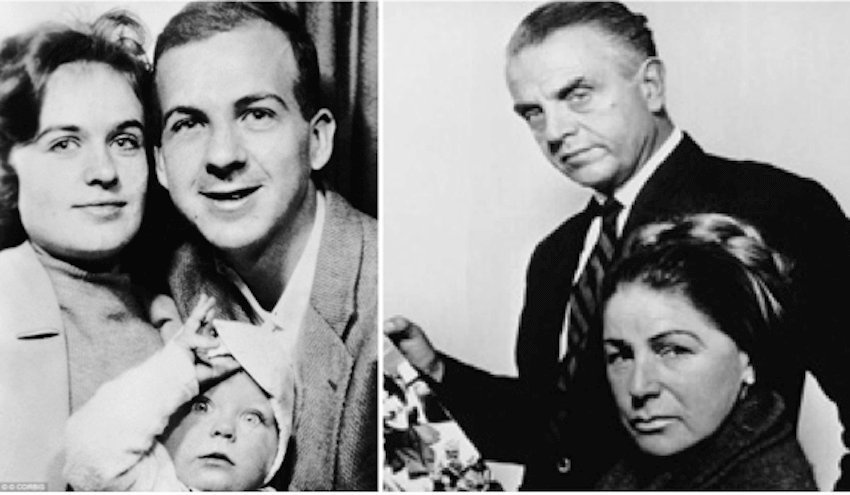
    Epstein relies on the House Select Committee X-rays and photos as his sine qua non that only three shots were fired, and all came from the rear. What he does not say is that the HSCA altered the Warren Commission findings on the autopsy. They moved up the entry wound in Kennedy’s skull from the bottom of the heard to the top, and they moved down the back wound. Further, the pathologists never dissected the track of either wound in Kennedy’s body. Therefore, the directionality and the trajectory of the wounds is not known. At any murder trial, these materials would be mercilessly attacked. And it is questionable if they would have been admitted into court, since some of the exhibits do not correspond to what the witnesses at the autopsy saw.

    Epstein implies that Jim Garrison failed to reveal any “hidden associates” of Oswald’s in New Orleans. This is simply balderdash. As depicted in the Warren Report, Oswald was supposed to be a Marxist oriented, pro-Castro sympathizer. Yet, as Garrison showed, here was a communist who had no communist friends. On the contrary, he associated almost exclusively with anti-communist extremists, intelligence operatives, and/or anti-Castro Cuban exiles in both New Orleans and Dallas: George DeMohresnchildt, Guy Banister, David Ferrie, Clay Shaw, Richard Case Nagell, Orest Pena. Which is an odd group for a communist to be hanging out with. You will not see most of their names in the Warren Report. But you will see them in Garrison’s files. In fact, if not for him, you likely would not have heard of them at all.
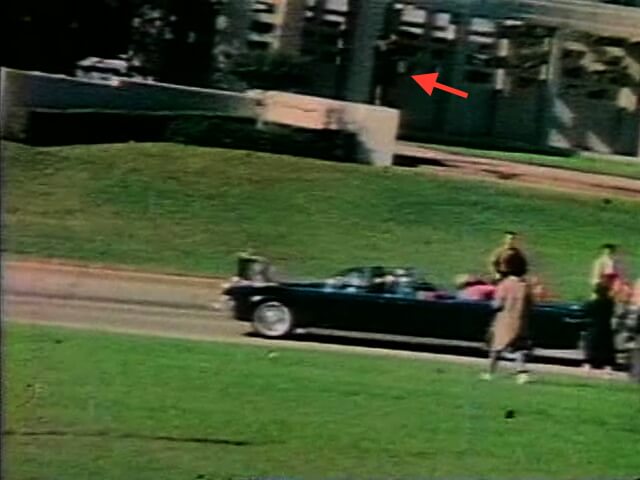
    Epstein tries to trivialize Garrison’s complaints about the extreme secrecy involved in the JFK case. He writes that this was essentially grandstanding and it was not really important to the facts of the case. Garrison disagreed and stated that it undermined public confidence in their government. The Warren Commission had the equivalent of one day of public hearings. (And that was because witness Mark Lane insisted on his hearing being open to fellow citizens.) The House Select Committee on Assassinations had about three weeks of open hearings. The combined lifespan of both investigative bodies was a bit over three years. The former locked up over 365 cubic feet of materials. The second inquiry left almost 800 boxes of files. Today, the federal government has over 2 million pages of material classified on this case. Even though the murder is three decades old and the official story is that Oswald alone killed Kennedy. Is Epstein correct in saying that most of it is unimportant? How can he possibly deduce such a conclusion before the files are declassified? We know from previous declassifications that such was not the case at all. For instance, the declassification of the FBI report on the JFK case revealed that Director J. Edgar Hoover did not agree with the Single Bullet Theory. He believed that a separate shot hit Governor John Connally. To use another example: the government is today holding a 300-page report about Oswald’s alleged activities in Mexico City. The problem, as the authors of that report have stated, is that the CIA could not produce a photo of Oswald being there, and the voice on the audiotapes the CIA made of Oswald is not his. You will not find any of that information in the Warren Report. Which never questions any of his activities in Mexico.
    Epstein writes that many documents that were originally classified have since been released. Yes, and many have been released only in response to public revulsion with the classification process. Many others have been released through the efforts of private citizens who have had to sue the government to get them. Further, many of these released documents have not been released in full. That is, they contain what is termed “redactions”, that is, much of the wording has been blacked out. Plus, the fact that the information was released later dilutes the impact and effect the information has on the case and the public. In fact, this contributes to the whole “too-late-to-solve-it” syndrome that afflicts the Kennedy case. One has to wonder: was this the intent from the start? If so, it succeeded.

    Epstein is familiar with these problems, since they impact on the mystery surrounding the man he wrote about extensively in his last book on the JFK case, Legend. This was George DeMohrenschildt, sometimes termed “The Baron” due to his upper class White Russian standing. Epstein was reportedly the last person to interview DeMohrenschildt in Florida before he died of a shotgun blast. Although the official verdict in the case was that The Baron took his own life, others who have investigated his death still have questions about it. Mr. Epstein, whose early attack on Garrison in The New Yorker was circulated by the CIA to worldwide station chiefs, was in Florida at the time to interview DeMohrenschildt for Legend. Epstein received a large half million dollar advance for the book, the highest ever in the JFK field. The book’s backers also furnished him with a research staff. Epstein offered DeMohrenschildt large sums of money for interview sessions. Epstein himself was quoted as saying he was involved in a “very big project, which involves a lot money.”

    Previously, Epstein had been involved in a campaign to clear the FBI of charges that it had used clandestine and conspiratorial methods to destroy the Black Panthers. In regards to my previous point, later declassified documents revealed that the FBI had done just that. Epstein’s book Legend had an odd—some would say perverse—spin to it. The thesis was that the KGB had recruited Oswald while he was in Russia and he was acting as their agent when he killed Kennedy. Epstein tried to fog this framework, but the book’s last section—dealing with Oswald’s return to America—is titled “The Mission”. And the last chapter is called “Day of the Assassin”. In an appendix entitled “The Status of the Evidence”, Epstein backs every dubious claim of the Warren Commission. He deals with complex issues, like the dubious capability of Oswald’s rifle, in a less than cursory manner: in this case, all of two sentences. Epstein’s interview subjects, like Jim Botelho, a service buddy of Oswald, insist that he distorted their responses on his way to his offbeat conclusion, namely that the Russians, through the KGB, killed Kennedy.

    DeMohrenschildt was important to this scheme. For the simple reason that he and his family came from the Soviet Union. So, in the upside down world of Legend, one could argue that somehow The Baron was acting as Oswald’s handler in the USA, as some kind of deep cover KGB agent.

    But Epstein’s most questionable decision was the liberal use of CIA counter-intelligence chief James Angleton as a major source. This is the same Angleton whose Cold War paranoia paralyzed the CIA to the point that Director Bill Colby backed a press leak campaign to force him to step down. The same Angleton who, once retired, started a defense fund for agents caught in “black bag” operations, or robberies. The same Angleton who actively encouraged destabilizing governments, not in Guatemala or Iran, but in allied countries like Australia and England.

    Understandably, many have read Legend as Angleton’s outlet for the defense of his—and the CIA’s—conduct in relation to both Oswald and the assassination. More cynical observers see it as a detour away from both Oswald’s and DeMohrenschildt’s secret status as American intelligence agents.

    Epstein’s activities with The Baron toward the end are notable. As stated, an inquest ruled that DeMohrenschildt took his own life. But Mark Lane talked to the state attorney who interviewed Epstein about the day of DeMohrenschildt’s passing. Epstein told David Bloodworth that he had paid his subject three thousand dollars and let him go after a rather short session. Lane’s report, published in Gallery of November 1977, went on to say that Epstein told Bloodworth that even though he spent all this money, he kept no notes and had no tape recordings. Bloodworth told Lane that he did not believe that statement, not after Epstein spent that much money. Bloodworth then added that Epstein showed The Baron a document that indicated he might be taken back to Parkland Hospital in Dallas for some electroshock treatments. (DeMohrenschildt had been suffering from depression.) Bloodworth then looked at Lane and said, “You know, DeMohrenschildt was deathly afraid of those treatments … DeMohrenschildt was terrified of being sent back there. One hour later he was dead.”

    This is the man who now writes in reflection of Jim Garrison and his investigation of Kennedy’s murder. Is it too much to suggest that Epstein is jumping into a “spin control” mode? People like Howard Hunt and J. Edgar Hoover also did this in relation to the life and death of John Kennedy. But they had the sense to wait a while so their efforts would not be seen as transparently self-serving. Epstein exercised no such self-control. Which makes his work not just inaccurate but offensive. And The New Yorker acted as his accomplice in this defamatory exercise.


    Part 2: “The Abstract Reality of Edward Epstein”

    Part 3: “Edward Epstein: Warren Commission Critic?” (Probe vol 7 no 1, 1999)

  • Alexandra Zapruder, Twenty-Six Seconds: A Personal History of the Zapruder Film (Part 2)

    Alexandra Zapruder, Twenty-Six Seconds: A Personal History of the Zapruder Film (Part 2)


    Part 1 of this essay


    What the Zapruder Film Is (and Isn’t)

    The Zapruder film is (most probably) an intact and authentic 8mm motion picture sequence. Information appearing in the film corresponds with common segments of other amateur films taken in Dealey Plaza during the assassination event, as well as existing still images. The extant images match the general description provided by Abraham Zapruder, the man who filmed the images, during his live televised appearance at WFAA studios in Dallas approximately two hours after the shooting. Later suspicions Zapruder film frames may have been removed or altered, after the film was processed and initial copies printed, gradually gained momentum in the late 1970s/early 1980s as a previously unacknowledged analysis of the film was revealed which challenged the established chain of custody with the film’s possession. Suspicions increased after the Assassination Records Review Board took specific interest in authenticating the film in the late 1990s. Although there is not currently any hard evidence that tampering took place, the presence of a Zapruder film (original or copies) at the CIA’s National Photographic Interpretation Center (NPIC) on the weekend of the assassination has been effectively established, even as official records of this event have inexplicably failed to appear.


    Limits to Fakery

    NPIC analysts at work
    during Cuban Missile Crisis

    The most precise description of a possible how and when pertaining to alteration of the Zapruder film was developed by Doug Horne, who had worked as Chief Analyst for Military Records for the Assassination Records Review Board (ARRB) in the 1990s. Horne assisted in the joint efforts between the ARRB and Kodak to preserve and assess the authenticity of the Zapruder film. During this process, as former employees of NPIC added detail to events on the weekend of the assassination, Horne came to realize two things: two separate teams developed distinct sets of briefing boards from selected frames of the film; and, from recollection (albeit many years after the fact), each team believed they were handling the original Zapruder film—one group working from an 8mm film reel, and the other from an unslit 16mm reel.1 Horne postulated that, in the approximately twelve-hour period between the work of the two teams, the original film could have been sent to a top-secret CIA film facility attached to a Kodak plant in Rochester, NY (Hawkeye Works) and there revised over the course of the day on an optical printer. A freshly altered “original” film was then presumedly returned to NPIC for a new set of briefing boards, and the existing prints of the original film were swapped out.2.

    Information pointing to two separate briefing boards, and two different film formats used to create them, should not be dismissed. Official clarification may yet be discovered, perhaps in the still missing official history of the Zapruder film’s presence at the NPIC written by Dino Brugioni. As speculation has otherwise filled the vacuum, it’s worth considering what was, and was not, possible to do manipulating film images in 1963. Evidence of an 8mm reel of film on one night, and an unslit 16mm reel the next does not automatically or logically lead to an alteration hypothesis.3

    The alteration argument vis-à-vis the Zapruder film has been prone to a certain illiteracy regarding the mechanics and science of special-effects filmmaking, specifically the use of the optical printer, which ranges from mildly informed to wildly uninformed, even as the whole of the argument requires intervention of such machines. Roland Zavada, a retired Kodak specialist hired by the ARRB to authenticate the Zapruder film, explained technical issues mitigating against alteration in a patient, if somewhat exasperated, response to Doug Horne’s theories and criticism published in the fourth volume of Horne’s Inside the Assassination Record Review Board.4 The substance of Zavada’s response can be, and is, supported by relevant professional technical and descriptive texts, as well as, if sought, personal affidavit from technicians experienced in practical application of optical printers for celluloid-based motion pictures (a skill set largely displaced since the advent of digital technologies). The notion that elements within the Zapruder film’s frames could be removed or rearranged at will, let alone done so without evident and obvious trace, is completely mistaken. Such sorcery was not possible with the available optical printer technology, and, for what was possible, the relatively short time period available in Horne’s hypothesis would not allow for anything but very limited—very limited—activity.

    An Oxberry 1600 aerial optical printer,
    a common commercial model

    In an article titled “The Cinemagic of the Optical Printer”5, Linwood Dunn lists the variety of visual effects achievable on the optical printer: creating transitions such as dissolves and wipes of varying complexity; changing image size and position on screen; frame modification such as speeding up or slowing down a sequence, or “freezing” a select frame; optical zooms; superimpositions; split screens; adding motion, e.g., creating a rocking effect for a scene set in a boat or aircraft. He then describes “special categories” of effects work: travelling mattes “used to matte a foreground action into a background film made at another time”; blow-ups and reductions used to convert formats, e.g., 16mm film converted to 35mm; anamorphic conversion to change aspect ratio; and “doctoring and salvaging” which includes salvaging unusable scenes due to mechanical or human error on set or adding elements to previously filmed scenes.6.

    Claims of Zapruder film alteration usually cite changing image size, frame modification, superimposition, travelling mattes, and doctoring. Where these claims tend to fail is by misunderstanding necessary limitations in the use of these techniques. A common claim is that an altered Zapruder film has removed or repositioned bystanders along the visible motorcade route through doctoring and superimposition combined with a travelling matte of the Presidential and Secret Service limousines. What is not understood while making such claims is, prior to the introduction of digital workspaces, mattes and superimpositions found seamless effect by utilizing hard vertical and horizontal lines within the frame to join separate elements, or by adding images to a flat uniform background. Consistent vertical or horizontal separation points or uniform backgrounds within the Zapruder film are virtually nonexistent because a) the sequence is always in motion as Zapruder panned with the motorcade, b) the motorcade varies in size within the frame as it approaches and passes Zapruder’s zoomed-in lens, and c) the shaky hand-held filming is inconsistent (i.e., this is not a steady locked-off pan performed with a tripod).7

    Any element within the frame said to have been removed from the Zapruder film would require an equal consistent element to replace it; for instance, removing a bystander from the Dealey Plaza lawn would require additonal lawn in place for the requisite number of frames, just as a replaced bystander closer to Elm Street would require a replacement background consistent with what already is visible (portions of road, sidewalk, landscaping and other persons). These replacement elements must also adjust plausibly in perspective as Zapruder’s camera drifts and pans, and blur when the camera is unsteady. Again, this is long before digital technologies, and the workspace of each individual celluloid frame was 8mm in diameter. Theoretical radical alteration of the Zapruder film would require exacting work in multiple areas of each frame, for many dozens of frames, which would require many weeks, at least, to accomplish.8 At the end of such a process, it would be necessary for the results to appear as a seamless element of the original, an impossible task to conceive. Any removal of persons, geographic features, or even splatter from a large exit wound, should be obvious through inconsistencies produced by attempting to replace the lost information. If the Zapruder film was in fact somehow radically altered, appearing as it appears today, then it would stand as the single greatest trick shot in cinema history, even as the technique developed by these magicians would never be exploited for any other purpose, or even rumor of such incredible feat leaked as the magicians never sought credit.

    Another important consideration for determining what is possible with an optical printer is the requirement for precise testing related to exposure and color temperature, to maintain consistency as film stocks have varying exposure indexes and grain structure. Print stocks used with optical printers are different from those used in the field, and production of an intermediate internegative with these stocks is a necessary part of the process,9 adding generational loss. Alteration of the Zapruder film would then require not only seamless work within the frames, but also assuring the resulting altered film’s colour, exposure, and grain is consistent with the original 8mm film stock, a feat with no known precedent.10 Discussing this, Roland Zavada determined that the minimum time to evaluate these factors, including filming, processing, and viewing the necessary tests, would have been more than seven hours,11 which factors poorly in considering an alteration scenario limited to Sunday November 24.

    Z-313: a painted blob and debris removal?

    Incredibly, although Zavada’s peer-supported professional opinion mitigating against alteration to the Zapruder film should have largely diminished the controversy, the notion of alteration has since hardened, and a substantial number of persons have somehow become convinced that radical alteration is a proven fact. In truth, time constraints and technical limitations make plain that if alteration was in fact engaged in that Sunday, it would necessarily be limited to, for example, a “blob” added to a frame or a black mask added to a few frames. However, even this work appears unlikely due to the difficulties in returning the altered product to an undetectable plausible 8mm “original”.12.

    Aside from the technical reasons mitigating against Zapruder film alteration and substitution, a set of other considerations was articulated by Josiah Thompson in his 1998 article “Why The Zapruder Film Is Authentic.” 13 Thompson notes, from the officially vetted timeline, the original Zapruder film was in the possession of either Abraham Zapruder or representatives from LIFE Magazine that entire weekend. This notion is no longer assured. Even so, Thompson makes the point there was no means to ensure additional copies of the original intact version were not created before the film could be presumedly delivered to Hawkeye for alteration. For example, an extra copy could have been printed surreptitiously at the facilities in Dallas on the first day, or a copy perhaps made by the FBI from a borrowed Secret Service print, as discussed in memos from Saturday November 23.14 Thompson also notes that there are numerous films and photographs depicting the same sequence (or portions thereof) which potentially could require alteration as well (some thirty-eight persons had cameras in use during this sequence), and, as important, on the weekend of the assassination it could not be known if all photos and film had been accounted for—that is, a then unknown film or photograph could appear later to reveal the forgery.

    Finally, other than a painted “blob” or black mask to hide wounds, it is unclear what exactly it is believed the alleged alteration is concealing. In the numerous films and still photographs which feature portions of the exact sequence captured by Zapruder, and in sequences taken before and after Zapruder was filming, there is nothing to suggest a person or event which would require excision, such as during the limousine turn which does not appear in the Zapruder film (although Abe Zapruder suggested he had filmed it during his Warren Commission testimony). One frequently cited presumed alteration is the slowing down and near complete stop of the Presidential limousine in the moments ahead of the fatal (Z312) shot which, it is claimed, was removed from the film. This is not true, but can appear that way because Zapruder is panning his camera to follow the passing vehicle; the camera itself in motion assumes a certain pace even as the vehicle slows within the frame. The slowing of the limousine becomes apparent if the viewer is able to identify Zapruder’s panning motion as a separate element from the motion of the vehicle, and follow as the pan in turn slows to keep the limousine relatively centered in frame. The camera pan actually gets ahead of the vehicle, highlighting its decrease in speed. That the limousine had come near to a complete halt can be observed in the person of Secret Service Agent Hill who rapidly gains on the static chassis. The acceleration of the vehicle is also obvious, and is even more so in the Nix film.


    The Zapruder Film Is Not A Precise Clock

    According to Dino Brugioni, one of the NPIC staff interviewed in the late 1990s and 2000s, representatives from the Secret Service were at NPIC on Saturday evening November 23, 1963 and were “vitally interested in timing how many seconds occurred between various frames.” Brugioni’s colleague Ralph Pearse informed these men that the Zapruder Bell & Howell Zoomatic 414PD was “a spring-wound camera, with a constantly varying operating speed”, and attempts to determine precise timing would be “unscientific” and could lead to false conclusions.15 The Secret Service agents insisted, and Pearse apparently used a stopwatch to gauge time between “various frames of interest.” Later testing by the FBI would determine that the Zapruder camera ran at an average speed of 18.3 frames per second, and, with that established, it was claimed that a count of frames between significant events appearing in the Zapruder film, divided by 18.3, could produce a precise reading of the time between which these events occurred, particularly the timing between presumed shots.

    This formula unfortunately bypasses the important qualifier “average”, as it became commonly reported that the camera’s film speed was 18.3 frames per second, and thereby it was claimed the Zapruder film could serve as a precise clock for the assassination sequence.16 This is not the case, due to the spring-wound mechanism of Zapruder’s camera which, as Ralph Pearse noted, had a “constantly varying operating speed.” This factor is apparent in the results of the tests done by the FBI’s Lyndal Shaneyfelt, “focusing the camera on a clock with a large sweeping second band”, later counting frames from the developed film to ascertain the number of frames per second as determined by the sweeping second band. A “sync” motion picture camera, with a crystal sync oscillator maintaining consistent operating speed, would indeed produce repeatedly the exact same number of frames per second, but a spring-wound camera would vary.17 This spring-wound effect is reflected in the FBI report:

    “This study has been made by checking the film speed of the Zapruder camera at ten second intervals throughout the full running time of a fully wound camera. Several checks were made on a full roll of film and it was found that the film speed of the camera when fully wound runs at an average speed of from 18.0 to 18.1 frames per second (fps) for the first ten seconds. It gradually increases to 18.3 to 18.5 fps for the next 20 seconds, then gradually decreases slightly to 18.1 fps for ten seconds before the final twenty seconds that run at an average speed of 17.6 to 17.9 frames per second. Mr. Zapruder has stated that the camera was fully wound when he started filming the President’s motorcade.”18.

    According to the above calculation, the Zapruder film, once the Presidential car comes into view (the 132 frames of the head of the motorcade accounts for approximately 7.3 seconds) was exposed at 18 to 18.1 fps for about three seconds, and then “gradually” increased to 18.3 to 18.5 fps for its duration. The 353 frames, according to the FBI’s calculation, occurred over somewhere between 19.138 seconds to 19.332 seconds (without accounting for the “gradual transition from 18/18.1 to 18.3/18.5). The shooting sequence (LIFE 12/6/63 frame Z-190 to Z-312) occurred from somewhere between 6.595 seconds and 6.666 seconds (again not accounting for the “gradual” transition), a difference of between one and two frames. So, while not demonstrating extreme variation, the FBI’s work, at least as described, demonstrates that, giving or taking even two frames in a short span, the Zapruder film cannot be considered an exact clock. Other tests on similar cameras noted even greater disparity between individual “checks” than a few tenths of seconds.19 Such disparity is more in keeping with the advice of NPIC’s Ralph Pearse that a spring-wound camera’s operating speed was constantly varying and that attempts to measure precise timing could lead to false conclusions. In fact, the FBI’s “average” speed seems unusual for these cameras in that the results inferred suggest comparatively minute differences.

    Might the FBI have dropped a high frame count pass and a low frame count pass recorded by the Zapruder camera during their speed tests, in the interest of arriving at a more precise statistical average? This statistical method is known as a “truncated mean.”20 An odd reference to frames-per-second appears in a chart presented to the Warren Commission in January 1964, presenting timing scenarios for the Presidential limousine’s approach to Dealey Plaza, based on measurements which identify a high and low miles-per-hour determination (15 mph and 12 mph) with a similar constant frames-per-second count (“22 fps” and “17.6 fps”).21 It is very tempting to speculate that these numbers—22 fps and 17.6 fps—might represent the high and low markers of the FBI’s speed tests with the Zapruder camera. Shaneyfelt told the Warren Commission “we ran through several tests of film … and averages were taken.” (WCH Vol. 5, p. 160)


    In 1967 CBS time-tested five same-model cameras and got varying results


    If so, the presumed “average speed” of 18.3 frames-per-second is, as Pearse told the Secret Service, meaningless in context of the assassination as there is no possibility or means to determine the frame rate when Zapruder’s camera actually ran on November 22. In theory, the “constantly varying operating speed” of the spring-wound camera would mean the frame rate varied across the duration of any filmed sequence. Although Pearse articulated this, and Brugioni apparently attached this information to the first set of prepared briefing boards, the insistence of the Secret Service agents suggests determining a time sequence for the assassination was an investigative priority. This insistence would create for the developing lone assassin narrative a series of problems.


    How Did LIFE Magazine Know The Camera Ran At 18fps?

    Before the FBI ran their speed tests with the Zapruder camera, LIFE Magazine’s article “An End To Nagging Rumors” (December 6, 1963) already states: “from the movie camera’s known speed of 18 frames a second—two frames a second faster than it should have run—it is possible to reconstruct the precise timing …” Zapruder’s Bell & Howell camera, according to its operating manual, was supposed to run at 16 frames per second in its RUN setting. That it actually ran some two frames faster could only be determined through tests similar to what the FBI would later do—filming a clock with the original camera. The LIFE Magazine article does not directly state that LIFE itself conducted tests and determined the speed, it says only the speed is “known”.

    Although there is nothing in the record about testing Zapruder’s camera before the FBI took possession of it on December 4, 1963, it appears highly likely that a test to determine the speed of that camera was undertaken as part of an official investigation, connected with the Secret Service and CIA, sometime during the week following assassination. Information derived from this test was subsequently shared with LIFE Magazine. 22 Philip Melanson’s 1984 essay “Hidden Exposure: Cover-Up and Intrigue in the CIA’s Secret Possession of the Zapruder Film” first noticed a brief aside in an December 4, 1963 FBI memorandum discussing the possession of the camera: “(Zapruder) advised this camera had been in the hands of the United States Secret Service Agents on December 3rd, 1963 as they claimed they wanted to do some checking of it.”23 If the Secret Service were in possession of Zapruder’s camera on December 3rd, they may well have been in possession of the camera before that date. The memorandum certainly does not clarify.

    When the Secret Service visited NPIC on the evening of November 23, 1963, “vitally interested in timing how many seconds occurred between various frames” Dino Brugioni recalled: “Ralph Pearse informed them, to their surprise and dismay, that this would be a useless procedure because the Bell and Howell movie camera (that they told him had taken the movie) was a spring-wound camera, with a constantly varying operating speed.” A 1975 CIA description of the same NPIC event states that since “the film had been taken in a spring-powered movie camera, it was not possible to determine precise time between shots without access to the camera to time the rate of spring run-down.”24 Access to the camera was necessary to determine the information the Secret Service was intent on establishing. That the Zapruder camera, and even the Zapruder film original, may have been, or probably were, examined at NPIC shortly after the assassination should have been an expected procedure. The Secret Service considered themselves holding “primary jurisdiction in a case of this nature”,25 and, as Philip Melanson notes, “the Secret Service of the 1960s and early 1970s had some sort of technical dependence upon the CIA.”26.

    An FBI memorandum dated November 29, 1963, generated by Dallas field agents, discusses a meeting with Secret Service Special Agent John Howlett, in which Howlett described an ability to determine the distance from the alleged sniper’s nest to the Presidential limousine at the time of shots striking the President, ascertained from 8mm movies of the assassination.27 Howlett places the first shot, “where the President was struck the first time in the neck”, at “approximately 170 feet”. Paul Mandel’s LIFE article also places the first shot at 170 feet ( “The first shot strikes the President, 170 feet away…”, also identified as Zapruder frame 190 since 122 frames are then counted to the third shot which “over a distance of 260 feet, hits the President’s head.”). Howlett would inform the FBI the fatal shot was at “approximately 260 feet”. As Howlett was meeting with the FBI men, LIFE’s issue with Mandel’s article was being readied for the printers. It is hard not to believe that Special Agent Howlett and LIFE Magazine’s Paul Mandel received their information from the same or similar sources, derived from analysis conducted at NPIC.

    A later chart created by the Secret Service, listing distances which differed slightly from Howlett’s,28 and associating these distances with Zapruder film frames (CE884), would situate the given distance of the first shot as equivalent to Zapruder frames 200 or 201, shortly before JFK disappears behind the Stemmons Freeway sign in the film. A certain flexibility in determining position and frame number has been introduced as early as Howlett telling the FBI men on November 29 that the Secret Service “using the 8 millimeter film have been unable to ascertain the exact location where Governor JOHN B. CONNALLY had been struck.” This uncertainty reflects the difficulties for the developing official story, as the FBI’s Robert Frazier had determined on November 27 that the bolt-action rifle in evidence required at least 2.8 seconds to operate between shots at moving target, the equivalent to approximately fifty Zapruder frames. Determining that Connally was not struck until somewhere around Z-250 (in relation to a first hit on JFK at frame 200) is not supported by the Zapruder film, where it appears the strike occurred at least 20 frames earlier.29 Differing from Howlett, Mandel in the LIFE article, provides a precise frame for a shot striking Connally (Z-264):

    “The first shot strikes the President, 170 feet away, in the throat; 74 frames later the second fells Governor Connally; 48 frames after that the third, over a distance of 260 feet, hits the President’s head. From first to second shot 4.1 seconds elapse; from second to third, 2.7 seconds. Altogether, the three shots take 6.8 seconds—time enough for a trained sharpshooter, even through the bobbing field of a telescopic sight.“ (Paul Mandel, “End To Nagging Rumors: The Six Critical Seconds”, LIFE Magazine, December 6, 1963)30

    In her book, Alexandra Zapruder ponders the irony that her grandfather’s film had displaced the view from the purported sniper’s nest; standing in, so to speak, for “seeing the assassination through Oswald’s eyes”. In actuality, the true irony is that, by insisting on establishing exact timing and ignoring Ralph Pearse’s advice, federal investigators wrapped themselves into a straightjacket trying to explain the visible shooting sequence, and the “exact” timing of the film, against the self-imposed limitation of three shots and one bolt-action rifle. Ultimately the Warren Commission had to go with both the single bullet theory and the claim that it could not determine when the first shot was fired. For its part, the HSCA’s photographic panel seemed to determine that the President was struck before disappearing behind the freeway sign in the film and also endorsed the single bullet theory, which are mutually exclusive.


    What Happened At The NPIC November 23-25, 1963?

    Dino Brugioni in 1962

    It appears that two sets of “briefing boards” were independently created—one through the Saturday evening into Sunday morning and one through Sunday evening into Monday morning—both using frame blow-ups derived from a copy of or the original of the Zapruder film. Dino Brugioni was involved with the Saturday night event, and Homer McMahon the Sunday evening event, as developed by Doug Horne. Brugioni’s recollections are corroborated by a CIA submission to the Rockefeller Commission made in May 1975.31 This document, describing an analysis of the Zapruder film at NPIC, matches Brugioni’s account of the presence of the Secret Service, that establishing elapsed times between rifle shots was of primary concern, and the subsequent production of briefing boards. The document states the Secret Service “were present during the process of analysis” and took away one set of briefing boards, while CIA Director McCone retained another. The briefing board set “was controlled carefully; very few people saw it.” Notably, the document does not date the event, instead choosing to vaguely locate it in “late 1963.” Results of the analysis are deflected: “We assume the Secret Service informed the Warren Commission about anything of value resulting from our analysis of the film, but we have no direct knowledge that they did so.”

    On the day following this first disclosure of a Zapruder film analysis at NPIC, the Rockefeller Commission requested “memoranda or other textual information provided to the Secret Service by CIA after NPIC’s analysis of the Zapruder film.” The CIA responded a week later, claiming they “had no indication in our records that any such written material was provided to the Secret Service. Attached are copies of the only textual matter in our files pertaining to the NPIC’s analysis of the Zapruder film.”32 Xerox copies of six “written or typed papers” were attached, described as the total existing documentation of an analysis process which spread over a thirty-six hour period and featured the production of two separate briefing board sets. That the May 7 CIA Addendum included information about the “spring-powered camera” which appears directly derived from Brugioni’s briefing board notes attached, but no such notes are among the sparse released documentation on May 14, does not inspire confidence that the CIA is on the level here.33.

    Among the six papers provided to the Rockefeller Commission is a typed page which features an undated columned list featuring four “panels” with Zapruder frame numbers listed below each panel. Each frame number has a corresponding “print” number, totalling 28 prints. This appears to be for a set of briefing boards presumably created the weekend of the assassination, perhaps the second session, as Brugioni said his boards consisted of less than twenty prints. Handwritten notes on another page calculate time needed to “shoot internegs”, process, test, and make three prints. During interviews in the 1990s, Homer McMahon and Ben Hunter recognized their handwriting on this document, and also on portions of another handwritten document recreating the previously described typed briefing board chart.34 Three more handwritten pages are included, author unknown, which appear to have been created at a later date than the November 23-25 analysis as these pages feature charts and calculations which refer directly to information appearing in LIFE ’s December 6 article “An End To Nagging Rumors.”


    These relatively unsophisticated charts were presented as artifacts of the 1963 NPIC analysis,
    even though they were clearly drawn up later.


    In fact, these pages seem to have been drawn up by a person completely unaware of the first weekend briefing boards, or that the Secret Service had already possessed the information that appeared in LIFE. The hand drawn charts feature phrases from the Mandel article in quotation marks: “74 frames later”; “48 frames after that”; “2 FPS than it should have been run”. A question is written out: “how do they know frames of first and second shot?” Timing calculations cluster the page, with division tables setting scenarios of 18fps (attributed to LIFE) and 16 fps (the camera’s speed according to its operating manual). Alternative shooting scenarios, most of which feature Zapruder frame 242 as a second shot, appear next to the LIFE attributed shooting sequence of Z-190—Z-264—Z-312. Whatever is going on with these unsophisticated charts, the impression left by the CIA’s 1975 presentation on the NPIC analysis—from lack of documentation to the sketchy attribution of “late 1963”—is of a conscious decision not to admit analysis occurred on the weekend of the assassination. Making it appear the NPIC, the premiere image analysis lab anywhere at the time, relied on timings and frame numbers printed in LIFE Magazine served to deflect attention from the actual analysis done, as did the diversion of highlighting the Secret Service’s supposed sole responsibility to share “anything of value resulting from our analysis.” The NPIC analysis event had been effectively disappeared from the record.


    The typed frame chart produced as part of NPIC’s records. This may be from the second analysis event, Nov. 24-25, 1963.

    The briefing panels in the record seem derived from the above typed chart.
    Dino Brugioni was certain these were not the charts he had created during the first analysis event Nov. 23-24, 1963.


    This motion sequence features the selected frames from the above chart.
    That the panning of Zapruder’s camera gets ahead of the slowing vehicle is apparent.


    For its part, the Secret Service had nothing to add, claiming that by 1979 all documents relating to the assassination had been passed to the National Archives. Nothing directly attributed to an NPIC analysis appears. The Warren Commission—which sponsored two conferences in April 1964 at which the Zapruder film was closely analyzed in the presence of Bethesda and Parkland doctors, ballistics experts from Edgewood Arsenal, FBI agents, Commission attorneys, and even John and Nellie Connally—did not receive any information regarding the November 1963 NPIC analysis.

    In her book, Alexandra Zapruder asks about the NPIC event: “Who cares when it happened?” That is not the appropriate question. More appropriately: Why was the NPIC analysis hidden from the official record and the official investigation, and then, when uncovered in 1975, its “when” was obscured and its documentation was obviously incomplete?

    A reason for this may be the NPIC analysis clearly demonstrated that a lone gunman conclusion was not viable; that something like the “flurry” of shots described by Secret Service Agent Roy Kellerman—seated in the passenger seat of the Presidential limousine—was more apparent. Homer McMahon, during his 1990s interviews, said it was his impression that “he saw JFK reacting to 6 to 8 shots fired from at least three directions.”35 Robert Kennedy would tell Arthur Schlesinger Jr., on December 9, 1963, that CIA Director John McCone, who received the NPIC’s first briefing boards, had indicated to him “there were two people involved in the shooting.”36 A few hours after McCone’s briefing on Sunday November 24, LIFE Magazine’s publisher C.D. Jackson sent instructions to Dallas to negotiate the remaining rights to the Zapruder film which had been explicitly left out of the contract signed the previous day. An internal LIFE memo would note that “C.D. Jackson bought the copyright to Zapruder’s film to keep it from being shown in motion.”


    The Zapruder Film Proves Conspiracy

    A week after the assassination, the Secret Service was continuing its investigation utilizing a shooting sequence which commenced with a first hit at either Zapruder frame 190 or frame 200. At the same time, LIFE Magazine was preparing its December 6 issue featuring an article which placed the first shot at Zapruder frame 190. Years later, a House Select Committee on Assassinations photographic panel systematically analyzed the Zapruder film in a manner similar, if not more extensively, to that done previously by the NPIC.37 The HSCA panel would report: “At approximately Zapruder frame 200, Kennedy’s movements suddenly freeze; his right hand abruptly stops in the midst of a waving motion and his head moves rapidly from his right to his left in the direction of his wife. Based on these movements, it appears that by the time the President goes behind the sign at frame 207 he is evidencing some kind of reaction to a severe external stimulus.”38


    Zapruder frames 190, 200, and 207. Analysis determined Kennedy began to react to a “severe external stimulus” at this point.


    The Warren Commission Report would claim “it is not necessary to any essential findings of the Commission to determine just which shot hit the Governor.”39 This is not true, as essential findings of the Commission included the determination that only three shots were fired, all from a particular bolt-action rifle found on the sixth floor of the Texas School Book Depository. If the President was reacting to a “severe external stimulus” (i.e. a shot) before disappearing behind the Stemmons freeway sign, as seen in the Zapruder film and as determined by both expert panels in 1963 and 1978, there was not enough time to operate the rifle’s bolt and fire a second shot to strike Connally consistent with his observed reaction (struck approximately Z224-230). The Commission’s Single Bullet Theory proposes that Kennedy and Connally react to the same bullet as they come into view at Zapruder frame 222-223, although in the film it appears obvious the President is already reacting to external stimulus while Connally is not. It has been suggested that Connally’s reaction is somehow delayed, although the smashing of his rib bone by the passing bullet would initiate an immediate involuntary reflexive response.

    Since the time of the HSCA, independent researchers have been successful in aligning close analysis of the Zapruder film with eyewitness testimony and with other photographic evidence.40 With this work, the determination advanced by the analysis in 1963 and 1978 that the President was struck by a shot at a point between Zapruder frames 190-200, before disappearing behind the Stemmons Freeway sign as seen in the film, has been corroborated by the accounts in the official record of at least a dozen witnesses, and their interlocking observations are further supported by the photographic record apart from the Zapruder film.

    The testimony of Jacqueline Kennedy exemplifies this support for a first shot circa Z-190. She told the Warren Commission that she turned in her seat to directly face her husband as the result of a commotion, a noise, which can be identified as this first strike (which probably hit in the back, as witnesses located behind the Presidential vehicle described his reaction as a slump to his left). Mrs. Kennedy can be observed in the Zapruder film as turning just ahead of the disappearance behind the sign, and afterwards her hat remains largely visible holding this position, looking directly at her husband. Proponents of the single bullet theory are suggesting that a shot from a high-powered rifle blasted through Kennedy’s neck and struck Connally, while Mrs Kennedy looked directly on, closely positioned, and she didn’t realize what had just happened. What is observable in the Zapruder film is that Jackie Kennedy, looking directly at her husband in the moments before the devastating shot at Z-312, is bewildered as to the source of her husband’s distress.


    Mrs. Kennedy turned to look at her husband as the result of an audible commotion,
    generally conceded as the strike of a first shot. She is doing so before the vehicle disappears behind the sign.


    Dino Brugioni, during his 2009 interviews, recalled that the Secret Service agents who arrived with the Zapruder film at NPIC on November 23, 1963, and who directed the analysis of the film “in individual stop frames”, paid particular attention to the portion of the film which showed the Presidential limousine just ahead of the Stemmons sign, its subsequent disappearance behind the sign, and then the frames after it reappeared. The Zapruder film is unique in the photographic record as capturing this portion of the assassination sequence, and what it shows cannot be reconciled with the official conclusion of a lone assassin—as the Secret Service, and its CIA partner, surely realized less than forty-eight hours after the event.


    NOTES

    1 The 8mm film in Zapruder’s camera was actually a spool of 16mm film, exposed along one side and then flipped and exposed on the other. After processing the film would be slit down the middle, the two halves spliced together to make one continuous roll of developed 8mm film.

    2 For an overview of the National Photographic Interpretation Center and excerpts from Horne’s work, see Bill Kelly, “Washington Navy Yard NPIC”, JFK Countercoup blog http://jfkcountercoup.blogspot.com/2010/02/washington-navy-yard-npic.html.

    3 That the Saturday 8mm reel is assumed to be the Zapruder original relies on Dino Brugioni’s recollection that there was film information between the sprocket holes. Brugioni’s memory appears fairly solid, and is corroborated on crucial points by the available sparse official documentation, but the Zapruder film possession timeline is tight because LIFE Magazine did its own work with the film at some point over the first weekend. If Brugioni is mistaken on this detail, then he was working from a Secret Service first generation copy of the film. Brugioni remembers an 8mm projector was used to view the film, but it is hard to believe NPIC employees projecting the actual original due to risk of damaging the film. It could also be that the Zapruder original was retrieved from LIFE on Sunday, possibly delivered to Hawkeye to create additional copies, and then sent to NPIC for creation of a second briefing board. Roland Zavada determined in his authenticity report that the Zapruder original initially remained as an unslit 16mm reel, as seen at NPIC Sunday night. The compartmentalization of the two briefing board sessions may reflect that the first was an “in-house” analysis, and the second featured a differing set of impressions.

    4 Zavada’s open letter can be read here: http://www.jfk-info.com/RJZ-DH-032010.pdf It is a response to Chapter 14: “The Zapruder Film Mystery”, Douglas P. Horne, Inside the Assassination Record Review Board, Volume Four.

    5 Linwood G Dunn, ASC., “Cinemagic of the Optical Printer”, American Cinematographer Manual, Fifth Edition, 1980. The Fifth Edition features a unique section on special effects cinematography. Dunn’s company Film Effects of Hollywood was established in 1946, and Dunn was a pioneer in optical printer technology. The American Cinematographer Manual has served as an essential professional reference book since its first edition was published in 1935. The latest Tenth Edition appeared in 2013. These volumes are compiled and published by the American Society of Cinematographers.

    6 The specific examples for this final category are much simpler than might be inferred by the term “doctoring”. In the film It’s A Mad, Mad, Mad, Mad World, a gag was to feature a truck bumping into a wooden shack which subsequently collapses. During filming, the breakaway shack was pulled before the truck had backed up far enough for the gag to work. Using the optical printer, the frame was split vertically between the truck and the shack, and the frame portion of the intact shack was held (frozen) until the other frame portion saw the truck reversed to the position that would sell the intended gag. Note that the ability to achieve this effect depended on a lack of moving elements in the portion of the frame featuring the shack, as can be seen in the movie itself. A second example was of using split screens, trick cuts, and superimpositions to create close explosions and artillery fire near a group of actors playing refugees for a film titled One Minute To Zero (the desired effect was unsafe to attempt on the set.)

    7 ”A Hollywood or other film production requiring postproduction optical effects is a product of a carefully planned and executed script in advance. The key subject matter, foreground and background scene content, camera image focus, depths of field, masks or mattes, etc., are carefully executed ahead of time and incorporated into the camera film that becomes the optical master…(the Zapruder film) was handheld, unsteady, panned to follow the limousine causing bystanders and background to be blurred and Zapruder jerked as reflex reaction to rifle shot reports or other stimuli.” Zavada, p. 19.

    8 Consider the time required to produce relatively simple shots of the USS Enterprise against a black space background, as described in an online article (http://memory-alpha.wikia.com/wiki/Film_Effects_of_Hollywood) discussing Film Effects of Hollywood’s association with the first Star Trek television show. This indicates the time-consuming and sometimes imperfect results using optical printers. The effects seen in the original Star Trek program are nothing compared to claims of Zapruder film alteration.

    9 “Preparation of an internegative which closely simulates the characteristic of the original has always been the goal of optical houses throughout the industry. In spite of the superb quality frequently achieved in internegatives, it seems virtually impossible to attain characteristics identical to those of the original negative in the duplicate generations for the following reasons: 1) The non-linear response of photographic film limits the range over which the following generations can duplicate an original. The internegative is one or two generations away from the original, depending on the stock used. 2) Many variable elements are introduced during the processing of the internegative. 3) The exposure characteristics of the optical printer may vary from time to time.” Mehrdad Azarmi, “Exposure Control of Optical Printers”, American Cinematographer Manual, Fifth Edition, 1980.

    10 “There is no known film production history that would provide a technology reference for the use of an 8mm KODACHROME II camera film as a printing master to allow subsequent significant optical special effects into selected scenes and then reconstitute the adjusted images on to an 8mm KODACHROME II daylight film ‘indistinguishable’ from the camera original.” Zavada, p. 18.

    11 Zavada, pp. 30-32.

    12 One text cited as “proof” that altering the Zapruder film was plausible has been Techniques of Special Effects Cinematography by Raymond Fielding. When excerpts of alteration arguments were shared with Fielding by Zavada in 2006, Fielding’s response included: “in my judgment there is no way in which manipulation of these images could have been achieved satisfactorily in 1963 with the technology then available … if such an attempt at image manipulation of the footage had occurred in 1963, the results could not possibly have survived professional scrutiny … challenges regarding the authenticity of the NARA footage and assertions of image manipulation … are technically naïve.” Zavada, p. 18.

    13 The article is derived from a presentation made at a conference in Dallas November 20, 1998. (http://www.jfk-info.com/thomp2.htm)

    14 DeLoach to Mohr, “8 Millimeter Color Film Taken At Scene of Assassination” https://www.maryferrell.org/showDoc.html?docId=62256#relPageId=43&tab=page.

    15 Horne, Inside the Assassination Records Review Board, Volume Four, p. 1233. This fascinating and important information, derived from an interview conducted by Peter Janney, is worthwhile considering in full: “… He also said that the Secret Service was vitally interested in timing how many seconds occurred between various frames, and that Ralph Pearse informed them, to their surprise and dismay, that this would be a useless procedure because the Bell and Howell movie camera (that they told him had taken the movie) was a spring-wound camera, with a constantly varying operating speed, and that while he could certainly time the number of seconds between various frames if they so desired, that in his view it was an unscientific and useless procedure which would provide bad data, and lead to false conclusions, or words to that effect. Nevertheless, at the request of the two Secret Service agents, Ralph Pearse dutifully used a stopwatch to time the number of seconds between various frames of interest to their Secret Service customers. Dino Brugioni said that he placed a strong caveat about the limited, or suspect, usefulness of this timing data in the briefing notes he prepared for Art Lundahl.”

    16 The HSCA’s photographic panel did note in its report “only the average, and not the precise, running speeds for the camera are known.” Despite this, the panel would go ahead and calculate time between frames anyway. HSCA Report Appendix, Volume VI, p. 31.

    17 “In crystal drive systems, a crystal oscillator of extremely high accuracy at, or in, the recorder, provides the sync pulse. The camera, in turn, is driven by a specially designed D.C. motor and control circuit which is capable of operating in exact synchronism with a self-contained crystal oscillator of comparable accuracy…both camera and recorder reference to self-contained crystal oscillators which are so accurate the effect is the same as if they had been tied together.” Edmund M. Di Giulio, “Crystal Controlled Cordless Camera Drive System”, American Cinematographers Manual, Fifth Edition, pp. 469-472.

    18 FBI Memorandum, Griffith to Conrad, January 31, 1964. https://www.maryferrell.org/archive/docs/062/62298/images/img_62298_37_300.png.

    19 CBS did their own tests for their 1967 news special on the Warren Report. Using five cameras, the same model as the Zapruder camera (not the actual camera), their tests filming a clock with a sweeping hand resulted in a fair amount of disparity. Roughly matching the timing of the shooting sequence, the common exposed frames came in at 6.16, 6.70, 6.90, 7.30, and 8.35 seconds. Pat Speer: “IN 1967, CBS PURCHASED FIVE IDENTICAL CAMERAS AND FOUND THAT THEY RAN 15.45, 17.7, 18.7, 19.25, AND 20.95 FRAMES PER SECOND, A SIMILAR RANGE WITH A SIMILAR AVERAGE OF 18.4 FPS.” A New Perspective On the Kennedy Assassination, Chapter 2B http://www.patspeer.com/chapter2b%3Athesecretservicesecrets.

    20 “It involves the calculation of the mean after discarding given parts of a probability distribution or sample at the high and low end, and typically discarding an equal amount of both.” https://en.wikipedia.org/wiki/Truncated_mean.

    21 CD 298, p. 59 (https://www.maryferrell.org/showDoc.html?docId=10699#relPageId=59&tab=page) and CD 298, p. 62 (https://www.maryferrell.org/showDoc.html?docId=10699#relPageId=62&tab=page). It should be noted that 17.6 frames per second is cited in the FBI’s January 31, 1964 memorandum in reference to average running speed during the final twenty seconds of the Zapruder camera’s wind. This does not explain how “22 fps” entered the record. Further discussion is found in Pat Speer, A New Perspective On the Kennedy Assassination, Chapter 2B http://www.patspeer.com/chapter2b%3Athesecretservicesecrets.

    22 LIFE’s publication schedule was such that editions were assembled a week ahead of publication date. So the December 6 edition would have been largely prepared by the weekend of November 29-Dec 1, and on the newsstands by mid-week.

    23 FBI 105-82555 Oswald HQ File, Section 16, pp. 30-31 https://www.maryferrell.org/showDoc.html?docId=57688#relPageId=30&tab=page. This report also states the “camera was set to take normal speed movie film or 24 frames per second.” This is incorrect: the Bell & Howell camera’s normal run speed, as noted in its operating manual, was 16 frames per second. The camera had no setting to reproduce 24 frames per second.

    24 This comment was most likely derived from Brugioni’s briefing board notes. https://www.maryferrell.org/showDoc.html?docId=7135#relPageId=4&tab=page.

    25 Memorandum 11/25/63, CD 87, p. 91.

    26 Philip H. Melanson, “Hidden Exposure: Cover Up and Intrigue in the CIA’s Secret Possession of the Zapruder Film”, The Third Decade, Vol. 1, Issue 1, November 1984. https://www.maryferrell.org/showDoc.html?docId=48721#relPageId=15&tab=page.

    27 Barrett/Lee, Dallas, 11/29/63. https://www.maryferrell.org/archive/docs/010/10406/images/img_10406_120_300.png.

    28 Howlett’s measurement for the fatal shot is “approximately 260 feet”, whereas the Secret Service chart (CE 884) notes the distance as 265.3 feet.

    29 The FBI’s Frazier would tell the Warren Commission that Connally’s wounds could not have occurred past Z-231, if the shot was fired from the designated TSBD 6th floor window. A week after Howlett shared information with the FBI, the Secret Service would promote a different set of measurements, extending the shooting sequence to the equivalent of Z-217, Z-283, and Z-343 (CE 585). A Visual Aid Guide presented in January 1964 by the FBI to the Warren Commission (CD 298) would include a similar extended measurement whereas the first shot strikes at “167 feet”, the second at “262 feet”, and a third at “307 feet”—a full 45 feet beyond the location of the headshot seen in the Zapruder film. This Visual Aid Guide is therefore saying the fatal shot at Z312 is the second shot in the sequence. See Pat Speer, A New Perspective On the Kennedy Assassination, Chapter 2B (http://www.patspeer.com/chapter2b%3Athesecretservicesecrets) for more discussion.

    30 Mandel goes on to describe a sharpshooter test, using the “director of the National Rifle Association”, firing “an identical-make rifle with an identical sight against a moving target over similar ranges for LIFE last week. He got three hits in 6.2 seconds.” Later, at the request of the Warren Commission, the FBI investigated this sharpshooter test. It was determined that the sharpshooter used by LIFE was not “the director” of the NRA, and the test had no connection to the NRA. The test target was approximately fifty yards away and moved “from right to left and back, running for a distance of thirty-three feet in one direction.” (CD 1309) This test may not have been directly related to the Zapruder camera speed test results, as numerous media outlets, including LIFE, were interested in timing tests with a similar rifle very soon after the assassination, even in the absence of any published exact time for the shooting sequence. The “nagging rumor”—that there wasn’t enough time for three shots—probably derived from observation of the bolt action mechanism of the purported assassination weapon. Five decades later, well-founded skepticism remains.

    31 “Addendum To Comment On Zapruder Film” https://www.maryferrell.org/showDoc.html?docId=7135.

    32 “NPIC Analysis of Zapruder Filming of John F. Kennedy Assassination” https://www.maryferrell.org/showDoc.html?docId=31994.

    33 A handwritten note written by then NPIC Director John Hicks, Brugioni’s boss in 1975, attests that these are “the only known” documents available. In a 2009 interview, Brugioni recalled discovering one of his briefing boards from 1963 during the 1975 review, and that Hicks was distressed about this.

    34 Douglas P. Horne, Inside the Assassination Record Review Board, Volume Four, p. 1230.

    35 Douglas P. Horne, Inside the Assassination Record Review Board, Volume Four, p. 1224.

    36 For discussion of this see Bill Kelly, “CIA Director Told RFK Two People Shooting at JFK” http://jfkcountercoup.blogspot.ca/2013/01/cia-director-told-rfk-two-people.html.

    37 “The Zapruder film was viewed by this group on a frame-by-frame basis and at various speeds approximately 100 times.” HSCA Report Appendix, Volume VI, p 16. https://www.maryferrell.org/showDoc.html?docId=958#relPageId=22&tab=page.

    38 HSCA Report Appendix, Volume VI, p. 17. https://www.maryferrell.org/showDoc.html?docId=958#relPageId=23&tab=page.

    39 Report of the President’s Commission on the Assassination of President Kennedy, p. 19.

    40 see, for example, Pat Speer, A New Perspective on the Kennedy Assassination, Chapter 12 http://www.patspeer.com/chapter12%3Athesingle-bullet%22fact%22. Barb Junkkarinen, “First Shot/First Hit Circa Z-190”, Kennedy Assassination Chronicles, Volume Five, Issue Two, 1999 https://www.maryferrell.org/showDoc.html?docId=4884#relPageId=24&tab=page.

  • Was Oswald a Serial Wife Batterer?

    Was Oswald a Serial Wife Batterer?


    dunne leaderOne of the main difficulties that the Warren Commission had in portraying Lee Harvey Oswald as the dual killer of President Kennedy and police officer J. D. Tippit was that, up until then, Oswald did not show any record of past violent acts. Therefore the Commission set to work to fill that lacuna. One obvious way they did so was by accusing him in the unsolved case of the April 10, 1963 shooting of General Edwin Walker. That was a case in which, during a time period of over seven months, Oswald had never even been considered a suspect. Author Gerald McKnight, in his fine book Breach of Trust, demonstrates that the indictment made against Oswald by the Warren Commission was genuinely dubious. (See pp. 48-59) Which explains why he was not a suspect in the shooting prior to November 22, 1963. The accusation rests largely on the questionable testimony of Marina Oswald.

    Another way in which this was done was through the accusation that Oswald was a chronic wife beater. This was achieved almost exclusively through the testimony of the members of the White Russian community in the Dallas-Fort Worth area. Upon their return from the Soviet Union, the Oswalds were introduced into this enclave by Russian translator Peter Gregory and the enigmatic George DeMohrenschildt. DeMohrenschildt and his family came from Russia and he was an active member of this community. He had also been in contact with the local Dallas CIA chief J. Walton Moore since at least 1957. The closeness of his relationship with DeMohrenschildt was a fact that Moore tried to cover up. (James DiEugenio, Destiny Betrayed, Second Edition, p. 153)   As the late Philip Melanson has written, many of the White Russians had been aided in their entry into the USA by the Tolstoy Foundation, an anti-communist lobby that received yearly stipends from the CIA. The Oswald biographer then added, “The Russian Orthodox Church, a centerpiece of the very conservative and religious White Russian community, also received Agency philanthropy.” (Spy Saga, p. 79)  One of the enduring contradictions about the allegedly communist Oswald is that upon his return from Russia in June of 1962 he associated so strongly with two distinctly anti-Communist groups: the anti-Castro Cubans in New Orleans and the White Russians in Dallas. The former wished to overthrow Fidel Castro and the latter wanted to overthrow the Communist dictatorship in the USSR.

    As noted, it was through the latter that the Warren Commission depicted the Oswald who showed violent tendencies toward his wife Marina. (Warren Report, p. 417) And many Warren Commission supporters have used this characterization to convict Oswald as a serial spouse abuser. And also to portray this White Russian community as a collection of avuncular guardians who tried to protect and shelter Marina from her brutal husband.

    Robert Charles-Dunne was a longtime poster at John Simkin’s Spartacus Educational web site, which has a JFK Assassination Debate forum. In May of 2013 he decided to go ahead and do a systematic analysis of this issue. He examined the testimony of 19 witnesses on the subject. With his usual acuteness, he managed to perform a tour de force of separating the wheat from the chaff on the issue. When the subject came up again recently, Tom Scully salvaged his post on the Wayback Machine. We present it here for the edification of our readers.

    ~ Jim DiEugenio


    First, let’s clear the decks of the obvious padding.

    Mahlon Tobias and his wife have already been dispatched to the remainder bin, as they both testified they personally neither saw nor heard anything except complaints from other tenants of their building. That leaves 18.


    Ilya Mamantov (IX: 107)


    Mr. Jenner.

    Have you ever seen Marina Oswald in your life prior to that moment (in the DPD HQ on November 22)? Knowingly?

    Mr. Mamantov.

    No; sir.

    Mr. Jenner.

    Had you ever met her prior to that time?

    Mr. Mamantov.

    No, sir; I met her after that, accidentally.

    Mr. Jenner.

    No; this is prior–up to that moment, you had had no contact, no acquaintance whatsoever with her?

    Mr. Mamantov.

    That’s correct.


    Needless to say, people who had never met either of the Oswalds are hardly in a position to testify to anything about them, no matter how many times Paul Trejo pads his list with their names. Now we’re down to 17.


    Igor Vladimir Voshinin (VIII: 466)


    Mr. Jenner.

    Did you ever meet either Lee or Marina Oswald?

    Mr. Voshinin.

    No, sir; thank God!


    Thank you, Igor. We are down to 16.


    John Ray Hall (VIII: 412)


    Mr. Liebeler.

    During that period of time that you knew Oswald, did you become aware of the fact that he and Marina were having difficulties with their marriage?

    Mr. Hall.

    We heard that she was living with someone else at one time, I don’t know who. My wife can probably tell you. And we also heard that he beat her up one time.

    Mr. Liebeler.

    Did you ever see any indication that be had beaten her up?

    Mr. Hall.

    I didn’t; no.

    Mr. Liebeler.

    Was it your impression that the Oswalds were having marital difficulties at the time Marina lived in your house or in Mrs. Hall’s house in Fort Worth?

    Mr. Hall.

    No.

    Mr. Liebeler.

    The only reason that Marina lived there at that time was because Oswald didn’t have an apartment in Dallas, is that correct?

    Mr. Hall.

    To give him a chance to get settled; yes.


    One notes Hall’s observation: “And we also heard that he beat her up one time.” We’ll stipulate that John Hall was a lesser witness, as he had less interaction with the Oswalds. Nonetheless, we are now down to 15.


    Mrs. Igor Vladimir Voshinin (VIII: 444)


    Mr. Jenner.

    Now, if you can remember any more, I wish you would tell us about De Mohrenschildt’s comments with respect to the Oswalds and the impressions that you gained of the Oswalds—as to how they got along whether he treated her well or poorly?

    Mrs. Voshinin.

    Oswalds—his wife?

    Mr. Jenner.

    Yes.

    Mrs. Voshinin.

    Treated very poorly. Because De Mohrenschildt told us that he was beating her. Then, she ran away from him and De Mohrenschildt tried to help her, you know, to settle down and to separate somehow, but then, they reconciliated (sic). And after the reconciliation, Jeanne mentioned twice that Marina had blue eyes–was beaten again, you know.

    Mr. Jenner.

    Black and blue eyes?

    Mrs. Voshinin.

    Yes.


    No doubt Mrs. Voshinin repeated accurately what she had been told. But she saw nothing with her own two eyes and could offer only hearsay testimony. Now we’re down to 14.


    Max E. Clark Vol. (VIII: 345-46)


    Mr. Liebeler.

    Did your wife have the impression that there had been marital difficulties between the Oswalds at that time?

    Mr. Clark.

    Yes.

    Mr. Liebeler.

    Can you tell us any specific reasons why your wife thought that?

    Mr. Clark.

    None other than the conversations and the fact that Marina, seemed quite happy with him gone, more than the fact that she did not seem to miss him and the fact that he wasn’t there.


    Mr. Clark saw nothing, nor could he cite his wife having seen anything, regarding battery of Marina Oswald. His testimony contained the fact that he had heard about such an incident, but knew nothing of it first-hand, or even second hand from his wife. Mr. Clark is now excused, and we’re down to 13.


    Gary E. Taylor (IX: 82-86)


    Mr. Jenner.

    It was, therefore, your impression, I take it, that your invitation was not tendered because of any difficulties between Marina and Lee, but rather to afford her a place to live temporarily until Lee became established elsewhere?

    Mr. Taylor.

    That’s right. In Dallas.

    Mr. Jenner.

    I mean, my statement is a fair statement of the then atmosphere?

    Mr. Taylor.

    Yes; I, at that time, was not aware that there was any marital disharmony.

    ……………………….

    Mr. Jenner.

    All right. Tell us about that.

    Mr. Taylor.

    As I remember it, shortly after they moved, Mrs. De Mohrenschildt—-

    Mr. Jenner.

    They moved where? Into your home or from your home?

    Mr. Taylor.

    Moved into their apartment here in Dallas–the first apartment they had, on Elsbeth.

    Mrs. De Mohrenschildt came by and told us that she had seen Marina and that she had a black eye, I believe, and was crying and said that she and Lee had had a fight over the lessons and they had been taken from her, and—-

    Mr. Jenner.

    Lee had struck her?

    Mr. Taylor.

    Yes; that Lee had struck her.

    Mr. Jenner.

    She said that to you?

    Mr. Taylor.

    Yes; this is Mrs. De Mohrenschildt now. This is not Marina that said that.


    Again, Mr. Taylor was unaware of “any marital disharmony” when Marina lived in his home, but later heard about Lee abusing Marina from his stepmother-in-law. Second-hand hearsay testimony is inadmissable. We’re now down to an even dozen.


    Mrs. Helen Leslie (IX: 163)


    Mr. Jenner.

    How did these people, Lee Oswald and Marina Oswald act toward each other on the occasion when you saw them?

    Mrs. Leslie.

    I will tell you something–I don’t know if Bouhe told you or others too. When she was out at a place–she had a black eye and she has her tooth out, one tooth was out, so a second, man it was raised a question how she had this black eye and so on, and she said, “Oh, I hit the kitchen door. The baby was crying and I didn’t want to make a light, the door was open and I hit it–the kitchen door.”

    And then, later, I heard from Mrs. Meller that he beat her, he was beating her, that he was always beating her and everybody was sympathetic with her. Frankly now, it is understandable. She was Russian, you know, it is some kind of a feeling of a Russian toward a Russian and they were mad at him and how he could beat his wife this is not proper–to beat his wife.

    Mr. Jenner.

    Well, now, we don’t approve of that in America.

    Mrs. Leslie.

    No. All I say now is what other people like Mellers and like Fords told me that once he beat her so hard and threw her out in the street, so she took her baby as a result in just a little blanket–she didn’t know where to go and she came to Mellers and she said, “I don’t know where to go,” that she wasn’t talking good English and he wanted to talk Russian at home, so she didn’t know what to do and the Mellers are very nice people, so they took her in their house and she stayed there a few days until they found a place for her. I don’t remember, but they said “Oh, the awful things,” and they took her–I think, you know, that she was staying with them.

    I didn’t know she was staying with Fords. I didn’t know when, because I lost trace of her and so that’s all I know about Oswalds. Actually, I didn’t see her until when she was on television.


    “…she had a black eye and she has her tooth out.” Marina seems to have given an explanation for her black eye—whether true or not—but it is troubling when a man beats a woman so hard she loses a tooth.

    Only, the missing tooth wasn’t the result of marital discord, but provides a sterling example of how groundless gossip gets amplified with each re-telling and morphs into something else entirely Here is what happened to that tooth, courtesy of the former Mrs. Gary Taylor, with whom Marina briefly stayed:


    Mrs. Donald Gibson (XI: 126-131)


    Mr. Jenner.

    You said that Marina was to receive some dental care?

    Mrs. Gibson.

    That is right.

    Mr. Jenner.

    Did she remain in the apartment all day after she arrived?

    Mrs. Gibson.

    After she came back from the dentist, she stayed there, I think she had a tooth, one or two pulled, and she stayed there that afternoon, after she came back from the dentist.


    Mrs. Leslie saw nothing with her own eyes and repeated gossip heard from the Fords and Mrs. Meller, part of which was demonstrably untrue. It will prove interesting when we get to their own testimony. In the meantime, Mrs. Leslie is excused and we’re down to eleven remaining witnesses. Let’s get right to Mr. Ford:


    Declan P. Ford (II: 325)


    Mr. Liebeler.

    Did Mrs. Oswald have any bruises on her at that time?

    Mr. Ford.

    Yes, she did. On her face.

    Mr. Liebeler.

    On her face. Was there any conversation about that?

    Mr. Ford.

    Not directly with me. My wife told me that Mrs. Oswald told her it was due to some accident of running into a door at nighttime while she was getting up to see what–the baby crying, something like that.


    Thank you, Declan. You’ve reduced the number of witnesses to 10. Let’s hear from your wife, Mrs. Ford:


    Katya Ford (II: 299-300)


    Mr. Liebeler.

    Tell us what Marina told you while she was staying there about her relations with Lee Oswald and particularly as to why she separated from him and what the difficulties were in their marriage?

    Mrs. Ford.

    I think mostly it was a mistreatment by him that she couldn’t stand any longer, she was saying.

    Mr. Liebeler.

    Mistreatment by him?

    Mrs. Ford.

    Mistreatment by him; yes. That is what she was saying.

    Mr. Liebeler.

    Did she tell you any more specifically than that what the problem was?

    Mrs. Ford.

    No; she didn’t really. She did not elaborate. She did not go into explanations of their living together.

    Mr. Liebeler.

    Did she mention that Lee Oswald was jealous of the Russian friends that Marina had?

    Mrs. Ford.

    Yes; she did. She told me that, that he was.

    Mr. Liebeler.

    Did they argue about that?

    Mrs. Ford.

    Well, I didn’t know if they were arguing about that. I know she said that he was very jealous of them helping Marina and jealous for the reason that he wasn’t able to provide her at the time with any of the things that they were giving Marina, clothes, and baby clothes, and I think that he was–it was making him rather mad because he said he was unable to buy the things for her at the time, and I know that he was not accepting things people were giving him. He was telling her not to take them but she was taking them because she needed them. I suppose they were arguing about that but I don’t remember the particulars.

    Mr. Liebeler.

    Did you form an impression at the time that Marina lived with you for that week as to what the cause of their difficulties might be?

    Mrs. Ford.

    She mentioned one time that soon after marriage he told her he didn’t love her any more in any way. So I don’t know what is the difficulty, I don’t know if that is what she mentioned. She did not explain and didn’t go into explanations of this.

    Mr. Libeler.

    Do you think, did you form an opinion as to whether this separation and the difficulties they were having was primarily the result of Oswald’s behavior or did you think Marina might have been partially responsible for it, what did you think?

    Mrs. Ford.

    My own opinion was that Marina was responsible for it. I think Marina was and I think now she is a rather immature girl.

    The Chairman.

    She is what?

    Mrs. Ford.

    I think she is rather immature in thinking.

    The Chairman.

    Oh, yes.

    Mrs. Ford.

    And a lot of times she agreed herself about provoking him in a way by arguing about his mother or things of some sort.


    Mrs. Ford could not elaborate on the problems in the Oswald’s marriage, despite Marina living with her, and despite the fact that others claimed Mrs. Ford had told them about Marina being beaten. Since that seems to have come from gossip, rather than her own first-hand experience, or even what she might have been told by Marina, we are once again dealing with hearsay. We have nine witnesses remaining, and Mrs. Meller should go next, given that she was also among those who told Mrs. Leslie and others about the beatings:


    Anna Meller (VIII: 390-91)


    Mr. Liebeler.

    Did you ever form an opinion as to who was responsible for these marital difficulties the Oswalds were having? Did you think it was mostly Lee Harvey’s fault or did you think it was partly her fault, or what?

    Mrs. Meller.

    It was not easy to judge but I think since we do not know them very close and very long, let’s say this way but it seems to me again that Lee Oswald was not normal because later I heard from somebody that he beat Marina and he did one time, I think even Marina told to me that when they moved in apartment the bulb is burned through and she has to put new lamp in it. He demanded when the master is home the bathtub supposed to be full with water so he can take bath before he sit down to eat and one time he come home and it was dark and she has to put lamp in the room, she did not have time to put water in the tub and he find tub was without water and he beat her.

    Mr. Liebeler.

    Marina told you that?

    Mrs. Meller.

    I think she told me that or somebody from our group; I do not recall who, but I remember that and I was shocked. I thought that something must be wrong with man if he is every time running to beat her.


    Yes, there is something wrong with a man who beats his wife all the time. There’s also something wrong with a witness who contends such a thing without having seen it, or even being able to remember who told her, second or third hand. Please re-read Mrs. Meller’s shocking testimony and see if you can definitively identify where she learned this. We’re down to eight witnesses. Hopefully, we’ll soon encounter somebody who actually saw something.


    Valentina Ray (VIII: 417)


    Mr. Liebeler.

    Did you talk to Mrs. Ford about the reasons for the Oswalds marital difficulties?

    Mrs. Ray.

    I asked her what was matter and she said he was mean to her; he beat her up and she left him because of that. I felt terrible sorry for her because Mrs. Ford described to me she could not speak English and didn’t know anybody there. That’s the only reason given to me that he struck her or beat her up.

    Mr. Liebeler.

    Mrs. Ford didn’t go into any greater detail as to what reason for beating her up?

    Mrs. Ray.

    No, no; when Marina came to my house I hated to butt in since she was only with me 1 day and 2 days and didn’t spend night. I don’t like to question somebody right away what is trouble, why did you leave–I am not that nosey.


    Interesting. In her own testimony, Mrs. Ford claimed that Marina hadn’t disclosed the nature of the difficulties between her and her husband, but here’s Mrs. Ray—among others listed and yet to come—who claim that Mrs. Ford was the source of gossip about her being beaten. Mrs. Ray chose not to make inquiries when Marina stayed with her, so didn’t even have second-hand information. Thank you, Valentina, you may now step down so we can hear from the remaining seven witnesses.


    Elena Hall (VIII: 395-396)


    Mr. Liebeler.

    About the time that Marina lived in your house, did you understand that the Oswalds were having any marital difficulties?

    Mrs. Hall.

    Well, I think she was stubborn, and he was just cruel to her, and they would argue for nothing, just nothing. And he would beat her all the time.

    Mr. Liebeler.

    Beat her?

    Mrs. Hall.

    Oh, yes. In fact, first time when she came to my house with George Bouhe, she had black and blue over half of her face and I didn’t ask at that time, but after she moved in my house, I said, Marina, what was on your face? And she told me that he beat her.

    Mr. Liebeler.

    The first time that Marina came to your house, can you remember exactly when that was?

    Mrs. Hall.

    In July. Sometime in July.

    Mr. Liebeler.

    And you noticed even in July that she had been bruised, is that correct?

    Mrs. Hall.

    Yes.

    Mr. Liebeler.

    But it wasn’t until October or November—-

    Mrs. Hall.

    October when she moved.

    Mr. Liebeler.

    That you learned that she had gotten those bruises as a result of her husband beating her, is that right?

    Mrs. Hall.

    Yes.

    Mr. Liebeler.

    At the time in October that Marina lived in your house, did she discuss with you her marital relations with Oswald?

    Mrs. Hall.

    Yes. Well, she is, I think she is very nice girl. And I told her, “Marina, you are in such a difficult financial situation, you’d better not have children for quite a while, and when you have a better financial situation, you can have them.” And she said, “Well, I don’t know.”

    And I told her, “If you want to, I have a lady doctor, Dr. Taylor. If you want me, I will take you there. She will give you some things.” And she said, “No; I don’t think so.”

    She said, “Our married life is so strange that I don’t think I ever will have any children any more,” because he was very cold to her.

    Mr. Liebeler.

    Did Marina indicate at that time that she and Oswald did not have normal sexual relations.

    Mrs. Hall.

    Very seldom. The thing that she told me, “Very seldom.”

    Mr. Liebeler.

    Tell me everything that you can remember about that subject that Marina told you.

    Mrs. Hall.

    That was the only thing that was worrying me, her to not have children, because they are in such bad shape, and that is the only thing she told me.

    And I said, “If you think you want any more.” So it is none of my business, you know.

    Mr. Liebeler.

    Is that all that Marina said about that subject?

    Mrs. Hall.

    We didn’t talk any more, because it was my suggestion to her to not have children, and she told me that, and that was all.

    Mr. Liebeler.

    Did she ever tell you that Oswald would–was not very much of a man in that sense?

    Mrs. Hall.

    Yes. That is what she told me.

    Mr. Liebeler.

    They very seldom had sexual relations?

    Mrs. Hall.

    Yes, sir.

    Mr. Liebeler.

    Did you ever discuss that question with her any other time?

    Mrs. Hall.

    No.

    Mr. Liebeler.

    Did you form an impression as to how Lee and Marina were getting along with each other at the time that Marina lived in your house, other than what we have already talked about?

    Mrs. Hall.

    No. Couple of times I told her, “Why do you argue with him about little things,” and she said, “Oh, because he is not a man.” That is what she told me. For instance, I like hot peppers and he didn’t like it. Well, is nothing wrong with a man who doesn’t like peppers. John doesn’t like it at all. And at the table they were eating, and I ate the peppers, and he wouldn’t touch, and she said, “He is afraid of everything, hot peppers.”

    And he said, he don’t like it, and they had argument about that. And after he left I said, Marina, you shouldn’t do that because, well, some people like them and some don’t.”

    Well, things like that, she would start with him and they had an argument. Probably if I wouldn’t be there, they would have a fight or something.

    Mr. Liebeler.

    Did you ever have the feeling that Marina was a good wife to Oswald, or did you have the feeling that she was not particularly a good wife?

    Mrs. Hall.

    Well, she is a little bit lazy one, and she can sleep 48 hours a day. That is the only thing. And maybe they had trouble because of this and little things, like I said about the peppers and so on.

    Mr. Liebeler.

    Did you ever see or hear of Marina making fun of Oswald in front of other people?

    Mrs. Hall.

    Who?

    Mr. Liebeler.

    Marina making fun of Lee?

    Mrs. Hall.

    Oh, yes; she would do it.

    Mr. Liebeler.

    Can you think of any specific examples?

    Mrs. Hall.

    She always was complaining about him. He was not a man. He is afraid. I don’t know, not complete, I guess, or something like that. Not complete man.

    Mr. Liebeler.

    This may not seem to be too important, but we are not just curious, it might have a bearing on the Commission’s determination of what kind of man Oswald was and what kind of person he was.

    Did Marina make fun of Oswald’s sexual inability in front of other people, or was it a more general thing?

    Mrs. Hall.

    Generally. I never heard sexual nothing; no. Only when I asked her about this, she told me. And that was, we don’t talk any more about this. I didn’t hear it. Maybe somebody else did. I didn’t.

    Mr. Liebeler.

    You had the feeling, I gather from what you said, that if there were difficulties in the Oswald marriage, they were not entirely Lee Oswald’s fault? It also would be some of the fault of Marina?

    Mrs. Hall.

    Yes.

    Mr. Liebeler.

    What is your opinion?

    Mrs. Hall.

    I think that she is stubborn, real stubborn, and she would pick up something little and go on and have an argument for nothing.


    So, Mrs. Hall noticed half of Marina’s face was bruised, but didn’t initially ask why, when Marina first visited with George Bouhe. Perhaps it’s because an explanation had already been proffered. George Bouhe, one of the remaining six witnesses, may provide us assistance:


    George A. Bouhe (VIII: 364-365)


    Mr. Liebeler.

    During the period in October and November of 1962, when, as I recall it, Marina and Lee Oswald were having a certain amount of marital trouble or difficulties, did you say that you gained Marina’s confidence about those matters?

    Mr. Bouhe.

    Not I.

    Mr. Liebeler.

    She didn’t tell you about her marital difficulties with Oswald?

    Mr. Bouhe.

    No; she talked to other people who told me.

    Mr. Liebeler.

    Who were these other women?

    Mr. Bouhe.

    Well, certainly to Anna Meller.

    Mr. Liebeler.

    Mrs. Ford?

    Mr. Bouhe.

    Mrs. Ford, undoubtedly.

    Mr. Liebeler.

    Do you think she confided in Anna Ray to any extent?

    Mr. Bouhe.

    Could have, although I was not present, but they had long sessions together, just girls.

    Mr. Liebeler.

    You spoke about these parties with Mrs. Ford and Anna Meller and Anna Ray.

    Mr. Bouhe.

    Well, the only time I have been bringing that up is when I saw or heard that she had a black eye.

    Mr. Liebeler.

    When did you see that?

    Mr. Bouhe.

    I would say within the first 2 weeks of September. One Saturday several of us arrived at their house.

    Mr. Liebeler.

    At Oswald’s house?

    Mr. Bouhe.

    Yes.

    Mr. Liebeler.

    Where was that house located at that time?

    Mr. Bouhe.

    On Mercedes Street.

    Mr. Liebeler.

    In Fort Worth?

    Mr. Bouhe.

    Yes; and she had a black eye. And not thinking about anything unfortunate, I said: “Well, did you run into a bathroom door?” Marina said, “Oh, no, he hit me.”

    Mr. Liebeler.

    Was Oswald there at that time?

    Mr. Bouhe.

    No.


    Perhaps sensing that he was peddling gossip, about which he only knew what he’d been told by “Mrs. Ford and Anna Meller and Anna Ray,” he stated “the only time I have been bringing that up is when I saw or heard that she had a black eye.”

    Which was it? Did he see it? Hear about it? Both? Neither? Same instance or different ones?

    The allusion to “running into the bathroom door” in Bouhe’s testimony closely parallels Marina’s own explanation “Oh, I hit the kitchen door,” given to Leslie and others. Are several instances being telescoped into a single one, or is a single instance being extrapolated into more?

    In any event, neither Hall nor Bouhe seemed overly disturbed in their testimony; Hall so little that she didn’t inquire what had happened to Marina, and in Bouhe’s account so little that he treated it as a joke and did not think it “anything unfortunate.” Certainly nobody called the police. Or suggested that Marina should do so.

    Neither having witnessed anything first-hand, we are down to our final five witnesses. Before we get to two of them, here is what Igor Vladimir Voshinin—previously cited, who had met neither Oswald—says about them:


    (Igor Vladimir Voshinin)


    Mr. Jenner.

    You had the impression, did you not–or did you–that the De Mohrenschildts saw the Oswalds frequently and were attempting to assist them?

    Mr. Voshinin.

    Yes; he was–only one time he was very bitter about Oswald when he beat up his wife.

    Mr. Jenner.

    Tell us about that.

    Mr. Voshinin.

    Well, once we saw De Mohrenschildt and his wife and he said, “Well, he doesn’t behave like he should. What does he think he is, beating his wife?” But Mrs. De Mohrenschildt said, “Well, don’t just judge people without knowing what’s behind them.” She said, “You always, George, you jump to conclusions. We don’t know what happened.”

    I understand that she liked Lee much more than he did.

    Mr. Jenner.

    That Mrs. De Mohrenschildt liked Lee much more than George did?

    Mr. Voshinin.

    Yes.


    Two counter-intuitive things shine through: Mrs. DeMohrenschildt told her husband he didn’t know what had actually happened, and that she was thought to favor Lee over Marina. Do either of these seem congruent with how a woman regards a known wife-beater? Hereafter, the relevant parts of the testimony:


    George S. De Mohrenschildt (IX: 231ff.)


    Mr. DE MOHRENSCHILDT.

    Well, George Bouhe, started telling me that “George, Lee is beating Marina. I saw her with a black eye and she was crying, and she tried to run away from the house. It is outrageous.”

    And he was really appalled by the fact that it actually happened. And Jeanne and I said, let’s go and see what is going on George Bouhe gave me their address, as far as I remember, there in Oak Cliff, because, I didn’t move them—it was my daughter who moved them, I think.

    So we drove up there to that apartment, which was on the ground floor, and indeed Marina had a black eye. And so either my wife or I told Lee, “Listen, you cannot do things like this.”

    Mr. Jenner.

    Was he home at this time?

    Mr. DE MOHRENSCHILDT.

    I think he was. Or maybe he wasn’t. I just am not so sure. Maybe he was, maybe he wasn’t. But anyway, he appeared a little later.

    Mr. Jenner.

    While you were still there, he appeared?

    Mr. DE MOHRENSCHILDT.

    Yes.

    Mr. Jenner.

    And when you entered that apartment on the first floor, you observed that she had a black eye?

    Mr. DE MOHRENSCHILDT.

    A black eye, and scratched face, and so on and so forth.

    Mr. Jenner.

    Did you inquire about it?

    Mr. DE MOHRENSCHILDT.

    Yes.

    Mr. Jenner.

    What did she say?

    Mr. DE MOHRENSCHILDT.

    She said, “He has been beating me.” As if it was normal–not particularly appalled by this fact, but “He has been beating me”, but she said “I fight him back also.”

    So I said, “You cannot stand for that. You shouldn’t let him beat you.”

    And she said, “Well, I guess I should get away from him.”

    Now, I do not recall what actually made me take her away from Lee.

    Mr. Jenner.

    Now, Mr. De Mohrenschildt. there has to be something.

    Mr. DE MOHRENSCHILDT.

    Yes, I know.

    I do not recall whether she called us in and asked us to take her away from him or George Bouhe suggested it. I just don’t recall how it happened. But it was because of his brutality to her. Possibly we had then in the house and discussed it, and I told him he should not do things like that, and he said, “It is my business”–that is one of the few times that he was a little bit uppity with me.

    And then again George Bouhe told me that he had beaten her again. This is a little bit vague in my memory, what exactly prompted me to do that. My wife probably maybe has a better recollection.


    Mr. DeMohrenschildt seems to recall very little with absolute certainty—down to conversations with Oswald that might not have happened because he might not have been there. He remembered taking Marina “away from Lee,” but not the reason why. Again, he had seen nothing with his own eyes, and knew only what he’d been told by George Bouhe, and even about that he was less than certain. He defers to his wife, one of four remaining names.


    Jeanne De Mohrenschildt (IX: 309)


    Mrs. DE MOHRENSCHILDT.

    Well, you see, he mistreated his wife physically. We saw her with a black eye once.

    Mr. Jenner.

    And did you talk to him and to her about it?

    Mrs. DE MOHRENSCHILDT.

    Yes; we did. I called him just like our own kids, and set them down, and I said, “Listen, you have to grow up, you cannot live like that. This is not a country that permits such things to happen. If you love each other, behave. If you cannot live with each other peacefully, without all this awful behavior, you should separate, and see, maybe you really don’t love each other.”

    Marina was, of course, afraid she will be left all alone, if she separate from Oswald–what is she going to do? She doesn’t know the language, she had nobody to turn to. I understand they didn’t get along with Oswald’s family.

    Mr. Jenner.

    Now, this is what you learned in talking with them?

    Mrs. DE MOHRENSCHILDT.

    Yes, yes; through them actually, by facing them.

    Mr. Jenner.

    I want you to identify your sources of information.

    Mrs. DE MOHRENSCHILDT.

    Yes, yes.

    Mr. Jenner.

    You learned through Marina and Oswald, also, that they didn’t get along well with their—-

    Mrs. DE MOHRENSCHILDT.

    I cannot say through them, because maybe people talked about it, you know. She couldn’t live in her sister-in-law’s home, they didn’t get along. And I understand that later on somebody mentioned that the reason was that she was just too lazy. She slept in the morning.


    Mrs. DeMohrenschildt speaks of what seems to be a single occasion, and it was the cause for her and her husband to separate Marina and Lee. An occasion on which Marina said either that it was a nighttime accident, or that she’d been beaten, depending on which version one credits as correct.

    The DeMohrenschildts each seemed eager to see Lee and Marina separate, first arranging for Marina to stay with a daughter, then various other friends in the White Russian community. It was through George DeMohrenschildt that the Oswalds met Ruth Paine, who would aid the continued separation of Oswald and wife.

    The DeMohrenschildts played upon the sympathies and generosity of the White Russian community in Dallas in Marina’s name and to her benefit. In the period that she guestroom-surfed in various homes, she was given small sums of money, two cribs, various household items and something approximating 100 dresses, according to sworn testimony. As the DeMohrenschildts played up Oswald’s purported abuse, the sympathy increased to Marina’s benefit. The testimony on this is clear, if one but bothers to read it. Visiting any of the pages of testimony I have cited above contributes to a keener sense of what was at play.

    It is also clear that several of the benefactors who took in Marina and her child, or provided money and material goods to her, later felt they’d had their generosity abused. Perhaps it was because she was just a lousy house-guest. Or perhaps they had come to realize their sympathies had been over-played upon by DeMohrenschildt for the specific purpose of keeping Marina and Oswald apart.

    Despite their hearsay testimony, neither DeMohrenscildt witnessed an actual instance of abuse of Marina by Lee. Now down to three witnesses, we come to the daughter with whom Marina initially stayed—also the former Mrs. Gary Taylor and by the time of her testimony she was Mrs. Donald Gibson. Perhaps she can offer some insight:


    Mrs. Donald Gibson (XI: 126-131)


    Mr. Jenner.

    Would you tell us about this lack of rapport between Marina and Lee Harvey Oswald?

    Mrs. Gibson.

    Well, they fought quite a bit. They fought in Russian, always verbally when I saw them, but when she was living with Mrs. Hall in Fort Worth, I was told that he beat her up on numerous occasions, physically assaulted her, and that Mrs. Hall and her, oh, I don’t know what you would call him, her fiancee, Alex–

    Mr. Jenner.

    Is that Alex, Alexander Kleinlerer?

    Mrs. Gibson.

    I guess so. I don’t know his name.

    Mr. Jenner.

    Describe him to us.

    Mrs. Gibson.

    Describe him?

    Mr. Jenner.

    Physically.

    Mrs. Gibson.

    He was short, very dark, moustache, black moustache, European dresser, an accent, very much the gangster type in his looks, very oily looking, very oily in personality, actually a rather creepy customer. He spoke Russian fluently. I think he spoke quite a few languages fluently. He, I believe, was born or originated in Paris. I have no idea what his occupation was. But he did not get along with Lee at all. He had numerous arguments with him over Marina and how he beat her.

    Mr. Jenner.

    Did any of this occur in your presence?

    Mrs. Gibson.

    One afternoon he was telling Lee off very, very–

    Mr. Jenner.

    Tell us where this occurred?

    Mrs. Gibson.

    This occurred in Mrs. Hall’s home in Fort Worth.

    Mr. Jenner.

    You were present?

    Mrs. Gibson.

    And my husband; we were both present.

    Mr. Jenner.

    And who else please?

    Mrs. Gibson.

    Mrs. Hall and Marina were in the other room. Lee and Alex, and he was telling Lee off in no uncertain terms about how he beat up Marina, and about his whole outlook on life. He was really giving him a tongue lashing.

    Mr. Jenner.

    And what response did he obtain from Lee?

    Mrs. Gibson.

    Very sullen, very sharp answers. In fact I thought there was going to be a fight there for a minute.

    Mr. Jenner.

    Did Lee deny at that time in your presence, these accusations being uttered by Alexander Kleinlerer?

    Mrs. Gibson.

    He said it was none of his business.

    Mr. Jenner.

    But he didn’t deny that he had done this?

    Mrs. Gibson.

    No.

    Mr. Jenner.

    He just said it was none of Kleinlerer’s business?

    Mrs. Gibson.

    That is right.

    Mr. Jenner.

    Had either you or your husband ever–did either you or your husband ever talk to Lee Oswald about his treatment of Marina?

    Mrs. Gibson.

    No; we never talked to him about beating his wife.


    And so it is that we finally come to the second last witness, the redoubtable Alexander Kleinlerer.

    It is to his credit that he forcefully came to Marina’s aid, thinking she’d been repeatedly beaten. And he is unique among all the witnesses, for he swore he had witnessed an instance wherein Oswald slapped his wife, the only one to do so. In the final affidavit used by the Warren Commission, the tale had expanded in key respects when compared to his original statement. But in both versions of his tale, he was the only one who witnessed an episode of violence by Lee toward Marina.

    He is also unique for another reason. The Commission deposed and took testimony—much of it hearsay—from each of the 19 “witnesses” with one exception: Kleinlerer. The Commission could not, for whatever reasons, manage to depose Kleinlerer in person. Perhaps there was a perfectly valid reason for their inability to obtain an audience with Kleinerer, but in the absence of such an explanation, one is left to assume that the single-most valuable witness to Oswald’s temper was not thought important enough to interview in person. This is doubly odd, for his affidavit was taken and sworn in Texas, while Commission counsel was in-state, thus making his inability to testify for said counsel more than a little mysterious.

    But there may be a reason for the Commission’s reticence. Kleinlerer’s affidavit contained something—a passing comment—that could have demolished the carefully constructed and nurtured depiction of the Oswalds’ tawdry relationship, had he inadvertently mentioned it during testimony as he did in his affidavit.

    It is in his affidavit—Vol. XI, p. 122—and clearly states a suspicion anathema to the Commission’s attempt to blacken Lee Oswald’s name, and certainly at polar extremes from Paul Trejo’s conjectures:

    “25. I expressed to Mrs. Hall and to my friend George Bouhe, and to others that I thought that they were only worsening things because the Oswalds did not appear appreciative of what was being done for them. He acted as though the world owed him a living. I had the impression from time to time that Marina was pretending and acting.”

    Consequently, even the one person who presumably—but not demonstrably—witnessed Oswald slap his wife “had the impression from time to time that Marina was pretending and acting.” And why shouldn’t she embellish her tale of woe? Every time she alleged she’d been abused, she was showered with more of the things she desired.

    Despite this fact, Kleinlerer thought both spouses were undeserving of the White Russians’ largesse due to a lack of appreciation for what had been provided to her: “because both Oswalds did not appear appreciative of what was being done for them.”


    We are now down to our final witness on the list of nineteen: Marina Oswald.

    I will be uncharacteristically brief and suggest only that one takes seriously what this witness has to say at one’s own peril. For in key respects, of all the Commission’s witnesses, nobody’s narrative has been more flexible, elastic, malleable, changeable, than Marina’s.

    Physical abuse of spouses is no laughing matter, irrespective of gender, class, religion, et al. It should be condemned at every turn.

    It is remarkable that so few of the above nineteen witnesses bothered themselves to do so.

    Equally remarkable is that not one of them, including the victim, thought to notify the police.

    It is conceivable that the entire group of them didn’t care enough, but that is belied by their generosity to and solicitude toward Marina.

    The alternative, needless to say, is that the issue was blown out of all proportion—for a specific purpose—when Oswald was alive, and magnified even further by the Commission for its own purpose after his death, in taking testimony of those who could only offer hearsay conjecture, while inexplicably giving the cold shoulder to the only puported witness to Oswald slapping his wife.

    That this fraud continues to be cited as probative today only illustrates the intellectual and moral bankruptcy of those who traffick in this fiction.


    Originally posted on the Education Forum, 12 May 2013, 07:13 PM

    [Reprinted here with slight corrections and reformatted for legibility.]

  • Alexandra Zapruder, Twenty-Six Seconds: A Personal History of the Zapruder Film (Part 1)

    Alexandra Zapruder, Twenty-Six Seconds: A Personal History of the Zapruder Film (Part 1)


    azapruder leader

    With a new book, Twenty-Six Seconds: A Personal History of the Zapruder Film, author Alexandra Zapruder offers her unique perspective to discuss issues surrounding and contained within the brief filmstrip which is the best visual record of the John Kennedy assassination. As the granddaughter of Abraham Zapruder, the man responsible for the film, the author can balance historic and technical details with a personal family story. Her status also allows for privileged access to archives and persons associated with the film, and reveals some new – albeit not earth-shattering – information. However, the book is imbued with a certain partisanship, not limited to family interests, which dulls the author’s critical thinking in some key areas. The shortcomings will seem acute to those in the critical research community, less so to those who come to the book as the personal memoir of unassuming folks who become accidentally fused with an historic event.

    A self-described “conventional thinker”, Zapruder is comfortable and reasonably adept dealing with conventional narrative themes in her extraordinary tale – public and personal tragedy combine; family legacy and memory; legal and ethical questions encountered and choices made – but her annoyance with the spoiler element in this story is perceptible each time she types “conspiracy theorist”, which she does a lot.1 Current respectable mainstream opinion, it appears, continues to resist the critical literature developed since the JFK Records Act. Such denial was exemplified by Joyce Carol Oates in a review of Twenty-Six Seconds at the Washington Post, in which she categorized criticism of the Warren Commission as a “farce” which undermined “trust in the U.S. government and in authority in general that continues to this day.”2


    The Zapruder Film and LIFE Magazine

    Print rights for the film were purchased for LIFE Magazine by the Time Inc. media conglomerate Saturday morning November 23, less than twenty-four hours after the event. Rights for the film as a motion sequence were purchased the following day, although these latter rights would never be utilized. In total, LIFE paid $150,000 for the film. The author is somewhat defensive about this transaction, although it could be reasonably contended that after the authorities decided not to seize the film, Abraham Zapruder was simply a good businessman who negotiated a price the interested party was willing to pay. He also expressed to his family a sensitivity over the graphic presentation and felt that LIFE could be trusted to restrain any urge to exploit the images.

    Zapruder appeared on WFAA-TV
    a few hours after the shooting

    In the LIFE archives, the author would years later find evidence of internal debates over how to handle the more graphic frames. Leading up to the special JFK memorial issue of LIFE, published two weeks after his death, art director Bernard Quint cautioned that “momentary opportunism displayed in the use of these details in colour will be to our everlasting discredit”, and promised to publicly resign if they were printed. Zapruder recites LIFE’s own understanding of this memorial issue: a responsible public service, sold at lower cover cost, with any profit donated to the Kennedy Library. Previously, Abe Zapruder had donated a portion of his proceeds to the family of slain police officer J.D. Tippitt. Many sides to these complexities find reflection, as author Zapruder has skills in retelling personal experiences and thought processes, and in clear description of various facets of controversies with the film. Just not all the facets.

    LIFE’s JFK Memorial issue, and also the December 6 regular edition, featured a one-page article attributed to associate editor Paul Mandel titled “End To Nagging Rumors: The Six Critical Seconds”. Acknowledging there were growing rumors and doubts pertaining to the official explanation of the assassination as the work of a single lone-nut shooter, the article purported to “answer some of the hard questions” and reassure the American people that Oswald was the guilty man based on the available evidence, including the Zapruder film. Briefly discussing Mandel’s article, author Zapruder concedes that “some of his facts are mistaken” but leaves it at that without further clarifying that one of these mistaken facts is directly related to a gross misreading of the film.

    Abraham Zapruder can be seen filming
    in this frame from the Nix film

    One of the featured “nagging rumors” concerned how the President could have a wound of entry in his throat, as reported to the public by Dallas Parkland Hospital doctors, when the alleged shooter was positioned directly behind during the shooting sequence. Mandel, referencing his employer’s exclusive possession, writes: “the 8mm film shows the President turning his body far around to the right as he waves to someone in the crowd. His throat is exposed – towards the sniper’s nest – just before he clutches it.” In fact, at no time during the entire filmed sequence was Kennedy ever facing back towards the alleged sniper’s nest. So how could Mandel have been so wrong? He possibly had not seen the film himself and repeated a description from another source, or there had been a conscious editorial decision to assist the government in shutting down rumors which challenged the lone-nut verdict regardless of the veracity of the published information.3 The full measure of this incident – a wholly incorrect description of what is seen in the film used to help deflect concerned inquiry as to what may have happened to JFK (and American democracy) – does not support confidence in LIFEs responsible handling of the Zapruder film.

    What could explain this? Shortly after news of the assassination broke, LIFE’s Los Angeles bureau chief Richard Stolley was assigned to Dallas where, shortly after establishing a base of operations, he received word that the assassination had been captured on 8mm film. Stolley’s persistence enabled access to Abe Zapruder that evening, and by Saturday morning a contract had been signed for the print rights to images from the film. This contract specifically excluded rights to the film as a motion sequence, although a one-week window was stipulated before Zapruder could shop those rights to others. The following day, word came from corporate headquarters, specifically from LIFE publisher C.D. Jackson, to proceed in purchasing these motion rights, which was done for an additional $100,000. That huge sum, doubling the print rights, was paid for rights not apparently as useful to Time-Life, which specialized in print-based media. In fact, Time-Life never exploited the film as a motion sequence during the whole time the film was in its possession. Nevertheless, as an internal LIFE memo cited by Zapruder states: “C.D. Jackson bought the copyright to Zapruder’s film to keep it from being shown in motion.” 4

    C. D. Jackson

    In 1977, Rolling Stone published a landmark story by renowned journalist Carl Bernstein titled “The CIA and the Media.” Using information uncovered by the Church Committee and interviews with CIA officials, Bernstein revealed to the general public a longstanding and friendly relationship whereby journalists and management from America’s established mainstream media secretly “carried out assignments for the Central Intelligence Agency.” Time Inc., parent company of LIFE, was named, along with CBS and the New York Times, as the “most valuable” organizations to the CIA. Henry Luce, the founder of Time and LIFE, was a longtime close friend to CIA Director Allen Dulles. Bernstein adds: “For many years, Luce’s personal emissary to the CIA was C.D. Jackson, a Time Inc., vice‐president who was publisher of Life magazine from 1960 until his death in 1964. While a Time executive, Jackson coauthored a CIA‐sponsored study recommending the reorganization of the American intelligence services in the early 1950s.”5

    A Princeton graduate, C.D. Jackson began working for Time Magazine in 1931, he would soon be described as founder Henry Luce’s right hand man. In 1940 Jackson organized an “anti- isolationist propaganda group” called the Council For Democracy, funded by Luce and designed to counter America First movements and promote intervention in Europe; the members included Allen Dulles, Joseph Alsop, and Dean Acheson.6 Jackson served in the OSS in 1943 with Frank Wisner, later organizer of the CIA’s Operation Mockingbird.7 In 1944, Jackson was appointed Deputy Chief of the Psychological Warfare Division at Allied Supreme Headquarters. After the war he became Manager-Director at Time-Life International, while a long association with the CIA began in 1948. Jackson served the executive branch during the Eisenhower administration, advising on psychological warfare tactics. Peter Dale Scott noted that Jackson guided LIFE’s involvement in other aspects of the Kennedy assassination: “In an arrangement covered up by Warren Commission testimony, Jackson and Life arranged, at the urging of Dulles, to have Marina’s story ghost-written for Life by Isaac Don Levine, a veteran CIA publicist.”8 Author Zapruder does not bring up Jackson’s fascinating background, and claims he was motivated to purchase the motion rights after he “was personally upset by the film” and felt “the public should not see the images” because of their graphic content.9

    life warren reportLIFE Magazine would also publish an Oswald backyard photo on its cover in February 1964, after an unauthorized leak from a contact within the Dallas Police Department, exposing millions at supermarkets and newsstands to a rather prejudicial image. This was accompanied by a long biographical article, which portrayed alleged assassin Oswald as a sociopathic loser, the position later adopted by the Warren Commission. In concert with the release of the Warren Report, LIFE’s October 2, 1964 issue featured Zapruder frames on its cover and an approving review of the Report, including an article penned by Warren Commission member Gerald Ford. Author Zapruder refers to the issue as an “examination” of the Warren Report, although the Report itself had not yet been released as the issue went to the printers.10 The issue in fact went to the printers several times, as captions below reproduced Zapruder frames were revised. In retrospect, LIFE’s coverage of the assassination, in the year immediately following, featured dodgy reporting and an eagerness to support the emerging official story, an eagerness which went beyond that of a supposedly objective “trusted” news source.

    By 1966, the critics – who had actually read the Warren Report – earned a great deal of public attention publicizing many serious flaws in the assembled evidence. LIFE, as with other mainstream outlets such as CBS, decided to keep pace with public opinion and called editorially for a re-examination of the evidence. They then assembled a team to do just that for LIFE itself.11 An assistant philosophy professor named Josiah Thompson, who had developed a serious interest in the assassination, was hired as a consultant. Thompson, who had seen a second generation copy of the Zapruder film at the National Archives, now had access to the original film (“… the colors were there, the clarity was there. It was really something, really, really something”). Author Zapruder does a good job describing how competing interests suddenly came to coalesce around the film: Warren Commission critic Thompson and CBS News, which wished to broadcast the film as part of a news special, advocated public release – while LIFE’s editors resisted, insisting that their ownership of the film rights gave them the final word.

    Thompson surreptitiously made his own copy of the film from LIFE’s own frame-by-frame transparencies. In 1967 he published Six Seconds In Dallas, a powerful critique of the Warren Commission’s methodologies. When LIFE refused to allow him to use frame reproductions from the Zapruder film for the book, Thompson had drawings made depicting selected frames and published those.12 LIFE sued over breach of copyright. In discussing this, author Zapruder sides with LIFE, describing Thompson’s unauthorized use of the film images as copyright infringement. Working from internal documentation, and accepting at face value the good faith of the LIFE management as they wrestled with what to do, she lays out the legal and moral supporting arguments for LIFE’s position, and asks: “so what made this circumstance different?”13

    As Thompson’s case headed to court, Walter Cronkite at CBS publicly scolded LIFE for holding the film back from the public.14 Thompson and his publisher would eventually beat back the LIFE lawsuit when the judge ruled that their presentation of portions of the film fit the doctrine of “fair use”. That the Zapruder film was important and salient to the controversies surrounding the assassination was now understood by growing numbers of an increasingly skeptical public (or “small army of committed conspiracy theorists” as author Zapruder puts it). It was also becoming understood that the film contained “confusing visual information” (also Zapruder’s term) as the President is hit by the fatal shot.


    Garrison Subpoenas the Zapruder Film for the Shaw Trial

    The “confusing visual information” led to New Orleans prosecutor Jim Garrison’s subpoena of the film, so it could be screened as part of the trial of Clay Shaw. As later described in the movie JFK, the “back and to the left” movement of the President’s body immediately after receiving a shot at Zapruder frame 312, was thought by Garrison to be compelling proof of a conspiracy. Author Zapruder is skeptical. She offers a then contemporary analysis by physicist Luis Alvarez, known as the “jet effect”, as an “an important example of how scientific analysis, and not political bluster, could be applied to the question” of the assassination.

    Discussing the Clay Shaw trial, Zapruder does her readers a great disservice by relying heavily on an obviously biased and subjective source, namely the 1970 book American Grotesque by James Kirkwood.15 Certainly, a fair-minded author would have noted the overt one-sided character of the book and at least seek out a second source for balance. Zapruder apparently did not. In fact, she allows Kirkwood’s at times harsh and demeaning descriptions to color her discussion of this event. Therefore, using Kirkwood’s take of the courtroom during the screening of the Zapruder film – “the anxious, ill-tempered and, if not bloodthirsty, most definitely morbid craning mob of voyeurs who were glued to the screen” – serves to deflect attention from the actual effect of the screening itself, and the centrality of the film to the prosecution’s analysis of the Dealey Plaza event. If unable to fit Shaw into the plot, the jurors were, in fact, convinced by the presentation that there was indeed some form of conspiracy involved in Dallas. The acknowledgment of this is muted, because the focus is instead drawn to Kirkwood’s descriptions of the courtroom viewing as representing a bloodthirsty mob: “a hungry look of salivating eagerness seemed to draw their faces to a point…”16

    The genie, however, was out of the bottle, as the Zapruder film became bootlegged from a variety of sources, and public screenings were arranged at college campuses and other venues.


    The Zapruder Film Goes Public

    1975 – Robert Groden & Dick Gregory screen
    a bootlegged copy of the Zapruder film
    on national television

    Author Zapruder dismisses “the familiar tropes of conspiracy arguments that came from viewing the film”, without really addressing such tropes. Instead, she laments the trampling of LIFE’s property rights and engages in metaphysical reflection on possible neurological deficiencies to explain the “conspiracists.” In fact, the effect of the film on audiences in the 1970s can be seen for oneself. For the public reaction to the first televised showing is readily available in a clip from the 1975 ABC program Good Night America. On that March 6th program, Geraldo Rivera hosted Robert Groden and Dick Gregory. They then presented the film to a studio and national television audience. The gasp of the audience as the President is hit in the head is audible, a response partly to the gruesome imagery, but also to the unmistakable impression the man had been shot from the front, even as established wisdom placed the assassin directly behind. Warren Commission staff lawyer David Belin conceded during the Rockefeller Commission – one of several official inquiries of the era into the assassinations of the 1960s and the activity of intelligence agencies – that “a major portion of the public controversy concerns the Zapruder film.”17 Author Zapruder complains that the bootleg screenings in the 1970s lacked a presence “to offer a dissenting interpretation of what the film showed.” She again refers to Alvarez and his “jet effect” theory as a plausible and scientific interpretation. She is apparently unaware that Alvarez’ methods (always controversial) explaining and reproducing this effect have recently come under a rather damaging analysis.18

    Much of the remainder of Twenty-Six Seconds follows the relinquishing of the original Zapruder film from Time Inc. back to the Zapruder family, its storage at the National Archives, and the legal wrangling over the film in the 1990s leading to a large payment to the family. Author Zapruder handles this aspect of the story solidly, again moving fluidly from the documentary record to personal experience as her father assumes responsibility for the family’s interests (Abraham Zapruder passed away in 1970). If not for the historic controversy which is embedded directly within the frames of this film, Alexandra Zapruder would be responsible for a decent non-fiction account of ordinary people accidentally conjoined with sudden historic events, which is certainly the story she wants to tell here. So what seems to have happened here is understandable, as the controversy is complex and multi-faceted but the author has presumably neither the time or patience to delve deeply into it, and her conventional thinking has her leery of those she identifies as “conspiracists.” The author acknowledges that she received guidance in the issues of controversy from certain advisors.

    A key advisor on the subject of the assassination controversies for this book appears to be author Max Holland, a longtime reliable defender of the Warren Commission, who has been writing on the topic for major newspapers and publications such as The Nation since the 1990s, as well as appearing in mainstream cable documentaries. Holland has written five books on national security topics and has been awarded numerous Fellowships, including a Studies In Intelligence Award from the CIA in 2001.19 Holland is best known recently for his fairly well publicized contention that the first shot in the JFK assassination sequence occurred much sooner than previously believed, and at a time not captured in the Zapruder film (author Zapruder finds this theory “compelling” and backed by “extensive additional evidence.”) Zapruder says the two met in 2015, late in the writing process for Twenty-Six Seconds, and in the book’s acknowledgements Holland is praised as “one of the most thorough, careful, and thoughtful thinkers I’ve ever met … He clarified my thinking on many important issues, gently challenging me on my assumptions …” (For a differing view of Holland, see “The Lost Bullet: Max Holland Gets Lost In Space“.)

    In December 2016, Zapruder provided an opinion piece to the New York Times titled “There Are No Child Sex Slaves At My Local Pizza Parlor”, which dissected a brief hysteria surrounding an armed man who thought to disrupt a purported kiddie ring fronted by a Washington D.C. area pizzeria. Although her points are well-taken as far as they go with the immediate story, she claims additional authority to speak of the phenomenon from encounters with “conspiracy theorists” who directed certain speculations at her grandfather.20 Fair enough, but Zapruder then analyzes: “If one outcome of Kennedy’s assassination was a loss of trust in government and the news media, we have now entered an era in which such suspicions have mushroomed into something far more dangerous — a rupture in the very idea of shared truth.” Which sounds alarming, and is alarming in the sense that a shared consensus reality is vital to bind our material lives within a peaceful society, but do the actions of one confused young man really portend the fracturing of reality?21 What is she talking about? In part she is talking about the Kennedy assassination and its aftermath, but in doing so Zapruder is unable to acknowledge that the loss of trust accorded the government and news media has been well earned. And that the mainstream “shared truth” of the Kennedy assassination is factually incorrect, despite what her advisors may have told her.

    It may well be that the ultimate readership for Twenty-Six Seconds has little interest in formulating an opinion on the JFK assassination controversy, and would have a mild curiosity at best regarding the state of the case. Still, since the book’s accumulation of questionable activity falls heavily on the side of the “conspiracy theorists”, while investigating authorities and representatives of the mainstream media are frequently portrayed as responsible and even-handed, a rather misleading notion is presented of what the Kennedy assassination has revealed about the “trusted” stewards of the nation. It also trips up an author’s attempts at finding a poetic, or metaphoric, truth in her grandfather’s film. Utilizing Holland’s 2014 Newsweek article “The Truth Behind JFK’s Assassination”, Zapruder repeats his contention that the “film displaced Oswald’s view from the sixth-floor window”, that its necessarily partial visual record now “had to stand in for seeing the assassination through Oswald’s eyes and hearing it described in his words.” Though one might be tempted to reach for a cappuccino and ponder varieties of historical irony, what is being advanced is a purely sophist construction, as the overwhelming weight of the evidence shows that Oswald was not on the sixth floor of the TSBD at the time of the shooting and did not fire a rifle that day.22 That the author does not seem to know this will harm the book’s reputation in the future, although its more valid, and better presented, insights will likely retain some interest.


    NOTES

    1 Critics of the official Warren Commission findings are, as a rule in this volume, referred to as “conspiracy theorists”. Late in the proceedings, reference is briefly made to “assassination researchers”.

    2 Joyce Carol Oates, “Twenty-Six Seconds of the Kennedy Assassination – and a Lifetime of Family Anguish.” Washington Post, November 17, 2016.

    3 Other information in the article, such as determining the film ran at 18fps or determining frame counts between presumed shots, likely was not generated by LIFE and came to it from government sources, as discussed in Part Two of this review. Although author Zapruder is fuzzy about it, the official FBI findings were still a week away from publication as the memorial issue and Dec 6 edition were put to press, suggesting an official source contributed to handling the “nagging rumors”, as an official source assisted LIFE’s later Warren Report coverage.

    4 The memo is quoted on page 194 of Twenty-Six Seconds.

    5 Carl Bernstein, “The CIA and the Media.” Rolling Stone Magazine, October 20, 1977. The article is also available on Bernstein’s website. Bernstein writes: “the Agency has cut back sharply on the use of reporters since 1973 primarily as a result of pressure from the media.” As the main source of information for the article was interviews with unnamed CIA officials, the cooperation may have served as a limited hang-out after Bernstein had uncovered the story from Church Committee sources. Certainly these CIA officials go out of their way at times to identify media outlets and journalists as CIA friendly despite firm denials from the outed parties. However, the historic information – including Luce and C.D. Jackson – has never been refuted, and since publication largely confirmed through document releases.

    6 In other words, Jackson was involved within an internationalist (“globalist”) Eastern Establishment milieu which lobbied for US participation in a European war, and then helped staff the OSS, create the CIA and construct the foundations of the Cold War National Security State. In the Eisenhower years, this milieu developed a foreign policy which relied on covert manipulation and regime change around the globe. John Kennedy’s nascent challenge to this world view has been focus of much recent scholarship. C.D. Jackson died in 1964.

    7 Operation Mockingbird was the CIA’s program to influence the American media, and was disclosed in the 1977 Bernstein article.

    8 The Marina Oswald story was not ultimately published, but she was well-paid for the rights. Peter Dale Scott, Deep Politics, p 53. See also Warren Hinckle and William Turner, Deadly Secrets: The CIA-Mafia War Against Castro and the Assassination of JFK (1981).

    9 Twenty-Six Seconds, p. 97.

    10 LIFE joined the New York Times and CBS News in providing instantaneous reviews, or “examinations”, of the Warren Report, all three trusted news sources referring to it appreciatively as a thorough and complete explanation of the President’s assassination, even though there had not yet been the opportunity to actually read it.

    11 Both LIFE and CBS soon afterwards abandoned critical inquiry and dissolved their investigating teams. CBS would continue to create television documentaries supporting the Warren Commission, such as the 1967 multi-episode CBS News Inquiry: The Warren Report.  (For an analysis of the genesis of the 1967 special, see now James DiEugenio, “Why CBS Covered Up the JFK Assassination“.)

    12 Due care was taken to ensure the accuracy of the drawings, unlike certain exhibits created for the Warren Commission.

    13 What made it different is the overwhelming sense that justice had not been served in the aftermath of the assassination, that it was still an open case, and that an apparent establishment cover-up of the true reasons for Kennedy’s death presented serious challenges to the American democratic system and the understanding of contemporary events. However, if one believes, as author Zapruder appears to, that the Warren Commission essentially got it right and “conspiracy theorists” have been not just historically wrong but prone to psychological malady which influences their fuzzy thinking, then accepting LIFE’s decision to effectively sequester the film becomes a lot simpler.

    14LIFE’s decision means you cannot see the Zapruder film in its proper form, as motion picture film. We believe that the Zapruder film is an invaluable asset, not of Time Inc., but of the people of the United States.” CBS News Inquiry: The Warren Report, 1967. The program supported the basic conclusions of the Warren Commission. It is possible that CBS sought to acquire the film so that it could be “explained” to the public in a manner favorable to the official conclusions, while maintaining a plausible facade of the fearless Fourth Estate.

    15 American Grotesque is notable as the source for the oft-repeated claim that Garrison’s primary motivation for prosecuting Clay Shaw was rampant homophobia.The premise for the book had been first suggested by defendant Shaw himself ahead of the trial, pitching the concept to others before Kirkwood agreed to take it on. Kirkwood and Shaw had been friends for two years ahead of this. During the trial Kirkwood was close to the extremely compromised reporters James Phelan and Hugh Aynesworth, both engaged in sabotaging the trial to the extent possible.

    16 Zapruder lists the Kirkwood book, courtroom transcripts, and contemporaneous newspaper accounts as her source material for the Shaw trial, her discussion of which concludes: “The Garrison trial went down in history as a gross abuse of power … Garrison’s actions deeply discredited the conspiracy movement and drove it back underground for many years.” This opinion, not gleaned from the transcripts or newspaper accounts or Kirkwood’s book, and obviously not Zapruder’s own, is likely that of an advisor discussed below, and is challenged by more recent work from Joan Mellen and Jim DiEugenio.

    17 Memorandum, David Belin to James B. Weidner. April 21, 1975

    18 Alvarez claimed, in the American Journal of Physics, September 1976, that his shooting mock-up in 1969 “showed retrograde recoil in the first test … If we had used the ’Edison Test,’ and shot at a large collection of objects, and finally found one which gave retrograde recoil, then our firing experiments could reasonably be criticized.” But Josiah Thompson, who is also a figure in Zapruder’s book, gained access to Alvarez’ experimental resources and discovered that, contrary to Alvarez’ statement, a large collection of objects were fired upon until one was found which gave retrograde recoil. Thompson’s access to the materials was provided by Paul Hoch, who is listed as an advisor for this book specifically on the jet effect. Thompson presented this new information on Alvarez and his jet effect experiments at the Passing The Torch Conference in Pittsburgh, October 2013.

    19 Holland reviewed Peter Dale Scott’s Deep Politics in 1994, writing of the controversy: “The field already brims with books that conjure up fantastic conspiracies through innuendo, presumption, and pseudo-scholarship while ignoring provable but inconvenient facts …Yet there remains something truly remarkable and disturbing about Deep Politics, and it’s not that a tenured English professor wrote its opaque prose. Rather it’s that Deep Politics is a University of California Press book … this means an editorial committee consisting of 20 UC professors, including four senior historians, approved Deep Politics for publication. This peer approval by a major university press illustrates the boundless and utter disbelief in the Warren Report … and it also reveals the gross inattention given to the subject by serious historians.” One man’s “serious historian” is of course another’s “pseudo-scholar”, and Holland demonstrates through this review/article that there are few elements of the official story to which he does not subscribe, despite the obvious challenges to credulity the Warren Report invokes. Lamenting a lack of “serious historians” on this subject while casually accepting that Oswald attempted to assassinate General Walker or that Oswald’s FPCC activity in New Orleans should be taken at face value, necessarily leads to a position which praises generally poor books by Patricia Lambert or Jean Davison or Gerald Posner while positioning Scott as suffering from a “fevered imagination.” That is, Marina Oswald’s wild and ever-changing stories from 1964 regarding her husband’s alleged stalking of Walker, which is just about the only evidence that such a thing ever happened, is legitimate fact, while Scott’s carefully annotated scholarship is not. Apparently, developing pseudo-psychoanalytic theories regarding Oswald’s state of mind is a hallmark of “serious history”, while recognizing the official record can’t even place Oswald in the so-called sniper’s nest is the domain of fantasizing conspiracists. 

    20 Abraham Zapruder’s name has, over the years, suffered speculation of sinister relationships or agency in the assassination. As well, the Zapruder film has suffered numerous incorrect interpretations, often from viewing poor multi-generational copies. The most well-known incorrect assumption is that Secret Service driver Greer turned and shot JFK with a pistol. The fallacy of this interpretation should not disguise that Greer slowed the limousine to a crawl and turned twice to view the chaos in the seats behind him, including a direct view of the fatal shot before turning back and accelerating.

    21 After all, it wasn’t so long ago a cudgel of fake facts, many promoted by the New York Times, was used to bludgeon the body politic into supporting a US Air Force-led “shock and awe” campaign in Iraq, followed by an invasion and brutally careless occupation, ending or ruining the lives of several million people, and destabilizing an entire region. For that matter, even a cursory reading of Establishment reporting on the Kennedy assassination reveals an array of poor and misleading information. Or, consider C.D. Jackson’s work in psychological warfare during the Eisenhower administration, which would include portraying a vicious right wing coup against Guatemala’s democratic government as a populist uprising.

    22 We know this because at the exact time Oswald was said to have dashed down the Texas School Book Depository’s rear wooden staircase moments after the shooting, two witnesses were descending the same staircase and they saw and heard nothing at all. The bad faith by which the Warren Commission discredited the witnesses and created a wholly different timeline has been described by author Barry Ernest in his book The Girl On The Stairs. While researching this topic, Ernest discovered a Commission memo from June 1964 which confirmed the timing as stated by the witnesses, and which was subsequently buried as the Warren Commission proceeded to publish their false account. Not a single piece of hard evidence places Oswald on the sixth floor with a gun in his hand, as Dallas Police Chief Curry conceded in his own book written in 1969. Paraffin tests of Oswald’s cheek conducted by the Dallas Police on the night of the assassination did not show traces of nitrate as should be expected, and therefore show with a high degree of certainty that he did not fire a rifle.


    Continue with Part 2

  • Randy Benson, The Searchers

    Randy Benson, The Searchers


    Through a Lens, Clearly: Randy Benson’s The Searchers

    Since President Kennedy’s assassination on November 22, 1963, many films have attempted to document that horrific event and unearth its meaning. The first one, of course, was filmed by Abraham Zapruder, held in place by his secretary on his famous perch in Dealey Plaza. The initial 12 year public disappearance of Zapruder’s original home movie also marked the beginning of the federal government’s attempts to cover up the true facts about the case. In addition to hiding evidence, and ignoring (and in some cases, perhaps eliminating) key witnesses, the CIA literally invented the term “conspiracy theorist” to attack those who disagreed with the official investigation. In spite of all this, there has been a modest stream of credible films and features over the last fifty-four years.

    One of the earliest, Rush to Judgment, featuring Mark Lane and directed by Emile de Antonio, appeared in 1967 and continues to be one of the better films ever made on the case. It contains some of the earliest interviews ever obtained. But these kinds of efforts have been opposed, and sometimes drowned out, by the less honorable efforts of the mainstream media on the JFK case. The major media has done a generally awful job of even reasonably objective reporting, much less showing commitment to the truth. CBS broadcast a special in 1964, on the day the Warren Report was released—without telling the public how they could possibly do that unless they knew the results well in advance. And they then agreed to go along with them without any independent analysis.

    Then, in 1967, NBC produced an infamously slanted ‘special report’ on Jim Garrison’s investigation. That hatchet job was produced by former NSA counter-intelligence chief Walter Sheridan. It was done with permission from corporate headquarters in New York to, literally, “shoot him down.” (Destiny Betrayed, by James DiEugenio, Second Edition, p. 239) Sheridan literally surveilled and harassed witnesses in order to get them to change their stories from what they had originally told Jim Garrison. They then put these witnesses on the air without telling the viewer what they had done.

    Like Old Reliable, CBS would then produce one special in 1967, and another one in 1975; the latter was designed to defuse interest in the Church Committee. With the help of memoranda obtained by the late CBS employee Roger Feinman, Jim DiEugenio has carved these productions up and shown how fundamentally dishonest they were. For instance, Dick Salant, president of CBS, beat back an attempt by his employees—e.g. Daniel Schorr and Les Midgley—to do a fair minded, probing program. By pulling rank, Salant turned the fair-minded proposal into a one-sided defense for the Warren Report. CBS then hired compromised “experts”, like urologist John Lattimer and Dallas Policeman Jerry Hill, as their consultants to make sure that is what the program ended up as (Click here https://kennedysandking.com/john-f-kennedy-articles/why-cbs-covered-up-the-jfk-assassination)

    In 1986 Vincent Bugliosi prevailed in a ridiculous “show trial” in London over an unprepared Gerry Spence. That program was later broadcast in America on Showtime. Later network productions have been as bad. In 2003, Peter Jennings hosted Beyond Conspiracy for ABC, another inane effort. That one featured the notorious duo of Gus Russo and Dale Myers. The latter helped bring us the hilarious spectacle of ABC proclaiming the Single Bullet Theory, as the Single Bullet Fact, all done by the alchemy of Myers’ computer graphics. (Click here for more on Myers https://kennedysandking.com/john-f-kennedy-articles/dale-myers-an-introduction)

    More recent years have brought about the (now deceased) Gary Mack-assisted Inside the Target Car; Oswald’s Ghost from PBS, directed by a man who had a spiritual awakening that told him Oswald was guilty; JFK: The Lost Bullet, in which Max Holland claimed he could see Oswald walking by on the Sixth Floor; and JFK: The Smoking Gun, in which an Australian detective tries to sell us on George Hickey having fired the fatal shot into JFK. The common thread in all these films is they either support a lone nut verdict or try to “solve the case” in such a way as to let the government off the hook.

    rbenson
    Filmmaker Randy Benson

    Randy Benson’s The Searchers is not one of those films. Instead, his film takes two essential tracks—on the one hand, providing a brief history of the state of the case over the last fifty years, and on the other, filling out portraits of the men and women who provided most of the breakthroughs—the “searchers” of the title. For the former track, he uses some milestones in the history of the JFK case. For example, the Garrison inquiry, the convening of the House Select Committee on Assassinations because of the 1975 broadcast of the Zapruder film on ABC, and the 1991 release of Oliver Stone’s film JFK.

    The other track Benson pursues is rather bracing in its simplicity. From about 1966, it became the strategy of the MSM not to let the Warren Commission critics speak without being interfered with, or caricatured. After Stone’s movie came out, provoking a year long firestorm, that was changed. Now the MSM simply would not place the critics on their programs at all.

    Benson counters that by simply letting the critics speak about the case without being interfered with. People like Gary Aguilar, Debra Conway, and Lisa Pease simply answer questions or address issues. And once the viewer sees this, he or she understands why it’s not done. Because without the interference, or the caricaturing, the critics would carry the day. Simply based on the strength of their arguments and their in-depth knowledge of the JFK case. Because of media censorship, these are aspects of the case that the public is not allowed to see today, but which Benson munificently supplies.

    In a more perfect world, it is the sort of film that would have been done long ago by PBS, with a substantial budget and a major release. But as we know from their Gus Russo/Dale Myers 1993 fiasco Who was Lee Harvey Oswald?, PBS is part of the MSM on this case. Instead, mirroring the struggle of the researchers, this film arrives after a fourteen-year odyssey largely by one man—Benson—and unfortunately after the deaths of two of the participants, John Judge and Mark Lane.

    The great achievement of the film is to humanize the researchers themselves. After years of being portrayed as kooks (or worse, as in Larry Schiller’s book The Scavengers and Critics of the Warren Report), here is a film that depicts them as they are. The earliest researchers were not themselves part of any government tribunal; instead, they were people who had to be coaxed away from their trust in the federal government. They were not born anarchists or people in search of fame, or money. They were housewives, lawyers, doctors, teachers, and professionals, who found—much to their chagrin—that the government was lying, and over the matter of a murdered president, they would not stand for it. The Warren Commission never thought anyone would read their 26 volumes of evidence. Surely, the reporters of the MSM did not. Or how could they issue their kudos about the Warren Report in September when the 26 volumes of evidence were not issued until October? But some interested parties did read the 26 volumes. And they noticed that the evidence in the volumes did not support the conclusions in the Warren Report. Once they took that stand based on the evidence, people like Shirley Martin, Vincent Salandria, Penn Jones, Sylvia Meagher, Mae Brussell, and Harold Weisberg simply couldn’t let it go. And it is to their credit that they did not.

    Unfortunately, while these folks were unavailable to interview (all but Salandria are now deceased, but John Kelin ably fills in some of the details on their backgrounds), the interviews that were obtained for the film are formidable. Crosscut throughout the documentary are insights from Mark Lane, John Judge, Robert Groden, Dr. Cyril Wecht, Dr. Gary Aguilar, Jim DiEugenio, Lisa Pease, Jim Marrs, Josiah Thompson, Rex Bradford, Walt Brown, and Debra Conway. And because Benson was able to shoot most of these interviews on-location with the researchers, we get to see them in contexts we might otherwise not see them. At home with Mark Lane, showing us his personal copy of the Warren volumes, or in the garage with Tink Thompson tinkering with his motorcycle, or watching Robert Groden age over the years as we see the famous footage from the 1975 Geraldo Rivera program with Dick Gregory—right up to the present as he greets people on the grassy knoll in Dealey Plaza.

    Another great strength of the film is that it is made for an audience that is not necessarily expert in all things JFK. The director made it, in his words, for “himself, before I got into all this.” In other words, he was a person who thought of himself as informed, college-educated, granted many benefits in this society, but unaware of the real history that lies underneath what is called history. We see that play out, in rough chronological order, but instead of hearing from established media, we see that history through the eyes of real historians like Judge and DiEugenio.

    At the same time, there is little attention paid to some of the great schisms that have occurred in the research community—for example, the question of the Zapruder film’s authenticity—instead focusing on the great areas of agreement between researchers. The great majority of us know that Oswald didn’t do it, and that the cover-up could only have been performed by those in positions of great power. We might argue about who that might be, but we all agree on most of the basics. It is to this majority to which this film speaks. And it makes heroes out of the ordinary men and women who chose to devote their lives to this mostly thankless duty. If they had been listened to instead of marginalized and caricatured, America might not be in the situation that it is in today.

    The latest election in the United States has revealed, more than ever before, the deep-set corruption in both our government, and our media. In a stunning turn of events, we have elected a person who is as far away from John Kennedy as one could imagine. It’s worth reflecting, for a moment, what we once had, and what we have now. For all intents and purposes, the assassination of President Kennedy began our long national nightmare, and Donald Trump seems to be only the latest chapter. This is a time when we need to look to each other and find spaces of agreement, rather than conflict, and it seems to me The Searchers aids that end.

    If The Searchers has a central thesis, it would seem to be that, on complex cases, the best work is often done by ordinary people with an extraordinary tenacity to get at the truth. Where the government has failed us, where official investigations have failed us, we might succeed. In this new age of friendly fascism, each other might be all we’ve got.


    The Searchers is currently available for purchase in a DVD edition for researchers that includes 37 hours of full interviews with all of the researchers in the movie.

  • Randy Benson, The Searchers

    Randy Benson, The Searchers


    Through a Lens, Clearly: Randy Benson’s The Searchers

    Since President Kennedy’s assassination on November 22, 1963, many films have attempted to document that horrific event and unearth its meaning. The first one, of course, was filmed by Abraham Zapruder, held in place by his secretary on his famous perch in Dealey Plaza. The initial 12 year public disappearance of Zapruder’s original home movie also marked the beginning of the federal government’s attempts to cover up the true facts about the case. In addition to hiding evidence, and ignoring (and in some cases, perhaps eliminating) key witnesses, the CIA literally invented the term “conspiracy theorist” to attack those who disagreed with the official investigation. In spite of all this, there has been a modest stream of credible films and features over the last fifty-four years.

    One of the earliest, Rush to Judgment, featuring Mark Lane and directed by Emile de Antonio, appeared in 1967 and continues to be one of the better films ever made on the case. It contains some of the earliest interviews ever obtained. But these kinds of efforts have been opposed, and sometimes drowned out, by the less honorable efforts of the mainstream media on the JFK case. The major media has done a generally awful job of even reasonably objective reporting, much less showing commitment to the truth. CBS broadcast a special in 1964, on the day the Warren Report was released—without telling the public how they could possibly do that unless they knew the results well in advance. And they then agreed to go along with them without any independent analysis.

    Then, in 1967, NBC produced an infamously slanted ‘special report’ on Jim Garrison’s investigation. That hatchet job was produced by former NSA counter-intelligence chief Walter Sheridan. It was done with permission from corporate headquarters in New York to, literally, “shoot him down.” (Destiny Betrayed, by James DiEugenio, Second Edition, p. 239) Sheridan literally surveilled and harassed witnesses in order to get them to change their stories from what they had originally told Jim Garrison. They then put these witnesses on the air without telling the viewer what they had done.

    Like Old Reliable, CBS would then produce one special in 1967, and another one in 1975; the latter was designed to defuse interest in the Church Committee. With the help of memoranda obtained by the late CBS employee Roger Feinman, Jim DiEugenio has carved these productions up and shown how fundamentally dishonest they were. For instance, Dick Salant, president of CBS, beat back an attempt by his employees—e.g. Daniel Schorr and Les Midgley—to do a fair minded, probing program. By pulling rank, Salant turned the fair-minded proposal into a one-sided defense for the Warren Report. CBS then hired compromised “experts”, like urologist John Lattimer and Dallas Policeman Jerry Hill, as their consultants to make sure that is what the program ended up as (Click here https://kennedysandking.com/john-f-kennedy-articles/why-cbs-covered-up-the-jfk-assassination)

    In 1986 Vincent Bugliosi prevailed in a ridiculous “show trial” in London over an unprepared Gerry Spence. That program was later broadcast in America on Showtime. Later network productions have been as bad. In 2003, Peter Jennings hosted Beyond Conspiracy for ABC, another inane effort. That one featured the notorious duo of Gus Russo and Dale Myers. The latter helped bring us the hilarious spectacle of ABC proclaiming the Single Bullet Theory, as the Single Bullet Fact, all done by the alchemy of Myers’ computer graphics. (Click here for more on Myers https://kennedysandking.com/john-f-kennedy-articles/dale-myers-an-introduction)

    More recent years have brought about the (now deceased) Gary Mack-assisted Inside the Target Car; Oswald’s Ghost from PBS, directed by a man who had a spiritual awakening that told him Oswald was guilty; JFK: The Lost Bullet, in which Max Holland claimed he could see Oswald walking by on the Sixth Floor; and JFK: The Smoking Gun, in which an Australian detective tries to sell us on George Hickey having fired the fatal shot into JFK. The common thread in all these films is they either support a lone nut verdict or try to “solve the case” in such a way as to let the government off the hook.

    rbenson
    Filmmaker Randy Benson

    Randy Benson’s The Searchers is not one of those films. Instead, his film takes two essential tracks—on the one hand, providing a brief history of the state of the case over the last fifty years, and on the other, filling out portraits of the men and women who provided most of the breakthroughs—the “searchers” of the title. For the former track, he uses some milestones in the history of the JFK case. For example, the Garrison inquiry, the convening of the House Select Committee on Assassinations because of the 1975 broadcast of the Zapruder film on ABC, and the 1991 release of Oliver Stone’s film JFK.

    The other track Benson pursues is rather bracing in its simplicity. From about 1966, it became the strategy of the MSM not to let the Warren Commission critics speak without being interfered with, or caricatured. After Stone’s movie came out, provoking a year long firestorm, that was changed. Now the MSM simply would not place the critics on their programs at all.

    Benson counters that by simply letting the critics speak about the case without being interfered with. People like Gary Aguilar, Debra Conway, and Lisa Pease simply answer questions or address issues. And once the viewer sees this, he or she understands why it’s not done. Because without the interference, or the caricaturing, the critics would carry the day. Simply based on the strength of their arguments and their in-depth knowledge of the JFK case. Because of media censorship, these are aspects of the case that the public is not allowed to see today, but which Benson munificently supplies.

    In a more perfect world, it is the sort of film that would have been done long ago by PBS, with a substantial budget and a major release. But as we know from their Gus Russo/Dale Myers 1993 fiasco Who was Lee Harvey Oswald?, PBS is part of the MSM on this case. Instead, mirroring the struggle of the researchers, this film arrives after a fourteen-year odyssey largely by one man—Benson—and unfortunately after the deaths of two of the participants, John Judge and Mark Lane.

    The great achievement of the film is to humanize the researchers themselves. After years of being portrayed as kooks (or worse, as in Larry Schiller’s book The Scavengers and Critics of the Warren Report), here is a film that depicts them as they are. The earliest researchers were not themselves part of any government tribunal; instead, they were people who had to be coaxed away from their trust in the federal government. They were not born anarchists or people in search of fame, or money. They were housewives, lawyers, doctors, teachers, and professionals, who found—much to their chagrin—that the government was lying, and over the matter of a murdered president, they would not stand for it. The Warren Commission never thought anyone would read their 26 volumes of evidence. Surely, the reporters of the MSM did not. Or how could they issue their kudos about the Warren Report in September when the 26 volumes of evidence were not issued until October? But some interested parties did read the 26 volumes. And they noticed that the evidence in the volumes did not support the conclusions in the Warren Report. Once they took that stand based on the evidence, people like Shirley Martin, Vincent Salandria, Penn Jones, Sylvia Meagher, Mae Brussell, and Harold Weisberg simply couldn’t let it go. And it is to their credit that they did not.

    Unfortunately, while these folks were unavailable to interview (all but Salandria are now deceased, but John Kelin ably fills in some of the details on their backgrounds), the interviews that were obtained for the film are formidable. Crosscut throughout the documentary are insights from Mark Lane, John Judge, Robert Groden, Dr. Cyril Wecht, Dr. Gary Aguilar, Jim DiEugenio, Lisa Pease, Jim Marrs, Josiah Thompson, Rex Bradford, Walt Brown, and Debra Conway. And because Benson was able to shoot most of these interviews on-location with the researchers, we get to see them in contexts we might otherwise not see them. At home with Mark Lane, showing us his personal copy of the Warren volumes, or in the garage with Tink Thompson tinkering with his motorcycle, or watching Robert Groden age over the years as we see the famous footage from the 1975 Geraldo Rivera program with Dick Gregory—right up to the present as he greets people on the grassy knoll in Dealey Plaza.

    Another great strength of the film is that it is made for an audience that is not necessarily expert in all things JFK. The director made it, in his words, for “himself, before I got into all this.” In other words, he was a person who thought of himself as informed, college-educated, granted many benefits in this society, but unaware of the real history that lies underneath what is called history. We see that play out, in rough chronological order, but instead of hearing from established media, we see that history through the eyes of real historians like Judge and DiEugenio.

    At the same time, there is little attention paid to some of the great schisms that have occurred in the research community—for example, the question of the Zapruder film’s authenticity—instead focusing on the great areas of agreement between researchers. The great majority of us know that Oswald didn’t do it, and that the cover-up could only have been performed by those in positions of great power. We might argue about who that might be, but we all agree on most of the basics. It is to this majority to which this film speaks. And it makes heroes out of the ordinary men and women who chose to devote their lives to this mostly thankless duty. If they had been listened to instead of marginalized and caricatured, America might not be in the situation that it is in today.

    The latest election in the United States has revealed, more than ever before, the deep-set corruption in both our government, and our media. In a stunning turn of events, we have elected a person who is as far away from John Kennedy as one could imagine. It’s worth reflecting, for a moment, what we once had, and what we have now. For all intents and purposes, the assassination of President Kennedy began our long national nightmare, and Donald Trump seems to be only the latest chapter. This is a time when we need to look to each other and find spaces of agreement, rather than conflict, and it seems to me The Searchers aids that end.

    If The Searchers has a central thesis, it would seem to be that, on complex cases, the best work is often done by ordinary people with an extraordinary tenacity to get at the truth. Where the government has failed us, where official investigations have failed us, we might succeed. In this new age of friendly fascism, each other might be all we’ve got.


    The Searchers is currently available for purchase in a DVD edition for researchers that includes 37 hours of full interviews with all of the researchers in the movie.