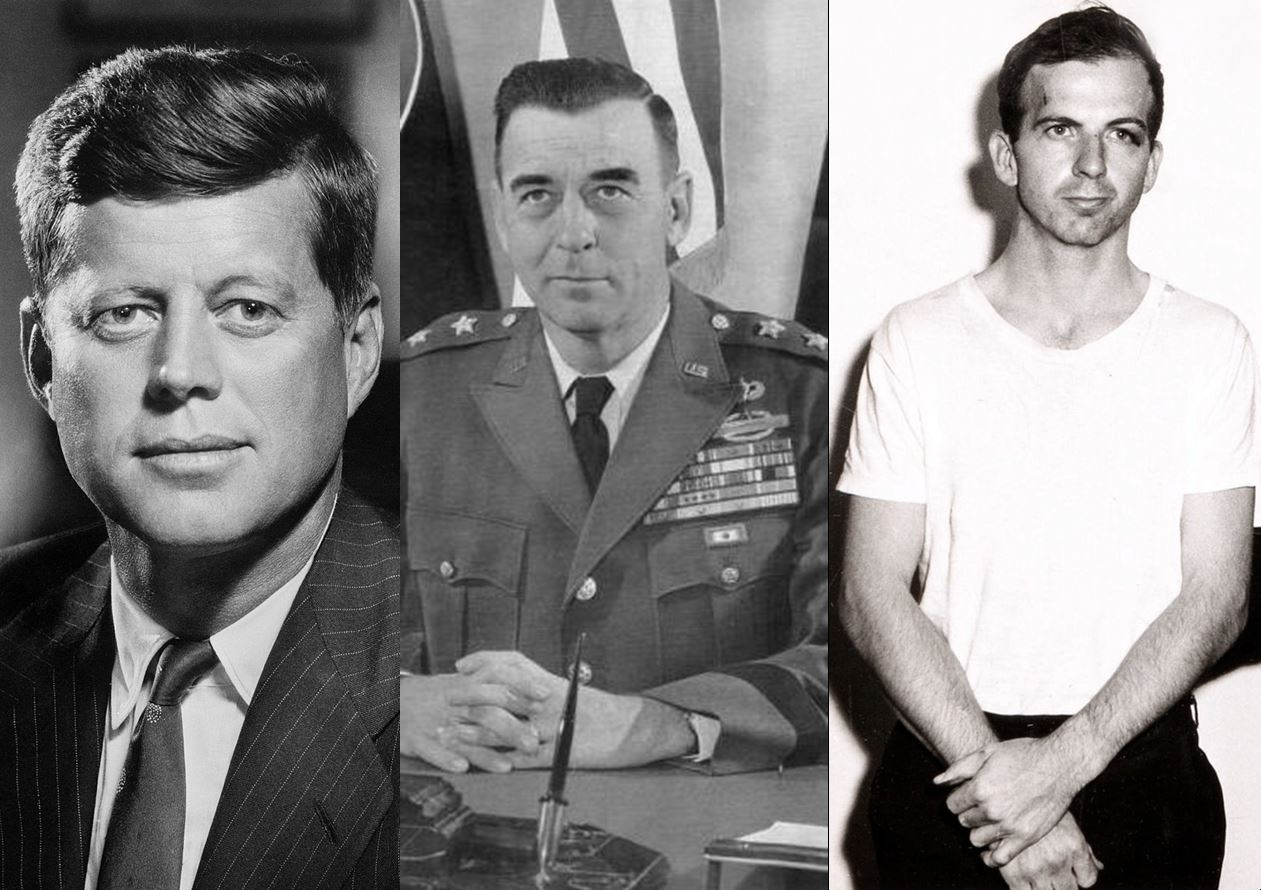
Tag: WALKER SHOOTING

  • Walker Bullet CE 573: Is it Real?

    Walker Bullet CE 573: Is it Real?


    As most JFK researchers know, the “Walker Bullet,” or CE 573, was purportedly extracted from the home of General Edwin Walker on April 10, 1963, and was contemporaneously described in official Dallas Police Department (DPD) reports as “steel jacketed.” Someone had taken a potshot at Walker that night, through the window on the rear side of his house, in front of which the General was seated. Or so Walker had related to the DPD that night.

    Not one, but rather two, DPD detectives, by the names of Ira Van Cleave and Don E. McElroy, put their signatures on a General Offense Report, and authored and signed a Supplementary Offense Report on April 10.

    In the Supplementary Offense Report, both detectives observed “a bullet of unknown caliber, steel jacket, had been shot through the window” at Walker’s home, as the General sat his desk.[1]

    Two DPD patrolmen, B.G. Norvell and J.P. Tucker authored the General Offense Report, which also identified the Walker Bullet as a “steel jacketed bullet.” All four DPD officers had held the Walker Bullet that night in their hands that night, and inscribed initials into it, according to official reports.

    The Walker Bullet that night famously missed the right-wing General—a national political figure—and had then passed through an interior wall, became badly deformed, but, reportedly, subsequently and curiously came to rest in between bundled papers stacked up against the wall.

    Months later, the Warren Commission would conclude it was Lee Harvey Oswald (LHO) who shot at and attempted to murder Walker that night. In part after the FBI said the Walker Bullet, or CE 573, was in fact the same type of Western-brand ammo that LHO used in his Mannlicher-Carcano rifle. Of course, the problem is the Walker Bullet in the possession of the Warren Commission, CE 573, is copper jacketed, and obviously so.

    CE 573, whatever its true origins, is a severely mangled bullet; so much so that its copper-jacketing has been torn asunder. Thus any observer, even a layman, can easily see the copper jacket is in fact copper through-and-through, and not a relatively uncommon steel-jacketed bullet with copper-gilding. It would not be surprising if a photo of CE 573 is used in police-cadet training courses somewhere as a classic example of a copper-jacketed bullet.

    Moreover, there are initials carved into CE 573, though of mysterious origin. Anyone carving initials into a copper-jacketed bullet would immediately know it was copper-jacketed, and not steel-jacketed, as copper is softer than steel.

    In addition, anyone carving initials into a copper-gilded steel jacketed bullet would notice the steel color and hardness emerging from under the microscopically thin copper gilding. It is inexplicable that even one big-city police detective would describe CE 573 as “steel-jacketed.” But two DPD detectives and two DPD patrolman authored and signed brief one-page reports prominently describing the Walker Bullet as exactly that, “steel jacketed”—after having handled the slug and marking it with their initials.

    Steel-Jacketed Bullets are a Rarity

    There are yet more puzzling aspects of the DPD detectives concurring and specifically noting that the Walker Bullet was “steel jacketed.”

    The vast majority of bullets in the 1960s, and even today, are copper-jacketed, and have been for more than a century.

    Bullets with metal jackets largely replaced plain lead bullets at about the same time that smokeless propellants replaced black powder in the majority of rifle ammunition. The higher pressures and temperatures produced by smokeless propellants were more than plain lead could support. This was overcome by adding an outer skin of harder metal to lead bullets. Since pure copper is difficult to cold-work, copper alloys became the standard jacket material.” — Global Forensic & Justice Center.[2]

    So, copper-jacketed (technically, copper-alloy jacketed) bullets largely replaced unjacketed lead bullets in first half of the 1900s, and had become standard by the 1960s.

    Steel-jacketed bullets, in contrast, are generally specialty items, designed for extraordinary penetrating power, often in military applications. But importantly, there have been inexpensive, steel-jacketed bullets on US civilian markets in the decades after WWII, often military surplus. More on that key topic later.

    In any event, any competent police detective working an attempted murder scene, when picking up the bullet in evidence, would, of course, try to detect its nature—the bore, jacketing, brand, and so on. A relatively rare, steel-jacketed bullet would be very notable—a valuable clue. The would-be murderer would have been armed with unusual ammo, very much worth noting. Especially in the case of an attempted murder of a very high-profile public figure, as in General Walker.

    Why would DPD detectives call an obviously copper-jacketed slug, a “steel jacketed” bullet?

    It defies explanation, especially as copper-jacketed bullets were and are the norm.

    Warren Commission

    That there is a dubious history of CE 573 is of no doubt. But the Walker Bullet becomes even more iffy when the Warren Commission’s wan efforts to examine the authenticity of the CE 573 are reviewed.

    So, imagine: You had two detectives with a big-city police department who attested, in writing, in a brief same-day April 10 report that the Walker Bullet, now known as CE 573, was steel-jacketed. As did two patrolman. Worth noting is that April 10 was months before the JFKmurder, and before any subsequent pressure to make evidence fit the case.

    Though not considered official evidence, the April 12, 1963 edition of The New York Times reported that Walker had been targeted with a 30.06 rifle, citing information provided by DPD detective Ira Van Cleave. Van Cleave would tell not only the Times, but the national wire service the Associated Press and at least two Texas newspapers that he had, in effect, handled and marked a steel-jacketed 30.06 slug the night of April 10 1963, in the Walker home.[3]

    From Copper to Steel

    But then, on Dec. 3 the purported Walker Bullet was sent from Dallas to the FBI’s DC lab, where it became CE 573, and wherein the slug was examined and found to be obviously copper-jacketed. Without hesitation, Robert Frazier of the FBI identified the CE 573 as a “copper-jacketed lead bullet” in a hand-written report dated Dec. 4.[4]

    This presented the Warren Commission with a conundrum.

    The WC needed to dispense with this troublesome point of steel having been transmogrified into visible and obvious copper. But the Dallas Police Department records could not be retroactively corrected.

    So the Warren Commission fleetingly asked Frazier, special agent from the FBI lab, about “why someone might have called this (CE 573) a steel-jacketed bullet?

    Melvin Eisenberg, assistant counsel, asked the question.

    Eisenberg: Is this a jacketed bullet?
    Frazier: Yes, it is a copper-alloy jacketed bullet having a lead core.
    Eisenberg: Can you think of any reason why someone might have called this a steel-jacketed bullet?
    Frazier: No sir; except that some individuals commonly refer to rifle bullets as steel-jacketed bullets, when they actually in fact just have a copper-alloy jacket.[5]

    And that was that.

    Frazier said “some individuals” commonly refer to rifle bullets as “steel jacketed,” and the questioning was closed off.

    “Some individuals,” of course, is an unlimited category that might include anyone on the planet, or park winos, or hunter’s housewives—or FBI special agents whistling in the dark. Sure, “some individuals” unfamiliar with firearms might breezily mix up steel- and copper-jacketed bullets—but police department detectives gathering evidence at the scene of an attempted murder, of a very high profile political figure?

    At the time he was allegedly shot at, Walker was nationally famous, featured on national magazine covers.

    The Warren Commission notably did not ask Frazier if the FBI lab ever conflated steel- and copper-jacketed bullets, or if police reports at the time readily interchanged the terms. Of course, they did not.

    Moreover, a review of ammo ads and literature from the 1960s, albeit limited to what is available online in the present, shows a great deal of specificity regarding bullet jackets. Ammo makers did not blithely mix up “steel” vs. “copper.”

    There is no reason why DPD detectives would refer to a common copper-jacketed bullet as a relatively rare, steel-jacketed bullet. There is not the slightest hint in industry literature that rifle bullets were ever commonly described as “steel jacketed”—nor would that make sense, since rifle bullets became commonly copper-jacketed in the early 1900s.

    The Chain of Evidence

    Anybody (except the Warren Commission) might be reasonably curious if CE 573 was really the bullet extracted from the Walker home on April 10, 1963.

    So, how did the FBI check the chain of evidence on the CE 573?

    Did they show CE 573 to the two DPD detectives, McElroy and Van Cleave?

    No.

    The DPD crime lab?

    No.

    The FBI, checking the authenticity of CE 573, showed a slug to DPD Patrolman B.G. Norvell.

    Who? Who was Norvell?

    In a June 10, 1964 report, the FBI wrote that on the night of April 10 at the Walker residence, “Patrolman B.G. Norvell handled a bullet, which Norvell stated he had found among some papers and literature in the room next to the room where General Walker had been sitting at the time of the shooting” to the DPD Crime Scene Search Section officer, named B.G. Brown.

    Okay, as far as it goes. But (italics added):

    But then reading in that very same report, the FBI also recorded that DPD Detective “McElroy, a police officer for thirteen years, advised it appeared the bullet had entered through a window in the back of the house and gone through a wall next to which General Walker had been sitting at the time, in the room next to where General Walker had been sitting. McElroy stated he found a spent bullet among some papers and literature. There was a hole in the wall through which the bullet had apparently entered. McElroy stated he picked up the bullet and later gave it to Officer B.G. Brown, of the Crime Scene Search Section.”[6]

    You can’t make this stuff up.

    According to the FBI report, the DPD detective McElroy said he found the original Walker Bullet and gave the mangled slug to the crime scene officer…but the patrolman Norvell told the FBI that he, Norvell, found the Walker Bullet and handed it to the crime scene officer.

    It should be noted that Norvell was, at best, a novice. Norvell had joined the DPD in December of 1962, and had been with the department for five months on the night of Walker shooting. Norvell then left the DPD less than one month later. Yes, Norvell’s entire police career spanned six months.

    The FBI report pointedly noted that Detective McElroy had been on the force for 13 years at the time of the Walker shooting.

    But it was to Norvell that the FBI, 14 months after the Walker shooting, showed a slug. Norvell said he recognized the CE 573 bullet from the “BN” or “N” he had scratched into the bullet.

    There is other evidence and complications.

    The other DPD patrolman with Norvell that night, named Tucker, told the FBI that Norvell had initially found the bullet, perhaps buttressing the story. But then Tucker also told the FBI he never saw Norvell initial or inscribe the bullet.

    Of course, it is always uncomfortable to make accusations.

    But at best the novice Norvell handled the original Walker bullet briefly, before being asked to identify a bullet shown to him by the FBI 14 months later. Suppose an “N” was on a mangled bullet? Or…who is to know if the FBI, in fact, showed the true original steel jacketed Walker Bullet to Norvell, while CE 573 stayed back in the FBI lab?

    Photographs? Lab Reports?

    The Dallas Police Department did send original reports and seven photographs of the Walker crime scene to the FBI in early December, 1963—but no photographs of the Walker bullet.

    If the Walker bullet was photographed on April 10, 1963, or shortly thereafter in the DPD lab, there is no record of it.[7]

    Indeed, there are few surviving paper records from the DPD lab regarding the Walker Bullet at all.

    If anyone in the DPD lab ever described the Walker Bullet in writing, either as steel-jacketed or copper-jacketed, the records have disappeared. The Warren Commission did produce a small, dark, black-and-white photo of CE 573 in their 26-volume set, in which determining the color of the bullet is impossible.

    The Rankin Order Regarding Chains of Evidence

    J. Lee Rankin was the general counsel to the Warren Commission, and thus one of the staffers who “did the real work” of the body.

    On May 4, 1964, Rankin sent to FBI Chief J. Edgar Hoover a memo, regarding physical evidence and the chain of evidence in the JFK case. That memo in part reads:

    “We would like you to determine, and set forth in one document, where and by whom these items were found following the assassination. In each case the item should be shown to the person who found it so that he can identify through inspection….However it is unnecessary to trace the chain of possession forward past the first person who can identify the item by inspection.”[8]

    The memo specifically mentions the Walker Bullet, CE 573.

    Thus, FBI agents followed Rankin’s directive, and showed the Walker bullet CE 573 only to patrolman Novell, even though there was a conflict in the written official FBI record regarding if Novell actually found and handled the bullet. One obvious interpretation is that Rankin wanted to sidestep showing the bullet and getting testimony from DPD detectives McElroy and Van Cleave.

    Asst. Director W. C. Sullivan

    On Dec. 4, 1963, mere hours after the FBI had recorded receipt of the Walker Bullet, FBI Asst. Director W.C. Sullivan was evidently in a frenzy regarding the slug.
    jfk bullet type secretAccording to an FBI memo sent to the FBI office in Dallas, on Dec. 4, “Asst. Director W. C. Sullivan called at 3:10 am and instructed he receive a return phone call and be filled in on the details regarding to the alleged bullet shot into the home of General Edwin A. Walker.”[9]

    Yes, 3:10 am.

    The FBI memo, on which the sender’s identity has curiously been redacted, continued, “Mr. Sullivan then instructed that agents review Dallas newspaper morgues first thing Wednesday morning, 12/4/63, and details be obtained and furnished to him by teletype.”

    Sullivan may have been a night owl. Perhaps overwrought by JFK case duties. But even so, it is evident that Sullivan had urgent concerns about the authenticity of the Walker Bullet, and called the purported Walker Bullet the “alleged” slug—unusual for evidence submitted to the FBI by a police department. Well before sunrise on Dec. 4, Sullivan was issuing urgent orders demanding immediate action from the Dallas FBI and information on the Walker Bullet.

    But not only did Sullivan think the true Walker Bullet might actually be steel jacketed.

    DPD Chief Curry Opines JFK Shot with “Steel Jacketed” Bullet

    More curiosities abound.

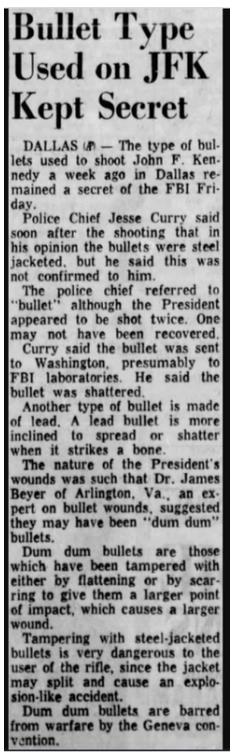
    On Nov. 29, 1963 Dallas Police Chief Jesse Curry told the Associated Press that “in his opinion the bullets [that struck President Kennedy] were steel jacketed, but he said this was not confirmed to him [by the FBI].”

    Huh? “Steel jacketed”?

    This bit of recovered history is jarring, to say the least.

    Why on earth would Chief Curry, one week after the murder, opine to a national news media organization that the bullets that struck JFK—which Curry had never seen, or examined, and which were still an FBI “secret”—were relatively rare steel-jacketed bullets, rather than the industry norm, standard and very common copper-jacketed bullets?

    There is nothing in the JFK case itself to suggest steel-jacketed bullets were used. In fact, the horrible head shot at Z-313 was evidently accomplished with a copper-jacketed bullet—or at least so says the WC. So why late in November 1963 was the Dallas Police Chief Curry seeking to have confirmed, by the FBI, that the bullets that struck JFK were steel-jacketed? This becomes more interesting when one again ponders the nature of bullets.

    Interestingly, as early as Nov. 23, 1963, Chief Curry was asked by an unidentified news reporter whether LHO was the failed assassin of General Walker, as captured on film in a hallway interview.[10]

    Curry replied, “I don’t know.”

    According to Dec. 4, 1963 FBI memo sent to FBI Director Hoover, the DPD had considered turning the Walker Bullet over to the FBI even before being asked, as “they felt there was some possibility that Oswald might have shot at Walker.”[11]

    Steel-Jacketed Bullets Are Relatively Rare

    As stated, in the early 1960s almost all rifle bullets and most other bullets were copper-jacketed (technically, copper-zinc alloys). The jacketing helps prevent lead-fouling of rifle barrels (lead being a very soft metal). Also, the increasing explosive power of bullets had necessitated jackets to prevent a pure lead slug from mushrooming or deforming as it went down the barrel.

    The idea that the Dallas Police Chief Curry would be seeking confirmation, from the FBI, that the bullets that struck JFK were steel-jacketed is remarkable.

    Why would Curry suspect steel-jacketed bullets?

    The answer almost certainly goes back to the ever-controversial April 10, 1963 rifle shot taken at General Walker. As stated, inside the Walker home a slug was recovered by police and identified as steel jacketed by two DPD detectives, and two patrolmen, in the same-day official police report they authored and signed.

    DPD Detective Van Cleave then told reporters from at least four different news organizations, including the AP, that the bullet recovered was a “30.06.”

    Which is interesting—especially the part about the “30.06.”

    The US military, under dire duress of WWII wartime copper shortages, did in fact manufacture a steel-jacketed 30.06 during the war and shortly thereafter, bullets which were sold into surplus when the US adopted NATO-compatible ammo in 1955. The steel-jacketed 30.06’s were phased out of military use.[12]
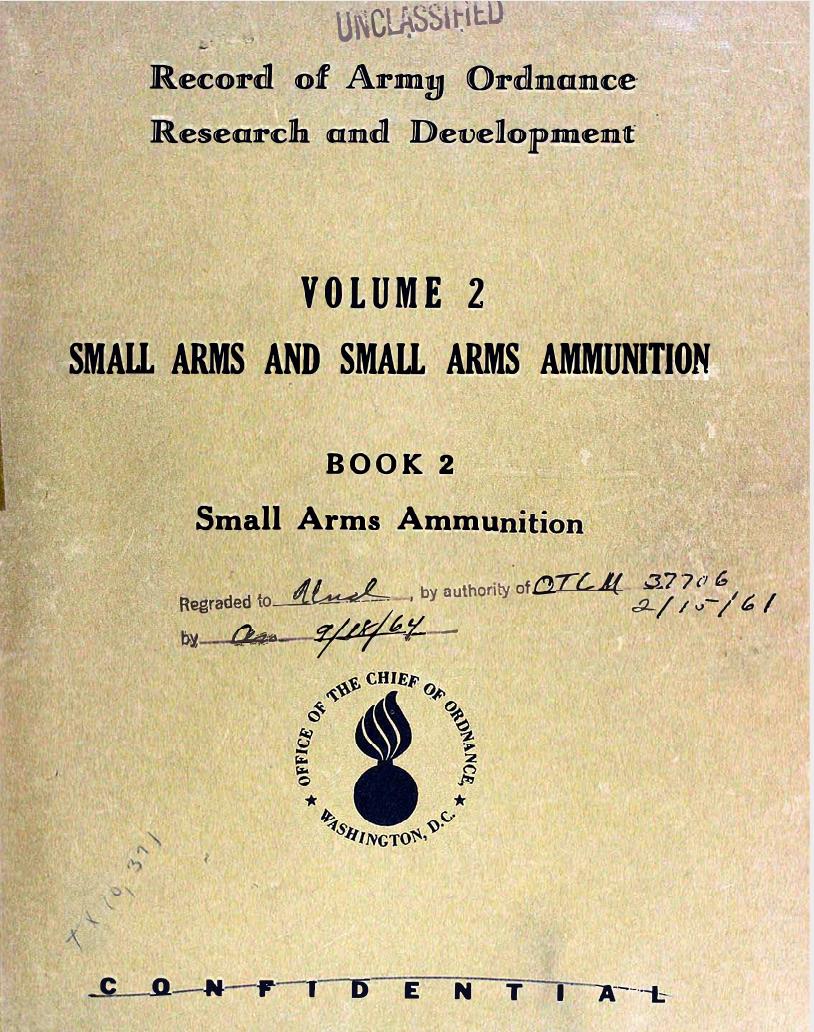
    small arms ammunitionSo civilians could buy the steel-jacketed 30.06 bullets.

    Moreover, by Nov. 29, DPD detectives had been through the belongings of Lee Harvey Oswald, and had found the ever-gloomy backyard photograph of General Walker’s house (the one with an auto license plate cut out), along with four other photographs of roads and railroad tracks leading to the Walker residence.

    Also on Nov. 29, the German newspaper Deutsche National und Soldaten-Zeitung published an article that accused LHO of having shot at General Walker.[13]

    The reasonable deduction, indeed inevitable conclusion, is Chief Curry on Nov. 29 or earlier had reviewed the official DPD files on the Walker shooting, and read that a steel-jacketed slug had been found in the Walker residence.

    So, it looked like this to Chief Curry: LHO, accused of shooting at JFK and now himself dead, had had in his possession backyard photos of the Walker house—the very house in which Walker, another high-profile public figure, had also been shot at. A house in which a steel-jacketed slug had been recovered on the night of the shooting.

    So, naturally, Curry opined LHO used the same type of steel-jacketed bullets in shooting JFK, and asked the FBI to confirm as much. That info would help close the books on the Walker attempted murder.

    It stretches credulity that Chief Curry would blunderbuss or conflate the terms “steel jacketed” and “copper jacketed’ when asking the FBI to confirm the type of bullets used in the assassination of a sitting US president.

    CE 573: No “DAY” and no “+”

    There are other incongruities regarding the true Walker Bullet. On two separate occasions Lt. J.C. “Carl” Day of the DPD testified he had marked the true Walker Bullet with the word “DAY” and a “cross.”

    On or about Dec. 5 1963, Lt. Day told the FBI he had placed upon the Walker slug the word “Day” and a “cross.” The slug itself, not an envelope, box or tag.

    Then, here is Lt. Day testifying before the WC in 1964:

    Mr. BELIN. I will ask you this. Have you ever seen Commission Exhibit 573 before, if you know?
    Mr. DAY. Yes, sir; I have.
    Mr. BELIN. Could you tell us what 573 is?
    Mr. DAY. This slug was gotten from the home of former General Edwin Walker, 4011 Turtle Creek, April 10, 1963, by Detective B. G. Brown, one of the officers under my supervision. He brought this in and released it to me.
    Mr. BELIN. You are reading now from a report that is in your possession, is that correct?
    Mr. DAY. Yes, sir. Those are the official records of my office.
    Mr. BELIN. Was that prepared under your supervision?
    Mr. DAY. Yes, sir.
    Mr. BELIN. In the regular course of your duties at the Dallas Police Department?
    Mr. DAY. Yes, sir. The slug has my name “DAY” scratched in it.[14]

    After that last comment, Belin quickly changed topics. It is not clear why Day was reading from his official DPD records, or if Day even handled the bullet during the hearing.

    Another problem is this: in 1979 the National Archives and Records Service, on behalf of the House Select Committee on Assassinations, took CE 573 to the FBI lab in Washington, where it was “microscopically” examined. The examiners found the markings “Q188,” “N,” “B,” “J,” “D,” “A,” “O,” and “D”.[15]

    The examiners did not see the word “DAY” or a “cross.” Even under a microscope. Extant photos of CE 573 do not reveal the word “DAY” either.

    The Walker Bullet Was Found—Resting between Bundles of Literature?

    Among the many oddities of the true Walker Bullet is where it was found.

    If DPD patrolman Norvell is correctly quoted, he found the steel-jacketed slug resting atop one bundle of paper in a stack of bundles, after another bundle had been removed from atop of it.

    That is, the Walker Bullet missed Walker, then passed through an interior wall behind Walker. The Walker Bullet then purportedly came to rest in-between bundles of paper.[16]
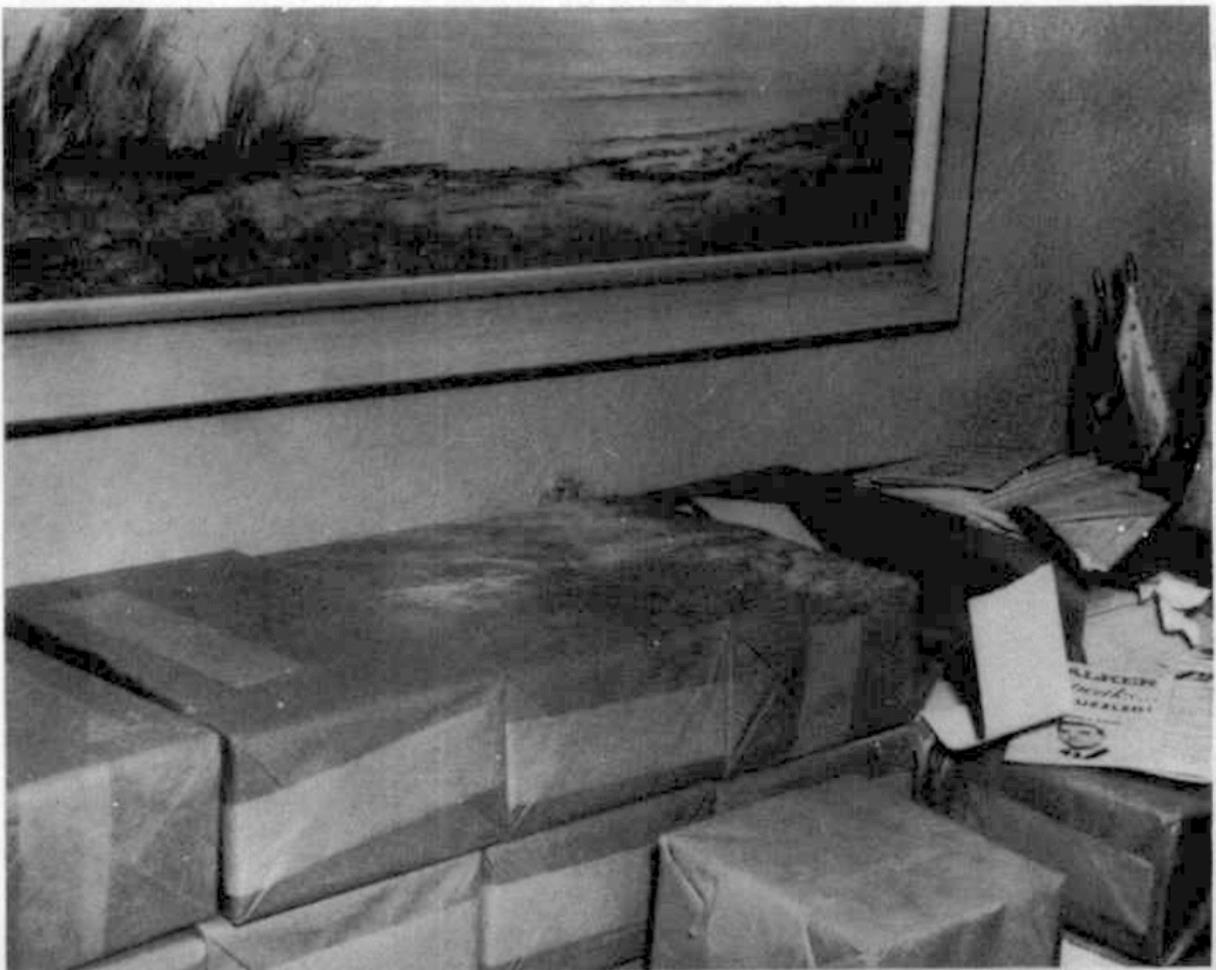
    bundles of paperCommission Exhibit 1009: The Walker Bullet was found “in between” bundles of paper such as this?

    Per an FBI report dated June 4, 1964 (italics added):

    “In his adjoining [Walker’s] room, the [Dallas Police Department] officers [Tucker and Norvell] found numerous bundles and literature and papers stacked against this common wall. Upon removing some, they found a mushroom-shaped bullet lying on one of the stacks of literature near the hole in the wall.”

    There has always been speculation that General Walker, a national public figure, had staged the Walker shooting as a publicity stunt, with or without LHO’s participation.

    If the true Walker Bullet was found resting in-between bundles of paper, lying on one of the stacks, then one might have suspicions the bullet had been planted there.

    CE 399
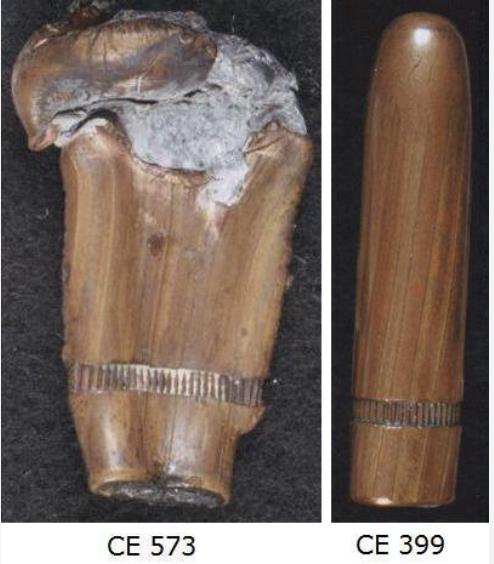
    ce573 ce399CE 399 is, of course, the controversial “magic bullet” or the relatively pristine slug purported to have been recovered at Parkland Hospital on Nov. 22, 1963.

    CE 399 is a Western ammo 6.5 millimeter copper-jacketed slug—a brother bullet to CE 573. Same make and bore, type. The 6.5 Western ammo is used in the Mannlicher-Carcano rifle said to have been owned or used by LHO.

    But a key fact is this: No one in any local or federal police agency ever called CE 399 a “steel jacketed” bullet. Nowhere in the voluminous FBI files is there a single reference to CE 399 as a “rifle bullet,” ergo one that is “steel jacketed.”

    That is to say, CE 399 was immediately and correctly ID’ed as a copper-jacketed bullet, which it obviously is. But CE 573 is a brother bullet to CE 399, and even more obviously copper-jacketed, as it has been mangled, revealing a solid copper jacketing. It stretches credulity that there are police agency errors, misnomers and problems of nomenclature regarding CE 573—but not CE 399.

    Conclusion

    One could be forgiven for having reasonable doubt that CE 573 is the true Walker Bullet, the slug extracted from the General’s residence on April 10, 1963. Indeed, one could ask how anyone could be “reasonably certain” that CE 573 is bona fide evidence from the Walker shooting.

    To recap and ponder—

    • The original and official DPD reports described a relatively rare “steel jacketed” slug found in the Walker home, on April 10, 1963, the night of the shooting. The bullet was handled and initialed through inscribing by four DPD officers. But CE 573—the WC’s purported Walker Bullet—is obviously copper-jacketed.
    • The extremely thin Warren Commission questioning of FBI agent Frazier, as to how and why the Walker Bullet could ever be described as “steel jacketed” by DPD detectives. Frazier answered that “some individuals refer to all rifle bullets as steel jacketed,” a novel and unique observation. There is nothing in police or FBI literature to suggest police detectives or FBI special agents anywhere ever described “all rifle bullets” as steel jacketed—especially when copper-jacketed rifle bullets were and are the norm.
    • Lt. Day of the Dallas Police Department, stating unequivocally to the FBI and then to the WC that he had carved the true Walker slug with his name “DAY” and a cross. No such markings can be seen on CE 573, even under a microscope.
    • The lack of same-day April 10, 1963, or indeed any Dallas Police Department photographs of the true Walker Bullet. The true Walker Bullet was never photographed or, if it was, the photographs have disappeared. Moreover, there are no surviving written DPD lab reports on the Walker Bullet that describe the slug as steel- or copper-jacketed.
    • The weak chain of evidence confirmation by the FBI-WC on the provenance of CE 573. The FBI in 1964 showed a slug purported to be the Walker Bullet only to Norvell, the DPD patrolman, who at best handled the slug briefly 14 months earlier. The FBI did not show the purported Walker Bullet to detectives McElroy or Van Cleave.
    • Neither FBI nor the Commission ever asked Van Cleave why they thought the Walker Bullet was a steel-jacketed 30.06. A simple question, such as “OK, Van Cleave. You handled and inscribed the Walker Bullet, held it in your hand on April 10. Why did you call the Walker Bullet ‘steel jacketed’ in official police reports and 30.06 when talking to reporters?” That simple question was never asked of the best witness.
    • Chief Curry opining on Nov. 29 that JFK had been assassinated with “steel jacketed” bullets, and that he was trying to confirm that fact with the FBI. Curry was almost certainly referring to the Walker shooting, and the “steel jacketed” 30.06 slug found on the scene—a shooting being laid at the feet of LHO, due to the photographs of the Walker home and approaches found in LHO’s possession post JFKA.

    In sum, it is difficult to have confidence the true Walker Bullet, described as steel-jacketed, is also the WC’s CE 573, the torn-asunder copper-jacketed.

    What could be corroborating evidence—the correct marks on the CE 573, or correct same-day detective reports, or a true contemporary April 1983 Walker Bullet photograph, or a true contemporary written report from the DPD lab—are all lacking regarding CE 573. Anyone driving to confirm the authenticity of CE 573 meets roadblock after roadblock after roadblock.

    It is hardly a secret that the job of the Commission was not to investigate the JFK case, but rather to prosecute LHO as a “leftie, loner, loser.” And their narrative on the Walker shooting was that Oswald took a potshot at the General, thus indicating LHO’s predisposition to assassination of public figures.

    However, prosecutorial zeal can lead to excesses and shortcomings.


    NOTES:

    [1]Texas History

    [2]Jacketed Bullets

    [3]Walker Escapes Assassin’s Bullet

    [4] Document from HSCA Administrative folder (page 13)

    [5] Testimony of Robert A. Frazier

    [6] CE 1953

    [7]Texas History

    [8] FBI 62-109090 Warren Commission HQ File, Section 17 (page 119)

    [9]FBI Files on Edwin Walker, 82-2130 File (page 27)

    [10] November 23, 1963 – Dallas Police Chief Jesse Curry speaks with reporters in the corridor

    [11]FBI Files on Edwin Walker, 82-2130 File (page 30)

    [12] 100 Year History of the .30-06; see also US WWII produced steel case 30-06 (read the posted volume, “Record of Army Ordnance, Research and Development,” from the Office of the Chief of Ordnance)

    [13] FBI file number 124-10369-10024 (see page 5)

    [14] Testimony of J. C. Day

    [15] Document from HSCA Administrative folder (page 10)
    [16] CE 1953

  • Oswald and the Shot at Walker: Redressing the Balance

    Oswald and the Shot at Walker: Redressing the Balance


    Many of those who believe that Lee Harvey Oswald assassinated President John F Kennedy, and then killed Dallas Police Officer JD Tippit on 22nd November 1963, also advocate the view that Oswald attempted to shoot and kill General Edwin Walker on 10th April 1963. In fact, it is often presented as a historical fact, and that Oswald used the same Mannlicher Carcano rifle seven months later to murder JFK.

    Oswald’s guilt in the Walker case was largely predicated on the testimony of his wife, photos of Walker’s house found amongst his belongings, an incriminating note attributed to Oswald that predicted an imminent event and, possibly, his own arrest or death arising from it.

    As we approach the 60th anniversary of the Walker shooting incident, this article seeks to summarize some of the key evidence and arguments that cast doubt on Oswald being the mystery shooter who tried to take the General’s life. As we shall find out, it was not a fait accompli by any stretch of the imagination. First though, let’s go back to the night in question and briefly recap the generally known facts.

    It was around 9pm on 10th April 1963. It had been a warm, sweltering Texas day and General Walker was sitting at his desk in the northwest ground floor room of his mansion in the Turtle Creek neighbourhood of Dallas completing his tax returns. This large house on Turtle Creek Boulevard also acted as an HQ for Walker’s political operations. He had, in fact, only just returned a few days earlier from a six-week speaking tour of the US with political sympathizer and evangelical preacher, Billy James Hargis. They controversially called their tour Operation Midnight Ride.

    Suddenly, Walker heard what he initially thought was perhaps a firecracker. He then saw a hole in the wall next to where he had been sitting and realized that someone had just taken a shot at him. The bullet had deflected off the wooden window frame. This changed its trajectory and probably saved Walker’s life. When he knew it had been a shot, Walker told police that he ran upstairs to get his pistol. He heard a car leave but saw no shooter. Walker was lucky. The only injuries he sustained were minor cuts to his lower right arm, possibly caused by fragments of the bullet. Walker reported the incident to the police around 9:10pm. When they arrived at the scene, a mangled bullet was soon found in the next room on stacks of paper.

    During the weeks and months that followed, the police were never able to positively identify who had taken the shot. A Scotsman by the name of William Duff, who was a former volunteer worker of Walker’s but left the house a month earlier, was arrested on 18th April 1963 and considered to be a suspect but this came to nothing (for more on William Duff, click here to see my presentation on him at the Dealey Plaza UK 2022 conference).

    The attempted murder was unsolved until shortly after the assassination of JFK when the finger of suspicion was pointed directly at Lee Harvey Oswald. This started in late November/early December 1963. Of course, by then Oswald was conveniently dead and could not defend himself.

    How did Oswald first become a suspect in the Walker shooting incident?

    It was a right-wing German newspaper called the Deutsche National-Zeitung und Soldaten-Zeitung that first highlighted Oswald’s possible involvement in the Walker shooting incident when they published an article on 29th November 1963. This was based on interviews General Walker had given to the newspaper in the days following JFK’s assassination. It was likely Walker who planted the seed with them about Oswald being the person who took the shot at him.

    We then have Ruth Paine visiting the Irving Police Department on 2nd December 1963 to hand over some of Marina Oswald’s belongings. Included was a Russian book called “Book of Useful Advice.” When the book was inspected by the Secret Service later that day, they found a two-page note inside written in Russian. This note was allegedly written by Oswald with instructions for his wife on what to do if he was killed or taken prisoner. Marina told law enforcement officials the day after the note was found that it was written by her husband, and she had first seen it on the night of the Walker shooting. She said that Lee had arrived home late that night and admitted to taking the shot and burying the rifle, which he would retrieve later.

    From then on, it was a slam dunk! Oswald had shot at Walker, displaying a propensity for political assassination that ultimately led to JFK’s death. That has been the popular narrative ever since.

    Did the note found in the book have another meaning?

    The conventional wisdom has been that Oswald did indeed write the note in advance of the Walker incident, as he was aware that he could have been arrested or killed at the scene, or shortly afterwards. This is the Warren Commission exhibit and English translation of the note originally written in Russian (see original note here).

    scott01

    It is clear that whoever wrote the note was planning a dangerous activity. But the note did not mention the specific event. There is no mention of General Walker, and the note is not signed or dated. If Walker had been killed, and Oswald arrested (or worse), it is fanciful to suggest that there would not have been anything about the shooter or the incident in the newspapers. Walker was a high-profile political figure at the time, and this would have been a major national news story.

    The reference to the Embassy probably means the Soviet Embassy. But would they have been quick to come to Marina’s assistance as the note suggests if Oswald had killed General Walker? Isn’t it more likely that they would not have wanted to associate themselves with such a violent and political act on American soil? However, maybe the note referred to a different event.

    It is also interesting that the FBI examined the note in early December 1963 and “seven latent fingerprints were developed thereon. Latent prints are not identical with fingerprints of Lee Harvey Oswald or Marina Nikolaevna Oswald.” This is an odd finding given that Oswald was the alleged author of the note and Marina had also probably handled it (click here to see the latent print memorandum dated 5th December 1963).

    Sylvia Meagher in her influential 1967 book, Accessories After The Fact suggests though on page 287 that “Oswald wrote the undated letter in relation to a project other than an attack on General Walker – one that also involved risk of arrest or death – and that Marina Oswald was informed about her husband’s plans in advance.”

    Could Oswald have been planning a different dangerous mission or project around the time of the Walker shooting that was completely unrelated, but also involved risk of arrest or death?

    The answer is that he was.

    Oswald, Dallas and the Fair Play for Cuba Committee

    Most people with an interest in the JFK assassination are aware of Lee Oswald’s activities in New Orleans on 9th August 1963 and 16th August 1963 when he handed out leaflets for the Fair Play for Cuba Committee (FPCC) on Canal Street and Camp Street. However, many do not know that it is likely that he had done something similar four months previously while still residing in Dallas.

    On or around 19th April 1963, Oswald wrote a letter to V.T. Lee in New York, who was essentially the head of the FPCC in America. Oswald wrote:

    I do not like to ask for something for nothing but I am unemployed. Since I am unemployed, I stood yesterday for the first time in my life with a placard around my neck, passing out Fair Play for Cuba pamphlets, etc. I only had 15 or so. In 40 minutes they were all gone. I was cursed as well as praised by some. My homemade placard said, “Hands OFF CUBA! VIVA Fidel.” I now ask for 40 or (50) more of the fine, basic pamphlets.

    The letter was signed Lee H. Oswald (click here to see the letter).

    This would indeed have been an extremely dangerous activity to be involved in. Since Dallas at that time was a political hotbed of right-wing extremism with the John Birch Society very active. The Dallas Morning News made no secret of its contempt for Castro’s Cuba and President Kennedy and, of course, General Walker made Dallas his home after he resigned from the Army and became active in politics. Lyndon and Lady Bird Johnson were accosted by a mob in the city in November 1960. Could the note found in the Russian book on 2nd December 1963 have been written with the FPCC leafleting in mind and the potential for harm to come to Oswald? It is not unreasonable to say so, especially as his letter to V.T. Lee was sent just around a week after the Walker assassination attempt, an event that would have greatly agitated his supporters. This is also a scenario where the Soviet Embassy would have been more likely to assist Marina if harm had come to Oswald.

    Corroboration of the leafleting in Dallas comes from two police officers. Dallas Chief of Police, Jesse Curry, wrote to J. Lee Rankin (General Counsel, Warren Commission) in May 1964 with two reports from Sergeant Harkness and Patrolman Finigan regarding a man passing out pro-Castro literature on the streets of Dallas in early 1963. Finigan wrote the following on 15th May 1964:

    On a day in late spring or early summer of 1963, which was approximately one year ago, I was on the northeast corner of Main and Ervay Streets and observed an unidentified white male on the northwest corner of Main and Ervay Streets. This white male was passing out some sort of literature, and had a sign on his back which read Viva Castro.

    I went to the phone in Dreyfuss & Son and called for Sgt. Harkness to meet me on the corner. While I was waiting for Sgt. Harkness, US Commissioner W. Madden Hill came across the street and said “Something should be done about that guy passing out literature.” Mr Hill seemed to be very angry.

    About this time, Sgt. Harkness drove up on his three-wheel motor-cycle and stopped on the northeast corner where I was standing. As we started to discuss the situation, the white male removed the “Viva Castro” sign and ran into H. L. Green Company. I started after him but was told by Sgt. Harkness to let him go. Another unknown white male told us that when Sgt. Harkness came up, this unidentified white male said “Oh, hell, here come the cops.”

    This unidentified white male was of medium weight and height and had on a white shirt and was bare headed. I can not identify this white male because he was across the street and I was waiting for Sgt. Harkness to make the initial contact with him.”

    (Click here to see Finigan’s statement)

    Sergeant Harkness tells the same story and that he “could not get a good description of the man because he ducked behind a post in the entrance to the store” but that he “appeared to be medium build and he had on a white shirt.”

    (Click here to see full statement from Harkness)

    I think it is fair to speculate that the man Finigan and Harkness saw was Lee Harvey Oswald.

    It’s also interesting to note that the H. L. Green store where the leafleting took place was the first store in downtown Dallas to desegregate their lunch counter. Civil rights protests took place outside the store during the 1960’s so it was probably felt to be a good place to hold the demonstration (see picture below).

    It is wrong to suggest therefore that the note found in the Russian book could only have referred to the Walker incident.

    scott05

    Marina’s Testimony

    It has been well documented over the years that much of Marina Oswald’s testimony against her husband was contradictory, controversial, and selective. It should be acknowledged that shortly after her husband was arrested on 22nd November 1963, and in the months that followed, she would have been under intense pressure and was threatened with deportation if she did not comply with investigating authorities. She was a mother of two young children in a strange land and who hardly spoke the language. She would likely have said anything to protect her children.

    The reader should be aware that the House Select Committee on Assassinations (HSCA) in the 1970’s produced a thirty page report called Marina Oswald Porter’s Statements Of A Contradictory Nature. This report included conflicting statements given by her about the Walker shooting, such as when she first found out Oswald had lost his job at Jaggars-Chiles-Stovall (just prior to 10th April 1963) and when she first saw photographs allegedly taken by her husband of Walker’s house.

    Even Warren Commission lawyers such as Norman Redlich had serious concerns about relying on Marina’s testimony. In February 1964, he wrote “Marina Oswald has repeatedly lied to the Service, the FBI, and this Commission on matters which are of vital concern to the people of this country and the world.” When being questioned by the House Select Committee on Assassinations, Redlich added that “she may not have told the truth in connection with the attempted killing of General Walker.”

    When Marina was first questioned about the note by Secret Service officials on the evening of 2nd December 1963, she denied any knowledge of it (Commission Exhibit 1785). However, the next day her story had completely changed, and she admitted to being aware of its existence and meaning.

    Marina had volunteered nothing to authorities about the note or the Walker shooting from the day of the JFK assassination (when she was first questioned) until the 3rd December 1963. She may have been protecting her husband, but it is surely reasonable to at least be skeptical about how and when she began to speak about the note, which was both convenient and suspicious.

    How the incriminating note found its way into the hands of the police, the FBI and Secret Service is also troubling. In her Warren Commission testimony, Ruth Paine advised that officers had come to her house with a search warrant. This was 23rd November 1963. She was about to go grocery shopping but allowed the search to go ahead in her absence. The last thing she saw before she left to go shopping was officers “leafing through books to see if anything fell out but that is all I saw.” Why didn’t the officers find the note during that search? Some have said that they were simply not as thorough as they should have been, but this explanation is hardly credible given the nature of the charges against Oswald at that time and they were specifically “leafing through books.”

    The note was eventually found nine days later on 2nd December 1963 when Ruth Paine took some of Marina’s personal belongings round to the police, including the book where the note was found. This was also only a few days after the German newspaper ran the article alleging a connection between Lee Oswald and the Walker shooting incident. Coincidence or something more sinister?

    Were there any eyewitnesses who saw Oswald shoot at General Walker?

    The answer is no. There were no eyewitnesses who came forward and said they saw Oswald shoot at General Walker. In fact, nobody even said they saw Oswald at the scene of the crime or in the vicinity.

    The best witness to the Walker shooting incident was fourteen-year-old, Walter Kirk Coleman. He lived on Newton, which was just north of Walker’s house and overlooked the Mormon Church and parking lot.

    On the evening of 10th April 1963, he was at home standing in the doorway which led from his bedroom to the outside of the house. He heard a loud noise which he first thought was a car backfire. He immediately ran outside and stepped on top of a bicycle propped up against the fence. This allowed him to look into the church parking lot. The journey from the doorway to the fence would only have taken him a few seconds.

    Coleman was first interviewed by the Dallas Police on 11th April 1963 (click here for Police report). He said he saw a man getting into a 1949 or 1950 Ford who “took off in a hurry.” He saw a second man further down the parking lot at another car, bending over the front seat as if he was putting something in the back.

    When Coleman was interviewed again in June 1964 (click here), he provided additional details. He added that the first man was hurrying towards the driver’s side of the Ford car. The motor was running, and the headlights were on. He saw nobody else in the car. The man glanced back towards him. This time Coleman said the car drove off at a normal speed. The second man was seen walking away from the alley entrance and towards a 1958 two door Chevrolet sedan. Coleman confirmed his initial report that this man was leaning through the open car door and into the back seat area. Was he placing something there? Coleman did not notice if this second man was carrying anything as his attention was mainly drawn to the first man, but it was possible.

    Coleman provided a detailed description of both men. By this time, he must have seen many pictures of Lee Harvey Oswald and stated that neither man he saw on the night of the Walker shooting incident resembled Oswald. It is possible that these two mystery men were leaving the scene because they also heard the shot and were naturally alarmed and concerned by it. The shooter could have gone down the alley in the opposite direction from them and the church parking lot towards Avondale Avenue.

    Sixty years later, the identities of the two men have yet to be uncovered. The attempted assassination of General Walker was big news so it should have been important for the police to follow up on Coleman’s firsthand testimony and try to find them. The men could even have come forward to eliminate themselves as suspects and help the police with their inquiries. They were there on the night and if not personally involved surely saw what was going on.

    Two unidentified men were also seen acting suspiciously around Walker’s house on 8th April 1963. Robert Surrey was a close associate of General Walker and had set up a publishing company with him. It was actually Surrey who was responsible for the Wanted for Treason leaflets distributed around Dallas at the time of JFK’s visit.

    Surrey told police and the FBI that around 9pm to 9:30pm on 8th April 1963, he had just arrived at Walker’s house and was planning to drive up the alley (where the shot was fired two nights later). He observed two men sitting in a 1963 Ford just off the alley. Surrey parked elsewhere and went back to see what these men were up to. He saw them get out of the car and walk up the alley. They went into the area at the rear of the property and looked in windows. Surrey took the opportunity to check their car. There was no license plate. He opened the glove compartment but saw nothing that would help identify the men. About 30 minutes later, the men returned to their car and Surrey followed them in his. He did not follow them long.

    Surrey confirmed that he had never seen the men before or after that night. Like Coleman, he also provided a description to police and confirmed to them in June 1964 that he was of the opinion that neither man was Lee Harvey Oswald (click here for FBI report on Surrey statement).

    Were these the two men that returned to the Walker house two days later and were they the same ones seen by Walter Kirk Coleman? Their identities will probably never be known now, which is just another mystery in this case that has so many.

    Further intrigue, as if we needed any, about the night of the Walker shooting is provided in Chapter Five of Gayle Nix Jackson’s interesting 2016 book, Pieces of the Puzzle: An Anthology. She tells the story of seeing a 2012 video interview with Robert Surrey’s eldest son, David. In the interview, David recalls being at Walker’s house with his father when the shot was fired. Father and son then went out in their car, looking for the shooter. After circling the area for a while, Surrey pulled up behind a car and got out to speak to a guy who got out of his car. Surrey asked the guy, “Did you get him?” The man replied that he missed.

    Coleman and Robert Surrey’s statements are important when assessing if Oswald was involved in the Walker incident or if more than one person was involved. Their statements are rarely told.

    The Bullet and the Photographs

    The bullet that narrowly missed General Walker’s head was retrieved by police on the night of the shooting. It was described in their contemporaneous report as appearing to come from a high-powered rifle and “was a steel jacket bullet.” Presumably, police officers are familiar with identifying different types of bullets. Early newspaper reports, including from the day after the shooting by the Dallas Morning News, also reported the bullet as of 30:06 caliber. They may have been passed this information from sources in the Dallas Police Department.

    Police officers also thoroughly searched the alley at the rear of the house from where the shot was fired with “negative results.” They found no spent cartridges or other evidence of value.

    If Oswald did take the shot at General Walker, he was obviously more careful about cleaning up the scene of the crime than he was when he allegedly shot President Kennedy and Officer Tippit. On those occasions, he left the rifle, cartridges, bullet casings and a wallet behind, even emptying his revolver of the rest of its contents at the Tippit scene. He may as well have left a calling card!

    The police did identify the spot from where they felt the shot at Walker was fired, a lattice fence at the rear of the house and in the alley. This was a distance of roughly 100 feet to the spot where Walker was sitting. Walker’s house was illuminated that night, so there is the obvious question of how the shooter could have missed, especially a so-called sharpshooter like Lee Harvey Oswald. According to the Warren Commission, Oswald successfully pulled off a far more difficult shot, and at a moving target, seven months later from the sixth floor of the Texas School Book Depository.

    And, in a way similar to how a German Mauser rifle morphed into an Italian Mannlicher Carcano in the hours following the JFK assassination, investigating authorities seemed to want to modify a 30:06 steel jacketed bullet into a 6.5mm copper jacketed bullet and then link it to Oswald. Remember that the bullet retrieved from the Walker house was very badly damaged and in a mangled state (see Commission exhibit CE 573 below).

    scott02

    In fact, during the HSCA investigation in the 1970’s, General Walker himself said that the bullet in evidence was not the same bullet that was found in his house on 10th April 1963. He wrote to the Attorney General in February 1979 and said that it was “a ridiculous substitute.” He went on to state that “I saw the hunk of lead, picked up by a policeman in my house, and I took it from him and I inspected it carefully. There is no mistake. There has been a substitution for the bullet fired by Oswald and taken out of my house.”

    We should exercise caution when reviewing statements made by Walker and not necessarily take them at face value. But it cannot be denied that he was there the night the bullet was found and had decades of experience in the military and in handling firearms.

    What we can say with confidence is that it has never been established beyond doubt that the bullet found at the Walker house on 10th April 1963 was fired from the same rifle allegedly used to assassinate President Kennedy. Even the Warren Commission, hardly the biggest defenders of Oswald, recognized that their experts were never “able to state that the bullet which missed General Walker was fired from Oswald’s rifle to the exclusion of all others.”

    The photographs of Walker’s house found among Oswald’s belonging are also presented as evidence of his involvement in the assassination attempt. We are told that he took these photos weeks before the shot was fired and as he was planning the event. At face value, it looks incriminating. Why would Oswald have pictures of the back of Walker’s house and the alley from where the shot was fired? I would respond initially by saying that just having such photographs in your possession does not prove you fired a shot.

    There has been very credible research carried out over the years that Oswald had assignments as a government agent and was an FBI informant. If Oswald did take these pictures, and it has not been established beyond all doubt that he did or even owned the camera that took them, maybe they were taken in such a capacity. Could Oswald have been keeping tabs on right-wing individuals and groups visiting the Walker house and reporting back to his superiors on all the comings and goings? Is it possible that he was trying to infiltrate such groups? In October 1963, Oswald is said to have attended the Walker inspired “US Day” at the Dallas Memorial Auditorium at which the General was a keynote speaker. He then attended a meeting of the John Birch Society shortly afterwards. Was he involved in such surveillance activities right up until the time of his own death?

    Another piece of vital information that cannot be ignored, is the photograph of the back of Walker’s house with the parked car, identified as a 1957 Chevrolet (see Commission Exhibit 5). The license number of the car has clearly been punched out. When police officers found this picture at Ruth Paine’s house in the days following the JFK assassination, they said that this was how the picture looked and that it had already been mutilated.

    scott03

    However, in 1969 when Dallas Police Chief Jesse Curry published his JFK Assassination File it showed on page 113 an exhibit of Oswald’s possessions that included this controversial photograph (see section of photograph below – red arrow added by me). The license number in this picture appeared to be intact. Certainly, the area punched out looks very different in the picture published in Curry’s book. Was evidence tampered with?

    scott04

    If Oswald was a lone gunman, what motivation would he have to punch out the license plate or even hold on to the photographs? Marina stated that he burned pages of a notebook that had plans included for the shooting of General Walker. It doesn’t make sense to retain evidence that would incriminate him, such as the photographs, when he was also burning other evidence that could possibly link him to the crime.

    In Conclusion

    What I have attempted to do in this article is briefly lay out some of the counter arguments to the popular belief that Lee Harvey Oswald definitely took the shot at General Edwin Walker. Anyone who can say this with absolute certainty is either being disingenuous or has information and knowledge about the night of 10th April 1963 that has not been shared yet.

    Even after researching and writing this article, I would not be so bold as to say that Oswald was definitely not involved, either as a lone gunman or as part of some conspiratorial plot. The truth is that nobody really knows who took the shot. It should not though be put exclusively at the door of Lee Oswald when there is so much information to doubt that conclusion. It is unlikely that he would have been convicted in a court of law.

    It has been speculated that the Walker shooting was even a staged event to highlight Walker’s political causes and portray him as a victim. Did the framing of Lee Oswald for the assassination of President Kennedy begin with the events of 10th April 1963?

    Much more reading, writing and research has been done, and can be done on the events referred to in this article. I have only scratched the surface. As always with the JFK assassination, there are more questions than answers, but we must keep asking and trying to answer them. Had Oswald not been murdered in police custody, perhaps many of these questions would already have been answered or would never have needed to be asked in the first place.

    Going back to the basketball analogy, rather than Oswald’s guilt in the Walker shooting incident being a “slam dunk,” perhaps we need a “time out” instead for further reflection on the evidence.

    It is time to redress the balance.