Tag: VIETNAM

  • Neil Sheehan: In Retrospect

    Neil Sheehan: In Retrospect


    Neil Sheehan passed away on January 7th.  His death would have attracted more attention if it had not occurred the day after the Trump/Giuliani inspired insurrection at the Capitol in Washington DC. We will give his death more than passing notice because, in a real way, the Establishment-honored Sheehan represented much of what was wrong with the New York Times, and big book publishing in general.  So if our readers are looking for an adulatory or commemorative eulogy for Sheehan, they should go over to the NY Times.  It won’t be found here.

    Sheehan was born of Irish parents  in Holyoke Massachusetts and graduated from Harvard in 1958.  After his military service he went to work for UPI in Tokyo.  He spent two years as UPI’s chief correspondent covering the Vietnam War.  It was at this time––1962-64––that he became collegial and friendly with the Times’ David Halberstam. And he was then employed by the Grey Lady.
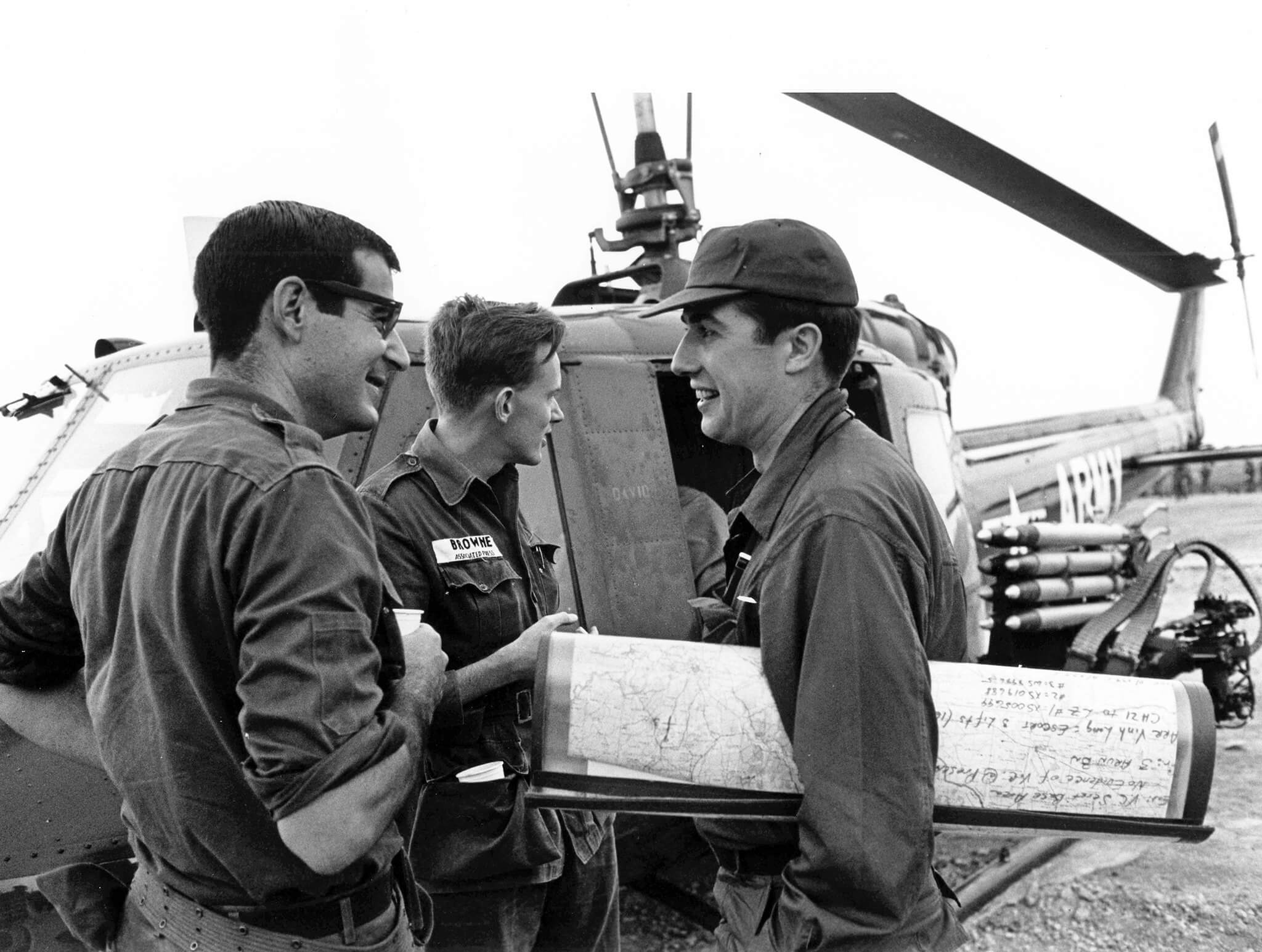
    halberstam sheehan

    As the reader can see from the picture above, Sheehan and Halberstam rode in helicopters with the military to cover the war. From the looks on their faces, they appear to have enjoyed the assignment.  In fact, in the Ken Burns/Lynn Novick documentary series The Vietnam War, Sheehan said he found these helicopter sorties exciting to be involved with.

    The commander in Vietnam at that time was General Paul Harkins.  Since those two reporters were intimately involved with the actual military operations, they knew things were not going well. Yet Harkins insisted they were going fine.  As author John Newman wrote in his milestone book JFK and Vietnam, this rosy outlook was an illusion perpetrated by both military intelligence and the CIA.  It was carried out by Colonel James Winterbottom with the cognizance of Harkins. (Newman, 1992 edition, pp. 195-97). In a 2007 interview that Sheehan did, he said that he and Halberstam had a conflict with Harkins over this issue of whether or not Saigon and the army of South Vietnam (the ARVN) was actually making progress against the opposing forces in the south, namely the Viet Cong.  He said that their impression was that Saigon was losing the war. Their soldiers were reluctant to fight, the entire military hierarchy was corrupt, and as a result, the Viet Cong forces in the south were getting stronger and not weaker.

    There is one other element that needs to be addressed before we move further. It is something that David Halberstam did his best to forget about in his 1972 best-seller The Best and the Brightest, but Sheehan was more open about in his 2007 interview.  The smiles in the picture above were genuine because Sheehan and Halberstam truly believed in winning the Vietnam War.  At any and all costs.  As Sheehan further explicated about the duo:

    … we believed it was the right thing to do. We believed all those shibboleths of the Cold War, all of which turned out to be mirages : the “domino theory” that if South Vietnam fell, the rest of––Cambodia, Thailand, Indonesia––they were all going to fall one by one.  We believed the Vietnamese Communists were pawns of the Chinese and the Russians, they were taking their orders from Moscow and Bejing.  It was rubbish.  They were independent people who had their own objectives, and they were the true nationalists in the country.  We didn’t know any of this really, but we did know we were losing the war.

    I was quite fortunate to find this interview. Because I had never seen Sheehan or Halberstam be so utterly explicit about who they were and what they were about at that time. In his entire 700 page book, The Best and the Brightest, and later in his career, I never detected such a confessional moment from Halberstam. The simple truth was that Sheehan and Halberstam were classic Cold Warriors who wanted to kick commie butt all the way back to China. They saw what America was doing as some kind of noble cause. They felt that we and they––that is, all good Americans––were standing up for democracy, liberty and freedom. As far as political sophistication went, they might as well have been actors performing in John Wayne’s propaganda movie, The Green Berets. They wanted a Saigon victory with big brother America’s help. Which is the message of the last scene of Wayne’s picture. And they didn’t think Harkins was up to the task. In fact, they did not even know what Harkins was up to with his attitudinizing about America winning the war.

    II

    Neither Harkins nor Winterbottom was unaware of the true situation on the ground. In fact, as Newman shows in his book, Winterbottom would simply create Viet Cong fatalities out of assumptions he made. Harkins understood this and went along with it. (Newman, p. 224) The idea was to control the intelligence out of Saigon in order to bamboozle Secretary of Defense Robert McNamara. (Newman, p. 225) There were honest records kept. But throughout that year of 1962, whenever McNamara would report back to President Kennedy after one of his SecDef Meetings––a conference in the Pacific of all American agency and division chiefs in Saigon––he would deliver to the president the same rosy message he had just heard. And that message was false in two senses: the number of Viet Cong casualties was exaggerated, and the number of ARVN casualties was being reduced. (Newman, p. 231)

    This intelligence deception was happening in the spring of 1962. In  November of 1961, with his signing of NSAM 111, Kennedy had agreed to raise the number of American advisors and ship more equipment to Saigon.  Therefore, the true results on the battlefield in the spring of 1962 would denote that this was not really helping the war effort. As Newman wrote, the Viet Cong “had been quick to alter their tactics to counter the effectiveness of the helicopter:  quick strikes followed by withdrawal in fifteen minutes to avoid rapid reaction … .” (p. 233)

    At about this time, in April of 1962, President Kennedy sent John Kenneth Galbraith to visit Robert McNamara in Washington. He told Galbraith to give him a report that JFK had requested the ambassador to India write about the American situation in Vietnam.  Kennedy knew that Galbraith was opposed to increased American involvement in Indochina, since he had voiced those doubts to the president before.  As James Galbraith, the ambassador’s son, said to me, Kennedy fully understood that what Galbraith would write would counter the hawks in his cabinet. (phone interview of July, 2019)  Kennedy wanted the report to go to McNamara since the Defense Secretary could then begin to withdraw the (failed) American military mission.  Galbraith did so and he then told JFK that McNamara got the message. (see this article)

    One month later, McNamara had a SecDef meeting in Saigon. After that meeting, he instructed Harkins––and a few others military higher ups––to stick around for a few minutes. He told them, “It is not the job of the U.S. to assume responsibility for the war but to develop the South Vietnamese capability to do so.”  (James Douglass, JFK and the Unspeakable, p. 120) He then asked them to complete the ARVN training mission and to submit plans for a dismantling of the American military structure in South Vietnam.  He concluded by telling Harkins:

    … to devise a plan for turning full responsibility over to South Vietnam and reducing the size of our military command, and to submit this plan at the next conference. (Douglass, p. 120)

    To me, and to any objective person, this has to be considered quite important information. First, the message is quite clear and unambiguous: McNamara is saying we can only train the ARVN.  Once that is done, we are leaving; we cannot fight the war for them. Second, it is multi-sourced: from both Galbraith, and the people at the SecDef meeting in Saigon. In addition, when word got out that Kennedy had sent the memo to McNamara, a mini war broke out in Washington over what was happening. (Newman, pp. 236-37). Then in May of 1963, the withdrawal schedules were delivered to McNamara at another SecDef meeting. (James DiEugenio, Destiny Betrayed, second edition, p. 366)

    Now, here is my plaint to the reader: try to find this step by step by step milestone in Halberstam’s book. That is, from:

    1. Galbraith visiting Kennedy, to
    2. Galbraith seeing McNamara, to
    3. McNamara ordering Harkins to begin the dismantling of the American mission, to
    4. The withdrawal schedules being presented to McNamara.

    If you can find it, let me know.  Because even though I read the book twice, I could not locate any of it.  Also, try to find it in any of the many interviews that Sheehan did that are online.  On the contrary, both men always spoke of the “inevitability” of the Vietnam War. You can only maintain such a stance if you do not reveal the above information. In fact, it can be fairly stated that, in 700 pages, Halberstam essentially gives the back of his hand to the influence of Galbraith on Kennedy. And he also completely reverses  the roles of McNamara with Kennedy in Vietnam.  Halberstam wrote that it was McNamara who went to Kennedy, “because he felt the President needed his help.” (Halberstam, p. 214) He then says, on the next page, that McNamara had no different ideas on the war than Kennedy did.

    Let us be frank:  This is a falsification of the record. It was Kennedy who, through Galbraith, went to McNamara.  And it was not for the purpose of promoting the ideas of the Pentagon on the war. Now, if the alleged 500 interviews Halberstam did were not enough to garner this information, there was another source available to him:  the Pentagon Papers––which Halberstam says he read. Moreover, he says they confirmed the direction he was going in. (Halberstam, p. 669)

    Either Halberstam lied about reading the Pentagon Papers, or he deliberately concealed what was in them. Because in Volume 2, Chapter 3, of the Gravel Edition of those papers, the authors note that because progress had been made, McNamara directed a program for the ARVN to take over the war and American involvement to be phased out. That phasing out would end in 1965.  Is it possible for Halberstam to have missed this? The information appears in the chapter explicitly headed, “Phased Withdrawal of US Forces, 1962-64.”  That chapter is forty pages long. (see pp. 160-200)

    III

    At that time period when the two reporters were in Vietnam, not only did they both want to urge America and Saigon to victory.  They thought they found the man to do it.  That was Colonel John Paul Vann. In fact, before he wrote The Best and the Brightest, Halberstam wrote another book on Vietnam, called The Making of a Quagmire. It is a book that he wished everyone would forget. Unfortunately for the deceased Halberstam, it’s still in libraries. In that book, Halberstam criticized every aspect of the Saigon regime as led by America’s installed leader, Ngo Dinh Diem. Halberstam writes toward the end that “Bombers and helicopters and napalm are a help but they are not enough.” (p. 321) He then adds, “The lesson to be  learned from Vietnam is that we must get in earlier, be shrewder, and force the other side to practice self-deception.” (p. 322) In other words, at that time, Halberstam and Sheehan wanted direct American intervention; as did Colonel Vann.

    What this reveals is something important about the trio:  They had no reservations about the war America had involved itself in. America got in by its backing of France.  When France was defeated, the USA took its place.  America then violated the Geneva Accords peace treaty that ended the war.  The USA would not hold free elections in order to unify the country. America created a new country called South Vietnam, one that did not exist before.  And they installed their own handpicked leader, Ngo Dinh Diem, to rule over it.  Diem’s early regime was stage-managed by General Edward Lansdale.  According to the first chapter of Sheehan’s book about Vann, A Bright Shining Lie, Lansdale was Vann’s hero.

    Both Sheehan and Halberstam fell in love with Vann.  They were completely unaware of what was happening in Washington, how Kennedy had decided to take Galbraith’s advice and begin to remove all American advisors.  They wanted to win, and they both felt it was only through Vann that the war could be won. They both maintained that he was the smartest man for Harkins’ position.

    There was a serious problem with the approach of these three men in 1965. None of them ever raised the fundamental question of what America was doing in Vietnam, or how we got there. Lansdale was not building a democracy.  He was building a kleptocracy. He also rigged elections so Diem could win by huge margins. (Seth Jacobs, Cold War Mandarin, p. 85) He was constructing  the illusion of a republic when, in fact, none existed. Diem was soon to become a dictator. (Jacobs, p. 84) For Vann to make Lansdale his role model is a troubling aspect of the man.

    One of the reasons Kennedy decided to get out is simple:  he did not think Saigon could win the war without the use of American combat troops.  Or as he told Arthur Schlesinger:

    The war in Vietnam could be won only so long as it was their war.  If it were converted into a white man’s war, we would lose as the French had lost a decade earlier.”  (Gordon Goldstein, Lessons in Disaster, p. 63)

    Kennedy said the same thing to NSC aide Michael Forrestal: America had about a one-in-a-hundred chance of winning. The president said this on the eve of his going to Dallas in 1963.  He then added that upon his return there would be a general review of the whole Vietnam situation, how we got there, what we thought we were doing, and if we should be there at all. (James Douglass, JFK and the Unspeakable, p. 183)

    The point about it becoming a white man’s war and the whole French experience echoes back to Kennedy visiting Saigon in 1951. There he met with American diplomat Ed Gullion who told him France would never win the war, and the age of colonialism was coming to an end. (Douglass, p. 93) That visit and the meeting with Gullion had a profound effect on Kennedy’s world view. He now saw nationalism as the main factor in these wars in former European colonies. He also thought that anti-communism was not enough to constitute an American foreign policy.  America had to stand for something more than that. (For the best short discussion of this, see James Norwood’s essay on the subject.)

    And there was a further difference between JFK and the Establishment on Third World nationalism. Kennedy did not see the world as a Manichean, John Foster Dulles split image.  Unlike President Eisenhower, he did not buy into the domino theory.  It was no one less than National Security Advisor McGeorge Bundy who said this about Kennedy in an oral interview he did in 1964. (Goldstein, p. 230) This is why, as Gordon Goldstein wrote in his book about Bundy, Kennedy turned aside at least nine attempts by his advisors to commit combat troops into Vietnam during 1961.

    IV

    It’s very clear from the interviews that Sheehan did later in his life that, like Halberstam, he had a problem with admitting Kennedy was right, and he, Halberstam and John Paul Vann were wrong about Vietnam. To fully understand Sheehan, one has to refer to the first chapter of A Bright Shining Lie, his book about Vann. That chapter is called “The Funeral”. It describes the ceremony preceding Vann’s burial. Consider this assertion about 1961:

    The previous December, President John F. Kennedy had committed the arms of the United States to the task of suppressing a Communist-led rebellion and preserving South Vietnam as a separate state governed by an American sponsored regime in Saigon.

    If Kennedy had thus committed himself, then why had he told McNamara in 1962 that he was to start a withdrawal program? And it’s no use saying that ignorance is an excuse for Sheehan.  Peter Dale Scott understood such was not the case when he wrote about Kennedy and Vietnam originally back in 1971.  Kennedy simply did not see South Vietnam as a place the USA should pull out all the stops for.  John Paul Vann did see it as such.  So did Halberstam and Sheehan.

    Sheehan also describes Ted Kennedy arriving late at the funeral and sitting in a back pew. He writes that Ted had turned against the war that his brother,  “John had set the nation to fight.”  Nothing here about President Eisenhower creating this new nation of South Vietnam that did not exist before. He then adds that John Kennedy wanted to extend the New Frontier beyond America’s shores.  And the price of doing that had been the war in Vietnam. 

    I think we should ask a question right here:  Why not mention Bobby Kennedy’s antagonism against the war in Vietnam, which was clearly manifest during Lyndon Johnson’s presidency?  In fact, as author John Bohrer has written, Robert Kennedy had warned President Johnson against escalation as early as 1964. (The Revolution of Robert Kennedy, p. 70). Kennedy had told Arthur Schlesinger that, by listening to Eisenhower, Johnson would escalate the war in spite of his advice. (Bohrer, p. 152)

    When Halberstam heard about this, he now began to criticize RFK.  How dare Bobby imagine that he was smarter than Johnson and Ike on the war. What did Robert Kennedy think? You could win the war without dropping tons of bombs and using overwhelming force?  Again, this exchange exposes who Halberstam and Sheehan really were in 1965. If I had been that wrong, I would have excised it also.

    As per extending the New Frontier beyond its borders, this is contrary to what Kennedy’s foreign policy had become after his meeting with Gullion.  JFK was trying for a neutralist foreign policy, one that broke with Eisenhower’s, and tried to get back to Franklin Roosevelt’s.  And as anyone who reads this site knows, this is amply indicated by his policy in places like Congo and the Dominican Republic.

    What Sheehan is doing here is pretty obvious.  He is transferring his guilt about who he was, and what he did while under Vann’s spell, onto Kennedy.  In fact, Kennedy was opposed to what both Halberstam was writing and what Vann was advocating for about Vietnam. As proven above, JFK did not want America to take control of the war––to the point that President Kennedy tried to get Halberstam rotated out of Vietnam. (David Kaiser, American Tragedy, p. 261) I also think this is the reason that Sheehan never acknowledged that Kennedy was withdrawing from Indochina in any interview I read with him.  And considering some of these interviews were done after the controversy over Oliver Stone’s film JFK, that is really saying something.

    V

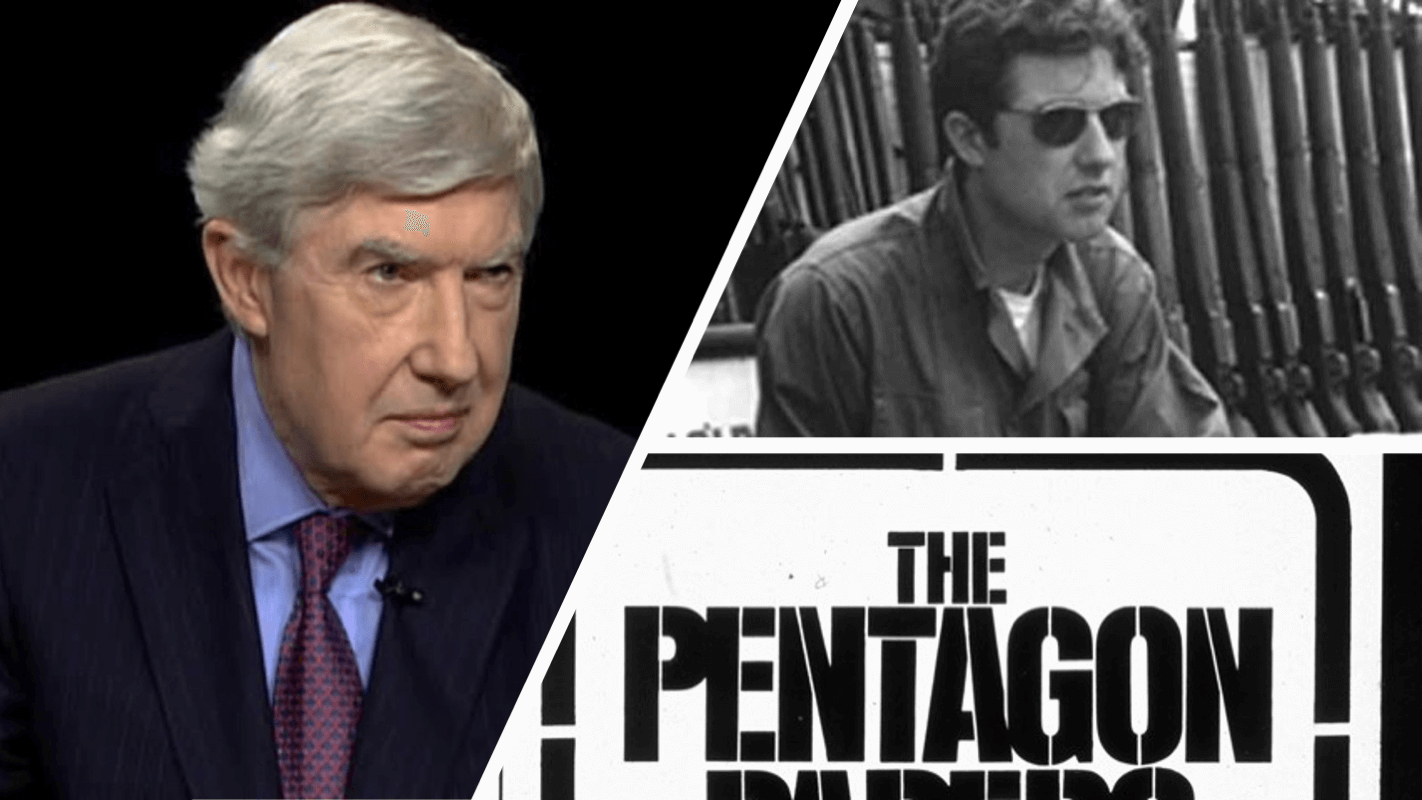
    There are two other highlights to Sheehan’s journalistic career with the Times.  One concerned his association with Daniel Ellsberg and the Pentagon Papers.  Ellsberg had been in Vietnam on a voluntary tour under Ed Lansdale from 1965-67.  He went there from the Defense Department in order to see what the Vietnam War was really like. He spent six weeks being shown around Saigon by Vann. (Steve Sheinkin, Most Dangerous, p. 77)  As he notes in his fine book Secrets, Ellsberg came back a different man. He could not believe how badly the war was going, even though President Johnson had done what Kennedy refused to do:  insert combat troops.  By 1967 there were well over 400,000 of them in theater. This certified what President Kennedy had told Schlesinger about making it an American war and ending up like the French.

    When Ellsberg returned, he went to work at Rand Corporation.  This was a research and development company in Santa Monica.  Robert McNamara was getting ready to leave office.  One of his very last acts was to commission the secret study called the Pentagon Papers. Since Ellsberg had worked in the Pentagon, he was asked to work on the study.  He then decided that the Pentagon Papers were so powerful in exposing the lies behind the war, he needed to get them into the public record.  So he and his friend Anthony Russo decided to copy the study and make it public.

    Since the Pentagon Papers were classified, Ellsberg and Russo faced legal problems if they themselves gave the documents to a newspaper or magazine for publication. Therefore, Ellsberg approached four elected officials to try and get them entered into the congressional record.  That would have protected them legally since representatives and senators have immunity while speaking from the floor. The problem was that for one reason or another, all four refused to accept the documents. (Ellsberg, Secrets, pp. 323-30, 356-66)

    Ellsberg got in contact with Sheehan, whom he had met in Vietnam in 1965. Ellsberg had a teaching fellowship at MIT at this time.  So Sheehan drove up from New York to Cambridge in March of 1971.  Ellsberg made a deal with Sheehan:  he could take notes on the documents and copy a few pages.  He could then show those notes to his editors and they could make up their minds if they would publish the actual papers. Ellsberg left Sheehan a key to the apartment where he had them stored. Without telling his source, Sheehan ended up copying the documents with his wife and taking them to New York. (Ellsberg, p. 175)

    The Times did publish three days of stories from the papers before they were halted by a court order. What is interesting about this Times version of the Pentagon Papers––which was later issued as a book––is that it differs from the later edition previously mentioned.  For Senator Mike Gravel did read from a portion of the documents on the senate floor.  In his version, later published by Beacon Press, as noted above, there is an entire 40 page chapter entitled “Phased Withdrawal 1962-64”.  In the Times version of the papers, the section dealing with the Kennedy administration goes on over 200 pages. (The Pentagon Papers, New York Times Company, 1971,  pp. 132-344)  There is, however, no section on the phased withdrawal, and the transition from John Kennedy to Lyndon Johnson concludes with the declaration that somehow, Johnson had affirmed Kennedy’s policy and continued with it.  I cannot say that this was purposeful, since the Gravel edition of the papers is longer than the one the Times had. But whatever the reason, today that statement looks utterly ludicrous.

    Everyone who reads this site is aware of the My Lai Massacre, which occurred in March of 1968.  An army regiment slaughtered hundreds of innocent women and children at the small hamlet of My Lai. The incident was covered up within the military by many high level officers, including Colin Powell. But it finally broke into the press in 1969. It was an indication that the US military was disintegrating under the pressure of a war that could not be won.

    The exposure of My Lai caused many other veterans to come forward and tell stories about other atrocities. In 1971, Mark Lane helped stage what was called the Winter Soldier Investigation.  This was a three day event held in Detroit and broadcast by Pacifica Radio. There, many others told similar stories about what had really happened in Vietnam.

    The Nixon administration was not at all pleased with the event. White House advisor Charles Colson, with the help of the FBI, went to work on discrediting the witnesses. (Mark Lane, Citizen Lane, p. 218) Since Lane helped with the event, he knew many of the men and interviewed them. He turned the interviews into a book called Conversations with Americans. Some of the veterans expressed fear of reprisal for what they told the author.  So in the introduction, Lane explained that some names had been altered to protect the witnesses from the military. (Lane, p. 17) Lane then placed the actual transcripts with the real names at an attorney’s office in New York; a man who had worked for the Justice Department. (Citizen Lane, p. 219)

    Six weeks after the book was released, the New York Times reviewed it. The reviewer was Sheehan. In cooperation with the Pentagon, Sheehan now said that a number of the witnesses were not genuine and Lane had somehow fabricated the interviews. (Citizen Lane, p. 220) Sheehan did this without calling the lawyer in New York who had the original depositions with the real names.  It is hard to believe, but Sheehan did a publicity tour for his article. Yet he refused to take any of Lane’s personal calls or answer any of his letters.  When Lane finally got to confront Sheehan on the radio, Sheehan said that in three years of covering the war in Vietnam he had never found any evidence of any such atrocities.  When Lane asked him about My Lai, Sheehan said these were just rumors. (Citizen Lane, p. 221) Recall, this was very late in 1970 and in early 1971. The story had broken wide open in late 1969, including photos of the victims in Life magazine and the Cleveland Plain Dealer.

    In his 2007 interview, Sheehan said he became disenchanted with the war in 1967. But as the reader can see from the above, he was still covering up for the military in 1971. One of the worst parts of the 2007 interview is when Sheehan talks about his tour in Indonesia in 1965 before returning to Vietnam. He says that this was an enlightening experience for him. Why?  Because he says the communists had tried to take over the government, but they got no aid from Moscow or Bejing. He then adds that this showed him that communism was not a monolithic movement, and the domino theory was not really applicable.

    What can one say about that statement?  Besides him learning in 1965 what Kennedy knew in 1951, there is this:  There was no communist insurrection in Jakarta in 1965. And any reporter worth his salt would have known that––certainly by 2007. General Suharto used that excuse to slaughter over 500,000 innocent civilians. But in keeping with this, A Bright Shining Lie was an establishment project.  Peter Breastrup supplied the funds through the Woodrow Wilson Institute to finish the book. Breastrup worked for the Washington Post; he was Ben Bradlee’s reporter on Vietnam for years, and he always insisted that the Tet Offensive was really misinterpreted and blown out of proportion by the media. The book was edited by the infamous Bob Loomis at Random House. Loomis was the man who approached Gerald Posner to write Case Closed, a horrendous cover-up of President Kennedy’s assassination.

    Since the war had turned out so badly, Sheehan could not really make Vann the hero he and Halberstam had in 1963-65.  So they dirtied him up.  His mother was a part-time prostitute, he cheated on his wife, and he was a womanizer in Vietnam who impregnated a young girl. This was supposed to be part of the lie about Vietnam.  But Sheehan really never got over Vann, because in later interviews he said that it was really Vann who, at the Battle of Kontum, stopped the Easter Offensive. Which is a really incomprehensible statement. The tank/infantry assault on Saigon by Hanoi in 1972 lasted six months and was a three-pronged attack.  It was finally stopped by Nixon’s Operation Linebacker, which was perhaps the heaviest bombing campaign in Vietnam until the Christmas bombing of 1972.

    What Sheehan did––with his so-called inevitability of the war, disguising of Kennedy, his promotion of Vann, his misrepresentation of Mark Lane––is he helped promote a Lost Cause theory of Vietnam. This was later fully expressed by authors like Guenther Lewy in America in Vietnam, Norman Podhoretz in Why We Were in Vietnam, and more recently, Max Boot’s The Road Not Taken. The last pretty much states that Lansdale, Vann’s hero, should have been placed in charge. If so America likely would have won.

    So excuse me if I will not be part of the commemoration of Sheehan’s career. In many ways, both he and Halberstam represented the worst aspects of the MSM.  After being part of an epic tragedy, they then did all they could to promote a man who very few people would have ever heard of without them.  At the same time, they did all they could to denigrate the president who was trying to avoid that epic tragedy. 

    That is not journalism. It is CYA.  And it is CYA that conveniently fits in with an MSM agenda.

  • Laurene Jobs and The Atlantic Go All In

    Laurene Jobs and The Atlantic Go All In


    If CNN and MSNBC can disseminate obvious propaganda and not be held accountable, as they did for three years during the “Russia did it hoax,” then who cares anymore? Facts? Evidence? Logic? Why did we have to go to the Rolling Stone’s Matt Taibbi and The Nation’s Aaron Mate on Russia Gate to discern that it was a mirage. (Click here for details)

    For instance, it was recently revealed through the declassification of depositions before the House intelligence committee that, in February of 2017, the Clinton campaign raised money to further the Russia Gate meme after Trump was inaugurated. (John Podesta deposition pp. 8-9, 12/4/2017) Hillary Clinton is still dodging Tulsi Gabbard’s process servers in Gabbard’s ongoing $50 million-dollar defamation lawsuit in which she is suing Clinton for calling her a “Russian asset” during the primaries. And when a man in a Wisconsin town hall meeting called Joe Biden out for his son’s questionable Ukrainian sinecure—put in place while Biden was still Vice President under Obama—Biden ignored the question and instead challenged the man to a push-up contest, to rising cheers from the audience.

    Deceptions usually trickle downward and must necessarily be both enabled and promulgated by the corporate gatekeepers masquerading as journalists for the pseudo-intellectual class of Whole Foods liberals who cannot seem to internalize their own party’s bankruptcy.

    These are the folks who with a straight face will preach tolerance and inclusion in flurries of inane Facebook “debates” and on online forums, but will attack anyone who doesn’t tow their ideological line when hard-pressed to engage in real debate. These are some of the people who all but put a scarlet letter on a woman in a New York City grocery store this week who didn’t feel like wearing a mask as she bought vegetables. I was all but physically attacked at a Chicago bar a few years ago when I told a drunk patron I didn’t think Russia “hacked the election.” Nothing serious: a few words exchanged, a shove, a few more words exchanged, a nice woman beside me made uncomfortable, etc. But I almost had to fight a fellow taxpaying citizen on U.S. soil outside of a Chicago bar thirty years after the Cold War ended, because I did not believe the “Russia Gate” probe was authentic or impartial.

    Where do Americans get these ideas? Well, some of them get these ideas from places like The Atlantic Monthly. Even the usually reliable and objective James Fallows pushed this Russia Gate meme for The Atlantic. (The Atlantic Monthly, July of 2018, “Trump-Putin Meeting: How Will Republicans React?”) That journal began way back in 1857 over the issue of slavery. Writers like Ralph Waldo Emerson and John Greenleaf Whittier outflanked the nascent Republican Party. They would brook no compromise with the south. They were abolitionists. James Russell Lowell, the illustrious poet and critic, was the first editor.

    It’s quite a long haul—and fall—from that auspicious beginning to David Bradley and the late Michael Kelly. Beginning in the eighties, Bradley made his fortune as a healthcare consultant. In the nineties, he sold two companies and became a multimillionaire. In 1999, he bought The Atlantic Monthly and made Kelly the editor. Bradley calls himself a political centrist. Michael Kelly was a strong supporter of the George W. Bush invasion of Iraq. In fact, as an embedded reporter, he passed away in that war. Prior to that, as editor of The New Republic, he not only accepted the largely fabricated stories of his contributor Stephen Glass, he defended Glass without investigating the stories. That investigatory job fell to his successor Charles Lane. Under Lane, The New Republic then uncovered a whole slew of stories Glass had made up, either in whole or in part. Glass even manufactured evidence to backstop his fabrications. The new editor had to issue an apology and listed the titles of all the stories Glass had created in whole or in part. Incredibly, Kelly was still defending Glass even after he admitted his chicanery. (Gawker, 4/03/2013, story by Tom Scocca)

    Kelly also mocked those who did not accept the pretexts for the Bush invasion of Iraq. In fact, Kelly tried to make the case that Bush’s war should be accepted by liberals. (Jewish World Review, 10/23/2002, “Anti-War effort Perverts Liberal Values”). He also allied himself with Neocon kingpin Daniel Pipes to create the fusion paranoia theory. This was a true milestone in a war of political and psychological denial by the Power Elite.

    Back in 1995, Kelly wrote an essay for The New Yorker entitled “The Road to Paranoia”. That article was then used by Pipes in his 1999 book Conspiracy. In fact, Pipes spent all of Chapter 8 addressing this idea. He used the following quote by Kelly as a blast off point:

    Views that have long been shared by both the far right and the far left…in recent years have come together in a weird meeting of the minds to become one, and to permeate the mainstream of American politics and popular culture. You could call it fusion paranoia.

    Kelly focused on the Militia of Montana and, specifically, the chief researcher and spokesman for that group, a man named Bob Fletcher. Fletcher postulated a global conspiracy theory that was something of a forerunner to QAnon. What Kelly was driving at was how left and right had beliefs in certain conspiracies. Pipes then adapted it in its broad outlines. This was dubious on its face, for more than one reason. But to give one example, Pipes drew similarities between how the modern militia movement and the Weather Underground viewed the FBI. Kelly’s above quoted tenet, that these ideas now permeated the mainstream, seems quite strained. The MSM and the political establishment do what they can to ridicule these concepts and to marginalize their advocates; never differentiating between which are true, and, therefore, deserve inspection and which are false and should be ignored.

    This is an important point, because it was this kind of automatic disdain that paved the way for one of the most lethal conspiracies in contemporary history. That was, of course, the Karl Rove/Dick Cheney plot to create an arsenal of WMD in Iraq. It included the stamping out of any dissenters, like the late diplomat Joseph Wilson. What was amazing was how much of the MSM got behind a clearly fabricated mythology, which included not just the above personages, but also people like Douglas Feith and Paul Wolfowitz. (Click here for details) And Kelly bought into this, with a vengeance. If the reader can believe it, ever since his death, The Atlantic Monthly sponsors an annual Michael Kelly award in journalism. An award named after a journalist who bought the lying Stephen Glass and also the myths about WMD which ended up killing 600,000 people.

    In July of 2017, Bradley sold the controlling interest in The Atlantic Monthly to something called the Emerson Collective. A nice sounding name which is actually run by multi-billionaire Laurene Powell Jobs, the widow of Steve Jobs. Jobs is on the advisory committee to the Council on Foreign Relations and has given loads of money to people like Hillary Clinton and Kamala Harris. (Click here for details)

    Right after this, The Atlantic Monthly printed a cover story by radio host and author Kurt Anderson. It was titled “How America Went Haywire”. That essay—an excerpt from an upcoming book—maintained that Donald Trump’s arrival as president was caused because of America’s belief in conspiracy theories. And this dated from—drumroll please—the JFK assassination! (For a review of that article, click here).

    Anderson managed to do something many historians would think impossible. He tried to draw an arc of American decline without describing the effects of 1.) The Vietnam War or 2.) The Church Committee. Here, the old joke applies: Well, Mrs. Lincoln besides your husband’s assassination, did you like the play? The Living Room War went on for ten years in all its ugliness and sickened much of America with its pointless carnage. The Church Committee explored the myriad crimes of the CIA and FBI: the plots to drive Martin Luther King to take his own life, to exterminate the Black Panthers, and the conspiracies to murder Patrice Lumumba and Fidel Castro—and those were just some of the highlights. But those two huge events deepened the cynicism of many Americans in what their government was doing and why. And it was all true. Anderson and The Atlantic Monthly decided to ignore those facts.

    One of the things the Church Committee did was delve into the CIA’s attempt to control the media. This was Director Allen Dulles’ scheme termed Operation Mockingbird. It was inspired by Dulles’s reaction in Bern, Switzerland to viewing how the Third Reich controlled the media in Nazi Germany, which, in turn, Joseph Goebbels modeled in part on the ideas of public relations wizard Edward Bernays. Bernays began as a journalist and then helped the Woodrow Wilson administration propagandize America into entering World War I. In 1928, Bernays published his classic work on the subject called simply Propaganda. It was one of the first books to use the phrase “invisible government.” Bernays thought these techniques were not just good but necessary. He later used them to attain riches through Madison Avenue type advertising for huge corporations including cigarette companies. This was while he was trying to break his wife’s smoking habit. (Click here for some information on Bernays)

    As most of us know, one of the things the CIA did was to try and control the media criticism of the Warren Commission. In 1967, the Agency issued a memorandum titled “Countering Criticism of the Warren Report”. CIA planners clearly state that “the aim of this dispatch is to provide material for countering and discrediting the claims of the conspiracy theorists, so as to inhibit the circulation of such claims in other countries.” (CIA 1035-960, “Countering Criticism of the Warren Report,” NARA Record Number: 104-10404-10376) Thus was born Kurt Anderson’s knee-jerk meme, “conspiracy theorist” in the American imagination. Prior to this, that term had been used quite rarely. As author Lance DeHaven Smith has shown, after this the term broke through the stratosphere to become a meaningless catch all term. The CIA memo stresses the importance of a full-spectrum approach to countering criticism and maintaining the official story. They deem it essential to “employ propaganda assets to answer and refute the attacks of the critics,” claiming, “book reviews and feature articles are particularly useful for this purpose.” (Ibid) After then explaining to the dispatch’s readers how best to disseminate information to the agency’s embedded Mockingbird assets in the U.S. media, the document lists the five most effective ways to combat critics of the Warren Commission’s conclusion that Oswald shot president Kennedy because he was a crazy Marxist lone nut: “Our play should point out, as applicable, that the critics are (i) wedded to theories adopted before the evidence was in, ( ii ) politically interested, ( iii ) financially interested, ( iv) hasty and inaccurate in their research, ( v ) infatuated with their own theories.”

    And now the Anderson Gang is back again. The Atlantic Monthly recently ran a piece entitled “The Conspiracy Theorists are Winning” on May 13. According to Jeffrey Goldberg, editor in chief, “America is losing its grip on Enlightenment values and reality itself.” We’d like to address both claims, since The Atlantic Monthly is now apparently running counter-intelligence on the questioning masses.

    First of all, we’d like to thank Mr. Goldberg for the admission, finally, that we’ve won. It’s probably the greatest single admission by the mainstream media we’ve ever seen. After years and years of toiling, of gnashing of teeth, of cries in the wilderness, of evidence, of testimonies, of unredacted documents released through FOIA requests, of Congressional hearings, of whistle blowers speaking out, of declassified memos, of declassified archives, we, the independent research community, have finally won.

    But that’s not really what Goldberg is saying.

    You see, conspiracies don’t exist according to the editor in chief of The Atlantic Monthly. And the only thing worse, according to his latest missive are “theories” about conspiracies. Goldberg implies that everything that has ever entered the Encyclopedia Britannica, the Congressional Record, or the text books in history classrooms from the time of the founding of the United States is a 100% accurate, unexpurgated, unredacted representation of the thousands and thousands of incalculable factors that comprise any major historical event as it happened in real time. To say that conspiracy theories do not exist is, in essence, to say that it is wrongheaded to write that people like Bernays paved the way for the acceptance of the American public to go along with Woodrow Wilson’s declaration of war in 1917. Are people also wrong who say that President Johnson was planning on declaring war in Vietnam months before he actually did so? When Adam Weishaupt founded the Bavarian Illuminati in 1776, whose entire mission statement was to conspire against entrenched European power structures in secret, he was, according to the legal meaning of acting in concert with others, engaged in a conspiracy. As any criminal lawyer will tell you, if you had the Justice Department, and all state Attorney Generals and all local DA’s order all prison inmates incarcerated on conspiracy charges immediately released you would greatly reduce the prison population of the USA.

    What is a “theory”? Well, according to the Merriam-Webster Dictionary, one definition of a theory is “a hypothesis assumed for the sake of argument or investigation.” Some theories become “the official story,” if they tow the party line at the time of their release. Others become the pejorative “conspiracy theories,” if they, at all, challenge the dominant power structure of their times. We are allowed to admit that the Gulf of Tonkin incident was a provocation in 2020, because the Vietnam War, who’s selling to the public was largely based on this lie and the unfolding “official story” narrative, is long over and is now, at best, considered a monumental mistake. Or, it can be safely referenced as a type of political crime that somehow had a benign intent to it.

    If you question anything, in essence, according to Jeffrey Goldberg, you are also “destroying the enlightenment virtues upon which America was founded”. That’s funny. Co-author Michael LeFlem wrote his Master’s degree thesis on the 18th-century Enlightenment under a world authority of that subject, Professor Darrin McMahon, at Florida State University. Tell Dr. McMahon that questioning political realities is “against Enlightenment values.” He might refer you to his excellent book, Enemies of the Enlightenment.

    Donald Trump did not win the election of 2016 because American culture went berserk with conspiracy theories. Nor did he win because of Mr. Putin’s manipulations in America; that idea has been pretty much discredited. In fact, with the revelations of the Michael Flynn case, it has been discredited with an air of finality. Without the complicity of the MSM, through the lens of carrying propaganda, the case against Flynn probably would have fallen apart even sooner. On and on they droned about Russia. But as of late May, there is mounting evidence that Russia Gate was a power play to somehow cover up the failure of the Democratic National Committee to run a fair primary campaign and also the failures at the management level of the Clinton candidacy. In other words, it was those “centrist” Democrats, like Mr. Bradley and Ms. Jobs, camouflaging their tracks.

    If we’re going to be honest, we need to face these inconvenient truths instead of ducking behind our safe-spaces of like-minded propaganda. It does us no good to try and conceal what has happened to the Democratic Party behind a smoke screen of “pernicious conspiracy thinking,” which has now become part and parcel of the Democratic party’s legacy.

    The Atlantic Monthly is part of that oligarchical problem. Let us admit it and Move On.

    Written by Michael LeFlem with consultation and contributions from Jim DiEugenio.

  • Counterpunch, JFK , and Vietnam

    Counterpunch, JFK , and Vietnam

    As readers of this site will understand, Counterpunch has consistently been one of the far left’s bastions of ideological purity. They do some good work from that vantage point. But one of the problems with that point of view is that it tends to sweep up all of history into a sanctimonious vacuum. And one of the things that gets swept up and homogenized is the issue of John Kennedy and Vietnam. (Here is a previous example.)

    Their latest in this vein was posted on April 30, 2020. It is another of their “Letters from Vietnam” series. This one is from an American living in Vietnam named Mark Ashwill. Ashwill is an educational entrepreneur. The occasion for him writing his letter is the 45th anniversary of America leaving Indochina in 1975. This was due to the agreements that were negotiated by Henry Kissinger and Alexander Haig under Richard Nixon’s supervision in Paris.

    Ashwill writes the letter as if he were a citizen of Vietnam (which he may well be) and is preaching to his former countrymen about the evil that they visited on his new nation. I would like to inform the editors of Counterpunch and also Mr. Ashwill that this history lesson is not exactly new. It has been going on at least since the rise of Students for a Democratic Society early in the sixties. It was given popular voice in the pages of Ramparts magazine, and was in book form during that decade through the work of men like William Appleman Williams and historians influenced by him who created New Left studies.

    In fact to go through his rather antique complaint today is kind of boring. Most of us know that Ho Chi Minh declared Vietnam free from French domination at the end of World War II. That he used American historical documents like the Declaration of Independence to do so. Many, many years ago Williams produced the letter that Ho sent to Harry Truman in 1945 asking the American president to cooperate with his cause against France. We also know how that letter was ignored and Harry Truman and his later Secretary of State Dean Acheson decided to side with France. And America ended up bankrolling about 80% of the French war effort. We also know the rest of Ashwill’s litany: how the defeat at Dien Bien Phu led to the Geneva Accords, and how President Eisenhower and Secretary of State John Foster Dulles sabotaged that agreement by not holding elections in 1956. And that this key event inevitably led to the USA getting involved in a second war against North Vietnam. This would have been prevented if the Geneva Accords had been honored.

    Ashwill now makes a large leap to 1961 and President John F. Kennedy. The reason I say this is a large leap is because by leaving out 1956-60, in his own David Halberstam-ish way, the author eliminates a central point. John Foster Dulles clearly ran the American participation at Geneva. The attorney realized that his oral agreement with the Accords could easily be broken if he did not sign them and this is what he advised the president to do. (William Blum, The CIA: A Forgotten History, p. 137)

    Within days of the end of the conference, Foster Dulles and his brother Allen, director of the CIA, began a long series of clandestine actions in order to create a new country called South Vietnam. These actions were supervised by General Edward Lansdale, who was in reality a high-level CIA action officer. It included a psychological terror war in the north to convince the Catholics that they would be persecuted by Ho Chi Minh and they should flee to the south. This helped prop up America’s chosen leader of this new country, the Catholic Ngo Dinh Diem. Once this creation was completed, Foster Dulles made the infamous assertion, “We have a clean base there now, without a taint of colonialism. Dien Bien Phu was a blessing in disguise.” (Blum, p. 139). Leaving out Lansdale and the Dulles brothers is not just reminiscent of Halberstam, it is also what Ken Burns and Lynn Novick did more recently in their long dud of a documentary series called The Vietnam War.

    There was no South Vietnam before this. Eisenhower, the Dulles brothers and Vice President Richard Nixon created it. Once it was created, the USA was committed to propping it up any way it could. It was through Diem that America formally cancelled the scheduled unification elections. (Blum, p. 139) This also meant using the fig leaf of communist infiltration from the north as a pretext to invoke the Southeast Asia Treaty Organization (SEATO) as a mutual defense doctrine. Omitting these details thus ignores the fact that those four men had split the country in half and then fabricated a civil war for their own purposes. It was this threat that gave Ho Chi Minh pause about enforcing the Geneva Accords and forcibly holding the elections––which could have easily been achieved. ((Blum, p. 139)

    The USA now began to send new military advisory units to Saigon in further defiance of the Geneva Accords. Lansdale began to rig elections to keep Diem in power. The Dulles brothers were not furthering democracy. They had installed and now supported a dictator. And they trained his security forces at Michigan State University. (Blum, p. 140) These techniques included torture and imprisonment in the infamous “tiger cages”.

    To skip over all this, plus the large amounts of aid we were giving Diem, is to paper over why it was not easy to get out. The Saigon government was a creation of Washington. And, to say the least, Diem was not a good choice for its leadership. But in doing all this, it created a tactical and strategic commitment that had not existed in 1952. In my opinion, it is not something that can be discounted or ignored, since in historical terms, it is crucial. To make this Bob Beamon leap to President Kennedy and 1961 is bad history, even for an informal letter.

    What makes it all worse is the fact that the editors at Counterpunch then placed a picture of President Kennedy at the top of the article next to a map of a divided Vietnam. As if, somehow, Kennedy was involved in the decision to split up the country. This is misleading not just because he was not involved, but because Kennedy was one of the very few voices in Washington to oppose the Dulles/Eisenhower policy not just in Vietnam, but throughout the Third World. This conflict between the senator and the White House was documented by Richard Mahoney back in 1983 in his important book, JFK: Ordeal in Africa. In that book, Mahoney specifically noted Kennedy’s 1957 landmark speech about the ongoing French colonial war in Algeria. During that speech Kennedy harked back to Dien Bien Phu and said what happened in Indochina will happen in Algeria, and that it would thus behoove America to be on the right side of history this time. (The Strategy of Peace, edited by Allan Nevins, pp. 66-80)

    So there is ample evidence that Kennedy understood the appeal of nationalism in Third World countries emerging from the shackles of colonialism. (For more current scholarship describing Kennedy’s familiarity with the issue, please read Betting on the Africans, by Philip Muehlenbeck, and Kennedy, Johnson and the Nonaligned World, by Robert Rakove.) But further, what Ashwill does with Kennedy’s presidency in relation to Vietnam is, well, the best word I have for it is “minimalist”.

    Ashwill describes a meeting between Kennedy and French President DeGaulle in May of 1961 in Paris where the former French resistance leader warned Kennedy about the quagmire he would be getting into if America intervened in Indochina, that it would be an endless entanglement America could not win. He then quotes DeGaulle as later saying that Kennedy listened to him but that events proved he had not convinced him.

    First of all, this discussion between Kennedy and DeGaulle is again an antique bit of news. To cite just one source, it was already described back in 1972 by Dave Powers and Ken O’Donnell in Johnny We hardly Knew Ye. (p. 13) But Kennedy was not just getting this kind of advice from DeGaulle. He also got it from General Douglas MacArthur. The retired general warned him that even if he placed a million men in Asia, it would not work. (Powers & O’Donnell, pp. 13-14). He also got the same advice from Senator Mike Mansfield. (p. 15) And most importantly, he heard the same thing from his ambassador to India, John Kenneth Galbraith.

    This is why during the debates in the oval office in November of 1961, Kennedy refused to commit combat troops into the theater. And that was a line that he never crossed. (John Newman, JFK and Vietnam, pp. 136-39). But, as Galbraith biographer Richard Parker demonstrates in the above link, Kennedy went further than this. He sent Galbraith to Saigon and asked him to write a report, knowing that the ambassador would advise against any further involvement. (Virtual JFK, edited by James Blight, pp. 72-73). Galbraith did write such a report, and when the ambassador returned to Washington in April of 1962, Kennedy had him hand deliver it to Secretary of Defense Robert McNamara. (Newman, pp. 236-37). One month later, McNamara arranged to meet with all the inter-agency chiefs of all American forces in Vietnam. After going through the regular agenda items and adjourning the meeting, he called aside General Paul Harkins, the overall commander of American forces in Indochina. He told Harkins that it was time to switch responsibility for the war over to the ARVN, the Army of South Vietnam, and he wanted to begin the planning on the reduction of American advisors as soon as possible. This was the beginning of Kennedy’s withdrawal plan. (Newman, p. 254)

    As anyone familiar with the newly declassified record should know, in May of 1963, McNamara called another such meeting, this time in Hawaii. At this meeting the withdrawal schedules were submitted to the Secretary. He said that they needed to be accelerated. He wanted a thousand advisors withdrawn by the end of the calendar year. He directed that those plans be drawn up. (James Douglass, JFK the Unspeakable, p. 126). In October of 1963, Kennedy signed National Security Action Memorandum 263 ordering the first thousand advisors to be withdrawn by the end of the year and the rest by 1965. (Douglass, p. 188). In other words, there was not one more combat troop in Vietnam at the time of Kennedy’s death than there was when he took office. And he was in the process of removing all advisors.

    Somehow, Mark Ashwill missed all of this with a completeness that is astonishing. But the Vietnamese educator also missed a chance to have this confirmed by a source in his adopted country, namely, the son of the late North Vietnamese General Vo Nguyen Giap. If someone visiting Vietnam from the USA could do this, then why couldn’t Mr. Ashwill?

    From here, Ashwill takes another leap forward. This time to 1966. By the end of that year, Lyndon Johnson had committed 385,000 combat troops, with 60,000 sailors stationed offshore. In just that one year, 6,000 Americans would perish and 30,000 would be wounded. Ashwill discusses a speech by Ho Chi Minh in which the North Vietnamese leader says America took “the wrong fork in the road”. Ashwill never explains how America went from having no combat troops in Indochina to having nearly 400,000. The man who took the wrong fork in the road was Lyndon Johnson. And if any president’s picture should be at the top of the article, it should be his.

    As any serious study of the Vietnam War reveals, there were three events that took place––a meeting and two specific orders issued––that overturned Kennedy’s withdrawal plan and replaced it with an escalation plan that was quite apparent by 1966. These were the first Lyndon Johnson meeting on the war on November 24, 1963; the last draft of NSAM 273 signed on November 26th; and NSAM 288 finalized in March of 1964.

    At the November 24th meeting, the principals realized that Johnson’s attitude and style about Vietnam were both quite different from Kennedy’s. He said things that Kennedy never did. For instance: “I am not going to lose Vietnam. I am not going to be the President who saw Southeast Asia go the way that China went.” (Newman, p. 442) Kennedy never expressed these kinds of Cold War sentiments about Indochina. He simply did not think Vietnam was imperative to American security. National Security Advisor McGeorge Bundy agreed with this evaluation in comparing the two presidents. And he expressed those characterizations in discussions with both James Blight and his biographer Gordon Goldstein. (Goldstein, Lessons in Disaster, p. 231)

    NSAM 273 was altered to allow direct American naval involvement in patrols against the North Vietnamese coast. According to Bundy, it was altered by Johnson. (Newman, pp. 445-49) This allowed for the OPLAN 34 A plans and the so called DE SOTO patrols. The former were hit-and-run attacks by speedboats, the latter were American destroyers meant to decipher where return fire from North Vietnamese bases was coming from. In December, Johnson requested these types of covert actions against the North, with the help of Americans forces if need be. The operations ended up being largely American. (Edwin Moise, Tonkin Gulf and the Escalation of the Vietnam War, pp. 5, 7-8, 14) As many commentators agreed , including those inside the White House, these patrols were, in fact, provocations. (Moise p. 68; Goldstein, p. 125)

    NSAM 288 was Johnson’s specific preliminary design to escalate the war, including an air war against North Vietnam. This included 94 bombing targets. In three years Kennedy had never even contemplated this. The combination of the DESOTO patrols with NSAM 288 resulted in the casus belli the White House sought in order to escalate the war. (Moise, pp. 26-28) This was of course the Tonkin Gulf incident. And this is what Ashwill skips over to get to 1966.

    The rest of the article is a listing of all the damage inflicted on Vietnam, in bombs, land mines, defoliants, and so forth. Which, of course, any interested party already is cognizant of. Are we supposed to believe that the editors at Counterpunch do not know that 99% of all this happened after Kennedy’s death? And if his plan had been left intact, we would not be having this discussion? That is not speculation. Today, with the declassified documents of the Assassination Records Review Board, it can be proven.

    Near the end, Ashwill says that the American leaders did not understand what the war was really about. As I have labored to show, President Kennedy did know what it was about. That is why he was getting out. Just ask General Giap’s son.

  • Goodbye and Good Riddance to Chris Matthews

    Goodbye and Good Riddance to Chris Matthews


    On Monday March 2nd, Chris Matthews, host of the MSNBC program Hardball, announced on the air that he was resigning after 20 years. That resignation was effective immediately. Therefore, he would not be around for the next day’s Super Tuesday primary elections. Which suggests that this was not his idea and he was forced out. Furthering this idea was how he announced his leaving, which he said was not due to his lack of interest in politics. (For the brief sign-off, click here)

    To put it mildly, Matthews has had a pretty bad last couple of weeks. Even for a dyed-in-the-wool MSM zealot, he has made some real bonehead comments. When Bernie Sanders won the Nevada caucuses, Matthews compared that victory to the Third Reich’s successful invasion of France in 1940. After the New Hampshire debate between Democratic candidates, Matthews indulged himself in a diatribe against socialists. During that tirade, in John Birch society mode, he confused socialism with communism and said that if Fidel Castro had won the Cold War, there would have been executions in Central Park and he would have been killed while others were cheering. He then added, “I don’t know who Bernie supports over these years, I don’t know what he means by socialism.” This reveals either extreme bias or a feigned ignorance, since Sanders has held political office for about 35 years.

    In another blunder, last week Matthews confused Jaime Harrison, an African American candidate for the Senate in South Carolina, with another black politician, Tim Scott, who is the GOP incumbent senator from that state. After Harrison corrected him, Chris apologized for the “mistaken identity”. Perhaps the last nail in the coffin was a column by writer Laura Bassett appearing on Saturday in the magazine GQ. In that column she complained about some sexist comments Matthews had made to her while she was in the makeup chair.

    Jimmy Carter
    Jimmy Carter
    Jimmy Carter
    Tip O’Neill

    Matthews began in Washington as an officer with the United States Capitol Police. He then became an aide for four Democratic members of Congress before he failed in an attempt to win a congressional seat in Pennsylvania. After this, he became a speechwriter for President Jimmy Carter. When Carter failed to win reelection in 1980, Matthews signed up with House Speaker Tip O’Neill. Matthews then switched over to print journalism for 15 years.

    Jimmy Carter
    H.R. Haldeman
    Jimmy Carter
    Richard Helms

    It was in his position as a columnist that Matthews now emerged as a rabid, mocking conservative member of the Washington establishment. After Oliver Stone released his film Nixon, Matthews criticized that picture for its use of a passage from H. R. Haldeman’s book The Ends of Power. In that passage, Haldeman had described a meeting with CIA Director Richard Helms in which the Bay of Pigs invasion was discussed. Helms’ reaction was so extreme that Haldeman concluded that Nixon’s use of the incident had been code for the Kennedy assassination. In a December of 1995 column, Matthews said this was all strained interpretation by Stone that Haldeman had blamed on his co-author Joe DiMona. Matthews could write this since he did not visit with DiMona. Dr. Gary Aguilar did so, and he learned why Matthews had not. DiMona told Aguilar that the book had gone through five drafts and Haldeman made many changes, but he never altered that passage. Clearly, Matthews had realized that after his films JFK and Nixon, Stone had become a lightning rod for the MSM. And if he was going to advance up the ladder, he had to join in the assault.

    Therefore in 1996, Matthews published his book entitled Kennedy and Nixon. This was supposed to be a dual biography of these two central political characters. But to anyone who knew who Matthews was, and understood the two men, there was a not so subtle subtext to the volume. Matthews was actually trying to say that, contrary to popular belief, Richard Nixon and John Kennedy had more in common than they had differences. Oliver Stone agreed that this was an unjustified interpretation. The LA Times allowed him to review the book in June of 1996. He took the author to task for his unwarranted assumption that the two were somehow chums and comrades in arms. Two weeks later, on June 30, 1996, the Times allowed Matthews to reply. The columnist said he had nothing but contempt for Stone and all but called him a liar.

    This got his ticket punched and Matthews now made the transfer into television. He first became a commentator for ABC’s Good Morning America, and then he got his own CNBC show titled Politics with Chris Matthews. That program eventually morphed into Hardball and was then placed on MSNBC.

    While the host of this program, Matthews made good on his promise to be one of the foremost bastions of the MSM. How bad could Matthews get? He even visited the disgraced Tom DeLay at his home in Sugarland, Texas after he forcibly left Washington. The alleged Democrat admitted to voting for George W. Bush in 2000. He later defended this admission by saying that he thought Al Gore was kind of strange. Is it only a coincidence that Gore was one of the high-level politicians who had no problem admitting that he thought John F. Kennedy was killed by a conspiracy?

    For, as Doug Horne writes on his blog in the wake of Matthews’s resignation, the Hardball host was one of the foremost defenders of the Warren Commission during his 20-year span. In all of those years, this writer can only recall one small exception to the rigor with which Matthews took pains to mock and ridicule those who held a different view of the JFK assassination than the Warren Report did. This was after Jesse Ventura did an interview for Playboy back in 1999.

    Jimmy Carter
    Jesse Ventura

    At that time, Governor Ventura was making the rounds of talk shows after the controversy caused by his rather bold pronouncements during that interview. One of the interviews he did was with Matthews at Harvard. (Probe, November/December 1999) When Matthews asked Ventura about his opinion of Vietnam, Ventura very soberly said that the United States should have never sided with France in that conflict. This was a mistake that prefigured our own involvement in Indochina. Matthews replied by saying the American buildup actually started under Kennedy. When Ventura stated that there were certain elements in the country that favored us going to war in Indochina, Matthews said that it was Kennedy who was giving them what they wanted from 1961-63. Ventura did not think fast enough to say, “Chris, there was not one more combat troop in Vietnam after Kennedy’s death than when he took office. So please show me the huge expenditures made by Kennedy?”

    Matthews then shifted to the assassination itself. He tried the old chestnut about having to believe in a large conspiracy if one advocated for a plot. Ventura replied that if one thinks the Dallas Police were involved, then their negligence does not denote a wide conspiracy. Ventura turned the tables and asked a question of Matthews: Why didn’t the Commission call all the witnesses who smelled smoke on the grassy knoll? To which Chris finally made his minor exception. He beat a tactical retreat by saying that he would admit the Warren Report was a rush job and he agreed with Ventura’s critique of their work. But this author has to note that Matthews’ retreat was very limited. In his book Kennedy and Nixon, he endorsed the verdict of the Commission and said that Oswald shot Kennedy.

    Towards the end of the interview, Matthews went completely off the rails. He characterized Oliver Stone’s film JFK in a completely nutty, wild manner by saying that somehow Nixon was involved in the plot depicted in the film. Since Nixon does not appear in the film except for the introduction over the credits, this is simply a smear. In fact, even if we expand this to the film Nixon, it is still not true. But Matthews really showed who he was when, near the end of the interview, he said that Stone tried to portray Kennedy as a peacenik when, in fact, he was a Cold Warrior. He then added that no one in JFK’s administration said he was trying to get out of Vietnam. Which is astonishing. For even at that time one had people like Roger Hilsman of the State Department, and Robert McNamara, Secretary of Defense, who both said such was the case. One can also add in Joint Chiefs of Staff Chairman Max Taylor, advisor Ted Sorensen, and assistants Dave Powers and Ken O’Donnell. All of these men said that Kennedy would never have gone into Vietnam with combat troops and direct American military intervention. So what was Matthews talking about?jfk no vietnam

    But this nonsense is consistent with Matthews’ book on Kennedy, titled Jack Kennedy: Elusive Hero. In that book, Matthews never mentioned NSAM 263. This was the order issued by Kennedy in October of 1963 which began a formal withdrawal from Vietnam of a thousand advisors by the end of the year and the rest of the advisors by early in 1965. If one does not mention that document, then one can say the things Matthews does. And I do not for one moment believe that Matthews did not know about it, since it was featured so prominently in Oliver Stone’s film. Matthews chose to ignore it due to his own bias against Stone.

    He is now gone, from at least MSNBC. I cannot help but wonder who will replace him, and if that person will be any kind of an improvement. I would think he or she could not be much worse.


    Link to Jim DiEugenio’s review of Jack Kennedy: Elusive Hero : https://consortiumnews.com/2012/01/03/why-mr-hardball-found-jfk-elusive/

    Link to Jim DiEugenio’s review of Bobby Kennedy: A Raging Spirit: https://consortiumnews.com/2018/06/04/distorting-the-life-of-bobby-kennedy/

  • Was the TFX Case a Scandal?

    Was the TFX Case a Scandal?


    The first time I ever heard of the TFX affair—as we shall see, it should not be called a scandal—was in doing work on my first book about the JFK assassination. That was the first edition of Destiny Betrayed back in 1991-92. I was assisted in writing the footnotes for that book by Bob Spiegelman. Bob had worked as a researcher on the film JFK. He had access to an unpublished manuscript by Peter Scott called The Dallas Conspiracy, issued in 1971. Therefore, in the notes section to the first edition of Destiny Betrayed, one will see a mention of “the TFX scandal” in relation to Navy Secretary Fred Korth and also to Lyndon Johnson. That passage states that President Kennedy forced Korth to resign in October of 1963 over the TFX affair. Bob also added that the episode had the potential to destroy Lyndon Johnson. (See footnote 2 on page 340)

    I don’t stand by that information today. I have found no credible evidence that Korth was asked by Kennedy to resign and neither is there credible evidence showing his resignation was related to the dispute over the tactical experimental fighter/bomber plane (TFX), eventually called the F-111. (Boston Globe, October 15, 1963, article by Robert Thompson) But the fact that these accusations were made shows just how wild the misinformation got about this defense project procurement episode. There are, of course, several other mentions of the TFX affair in other Kennedy assassination volumes, e.g. Seth Kantor’s The Ruby Cover-Up (p. 51). But, to my knowledge, in those volumes there has been little detailed discussion of the TFX dispute in historical and factual terms. As President Kennedy complained, there had been nothing more than innuendo. (See aforementioned Thompson article)

    But yet, despite this rather barren database of information, partly made up of newspaper stories by people like Drew Pearson, the F-111 affair lives on. In fact, a bit over a year ago, a protégé of Scott’s, Jonathan Marshall, made an entire speech about the episode. Many years ago, Marshall contributed to a journal Scott put out called Parapolitics and he has co-authored two books with Scott. I expected to hear something new and scholarly on the subject at such a late date. I was disappointed when I didn’t. What Marshall spoke about was pretty much what he had written about back in 1996 and what Scott had written about back in 1971. (Click here for a sample)

    This was jarring, because the affair was as old as Kennedy’s assassination, of which there has been much new information released. And several speakers addressed that information at the informal, Gary Aguilar sponsored seminar Marshall spoke at. Because of this critical lapse, much of what follows will be new to the reader.


    I

    The TFX plane, that would eventually become the F-111, was not a product of the Kennedy administration. It was presented for production during the Eisenhower administration. In the period of 1959-60, General Frank Everest was commander over the Tactical Air Command and also a commander of U. S. Air Forces in Europe. (Robert T. Art, The TFX Decision, p. 15) Everest had decided that the current fighter/bomber in use for Europe, the F-105, was outdated. He envisioned a new plane to replace it. To say that his vision was ambitious is too modest a characterization. Everest wanted the new fighter/bomber to be able to:

    1. Participate in air to air combat over the battlefield
    2. Be able to impose effective interdiction of supply routes behind enemy lines
    3. Supply air to ground cover for combat troops
    4. Be able to take off from and land on short sod runways

    This last requirement was formed to counter what the Air Force saw as a problem in their role as part of the nuclear triad (i.e. missiles, submarines, and bombers). Namely, that when the F-105 was stationed in Europe on a long 11,000-foot runway, it would be easily detectable and, therefore, easy to knock out. Therefore, it would not be a factor in an atomic exchange. (Robert Coulam, Illusions of Choice, p. 93) So this design requirement was made to neutralize that criticism and maintain an Air Force role in the atomic triad. But Everest went further in this aspect. He also wanted the plane to be able to cross the Atlantic nonstop, without refueling in the air. The point was to further safeguard the TFX from being knocked out on the ground. (Coulam, p. 37)

    What made the upcoming decision on Everest’s plane more complicated was the fact that the Navy also wanted a new fighter. This was called the F-6D Missileer. Eisenhower’s Secretary of Defense Thomas Gates stopped development of both planes before leaving office. But further, the Eisenhower administration cancelled the F-6D.

    So, from the beginning, the reader can see two important problems with Everest’s vision. First, the aim was to preserve a role for his branch of the service in an evolving Cold War scenario that would be dominated by missiles and submarines. Second, Everest’s ambition for the F-111 was unprecedented. As authors Robert Coulam and Robert T. Art have stated, Everest wanted a plane that was not just a combination fighter/bomber. He wanted a plane that would operate and perform missions at both high and low altitude. And when the design stage was over, the requirement was it had to do these things at supersonic speed. (Art pgs. 17-19; Coulam, pp. 94-95)

    It is necessary to explain what made Everest’s design so difficult to achieve. The prime mission of the plane for the Air Force was that it be able to fly at extremely low altitude at a considerable distance in order to evade radar and drop its atomic payload without being shot down. (Coulam, p. 94). The performance requirements that it had to be able to take off on short runways, yet achieve high speeds for tactical combat above the battlefield, complicated the wing structure of the plane. On short takeoffs, the plane would need long, unswept wings; for high speed air combat at Mach 2.5, it would need short, sharply swept wings. (Coulam, p. 380) The many missions that Everest imagined for the plane created complex technical problems. To name just one: the differing wing necessities eventually caused the creation of the variable wing configuration. In other words, the plane’s wings could be altered. This had never been done successfully on a military plane before. But with the help of NASA engineer John Stack, it worked for the F-111. This was a significant design and development achievement. (Art, pp. 21-22) As Peter Davies notes in his detailed examination of the plane’s features and performance, that variable wing design was imitated later in at least seven different Air Force planes. (Davies, General Dynamic’s F-111 Aardvark, see Introduction)

    Davies’ analysis goes on to mention the fact that, to fulfill its many functions, the F-111 was the first fighter plane to have afterburning turbofan engines along with supersonic performance. As opposed to turbojets, this allowed the plane to increase its flying time by using less fuel. (Davies, Introduction) Finally, and again in following with the plane’s multi-missions, Davies also shows how the F-111’s excellent avionics allowed the aircraft to fly at night, in bad weather, and over all types of terrains. (ibid)

    But even that does not do justice to what the F-111 was supposed to ultimately do. To explain why the plane’s mission got even more complicated, we must turn to the career and character of the incoming Secretary of Defense, Robert McNamara.


    II

    To begin with a truism: McNamara was a brilliant student in mathematics and economics. He had an impressive ability to quantify both problems and solutions. After graduating from Berkley, he attended Harvard Business School. With a Harvard MBA in 1939, he took an accounting job at Price Waterhouse in San Francisco. But, in a year, he was invited back to Harvard to become their youngest professor. When the war broke out, Harvard helped the Defense Department form a production team to turn out aircraft. (Robert McNamara, In Retrospect, p. 8) McNamara was on that management team. By all accounts, McNamara was a good professor—but he was an even better manager. His talent for mathematical quantification, statistics, and computations, plus his ability to articulate his ideas, all became the stuff of legend. He attained the Legion of Merit by the time he left the service in 1946.

    After the war, through his friend and military colleague Tex Thornton, McNamara attained a management position at Ford Motor Company. At Ford, McNamara furthered his already formidable reputation for managerial analysis and problem solving. When McNamara and his colleagues came into Dearborn Michigan, the company was ailing. Henry Ford II knew he needed a young, energetic team to turn Ford around. Before Ford even met McNamara and his service cohorts, he had decided to hire them. (McNamara, p. 11) For what McNamara and his team achieved at Ford, they earned the nickname the Whiz Kids. McNamara began in planning and financial analysis; he soon rose to senior executive levels. He became known for his “scientific management” techniques (e.g. his uses of computers and spreadsheets, which were pioneering). He eventually became president of Ford, as he had brought them from a sickly state into striking distance of General Motors. His presidency lasted ever so briefly, since he soon got a phone call from Bobby Kennedy. His president elect brother wanted McNamara to be his Secretary of Defense.

    This is the point where John Kennedy’s ideas about reforming defense programs set up by Dwight Eisenhower and John Foster Dulles meets up with Robert McNamara’s managerial skills. From his senate seat, Kennedy had criticized President Eisenhower and Secretary of State Dulles quite often and on a wide variety of issues. Among them were their defense strategies of brinksmanship, the New Look, massive retaliation, and—closest to our subject—the duplication of weapons systems. Kennedy was referring to things like Intermediate Range Ballistic Missiles (IRBM’s), cruise missiles, and anti-aircraft missiles. (Coulam, p. 46) Kennedy planned on overhauling all of these ideas, because he felt that they forced America into dangerous, atomic-threatening scenarios much too quickly, thus depriving the president of different registers of response to perceived security threats. This is where JFK’s concepts like flexible response and counterinsurgency came into play. Kennedy also felt that there was too much service rivalry to build exclusive weapons systems that, in reality, could be interchanged with other branches, in order to save money through economies of scale. The intelligent, experienced, imaginative Robert McNamara was going to be Kennedy’s agent of change in these matters.

    But there was one factor involved in all this which made the concept of what became the F-111 even more difficult to achieve—even for someone as highly skilled in these affairs as McNamara. As previously mentioned, Eisenhower had cancelled the F6-D. When McNamara entered office, he now cancelled the F-105, but approved continued production of the F-4, which was originally designed as a Navy fighter without a nuclear mission. (Coulam, p. 49) The importance of these decisions was that the Air Force now needed the F-111 for atomic bombing missions to replace the F-105. McNamara liked the versatility of the F-111 and he decided to do something rather daring. He wanted it to be an inter-service project from its inception. In other words, both the Air Force and the Navy would cooperate in the planning and development of the plane from the start. The Navy was meant to use the plane for fleet protection and infantry (Marine) support. But since the plane’s primary mission was going to be the atomic delivery angle, the Air Force would have the lead in the design stage.

    The Navy did not like the subordinate idea and they were not shy about voicing their disagreement. (Coulam, pp. 52-53) But McNamara was intent upon beginning a successful inter-service program, that he thought would reform weapons procurement. In fact, at the start, McNamara actually wanted the F-111 to be used by every branch of the military. (Art, p. 29) But he scaled that back to both the Navy and Air Force before the bidding process began.

    Before we get to that stage of the story, it should be stressed that—because of the plane’s many missions—the project was going to be a very difficult one from the start. To use just one example: no plane had ever been required to do a low-level mission combined with a transoceanic ferry mission before. (Art, p. 20) To only make Air Force General Everest’s dream a reality was going to be an uphill task. Versatility is a laudable aim, but one can have so much of it that, in achieving the different aims, they begin to erode the others. To use one example: the Air Force wanted the atomic delivery mission performed at supersonic speed. This required more fuel, which made the plane heavier. The Navy argued that the heavier weight would decrease the time the plane could stay in the air above ships for fleet protection. (Coulam, pp. 241-44) To have just succeeded as an Air Force plane, the multi-missioned F-111 would have required all of McNamara’s managerial skills and experience. His attempt to turn it into an inter-service plane went beyond even his abilities.


    III

    F-111 Aardvark

    In almost any discussion of the F-111 controversy, the process of the source allocation and bidding by manufacturers is made into a matter of intrigue and mystery. The reason being that, when the four bidding rounds were completed, the Pentagon unanimously endorsed the offer by the Boeing company. Because of the plane’s grand ambition and technical problems, this process went on for 14 months, until November of 1962. (Art, p. 55) The competition began with six competitors. There were three bids by single companies and three dual bids. In the last two rounds, the two competitors were Boeing and a dual bid by General Dynamics/Grumman. The Pentagon had worked out a complex multi-stage evaluation process that was point scored over four major areas.

    Almost every commentator notes that McNamara ended up overriding the Pentagon’s decision and awarding the contract to General Dynamics/Grumman. What no one notes is, that based on the Pentagon’s own points evaluation system, General Dynamics/Grumman won the competition! (Art, pp. 112-115) In other words, the Pentagon overruled its own evaluation. McNamara was restoring the original scored decision. It’s true that the scores were quite close. But in some areas, like the Technical and Management categories, General Dynamics/Grumman won by large margins. The Pentagon preferred the Boeing bid, because the company promised higher performance in certain areas. But as Robert Art points out, the Boeing bid was based upon an engine that was only in the planning stages. It had yet to be built or tested. And it would probably not be perfected and ready for the assembly line until 1967. (Art, p. 64) Whereas the General Dynamics/Grumman plane was scheduled to fly in 1965.

    The other factor that is usually used in adding intrigue to the episode is the fact that the Boeing bid was lower in price. As any experienced author in the field of weapons procurement understands, this issue is a tempest in a teapot, for the simple reason that it is a rarity when a weapons system comes in on time and on budget. For this reason, very few participants believe the original estimates anyway. By 1968, the average weapons procurement contract was 220% over budget and 36% over schedule. (Art, p. 86) Most everyone understood that many of these estimates were unrealistic for a purpose: they wanted the Pentagon to buy into the project on the promise of higher performance. By nature and experience manufacturers knew the Pentagon liked things like higher speed and more explosive power. Therefore, contractors would deliberately lower the price of their projects to make it easier for the generals to sell the contract to the Defense Secretary. A good example of this corrupt process occurred with the F-111. During congressional hearings, it was discovered that one of the evaluators, Admiral Frederick Ashworth, had not even read the final evaluation report. (Art, pp. 162-63) The practice that had become routine was this: the Pentagon would decide on the weapon it wanted, the company would fudge the figures to make it attractive, and all that would be required was an oral briefing so each evaluator would get the same canned message. (ibid) This was the system that McNamara and Kennedy were trying to challenge.

    Coming from his background, McNamara’s disagreement with all this was not just that the system was rigged and bloated—which it was. But that the Pentagon was a sucker for performance that went beyond the contract requirement. McNamara was specific about this in an interview he did with the Government Accounting Office. The Pentagon’s penchant for high performance caused decisions which misallocated scarce resources. And the Pentagon did this understanding that “greater incremental costs were inevitable because of the greater development risks…”. (GAO interview with McNamara of April 16, 1963) In other words, the promised performance would only be achieved after the contract was awarded in the form of additional, unawarded but substantial cost overruns.

    Which was another area that McNamara and Kennedy were trying to reform. As one observer wrote of him, “It has been said of Robert McNamara that he was the first Secretary of Defense to read the description of his job and to take it seriously.” (Coulam, p. 45) Prior to McNamara, almost all Pentagon contracts had been figured on cost plus terms. Which loosely meant that whatever the overrun was, it would be covered by the original contract. This had led to increases in the research and development phase of contracting of 300 % from 1953-63. (Art, p. 89) McNamara wanted to change this also. He wanted to alter the system by adding a ceiling price and also incentives for coming in ahead of schedule. In the case of the TFX, McNamara wanted more realistic estimates from both companies, since he understood the Pentagon’s past habit of buying into a false contract. His goal was to achieve high quality at the most economical price.

    Which leads into an important point that Jonathan Marshall misconstrued in his presentation about the TFX. Marshall said that when going through the final estimates McNamara did not present written reports before he made his decision, which ignores the fact that everyone was working from the same estimates that the Air Force had prepared. (Art, p. 134) McNamara thought both sets of estimates were unrealistic, but he thought Boeing’s was worse in that aspect. And he was specific in his analysis about the areas where he felt they had fudged the numbers, thereby showing that the price difference was a mirage (ibid, pp. 139-142) But McNamara also felt that he had to do this, because the Pentagon had performed a lousy job in their analysis of costs. During the entire long evaluation process, only 1% of their time had been spent on this important area. (ibid, p. 137)

    Another point missed in this regard is quite relevant: the Secretary of Defense did not have a systems analysis department in 1962. If the reader can comprehend it, for 14 years, the Defense Secretary was in essence rubber stamping what the Pentagon placed on his desk. It was McNamara who began systems analysis and it was a direct result of the TFX episode. (ibid, pp. 139-140)

    But the truth is that McNamara did have written reports at his disposal. He had a secret study made by a private consulting firm. Understandably, he did not wish to reveal this at the time. (Coulam, p. 59) Based on this private analysis, McNamara concluded that the Boeing estimate and plan was too risky technically, overindulgent in cost estimates, and almost ignored the interchangeable parts formula the secretary wanted between the Navy and Air Force version of the planes. (ibid, p. 58)

    In that last, crucial regard, the numbers were overwhelmingly against Boeing. By measurement against structural weight of the Air Force and Navy versions, the General Dynamics/Grumman model had a ratio of 92% interchangeable parts; Boeing’s rate was 34%. (Art, p. 150) The Defense Secretary noted that the General Dynamics/Grumman design has “a very high degree of identical structure for the Air Force and Navy versions. In the Boeing version, less than half of the structural components were the same.” (Davies, section on Design and Development.) McNamara justifiably concluded that, in reality, Boeing was going to produce two different planes. Yet, they were going to charge the Defense Department less for this? As Robert Art points out, this factor would greatly increase costs in the development of the plane. Yet it is one reason the Pentagon preferred Boeing. They preferred two separate planes. (Art, pp. 151-53)

    As McNamara stated early in his tenure during an interview with NBC News:

    I think that the role of public manager is very similar to the role of a private manager; in each case he has the option of following one of two major alternative courses of action. He can either act as judge or a leader. In the former case, he sits and waits until subordinates bring to him problems for solution or alternatives for choice. In the latter case, he immerses himself in the operations of the business or governmental activity, examines the problems, the objectives, the alternative courses of action, chooses among them, and leads the organization to their accomplishment. In the one case, it’s a passive role, in the other case an active role. I have always believed in and endeavored to follow the active leadership role, as opposed to the passive judicial role.


    IV

    As the reader can see, when presented with the true elements of the TFX case, McNamara and Kennedy were trying to reform a well-entrenched system that needed reforming. For whatever reason, the journalists working the story did not want to reveal that fact. Particularly poor in this regard was the work of Drew Pearson and Jack Anderson, who knew no boundaries in writing up unfounded rumors and gossip about the TFX, even if it came from the likes of Bobby Baker. But even more important in manufacturing the tidal wave of misinformation about the conflict was a figure who Marshall did not mention. This was Senator Henry Jackson from Washington. Jackson is important to this saga, because his nickname was “the senator from Boeing”. To leave Jackson out of the TFX affair is like not revealing that Jim McCord had worked for the CIA prior to his role in Watergate. As Joe Baugher notes at his web site, it was Jackson who instigated the initial congressional hearings on the subject, which went on for the better part of a year. (Art, p. 4) As Peter Davies observes, the many trials it took to perfect all of the plane’s technical achievements—variable wings, turbofan engines, the avionics—these all provided fodder for its congressional critics. (Davies, Introduction)

    Jackson’s investigation, chaired by Senator John McClellan of Arkansas, was created to prove that somehow McNamara’s supervision of the process was corrupted and this was why he rejected Boeing. By doing this, it managed to fudge the fact that the Pentagon did not stand by its own scoring system. For the many months that the congressional inquiry went on, nothing stuck to either McNamara, Johnson, or Kennedy. But since the inquiry was politically motivated—so that Jackson could stay on indefinitely as the senator from Boeing—the committee was forced to come up with something, anything. If they did not, then it would have exposed the fact that Jackson was running a political vendetta for his backers.

    What did they come up with? That Fred Korth, the Secretary of the Navy in 1962 and 1963, had been the president of a bank which had once loaned money to General Dynamics. The fact that this was what banks are supposed to do and that the loan occurred years prior to the TFX being bid on did not matter. The other point that the committee harped on was that Roswell Gilpatric, a deputy of McNamara’s, had done some work for General Dynamics at the law firm of Cravath, Swaine, and Moore. The fact that his firm had also worked for Boeing did not matter, since the work they did for General Dynamics was more expensive. The fact that Gilpatric had next to nothing to do with the decision to award the contract was also not important to Jackson. (Art, pp. 4-5) As Robert Coulam points out in his book on the matter, not only could the committee not prove any impropriety, but they could not disprove that McNamara had awarded the contract on the merits. This made their failed attempts to show untoward influence even weaker. (Coulam, p. 64) Since the Jackson effort was political, Senator McClellan ended up being an ally of the Navy and their objective had always been to kill the plane. As Coulam notes in his book, during the evaluation process, at a flight demonstration, a Navy admiral told an Air Force officer, words to the effect: You will never see this airplane fly off the deck of an aircraft carrier.

    That prediction ended up being correct. Yet, in one of the most revealing sections of his book, Robert Coulam demonstrates in detail that every objection the Navy made to the F-111 could also have been made to the F-14 Tomcat—called the VFX in its development stage. But because it was originally designed as a Navy plane and they were in the driver’s seat throughout, failures the Navy would not accept in price and performance with the TFX, they would accept with the VFX. (Coulam, pp. 247-51) And he also shows that the much-storied expense of the F-111 was easily surpassed by the F-14. Yet, that plane was only a fighter, not a fighter/bomber. Thus, he proves the ingrained bias that McNamara was trying to overcome. And this is the bias and narrowness that Jackson and McClellan took advantage of to keep a corrupt and wasteful process intact. In fact, the moment the Navy learned about McNamara’s intent to resign in 1967, they began to go around him in order to cancel their version of the plane. (Coulam, p. 76) If the reader can believe it, around this time, congressional hearings resumed, led by Armed Services chairman John Stennis. The admiral mentioned above was quite prescient about what the Navy would do to stop the plane.

    Marshall ended his presentation with the usual Jackson/Pentagon talking points: the F-111 was an utter failure once it was used by the Air Force. Therefore, backward reasoning would dictate that this was owed to the corrupt process condoned by Kennedy and McNamara and influenced by those (unproven) criminals Korth and Gilpatric.

    The problem with this is simple: it’s not true. The F-111 stayed in use in America for 30 years and in Australia ten years longer, which is about an average to slightly above average run for such a plane. As Joe Baugher explains at his web site, the F-111 “turned out to be one of the most effective all-weather interdiction aircraft in the world” with a very good safety record. The reason it stayed in use for so long is that there was no other aircraft the Air Force had which could carry out its mission “…of precise air strikes over such long ranges in all-weather conditions.” Baugher continues, the amazing thing about the F-111 was that it could be fitted with up to as many as 50 750-pound bombs and it could carry a large payload over a range of 1,725 miles. Thus, although it was not designed for that conflict, it was often used during the Vietnam War. (It would later be used in Libya in 1986 and Desert Storm in Iraq.) As William Vassallo notes at history.net, one of the best things about the F-111 was its ability to fly at almost tree-top level, thus avoiding obstacles and radar. And, therefore, making bomb runs more accurate. Vassallo quotes Colonel Ivan Dethman, who commanded a detachment of the planes in Indochina: “That…was the best plane I had ever flown.” He even quotes a Navy pilot who flew the F-111B, the prototype made for that service: “There’s no aircraft now flying that can match it in the sky.” It also fulfilled its design mission of being able to land on runways less than 3,000 feet long. As Vassallo notes, “…even today this is unparalleled in most fighter aircraft.”

    But, as Vassallo also writes, the most impressive aspect of the F-111 was its overall ordnance carrying ability: “Never before had a fighter been as capable of carrying and launching such a mix.” This included conventional bombs ranging from 500-3,000 pounds, napalm, long range rockets, nuclear weapons, cluster bomb units, and even a Gatling gun. For a large plane, it could zoom to 60,000 feet at 1,750 mph. Finally, the plane had a terrain following radar and this allowed the navigator to see not just down and ahead, but also to each side. In addition to this, the plane could fly at well above MACH 2, because of its innovative afterburning turbofan engines. (Robert Bernier, Air and Space Magazine, 9/18) Because of this unusual speed and size combination, maintenance supervisor Mike Glenn, who worked on both planes, said that the later versions of the F-111 could fly circles around the early F 14s. Finally, one of the Navy’s prime objections was that they did not think the plane could land smoothly on a carrier deck. The Navy guaranteed that this criticism would stay alive, since they never landed the plane on a carrier until after it was cancelled. But in the summer of 1968, it did attempt such a landing. It was achieved without problems on the USS Coral Sea. (See Bernier)

    Major Jim Icenhour said, it was:

    …a hell of an airplane! It had an ordnance carrying capacity and internal fuel load that far exceeded any other fighter of the time. It was superb at low level. That faster it went, the better it handled. (Davies, ibid)

    As Peter Davies writes in his book about the plane, the F-111 was so good as an interdiction aircraft that, after production was halted in 1978, the Air Force had a hard time finding a replacement that could match it. In fact, the Air Force Study Group on the subject recommended bringing it back instead of buying into its successor, the F-15E Strike Eagle. In the interim, that service went ahead and rebuilt 13 F-111’s, because there was a shortage of them in use. The Air Force then planned on updating the plane and keeping it in use until 2015, which would have meant the plane would have been flying for a remarkable half century. But the budget cuts introduced under President Clinton ended up ruling this out. (Davies, see Conclusion) Davies closed his detailed study of the plane with the following:

    The F-111 overcame unrealistic design goals, muddled management, inter-service conflict, and ill-informed press criticism to become one of the most successful combat aircraft of the 20th century and the progenitor of an international generation of “swing-wing” designs.

    He also paid it the highest compliment, writing that the plane “…was in a class of its own…Its demise has left a gap in tactical strike capability that has not yet been filled”. The idea that the F-111 was a failure is a necessary part of a misleading myth.


    V

    In theory, I have no objections to the Deep Politics/Parapolitics approach to complex and officially unsolved political crimes. At times, in those instances, one has to resort to such oblique techniques, because of the deliberate cover ups employed. But, in practice, it should not be used in the place of real scholarship and genuine, relevant data collection. In his book, Deep Politics and the Death of JFK, Scott wrote that what he described there is a system of accommodations featuring alliances and symbiosis between lawless forces which the system is supposed to eradicate. (p. 312) But with the TFX, that kind of analysis resulted in errors and omissions that somehow missed the main culprit—the Pentagon’s corrupt practices—and mischaracterized the man who was trying to eradicate the practices, Robert McNamara. At the end of Marshall’s speech, he gave the impression that he had read at least some of the books written on the subject. To be kind, I hope he was bluffing. Because if he did read those books and he recycled the Pearson/Jackson talking points instead, it does not speak well for him.

    As a result of these lacunae, in all the instances where the subject was discussed in relation to the JFK case, it has been largely mischaracterized, and in just about every way. I have little problem in saying that what entered into the assassination literature was a diversion from what really happened. As I have stated elsewhere, one can make the argument that Henry Jackson was one of the fathers of the neoconservative movement. Like Ronald Reagan, he was ready to give the Treasury over to the Pentagon in his pursuit of a hawkish foreign policy. I never considered Drew Pearson a genuine journalist. But yet, using those kinds of sources, one can conceal what the true conflict really was in the TFX affair. It was not about the Chicago Outfit, financier Henry Crown, Fred Korth, or Roswell Gilpatric. It was about McNamara’s and Kennedy’s desire to reform the military and specifically the process of weapons procurement. As Robert Art has written, McNamara had done something no prior Secretary of Defense had done: “He developed the ability to make informed decisions on which of the choices before him would contribute the most to integrating and balancing military instruments of force.” (Art, p. 158) The military did not like McNamara’s integrating and balancing act. But McNamara understood how the procurement process in place would resist that kind of reform. As a result, in addition to setting up a systems analysis unit, he reversed the source allocation process from one of recommendation to one of advisement. (ibid, p. 164) By ignoring all of this (quite) relevant data, the Deep Politics/Parapolitics approach to the TFX episode has proven to be superficial at best and misleading at worst. And it does not appear to have been done as a last resort but as a first resort—and a repeating resort lasting about 50 years. It is not easy to read congressional hearings and Pentagon reports or to interview important people—some who wish to remain anonymous—but yet this is what primary sourcing is all about. And this is what good historical analysis is made from.

    Because of the flaws inherent in that approach and methodology, many people will only now have a (long-delayed) knowledge of what the whole TFX mélange really concerned, what the real battle was about—and how Jackson guaranteed McNamara would end up losing. Contrary to what many have wrongly conveyed, the F-111 was an exceptional plane. But the Navy was never going to admit that. As McNamara said, they sabotaged the aircraft rather than let it fly off their carrier decks.

  • Thomas D. Herman Smooches Halberstam and Sheehan

    Thomas D. Herman Smooches Halberstam and Sheehan


    Thomas D. Herman was a former producer for CNN. The editorial he published in the Boston Globe on September 19, 2019 shows it. If the reader can believe it, Herman writes there that the reporting of Neil Sheehan and David Halberstam from Saigon in the period of 1962-63 upset President John Kennedy, because they were exposing America’s growing involvement in the Indochina conflict. To say such a thing in 2019 is simply stunning. With all the documents that have been declassified on this subject, with all the contemporary research that has been written by authors like Gordon Goldstein, James Blight, David Kaiser, Howard Jones, Jim Douglass, and John Newman, this concept is so obsolete that its almost ludicrous. It is so opposed to the current factual record that one almost suspects that Sheehan and the heirs of Halberstam were behind it.

    As the six authors noted above have proven with declassified documents, by 1963, Kennedy had decided that there would be no escalation of the war. In that year, he had issued a directive, NSAM 263, to begin removing all American advisors from the conflict. In fact, one could persuasively argue that Kennedy had made the decision to withdraw in the spring of 1962. This is when he had his ambassador to India, John Kenneth Galbraith, hand over a memo to Defense Secretary Robert McNamara recommending drawing down American forces there. (John Newman, JFK and Vietnam, pp. 236-37). One month later, McNamara forwarded that directive to General Harkins, the commander of forces in Vietnam. (James Douglass, JFK and the Unspeakable, pp. 120-21). This was the actual beginning of Kennedy’s withdrawal plan.

    The basis of Herman’s nonsensical column is a documentary film called Dateline Saigon. This is a film that Herman produced and wrote in 2016, which has yet to find a distributor. But in his article, Herman tries to say that somehow Kennedy was angry with Halberstam for writing about the air operation Farmgate. These were combat operations which McNamara had approved as long as they were dual missions, that is, they consisted of both American pilots and Vietnamese trainees. The military had done what they could to cover up their individual missions prior to McNamara taking supervisorial command in December of 1961. (Newman, pp. 160-61). After this, they had to be dual missions. As John Newman makes clear, the Pentagon was not happy with this directive, most notably Curtis LeMay. He thought these dual missions were nothing but “diplomatic fiddling around.” (Newman, p. 162). LeMay said that the threat in Vietnam was being played down and it was a good place for a showdown with the communists. He pressed for the use of American might all the way up to atomic weapons. LeMay also advocated for an insertion of an Army brigade task force, a Marine division accompanied by an air wing, and three tactical Air Force units. These were needed to stop the loss of South Vietnam and ultimately all of Southeast Asia. One month later, in January of 1962, the Joint Chiefs passed on a recommendation to insert combat troops. (Newman, p. 163). If one adds in all the previous recommendations from the previous year, as enumerated by Gordon Goldstein in his book Lessons in Disaster, this would make 11 requests for combat troops that were all turned aside by Kennedy.

    There is a secret that Herman keeps out of his column, namely, that Halberstam and Sheehan agreed with this escalation. How anyone can write a column about those two men and leave out the name of John Paul Vann is startling. For as anyone who understands the Vietnam story knows, Sheehan and Halberstam were acolytes of Vann. And Colonel Vann wanted more American involvement in the war, not less. Vann understood that the ARVN could not win the war on their own, but he did not want America to leave. He wanted direct US involvement to save the day. And he made no secret of this fact. (Newman, pp. 316-19). Much of the information that Sheehan and Halberstam wrote came from Vann and almost all their stories criticized the conduct of the war and said the USA and Saigon were losing. (David Kaiser, American Tragedy, p. 194) As John Newman notes in JFK and Vietnam, Kennedy was trying to conceal his withdrawal program under the mask of false intelligence reports saying Saigon was winning. Vann knew this was false. And he was using Sheehan and Halberstam to expose it. (Kaiser, p. 225) In fact, one could argue that Halberstam and Sheehan became conduits for Americans in Saigon who were opposed to Kennedy’s policies. In addition to Vann, that would have included Henry Cabot lodge. (Kaiser, p. 233, p. 255) The disapproval of what Vann, Halberstam, and Sheehan were doing went all the way up to the top levels of the administration, i.e. Kennedy, McNamara, and National Security Advisor McGeorge Bundy. (Kaiser, p. 261)

    If the evidence advanced above is not enough for Mr. Herman, I would then offer up Halberstam’s first book on Vietnam, which he would have much preferred that everyone forget. It was called The Making of a Quagmire and was published in 1965. As I have stated previously, that book is probably the single harshest blast issued against American policy in Vietnam written up to that time. It was quite comprehensive, attacking just about every single element of the American mission. It attacked American backing of the Diem regime, the ineptness of the ARVN, and especially Colonel Hunyh Van Cao, since Vann really disliked Cao. Halberstam praised Vann and recommended him since he knew how to win the war. (See Chapter 11). If one needed to make it clearer, Halberstam does. Towards the end, he writes that “Bombers and helicopters and napalm are a help but they are not enough.” (p. 321) In other words, combat troops were needed. A page later, he concluded with the following: “The lesson to be learned from Vietnam is that we must get in earlier, be shrewder, and for the other side to practice self-deception.” In other words, Kennedy had blown it by not escalating the war. When, in fact, the real problem was that Eisenhower, Nixon, and the Dulles brothers—Secretary of State John Foster and CIA Director Allen—should have never broken the Geneva Accords back in 1956.

    The problem for these three hawks was this: they got their wish. Johnson expanded the war in the air and inserted tens of thousands of combat troops in the very year Halberstam published his book. It ended up being a horrifying debacle. All in pursuit of a goal that could not be achieved. Kennedy was correct on this. Vann, Sheehan, and Halberstam were wrong. But the two enthralled reporters could never admit that. It took them years to even understand that military escalation was not going to work. In fact, it was not until 1971, when Sheehan was confronted with the Pentagon Papers, that he began to understand what he had done. Just the year before, he had been sent out by his New York Times editors to attack Mark Lane for exposing Vietnam atrocities in his book Conversations with Americans. He dutifully did so and called the My Lai Massacre only a rumor. (Mark Lane, Citizen Lane, pp. 220-21)

    In 1972, Halberstam published his fallacious and pernicious book, The Best and the Brightest. I have examined that book at length and in depth. That volume broke a basic rule of scholarship, in that not one statement was footnoted. Beyond that, the author did not even list his interview subjects. This allowed him to make some of the most fraudulent statements ever in a book about the Vietnam conflict. For instance, on page 214, he writes that McNamara “became the principal desk officer on Vietnam in 1962 because he felt that the President needed his help.”

    Everyone makes mistakes in a journalistic career. They are acceptable in dealing with complex subjects. As long as not too many are made. But this reviewer has a problem when someone gets an important episode precisely wrong. When someone does that, it indicates 1.) The writer was gulled by an unreliable source, or 2.) The writer had an agenda. Today, I think both factors applied for Halberstam’s inflated phantasm of a book. In the second paragraph of this article, it is revealed that McNamara did not go to Kennedy. Kennedy went to McNamara and it was not about conducting the war. It was about implementing a withdrawal plan. It is hard to believe that Halberstam could have missed this key point in all those interviews he did. But it was this piece of hokum that began the myth that Vietnam was McNamara’s War. (For my original review of this pathetic book, click here)

    Can Mr. Herman have really not been aware of any of this material? The idea that Halberstam and Sheehan were journalistic heroes on Vietnam is a sick joke. And the idea that Kennedy planned on escalating the war is also ersatz.

    The conclusion of the piece is also seriously compromised. The Pentagon later learned a lesson from the coverage of Vietnam. But the lesson was not learned under Kennedy. When Johnson escalated the war to almost unimaginable heights and reporters were allowed to roam free and expose the utter futility of General William Westmoreland’s plan to win the conflict, that is when the true horror of the conflict reached into the homes of the American public. Which is why it ended up being called The Living Room War. This was especially accentuated during the Tet offensive, with films of Viet Cong guerillas running through the American State Department compound with rifles, while American diplomats fired at them with pistols. Those kinds of reports went on for four years, night after night, week after week, month after month. This is how Vietnam really became a quagmire—after Vann, Halberstam, and Sheehan got what they hoped for. There was nothing like it under Kennedy. And it was those later images which ruined LBJ’s presidency and poisoned the support for the war effort domestically. It also caused the incoming president after him, Richard Nixon, to understand that the war was a losing effort and it could not be escalated on the ground any further.

    The Pentagon learned its lesson from this ordeal. Therefore, beginning with Ronald Reagan, the idea of guided press caravans began. The alternative was to only allow certain press representatives to report back to a larger group of reporters as to what was happening. Sometimes, as in Fallujah, Iraq, there was virtually no American press allowed at all. And that was the real significance of the press coverage in Vietnam. The only way Halberstam and Sheehan caused this was in encouraging escalation in service of John Paul Vann.

    Tom Herman is making sure that no one learns the real lessons of Vietnam.

  • Garrison Interview, “Some Unauthorized Comments on the State of the Union” (May 27, 1969)

    Garrison Interview, “Some Unauthorized Comments on the State of the Union” (May 27, 1969)


    This remarkable interview with Jim Garrison was done about two months after Clay Shaw was acquitted.

    It is an interview with a European publication since, for reasons he notes, Garrison had given up doing such things with the American press.

    Note that some of the things he brings up differ from his previous interview in 1967 in Playboy. For instance, quite early, he brings up the importance of Vietnam to the assassination, and he then returns to this at the end. He is now open about the role of the FBI in cooperation with the Warren Commission in the cover up. (p. 3). Right after this, he singles out Allen Dulles for his role on the Commission. He then becomes one of the first commentators to say there was a link between the murders of JFK, King, and Bobby Kennedy. He understands just how important Pierre Finck’s bombshell testimony was at the Clay Shaw trial (p. 18). He then describes the after-effects of a coup d’état and how the new government ratifies itself (p. 20). He is very pessimistic on the truth about Kennedy’s murder ever coming to light. In retrospect, what makes all this so impressive is how correct he was in the light of history on all these points. It is also enlightening to compare his ideas about the case to what others were writing and saying at the time. Most of the other critics were still concentrating on what happened in Dealey Plaza. They were not even aware of the bombshells in Finck’s testimony. But we now know the Justice Department certainly was, to the point they sent Thornton Boswell, another JFK pathologist, to New Orleans to discredit Finck, although they did not follow through on the plan.

    Our thanks to Bart Kamp and the invaluable Malcolm Blunt for this engrossing interview. Thanks also go to Prof. Dennis Riches of Seijo University, Tokyo, for providing the following, more legible transcription of the original document.

    ~ Jim DiEugenio


    (Click here to open the document in another page.)

  • Truthdig, Major Danny Sjursen and JFK

    Truthdig, Major Danny Sjursen and JFK


    truthdigOn April 6, 2019 Truthdig joined the likes of Paul Street and Counterpunch in its disdain for scholarship on the subject of the career and presidency of John F. Kennedy. To say the least, that is not good company to keep in this regard. (see, for instance, Alec Cockburn Lives: Matt Stevenson, JFK and CounterPunch, and Paul Street Meets Jane Hamsher at Arlington) What makes it even worse is that the writer of this particular article, Major Danny Sjursen, was a teacher at West Point in American History. In that regard, his article is about as searching and definitive as something from an MSM darling like Robert Dallek. The problem is, Truthdig is not supposed to be part of the MSM.

    Sjursen’s article is part of a multi-part series about American History. The title of this installment is “JFK’s Cold War Chains”. So right off the bat, Sjursen is somehow going to convey to the reader that President Kennedy was no different than say Dwight Eisenhower, Harry Truman, or Richard Nixon or Lyndon Johnson in his foreign policy vision.

    Almost immediately Sjursen hits the note that the MSM usually does: Kennedy was really all flash and charisma and achieved very little of substance in his relatively brief presidency. And the author says this is true about both his foreign and domestic policy. Like many others, he states that Kennedy hedged on civil rights. I don’t see how beginning a program the night of one’s inauguration counts as hedging.

    On the evening of his inauguration, Kennedy called Secretary of the Treasury Douglas Dillon. He was upset because during that day’s parade of the Coast Guard, he did not see any black faces. He wanted to know why. Were there no African American cadets at the Coast Guard academy? If not, why not? (Irving Bernstein, Promises Kept, p. 52) Two days later, the Coast Guard began an all-out effort to seek out and sign up African American students. A year later they admitted a black student. By 1963 they made it a point to interview 561 African American candidates. (Harry Golden, Mr. Kennedy and the Negroes, p. 114)

    This was just the start. At his first cabinet meeting Kennedy brought this incident up and said he wanted figures from each department on the racial minorities they had in their employ and where they ranked on the pay scale. When he got the results, he was not pleased. He wanted everyone to make a conscious effort to remedy the situation and he also requested regular reports on the matter. Kennedy also assigned a civil rights officer to manage the hiring program and to hear complaints for each department. He then requested that the Civil Service Commission begin a recruiting program that would target historically black colleges and universities for candidates. (Carl Brauer, John F. Kennedy and the Second Reconstruction, pp. 72, 84) Thus began the program we now call affirmative action. Kennedy issued two executive orders on that subject. The first one was Executive Order 10925 in March of 1961, three months after his inauguration.

    Kennedy’s civil rights program extended into the field of federal contracting in a way that was much more systematic and complete than any president since Franklin Roosevelt. (Golden, p. 61) In fact, it went so far as to have an impact on admissions of African American students to private colleges in the South. As Melissa Kean noted in her book on the subject, Kennedy tied federal research grants and contracts to admissions policies of private southern universities. This forced open the doors of large universities like Duke and Tulane to African American students. (Kean, Desegregating Private Higher Education in the South, p. 237)

    I should not have to inform anyone, certainly not Major Sjursen, about how this all ended up at the University of Mississippi and then the University of Alabama. The president had to call in federal marshals and the military in order to escort African American students past the governors of each state. In both cases, the administration had helped to attain court orders that, respectively Governors Ross Barnett and George Wallace, had resisted. That resistance necessitated the massing of federal power in order to gain the entry of African American students to those public universities.

    After the last confrontation, where Kennedy faced off against Governor Wallace, he went on national television to make the most eloquent and powerful public address on civil rights since Abraham Lincoln. Anyone can watch that speech, since it is on YouTube. By this time, the summer of 1963, Kennedy had already submitted a civil rights bill to Congress. He had not done so previously since he knew it would be filibustered, as all other prior bills on the subject had been. Kennedy’s bill took one year to pass. And he had to mount an unprecedented month-long personal lobbying campaign to launch it. (Clay Risen, The Bill of the Century, p. 63) When one looks at Kennedy’s level of achievement in just this one domestic field and locates and lists his accomplishments, it is clear that he did more for civil rights in three years than FDR, Truman and Eisenhower did in nearly three decades (see chart at end).

    The reason for this is that the Kennedy administration was the first to state that it would enforce the Brown vs. Board decision of 1954. The Eisenhower administration resisted enacting every recommendation sent to it by the senate’s 1957 Civil Rights Commission. (Harris Wofford, Of Kennedys and Kings, p. 21) As Michael Beschloss has written, Eisenhower actually tried to persuade Earl Warren not to vote in favor of the plaintiffs in that case.

    Kennedy endorsed that decision when he was a senator. In fact, he did so twice in public. The first time was in New York City in 1956. (New York Times, 2/8/56, p. 1) The second time he did so was in 1957, in of all places, Jackson, Mississippi. (Golden, p. 95) Attorney General Robert Kennedy then went to the University of Georgia Law Day in 1961. He spent almost half of his speech addressing the issue: namely that he would enforce Brown vs Board. Again, this speech is easily available online and Sjursen could have linked to it in his article. So it would logically follow that in 1961, the Kennedy administration indicted the Secretary of Education in Louisiana for disobeying court orders to integrate public schools. (Jack Bass, Unlikely Heroes, p. 135)

    Once one properly lists and credits this information, its easy to see that the Kennedy administration was intent on ripping down Jim Crow in the South even if it meant losing what had been a previous Democratic Party political bastion. (Golden, p. 98) Kennedy’s approval rating in the South had plummeted from 60 to 33% by the summer of 1963. He was losing votes for his other programs because of his stand on civil rights. But as he told Luther Hodges, “There comes a time when a man has to take a stand….” (Brauer, pp. 247, 263-64)

    In addition to that, Kennedy signed legislation that allowed federal employees to form unions. (Executive Order 10988 , January 17, 1962) This was quite important, since it began the entire public employee union sector movement, today one of the strongest areas of much diminished labor power. In March of that same year, Kennedy signed the Manpower Development and Training Act aimed at alleviating African American unemployment. (Bernstein, pp. 186-87)

    On April 11, 1962 Kennedy called a press conference and made perhaps the most violent rhetorical attack against a big business monopoly since Roosevelt. Thus began his famous 72-hour war against the steel companies. Kennedy had brokered a deal between the unions and the large companies to head off a strike and an inflationary spiral in the economy. The steel companies broke the deal. Robert Kennedy followed the speech by opening a grand jury probe into monopoly practices of collusion and price fixing. He then sent the FBI to make evening visits to serve subpoenas on steel executives. No less than John M. Blair called this episode “the most dramatic confrontation in history between a President and corporate management.” (Donald Gibson, Battling Wall Street, p. 9) When it was over, the steel companies rescinded their price increases.

    Three months later, Kennedy tried to pass a Medicare bill. It was defeated in Congress. But on the day of his assassination, he was working with Congressman Wilbur Mills to bring the bill back for another vote. (Bernstein, pp. 256-58) In October of 1963, Kennedy’s federal aid to education bill was passed. This was the first such bill of its kind. (Bernstein, pp. 225-230)

    At the time of his assassination, due to the influence of Michael Harrington’s The Other America, Kennedy was working on an overall plan to attack urban poverty. As careful scholars have pointed out, the War on Poverty was not originated by Lyndon Johnson. Kennedy had been working on such a program with the chairman of his Council on Economic Advisors, Walter Heller, for months before his murder. (Edward Schmitt, The President of the Other America, pp. 92, 96) As more than one commentator has written, what Johnson did with the Kennedy brothers’ draft of that plan was quite questionable. (Wofford, p. 286 ff.) To cite just one example, LBJ retired the man—David Hackett—who the Kennedys had placed in charge of the program.

    I could go on with the domestic side, pointing to Kennedy’s almost immediate raising of the minimum wage, his concern for lengthening unemployment benefits, his establishment of a Women’s Bureau, the comments by labor leaders that they just about “lived in the White House”, etc., etc. In the face of all this, for Sjursen to write that Kennedy’s administration contained “so few tangible accomplishments” or did nothing for unemployed African Americans, this simply will not stand up to a full review of the record.

    Sjursen’s discussion of Kennedy’s foreign policy is equally obtuse and problematic. He begins by saying that Kennedy fulfilled “his dream of being an ardent Cold Warrior.” He then writes that “Kennedy was little different than—and was perhaps more hawkish than—his predecessors and successors.”

    In the light of modern scholarship, again, this will simply not stand scrutiny. Authors like Robert Rakove, Philip Muehlenbeck, Greg Poulgrain, and Richard Mahoney—all of whom Sjursen ignores—have dug into the archival record on this specific subject. They have shown, with specific examples and reams of data, that Kennedy forged his foreign policy in conscious opposition to Secretaries of State Dean Acheson, a Democrat and Republican John Foster Dulles.

    This confrontation was not muted. It was direct. And it began in 1951, even before Kennedy got to the Senate, let alone the White House. His visit to Saigon in that year and his meeting with a previous acquaintance, State Department official Edmund Gullion, about the French effort to recolonize Vietnam, was the genesis for a six-year search to find a new formula for American foreign policy in the Third World. Congressman Kennedy was quite troubled with Gullion’s prediction that France had no real chance of winning its war against Ho Chi Minh and General Vo Nguyen Giap. Upon his return to Massachusetts, he began to make speeches and write letters to his constituents about the problems with America’s State Department in the Third World. In 1954, Senator Kennedy warned that

    … no amount of American military assistance in Indochina can conquer an enemy which is everywhere and at the same time nowhere, an enemy of the people which has the sympathy and covert support of the people.

    In 1956, he made a speech for Adlai Stevenson in which he criticized both the Democratic and Republican parties for their failures to break out of Cold War orthodoxies in their thinking about nationalism in the Third World. He stated that this revolt in the Third World and America’s failure to understand it, “has reaped a bitter harvest today—and it is by rights and by necessity a major foreign policy campaign issue that has nothing to do with anti-Communism.” (Richard Mahoney, JFK: Ordeal in Africa, pp. 15-18) Stevenson’s office wired him a message asking him not to make any more foreign policy statements associated with his campaign.

    My question then to Mr. Sjursen is: If you are too extreme for the liberal standard bearer of your party, how can you be “little different than” or even “more hawkish” than he is?

    This was all in preparation for his career-defining speech of 1957. On July 2 of that year, Kennedy spoke from the floor of the Senate and made perhaps the most blistering attack on the Foster Dulles/Dwight Eisenhower Cold War shibboleths toward the Third World that any American politician had made in that decade. This was Kennedy’s all-out attack on the administration’s policy toward the horrible colonial war going on in Algeria at the time. He compared this mistake of quiet support for the spectacle of terror that this conflict had produced with the American support for the doomed French campaign to save its colonial empire in Indochina three years previously. He assaulted the White House for not being a true friend of its old ally. A true friend would have done everything to escort France to the negotiating table rather than continue a war it was not going to win and which was at the same time tearing apart the French home front. In light of those realities, he concluded by saying America’s goals should be to liberate Africa and to save France. (John F. Kennedy, The Strategy of Peace, pp. 66-80)

    Again, this speech was assailed not just by the White House, but also by people in his own party like Stevenson and Harry Truman’s Secretary of State Dean Acheson. (Mahoney, p. 20) Of the over 130 newspaper editorials it provoked, about 2/3 were negative. (p. 21) A man who was “little different” than his peers would not have caused such a torrent of reaction to a foreign policy speech. To most objective observers, this evidence would indicate that Kennedy was clearly bucking the conventional wisdom as to what America should be doing in the Third World with regards to the issues of nationalism, colonialism and anti-communism. As biographer John T. Shaw later wrote about these speeches, what Kennedy did was to formulate an alternative foreign policy view toward the Cold War for the Democratic party. And this was his most significant achievement in the Senate. (John T. Shaw, JFK in the Senate, p. 110) But for Mr. Sjursen and Truthdig, this is all the dark side of the moon.

    By not noting any of this, Sjursen does not then have to follow through on how Kennedy carried these policies into his presidency. A prime example would be in the Congo, where Kennedy pretty much reversed policy from what Eisenhower was doing there in just a matter of weeks. The man who Kennedy was going to back in that struggle, Patrice Lumumba, was hunted down and killed by firing squad three days before the new president was inaugurated. Eisenhower and Allen Dulles had issued an assassination order for Lumumba in the late summer of 1960. (John Newman, Countdown to Darkness, p. 236) After he was killed, the CIA kept the news of his death from President Kennedy until nearly one month after Lumumba was killed. But on February 2, not knowing he was dead, Kennedy had already revised the Eisenhower policy in Congo to favor Lumumba. (Mahoney, p. 65) In fact, this was the first foreign policy revision the new president had made. Some have even argued that the plotting against Lumumba was sped up to make sure he was killed before Kennedy was in the White House. (John Morton Blum, Years of Discord, p. 23)

    How does all of the above fit into the paradigm that Sjursen draws in which the Cold War heightened under Kennedy and his vision had no room for nuances of freedom and liberty? Does anyone think that Eisenhower would have reacted to Lumumba’s death with the pained expression of grief that JFK did when he was alerted to that fact? Eisenhower was the president who ordered his assassination. (For an overview of this epochal conflict and how it undermines Sjursen and Truthdig, see Dodd and Dulles vs Kennedy in Africa)

    One of the most bizarre statements in the long essay is that Kennedy was loved by and enamored of the military. The evidence against this is so abundant that it is hard to see how the author can really believe it. But by the end of the 1962 Missile Crisis, the Joint Chiefs of Staff were openly derisive of JFK. They told him to his face that his decision to blockade Cuba instead of attacking the island over the missile installation was the equivalent of Neville Chamberlain appeasing Hitler at Munich. (James DiEugenio, Destiny Betrayed, Second Edition, p. 57) They were also upset when he rejected the false flag scenarios outlined in their Operation Northwoods proposals, e.g., blowing up an American ship in Cuban waters. These were designed to create a pretext for an invasion of the island. He also writes that Kennedy deliberately chose the space race since it was a popular way to one-up the Russians. This ignores the fact that Kennedy thought it was too expensive and wanted a joint expedition to the moon with the Soviets. According to the book One Hell of a Gamble by Tim Naftali and Aleksandr Fursenko, Kennedy actually attempted to do this earlier, in 1961, but was turned down by Nikita Khrushchev.

    Sjursen blames the failure of the Bay of Pigs on Kennedy. First of all, the Bay of Pigs invasion was not Kennedy’s idea. And anyone who studies that operation should know this. It was created by Eisenhower and Allen Dulles. Dulles and CIA Director of Plans Dick Bissell then pushed it on Kennedy. They did everything they could to get Kennedy to approve it, including lying to him about its chances of success. The important thing to remember about this disaster is that Kennedy did not approve direct American military intervention once he saw it failing. This had been the secret agenda of both Dulles and Bissell, who knew it would fail. (DiEugenio, p. 47)

    Kennedy later suspected such was the case and he fired Dulles, Bissell and Charles Cabell, the CIA Deputy Director. There is no doubt that if Nixon had won the election of 1960, he would have sent in the Navy and Marines to bail out the operation. Because this is what he told JFK he would have done. (Arthur Schlesinger, A Thousand Days, p. 288) And today, Cuba would be a territory of the USA, like Puerto Rico. Again, so much for there being no difference between what came before Kennedy and what came after.

    Sjursen then tries to connect the Bay of Pigs directly to the Missile Crisis. As if one was the consequence of the other. Graham Allison, the foremost scholar on the Missile Crisis, disagreed. And so did John Kennedy. After the Bay of Pigs, Kennedy had a meeting with Khrushchev in Vienna. He found the Russian leader obsessed with the status of Berlin. So much so that during the Berlin Crisis in the fall of 1961, the Soviets decided to build a wall to separate East from West Berlin. In the fine volume The Kennedy Tapes, still the best book on the Missile Crisis, it is revealed that Berlin is what Kennedy believed the Russian deployment was really about. (See Probe Magazine, Vol. 5, No 4, pp. 17-18) That whole crisis was not caused by Kennedy. It was provoked by Nikita Khrushchev. And again, Kennedy did not take the option extended by many of his advisors, that is, using an air attack or an invasion to take out the missiles. He insisted on the least violent option he could take. One person died during those thirteen days. He was an American pilot. Kennedy did not take retaliatory action.

    I should not even have to add that Sjursen leaves out the crucial aftermath of the Missile Crisis: that Kennedy developed a rapprochement strategy with both Fidel Castro and Nikita Khrushchev. Both of these are well described by Jim Douglass in his important book JFK and the Unspeakable. (see pp. 74-90 for the Castro back-channel; pp. 340-51 for the Kennedy/Khrushchev détente facilitated by Norman Cousins) The rapprochement attempt with Russia culminated with Kennedy’s famous Peace Speech at American University in the summer of 1963. Which, like Kennedy’s Algeria speech, Sjursen does not mention.

    Predictably, Sjursen ends his essay with Kennedy and Vietnam. He actually writes that Kennedy’s policies there led the US “inexorably deeper into its greatest military fiasco and defeat.” What can one say in the face of such a lack of respect for the declassified record?—except that all of that record now proves that Kennedy was getting out of Vietnam at the time of his murder. (Probe Magazine, Vol. 5 No. 3, pp. 18-21) That Johnson knew this at the time, and he consciously altered that withdrawal policy, and then tried to cover up the fact that he had. And we have that in LBJ’s own words today. (Virtual JFK, by James Blight, pp. 306-10) There was not one combat troop in Vietnam when Kennedy was inaugurated. There was not one there on the day he was killed. By 1967, there were over 500,000 combat troops in theater.

    Many informed observers complain about the censorship and distortion so prevalent on Fox News. But I would argue that when it comes to this subject, the journals on the Left do pretty much the same thing, ending up with the same result: the misleading of its readership. I would also argue the very process—from the editor on down to the choice of author and sources used—skews the facts and sources as rigorously and as stringently as Fox. On two occasions, I have asked Counterpunch to print my reply to anti-Kennedy articles they have written. I sent an e-mail to Truthdig to do the same with this essay. As with Counterpunch, I got no reply. This would suggest that there is a Wizard of Oz apparatus at work, one which does not wish to see the curtain drawn. Such a contingency reduces this kind of writing to little more than playing to the crowd. With Fox, that crowd is on the right. With Counterpunch and Truthdig, it is on the left. In both cases, the motive is political. That is no way to dig for truth.