Donald Trump says everything is coming out, JFK, RFK, MLK. Whew, did Bobby Kennedy have an influence on this decision? Read more.
Tag: TRUMP
-

The Protected JFK Files
The Protected JFK Files
With Donald Trump re-assuming the Presidency in January, it is time to ask the question: What will or what can President Trump do about the 3,600 protected JFK assassination records?
I use the word “protected” for a reason. The ARRB had the authority under the JFK Records Collection Act of 1992 (JFK Act) to postpone the release of certain assassination records under very specific standards in the JFK Act. The ARRB made specific postponement and release decisions on each record that agencies sought to protect after 1998 when the ARRB’s work was done. Agencies do not have the right to protect those records in perpetuity, which is what we are facing today. This article will dissect the problem and what Trump and Congress can do about it. We will also discuss what information is likely found in the remaining protected records, which sheds significant light on WHY agencies are fighting so hard to maintain secrecy.
What will President Trump do? We do not know for sure. He has recently pledged to resist pressure from agencies and authorize the release of the remaining withheld records. Trump has Robert Kennedy, Jr. in his cabinet, who is no doubt committed to this effort. RFK, Jr. believes that the CIA is responsible for the assassination of his uncle, President John F. Kennedy. I agree, which is discussed in detail below. RFK, Jr.’s commitment is so serious that he is seeking to have Trump appoint his daughter-in-law as the new CIA Deputy Director. That might rattle some cages in Langley.
But in reality, all the CIA has to do is abide by the final decisions that the ARRB already made when it had the chance to negotiate with the ARRB on the final release date. In no event was any record to be withheld past October 26, 2017 under the clear language in the JFK Act. More than 7 years later, and 61 years after the JFK assassination, the agencies are still fighting harder than ever on this issue. The bottom line is that agencies, chiefly the CIA, cling to a fierce belief that it has the unrestricted power to break the law. The belief it has the authority to continue dictating to the President and to Congress the information that can be shared with the American public. That has to change, and the release of the protected JFK records would be a major step toward change in this power struggle on secrecy and transparency.
Understanding the Problem
Before we talk about the solutions that are available to President Trump and Congress, it is important to look at the reason for this problem. To examine the answer to the questions: Why is the CIA still willing to break the JFK Act and ignore the ARRB’s final decisions? Why did the CIA pressure both Presidents Trump and Biden to do the same between 2017 and today? I believe the answers lie with Lee Harvey Oswald and the 61-year cover up of his known assignments and activities and how they probably explain what happened in Dallas on November 22, 1963. At the very least, the protected records show that the CIA created a false identity for Oswald, used that to its advantage before and after the assassination, and has covered that up for 61 years.
Today, we have a very good idea of what information is likely in the CIA’s protected records, and only full public disclosure of those records can prove otherwise. Here is what we know today, and there is no legitimate dispute about it.
We know that the CIA sponsored an operation known as AMSPELL, which was designed to infiltrate leftist organizations in the U.S. that supported Castro’s regime in Cuba. The AMSPELL network included the DRE–Directorio Revolucionario Estudiantil–an anti-Castro organization that operated in New Orleans in the summer of 1963. Its titular head was Carlos Bringuier, and according to Howard Hunt’s HSCA testimony, it was originated by David Phillips.
We know that the AMSPELL/DRE network had direct contact and involvement with Lee Harvey Oswald in New Orleans in August of 1963. Those activities resulted in a public and, in all likelihood, a staged altercation with Oswald, leading to his arrest. The result being that Oswald was detained in jail and paid a fine for receiving a punch from Bringuier.
We know also about operation AMSANTA, a joint FBI/CIA program designed to place willing Fair Play for Cuba Committee (FPCC) members into Cuba to collect intelligence. We also know that Oswald met at length with the FBI after his arrest—the visit lasted for well over an hour–while in police custody in New Orleans.
After Oswald’s arrest in New Orleans, the DRE leaders arranged for Oswald to appear on local TV and radio stations, where he flashed his fake Fair Play for Cuba Committee (FPCC) credentials and talked about his beliefs as a “pro-Castro Marxist”. The FPCC was the exact organization that these intelligence operations—FBI, CIA, DRE– were targeting. And Oswald was in the middle of it all.
The evidence strongly indicates that a CIA operation was used weeks later in Mexico City. Done to further advance the legend that Oswald was a “Castro patriot” desperately seeking entry into Cuba. A bit over six weeks later, President Kennedy was assassinated in Dallas by the alleged “lone assassin” Oswald.
In Chapter Two of The JFK Assassination Chokeholds, Oswald’s intelligence connections are discussed at length. To put it mildly, he was no “lone nut” assassin.
We know that within hours of the assassination on November 22nd, CBS broadcasted to the world Oswald’s radio and TV interviews from New Orleans, where he discussed his “work” with the FPCC and claimed to be a “Marxist”. Where did CBS get all of this information on Oswald so suddenly? Was it through the CIA’s AMSPELL/DRE network?
We know of a project known as “Operation Northwoods”, a Pentagon scheme designed to provoke war with Cuba by using a “spectacular” act of violence in the United States, utilizing covert CIA personnel to arrange for the blame to fall on Casto. Creating pretext and public support for the President to finally invade Cuba. Is this not similar to what happened in Dallas on November 22? With Oswald, the Castro sympathizer, in perfect position to take the immediate blame? Thus provoking an invasion of Cuba.
A complete release of the withheld JFK assassination files would likely disprove the above. Yes, the JFK Act authorized agencies to request continued withholding of sensitive assassination records that could or would disclose an intelligence “source or method.” Those requests (thousands of them) were made to the ARRB in the 1990’s, and the ARRB was the arbiter. Only the President had authority to continue postponement if there was still clear and convincing evidence that a record, if disclosed publicly, could still harm a current intelligence source and method.
But back to the ultimate problem today. It is already known that agencies were using operations like AMSPELL and AMSANTA to infiltrate the FPCC. It is already known that the AMSPELL/DRE network had direct and public involvement with Oswald in New Orleans. It is already known that CIA officer George Joannides managed the AMSPELL operation in New Orleans that utilized Oswald’s fake FPCC credentials. We already know about the CIA operation in Mexico City involving Oswald (or more likely an imposter). Is then the AMSPELL/DRE operation involving Oswald and the FPCC still a current source and method? No.
There is an undeniable conclusion here. The only plausible reason for the intelligence agencies to fight tooth and nail on the remaining withheld records is that all information on Oswald, AMSPELL, AMSANTA and Mexico City would finally be public. And those intelligence operations played a part in what happened on November 22, 1963 in Dallas.
Solutions for Trump and Congress
In November, I had the chance to speak at the CAPA conference in Dallas on the legal status of this case. I had the pleasure of presenting with Larry Schnapf and Jacob Hornberger. The Mary Ferrell Foundation is still working through its lawsuit seeking compliance with the JFK Act. Of course, the Department of Justice lawyers are still fighting very hard to confuse the Ninth Circuit in California regarding the scope and purpose of the JFK Act. The Appellate Court will ultimately decide whether that case will change the momentum on this historic issue.
However, regardless of what happens with that lawsuit, I believe that President Trump and Congress can independently solve the problem without the need for more lengthy lawsuits.
New ARRB
Representatives in Congress are working on new legislation that would create an extension of the JFK Act. If successful, this legislation would create a new independent panel that would finish the historical work of the ARRB from the 1990’s. The new legislation should reiterate that the ARRB was the final arbiter on postponements and that only the President has the authority to make record-specific determinations on which assassination records, if any, still pose an identifiable harm to a current person or a current source or method of the agencies. That is what the JFK Act of 1992 already says!
An “ARRB 2.0” would start by locating and reviewing all of the final decisions made by the ARRB in the 1990’s and ensure that agencies have complied with those postponement and release decisions. A new ARRB should also be empowered to locate any assassination records that are still withheld entirely by agencies or not even archived at NARA as they are required to be. The new ARRB should then have authority to make record-specific final decisions on those records, similar to what the ARRB did 30 years ago.
In concert with this, Congress this time can actually use its oversight authority to ensure that the agencies are fully cooperating with the new ARRB. To ensure that the President exercises proper authority over executive branch records that agencies still wish to protect. And in the rarest of cases where an agency could still seek protection on a record or group of records, the President must make a record-specific determination on postponement under the standards of the JFK Act, as extended by Congress now. Again, congressional oversight committees had that authority in the original JFK Act of 1992. They did not utilize it.
President Donald Trump
The problem with new legislation is that we do not know if it will succeed in Washington, or if it does, how long it will take to enact. Trump, however, can take immediate action and has pledged to do so when he resumes office. He can rescind President Biden’s executive orders that made the issue worse (if that was even possible). Biden’s “Transparency Plans” practically encouraged continued secrecy from the agencies and did not actually require transparency.
Trump also needs to address what happened in 2017 when he authorized delays on the assassination records, which eventually led to Biden’s orders. What happened there? Trump himself has hinted at it in a recent interview with Joe Rogan. He privately told trusted advisor Andrew Napolitano that he wanted to release the records when he was President but was under severe pressure from agencies (namely the CIA and director Mike Pompeo) not to do so. Trump was misled on what the JFK Act required, and he was convinced that the remaining protected records were still “too sensitive” to release. Too sensitive in terms of who Oswald actually was and what he was doing? Or too sensitive for the CIA to explain in terms of the 60-year cover up of the operations involving Oswald and how they resulted in Dallas?
Trump can also address the faulty legal advice he received from the DOJ at the eleventh hour in 2017, which essentially re-wrote the JFK Act without legal authority and set the stage for more secrecy and postponements. The DOJ is using that same legal strategy in the aforementioned lawsuit. A new attorney general can ensure that the JFK Act is properly interpreted and that its purpose and intent is finally carried out.
Finally, there is talk about Trump authorizing a new Presidential Commission to investigate assassinations. I support this as well. No doubt this Presidential Commission would not be another Warren Commission that was set up by President Johnson and J. Edgar Hoover to cover up both Oswald and his known domestic intelligence connections. It could lead to a new investigation of the JFK case, the RFK case and the assassination attempt in Pennsylvania on Trump himself.
Regardless, there is little doubt that Trump can have success on this issue if he orders compliance with the JFK Act of 1992, as currently written, and works with Congress on solutions it can provide. If he strikes the appropriate balance of following the JFK Act, while still protecting actual living persons and current sources and methods.
Conclusion
The agencies will not give up the fight. That is clear. We have discussed solutions. Perhaps the final withheld JFK records will not show much at all and that we are simply dealing with stubbornness and belief from agencies that they are above the law. Logic certainly dictates otherwise. All signs point to the withheld records containing a lot more information on Oswald and his assignments and activities in New Orleans, Mexico City and Dallas. And that various components of the CIA were sponsoring or guiding Oswald’s activities. Those records probably will not show a direct connection to the actual assassination operation in Dallas–but do they even need to at this point? We already know that the Joint Chiefs and the CIA-Mafia apparatus were itching to use a “Northwoods” type event to spark an invasion of Cuba. The intelligence operations connected to Oswald in New Orleans and Mexico City were probably the final piece to that plan. Regardless, it is time to let the records, already reviewed with scrutiny by the ARRB in the 1990’s, speak for themselves.
-

A Spy on our Side: Amaryllis Fox Kennedy and JFK Assassination Transparency
A Spy on Our Side: Amaryllis Fox Kennedy and JFK Assassination Transparency
The Axios news outlet ran a story a few days ago about Robert F. Kennedy Jr.’s endorsement of his daughter-in-law, Amaryllis Fox Kennedy, for deputy director of the CIA (“Exclusive: RFK Jr.’s secret push to prove CIA killed uncle,” Stef W. Kight, Mike Allen, Dec. 11, 2024). Fox Kennedy is a former CIA officer who worked undercover in a counterterrorism capacity and wrote a book about her experiences, Life Undercover: Coming of Age in the CIA (2019). The CIA reacted by suing her for violating non-disclosure agreements and lost.
The Axios piece highlights RFK Jr.’s continued prioritization of transparency in the death of his uncle, President John F. Kennedy, since a close and supportive family member in such a senior slot at the agency would further that goal. It surely couldn’t hurt. Nominees for the number-two position at the CIA don’t have to undergo Senate confirmation either, meaning President-elect Donald Trump could appoint Amaryllis directly once he takes office in five weeks’ time.
It’s always welcome when Bobby Kennedy brings the JFK assassination back into the current news cycle, even if only briefly. Whenever a sixty-plus-year-old event, however momentous, raises its head in today’s headlines, mainstream media naturally sidelines it quickly, before the reading public even has time to focus on it, in favor of the flavor of the week. But the Amaryllis Fox Kennedy story has gained traction for more than a day. It was soon picked up by the neoconservative New Republic, The Telegraph of the U.K., and other outlets within 24 hours. As of this writing, the (RFK Jr.-hostile) New York Times has run an update to its Dec. 11 article on Friday, Dec. 13.
The backlash has already started, Bobby Kennedy’s foppish nephew, Jack Schlossberg, accuses him of being a “Russian spy” for daring to suggest that the CIA had a hand in the murder of America’s 35th president. Schlossberg posted the Axios article to X with the note: “@RobertKennedyJr you are so obviously a Russian spy … You all think I’m joking. Hahahaha”. I’m guessing Jack Schlossberg justifies his failure to offer any evidence that his uncle is an agent of Moscow on the basis that, if he did, he might compromise “national security.” That’s the usual excuse for making such claims. Who can disprove them, after all? Schlossberg’s implication is, if you question the official narrative on JFK’s death, you’re an agent of a foreign power, in this case Russia. In fact, by the reasoning of more than one person I’ve encountered, anyone criticizing the CIA is one of those.
But what does today’s Russia have to do with the JFK assassination, a matter of U.S. national history? Schlossberg might be suggesting that JFK’s murder was the result of a Soviet conspiracy at the height of the Cold War, as one or two authors have argued. It is thus better to keep such evidence hidden under the “need to know” principle. But why? Assuming for the sake of argument that the Soviet KGB murdered Kennedy, the U.S.S.R. collapsed nearly 33 years ago, and the Cold War ended years before that. Schlossberg’s adolescent “in the know” posturing appears baseless. He always looks like he slept on the beach the night before after partying hard, at the expense of late-night research into the assassination of his grandfather. As Trump would say: Sad!
If the past is anything to go by, we can expect the Amaryllis Fox Kennedy story to die down in the news until Trump makes a decision on her. But again, importantly, the JFK assassination is still a live issue at the top of U.S. politics. A mutual acquaintance told me he asked RFK Jr. directly several months ago when he was running for the highest office, whether his first act as president would be to order the release of the JFK files. Bobby’s answer was that it would be second, after freeing the journalist Julian Assange of the U.S. Department of Justice’s prosecution. Now that Assange is back in Australia and not behind bars, JFK has presumably moved up a notch on the list of open government priorities. In the midst of pursuing his enduring passion to improve public health, Kennedy has found time to remind everyone that the murder of his uncle, who likely saved humanity from extinction during the Cuban Missile Crisis, is still a source of widespread public mistrust. That is a good thing.
It also needs to be mentioned that President Trump’s nominee for FBI director, Kash Patel, has argued for some time in favor of transparency over JFK (along with 9/11 and other issues). He has vowed to take a “wrecking ball” to the Bureau and even told one interviewer he would shut down the J. Edgar Hoover building on Pennsylvania Avenue and reopen it as a “Museum of the Deep State.” While he’s at it, he could remove Hoover’s name from that monstrosity (considered, in all seriousness, to be a piece of “brutalist” architecture) as part of a national truth and reconciliation process. Alternatively, he could leave Hoover’s name on it when he converts it to a place that features halls of exhibits of the darkest chapters in 20th-century U.S. history. With members of the American public and the countless tourists descending on Washington every year from all over the world, leaving Hoover’s name on a museum like that might be apropos.
With all that said, including assassination transparency advocates in the Trump II cabinet (Tulsi Gabbard as DNI deserves a mention) is only half the task. Trump himself has said repeatedly that release of the JFK files would be his first act on reentering the Oval Office, aptly describing it to Joe Rogan as a “cleansing” process for the country. But even with the best of intentions, Trump has to handle this carefully, or the federal agencies in control of relevant records will evade even his executive orders, just as they’ve evaded the law until now. The problem, as veteran assassination researchers know, is that the redacted files in the JFK Collection at the National Archives are only part of what’s still hidden. Trump will need a permanent mechanism to “cleanse” the government, and that means a new bureaucratic entity. With his push to “trim fat” from the federal government with the aid of Elon Musk, Vivek Ramaswamy, and a new Department of Government Efficiency, he might feel a new declassification unit would be at cross purposes. Let’s hope not.
As many here know, I’ve written frequently for the JFK Facts publication of investigative author and historian Jefferson Morley. As vice president of the Mary Ferrell Foundation (MFF), he qualifies as an “activist” in the issue of official disclosure in the JFK assassination. So do the other principals of MFF, such as Rex Bradford and Bill Simpich. MFF is in federal court in California now, still suing the government in the civil action of Mary Ferrell Foundation v President Biden and the National Archives (MFF v Biden). Simpich is the lead attorney for the plaintiffs, who include Josiah Thompson and Dr. Gary Aguilar, and Larry Schnapf is co-counsel. In writing occasional articles about that case, I’ve acquired a greater-than-average familiarity with what’s actually at stake in advocating for government transparency in the matter of JFK. It’s as disturbing as it is fascinating.
At the core of the litigation isn’t just the JFK Collection. That does, admittedly, include thousands of still-redacted documents that should all be released. However, in many ways the JFK Collection feels like a distraction from the main issue. Government officials and other public figures have occasionally propagated the “nothing to see here” argument about those files. In other words, they say, they’ve seen them, and there’s nothing left there that’s really relevant to the assassination of President Kennedy, so move on. Mike Pompeo said as much in an interview with John Stossel last year. Kash Patel told Glenn Beck several months ago that he had already seen “the entire JFK file,” and that what’s withheld isn’t what JFK assassination researchers are looking for.
With all due respect, this is very doubtful indeed. Both Patel and Pompeo basically argue that continued redactions only conceal the identities of people who are still alive and still in need of protection today. That isn’t true. It’s also not true that the still-redacted files left in the JFK Collection don’t relate to the assassination. All you have to do is select a bunch of redacted files at random, read around the redactions, and see that a ton of documents are directly relevant as defined under the controlling federal law, the JFK Records Act of 1992. No one believes that the June 1961 memorandum to President Kennedy by Arthur Schlesinger Jr. on reorganizing the CIA, for example, is unrelated. A page-and-a-half block of its text is redacted, and it’s not all names of individual CIA agents still alive. In short, there are still thousands of files in the JFK Collection kept at NARA II that need to be released in full. They are vital to the ongoing process of completing the historical record. At the same time, however, releasing those files in full won’t get to the heart of the matter.
Recently I wrote a piece for JFK Facts on Kash Patel’s nomination, entitled, “One Key JFK File That Kash Patel Could Release If He’s Confirmed as FBI Director.” It’s a 30-page FBI file on the prolific Cuban hit man Sandalio Herminio Diaz Garcia, usually known simply as Herminio Diaz, who settled in the U.S. four months before the assassination after requesting political asylum and being debriefed by the CIA. At that time he was working for two people: Florida crime boss Santos Trafficante (as a bodyguard), and ex-Cuban premier Tony Varona (as an agent). Varona himself was a CIA agent with two cryptonyms, AMHAWK and AMDIP-1 who headed the CIA-backed Cuban Revolutionary Council (CRC), which lost its direct government funding some time in 1963, as the Kennedy administration moved toward peaceful coexistence with Castro. But anti-Castro Cuban exile groups such as the CRC had already been cooperating with Trafficante and other organized crime leaders for years, and without financial support from the U.S. government, the Mafia became more important. In the middle of all this was Herminio Diaz, perhaps the most conspicuous human nexus between the CIA and the Mob in the entire JFK assassination saga.
Whether or not you believe Herminio Diaz took part in the assassination of JFK (as Rob Reiner and Soledad O’Brien concluded in their popular podcast of last year, “Who Killed JFK?”) and whether or not Diaz really was in Dealey Plaza at the time of the assassination, either as a gunman or some kind of facilitator, documents about him are clearly “assassination related” under the federal statute. Has Kash Patel seen the heavily redacted FBI report on Diaz? I wouldn’t bet on it. Furthermore, I’d bet that that report – despite having been created by the FBI – is in Herminio Diaz’s “personality” (201) file, and is thus in the possession of the CIA. If Herminio Diaz’s 201 file is in the JFK Collection at the National Archives, I’m not aware that anyone has located it. There’s the rub.
The purpose of MFF v Biden isn’t just to compel the government to disclose in full all the files in the JFK Collection. It’s to make sure the process of declassification continues beyond that. As many experts on the subject (some on this site) will confirm, the CIA never honored the “memorandum of understanding” it signed with the National Archives and the Assassination Records Review Board (ARRB) in 1998 to follow up on search requests that remained outstanding when the ARRB wrapped up. Instead, the CIA just dragged its heels and directed researchers to the Freedom of Information Act (FOIA) for their requests all these years. The very purpose of the JFK Records Act and ARRB were to remedy the deficiencies of FOIA. It’s just as in 1964, when CIA counterintelligence chief James Angleton advised his agency colleagues to “wait out the commission.” It’s like from 1976-1979, when the Agency stonewalled investigators of the House Select Committee on Assassinations (HSCA) through illegal appointment of ex-CIA “liaison” George Joannides, as the former chief counsel of the HSCA, Robert Blakey, now publicly admits. And it’s just like when the CIA “waited out” the ARRB from 1994-1998, so that when records were coming in very fast in the final days of the Review Board’s life, the Agency was able to bury important files in the mass and withhold them from the declassification process, as the board’s former chairman, Judge John Tunheim, now publicly admits. As a result, not everything relevant is in the JFK Collection in the Archives today.
With all the good will in the world, therefore, Amaryllis Fox Kennedy, Kash Patel, RFK Jr., and even President Donald J. Trump himself are going to have to do more to “cleanse” the body politic where the JFK assassination is concerned. Patel has suggested setting up a “24/7 declassification office” in the White House to “take incoming” from the American public on everything from JFK to 9/11 and beyond. Great idea, and we should all hope to see it. But Patel will have to focus on what the “Deep State” he wants to upend is really hiding with regard to JFK, and it isn’t just the names of still-living informants. It’s the 201 file of Herminio Diaz, who died in 1966 in a raid on Cuba, led by Cuban CIA agent Tony Cuesta. It’s more than 40 files on the long-dead Joannides, which the CIA – through sleight of hand – never turned over to the Review Board. It’s a CIA Inspector General’s report spotted by a CIA officer in a Secure Compartmentalized Information Facility (SCIF) in Herndon, VA, relating to CIA strategy to deceive and divert the HSCA, along with a videocassette in a case labeled “Oswald in Mexico.” People with much greater, more detailed knowledge than I have could provide a much longer list, and I would urge anyone wanting more to visit MFF’s lawsuit page (and to donate to the plaintiffs’ case if you can).
In conclusion, I’d like to make a plug for bipartisanship in these toxically polarized times. To increase our chances of achieving full JFK disclosure, the Trump administration should reach across the aisle to Congressman Steve Cohen (D-Tenn.), perhaps the only member of our national legislature who still qualifies as a genuine “activist” on the subject of JFK. He has sought out other members of Congress over the years to oppose repeated presidential postponements and even secured the signature of a Republican on one his many letters to the White House and (murky) Public Interest Declassification Board (PIDB), urging prompt release of the records. The scheme Biden imposed by executive order in December 2022 – the CIA-devised “Transparency Plan” – is supposed to replace the process established under the JFK Records Act, essentially burying a living law passed unanimously by Congress. Biden has been deaf to all criticism of what he had done on the issue.
Cohen is currently crafting a bill to recreate the ARRB in some form, to finish the work it was established to do before its premature termination in 1998. The Trump administration should support such an effort. I noted in my article on Kash Patel that his White House declassification office should be compatible with Cohen’s new Review Board. It’s not one or the other. We should have both, and they should work together, one housed in the White House, the other at the Archives. With advocates like Kash Patel and Amaryllis Fox Kennedy occupying high offices in the executive branch, a new statutory panel can help ensure the job is done thoroughly. Of all the issues polarizing Washington today, the JFK assassination spans the toxic divide and has the potential to bridge it. That’s what genuine “truth and reconciliation” means, and that’s what we need.
-
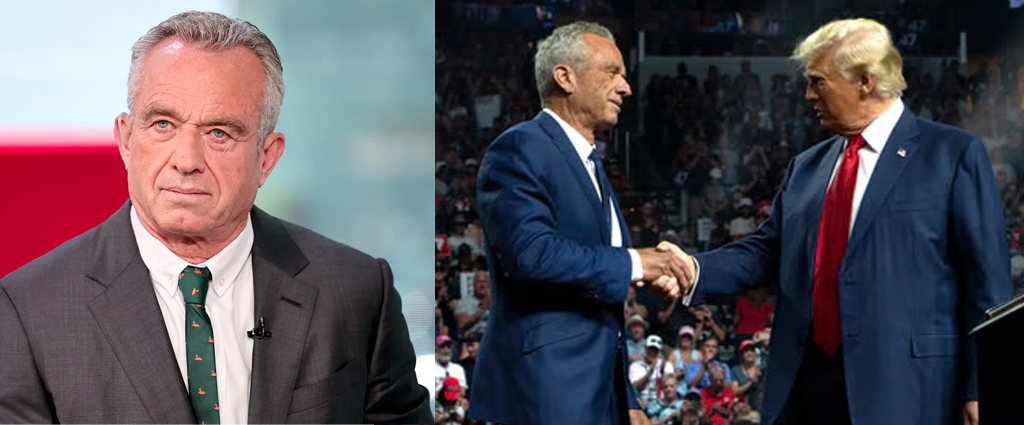
RFK Jr. and the Unspeakable: Why This Historic Moment Matters
When Bernie Sanders ran for president in 2016, he raised nearly a quarter of a billion dollars in grassroots donations to challenge Hillary Clinton for the Democratic nomination. After he dutifully backed out and endorsed the candidate chosen by the party’s super delegates, a lot of his supporters reportedly ended up voting for Donald Trump in November. When a reporter asked him how he felt about ex-members of his camp voting against Clinton, Sanders answered: “Wrong question.” If so many of his followers had decided to turn to someone whose policies were anathema to his own, he asked, then they must have been pretty angry about something, right? The media, he suggested, should figure out what ordinary voters are so mad about instead of blaming him and his populist movement for Hillary Clinton’s defeat.
While it’s true that the campaign of Robert F. Kennedy Jr. and Nicole Shanahan has not raised Bernie-levels of grassroots cash, it’s also true that ordinary voters have less disposable income than they did eight years ago. What RFK Jr. did do, however, was gather over a million signatures nationwide through the mobilization of some 100,000 volunteers for access to the ballot in all 50 states and the District of Columbia. Sanders never had to worry about ballot access in the Democratic primaries. For some reason, RFK Jr. was not only shut out of the party’s nominating process; he also had to qualify the “hard way,” as an independent, when he finally gave up on the once-upon-a-time party of his father and uncle.
Thus began one of the ugliest and most vicious assaults on a presidential candidate in recent memory. Even though he decided to run as an independent, the Democratic National Committee (DNC) launched a well-financed “lawfare” campaign through the courts to block him from the ballot in the general election. This was when he was taking more voters away from Trump than Biden! DNC-friendly mainstream media lent this discrimination campaign a helping hand by censoring him from their airwaves as much as possible. Joe Biden disgraced his presidency by denying him Secret Service protection until two days after the assassination attempt on Trump, and nearly 15 months after Bobby announced his own candidacy. Now that he’s formed a coalition with Trump, it’s fair to echo Sanders and say his supporters might have been a bit angry also.
As someone who has volunteered for Kennedy’s campaign since shortly after he declared his candidacy, I confess to brief shock at the announcement that he was suspending his run, endorsing Trump, and calling on his supporters to refrain from voting for him in about ten “battleground states.” Those ten might include my own, Virginia, where “RFK2”– as he’s sometimes known–polls relatively high. But I’m over it.
In 1968, many supporters of his liberal father’s presidential campaign transferred their vote to George Wallace, very possibly in sheer protest at RFK’s untimely and highly suspicious demise. For all his faults, New York real estate mogul Donald Trump is neither the racist Alabama governor nor his running mate, warmongering Gen. Curtis LeMay, who may have been smoking a cigar in the autopsy room during the postmortem exam of President John F. Kennedy, a man he hated. Trump has never smoked, and Wallace would have thoroughly disdained Trump’s Oval Office photo ops with African-American admirers.
With his stance on tariffs and no taxes on tips or on Social Security, Trump claims the mantle of a populist; and whether he is or not, elites do not like populists. They did not like Sanders either. But the neocons among the “Never Trump” crowd – e.g. Bill Kristol and John Podhoretz – despise Trump mostly for what they perceive as his “nativism,” which embarrasses them as members of the urban-liberal intelligentsia. Trump’s potential isolationism (he started no new wars) is the worst of it and frightens them to this day. Yet even a populist-nativist isn’t necessarily a “threat to democracy.” I think many people sincerely believe Trump is a threat, and I respect that, but I don’t see it myself. January 6th was a tragedy, and Bobby Kennedy Jr. has described Trump’s actions during that violent, vandalistic riot as “reprehensible.” Personally, I’ve never believed Trump intended or foresaw what happened, even if he bore blame through his recklessness or negligence.
Moreover, three and a half years later, we have to ask who poses the greater threat to basic freedoms? Was it those involved in the insurrection or the authorities cracking down in its aftermath?
A recent article by Margot Williams at Jefferson Morley’s JFK Facts (a Substack I write for), explains the excesses of federal law enforcement, which even now is rounding up and arresting people who did no more than enter the Capitol and walk around after a (small) advance mob broke in a door with a battering ram under the eyes of the immobile police.
RFK Jr. and the JFK Assassination
At a fundamental level, ending the toxic polarization of American society over the last decade and figuring out how to end it has always been the main theme of the RFK Jr. campaign. But the causes of our current social crisis are deep-seated, rooted in history, and I think they find their origin in the assassination of President Kennedy in 1963, before I was even born. After much study, I now hold the sincere conviction that this isn’t just a historical issue but an extremely important current one too. Every historic episode is both a cause and an effect, but many of our problems lead through November 22, 1963, when the fundamental nature of our government changed. Jeff Morley, who has done invaluable pioneering research into the JFK assassination, opines that it isn’t the most important issue facing America today: people have bills to pay, jobs to hold down, kids to put through school. When ordinary folks are thinking day-to-day about making ends meet this week, they aren’t thinking about a violent event from generations ago. I understand that.
But whatever John Q. Citizen is thinking as he goes about his day, I respectfully disagree with the JFK Facts editor-in-chief. It doesn’t necessarily follow that an issue is less important because most Americans think so. The “Great Crime” must stay alive as an issue in current U.S. politics and society until it’s resolved to the satisfaction of serious historians and researchers at large. Only one campaign now pledges to address that: Donald J. Trump and his new ally, Robert F. Kennedy Jr.
The murder isn’t just a fetish for conspiracy freaks and assassination hobbyists. It is a seminal event that still affects us. Thanks mostly to the political and media influence of RFK Jr. this election cycle, it is a live issue now as well. It may be a long shot to expect Trump and the GOP to seriously do any justice to it, but a long shot is better than no shot at all. Maybe a re-elected President Trump will have no power to force disclosure on the 61-year-old atrocity; because maybe, as some believe, all presidents are only cyphers of the national-security state. But while cynicism makes some people feel superior, it doesn’t do it for me.
Regarding transparency over the still-withheld files related to the assassination of JFK, Trump has already disappointed “bigly.” His postponement of full disclosure in 2017 only aroused more public discomfort and mistrust. Yet if Trump was bad on the JFK files, President Joe Biden has proven to be worse. He is not only postponing release of the remaining withheld assassination records but also announcing the “final certification” under the JFK Records Act. Congress’s unanimous passage of that law in 1992 prevented President George H. W. Bush from vetoing it, and Biden himself voted for the law as a senator. Worse, instead of honoring the spirit and letter of the law to serve the public interest–as attorney Andrew Iler showed–Biden devised a new scheme to conceal the records and replace the JFK Act.
This scheme, known as the “Transparency Plan,” was devised by the CIA-led national security apparatus and essentially guts the 1992 federal statute by burying its timeframes and requirement of periodic review. By executive order, Biden handed all declassification decisions over to the CIA and other unelected agencies in control of relevant records, washing his hands of the process forever. In doing so, Biden not only grievously abused the public trust. He probably didn’t even see any records before making his fateful decision. Already in cognitive decline, he very likely just signed where he was told to sign and forgot about it. At least Trump claimed he saw something, at least according to Judge Andrew Napolitano. It’s just that what he saw was so bad, he felt he had to bow to the will of the national security state and keep it under wraps.
But Biden? Nothing. Now his vice president, the Democratic nominee for his job, is eventually going to have to make her own position known on JFK. Does Kamala Harris even have an opinion? Born after the assassination, she has – to the best of my knowledge – never expressed any view at all. With any luck, the subject will come up in the upcoming Trump-Harris debate, but how will Harris “get out in front” on the issue when her boss has already tried to bury it? Trump will be able to comment first-hand, but I see no cause for optimism from Harris. I therefore have little compunction over favoring Trump right now.
The issue of transparency in the JFK assassination isn’t the exclusive reason I decided to support RFK Jr. for president, but it’s at least tied for first place. I already knew his position on his uncle’s assassination – as well as his father’s – and that made him a qualitatively different and unprecedented kind of candidate. But on Friday, August 23rd, confronted with the image of him on stage with Donald Trump in Arizona, I admit I trembled a bit. The former president graciously introduced RFK Jr. as having “lost his father and uncle in service to our country.” He vowed to establish an “independent presidential commission” to revisit the JFK assassination and release all the withheld records. I imagined RFK Jr. standing there, waiting to speak, exhilarated at coming as close as anyone in the last 60 years to doing what Dorothy Kilgallen said she was going to do right before her mysterious death.
Maybe Bobby wasn’t thinking that at all, and when he took the podium, he never even mentioned the JFK assassination. He talked, as usual, about public health, endless war, and censorship. But I wanted to believe he was consciously hoping President Trump would speak to that morbid tragedy in Bobby’s own family for him, and that Bobby – like all of us outside the inner circle of the national security state – still put a top priority on finding out what happened to his uncle. This was probably the best chance he had ever had in his lifetime. Whether Trump was only prompted by the recent attempt on his own life seemed immaterial at that moment. The point was: millions of people were watching and listening. It was live.
Again, full disclosure over JFK’s murder continues to be a matter of vital public interest. Without at least an official rejection of the official history as currently disseminated by government and mainstream media, Americans won’t even have a version of events that is closer to the truth than what their government now peddles to them. We will continue to languish in a social sickness complementary to the physical degradation Kennedy so passionately wants to reverse, and about which he continually warns us. We need the topic of the JFK assassination in the news cycle now more than ever, so that it resonates into the next administration and stays in the public memory, no matter who wins. In Oliver Stone’s JFK, Jim Garrison paraphrases Tennyson: “Do not forget your dying king.” To find out what happened, we have to resist forgetting.
Kennedy, Trump, and Harris
Whatever the political fallout from the Trump-Kennedy coalition (liberal MSM commentators quickly united in their attacks), I have no regrets about supporting RFK Jr.’s campaign. The dominant experience of working with other RFK Jr. volunteers was, primarily, an absence of hate. Plenty of fellow campaign workers had voted for Biden in 2020, and plenty of others for Trump. But when handing out campaign literature or soliciting signatures for ballot access, the only hate we ever encountered came from obvious Biden supporters. They would hiss at us, sometimes spitting inadvertently in the process, their faces red as tomatoes, telling us we were a “disgrace” or “dangerous” or should be “ashamed.” Trump supporters would sometimes refuse to sign our petition forms, but they were never mean or unhinged. The “Bidenista” passers-by were manifestly contemptuous, sometimes calling us “nuts” or “crazy” even as they boiled over right in front of us.
How different from that experience could Bobby Kennedy’s have been at the level of the DNC high grandees? He and running mate Nicole Shanahan both said that the Biden-Harris people had refused even to speak to them, whereas the Trump campaign was at least willing to meet. Under these circumstances, why would anyone blame RFK Jr. for giving up on cooperation with the arrogant Biden-Harris cabal? Would anyone passionate about issues of vital public interest, who meets a brick wall from one side and an ajar door from the other, go on bashing his head repeatedly against the bricks and mortar?
Maybe a significant percentage of RFK Jr. supporters now refuse to back him for endorsing Trump as a means of advancing his own agenda of peace, public health, and free speech. I haven’t met any yet. But at the end of the day, faced with the Democratic Party’s well-financed litigation drive to keep him off the ballot, plus censorship by overwhelmingly DNC-friendly mainstream media, Bobby evidently felt he had to choose between doing something or doing nothing. He decided to do something, to take a chance on Donald Trump honoring an agreement to prioritize the issues closest to him. Even if Trump reneges on his pledge of full disclosure in the JFK assassination, I think Bobby did the right thing.
The drab, uninspiring Democratic Party long ceased to be the party of RFK Jr.’s uncle and father. It is not the party of FDR, JFK and RFK. It is the party of LBJ, a corrupt, brutal scoundrel desperate to use the White House for the public adulation he craved. The long-term symptom of LBJ is the Democratic Party of today. And the DNC hit squads are part of this LBJ apparatus. (NY Times, May 2, 2024 online edition or May 4, 2024 print edition, article by Michelle Cottle: “The Drive to Tell Voters What They Don’t Know About R.F.K. Jr.”)
It is largely a party made up of elites. Nancy Pelosi ushered out Biden, and after, there was no competition from anyone to take the spot. Not even a token of a debate took place. And, if one recalls, there was no debate during the Democratic primaries, or what passed for primaries. Harris was anointed, she was not in any way elected. How interesting that process becomes when compared with how Robert Kennedy Jr. was treated in the media. This is democracy?
The censorship Kennedy speaks about is not conspiracy theory. It’s real and palpable, and Facebook CEO Mark Zuckerberg now confirms publicly that “deep state” goons pressured him to censor content related to COVID-19 and other subjects. Moreover, the “censorship-industrial complex” (as RFK Jr. calls it) traces its roots to November 22, 1963. In interviews, Bobby has repeatedly recommended James Douglass’s influential book, JFK and the Unspeakable (2008), which refers to a systemic evil, a “void” permeating official policy and discourse, making it soulless and hollow. The assassination put a kind of “final seal” on what had built up over the previous decade and a half, as an unaccountable “deep state” acquired more and more power at the expense of elected authorities. That power manifests itself everywhere, particularly through censorship. Scholarly writers, researchers, and historians of the JFK assassination are marginalized and deprived of the big, lucrative book deals and promotions, as well as prestige. There is no meaningful difference between “muzzling” these writers and state censorship.
Ironically in the so-called “information age,” the idea that certain things are “unspeakable” is still strong. Six decades after the assassination of JFK, and 56 years after the murder of RFK, Bobby Kennedy Jr. has exhumed a range of issues buried under a mass of mainstream media talking points developed over generations. Possessed of a collective blindness residual of the Cold War, most Americans have ignored the “forever wars,” dietary and environmental toxicity, the waste of our economic resources, and the decline of our civic consciousness. A drug-addled, unhealthy nation, we’ve received a big wake-up call from RFK Jr., who has brought issues of vital public interest back into popular discourse. For instance, the revolving door between big pharma and public health agencies.
The issues that Kennedy leads with – (1) the war in Ukraine, (2) chronic illness and disease, and (3) the mainstream-media censorship regime – are all the product of the rise in power of the unelected national-security apparatus, which secured its dominance over the political system after passage of the National Security Act of 1947. President Truman signed it into law, giving official birth to the Central Intelligence Agency. As soon as President Kennedy was assassinated, Truman sat about writing an op-ed for the Washington Post, essentially lamenting the effects of a law he was responsible for enacting. He suspected the CIA was involved in the murder of his young successor, and that suspicion permeates his op-ed.
The CIA had gradually accumulated more and more power under President Eisenhower, who would warn the public about the dangers of the “military-industrial complex” in his farewell speech in January 1961. By the time JFK attempted to resist its power, it was too little, too late. The title of David Talbot’s book, The Devil’s Chessboard: Allen Dulles, the CIA, and the Rise of America’s Secret Government (2015) is no cliché. Our unaccountable “secret government” is the biggest open secret in America today. Only one candidate talked about any of this in any detail, and that is RFK Jr. It was probably that, plus his opinion of Anthony Fauci that sealed his fate at the starting gate.
The Biosecurity Agenda and the ‘Anti-Vaxxer’ Pejorative
One issue remains largely “unspeakable,” as mainstream media and government barriers to talking about it are still mostly intact. It is what RFK Jr. calls the “Biosecurity State.” The most recent manifestation is the attempt by governments worldwide to restrict freedom in societies over which they preside. The method is known as “PPR” – pandemic preparedness response. The World Health Organization declares a “pandemic,” and national governments stand ready to impose a series of measures, including lockdowns, school closings and other mandates, thus curtailing basic liberties. Behind PPR and restrictions on human freedom stands the obscenely profitable pharmaceutical industry – “Big Pharma” – which rolls out “cures” as soon as it can scare everyone enough. The gravy train is then off and running again. Anyone who dismisses as “conspiracy theory” the idea that Big Pharma is irretrievably corrupt should read a book by a bête noire of Warren Report dissenters everywhere, Gerald Posner’s Pharma: Greed, Lies, and the Poisoning of America (2020). When Kennedy calls Big Pharma a “criminal cartel,” he’s being gentle.
Many educated people seem to shrug all this off, but many of us are sincerely alarmed. RFK Jr.’s recent book, The Wuhan Cover-Up and the Terrifying Bioweapons Arms Race (2023), traces the historical continuity between Pentagon and CIA experimentation and abuses at Fort Detrick, Maryland. This began around the late 1940s,and it spread to the Wuhan Institute of Virology in China in 2020. Which is where former National Institute of Allergy and Infectious Diseases (NIAID) director Anthony Fauci took his “gain of function” research after the Obama administration imposed a temporary moratorium on that dangerous activity within the United States. Kennedy’s previous book, The Real Anthony Fauci: Bill Gates, Big Pharma, and the Global War on Democracy and Public Health (2021), gives scholarly content to a now-widespread perception that the longtime, powerful, and highly-paid NIAID chief is corrupt, self-serving, and responsible for serious public health policy abuses in service to the bottom line of both himself and Big Pharma e.g. the whole disastrous AZT as a cure for AIDS debacle. Fauci has never even hinted at suing Kennedy despite the book becoming an instant bestseller. And it is not just RFK Jr. who has made these charges against Fauci. Senator Rand Paul has done the same against both Fauci and Gates. Senator Paul wanted to charge Fauci for lying to congress about gain of function research and how this caused the breakout of CV 19 in Wuhan.
Although RFK Jr. has never led with the issue specifically, he is not shy about explaining his vaccine safety advocacy in the face of accusations that he is a “nut” or (per the first sentence of his Wikipedia page) a “conspiracy theorist.” Most citizens of the industrialized West have been vaccinated for different things at various points in their lives, and I make no exception of myself. Neither does RFK Jr. But the COVID-19 pandemic ushered in tyrannical new rules about the subject.
RFK Jr.’s Children’s Health Defense (CHD) advocacy group and its online periodical, The Defender, offered scholarly analysis for anyone entranced by the three-letter public health agencies’ scare-mongering for Big Pharma. But they had to be aware of CHD in the first place. CHD should have acquainted everyone with the “Biosecurity State” before censorship of mass media and internet in the democratic West really ramped up, since Kennedy had been warning of it for years. But social media – to say nothing of the MSM – suppressed it. Those of us who had never felt blunt censorship in America could see social media “moderating” or deleting posts for even questioning public health policy by the end of 2020. The words “false” and “falsely” became mantric in MSM, intensifying after President Trump publicly charged that the 2020 election result reflected fraud.
The censorship situation in the West became extreme after the “warp speed” rollout of the COVID-19 vaccines, when even wire services openly branded anyone daring to question their safety or efficacy “conspiracy theorists” promoting dangerous views. RFK Jr. became super-prominent among the targets of coordinated attacks by legacy outlets of America’s ostensibly “free press.” The pharmaceutical industry’s power over supposedly neutral organizations like Reuters and AP had been more subtle, but by the end of 2020, the “corrupt merger of state and corporate power” was brazenly and frighteningly visible every day. Another target was author Naomi Wolf, who had written more than one bestseller and was an advisor to both Bill Clinton and Al Gore.
Friends’ acceptance of my choice to rely on my innate immune system in confronting COVID-19 has, at least, reassured me. Others have been less fortunate. The family of an unvaccinated American friend overseas told him if he wanted to come home for Christmas, he had to be COVID-jabbed. He spent Christmas of 2021 alone in a country that doesn’t even celebrate it.
As time has passed, and more and more vaccinated friends have contracted COVID: Jim DiEugenio contracted it twice. The realization that people like me aren’t as loony as they first imagined has become more ingrained. The full symptoms of my own bout with COVID-19 lasted four or five days. After no longer testing positive, I felt even more confident of the benefits of strengthening natural immunity.
Even vaccine enthusiasts have to admit to a level of adverse side effects never seen before, since this is a matter of official record, not theory. It isn’t necessary to indulge in conspiracy theory to conclude that the COVID-19 vaccines have never been proven totally safe. The CDC’s own Vaccine Adverse Events Reporting System (VAERS) has received more reports from the COVID-vaccinated than for all previous vaccines combined, yet in the late 1970s, the “swine flu” vaccine was withdrawn after a tiny number of recorded Guillain-Barré Syndrome (GBS) cases. Many more GBS cases have been recorded for the COVID-19 jabs. Again, the best explanation for why the COVID-19 vaccines survived is record levels of state and corporate stipulation. No matter how much others claim to “believe in” the COVID-19 vaccines, there is no basis for “trusting” the companies producing them. They trade in year-end profits, not long-term public health. Whatever COVID vax advocates argue, skeptics have the right to remain skeptical, especially since we cause no increased harm to anyone by remaining “jab free.”
Warp Speed and Political Orthodoxies
One does not have to conceive of a “plandemic” designed and implemented by a “high cabal” to reduce the world’s population through vaccine mandates. Corruption and greed can explain what happened, and why it should not happen again. After all, Operation Warp Speed broke several rules in its haste to come up with a vaccine. But there is still an important point to be made, and I felt it most intensely when I attended RFK Jr.’s “Defeat the Mandates” protest in front of the Lincoln Memorial in Washington in early 2022, with SWAT teams on the roof and police helicopters circling loudly overhead. That point is, no matter how much our friends, family, or anyone else may show tolerance toward our refusal to be vaccinated for COVID-19, if universal mandates were ever imposed, the overwhelming majority of these “friends” wouldn’t lift a finger to defend our right to refuse them. One can easily picture them, instead, shrugging, wishing us “good luck,” and sauntering off to comply with the latest Biosecurity-State rule. In short, we have to defend our own civil rights, and RFK Jr. is the most powerful tribune for our cause.
Among those of us who have never availed ourselves of the COVID-19 vaccines, the sense of freedom to speak more loudly about our personal choice is much stronger today, in no small part thanks to RFK Jr. His supporters – vaccinated and unvaccinated – overwhelmingly oppose mandates, and the diversity of his base reflects a healthy political realignment, resurrection of wholesome social values, and reintroduction of vital interests to public discourse.
As people like Jimmy Dore have shown, the MSM relies on Big Pharma accounting for a disproportionately large share of its ad revenue. Consequently, it has already trotted out more pharmaceutical execs posing as “independent experts,” telling us we need to mask up and get the next shot. But yet, neither Peter Hotez nor Jake Tapper for two, would debate Robert Kennedy Jr. Robert Kennedy’s response to Hotez was that he was not talking about a conspiracy, he was talking about an orthodoxy which had taken hold, one that stated silence was the best course; so many smart and moral people decided that the best road was to keep your head down and move forward.
Reportedly Trump has offered Kennedy a role in his transition team, one in his health program, and one on a commission to declassify all the records on the JFK assassination. These negotiations began right after the attempted assassination of Mr. Trump in Butler, Pennsylvania. At the start the Vice Presidency was on the table, which Kennedy refused outright. Two of the go betweens in the talks were Calley Means, a preventivve health care advocate, and Tucker Carlson who had Kennedy on his much watched program. (NY Times, 9/2/24, story by Maggie Haberman).
It is interesting of course that these negotiations began after Butler, since RFK was the only candidate talking about the subject of assassinations for months on end. And reportedly it was Carlson—who has famously defied the MSM orthodoxy in the JFK murder– who first connected the two candidates via text message. (ibid). As former RFK manager Dennis Kucinich has noted, the DNC had shown no such outreach to the candidate. In fact, they had done all they could to sabotage him, similar—and perhaps worse–than what they did to Sanders. (Ibid, NY Timesarticle by Michelle Cottle) The DNC started 9 nuisance lawsuits to keep Kennedy/Shanahan off state ballots; they sandbagged particular events; and according to a talk show interview by VP candidate Nicole Shanahan, they even sent in double agents to certain offices. (Click here for this revealing interview https://www.youtube.com/watch?v=lAqVn5lRdes). And the whole time, Kennedy was denied Secret Service protection, thus forcing his campaign to spend hundreds of thousands per month on private security. This was startling, considering the history of that family.
If the alliance with Trump does not, in the end, produce meaningfully greater transparency in the assassination of JFK, RFK Jr. can’t be blamed. The struggle will continue. The “Justice for Kennedy Act” introduced in the House by a Republican congressmen in early 2023 is apparently dead, but the lawsuit of Mary Ferrell Foundation v President Biden and the National Archives has now reached the U.S. Court of Appeals for the Ninth Circuit, already well known for unpredictable decisions. Hopefully, the Democrats will feel forced to confront the assassination issue, perhaps with another legislative initiative, since Biden’s presidency was such a failure on the topic. So even if Trump’s executive-branch “commission” disappoints us, activism elsewhere could compensate for another letdown. There is, in sum, ample cause for hope, attributable in no small part to the influence of Robert F. Kennedy Jr. We now have Trump on tape in front in front of multiple cameras saying so.
-

Maureen Callahan Goes over the Edge-Along with Megyn Kelly Pt 3
As I have shown in Part One, Maureen Callahan’s three sets of eyes on her cover—Marilyn Monroe, Jackie Kennedy and Carolyn Bessette—are really a portentous charade. In Part Two, I explained why Mimi Alford is not credible; Leo Damore is not reliable on Chappaquiddick and third, how she turns the innocent into the guilty in the cases of Michael Skakel and William Kennedy Smith. She manages this by consistently using very questionable and biased sources. She is so consistent on this that it suggests a lack of objectivity from the start.
But even after all of the above, we are still not done scrubbing Callahan. There is the case of Arabella Kennedy. This was a child who Jackie Kennedy delivered stillborn in 1955. It’s true that John Kennedy was not there for his wife, but it is also true that the child was born prematurely by about five weeks. And, unlike Callahan, I do not trust George Smathers as a source about John F. Kennedy in this case. (Callahan, p. 37; for Smathers, see Don McGovern, Murder Orthodoxies, 193-218) In fact, I could not find any notes to this episode in her references section. Yet, in spite of this, she actually rebuilds dialogue.
Then there is Diana DeVegh. This is a woman who revealed she had an affair with John Kennedy rather late in life. She first wrote about it sixty years after it happened. I have no doubt if she had waited 15 more years, Callahan still would have printed it.
There was no way Callahan was going to leave alone the tragedy of Rosemary Kennedy. She was the first daughter to Joe and Rose Kennedy. No one knows what the real problem with Rosemary was. It may have begun with Rose’s difficult birth of her, done without her normal doctor. But most observers think that this uncertainty was the beginning of the spiraling road downward.
Whatever the basis of the problem, her rages and tantrums grew worse and worse upon her return from England in 1940. She became uncontrollable. As one writer described it, Rosemary would pace “up and down the halls of her home…like a wild animal, given to screaming, cursing, and thrashing out at anyone who tried to thwart her will.” She even physically assaulted her 78 year old grandfather, to the point she had to be restrained. (Dr. Jeffrey Lieberman, “The Miracle Cure” at The Literary Hub)
Joseph Kennedy—the less we write about what Callahan says about him the better—finally became desperate. He consulted with two doctors at George Washington University Hospital. They recommended what was then called a leucotomy, something being sold as a cure all for violent anti-social behavior. We know this today as a prefrontal lobotomy. And it was a terrible mistake for all involved, most of all Rosemary. She became an invalid and was sent to a convent in Wisconsin. There she lived in a private home and had full time care. (ibid, Lieberman)
II
But as noted above, a serious problem with Callahan is her selectivity. For example, if the Kennedys were so pathological in their relations with the opposite sex, then a couple of obvious questions are: 1.) Why was Ted Kennedy’s second marriage to Victoria Anne, ambassador to Austria, so successful? 2.) Why was Bobby Kennedy’s marriage to Ethel so enduring? (As I have shown, the stuff she writes about Bobby through Jeanne Carmen is rubbish) And if one is going to use Kick Kennedy as a strike against the mother Rose Kennedy, then why not bring up the facts of the very successful and lengthy marriages of say Eunice Shriver and Jean Kennedy Smith? I think to most objective people this pattern betrays an agenda.
But none of the above bothered Megyn Kelly. And before Kelly gave her so much time, as far as I can see, the book was not doing very well. But not only did Kelly give her a lot of time, she whole heartedly endorsed all that is in the book. But, beyond that, on her YouTube channel she actually labeled what Callahan wrote about Jackie as “Shocking new reporting”. Having read through all Callahan wrote about Jackie Kennedy, and taken many notes, I am still wondering how any of it is new. And if any of it is new, as I noted, I failed to see references.
On that same channel Kelly actually said that Mary Jo Kopechne was killed by Ted Kennedy. As I explained in Part 2, this is simply not the case. It was an accident pure and simple and Ted Kennedy tried to save her. But since Callahan was working an agenda through the flawed author Leo Damore, like a ringmaster, Kelly follows it word by word.
Here is the very serious professional problem with this. Kelly started her career as a lawyer, with a degree from Albany Law School. She then worked as a practicing attorney for ten years. So she understands the rules of evidence and testimony. Any good lawyer would have sliced and diced this book into pieces.
Now here is something else that the reader should understand about these Kelly/Callahan You Tube interviews. Kelly is worth tens of millions. She was very well paid at Fox for 13 years. She then jumped to NBC News where she was again very well paid for two years, reportedly at about 15 million per year. When NBC terminated her she collected about 30 million. (The question should have been: why did NBC ever hire her?)
Now, let us give Kelly the benefit of the doubt. Maybe she did not know anything about this material. But if Kelly was not cognizant of any of the problems I have sorted through, what was to stop the millionairess from hiring a fact checker? Callahan’s book is less than four hundred pages. So it would have taken a fact checker maybe a month to hand in a thorough and annotated report. Total cost would have been maybe 12-15 thousand dollars; a proverbial drop in the bucket for Kelly.
Was there a reason for that lack? There are indications there were. Because if you were looking for some balance, some questioning, some kind of cross examination from the former lawyer, forget it. Kelly pretty much accepts everything in the book and then leads Callahan on from point to point, with nothing asked or overturned.
For anyone in the know, their interview on the Marilyn Monroe mirage is actually ludicrous. As many Jackie Kennedy biographers have noted, the reason she was not at the 1962 Madison Square Garden birthday/fundraiser is that she did not like doing those kinds of events. That fundraiser featured 17 entertainers, one of which was Monroe The reason Jackie went to Dallas/Fort Worth is because her husband had allowed her to take a cruise with her sister after her miscarriage with Patrick. When Callahan starts talking about some kind of ultimatum that Jackie gave JFK over Monroe, we are in sci fi land. Except Kelly doesn’t realize it.
But wait, wait, then it gets worse. Callahan says that this “ultimatum” then caused JFK to cut off his “relationship” with Monroe. Still more. It was this alleged curtailment that caused Monroe’s death. And Callahan can’t help herself. She adds this for the road: the Kennedys probably had a hand in her passing.
What does lawyer Kelly say in reply to all this? She actually says that Bobby Kennedy was in LA on the day Marilyn died. As I noted in Part One, this is provably false. (Susan Bernard, Marilyn: Intimate Exposures, pp. 184-87). And Callahan’s so called evidence would be demolished by the photographic proof in Susan Bernard’s book. But then Kelly adds something that is probably just as bad. That somehow, even if Bobby did not kill her, it was the Kennedys who somehow ruined Monroe. Well, ringmaster Kelly has just cued up Callahan. Callahan says the brothers tossed her around like a sexual plaything. As Don McGovern and Gary Vitacco Robles have shown, there is no evidence at all that Bobby Kennedy ever had any kind of romantic or sexual relationship with Monroe. (Don McGovern, Murder Orthodoxies, pp. 177-87; pp. 236-37) There is evidence of perhaps one encounter with JFK, but Vitacco Robles even disputes that. So this is more mythology, which Kelly encourages and then let slide. Some lawyer.
Now let us get out of sci fi land to the facts. The LA suicide prevention squad that investigated Monroe’s death —made up of Dr. Norman Farberow, Dr. Edwin Shneidman and Dr Robert Litman—reported that she had tried to take her life on four prior occasions. Since 1955 she had been through three different psychoanalysts: Margaret Hohenberg, Marianne Kris and Ralph Greenson. Kris had her institutionalized in 1961 since she felt she was suicidal.(The Marilyn Report, 2/11/2002) She had been married and divorced three times by the time she was 35. There is no doubt that Monroe was a pill freak, and this was before she ever met Bobby Kennedy. She suffered from insomnia, depression and many commentators understand it today as bipolar disorder. This caused her to escape via alcohol and chemical abuse. (Dr. Howard Markel, PBS News, 8/5/2016)
To leave all of that out, and more, is simply irresponsible writing and journalism. And Kelly’s interview with Callahan was for me at the level of tabloidism. Whatever credibility Kelly had as a journalist—and for me it was not much—has now dissolved into cheap grandstanding.
III
If one looks at her references, these are some of the sources Callahan uses.
Sy Hersh
Hustler
National Enquirer
Dominick Dunne
Peter Collier
David Horowitz
Leo Damore
David Heymann
Kitty Kelley
Richard Burke
Ron Kessler
Thomas Reeves
James Spada
To go through and analyze what is wrong with these sources would, in and of itself, take another essay. But the fact that she uses them without qualification, I believe, suggests what her intent was.
When one reads the book, there are indications that, as with Hersh, this is partly a political book. Some of the things that Hersh tried to do were so off the wall wrong—like involving the Kennedys in the assassination plots against Castro—that the only way one could explain them was through a political agenda. Well, there are indications of that with Callahan.
This begins quite early when she says that somehow John Kennedy Jr. was wrong to insist that his father was not going to escalate in Vietnam. (Callahan, p. 6). She actually calls the idea that President Kennedy was going to disengage a “post assassination myth”. Can the woman be for real?
The declassifications of the Assassination Records Review Board (ARRB) proved beyond a doubt that Kennedy was getting out of Vietnam at the time of his assassination. The records of the May 1963 Sec/Def meeting proved definitively that Kennedy had ordered Secretary of Defense Robert McNamara to request schedules for withdrawal from all major agencies: CIA, Pentagon, and State Department. When McNamara was in receipt of them he replied that they were too slow. (Probe Magazine, Vol. 5 No. 3 pp. 18-21) These documents were so convincing that even the New York Times and Philadelphia Inquirer ran stories about them, billed as Kennedy’s plan to get out of Vietnam.
So the question becomes: If that meeting took place five months before the assassination, how could this be a “post assassination myth”? And one should add that McNamara’s initial request for this withdrawal action took place in May of 1962. Which is 18 months before Kennedy was killed. (James Douglass, JFK and the Unspeakable, pp. 119-21). When McNamara made this original request the Vietnam commanding general’s chin figuratively hit the floor. General Paul Harkins was shocked. This, and more, all culminated of course in National Security Action Memorandum 263 in October of 1963. That was the order for an initial withdrawal of a thousand advisors, and a complete withdrawal by 1965. (Douglass, p. 180). Again, I hate to tell Callahan, but that is about six weeks before Kennedy’s assassination. So, again, how could it be a ”post-assassination myth”?
This was all reversed by Lyndon Johnson in the space of about three months. Culminating in National Security Action Memorandum 288 in March of 1964, which mapped out an air war against North Vietnam. The Gulf of Tonkin Resolution in August was essentially a declaration of war. (JFK Revisited, James DiEugenio, pp. 216-217) So what Kennedy did not do in three years, LBJ accomplished in nine months. It is hard to ignore something as sweeping as that. But Callahan manages to do so.
But then there is this: somehow the Missile Crisis was a catastrophe of Kennedy’s own making. (Callahan, p. 289) Again, this is simple nonsense.
To anyone who knows anything about that much studied event, it was not Kennedy who caused it. Kennedy had made it clear to the Soviets that he would allow defensive weapons in Cuba but not offensive ones. (The Kennedys Tapes, edited by Ernest May and Philip Zelikow, p. 35) And, in a letter, Nikita Khrushchev had told Kennedy:
We have stated on many occasions, and I now state again, that our government does not seek any advantages or privileges in Cuba. We have no bases in Cuba, and we do not intend to establish any. (Ibid, p. 34)
This might have been the case in the spring of 1961. But it was not the case a year later. In March of 1962, Khrushchev began haranguing Kennedy about Berlin becoming a demilitarized free city. (ibid, p. 35) Which the Russian leader knew was a sensitive spot with JFK, as he saw it as the nexus of the Atlantic Alliance. In July there were reports of “Soviet freighters steaming for Cuba with what appeared to be military cargo on board.” There were accompanying reports of military equipment arriving at Cuban ports and moving to the interior under Soviet escort. (ibid). CIA Director John McCone was the first to suggest that the Soviets were sending in offensive medium range ballistic missiles. And as early as August, Kennedy “raised the question of what we should do in Cuba if Soviets participated a Berlin crisis.” (ibid, p. 36)
This was in all likelihood correct. Because the size and scope of the atomic armada betrayed any kind of defense against a Cuban exile invasion. There were 40 land based missile launchers, with 60 missiles in five missile regiments. There were both medium and long range missiles, the long range missiles could fly a distance of 2,400 miles. There were also 140 air defense sites to protect the launchers. In addition to this there were 40 nuclear armed IL-28 bombers. The third leg of the triad was a nuclear armed submarine pen consisting of seven atomic launching subs with one megaton payloads. That would be five times the power of the Nagasaki bomb. But further, the Russians provided a wing of MIG-21’s, and 45,000 men in motorized divisions. In other words, the Soviets had a protected first strike that could hit over 100 American cities with ferocious atomic power. (James DiEugenio, Destiny Betrayed, second edition, p. 66)
It was Kennedy who was confronted with this out of the blue. And when he called in the Soviet foreign minister, Andei Gromyko, he was lied to. (May and Zelikow, p. 169) Kennedy now felt he had to take some kind of action to remove the threat. He decided on the least aggressive act, the blockade. And this worked toward a settlement for which he went around his advisors, sending his brother Robert to negotiate with the Russian ambassador. One reason he did this was because most everyone else wanted either an invasion or a bombing run on the missile siloes. (DiEugenio, p. 64) And this included not just military men but congressmen. Because of the Russian forces on the island either of those options would have created many casualties. And if there was an invasion it very well might have resulted in atomic holocaust since the Russians had given Castro two varieties of tactical nuclear weapons, short and long range.
How Callahan can say that Kennedy created that first strike armada is beyond me. But there can be little doubt that Kennedy was the most important person on the American side in avoiding atomic war. For whatever reason, Callahan wants to reverse that.
IV
We have seen how Callahan distorts two important Cold War military issues, one in Cuba and one in Vietnam. Many commentators think those areas loom large in the violent fate of the brothers. Since, as for example, John Bohrer proves, Bobby Kennedy was even more liberal in 1967-68 than his brother was in ‘62-63. (See his fine book, The Revolution of Robert Kennedy)
In my opinion one can draw a dotted line between her treatment of those two huge issues and the assassinations of Bobby and John. The first is explicit and the second is indirect. In dealing with the assassination of Robert Kennedy, she writes that there were 3 gunshots. (p. 113) And that Sirhan shot Bobby Kennedy by himself. (ibid)
Any amateur investigator in that case rushes straight into the problem that there was much solid evidence to betray many more than three shots being fired that night at the Ambassador Hotel. Lisa Pease perhaps has the best study on that case, and through some very detailed and revealing work from the UCLA archives, she believes that there more like 14 bullets fired. (Pease, A Lie too Big to Fail. p.265) She furnishes prolific evidence for those findings including pictures and illustrations of the walls and the swinging door opening into the pantry where Kennedy was shot. In addition to this there were injuries to other victims. (See for example, pp. 258-63) She has also unearthed other suspects like Michael Wayne (Pease, p. 313-14) and Thane Eugene Cesar. They were in much better positions to shoot Kennedy than Sirhan was. Sirhan was in front of the senator, slightly off at an angle, yet all the bullets that struck RFK came from behind, at extreme upward angles, and fairly close range. in fact the fatal shot to the skull was at contact range 2-3 inches. (Pease pp.68-69) Sirhan was never that close. Cesar was. But further, although Cesar said he had a gun similar to the one used in the assassination, he said he had sold it prior to that event. This was later proven false. He had sold it after the assassination.(Bill Turner and Jonn Christian, The Assassination of Robert F. Kennedy, p. 166)
So what Callahan says about the murder of RFK is wrong on all counts.
In her reference section, Callahan lists the Warren Report. (p. 337). I assume she read it. Therefore she knows that the Commission concluded that Oswald fired all the shots that struck President Kennedy, Governor John Connally and bystander James Tague. And since Oswald was allegedly inside a building behind the limousine, all the shots came from that direction. This is the major conclusion from the Warren Report. No one who reads it can miss it.
Yet early in the book, in describing the Dallas assassination scene, Callahan first tells us about Jackie leaning out the back of the car after the fusillade in order to retrieve a part of her husband’s skull. (p. 25). She then tells us that, as Secret Service agent Clint Hill jumped on the car from the trunk, he saw through the back of Kennedy’s skull. (ibid). Yet she never comments on this paradox with the Warren Report. If the Commission was correct, then how could Kennedy’s skull eject backwards out of the car. Secondly, how could there be a large hole in the rear of his skull. Entrance holes are usually small and neat, it is exit holes that look like what Hill saw. In other words, Callahan has just shown the Warren Report is dubious. But she does not want to dwell on that, so she passes it over like its not important. When in fact it is crucial.
V
In her prologue, when Callahan says her book is not ideological or partisan, these claims ring hollow due to the evidence adduced above. Further, in her stream of consciousness style, she says that Jackie Kennedy realized that all the claims made about JFK at the tenth anniversary were lies, among them being he was a good man who would have been a great president, (Callahan, p. 227). Again, can she be serious?
This is undermined by her interview with Theodore White for Life magazine, and blasted into orbit by the book Jacqueline Kennedy: Historic Conversations on Life with John F. Kennedy. That volume was so valuable in its insights about her husband’s policies that Monika Wiesak used it in her fine analysis of Kennedy’s presidency, America’s Last President.
After writing this 3 part analysis, one that Megyn Kelly was averse to doing, contrary to Callanan’s plea, I think the book is ideological and partisan. No one could have so consistently used the sources she did as a haphazard decision. By chance, no one could have been as selective as she is in her use of evidence. No one could have been so eager to rush to such questionable conclusions in each case if they were at all trying to be objective.
In fact, right at the beginning, she makes this clear by going after Robert Kennedy Jr. and his presidential candidacy. She calls him “a prominent conspiracy theorist and anti vaxxer who has made racist and antisemitic comments…” (p. xii) She prefaces this by saying that “The Kennedys remain a powerful and frequently destructive force, both in our politics and our culture.” Well if you leave out JFK’s withdrawal from Vietnam, and his masterful handling of the Cuban Missile Crisis, you can say that.
But beyond that, this completely clashes with historical fact. Because in Larry Sabato’s book, The Kennedy Half Century, the author did interviews with focus groups on this subject. The public came to a contrary conclusion. The vast majority thought that Kennedy’s assassination changed the country. It took away America’s innocence and it was, in retrospect, an unthinkable act.
Those alive at the time can attest to the deep depression that set in across the country, as the optimism that had mainly prevailed since the end of World War II seemed to evaporate. …Kennedy’s murder, marked the end of an era of peace and prosperity.. (p. 416)
It seem to me that Callahan’s agenda, like Sy Hersh and Thomas Reeves before him, is to do what she can to somehow alter that public consciousness. In fact, its pretty clear from her prologue that this is her intent. Which is probably why Megyn Kelly and then Fox have supported her. And Kelly has had her on more, this time to go after Kamala Harris. Which kind of gives the game away. A pseudo journalist, teaming with a pseudo historian to attack the woman who endangers the GOP nominee.
Especially in light of the following. Donald Trump has been in court twice over a sexual assault charge from advice columnist E. Jean Carroll. And he lost both of those cases. In the second one he defamed her and was ordered to pay over 80 million. Trump had an affair with Karen McDougal, a former Playboy model, while he was married to his current wife Melania. In an interview with Anderson Cooper, McDougal said that Trump tried to pay her after sex, their relationship lasted ten months and she saw him dozens of times. She was paid $150,000 by the National Enquirer in order to kill that story for political purposes. Trump also has been adjudicated as to paying to have sex with Stormy Daniels, a porn star—while his wife was pregnant–and then trying to conceal that act, again for political purposes. He also began an affair with Marla Maples-his future wife– while he was married to his first wife Ivana.
For someone like Kelly, and for Fox, Callahan’s book creates a nice diversion from their man’s serious character problems. Which, unlike say Marilyn Monroe, are real and actually adjudicated as true.
-

JFK Records Release: Trump at it Again, Is he For Real This Time?
The delayed final release of the JFK Assassination records has been well documented on this website. It has been covered by the media when Presidents Trump and Biden have made historical and controversial decisions to continue delay of the release of the final Protected Collection. To best of our knowledge, over 4,600 assassination records are still withheld from the American public or redacted in part.
Why? The U.S. Government (through the notorious Warren Commission Report) continues to officially maintain that Lee Harvey Oswald assassinated President Kennedy as a “lone nut”. The Warren Report concluded that Jack Ruby assassinated Oswald on his own in a sudden “act of passion”. The Warren Report concluded that there was no evidence that Oswald and Ruby even knew each other.
In 1979, the House Select Committee on Associations (HSCA) dug further and concluded that Kennedy was “probably” killed in a conspiracy. The HSCA also cleared various services (that the conspiracy did not involve any group like the USSR, or Fidel Castro, Organized Crime, the FBI, the CIA or Secret Service. See Final Report, pp. 1,2). However, the HSCA also found that it could not exclude the possibility that individual members of the national syndicate of organized crime or anti-Castro Cubans were involved in a probable conspiracy to assassinate President Kennedy.
That is the context for the obvious question: Based on the conclusions of the Warren Commission and the HSCA, why the need for continued secrecy in 2024? In 2024, 60 years have passed since the assassination, and more than 30 years have passed after Congress unanimously passed the JFK Records Collection Act of 1992 (the JFK Records Act). That is another article, and that question more than deserves an answer from the President, Congress and the National Archives and Records Administration (NARA). This article explains what those offices and agencies are in fact doing (and more importantly not doing), why it is wrong, and why it is a direct violation of the JFK Records Act. We will conclude by explaining what can be done going forward to fix the ultimate problem. That problem is continued secrecy regarding the JFK Assassination records.
I
It is important to briefly explain the timeline of events since October 26, 2017. Why that date? That was the date established by Congress in 1992 for the mandatory final release of all government records related to the assassination of President John F. Kennedy.
Why did Congress approve a 25-year release period in 1992, when the assassination occurred almost thirty (30) years prior in 1963? Congress found that specific reasons could warrant delay of release after 1992. And those reasons are very specific. They are listed in the JFK Records Act. Under the JFK Records Act, the President in 2017 was permitted to authorize further delay if (and only if) a specific record met the legal standard for continued withholding. In summary, the reason for delayed release must connect to a threat to current military or intelligence operations, identities of living persons or agents who could likely be harmed by release of a record, current security or protective procedures (i.e. Secret Service procedures), or the conduct of current foreign relations, the disclosure of which would demonstrably impair national security and outweigh the public interest in immediate disclosure.
As you can see, the prevailing theme and standard used by Congress was “current”. Meaning in 1992, the reason for delaying the release of an assassination record must then have been a current and specified concern. And that reason must still have been current and a substantial threat to the “national security” of the United States as of October 2017. Otherwise, the President, by October 26, 2017, was required to either release the assassination record(s) in full and without redactions, or certify in writing the specific reason for delay (under the standards of the JFK Act) for each and every record withheld. That presidential certification was to be in an unclassified record and available to the American public. This is what Congress required. There is no reasonable debate on this, regardless of if one still believes the Warren Report or an alternative.
It is undisputed that President Trump failed to provide a record-by-record certification for delay past October 26, 2017. In reality, Presidents Clinton, Bush (George W.) and Obama also failed to meet that duty under the JFK Records Act. Why? In all likelihood, those presidents did not receive adequate and objective advice from legal counsel on their actual duties under the JFK Act. As explained below, President Trump clearly did not receive objective or timely legal advice on this historical issue. Or the issue was perhaps too controversial for the office of the President when other matters of transparency and “national security” were more pressing in their view. The reason does not matter. The law was clear and the mandate from Congress was clear. The JFK Act was unanimously approved by Congress in 1992. In the JFK Records Act, Congress declared in 1992: “most of the records related to the assassination of John F. Kennedy are almost 30 years old, and only in the rarest of cases is there any legitimate need for continued protection of such records.”
So what happened on October 26, 2017? We know that Trump intended to authorize the full release of all assassination records that were still withheld at that time. He said so publicly. Instead, at the eleventh hour Trump, by Executive Memorandum, authorized a 6-month delay for agencies to review any remaining withheld records and complete the declassification job. Trump then authorized another 3-year delay, which ultimately transferred responsibility to the Biden administration. Notably, Trump did not attempt to rewrite the law. By all accounts, Trump simply authorized further delay under pressure from government agencies who were determined to keep certain assassination records secret no matter the cost.
II
Trump’s Executive Memorandum prompted troubling reactions by Thomas Samoluk and Judge John Tunheim of the Assassination Records Review Board (ARRB). The ARRB was an independent agency established by Congress in the 1992 JFK Records Act, whose sole mission was to ensure declassification under the standards of the JFK Records Act through an accountable and enforceable process.
Samoluk: “It is really frustrating what has happened. Because the law said that anything that was not released … needed to be released under the law by October 26, 2017. Now there is a clause that says if the president certifies, under certain conditions, that the records would not be released. I don’t think the process under the law was followed. The records have not been released in total, and I don’t think any good reasons have been given.” (James DiEugenio, JFK Revisited, p. 389)
Judge John Tunheim: “The information (non-declassified documents) was intended to be released in 2017. Only under extreme circumstances was a president in 2017 supposed to continue to protect records. And they didn’t, as near as I can tell, they didn’t provide that certification.” (ibid, pp. 347-48)
Then, matters got worse. Far worse. In October of 2021, Biden issued an “Executive Memorandum” authorizing another delay until December 15, 2022 for agencies and government offices to make “final decisions” on the release of withheld records. In this Memorandum, Biden empowered agencies to make their own decisions on releasing assassination records generated by their agency. Let that sink in. President Biden told agencies, the very agencies who have maintained secrecy regarding the assassination since 1963, to run the show. To release their records when they felt “comfortable” doing so.
In June of 2023, President Biden then issued his “Maximum Transparency” Executive Memorandum. Despite the clear mandates imposed by the JFK Records Act to establish an “accountable” and “enforceable” process for full disclosure, and despite the explicit requirement that each withheld assassination record be accounted for with an unclassified identification aid, the President’s June 30, 2023 Memorandum does not identify or account for a single withheld assassination record. Biden’s “Transparency Plans” – originated by the CIA – are the opposite of transparency. It is government secrecy in its most egregious form.
The illegality of Biden’s orders (not approved by Congress or NARA, that we know of) cannot be understated. It was a presidential attempt (unwittingly or not) to destroy the purposes of the JFK Act – a law that Biden voted in favor of when he was a senator in 1992. Trump’s orders were also in violation of the JFK Act. Biden’s were even worse – telling agencies that they could make their own declassification decisions. If this does not ensure continued secrecy, it is difficult to imagine what could.
III
So, here we are in the summer of 2024. To our knowledge, the agencies with this unsubstantiated “power” have done nothing. Congressional oversight committees are undoubtedly aware of this historical declassification issue, or at least they should be. To date, oversight committees have done nothing about the fact that the Office of the President has unilaterally and illegally rewrote the law with a presidential pen. They have done nothing about the fact that the President has seized control over their own Congressional records. It is critical to note that Congressional oversight committees (both House and Senate) have express legal authority under the JFK Records Act to ensure complete declassification under the standards and timeline of the JFK Records Act. In other words, when the ARRB finished its original mandate in 1998, Congressional oversight committees had the authority and duty to take whatever action necessary to ensure that agencies and government offices complied with the JFK Records Act. A historical law that was intended to restore faith in government transparency.
This author personally attended a meeting of the Public Interest Declassification Board (PIDB) in June 2021. According to NARA’s website, the purpose of the PIDB is to advise the President regarding issues pertaining to national classification and declassification policy. The PIDB’s mandate is to promote “the fullest possible public access to a thorough, accurate, and reliable documentary record of significant U.S. national security decisions and activities.” Further, the PIDB was established by Congress to advise the President and other executive branch officials on the “identification, collection, review for declassification, and release of declassified records and materials of archival value.”
On the June 2021 meeting agenda (of the PIDB) with respect to JFK assassination records was a) Potential John F. Kennedy Assassination Records Collection records review; b) Increase public awareness; and c) Congressional engagement. Despite an apparent attempt by the PIDB to recognize this problem, Congressional oversight committees have done nothing. President Biden (assuming he was properly advised by the PIDB) made this historical secrecy issue even worse. Rather than recognizing the critical issue, increasing public awareness and imploring Congress to engage on the issue, the Biden administration issued “Transparency Plans” that put the declassification decisions squarely in the hands of the agencies that have held assassination records close to the vest since the Warren Commission was established immediately after JFK’s assassination.
Donald Trump Returns
Those who seek the right to see the remaining “Protected Collection” of JFK assassination records recently learned of some seemingly positive news. Former President Trump (running for election again in November 2024) recently made a pledge on the Fox & Friends Weekend program. Trump was asked what he would do to restore the American people’s trust in government institutions. Trump was asked if he would declassify the withheld JFK assassination records. Trump said he would declassify them and that he already “did a lot of it”.
Trump’s feelings on the matter when leaving office are also clear. Former Fox commentator Judge Andrew Napolitano was a frequent advisor to Trump during his presidency. When discussing “unfinished business” in his presidency, Judge Napolitano reminded Trump about his unfulfilled pledge in 2017 to release the remaining JFK records. Trump said to his friend and advisor Judge Napolitano: “Judge, if they showed you what they showed me, you wouldn’t have released it either.”
It now appears that Trump was pressured and intimidated in 2017 when he had to make a historical decision on declassification and transparency. If Trump can be intimidated, then what was to stop a lifelong politician and establishment loyalist like Joe Biden? All signs appear to point to Trump’s CIA “advisors” in 2017. Tucker Carlson reported on this, before he was fired by Fox News soon thereafter.
Is there a Path to Success in Declassification of the JFK Records?
We have summarized the developments in this matter since 2017, starting with Trump’s first postponement decision. A lawsuit was filed in 2022 by the Mary Ferrell Foundation to enforce the JFK Records Act, but predictably the DOJ’s lawyers have strenuously defended that legal effort.
So what is a different path to achieving full transparency and declassification on the JFK records? The path is clear and actually quite simple. It does not matter which President takes this path. It could be Trump, Biden or another candidate running in 2024. It would be more difficult for Biden because he would literally have to do a full pivot, reverse his recent Executive orders, come up with plausible reasons for doing so, and then instruct agencies (and his own Executive team) to follow the JFK Act and be accountable for that task. Trump’s path is difficult but less difficult, and I will explain why. Any President, however, can successfully overcome the continued disturbing trend of secrecy regarding the JFK assassination records, and look like a strong and decisive U.S. President while doing so.
If Trump is elected again, he can explain what he experienced in October 2017. He can explain what he told Judge Andrew Napolitano and why. He can explain why felt that he had no choice under last minute pressure from agencies in October 2017 (and again in 2018), including pressure from the CIA.
During this upcoming campaign Trump can explain how he received faulty legal advice from the DOJ’s Office of Legal Counsel at the eleventh hour in making his decisions on the JFK Records, which he did. Trump can obtain an objective and clinical legal analysis demonstrating how the JFK Records Act was intended (by Congress) to operate. Trump can declare with confidence, after receiving competent and objective legal counsel, that the JFK Act was NOT intended for the President–30 years after the passage of the JFK Act–to rewrite the law with a presidential pen. Trump would surely attempt to embarrass Biden regarding his more recent orders, but the issue does not change.
Trump can acknowledge and endorse the recent Tucker Carlson reporting. Trump can pledge to rescind and reverse ALL of Biden’s executive orders on this historical issue. Trump can pledge to issue a new executive order requiring all agencies and NARA to immediately comply with provisions of the JFK Records Act that require an unclassified identification of each assassination record still withheld and why each record should still be withheld today under the standards of the JFK Act. Trump can establish a reasonable deadline for agencies and NARA to complete this ministerial work for the remaining Protected Collection. It could be 6 months, it could be 9 months. But no more arbitrary extensions or delays. Trump could then make a final and independent Presidential decision after receiving this required information from the agencies. And that decision must relate to an identifiable harm as currently posed by a specific record(s).
What else could Trump do? He could acknowledge Jefferson Morley’s efforts and the serious problem with George Joannides. It is now undisputed that Joannides ran a CIA anti-Castro operation that was connected to Lee Harvey Oswald. It is now clear that Joannides stonewalled the HSCA in a clandestine CIA operation determined to maintain secrecy on the CIA anti-Castro operations, no matter the cost. Trump may not go there, but the history on Joannides is clearly one of the reasons why the CIA is determined to maintain secrecy in the remaining Protected Collection.
IV
What about Congress? They also cannot keep hiding on this issue. Imagine the breath of fresh air in the House if instead of pursuing an impeachment that will not happen, Rep. James Comer actually called the National Archives and John Tunheim and Jeff Morley to testify about why the JFK Records are still classified? That committee is controlled by the Democrats in the senate, chairman Gary Peters of Michigan. Peters could call both Trump and independent candidate Robert Kennedy Jr. They could suggest—particularly the latter—that Congress immediately establish a new ARRB to enforce the standing requirements of the JFK Act. As events have unfolded, NARA and the intelligence agencies have proved inadequate or unwilling to do the job. At this date, there needs to be a plan to guarantee accountability and enforcement. The new ARRB would locate all the crucial Final Determination Forms (originated by the first ARRB) for remaining withheld records, make INDEPENDENT final determinations (as of 2024), and provide a report to Trump or Kennedy so they can make reliable and independent decisions on his presidential certifications for complete declassification. Both men can use this during the remaining days of the campaign. What is to stop them What is to stop both men from taking these steps supported by the actual law? Would that not resonate with the public a heck of a lot more than Hunter Biden’s drug addiction? Trump and Kennedy could contrast this plan with Biden’s rewrite of the JFK Act. For once a presidential candidate could promise to do something right about the JFK records.
If Biden is Re-Elected
Once placed on the defensive, President Biden can take the same steps that Trump could take. However, that would require him to acknowledge that Trump made rushed decisions with pressure from agencies. It would require Biden to recognize that Trump received faulty DOJ legal advice that was aimed at delay and delay only. That his (Biden’s) team has done more legal research and now recognizes how the JFK Records Act is actually supposed to work. Biden would have to rescind and reverse his executive orders and his “Transparency Plans” and somehow explain that they were issued in good faith but they now need a substantial overhaul. That is a tall task, especially with an opponent like Trump. However, the public should eventually appreciate the transparency and a serious effort to do the job correctly.
To be clear, this article is not an endorsement of any candidate for the Office of the President. We have done our best to report the actual record and the issues currently at hand. The Independent, Republican or the Democratic nominee can pledge to follow the JFK Records Act and get this done. Lay out an actual plan, and a clear path as suggested above.
V
If Robert F. Kennedy, Jr. was elected and took a similar path, he would also be following the law and erasing the history of secrecy regarding the JFK Records. He is on record that he plans to do so. On the 60th anniversary of JFK’s assassination (November 2023), RFK Jr. petitioned President Biden to release all government records concerning the assassination of his uncle. RFK Jr.’s position is squarely in line with the language and intent of the JFK Records Act of 1992. In his petition, RFK Jr. states: “The 1992 Kennedy Records Assassination Act mandated the release of all records related to the JFK assassination by 2017. Trump refused to do it. Biden refused to do it. What is so embarrassing that they’re afraid to show the American public 60 years later?” RFK Jr. simply called upon Biden to obey the JFK Act and release all assassination records to the public. The petition received more than 20,000 signatures.
President Seizing Control Over Congressional Records
What Trump and Biden may not know is that they have repeatedly and illegally assumed control over “non-executive branch” assassination records. These records include House and Senate records, largely originating from the House Select Committee on Assassinations (HSCA) and the Senate’s Church Committee. Congress was very careful in drafting the JFK Records Act to not yield any authority (to the President) over non-executive branch records. Section 9(d)(1) of the JFK Records Act explicitly limits presidential authority to classification decisions on executive branch records only.
What impact does this have on the current state of the JFK assassination records still held secret in the Protected Collection? It means that any Presidential postponement of a non-executive branch record is unlawful and that by law, every single record that originated from the HSCA and the Church Committee in the 1970’s should have been fully publicly disclosed on October 26, 2017. No questions asked. No Presidential discretion.
When Trump and Biden made their postponement decisions, Congress should have stepped in to protect their authority over their own records and processes. To date, Congress has failed to schedule any oversight hearing or call on any official to account for non-compliance under the JFK Records Act. These officials would include NARA, intelligence agencies and of course the Executive Office of the President. As mentioned before, both ARRB Chair Tunheim and Tom Samoluk, his deputy, are on record as strongly disagreeing with the stonewalling.
The next President can simply implore Congress to unite on this historical transparency issue and take control of its own records. To follow the language and intent of the law that it passed unanimously in 1992 to ensure proper declassification and transparency. To reconvene and appoint a new independent ARRB to do the exact job it was empowered to do under the JFK Act. A job that it did well during its life span from 1994 to 1998. The ARRB simply did not have enough time, partly because of limited funding, partly due to resistance from agencies determined to maintain secrecy no matter the cost. If there is an issue for the next President on the question of immediately declassifying the JFK Records, after 61 years it is difficult to imagine what it could be.
Conclusion
Over4,600 assassination records are still withheld or redacted in the “Protected” JFK Collection. The President can achieve full declassification without harming any current military defense or intelligence operations. The President can do this without posing a current harm or risk to any living person who was involved in or had confidential information regarding JFK’s assassination. The President can do this job without posing a threat to current foreign relations or policies. And if there are somehow identifiable and legitimate legal reasons for postponement that still exist in 2024, the President can simply follow the law and issue record-specific certifications for each record that could still warrant continued postponement under the standards of the JFK Records Act. It’s that simple. Otherwise, the President (whoever that may be) will have to go to Congress and request that it rescind the JFK Records Act of 1992 and pass a new law that supports the recent trend of secrecy and supports Biden’s “Transparency Plans”. In this authors’ view that would be a direct reversal of the historical JFK Records Act that was intended to ensure declassification through an accountable and enforceable process. It would be fascinating to see how that would be received by the American public and the rest of the world.
Decisive action and leadership from the President as discussed above would be based purely on the law and the result that the JFK Act was supposed to achieve – to “fully inform the American people about the history surrounding the assassination of President F. Kennedy.” That is a direct quote from Congress in the 1992 JFK Records Act.
Regardless of how the next President acts on this issue, remember that Congressional oversight committees are not off the hook either. Congress can re-establish control of non-executive branch records related to the JFK assassination and appoint a new ARRB if the President fails to do so. That is a point that should not be ignored. The original act was one passed by congress, with Senator Joe Biden voting for it.
There is a path for the next President to follow the existing law that governs the declassification of JFK Assassination Records. Otherwise, the President and Congress would need to work together to re-write that law and follow the existing pattern of secrecy. The choice should be easy.
-

The Trump/Napolitano/Carlson Connection on JFK
The Trump/Napolitano/Carlson Connection on JFK
Tucker Carlson is an American political commentator and writer who hosted the nightly political show Tucker Carlson Tonight on Fox News from 2016 to 2023. Tucker Carlson Tonight was the third-highest-rated cable news show as of March 2018. After the inauguration of Joe Biden, the show remained the most-watched news-related cable show as of mid-2021. On April 24, 2023, Fox News dismissed Carlson and the executive producer of Tucker Carlson Tonight. Fox did not provide a reason for Carlson’s termination. The rest is speculation.
What we do know is that Carlson appeared on a Fox News Report on December 15, 2022—a bit over 4 months before he was terminated– to discuss the JFK assassination. The timing was no coincidence. On that same day, Biden issued an “Executive Memorandum” which was the worst Presidential decision to date regarding the JFK records. This is the memo in which Biden introduced his “Transparency Plans” permitting agencies to prepare a “plan” for the “eventual release” of information to ensure that information would continue to be disclosed “over time” as the “identified harm associated with release of the information dissipates.”
Biden ordered the relevant agencies and NARA to jointly review the remaining withheld records and redactions with a view to “maximizing transparceny” and disclosing all information in records concerning the assassination, “except when the strongest possible reasons counsel otherwise.” As discussed in great detail in Chapter 10 of The JFK Assassination Chokeholds, these new “standards” imposed by Biden are not found anywhere in the JFK Records Act of 1992. Biden effectively empowered the agencies (namely the CIA and FBI) to run the show. NARA is nothing more than a custodian of records under the JFK Records Act and does not have the legal authority that Biden suddenly created. Essentially, Biden’s “executive memorandum” was a green light for agencies to authorize declassification of the remaining JFK assassination records at their discretion.
Back to December 15, 2022. Tucker Carlson on Tucker Carlson Tonight took an opportunity to make powerful statements about the JFK Assassination. After all, the President once again stalled the release of the remaining assassination records without legal authority. Carlson called it as it was and is. He pointed out that the CIA eventually admitted that it withheld critical information (from the Warren Commission) on its relationship with Oswald. Carlson then talked about the CIA’s withholding of critical information from the House Select Committee on Assassinations in the late 1970’s. This pointed to the obvious inference: that the CIA was involved on some level in the assassination and was making every possible effort since late 1963 to hide its involvement.
Carlson then moved toward 2017 and discussed “intense pressure” applied by CIA Director Mike Pompeo on Trump regarding the final release of all assassination records. It’s well documented that Trump announced his intention to release all of the records before changing course on the eve of the October 26, 2017 deadline. Carlson then went into how Biden did the same thing. So 60 years later, and after the death of virtually every single person who could have been involved in a plot to kill JFK, or the possible existence of some other archaic intelligence operation that still “warranted secrecy”, two presidents were still being paralyzed by the intel community.
Carlson then went right to the heart of the matter. He said that his team talked to a source who had access to remaining withheld CIA records and who was deeply familiar with what those documents contained. Tucker’s team asked this source: did the CIA have a hand in the assassination of President Kennedy? The reply from the source: “The answer is yes. I believe they were involved. It’s a whole different country from what we thought it was. It’s all fake. Yes, I believe the CIA was involved in the Kennedy assassination.”
Carlson then turned his focus to Mike Pompeo, who served as CIA Director in the Trump administration from 2017 to 2018. Pompeo then served as Secretary of State under Trump from 2018 to 2021. Carlson’s team asked Pompeo to appear on the show and comment on this information regarding the CIA’s involvement in the assassination. At that time, Pompeo declined to appear or make any comment.
The next day (after his December 15, 2022 show), Carlson got a call from Mike Pompeo’s lawyer. He discussed this in an April 20, 2024 appearance on the Joe Rogan Experience. Pompeo’s lawyer reminded Carlson that anyone who reveals the contents of classified documents has committed a crime. Carlson felt that this was an absolute threat, directly from Pompeo’s lawyer. It was obvious to Carlson that Mike Pompeo was the one who pressed Trump to keep the remaining JFK assassination records secret, and he said as much on Rogan’s show. As CIA Director in 2017, at the time of Trump’s critical decision under the JFK Records Act, nobody was in a better position to intimidate Trump. And if Trump can be intimidated, then any President can be. And we saw the same pattern, and even worse, from Joe Biden. Trump delayed the release, without question for a period of three and a half years. Biden then essentially re-wrote the JFK Records Act with his Presidential pen, and to date there have been zero consequences or any response to either man from Congress.
Trump Discussion with Judge Napolitano
Judge Andrew Napolitano is a former judge from New Jersey and syndicated columnist. Beginning in 1997, he became an analyst for Fox News. He often spoke with and consulted with President Trump. On March 15, 2024, Judge Napolitano appeared on the Judging Freedom podcast with Professor Jeffrey Sachs. Napolitano detailed his last conversation with Trump while he was in office, only a week or two before Biden’s inauguration. Trump wanted Napolitano’s opinion on the list of people he was going to pardon while still in office. The conversation went “big picture” into things left unfinished during the Trump presidency, and Napolitano reminded Trump of his 2017 promise to release the remaining withheld JFK assassination records. As we know, Trump made this promise publicly through Twitter, and also privately to Napolitano in their frequent conversations.
This is a record of the conversation according to Judge Napolitano: “I told Trump, ‘you promised you would release the records of the JFK assassination.’ He (Trump) said to me ‘If they showed you what they showed me, you wouldn’t have released it either.’ I said ‘Who’s they? What did they show you?’ Trump said “Judge, someday when we’re not on the phone and (raising his voice) there aren’t 15 people listening to the call, I’ll tell you.’”
Prof. Jeffrey Sachs replied: “It has been said that after the Kennedy assassination, there has been no president. They have only been factotums of the system since then.”
Professor Sachs sums it up pretty well. Even a brazen president like Trump could be intimidated to stop in his tracks and follow the direction of agencies and more powerful interests.