Tag: SAM GIANCANA

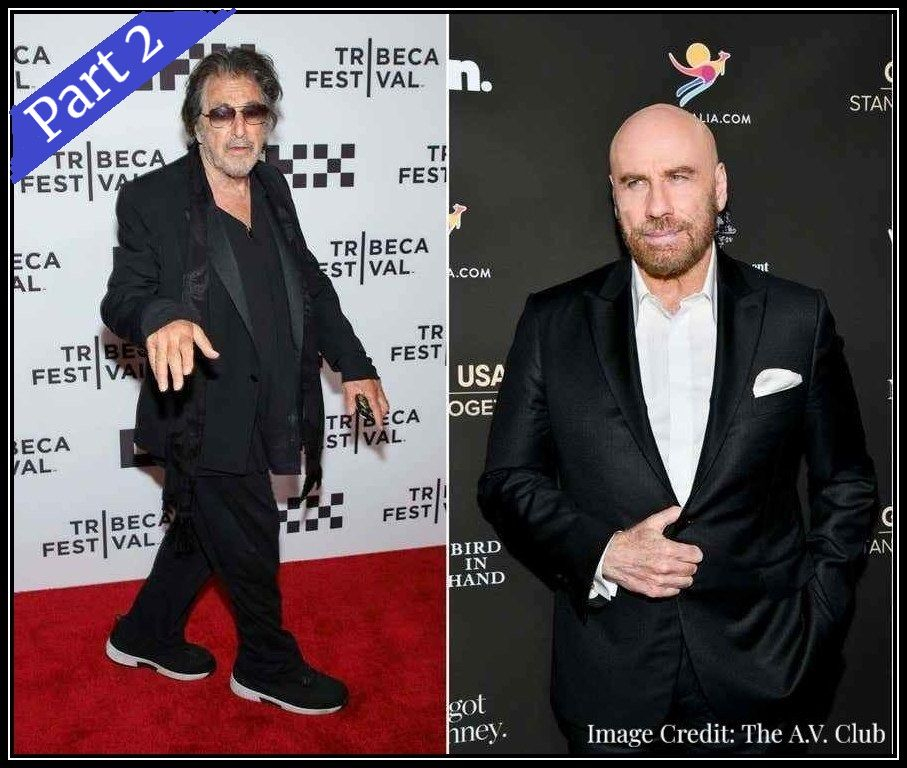
  • Al Pacino and John Travolta Meet the Giancana Myth – Part 2

    Al Pacino and John Travolta Meet the Giancana Myth – Part 2


    Nicholas Celozzi is an important part of the upcoming film because he will be a producer and he wrote a first draft of the script. Therefore its important to examine his 2011 documentary about Sam Giancana, Momo: The Sam Giancana Story. As I wrote in the first part of this essay, that film is rather prosaically produced, and it is only adequate as a sophomore’s version of Giancana’s life. Yet what makes it worse is that in its second half, it takes off into what I call the Giancana mythology.

    As I have tried to show, Sam Giancana had a higher profile than either Tony Accardo or Paul Ricca. At times, its almost as if he tried to raise his profile. Doing things like getting in a shouting match with an FBI agent at O’Hare Airport, and informing the agent, Bill Roemer to tell RFK to contact Frank Sinatra about any problems with The Outfit; these were off limits to someone like Accardo. Accardo’s belief was it was much easier to work in the dark than in the light. But because of incidents like these, because of his public romance with Phyllis Maguire and also due to his role in the CIA/Mafia plots to kill Castro, Giancana became probably the most publicly identified big city Don since Al Capone.

    About halfway through Celozzi’s documentary, he begins to indulge in the mythology. Much of this owes itself to the 1992 best-selling book Double Cross. I have written about that volume more than once and exposed it as a bad novel. As we shall see, it is not to be taken seriously. Anyone who does either has an agenda or has not done their homework.

    For instance, in William Brashler’s solid book on Giancana, one will not see any mention of Marilyn Monroe in the index. Which is as it should be. But in Celozzi’s film, her picture comes up right after the opening credits. And if we buy this film, Sam knew Monroe from way back. He was introduced to her by John Rosselli. Sam had invested in her career. But that is just for starters. Now Celozzi dives into National Tattler territory. Sam found out from Bob Maheu that the CIA had tapes of President Kennedy in bed with Monroe. Maheu then said that JFK dumped Monroe and Bobby Kennedy then began an affair with her.

    Even that isn’t enough. Sam learned that Monroe had love letters from Bobby Kennedy at her house. Giancana now schemed to have two killers terminate Monroe with a suppository thus making it appear a suicide. But scattering the letters through the house, thus exposing RFK and driving him from office. But, according to the film, somehow the Secret Service got there and stole the letters.

    Everything in those above two paragraphs is unadulterated horse crap. Brashler never mentioned Monroe, because she never had any attachment to the mobster, either financial or emotional. Monroe authority Don McGovern closely examined the rise of Monroe’s career. He concluded that The Outfit had nothing to do with it. The two men most responsible for her ascent were Joe Schenck and Johnny Hyde, particularly the latter. (Murder Orthodoxies, pp. 409-11) Much of this Monroe malarkey originates with Double Cross. McGovern took the section of that book dealing with Monroe and sliced and diced it. For instance, if we believe the novel then Chicago owned Marilyn’s contract when she was seventeen, named Norma Jeane, and married to Jimmy Dougherty in the San Fernando Valley. Which is a non-starter.

    McGovern also blows up the whole suppository story—at length. To raise just one point: if that would have been employed there would have been more of the drug found in her blood stream than her liver, the opposite of what happened. (McGovern, p. 514) Further, Double Cross maintains that Bobby Kennedy was in Los Angeles the day Monroe passed. (Chuck Giancana, p. 314). This was conclusively disproven by Sue Bernard’s book Marilyn: Intimate Exposures.(pp. 186-87) Finally, why would the Secret Service have been at Monroe’s house for any purpose? President Kennedy was back east at the time.

    But beyond that, as McGovern has explained, there is simply no credible evidence that Bobby Kennedy ever had any kind of affair with Monroe. And the two people most responsible for that false claim, David Heymann and Jeanne Carmen, have been shown to be serial fabulists. Carmen actually ended up stating, please sit down: that Rosselli murdered Giancana over Marilyn! In light of what we have established about Giancana’s death, this is pure fantasy. (See “Classic Blondes, Jeanne Carmen”, by April VeVea, 4/9/18)

    II

    In the Giancana documentary, Celozzi also uses the ever evolving tall tales of the late Judith Exner. Specifically that she was somehow a courier between the White House and Giancana for various nefarious functions like the plots to kill Castro. Exner’s fictions began in earnest back in 1988 for People magazine. After writing a near 300 page book in 1977 for a combined rights sale of what would be well over a million dollars today, it seems that Exner left out some rather important matters about her relations with both President Kennedy and Sam Giancana. What makes this lacuna even more strange is that her co-writer was Ovid Demaris, Demaris specialized in the Mafia, was an idolator of J. Edgar Hoover, and did what he could to prop up the Warren Commission cover up of President Kennedy’s assassination.

    In spite of that, Exner evidently had temporary amnesia back in 1977. For today’s equivalent of another 130,000 dollars from People magazine, she managed to enter into recovered memories syndrome and now recalled what she could not in 1977 or in her testimony before the Church Committee. To anyone actually versed in the CIA/Mafia plots to kill Castro, what she dumped out in 1988 is not just false. It is so bad that one wonders how it got printed.

    This time out, Exner’s writing partner was allegedly none other than Kitty Kelley. (I say allegedly, because as we shall see, Kelley was not active in the writing.) In this edition of Exner’s story, unbeknownst to her, she was actually carrying messages between Washington and Chicago, for, among other things, the liquidation of Fidel Castro. (The Assassinations, edited by James DiEugenio and Lisa Pease, p. 333). But it went beyond that. Kennedy was actually meeting with both Giancana and Rosselli! And get this: At the White House! After arranging these meetings, Exner realized retroactively that it was about terminating Castro.

    In the real world of course, this is pure malarkey. The idea that somehow two well-known mobsters like Rosselli and Giancana would be anywhere near the White House is science fiction. And as the 145 page CIA Inspector General Report proves, the Kennedys were never involved in the CIA/Mafia plots. (DiEugenio and Pease, pp. 328-29)

    It was later revealed that this whole pile of Exnerian rubbish was fabricated. Why? Because Exner and Kelley, to put it mildly, did not get along. As author George Carpozi discovered, the pair spent most of their time fighting because Kelley wanted to milk Exner for material on Frank Sinatra for an upcoming book. But the problem was the magazine had too much money invested in the project—six figures. To salvage that investment, the article ended up being prepared by the editors. (ibid, p. 334)

    As I have written in my recent two-part expose about Sy Hersh, Exner told so many lies that: 1.) Proposed corroborating witnesses couldn’t stomach her, and 2.) She could not keep track of her own prevarications.

    Concerning the first, Hersh got a man named Martin Underwood to say he was a witness to Giancana getting the messages from Exner. (Hersh, The Dark Side of Camelot, pp. 304-05) Unfortunately for Hersh, Exner and ABC, Underwood refused to appear for Peter Jennings on their TV special based on Hersh’s book. When Underwood was questioned under oath by the Assassination Records Review Board, (ARRB) we found out why he was a no show. He now denied the whole episode; saying that “he had no knowledge about her alleged role as a courier”. (ARRB Final Report, pp. 112, 135-36)

    Concerning point 2, Hersh wrote in his book that Bobby Kennedy was in on this messaging between the White House and Giancana. Exner told Hersh that RFK would tap her on the shoulder and ask, “Are you still comfortable doing this? We want you to let us know if you don’t want to.” (Hersh, pp. 307-08) Well, if such was the case, then how does one explain an exchange Exner had with the late Larry King on his program of February 4, 1992. King asked her about any relationship with RFK and she replied with a single world : None.

    The whole contention of this “Washington-Chicago messaging” is fundamentally preposterous. For the simple matter that, as revealed in part 1, the FBI and the Justice Department had a massive surveillance program on Giancana. This began shortly after the infamous 1957 Apalachin meeting in New York, which exposed in public a national network of organized crime. After that embarrassment, J Edgar Hoover began his Top Hoodlum Program in major cities, but with special attention to Chicago. That team of top agents began a program that created wall to wall monitoring—including pervasive electronic surveillance—of the Chicago mob. And especially on Giancana, since by 1957 he was the titular leader. The idea that this “Exner messaging” would not turn up on all those reels and reels of tape is more than just ridiculous. Its risible. Its even more risible when one realizes that RFK knew all about it and pushed it even further. Thus placing himself right in Hoover’s crosshairs. Please. (Man Against the Mob, by William Roemer, pp. 74-78, 167)

    III

    But because Momo: The Sam Giancana Story buys into Exner’s fantasies, it has to go all the way with them. So inevitably we get the whole elections heist of 1960. Which is Exner as transformed by the novel Double Cross. What that means is this. For People Exner said that it was not just the Castro plots she was “messaging” about. It was also the West Virginia primary which was held on May 10, 1960. (Since she meet JFK on February 7 of that year, we are supposed to believe the relationship progressed to a national political level at warp speed.) And, of course, the general election in November of 1960. In Double Cross this got amplified into Joseph Kennedy asking for Giancana’s help to get his son elected, with his word that the new president would lay off the pressure on him once elected. Oh, and I almost forgot, Joe knew The Outfit since he had been a bootlegger.

    Two authors blew up the last part of this mythology. Daniel Okrent wrote one of the best books on Prohibition. Towards the end of his volume he examined this charge of Joe Kennedy being part of the bootlegging industry. He cogently observes that since Kennedy had to be congressionally approved for the six appointments that presidents gave him, there were extensive investigations of his background. In over 800 pages of inquiry, there was not one piece of evidence revealing this alleged black market business. What makes this even more compelling is that the first three appointments occurred right after Prohibition had been repealed. Therefore, why was no one willing to rat out Papa Kennedy? (Last Call, p. 369)

    As Okrent adds, Joe Kennedy did get into the liquor business, but it was after Prohibition had been repealed. In light of that, he was not a bootlegger. It was legal. (ibid, p. 367)

    The other book that helped expose this mythology was David Nasaw’s biography, The Patriarch. That work contained the widest and most detailed accounting of Joe Kennedy’s wealth ever published. Joe Kennedy began by investing in the stock market and distressed properties. In fact he joined Hayden/Stone, the largest stock broker in New England, in 1919 when Prohibition passed. (Are we to believe he was putting up stills at those distressed properties?)

    But this was only the beginning for the multimillionaire. He made so much off a booming stock market that he took those holdings and chose to get into the movie business. One reason he got so wealthy was that insider trading was legal at that time. (Nasaw, p. 78) With that stock market and real estate wealth he put together a film distribution and exhibition company, and then bought his own theaters in the northeast. (Ibid, pp. 59-67). In just three years, Kennedy resigned Hayden/Stone and opened up his own bank.

    Joe Kennedy made so much money in the film business, he first moved to New York, and then bought a second home in Beverly Hills. Both estates had servants and chauffeurs. He bought a Rolls Royce. (Nasaw, pp. 87-89) Joe Kennedy distributed 51 pictures in one year! At a time when there were 20,000 theaters in America. But Joe also purchased stocks in film companies and was in demand as a chief executive. He wound up running three companies. And he demanded and got stock options, which he could trade at any time. (Nasaw, pp. 119-27). But he never got out of real estate. In 1947 he purchased the Merchandise Mart in Chicago for 12 million. In 2007 it was valued at nearly a billion.

    So the idea that Joe would jeopardize this legitimate financial empire he had to get into something criminal is just not credible. Especially since his overall ambition was to get his children into politics. In other words, according to Celozzi, Joe would sacrifice both his financial fortune and his children’s careers to do something illegally that he did eventually do legally.

    IV

    John Binder pulled out the rug on the other part of the Double Cross fantasy. Namely the idea that Giancana helped put Kennedy over the top in Illinois. Author Binder has shown that there is not any evidence that Giancana delivered an advantage to Kennedy in the wards The Outfit controlled. In fact, they actually performed under par that year. (Public Choice, February 2007, “Organized Crime and the 1960 Presidential Election.)

    The other election that the Mob devotees mention is the West Virginia primary. Again, that contention is rendered dubious under analysis. There are two good books on the subject. One by Dan Fleming—Kennedy vs Humphrey, West Virginia, 1960—and one by Ray Chafin—Just Good Politics. The former is an after the fact academic study. The latter is written by a prominent union member who saw it all from the inside as it was happening. Neither author detected any kind of mob influence or any trace of Skinny D’Amato, the man Double Cross says Giancana sent to West Virginia to work with local sheriffs and officials. (Chuck Giancana, p. 284). For example, Fleming did 80 interviews, and visited some shady underworld venues and characters. No word of D’Amato. (Fleming, pp. 170-71) And as the author notes, no subsequent investigation by either the FBI or the state authorities ever uncovered any illegality. Not even one performed by Barry Goldwater who hired a former FBI official, Walter Holloway, to investigate. (Fleming, pp. 107-12)

    The authors who prop up this whole Double Cross Illinois idea are so agenda-driven, and the people who listen to it are so thoughtless that they ignore something quite important and obvious. Kennedy would have won in 1960 even if he had lost Illinois due to the structure of the Electoral College. (For those who desire a more in depth examination of these fatuous electoral issues, please see the second half of my review of Mark Shaw’s Denial of Justice)

    I won’t examine the other nutty Mob claims in this documentary, that is about Joe Kennedy and the Purple Gang (?) and Frank Costello. In light of the above factual record, they see to me to have the credibility and gravitas of a Three Stooges comedy. (in fact, as Okrent notes, Al Capone’s 93 year old piano tuner once claimed that Joe Kennedy came to Capone’s house to trade a shipment of Irish whiskey for a load of Capone’s Canadian variety.) But I will add this, Celozzi cuts out almost everything about Bobby Kennedy and his blistering public attacks on the Cosa Nostra in the fifties. Which is quite an omission since it was from his position on the McLellan Committee that RFK was launched into national prominence. Maybe Celozzi does not want to show this since it would render questionable any idea that somehow Bobby would barter away his almost messianic mission once he became Attorney General.

    Let us be plain. This whole fractured framework was and is a way for a gang of criminals to carry out revenge on the Kennedy clan for exposing them, ridiculing them, demeaning them in public and placing them in jail. At one point, almost bringing them to their knees. (HSCA Vol. V, p. 455) Its their way of saying: “Well, who do those Kennedys think they were anyway? The father was no better than us.” The fact that its not true and the idea that RFK would be part of it, that does not matter. Its sensational, raw meat, tabloid stuff. And that is what, in large part, the MSM has catered to—especially with the rise of cable TV in the late eighties and early nineties. Far from being true history, what all this does is reveal the shallowness of the culture we live in today.

    V

    Momo: The Sam Giancana Story ends with two murders. The first is the killing of President Kennedy in Dallas. The second is the slaying of Giancana in Chicago after his return from Mexico. For the latter, the film generally follows the outline I sketched in part one i.e. about Blasi and Accardo. The one exception being that it maintains that Phyllis McGuire got Sam’s money. It does not explain how or why this occurred. For according to The Don the couple had split and Giancana had a new west coast paramour. (Brashler, pp. 296-97)

    In the documentary, Celozzi says that Oswald was suggested by Carlos Marcello. Giancana arranged the hit team of Richard Cain, Chuck Nicoletti and Phil Alderisio. He then got J. D. Tippit and Roscoe White who, according to Celozzi, were on his payroll to shoot Oswald. But Oswald killed Tippit and therefore Jack Ruby was brought in to murder Oswald.

    As the reader can see, Giancana brother Pepe’s story differs from brother Chuck’s Double Cross. According to Chuck’s novel, there was a group of assassins. The three above plus Charles Harrelson and Jack Lawrence and two nameless men brought in by Santo Trafficante. (Chuck Giancana, p. 334). Another contradiction: in Double Cross, TIppit and White were not on Giancana’s dole, they were CIA men. (ibid, p. 335)

    There are two different versions of what Sam was doing that day. According to the documentary, one of his daughters says he was at home. In news stories, Celozzi says Pepe was driving Sam around for a couple of days. (Deadline, June 27, 2022). Also, according to Daily Mail, Celozzi’s assassination team has now changed for the feature film. John Rosselli is a part of it. (July 15, 2022.). The problem with that is simple: Johnny was first in Las Vegas, and then in Los Angeles during that assassination weekend. (Lee Server, Handsome Johnny, pp. 418-19). As Larry Hancock has written, Johnny may have been in Vegas to escape the FBI surveillance on him.

    In Double Cross, Roscoe White killed Tippit when the patrolman showed signs of cold feet. (Giancana, p. 335). In the documentary, Oswald killed Tippit. But in the Daily Mail interview Celozzi now has Chuck Nicoletti, not White, in the car with Tippit.

    I should add one last caveat from a most credible source. As stated in part one, FBI agent William Roemer had at least four electronic devices planted in Giancana’s meeting places by 1963. He listened to all of this coverage and he wrote that he never heard of any discussion of an attempt on JFK, or RFK for that matter. And, post facto, there was no indication of any such thing either. He found it hard to understand how it could have escaped his team. (Roemer, Man Against the Mob, p 188).

    So do I.

    How many brothers of Sam Giancana are going to rise and tell their version of how Momo did away with John Kennedy. Recall, Chuck was at least alive when he wrote his novel. Pepe died 27 years ago.


    Go to Part 1 of 2

  • Al Pacino and John Travolta Meet the Giancana Myth – Part 1

    Al Pacino and John Travolta Meet the Giancana Myth – Part 1


    The first announcement I saw was on last June 27, 2022. It was in the Hollywood trade paper Deadline. It said that David Mamet was going to direct a film version of a Nicholas Celozzi script about Celozzi’s great uncle Sam Giancana. In describing the script, the key statement in that story was the following:

    …that purports to tell how his great uncle, the notorious Chicago mobster Sam Giancana, arranged the assassination of President John F. Kennedy as revenge for trying to bring down organized crime after the mob helped put JFK in the White House.

    The story also stated that Bonnie Giancana, Sam’s daughter, will be a consultant and executive producer.

    David Mamet has a strong interest in the JFK case. Oliver Stone and I met with him about two years ago for lunch at a restaurant in Brentwood. He was kind enough to bring along copies of his script called Blackbird. That was an interesting entertainment about the possible alteration of the Zapruder film. As noted in the article, someone pulled the plug on that production the day before they were to start filming, even though Cate Blanchett was signed as the star.

    Let us now leap forward to another story in Deadline, dated May 15, 2023. In 11 months, Celozzi put together a cast consisting of Al Pacino, John Travolta, Viggo Mortenson, Shia La Beouf, Rebecca Pidgeon and Courtney Love. In this installment, the story line is still the same: “a hit ordered by Chicago mob kingpin Sam Giancana as payback for JFK’s attempt to undermine the mob after they helped get him elected.” The story then parenthetically adds that this theme was a big part of Oliver Stone’s JFK. Which it was not. In fact, I don’t even recall it being any part of the 1991 feature film.

    In the first article Celozzi states that much of his material is based on stories he recalled hearing from a guy named Pepe Giancana, real name Joseph. He was a brother of Sam who died in 1996.

    The longest story I have seen about this project was in the Daily Mail last July 15th. It turns out that in two days in November of 1963 (the original title of the script), Pepe—a lowly bookmaker—drove Sam around. He had to since Giancana had sent men to Dallas for 11/22/63. Their job was to help Lee Oswald murder JFK, but to also make sure Oswald did not talk afterwards. Celozzi told reporter Tom Leonard that the three men in Dallas were Charles Nicoletti, John Rosselli and Jack Ruby. But they did not have a clear idea of how the murder would be done. It turned out Rosselli was to take out Kennedy if Oswald missed and Nicoletti was to kill Oswald before he was apprehended.

    Pepe told Celozzi that Oswald misfired from the upper floors of the Texas School Book Depository. So Rosselli fired and hit JFK. This caused Oswald to flee the building. Nicoletti was in a car with patrolman J. D. Tippit and was screaming at Oswald to get in, but he did not. So they followed and TIppit caught up with him but Oswald shot the policeman. Nicoletti followed Oswald but lost him. Sam then contacted Jack Ruby. According to Celozzi, Jack knew he only had six months to live since he had cancer. So he polished off Oswald.

    After reading these stories, I decided to go back and look at a documentary film made by Celozzi about ten years ago. It was called Momo: The Sam Giancana Story. Because two of the main talking heads were Sam’s daughters—Francine and Antoinette—the documentary was rather a warm and fuzzy look at the Chicago Don who, according to the FBI, was responsible for about 13 murders as he was working his way up the ladder in Chicago. The first half of that film was passable as a biography. But left some important details out. Since Giancana is the major character in the upcoming feature, let us fill in some factors that help spell out the man’s life. Including the probability that a pall bearer at his funeral, Butch Blasi, was his likely murderer.

    II

    Giancana was not the real name of the family. It was Giangana and they stemmed from Sicily. (William Brashler, The Don, p. 12) Leaving Italy, Sam’s father Antonio moved into a section of Chicago called The Patch, which was the equivalent of New York’s Little Italy. Sam (original name Salvatore), was born in 1908 and his mother died when he was two. (Sam the Cigar, by Fergus Mason, p. 19) Antonio remarried—actually twice—and eventually the family had 8 children. His father was not very kind to Salvatore and physically abused him. Sam was thrown out of school and escorted to St Charles Reformatory.

    When he left the reformatory in 1921, Sam joined a gang of juvenile delinquents in The Patch called The 42’s. That title was based on the Ali Baba legend of the 40 thieves. (Brashler, p. 32) For Sam, this was a kind of apprenticeship for his future career in La Cosa Nostra. The 42’s pulled off burglaries and stole cars, graduating to bombings and murders. But they also learned how to manipulate the system by paying off cops and judges. This was done by collecting dues from members. (Susan McNicoll, Mafia Boss: Sam Giancana, p. 10) But still, shortly after marrying his only wife Angeline DeTolve, Sam went to Joliet prison on charges of attempted burglary.

    Sam made his reputation as what was called a “wheel man” or getaway driver. (Brashler, p. 33) That ability, combined with an ill-fated amendment, is what caused Sam to come to the attention of La Cosa Nostra in Chicago. Due to the 18th amendment and the accompanying Volstead Act, in January of 1920 America went dry. Sam became a transporter of illicit liquor between men like Joe Esposito and the Genna brothers who set up a series of stills.(McNicoll, pp. 10-12) Esposito was killed in a murder in which Giancana was the getaway driver.

    The first leader of this profitable Chicago network was Big Jim Colosimo, who brought in Johnny Torrio from New York. Torrio ended up killing Colosimo over control of liquor distribution. Torrio had stills set up in Canada and he expanded the business scope by opening up speakeasies all over the city. But Torrio was then shot in 1925, returned to Italy and Al Capone, Torrio’s partner, took over. (Mason, p. 27) Sam became a driver for Capone’s gang and was inducted as a member in 1926. (ibid, p. 30) He was also arrested for murder around this time, but got off when the chief witness was killed.

    Capone was convicted of income tax evasion in 1931. He was paroled in 1939 but did not return to live in Chicago. He died in Florida in 1947. When Capone was jailed, control of the Chicago mob was given to Frank Nitti and Paul Ricca. And it was around that time that Lucky Luciano set up the national commission of organized crime. (Brashler, p. 68)

    Ricca liked Giancana but Sam was busted again in 1939. He got a four year term for manufacturing alcohol without a license. This ended up being a blessing in disguise. Because while in prison he met up with a man named Bill Skidmore. It was Skidmore who introduced him to Eddie Jones. Jones was the leading member of a family who ran the lottery rackets in the African American community. To say this was profitable does not begin to describe the money it brought in: the low estimates being $15,000 per day. (Brashler, p. 91; Mason p. 39) Skidmore knew about this and he knew who Jones was, since he was in the same cell block. Eddie Jones did something that most of his henchmen did not do: he talked to Caucasian members of the Chicago mob, now called The Outfit. Jones and Skidmore took Sam to school on the numbers game. Giancana did the computations and figured no other racket The Outfit was in had this kind of profit margin.

    III

    Jones had made a mistake. For when Sam got out of prison in late 1942 he understood what could bring him both wealth and stature in The Outfit. In May of 1946 he kidnapped Eddie and threatened him with death unless he gave up his lottery racket to Sam. In return Sam would give him a cut and a lump sum of 250,000 dollars. Jones took the offer he could not refuse and left for his villa in Mexico. (Brashler, pp. 101-05)

    This greatly expanded Giancana’s wealth, since the Jones lottery was not just in Illinois but in at least three other states: Iowa, Maine and Idaho. This prize greatly curried favor with Tony Accardo, Ricca and Jake Guzik, the triumvirate over The Outfit. Giancana now became the equivalent of Accardo’s chief of staff. (Brashler, p. 112). But there was still one holdout for the African American lottery in Chicago, a man named Ted Roe. This feud between Roe and Giancana went on for years, with several casualties. Finally, Sam had Roe killed in late summer of 1952.

    Sam now had so much money he could set up genuine small businesses and list himself as a salesman for his brother-in-law’s Central Envelope Company. He used his new wealth to set up gambling centers through wire services. All the while Accardo was teaching Sam the ways of The Outfit. When his student was fully tutored, Accardo decided to step down since he was under intense pressure from the IRS. Giancana assumed power in 1955, a year after his wife died. (Mason, p. 54). The understanding was that Accardo would serve as first consigliere.

    But once Sam took power in Chicago, it was almost deemed that his would be a rocky reign. First, back in 1950-51 Senator Estes Kefauver held hearings throughout the country on organized crime and many of these were broadcast to a wide audience. (McNicoll, p. 41) That was the first national exposure of La Cosa Nostra. And people like Accardo, Ricca, and Frank Costello testified. The single division of the Chicago Police Department investigating organized crime gave Kefauver some materials they had on The Outfit. One of the outcomes of this attention is that it made it difficult for the FBI to now deny that La Cosa Nostra existed in America.

    IV

    In 1957 two events occurred which further exposed organized crime in America to a point that there was no turning back. One was caused simply by accident i.e. the discovery of the Apalachin meeting in New York. Scores of Cosa Nostra leaders were gathered there to discuss, among other things, the aftermath of the attempted murder and the actual murder of, respectively, Frank Costello and Albert Anastasia. The local authorities thought it was odd to have so many expensive cars gathering in such a rural location. When they discovered many of them were registered to known criminals, they called in state policemen, set up roadblocks and raided the home of Joseph Barbara. Giancana never wanted the meeting to be there and pushed to have it in Chicago. (Brashler, p. 172) But he did attend, and was one of the capos to escape into the woods while over sixty were apprehended. But their convictions were overturned on appeal the following year. This event provoked J. Edgar Hoover to form the FBI’s Top Hoodlum Program. (ibid, p. 135) As part of it a special team was assigned to Chicago. Men who were college graduates, some with law degrees e.g. Ralph Hill, Vincent Inserra, Jack Roberts and, as we will see, Bill Roemer.

    The other event that made things troublesome for the Cosa Nostra in 1957 was the formation of the McClellan Committee, sometimes billed as the Rackets Committee. That committee was led by Senator John L. McClellan, a Democrat from Arkansas. But both Senator John Kennedy and his brother Robert served on it. The former as a committee member and the latter as Chief Counsel and investigator. This is where RFK’s legendary pursuit of Teamster leaders Dave Beck and Jimmy Hoffa began. Bobby soon discovered that Hoffa had set up several ‘paper locals” for members of Cosa Nostra to run, these were local unions in name only which Hoffa used to prop up vote counts. Therefore, Kennedy’s inquiry spread over into organized crime. When Apalachin occurred, he immediately went to FBI headquarters and was shocked when he found out how little information Hoover had on these big city Mafiosi. (McNicoll, p.49)

    Like its predecessor, the Kefauver Committee, the McClellan hearings attracted much media attention, some of it on live television. In front of cameras, the public saw Beck take the fifth amendment 117 times. He was indicted for tax evasion in May of 1957. Later that year, the AFL-CIO expelled the Teamsters from membership. In one of his most memorable confrontations, Bobby Kennedy finally got Giancana in front of the committee. This was after Sam had criticized the committee at length to reporter Sandy Smith. (Brashler, pp. 156-57) RFK did not take this mildly and he referred to Giancana as ‘Chief gunman for the group that succeeded the Capone mob.” Which was more or less accurate. (Arthur Schlesinger, Robert Kennedy and His Times, p. 172) In June of 1959 Giancana took the Fifth Amendment 33 times as Pierre Salinger set forth his past record. Then the following much quoted exchange took place:

    RFK: Would you tell us if you have opposition from anybody you dispose of …by having them stuffed in a trunk? Is that what you do Mr. Giancana?
    SG: I decline to answer because I honestly believe my answer might tend to incriminate me.
    RFK: Would you tell us about any of your operations or will you just giggle every time I ask you a question?
    SG: I decline to answer because I honestly believe my answer might tend to incriminate me.
    RFK: I thought only little girls giggled Mr. Giancana. (ibid)

    Around this time, the FBI was beginning to get some traction against The Outfit. Hoover allowed them to use electronic surveillance, to recruit informants, and to follow Giancana wherever he went. By following Giancana, Gus Alex, Murray Humphreys, Jake Guzik and Frank Ferraro, they began to locate their meeting places. They applied for permission to bug their conference rooms and this was approved. But once this was in place, something really bizarre upset the proverbial apple cart.

    The CIA recruited Giancana to kill Fidel Castro.

    V

    There have been many renditions of how this recruitment happened, how it progressed and its ultimate failure. Many of which the reader should avoid. Perhaps the very worst is in Seymour Hersh’s hatchet job of a book, The Dark Side of Camelot. But one of the first things the Assassination Records Review Board (ARRB) did in the mid-nineties was to declassify the CIA’s Inspector General’s Report on these plots. That report was written at the request of Lyndon Johnson. The reason being that John Rosselli was talking to certain people in Washington and distorted versions of the plots were getting out into the media e.g. Drew Pearson. (Handsome Johnny, by Lee Server, pp. 460-61, also All American Mafioso, by Charles Rappleye and Ed Becker, p. 270). Unfortunately, the Church Committee chose not to include the 145 page IG Report in its four volumes. But when the ARRB did declassify it, the mythology about what had happened was dispelled.

    In 1960, President Eisenhower had approved a plan to get rid of Fidel Castro. This included a possible invasion. The Director of Plans, Richard Bissell, began to think up a fallback position—namely assassination—to help with Castro’s removal. He broached the idea of contacting underworld figures with Sheffield Edwards, chief of the Office of Security. (IG Report, p. 14) Edwards thought about using Robert Maheu since he had been on retainer for CIA and also had contacts in Las Vegas, where the Cosa Nostra had some very profitable gambling casinos. John Rosselli was The Outfit’s man in Vegas and Maheu contacted him. Rosselli decided that the two men who could help the most in this effort were Giancana and Santo Trafficante of Tampa and he introduced the CIA, in the form of Edward’s go-between, Jim O’Connell, to the two men. (IG Report, pp. 16-19)

    Giancana, the seasoned killer, rejected a gangland shooting since he said no one would volunteer for an assignment like that since it would be almost impossible to escape. He preferred administering certain poisons to Castro. (IG Report, p. 25). The long and the short of it was that none of the attempts worked. And therefore, when the Bay of Pigs failed spectacularly, the man who started the plots—Dick Bissell- and the men who approved them—Director Allen Dulles and Deputy. Director Charles Cabell—were fired. (IG Report, pp. 17-18). But the reasons for their firings were for misleading President Kennedy over the Bay of Pigs invasion. The IG Report makes it clear that neither JFK nor RFK knew anything about the plots to kill Castro. (IG Report, pp. 132-33)

    So how did Attorney General Robert Kennedy find out about the plots? Giancana asked a favor of Maheu. Sam suspected his girlfriend, professional singer Phyllis McGuire, was cheating on him with comedian Dan Rowan in Las Vegas. (Brashler, p. 206) So he asked Maheu to bug Rowan’s hotel room. But the authorities discovered the bugging equipment. (IG Report, pp. 58, 59,68) This was then reported to the FBI. The FBI reported the episode to RFK and he requested a briefing on the incident. He could not understand why Maheu was so interested in aiding Giancana with his personal life. He got the answer to that question in May of 1962. (David Talbot, Brothers, pp. 85-86). But as the IG Report makes clear, the CIA deceived Kennedy by saying the plots had been discontinued when in fact they had not. (IG Report, p. 64) In what the Agency termed Phase Two of the plots, one gangster from the first phase, John Rosselli, had teamed up with CIA officer William Harvey in attempts to send teams into Cuba to terminate Castro. (Talbot, p. 86).

    The plots went on until 1966. With first Harvey and Rosselli, and then with a Cuban national named Rolando Cubela. But we will end our discussion of them here since this ended Giancana’s role in them. If the reader has not read the CIA’s IG Report, I recommend he does to avoid being misled by writers with an agenda, like Hersh. (Click here)

    VI

    To say that Giancana’s decade long reign as the leader of The Outfit was rocky does not convey how contrary to the rules of La Cosa Nostra it was. Accardo was very determined to never draw any undue attention to his activities, since that allowed them to work in the dark so to speak. But for whatever reason Giancana could not or would not conduct himself in that manner. Relying on Maheu to do him a personal favor which backfired is one example. His open wooing of Phyllis McGuire is another. Mafia Dons are not supposed to let themselves be photographed in public, especially with a celebrity. Since those kinds of pictures go around the world in newspapers and magazines. But this is what happened with Giancana. Unlike Accardo, he also had a volatile temper. Once after FBI agent Bill Roemer walked into one of his meeting places as a deliberate provocation, Giancana had one of his men, Chuck English, stop the G man as he was leaving. English told Roemer that if Bobby Kennedy wanted to talk to him, he knew who to go to. Roemer took this to be Frank Sinatra, and the reply confirmed it. (Man Against the Mob by William Roemer, p. 263) When The Outfit’s foremost fixer, Murray Humphreys, heard this he shouted, “You don’t give up a legit guy! For Christ sakes that’s a cardinal rule!” (ibid)

    And then of course, there was the famous shouting match at O’Hare Airport in July of 1961. The FBI had decided to really turn up the heat on Giancana, knowing that AG Bobby Kennedy had made him a prime target. In fact, in a short time, RFK would assign 70 agents to Chicago, which was a 1400 % increase in manpower. (Roemer, p. 167). The Bureau decided to intercept Giancana as he was traveling with McGuire. They met her as she was getting off a plane and escorted the singer to a private room to discuss Giancana, knowing this would enrage the Don. Did it ever. Roemer and Giancana got into a screaming match with literally hundreds of people walking to and fro. Roemer and Ralph Hill asked Giancana if he knew anything about the listening device in Dan Rowan’s room in Vegas, knowing this would provoke him. Sam responded with some rather harsh language sprinkled with profanity, even threatening Roemer at least twice, but then backing off. Finally Roemer let loose with the following:

    All you folks. Come over here! I want you to see something. Take a look at this piece of slime! This is Sam Giancana. He is the boss of the underworld here in Chicago. Take a good look at this garbage! The big boss, Giancana. You people are lucky, you’re just passing through Chicago. We have to live with this jerk! (Roemer, p. 150)

    It was these kinds of open confrontations that the outside leaders of The Outfit, like Accardo and Paul Ricca, looked at with disdain.

    Bobby Kennedy’s focus on Giancana eventually led to the Lock Step tactic in 1963. This was a degree of surveillance that came pretty much close to being total and 24/7. Nine FBI agents were on each 12 hour shift.

    1. When Sam arrived at the airport they trailed him off the plane and drove home behind him.
    2. At night there were three cars around his house.
    3. He was followed while taking walks in the park.
    4. When Sam went to dinner they took the next table.
    5. If Sam got up from the table to go to the men’s room, Roemer went to the men’s room and was in the next urinal.
    6. When Sam went golfing, they were behind him in the next foursome.

    I could go on, but this does not even include the electronic surveillance they had blanketed Giancana with. (We will get to that later.). Giancana couldn’t take it and he filed a lawsuit. In Celozzi’s documentary he says that Giancana won the suit. This is not really true. Bobby Kennedy decided not to mount a defense on constitutional grounds. He did not think a lower court could intervene in a DOJ inquiry. So even though Giancana prevailed at trial, this was overruled on appeal.(Brashler p. 243) And there was no let up in the interim between the two court rulings, since Roemer got the sheriff’s office to make up the parameters which the local court had limited the FBI to. (Roemer, p. 270)

    This was really the beginning of the end for Giancana. For now, with all of this surveillance on the man, the local US attorney’s office, led by David Schippers, decided to place him in a legal vise. They would subpoena Giancana and grant him immunity. This way, if he refused to reply to questions, he could be prosecuted for contempt. That is what happened and Giancana was convicted of contempt. All of his appeals failed.(Brashler, p. 272) When Giancana was released after a year—the life left on the grand jury,—he knew that he could not regain power since Ricca and Accardo would veto it. He also knew the DOJ could use the same tactic to place him in prison again. So in 1966 he made a smart decision and fled to Cuernavaca in Mexico with Richard Cain.

    Cain was a complex character about which one could write a separate essay. He started as a Chicago cop who was fired for supporting Mayor Richard Daley’s GOP opponent. He went to Miami and trained Cuban exiles for the Bay of Pigs. He then went to work for Richard Oglivie, the Chicago sheriff. But it was found out he was—with the help of the Cosa Nostra—making phony drug raids in order to build his own reputation; so he was fired again. He was also convicted for perjury, obstruction and conspiracy, but that was overturned on appeal. (Brashler, pp. 288-89)

    Cain set up Sam in Cuernavaca and furnished him with a lawyer named Jorge Castillo. There he served as a roving ambassador for The Outfit. He set up gambling casinos on cruise ships in the Caribbean and even one as far away as Tehran. It is likely that Sam would have stayed there for the rest of his days. But Castillo made a rather large mistake: he failed to gain Giancana permanent resident status. So in July of 1974 his new home in San Cristobal was raided and he was sent back to Chicago where Roemer was waiting for his plane. But the man who got off was not the same Giancana. In fact, he told the burly G man he wanted no trouble and did not want to get personal like it had been. (Roemer, p. 352)

    Upon his return Giancana made four grand jury appearances and was reputed to have said he was not going to rot in jail. He also told Accardo he was reluctant to share his new enterprises in the Caribbean and Tehran with The Outfit. (McNicoll, pp.96, 98) Along with his notoriety—he was slated to appear before the Church Committee—these may have been the reasons for his murder.

    The circumstantial evidence seems to indicate that Blasi was the hit man. He had been at the home that July night, left, and was seen coming back later, around 10 :30 PM by Francine Giancana. (ibid, p. 98; see also Brashler, p. 321) Giancana knew his killer since he let him into his house and then turned his back on him as he was cooking peppers and sausages. The weapon was a .22 Duromatic target pistol with a silencer. The first bullet came in at the back of the head landing in the front left portion of his brain. Giancana fell to the floor and the killer shot him through his mouth. Finally the silencer was placed under the victim’s chin, aimed upward, and five more bullets shattered his jaw. Giancana had lived by the gun and now he had died by the gum.

    The above is a summary of Giancana’s life. And the Celozzi documentary deals with most of the matters in an adequate way. It is not at all distinguished as film making. But the offensive part of the film is in certain matters that, to this viewer, should not be in a serious documentary. Since it is part of what has come to be known as the Giancana myth.

    We will deal with these in Part 2.


    Go to Part 2 of 2

  • Sy Hersh Falls on his Face Again, Pt. 2

    Sy Hersh Falls on his Face Again, Pt. 2


    On March 29th, Sy Hersh was at it again. He wrote about a split between the CIA and the Kennedy White House over the plans to do away with Fidel Castro. In a reversal of the factual record, he makes the Agency out to be reluctant to do such a thing, while the Kennedys were urging the plots forward.

    As I wrote in Part 1, this is utterly false. And both the Church Committee and the CIA’s own Inspector General Report proved it so. John Kennedy was so opposed to these kinds of plots that when Senator George Smathers proposed it to him, he literally broke a plate over a table and said he did not want to hear any of this anymore. (Alleged Assassination Plots, p. 124) Smathers also told the Church Committee that the Agency frequently did things Kennedy was not aware of and this troubled the president. He said that JFK thought that assassination was a stupid thing to do, and he wanted to get control of what the CIA was doing. (The Assassinations, edited by James DiEugenio and Lisa Pease, p. 329). When one combines this with the fact that the CIA’s own Inspector General Report—which is the most extensive study of the Castro plots—concluded that the Agency never had any presidential approval for the plots, that is the ultimate word. (See IG Report pgs. 132-33) Hersh can rattle on as much as he wants but it’s the equivalent of urinating into the wind.

    That IG report was filed for Director Richard Helms at the request of President Johnson. (Click here for it) The Church Committee heard testimony from FBI official Cartha Deloach that, after Johnson read the IG report he concluded that the CIA was involved in the JFK assassination. (Washington Post 12/13/77) Until the Church Committee inquiry, Helms reportedly kept only one copy of this report stashed safely at CIA headquarters. Presumably because he did not want the word to get out that the Agency, under Dick Bissell and Allen Dulles, had sanctioned the plots and kept them secret from Presidents Eisenhower, Kennedy and Johnson. In an interview Helms did with Vincent Bugliosi for his book Reclaiming History, the former CIA director said that the Kennedys were not privy to the plots.

    All of which vitiates Hersh’s latest piece of nonsense concerning the plots themselves. He says that Richard Helms understood there was no turning down the mission. Since there was no request from the White House to do so, that statement is malarkey. But further, Helms had the plots ongoing on the very day JFK was killed. In preparation for a meeting with a proposed assassin in Paris, Helms cleared a CIA officer to invoke Bobby Kennedy’s name in conduct of the plots, knowing that RFK never granted such permission to do so! (IG Report, pp. 89-93) This would indicate to any objective person that Helms knew Bobby would never allow it and he would have stopped the plots, since he knew how his brother felt about such things. And also, as we shall see, after the CIA told Bobby they had been stopped.

    Further showing how wrong Hersh is, the plots did not stop with JFK’s death as he says they did. Helms full well knew they were continuing into 1966. That phase was called Project AM/LASH. And it is listed right in the Inspector General’s table of contents, dates and all. (See pp. 78-111) Therefore, the plots began in 1960, before JFK was president, and continued until 1966, encompassing three presidents who the CIA decided not to reveal them to. So everything that Hersh says in his first two paragraphs of his latest is wrong.

    Hersh then goes from just being wrong, to being ridiculous. He actually says he did not really understand this CIA/Kennedy dispute until he talked to—please sit down—CIA officer Sam Halpern. Hersh undermines himself by explaining about Halpern: “…the only reason he ever talked to a reporter was to spread a lie.” Hersh, never noted for his humor, misses the self-parodic overtones here. As Lisa Pease notes in her book, A Lie too Big to Fail, Halpern made sure that his version of the plots reached the media: “In fact, nearly every author that has claimed Robert Kennedy was in on the Castro assassination plots sources Halpern.” (p. 479) As Lisa points out, Halpern once gave his game away. Sam worked for CIA Officer Bill Harvey. Harvey and Halpern complained that the White House only used pinpricks against Castro. Sam, I hate to tell you, assassinating Castro is not a pinprick. (ibid) Needless to add, if you read the IG report, Halpern was in on the AM/LASH plots. As was Nestor Sanchez, assistant to Helms. (IG Report, p. 92)

    For any author today to use Sam Halpern in a discussion of this subject betrays a solipsistic bent. Because not only has Lisa Pease shown Halpern to be a liar, but so did David Talbot. (Brothers, pp. 105, 122-23). But beyond that, Halpern was demolished by John Newman with a completeness that was pretty much total. Let us review that demolition in order to understand just how bad Hersh is on this subject.

    II

    Newman published Into the Storm back in 2019, four years before Hersh penned his latest columns. I find it hard to comprehend that Hersh never heard of this book and never read it. For the simple reason that Newman, using declassified records, spent four chapters knocking the stuffings out of Hersh’s two sources on the Castro plots, namely Dick Bissell and Halpern.

    Sam Halpern was the executive assistant to Harvey, who was a major Agency player in the Cuba operations. It is not news to anyone that—for reasons stated above—Bobby Kennedy and Harvey shared a mutual animus. It also needs to be stated that when Bobby Kennedy was told about these Castro assassination plots, the CIA lied to him about their being discontinued. They were ongoing at the time of his May 1962 briefing and the Agency briefers knew they were lying to the Attorney General. (Newman, pp. 231, 242; Pease pp.481-83) This new phase of the plots was being run by Harvey and gangster John Roselli.

    Perhaps as early as 1967, but certainly by the time of the Church Committee, Halpern had created a cover story for the CIA. What is so odd about it is that Halpern’s phony story existed in a mythological netherworld, outside of what had really happened. Which the Church Committee revealed a good deal about.

    Sam’s fairy tale was arranged around a deceased CIA officer who Halpern knew and knew well. His name was Charles Ford. To understand what Halpern and Hersh did to him, one must review how and why Ford met Robert Kennedy. This was over two calls that the Attorney General received in the spring of 1962 about goings on in and around Cuba. One dealt with an attorney interested in the legal proceedings against the Bay of Pigs prisoners. The other concerned a group that was encouraging an uprising on the island. RFK called CIA Deputy Director Marshall Carter for assistance and advice on both issues. (Newman, pp. 260-64)

    Ford was chosen to consult with RFK on both assignments. On the former, Ford used the alias Charles Fiscalini, assigned by CIA; for the latter it was Don Barton, which was more or less chosen by him. Ford did a satisfactory job in investigating the two assignments. He concluded by telling the Attorney General that neither he, nor the CIA, should be involved in either endeavor. And here is where Newman exposed the Halpern mythology under stadium spotlights.

    In his book, The Dark Side of Camelot, Hersh quotes Halpern as saying that Ford went to places like Chicago, San Francisco , Miami and one trip to Canada. But Hersh then adds that Ford never delivered any paperwork as to what he was doing to Harvey’s office. Hersh then quotes Halpern to hammer this point home: “We never got a single solitary piece of written information.” Hersh then concludes by saying these must be in classified files on the RFK papers at the John F. Kennedy Library. (Hersh, p. 287) Under the hocus pocus of Hersh and Halpern, ipso facto, Ford was working with mobsters under Bobby’s orders in order to murder Fidel Castro. And that dirty rat Ford kept it all hidden from the CIA.

    Let us be plain: Everything in that above paragraph is false. As Newman discovered, for this assignment, Ford filed at least ten reports with CIA from March 30, 1962 to October 4, 1962. (Newman, pp. 258-260) Many of them went directly to Harvey’s office and Halpern signed off on at least one of them. Therefore, as Newman wrote, Halpern had to be aware of what Ford was actually doing. (Newman, p. 264) But further, Harvey wrote to the Attorney General twice about Ford’s negative conclusions. (ibid, p. 268). There was no secret since there was nothing to conceal.

    To any normal thinking person, the above would be enough to show that Halpern was an immoral con artist. But it’s even worse than that. Charles Ford did two interviews with the Church Committee. The first one is lost. (Newman, p. 270). Which is unfortunate since Ford refers to the first interview in the second surviving transcript five times. But in the second interview, Ford says he often got assignments from Halpern. Which is something Halpern never revealed. But further, Ford says that he worked for RFK on just the two assignments as outlined above. And he specifically said he was never directed to make contacts with the underworld. Further, that he never talked to anyone about plans to assassinate Castro. Finally, he reported to Bill Harvey at this time and his title was special assistant. (Newman, pp. 274-75)

    As Newman concluded, the idea that Hersh and Halpern were trying to convey—that Ford never told anyone about his work for RFK—is now exposed as simply wrong. Ford told everyone about his work for the Attorney General. As his reports were circulated to many inside the Agency. But because they did not say what Hersh and Halpern wanted them to say, they were useless to the con artist and his (rather easy) mark. Specifically, they would portray what was really happening and expose a fairy tale. And further and fatally: that Halpern knew the true facts all along.

    Let us recite a recurring refrain with Hersh: How bad is bad?

    III

    What necessitated Bobby Kennedy’s briefing on the CIA/Mafia plots in May 1962? This occurred because Sam Giancana asked a favor from the man the CIA used to recruit the Mob into the plot. That was Robert Maheu. Maheu decided to help Giancana. He found a wiretapper for a hotel room since Sam thought his girlfriend, Phyllis McGuire, was sleeping with comedian Dan Rowan in Vegas. This scheme was foiled by local authorities and the FBI found out about it. When Kennedy was briefed, he asked why Maheu was so interested in pleasing Giancana. This is when he learned about the CIA’s plots for the first time. (Talbot, Brothers, pp 85-86) The rather logical deduction is that the CIA would never have had to brief him if he or his brother had been in on the plots already.

    Since Giancana was a number one target for RFK as Attorney General, this made him even more angry at what the CIA had done. But unlike what Hersh suggegsts, Bobby did not stop pursuing Giancana. And Giancana eventually did go to jail for contempt in 1965. When he got out a year later, to avoid more prison time, he fled to Mexico.

    This takes us to the next—and most bizarre—part of Hersh’s 3/29 pile of sludge. I had to read this section over twice to really understand it since it was like reading science fiction. As most of us who follow the career of Robert Kennedy know, the AG took a goodwill tour in February of 1962. Hersh distorts this journey also. He tries to convey that it was only to Italy. Not even close. This was a world wide goodwill tour that began in the Far East, went through the Middle East and ended up in Europe. The main point of this long tour was not Italy. Two of the stops were in Indonesia and the Netherlands. RFK was in Jakarta to negotiate the release of CIA pilot Alan Pope, shot down during the failed Agency coup of 1958. He was in Netherlands to talk the Dutch into surrendering West Irian to their former colony Indonesia, since JFK was backing their nationalist leader Sukarno. That mission, which you will not read a word of from Hersh, was successful. The other main spot for Europe was West Germany, where Bobby actually said “Ich bin ein Berliner” before JFK did.

    From that mischaracterization, Hersh descends further into his own morass. He now says that RFK went to Italy in January—before the goodwill tour. This writer, and others, tried to find any notice of this January journey. I searched the following sources:

    • New York Times index
    • The Washington Post microfilm
    • Newspapers.com
    • RFK’s appointment book

    The last was done for me by Abigail Malangone, the archivist at the JFK Library. (E mail message of 4/10/23) It eludes me as to how the Attorney General could go to Italy without a trace left behind. And, recall, back then the major newspapers and syndicates had reporters assigned to the Justice Department, as some of them do today. Bobby lived in Virginia at the time. But no reporter or anyone else saw him leave for Italy? And I could find no story about anyone who saw him in Italy either.

    But Hersh now goes a step beyond. He says that Charley Ford was doing the same. John Newman got the records for what Ford was doing. There were none depicting any trip to Sicily. (Newman, pp. 258-60) Ford’s only trip out of the country was to Canada and that was not for RFK, but the CIA. If Hersh has evidence to counter this, I would like to see it. Because John was working with declassified files, the ones Hersh says are still hidden.

    Now, why does Hersh say this stuff in the first place? Please allow me to indulge in some informed speculation. But it is based on Hersh’s past record in the field—which goes way back to his Marilyn Monroe baloney. Hersh wants to somehow depict RFK and Ford as fomenting the first Mafia War that broke out in Sicily in January and February of 1962. He actually says as much. But according to the NY Times, Bobby did not get to Rome until late in February. (NY Times, 2/21/1962) Which was after the war began in earnest. (See John Dickie’s book, Cosa Nostra: A History of the Sicilian Mafia, pp. 241-57) Hersh pulls another one when he writes that RFK had two days of private meetings in Rome. RFK was only there for two days total. And the second day he met with Pope John XXIII. According to extant CIA records, Ford did not get there at all. Did Hersh take a page out of Sam Halpern’s book of fairy tales? But in this case, going even further than his mentor?

    On, lest I forget. Hersh always has sources on the inside. (David Talbot, Brothers, p. 123) We have seen how worthless those sources are in Bissell and Halpern. And we are also supposed to think that Hersh does not know how much the CIA did not like the Kennedys.

    IV

    To wrap up, on 3/29 Hersh again brings up the false info from the novel Double Cross about Joe Kennedy making a deal with Sam Giancana for the 1960 election. Again, this has been proven to be ersatz. (Click here)

    But let me conclude with some questions readers relayed me about the Nord Stream explosions, Hersh’s latest ‘scoop’. Apparently, people did not click through to the links I posted. These were by Rene Tebel, Russ Baker and Oliver Alexander. As Tebel notes, Hersh is again relying on his “sources inside the system” who he takes at face value to write his story, without doing any apparent hard questioning or cross checking. (Geopolitical Monitor, story by Rene Tebel, 3/2/2023) Tebel notes that Hersh insists that the explosives were dropped during a BALTOPS exercise, more than three months before the explosions detonated. Thus ignoring more than one opportunity to do so later without such a long wait time.

    For instance, during the Polish exercise Rekin-22 on September 16-18. But Tebel also notes that there were 25 ships passing in the direct or adjunct area of the explosions in the days preceding the detonations. Of those ships only two did not have transponders. These two ships were between 95 and 130 feet long and were within miles of the Nord Stream leak sites.

    Russ Baker noted how thinly sourced Hersh’s story was, a recurrent theme in a lot of Hersh’s later work. He later added that news organizations rarely publish such stories. The error rate risk is too high. But yet Hersh wrote as if the story was completely sound. The questions then abound: 1.) How did the source come into all this info?, and 2.) If it is so sound why tell Hersh for Substack, why not reveal it to a writer with a major news organization? When Baker emailed Hersh about this, the reply by Hersh was “Russ…I wrote what I wrote..not much I can add…sy”. Well, same thing applies to much of the above Substack stuff, which I already exposed as dubious.

    Baker went on to ask, the kind of high level source that actually knows about such things would likely not reveal it to anyone because of the huge penalties involved in being discovered. Finally, Russ pointed to how vapid the story really was. He quotes the following lines: “Nevertheless, in early 2022, the CIA working group reported back to [Jake] Sullivan’s interagency group: “We have a way to blow up the piplelines.” Russ writes that this sounds like inside info, but anyone could write such a thing not having any real knowledge. There was really very little detail, the kind of technical details that turn speculation into fact. (Russ Baker, “Nord Stream Explosion, Plenty of Gas, Not much Light” Who What Why, March 4, 2023)

    Oliver Alexander showed that even those details are simply not very sound. As I previously noted, there was no need to add mine searching to BALTOPS, as it had been a part of the programs since 2019. Hersh could have easily checked that one.

    Hersh said on a broadcast that the USA needed Norway in order to reveal the shallow part of the sea. So, the Pentagon had no such charts? Secondly, the Nord Stream 1 explosion was detonated in one of the deepest parts of the area.

    Hersh now says that the divers deployed off a Norwegian Alta class mine hunter. Yet no Alta class mine sweepers took part in that particular BALTOPs exercise. Also, Hersh wrote that the charges would be detonated by a Norwegian Navy P8 surveillance plane with a sonar bouy. These planes were not active at that time. They were only in training usage in the northern part of Norway, many hundreds of kilometers away.

    When Hersh was confronted with the information about the Alta, he reacted the same way he did when confronted with the forged signature of Janet DeRosiers on the phony Marilyn Monroe trust documents. He lashed out at the source and called it a stupid lie. The problem is that the last time that ship moved under its own power was about ten years ago. It was towed for scrap iron on June of 2022.

    Even if Hersh made an error, not uncommon with him, ships close to that class were not in the area at the time or in a position to have planted the charges. (See Oliver Alexander’s “Blowing Holes in Seymour Hersh’s Pipe Dream”.)

    Does all this mean that the USA had nothing to do with Nord Stream? No it does not. As I noted, Hersh would be a fine messenger for a faulty story. Since he has no pesky editor. Great way to distract from the real story. But I would also not rule out Ukraine or the Poles.

    V

    What I think Hersh is up to with his writings on Substack about the Kennedys is redemption. When The Dark Side of Camelot came out in 1997 it was roundly blasted by just about everyone. And this includes the LA Times, Newsweek, New York Review of Books etc. Most of the stories said that the book revealed more about the Dark Side of Hersh than Kennedy. Which is about the worst thing a critic can say about a book. What I think Hersh is trying to do is to appeal to the ignorance of a new generation of readers born in the Internet age. Whether it will work is up to those readers. And if they are willing to investigate beyond Substack, to see just how bad Sy Hersh is in that case, and some others.

    In my view, Hersh was never the ace reporter he was alleged to be. And I wrote at length about the reasons why many years ago. (The Assassinations, edited by James DiEugenio and Lisa Pease, pp. 367-70) In my view, the stellar reporter of that time period was Robert Parry. Parry ended up leaving MSM journalism and started his own publication, Consortium News.

    The problem with Substack is this: it’s too easy. There is no editor above you to check on the facts of your story. This is one reason that both Glenn Greenwald and Hersh are on it. Greenwald did not like being edited at The Intercept. Hersh could not get some of his stories through David Remnick at The New Yorker. As the reader can see, this article which you are reading—and which you do not pay for—is plentifully referenced with credible sources. I serve as my own editor, since I know from my graduate studies what the rules of scholarship are. This kind of work takes days, at times weeks, sometimes even months, to complete. It’s not something you can turn out every other day. This kind of writing means visiting certain libraries, placing books on Inter Library Loan, driving to distant research repositories—in this case the Young Library at UCLA. Which is about a 40 mile round trip. And I did it twice. I would like to send Hersh my invoice for all this, but I know he would never repay me. He would call me something like a Kennedy apologist, as he did Janet DeRosiers.

    The problem with that is simple: DeRosiers was correct. The Marilyn Monroe trust was a fraud. Do those people on Substack know that? I hope so. But I doubt it.

    ADDENDUM

    When I emailed Hersh about his source for Bobby Kennedy’s Italy trip in January of 1962, he asked who I was. He then said he was doing so because it was obvious from the article. I asked him if it was so obvious why could I find no source for it anywhere? That was the last communication we had. I guess this is one of those Russ Baker, “I wrote what I wrote” matters.


    Go to Part 1