Ethel Kennedy, widow of Robert F.Kennedy, has passed on at age 96 from the aftermath of a stroke. Read more.
Tag: ROBERT F KENNEDY
-

How JFK Tried to Prevent our “Lesser Evil” Elections
Many Americans feel disenfranchised and are tired of voting for the “lesser evil.” But why does every election cycle offer so few decent options? While many factors are at play, perhaps the reason for this lack of choice that supersedes all others is money in politics. After all, if political officeholders were accountable to the American people rather than to their donors, then the policies they implement would align far more closely with the interests of the average American. One man tried admirably to address this issue.
John F. Kennedy felt deeply that the duty of the American president was to “serve as … the defender of the public good and the public interest against all the narrow private interests which operate in our society.” [1] He understood the grave challenges that money in politics placed on that obligation. And he made it clear that he would not succumb to those financial pressures. In a May 1961 press conference, he declared:
I made it clear in the campaign and I make it clear again … that while we’re glad to have support, no one should contribute to any campaign fund under the expectation that it will do them the slightest bit of good and they should not stay home from a campaign fund or dinner under the slightest expectation that it will do them a disservice. [2]
He understood, however, that such strict ethical adherence would be much easier achieved if financial pressures were taken off public officials. As such, he added to his statement that the U.S. needed “to try to work out some other way of raising funds for these presidential campaigns … and as long as we can’t get broader citizen participation, I think it ought to be done through the national government, and I would support that strongly if the Congress would move in that direction.” [3]
To help guide Congress, JFK created a Commission on Campaign Costs in October 1961 to review and recommend alternate ways of financing campaigns. In his announcement of the commission, he proclaimed:
To have Presidential candidates dependent on large financial contributions of those with special interests is highly undesirable, especially in these days when the public interest requires basic decisions so essential to our national security and survival.
… Traditionally, the funds for national campaigns have been supplied entirely by private contributions, with the candidates forced to depend in the main on large sums from a relatively small number of contributors. It is not healthy for the democratic process—or for ethical standards in our government—to keep our national candidates in this position of dependence. I have long thought that we should either provide a federal share in campaign costs, or reduce the cost of campaign services, or both. [4]
In April 1962, the commission issued its findings. [5] On May 29, 1962, JFK wrote a letter to the president of the Senate and the speaker of the House, stating, “It is essential to broaden the base of financial support for candidates and parties. …” JFK indicated that this could be accomplished via an incentive system. He specifically recommended a tax incentive that would give each taxpayer the choice of receiving a 50 percent tax credit on their contribution amount, up to $10 annually (valued at approximately $100 in 2024), or a reduction in taxable income, up to $750 annually. If that was not acceptable to the legislators, he suggested that the government match all contributions under $10. So, for every $10 donated by a citizen, the government would contribute another $10 to the citizen’s chosen candidate. He also requested that all large donors be required to disclose their donations. [6] He resubmitted a similar letter to the Senate and the House on April 30, 1963, declaring, “The people of the United States are entitled to know their candidates for public office and to be free of doubts about tacit or explicit obligations having been necessary to secure public office.” [7] He urged them again to consider his proposed legislation.
JFK opposed setting contribution limits, not because he felt they were unnecessary, but because he thought that practically, they could never be enforced. The commission explained to him that placing limits would only increase the number of political action committees (PACs). PACs are generally formed by corporations, labor unions, trade associations, or other organizations or individuals. [8] They fund campaign activities and are subject to federal limits. Super PACs are independent expenditure-only political committees that raise money to influence elections through advertising and other efforts. They cannot directly contribute to or work with a campaign. Their donations are not subject to federal limits. [9]
The commission pointed out that “there is doubt whether individuals could be prohibited from making certain expenditures, instead of contributions, if the latter were effectively limited, in view of constitutional guarantees of freedom of expression.” [10] In place of limits, JFK proposed the “establishment of an effective system of disclosure and publicity to reveal where money comes from and goes in campaigns.” He declared that in the commission’s view “full and effective disclosure … provides the greatest hope for effective controls over excessive contributions and unlimited expenditures.” [11]
JFK proposed these legislative changes in 1962 and again in 1963. There is no guarantee that he would have been able to pass the legislation, but he would likely have continued to try, and it is not uncommon for legislation to take several years to be enacted into law successfully. When considering that JFK’s brother, Robert F. Kennedy, may have been elected as president after him, had he not been assassinated while running for the presidency in 1968, it is pretty likely the legislation would have eventually passed. Instead, we got the Federal Election Campaign Act of 1971, which set hard limits on financial contributions and did not create an incentive system to encourage vast numbers of small, federally financed donations. The act had the end result of accomplishing what the commission predicted such policies would accomplish: a vast increase in the number of PACs and multiple Supreme Court decisions striking down parts of the law as unconstitutional. [12] It failed to broaden the base of political contributions or remove the influence of wealth on political campaigns.
The first Supreme Court decision to strike down parts of the Federal Election Campaign Act was Buckley vs. Valeo in 1976. The court declared that placing limits on campaign expenditures was unconstitutional as it infringed on the right to political speech. The court upheld the limits on campaign contributions, saying that individuals could still contribute independently, outside the official campaign, preserving their free speech rights. One can promote a candidate without contributing to his official campaign. [13]
In the 2010 Citizens United vs. Federal Election Commission case, the Supreme Court determined that laws preventing corporations or unions from using their funds for independent “electioneering communications” violated the First Amendment. [14]
Had JFK lived, his proposed campaign finance laws would likely have passed in place of the 1971 Federal Election Campaign Act. His legislation would have led to a much broader base of campaign contributors. This, in turn, would have led to the election of officials who were more pressed to serve the small donor, which would have spawned policy decisions that were beneficial to the average American. Wealth would have still greatly influenced campaigns but less so than today. There would have been some degree of balance.
Notes
- Donald Gibson, Battling Wall Street (New York, NY: Sheridan Square Publications, 1994), 19.
- News Conference 11, May 5, 1961, John F. Kennedy Presidential Library and Museum, https://www.jfklibrary.org/archives/other-resources/john-f-kennedy-press-conferences/news-conference-11.
- News Conference 11, May 5, 1961, John F. Kennedy Presidential Library and Museum, https://www.jfklibrary.org/archives/other-resources/john-f-kennedy-press-conferences/news-conference-11.
- Office of the White House Press Secretary Press Release, October 4, 1961, Papers of John F. Kennedy, Presidential Papers, President’s Office Files, Departments and Agencies, Commission on Campaign Costs, https://www.jfklibrary.org/asset-viewer/archives/jfkpof-093-002#?image_identifier=JFKPOF-093-002-p0029.
- News Conference 31, April 18, 1962, John F. Kennedy Presidential Library and Museum, https://www.jfklibrary.org/archives/other-resources/john-f-kennedy-press-conferences/news-conference-31.
- Letter to the President of the Senate and to the Speaker of the House Transmitting Bills to Carry Out Recommendations of the Commission on Campaign Costs, May 29, 1962, The American Presidency Project, https://www.presidency.ucsb.edu/documents/letter-the-president-the-senate-and-the-speaker-the-house-transmitting-bills-carry-out-0.
- Letter to the President of the Senate and to the Speaker of the House Transmitting Bills to Carry Out Recommendations of the Commission on Campaign Costs, April 30, 1963, The American Presidency Project, https://www.presidency.ucsb.edu/documents/letter-the-president-the-senate-and-the-speaker-the-house-transmitting-bills-carry-out.
- Michael Levy, “Political Action Committee,” Encyclopedia Britannica, https://www.britannica.com/topic/political-action-committee.
- “How Does Campaign Funding Work?” Caltech Science Exchange, https://scienceexchange.caltech.edu/topics/voting-elections/campaign-funding-finance-explained.
- Report of the President’s Commission on Campaign Costs, pg 17, Papers of John F. Kennedy, Presidential Papers, President’s Office Files, Departments and Agencies, Commission on Campaign Costs, https://www.jfklibrary.org/asset-viewer/archives/jfkpof-093-002#?image_identifier=JFKPOF-093-002-p0018.
- Letter to the President of the Senate and to the Speaker of the House Transmitting Bills to Carry Out Recommendations of the Commission on Campaign Costs, April 30, 1963, The American Presidency Project, https://www.presidency.ucsb.edu/documents/letter-the-president-the-senate-and-the-speaker-the-house-transmitting-bills-carry-out.
- Clifford A. Jones, “Federal Election Campaign Act,” Encyclopedia Britannica, https://www.britannica.com/topic/Federal-Election-Campaign-Act.
- Clifford A. Jones, Buckley vs. Valeo, Encyclopedia Britannica, https://www.britannica.com/event/Buckley-v-Valeo.
- Brian Duignan, Citizens United v. Federal Election Commission, Encyclopedia Britannica, https://www.britannica.com/event/Citizens-United-v-Federal-Election-Commission.
-
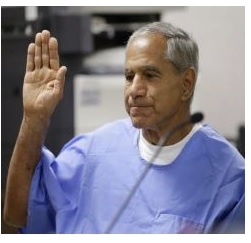
Sirhan’s attorney to Appeal Newsom Parole Veto
The attorney representing Sirhan Sirhan has announced an appeal of California Goveror Gavin Newsom’s decision to deny a parole to the convicted killer of Robert F. Kennedy.
Sirhan was granted the parole in August 2021, having served fifty-four years in prison.
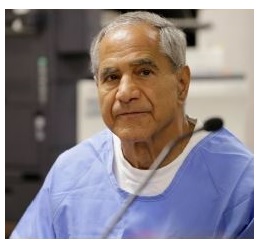
At a virtual press conference on September 28 2022, attorney Angela Berry stated that in granting the parole last year, the parole board had followed the law, but in denying it, Newsom had not. Considering Sirhan’s age – 78 – and his model prisoner record, his release should have been the normal decision. According to those in contact with him, he poses no danger to society.
This was one of the most impressive parts of the Sept. 28 conference. Both Berry and Jen Abreu, the director of an agency called Redemption California, presented statements that they secured from those who had contact with Sirhan at Richard J. Donovan Correction Facility in San Diego. Each one of the witnesses stated that Sirhan had both an exemplary record, and was quite cooperative and easy to work with.
In some instances, they said, he had gone beyond what was required of him. He had attended self-help classes that were offered at Donovan on his own initiative. Abreu was very familiar with this evidence since her group had worked with Sirhan for upwards of 13 months to prepare him for his last parole board hearing. She said that in 54 years of incarceration, the record showed one rule violation. And that over fifty years ago. She said, that in her experience, this was an utterly exceptional record. Consequently, according to the prison rating system for release, Sirhan was in the lowest category as per offering a danger to society.
Berry said that at the actual hearing, two of the highest ranking commissioners were in attendance. They voted for release. They then passed on their recommendation to the entire board, which agreed with it. Sirhan joined the conference with a video taped talk. There he stated that what makes his case unusual is that even victims of the crime, like Paul Schrade, have advocated for his release. Its rare that something like that occurs.
There were questions from reporters after the press conference. One was if Berry thought this was going to be a futile effort, due to the notoriety of her client. She replied that she did not think so, since Newsom had previously lost a case like this. In fact, she could have added that the ACLU has filed a lawsuit trying to overturn the governor’s power to do such a thing. (https://www.aclu.org/news/criminal-law-reform/politicians-have-no-place-making-parole-decisions-for-young-people)
Berry said she will be filing her case in Los Angeles Superior Court Department 66, adding that the process could take several months. She does not think the local DA will oppose her, but the state Attorney General, due to Newsom’s position, probably will. When asked, she said she would appeal if she lost the initial hearing.
Berry closed with two interesting points. Sirhan’s next parole hearing is scheduled for March 1st of next year. She said she plans on going through with the process at that time. Finally, in a rather forgotten episode, she added that Sirhan had actually been granted parole back in the seventies. But what happened is that the legislature passed a law giving the governor the power to intercede. The parole board then reversed itself and denied Sirhan the parole they had just handed him.
Sirhan’s family chose Angela Berry to represent him because this kind of law – parole and prisoner release – is her specialty.
•
UPDATE: Kennedys and King has received the following request from Angela Berry, the attorney representing Sirhan Sirhan.
For Sirhan’s upcoming March 1 parole hearing, we need new, updated letters from people.
As before, the support can be supplemented with the idea that
- He’s an old man and no longer dangerous, even [California Department of Corrections] experts have been saying that for many years
- It’s a waste of tax payer funds to house an aging man who poses no risk
- He shouldn’t be treated differently because of his victim
- The Board must find him again suitable for release and refrain from inappropriate persuasion from the Governor
- The governor got it wrong and he has no proper place in the decision
Also as before, the letters should be addressed to:
State of California, Dept. of Corrections and Rehabilitation
Board of Parole Hearings
P.O. Box 4036
Sacramento, CA 95812-4036
It would be extremely helpful if the letter authors also sent me a copy of their letter. That way, I can send them also to CDCR to ensure they make it to the “packet” that will be considered by the Board.
Angela Berry
Letters in support of Sirhan Sirhan may be sent to:
Angela Berry
A Professional Law Corporation
75-5660 Kopiko Street, Suite C-7, #399
Kailua-Kona, HI 96740