Tag: RICHARD HELMS

  • Goodbye and Good Riddance to Chris Matthews

    Goodbye and Good Riddance to Chris Matthews


    On Monday March 2nd, Chris Matthews, host of the MSNBC program Hardball, announced on the air that he was resigning after 20 years. That resignation was effective immediately. Therefore, he would not be around for the next day’s Super Tuesday primary elections. Which suggests that this was not his idea and he was forced out. Furthering this idea was how he announced his leaving, which he said was not due to his lack of interest in politics. (For the brief sign-off, click here)

    To put it mildly, Matthews has had a pretty bad last couple of weeks. Even for a dyed-in-the-wool MSM zealot, he has made some real bonehead comments. When Bernie Sanders won the Nevada caucuses, Matthews compared that victory to the Third Reich’s successful invasion of France in 1940. After the New Hampshire debate between Democratic candidates, Matthews indulged himself in a diatribe against socialists. During that tirade, in John Birch society mode, he confused socialism with communism and said that if Fidel Castro had won the Cold War, there would have been executions in Central Park and he would have been killed while others were cheering. He then added, “I don’t know who Bernie supports over these years, I don’t know what he means by socialism.” This reveals either extreme bias or a feigned ignorance, since Sanders has held political office for about 35 years.

    In another blunder, last week Matthews confused Jaime Harrison, an African American candidate for the Senate in South Carolina, with another black politician, Tim Scott, who is the GOP incumbent senator from that state. After Harrison corrected him, Chris apologized for the “mistaken identity”. Perhaps the last nail in the coffin was a column by writer Laura Bassett appearing on Saturday in the magazine GQ. In that column she complained about some sexist comments Matthews had made to her while she was in the makeup chair.

    Jimmy Carter
    Jimmy Carter
    Jimmy Carter
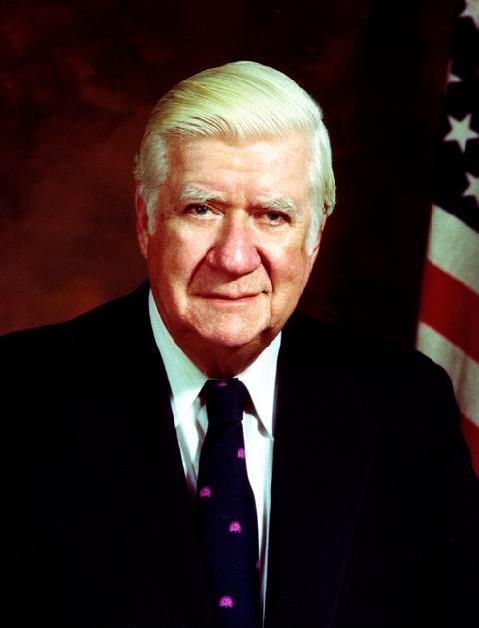
    Tip O’Neill

    Matthews began in Washington as an officer with the United States Capitol Police. He then became an aide for four Democratic members of Congress before he failed in an attempt to win a congressional seat in Pennsylvania. After this, he became a speechwriter for President Jimmy Carter. When Carter failed to win reelection in 1980, Matthews signed up with House Speaker Tip O’Neill. Matthews then switched over to print journalism for 15 years.

    Jimmy Carter
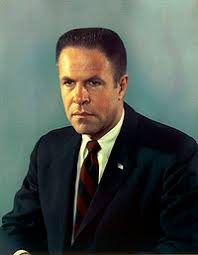
    H.R. Haldeman
    Jimmy Carter
    Richard Helms

    It was in his position as a columnist that Matthews now emerged as a rabid, mocking conservative member of the Washington establishment. After Oliver Stone released his film Nixon, Matthews criticized that picture for its use of a passage from H. R. Haldeman’s book The Ends of Power. In that passage, Haldeman had described a meeting with CIA Director Richard Helms in which the Bay of Pigs invasion was discussed. Helms’ reaction was so extreme that Haldeman concluded that Nixon’s use of the incident had been code for the Kennedy assassination. In a December of 1995 column, Matthews said this was all strained interpretation by Stone that Haldeman had blamed on his co-author Joe DiMona. Matthews could write this since he did not visit with DiMona. Dr. Gary Aguilar did so, and he learned why Matthews had not. DiMona told Aguilar that the book had gone through five drafts and Haldeman made many changes, but he never altered that passage. Clearly, Matthews had realized that after his films JFK and Nixon, Stone had become a lightning rod for the MSM. And if he was going to advance up the ladder, he had to join in the assault.

    Therefore in 1996, Matthews published his book entitled Kennedy and Nixon. This was supposed to be a dual biography of these two central political characters. But to anyone who knew who Matthews was, and understood the two men, there was a not so subtle subtext to the volume. Matthews was actually trying to say that, contrary to popular belief, Richard Nixon and John Kennedy had more in common than they had differences. Oliver Stone agreed that this was an unjustified interpretation. The LA Times allowed him to review the book in June of 1996. He took the author to task for his unwarranted assumption that the two were somehow chums and comrades in arms. Two weeks later, on June 30, 1996, the Times allowed Matthews to reply. The columnist said he had nothing but contempt for Stone and all but called him a liar.

    This got his ticket punched and Matthews now made the transfer into television. He first became a commentator for ABC’s Good Morning America, and then he got his own CNBC show titled Politics with Chris Matthews. That program eventually morphed into Hardball and was then placed on MSNBC.

    While the host of this program, Matthews made good on his promise to be one of the foremost bastions of the MSM. How bad could Matthews get? He even visited the disgraced Tom DeLay at his home in Sugarland, Texas after he forcibly left Washington. The alleged Democrat admitted to voting for George W. Bush in 2000. He later defended this admission by saying that he thought Al Gore was kind of strange. Is it only a coincidence that Gore was one of the high-level politicians who had no problem admitting that he thought John F. Kennedy was killed by a conspiracy?

    For, as Doug Horne writes on his blog in the wake of Matthews’s resignation, the Hardball host was one of the foremost defenders of the Warren Commission during his 20-year span. In all of those years, this writer can only recall one small exception to the rigor with which Matthews took pains to mock and ridicule those who held a different view of the JFK assassination than the Warren Report did. This was after Jesse Ventura did an interview for Playboy back in 1999.

    Jimmy Carter
    Jesse Ventura

    At that time, Governor Ventura was making the rounds of talk shows after the controversy caused by his rather bold pronouncements during that interview. One of the interviews he did was with Matthews at Harvard. (Probe, November/December 1999) When Matthews asked Ventura about his opinion of Vietnam, Ventura very soberly said that the United States should have never sided with France in that conflict. This was a mistake that prefigured our own involvement in Indochina. Matthews replied by saying the American buildup actually started under Kennedy. When Ventura stated that there were certain elements in the country that favored us going to war in Indochina, Matthews said that it was Kennedy who was giving them what they wanted from 1961-63. Ventura did not think fast enough to say, “Chris, there was not one more combat troop in Vietnam after Kennedy’s death than when he took office. So please show me the huge expenditures made by Kennedy?”

    Matthews then shifted to the assassination itself. He tried the old chestnut about having to believe in a large conspiracy if one advocated for a plot. Ventura replied that if one thinks the Dallas Police were involved, then their negligence does not denote a wide conspiracy. Ventura turned the tables and asked a question of Matthews: Why didn’t the Commission call all the witnesses who smelled smoke on the grassy knoll? To which Chris finally made his minor exception. He beat a tactical retreat by saying that he would admit the Warren Report was a rush job and he agreed with Ventura’s critique of their work. But this author has to note that Matthews’ retreat was very limited. In his book Kennedy and Nixon, he endorsed the verdict of the Commission and said that Oswald shot Kennedy.

    Towards the end of the interview, Matthews went completely off the rails. He characterized Oliver Stone’s film JFK in a completely nutty, wild manner by saying that somehow Nixon was involved in the plot depicted in the film. Since Nixon does not appear in the film except for the introduction over the credits, this is simply a smear. In fact, even if we expand this to the film Nixon, it is still not true. But Matthews really showed who he was when, near the end of the interview, he said that Stone tried to portray Kennedy as a peacenik when, in fact, he was a Cold Warrior. He then added that no one in JFK’s administration said he was trying to get out of Vietnam. Which is astonishing. For even at that time one had people like Roger Hilsman of the State Department, and Robert McNamara, Secretary of Defense, who both said such was the case. One can also add in Joint Chiefs of Staff Chairman Max Taylor, advisor Ted Sorensen, and assistants Dave Powers and Ken O’Donnell. All of these men said that Kennedy would never have gone into Vietnam with combat troops and direct American military intervention. So what was Matthews talking about?jfk no vietnam

    But this nonsense is consistent with Matthews’ book on Kennedy, titled Jack Kennedy: Elusive Hero. In that book, Matthews never mentioned NSAM 263. This was the order issued by Kennedy in October of 1963 which began a formal withdrawal from Vietnam of a thousand advisors by the end of the year and the rest of the advisors by early in 1965. If one does not mention that document, then one can say the things Matthews does. And I do not for one moment believe that Matthews did not know about it, since it was featured so prominently in Oliver Stone’s film. Matthews chose to ignore it due to his own bias against Stone.

    He is now gone, from at least MSNBC. I cannot help but wonder who will replace him, and if that person will be any kind of an improvement. I would think he or she could not be much worse.


    Link to Jim DiEugenio’s review of Jack Kennedy: Elusive Hero : https://consortiumnews.com/2012/01/03/why-mr-hardball-found-jfk-elusive/

    Link to Jim DiEugenio’s review of Bobby Kennedy: A Raging Spirit: https://consortiumnews.com/2018/06/04/distorting-the-life-of-bobby-kennedy/

  • Review of Stephen Kinzer, Poisoner in Chief:  Sidney Gottlieb and the CIA Search for Mind Control (Henry Holt and Co., 2019)

    Review of Stephen Kinzer, Poisoner in Chief: Sidney Gottlieb and the CIA Search for Mind Control (Henry Holt and Co., 2019)


    I

    In his latest book on the Central Intelligence Agency’s history of dirty tricks, longtime historian Stephen Kinzer attempts to paint a picture of the vast and shadowy tapestry that was the American intelligence apparatus at mid-century, using one of its most infamous henchmen, Dr. Sidney Gottlieb, head of the Technical Services Division of the CIA, as its focal point. While the title would suggest that Kinzer has unearthed new biographical information about this sinister character, I found little that was not already available in other surveys of the field. Knowing the quotidian details of Sid’s family life, his habits, and his strange charm really did not advance a story, which was essentially a rehash of known facts repackaged as a biography of what Kinzer deems the CIA’s “Poisoner in Chief.” While there is some survey value in this book regarding the technical perspective of how the CIA dreamt up its machinations of torture, mind-control, psychological warfare, and exotic poisons, its real strength is in Kinzer’s narrative flair. I read it in a single, very uncomfortable sitting. And for that, I feel it does play a valuable role in the historiography of this unsettling topic, one of which most Americans are barely aware, or at best, would rather forget, despite its present-day relevance.

    Kinzer begins his book with a stark postwar vignette:

    White flags hung from many windows as shell-shocked Germans measured the depth of their defeat. Hitler was dead. Unconditional surrender had sealed the collapse of the Third Reich. Munich, like many German cities, lay in ruins. With the guns finally silent, people began venturing out. On a wall near Odeonsplatz, someone painted:  “CONCENTRATION CAMPS DACHAU—BUCHENWALD—I AM ASHAMED TO BE GERMAN.” (p.13)

    The Allies were faced with some of their most trying decisions after the Soviet Union’s capture of Berlin and the subsequent surrender of all Nazi forces in Europe. Many Allied officials knew that ideologies as entrenched, compelling, and destructive as fascism died hard. Just because their nation was in ruins, leaderless, and at the mercy of rampaging Red Army troops on one end and embittered, battle-weary Americans on the other, this did not necessarily mean the German people would go quietly into the night and embrace ideas like peaceful co-existence with their European brethren, or even American-style “democracy.” Some, like Roosevelt’s Secretary of the Treasury, Henry Morgenthau, wanted Germany reduced to an agricultural backwater with no future prospect of industrial production, military rearmament, or political clout in a world they had only years earlier sought to conquer and rule. Others had different ideas.

    As the OSS would soon discover, clandestine warfare and the implied threat of biological warfare had played a major role in both the Japanese and German governments’ early chess moves. As new to the game, that spy agency was only beginning to understand these matters. While Roosevelt begrudgingly fulfilled Winston Churchill’s 1944 request for half a million bomblets filled with anthrax, by the time the batch was coming off the production lines of a converted factory in Indiana, the Nazis had surrendered.

    In the ensuing discoveries made in the wake of German capitulation, however, word soon spread that Nazi doctors like Kurt Blome had weaponized dozens of biological agents, diseases, and plagues. Further, that he had been in friendly competition with the sadistic Japanese scientist and biological researcher Shiro Ishii, whose Unit 731 committed human atrocities on captured Allied and Chinese soldiers and civilians that would have made Caligula wince. Much like in their technical advances in rocketry, jet propulsion, tanks, artillery, and submarines, the Nazis were apparently leaps and bounds ahead of the United States in this dark field too. OSS officers on the ground were curious and would soon make a choice that would color and shape the moral landscape of the newly formed CIA in the years to come. As Kinzer notes:

    Nazi doctors had accumulated a unique store of knowledge. They had learned how long it takes for human beings to die after exposure to various germs and chemicals, and which toxins kill most efficiently. Just as intriguing, they had fed mescaline and other psychoactive drugs to concentration camp inmates in experiments aimed at finding ways to control minds or shatter the human psyche. Much of their data was unique, because it could come only from experiments in which human beings were made to suffer or die. That made Blome a valuable target—but a target for what? Justice cried out for his punishment. From a U.S. Army base in Maryland, however, came an audaciously contrary idea:  instead of hanging Blome, let’s hire him. (p.14)

    The author then continues:

    For a core of Americans who served in the military and in intelligence agencies during World War II, the war never really ended. All that changed was the enemy. The role once played by Nazi Germany and Imperial Japan was assumed by the Soviet Union and, after 1949, “Red China.” In the new narrative, monolithic Communism, directed from the Kremlin, was a demonic force that mortally threatened the United States and all humanity. With the stakes so existentially high, no sacrifice in the fight against Communism—of money, morality, or human life—could be considered excessive. (p.25)

    The psychic shock of totalitarian ideologies, unleashed in those roughly five and a half brutal years of WWII, was an enduring one for the case officers and assets that now made up the fledgling CIA. And with President Truman’s signing of the National Security Act in 1947, clandestine operations were essentially ratified in legal writ, with the stamp of the highest offices of government, a decision Truman would famously lament in his retirement. As Kinzer shows, the nebulous and ill-defined limits circumscribing this new shadow warfare were quickly pushed to their logical end by those who seemed to believe nothing was too extreme when the fate of the “free world,” as they understood it, was concerned. Given an unprecedented opportunity to play James Bond, an almost unlimited budget to fund new and exciting ways to overthrow governments, assassinate leaders, poison food supplies, and expose innocent people to mind-shattering substances in their search for mind control, they took the ball and ran with it. Things fell into place. Truman left office in 1953 and President Eisenhower and his Secretary of State, John Foster Dulles, were all too willing to use the CIA to achieve political ends. With John’s brother, Allen Dulles, now appointed as head of the Central Intelligence Agency, the circle was complete:  foreign policy would be a spy’s game, with very real conventional wars interspersed for flavor, but essentially, a secret and enduring war in the shadows. And to play the game, they needed the tools.

    Kinzer’s ability as a storyteller is pronounced in these early chapters. The book at this point reads like a John Le Carré novel, as much as it does a well-researched, thoroughly footnoted monograph of the early Cold War. Familiar names are given a face, a voice, a temper:  Wild Bill Donovan, Bill Harvey, Ira Baldwin, and of course, a young Jewish man from the Bronx named Sid with a club foot and a stammer who was studying biology back in the States.

    II

    Lysergic acid diethylamide, LSD, or “acid” on the street, plays a central role in Kinzer’s book, with many chapters devoted to the CIA’s explorations into its potential to manipulate human beings for political and social engineering ends. Wilson Greene, an officer of the United States Chemical Corps, discovered scattered reports and rumors of a Swiss doctor named Albert Hoffmann, who Kinzer believes is the first person ever to have had an acid trip. Though Hoffmann, who worked for the Swiss pharmaceutical company Sandoz, had taken this journey in 1943, it would not reach Washington until 1949. Kinzer describes the thesis of Greene’s paper to government officials, entitled:  “Psychochemical Warfare:  A New Concept of War:”

    Their will to resist would be weakened greatly, if not entirely destroyed, by the mass hysteria and panic which would ensue. The symptoms which are considered to be of value in strategic and tactical operations include the following:  fits or seizures, dizziness, fear, panic, hysteria, hallucinations, migraine, delirium, extreme depression, notions of hopelessness, lack of initiative to do even simple things, suicidal mania. Greene proposed that America’s military scientists be given a new mission. At the outer edge of imagination, he suggested, beyond artillery and tanks, beyond chemicals, beyond germs, beyond even nuclear bombs, might lie an unimagined cosmos of new weaponry:  psychoactive drugs. Greene believed they could usher in a new era of humane warfare. (p.29)

    This, along with reports of recently-returning soldiers from the Korean War who seemed to sympathize more with the enemy they were sent to kill than their American brethren, led some policy planners in Washington to suspect that the Reds were up to more than conventional propaganda. That, as Kinzer notes, none were actually “brainwashed” as Washington suspected, but simply critical of what they viewed as a hypocritical, unjust, capitalistic and segregated mid-century America, didn’t matter in the binary option set of hard line anti-communists like CIA officers Dulles, James Angleton, Richard Helms, and their colleagues. These were the same people who essentially green-lit what would eventually turn into the MK-ULTRA program, whose directive was to probe the limits of the human psyche, with the express aim to eventually discover how a fully functional person could be “depatterned” and remade, as it were, in the image of his or her handler for any number of field-deployable roles.

    While that program is exhaustively detailed elsewhere, Kinzer does add some colorful vignettes to the story that seem like they jumped from the pages of a Thomas Pynchon novel rather than the historical record:  secretly dosing colleagues at dinner parties, most famously Frank Olson, who of course “jumped or fell” from a 13-story Manhattan hotel room after having an acid-induced nervous breakdown and frantically seeking an exit from the intelligence field, paying crooked cops in cash to sit behind two-way mirrors in rented San Francisco brothels to watch prostitutes try to illicit sensitive information from acid-dosed patrons, injecting an elephant at an Oklahoma zoo with a lethal dose of LSD, releasing “benign” but actually toxic bacterial aerosols off the coast of California (Operation Seaspray) to test their dispersal pattern on an unaware American population getting their Sunday morning newspapers. The list goes on and only gets more absurd as it does.

    What Kinzer accomplishes in Poisoner in Chief is to show just how unscientific so much of what we call MK-ULTRA and its hundred-plus “sub-projects” really were. With little oversight, and an actual legal license to kill, torture, abduct, and abscond, the early case officers and assets tasked to the CIA’s biological and mind-control initiatives were dangerously out of control, yet in some sense, legally justified, given the vague language and imperatives of the National Security Act which legitimized their activities. As George White, the crooked cop mentioned earlier, said years later in a grateful letter to his mentor and boss, Sidney Gottlieb, “… it was fun, fun, fun. Where else could a red-blooded American boy lie, kill and cheat, steal, deceive, rape, and pillage with the sanction and blessing of the All-Highest?” (p.155)

    Indeed. Where else but in the CIA?

    III

    Poisoner in Chief proceeds predictably enough through the sixties and seventies, with the major uses of Gottlieb’s Technical Services Division of the CIA highlighted against the backdrop of a given foreign policy episode. Crafting ever sillier ways to kill Fidel Castro—boots laced with thallium to make his mighty beard fall out, exploding ornate seashells to catch his eye on one of his frequent scuba dives, and botulin-laced cigars that only needed to be held between the lips for seconds to kill—Gottlieb and his junior staff of kids from local technical colleges and workshops were never out of ideas. Poisoned tubes of toothpaste for the first democratically elected leader of the Congo? No problem. “Joe from Paris” (Gottlieb’s code-name in the Congo operation) will arrive in Leopoldville shortly. So will QJ/WIN, the backup shooter. Standby.

    This is an exciting part of the book and provided a rare glimpse into the devil’s workshop that was TSS (Technical Services Staff). But, at the same time, it contains some critical oversights that must be addressed. Namely viewing President Kennedy as a younger, fresh-faced continuation of Eisenhower, and someone who laid the groundwork for Johnson, rather than as someone opposed to either of his executive bookends. A president who was rather unique in his conciliatory vision of peaceful coexistence; a president who, unbelievable as it may sound today, had genuine empathy for the developing nations of the world. This is not a debatable point in 2019, despite the MSM’s dogged, fifty-five-year smear campaign against a most promising U.S. leader, as any reader at Kennedys and King should know by now.

    Yet there is a real political vacuum in this section of the book. In his tracing of the Gottlieb attempts to poison Patrice Lumumba of the Congo, there is no mentioning of how these plots were hurried in late 1960 after John F. Kennedy won the election. Yet, there are authors who have come to this conclusion after reading the cable traffic. (John Morton Blum, Years of Discord, pp. 175-76) Almost everyone agrees today that Kennedy clearly favored Lumumba in his struggle to free Congo from European imperialism. And it appears that the CIA knew that.

    As most authors also realize today, the CIA plots with the Mafia to assassination Fidel Castro did not have presidential sanction. This was the conclusion expressed by the Church Committee in 1975 and is fortified by the release by the Assassination Records Review Board of the CIA Inspector General Report on that subject. Yet, in the face of all this, plus the declassified files of the Assassination Records Review Board, former New York Times reporter Kinzer claims,

    Plotting against Castro did not end when Eisenhower left office at the beginning of 1961. His successor, John F. Kennedy, turned out to be equally determined to “eliminate” Castro. The spectacular collapse of the CIA’s 1961 invasion of Cuba at the Bay of Pigs intensified his determination. Kennedy and Attorney General Robert Kennedy, his brother, relentlessly pressured the CIA to crush Castro and repeatedly demanded explanations of why it had not been accomplished. Samuel Halpern, who served at the top level of the covert action directorate during this period, asserted that “the Kennedys were on our back constantly … they were just absolutely obsessed with getting rid of Castro.” Richard Helms felt the pressure directly. “There was a flat-out effort ordered by the White House, the President, Bobby Kennedy—who was after all his man, his right-hand man in these matters—to unseat the Castro government, to do everything possible to get rid of it by whatever device could be found,” Helms later testified. “The Bay of Pigs was a part of this effort, and after the Bay of Pigs failed, there was even a greater push to try to get rid of this Communist influence 90 miles from United States shores … The principal driving force was the Attorney General, Robert Kennedy. There isn’t any question about this.” (p.122)

    First, to take the testimony of a practiced liar like Richard Helms regarding his sworn enemies, the Kennedy brothers, at face value, is almost comical. Richard Helms ordered Sidney Gottlieb to shred every accessible document pertaining to MK-ULTRA before congressional investigations discovered his illegal program’s dirty paper trail. Helms famously walked into the Oval office with a rifle, plopped it on JFK’s desk, and said the CIA had just discovered (through acid-based swaths), a Soviet serial number on the stock, and that the gun was from Cuba, strengthening, so he thought, his case that Kennedy should immediately invade the island before the Russians had time to reinforce Castro. Kennedy asked to see more proof, since Helms said the magic acid test only worked for a few seconds and then destroyed the numbers it allegedly revealed. Kennedy then waved him out of the office to finish opening his daily mail. Not exactly hell-bent, as Kinzer would have us believe.

    Allen Dulles and Richard Bissell planned the Bay of Pigs to fail, stacking the initial invasion waves with the lowest quality, most poorly trained groups of the Cuban exiles slated for the assault. They did this anticipating that Kennedy would cave once reports got back to him that they could not get off the beach and capture strategic inland objectives without naval and air support (and, in all likelihood, the landing of U.S. Marines). Kennedy later understood this and complained about it. But the lie was fortified when Allen Dulles and E. Howard Hunt commissioned a ghost-written article in Fortune that created the narrative Kinzer and others have fraudulently promulgated:  JFK got cold feet and “called off” the air support, leaving those poor Cuban exiles stranded on the beach. Kennedy inherited the operation from Eisenhower, reluctantly green-lit it only because the CIA was lying to him at every step, and when he realized its quixotic goals were impossible without escalation and the commitment of non-clandestine U.S. forces, sat anxiously in his briefing room as it fell apart. He then quietly fired Dulles, Bissell, and Cabell.

    Similarly, to say that Robert Kennedy was hell bent on killing Castro is to fail to acknowledge the declassification of the CIA’s Inspector General report on the CIA/Mafia plots. That long report states that Robert Kennedy had to be briefed about the plots by the CIA after the FBI accidentally discovered them. Obviously, if the Kennedys had been in on them, there would have been no briefing necessary. But making it worse, the CIA told Robert Kennedy that they would now put a halt to them, since RFK was very upset by the briefing. This was a lie. The plots continued along without his knowledge, pairing mobster John Roselli and CIA officer Bill Harvey. (The Assassinations, edited by James DiEugenio and Lisa Pease, pp 327-28) The obvious question that Kinzer does not ask is:  Why would the CIA have to lie to RFK, if he was in agreement with the plots? Kinzer also overlooks the apparent understanding of Castro’s own feelings towards the matter. He ignores the fact that it was largely Robert Kennedy, through Soviet back channels during the Cuban Missile Crisis, who averted what looked almost certainly to be a nuclear Armageddon. That incident provided a perfect opportunity to invade Cuba and overthrow Castro. Afterwards, Castro suggested a détente with Washington and JFK obliged him. It’s easy to see why the CIA hated both of the brothers. And while this misreading of history is only a few paragraphs of an otherwise fairly well researched and engaging book, it provides a disappointing and misleading aspect that readers unfamiliar with the true history of the Kennedys’ views about the developing world. If anyone disagrees, it would be good for them to fact-check for themselves. Reading the IG report would be a good place to start. (Click here for that link)

    Overall, while largely a repackaging of long-known facts, the book is an interesting introduction for those unacquainted with the dark side of the CIA at mid-century and into the latter years of the Cold War. Gottlieb remains a mysterious, infrequently quoted figure in the book, with a few interspersed interviews with his children and friends. Perhaps most interesting is Kinzer’s chapters on Gottlieb’s attempted retirement and disappearance from the TSS, floating around abroad, in a leper colony in India and other exotic hideouts. His very face and name would have remained unknown to the general public and, likely, the research community had it not been for late 70s probes like the Church Committee. Kinzer does a fine job here and this probably represents the only unique aspect of the book, focusing as it does on their attempts to see how deep the CIA’s rabbit hole was when they stumbled upon the last surviving documents detailing projects like MK-ULTRA and MKNAOMI.

  • The Mysterious Life and Death of James W. McCord

    The Mysterious Life and Death of James W. McCord


    Usually when a high profile person in the field of entertainment, politics or news passes away, it is noted with almost lighting-like immediacy. We live in the Internet world, one with a 24/7 news cycle. That cycle does not sleep. It doesn’t even nap.

    For some reason it did in June of 2017.

    On June 15, 2017, James W. McCord of Watergate fame passed away. That’s correct. He passed on nearly two years ago. (here is one confirmation; here is another) If one can believe it, you will not find an obituary for him on the web. If one checks, say Wikipedia, he is still alive. You will only find a date of death through Ancestry or Find a Grave.

    Corroboration comes from Shane O’Sullivan’s book, Dirty Tricks. According to the author, McCord’s family wanted to keep his passing quiet. (O’Sullivan, p. 405) They succeeded to a remarkable, in some ways, an unprecedented degree. The logical question, which I am not sure O’Sullivan asked, is this: What was the purpose behind all the secrecy? Since today, nearly no one knows he is dead, no one can ask his family that question. But with help from genealogist Rob Couteau, and on the ground investigation in Pennsylvania by Steve Jones and Jerry Policoff, Kennedys And King can confirm that O’Sullivan is correct. McCord passed on nearly two years ago—in mystifying silence. This is therefore the first obituary anyone will read about him. Which is startling considering the impact James Walter McCord had on modern American history.

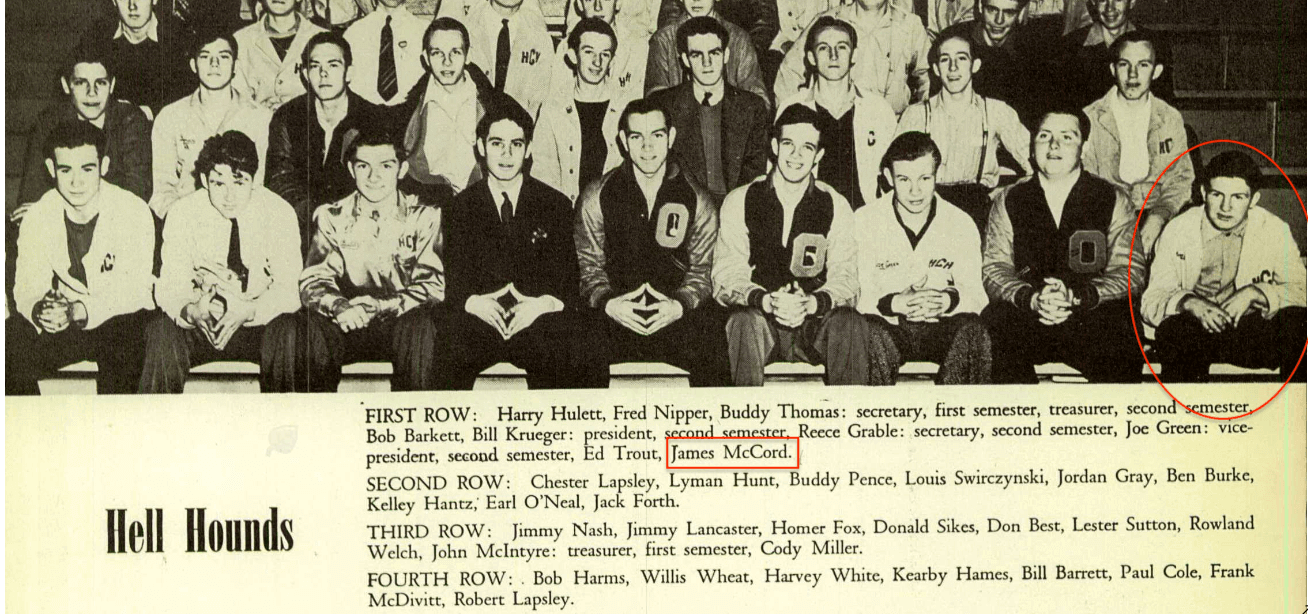
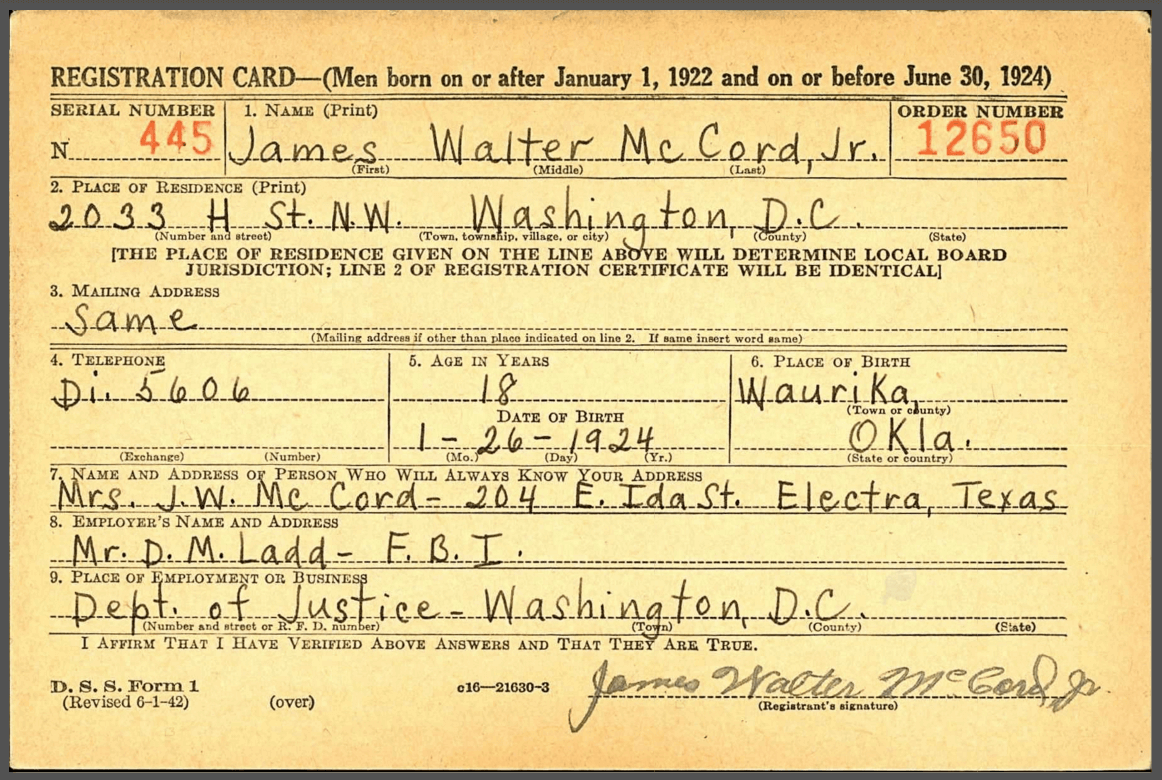
    Owing to Couteau’s work, we know that McCord’s family originated in Scotland. His great-grandfather served in the Tennessee militia during the War of 1812. McCord’s grandfather, James Allen McCord, was from Alabama and served in the Confederate army. Both his mother and father hailed from Texas. His father was a public school teacher. Although some entries place his date of birth in June, McCord was born in Waurika, Oklahoma on January 26, 1924. He attended public schools there. In 1943 he enlisted in the Army Air Corps in Miami, Florida. When that split off from the army to create the Air Force, he eventually attained Lt. Colonel status in the U. S. Air Force Reserve. After World War II, he attended Baylor before graduating from the University of Texas at Austin in 1949. He began his professional career by working briefly for the FBI. He was then employed for nineteen years by the CIA. He allegedly retired and went to work for the Committee to Reelect the President, commonly knows as CREEP, in late 1971. The man who hired him to work on the Richard Nixon campaign was Jack Caufield.

    Ambrose McCord, 
    James’s great-grandfather,
    served in the Tennessee militia
    McCord’s mother

    McCord’ high-school yearbook

    McCord’s selective service card

    McCord’s wife Sarah’s tombstone

    Caufield was a former New York City police detective. He was invited by John Ehrlichman to set up a private security agency to provide intelligence on Nixon’s political opponents. It was Caufield who first suggested forming Operation Sandwedge: illegal electronic surveillance of Nixon’s political opponents focusing on their sex lives, drinking habits, tax records and marital problems. (The Telegraph, July 11, 2012) Later on, when the so-called Plumbers Unit was formed, McCord migrated there and joined Howard Hunt for their break-ins of the Democratic National Committee. It was called the Plumbers Unit because it was partly designed to plug leaks, like the Pentagon Papers. In fact, one of the first missions the unit executed was a raid on the Los Angeles office of Daniel Ellsberg’s psychiatrist. Ellsberg had leaked the Pentagon Papers to the NY Times and Washington Post. The objective was to dig up dirt on him and smear his character in the press.

    To say that McCord was a secretive and odd person understates both his character and career. He was one of the several personages who were involved in both the John F. Kennedy assassination and the Watergate caper: two seismic shocks to the system that occurred within a decade of each other. They were both so colossal in their impact that complex and multi level cover-ups ensued afterwards to conceal their true natures. In the JFK case, it took about three years to fully expose the official Warren Report as a cover-up.

    With Watergate, where McCord’s role was much more front-and-center, it took quite a bit longer. Most analysts of that expansive and complicated phenomenon would date the beginning of its true elucidation to 1984, ten years after Richard Nixon resigned the presidency. That was the year Jim Hougan published Secret Agenda, his watershed book on Watergate. Secret Agenda is now recognized as a classic in the field. Some would go even further and deem it as one of the finest pieces of investigative political reporting in the last 40 years. No objective observer can read the book without feeling the official story handed to them on Watergate was, to say the least, both faulty and incomplete.

    What was that official story composed of? It was a combination of two factors. First, the coverage by Bob Woodward and Carl Bernstein in the WashingtonPost. This was largely supervised by editor Ben Bradlee. It was made world famous by Robert Redford in his film of their bestselling book, All the President’s Men. The second element of this official story was then adduced by the Senate Watergate Committee. In the summer of 1973 that committee’s hearings were probably viewed proportionately by as many spectators as the 1954 Army/McCarthy hearings. Led by Senator Sam Ervin, the committee pretty much followed the story that had been laid out by the Washington Post. It was this unrelenting and massive media glare that paved the way for Nixon’s resignation in August of 1974.

    One of the worst things about Watergate was that the praise and fame heaped upon Ervin, Bradlee, Woodward and Bernstein left the impression that the system had worked. Through the political and journalistic process a grievous crime had been self-corrected. We all felt good. The system had purified itself.

    A few years later, Jim Hougan walked into the FBI research library and made a request. When his documents were delivered he quickly realized that someone had made a mistake. He was getting papers that were still classified. Realizing the error would be discovered, he immediately began copying hundreds of pages from the original FBI Watergate investigation, documents that had not seen the light of day. Stuffing them into his briefcase before they were recalled, he managed to take them home. They confirmed his suspicions about what had really happened.

    Hougan opens his book with an unforgettable chapter entitled “Of Hunt and McCord”. (pp. 3-26) It is clear from these pages that Hunt and McCord lied before the Ervin Committee when they said they did not know each other prior to going to work for the Plumbers. Hougan also pointed out that when Howard Hunt retired from the CIA in 1970, that was the third time he had done so. (Hougan, p. 6) At the recommendation of Director Richard Helms, he then went to work for a CIA associated PR group called the Mullen Company. That company would then be sold by Mr. Mullen to another CIA asset, Robert Bennett. Bennett and Hunt then badgered Nixon’s hatchet man at the White House, Charles Colson, into giving Hunt a job. (Hougan, p. 33) From there, Hunt went on to perform a series of alleged intelligence assignments that were so poorly conceived and badly executed that one has to wonder if they were just Keystone Kops hijinks or something worse. Yet even though Hunt was now supposedly retired and working for the White House, the CIA continued to technically support his efforts. In fact, the Agency reviewed and extended Hunt’s Top Secret security clearance prior to his retirement. (Hougan, p. 7) His security clearance was now the same one Clay Shaw had in New Orleans. (William Davy, Let Justice be Done, p. 196)

    Four months after Hunt joined the Mullen Company, James McCord decided to retire from the Agency after 19 years of service. Although he was later billed as a technician, he worked out of the Office of Security’s secretive Security Research Staff program (SRS). (Hougan, p. 9) As John Newman later discovered, it was here where McCord teamed up with David Phillips to supervise the Agency’s anti-Fair Play for Cuba Committee campaign, of which Lee Harvey Oswald had all the earmarks of being a component. (James DiEugenio, Destiny Betrayed, Second Edition, p. 158)

    Hunt reportedly worked with McCord on Manuel Artime’s “Second Naval Guerilla” operation out of Nicaragua and Costa Rica. This was attested to by Cuban exile Harry Williams to author William Turner. (Hougan, p. 10) But Hougan dug up evidence that the pair worked together even earlier than that, back in the fifties on the Asian mainland. (p. 19) He then showed that the two men had also worked together in a domestic surveillance operation in 1969. We should add one other point. When McCord arrived at CREEP, he did not have a picture of Nixon in his office. He had a photo of Richard Helms on the wall. It was inscribed, “To Jim, With deep appreciation”. The emphasis was in the original. (Hougan, p. 22. We will reveal later a possible reason for that “deep appreciation.”)

    So just from the little noted above, the questions come rapid-fire. Why did Hunt and McCord lie about not knowing each other prior to 1972? Why did the Agency let the lie stand? Were Hunt and McCord really retired when they eventually joined, respectively, the White House and CREEP? Why was Robert Bennett so eager to get Hunt into the White House? Why was McCord working for Nixon while his allegiance appears to be to Helms? But beyond that, why did it take ten years for anyone to ask these questions?

    It is not completely accurate to write that no one investigated this aspect of the caper until Jim Hougan. There actually were two inquiries that attempted to explore the role of the CIA in Watergate. The first was the minority report of the Ervin Committee. The Republicans, led by Tennessee’s Senator Howard Baker and Minority Counsel Fred Thompson, did try to inquire into things like the role of the Mullen Company and the true goal of the burglary at the Watergate complex. Thompson and Baker theorized that the burglars’ real goal was not political intelligence for the 1972 election. It may have been surveillance of Democratic Chairman Lawrence O’Brien’s representation of Howard Hughes. Nixon’s association with Hughes, and his past attempts to bribe the president, were fairly well known at the time. The White House may have feared that O’Brien had more evidence of the same. In fact, John Meier, who worked for Hughes, told Nixon’s brother Donald that he was thinking of turning over everything that he had on Hughes. This included his knowledge of a million dollar secret donation from Hughes to Nixon. According to Age of Secrets, Don then informed his brother of this. (Probe Vol. 3 No. 2, pp. 9, 11, 15)

    Besides Baker and Thompson, the other committee that explored the CIA angle was the House Committee on Intelligence. This was led by Representative Lucien Nedzi, until he controversially resigned his chairmanship. (“House Supports Nedzi”, Washington Post, June 17, 1975) This committee did produce a report that Hougan sourced several times in his book.

    But the fact was that very, very few people knew anything about these two investigations. This overall ignorance continued even when Fred Thompson published his 1975 book based on the Baker inquiry entitled, At That Point in Time. The fact that this book was all but ignored bears witness to the enormous torque created by the Washington Post, the Woodward/Bernstein best seller, and the Academy-Award-winning hit film. A veritable whirlpool was constructed, one which carried the entire MSM along with it.

    As Jim Hougan later told me, he just never thought very much of Woodward’s reporting skills. One of the most revealing sections of Secret Agenda is in Appendix V. There the author publishes documents describing Robert Bennett’s communications with his CIA case officer. It is revealed that Bennett was actively spinning reporters like Sandy Smith and Woodward away from the Agency’s association with the Mullen Company, and selling them on the angle that his newly purchased PR company was actually “clean”. For this “information”, Woodward had agreed that these stories would not be attributed to Bennett. Bennett also had access to Senator Ervin and he had been assured that the senator would conceal the Mullen Company’s overseas role in placing agents for the CIA. (Hougan, pp. 332-335)

    To put it mildly, that memorandum raised issues about Woodward’s independence and honesty. Hougan then raised questions about the Post’s major secret source. This was the man Woodward labeled “Deep Throat” in his book. Hougan specifically raised questions about the signaling system the duo would use when Deep Throat would request a nightly meeting in a parking garage. (Hougan, pp. 291-93) Hougan and others have also explored Woodward’s military background and his high-level security clearances as part of the national security state. This has led some to believe that one reason the reporter was so keen to assault Nixon was that, unlike Bernstein, Woodward was politically to the right of the president.

    Because of this enormous propaganda apparatus, both the public and press were diverted from an alternative view of James W. McCord. Far from being a mere put-upon technician, McCord may have been a central operator. Consider just two major instances in the two-year Watergate episode. After the discovery of the break-in, the case had reached an impasse at the trial of the burglars. If they all kept silent, the conspiracy would likely be limited to them only—it would not reach into the White House. But in March of 1973, McCord radically raised the stakes. He wrote a letter to Judge John Sirica stating that perjury had been committed in his courtroom and pressure had been brought to bear for the seven burglars to remain quiet. When Sirica read McCord’s letter in court, it created pandemonium. It seemed to affirm all the stories that Woodward and Bernstein had been writing, and Bradlee publishing, in the Post.

    But, in retrospect, the question should have been: If not for James McCord, would there have been a trial at all? As most analysts of the June 17, 1972 final break-in have noted, there was something odd about the way the burglars were caught. McCord had taped the locks on numerous doors to keep them open during the break-in. The security guard, Frank Wills, had found these doors and removed the tape. (Hougan, p. 196) When the burglars entered the building at about 1:10 AM, they found a previously taped door that was now stripped. McCord then conferred with higher-ups Hunt and Liddy. According to everyone but McCord, it was he who insisted on not aborting the mission. (Hougan, pp. 197-98) The door was retaped. But after McCord entered the building, he told his low-level cohorts that he himself had removed the tape on the doors. This was not true. (Probe, Vol. 3 No. 2, p. 14)

    But that is not all that McCord had done. On the previous break-in—there were four attempts in all—it appears that McCord also switched the informational photos that had been taken inside the DNC, which were supposed to be of papers inside O’Brien’s desk, to a set of innocuous ones taken inside a Howard Johnson’s hotel room. (Hougan, pp. 153, 157) He also placed a faulty bug inside O’Brien’s office. (pp 162, 166) This from a man who when he was arraigned said—truthfully—that he had been a security consultant for the CIA. These alleged faux pas made another break-in necessary.

    Wills discovered the new tape on the same door. It was almost impossible to miss it since McCord taped as many as eight doors that night—he even taped doors on floors that would never be used, like a floor above the DNC. (Hougan, p. 207) At 1:47 AM, Frank Wills called the Washington Police Department. Just a few minutes later, the police arrived at the scene. Reinforcements soon arrived. McCord, along with four Cubans recruited by Hunt, were arrested. They were Virgilio Gonzalez, Bernard Barker, Eugenio Martinez and Frank Sturgis. Things then got worse. Surprisingly, Barker and the others had been allowed to keep their hotel keys with them. And further, neither McCord nor Hunt had sterilized the hotel rooms. Therefore, when the police entered the rooms, they discovered a treasure trove of evidence. This included their notebooks with Hunt’s name and phone number, which included the abbreviation W. House next to it. (Probe Vol. 3 No. 2, pp. 14-15) Hunt was traced to the White House. Liddy was linked to CREEP.

    But the circus even went beyond that. Hunt had paid off the burglars in sequentially numbered hundred dollar bills. The money trail would lead from Miami, to Mexico City and back to CREEP. (Probe 3.2: 14-15) And that would lead to the chairman of that body, former Attorney General John Mitchell. The notebooks with Hunt’s name and phone in them would lead to Charles Colson who ran the Plumbers Unit at the White House.

    Once apprehended—as was the case with Bennett—McCord did all he could to keep the spotlight off the CIA and on the White House. His first lawyer, Gerald Alch, had proposed an Agency cover defense. (O’Sullivan, p. 268) He was later jettisoned and replaced by Bud Fensterwald. Fensterwald wasted little time in announcing, “We’re going after the president.” (Hougan, p. 307)

    When Alch first suggested his CIA defense, McCord began to write Paul Gaynor, chief of the SRS division at CIA. He advised Gaynor to pre-empt this attempt with multiple and effective leaks to the press before the CIA defense could gain traction. Meanwhile, he would keep Gaynor informed of the legal tactics planned by the defendants. (O’Sullivan, pp. 269-70) A few days later, McCord wrote Jack Caufield at the White House. McCord stated that if Watergate was dumped off on the CIA and Richard Helms was fired,

    … every tree in the forest will fall. It will be a scorched desert. The whole matter is at the precipice right now. Just pass the message that if they want it to blow, they are on exactly the right course. (Letter of December 28, 1972)

    In spite of this warning, Helms was terminated about a month later on February 2, 1973. Around six weeks after, Caufield met with McCord. He offered him money, a job and executive clemency if he would plead guilty and remain silent. Caufield said this offer came from the highest levels of the White House. (NY Times, June 23, 2012, article by Douglas Martin.) McCord refused the deal. His allegiance was to Helms and the CIA. Shortly after, he wrote the letter to Sirica about pressure being brought to bear and perjury in his courtroom. For all intents and purposes, that is what blew the case wide open.

    Because, as McCord had warned, the Nixon White house could easily be turned into a scorched desert. And it was. Through a steady stream of disclosures by people like McCord and White House counsel John Dean, the seamy underside of the Nixon White House was placed on public display. As McCord warned, it was not a pretty sight. The secret bombing of Cambodia, the August 1971 break in at Daniel Ellsberg’s psychiatrist’s office, Nixon’s attempt to form a super intelligence group to counter student protests (commonly called the Huston Plan), the proposed fire-bombing of the Brookings Institute, etc. And, in this author’s opinion, the worst went undiscovered, because this last caper, the fire bombing of the Brookings Institute, was first thought to be part of Nixon’s war against the leaking of the Pentagon Papers. As the late journalist Robert Parry discovered, such was not the case. That proposal was really designed to find out if the evidence of Nixon sabotaging President Johnson’s Vietnam peace plan was located at Brookings. Candidate Nixon had arranged for Saigon not to cooperate with President Lyndon Johnson in his attempt to arrange a truce in Indochina before he left office. This tilted the election to Nixon and extended the war. Once in office, Nixon was worried that this evidence, like the Pentagon Papers, could be leaked to the press.

    By the summer of 1973, Nixon seemed to realize what had really happened. He called up H. R. Haldeman at four in the morning, and asked him some pointed questions:

    • “Do you know anything about the Bennett PR firm, the Mullen Company?”
    • “Did you ever employ them at the White House? Were they ever retained by us for any purpose?”
    • “Did you know they were a CIA front?”
    • “Did you know that Helms ordered Bennett to hire Howard Hunt?”
    • “Did you know that Hunt was on the payroll at the Bennett firm at the same time that he was on the White House payroll?” (Probe, Vol. 3 No. 2, p. 32)

    It was too late.

    Because of his willingness to cooperate with the court and the Ervin Committee, McCord served by far the briefest prison time of the seven men directly involved with the break in: four months. Hunt served almost ten times that long. Gordon Liddy was in prison for almost five years before being pardoned by President Carter.

    Forty-five years later, the conventional view of Watergate still largely reigns in the MSM. This is partly due to Woodward’s occasional attempts to prop up that version. For instance, when FBI officer Mark Felt was close to dying, Woodward wrote a book saying that Felt was Deep Throat. In 2017, Mr. Hollywood Mythology, Tom Hanks, then had a hand in making a truly mediocre film based on an even more mediocre book about Felt.

    But, in 2009, Ed Gray, son of L. Patrick Gray, had published an interesting book about Watergate titled In Nixon’s Web. Patrick Gray had been appointed interim director of the FBI after J. Edgar Hoover died. He supervised the initial FBI inquiry into Watergate until he resigned. He passed away before he could finish the book. It was then completed by his son. In the epilogue to that volume, Ed Gray demonstrates that Deep Throat was a composite character. And he does it with Woodward’s own notes. He also proves that Mark Felt was leaking stories to the press that sunk Gray’s nomination. The reason was Felt’s own personal ambition: he wanted the Director’s position. Again, because of the MSM censorship on Watergate, very few people know these important facts.

    The idea promulgated by Hougan, that Watergate was really a trap set for Nixon, was also a part of John Meier’s book Age of Secrets. (Co-authored by Gerald Bellett) As Bellett wrote in the introduction to the Meier book:

    Watergate was a set-up, a classic ploy as old as espionage itself. In its favor it had simplicity of execution, an irresistible bait and a spy on the inside. It was flawless. So completely were the anti-Nixon conspirators in control, that they knew an intrusion into the Democratic Party’s national headquarters was being plotted, yet did nothing to prevent it. (Bellett, p. viii)

    That last sentence refers to the fact that Lawrence O’Brien was actually tipped off in advance that the Democratic National Committee was under surveillance. He was warned of this by a prominent Democrat and newspaper publisher by the name of William Haddad. (Hougan, p. 79) Haddad was apprised of this from a private investigator named A. J. Woolston Smith. Smith apparently gained the information from an agency called the November Group. This was a set of advertising executives working on Nixon’s campaign. Liddy was the agency’s incorporator and secretary. McCord was in charge of the November Group’s security. Haddad actually told a DNC representative in advance that they would be bugged and burglarized. And that McCord and Liddy were somehow involved in the effort. Further, that other operators would be recruited from Little Havana in Miami. (p. 79)

    One of the chief investigators for the FBI on the Watergate case was Angelo Lano. O’Sullivan quotes Lano from a previous interview where he stated that he always thought the caper was a set-up. He noted that the neat arrangement of the evidence the burglars left behind at the hotel felt planted—”everything was arranged like somebody knew it was gonna happen.” And Lano could not ignore the tape:

    You’ve got a guy who’s expert in key entry, burglary [Virgilio Gonzalez]. Why did they have to put the tape back on? You put the tape on one door; it wasn’t necessary to put it on six doors. There’s always been a question in my mind [about] the response of the police department—2:30 in the morning—the placement of the items in the hotel room, the tape. To this day I still think that one of those guys tipped off the police department and it was either Hunt or McCord. (O’Sullivan, pp. 404-5)

    In 2012, Max Holland published a book about Watergate called Leak. It largely focused on the FBI inquiry. Predictably, he could not find enough space to include Lano’s insightful quote.

    As more than one person said later, James McCord was not just a technician. He was an operator. But it’s something he tried to conceal. For instance, after he moved to Pennsylvania, a reader of this site got in contact with him. He asked him about his service with David Phillips and their campaign against the FPCC. McCord said he was not a part of that; it was the FBI’s function. Since the ARRB had released those documents, I said he should question him again with the papers in hand.

    But beyond that, when Lisa Pease and I were publishing Probe magazine in the nineties, we met up with former CIA pilot Carl McNabb. He said that prior to the Bay of Pigs, he had been briefed at the Miami CIA station, since he was part of the aerial facet. He noticed that McCord was in the room and he was struck by how taciturn he was. Afterward, he asked the briefer who he was. He told him his name. He then added that he was Helms’ Zap Man. McNabb later showed me the very old notes with this information recorded on it. I asked him what the term meant. He replied McCord was his liquidator.

    Which may tie in with a quite interesting piece of information in O’Sullivan’s book. Alfred Baldwin was a former FBI agent who was recruited by McCord for the Watergate operation. He was supposed to make a log of the surveillance coming out of the Democratic National Committee. O’Sullivan found out through James Rosen that McCord told Baldwin he was in Dallas on the day of the Kennedy assassination. (O’Sullivan, p. 405) If this is true, and I am not saying it is, then it makes a quite intriguing list of CIA associated personages in that city either on the day Kennedy was killed, or a few weeks prior:

    1. Allen Dulles (James Srodes, Allen Dulles: Master of Spies, pp. 554-66)
    2. William Harvey (David Talbot, The Devil’s Chessboard, p. 477)
    3. David Phillips (Dick Russell, The Man Who Knew too Much, 2003 edition, p. 272)
    4. Howard Hunt (Mark Lane, Plausible Denial, p. 152)
    5. James McCord (Shane O’Sullivan, Dirty Tricks, p. 405)
    6. Sergio Arcacha Smith (James DiEugenio, Destiny Betrayed, second edition, p. 329)
    7. Bernardo DeTorres (Gaeton Fonzi, The Last Investigation, p. 238)

    What makes the list rather striking, as I have arranged it, is that it goes from the top of the hierarchy, through the middle, down to the lower ranks, men who would act as foot-soldiers or mechanics. Does the above explain why the McCord family wished to keep the death of James McCord so quiet?

  • Through a Glass Darkly: An MK-ULTRA Primer

    Through a Glass Darkly: An MK-ULTRA Primer

    mk ultra


    “What is heroic in combat is criminal in peace. Just as combat sanctions physical violence, so espionage grants license to moral violence. It is trite but true to say that they did what they did for the good of their country. Unfortunately, it is also true that it frequently didn’t work out that way.”

    ~David C. Martin, Wilderness of Mirrors


    Origins

    If I were to tell you that the United States government has performed—and is likely still performing—bizarre, mind-altering experiments on its own unwitting citizens, whose results are often catastrophically damaging and sometimes fatal, with the goal of creating pawns for its intelligence chess board, I would expect you to stop listening to me. That’s what most people do in any case. And yet the United States has a long and storied history of medical and scientific abuses against its own population which bear repeating to place its later mind-control experiments in context. Following is a cursory overview culled from a 2002 Health News Net post entitled “A History of Secret Human Experimentation”:

    In 1931, Dr. Cornelius Rhoads, under the auspices of the Rockefeller Institute for Medical Investigations, infected human subjects with cancer cells. He later established the U.S. Army Biological Warfare centers in Maryland, Utah, and Panama. Rhoads was also responsible for a battery of radiation exposure experiments perpetrated on American soldiers and civilian hospital patients.

    In 1932, the Tuskegee Syphilis Study began in segregated Alabama. Two hundred black men diagnosed with syphilis were never told about their condition, were denied treatment, and were subjected to a covert longitudinal study on the effects of the disease that lasted forty years until a local newspaper broke the story. They all subsequently died from syphilis, and their wives and children, who also became infected, were never told that they could have been treated.

    In 1935, after millions of individuals died from Pellagra over a span of two decades, the U.S. Public Health Service finally acts to stop the disease. The director of the agency admitted that researchers had known for at least twenty years that Pellagra was primarily caused by a niacin deficiency, but failed to address this since most of the deaths occurred in poverty-stricken black populations.

    In 1940, 400 prisoners in Chicago were purposely infected with malaria in order to study the effects of new and experimental drugs to combat the disease. Ironically, Nazi doctors later on trial at Nuremberg cite this American study to defend their own actions during the Holocaust.

    The United States of the late 1940s and 1950s was a product not only of unprecedented postwar power and security afforded the nation in the wake of the German and Japanese defeats, but also of the scientific proclivities of the time. We forget, I feel, just how jarringly different society was only seventy years ago. Much of the nation was still segregated, with anti-miscegenation laws firmly in place to prevent interracial couples from marrying; the sick and infirm, particularly those with mental deficiencies, were often viewed with disdain. Indeed, the words “moron” and “idiot” were both official psychiatric terms of mental competence from the postwar American eugenics movement, which remained a popular field of study among the psychological circles of the white elite. Books like B. F. Skinner’s Walden Two, published in 1948, were quite popular among America’s social planners. Preaching a rejection of any immanent extra-material element to consciousness and human emotion, Skinner believed that once certain environmental factors were correctly manipulated, human beings, and by extension, whole cultures, might be fundamentally changed. In this utopian novel, the characters behaved much the way Skinner’s rats did in his predictable laboratory experiments.

    This reductionist worldview was a major contributing factor, in my opinion, to both the prevalence and the tacit acceptance of what amounts to decades of crimes perpetrated against both domestic and foreign target populations. Figures like Skinner, Aldous Huxley, and later Robert Shockley, the Stanford professor and Bell Labs inventor of the transistor—who as late as the early 1970s was calling for a concerted reduction of the African-American population due to their “dysgenic” makeup—held the imagination of policy planners and the power elite. As Hank Albarelli Jr. notes:

    Here it should be emphasized that inevitably lurking within, near, and around all of the CIA’s early mind-control experiments was a strong element of racism that generally manifested itself through the Agency’s principle objective of establishing control over the perceived “weaker” and “less intelligent” segments of society. That the CIA’s initial mind control activities show a close kinship with many prominent characters within the racist and anti-immigration eugenics movement is no coincidence.


    Iterations and Victims

    From as early as WWII, “programmed operatives” had been an objective (though limited) of military and government intelligence agencies for a variety of reasons. Initially, from available evidence, much of which still remains redacted, we see that during the Allied struggle against Hitler’s Germany, the OSS and British intelligence were both interested in the potential to send “programmed” agents into occupied Europe. These agents, both witting and unwitting, would then deliver a predetermined message which could only be unlocked by their receiver upon the specifically encoded posthypnotic verbal or visual cue: I touch my right temple or say a phrase, and my subject divulges the message, only to then possess entirely no memory of the exchange. This ensured both that any intercepted agent placed under torture or interrogation would have no “real” memory of their intended communiqué or mission beyond their ostensible one. It also removed the threat of telegraphic or radio-transmitted communications being intercepted by Axis listening posts.

    Clark Hull, a Yale hypnosis expert, described such a process in his 1933 book, Hypnosis and Suggestibility:

    A youth of eighteen or nineteen years is brought in by my assistant. He has consented to act as subject in a research project. I stand before him and look directly into his eyes. As he tilts his head backward to look into my eyes I observe as usual the sign of considerable emotional disturbance in the beating of his carotid artery … I direct him to look steadily into my eyes and to think of nothing but sleep, to relax his muscles all over, even so much that his knees bend a little and his legs scarcely hold him up. After three or four minutes his eyes close, his head nods forward, and his breathing becomes heavy. I say, ‘Now you are falling toward me, you can’t help yourself … I catch him when well off his balance. Upon inquiry he states, in a drowsy tone, that he could not help falling forward but that he isn’t sound asleep ‘because I know everything that is going on.’

    I suspect that he is mistaken and employ the following objective test. I give him a posthypnotic suggestion that after waking he shall pick up and examine a book on my desk when I sit down in a chair, but that he won’t recall anything about why he did it. I wake him as usual with a snap of my finger … A few minutes later I sit down in the chair. He casually walks over to my desk, picks up the book, and after glancing at its title lays it down. I say, ‘Why did you look at the book?’ He answers that he just happened to notice it lying there and wondered what it was about. (Hull, Hypnosis and Suggestibility, p. 32)

    Early pioneers of this form of hypnosis included the esteemed Dr. George Estabrooks, chair of Colgate University’s department of psychology, whose 1943 book Hypnosis remains worth reading for anyone interested in the technical mechanisms whereby human beings can be unwittingly placed in a post-hypnotic suggestive state. As Estabrooks notes, there are five basic steps to the process:

    1. Covertly identify a specimen of the 20% of persons who are genetic somnambulists and easily can go to an amnesic depth of trance. Induct by a “disguised” method.
    2. While the subject is in trance, give a posthypnotic suggestion for him to become deeply hypnotized again whenever the hypnotist gives a certain cue (such as tugging the left ear lobe with the right hand).
    3. Also, give a posthypnotic suggestion which will deny the subject any conscious knowledge of this hypnosis, or any subsequent one. That causes an artificial, selective amnesia for all hypnosis events.
    4. Give a posthypnotic suggestion that nobody else can hypnotize this subject (called sealing).
    5. Give a suggestion under hypnosis that the subject will act in trance just as if awake (called waking hypnosis). (G.A. Estabrooks, Hypnosis, p. 200)

    Dr. Estabrooks also devised a means by which an individual’s personality might be altered, going so far as to insist he could warp someone’s entire convictions and political leanings for a desired result:

    We will use hypnotism to induce multiple personality. Hypnotism is the means to an end, though the technique would be impossible did we not have hypnotism at our disposal. In his normal waking state, which we will call Personality A, or PA, this individual will become a rabid communist. He will join the party, follow the party line and make himself as objectionable as possible to the authorities.

    Then we develop Personality B (PB), the secondary personality, the unconscious personality … is rabidly American and anti-communist. It has all the information possessed by Personality A, the normal personality, whereas PA does not have this advantage. My super spy plays his role as a communist in the waking state, aggressively, consistently, fearlessly. But his PB is a loyal American, and PB has all the memories of PA. As a loyal American, he will not hesitate to divulge these memories. (Estabrooks, p. 200)

    While these WWII dabblings proved interesting to those observing their curious results, it wasn’t until the early days of the Cold War that the United States government, and specifically the Central Intelligence Agency, became truly interested in the potential of harnessing the minds of both its assets and soldiers, and often its private citizenry. The United States Navy had already, as early as 1947, begun its own Project Chatter, which lasted for six years and which involved subjecting “volunteer” sailors, along with animals, to substances like the incredibly dangerous scopolamine, whose effects range from permanent dissociation and vivid recurring night terrors to complete submission to the commands and whims of a subject’s controller. As naval intelligence personnel got wind of the Nazi experiments on Jewish captives at places like the Dachau concentration camp, which involved heavy doses of mescaline and other mind-bending substances, they sought to both replicate the studies and push the investigations of their former enemies, who only two years earlier had surrendered to the Allies in the summer of 1945.

    Headed by Dr. Charles Savage, a graduate of both Yale and the Pritzker Medical School of the University of Chicago, the team used LSD procured by Swiss manufacturer Sandoz in attempts to induce psychic transformations. As Prince Ray notes in his book, Project Chatter and the Betrayal of My Father, “In one experiment Savage used five “normal” persons and fifteen depressed patients. In his report, LSD-25 a Clinical-Psychological Study (1951), he provided detailed descriptions: Case II was a 20-year-old man who was admitted to the hospital with depression. He tearfully told psychologists that his mother was going to lose her home, his sister would lose her job, and he felt useless because he couldn’t help them. He was given LSD, the dosage increased to 100 mcg.; the end result was that the patients suffered from a “schizophrenic reaction.”

    In late 1945, Operation Paperclip, the United States’ covert importation of Nazi war criminals, scientists, medical researchers, and intelligence operatives, provided a treasure trove of first-hand experience with such matters. Some were brought directly into the CIA’s payroll, like war-criminal Reinhard Gehlen, chief of the Wehrmacht’s Foreign Armies East (FHO) military intelligence unit, whose knowledge of Soviet intelligence services was sought by figures like Allen Dulles. Quite remarkable is the fact that Gehlen—who met with both President Truman and “Wild Bill” Donovan, the former head of the OSS during WWII—was instrumental in convincing the United States to pass the National Security Act of 1947, whose charter essentially laid the groundwork for the surveillance state we currently maintain. In its clauses, clandestine activities were allowed to begin without the approval of Congress or even the President, and reporting and evaluations were permitted to be indefinitely withheld if such disclosure could potentially compromise “national security.” In effect, it gave the newly christened CIA, and related agencies, almost unlimited freedom of action and partial legal immunity. And it gave Gehlen and his Nazi consorts access to millions of dollars, United States military support, and sustained their desperate hopes of finally destroying their dreaded Bolshevik nemesis, the Soviet Union. I would argue that the creation of the Cold War was in many ways as much an extension of unfulfilled Nazi aims, as it was a pragmatic Allied reaction to the realities of the postwar Manichean divide between capitalism and communism. We now know, for example, that Gehlen’s intelligence was almost entirely worthless; he vastly exaggerated Soviet intentions, underestimated their agents’ ability to penetrate West German intelligence, and personally helped escalate tensions between the burgeoning NATO countries and the Eastern bloc.

    While Gehlen and others were smuggled across the Atlantic, both by the US intelligence agencies and the Vatican—who disguised many high-level Nazi party members as Catholic priests for safe exit to places like Brazil, Paraguay, and Argentina—others remained in Europe, with many setting up shop in West Germany. At these early black sites, as author Annie Jacobsen notes:

    … the CIA teamed up with Army, Air Force and Naval Intelligence to run one of the most nefarious, classified, enhanced interrogation programs of the Cold War. The work took place inside a clandestine facility in the American zone of occupied Germany, called Camp King. The facility’s chief medical doctor was … Dr. Walter Schreiber, the former Surgeon General of the Third Reich. The activities that went on at Camp King between 1946 and the late 1950s have never been fully accounted for by either the Department of Defense or the CIA. (Lazar Berman, “CIA techniques developed by ex-Nazi doctors, author claims,” Times of Israel, 3/12/2014)


    Evolutions

    The Central Intelligence Agency, which itself had only emerged as an autonomous organization in 1947 from the remains of the OSS, didn’t waste much time in getting on the mind-altering bandwagon. In an April, 1950 memo to Rear Admiral Roscoe Hillenkoetter, then Director of the CIA, Sheffield Edwards, Chief of the Inspection and Security Staff Sheffield Edwards stressed, “In view of the extreme sensitivity of this project and its covert nature, it is deemed advisable to submit this document directly to you, rather than through the channel of the Projects Review Committee.” He continues:

    The immediate purpose of the program (Project Bluebird) is to provide interrogation teams using the cover of polygraph interrogation to provide bona fides of high potential defectors and agents, and also for the collection of incidental intelligence from such projects. A team is to be composed of three persons consisting of a doctor/psychiatrist, a polygraph/hypnotist, and a technician. (Sheffield Edwards, “Office Memorandum, Subject: Project Bluebird,” CIA-RDP83-01042R000800010003)

    Hearing rumors in the early 1950s that American prisoners of war who had returned to the United States from the Korean War were allegedly subjected to Chinese and Soviet brainwashing, the CIA was concerned that some of their nation’s military and strategic secrets could be revealed under interrogation. While much of this was anecdotal, and driven to near-hysterical levels in this height of the McCarthy Era and the Red Scare, a genuine curiosity about human nature and the limits of the mind seemed to drive some of the officers of the Central Intelligence Agency. It should be noted that later congressional probes determined this rationale was largely a cover should the program ever be exposed to the public. (“Final Report of the Select Committee to Study Governmental Operations, U.S. Senate, April 1976”) Like the Navy’s Project Chatter, team members of Bluebird frequently subjected their human guinea pigs to acid trips, mescaline dosing, and amphetamine overloads to test the limits of the human will. One of their favorites was a combination of hallucinogens and amphetamines they nicknamed “Smasher.”

    Morse Allen was one of these initial pioneers of the CIA’s exploits in psychic investigations. While pharmaceutical applications had their place, officers like Morse were interested in more esoteric means by which the human will could be bent. From 1951 onward, he took it upon himself to survey the OSS’s remaining files from the Second World War. Securing funding for a four-month crash course in the field from his superiors in the CIA’s SRS (Security Research Section). He began his apprenticeship with figures around New York like Milton Erickson, a famous stage hypnotist. Bluebird was renamed Artichoke (after the street-handle of New York gangster Ciro Terranova, the “Artichoke King”), and from August 1951 onward, this program’s controllers began testing their hypno-suggestive procedures on some of the CIA’s volunteer support staff. Walter Bedell-Smith, Eisenhower’s trusted Chief of Staff and aide de camp in WWII and now the Director of the CIA, signed off on it, along with Dr. H. Marshall Chadwell, the CIA’s Scientific Intelligence Director. Morse Allen remained in de facto control of day-by-day operations. Most, if not all, of his early test subjects were women. Hypnotizing secretaries and female aides, the architects of Artichoke were quick to extend their bizarre methods into sexually abusive favors, going so far in some cases as hypnotizing these women and post-hypnotically suggesting that they perform sexual acts on complete strangers in Washington D.C. hotel rooms and CIA office suites. (H. Albarelli Jr., A Secret Order, chapter 7) In one encounter, Morse Allen hypnotized his personal secretary and programmed her to pick up a pistol and shoot another secretary. When she came out of her hypnosis and Allen gave the post-hypnotic cue, she picked up his service pistol on his desk, turned to the other girl, without expression, and fired. The receiver slammed home with a sharp click; the gun was of course unloaded. Allen was thrilled with the potential for this exciting new technique.

    Begun officially in 1953, while Artichoke was fully operational, the CIA’s MK-ULTRA/MK-DELTA was the brainchild of Richard Helms, and served as yet another tentacle of the mind-control octopus that had gripped the imaginations of our nation’s intelligence officers. Its ostensible goals were the harassment, intimidation, and coercion of domestic (ULTRA) and foreign (DELTA) populations through the use of sociology, anthropology, radiation exposure, graphology, chemical triggering, paramilitary means, and psychiatry. (Final Report of the Select Committee to Study Governmental Operations, U.S. Senate, April 1976) Helms appointed the CIA’s notorious chief chemist, Dr. Sidney Gottlieb, as head of field operations. Gottlieb was nicknamed the Black Sorcerer by colleagues because of his obsession with concocting a plethora of exotic poisons, delivery devices, and other murderous schemes to eliminate world leaders and rival military figures. Gottlieb crafted the tube of poisoned toothpaste sent to the CIA’s station chief Larry Devlin in Leopoldville when President Eisenhower ordered the assassination of Patrice Lumumba, the progressive anti-colonial leader of the Congo. Instead, the CIA ended up kidnapping him, with the aid of Belgian intelligence and local rebels. He was later shot and dissolved in sulfuric acid. Gottlieb also designed the exploding cigars and explosive seashells which were unsuccessfully deployed—amid the dozens of other plots—to kill Fidel Castro as he partook in his two favorite leisure activities, puffing on Cohibas and free-diving on shallow reefs. As Castro once said, “If surviving assassination attempts were an Olympic event, I would win the gold medal.” (Patrick Oppmann, “Fidel Castro survived 600 assassination attempts, officials say,” CNN, 11/26/2016)

    Canada also played a tertiary role in the CIA’s burgeoning MK-ULTRA research. The CIA-sponsored and Rockefeller-funded Allen Memorial Hospital in Montreal, Quebec, was the home of one Dr. D. Ewen Cameron, and his Subproject-68. Cameron was the one-time President of both the American Psychiatric Association and the Canadian Psychiatric Association, and eventually held the title of President of the World Psychiatric Association. He delivered addresses to a global audience, was a lecturer at numerous universities and medical schools, and was considered a preeminent authority on the human psyche. Cameron was present at the Nuremberg trials, and wrote a treatise which surmised that the inherent personality of the German people was incapable of submitting to defeat and incapable of living peacefully in a post-war environment. He called for a social reconditioning of their collective psyche in order to transform their next generation into a more docile group. In a strange twist, the anecdotal testimony of former CIA pilot and intelligence officer L. Fletcher Prouty notes that Cameron later became personally acquainted with numerous Nazi exiles, whose brains he picked for medical and psychiatric advice. (Marshall Thomas, Monarch: The New Phoenix Program, chapter 16)

    Receiving personal funding from the CIA and Allen Dulles through their front organization, the Society for the Investigation of Human Ecology, Cameron became infamous for his “psychic driving” sessions. These consisted of unwitting mentally distraught patients—many were innocent housewives and children sent in for treatment of depression—being sedated and strapped into isolated gurneys on a secure upper floor of the facility, where they were not told for how long they were being detained. Then the doctor went to work in earnest; Cameron describes the process in his essay, “The Effects Upon Human Behavior of the Repetition of Verbal Signals:”

    1. The breaking down of ongoing patterns of the patient’s behavior by means of particularly intensive electroshocks (depatterning).
    2. The intensive repetition (16 hours a day for 6-7 days) of the prearranged verbal signal.
    3. During this period of intensive repetition the patient is kept in partial sensory isolation.
    4. Repression of the driving period is carried out by putting the patient, after the conclusion of the period, into continuous sleep for 7-10 days

    Cameron’s goal was to attempt a full swipe of a patient’s memory, resulting in a blank slate, which only in physical form bore any resemblance to the former person. Initially, “psychic driving” was intended to erase the memories of incurable schizophrenic patients, but the CIA saw its potential in the intelligence world and ended up paying Cameron $69,000 to further their ends from 1957-1964. In one especially severe case, a woman who was released had to be taught how to use the toilet and tie her shoes, even though she was a formerly accomplished thirty-something mother of three. She never regained her memory and only realized what had happened and who was responsible when she saw a picture of Dr. Cameron in a library book decades later, which triggered a post-traumatic breakdown and an eventual lawsuit.

    In another “treatment,” Phyllis Goldberg, a charming, attractive young nurse of nineteen, who was admitted to the Allen Memorial and Dr. Cameron, suffered an irreversible trauma that friends and family say utterly destroyed her life:

    “When she would be with us, on weekends and so on, she didn’t communicate. She laughed for no reason. Her gait was very different,” Levenson explained. “She couldn’t dress herself—she couldn’t do anything for herself.” Small moments of affection—a pat on the head between aunt and niece, for example—elicited painful reactions from Goldberg. “When you went to pat her, just as a gesture, she would cringe,” Levenson said. “That bewildered me—not realizing, or understanding, she had electric shock equipment put on her head so many times that it [remained] in her subconscious.” (Lindsay Richardson, “Their Lives were Ruined: Families of MK-ULTRA survivors planning class-action lawsuit,” Montreal CTV, 5/20/2018)

    As things progressed and more funding was secured, even stranger experiments unfolded, some bordering on the absurd. From 1955 to the mid 1960s, the CIA, using its own agents as well as assets from the Federal Bureau of Narcotics, dosed unknowing subjects in San Francisco brothels and clubs—notably in the Telegraph Hill area near North Beach—with LSD-laced cocktails. Codenamed Midnight Climax, the project was one of the dozens of subprojects under the MK-ULTRA umbrella. As part of this operation the CIA sent agent George White, who used the name “Morgan Hall” when interacting with neighbors, to San Francisco and set him up in a duplex near the bay, at 2250 Chestnut Street. They paid for him to furnish the apartment with French erotic art, lurid posters, and other enticing trinkets, and tasked him with finding a suitable accomplice to lure men in for observation. An alcoholic who kept a pitcher of martinis in his refrigerator, Hall then hired a local electronics firm to install audio bugs in the electrical outlets to complete his voyeuristic suite. “For hours Hall would sit perched on a portable toilet watching behind a two-way mirror while his employee, a drug-addicted prostitute, entertained unsuspecting visitors and slipped each one an exotic chemical or biological agent.” (John Jacobs and Bill Richards, “The Bizarre Tale of a CIA Operation,” Washington Post, 8/26/1977)

    Another notable case was the 1951 “Pont St. Esprit Incident.” Here, in a quaint French country village near the Swiss border, hundreds of people went completely insane, with an onset that was both rapid and violent. One man tried to drown himself, screaming that snakes were eating his belly. An 11-year-old tried to strangle his grandmother. Another man shouted: “I am a plane”, before jumping out of a second-floor window, breaking his legs. He then got up and carried on for 50 yards. Another saw his heart escaping through his feet and begged a doctor to put it back. Many were taken to the local asylum in straight jackets. Time Magazine wrote at the time: “Among the stricken, delirium rose: patients thrashed wildly on their beds, screaming that red flowers were blossoming from their bodies, that their heads had turned to molten lead.” (Henry Samuel, “French bread spiked with LSD in CIA experiment,” Daily Telegraph, 3/11/2010)

    Officially, the narrative involved a contaminated batch of baguettes from Roch Briand, the local bakery. Ergot, a hallucinogenic mold that develops when rye spoils—and which had been used as far back as the Eleusinian Mysteries ritual at Delphi in Ancient Greece—was blamed. Curiously, however, Pont St. Esprit was only a few miles from the world’s only manufacturing plant that produced high-grade LSD at the time: Sandoz. And also curious is a memorandum that was discovered, dating to 1975 during the Rockefeller Commission’s review of the CIA’s clandestine abuses, and which read, “Re: Pont-Saint-Esprit and F. Olson Files. SO Span/France Operation file, inclusive Olson. Intel files. Hand carry to Belin—tell him to see to it that these are buried.” (Mike Thomson, “Pont-Saint-Esprit poisoning: Did the CIA spread LSD?” BBC News, 8/23/2010)

    Frank Olson headed the CIA’s overseas experiments involving mind-altering substances. And of course “Belin” refers to David Belin, the high-profile attorney who sat on both the Warren and Rockefeller Commissions. In 1953, a CIA agent dosed Olson’s cocktail at a local bar with LSD. Two days later, Olson “jumped or fell” out of a window on the thirteenth-floor of his Manhattan hotel suite. (David Remnick, “25 Years of Nightmares,” Washington Post, 7/28/1985) Author and former Canadian Liberal Party leader, Michael Ignatieff, among others, like Olson’s son, believe Allen Dulles and Richard Helms ordered his murder, since Olson had voiced reservations about and objections to the ethics of his missions.

    Of no small concern is the fact that “since early 1954, following the death of Olson, a secret agreement between the CIA and the U.S. Department of Justice had been put in place whereby the violation of “criminal statutes” by CIA personnel would not result in Department of Justice prosecutions, if “highly classified and complex covert operations” were threatened with exposure. The agreement had been struck between CIA Chief Counsel Larry Houston and Deputy Attorney General William P. Rogers in February 1954, not long after Frank Olson’s death, and still remained solidly in place.” (H. Albarelli Jr., “Cries from the Past: Torture’s Ugly Echoes,” Truthout.org, 5/23/2010) With this agreement essentially sealing the agency from any remaining legal responsibilities following the creation and signing of the National Security Act of 1947, they were now totally exempt from oversight, and during the late 1950s and early 1960s, branched out into even weirder fields of inquiry and research. Their inquiries into the pure occult and spiritual realms of human consciousness were perhaps the most bizarre iteration of the mind-control explorations. MK-OFTEN, a still-secret and barely traceable sub-file buried in the MK-ULTRA files, mentions the Department of Defense’s use of mediums, clairvoyants, and even voodoo and Satanism. As researcher Peter Levenda notes:

    Initially, Operation MK-OFTEN was a joint CIA/Army Chemical Corps drug project, based out of Edgewood Arsenal in Maryland and using inmates of the Holmesburg State Prison in Philadelphia as test subjects. It came under the aegis of the CIA’s Office of Research and Development (ORD), which was concerned with parapsychology and the application of supernatural powers for military purposes. Later, OFTEN would become a kind of grab bag of CIA investigations into the paranormal, and would include everything from séances and witchcraft to remote viewing and exotic drugs. (Levenda, Sinister Forces, chapter 4)

    MKNAOMI, the CIA’s joint venture with the Army’s biological warfare division at Fort Detrick, which ran roughly from 1958 to the early 1970s, was the MK-digram’s final major iteration. In this program, scientists and technicians honed their abilities to deliver exotic and untraceable toxins and biological agents to unknowing victims, with a focus on agricultural poisoning, some of which likely was intended for Operation Mongoose, the CIA’s terror campaign against Cuba.

    The Agency was estimated to have spent over 3 million dollars. Items developed ranged from attaché cases rigged to disseminate an agent in the air, a cigarette rigged to disseminate an agent when lighted, a fountain pen dart launcher, an engine head bolt designed to release an agent when heated, a fluorescent light starter to activate the light and then release an agent, etc. (“Cryptonym: MKNAOMI,” Mary Ferrell Foundation)

    While Richard Nixon banned biological testing in November 1969, it is purported that substantial amounts of stockpiled neurotoxins and aggressive nerve agents were stashed away in secure facilities for years after MKNAOMI was officially terminated. (AP, “US Continues Defensive Germ Warfare Research,” New York Times, 9/7/1982)


    Revelations and Implications

    The late 1970s saw the rise of more Congressional probing into the clandestine activities of American intelligence agencies in the wake of the tumultuous 60s and the Vietnam War. When Seymour Hersh broke the story to the nation in 1975 that James Angleton’s counterintelligence outfit at the CIA had been routinely mass-surveilling American citizens’ mail, people were outraged. In the context of such probes as the Church Committee (1975), the Rockefeller Commission (1975), the House Select Committee on Assassinations (1976) and other notable, if problematic and incomplete investigations, Americans finally got a peek at the dirty deeds of their flagship intelligence agency. As the New York Times noted:

    There seemed to be nothing the Central Intelligence Agency had not considered: lobotomies, powerful drugs, hypnosis, mental telepathy, deprivation of sleep and food, subliminal suggestion, isolation, ultra-sonic sound, flashing stroboscopic lights. The agency even considered magicians and prostitutes.” (Joseph Treaster, “CIA Mind Probes Now More Benign,” New York Times, 8/71977)

    Little came of these probes, besides sensational headlines and James Angleton’s forced “retirement.” No one, to my knowledge, was charged with anything appropriate to the crimes committed, and the nation, while briefly outraged, moved on, as if they were watching a dramatic but ultimately irrelevant soap opera. In many ways, the Watergate break-in overshadowed the decades of abuse the CIA had been accused of.

    MK-ULTRA shut down “officially” in 1972. No one knows how many total victims were abused or killed, because in 1973, then-Director of Central Intelligence Richard Helms ordered all files pertaining to MK-ULTRA shredded after getting tipped off of a coming congressional interest in the project. A few boxes were not located in time, and are the sole sources we have for review. Shortly thereafter, Helms was appointed as the U.S. Ambassador to Iran, where he served for four years, only returning reluctantly in 1977 to further testify—and commit perjury—to the CIA’s role in overthrowing the government of Chile and installing the brutal dictator Augusto Pinochet. Sydney Gottlieb, MK-ULTRA’s field-coordinator, also left the United States; he took up a humanitarian position in rural India, studying leprosy among the destitute.

    The relevance of these revelations should be clear to anyone seriously interested in the Robert Kennedy assassination—to name but one bizarre case that continues to puzzle those unfamiliar with the facts surrounding the mind-control saga. Indeed, with Robert Kennedy Jr.’s now-public admission that he does not endorse the official story surrounding his father’s murder, the Washington Post recently published a piece whose headline ran, “The assassination of Bobby Kennedy: Was Sirhan hypnotized to be the fall guy?” It only took the MSM fifty years to consider this, but I suppose any progress is a positive thing in cases this sensitive.

    The official story has Senator Kennedy giving his June 5th, 1968 primary victory speech in the Embassy Room of the Ambassador Hotel in Los Angeles. He was then escorted through a hallway offstage and hurried into a large kitchen pantry to make his way into an adjacent room for a press conference. As he finished shaking hands with a busboy, 24-year old Jordanian national, Sirhan Sirhan, emerged from beside a steam-table in a crowded corner and fired a .22 caliber pistol at the senator, mortally wounding him before being restrained and arrested. He was sentenced to death, but because California overturned the death penalty, his sentence was commuted to life imprisonment.

    The problem with the story, of course, is that when Thomas Noguchi, the chief coroner for L.A. county, performed his autopsy, he determined that all four shots that struck Kennedy (one passed through his suit jacket without hitting him) came from behind, at sharp upward angles. None came from the front, which is where every single witness places Sirhan. Similarly, the fatal shot, which entered just below and behind his right ear—due to tell-tale powder burn patterns—could only have been fired from between one to a maximum three inches from the senator. This is demonstrably provable and incontrovertibly invalidates the eventual verdict of the court, which of course was based on the fact that Sirhan’s hapless defense attorney—perhaps compromised by the CIA—chose to avoid an actual examination and stipulated to the prosecution’s deeply flawed evidence. Sirhan was never closer to RFK than three feet. When he was detained, LAPD officers noted his strange calm, his glassy, placid eyes, and inability to recall anything that had just transpired. Later, during his prison visits by psychiatrists who attempted to hypnotize him, they noticed that he ranked with the most extreme strata of persons susceptible to both auto-suggestive and trance states, and would immediately become hypnotized. In one instance, he was given the posthypnotic command to climb the prison bars like a monkey once the cue was given. When awoken, and cued, he did just that, to the astonishment of his psychiatrist.

    Sirhan is not alone in the short but fascinating cases involving wrongfully accused, post-hypnotically activated victims. I will conclude with the notorious, sensational, but factually proven case involving one Palle Hardrup. Hardrup was a thirty-year old Danish man who walked into a bank in Copenhagen, robbed the teller at gunpoint, shot him when he refused to hand over the money, shot the bank manager, then:

    stood staring at his victims for a few moments as if trying to puzzle out what he had done. After putting his gun into his raincoat pocket, he unhurriedly sauntered out of the bank and rode his bicycle to his aunt’s house where he sat waiting for the police. (Perrot Phillips, “Now Go Out and Kill,” from Out of This World, vol. 6, 1978, pp. 74-5)

    The author then notes that, “The case would have ended there—if it had not been for police psychiatrist Dr. Max Schmidt. Hardrup, in his opinion, did not really fit into the accepted pattern of a murder-mad gunman. He was a weak man, certainly, and a man who could easily be led. But he did not have a strong enough killer instinct to have murdered the two men at the bank—not unless he had been influenced by some other, unknown, factor.” Dr. Schmidt pursued his investigation and discovered that Hardrup had robbed another bank for $2,000 that he had given to a man by the name of Bjorn Nielsen, who Hardrup referred to as his “guiding spirit”. Nielsen had told Hardrup that he needed the money to fund a new Danish Nazi Party.

    Nielsen was a ruthless confidence trickster who was known to have dabbled in hypnotism and the occult. He denied knowledge of Hardrup’s bank raids. But Schmidt was suspicious. Dr. Schmidt eventually administered a truth serum to Hardrup and an amazing story began to unfold. Suddenly Hardrup was describing in great detail how Nielsen had taken possession of him by hypnosis and had then manipulated him into murder. It happened that Nielsen and Hardrup had shared a cell together sometime after the end of WWII. In the spartan privacy of their cell he [Nielsen] subjected Hardrup to hypnosis and so started turning him into a robot.

    But without a confession by Nielsen it would be difficult to prove in court. Dr. Paul Rieter, chief of the psychiatric department of Copenhagen City Hospital, eventually told investigators that, in his view, Hardrup had behaved in “an abnormal, insane-like condition while deprived of his own free will by hypnotic suggestive influence.” He added, “The impulse of the criminal acts came from without.”

    To prove to the jury that this could actually happen, Dr. Rieter set up an amazing demonstration. He selected “a perfectly ordinary and gentle married woman—one of the last people who could be suspected of being capable of any crime of violence. Then, with permission from her and from the court, Rieter hypnotized her and showed the jury how it was possible to turn her into a “killer”. He kept his voice soothingly soft as he told her that her marriage was being destroyed because her husband was having an affair with another woman. But he kept repeating that her husband was in no way to blame, that he had been tricked and seduced by a viciously perverted woman.

    Dr. Rieter continued to suggest to the hypnotized woman that she would be doing a great service to the world if she eliminated this evil woman and that it would not be considered a crime at all. Rieter even suggested that the hypnotized woman would be helping to protect other innocent people from the harm done by this evil woman. Also in the courtroom was another volunteer—a woman who had agreed to act as the “evil seductress”. Rieter told his guinea pig where to find her, and he handed her a gun loaded with blanks. “You know what to do and why you have to do it,” he said. “So now wake up …”

    When the woman awoke from the trance she was obviously bewildered. She immediately stood up and searched the rows of people until she spotted the woman she had been told was the “evil seductress”. She walked over to the woman, raised the gun and fired. If the gun had been loaded with real bullets the “seductress” would have been dead.

    The jury was convinced. Nielsen was sentenced to life in prison and Hardrup was sent to a “home for psychopaths.” After a few years he was released.” (Phillips, vol. 6)

    As Lisa Pease notes in her masterful essay, “Sirhan and the RFK Assassination, Part I: The Grand Illusion”:

    Have you ever seen a master magician? Have you found yourself gasping in amazement asking half-aloud, “How did he do that?” You see a man step into a box on a hollow platform immediately hoisted into the air. Within seconds, the man you saw get into a box that still hangs in front of you appears from behind you in the audience, walking down the aisle. Your eyes have convinced you this is not possible, because you saw the man get into the box. Yet there he is, the impossible made real. The assassination of Robert F. Kennedy is also a carefully constructed illusion, designed to confuse and obfuscate. Imagine what the eyewitnesses in the crowded pantry saw. Robert Kennedy had obviously been shot, and Sirhan was firing a weapon. Sirhan must have killed Kennedy. And yet, the physical evidence does not support this conclusion. Sirhan cannot have killed Kennedy any more than the magician could be both in the box and in the audience.

    Without belaboring the point and reiterating what many have surmised, it seems almost beyond argument at this juncture in the research that Sirhan was programmed to serve as a distraction for the real assassin(s) of Senator Kennedy. Multiple eyewitnesses saw him throughout the night with the suspicious girl in the polka-dot dress, who lured him into the pantry just moments before Kennedy arrived. She was also sighted with him on numerous occasions at local gun ranges, and famously fled the scene in a hysterical giddy state with another man, shouting, “We shot him! We shot Senator Kennedy!” To this day, Sirhan continues to state he has no memory of the act, with his last conscious recollection being following the woman into the pantry and her pinching him sharply before he entered “range mode”. There, he claims, individual faces and bodies morphed into paper targets. Then he goes blank. As Pease notes, it’s possible Sirhan was firing blanks, since numerous witnesses observed burnt wads of paper being expelled from his gun and hanging in the still air.

    Thane Eugene Cesar, a young employee for Lockheed who had ties to Robert Maheu—Howard Hughes’ CIA liaison and Vegas manager—was hired only weeks before the event by Ace Security, and left in January of 1969, a month before Sirhan’s trial began. Cesar was an avowed racist and George Wallace supporter who believed Kennedy was “giving the country over to the blacks”, to paraphrase his eerie interview with Ted Charach in the 1970s. He also owned a nine-shot .22 caliber Harrington and Richardson revolver, which he falsely claimed he sold before the assassination, but which was recovered in a muddy Arkansas pond years later and matched to his receipt of sale dated after the RFK murder. (Bill Turner and Jonn Christian, The Assassination of Robert F. Kennedy, p. 166) What is remarkable about this piece of evidence is that the man who purchased the gun, Jim Yoder, told the LA police this exact story, namely that Cesar had the .22 model after the Kennedy murder, during a re-inquiry by the LAPD in 1974. In other words, the security guard following the senator into the pantry, and positioned to his right and rear, holding his arm, owned a gun almost identical to Sirhan’s. And he had misrepresented that fact. (ibid, p. 167)

    As to the other assassins, or perhaps a third gun, it is anyone’s guess. Twenty-one year old “memorabilia collector” Michael Wayne, who possessed ultra-right wing California Minuteman Keith Gilbert’s business card when later interrogated, is a person of interest. (An already-incarcerated Gilbert coincidentally had Wayne’s business card when his prison effects were examined.) As are a few other individuals who lurked in the Ambassador that day. But it’s irrelevant to the main revelation that one of the CIA’s dirty tricks from its MK-ULTRA days very likely changed the course of world history that fateful night. And the people truly behind Robert Kennedy’s death were never identified, let alone prosecuted.

    Most of the American population has never considered that night as a transformative and disturbing episode in U.S. political history. They are content to believe that, well, only crazy people who’ve watched silly movies like Conspiracy Theory and The Manchurian Candidate and even Zoolander (“Kill the Prime Minister of Malaysia Derek!”) believe in hypno-programmed assassins and mind control. If that really took place, we’d hear about it on CNN or the Rachel Maddow Show. Which truly goes to show that in the end, the nation’s own self-reinforcing ignorance has been the CIA’s supreme accomplishment. No one really needs to be implanted with electrodes or “psychically driven” these days, so complete is the deception, so smooth and without discernible facets or seams. Today, the wholesale vertical integration of the military-industrial-psychosocial control apparatus has become as polished as a diamond. In a way, the pioneers in social engineering gave the American public far too much credit; it turns out that if you give the average citizen a cell phone that lights up and beeps every half hour, a Facebook feed, and an endless stream of sensational headlines and celebrity drama, you can get away with anything, up to and including the complete and utter erosion of our democracy.

  • From Dallas to Watergate: It’s Déjà-Vu All Over Again


    From the January-February 1995 issue (Vol. 3 No. 2) of Probe

    (Click here to open in a separate page.)