Tag: RFK

  • Brad Pitt, Joyce Carol Oates and the Road to Blonde: Part 1/2

    Brad Pitt, Joyce Carol Oates and the Road to Blonde: Part 1/2


    How did the recent movie version of the Joyce Carol Oates novel Blonde ever materialize? A big part of the answer is Brad Pitt. The actor/producer had worked with film director Andrew Dominik on the 2007 western The Assassination of Jesse James by the Coward Robert Ford and again on the 2012 neo noir crime film, Killing Them Softly. It was around the time of the latter production that actor/producer Pitt decided to back Dominik in his attempt to make a film about Marilyn Monroe, based upon the best-selling Blonde, published in 2000. (LA Times, 6/3/2012). Pitt also showed up at the film’s premiere at the Venice Film Festival in September of 2022 to support the picture.

    Blonde is the first film with an NC-17 rating to be streamed by Netflix. No film submitted to the Motion Picture Association of America had received such a rating since 2013. (Time, September 9, 2022, story by Moises Mendez) After watching the film I can understand why, and its surprising that Netflix even financed the picture. Some commentators believe it was through the powerful status of Pitt that the film ultimately got distributed. But before we get to just how poor the picture is, I think it necessary to understand how the American cultural scene gave birth to a production that is not just an unmitigated piece of rubbish but is, in many ways, a warning signal as to what that culture has become.

    I

    By the time Oates came to write her novel, the field of Marilyn Monroe books and biographies was quite heavily populated. After Monroe’s death in 1962, the first substantial biography of Monroe was by Fred Lawrence Guiles entitled Norma Jean, published in 1969. Norman Mailer borrowed profusely from Guiles for his picture book, Marilyn, released in 1973. Originally, Mailer was supposed to write an introductory essay for a book of photos packaged by Lawrence Schiller. But the intro turned into a 90,000 word essay. Mailer included an additional chapter, a piece of cheap sensationalism which he later admitted he had appended for money. In that section he posited a diaphanous plot to murder Monroe by agents of the FBI and CIA due to her alleged affair with Attorney General Bobby Kennedy. (Sixty Minutes, July 13, 1973). Because the book became a huge best-seller, as John Gilmore pungently noted, it was Mailer who “originated the let’s trash Marilyn for a fast buck profit scenario.” (Don McGovern, Murder Orthodoxies, p. 36)

    Mailer inherited his flatulent RFK idea from a man named Frank Capell. Capell was a rightwing fruitcake who could have easily played General Ripper in Dr. Strangelove. In August of 1964, Capell published a pamphlet entitled The Strange Death of Marilyn Monroe. It was pure McCarthyite nonsense written solely with a propaganda purpose: to hurt Bobby Kennedy’s chances in his race for the senate in New York. Capell was later drawn up on charges for conspiracy to commit libel against California Senator Thomas Kuchel. (Chicago Tribune, February 25, 1965) This was not his first offense, as he had been indicted twice during World War 2 for accepting bribes while on the War Production Board. (NY Times, September 22, 1943). Capell did not like Kuchel since he was a moderate Republican who was backing Bobby Kennedy’s attempt to get his late brother’s civil rights bill through congress. Which tells the reader a lot about Capell and his poisonous pamphlet.

    The next step downward involves Mailer, overtly, and Capell, secretly. I am referring to the materialization of a figure who resembled the Antichrist in the Monroe field, the infamous Robert Slatzer. Slatzer originally had an idea to do an article about Monroe’s death from a conspiratorial angle before Mailer’s 1973 success. He approached a writer named Will Fowler who was unimpressed by the effort. He told Slatzer: Now had he been married to Monroe that would make a real story. Shortly after, Slatzer got in contact with Fowler again. He said he forgot to tell him, but he had been married to Monroe. (The Assassinations, edited by James DiEugenio and Lisa Pease, p. 362)

    The quite conservative Fowler then cooperated with Slatzer through Pinnacle Publishing Company out of New York. Capell was also brought in, but due to his past legal convictions, his cooperation was to be secret. (Notarized agreement of February 16, 1973). The best that can be deciphered through the discovery of the Fowler Papers at Cal State Northridge is this: Capell would contribute material on the RFK angle through his files; Slatzer would gather and deliver his Monroe personal letters, mementoes, and marriage license; and Fowler would write the first draft, with corrections and revisions by the other two. (McGovern, pp. 90-91)

    But in addition to Capell’s past offenses, another problem surfaced: Fowler soon concluded that Slatzer was a fraud, so he withdrew from the project. (LA Times, 9/20/91, article by Howard Rosenberg). The main reason Fowler withdrew is that Slatzer could not come up with anything tangible to prove any of his claims about his 15-year-long relationship, or his three day marriage, to Monroe. Several times in the Fowler Papers it is noted that Slatzer’s tales changed over time “as they also veered into implausibility”. As a result, Fowler started to question his writing partner’s honesty. (McGovern, p. 79) Consequently, other writers were called in to replace Fowler, like George Carpozi.

    II

    The subsequent book released in 1974 was entitled The Life and Curious Death of Marilyn Monroe. To my knowledge, it was the first book published by an alleged acquaintance of Monroe to question the coroner’s official verdict that Monroe’s death was a “probable suicide”.

    Whatever unjustified liberties Capell and Mailer took with the factual record, Slatzer left them in the dust. In addition to his –as we shall see– fictional wedding to Monroe, Slatzer also fabricated tales about forged autopsy reports, 700 pages of top-secret LAPD files, hidden Monroe diaries, inside informants, and perhaps the wildest whopper of all: a secret deposition by Attorney General Robert Kennedy. If ever there was a book that violated all the standards of both biography and nonfiction literature it was The Life and Curious Death of Marilyn Monroe. It was a no holds barred slander fest of both Monroe and Robert Kennedy.

    Slatzer claimed that he and Marilyn went to Tijuana, Mexico on October 3, 1952 and were married there on October 4th. After returning to LA, they had second thoughts about it, and they went back and got the proceeding annulled; actually the attorney who did the service just burned his certification document on October 6th. This tall tale has been demolished by two salient facts. First, there is documented proof produced by author April VeVea that Monroe was at a party for Photoplay Magazine on October 3rd. (See VeVea’s blog for April 10, 2018, “Classic Blondes”.) Secondly, Monroe wrote and signed a check while on a Beverly Hills shopping spree on October 4th. The address on the check is 2393 Castilian Dr., the location in Hollywood where she was living with Joe DiMaggio at the time. Monroe authority Don McGovern has literally torn to pieces every single aspect of Slatzer’s entire Mexican wedding confection. (McGovern, pp. 49-67, see also p. 100)

    Just how far would Slatzer go to string others along on his literary frauds? How about paying witnesses to lie for him? Noble “Kid” Chissell was a boxer and actor. According to Slatzer, he happened to be in Tijuana and acted as a witness to his Monroe wedding. Years later, when asked about it, Chissell recanted the whole affair to Marilyn photographer Joseph Jasgur. He said that there was no wedding between Slatzer and Marilyn. He went further and said he did not even think Slatzer knew Monroe. But Slatzer wanted Chissell as a back-up to his phony playlet and promised to pay him to go along. Which, by the way, he never did. Which makes him both a liar and a welsher. (McGovern, pp. 98-99). It also appears likely that Slatzer forged a letter saying that Fowler had actually seen the Slatzer/Monroe marriage license and Fowler met Monroe while with him. Fowler denied ever seeing such a document or having met Monroe. (McGovern, p. 81)

    III

    One would think that The Life and Curious Death of Marilyn Monroe could hardly get any worse. But it does. To add a layer of official intrigue inside the LAPD, Slatzer created a figure named “Jack Quinn”. Quinn had been an employee of LA County and he got in contact with Slatzer and informed him of a malignant cover up about the Monroe case inside City Hall, particularly the LAPD. (Slatzer, pp. 249-53) The enigmatic Mr. Quinn described a secret 723 page study of the Monroe case. That study stated that the original autopsy report had been deep sixed. Further, that Bobby Kennedy had been in LA at an official opening of a soccer field on August 4, 1962 and he had given a deposition in the case. In that deposition he said that he and his brother-in-law, Peter Lawford, had been at Marilyn’s house and they had a violent argument, to the point he had to bring in a doctor to inject her to calm her down.

    The above is why I and others consider Slatzer’s work a milestone in trashy tabloidism: the forerunner to the manufactures of David Heymann. The only thing worse than writing that RFK would submit to such a legal proceeding is postulating that the LAPD would have any reason to question him. In their official reporting, the first three people at Monroe’s home all said that Monroe was alone in her bedroom when she passed. This included her housekeeper Eunice Murray, her psychiatrist Robert Greenson, and her physician Hyman Engelberg. Engelberg made the call to the LAPD saying that she had taken her own life. (LA Times, 12/21/2005, story by Myrna Oliver) Later in this essay, I will explain why, if anyone should have known the cause of death, it was Engelberg.

    But complementary to this, Robert Kennedy was nowhere near Brentwood–where Monroe lived–at this time. Sue Bernard’s book, Marilyn: Intimate Exposures proves this beyond doubt, with hour by hour photographs and witness testimony. (pp. 184-87; see also, Gary Vitacco-Robles’ Icon, Pt. 2, p. 82) In fact, in his book Icon, VItacco Robles documents Bobby Kennedy’s four days in the Gilroy/San Francisco area from August 3-6th. (See Icon Part 2, pp. 82-83). Therefore, at both geographic ends, Slatzer’s “secret RFK deposition” is pure hogwash, an invention out of Capell.

    In 1982 Slatzer opined in public at the Greater Los Angeles Press Club that the Monroe case should be reopened. The DA’s office began a threshold type inquiry to see if there was just cause to do a full reopening. That inquiry was run by assistant DA Ron Carroll with investigators Clayton Anderson and Al Tomich (Icon Pt. 2, p. 108) They interviewed Slatzer about his “Quinn” angle. Very soon, problems emerged with his story. Allegedly, Quinn called Slatzer in 1972, saying he worked in the Hall of Records building and he had the entire 723 page original record of the case. He said he was leaving his position to move to San Mateo for a new job. Slatzer said he met Quinn, who had a badge on with his name, at Houston’s Barbeque Restaurant. Slatzer gave him 30 dollars to copy the file. Quinn said he would meet him at the Smokehouse Restaurant in Studio City for delivery. Quinn added that he lived in the Fair Oaks area of Glendale.

    Quinn did not show up. Slatzer went to the Hall of Records and found no employee by the name of Quinn, which should have been predictable to Carroll because The Smoke House is not in Studio City, it’s in Burbank. And Fair Oaks is a popular boulevard going from Altadena through Pasadena to South Pasadena, but not Glendale. Slatzer now added something just as sensational. Ed Davis, LA Chief of Police, flew to Washington a month later to ask questions about RFK’s relationship with Monroe. (Was this the secret deposition?) Davis replied that no such thing happened. (Icon, Pt. 2, p. 110) When Carroll began to go through databases of City Hall employees from 1914-82, he could find no Jack Quinn. He also found out that the files of the LAPD would, in all likelihood, not be stored at the Hall of Records. Like his Tijuana wedding, Slatzer’s “Jack Quinn” was another fictional creation from a con artist.

    With Carroll, Slatzer also tried to insert two other phony “clues”. First, that there was a three hour gap between when Monroe’s doctors were summoned and when the call to the police was made. Carroll discovered that the original LAPD inquiry by Sgt. Byron revealed that it was really more like a 45 minute delay. Eunice Murray did not call the doctors until about 3:30 AM. (Icon, Pt. 2, p. 110)

    Slatzer also tried to question the basis of Murray’s initial suspicions of something being wrong with Marilyn. In the original investigation, Murray told Byron that what puzzled her was the light being on in Monroe’s room through the night. She noticed this at about midnight but was not able to awaken Monroe. She then noticed it again at about 3:30 AM and this is when she made a call to Dr. Greenson. (Icon. Vol. 1, p. 278) Slatzer said this was wrong since the high pile carpeting prevented light being seen under the door. It turned out—no surprise– that this was another of Slatzer’s whoppers. With photos and witness testimony, Vitacco-Robles proves that one could see light under the door, and further there were locking mechanisms on the doors. (Icon, Pt. 1, p. 255, p. 380) Slatzer wanted to disguise this fact because it indicates that Monroe ingested the pills, 47 Nembutals and 17 chloral hydrates, and then slowly lost consciousness and slipped into a coma, in spite of the light being on—which normally she was quite sensitive to.

    I could go on and on about Slatzer’s malarkey. For instance, both Vitacco-Robles and Slatzer’s former wife clearly think that the whole years long Monroe relationship Slatzer writes about in his book is balderdash. Gary advances evidence that from 1947-57, Slatzer was not cavorting around LA with Monroe but lived in Ohio. (Icon, Vol. 2, p. 119) Slatzer’s Ohio wife, Kay Eicher, said Slatzer met Monroe exactly once, on a film set in Niagara Falls where Monroe—always kind to her fans- posed with him for impromptu pictures. She added about her former husband, “He’s been fooling people too long.” (ibid, p. 123) Which Slatzer also did with Allan Snyder, Monroe’s makeup artist. This again was supposed to show he knew Monroe. But Snyder later said he never heard of the man while Marilyn was alive. Slatzer just approached him to write up an intro and paid him for it. (ibid, p. 126)

    The reason I have spent a bit of time and space on slime like Slatzer is simple. If a figure like Slatzer had surfaced in the JFK critical community, his reputation would have been blasted to pieces in a week. But back in 1974, there was no such quality control in the Monroe field. Therefore, not only was his book a commercial success, he then went on to write another book, and marketed two TV films on the subject. But beyond that—and I wish I was kidding about this–Slatzer had a wide influence on the later literature. It was not until much later, with the arrival of people like Don McGovern, Gary Vitacco-Robles, April VeVea and Nina Boski that any kind of respectable quality control developed in the field.

    IV

    In the October, 1975 issue of Oui magazine, Tony Sciacca, real name Anthony Scaduto, wrote an essay called “Who Killed Marilyn Monroe.” That article was expanded into a book the next year, Who Killed Marilyn? This book owes much to Slatzer. Including lines and scenes seemingly pulled right out of his book. For example Monroe says that Bobby Kennedy had promised to marry her. ( p. 13). Another steal is Monroe’s red book diary. Where she wrote that RFK was running the Bay of Pigs invasion for his brother. (pp. 65-69). The idea that Bobby Kennedy was going to divorce his longtime wife Ethel, leave his eight children, resign his Attorney General’s position, and forego his future chance at the presidency—all for a woman he met socially four times—is, quite frankly, preposterous. Further, as the declassified record shows, Bobby Kennedy had nothing to do with managing the Bay of Pigs operation. That was being run by CIA Director of Plans Dick Bissell, along with Deputy Director Charles Cabell. (See, for example, Peter Kornbluh’s Bay of Pigs Declassified.) And it turns out that Monroe had no red book diary. What she kept were more properly called journals or notebooks which were found among her belongings decades after she died. These were then published under the title Fragments. And they contain nothing like what people like Slatzer, Scaduto, and later Lionel Grandison, said was in them. (McGovern, pp. 268-71)

    But incredibly, Slatzer lived on in the writings of Donald Wolfe, Milo Speriglio and Anthony Summers. Summers’ 1985 book Goddess became a best-seller. In the introductory notes to the Oates’ novel, she names Goddess as one of the references for her roman a clef. As Don McGovern observes, Summers references Slatzer early, by page 26—and then refers to him scores of times in Goddess, even using Chissell. But yet, Slatzer’s name, address and phone number never appeared in Monroe’s phone or address books. Would not someone so close to Monroe be in there? (McGovern, p. 102)

    But the belief in Slatzer is not unusual for Goddess. In fact, after reading the book a second time and taking plentiful notes, I would say it is more like par for the course. Let us take the case of Gary Wean. Because its largely with Wean that the book begins its character assault on both John Kennedy and Peter Lawford. (For example, see pgs. 221-224). The idea is that Lawford arranged wild parties with call girls, John Kennedy was there and Monroe was at one of them. Summers characterizes Lawford like this: “It was this sad Sybarite who played host to the Kennedy brothers when they sought relaxation in California…”. Geez, I thought JFK and RFK knew Lawford because he was married to their sister.

    These rather bizarre accusations made me curious. Who was Gary Wean and how credible was he? So I sent away for his book There’s a Fish in the Courthouse. Wean was a law enforcement officer in both Los Angeles and Ventura counties; he later became a small businessman. His book has two frames of focus. The first is on local corruption in Ventura County, California. Apparently realizing that this would have little broad appeal, Wean expands the frame to a national level with not just Monroe and Lawford, but also, get this, the JFK assassination! According to Wean, Sheriff Bill Decker and Senator John Tower explained the whole plot to his friend actor Audie Murphy. I don’t even want to go any further. But I will say that Wean’s tale says it was Jack Ruby who was going to kill Oswald, but when J. D. Tippit’s car pulled up, Ruby killed the policeman instead. (Wean, p. 588) Mobster Mickey Cohen got Ruby to now also kill Oswald, and somehow reporter Seth Kantor was tied in to the conspiracy since he could place Ruby at Parkland Hospital and he knew Cohen.

    The primacy of Cohen in this theory can be explained by the fact that Cohen was Jewish and Wean’s book is extremely anti-Semitic. In fact, he later called the JFK murder a Jewish plot. (Wean, p. 593) As we shall see, this directly relates to the accusations about Lawford and John Kennedy. Wean says that these wild parties were at Lawford’s Malibu beach house. (Wean, p. 567) This puzzled me since, from what I could find, Lawford owned homes in Santa Monica and Palm Springs, and no Southern Californian could confuse those places with Malibu. Wean also says that Monroe met JFK at such a party during the Democratic Convention in 1960. But Monroe was not in Los Angeles for the convention. She was in New York City with her then husband Arthur Miller and her friend and masseuse Ralph Roberts. She was working on preparations for the upcoming film The Misfits. (McGovern, pp. 147-48)

    But this is just the beginning of the problems with using Wean as a witness. Because in his book Wean says that it was really Joey Bishop who set up the wild call girl gatherings through Lawford. Why? Because Bishop, who was Jewish, was working with Cohen to get info on how Kennedy felt about Israel–through Monroe. (Wean, p. 567, p. 617). If that isn’t enough for you, how about this: Cohen was meeting with Menachem Begin at the Beverly Hills Hotel and there was plentiful talk about Cuba, military operations and the Kennedys. (Wean, p. 575). Further, Cohen had one of his mob associates at Marilyn’s home the night she died, at some time between 10-11 PM. (Wean p. 617) Wean calls this all part of the Jewish Mishpucka Plot. I could go even further with Wean, but I don’t think the reader would believe it.

    The capper to this is that Wean writes that Summers called Bishop and the comedian admitted the arrangements he made. (Wean, ibid). At this point I thought two things: 1.) Wean was so rightwing he was a bit off his rocker. 2.) Was there anyone Summers would not believe in his Ahab type pursuit of a Monroe/Kennedy plot? Because according to Wean, Summers wanted him to go on TV.

    But there is another Summers’ witness who was pushing the whole Lawford/Kennedy fable about call girl parties at the beach. This was Fred Otash. Otash was a former policeman turned detective who also worked for Confidential magazine, which was little more than a scandal sheet. He was once convicted for rigging horse races. After interviewing him for Sixty Minutes in 1973, Mike Wallace said he was the most amoral man he ever met. He once had his detective license indefinitely suspended.

    In 1960 the FBI found out something rather revealing about Otash. In July of 1960, while JFK was running for president, a high-priced LA call girl was contacted by Otash. He requested information on her participation in sex parties involving JFK and Lawford, plus Frank Sinatra and Sammy Davis. The woman said she could not comply since she had no such knowledge. Otash then asked if she knew any girls who perhaps were there. She said she knew of no one. Otash then asked if she could be introduced to Kennedy, and if so, he could equip her with a tape recorder to take down any “indiscreet statements’ the senator might make. She refused to do so. (FBI Report of 7/26/60)

    The hooker had a higher moral code than the pimp. By those standards who could rely on Otash for anything?


    Go to Part 2 of 2

  • Mark Shaw Insults Allen, Texas: Part 2

    Mark Shaw Insults Allen, Texas: Part 2


    Two years ago, in a slightly agitated aftermath of reading Mark Shaw’s then new publication, Collateral Damage, I wrote a lengthy and critical review of his literary effort. I published that review on my website Marilyn From The 22nd Row; and Jim DiEugenio kindly published the review on his fine website, Kennedys and King. Recently, a video presentation that Shaw delivered at the Allen Public Library in Allen, Texas, appeared on my YouTube feed. Reluctantly, I watched and created a transcription of his presentation, primarily a commercial for his book. I was not quite as agitated by his Texas presentation as I was by his book; but that fact notwithstanding, in the name of historical and factual accuracy, I am compelled to offer a few comments.

    The first half of Shaw’s presentation focused on Dorothy Kilgallen. Shaw’s fanboy fascination with the star of What’s My Line crossed, at some point in time, into a goofy type of worship that approximates a goofy form of idolatry leading Shaw to engage in hyperbole. According to Shaw, Dorothy was quite possibly thegreatest journalist who ever lived […] Walter Cronkite and David Brinkley rolled into one.Shaw realized that Dorothy had, in fact, achieved the big time because the producers of The Flintstones featured her in an episode broadcast in 1961.And you know you’ve made it, Shaw opined, when you’re on a Flintstones episode. According to Shaw, Dorothy appeared in “The Little White Lie,” the title of the episode, as Dorothy Kilgranite. Not so. She appeared as Daisy Kilgranite, just one of several errors Shaw made regarding the Flintstone episode. Admittedly, it is possible that I am making a mountain out of a cartoon mole hill; but considering the errors Shaw made regarding a twenty-six minute cartoon, readily available for his review, is there any wonder that he made more than a few egregious errors regarding the complicated life of a person as complex as Marilyn Monroe?

    In my lengthy criticism of Collateral Damage, I identified most of Mark Shaw’s errors, but not all of them. I could list them here; but I think the better approach is simply to provide links to my original evaluation of Shaw’s publication: Marilyn From The 22nd Row; link to Kennedys and King.

    Still, there are a couple of assertions made by Shaw during his video presentation that I need to discuss directly: 1) the big clue that Shaw allegedly discovered; and 2) Shaw’s assertion that Collateral Damage does not contain any ofhis opinions or speculations.

    The Big Clue. What follows is what Shaw asserted:

    […] this is the big clue. What did I do here? Well, I was in trouble because I wanted to show that Bobby could have been involved in Marilyn’s death but he wasn’t in Los Angeles at the time. He had an alibi. He was in the San Francisco area, OK. But I just couldn’t believe that he was and so I started looking into things and I found this ledger [security log]at 20th Century-Fox. […] what does it say? That at 11 o’clock on August 4th, 1962, the same day that Marilyn died, Bobby Kennedy and Peter Lawford arrive in a helicopter there. Alright. So he’s in Los Angeles […].

    With the preceding, Mark Shaw clearly took credit; claimed that he and only he uncovered a document, an August the 4th Fox security ledger or log, which proved that Robert Kennedy and Peter Lawford landed at the studio in a helicopter at 11 AM; proved that the Attorney General was in Los Angeles; and by extension, this ledger proved that Robert Kennedy visited Marilyn on August the 4th and that he was, therefore, involved in her murder. But, and there always is, how did Collateral Damage report the explosive big clue?

    In his book, Shaw reported that Bobby had what appeared to be an airtight alibi, one which placed him in the San Francisco Bay Area at the time Marilyn died. Shaw even referenced an Associated Press story confirming that Robert, Ethel, his wife, and four of their children arrived in San Francisco on Friday afternoon, August the 3rd. He even admitted that the Kennedys traveled to the Bates Ranch. Even so, as he also admitted, Shaw did not believe any of the eye-witness, first hand testimony provided by the Bates family and others present that weekend. Shaw did not believe that the ten photographs taken throughout the day, published by Susan Bernard in 2011, proved anything about Robert Kennedy’s location on August the 4th. Shaw did not believe the AP story or a 1985 NYT interview with the senior John Bates, referenced by Shaw, which confirmed that the attorney general never left the Bates ranch. Instead, Shaw accepted the mysterious security log and the testimony of one Frank Neill.

    According to Shaw, the actual security log read as follows:

    Before 11 a.m. on August 4, 1962, a helicopter landed at the Twentieth Century Fox studio’s helipad near Stage 14. Studio publicist Frank Neill, working that Saturday morning, said he saw Robert Kennedy jump out of the helicopter and rush to a dark gray limousine waiting nearby. Neill said he got a glimpse of movie star Peter Lawford, brother-in-law to the Kennedys, sitting inside.

    To begin with, in his Texas presentation, Mark Shaw asserted that both Robert Kennedy and Peter Lawford arrived at Fox’s lots in a helicopter on August the 4th. The alleged security log, on the other hand, indicated that the attorney general arrived in a helicopter while his brother-in-law, Peter Lawford, waited in a nearby limo, a clear contradiction. Which account should we accept as factual?

    Additionally and obviously, the form and wording of the security log strikes the reader as a bit odd. Clearly, a person other than Frank Neill recorded what the studio publicist allegedly said; therefore, who actually wrote down what Neill said? Shaw’s big clue was actually hearsay.

    Why was it necessary to include that Neill was a studio employee; and, by the way, who and what was Frank Neill?

    While I was a practicing architect, I encountered many security offices and security logs at corporate offices, large building material manufacturers and security trailers at fenced, and sometimes guarded, construction sites. Usually, the exact time of one’s arrival had to be recorded. The indefinite arrival time stipulated in the text of the alleged security log confused me. Before 11 AM? Also, usually a precise purpose for one’s visit had to be declared on a security log, something omitted from the Fox log. Moreover, completing a security log is usually only required when a person actually enters secured areas. But evidently, Robert Kennedy never entered the actual Fox lot; at least, that is, Shaw’s log was rather vague on that particular point. The Attorney General entered an awaiting limo which then quickly drove away. Would this necessitate an entry in a security log? And when companies require security clearances, they issue a security badge to visitors and they require the visitor to return to the Security Office, to log out–to enter a precise departure time and to return the security badge. Shaw’s mysterious security log did not include a log out time.

    Finally, the wording of this security log surprised me. Security logs that I’ve encountered required brevity; but the text of Shaw’s security log read more like an excerpt or a description that was lifted, borrowed from a larger narrative.

    Why?

    Hoping to resolve at least some of the preceding issues, and answer some of my questions, while also identifying Frank Neill and clarifying his association with Marilyn Monroe, I spent several days reviewing more than a few pertinent publications. Within the text of Collateral Damage, Shaw was particularly laudatory about one biography, Marilyn: The Tragic Venus, written by Edwin P. Hoyt. Shaw wrote:

    Published in 1965, Hoyt’s biography of Marilyn was released at a time when facts about her life and times and death were not polluted with phony sensationalism, as would be the case with many articles and books in the future. His account certainly appears credible due to the large number of primary sources […] (85).

    I began my review of books about Marilyn with Edwin Hoyt’s biography: Frank Neill did not appear therein. In fact, two decades would elapse before Anthony Summers, in his Marilyn pathography Goddess, would finally mention Frank Neill. According to Summers’ 1985 source notes, Marilyn’s Irish pathographer actually interviewed Frank Neill. From the source notes:Landing at Fox: int. Frank Neill, 1983, and former policeman on pension, who requires anonymity. According to Summers:

    Two fragmentary reports, one from a police source, one from a former member of the Twentieth Century-Fox staff, Frank Neill, suggest Kennedy arrived in the city by helicopter, putting down near the studio’s Stage 18, in an open space then used by helicopters serving the area near the Beverly Hilton. According to these sources, the President’s brother arrived in the early afternoon (350).

    Summers’ 2012 update of Goddess repeats the preceding account verbatim; and nowhere in either version of Goddess did Summers even mention a security log! Also, Summers did not provide any biographical information regarding Fox’s former staff member, Frank Neill; and once again, we have encountered a few contradictions.

    According to Summers’ account of his interview with Frank Neill, the President’s brother did not arrive during the morning: he arrived in the early afternoon. Shaw’s alleged security log stated that Robert Kennedy’s whirlybird landed on a helipad near Stage 14 while Summers reported that the helicopter put down near Stage 18 in an open space […] near the Beverly Hilton. Why the contradictions? Besides, if Frank Neill was involved in the preparation of a security log in 1962, why oh why did he fail to mention that to Anthony Summers during their interview in 1983?

    In 1991, James Spada published The Man Who Kept the Secrets. This was a Peter Lawford biography, sprinkled liberally with the spice of Marilyn and the Kennedys along with many yarns pronounced by the pathological fantasists, Robert Slatzer and Jeanne Carmen. Spada’s literary effort reported the following account:

    Frank Neill, a former employee of Twentieth Century-Fox, later stated that Bobby arrived by helicopter at a landing pad near the studio’s stage eighteen, which was often used by the Beverly Hilton Hotel for that purpose. A confidential police source supports this story(353).

    Not quite identical to Summer’s account but eerily similar. Perhaps the similarity can be explained by Spada’s following admission in his source notes: I drew many of the details of Marilyn Monroe’s last few months from Anthony Summers’s superb investigatory biography of Monroe, Goddess (533). In short, James Spada simply rephrased Summers’ account.

    With the passing of two years, in 1993, Peter Brown and Patte Barham published Marilyn: The Last Take. The first mention of a security log appeared therein. The authors reported:

    On Saturday afternoon, August 4, a Fox security guard squinted through the morning fog to catch a glimpse of the huge government helicopter that hung in the sky above the studio. Waving a fluorescent orange flashlight, the guard directed the chopper toward some hastily drawn landing marks. […] The chopper had been approved to land at just after 11 A.M., as duly noted in the studio’s security log. A dark grey limousine was parked to the side, its driver standing at attention. Studio publicist, Frank Neill, whose office was near the landing pad, wasn’t surprised to see the familiar figure of Bobby Kennedy leap from the helicopter and dash to the limousine. […] Through the open door, Neill caught a glimpse of the carefully tanned face of Peter Lawford(349-350).

    In Brown and Barham’s account, their huge government helicopter landed just after 11 o’clock in the morning; and it landed on what was evidently a makeshift, hand drawn landing target, not a helipad. However, the authors must have been confused regarding the landing time: if the chopper landed just after eleven in a morning fog, how does “Saturday afternoon” fit in? Be that as it may, the authors’ source notes contained the following curiosity: The helicopter landing on the Fox lot was discussed by Robert Slatzer and Lee Hanna, who heard of it from Frank Neill (465). Evidently, Brown and Barham did not actually interview Frank Neill. The authors received their information from either the ubiquitous Robert Slatzer or Lee Hanna, a person with whom I am unfamiliar. If Brown and Barham did not interview Frank Neill, how did they know he was not surprised by the presence of Bobby Kennedy? Well, they could not have known.

    But here is what I find truly odd. If Slatzer knew that Robert Kennedy had landed on Fox’s lot in a helicopter, why did he withhold that information from Anthony Summers during all the interviews the author allegedly conducted with one of his primary sources? I reviewed Slatzer’s 1974 publication, The Life and Curious Death of Marilyn Monroe. There, Slatzer did not mention Kennedy’s arrival by helicopter. Slatzer mentioned Frank Neill with regard to topics unrelated to the topic of this article and asserted that he had met Neill in 1952 on the sets of Niagara. In Slatzer’s The Marilyn Files, published in 1993, Frank Neill likewise appeared with regard to topics unrelated to the topic of this article. Also, Slatzer thanked Neill, and many others, for their invaluable contribution over the years (n9). Slatzer left their contribution unspecified. I can only conclude that their invaluable contribution was their assistance with Slatzer’s masquerade as Marilyn Monroe’s faux second husband.

    Several additional publications that I reviewed did not invoke the name of Frank Neill, and several did. Donald Wolfe’s The Assassination of Marilyn Monroe, published in 1998, and his 2012 update, The Last Days of Marilyn Monroe, presented the following account:

    Early Saturday afternoon, the roar of a helicopter echoed off the sound-stage walls at the Fox studios. A Fox security guard squinted into the bright blue sky as it began its descent into the heliport near Stage 14 […]. As noted in the studio’s security log, the helicopter had received approval to land shortly after 11 a.m. A dark gray limousine waited in the shade as the helicopter touched down in a whirl of dust. Studio publicist Frank Neill, who was working on the lot that Saturday, […] was surprised to see Bobby Kennedy leap from the helicopter and dash to the limousine. As the limousine door opened and Bobby jumped in, Neill caught a glimpse of Peter Lawford (564).

    Wolfe magically transformed the chopper’s landing spot from an open space with some hastily drawn marks, not into just a helipad, but a full scale heliport. The landing transpired in different weather conditions than those mentioned by Brown and Barham. Obviously, Wolfe preferred to have the chopper land under a blue sky in bright sunlight, not a morning fog. And while in the Brown and Barham account, Neill was not surprised to see Bobby Kennedy, in Wolfe’s account the appearance of Bobby did surprise Neill. How did Wolfe know about Neill’s surprise? It is clear that Wolfe did not actually interview Frank Neill. According to his source notes pertaining to page 564: Roar of a helicopter: Summers, p. 350; Brown, p. 303. It is also clear that Wolfe combined the accounts in Goddess and Marilyn: The Last Take to create a hybrid that included a security log which Anthony Summers, who actually interviewed Frank Neill, did not mention.

    Finally, fifty years after Marilyn’s tragic death, Darwin Porter published Marilyn at Rainbow’s End. In Porter’s seamy literary effort, the author transfigured Frank Neill into an implied authority on Fox’s security:Frank Neill, a security guard at Fox,Porter declared, said he saw Bobby arriving by chopper at the helipad on the studio’s lot, which was often used by the Beverly Hilton Hotel for their VIPs (457). But Porter did not mention a security log.

    Returning to the questions that I posed earlier in this article, who and what was Frank Neill and what was his actual association with the world’s most famous blonde actress? Well, Neill was either a former newspaperman, a former police reporter, a garden variety Fox publicist or a unit publicity man for the film Niagara. Not one publication that I reviewed clarified who or what the man actually was, and not one of those publications clarified his association or relationship with Marilyn Monroe. Unfortunately, my efforts to determine the who, what and why of Frank Neill proved to be futile. I could not even locate an obituary.

    So, this question remains: did Mark Shaw uncover–did he and only he discover a mysterious security log or ledger which proved that Robert Kennedy was in Los Angeles on Saturday, August the 4th in 1962? Most certainly he did not. Many other writers have mentioned that mysterious security log; and Shaw did not offer any real proof that the log actually existed. He, like all the sensationalistic conspiracist writers before him, did not publish the actual log. And he did not display a photograph of it during his Texas presentation. A fact which leads me to conclude that he did not and does not possess the security log; and that fact leads me to the real difficulty with Shaw’s assertion.

    Considering that the log was created in 1962, virtually six decades prior to the publication of Collateral Damage, is it even remotely possible that such a document would have been retained by 20th Century-Fox, retained for fifty-nine years? Would such a document have survived to see the 21st century? Speaking only for me, of course, I think not. Taking into consideration all the contradictory accounts regarding the mysterious log, taking into consideration that the actual log has never been published, never been seen, I cannot stretch my gullibility, my credulity quite that far. Speaking only for me, of course, I do not believe Shaw’s story. In fact, I do not believe that the mysterious security log ever existed. I must repeat once again: Shaw’s ledger, the security log, the alleged document has never been published. What Shaw presented in Allen, Texas, was an amalgamation of the many stories written about Robert Kennedy’s whirlybird arrival at Fox studios, an arrival witnessed by a shadow named Frank Neill. Based on actual facts, based on firsthand testimony of persons who were with Bobby that Saturday and based on documentary evidence, we know that the Attorney General was not in Los Angeles on Saturday, August the 4th.

    And finally, to put a period on this philippic, Shaw’s contention that Collateral Damage did not contain any of his opinions or speculations just might be the most absurd conceit uttered by the self-proclaimed Marilyn historian. The text of Shaw’s publication is filled with opinion and speculation; it is also filled with innuendo. For example, on page 562, Shaw wrote:

    Basically a coward in the ilk of his father, RFK would never have had the guts to poison Marilyn on his own initiative. That meant he had, it would seem, two choices: either enlist operatives to do it or engage through an intermediary, perhaps Greenson of Engelberg to do it for him. […] RFK, either on his own or through intermediaries, could have “squeezed” Greenson […] into becoming an operative in the death of Marilyn.

    In Shaw’s goofy world, the preceding does not qualify as speculation. Truly amazing.

    I could present many more examples of Shaw’s opinionating and speculative prowess. But the most incredible example begins on page 613, Shaw’s contrived scenario of how Marilyn was possibly murdered, a scenario that is gross speculation of what most likely may have happened to Marilyn during the night of August the 4th.

    Accosted by two intruders sent by the attorney general, with the president’s approval, asserted Shaw, and stunned with a chloroform-sealed cloth, Marilyn was either dragged or carried into her bedroom, stripped, deposited nude on her newly carpeted floor and callously murdered by a rectal infusion of drugs using a bulb syringe of some sort. The attorney presented absolutely no evidence to support his contrived scenario; and Shaw excused his lack of evidence as follows:

    Of course, as with any theory like this based on circumstantial evidence after so many years have passed, questions will be asked, with answers unfortunately speculative in nature. […] Such observations about Marilyn’s death provide a stop-and-think, food-for-thought considerations as to how Marilyn met her maker and by whose actions […]. If Robert Kennedy’s complicity in Marilyn’s death, through whatever means, had been exposed, causing him to be charged in a court of law, there would never have been a JFK assassination by RFK’s enemies in 1963(624).

    There was not, and there is not, one shred of actual evidence proving that Robert Kennedy was romantically involved with Marilyn Monroe, or that he was involved in any way with her death. In fact, the available evidence proves that actress and attorney general were not involved romantically. Further, Marilyn’s autopsy proves that she was not killed with some sort of bulb syringe: she ingested the drugs that killed her.

    Mark Shaw’s gross speculation that John Kennedy’s assassination could have been prevented by bringing charges against his brother for killing Marilyn Monroe is absolute nonsense of the most preposterous sort. Perhaps Mark Shaw should have stopped and thought before writing a book like Collateral Damage. Perhaps he should have asked a few more questions, like he admonished his video audience to do, before putting his pen to paper.


    Go to Part 1

  • Mark Shaw Insults Allen, Texas: Part 1

    Mark Shaw Insults Allen, Texas: Part 1


    In 2021, author Mark Shaw visited the library at Allen, Texas. Allen is a town of about 100,000 located 20 miles north of the Dallas/Fort Worth metroplex. This was an opportunity to publicize his book Collateral Damage. Some might say: but that was two years ago. Which is true. But for whatever reason, this talk has garnered millions of views on YouTube. Marilyn Monroe authority Don McGovern went ahead and transcribed it. It might be hard to believe, but in some ways this speech is even worse than the book.

    It is very important—actually it is integral—to understand that Shaw is a lawyer. And, as he has described in his prior books, he was a criminal defense attorney. In other words, Shaw is familiar with the rules of evidence and testimony in court. He therefore has to understand the concept of raising objections to such and how a judge can then rule on whether that evidence and testimony can be admitted to a jury. In fact, very often there are pre-trial evidentiary hearings so a judge can rule on these matters.

    What is shocking about Shaw’s presentation is this: there is barely anything in it that would not be challenged in court. And, as we shall see, most of those objections would likely be sustained. It’s quite a spectacle to see an attorney somehow forget the strictures he was taught in law school in order to present a case so diaphanous that it would likely never get out of the starter’s gate. This at a time when most of the JFK critical community is doing the contrary. That is, trying to present a case that would meet standards of proof.

    Mark Shaw is one of the very few in the critical field that still holds that somehow it was the Mafia that killed President Kennedy. What is so bizarre about this—actually it is almost shocking—is that he does not even seem aware of how the new evidence vitiates that conclusion. For instance, the Assassination Records Review Board (ARRB,) declassified many documents from the House Select Committee on Assassinations. The pertinent HSCA records were from November, 1978 interviews with the family of Dutz Murrett, Oswald’s uncle in New Orleans. These showed that, contrary to what the likes of author John Davis had stated, Mr. Murrett was not working for Carlos Marcello in 1963. (Michael Benson, Who’s Who in the JFK Assassination, p. 305) He had resigned his bookmaking position at least two years earlier. This poked a serious lacunae into that theory—one that tangentially connected Oswald to the Mafia Don in New Orleans.

    Further, the famous Ed Becker anecdote about Marcello, which so many have used—including Shaw in this speech—has now also come into dispute. According to Becker, Marcello allegedly stated that soon “the stone” would be removed from his shoe. This meant Attorney General Bobby Kennedy. But he was going to do it by disposing of President Kennedy. (Benson, p. 34) Len Osanic of Black Op Radio has made contact with a witness who renders that whole conversation questionable. There is now a book in preparation on the subject. Yet, as author Michael Benson notes, the HSCA used both of these aspects to bolster their Mob oriented case. As explicated by the late Carol Oglesby in the Afterword to Jim Garrison’s On the Trail of the Assassins, that case was never very strong to begin with. It has now been severely weakened.

    Mark Shaw’s third overall rail of Mafia involvement on the JFK case was that Joe Kennedy had double crossed his backers in Chicago about how he could get RFK to go easy on the Outfit. In return for that, the 1960 mob—controlled wards in Chicago would throw their support to JFK. This point was also rendered moot when it was broken down by statistician John Binder. Binder did a complete study of the voting ratios in those wards. It was not what it should have been if the basis of the book Double Cross was true. Binder’s work pretty much blows up this old wives tale. (Click here)

    Since the Mob did not go along with Kennedy’s alleged wishes, this would indicate he did not have much pull in Chicago. Which indicates that the myth of Joe Kennedy the bootlegger was just that. A myth that emerged, not when Joe was under six federal investigations for positions in government; but arose after, when the underworld, and Jack Kennedy’s enemies—like Richard Nixon—wanted to spread rumors, thereby tarring JFK’s presidential nomination, and later, his reputation. This is the sensible and evidence backed thesis that author Dan Okrent came to in his fine volume on the subject of Prohibition, Last Call (p. 369)

    But in his 2022 book Fighting for Justice—a misnomer if there ever was one—Shaw stated that the Joe Kennedy bootleg charges were all over the HSCA volumes on organized crime (Shaw, p. 66). I read the HSCA volumes on crime, which were in Books 5 and 9. Shaw was passing gas; it’s not there. It is hard to imagine he did not even look at the volumes in advance. If he did, he would have found out that, contrary to any deal, the Kennedys’ strong pressure was collapsing the Mafia. (Vol. 5, p 455)

    In the talk under discussion, Shaw also brings in the 1960 West Virginia primary as another example of the Mob influencing an election at Joe Kennedy’s request. This one was promoted not just by that fatuous book Double Cross, but also by the late Judith Exner, a woman who told so many tall tales she could not keep them straight. (Michael O’Brien, Washington Monthly, December, 1999). As Dan Fleming wrote in his book on that primary, no subsequent study—by the FBI, by the state Attorney General, by Senator Barry Goldwater—ever produced any evidence that there was skullduggery that influenced that election outcome. (Fleming, Kennedy vs Humphrey, West Virginia 1960, pp. 107-12)

    One might point to another aspect of Shaw’s reliance on rather disreputable sources like Double Cross and Frank Ragano’s book Mob Lawyer. In the former book, the authors stated that the Outfit owned the contract of Marilyn Monroe. Since Monroe is a late arriving subject of Shaw’s one would think he would be aware that this is utterly false. And it would therefore touch on the credibility of his source. Either that or it indicates the fact that he has done very little work on Monroe. For as has been shown in the book Murder Orthodoxies, the two men who had control of Monroe’s early career were producer Joe Schenck and Hollywood agent Johnny Hyde. The Chicago Outfit influence on Monroe was simply more malarkey from a book that was full of it. (McGovern, pp. 394-427)

    What is one to think of a lawyer/author who uses these kinds of sources? And still insists on using them long after they have been discredited.

    In this speech Shaw states that he first discovered the subject of Dorothy Kilgallen while he was writing his book about attorney Melvin Belli. Which is kind of odd. Why? Because that book was published back in 2007. Which is ten years before he published his first book on Kilgallen. But further, in Shaw’s first two books dealing with the JFK case there is next to nothing about the reporter, a bit over two pages. His excuse for bringing in Marilyn Monroe is that he somehow discovered that Kilgallen was friends with Monroe. As Monroe biographer Gary Vitacco Robles has noted, there is no such evidence this was the case.

    In addition to these questionable origins, in Shaw’s speech there is his tendency to aggrandize himself. Early on he calls himself a historian. It’s pretty clear from his book that he has no such credentials in that field. And if there is a worse historian of the Kennedy years, I would like to know who it is. One thing a good historian does is sift through how reliable his sources are. As we have seen, Mark Shaw did not do that. Not even close.

    Right before this there is another instance of self-praise. Shaw says the relevance of Collateral Damage is that it shows that nobody asked questions at the time of these murders. To use just one example: Mark Lane was asking questions about the JFK case within hours of the president’s death. (Mark Lane, Plausible Denial, p. 14) When Jack Ruby shot Oswald, those questions exploded into a tidal wave. Because many assumed that the reason someone would shoot the defendant in public was to silence him. This caused Lane to assemble his legal brief for Oswald, which contained plenty of questions amid its ten thousand words. (Lane, pp. 18-19). The edition of The National Guardian where it first appeared sold 100,000 copies. (Author’s interview with Lane, November of 2013). As per Monroe, the first questions were asked very soon after her death also. By, for instance, the photography/reporter team—Bill Woodfield and Joe Hyams—that took the last nude photos of her, and this is in the Fred Guilles biography of Monroe. As per Kilgallen, at her funeral, her mother accused her husband Dick Kollmar of killing her. Experts inside the medical examiner’s office, like Charles Umbarger and John Broich also suspected foul play. Lee Israel, who wrote a biography of Kilgallen, was also onto this trail. All of these sources are in Sara Jordan’s fine online article “Who Killed Dorothy Kilgallen” at Midwest Today. And when one reads that article, the introduction states that this is how Shaw actually began his book.

    Shaw is an inveterate self—aggrandizer. For instance he likes to say, as he does here, that his work is not speculative. That it is based on solid sources like documents. How is the book Double Cross a document? It was not published until three decades after President Kennedy’s murder. As lawyer Shaw has to know, it is hearsay at best. And it is compromised by the fact that the authors clearly wrote it to take advantage of a timely commercial event: the unprecedented controversy over Oliver Stone’s JFK. As I have shown, factually, every major tenet in the book is dubious.

    But it’s even worse than that. Because, concerning the subject of that book, namely Chicago Don Sam Giancana, there are much more factually based sources. One would be FBI agent William Roemer and his book Man Against the Mob. In that book, Roemer describes the almost total surveillance that Bobby Kennedy and the FBI had on Giancana. As he was a major part of it. Roemer listened to all the surveillance tapes they had on Giancana. There was never any mention of any attempt on JFK or RFK. And after the fact, there was no such indication either. (Roemer, p. 188). In court, that would make Shaw’s case pretty vulnerable.

    But again, it’s really worse than that. Because there are now three different versions of the Giancana mythology. There is the version in the novel Double Cross. There is a newer version by another Giancana relative named Pepe as revealed by producer Ron Celozzi in the documentary film Momo: The Sam Giancana Story. The assassination teams differ significantly in the two works. But there is a third version, one which Celozzi is preparing for a projected upcoming feature film on the subject. Again, the hit team is now different than Celozzi’s earlier version. (Click here for the transformations)

    Again, can one imagine presenting all these alterations in court? Showing first how Double Cross is a fraud to begin with. Then following that up with the revisions to the original story? Then finalizing it all with Roemer? Shaw’s case would be decimated. So much for the “historian” not relying on speculation.

    This is the problem when an author depends on a source about which there is no adduced record. Since for all of Shaw’s boasting about his zealotry for Kilgallen, with Kilgallen as your pillar what do you have?. As Shaw has admitted in his works, no one knows what was in Kilgallen’s JFK file. It was allegedly lost after her death. Shaw assumes that since Kilgallen went to New Orleans before her death, that somehow she was on to Carlos Marcello. How does he know this? Again, there is no evidence for it. It is his opinion based on speculation. And this ignores the fact that Oswald was in New Orleans in the summer of 1963, and this might be the reason she went there—to check out what he was doing. In this speech Shaw even says that since Kilgallen had a book coming out based on some of the homicide cases she had investigated, that this is why Marcello had her killed! As a lawyer, how could Shaw back this up?


    Go to Part 2

  • Letters Needed For Sirhan’s Parole Hearing

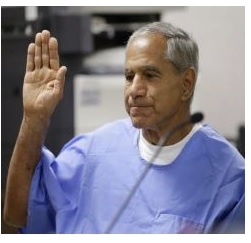
    Kennedys and King has received the following request from Angela Berry, the attorney representing Sirhan Sirhan.


    For Sirhan’s upcoming March 1 parole hearing, we need new, updated letters from people.

    As before, the support can be supplemented with the idea that

      1. He’s an old man and no longer dangerous, even [California Department of Corrections] experts have been saying that for many years
      2. It’s a waste of tax payer funds to house an aging man who poses no risk
      3. He shouldn’t be treated differently because of his victim
      4. The Board must find him again suitable for release and refrain from inappropriate persuasion from the Governor
      5. The governor got it wrong and he has no proper place in the decision

    Also as before, the letters should be addressed to:

    State of California, Dept. of Corrections and Rehabilitation

    Board of Parole Hearings

    P.O. Box 4036

    Sacramento, CA 95812-4036

    It would be extremely helpful if the letter authors also sent me a copy of their letter. That way, I can send them also to CDCR to ensure they make it to the “packet” that will be considered by the Board.

    Angela Berry


    Letters in support of Sirhan Sirhan may be sent to:

    Angela Berry

    A Professional Law Corporation

    75-5660 Kopiko Street, Suite C-7, #399

    Kailua-Kona, HI 96740

  • Sirhan’s attorney to Appeal Newsom Parole Veto

    Sirhan’s attorney to Appeal Newsom Parole Veto


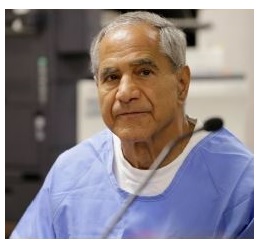
    The attorney representing Sirhan Sirhan has announced an appeal of California Goveror Gavin Newsom’s decision to deny a parole to the convicted killer of Robert F. Kennedy.

    Sirhan was granted the parole in August 2021, having served fifty-four years in prison.

    At a virtual press conference on September 28 2022, attorney Angela Berry stated that in granting the parole last year, the parole board had followed the law, but in denying it, Newsom had not. Considering Sirhan’s age – 78 – and his model prisoner record, his release should have been the normal decision. According to those in contact with him, he poses no danger to society.

    This was one of the most impressive parts of the Sept. 28 conference. Both Berry and Jen Abreu, the director of an agency called Redemption California, presented statements that they secured from those who had contact with Sirhan at Richard J. Donovan Correction Facility in San Diego. Each one of the witnesses stated that Sirhan had both an exemplary record, and was quite cooperative and easy to work with.

    In some instances, they said, he had gone beyond what was required of him. He had attended self-help classes that were offered at Donovan on his own initiative. Abreu was very familiar with this evidence since her group had worked with Sirhan for upwards of 13 months to prepare him for his last parole board hearing. She said that in 54 years of incarceration, the record showed one rule violation. And that over fifty years ago. She said, that in her experience, this was an utterly exceptional record. Consequently, according to the prison rating system for release, Sirhan was in the lowest category as per offering a danger to society.

    Berry said that at the actual hearing, two of the highest ranking commissioners were in attendance. They voted for release. They then passed on their recommendation to the entire board, which agreed with it. Sirhan joined the conference with a video taped talk. There he stated that what makes his case unusual is that even victims of the crime, like Paul Schrade, have advocated for his release. Its rare that something like that occurs.

    There were questions from reporters after the press conference. One was if Berry thought this was going to be a futile effort, due to the notoriety of her client. She replied that she did not think so, since Newsom had previously lost a case like this. In fact, she could have added that the ACLU has filed a lawsuit trying to overturn the governor’s power to do such a thing. (https://www.aclu.org/news/criminal-law-reform/politicians-have-no-place-making-parole-decisions-for-young-people)

    Berry said she will be filing her case in Los Angeles Superior Court Department 66, adding that the process could take several months. She does not think the local DA will oppose her, but the state Attorney General, due to Newsom’s position, probably will. When asked, she said she would appeal if she lost the initial hearing.

    Berry closed with two interesting points. Sirhan’s next parole hearing is scheduled for March 1st of next year. She said she plans on going through with the process at that time. Finally, in a rather forgotten episode, she added that Sirhan had actually been granted parole back in the seventies. But what happened is that the legislature passed a law giving the governor the power to intercede. The parole board then reversed itself and denied Sirhan the parole they had just handed him.

    Sirhan’s family chose Angela Berry to represent him because this kind of law – parole and prisoner release – is her specialty.

    UPDATE: Kennedys and King has received the following request from Angela Berry, the attorney representing Sirhan Sirhan.


    For Sirhan’s upcoming March 1 parole hearing, we need new, updated letters from people.

    As before, the support can be supplemented with the idea that

      1. He’s an old man and no longer dangerous, even [California Department of Corrections] experts have been saying that for many years
      2. It’s a waste of tax payer funds to house an aging man who poses no risk
      3. He shouldn’t be treated differently because of his victim
      4. The Board must find him again suitable for release and refrain from inappropriate persuasion from the Governor
      5. The governor got it wrong and he has no proper place in the decision

    Also as before, the letters should be addressed to:

    State of California, Dept. of Corrections and Rehabilitation

    Board of Parole Hearings

    P.O. Box 4036

    Sacramento, CA 95812-4036

    It would be extremely helpful if the letter authors also sent me a copy of their letter. That way, I can send them also to CDCR to ensure they make it to the “packet” that will be considered by the Board.

    Angela Berry


    Letters in support of Sirhan Sirhan may be sent to:

    Angela Berry

    A Professional Law Corporation

    75-5660 Kopiko Street, Suite C-7, #399

    Kailua-Kona, HI 96740

  • The Unheard Tapes: Part 2

    The Unheard Tapes: Part 2


    see Part 1

    Cassettes 37 & 45: Robin Thorne, George Cukor’s Nurse

    I must confess to a certain confusion regarding Robin Thorne’s testimony, both its content and its purpose. What does the testimony actually reveal? Additionally, the testimony is not exactly accurate.

    If George Cukor, who directed Let’s Make Love along with Marilyn’s final, but incomplete, movie, actually thought very highly of Marilyn, he chose an odd manner of exhibition. According to biographer Gary Vitacco-Robles, Cukor engaged in an act of sabotage while filming Something’s Got to Give. The director told Fox executives, after watching prints of Marilyn’s scenes, he considered her acting inferior. She absentmindedly floated through her performance, Cukor asserted, on a drug or an alcohol induced cloud, possibly both. Cukor’s sabotage, combined with Marilyn’s frequent absence from the set due to illness, and her appearance at President Kennedy’s May 1962 birthday gala, prompted Fox to terminate her employment. Citing breach of contract, the studio sued both Marilyn and Marilyn Monroe Productions for financial redress in the amount of $750K.

    What followed was a scorched earth attack by 20th Century-Fox Film Corporation against the movie star that had earned the movie makers many piles of money. And based on evi­dence that was hidden by Fox in a vault for practically four decades—nine hours of exposed film and production documents—the studio’s campaign to ruin Marilyn’s career, using any and all means available, including false accusations and labeling her completely insane, was unnecessary and unsupported by all the evidence available at that time. But following two weeks of defending their decision to fire Marilyn, Fox withdrew their lawsuit and quietly reinstated her, partly due to intervention by former studio head Darryl Zanuck, but primarily because Dean Martin, the male lead and Marilyn’s friend, refused to proceed without her. Martin would not make the movie with any other actress. Marilyn finally agreed to return to the movie set starting in October, for which the studio agreed to more than double her salary. She wanted George Cukor replaced with Jean Negulesco, who had directed How to Marry a Millionaire. The studio agreed; but unfortunately, due to Marilyn’s untimely death, she never returned to the set of Something’s Got to Give.

    Cassette 18B: Angie Novello

    According to the accepted mythology involving Marilyn and her telephones, the Attorney General, once he succumbed to romance, provided the actress with an exclusive telephone number: a private line directly into his office at the DOJ. They talked constantly, walking around with sixties vintage telephone receivers hooked to their mouths and their ears. As usual, not one tiny fragment of evidence ever existed that confirmed such silliness, but that fact did not matter to the many authors that promoted the private telephone line mythology. The well-known fact that Marilyn and Robert Kennedy conversed via the national telephone wires became proof that the celebrities were lovers and gave the conspiracist writers another way for a heartless Robert Kennedy to reject and humiliate his movie star paramour—he extinguished her private line—giving an angry Marilyn another reason to retaliate and, also to dramatically get back at the AG, to threaten his exposure in the press. Angie Novello’s twenty seconds worth of testimony established for Summers that the actress and attorney general communicated by telephone, but it should be noted that Angie intercepted the telephone calls routed to the attorney general through the DOJ’s switchboard, RE7-8200. If Marilyn knew Robert Kennedy’s private number, why didn’t she use it? That is an obvious question never posed by Summers or any other conspiracist.

    With the release of Marilyn’s 1962 telephone records for the months of April through July—the ones allegedly confiscated and then destroyed by the LAPD, the FBI, and the Secret Service—Marilyn placed a grand total of six telephone calls to Washington, DC, to the above noted Justice Department number. She called RE7-8200 initially on June the 25th, twice on July the 2nd, once on July the 16th and twice on July the 17th. Three of her conversations lasted one minute, two lasted two minutes, and one of her July the 2nd conversations lasted five minutes. According to Donald Spoto, Marilyn used the call of June the 25th to confirm that Robert Kennedy would be “at the Lawfords’ on Wednesday evening [June 27th] and to invite him and the Lawfords to visit her home for a drink before dinner.” During that call, Marilyn spoke with Angie Novello. Not one person alive today knows the identity of the person to whom Marilyn spoke during the other calls to the Justice Department.

    Many of Robert Kennedy’s friends and advisers over the years confirmed that the AG and Marilyn were telephone buddies. Edwin Guthman confirmed that Marilyn called the DOJ several times over the summer of 1962 and spoke with Robert Kennedy, who was interested in Marilyn’s life and her many problems. According to Guthman, the attorney general was not a man inclined to chit chat or idle talk with anybody; and so his tele­phone conversations with Marilyn were invariably short and concise. Arthur Schlesinger, Jr. also confirmed that Marilyn called the attorney general, noting that Marilyn usually called Robert Kennedy when she was troubled and also noting that Angie Novello, who, I repeat, intercepted Marilyn’s telephone calls, talked to the actress more than the attorney general.

    During a 1984 interview, Angie stated that the AG, when he was unoccupied, always accepted Marilyn’s telephone calls. If he was occupied, he returned her calls as soon as he could, if time allowed. Marilyn was, after all, Marilyn! Angie also remarked dur­ing the interview that Robert Kennedy was a sympathetic person, aware of Marilyn’s many problems. He was also an excellent listener. In Angie’s opinion, that is exactly what Marilyn needed the most: a sympathetic ear. The content of those conversations between Marilyn and the attorney general remain unknown; but they are often characterized, by those with a vested interest, as impassioned conversations between impassioned lovers, as if those offering such a characterization actually know or knew. As if they, too, were involved in the dialogue flying with the speed of light from coast to coast.

    Finally, Angie also remarked that actress and singer Judy Garland was a close friend with whom RFK spoke frequently; but not one person has ever suggested that they were involved in a love affair. Why is that so? The answer is obvious.

    Cassette Unnumbered: Natalie Trundy

    The evening of August the 4th in 1962 was slightly cooler than normal. So, Arthur Jacobs, Marilyn’s publicist, along with his fiancé, the actress Natalie Trundy, attended a Ferrante and Teicher concert in the Hollywood Bowl. According to Natalie, just before the concert was scheduled to end at 11:00 PM, an usher arrived and informed Jacobs that Marilyn was either dead or close to death. Therefore, according to Natalie’s account, Marilyn died sometime prior to or slightly after 11:00 PM on August 4th.

    According to Natalie, Jacobs left almost immediately, drove to Fifth Helena Drive where he conferred with some persons who were already at the hacienda. Jacobs left the hacienda only after a few minutes of conversation. A few days later, Arthur told Natalie that the situation at Fifth Helena Drive was horrendous. Natalie admitted to Donald Spoto that Jacobs never provided any details, commenting only that it was too dreadful to discuss; and Natalie never asked for details: her knowledge of what transpired that morning was, therefore, limited, an inarguable fact.

    I would be remiss if I failed to note that Natalie Trundy’s testimony qualified as hearsay and it could not be corroborated by interviewing Arthur Jacobs. He died from a sudden heart attack in 1973.

    Cassette Unnumbered and 126A: Ken Hunter and Walt Schaefer (respectively)

    The tape recording of Ken Hunter was not the product of an interview conducted by Anthony Summers. The district attorney’s lead investigator, Al Tomich, conducted the Hunter interview; but Summers did not make that perfectly clear before he played the tape. The Hunter interview, and then Walt Schaefer’s interview generally began an unfolding of what has come to be designated “The Ambulance Theory.” During the years following Marilyn’s death, this theory has been continually retold—and has been reshaped with each retelling. It has appeared in many complex iterations, involving many persons: Peter Lawford, Pat Newcomb, Dr. Ralph Greenson, and, in one super imaginative scenario, the attorney general, who, along with Peter Law­ford, rode in the ambulance with the dying movie star, only to be returned, along with the movie star’s corpse, to Fifth Helena Drive.

    However, Summers’ presentation of The Ambulance Theory implied that Ken Hunter, the former ambulance man, contacted the Los Angeles County District Attorney. Ken Hunter, along with Walt Schaefer, became parts of the theory’s evolution, but Hunter was not the first former ambulance man to contact the district attorney—and, in fact, Ken Hunter himself did not contact the DA’s office. Though Summers did not provide any context relative to calendar dates, the initial contact with the LADA’s office arrived in 1982. This was at the start of the LADA’s threshold re-investigation into Marilyn’s death. The former ambulance man asserted that his name was Rick Stone. Even­tually, Stone revealed that his actual name was James Hall, a desperate man on a pecuniary mission. Hall needed to rescue his family from financial troubles by selling a Marilyn Monroe story that involved him and an ambulance. The former ambulance man asserted that he would share his astonishing ambulance story with the district attorney’s investigators only if appro­priately compensated for any incurred expenses. More about Ken Hunter and James Hall will appear later.

    Cassette HH: John Sherlock

    Evidently, John Sherlock was a reporter. In Goddess, Anthony Summers identified his source as such, “Significant corroboration that an ambulance was called came following the publication of this book’s first edition from reporter named John Sherlock.” Sherlock also appeared in the book that allegedly closed Marilyn’s case, written by Jay Margolis and Richard Buskin. They identified Sherlock as an American writer and noted that:

    a documentary featuring Anthony Summers surprisingly endorsed Walt Schaefer’s and Murray Leib’s original testimony via a key player the night [Marilyn] died. American writer John Sherlock relayed what his friend Dr. Greenson had told him.

    The television tabloid program, Hard Copy, known for its use of dubious material, produced the referenced “documentary” in 1992.

    Amazon lists four books written by a John Sherlock, published during a seven-year interval between 1981 and 1988. However, Amazon does not have any information about the writer. I have not been able to learn anything at all about John Sherlock, which means I have not been able to confirm, as alleged by Margolis and Buskin, that Sherlock was, in fact, Dr. Green­son’s friend. Despite the concussive quality of Sherlock’s testimony, it is gross hearsay. And Sherlock is not mentioned in any of the books about Marilyn in my possession other than the two mentioned above, not even Donald Wolfe, who often repeated hearsay testimony, mentioned Sherlock. Perhaps Sherlock’s hearsay was even out there for Wolfe.

    I admit that I am a skeptical person; and regarding stories about Marilyn Monroe’s death, I am a complete, almost a querulous cynic. Primarily because I have uncovered more fabrications, prevarications, con­tradictions, and downright lies about that sad event than Carter’s got little liver pills. So, I am more than incredulous when I read or hear secondhand, uncorroborated statements, particularly one purporting that Dr. Ralph Green­son, while seated at table during a luncheon in 1964, or thereabouts, simply volun­teered, admitted that he was in an ambulance transporting Marilyn to a hospital when she died. And that the ambulance merely reversed course and returned Marilyn’s corpse to her bed at 12305 Fifth Helena Drive, which is unquestionably a story that should have generated several hundred questions never asked by either Sherlock or Summers. I’ll pose but one: Did Dr. Greenson whisper his story to Sherlock so any person seated nearby would not hear it?

    Cassette 18A: Bill Woodfield

    Photojournalist Bill Woodfield was an acquaintance of Marilyn’s. She invited him to photograph the swimming pool scene on the set of Something’s Got to Give, Marilyn’s final but unfinished movie. Woodfield and another photojournalist, Joe Hyams, also an acquaintance of Marilyn’s, doubted that she had committed suicide, or Woodfield so alleged. As a result of their doubt, the photojournalists claimed that they investigated the circumstances surrounding the movie star’s death, an investigation that included a retired police officer. A rumor that a helicopter had been dispatched to and landed on Santa Monica beach early Sunday morning, August 5th, prompted the investigation, certainly an abbreviated one: the investigation endured for slightly more than three days.

    Woodfield claimed that he saw a helicopter log when, on August 8th, the day of Marilyn’s funeral, he visited Hal Conners’ Helicopter Service: a ser­vice frequently employed by Peter Lawford and other celebrities. The random act of journalism, for which Summers expressed his respect during Woodfield’s interview, was the purported discovery of that log. There is only one prob­lem: Woodfield did not obtain a copy of the mysterious log. It has never been published. It has never been seen by anyone other than Bill Woodfield. There is no tangible evidence or verifiable proof of any kind that this helicopter log ever existed.

    Additionally, in Goddess, Summers noted that the rented helicopter landed to collect a passenger and then to deliver that passenger to the main Los Angeles airport. According to Woodfield, the log confirmed Robert Kennedy’s presence in Los Angeles on August 4th and his departure from Santa Monica Beach by helicopter during the early morning hours of August 5th. Clearly confirmed? Precisely how? Not at any time did Summers or Woodfield, or anybody else for that matter, assert unequivocally that Robert Kennedy’s name was written on that helicopter log. It appears as if Woodfield or Summers made a quantum leap from “passenger” to Robert Kennedy. It appears that Woodfield, or someone conveying the story, simply assumed Robert Kennedy to be the passenger.

    Additionally, the testimony attributed to Woodfield in the 1985 version of Goddess is apprecia­bly different than the testimony attributed to Woodfield in the 2012 version. Also, none of Woodfield’s taped testimony, as presented in the Netflix movie, appeared in the 1985 version of Goddess. Yet, according to Summers’ source notes, he interviewed Woodfield in 1983 and 1984. Furthermore, based on Summers’ 2012 source notes, the investigative jour­nalist did not re-interview his photojournalist source following the original interviews. And Wood­field died twenty-one years ago.

    In the 1985 version of Goddess, Summers quoted Woodfield as follows:

    The time in the log was sometime after midnight—I think between midnight and two in the morning. The booking is a blur in my memory now, but it was definitely in the name of either Lawford or Kennedy. (emphasis mine)

    This is an odd use of the word definitely, at least in my opinion, considering that Woodfield’s recollection was definitely not definite. But then, according to Goddess 2012, Woodfield reported this: “The time in the log was sometime after midnight—I think between midnight and two in the morning. It showed clearly that a helicopter had picked up Robert Kennedy at the Santa Monica Beach.” Odd. Why the difference? No attempt to explain or account for the contradictory statements Summers attributed to Bill Woodfield. And I repeat: Woodfield died twenty-one years ago, before the revision. Furthermore, why did Summers exclude the testimony of Woodfield’s partner, Joe Hyams? The author’s source notes indicated that he interviewed Hyams in 1983, 1984, and 1985. Did Summers fail to tape record Woodfield’s partner? Likewise, Summers asserted in Goddess that he interviewed the retired policeman who assisted Woodfield and Hyams with their investigation. But Summers did not reveal anything about the policeman’s testimony, neither in Goddess nor the Netflix movie. We are left to speculate regarding why Summers excluded the policeman’s testimony.

    The story appertaining to Conners’ helicopter log is complex, convoluted, and lengthy. It involves two other chopper pilots who flew for Connors in 1962, James Zonlick and Ed Connelly. Zonlick was Conners’ chief pilot. During Summers’ interviews with both pilots, they repeated for Summers what they recalled Conners had told them in 1962. According to Zonlick, Conners stated that he had picked-up Robert Kennedy at Santa Monica Beach and delivered him to the Los Angeles International Airport. Ed Connelly testified only that Conners talked about landing on the beach without the aid of landing lights. Summers then reported that Zonlick could not remember the exact date of the Robert Kennedy flight Conners had mentioned. And likewise, Connelly could not pinpoint the date of the flight that Conners had mentioned to him. So, the exact dates of those flights have never been confirmed. And by the time Summers interviewed Zonlick and Connelly, Hal Conners was already dead. Zonlick believed, however, that the trip to collect and deliver Robert Kennedy occurred during the right time frame, probably during the latter half of 1962, meaning what, exactly? That Conners might have flown Robert Kennedy during the months of June, July, August, September, October, November, or December of the year? Not exactly compelling evidence or proof that the Conners’ flight with Robert Kennedy actually occurred on August 5th, 1962.

    At any rate, the pull quote from Woodfield’s taped testimony is this: “Find out where Bobby Kennedy was that weekend.” Well, in fact, Summers did find out where the attorney general was that weekend; but those niggling facts do not appear in the Netflix movie. Those facts will appear in this commentary later. But now, suffer a brief biography of Bill Woodfield.

    Woodfield’s first true love was magic, along with hypnosis. In 1946, at the age of eighteen, the fledgling magician and hypnotist founded a newsletter that he described as a trade paper for magicians, Woodfield’s Magicana. He only published two issues. In September of 1947, The Conjuror’s Magazine featured a condensed version of Woodfield’s first two issues. Then, from January of 1948 until April of 1949, Genii Magazine featured a total of sixteen articles written by Woodfield. It became painfully clear that he could not support himself with magic or hypnosis. He turned to photography as the mid-fifties approached, a profession he left in the mid-sixties when he began to write for several television series, the most important of which was Mission: Impossible. Along with his writing partner, Allan Balter, Woodfield has been credited with changing the story lines of Mission: Impossible, while also incorporating scams and complex cons into the methods used by agents of the Impossible Missions Force to defeat their adversaries. The Big Con, written by David Maurer, became a guide for Woodfield and Balter as they prepared plot lines and scripts. A con devotee, Woodfield often referred to him­self as an apprentice cheat, meaning a con artist in training. It is entirely possible, I would suggest, that Bill Woodfield’s helicopter log story was a scam, his version of the big con. Keeping in mind, once again, that the helicopter log has never been published, posted or—for the record—seen.

    Cassette 77: Harry Hall

    Summers identified Harry Hall as a Law Enforcement Informant, as if that title suggested a category of professional endeavor that a fellow might declare on a job application. Former Employer: Law Enforcement. Position: Informant. While at the Beverly Hilton Hotel on January 24th in 1984, Summers interviewed law enforcement’s informant. Summers wanted to learn if Hall had learned anything about Bobby Kennedy’s movements the weekend Marilyn died. Hall replied that he:

    had heard, on good authority, that the Saturday that this happened—the day Marilyn died—Bobby had come into town. Bobby was in town and supposedly left. And when I say I heard it, I heard it from a federal agent, an FBI agent that nei­ther Hall nor Summers deigned to identify. (emphasis mine)

    Summers questioned Hall regarding a possible FBI investigation into Marilyn’s death. Did the FBI investigate what actually happened? What the FBI performed, according to Hall, was not an investigation as much as it was a “hush-hush,” a cover-up orchestrated by Robert Kennedy: “He was the Attorney General of the United States,” Hall reported, “so he could have the FBI do anything.” Besides, the attorney general had to protect the president, and as a result, “they had done everything to hush this up.” One question: if Robert Kennedy could have FBI agents jump at his beck and call, do anything for him, why, then, did he and Pete Lawford need to rely on Fred Otash, as is often reported, to sweep clean, to sanitize Marilyn’s hacienda?

    Summers did this throughout Goddess; repeating hearsay testimony from Los Angeles Police Department informants while also relying on persons of authority: former mayors, for instance, police chiefs, or others identified as agents of various authorities, to re­peat hearsay testimony, such as Mayor Sam Yorty. And like the testimony offered by Harry Hall, none of Summers’ other testifiers could offer a firsthand sighting of Robert Kennedy in Los Angeles on August 4th, 1962. There is an invariably ignored, but nonetheless overwhelming, reason why this is so, which I will discuss later. Also, not only was the testimony offered by Harry Hall hearsay, but it also represents illogic, one that appeared in the testimony of both Reed Wilson and Jim Doyle, whose testimony will appear in sections following hereafter.

    Cassette 28: Reed Wilson

    The taped testimony of Reed Wilson was presented by Summers, and his Netflix producers, primarily to confirm two aspects pertaining to Marilyn’s purportedly mysterious case:

    1) Fred Otash procured dozens of salacious tape recordings on which Marilyn and the middle Kennedy brothers could be heard engaging in sexual activity; and

    2) Robert Kennedy traveled to Los Angeles on August 4th, 1962.

    According to Summers’ exposition, he was advised on more than one occasion that he needed to have to talk with Reed Wilson, “renowned in government and business circles as one” terrific snoop. And yet, Reed Wilson’s name does not appear anywhere in the Marilyn canon, not in her legitimate biographies and not in the many publications that promoted a murder orthodoxy—at least, perhaps I should clarify and qualify, not that I have been able to discover. For an example, Matthew Smith, wrote two books about Marilyn, and her secret tapes, and did not mention Reed Wilson. Additionally, and notably, in the 2012 Kindle edition of Goddess, Reed Wilson does not even receive a mention by Summers. We are left to ponder: why? To maintain secrecy? Reed Wilson was still among the living in 2012, living in Solvang, California, at the age of eighty-three years. By that time, Marilyn had been dead for fifty years, John Kennedy for forty-nine and Robert Kennedy for forty-four. Reed Wilson lived until 2015.

    Of course, the main problem with Wilson’s testimony is his assertion regarding Robert Kennedy’s location on that Saturday in 1962. While Wilson did not assert that the AG visited Marilyn, he asserted that Robert Kennedy telephoned Marilyn from Peter Lawford’s beach house. But then, the following question seems more than pertinent: why would Marilyn’s former lover travel to Los Angeles only to telephone her from Lawford’s beach house? He could have telephoned her from Washington or Hyannisport or Fairbanks, Alaska. At any rate, Robert Kennedy’s location on that Saturday is more than just a niggling issue for Anthony Summers and one he chose to ignore. That ignored issue will appear again later.

    Cassette 93B: Eunice Murray

    The taped testimony offered by Eunice Murray, at least the testimony included by Summers, appeared to confirm that Robert Kennedy visited Marilyn on August 4th. But, on the show, Summers did not ask Eunice if Robert Kennedy visited on August 4th: the term the author used was “that day,” along with “that afternoon.” We know that Robert Kennedy visited Marilyn, accompanied by Pat and Peter Lawford, on the 27th of June in 1962. Eunice Murray recounted the attorney general’s brief visit on that Wednesday for biographer Donald Spoto. The Lawfords arrived at Fifth Helena that afternoon to collect Marilyn, and Robert Kennedy was with them: Marilyn wanted them to see her new home. After a brief tour of Marilyn’s humble hacienda, the group proceeded to the Lawford’s beachside mansion for a dinner party. That June visit, residential tour and dinner party was the fourth and final meeting of Bobby and Marilyn. The rumor of a fifth meeting at Fifth Helena Drive, based on an unsubstantiated story by photographer Lawrence Schiller, has never been confirmed.

    Even though Mrs. Murray asserted that “the Kennedys were a very important part of Marilyn’s life,” an assessment that can be interpreted many ways, Mrs. Murray also admitted that she “wasn’t included in this information.” To what “information” was she referring? If she lacked information, how could she know just how important the middle Kennedy brothers were to Marilyn, despite being a witness to “what was happening.” And what exactly was happening? Evidently, Anthony Summers did not ask Mrs. Murray for any specifics and she did not volunteer any. Likewise, her comment pertaining to the activation of Robert Kennedy’s protectors was equally vague and lacked specificity. But it seems like vagueness was what Summers wanted. Additionally, the taped testimony offered by Summers did not represent the totality of Mrs. Murray’s statements about Marilyn and Robert Kennedy. Those specific declarations will appear later in this commentary.

    Cassette 106: Jim Doyle

    James Edward Doyle began his career with the FBI following WWII. He received special training at Quantico, Virginia, which prepared him to function as an Organized Crime Specialist. According to his obituary in the Capital Journal, Pierre, South Dakota, where Doyle was born and raised, he spent most of his FBI career in Indiana and Illinois, and then later, in Nevada and New Mexico. In 1979, while serving in the FBI’s Albuquerque Office, he retired from the FBI and founded his own investigative company, James Edward Doyle Investigation (JEDI). After operating JEDI for twenty-nine years, Doyle retired and relocated to Henderson, Nevada. He died in 2019 at the age of ninety-four. His obituary noted: “Jim’s FBI stories with the likes of Frank Sinatra, JFK, William Randolph Hearst, and Marilyn Monroe, to name a few, could be made into movies!” His friends considered Jim to be “the best storyteller ever.” Sadly, the forty seconds of Doyle’s taped testimony that Summers selectively included in his Marilyn movie did not include any of Doyle’s movie-worthy stories, the ones involving JFK and Marilyn. We are left to wonder about those stories: with what could the best storyteller ever have regaled us?

    Summers posed the following question to Doyle: “As far as the actual records being removed, you were aware of that from your colleagues (emphasis mine)?” Doyle answered: “O yeah. Yes. This happened.” Doyle did not offer any exposition and Summers did not ask about the nature of the removed records. Also, based on Summers’ question and Doyle’s response, it is clear that the FBI agent learned about the alleged record removal from his colleagues. Summers, therefore, passively accepted hearsay testimony, possibly even second or third hand hearsay; but Doyle’s closing statements raise many pertinent questions: “I was there at the time when she died,” an assertion that can only be interpreted one way. Jim Doyle was inside Marilyn’s hacienda at the moment of the movie star’s death, certainly an incredibly explosive assertion that Summers evidently did not even pursue. Why? But then Doyle reported an equally explosive occurrence: “There were some people there that normally wouldn’t have been there.” Agents, bureau people. Doyle did not mention any names and Summers did not pose any probing questions. Was J. Edgar Hoover there? Clyde Tolson? Who was there? Doyle then informed Summers that these Bureau people, who normally would not have been there, due to their elevated position in Hoover’s fiefdom, one assumes, arrived immediately, “before anybody even realized what had happened,” one of the more remarkable assertions I’ve ever heard about the night of Marilyn’s death; and I’ve heard some real doozies. Summers’ lack of curiosity re­garding what Doyle actually asserted was and is remarkable, to say the least.

    Summers included Doyle’s testimony as confirmation that agents, FBI people, materialized at Fifth Helena Drive in order to confiscate information that compromised the middle Kennedy brothers and proved that they were romantically and sexually involved with the World’s Sex Symbol. But a major illogic is lurking in the testimony of both James Doyle and Harry Hall.

    A Well-Known Fact and the FBI Protection Illogic

    Certainly, during the last nine months of her life, Marilyn associated with the middle Kennedy brothers and they with her. She initially met Robert Kennedy at a well-attended Lawford dinner party. As was well-known, Marilyn and the attorney general talked on the telephone several times during the summer of 1962. The actress initially met the president at a thousand dollar a plate fund raiser in Manhattan. Then, observed by Bing Crosby’s other guests and the Secret Service, for one night in late March of 1962, Marilyn and John Kennedy shared a bungalow on the crooner’s desert estate. Marilyn and the president met one last time in May at Madison Square Garden where Marilyn delivered her sultry rendition of “Happy Birthday to You.” Several members of the Kennedy clan attended the president’s birthday gala, including Robert and Ethel Kennedy, accompanied by a large live audience of fifteen thousand. Other celebrities also performed that Saturday night; members of the press were there; and more than a few television stations reported on the Manhattan event in real time. In short, Marilyn’s association with John Kennedy and his younger brother was a well-known fact. No amount of documentation could have been removed from Marilyn’s home after she died to alter that fact. Since rumors of romantic entanglements had already begun to circulate even before Marilyn’s death.

    As far as I know, the middle Kennedy brothers never commented publicly on Marilyn’s tragic end. Their silence has been used as evidence that each brother was guilty of having an affair with the world’s symbol of easy sex. But then, in 1962, the president’s job did not include acting as a bureaucratic ointment available to soothe the anxieties caused by every tragedy that occurred. Certainly, the president and the AG knew that anything they said about Marilyn’s death would have been promptly misconstrued, would only have served as a potent fertilizer fomenting more suspicion, speculation, and rumor. Besides, they and their advisors also must have known this old idiom: you cannot unring a bell.

    The fact that Tony Summers included the statements of Harry Hall and James Doyle about the FBI allegedly covering up Robert Kennedy’s part in the death of Marilyn Monroe showed a lack of balance; plus an eagerness to accept the most illogical and ahistorical kind of testimony. For instance, that somehow there were FBI agents on the scene of her home in the early morning hours of August 5th, which no credible author has ever noted. But the idea that J. Edgar Hoover would go to such lengths in order to protect the middle Kennedy brothers over something like a conspiracy to conceal a ruinous affair runs contra to just about all we know about Hoover. FBI Counter-intelligence chief William Sullivan, for one, said his boss, J. Edgar Hoover, tried to inflame rumors about an affair between Bobby Kennedy and Marilyn Monroe. The problem was, neither the boss nor his minions could find any evidence of an affair.

    Why did Hoover want to do this? Because Bobby Kennedy was the only attorney general who actually acted like he was Hoover’s boss. He could do so since his brother was the president and Hoover knew they did not want him there anyway. For instance, Hoover wanted to do next to nothing on civil rights, but Bobby Kennedy pushed that agenda. And even at that, Hoover would not reveal undercover information that could have prevented bloody violence during the Freedom Rides. (See Irving Bernstein, Promises Kept, p. 64) When Hoover tried to circulate a very negative memo about Martin Luther King, Bobby Kennedy ordered him to withdraw it.

    When President Kennedy went up against steel executives in 1962, FBI agents served the subpoenas in the wee hours of the morning, not because Bobby wanted them to, but because that was when he called Hoover. Finally, to say the least, Hoover was reluctant to pursue the Mob, whereas Bobby was obsessed with that cause. (David Talbot, Brothers, p. 141) Hoover would have performed none of these actions on his own. He was a racist, was unperturbed about Mob influence, and was beholden to wealthy patrons. Hoover got back at the Kennedys by doing things like spreading rumors about the president and Ellen Rometsch, a reputed East German spy working out of Washington. When ace researcher Peter Vea discovered the raw FBI reports on Rometsch, there was nothing in them about an affair between her and the president. Bobby Kennedy once said that he thought Hoover was something of a psycho. (Talbot, p. 143) The enmity was mutual. FBI official William Sullivan said the two people Hoover hated most were RFK and King, in that order. As Hoover biographer Curt Gentry has noted, if such information about Monroe was available, Hoover would have used it against Bobby. And what is the denouement to this tale? As everyone knows, once John Kennedy was assassinated, Hoover pulled the private telephone line out of Bobby’s office. The testimony of Hall and Doyle is rather at odds with this record.

    Rick Stone, Walt Schaefer, Ken Hunter and the Ambulance Yarn

    On an unlucky Friday in 1982, August the 13th, just as the LADA started its threshold re-investigation into Marilyn’s death, Deputy District Attorney, Ronald H. Carroll, received a telephone call from a man who called himself Rick Stone. “Rick” identified himself and inquired if the LADA might be interested in purchasing some information about the death of Marilyn Monroe. The re-investigation’s summary report, published in December of 1982, clarified that Stone initially contacted the district attorney’s office on Wednesday, August 11th; and thereafter, using the Rick Stone code name,

    he telephonically contacted this office several times. Ultimately, he attempted to sell information to the District Attorney’s Office relating to his observations at the death scene on the morning of August 5, 1962, at Marilyn Monroe’s home.

    Eventually, Rick Stone disclosed his actual name, James Hall, a former ambulance attendant who had driven for the Schaefer Am­bulance Service in 1962.

    According to Hall’s narrative, he and his partner, Murray Liebowitz had been dispatched to Marilyn’s during the early morning on August  5th, 20 years earlier, sometime between the hours of 4:00 and 6:00 AM. When he and Liebowitz arrived, Hall informed Ronald Carroll, Marilyn was still alive, but very near eternity. Hall/Stone then said that as the two attendants began their resus­citation efforts, she started to respond. A doctor then appeared and ordered Hall and his partner to stop. From his black bag, the doctor produced a long hypodermic and injected Marilyn directly into her heart with an unknown liquid, which immediately killed her. Such was the mind-boggling story James Hall relayed to the deputy district attorney. But as explosive as it was, Carroll declined to pay Hall for his testimony. So, Hall sold his story to The Globe, a super­market tabloid, for $40K. In fact, obtaining payment for his ambulance yarn was Hall’s primary goal, a fact confirmed by recorded telephone conversations between Hall, Ronald Carroll, and Alan Tomich, Carroll’s lead investigator. As an aside, $40K is approximately equal to $123K in today’s currency.

    Walt Schaefer initially contradicted Hall’s story and denied that the attendant even worked for Schaefer Ambulance Service, but Walt eventually recanted his refusal and acknowledged Hall’s employment. He told the fib, he explained, because he feared the all-powerful Kennedy clan would retaliate and ruin his thriving ambulance business. The ambulance service owner also initially testified that the attendants dispatched that night in August were, in fact, Ken Hunter and Murray Liebowitz. Obviously hoping to unravel what was becoming a complicated tale, the LADA located Ken Hunter and obtained his testimony. According to the Summary Report:

    Since Mr. Hall’s statements have surfaced, another person, a Mr. Ken Hunter, has been located who claims to have been an ambulance driver who responded to the Monroe residence in the early morning hours of August 5, 1962.

    In the Netflix movie, Summers asserted that he had learned about Ken Hunter, “former ambulance man,” who had “contacted” the district attorney’s office, and “he said that he’d been aboard an ambulance that had gone to Marilyn Monroe’s house that night.” Hunter’s story appeared to corroborate Walt Schaefer’s story: one of Schaefer’s ambulances had transported a comatose Marilyn Monroe to Santa Monica Hospital during the early morning hours of August 5th. But, as I stated earlier, Ken Hunter was not the first “former ambulance man” to contact the district attorney; and in fact, Ken Hunter did not actually contact the district attorney’s office, as denoted by Summers—not ever. As I stated above, James Hall contacted Ronald Carroll. The film presented only a small fraction of the Hunter/LADA interview /conversation. What follows is a transcription of the interview as presented in the Netflix movie:

    LADA:  What happened?

    Hunter: What do you mean?

    LADA: Did you go into the house?

    Hunter: Yeah.

    LADA: Did you see Monroe’s body?

    Hunter: Yeah. She was on the bed.

    LADA: Do you recall if she was on her back or her stomach?

    Hunter: Side.

    LADA: She was on her side.

    Hunter: Yeah.

    What follows is a transcription of the actual Hunter/Tomich interview:

    Tomich: What happened?

    Hunter: What do you mean?

    Tomich: I mean what occurred?

    Hunter: Well, I don’t know. Nothing really occurred. She was dead and they wouldn’t let us take her. The morgue came and took her.

    Tomich: Did you go into the house?

    Hunter: Yeah. I believe so.

    Tomich: Did you see Monroe’s body?

    Hunter: Yeah.

    Tomich: Where was it at the time?

    Hunter: Umm. She was on the bed. Hanging off the bed…something…I don’t recall.

    Tomich: Do you recall if she was on her back or her stomach?

    Hunter: Side.

    Tomich: She was on her side.

    Hunter: Yeah. I believe she was on her side. Umm. Yeah, it seems to me she was on her side.

    Tomich: Did either one of you touch her body?

    Hunter: No, I didn’t.

    Tomich: Do you know if your partner did?

    Hunter: Seems to me he did.

    Tomich: Do you know what he did?

    Hunter: He checked her just to see if she was dead or what and I think she was…I think she was pretty cold at that time…Well, she was blue and then…the throat you know like she…like I said that she’d been laying there a while, you know what I mean?

    Tomich: She was blue. Any particular portion of her body?

    Hunter: Umm I think…I don’t…I don’t really remember if it was her neck or her side, you know. that she was laying on or what it…but it seemed to me like—well, let’s put it this way: I could stand across the room and tell that she was dead.

    Tomich: OK. Umm. Let me relate a story to you that we’ve received information from a person that…an ambulance attendant was summoned to the residence…when the ambulance attendant and his partner arrived the only person there was a female standing outside screaming and that the attendant went in and found Marilyn Monroe on the bed, removed her from the bed and began CPR or closed chest message and that in the process of doing this that she started to come around and, you know, regain consciousness and a doctor came in and plunged a needle into the area of her heart and thereafter pronounced her dead. Does that sound familiar at all?

    Hunter: Well, that’s bullshit.

    Tomich: OK.

    Obviously, the tape as presented was an edited version. Also, according to Hunter, the story related by James Hall and, by extension, also Walt Schaefer, was false. During his interview with Vernon Scott, published by the AP on October 5th, 1985, Milt Ebbins as­sert­ed that the story of an ambulance arriving which transported Marilyn to the hospital was a complete fiction. Even though Ken Hunter could not remember the exact time that he and Liebowitz arrived at Fifth Helena, when they did, the cops had already arrived and Marilyn had already expired. The police would not let them take Marilyn’s body. It is important to note here that California statute prohibits an am­bulance from transporting a corpse. And Hunter clearly stated that “the morgue came and took her.” Hunter’s reference to the morgue’s arrival suggests, that while he and his partner were there, morticians Don and Guy Hockett arrived to collect Marilyn’s body. Therefore, Hunter and his partner arrived at Fifth Helena either slightly before or slightly after 5:45 AM. Eventually, however, Ken Hunter and his partner departed in an empty ambulance.

    In the Netflix movie, Summers asserted: “And what’s more I found no less than seven members of Schaefer Ambulance who corroborated the notion that she had been carried that night.” (emphasis mine) Once again, the word notion suggests an imprecise recollection. And yet, Summers did not present the testimony of even one of the seven and did not reveal who those “seven members of Schaefer Ambulance” might have been. Meaning, of course, their al­leged corroborative statements about a “notion” could not be investigated.

    Finally, the “ambulance yarn” was the product of James Hall’s imagination, not the imagination of Ken Hunter, but, since Summers did not delve into Hall’s fabrication, neither will I. One significant fact should be clear, though, The Ambulance Theory as presented by Summers and Netflix was neither complete nor exactly accurate. In fact, the use of Hunter’s testimony to confirm Walt Schaefer’s assertion—that Marilyn’s body was removed from her house and transported to a local hospital by an ambulance that night—put an elliptical twist on the fact that Ken Hunter’s testimony directly contradicted James Hall’s testimony. But, if I might be allowed to employ a form of paralipsis, I will not mention that Hunter’s testimony directly contradicted Walt Schaefer’s testimony as well.

    The Kennedy Family at the Bates Ranch

    On Friday afternoon in Chicago, August 3rd, Robert Kennedy boarded an American Airlines flight connecting from Washington, DC. The attorney general joined his wife, Ethel, and his four eldest children, Kathleen, eleven years old, Joseph II, ten years old, Robert Jr., eight years old, and David, seven years old. The American flight proceeded to San Francisco where the Bates family awaited their weekend guests. John Bates, Sr. then drove the group southeast from San Francisco to Gilroy, a pleasant two hour and fifteen minute drive into the picturesque Santa Cruz Mountains. From Gilroy, they drove an additional twenty minutes west to the Bates Ranch located just north of Mount Madonna. The Ken­nedy family spent the entire weekend with the Bates family on their bucolic ranch. The preceding account is an irrefutable fact.

    Also on the flight was the FBI’s liaison to the attorney general, Courtney A. Evans. An FBI file no. 77-51387-300, written by Evans, memorialized the Kennedy’s weekend excursion:

    The Attorney General and his family spent the weekend at the Bates ranch located about sixty miles south of San Francisco. This was strictly a personal affair.

    Evans noted as well, that he continued into San Francisco once the attorney general and his family were on their way to Gilroy. How the Bates family and the Kennedy family occupied themselves during the remainder of Friday has never been revealed. Also, there are no indications that other FBI agents were on the American flight from Chicago to San Francisco.

    In the 1985 print version of Goddess, Summers mentioned the Kennedy family’s visit to the Gilroy ranch. But exactly how the families occupied themselves on Saturday, August 4th, would not be revealed for eight years, appearing finally in Donald Spoto’s 1993 Monroe biography. Individuals at the Bates ranch on Saturday testified that the families rose early; and after a hearty breakfast, a group that included Robert Kennedy occupied them­selves by riding horses to Mt. Madonna. That equine jaunt, according to John Bates, Sr., consumed most of the morning. They returned to the ranch, where the afternoon included a BBQ, swimming, and a game of touch football. Due to the ranch’s rolling, hilly terrain, the participants had to locate a spot with a relatively level topography. That search required a group hike up to the top of the ranch, which consumed two hours round trip. After the football contest, the group enjoyed more swimming; and then, after the children had been cleaned and dressed for dinner, as they appeared outside, the attorney general tossed each of them into the swimming pool, which, of course, required a drying and re-dressing. Once the children had been fed and put to bed, the adults enjoyed a peaceful dinner. The conversation during dinner focused predominantly on a speech the attorney general would deliver to the American Bar Association in San Francisco on Monday, August 6th. According to John and Nancy Bates, dinner ended at approximately 10:30 PM, after which the fatigued adults retired.

    John Bates, Sr. and Nancy along with John Bates, Jr. and Roland Snyder, the ranch foreman, testified on more than one occasion that Robert Kennedy never left the ranch during that fun-filled Saturday. More importantly, though, a group of ten photographs taken that day clearly depicted each activity as described by the Bates family and clearly confirmed that Rob­ert Kennedy was at the ranch all day. He was an active participant in all the day’s activities; therefore, how could Eunice Murray—how could anybody for that matter—contend that Robert Kennedy was in Brentwood on August 4th and visited Marilyn not once, but twice: In the afternoon and then later that night. It is mystifying indeed, since any absence by Robert Kennedy during that day would have been immediately noticed by any and all present, particularly Robert Kennedy’s children.

    During the years following Marilyn’s tragic death, Eunice Murray sat for several interviews pertaining to Marilyn’s life, her relationships, and the events of August 4th. Her interview with Anthony Summers was only one of several; and she often contradicted what she told Summers. She also published a memoir.

    In 1973, to the Ladies Home Journal and The Chicago Tribune, Eunice reported that Robert Kennedy did not appear at Fifth Helena on August 4th, a position that she also maintained in her 1975 memoir. During an interview with Maurice Zolotow, published by the Chicago Tribune on September 11th, 1973, Mrs. Murray asserted that the stories about Marilyn and Robert Kennedy were “the most evil gossip of all before declaring: It is not true that Marilyn had a secret love affair with Mr. Kennedy…and I would tell you if it were so.” She recalled the Wednesday visit in June of 1962, when the attorney general, accompanied by the Lawfords, “came to see the house,” finally adding that Marilyn “certainly didn’t go sneaking around with Mr. Kennedy and have a love affair with him.” When asked directly by Zolotow if Bobby Kennedy was “in the house that Saturday night,” Eunice answered: “No.” After Zolotow posed the same question about Peter Lawford and Pat Newcomb, Eunice answered:

    No. Absolutely not. There was nobody in the house that night except me and Marilyn. The doors were locked. The gate was shut. The windows locked. The French window in her room locked.

    Ten years later, however, with the arrival of Anthony Summers, and after several denials, somehow Mrs. Murray changed her story: the attorney general, she said, had been there that Saturday afternoon. Then, in 1986, Marilyn’s former housekeeper made a similar declaration to a Marilyn researcher by the name of Roy Turner.

    And yet, in the previously referenced 1985 article written by Vernon Scott, Lawford’s manager and friend, Milt Ebbins, shared the following:

    I talked to Peter on the telephone several times that night. He never left his beach house in Santa Monica…Bobby definitely was not in Southern California that night and neither man went to Marilyn’s house…How could Bobby be in town that night? He was in Northern California with his wife and children.

    And, yet again, on October 6th, 1985, The South Florida Sun-Sentinel published a UPI article that generally discussed Eunice Murray’s testimony to Anthony Summers during the original 1985 documentary based on Goddess. According to the article, however, during an interview with the magazine Picture Week, then a new weekly publication by TIME, Mrs. Murray, eighty-two years old at the time,

    refused to repeat her ac­count of Kennedy’s alleged presence in the house…According to the Sun-Sentinel article, Mrs. Murray admitted: Once in a while, everything becomes confused. I am confused.

    Is it not entirely possible that a confused Eunice Murray erroneously translated Rob­ert Kennedy’s 1962 June visit into August?

    However, the contingent at the Bates ranch that August weekend never expressed any type of confusion or changed their testimony. In fact, Roland Snyder stated emphatically:

    They were here all weekend, that’s certain. By God, he wasn’t anywhere near LA—he was here with us; and John Bates, Jr. recalled: I was fourteen at the time and was about to go off to boarding school. I remember Bob [Kennedy] teasing me about it, saying, “Oh, John, you’ll hate it!” The senior Bates told Spoto: I remember Bobby sitting with the children as they ate and telling them stories. He truly loved his children.

    Since Summers did not include the firsthand, consistent testimony of the Bates family and Roland Snyder in his Netflix movie, should we therefore assume that the investigative journalist never interviewed them? It is clear, however, that he did. In Goddess, Summers announced: “Questioning of the Bateses aside, further checks on Kennedy’s time at the ranch are difficult. The weekend arrangements were private.” Summers’ rather curious out-of-hand dismis­sal of the testimony from persons who were actually with Robert Kennedy that August week­end, simply because he could not, he insinuated, otherwise confirm Robert Kennedy’s real-time locations, is difficult to comprehend, even considering the author’s self-evident agenda. And without any hesitation, in an effort to prove Robert Kennedy traveled to Los Angeles on August 4th, Summers repeated more than a boatload of uncorroborated, hearsay testi­mony from more than a boatload of witnesses.

    Additionally, in Goddess, the author dampened the testimony offered by the senior John Bates—scant testimony that Summers only offered in paraphrase.

    Bates thought everyone went horseback riding together sometime on Saturday, Marilyn’s last day alive, Summers wrote and then offered some additional rephrasing: He [Bates] believed he would have known if Kennedy had left for long enough to reach Los Angeles and returned by the early hours of Sunday (emphasis mine)

    Of course, John Bates, Sr. would have known if Robert Kennedy left the ranch for several hours, just like everyone there would have known; and having Robert Kennedy return to the Bates Ranch by early Sunday morning, August 5th, was a significant requirement: the group attended an early morning Mass in Gilroy, an event on which the Gilroy Dispatch reported. On August 6th, the local newspaper printed a brief article entitled “Robert Kennedys Visit Local Ranch.” After commenting on the attorney general’s Monday speech, the article noted:

    Kennedy, his wife, and four oldest children have been the guests of Mr. and Mrs. Jack Bates of Piedmont at their Gilroy ranch on Sanders Rd. They are expected to leave tonight when they fly on to the Seattle World’s Fair. Sunday morning, the Kennedys attended 9 o’clock mass at St. Mary’s Church in Gilroy.

    In a letter that John Bates, Sr. wrote to Bruno Bernard in 1985 regarding the ten family photographs taken that Saturday, mentioned previously, and published by Susan Bernard in 2011, the senior Bates was very emphatic about what happened during that entire day. What about regarding the horseback jaunt that Summers insinuated the senior Bates was unsure had even happened? Well, a photograph of the group mounted on horses and his statement about the event clearly suggests that Summers was being—well, let us say, a bit obfuscatory? And it’s an obfuscation that is difficult to comprehend. For, the pictures on horseback are right there in Susan Bernard’s Marilyn: Intimate Exposures on page 186.

    The more significant issue is this: why did Anthony Summers exclude the firsthand testimony of John Bates, Sr., Nancy Bates, John Bates, Jr., and Roland Snyder? The parents that August weekend were still alive when the 1980s began. Since they did not appear in the Netflix movie, we can only assume that Summers did not bother to interview them. Or what about the Kennedy children? In late 1982, Kathleen would have been 31 years old, Joseph II would have been 30, the junior Robert 28, and David 27. The importance of what the Kennedy children could have clarified, before the passing of many more years like a cudgel blunted their memories, cannot be overstated. However, giving Summers the benefit of a doubt, should we conclude that the investigative journalist requested an interview, but all four of Robert Kennedy’s children refused? But then, Summers has never even mentioned the Kennedy children.

    To put an end to the discussion of where Robert Kennedy was on August 4th, 1962, if not to a moral certainty, then certainly beyond a reasonable doubt, Robert Kennedy did not visit Marilyn on August 4th, 1962. Not once, much less twice. The Bernard book proved that beyond question.

    But for a moment, let’s accept, as has been suggested by various conspiracist authors, that Robert Kennedy left Gilroy sometime after 10:30 PM, after he and his wife, Ethel, retired for the night. If Natalie Trundy’s account of that Saturday evening is factual, then Marilyn was either dying or already dead at 11:00 PM, most certainly by 12:00 AM. Ignoring all the various problems associated with Robert Kennedy’s departure from Gilroy, his travel time to 12305 Fifth Helena Drive would have required at least 3.5 hours by helicopter—considerably longer by car. He could not have appeared in Marilyn’s home before 2:00 AM on August 5th. That is, if he left immediately after dinner, which must be considered doubtful since his wife would have known about his departure. At any rate, Natalie Trundy’s testimony notwithstanding, forensic factors, like Marilyn’s liver temperature at autop­sy, indicated that Marilyn died before Robert Kennedy could have arrived at Fifth Helena. And if she was not dead, then she was certainly comatose, a nonresponsive body. Therefore, the assertions by many individuals regarding Robert Kennedy’s appearance at 12305 Fifth Helena Drive on the night of Marilyn’s death, regardless of the time asserted that the attorney general appeared, must be summarily dismissed. Robert Kennedy could not have telephoned Marilyn from Peter Law­ford’s beachside mansion; he could not have visited her and engaged her in some type of argument leading to a physical scuffle. The preceding facts are as clear as the water in an Irish mountain brook. Nothing could be more clear.

    On March 21st of this year, Megyn Kelly interviewed Robert Kennedy, Jr., a mere six decades after the events of 1962 and, to her credit, she broached the topic of Marilyn Monroe. Robert Jr. admitted: “There’s not much I can tell you about Marilyn Monroe.” But Megyn Kelly pressed the issue: “The rumors are that she had an affair with your dad, that she had an affair with your uncle, and even possibly that your dad was somehow there the night that she died out in California.”

    Robert Jr. responded as follows:

    Those are rumors that have been time and again proven completely untrue. There’s two days…my father’s schedule, every minute of his day is known. So people know where he was every moment of the day and it happens that the day that they say that my father, you know, that these people who are selling books and these things…the day that they say my father was with her he was with us at a camping trip up in Oregon and northern California and it would have been impossible for him to be there, though that was the day she died. O, and all the days that people, that these authors, who are just bogus authors, who have suggested, who are making money by, you know, saying these things, all the days that they claim my father could have been with Marilyn Monroe are days when we know exactly where he was, and he was on opposite sides of the country from Marilyn Monroe.

    Unfortunately, Megyn Kelly then lapsed into the same fallacious argument employed by many persons who suffer from faulty reasoning and engage in hasty generalizations based on weak analogies: since allegedly John Kennedy was an inveterate philanderer, then his brother must have been as well. But then, many of Robert Kennedy’s friends and associates have asserted over the years that he was disinclined to engage in extramarital activities, a fact about his character that I have already noted and will expand in the section following hereafter.

    The Devout Middle Kennedy Brother

    In 1973, Norman Mailer published his biographical novel starring Marilyn Monroe. Concealed within Mailer’s lavender prose and his frequent flights of whirligig rhetoric, he of­fered the following proclamation:

    If the thousand days of Jack Kennedy might yet be equally famous for its nights, the same cannot be said of Bobby. He was devout, well married, and pru­dent.

    An interesting but baffling defense of Robert Kennedy, considering that Mailer would then proceed to accuse the attorney general of spending time between Marilyn’s smooth satin sheets, imbibing in a heady, clandestine romance that would end in her death. Mailer insinuated that Robert Kennedy either sanctioned Marilyn’s murder or was involved in it. Still, and despite Mailer’s failure to explore it, an adjective in the quoted defense cannot be ignored: devout.

    Whatever one wishes to say about John Kennedy’s promiscuity today, his younger brother might be diagnosed a religion addict. Evidently, he and his wife, Ethel, displayed religious figurines throughout their McLean Virginia home: the Virgin Mary, for instance, and St. Francis, the saint from which Robert’s parents took his middle name. Also, Robert and Ethel not only prominently displayed the Catholic Bible at Hickory Hill, they actually read it, frequently aloud to their children, in whose bedrooms Ethel displayed crucifixes and holy water. The family prayed in the morning, before and after each meal and before bedtime, sometimes as a group and sometimes individually. Catholic custom and religious ritual was a significant part of family life within the home of Robert and Ethel Kennedy, even more significant than religious fealty and piety had been in the home of Rose and Joe Senior. But then, sixty years ago, religion, particularly Catholicism, was not the pariah it has become.

    Robert Kennedy’s faith and his religious beliefs often found its way into his speeches; and according to Paul Kengor, Robert Kennedy “was the most devout among the Kennedy boys. Those closest to him considered him a prayerful Catholic…” Biographer Ronald Steel speculated that if Robert Kennedy had been “born into a poor family without a power-hungry patriarch driving the boys into politics, he might have been a priest.” Steel described Robert Kennedy’s religious ideology as a “fierce brand of Irish Catholicism” and that the attorney general was in his heart—and always was—”a Catholic conservative deeply suspicious of the moral license of the radical left.” Robert Kennedy did not “embrace the drug culture and sexual permissiveness of the ‘60s.” Even Jacqueline Kennedy once commented that “Bobby never misses Mass and prays all the time.”

    Arthur Schlesinger, Jr. offered the following:

    [Robert Kennedy] lived through a time of unusual turbulence in American history; and he responded to that turbulence more directly and sensitively than any other political leader of that era. He was equipped with the certitudes of family and faith—certitudes that sustained him till his death. But they were the premises, not the conclusions, of his life.

    Finally, regarding the attorney general’s deportment, Ken O’Donnell and David Powers noted the following hallmark: “Always he was the kindest man we ever knew.”

    Certainly, I am not naïve enough to believe that being devoutly religious would preclude an occasional misstep, would preclude succumbing to a flirtation leading to a romantic temptation leading to a violation of a man’s marital vows. But certainly, also, devotion to one’s religion, devotion to one’s faith would engender a serious and effective internal argument against committing such transgressions, would diminish the inclination, perhaps even the desire, to engage in forbidden liaisons. According to several of Robert Kennedy’s friends, and Richard Goodwin, advisor to both John and Robert Kennedy, the attorney general, unlike the president, was temperamentally disinclined to engage in extramarital activities, even with the beautiful and sexy Marilyn Monroe. A fellow could advance the argument, then, that having an affair with a man disinclined to do so would have been virtually impossible, even for the one and only Miss Monroe. Robert Kennedy’s devotion to his religion, to his faith, is an inherent quality of his life-style, his personality, and character that cannot be ignored, even though the Marilyn Monroe conspiracists have, as they transmogrify the kindest man we ever knew into a philandering heartless man capable of suborning murderer.

    Final Comments

    The boast often proclaimed by Anthony Summers to extol his Marilyn pathography is this: his research for Goddess included one-thousand interviews, six-hundred and fifty of which Summers tape recorded. However, in his Netflix movie, Summers included a mere twenty-seven of the recorded interviews. Of the interviews Summers tape recorded, six-hundred and twenty-three, the vast majority, remain unheard. An inquiring mind would immediately ask several questions. What, for instance, is the testimony on the vast majority of the still unheard tapes? According to Marilyn biog­rapher Gary Vitacco-Robles:

    In Netflix, Summers omits interviews which contradict the interviews he chose to include…He uses interviews to support Kennedy was at Peter Lawford’s house on August 4th; however, he interviewed all of Lawford’s guests that night and all reported Kennedy was not there.

    A case in point is the tape recording of Summers’ interview with Milt Ebbins. That tape exists. Several persons have heard it. Along with all of Summers’ tapes, the Ebbins tape is housed at the Margaret Herrick Library in Beverly Hills, California. Why was that interview excluded from the Netflix flicker show? Also, it is painfully clear that at least one tape presented by Summers had been edited, and that tape was not the product of a Summers conducted interview. It was the product of an interview conducted by the Los Angeles County District Attorney’s office. So, this imperative question follows: had any of the other tapes been edited especially for inclusion in the Netflix movie?

    Moreover, it should be obvious, and also troubling, that Summers withheld, excluded testimony from witnesses who actually knew Marilyn and, unlike Arthur James, could prove they knew her. Pat Newcomb would be a case in point. Others would be Ralph Roberts, Norman Rosten, and Whitey Snyder, Marilyn’s personal make-up artist. According to Summers’ source notes, he interviewed all of the preceding persons. Did he fail to tape record those interviews?

    But even more egregious than excluding the testimony of the preceding persons, and more than a few others, is the exclusion of the incredibly relevant, first-hand, eye-witness testimony of the Bates family and Roland Snyder, all of whom spent that early August weekend with the Kennedys. And dare I even mention the exclusion of the Bates family photographs, ten of them, that memorialized and created a historical record of what happened at the Bates Ranch on Saturday, August 4th. Thus creating a documentary record that Summers did not even deign to mention, much less pursue. Those photographs have been available since 1962; and Susan Bernard published them in 2011. Anthony Summers, investigative journalist, has had at least eleven years to locate those photographs and then disclose their existence to the public. Actually, he’s had a full four decades. If the purpose of the movie was to present the facts, then why was essential and pertinent information withheld?

    A fellow could accuse Summers of engaging in tactics that resemble a suppression of evidence fallacy regarding Robert Kennedy’s appearance at Fifth Helena Drive that tragic Saturday. Regarding that guileful legerdemain, he has been more than successful: every journalist and movie critic who reviewed the movie reported categorically that Robert Kennedy visited Marilyn on the day she died—when categorically he did not. But then, the media in general appears to have been completely confused by the Netflix movie: one journalist even asserted that the Los Angeles County District Attorney asked Summers to perform the threshold re-investigation into Marilyn’s death, a completely incorrect assertion.

    During the past few weeks, I have read a considerable amount of opinion about what a documentary should be, should encompass, and for what it should strive. Needless to say, I encountered several differing opinions. One commentator even rejected the precept that a documentary had to necessarily present the truth; but another noted:

    Within the context of wondering about the responsibility of filmmakers in delineating fact from fiction, the topic of documentary filmmaking itself ends up under fire. Documentaries, by definition, must be non-fiction. Commentary and opinions are allowed, but misrepresentation is not.

    Despite what some persons might think, the preceding definition is a self-evident requirement of a documentary film; but then the commentator added: “…some documentary film­makers now aim for commercial success when they create a film and their films are in fact fictionalized to some extent through misrep­resentation and omission.” In that case, any film or movie featuring “misrepresentation and omis­sion” cannot be labeled a documentary; and the preceding assessment leads to this assessment: The Mystery of Marilyn Monroe: The Unheard Tapes is not a true documentary. It is a sensationalized melodrama featuring dramatized pantomime by unidentified actors, a cheesy and distracting tactic one reviewer noted; and viewers are treated to maudlin music and grimy film-noir-like cinematography. The sensationalized melodrama is the result of Summers’ repeated suggestions that perhaps Marilyn’s death was the result of activi­ties much more diabolical than suicide—Question marks. Dig, dig, dig. Over two years. Hollywood, Los Angeles, the bugging, the eavesdropping. Had she been murdered? John F. Kennedy, Robert Kennedy, Jimmy Hoffa. Rumor. White House files, FBI files. Honesty. Minute after minute, Summers appeared to be building a prima facie case in preparation for the dramatic reveal: the dastardly and nefarious middle Kennedy brothers, but primarily Robert Kennedy, who visited Marilyn on the day she died, had her murdered to silence her: she simply knew too much.

    Then at the seventy-eight-minute mark, Summers announced: “So, I’m not at all of the mind of the loony people who write books saying she was murdered.” I must confess, when I heard Sum­mers’ reference to “loony people who write books,” my chin promptly thudded against my hardwood floor. And then Summers announced:

    There have been several conspiracy stories. There are people, on very thin evidence, I think largely made-up evidence, who suggest that people wanted to hide the precise circumstances of her death because Marilyn was murdered…I did not find out anything that convinced me that she had been deliberately killed.

    Summers certainly rivals Norman Mailer’s use of paralipsis on a narrative scale, in which the novelist indulged himself with insinuation and innuendo, theories of conspiracy to the point of tedium before finally admitting that Marilyn more than likely took her own life. And Mailer’s Kennedy narrative, like Summers’ Kennedy narrative, ends up fundamentally incidental, most certainly speculative with a foundation of paper mache—but created by whom? Anthony Summers has contributed a large volume of literary smog to the mythological legend of Marilyn Monroe, particularly to the mythology of her purported affairs with the middle Kennedy brothers, the mysterious tapes, helicopter logs and ambulances; and the dreary, dismal Netflix movie was yet another eruption of that smog.

    Even though one reviewer noted that the Netflix movie was just “too touch-and-go, too speculative about Marilyn Monroe’s life and mysterious death, to be of any genuine purpose,” I suggest the production had multiple purposes. Providing Anthony Summers’ with a stage to present his most recent version of the truth was a purpose; keeping the legend and the purported mystery of Marilyn Monroe extant, readily available, was also a purpose. But another purpose was allowing Summers to transform the narrative from one of murder into one of a hush-hush cover-up orchestrated by a reprehensible and morally bankrupt political royalty, the Kennedys. “The key to the events surrounding her end,” Summers wrote in Goddess, “lies in the word ‘scandal’”—and scandal is a gaping excavation from which the sparkly twinkly jewels of insinuation and speculation can be mined almost without end, the actual truth notwithstanding. But then, ironically, as Marilyn said at the beginning of the movie: “true things rarely get into circulation. It’s usually the false things.”


    Sources

    Barris, George. Marilyn: Her Life In Her Own Words. Citadel Press: Kensington Publishing Corporation. Kindle Edition, 2012.

    Chaplin, Jr., Charlie. My Father Charlie Chaplin. New York: Random House, 1960.

    Churchwell, Sarah. The Many Lives of Marilyn Monroe. New York: Metropolitan Books. Kindle Edition, 2004.

    Guilaroff, Sydney, as told to Cathy Griffin. Crowning Glory: Reflections of Hollywood’s Favorite Confidant. Sydney Guilaroff Enterprises, 1996.

    Mailer, Norman. Marilyn: A Biography. New York: Grosset & Dunlap, 1973. Kindle Edition 2011.

    Marshall, David. The DD Group: An Online Investigation Into the Death of Marilyn Monroe. Lincoln: iUniverse. Kindle Edition, 2005.

    Monroe, Marilyn, with Ben Hecht. My Story. New York: Taylor Trade. Kindle Edition, 2007.

    Robinson, Jr., Edward G. My Father, My Son. New York: Frederick Fell, Inc. 1958.

    Rosten, Norman, Marilyn: An Untold Story. New York: Signet, 1973.

    Schlesinger, Jr., Arthur M. Robert Kennedy and His Times. New York: Mifflin Harcourt Publishing Company. Fortieth Anniversary Kindle Edition, 2018.

    Spindel, Bernard. The Ominous Ear. New York: Award Books. 1968.

    Spoto, Donald. Marilyn Monroe: The Biography. New York: Harper Collins. Kindle Edition, 1993.

    Strasberg, Susan. Marilyn and Me: Sisters, Rivals, Friends. New York: Warner Books, 1992.

    Sullivan, William C. The Bureau: My Thirty Years in Hoover’s FBI. Toronto: George McLeod Limited, 1979.

    Summers, Anthony. Goddess: The Secret Lives of Marilyn Monroe. New York: Macmillan, 1985.

    —. Goddess: The Secret Lives of Marilyn Monroe. New York: Open Road Integrated Media. Kindle Edition, 2012.

    Taraborrelli, J. Randy. The Secret Life of Marilyn Monroe. New York: Grand Central Publishing. Kindle Edition, 2009.

    Vitacco-Robles, Gary. Icon: The Life, Times and Films of Marilyn Monroe, Volume 1, 1926 to 1956. Albany: BearManor Media. Kindle Edition, 2013.

    —. Icon: The Life, Times and Films of Marilyn Monroe, Volume 2, 1956 to 1962 & Beyond. Albany: BearManor Media, 2014.

    Wolfe, Donald H. The Assassination of Marilyn Monroe. London: Warner, 1998.

    —. The Last Days of Marilyn Monroe. New York: William Morrow & Company, Inc., 1998. Kindle Edition 2012.

    Wright, Peter. Coroner’s Cold Case #81128 : Marilyn Monroe. Kindle Edition, 2012.

    Zolotow, Maurice. Marilyn Monroe. New York: Harcourt, Brace & Company, 1960.

    Link to the taped interview with Ken Hunter:
    https://www.cbsnews.com/news/monroe-investigation-interviews/

    Donald Spoto quoted the Tribune story in his Marilyn biography. From his source notes: P491: They all came over: Eunice Murray, quoted in the Chicago Tribune, Sept. 11, 1973, sec 2, p. 1. “They all came to see the house. She certainly didn’t go sneaking around with Mr. Kennedy and have a love affair with him.”

    RogerEbert.com article written by Nick Allen, 27 April 2022.

    “The 6 most heartbreaking Marilyn Monroe moments from Netflix’s ‘The Unheard Tapes’ documentary” by Joy Saha, 27 April 2022.

    “The Woman Mailer Forgot to Interview,” by Maurice Zolotow. Chicago Tribune. September 11, 1973.

    “Rumors of Plot in Marilyn Monroe Death Abound, But Proof Lacking,” by Vernon Scott. UPI Archives, October 5, 1985.

    “RFK Ended Affair with Marilyn Day She Died, Ex-Maid Says,” UPI. South Florida Sun-Sentinel, October 6, 1985.

    “What’s the difference between a documentary and a docudrama? Does either one have to be true?” by Julia Layton. https://entertainment.howstuffworks.com/documentary.htm
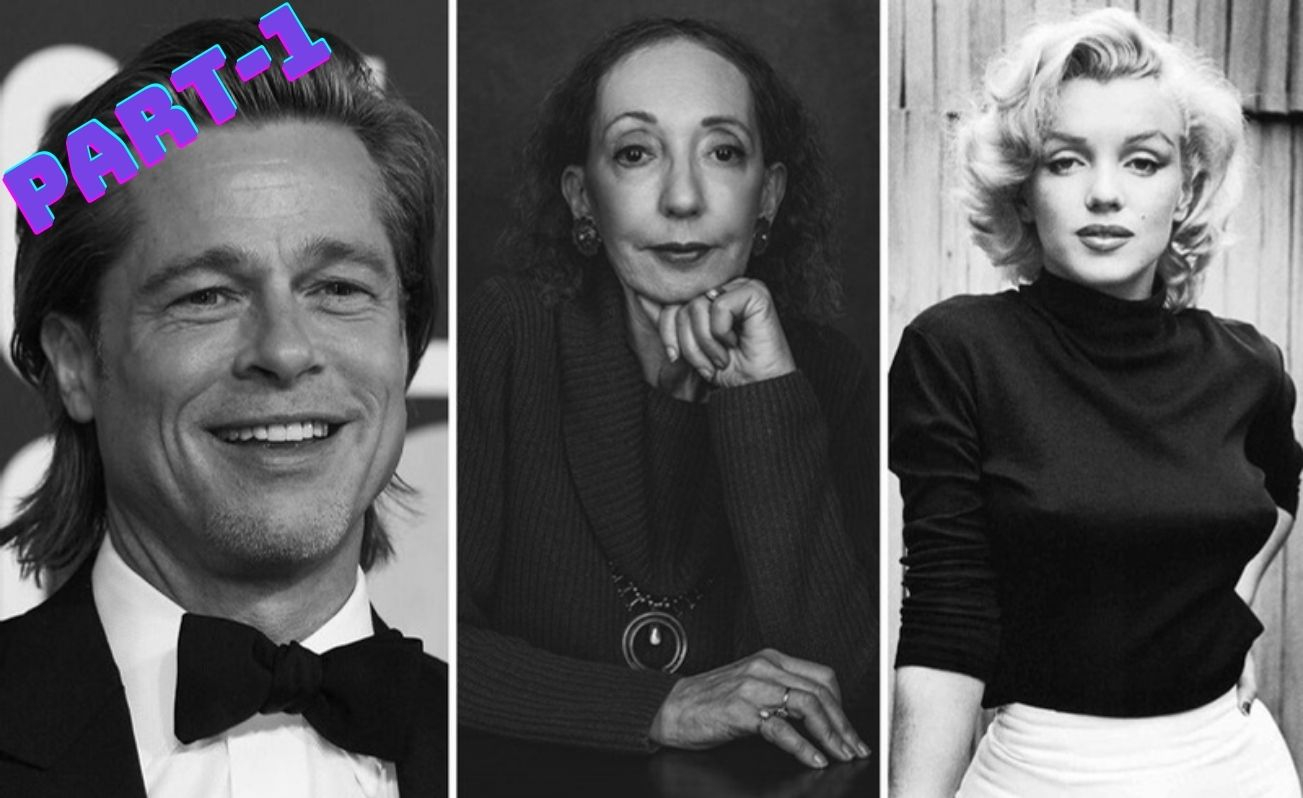
  • The Unheard Tapes: Part 1

    The Unheard Tapes: Part 1


    On several occasions, Marilyn Monroe commented on her friendship scarcity, a sad state of her existence that contributed to her deep, chronic feelings of loneliness. “Alone!” she wrote in a small black notebook, circa 1951, “I am alone—I am always alone, no matter what.” In the recently aired Netflix production starring Marilyn, twenty-eight minutes and thirty seconds into the proceedings, she declared, during a taped interview, that she did not enjoy many friendships. “It’s just that…I like people,” she ex­plained, “but for friends, I like few people.”

    And yet, evidently, the movie star was friends with practically every human being walking the streets of Earth; and not just the nondescript garden variety sort of friend, but the variety of friend with whom she felt comfortable sharing the intimate secrets and details of her life, odd, to say the least. Marilyn was usually reticent about her personal life. She was not inclined to share intimate secrets with anyone. Marilyn was a very private woman. Pat Newcomb, arguably the dearest of Marilyn’s few female friends, commented on at least one occasion that Marilyn was acutely guarded; and it is a well-known fact that she scrupulously defended her privacy. As an example, the photographer Douglas Kirkland, accompanied by two of his assistants, met with Marilyn prior to his late November 1961 photographic session with her. “She seemed to be paranoid about her privacy,” Kirkland reported to biographer Donald Spoto. Marilyn compelled each man to vow that they “would never divulge where she lived.” So, if Marilyn did not maintain many friendships, as she herself confirmed, particularly intimate ones, how does the Netflix movie explain the multitude of purported intimate friends who offered testimony to author Anthony Summers? Well, the movie’s producers simply ignore the problem, the obvious discrepancy and contradiction, and remain mute, no explanation, a common malady with The Mystery of Marilyn Monroe: The Unheard Tapes. The movie and the tapes actually explain precious little.

    Complex is the best adjective to describe Marilyn Monroe’s short life. But as short as her life was, it still consumed thirty-six years and sixty-five days, or three-hundred thousand long hours. The notion that a made for television film with a run-time of one and three-quarter hours might be able to clarify that life, reveal the facts and the truth about it, certainly suggests a certain conceit. Besides, calling a Netflix produced true crime, intended-to-be-a-shock movie, calling such a production a documentary should sound various warn­ing alarms. As one reviewer commented:

    The gigantic streaming service did not invent scandalous or salacious entertainment, but they have the authorship of a content company that churns out such provocative reflections on reality, week by week. Its latest slop, served for an audience of armchair detectives, [is] a special kind of gross.

    The problem is you have to be familiar with the subject matter. Ninety-nine percent of the public which watches this will not be.

    When I first learned that Netflix would be airing a film that intended to reveal some previously unheard tapes obtained by Summers, I assumed the tapes would only be the interviews of this or that testifier obtained by the author during his research prior to writing Goddess. But I also recognized the remote possibility that Summers just might have uncovered and procured one of the missing and mysterious secret tapes: the ones purportedly made by private detectives Fred Otash, Bernard Spindel, and/or Barney Ruditsky, all three of questionable character and honesty. So, in another article that I wrote commenting on an article Summers wrote about his upcoming Netflix flix, I questioned what tapes Summers intended to expose to the public. Would Summers intone, “here are the recordings of real-time conversations between Monroe, JFK, and RFK?” Or would he exclaim, “here are the recordings of real-time love making sessions involving Monroe, JFK, and RFK?” Or would he announce, perhaps, “here is an actual recording of Monroe’s murder?” Unfortunately, I remarked, neither I nor the reader would know the answers to those pertinent questions until Netflix unveiled their new Marilyn flick. Well, the flick has been unveiled, and we now have the answers to those questions.

    The structure of the Netflix movie is relatively simple and straightforward. Anthony Summers played his tapes as actors, dressed in nineteen-eighties style clothes, with appropriate coiffures, pretended to be the person being interviewed and lip synced their testimony. Intercut with the masquerading actors, the director included archival newsreel footage of Marilyn at various events and scenes from selected movies along with some direct quotations from the few interviews Marilyn gave. Of course, Summers offered some commentary about his investigation into Marilyn’s life and her death, but primarily her death and her sex life. Some of the interviewees knew Marilyn, or alleged they knew her anyway; but most of the persons that Summers interviewed, or at least the tapes of interviews that he included in the movie, occupied and operated on the periphery of Marilyn’s life. Several persons who were actually an integral part of her life, Pat Newcomb and Susan Strasberg for instance, persons that Summers interviewed just to mention two, did not receive any airtime, did not even receive a mention. Marilyn’s three husbands, Jimmie Dougherty, Joe DiMaggio, and Arthur Miller did not appear. Finally, of the persons whose testimony Summers presented, only two remain among the living: Arthur James and Joan Greenson Aebi.

    The movie opens on a narrow, lonely stretch of highway as it curves and bends alongside a mountain stream as it cascades and carves a path through the damp and mist laden hills of Ireland. Odd, and even odder still, we are eventually treated to shots of Summers as he plods through the many boxes of stuff he accumulated during his research for his book Goddess. Should I prepare to watch a movie about Marilyn Monroe or Anthony Summers? At least one reviewer perceived the oddity and commented that:

    The narrative within this documentary is more about Summers, to show off the tapes that helped him write his Monroe book…And in terms as crude as this doc is, it’s more or less about getting him on camera to talk about this before he is unable to do so himself…

    “O, uh, I’d like to ask you,” Marilyn inquires of an unknown individual as the movie proper begins, “how do you go about writing a life story?” Summers did not provide any context for her question. Did she ask that question of the author and playwright Ben Hecht, who ghost wrote Marilyn’s unfinished memoir, My Story? The clever editing implies that Marilyn might have phoned and spoke with Summers. Not impossible, I suppose, since Summers was the age of nineteen when Marilyn died, but most certainly an event that did not happen.

    Then Marilyn comments prophetically and explains: “Because…the true things rarely get into circulation. It’s usually the false things.” But Anthony Summers certainly could not be interested in false things, could he? So, like the prophet Daniel, the Irishman strode bravely into the lion’s den with the goal of learning the true things about Marilyn’s life and death, strode bravely into that chatterbox of a place called Hollywood to dig, dig, dig. He did not encounter any fierce lions, though, just a thick brick wall and his digging produced little because the chatterbox of Hollywood was not chattering. So, instead, he tells us: “I did what you always have to do if you reach a dead end: I went back to the beginning.” At this point, Summers begins to—selectively—release his heretofore unheard mélange of tapes.

    Cassette 71A: Al Rosen

    Evidently, Al Rosen was a big-shot Hollywood agent who founded the eponymous Al Rosen Agency. Rosen also advised Summers that he knew Marilyn “very well—that is, in the beginning, you know, when she was a kid.” Marilyn signed her initial Fox contract on the 26th of August in 1946 at the tender age of twenty years. At that time, she was still legally a minor in California, but she had been a wife for four years, recently divorced. Besides, Al Rosen never represented Marilyn, a fact that did not, of course, preclude a possible acquaintanceship. Still, Summers did not tell his audience that Rosen was not Marilyn’s agent.

    Rosen confirmed for Summers that Marilyn and the powerful movie mogul, Joseph Schneck, were lovers. After all, Rosen assured Summers, “Schneck was a human being;” and Schneck was not alone. He was just one of Marilyn’s many human being lovers. Of course, Summers did not report that both Marilyn and Joe Schneck denied that they were lovers. Each maintained steadfastly that their relationship was strictly platonic. Marilyn denounced the rumors circulating through Hollywood that she was Mr. Schenck’s paramour. She called the rumors scurrilous lies. According to Marilyn, the aging producer never solicited her for sex. According to Albert Broccoli, who later produced nine 007 movies, Schneck had kind feelings for Marilyn. She was, after all, a sweet and giving creature. Broccoli also asserted that Marilyn’s wonderful laughter invigorated Schneck: his face brightened when he saw her. All Joe Schneck wanted from Marilyn, according to Broccoli, was her friendship.  But according to Rosen, Marilyn’s name was one of many in the little black books of Hollywood moguls, the names of ambitious starlets who could be had. The reason Summers and Netflix positioned Rosen’s interview at the start of their flick is painfully clear: it’s all about the voyeurism: it’s all about the sex. Still, just how well Al Rosen actually knew Marilyn and when he actually knew her is certainly open to debate. Not one of the many Marilyn biographies that I consulted even mentioned Al Rosen. Hmm.

    Cassette 50A: Gloria Romanoff

    Married to restaurateur Michael Romanoff, Gloria informed Summers that she and her husband knew Marilyn in the beginning, her husband initially during the early forties, a problematic declaration captured by Summers’ cassette recorder. Here’s why. In the early 1940s, Marilyn Monroe did not exist. On June the 1st in 1940, Norma Jeane became a fourteen-year-old junior high school student living with Ana Lower on Nebraska Avenue on Sawtelle. The following year, she became a fifteen-year-old adolescent. At that time, Norma was four years away from Hollywood.

    According to my research, Michael Romanoff was born in Lithuania in 1890 as Hershel Geguzin, but he adopted the name, Harry F. Gerguson. After Gerguson immigrated to NYC, he assumed the flamboyant but fraudulent nom de guerre of Prince Michael Alexandrovitch Dmitry Obolensky Romanoff. During his residency in The Big Apple, according to the New York Times, who labeled Romanoff a peddler and charmer, he wrote a fortune in bad checks, occasionally found himself incarcerated and in Dutch with the INS; but after relocating to Hollywood, Prince Michael became the favorite companion of various movie stars, primarily because of the faux prince’s many vivid and colorful stories, most of which were untrue. Certainly, his famous friends knew that Michael Romanoff was a fraud. In 1941, the peddling charmer opened his eponymous restaurant, seven years before he wed Gloria Lister. We can logically assume, I think, that the faux prince told his new wife Gloria that he knew Marilyn in the early 1940s, and the new wife simply believed her new husband.

    Gloria informed Summers that Marilyn was a generous girl, warm girl, really rather lovable, and one who availed herself of the club and restaurant scene in Hollywood; and Romanoff’s was the place where all the pretty girls hung out. However, according to Marilyn’s unfinished memoir, after she signed her contract with Fox, she spent all of her time and money attending acting classes and several undergraduate classes at UCLA. She hoped to improve her mind; she had precious little time for nightclubs and parties and no money available for restaurants, especially expensive ones like Romanoff’s. The most important endeavor in her life at that time was learning the craft of acting.

    When this Summers’ account of Marilyn’s life arrived at the mid­dle Kennedy brothers, the author asked Gloria if she could recall “just how early she started hearing…about Marilyn and the Kennedys?” Gloria did not exactly answer Summers’ question. John Kennedy spent time in California, she said, “on and off all through the 50s ’cause he had lots of friends here, you know, spending lots of time, you know.” Gloria never said that she actually heard anything at all about John Kennedy and Marilyn. Gloria only confirmed that then US Representative Kennedy spent a considerable amount of time in California with his many friends. John Kennedy’s allegedly frequent visits to California during the fifties proved exactly nothing about him or his younger brother, especially relative to Marilyn, their puta­tive relationships with her, or their putative involvement in her death.

    Gloria briefly mentioned the Lawfords’ 1962 dinner party, which Marilyn and Robert Kennedy attended on the 1st of February, along with many other guests, including Robert Kennedy’s wife, Ethel, Pat Newcomb, Edwin Guthman, and John Seigenthaler. Tony Curtis and his wife, Janet Leigh, also attended, along with members of the media. As Gloria noted, during the dinner party, Robert Kennedy telephoned his father, who had recently suffered a serious stroke; and Marilyn spoke to the aging patriarch. During the course of that same evening, Gloria reported, Marilyn actually danced with the attorney general. John Seigenthaler, Robert Kennedy’s administrative assistant and his friend for most of his political life, noted in a newspaper article: “Yes, Robert Kennedy danced with Marilyn Monroe. So what? I danced with Janet Leigh. Ethel Kennedy danced with Tony Curtis and Bobby danced with Ethel. It was dinner, dancing, conversation—and that was it;” and according to Seigenthaler, Robert Kennedy’s social encounters with Marilyn were just that and nothing more. Besides, Marilyn’s friendly conversation with the ailing Joe Kennedy, Sr., who could barely speak, and her dance with Bobby, proved nothing, except this: any activity, regardless of its innocence, can be transformed into innuendo and used to suggest an ill intent; especially when one is looking for it.

    Cassette 84: John Huston

    In late 1949, John Huston directed Marilyn in The Asphalt Jungle; and the gritty noir officially launched her cinematic career. Eleven years later, he directed The Misfits, Marilyn’s last completed film. During his interview with Summers, the auteur did not provide any new information pertaining to Marilyn’s career, her life, or her death.

    Marilyn and Johnny Hyde were involved in a sexual relationship, Huston confirmed, a well-known fact. Huston confirmed another well-known fact: Johnny was in love with Marilyn. Of course, Summers reduced the relationship to its most ignoble form by asserting that Johnny Hyde was Marilyn’s sugar daddy, a label with a pejorative connotation suggesting that a heartless, gold-digging woman has become in­volved in a sexual relationship with an older man only for the financial benefits. Certainly, Marilyn received some benefits during the year she was with Johnny Hyde; but the main benefit was Johnny’s ability to advance her career: something he wanted to accomplish, to make Marilyn a star.

    Johnny left his family hoping Marilyn would marry him; and he enticed her with his considerable wealth. Suffering from heart disease, Johnny knew that his days on Earth would soon end; and he enticed Marilyn with the promise of a large inheritance. Even though Marilyn often stated that she loved Johnny, she also admitted honestly that she was not in love with him. She also felt sorry for Johnny. And she did not consider her sexual submission to be a transgression: “The sex meant so much to him,” she confessed, “but not much to me.” Guided by her moral compass, she could not marry a man with whom she was not in love. And she also realized that she could not give Johnny the love that he desperately wanted. Joseph Schneck advised Marilyn to marry Johnny for the financial security the wealthy agent could provide. But she ignored Schneck’s advice and refused Johnny’s entreaties and proposals. As the biographer Donald Spoto recognized, this is hardly the behavior of a heartless, gold-digging predator. It seems wrong and unfair to tag Marilyn with such a label. But that is the kind of show this is.

    Summers asked Huston about Marilyn’s decline during The Misfits’ filming. “Very soon we were aware that she was a problem,” Huston asserted. “She’d be late on the set always. Sometimes the whole morning would go by. Sometimes she’d be alright.” Of course, Huston’s comments were but a small part of the actual picture that Summers left unexplored and incomplete. Marilyn endured some hellish conditions while she filmed The Misfits: the oppressive mid-summer heat of the Nevada desert, writer Arthur Miller’s constant script changes, and Huston’s deplorable shenanigans.

    Their marriage essentially over, Miller used the character Rosalyn as an outlet for his bitterness, as a weapon to bludgeon Marilyn and her cinematic career. As these feelings increased, so did his frequent script alterations, often requiring Marilyn to spend many of her nights memorizing new lines of dialogue. Is it not possible that Marilyn’s tardiness could have been caused, on occasion at least, by Miller’s last-minute script re-writes?  Miller’s alterations became so frequent that Clark Gable eventually refused to accept any more of them. And often her director would occupy the director’s chair when he was drunk. Even if relatively sober, he was frequently hung over, resulting in either directorial napping, disinterest, or a display of what his daughter, Angelica, admitted was her father’s mean streak. He would often mistreat his cast. Huston often asked for dozens of retakes, despite the oppressive desert heat and even after Marilyn and other members of the cast were satisfied; but arguably the worst charge attached to Marilyn and The Misfits is the egregious prevarication that her pill addiction and pill abuse alone caused all the production’s problems and a complete shutdown: she had to be hospitalized for detoxification.

    Even before Marilyn arrived in Reno, Huston was already using a credit line established with the Mapes Hotel Casino. In his memoir, Huston soft-pedaled his gambling addiction. He gambled practically every night, he admitted. Huston also admitted that he liked to gamble, to lose, and then recover his losses the following night. But evidently, Huston lost considerably more than he ever won, frequently gambling all night, frequently traveling to shooting locations straight from the casino. Huston amassed a gambling debt of $50K—about a half million today—far in excess of what the casino agreed to allow in terms of credit for not only Huston, but the entire company. In late August, the Mapes Hotel and Harrah’s called the debt. Not long thereafter, the vice-president of United Artists informed Huston that the production’s bank account was empty and ordered the production stopped immediately.

    Recognizing an opportunity to solve his financial problems, Huston telephoned Marilyn’s doctors, alerted them to her pill problem, what Huston termed her precarious behavior and asked them to intervene. On Sunday, August the 28th, her doctors notified Marilyn that production on The Misfits had been discontinued for a week and suggested that she would benefit from a week’s rest, not at her hotel, however, but at a restful private hospital. She agreed and that evening, her doctors admitted Marilyn to the Westside Hospital in Los Angeles. Apparently, Arthur Miller and the movie crew in Nevada were unaware of the unfolding machinations until Frank Taylor, the movie’s producer, convened a meeting Monday morning for the entire production company. During the meeting, Taylor announced that Marilyn was in the hospital after suffering a breakdown. Even Arthur Miller, according to Evelyn Moriarty, Marilyn’s stand-in, was infuriated by the subterfuge. He knew, as they all did, what had transpired. “Of course, she had troubles,” Evelyn admitted: “We knew that, but Marilyn was being blamed for everything.” Huston had exaggerated Marilyn’s condition to cover for his excessive drinking, profligate gambling, and general wastefulness. Evelyn added that, “It was so easy for her to be made the scapegoat.” During the production respite, Huston was able to negotiate for more money.

    Huston’s assertion that he chastised Arthur Miller for allowing Marilyn’s drug abuse appears to be primarily self-serving, if not a fabrication. As an inveterate philanderer, he often twisted the truth to cover his behavior. How could Arthur Miller prevent Marilyn’s drug abuse, considering that her doctors prescribed the pills for her. Besides, it is painfully clear that John Huston did not really care about saving Marilyn Monroe. What he cared about was saving himself. Had Anthony Summers revealed Huston’s contribution to The Misfits’ production problems, then he would have actually revealed some relatively new information. And it would have made Monroe a sympathetic character.

    Cassette 96: Jane Russell

    In 1953, Jane Russell co-starred alongside Marilyn in Gentlemen Prefer Blondes. Jane told Summers that Marilyn was very bright and she wanted to learn. Marilyn also worked constantly, Jane reported. Even after long days on set filming, Marilyn would work tirelessly with her dramatic coach: Marilyn wanted to be as good as she could possibly be.

    Jane noted that the co-stars considered themselves to be friends while they filmed Gentlemen Prefer Blondes. But when filming ended, Marilyn departed to create a new group of temporal relationships. Even though Jane would not associate with Marilyn during the nine years preceding Marilyn’s tragic death, her brunette co-star has invariably received the identifier as Mari­lyn’s good friend, certainly an amplification of Jane Russell’s relationship with Marilyn if not an aggrandizement. I’m not sure why Summers included Jane’s testimony. The brunette did not reveal anything new. If anything, she confirmed that Marilyn did not maintain prolonged friendships. But she was a movie star.

    Cassette 92A: Danny Greenson

    Dr. Ralph Greenson was Marilyn’s West Coast psychiatrist and Danny was the good doctor’s only son. While Dr. Greenson treated and enjoyed associations with many of Hollywood’s biggest stars and moguls, by his own admission, Danny was not fond of Hollywood and the people associated with cinema. Danny considered them to be “phonies and narcissistic char­acters.” And he admitted to Summers that he hated them.

    Born in August of 1937, Danny was twenty-three years old when, in early January of 1960, his father began his frequent sessions with Marilyn. When he heard his father was treating Monroe, Danny admitted to Summers, he “was not jumping up and down and cheering.” Due to Marilyn’s inordinate fame, Dr. Greenson had to see her at the Greenson home; and Danny considered that arrangement to be a “bunch of bullshit.” However, after he began to talk to Marilyn, and he began to know her, his opinion of her changed. A friendship developed.

    Danny confirmed for Summers that Marilyn was frequently depressed, a woman with practically no self-esteem, a woman who constantly referred to herself as a lonely waif that nobody liked and about whom nobody cared. Marilyn felt her emptiness as a severe loneliness; and evidently her loneliness and her depressive thoughts were so deeply ingrained that they could not be dis­lodged from Marilyn’s mind, not even by Dr. Greenson or his family. Still, Marilyn was happy on occasion. A photograph of Marilyn with Arthur Miller’s father, Isadore, prompted her to confide in Danny: “this is my happiest period. I was pregnant then.”

    Eventually, Danny recounted how Marilyn had been invited to a Lawford dinner party that would also be attended by Robert Kennedy and other luminaries. Danny recalled Marilyn commenting that she wanted “to have something to talk to him about,” meaning the AG. Danny must have been referring to Marilyn and Robert Kennedy’s second meeting, which occurred on February the 1st in 1962. Danny helped Marilyn develop some questions that she jotted down on a piece of paper and put in her purse. At that dinner party, she posed those questions to the AG while seated beside him at the dinner table. Everyone present heard the questions and the conversation that ensued, including the actress Kim Novak. She discussed the event briefly during an interview with Larry King eighteen years ago. Kim recalled that “she had on, of course, a wonderful low gown. And so, she got caught in the plate several times,” a comment that elicited laughter from the television crew. Kim continued and informed King that Marilyn had a list of questions to ask the attorney general, “political things and all. It was really interesting and fascinating.” Certain members of the press also attended the dinner party and reported that the actress and the politician spent what they, the reporters, considered to be an inordinate amount of time conversing; and thus, a few imaginative authors have speculated that Marilyn and Bobby discussed more titillating topics that night. In his memoir, Norman Rosten, Marilyn’s New York poet friend, remarked: “Romantic overtones were undoubtedly read into the prolonged tête-á-tête by the movie colony, whose greatest indoor game is to create imaginary infidelities… carnality in the eye of the beholder, civil rights in the hushed voices of Bobby and Marilyn.” Also, Pat Newcomb, a friend of both Marilyn and Robert Kennedy, testified unequivocally that the conversation between the movie star and the attorney general focused on his civil rights ideology and agenda.

    Danny acknowledged that his father’s method of treating Marilyn was unorthodox. But his father realized, Danny explained, because of who Marilyn was, because of her unrestrained fame, “she could never be hospitalized,” which led to her “hanging with the family.” In fact, Dr. Milton Wexler, another therapist who shared Dr. Greenson’s office, suggested that Dr. Greenson and his wife, Hildi, should allow Marilyn access to their home as a method of re-parenting her. Dr. Wexler believed that having a “place to return to would alleviate her separation anxiety,” a treatment modality considered controversial then and now.

    The testimony Summers elicited from Danny Greenson repeated information that has been known for decades. Marilyn’s psychological difficulties have been discussed and written about frequently; her personality and her behavior have been analyzed by psychologist and psychiatrist alike. Leading to diagnoses that Marilyn possibly struggled with a bipolar disorder along with a borderline personality. Her mood swings and her feelings could be extreme. Her thoughts generally focused on her profound unhappiness.

    Cassette 56: Joan and Hildi Greenson

    Born in 1941, Joan Greenson, now Aebi, was twenty years old when her father began treating Marilyn Monroe. Joan was forty-two years old when Summers interviewed her for the first time in 1983. According to his source notes, he re-interviewed Joan in 1986, virtually four decades ago. Joan is now an octogenarian.

    Joan’s mother lived to the advanced age of ninety-nine. She died in 2013. According to her obituary Hildi Greenson was a remarkable woman. She and her husband, Dr. Ralph Greenson, transformed their home into a “haven for exchanging ideas and a refuge for all from the world’s cold winds. An insightful, inquisitive, and generous woman, Hildi had a passion for justice and beauty which found expression in her paintings.” Evidently, Hildi was also an artist.

    In May of this year, I contacted Joan via email. I hoped she would agree to open a dialogue with me, during which we could discuss Marilyn along with the Greenson family’s association with Anthony Summers. The Greenson family, I had been warned by Donna Morel, felt that they had been misled by Summers about the kind of book he was writing. I have read transcripts of taped interviews with Joan and Danny, her brother, during which both said as much.

    Each complained, but especially Danny, that Summers did not exactly write Marilyn’s biography. Summers wrote a pathography, condensed the first thirty years of Marilyn’s life into a single chapter, and then he concentrated primarily on the final two years of her life and her association with the middle Kennedy brothers. Summers had led them to believe that he was only marginally interested in Marilyn’s involvement with John and Robert Kennedy.

    While Donna spoke to Joan several years ago, Gary Vitacco-Robles informed me that he never received any response to his requests for an interview. According to Gary, Joan gave Donald Spoto full access to her father’s archives regarding Marilyn, and then the biographer accused Dr. Greenson of prescribing a fatal enema that killed his most famous client. Gary also expressed the belief that Joan, understandably, no longer trusted biographers.

    After I emailed Joan, a couple of days passed before I received a succinct response: she appreciated my interest, she wrote, but she could not provide any answers to my inquiry. In a second email, I asked Joan if she was under the constraint of a non-disclosure agreement, and if so, who or what entity held the agreement. To date, I have not received a response. Evidently, I should have been more clear about myself: I am not a biographer.

    The testimony that Summers elicited from Joan Greenson and her mother was exactly like the testimony that he elicited from other interviewees: neither Joan nor Hildi revealed anything new or secret. They did not reveal anything remotely earth shattering. Even Joan Greenson’s comment about Marilyn calling the new man in her life “the General” was nothing new, despite Summers’ exposition about that moniker. Thirty-seven years ago, in the 1985 version of Goddess, Summers noted: “She [Marilyn] told me,” said Joan Greenson, “that she was seeing somebody, but she didn’t want to burden me with the responsibility of knowing who it was, because he was well known. So, she said she was going to call him ‘the General’.” In later editions of Goddess, Summers repeated Joan’s testimony. In fact, mythologizing authors have often repeated that quotation and pointed to Marilyn’s use of the esoteric moniker as proof that she and the attorney general were involved in a romantic affair.

    But Marilyn denied that she and the attorney general were romantically involved. Marilyn asked both Rupert Allan and Ralph Roberts if they had heard the rumors regarding a romance between her and Robert Kennedy. When each man responded affirmatively, she responded emphatically that the rumors were false. Marilyn posed the same question to Susan Strasberg, according to the latter’s memoir: She asked me if I’d heard the rumors about Bobby and her. She said: “It isn’t true.” Marilyn confided in both Allan and Roberts, along with Susan Strasberg, to whom she described Robert Kennedy as so puny, that she did not find Bobby physically appealing. She liked him, just not physically. The attorney general was not Marilyn’s preferred physical type. Marilyn preferred older men, tall, thin men who wore glasses. Even Peter Law­ford testified to the LAPD that what had been written by various authors about Marilyn and the middle Kennedy brothers was pure fantasy. And Lawford reported to Randy Taraborrelli: “All of this business about Marilyn and JFK and Bobby is pure crap. I think maybe—and I’m saying maybe—she had one or two dates with JFK. Not a single date with Bobby, though…” At any rate, I have a notion that a sardonically playful Marilyn was toying with Joan Greenson, and her mother, because Marilyn knew the two women would, as Hildi even admitted on tape, find the prospect of such a romance titillating. Marilyn could also have simply been engaging in what amounted to girlish one-upmanship.

    Cassette 52A: Peggy Feury

    Margaret Feury, known as Peggy, was primarily a stage actor and a highly regarded acting teacher who also appeared in several films. She was a charter member of the Actors Studio; and when Lee Strasberg was unavailable, she managed the studio’s acting sessions. In 1978, she and her family moved to Los Angeles where she taught at the Actors and Directors Lab before helping Lee Strasberg establish his Theatre Institute on the West Coast. Eventually, she and her husband, William Traylor, founded the Loft Studio where she taught acting classes whose participants included James Cromwell, Lou Gossett, Jr., Sean Penn, and Johnny Depp.

    According to Peggy’s taped testimony, she saw Marilyn frequently at several Strasberg parties and they would talk a lot. Peggy said that Monroe “had very strong goals for herself,” and she was very “bright about acting.” During their conversations at the Actors Studio, Marilyn would discuss how she intended to approach her performance. In Peggy’s estimation, Marilyn really cared. But Peggy also informed Summers that they conversed about Marilyn’s childhood memories of being molested. Marilyn “felt that she had avoided…that she knew people who were psychotic from such episodes and she felt that at least she’d survived that.” Summers seemed nonplussed: “She was talking about that as late as then?” An expression of a certain dismay seemed prompted by his incredulity. Besides, Summers was primarily interested in Marilyn’s decline, a topic about which he often asked his interviewees; and he asked if Peggy saw Marilyn “in the time of her deterioration?” Apparently, Peggy did not respond.

    Peggy Feury appeared in Summers’ print versions of Goddess. But the author did not include the testimony offered by Peggy that was included in his Netflix movie. Summers apparently doubted the veracity of Norma Jeane’s childhood molestation story, an event that Marilyn reported in her incomplete memoir. Summers wrote: “She claimed early on that she had been sexually molested as a child, and it was a theme she harped on obsessively throughout her life. Was it a real event?” Summers tended to dismiss Norma Jeane’s molestation story as a yarn with merely “a core of the truth…not the only episode of fantasy [and] self-serving exaggeration.” As Sarah Churchwell noted in her 2004 publication, Summers considered Marilyn’s memoir nothing but “a pack of self-serving lies” reported by a “pathological liar” and a “fantasist.” Summers decided that he would still rely on Marilyn’s unfinished memoir for information pertaining to Norma Jeane’s childhood, even though he had already dismissed the memoir as primarily an “unreliable” work of fiction. So, did Peggy Feury change Summers’ opinion? Had he grown to finally believe that Norma had, in fact, endured a childhood molestation? Summers left that question unanswered.

    Cassette 98: Henry Rosenfeld

    Known as the Henry Ford of dress makers, Henry Rosenfeld manufactured low cost dresses whose designs were chic enough to satisfy the uber wealthy, posh women of Manhattan. He made it socially acceptable for them to buy clothes off the rack; and as a result, he became wealthy himself. Yet another man who claimed to be Marilyn’s friend and intimate confidant for her entire adult life, he confirmed for Summers that Marilyn was, in fact, pregnant while she filmed Some Like It Hot, certainly not a globe rattling revelation. And Rosenfeld’s comment that Marilyn’s Happy Birthday performance for President Kennedy “was one of the most exciting things in her life” made him a master of the obvious. Certainly, any sentient person asked to perform at a president’s birthday gala would be excited; and by all accounts, Marilyn was not only excited, she was also unnerved, worried about her performance. But perhaps more importantly, Marilyn would later remark that she was honored by the invitation to perform at President Kennedy’s birthday gala. Again, who wouldn’t be?

    Rosenfeld, on the other hand, used Marilyn’s understandable feelings about appearing at John Kennedy’s birthday celebration as an example of a flaw, a crack in her character: “Just being the one to sing. She was picked. The one.” But then, Marilyn was not the only person picked to perform that evening; many other stars also performed. In all, nineteen celebrities performed for the President of the United States. Are we to assume that all the other performers were nonchalant or apathetic about their performance for President Kennedy?

    But―Rosenfeld’s testimony regarding what Marilyn wanted most in the world was categorically outrageous. And to contend that she would openly reveal such a grotesque fantasy at a party, borders on buffoonery. Evidently, Summers did not pursue that buffoonery or even ask any probing questions. For instance: where did this party transpire? Who threw it? Who else attended? Did Summers even attempt to locate a person who could corroborate Henry Rosenfeld’s ludicrous assertion? Apparently not: the print version of Goddess did not include a corroborating statement from anyone. We are left to conclude that the investigative journalist merely accepted what Rosenfeld said simply because the dress manufacturer said that he was Marilyn’s friend and confidant. In the end, though, why would Summers repeat Marilyn’s alleged sex-with-her-father-fantasy without any real evidence that she had actually admitted to that fantasy, admitted to it publicly? Perhaps to confirm Marilyn’s fundamental immorality along with her evident mental illness? But then, why would Rosenfeld make such a sad and grotesque accusation?

    According to Scott Fortner, a recognized Marilyn expert, she rejected Rosenfeld’s proposal of marriage: “As it turns out,” Fortner revealed, “[Rosenfeld] proposed to Marilyn and was clearly in love with her based on letters he sent. Could this incredibly ridiculous statement about Marilyn wanting to sleep with her father be in retaliation for her unreturned affection?” Seems plausible, at least to me. With Rosenfeld’s sad but silly testimony in place, and Summers’ overriding point made, he proceeded to the next life-long confidant and intimate friend of the world’s most famous woman.

    Cassette 97B: Arthur James

    Just like many other men have declared, and even a few women, Arthur James also stated that he was Marilyn’s intimate confidant and friend for most of her adult life. In James’ case, he testified to Summers that they met many years before her 1954 wedding to Joe DiMaggio. I usually start with the quantity of ten to represent many. Certainly, Arthur James did not know Marilyn Monroe in 1944: she was persona nonexistent at that time.

    Referring to the print version of Goddess, evidently James met Marilyn through Charlie Chaplin Jr., who began an alleged affair with the starlet in 1948.  However, on the 9th of March in 1948, Marilyn signed her six-month contract with Columbia Pictures. Almost immediately she fell in love with and became intimately involved with the studio’s musical director, and Marilyn’s vocal coach, Fred Karger. Marilyn even lived briefly with Fred’s mother, Anne, and his sister, Mary. Her relationship with Karger lasted until the end of 1948 and led directly to her monogamous relationship with Johnny Hyde; which ended with Hyde’s death in mid-December of 1950.

    In the print version of Goddess, Summers quoted Arthur James frequently, and most of his testimony focused on Marilyn’s putative sexual relationships with Edward G. Robinson, Jr. and Charlie Chaplin, Jr., along with her sexual relationships with the middle Kennedy brothers. But since the Netflix testimony presented by Summers did not mention either junior, neither Edward G nor Chaplin, I will not excavate into that mound of problems. Still, each man left behind a memoir. Edward G. Robinson Jr. published his memoir in 1958; and Charlie Chaplin Jr. published his in 1960. Robinson mentioned only that he landed a tiny part in Marilyn’s movie, Bus Stop; primarily because his father knew Joshua Logan, the movie’s director. Chaplin junior mentioned that he briefly dated Norma Jean Dougherty, who, he reported:

    started going to the top [of the movie world] fast, and it was the duty of her studio publicity department to keep her name in the papers by dating her here and there with other eligible young men. So, she and I drifted apart and I haven’t seen her for years.

    Neither of the juniors, in their memoirs, mentioned Arthur James. In her memoir, Marilyn mentioned her romances with Fred Karger, Johnny Hyde, and Joe DiMaggio. But she did not acknowledge either Chaplin Jr. nor Robinson, neither friendship nor romance. And she did not acknow­ledge Arthur James. His name did not appear in My Story.

    I have several serious issues with James’ testimony. But for the sake of brevity, I’ll discuss only one at this time: the assertion that Marilyn spent a weekend with her alleged good friend and confidant in Laguna Beach. James says that, “We met in Laguna a month before she died. She came down for the weekend and she told us…what had really taken place with the Kennedys.” There are only two weekends during which this purported visit to Laguna Beach could have occurred within a month of her death:

    1. the last Saturday in June and the first Sunday in July (June 30th and July 1st), or
    2. the first weekend in July (July the 7th and 8th)

    I can only surmise that Marilyn did not inform James of any other life altering events that she had recently endured, at least not on the tape Netflix and Summers shared, just her alleged shattering break-up with the middle Kennedy boys. However, significant events that transpired during the month of June, prior to Marilyn’s reported trip to Laguna, suggests that several of those events just might have been weighing on her mind.

    On Friday, June the 1st, Marilyn and the film crew celebrated the star’s thirty-sixth birthday on the set of Something’s Got to Give. Her co-stars Dean Martin and Wally Cox attended along with photographer George Barris, Eunice Murray, and Evelyn Moriarty, Marilyn’s stand-in. On Thursday, June 7, Fox sued Marilyn Monroe Productions and Marilyn Monroe for breach of contract. The suit asked for $500K in damages, effectively ended Marilyn’s employment and jeopardized her career, which caused her, quite understandably, to vacillate between utter depression and undiluted anger. Later, she would express her disbelief that Fox had actually fired her, the studio for which she had made twenty movies and earned tens of millions of dollars.

    On the same day Fox filed their lawsuit, Dr. Greenson took Marilyn for an examination by Dr. Michael Gurdin, the eminent Beverly Hills plastic surgeon. Marilyn’s eyes were black and blue and swollen. According to Dr. Greenson, Marilyn sustained the injuries when she slipped and fell while taking a shower. Even though Marilyn’s nose was not broken, she retreated to her Fifth Helena Drive hacienda where she sequestered herself for sixteen days. She could not be seen in public with a bruised, discolored face. Then, on Monday, June the 11th, Fox officially suspended production on Something’s Got to Give and filed an amended lawsuit that raised the amount of requested redress to $750K.

    Due to Marilyn’s bruised face, she declined several invitations to attend social events, including an invitation from Ethel and Robert Kennedy to attend a party honoring Pat and Peter Lawford at Hickory Hill, the Kennedy’s Virginia home. Marilyn dispatched her regrets in the now famous telegram to the Kennedys regarding her fight for minority rights and her right, as an earthbound star, to twinkle.

    Fox planned to replace Marilyn and continue filming Something’s Got to Give with the actress Lee Remick. But the executives at the studio did not foresee Dean Martin’s reaction: he had co-star approval. He refused to accept Lee Remick and summarized his position succinctly: no Marilyn, no movie. Marilyn was completely gratified by Martin’s loyalty. In utter disarray by this time, on June 19th, Fox sued Dean Martin and Claude Productions, Martin’s production company, for $3M, prompting Martin to counter sue for $6.8M.

    By June 23rd, Marilyn’s facial injuries had healed: the bruises were gone. Beginning on the 23rd, Marilyn posed for Bert Stern, whose intermittent sessions for Vogue magazine ended on July 12th. Marilyn also posed for George Barris at Santa Monica Beach during Friday the 29th, Saturday the 30th, and Sunday July 1st. According to Barris and his memoir, each session took the entirety of each day. Barris mentioned the Sunday session particularly, noting that he and Marilyn worked until the sunlight began to fade to silver. Finally, on the 4th, 5th, 7th and 9th of July, she gave Richard Meryman what would be her last interview for Life magazine.

    Clearly, a considerable number of life changing events had prevailed upon Marilyn during the month of June in 1962. I, for one, find it difficult to believe that the middle Kennedy brothers would have been the only topic occupying her thoughts. “As a person, my work is important to me,” she once commented during an interview. “My work is the only ground I’ve ever had to stand on.” Considering that her profession was in serious peril at that time, surely she would have mentioned that fact to her dear friend, Arthur James; and too, clearly there are calendar date conflicts. She could not have been in Laguna Beach if she was with George Barris at Santa Monica Beach or with Richard Meryman at Fifth Helena Drive giving an interview.

    Arthur James also testified that Marilyn “was hurt, terribly hurt when she was told directly never to call or contact” the Kennedy boys again. An order that arrived from both the president and the AG: “That’s it. No more. That’s—that’s the end of it.” Then James informed Summers: “And that’s what killed her.” Curious. If Robert Kennedy abruptly dispatched Marilyn and ordered her not to contact him ever again, why did he and his wife invite Marilyn to attend a party at their Virginia mansion? Under the circumstances described by Arthur James, for Robert Kennedy to have extended that invitation was certainly nonsensical, not to even mention connubially dangerous.

    Donna Morel, arguably one of the best, if not the best researcher on the planet, used Facebook to locate one of James’ relatives, who then arranged for Donna to interview James. Fre­quently lifted aloft by flights of fantasy, according to his relative, Arthur could lapse into episodes of yarn weaving. Even so, Donna talked with James on May 1st of this year. They discussed Goddess primarily and James disputed several assertions that Summers attributed to him; but I will let those sleeping hounds continue to sleep―at least for the time being.

    Of importance to note is this: Donna asked Arthur James if he had “any letters, photos or any type of evidence to substantiate his relationship with Monroe.” James admitted, just like Jeanne Carmen, Robert Slatzer, and Ted Jordan, that he likewise had no evidence, no proof that he even knew the world’s most famous movie star, much less that he was one of her most trusted confidants. But of even more importance is this: James denied asserting that Marilyn visited him at Laguna Beach in 1962, a month before she died. He reported to Donna that Marilyn’s weekend visit occurred “at least a year earlier than that. Then he seemed to indicate this happened in the early 1950s and she would stay at an apartment building he owned.” So, James denied saying what he had clearly said on tape; at least the tape that Summers unveiled for his Netflix movie. Such a conundrum: what to believe: what James said or what James said and then denied he said. When evaluating the testimony of any person, their credibility is the key. The question is, all things considered, particularly the information I have presented herein, does Arthur James have any real credibility? And why did Summers not cross check any of this?  Why leave it to Donna Morel and myself?

    Cassette 81A: Milton Greene

    In September of 1949, Marilyn attended a party at the residence of Rupert Allan and Frank McCarthy. While there, she met a rising star in the world of photography, Milton Greene. She spent most of the evening talking with and listening to the young and handsome New Yorker as he spoke about using the camera like a painter uses a brush. Milton soon returned to the East Coast and Marilyn returned to the travails of movie making. Four years would pass before Marilyn reunited with the photographer in October of 1953. By that time, the world of film and cameras had anointed Milton the Wonder Boy of Color Photography and Marilyn had become Marilyn. The photographer and the movie star became dear friends and Marilyn frequently posed for Milton’s photo­graphic paint brush. Between them a strong nexus formed, rather like the odd connection shared by identical twins. And even Milton’s wife, Amy, recognized and accepted that her husband and Marilyn could communicate using a shorthand that only they understood.

    For Summers, Milton confirmed that he and Marilyn loved each other, period, that they shared a close relationship. Summers, however, was primarily interested in Marilyn’s sexual shenanigans while she was married. He asked Milton if a married Marilyn Monroe “was pretty much of a good, faithful wife?” Milton responded that Marilyn was and what she wanted most of all was a baby. That’s odd: didn’t Henry Rosenfeld say what she wanted most in life was to trick her father into seducing her? If Monroe had “a choice between children and stardom, Milton commented, it would have been children. Without question.” Summers could only manage a “Hmmmm.” He must have expected to learn some-thing completely different.

    Cassette 1: Sydney Guilaroff

    So far, two men have asserted that each was Marilyn’s most intimate friend and confidant from the beginning of her Hollywood career until her death. Sydney Guilaroff becomes the third. Still, and despite the fact that Guilaroff obviously knew Marilyn, several Marilyn historians have expressed doubts regarding the veracity of Guilaroff’s anecdotes about his relationship with the blonde movie star. According to David Marshall, Guilaroff was the guest speaker at one of the annual August assemblies to commemorate Marilyn’s death held at the Pierce Brothers Cemetery. Evidently, during his speech, Guilaroff recounted a few memories of Marilyn and referred to his association with her as merely “brief.” During that appearance, a few of Marilyn’s fans asked Guilaroff if he planned to write a book about his relationship with Marilyn. According to Marshall, Guilaroff declared that he “loved Marilyn dearly but he had nothing at all exciting to write about.”

    But wait. In 1996, Guilaroff published his memoir filled with braggadocio, and he suddenly remembered:

    1. that he actually directed Marilyn’s MGM screen test which secured for the blonde starlet the part of Angela Phinlay in John Huston’s The Asphalt Jungle; and
    2. a frantic telephone call from Marilyn on the night of August 4th regarding a visit by Robert Kennedy and a physical altercation with the attorney general, which caused Marilyn to fear for her life.

    Both John Huston, who directed, and Arthur Hornblow, who produced, told differing stories about Marilyn’s casting in their noir heist movie.  Lucile Ryman, MGM’s casting director at that time, told another story which included Louis Mayer. The stories told by Huston, Hornblow, and Ryman did not include Guilaroff in any capacity other than Marilyn’s hairdresser. And as far as the frantic telephone call from Marilyn is concerned, Guilaroff is just one of many persons who asserted that they spoke to Marilyn on the night she died. None of those assertions have been or can be verified. Guilaroff gave several interviews with various authors; and during those interviews, he gave conflicting accounts regarding his purported telephone encounter with Marilyn. In one interview, he actually claimed that he spoke to her twice that Saturday.

    The testimony that Anthony Summers elicited from Guilaroff included some laudatory comments about Marilyn, her naiveté, her soft and gentle quality. Guilaroff specifically noted that Marilyn was often unhappy; but he declined to say anything else, noting for Summers that Marilyn had been “gone for twenty years.” He then added: “It makes me unhappy to talk about it. It really does. I can’t bring myself to talk about it.”

    Cassette (Unnumbered): Billy Wilder

    Many cinephiles consider Billy Wilder to be the greatest Hollywood screenwriter and director of all time.  He either wrote or co-wrote and directed many movies that appear on various Greatest of All Time lists. Wilder directed Marilyn twice. In 1954, he directed The Seven Year Itch; and then four years later, he directed Some Like It Hot. Wilder’s list of accolades and awards is virtually endless. But when he received the American Film Institute’s Lifetime Achievement Award in 1986, he thanked ten individuals by name, movie stars that had directly contributed to his legacy. Wilder included Marilyn Monroe on that list. During a party for Marilyn following the completion of The Seven Year Itch, the actress attributed her memorable performance to Billy Wilder, who was then directing The Spirit of St. Louis. She wanted Billy to direct her again, she commented and then added humorously: “but he wouldn’t let me play Charles Lindbergh.”

    The celebrated director often spoke about Marilyn. He spoke about her on-set problems, her lack of confidence, her inability to memorize simple lines of dialogue, and her tardiness. He once commented, however, that he had an aging aunt in Germany who was always on time and could probably memorize her lines; but “nobody would want to see her in a picture.” Invariably, Wilder followed his criticisms of Marilyn with statements extolling her on-screen magic and her unique abilities. Marilyn, he testified, “was slightly discombobulated at all times”; but despite her often aggravating idiosyncrasies and need for multiple takes, Marilyn always deliv­ered “something absolutely unique that cannot be … that cannot be duplicated. I had no prob­lems with Monroe.” Wilder informed Summers: “Monroe had problems with Monroe. She had problems with herself.” Wilder once admitted, during an emotional interview about Marilyn, that he missed her like Hell. But once again, Wilder’s testimony revealed absolutely nothing new. But he was a big-name movie director.

    Cassette 80: Jeanne Martin

    Born Dorothy Jean Biegger in Coral Gables, Florida, Dorothy began a modeling career sometime around 1946 and she adopted the moniker of Jeanne. A year after she won the title of Orange Bowl Queen, Jeanne attended a New Year’s Eve show featuring the comedy team of Martin and Lewis. Evidently, after seeing each other, both Jeanne and Dean were immediately smitten. Dean filed for a divorce from his first wife, and only one week after the court granted that divorce, Jeanne and Dean wed in the Beverly Hills home of a friend. According to Jeanne’s obituary, the general public viewed the Martins “as one of Hollywood’s happiest couples until on Dec. 10, 1969, the date that Jeanne issued a statement announcing that she and Dean were parting ways.” The divorce was finalized in 1972. Jeanne and Dean remained friendly because of their seven children, even after he married for a third time in 1973. The former Mrs. Dean Martin never remarried.

    Jeanne Martin’s testimony to Anthony Summers focused on the middle Kennedy brothers’ sexual predation.  Primarily the predatory behavior of John Kennedy, which, according to Jeanne’s testimony, she experienced firsthand. When Summers asked her if she was present at the Lawford’s beach house when Marilyn cavorted with either of the middle Kennedy brothers, Jeanne never directly responded. But she blamed Joe, Sr. for his son’s behavior, described by her as tacky and corny bad boy antics: “they were chips off the old block,” she editorialized. Then Summers asked if Bobby was a “grabber?” Jeanne answered: “Yeah. Not in the terms that Jack was.” She did not elaborate and Summers, of course, did not pursue any additional details or an explanation.

    A considerable amount of testimony pertaining to Robert Kennedy’s somewhat Puritanical attitude and behavior has been offered over the years. Testimony from acquaintances, friends, and even FBI agents dispatched by J. Edgar Hoover with the expressed mission of mining muck on one of Hoover’s archenemies. In his posthumously published memoir, William Sullivan, who was Deputy Director of the FBI under Hoover, asserted that the boss desperately wanted and attempted to catch Robert Kennedy in compromising situations. But the FBI director never did because Robert Kennedy “was almost a Puritan.” Agents of the FBI often observed him at parties during which the attorney general “would order one glass of scotch and still be sipping from the same glass two hours later,” Sullivan asserted. The stories involving a love affair between Bobby Kennedy and Marilyn Monroe were just that, stories started by Frank Capell, “a right-wing zealot who had a history of spinning wild yarns.” According to many persons who knew Robert Kennedy, he was a devout Catholic. And regarding whether or not Marilyn was under the influence of a “Bobby thing” or a “Jack thing,” Jeanne recalled that her impression was both (emphasis mine). Miriam-Webster Dictionary defines impression as follows: “an often indistinct or imprecise notion or remembrance.”

    Cassette 33: Fred Otash and John Danoff

    Private investigator Fred Otash was a muckraker for the gossip magazine Confidential. He actively searched for compromising information about movie stars, their sex lives, and their spouse’s sex lives. He often targeted the friends of celebrities. Otash was the most disreputable private detective that ever haunted the dimly lit streets and dark alleys of Hollywood. He was a cold damp mist.

    Mike Wallace interviewed Otash for Sixty Minutes in 1973. Following that interview, Wallace announced that Otash was the most amoral man that he, Wallace, had ever interviewed. Convicted of a criminal conspiracy to defraud for financial gain, offering a bribe, and also doping a horse, Otash had his license indefinitely suspended by state authorities. Otash was a recognized prevaricator at best and, at worst, an incorrigible liar. He appeared in Goddess and the Netflix movie to confirm that the umpteen secret tapes of Marilyn and the middle Kennedy brothers actually existed: Otash made and actually heard them.  But wait, there is even more. Otash actually listened as someone killed Marilyn Monroe, he listened to her die. Summers expected his audience just to accept the testimony of a known criminal and liar, a horrid man who, if you believe him, listened to Marilyn’s murder but did nothing to stop it. John Danoff, an Otash employee, functioned as a form of dubious corroboration for the Otash testimony.

    There is only one problem. During the six decades since Fred Otash purportedly obtained the tape recordings involving Marilyn, John and Robert Kennedy, not one tape has ever surfaced. Not one has ever been heard by the public. In six decades. Imagine their monetary worth.

    Furthermore, why should I—or anyone else—just accept the testimony of a man as degenerate and corrupt as Fred Otash. Many authors, including Summers, have invoked Otash’s name and invoked the specter of his unheard tapes as a form of proof, a form of confirmation that the lurid and salacious stories about Marilyn and the middle Kennedy brothers are factual, which is, frankly ludicrous. And those author’s expectations that I will accept testimony from a man like Otash insults my intelligence and my humanity, as it should us all. To even consider Otash’s testimony after the passing of sixty years, without any tangible evidence that the obscure and farcical tapes ever existed is ridiculous.

    One final word about the purported secret tapes. During his interview, Otash noted: “And someone wired up Marilyn’s house on behalf of Hoffa.” (emphasis mine) The photographs that flashed on screen during that piece of Otash testimony were of Bernard Spindel, which Summers did not reveal. Spindel was Hoffa’s ally, his telephone tapper and bedroom bugger. Both Hoffa and Spindel were indicted for illegally tapping the telephones of the teamsters’ union headquarters in 1957. Two years later, Spindel became embroiled, due to his Hoffa association, with Robert Kennedy, then an attorney for the McClelland Investigating Committee on Labor Racketeering. This, of course, involved both Jimmy Hoffa and Bernard Spindel. In December of 1966, New York police and special agents from the telephone company, raided Spindel’s New York home and laboratory. The officers confiscated all of Spindel’s equipment, files, and tape recordings. The New York State District Attorney’s investigators reported to the Los Angeles DA in 1982, as noted in the LADA’s Summary Report, that “none of the tapes contained anything relating to Marilyn Monroe.” Like his pal Fred Otash, Spindel was “a known boaster” and frequently alluded to having knowledge of a number of secrets.

    Yech.

    see Part 2

  • Marilyn, Tony Summers, and his Paper Tiger

    Marilyn, Tony Summers, and his Paper Tiger


    June 1st of this year will mark the 96th anniversary of the uncelebrated birth of Norma Jeane Mortenson. The inevitable passing of sixty plus five days will lead to August the 4th, a date that will mark the 60th anniversary of the tragic and untimely death of Norma Jeane’s unforgettable creation, Marilyn Monroe. Due to Marilyn’s exorbitant fame, the entertainment industry will undoubtedly use the occasion of her birth and her death to recycle and sell what Sarah Churchwell, eighteen years ago, correctly called the same bromides. Authors and producers that have already been involved in the Marilyn industry, have started to queue at the head of Marilyn’s Pierce Brothers Cemetery crypt. One such entrant is Anthony Summers: he has an updated publication to sell.

    In 1985, the BBC used Summers’ then recently published pathography, Goddess: The Secret Lives of Marilyn Monroe, as the basis for a documentary entitled Say Goodbye to the President. Consequently, based on the updated version of that pathography, on April the 27th, Netflix plans to broadcast a brand spanking new documentary pertaining to Marilyn’s invariably labeled mysterious death, a documentary entitled The Mystery of Marilyn Monroe: The Unheard Tapes.

    The unheard tapes. Entire books have been written about the numerous tapes allegedly obtained by all the BIG letter agencies, bureaus, and sundry criminals: CIA, FBI, KGB, MOB, Hoffa, Giancana, Marcello, Trafficante, obtained surreptitiously by the MOB’s slimy shamus henchmen: Barney Ruditsky, Bernard Spindel, and the slimiest of them all, Fred Otash. The documentary’s title, selected I assume by Netflix in consult with Summers, suggests that tape recordings heretofore never played for the public will be drawn through analogue playback heads during the Netflix documentary. Naturally, a few pertinent questions follow. Are these heretofore unheard tapes:

    1. Of Marilyn actually speaking with the middle Kennedy brothers during the many telephone and face to face conversations in which they purportedly engaged and all of which were purportedly taped by the previously mentioned agencies, criminals and slimy private-eyes;

    2. Of Marilyn actually making love with the middle Kennedy Brothers, perhaps the alleged to have occurred titillating JFK/RFK/MM threesome;

    3. Of Marilyn actually being murdered; or just

    4. Of Summers interviewing this or that testifier during the past four decades that he has pursued the facts and the truth about Marilyn’s many secret lives?

    Unfortunately, I—unfortunately we—will not know the answer to those questions until Netflix unveils their new documentary, however, like a bookish carnival barker hawking the publication of his updated Marilyn pathography and the new Netflix documentary, Summers wrote an article for Vanity Fair, a slick glossy that never passes on a juicy yarn involving Marilyn. Published two weeks ago on March the 23rd, Summers’ article collided against several topics regarding his updated version of Goddess and the Netflix documentary.  And the Irish name-dropper mentioned a few new names that he has evidently added to his inordinately long list of dropped names. Those topics and persons, their alleged names, may or may not be relevant, may or may not add any verity to testimony previously presented by Summers as issuing from anonymous sources. The alleged associations of the testifiers with Marilyn, their alleged relationships with her, and the context of their testimony, can only be evaluated after watching the documentary. However, in his Vanity Fair article, Summers repeated an anecdote that also ap­peared in his 1985 version of Goddess; and Summers’ treatment of the anecdote exemplifies his modus operandi: after analysis, and to quote the Bard, it is sound and fury signifying nothing.

    Agnes Flanagan and the Toy Tiger

    According to Summers, Agnes Flanagan, one of Marilyn’s many hairdressers, visited the actress at Fifth Helena on August the 4th, probably in the late morning. Not long after Agnes arrived, a messenger appeared and delivered a mysterious and unidentified package. Marilyn opened it and walked out to the pool carrying its contents, Summers divulged. And he then revealed the contents of the package: a stuffed toy tiger. Marilyn did not utter a word as she sat down by the pool, holding the tiger and Agnes thought that Marilyn appeared to be “terribly, terribly depressed.” Summers set off the preceding three words in quotation marks, as if the hairdresser had uttered those words to the author. However, Agnes did not offer any type of explanation, did not say why she thought the delivery of the toy tiger had abruptly depressed Marilyn; and since her host had lapsed into a sullen silence, Agnes, “wholly at a loss, got up and left.”

    Summers then began to speculate about what he labeled one of the bizarre incidents of a most mysterious weekend; and he wondered if Marilyn possibly discovered a written, devastating message that arrived with the toy tiger—or was the stuffed object itself the message? Summers then disclosed that an actual, full-size “stuffed tiger had pride of place in Robert Kennedy’s office,” not an irrelevant fact, he noted. Summers then informed his readers: Marilyn, at all events, now lost control, an odd declaration.[1] Since Marilyn would be dead a few hours later, to what events was Summers referring? But then, I digress.

    Sunday morning, August the 5th. Many photographers descended on Marilyn’s property and snapped many photographs of both the interior and the exterior of Fifth Helena Drive. One such photograph, as denoted by Summers in both Goddess and his Vanity Fair article, depicted two small stuffed animals abandoned near Marilyn’s swimming pool. “One of them could be a tiger,” Summers asserted.[2]

    More than a few writers have accepted Summers’ stuffed tiger tale. In his goofy 2012 publication about Marilyn’s life and death, Coroner’s Cold Case #81128: Marilyn Monroe, Peter Wright wrote:

    […] Marilyn received a present by messenger. It was a small, stuffed toy tiger that meant nothing to anyone except Marilyn, for its message was very special, and very dark. That present crashed her world (KE:34).

    Wright did not mention a visit by Agnes Flanagan or offer any explanation regarding why the toy animal represented a special and dark message to Marilyn, a message that destroyed her world. Six years earlier, in her wild 2006 memoir, My Wild Wild Life, Jeanne Carmen alleged that she received her account of the toy tiger anecdote directly from Marilyn during a telephone call with the actress on the evening of August the 4th. Jeanne then used the tiger tale to fabricate an elaborate and humorous yarn about a love quadrangle involving Marilyn and her publicist, Pat Newcomb, Robert Kennedy, and Ethel Kennedy. Additionally, in the globally connected world of the 21st century, Summers’ stuffed tiger tale has appeared regularly on Marilyn Monroe websites, with variations, of course. Those websites often feature wildly inaccurate articles written by journalists who play fast and loose with the truth by ignoring the facts.

    But then: What is the truth and what are the facts?

    I’ll start with this: there is no evidence at all that Agnes Flanagan visited Marilyn on the morning of August the 4th in 1962, not at any time. Donald Spoto, who comments on Agnes’ interactions with Marilyn more than a few times, does not mention a Saturday morning visit by the hairdresser or the stuffed tiger tale. Other legitimate biographers and conspiracists authors mention the Summers’ anecdote and others do not.

    But wait. We have Summers’ written account, a firsthand account delivered to Summers by the hairdresser herself who witnessed the delivery of the package and Marilyn’s obvious negative reaction. Right? Well, not exactly. Summers implied that he interviewed Agnes Flanagan and even used quotation marks which would indicate testimony that Summers actually heard, but plainly, based on Summers’ own source notes, that implication is simply not supported by the record, Summers’ own record. According to the source notes for Chapter 43, page 443, Summers interviewed a man by the name of Don Feld: Flanagan visit: int. Don Feld, 1985 (638). Therefore, Feld’s testimony was hearsay; and his story, once repeated by Summers, fell into the category of third hand hearsay. Furthermore, Summers does not stipulate that Feld’s original source was Agnes Flanagan. Don Feld possibly repeated testimony from an acquaintance who had a friend with a cousin who knew and received the story from Agnes Flanagan’s podiatrist.

    But wait. We have the photograph mentioned by Summers which depicts the stuffed tiger abandoned by Marilyn’s swimming pool. Right? Well, again not really. As verified by the photograph below, the stuffed animals were not anywhere near Marilyn’s swimming pool.


    Also, the stuffed animals can be easily identified as a dog’s chew toys: a lamb in the foreground and another stuffed animal slightly up, an obvious declination away from Marilyn’s swimming pool. That animal, which Summers asserted could be a tiger, was most certainly a floppy-eared dog, not a tiger.[3] A member of David Marshall’s DD Group, Sabine Grella, attended a Christie’s auction (possibly the 1999 event) that sold the stuffed animals appearing in the above photograph. Sabine testified that the animals sold at auction were a stuffed lamb and a dog and each was “heavily worn and gnawed.”[4] David and his investigative group finally concluded that the stuffed toys depicted in the above photograph “had been at the house long before” August the 4th; and they were not a secret message that depressed Marilyn immediately; they were nothing more than dog toys. “[…] like so many other stories that have cropped up concerning Marilyn’s last days,” David asserted, “the Stuffed Animal story is likely fiction.”[5]

    But what about the stuffed toy tiger? Should we conclude, along the lines of the DD Group’s conclusion, that the mysterious tiger did not even exist? And if it did exist at that time, from where and from whom did it cometh? And also, what about Robert Kennedy’s stuffed tiger mentioned by Anthony Summers, the one that possessed Pride of Place?

    Even though I have not been able to find photographic evidence that a stuffed toy tiger actually existed, a receipt from Vicente Pharmacy conclusively proves that Marilyn, for the huge sum of $2.08, purchased a toy tiger on April the 2nd in 1962.[6]


    Of course, the receipt does not tell us why Marilyn purchased the toy tiger; and the sum she paid in 1962 equals approximately $20 US in today’s currency, a sum that could purchase a stuffed tiger larger than her small dog. Also, the receipt does not tell us what happened to the toy. Should we follow Anthony Summers’ lead and speculate? If Marilyn bought the tiger as a chew toy for her Maltese Terrier, Maf, perhaps he destroyed the tiger during the four months leading to August; but, then again, perhaps Marilyn did not purchase the toy for Maf. Perhaps she invested the equivalent of $20 US for a gift that she gave to the child of an acquaintance or a friend, a large and plush stuffed animal, which her $2 could have purchased. Regardless of where the toy tiger landed, it was not a sinister message dispatched to Marilyn by John or Robert Kennedy, Ethel Kennedy, or Pat Newcomb. In her memoir, Jeanne Carmen suggested that the stuffed tiger could have been dispatched by Pat Newcomb who, according to Jeanne according to Marilyn, also liked Robert Kennedy.

    Summers referenced Arthur Schlesinger, Jr. as the source for the existence of Robert Kennedy’s life-size stuffed tiger. Over the years, the Kennedy biographer noted, the attorney general cluttered his justice department office with many objects, one of which was a life-size taxidermied big cat; but, Schlesinger noted, the Attorney General carefully explained to a foreign newspaperman that he had not shot the tiger himself (239).[7] In fact, Indonesian President Sukarno presented the stuffed Sumatran tiger to Robert Kennedy as an expression of gratitude and appreciation from the Indonesian government: the attorney general had helped resolve a tense territorial conflict between Indonesia and the Dutch, and the resolution generally favored Indonesia.

    Along with the Sumatran tiger, President Sukarno sent Robert Kennedy, Jr. two living Komodo dragons; but when the carnivorous lizards grew to a dangerous size, they were given to a nearby zoo. According to an article written by Kathleen O’Brien for Inside Jersey, Robert Kennedy, Jr. reported that the attorney general displayed the life-size tiger in his office only briefly before the tiger was transferred to Hickory Hill and given to the junior Robert Kennedy: I think my father gave me the tiger as a consolation. The photograph displayed below depicts a taxidermist, also named Robert Kennedy, restoring the worn and aging trophy.[8]


    If Robert Kennedy willingly gave the stuffed tiger to his son, should we therefore conclude that Anthony Summers’ comment regarding the stuffed tiger’s pride of place in the attorney general’s office was nothing more than pointed speculation. Or that he really did not know of what he spoke at all?

    As many have pointed out it is all too easy for authors to distort and misrepresent the facts pertaining to Marilyn Monroe and Robert Kennedy, particularly if the author has an agenda  to fulfill. Obviously the anecdote about the mysterious stuffed toy tiger was not presented with all of its factual background intact by Mr. Summers.  He did not present firsthand testimony obtained by interviewing Agnes Flanagan; a fact one has to dig into his footnotes to detect; and he did not present the actual facts about Robert Kennedy’s stuffed Sumatran tiger; or the provenance of the stuffed tiger that Marilyn purchased.

    When all the facts are presented, it becomes dubious as to whether the event happened. Why Vanity Fair never fact checked the article or called in a neutral outside expert to play the judge is quite puzzling, because, as of now, due to any lack of rigor the Monroe field has become a veritable cesspool.

    But at least we have a warning. As you watch the upcoming Netflix documentary, I hope you will keep this example of Summer’s Monroe journalism in mind.

    (More to follow after the documentary has been aired by Netflix.)


    [1] All quotations unless noted otherwise can be found on pages 442 and 443 in Chapter 43 of Goddess: The Secret Lives of Marilyn Monroe, published by Open Road Integrated Media, New York, 2012. According to Sarah Churchwell’s scholarly analysis of Marilyn’s many lives, in the 1985 edition of Goddess, the toy tiger anecdote, and Summers deft presentation of it, appeared on pages 350 through 352.

    [2] “Marilyn Monroe’s Final Hours: Nuke Fears, Mob Spies, and a Secret Kennedy Visitor” by Anthony Summers, Vanity Fair, March 23, 2022.

    [3] A caption that I cropped from the photograph, indentified that animal as a teddy bear, also clearly an incorrect identification.

    [4] Marshall, David. The DD Group: An Online Investigation into the Death of Marilyn Monroe. Lincoln: iUniverse. Kindle Edition, 2005. Chapter: “Timeline: The Morning of Saturday, August 4, 1962 8:00 AM to Noon.” Section: “Interlude: The Stuffed Animal Story.”

    [5] Ibid.

    [6] Receipt provided by Gary Vitacco-Robles.

    [7] Schlesinger, Jr., Arthur M. Robert Kennedy and His Times. New York: Mifflin Harcourt Publishing Company, 1978. Kindle Edition, 2002.

    [8]Robert F. Kennedy Jr.’s tiger being restored by a familiar name,” by Kathleen O’Brien, Inside Jersey, May 6. 2013.

  • Collateral Damage: Mark Shaw’s Public Atrocity, Part 2

    Collateral Damage: Mark Shaw’s Public Atrocity, Part 2


    Read Part 1

    I. Odd Photographic Evidence

    Within the pages of his book, Mark Shaw incorporates several photographs and he offers explanatory comments pertaining to each. However, his analysis is erroneous and, therefore, his comments about the photo depictions is seriously flawed. Of course, he trotted out the now famous photograph of Marilyn flanked by John and Robert Kennedy following the 1962 event at Madison Square Garden. This photo was taken during the after-party at Arthur Krim’s Manhattan penthouse. Shaw publishes the cropped version of the photograph, the usual tactic of cheapjack writers. Invariably, the photograph has also been darkened, suggesting that the famous trio engaged in a secretive and a serious discussion of such import they did not want to be overheard, but Shaw’s commentary about the photograph soars to an unprecedented level of misrepresentation and distortion. After implying that Cecil Stoughton, the White House photographer, actually timed taking the photograph so that the full faces of John and Robert would be hidden from view, Shaw declared: “Within moments, JFK, by all credible accounts, asked Marilyn to step into the shadows where RFK stood, and the three of them spoke for more than ten minutes.” (Shaw, p. 397) Shaw did not divulge exactly who delivered the alleged “credible accounts” or who conscientiously timed the conversation. At any rate, the actual photograph reveals a much less sinister looking encounter between Marilyn and the middle Kennedy brothers. The left-hand photograph in the panel displayed below is the cropped version used by Shaw, but the right-hand photograph is the actual snapshot as taken by Stoughton.


    Obviously, the movie star and the politicians did not huddle alone in the shadows for ten minutes: they were, in fact, surrounded by many other guests who attended the Krims’ after-party. Another photograph taken at the after-party clearly indicated the number of people surrounding and touching Marilyn. Steven Smith, married to the Kennedy sister, Jean, and thus a Kennedy brother-in-law, wrapped his arm around Marilyn’s waist, displayed below on the left of the double panel; and many additional photographs indicated the crowded conditions as President Kennedy tried to converse with many of the Krim’s guests, including Jack Benny, displayed below on the right of the double panel. The bespectacled elder man in the background of the left-hand photograph was Marilyn’s escort for the evening, her former father-in-law, Isadore Miller.


    Isadore’s presence did not prevent Shaw from reporting yet another falsity about that historic event. He asserted that the Secret Service escorted President Kennedy and Marilyn from the Krims’ penthouse “to the Carlyle Hotel, where JFK maintained a penthouse.” Then Shaw quoted gossip columnist Earl Wilson, who later alleged, following Marilyn’s death: “It was the last pro­longed encounter between them.” (p. 397) Neither Wilson nor Shaw recounted what actually happened following the Krim’s after party. They simply ignored it, disregarding the testimony of the persons actually involved in the events.

    During the small morning hours, both Marilyn and Isadore Miller climbed aboard Marilyn’s rented limousine and headed to Brooklyn. She dutifully delivered her former father-in-law to his front door steps. According to Gary Vitacco-Robles, Marilyn implored Isadore to return to the west coast with her, when she returned to LA the following day; but he declined and replied: “Maybe in November.” (Kindle V.2:25) After a brief conversation, Isadore exited the limousine. Marilyn blew her former father-in-law a kiss and then she returned to her 57th Street apartment, where she exited the limousine, barefooted, her shoes in hand, and engaged in a brief curbside conversation with one of her ardent fans, James Haspiel. He testified on more than one occasion that Marilyn told him she was exhausted. “I can tell you with authority,” he later wrote in a publication about his association with her, “that I was with Marilyn at her apartment ten minutes to four in the morning. Categorically, Marilyn was not asleep at the Carlyle Hotel, and I didn’t notice the President anywhere nearby us.” (Vitacco-Robles, ibid)

    After leaving her fan standing on the sidewalk, she proceeded upstairs to her apartment, where Ralph Roberts met her. Ralph testified repeatedly that he massaged Marilyn during that early morning until she fell asleep. Even so, Shaw asserts that Marilyn and the president had a “brief sexual encounter” after the Madison Square Garden celebration, simply not the case. Even J. Randy Taraborrelli admitted: His years of research and investigation clearly indicated that such an encounter did not occur. But, once again, the facts do not matter in the world of Marilyn apocrypha. And Mark Shaw is just getting started.

    The exact location of Robert Kennedy during the 1962 weekend of Marilyn’s death, specifically on Saturday, August 4th, has been debated for decades. Where was the evil attorney general? Was he, along with his wife Ethel and four of his then seven offspring, in Gilroy, California, southeast of San Francisco, visiting John and Nancy Bates, their family and ranch? Or, was he in Brentwood visiting and murdering his rejected and distraught lover? Just where the hell was he? The answer: Robert Kennedy and a portion of his family were in Gilroy, California and according to 1.) John Bates, Sr., 2) his wife, Nancy, 3.) their eldest son, John Bates, Jr., and 4.) the ranch foreman, Roland Snyder, Robert Kennedy did not leave the ranch during Friday or Saturday.

    Regarding the Attorney General’s location that weekend in August of 1962, Shaw equivocated. He wrote:

    […] there have been suspicions that the last person to see or hear from Marilyn may have been Robert Kennedy, and whomever may have joined him at her new home. While the accounts differ as to the exact time and duration of the potential visit, if true, RFK could have had a confrontational conversation with Marilyn regarding her going to the media and telling secrets threatening him and his family (p. 477, emphasis mine)

    It is apparent that Shaw could not simply out-of-hand dismiss the Bates family’s testimony regarding that weekend and, even though he appeared to accept that Robert Kennedy visited Brentwood that Saturday, despite differing accounts regarding that visit, he also equivocated and employed phrases like “may have been.” But intent on having his cake and eating it, Shaw devises a truly bizarre tactic. Bear with me as it unfolds.

    II. Wrong Car in the Wrong place

    Early on Sunday morning, August 5th, after the group attended church in Gilroy, John Bates Sr. drove his visitors back to San Francisco and delivered them to the home of Paul Fay. The Kennedy family visited the Fays until the Attorney General delivered his speech to the American Bar Association on Monday, August 6th. Shaw publishes a Bates family photograph, displayed below. It depicts the Kennedy family just as they were starting to pile into the Bates family station wagon, preparing to leave Gilroy and the Bates Ranch.


    Mark Shaw holds that he obtained the Bates family photograph from Troy Vaughn, a former deputy sheriff and forensics expert from South Carolina, thus implying that the photograph had been kept hidden and was a deep and dark secret for nearly six decades until Shaw discovered it. This is a false implication. Susan Bernard, the daughter of the famous photographer Bruno Bernard of Hollywood, published not only the above photograph, but nine other photographs snapped by the Bates family during the Kennedy’s visit to their ranch that August weekend. Susan’s famous father not only photographed Marilyn on numerous occasions, he was also the movie star’s close friend. Susan included the Bates photographs in her 2011 photo journal, Marilyn: Intimate Exposures, which featured her father’s work with the movie star. Therefore, the photograph’s existence has been known for at least a decade, but, actually, much longer than that. Still, those facts did not interest Shaw. He called his reader’s attention to “the automobile with the driver’s side door open and the wood paneling beneath the window.” (p. 485) Was the paneling actually wood?’—but then, I digress.

    Shaw now begins in earnest: after the photograph of the Bates’ station wagon, he publishes the photograph on the left, displayed below. Shaw failed to publish the photograph on the right, which also occurred on Sunday morning, August 5th.


    Shaw’s analysis of this tragic scene is a remarkable example of a literary mischaracterization. He writes that the photo “depicts two men, perhaps from the mortuary, wheeling Marilyn’s covered body not out of, for whatever reason, but into her home on the day she died.” Shaw then calls the reader’s attention to the station wagon pictured in the distance and adds that it “appears to be a duplicate of the car RFK and his family were standing by at the Bates ranch.” Shaw conceded, however, that the presence of the automobile might simply be coincidental. O really?! But he then speculated that “somehow the car was driven from Gilroy to Los Angeles and then appeared at Marilyn’s death scene.” He bemoaned the unfortunate reality that the individual who drove the car that eventful Saturday—which required a time investment of at least ten hours round trip—”will never be known.” For more information on Mark Shaw’s treatment of John Bates, Sr., read the sidebar, Mark Shaw Transformed John Bates, Sr. into Frank Ragano.

    Mark Shaw Transforms John Bates into Frank Ragano

    During WWII, John Bates, Sr. served in the United States Navy. While serving, the young sailor met and befriended the future President of the United States. Both Johns, Bates and Kennedy, became members of a San Franciscan host committee to assist with the formation of the United Nations. Although the senior Bates was a Republican, his character was such that, after America elected John Kennedy its 35th president, the new Commander in Chief invited his attorney friend to serve as an assistant to the Attorney General. The senior Bates declined: he was deeply committed to the prestigious law firm of Pillsbury Madison and Sutro. Still, Bates, Sr. remained friends with John and Robert Kennedy and the entire Kennedy clan.

    The preceding small amount of biography leads to this: the exact location of Robert Kennedy during the 1962 weekend of Marilyn’s death. While there has been some pseudo-debate about the issue, on Saturday, August 4th, it has been well known that Robert Kennedy and a portion of his family were in Gilroy, California, visiting the John Bates family at their ranch. The Kennedy visit began on Friday afternoon, the 3rd of August, and ended on Sunday morning, August 5th. What I just stated is an established fact, but over the passing years, many conspir­acist writers have questioned the validity of Robert Kennedy’s alibi along with the validity of the first-hand, eye-witness testimony provided by John Bates, Sr. and his wife, Nancy. My research into the lives of both John and his wife confirmed that they were exemplary individuals with impeccable reputations. I asked Donna Morel, herself a licensed California attorney, if she knew any­thing about attorney Bates. Only, she replied, that he had an outstanding reputation. Despite that stellar reputation, following the lead of his conspiracist brethren, Mark Shaw doubted the senior Bates’ honesty. The author based his doubt on a false allegation. According to Shaw, during the 1957 McClellan hearings, John Bates, Sr. represented the mobster, Sam Giancana. Thus, Shaw proclaimed:

    Muddying the waters regarding RFK’s alibi on the 4th of August is the fact that John Bates served as an attorney for mobster Sam Giancana, RFK’s mortal enemy, during the same McClellan hearings where RFK served as chief counsel. That Bates covered up the truth as to Bobby’s whereabouts on the day Marilyn died would have certainly crossed the mind of Dorothy Kilgallen. (p. 484)

    The McClellan Senate hearings included both Robert and his brother, then Senator John Kennedy. Robert was lead counsel, which Shaw correctly notes, but he failed to note the following: the interaction between RFK and various mobsters who testified—including Giancana—can best be described as acutely adversarial. In fact, Robert Kennedy ridi­culed Giancana, needled him, referred to the dangerous mobster as a “little girl,” which must have humiliated the Mafioso. That being the case, if John Bates, Sr. was Giancana’s attorney, had allied himself with the Mob against his Kennedy friends, and in so doing, had betrayed them, this leads to an obvious question: Why would John Kennedy then immediately invite that attorney to join and serve in a Kennedy Administration, invite an unprincipled and untrustworthy Mob lawyer to work alongside his brother, the Attorney General? What illogical nonsense to even suggest that this is what transpired.

    Again, with assistance from Donna Morel, I contacted John Bates, Jr. on July 26th via email and posed this question: was your father ever associated with Sam Giancana or the Mob in any capacity? He responded as follows:

    Thank you for your inquiry. My father was a civil attorney. My father never practiced criminal law. At all times, he was exclusively a civil trial lawyer. His entire career was with the prestigious San Francisco law firm of Pillsbury, Madison, & Sutro, where he ultimately rose to managing partner. Never during his legal career did he appear before any legislative committee for anyone. He never represented a member of the Mob, organized crime, or Sam Giancana. Any assertions to the contrary are incorrect.

    Mark Shaw failed to provide a source for his accusation about the senior Bates’ involvement with Sam Giancana. In his source notes for the chapter in which that accusation appeared—Chapter 32—Shaw vaguely referenced a 1985 New York Times interview with John Bates, Sr. During my research into the character of the senior Bates and the issue of Robert Kennedy’s location on August 4th, I located only one New York Times article involving John Bates, Sr. That article did not contain a single word about Sam Giancana or the senior Bates’ involvement with the mobster. Moreover, Mark Shaw did not provide any additional information or evidence to support his transformation of John Bates, Sr. into Frank Ragano, none whatsoever. Very odd, but also revealing. A reasonable person could only conclude that Mark Shaw did not know anything at all about John Bates, Sr. and he did not endeavor to learn anything about the respected attorney, either.

    Still, Shaw covered himself and asserted that the Attorney General’s appearance in Brentwood at Marilyn’s hacienda was not the important issue. Oh, no? The important issue, what really mattered, was Bobby’s dumping rejection of Marilyn, just like JFK’s rejection, and if the second rejection by Bobby caused a confrontation and Marilyn’s threat to reveal their affairs publicly. Shaw then noted: “If he [Robert Kennedy] was truly in the San Francisco area, arguably the second most powerful man in America could have orchestrated her death with a telephone call from afar.” (p. 485) Interesting, is it not, even if Robert Kennedy was not in Brentwood, and even if he did not visit Marilyn that Saturday’—and he obviously was not and did not’—he still killed the world’s most famous actress with a lethal telephone call.

    But what is really happening in the photograph that Shaw published, the one on the left in the two photo panel above? It depicts Pierce Brothers Cemetery and Mortuary employees wheeling Marilyn into that facility after her body had been delivered by Don and Guy Hockett; not into her house at Fifth Helena Drive.  How can one do something like that by accident? Also, the photograph on the right side of the panel depicts coroner employees removing Marilyn’s body from the cemetery mortuary for its transportation to downtown Los Angeles for autopsy. Often, writers have erroneously asserted that the men in the snapshot are policemen.

    Please return briefly to the first photograph of the Kennedy family preparing to leave the Bates ranch. You will note that the pictured station wagon had been equipped with a roof-mounted luggage rack. The distant station wagon in the left hand photograph above does not have a luggage rack. Also, since that photograph is black and white, we have no way of comparing the automobile’s colors and, too, please note the amount of open space, open land in the receding distance beyond the duplicate station wagon and also note the slender palm trees. Below is an aerial view of Marilyn’s cramped property with its kidney-shaped swimming pool, left side, combined with a photograph of Pierce Brothers Westwood Village Cemetery, right side.


    III. More Wrong Depictions

    Clearly, the photograph of the two men wheeling Marilyn’s body into the mortuary was not taken at Marilyn’s hacienda on Fifth Helena. It was taken at the Pierce Brother’s Westwood Village Cemetery and Mortuary, where Joe DiMaggio had Marilyn interred on August 8th. Additionally, Marilyn’s hacienda did not have French doors, a fact confirmed by the floor plan of the hacienda as it actually existed in 1962, displayed below.


    Like most dutiful conspiracists, Shaw published the police photograph of Marilyn’s bedside table and, like his conspiracist compatriots, he published a cropped version, included below. Dutifully, he also noted that a drinking glass was not on Marilyn’s bedside table and one could not be found, neither in her bedroom nor her adjoining bathroom.


    Displayed below is the actual, uncropped photograph taken that Sunday morning by police combined with an enlargement of the trash can area. Please note the drinking glass to the right of the trash can on the floor and to the left of Marilyn’s bed, a clearly visible drinking glass.


    Following the photograph of the bedside table, Shaw published another police photograph of Marilyn’s bedroom, looking at her bedroom door, displayed below. While a policeman looked at the cluttered bedroom, beyond him was a woman with her back to the camera. Shaw labeled that woman as unidentified.  In fact, a comparison of other photographs taken that morning would have confirmed her identity if Shaw actually did not recognize her: Eunice Murray, Marilyn’s housekeeper.


    Regarding a related matter, Shaw included what he asserted was the bedroom wing layout of Marilyn’s hacienda and he paraphrased Eunice Murray’s testimony about that tragic Sunday morning: “while on the way to her bathroom,” Shaw noted, “she [Mrs. Murray] noticed light visible beneath Marilyn’s door, causing her to become suspicious that something could be wrong.” (p. 597) However, Shaw doubted that testimony, calling it inconsistent and apparently a lie. The layout of Marilyn’s home, he asserted, rendered her testimony unlikely or even impossible: Mrs. Murray had to leave her bedroom and walk into the hall in order to notice “a light under Marilyn’s bedroom door.” (p. 597) Displayed below is the drawing that Shaw used to confirm his assertion.


    However, there is a major problem with that drawing: it is grossly inaccurate. Where are the clothes closets between the bedrooms, the linen closet, and where is the corner fireplace in Marilyn’s bedroom? Plus, the room denoted as “Murray Bedroom” was actually a bedroom Marilyn had reconfigured into her dressing room. Displayed below is the correct bedroom wing floor plan as it was in 1962.


    On the night of August 4th, Eunice Murray slept in the smaller bedroom where Marilyn had positioned a cot, identified on the floor plan as “Guest Sleeping.” Pat Newcomb had slept in the same bedroom on the same cot when she spent Friday night with Marilyn. It is apparent that Mrs. Murray could have noticed light emanating from Marilyn’s bedroom on her way to the Jack and Jill bathroom and considering the arrangement of the bedroom’s doors, she could have stood at her bedroom door and easily observed Marilyn’s bedroom door. In the police photograph of Marilyn’s bedroom, looking across her disheveled bed at the opposing wall, clearly Mrs. Murray was preparing to enter the bedroom where she had slept, clearly visible from Marilyn’s bedroom door.

    On page 515, Shaw published a photograph of Marilyn with her arm around the neck of a young fan, taken either preceding or following the premier of How to Marry a Millionaire on November 4th in 1953. Shaw identified that young man as Joe DiMaggio, Jr. Odd. Where is Joe DiMaggio, Sr.?’—an important consideration left unconsidered by Mark Shaw.

    Born on October 23rd in 1941, the junior DiMaggio was twelve years old when How to Marry a Millionaire premiered in 1953 and, considering that his mother, Dorothy Arnold, took her ex-husband to court in an attempt to keep the youngster away from Marilyn’—Dorothy cited Marilyn’s unsavory vulgar character and her potential negative influence’—it is more than highly unlikely that Dorothy would have allowed her twelve-year-old son to attend a movie premiere with the disreputable movie star. Besides, the young fellow in the photograph published by Shaw appears to be at least 14 years-old and possibly even older.

    The combined photographs below prove as much. To the left is the cropped version of Marilyn and her young fan as published by Shaw. To the right is a photograph of the junior Joe taken with the senior Joe at Ebbets Field on October 9th in 1953, approximately 30 days before the premiere of How to Marry a Millionaire.  The lucky young man who received that hug from Marilyn was not Joe DiMaggio, Jr.


    Finally, Shaw trotted out the famous thank-you note from Jean Kennedy Smith to Marilyn. During the Lawford’s 1962 February dinner party, Marilyn spoke to the ailing Kennedy clan patriarch via a telephone call instigated by Robert Kennedy. Joe Kennedy had suffered a serious stroke on December 19th in 1961, but he had yet to recover: he could barely speak. Robert must have felt that hearing Marilyn’s incredible voice would bolster the old man’s spirits. Sometime later, Marilyn sent a kind note to the senior Kennedy. In response to Marilyn’s kindness and her note, Jean Kennedy Smith wrote and sent Marilyn the aforementioned thank-you note. Both pages of the actual note follow.


    An innocent note, written and sent in response to a note that Marilyn sent to Joe Kennedy, Sr. It has always been of particular interest to conspiracists, including Shaw.  But in his book, he published the note’s second page only, which begins with: “understand you and Bobby are the new item!” Clearly, Shaw did not publish the first page of the note for obvious reasons. Like conspiracists before him, Shaw breathlessly pointed to the thank-you note as evidence and proof that Marilyn and Robert Kennedy were involved in an affair and the invitation extended by Jean Smith for Marilyn to join Bobby when he returned to the east has been used by the conspiracists as evidence that Robert Kennedy’s extramarital relationship with Marilyn had been accepted by the Kennedy clan, specifically the Kennedy women. Should we assume, then, that both Ethel Kennedy and Jacqueline Kennedy had also accepted Bobby’s extramarital relationship with Marilyn?

    Since Shaw ignored the first page of the thank you note, he was able to write the following ridiculous assertion: “Whatever Kennedy Smith knew’—whether from the mouth of her brother or through perhaps Peter Lawford, married to Pat Kennedy’—had triggered the letter.” (p. 572) As the first sentence of the thank-you note clearly stated, Rose Kennedy asked her daughter to write and thank Marilyn. That request “triggered the letter,” not something nefarious.

    During the decades since the note was sent to Marilyn by Jean Smith, its context has been completely disregarded by the conspiracists, including Mark Shaw. Obviously, the comment about Marilyn and Bobby being “the new item” was meant as a tongue-in-cheek reference to Marilyn’s twist teaching efforts during the Lawford’s February dinner party and the uproarious scene caused by Robert Kennedy attempting to dance with Marilyn Monroe. Evidently, Ethel constantly teased the Attorney General over that humorous scene, as frequently noted by John Seigenthaler, Robert Kennedy’s friend and assistant.

    That Jean Smith would invite Marilyn to visit Hyannisport seems only natural: who would not want Marilyn Monroe in their home for a visit? In point of fact, the lack of an invitation for Marilyn to visit would have appeared suspicious.

    The conspiracist’s efforts to use that innocent note as proof of not only a romantic affair but the affair’s acceptance by the Kennedy clan and the Kennedy women is preposterous. That attempt should be viewed as manufactured since Sgt. Jack Clemmons, Frank Capell, Robert Slatzer, and Jeane Carmen were all complicit in it. For an author—who is also an attorney—to place himself in such a dubious crowd is: well, its mystifying.

    IV: A Contrived Murder Scenario

    Near the end of Collateral Damage, Mark Shaw revealed his hypothetical Marilyn murder scenario. But before I launch into my analysis of his hypothesis, let me briefly discuss what the Hollywood Godfather has asserted to be factual.

    According to Gianni Russo, Robert Kennedy hired a Mob assassin to eliminate  his rejected lover. “A guy known as The Doctor murdered Marilyn,” Russo testified to Michael Kaplan for a 3/2/19 New York Post article. The Doctor was a killer for hire and an actual MD who performed “major hits for the mob […].” This unnamed doctor “injected air into the vein near Marilyn’s pubic region,” which rendered the injection site invisible, Russo reported to Kaplan. Although Russo did not specify which vein or which part of Marilyn’s anatomy received the injection. How near is near?

    In Russo’s aberrant world, Marilyn “died of an embolism, but it looked like drugs to the coroner,” just a garden variety overdose. I am not being the least bit facetious. While possibly the most inventive of Marilyn’s Murder Orthodoxies, Russo’s embolism tarradiddle is also certainly the most ludicrous. At any rate, I give him an A for Amagination and an F for Foolishness. How could a venous gas embolism create the lethal concentrations of Chloral hydrate and pentobarbital in Marilyn’s blood and liver? How could that air bubble deceive the tests per­formed by the head toxicologist and, further, trick him into interpreting the tests as indicating the presence of drugs, marking a massive overdose, when, in fact, the drugs did not even exist? That is, according to Gianni Russo. I assume every death from an embolism has been misdiagnosed as a drug overdose. Despite the ludicrous nature of Russo’s fairy tale, it has been reported by many newspapers, magazines, and Internet articles as the absolute truth. Yet, the most remarkable aspect of this curiosity is that Mark Shaw actually asserts that Russo’s incredibly imbecilic fairy tale has some credence. Once again, I am not being the least bit facetious.

    An insane number of theories about the death of Marilyn Monroe have been developed and presented as fact during the past fifty-nine years: at least 12. The conspiracist authors who developed and presented those theories invariably contended that theirs was factual: the Last Word regarding the who, when, how, and why of Marilyn’s perceived mysterious death, her murder. Still, all of those theories did not satisfy Mark Shaw. Therefore, he developed one of his own. Let’s call his new theory Number 13. According to Shaw, Number 13 proceeds as follows.

    Sometime near midnight, unable to sleep, Marilyn “heard a noise at her front door.” Upon opening the door, two gloved men assaulted her and “stunned” her by placing “a chloroform-sealed cloth over her nose and mouth.” Once stunned, the two men either dragged or carried Marilyn into her bedroom and, during that relocation, the men hit her lower body against a sturdy piece of furniture, or the open door’s edge or the doorknob. That inadvertent whack bruised Marilyn’s left hip. Once in her bedroom, the murderers removed any outer “clothing she was wearing such as a robe or panties” and they then carefully “positioned her nude body on the floor face down.” At this point, one of the men switched on the light and then locked the door, so they would not be disturbed. Water “secured from the bedroom faucet,” mixed with a lethal dose of both the Chloral hydrate and Nembutal became the ammunition for the murder weapon.

    The murderers then “dipped a bulb syringe of some sort into” the drug mixture and then “inserted the tip into Marilyn’s rectum, with some spillage possible. Quickly, the lethal dose would have infiltrated her blood system and begun the march to her death.” Her murderers then placed Marilyn’s body face down on her bed and placed the telephone receiver “in her hand for effect.” After cleaning up “as best they could,” the two murderers “quietly left the home through the bedroom door,” which they locked on the way out. (pp. 612–613)

    There are numerous problems with the preceding theoretical scenario. I’ll begin with time.

    The alleged time that the murderers began the gruesome process of murdering Marilyn, midnight on August 4th, creates a serious issue for Shaw. According to Don and Guy Hockett—who collected Marilyn’s body at Fifth Helena and took her to the Pierce Brothers Mortuary, where she stayed briefly—her body was so rigid, they had trouble placing her on the gurney. They asserted, based on the degree of rigor mortis and the presence of fixed lividity, that Marilyn had passed on at about 10 PM.  Natalie Trundy, later said that she and her fiancé Arthur Jacobs attended a concert that night. At approximately 11:00 PM, an usher arrived and informed Jacobs, then Marilyn’s publicist, that she was either nearly dead or already dead.

    The temperature of Marilyn’s liver at 10:30 AM on August 5th, the time that Dr. Noguchi began her autopsy, as noted on her autopsy report, was 89°F, 9.6°F below what is considered normal. Virtually all the conspiracist writers have ignored that fact, including Shaw. According to the Glaister Equation, a formula used to calculate a person’s possible time of death, using a temperature differential from normal of 9.6°F, Marilyn could have died between the hours of 9:30 PM on the 4th of August and 2:30 AM on the 5th of August with a mean time of 12:30 AM on the 5th. Regardless of what time Marilyn’s essential bodily functions ceased (i.e. the exact time she actually died), it is evident that she became an unresponsive, comatose body at some point prior to 12:00 midnight: an essential detail. Therefore, Shaw’s murderers would not have encountered a conscious Marilyn near midnight on August 4th.

    Consider the “chloroform-sealed cloth” that the murderers pressed against Marilyn’s nose and mouth. Did Shaw mean chloroform-soaked? At any rate, the use of chloroform to render a person unconscious is a myth started and perpetuated by Hollywood moviemakers. Evidently, the time required to knock-out a person using a chloroformed rag varies between five and ten minutes and, since liquid chloroform quickly evaporates into a gas when exposed to air, fresh liquid chloroform must be constantly added to the rag. Also, for the person to remain unconscious for an extended period of time, a freshly chloroformed rag must be held continually against the person’s nose and mouth. But then, Shaw alleged, that the chloroform “stunned” Marilyn. A stunned person would be groggy or dizzy, dazed. If Marilyn was only dazed by the chloroform, according to my research into the longevity of its effects, Marilyn would have regained her senses rather quickly: the effects of chloroform, in its gaseous state, diminish and disappear rapidly.

    Shaw’s assertion that the murderers left the home “through the bedroom door” is an odd statement. As indicated by the floor plan of Marilyn’s hacienda, her bedroom did not have a door allowing access to the exterior. That is why Dr. Green­son had to enter Marilyn’s bedroom through one of the casement windows. I have concluded that Shaw’s assertion about the murderers’ getaway route is just another example of his many misstatements.

    V. Shaw’s Bulb Syringe Murder Weapon

    A major problem with Shaw’s contrived murder scenario resides in his vague description of how the assassins actually killed the movie star. They used a “bulb syringe of some sort,” which they dipped into a drug solution and then they inserted bulb syringe’s tip “into Marilyn’s rectum.” By bulb syringe, did Shaw mean the type of syringe often used to remove ear wax, irrigate sinuses, and remove mucous from the nostrils of infants? Certainly the killers drew a quantity of the drug solution into the bulb syringe, which they then injected into Marilyn’s rectum, but Shaw did not actually say that. Still, Marilyn could not have been killed with a normal size bulb syringe, one that could have dispensed two, maybe three ounces of the drug solution.

    The largest bulb syringe I located could have dispensed twenty ounces, or 2½ cups, of the drug solution. But using a bulb syringe that large would have created its own set of problems. Shaw admitted that “some spillage” would have been possible, but certainly trying to infuse Marilyn’s rectum with 2½ cups of liquid using a large bulb syringe would have resulted in more than just some spillage. In fact, I contend, if she was unconscious, the spillage would have been considerable and would have stained Marilyn’s new white wool carpet.

    More importantly, there are significant scientific problems with Shaw’s contrived murder scenario.

    According to my research, while killing a person with an enema is possible, doing so is not that simple or easy. It requires an infusion of the descending colon with a large quantity of a lethal solution. It would be virtually impossible to murder a person by simply injecting a lethal solution into his or her rectum.

    In Murder Orthodoxies, I wrote extensively about a similar situation, using the rectum as the route to murder Marilyn using a drug infused suppository. Chuck Giancana, Sam Giancana’s stepbrother, stated in his novel, Double Cross, that his stepbrother deployed suppository wielding assassins to murder Marilyn. Since killing with a bulb syringe would be similarly problematic, allow me to touch upon the significant points here. Keep in mind Shaw’s contention that the lethal solution “quickly infiltrated” Marilyn’s “blood system,” which led to her death.

    The human rectum is primarily a storage chamber, a vertical section of the large intestine approximately 4½ inches long; therefore, it provides only about 50 square inches of an absorptive surface. Since the lining of the rectum is smooth, meaning devoid of the finger-like protrusions known as villi, absorption through it is neither efficient nor speedy. The International Journal of Pharmaceutical Sciences Review and Research noted that both the degree and the speed of drug absorption from the human rectum is both lower and slower than absorption from the gastrointestinal tract. It is highly unlikely, therefore, that the lethal solution proposed by Shaw quickly infiltrated Marilyn’s blood system. Additionally, blood circulation to and from the rectum is unusual. A list of various points follow.

    • The inferior mesenteric and the internal iliac arteries supply the rectum with blood.
    • The superior rectal vein, the middle rectal vein, and the inferior rectal vein along with anastomoses or venous plexus return blood from the rectum.
    • The superior rectal vein connects to the portal system and directly to the liver, where it undergoes a degree of first pass metabolism.
    • The inferior and middle rectal veins connect directly to the systemic circulation system, which delivers blood to the heart through the inferior vena cava and then throughout the body before reaching the liver.
    • The anastomoses or venous plexus connect to both the portal and the systemic venous systems.
    • The anal canal, which measures 1±½ inches in length, is the final part of the human digestive system and the inferior rectal artery delivers blood to the anal canal.
    • The inferior rectal vein accepts blood from the anal canal and delivers it to the internal iliac vein and then to the systemic circulation.

    Many studies have been performed to determine the bioavailability of drugs administered rectally. The percentages vary considerably with time and drug. A consensus does not exist regarding just how much of a rectally absorbed drug enters the portal venous system, gets delivered to the liver, where it is subjected to first pass metabolism, and just how much bypasses the liver on its initial trip through the body. Certainly, based on the anatomy of the rectum, which varies from person to person, as does each person’s physiology, the only reasonable position to assume, for the purpose of this discussion, is that 50% of an absorbed drug enters the portal venous system and then the liver, where a portion of it will be metabolized and 50% of an absorbed drug does not enter the liver on its initial trip through the body. Additionally, assuming that 50% of the absorbed drug passed through Marilyn’s liver initially and 50% did not, I suggest that more of the absorbed drug would have been found in Marilyn’s blood stream than is indicated. And that scientific fact leads me to this.

    Shaw noted that the amount of chloral hydrate in Marilyn’s blood was 8.0 percent and the amount of pentobarbital in her liver was 13.0 percent, suggesting that the volume of blood in Marilyn’s body was 8% Chloral hydrate and 13% pentobarbital which, of course, was not the case at all. What Shaw actually meant was not a raw percentage but milligram percent or mg%, a measure of concentration; the mass of a chemical, given in milligrams, that is present in one-hundred milliliters of a solution, blood for instance. Also, Shaw failed to mention the concentration of pentobarbital in Marilyn’s blood, 4.5 mg%, quite a significant omission and a prime example of cherry picking in order to exclude relevant but unwanted evidence.

    Abernathy’s tests indicated a concentration of pentobarbital in Marilyn’s liver three times as high as the concentration in her blood. Explained by a branch of pharmacology called pharmacokinetics, that relationship is consistent with ingesting a large overdose and proves beyond a reasonable doubt and to a scientific certainty that the drugs were ingested. The drugs were not injected into Marilyn’s body, she did not receive a hot shot, and she was not murdered with a bulb syringe, regardless of its size.

    Finally, while Shaw’s hypothetical murderers killed the world’s most famous woman on that night, where was Eunice Murray? She does not appear in Shaw’s scenario, but we know she was in the house that night with Marilyn, asleep on a cot in the small bedroom very near Marilyn’s bedroom. Certainly, Mrs. Murray would have heard any noises caused by Marilyn’s struggle with the murderers. Once again, Shaw attempted to diminish his problem with Eunice Murray’s known presence that night. He opined:

    Of course, as with any theory like this based on circumstantial evidence after so many years have passed, questions will be raised, with answers unfortunately somewhat speculative in nature. (p. 612)

    Amazing. Shaw began to question his own theory, his own explanation of what happened to Marilyn and led to her death. What time did the killers arrive? he questioned. Where was Mrs. Murray when the killers arrived and enacted the gruesome scene in Marilyn’s bedroom? Shaw speculates that the murder possibly occurred between midnight and 3:00 AM, contradicting his proclamation that the murderers arrived “at some point close to midnight.” (p. 612) Then, regarding the bruise on Marilyn’s hip, Shaw admitted that “other explanations exist as to how Marilyn could have bruised her left hip.” (p. 612) However, if that bruise was caused as he speculated, then obviously foul play had been involved in Marilyn’s death. He then wondered if Mrs. Murray had “knowledge of the attempt on Marilyn’s life,” which he admits could not be known. (p. 615) He then speculates that Mrs. Murray became spooked by “hearing noise near Marilyn’s bedroom,” which caused “Murray to wonder if Marilyn was in distress” and prompted her “to call either Greenson or Engelberg.” (p. 615) Eventually, Shaw’s speculations centered on Dr. Greenson, Dr. Engelberg, and Eunice Murray and their possible complicity with Robert Kennedy who “orchestrated Marilyn’s death via operatives sent to her home.” (p. 617) Frankly, it became self-evident as I read Shaw’s speculations and strange contradictions, that he likely did not even believe Number 13, which he himself formulated. So why should I? Besides, I know Shaw’s Number 13 is a fantasy founded on sensationalism. Marilyn was dead before midnight. Evidence, not speculation, confirms that and confirms that Marilyn certainly was not alive at 3:00 AM on August 5th. Unlike Mark Shaw, rigor mortis and fixed lividity do not speculate.

    VI: A Brief Summation

    Before ending with a brief summary, I would be remiss if I did not note the following. During a recent interview with Heather McDonald, Mark Shaw asserted that he wrote Collateral Damage because he “never bought the idea that Marilyn committed suicide.” The author then added: “When I heard about it I didn’t believe it and I still don’t and I’ve proven in the new book that it didn’t happen.” Shaw proceeded to add: “In this particular book I did not use any sources with books or anything else from 1965 on. They [Shaw’s sources] were all before sixty-five.”

    Remarkable. Shaw brazenly admitted that he began writing with an occluded mind based on a foregone conclusion. Most certainly, as he wrote, he was afflicted with an idée fixe and a form of group think, leading him to engage in cherry picking, confirmation bias, belief perseverance, illusory correlation, and fallacious reasoning.

    Why would an author in search of the facts, in search of the truth, deny the validity of all the valuable research into Marilyn’s life and her relationships after 1965, not only with the middle Kennedy brothers, but her other relationships as well? Why would he deny all of the valuable research into the circumstances surrounding her death that has transpired during the past 59 years? Why would he limit his source material to only the 3 years following her tragic death? And finally, why would he evoke discredited men like Frank Capell, Sgt. Jack Clemmons, and many others, including both C. David Heymann and the incorrigible fabulist, Gianni Russo, who did not appear with his Marilyn fantasy until 2005 and his book was not published until 2019—both dates decades beyond 1965. Using Russo as a source is a contradictory reversal of Shaw’s source edict and why would Shaw present those men as reliable sources? The answer is obvious: Shaw wanted and needed sources that confirmed his foregone conclusion, not unlike every conspiracist author who has written about Marilyn Monroe’s life and her death.

    Shaw calls Senator Joe McCarthy a despicable man whose heart was filled with hate.  But the author himself engages in a despicable form of McCarthyism, because of the apparent hatred in his heart for Robert Kennedy. Referencing the Chappaquiddick tragedy, Shaw asserted that Teddy Kennedy’s conduct, how he handled the drowning of Mary Jo Kopechne “was symbolic of the selfish ‘me first’ mentality of the Kennedys, especially RFK.” (p. 558) Robert Kennedy was already killed at that time. Even so, guilt by familial association is Shaw’s assessment. Robert was even more selfish and uncaring than the youngest Kennedy brother.

    Within the text of Collateral Damage, Mark Shaw devoted many words and pages to the exceptional investigative prowess of Dorothy Kilgallen, who constantly searched for the facts in every significant story or case, searched for the truth and justice. Based on comments within her published articles, Shaw asserted, Dorothy suspected that her “friend” did not commit suicide, suspected that her friend was romantically involved with Robert Kennedy, and suspected that her friend’s death involved the attorney general. Shaw knew without debate, all the unsolved mysteries surrounding and all the unanswered questions left in the wake of Marilyn’s mysterious death would have been solved and answered after an investigation by the incredible Dorothy Kilgallen. Since Marilyn died in early August of 1962, what prevented Dorothy from focusing her investigative spotlights and powers on her “friend’s” mysterious death? Of course, 16 months after Marilyn’s death, Dorothy became embroiled in the president’s assassination, the murder of Oswald, and then the sensational trial of Jack Ruby, but she had at least 16 months during which she could have investigated Marilyn’s suspected murder. Again, what prevented her?

    Shaw must have realized that the absence of any investigation by Dorothy Kilgallen was a problem for him, so he proffered an explanation. During the October missile crisis, with humanity on the precipice of nuclear war, possibly annihilation, “in perhaps his finest hour, RFK stood tall and helped his brother quell the threat.” Dorothy Kilgallen, Shaw presumed, because of her integrity—and the fact that Robert Kennedy had helped save humanity—“could not in good conscience go forward, and this stifled any further probe involving RFK.” (p. 600) According to Shaw, Dorothy Kilgallen’s integrity actually prevented her from exposing the murderer of her “friend,” the most famous actress in the world. Truly amazing conjecture based on absolutely nothing. There was no credible evidence Robert Kennedy and Marilyn were ever romantically involved, less that he was part of her murder.

    In fact, Dorothy Kilgallen’s columns following Marilyn’s death had been based on rumor and gossip, innuendo and sensationalism.  All advanced by other luminaries in the gossip mongering field: Walter Winchell, Earl Wilson, Louella Parsons, and James Bacon. As of right now in America, rumor, gossip, and innuendo do not qualify as evidence.

    Still, Shaw promised his readers that he would reveal new and compelling evidence regarding Marilyn’s death. He didn’t. He merely recited, right on cue, what Sarah Churchwell accurately identified as the same tales and bromides.

    For example, he resurrected the CIA-UFO-Memo as evidence that Marilyn was possibly murdered, because she knew about the existence of little green men. Shaw insinuated that the memorandum was new evidence, when it was, in fact, inordinately old news.

    Twenty-six years ago in 1995, Milo Speriglio introduced the memorandum to the world during a press conference and, since that time, the document has been evaluated and analyzed innumerable times. Nick Redfern just published a book that yet again evaluated that dubious memorandum. Many UFOlogists and impresarios in the odd world of flying silver discs generally agree on this: that document is a hoax, a crafty forgery.

    Shaw, however, interjected a new wrinkle: he asserted that the one of the telephone conversations mentioned in the memorandum occurred between Dorothy Kilgallen and Marilyn who “told Kilgallen that JFK had told her of his visit to a secret air base where he viewed ‘things’ from outer space.” (p. 386) I have read that memorandum at least two dozen times and it does not state that Marilyn revealed to Dorothy Kilgallen anything heard from the lips of or otherwise learned from President Kennedy. Clearly, according to the memorandum, Howard Rothberg imparted hearsay evidence to Dorothy involving some secrets Marilyn allegedly knew, one of which involved the president, a secret air base, and things from outer space. Still, regardless of what the CIA-UFO-Memo alleged, I repeat, that document is now recognized to be a forgery.

    In 2006, on the CBS program, 48 Hours, Peter Van Sant and Anthony Summers presented and generally discussed an FBI file that Mark Shaw also resurrected. Sent from Mexico City and dated the 13th of July in 1962, number 105-40698-3, the file referenced a

    luncheon at the Peter Lawfords with President Kennedy just a few days previously. She [Marilyn] was very pleased, as she asked the President a lot of socially significant questions concerning the morality of atomic testing and the future of the youth of America.

    According to my research and according to the John F. Kennedy Presidential Library and Museum along with the website, History’s Home on the Web, President Kennedy was either in the nation’s capital, Camp David, or Hyannis Port throughout the month of July in 1962, except when he delivered a 4th of July speech at Independence Hall in Philadelphia. Even though, during that CBS program, Summers presented the now 59-year-old FBI document as being factual, 21 years earlier, Summers admitted in his pathography, Goddess, that his investigation regarding that alleged meeting revealed “no day in the relevant time-frame when John Kennedy could have been in Los Angeles’—he made an official visit to Mexico at the end of June.” (Summers, p. 577) Obviously and evidently, President Kennedy did not travel to California in July of 1962, which leads to an obvious conclusion: President Kennedy did not meet Marilyn at the Lawford’s beach house for a luncheon.

    But then, throughout Collateral Damage, Mark Shaw followed along the well-worn path created by the footfall of an almost endless parade of conspiracists who have preceded him. He, like they, promised his readers he would prove with new and compelling evidence that Marilyn Monroe did not commit suicide.  Yet, he merely engaged in not only rumor, opinion, gossip, and innuendo; he also engaged in the worst form of gross speculation and evidence creation. While presenting testimony lacking any evidentiary value whatsoever, he also presented testimony from two sources whose verity has been questioned repeatedly and from one source whose testimony has obviously been manufactured. Additionally, he otherwise twisted the facts to fit his foregone conclusion: Marilyn Monroe was murdered, not only murdered, but murdered by Robert Kennedy.

    Oddly though, Shaw asserted as his text approached its conclusion: “it appears that Marilyn Monroe had been right, as noted, when she wrote in My Story, ‘Yes, there was something special about me, and I knew what it was. I was the kind of girl they found dead in a hall bedroom with an empty bottle of sleeping pills in her hand.’” (p. 600) Did Mark Shaw fail to realize that Marilyn was referring to her death by overdose, her death by suicide?

    If Mark Shaw really wanted justice for Marilyn, which, considering his use of Gianni Russo, I doubt, then Shaw would have let her rest in peace. But evidently that would be an empathetic compassion beyond a conspiracist’s comprehension.

    Addendum

    The other material about Dorothy Kilgallen and JFK in Shaw’s book is largely repetitive of his earlier works.  Since it is such, we refer the reader to Jim DiEugenio’s reviews of The Reporter Who Knew Too Much and Denial of Justice.