Tag: OSWALD

  • Part 2 of 6: Jack Ruby, the Dallas Police and Oswald’s Rights

    Part 2 of 6: Jack Ruby, the Dallas Police and Oswald’s Rights


    11. The Secret Service and The Picket Fence.

    “The Secret Service agents assigned to the motorcade remained at their posts during the race to the hospital. None stayed at the scene of the shooting, and none entered the Texas School Book Depository Building at or immediately after the shooting. Secret Service procedure requires that each agent stay with the person being protected and not be diverted unless it is necessary to accomplish the protective assignment. Forrest V. Sorrels, special agent in charge of the Dallas office, was the first Secret Service agent to return to the scene of the assassination, approximately 20 or 25 minutes after the shots were fired.” (WCR; p. 52.)

    When Sorrels testified before the Commission, he agreed with that time interval. (Volume VII; p. 347/348.)

    With the facts established regarding the movements of the Secret Service after the assassination, it is important to consider the following testimonies of Dallas Police Officers Smith, Weitzman, and Harkness along with a witness, Mrs Jack Frazen. These individuals testified or gave depositions, that in the immediate aftermath of the President’s murder, they each encountered individuals who claimed to be agents of the Secret Service and, in some instances, even produced Secret Service credentials.

    Joe Marshall Smith testified under oath that he encountered men claiming to be Secret Service behind the picket fence in the immediate aftermath of the assassination.

    Joe Marshall Smith. “Yes, sir: and this woman came up to me and she was just in hysterics. She told me, “They are shooting the President from the bushes.” So, I immediately proceeded up here [Grassy Knoll]”
    Wesley Liebeler. “You proceeded up to an area immediately behind the concrete structure here that is described by Elm Street and the street that runs immediately in front of the Texas School Book Depository, is that right?”
    Joe Marshall Smith. “I was checking all the bushes and I checked all the cars in the parking lot.”
    Wesley Liebeler. “There is a parking lot in behind this grassy area back from Elm Street toward the railroad tracks, and you went down to the parking lot and looked around?”
    Joe Marshall Smith. “Yes, sir; I checked all the cars. I looked into all the cars and checked around the bushes. Of course, I wasn’t alone. There was some deputy sheriff with me, and I believe one Secret Service man when I got there. I got to make this statement, too. I felt awfully silly, but after the shot and this woman, I pulled my pistol from my holster, and I thought, this is silly, I don’t know who I am looking for, and I put it back. Just as I did, he showed me that he was a Secret Service agent.”
    Wesley Liebeler. “Did you accost this man?”
    Joe Marshall Smith. “Well, he saw me coming with my pistol and right away he showed me who he was.”
    Wesley Liebeler. “Do you remember who it was?”
    Joe Marshall Smith. “No, sir; I don’t-because then we started checking the cars. In fact, I was checking the bushes, and I went through the cars. and I started over here in this particular section.” (Volume VII; p. 535.)

    Officer Smith said to the Texas Observer that after the assassination “A woman came up to me in hysterics. She said they’re shooting at the President from the bushes, and I just took off. A cement arch stands between the depository building and the underpass. On the underpass side of the arch, there is a fence that lets through almost no light and is neck-high; an oak tree behind the fence makes a little arbor there. A man standing behind the fence, further shielded by cars in the parking lot behind him, might have had a clear shot at the President as his car began the run downhill on Elm Street toward the underpass. Patrol-man Smith ran into this area. I found a lot of Secret Service men I suppose they were Secret Service men and deputy sheriffs and plain-clothes men, he said. He was so put off by what the woman had said—he didn’t get her name—that he spent some time checking cars on the lot, he said. He caught the smell of gunpowder there. he said: “a faint smell of it—I could tell it was in the air…a faint odour of it.” (Texas Observer; 13th December 1963, p. 9.)

    Smith characterized the Secret Service imposter in this way:“He looked like an auto mechanic. He had on a sports shirt and sports pants. But he had dirty fingernails, it looked like, and hands that looked like an auto mechanic’s hands. And afterwards it didn’t ring true for the Secret Service. At the time we were so pressed for time, and we were searching. And he had produced correct identification, and we just overlooked the thing. I should have checked that man closer, but at the time I didn’t snap on it.” (Anthony Summers, Not In Your Lifetime; p. 57)

    Seymour Weitzman testified that he encountered men claiming to be Secret Service behind the picket fence.

    Joseph Ball. “Did you go into the railroad yards”
    Seymour Weitzman. “Yes sir”
    Joseph Ball. “What did you notice in the railroad yards?”
    Seymour Weitzman. “We noticed numerous kinds of footprints that did not make sense because they were going different directions”
    Joseph Ball. “Were there other people besides you?”
    Seymour Weitzman. “Yes sir; other officers, Secret Service as well, and somebody started, there was something red in the street and I went back over the wall and somebody brought me a piece of what he thought to be a firecracker and it turned out to be, I believe, I wouldn’t quote this, but I turned it over to one of the Secret Service men and I told them it should go to the lab because it looked like human bone.” (Volume VII; p. 107)

    Mrs Jack Frazen. According to an FBI report dated 11/22/63 Mrs Franzen had: “observed police officers and plain-clothes men, who she assumed were Secret Service Agents, searching an area adjacent to the TSBD Building, from which area she assumed the shots which she heard had come.” (Volume XXIV; p. 525.)

    D. V. Harkness testified that 6 minutes after the assassination he had encountered men at the back of the Texas School Book Depository who claimed to be Secret Service.

    David Belin. “Was anyone around in the back when you got there?”
    D. V. Harkness. “There were some Secret Service agents there. I didn’t get them identified. They told me they were Secret Service”. (Volume VI; p. 312.)

    Jesse Curry. “I think he must have been bogus. Certainly, the suspicion would point to the man as being involved, some way or other, in the shooting since he was in an area immediately adjacent to where the shots were and the fact that he had a badge that purported him to be Secret Service would make it seem all the more suspicious.” (Not In Your Lifetime; p. 58)

    According to the Warren Commission’s own findings, the individuals encountered by these witnesses could not have been genuine Secret Service agents. These encounters occurred prior to the return of Forrest V. Sorrels to Dealey Plaza. The presence of these impersonators raises important questions for the case. Who were these individuals claiming to be Secret Service agents? What was their motive or purpose in impersonating members of the Presidents security detail in the immediate aftermath of the President’s murder?

    12. The Testimony Which Negates the Single Bullet Theory.

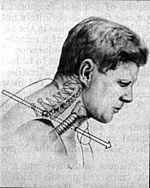
    Commission Conclusion: “Although it is not necessary to any essential findings of the Commission to determine just which shot hit Governor Connally, there is very persuasive evidence from the experts to indicate that the same bullet which pierced the President’s throat also caused Governor Connally’s wounds.” (WCR; p. 19.)

    The Testimonies of John & Nellie Connally Which Refute the Commission Conclusion.

    Mrs Connally. “When we got past this area I did turn to the President and said Mr President, you can’t say Dallas doesn’t love you. Then I don’t know how soon, it seems to me it was very soon, that I heard a noise, and not being an expert rifleman, I was not aware that it was a rifle. It was just a frightening noise, and it came from the right. I turned over my right shoulder and looked back and saw the President as he had both hands at his neck.”
    Arlen Specter. And you are indicating with your own hands, two hands crossing over gripping your own neck?
    Mrs. Connally. Yes, and it seemed to me there was—he made no utterance, no cry. I saw no blood, no anything. It was just sort of nothing, the expression on his face, and he just sort of slumped down. Then very soon there was the second shot that hit John. As the first shot was hit, and I turned to look at the same time, I recall John saying “Oh, no, no, no.” Then there was a second shot, and it hit John, and as he recoiled to the right, just crumbled like a wounded animal to the right he said, “My God, they are going to kill us all. (Volume IV, p. 147.)Picture1

    Governor Connally.

    ArlenSpecter. “As the automobile turned left onto Elm from Houston, what did occur there, Governor”?
    Governor Connally. “We had, we had gone, I guess, 150 feet, maybe 200 feet, I don’t recall how far it was, heading down to get on the freeway, the Stemmons Freeway, to go out to the hall where we were going to have lunch and, as I say, the crowds had begun to thin, and we could, I was anticipating that we were going to be at the hall in approximately 5 minutes from the time we turned on to Elm Street. We had just made the turn, well, when I heard what I thought to be a rifle shot. I instinctively turned to my right because the sound appeared to come from over my right shoulder, so I turned to look back over my right shoulder, and I saw nothing unusual except just people in the crowd, but I did not catch the President in the corner of my eye, and I was interested, because I immediately, the only thought that crossed my mind was that this is an assassination attempt. So, I looked, failing to see him, I was turning to look back over my left shoulder into the back seat, but I never got that far in my turn. I got about in the position I am in now facing you, looking a little bit to the left of centre, and then I felt like someone had hit me in the back.”
    Arlen Specter. What is the best estimate that you have as to the time span between the sound of the first shot and the feeling of someone hitting you in the back which you just described?
    Governor Connally. “A very, very brief span of time. Again, my trend of thought just happened to be, I suppose along this line, I immediately thought that this—that I had been shot. I knew it when I just looked down and I was covered with blood, and the thought immediately passed through my mind that there was either two or three people involved or more in this or someone was shooting with an automatic rifle. These were just thoughts that went through my mind because of the rapidity of these two of the first shot plus the blow that I took, and I knew I had been hit, and I immediately assumed, because of the amount of blood, and, in fact, that it had obviously passed through my chest, that I had probably been fatally hit.”

    To say that they were hit by separate bullets is synonymous with saying that there were two assassins.” Norman Redlich, Commission Counsel. (Inquest; p. 43 Volume IV, P132-133, watch this)

    13.Truth Is Our Only Client Here?

    “If this is truth, then black is white. Night is day. And war is peace. This is not truth. This is a false document.” Sylvia Meagher.

    Although Robert Kennedy openly endorsed the Warren Commission Report, he held a privately disdainful perspective towards it. RFK had derisively dubbed the extensive 888-page prosecutorial brief a: “shoddy piece of craftsmanship.” Moreover, the southern wing of the Commission, namely Senators Richard Russell, John Sherman Cooper, and Representative Hale Boggs, openly challenged the cornerstone of the Commission’s case: the Single Bullet Theory, expressing their significant dissent.

    John Sherman Cooper. “I could not convince myself that the same bullet struck both of them. No, I wasn’t convinced by [the SBT]. Neither was Senator Russell.” (James DiEugenio, JFK Revisited, pp. 30-31)
    John Sherman Cooper. “I, too, objected to such a conclusion; there was no evidence to show both men were hit by the same bullet.” (Edward Epstein, Inquest; p.149-150)
    Hale Boggs. “I had strong doubts about it [the single bullet theory], the question was never resolved.” (Inquest; pp.149-150)

    In a declassified telephone conversation with President Johnson, Russell expressed his frustration with the Commission’s proceedings.

    Richard Russell. “Now that damned Warren Commission business whupped me down so, we got through today and I just, you know what I did? I went over, got on the plane and came home and didn’t even have a toothbrush, I didn’t bring a shirt, I got a few little things here, I didn’t even have my pills, my anti histamine pills.”
    Lyndon Johnson. “Why did you get in such a rush?”
    Richard Russell. “Well, I was just worn out fighting over that damned report”.
    Lyndon Johnson. “Well, you got to take an hour out…to get your clothes.”
    Richard Russell. “Well, they were trying to prove that the same bullet that hit Kennedy first was the one that hit Connolly…went through him, through his hand, his bone, into his leg, everything else…just a lot of stuff that… I couldn’t hear all of the evidence and cross examine all of them but I did read the record and so I just I don’t know… but I was the only fellow there that practically requested any changes and what the staff got out of it…this staff business always scares me, I like to put my own views down…But we got you a pretty good report”
    Lyndon Johnson. “Well what difference does it make which bullet got Connally?”
    Richard Russell.“Well, it don’t make much difference but they said that they believed…that the Commission believed that the same bullet which hit Kennedy hit Connolly… well I don’t believe it.”
    Lyndon Johnson. I don’t either.”
    Richard Russell. “And so, I couldn’t sign it…. And I said that Governor Connolly testified direct to the contrary and I am not going to approve of that. So, I finally made them said that there was a difference in the Commission in that. Part of them believed that was not so. Course if a fellow was as accurate enough to hit Kennedy right in the neck on one shot and knock his head off with the next one…. Well, he didn’t miss completely with that third shot. But according to their theory he not only missed the whole automobile, but he missed the street. Well, if a man is a good enough shot to put two bullets right in Kennedy, he didn’t miss that whole automobile, nor the street.”

    These insights from the conversation between Russell and Johnson highlight the dissenting opinions and doubts surrounding the Single Bullet Theory within the Commission. It becomes apparent that the Warren Commission Report faced internal criticism and concerns regarding its findings. (read this, watch this and this)

    14. Jack Ruby and The Dallas Police Department.

    Picture2Dallas Police Chief Jesse Curry. “A great deal has been written about the relationship of the Dallas Police Department with Jack Ruby. We have twelve hundred men in our department, and we had each man submit a report regarding his knowledge or acquaintance with Jack Ruby. Less than fifty men even knew Jack Ruby. And less than a dozen had ever been in his place of business. Most of these that had been in his place of business had been in there because they were sent there on investigations or had answered a call for police service. I believe there was four men in our department that we were able to determine had been there socially. That is off duty. That were present in his nightclub.”


    Numerous witnesses have attested to the fact that Jack Ruby was a well-known associate of the Dallas Police Department. Many officers, detectives, and personnel were familiar with Ruby due to his frequent visits to police headquarters and his connections within the city’s nightclub and entertainment industry. Below I have reproduced just some of the testimony on the record, relating to Ruby’s acquaintance with the Dallas Police Department.

    Nancy Hamilton Former Employee of Ruby.

    Mark Lane. “Were you employed by Jack Ruby”?
    Nancy Hamilton. “Yes, I was. This was in 1961 in Dallas at his club The Carousel and I was bartender, waitress and rather the manager there”.
    Mark Lane. “How did you get that job”?
    Nancy Hamilton. “Well, I had gone into Dallas not knowing anyone and of course the first place I went was the Police Department and uh they were very kind and got me the job there”.
    Mark Lane. “They got you the job at Jack Ruby’s”?
    Nancy Hamilton. “Yes, they did”.
    Mark Lane. “Did they know Ruby”?
    Nancy Hamilton. “Personally, oh yes very well, vouched for him…wonderful person…great man…well known by the Dallas Police Department.”
    Mark Lane. “Other than Dallas Police officers what officials did frequent Ruby’s establishment”?
    Nancy Hamilton. “Oh…such as your District Attorney which would be Mr Wade”.
    Mark Lane. “How many police officers do you estimate Jack Ruby knew on a personal level”?
    Nancy Hamilton. At least half and probably two thirds”.
    Mark Lane. “There were almost twelve hundred police officers in Dallas in 1963. Would you say Ruby knew six hundred of them”?
    Nancy Hamilton. “Oh easily.”

    Nancy Hamilton/Rich also reiterated to the Warren Commission the extent of Ruby’s popularity with the Dallas Police.

    Nancy Rich. “There is no possible way that Jack Ruby could walk in Dallas and be mistaken for a newspaper reporter, especially in the police department. Not by any stretch of the imagination.”
    Leon Hubert. “Is that your opinion?”
    Nancy Rich. “That is not my personal opinion. That is fact.”
    Leon Hubert. “Well, on what do you base it?”
    Nancy Rich. “Ye gods, I don’t think there is a cop in Dallas that doesn’t know Jack Ruby. He practically lived at that station. They lived in his place. Even the lowest patrolman on the beat…knew him personally” (Volume XIV; p. 359.)

    Mr Johnson Former Employee of Ruby.

    Mark Lane.“Did Ruby know many Dallas Police officers”?
    Mr Johnson. “Well yes, he did. I’d say he knew ah probably half of the people on the force”.
    Mark Lane.
    “There were about Twelve hundred police officers on the force”.
    Mr Johnson. “Yes, well I am sure he knew about half of them, and he was very nice to them.”

    Barney Weinstein Manager of The Theatre Lounge.
    “He [Ruby] did know a lot of police. He knew ’em all. He curried their favour all the time.” (Texas Observer, December 13 1963, p. 8.)

    Let us use some specifics, Sgt. Patrick Dean said he knew Ruby for approximately three years. (Vol. II, p. 407) Det. Jim Leavelle testified he knew him for approximately 12 years. (Vol. III, p. 16) Det. L. C. Graves, said he knew him for 10 years. (Vol. XIII p. 9) Officer Blackie Harrison, who Ruby concealed himself behind before shooting Oswald, said he knew him for 12 years. (Vol. XII, p. 237). Lt. Jack Revill also knew him for 12 years. (Vol. XII p. 82)

    If one goes through the volumes of Commission testimony, one will see that Lt. Rio Pierce knew Ruby for a dozen years, Captain O. C. Jones knew Ruby for over ten years, Detective Buford Lee Beaty knew him for a dozen years, Det. Combest knew him for about five years, Det. R. L. Lowery knew him for several years, Sgt. Steele knew him for about 8 years, Lt. W. Wiggins knew him for a number of years, and Detective Clardy knew him for about 8 years. And again, this does not begin to exhaust the number of police who admitted to knowing Ruby.

    Now consider the following exchange between the Commission and Ruby’s friend and roommate George Senator.

    Leon Hubert.“What was Jack Ruby’s attitude toward the police as a group?”
    George Senator. “Well, all I know is apparently he must like them. They always used to come to see him.”
    Leon Hubert. “Tell us about those who came to see him. Do you know who they were?”
    George Senator. “I knew a lot of them by face. I didn’t know them all by name.”
    Leon Hubert. “Did they come frequently?”
    George Senator. “Various ones, yes, every day.” (Volume XIV; p. 213)

    Now consider this statement by Detective Will Fritz.

    Leon Hubert. “Do you know Jack Ruby at all, or did you know?”
    Will Fritz. “Did I know him before; no, sir, I did not… That is the first time I ever saw him, when he was arrested.”(Volume XV; p. 148)

    Travis Kirk, Dallas Attorney, 23 Years.“It is inconceivable that Fritz did not know Ruby. Kirk described Fritz as a domineering, dictatorial officer possessing a photographic memory and a thorough knowledge of the Dallas underworld. In light of Ruby’s reputation and notoriety in Dallas prior to the murder of Oswald… Mr Kirk considers it utterly ridiculous that Captain Fritz might pretend that he did not know Ruby, including physical recognition. Mr Kirk states that he would have to question the veracity of Captain Fritz if Fritz were to disclaim knowledge or recognition of Jack Ruby.”

    Upon his arrest for the murder of Lee Oswald, Ruby exclaimed to the arresting officers: “You all know me, I’m Jack Ruby.” (Volume XII-XIII; p 399, 308, 30.)

    15. ‘The Abortive Transfer’? The Tragic Murder of Lee Oswald.

    “The ACLU hold the Dallas police responsible for the shooting of Oswald, saying that minimum security considerations were flouted by their capitulation to publicity…which exposed Oswald to the very danger that took his life”.

    We Are Going To Kill Him.

    Billy Grammer, a Dallas Police Communications Officer, received an urgent anonymous phone call around 9 pm on November 23, 1963. In an interview for the documentary The Men Who Killed Kennedy, Grammer recalled this incident, saying: “I thought I recognised the voice but at the same time I couldn’t put a face or name with the voice. We talked and he began telling me that we needed to change the plans on moving Oswald from the basement that, uh he knew of the plans to make the move and if we did not make a change the statement, he made precisely was we are going to kill him.” Grammer reported the threat made against Oswald’s life to his superiors. Grammer first learned that Ruby had in fact killed Oswald when he saw it on television the next morning: “No sooner than I had turned it on [TV] and they were telling that Jack Ruby had killed Oswald. Then I suddenly realized, knowing Jack Ruby the way I did, that this was the man I was talking to on the phone last night. At that time, I put the voice with the face, and I knew myself that Jack Ruby was the one that made that call to me the night before. I think it was obvious because he knew me, and I knew him, and he called me by name over the telephone and seeing this and knowing what I knew and what he had said to me it had to be Jack Ruby… He made the statement that we are going to kill him. Which leads me to believe that this was not a spontaneous thing that happened on the spur of the moment he was watching Oswald coming out of the door and all of a sudden, he decided to shoot him. I do not believe that. I think this was a planned event with him being the man to do the shooting.” (watch this)

    Will Fritz. “During the night on Saturday night, I had a call at my home from uniformed captain, Captain Frazier, I believe is his name, he called me out at home and told me they had, had some threats and he had to transfer Oswald… I have always felt that that was Ruby who made that call.” (Volume IV; p. 233)

    Officer Perry McCoy testified he got a call a few hours before Oswald was moved and this was from a member of a committee of one hundred, and they had voted to kill Oswald while he was being transferred to the county jail. (Volume XIX; p. 537/538) This same threat was given to the FBI and was sent to the DPD’s William Frazier at about 3:30 in the morning of the 24th. (Volume VII, pp. 53-54)Picture3

    J. Edgar Hoover

    In a declassified document authored by J. Edgar Hoover and written mere hours after Oswald’s murder, Hoover voiced his frustration towards the Dallas Police Department, blaming them for Oswald’s death despite explicit warnings from the FBI.

    “There is nothing further on the Oswald case except that he is dead. Last night we received a call in our Dallas office from a man talking in a calm voice and saying he was a member of a committee organised to kill Oswald. We at once notified the Chief of Police and he assured us that Oswald would be given sufficient protection. However, this was not done”.

    He continued, “Oswald having been killed today after our warnings to the Dallas Police Department, was inexcusable.” (check this)

    Sheriff Decker and Secret Service agent Forrest Sorrels disagreed with the timing of the transfer and the method. Both men thought a transfer in the middle of the night with no one around would be the proper way to do such an assignment. And Decker though he should be placed him on the floorboard of the car. (Volume XIX, pp. 537-38; Volume XIII, p. 63) Jim Leavelle thought that Oswald should have been led out to Main Street while the crowd had gathered thereby avoiding all the reporters and cameras. (Volume III, p. 17)

    L. C. Graves.“We knew better than to transfer him under those conditions, but we didn’t have any choice.” (watch this)

    The procedure used to transfer Lee Oswald, to the county jail, was fundamentally flawed and, without question, should never have been conducted in the manner that it was. A thorough assessment of the circumstances lays bare distinct irregularities and contradictions employed by the Dallas Police. There is indisputable evidence to show that the strategy employed during Oswald’s transfer was egregiously mishandled, serving as the immediate trigger for his untimely demise.

    Burt Griffin. “Were you given any instructions as to how you should guard him?”
    L. C. Graves. “As I said, I was–told to hold to the arm and walk close to him and Montgomery was to walk behind us and Captain Fritz, and Lieutenant Swain in front of us and that is the way we started out to the elevator, and out of the elevator door over to the jail office”.
    Burt Griffin. “Was there any discussion about staying close to Oswald?”
    L. C. Graves. “We were instructed to stay close to him, yes.” (Volume XIII; p. 5)Picture4

    Failure to Follow Established Security Protocols.
    Lee Oswald’s transfer to the county jail, was supposed to be safeguarded by a four-man protection team. The arrangement included Will Fritz at the forefront, Jim Leavelle handcuffed to Oswald’s right, L.C. Graves handcuffed to Oswald’s left, and L.D. Montgomery covering the rear. As the plan dictated, this team was to escort Oswald from the basement elevator to the ‘awaiting’ squad car. However, almost immediately after entering the basement, Captain Fritz strayed from the established protocol. Instead of maintaining close proximity to Oswald for protection, Fritz positioned himself several feet ahead, effectively abandoning his assigned post. This aberration in formation created an open space, a gap that Jack Ruby exploited to access Oswald.

    Throughout the entire process, Fritz did not check back on Oswald once, which raises concerns about the attentiveness and effectiveness of the protection measures afforded Oswald. Travis Kirk stated to the FBI that: “Anyone not having status in law enforcement or the legal profession who had access to the Dallas Police Department facilities would have to be known to Captain Fritz. Reports from Dallas specify that Ruby did have this access.” Kirk speculated that: “It was to captain Fritz’s advantage that Oswald was killed for it enabled him to close, in Fritz’s words, a murder case based on circumstantial evidence. And that the Oswald case was bound to involve the Dallas Police Department, including Captain Fritz, in controversy for years to come.” Kirk explained that “the Jack Ruby matter, insofar as Captain Fritz is concerned, can be more easily handled by the Dallas authorities.” (read this document and watch this video)

    Permitting Unsecured Crowd Proximity.
    One major issue in question is why any individuals especially newsmen, were permitted to be in such close proximity to Lee Oswald during his transfer. The police, cognizant of the substantial threats to Oswald’s life, should have enforced a secure perimeter around him. This hypothetical exclusion zone would have been monitored by police personnel, ensuring that anyone attempting to breach the boundary and approach Oswald would be immediately intercepted. The lack of such a safety measure raises serious questions about the adequacy of the security protocols during Oswald’s transfer.

    L. C. Graves. “I was under the impression there wouldn’t be any news media inside that rampway, that they would be behind that area over there, but they were in the way. Chief Curry told Captain Fritz that the security was taken care of, that there wouldn’t be nobody in that ramp. Anyway, that cameras would be over behind that rail of that ramp. So, what we expected to find was our officers along the side there, but we found newsmen inside that ramp, in fact, in the way of that car.”
    Burt Griffin. “You say you were quite surprised when you saw these news people?”L. C. Graves. “I was surprised that they were rubbing my elbow. You know,if you saw that film, you saw one of them with a mike in his hand. He actually rubbed my elbow. We were in a slight turn when this thing happened, and my attention had been called to that car door, and this joker was standing there with a microphone in his hand, and others that—I don’t know if they were newsmen—they weren’t officers—had cameras around their necks and everything.” (Volume XIII; p. 7/8)

    Absence of Personal Protective Equipment.
    While the unique circumstances surrounding Oswald’s transfer in 1963 were nothing short of extraordinary, it is nonetheless evident that critical safety measures were conspicuously absent. Oswald, a prisoner under intense scrutiny and heightened danger, was denied essential protective resources, such as body armour, even in the face of palpable threats to his life. While it’s understood that such equipment might not have aligned with the standard protocol at the time, the gravity of the situation undeniably called for extraordinary precautions. The omission of available protective gear, in this case, registers as a considerable oversight. The provision of body armour to Oswald, may have been instrumental in preserving his life.

    Lack of Armed Guard Presence.
    Despite the high-profile nature of Oswald’s case and the known threats against him, he was not escorted by an armed guard during the transfer. The presence of an armed guard could have potentially deterred an assassination attempt, like the one carried out by Ruby.

    Poorly Planned Vehicle Positioning.
    The vehicle intended to transport Oswald to the county jail, was not in the correct position at the time of transfer. This meant that Oswald was exposed to potential threats for a longer period.

    Jim Leavelle.“All right, when we left the jail cell, we proceeded down to the booking desk there, up to the door leading out into the basement, and I purposely told Mr. Graves to hold it a minute while Captain Fritz checked the area outside. I don’t know why I did that, because we had not made any plans to do so, but I said, Let’s hold it a minute and let him see if everything is in order. Because we had been given to understand that the car would be across the passageway.”
    Leon Hubert.
    “Of the jail corridor?”
    Jim Leavelle. “And that, and we would have nothing to do but walk straight from the door, approximately 13 or 14 feet to the car and then Captain Fritz, when we asked him to give us the high sign on it, he said, everything is all set.”
    Leon Hubert.“Did you notice what time it was?”
    Jim Leavelle.“No; I did not. That is the only error that I can see. The captain should have known that the car was not in the position it should be, and I was surprised when I walked to the door and the car was not in the spot it should have been, but I could see it was in back, and backing into position, but had it been in position where we were told it would be, that would have eliminated a lot of the area in which anyone would have access to him, because it would have been blocked by the car. In fact, if the car had been sitting where we were told it was going to be, see, it would have been sitting directly upon the spot where Ruby was standing when he fired the shot.”(Volume XIII; p. 17)

    L. C. Graves.“Well, we got down to the basement. We hesitated on the elevator until Captain Fritz and Lieutenant Swain stepped out. Then we followed them around the outside exit door into the hallway which leads to the ramp and then hesitated there a little bit with Oswald so they could check out there and see that everything was all right, and when we got the go-ahead sign, [from Fritz] that everything was all right we walked out with him… Now, we, Captain Fritz sent Dhority and Brown and Beck on down to the basement in plenty of time to get that car up there for us.” (Volume XIII; p. 7/8)

    L.D. Montgomery. “Captain Fritz stepped out into this door leading out to the ramp… and told us, [to] Come on… Like I say, we came out there. They crammed those mikes over there, and we had to slow up for just a second, because they was backing this car into position. It was supposed to have been in position when we got there, but it wasn’t there, so, we had to pause, or slow down for the car to come on back.” (Volume XIII; p. 28/29)

    Given the high-profile and volatile nature of Oswald’s case, it’s puzzling why Captain Fritz authorized the transfer process knowing full well that the vehicle was not yet in position to receive Lee? An optimally orchestrated transfer would have ensured that the car was situated correctly before initiating the process. Additionally, had the vehicle been correctly positioned, an additional precaution should have entailed stationing an armed police officer at the open door that Oswald was meant to enter. This would have facilitated a seamless and safer transfer from the basement to the vehicle, providing an extra layer of security to Oswald during this crucial process. This measure would have significantly minimized the potential for any unplanned incidents, such as what tragically transpired.

    The Car Horns.
    In an unusual occurrence, a car horn sounds as Oswald is led out into the basement, and again just before Ruby stepped out to shoot Oswald.Jim Di Eugenio points out in Reclaiming Parkland, “Once you’re aware of it, it is almost eerie to watch.” Whilst gravely ill in prison Ruby commented about the horns saying: “If you hear a lot of horn-blowing, it will be for me, they will want my blood.” (Reclaiming Parkland; p. 204)

    The Dallas Police Department, entrusted with Oswald’s safety, displayed an egregious level of negligence. Their missteps weren’t just minor oversights or simple mistakes. They bore the weighty implications of life and death, resulting in the irreversible consequence of a human life lost prematurely.

    Imagine an alternative scenario: Oswald, represented by legal counsel, could have experienced an entirely different outcome. A competent legal representative would likely have challenged the plan to transfer Oswald under such precarious conditions, thus potentially changing the course of history. Yet this was not the case.

    To this day, no one from the higher echelons of the Dallas Police Department has been called to account for their role in the circumstances leading to Oswald’s death. This grave oversight is not just a failure of an individual or a department, but a failure of the justice system itself, a sobering reminder of the devastating consequences when those sworn to protect and serve are negligent of their duties.

    “Who else could have timed it so perfectly by seconds? If it were timed that way, then someone in the police department is guilty of giving the information as to when Lee Harvey Oswald was coming down.” Jack Ruby. (Volume V; p. 206)

    16. Did Ruby’s Life Hinge on Killing Oswald?

    Picture5“Everything pertaining to what’s happening has never come to the surface. The world will never know the true facts of what occurred—my motives. The people have had so much to gain and had such an ulterior motive for putting me in the position I’m in. Will never let the true facts, come above board to the world.” Jack Ruby.

    Following the murder, Ruby was promptly detained and transported to a cell in the city jail. Police Officer Don Archer, who had direct contact with Ruby during this time, reported intriguing observations about Ruby’s behaviour in the aftermath of his arrest.

    Don Archer. “His behaviour to begin with, he was very hyper. He was sweating profusely. I could see his heart. Course we had stripped him down for security purposes and he asked me for one of my cigarettes, so I gave him a cigarette. Finally, uh after about two hours had elapsed, which put it around 1pm the head of the secret service came up and I conferred with him, and he told me that Oswald had in effect died and it should shock him [Ruby] cause it would mean the death penalty. So, I returned and said Jack it looks like its gon be the electric chair for you. Instead of being shocked he became calm, he quit sweating, his heart slowed down, I asked him if he wanted a cigarette, and he advised me that he didn’t smoke. I was just astonished that this was a complete difference in behaviour of what I had expected. I would say that his life had depended on him getting Oswald.” (watch this and this)

    17. The People V. Lee Harvey Oswald.

    “Justice denied anywhere diminishes justice everywhere.” Martin Luther King Jr.

    Commission Conclusion. “The numerous statements…made to the press by various law enforcement officials, during this period of confusion and disorder in the police station, would have presented serious obstacles to the obtaining of a fair trial for Oswald. To the extent that the information was erroneous and misleading, it helped create doubts, speculations, and fears in the mind of the public which might otherwise not have arisen”. (WCR; p 20.)

    The Presumption of Innocence.
    “It is a cardinal principle of our system of justice that every person accused of a crime is presumed to be innocent unless and until his or her guilt is established beyond a reasonable doubt. The presumption is not a mere formality. It is a matter of the most important substance.” (read this)Picture6

    The following statements made by Dallas Law Enforcement Officials expressing their firm belief in Oswald’s guilt, seriously undermined Oswald’s presumption of innocence and confirmed a prejudgement of Oswald’s culpability.

    DA Henry Wade. “I would say that without any doubt he’s the killer, the law says beyond a reasonable doubt and to a moral certainty which I…there’s no question that he was the killer of President Kennedy.”

    Reporter. “How do you sum him up, as a man based on your experience with criminal types?”
    Wade. “Oh I think he’s…uh… the man that planned this murder, weeks or months ago… and has laid his plans carefully and carried them out and has planned at that time what he’s gonna tell the police that are questioning him at present”

    Gerald Hill. 11/22/63.
    Reporter. “Do you believe he is the same man that killed the police officer?”

    Gerald Hill. “Having been in it from the very beginning, as far as the officer’s death is concerned, I am convinced that he is the man that killed the officer.” (watch this)

    “Any prosecutor can convict a guilty man. It takes a great prosecutor to convict an innocent man.” Hidden motto of Wade’s office. (Reclaiming Parkland; p.74)

    The notion of a “great prosecutor” convicting an innocent man, as indicated above, raises serious concerns about the practices of the Dallas prosecutor’s office. This implies a mindset that prioritizes securing convictions over ensuring the integrity of the legal process. This approach contradicts the fundamental principles of justice, which demand fairness, objectivity, and a commitment to the pursuit of truth rather than the mere tallying of convictions.

    In a divergent assessment from District Attorney Henry Wade’s public statements, FBI Director J. Edgar Hoover communicated a differing evaluation of the evidence in the case against Oswald to President Johnson on November 23, 1963. Hoover revealed his disappointment with the Dallas Police Department’s inability to build a convincing case proving Oswald’s guilt, a view that stood in stark contrast to Wade’s publicized optimistic portrayal of the investigation’s progress.

    Hoover conveyed: “This man in Dallas. We, of course, charged him with the murder of the President. The evidence that they have at the present time is not very, very strong…The case as it stands now isn’t strong enough to be able to get a conviction.” (read this)

    On November 24th, Hoover detailed his attempts to manage the media narrative surrounding the investigation, frustrated with the local police’s public discourse. He recounted,“I dispatched to Dallas one of my top assistants in the hope that he might stop the Chief of Police and his staff from doing so damned much talking on television. They did not really have a case against Oswald until we gave them our information… all the Dallas police had was three witnesses who tentatively identified him as the man who shot the policeman and boarded a bus to go home shortly after the President was killed.”

    Hoover expressed his concern over Oswald’s potential defense, remarking, “Oswald had been saying he wanted John Abt as his lawyer and Abt, with only that kind of evidence, could have turned the case around, I’m afraid. All the talking down there might have required a change of venue on the basis that Oswald could not have gotten a fair trial in Dallas.”

    He expressed his exasperation with the police department’s uncontrolled dissemination of information to the press, emphasizing:“Chief of Police Curry I understand cannot control Capt. Fritz of the Homicide Squad, who is giving much information to the press… we want them to shut up.”

    Regarding the way in which Oswald’s murder transpired Hoover continued, “It will allow, I’m afraid, a lot of civil rights people to raise a lot of hell because he was handcuffed and had no weapon. There are bound to be some elements of our society who will holler their heads off that his civil rights were violated—which they were.” (read this)

    Nick Katzenbach also echoed Hoovers frustrations with the Dallas officials.“The matter has been handled thus far with neither dignity or conviction. Facts have been mixed with rumour and speculation. We can scarcely let the world see us totally in the image of the Dallas police when our President is murdered.” (read this)

    The following remarks by Mark Lane and the American Civil Liberties Union (ACLU) highlight the profound concerns about Lee Oswald’s presumption of innocence status and his prospects of receiving a fair trial anywhere in the United States.

    “In all likelihood there does not exist a single American community where reside 12 men or women, good and true, who presume that Lee Harvey Oswald did not assassinate President Kennedy.” A Lawyers Brief, Mark Lane. (read here)

    “The American Civil Liberties Union charged yesterday that the police and prosecuting officials; of Dallas committed gross violations of civil liberties in their handling of Lee H. Oswald, the accused assassin of President Kennedy. The group said that it would have been “simply impossible” for Oswald, had he lived, to obtain a fair trial because he had already been “tried and convicted” by the public statements of Dallas law enforcement officials. The organization proposed that the special panel created by President Johnson to investigate the assassination of President Kennedy should also examine the treatment accorded Oswald. The Dallas police and District Attorney Henry Wade have contended that Oswald’s rights were not infringed. The liberties union raised these questions:

    Q. How much time elapsed before Oswald was advised of his rights to counsel?
    Q. How much time elapsed before Oswald was permitted access to a telephone to call his family and an attorney?
    Q. During what periods and for how long was Oswald interrogated?
    Q. What methods of interrogation were used?
    Q. Was Oswald advised of his right to remain silent?

    The ACLU described the transfer of Oswald as “a theatrical production for the benefit of the television cameras…. It is our opinion that Lee Harvey Oswald, had he lived, would have been deprived of all opportunity to receive a fair trial by the conduct of the police and prosecuting officials in Dallas, under pressure from the public and the news media. From the moment of his arrest until his murder two days later, Oswald was tried and convicted many times over in the newspapers, on the radio, and over television by the public statements of the Dallas law enforcement officials. Time and again high–ranking police and prosecution officials state[d] their complete satisfaction that Oswald was the assassin…As their investigation uncovered one piece of evidence after another, the results were broadcast to the public. All this evidence was described by the Dallas officials as authentic and incontestable proof that Oswald was the Presidents assassin. The cumulative effect of these public pronouncements was to impress indelibly on the public’s mind that Oswald was indeed the slayer. With such publicity, it would have been impossible for Oswald to get a fair trial in Dallas or anywhere else in the country. Oswald’s trial would have been nothing but a hollow formality. The American Civil Liberties Union (see this)

    Oswald declines the right to counsel?
    “The ACLU recalled that Greg Olds, president of the Dallas Civil Liberties Union and three volunteer lawyers went to the city jail late in the evening Nov. 22, the day the President was assassinated. They were told by police officials, including Capt. Will Fritz, head of the homicide bureau, and Justice of the Peace David Johnston before whom Oswald was first arraigned that Oswald had been advised of his right to counsel but that he had declined to request counsel. Since the ACLU attorneys had not been retained by either Oswald or his family, they had no right to see the prisoner nor give him legal advice”. (The American Civil Liberties Union) (see this)

    11/22/63, Oswald Requests A Lawyer.
    Lee Oswald consistently expressed his desire for legal representation during his detention. He repeatedly requested legal assistance and expressed confusion about the charges against him. These statements, captured by reporters illustrate Oswald’s awareness of his rights and his desire to have legal counsel present during his questioning.

    Lee Oswald. “These people have given me a hearing without legal representation or anything”
    Reporter. “Did you shoot the President?”
    Lee Oswald. “I didn’t shoot anybody, no sir.”

    Reporter. “Oswald did you shoot the President?”
    Lee Oswald. “I didn’t shoot anybody sir I haven’t been told what I am here for.”
    Reporter. “Do you have a lawyer?”
    Lee Oswald. “No sir I don’t.”

    Lee Oswald. “I would like some legal representation, but these police officers have not allowed me to, to have any. I don’t know what this is all about.”
    Reporter. “Kill the President?”
    Lee Oswald. “No sir I didn’t. People keep asking me that.”

    Friday Night Press Conference.

    Lee Oswald. “I positively know nothing about this situation here. I would like to have legal representation. Well, I was uh questioned by a judge however I uh protested at that time that I was not allowed legal representation during that very short and sweet hearing. I really don’t know what this situation is about, no one has told me anything except I am accused of murdering a policeman. I know nothing more than that and I do request someone to come forward to give me a legal assistance.”
    Reporter. “Did you kill the President?”
    Lee Oswald. “No, I have not been charged with that in fact no one has said that to me yet. The first thing I heard about it was when the newspaper reporters in the hall asked me that question.”
    Reporter. “You have been charged.”
    Lee Oswald. “Sir?”
    Reporter. “You have been charged.” (watch this)

    William Whaley. “He showed no respect for the policemen, he told them what he thought about them. They knew what they were doing, and they were trying to railroad him, and he wanted his lawyer.” (Volume II p. 261)

    Gerald Hill. “He had previously in the theatre said he wanted his attorney.”
    David Belin. “He had said this in the theatre?”
    Gerald Hill. “Yes; when we arrested him, he wanted his lawyer. He knew his rights.” (Volume VII; p. 61)

    Lawyers such as Percy Foreman and Joe Tonahill expressed doubts about the strength of the evidence against Oswald and believed that a fair trial would likely result in a verdict of not guilty due to insufficient evidence. Their opinions further support the contention that Oswald’s trial would have been an exercise in futility and lacked the substance necessary for a fair determination of his guilt or innocence.

    Lawyer Percy Foreman. “Authorities are running a serious risk of jeopardizing their case against Oswald by failing to observe his constitutional rights.” He went on to state: “Officials may have already committed reversible error in the case by permitting the accused to undergo more than 24 hours of detention without benefit of legal counsel.” Citing grounds for reversal, Foreman further asserted: “Under recent decision of the United States Supreme Court, federal procedural guarantees must be observed in state prosecutions. Their abridgement can be grounds for a reversal or even a conviction. This is a new law. They could get a conviction in Texas and get it thrown out on appeal, but it takes a long time for these dim-witted law enforcement officers to realize it.” (St Louis Post Dispatch, 11/24/63)

    Joe Tonahill, Counsel for Jack Ruby.

    Interviewer. “Mr. Tonahill, what, in your opinion, would have been the outcome of a trial, had Oswald gone to trial?”
    Joe Tonahill. “In my opinion…. Under Texas Law…a trial judge, trying him… the judge would have had a weak circumstantial evidence charge to go to the jury. In my opinion he wouldn’t have had that. He would have been forced to instruct the jury to return a verdict of Not Guilty, on the grounds of insufficient evidence.” (watch this)
    “At about 5:30 p.m. [Oswald] was visited by the president of the Dallas Bar Association with whom he spoke for about 5 minutes.” (WCR; p199.)

    President of the Dallas Bar Association Louis Nichols:
    “I asked him if he had a lawyer, and he said, well, he really didn’t know what it was all about, that he was, had been incarcerated, and kept incommunicado.” When asked who Oswald wanted to represent him, Oswald confirmed, “Either Mr. Abt or someone who is a member of the American Civil Liberties Union. I am a member of that organisation, and I would like to have somebody who is a member of that organisation represent me.” Nichols replied, “I’m sorry, I don’t know anybody who is a member of that organization. Although, as it turned out later, a number of lawyers I know are members.” Oswald stated that, “if I can find a lawyer here who believes in anything I believe in, and believes as I believe, and believes in my innocence, then paused a little bit, and went on a little bit and said, as much as he can, I might let him represent me.” Nichols testified to the likelihood that he personally could have represented Oswald, “I wanted to know whether he needed a lawyer, and I didn’t anticipate that I would be his lawyer, because I don’t practice criminal law.” (Volume VII; p. 325-332)

    Oswald’s distress should have been alarming to Nichols. However, it remains unclear why, following their meeting, Nichols didn’t reach out to Mr. Olds to inform him about Oswald’s plea for ACLU representation? Press conference conducted by Nichols in which he confirms Oswald’s request to be represented by John Abt or a lawyer from the ACLU: watch here.

    Oswald had explicitly expressed his concerns, not only to the Nichols but also directly to the press, about his maltreatment at the hands of the Dallas Police. He protested that he wanted his, “basic fundamental hygienic rights, I mean like a shower… and… uh… clothes.” (watch here)

    President of the Dallas ACLU Gregory Lee Olds.

    Gregory Lee Olds. “I called the police department to inquire about this [counsel for Oswald], and finally talked to Captain Fritz, Capt. Will Fritz, and was-raised the question, and he said, “No” that Oswald had been given the opportunity and declined.”
    Sam Stern. “Excuse me. Did Captain Fritz say that Oswald did not want counsel at that time, or that he was trying to obtain his own counsel?”
    Gregory Lee Olds. “What I was told that he had been given the opportunity and had not made any requests… Captain King [also had] assured us that Oswald had not made any requests for counsel.” (Volume VII p.323)

    Denied legal representation, Oswald’s opportunity to mount a defense in the face of hours of questioning was drastically compromised. Compounded by severe media bias and prejudiced public statements from Dallas police and prosecution officials, his chances of receiving a fair trial rapidly dwindled. Here is an object lesson in the presumption of innocence, the right to legal counsel, and providing an impartial platform for every accused person to defend themselves.

    Louis Nichols, despite publicly stating and testifying that he did not practice criminal law, was paradoxically allowed to meet with Oswald. In contrast, Gregory Lee Olds, the President of the Dallas ACLU whom Oswald had sought for representation, was unequivocally denied access on the grounds that Oswald did not want legal counsel. This puzzling discrepancy further underscores the gravity of Oswald’s situation and the troubling injustice perpetuated in his case.

    The disturbing parallels between Oswald and the other suspects prosecuted by Wade become apparent when examining public statements made by Craig Watkins, who took over as DA from Wade in 2006. Watkins asserted “There was a cowboy kind of mentality, and the reality is that kind of approach is archaic, racist, elitist and arrogant.”

    Detractors of Wade, including Watkins, have pointed out numerous problems with cases prosecuted under Wade’s tenure. Allegations of shoddy investigations ignored evidence, and lack of transparency with defense lawyers paint a grim picture of the justice system under Wade. His promotion system, which allegedly favoured prosecutors with high conviction rates, has come under intense scrutiny. As Michelle Moore, a Dallas County public defender and president of the Innocence Project of Texas, observed, “in hindsight, we’re finding lots of places where detectives in those cases, they kind of trimmed the corners to just get the case done.”

    John Stickels, a criminology professor at the University of Texas at Arlington and a director of the Innocence Project of Texas, identifies a culture of “win at all costs” as a key problem. In his view, once a suspect was arrested under Wade’s tenure, their guilt was often presumed.”When someone was arrested, it was assumed they were guilty. I think prosecutors and investigators basically ignored all evidence to the contrary and decided they were going to convict these guys.”

    The parallels between Wade’s regime and the miscarriage of justice in Oswald’s case is compelling.

    As a result: “No other county in America — and almost no state, for that matter — has freed more innocent people from prison in recent years than Dallas County, where Wade was DA from 1951 through 1986.”

    18. Rush to Judgement.

    “Had I known at the outset, when I wrote that article for the National Guardian, that I was going to be so involved that I would close my law practice, abandon my work, abandon my political career, be attacked by the very newspapers in New York City which used to hail my election to the state legislature; had I known that – had I known that I was going to be placed in the lookout books, so that when I come back into the country, I’m stopped by the immigration authorities – only in America, but no other country in the world – that my phones would be tapped, that not only would the FBI follow me around at lecture engagements, but present to the Warren Commission extracts of what I said at various lectures – I am not sure, if I knew all that, that I ever would have written that article in the first place.” Mark Lane. (watch here)

    J. Edgar Hoover and Nicholas Katzenbach, the Deputy Attorney General, revealed their pressing concern about convincing the public of Lee Oswald’s sole guilt in the immediate aftermath of his murder.

    J Edgar Hoover, 11/24/63. “The thing I am concerned about and so is Mr. Katzenbach is having something issued so we can convince the public that Oswald is the real assassin.”

    Nicholas Katzenbach, 11/25/63. “The public must be satisfied that Oswald was the assassin; that he did not have confederates who are still at large; and that the evidence was such that he would have been convicted at trial.”

    This haste in determining Oswald’s guilt following his preventable death exemplified an alarming compromise between public reassurance and the respect for essential legal principles. The urgent need to alleviate public anxiety overshadowed the necessity for a thorough investigation and due process. This swift conviction of Oswald exposed a troubling discrepancy between societal demands during a crisis and the principles of justice, casting a pall over the entire case.

    Unquestionably, every US citizen, is constitutionally granted the presumption of innocence and a fair trial. However, these inherent rights were hastily disregarded in Oswald’s case, representing not only an individual miscarriage of justice but also inhibiting a broader, more comprehensive investigation.

    The hasty conclusions drawn by officials such as Hoover, Katzenbach, and Dallas law enforcement egregiously compromised the fundamental legal maxim of ‘presumed innocent until proven guilty.’ This resulted in a severe infringement of Oswald’s civil and constitutional rights. The abrupt demise of Oswald exacerbated this problem, forever eliminating the possibility of a trial and thus amplifying the precipitous rush to judgment. As a result, this premature rush towards a verdict prompted the untimely abandonment of several potential investigative pathways. These could have included exploring the potential involvement of accomplices, delving into various avenues of conspiracy, and thoroughly assessing Oswald’s claimed innocence.

    19. Are You Lee Oswald? Or Alek Hidell?

    Commission Conclusion. “The arresting officers found a forged selective service card with a picture of Oswald and the name “Alek J. Hidell” in Oswald’s billfold.”(WCR; p. 181)Picture7

    Picture8What is the chain of custody of the Selective Service Card?

    Immediately following his arrest at the Texas Theatre, Oswald was placed in a squad car heading to city hall. Officers Gerald Hill, Bob Carrol, Paul Bentley, C.T. Walker, K.E. Lyons, and the suspect Lee H. Oswald were all present in the squad car.

    The statements and reports of the witnesses.

    Gerald Hill. 11/22/63, NBC News.
    Gerald Hill.“The only way we found out what his name was, was to remove his billfold and check it ourselves; he wouldn’t even tell us what his name was.”
    Reporter.“What was his name on the billfold?”
    Gerald Hill. “Lee H. Oswald, O-S-W-A-L-D.” (Volume XXIV; p. 804/805)

    4/8/64. In his testimony to the Warren Commission. Hill said he first heard the name Hidell in the car transporting Oswald to the station from Paul Bentley.: “I can’t specifically say that is what it was…but that sounds like the name I heard.” Hill said they had two different identifications and two different names. (Volume VII, p. 58)

    Paul Bentley. 12/2/63. Report To Chief Curry.
    “On the way to city hall I removed the suspect’s wallet and obtained his name…I turned his identification over to Lt. Baker. (Volume XXIV; p. 234)

    Paul Bentley was not called to testify.

    Bob Carrol provided testimony to the Commission on two separate occasions. The first testimony took place on April 3, 1964, while the second testimony occurred on April 9, 1964. During his second appearance, Carrol specifically mentioned the ‘Hidell’ card. It is reasonable to infer that he was called back to testify because of this particular detail.

    David Belin. “Was he ever asked his name?”
    Bob Carroll. “Yes, sir; he was asked his name.”
    David Belin. “Did he give his name?”
    Bob Carroll. “He gave, the best I recall, I wasn’t able to look closely, but the best I recall, he gave two names, I think. I don’t recall what the other one was.”
    David Belin. “Did he give two names? Or did someone in the car read from the identification?”
    Bob Carroll. “Someone in the car may have read from the identification. I know two names, the best I recall, were mentioned.” (Volume VII; p.25)

    Officer C. T. Walker. 4/8/64.

    David Belin.“You recall any other conversation that you had with him, or not?”
    Officer Walker. “No; he was just denying it.” “About the time I got through with the radio transmission, I asked Paul Bentley, why don’t you see if he has any identification. Paul was sitting sort of sideways in the seat, and with his right hand he reached down and felt of the suspect’s left hip pocket and said, “Yes, he has a billfold,” and took it out. I never did have the billfold in my possession, but the name Lee Oswald was called out by Bentley from the back seat, and said this identification, I believe, was on the library card. And he also made the statement that there was some more identification in this other name which I don’t remember, but it was the same name that later came in the paper that he bought the gun under.”
    David Belin. “Anything else about him on your way to the police station?”
    Officer Walker. “He was real calm. He was extra calm. He wasn’t a bit excited or nervous or anything. That was all the conversation I can recall going down.”
    David Belin. “After you got down there, what did you do with him?”
    Officer Walker. “We took him up the homicide and robbery bureau, and we went back there, and one of the detectives said put him in this room. I put him in the room, and he said, “Let the uniform officers stay with him.” And I went inside, and Oswald sat down, and he was handcuffed with his hands behind him. I sat down there, and I had his pistol, and he had a card in there with a picture of him and the name A. J. Hidell on it.”
    David Belin. “Do you remember what kind of card it was?”
    Officer Walker. “Just an identification card. I don’t recall what it was.”
    David Belin. “All right.”
    Officer Walker. “And I told him, “That is your real name, isn’t it?”
    David Belin. “He, had he earlier told you his name was Lee Harvey Oswald?”
    Officer Walker. “I believe he had.”

    K. E. Lyons was not called to testify.

    12/2/63. Reports To Chief Curry.
    The arresting officers present in the squad car – K.E. Lyons, Bob Carroll, and C.T. Walker – provided reports to Chief Curry that intriguingly made no mention of the Selective Service card baring the name Hidell. (Sylvia Meagher, Accessories After The Fact, p.186)

    According to the testimony of Dallas Police officer W. M. Potts, he along with two other officers, E. L. Cunningham, Bill Senkel and Justice of The Peace David Johnston, went out to 1026 North Beckley shortly after 2pm on 11/22/63. Potts testified that:

    Joesph Ball. “And you went out to where?”
    Walter Potts. “1026 North Beckley”.
    Joesph Ball. “What happened when you got there?””
    Walter Potts. “We got there, and we talked to this Mrs.–I believe her name was Johnson.”
    Joesph Ball. “Mrs. A. C. Johnson?”
    Walter Potts. “Mrs. Johnson and Mrs. Roberts.”
    Joesph Ball. “Earlene Roberts?”
    Walter Potts. “Yes; and they didn’t know a Lee Harvey Oswald or an Alex Hidell either one” (Volume VII; p. 197)

    However, the mention of the name Hidell by the attending officers is disputed by witnesses who were present in the rooming house on November 22, 1963. When the police arrived at the Beckley rooming house, both the owner Mrs. Johnson and the manager Mrs Robert said they were only asked about Oswald, not Hidell. And they said that Oswald registered as O. H. Lee. (Volume X, pp. 303-04; Volume X p. 295; Volume Vi p. 438)

    In a report by Justice Johnston on 11/22/63, listing all of Lee Oswald’s particulars, Justice Johnston writes: Alias, O. H. Lee- 1026 N Beckley. No mention of A. J. Hidell. (Volume XX; p. 313)

    Detective Richard Sims testified that he had taken off Oswald’s identification bracelet before administering his paraffin test on November 22, 1963.

    Joseph Ball.“Did you see any identification bracelet on Oswald?”
    Richard Sims. “Yes, sir; he had an identification bracelet.”
    Joseph Ball. “Did he have that on at the time of the showup?”
    Richard Sims. “Yes.”
    Joseph Ball. “Did you ever remove that?”
    Richard Sims “Yes, sir; when they were getting his paraffin cast on his hands.”
    Joseph Ball. “And what did you do with that identification bracelet?”
    Richard Sims. “I placed it in the property room cardsheet.”
    Joseph Ball. “Did you examine that identification bracelet?”
    Richard Sims. “Yes, sir”.
    Joseph Ball. “What did it have on it, if you remember?”
    Richard Sims. “It had his name on it.”  (Volume VII; p. 174)Picture9

    Picture10Challenging the Existence of the Hidell Card on November 22, 1963.

    1. Upon his arrest and subsequent detention, Lee Oswald had on a identification bracelet inscribed with the name ‘Lee’. Given this fact, it seems perplexing how the Dallas Police could have possibly thought his name was Alek?
    2. The alias- ‘Hidell’ does not appear in any of the records or statements from the Police, FBI, or Secret Service dated November 22, 1963. On the other hand, the alias ‘O. H. Lee’ was prominently circulated among the media on the day of the assassination.
    3. Upon the Dallas Police’s arrival at 1026 North Beckley, around 2pm on November 22, 1963, three separate witnesses confirm that the Dallas officers, inquired solely about a Lee Harvey Oswald. There was no mention of ‘Alek J. Hidell’.
    4. Oswald’s possession of the Service card, featuring his picture and a name directly linked to the Carcano stashed on the sixth floor, raises some perplexing questions. If Oswald were solely culpable, why would he take the gamble of retaining this potentially condemning evidence?
    5. What proof is there that Oswald made use of the Select Service card prior to the assassination?
    6. Has there been any testimony of anyone having seen this ID in Oswald’s possession prior to November 22, 1963?
    7. When and where was this ID card manufactured?
    8. Did any fingerprints found on the card match those of Oswald’s?
    9. Were any photographs taken of this card on November 22, 1963?
    10. Was this card itemized on an inventory of Oswald’s personal effects at the time of his booking on November 22, 1963?
    11. Selective Service Cards did not typically include the holder’s picture. The presence of a photograph would inevitably raise suspicion to anyone who saw the ID.
    12. The card appears to be a complex forgery, necessitating the forger’s access to high-quality equipment like a professional-grade camera, often found in photo labs or printing facilities, and a typewriter. (Volume IV; p. 388)
    13. Commission Conclusion: “Two typewriters were used in this typing, as shown by differences in the design of the typed figure 4.” The Commission however made no attempt to trace the typewriters, alleged to have been used in the creation of the forged Hidell card. Establishing Oswald’s access to these machines would have been instrumental in validating that he could have created the forged Hidell card. As noted in forensic examination principles, “To determine whether a particular typewriter produced a questioned document, examiners search for individual characteristics that can include misaligned or damaged letters, abnormal spacing before or after certain letters, and variations in the pressure applied to the page by some letters. For example, certain letters can have telltale nicks or spurs that are imprinted on the page, or they can lean to one side or print slightly higher or lower than the others. These defects can be compared to a sample from a suspect typewriter and thus offer powerful individualizing characteristics.” (WCR;p. 572) (see this)
    14. The Commission relates to the creator of the card as the “counterfeiter” not specifically to Oswald. (WCR; p. 571)
    15. The Selective Service Card, along with the introduction of the alias ‘Hidell’, only emerges in the case on November 23, 1963. Interestingly, this is the same day the FBI linked the alias to a mail-order purchase for the Mannlicher Carcano C2766. Yet this correlation appears a full day after the alleged finding of the card. The timing inconsistency not only impacts the chain of custody but also coincides with the sudden connection of the alias to the mail order purchase. This raises substantial questions about the evidence handling process, the chronology of the case, and the overall integrity of the chain of custody. (Meagher, pp. 181-200)

    20. Could Marina have testified against Lee?

    The question of whether Marina Oswald could have legally testified against her husband, Lee Oswald, raises interesting forensic considerations for the case. Under Texas law, spouses are generally permitted to serve as witnesses for each other in criminal cases. However, a crucial exception exists they cannot testify against each other unless one spouse is being prosecuted for an offence committed against the other. In the context of Oswald’s hypothetical trial, Marina’s testimony would have been excluded based on this spousal privilege. This means that the controversial backyard photographs, which were allegedly linked to Lee, could not have been admitted into evidence to be used against him. This is because Marina’s testimony, which was the sole source of corroboration for the photographs, would have been inadmissible due to the spousal privilege. (see this)


    Go to Part 1 of 6

    Go to Part 3 of 6

    Go to Part 4 of 6

    Go to Part 5 of 6

    Go to Part 6 of 6

  • Part 1 of 6: No Motive, plus the Silenced Witnesses

    Part 1 of 6: No Motive, plus the Silenced Witnesses


    “For, in the final analysis, our most basic common link is that we all inhabit this small planet. We all breathe the same air. We all cherish our children’s future. And we are all mortal.” John Fitzgerald Kennedy

    Picture1For as long as I can remember, I have held a profound admiration for President John F. Kennedy. I find Kennedy’s firm leadership during the Cuban Missile Crisis particularly admirable. Kennedy chose peaceful negotiation with the Soviet Union to the dismay of the aggressive, first-strike demands of his hawkish Joint Chiefs of Staff. One of their plans for a pre-emptive first strike on the Soviets “involved the use of 170 atomic and hydrogen bombs in Moscow alone, intending to annihilate every major city in the Soviet Union, China, and Eastern Europe, resulting in hundreds of millions of deaths. Sickened by this plan, Kennedy walked out of the briefing mid-presentation. As Secretary of State Dean Rusk recalled, Kennedy had a strange look on his face as he muttered: And we call ourselves the human race.”

    This moment encapsulates the essence of what I admire in John Kennedy: his ability to look beyond immediate power struggles, to consider the profound human consequences, and to act with both wisdom and compassion. His leadership not only averted a catastrophe but also established an enduring example that continues to inspire those, like myself, who believe in compassionate leadership. His actions provide a profound lesson that vibrates at the very core of our collective human values.

    However, the radiant legacy of President Kennedy, is tinged with an unsettling undertone of disquiet. His unresolved and tragic assassination on November 22, 1963, marked a pivotal moment in American history, signalling for many, the onset of a profound disenchantment with the government. This disquiet was not an isolated sentiment, but rather the beginning of a troubling pattern.

    The subsequent assassinations of Martin Luther King Jr., on April 4, 1968, and Robert F. Kennedy, on June 5, 1968, reinforced this disillusionment. These men were not just political leaders; they were emblematic of the very ideals of social justice, equality, and moral integrity that defined the ethos of the 1960s. Their deaths were more than personal tragedies; they symbolized the loss of hope itself.

    The spectre of Lee Harvey Oswald looms large in the American psyche. Despite his emphatic proclamation of innocence, he was denied the opportunity to establish it in a court of law. Murdered while in the hands of the Dallas Police, his voice became another eerie echo in the symphony of uncertainties surrounding The President’s murder.

    A mere two weeks following the killings of Kennedy, Oswald and patrolman J. D. Tippit, the Warren Commission was convened with the mandate to bring clarity and resolution to the tumultuous circumstances surrounding Kennedy’s death. However, this so-called ‘investigation’ did little to assuage public mistrust. Critics argue that the Commission’s conclusions relied too heavily on fragile circumstantial evidence against the conveniently deceased Oswald, who had no opportunity to defend himself. The narrative was tied up in a bow, packaged neatly for a nation eager for answers. But many Americans remained unconvinced, seeing instead the enforcement of a preordained conclusion rather than the revelation of truth.

    In this multi-part essay, I’ve assembled 60 critical points—both facts and queries—that not only challenge the Commission’s primary conclusions but also strongly argue for Oswald’s complete innocence. The widely accepted narrative that portrays Oswald as the assassin begins to crumble under rigorous scrutiny, especially when faced with a torrent of evidence teeming with inconsistencies and contamination. As we mark the 60th anniversary of President Kennedy’s assassination, the need for a fresh, unbiased investigation becomes increasingly urgent. It’s a striking paradox that the most intensely debated case in human history seems to have sidestepped a comprehensive investigation. As Robert Groden aptly put it, “Lee Harvey Oswald is a question mark to history. The debate is often raised, was Lee Harvey Oswald alone as the assassin or was he part of a conspiracy? The question is never raised, is it possible that he didn’t do it at all?”

    This exploration does not intend to pinpoint the true perpetrators of President Kennedy’s assassination, uncover the exact hideouts of the killers, unmask the orchestrators, or reveal those who facilitated the crime. As the late Mark Lane once succinctly put it, “That really calls for some speculation on my part, I think that area has been pre-empted by the Warren Commission, I prefer to stay in the area of fact.” Honouring his words, this work strives not to speculate, but to illuminate the facts. It aims to cast light on the glaring inconsistencies within the Warren Commission’s narrative and to build a compelling case for Lee Oswald’s total innocence, grounded in factual analysis and empirical evidence.

    “Each time a man stands up for an ideal, or acts to improve the lot of others, or strikes out against injustice, he sends forth a tiny ripple of hope, and crossing each other from a million different centers of energy and daring those ripples build a current which can sweep down the mightiest walls of oppression and resistance.” Robert Francis Kennedy. Full speech (Thirteen Days; p. 106, JFK And the Unspeakable; p. 236/237); check this article, this video, this speech and this video.

    1. What Was Lee’s Motive?

    Commission Conclusion. “The Commission could not make any definitive determination of Oswald’s motives.” (WCR; p. 22)

    Throughout the past 60 years, no substantial motive has been ascertained to elucidate why Lee Oswald is purported to have assassinated President John F. Kennedy. The Commission lent credibility to theories such as, “Oswald had a deep-rooted resentment of authority”, questioning “Oswald’s ability to enter into meaningful relationships” and, the most fanciful of all, speculated on Oswald’s “urge to try and find a place in history.”

    However, these suppositions fall significantly short of establishing a solid motive, given their lack of concrete evidence in support. Nicholas Katzenbach, the acting attorney general, cognizant of the challenges a motiveless Oswald presented to the official narrative, emphasized in his renowned Katzenbach memo, “Speculation about Oswald’s motivation ought to be cut off”. If Oswald truly possessed an “urge to try and find a place in history”, why would he subsequently deny the accusations levelled against him? Oswald fervently professed his innocence, by proclaiming: “I don’t know what dispatches you people have been given but I emphatically deny these charges…I have not committed any acts of violence.” (WCR; p.23) (watch this video and read this document)

    There is an abundance of testimony on the record which strongly indicates that Lee Oswald fostered profound admiration and unambiguous support for President Kennedy:

    Francis Martello. “He gave me the impression that he seemed to favor President Kennedy more than he did Khrushchev in his statement…he showed in his manner of speaking that he liked the President.” (Volume X; p. 60)

    Sam Ballen. “I just can’t see his having any venom towards President Kennedy.” (Volume IX; p. 48)

    Jeanne De Mohrenschildt. “I don’t think he ever said anything against, and whatever the President was doing, Kennedy was doing, Lee was completely exactly with the same ideas, exactly.” (Volume IV; p. 325)

    George De Mohrenschildt. “As far as I am concerned, he was an admirer of President Kennedy. I thought that Kennedy was doing a very good job with regard to the racial problem, you know…And he [Oswald] also agreed with me, [Oswald stated] Yes, yes, yes; I think he is an excellent President, young, full of energy, full of good ideas.” (Volume IX; p. 255)

    Albert Jenner. “Did Lee ever speak of President John Fitzgerald Kennedy or Mrs. Jacqueline Kennedy?”
    Lillian Murret. “He said one time that he thought Mrs. Jacqueline Kennedy was a very fine person, and that he admired her for going around with her husband, and so forth, but he never spoke about that again, or never said anything about it. In fact, I think he said he liked him.”
    Albert Jenner. “Liked President Kennedy?”
    Lillian Murret. “Yes.”(Volume VIII; p. 153)

    Marilyn Murret. “I can’t remember whether it was, if that was before or if it was on that program, where he said something complimentary about Kennedy.” (Volume VIII; p. 173)

    Paul Gregory. “Whenever he would speak about Khrushchev, Kennedy would naturally come into mind, and he expressed admiration of Kennedy. Both he and Marina would say, Nice young man. I never heard him say anything derogatory about Kennedy. He seemed to admire the man, because I remember they had a copy of Life magazine which was always in their living room, and it had Kennedy’s picture on it, or I believe Kennedy or someone else, and he always expressed what I would interpret as admiration for Kennedy.”

    Wesley Liebeler. “Can you recall any specific details concerning his remarks about Kennedy or the conversation that you had with him concerning Kennedy?”

    Paul Gregory. “No, just that one time, as I can remember in their apartment that we did look at this picture of Kennedy, and Marina said, He looks like a nice young man. And Lee said something, yes, he is a good leader, or something, as I remember, was a positive remark about Kennedy.”

    Lee Oswald. “My wife and I like the Presidential family. They are interesting people. I am not a malcontent. Nothing irritated me about the President.” (JFK Assassination File; p. 123)

    2. Houston vs Elm?

    Why would Oswald choose to shoot the President on Elm Street, where the view was more difficult and obstructed, instead of maximising his chances of success by targeting President Kennedy as he was approaching the Texas School Book Depository from Houston Street, which offered an unobstructed view? From a logical standpoint, the shot from Houston Street would seem to be the most advantageous for a lone assassin to take.Picture2

    Picture3

    3. Four Is the Magic Number?

    Why would Oswald choose to attempt the assassination with only four bullets, considering that the ammunition clip of the Carcano could hold a maximum of six, with one in the chamber totalling seven? How did Oswald determine that such a limited amount of ammunition would be sufficient for successful assassination and subsequent ‘escape’ from the Texas School Book Depository?Picture4

    4. The Carcano’s Assembly Tool.

    What tool did Oswald use to assemble the disassembled Carcano prior to the assassination? Is there any physical or pictorial evidence in the record which supports the assertion that Oswald utilised a specific tool, such as a screwdriver or dime coin, for assembly purposes? FBI Agent Cortland Cunningham testified to the Commission, that he could assemble the Mannlicher with a dime coin within 6 minutes:

    Joseph Ball. “Let’s take it out of the sack and put it before the Commission. Do you need any special tools to assemble this rifle?”
    Cortland Cunningham. “No, sir.”
    Joseph Ball. “I notice you have a screwdriver there. Can you assemble it without the use of a screwdriver?”
    Cortland Cunningham. “Yes, sir.”
    Joseph Ball. “What can you use?”
    Cortland Cunningham. “Any object that would fit the slots on the five screws that retain the stock to the action.”
    Joseph Ball. “Could you do it with a 10-cent piece?”
    Cortland Cunningham. “Yes, sir.”
    Joseph Ball. “Will you do that – about how long will it take you?”
    Cortland Cunningham. “I know I can do it, but I have never been timed as far as using a dime. I have been timed using a screwdriver, which required a little over 2 minutes.”
    Joseph Ball. “2 minutes with a screwdriver. Try it with the dime and let’s see how long it takes. Okay. Start now. Six minutes.”
    Cortland Cunningham. “I think I can improve on that.”
    Joseph Ball. “And the only tool you used was a 10-cent piece?”
    Cortland Cunningham. “That is correct.” (Volume II; p.252)

    There’s no doubt that the late, esteemed English researcher Ian Griggs had delved extensively into this area of research. He conducted numerous experiments, focusing on the assembly and disassembly of the Mannlicher-Carcano. Here’s what Ian had to offer on this crucial aspect of the case:

    “Well, firstly, it is no simple task to reassemble this rifle. Certainly not as simple as those glib words in the Warren Report or that deliberately misleading CE 1304 photograph would suggest. Secondly, whilst it was reasonably easy to tighten the screws with a screwdriver, it was certainly no simple task using a dime coin. The coin is thin enough to fit the recessed head of the screws but due to its tiny diameter, about two thirds of an inch, there is hardly any leverage, and itmakes it very difficult to exert sufficient pressure to tighten the screws sufficiently.”

    Ian also goes on to conclude that:

    “Finally, I had practiced many times before undertaking my ‘real attempt’ at putting the gun together. I knew precisely where each part was and in what order it should be fitted. I knew exactly when I had to change position of the rifle from horizontal (across my lap) to vertical (between my knees)”.

    “There is no evidence that Oswald had either the time or the opportunity to carry out ‘dry runs’ or rehearsals. How long did it take me to reassemble the Mannlicher-Carcano? Well, my best time was two minutes and four seconds.”

    “I have to confess that I admitted defeat using a dime coin. Having begun several times and fallen hopelessly behind the clock, I have to look on SA Cunningham’s time of six minutes with a certain degree of skepticism. Trying to put that rifle together using just a dime resulted in me sustaining two blood-blisters on my fingers and a small cut on the joint of my right thumb.” (No Case To Answer; pp. 165-172)Picture5

    Given the gravity of the situation and Ian’s account, which stands as a rebuttal to Cunningham’s testimony, it would seem highly improbable that an aspiring assassin would rely on something as basic as a dime coin for rifle assembly. If Oswald was permitted to stand trial, what tool would DA Henry Wade have presented to the jury as evidence to support the charge that Oswald assembled the weapon?

    Ian Griggs demonstrates the process of assembling a Mannlicher Carcano in this video.

    5. How Did Oswald Wipe Down the Carcano?

    Commission Conclusion. “An FBI fingerprint expert testified that the poor quality of the metal and wooden parts would cause them to absorb moisture from the skin, thereby making a clear print unlikely.” (WCR; p. 647)

    Drawing on the logical assumption that an individual would instinctively seek to erase incriminating evidence, like fingerprints from a weapon used in an assassination, the theory that Oswald thoroughly cleaned the heavily oiled Carcano post-assassination warrants careful exploration. Crucial points of inquiry include the existence of solid evidence supporting this claim, Oswald’s potential methods for fingerprint removal, particularly considering the weapon’s oily surface, and the likelihood of oil residue on any cloth or piece of clothing he may have employed for the task. Is there any tangible or photographic evidence which would substantiate this assertion? However, it is crucial to note that even if the testimony regarding the poor quality of the metal and wooden parts of the Carcano causing them to absorb moisture and make clear prints unlikely is true, Oswald would have had no way of knowing this. This further reinforces the likelihood that he would have sought to eliminate any potential fingerprints from the weapon.

    6. Lee Oswald, Assassin or Fall Guy?

    “They will pick up somebody within hours afterwards, if anything like that would happen, just to throw the public off.” Extremist Joseph Milteer.

    Commission Conclusion. “Shortly after the Assassination, the Mannlicher-Carcano rifle belonging to Oswald was found partially hidden between some cartons on the sixth floor.” (WCR; p. 19)

    Firstly, was Lee Oswald capable of independently devising and executing the assassination of President Kennedy? Popular narratives often depict Oswald as an irrational, volatile individual consumed by political fanaticism, eager to commit political assassination, indifferent to the costs he might incur personally or for his family. Contrary to these characterizations, the evidence strongly indicates that Oswald was an intelligent, articulate, 24-year-old introvert. A man who was more passive than aggressive, a devoted father, an admirer of John Kennedy, who possessed ties to intelligence agencies, and bolstered by a carefully constructed legend, was unknowingly turned into the perfect patsy.Picture6

    The following testimonies offer insightful perspectives that may shed some light on these questions.

    Wesley Liebeler. “When you subsequently heard that Oswald had been arrested in connection with the assassination, were you surprised?”
    Francis Martello. “Yes, sir; I was, I was very much surprised…he did not give me the impression of being a violent individual. He was a very passive type of an individual. He did not impress me at the time I interviewed him as a violent person by any of the responses to questions, by observing his physical make-up. Not in any way, shape, or form did he appear to me as being violent in any way…as far as ever dreaming or thinking that Oswald would do what it is alleged that he has done, I would bet my head on a chopping block that he wouldn’t do it.” (Volume X; p. 60/61)

    Sam Stern. “Did you get any indication that he was a dangerous individual or that he was, potentially, a violent individual?”
    John Quigley. “Absolutely none at all.”(Volume IV; p. 437)

    Wesley Liebeler. “Were you surprised when you learned that Oswald had been arrested in connection with the assassination of President Kennedy?”
    Sam Ballen. “I told my wife that evening that there must have been some mistake, that I didn’t believe this chap was capable of this kind of thing, and she said what do you mean? she said they picked him up and got the gun. I said Oswald wasn’t that sort of guy. I told my wife that if you lined up 50 individuals. the one person who would stand out as being suspicious or strange would-be Lee Harvey Oswald, but I was very surprised when Oswald was arrested.” (Volume IX; p. 54/55)

    Buell Wesley Frazier. “He [Lee] liked children very much. That is one of the things that I could get Lee to talk about…the children of the neighbourhood, all of them at one time or another seemed to find their way up to the Paine house, where Lee lived, to play with him and his daughter.”. (watch this video)

    Ruth Paine. “The idea of his having shot the President, skews what everyone thinks, it seems to me, we forget how ordinary he was. He would play with his children and with mine at the house on weekends…he seemed concerned about his little girls—very much so.”. (watch this video)

    Will Fritz. “I think he was above average for intelligence. I know a lot of people call him a nut all the time but he didn’t talk like a nut.” (Volume IV; p. 240)

    Robert Oswald. “The Lee Harvey Oswald I knew would not have killed anybody.” (Volume I; p. 314)

    The same meme is expressed by the following witnesses, Lillian Murret, (Vol. 8, p. 154; John Murret, Vol. 7 pp. 193-94; Marilyn Murret, Vol. 8, pp. 176-77; Adrian Alba, Vol. 10, pp. 227-28; George Bouhe, Vol. 8, pp. 376-77, Elena Hall, Vol. 8, p. 405)

    Now that we have established that extreme violence was not a hallmark of Lee Oswald’s nature, we’re led into the speculative territory for our ensuing discourse. If we consider the possibility that Oswald was the mastermind and executor of the assassination, we are immediately faced with pressing questions about his plan for the weapon purportedly used in the crime. Why, for instance, would Oswald opt for a traceable rifle for such a high-profile assassination, only to partially conceal it behind boxes at the crime scene? Oswald surely would have understood that if the rifle weren’t discovered by the Dallas Police, there would be little to tangibly link him to the President’s murder. Officer Seymour Weitzman’s testimony provides a glimpse:“When we got up to the fifth or sixth floor, I forget, I believe it was the sixth floor, the chief deputy or whoever was in charge of the floor, I forget the officer’s name, from the sheriff’s office, said he wanted that floor torn apart. He wanted that gun, and it was there somewhere”Given that the rifle was ultimately located on the sixth floor, where it was always going to be discovered, it raises serious doubts about the wisdom of using and discarding the Carcano in such a manner.Picture7

    Moreover, it seems that Oswald devoted significant time and resources to concealing the weapon. As stated in Seymour Weitzman’s testimony, the Carcano was well hidden, shielded by an array of boxes, which rendered its detection challenging. In Weitzman’s words, “I would venture to say eight or nine of us stumbled over that gun a couple of times before we thoroughly searched the building.” Nevertheless, the question arises – where is the substantiating evidence that Oswald indeed performed this act of concealment? (Weitzman Testimony; Volume VII; p.107).

    One might ponder, why didn’t Oswald choose to use an untraceable rifle for the attempted assassination? Also why did he choose to stage the assassination attempt from his workplace, the Texas School Book Depository, which significantly eroded any possibility of retaining anonymity as the assassin? More perplexing is his alleged decision to overlook the Dal-Tex building, which, located conveniently across Elm Street, offered a superior view compared to the southeast corner window of the Depository. Even more interesting, the discovery of an untraceable weapon in that building would not have directly implicated any specific individual, thereby preserving the identity of any suspected assassin.Picture8

    Indeed, it is compelling to consider what would have transpired had ‘Oswald’s’ purported assassination attempt failed? What would he have done with the damning Carcano in such a scenario? With the odds of failure being monumental, considering the defective surplus World War II rifle, Oswald’s atrocious marksmanship, and the near two-decade-old ammunition in play in 1963, the prospect for successful assassination appears minuscule.

    Considering all these factors, the endeavour could be seen as the actions of a madman. This characterization starkly contrasts with the facts that Oswald was a rational, intelligent human being. In the final analysis, the use and subsequent discarding of the ‘Hidell’ Carcano appears nonsensical. Its only logical purpose in being on the sixth floor seems to be for its inevitable discovery in the aftermath of the assassination, thereby serving as the crucial link tying Oswald to the murder.

    7. The Credibility of Howard Brennan.

    “Attention all squads, the suspect in the shooting at Elm and Houston is supposed to be an unknown white male, approximately 30, 165 pounds, slender build, armed with what is thought to be a 30-30 rifle.” (Volume XXIII, p. 916.)

    Commission Conclusion. “The information for the initial broadcast most probably came from Howard Brennan, who saw Oswald in the window when he was firing the rifle” (WCR; p. 649)

    However, there is evidence in the record that challenges the Commission conclusion. One important question raised is whether DA Henry Wade would have relied on Howard Brennan’s testimony as far as being able to clearly identify him as the source for the initial broadcast?

    Inspector Sawyer, who broadcast the description at 12:45 pm, 15 minutes after the President’s murder, stated that “It’s unknown whether he [the suspect] is still in the building or not known if he was there in the first place”. This raises doubts about it being Brennan’s description. Also, if Brennan told the police that the man he saw was firing from the sixth floor then why didn’t the police immediately converge upon the window? Sheriff’s Deputy Luke Mooney put his discovery of the area “at around 1 o’clock.” (Volume XXIII; p. 917; Volume III; p. 285; Volume XIX; p. 528/529)

    Sawyer testified, “That [the] description came to me mainly from one witness who claimed to have seen the rifle barrel in the fifth or sixth floor of the building and claimed to have been able to see the man up there”. However, Sawyer did not know the witness’s name or any details about him, except that he was white and neither young nor old. (Volume IV; p. 322) Mooney stated that he was the only person on the 6th floor when he discovered the expended shells. At that point he yelled out the window to Captain Fritz and Sheriff Decker. And that is when the crime lab officers and Fritz came up the stairs. Mooney said this was around 1 PM. (Vol. XXIII, p. 917; Vol.III, p. 285, Vol. XiX, pp. 528-29)

    It is important to note that Brennan testified that he gave his description to Secret Service Agent Forrest V. Sorrels, not to Herbert Sawyer. (Volume III; p. 145) Agent Sorrels, on the other hand, testified that he did not arrive back in Dealey Plaza until 12:55 pm, 10 minutes after the initial broadcast went out. (Volume VII; p. 347/348)

    It was much later when the Commission asked for help from J. Edgar Hoover in ascertaining whether or not Brennan was the source of the broadcast. However, Hoover replied on November 12, 1964, “With regard to your suggestion that we determine the precise sources of the description of the suspected assassin broadcast by the Dallas Police Department…the Dallas Police Department advised the broadcast was initiated on the basis of a description furnished by an unidentified citizen who had observed an individual approximating Oswald’s description running from the Texas School Book Depository immediately after the assassination. It is not felt that recontact with the Dallas Police Department on the same matter would be justified at this late date.” The FBI did not pursue the matter further, as they could not produce any evidence regarding the identity of the individual. (Mary Ferrell Foundation)

    Commission Conclusion. “Brennan also testified that Lee Harvey Oswald, whom he viewed in a police line-up on the night of the assassination, was the man he saw fire the shots from the sixth-floor window of the Depository Building.” (WCR; p.143.)

    In addition to the above problems, persistent question marks remain regarding the circumstances behind Brennan’s description and his credibility as a witness. Brennan testified seeing the gunman come to the window before President Kennedy arrived, and he could see most of his body, from his hips up, but during the shooting he could only see him from the belt up. Brennan testified that “Well, as it appeared to me, he was standing up and resting against the left windowsill, with gun shouldered to his right shoulder, holding the gun with his left hand and taking positive aim and fired his last shot. As I calculate a couple of seconds. He drew the gun back from the window as though he was drawing it back to his side and maybe paused for another second as though to assure himself that he hit his mark, and then he disappeared.” (Volume III; p. 144)

    However, a significant problem arises when we consider his testimony in relation to the height of the window. At the time of the assassination, the window described by Brennan was only open to about waist height. So how could the man Brennan allegedly saw be standing up while firing at the President? Unless, of course, the Commission is suggesting an even more incredible scenario, than the Magic Bullet, where the gunman fires three bullets through unscathed glass?

    The Commission backed Brennan. However, evidence in the record contradicts his claim. Hours after the President’s murder, Brennan participated in a police lineup to identify the suspect he had witnessed. Brennan testified that that prior to viewing the suspect he had seen Lee Harvey Oswald “on television…I saw his picture twice on television before I went down to the police station for a line-up.” In his affidavit to the Dallas Sheriff’s Office prior to the line-up, Brennan expressed his belief that “he could identify the man if he ever saw him again”.

    However, even under these ideal circumstances, Brennan “was unable to make a positive identification of Lee Harvey Oswald.” [This raises a significant question, did Brennan actually attend a line-up at all? This concern is further explored in point 24]. Subsequently, Brennan changed his story regarding his identification. In an interview with the FBI on December 17th, 1963, he stated “that he now can say that he is sure that Lee Harvey Oswald was the person he saw in the window at the time of the President’s assassination. He pointed out that he felt that a positive identification was not necessary when he observed Oswald in the police line-up at the Dallas Police Department at about 7 P.M., November 22, 63, since it was his understanding Oswald had already been charged with the slaying of Dallas Police Officer J. D. Tippit.”

    Yet in an interview with the Bureau, on January 7, 1964, Brennan reverted to his original identification, stating that he had observed Oswald’s picture on television prior to the line-up but “it did not help him retain the original impression of the man in the window with the rifle.” In his testimony before the Commission, Brennan once again proclaims that Oswald was the man, he saw firing at the President.

    In my opinion the intense public scrutiny and the desire to solve the crime quickly, from the Dallas Police, may have influenced Brennan’s perception and recollection of events. The possibility of confirmation bias cannot be ruled out, as Brennan may have felt compelled to identify Oswald as the gunman to support the emerging narrative. The pressure to conform to the prevailing theories can distort an eyewitness’s memory and testimony, further diminishing Brennan’s credibility. (WCR; p. 145. Volume III, p.147/148 p.155; Volume XXIV, p.203 p. 406.)

    Another significant aspect of the Brennan saga relates to the suspect’s clothing. According to Captain Will Fritz’s notes, Oswald wore “a reddish-colored, long-sleeved shirt with a button-down collar and gray-colored trousers” to work on November 22, 1963. Brennan’s description, on the other hand, was of “a man wearing light-colored clothing but definitely not a suit”. When Brennan was shown the shirt Oswald wore that day, he rejected it, stating that he expected it to be a shade lighter. He also noted that the man he observed did not have the same clothes on as Oswald. (see this document)

    David Belin. “Do you remember the specific color of any shirt that the man with the rifle was wearing?”
    Howard Brennan. “No, other than light, and a khaki color—maybe in khaki. I mean other than light color, not a real white shirt, in other words. If it was a white shirt, it was on the dingy side.”
    David Belin. “I am handing you what the court reporter has marked as Commission Exhibit 150. [Oswald’s shirt] Does this look like it might or might not be the shirt, or can you make at this time any positive identification of any kind?”
    Howard Brennan. “I would have expected it to be a little lighter—a shade or so lighter.”
    David Belin. “Than Exhibit 150?”
    Howard Brennan. “That is the best of my recollection.”
    David Belin. “All right. Could you see the man’s trousers at all? Do you remember any color?”
    Howard Brennan. “I remembered them at that time as being similar to the same color of the shirt or a little lighter. And that was another thing that I called their attention to at the lineup.”
    David Belin. “What do you mean by that?“
    Howard Brennan. “That he [Oswald] was not dressed in the same clothes that I saw the man in the window.”
    David Belin “You mean with reference to the trousers or the shirt?”
    Howard Brennan. “Well, not particularly either. In other words, he just didn’t have the same clothes on.” (Volume III, p. 161)

    Given the contradictions in Brennan’s testimony and his inability to positively identify Oswald in the lineup, he was not a reliable witness. In contrast, there were other witnesses who observed a gunman on the sixth floor, such as Arnold Rowland, Caroline Walther, and Amos Euins. However, none of them could definitively identify that man as Lee Harvey Oswald.

    Rowland described the man as having “had on a light shirt, a very light–colored shirt, white or a light blue or a color such as that. This was open at the collar. I think it was unbuttoned about halfway, and then he had a regular T–shirt, a polo shirt under this, at least this is what it appeared to be. He had on dark slacks or blue jeans; I couldn’t tell from that. I didn’t see but a small portion.” (Volume II; p. 171).

    Caroline Walther described “the man [as] wearing a white shirt and had blond or light brown hair.” (Volume XXIV; p. 522.)

    Amos Euins described the man he seen as having “a bald spot on his head. I was looking at the bald spot. I could see his hand; you know the rifle laying across in his hand. And I could see his hand sticking on the trigger part. And after he got through, he just pulled it back in the window.” (Volume II; p. 204)

    Despite the chaotic nature of the assassination, no other witness has come forward to confirm Brennan’s observations or provide an independent account of the events he described. In a case of such historical significance, the absence of corroborating testimony weakens Brennan’s credibility and raises doubts about the accuracy of his recollection. This further raises an important question: why would the figure in the sixth-floor window draw so much attention to himself prior to the killing? One would assume that as a lone assassin, anonymity is crucial. The logical approach would be to stay well back, hidden from view, and emerge only at the precise moment the President came into sight. None of the actions attributed to this man seem to make sense unless, of course, the purpose was to be seen all along.

    In an interview with author Jim Marrs, Sandy Speaker, who was Howard Brennan’s foreman, stated that after the assassination, Brennan disappeared for about three weeks. Speaker was unsure whether it was the Secret Service or the FBI, but federal authorities were involved. When Brennan returned, “he was a nervous wreck, and within a year, his hair had turned snow white.” Brennan refused to discuss the assassination thereafter, seemingly terrified. Speaker claimed that Brennan was coerced into saying what the federal authorities wanted him to say. (Crossfire; p. 25)

    8. The Sequence of The Shots.

    For a Lone Gunman to have accomplished the murder by utilizing the Carcano [C2766], there had to be an absolute minimum of 2.3 seconds necessary to operate the rifle between the shots in Dealey Plaza. The problem is that there are about 60 witnesses who heard a different pattern. These testimonies indicate that there were multiple assassins targeting President Kennedy in Dealey Plaza. I will describe some in detail and then list the others. Let this testimony stand as an indictment of the Commission’s, preconceived, Lone Gunman theory. (WCR; p.117)

    Lee Bowers.
    MarkLane. “Mr. Bowers, how many shots did you hear?”
    Lee Bowers. “There were three shots, and these were spaced with one shot a pause and two shots in very close order such as perhaps Knock, Knock Knock (Bowers taps table to simulate shots) almost on top of each other while there was some pause between the first and the second shots.”

    Seymour Weitzman.
    Joesph Ball. “How many shots did you hear”?
    Weitzman. “Three distinct shots.”
    Joseph Ball. “How were they spaced?”
    Weitzman. “First one, then the second two seemed to be simultaneously.” (Volume VII; p. 106)

    Roy Kellerman.
    Arlen Specter. “Now, in your prior testimony you described a flurry of shells into the car. How many shots did you hear after the first noise which you describe as sounding like a firecracker”
    Roy Kellerman. “Mr. Specter, these shells came in all together.”
    Arlen Specter. “Are you able to say how many you heard?”
    Roy Kellerman. “I am going to say two, and it was like a double bang-bang, bang” (Volume II; p. 76.)

    William Greer.
    Arlen Specter. “How much time elapsed, to the best of your ability to estimate and recollect, between the time of the second noise and the time of the third noise?
    William Greer. “The last two just seemed to be simultaneously, one behind the other.(Volume II; p. 118.)

    William Greer. “The last two were closer together than the first one. It seemed like the first one, then there was, you know, bang, bang, just right behind it almost.” (Volume II; p.130)

    Linda Kay Willis.Mr. Leibeler. “Did you hear any shots, or what you later learned to be shots, as the motorcade came past you there”?
    Linda Kay Willis.Yes, I heard one. Then there was a little bit of time, and then there were two real fast bullets together. (Volume VII; p. 498.)

    S.M. Holland.
    Mr. Stern.“What number would that have been in the—”
    Mr. Holland.“Well, that would—they were so close together“
    Mr. Stern. “The second and third or the third and the fourth”?
    Mr. Holland. “The third and the fourth. The third and the fourth.” (Volume VI; p. 244)

    Governor Connally. “…It was extremely rapid, so much so that again I thought that whoever was firing must be firing with an automatic rifle because of the rapidity of the shots; a very short period of time.” (Volume IV; p. 134.)

    Mary Ann Moorman.
    Johnny Cairns. “Can you remember what the sequence of the shots were?
    Mary Ann Moorman. “Noise, brief second then noise, noise”
    Johnny Cairns. “So how long would you say between the second and the third shots?”
    Mary Ann Moorman. “Immediate” (Personal Correspondence)

    Senator Ralph Yarborough. “I have handled firearms for fifty year(s) and thought immediately that it was a rifle shot. When the noise of the shot was heard, the motorcade slowed to what seemed to me a complete stop (though it could be a near stop). After what I took to be about three seconds , another shot boomed out, and after what I took to be one-half the time between the first and second shots (calculated now, this would have put the third shot about one and one-half seconds after the second shot—by my estimate—to me there seemed to be a long time between the first and second shots, a much shorter time between the second and third shots—these were my impressions that day) a third shot was fired.” (Volume VII; p.440)

    Forrest V. Sorrels.
    Mr. Stern. “Now, did you recognise it at the time as a shot?”
    Forrest V. Sorrels. “I felt it was because it was too sharp for a backfire of an automobile. And to me, it appeared a little bit too loud for a firecracker. Within about 3 seconds, there were two more similar reports”
    Mr. Stern. “Can you tell us anything about the spacing of these reports?”
    Forrest V. Sorrels. “Yes. There was to me about twice as much time between the first and the second shots as there was between the second and the third shots.
    Mr. Stern. “Can you estimate the overall time from the first shot to the third shot?”
    Forrest V. Sorrels. “Yes. I have called it out to myself, I have timed it, and I would say it was very, very close to 6 seconds.” (Volume VII; p. 345.)

    Mary Mitchell. “She and her companion heard a loud report or explosion, then, after a short pause of four or five seconds, there were two more rapid explosions.” (FBI Report, 1/18/64)

    Edward Shields. “I heard one shot then a pause and then this repetition—two shots right behind the other.” (Volume VII; p. 394)

    Carolyn Walther. “At about the time they reached the curb at Elm Street, she heard a loud report and thought it was fireworks. There was a pause after this first report, then a second and third report almost at the same time, and then a pause followed by at least one and possibly more reports.” (Volume XXIV; p. 522)

    Steven Wilson. “It is my opinion that there was a greater space of time between the second and third shots than between the first and second. The three shots were fired within a matter of less than five seconds.” (Volume XXII; p. 685)

    James Worrell Jr.
    Arlen Specter. “Well, did these four shots come close together or how would you describe the timing in general on those.”
    James Worrell Jr. “Succession”
    Arlen Specter. “Were they very fast?”
    James Worrell Jr. “They were right in succession.” (Volume II; p. 194)

    Winston Lawson. “Then I heard two more sharp reports, the second two were closer together than the first. There was one report, and a pause, then two more reports closer together, two and three were closer together than one and two.” (Volume IV; p. 353.)

    With the above, the point is made. But there are many more. In the interests of brevity let us list them with the proper sourcing so the interested reader can survey the field so to speak.

    Jesse E. Curry. (Volume IV; p. 161, p. 172)
    Luke Mooney. (Volume III; p. 282)
    William Shelley. (Volume VI; p. 329.)
    James Crawford. (Volume VI; p. 172)
    Joe Molina. (Volume VI; p. 371)
    Garland Slack.(Volume XXVI; p. 364)
    Victoria Adams. (Volume VI, p388)
    Danny Arce. (FBI Report, 11/22/63)
    Cecil Ault. (Volume XXIV; p. 534)
    Glen Bennett. (Volume XXIV; p. 541/542)
    Jane Berry. (FBI Report 11/24/63)
    Earle Cabell (Volume VII; p. 478)
    Mrs Cabell. (Volume VII; p. 486.)
    Rose Clark. (Volume XXIV; p. 533)
    George Davis. (Volume XXII; p. 837)
    Harold Elkins. (Volume XIX; p. 540)
    Clyde Haygood. (Volume VI; p. 287)
    Ruby Henderson. (Volume XXIV; p. 524)
    Pearl Springer. (Volume XXIV; p. 523)
    Robert Jackson. (FBI Report, 11/22/63)
    Ladybird Johnson. (Volume V; p. 565)
    C.M. Jones. (Volume XIX, p. 512)
    Sam Kinney. (Volume XVIII; p. 731)
    Billy Lovelady. (Volume XXIV; p. 214)
    John Martin Jr. (FBI Interview 3/31/64)
    A.D. McCurly. (Volume XIX; p. 514)
    William McIntyre. (Volume XVIII; p. 747)
    Austin Miller. (Volume XIX; p. 485)
    Lillian Mooneyham. (Volume XXIV; p. 531)
    F. Lee. Mudd. (Volume XXIV; p. 538)
    Barbara Rowland.(Volume VI; p. 184)
    Ruth Smith. (FBI Interview; 12/21/63)
    Allan Sweatt. (Volume XIX; p. 531)
    James Tague. (FBI Report; 12/14/63)
    Warren Taylor. (Volume XVIII; p. 783)
    Ruth Thornton. (Volume XXIV; p. 537)
    Roy Truly. (Volume III; p. 221)
    James Underwood. (Volume VI; p. 169)
    Mary Woodward. (Dallas Morning News; 11/23/63)
    Rufus Youngblood. (Volume II; p. 150)
    Roger D. Craig. (Volume VI; p. 263)

    “To say that they were hit by separate bullets is synonymous with saying that there were two assassins.” Norman Redlich, Commission Counsel. (Inquest; p. 43)

    9. The Cartons of The South East Corner.

    During the London Weekend Television (LWT) mock trial of Lee Harvey Oswald in 1986, a significant exchange took place involving Vincent Bugliosi and Eugene Boone regarding the stacks of cartons near the south-east corner window on the sixth floor of the Texas School Book Depository (TSBD). Bugliosi, a proponent of the lone nut theory, attempted to imply that Oswald had constructed the carton shield to hide his rifle assembly, possession, and eventual use of it. Boone seemed to agree with Bugliosi’s inference, suggesting that the cartons were deliberately arranged for concealment.

    Vincent Bugliosi. “Exhibit number 11 [CE723, Shield of cartons around sixth floor south-east corner window] Now on the screen is a photograph, Mr. Boone of stacks of cartons or boxes near a window. Do you recognise what is depicted in this photograph?”
    Eugene Boone. “The boxes on the inside of the southeast building uh southeast uh floor of the-sixth floor of the School Book Depositary, southeast corner.”
    Vincent Bugliosi. “When you arrived on the sixth floor is this the way the cartons were stacked around that window?”
    Eugene Boone. “Yes sir”
    Vincent Bugliosi. “So, you could almost say that there was a ‘Snipers Nest’ around that window?”
    Eugene Boone. “Yes sir.”

    Jerry Spence objects to Bugliosi’s leading question.

    Vincent Bugliosi. “What does those cartons and boxes look like to you?”
    Eugene Boone. “They look like an attempt to hide something on the other side”
    Vincent Bugliosi. “If someone had been walking on that sixth floor and someone was behind those boxes uh could the person behind those boxes had been seen?”
    Eugene Boone. “They would be concealed from either the elevator or the stairwell across the building”

    However, Bugliosi’s line of questioning overlooks the testimony of Bonnie Ray Williams, which sheds light on the true origin of the carton arrangement.

    Williams testified, “We had to move these books to the east side of the building, over here, and those books – I would say this would be the window Oswald shot the President from. We moved these books kind of like in a row like that, kind of winding them around.”

    Therefore, based on Williams’ testimony, it can be concluded that the evidence contradicts Bugliosi’s claim that Oswald constructed the shield of cartons. (Volume VIII; p. 167)Picture9

    10. The Men Behind the Picket Fence.

    Significant testimony from Lee E. Bowers, who worked for the Union Terminal, places two individuals behind the picket fence during the crucial moments of the assassination. Bowers testified that he witnessed a flash of light or some other significant occurrence that drew his attention to the immediate area on the embankment where the two men were located. This detail is vital because it suggests a possible link between these individuals and the shots that were allegedly fired from the picket fence. Bower’s observation aligns with the claims made by multiple witnesses who insisted that the fatal shots originated from this area.Picture10

    Joseph Ball. “Now, were there any people standing on the high side—high ground between your tower and where Elm Street goes down under the underpass towards the mouth of the underpass”?
    Lee Bowers. “Directly in line, towards the mouth of the underpass, there were two men. One man, middle-aged or slightly older, fairly heavy-set, in a white shirt, fairly dark trousers. Another younger man, about mid-twenties, in either a plaid shirt or a plaid coat or jacket.”
    Joseph Ball. “In what direction were they facing”?
    Lee Bowers. “They were facing and looking up towards Main and Houston, and following the caravan as it came down.” (Volume IV; p. 287)

    Bowers informed Mark Lane that he witnessed a peculiar incident near the unknown individuals in the vicinity during the assassination.

    Lee Bowers. “At the time of the shooting, in the vicinity of where the two men I have described were, there was a flash of light or…there was something which occurred which caught my eye in this immediate area on the embankment. Now, what this was, I could not state at that time and at this time I could not identify it, other than there was some unusual occurrence – a flash of light or smoke or something which caused me to feel like something out of the ordinary had occurred there.”

    Julia Ann Mercer

    On November 22, 1963, Julia Ann Mercer had a significant encounter while driving on Elm Street towards the triple underpass. As she approached, she noticed a truck parked near the right entrance road to the underpass. The truck prominently displayed the words “Air Conditioning” on its side and had toolboxes in the back. Notably, the truck appeared to have one or two wheels up on the curb. While waiting for the left-hand lane to clear so she could pass, Mercer’s attention was drawn to the driver of the truck. She observed that he was slouched over the wheel and wore a green jacket. Based on her estimation, he “was a white male and about his 40’s and was heavy set.” In a remarkable turn of events, Mercer also witnessed another individual at the back of the truck. “[he] reached over the tailgate and took out from the truck what appeared to be a gun case…it was brown in color. The man who took this out of the truck then proceeded to walk across the grass and up the grassy hill which forms part of the overpass…The man who took what appeared to be the gun case out of the truck was a white male, who appeared to be in his late 20’s or early 30’s and he was wearing a grey jacket, brown pants and plaid shirt as best as I can remember.” (Volume XIX; p. 483/484.)

    When comparing the descriptions provided by Mrs. Mercer and Mr. Bowers, it is evident that there are striking similarities between the individuals they observed.
    Mrs. Mercer described the driver of the truck as a white male in his 40s, wearing a green jacket and appearing heavy-set. The man who took the apparent gun case out of the truck was described as a white male in his late 20s or early 30s, wearing a grey jacket, brown pants, and a plaid shirt.

    On the other hand, Mr. Bowers witnessed two individuals behind the picket fence during the assassination. He described one man as middle-aged or slightly older, fairly heavy-set, wearing white shirt and dark trousers. The other man he observed was younger, in his mid-twenties, and was either wearing a plaid shirt or a plaid coat/jacket.

    Considering the similarities in the descriptions, it is reasonable to deduce that Mrs. Mercer and Mr. Bowers were likely referring to the same individuals. The age ranges, physical appearances, and clothing descriptions align closely between the two accounts. This correlation strengthens the possibility that these men were indeed connected and involved in the events surrounding President Kennedy’s murder.

    Several witnesses in Dealey Plaza also testified or stated that they observed smoke emanating from the trees near the picket fence after the President’s assassination. These famously include S. M . Holland who said he had no doubt about seeing a puff of smoke and hearing a gunshot from under those trees. (Volume VI, pp. 243-44)Picture11

    R.C. Dodd.
    Mark Lane. “Did you see anything which might indicate to you where the shots came from?”R.C. Dodd. “Well…ah…we all three/four seen about the same thing as the shots. The smoke came from the hedge on the north side of the plaza.” Mr. Dodd was not called to testify before the Warren Commission.

    James Simmons.
    Mark Lane. “What did you see and what did you hear?”
    James Simmons. “As the Presidential limousine was rounding the curve on Elm Street, there was a loud explosion. At the time I didn’t know what it was, but it sounded like a loud firecracker or a gunshot. And it sounded like it came from the left and in front of us. Towards the wooden fence. And there was a puff of smoke that came underneath the trees on the embankment.”
    Mark Lane. “Where was the puff of smoke Mr. Simmons in relation to the wooden fence?”
    James Simmons. “It was right directly in front of the wooden fence.”
    Mr. Simmons was not called to testify to the Warren Commission.
    Ed Johnson. “Some of us saw little puffs of white smoke that seemed to hit the grassy area in the esplanade that divides Dallas main downtown streets.” (Fort Worth Star Telegram 11/23/63)
    Clemon Johnson. “Mr. Johnson stated that white smoke was observed near the pavilion, but he felt that this smoke came from a motorcycle abandoned near the spot by a Dallas policeman.” (Volume XXII; p. 836)
    A.D. McCurley. “I ran over and jumped a fence and a railroad worker stated to me that he believed the smoke from the bullets came from the vicinity of the stockade fence which surrounds the park area.” (Volume XIX; p. 514.)
    Austin Miller. “I saw something which I thought was smoke or steam coming from a group of trees north of Elm off the Railroad tracks.” (Volume XIX; p. 485.)

    Thomas Murphy.
    Stewart Galanor. “Could you tell me where you thought the shots came from?”
    Thomas Murphy. “Yeah, they come from a tree to the left, of my left which is to the immediate right of the sight of the assassination.”
    Stewart Galanor. “That would be on that grassy hill up there.”
    Thomas Murphy. “Yeah, on the hill up there. There are two or three hackberry and Elm trees. And I say it come from there.”
    Stewart Galanor. “Was there anything that actually led you to believe that the shots came from there?”
    Thomas Murphy. “Yeah, smoke.”
    Stewart Galanor. “You saw smoke?”
    Thomas Murphy. “Sure did”.
    Stewart Galanor. “Could you tell me exactly where you saw the smoke?”
    Thomas Murphy. “Yeah, in that tree.” (Cover-Up; p. 59.)Picture12

    Nolan Potter. “Recalls seeing smoke in front of the Texas School Book Depository Building rising above the trees.” (Volume XXII; p. 834.)
    Royce Skelton. “No, sir; definitely not. It sounded like they were right there-more or less like motorcycle backfire, but I thought that they were theses dumbballs that they throw at the cement because I could see the smoke coming up off the cement.”
    Joesph Ball. “You saw some smoke come off of the cement?”
    Royce Skelton. “Yes.” (Volume VI; p.237)

    Walter Wiborn.
    Stewart Galanor. “Did you see anything else that might be of interest?”
    Walter Wiborn. “I just saw some smoke coming out in a—a motorcycle patrolman leaped off his machine and go up towards that smoke that come out from under the trees on the right-hand side of the motorcade. Now that was—”
    Stewart Galanor. “That’s up that grassy hill.”
    Walter Wiborn. “Yes.”
    Stewart Galanor. “Grassy knoll. There’s a wooden fence there.”
    Walter Wiborn. “Yes.”
    Stewart Galanor. “And you saw smoke.”
    Walter Wiborn. “Yes.”
    Stewart Galanor. “How many? Was it puffs of smoke?”
    Walter Wiborn. “It looked like a little haze, like somebody had shot firecrackers or something like that. Or somebody had taken a puff off of a cigarette and maybe probably nervous and blowing out smoke, you know. Oh, it looked like it was more than one person that might possibly have exhaled smoke. But it was a haze there. From my general impression it looked like it was at least ten feet long and about, oh, two or three feet wide.”
    Stewart Galanor. “And this was where now exactly?”
    Walter Wiborn. “That was back over the sidewalk underneath those trees, that—of that fence that you were talking about…”
    Stewart Galanor. “The FBI spoke with you March 17th, 1964, I believe.”
    Walter Wiborn. “That’s right.”
    Stewart Galanor. “And they make no mention about the smoke that you saw. Did you tell them about that, that you saw smoke on the grassy knoll?”
    Walter Wiborn. “Oh yes. Oh yes”
    Stewart Galanor. “They didn’t include it in their report.”
    Walter Wiborn. “Well.”
    Stewart Galanor. “Do you have any idea why they didn’t?”
    Walter Wiborn. “I don’t have any idea. They are specialists in their field, and I’m just an amateur.” (Stewart Galanor, May 5th, 1966)

    J.L.Oxford. “We jumped the picket fence which runs along Elm Street and on over into the railroad yards. When we got over there, there was a man that told us that he had seen smoke up at the corner of the fence.” (Volume XIX; p. 530)

    Who were the men observed by Julia Ann Mercer shortly before the assassination? Who were the men witnessed by Lee Bowers near the picket fence during the assassination? Was the peculiar incident that caught Bowers’ attention the smoke from a rifle, as described by multiple witnesses? Is it possible to provide an innocent explanation as to why these two men have neglected to come forward in 60 years?


    Go to Part 2 of 6

    Go to Part 3 of 6

    Go to Part 4 of 6

    Go to Part 5 of 6

    Go to Part 6 of 6

  • Secret Service Agent Paul Landis May Finally Negate the Single Bullet Theory


    Paul Landis was one of two Secret Service agents tasked with guarding first lady Jacqueline Kennedy on November 22, 1963—the day President John F. Kennedy was assassinated. In a new book, The Final Witness, to be published in October, Landis claims to have seen something that afternoon that he had never publicly admitted before. His secret, coming to light only now, will certainly reorient how historians and laymen perceive that grave and harrowing event. His account also raises questions about whether there might have been a second gunman in Dallas that day.

    Read the rest of the article here. (Vanity Fair)

  • How Oswald Was Framed for the Murder of Tippit: Part 3

    How Oswald Was Framed for the Murder of Tippit: Part 3


    Part 3: The Manipulation of Oswald

    During his short adult life, Lee Oswald was a man who was always following orders.

    On his 17th birthday, when Oswald enlisted in the U.S. Marine Corps, the young Texan signed himself up for a lifetime of taking orders. Through Marine boot camp and while in training in Biloxi as a radar operator, Oswald took orders. This continued through his stint as a radar operator at the Atsugi, Japan air base, from which the CIA flew its U2 spy planes. While in Japan, Oswald also helped to infiltrate the Japanese Communist Party. He was treated for gonorrhea contracted, according to records, “in the line of duty” as a result.

    myers38While in the Marines, Oswald was following orders when he studied Russian and sat for Russian proficiency exams. When ready for his first big intelligence assignment, Oswald took a hardship discharge — ostensibly to take care of his mother in Fort Worth, TX — but left almost immediately for Europe to participate in the United States’ fake defector program. The Soviets never bought Oswald’s defector act. The KGB had Lee shipped him off to toil in a radio factory in Minsk where he could be kept under close surveillance, do little harm, and be used for propaganda purposes.

    In Minsk, Oswald met a young woman, married, had a child, and eventually applied to return to the United States. The U.S. State Department granted Oswald a loan so he could be repatriated and return to the Dallas-Fort Worth area with his new Russian bride and their child. Oswald would quickly repay this loan although he officially only ever worked at low-paying jobs, and never for very long. Was Oswald receiving cash from an off-the-books employer?

    During the first half of 1963, Oswald likely received new instructions to return to New Orleans, his original hometown and birthplace. There, Oswald took a cover job as an oiler greasing coffee machines. Most of the ex-Marine’s time in the Big Easy, however, was spent working under the auspices of ex-Chicago FBI agent and former Assistant Superintendent of the NOPD, Guy Banister. Oswald also collaborated with Banister’s associate David Ferrie, an ex-commercial airlines pilot and Oswald’s former commander in the Civil Air Patrol. While Banister and Ferrie were apparently running a training camp at Lake Pontchartrain for anti-Castro Cuban guerillas, Banister set up Oswald as the secretary and only member of the New Orleans chapter of the Fair Play for Cuba Committee. As an “agent provocateur” assigned to ferret out Castro sympathizers, Oswald handed out Fair Play for Cuba Committee flyers on the streets of downtown New Orleans.

    myers39To increase Oswald’s visibility and public reach, in all probability, a fake street fight was staged in early August with “pro-Castro” Oswald and some of Banister’s anti-Castro protégés. This got Oswald arrested for disturbing the peace, but also got him on the evening news. While in NOPD custody, Oswald asked to speak with an FBI agent. An FBI agent did arrive and conversed with Oswald in private for about an hour. Afterwards, at a public hearing, Oswald was fined $10 and released.
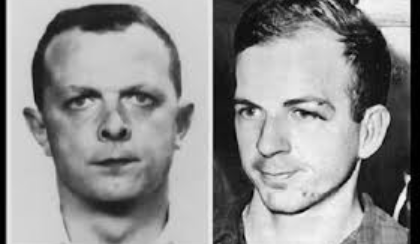
    A few days later, Oswald was asked to debate Cuban exile Carlos Bringuier, who had knocked Oswald’s leaflets to the ground during their filmed confrontation; along with Ed Butler, executive director of the anti-Castro group Information Council of the Americas (INCA). The debate took place on the WDSU radio show Latin Listening Post. During the discussion, Butler asked Oswald to admit it was true he had defected to the Soviet Union and denounced his U.S. citizenship. Oswald disagreed, explaining he was simply a foreigner who for a time was granted the okay to live and work in the Soviet Union — an unlikely occurrence during the Cold War.

    “I was at all times considered an American citizen, and at all times I was in contact with the American embassy,” Oswald explained. “The very fact that I am back in the United States shows that I did not renounce my citizenship. A person who renounces his citizenship becomes legally disqualified from returning to the United States.”

    The repatriation loan from the State Department backs up Oswald’s claim.

    As the summer of 1963 ended, Oswald was instructed to return to the Dallas-Fort Worth area and take another “killing time’ job — this time as an order filler at the Texas School Book Depository adjacent to Dealey Plaza. He also rented a cheap room at an Oak Cliff boarding house while his expectant wife Marina, and daughter, June, stayed with Ruth and Michael Paine in Fort Worth. Lee took the room, a short bus ride from work, under the assumed name O.H. Lee.

    Oswald had been willing to spy on and infiltrate Japanese Communists, Soviet Communists, American Communists, and pro-Castro types. He was probably not averse to ongoing plans for the assassination of Fidel Castro.

    myers40On November 2, 1963 — less than three weeks before the assassination in Dallas, President Kennedy was supposed to attend a football game at Chicago’s Soldier Field between Army and Air Force. The plan was for the President’s plane to touch down in the Windy City and for him to drive in an open motorcade to the stadium.
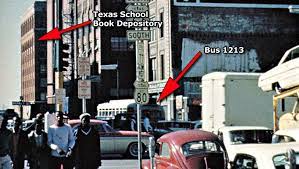
    However, three days before the President’s planned landing, the Washington, D.C. FBI received a note warning that an assassination team was arriving to shoot the President on his way to the game. The threat became even more real when a landlady reported to authorities that she had seen automatic rifles lying on the beds of a room rented by four men from out of town (supposedly Cubans) — as well as a map of the President’s route from the airport.

    Upon being alerted by the FBI, Secret Service personnel on duty in Chicago went into action and tracked down two of the men — who were subsequently interrogated concerning their activities. The detainees protested their innocence, and agents couldn’t connect them to any developing plot. They were released.

    Then, to make an already bad situation worse, authorities received word of a credible threat against the President made by a man at a Chicago area diner. The person making that threat was Thomas Arthur Vallee, an ex-Marine and member of the John Birch Society, Vallee boasted he had the weapons and ammo to do the job.

    The ex-Marine was put under surveillance, then arrested the morning of JFK’s scheduled visit, which was cancelled. Inside Vallee’s car authorities found a small arsenal of weapons and hundreds of rounds of ammunition. Valle, it was discovered, worked in an office building that overlooked Kennedy’s planned route.

    The similarities between Oswald and Vallee were startling…too close to have been mere coincidence. Vallee would perhaps have made an even more convincing patsy, something akin to a Lee Oswald on steroids. Vallee was more outspoken, more violent, more erratic, and boasted a vastly superior arsenal of weaponry.

    Oswald and Vallee shared a lengthy list of items in common, including these:

    • were ex-Marines
    • had been assigned to U-2 spy plane bases in Japan
    • pledged themselves to extremist, radical causes
    • suffered from a history of emotional meltdowns
    • worked in buildings that overlooked the Presidential motorcade routes
    • associated with far-right, anti-Castro Cuban exiles
    • helped train anti-Castro Cubans for an armed invasion of their homeland
    • were openly critical of how the United States treated its citizens
    • were suspected of having ties to U.S. intelligence agencies.

    Even more startling, author Edwin Black who first exposed the Chicago Plot, would later reveal a show-stopping piece of intelligence. According to Black’s sources, the original tip forwarded to the FBI about the Chicago Plot had come from a man known only as Lee. Could that have been Lee Harvey Oswald, recently hired order-filler at the Texas School Book Depository? Or perhaps Mr. O.H. Lee, a boarder at Gladys Johnson’s Oak Cliff boarding house on North Beckley.

    Several days after Vallee’s arrest, a police informant sat in a Miami hotel room, wearing a wire to secretly record the following conversation with a wealthy political extremist named Joseph Milteer:myers41

    From an office building with a high-powered rifle. They will pick up somebody within hours afterwards…Just to throw the public off.

    Sometime just after noon on Friday, November 23rd, Lee Oswald sat in the second-floor lunchroom of the TSBD. Perhaps thinking he had helped save the president in Chicago. Within a few minutes, Lee could hear the noise from the crowds grow louder as the motorcade approached and turned onto Elm Street. A few moments later the fatal shots rang out, then all hell broke loose. According to the official story, a figure appeared in the doorway and barged in to the second floor lunchroom. A motorcycle cop pointed his gun at Lee’s belly and ordered him to come forward. But Mr. Truly came in right after and told the cop, “No, he’s okay. He works here.” The men continued on their way, racing up the stairs. Oswald got his jacket, walked out the front of the TSBD through the glass doors, and headed east on foot

    Again, according to the official story, Oswald hopped on the first Oak Cliff bus he could hail…it was for the Marsalis Avenue route. However, as bus 1213 crept back towards Dealey Plaza, traffic became horribly snarled. Another passenger, frustrated at the lack of forward progress, stepped forward to ask the driver for a transfer. Oswald also got up and asked for a transfer, then departed the bus. The Warren Report tells us he walked south for a few blocks to the taxi stand near the Greyhound bus terminal. Lee directed the cab driver to take him to North Beckley in Oak Cliff, the street on which his rooming house was located.

    myers42One of the most mysterious people in the entire JFK saga was a Dallas cop named Harry Olsen. Olsen’s girlfriend and future wife was one of Jack Ruby’s strippers. On the night of the assassination, Olsen later admitted he had spent a couple of hours in Jack Ruby’s automobile with the volatile nightclub owner as well as Olsen’s girlfriend, stage named Kathy Kay. Olsen used the time to work Jack, aka Sparky, into a frenzy; repeatedly telling the Carousel Club “host” that somebody needed to get that SOB Oswald. It would be Ruby who would draw the short straw that weekend to do the deed.
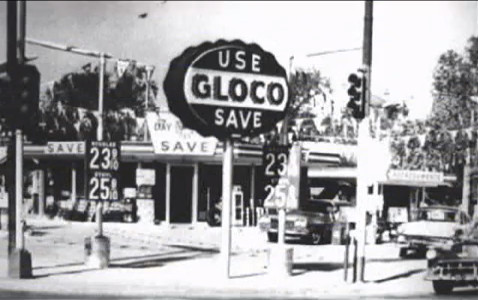
    What Harry Olsen would not admit is exactly what he was doing during the time JFK and Tippit were shot. Olsen claimed he was off duty, nursing a broken leg that sported a cast, and earning some extra cash by doing a favor for the lawyer friend of another cop. Olsen said he was alone most of November 22nd guarding an “estate” that belonged to a deceased client of the lawyer. The property was located somewhere on 8th Avenue in Oak Cliff, just a couple blocks north of 10th Street where Tippit was gunned down. When pressed, Olsen could not remember the name of the cop who gave him the referral, could not remember the lawyer’s name, could not remember the dead property owner’s name, and could not remember the address of the property. He did remember someone phoned the dead owner to tell her JFK was just shot. Upon learning this news, Olsen said he walked a few blocks away to the apartment of his stripper girlfriend to watch the television coverage. We can venture a guess that Olsen also forgot his leg was supposed to be in a cast. Some weeks after the assassination, Chief Jesse Curry called Olsen into his office to inform the veteran cop he was being fired. When questioned later, Olsen couldn’t remember the reason why. Olsen’s testimony before the Warren Commission was frankly unbelievable and, at times, farcical. It was so suspicious it has led many JFK researchers to believe Olsen was either the cop who Lee’s housekeeper said tooted his horn outside Oswald’s rooming house, or one of the cops in the mystery car seen in the alleyway behind 10th Street when Tippit was murdered.

    Olsen would eventually marry the stripper, move to California, and drop out of sight. But before he did, Olsen was interviewed by Dallas researcher Michael Brownlow. Brownlow asked Olsen many questions, most of which he deftly avoided answering. But at one point, Olsen shook his head and said, “Listen, Big Mike. You need to understand something. A lot of people were following orders that day. Oswald was following orders…”

    myers43Another person who was likely following orders on November 22nd was 11-year Dallas police veteran J.D. Tippit. Tippit was sitting in his squad car #10 at Oak Cliff’s Gloco filling station at approximately 11:45 p.m., watching traffic as it came off the Houston Street viaduct from Dealey Plaza and downtown Dallas. Tippit, however, had just reported to his dispatcher he was several miles south at Keist and Bonnie View in his regularly assigned Cedarcrest patrol area. The dispatcher soon called back and ordered Tippit north to central Oak Cliff, since all units close to downtown were being directed to head to Dealey Plaza.
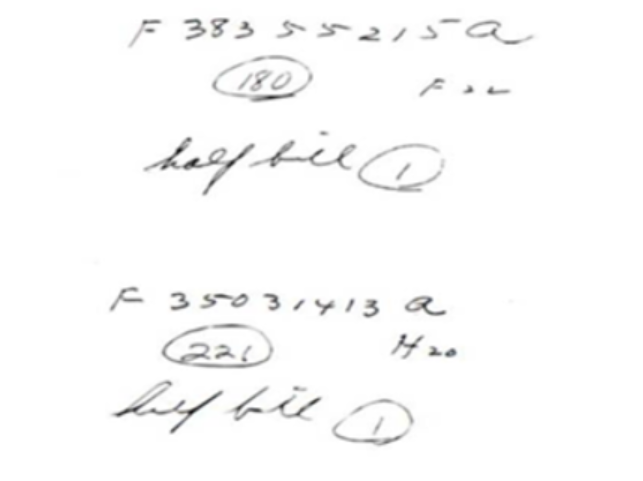
    Tippit was likely waiting for a city bus to come off the viaduct. He would follow that bus until an individual named Lee Oswald could get off alone at one of the early stops. Was Tippit’s assignment to pick up Oswald and drop him off at the Texas Theater? Tippit had met Oswald previously at Austin’s Barbeque joint down in his regular patrol area.

    The patrolman could see no busses coming. Gloco employees watched as Tippit’s car suddenly pulled out and headed south on Lancaster Avenue at a high rate of speed. At 12:54 p.m. the dispatcher again calls Tippit, who now reports his position — correctly — as Lancaster and Eighth. Despite being thrown a curve ball, Tippit cruises the neighborhood for several minutes, he parks his patrol car facing north next to the Top 10 Records store — barely a block from the theater. Tippit hurries inside and asks to use the store phone. Store employees see Tippit dial a number, listen, but he never speaks. After what must have been six or seven rings, Tippit hangs up and quickly goes back outside to his patrol car.

    Meanwhile, Oswald has paid his entrance fee and is seen by manager Butch Burroughs, who later recalled how Oswald slipped in between “1:00 and 1:07.” Patron Jack Davis watches curiously as Oswald keeps changing seats, sitting next to one person after the other in the mostly empty movie house. Davis corroborated Burroughs’ timeline as to when Oswald was in the theater. Davis described how Oswald had sat next to him, did not say a word, then got up after a few minutes to sit elsewhere. Oswald reportedly even sat next to an obviously pregnant woman — who soon got up, left, and never returned. In retrospect, Davis thought Oswald had been looking for someone — someone he didn’t personally know.

    After several futile minutes of searching, Oswald went to the lobby and purchased popcorn from Butch Burroughs — approaching the time when Officer Tippit would be killed blocks away.

    myers44When Oswald’s wallet was emptied later that day, authorities would curiously discover the torn halves of two one-dollar bills. Both items later disappeared, but they were noted within the inventory paperwork concerning the suspect’s possessions. Many observers, including JFK researcher John Armstrong, have pointed out that the matching of torn half dollar bills is a tool used in spy craft for clandestine meetings.

    Over next to the Top 10 Records store, Officer Tippit sat in his patrol car listening to police radio traffic regarding the flurry of activity at Dealey Plaza and the Texas School Book Depository.

    Suddenly, Tippit’s dispatcher was hailing him. There were reports of a fight at 10th & Marsalis. One participant was said to have been stabbed and subsequently thrown into the back seat of a blue sedan, possibly a Mercury Monterey, which then immediately left the scene.

    myers45You won’t find any record in DPD files on this incident, but according to witnesses at the corner of 10th % Marsalis, it happened…and it happened very close to the time Tippit was killed.
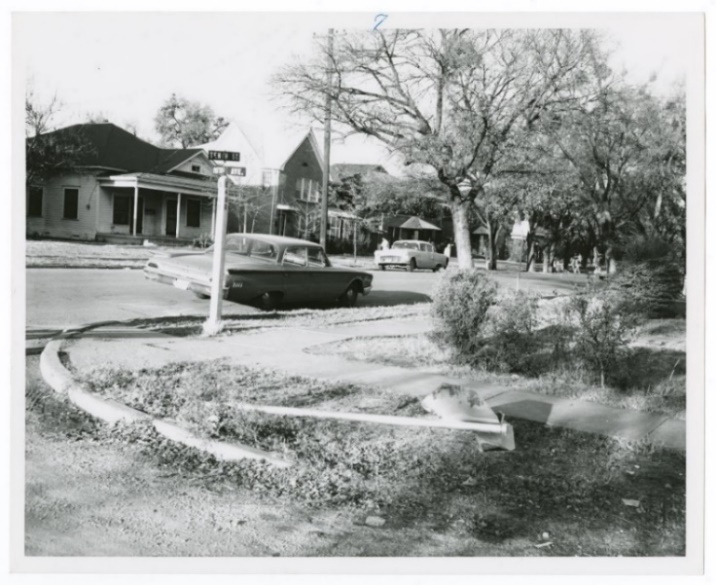
    Tippit acknowledged he was responding, put the 1963 Ford Galaxie in gear, pulled out, checked traffic as he eased into the intersection at Jefferson, and stepped on the gas. Employees at Top Ten recall Tippit peeling out and rocketing across Jefferson, headed north towards Sunset and next 10th Street.

    The father of three was thinking how he had no partner that day, and not much in the way of back up except William Mentzel who was distracted by an accident. As J.D. blew through Sunset and arrived at W. 10th, he slowed to turn right heading east towards Marsalis. Tippit observed a car headed west towards him on 10th — and away from the scene of the disturbance. It matched, in general, the description of the car said to have left the fight with a stabbing victim in the back seat.

    As the suspect car passed S. Bishop, Tippit turned left and fell in behind the target vehicle. Without turning on his flashing lights and using standard police procedure, Tippit sped up, passed the sedan, then forced the car to the curb.

    Tippit jumped out, signaled the driver to stay put, and rushed to look into the auto’s back seat. Nothing, nobody there. He had just wasted precious moments stopping the wrong car. Without saying a word to the startled man behind the wheel, Tippit raced back to his patrol car, reversed course, and sped off to the east. The motorist, an insurance man named Andrews, would later describe how the patrolman–badge name TIPPIT–looked upset and was acting wild.

    Just after this incident the encounnter with whoever killed Tippit took place. J.D. eased over towards the sidewalk, followeing a man on foot, then tooted his horn. The pedestrian turned, acted surprised, and Tippit beckoned him over to the car. The man approached, bent over, and looked through the front passenger window. Only the car’s little vent window was open.

    Tippit opened his car door, slowly climbed out, and adjusted his cap. Tippit reached back and put his right hand on the butt of his service revolver, Western-style. As he slowly made his way to the front of DPD car #10, the young man paralleled him on the passenger-side of the vehicle, easing forward.

    Suddenly, out of the corner of his eye, Tippit caught the man’s sudden movement, reaching under his jacket to draw a gun. Tippit stepped back and began to turn awkwardly to his right, his own revolver clearing the holster. But with his right hand facing the gunman Tippit was like a left-handed ballplayer at shortstop. The gunman had the drop on Tippit as well as the better angle and position. The last thing J.D. saw were the muzzle flashes as his world faded into nothingness.

    As the gunman looked down the barrel of his .38, the patrolman dropped out of sight behind the front driver’s side fender. He jump-stepped back to the sidewalk, adrenalin pumping, and began to hustle away from the dead patrolman’s car.

    myers46Helen Markham screamed: “He shot him! He’s dead! Call the police!”
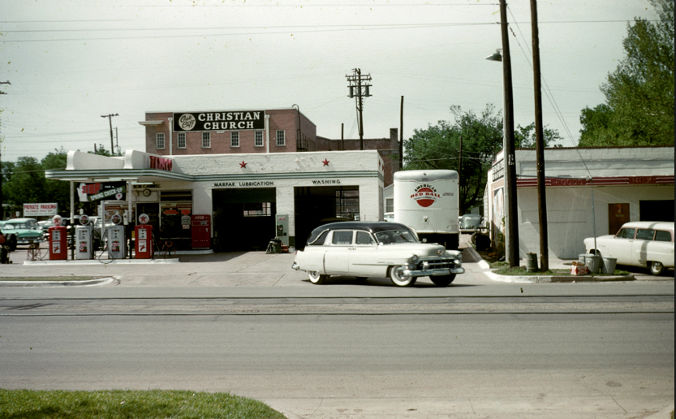
    The killer glanced at a woman standing catty corner across the intersection. Looking around, he saw no one else coming — yet. “Poor dumb cop,” the shooter muttered out loud. He jumped the hedges and kept on going, never noticing the crouching cab driver or even his cab.

    After purposefully disposing of the shells–and because of the pattern in which they were found, it is highly unlikely they were ejected at the same time. It is much more likely they were thrown down by the killer. The gunman now automatically cut diagonally across Patton from the east sidewalk to the west sidewalk, picking up his pace as he headed south towards Jefferson. He snapped shut the revolver’s cylinder and pointed the gun upwards but at the ready — in a raised pistol position. A stocky white man in a white shirt and tie, Ted Callaway, had come out from the car lot’s office and was just reaching the eastern sidewalk. “Hey, man!” the witness yelled. “What the hell’s goin’ on?” The killer did reply to this, but no one knows what he actually said.

    myers47Back at the murder scene on 10th Street a crowd was quickly forming. Reserve Sergeant Kenneth Croy was the first DPD officer to arrive on site. The ambulance was already there, and they were loading Tippit’s body for the race to Methodist Hospital. Someone in the crowd may have handed Croy a wallet at this time, or perhaps Croy arrived at 10th & Patton already in possession of the wallet. As the ambulance pulled out, Sgt. Croy started taking statements from witnesses. Including the nearly hysterical Mrs. Markham, who by this time had placed her shoes on top of Tippit’s car #10 to avoid getting them splashed in the fallen cop’s blood.
    An 8” x 10” crime scene photograph depicting J.D. Tippit’s patrol car was later autographed for the FBI historian Farris Rookstool. It was signed by Jim Leavelle, Bob Barrett, T.F. Bowley, Roy Nichols, and Kenneth H. Croy – who reportedly wrote: “First on the scene, recovered Oswald’s wallet there too.”

    Witness Domingo Benavides has secured an empty Winston cigarette pack in which he placed the first two shells discarded by the killer. Barbara and Virginia Davis recovered the last two shells along the Patton Avenue side of their rented apartments later in the afternoon.

    At 1:40 p.m. Captain Westbrook arrived, but first went immediately to the area behind Ballew’s Texaco where the gunman had last been spotted. Westbrook will involve himself in the discovery of the discarded Eisenhower jacket, then continue to the Tippit murder scene where Officer Croy will hand him “Oswald’s” wallet. Westbrook will show the wallet and its contents to FBI Agent Bob Barrett and several other law enforcement officials — all while being filmed for posterity. But before the end of November 22nd, the alleged 10th St. “Oswald” wallet will disappear for all eternity.

    Wallet, shells, jacket…all evidence pointing to a single person who must have represented one of the most incompetent criminals in the history of American law enforcement, Lee Harvey Oswald. Oswald will soon be arrested with the alleged murder weapon in his possession in a darkened neighborhood theater. All so very convenient and incriminating.

    As the minutes pass, more and more police units flood the central Oak Cliff area as news of a cop killing is broadcast. They arrive in force, racing up and down Jefferson Boulevard like a swarm of angry hornets darting around looking for someone or something to sting. They are about to be pointed directly at a likely suspect sitting in the Texas Theater with a loaded .38 concealed under his raggedy long-sleeved brown shirt.

    myers48Store manager Johnny Brewer couldn’t help but notice the man in the lobby of his store acting suspiciously. He called for store clerk Tommy Rowe to come out to the counter to look. As another police car whizzed by, siren wailing, the man ducked back out of the lobby and headed west down the sidewalk towards the Texas Theater.
    “That guy’s up to something,” Brewer remarked. “It might have to do with all these police cars racing around.”

    “Why don’t you go follow him,” the clerk suggested. “I’ll cover the store.”

    Johnny Brewer opened the door and walked through the store lobby and out onto the sidewalk. He watched as the man hesitated in front of the theater, then hurried in. Brewer walked down to the enclosed ticket booth. A concerned Julia Postal was on duty listening to her radio for more news about the assassination.

    “Excuse me, but did you just sell some guy a ticket?”

    “No, not since about the time the movie started.”

    “So, you didn’t just see anybody go in with or without paying for a ticket?”

    “No.”

    “I think you should call the police.”

    Ms. Postal hesitates. She doesn’t want to cause a fuss over somebody sneaking into the movie for free. The police already have enough excitement going on this afternoon anyway. Butch the manager will see the guy, ask for his ticket, and send him back out if he doesn’t have one.

    Brewer insists, and after a few more moments of discussion, Ms. Postal acquiesces and makes the call to Dallas Police. Meanwhile, down at the Hardy Shoe Store, clerk Tommy Rowe, a good pal of nightclub owner Jack Ruby, is also putting through a call concerning a suspicious man seen entering the Texas Theater. Several additional mysterious calls will also be received by Dallas Police during this timeframe alerting them to a suspicious individual entering the theater.

    myers49Inside the movie house, manager Butch Burroughs is still working the concession stand where Lee Oswald had purchased popcorn some 15 minutes ago. Burroughs hears one of the swinging front doors opening and closing shut. However, he sees no one walking past him in the snack area. Burroughs would later explain the person almost assuredly must have climbed the stairs by the entrance to take a seat up in the balcony. Oswald, meanwhile, remains downstairs seated in the main or orchestra section of the theater.
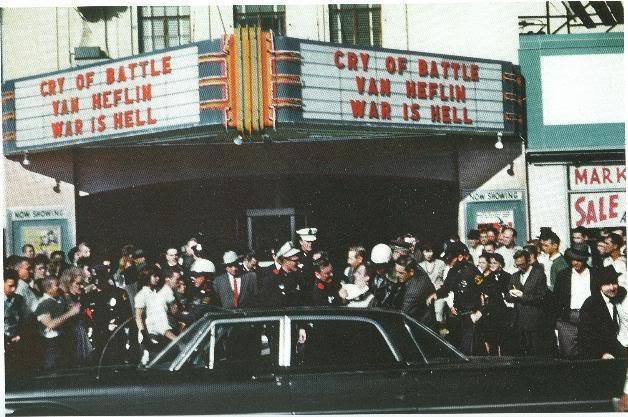
    Based on reports of a suspicious man observed at the Texas Theater, DPD will send at least 15 officers along with several vehicles to the scene. Capt. Westbrook was one of the first to arrive. “Pinky” Westbrook parked his blue unmarked police car directly out front — strange considering Westbrook told the Warren Commission someone had given him a ride out to Oak Cliff. Police will surround all theater exits while the lights are turned on and Johnny Brewer is reportedly escorted onstage by two policemen. Brewer pointed the cops to a man in the back of the theater he said was the individual he had just witnessed sneaking in without paying. Police begin to systematically work their way from front to back, asking each patron to stand up and provide ID. They are perhaps hoping the suspect might attempt to make a foolish dash for an exit. He didn’t, instead sitting coolly and calmly as the cops moved in.

    Years later, Tommy Rowe would tell family and friends that it was he who had pointed out Oswald to the officers, not Brewer. Tommy would also be the friend who moved into Jack Ruby’s apartment on Ewing after he was arrested for murdering Lee Oswald.

    When the officers get to Oswald’s row of seats, they ask the young man to stand up and show some ID. He appeared to be complying, stood up, but then yelled, “This is it!” and threw a punch at Office Nick MacDonald. MacDonald and Oswald scuffled as nearby cops jumped in. Oswald had allegedly made a move for the .38 Special S&W revolver tucked in his waistband. The cops pounded Oswald for a bit before subduing him, resulting in his infamous and much photographed swollen left eye.

    “I am not resisting arrest!” Oswald shouts as he suddenly wises up and realizes the immediate danger he might be in. “I protest this police brutality!” the suspect yells to any witnesses who might be standing nearby and watching the drama unfold.myers50

    myers51The police quickly hustled Oswald out the front doors of the old theater. A growing, unruly mob of local citizens greet them raucously under the marquee advertising the war flick matinee double feature. Detectives carry the slender suspect towards Captain Westbrook’s unmarked dark blue automobile — the one he later testifies he never drove to Oak Cliff. Curiously, Westbrook, the ranking officer in charge, instructed the detectives to throw an article of clothing over Oswald’s face to hide the ex-Marine’s identity. Why? What reason would the captain have for protecting the anonymity of a suspected cop-killer? The detectives pushed Oswald into the middle of the rear seat, piled in, and off the vehicle sped to downtown headquarters.

    Meanwhile, a far-less viewed minor drama was playing itself out upstairs in the balcony of the Texas Theater. A second young man was in the process of being arrested and brought downstairs — but this individual would be led instead out the rear exit and into the alley where additional police vehicles sat at the waiting.

    A very confused theater manager, Butch Burroughs, watched as officers now roughly escorted a second young man from the premises. That young white man, according to Burroughs, “looked almost like Oswald, like he was his brother or something.”

    Hobby store owner Bernard Haire operated Bernie’s Hobby House two doors east of the theater. When he heard the growing commotion out front, Haire went to investigate. However, Haire couldn’t see over the dense and unruly crowd, so he walked back through his store and peered into the back alley. Sure enough, the alleyway was filled with cop cars, but not much was happening there. Just when Haire was ready to return inside, one of the theater’s big rear-exit metal doors slammed open and out came some officers guiding a young white man into the back of a squad car. Haire described the man as being flushed, as if he’d just been in an altercation. The police car left, suspect securely inside. For decades, Mr. Haire believed he had witnessed the arrest of Lee Oswald.

    In 1987, when Haire accidentally learned the truth that Oswald had been taken out the front doors of the Texas Theater at the time of his arrest — photos convinced him it was true — the hobby store proprietor next asked the $64,000,000 question.

    “Well, if I didn’t see Oswald, then just who did I see?”

    We have no answer for Mr. Haire, except to mention one curious fact. No second Texas Theater arrest was ever documented. The official police report, however, describes the suspect being arrested in the balcony, while all witnesses clearly agree he was arrested downstairs in the main seating area and brought out front to Cpt. Westbrook’s waiting car.

    myers52Within two hours of the President’s death, J. Edgar Hoover already believed his FBI had the case solved. Hoover would go on the premise that JFK had been assassinated by Lee Oswald and Oswald alone, whom he called a “mean-minded individual…in the category of a nut.”
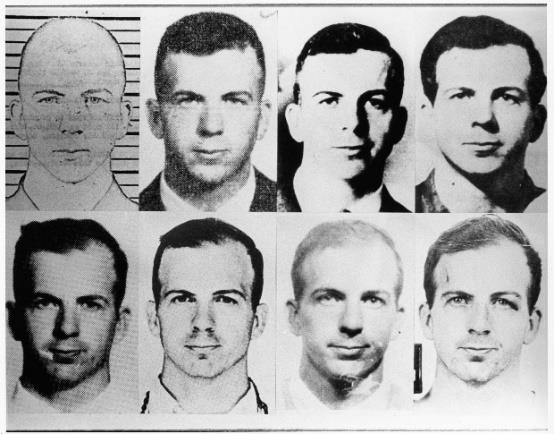
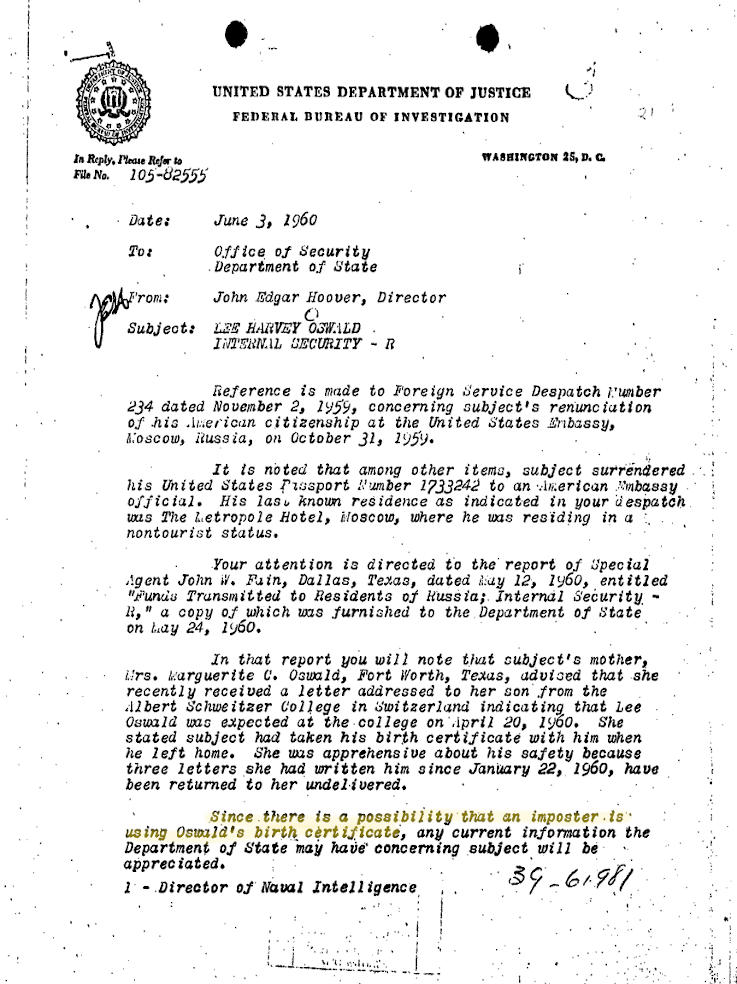
    Given the benefit of decades of hindsight, some Hoover critics might opine that the former FBI director had given a more accurate description of himself rather than the suspect in custody. Allowing for the fact that Hoover had in 1960 written a memo warning his agents that someone might be using the so-called Soviet defector’s identity back in the United States, how could Hoover have been so sure of Oswald’s guilt so quickly?

    When Oswald was killed less than 48 hours after his arrest, having never left Dallas Police Headquarters alive, Hoover dictated a memo that Sunday afternoon that read, “The thing I am so concerned about, and so is Mr. Katzenbach [Deputy Attorney General under RFK] is having something issued so we can convince the public that Oswald is the real assassin.”

    Nicholas Katzenbach wrote the following day, November 25 — as the President, Tippit, and Oswald were all being laid to rest — that “the public must be satisfied that Oswald was the assassin; that he did not have confederates who are still at large; and that evidence was such that he would have been convicted at trial.”

    President Johnson, now ensconced in the White House as the new Commander-in-Chief, was more than happy to see this “something” issued, and quickly. Thus, was born the Warren Commission and its resulting Warren Report, with its pre-determined outcome already decided before Day One of the proceedings. This is the sort of whitewash that would inevitably cook up such inconceivable nonsense such as the “magic” or single-bullet theory.

    The Warren Commission was never intended to be an investigation. Rather, it was a publicity stunt concocted to sell a bill of deceptive goods to a highly traumatized American public. The ruse succeeded, at least for a while. As they might say, it was good enough for government work.myers53

  • How Oswald Was Framed for the Murder of Tippit: Part 2

    How Oswald Was Framed for the Murder of Tippit: Part 2


    Part 2: Oswald Double and How the Weapon was Purchased

    myers20In the days, weeks, months, and perhaps even years leading up to November 22, 1963, there is no question that someone had been impersonating Lee Oswald. We have numerous instances on record of the real Oswald being in one place while many miles away a second “Oswald” was seen involved in strange and provocative behavior that would portray Oswald as being a highly dangerous and/or mentally unstable individual.

    Here is just a sampling of those inexplicable sightings of a “second” Oswald:

    • June 3, 1960 — F.B.I. Director J. Edgar Hoover wrote a memo stating that someone in the United States may be using defector Lee Oswald’s birth certificate and impersonating the ex-Marine while he is in the Soviet Union.
    • January 20, 1961 — Two men visited the Bolton Ford dealership in New Orleans and indicated their intent to purchase 10 Ford Econoline trucks for the Friends of Democratic Cuba. One of the men who identified himself as JOSEPH MOORE wrote out a bid form. Moore’s friend, who identified himself as LEE OSWALD, told the assistant manager that he would be responsible for payment.
    • November 1963 — “Oswald” walked into the Downtown Lincoln Mercury dealership to inquire about purchasing an automobile. A salesman accompanied Oswald for a test drive, during which Oswald drove at high speeds on the Stemmons Freeway, making the salesman very uneasy. Afterwards he told the salesman he wasn’t ready to buy, but would be coming into a considerable amount of money shortly. The salesman wrote down the man’s name, LEE OSWALD, for future reference.
    • November 16, 1963 — “Oswald” is seen at the Sportdrome Gun Range in Oak Cliff. He is boasting about his Italian-made carbine with its power scope to other patrons and firing at their targets, causing a scene.
    • November 20, 1963 — The real Lee Oswald was known to be a regular “coffee customer” at the Dobbs House Restaurant just a short walk from his rooming house. Lee would read a book while drinking his coffee. However, at 10 a.m. on the Wednesday before the assassination, and while the real Lee was working at the book depository, a man came in and ordered eggs. He soon began cursing at the waitress, and complaining loudly that his eggs were runny. Officer J.D. Tippit was said to have been in the restaurant at this time. The owner and several employees identified the unruly individual as Lee Harvey Oswald.myers21
    • November 22. 1963 —On the morning of the assassination, while Oswald had already reported for work at the book depository, a young man purchased two bottles of beer at the Jiffy Store on Industrial Boulevard. The store is located just a short walk from Dealey Plaza. When asked to present ID, the customer showed store clerk Fred Moore a Texas driver’s license for a Lee Oswald, birthdate October 1939. An hour later, the same individual returned to buy some peco brittle, which is a special peanut and coconut type brittle. Moore remembered the purchases because he thought the combination made for one very unusual breakfast.
    • November 22. 1963 — Just a few minutes after the assassination, Lee Oswald departed the TSBD, walked several blocks east, and boarded a city bus. A transfer issued by the driver of that bus would later be found on Oswald’s person. However, at about the same time Oswald was boarding the bus on Elm Street, more than one witness— including a deputy sheriff — saw another “Oswald” run down the Grassy Knoll next to the TSBD and jump into a light green Nash Rambler station wagon driven by a Latino man, possibly Cuban. The vehicle then headed west under the triple underpass.myers22

    Who Purchased Oswald’s .38 Revolver?

    myers23Authorities maintained that Lee Oswald had purchased the .38 Smith & Wesson pistol found in his possession when the suspect was arrested at the Texas Theater in Oak Cliff on November 22, 1963. However, there is scant proof that Oswald ever purchased that WWII-era handgun…and what measly proof offered is suspect.
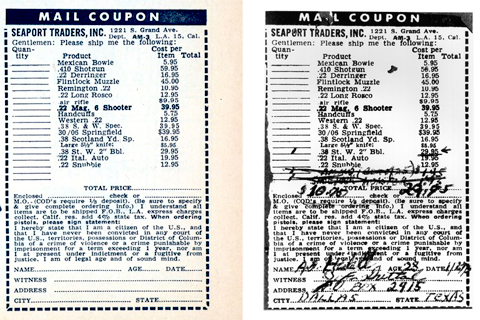
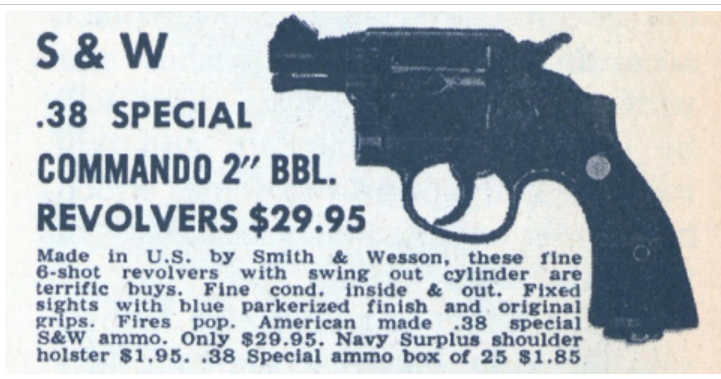
    First, if Lee Oswald had wanted to purchase a weapon for nefarious purposes, he could have simply walked into any sporting goods store or hardware store in Texas, paid cash, and walked out with an untraceable gun. In 1963 guns could even be purchased at flea markets and yard sales — no license was necessary to sell guns. The only time purchasing a gun in Texas required paperwork and left a trail of evidence was in the case of the sale of weapons though the mail. Naturally, safeguards had been put into place to prevent juveniles from ordering deadly weapons through magazines and comic books.

    Oswald allegedly ordered a .38 pistol through an advertisement placed in an April, 1963 men’s adventure magazine by Seaport Traders of Los Angeles. Oswald supposedly sent an order form and $10.00 in cash or money order to Seaport, requesting that a pistol be shipped via Railway Express Agency to Lee’s post office box registered to his name in Dallas, Box 2915. Inexplicably, the coupon order form was dated 1/27 even though the order form was not published in True Adventures until March.

    The U.S. Post Office would not handle private cargo for a private shipping company such as REA. The gun could not be shipped directly to a P.O. Box. Instead, the gun would be sent via Railway Express Agency–an early version of FedEx (Federal Express–to REA’s facility in downtown Dallas. The Dallas REA office would then send a notice by postcard to the buyer’s post office box that the package could be picked up at the REA facility.

    For this to happen, however, certain rules and regulations needed to be followed first:

    • The REA postcard had to be sent by REA to the buyer’s P.O. Box.
    • The buyer had to bring the postcard to REA’s office in Dallas.
    • The buyer had to present a certificate of good character to REA signed by a justice of the peace, county judge, or district judge from the buyer’s county of residence.
    • The buyer had to provide to REA proof of ID submitted on Form 5024 required for all pistols and small firearms.
    • The buyer had to pay the balance owed to REA.myers24

    However, is there any evidence that these rules were followed in the case of the Smith & Wesson .38 allegedly purchased by Lee Oswald? No. All that the Warren Commission provided was a copy of a receipt, not even the original. And that receipt was signed by neither Oswald nor A.J. Hidell, Oswald’s supposed alias.

    • There is no evidence REA ever sent a postcard to Oswald’s P.O. Box.
    • There is no evidence that Oswald or anyone else brought the postcard into REA.
    • There is no evidence of a certificate of good character.
    • There is no 5024 form with proof of ID.
    • There is no witness saying Oswald or anyone else picked up the pistol, or when.
    • There is no evidence of payment of the balance owed, $19.95.
    • There is no evidence of remittance of payment from REA to Seaport Traders.

    myers25Basically, there are no Department of Public Safety, police, or clerk records of Lee Oswald ever obtaining this handgun. We have no evidence of Oswald obtaining a certificate of good character from a judge or justice of the peace. Without the accused having followed any of the Texas laws on purchasing mail order firearms, how was he able to get this Smith & Wesson revolver? How is it possible nobody remembered seeing Oswald or anyone else pick up the handgun? Where’s the beef?
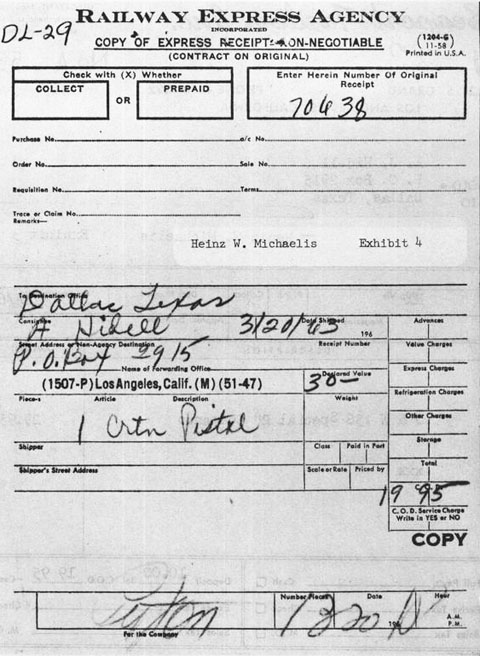
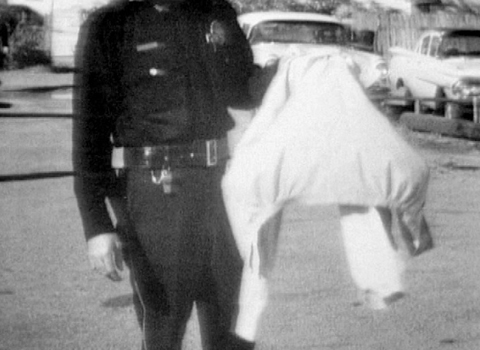
    We are supposed to believe that Oswald rented a P.O. box under his own name, sent in a coupon to Seaport Traders under the alias A.J. Hidell, had no ID or certificate of good character, and then signed the receipt using the name of Paxton or Patton ( see below). Then walked away with the gun with nobody witnessing this unlikeliest of transactions?

    It would seem rather that someone else ordered this weapon and created a paper chase to make it appear the “patsy” Lee Oswald ordered a mail order pistol through Seaport Traders.

    The evidence does not support that Lee Harvey Oswald ever purchased this gun from Seaport Traders, an accusation he denied before his untimely death at the hands of Jack Ruby in the basement parking garage of Dallas Police headquarters. The pistol apparently did wind up in his possession at the theater, but that is no proof he ordered the weapon. The origin of the S&W .38 Victory model pistol, serial number V510210, remains an unsolved mystery.myers26

    Who Stashed a Jacket Behind the Texaco?

    myers27The case against Lee Oswald having been the murderer of Officer Tippit rested partially on the notion that Oswald’s Eisenhower style light-grey jacket was found along the gunman’s escape route. However, not only did investigators fail to connect the jacket conclusively to Oswald, they also failed to connect the jacket conclusively to the individual who shot and killed Patrolman Tippit. The only piece of circumstantial evidence put forward was that Marina Oswald, Lee’s wife, said she recognized the jacket as belonging to Lee. Marina said, though, that both of Lee’s jackets had come from and were purchased in the Soviet Union. The jacket found two blocks from the Tippit crime scene was a brand that had been sold in clothing stores in Los Angeles and Philadelphia — it clearly had not originated in Russia.
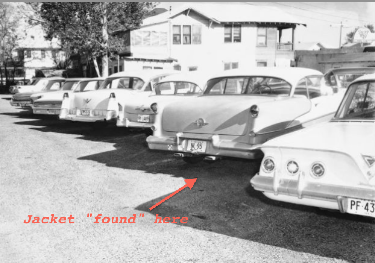
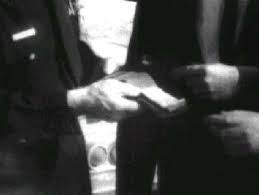
    In fact, the Eisenhower jacket is the weakest link in the government’s shaky chain of evidence against Oswald in the slaying of Officer Tippit.

    Warren Commission exhibit 162 was allegedly found partially hidden underneath a 1954 Oldsmobile in parking space 17 behind Ballew’s Texaco and service station at the corner of Jefferson Boulevard and Crawford Street. It was allegedly stashed there as the killer made good on his escape by foot. No one saw the killer put it there, however, and no one knows who found the jacket. Officially, DPD Captain William “Pinky” Westbrook was supposed to have found the jacket, but that’s not the story Westbrook told the Warren Commission in 1964. “Some officer, I feel sure it was an officer, I still can’t be positive, pointed this jacket out to me,” stated Captain Westbrook for the record. Dallas police radio logs indicate that an Officer 279 first mentions the jacket at about 1:25 p.m. — however Capt. Westbrook did not arrive on scene until 1:40 p.m. The identity of “Officer 279” remains a mystery, as does the origin of the jacket.

    The jacket was described as a light grey man’s jacket, size M (medium). Oswald weighed 130 pounds at the time of his death, and all his other clothes were men’s size small.

    Laundry marks and cleaning tags present in the jacket indicated the garment had been professionally cleaned on multiple occasions. Marina Oswald, however, claimed that she had always hand washed Lee’s jackets and other clothes. Despite their best efforts, investigators could not trace the laundry tags to any specific cleaning establishment. No evidence of professional cleaning was found on any of Lee Oswald’s other garments.

    Witnesses who saw the gunman fleeing from 10th & Patton generally disagreed the found jacket was the same as that worn by the killer. Some seven witnesses either failed to identify the jacket, or straight out said the found jacket did not match the jacket worn by Officer Tippit’s killer. Because the Tippit witness descriptions of the jacket worn by the killer were so wide-ranging, the Warren Commision was forced to officially state that “the eyewitnesses vary in their identification of the jacket.” This hardly supports a convincing identification of the garment allegedly discovered behind the Texaco station.myers28

    Authorities tried to connect the jacket to Oswald by saying some fibers found on the mystery jacket were “consistent” with the brown shirt Lee Oswald had been wearing when arrested at the Texas Theater. What those same authorities fail to mention, however, is that one of the few details the Tippit witnesses agree upon is that the gunman had been wearing a white shirt, not a brown one.

    Interestingly, the Warren Commission insisted on describing the found jacket as being light-grey, although descriptions from November 22, 1963 refer to the garment as being white. However, modern color photographs of the evidence reveal the jacket to be tan or beige.

    Effectively, the Eisenhower jacket found almost two blocks from 10th & Patton was a prosecutorial dead end. It was likely not related to the homicide. If it was, in fact, the killer’s jacket, the shooter almost certainly was not Lee Oswald. And if the jacket was Oswald’s, the possibility it was a throwdown or plant would have to be seriously considered — especially in light of a piece of astounding evidence that was revealed in 1996.

    Retired FBI agent James Hosty, the man once tasked with keeping tabs on Soviet “defector” Lee Oswald while he was in Dallas, published a book titled Assignment: Oswald. In Hosty’s retelling of events, he would release a tidbit of information that would impact the Tippit case like a bombshell. Hosty described how fellow FBI agent Bob Barrett had been present at 10th & Patton for the initial investigation of J.D. Tippit’s murder. While the scene was still being processed, Captain William Westbrook of the DPD showed Special Agent Barrett a man’s billfold and asked if he’d ever heard of a character named Alek Hidell. Agent Barrett had gone to 10th & Patton at the request of Dallas County Sheriff Bill Decker.

    Barrett told Westbrook no, he never heard of this Hidell person. And Lee Oswald? No, Barrett couldn’t remember anybody by that name either.

    Mention of this incident in Hosty’s book set off a firestorm in the JFK critical community. It had been well known that Dallas Police Detective Paul Bentley had removed a billfold from Oswald’s back pocket after the suspect’s arrest at the Texas Theater. While in custody and en route to police headquarters in the back seat of Westbrook’s unmarked police car, Oswald had famously refused to give detectives his name. Bentley, noticing that Oswald had a billfold bulging from his back pants’ pocket, reached over and removed it. Discovering ID for two separate individuals inside the billfold, Bentley asked the suspect if he was Alex Hidell or Lee Oswald.

    “You’re the detective,” Oswald had reportedly replied defiantly: “You figure it out.”

    Detective Gerald Hill later testified to the Warren Commission regarding this incident. Officially, Oswald’s wallet had been taken from his person after his arrest. So how could his wallet possibly have been found at the Tippit murder scene?

    myers29Dallas Police officials tried to explain the anomaly by saying that after the passage of so many years, Agent Barrett’s memory must have become muddled. Barrett saw the wallet at police headquarters, not at Oak Cliff. The retired FBI agent was simply mistaken. The official police report on Tippit’s murder made no mention of any billfold being discovered at 10th & Patton.
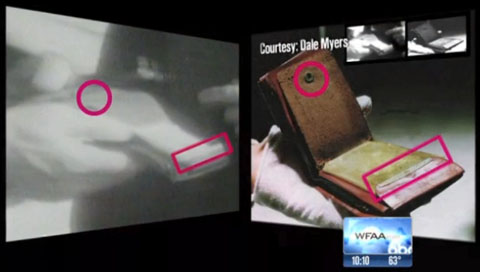
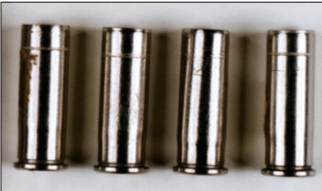
    ‘Why would they be asking me questions about Oswald and Hidell if it wasn’t in that wallet?’ an angry Bob Barrett observed. “They said they took the wallet out of his pocket in the car? That’s so much hogwash,” Barrett fumed. “That wallet was in [Captain] Westbrook’s hand.”

    A check of raw news footage from that day proved retired Agent Barrett’s version of events to have been accurate and truthful. There, in black & white, Westbrook could clearly be seen handling a man’s wallet and showing it to other law enforcement personnel. Could the wallet have been Officer Tippit’s wallet? Absolutely not. Tippit’s wallet was black, the wrong color, and was still on his person when the deceased’s body was transported to Methodist Hospital.

    Lieutenant Kenneth Croy, the reserve Dallas cop who had appeared so quickly on scene after Tippit’s slaying, was also still alive in 1996 when the wallet controversy first erupted. Asked about the alleged Oswald wallet, Croy explained that yes, someone in the growing crowd had handed him a wallet, which he later turned over to Captain Westbrook. Croy failed, however, to get the name of the individual who had supposedly discovered and handed him the wallet. Croy, in fact, had failed to record anything that day, for despite being the first policeman to have arrived on scene at the murder of a fellow officer, Croy neglected to even file a report.

    When testifying before the Warren Commission, Lt. Croy said he knew and recognized several of the officers who were present at the scene that afternoon — but he couldn’t remember the name of any of them, not one. The mystery wallet was never listed in Captain Westbrook’s report. After being shown to Agent Barrett and others at the Tippit scene, the billfold simply disappeared. Once Oswald’s wallet had been taken from his person upon arrest, the second Oswald wallet had to disappear. Two Oswald wallets that day were simply one too many.

    Before his death, Dallas Police Sergeant Leonard Jez was asked to comment on the presence of Oswald’s wallet at 10th & Patton. Jez had been one of several officers officially present at 10th & Patton, and whom Lt. Croy could not recall. Jez verified the existence of the wallet at the murder scene, he had seen it with his own eyes

    “Don’t let anybody bamboozle you,” stated Jez flatly. “That was Oswald’s wallet.”

    Photographic comparisons between the wallet in the news footage and Oswald’s wallet stored in the National Archives proves they are similar in style but in fact undoubtedly two separate wallets.

    So, if the second Oswald wallet that mysteriously appeared and then disappeared on E. 10th street was very likely a plant or thrown down, and if the dubious grey/white/tan Oswald jacket found by a person or persons unknown behind Ballew’s Texaco was possibly a throw down…is it possible any other evidence left at the Tippit murder scene was not what it appeared to be? To find out, dear reader, keep on reading…myers30

    Why Did the Killer Leave Four Empty Shells Behind?

    myers31Of all the pieces of evidence the authorities claimed to have against Lee Oswald in the murder of Officer Tippit, the four hulls or shells were by far the most probative. The forensic examination of the .38 caliber cartridge cases found at the scene of the shooting determined them to have been fired from the revolver in Oswald’s possession to the exclusion of all other weapons.
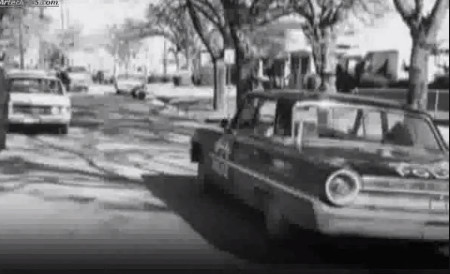
    Oswald had that pistol on his person in the darkness of the Texas Theater less than a mile from the Tippit murder. Had Lee Oswald lived to stand trial, how could any defense attorney possibly have explained that fact away? TO THE EXCLUSION OF ALL OTHER WEAPONS.

    Apologists for the Warren Commission Report who continue to believe that Lee Oswald committed these murders will often bend regarding the other points of evidence against the accused:

    • Yes, eyewitness testimony is often unreliable, especially if suspect Oswald had a so-called double.
    • Undoubtedly the paperwork linking Oswald to the .38 Smith & Wesson was flimsy and incomplete at best.
    • For sure the finding, chain of custody, and identification regarding the alleged Oswald jacket was dubious.

    But the shells, found at 10th & Patton, matching the pistol in Oswald’s possession to the exclusion of all other pistols? That sounds like slam dunk, case closed, throw the book at Oswald type of evidence.

    Maybe, but not so fast…

    Now, believers in Oswald’s innocence have offered several various scenarios to explain away the ballistics match to Oswald’s Smith & Wesson .38:

    • Tippit was killed by at least one, and possibly two killers armed with automatic pistol, not revolvers. This was why initial police reports described the suspect as being armed with an automatic, not a revolver.
    • The Dallas Police Department later switched the shells before handing them over to the FBI for closer inspection.
    • Captain Westbrook, once back at his desk at police headquarters, later switched the killer’s pistol for Oswald’s pistol.

    I don’t believe any of these things happened. Oswald was already framed for the Tippit murder by the time the killer disappeared somewhere behind Ballew’s Texaco. The wallet, the shells, the jacket…they all spelled game, set, and match for the blaming of the patsy.

    myers32The killer of J.D. Tippit and the conspirators who plotted to assassinate JFK framed Oswald. Oh yes, the four shells recovered from along the corner house at 10th & Patton were most definitely fired from Oswald’s gun…which at the time of Tippit’s slaying was in Oswald’s possession at the movie theater. The plan was ingenious and has gone undetected until now — nearly 60 years later. We might all agree that 60 years was more than good enough for government work. As it was, the patsy Oswald didn’t even last 60 hours.
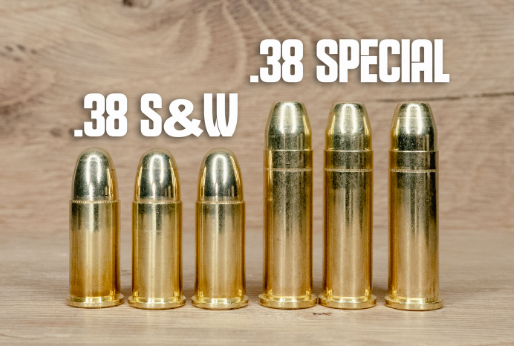
    The secret to the frameup lies in the special type of revolver given to patsy Oswald — and used by the professional assassin who ended Officer Tippit’s life, as Helen Markham so aptly described, “in the wink of your eye.” Oh, these guns were nothing outwardly special…World War II surplus models purchased for $29.95 apiece. But they featured one unusual characteristic that made the frameup work. These revolvers, actually the entire lot of some 500 of them, were modified and rechambered for sale back in the United States. It was the use of rechambered .38 revolvers that made the simple but effective Oak Cliff deception possible.

    The Smith & Wesson .38 “Victory” model was manufactured in the U.S. for homeland defense use during World War II. The handgun found on suspect Oswald was part of a shipment originally sent to Great Britain. Luckily, though the Nazis did considerable damage by dropping bombs and missiles on our island nation ally, they were never able to mount a troop invasion across the English Channel. So, the .38 Victory models remained in storage in Britain for the duration of the war. Many years later, an enterprising sporting goods company repurchased the war surplus weapons and reimported them back home to America.

    Post WWII a newer type of ammunition was becoming popular and in increasing demand for use with .38 revolvers. Known as the .38 special round, the new ammo had more proven stopping power than the traditional .38 S&W bullets. By comparison, the .38 specials were much longer than the .38 regular ammo (which became known as .38 shorts)…but the .38 special cartridges were also slightly thinner or smaller in diameter than the .38 S&W “short” ammo.

    As the .38 special ammo became more widely used by police and military units, civilian gun owners also started to favor the newer ammo that packed a bigger punch.myers33

    Therefore, to make these reimported old revolvers more marketable to the public, the seller had a gunsmith (L.M. Johnson of Van Nuys, CA) make certain modifications to the weapons. First, the barrels of these handguns were cut down from 5 inches to 2¼ inches, making them “snub nose” revolvers for easier concealment. Second, the revolvers were “rechambered” by having the old cylinders swapped out for new cylinders designed to accept the more popular .38 special ammo with more stopping power — but also with slightly different dimensions.

    However, since the .38 special bullets are only slightly narrower than the standard .38 S&W cartridges, the guns were never re-barreled. This left the barrels for these handguns slightly oversized for the new ammo being used. Again, close enough for government work!

    These modified guns functioned just fine and were well suited and modestly priced for someone looking for a handy, dependable self-defense weapon. But the slightly oversized and shortened barrel left the revolvers with one highly unusual characteristic — as the slugs were fired and traveled through the barrel, they each took an “erratic” passage. Basically, the slugs would wobble slightly and would not contact the barrel the same way each time the weapon was discharged. The result? The oversized barrel would impress upon the lead bullets inconsistent individual microscopic characteristics. This made identification of a specific revolver that fired a specific bullet impossible once the weapon had been rechambered in this way.

    In the words of the HSCA firearms panel tasked with examining the Oswald revolver against the four lead slugs taken from Officer Tippit’s body, the panel found that, “Due to the inconsistent markings on the recovered bullets and on all the test-fired bullets, the panel concluded that the CE 602 through CE 605 bullets (the slugs recovered from Tippit’s body) could not be conclusively identified or eliminated as having been fired from the CE 143 revolver (the handgun allegedly in Oswald’s possession at the Texas Theater).”

    Had Lee Oswald been carrying a revolver that had not been modified and rechambered, then the four bullets taken from J.D. Tippit’s body would likely have been either positively matched or positively eliminated as having been fired from the gun allegedly in Oswald’s possession.

    But wait…didn’t the killer so conveniently leave four shells at the scene of the murder? Why yes, he did! But wait again, only automatic pistols eject the empty shells as the weapon is fired. Shells from a revolver such as the S&W .38 special must be manually unloaded — which is exactly what witnesses at the scene said the killer did.

    When Detective Gerald Hill arrived at 10th & Patton and heard that several shells had been recovered by witnesses, he logically assumed the killer had been armed with an automatic which had ejected the shells. Had Hill personally inspected the shells, he would have seen they were labeled .38 SPL and had come instead from a revolver. But who murders a cop and then stops mid-flight to dispense highly incriminating shells? It made absolutely no sense.

    “Now there’s a dumb crook,” quipped Texas JFK researcher Jim Marrs.

    Was the killer just plain crazy…or crazy like a fox?

    At approximately 1:40 p.m. Hill radioed the following message…“The shell found out the scene (of the shooting) indicates that the suspect is armed with — an automatic .38 rather than a pistol.”myers34

    This incorrect broadcast has fueled speculation for years that Tippit was slain with an automatic pistol or pistols. But the slugs recovered from his body — and the shells dropped at the scene — indicate otherwise. Something else was afoot.

    Patrolman J.M. Poe caused a bit of a stir with his testimony before the Warren Commission when he stated he could not find the ID marks he had allegedly placed on two of the shells (hulls) recovered at 10th & Patton by witness Domingo Benavides. This led some critics to surmise that the shells had been switched. But under direct examination, Poe hesitated to definitively confirm that he had marked those two shells. “I couldn’t swear to it, no sir.” Later, in an interview granted to JFK researcher Joseph McBride, Detective Jim Leavelle, who headed up the Tippit investigation, scoffed at the idea Poe had ever marked the shells. “Actually, they never marked ‘em. There wasn’t no point in it. We don’t mark’em.”

    Leavelle, who was the homicide detective wearing the Stetson and handcuffed to Oswald when he was shot by Ruby, admitted the ballistics on the Tippit case were frankly “a mess.”

    Rep. Hale Boggs from Louisiana, the youngest member of the Warren Commission, became so frustrated with the ballistics in the Tippit case that he asked directly, “What proof do you have that these are the bullets?” Apparently, Boggs never received a satisfactory answer.

    Yes, Tippit’s killer and the conspirators behind him had been clever, but perhaps a tad too clever for their own good. You see, the cartridge cases — two Western-Winchester and two Remington–Peters — did not match up with the fatal bullets— which were three Western-Winchester and only one Remington-Peters. “The last time I looked,” noted Jim Garrison wryly, “the Remington–Peters Manufacturing Company was not in the habit of slipping Winchester bullets into its cartridges, nor was the Winchester–Western Manufacturing Company putting Remington bullets into its cartridges.”

    It is important to note that the HSCA firearms panel found the components (recovered shells and slugs) of these cartridges were all consistent withfactory loaded ammunition. There should have been no discrepancy (2-2 vs. 3-1) between the shells and the fatal lead slugs. This was not home-loaded ammo. Something was clearly wrong.

    The panel tried to explain this show-stopping mismatch by offering the following two solutions:

    1. One Western-Winchester cartridge case was not recovered or is missing, and one Remington-Peters lead bullet missed Officer Tippit and also was not recovered.
    2. One Western cartridge case was not recovered or is missing, and one fired Remington-Peters cartridge case was in the revolver prior to the Tippit shooting.

    Since the escape route of the gunman was witnessed by several people, it seems hard to believe that a shell would have gone unrecovered along such a narrow pathway. And as far as a possible fifth shot was concerned, that idea was largely unsupported by the earwitness testimony.

    The witnesses within direct earshot of the murder, along E. 10th Street, all heard between two and four shots. That the shots were fired in such quick succession probably meant that some witnesses perceived multiple adjacent loud reports as a single gunshot.

    myers35Warren Reynolds, located relatively far to the south of E 10th across Jefferson Boulevard, thought he heard maybe four, five, or possibly even six shots. Ted Callaway, located closer to E. 10th just off Patton Avenue, thought he heard five shots. These “earwitnesses” however, would have been blocked from directly hearing the gunshots by the houses situated at 400, 404, and 410 E. 10th. What Messrs. Callaway and Reynolds likely confused with additional shots were echoes bouncing off surrounding structures.
    Even the HSCA firearms panel agreed these two theories were speculation, not supported by the available evidence. The available evidence indicates four shots. If only four shots were fired, and the slugs and shells do not match, then Lee Oswald’s handgun did not kill Officer Tippit. Someone else with some other gun did.

    But the shells…they were proven to have been fired from “Oswald’s” gun to the exclusion of all other weapons!

    Yes, they were. But the shells weren’t fired at 10th & Patton, or from the handgun that killed Officer Tippit. They were fired sometime before November 22 — before the revolver was in all probability given to Oswald by those involved in the plot. Recall, there is no proof Oswald ever picked up that weapon. Which happens to correspond to the DPD issue.

    myers36The shells that held the bullets that killed J.D. Tippit remained in the handgun that the killer carried with him as he made his escape from 10th & Patton. That’s why the shells left on the ground didn’t match the bullets in Tippit’s body. The conspirators, in their zeal to frame Oswald with slam dunk evidence, decided to mix the ammo in an exotic blend of Remington-Peters and Western cartridges. They were going for a 360° windmill slam dunk. Only problem was, while the killer counted out the correct number of shells — four — in the excitement he got the exact brand mixture wrong.
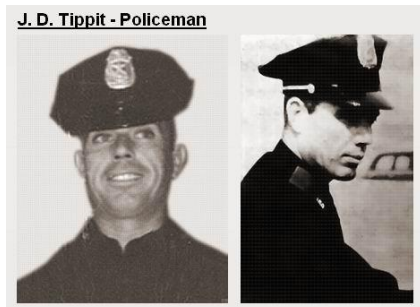
    There’s a time-tested adage concerning the successful completion of difficult tasks…KISS. Keep it simple, stupid. Had the conspirators stayed with all Western or all Remington-Peters cartridges, this colossal mistake would never have been made. Oswald had no ammo amongst his possessions, and no gun-cleaning paraphernalia. The idea of framing him with mixed ammo was really an overreach.

    The conspirators purchased at least two Smith & Wesson 38 Special Commando snub-nose revolvers from Seaport Traders and created a paper chase leading to the Oswald-Hidell P.O. Box for one of them. Same manufacturer, same lot, same modifications, same gunsmith. Wallet, shells, jacket…game, set, and match.

    Only rechambered revolvers would have filled the bill. Had it never been modified, the “Oswald” gun could have been excluded from firing the bullets that killed Tippit, based on the unique microscopic characteristics each gun barrel leaves on each bullet. But with a rechambered gun, the “Oswald” gun could neither be identified nor excluded as the murder weapon. It could only be characterized as being “consistent” with having fired the fatal shots.

    The shells, which contained unique breach face marks and firing pin marks, conclusively linked “Oswald’s” revolver to the shooting — even though the weapon was most of a mile away when Tippit was murdered, stuffed in Lee Oswald’s waistband as he ate popcorn purchased from Texas Theater manager Butch Burroughs.

    Knocking empty shells out of a Smith & Wesson revolver is not that difficult of a task. The killer basically overplayed his hand. Each cylinder comes with a hand ejector, a small rod which, when depressed, releases all the shells at once from the open cylinder. According to one write-up on the Victory model Smith & Wesson .38, you “press the cylinder release forward, swing out the cylinder and load six rounds of fun into the cylinder. When done, you again release the cylinder; tilt the gun to the rear, press the cylinder rod down and the extractor will do the rest.”

    The empty shells should all fall into your hand. Tippit’s killer made a show of “unloading and reloading” as the Tippit witnesses described. And instead of leaving a pile of empty shells, the killer tossed them one-by-one along a path like so many Reese’s Pieces candy in Steven Spielberg’s hit movie ET. The murder was scripted, and the witnesses (and later the investigators) entirely bought the killer’s deft but simple sleight-of-hand.

    • From witness Domingo Benavides: Then I seen the man turn and walk back to the sidewalk and go on the sidewalk and he walked maybe five foot and then kind of stalled. He didn’t exactly stop. And he threw one shell and must have took five or six more steps and threw the other shell up, and then he kind of stepped up to a pretty good trot going around the corner.
    • From witness Sam Guinyard: He came through there (the hedges at 400 E. 10th along Patton Ave.) running and knocking empty shells out of his pistol…he was rolling them with his hand — with his thumb…checking them, he had his pistol up like this [indicating].
    • From witness Virginia Davis:Oswald carefully left the shells for me to find.

    myers37When the Smith and Wesson .38 Special revolver allegedly in Oswald’s possession in the theater was checked, it contained four live .38 rounds — two Western-Winchester cartridges and two Remington-Peters cartridges. If Oswald had been the shooter at 10th & Patton, and had reloaded, shouldn’t the revolver have contained six cartridges, not four? And had Oswald been the shooter and hadn’t reloaded, shouldn’t the revolver have contained only two cartridges?
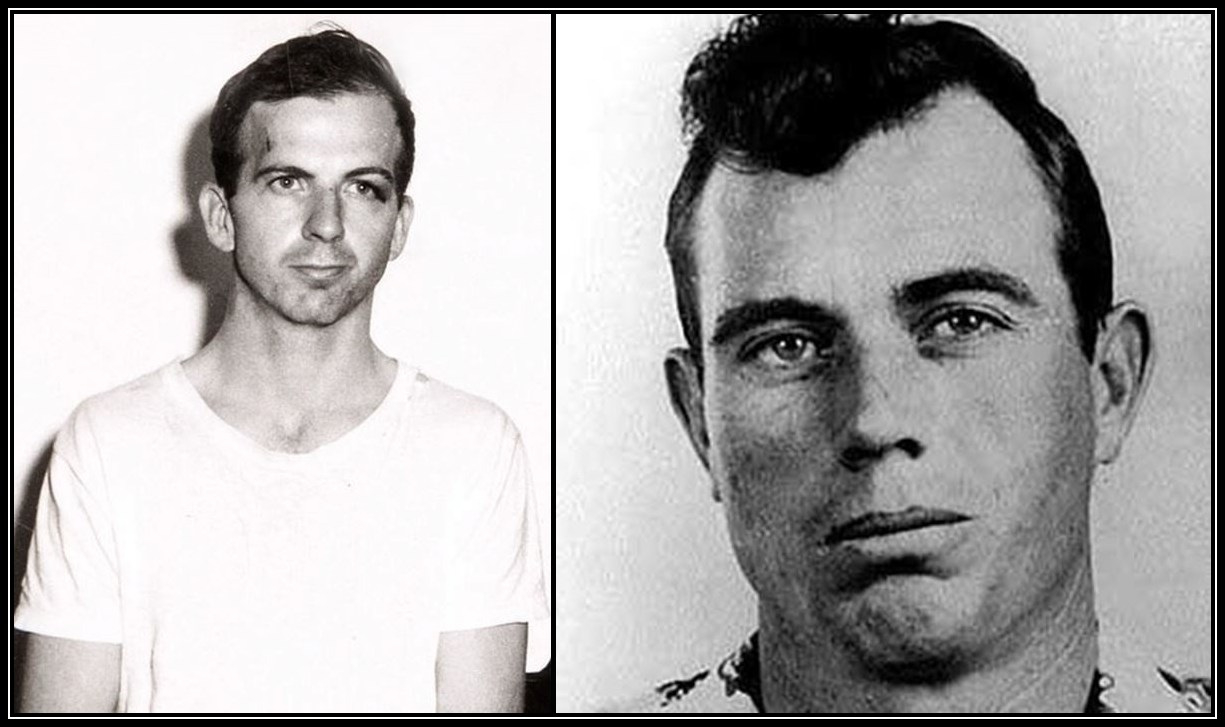
    The suspect was officially taken into custody at the Texas Theater at 1:51 p.m. and brought into police headquarters at about 2 p.m. Oswald was soon after ushered into Captain Will Fritz’s office for the first of several interrogations by Fritz and other law enforcement officials. Then, sometime after 4 p.m., suspect Oswald was brought down to the basement assembly room for his first lineup. It was at this time that Dallas officers supposedly searched Oswald and, surprise, surprise, found five additional Western-Winchester .38 Special live rounds in his trousers pocket.

    Not long ago I reached out to Frank Griffin, author of the book Touched by Fire. Griffin was a young man in 1963 who, from his vantage point at 10th & Denver, heard the shots nearly a block away that took Officer Tippit’s life. Griffin stepped quickly onto the sidewalk, glanced to the west, and spotted Tippit’s killer walking away from the patrol car and escaping south on Patton Avenue. Griffin maintains that he was able to identify Oswald as the shooter even though he was at least 300 feet away and Griffin never saw the killer from the front. “I had exceptional vision,” Griffin explained, and was a crack shot in the military. Well, at that same age, I was a fit, competitive runner who had completed the open mile at the Junior Olympics in just over 4 minutes and 20 seconds. Had I finished the mile in just over 2 minutes and 20 seconds, I would have not been human — I would have been a horse. And if Frank Griffin or anyone else can make a positive identification on a stranger at 300 feet or farther, they aren’t human either — they must be an eagle.

    Was Frank Griffin not telling the truth? No, not really. Not at all, in fact. That is how the human mind works. Our memory is not like some videotape that can be endlessly played back, over and over, such as the Zapruder film. Instead, our minds tend to edit and distort memories over time. Mr. Griffin’s mind, and other folks’ minds, have taken the repeated image of Lee Oswald and, over the months and years, superimposed it on the memory of the figure they saw for but a moment the day JFK and Officer Tippit were killed. It is called by some the power of suggestion, and it is a force that is wholly underestimated by most.

    I did ask Frank one more important question. While too far to have positively ID’d Tippit’s killer, Mr. Griffin was still standing in a direct line of sight (and sound) from the incident. So, I asked Griffin how many pistol shots he had heard.

    “Four,” was the witness’s reply. “I clearly heard four shots.”

    And if Franklin (Frank) Griffin is correct, and he heard four and only four pistol shots on E 10th Street that day, then Lee Oswald is very clearly innocent of the murder of Officer J.D. Tippit.

  • How Oswald Was Framed for the Murder of Tippit

    How Oswald Was Framed for the Murder of Tippit


    Introduction

    myers01On Friday November 22, 1963, a pair of mysterious murders were committed in the city of Dallas, Texas. At 12:30 p.m. President John F. Kennedy was assassinated as he rode in an open motorcade through Dealey Plaza on his way to give a speech at the Dallas Trade Mart. Some 35-45 minutes later, Dallas patrolman J.D. Tippit was fatally shot on a residential block of Oak Cliff, an inner ring suburb located just across the Trinity River from Dealey Plaza and the downtown area. Authorities would quickly charge 24-year-old Lee Harvey Oswald, an ex-Marine and employee of the Texas School Book Depository in Dealey Plaza, with both murders. After his arrest in Oak Cliff’s Texas Theater, Oswald would vociferously maintain his innocence until his own baffling homicide at the hands of nightclub owner Jack Ruby just two days later — nationally televised in the basement parking garage of the Dallas Police Headquarters.
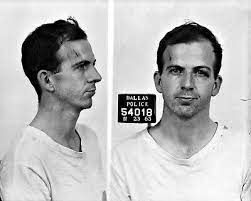
    The horrific events of that unforgettable weekend would shake our nation to its core and usher in the rest of what would arguably be the most tumultuous and pivotal decade in American history. Sixty years later, the festering, burning question remains…did Oswald do it? Dallas Police and the Dallas District Attorney’s office were fully preparing to try Lee Oswald and Oswald alone for the crimes. After the suspect’s murder while in police custody, the subsequent Warren Commission, empaneled by incoming President Lyndon Johnson, found in the following year that Lee Oswald alone had murdered both President Kennedy and Officer Tippit with no assistance from any accomplices…foreign or domestic.

    During the 1970s, as public doubts about the veracity of the so-called Warren Report grew, Congress decided to take a second look at the controversial, problem-filled case. After having been locked away in a vault for some 11+ years, a copy of the “Zapruder” home movie of the assassination was finally shown in 1975 on ABCs’ Good Night America to a shocked national audience. Rumors of shots being fired from the legendary “Grassy Knoll” to the front of the Presidential limousine had persisted since the day of the assassination. Now, as citizens watched the home movie footage on TV for the first time, they could clearly see for themselves the President’s head being thrown violently back and to the left. The Zapruder film seemed to plainly indicate that one or more of the shots had come from the front. Not solely from the rear and the Texas School Book Depository where Lee Oswald had allegedly fired a cheap, misaligned World War II surplus rifle from the sixth floor. As a result of the political pressure that ensued, the House Select Committee on Assassinations (HSCA) was convened in 1976 to study the JFK assassination…as well as the murder of Martin Luther King, Jr.

    The conclusion of the HSCA members and their investigation was that there had been a “probable conspiracy” in the JFK assassination. But they were unable to determine its nature or participants (other than that Oswald was still deemed to have fired all the successful shots). Regarding Tippit, the HSCA still believed that Lee Oswald had gunned down the officer near 10th & Patton in Oak Cliff. This was likely because of the appearance of a new Tippit witness, Jack Tatum, whose testimony helped to bolster the heavily damaged credibility of the Warren Commission’s star witness in the Tippit case, waitress Helen Markham.

    In the years immediately following the assassination, some 87% of the American public believed that Lee Oswald had acted alone. Today, over 60% believe that JFK and Officer Tippit were killed as part of a conspiracy. As more details and statements have been released in the new millennium, a growing number of citizens, though still a minority, have come to believe that Lee Oswald was being truthful when he claimed he hadn’t shot anyone that day — that the New Orleans-born young man was “just a patsy” in this unthinkable national nightmare.

    myers02So, what reasons did the government offer for naming Lee Oswald as the killer of Officer Tippit? The official case against Oswald rested on the following:
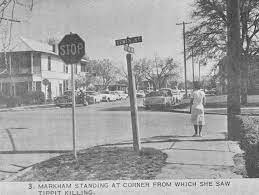
    1. Two eyewitnesses saw the Tippit shooting. Seven more witnesses heard the shots and saw the killer fleeing the Tippit murder scene with gun in hand. All nine witnesses positively identified Lee Harvey Oswald as the man they saw.
    2. A .38 Smith & Wesson revolver was purchased by Oswald and was in his possession at the time of the suspect’s arrest in the Texas Theater in Oak Cliff — less than a mile from the location where Tippit was slain.
    3. Lee Oswald’s “Eisenhower” style jacket was found along the path of the gunman’s flight.
    4. The four .38 caliber cartridge cases (shells) found at the scene of the Tippit shooting were fired from the revolver in Oswald’s possession to the exclusion of all other weapons.

    This article will deal with each accusation and show how the preponderance of evidence now points to the probable innocence of Lee Oswald in the murder of Officer Tippit.

    Part 1: The Witnesses

    The eyewitness testimony against Lee Oswald for the murder of JD Tippit was never as strong nor as solid as the authorities led the public to believe. As Tippit researcher and author Joseph McBride has so cogently stated, “the eyewitness evidence is so contradictory that it seems as though there were two sets of witnesses” at 10th & Patton in Oak Cliff on November 22. 1963. One set of witnesses, those who got to testify for the Warren Commission and later HSCA, said Lee Oswald was the man they saw at or near the Tippit murder scene with a gun. However, witnesses who were largely ignored by Dallas Police and the later subsequent federal investigations told an entirely different story. These individuals saw at least two suspicious men escaping the scene of the murder, with none of those persons being positively identified as Oswald.

    myers03To further complicate matters, there is a wealth of evidence to suggest that for weeks, perhaps even months prior to the murders of President Kennedy and Officer Tippit, an Oswald lookalike had been impersonating the ex-Marine in a concerted effort to draw attention to Oswald — to portray him as an unbalanced and highly dangerous individual. So, when witnesses claimed to have briefly seen suspect Oswald with a handgun in the vicinity of the Tippit murder, it is unclear whether they saw the real Lee Oswald, his well-documented and often-seen imposter, or someone else entirely.
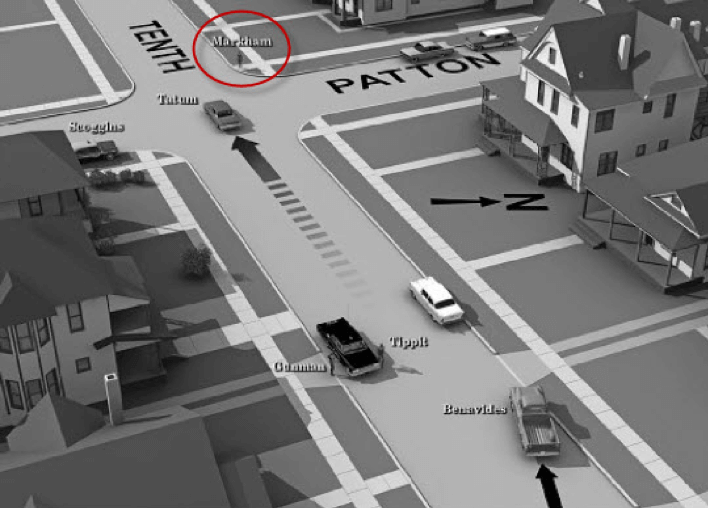
    New Orleans District Attorney Jim Garrison, one of Lee Oswald’s earliest and most vociferous defenders, had long believed that the plot to kill Kennedy had been hatched in his city during the summer of 1963, and investigated accordingly. In October 1967, Mr. Garrison granted an interview to Playboy Magazine, during which he noted, “The evidence we’ve uncovered leads us to suspect that two men, neither of whom was Oswald, were the real murderers of Tippit.”

    After DA Garrison’s interview hit the newsstands, the magazine received the following anonymous letter from Dallas:

    I read Playboy’s Garrison interview with perhaps more interest than most readers. I was an eyewitness to the shooting of policeman Tippit in Dallas on the afternoon President Kennedy was murdered. I saw two men, neither of them resembling the pictures I later saw of Lee Harvey Oswald, shoot Tippit and run off in opposite directions. There were at least half a dozen other people who witnessed this. My wife convinced me that I should say nothing, since there were other eyewitnesses. Her advice and my cowardice undoubtedly have prolonged my life — or at least allowed me now to tell the true story…”

    In my July 8, 2019 article Why Officer Tippit Stopped His Killer published on this web site I went into considerable detail in explaining the difficulties presented by the witness testimony in the Tippit case. For the sake of brevity, I will only summarize my findings here. The devil, of course, is often in the details, and so interested readers should go to this article.

    First, it should be realized that many misidentifications have contributed to reversals eyewitness misidentification overwhelming majority of wrongful convictions, later overturned by post-conviction DNA testing. According to one peer-reviewed scientific study cited by the Innocence Project,the ability to correctly identify a suspect in a crime drops off dramatically once the witness’s location is 25 or more feet from the subject. After 25 feet, facial perception diminishes, and diminishes rapidly.At about 150 feet, accurate face identification for people with normal vision drops to zero.myers04

    Domingo Benavides

    The only witness who was possibly within 25 feet of the Tippit shooting was Domingo Benavides, a young man driving west on E. 10th Street in a pickup truck. Benavides saw Tippit talking to a young man across the hood of his patrol car. As Benavides was almost even with the stopped police car and preparing to pass, he heard three close by gunshots. Benavides ducked down behind his dashboard, turned his truck into the far curb, and hid out of sight for several seconds. He did not actually see the shooting. When Benavides finally peeked over his dashboard, he observed the killer walking west towards Patton Avenue. Benavides waited until the killer was well out of view before exiting his vehicle and checking on Officer Tippit. Tippit appeared to be deceased. Benavides would retrieve two shells discarded by the killer who had cut across the lawn on the corner property and fled south on Patton Avenue. Benavides told police he could not identify the shooter because the witness basically only saw the suspect from behind as he escaped. Benavides did not participate in any of the downtown lineups. The witness did note, however, that the suspect had a squared off haircut that ended on the back of the neck above the “Eisenhower” jacket. Photographs from that day clearly show that Oswald’s hair was tapered in the back and would have extended below the neckline on a similar jacket as seen.

    Helen Markham

    Helen Markham was the so-called “star” witness in the Tippit case as she was the only witness on the day of the murder to claim having seen the actual shooting. Mrs. Markham is “legendary” in this case because her testimony and statements were so confused, contradictory, and downright bizarre. Markham had been walking south on Patton Avenue — on her way to catch a bus on Jefferson Boulevard that would take her to her waitressing job in downtown Dallas. The witness said she saw a man walking east on 10th Street who was soon stopped by a police officer in a patrol car. The two spoke briefly through the car window. Then the officer climbed slowly out of his car to question the man further. Just as Tippit neared the front of his car on the driver side, the killer pulled a handgun concealed under his jacket and shot the policeman several times across the car’s hood “in the wink of your eye.”

    Critics of Helen Markham, and there are many, have noted an abundance of blatant mistakes in her story. Markham was the only witness who saw the killer walking east, while the other people along 10th Street saw the killer walking west. Markham said the killer leaned into Tippit’s open passenger window, however only the vent window was cracked open. Most strangely, the witness says she was alone with the officer for a full 20 minutes before help came, and that Tippit had tried to hold a conversation with her while he lay dying. All other witness testimony and medical evidence indicates the policeman was likely dead before he hit the ground. As for the killer’s escape, only Markham saw him run down the alleyway between E. 10th and Jefferson Boulevard. All other witnesses clearly said the killer ran past the alley and fled west on Jefferson Boulevard.

    myers05Several of the Warren Commission’s lawyers told their bosses that it would be a mistake to use Markham’s confusing rendition of events.
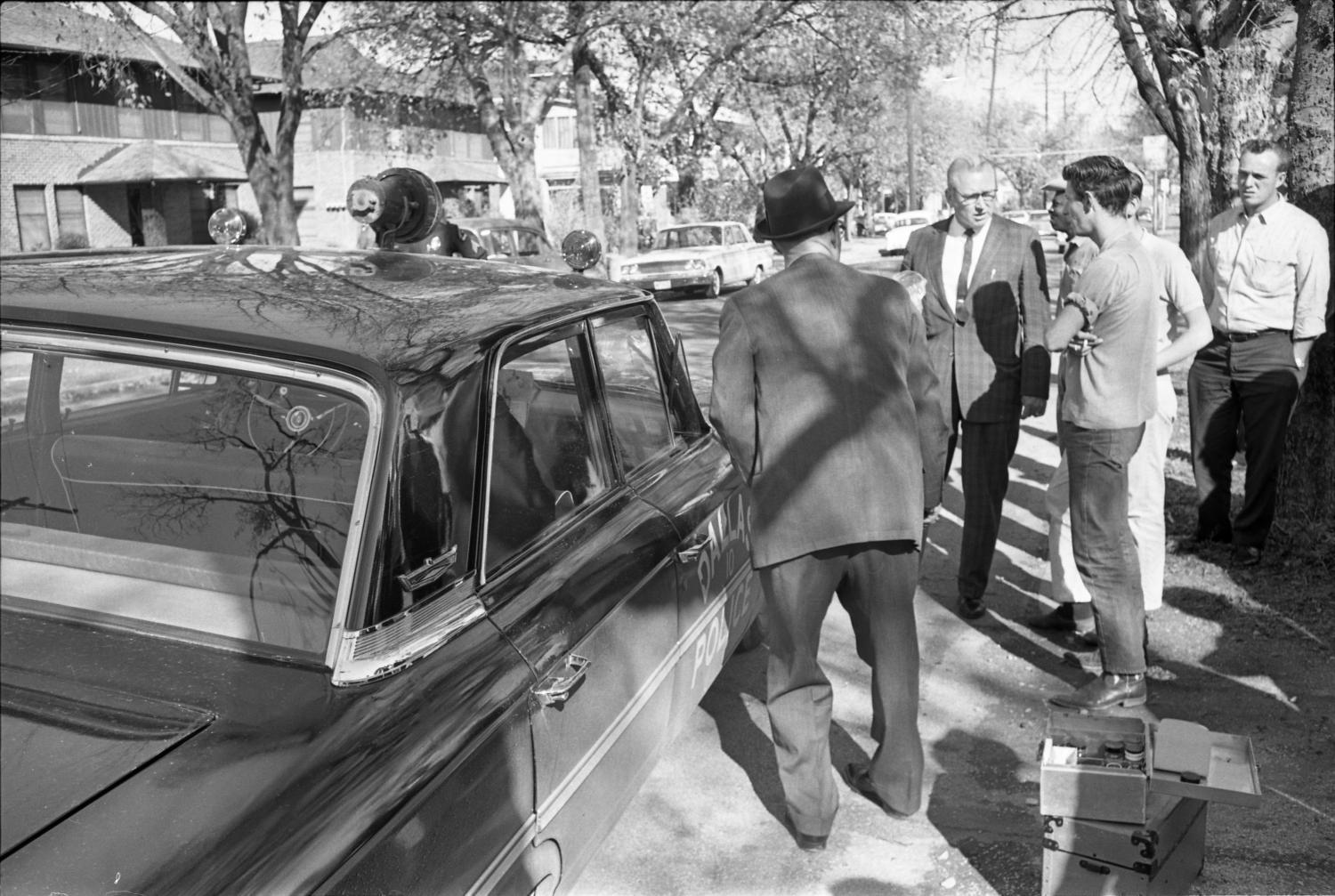
    “Contradictory and worthless” was the description given by Assistant Warren Counsel Wesley Libeler regarding Mrs. Markham’s testimony. “The Commission wants to believe Mrs. Markham and that’s all there is to it,” added staff member Norman Redlich.

    “She’s an utter screwball,” remarked Counsel Joseph Ball.

    Markham had fainted more than once at the scene, her behavior was described as hysterical, and she later was administered smelling salts by the police before viewing a four-man downtown lineup. Although Markham was said to have identified Oswald, her later testimony put that ID much in doubt. Before the Warren Commission Mrs. Markham repeatedly said she didn’t know anybody in the lineup and didn’t recognize anyone. She didn’t pick the “Number Two Man” by his face, but rather because the man’s looks gave her chills.

    “A rather mystifying identification,” quipped Warren Commission critic Mark Lane.

    myers06While talking to the press, Mrs. Markham had described the gunman as being short, a little chunky, and with bushy black hair. Suspect Oswald was 5’9”, noticeably underweight at 130 pounds, and had receding, thinning brown hair.

    Mrs. Markham was never closer than about 90 feet to the gunman.

    My own research has shown that Mrs. Markham’s story does not square with her stated timeline nor sightlines. The trim and fit waitress was hurrying to catch a bus, not standing idly on the northwest corner of 10th & Patton watching as this drama unfolded. Markham should’ve already been past that intersection and headed for her bus by the time the killer shot Tippit.

    Bill Scoggins

    Cab driver William Scoggins was sitting in his vehicle just before the stop sign at the southeast corner of 10th & Patton when the shots rang out. While eating his lunch, Scoggins had observed Tippit’s patrol car roll slowly through the intersection headed east. Some 100 feet from the corner, Tippit stopped and tooted his horn, beckoning a young pedestrian on the sidewalk to approach the car. Once the young man went to Tippit’s car, he disappeared from Scoggins’ view because of some hedges. Scoggins was positive that the young man had never passed in front of his cab, walking east. So, the pedestrian must have been walking west, although the witness thought he might have been in the process of turning around when beckoned by the policeman.

    Suddenly, several shots rang out in quick succession. “They was fast,” the witness would later recall. A surprised Mr. Scoggins dropped his lunch and watched as a young man carrying a pistol came striding across the corner property’s lawn, directly adjacent to his cab. Scoggins scrambled from his cab but saw no avenue of easy escape. Hunkering down behind his cab’s driver side fender, the WWII veteran watched as the young man jumped through the hedges, ignoring his taxi, and proceeded south on Patton.

    Scoggins thought he heard the gunman mutter either “Poor dumb cop” or “Poor damn cop.”

    At a Saturday police lineup, Scoggins picked Oswald as the man he saw crashing through the hedges and carrying a pistol. However, cab driver William Whaley, who attended the same lineup as Scoggins to identify Oswald as the man he drove to Oak Cliff shortly after the assassination, made an interesting observation about this hastily arranged police procedure. This is what Mr. Whaley told the Warren Commission:

    Then they took me down in their room where they have their showups, and all, and me and this other taxi driver (Scoggins) who was with me, sir, we sat in the room awhile and directly they brought in six men, young teenagers, and they all were handcuffed together. Well, they wanted me to pick out my passenger. At that time he had on a pair of black pants and white T-shirt, that is all he had on. But you could have picked him out without identifying him by just listening to him because he was bawling out the policeman, telling them it wasn’t right to put him in line with these teenagers…He showed no respect for the policemen, he told them what he thought about them. They knew what they were doing and they were trying to railroad him and he wanted his lawyer.myers07

    By Saturday November 23rd just about every functioning adult in the Dallas metro area knew that shots had allegedly been fired from the Texas School Book Depository. Lee Harvey Oswald had already been announced as the suspect, and his face had been shown on television. During the lineup, while police employees standing in had been allowed to give false names and occupations, Oswald stated his correct name and identified himself as an employee of the Texas School Book Depository.

    Worse yet, Scoggins later admitted to the Warren Commission he was not able to pick out Oswald during a separate photo lineup. Scoggins said that he was shown photos of different men by either an FBI or Secret Service agent.“ I think I picked the wrong one,” the cab driver testified. “He told me the other one was Oswald.”

    Jack Tatum

    Purported witness Jack Tatum never participated in a police lineup in 1963. That is because Mr. Tatum never came forward until almost 15 years later when the House Select Committee on Assassinations (HSCA) was convened in the late 1970s to reinvestigate the JFK case. By the time the HSCA was empaneled, the credibility of Mrs. Markham’s version of events had reached near zero — and Markham had been the only witness to say she saw the gunman shoot Tippit. Tatum told an incredible new story, how he had been driving west on E. 10th Street and saw a young white man, hands in jacket pockets, leaning over to speak with a Dallas police officer through the passenger side window or vent of the patrol car. As Tatum proceeded to drive past the squad car and into the intersection of 10th & Patton, he heard three loud bangs. Tatum hit the brakes and came to a stop in the intersection. Looking through his rearview mirror, Tatum saw the officer lying in the street, and watched as the gunman walked to the back of the police car, stepped into the street, and proceeded to walk around the trunk and up the driver’s side. When the gunman reached Tippit’s prone body near the front of the vehicle, he leaned over, took aim, and fired a fourth shot point-blank, execution style (supposedly the shot that went through the victim’s temple). The gunman then retraced his steps, stepped back onto the curb and onto the sidewalk, and then strode quickly west to make his escape.

    myers08Realizing the gunman was now moving in his direction, Tatum put his red Ford Galaxie in gear and eased forward into the 300 block of E. 10th, all the while keeping an eye on the approaching gunman in the rearview mirror. The witness continued to watch as the gunman cut across the lawn at the 400 E. 10th corner property and turned south onto Patton Ave. The killer soon disappeared from Tatum’s view. Tatum said he next exited his vehicle to speak to other witnesses, and to calm the seemingly inconsolable Mrs. Markham. However, upon hearing the general description of the shooter (average white guy in his mid-20s), Tatum realized he also fit the overall characteristics of the shooter, and therefore he decided not to wait around for the police to arrive. The authorities would already have plenty of witnesses anyway. So, Jack Tatum hopped back into his Ford Galaxie and drove away from the scene.

    Strangely, Tatum said that he later decided to drive back to 10th & Patton to help poor Mrs. Markham, and that he drove Markham to the police station to give her statement. Only problem is, Dallas Police records show that Officer George Hammer drove Helen Markham to DPD headquarters, not Tatum. Dallas Police were not about to let their “star” witness, and only witness to the shooting itself, out of their sight until she could give a statement and attend a lineup.

    myers09Later, Jack Tatum would grant an on-site interview to Frontline the PBS long running prime time documentary series on American television. Two of the lead researchers on this program were Gus Russo, and Dale Myers.
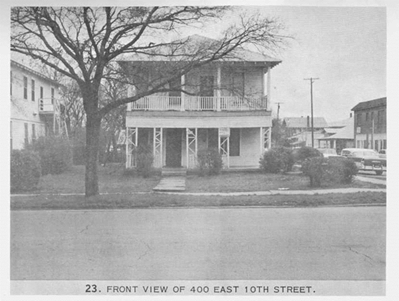
    While driving his car west on E 10th Street and re-creating his alleged view of the Tippit murder, Tatum told his interviewer how he passed the stopped police car, saw the pedestrian and policeman conversing, and then heard three gunshots as he entered the intersection at 10th & Patton. As Tatum, and Myers, continue his story, this is the capper: the gunman completely circled the police car to fire a fourth shot point-blank into Tippit’s skull.

    The problem with Tatum’s story is that while the other eyewitnesses disagreed as to exactly what they saw, no one else disagreed much as to what they heard. While the number of shots is in dispute, every “earwitness” agrees that the shots were fired in rapid succession. There was no final shot separated by seconds from the initial shots.

    Witness after witness described Tippit as being killed by a fusillade of shots. They all heard basically the same thing: Pow pow pow pow.

    “They was fast,” remarked cabdriver Bill Scoggins, describing how the shots were fired extremely close together, in rapid succession.

    What Jack Tatum said he saw, in all probability, never happened. Why he said it can be left to the reader’s imagination. But the HSCA bought it. Because they now had a new “eyewitness” to the actual shooting, and that person’s name was not the thoroughly discredited Mrs. Helen Markham.

    Next, Tatum said that the killer came within 10-15 feet of his Ford Galaxie, and that man was Lee Harvey Oswald. Tatum claimed he could tell because the corners of the man’s mouth turned up into a distinctive smile. Sounds convincing, right? But a quick check of the murder scene and known escape path of the gunman shows clearly that the gunman never came closer than 100 feet to Jack Tatum. Tatum was also well over 100 feet away from Officer Tippit — and according to Tatum himself he was watching everything through his rearview mirror.

    Why did PBS Frontline let Tatum get away with making such outrageous claims? How could Tatum possibly have seen the gunman’s lips curl up from that distance? The gunman came to within 10-15 feet of Tatum’s Ford Galaxie…seriously? That was your story, Mr. Tatum, and you were sticking to it?

    Witness Domingo Benavides seemed to remember a newer red car, possibly a red Ford Galaxie, traveling west several car lengths ahead of his pickup truck. But no one remembered having seen Jack Tatum at 10th & Patton. He was like a late arriving apparition: 15 years after the fact, telling a bizarre and likely false narrative. Yet it was accepted by the HSCA because it helped tie up many inconvenient loose ends left by the Warren Report. And PBS Frontline, a program that showcases documentary facts, didn’t bat an eye and never challenged a word.

    Barbara and Virginia Davis

    myers10Barbara (22) and Virginia (16) Davis were sisters-in-law who lived on the bottom floor of the house at the southeast corner of 10th & Patton. It was here, at 400 E 10th, that the gunman cut across the front lawn, jumped through the hedges by Bill Scoggins’ cab, then headed off down Patton Avenue. The killer also discarded the final two of four total spent shells on this property. The first two shells had been found closer to the shooting site by witness Domingo Benavides, who had watched the shooter discard them as he quickly walked west on 10th towards the corner at Patton Avenue. Barbara and Virginia would each respectively recover the third and fourth discarded shells at 400 E. 10th later that afternoon — on the Patton Avenue side of the house.
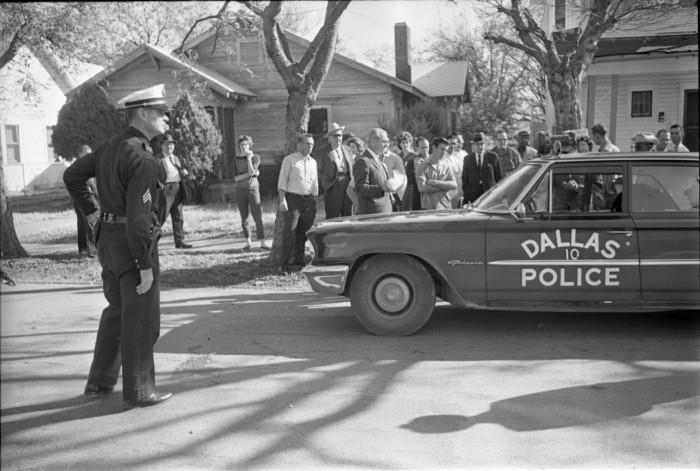
    The two testified they were awakened suddenly from a nap by what the women perceived to be at least two gunshots in quick succession. Barbara and Virginia, understandably confused, both ran to the front door that opens facing East 10th Street. Through the screen door they soon witnessed a young man cutting through their front yard, seemingly unloading a handgun held in his right hand. As the man continued walking past their door, the sisters heard a woman shouting and pointing farther east on 10th Street, “He’s dead, he’s dead, he’s shot!” They would identify the person as Helen Markham, with whom Barbara was acquainted. The woman yelled for someone to call police, and Barbara quickly made the call.

    myers11Virginia, only 16, seemed somewhat confused by the sequence of events. In her original statement to police the young woman said she had gone to the side door, the one that faces Patton Ave., and watched as the gunman walked by towards Jefferson Boulevard. But during her testimony before the Warren Commission Virginia corrected herself and said she had been at the front door, where she had stood behind her sister-in law. The 16-year-old said she could not remember the exact corner (it was the northwest corner) on which Markham had stood. “I don’t remember too good,” was Davis’s explanation. She also thought her sister-in-law had called police before the gunman had cut across their lawn, a near impossibility. Virginia admitted she only caught sight of the killer’s profile and had identified him at the lineup based upon her glimpse of the killer through the screen door and from behind where Barbara stood.

    The younger Davis woman said she could not have made a positive ID based on the images of the suspect she saw on television — only from the lineup, and only from the profile view. This, of course, had been one of the lineups where the disheveled and bruised Lee Oswald had chided the police for trying to “railroad” him and berated the cops in front of the witnesses.

    Virginia Davis testified to two very strange things. First, she said that Officer Tippit’s patrol car was, “…parked between the hedge that marks the apartment house where he lives in and the house next door.” Why did Davis think J.D. Tippit lived at the house two doors away? Why did other witnesses also mention seeing Tippit in the neighborhood regularly when that was not his usual beat? Also, when asked how quickly the police arrived at the murder scene, Mrs. Davis answered in an amazing way: “Yes, they was already there.” “By the time you got out there?” the lawyer for the commission asked. “Yes, sir. We stood out there until after the ambulance had come and picked him up.”

    myers12How could any policeman have gotten there so quickly? Sergeant Kenneth Croy, the first Dallas Police officer on the scene, had said he arrived just as Tippit’s body was being loaded into the ambulance — already suspiciously fast. Now Virginia Davis was testifying that Croy was already there before the ambulance had arrived? Which barely came from more than two blocks away at the Hughes Funeral Home. So, the Davis sisters waited until the gunman was gone and out of sight before stepping outside, yet Croy somehow was already there?
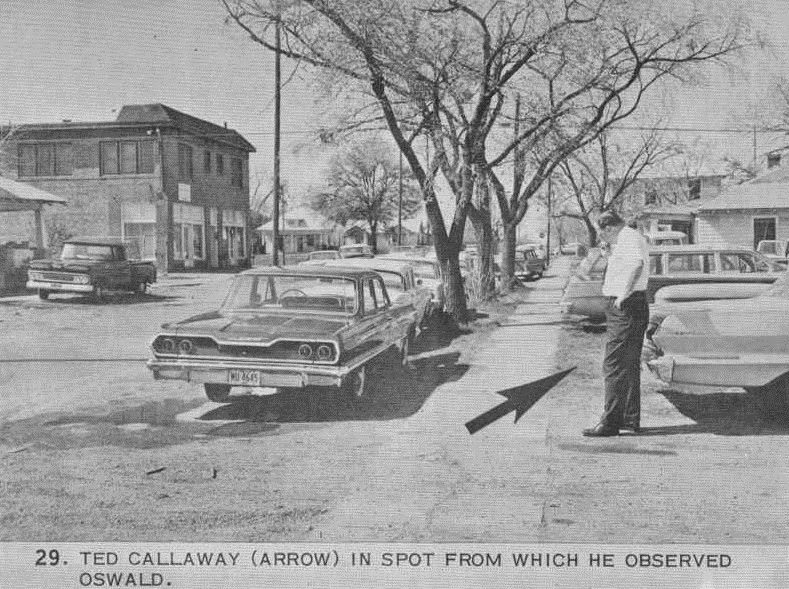
    Barbara Davis’s testimony was more succinct, as she seemed to get more of the basic details correct. However, Barbara testified that the shooter had worn a dark coat made of a rougher fabric, such as wool. This was in stark contrast to what all the other witnesses had described, including Barbara’s sister-in-law. She also remembered the killer’s shirt as being much lighter than Oswald’s shirt…which is interesting because Oswald wore his white undershirt at the lineup and not the brown, buttoned-down long-sleeve shirt he had been wearing all day since he left for work in Fort Worth with Wesley Buell Frazier. At one point Barbara says she was inside the house holding the screen door when she watched the suspect cut across her front lawn. Later she tells investigators she was standing on her front porch as the killer passed by. The older of the two Davis sisters-in-law also agreed that she had only seen the killer from the side, the profile view.

    Finally, Mrs. Davis described how she and Virginia each found one shell. It was later that afternoon on the side of their house that faces Patton Avenue. These would have been tossed after the gunman jumped through the hedges and had passed Bill Scoggins’s cab — but before he had reached the location of witnesses Ted Callaway and Sam Guinyard farther south on Patton.

    Ted Callaway and Sam Guinyard

    When shots were fired on E. 10th street, two of the employees of nearby Harris Motor Company, whose used car lot faced Patton Avenue north of Jefferson Boulevard, moved quickly to the sidewalk on Patton. Their attention turned north towards E. 10th Street. Callaway was the car lot’s manager, and Guinyard was a porter who washed and detailed cars.

    As Callaway and Guinyard watched, they observed Bill Scoggins hunched over and pressed against the driver’s side fender of his cab. Suddenly, a young white man carrying a pistol came crashing through the hedges. Paying no attention to the cab, the gunman headed south on the east sidewalk of Patton towards where Callaway and Guinyard were standing, wondering what the excitement was all about. Guinyard observed the young man toss what was the fourth of the four spent shells towards the side of Virginia Davis’s apartment.

    As the gunman realized Callaway and Guinyard had stepped out and were now blocking his escape route, the young man crossed the street and proceeded south on the west side of Patton.

    “Hey, man!” Callaway shouted to the killer as he was almost even with the two Harris Motors employees. “What the hell’s goin’ on?”

    myers13The gunman slowed almost to a stop, then mumbled something back to Callaway. However, the used car manager couldn’t make out what the man was saying. By this point the gunman was now carrying his handgun in what Callaway described as a raised pistol position, a technique Callaway had been taught in the military.
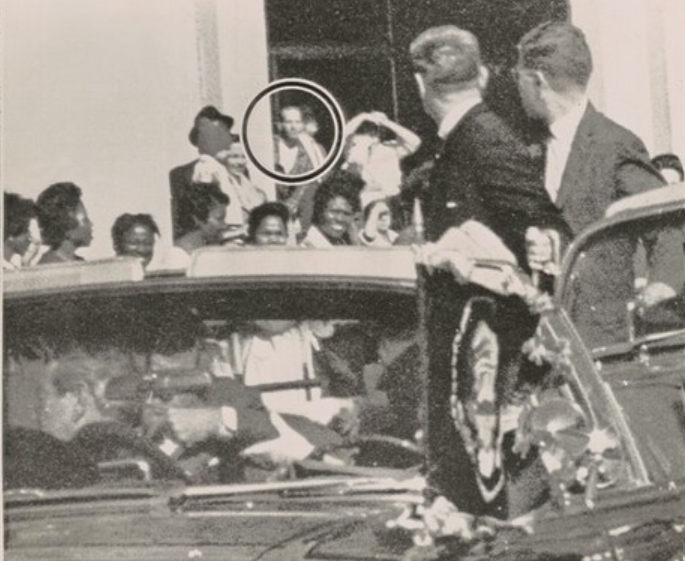
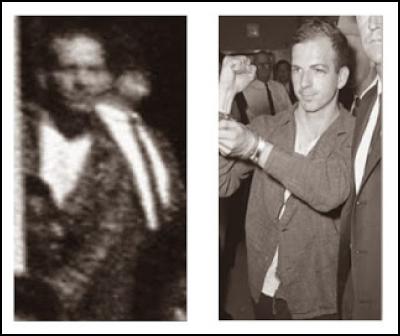
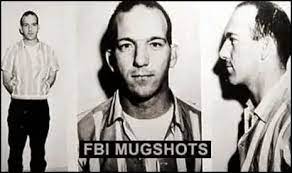
    Other people were beginning to come out. So the killer picked up his pace and trotted quickly towards the intersection of Patton and Jefferson.

    “Hey, somebody follow that guy!” Callaway called down the street. Callaway then turned and hurried in the opposite direction towards 10th Street. Once up at the corner, the Harris Motors manager could see Tippit lying motionless on the ground and a crowd starting to form. Callaway went to the patrol car and tried to summon help on the radio, but was unsuccessful. A motorist named T.F. Bowley, who knew how to work the radio, would stop seconds later and summon help. Meanwhile, someone had already picked up Tippit’s service revolver, which had been lying on the street partially beneath his body, and placed it up on the squad car. Domingo Benavides, who worked as a mechanic at Harris Motors, was telling Callaway what he had just witnessed from his pickup truck.

    Frustrated, ex-serviceman Callaway picked up Tippit’s revolver and told Bill Scoggins to quick get his taxi — he and Scoggins would drive off from 10th & Patton in search of the officer’s killer. It is then that Callaway would ask Harris Motors employee Benavides a question that would continue to puzzle JFK researchers to this day.

    “Which way did he go?”

    If Callaway and Guinyard had just observed the gunman run past their position on Patton Avenue and turn west onto Jefferson Boulevard, why would the car lot manager need to ask Benavides which way the killer had fled?

    Callaway and Scoggins did search the neighborhood, but failed to locate the gunman. They soon returned to the murder scene at 10th & Patton to surrender Tippit’s revolver to arriving Dallas police officers. Years later, Scoggins would confess to an interviewer that he had stashed a .32 caliber handgun in his glove box for protection, but had totally forgotten about the weapon during the entire harrowing ordeal.

    “I just couldn’t believe what I was seeing,” the cab driver remarked as way of explanation.

    The FBI later took measurements on Patton Avenue and determined that the gunman had passed by some 55 feet from Callaway and Guinyard at the closest. Both men would later identify Lee Oswald as the man they had seen carrying the pistol, Had Oswald stood trial for Tippit’s murder, Mr. Callaway would perhaps have made the most convincing witness for the prosecution. In later interviews, the loquacious and confident manager expressed no doubt about his ability to positively identify Oswald as the person who had murdered J.D. Tippit.

    However, during a 1986 televised mock trial held in London, England — The Trial of Lee Harvey Oswald —star defense lawyer Gerry Spence cross-examined Ted Callaway on the witness stand. As Spence tried to introduce doubt concerning the Harris Motors manager’s ability to positively ID a running gunman glimpsed from more than 50 feet away, Callaway scoffed at Oswald’s “counsel” and reiterated that the accused assassin was the man he saw running from the Tippit murder scene with gun in hand. Spence appeared to be ready to dismiss the witness, then asked Callaway if he would kindly answer one more question.

    “Can you identify the man in this picture?” Spence asked Callaway.

    Suddenly, a black & white photograph appeared on the courtroom screen for everyone to see. It was a blown-up copy of a photograph taken by a news photographer at the moment of the assassination of JFK in Dealey Plaza. In the background the Texas School Book Depository can be clearly seen, along with some onlookers standing in the entranceway.to the TSBD. The image of one of the onlookers is enlarged:myers14

    myers15

    myers16Clearly confused, witness Callaway hesitates for a brief moment, knowing the tricky defense lawyer is up to something…but he replies anyway.

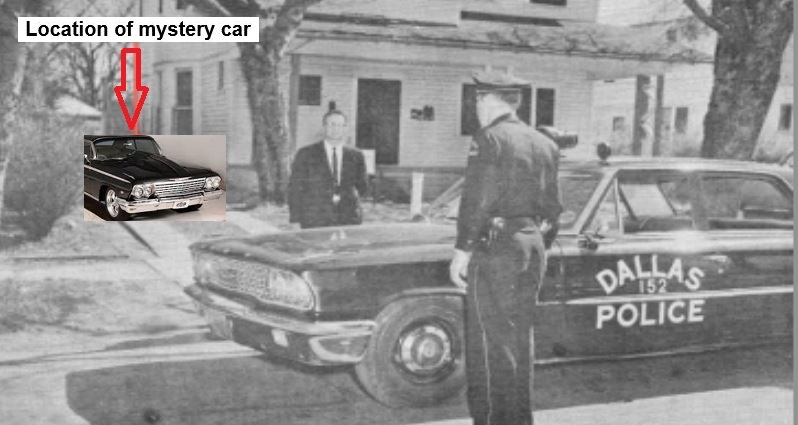
    “Why…why that’s a resemblance of Oswald!”

    “No further questions,” smiled Gerry Spence, knowing he had just elicited the exact response from the witness he had sought. Callaway had just confused the image of Oswald’s fellow TSBD co-worker Billy Lovelady for that of the accused assassin Lee Harvey Oswald.

    The implication of Ted Callaway’s misidentification of the so-called Altgen or “Door Man” photograph was obvious…

    Warren Reynolds

    Perhaps the most fascinating experience of any Tippit witness was that of car salesman Warren Reynolds. Reynolds sold automobiles for the lot across Jefferson Boulevard from Harris Motors where Domingo Benavides, Ted Callaway, and Sam Guinyard all worked. Like Callaway and Guinyard, Reynolds also heard the gunfire from up on 10th Street. He emerged from his office onto a second-floor balcony to see what the matter was. Reynolds observed a young, average-sized white man running down Patton Avenue with a gun in hand. Acting quickly, Reynolds hustled downstairs and onto the lot owned by Johnnie Reynolds Motor Company.

    As the suspect turned west onto Jefferson Boulevard, Reynolds (the owner’s brother) and some other employees from the used car lot followed the man by running down the south side (or opposite side) of the wide thoroughfare from the gunman. The gunman stuck his pistol in the waist band of his trousers and continued west. Reynolds said he and his fellow employees lost sight of the suspect when he appeared to duck behind some buildings.myers17

    Later that day, Warren Reynolds gave statements to both the news media and Dallas Police regarding what he had witnessed. It was Reynolds’ opinion that he had seen and followed Officer Tippit’s killer, but that Reynolds was never close enough to the gunman to have possibly made a positive identification. The car salesman was interviewed by the FBI in January 1964, at which time he told the FBI that he could simply not make a positive ID on Oswald. Two nights later, someone sneaked into the dealership’s basement with a rifle and waited for Reynolds to come downstairs to shut off the lights at closing. Despite suffering a gunshot wound to the head, Reynolds miraculously survived the vicious attack. In fact, his eyesight suddenly approved, as he now informed authorities that he could identify Oswald as the man he had seen across Jefferson Boulevard fleeing with a gun.

    Dallas PD’s main suspect in Reynolds’ near fatal shooting was a local hoodlum named Darrel Wayne Garner, aka Dago. Garner was a known associate of nightclub owner Jack Ruby, and his girlfriend danced at Ruby’s club. Garner’s girlfriend would soon die under mysterious circumstances in a Dallas jail cell, allegedly committing suicide by hanging herself with her pants.

    Dallas JFK researcher Michael Brownlow caught up with Warren Reynolds decades after the assassination and Tippit’s murder. The Warren Commission witness who identified Oswald as the man he had seen carrying a pistol on Jefferson Boulevard was asked why he had changed his story by the time he testified for the committee.

    “Because I wanted to live,” Reynolds replied.myers18

    Acquilla Clemons, Frank Wright, and Doris Holan

    Three witnesses who were ignored by Dallas Police and never testified before the Warren Commission were Acquilla Clemons, Frank Wright, and Doris Holan. These people told very different stories than the official Warren Report witnesses.

    Mrs. Clemons was taking care of an elderly client in a house on E. 10th Street just west of the intersection with Patton Avenue. Clemons saw the police car stop on the next block but said there were two persons in the vicinity of Tippit’s patrol car, not just the man who spoke with the officer.

    After Clemons had stepped back into her client’s home, she heard gunshots. Hurrying back outside, Clemons saw Officer Tippit lying on the ground next to his squad car and two suspicious people running away in opposite directions. One man was tall and slender, while the other man she described as short and chunky. The shorter man was reloading his pistol and escaping south on Patton Avenue. Clemons said this man was not Lee Harvey Oswald.

    Frank Wright lived at the corner of E 10th & Denver, just east of where Tippit was slain. Wright said he was standing in his living room near the front door when he heard the gunshots. Wright opened the door and stepped onto his porch, just in time to see Tippit’s body roll over and come to rest in the street. Next Mr. Wright observed a man running west from the police car. This man jumped into the driver’s seat of an old, grey coupe and drove away going west on E. 10th. A second man in a long-sleeved coat, possibly a trench coat, then stepped into the street. The man appeared to be standing over Tippit, looking down. This second individual then returned to the sidewalk and disappeared out of sight onto one of the properties on the south side of the block.

    Doris Holan lived in a second-floor apartment directly opposite the scene of Tippit’s murder. Her front window afforded the Dallas hotel employee a commanding view of the tragedy. Just after 1 o’clock Holan, who had been sitting in a chair smoking a cigarette, heard the gunshots. Startled, Holan dropped her cigarette but picked it up and put the cigarette on an ash tray. She then hustled to her front window and pulled back one side of the curtain. Holan saw a young man who looked similar to Oswald beginning to walk west away from Tippit’s police car. The movement of Holan’s curtain caught the attention of the suspect as he began to walk away, because he paused for a moment and looked up at Holan’s window, then turned again and began hurrying toward Patton. Holan next saw a police car roll forward from the alleyway behind 10th and move towards the street using a narrow driveway between the two houses. A man in a long coat got out, stepped into the street, looked down at Tippit’s body, then walked back up the driveway to the police car. The second police car then backed up out of sight into the rear alleyway. Holan knew this was a police vehicle because she could see the “cherry” on top. (Although Dale Myers has tried to discredit Holan, as Tom Gram has shown, he has not succeeded. Click here for that discussion)myers19

    Patton Avenue witness Sam Guinyard would later confide to researcher Michael Brownlow that he too had seen police activity in that alleyway at about the time Tippit was killed. The car lot where Guinyard worked sat adjacent to E 10th Street’s rear alleyway. The problem is, according to Dallas Police records, no other Dallas police were known to be in that immediate vicinity.

    Summary

    The witness testimony in the Tippit murder case is so confusing and contradictory that it tends to exonerate Lee Oswald as much as it implicates him. Most witnesses were either too far away or had only a fleeting glimpse of the killer to make a solid identification. Oswald was wearing a long-sleeved brown shirt that day, which no one in the vicinity of 10th & Patton remembered seeing. When we factor in the tainted police lineups as well as the seemingly impossible time element in getting Oswald to the crime scene in time to be the shooter, the case against the 24-year-old tends to fall apart. The Dallas Police Report had the killer walking west, not east, as did all that day’s witnesses except for the roundly discredited Mrs. Markham. Someone other than Lee Harvey Oswald almost assuredly killed Officer Tippit.

    There can be little doubt that a person or persons unknown impersonated Lee Oswald leading up to the murders on November 22, 1963. How can anyone be positive that Lee Oswald shot Tippit at just after 1 p.m. when so many factors argue against it?

    Meanwhile, two credible witnesses at the Texas Theater put the real Lee Oswald in the movie theater at the time J.D. Tippit was being slain several blocks to the east. We know the real Lee Oswald was in the movie theater because he was soon arrested there. Patron Jack Davis said Oswald was there at about the time the 1:15 movie began, and was oddly moving from seat to seat, as if looking for someone. He even briefly sat next to Davis. Theater manager and ticket-taker “Butch Burroughs” said Oswald came in between 1:00 and 1:07 p.m., and that he sold popcorn to Lee Oswald at nearly 1:15 p.m. If true, how could Lee Oswald have murdered J.D. Tippit?

  • Walker Bullet CE 573: Is it Real?

    Walker Bullet CE 573: Is it Real?


    As most JFK researchers know, the “Walker Bullet,” or CE 573, was purportedly extracted from the home of General Edwin Walker on April 10, 1963, and was contemporaneously described in official Dallas Police Department (DPD) reports as “steel jacketed.” Someone had taken a potshot at Walker that night, through the window on the rear side of his house, in front of which the General was seated. Or so Walker had related to the DPD that night.

    Not one, but rather two, DPD detectives, by the names of Ira Van Cleave and Don E. McElroy, put their signatures on a General Offense Report, and authored and signed a Supplementary Offense Report on April 10.

    In the Supplementary Offense Report, both detectives observed “a bullet of unknown caliber, steel jacket, had been shot through the window” at Walker’s home, as the General sat his desk.[1]

    Two DPD patrolmen, B.G. Norvell and J.P. Tucker authored the General Offense Report, which also identified the Walker Bullet as a “steel jacketed bullet.” All four DPD officers had held the Walker Bullet that night in their hands that night, and inscribed initials into it, according to official reports.

    The Walker Bullet that night famously missed the right-wing General—a national political figure—and had then passed through an interior wall, became badly deformed, but, reportedly, subsequently and curiously came to rest in between bundled papers stacked up against the wall.

    Months later, the Warren Commission would conclude it was Lee Harvey Oswald (LHO) who shot at and attempted to murder Walker that night. In part after the FBI said the Walker Bullet, or CE 573, was in fact the same type of Western-brand ammo that LHO used in his Mannlicher-Carcano rifle. Of course, the problem is the Walker Bullet in the possession of the Warren Commission, CE 573, is copper jacketed, and obviously so.

    CE 573, whatever its true origins, is a severely mangled bullet; so much so that its copper-jacketing has been torn asunder. Thus any observer, even a layman, can easily see the copper jacket is in fact copper through-and-through, and not a relatively uncommon steel-jacketed bullet with copper-gilding. It would not be surprising if a photo of CE 573 is used in police-cadet training courses somewhere as a classic example of a copper-jacketed bullet.

    Moreover, there are initials carved into CE 573, though of mysterious origin. Anyone carving initials into a copper-jacketed bullet would immediately know it was copper-jacketed, and not steel-jacketed, as copper is softer than steel.

    In addition, anyone carving initials into a copper-gilded steel jacketed bullet would notice the steel color and hardness emerging from under the microscopically thin copper gilding. It is inexplicable that even one big-city police detective would describe CE 573 as “steel-jacketed.” But two DPD detectives and two DPD patrolman authored and signed brief one-page reports prominently describing the Walker Bullet as exactly that, “steel jacketed”—after having handled the slug and marking it with their initials.

    Steel-Jacketed Bullets are a Rarity

    There are yet more puzzling aspects of the DPD detectives concurring and specifically noting that the Walker Bullet was “steel jacketed.”

    The vast majority of bullets in the 1960s, and even today, are copper-jacketed, and have been for more than a century.

    Bullets with metal jackets largely replaced plain lead bullets at about the same time that smokeless propellants replaced black powder in the majority of rifle ammunition. The higher pressures and temperatures produced by smokeless propellants were more than plain lead could support. This was overcome by adding an outer skin of harder metal to lead bullets. Since pure copper is difficult to cold-work, copper alloys became the standard jacket material.” — Global Forensic & Justice Center.[2]

    So, copper-jacketed (technically, copper-alloy jacketed) bullets largely replaced unjacketed lead bullets in first half of the 1900s, and had become standard by the 1960s.

    Steel-jacketed bullets, in contrast, are generally specialty items, designed for extraordinary penetrating power, often in military applications. But importantly, there have been inexpensive, steel-jacketed bullets on US civilian markets in the decades after WWII, often military surplus. More on that key topic later.

    In any event, any competent police detective working an attempted murder scene, when picking up the bullet in evidence, would, of course, try to detect its nature—the bore, jacketing, brand, and so on. A relatively rare, steel-jacketed bullet would be very notable—a valuable clue. The would-be murderer would have been armed with unusual ammo, very much worth noting. Especially in the case of an attempted murder of a very high-profile public figure, as in General Walker.

    Why would DPD detectives call an obviously copper-jacketed slug, a “steel jacketed” bullet?

    It defies explanation, especially as copper-jacketed bullets were and are the norm.

    Warren Commission

    That there is a dubious history of CE 573 is of no doubt. But the Walker Bullet becomes even more iffy when the Warren Commission’s wan efforts to examine the authenticity of the CE 573 are reviewed.

    So, imagine: You had two detectives with a big-city police department who attested, in writing, in a brief same-day April 10 report that the Walker Bullet, now known as CE 573, was steel-jacketed. As did two patrolman. Worth noting is that April 10 was months before the JFKmurder, and before any subsequent pressure to make evidence fit the case.

    Though not considered official evidence, the April 12, 1963 edition of The New York Times reported that Walker had been targeted with a 30.06 rifle, citing information provided by DPD detective Ira Van Cleave. Van Cleave would tell not only the Times, but the national wire service the Associated Press and at least two Texas newspapers that he had, in effect, handled and marked a steel-jacketed 30.06 slug the night of April 10 1963, in the Walker home.[3]

    From Copper to Steel

    But then, on Dec. 3 the purported Walker Bullet was sent from Dallas to the FBI’s DC lab, where it became CE 573, and wherein the slug was examined and found to be obviously copper-jacketed. Without hesitation, Robert Frazier of the FBI identified the CE 573 as a “copper-jacketed lead bullet” in a hand-written report dated Dec. 4.[4]

    This presented the Warren Commission with a conundrum.

    The WC needed to dispense with this troublesome point of steel having been transmogrified into visible and obvious copper. But the Dallas Police Department records could not be retroactively corrected.

    So the Warren Commission fleetingly asked Frazier, special agent from the FBI lab, about “why someone might have called this (CE 573) a steel-jacketed bullet?

    Melvin Eisenberg, assistant counsel, asked the question.

    Eisenberg: Is this a jacketed bullet?
    Frazier: Yes, it is a copper-alloy jacketed bullet having a lead core.
    Eisenberg: Can you think of any reason why someone might have called this a steel-jacketed bullet?
    Frazier: No sir; except that some individuals commonly refer to rifle bullets as steel-jacketed bullets, when they actually in fact just have a copper-alloy jacket.[5]

    And that was that.

    Frazier said “some individuals” commonly refer to rifle bullets as “steel jacketed,” and the questioning was closed off.

    “Some individuals,” of course, is an unlimited category that might include anyone on the planet, or park winos, or hunter’s housewives—or FBI special agents whistling in the dark. Sure, “some individuals” unfamiliar with firearms might breezily mix up steel- and copper-jacketed bullets—but police department detectives gathering evidence at the scene of an attempted murder, of a very high profile political figure?

    At the time he was allegedly shot at, Walker was nationally famous, featured on national magazine covers.

    The Warren Commission notably did not ask Frazier if the FBI lab ever conflated steel- and copper-jacketed bullets, or if police reports at the time readily interchanged the terms. Of course, they did not.

    Moreover, a review of ammo ads and literature from the 1960s, albeit limited to what is available online in the present, shows a great deal of specificity regarding bullet jackets. Ammo makers did not blithely mix up “steel” vs. “copper.”

    There is no reason why DPD detectives would refer to a common copper-jacketed bullet as a relatively rare, steel-jacketed bullet. There is not the slightest hint in industry literature that rifle bullets were ever commonly described as “steel jacketed”—nor would that make sense, since rifle bullets became commonly copper-jacketed in the early 1900s.

    The Chain of Evidence

    Anybody (except the Warren Commission) might be reasonably curious if CE 573 was really the bullet extracted from the Walker home on April 10, 1963.

    So, how did the FBI check the chain of evidence on the CE 573?

    Did they show CE 573 to the two DPD detectives, McElroy and Van Cleave?

    No.

    The DPD crime lab?

    No.

    The FBI, checking the authenticity of CE 573, showed a slug to DPD Patrolman B.G. Norvell.

    Who? Who was Norvell?

    In a June 10, 1964 report, the FBI wrote that on the night of April 10 at the Walker residence, “Patrolman B.G. Norvell handled a bullet, which Norvell stated he had found among some papers and literature in the room next to the room where General Walker had been sitting at the time of the shooting” to the DPD Crime Scene Search Section officer, named B.G. Brown.

    Okay, as far as it goes. But (italics added):

    But then reading in that very same report, the FBI also recorded that DPD Detective “McElroy, a police officer for thirteen years, advised it appeared the bullet had entered through a window in the back of the house and gone through a wall next to which General Walker had been sitting at the time, in the room next to where General Walker had been sitting. McElroy stated he found a spent bullet among some papers and literature. There was a hole in the wall through which the bullet had apparently entered. McElroy stated he picked up the bullet and later gave it to Officer B.G. Brown, of the Crime Scene Search Section.”[6]

    You can’t make this stuff up.

    According to the FBI report, the DPD detective McElroy said he found the original Walker Bullet and gave the mangled slug to the crime scene officer…but the patrolman Norvell told the FBI that he, Norvell, found the Walker Bullet and handed it to the crime scene officer.

    It should be noted that Norvell was, at best, a novice. Norvell had joined the DPD in December of 1962, and had been with the department for five months on the night of Walker shooting. Norvell then left the DPD less than one month later. Yes, Norvell’s entire police career spanned six months.

    The FBI report pointedly noted that Detective McElroy had been on the force for 13 years at the time of the Walker shooting.

    But it was to Norvell that the FBI, 14 months after the Walker shooting, showed a slug. Norvell said he recognized the CE 573 bullet from the “BN” or “N” he had scratched into the bullet.

    There is other evidence and complications.

    The other DPD patrolman with Norvell that night, named Tucker, told the FBI that Norvell had initially found the bullet, perhaps buttressing the story. But then Tucker also told the FBI he never saw Norvell initial or inscribe the bullet.

    Of course, it is always uncomfortable to make accusations.

    But at best the novice Norvell handled the original Walker bullet briefly, before being asked to identify a bullet shown to him by the FBI 14 months later. Suppose an “N” was on a mangled bullet? Or…who is to know if the FBI, in fact, showed the true original steel jacketed Walker Bullet to Norvell, while CE 573 stayed back in the FBI lab?

    Photographs? Lab Reports?

    The Dallas Police Department did send original reports and seven photographs of the Walker crime scene to the FBI in early December, 1963—but no photographs of the Walker bullet.

    If the Walker bullet was photographed on April 10, 1963, or shortly thereafter in the DPD lab, there is no record of it.[7]

    Indeed, there are few surviving paper records from the DPD lab regarding the Walker Bullet at all.

    If anyone in the DPD lab ever described the Walker Bullet in writing, either as steel-jacketed or copper-jacketed, the records have disappeared. The Warren Commission did produce a small, dark, black-and-white photo of CE 573 in their 26-volume set, in which determining the color of the bullet is impossible.

    The Rankin Order Regarding Chains of Evidence

    J. Lee Rankin was the general counsel to the Warren Commission, and thus one of the staffers who “did the real work” of the body.

    On May 4, 1964, Rankin sent to FBI Chief J. Edgar Hoover a memo, regarding physical evidence and the chain of evidence in the JFK case. That memo in part reads:

    “We would like you to determine, and set forth in one document, where and by whom these items were found following the assassination. In each case the item should be shown to the person who found it so that he can identify through inspection….However it is unnecessary to trace the chain of possession forward past the first person who can identify the item by inspection.”[8]

    The memo specifically mentions the Walker Bullet, CE 573.

    Thus, FBI agents followed Rankin’s directive, and showed the Walker bullet CE 573 only to patrolman Novell, even though there was a conflict in the written official FBI record regarding if Novell actually found and handled the bullet. One obvious interpretation is that Rankin wanted to sidestep showing the bullet and getting testimony from DPD detectives McElroy and Van Cleave.

    Asst. Director W. C. Sullivan

    On Dec. 4, 1963, mere hours after the FBI had recorded receipt of the Walker Bullet, FBI Asst. Director W.C. Sullivan was evidently in a frenzy regarding the slug.

    jfk bullet type secretAccording to an FBI memo sent to the FBI office in Dallas, on Dec. 4, “Asst. Director W. C. Sullivan called at 3:10 am and instructed he receive a return phone call and be filled in on the details regarding to the alleged bullet shot into the home of General Edwin A. Walker.”[9]
    Yes, 3:10 am.

    The FBI memo, on which the sender’s identity has curiously been redacted, continued, “Mr. Sullivan then instructed that agents review Dallas newspaper morgues first thing Wednesday morning, 12/4/63, and details be obtained and furnished to him by teletype.”

    Sullivan may have been a night owl. Perhaps overwrought by JFK case duties. But even so, it is evident that Sullivan had urgent concerns about the authenticity of the Walker Bullet, and called the purported Walker Bullet the “alleged” slug—unusual for evidence submitted to the FBI by a police department. Well before sunrise on Dec. 4, Sullivan was issuing urgent orders demanding immediate action from the Dallas FBI and information on the Walker Bullet.

    But not only did Sullivan think the true Walker Bullet might actually be steel jacketed.

    DPD Chief Curry Opines JFK Shot with “Steel Jacketed” Bullet

    More curiosities abound.

    On Nov. 29, 1963 Dallas Police Chief Jesse Curry told the Associated Press that “in his opinion the bullets [that struck President Kennedy] were steel jacketed, but he said this was not confirmed to him [by the FBI].”

    Huh? “Steel jacketed”?

    This bit of recovered history is jarring, to say the least.

    Why on earth would Chief Curry, one week after the murder, opine to a national news media organization that the bullets that struck JFK—which Curry had never seen, or examined, and which were still an FBI “secret”—were relatively rare steel-jacketed bullets, rather than the industry norm, standard and very common copper-jacketed bullets?

    There is nothing in the JFK case itself to suggest steel-jacketed bullets were used. In fact, the horrible head shot at Z-313 was evidently accomplished with a copper-jacketed bullet—or at least so says the WC. So why late in November 1963 was the Dallas Police Chief Curry seeking to have confirmed, by the FBI, that the bullets that struck JFK were steel-jacketed? This becomes more interesting when one again ponders the nature of bullets.

    Interestingly, as early as Nov. 23, 1963, Chief Curry was asked by an unidentified news reporter whether LHO was the failed assassin of General Walker, as captured on film in a hallway interview.[10]

    Curry replied, “I don’t know.”

    According to Dec. 4, 1963 FBI memo sent to FBI Director Hoover, the DPD had considered turning the Walker Bullet over to the FBI even before being asked, as “they felt there was some possibility that Oswald might have shot at Walker.”[11]

    Steel-Jacketed Bullets Are Relatively Rare

    As stated, in the early 1960s almost all rifle bullets and most other bullets were copper-jacketed (technically, copper-zinc alloys). The jacketing helps prevent lead-fouling of rifle barrels (lead being a very soft metal). Also, the increasing explosive power of bullets had necessitated jackets to prevent a pure lead slug from mushrooming or deforming as it went down the barrel.

    The idea that the Dallas Police Chief Curry would be seeking confirmation, from the FBI, that the bullets that struck JFK were steel-jacketed is remarkable.

    Why would Curry suspect steel-jacketed bullets?

    The answer almost certainly goes back to the ever-controversial April 10, 1963 rifle shot taken at General Walker. As stated, inside the Walker home a slug was recovered by police and identified as steel jacketed by two DPD detectives, and two patrolmen, in the same-day official police report they authored and signed.

    DPD Detective Van Cleave then told reporters from at least four different news organizations, including the AP, that the bullet recovered was a “30.06.”

    Which is interesting—especially the part about the “30.06.”

    The US military, under dire duress of WWII wartime copper shortages, did in fact manufacture a steel-jacketed 30.06 during the war and shortly thereafter, bullets which were sold into surplus when the US adopted NATO-compatible ammo in 1955. The steel-jacketed 30.06’s were phased out of military use.[12]

    small arms ammunitionSo civilians could buy the steel-jacketed 30.06 bullets.
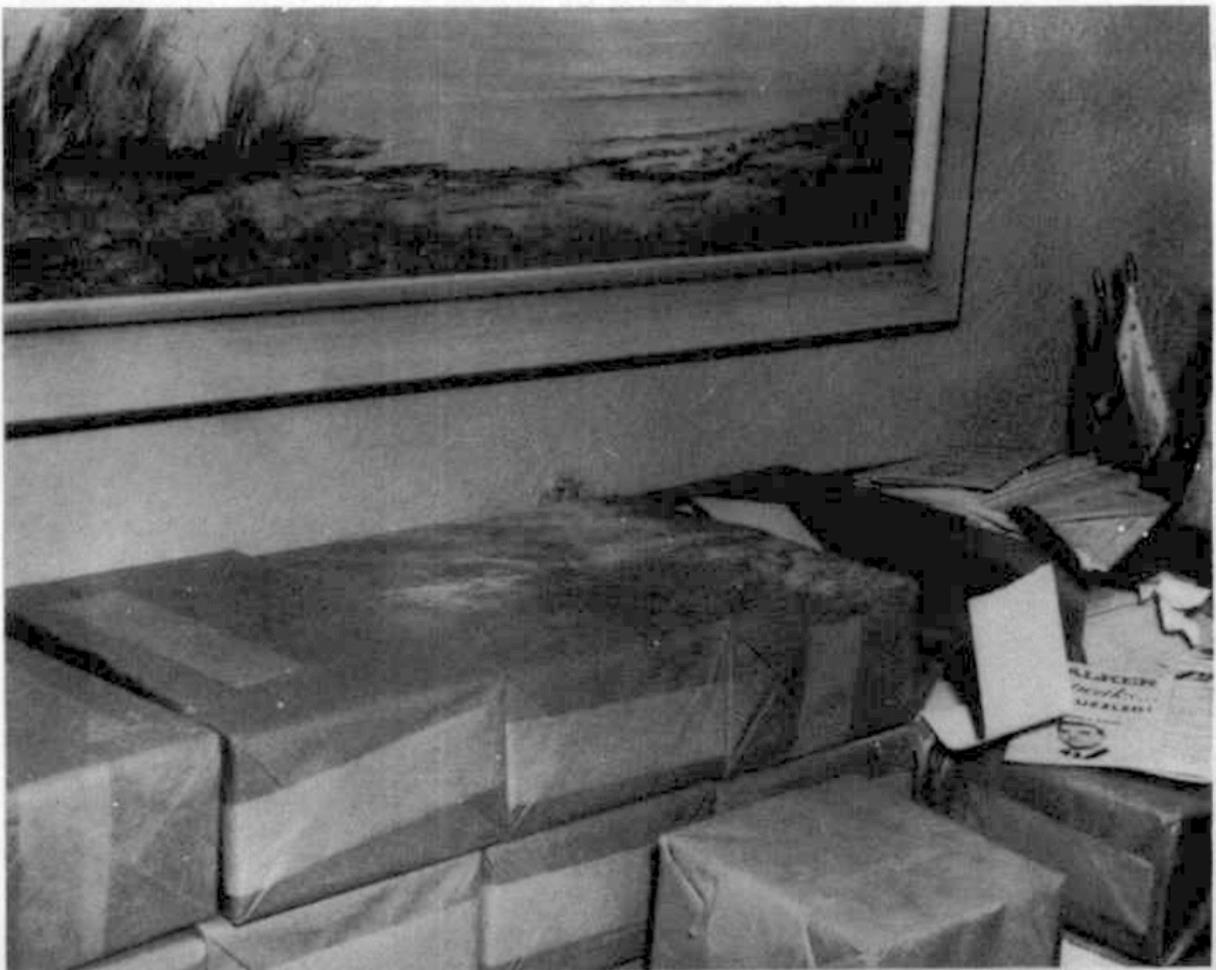
    Moreover, by Nov. 29, DPD detectives had been through the belongings of Lee Harvey Oswald, and had found the ever-gloomy backyard photograph of General Walker’s house (the one with an auto license plate cut out), along with four other photographs of roads and railroad tracks leading to the Walker residence.

    Also on Nov. 29, the German newspaper Deutsche National und Soldaten-Zeitung published an article that accused LHO of having shot at General Walker.[13]

    The reasonable deduction, indeed inevitable conclusion, is Chief Curry on Nov. 29 or earlier had reviewed the official DPD files on the Walker shooting, and read that a steel-jacketed slug had been found in the Walker residence.

    So, it looked like this to Chief Curry: LHO, accused of shooting at JFK and now himself dead, had had in his possession backyard photos of the Walker house—the very house in which Walker, another high-profile public figure, had also been shot at. A house in which a steel-jacketed slug had been recovered on the night of the shooting.

    So, naturally, Curry opined LHO used the same type of steel-jacketed bullets in shooting JFK, and asked the FBI to confirm as much. That info would help close the books on the Walker attempted murder.

    It stretches credulity that Chief Curry would blunderbuss or conflate the terms “steel jacketed” and “copper jacketed’ when asking the FBI to confirm the type of bullets used in the assassination of a sitting US president.

    CE 573: No “DAY” and no “+”

    There are other incongruities regarding the true Walker Bullet. On two separate occasions Lt. J.C. “Carl” Day of the DPD testified he had marked the true Walker Bullet with the word “DAY” and a “cross.”

    On or about Dec. 5 1963, Lt. Day told the FBI he had placed upon the Walker slug the word “Day” and a “cross.” The slug itself, not an envelope, box or tag.

    Then, here is Lt. Day testifying before the WC in 1964:

    Mr. BELIN. I will ask you this. Have you ever seen Commission Exhibit 573 before, if you know?
    Mr. DAY. Yes, sir; I have.
    Mr. BELIN. Could you tell us what 573 is?
    Mr. DAY. This slug was gotten from the home of former General Edwin Walker, 4011 Turtle Creek, April 10, 1963, by Detective B. G. Brown, one of the officers under my supervision. He brought this in and released it to me.
    Mr. BELIN. You are reading now from a report that is in your possession, is that correct?
    Mr. DAY. Yes, sir. Those are the official records of my office.
    Mr. BELIN. Was that prepared under your supervision?
    Mr. DAY. Yes, sir.
    Mr. BELIN. In the regular course of your duties at the Dallas Police Department?
    Mr. DAY. Yes, sir. The slug has my name “DAY” scratched in it.[14]

    After that last comment, Belin quickly changed topics. It is not clear why Day was reading from his official DPD records, or if Day even handled the bullet during the hearing.

    Another problem is this: in 1979 the National Archives and Records Service, on behalf of the House Select Committee on Assassinations, took CE 573 to the FBI lab in Washington, where it was “microscopically” examined. The examiners found the markings “Q188,” “N,” “B,” “J,” “D,” “A,” “O,” and “D”.[15]

    The examiners did not see the word “DAY” or a “cross.” Even under a microscope. Extant photos of CE 573 do not reveal the word “DAY” either.

    The Walker Bullet Was Found—Resting between Bundles of Literature?

    Among the many oddities of the true Walker Bullet is where it was found.

    If DPD patrolman Norvell is correctly quoted, he found the steel-jacketed slug resting atop one bundle of paper in a stack of bundles, after another bundle had been removed from atop of it.

    That is, the Walker Bullet missed Walker, then passed through an interior wall behind Walker. The Walker Bullet then purportedly came to rest in-between bundles of paper.[16]

    bundles of paperCommission Exhibit 1009: The Walker Bullet was found “in between” bundles of paper such as this?
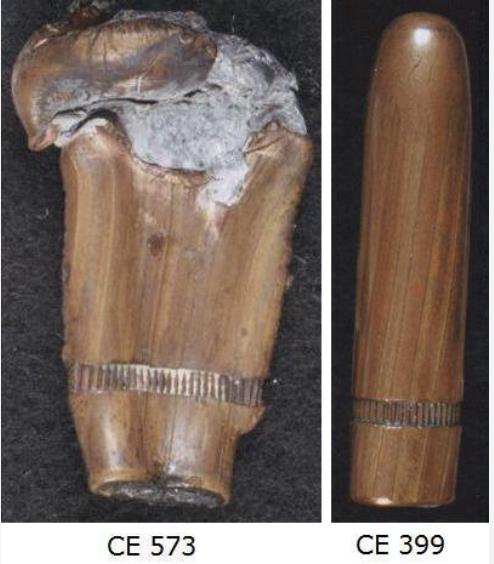
    Per an FBI report dated June 4, 1964 (italics added):

    “In his adjoining [Walker’s] room, the [Dallas Police Department] officers [Tucker and Norvell] found numerous bundles and literature and papers stacked against this common wall. Upon removing some, they found a mushroom-shaped bullet lying on one of the stacks of literature near the hole in the wall.”

    There has always been speculation that General Walker, a national public figure, had staged the Walker shooting as a publicity stunt, with or without LHO’s participation.

    If the true Walker Bullet was found resting in-between bundles of paper, lying on one of the stacks, then one might have suspicions the bullet had been planted there.

    CE 399

    ce573 ce399CE 399 is, of course, the controversial “magic bullet” or the relatively pristine slug purported to have been recovered at Parkland Hospital on Nov. 22, 1963.
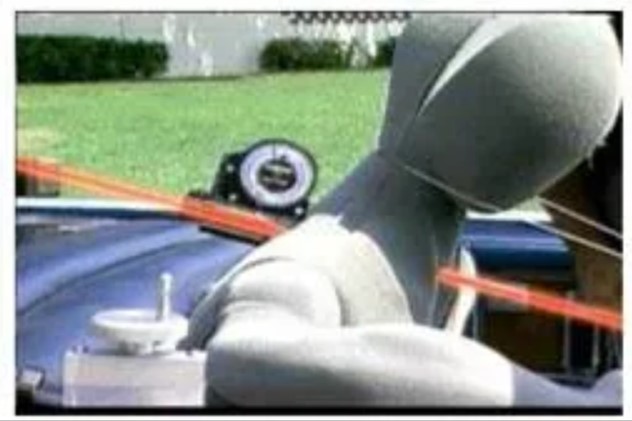
    CE 399 is a Western ammo 6.5 millimeter copper-jacketed slug—a brother bullet to CE 573. Same make and bore, type. The 6.5 Western ammo is used in the Mannlicher-Carcano rifle said to have been owned or used by LHO.

    But a key fact is this: No one in any local or federal police agency ever called CE 399 a “steel jacketed” bullet. Nowhere in the voluminous FBI files is there a single reference to CE 399 as a “rifle bullet,” ergo one that is “steel jacketed.”

    That is to say, CE 399 was immediately and correctly ID’ed as a copper-jacketed bullet, which it obviously is. But CE 573 is a brother bullet to CE 399, and even more obviously copper-jacketed, as it has been mangled, revealing a solid copper jacketing. It stretches credulity that there are police agency errors, misnomers and problems of nomenclature regarding CE 573—but not CE 399.

    Conclusion

    One could be forgiven for having reasonable doubt that CE 573 is the true Walker Bullet, the slug extracted from the General’s residence on April 10, 1963. Indeed, one could ask how anyone could be “reasonably certain” that CE 573 is bona fide evidence from the Walker shooting.

    To recap and ponder—

    • The original and official DPD reports described a relatively rare “steel jacketed” slug found in the Walker home, on April 10, 1963, the night of the shooting. The bullet was handled and initialed through inscribing by four DPD officers. But CE 573—the WC’s purported Walker Bullet—is obviously copper-jacketed.
    • The extremely thin Warren Commission questioning of FBI agent Frazier, as to how and why the Walker Bullet could ever be described as “steel jacketed” by DPD detectives. Frazier answered that “some individuals refer to all rifle bullets as steel jacketed,” a novel and unique observation. There is nothing in police or FBI literature to suggest police detectives or FBI special agents anywhere ever described “all rifle bullets” as steel jacketed—especially when copper-jacketed rifle bullets were and are the norm.
    • Lt. Day of the Dallas Police Department, stating unequivocally to the FBI and then to the WC that he had carved the true Walker slug with his name “DAY” and a cross. No such markings can be seen on CE 573, even under a microscope.
    • The lack of same-day April 10, 1963, or indeed any Dallas Police Department photographs of the true Walker Bullet. The true Walker Bullet was never photographed or, if it was, the photographs have disappeared. Moreover, there are no surviving written DPD lab reports on the Walker Bullet that describe the slug as steel- or copper-jacketed.
    • The weak chain of evidence confirmation by the FBI-WC on the provenance of CE 573. The FBI in 1964 showed a slug purported to be the Walker Bullet only to Norvell, the DPD patrolman, who at best handled the slug briefly 14 months earlier. The FBI did not show the purported Walker Bullet to detectives McElroy or Van Cleave.
    • Neither FBI nor the Commission ever asked Van Cleave why they thought the Walker Bullet was a steel-jacketed 30.06. A simple question, such as “OK, Van Cleave. You handled and inscribed the Walker Bullet, held it in your hand on April 10. Why did you call the Walker Bullet ‘steel jacketed’ in official police reports and 30.06 when talking to reporters?” That simple question was never asked of the best witness.
    • Chief Curry opining on Nov. 29 that JFK had been assassinated with “steel jacketed” bullets, and that he was trying to confirm that fact with the FBI. Curry was almost certainly referring to the Walker shooting, and the “steel jacketed” 30.06 slug found on the scene—a shooting being laid at the feet of LHO, due to the photographs of the Walker home and approaches found in LHO’s possession post JFKA.

    In sum, it is difficult to have confidence the true Walker Bullet, described as steel-jacketed, is also the WC’s CE 573, the torn-asunder copper-jacketed.

    What could be corroborating evidence—the correct marks on the CE 573, or correct same-day detective reports, or a true contemporary April 1983 Walker Bullet photograph, or a true contemporary written report from the DPD lab—are all lacking regarding CE 573. Anyone driving to confirm the authenticity of CE 573 meets roadblock after roadblock after roadblock.

    It is hardly a secret that the job of the Commission was not to investigate the JFK case, but rather to prosecute LHO as a “leftie, loner, loser.” And their narrative on the Walker shooting was that Oswald took a potshot at the General, thus indicating LHO’s predisposition to assassination of public figures.

    However, prosecutorial zeal can lead to excesses and shortcomings.


    NOTES:

    [1]Texas History

    [2]Jacketed Bullets

    [3]Walker Escapes Assassin’s Bullet

    [4] Document from HSCA Administrative folder (page 13)

    [5] Testimony of Robert A. Frazier

    [6] CE 1953

    [7]Texas History

    [8] FBI 62-109090 Warren Commission HQ File, Section 17 (page 119)

    [9]FBI Files on Edwin Walker, 82-2130 File (page 27)

    [10] November 23, 1963 – Dallas Police Chief Jesse Curry speaks with reporters in the corridor

    [11]FBI Files on Edwin Walker, 82-2130 File (page 30)

    [12] 100 Year History of the .30-06; see also US WWII produced steel case 30-06 (read the posted volume, “Record of Army Ordnance, Research and Development,” from the Office of the Chief of Ordnance)

    [13] FBI file number 124-10369-10024 (see page 5)

    [14] Testimony of J. C. Day

    [15] Document from HSCA Administrative folder (page 10)

    [16] CE 1953

  • Case Closed 30 Years On: Even Worse – Part 5/5: Jet Effect, Neuromuscular Spasm and CE 399

    Case Closed 30 Years On: Even Worse – Part 5/5: Jet Effect, Neuromuscular Spasm and CE 399


    It is worth noting that in the decades that followed the release of the HSCA report, other medical experts such as neuropathologist Dr. Joseph Riley and forensic pathologist Dr. Peter Cummings have viewed the autopsy materials and agreed with the original entry location proposed by the autopsy surgeons. On the other hand, the three forensic specialists who viewed the photographs and X-rays on behalf of the ARRB could find no entry hole anywhere in the rear of the head. (Doug Horne, Inside the ARRB, pgs. 584-586) Additionally, in his fine book, Hear No Evil: Social Constructivism & the Forensic Evidence in the Kennedy Assassination, Dr. Donald Thomas makes the argument that Humes and Boswell had not found a through-and-through entry hole in the skull but had, in fact, found a semi-circular, bevelled notch on the margins of the large defect that they had mistakenly interpreted as a portion of a wound of entrance. Whichever of these arguments about the rear entry wound is correct, the fact remains that the trail of bullet fragments in the top of the head could most likely not have been the result of a bullet entering the rear since the pattern of their dispersal indicates the reverse.

    skull fragments

    Front to Back

    When a bullet disintegrates on striking a skull, the smaller and more dust-like fragments are found closer to the point of entrance whereas the larger particles are found closer to the exit. This is because the larger fragments, having greater mass, have greater momentum and are carried further away from the point of entry. It can be clearly seen in JFK’s post-mortem X-rays that the smallest metallic fragments are located in the right temple area and the largest are found in the top rear of the skull. Therefore, the bullet appears to have been travelling from front to back.

    This evidence of a frontal shot not only further validates the acoustics evidence and the witnesses who heard a shot from the grassy knoll, but it also fits well with the President’s reaction as shown on the Zapruder film. Few observers can fail to be struck by the way Kennedy’s head is slammed backwards by the fatal shot. Celebrated American novelist Don DeLillo once commented on the “confusion and horror” that result from viewing this portion of the film, asking, “Are you the willing victim of some enormous lie of the state―a lie, a wish, a dream? Or did the shot simply come from the front, as every cell in your body tells you it did?” (Thompson, Last Second in Dallas, p. 353) Indeed, the film is so persuasive in this regard that its first showing on national television in 1975 led directly to the formation of the House Select Committee on Assassinations.

    Alvarez and Sturdivan Hijinks

    Warren Commission defenders like Posner, of course, maintain that JFK’s backward motion means nothing. He quotes HSCA forensic pathology panel chairman Dr. Michael Baden as stating that “People have no conception of how real life works with bullet wounds. It’s not like Hollywood, where someone gets shot and falls over backwards. Reactions are different on each shot and on each person.” (p. 315) Posner then offers two theories to explain away the backward motion: the “jet effect” and the “neuromuscular spasm.” Neither of these theories is viable in 2023.

    The “jet effect” was the brainchild of Nobel Prize-winning physicist Luis Alverez who had previously undertaken a “jiggle analysis” of the Zapruder film and suggested that there were three episodes of blurring on the film, demonstrating that the Warren Commission was correct in saying only three shots had been fired. Like Ramsey Clark, Alvarez had been disturbed enough by what he saw in Six Seconds in Dallas that he set out to find a “real explanation” for the backward movement of Kennedy’s head. In the end, what Alvarez offered was the hypothesis that the explosive exiting of blood and brain matter from the right side of JFK’s skull had thrust it in the opposite direction. As Posner tells it, Alvarez established [the jet effect] both through physical experiments that recreated the head shot and extensive laboratory calculations.” (p. 316) The problem, as Josiah Thompson discovered decades later, was that Alvarez had rigged his tests and hidden important aspects of his results.

    Seven years after first seeing Thompson’s book, Alvarez reported on an experiment he had conducted by firing rifle bullets into melons, stating that six out of seven of them had moved back towards the shooter as a result of the “jet effect,” thus validating his theory. Yet, as Thompson discovered when he got his hands on the raw data from Alvarez’s shooting tests, Alvarez had failed to disclose the fact that there had been two earlier rounds of shooting which had achieved very different results. During those earlier firings, Alvarez had used larger, heavier melons which apparently did not behave the way he wanted them to. So, in later tests, he reduced their size by half and jacked up the velocity of his bullets to 3000 feet per second. Alvarez had also fired at a variety of other objects besides melons. There were coconuts filled with jello which were blown 39 feet forward; a plastic jug of water which went 6 feet downrange; and 5 rubber balls filled with gelatin; all of which were blown away from the rifle. It was not until he settled on melons that weighed half as much as a human head and increased the velocity of the rifle by more than 1,000 feet per second above that of the Mannlicher Carcano rifle that Alvarez finally achieved the desired effect (see Thompson’s presentation at the Passing the Torch symposium in 2013 on YouTube.) Whilst Alvarez may have succeeded in demonstrating the already established existence of the “jet effect,” he had in no way shown it to be relevant to the motion of President Kennedy’s head.

    Larry Sturdivan, who writes that “The jet effect, though real, is not enough to throw the president’s body into the back of the car,” (Sturdivan, p. 164). He advanced instead the other hypothesis that Posner cites: the neuromuscular reaction theory. In a nutshell, Sturdivan postulates that the disruption to Kennedy’s brain “caused a massive amount of nerve stimulation to go down his spine. Every nerve in his body was stimulated…since the back muscles are stronger than the abdominal muscles, that meant that Kennedy arched dramatically backwards.” (NOVA Cold Case: JFK, PBS broadcast in 2013) Yet Sturdivan’s postulate, which he based on what he observed from shooting experiments conducted on anesthetised goats, suffers from an anomalous understanding of human anatomy.

    As Dr. Thomas writes, “In any normal person the antagonistic muscles of the limbs are balanced, and regardless of the relative size of the muscles, the musculature is arranged to move the limbs upward, outward, and forward. Backward extension of the limbs is unnatural and awkward; certainly not reflexive. Likewise, the largest muscle in the back, the ‘erector spinae’, functions exactly as its name implies, keeping the spinal column straight and upright. Neither the erector spinae, or any other muscles in the back are capable of causing a backward lunge of the body by their contraction.” (Thomas, p. 341) Additionally, the type of reaction Sturdivan posits is simply not in keeping with what we see on the Zapruder film. President Kennedy’s movement did not begin with the arching of his back. Rather, as the ITEK corporation noted following extensive slow motion study of the Zapruder film, his head snapped backwards first, “then his whole body followed the backward movement.” (ITEK report, p. 64)

    In summary, Posner cites two theories dreamed up by two different scientists who do not even agree with one another. One of those was a Nobel Prize-winning physicist who rigged his experiments and cherrypicked his results. The other was a ballistics specialist who confused the reactions of goats with those of human beings and, in so doing, offered a theory that was anatomically impossible―on top of being contradicted by JFK’s actual reaction as seen on the Zapruder film. It can be confidently stated, then, that neither hypothesis truly explains why Kennedy was sent hurtling backwards and leftwards by the bullet that struck his skull. There is one straight forward explanation, however, that does not rely on rigged shooting experiments or misunderstanding of human physiology. Namely, a shot from the grassy knoll.

    Posner and the Magic Bullet

    The number and direction of bullets striking President Kennedy’s head will likely be debated ad nauseum unless and until some new or definitive evidence emerges. But there is one debate related to the shooting that should have ended decades ago because there really is no serious discussion to be had. Namely, the debate over The Single Bullet Theory―or “Magic Bullet Theory” as it was aptly dubbed by the first-generation critics of the Warren Report. The SBT is a scientific absurdity that was fabricated solely to prop up the Warren Commission’s faulty lone gunman conclusion and was almost entirely debunked within two years of publication of the Commission’s report. The only reason it continues to be defended to this day is because it is, as Cyril Wecht has repeatedly stated, the “sine qua non” of the official story. It is the keystone of the government’s central conclusion that Lee Harvey Oswald acted alone. Commission lawyer Norman Redlich once candidly admitted to author Edward Epstein that “To say that they [President Kennedy and Governor Connally] were hit by separate bullets, is synonymous with saying that there were two assassins.” (Epstein, Inquest, p. 38) Indeed, as critics and researchers have maintained ever since the publication of the Warren Report, without the SBT there could not have been a single gunman whether it was Oswald or anybody else. It is not surprising, therefore, that Posner spends virtually an entire chapter trying to lend the SBT a legitimacy it does not deserve.

    The premise of the SBT is that a bullet, dubbed Commission Exhibit (CE) 399, entered the back of JFK’s neck heading downwards and leftwards and exited his throat just below the Adam’s apple, hitting no boney structures along the way. It then went on to strike Governor Connally in the back of his right armpit, sailed along his fifth rib, smashing four inches of it, before exiting his chest below the right nipple. It pulverized the radius of Connally’s right wrist then entered his left thigh just above the knee, depositing a fragment on the femur, before miraculously popping back out to be found in near-pristine condition on an unattended stretcher in Parkland Hospital. The problems with this outlandish hypothesis are myriad and begin at the very start of its imaginary journey.

    As noted earlier in this review, neither CE399 nor any other bullet could have entered the back of Kennedy’s neck and ranged downward out of his throatbecause there was no bullet wound anywhere in the posterior neck. The rear entrance wound was in the President’s upper back, at a point that was anatomically lower than the wound in his throat. The HSCA forensic pathology panel made clear that, given the true location of the back wound, the only way a downward trajectory to the throat would have been possible was if JFK had been leaning drastically forward at the instant he was hit, which is something that is not seen in the Zapruder film. The absolute necessity of the forward lean was confirmed in 1998 during experiments conducted in Dealey Plaza using precision test lasers.

    laser test

    Furthermore, when the Discovery Channel attempted to simulate the SBT by shooting at replica human torsos from a crane set at the height of the sixth-floor window, it wound up demonstrating that a bullet striking the upper back of an upright-seated individual and continuing on a downward trajectory of 20 degrees, would―as common-sense dictates―exit not through the throat but through the chest.

    laser test 2

    And as if this was not enough by itself to invalidate the SBT, the lateral trajectory through the torso is equally destructive. Dr. John Nichols, a pathology professor to whom Posner makes only a single passing reference, conducted extensive tests with Carcano ammunition and human cadavers and concluded in 1973 that a straight-line from the back wound to the alleged exit in the throat had to pass directly through the hard bone of the spine. (The Practitioner, p. 631-632, November, 1973) Dr. Nichols’s work was fully validated in 1998 by radiation oncologist Dr. David Mantik via a cross-sectional CAT scan of a patient with the same upper body dimensions as President Kennedy.

    cat scan

    What the above clearly demonstrates is that a straight-line, downward trajectory through President Kennedy’s torso is a virtual impossibility and, therefore, the SBT is rendered null and void before CE399 is even able to complete the first leg of its fictional journey. Nonetheless, for the sake of thoroughness, let us continue to analyse some of the salient points in Posner’s attempted validation of the Warren Commission’s most infamous fabrication.

    Posner pinpoints Zapruder frame 224 as the moment “the bullet, with an initial muzzle velocity of more than 2,000 feet per second, passed through [JFK and Connally] almost simultaneously…” (p. 330) As previously noted, he bases this on the apparent flipping up of Connally’s jacket lapel. But what Posner fails to disclose is that the bullet hole in Connally’s jacket was not in the lapel, it was several inches below it.

    cat scan

    Therefore, it is very much debatable whether the lapel movement is in any way related to the passage of a bullet. An even bigger problem for Posner, however, is that at frame 224 Kennedy’s hands are already pulling in towards his chest in reaction to being shot. If Kennedy is already reacting to a gunshot at the very moment CE399 is supposed to be exiting Connally’s chest, then frame 224 provides further evidence that they were struck by separate bullets.

    For many critics, the most indigestible facet of the SBT is the remarkable condition of CE399 itself. To the naked eye, the bullet appears in near-pristine condition with almost no deformity besides a very slight flattening of the base. It looks remarkably like bullets the FBI test-fired into tubes of cotton waste and to ones that author Henry Hurt fired into water. In fact, the test bullet pictured in Hurt’s book looks almost exactly like CE399, slightly flattened base-end and all. This raises an obvious question: How is it possible that CE399 could have pierced seven layers of skin and flesh and broken two bones and emerged almost indistinguishable from bullets fired into nothing more than cotton or water?

    ce399 and test specimens

    For the better part of six decades, critics have challenged Commission defenders to produce a single documented example of a bullet that was able to do what they say CE399 did, yet no such bullet has been produced. In a spirited dissent from the HSCA findings, Dr. Cyril Wecht made sure that this fact was entered into the historical record.

    For the past 12 or 13 years,” he testified, “I have repeatedly, limited to the context of the forensic pathologist, numerous times implored, beseeched, urged, in writing, orally, privately, collectively, my colleagues; to come up with one bullet, that has done this. I am not talking about 50 percent of the time plus one, 5 percent or 1 percent―just one bullet that has done this…at no time did any of my colleagues ever bring in a bullet from a documented case…and say here is a bullet…there is the crime lab report, it broke two bones in some human being, and look at it, its condition, it is pristine. (1HSCA337)

    Dr. Milton Helpern, who was Chief Medical Examiner of New York City for twenty years and conducted more than 10,000 autopsies on gunshot victims, joined Dr Wecht in his skepticism.

    I cannot accept the premise that this bullet thrashed around in all that bony tissue and lost only 1.4 to 2.4 grains of its original weight. I cannot believe either that this bullet is going to emerge miraculously unscathed, without any deformity, and with its lands and grooves intact…You must remember that next to bone, the skin offers greater resistance to a bullet in its course through the body than any other kind of tissue…The single bullet theory asks us to believe that this bullet went through seven layers of skin, tough, elastic, resistant skin…this bullet passed through other layers of soft tissue; and then shattered bones! I just can’t believe that this bullet had the force to do what [the Commission] has demanded of it; and I don’t think they have really stopped to think out carefully what they have asked of this bullet. (Robert Groden & Harrison Livingstone, High Treason, p. 66)

    CE 399 and John Lattimer’s Trail Of Deception

    Posner’s response to this problem is to exaggerate the very slight amount of damage to CE399 by quoting Howard Donahue―creator of the bizarre and ridiculous theory that JFK’s fatal head shot was the result of an accidental discharge by a Secret Service agent―describing the bullet as “somewhat bent and severely flattened.” (p. 335) He goes on to quote John Lattimer as explaining that the reason CE399 appears relatively undamaged is because it tumbled, lost velocity, and struck Connally’s bones side-on. “When it exited the President,” Lattimer says, “it begun tumbling [rotating] and that is evident by the elongated entry wound on the Governor’s back.” (p. 336) In his own book, Kennedy and Lincoln: Medical & Ballistic Comparisons of Their Assassinations, Lattimer writes that “The wound of entry into Connally’s back was 3 cm long (one and one-fourth inches long, the exact length of bullet 399) …” (Lattimer, p. 268) This claim, that the bullet was already tumbling when it struck Connally, is doubly useful for Commission apologists, not only because it can it be used to slow CE399 down but it also suggests that the bullet had been destabilized by striking something else before it hit Connally. Unfortunately for Posner and his lone nut cohorts, the claim is based on Lattimer’s own lie.

    The wound in Governor Connally’s back was not 3 cm in length. Rather, as Connally’s thoracic surgeon Dr Robert Shaw explained to the Warren Commission, 3 cm was the length of the wound after it was surgically enlarged. Its original size was only 1.5 cm, half the length Lattimer claimed it was. (WC Vol. 6 p.85)Shaw’s testimony is proven to be accurate by the holes in Governor Connally’s jacket and shirt which measured 1.7 cm and 1.3 cm respectively. (HSCA Vol. 7, pp. 138-41) Of course, at 1.5 cm the wound would still be considered somewhat elongated, but this does not, by itself, constitute evidence that the bullet was tumbling. As Milicent Cranor has pointed out, the wound in the back of Kennedy’s scalp also measured 1.5 cm in length and no one is suggesting that the bulletwhich caused it was tumbling. Rather, as Dr. Shaw explained, the type of elongated or “elliptical” wound seen in the Governor’s back often occurs when the “the bullet enters at a right angle or a tangent. If it enters at a tangent there will be some length to the wound of entrance.” (WC Vol. 6, p.95) One of the Commission’s wound ballistics experts, Dr. Frederick Light, agreed that the bullet “could have produced that wound even though it hadn’t hit the President or any other person or object first.” (WC Vol. 5 p. 95) He explained that the “obliquity” was the result of “the nature of the way the shoulder is built.” (Ibid 97)

    Dr. Shaw did not believe the bullet was tumbling as it passed through the Governor’s chest and made special note of “the neat way in which it stripped the rib out without doing much damage to the muscles that lay on either side of it.” (WC. Vol. 4 p.116) Further support for Shaw’s contention comes from the aforementioned experiment the Discovery Channel conducted for its 2004 television special JFK: Beyond the Magic Bullet. The Discovery Channel’s bullet tumbled its way through the “Connally” torso and in so doing it struck two ribs, not one. Furthermore, their test provided additional support for the case against the SBT when their bullet emerged severely bent, looking drastically different to CE399.

    discovery channel bullet

    When the Warren Commission showed CE399 to its medical experts, none of them believed it could have passed through the radius bone of Connally’s right wrist. The Governor’s wrist surgeon, Dr. Charles F. Gregory, explained in his testimony that the amount of cloth and debris carried into the wrist indicated it had been struck by “an irregular missile.” In his second appearance before the Commission, Dr. Gregory expanded on this point, noting “that dorsal branch of the radial nerve, a sensory nerve in the immediate vicinity was partially transected together with one tendon leading to the thumb, which was totally transected.” This, he said, “is more in keeping with an irregular surface which would tend to catch and tear a structure rather than push it aside.” (WC Vol. 4 p.124) Posner claims that Dr Gregory “agreed that based on examination of the wrist’s entry wound, the bullet had been tumbling and entered backward.” (p. 336) This is a blatant distortion of Gregory’s testimony. When shown the remarkably undeformed CE399 and asked whether it could have produced the wrist wound he had seen and remained so intact, Dr Gregory replied, “The only way that this missile could have produced this wound in my view, was to have entered the wrist backward…That is the only possible explanation I could offer to correlate this missile with this particular wound.” (WC Vol. 4, p.121) However, Dr Gregory clearly did not consider the idea very likely. In fact, later in his testimony he noted that the two mangled bullet fragments found on the floor of the limousine were much more likely the type of missile “that could conceivably have produced the injury which the Governor incurred in the wrist.” (Ibid, p. 128)

    At Edgewood Arsenal, the Commission’s experts fired bullets through the wrists of human cadavers and Dr Alfred Olivier later testified to having closely replicated the entrance and exit wounds to Connally’s wrist. When shown an X-ray from one such test Dr Olivier stated that it was “for all purposes identical” to the X-rays of the Governor’s wrist. (WC Vol. 5 p.81) Yet when asked to compare the condition of the test bullet which created the wound to that of CE399 he noted, “It is not like it at all. I mean, Commission Exhibit 399 is not flattened on the end. This one is very severely flattened on the end.” (Ibid 82)

    Fackler and Guinn

    Posner’s means of getting around all of this is to reference an experiment conducted by wound ballistics specialist Dr. Martin Fackler, who managed to fire a Carcano round through a cadaver’s wrist and have it emerge virtually unscathed by slowing its velocity to 1,100 feet per second. (p. 339) But the relevance of this experiment to the assassination is questionable to say the very least. Firstly, Fackler’s bullet had not already pierced four layers of skin and flesh and smashed a rib as CE399 is alleged to have done. Therefore, the accumulative effect of all this was eliminated from his experiment. And secondly, the average muzzle velocity of the sixth floor Carcano was 2,165 feet per second and its average striking velocity at 60 yards was 1,904 feet per second. (WC Vol. 5 p.77) According to the results of the Commission’s tests, the bullet would have lost a little over 100 feet per second passing through JFK’s back/neck and around 400 feet per second in Connally’s torso. (Ibid 86) All of which means it would have struck the wrist at approximately 1,400 feet per second, a much greater velocity than was utilized in Fackler’s experiment and one at which the bullet would undoubtedly have suffered distortion.

    The inexplicable condition of CE399, and the convenience of its alleged discovery on an unattended stretcher at Parkland Hospital, led many early critics to believe it had been planted to complete the frame up of Lee Harvey Oswald. Posner claims, however, that such speculation was ended in 1979 by Dr. Vincent Guinn, a chemist who had performed a sophisticated process known as Neutron Activation Analysis (NAA) on all available bullet fragments and provided “indisputable evidence that [CE399] had travelled through Connally’s body, leaving behind fragments [in the wrist].” (p. 342) Unfortunately for Posner, while the type of comparative bullet lead analysis (CBLA) Guinn conducted was still very much in use when Case Closed was first published in 1993, it has since been abandoned by investigating authorities. In fact, it is widely considered to be “junk science” today.

    Guinn’s conclusions rested on his claim, as explained by Posner, that the Western Cartridge Co. bullets made for the Carcano were different from any of the other bullets he had tested during twenty years…the most striking feature, and most useful for identification purposes, was that ‘there seems to be uniformity within a production lot.’” (p. 341) Guinn told the HSCA that the Carcano bullets were virtuallyunique amongst unhardened lead bullets in that they contained varying amounts of antimony. He further suggested that the antimony levels in an individual bullet remained constant but different to the levels found in other bullets from the same box. This, he claimed, meant it was possible to trace a fragment to the individual bullet of origin and distinguish it from all others even if they came from the same box. Thus, he was able to prove that the fragments recovered from Kennedy’s skull and those found on the floor of the limousine all came from one bullet, while the fragments removed from Connally’s wrist came from CE399. Or so he said.

    In July 2006, two scientists from the Lawrence Livermore Laboratory, metallurgist Erik Randich, Ph.D, and chemist Pat Grant, Ph.D, thoroughly debunked Guinn’s claims in an article published in the Journal of Forensic Science. Randich, and several colleagues who had begun to have grave doubts about CBLA, had already published a serious critique of the process four years earlier, which had led to a review by the National Academy of Sciences and ultimately compelled the FBI to shut down its CBLA lab and order its agents not to testify on the issue in future. Specifically addressing Guinn’s NAA, Randich and Grant showed that Dr Guinn was wrong to suggest that the varying levels of antimony present in Carcano bullets made them unique. They noted that for his comparison tests Guinn had used non-jacketed ammunition which has strictly controlled levels of antimony because the hardness of the round is determined by the amount of antimony mixed into the lead. This, however, is not true of jacketed rifle bullets. As a result, Randich and Grant reported that the assassination bullets and fragments “need not necessarily have originated from MC ammunition. Indeed, the antimony compositions of the evidentiary specimens are consistent with any number of jacketed ammunitions containing unhardened lead.”

    Dr. Guinn’s other crucial assertion, that the antimony content of individual Carcano rounds remained constant, was also shown to be erroneous. By presenting highly detailed photomicrographs of Carcano bullets cut in cross-section, Randich and Grant showed how the antimony tends to “microsegregate” around crystals of lead during cooling. This means that a sample taken from one portion of a bullet can have a level of antimony that is entirely different from another sample taken from the same bullet. “The end result of these metallurgical considerations”, Randich and Grant explained, “is that from the antimony concentrations measured by [Guinn] from the specimens in the JFK assassination, there is no justification for concluding that two, and only two, bullets were represented by the evidence…the recovered bullet fragments could be reflective of anywhere between two and five different rounds fired in Dealey Plaza that day.”

    It was thanks to Randich and Grant that, as Josiah Thompson puts it, “CBLA was formally thrown into the dust bin of junked theories and bogus methodologies.” (Last Second in Dallas, p. 191) In 2023, then, Vincent Guinn’s NAA can no longer be reasonably used as evidence that CE399 passed through Governor Connally’s wrist or to prove that the first-generation Warren Commission critics were wrong to speculate that the bullet had been planted at Parkland Hospital. That said, fewer critics make the latter argument today because an alternative scenario has since emerged.

    CE 399 and the FBI

    Although Posner claims that CE399 was found by Parkland Hospital’s senior engineer Darrell Tomlinson when he bumped into Connally’s stretcher, causing the bullet to roll onto the floor, Tomlinson himself was less certain that the stretcher in question was indeed the one that had been used to transport the governor. In his 1967 classic Six Seconds in Dallas, Josiah Thompson made a persuasive case for the bullet Tomlinson found having come from a stretcher that was last occupied by young boy named Ronald Fuller. (Six Seconds in Dallas, pgs. 154-165) But more intriguingly, Thompson noted that when Tomlinson and Parkland Personnel Director O.P. Wright―the man to whom Tomlinson had handed the bullet―were later shown CE399 by the FBI, “both declined to identify it as the bullet they each handled on November 22.” (Ibid, p. 156) Furthermore, the FBI reported that bothSecret Service Agent Richard Johnsen and Secret Service Chief James Rowley, the next two individuals in CE399’s supposed chain of possession, “could not identify this bullet as the one” (WC Vol. 24, p.412)

    When Thompson interviewed Tomlinson and Wright, Tomlinson was seemingly unsure of what the bullet he handled had really looked like. Wright was adamant that it had had a pointed tip. Thompson showed him pictures of CE399 and the FBI’s comparison Carcano rounds. But Wright, a law enforcement officer with considerable firearms experience, “rejected all of these as resembling the bullet Tomlinson found on the stretcher.” (Six Seconds in Dallas, p. 175) Thompson did not know what to do with Wright’s recollection at the time and mentioned it only in a footnote where he labelled it “an appalling piece of information” because, if accurate, it suggested that “CE399 must have been switched for the real bullet sometime later in the transmission chain.” (Ibid, p. 176) But three decades later, Gary Aguilar―with Thompson’s help―wound up lending considerable weight to Thompson’s incredulous speculation.

    The FBI’s July 7, 1964, report had named Bardwell Odum as the Special Agent who had shown CE399 to Tomlinson and Wright. And so, knowing thatit was standard practice for an FBI Agent to submit a FD-302 reporting his field investigation, Aguilar requested the National Archives search for any reports written by FBI Agent Odum concerning his contacts with Tomlinson and Wright. After a vigorous search, however, he was informed that no such report could be found and that the serial numbers on the FBI documents ran concurrently with no gaps, indicating that no material was missing from the files. Dr Aguilar then decided to seek out Odum himself and in 2002 he tape-recorded the following exchange:

    AGUILAR: …From what I could gather from the records after the assassination, you went into Parkland and showed (CE399 to) a couple of employees there.
    ODUM: Oh, I never went into Parkland Hospital at all. I don’t know where you got that. … I didn’t show it to anybody at Parkland. I didn’t have any bullet. I don’t know where you got that but it is wrong.
    AGUILAR: Oh, so you never took a bullet. You were never given a bullet…
    ODUM: You are talking about the bullet they found at Parkland?
    AGUILAR: Right.
    ODUM: I don’t think I ever saw it even.

    Recognizing the significance of Odum’s remarks, Aguilar suggested that perhaps the retired agent had simply forgotten the whole episode. “Answering somewhat stiffly,” Aguilar writes, “he said that he doubted he would have ever forgotten investigating so important a piece of evidence in the Kennedy case. But even if he had forgotten, he said he would certainly have turned in the customary 302 field report covering something that important and he dared us to find it. The files support Odum; as noted above, there are no 302s in what the National Archives states is the complete file on #399.” (Aguilar & Thompson, The Magic Bullet: Even More Magical Than We Knew?)

    To summarise the above: Darrell Tomlinson, the person alleged to have discovered CE399 after it rolled off of a stretcher at Parkland Hospital was unable to positively identify it as the one he found. The man to whom he handed the bullet, O.P. Wright, not only denied CE399 was the bullet Tomlinson gave him but insisted that the one he personally handled had had a pointed tip. The next two links in the chain of possession, Secret Service Agent Johnsen and Chief Rowley, could not identify CE399 as the bullet they handled. And another crucial link in the chain, FBI Agent Odum, denied that he had ever even seen the Parkland bullet let alone performed the actions described in the July 7 FBI report and what’s more, the record supports his recollection. If you can believe it, things get even worse for old CE399.

    FBI technician RobertFrazier had marked the time he received CE399 on his November 22 laboratory worksheet as “7:30 PM,” and he put the same time on a handwritten note he titled “History of Evidence” which was presumably used as a memory aid during his Commission testimony. And yet, Todd had also made a note of the time he received the stretcher bullet, writing it on the outside of the envelope in which it was held. The time he wrote was “8:50 PM.” This raises a crucial question: how could Frazier receive a bullet from Todd at FBI HQ one hour and 20 minutes before Todd was handed the same bullet at the White House by Chief Rowley? The obvious answer is that he could not. And when we consider this alongside the everything else noted, it leads to the almost inescapable conclusion: that Josiah Thompson’s 1967 speculation was right on the mark.It may well be that the real Parkland bullet was made to disappear and was substituted for one that could be used to pin the blame squarely on the shoulders of Lee Harvey Oswald.

    Requiem Mass for Posner

    It would be impossible to respond to every false claim, every example of cherry picking, or every instance of deceptive reporting in Posner’s account of the assassination of President Kennedy without writing a book of epic length. What the above hopefully does, however, is get to the core of his case for Oswald as lone gunman and show how and why, despite the accolades he received for his attempt, Posner cannot make an argument in its favor without resorting to the type of trickery of which he accuses the Warren Commission critics.

    Putting Oswald in the sniper’s nest requires Posner to ignore his own advice regarding witness testimony and select the latter accounts of witnesses who originally did not recall seeing Oswald on the sixth floor or who claimed to have seen Oswald fire the shots but failed to pick him out of a line-up. It also requires that he ignore the type of mishandling of evidence by the Dallas police that would almost undoubtedly have seen key items excluded from trial had Oswald lived to face his day in court. Most egregious of all, making a case against Oswald compels Posner to invent his own solipsistic record, such as saying that Linnie Mae Randle saw Oswald with a package tucked under his arm that did not quite reach the ground, or that Troy West had been in the depository lunchroom at the time of the assassination and not seen Oswald there as he allegedly claimed to have been. None of this would be necessary if the evidence against the accused assassin was as “overwhelming” as Posner laughably says it is.

    But whether one believes Oswald acted as part of the conspiracy or was merely its innocent pawn, there is and always has been overwhelming evidence that the assassination was the work of more than one gunman. And whilst Posner was able to effectively rubbish or hide some of that evidence in 1993, such is simply not possible in 2023. A key tenant of his position, the Neutron Activation Analysis of Vincent Guinn, has been thoroughly discredited, and the very process he used has been abandoned by investigating authorities. Conversely, the acoustical evidence of a gunshot from the grassy knoll that Posner so confidently dismissed has gotten more persuasive over the last two decades, with the major objections to it having been neutered. There is also a much better understanding of what remains of the medical evidence today, with more independent experts having cast their gaze across the materials and made special note of the trail of bullet fragments in JFK’s skull that simply could not have been left behind by a bullet entering the rear of the skull in either of the locations proposed by the Warren Commission and its defenders.

    The lynchpin of Posner’s lone gunman scenario, the Single Bullet Theory, was considered absurd by many when first proposed in 1964 and yet somehow still manages to look worse today. Posner makes much of a 3-D computer animation created by Failure Analysis Associates that, he says, not only demonstrated that one bullet could have passed through both President Kennedy and Governor Connally but also, using “reverse projection,” supposedly showed that the shot came from the sixth-floor window of the Texas School Book Depository. (p. 334-335) But real-life experiments that have been performed utilising lasers in the actual environment of Dealey Plaza or involved firing real Carcano bullets through mock torsos have demonstrated otherwise. In fact, together with the CAT scan provided by Dr David Mantik, they have ended the debate once and for all in the minds of all reasonable people.

    Gary Aguilar, Josiah Thompson, and John Hunt have hammered the final nail into the coffin for the SBT by demonstrating that CE399―the bullet that was absurdly claimed to have caused all seven non-fatal wounds and then conveniently shown up on a stretcher at Parkland Hospital looking magically unaffected by the bones it broke―has not even a semblance of a chain of evidence. Not only did the first four people who supposedly handled the round fail to recognise it as the one; not only did one of those individuals deny it resembled the bullet he actually handled; but contemporaneous documents place the stretcher bullet in the hands of the Chief of the Secret Service one hour and twenty minutes after the FBI’s Robert Frazier, to whom Chief Rowley handed the missile, had already received CE399! The conclusion that there were two bullets in Washington that day and one of them, the pointed-tip round found by Darrell Tomlinson, was deep-sixed in favour of one that was fired from the sixth-floor rifle is almost impossible to resist or refute. And recall, Posner is a lawyer so he knows all about chain of custody and inadmissible evidence.

    Case Closed failed to live up to its title in 1993 because of its author’s blatant and overwhelming bias. Whilst the uninformed academics and journalists who had spent decades looking in the other direction and avoiding criticism of the government’s conclusions may have been taken in by Posner’s artfully constructed prosecution brief, those who had taken the time to study and understand the evidence recognized the book for what it was and recognized Posner for what he is. And Posner did a wonderful job of affirming his incredible bias shortly after the book’s publication when he made apparently ersatz claims before a congressional committee and then stonewalled when asked to provide the proof of his assertions.

    Furthermore, thanks to the work of the Assassination Records Review Board―which shed light on numerous issues related to the life and background of Lee Harvey Oswald, the official investigations of the assassination, and the circumstances surrounding the President’s autopsy―and to the diligence and dedication of private researchers such as Gary Aguilar, Josiah Thompson, John Hunt, Russell Kent, Barry Ernest, Donald Thomas, David Mantik, Jim DiEugenio and many others, Case Closed looks even worse today. Oswald has been revealed as a far more complex and interesting individual than Posner gave him credit for being, and the impossibility of the assassination having been the work of a lone individual has been so thoroughly demonstrated that no amount of denialism, no matter how cleverly presented, can prop up the central conclusions of Case Closed in 2023.


    Go to Part 1 of 5

    Go to Part 2 of 5

    Go to Part 3 of 5

    Go to Part 4 of 5

  • Case Closed 30 Years On: Even Worse – Part 4/5: The Acoustics and the Autopsy

    Case Closed 30 Years On: Even Worse – Part 4/5: The Acoustics and the Autopsy


    The Acoustics in Dealey Plaza

    Although these eyewitness accounts point us in the right direction, the most important piece of evidence establishing the presence of a gunman on the grassy knoll—aside from the autopsy materials, which we will come to shortly—is the Dallas police dicatbelt recording. This was a recording of police radio communications that first came to light during the HSCA investigation and compelled the committee to conclude that there was “a high probability that two gunmen fired at President John F. Kennedy.” (HSCA Report, p. 3) The HSCA had tasked the top acoustic scientists in the United States with analyzing the recording to see if a police motorcycle officer whose microphone was believed to have become stuck in the “on” position while travelling as part of the motorcade through Dealey Plaza, had inadvertently picked up the sounds of gunfire. After discovering several suspect impulses on the tape, the experts conducted test firings in the plaza, shooting rifle bullets into sandbags from both the Texas School Book Depository and the grassy knoll, and recording each one at a series of microphones placed along Houston and Elm streets. Comparing the test shots to the suspect impulses on the dictabelt recording, the experts found that five of the impulses showed the precise echo patterns of rifle shots fired in the specific environs of Dealey Plaza. (HSCA Vol. 8, p.101) One of them, the fourth in sequence, matched a shot fired from the grassy knoll. (Ibid, p. 10)

    Posner’s attempt to shoot down this evidence is, like most other attempted critiques of the acoustics, laughably inept. He starts by saying that “there are no sounds of gunfire, or even what could be remotely construed as popping sounds, on the dictabelt recordings.” (p. 239) Whilst this is essentially true it is also the very reason that experts were utilised by the committee in the first place. If the sounds of gunfire were immediately obvious on the recording, we would not need acoustic scientists to tell us how many there were. Nonetheless, it is not technically correct to say, as Posner does, that the suspect impulses are “inaudible.” (Ibid) It is more accurate to say that they are mixed in with other white noises, making them indiscernible to the human ear. As the HSCA experts stated, “To the ear, these sounds resemble static, not gunshots.” (HSCA Vol. 8, p.11) This is an unfortunate by-product of the equipment used by the Dallas police to record its voice communications, which was low fidelity even by 1963 standards, and by a feature of the motorcycle microphones known as “automatic gain control” which decreased the amplitude of loud noises.

    The conclusions of the HSCA’s experts were reliant on a police motorcycle with a stuck microphone having been approximately 141 feet behind the Presidential limousine at the time of the grassy knoll shot. When the committee’s photographic consultant Robert Groden searched all available footage of the motorcade, he found that there was no film or photograph that showed the acoustically required position for the motorcycle during the shooting. However, he found that one officer’s positions before and after the assassination were such that he could have been where the microphone was predicted to have been. When that officer, H.B. McClain, was called to testify for the HSCA, he identified himself in the relevant pictures and confirmed that the microphone on his bike did indeed have a history of becoming stuck in the “on” position. (HSCA Vol. 5 p.628, 637)

    Unfortunately, shortly after he appeared before the committee, McClain began to distance himself from the acoustics evidence by making statements that contradicted his sworn testimony. For example, although he told the HSCA that he had followed the motorcade from Houston Street onto Elm and said that he did know whether his microphone had been switched to channel one or two, (Ibid p. 630), he later claimed to have stopped his motorcycle on Houston Street and insisted that he could not possibly have been tuned to channel one, which was the channel on which the shots were recorded. (Don Thomas, Hear No Evil, p. 669) Posner, of course, uses McClain’s latter-day claims to insist that the dictabelt recording is not consistent with his actions. But the reality is that it is McClain’s revised story that is not consistent with the evidence.

    Posner writes that “the dictabelt recording reveals the engine on the cycle in question idling” when McClain “was speeding toward Parkland…” (p. 241) In fact, the sound of the motorcycle “idling” occurs at the same time a series of photographs show that McClain travelled slowly on Elm Street until motorcycle officer Jimmy Courson, who had been riding several car lengths behind him, caught up with McClain and the pair then sped off to Parkland together. Therefore, the motorcycle noise on the recording is entirely consistent with McClain’s actions. Furthermore, Courson recalled that he was making the turn from Houston onto Elm when he saw Jackie Kennedy climbing onto the trunk of the limousine to grab a piece of her husband’s skull. (Thomas, p. 683) If Courson’s recollection is correct then there is no question that McClain was further down Elm Street and, therefore, could not possibly have stopped on Houston as he later claimed he did.

    Suggesting that the motorcycle with the open microphone was really at the Trade Mart and not in Dealey Plaza, Posner notes that the dictabelt recording contains “the single toll of a bell, which was nowhere near Dealey Plaza.” (p. 241) In point of fact, a recording made in Dealey Plaza by KXAS TV-News in 1964 captured the sound of a carillon bell, demonstrating that such a sound was audible in the plaza. But even if this was not the case, the HSCA reported that “the radio system used by the Dallas Police Department permitted more than one transmitter to operate at the same time, and this frequently occurred.” (HSCA Report, p. 78) Therefore a separate microphone could have picked up the sound of the bell from elsewhere and deposited it on the recording at the same time McClain’s bike was transmitting from Dealey Plaza. Posner also cites the lack of identifiable crowd noise as evidence that the motorcycle was not in the plaza. Yet this was likely another by-product of the microphone’s automatic gain control function.

    Having tried and failed to establish that McClain’s bike was not in the acoustically required position, Posner alleges that the putative gunshots on the dictabelt recording appear “one minute after the actual assassination.” (p. 241) This, of course, was the conclusion of the Ramsey Panel, a panel of scientists commissioned by the Justice Department a few months after the publication of the HSCA report. The Ad Hoc Committee on Ballistic Acoustics, as it was formally known, acted under the auspices of the National Academy of Sciences and issued a report in 1982 concluding that the impulses identified by the HSCA’s experts were not, in fact, gunshots. The panel’s conclusion was based not on any meaningful analysis of its own but on the discovery of a 25-year-old musician from Ohio named Steve Barber. To understand Barber’s discovery, it is important to understand that on the day of the assassination, the Dallas police had used two radio channels that were recorded on antiquated equipment. Channel One, which was for routine police communications, was recorded on a Dictaphone belt recorder. Channel Two, which was reserved on November 22 for the president’s motorcycle escort, used a Gray Audograph disc recorder. Both were eccentric pieces of equipment that used a stylus cutting an acoustical groove into a soft vinyl surface to make recordings.

    As Posner explains it, Barber had “purchased an adult magazine, Gallery, which included a plastic insert recording of the dictabelt evidence.” After repeated listening, “Barber heard the barely audible words ‘Hold everything secure…’ That matched with ‘Hold everything secure until the homicide and other investigators can get there…’―words spoken by Sheriff Bill Decker…on police Channel Two. The Decker transmission had crossed over to Channel One. But Decker spoke those words nearly one minute after the assassination, when he was instructing his officers what to do at Dealey Plaza.” (Ibid) When Barber brought this discovery to the attention of the Ramsey Panel, which was on a mission to shoot down the acoustics, the panel seized it with both hands. The Decker broadcast that Barber had found was, according to the Ramsey Panel, an instance of “crosstalk,” a phenomenon that occurred when an open police microphone came close enough to another police radio receiver to pick up and record its transmission. The only way the Decker broadcast could have been deposited on the Channel One recording, the panel claimed, was if the police motorcycle with the stuck microphone had been close enough to another police radio at the time the broadcast was made to pick it up. Therefore, the suspect impulses identified by the HSCA experts could not be the gunshots that killed Kennedy because they occurred one minute after the assassination. Although the Ramsey Panel’s report was still being touted as the “last word” on the acoustics evidence when Case Closed was first published in 1993, that position is untenable today.

    The debate over the dictabelt was reignited in 2001 by a paper published in the British forensic journal Science & Justice. Its author, US federal government scientist Donald Thomas PhD, pointed out that the Ramsey Panel had overlooked a second instance of crosstalk, the “Bellah broadcast,” and that synchronizing the transmissions using this second broadcast placed the suspect impulses “at the exact instant that John F. Kennedy was assassinated.” [Thomas.pdf (jfklancer.com)] Dr Thomas also suggested that “the barely audible fragment of Decker’s broadcast could be an overdub; the result of the recording needle jumping backward in its track.” This overdub supposition was confirmed in 2021 with the publication of Josiah Thompson’s sublime work, Last Second in Dallas. Thompson had reached out to the HSCA’s lead acoustic scientist, James Barger, who had in turn put Thompson in contact with a veteran engineer and inventor name Richard Mullen. What Mullen did was to examine the various background hum frequencies on both the Channel One and Channel Two recordings.

    Antique analogue recorders like the Dictaphone and Audograph produced a 60-Hz background hum, and since both machines could be played back at varying speeds, if they were played back to a tape recorder using anything other than the exact, original recording speed, this would generate a unique hum frequency which would remain on all subsequent copies. Furthermore, a tape recording made from this second-generation copy would contain a secondary hum frequency that would, in turn, appear on all future copies. Analyzing the background frequencies on both Dallas police channel recordings, Mullen found two different secondary hums on Channel Two that were of the precise same frequency as those found on Channel One, demonstrating that the tapes came from a second generation Audograph disc and proving that the Decker “crosstalk” was overdubbed onto Channel One. (Thompson, Last Second in Dallas, p. 346) And with that confirmation, the Ramsey Panel conclusion was entirely debunked.

    Posner finishes off his attack on the acoustics evidence with an obviously phoney tale about a WFAA radio reporter named Travis Linn who, he says, heard a recording of the assassination that no one else heard. As we might expect, the alleged recording―which obviously contained only three shots―could not be produced because it had conveniently been accidently erased almost immediately before anyone else could listen to it. (p. 243-245) Posner wastes two pages on this fabricated nonsense yet can find no space anywhere in his book to present a discussion of the evidence that convinced the acoustic scientists that they had a genuine recording of the gunshots that killed Kennedy. Let us do that now.

    As previously noted, when the dictabelt was brought to the attention of the HSCA in 1978, it sought out the top acoustics experts in the country to undertake an analysis. The Acoustical Society of America recommended the Cambridge, Massachusetts firm of Bolt, Baranek and Newman (BBN), headed by Dr. James Barger. It is fair to say that Dr. Barger is a giant in his field. After earning his PhD from Harvard University, he went on to pioneer some of the world’s most sophisticated acoustical and telecommunications technologies. Barger is recognised as an expert in sonar and underwater noise detection and has patents on numerous inventions related to the detection of shooter locations. Barger’s team at BBN designed and built the Boomerang anti-sniper defense system that enables the U.S. military to precisely locate a sniper’s position. For the HSCA, his work focused on comparing the unique and complex pattern of echoes produced by a test shot reflecting and refracting off the buildings in Dealey Plaza with the suspect impulses he had identified on the police recording. When his analysis revealed that not only were there more than the three shots Oswald was alleged to have fired from the Book Depository, but that one appeared to have been fired from the grassy knoll, the HSCA contracted a second team of experts to perform a more refined analysis of the alleged knoll shot.

    The team of Queens College Professor Mark Weiss and his associate Ernest Aschkenasy also came recommended by the Acoustical Society of America. A few years earlier, Weiss had been called upon to examine the Watergate tapes, and his determination that they had been tampered with led to the resignation of President Richard Nixon. Weiss and Aschkenasy began by reviewing and confirming the work of BBN and then utilised what Weiss called “fundamental principles in acoustics” to further analyse the impulse BBN had matched to a test shot fired from the knoll. Taking into consideration every variable that they could think of from air temperature and humidity to the distortion of the microphone and the position of the motorcycle’s windshield, Weiss and Aschkenasy concluded that “with a probability of 95% or better, there was indeed a shot fired from the grassy knoll.” (HSCA Vol. 5, p.556) Aschkenasy testified to the committee that “the numbers could not be refuted…[they] just came back again and again the same way, pointing only in one direction as to what these findings were.” (Ibid, p. 593) Weiss added that:

    if somebody were to tell me that the motorcycle was not at Dealey Plaza―and he was in fact somewhere else and he was transmitting from another location―my response to him at that time was that I would ask to be told where that location is, and once told where it is, I would go there, and one thing I would expect to find is a replica of Dealey Plaza at that location. That is the only way it can come out. (Ibid, p. 592)

    The certainty of the acoustic scientists in their conclusions was not determined solely by the precise matching of the echo patterns. In fact, there was a secondary aspect to BBN’s analysis that added an extra level of confidence. While it is theoretically possible that some unknown, unidentifiable source created five static clusters that just so happened to coincide with the very moment that Kennedy was killed and coincidentally mimicked the precise echo patterns of gunshots fired from two separate locations in the specific acoustic environment of Dealey Plaza, the order in the acoustic data renders this unlikely notion virtually null and void.

    As previously noted, BBN’s onsite testing involved placing 36 microphones along the Presidential parade route on Houston and Elm Streets, recording test shots from the Depository and the knoll at each of those microphones, and then comparing them to the suspect impulses on the dictabelt recording. Dr Barger understood that if the five sounds on the police tape were not, in fact, gunfire recorded by a motorcycle traveling as part of the motorcade, then any matches he achieved would be false positives that were as likely to occur at the first microphone as the last and could have fallen in any one of 125 different random sequences. But the matches did not fall in a random order, they fell in the only correct 1-2-3-4-5 order for a microphone travelling north on Houston Street and West on Elm Street [see below].

    dealey plaza

    Furthermore, the spacing of the matching microphones was a remarkable fit with the times between the suspect impulses on the dicatbelt.The first impulse matched to a test shot recorded on a microphone on Houston Street near the intersection with Elm; the second to a microphone 18 ft north on Houston; the third to a microphone at the intersection; the fourth to a microphone on Elm; and the fifth to the next microphone to the west. The very same pattern was evident on the police tape.The first three impulses were clustered together, falling approximately 1.7 and 1.1 seconds apart. This was followed by a space of 4.8 seconds before the final two impulses arrived very close together, just 0.7 seconds apart.

    dealey plaza

    As if the above was not compelling enough, BBN found that the distance from the first matching microphone to the last was 143 feet and the time between the first and last suspect impulse on the tape was 8.3 seconds. For McClain’s bike to have travelled 143 feet in 8.3 seconds, it would have needed to have been moving at a relatively slow pace of 11.7 mph. As it turned out, this fit almost precisely with the speed of the Presidential limousine as determined by the FBI from its analysis of the Zapruder film. During the assassination, the Bureau found, the limousine had been travelling at an average speed of 11.3 mph. (Warren Report, p. 49) In every conceivable way, then, the data validated the hypothesis that the dictabelt recording had indeed captured the sounds of gunfire recorded by a police motorcycle heading north on Houston Street and west on Elm as part of the Presidential motorcade.

    For a scientist, the concordance of his results with other evidence is of prime importance. In that regard, the final confirmation of the validity of the acoustics evidence comes from its remarkable synchronization with the Zapruder film. Although interpretation of the events shown in Abraham Zapruder’s 8mm home movie contains a degree of subjectivity, most observers would agree that JFK was likely first hit from behind when partially or entirely hidden by the Stemmons Freeway sign between frames 204 and 224, and that Governor Connally was probably struck from the rear shortly before his right shoulder is seen to drop dramatically at frame 238. Correlation between the dictabelt and the film can only be approximate due to the estimated real-time characteristics of the recording and the average running time of the film, but when the grassy knoll shot on the dictabelt is synchronized with the vivid explosion of Kennedy’s head at frame 313, the preceding two shots―both fired from behind―fall at or very close to frames 205 and 224. It is worth noting here that Posner himself argues, based on what he claims is the flipping up of Connally’s jacket lapel as the result of a bullet’s passage, that the Zapruder film establishes frame 224 as the moment he was struck. (p. 329-330) If Posner is correct then it means that the exact same 4.8 second gap between a shot from the rear and a shot from the front occurs on both the audio and visual evidence.

    There is a very good reason why authors like Posner and, indeed, virtually all other critics of the HSCA’s acoustic evidence do not disclose any of the above. And that is because it is almost impossible for anyone, no matter how impressive their credentials, to refute. Any suggestion that the precise matching of echoes, the remarkable order in the data, and the near-perfect concordance with the Zapruder film is all mere coincidence is, in my view, not worthy of serious consideration. As NASA scientist G. Paul Chambers has pointed out, the odds against it are astronomical. “Syncing the final head shot from the grassy knoll to frame 312…” Chambers explains,

    The probability of finding the shot that hit Connally to within five frames…is about one in a hundred….Matching up the first shot to the frames before Kennedy reaches the Stemmons Freeway s sign and the second shot to a strike of Kennedy behind the sign is another one chance in a hundred times for a one in ten thousand chance for an accidental match.

    Furthermore, multiplying all this by the probability of all shot origins falling in the correct order is another one chance in sixteen, “yielding a one-in-sixteen-million chance that the acoustic analysis could match up the timing and shot sequence in the Zapruder film by chance.” Going even further and multiplying the probability of both the order in the data and the synchronization of the audio and film being random together, “it is readily established that there is only one chance in eleven billion that both correlations could occur as the result of random noise.” (Chambers, Head Shot, pgs. 142-143)

    Posner on JFK’s Autopsy

    In cases of violent death, a thorough post-mortem examination of the victim is almost always crucial to figuring out precisely what happened. Yet, in many ways, President Kennedy’s autopsy raised more questions than it answered. This was the result of his body having been illegally removed from Dallas and taken to Bethesda Naval Hospital in Maryland where the autopsy was conducted under strict military control by two underqualified and inexperienced hospital pathologists.Neither Commander James J. Humes nor Colonel J. Thornton Boswell was an expert in gunshots wounds. And although they were joined over an hour into the autopsy by a third prosector, Army Colonel Pierre Finck, he too had never conducted an autopsy on a victim of gunshot wounds. To make matters worse, Jackie Kennedy was sitting upstairs in a seventeenth-floor suite with the President’s brother, Attorney General Robert Kennedy, refusing to leave the hospital without his body. Furthermore, the autopsy room was crowded with hospital administrators, orderlies, technicians, photographers, military brass, and agents of the FBI and Secret Service, some of whom, according to Dr. Boswell, “…were in such a high emotional state that they were running around like chickens with their heads off…” (Boswell ARRB deposition, p 101-102) Dr. Humes would later concede that the scene in the morgue was “somewhat like trying to do delicate neurosurgery in a three-ring circus.” (Journal of the American Medical Association, May 27, 1992) And as if the pressure the above conditions placed on the autopsy surgeons during their examination was not enough to ensure mistakes would be made, Humes was then forced to write his report without further access to body or to the autopsy photographs and x-rays.

    The result of all this was an autopsy report that included blatant guesswork, as well as conclusions that were contradicted by the very evidence on which it was ostensibly based. For example, the report describes the wound in JFK’s throat as “presumably of exit.” Yet, as Posner admits, the doctors did not know about or personally observe this wound because it had been obscured by a tracheotomy performed during attempts to save Kennedy’s life at Parkland Hospital. At the close of the autopsy, Humes, Boswell and Finck were of the belief that a bullet had entered the back at a downward angle of 45 to 60 degrees and worked its way back out during external cardiac massage. It was not until after the body had been taken out of the morgue that Dr. Humes placed a phone call to Dr. Malcom Perry in Dallas and discovered that there had been a small, neat wound in the throat. At that point, Dr. Humes hastily revised his conclusion to account for the wound he had missed, now suggesting that the bullet which entered the back had, in fact, exited the throat. But this idea was flatly contradicted by attempts to physically probe the back wound during the autopsy which had led Dr. Finck to state, “There are no lanes for an outlet of this entry in this man’s shoulder.” (WC Vol. 2, p.93) The inability to probe the wound more than a finger’s length is precisely what led the doctors to conclude that the bullet had worked its way back out.

    What other conclusions Dr. Humes may have revised we will likely never know because, as he testified to the Warren Commission, on the morning of November 24, 1963, he took the first draft of his report, and the notes on which it was based, and burned them in the fireplace of his recreation room. (WC Vol. 2 p.373) As unbelievable as this action was, Posner attempts to excuse it by stating that Humes “had gotten the President’s blood on his autopsy notes” and feared “the bloodstained notes might become part of a future public display.” (p. 308n) He does not, however, attempt to explain how this excuse applies to the first draft of the report which was written in Humes’s home and, therefore, could not have had Kennedy’s blood on it. Dr. Humes himself also failed to provide a reason for his action when he was questioned years later by the Assassination Records Review Board.

    Unsurprisingly, Humes’s revised report and the post-mortem examination itself have been roundly criticised. Posner quotes world-renowned forensic pathologist Dr. Cyril Wecht as calling it one of the “worst and most botched autopsies ever―the autopsy work was a piece of crap.” (p. 303) However, Posner tries to mitigate this by suggesting that “subsequent panels of leading forensic specialists” have “found faults with the autopsy” but also “confirmed its findings, and held that JFK was struck only by two bullets from behind.” (p. 304) He also states that the autopsy photographs and x-rays “provide proof positive of the President’s wounds” and “support the conclusion that the President was shot by two bullets from the rear…” (p. 302) All of which is utter nonsense.

    To begin with, it should come as little surprise that panels that were convened by the government reached government-friendly conclusions. As Don Thomas has written, “science is a social process and…scientific conclusions are in fact, social constructs. The consequences of the results, as much if not more than the empirical evidence itself, will often steer the scientist to one conclusion over the other.” (Thomas, p. 8) Indeed, the consequences of going against officially sanctioned conclusions related to the Kennedy assassination have undoubtedly weighed heavily upon those tasked with reviewing the facts years later. For example, when the results of the acoustical analysis showed that more than three shots were fired, Dr. Barger admitted to HSCA Chief Counsel Robert Blakey that he “felt sick to his stomach.” (Thompson, Last Second in Dallas, p. 152) In fact, Barger was so disturbed by the significance of what he had found that he would initially only attach a confidence level of 50% to his own findings. It was not until Weiss and Aschkensay confirmed the validity of his results that Dr. Barger was willing to admit to the strength of the evidence. That said, the fact that subsequent official reviews of the JFK autopsy evidence all supported the official story probably had less to do with historical significance than with financial interest, peer pressure, and the widespread influence that a certain forensic pathologist had amongst his colleagues.

    In 1967, when Attorney General Ramsey Clark got his hands on the galley proofs to Josiah Thompson’s Six Seconds in Dallas, he was mightily disturbed by the serious questions it raised about the nature of Kennedy’s wounds. So much so that he turned to Baltimore’s Chief Medical Examiner, Dr Russell Fisher, and told him that he wanted Fisher to chair a panel that would, in Fisher’s own words, “refute some of the junk that was in [Thompson’s] book.” (Gary Aguilar and Kathy Cunningham, How Five Investigations into JFK’s Medical Evidence Got It Wrong, Part III) It should be obvious that an expert being told what he is expected to refute is not being tasked with making an honest and objective assessment. For that reason, Fisher’s mission was corrupt from the get-go.

    In the singularly original and meticulously researched 2022 book JFK: Medical Betrayal, British physiologist Russell Kent points out that Dr Fisher was a well-known figure in Washington circles who could be relied upon to “tell the Government’s version of the truth because he was financed by them.” (Kent, p. 73) The same was true of Fisher’s colleagues on the Clark Panel, two of whom worked at John Hopkins University which “was then and is now a research university that constantly seeks funding.” (Ibid) For these medical professionals, biting the hand that feeds would obviously not have been considered a sensible course of action. And for Fisher, as Kent reveals, it was not just his “reliance on Government money that made him the perfect choice to hold the line on the JFK assassination…his motives for maintaining the status quo went deeper still. He was friends with Humes and Boswell.” (Ibid) Little wonder, then, that Fisher’s report, though containing some important revisions, did not stray from Humes’s central conclusion that JFK was hit solely by two bullets fired from above and behind.

    The ramifications of Fisher’s rubber-stamping of the official story would be felt on the subsequent reviews of the medical evidence. Because, as Kent details, not only was Fisher considered to be a giant in his field―and his co-edited book Medicolegal Investigation of Death often called the bible of forensic pathology―but he had mentored and/or maintained close relationships with almost every expert who followed him. “A close look at the HSCA Forensic Pathology Panel,” writes Kent, “reveals a tangled web of subservience to Fisher. Seven of the nine doctors had either worked with or published with Fisher.” (Ibid, p. 264) Even the HSCA panel’s lone dissenting member, Dr Wecht, worked under Fisher in the Baltimore Medical Examiner’s Office, and his testimony to the committee suggests he well understood the loyalty his fellow panel members felt towards Dr Fisher, as well as to each other. Asked why he thought his colleagues had taken a position in support of the lone gunman theory Dr Wecht responded, “There are some things involving some present and former professional relationships and things between some of them, and some people who have served on previous panels.” (HSCA Vol. 1, p.354) Years later he added that “many of these same people had a long-standing involvement with the federal government—many had received federal grants for research and appointments to various influential government boards. To be highly critical of a government action could end that friendly relationship with Uncle Sam.” (Wecht, Cause of Death, p. 43-44)

    Should one decide that none of the above considerations are important and choose to have faith in the ability of the government’s carefully selected experts to rise above all personal considerations, one is nonetheless stuck with the reality that by the time these reviews of the autopsy record took place, important materials had been removed from the archive, never to be seen again. An undeniably relevant point that Posner fails to reveal in Case Closed is that key photographs, X-rays, tissue slides, and even the President’s brain have all mysteriously disappeared and are no longer available for examination. Additionally, the photographs that remain were described by the HSCA forensic pathology panel as “generally of rather poor photographic quality…Some, particularly closeups, were taken in such a manner that it is nearly impossible to anatomically orient the direction of view…In many, scalar references are entirely lacking, or when present, were positioned in such a manner to make it difficult or impossible to obtain accurate measurements of critical features (such as the wound in the upper back) from anatomical landmarks.” (HSCA Vol. 7 p.46)

    The X-rays have proven to be similarly flawed and open to interpretation. For example, the Clark Panel believed the X-rays of Kennedy’s neck showed bullet fragments “just to the right of the cervical spine immediately above the apex of the right lung…” (Clark Panel Report, p. 13) A consulting radiologist for the HSCA, however, believed these to be “screen artifacts.” (HSCA Vol. 7 p.225) The Clark Panel found “no evidence of fracture…of any of the cervical and thoracic vertebrae,” (Clark Panel report, p. 13) whereas another of the HSCA’s consultants saw “an undisplaced fracture” of the transverse process of the first thoracic vertebra (T1). (HSCA Vol. 7, p.219) On the other hand, an expert for the ARRB thought there might be a break in the transverse process of T2, (Kent, p. 239) while Posner quotes Dr John Lattimer as saying he saw injury to the transverse process of the sixth cervical vertebra, with “small splinters of bone at the point of trauma.” (p. 328) What these varying and mutually exclusive opinions do is highlight the deficiencies of the existing medical record. They also fly in the face of Posner’s assertion that the autopsy photographs and x-rays “provide proof positive of the President’s wounds…”

    This is not to suggest that there is nothing meaningful to be drawn from the existing autopsy record. On the contrary, it can be confidently stated that the evidence as it stands does not support the conclusions of the autopsy surgeons, the Clark and HSCA panels, or indeed Gerald Posner. Simply put, the medical evidence cannot be honestly and accurately reconciled with a lone gunman firing from above and behind.

    Let us start by looking at what Posner erroneously refers to as “the neck wound” but was, in reality, a wound to the upper back. This wound was described in the autopsy report as being “14cm below the tip of the right mastoid process” which is the small, boney bump behind the ear.

    dealey plaza

    But as these photos show, depending on the position of the head, 14cm below the mastoid process can be close to the base of the neck or considerably further down the back.

    The HSCA criticized the autopsy doctors for this very reason, stating that the mastoid process is a moveable point and “should not have been used.” (HSCA Vol. 7 p.17) They concluded that the bullet had entered at the approximate level of T1 based largely on the previously noted belief that the X-rays showed a fracture of the transverse process. And yet, not only is there much debate amongst the experts about the location, and even the very existence, of any such fracture but there is also reason to believe that the bullet entered even lower. The official death certificate signed by Kennedy’s personal physician, Dr. George Burkley―who was present at the autopsy―statesthat the wound of “the posterior back” was situated “at about the level of the third thoracic vertebra.” This lower position is seemingly corroborated by the holes in Kennedy’s shirt and coat which are approximately 5 ½ inches below the collar. That said, Burkely’s language, “about the level of,” is admittedly imprecise and the exact relationship of Kennedy’s clothing to his body at the time he was shot is unclear. Nonetheless, whether the wound was as high as T1 or as low as T3, it is clear from the autopsy face sheet, the photographs, and the holes in the clothing that it was in the back, not the neck.

    dealey plaza

    In describing the wound as being “at the base of the President’s neck,” Posner is following the Warren Commission’s lead and attempting to create the impression that the back wound was higher than the hole in the throat so that readers will believe a bullet fired from the sixth-floor window could have struck JFK and followed a downward trajectory out of the throat. But it is abundantly clear from the evidence that the back wound trajectory was the lower of the two. And as the HSCA forensic pathology panel made clear, this means that a downward trajectory through Kennedy was only possible if he was leaning markedly forward at the instant he was struck, which is something he is not seen to do in the Zapruder film.

    A further problem for Posner is that exit wounds tend to be larger and more ragged than entrance wounds. Clearly understanding this general principle, he tries to create the impression that the appearance of Kennedy’s wounds was consistent with a back-to-front trajectory by writing that the hole in the front of Kennedy’s neck was 5mm to 8mm (p. 306) and that the one in his back was “even smaller…” (p. 305) But the back wound was described in the autopsy report as a “7 x 4 millimeter oval wound” and the throat wound was initially described by Dr Perry as approximately 3 to 5mm. (17H29) Furthermore, Perry confirmed in his testimony that the hole was “roughly spherical to oval in shape, not a punched-out wound, actually, nor was it particularly ragged. It was rather clean cut.” (6H9) This description does not comport well with the exit wounds created by Oswald’s rifle during tests performed on behalf of the Warren Commission. When the alleged murder weapon was fired from 180 feet―the approximate distance of the Book Depository to Kennedy’s back at Zapruder frame 224―exit holes measured 10 to 15mm, as much as five times the size of Kennedy’s throat wound. (5H77, 17H846)

    To explain away the small size and remarkably neat appearance of the anterior wound, Posner cites experiments conducted by John Lattimer who found that exit wounds “remained small and tight if the bullet exited near the collar band of the shirt, where the buttoned collar and the knotted tie firmly pushed the neck muscles together.” (p. 306) He then asserts, supposedly based on an interview of Parkland’s Dr Charles Carrico, that “[Kennedy’s] neck wound was right at the collar band and tie knot.” (Ibid) What Posner is describing is what is usually referred to by experts as a “shored” exit wound. But suggesting this as an explanation for the appearance of JFK’s throat hole has two major problems: Firstly, and despite what Dr Carrico allegedly told Posner, the damage to JFK’s shirt is below the collar and the area where the shoring pressures would have been greatest. And secondly, shored exit wounds tend to have a large abrasion ring surrounding their margins. Yet not one doctor at Parkland Hospital saw any such bruising around JFK’s throat wound nor is one visible in the autopsy photos.

    dealey plaza

    Of course, the fact that the throat wound did not have the typical appearance of an exit wound does not prove it was not one. Forensic pathologists do not determine entrance from exit based solely on size and shape. Nonetheless, there is clear reason for doubting such a conclusion, especially when the wound’s small, neat appearance is considered alongside the shallow probing of the back wound at autopsy.

    Bethesda autopsy technician James Curtis Jenkins recalled from observing the postmortem that the back wound was “very shallow…it didn’t enter the peritoneal (chest) cavity.” He remembered that the doctors had extensively probed the wound with a metal probe, “approximately eight inches long”, and that it was only able to go in at a “…fairly drastic downward angle so as not to enter the cavity.” (ARRB MD65) Jenkins’s colleague Paul O’Connor said much the same thing, stating that “it did not seem” to him “that the doctors ever considered the possibility that the bullet had exited through the front of the neck.” (ARRB MD64) O’Connor told author William Law that “…we also realized [during the autopsy] that this bullet―that hit him in the back―is what we called in the military a ‘short shot,’ which means that the powder in the bullet was defective so it didn’t have the power to push the projectile―the bullet―clear through the body. If it had been a full shot at the angle he was shot, it would have come out through his heart and through his sternum.” (William Matson Law, In the Eye of History, p. 41)

    Many critics believe, based on the above, that the wound in the throat was an entrance for a bullet fired from the front. But this would appear to be an equally if not less likely prospect than its having been an exit for a bullet fired from the rear. Not only because there was no bullet found in the body and no corresponding exit wound in the back, but also because no one at Bethesda recalled seeing any damage to the spine which there would almost certainly have had to have been had a missile entered Kennedy’s throat near the midline.

    President Kennedy’s Head Wounds

    Posner does all he can to hide it, but similar uncertainties exist about the nature of President Kennedy’s head wounds. He claims that “The evidence of the head wound was a textbook example of entrance and exit for a bullet” and describes a small entrance in the rear of the skull accompanied by a “nearly six-inch hole on the right side” which he presumes was a wound of exit. (p. 307) He then spends several pages arguing that the Parkland doctors were “mistaken” in their belief that they saw a “gaping wound in the rear of JFK’s head,” a position he is forced to take because, in Posner’s own words, if the Parkland physicians had been correct in their observations, “this not only contradicted the findings of the autopsy team but was evidence that the President was probably shot from the front, with a large exit hole in the rear of the head.” Thus, Posner reveals that he has no meaningful understanding of wound ballistics.

    Over the last six decades, far too many words have been wasted arguing about the location of the large hole in Kennedy’s skull by those like Posner who mistakenly believe it was a wound of exit and, therefore, that its position tells us something about the direction in which the bullet was travelling. It was not and it does not. Larry Sturdivan, a ballistics expert whom Posner himself quotes, has explained that the question of “whether the explosion was more to the side or back is completely irrelevant.” This, he says, is because “the center of the blown-out area of the president’s skull was at the midpoint of the trajectory; not at the exit point.” (Sturdivan, The JFK Myths, p. 171) Indeed, the explosion of skull, blood, and brain matter seen so vividly in frame 313 of the Zapruder film, and the massive hole it left in the right side of Kennedy’s skull, was the result of a temporary cavity that was created not by the exiting of a missile but by the hydraulic pressure its passage applied to the inside of the cranium which caused it to burst open. As Sturdivan explains, a “similar explosion would have taken place” whichever direction the bullet was travelling. (Ibid, p. 171) This characteristic is sometimes referred to as cavitation.

    Many critics of the official story will know Sturdivan as a vocal defender of the lone nut theory and, for that reason, may feel inclined to dismiss his writings on the assassination. But the phenomenon to which he is referring here is one that is firmly established in the forensic literature. In fact, Sturdivan himself is able to demonstrate it in his book using stills from films made at the Biophysics laboratory at Edgewood Arsenal in 1964. There, rifle bullets were fired into numerous rehydrated skulls filled with brain simulant and these experiments were filmed using a high-speed camera. Describing a typical example Sturdivan writes, “The bullet entered the back of the skull and exited in a small spray at the front in the space of one frame of the high-speed movie. Only after the bullet was far down-range did the internal pressure generated by its passage split open the skull and relieve the pressure inside by spewing the contents through the cracks.” (Ibid)

    The proper way to assess the direction of travel of the bullet or bullets that struck the skull is through identification and careful examination of both the point of entrance and the point of exit. This, however, was not done by JFK’s autopsy surgeons. Dr. Humes told the Warren Commission that he and his colleagues had found a through-and-through hole, low down in the back of the skull, which exhibited the “coning effect” that established it as a wound of entrance. (WC Vol. 2 p.352) They did not, however, find the point of exit. As Humes told the Warren Commission, “…careful examination of the margins of the large bone defect at that point…failed to disclose a portion of the skull bearing again a wound of―a point of impact on the skull of this fragment of the missile, remembering, of course, that this area was devoid of any scalp or skull at this present time. We did not have the bone.” (Ibid, 353) Nonetheless, Dr Humes said that X-rays of the skull revealed multiple bullet fragments “traversing a line” from the wound he found in the rear to a point “just above the right eye.” This, then, laid out the alleged path of the bullet [see diagrams below, prepared at Dr. Humes’s direction].

    dealey plaza

    Unfortunately for Dr Humes, his characterization of the head wound is contradicted by the very evidence on which it is supposedly based. When the Clark Panel reviewed the autopsy materials in 1968, it encountered a serious problem. The bullet fragments that Humes had spoken of were, in fact, located in the very top of the skull. As the panel no doubt understood, a bullet entering low down in the occipital bone―where Humes said the entry wound was―could not have left a trail of fragments along a path it never took in the top of the head and, therefore, the evidence indicated the skull had been struck by two separate missiles. Undeterred, the Clark Panel found a creative solution to this conundrum and simply moved the entrance wound four inches up the back of the head to bring it closer to, although still not in line with, the trail of metallic debris. A decade later, the HSCA forensic panel, in deference to Russell Fisher, accepted this revised location over the strenuous objections of the autopsy surgeons who, not unreasonably, believed that the first-hand observations of the physicians who had the actual body in front of them should take precedence over those of individuals looking at photos and X-rays years later.

    Posner deals with this issue by ignoring their objections and writing in a footnote that Humes and Boswell had “misplaced” the entry wound “by four inches” because they had not had access to the photographs and X-rays “when making their autopsy report…” (p. 308n) But this argument ignores the fact that numerous other witnesses at the autopsy, including Secret Service Agent Roy Kellerman, FBI Agent Francis O’Neil, and Bethesda photographer John Stringer, all recalled that the wound was low down on the back of the head, not high up in the “cowlick” area where the Clark and HSCA experts claimed it was. In fact, not a single witness recalled seeing an entrance wound in the top of the head.

    Several months after the initial publication of Case Closed, Posner told the House Committee on Government Operations that he had interviewed Humes and Boswell and that both now agreed they had been mistaken about the location of the entrance wound. When asked if he would be willing to hand over any notes or tape recordings of his interviews, Posner responded, “I would be happy, Mr Chairman, to ask Drs. Humes and Boswell if they would agree for their notes to be released to the National Archives.” (ARRB Report, p. 134) No such notes were ever rendered. Assassination researcher Dr. Gary Aguilar, who knew full well that both autopsy surgeons had vociferously objected to the revising of the wound’s location by the Clark and HSCA panels, then contacted Humes and Boswell to see if Posner’s declaration before Congress was accurate. But not only did they both deny telling Posner they had changed their minds, Boswell denied ever having spoken to Posner in the first place. Dr. Aguilar gave copies of his tape-recorded conversations with Humes and Boswell to the ARRB who then contacted Posner asking, once again, for substantiation of his allegation. As the Review Board later reported, it “never received a response to a second letter of request for the notes.” (Ibid)


    Go to Part 1 of 5

    Go to Part 2 of 5

    Go to Part 3 of 5

    Go to Part 5 of 5

  • Case Closed 30 Years On: Even Worse – Part 3/5: November 22, 1963: Posner’s  Evidence

    Case Closed 30 Years On: Even Worse – Part 3/5: November 22, 1963: Posner’s Evidence


    Oswald and the Paper Bag

    As bad as Posner’s portrait of Oswald is, his chapters dealing with the assassination of President Kennedy and the evidence implicating Oswald are even worse. While it is probably not possible to make an honest case for the lone gunman theory and have it be in any way compelling, the fact is that Posner doesn’t even try. He continues to behave like an unscrupulous lawyer, carefully presenting only what suits his purposes and misrepresenting that which does not. He plays games with eyewitness testimony, creating consensus where there is none and hiding conflict where it exists. And in a failed attempt to make it appear possible that the assassination was the work of a single assassin he relies, as all Warren Commission apologists must, on the single bullet theory—a scientifically absurd hypothesis which was never in accordance with the evidence―and on a technique of comparative bullet lead analysis that has since been dropped by the forensic community because it has been demonstrated to be nothing more than “junk science.”

    Posner begins his narrative of November 22, 1963, by telling readers that Lee Oswald left the Paine residence that morning and walked to the home of his co-worker, Buell Frazier. As Oswald approached the house he was noticed by Frazier’s sister, Linnie Mae Randle, “carrying a long package parallel to his body. He held one end of the brown-paper-wrapped object tucked under his armpit, and the other end did not quite touch the ground. Randle later recalled it appeared to contain something heavy. (p. 224) Randle watched as Oswald laid the package on the backseat of Frazier’s car then walked up to the house, which, Posner implies, was unusual because Frazier “always drove the one block to pick Oswald up at Ruth Paine’s home.” (Ibid) When Frazier joined Oswald at the car, he noticed the package on his backseat and asked what it was. Oswald told him it contained “curtain rods.” With no reason to doubt Oswald’s assertion, Frazier paid no more attention to the brown paper bag and drove to the Texas School Book Depository. Once they arrived, rather than walking into the building together as was their usual routine, “Oswald quickly left the car and walked ahead. Frazier watched him enter the Depository, carrying the package next to his body.” (Ibid)

    With the above narrative, Posner creates the impression that Oswald was in an unusual haste that morning because he desperately wanted to sneak his rifle―disguised as curtain rods―into the Book Depository. However, the author is up to his usual trick of cherry-picking the details he likes and ignoring or misrepresenting the rest. Because not only do the testimonies of Frazier and Randle refute the notion that Oswald was in an unusual hurry that morning, but they also demonstrate that whatever was in the package he carried, it very likely could not have been the rifle.

    To begin with, Randle did not say that Oswald carried the package with one end under his armpit and the other not quite touching the ground. What she really said was that he carried it down by his side, with his hand at the top,”and it almost touched the ground as he carried it.” (WC Vol. 2 p.248) Had the brown-paper-package contained the rifle it would have been impossible for Oswald to have carried it in this way because, even when broken down, the Mannlicher Carcano was 34.8 inches long. (WR p. 133) This is precisely why Posner threw in the idea that Randle saw one end of it “tucked under his armpit.” But she was clear in her testimony, not only about the way Oswald held the package, but also about its length. When the FBI presented Randle with a “replica” brown paper bag and asked her to fold it over until it reached “the proper length of the sack as seen by her on November 22, 1963,” her estimate was measured at 27 inches long. (WC Vol. 24 pp.407-8) Months later, when she appeared before the Warren Commission, she was asked to repeat the experiment. On that occasion, the resultant length was 28 ½ inches. (WC Vol. 2 pp. 248-50) It is entirely clear that Randle did not recall seeing a bag that was long enough to hold the rifle. Furthermore, she did not say, as Posner alleges, that the package “appeared to contain something heavy.” What she said was that the bag was made from “a heavy type of wrapping paper.” (WC Vol. 2 p. 249) Which makes a big difference.

    Frazier also took part in experiments that helped establish that the bag Oswald had with him that day was between 27 and 28 inches in length. For example, on December 1, 1963, Frazier was asked by FBI agents to mark the point on the back seat of his car that the bag had reached when Oswald had put it there with one end against the door. The FBI “determined that this spot was 27 inches from the inside of the right rear door.” (WC Vol. 24, pp. 408-9) Frazier was also certainthat, when Oswald walked into the depository, he had carried the package with one end cupped in his hand and the other tucked under his arm. This was not possible with the Mannlicher Carcano. During his Warren Commission testimony, Frazier was presented with the disassembled rifle inside a paper bag and asked to demonstrate how Oswald had held the package. When he preceded to cup the bottom end in his hand, the top extended several inches above his shoulder, almost up to the level of his eye. But Frazier made clear that none of the bag he saw Oswald carrying had been sticking up above his shoulder and he was certain the bottom end had been cupped in his hand. “From what I seen, walking behind,” Frazier testified, “he had it under his arm and you couldn’t tell he had a package from the back.” (WC Vol. 2, p.243)

    Posner alludes to the above in a footnote. Completely ignoring the experiments Frazier and Randle conducted for the FBI and the Commission, he writes that “Initially, Randle said the package was approximately 27 inches long, and Frazier estimated a little over two feet.” He then tries to nullify their fully corroborative testimonies by stating that “Frazier later admitted the package could have been longer than he originally thought.” Posner sources this assertion to a televised mock trial of Lee Harvey Oswald in which, he claims, Frazier said, “[Oswald] had the package parallel to his body, and it’s true it could have extended beyond his body and I wouldn’t have noticed it.” (p. 224-224n)

    This is a blatant distortion of what Frazier said. For starters, what Posner presents as a direct quote from Frazier is no such thing. In fact, he is passing off the words used by lawyer Vincent Bugliosi in his questioning as if they were spoken by Frazier during his answers. More crucially, Frazier never agreed that the package was longer than he had previously said it was, he only agreed that it could have been “protruding out in front of [Oswald’s] body” without him seeing it. To this day, Frazier insists the package he saw was around two feet long and that Oswald carried it with one end cupped in his hand and the other tucked under his arm.

    As to the implication in Case Closed that by turning up at Frazier’s house and then walking ahead of him into the Book Depository Oswald showed himself to have been in an unusual hurry that day, Frazier’s testimony puts the lie to this.

    Firstly, despite Posner’s assertion, Frazier did not say that he “always drove the one block to pick Oswald up at Ruth Paine’s home.” He said, “I usually picked him up around the corner there,” but “once in a while I picked him up at the house and another time he was already coming down the sidewalk to the house when I was fixing to pick him up…” (WC Vol. 2, p.225) Furthermore, when Oswald’s face appeared at the window, Frazier looked at the clock and realised “I was the one who was running a little bit late…it was later than I thought it was.” (Ibid)

    Secondly, when they arrived at the Book Depository, Frazier watched as Oswald “put the package he had…up under his arm” and got out of the car. Frazier himself stayed inside the car, “letting my engine run and getting to charge up my battery.” (Ibid, 227) When Oswald noticed that Frazier was not with him, he stopped and stood “at the end of the cyclone fence waiting for me to get out of the car.” (Ibid, 228) Once Frazier shut off the engine and exited the car, Oswald carried on walking and Frazier “followed him in.” (Ibid) Oswald gradually got further ahead of him, Frazier said, because he lagged behind to watch the nearby railroad tracks. “I just like to watch them switch the cars,” he testified, “…so I just took my time walking up there.” (Ibid) There is, then, no reason whatsoever to believe there was anything at all unusual about Oswald’s behaviour that morning.

    The Sixth Floor

    To lay the groundwork for his argument that Oswald was on the sixth floor of the Depository at 12:30 pm firing the shots that killed Kennedy, Posner claims that two employees saw him there shortly before noon. One of those workers, Bonnie Ray Williams, “spotted Oswald on the east side of that floor, near the windows overlooking Dealey Plaza” at 11:40 am. About five minutes later, Posner says, Charles Givens saw Oswald by the very window from which the shots were allegedly fired. (p. 225) Yet, as those who have studied the subject in detail know, the statements and testimonies of the Texas School Book Depository employees constitute a morass of confused and conflicting recollections that establish very little with certainty. In presenting Williams and Givens as placing Oswald on the sixth floor, Posner is not only cherry-picking from that overall morass, but he is cherry-picking from the variegating statements of those two witnesses.

    When Williams gave his first statement to the FBI on November 23, 1963, he said that he saw Oswald on the first floor of the building at 8:00 am “filling orders.” The next time he saw Oswald was at approximately 11:30 when, Williams said, “he went down on an elevator from the sixth floor to the first floor…Charles Givens was on the other elevator, descending at the same time. As they were going down, he saw Lee [Oswald] on the fifth floor” Williams added that “while working on the sixth floor until 11:30 am on November 22, 1963, he did not see Lee or anyone else in the southeast corner of the building.” (Commission Document 5, p. 330) The next time he spoke to the Bureau, on March 19, 1964, he gave a completely different version of events. “The last time I saw Lee Harvey Oswald,” he said, “…was at about 11:40 am. At that time, Oswald was on the sixth floor on the east side of the building.” (WC Vol. 22 p.681)

    Five days later, when he gave a deposition for the Warren Commission, Williams gave a third version, saying that, “The only time I saw [Oswald] that morning was a little after eight” on the first floor. (WC Vol. 3 p.164) When Commission lawyer Joseph Ball asked Williams if he saw Oswald on the sixth floor he replied, “I am not sure. I think I saw him once messing around with some cartons or something, back over on the east side of the building…as I said before, I am not sure that he really was on the sixth floor.” (Ibid 165-166) In any honest assessment, the best that can be said about Bonnie Ray Williams is that he was unsure of where and when he really saw Oswald that day.

    Charles Givens is equally, if not more, unreliable. In his Dallas police affidavit of November 22, Givens made no mention of seeing Oswald at all. “I worked up on the sixth floor until about 11:30 am,” he said. “Then I went downstairs and into the bathroom. At twelve o’clock I took my lunch period.” (WC Vol. 24 p.210) The following day, Givens gave a statement to the FBI in which he repeated his previous assertion that he went to the first floor by elevator at 11:30, “where he used the rest room at about 11:35 am or 11:40 am” then “walked around on the first floor until 12 o’clock noon.” This time, however, he added that he had seen Oswald “working on the fifth floor during the morning filling orders. Lee was standing by the elevator in the building at 11:30 am when Givens went to the first floor.” Givens further stated that he had “observed Lee reading a newspaper in the [first floor] domino room where the employees eat lunch about 11:50 am.” (Commission Document 5, p. 329)

    Several weeks later, on January 8, 1964, Givens told the Secret Service an entirely different story, claiming that he had seen Oswald “on the sixth floor at about 11:45 am…carrying a clipboard that appeared to have some orders on it…Shortly thereafter, Givens and the other employees working on the floor-laying project quit for lunch…” (Commission Document 87, p. 780)

    Finally, on April 8, 1964, Givens told the Warren Commission he had left the sixth floor around 11:45 by elevator and seen Oswald “standing at the gate on the fifth floor.” When he got to the first floor, Givens claimed, he realised he had forgotten his cigarettes and so he went back up to the sixth floor to retrieve them. “When I got back upstairs, he [Oswald] was on the sixth floor” coming from “the window up front where the shots were fired from.” (WC Vol. 6 p.349)

    Considering that the stories he told are mutually exclusive, it should be obvious that Charles Givens was a truly undependable witness. In fact, Lieutenant Jack Revill of the Dallas Police Special Service Bureau cautioned the FBI that, based on his office’s prior experience with Givens, he believed that Givens was the type of witness who would “change his story for money.” (Commission Document 735, p. 296) It is for that reason that I see little value in attempting to offer a judgement as to which of his conflicting accounts is most accurate. It is noteworthy, however, that Posner cautions elsewhere in Case Closed that “Testimony closer to the event must be given greater weight…” (p. 235). And yet he ignores his own advice entirely when it suits his purposes, as it does with Williams and Givens.

    Posner writes that many critics have tried to prove Oswald was not on the sixth floor by “relying on his protestations, after his arrest and during his police interrogation, that he had been in the first-floor lunch room with ‘Junior’ Jarman, and gone to the second floor to buy a Coke near the time of the assassination.” (p. 227) Posner claims, however, that “contemporaneous statements of other workers who were in both lunch rooms say Oswald was in neither.” He goes on to state that Junior Jarman “denied ever seeing him during his lunch break” and “Troy West was inside the first-floor domino room eating lunch from 12:00 to nearly 12:30 and did not see Oswald during that half hour.”

    To address the above it is important to note, as Posner does not, that the Dallas Police did not tape record a single word of Oswald’s numerous interrogations. As a result, critics and apologists alike have always been forced to rely upon the hearsay accounts of those who questioned him, rather than any verifiable, objective record. The officer who led the interrogations, Captain Will Fritz, told the Warren Commission that Oswald’s alibi was that he had had been eating lunch with two black employees, one known to him as “Junior” and another whose name Oswald did not remember. (WC Vol 4 p.224) Fritz claimed not to have kept any notes of the interrogations but this was proven to be false when a set of his brief, handwritten notes was donated to the National Archives a few years after the publication of Case Closed. What these notes revealed was that Fritz’s commission testimony was a somewhat distorted version of what Oswald told him. On page one of his notes, we find the following notation: “two negr, came in, one Jr.-+ short negro-.” These words appear to align much more closely with the report of FBI agent James Bookhout than they do with Fritz’s testimony.

    Bookhout’s November 23, 1963, report of the first day of Oswald’s interrogations reveals that, rather than claiming to have eaten lunch with Junior, what Oswald really said was that,

    …he had eaten lunch in the lunch room at the Texas School Book Depository alone, but recalled possibly two Negro employees walking through the room during this period. He stated possibly one of these employees was called ‘Junior’ and the other was a short individual whose name he could not recall… (R622)

    What makes this doubly interesting is that both Junior Jarman and another, shorter, black employee named Harold Norman separately confirmed that they had indeed passed through the first-floor lunchroom around the time Oswald said he was there. (WC Vol. 3 p.201, p.189) And Norman further stated that he thought there had been someone else in the lunchroom while he was there but could not recall who it was. (WC Vol. 3 p.189) It is fair to say, then, that the testimony of Jarman and Norman tends to confirm rather than refute Oswald’s account of his whereabouts.

    Posner treats readers to another of his own magic shows when he says that employee Troy West ate his own lunch in the first-floor lunchroom without seeing Oswald. West, who was a mail wrapper at the Depository, testified that he was in the habit of spending virtually his entire workday at his own workstation on the west side of the first floor, and November 22 was no different. He said he had quit for lunch “about 12 o’clock,” made himself some coffee “right there close to the wrapping mail table where I wrap mail,” and then “sat down to eat my lunch.” He was still there, eating his lunch, when police officers entered the building moments after the assassination. (WC Vol. 6 p.361) There is nothing in his testimony to even suggest that he spent his lunch break in the first-floor lunchroom. Posner’s retelling of West’s testimony is one more example of the author’s myth making.

    Posner claims that “reliable testimony from the Depository places Oswald, alone, on the sixth floor by noon…” (p. 288) But he produces none. He goes on to allege that there was one witness with the “gift of super-eyesight” (p. 250) who saw Oswald in the sixth-floor window firing the shots and was able to positively identify him. The witness to whom he is referring is Howard Brennan, an obvious prevaricator upon whom no serious investigator would rely.

    Quoting liberally from a book Brennan wrote decades after the assassination, Posner writes that he was “leaning against a four-foot-high retaining wall on the corner of Houston and Elm, directly across the street from the School Book Depository.” A few minutes before the assassination, Brennan “noticed a man in the southeast corner of the sixth floor…he was five feet eight to five feet ten inches tall, white, slender, with dark-brown hair, and between twenty-five and thirty-five years of age.” When the shooting began, Brennan looked up and saw “the same young man” with “a rifle in his hands, pointing toward the Presidential car.” (p. 247-248) Minutes later, he gave a description of this man to a uniformed police officer. Brennan was subsequently taken to police headquarters to view a line-up where he failed to identify Oswald as the man in the window.

    How does Posner deal with the fact that Brennan did not identify Oswald on the evening of the assassination? He writes, “Brennan could have picked Oswald from the line-up, but did not do so because he feared others might be involved in the assassination, and if word leaked out that he was the only one who could identify the trigger man, his life would be in danger.” (p. 249) This is indeed the excuse Brennan later dreamed up. It is also nonsense. As Mark Lane pointed out in his penetrating, ground-breaking book Rush to Judgment, Brennan’s excuse is invalidated by the fact that he most certainly knew of at least one other eyewitness, Amos Euins, because Brennan himself had pointed him out to Secret Service Agent Forrest Sorrels. (WC Vol. 7, p.349) Furthermore, as Lane noted, “Brennan’s anxiety about himself and his family did not prevent him from speaking to reporters on November 22, when he gave not only his impressions as an eyewitness but also his name.” (Lane, Rush to Judgment, p. 92)

    Brennan’s real reason for failing to identify Oswald on the evening of the assassination had nothing to do with fear of reprisal. As he admitted in a statement to the FBI on January 10, 1964,

    …after his first interview at the Sheriff’s Office…he left and went home at about 2 P.M. While he was at home, and before he returned to view a line-up, which included the possible assassin of President Kennedy, he observed Lee Harvey Oswald’s picture on television. Mr. Brennan stated that this, of course, did not help him retain the original impression of the man in the window with the rifle…(WC Vol. 24 p.406)

    Based on this admission alone, Brennan’s latter-day claims are completely worthless.

    It is also very telling that Brennan refused to cooperate with the House Select Committee on Assassinations when it reinvestigated the assassination fifteen years later. In March 1978, Committee staff contacted Brennan hoping to talk quietly with him at his home in Texas, but Brennan stated that the only way he would talk to anyone was if he was subpoenaed. A month later the Committee asked him to reconsider but he refused and was subsequently informed that he would be subpoenaed to testify on May 2. According to a HSCA staff report, Brennan then said that he “would not come to Washington and that he would fight any subpoena.” And, in fact, Brennan was belligerent about not testifying. He stated that he would avoid any subpoena by getting his doctor to state that it would be bad for his health to testify about the assassination. He further told them that even if he was forced to come to Washington he would simply not testify if he didn’t want to. (HSCA contact report, 4/20/78, Record No. 180-10068-10381) Between May 15 and May 19, 1978, Committee staffers made eleven separate attempts to present Brennan with previous statements he had made to try to get him to simply sign a form asserting that these previous statements were accurate. He refused. Even after the committee took the extra step of granting Brennan immunity from prosecution he would not budge. Of course, none of this appears in Case Closed.

    Posner and the Sniper’s Nest

    In 1969, Dallas Police Chief Jesse Curry candidly admitted to the paucity of evidence placing Oswald in the so-called “sniper’s nest,” stating that “No one has ever been able to put him in the Texas School Book Depository with a rifle in his hand.” (Dallas Morning News, Nov 6, 1969) Despite much hyperbole, Posner does nothing to prove Curry wrong. He claims that Oswald was responsible for creating the sniper’s nest, a “three-sided shield” made from cartons of books that “protected the sniper from being observed by anyone who wandered onto the sixth floor.” (p. 226) Yet, as Posner himself admits, the boxes were piled up in front of the sixth-floor window by the workers who were laying a new floor. Furthermore, one of Posner’s own witnesses, Bonnie Ray Williams, was part of the floor-laying crew and his testimony indicates that the so-called “three-sided shield” was simply a result of the way they placed the boxes. “We moved these books kind of like in a row like that,” he said, “kind of winding them around.” (WC Vol. 3 p.166) As author Don Thomas has suggested, the fact that a pack of cigarettes was found in the corner suggests that what the floor crew had created was a hidden space to sneak a quick smoke without being observed by their supervisor. (Hear No Evil, p. 36)

    Posner attempts to attach special significance to the fact that Oswald’s palmprint and fingerprints were found on two of the boxes in the window area. But given that his job involved handling those very boxes, the presence of his prints upon them is neither surprising nor particularly noteworthy. Posner also quotes Luke Mooney, the deputy sheriff who discovered the “sniper’s nest,” as stating that one of the boxes “looked to be a rest for the weapon” because it showed “a very slight crease…where the rifle could have lain―at the same angle that the shots were fired from.” (p. 269) This was refuted, however, by crime scene detective Carl Day who said that although he initially “thought the recoil of the gun had caused that” crease, he “later decided that it was in the wrong direction.” (WC Vol. 4, p.271) Indeed, crime scene photographs show that the crease points towards Houston Street, not Elm. (WC Vol. 21, p.643)

    The Rifle and the Shells

    The most incriminating evidence against Oswald is the fact that the 6.5 mm Mannlicher Carcano rifle he had allegedly ordered through his P.O. box, and three rifle shells fired from that weapon, were said to have been found on the sixth floor a little over forty-five minutes after the assassination. Posner admits in a footnote that the rifle was originally identified as a 7.65 Mauser and many critics have argued that this suggests the weapons were swapped in order to incriminate Oswald. But for the sake of argument, I will accept Posner’s assertion that the “initial misidentification” was a mistake that occurred as a result of the “considerable similarities between a bolt-action Mauser and a Carcano.” (p. 271n) In the end, the question that needs to be asked is what evidence is there that Oswald himself handled that rifle on the day of the assassination? The answer is none.

    Posner writes that when Lieutenant Day inspected the Carcano at the Dallas police crime lab later that evening, he found Oswald’s right palmprint on the wooden stock. (p. 283) Yet when the rifle was turned over to the FBI and examined hours later by Supervisor of the Bureau’s Latent Fingerprint Section, Sebastian Latona, he found no trace of any such print. (WC Vol. 4, p. 24) And, in fact, the FBI was not informed of Day’s alleged lifting of the print until November 29―seven days after he allegedly discovered it and five days after Oswald was murdered in the basement of police headquarters. (Ibid 24-25) Neither Day nor anyone else ever offered an adequate explanation for this delay, leading to speculation that the print was obtained by some unscrupulous means after Oswald’s death. Posner tries to get around this by quoting from his own personal interview with Day in which the former police lieutenant claimed to have told FBI agent Vincent Drain of the print at the time he handed the rifle over on the night of November 22. But not only was this flatly disputed by Drain, Day made no such claim during his Warren Commission testimony. Nor in his written report of January 8, 1964. Again, Posner in ignoring his own rule about testimony near the time of the incident.

    Putting these evidentiary issues aside for a moment, and again assuming Day’s account is accurate, what does the print tell us about Oswald’s guilt or innocence in the assassination? In truth, it is more suggestive of the former than the latter. Because even Lt. Day did not claim that the print, which was only visible in its entirety when the rifle was disassembled, could be said to place the Carcano in Oswald’s hands on November 22nd In fact, he described the palmprint as an “old dry print” that “had been on the gun several weeks or months.” (WC Vol. 26 p.831; Anthony Summers, Conspiracy, p. 54) So accepting the palmprint as genuine only places the disassembled rifle in Oswald’s hands “weeks or months” before the assassination.And this fact takes on added significance when considering Posner’s suggestion that Oswald reassembled the rifle while on the sixth floor, likely without the use of a screwdriver since none was found. It seems highly improbable that Oswald could have handled the weapon so heavily that day without leaving any new prints. Therefore, when considered alongside the fact that the rifle was known not to have been in his possession for at least two months before the assassination, and in conjunction with the firm belief of Frazier and Randle that whatever package Oswald may have carried that day it was too small to hold the rifle, the state’s own evidence strongly suggests that he did not touch the Mannlicher Carcano at all on November 22.

    Turning our attention to the three bullet shells found in the sniper’s nest, their handling by the Dallas police is a prime example of why so much suspicion has been cast on the investigating authorities in this case. Posner claims that the hulls were first observed by deputy sheriff Mooney; that Lt. Day “photographed the three bullet shells in their original position;” (p. 269) and that the photographs show they were found “in a random pattern.” (p. 270n) This, however, is provably false. A news cameraman for WFAA-TV in Dallas named Tom Alyea told Gary Mack in 1985 that, before the crime scene unit arrived, Captain Fritz had picked up the shells and held them up for Alyea to see before throwing them back down on the floor. (Jim Marrs, Crossfire, p. 437-438) Alyea’s account may sound unbelievable, but it is, in fact, corroborated by the Warren Commission testimony of deputy sheriff Mooney. Mooney told the commission, “I stood and watched him [Fritz] go over and pick them up and look at them.” Additionally, when shown the crime scene photographs, Mooney noted that they showed the shells to be “further apart than they actually were.” (WC Vol. 3 p.286)

    As if the above mishandling of the cartridge cases was not bad enough, Lt. Day testified that he picked the shells back up off the floor of the sniper’s nest, placed all three in an envelope, and handed the envelope to another detective. Then, at 10:00 that evening, the envelope was handed back to him with only two hulls in it. Unbelievably, as Day confessed, the envelope had not been sealed and neither himself nor anyone else had marked the shells found at the scene with their initials. (WC Vol. 4 pp.253-254) This failure to properly record the chain of evidence in accordance with standard police procedure left the evidence vulnerable to tampering. For that reason, it is hard to believe that the rifle shells could have been entered into evidence had Oswald lived to face trial. Any defence attorney worth his salt would have demanded they be thrown out for lack of proof and, assuming the law was followed, the judge would have had little choice but to comply. Of course, Posner mentions none of this in his “brilliant and meticulous,” Pulitzer Prize-nominated account.

    Marrion Baker and The Girl on the Stairs

    Oswald’s known whereabouts and his demeanour approximately ninety seconds after the assassination also provide compelling reason to believe he had not been on the sixth floor firing the rifle. As Posner details, a police motorcycle officer named Marrion Baker, who had been riding in the Presidential motorcade, had run into the Book Depository within seconds of the assassination, believing the shots may have been fired from the building’s roof. When he entered the building, he quickly made his way up the stairs accompanied by building manager Roy Truly. Catching sight of Oswald through the window in the second-floor lunchroom door, Baker halted his ascent, burst into the room with pistol in hand, and demanded Oswald identify himself. AfterTruly informed Baker that Oswald was an employee, the pair continued their dash up the stairs. Oswald, meanwhile, bought himself a Coke from the soda machine and strolled calmly through the offices and down to the first floor.

    Baker later told the Warren Commission that Oswald appeared calm, collected, and “normal” during their encounter. (WC Vol. 3 p.252) Truly concurred, stating that Oswald “didn’t seem to be excited or overly afraid or anything. He might have been a bit startled, like I might have been if somebody confronted me. But I cannot recall any change in expression of any kind on his face.” (Ibid, 225) Is it likely that, having rapidly fired three shots at the President of the United States, hidden the murder weapon, weaved his way between stacks of boxes, and ran down four flights of stairs―all in less than ninety seconds―Oswald would have appeared cool, calm, and expressionless when confronted by a police officer with his pistol drawn? And having managed to escape arrest at that moment, is it reasonable to suggest his first thought was not to get out of the building as quickly as possible but to buy himself a Coca Cola? If I was on Oswald’s jury, these questions would weigh heavily on my mind.

    Perhaps more important than Oswald’s calm demeanour is the fact that two other employees,Vicki Adams and her friend Sandra Styles-who had both watched the assassination from a fourth-floor window of the depository building–were very likely on the noisy, old, wooden steps at the same time Oswald was supposed to have run down them. And neither woman saw nor heard any sign of& him. Posner tries to dispose of this problem by following the Warren Commission’s lead in asserting that “although [Adams and Styles] thought they came down quickly, they actually did not arrive on the first floor until at least four to five minutes after the third shot.” (p. 264) The author may have just about gotten away with this argument in 1993, but it no longer appears to have any viability today.

    In 2012, author Barry Ernest published a landmark book titled The Girl on the Stairs. In it, the author focussed primarily on his search for Vicki Adams and the evidence that would corroborate or refute her story. He tracked down Adams and her colleagues, asking questions that had never been asked before, and made trips to the National Archives looking for crucial documents. In 1999, Ernest discovered a bombshell document in the Archives in the form of a June 2, 1964, letter written by Assistant United States Attorney, Martha Joe Stroud, to Warren Commission Chief Counsel, J. Lee Rankin. This letter contains the only known reference in the Commission’s files to an interview with Dorothy Garner, Adams’s supervisor who had stood with her at the fourth-floor window when the shots were fired. The letter says, “Miss Garner…stated this morning that after Miss Adams went downstairs she (Miss Garner) saw Mr. Truly and the policeman come up.”

    Recognizing the importance of this statement, Ernest tracked Garner down to see if her recollection would corroborate the Stroud letter. When he interviewed her, Garner confirmed that Adams and Styles had left the window immediately after the shots were fired, with her “right behind” them. She further stated that she had not descended the stairs with her colleagues but had gone to a storage area by the stairway. She stayed there long enough to see Baker and Truly coming up the stairs after their encounter with Oswald in the second-floor lunchroom. What she did not see in the intervening seconds was Oswald descending from the sixth floor. (Ernest, The Girl on the Stairs, pp. 267-268) This is hugely significant because Oswald could not possibly have got down those stairs ahead of Styles and Adams, and if he did not walk down them in between the time Adams and Styles went down and Baker came up, then he could not have been on the sixth floor at the time of the assassination. The corroborative accounts of Adams, Styles, and Garner are, therefore, much less consistent with Oswald being present on the sixth floor during the assassination than with his own claim to have been on the first floor eating lunch and making his way upstairs to buy a Coke.

    The Murder of Kennedy

    Ernest is careful not to overstate what his research reveals, admitting that “What puts Oswald in a place other than the sixth floor is indeed circumstantial.” Yet, as he also notes, “it is no more circumstantial than everything that has been used to put him on the sixth floor.” (Ernest, p. 282) Indeed, we cannot say for absolute certain where Oswald was during those crucial seconds and, at this late stage, it is unlikely that definitive proof will emerge either way. But the most important question is not whether Oswald was on the sixth floor firing a rifle, it is whether it was even possible for one, lone gunman to have accomplished the assassination. And the truth is that, despite Posner’s protestations, the evidence demonstrates overwhelmingly that the shooting had to have been the work of multiple gunmen.

    Posner, of course, argues that only three shots were fired, all from the sixth floor of the Texas School Book Depository. In discussing the “ear-witnesses,” he notes that of the “nearly two hundred witnesses who expressed an opinion…over 88 percent heard three shots.” He also uses his own set of statistics to downplay the significant number of bystanders who thought the shots were fired from the general area of the “grassy knoll,” to the right front of the Presidential limousine, and claims that the “echo patterns in Dealey [Plaza] make locating the direction of the shots more difficult…” And finally, he makes much of the fact that only “2 percent” of witnesses “thought [shots] came from more than one direction.” This, he says, “is a critical blow to most conspiracy theories, since those who charge there was a second gunman usually place the additional shooter…on the grassy knoll. But even these writers acknowledge that most of the shots came from the rear.” (pp. 236-237)

    Posner’s first point, the number of witnesses who reported hearing three shots is, to my mind, more curious than it is compelling. If one accepts Posner’s postulate that witnesses were confusing echoes with actual gunshots, then is it not reasonable to expect those witnesses to report hearing more than the three shots the author says were fired? Of course, Posner is―as all those who support the official story must―overstating the effect of echoes in Dealey Plaza to diminish the testimony of those who thought shots came from the knoll. The author quotes Dr. David Green, an acoustics expert hired by the House Select Committee on Assassinations (HSCA), as saying he found it “hard to believe a rifle was fired from the knoll.” (p. 237) But he does not reveal the fact that the HSCA retainedDr Green and two other psychoacoustic experts, Dr. Dennis McFadden and Professor Frederick Wightman, to be present in Dealey Plaza while three sequences of test shots were fired from the Book Depository and the knoll. These experts placed themselves at various locations in the plaza and recorded their impressions as to the origin of the sounds, and the results were unambiguous. Shots fired from the Depository sounded like they came from the Depository and shots from the knoll sounded like shots from the knoll. (HSCA Vol. 8, p.144)

    There is no doubt that the spectators to President Kennedy’s brutal execution were caught by surprise and few if any were likely to have been counting the number of shots they heard. In Reclaiming History, Vincent Bugliosi cites the textbook Firearms Investigation, Identifications, and Evidence, which rightly cautions that “little credence…should be put in what anyone says about a shot or even the number of shots. These things coming upon him suddenly are generally inaccurately recorded in his memory.” (Bugliosi, p. 848) With this advice in mind, what is one to make of the apparent three-shot consensus to which Posner refers? The most likely answer is that the consensus is a result of a type of groupthink. As the Warren Commission reported, “Soon after the three empty cartridges were found, officials at the scene decided that three shots were fired, and that conclusion was widely circulated by the press. The eyewitness testimony may be subconsciously colored by the extensive publicity given the conclusion that three shots were fired.” (WR pp.110-111)

    As to Posner’s point that only a tiny percentage of witnesses thought shots came from more than one direction, this is hardly the slam dunk the author thinks it is. The results of the HSCA’s psychoacoustic tests showed that shots from the Depository and shots from the knoll were distinct from one another. And yet, it is worth noting that the HSCA experts admitted that”The emotional condition of our observers during the test and the emotional condition of the people during the assassination were undoubtedly quite different.” (HSCA Vol. 8, p.146) Indeed, the surprising nature of the event, and the ensuing shock and confusion, should not be underestimated. A definitive answer as to why more witnesses did not report hearing shots from multiple directions remains elusive. However, it is certainly reasonable to suggest that, for many of the ear-witnesses, their impression as to the source of the shots was informed by only one of the shots they heard, and they naturally assumed that the other sounds were coming from the same direction.

    One of the few witnesses who recalled hearing shots from two directions was also one of the most important, not just because of what he heard, but because of what he saw and did. S.M. Holland, who was standing on the railroad overpass facing the plaza when the shooting began, heard at least three shots from the corner of Houston and Elm streets and one from the grassy knoll. As he told the Warren Commission, when the sound of a “report” drew Holland’s gaze to the trees in front of the fence on the knoll, he saw “a puff of smoke come out from under those trees…” (WC Vol. 6, p.244) Holland was so sure of what he saw and heard that he “run around the end of the overpass, behind the fence to see if I could see anyone up there behind the fence.” (Ibid) James Simmons, who was not called to testify for the commission, told author Mark Lane in a filmed interview that he toohad heard a sound like a “loud firecracker or a gunshot” coming from behind the wooden fence, accompanied by “a puff of smoke that came underneath the trees on the embankment.” Simmons joined Holland in his dash to the area behind the wooden fence, but because it took them a minimum of two minutes to reach the area, they found no one there. As Holland noted, if there had been a gunman there, “They could have easily have gotten away before I got there”. (Mark Lane, Rush to Judgment, p. 35)Although they did not find an assassin, as Simmons recalled, they did find”footprints in the mud around the fence, and…on the wooden two-by-four railing on the fence” as well as “on a car bumper there, as if someone had stood up there looking over the fence”. (Ibid, p. 34)

    Several other witnesses on the overpass such as Richard Dodd, Austin Miller, and Thomas Murphy saw the same as Holland and Simmons, a fact that is most inconvenient to Posner. He tries to nullify one of them, Austin Miller, by writing that Miller “thought the smoke he saw was ‘steam.’” (p. 256) But in the very statement Posner cites, Miller is quoted as saying that he saw “something which I thought was smoke or steam [my emphasis] coming from a group of trees north of Elm off the railroad tracks.” (WC Vol. 19, p.485) Posner being Posner simply excises the word “smoke” from his quotation. He tries the very same trick with Simmons, writing that Simmons saw “exhaust fumes” from the embankment. (p. 256) When, in fact, what Simmons’s affidavit really says is that “he thought he saw exhaust fumes of smoke near the embankment.” (WC Vol. 22 p.833)

    To make these troublesome observations disappear, Posner resorts to claiming that “since modern ammunition is smokeless, it seldom creates even a wisp of smoke”. This assertion is easily disproven by visiting a rifle range or simply googling the words “rifle smoke.” In 2023, it is not difficult to find pictures like the one below.

    rifle fire smoke

    As firearms expert Monty Lutz told the HSCA, “both ‘smokeless’ and smoke producing ammunition may leave a trace of smoke that would be visible to the eye in sunlight. That is because even with smokeless ammunition, when the weapon is fired, nitrocellulose bases in the powder which are impregnated with nitroglycerin may give off smoke, albeit less smoke than black or smoke-producing ammunition. In addition, residue remaining in the weapon from previous firings, as well as cleaning solution which might have been used on the weapon, could cause even more smoke to be discharged in subsequent firings of the weapon.”(HSCA Vol. 12, p. 24-25)

    Posner makes a last-ditch attempt at nullifying the eyewitness evidence of smoke on the knoll by stating that “in 1963, there was a steam pipe along the wooden fence near the edge of the Triple Underpass…If there was smoke, it is most likely that Austin Miller was right, and it was from the pipe.” (p. 256) Why smoke would come from a steam pipe is something Posner never attempts to explain. Regardless, although he is correct that there was such a pipe near the underpass—it can be seen in the documentary film Rush to Judgment—what he fails to reveal is that this pipe was nowhere near the area in which the smoke was observed. In fact, it was over 100 feet away. Therefore, it cannot be said to account for the smoke observed by witnesses during the shooting.

    An important witness to whom Posner omits any reference in his text is Joe Marshall Smith, a Dallas police officer who ran to the knoll area after the shooting because a bystander told him “They are shooting the President from the bushes.” (WC Vol. 7, p.535) When he got to the parking lot behind the fence, he spotted a man standing by a car and so pulled his pistol from its holster. “Just as I did,” Smith told the Warren Commission, “[the man] showed me that he was a Secret Service agent.” (Ibid) As a result, he let the stranger go and went about checking the cars in the parking lot. The problem here, as the Commission knew but did not tell Officer Smith, is that there were no genuine Secret Service agents in Dealey Plaza at that time because they had all accompanied the Presidential limousine in its race to Parkland Hospital. (HSCA Vol. 5, p.589)

    Posner refers obliquely to allegations of a Secret Service impersonator, suggesting that witnesses to any such individual were “mistaken,” and claims that he “reviewed the 1963 badges” for the ATF, IRS, Army Intelligence, and other such organizations, and found that “several look alike.” (p. 269n) But Posner’s subjective assessment as to the similarity of these various badges does not address the fact that Smith specifically said that he had “seen those [Secret Service] credentials before” November 22, and that the identification he was shown by the man behind the fence “satisfied” both Smith and a deputy sheriff that accompanied him. (Summers, Conspiracy, p. 81) As he later admitted, Officer Smith came to deeply regret letting the man go, recalling that,

    He looked like an auto mechanic. He had on a sports shirt and sports pants. But he had dirty fingernails, it looked like, and hands that looked like an auto mechanic’s hands. And afterwards it didn’t ring true for the Secret Service…I should have checked that man closer, but at the time I didn’t snap on it… (Ibid)


    Go to Part 1 of 5

    Go to Part 2 of 5

    Go to Part 4 of 5

    Go to Part 5 of 5