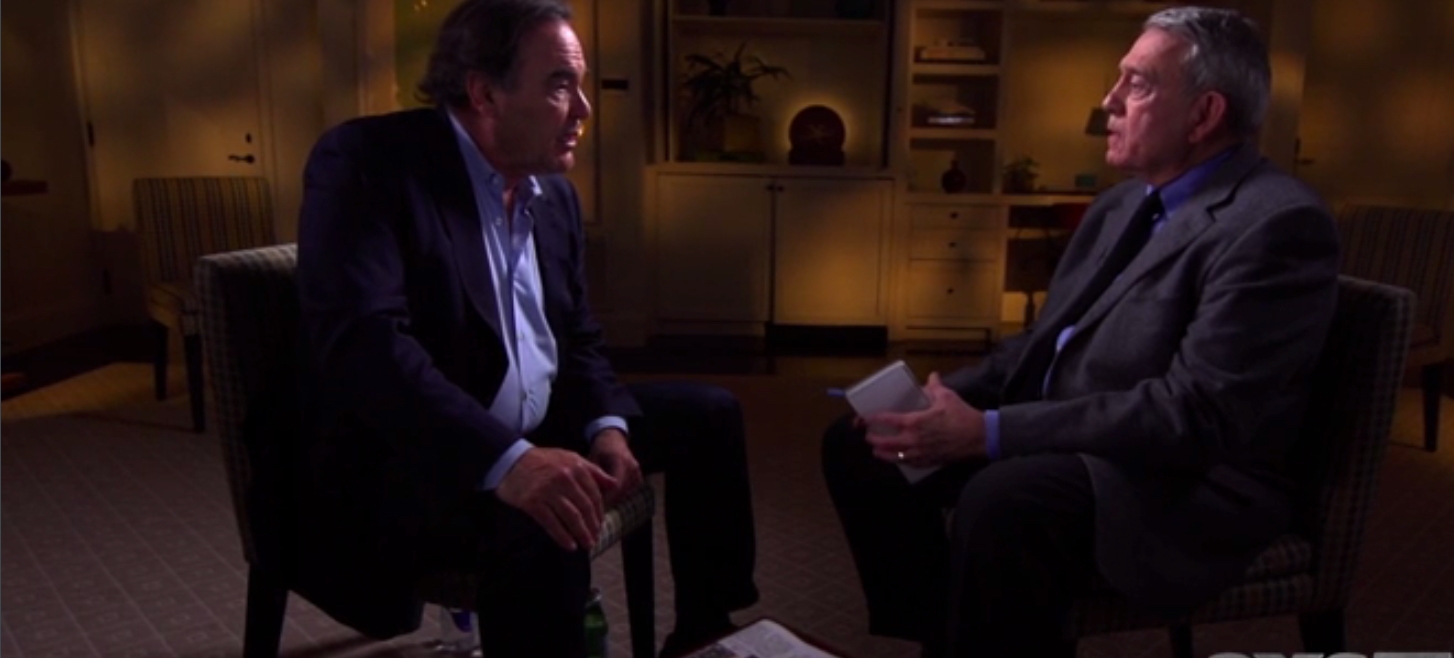
Visit Our Hidden History for both the audio and a full transcript. Or scroll down to listen to the audio here.
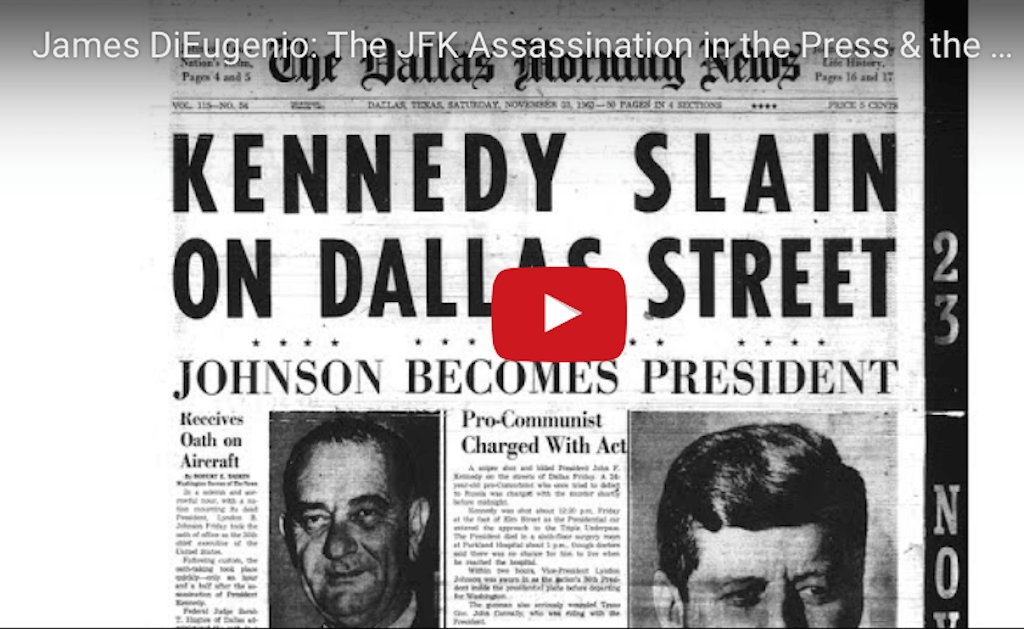
Visit Our Hidden History for both the audio and a full transcript. Or scroll down to listen to the audio here.

The year 2017 contains two important milestones in the mystery of the John F. Kennedy saga—one dealing with the man, the other with the mysteries of his assassination. The end of last month marked the centennial of Kennedy’s birth in Brookline, Massachusetts. This was commemorated with glossy news magazine special editions and a few TV programs—at least one with Caroline Kennedy, the last surviving member of the immediate family. There was also an act of Congress recognizing this event.
This October, another act of Congress will be honored in regards to John F. Kennedy. This one relates not to his life, but to his death. On October 17th, the National Archives will release well over three thousand documents relating to the assassination of President Kennedy. In other words, fifty-four years after his murder, 53 years after the Warren Report was issued, the American public will finally be allowed to read what the American government wanted to keep classified for still another 22 years. Because if it were not for Oliver Stone’s 1991 film JFK, most of these documents would have remained classified until the year 2039. But due to the firestorm of controversy created by that film, an act of Congress was passed. That act created a citizens’ panel called the Assassination Records Review Board (ARRB). From 1994-98 it declassified over two million pages of documents dealing with the assassination of President Kennedy. But there were certain restrictions placed in the legislation that allowed for exceptions until the year 2017. Those exceptions will expire this October.
The secrets already released by the ARRB from 1994-98 were underplayed by the news media, but in fact they were quite bracing. For instance, the records of a meeting in May of 1963 helmed by Secretary of Defense Robert McNamara showed that President Kennedy did have a plan to withdraw from Vietnam. Under questioning by ARRB chief counsel Jeremy Gunn, Kennedy pathologist James Humes revealed that he had burned both his notes and the first draft of his autopsy report. We learned from declassified records of the Church Committee that INS officers—on the trail of Cuban illegals—had followed David Ferrie to Guy Banister’s office in New Orleans. And they found Lee Oswald there.
On April 28th of this year, Max Holland published an essay on the JFK case in The Daily Beast. Holland brought up a different milestone date. This one concerned the 50th anniversary of a story originally published on April 25, 1967 in the (now defunct) New Orleans States Item. Holland’s article was called “How the KGB Duped Oliver Stone.” Holland stated that the 50-year-old article—titled “Mounting Evidence Links CIA to Plot Probe”—was a triumph for Moscow.
The article describes the arrest of Clay Shaw by New Orleans DA Jim Garrison on March 1, 1967. Holland characterizes the arrest of Shaw for conspiracy in the JFK case as “outlandish and baseless”. He adds that the reasons for Shaw’s arrest had already been reviewed back in 1963 by the FBI and found wanting.
But the arrest of Shaw created headlines around the world. And this led to several articles about Shaw’s work in Rome for a mysterious business entity called Centro Mondiale Commerciale (CMC). One Italian newspaper, which produced a series of articles, Paese Sera, was a leftwing publication that eventually wrote that CMC might have been a creation of the CIA, and a center of funding for illegal covert activities. Jim Garrison received copies of these Paese Sera articles. According to the author, this is how the DA now centered his investigation on CIA complicity in the Kennedy murder. The article then concludes that Garrison was really an unsuspecting dupe of Moscow. How? Because Paese Sera was really a conduit for KGB disinformation. And because Oliver Stone based his 1991 film JFK on Garrison’s memoir On the Trail of the Assassins, Stone was also made a Moscow dupe.
Holland’s source for this? The controversial Mitrokhin archives. Vasili Mitrokhin was a former archivist for the KGB. In 1992 he defected to the United Kingdom. As Russian scholar Amy Knight has noted, the story behind Mitrokhin and his defection strains credulity. But it began a whole new genre of academic studies and books. With a skeptical eye, she surveyed the books in all of their questionable aspects, i.e., the sales and marketing of former Russian intelligence employees who spirit out their notes on KGB files. (See this article in the Wilson Quarterly)
This new area of trade and barter reached its apogee in the instance of Alexander Vassiliev, still another former Russian intelligence officer who defected to England. In that case, it was shown that Vassiliev’s “notes” at times actually distorted the original memorandum beyond recognition.
Once in England, Mitrokhin was furnished with an official in-house British MI5 author. In turn, Christopher Andrew set up a syndication deal with Rupert Murdoch. The subsequent volume was called The Sword and the Shield. In 1995, the political angle behind the barter was accentuated. Based on the word of still another Russian intelligence defector, Murdoch and his subordinates accused former Labor Party leader Michael Foot of accepting funds from KGB agents. Foot promptly sued for libel. Understandably, Murdoch did not want to appear in court, so he settled the case in Foot’s favor.
Mitrokhin’s notes said that the late Mark Lane had been aided by two secret donations from the KGB: one for 1500 dollars and one for 500 dollars. As Lane later replied, the only donation he received even close to those amounts was from the extraordinarily wealthy Corliss Lamont, an heir to the JP Morgan fortune. Not a likely candidate for a KGB agent. Further, according to the Mitrokhin notes, the transfer occurred in New York City in 1966. As Lane has noted, he was living in London that year, finishing up and editing his book Rush to Judgment, which was being published by a British house. (Lane, Last Word, pp. 92-93) Third, the next largest donation Lane got for further research was from Woody Allen. It was for $50. Lane kept records of his donations. In other words, the Mitrokhin charges against him were quite dubious. Consequently, he challenged the veracity of the book in a letter to the author. Andrew never replied. (ibid, p. 96)
Which brings us to the pretext for this article. Clay Shaw was arrested on March 1, 1967. Three days later, Paese Sera began publishing its six-part series on the mysterious and suspicious activities of the CMC in Italy. The author tries to imply that there was a cause-effect relationship between the two events. He bases this on one of the notes in the Mitrokhin archive. That note says that in 1967, the Russians started a disinformation scheme in that Italian newspaper that was later picked up in New York. (ibid, p. 73) That is it. In other words, there is no specificity to the accusation. There is no mention in the Mitrokhin note of Jim Garrison, Clay Shaw, the CMC or any New York publication that picked up the story. Realizing how that paucity presents a problem, Holland had once said that there was a mention of the Paese Sera series in the socialist New York weekly the National Guardian. But this was only done because they had a contributor who lived in Rome.
In prior presentations, Holland had realized how thin this case was. So he added the testimony of CIA officer Richard Helms before a congressional committee concerning Paese Sera. The problem with this was that Dr. Gary Aguilar exposed Helms’ testimony as being rather faulty. It turned out that Helms, in order to discredit Paese Sera, used a story in which they said the CIA was complicit in the attempts to overthrow French president Charles DeGaulle. As Aguilar ably pointed out, this story was true. Even a sympathetic CIA author like Andrew Tully admitted this as far back as 1962, after the attempted coup of the French generals over the war in Algeria. The complicity was reported even earlier than that in The New York Times by Scotty Reston. (NY Times, April 29, 1961) More recently, David Talbot hammered the point home with multiple sources in his biography of Allen Dulles, The Devil’s Chessboard. (See pp. 412-24)
Another implication of Holland’s essay is that, somehow, the KGB dreamed up the story and gave it to Paese Sera on the occasion of Shaw’s arrest. As anyone in the newspaper business knows, usually the next day’s paper is locked down the night before. Which would mean that the KGB put the story together in about 48 hours. This author had the opportunity to read the six part series in translation. The idea that a foreign intelligence service could put together such a story on such brief notice is hard to buy. Clearly, the quite lengthy, detailed reporting was the result of a weeks-long inquiry into the whole business enterprise of the CMC. So unless this was all made up in Moscow—and it is hard to see how it could be—the idea of a KGB “planting” of the story is simply improbable.
Why would Paese Sera be interested in such a lengthy exposé? Because the CMC was a mysterious business agency with a suspect past. Prior to moving to Italy, the enterprise had been kicked out of Basel, Switzerland in 1957. The reasons were similar to those that Paese Sera complained about: murky financing and the questionable character of the company directors. Which included one George Mandel, who had been accused of working the Jewish refugee racket during World War II. When this unsavory fact surfaced in the Swiss press, Mandel threatened to sue the paper—but he didn’t. The editor was disappointed. He commented, “Too bad. We would have heard some great things at the trial.” (Paris Flammonde, The Kennedy Conspiracy, p. 216; State Department Memorandum of April 9, 1958)
But further, as questions about the financing in Basel began to crest, another director of the firm, former Hungarian prime minister Ferenc Nagy, mentioned J. Henry Schroder Banking Corporation as a source of funds. He also mentioned J and W Seligman. As William Davy writes in his book Let Justice be Done, Allen Dulles had been general counsel to Schroder prior to becoming CIA Director. When the Dulles brothers law firm, Sullivan and Cromwell, was still dealing with the Nazis in the thirties, they used Schroder’s as their conduit. When Dulles became DCI, he opened up a fifty million dollar emergency fund with Schroder’s. It was later reported that Schroder’s served as one of the recurring cut-outs for the Agency to transfer funds. (Davy, pp. 96-97) If one consults the book Millionaires and Managers, a 1969 analysis of the large Wall Street investment houses and legal firms, one will see that both banks—Schroder and Seligman—come under the purview and control of what the author calls the Sullivan and Cromwell/Marine Midland Group. This important back-story in Switzerland is ignored by Holland.
In 1958, because of all the controversy in Basel, the enterprise moved to Italy. This is when Clay Shaw entered the picture. The major board players in Italy were much the same as in Switzerland. But they were augmented by people like a former member of Mussolini’s cabinet, and the son-in-law of Hjalmar Schacht, financial guru of the Third Reich. They represented “a small cross-section of the aging royalists with whom Shaw liked to hobnob on his European jaunts and whose names and phone numbers were kept in his address book.” (Davy, p. 98)
Paese Sera was not the only newspaper that reported on the controversial company. So did Corriere della Sera, Il Messaggero and Le Devoir in Montreal. The latter likely reported on the enterprise because its general counsel was Louis Bloomfield, a Montreal corporate and international lawyer. Looking through what has been released of Bloomfield’s papers, researcher Maurice Phillips has discovered that Bloomfield was an important player in the CMC scheme. He actually coordinated meetings and investments for Nagy from some of the wealthiest men in the world, who were somehow interested in the CMC; e.g., Edmund deRothschild, and David Rockefeller. (Letter from Bloomfield to Dr. E. W. Imfeld, 2/10/60) Phillips has also uncovered documents that show that Nagy was a CIA asset and that he queried the Agency, offering them the use of CMC in any capacity. (March 24, 1967 CIA memo, released in 1998.) Phillips is now involved in a legal dispute with the Bloomfield estate, who wish to cut off any further access to these papers. This, in spite of the fact that Bloomfield’s will said his papers should be opened to the public twenty years after his death, and he passed away in 1984.
Finally, there is information about the CIA and the CMC from FBI agent Regis Kennedy, who, along with Warren DeBrueys, was J. Edgar Hoover’s man on the ground in the Cuban exile community in New Orleans. He reportedly stated that, “Shaw was a CIA agent who had done work of an unspecified nature over a five year period in Italy.” (Davy, p. 100) That description, of course, perfectly matches both the time span and the location of the CMC. Therefore, in two strands of Holland’s sixteen-year old yarn—concerning the CIA and the DeGaulle overthrow, and the Agency connections to the Centro Mondiale Commerciale—it turns out that Paese Sera was right and Holland was, shall we say, obtuse. After all the controversy in Italy, the CMC left and went to Johannesburg, South Africa. Thus the idea that CMC was somehow connected with the Central Intelligence Agency is anything but disinformation.
But Holland goes even further here. In defiance of the ARRB declassified record, he conceals from the reader the new documents about Clay Shaw. The author writes that both the Warren Commission and the FBI investigated the true identity of a man named Clay Bertrand, who New Orleans lawyer Dean Andrews said called him to go to Dallas and defend Oswald. Holland writes that the Bureau and the Commission determined that this allegation was false, and that Bertrand was not even a real person.
First, there is no evidence that the Warren Commission itself ever did any kind of search for the true identity of Clay Bertrand. The FBI did investigate the issue. And the results were pretty much contrary to what Holland describes. In 1967, the Justice Department committed a faux pas about it. They admitted that the FBI had investigated Clay Shaw back in 1963. (Davy, p. 191) This announcement caused much consternation at FBI headquarters, because the obvious follow up question would be: Why was the FBI investigating Shaw as part of its original inquiry into the Kennedy murder? J. Edgar Hoover did not want to answer that question. So the Justice Department issued a second announcement: the FBI had not conducted any inquiry about Shaw in 1963.
As the declassified record demonstrates, this was false. In fact, The New York Times actually printed the truth about this on March 3, 1967. They wrote, “A Justice Department official said tonight that his agency was convinced that Mr. Bertrand and Mr. Shaw were the same man … .” Behind the scenes, FBI official Cartha DeLoach admitted that, in December of 1963, several parties had furnished the FBI information about Shaw. (Davy, p. 192, italics added) Before Shaw was arrested, the FBI had multiple sources saying Garrison was correct: Shaw was Bertrand. (ibid, p. 193) The declassified record shows that the Bureau knew this and concealed it.
One of the most questionable statements in Holland’s essay is that it was because of the Paese Sera article that Garrison began to focus on the CIA as his chief suspect in the Kennedy murder. Again, this does not align with the record, or even with what Garrison himself has written. It is very clear what led Garrison down this path: Oswald’s Russian language test in the military, and the flyers Oswald was passing out on Canal Street in New Orleans in the summer of 1963. The former was a strong indication Oswald was receiving Russian language training in the Marines. Which suggests he was being prepared in advance for his defection to Russia upon his early release. As per the latter, some of the flyers Oswald was handing out in New Orleans contained the address: 544 Camp Street. As depicted in Stone’s film, Garrison visited this building. It turned out that Oswald had been seen there at the office of former FBI agent Guy Banister. It turned out that, again, as depicted in JFK, Banister’s office was a clearinghouse for many Cuban exiles, along with Oswald’s longtime friend, David Ferrie. And Garrison later learned that both Banister and Ferrie were involved with both the Bay of Pigs landing, and Operation Mongoose, the secret war against Cuba, also depicted in Stone’s film. Both of these were CIA sanctioned, supplied, and backed. The more Garrison peeled back 544 Camp Street, the more he discovered how residents of the address, like Sergio Arcacha Smith, were related to the CRC. This was the CIA’s anti-Castro Cuban government in exile, created by Howard Hunt. Therefore, the only way to explain Oswald’s presence amid all these CIA agents and Castro haters was that he was an agent provocateur against the Fair Play for Cuba Committee, which was billed on the literature as being located at that address. Garrison goes through all of this in his memoir, On the Trail of the Assassins. (See Garrison, pp. 22-25 and 34-36)
But another point that caused Garrison to consider the CIA as a chief suspect was the infiltration of his office. And also the fact that suspects and witnesses in his case were being furnished lawyers associated with the CIA. Again, this point has been reinforced with the release of declassified files by the ARRB. Through that process we have discovered that the CIA maintains what they call a Cleared Attorneys Panel in major cities. This panel is called upon when the Agency gets stuck in sensitive situations. The Garrison investigation caused word to get out in the New Orleans legal community about this panel, and soon letters were being sent to CIA Director Richard Helms to volunteer for work on it. (Letter from James Quaid, May 15, 1967)
This directly relates to the article Holland mentions in The New Orleans States Item. The Paese Sera article takes up two paragraphs in the over thirty-paragraph article. The reporting team had talked to one of the witnesses Garrison was trying to extradite back to New Orleans. Gordon Novel had volunteered for Garrison’s probe masquerading as an electronics expert who could ensure his office was not bugged. He ended up doing the opposite. Again, as Stone’s film shows, he wired the office for sound and sold some of the tapes to the producer of an upcoming NBC special. (James DiEugenio, Destiny Betrayed, Second edition, pp. 232-34) When Garrison requested Novel testify before the grand jury, he fled the state. As the article reveals, Novel had worked for the CIA since the Bay of Pigs operation. And he planned on using those credentials for his defense—if Garrison ever got him back to New Orleans. Which he did not. In other words, a former CIA operative was ingratiating himself with the DA. He was then wiring his office and selling the tapes to an upcoming negative TV special. And, as Garrison revealed in his October 1967 Playboy interview, one of Novel’s attorneys was being paid by the CIA. Kind of interesting, no? But it is left out of Holland’s story.
As one can see from what I have indicated above, the Mitrokhin Archives represents one notch of a string of former KGB agents who understood an important historical point in time had been reached. That, after the fall of the USSR, and especially after the rise to power of Boris Yeltsin and his disastrous economic policies, the writing was on the wall. One way to escape the oncoming socio-economic crisis was to curry favor with the American State Department, as depicted in the recent film, Ukraine on Fire. Another way was to win over the west with “notes” from the KGB Archives. (Evidently Mitrokhin did not have access to a copier for all those many years he was an archivist.)
But the East/West exchange actually goes back before Mitrokhin. It stems from the relationship of former TV/Radio journalist Brian Litman with the KGB after the USSR began to collapse in 1991. At that time, while working for an American cable TV company, Litman was living in Moscow. It is there that he began a relationship with the KGB and sold the American rights to a book called Passport to Assassination. That book proposed that Lee Harvey Oswald actually did go to the Russian embassy while he was in Mexico City. There, he met with the embassy chief consul and two assistant consuls. This occurred even though no surveillance camera captured Oswald’s image upon entrance or exit; and there was no recorded tape of his voice inside the embassy. Even though the embassy was under multi-camera surveillance and the interior was bugged.
The portrayal of Oswald in this book is that of a desperate man at the end of his rope. He carries a handgun with him since he thinks the FBI is following him around everywhere—even in Mexico. He says ominous things, like, “For me it’s all going to end in tragedy.” Or he breaks down and weeps, because he fears the FBI will actually kill him. This is allegedly due to the fact he wrote a letter to the Soviet Embassy in Washington over the possibility of returning to Russia. In other words, by actually placing Oswald in Mexico City, this book countered what Mexico City CIA officer David Phillips said in public: namely, that when all the information is finally produced, there will be no evidence placing Oswald inside the Russian embassy. (Mark Lane, Plausible Denial, p. 82) Thus began a long migration of convenient helpers from the KGB who would paper over problems in the CIA’s version of the Cold War—including its difficulties with the Kennedy assassination. For instance, in the Litman/Nechiporenko version of Oswald in Mexico, Oswald (oh so conveniently) pulls his jacket over his head as he leaves the embassy—as if the authors were aware that the CIA surveillance took no photos of Oswald entering or leaving. One wonders, did he also do that upon entering the compound? If so, how did he know about the surveillance?
But perhaps the worst part of the essay is the charge that it was Jim Garrison who caused a loss of belief by Americans in the democratic institutions of their government. Because it was not Jim Garrison who provoked serious doubts about the Warren Commission. It was a wave of books, articles, and radio appearances by the first critics of the Warren Report, who preceded Jim Garrison. That is, writers like Edward Epstein, Vincent Salandria, Harold Weisberg, and Mark Lane. By 1967, the Gallup Poll revealed that belief in the Warren Report’s Oswald-Did-It-Alone concept was at about 30%. What drove it even lower—to 11% in 1976—were three major events, which we all know about. They were, in order, the Vietnam War, the Watergate scandal, and the exposés of the Church Committee concerning the crimes of the CIA and FBI. This all began in 1965—with the first insertion of American combat troops into Vietnam—and continued until the last reports of the Church Committee in 1976.
The unfolding of these three events on national TV, radio, and in daily newspapers, was incessant and, in its cumulative effect, oceanic. They literally dominated all news cycles for over ten years. Has Holland completely forgot about the Tet Offensive and the cover up of the slaughter of civilians at My Lai? What about Richard Nixon’s Saturday Night Massacre? Or the indictments of over sixty employees of his administration, and the convictions of over forty of them? Perhaps he missed the Church Committee’s exposure of the attempts by the CIA to assassinate Patrice Lumumba of the Congo? Or J. Edgar Hoover’s COINTELPRO programs to infiltrate, disrupt, and sometimes eliminate leftist groups?
It was the tremendous impact of these three events that drove down all belief in government. And anyone can see this by looking at the graph in Kevin Phillips’ 1995 book Arrogant Capitol, which first appeared in US News and World Report. But interestingly, on that US News graph, the drop-off in belief begins in 1964, the year the Warren Report was issued, three years before Jim Garrison’s inquiry was made public. This would suggest that, from the beginning—and without any outside influence—the American public thought something was awry with the official story of President Kennedy’s assassination.
As author Larry Sabato noted in his 2013 book The Kennedy Half Century, there is an underlying reason that Kennedy’s life and death is celebrated on so many occasions. Sabato commissioned extensive polling and focus groups for his book. At the end, he revealed that 78% of those polled thought that Kennedy’s presidency had a deep impact on the USA. Which is remarkable since Kennedy only served two years and ten months of his term. Even more remarkably, 91% of the public believes that Kennedy’s murder changed the country a great deal. The last polling result was that 75% of the public did not believe the Warren Report verdict of Kennedy’s assassination, namely that Oswald acted alone.
The Daily Beast preferred printing this article instead of previewing the upcoming releases of the ARRB in October, or the mock trial of Oswald in November in Houston. Which is somewhat surprising, since those upcoming events are rather singular in more ways than one. Holland’s article is nothing more than a rerun of an essay he started marketing at least 16 years ago. In the Spring 2001 edition of Wilson Quarterly , it was entitled “The Demon in in Jim Garrison”. In 2004, he made a very similar presentation at the Assassination Archives Research Center Conference, which, as mentioned above, was rebutted by Gary Aguilar. In 2007, the piece was printed in the CIA’s Center for the Study of Intelligence. Any differences between the versions is marginal. So if The Daily Beast paid Holland, it was like a photographer dusting off photos in his drawer from 15 years ago—easy money. But what makes it worse is that they were all done after 1998—the termination date of the Assassination Records Review Board. As the reader can see, Holland ignored the new information on Clay Shaw and Jim Garrison. Instead, he went with records from an alleged KGB archives which are easily rendered dubious.
For many, many years now Holland has been ignoring the declassified records of the ARRB. Even when he was supposed to be reporting on those files. The fact that he still does so, even on the eve of their final disbursement, tells us all we need to know about him.
See also: Max Holland and Donald Carpenter vs Jim Garrison and the ARRB
… and see it as a harbinger of things to come.
… and see it as a harbinger of things to come.
Nearly a decade later, the vibrations and echoes of Oliver Stone’s film on the Kennedy assassination are still being heard and felt. When JFK first came out in late 1991, the media had prepared the public with a six-month propaganda barrage to doubt the factual accuracy of the film. That barrage began in both the Chicago Tribune and the Washington Post with articles by Jon Margolis and George Lardner respectively. The attacks on the film kept up throughout its tenure in the theaters and into the Academy Awards ceremonies where, as researcher Richard Goad revealed, David Belin took out an ad in Variety to deliberately hurt the film’s chances at Oscar time. Looked at in retrospect, this campaign was clearly unprecedented in the history of movies. And Stone himself has admitted that the first attacks totally surprised him. Perhaps they should not have. In his film, Stone took up two issues that the establishment media does not wish to be touched upon in any serious or truthful way, i.e. the Kennedy assassination, and the investigation into that murder by the late Jim Garrison, District Attorney of New Orleans who, four years later, launched the only criminal prosecution ever into the murder of President Kennedy. Stone’s film advocated a conspiracy, and a high level one, into the JFK murder. His film portrayed Jim Garrison and his inquiry in a favorable light. Therefore, the big guns of the media pummeled him for months. The barrage was designed to assassinate both Stone, and the film’s message. The week the film opened both Time and Newsweek featured the film as a major story, the latter placed it on the cover. The idea was to massage the collective public mentality into not accepting the film’s message, or at least to create doubts about both the message and the messenger. Many people in the general public, although convinced the official story was not correct, had doubts about the film’s accuracy and total content.
The debate over Stone’s film went on for about a year in public. Not everything about it was negative. There were many programs on television that featured a measured debate about the facts of the film and the case in a careful and balanced way. Unfortunately, these programs were not the widely seen ones like a 48 Hours Dan Rather special, which was an awful one-sided attack on Stone and the critics. The following year, in 1993, the media brought out its savior. In the year of the 30th anniversary of the JFK assassination, Gerald Posner jumped out at the public on the newsstands and their TV sets. The man became the darling of the media. It didn’t matter that his book was unbelievably shallow, and in some cases absolutely ersatz. Posner can be considered the second wave of the propaganda blitz against Oliver Stone and his heretic film. Another attempt at playing to the crowd, creating seeds of doubt about Stone and his movie. Posner’s appearance also signaled the beginning of the simplistic, cheap labeling of Stone and his companions as the “conspiracy cabal.” On national television, Posner called Stone’s scenario the “everything but the kitchen sink theory” to the JFK assassination. Thus began the canard that Stone’s movie postulated a conspiracy to kill Kennedy that included the FBI, the CIA, the Secret Service, the Mob, the Pentagon, Lyndon Johnson etc. This, of course, is a wild exaggeration of what the movie actually says, but it tells us a lot about what Posner’s mission was and what his devotion to the truth really consisted of. Ever since, Stone and the critics have been saddled with the rubric that they are paranoid fantasists who see conspiracies in every major crime ever committed. Or when used even more cheaply by people like Noam Chomsky, the critics can be grouped with those who believe in space aliens and Elvis sightings.
Now comes the third wave. This one is for posterity. As the mass media continues to grow in size, concentration, and power, its outreach into the academic establishment has slowly become more marked. That is, the number of academics and/or historians featured on television has gotten more select and familiar. Also, the publishing industry has gotten to be monopolized also. Today, according to Publisher’s Weekly, approximately 70% of all new books are published by ten houses. This is an amazing shrinkage of the number of outlets and a great increase in control of the number of publishers who can give a book a serious launch in the marketplace. In fact, the original publisher of Jim Garrison’s original hardcover book which Stone based his film on, no longer exists.
The above information is a way of explaining the response of the historical and academic establishment to Stone and his films. For the debate about those subjects has now reached into that arena. For not only the media, but also academia has generally bought into the Warren Commission myth about the lone gunman scenario as a solution to the Kennedy assassination. There are very few textbooks or historical books in general which give a balanced view of any of the assassinations of the sixties. And most “talking head” historians who pop up on television won’t delve into any conspiracy scenarios in any of these historically significant murders, e.g. David Garrow on the Martin Luther King case. What this says about America is that the rather unexamined world of academia can be seen to serve as an adjunct to the Establishment. Any cursory examination of the rosters of organizations like the Council on Foreign Relations will show a large amount of memberships devoted to two rather surprising institutions: the media and academia.
As both Michael Kurtz and Robert Toplin write in an interesting new book, Stone lobbed a bomb at this establishment. And it has had an extraordinarily long reaction time. Toplin has edited a new book of essays on both Stone and his films entitled Oliver Stone’s USA. In it nine of his films are examined. Also, Toplin has allowed Stone to respond to the critiques in three long sections. The book is well worth reading for both the controversy and some new information it contains. For example, how many readers knew that Stone was born and raised a conservative Republican and that he backed Barry Goldwater in 1964. Also, Stone reveals here that his proposed film on Martin Luther King was turned down by the studios based in part on the criticism it got in the press when word of the proposal leaked out.
The general plan of the book is to introduce the topic of Stone’s historical films in general first. So the first part of the book features overviews of Stone and his films by Robert Toplin, Robert Rosenstone, and a co-authored essay by Randy Roberts and David Welky. Stone then responds to these three essays on his image. In the second part of the book, there are nine essays on individual films: Salvador, Platoon, Wall Street, Born on the Fourth of July, The Doors, JFK, Heaven and Earth, Natural Born Killers, Nixon. The final section of the book gives Stone an opportunity to respond to these critiques which he does in two parts. The first one is entitled “On Seven Films” and the last essay is devoted to the two most controversial, JFK and Nixon.
Before getting on to a discussion of the book, let me make a few cogent points first. The entire discipline of history is under debate itself. This debate is raging in the confines of those ivory towers today. That debate is going on with two issues. First, on methodology. Up until this century, most historians believed in the, let’s call it, top-down method of historical reportage. That is, if you told the story of an epoch with what happened at the top levels – presidents, governors, the rich etc. – that would neatly sum up an era and tell you the important events which occurred. With the advent of the so-called New History of the 1950’s, that has changed. Many younger historians are trying to be sociologists too in order to try and depict what life was like for the average American. To bring about that more inclusive picture, the historian has had to avail himself of more tools also. He has had to delve into economics, demographics, statistics etc. And with this new digging has come a second debate: synthesizers versus data-crunchers. Or, is it more important to tell what you can with a limited amount of material or is crucial to concentrate on a small area and dump out every last drop of data you can possibly muster. Some argue for the former by saying that history without any trends or curves becomes formless, meaningless. Historians who side with the latter group say that it is of utmost importance to marshal as many relevant facts as possible before denoting a curve or trend. At the same time these debates are going on, the debate over whether or not history should be studied as an undergraduate requirement at all is also ongoing.
This is the background that Stone lobbed his bomb into. And with it, whether he knew it or not, he was entering the above debate. Stone clearly entered on the side of the data-collectors against the synthesizers. Few aspects of American history had been so generalized about – erroneously – as the JFK murder. In fact, as many have stated, it is an absolute disgrace what the historians have done with this crucial event. When the debate was raging in the media, Stone would always argue that the problem with the JFK murder is that no one wants to argue the evidence. Which was true since very few journalists or historians had looked at it. That is probably even more true today since the Assassination Records Review Board has now declassified millions of pages of new documents which have been relatively ignored by the press. Nearly all of this new material backs up the contentions of Stone’s film. And in this new book, the only discussion of this new record is by Stone and Professor Michael Kurtz. Clearly, by getting the Review Board created Stone was trying to do the work that historians have always complained about, solving the problem of declassification.
By making more records available, the historian can now be more accurate in his judgments about the Kennedy assassination. Unfortunately, to be kind, and with the exceptions noted above, that does not happen here. In theory, facts are supposed to be like sunshine, the more there are the brighter the picture. Yet it tells us something about the Kennedy assassination when most of these historians continue to work in the dark.
Finally, there is one other historical notion that needs to be addressed as background and that is the so-called “mystique of conspiracy”. Excepting for the rare luminary like Carroll Quigley of Georgetown – Bill Clinton’s favorite professor – very few illustrious historians have dealt with the question of conspiracy in history. For instance, even where conspiracy is an accomplished fact e.g. the Lincoln assassination, few mainstream historians address that important event with honesty or thoroughness. In fact, many ignore it completely. So even before Oliver Stone got labeled a conspiracy nut, the academic community was predisposed against him. Of course, if one grants the omnipresence of conspiracies in American history, one could not synthesize very easily at all. One would have to explain deep, dark forces lurking in the shadows which every so often sprung forward and captured an important moment for its own purpose. It would take a lot of work and effort to thoroughly explain these phenomena. It would also then ipso facto be a confession that much of what had been written previously in both the media and in history books about certain events was wrong. This was another bomb lobbed by Stone at the cozy nest of historians’ societies.
Having said all of this, I think Stone was treated fairly well in this book. The very fact that the editor, Toplin, allowed him ample room to respond is evidence of that. Also, some of the discussions of Stone’s films are appreciative. For example, the esteemed Walter LaFeber – who has written the best overview of American foreign policy in Central America – does a fair and informative job on Stone’s Salvador. David Halberstam is enthusiastic about Platoon. Toplin even let the writer of the book Heaven and Earth do the discussion of that film. David Courtwright writes an interesting essay on that fascinating, extraordinary, towering film Natural Born Killers, perhaps the finest satirical look at a serious American subject since Stanley Kubrick’s great Dr. Strangelove. There is an essay by Randy Roberts and David Welky entitled “A Sacred Mission: Oliver Stone and Vietnam” which is quite interesting. In it, the authors trace Stone’s childhood and young adulthood and seemingly try to portray him as some kind of malcontent. They then describe his tours of duty in Vietnam and his early attempts at getting Platoon made. They then discuss Born of the Fourth of July and Heaven and Earth then conclude with a discussion of JFK focusing on the film’s thesis of Kennedy’s intent to withdraw from Vietnam. They cogently write, “JFK was a mortar lobbed at the establishment, and it set off a firestorm of controversy.” They then add that the thesis, Kennedy’s intent to withdraw from Vietnam, “though passionately and eloquently argued … does not stand up to scrutiny.” They argue the rather ancient banality that there was no real difference between NSAMs 263 and 273 and that 263 was only meant as a warning to President Ngo Dinh Diem to shape up and allow for more democracy in South Vietnam or Kennedy would weaken U.S. commitment. This brings one of the issues about the historical debate mentioned above into the forefront. If one is supposed to be writing a scholarly and serious review of a controversial artist and his films for the purpose of examining the historical record he has highlighted, one would think that the writers would acquaint themselves with the latest declassified records on the subject. The documents that the Review Board has declassified on this subject are now definitive. Just two issues ago in this publication, I discussed at length the record of the May, 1963 SECDEF Conference in Hawaii. That record seems to me as definitive as one can get about this subject and it is absolutely clear on this point. (The Review Board tried to get the record of the November, 1963 Honolulu conference, which would have been just as valuable if not more so, but they could not.) So, on this issue, Stone actually comes out looking better than the supposed scholars.
But, of course, for our audience and this publication, the discussions of JFK and Nixon must take center stage. As they do in the book. Michael Kurtz wrote the discussion of the former film. There are three critiques of the latter. They are by Stephen Ambrose, George McGovern, and Arthur Schlesinger. In a separate concluding section, Stone takes almost 50 pages to respond to these writers. Michael Kurtz is one of the few historians who has actually studied the JFK assassination and he has published a decent book on the subject, Crime of the Century. Kurtz notes the storm of controversy Stone’s film provoked and he adds that many commentators had no qualifications to discuss the Kennedy murder. Which is correct. But yet, Kurtz then seems to repeat the Vietnam canard when he writes that Stone remains vulnerable to criticism on the thesis that “an unidentified cabal of military-industrial-intelligence movers and shakers ordered Kennedy’s assassination because he intended to withdraw all American troops from Vietnam.” Kurtz may be right about the first part of the dual-edged sentence – the identity of the conspirators – but on the withdrawal part Stone was right on. On this part of the film, Kurtz attaches another familiar distortion that the “film intimates that [Lyndon] Johnson himself was in on the plot to kill the president.” Only if one is not watching too closely.
Kurtz has never been a fan of Jim Garrison, and he continues his attack in this volume. Like most Garrison-bashers, Kurtz deflates the DA at the same time he exonerates Clay Shaw. But Kurtz goes further. He writes, “The movie’s implication that Shaw indeed participated in a conspiracy to assassinate President Kennedy simply has no substantial evidence to support it.” Kurtz now seems to be going beyond the confines of the film into the newly declassified record. There have been thousands of pages of new documents pertaining to Shaw that the Review Board has released. Much of that record has been put together into an invaluable book by Bill Davy, Let Justice Be Done. Kurtz knows of the book since he mentions it in his footnotes (along with my book which he mistitles). Whether he read it is another matter of course. But if he did, he must discount the information in it since Davy makes a fine case for Shaw’s complicity in the New Orleans part of the conspiracy. Also, Kurtz says that Stone “branded” Shaw a CIA-collaborator when Davy has now unearthed documents which clinch the idea that he was much more than that.
Kurtz also states that Stone’s portrayal of JFK himself is too one-sided and saintly. Granted that Stone’s portrait of Kennedy is not full dimensional, but he is not a main character in the story. He is only referred to. As the editors of this journal have mentioned, we realize the legion of Kennedy bashers out there and between the bashers and Oliver Stone’s version, we think Stone’s is closer to the truth. Also, Kurtz faults Stone for presenting the conspiracy-side of the debate only and not giving the Warren Commission defenders their due. This is silly. How can one make a film of the Garrison story without accenting the DA’s beliefs first? Also, the Warren Commission defenders have their way all the time in the mainstream press (and thanks to people like Alec Cockburn, in the alternative press too). Why not give the critics a well-deserved platform? Also, Kurtz states that no witness who heard shots from the Texas School Book Depository is portrayed, yet there is a witness who points there early in the film.
Kurtz is the only writer in the volume to give any attention to the discoveries made by the Review Board. Yet, he states that no smoking gun has emerged from these records. This is a matter of interpretation and we beg to disagree. There is a lot in the medical investigation by former Chief Counsel Jeremy Gunn that can be classified as such. Also, Noel Twyman’s book shows that there is powerful evidence that the Dallas Police only found two shells at the crime scene and not three. That is a smoking gun if true.
Kurtz does make some nice comments about the film. He writes that, in the field of historical drama, only Harriet Beecher Stowe’s Uncle Tom’s Cabin has had a greater impact on the public imagination. And he concludes with the following statement, “For all of JFK’s faults and shortcomings, few producers and directors can claim such an impact from their movies, and few historians can claim such an impact from their works.” Yet at the beginning of the essay, he states that Oliver Stone “crossed the line between artist and scholar by combining film with history, by projecting onto the silver screen his highly subjective version of actual persons and events … ” Kurtz would have been on safer ground if he would have added that all artists do this when depicting an historical event. From Sergei Eisenstein in Potemkin to Arthur Penn in Bonnie and Clyde to Brian dePalma in The Untouchables to James Cameron in Titanic artists take liberties with the documentary record. This is called dramatic license. Yet none of these directors was attacked with anywhere near the force that Stone was. As we know, historians and investigators also do the same or academics and journalists would not have backed that great piece of dramatic fiction called the Warren Commission Report. Since Stone is an artist working in a tradition, his liberties are much more excusable than a team of professional investigators supposedly searching without restraint for the truth to be presented as such to the American public. No writer in this volume brought out this important point.
The two other essays which will be of most interest to our readers are those by Stephen Ambrose and Arthur Schlesinger. Ambrose is the current conservative anchorman for the academic and journalistic establishment. Schlesinger is his liberal counterpart. It is not odd that both agree on the subject of Stone and his two films JFK and Nixon. Ambrose is slightly more virulent than Schlesinger, although not by much. In his opening crescendo words like “fraudulent” and “lies” spill off his pen easily. He even discounts the fact that in Nixon, Stone prefaced the film with a disclaimer which noted that some scenes were “conjectured”. What more clear device could Stone use to show that he was using dramatic license? Yet Ambrose ignores this issue almost completely and hones in on Stone because he is not “factually accurate” throughout. What is surprising about Ambrose is that he then begins his assault on the film with issues that most would consider minor and arguable. Namely the depiction of Nixon as a drinker and pill-popper during the height of the Watergate crisis. The problem with this assault, as even Bob Woodward noted to Ambrose long ago, is that Stone can mount evidence for it from Nixon’s own camp. For instance, in his memoir about his years with Nixon, John Ehrlichman noted that Nixon had a drinking problem in two senses. First he liked the stuff and second, he could not handle it. Before he agreed to work on his campaign, he made Nixon promise to lay off the booze. So to say that Nixon would relapse into an old bad habit under the tremendous pressures of Watergate is eminently probable. As to the pills, in their book The Final Days, Woodward and Carl Bernstein interviewed Alexander Haig, Nixon’s Chief of Staff during Watergate. He told them, during Watergate, he was so worried about Nixon’s mental balance that he gave orders to clear the White House of pills and other things that Nixon could use in a potentially rash act. Again Woodward reminded Ambrose of this fact on national television and asked why such an order would be given if the pills were not there. Ambrose either forgot the exchange or ignored it.
From here, Ambrose moves on to another rather mild and arguable point: Nixon’s use of profanity. When the film first broke, Ambrose tried to argue that the whole issue of profanity was exaggerated and abused by the film. He was reminded that if that was so, then why were so many words deleted from the Watergate tapes under the rubric of “expletive deleted”? Furthermore, Stanley Kutler’s book Abuse of Power, featuring more declassified tapes, shows this point in more detail. It also shows that Nixon had a penchant for using ethnic slurs. So today Ambrose has resorted to the fallback position of arguing exactly what words Nixon used in his swearing. He also argues that whatever the profanities, they were the same or less than other presidents like Truman, Kennedy, and Johnson. As anyone who has read the Kennedy transcripts knows, he is wrong on at least that president.
Ambrose then admits that these might be minor character points. He calls them peccadilloes. He quickly adds that: “The central piece of fiction is not. It is the creation of a Nixon-Fidel Castro-Kennedy connection. Stone has Nixon involved in a CIA assassination plot against Castro, which somehow played a part in the Kennedy assassination and left Nixon with a terrible secret and guilt about Kennedy’s death.” Ambrose then goes on to argue against almost every contention Stone makes in postulating this scenario. To do so, he ignores, discounts, or misreports evidence. And, of course, he allows for no extension for what has not been revealed yet.
First, let us note the jumping off point for this thesis and Ambrose’s disagreement. It is the Bay of Pigs operation. Today, with the release of two important reports by the Assassination Records Review Board and other organizations, it can now be stated with certainty that almost every examination of that operation has been incomplete. It can now be stated that at least part of the agenda for the Bay of Pigs was hidden or, at least, not written down. John Newman’s upcoming book, Kennedy and Cuba, will be the most accurate portrait to date on the subject. It will make all previous depictions obsolete and from what Newman has told me it will make all of Ambrose’s writing on the subject seem elementary at best and will do a lot to bolster Stone. Richard Bissell himself, who commanded the operation at CIA, admitted that assassination had been a part of the operation. Howard Hunt has written that Nixon was the officer in charge at the White House. The operation was planned during the Eisenhower administration (and Newman’s work will show that a similar operation was tried at that time). Newman’s previous work has shown that it was Nixon himself who suggested the use of the Mob as agents for the CIA in the Castro murder plots. And when Ambrose writes that no attempts were made on Castro during Eisenhower’s tenure, he is artfully phrasing a nebulous point. Because the CIA report on those Castro murder attempts shows that they began at least in August of 1960 and probably before then. As for actual “attempts” that is something that can never be fully shown. For example, the CIA says they made eight attempts on Castro’s life. Castro’s security forces say it is much higher than that.
But to continue with the main point of Stone’s credibility and Ambrose’s scholarship, the above mentioned declassified CIA reports on both the Bay of Pigs and the Castro plots reveal that Kennedy was deliberately kept in the dark about both the plots and large parts of the invasion plan. Is it a coincidence that both were in operation at the same time during Eisenhower’s administration and that both went into a kind of remission during JFK’s administration? Bissell admitted in the 1980’s that he had hoped that the Mob assassination plots would make the Bay of Pigs invasion easier for the CIA. Now, if Nixon suggested the use of the Mob at the outset, and those plots were shielded from JFK, this already backs up much of what Stone is theorizing. Trying to prove that the CIA-Mob plots “blew back” and killed Kennedy is more difficult of course. But even Robert Blakey’s House Select Committee wrote that their construction placed all the elements in place for an assassination plot against JFK. And that includes a motive. For as most students of the Bay of Pigs conclude – including me – the operation, as planned, was virtually hopeless. Lyman Kirkpatrick who reviewed the operation at CIA thought this also. Even if the second bombing run had gone off perfectly as CIA wished, Castro had managed to get too much artillery and armor to the beach too fast. This is because there was no surprise, a platoon was in training near the bay, and the bridges to the beach had not been blown. When one adds in simple arithmetic, namely, as Kirkpatrick notes, how the invasion force could surmount being outnumbered by a margin of over fifty to one, one wonders what Bissell was really thinking. Kennedy wondered about it also. He came to the conclusion, as others have, that the CIA thought Kennedy would send in American forces to save the mission, which is precisely what Nixon told Kennedy he would have done. The CIA tried to cloud the fact that the invasion was ruinously planned and to shift the blame to Kennedy himself for his alleged cancellation of the second air strike as the reason for failure. Certainly many Cuban exiles believed this canard and it may have encouraged a role in his murder on their part. It’s hard to imagine that Nixon who – according to Ehrlichman – was trying to get the secret report of the Bay of Pigs, was not aware of a good deal of this.
Ambrose rejects all of the above. But yet it is Ambrose who also condemns Stone for suggesting that Kennedy was killed for his attempt to remove the U.S. from Vietnam. Yet, that removal, as the Review Board has shown is now not open to debate. As Stone notes, one of Ambrose’s functions, like his journalistic counterpart Chris Mathews, seems to be to elevate and whitewash Nixon and to denigrate and deflate Kennedy. Ambrose, that supposed careful scholar, actually said on a biography show about Nixon, that the late president was quite fair to Alger Hiss. Yet, as Robert Parry discovered, on the newly declassified tapes, Nixon admits that he deliberately leaked all sorts of hazy material on that case to the press so that Hiss would be sure to be indicted by a grand jury in New York and have to stand trial. When the first trial ended with no verdict rendered, Nixon took to the stump and railed against the judge in the case to get him removed from a second trial. How could Ambrose ignore these facts? They are not in doubt and not arguable.
Schlesinger blasts the “high cabal” thesis of Stone’s film on the assassination. Like so many others, he deliberately distorts it by expanding it beyond the facts of the film. According to Arthur Schlesinger, the conspiracy included the Joint Chiefs, the CIA, the FBI, the military-industrial complex, anti-Castro Cubans, homosexuals, and the Mafia. As I have argued before, this is not what the film depicts. He then goes in for character assassination. He smears Fletcher Prouty as a fantasist. This is poppycock. Prouty’s two published books, as well as his essays, have contributed as much or more to the secret history of this country as almost any author I can think of. There are many things in his work about the Kennedy administration that do not appear in Schlesinger’s book and are invaluable to any accurate portrait of his presidency and his murder. Jim Garrison is termed a “con man”. Some con artist. A man who blows his career in pursuit of justice – with no help from Kennedy’s pals, of which Schlesinger is supposed to be one.
Schlesinger concludes his discussion of JFK with a puzzling sentence, “Still, except for supreme artists like Shakespeare, Tolstoy, Verdi, and Delacroix, dramatic license should not be corrupted by ideology, as it certainly has been in JFK.” My question is this: Where is the ideology? People of the left, right, and center can all agree that a high-level plot killed Kennedy and that plot was probably based on policy disputes. For many reasons, all the blanks can’t be filled in (but both Prouty and Garrison were trying to do so.) This very fact justifies and necessitates the use of dramatic license. And the importance of the issue as a historical puzzle further justifies that usage. The public deserves to know everything our government did and did not do about and before this murder. Stone’s film helped in that area to an immense degree. I wish Ambrose and Schlesinger had read the Review Board’s declassified files. Further, that they had used them for their work in this volume. Until they do, Stone is completely justified in making these films and therefore keeping the historical establishment honest. Let’s hope, in that regard, the King project is completed and it helps release the government files on that murder.