Tag: OLIVER STONE

  • Why Tim Weiner Never Called Me

    Why Tim Weiner Never Called Me


    On November 22, 2021, Tim Weiner wrote an article about Oliver Stone’s new documentary dealing with the JFK assassination for Rolling Stone. It’s really a hit piece, the literary equivalent of a drive by shooting. And, as we shall see, it’s not about what Weiner says it’s about.

    Weiner begins by saying that JFK Revisited: Through the Looking Glass is “rooted in a big lie.” What is that lie? According to Weiner, the lie is that Kennedy was murdered by the Deep State (i.e. the CIA backed by the military-industrial complex). From here, one would think that Weiner would now confront the evidence in the film and, point by point, counter it and thus reduce Oliver Stone to, in his words, “a tinfoil-hatted fabricator.”

    He does not do that. Not even close. Like a cardsharp, Weiner skips that step and jumps to this accusation: if anyone thinks the CIA killed Kennedy, you are being deluded by a Soviet era disinformation campaign. Unfortunately, I’m not kidding. But before Weiner begins playing his Russian aria, he first does a prelude. He says this about JFK’s assassination:

    Either Lee Harvey Oswald, trained by the United States Marines as a sharpshooter before he defected to the Soviet Union, got off a million-to-one shot in Dallas. He acted alone. Or he was an instrument of a conspiracy so immense that it staggers the mind.

    Right out of the gate Weiner sets up a game of false alternatives, because JFK Revisited shows Oswald’s “million-to-one shot” did not happen. The film takes pains to demonstrate that the Warren Commission’s Magic Bullet, labeled CE 399, was not fired in Dealey Plaza that day. JFK Revisited proves this on more than one basis. The film also proves that the FBI and the Warren Commission lied about the provenance of CE 399. It does this with evidence made possible by the Assassination Records Review Board (ARRB), but Weiner does not want the reader to know this since it knocks out one of his false alternatives. If he admitted this evidence, then one would be left with, well, a conspiracy.

    This phony prelude leads to Weiner’s main theme. It’s not an easy job to soften and make acceptable the life and career of CIA Director Allen Dulles. One would think that, after all we know about Dulles today, no one would try, but Weiner has to, in order to sketch in his other false alternative. Namely that Stone says that Dulles was the “presiding genius of the plot against the president.” (The film doesn’t really say that, but accuracy is not what Weiner is after.)

    So now Tim pulls out his make-up kit for Dulles. He writes that the CIA Director did not back the plots to overthrow Charles de Gaulle of France, which is a startling statement. For many interested observers, one of the best books on the career of Allen Dulles is The Devil’s Chessboard. Author David Talbot uses a variety of sources to show that Weiner is wrong. For example, the newspaper Paris-Jour centered on Dulles as the main culprit in the attempted overthrow of April 1961. Later, bestselling French author Vincent Jauvert traced the sources of these stories in the French press to de Gaulle’s own foreign ministry. (Talbot, p. 414) In fact, De Gaulle had come to this conclusion himself. (London Observer, May 2, 1961) Author Andrew Tully also noted columns in Le Monde and l’Express which he wrote were owed to high French officials. (CIA: The Inside Story, pp. 48–49)

    In the USA, The Nation reported that high level French government employees thought the CIA had encouraged the attempted overthrow. And using l’Express, they wrote that one of the dissident French generals had several meetings with CIA agents who advised him that getting rid of de Gaulle would do the free world a great service. (The Nation, May 20, 1961) These stories also appeared in American mainstream newspapers like The Washington Post. (April 30, 1961) Most fatally for Weiner, his former employer The New York Times also printed the story. Scotty Reston wrote that the CIA was indeed “involved in an embarrassing liaison with the anti-Gaullist officers.” (New York Times, April 29, 1961) But further, Talbot goes into the reasons behind the conflict between Dulles and de Gaulle. It was the desire of the French leader to get rid of NATO’s Operation Gladio elements in France and also his intent to set free the French colony of Algeria in North Africa. (Talbot, pp. 416–17) One would think that all this would be enough to satisfy most objective observers.

    In a neat bit of cherry picking, Weiner never mentions any of these sources. He borrows a trick from Max Holland and says that the idea that the CIA backed the attempts by dissident French officers to overthrow de Gaulle was all part of a Russian disinformation campaign that began in Italy. To most informed observers the idea that Scotty Reston would rely on the Italian newspaper Paese Sera is ridiculous on its face.

    But further, for Weiner to use Holland as a source for the John F. Kennedy assassination is inexcusable. Ten years ago, Holland made one of the worst documentaries ever produced on the Kennedy assassination. In fact, as Pat Speer has noted, there were indications that Holland knew his thesis was faulty before the documentary even aired. How bad was it? Even Commission zealots Dale Myers and Todd Vaughan attacked the show. The Lost Bullet was so indefensible that one would think no one would ever treat Holland with any degree of respect again. (Click here for details)

    But this is the JFK case, so normal rules of credit and reference do not apply. Therefore, Weiner trots out Holland once more. And he then doubles down on the man. He says that New Orleans DA Jim Garrison arrested Clay Shaw because of a story that ran in Paesa Sera three days after. (Hmm) He then adds that Garrison bandied this story about as a basis for his prosecution of Shaw and also that it became a central basis for his whole case against the Central Intelligence Agency.

    Again, this derives from Max Holland. Holland has been selling this line for a very long time. He was pretty much eviscerated on it by Gary Aguilar back in 2004. This was during a debate that was broadcast by CSPAN and is still available on the web; therefore Weiner could have easily located it. (Click here for the debate) Aguilar proved that, unlike what Holland and Weiner imply, Garrison did not make the Paesa Sera story a part of his case against Shaw—either in public or at Shaw’s trial. For example, in his 26 page Playboy interview—the longest ever run by the magazine at that time—the DA never brought it up.

    But then Weiner does something that is probably even worse. And it shows his utter disdain for the work of the Assassination Records Review Board. He says that Shaw was not a longtime operative of the CIA. Because of the work of the Board, we now have documentation that proves that the defendant lied about this at his trial. Shaw had three CIA clearances, one of them being a covert security clearance. (William Davy, Let Justice be Done, p. 196) As Joan Mellen discovered, Shaw was also a valuable and well-compensated contract agent. (Mellen, Our Man in Haiti, p. 54) Adding the documentation up, Shaw’s CIA career extended over a period of 23 years. Unlike Tim, most people would think that qualifies as being longtime. In fact, the Board’s CIA specialist also discovered that the CIA had destroyed Shaw’s 201 file. Why? (Click here for details)

    Virtually everything in the above paragraph is displayed in the film. Somehow Weiner either missed it or chose to ignore it, but in JFK Revisited we also feature authors Jefferson Morley and John Newman. Those two discuss what Garrison based his own investigation on at its inception: Oswald’s activities in New Orleans. Specifically, how he interacted with the CIA run anti-Castro Student Revolutionary Directorate (DRE) and the fact he stamped his pro-Castro flyers with the address of the extremely rightwing Guy Banister. We then detail how:

    1.) The FBI covered up Oswald’s association with Banister, (Newman, Oswald and the CIA, p. 310); and

    2.) The CIA lied about their liaison to the House Select Committee on Assassinations having no association with the Oswald case in 1963. The truth was that George Joannides was the CIA handler of the DRE in 1963. (Miami New Times, April 12, 2001, “Revelation 1963”)

    Most people, as Garrison did, would think that this information about Oswald in New Orleans would tell us something about him, probably that he was not really a Marxist. The latest discoveries on this issue were made possible by the ARRB and are in the film.

    In fact, one of the most shocking things about Weiner’s article is this: He cannot bring himself to mention by name the Assassination Records Review Board. Or the fact that JFK Revisited uses their work to an unprecedented degree. This is quite a bit of alchemy since the film interviews three men who worked for that body, and it mentions the Board throughout. In addition, it displays declassified documents which back up many of the declarations in the film. Weiner does not refer to any of these documents or witness statements.

    Toward the end of his screed, Tim writes that he cannot tell us that there wasn’t a conspiracy. He then says that maybe there is a bombshell in the still classified archives. That utterly inane statement demonstrates why Weiner’s article is not criticism; it’s a hatchet job. As demonstrated, Tim does not want to tell the reader what is in the film. The fact that, under oath, the official JFK autopsy photographer told the Board that he did not shoot the pictures of Kennedy’s brain that are in the archives today. John Stringer gave five reasons for his denial. Two of them being that he did not use the type of film with which the extant photographs were taken, and he did not utilize the photographic process evident in those pictures. JFK Revisited has Doug Horne, an ARRB employee who was in the room with Stringer during his sworn testimony, narrate this passage. (Horne, Inside the ARRB, p. 810)

    Just like he does not want to tell his readers about the above, Tim also won’t reveal that the FBI lied about CE 399, the Magic Bullet. They did so in three ways. The film proves that the Bureau lied about its identification by the first two people who handled it. (The Assassinations, edited by James DiEugenio and Lisa Pease, pp. 282–84) It also proves that the Bureau lied about an FBI agent’s initials being on the exhibit. They are not. Third, by their own records, the FBI lab had the Magic Bullet before it was transferred to the agent who delivered it there. This delivery, of course, was by the agent whose initials are not on the bullet. (James DiEugenio, Destiny Betrayed, second edition, p. 345)

    Like the issue of the autopsy photos, the information about CE 399 is proved out in the film. It would be of great interest to anyone watching, since it goes to the heart of the Warren Commission’s case against Oswald. Like everything else above, Weiner does not mention it. In fact, before writing his piece and attributing sources of information in the script to Paese Sera, he never called this writer, which would seem to be a significant trespass of journalistic ethics since I wrote the script. I could have informed him of the actual sources we used for things like the attempted overthrow of de Gaulle or Clay Shaw and the CIA. Those sources had nothing to do with what Weiner attributes them to. When the annotated scripts are published next year, this will be made plain to anyone who reads them.

    So, the question then becomes: Why didn’t Tim Weiner pick up the phone to call Jim DiEugenio? Or shoot an email to Jim to find out what my actual sources were in writing the script? It would have been simple to do either. All he had to do was call Oliver Stone’s office or find me on the web through the Kennedys and King web site.

    Since Weiner neither poses nor replies to that question in his column, it leaves the answer open for speculation. He closes his hatchet job by saying something about “a moral obligation to call bullshit when we see it.” Tim is so wrapped up in his own agenda that he does not recognize his own paroxysm of hypocrisy. When a writer does not present any of the documented material that he calls “bullshit” then yes, one can declare it as such. But that is not journalism; its classic propaganda that does nothing to inform the public. When a film can document what it says with sworn testimony and documents written at the time, that is not “bullshit.” These are unpleasant facts that were kept hidden from the public for decades. And it was only through Oliver Stone’s making of his film JFK in 1991 that they finally began to emerge.

    One last point about Tim’s concluding issue about disbelief in government. One can see through the graph in Kevin Phillip’s book Arrogant Capitol that, unlike what Weiner wants you to think, that erosion of belief is not a recent phenomenon. That graph extends from 1960 to the mid-nineties. The year of the single biggest drop in trust was 1964, when the Warren Report was published.

    Another factor that led to overall cynicism was ten years of war in Vietnam—the most divisive conflict since the Civil War. As JFK Revisited shows, if Kennedy had lived, this would not have happened. The film also shows that President Johnson consciously reversed Kennedy’s withdrawal plan in order to escalate that war. There is no mention of this by Wiener in his article. By that excision, Wiener’s hypocrisy is in full view.  For on December 23, 1997, there was an article in the New York Times about the ARRB declassifying documents from the May 1963 SecDef meeting in Hawaii where Defense Secretary Robert McNamara was collecting Vietnam withdrawal schedules from the Pentagon. The title of the story was “Kennedy Had a Plan for Early Exit in Vietnam.”

    The reporter was Tim Weiner.  What a convenient lapse of memory. Tim Weiner is an object lesson in why the public has lost faith in the MSM.

    Click here for what appears to be Tim’s current Twitter account.
  • Alecia Long Lays An Egg: Part 2

    Alecia Long Lays An Egg: Part 2


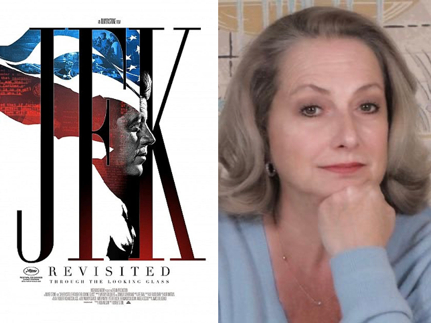
    Since Priscilla Johnson has passed on, for the 58th anniversary of the murder of President Kennedy The Washington Post trotted out Alecia Long. As readers of this site know, Long has been in rehearsal for becoming a public spokesperson defending the mendacity of the Warren Report for quite a while. (Click here for her early practice session) More recently, she published a truly nonsensical book about the JFK case, one which I was at pains to show, had no saving graces to it. (Click here for details) Evidently, these prior run throughs were enough for the Post to give her the podium.

    Why? Apparently, Long was needed to counter the broadcast by the Showtime cable network of Oliver Stone’s new documentary on the JFK case, JFK Revisited. Long says that the two-hour presentation “is entirely predictable” to anyone was saw Stone’s 1991 feature film JFK. Since I wrote the documentary, I can inform Ms. Long that I never even looked at the 1991 film as I worked on the screenplay. What I wrote was focused upon presenting new evidence that had surfaced since 1991. Much of that material was derived from the Assassination Records Review Board, which operated from 1994–98 three years after JFK was released.

    One of the things we deal with in the film is Kennedy’s intent to withdraw from Vietnam. Long states early in her piece that the idea that Kennedy was withdrawing from Vietnam “is counterfactual.” And that no one can know,

    …with certainty whether he would have started an active ground war, as Johnson did. Such thinking fuels conspiracy theories with an entirely unprovable assertion about what might have been.

    One thing our documentary is not is counterfactual. It can only be deemed that by not telling the reader the facts in the film. The documentary presents three new pieces of evidence, never shown in broadcast format before, that makes the Kennedy withdrawal thesis both credible and provable. They are:

    1. The records of the SecDef conference in Hawaii held in May of 1963, with representatives from Saigon. There, Defense Secretary Robert McNamara was reviewing the withdrawal schedules he had previously requested from the Pentagon, CIA, and State Department. Once he looked them over, he told those in attendance the schedules were too slow and had to be speeded up.
    2. The taped conversation in 1964 between Johnson and McNamara, where LBJ clearly admits he knew Kennedy and McNamara were withdrawing from Vietnam and always thought it was a bad idea. But he sat there in silence, since he was not in charge.
    3. Interview subject John Newman listened to McNamara’s Pentagon debriefs after he was removed from office by Johnson. In those sessions, McNamara clearly states that he and Kennedy had decided they could send equipment, trainers, and advisors to Saigon. But that was it. American could not fight the war for South Vietnam. When the training period was over, America was leaving and it did not matter if Saigon was winning or losing.

    None of this new evidence was in the 1991 film, but it would convince most objective people that Kennedy was simply not sending American combat troops into Vietnam. But Johnson was quite willing to do so. LBJ thought McNamara and Kennedy were wrong and he browbeat McNamara into changing policies. The evidence on this topic is overwhelming today and has been presented by several authors in different ways: Howard Jones, Gordon Goldstein, James Blight, David Kaiser, and, most prominently, by Newman in the 2017 version of his book JFK and Vietnam. It speaks very poorly of Long as a history professor that she is not familiar with this work. Or if she is familiar with it, to simply deny it.

    She follows this up with a bizarre statement that is confounding no matter how many times one reads it. She says that assassination related research continues to focus on a narrow set of questions, “including whether Lee Harvey Oswald acted as a lone assassin or if a conspiracy lay behind the president’s murder.” Alecia, that is not a narrow question. Most people would think it’s the ball game. If Oswald acted alone, the Warren Report is correct. If it was a conspiracy, the 900-page Warren Report was wrong and some secret body overthrew our government, with calamitous results.

    She then writes something that, even for her, is astounding. She says that JFK Revisited blurs the lines between fact, fiction, and pure speculation in presenting the work of the ARRB. The film presents three people who worked for that body: Chairman John Tunheim, his deputy, Tom Samoluk, and Military Records analyst Doug Horne. JFK Revisited shows documents that were declassified due to their work. Every statement made in the film is backed up by evidence and we show many documents and exhibits in the film. For example, the testimony by the official autopsy photographer that he did not take the pictures of Kennedy’s brain that are today in the National Archives. Which leads to the questions: then who did take them, and why?

    But, as with Vietnam, Long does not want to reveal that bit of new information, since it would prove the contrary of what she is preaching.

    She then admits that the CIA and FBI delayed the release of many documents. And sometimes they were actually deceptive to the two main federal investigations of Kennedy’s murder: the Warren Commission and the House Select Committee on Assassinations. But she then adds that “no documents have been released that indicate intelligence agency participation in the assassination.”

    Oh really? In the film, John Newman states that the FBI removed the FLASH warning from the Oswald file just a few days after Oswald’s return from his alleged Mexico City visit. This allowed him to escape being placed on the Secret Service security index in advance of Kennedy’s Texas trip. If the FLASH had not been taken off, Oswald would likely have been removed from the motorcade route due to his active and open communist activities in New Orleans and his alleged visits to the Cuban and Russian embassies in Mexico City. As Newman also states, this same type of maneuver inexplicably occurred at the CIA. In other words, something was going on with the Oswald file at both the FBI and CIA in advance of the assassination. When one throws in the fact that the legendary, ARRB-declassified Lopez Report about Mexico City indicates Oswald was not there—but the CIA insisted he was—then excuse me, but does someone have to hit Alecia Long over the head with a 2 x 4? This whole issue of Oswald’s relationship with the CIA, and counter-intelligence chief James Angleton, will be gone into at length in the four-hour version of the film.

    Long closes her column with her usual hatchet job on Jim Garrison. Through Jefferson Morley, the film shows that the alleged pro-Castro communist Oswald was associating with anti-Castro groups like the CIA sponsored DRE. In addition to that, Oswald associated with three known rightwing, CIA associated figures in New Orleans: Guy Banister, David Ferrie, and Clay Shaw. And all three men lied about their association with Oswald after Kennedy was killed. The FBI covered these relationships up, another point Newman talks about in the film. (Click here for proof) This would seem to raise some questions about who Oswald really was and what he was doing in New Orleans in that fateful summer before Kennedy’s assassination.

    But to Long, this is not important. She ends her nonsensical column by saying, and I am not kidding, we should forget about bullets and ballistics. Forget about bullets and ballistics in a homicide case? Instead, we should consult the newly declassified record in order to learn “how events that fertilized citizen cynicism about the government more than a half-century ago can help us document our contentious past…” and also “explain the troubling conspiracy theories of today.”

    The reason cynicism sprung up way back then was precisely because the Warren Report did not follow regular procedures in evaluating bullets and ballistics. And we prove that in our film with new evidence exposing the fallacies the Commission foisted on the public, but somehow that is not important to Long or The Washington Post.

    In other words: Who the heck cares who killed Kennedy? We should worry about how all that stuff caused QAnon. Alecia, the question of who killed Kennedy is quite important, due to the fact that whether you know it or not, or like it or not, something happened to this country—both domestically and in foreign policy—due to his assassination. And if you do not trust me just look at Larry Sabato’s book, The Kennedy Half Century. There he explains, through polling and focus groups, how about 90% of the public feels America lost its way due to JFK’s assassination. (see p. 416)

    As far as QAnon goes, JFK Revisited relies on data, not faith or mysticism—or as some suspect what QAnon really is, a psy-op. The documented screenplays for both versions of the film will be published in April. As Long will then see, and as Stone said at Cannes, JFK Revisited turns conspiracy theory into conspiracy fact. It explains how, just one year after getting elected, Johnson had 170,00 combat troops in Vietnam. On the day he was killed, Kennedy had none. That is a fact. And the film does this throughout with documents and testimony that she either does not know about, or does not want to convey to the public.

    The murder of John F. Kennedy was a homicide case. That is the way it should be treated. What Long writes is a diversion from the new calculus of that case. President Kennedy deserves better than that. Much better.

    Go to Part 1

  • Oliver and Jim Reply

    Oliver and Jim Reply


    I’m enclosing the letter Jim DiEugenio and I wrote in response to Rolling Stone’s attack on our film, “JFK Revisited.”

    Tim Weiner’s review of “JFK Revisited: Through the Looking Glass” suffers from “Russiagate” paranoia, as do many of his colleagues embedded in our Government-Media world, wherein the malevolent Russians seem to be responsible not only for the election of Trump, but the continuing sabotage of our cyber-infrastructures. Supposedly wanting their glorious Communist Empire back, they are prepared to invade both Ukraine and NATO countries. Good vs. Evil scenarios seem to work for most American people. But Weiner goes far afield when he includes “JFK” in his contempt for so-called “tinfoil-hatted fabricators” who have no reason to believe the Warren Commission cover-up.

    Weiner has failed to update his tired angle on the assassination. In fact, the Russians were working successfully at a détente with JFK, leading to the Nuclear Test Ban Treaty. When he was killed, Russian hopes—and the hopes of many liberated regions of the world (Egypt, India, Indonesia, and Africa)—were smashed as the hardliners in our Government once again protected their interests.

    1. He accuses Jim DiEugenio, the writer of the documentary, and myself of falling for Russia’s trickery in using an Italian newspaper to blame Allen Dulles for his involvement in a military coup to overthrow Charles de Gaulle in ’61. But we did not use this Italian newspaper. We used David Talbot’s books, “The Devil’s Chessboard” and “Brothers,” The London Observer, and Weiner’s employer at that time, The New York Times—as well as French newspapers L’Express and Le Monde and sources close to de Gaulle like André Malraux and Alain Peyrefitte to pinpoint the enmity of Dulles, working with the mutinous generals against the policies of de Gaulle in Algeria.

    2. Nor did Jim Garrison base his ideas about Kennedy’s assassination on that same marginal Italian newspaper. He did so by investigating the things Lee Harvey Oswald did in the summer of ’63 in New Orleans and the people he associated with. Authors like Jeff Morley (“The Ghost: The Secret Life of CIA Spymaster James Jesus Angleton”) and John Newman (“Oswald and the CIA”) have taken those discoveries further, and we interviewed both men in our film. Weiner does not mention either interview.

    3. We largely relied on the database of documents that was released by the Assassination Records Review Board (1994–1998), which Weiner covered as a reporter for The New York Times, but did us no favors with his tepid interpretations of their work. We interviewed three technical experts who worked for that Board. And we display many documents the Board declassified. “JFK Revisited” is the first documentary to do this. We are not mystical or faith-based. We are data-based.

    Signed,

    Oliver Stone & Jim DiEugenio

  • Oliver Stone to «Paris Match»:  It was the CIA that shot Kennedy

    Oliver Stone to «Paris Match»: It was the CIA that shot Kennedy


    Oliver Stone: “It was the CIA that shot Kennedy”


    Paris Match | Posted on 07/31/2021 at 5:25 a.m. | Updated 07/31/2021 at 7:08 p.m. From our correspondent in New York Olivier O’Mahony


    In 1991, in “JFK”, director Oliver Stone tackled the Dallas conundrum. Today, he relies on declassified documents to revive the thesis of the CIA-led operation. For “JFK Revisited: Through the Looking Glass”, which he just presented at Cannes, he couldn’t find funding in America. He tells Paris Match about his fight to transmit this appetite for truth to young people.


    PARIS MATCH: Why go back to the assassination of John F. Kennedy, almost thirty years after the release, in January 1992, of your film “JFK”?

    OLIVER STONE: Because what happened in November 1963 was a monstrosity that changed America forever. It wasn’t until the late 1980s, reading the book by Jim Garrison, the prosecutor who inspired my film, that I got involved in this investigation. The immense success of “JFK” subsequently led to the declassification of a number of documents. With this new documentary, I do not pretend to achieve the same result, but I hope to inspire the younger generation – to which it is dedicated – to take up the torch.

    What more do we learn from this new documentary?

    I rely on documents declassified after the release of “JFK”, and on interviews with members of the latest Commission of Inquiry [Assassination Records Review Board, ARRB] charged with revisiting the tragedy. Forty people are reported to have seen JFK’s corpse at Parkland Hospital immediately after the assassination that the official photos shown do not match him, which means they have been tampered with. Forty people! All claim to have seen a gaping wound in the back of the skull, caused by a bullet coming from the front and not from the back. This calls into question the thesis of the lone killer, Lee Harvey Oswald, posted on top of a book depot behind the president’s car …

    You say Lee Harvey Oswald may not even have fired a bullet …

    Yes. According to the official thesis, he used a sniper rifle he had just bought at the Klein’s store. Except that the one found on the spot, in Schoolbook Depository, does not correspond to the model in question. Oswald’s fingerprints should have been found there as well, but there were none.

    What was Oswald’s role in this case?

    The documentary sheds light on his personality and behavior on November 22. Lee Harvey Oswald was actually a patriot and admirer of John F. Kennedy. He made contact with pro and anti-Castro circles; he was both on the side of the Communists and on the side of troubled far-right figures like Guy Banister, a CIA agent.

    A double agent?

    Rather a provocateur, whom the CIA hired in the demonstrations to distribute leaflets …

    According to the official thesis, he fled immediately after the assassination.

    Except that we found witnesses who said the opposite. Three of his female colleagues, who feature in the documentary, say they were on the stairs right after the drama. However, they did not meet him there. And Oswald always claimed he was on the second floor, not the sixth. Before being killed by Jack Ruby, two days after the assassination, Oswald denied everything. He claimed to be the patsy of the case, the one who was going to be blamed.

    Do you believe in this version?

    Yes. He was not alone. There were several “Oswalds” scattered all over the United States. We tell that, before Dallas, John F. Kennedy was targeted by at least two failed assassination attempts [one in Chicago, the other in Tampa, Florida] and quite similar from an “operative” point of view, each time with a patsy with a profile strangely resembling that of Oswald. In the case of the Chicago attempt, the person in question was Thomas Arthur Vallee. In Tampa, it was a Cuban exile, Gilberto Policarpo Lopez.

    There is also the infamous “magic bullet” which is said to have first hit JFK before hitting John Connally, the governor of Texas, who was also in the limo. Are you questioning this assumption?

    This bullet is in direct contradiction with the results of the autopsy, which show that JFK was hit in the third vertebra from the neck. In the Warren Commission report, that same bullet suddenly “shot up” at the back of the neck to match the path you want it to take, through the throat. At the autopsy, it is mentioned that Kennedy was hit at this point by a “penetrating” bullet. In reality, it was an “in” bullet, coming from the front. The Warren report holds that three bullets were fired. I think there were at least five, some coming from the front.

    You maintain that JFK’s doctors were asked to be silent after his death…

    Yes. I found the testimony of JFK’s personal physician, Dr. George Burkley, who said he was ready to testify, before retracting …

    How did you come across him?

    After investigating the autopsy. It was the members of the ARRB commission who raised the hare, in particular one of them, Douglas Horne, who testifies with exemplary precision in the documentary. He explains that the autopsy was “made up” and that John Stringer, the official photographer, supposed to have taken the photos of JFK’s brain which are in the file, did not recognize the images that were shown to him, nor even the type of film used … From there, the investigators, intrigued, sought to approach Doctor Burkley, who had seen it all and signed the death certificate. He agreed to cooperate at first, before changing his mind. After his death, his daughter did exactly the same. And this doctor is not the only one. We also bring to mind Dr Perry, who years after the tragedy told a friend of his that he was “absolutely convinced” that the wound in his throat was from a bullet coming in, and therefore coming from the front. He began by testifying in this sense before saying the opposite …

    JFK’s nephew Robert F. Kennedy Jr., whom you interview, doesn’t believe in the lone killer thesis either.

    Yes, just like his father, JFK’s Attorney General, who lost all power in the aftermath of the assassination. The first thing Lyndon Baines Johnson, the new president, does is appoint the Warren Commission to investigate the assassination. Among its members, Allen Dulles, ex-director of the CIA. Fired by JFK after the Bay of Pigs fiasco, he had every reason to hate him.  Remember that John F. Kennedy, after the Bay of Pigs disaster, decided to bring the CIA to heel.

    In your opinion, Gerald Ford, a member of the Warren Commission before becoming President of the United States, also did not believe in the Oswald trail.

    Indeed, he opened up to Valéry Giscard d´Estaing, which was revealed in 2013. “We were sure it was a set-up,” he said. But we didn’t find out who rode him. ”

    You’re clearly pointing the finger at the CIA. On what basis?

    It should be remembered that John F. Kennedy, after the disaster at the Bay of Pigs, had decided to bring the CIA in line with, in particular, frank cuts in its budget. All of his foreign policy was against the interests of the CIA.

    What do you mean?

    JFK was a man of peace. He is the last American president to have sincerely acted in this direction. In this case, we are focusing too much on one question: how could all this be possible? My documentary reveals why it happened. JFK, this veteran, decorated for his acts of bravery during the Second World War, was going to change the world. He had seen the horrors of war, the disastrous role of the CIA in action at the Bay of Pigs, and then that of the US military during the Cuban Missile Crisis. He was not impressed by the generals who advised him to attack the Soviet Union or Laos in 1961 or Cuba in October 1962. Not only did he resist their wartime spirit, but he signed, in 1963, an unprecedented agreement with the Soviets. John F. Kennedy did not want a “pax americana” imposed on the rest of the world. He wanted genuine peace. A bit like General de Gaulle who preferred to see France leave Algeria rather than endless conflict, which earned him an assassination attempt by the OAS, possibly supported by the CIA … Everyone claims that JFK started the war in Vietnam; This is not true, he wanted to repatriate the “military advisers”.

    You give the CIA a lot of influence!

    I note that Lyndon Johnson did the opposite of JFK. He bolstered the CIA and increased American engagement in Vietnam. He did nothing to fight colonialism, which Kennedy opposed. It is also this truth that I wanted to reestablish: everyone claims that JFK started the war in Vietnam; This is not true, he wanted to repatriate the “military advisers”.

    How do you explain that your documentary was refused by Netflix?

    The country has become very conservative. I had to look for funding abroad, in Great Britain. Already, my film about Edward Snowden, a hero in my opinion, could only be made with money from France and Germany. So I came to the Cannes Film Festival to promote this documentary in a Europe more open to such projects. But I am convinced that I will eventually find an independent platform that will allow me to broadcast it in the United States.

    Is this lack of interest due to weariness over an over-rehashed subject or, rather, a truth America does not want to see?

    There is no weariness. Simply put, America is a country on the decline and on the defensive. George W. Bush was probably our worst president. Obama was just a transitional president: he did nothing to turn the tide, and Joe Biden is in his wake. Censorship has imposed itself. I’m shocked by the way that social media has silenced Trump.  Kennedy was killed by forces which exceeded him and which, since, frightens all his successors.

    You have been accused of pro-Russian sympathies for asking soothing questions of Putin in one of your films. Your answer?

    I don’t need to hate anyone: I’m a director, I have my own signature. No one scares me. Neither Putin, nor Castro, nor Chavez. In my films, I transcribe what they feel and think. I had no reason to tell Putin, who confided in me his views on Syria, Bush or Iran, among others, that he was wrong. Especially since nothing was wrong …

    Do you think the truth about the JFK assassination will ever be known?

    But we already know the truth! It was a conspiracy. He was killed by forces which exceeded him and which, since, frightens all his successors. The culprit was a Communist, a typical scenario of a “black op” set up from scratch by the CIA.

    Trump had promised to declassify the archives but did not. Are you going to ask Biden to do it?

    I should, but it’s a waste of time. If Robert F. Kennedy Jr. writes the letter for me, it might have more impact. What is certain is that there is nothing more that can be done for the people who still believe in the Oswald Lone-Assassin Thesis. They live in Disneyland!

  • Jim DiEugenio on the Assassinations of the 60’s, Parts 1 & 2

    Jim DiEugenio speaks with Michael Welch about the four big domestic assassinations of the 1960s, and about the new Oliver Stone documentary (the first two of four interviews).

  • Oliver Stone’s Chasing the Light

    Oliver Stone’s Chasing the Light


    As I am writing this review of Oliver Stone’s fascinating new memoir, Chasing the Light, news agencies around the world report that director Alan Parker is dead. A terrific visual stylist, Parker made some fine films, Angel Heart being a particular favorite. And some films which took substantial liberties with true events e.g. Mississippi Burning, Evita, and were less artistically successful. He plays a role in Stone’s book because Parker directed Midnight Express, which is the script that broke Stone into the business as a young man and garnered him his Academy Award. And although they did not know it at the time, that script—based on the experiences of Billy Hayes—turned out to have been based on a fabrication. Hayes, as Stone explains in the book, was not forthcoming about certain details that change the nature of his experience. For instance, the protagonist Billy Hayes—played by the late Brad Davis—had made several trips to Turkey for purposes of smuggling hashish. His lawyer advised him not to reveal this to the authorities. (See the documentary Midnight Return for more of the details.)

    It is an ironic note for two reasons. The first is that no writer/director of Oliver Stone’s caliber has ever been attacked so widely and with such ferocity by the major media due to the controversial theses of his films. And for another, because Stone entered the project of adapting the story for screen with the same dedication to truth that he has revealed in all his work. Is that truth subjective to some extent? Of course. Such is the nature of experience.

    But before getting to the films—and this volume ends with the triumph of Platoon, leaving the rocky waters of JFK and Nixon hopefully for a future installment—Chasing the Light begins with Oliver Stone’s formative experiences. It begins with Stone being born in 1946, a little more than a year after V-J Day, in New York to his non-practicing Jewish father, Louis Stone, and his French mother, Jacqueline Pauline Cezarine Goddet. They were not well-matched, alas, but Stone writes eloquently about his relationship to both. Regarding his “sexy” mother, he meets Freud head on, musing that if he grew too attached to his mother, it at least did not give him a “distrustful” impression of women. (Stone, p.24)

    The first hundred pages or so of the book revolve around his impressions of his family life, his schooling, his attendance at Yale flunking out of Yale, and then his enlistment and experiences in Vietnam. The prose is lively, with bursts of observation and humor throughout, like a heady mix of Scott Fitzgerald and Bernard Fall. For example, Stone captures his feelings about his mother as he grew into a young man:

    She wasn’t really interested in history, art, literature, the things I was wrestling with; she was into people, friendship, the guts of real life. The interaction was what excited her to no end, and because of that she was a firecracker and lit many a spark in other people’s lives. As well as mine. But to be the son of such a person is not simple, and I could never satisfy her as a son or as the engine in her life. (52)

    And his father:

    My father had wanted to write plays when he got out of college, like Arthur Miller. They were now stacked in a drawer in his desk—never produced. His heart, part of it, resided in that drawer. (p. 53)

    What Stone struggles within this first section of the book is finding the through-line, in effect, of his life. He grew up with substantial advantages as a result of his birth and his parents, and it is quite possible to imagine another Oliver Stone in some other universe who does not become a film director and instead becomes a Wall Street broker or, worse, a lawyer. He threw away a Yale education, instead enrolling as a private in Vietnam. He was attuned to the times, failing to fit in, and mentions wanting to go into “the muck” as it had been described in the John Dos Passos novels. (p. 36) I find that reasoning entirely plausible and relatable; at the age of twenty, were I ever to join a war, it would not be for patriotic reasons but for experiential reasons. And although Stone does not cite him directly, the kind of crisis he describes is perfectly paralleled in John Barth’s classic 1967 short story “Lost in the Funhouse,” in which a young author first realizes that in some sense being an artist means looking at your own life from a certain distance, so that each decision has an overarching intent beyond the immediate. Barth describes it like this:

    He wishes he had never entered the funhouse. But he has. Then he wishes he were dead. But he’s not. Therefore, he will construct funhouses for others and be their secret operator—though he would rather be among the lovers for whom funhouses are designed.[1]

    Stone eventually gets over his malaise, growing to have contempt for the New York society people whose experience of Vietnam is at a vast remove from his own. Stone describes, with some detail, the astonishing bloodshed involved in his experiences, and contrasts it with his mother’s friends who ask him inane questions and then move on to more palatable topics.

    THE WORLD IS YOURS

    Following his success with the script for Midnight Express and his ensuing Oscar, Stone learns a brutal lesson that almost all Hollywood writers learn. Hollywood doesn’t give a shit about writers. Even Oscar-winning ones get hot for five minutes and then it’s on to the next one down. People always seem surprised when I tell them this; as one would naturally think the person who had to write everything down and come up with the story in the first place would be admired. Nope. Part of this comes with the ascension of the auteur theory in the sixties: the director as the creative kingpin, at least for the critics. But the truth is it was always more or less this way. And while it’s true that some great directors had a knack for inventing scenes on the spot, even experts like Howard Hawks would much rather put the work in first, as he did with Ben Hecht and Charles MacArthur for Twentieth Century, for example.[2]

    In any case, Stone decided he had to become a director. So after winning the Oscar for Midnight Express, he directed the psychological horror film The Hand, with Michael Caine. It didn’t go well (although it scared the pants off me when I was a kid). After that lack of success, he nevertheless co-wrote the scripts for Conan the Barbarian, directed by the nutty but talented John Milius, and Year of the Dragon, directed by Michael Cimino, and starring Mickey Rourke during his golden period. Both films have fascinating aspects to them and the stories are equally so, especially if you are interested in the Hollywood process. Ultimately, however, after a complicated sequence of events, detailed in the book, he ended up writing the screenplay for the film Scarface.

    In a recent interview with GQ (for video), Pacino discussed his reasons for wanting the role as simply being inspired by seeing the Howard Hawks original with Paul Muni. Pacino, devoted to theater, also recalled that Muni and gangster pictures in general were a favorite of Bertolt Brecht. Scarface was written by the screenwriter Ben Hecht and made before the moral self-censorship of the Hays code had been fully installed. The film was so potent that it nonetheless underwent some censorship to change the ending. Stone does not describe his experience with director Brain De Palma on their remake of the Muni film as a happy one, and for understandable reasons. Stone notes that the director was focused on “the big picture,” that is, large set pieces of action, rather than the intimate details. Indeed, Stone’s experience with Parker, a similarly distant director focused on artistic composition more than the nuances of performance or script detail, was duplicated on Scarface. (pp. 176-177) Stone was eventually thrown off the set.

    For his part, the director Brian De Palma gave a similar account in the recent film De Palma. He remembers that Stone was in the ears of the actors and he could not brook such negativity on his set. And indeed, it’s easy to see the obvious difficulties the two men would have coexisting on a film set. De Palma acknowledges that he is the main (and perhaps only) director to pursue the cinematic grammar established by Alfred Hitchcock. Stone’s grammar is derived from other sources, particularly the rapid cutting style of the Russian director Sergei Eisenstein. In any case, for Scarface the marriage—however difficult—worked, albeit in terms of pop iconography. The more serious elements of the script, including the amazing scene in which Alejandro Sosa (played by the late Paul Shenar) introduces Tony Montana (Pacino) to public officials as they watch a reporter discuss some of the truths of drug industry—tend to be lost.

    And at this point, Stone decides he is going to make his independent films happen, and direct them, and get them distributed. And, considering the projects he wanted to undertake and the Reagan era politics of the time, it is astonishing he ever got those projects made.

    SALVADOR and PLATOON

    The final section of the book presents an amazing chronicle of trying to carve a life inside the Hollywood system while retaining an independent determination to put reality on film. As a result, Stone winds up allied with some colorful and bizarre characters. The most decadent of these figures is probably Richard Boyle, a journalist in the Hunter S. Thompson mode, whose story became the inspiration for Stone’s film Salvador. Boyle ends up living with Stone for a while and contributing to the dissolution of his marriage. Stone’s wife did not enjoy waking up to Boyle asleep on the kitchen table having drunk all the booze and baby formula from the fridge. It is easy to imagine the husband/wife conversations that followed: Why are you making a film about this lunatic? And indeed, it’s a fair question.

    At first, the plan was to let Boyle play himself, but this idea went by the wayside. James Woods and Jim Belushi were brought in to star, with Belushi as Dr. Rock. Upon meeting Dr. Rock, Belushi remarked to Stone, “You don’t really want me to play that thoroughly fucked-up asshole, do you?” (p. 236) Note: Jim Belushi said this. In his generally positive review of the film, Leonard Maltin remarked that it was hard to get into Salvador at first because “the characters played by Woods and Belushi” are “such incredible sleazeballs.” Also not an unreasonable assessment.

    Having said that, my impression as an adolescent seeing the film is that it feels very real and visceral and suitably hopeless in its treatment of that period. As a young man I traveled extensively into southern Mexico, primarily in the Michoacan region, while a peasant revolt was taking place. Our eventual destination—Lazaro Cardenas—was roughly a 25-hour drive from our starting point, Laredo, in the back of a pickup truck. At the gas stations where we filled up, it was not uncommon to see men with machine guns guarding the fuel and asking questions. We had many encounters with various officials, and that feeling of imminent danger—the question of whether we were in real trouble or not at any given moment—is replicated better in Salvador than any other film I have seen. It has a documentary feel to it that more conventional Hollywood dramas lacked, e.g. Roger Spottiswoode’s Under Fire, mentioned by Stone as a film made with a similar theme. However, Under Fire, while being a solid picture with fine performances, plays more like a 1980s remake of Casablanca. Salvador owes more to films like Costa Gavras’s Z and documentaries like The Battle of Algiers.

    Salvador performed decently at the box office. This was good because it turned out that doors were opening for its director/writer to take a long-neglected script which had been shelved for a decade and get it made: (The) Platoon.

    It is in the creation and eventual success of Platoon, that Stone builds his book’s climax; a validation that the Yale dropout made good. Even here, however, the author does not hold back a critical eye from himself. In addition to the varying drug use, Stone describes how his zeal in the making of Platoon caused him to make nearly disastrous decisions. Besides literally kicking people around during the shooting, he also pushed them beyond their limits, which nearly caused a horrendous helicopter accident that would have killed himself and several people aboard. This causes him some reflection, although he admits that he “would have done the exact same thing over again, and gone up into those canyon walls.” (p. 284) He would have done this because he needed the shot—chasing the light—and contrasts his risk taking with the risk taking that went on in the Chuck Norris actioner Missing in Action 3. Does the aesthetic result justify the risk? Perhaps for oneself. But for others?

    It is easy to recall and contrast another helicopter accident, one that claimed actor Vic Morrow’s life along with two children. The director was John Landis, and the film was Twilight Zone: the Movie, and in that case Landis could be heard shouting “Get lower!” to the helicopter pilot before the incident occurred. Was that worth it? When I was at the Dallas International Film Festival in 2015, John Landis was in town doing Q&A for a celebration of The Blues Brothers in conjunction with a firing up of a new 35mm striking of that film which was shown at The Texas Theater. (At the same time, a film I co-wrote and co-produced which featured Oliver Stone among others, was closing the festival.) I went to Landis’s Q&A, which was in a small room with perhaps fifty people present, and it was hard not to think about Vic Morrow and those two child actors whose lives were ended. (For a good book on that horrible incident, read Outrageous Conduct by Marc Green and Stephen Farber.)

    Based on Stone’s reportage, something like this could have happened on his set. Stone admits he was reckless in his hellbent pursuit of the picture. Almost as though his filmmaking career has been an extension of that youthful decision to go Vietnam rather than go to Yale. Was it all macho posturing? Stone notes that Pauline Kael thought so, dismissing Platoon in her typically reactionary way. Others have thought so, and indeed this memoir will provide some fuel for that particular fire. On the other hand, it was precisely that warrior mentality and specificity of purpose that makes Oliver Stone’s films as vital as they are.

    Chasing the Light provides an insight into the creative process of one of the brilliant, if polarizing, minds at work in cinema. It is a hard book to categorize in some ways. Many showbiz memoirs tend to be a succession of, as Frank Langella titled his own such book, Dropped Names. Others are built on a formula built from The Man Who Shot Liberty Valance; that is, they print the legend. Instead, this memoir reflects his films: intelligent, uncomfortable at times, substantive, rough around the edges and straining for truth. And it is, in a very classical sense, a literary memoir. In that it contains references to Celine and scores of other authors which have clearly made an impression on Stone. Most of all, it reveals a man who is passionately engaged with the world; while one could argue about one decision or another, it is rare that an artist of this caliber allows such a detailed look into his process.

    And this is just part one. We haven’t even gotten to JFK and Nixon yet.


    [1] Barth, John, Lost in the Funhouse (Anchor Books: New York, New York 1968), 97.

    [2] McBride, Joseph, Hawks on Hawks (University of Kentucky Press 2013), 77.


  • Goodbye and Good Riddance to Chris Matthews

    Goodbye and Good Riddance to Chris Matthews


    On Monday March 2nd, Chris Matthews, host of the MSNBC program Hardball, announced on the air that he was resigning after 20 years. That resignation was effective immediately. Therefore, he would not be around for the next day’s Super Tuesday primary elections. Which suggests that this was not his idea and he was forced out. Furthering this idea was how he announced his leaving, which he said was not due to his lack of interest in politics. (For the brief sign-off, click here)

    To put it mildly, Matthews has had a pretty bad last couple of weeks. Even for a dyed-in-the-wool MSM zealot, he has made some real bonehead comments. When Bernie Sanders won the Nevada caucuses, Matthews compared that victory to the Third Reich’s successful invasion of France in 1940. After the New Hampshire debate between Democratic candidates, Matthews indulged himself in a diatribe against socialists. During that tirade, in John Birch society mode, he confused socialism with communism and said that if Fidel Castro had won the Cold War, there would have been executions in Central Park and he would have been killed while others were cheering. He then added, “I don’t know who Bernie supports over these years, I don’t know what he means by socialism.” This reveals either extreme bias or a feigned ignorance, since Sanders has held political office for about 35 years.

    In another blunder, last week Matthews confused Jaime Harrison, an African American candidate for the Senate in South Carolina, with another black politician, Tim Scott, who is the GOP incumbent senator from that state. After Harrison corrected him, Chris apologized for the “mistaken identity”. Perhaps the last nail in the coffin was a column by writer Laura Bassett appearing on Saturday in the magazine GQ. In that column she complained about some sexist comments Matthews had made to her while she was in the makeup chair.

    Jimmy Carter
    Jimmy Carter
    Jimmy Carter
    Tip O’Neill

    Matthews began in Washington as an officer with the United States Capitol Police. He then became an aide for four Democratic members of Congress before he failed in an attempt to win a congressional seat in Pennsylvania. After this, he became a speechwriter for President Jimmy Carter. When Carter failed to win reelection in 1980, Matthews signed up with House Speaker Tip O’Neill. Matthews then switched over to print journalism for 15 years.

    Jimmy Carter
    H.R. Haldeman
    Jimmy Carter
    Richard Helms

    It was in his position as a columnist that Matthews now emerged as a rabid, mocking conservative member of the Washington establishment. After Oliver Stone released his film Nixon, Matthews criticized that picture for its use of a passage from H. R. Haldeman’s book The Ends of Power. In that passage, Haldeman had described a meeting with CIA Director Richard Helms in which the Bay of Pigs invasion was discussed. Helms’ reaction was so extreme that Haldeman concluded that Nixon’s use of the incident had been code for the Kennedy assassination. In a December of 1995 column, Matthews said this was all strained interpretation by Stone that Haldeman had blamed on his co-author Joe DiMona. Matthews could write this since he did not visit with DiMona. Dr. Gary Aguilar did so, and he learned why Matthews had not. DiMona told Aguilar that the book had gone through five drafts and Haldeman made many changes, but he never altered that passage. Clearly, Matthews had realized that after his films JFK and Nixon, Stone had become a lightning rod for the MSM. And if he was going to advance up the ladder, he had to join in the assault.

    Therefore in 1996, Matthews published his book entitled Kennedy and Nixon. This was supposed to be a dual biography of these two central political characters. But to anyone who knew who Matthews was, and understood the two men, there was a not so subtle subtext to the volume. Matthews was actually trying to say that, contrary to popular belief, Richard Nixon and John Kennedy had more in common than they had differences. Oliver Stone agreed that this was an unjustified interpretation. The LA Times allowed him to review the book in June of 1996. He took the author to task for his unwarranted assumption that the two were somehow chums and comrades in arms. Two weeks later, on June 30, 1996, the Times allowed Matthews to reply. The columnist said he had nothing but contempt for Stone and all but called him a liar.

    This got his ticket punched and Matthews now made the transfer into television. He first became a commentator for ABC’s Good Morning America, and then he got his own CNBC show titled Politics with Chris Matthews. That program eventually morphed into Hardball and was then placed on MSNBC.

    While the host of this program, Matthews made good on his promise to be one of the foremost bastions of the MSM. How bad could Matthews get? He even visited the disgraced Tom DeLay at his home in Sugarland, Texas after he forcibly left Washington. The alleged Democrat admitted to voting for George W. Bush in 2000. He later defended this admission by saying that he thought Al Gore was kind of strange. Is it only a coincidence that Gore was one of the high-level politicians who had no problem admitting that he thought John F. Kennedy was killed by a conspiracy?

    For, as Doug Horne writes on his blog in the wake of Matthews’s resignation, the Hardball host was one of the foremost defenders of the Warren Commission during his 20-year span. In all of those years, this writer can only recall one small exception to the rigor with which Matthews took pains to mock and ridicule those who held a different view of the JFK assassination than the Warren Report did. This was after Jesse Ventura did an interview for Playboy back in 1999.

    Jimmy Carter
    Jesse Ventura

    At that time, Governor Ventura was making the rounds of talk shows after the controversy caused by his rather bold pronouncements during that interview. One of the interviews he did was with Matthews at Harvard. (Probe, November/December 1999) When Matthews asked Ventura about his opinion of Vietnam, Ventura very soberly said that the United States should have never sided with France in that conflict. This was a mistake that prefigured our own involvement in Indochina. Matthews replied by saying the American buildup actually started under Kennedy. When Ventura stated that there were certain elements in the country that favored us going to war in Indochina, Matthews said that it was Kennedy who was giving them what they wanted from 1961-63. Ventura did not think fast enough to say, “Chris, there was not one more combat troop in Vietnam after Kennedy’s death than when he took office. So please show me the huge expenditures made by Kennedy?”

    Matthews then shifted to the assassination itself. He tried the old chestnut about having to believe in a large conspiracy if one advocated for a plot. Ventura replied that if one thinks the Dallas Police were involved, then their negligence does not denote a wide conspiracy. Ventura turned the tables and asked a question of Matthews: Why didn’t the Commission call all the witnesses who smelled smoke on the grassy knoll? To which Chris finally made his minor exception. He beat a tactical retreat by saying that he would admit the Warren Report was a rush job and he agreed with Ventura’s critique of their work. But this author has to note that Matthews’ retreat was very limited. In his book Kennedy and Nixon, he endorsed the verdict of the Commission and said that Oswald shot Kennedy.

    Towards the end of the interview, Matthews went completely off the rails. He characterized Oliver Stone’s film JFK in a completely nutty, wild manner by saying that somehow Nixon was involved in the plot depicted in the film. Since Nixon does not appear in the film except for the introduction over the credits, this is simply a smear. In fact, even if we expand this to the film Nixon, it is still not true. But Matthews really showed who he was when, near the end of the interview, he said that Stone tried to portray Kennedy as a peacenik when, in fact, he was a Cold Warrior. He then added that no one in JFK’s administration said he was trying to get out of Vietnam. Which is astonishing. For even at that time one had people like Roger Hilsman of the State Department, and Robert McNamara, Secretary of Defense, who both said such was the case. One can also add in Joint Chiefs of Staff Chairman Max Taylor, advisor Ted Sorensen, and assistants Dave Powers and Ken O’Donnell. All of these men said that Kennedy would never have gone into Vietnam with combat troops and direct American military intervention. So what was Matthews talking about?jfk no vietnam

    But this nonsense is consistent with Matthews’ book on Kennedy, titled Jack Kennedy: Elusive Hero. In that book, Matthews never mentioned NSAM 263. This was the order issued by Kennedy in October of 1963 which began a formal withdrawal from Vietnam of a thousand advisors by the end of the year and the rest of the advisors by early in 1965. If one does not mention that document, then one can say the things Matthews does. And I do not for one moment believe that Matthews did not know about it, since it was featured so prominently in Oliver Stone’s film. Matthews chose to ignore it due to his own bias against Stone.

    He is now gone, from at least MSNBC. I cannot help but wonder who will replace him, and if that person will be any kind of an improvement. I would think he or she could not be much worse.


    Link to Jim DiEugenio’s review of Jack Kennedy: Elusive Hero : https://consortiumnews.com/2012/01/03/why-mr-hardball-found-jfk-elusive/

    Link to Jim DiEugenio’s review of Bobby Kennedy: A Raging Spirit: https://consortiumnews.com/2018/06/04/distorting-the-life-of-bobby-kennedy/

  • Jim Garrison: The Beat Goes On

    Jim Garrison: The Beat Goes On


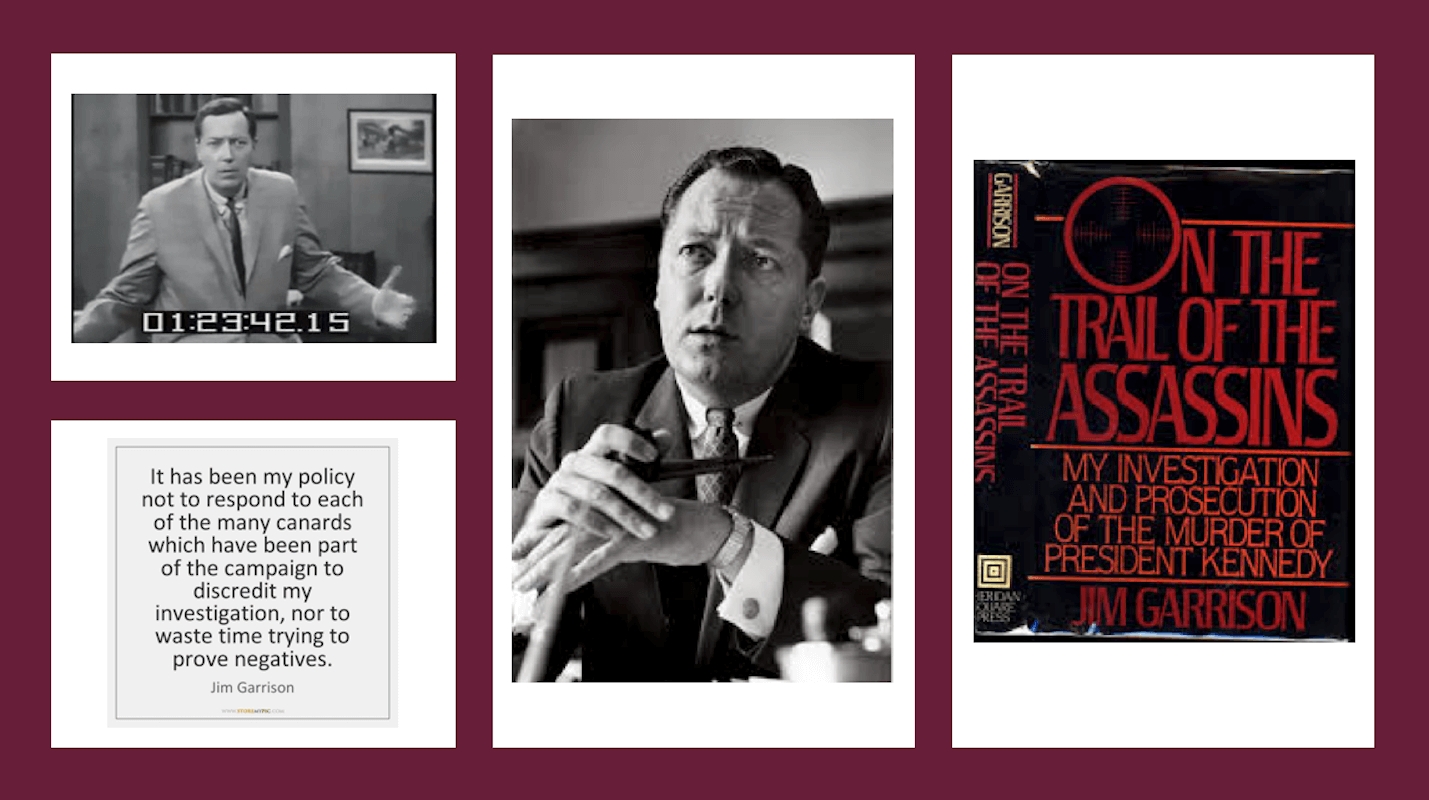
    Would Jim Garrison have been forgotten if Oliver Stone had never met the late Ellen Ray? If the reader is unaware of who Ellen Ray was let me inform you of her importance in history. (her obituary)

    Ellen Ray was the wife of Bill Schaap. They ran a publishing company called Sheridan Square Press. Sheridan Square did not just release books. They also published magazines like the illustrious Covert Action Information Bulletin and Lies of our Times. If our readers do not know about those two periodicals, it is their loss. The first dealt with the Central Intelligence Agency and its allies; the second was concerned with media analysis. They were well done and important journals.

    Ellen Ray had known Jim Garrison a long time—going all the way back to his original investigation of the John Kennedy murder in the late sixties. She always thought highly of him and his work. So when Garrison thought of writing a book on his inquiry in the eighties, Sheridan Square was one of the houses he thought of releasing it through. But before that, Garrison had had an offer from a much bigger publishing house. That deal did not go through since the proofreader the house assigned to the book was Sylvia Meagher. Now as everyone knows, this site is a sincere admirer of Meagher and her fine book, Accessories After the Fact. But as most insiders also realize, Meagher was one of the early critics who developed a phobia—some would call it a mania—about Jim Garrison and his inquiry. (The others would include Josiah Thompson and Paul Hoch.) Even someone like Jerry Policoff, who was a close friend of Meagher, once said that Sylvia should not have been assigned to review Garrison’s book: “My God, she contributed money to Clay Shaw’s defense!”

    Well, predictably, Meagher’s analysis contributed to Garrison returning his advance. But that may have been fortunate, because now he turned to Ellen Ray and Sheridan Square Press. They assigned him Zachary Sklar as his editor. Zach was a distinguished journalism professor and contributor to Sheridan’s two publications. It was a fortunate pairing. Originally, Garrison had written his book from a third person point of view. But when he met Zach, the editor convinced him that since the DA was an actual participant in the story he was telling, it would be more effective if he wrote the book as a first person narrative. I think most people today would say that was a good choice.

    On the Trail of the Assassins sold about forty thousand copies when it was originally released in hard cover. The thoroughly annotated book revealed many new things about Garrison’s investigation that most outsiders did not know about. It also exhibited Garrison’s firm grasp on the entire evidentiary record of the JFK case and also Kennedy’s place in history. Overall, it was a real contribution to the library of books on the assassination of President Kennedy.

    But what happened later was probably even more significant. At a film festival in Havana, Ellen Ray met up with Oliver Stone. She told him words to the effect: “Have I got a book for you!” Stone read Garrison’s book and decided to bring it to the big screen. He did so in December of 1991.

    But this was the JFK assassination. And it was Jim Garrison. As the DA noted in his book, there were many media critics of his inquiry. And they struck at him in what can only be called a vicious and personal manner. Some of them hid their relationships with the intelligence community, e.g., James Phelan, Walter Sheridan, and Hugh Aynesworth. Even more buried was the cooperation between these men and Clay Shaw’s lawyers. (See Destiny Betrayed, second edition, chapter 11 for an analysis of this nexus.) That sixties wave of media critics was not going to let Oliver Stone bring back Jim Garrison and the JFK case in any kind of fair or salutary manner. So they decided to do a preemptive strike on Stone’s film.

    In what was probably an unprecedented campaign in the history of American cinema, the MSM attacked the film JFK seven months in advance of its release. In fact, Ben Bradlee and the The Washington Post sent George Lardner to Dallas to write a story as the film was being shot in Dealey Plaza.

    Lardner’s article began with one of the truly snarky remarks in recent journalistic history. In watching a rehearsal of the Dealey Plaza sequence, Lardner noted that Stone had ordered up five shots in the assassination sequence. The reporter then wrote: “Five shots? Is this the Kennedy assassination or the Charge of the Light Brigade?” Through their acoustical testing, the House Select Committee on Assassinations had concluded that there were four shots fired. But as researcher Donald Thomas revealed at Cyril Wecht’s Duquesne Conference in 2003, those same sound technicians told Chief Counsel Robert Blakey that they detected five shots. Blakey told Thomas that he did not think it was possible to sell that many shots to the committee, so their report only analyzed and accepted four. In other words, this was a political decision, not a scientific one. There is real evidence that there were five shots, but somehow that did not matter to Lardner. After all, it’s the JFK case.

    Lardner’s article was the first volley in a seven-month MSM campaign that was intended to make sure that the reception of JFK was jaundiced in advance. Many of the same people who attacked Garrison back in the sixties were brought back to do so again, like Aynesworth and Edward Epstein. The fact that neither of these men was at all credible or objective on the subjects of the Kennedy assassination or Jim Garrison was irrelevant. The goal was to savage the film before it had a fair hearing. That is how radioactive this subject was, even thirty years later.

    In spite of this assault, JFK did well at the box office, both at home and abroad. It was nominated for eight Oscars, including Best Picture. But to show the reader just how nutty the anti-JFK crusade was, consider the following. On the eve of the Oscars, an anonymous author bought an ad in the trade journal Variety. The ad asked that no voters cast their ballot for the film as Best Picture. Researcher Rich Goad did some detective work and found out that the ad was paid for by the late Warren Commission counsel David Belin.

    Besides bringing the Kennedy assassination back into the limelight, JFK was the main cause for the creation of the Assassination Records Review Board (ARRB). For at the end of the film, Stone added a subtitle revealing that the files of the House Select Committee were being kept secret until the year 2027. This created a sensation in Washington. Tens of thousands of citizens now called their representatives, sent them letters or faxed them in order to do something about this travesty. It worked. The Board was created. It was a unique agency that was made up of private citizens appointed by the president. That agency had a staff that read and researched documents that were now to be declassified. If an intelligence agency objected, that agency had to show why the document should be kept secret. This reversed the previous Freedom of Information Law, which put the burden of proof on the requester, who had to show why it should be declassified. But even today, twenty years after the ARRB closed its doors, the government is still maintaining secrecy over thousands of documents.

    That Board has a decidedly mixed record of achievement. But it did do some good work on the Garrison angle of the JFK case.   In fact, the Board even went to court with then New Orleans DA Harry Connick to salvage a file cabinet full of documents remaining from the Garrison investigation. After being shown up in the press, Connick resisted turning over the materials. But the Justice Department eventually secured the documents. The Garrison family also turned over thousands of pages that the late DA had in his personal effects.

    Garrison had always insisted that, for various reasons, he was never able to reveal most of the evidence he had secured from 1967-69. After authors like William Davy, Joan Mellen and myself went through what the ARRB attained, we had to agree. The Garrison files in the Archives today hold an abundance of utterly fascinating material on a wide array of subjects dealing with many aspects of the JFK case. Does the MSM reveal any of this to the public? Nope. One of the most embarrassing aspects of the three-week binge that the media went on last year in anticipation that the JFK files were finally going to be completely declassified was this: No one chronicled what the ARRB had already released. Which was significant. It was about 2 million pages of material that opened up new vistas on subjects like Rose Cheramie, Kennedy and Vietnam, and the medical evidence in the JFK case. Guests like Larry Sabato, Phil Shenon and Gerald Posner did not want to discuss those topics. Nether did their hosts like NBC stooge on JFK, Rachel Maddow.

    It is easy to understand why this would occur. As Upton Sinclair once said: It is hard to make journalists understand something when their paycheck depends on them not understanding it. Contrary to popular belief there is no such thing as a liberal media. In the twentieth century, and up until today, the American media has been controlled by an oligarchical class. Some authors call this class the Eastern Establishment. Some call it the Power Elite.   As sociologist Donald Gibson explained in his fine book Battling Wall Street, President Kennedy was not a part of that group. He never joined the Council on Foreign Relations; he did not join any secret societies at Harvard; he didn’t like working intelligence during World War II. He got transferred out to the South Pacific and served with a bunch of Joe Six Pack guys on what were close to suicide missions. As this author demonstrated in the second edition of Destiny Betrayed, both in the Senate and in the White House, Kennedy was opposed to much of what this Power Elite was doing abroad, especially in the Third World. (See Destiny Betrayed, second edition, pp. 21-33) After his death, the progress that he did make in the White House was largely halted, and then reversed. (pp. 367-77) Due in part to the ARRB, we know much more about these changes, especially regarding Indochina.

    Jim Garrison was probably the first critic of the Warren Commission who understood this matter. And it is probably one of the reasons the MSM decided to smear him beyond recognition. This goes on to the present day. In a recent article in a regional journal called 64 Parishes, a writer named Alecia Long decided to pick up the infernal and eternal anti-Garrison cudgel. The New Orleans Times Picayune has always liked to go after Garrison and so they are now carrying it on their web site.

    To anyone who is familiar with the territory, the first reaction is, “Oh my aching back!” The ten-page article is simply a compendium of every MSM caricature of Garrison and his Kennedy case that one can imagine—except Long does not even mention the ARRB. She only alludes to what they did in about a half a sentence. As we shall see, this was a wise choice on her part.

    The preposterous thesis of her essay is that somehow, by his clever use of the media, Garrison was able to advance his case, his cause and his reputation. She uses Garrison’s 30-minute talk on NBC as proof of this. She even opens her article by asking why NBC agreed to give the DA this platform. She does not answer her rhetorical question until several pages later. There, she finally says that in June of 1967, “NBC ran an hour-long special sharply critical of Garrison’s claims and the methods used by his investigators.” This is an understatement. Most objective observers considered the Walter Sheridan production a straight-out hatchet job. But she tries to bolster the program’s credibility by adding, “The special featured several witnesses who claimed to have been offered bribes in exchange for providing testimony damaging to Shaw.”

    What she does not note is that these so-called “witnesses” were later exposed, either in court, or by their own confessions, as being bogus. (DiEugenio, pp. 239-43) And more than one witness—for instance, Fred Leemans and Marlene Mancuso—testified as to the unethical and threatening tactics used by Sheridan for the program. It was Sheridan who fabricated these phony on-air statements by threatening and intimidating Garrison’s witnesses. Mancuso did not succumb to his bullying, so she was not on the show. Leemans did and went on the program. But both of them signed affidavits revealing the extent to which Sheridan and his cohorts would go to in order to flip Garrison’s witnesses. For example, Leemans was told, “… if I did not change my statement and state that I had been bribed by Jim Garrison’s office, I and my family would be in physical danger.” (DiEugenio, p. 240) Somehow, Long missed those statements, which gravely undermine her thesis because logically, they explain why the Federal Communications Commission decided to grant Garrison the time to counter Sheridan’s handiwork. But even at that, the FCC only gave Garrison a half hour, compared to Sheridan’s full hour, which contradicts the idea of equal time embedded in the now defunct Fairness Doctrine.

    She also questions why, when granted the time, Garrison did not answer Sheridan’s charges in more specific terms. As the DA stated throughout his Playboy interview, if he had done that, it would have given Shaw’s lawyers a pretext to move to get his case thrown out of court, since it would prejudice prospective jurors.

    With the release of Garrison’s files by the ARRB, the idea that Garrison did not have a factual basis for his case against Shaw is revealed to be utterly false. There is no doubt today that Shaw used the pseudonym of Clay Bertrand. The declassified files contain over ten witnesses who stated this was the case. It is further revealed that the FBI knew this as well. And finally, attorney Dean Andrews knew it—and lied about it.   As a consequence, Garrison never got to ask Shaw the key question: “Why did you call Andrews and ask him to go to Dallas to defend Oswald?” (DiEugenio, pp. 387-88)

    It is also now shown that Shaw lied about his association with the CIA. That association has turned out to be a long service and a lucrative one. Not only did Shaw lie about it at his own trial, the CIA continually lied about it, and Robert Blakey fell for it. In the HSCA volumes, Shaw is referred to as part of a large businessman’s contact program in the Agency. Not true. Shaw was a well-compensated contract agent from at least the fifties. (Joan Mellen, Our Man In Haiti, pp. 54-55) In the sixties, he had a covert security clearance code name that was the same as Howard Hunt’s. (DiEugenio, pp. 383-87) The CIA tried desperately to cover up these facts, even going as far as altering Shaw’s files. (William Davy, Let Justice Be Done, p. 200) The ARRB later discovered the CIA had gone even further and destroyed Shaw’s 201 file.


    (or open in a new window.)


    As the late Yale educated attorney Allard Lowenstein once said regarding the Robert Kennedy assassination: in his experience as a lawyer, people who have nothing to hide don’t hide things. Somehow, Long does not think any of this new material is relevant to any discussion of Jim Garrison today.

    In addition to this secrecy about Shaw, which hurt Garrison’s case, Long does not detail any of the other methods of obstruction that the CIA and the FBI used against Garrison. Nor does she elucidate any of the meetings that Shaw’s lawyers had in Washington soliciting this kind of aid, which ended up being bountiful. The declassified files of the ARRB contain literally scores of pages on this subject. This features interference with the serving of Garrison’s subpoenas. And further, the setting up of a special committee within the CIA to survey actions to take against Garrison before, during, and after the trial of Clay Shaw. At the first meeting of this super-secret group, James Angleton’s assistant, Ray Rocca, said that he felt that Garrison would convict Shaw in the Kennedy case. (DiEugenio, pp. 269-74) Perhaps in their quest to stop that from happening, on the eve of the trial, at least three prospective witness for the prosecution were physically attacked before they testified: Richard Case Nagell, Clyde Johnson and Aloysius Habighorst. None of these men ended up testifying. (p. 294)

    As mentioned previously, one of the most bizarre statements that the author makes is that Garrison was proficient at using the media and manipulating them for his own benefit. How anyone can make such a statement today is simply inexplicable. As authors like William Davy and myself have shown, the media utterly destroyed Jim Garrison. Before Garrison took on the Kennedy assassination, he had a promising career ahead of him as a Louisiana politician. Many thought he could have been governor or senator from the state. (DiEugenio, pp. 172-74) That career was utterly wrecked by the two-year roasting he took in the press from almost every outlet imaginable: CBS, NBC, NY Times, Life Magazine, Saturday Evening Post, to name just a few. Garrison was eventually defeated in his District Attorney re-election bid due to two sets of phony pinball kickback charges, which he defeated at trial. But the publicity weakened his position and strengthened his opponent Harry Connick, who defeated him in a close election in 1973. (See chapter 19 of Garrison’s book.) To most legal observers, Connick turned out to be a very poor DA compared to Jim Garrison.

    After Garrison was retired from the DA’s office, it took him years to recover from the ordeal he went through. At that time, people who visited him in New Orleans said he had a small office that he rented from a larger firm. This is the man who likely would have been residing in the governor’s mansion if not for the JFK case. That media manipulation Long describes did the DA a lot of good, didn’t it?

    Long is so utterly biased that she actually credits Judge Herbert Christenberry. This is the judge who threw out Garrison’s attempt to try Shaw on perjury charges after his acquittal. Today, there is little or no doubt that Shaw lied numerous times at his conspiracy trial. For instance, about his employment by the CIA, about his friendship with David Ferrie, about his use of an alias. And according to Garrison assistant Steve Jaffe, this time Garrison was not going to make the same mistake he did at the conspiracy trial. He was going to use every witness he had against Shaw.

    Judge Herbert Christenberry should never have presided over this hearing. Moreover, there should have never been a hearing in the first place. As Garrison notes in his book, the idea of a federal judge inserting himself into a state case was quite unusual, since there was a law against it. But that is what happened. Shaw’s lawyers moved to have a state case considered in federal court. (Garrison, p. 253)

    Why did they do this?

    Because Christenberry’s wife had written a letter to Shaw after his acquittal. This was also after Garrison filed the perjury charges. The letter uses the plural pronoun “we”, so it clearly describes both husband and wife’s sentiments. The Christenberrys congratulated Shaw on the outcome of the trial. They sympathized with him over what the DA had done to the poor man. They continued by saying how much better the proceedings would have been if the case had been allotted to federal court and Judge Christenberry. But unfortunately, Caroline Christenberry could not voice these sentiments during the trial for risk of being labeled prejudiced in advance. (Destiny Betrayed, second edition, p.315)

    If there was ever an attempt to solicit a case, this was it. That letter is in the National Archives today. It appears Long has never heard of it.

    This article proves the very worst about the JFK case. Everyone hoped that the declassification of the files would aid in the public’s understanding of what that case was really all about, what impact it had on the personages involved and also on American history. That will not happen with people like Long. At the end of her original essay as published in the periodical 64 Parishes, it is revealed that her piece is part of something called the “Democracy and the Informed Citizen Initiative”, which is sponsored by the Federation of State Humanities councils. The Andrew Mellon Foundation was part of the support for that initiative. In other words, the Power Elite Kennedy opposed is still thriving.

    But further, as Anthony Thorne discovered, Long made up her mind about this matter without looking at any documents. She said, “I don’t want to dig through CIA and FBI documents for the rest of my life.” She then gave the back of her hand to the myriad books on the JFK case: “I find the basic premise of many these books to be problematic and would then note [sic] take those as seriously as historical studies.”

    The books don’t matter. The documents don’t matter. Typical MSM historian on the JFK case.   Which is why her article is worthless. It is the vacuity and speciousness of work like this that helps drive readers to the likes of Alex Jones. Perhaps unbeknownst to her, Long is adding to his minions.

  • Rachel Maddow, JFK and Easy Money

    Rachel Maddow, JFK and Easy Money


    In the lead up to the final declassification of the long awaited secret files on President Kennedy’s assassination, there were literally dozens of TV broadcast segments alerting the public to what President Trump had decided to do and what it all meant. Not one of these programs went beyond the surface of the event. And most of them relied on nothing but general information, questionable guests, and past clichés about the case to create their segments. Incredibly, the MSM even trotted out Mr. Plagiarism, Gerald Posner, for some appearances. No one noted that Posner has not done any work of the JFK case in twenty years. And his discredited book Case Closed was written and published before the creation of the Assassination Records Review Board (ARRB) in 1994. Therefore, not only was Posner not familiar with the current batch of declassified files, he was not aware of what was in the two million pages declassified from 1994-1998. But that did not stop Michael Smerconish from hosting him on his CNN show as an authority.

    But probably the worst of the segments happened to be one of the longest ones, timing in at almost ten minutes. This took place on October 25th, the day before the documents were supposed to be released. It was on MSNBC’s Rachel Maddow Show.

    MSNBC has a reputation, and a niche, in cable television as being a liberal haven. Compared to say Fox, that is true. But many would question just how liberal, and honest, the cable network is. For instance, Melissa Harris-Perry was an acute, well-informed host who really tried to book rarely heard voices onto her program. In fact, her show was the only Sunday talk show that did not utilize a majority of white males as guests. After four years, she was forced out in early 2016. She concluded that, since she was an African-American female, they did not want to hear her comments on election returns that year. Try and find anything online, or anywhere else, that Maddow said or wrote about Perry’s highly publicized dispute with management. My other point would be this: How liberal and honest can MSNBC be if Chris Matthews is the longstanding bellwether of the network? This is the man who actually wrote a book—Kennedy and Nixon—that tried to equate the political career of John Kennedy with that of Richard Nixon. He then wrote a completely inadequate biography of JFK. In all the years I listened to the Bay-area blowhard, I never heard anything but inside-the-beltway pabulum from the man. For this he makes five million a year. Nice work if you can get it.

    Maddow has followed the Matthews paradigm on the Kennedy case, and she has also steered away from Perry’s dangerous list of guests. Her show on October 25th is a prime exhibit for what is wrong with cable news. It also demonstrates why the so-called cable revolution—begun by Ted Turner back in 1979—has been such a disappointment. Maddow’s program started off with her spoken intro to the subject of the long delayed release of the JFK assassination files. She began by showing footage of Oswald being held in detention. (To her credit, she did say Oswald was the “alleged” assassin.) She then said that as Oswald was being transferred in the basement of the Dallas jail, he was shot and killed. She added that NBC had a reporter there covering that event. His name was Tom Pettit . She then ran the NBC footage of Jack Ruby shooting Oswald. Pettit said three times that “Oswald has been shot”, and he topped it off with, “There’s no question Oswald has been shot.”

    After this memorable footage was shown, Maddow said not one word about it. She just left it with Pettit ’s rather vapid and repetitive, “Oswald has been shot.” No comment on how Jack Ruby entered the building, or how the House Select Committee on Assassinations concluded that the Warren Commission was dead wrong when they wrote Ruby came down the Main Street ramp. No observations on how the Dallas Police covered up that Ruby had help entering the building, and that even the Warren Commission suspected such was the case. (Reclaiming Parkland, by James DiEugenio, pp. 229-30) Nor did she mention that the night before, Oswald had attempted to make a call to one John Hurt in North Carolina, a former military intelligence officer. But that call was aborted on orders of the Secret Service. Nor did she say that Ruby had called the police the night before and warned dispatcher Billy Grammer not to transport Oswald the next day or “We are going to kill him.” (ibid, p. 224, italics added) Maddow did not even state that this event meant there would be no trial for Oswald, and thus he would not have any defense against the Dallas Police charges. Nor did she say that when the Warren Commission was constructed, they failed to give Oswald any defense at all, while violating almost every protection constitutionally afforded to the accused.

    Instead of any of that, which seems pretty important in setting the table for the JFK case, what did Maddow talk about instead? Well, Maddow seems to think Tom Pettit is more important then the murder of Oswald by Jack Ruby. She now mentioned his presidential interviews and some of the broadcast awards he had garnered. She chose to do that because she wanted to set up something that was really kind of inexcusable. The Pettit synopsis was used to bridge the time gap from 1963 to the release of Oliver Stone’s film JFK in 1991. She described the film as positing a theory for a broader conspiracy in the Kennedy case. She then added that there had always been theories like that, without describing any of the evidence that Stone’s film advanced. Including how Ruby actually did get into the police basement.

    Our hostess then added that Stone’s film caused the enactment of the JFK Act in 1992. But she did not say that the last title card of the film noted that the files of the House Select Committee on Assassinations—which shuttered in 1978—were classified for over fifty years. The exposure of that fact embarrassed some of the people who were involved with that classification, like Committee Chairman Louis Stokes. And this caused hearings to be held on Capitol Hill to declassify the remaining files and let Americans see what was being kept secret. Besides missing much of that, she then added something completely unwarranted. She said the idea behind this law was to “tamp down some of the assassination conspiracy theories”. The idea behind the law was to eliminate the secrecy that enshrouded one of the most pivotal events of the second half of the twentieth century. To let the public in on what, until then, only certain people in the executive intelligence community were allowed to know. And thus let the public make up its own mind about the matter. The irony of her pronouncements here is that they were all done against the background of scenes from Stone’s film.

    From here, Maddow then segued to 1993. And we now saw why she built up Tom Pettit . Because she now cuts to Pettit ’s original segment from the first day that the JFK Act declassified any of the long secret files. This was before the Assassination Records Review Board was even constructed. Consequently, if one attempted on that day to see these files, more often than not, what you would get is a RIF notice. Which meant that the file had been tagged by its originating agency—be it the FBI, CIA, or State Department—and it would remain secret until the yet to be appointed Review Board ordered it declassified. And the vast majority of the 2 million pages that were to be declassified had to go through that process.

    Why did she choose to show this particular report? Because Pettit ’s segment is pretty much worthless. He shows us documents that he does not even know had already been declassified and are a part of the Warren Commission volumes. And he relates facts that anyone with any familiarity with the case would have already known. For example, that Oswald had defected to the Soviet Union and returned with a Russian wife. Pettit would then smugly and stupidly say, “We already knew that.” Which would be a little like saying that President Kennedy was killed in Dallas in 1963; but we already knew that.

    Pettit began his report by saying the documents released that day showed that the CIA was deeply involved in the JFK investigation. This is false on two counts. The two chief investigative arms of the Warren Commission were the FBI and the Secret Service. The CIA was mainly involved with Oswald in Russia and Mexico. (And also trying to get information on foreign authors the Commission wanted to discredit, like Thomas Buchanan and Joachim Joesten.) What is quite puzzling about the Warren Commission is that the CIA produced little about Oswald in either country. In fact, as was demonstrated in the documents released this past July by the National Archives, the Agency, in the immediate days after the assassination, could not find any evidence that Oswald had been in Mexico City. This failure was driving them to distraction. Because they were stuck with audiotapes, allegedly of Oswald’s voice, in the Cuban and Russian consulates in Mexico City. So the question now became: How did the CIA capture his voice, but have no evidence he was there? And the answer to this was that—as the FBI soon discovered—it was not Oswald’s voice on the tapes. So the Agency decided to turn over this evidentiary problem about Oswald being in Mexico City to their friends in the Mexican government, specifically the Interior Department.

    Yet, in another document released this past July—which Maddow or her staff could have easily attained—it is shown that the men involved in running that investigation were not at all cooperative with the Warren Commission representatives sent to investigate the crime. In fact, as the rough draft of Commission lawyer David Slawson’s report reveals, he, William Coleman and Howard Willens were given the run around by the officers running the Mexican arm of the investigation. (Slawson Report “Trip to Mexico City” 4/22/64) This is an important point that was smudged in the final draft of Slawson’s report, which was declassified twenty years ago by the ARRB. Again, Maddow’s staff could have easily gotten hold of that report, too. The reports would have shown that the three Warren Commission representatives had all of one meeting with the man running the inquiry in Mexico. That man, Luis Echeverria, would soon become the President of Mexico.

    In reading that rough draft, they also would have learned that CIA station chief Winston Scott lied to the Commission attorneys on a key point: Namely, why he could produce no pictures of Oswald in Mexico City. (Slawson report, p. 25) Scott told his visitors that the reasons there were no photos were that the CIA was limited to daylight hours, there was not enough manpower, lack of funds, and no artificial light. This was nonsense. To take just one example: the Soviet consulate was covered by (at least) two cameras. One operated from 2 PM until darkness each day except Sunday (when the consulate was not open). The other operated from dawn to 2 PM, except Sunday. Since today we know that Oswald was supposed to be at the Soviet consulate on Friday and Saturday before 2 PM, the CIA should have four photos of him. (See John Newman, Oswald and the CIA, p. 356; DiEugenio, p. 292) Scott was blowing smoke at the Commission—which is understandable on his part. What is not understandable is that the three investigators readily accepted it.

    But since neither Maddow nor her staff has looked at these July 2017 hidden files, she sticks with Tom Pettit back in 1993. What does Tom tell us? Well, I hate to inform Rachel of this, but Tom misinformed his audience. He told them that in these declassified files it is revealed that Oswald returned home by bus from Mexico City under the name of H. O. Lee. Tom is wrong here on two points. That information was not declassified in 1993. It is in the Commission volumes, labeled as Commission Exhibit 2530 Commission Exhibit 2530. So when Pettit then adds his refrain, “We already knew that.” Well duh? Tom, it’s in the 26 volumes, so why are you showing it to us? But there is something even worse about CE 2530, and Pettit was not going to tell us about it. And Maddow’s staff did not fact check his 24 year old report.

    As noted above, the CIA decided to solve its problem about Oswald being/or not being in Mexico City by turning over its inquiry to Echeverria, who was a friend and colleague of Scott. (Jefferson Morley, Our Man In Mexico, pp. 262, 275) The FBI did not join this inquiry until February. A point that surprised even the Commission lawyers in Mexico. (Slawson rough draft, p. 65) When the Bureau did finally arrive, they had problems with what Echeverria had done. For instance, there was no record of Oswald leaving Mexico through the border by bus, but there was a record he left by car. (FBI cable to Mexico City 3/12/64) The Bureau did not want that information to stand because Oswald had no car and probably could not drive, implying Oswald was with someone. After a while, the FBI finally thought they located the buses Oswald used to leave Mexico. But they could not locate his name on a bus manifest. (ibid) Through a confidential informant, they then discovered that his name was supposed to be on a reservation request made out by a travel agency. But when they found the travel agency and the reservation number, the woman said that particular form was blank. Then another confidential source showed up at the travel agency and discovered a carbon of this form with O. H. Lee’s name on it. But when the FBI checked on the exchange of this form for a ticket, the attendant said the man she recalled exchanging it was tall with a great deal of hair. This could not have been Oswald. (John Armstrong, Harvey and Lee, p. 685)

    This is what Tom Pettit did not tell us about “what we already knew” because he didn’t know it. And this is the quality of the fact-checking Maddow’s staff did. If you can believe it, based on Pettit ’s fraudulent first day report, Rhodes scholar Maddow labeled the entire ARRB process “a bust”. This about a four year long inquiry that declassified 2 million pages of documents, produced Chief Counsel Jeremy Gunn’s milestone inquiry into the medical evidence, and yielded a largely unredacted version of the finest study of Mexico City, the HSCA’s Lopez Report. That report makes Slawson’s two Mexico City reports look like kindergarten coloring books. But again, the viewer does not know this since Maddow and her staff likely never read the Lopez Report. Which, again, they could have easily secured if they called the National Archives.

    Maddow concluded by guesting another alleged authority, author and former New York Times reporter Philip Shenon; even though Shenon had been on MSNBC three days earlier. One thing she could have asked Shenon is: Why in your book A Cruel and Shocking Act, do you say that Earl Warren, in some kind of deal with the Kennedys, refused to have the Commission look at the autopsy X rays and photos? First of all, the Kennedys had no control over the autopsy evidence in 1964; it was the property of the Secret Service. Secondly, during an exchange in the Commission’s executive session hearings, it was revealed to John McCloy that the Commission did have a secured room that housed this evidence. (Gerald McKnight, Breach of Trust, p. 171)

    But there is no way she was going to ask Shenon about the problems with his book. She then began to characterize those interested in this subject as being “crazy” about the next day’s release. There was not one comment on why on earth it would be necessary to keep 3100 files and tens of thousands of documents secret 54 years after Kennedy was killed. In other words, it was the critics who were touched, not those who want secrecy ad infinitum. When she asked Shenon just what was going to be released, he escaped into some gas about how much the government knew about Oswald. When in fact, just by looking at the National Archives spreadsheet, one can see that there are documents on the CIA/Cuban exile base JM/WAVE, the alleged CIA assassination program ZR/Rifle, and files on suspects like Bill Harvey, David Phillips, Howard Hunt and James Angleton. Harvey, Phillips and Hunt were all in Dallas in November for no apparent reason.

    But Shenon was allowed to spew his usual pap about how the CIA and FBI somehow knew that Oswald was talking about killing the president in advance. As I showed near the end of my review of Shenon’s ersatz book, the evidence he uses for this was all created after the fact by the most dubious sources and in the most dubious places. And it has been decimated by experts like John Newman and Arnaldo Fernandez.

    The wrap up to all this was so condescending, it was almost a parody. Maddow asked Shenon something like: how much crazinesss do you expect about this tomorrow? (The second time she used the C-word in regard to those who are interested in the case.) And also, do you expect a lot of tumult tomorrow? To which Shenon said, sight unseen, that a lot of the documents should be difficult to decipher, but it would be like Christmas for the army of conspiracy theorists looking for material to support their concepts. When I used the word parody above, I meant that the back-and-forth was parodic of the two conversants. Because Maddow never asked Shenon about his bizarre theory that somehow Castro controlled Oswald through Silvia Duran in Mexico City at the Cuban consulate and she knew he was ready to strike for Fidel.

    But if Maddow and her staff had done their homework, and really wanted to educate and interest their audience, she would have confronted Shenon with a record declassified this past July. It was an FBI document, dated February 1, 1967. The Bureau’s William Brannigan had discovered through the CIA that Shenon’s employer, The New York Times, had now lost faith in the Oswald-did-it confection. They were now engaged in a “special project involving a full-scale exposé of the Warren Report.” The memo said that this Times project would conclude that the Commission’s conclusions were not reliable. That investigative project was never enacted. And one can only guess that when the Agency got that report, they forwarded it to former Warren Commissioner Allen Dulles, who got in contact with Arthur Sulzberger, publisher of the Times, because Dulles was a good friend of the family. Since Maddow is part of that mediaocracy, this would have been too far outside the confines for her to bring up. In fact it would have blown up the whole segment.

    Maddow’s show was pretty much symptomatic of the MSM’s attitude toward these releases. It was Leslie Nielson/Frank Drebin time from The Naked Gun. Well if you ignore what happened in Vietnam, Cambodia and Indonesia just two years after Kennedy was killed, then yep it’s just a board game for kids on Christmas. But personally, I think it’s pretty difficult to ignore the deaths of about 5.5 million people, most of them innocent, defenseless civilians. It’s like asking someone to forget about the Holocaust.

    What these shows do is all too easy. In this one Maddow’s staff fished out some archival footage from NBC, did some research on Pettit, got permission to show parts of JFK and called up Shenon. As shown above, it results in nothing but aimless and uninformed banter. Great for the highly paid participants, but a disservice to the causes of public information, history and democracy. On this issue, all of these recent programs, not just Maddow’s, are pretty much indistiguishable from the likes of Bill O’Reilly or Sean Hannity. In the cause of journalistic irresponsibility, on the subject of JFK, left meets right. The hosts and producers simply don’t know anything and really don’t care to learn. Which is bad since, as shown above, it is an epochal subject. But unfortunately, it strikes at the feet of the Power Elite, the one that Shenon and Maddow work for and prosper at.

    I don’t really mean to single out Maddow. As I said, I did not see one good program in this ongoing boring and ultimately stultifying circus. But I did want to show that even some of the most promising figures in the media have succumbed to the radioactivity of the JFK case. Maddow attended Stanford and Oxford. She has a Ph. D. in philosophy. But as director Martin Ritt once said of actor Richard Burton, “I don’t care how talented he is. It’s how he uses that talent that concerns me.” Whatever promise Maddow showed in her early days back at WRSI in Northampton Mass. or at Air America, she has now settled into a formulaic, smooth oiled-rail routine at MSNBC. I’d wish her well on that success, but it’s not the success I had imagined for her.