Tag: MEDIA

  • Fred Litwin, On the Trail of Delusion – Part One

    Fred Litwin, On the Trail of Delusion – Part One


    “One of the many blessings of this project was getting to know Hugh Aynesworth … He’s one of the great reporters in America, and it’s been an honor to know him.” ~Fred Litwin


    Anybody who is familiar with the John Kennedy assassination should realize that a writer who could make the above statement has severe objectivity problems as far as the JFK case goes. Aynesworth is the man who once said that refusing a JFK conspiracy was his life’s work. Employing Aynesworth on the Kennedy case would be like using Donald Trump on the issue of where Barack Obama was born. Yet, the above statement is a quote from the Acknowledgements section of Fred Litwin’s book about the Jim Garrison inquiry. I would like to give that quote a page number but I can’t. The reason being that those pages––and some others which have text on them––do not contain numbers. Which, in my long reviewing career, is actually a first for me. But this is just the beginning of enumerating the bizarre features of this bizarre book.

    For every Breach of Trust or JFK and the Unspeakable, there are at least a dozen volumes in the JFK field that are just plain shabby––or worse. Back in 1999, Bill Davy and I reviewed Patricia Lambert’s volume about Jim Garrison, False Witness. That was a particularly unpleasant experience. In fact, the estimable Warren Commission critic Martin Hay (deservedly) placed that book on his list of the ten all-time worst on the JFK case. But in light of Fred Litwin’s latest, Martin may have to revise and replace Lambert’s entry with Litwin’s On the Trail of Delusion. For Litwin has done something I did not think was possible: he wrote a book that is even worse than Lambert’s.

    If the reader knows anything about New Orleans and the Jim Garrison inquiry, it is fairly easy to see what Litwin is up to. The problem is––and I cannot make this point forcefully enough––too many writers and interested parties think they know the Garrison inquiry and New Orleans, when they really do not. Many of these self-proclaimed “authorities” have never even been to the city. Many more have never even bothered to look at Jim Garrison’s files. But this never stopped them from voicing their biased and rather ignorant viewpoints: e.g., the late Sylvia Meagher. This was and is a serious problem among critics, and it has caused many people to be misled about the New Orleans aspects of the case. I will further elucidate this factor later in this review.

    The above warning is apropos to what Litwin has produced. If I had to compare his latest to another volume in a related field it would probably be Thomas Reeves’ book on John Kennedy, A Question of Character. In my two part article, “The Posthumous Assassination of John F Kennedy”, I wrote that what Reeves had actually done was to compile a collection of just about every negative Kennedy book and article that came before him. He then assembled it together by chapter headings. He never fact-checked or source-checked what was in those materials and, as far as I could see, he never talked to anyone in order to clarify, or qualify, what he wrote; for example, the case of the deceitful Judith Exner. This allowed him to go exponentially further than anyone had done up to that time in smearing Kennedy. Because I knew the field and understood the game he was playing, I called it out for being what it was: so godawful that it ended up being pretty much a humorless satire.

    The difference between the JFK field of biography and Jim Garrison and New Orleans is the time element. In my above mentioned JFK essay, I noted that the character assassination of Kennedy did not begin in any serious way until after the Church Committee hearings in 1975. This was not what happened with Jim Garrison. In his case it began very soon after the exposure of his investigation by local New Orleans reporter Rosemary James. As we shall see, in one way, it began with Aynesworth.

    In my book, the second edition of Destiny Betrayed, I portrayed the real manner in which Rosemary James exposed Garrison’s inquiry. Contrary to what James tried to imply, it is not at all what Garrison wanted to occur (pp. 221-23). In fact, it was a serious body blow to his efforts. Yet, to this day, she still attacks Garrison. But again, to anyone who knows New Orleans, the smears are transparent. For instance, on a show she did In New Orleans with film-maker Steve Tyler and historian Alecia Long, she said that as soon as Shaw was indicted by Garrison, the wealthy Stern family of New Orleans dropped him like a hot potato. This is provably wrong. The Stern family hosted dinner parties for reporters sympathetic to Shaw’s defense once they arrived in New Orleans. What is surprising about this howler is that the contrary information is available throughout the forerunner to Lambert and Litwin, namely James Kirkwood’s obsolete relic of a book American Grotesque (see pp. 47, 88, 111). That book was published back in 1970. 

    But beyond that hospitality function, the Sterns owned the local NBC television affiliate WDSU. Ric Townley, who labored on the infamous 1967 NBC hatchet job on Garrison, worked for WDSU. That show’s producer, Walter Sheridan, worked through that station while he was in New Orleans. (William Davy, Let Justice be Done, pp. 78, 156) In addition to that, the Stern family helped start the Metropolitan Crime Commission, a private local watchdog organization. They also lobbied to bring in former FBI agent Aaron Kohn to be its first manager. Kohn took a large and important role in the effort to undermine Garrison; working hand in hand with Sheridan, Townley and Shaw’s lawyers. (Davy, p. 156) As we shall see, Kohn covered up an important piece of information about Shaw that would have strengthened Garrison’s case and shown the defendant to be a perjurer. So here is my question: After all this, who could use Rosemary James as a credible source on either Shaw or Garrison? The answer is, Fred Litwin can. He uses her frequently in his book. And as Thomas Reeves did, he does so without any qualifications or reservations. In other words, he doesn’t prepare the readers by informing them of the above.

    What Litwin does is a bit more ingenious than what Reeves did. In addition to his secondary sources, like James and Kirkwood, he visited certain archives. What most of these archives have in common is that they house the papers of Garrison’s critics; for instance. Life reporter Dick Billings, Washington Post reporter George Lardner, and Shaw’s friend, author James Kirkwood. He then augments this by using the papers of Shaw’s legal team, Irvin Dymond and the Wegmann brothers, Ed and William. Some of these collections, like the Historic New Orleans Collection, were found by the Assassination Records Review Board (ARRB) to be highly sanitized. (ARRB memo from Laura Denk to Jeremy Gunn, 6/7/96) Which leads to another question: What did Fred think he was going to find in these places? Something objective? Something revelatory about Shaw’s secret intelligence background with the CIA? Something about Guy Banister’s career of covert infiltration of liberal groups in New Orleans? Nope.

    There is something to this cherry picking that makes Litwin look even worse. The Wegmanns did know about the Banister undercover aspect, because Bill Wegmann worked at the law firm which handled some of Banister’s projects. In fact, Bill Wegmann notarized the papers for the incorporation of Banister’s so-called detective agency. (DiEugenio, p. 390) And that piece of quite relevant information was declassified in the nineties by the CIA, under the direction of the ARRB, even though the document dated back to 1958––that is, it took well over 30 years for it to see the light of day. This shows that Shaw’s own lawyers knew that Garrison was correct about Guy Banister. But it’s even worse than that. Bud Fensterwald later discovered through a New Orleans attorney that Banister, Shaw and former ONI operative Guy Johnson made up the intelligence apparatus for New Orleans. (Davy, p. 41) In the fifties, Guy Johnson worked with Bill Wegmann at the above-referenced law firm. Therefore, not only did Shaw’s defense team know about Banister, they likely knew about Shaw. And they still let him deny in public, and on the stand, that he was ever associated with the CIA.

    In addition to James and Aynesworth, this leads to a third complaint to the reader: Try and find this rather important connection in Litwin’s book. Any objective person would understand that this declassified evidentiary point is important to Litwin’s subject matter. Both for what it says about Banister, and what it reveals about Shaw’s attorneys. Knowing that, anyone with an ounce of objectivity would realize that the Wegmanns would not have kept it in their archives.


    II

    Right after his acknowledgements to people like Aynesworth, and a listing of the archives the author will use, Litwin begins his narrative. He does so in a way that naturally follows from these prefatory matters. He describes a report from the military which eventually allowed Garrison to be discharged from the service on his second tour in 1951. Garrison had served on very dangerous air reconnaissance missions during World War II. At a very low altitude and speed, his team searched out enemy artillery sites. They flew so low, they could have been hit by rifle fire. And once they were sighted, they were attacked by much faster German fighter planes. (Joan Mellen, Jim Garrison: His Life and Times, pp. 18-19) They therefore sustained high fatality rates.

    When Garrison reenlisted during the Korean conflict, he reported for sick call at Fort Sill. It turned out that he suffered from what used to be called “battle fatigue”, what we today call PTSD. (DiEugenio, p. 168; Mellen, pp. 36-37). What Litwin does with this is again, bizarre, but telling. He brings it up in the first paragraph of his text (p. 3, another non-numbered page). Less than one page later, Garrison is the DA of New Orleans. Clearly, what the author is trying to indicate is that somehow a mentally disabled person is now in high office. One way he does this is by leaving out the fact that after he left the service Garrison was recruited by the mayor of New Orleans, Chep Morrison. He was assigned to run the Public Safety Commission which supervised Traffic Court. (Mellen, p. 41). To put it mildly, Garrison did a crackerjack job. Mellen spends three pages showing, with facts and figures, that Garrison was such an excellent administrator that he just about revolutionized that branch. He was so good that Morrison offered him a judgeship over that court, which Garrison turned down. He said he would rather be on the DA’s staff, which Morrison then appointed him to. (Mellen, p. 44) It would appear to most objective people that Garrison had overcome any functional disability from his PTSD. Litwin eliminates this remarkable performance. I leave it up to the reader to figure out why.

    At the DA’s office, Garrison handled a variety of criminal cases: burglary, lottery operations, prostitution, homicide and fraud. (Mellen, pp. 44-45) Again, this would indicate that Garrison had overcome his PTSD. Again, Litwin eliminates it.

    Once Garrison enters into the DA’s office, we begin to understand why Litwin began his book as he did. Again, ignoring all the reforms and tangible improvements he made in the office and the praise he received for doing so, Litwin is going to strike two major themes in order to smear Garrison and his tenure. Both of these have been used before, they are nothing original. But Litwin tries to amplify them to the point of using chapter subheads to trumpet them. They are: 1) That Garrison spent much time prosecuting homosexuals; and 2) That the DA was a paranoiac about surveillance over his investigation.

    Concerning the first, this motif was first utilized by Kirkwood in his aforementioned book. What Litwin does not reveal is that Clay Shaw commissioned that book. I discovered this through a friend of novelist James Leo Herlihy on a research trip down south. Lyle Bonge knew Herlihy from his college days. Shaw asked Herlihy to write a book about Garrison and the trial. Herlihy declined, but he suggested his young friend Kirkwood. All three men were gay, and that is not a coincidence. Shaw wanted a book that would portray Garrison as having no case against him. Therefore, the product was designed to suggest Garrison was simply out to prosecute Shaw because he was a homosexual. Anyone who reads Kirkwood’s useless relic will understand this was his mission: the denigration of Garrison, and the canonization of Shaw.

    To further this concept, Litwin quotes a passage from the book on Garrison’s case co-authored by Rosemary James. The passage says that Garrison charged someone for being in a place that served liquor because the person was a homosexual. And that Garrison did this in order to attain a string of homosexual informants. (Litwin, pp. 8, 21) One would think from the reference that this information originated with reports from a primary source. When one looks it up, that is not the case. The source is Bill Stuckey. (James and Jack Wardlaw, “Plot or Politics?” pp. 21-22) Litwin does not reveal this either in his text or his references, which frees him from telling the reader who Stuckey was.

    As Bill Simpich writes, Stuckey was both a CIA and FBI informant. He was the host for two interviews that Oswald did in the late summer of 1963 in New Orleans. These were originally arranged for by Carlos Bringuier of the CIA funded Cuban Student Directorate (DRE) branch in the Crescent City. The second debate featured Bringuier and CIA asset/propaganda expert Ed Butler facing off against Oswald.

    Prior to the second debate, Stuckey was in contact with the FBI and they read him parts of Oswald’s file, including the information about his defection to the USSR. It was that information which was used to ambush Oswald since he was supposed to be representing the Fair Play for Cuba Committee. The defection exposed him as being not a fair participant but a communist. Stuckey crowed about how the debate ruined the FPCC in New Orleans. (DiEugenio, p. 162) Within 24 hours of the assassination, the DRE produced a broadsheet connecting Oswald to Castro and blaming the latter for Kennedy’s murder. In light of all this, would anyone besides Fred Litwin call Stuckey a neutral observer of the Kennedy case? But the reader does not know this because of Litwin’s excision.


    III

    The Stuckey non-mention is by no means an outlier. At the beginning of Chapter 2, Litwin prints an FBI memo. It originates with someone in Louisiana state Attorney General Jack Gremillion’s office. It strikes the same chord that Stuckey does above: Garrison was somehow doing a shakedown operation with homosexuals in New Orleans. Gremillion’s office wanted the FBI to do something about it. 

    I had to giggle while reading this. For two reasons. First of all, back in 1967, who would go to J. Edgar Hoover and the FBI on such an issue? If the point was genuine one would go to an agency like the ACLU. Or, since the state AG was above the local DA in New Orleans, why not pursue the case oneself? Which leads to my second reason for chuckling. Jack Gremillion was one of the most reactionary state AG’s there was at the time. Considering the era, that is really saying something (go here and scroll down). If there was a Hall of Shame for state AG’s not standing up for minority groups, he would be in it.

    Again, to anyone who knows the New Orleans milieu of the period, this is clearly the residue left over from the famous James Dombrowksi case. Dombrowksi ran a pro-civil-rights group called the Southern Conference Educational Fund (SCEF). It operated out of New Orleans. The SCEF was clearly a left-leaning group, and Dombrowski was a communist sympathizer. There was nothing illegal or unconstitutional about what he did. So the rightwing forces in the area, including Banister, Gremillion and Mississippi Senator James Eastland––encouraged by Hoover––decided to create a law in order to prosecute Dombrowksi. It was called the Communist Control Law. The idea was to somehow show that groups advocating for civil rights emanated from Moscow. So Gremillion raided the SCEF and arrested Dombrowski and two assistants. Garrison decided to take over the case since the SCEF was in New Orleans and he did not want Gremillion to do so. As Garrison critic Milton Brener later said, Garrison did as little as possible in order to get the case to the Supreme Court where he knew it would be thrown out. Which it was. Gremilion and his ilk did not like it. Hence the retaliatory smear. (Mellen, pp. 162-69).

    This leads to more unintentional humor. Litwin is so desperate to do something with the homosexual angle that he displays a cover from the pulp magazine Confidential (p. 85). The cover depicts Shaw waving from a car, and the title denotes some kind of homosexual ring killed Kennedy. Litwin says the author of the article, Joel Palmer, worked for Garrison. Having gone through Garrison’s extant files, I can find no evidence for that statement. What the files reveal is that Palmer, a reporter who was planning a book on the case, worked with Bill Boxley, a CIA plant in Garrison’s office. (See Garrison blind memo of 2/21/70) And he worked on furthering certain leads with Boxley that ended up being ersatz, like Edgar Bradley. (DiEugenio, pp. 278-85)

    Litwin pushes the homosexual angle so hard and down so many cul de sacs that he ends up reminding one of the Keenan Wynn/Bat Guano character in the classic film Dr. Strangelove. If one recalls, Guano thought that the attack on the military base was ordered because the commanding general had learned about a mutiny of “preverts” under him. Wynn said this with a straight face. So does Litwin. (See the first part of this film clip)

    For the record, there is not one memo I have read that shows Garrison ever outlined such a homosexual-oriented plot. At the beginning of the inquiry, there is evidence that Garrison was suspecting a militant rightwing plot. And as Garrison developed cases against Shaw and Ferrie, he was checking out leads that would connect them in the gay underworld. But nothing that either Peter Vea or Malcolm Blunt ever uncovered shows what Litwin is trying to impute to Garrison. Those two men are the two best pure archival researchers ever on the JFK case. And Vea specialized in the Garrison files.

    Beyond that, I have had authors who have written about Kirkwood call me in utter bewilderment about his book. They have asked me where he got some of the stuff he wrote about, since they could not find any back-up for it. And I have patiently explained to them what Kirkwood was up to, and how he deliberately distorted things, with Clay Shaw pushing him along. In fact, Shaw was indirectly putting out stories about Garrison being a homosexual to the FBI as early as mid-March of 1967. (FBI memo of March 16, 1967) Was the idea behind this to impute that Shaw was charged over some homosexual rivalry or rejection? That is how nutty this angle gets. This is how far Shaw would go to escape suspicion and denigrate Garrison.

    In his further attempt to smear the DA, Litwin subheads a section of the book with the following: “The Paranoia of Jim Garrison”. This is largely based on Garrison’s belief that the FBI was monitoring his phone calls. Litwin tries to dismiss this charge through––try not to laugh––Hugh Aynesworth. (p. 32) The declassified record reveals that the FBI was monitoring Garrison’s phone. (DiEugenio, p. 264) As we shall see, so was the CIA. When I revealed the name, Chandler Josey, as one of the FBI agents involved, former FBI agent Bill Turner recognized it and said he had been directly infiltrated into certain phone companies to do the tapping. What makes this worse is that Shaw’s defense team knew this was happening early on. In a multi-layered scheme, their ally, former FBI agent Aaron Kohn, was privy to the transcripts. (DiEugenio, p. 265) The reason for this was simple: Hoover did not like what Garrison was discovering since it showed up his phony investigation of the JFK case.

    Gordon Novel, who was working for Allen Dulles, had also wired Garrison’s office. (DiEugenio, pp. 232-33) Novel had sold himself as a security expert to Garrison through their mutual friend, auto dealer Willard Robertson. In a sworn deposition, Novel revealed his close relationship with Dulles. But he also said that the FBI would be at his apartment every day in order to get a briefing on what was going on at Garrison’s office. This is how worried Hoover was at the exposure of his rigged investigation of the Kennedy case. (DiEugenio, p. 233). So, in light of the declassified record, just what is there that is fanciful about Garrison saying he was being surveilled by the FBI?

    There is also nothing fanciful about another statement Litwin utilizes to smear Garrison: namely, that many of the lawyers for the other side were being paid by the CIA. Again, this has turned out to be accurate. We know today that the CIA helmed a Cleared Attorneys Panel in major cities, and there was one in New Orleans. (Letter from attorney James Quaid to Richard Helms, 5/13/67) Quaid had heard about this easy employment from his law partner Ed Baldwin. Baldwin enlisted in the anti-Garrison campaign and was busy defending people like Walter Sheridan, Ric Townley and later Kerry Thornley. There is further evidence of this in another ARRB disclosure. This one was a CIA memo of 3/13/68 which reveals that Shaw’s former partner at the International Trade Mart, Lloyd Cobb, was on the panel. Corroborating this, under oath, Gordon Novel did not just admit his cooperation with Allen Dulles, he also admitted he had lawyers who were being “clandestinely renumerated” [sic]. (DiEugenio, p. 263) So again, what is the basis for implying this statement is fanciful? The CIA itself admitted it in declassified documents.

    But Litwin is not done with his character smears. Another one of his subheads reads: “Garrison the Irrational Leftist”. (p. 24) Again, anyone who studies this case and knows New Orleans understands that Garrison was in no way a leftist prior to his involvement with the Kennedy case. He was a moderate. For instance, he was anti-ACLU. He once said that it had “Drifted so far to the left it was now almost out of sight.” (Mellen, p. 217) Even more demonstrative, he favored the Cold War. He once said in a speech that the US had to counteract communist aggression in Korea and Vietnam. (Mellen, p. 208) This is an “irrational leftist”? What changed his view on these matters was his investigation of the Kennedy case.


    IV

    As we have seen, in a variety of ways, the initial part of Litwin’s book is a rather blatant and barren attempt at character assassination. For anyone who knows New Orleans, it does not stand up to scrutiny. Therefore, we can term it an attempt to confuse the uninformed reader. We will now get to Litwin’s description of Garrison’s stewardship of the Kennedy case and the evidence underlying it. But before we do, this reviewer should comment a bit more on the format of the book.

    Litwin has placed the overwhelming majority of his reference notes at the rear, with no numbers. The standard academic procedure is to link the note at the rear to the book’s pagination. Litwin does not do this. So one has to search for the proper note by the textual lead in the chapter. Because of this unusual sourcing method, I did something I found morally offensive: I bought the paperback version of the book, for it had become too time consuming to hunt for the textual references by shifting back and forth in the electronic book version. To top it off, the book has no index. Thus, for purposes of review, unless one takes notes, this makes it difficult to locate information.

    But it is even worse than that. Because in his reference notes, he will often refer to his source with a rubric like “The Papers of George Lardner, Library of Congress”; or “Papers of the Metropolitan Crime Commission”. Again, this is not acceptable. In these kinds of references, the proper method is to annotate the information to a box number and folder title at that archives. Does Litwin really expect the reviewer to search through the online listing to find the information and then check if it is available? In sum, without an index, it’s hard to locate information; with this kind of nebulous referencing, it’s even harder to check out the information. With that in mind, let us proceed.

    Litwin begins his assault on Garrison’s methods by writing that the DA stacked the grand jury with his friends and colleagues, many from the New Orleans Athletic Club. I expected to see some primary source back-up for this, like names and terms of service. When I looked up the reference it turned out to be David Chandler (see p. 345, not numbered). Again, because Litwin doesn’t, one has to explain why this is problematic.

    Chandler was a part of the whole journalistic New Orleans wolfpack, which included Jim Phelan, Aynesworth, Billings and Sheridan. After the James disclosure, they went to work almost immediately at defaming Garrison in the press, thereby handing a pretext for governors not to extradite witnesses to New Orleans. Chandler was one of the very worst at inflicting the whole phony Mafia label on Garrison. That was another smear which turned out to be completely false. (Davy, pp. 149-67). In fact, the infamous Life magazine story of September 8, 1967 implicating Garrison with the Mob was largely written by Billings and Chandler. Chandler was a close friend of Shaw. When Garrison wanted to call Chandler in for questioning about the sources for his article, Life magazine did something rather interesting. The editors called up the governor of the state. They told him to make Chandler a part of the state trooper force thus granting him immunity. There was an ultimatum attached to the demand: if he did not do it, they would write a similar article about him. He caved. (1997 interview with Mort Sahl)

    Again, for the record, urban grand juries in Louisiana are chosen similarly to the way trial juries are chosen. They are picked randomly from voting rolls. (Louisiana Law Review, vol. 17, no. 4, p. 682) Further, Garrison did not choose or run the grand juries. He assigned that function to his deputies who ran them on a rotating basis. (1994 interview with ADA William Alford)

    But Litwin is not done with Chandler. He uses him to say that Garrison started his Kennedy investigation out of boredom. (p. 12) As we should all know, Garrison began his inquiry back in 1963 over a lead about David Ferrie. Ferrie had driven to Texas with two friends on the day of the assassination. His excuse was he wanted to go duck hunting and ice skating. The problem was that after Garrison investigated the strange journey he found out that Ferrie did not bring shotguns, and he never put on skates at the rink. He stood by a public phone and waited for a call. This took two hours. (DiEugenio, p. 176) What made it all the more fascinating is that Ferrie had called the rink owner a week before. (Davy, p. 46). Suspicious about Ferrie’s story, he turned him over to the FBI. The FBI dismissed it all and let Ferrie go. Three years later, on a plane ride with Senator Russell Long, the subject of the assassination came up. Long expressed extreme doubts about the efficacy of the Warren Report. This provoked the DA to order the report and its accompanying 26 volumes of evidence. As any criminal lawyer would, the DA found gaping holes, along with many unanswered questions. (Davy, pp. 57-58) The same reaction was later duplicated by experienced criminal lawyers Richard Sprague, Al Lewis and Robert Tanenbaum when they helmed the first phase of the House Select Committee on Assassinations. (interview with Bob Tanenbaum; interview with Richard Sprague; 1996 Interview with Al Lewis) This is what caused Garrison now to reject the FBI dismissal of Ferrie and reopen his own inquiry. Which would eventually cost him his office. It was not out of Chandlerian boredom.


    V

    The above marks a good point at which to bring up another strange presentation by Litwin. As mentioned above, in reality, Garrison was only focused on David Ferrie in his aborted 1963 inquiry. He then passed him on to the FBI. The Bureau allowed Ferrie to depart.

    This is not how Litwin presents it in his book. On page 39 he writes that the FBI and Jim Garrison were trying to find Clay Bertrand in late 1963. He then repeats this on page 41. The obvious question is: How could Garrison be looking for Bertrand in 1963 if he did not know about him? As noted above, Garrison had not studied the Commission volumes at that time, for the good reason that they would not be published until a year later. The only way I could explain this Twilight Zone temporal confusion is that Litwin is so hellbent on trying to show that Garrison was bereft of any reason to suspect anything about either Shaw or Ferrie, that he mixed the two elements together. He then minimized what had really happened or just cut it out.

    For example, Litwin writes that after Garrison questioned him, Ferrie told the FBI that Oswald might have been in his CAP unit at the time, he just was not sure. (Litwin, p. 37) He leaves it at that. This is stunning because Ferrie repeatedly perjured himself in his statement to the FBI. He said he never owned a telescopic rifle, never used one, and would not know how to use one––a blatant lie, since we know Ferrie was a trainer for both the Bay of Pigs and Operation Mongoose. (DiEugenio, p. 177) He also said he had no relations to any Cuban exile group since 1961. For the same reason as just given, this was another lie.

    In the FBI report Ferrie––and Litwin––try to have it both ways about knowing Oswald. Let us quote the report:

    Ferrie stated that does not know LEE HARVEY OSWALD and to the best of his knowledge OSWALD was never a member of the CAP Squadron in New Orleans during the period he was with that group. Ferrie said that if OSWALD was a member of the squadron for only a few weeks, as had been claimed, he would have been considered a recruit and that he (FERRIE) would not have had any contact with him. (CD 75, p. 286)

    When someone says, “to the best of his knowledge,” most people would consider that a denial. Litwin doesn’t. And in his footnote he uses the work of the late Stephen Roy to say that, well, Ferrie had literally hundreds of CAP students and he might have just forgotten about Oswald. (Litwin, p. 346)

    For a moment, let us forget the people who saw Ferrie with Oswald that summer, and this includes two INS agents among others. (Mellen, A Farewell to Justice, p. 48) From the day of the assassination, Ferrie was looking for evidence that would link him to Oswald. In the wake of the assassination, this happened three times. On the day of the assassination, he went to Oswald’s former landlady, Jesse Garner. He wanted to know if anyone had been to her home referring to his library card being found on Oswald. (HSCA interview of 2/20/78) Within days of the assassination he repeated this question with a Mrs. Doris Eames. Again, he wanted to know if Oswald, who her husband had talked to at the library, had shown him Ferrie’s library card. (NODA memorandum of Sciambra to Garrison, 3/1/68) On November 27th, Ferrie was on the phone calling the home of his former CAP student Roy McCoy. He wanted to know if there were any photos at the house depicting Ferrie in the CAP. He also asked if the name “Oswald” rang a bell. Mr. McCoy called the FBI about this episode and he quite naturally told them he thought that Ferrie was looking for evidence that would depict him with Oswald. (FBI report of 11/27/63)

    Attorneys call this kind of behavior “consciousness of guilt”. But that does not just refer to Ferrie, it also refers to the FBI. With the report by Mr. McCoy they knew Ferrie was lying to them. It is a crime to lie to an FBI agent while you are under investigation. The fact that Ferrie committed perjury did not interest J. Edgar Hoover. If it had, with a little initiative, he would have discovered the other instances indicating the lie, and he would have found the picture revealing Ferrie with Oswald that PBS discovered in 1993. What this clearly shows is that Hoover was not interested in the Kennedy case. In other words, right after Kennedy was killed, Ferrie was lying on numerous material points, and the FBI was covering up for him.

    Try and find any of this in Litwin’s book. Let me know when you locate it.

    Click here for Litwin and the Warren Report.

    Click here for Fred Litwin, On the Trail of Delusion – Part Two.

  • Caitlin Johnstone, JFK, and the Insurrection

    Caitlin Johnstone, JFK, and the Insurrection


    Caitlin Johnstone is one of my favorite journalists. She is well-informed, bright, witty, and her sympathies are in the right place. In fact, we write for two common publications: the online Consortium News and S. T. Patrick’s paper magazine garrison.

    As everyone knows, January 6, 2021, will go down in history as one of the most frightening days of the new millennium. The only thing I can compare it to is the so-called “Brooks Brothers riot,” that took place in Dade County in 2000 that helped give George W. Bush his illegitimate presidency. That, of course, was not really a riot. It was arranged by people like Congressman John Sweeney and Republican political operative Roger Stone. The idea was to stop a recount of votes in the Miami area that would have likely given the election to Vice-President Al Gore. Through violent and intimidating means, it succeeded in that aim.

    What happened on January 6, 2021, was much more lethal. So far eight people have passed on because of that insurrection. Five died as a direct result of the violence and three took their own lives afterwards: two policemen and one man who was about to be arrested. Caitlin Johnstone has been trying to tell her audience that we should discount what happened on that day; it really was not an attempt to overturn the election and thereby keep President Trump in power. (Click here for details) Besides that, she says if we did maintain it as such, we may unleash something even worse; like attacks on and censorship of the web and social media. This could be used against progressives.

    Again, let me reiterate, I like Caitlin. But I beg to disagree with her about this importance of this event. To me, that scene at the Capitol resembled the climactic, surreal riot scene from Nathaniel West’s The Day of the Locust. It was so disturbing that I went out and bought a 12-pack of beer to dull the pain of watching it. To me, it is not something to discount or try to forget anytime soon. How does one forget a gallows constructed across the street from the Capitol while the insurrectionists were looking for Vice President Pence? Another insurrectionist was looking to shoot House Speaker Nancy Pelosi. Representative Alexandria Ocasio-Cortez said that, while in hiding, she literally feared for her life. (Click here for details) She should have, since another insurrectionist has now taken back his threat to shoot her.

    We, who study the John F. Kennedy assassination, should be able to point out certain similarities that betray the event as not simply a spontaneous Westian outburst. The night before at a “Stop the Steal” rally in front of the Supreme Court, Roger Stone compared Trump to Abraham Lincoln and cheered on the crowd by saying the president had “Freed This Slave!” (Click here for details) There were credible reports that there were explosives set outside both the Democratic and Republican National Committee headquarters. Investigators later theorized that the alerts about these bombs were diversions, meant to distract police from the marching crowd, but there were not many police on hand to distract. Because, as with the security stripping around President Kennedy in Dallas, there was definitely a real problem in supplementing the terribly outnumbered Capitol Police force. (Click here for details)

    Authors Michael Kurtz and the late John Davis noted reports of people being in Dealey Plaza and looking like they were lining up targets two days before the assassination. (Kurtz, Crime of the Century, second revised edition, p. 218) In the January 6th case, there are various reports by congressmen that fellow representatives were showing people with MAGA hats around the building in the days before the insurrection. One of the “Stop the Steal” rally organizers, Ali Alexander, admitted that he received help from three representatives in organizing the insurrection. (Click here for details) At least one of the men Alexander named—Representative Mo Brooks—spoke at the rally on the Ellipse before the insurrection. The two others named by Alexander reportedly requested pardons from Trump before he left office. (Click here for details)

    This would seem to suggest that the insurrection was, at least partly, an “inside job.” There are numerous parallels to this in the JFK case. I will name just two. On the recovered Air Force One Tapes, General Curtis LeMay’s aide de camp is seeking him right after the assassination, as LeMay is flying in from Toronto to Washington DC . The Air Force officer was reportedly seen at the autopsy that evening. (Click here for details) In the film, The Parkland Doctors, there is witness testimony that either a Secret Service man or an FBI agent pulled Dr. Malcolm Perry aside after he told the press that Kennedy had been shot from the front. This man told Perry, “Don’t ever say that again!” This was about 90 minutes after the assassination.

    While the insurrection was in progress and a mob was seeking Pence, Donald Trump and Rudy Giuliani were not seeking to quell the violence. They were calling in to the besieged Capitol, trying to locate certain senators in order to attempt to stall the tallying of the Electoral College final vote. (Click here for details) This recalls the military interference with the official JFK autopsy, exposed by Dr. Pierre Finck at the trial of Clay Shaw in New Orleans.

    What should make all of the above even more distressing is that the January 6th insurrection was not, as Caitlin would like to characterize it, an outlier. Six men have been indicted in a plot to kidnap Democratic Governor Gretchen Whitmer of Michigan. That indictment was handed down just over two weeks before the insurrection. (Click here for details) As people in the JFK field know, there was an attempt to kill President Kennedy in Chicago about three weeks before he was gunned down in Dallas.

    As readers of this site will recall, I criticized historian Steven Gillon six weeks before the insurrection. He had written an editorial for the Washington Post saying that those who had tried to create confusion over the results of Trump’s election loss were doing so under the influence of the late Mark Lane. (Click here for details) I replied that Gillon was utterly wrong on this. The section of the populace espousing such subterfuge seemed to me to originate with the rightwing followers who had fallen prey to the Red Scare demagoguery of Joe McCarthy, Roy Cohn, and later, the fruitiness of the John Birch Society. From the results of January 6th, I was correct on this and Gillon was wrong. I await his apology. But since Gillon worked on the JFK case with the likes of Dale Myers, I know I will not get one.

    President Kennedy was fully aware of the burgeoning power of these ultra conservative minions. He had requested reports on them, made speeches against them, and fully understood how they hindered what he really wanted to do as president. After UN Secretary General Dag Hammarskjold was murdered—and Kennedy had received reports that such was the case—Kennedy called in a Swedish diplomat to pay his respects. Kennedy told him that, in his opinion, Hammarskjold was the greatest statesman of the 20th century. He could never equal that stature, because he had to worry about the power of these reactionary forces and their leaders in the United States. I will point out two examples. Domestically, General Edwin Walker and the John Birch Society had organized the demonstration at Ole Miss to stop James Meredith from integrating the university. This turned into a full scale riot which killed two people. As many researchers have written, Kennedy was planning his withdrawal from Vietnam around his re-election in 1964. He felt he had to, since he told his confidantes he knew he would be pilloried as an appeaser if he did it beforehand. (Ken O’Donnell and Dave Powers, Johnny We Hardly Knew Ye, p. 16) Finally, we all know how upset JFK was when he read the infamous black-bordered negative advertisement against him in the Dallas News on the morning of his death. He told his assistant Dave Powers not to let his wife see it. (Ibid, p. 24)

    This movement has mushroomed in recent decades (e.g. QAnon). On January 6th, they came armed and dangerous. Since the security on the Capitol was so unprepared, only about 70 people were arrested that day, but the arms cache discovered was formidable. It included IED bombs, Molotov cocktails, assault rifles, thousands of rounds of ammunition, a crossbow, brass knuckles, stun guns, and “stinger whips.” (Click here for details) There were reports that some of them brought climbing equipment. God knows what would have been recovered if there would have been a systematic search of all the perpetrators. How can one dismiss an armed, frenzied mob that was searching for people to execute, especially when it had been warmed up by previous demonstrations?

    In mid-November, the Proud Boys had arranged a march in Washington. During the rally, Trump drove past in his motorcade. That evening after fights had broken out in the street, Trump tweeted, “ANTIFA SCUM ran for the hills today when they tried attacking the people at the Trump Rally, because those people aggressively fought back.” (Talking Points Memo, 1/25/21, by Tierney Sneed and Matt Shuham, hereafter referred to as TPM) On December 5th, at a rally in Georgia, attorney Lin Wood and former NSC member Mike Flynn endorsed a call for martial law. Wood tweeted that the governor of Georgia and the secretary of state would “end up in jail,” if they did not help Trump overturn the election. (TPM)

    On December 12th, there was another “Stop the Steal” rally in Washington DC. At this one, Trump did a helicopter flyover as the organizers pleaded for him to call up a citizen militia “now while he is commander in chief.” (TPM) That evening, there were several stabbings and over a dozen arrests, as the Proud Boys set aflame Black Lives Matter banners which had been torn down from historically Black churches. (ibid)

    At about this time, political activist Amy Kremer of Women for America First began a bus tour through the south, including the deep red states of Tennessee, Kentucky, and Louisiana. She and other speakers would arrive in a red bus, marked with large white lettering: “March for Trump.” The idea was to recruit the crowd for January 6th. Kremer’s effort was in large part financed by Mike Lindell, the CEO of My Pillow company and a vociferous Trump backer. Kremer would stop and then speak at a prearranged gathering from a stage. She would say, “It is up to you and I to save this Republic. We are not going to back down, are we?” (Reuters, 1/11/21, story by Joseph Tanfani) These Kremer rallies were televised by the Right Side Broadcasting Network. That network was started for the purpose of giving Trump’s rallies more broadcast exposure. On December 19th, Trump tweeted for his followers to be at the Ellipse on January 6th.

    In addition to Kremer’s group, Charlie Kirk of Turning Point Action also sponsored the January 6th rally. This is a conservative campus student group. Kirk also helped finance seven busloads of students in his group to attend the rally. (ibid)

    To say the effort paid off is putting it mildly. The rally itself had to have been attended by tens of thousands. The Trump clan was assembled in what appears to be a tent off of the Ellipse, monitoring the crowd through TV screens. They are laughing and joking while urging Mike Pence to do the right thing. If you have not seen this video, you should. (Click here for details) All the while the late Laura Branigan is singing her smash hit “Gloria” in the background. (CNBC report of 1/8/21 by Dan Mangan)

    During the rally, the two main speakers were Trump and his attorney Rudy Giuliani. One can cherry pick parts of their addresses, in order to defend both men. But taken as a whole, I think there is little doubt that those two speeches caused the crowd to march to the Capitol under Giuliani’s pretense of “trial by combat.” The aim was to somehow pressure the House, the Senate, and Pence to reject the electoral college vote tally and send it back to the state legislatures to be reconsidered. There had been a prior attempt to do this in 1960 by certain deep south electors who did not want Kennedy in the Oval office, but would have accepted Lyndon Johnson with Kennedy as his VP. (Washington Post, 12/12/21, story by Ronald Shafer)

    What makes this maneuver a bit bracing is this: Giuliani had prepared for it by visiting certain gatherings of state legislators and briefing them on how the election had been stolen by Biden’s allies from Trump. (TPM) Some of the states visited were Pennsylvania, Michigan, and Georgia. In the first instance, Trump spoke to the legislators directly by speaker phone.

    The problem with all these pre-planned efforts to claim a stolen election is this: Trump could not even get his own elections supervisors to back them. Chris Krebs is a lifelong Republican who had worked security for Microsoft before coming to Washington. He was Director of Cybersecurity, meaning that, if asked, he would check all voting systems states used in advance. His goal was to get as close as possible to a complete paper ballot back up system. He decried Trump’s claims of voter manipulation. He stated under oath that the 2020 presidential election was “the most secure in American history.“ Before the senate, on December 16th, he took the time to debunk several of Giuliani’s specific claims. He was fired. Bill Barr, Trump’s Attorney General also refused to back him. He was forced to resign. Trump tried to get the officials in Georgia to go along with his fraud claims. After all, Georgia’s votes had been recounted three times. There is a now famous recorded phone call of the president talking to Georgia’s Secretary of State, Brad Raffensperger, asking him to “find” 11, 800 votes for him. Raffensperger declined to cooperate. After the call, Gabe Sterling, his chief operating officer, took the time to, again, debunk individual claims. He later showed how Giuliani had edited a tape to make it mean something it did not. He concluded one of his press conferences by saying all of these propagandistic and incendiary claims were going to result in someone getting hurt, shot, or killed. He was correct. (Click here for details)

    But perhaps the most surprising scheme that Trump dreamt up did not surface until recently. Apparently, Trump was going to also terminate his acting Attorney General Jeff Rosen. He would replace him with Jeffrey Clark, because Clark was willing to do what Rosen would not: pressure lawmakers in Georgia to overturn their election results. The only reason this did not come to pass is there was a threat of mass resignations in the Justice Department if it did. Trump did not want to face a reprise of the infamous Saturday night Massacre of Richard Nixon. (Seattle Times, 1/24/21) But part of the plan seems to have been enacted, since Trump did replace the US attorney in Atlanta after he would not go along with the scheme.

    In light of the above, I personally think it is untenable to try and maintain that there was not a serious effort in the White House to overturn the results of the 2020 election, an election which even Republican officials in Washington and Georgia say was not rigged. In fact, I do not think it is an overstatement to write that Trump spent over two months trying to overturn that election by any means at his disposal: legal or illegal.

    Trump’s agents actively recruited his followers to come to the January 6th rally. They brought arms and explosives with them. They constructed a gallows. They were looking for Pence, Pelosi, and Ocasio-Cortez. Reportedly, a newly elected representative actually tweeted about Pelosi’s location as she was hiding. (Boston Globe, 1/12/21, by Shannon Larson) During the insurrection, the mob itself communicated through the computer platform Parler, set up by the rabidly conservative Mercer family. In other words, all the elements of a criminal conspiracy to overturn the election by violence were there. What more evidence would one need: Ocasio-Cortez and Pelosi’s dead bodies? A noose around Pence’s neck? The floor of the Capitol exploded by an IED?

    On December 4, 1964, at Beverly Hills High School, there was a debate over the Warren Report. Mark Lane fiercely criticized the work of the Warren Commission. One of the defenders of their work was A. L. Wirin, a famous liberal lawyer of that era. During the proceedings, Lane was shocked when Wirin stated that we should all be happy with what Chief Justice Earl Warren had done, because if he had not, there might have been pogroms against the left. The idea being that the Commission was correct in its lone assassin conclusion, and the assassin, Lee Oswald, was a communist.

    Unfortunately for Wirin, and the rest of us, Earl Warren was wrong on both counts. Oswald was not a communist and he certainly did not shoot President Kennedy. Those of us who follow that case understand it to be an utter failure of justice, which had severe ramifications. That should not happen again.

    This author is not one of those who despises Donald Trump. Neither do I think he is the worst president in history. Anyone who thinks that does not realize how bad some of the American presidents really were. In fact, I actually agreed with some of his early foreign policy decisions. And I appreciate the fact he did not start up any new wars, but what happened on January 6th was a heinous crime against the American system of government. And there was no legal basis for it. Back in 2000, Al Gore actually did have an election stolen from him. He pursued every legal avenue he could to overturn the result. He deliberately refused to turn it over to a mob. When faced with that alternative he replied: “What do you want me to do, put blood in the streets?” It appears to this author that Trump and Giuliani took that alternative.

    The country needs a full, rigorous, no holds barred criminal inquiry into what happened on January 6th, one that is not afraid to reach into the Capitol or the White House. And if it was in any part an inside job, that needs to be exposed to us all. As Jim Garrison said, “Let justice be done, though the heavens fall.”


    Below is a link to an article by Seth Abramson which links the Trump family and his own representatives to a “war meeting” the night of January 5th at a Trump-owned hotel. The FBI should thoroughly investigate this lead. If it is accurate, it clearly suggests that Trump, his family, and his inner circle understood what would happen the next day. The name of Ali Alexander seems central to any real inquiry.

  • Neil Sheehan: In Retrospect

    Neil Sheehan: In Retrospect


    Neil Sheehan passed away on January 7th.  His death would have attracted more attention if it had not occurred the day after the Trump/Giuliani inspired insurrection at the Capitol in Washington DC. We will give his death more than passing notice because, in a real way, the Establishment-honored Sheehan represented much of what was wrong with the New York Times, and big book publishing in general.  So if our readers are looking for an adulatory or commemorative eulogy for Sheehan, they should go over to the NY Times.  It won’t be found here.

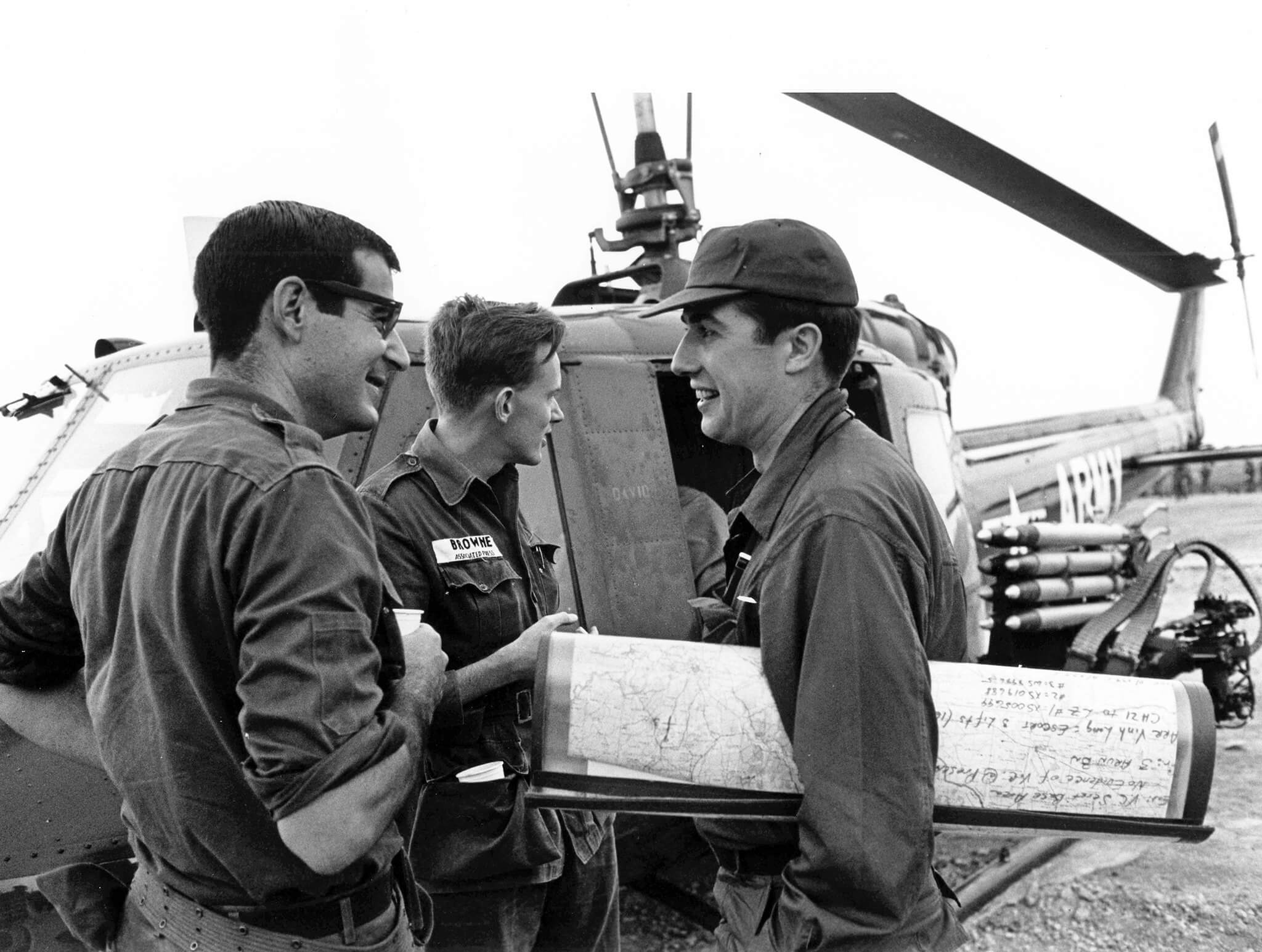
    Sheehan was born of Irish parents  in Holyoke Massachusetts and graduated from Harvard in 1958.  After his military service he went to work for UPI in Tokyo.  He spent two years as UPI’s chief correspondent covering the Vietnam War.  It was at this time––1962-64––that he became collegial and friendly with the Times’ David Halberstam. And he was then employed by the Grey Lady.

    halberstam sheehan

    As the reader can see from the picture above, Sheehan and Halberstam rode in helicopters with the military to cover the war. From the looks on their faces, they appear to have enjoyed the assignment.  In fact, in the Ken Burns/Lynn Novick documentary series The Vietnam War, Sheehan said he found these helicopter sorties exciting to be involved with.

    The commander in Vietnam at that time was General Paul Harkins.  Since those two reporters were intimately involved with the actual military operations, they knew things were not going well. Yet Harkins insisted they were going fine.  As author John Newman wrote in his milestone book JFK and Vietnam, this rosy outlook was an illusion perpetrated by both military intelligence and the CIA.  It was carried out by Colonel James Winterbottom with the cognizance of Harkins. (Newman, 1992 edition, pp. 195-97). In a 2007 interview that Sheehan did, he said that he and Halberstam had a conflict with Harkins over this issue of whether or not Saigon and the army of South Vietnam (the ARVN) was actually making progress against the opposing forces in the south, namely the Viet Cong.  He said that their impression was that Saigon was losing the war. Their soldiers were reluctant to fight, the entire military hierarchy was corrupt, and as a result, the Viet Cong forces in the south were getting stronger and not weaker.

    There is one other element that needs to be addressed before we move further. It is something that David Halberstam did his best to forget about in his 1972 best-seller The Best and the Brightest, but Sheehan was more open about in his 2007 interview.  The smiles in the picture above were genuine because Sheehan and Halberstam truly believed in winning the Vietnam War.  At any and all costs.  As Sheehan further explicated about the duo:

    … we believed it was the right thing to do. We believed all those shibboleths of the Cold War, all of which turned out to be mirages : the “domino theory” that if South Vietnam fell, the rest of––Cambodia, Thailand, Indonesia––they were all going to fall one by one.  We believed the Vietnamese Communists were pawns of the Chinese and the Russians, they were taking their orders from Moscow and Bejing.  It was rubbish.  They were independent people who had their own objectives, and they were the true nationalists in the country.  We didn’t know any of this really, but we did know we were losing the war.

    I was quite fortunate to find this interview. Because I had never seen Sheehan or Halberstam be so utterly explicit about who they were and what they were about at that time. In his entire 700 page book, The Best and the Brightest, and later in his career, I never detected such a confessional moment from Halberstam. The simple truth was that Sheehan and Halberstam were classic Cold Warriors who wanted to kick commie butt all the way back to China. They saw what America was doing as some kind of noble cause. They felt that we and they––that is, all good Americans––were standing up for democracy, liberty and freedom. As far as political sophistication went, they might as well have been actors performing in John Wayne’s propaganda movie, The Green Berets. They wanted a Saigon victory with big brother America’s help. Which is the message of the last scene of Wayne’s picture. And they didn’t think Harkins was up to the task. In fact, they did not even know what Harkins was up to with his attitudinizing about America winning the war.

    II

    Neither Harkins nor Winterbottom was unaware of the true situation on the ground. In fact, as Newman shows in his book, Winterbottom would simply create Viet Cong fatalities out of assumptions he made. Harkins understood this and went along with it. (Newman, p. 224) The idea was to control the intelligence out of Saigon in order to bamboozle Secretary of Defense Robert McNamara. (Newman, p. 225) There were honest records kept. But throughout that year of 1962, whenever McNamara would report back to President Kennedy after one of his SecDef Meetings––a conference in the Pacific of all American agency and division chiefs in Saigon––he would deliver to the president the same rosy message he had just heard. And that message was false in two senses: the number of Viet Cong casualties was exaggerated, and the number of ARVN casualties was being reduced. (Newman, p. 231)

    This intelligence deception was happening in the spring of 1962. In  November of 1961, with his signing of NSAM 111, Kennedy had agreed to raise the number of American advisors and ship more equipment to Saigon.  Therefore, the true results on the battlefield in the spring of 1962 would denote that this was not really helping the war effort. As Newman wrote, the Viet Cong “had been quick to alter their tactics to counter the effectiveness of the helicopter:  quick strikes followed by withdrawal in fifteen minutes to avoid rapid reaction … .” (p. 233)

    At about this time, in April of 1962, President Kennedy sent John Kenneth Galbraith to visit Robert McNamara in Washington. He told Galbraith to give him a report that JFK had requested the ambassador to India write about the American situation in Vietnam.  Kennedy knew that Galbraith was opposed to increased American involvement in Indochina, since he had voiced those doubts to the president before.  As James Galbraith, the ambassador’s son, said to me, Kennedy fully understood that what Galbraith would write would counter the hawks in his cabinet. (phone interview of July, 2019)  Kennedy wanted the report to go to McNamara since the Defense Secretary could then begin to withdraw the (failed) American military mission.  Galbraith did so and he then told JFK that McNamara got the message. (see this article)

    One month later, McNamara had a SecDef meeting in Saigon. After that meeting, he instructed Harkins––and a few others military higher ups––to stick around for a few minutes. He told them, “It is not the job of the U.S. to assume responsibility for the war but to develop the South Vietnamese capability to do so.”  (James Douglass, JFK and the Unspeakable, p. 120) He then asked them to complete the ARVN training mission and to submit plans for a dismantling of the American military structure in South Vietnam.  He concluded by telling Harkins:

    … to devise a plan for turning full responsibility over to South Vietnam and reducing the size of our military command, and to submit this plan at the next conference. (Douglass, p. 120)

    To me, and to any objective person, this has to be considered quite important information. First, the message is quite clear and unambiguous: McNamara is saying we can only train the ARVN.  Once that is done, we are leaving; we cannot fight the war for them. Second, it is multi-sourced: from both Galbraith, and the people at the SecDef meeting in Saigon. In addition, when word got out that Kennedy had sent the memo to McNamara, a mini war broke out in Washington over what was happening. (Newman, pp. 236-37). Then in May of 1963, the withdrawal schedules were delivered to McNamara at another SecDef meeting. (James DiEugenio, Destiny Betrayed, second edition, p. 366)

    Now, here is my plaint to the reader: try to find this step by step by step milestone in Halberstam’s book. That is, from:

    1. Galbraith visiting Kennedy, to
    2. Galbraith seeing McNamara, to
    3. McNamara ordering Harkins to begin the dismantling of the American mission, to
    4. The withdrawal schedules being presented to McNamara.

    If you can find it, let me know.  Because even though I read the book twice, I could not locate any of it.  Also, try to find it in any of the many interviews that Sheehan did that are online.  On the contrary, both men always spoke of the “inevitability” of the Vietnam War. You can only maintain such a stance if you do not reveal the above information. In fact, it can be fairly stated that, in 700 pages, Halberstam essentially gives the back of his hand to the influence of Galbraith on Kennedy. And he also completely reverses  the roles of McNamara with Kennedy in Vietnam.  Halberstam wrote that it was McNamara who went to Kennedy, “because he felt the President needed his help.” (Halberstam, p. 214) He then says, on the next page, that McNamara had no different ideas on the war than Kennedy did.

    Let us be frank:  This is a falsification of the record. It was Kennedy who, through Galbraith, went to McNamara.  And it was not for the purpose of promoting the ideas of the Pentagon on the war. Now, if the alleged 500 interviews Halberstam did were not enough to garner this information, there was another source available to him:  the Pentagon Papers––which Halberstam says he read. Moreover, he says they confirmed the direction he was going in. (Halberstam, p. 669)

    Either Halberstam lied about reading the Pentagon Papers, or he deliberately concealed what was in them. Because in Volume 2, Chapter 3, of the Gravel Edition of those papers, the authors note that because progress had been made, McNamara directed a program for the ARVN to take over the war and American involvement to be phased out. That phasing out would end in 1965.  Is it possible for Halberstam to have missed this? The information appears in the chapter explicitly headed, “Phased Withdrawal of US Forces, 1962-64.”  That chapter is forty pages long. (see pp. 160-200)

    III

    At that time period when the two reporters were in Vietnam, not only did they both want to urge America and Saigon to victory.  They thought they found the man to do it.  That was Colonel John Paul Vann. In fact, before he wrote The Best and the Brightest, Halberstam wrote another book on Vietnam, called The Making of a Quagmire. It is a book that he wished everyone would forget. Unfortunately for the deceased Halberstam, it’s still in libraries. In that book, Halberstam criticized every aspect of the Saigon regime as led by America’s installed leader, Ngo Dinh Diem. Halberstam writes toward the end that “Bombers and helicopters and napalm are a help but they are not enough.” (p. 321) He then adds, “The lesson to be  learned from Vietnam is that we must get in earlier, be shrewder, and force the other side to practice self-deception.” (p. 322) In other words, at that time, Halberstam and Sheehan wanted direct American intervention; as did Colonel Vann.

    What this reveals is something important about the trio:  They had no reservations about the war America had involved itself in. America got in by its backing of France.  When France was defeated, the USA took its place.  America then violated the Geneva Accords peace treaty that ended the war.  The USA would not hold free elections in order to unify the country. America created a new country called South Vietnam, one that did not exist before.  And they installed their own handpicked leader, Ngo Dinh Diem, to rule over it.  Diem’s early regime was stage-managed by General Edward Lansdale.  According to the first chapter of Sheehan’s book about Vann, A Bright Shining Lie, Lansdale was Vann’s hero.

    Both Sheehan and Halberstam fell in love with Vann.  They were completely unaware of what was happening in Washington, how Kennedy had decided to take Galbraith’s advice and begin to remove all American advisors.  They wanted to win, and they both felt it was only through Vann that the war could be won. They both maintained that he was the smartest man for Harkins’ position.

    There was a serious problem with the approach of these three men in 1965. None of them ever raised the fundamental question of what America was doing in Vietnam, or how we got there. Lansdale was not building a democracy.  He was building a kleptocracy. He also rigged elections so Diem could win by huge margins. (Seth Jacobs, Cold War Mandarin, p. 85) He was constructing  the illusion of a republic when, in fact, none existed. Diem was soon to become a dictator. (Jacobs, p. 84) For Vann to make Lansdale his role model is a troubling aspect of the man.

    One of the reasons Kennedy decided to get out is simple:  he did not think Saigon could win the war without the use of American combat troops.  Or as he told Arthur Schlesinger:

    The war in Vietnam could be won only so long as it was their war.  If it were converted into a white man’s war, we would lose as the French had lost a decade earlier.”  (Gordon Goldstein, Lessons in Disaster, p. 63)

    Kennedy said the same thing to NSC aide Michael Forrestal: America had about a one-in-a-hundred chance of winning. The president said this on the eve of his going to Dallas in 1963.  He then added that upon his return there would be a general review of the whole Vietnam situation, how we got there, what we thought we were doing, and if we should be there at all. (James Douglass, JFK and the Unspeakable, p. 183)

    The point about it becoming a white man’s war and the whole French experience echoes back to Kennedy visiting Saigon in 1951. There he met with American diplomat Ed Gullion who told him France would never win the war, and the age of colonialism was coming to an end. (Douglass, p. 93) That visit and the meeting with Gullion had a profound effect on Kennedy’s world view. He now saw nationalism as the main factor in these wars in former European colonies. He also thought that anti-communism was not enough to constitute an American foreign policy.  America had to stand for something more than that. (For the best short discussion of this, see James Norwood’s essay on the subject.)

    And there was a further difference between JFK and the Establishment on Third World nationalism. Kennedy did not see the world as a Manichean, John Foster Dulles split image.  Unlike President Eisenhower, he did not buy into the domino theory.  It was no one less than National Security Advisor McGeorge Bundy who said this about Kennedy in an oral interview he did in 1964. (Goldstein, p. 230) This is why, as Gordon Goldstein wrote in his book about Bundy, Kennedy turned aside at least nine attempts by his advisors to commit combat troops into Vietnam during 1961.

    IV

    It’s very clear from the interviews that Sheehan did later in his life that, like Halberstam, he had a problem with admitting Kennedy was right, and he, Halberstam and John Paul Vann were wrong about Vietnam. To fully understand Sheehan, one has to refer to the first chapter of A Bright Shining Lie, his book about Vann. That chapter is called “The Funeral”. It describes the ceremony preceding Vann’s burial. Consider this assertion about 1961:

    The previous December, President John F. Kennedy had committed the arms of the United States to the task of suppressing a Communist-led rebellion and preserving South Vietnam as a separate state governed by an American sponsored regime in Saigon.

    If Kennedy had thus committed himself, then why had he told McNamara in 1962 that he was to start a withdrawal program? And it’s no use saying that ignorance is an excuse for Sheehan.  Peter Dale Scott understood such was not the case when he wrote about Kennedy and Vietnam originally back in 1971.  Kennedy simply did not see South Vietnam as a place the USA should pull out all the stops for.  John Paul Vann did see it as such.  So did Halberstam and Sheehan.

    Sheehan also describes Ted Kennedy arriving late at the funeral and sitting in a back pew. He writes that Ted had turned against the war that his brother,  “John had set the nation to fight.”  Nothing here about President Eisenhower creating this new nation of South Vietnam that did not exist before. He then adds that John Kennedy wanted to extend the New Frontier beyond America’s shores.  And the price of doing that had been the war in Vietnam. 

    I think we should ask a question right here:  Why not mention Bobby Kennedy’s antagonism against the war in Vietnam, which was clearly manifest during Lyndon Johnson’s presidency?  In fact, as author John Bohrer has written, Robert Kennedy had warned President Johnson against escalation as early as 1964. (The Revolution of Robert Kennedy, p. 70). Kennedy had told Arthur Schlesinger that, by listening to Eisenhower, Johnson would escalate the war in spite of his advice. (Bohrer, p. 152)

    When Halberstam heard about this, he now began to criticize RFK.  How dare Bobby imagine that he was smarter than Johnson and Ike on the war. What did Robert Kennedy think? You could win the war without dropping tons of bombs and using overwhelming force?  Again, this exchange exposes who Halberstam and Sheehan really were in 1965. If I had been that wrong, I would have excised it also.

    As per extending the New Frontier beyond its borders, this is contrary to what Kennedy’s foreign policy had become after his meeting with Gullion.  JFK was trying for a neutralist foreign policy, one that broke with Eisenhower’s, and tried to get back to Franklin Roosevelt’s.  And as anyone who reads this site knows, this is amply indicated by his policy in places like Congo and the Dominican Republic.

    What Sheehan is doing here is pretty obvious.  He is transferring his guilt about who he was, and what he did while under Vann’s spell, onto Kennedy.  In fact, Kennedy was opposed to what both Halberstam was writing and what Vann was advocating for about Vietnam. As proven above, JFK did not want America to take control of the war––to the point that President Kennedy tried to get Halberstam rotated out of Vietnam. (David Kaiser, American Tragedy, p. 261) I also think this is the reason that Sheehan never acknowledged that Kennedy was withdrawing from Indochina in any interview I read with him.  And considering some of these interviews were done after the controversy over Oliver Stone’s film JFK, that is really saying something.

    V

    There are two other highlights to Sheehan’s journalistic career with the Times.  One concerned his association with Daniel Ellsberg and the Pentagon Papers.  Ellsberg had been in Vietnam on a voluntary tour under Ed Lansdale from 1965-67.  He went there from the Defense Department in order to see what the Vietnam War was really like. He spent six weeks being shown around Saigon by Vann. (Steve Sheinkin, Most Dangerous, p. 77)  As he notes in his fine book Secrets, Ellsberg came back a different man. He could not believe how badly the war was going, even though President Johnson had done what Kennedy refused to do:  insert combat troops.  By 1967 there were well over 400,000 of them in theater. This certified what President Kennedy had told Schlesinger about making it an American war and ending up like the French.

    When Ellsberg returned, he went to work at Rand Corporation.  This was a research and development company in Santa Monica.  Robert McNamara was getting ready to leave office.  One of his very last acts was to commission the secret study called the Pentagon Papers. Since Ellsberg had worked in the Pentagon, he was asked to work on the study.  He then decided that the Pentagon Papers were so powerful in exposing the lies behind the war, he needed to get them into the public record.  So he and his friend Anthony Russo decided to copy the study and make it public.

    Since the Pentagon Papers were classified, Ellsberg and Russo faced legal problems if they themselves gave the documents to a newspaper or magazine for publication. Therefore, Ellsberg approached four elected officials to try and get them entered into the congressional record.  That would have protected them legally since representatives and senators have immunity while speaking from the floor. The problem was that for one reason or another, all four refused to accept the documents. (Ellsberg, Secrets, pp. 323-30, 356-66)

    Ellsberg got in contact with Sheehan, whom he had met in Vietnam in 1965. Ellsberg had a teaching fellowship at MIT at this time.  So Sheehan drove up from New York to Cambridge in March of 1971.  Ellsberg made a deal with Sheehan:  he could take notes on the documents and copy a few pages.  He could then show those notes to his editors and they could make up their minds if they would publish the actual papers. Ellsberg left Sheehan a key to the apartment where he had them stored. Without telling his source, Sheehan ended up copying the documents with his wife and taking them to New York. (Ellsberg, p. 175)

    The Times did publish three days of stories from the papers before they were halted by a court order. What is interesting about this Times version of the Pentagon Papers––which was later issued as a book––is that it differs from the later edition previously mentioned.  For Senator Mike Gravel did read from a portion of the documents on the senate floor.  In his version, later published by Beacon Press, as noted above, there is an entire 40 page chapter entitled “Phased Withdrawal 1962-64”.  In the Times version of the papers, the section dealing with the Kennedy administration goes on over 200 pages. (The Pentagon Papers, New York Times Company, 1971,  pp. 132-344)  There is, however, no section on the phased withdrawal, and the transition from John Kennedy to Lyndon Johnson concludes with the declaration that somehow, Johnson had affirmed Kennedy’s policy and continued with it.  I cannot say that this was purposeful, since the Gravel edition of the papers is longer than the one the Times had. But whatever the reason, today that statement looks utterly ludicrous.

    Everyone who reads this site is aware of the My Lai Massacre, which occurred in March of 1968.  An army regiment slaughtered hundreds of innocent women and children at the small hamlet of My Lai. The incident was covered up within the military by many high level officers, including Colin Powell. But it finally broke into the press in 1969. It was an indication that the US military was disintegrating under the pressure of a war that could not be won.

    The exposure of My Lai caused many other veterans to come forward and tell stories about other atrocities. In 1971, Mark Lane helped stage what was called the Winter Soldier Investigation.  This was a three day event held in Detroit and broadcast by Pacifica Radio. There, many others told similar stories about what had really happened in Vietnam.

    The Nixon administration was not at all pleased with the event. White House advisor Charles Colson, with the help of the FBI, went to work on discrediting the witnesses. (Mark Lane, Citizen Lane, p. 218) Since Lane helped with the event, he knew many of the men and interviewed them. He turned the interviews into a book called Conversations with Americans. Some of the veterans expressed fear of reprisal for what they told the author.  So in the introduction, Lane explained that some names had been altered to protect the witnesses from the military. (Lane, p. 17) Lane then placed the actual transcripts with the real names at an attorney’s office in New York; a man who had worked for the Justice Department. (Citizen Lane, p. 219)

    Six weeks after the book was released, the New York Times reviewed it. The reviewer was Sheehan. In cooperation with the Pentagon, Sheehan now said that a number of the witnesses were not genuine and Lane had somehow fabricated the interviews. (Citizen Lane, p. 220) Sheehan did this without calling the lawyer in New York who had the original depositions with the real names.  It is hard to believe, but Sheehan did a publicity tour for his article. Yet he refused to take any of Lane’s personal calls or answer any of his letters.  When Lane finally got to confront Sheehan on the radio, Sheehan said that in three years of covering the war in Vietnam he had never found any evidence of any such atrocities.  When Lane asked him about My Lai, Sheehan said these were just rumors. (Citizen Lane, p. 221) Recall, this was very late in 1970 and in early 1971. The story had broken wide open in late 1969, including photos of the victims in Life magazine and the Cleveland Plain Dealer.

    In his 2007 interview, Sheehan said he became disenchanted with the war in 1967. But as the reader can see from the above, he was still covering up for the military in 1971. One of the worst parts of the 2007 interview is when Sheehan talks about his tour in Indonesia in 1965 before returning to Vietnam. He says that this was an enlightening experience for him. Why?  Because he says the communists had tried to take over the government, but they got no aid from Moscow or Bejing. He then adds that this showed him that communism was not a monolithic movement, and the domino theory was not really applicable.

    What can one say about that statement?  Besides him learning in 1965 what Kennedy knew in 1951, there is this:  There was no communist insurrection in Jakarta in 1965. And any reporter worth his salt would have known that––certainly by 2007. General Suharto used that excuse to slaughter over 500,000 innocent civilians. But in keeping with this, A Bright Shining Lie was an establishment project.  Peter Breastrup supplied the funds through the Woodrow Wilson Institute to finish the book. Breastrup worked for the Washington Post; he was Ben Bradlee’s reporter on Vietnam for years, and he always insisted that the Tet Offensive was really misinterpreted and blown out of proportion by the media. The book was edited by the infamous Bob Loomis at Random House. Loomis was the man who approached Gerald Posner to write Case Closed, a horrendous cover-up of President Kennedy’s assassination.

    Since the war had turned out so badly, Sheehan could not really make Vann the hero he and Halberstam had in 1963-65.  So they dirtied him up.  His mother was a part-time prostitute, he cheated on his wife, and he was a womanizer in Vietnam who impregnated a young girl. This was supposed to be part of the lie about Vietnam.  But Sheehan really never got over Vann, because in later interviews he said that it was really Vann who, at the Battle of Kontum, stopped the Easter Offensive. Which is a really incomprehensible statement. The tank/infantry assault on Saigon by Hanoi in 1972 lasted six months and was a three-pronged attack.  It was finally stopped by Nixon’s Operation Linebacker, which was perhaps the heaviest bombing campaign in Vietnam until the Christmas bombing of 1972.

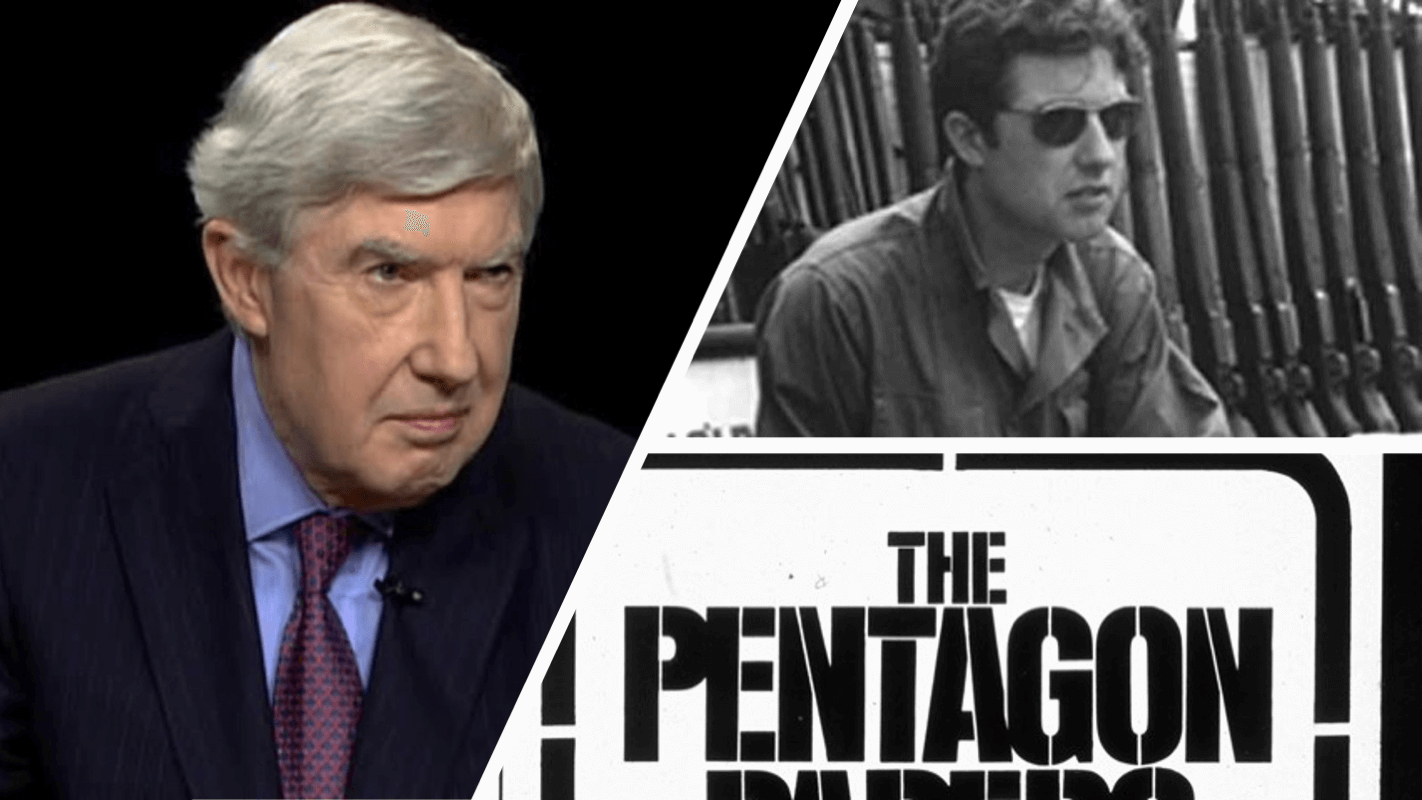
    What Sheehan did––with his so-called inevitability of the war, disguising of Kennedy, his promotion of Vann, his misrepresentation of Mark Lane––is he helped promote a Lost Cause theory of Vietnam. This was later fully expressed by authors like Guenther Lewy in America in Vietnam, Norman Podhoretz in Why We Were in Vietnam, and more recently, Max Boot’s The Road Not Taken. The last pretty much states that Lansdale, Vann’s hero, should have been placed in charge. If so America likely would have won.

    So excuse me if I will not be part of the commemoration of Sheehan’s career. In many ways, both he and Halberstam represented the worst aspects of the MSM.  After being part of an epic tragedy, they then did all they could to promote a man who very few people would have ever heard of without them.  At the same time, they did all they could to denigrate the president who was trying to avoid that epic tragedy. 

    That is not journalism. It is CYA.  And it is CYA that conveniently fits in with an MSM agenda.

  • An Open Letter from James DiEugenio

    An Open Letter from James DiEugenio


    TO:

    Joe Scarborough, MSNBC Cable TV host

    Annette Gordon-Reed, Harvard historian

    Fredrik Logevall, Harvard historian

    Van Jones, CNN contributor and sometime host

    Kevin Young, U of Mass/Amherst historian

    Steven Gillon, U of Oklahoma historian, Scholar in Residence, The History Channel


    RE: John F. Kennedy and Civil Rights


    A reader of our web site, KennedysAndKing.com, recently sent me a clip of Mr. Scarborough’s 12/11/2020 program which featured Professor Gordon-Reed. The concept of the show was to enumerate certain past presidents and what our elected president, Joe Biden, could learn from them.

    When Mr. Scarborough got to President Kennedy, he said that Biden could learn from JFK how to “brush back” on the civil rights issue, which President Johnson then had to take up the mantle on. Professor Gordon-Reed replied to this that Kennedy talked to people and eventually came around on civil rights, since he did not want events to overtake him.

    On November 22, 2020, on the anniversary of Kennedy’s assassination, a similar declaration took place. Professor Logevall made an appearance on the radio program Speakola. During that appearance, he said that, until the last year of his life, Kennedy was not really moved by the plight of those who were denied their civil rights; he added that this only came late to Kennedy.

    Prior to this, in 2018, on the CNN documentary series, The Kennedys: An American Dynasty, Mr. Jones said that JFK was not really interested in civil rights when he entered the White House and he had to be lectured about the issue.

    Going back to May of 2010, Professor Gillon made a speech at the Miller Center in Virginia, where he briefly touched on the civil rights matter. Included in his remarks, he said that LBJ did not think Kennedy was pushing the issue enough and that Kennedy did not submit a bill on civil rights until after he gave his speech the evening of his confrontation with Governor Wallace at the University of Alabama in June of 1963. He concluded by saying that it was only through Johnson’s dogged determination and parliamentary wizardry that the bill passed.

    Professor Young might be the most extreme. In a much more recent article, November 21, of this year, at the web site Truthout, he wrote that Kennedy had done virtually nothing for civil rights for almost two and a half years. Only after the Birmingham violence did he finally send a civil rights bill to Congress, which passed the following year. Further, he said JFK only did this because of the threat of economic demobilization generated by a mass movement in the south. (I admit I really do not understand what Young means by that last statement.)

    Let me begin by saying that none of this comes close to aligning with the actual record of events. And the fact that four of you are history professors makes this rather embarrassing for your profession.

    The idea of making Lyndon Johnson some kind of hero on civil rights is, to be kind, misleading. From 1937–56, Congressman—then Senator Johnson—voted against every civil rights bill that was submitted to Capitol Hill. And this was not done passively. Johnson voiced the southern shibboleth of States Rights, which meant, of course, that there was never going to be any progress on the issue at all.

    It was only in 1957 that LBJ began to change his tune on the subject. Why? For two reasons. First, he was contemplating a run for the highest office and he had seen what Richard Russell’s anti-civil rights views had done to his mentor’s aspirations. So he knew he had to begin to alter his previous voting record. The second reason was even more a matter of political expediency. The White House had sent a bill to Congress on the issue. President Eisenhower and Vice-President Nixon did not care about civil rights themselves. In fact, Eisenhower had advised Earl Warren to vote against the Brown vs. Board case. But Nixon and Eisenhower understood that they could split the Democratic Party geographically on the issue: northern liberals against southern conservatives. Johnson tried to soften the blow to his party. So, he produced a pretty much papier mâché bill. One which Senator Kennedy did not like. In fact, Johnson had to send an assistant to make sure JFK would vote for it. Later, Kennedy wrote a constituent that he hoped the Senate would pass another bill; this time with some real teeth to it.

    That Robert Caro makes so much out of this, and the 1960 bill, is a classic example of the old adage: if you have lemons, make lemonade. As Harris Wofford wrote, the newly minted civil rights advisory commission, the new department of civil rights in the Justice Department, and the collection of voting data were all pretty much useless. For the simple reason that Eisenhower and Nixon had designed it that way; and LBJ went along with it. It was all a fig leaf to disguise the damaging facts that the White House did not support Brown vs. Board and Eisenhower had allowed Governor Orval Faubus to create a weeks long insurrection at Central High in Little Rock. Wofford should know, since he was the attorney for the Civil Rights Commission.

    As Judge Frank Johnson of Alabama later said, this all changed under Kennedy. He said that when Kennedy and his brother entered office, it was like an electric current going off in the south. As noted above, virtually all of you have said that President Kennedy waited until his third year to do something, since he needed wise counsel on the issue. This is simply false. I don’t see how you can act faster than on the first day of your presidency, which is what Kennedy did. After watching his inauguration ceremony, Kennedy made a call to Secretary of the Treasury Douglas Dillon that evening. He asked him why there were no black faces in the Coast Guard parade. Dillon said he did not know why. Kennedy told him: Find out.

    Following from that, at his first Cabinet meeting Kennedy asked the members to bring in statistics on how many minority employees were in each department. Kennedy was quite disappointed when he heard the numbers. This caused him to write America’s first affirmative action executive order on March 6, 1961. In other words, far from waiting for two and a half years, Kennedy was acting right out of the gate. In a bit over six weeks, he had done what none of his predecessors had. Kennedy later extended this order to include all federal contracting and all federal programs concerning loans and grants. In other words, if you ran a textile mill in North Carolina which made uniforms for the Army, you now had to hire African Americans to work in your mill or you risked closing your doors.

    I will not go through each of Kennedy’s actions as I did the above, since this letter would get too long. Let me just list some of them:

    • The administration filed charges against the Secretary of Education in Louisiana for scheming to dodge court orders under Brown vs. Board. This was in February of 1961.
    • When the state of Virginia refused to fund local education in Prince Edward County, the Kennedys assigned William Vanden Heuvel to attain private funds in order to create from the bottom up an entirely new school district.
    • Attorney General Robert Kennedy spoke at the University of Georgia Law Day. For the first time in anyone’s memory, he spoke about civil rights in the South. He concluded by saying he would enforce the Brown decision. This was on May 6, 1961.
    • RFK did this in part to aid the Fifth Circuit Court in the South. That federal court was made up of moderate to liberal judges on the issue. He would use that court in his future civil rights cases after losing in lower court.
    • By September of 1961, the administration successfully petitioned the Interstate Commerce Commission to integrate travel between states.
    • In his first year, Bobby Kennedy filed twice as many civil rights cases as the Eisenhower administration did in eight years. By 1963, the Department of Justice had quadrupled the number of lawyers in the Civil Rights Division.
    • The Kennedy administration was the first to raise private funds to finance large voting registration drives in the south. In today’s currency, the sum would be well over seven million dollars.
    • Kennedy was the first to get the FBI to detect voting rights violations and to use that information to grant African American voters suffrage in Alabama and Louisiana. This was before the Voting Rights Act.
    • Kennedy tried to get a voting rights bill through congress in 1962. That effort failed due to filibuster. It evolved into the 24th amendment eliminating the poll tax.
    • Kennedy established the Committee on Equal Employment Opportunity, which evolved into the EEOC to protect civil rights in hiring, employment and firing.
    • Kennedy was the first to use federal contracts and grants to force private universities in the south to integrate, e.g., Tulane and Duke.
    • The administration worked through the Fifth Circuit to sue the public universities of Mississippi and Alabama to force integration.

    I could go on. Yet, just that list is more than FDR, Truman, and Eisenhower did put together. (See part 3 below) But let me add: Kennedy did not submit a wide-ranging civil rights bill to Congress after the confrontation with Wallace or after the violent confrontations in Birmingham. He submitted his bill in February of 1963. And as Clay Risen notes in his book length study of the bill’s passage, it did not owe its success to Johnson. The four major players who got it through were JFK, Bobby Kennedy, Hubert Humphrey, and Senator Thomas Kuchel. In the summer of 1963, President Kennedy began what was probably one of the largest lobbying programs in contemporary history. He brought in over 1500 people from professional groups all over the country: lawyers, mayors, and clergy to convince them to back the bill. It was the last group that Richard Russell later said ultimately forced the collapse of the filibuster.

    Further, as most of us know, it was not Johnson who got the Voting Rights Act passed in 1965. He told Martin Luther King he probably could not do so by himself. So King began the Selma demonstration, in order to give Johnson the torque to do so. And it was not Johnson who got the expansion of Kennedy’s housing act through either. He actually could not. It was the occasion of King’s assassination that allowed it to pass.

    No post Civil War president ever did as much for civil rights as President Kennedy did. That is not conjecture, it is the undisputed record. And I demonstrated it in Part 3 of my series, which I attach below. The only reason he did not pass an omnibus civil rights bill sooner is that it would have been filibustered as his narrower bill was in 1962. And it was LBJ who advised him not to even try.

    For historians and TV hosts to parrot a compilation of rightwing and leftwing myths in the place of this historical record is simply irresponsible. It is, in fact, pernicious to the public. Lyndon Johnson commandeered a ruinous presidency. Contrary to what Mr. Gillon said in his talk, LBJ could not have won the nomination in 1968. After New Hampshire, his campaign started to collapse on every leg in Wisconsin. He was given the word he was going to lose in a landslide. Contrary to what President Johnson had said, he did not “continue” what President Kennedy had begun, not in foreign policy and not in domestic policy. (See my Part Four below) He did not just wreck his own presidency. He ripped asunder the Democratic party. Staffer Carl Marcy wrote to Senator William Fulbright after the senator had discovered Johnson had lied to him about American invasions of both Vietnam and the Dominican Republic. Marcy wrote that what these dishonest interventions had done was:

    … turn the liberal supporters of President Kennedy into opponents of the policies of President Johnson, and the rightwing opponents of Eisenhower and Kennedy into avid supporters of the present administration. … We have tried to force upon the rest of the world a righteous American point of view which we maintained is the consensus that others must accept. Most of the tragedies of the world have come from such righteousness.

    It was this false righteousness that polarized the Democratic Party and paved the way for the election of Richard Nixon.

    I would like to conclude by drawing your attention to a recent article in the Washington Post. It is entitled “Hijacking the Electoral College: the Plot to Deny JFK the Presidency 60 years ago.” Donald Trump was not the first to scheme to sabotage the electoral college. The electors from Alabama and Mississippi decided not to vote for Kennedy in 1960, even though he defeated Nixon in those states. They agreed to halt their scheme to negate the election results, if Kennedy would switch positions on the ticket with Johnson. In other words: Johnson would be President and Kennedy Vice-President. Kennedy had endorsed Brown vs. Board twice as a Senator, once in New York and once in, of all places, Jackson, Mississippi. These deep southern segregationists understood who JFK was in 1960. They had seen him up close. So should you.


    (I did not annotate the above letter since my material is properly referenced in the series attached below)


    The Kennedys and Civil Rights: How the MSM Continues to Distort History – Part 1


    The Kennedys and Civil Rights: How the MSM Continues to Distort History – Part 2


    The Kennedys and Civil Rights: How the MSM Continues to Distort History – Part 3


    The Kennedys and Civil Rights: How the MSM Continues to Distort History – Part 4

    Listen to Jim being interviewed on this subject on AM 1480 WLEA News.

  • Steven Gillon: Mark Lane Equals Donald Trump?

    Steven Gillon: Mark Lane Equals Donald Trump?


    On the 57th anniversary of President John Kennedy’s death, historian Steven Gillon was given a platform to write an opinion piece relating to Kennedy’s assassination, except he did not write about John Kennedy’s presidency; nor did he address any new facts about his assassination. The title of his column for the Washington Post was: “The Tie Between the Kennedy Assassination and Trump’s Conspiracy Mongering.” Gillon was going to comment on the refusal of President Trump to concede the election and the failure of his lawyers to turn his loss into a legal victory.

    As a lead in to his real subject, Gillon wrote:

    …conspiracy theories have a long history in right-wing politics. But tempting though it may be to chalk conspiracies up as a conservative phenomenon, the truth is more complicated.

    In itself, that statement is an historical humdinger, because what Gillon is trying to do is not just sweep the right-wing QAnon under the rug; which would be quite a magic trick in and of itself. But when he only alludes to the fact that “conspiracy theories have a long history in right-wing politics”, he is trying to somehow neuter the entire ultra-conservative movement that sprung up against President Dwight Eisenhower, because of his perceived mild reaction to the Cold War. To give that movement the back of one’s hand is both irresponsible and ahistorical, because it morphed and mushroomed into the pernicious and frightening far right force we live with today.

    That began with the pure force of the second Red Scare. In large part, this was caused by Richard Nixon as a member of the House Unamerican Activities Committee (HUAC). That committee was designed to pursue Nazi espionage activities in America, but the HUAC was quickly sidetracked by conservative Republicans. It now explored any kind of suspected domestic communist infiltration. Nixon used that committee to advance the questionable case of journalist Whitaker Chambers against former State Department employee Alger Hiss. Nixon, and FBI Director J. Edgar Hoover, used an array of questionable tactics both in congress and then at two trials. At the second trial, Hiss was convicted of perjury. He could not have been convicted for espionage simply because Chambers had so many liabilities as a witness. Plus, as we have come to learn, the typewriter produced at the trial was the wrong machine. (There has been a flurry of recent books on this case that show just how unethical the Nixon/Hoover case was e.g. Joan Brady’s America’s Dreyfus.)

    It was this case that added great torque to the second Red Scare of the fifties. This resulted in the faux senate investigations of Senator Joe McCarthy and his chief counsel Roy Cohn. Robert Kennedy was an attorney on the committee, but resigned after he saw what Cohn was really up to. He later returned as counsel for the Democrats. And it was through his efforts, plus the exposure of McCarthy on national television by Edward R. Murrow, that brought an end to the McCarthy/Cohn demagoguery.

    But there can be little doubt that a certain part of the Republican Party found the McCarthy/Cohn movement politically useful. The constant refrain of innumerable communists infiltrating 1.) the State Department, 2.) the Pentagon, 3.) the CIA and 4.) even the White House, this created a climate of fear, loathing, and paranoia. When this was turned on the Democratic Party, it could be used for political impact e.g. the slogan that the Democrats lost China.

    It was this emotional, almost pathological, anti-communist appeal that led to the rise of the John Birch Society (JBS) and its affiliated rightwing groups e.g. the Minutemen. The founder of the John Birch Society wrote a controversial book called The Politician. In the original draft of the manuscript, Robert Welch tried to insinuate that somehow President Eisenhower was really a kind of Manchurian Candidate, that is, he was a communist plant. (D. J. Mulloy, The World of the John Birch Society, pp. 15-16)

    Welch’s view of the worldwide communist plot is depicted in The Blue Book of the John Birch Society:

    Communism, in its unmistakable present reality is wholly a conspiracy, a gigantic conspiracy to enslave mankind; an increasingly successful conspiracy controlled by determined, cunning, and utterly ruthless gangsters, willing to use any means to achieve its end. (Mulloy, p. 3)

    But that was just the beginning of Welch’s accusations. Welch thought water fluoridation was a communist plot. The JBS thought the civil rights movement was run out of Moscow. For that reason, they ended up opposing John Kennedy’s civil rights bill. Their legal pretext was the doctrine of states’ rights. (Mulloy, p. 110) In that respect, it should be noted that both Fred Koch and Harry Lynde Bradley were early promoters and members of the JBS. (Mulloy, p. 9) Fred Koch was the father of Charles and David Koch. Bradley was a co-founder of the Lynde and Harry Bradley Foundation. These present clear and powerful ties to the GOP establishment of today, which, for whatever reason, Gillon wants to air brush out of the picture.

    It is significant to note that, through their publishing house, Western Islands, the JBS sponsored writers like Gary Allen. Allen propagated the idea that both the American government and the USSR were actually controlled by international bankers and financiers like David Rockefeller and Armand Hammer. Allen and the JBS saw the United Nations as a kind of front for this group to create a world government. Professor Revilo Oliver, a contributor to the JBS magazine American Opinion, wrote a two part essay about the Kennedy assassination for that journal. It was called Marxmanship in Dallas. (See Warren Commission, Vol. 15, p. 732) It turned out that some of the information Oliver used for that rather wild piece came from Frank Capell. Capell was another far right journalist and professional Red hunter who helped create the pernicious mythology about Robert Kennedy being involved in the “murder” of Marilyn Monroe. (Click here for details) Robert Alan Greenberg, in his book Enemies Within: The Culture of Conspiracy in Modern America, describes some of what Revilo Oliver thought about the murder of President Kennedy:

    The conspirators had become impatient with Kennedy when his efforts to foment domestic chaos through the civil rights movement and “economic collapse” had fallen behind schedule. (Greenberg, p. 110)

    By 1960, the JBS had become a fairly powerful political force that was threatening to enter the mainstream of the Republican Party and the conservative movement. It posed such a threat that, as Welch got further and further out in his conspiracy thinking e.g. Adam Weishaupt and the Illuminati, he sustained a series of attacks from first, the new publisher of the Los Angeles Times, Otis Chandler in 1961, then from William F. Buckley in his magazine The National Review. (February 13, 1962) In November of 1964, on the eve of the election, historian Richard Hofstadter wrote an article for Harper’s, “The Paranoid Style in American Politics”. This much misrepresented essay was really about how the McCarthy movement had influenced Welch and how, in turn, that had impacted the rise of Barry Goldwater.

    Although many observers thought that the defeat of Goldwater would end the JBS, that was not really true. It exists to this day. (Click here for their website) Note that they greet the viewer with the slogan “America Needs Patriots.” This is how its influence has stayed alive: through the birth of the Patriot Movement and the growth of armed militias, for Robert DePugh, who founded the Minutemen, was originally associated with the JBS. This group was militaristic and featured training camps with caches of arms. DePugh later formed something called the Patriotic Party in 1966. President Kennedy criticized both groups in a speech in November of 1961. (Mulloy, p. 43)

    Many commentators have noted that today’s militia groups are powerfully influenced by far-right conspiracy theories. D. J. Mulloy once wrote that, “The embrace of conspiracy theories by militia members is the most well-known and most thoroughly documented aspect of their ideological and rhetorical concerns.” (American Extremism, p. 169) As Mulloy writes, the themes of these theories center around an international cabal which is intent on disarming Americans and creating a formal One World government. A member group, the National Alliance, published what many consider to be the keystone piece of literature of the movement. The Turner Diaries has sold over half a million copies. Reportedly, after the Oklahoma City bombing in 1995, Tim McVeigh had a copy of that book when he was pulled over for speeding in a vehicle with no license tag.(The Medusa File II, by Craig Roberts, p. 130)

    In these anti-government/pro-gun circles, President Trump is depicted as a hero: exposing and expelling a Satan worshipping international pedophilia ring based in Washington. QAnon is also reminiscent of the JBS because of its not so lightly veiled anti-Semitism. (Revilo Oliver was expelled from the JBS when his anti-Semitism got too obvious.)

    Everyone, except maybe Gillon, knows that the QAnon movement is tied to the modern GOP. Marjorie Taylor Greene of Georgia, a former member of the group, is a Republican representative in Congress. So is Lauren Boebert of Colorado. (Click here for details) After Trump lost the election, QAnon followers began to send the bizarre claims of Trump election attorney Sidney Powell across the web. A movement follower was quoted as saying that Powell was “our attorney doing God’s work to preserve our Republic.” QAnon had to do this since the group was expecting Trump to win in a landslide. (CNN Business, 11/24/20, story by Donie O’Sullivan)

    But it’s even worse than that. Lisa Nelson, an employee of the sprawling Charles Koch political network, met with a group of conservative activists back in February of this year. She told them that, although she wanted Trump to win in the fall, they had already been working with three attorneys on how to dispute the election results if he lost. She specifically mentioned how to foul the electoral college. This talk is captured digitally. (Crooks and Liars, 11/23/20, story by Susie Madrak) And we all can understand by now that President Trump’s complaints about Jeff Bezos and his influence over the USPS was a pretext. Trump knew that the Democrats were most likely to use mail in ballots than Republicans. Once Trump installed Louis DeJoy as Postmaster General, he went to work disposing of high-speed automatic sorting machines in states where mail in ballots would be impacted. (Click here for details)

    Furthering this concept is the fact that certain key state legislatures would not allow mail in ballots to be counted on the day of the election. They had to be counted afterwards. This gave the White House an interval in which to create a controversy about election fraud. (USA Today, 11/4/20, story by Katie Wedell and Kyle Bagenstose) Trump cooperated with this by going on TV on November 5th and saying there should be doubts about continued counting of the ballots. He said, “They’re trying to rig an election and we can’t let that happen.” (Raw Story, November 9, 2020, “Has Donald Trump had his Joe McCarthy moment?”)

    But that is not all. On his twitter account, Trump has cross posted the rather weird ravings of actor Randy Quaid. This was part of an attempt by the president to attack Fox News and Tucker Carlson, because, on his show, Carlson kept asking Powell for her evidence of vote fraud. In other words, Trump was even losing Fox News. In one of his videos, Quaid talks about a day of reckoning coming, which is similar to QAnon and their idea about the Storm: the day when Trump will root out the Washington pedophilia ring. (NBC News, 11/24/20, story by Minyvonne Burke)

    In the face of all this discernible evidence about how the dispute over the election was foreseen and planned for by forces on the right, how does Gillon confront it? He doesn’t. He ignores it. Who does he blame for this instead? A man who has been dead since 2016: Mark Lane.

    The way he explains controversy within the Republican party is by saying that it was all really caused by the critics of the Warren Commission, beginning with Mark Lane back in 1966. I‘m not kidding. Gillon writes that, beginning with Lane’s book Rush to Judgment, an entire “conspiracy culture” arose in America “that now permeates every aspect of American society.”

    This is an historian? I have just pointed out how the rise of the so-called giant communist conspiracy preceded Mark Lane’s book by a decade. But Gillon has to discount that in order to create his phony argument. He then, of course, adds in Oliver Stone’s 1991 film JFK as contributing to all this disbelief in our government and institutions.

    I have to inform Gillon about the following: the assassination of Malcolm X, the war in Vietnam, the murders of Martin Luther King and Robert Kennedy, Watergate, the colossal Iran-Contra scandal, the CIA/cocaine scandal, the heist of the 2000 election in Florida, the 9/11 attacks, the debacle of the Iraq War, our prolonged involvement in Afghanistan, the heist of the 2004 election in Ohio, the rise of ISIS, the near collapse of the world economy in 2007–08, the bombing war on Gaddafi, and Operation Timber Sycamore in Syria. Steve, these are not attributable to Mark Lane. If many Americans are frustrated with the way our government works, they have a lot of good reasons to feel that way. And this is what Trump was suggesting with his Make America Great Again slogan.

    It is also logical to think that, since many people are fed up with this sorry trail of folly, they voted for a perceived outsider like Trump in 2016. In fact, if the powers that be in the Democratic Party would have not worked against him, another outsider, socialist Bernie Sanders, likely would have won the Democratic nomination that year.

    What makes Gillon’s argument even more nonsensical is this: Trump does not think the JFK case was a plot. One only has to look in the pages of Michael Cohen’s book Disloyal, to understand that. Trump and his pals at the National Enquirer used a phony relationship between Ted Cruz’ father and Lee Harvey Oswald to defeat the Texas senator in the GOP primaries in 2016. Obviously that could only have an effect if one assumes Oswald was the killer the Warren Commission says he was. Somehow Gillon missed that important point also.

    Gillon is a scholar in residence at History Channel. If you know what he did there at the 50th anniversary of Kennedy’s death, it helps explain his rancidly over the top column. In 2013, Gillon co-produced a documentary—with the liberal use of recreations—called Lee Harvey Oswald: 48 Hours to Live. All one needs to know about this program is that, in addition to Gillon, two of the other talking heads were the late Gary Mack and Dale Myers. Myers was the guy who, in 2003, got on national TV and said that the single bullet theory was not a theory but a fact. In other words, he was telling the public that something that never happened—and could not have happened—actually occurred. Gillon put this guy on his show.

    The result was predictable. This program was made 15 years after the Assassination Records Review Board closed its doors. One would think that a “scholar-in-residence” like Gillon would utilize at least some of the massive amount of new information made available by that body. Wrong. In the face of a veritable flood of new documents and interviews—which altered the calculus of the JFK case—this program was nothing more than a regurgitation of the Warren Report.

    This helps explain why Gillon wrote what he did on November 22nd. People who back a lie as big as the Warren Report are always eager to attack those who know just how utterly false their position is. This helps explain why Gillon ignores the real reason why Trump’s claims of electoral fraud can prosper in the modern GOP, because followers of QAnon and the militia movement are daily stoked and amplified. Due to Ronald Reagan’s striking down of the Fairness Doctrine and Equal Time provisions of the Federal Communications Act, plus the liberalization of ownership laws under Bill Clinton, the Right has been able to create a giant communications network. It exists in television (Fox, OAN, Sinclair Network, Newsmax), in radio (iHeart and Cumulus), and in print, both online and newspapers (Newsmax, New York Post, Washington Times). The reach of this network is nothing less than staggering in scope. It’s hard to believe Gillon is not aware of it, since he worked for Rupert Murdoch and Fox News for two years.

    Now that we know a little more about Gillon, it helps explain his vituperative column for the Washington Post. The professor definitely has a dog in this fight. And that is something a real historian should not have.

  • All in the Family: Charlotte and Jonathan Alter

    All in the Family: Charlotte and Jonathan Alter


    Charlotte Alter is a correspondent for Time magazine. She is the daughter of longtime MSM scion Jonathan Alter. Jonathan was one of the first to suggest after 9/11 that torture might have to be used since it works. He also worked on the Periscope column for Newsweek which defined what the Conventional Wisdom (CW) was on major issues. Charlotte also appears on Sirius/XM and sometimes writes for the New York Times. Here is a link to her article in Time which got her a spot on MSNBC with Chris Hayes.


    September 15, 2020

    Hi Charlotte:

    I read your recent Time article and caught your segment on the “All In with Chris Hayes” show. Please don’t lump JFK assassination researchers in with Q-Anon.

    Let me ask you some questions:

    Have you done any research into the JFK assassination?  Or are you “impenetrable” and “impervious” when it comes to facts regarding the assassinations of the 60’s?

    That “Conspiracy Theory” label is awfully convenient to throw around when you want to dismiss topics that are uncomfortable, that you know little about, or that may not be as beneficial to your career to address seriously and impartially, so:

    Which “official version” do you believe:

    1. The Warren Report from 1964 that said Oswald acted completely alone, or
    2. the findings of the US House Select Committee on Assassinations (HSCA) from 1979 which determined that there were multiple shooters (and yes, one from the Grassy Knoll)?

    Do you think that multiple shooters could be firing at the president at the same time, and that it could still not be a conspiracy? i.e., Are you a Coincidence Theorist?

    Have you read the Warren Report, or anything from its accompanying 26 volumes of hearings and evidence?

    Have you read the HSCA Report?

    Have you read any of the hundreds of books on the assassinations of the 60’s, either pro- or anti-conspiracy?

    Have you read any of the thousands of documents released by the Assassination Records Review Board (ARRB)?

    Do you know what the ARRB is or how it came into being?

    Are you aware that the ARRB was created by an Act of Congress, signed by the President?

    Can you explain why the Secret Service protection around JFK was uncharacteristically weak in Dallas, despite previous credible threats on his life during trips to Miami, Chicago, and LA?

    Certainly that could not have been an “inside job”, right?

    Do you think that conspiracies can ever exist?

    Are those who believe that Watergate was a conspiracy just “theorists”?

    Do you believe the entire King family are Q-Anon-style conspiracy nuts, because they unanimously believe that James Earl Ray was innocent of killing MLK Jr.?

    Do you believe that RFK Jr. is a Q-Anon-style conspiracy theorist because he believes that Sirhan Sirhan is innocent of killing his father? (I would guess that he’s looked into the facts of this case a bit more than you have.)

    I would expect that like most MSM’ers, you will handle these questions by not responding and tell yourself that you simply have no time for such nonsense. In that case, maybe you could try to answer them for yourself to prove that real journalists “do their research” before they spout off on TV.

    Maybe you might start to see where this “disdain for the mainstream media” comes from? Personally, I have to agree with Bob Dylan when he said If I want to find out anything I’m not going to read Time Magazine, I’m not going to read Newsweek, I’m not going to read any of these magazines, because they just got too much to lose by printing the truth, you know that.

    Regards,

    Wayne

  • Murder on the Towpath: Soledad O’Brien’s Mess of a Podcast

    Murder on the Towpath: Soledad O’Brien’s Mess of a Podcast


    I listened to all 8 parts of Murder on the Towpath. This was Soledad O’Brien’s four hour podcast about the death of Mary Meyer. It was a difficult experience for someone familiar with that case and does not have blinders on about what happened.

    O’Brien did something that no independent journalist should do, but which I knew she would do when I read the interviews she was giving to drum up publicity for her project. She decided to turn Mary Meyer into something she was not, that is, an advocate for world peace along with her former husband Cord Meyer during his days as a world federalist movement advocate. To be specific, Cord was president of United World Federalists. In his book, Facing Reality, there is no evidence that Mary shared his interests on the subject. (Cord Meyer, Facing Reality, p. 39) As I noted previously, in that book Cord wrote that his position in the group actually created a distance between him and his family, so he resigned and went to Harvard on a fellowship. (ibid, pp. 56-57) While he was there, Mary did take classes, but in Design rather than in Political Science. This is where she discovered her aptitude for painting. Further, in 1951, when Cord was about to join the CIA, she did not object to this. She encouraged him to do so. (ibid, p. 65) Their divorce was not over the nature of his work, but the fact that he spent too much time on it. (ibid, p. 142)

    In the first part of this podcast, none of this is presented. In fact, O’Brien actually tells us the contrary was the case:  Mary and Cord came together over the subject of world federalism. The problem is that this deduction is made, not from the evidentiary record, but in spite of it. Not only is there no evidence of Mary’s interest in the subject while she was married, there is no evidence of it before or after. After Harvard and their divorce, Mary got custody of the children. She had an affair with art instructor Ken Noland. She was interested in painting. Before she was married, she did some freelance writing for UPI and Mademoiselle. She wrote on things like sex education and venereal disease. (New Times, July 9, 1976) So where is the evidence for her powerful belief in a world governmental organization, a supranational one, one more powerful than the United Nations? In the more than half century since her death, nothing of any substance or credibility has surfaced to fill in this lacuna. So, the idea of Mary Meyer being some kind of a non-conformist, in either her informed political ideas or some kind of women’s liberation model like Betty Friedan, this simply lacks foundation. Yet, in that first segment, O’Brien does mention Friedan in relation to Mary. To me, this whole opening segment which attempted to aggrandize Mary Meyer was mostly bombast. It served as a warning about what was to come.

    In the second segment, the warning lights began flashing red. Here, O’Brien introduced her co-heroine, Dovey Roundtree. Roundtree was the African-American female attorney who chose to defend Ray Crump. Crump was the African-American day laborer who was accused of shooting Mary Meyer on October 14, 1964. As with Mary and Betty Friedan, O’Brien now attempts to aggrandize the Crump case: she mentions it in regards to the murder of 14-year-old Emmett Till.

    O’Brien actually said this and tried to place the Meyer case in the same context, on the rather simplistic grounds that Crump was African-American and he was accused of killing a Caucasian woman, while Till had allegedly been flirting with a Caucasian woman.

    Emmett Till was killed in 1955 on a visit to relatives in Mississippi. He was beaten to the point that his face could not be recognized by his mother, who made the identification by a ring on the corpse’s finger. Even though everyone knew who the two kidnappers and killers were, they were acquitted by an all-white jury in one hour. Till’s mother demanded an open casket funeral at their home in Chicago. In five days over 100,000 people paid their respects. Pictures of the funeral and the corpse were picked up by the magazine Jet. This, plus the fact that the two killers confessed in Look magazine for money, turned the case into a national scandal and a milestone in the civil rights movement. (Click here for more details)

    Anyone can see the difference in these two cases. There is and was no question as to who killed Till. They were identified as the kidnappers and they later confessed. There was also no question about the motive: it was simply white supremacy. There was no question about why the killers got away with the crime: it was 1955, Mississippi, and an all-white jury. The Meyer case was ten eventful years later; after the passage of John Kennedy’s epochal civil rights bill in congress, during the era of Martin Luther King and Malcolm X. In the Crump case, the murder scene was not deep south Mississippi, but cosmopolitan, upscale Georgetown. Because of all this, the jury in the Crump case was not all white, it was mixed. (New York Times, May 21, 2018, obituary for Roundtree by Margalit Fox)

    As the reader can see, by relating Mary Meyer to both idealistic world peace and government advocates, and as an equivalent to Betty Friedan, and doing the same to the case of Ray Crump and the milestone murder of Till, O’Brien is inflating her subject beyond any legitimate boundaries. To me, someone who is familiar with the Meyer case, that inflation is so overdrawn that it amounts to sensationalism.

    II

    In part 2 of the series, O’Brien got to Roundtree and her advocacy for Crump. On the day of the Meyer murder, the case had been called in by witness Henry Wiggins. The official exits to the crime scene, the C&O towpath and park area, were sealed off within five minutes. Crump was found dripping wet, without his shirt and cap, hiding in the spillway near the canal and the Potomac. He was also covered with grass and twigs. When he pulled out his wallet for identification, that was dripping water also. (op. cit. New Times)

    Crump said that he was there because he was fishing. He had fallen asleep on the river bank and woke up when he slid down the bank and into the river. At the scene, while Crump was showing the arresting officer where he was fishing, Wiggins shouted at the officer, “That’s him!” And he pointed at Crump. (ibid)

    When the suspect was brought to Detective Crooke, the supervising officer on the scene, he asked him why his fly was open. Crump accused the police of unzipping it. This was enough for Crump to be brought back to the station for questioning. While there, an officer brought in a windbreaker jacket found at the park. It fit Crump perfectly. A witness had seen Crump leave his house that day with no fishing pole, but with a cap and windbreaker. As Lisa Pease has noted, the description of these articles of clothing was similar to what Wiggins said he saw the assailant wearing. And Crump’s fishing bait and pole were later found at his home. (Click here for details) Yet Crump had told his arresting officer that he had not been wearing these articles of clothing. (Nina Burleigh, A Very Private Woman, p. 234)

    O’Brien understands the import of the above, so she skips over some of it and then brings up the subject of “Vivian.” I have dealt with this angle in a previous installment posted last month. Vivian was supposed to be the person who was with Crump at the time of the shooting of Mary Meyer. (Click here for details) I was not surprised that O’Brien brought this whole issue up, simply because of the enormous spin she was putting on the whole story. In its simplest terms, it gives Crump an alibi. But even with a small amount of research, O’Brien’s fact checker could have discovered that the whole Vivian story makes Roundtree look worse, not better. It shows she had overcommitted herself—as lawyers often do—to her client. If one reads the above brief link, the phantasm of Vivian contains so many holes, so many inconsistencies—not just by Crump, but by Roundtree—that it smacks of being a fabrication (e.g. Roundtree couldn’t keep her story straight about if she knew where Vivian lived). Further, as one reads that linked synopsis, there are indications that Roundtree cooperated in the creation of “Vivian”.

    In sum, there was no fishing pole or tackle, and in all likelihood, there was no alibi. With the disintegration of the fishing pretext, it made it harder for Crump to explain his bloody hand, which he said he had cut on a fishhook. (Burleigh p. 265) In other words, there was plentiful probable cause to arrest Crump for the crime. The questions become: What was Crump doing there? And why was he lying about it? In fact, when the clothing was produced, Crump started weeping and muttered, “Looks like you got a stacked deck.” (Burleigh, p. 234) O’Brien does not really have to explain much of this because of “Vivian.”

    III

    In court, Dovey Roundtree did not present an affirmative defense. There was no opening statement and she called only three witnesses in the eight-day trial. She got an acquittal for her client due to three major issues in the case. As Roundtree stressed in her summation, even though there was an extensive search, which included draining the canal, the .38 handgun used in the shooting was never recovered. She asked the jury, “Where is the gun?” (Washington Daily News, July 29, 1965, story by J. T. Maxwell) Secondly, the prosecution presented huge photographs of the park to stress that the killer could not have escaped due to the quick closing off of all the entries and exits. But Roundtree stated that in visiting the park she had found other ways out of the area. Also, when measured by the police, Crump was 5’ 5 ½”. Wiggins said the man he saw attacking Meyer was 5’ 8”.

    The prosecutor, Alfred Hantman, tried to counter the last two points in his summation. Concerning the former, he said that in order to escape, the assailant would have had to swim across a sixty foot canal and then scale an eight foot embankment. To counter the second, Hantman produced the shoes Crump was wearing the day of the shooting. They were elevated, meaning they added as much as two inches to his height. He implored the jury during his rebuttal, “Do we quibble over a half inch?” (ibid)

    Roundtree had raised a reasonable doubt with the jury. After several hours, they told the judge they were deadlocked. He insisted that they continue to deliberate. After a total of eleven hours, they came in with a verdict of not guilty. (New Times)

    O’Brien uses this verdict to go into the whole reputed relationship between Mary Meyer and President John F. Kennedy. Here she grabs onto just about every piece of flotsam and jetsam that has ever been floated in the Meyer case. She even brings up Kennedy’s alleged “affair” with Marilyn Monroe. A notion that Don McGovern has virtually demolished. (Click here for details) And like the ludicrous notion that Monroe was part of some key decisions in JFK’s administration—when McGovern shows she was never at the White House—O’Brien says in segment five that Meyer was a part of the Oval Office furniture.

    This is utterly farcical. No cabinet officer or advisor has ever said any such thing in any kind of memoir or essay that I have ever encountered. Why would Kennedy be so stupid as to do such a thing? What would she be there for anyway? Was she doing a portrait? O’Brien actually says that Kennedy wanted her there intellectually. As I have explained previously, there is no way in the world that Kennedy ever needed Mary Meyer to make any kind of serious political decision, especially in the foreign policy area. This is as silly as O’Brien saying that she came across a mash letter that Kennedy sent Meyer. And it was written on White House stationery! I guess JFK just couldn’t help himself. The chain of possession on this note is non-existent. But someone was stupid enough to pay five figures for this at an auction and so O’Brien reads it during the podcast. I guess no one ever told our unsuspecting host about the Lex Cusack forgeries. (Click here for details)

    In part five, our hostess continues with her incurable inflation. This time it is about Mary’s paintings. Meyer now becomes a very accomplished painter. What does our hostess base this upon? Largely on Mary’s painting entitled “Half Light”. (Click here for details)  To me, this painting is, at best, clever. It’s something that a college junior could think up and then execute. To my knowledge, Meyer only had one showing of her work. Yet, towards the end, in part 8, O’Brien talks about Mary’s “artistic legacy”. Jackson Pollock had an artistic legacy. Edward Hopper had an artistic legacy. Has anyone ever read a book about modern American painting in which the author described Mary Meyer’s artistic legacy? If so, I would like to read it.

    IV

    Given the above approach to the Meyer case, I waited for O’Brien to bring up the accusations of Timothy Leary and James Truitt. In episode five, she did. As I have previously noted, in his book Flashbacks, Tim Leary wrote that he had supplied Mary Meyer with tabs of LSD. Although Leary never named Kennedy as someone she passed on the acid to, it was pretty obvious that this is what the author was implying. If one can believe it, this allegation was actually accepted and then repeated in some Kennedy biographies. It was also accepted by Paul Hoch and printed in his journal, Echoes of Conspiracy. (No surprise there, since Hoch actually took Tony Summers’ diaphanous book about Marilyn Monroe seriously.)

    Flashbacks was published in 1983. The scene that Leary drew in that book between himself and Meyer was both mysterious and indelible. Meyer appears to him and says she and a small circle of friends in Georgetown were turning on. She consulted him about how to conduct such sessions and also how to obtain LSD. She mentioned one other “important person” she wanted to turn on. After Kennedy’s assassination, she appeared to Leary again. She tells Leary that “They couldn’t control him anymore. He was changing too fast. He was learning too much.” Leary said that after he learned about Meyer’s death he put the story together. (The Assassinations, edited by James DiEugenio and Lisa Pease, p. 341)

    I have to confess that I actually accepted this story myself, when I first heard about it. Someone sent me the section of Flashbacks dealing with Mary Meyer when it was issued as a magazine reprint. To my present embarrassment, I actually talked about it at a gathering in San Francisco. But the more I learned about Leary—especially from the book Acid Dreams—the more suspicious I became about him. So one day in a large college library, I collected almost all the books Leary had written from 1964 to 1982, which was not easy. Somehow, Leary published about forty books in his life, about 25 of them before Flashbacks. In none of those 25 books—which I eventually all found—was there any mention of Mary Meyer. In other words, from the time of her death in 1964 until 1983—a period of 20 years—Leary passed up over a score of opportunities to mention this episode, which, if it were true, clearly had to be the high point of his drug distribution career. And some of those books, like High Priest, were almost day-to-day diaries.

    But, as I have proven elsewhere, the idea that somehow Kennedy was altering his foreign policy views in a basic way in 1962 is simply not accurate. As I have noted elsewhere, JFK’s overall foreign policy was formed by the time he was inaugurated. The only serous alteration in 1962 was through the Missile Crisis. (See Chapters 2 and 3 of Destiny Betrayed, second edition by James DiEugenio.)

    What makes the story even more improbable is that Flashbacks was published at the 20th anniversary of Kennedy’s death. Was that a coincidence? I don’t think so. Further, in that book, Leary also said he slept with Marilyn Monroe. In all probability, Leary was using Meyer, Kennedy, and Monroe in an effort at salesmanship. This is the conclusion that biographer Robert Greenfield also came to in his book about Leary. Mark O’Blazney, who we will encounter later, knew both Leary and his colleague Richard Alpert, who worked with the drug guru at Harvard. When Mark asked Alpert if he had ever seen Mary either with Leary or on the grounds, he said no. He then added that Tim had a penchant for pitching malarkey about himself. (O’Blazney interview with author, 8/17/20)

    James Truitt was the first person to ever say anything for broad publication about the relationship between Meyer and Kennedy. He did this in 1976 for the National Enquirer He said that in 1962–63 Mary and Kennedy were having an affair. He also added that they smoked weed together in the White House. In fact, Truitt said he rolled the joints they smoked! Further, Kennedy said that she should try cocaine.

    As I noted in my review of Peter Janney’s Mary’s Mosaic, when the Enquirer published this story they gave very little background on Truitt. After all, a logical question would be: Why did Truitt wait over ten years to reveal this story? There was a personal reason behind the timing. And the Enquirer was wise not to reveal it.

    Ben Bradlee’s second wife, Toni, was Mary Meyer’s sister. Toni was his wife while Kennedy was in the White House. Bradlee was one of the closest contacts JFK had in the media. In addition to that, he was also a personal friend. So, when the Bradlees were invited to the White House for certain social or political functions—which was not infrequent—Mary would come along.

    In 1968, Ben Bradlee was promoted to executive editor of the Washington Post. A year later, he fired Truitt. According to author Nina Burleigh, Truitt had a serious alcohol problem at the time. Further, he was showing signs of mental instability and perhaps even a nervous breakdown. (Burleigh, p. 284; Washington Post 2/23/76) Bradlee forced Truitt out with a settlement of $35,000. (Burleigh, p. 299) Truitt’s problems now grew worse. It got so bad that that his wife, Anne Truitt, tried to get a legal conservatorship assigned to him. This was based on a doctor’s declaration that Jim Truitt was suffering from a mental affliction (Burleigh, p. 284) The doctor wrote that Truitt had become incapacitated to a point “such as to impair his judgment and cause him to be irresponsible.” (ibid, italics added.) As a result, in 1971, his wife divorced him. In 1972, the conservator assigned to him also left.

    This left Truitt in a forlorn state. He now wrote to Cord Meyer and requested he secure him a position at the CIA. When that did not occur, he moved to Mexico. He remarried and lived with a group of former Americans, many of whom were former CIA agents. And he now began to experiment with psychotropic drugs. (Burleigh, p. 284) If all this was not bad enough, the motive behind the article was for Truitt to revenge himself on Bradlee for firing him. Specifically to show that the reputation that Bradlee had garnered for himself during the Watergate affair was not really warranted. Somehow, Bradlee knew all about these goings on in the White House and not revealed it.

    What kind of witnesses are these? I mean a guy doing psychotropic drugs in Mexico in the midst of a bunch of CIA agents? And who is now trying to extract revenge on the guy who fired him almost ten years earlier? Another witness who had two decades and 25 opportunities to tell us he was supplying LSD to Mary Meyer, but never breathed a word of it? But he does on the 20th anniversary of Kennedy’s death? And whose colleague calls him a BS peddler? As the reader can predict, O’Brien did not say anything to her listeners about the problems with Leary and Truitt. Not a word.

    V

    The worst part of Murder on the Towpath was episode seven. This constituted O’Brien’s attempt to get in all the stuff that Leo Damore and Peter Janney had worked on for years. Damore was the published author researching the Meyer case. When he died by his own hand in 1995, his acquaintance Peter Janney now picked up the work he had done. O’Brien wants to use this, as we shall see, dubious material. But she does not want to be labeled a conspiracy theorist. So what does she do? She places a lot of it in this, her longest episode. But she frames it with an interview with a social scientist who tries to explain why, psychologically, certain people need to believe in conspiracy theories. She also does not actually interview Janney; she plays a brief tape of him speaking. Talk about playing both ends against the middle.

    To repeat and update all the problems with the work of Damore and Janney would take a long and coruscating essay in and of itself. I have already referenced Lisa Pease’s review of Janney’s Mary’s Mosaic. If the reader needs more evidence of how seriously flawed that book is, please look at my review also. (Click here for details)

    Before turning to what O’Brien actually says in this segment, let me comment on her practice of playing both ends against the middle. There are certain homicide cases of high-profile persons that are provable conspiracies. And this site is dedicated to showing the public that such was the case. We don’t need some kind of counseling by an academic to explain why we think what we do about, for example, the assassination of Robert Kennedy. We can prove, rather easily, why his murder could not have been performed by one man. In the Mary Meyer case, the circumstances do not come close to approaching that level of clarity. For example, there was not an institutional cover up afterwards, the defendant did not have incompetent counsel, there was not another suspect at the scene of the crime, and it was not a case of the suspect not having a sociopathic personality.

    To take just the last, Nina Burleigh did an unprecedented inquiry into the life of Ray Crump. After being emotionally appealed to by Crump’s mother, Roundtree tried to present him in court as being a rather innocent waif caught up in a miscarriage of justice. (Justice Older than the Law by Roundtree with Katie McCabe, pp. 190-94) But smartly, she never put Crump on the stand. As Burleigh found out, Crump had an alcohol problem prior to his arrest in the Meyer case. He suffered from severe headaches and even blackouts. His first wife detested his drinking, because, when intoxicated, he would become violent toward the women around him. (Burleigh, p. 243) And there was evidence, by Crump himself, that he had been drinking that day. After his acquittal, this tendency magnified itself exponentially. Crump became a chronic criminal. He was arrested 22 times. The most recurrent charges were arson and assault with a deadly weapon. (ibid, p. 278) His first wife left him during the trial and she fled the Washington area. Meyer biographer Burleigh could not find her in 1998.

    Crump remarried. In 1974, he doused his home with gasoline, with his family inside. He then set the dwelling afire. From 1972–79, Crump was charged with assault, grand larceny, and arson. His second wife left him. In 1978, he set fire to an apartment building where his new girlfriend was living. He had previously threatened to kill her. He later raped a 17-year-old girl. He spent four years in prison on the arson charge. (Burleigh, p. 280)

    When Crump was released in 1983, he set fire to a neighbor’s car. He was jailed again. When he got out in 1989, he lived in North Carolina. In a dispute with an auto mechanic, he tossed a gasoline bomb into the man’s house. He went back to prison. (Burleigh, p. 280) This long and violent record is probably the reason that, when Burleigh tracked him down, Crump would not agree to an interview. To my knowledge, he never talked to any writer on the Meyer case. Burleigh today is convinced to a 90% certainty that Crump killed Meyer.

    As with the curtailment of Burleigh, the many problems with Leo Damore’s credibility are never addressed, even though O’Brien extensively uses Damore as a source in segment seven. Damore said that somehow he found the address of the actual killer of Mary Meyer. He wrote to him. And the killer replied to Damore’s letter! But even more bizarre, Damore said that he met with him. (Janney, pp. 378, 404) Damore said he talked to him extensively on the phone and taped the phone calls. This man confessed to being a CIA hit man and that Meyer’s death was a black operation. This is all very hard to buy into. Damore discovers his Holy Grail; the key to the book he was working on. That guy talks to him for hours on end, on the phone and in person. Yet there is no tape of the call that exists. And none has surfaced in the intervening decades after Damore’s death. As I previously wrote, this smells to high heaven. Any experienced writer would have taped the calls, had them transcribed, and then placed the originals in a safe deposit box. There is no evidence that any of that was done, even though Damore was an experienced writer who had written five books. And according to Damore, he had a time frame of two years to do this in.

    Damore also said that Fletcher Prouty revealed to him the name of the assassin. Len Osanic, the keeper of the Prouty files, said Fletcher almost never did this kind of thing (i.e. expose someone’s cover). The only exceptions were when the person under suspicion had a high-level profile (e. g. Alexander Butterfield). But further, Prouty was out of the service at the time of Meyer’s death, so how he could he know about that case?

    The most bizarre claim that Damore ever made is actually repeated by O’Brien, namely that Damore found a “diary” that Mary had kept. But what O’Brien does not reveal is this: Damore said he found the diary three times! (Janney, pp. 325, 328, 349) Damore even claimed that the alleged confessed assassin he interviewed had a version of it. But again, somehow, some way, Damore never thought of copying it.

    No objective journalist, attorney, or author could or should accept these claims. In the field of non-fiction authorship, there is a famous dictum: Extraordinary claims necessitate extraordinary evidence. What is there to back any of the above up? There is nothing that I can detect except hearsay from Damore, who, on the adduced record, is not the most credible witness. As they say in the trade, the references here are circular: they begin with him and end with him. And there is more she left out.

    One of the most surprising things about O’Brien’s podcast is that she never talked to Mark O’Blazney. This is weird, because Mark worked for Damore during the three years up to his death. He was introduced to him by Leary, who told him Damore was writing a book about the Mary Meyer case. At the start of the assignment, Damore promised to pay Mark for his work, and he did.

    But as time went on, this changed. Two things happened to upset the relationship and the prospective book that Damore was writing on the Meyer case. Damore and his research assistant visited the National Archives extensively, in order to find something new on the case besides the trial transcript. They came up empty. That was a large disappointment. Secondly, Damore’s wife left him.

    According to Mark, Damore never had a book, at least one that was even close to being completed. At one time, he even wailed, “I’m not finishing the book. I don’t have it.” (Question: if he talked to the admitted killer for hours, how could he not have a book?) Though he admittedly had no book, Damore would get angry at Mark for talking to other interested parties, like Deborah Davis, author of Katherine the Great. Damore was also consulting with the likes of the late professional prevaricator David Heymann. (Click here for details)

    Towards the end, Damore stopped paying Mark. At the time of his death, he owed his researcher about twelve thousand dollars. He could not afford to pay him, since Damore now had substantial debts of his own. At this time, Damore would phone Mark in a troubled, barely coherent state and ask him for small amounts of money. As Lisa Pease noted, it turned out that Damore had a tumor in his brain.

    Several years after Damore’s death, Peter Janney got in contact with Mark. He visited him personally. Janney spent about 3 hours interviewing Mark and paid him five thousand dollars for that and his research materials. What puzzled Mark was that toward the end of their talk, Janney started going on about space aliens. As if this had something to do with the Mary Meyer case. (Author interview with O’Blazney, 8/17/20)

    VI

    This background on Damore—all left out by O’Brien—brings us to William L. Mitchell. One of Damore’s claims was that the man who replied to his letter to the safehouse, and who he talked to for hours on the phone and then in person, and who also saw the Meyer “diary” was Mitchell. (Janney, p. 407) Mitchell happened to be a witness at Crump’s trial. Mitchell said he was jogging on the towpath the day Mary was killed and saw an African American male in the area. His description was similar to the other witness, Mr. Wiggins.

    Janney picked up this lead. In his book, he tried to say that he could not find Mitchell. Even though Damore had talked to him on the phone and in person. Janney then questioned if Mitchell really was, as he stated to the police, a mathematics professor. The impression Janney left was that somehow Mitchell had fallen off the face of the earth a short time after the trial. The implication being he was a black operator who stayed in a safehouse and was now being protected by the CIA. But then something occurred that rocked that scenario. Researcher Tom Scully did find Mitchell. He traced him through several different sources, including academic papers he published. Tom discovered his whole collegiate history, which was pretty distinguished, ending with a Ph.D. in mathematics. This information included the fact that in his registration for certain mathematical societies, he listed his so called “safehouse” address: 1500 Arlington Blvd. Apt. 1022 in Washington DC.

    When Tom Scully discovered this allegedly missing information, Janney now said that Mitchell had gone into deep cover and eluded everyone by “changing” his name to Bill Mitchell. Does this mean that if I use the name Jim DiEugenio, instead of James DiEugenio, that I am using an alias and have gone into seclusion? Of course not. But Janney was trying to save face because Scully had found that one of the tenets of the first edition of his book was rather unsound. If you can believe it—and by now you can—O’Brien parrots this silliness about “aliases,” which is further disproven by the fact that, as Scully noted, at times Mitchell did use the proper first name of William. (The Berkeley Engineering Alumni Directors of 1987, p. 225)

    But it’s worse than that, because Damore said that, when he met Mitchell back in 1993, the man was 74 years old, which would mean that William Mitchell today would have to be 101. Well, when Scully found Mitchell and Janney attempted to call upon him in early 2013, it turned out he was living in Northern California and was born in 1939. In other words, the man that Damore said he talked to was not the William L. Mitchell that Scully had found for Janney. Yet, Janney admitted that the man Scully found for him was the witness at Crump’s trial. (Click here for details)

    All the matters dug up by Scully and revealed by Mark O’Blazney bring up the gravest questions about what on earth Damore was doing towards the end of his life. Just what was the factual basis of his research into the Meyer case? CIA hit men do not return letters to them. They also do not print the address of the “safehouse” they have been assigned to in academic journals. And they surely do not meet with authors and confess about their black operations. If they did so they would not live long. Yet, Damore said these things occurred.

    And, apparently, O’Brien believes him, because in segment 7, she even quotes Damore as saying that he talked to Ken O’Donnell. According to the deceased author, O’Donnell said that JFK was losing interest in politics because of his affair with Mary. (Janney p. 230) This is ridiculous. Kennedy was planning his campaign for 1964 in 1963. And he was also mapping out future policies, like a withdrawal from Vietnam, and the passage of his civil rights bill. How does that indicate he was losing interest? But, as Lisa Pease noted, that is not the worst of it. O’Donnell also said that Kennedy was going to leave office, divorce Jackie Kennedy and move in with Mary Meyer! What was the source for this rather shattering information? It was Janney’s interview with Damore. According to O’Blazney, about one third of the interviews that Damore did were with Janney. (Op. Cit, O’Blazney interview)

    Need I add: O’Brien does not include any of this important qualifying information about Damore.

    VII

    O’Brien includes in her segment seven a long section on the so-called diary that Truitt alluded to back in the seventies. To me, this whole issue is almost as much a cul-de-sac as the Marilyn Monroe “diary”. (See Section 6 here for details)

    In my essay on the Meyer case, which I originally wrote for Probe Magazine, I examined every version of this diary story that was then existent. I concluded that it was quite odd that none of the participants who searched for it—Ben Bradlee, Toni Bradlee, Anne Truitt, Jim Truitt, Jim Angleton, Cicely Angleton—told a cohesive, consistent story. At times, they actually seemed at odds with each other. (Probe, September/October 1997, pp. 29-34) I concluded that what was found was probably a sketch book with some traces of Mary’s relationship with Kennedy, where he was not mentioned by name. Janney then made this angle all the worse. He wrote that Damore actually found the diary not once, but three times. (Janney, pgs. 325, 328. 349) And even Mitchell had the diary. (How a witness at the trial who did not know Mary Meyer could end up with a copy of her diary was left unexplained by both Damore and Janney.) As I said, this whole diary issue has become so evanescent that it is now a non sequitur. I concluded in 1997 that if it had all the information Truitt said it had—details about the affair and the pot smoking etc.—Angleton, who had some access to it, would have found a way to get it into the press. He never did.

    Yet O’Brien is not done stooping. She actually includes the information about Wistar Janney’s phone call to Ben Bradlee. After Wiggins phoned the police, the story of Meyer’s death got out into the local radio. Cicely Angleton heard about it that way and called her husband Jim. (New Times) Lance Morrow, a local reporter, was at the police station when the call came in. He called his newspaper and told them about it. (Smithsonian Magazine, December 2008) Wistar Janney, who was a CIA officer at the time, called Ben Bradlee and told him of the report he had just heard. (Bradlee, A Good Life, p. 266) From the description, Wistar thought it might be Mary. As Peter Janney made clear in his book, the two families knew each other well. Wistar Janney also called Cord Meyer when he heard the report. (Meyer, Facing Reality, p. 143)

    O’Brien puts this call together with something that is, again, completely unsubstantiated: Mary was putting together pieces of the JFK assassination puzzle. The implication, borrowed from Janney, is that this is why she was killed. Wistar Janney knew both Cord Meyer and Bradlee, who was married to Mary’s sister. Who better to call than Toni’s husband and Mary’s former husband? If the news was already out, then what was conspiratorial about the call? But secondly, as I noted in my review of Janney’s book, there is nothing in the record that indicates Mary Meyer was investigating the JFK case. How could she if the Warren Report had just been published two weeks earlier? It was 888 pages long with 6,000 footnotes. The testimony and evidence to those footnotes had not been issued at the time of her death, so how could she cross-reference them?  O’Brien is so hard up to give some kind of reason d’etre for her debacle of a podcast that she will reach for just about anything. Leaving the information that neuters it unsaid.

    In fact, Nina Burleigh, Ron Rosenbaum, Lance Morrow, and lawyer Bob Bennett all think that Crump was guilty. Only Rosenbaum gets to voice that on the podcast. Yet, if one adds up all the time the four are on the air, it’s about a third of the show. Also, if O’Brien would have admitted the mythology about “Vivian” and Mitchell, it would have left her with a real problem: Crump has no alibi and there is no other suspect. But the problem is, that leaves the public with “witnesses” like Jim Truitt, Tim Leary, and Damore, about which she conceals all the serious liabilities they have, while turning Meyer and Roundtree into artistic and legal icons.

    In 2008, when O’Brien did her special on the death of Martin Luther King, she took the opposite approach. Like Gerald Posner, she was out to discredit the idea that there was a conspiracy to kill King. (Click here for details) She concluded that people just need to think that a small time burglar like James Earl Ray could kill someone as important as King. Now, she takes the other approach: no matter how dubious the evidence, there likely was some kind of a plot to kill Mary Meyer. In both cases, she chose the expedient path. She was so eager to do so in the latter case she was unaware that she hit a new low in journalism.

  • Oliver Stone amid the Trolls:  Tom Fordy and The Telegraph

    Oliver Stone amid the Trolls: Tom Fordy and The Telegraph


    Unless you are aware of the timely release of Oliver Stone’s autobiography, Chasing the Light, then you will be blindsided by the most recent attack article on the famous film director.

    The Telegraph is a notoriously hard right newspaper, so much so that it is sometimes called The Torygraph. From 2018 to 2019, its popularity declined to the point that it withdrew from newspaper circulation audits. From 1980 to 2019, it has been estimated that the publication lost about 80% of its readership. It was fined in 2015 for emailing readers and urging them to vote conservative. The reason for this is, perhaps, because the publication has been owned by Conrad Black from 1986–2004 and the Barclay Brothers since 2004. Business has been so poor of late that the billionaire brothers have reportedly been looking for a buyer.

    On July 15th, The Telegraph featured an article by one Tom Fordy. Fordy is essentially a writer on films. Yet The Telegraph billed his piece, “Why Oliver Stone’s JFK in the greatest lie Hollywood ever told.” The problem with that pompous and self-righteous title is this: Fordy has no grasp of the facts he is about to address. As we shall see, he is a Warren Commission shill who might as well be writing in 1967.

    Yet in some cases, he is even worse than that. As everyone knows, the 1991 film JFK was based largely on Jim Garrison’s 1988 book On the Trail of the Assassins. That book was essentially Garrison’s memoir of his investigation into the murder of President Kennedy which he conducted through his position as DA of New Orleans Parish. Stone’s film was so cinematically powerful and its intellectual effect so shocking that it provoked the creation of a new agency of government: The Assassination Records Review Board. That board was in session from 1994–98 and declassified 2 million pages of previously redacted papers; 60,000 documents in all. It then declassified, on a timed-release schedule, thousands more.

    How uninformed is Tom Fordy? He actually writes the following:

    1. George Bush established the Assassination Records Review Board (ARRB)
    2. Which led to the release of more than 3,000 documents
    3. In 2017
    4. Though there were no major revelations

    When you can write a sentence packed with four errors in it, that tells you how trustworthy Fordy is. Plus, this: The Telegraph has little or no fact checking apparatus.

    George H. W. Bush did not establish the Board. He tried to sandbag that establishment. He let the clock run out on his appointments, so they could not be approved by Congress and begin their work of declassification. When Bill Clinton took office, he had to start the process all over. Therefore, it was he who actually established the Board and it began work in 1994.

    As mentioned, the ARRB released about 60,000 documents containing 2 million pages in four years. In other words, about 20 times more than the number Fordy lists. But it’s even more than that, since there was a “timed-release” program that allowed other documents to be declassified after 1998.

    The significance of the year 2017 is that this was when all the JFK documents were supposed to be finally declassified en toto. This meant no redactions at all. Fordy is so uninformed that he does not even understand the significance of what happened that year. Because, as he could have figured out from journalist Jeff Morley or archivist Rex Bradford, today there are still 15,000 pages still being withheld in whole or in part—in defiance of the JFK Act. That law stated that if there were any withholdings in place in 2017, there had to be a presidential explanation for doing so. Well, the government is withholding a lot of pages. There has been, to my knowledge, no presidential explanation for doing so. What is worse is that with hapless writers like Fordy, the public will never know that this is happening.

    The idea that, amid all of those hundreds of thousands of pages of documents, none of them offered any major revelations, this is either pure ignorance or pigheaded bias. And it implies that either Fordy or one of his authorities actually read all those pages. To show just how false that assumption is and how misleading Fordy’s instantly obsolete article is, consider this: the author is apparently not familiar with the Lopez Report. This was the 300 page report prepared by Dan Hardway and Ed Lopez for the House Select Committee on Assassinations. That report had access to documents and CIA officials that no one ever had access to before. Clearly, Fordy never read it. In fact, from what he writes, he never even heard of it. It had been secret up to the coming of the ARRB. It was one of their prime objectives to have it declassified.

    The so-called experts that Fordy summons on this issue are just as ignorant about that landmark report as he is. In fact, if one has read the Lopez Report, it is almost embarrassing to read what they say. Two non-entities in the field, Tom Stone and Michel Gagne, say that Oswald made mysterious visits to the Cuban and Soviet Embassies in Mexico City. They then add that perhaps someone he talked to while at those places influenced Oswald’s later actions. Tom Stone actually says, “If we could ever know who said what to Oswald in Mexico City, we’d have a solution to the case.” Stone teaches a class on the JFK case at SMU. Evidently, part of that curriculum does not consist of the Lopez Report. Because the main question one is left with after reading that report is this: Was Oswald ever in Mexico City? Why do we ask?

    1. The CIA had a number of cameras outside the Soviet and Cuban consulates. They should have captured Oswald entering and exiting those places ten times. In 57 years, the Agency has yet to produce even one picture of Oswald doing so.
    2. The Mexico City tapes capturing Oswald speaking, these are not his voice. The FBI agents in Dallas heard these CIA tapes. They were talking to Oswald at the time, they knew his voice, these tapes were not him.
    3. Virtually none of the people in the Cuban consulate who should have been able to ID Oswald were able to do so. This includes receptionist Sylvia Duran and diplomat Eusebio Azcue. Outside the consulate, student organizer Oscar Contreras also failed to identify him.
    4. The CIA had two undercover agents in the Cuban consulate. After the assassination, the CIA asked them if they had seen Oswald there. They said not they had not. This information was declassified in 2017.

    Somehow Fordy did not read any of these declassified documents and neither did any of his “experts”. They do not indicate any kind of “solution to the case”. They create a puzzle about Mexico City that Fordy wants to avoid telling his readers about.

    Ken Drinkwater has an advanced degree in philosophy. He is another of the “experts’ Fordy consulted. Drinkwater is also passing Fordy howlers, which he then prints. Drinkwater’s foot in mouth moment is when he says that Kennedy signed off on an attempted assassination of Fidel Castro. Again, this shows that neither Fordy nor Drinkwater ever read the declassified documents of the ARRB, because, in 1995, the Board issued an unredacted version of the CIA’s Inspector General Report on the plots to kill Fidel Castro. On several pages of that report, one will see the issue of presidential authorization of the Agency plots addressed. In every instance, the reply comes back in the negative. In other words, the CIA had no such presidential authorization from Kennedy or any other president, i. e. Dwight Eisenhower or Lyndon Johnson.

    As noted, Fordy writes that there were no major revelations declassified by the Review Board. I would say that the two matters I mentioned above qualify as “major revelations”. And he and his “authorities” got them both wrong. You can have little doubt about why this is so. In a November 20, 2003, article at CNN.com, Tom Stone revealed he was in the Warren Report camp. At that time at least, he thought Oswald had shot Kennedy.

    But that is in keeping with all the authorities that Fordy uses for his propaganda piece. For instance, he called up Don Carpenter for his views on Jim Garrison and Clay Shaw. Again, in writing his book on Shaw, Carpenter managed to avoid the ARRB documents on the subject. (Click here for details) His other authority on New Orleans is the late Patricia Lambert. Malcolm Blunt has recently discovered letters from Lambert to the CIA saying she was going to do all she could to explode Jim Garrison. And she needed their help on Shaw’s covert background. If she got any, it did not aid her book. (Click here for details)

    But perhaps the worst example of Fordy stooping to a source in order to attack Stone’s film is his use of the late Vincent Bugliosi. Fordy actually writes that, in his chapter on JFK, Bugliosi dismantled the film’s claims “with convincing ferocity”. One doesn’t know whether to laugh or cry at that statement. Although, with Fordy, I tend towards laughter.

    This author wrote a book length review of Bugliosi’s elephantine Reclaiming History. Elephantine is putting it mildly. For when one adds in the material on the attached CD, that book clocks in at over 2,600 pages. I was one of the very few people who read all of them and took notes. One of the worst chapters in Bugliosi’s door stop of a book is the one on New Orleans and Jim Garrison. And that chapter is even worse in light of the declassified records of the ARRB. In my volume, I minutely examined the opening third of Stone’s film in light of that newly released record. Bugliosi questioned it all. Like Fordy, he takes a carpet-bombing approach to the film. In my book, I went through the first 16 scenes in the film. I described the action in each of those scenes. I then commented on the evidence we have today for what was presented. (See The JFK Assassination: The Evidence Today, pp. 190–93) As I concluded in my scene by scene by scene analysis, there is nothing in those first 16 tableaux that one can term an excessive use of dramatic license. In fact, in a couple of instances, in light of what we know today, Stone understated the case.

    Bugliosi indulged himself in so much hyperbole and grandstanding that it is almost embarrassing to read his book today. Reclaiming History is an argument by length and invective. What Fordy used from Bugliosi is simply not supported by the factual record, for instance, on Oswald’s marksmanship. By the time Lee Harvey Oswald left the Marine Corps, he was not a good marksman. In fact, he was something of a joke at that time. This information comes from eyewitnesses who saw Oswald shoot. For example, Sherman Cooley said there was no way Oswald could have pulled off what the Commission said he did. (Henry Hurt, Reasonable Doubt, pp. 99–100)

    Fordy then says that one of the marksmen that the Commission used actually improved on what the Warren Report says Oswald did. Again, do you laugh or cry? As has been exposed since the days of Sylvia Meagher and Mark Lane, the Commission knew that duplicating the shooting sequence in Dealey Plaza was going to be quite difficult. Therefore, they cheated on their tests. Their marksmen—and, unlike Oswald, they really were expert shots—did not fire from sixty feet up, but thirty feet. And they did not fire at a moving target, but at stationary targets. Therefore, the so-called tests were invalid from the beginning. (See Sylvia Meagher, Accessories After the Fact, pp.106–09; Mark Lane Rush to Judgment pp. 125–27)

    When it comes to the presentation of Vietnam in the film, again the English professor chimes in. Tom Stone says he does not think it’s possible to know what Kennedy was going to do about Vietnam. At the beginning, Fordy writes about the long sequence with Donald Sutherland as Mr. X depicting the withdrawal from Vietnam as a piece of “hokum”. Again, Fordy has a big problem here. He is either ignorant of the ARRB work on this or he is ignoring it.

    In 1997, the Review Board declassified the records of the May 1963 Sec/Def Conference. That meeting was one of a series that Secretary of Defense Robert McNamara held on progress in Vietnam. This one was in Hawaii and all the representatives of departments from Saigon were in attendance: State, CIA, Pentagon etc. At that meeting, McNamara had alerted the attendees in advance to bring withdrawal schedules with them. McNamara then collected them and read them. He then turned around and said that the schedules were too slow. (See Probe Magazine, Volume 5 No. 3, p. 19) That batch of documents was so compelling that even the MSM was forced to admit that Kennedy had an early exit plan for Vietnam (e.g. The New York Times and Philadelphia Inquirer). From the document release, it was clear that everyone in attendance knew that Kennedy was getting out of Indochina. That withdrawal would begin in December of 1963 with a pullout of a thousand men and be completed in 1965, when all advisors would be out. (ibid)

    But Fordy, as he usually does, now gets worse. He writes that NSAM 273, which the film claims would give the military its war, by reversing Kennedy, was actually drafted before Kennedy’s assassination. What Fordy leaves out, and it is hard for him to claim ignorance, is this: NSAM 273 was not drafted by Kennedy. He never even saw it. It was drafted by National Security Advisor McGeorge Bundy and it was then modified by President Johnson. (John Newman, JFK and Vietnam, 1992 edition, pp. 445–49) It was those modifications which allowed for direct American intervention and cross border raids, allowing for expansion into Cambodia and Laos. (DiEugenio, The JFK Assassination, p. 188, op. cit. Probe Magazine, p. 19)

    But further, Fordy never mentions NSAM 288. That memorandum was signed in March of 1964. It contained a bombing list of sites in North Vietnam that numbered over 90 targets. That document was really a plan to carry the war to Hanoi, it was the design for a full scale war in Indochina. In other words, what Kennedy never even contemplated in three years, Johnson was now planning for in just three months. (DiEugenio, p. 189) Those plans were first activated five months later, after the Gulf of Tonkin incident.

    Fordy then continues by saying that Kennedy was late to civil rights. As I explained, in detail, in my four-part essay on this subject, this is a myth that the MSM has created to disguise the fact that JFK did more for civil rights in three years than FDR, Truman and Eisenhower did in nearly three decades. The truth is that Kennedy went to work on civil rights his first day in office. And the Kennedy program went down several paths until they were reasonably certain they could pass an omnibus bill. (Click here for details) He then says that Kennedy had ties with mobsters. This is another piece of malarkey that has come down the pike mainly through the horrendous book Double Cross. This has also been exposed. (Click here for details)

    Gagne then adds that, unlike what is presented in the film, if one reads the Warren Report one can see that the Single Bullet Theory trajectory is really a straight line.  How Gagne can say this is so, based upon the Warren Report, is baffling, because that report misrepresents Kennedy’s back wound by placing it in neck. Like most of the stuff in this article, this is incomprehensible, because one of the major releases of the ARRB was the final draft of the report. That draft showed that Commissioner Gerald Ford had moved up the wound in Kennedy’s back to his neck. (Click here for details) Again, this made the Associated Press and NY Times. How could a bullet fired right to left, at a downward angle, into Kennedy’s back move up through soft tissue to exit his throat? And then move right to hit Connally on the extreme right of his scapula?  Ford himself knew that the Single Bullet Theory—that one bullet went through Kennedy and Connally making seven wounds and smashing two bones—was simply not tenable. So, he altered it. Because he knew it betrayed more than one sniper.

    But perhaps the silliest part of this article is Gagne’s complaint that Oliver Stone did not “consult mainstream historians”. Thank God. If Oliver Stone had not found John Newman, he might never have known about Kennedy’s withdrawal plan. And if he had not depicted it in his film, the world might never have known about Johnson’s treachery. What is so impressive about what Newman and Stone did is that it influenced a whole fleet of modern historians who unearthed more about the withdrawal plan and other aspects of Kennedy’s reformist foreign policy (e.g. David Kaiser, Howard Jones, Robert Rakove, and Philip Muehlenbeck).

    When one encounters a point of censorship this extreme, one is not practicing journalism. This is just plain hackery, performed to bamboozle the reader.


    Addendum

    There was an equally nutty article written a bit before Fordy’s fiasco. This was by rightwing talk radio shill Howie Carr. His column was printed on July 4th in The Boston Herald.

    As everyone knows, as a result of the George Floyd murder in Minneapolis, a series of monuments and statues were torn down to reflect the public’s rage at the state of the race issue in America. Statues of historical figures like Columbus, Albert Pike, Stonewall Jackson, Jefferson Davis, and Robert E. Lee were defaced, toppled, or removed by government action. The vast majority of these were monuments to the Confederacy or their representatives. Most of the monuments were constructed during the Gilded Age. They accompanied the rise of Jim Crow in the south. And most all of them are located in the south. (Click here for details)

    In other words, as many historians have written, they were constructed as a reminder to African Americans that, although the Confederacy had lost the war, they had won the peace. Which was true. The system that was allowed to spring up in the South—Jim Crow and tenant farming—was as close as the southern plantation owners could get to slavery after the Civil War amendments were passed.

    As I, and many others, have written, this replacement system owed itself to the utter failure of Reconstruction. (Click here for details) The Republican Party controlled Reconstruction. The GOP had sprung up as an anti-slavery reaction, but generally their attitude toward the defeated Confederacy at the presidential level was grievously weak. Let us be plain:  The Confederate States of America had decided to split off from the USA and create its own nation, with its own government. Robert E. Lee made a conscious decision to stay loyal to the slave state of Virginia. Let us be plain again:  the war was about the slavery issue. The economy of the South, and its Power Elite, knew how valuable the peculiar institution was to them. The Vice President of the Confederacy, Alexander Stephens, had stated this in his famous Cornerstone Speech. He made that speech in March of 1861 in Savannah. He said “that the Negro is not equal to the white man; that slavery—subordination to the superior race—is his natural and normal condition,” to which the crowd applauded. He then went on to say that this was a scientifically proven fact. (Click here for details)

    I could go on and on, but contrary to any kind of Lost Cause mythology, this is what the Civil War was about. That Ken Burns allowed the late Shelby Foote, a southern apologist if there ever was one, by far the most talking head time on his PBS series The Civil War was a disgrace. But it was this kind of cinematic blurring of history (e.g. Gone with the Wind), that has allowed—with few exceptions—the real horror of what the South was to escape both our media and our history books. The most remarkable example being the fact that Woodrow Wilson supplied the captions for D.W. Griffith’s smash hit cinema consecration of both the South and the Klan in Birth of a Nation.

    In this author’s opinion, what should have happened after the Civil War was the following:

    1. The entire upper level of the Confederacy should have been arrested and placed on trial for treason and insurrection.
    2. The large plantations should have been divided up and given to the former slaves.
    3. An occupying army of at least 100,000 men should have been sent into the south and stayed there for 30–40 years.

    These are not at all drastic, not considering what the Confederacy had done, which resulted in about 700,000 dead. (Click here for details) As it was, during Reconstruction, the Union never had more than 20,000 troops in the South. This is what allowed the former Confederate soldiers to organize the Klan, which then turned into the Redeemer Movement. When the Compromise of 1876 occurred, the last soldiers left the South. The Redeemers were in control. They won out, through terror and lynchings and other forms of intimidation and murder. If the three steps above had been taken, that would not have happened.

    Carr is a leading rightwing author and talk radio host operating out of the New England area. Conservative talk has somehow convinced a vast stretch of Middle America and working-class America that their interests coincide with the Power Elite—the connecting point being the GOP. This is the same GOP that has practiced voter suppression to keep themselves in power by constricting the minority vote.

    Howie’s column on the leveling of Confederate monuments pulled a neat trick. It managed not to mention one single Confederate. Not Lee. Not Jackson. Not Jeff Davis. Not Stephens. No Cornerstone Speech. I am not kidding. Don’t ask me how he did it, he did it. He also never mentioned Mr. Floyd. He also never mentioned all the demonstrations or the military deployed against the peaceful demonstrators in Lafayette Park. (Click here for details)

    But then what was Howie’s column about? Are you sitting down? Good. Howie said that in all this anger and fury at tearing down remnants of the past evils of American history, somebody forgot something: the Kennedys. Yep, this is how bad conservative talk radio has become. The first president and attorney general to take real action for the civil rights of African Americans should somehow be grouped with Robert E. Lee.

    What does he base this upon? It’s the usual MSM, and rightwing BS bandied about by the likes of Sy Hersh—who he actually names in his article as a reference point.  Against all the recent scholarship in the field, he calls Kennedy a Cold Warrior and says he attempted to kill Fidel Castro, a deception I just dealt with.  He then repeats the Timothy Leary baloney about Mary Meyer giving JFK acid in the White House. This is more rubbish and I exposed it as such years ago. (The Assassinations, edited by James DiEugenio and Lisa Pease, pp. 341–42) In other words, Howie’s column is a litany of the conservative and politically motivated vendetta that is trotted out every time the reactionaries think: “Hey, things have gotten so bad that the public might be reminded of how much progress was made during the Kennedy presidency.” If you can believe it, Howie never mentions James Meredith at Ole Miss or Vivian Blaine at the University of Alabama. When Blaine was asked why she risked integrating that college with George Wallace and 900 state lawmen standing in her way, she said that she knew the Kennedys would protect her. Right after that event, JFK want on TV to deliver what many considered the greatest civil rights speech since Lincoln. Somehow Howie forgot that speech and the fact that Bobby Kennedy suggested his brother do it that night.

    Sorry Howie, not buying your baloney. Most of us do remember. With sorrow and regret. (Click here for a video of that speech)

  • Matt Stevenson, Counterpunch, and Double Cross

    Matt Stevenson, Counterpunch, and Double Cross


    If the reader recalls, the last time we visited Matt Stevenson it was to comment on his so called “Letter from Vietnam”, a semi-regular installment in his ‘zine CounterPunch. In 2018, I replied to his fact-fudged and data-barren “letter” in these pages. (Click here for the article)

    Well, Matt is at it again. But this time, mercifully, it’s not a sustained machine gun attack on the record. This time it’s a brief drive-by sniping. On June 17, 2020, Stevenson wrote in CounterPunch that in contemplating the upcoming choice of Donald Trump vs Joe Biden, this drove him to question whether we should just replace the whole institution of the presidency. In getting to the point of his essay, he traces how he came to this conclusion. This is how he begins, “For some time now, but maybe since the Kennedy administration (which ended in a hail of voter-suppressed gunfire) …”

    This seems to me to be referring to the mythological rigging of the election of 1960 in Illinois. It seems to refer to that whole sorry thesis from the 1992 fiction written by Chuck and Sam Giancana, Double Cross. If one recalls it, somehow the Mob had gotten votes for Kennedy, they then felt screwed over by the policies of Bobby Kennedy, so they decided to revenge themselves “in a hail of voter-suppressed gunfire,” although Matt himself seems confused about what he is talking about. Later in the piece, he goes back to this point by saying that Mayor Daley had dead men voting in Cook County. Matt, do you want us to think Mayor Daley arranged the shooting in Dallas? But this is a sample of the kind of thinking one gets on the left about both President Kennedy and his assassination.

    I don’t think that even Matt Stevenson thinks that Daley was involved. The only way this makes a modicum of sense at all is with the Giancanas’ meme, except Matt misses a major point in the argument, one that defeats the thesis. Even if Richard Nixon had won in Illinois, the vice-president still would have lost the election. As Matt knows, the Electoral College rules in presidential elections. When one does the arithmetic, even without Illinois, Kennedy cleared the 270-elector bar one needs to win. So, his particular argument is flapdoodle at its base.

    But I should address the Chuck/Sam Giancana meme, since it’s a popular one on the left. I have only addressed it as part of another review before. But since, in addition to Stevenson’s rather confused instance, I have heard it expressed by the late Gore Vidal and also the late Christopher Hitchens, I will make Double Cross the main point of this essay. It appears that, somehow, one cannot carry any status on the doctrinaire left unless one takes shots at the Kennedys. Even if they are false, they make you look chic: which is kind of puzzling.

    As most of us understand, what the left is supposed to stand for is rigor of academic analysis and a consequent moral and intellectual honesty, as opposed to the kind of analysis that proliferates on the right, which usually ignores this kind of vigorous digging into the record, preferring to come to a conclusion first. A good example of this was the infamous Trish Regan screed that somehow COVID-19 was part of a Democratic hoax to derail President Trump.

    This is the problem that someone like myself has with the mindless voicing of the Stevenson claims without any analysis. And I must also note the inconsistency involved. Stevenson referred to all the evidence adduced for the Vietnam withdrawal as, in his terms, often heard speculation. When, in fact, as James Galbraith shows us above, much of this is in black and white declassified documents. One of them was the declassified record of the May 1963 Sec/Def conference in Hawaii, with Secretary of Defense Robert McNamara requesting withdrawal schedules from each agency convened there from Vietnam, e.g. CIA, Pentagon, State Department. To use just that example: this is not speculation. It is one fact in a chain of facts.

    What is speculation—I would call it a fairy tale—is the Vidal/Hitchens endorsed novel, Double Cross. If one recalls, in the wake of the sensation caused by the release of Oliver Stone’s film JFK, scores of books were either released or republished in order to capitalize on that publicity wave. Many of these were utterly worthless, but that did not matter to the MSM. Since Chuck Giancana had a famous last name, he got exposure. Chuck was the half-brother of “Momo” Giancana, the Chicago don. Sam was his half-nephew and they co-authored the book. Therefore, these two collaborators were taken at their word, without any due diligence done by the media or any consultation with experts in the field who could give them such analysis.

    I read Double Cross twice. Once when it came out and more recently in preparing a book review for this site. I had little regard for it when I first read it; I have less for it now. In fact, today, not only do I think it is mythological, I think it is scatological. It has the historical value of a Harold Robbins novel.

    The underlying idea for the Giancanas’ tall tale is this: Joseph P. Kennedy was in the bootlegging business with the Mob. There is a serious problem with stating this as a ground level thesis, from which all else arises. Because he was appointed to six government agencies, Joe Kennedy underwent six investigations into his background under three presidents, both Republican and Democratic. Each one of these appointments occurred after Prohibition was both enacted and repealed. Therefore, if the Double Cross concept were true, there should have been plentiful evidence uncovered about Joe’s ties to organized crime and bootlegging. Yet, as both Daniel Okrent and David Nasaw have written, there was nothing uncovered. Joe Kennedy’s first three appointments occurred right after Prohibition had been repealed. Therefore, if what the Giancanas were selling was kosher, there should have been a lot of people just waiting to rat out Kennedy. Where were they? Okrent, for example, looked at literally hundreds of pages of documents and found nothing. (Okrent, Last Call, p. 369)

    But in addition to that, there were many journalists operating in the forties and fifties who did not like Joe Kennedy. None of them, like Drew Pearson, wrote anything about this and, recall, both John and Robert Kennedy were establishing high profile names in the fifties.

    So when did this story about Joe Kennedy first appear? In October of 1960 in the St. Louis Post Dispatch. (Ibid) For anyone in the know, what happened is pretty obvious. Realizing he was in an unexpectedly close race, one of Nixon’s hatchet men got this story into the press late in the race to hurt Kennedy. As Okrent traces the mythology, it was from this point that mobsters publishing books now began to finally remember, oh yeah, oh yeah, we dealt with Joe Kennedy in his bootlegging, e.g. Joe Bonanno and Frank Costello. As anyone can understand, these unfounded accusations are clearly a way for these men to get back at the Kennedy administration, especially at Bobby Kennedy’s ruthless and almost obsessional attack on the Mafia. For by 1963, there was evidence that the American Mob was on the ropes due to RFK’s full court press. (HSCA Vol, 5, p. 455)

    Joe Kennedy did get into the liquor business, but it was only after Prohibition was repealed. Therefore, his business was not bootlegging at all. It was legal. (Okrent, p. 367)

    But here is my question to all of this, especially the MSM which reported it as true back in 1992:  why would Joe Kennedy ever think of doing such a thing? David Nasaw did the most extensive survey of how Joe Kennedy attained his wealth. It goes beyond any previous biography of the man, including Richard Whelan’s The Founding Father. Joe Kennedy got into the world of high finance after graduating from Harvard with a degree in economics. His first job was a bank examiner. Now familiar with their internal workings, he borrowed the money to buy a controlling interest in Columbia Bank Trust. He quickly became the president of the bank at age 25. He then got into real estate. In 1919, he joined Hayden/Stone, the largest stock brokerage house in New England. Recall, 1919 is when Prohibition was passed. Does anyone think that Hayden/Stone would have allowed its members to moonlight in bootlegging? Does anyone think it would have been a wise thing for Joe to do so?

    As Nasaw writes, in reality, Joe Kennedy was investing in the stock market and distressed properties at this time. He then decided to get into the movie business. He constructed a distribution and exhibition company and he purchased theaters in the northeast. (Nasaw, The Patriarch, pp. 59-76) Joe Kennedy made so much money on a booming stock market that he reinvested it into the film business. And Nasaw makes a key point: insider trading was legal at that time. (Ibid, p. 78)

    How well was Joe Kennedy doing by 1922? He resigned Hayden/Stone and opened his own banking business. He made tons of money in the film business and he moved to New York—and then bought a second place in Beverly Hills on Rodeo Drive, which is like Fifth Avenue in NYC. Both estates had chauffeurs and servants. Joe Kennedy needed one, since he had purchased a Rolls Royce. (Nasaw, pp. 87-89) But here is the key revelation about how well Joe Kennedy was doing in films. In just one year, Kennedy’s company distributed 51 pictures. (Ibid, p. 107) In the twenties, there were over 20,000 movie theaters in America, as opposed to less than 6,000 today.

    If you know anything about the film business, you will understand how important that is. It’s the reason that, when the studios had to divest themselves of one aspect of the business, it was exhibition, not distribution. In the movie business, distribution is where the cash money is. What happens is that the theater owner signs a contract with the distributor to exhibit his film. Most of the time, there is a descending split on the gross. It begins highly in favor of the distributor and then goes down after a few weeks to say 50-50 and then it goes in favor of the theater to 40-60, 30-70, etc. But Kennedy also profited in two other ways from the film business. First, through his insider knowledge, he purchased stocks in other movie companies. Second, he was in demand as an executive:  he eventually ran three companies. As an executive he got a sizeable salary—today in the millions—but more importantly, he was allowed to purchase stock options. This meant he could choose when to sell them or even sell short. (Nasaw, pp. 119-27)

    The idea that he would jeopardize all the legal millions he was making to get into criminal bootlegging—and make less—is too ridiculous to even consider—except for perhaps the MSM. Especially when we throw in the fact that one reason he worked so hard at making hundreds of millions is so his offspring could pursue political careers without having to worry about money. It worked out fairly well with John Kennedy. So, with the evidence advanced above, the reader can see that the whole basis of Double Cross is nothing but patent nonsense.

    Let us briefly deal with three other tendrils from the book.

    Joe Kennedy decided to request help from Momo Giancana for the upcoming election of 1960. At a meeting in Florida in 1959, the mobster tells Senator Kennedy he is working for the CIA. (Giancana, p. 279) Does anyone do fact checking anymore? Because the CIA/Mafia plots to kill Castro did not begin until August of 1960. (CIA Inspector General Report, p. 3) But the authors of Double Cross simply cannot help themselves. In their insatiable hunger for trash, they now add the lying Judith Exner into the mix. And they say that Exner was actually carrying messages about the plots to Kennedy! (Giancana, p. 283) This is:

    1. Before the plots have even begun
    2. Three years before the Kennedy White House was even alerted to their unauthorized existence.

    There have been two exposures of the chronically fabricating Exner. One by Michael O’Brien in The Washington Monthly (December, 1999) and one by this author as part one of the essay, “The Posthumous Assassination of John F Kennedy.”

    And now the alleged vote heisting begins. Double Cross and, previously, Exner had both said that the Mob helped Jack Kennedy win the primary in West Virginia. And in all of these tales, that state is deemed crucial to Kennedy winning the nomination, even though there had been ten primaries up until that one and JFK had won seven of them—the only ones he had not won are the ones he had not entered. There was a deal for the Chicago Don to send his agent Skinny D’Amato to West Virginia to help JFK win the state. (Giancana, p. 284) Dan Fleming wrote a good book on the West Virginia primary of 1960. He interviewed over 80 people. He looked high and low for anyone who recalled D’Amato doing anything, anywhere. No one recalled the man, even though Fleming went to some rather unsavory places looking for the information. (Kennedy vs Humphrey, West Virginia, 1960 pp. 170-71)

    As Fleming wrote in his exhaustive book on the subject: no subsequent inquiry by the FBI or the state Attorney General ever revealed anything illegal about the race. Nothing was found, even when Barry Goldwater hired a former FBI agent to do the same thing. (Fleming, pp. 107-112) Consequently, this is why the Nixon campaign did what it did in planting a false story. As a former Humphrey advisor later told Fleming, Bobby Kennedy ran a smart race, “and if we had the money they had, we would have spent it too.” (Fleming, p. 151)

    “I help Jack get elected, and in return, he calls off the heat.” (Giancana pp. 279-80) As we have seen, there was no evidence for this in West Virginia. And the same deduction applies to Chicago. Because as author John Binder has shown at length, there is no evidence in the Mob-oriented wards that Giancana delivered any advantage to Kennedy in 1960. From his statistical study, Binder determined that the numbers did not indicate any kind of decisive influence in the allegedly Giancana-controlled wards. Let us make no mistake, according to Double Cross, Momo and his Mob allies did a lot: fraudulent voting (perhaps this was what Stevenson meant about dead men) and goons placed inside polls to intimidate voters, to the point of making naked threats. (Giancana, pp. 289-90) Gus Russo, in his book The Outfit, backs up Giancana, but goes further. He says that from information passed indirectly through a Chicago mobster, Murray Humphreys, the word was supposed to have gotten out nationally to all mob infiltrated unions. (Russo, p 379, 401)

    But as Binder writes, Len O’Connor, an expert on Chicago voting, notes that, in at least three Mob-controlled wards, the results for Kennedy in 1960 were below what was to be expected. He concluded the Outfit was wary of Kennedy and especially displeased with Bobby Kennedy. (Binder, p. 5) In fact, O’Connor found evidence to contradict Russo. Charlie Weber, a ward alderman, told him that his pal Humphreys advised Weber to oppose Kennedy’s candidacy. (ibid)

    This is important, because, as Binder notes, the Mob controlled the practical machinery in only five of the fifty wards in Chicago. Binder also writes that it is highly implausible that Momo Giancana could have influenced other American Dons to back this idea, especially with Jimmy Hoffa publicly endorsing Richard Nixon. As per Chicago, Binder concluded that the Mob did little or nothing for Kennedy in 1960. (Binder, p. 15) It’s not like they could not have done so if they tried, because, as Binder shows, the Mob really did want to defeat a Republican Cook County state attorney and they achieved that. Since his opponent was a Democrat, whatever impact JFK got was a bleed over from that vote. (Binder, p. 16) As per the claims of Giancana and Russo, after his analysis, Binder wrote that they “appear to have no basis in fact.” (Binder, p. 18) (Click here for that study)

    Double Cross also stated that the Outfit owned the contract of Marilyn Monroe. As the esteemed Don McGovern notes in his book on the subject, this is more bunk. On pages 394-427 of his fine volume Murder Orthodoxies, the reader will learn that Giancana had nothing to do with Monroe’s career. The two influential men who did help her were producer Joe Schenck and agent Johnny Hyde. McGovern actually renders the Double Cross version of Outfit influence on Monroe to be utterly ridiculous, because it would have extended all the way back to before her acting career began, when she was married to Jim Dougherty and lived as a housewife in Van Nuys. (See especially, pp. 410-13) McGovern goes on to demonstrate how Double Cross libels Schenck and Monroe about both their personal reputations and professional careers. As McGovern also notes, if the Outfit had anything to do with Monroe’s career they would have had an interest in her eventual production company. (McGovern, p. 414. Monroe was the second woman, after Mary Pickford. to have one.) Certainly, if Double Cross was right about this, they would have at least mentioned that company. The book does not.

    If that is not goofy enough for you, how about this. The book claims that Giancana had Monroe killed on orders of the CIA. The Don sent four assassins to her house and they killed her with a rectal suppository. As McGovern notes, Momo Giancana must have had some great chemist working for him, because the type of suppository described in the book was not invented at the time of Marilyn’s death in 1962. (McGovern, pp. 511-14) I won’t even go into the issues of why the CIA would want Monroe killed or why, of all people, they would contract that assignment out to Giancana. I will say, though, that when Double Cross came out in 1992, there were multi-segment specials about it on the programs ET and Hard Copy. They accepted the book at virtually face value. This while people like Oliver Stone, Fletcher Prouty and John Newman were being attacked nearly non-stop. Thus is the culture we inhabit.

    Sorrowful Addendum: Martin Scorsese included this Joe Kennedy/Giancana Double Cross rubbish in his film The Irishman. (Click here for a review) That film was made from another piece of legerdemain, Charles Brandt’s I Heard You Paint Houses. Scorsese later related that Brandt is now working on a book about the JFK case. Mercy on us all.