How The History Channel is Tracking Oswald Non-Historically
The six-part series “JFK Declassified: Tracking Oswald” (History Channel, Tuesdays, 10 PM EDT) went on the air this week. To give weight to the presentations, the host is a former CIA agent, Bob Baer. Baer boasts that no one else, except him, has analyzed the more than two million pages of declassified documents about the JFK assassination which the Assassination Records Review Board has released.
Not everyone who reaches back into history can survive intact. Baer doesn’t make it because of Shenonism.1 At the very beginning of the series he more or less announces this by presenting long-known facts as somehow exciting new findings. He then conveys them to the viewer as a big deal, because the Warren Commission couldn’t grasp them. Baer simply overlooked or—even worse—swept under the carpet all the sound research performed after the JFK Records Act (1992).
The first part of the series—“The Iron Meeting” (zheleznaya yavka in Russian, designating a standard KGB procedure for an urgent talk)—proves to be more than enough to realize that Baer dives into subjunctive history; namely the history imagined in the mood used when something may or may not have happened. He circumvents all the quanta of proof that do not fit his biased view of Oswald as the lone gunman shooting a magic bullet, and with the Soviets and the Cubans behind him.
Baer starts by arrogating to himself the discovery of a CIA document, dated the day after the assassination, about a J. Edgar Hoover/Lyndon B. Johnson phone conversation revealing that Oswald met with Soviet officials in Mexico City. Except that the CIA station learned about such a meeting well before the assassination. According to their records, they taped an October 1, 1963 call through their Mexico City based listening post codenamed LIENVOY. According to these records, a call to the taped phone 15-60-55 at the Soviet Embassy contained this passage:
—Hello, this is LEE OSWALD speaking. I was at your place last Saturday and spoke to a Consul, and they say that they’d send a telegram to Washington, so I wanted to find out if you have anything new? But I don’t remember the name of that Consul.
—KOSTIKOV. He is dark?
—Yes. My name is OSWALD.
Trying to make an impression, Baer resorts to an analogy between ISIS and the Soviet Union—as the main U.S. enemy at different times—for asking rhetorically what we should believe if an American citizen met with ISIS officials abroad, came back and killed the sitting U.S. President. Baer refuses to take on the more obvious question. Which is this: if the CIA knew that an American citizen met with Soviet officials in Mexico City, why was he allowed to return to the U.S. without being subsequently handled as a security risk? Even though the CIA had immediately learned2 about his visit not only to the Soviet Embassy, but also to the Cuban diplomatic compound on September 27, 1963.
The CIA and Oswald in Mexico City
The Lopez Report (1978) seems to remain outside the scope of Baer´s self-proclaimed pioneering analysis. Which is a little amazing since he has already announced that he read the 2 million pages of declassified documents of the ARRB, and that board was established as a result of the JFK Act. One of the Board’s early targets was the Lopez Report, concerning the subject of Oswald in Mexico City. Instead, Baer devotes himself to the “working theory” about Oswald receiving a walk-in package from the KGB as soon as he visited the Soviet Embassy. Baer does not deal with the fact that the CIA has never produced a recording of Oswald’s actual voice or a photo of Oswald at either embassy, despite having both the Soviet and Cuban embassies under bugging and photo surveillance3. This lack, especially of evidence from phone taps, would have an impact on the validity of the conversation he quotes. Further, the Lopez Report does not refer to Oswald picking up any package at the Soviet Embassy. And that report is, far and away, the most voluminous and thorough investigation ever done about Oswald’s alleged activities in Mexico City.
The viewers are left in the dark about how John Newman has convincingly demonstrated in Oswald and the CIA (1995) that the Agency was closely and constantly tracking Oswald from 1959 to 1963. Baer also abstained from warning the viewers about Oswald being impersonated by phone in Mexico City, as Bill Simpich has proven beyond any reasonable doubt in State Secret (2013).
But first and foremost, Baer dodged the oh-so-intriguing fact that the CIA concealed or misrepresented key data on Oswald before the assassination. The LIENVOY report for September 19634 referred only to “two leads of operational interest:” a female professor from New Orleans calling the Soviet Embassy, and a Czech woman calling the Czech embassy. The so-called October cables between the CIA Station there (MEXI) and CIA HQ at Langley (DIR-HDQS) provide additional evidence about a conspiracy of silence at a time when no one could know, except if there were plotters, what was coming.
October 8. MEXI 6453 reported to Langley that “an American male who spoke broken Russian” had said his name was “Lee Oswald.” He was at the Soviet Embassy on September 28 and spoke with Consul Vareliy Kostikov. This cable described a presumed American male who had entered the Soviet Embassy at 12:16 hours on October 1, but it wasn´t Oswald.
October 10. DIR 74830 replied that Lee Oswald “probably” was “Lee Henry Oswald.” This cable specified: “Latest HDQS info was ODACID [State Department] report dated May 1962” on Oswald as “still US citizen [returning] with his Soviet wife [and] their infant child to USA.” Langley omitted two 1963 FBI reports from Dallas (September 24) and New Orleans (October 4) on Oswald’s leftist activism, including his militancy in the Fair Play for Cuba Committee (FPCC) and his scuffle with Cuban exiles in New Orleans on August 9, 1963. Instead, the cable quoted a 1962 report by the U.S. Embassy in Moscow: “Twenty months of realities of life in Soviet Union had clearly had maturing effect on Oswald.”
October 10. DIR 74673 disseminated to ODACID, ODENVY (FBI), and ODOATH (Navy) the description provided in MEXI 6453 for the presumed American male, but omitted the crucial hint that Oswald had spoken with Soviet Consul Vareliy Kostikov.
Why did MEXI 6453 hide all information from Langley about Oswald visiting the Cuban diplomatic compound? Why did DIR 74830 hide from MEXI all information about Oswald’s pro-Castro activism in Dallas and New Orleans? Why did Langley lower Oswald’s security profile by quoting—as latest info available—a May 1962 memo from the U.S. Embassy in Moscow? Why did Langley go further by excluding Department of State, FBI and Navy from the information furnished by MEXI about an eventual contact between Oswald and KGB officer Kostikov? Instead of dealing with these relevant whys, Baer invites the History Channel viewers to a bullring in Mexico City.
KGB Tradecraft
Diving into the subjunctive history, Baer imagines that Oswald entered the Soviet Embassy and received a KGB walk-in package with four postcards of landmarks in Mexico City. One of them, a bullring, was the perfect location for a covert meeting, since the CIA bugging at the Soviet Embassy prevents KGB officers from talking freely about political murder. Thus, we have a rezidentura very concerned about bugging, but so unconcerned about photo surveillance that its officers will follow up a case knowing that the person of interest had not been photographed by the CIA either entering or exiting the embassy.
Thereupon Baer and two fellow travelers engage in a sort of children’s game aimed to prove that finding Oswald after entering a bullring and taking his seat for a covert meeting would be like looking for a needle in a haystack. The outcome is obvious, but the attentive observer wonders why the CIA Station in Mexico City wasn’t shadowing Oswald after having listened to a call—on September 27 at 4:00 p.m.—from the Cuban to the Soviet Consulate5 regarding “a U.S. citizen who had requested a transit visa to Cuba because he is going to URSS.”
Having proven that an iron meeting may have taken place at a bullring in Mexico City on Sunday, September 29, 1963, Baer attempted again to amaze the viewers with a discovery. Apparently unaware of the CIA transcript from the October 1, 1963 tapped phone call, Baer ran a high-tech device designed to find “hidden links” among many documents. It matched a “Comrade KOSTIN”—mentioned in a typed letter (Commission Exhibit 15) to the Soviet Embassy in Washington, dated on November 8 or 9, 1963, and signed by Lee H. Oswald—with the surname Kostikov listed in the staff of the Soviet Embassy in 1963.
Baer asserted “it´s not a coincidence” having both Oswald and Kostikov in Mexico City at the same time. He´s right. It wouldn’t have been a coincidence that Oswald met Kostikov. The latter was a consul assigned to the Soviet Embassy in Mexico City since September 19, 1961, and the former was trying to get a Soviet visa. It´s not a coincidence either that Bear takes for granted what CIA Deputy Director of Plans Richard Helms told the Warren Commission (Commission Document 347) about Kostikov: “[He] is believed to work for Department Thirteen of the First Chief Directorate of the KGB. It is the Department responsible for executive action.” Ignoring that the Kostikov-Oswald connection was debunked long ago by, among others, Peter Scott in his essay on “CIA files and the pre-assassination framing of Lee Harvey Oswald” (March 1994), Baer simply confirms his shift in focus from history to story. And on top of an unsubstantiated exchange of postcards, Baer leaves out another key point, this time about Oswald and the bullring. On page 735, the Warren Report attributes the information about Oswald being at a bullfight to Marina Oswald. What the Commission left out was this integral fact: at her first Secret Service interview, in the days immediately after the assassination, Marina repeatedly and forcefully denied that Oswald had ever been to Mexico! (James DiEugenio, Reclaiming Parkland, p. 280)
Expect More Malarkey
Baer doesn’t seem to care whether what he says is true or false, or if some of the things he says are directly opposed by other, earlier evidence. Rather, he only seems to care whether or not his viewers can be persuaded. Thus, the second part, and the rest of the series, is pretty predictable. Baer will follow in the footsteps of Dr. Brian Latell, showing that Castro knew about it. Without any shred of evidence about Soviet or Cuban agents training Oswald or providing him with guns or money, Baer will move the burden of dealing with Oswald from the KGB to the Cuban Intelligence Services (CuIS). He will also transfigure Oswald into a Castroite true-believer.
3By 1963, the CIA Station was running two phone tap operations in Mexico City: LIENVOY, focused on the embassies, and LIFEAT, aimed rather at homes. Under the program LIEMPTY, three photo bases were operating around the Soviet Embassy: LIMITED, LILYRIC, and LICALLA. Another (LIONION) was set in front of the Cuban diplomatic compound.
5The Lopez Report (1978) gently deemed as not “accurate” the blatant lie given by the CIA Inspector General in 1977 to HSCA: “It was not until 22 November 1963 [that the] Station learned (…) Oswald had also visited the Cuban Embassy.” (p. 123)
On his web site, Edward Epstein preserved his article published in The Atlantic in 1993 on Jim Garrison. To my knowledge, that is the only place one can find it since (thankfully) it does not appear to be available at The Atlantic web site. A few months earlier, in late 1992, he had just published a hit piece on Garrison in the ever-accommodating New Yorker. This was written on the occasion of Garrison’s death. Epstein now used the excuse that Oliver Stone was coming out with a double VHS box set of his film JFK to justify a second hatchet job. This allowed him to widen his focus a bit. Now he could include both Stone and his consultant Fletcher Prouty in his machine-gun strike.
And make no mistake. That is what these two pieces are, out and out drive-bys. One definition of a hatchet job is that the author ignores the record, distorts the record, or even worse, deliberately misrepresents it. All done in order to disguise what is an act, not of reportage, but of propaganda. As we shall see, there is no evidence that Epstein ever once consulted the original records of Jim Garrison’s investigation for either of these two articles.. These were available to him from three sources at that time. First, there was a collection of them at the Assassination Archives and Research Center (AARC) in Washington DC. Second, co-screenwriter of the film JFK Zachary Sklar had many of them. Third, Jim Garrison had what was probably the largest collection of them at his home. I never heard of any attempt by Epstein to consult these records for either of his two articles.
Because of that, this allows him to say, in the second paragraph of his 1993 Atlantic piece, that the idea that Clay Shaw had participated in a conspiracy to kill Kennedy was based on nothing but the testimony of Perry Russo. So right out of the gate, Epstein commits a faux pas. For Garrison did not make Shaw a person of interest because of Russo. The way that Garrison came to be interested in Shaw was through the testimony of lawyer Dean Andrews in the Warren Commission volumes. There, Andrews said that he had been called by a person named Clay Bertrand within 24 hours of the assassination. Bertrand wanted him to go to Dallas and volunteer to defend Lee Harvey Oswald. That call was corroborated by at least four sources, including Andrews’ secretary and his investigator. (William Davy, Let Justice be Done, p. 51) When Garrison talked to Andrews, he refused to reveal who Bertrand was. Just as he had previously refused to reveal the man’s true name to Mark Lane, and he would later refuse to do so with Anthony Summers. He claimed he would be in physical danger if he did reveal the name. (James DiEugenio, Destiny Betrayed, p. 181)
Consequently, Garrison sent out his investigators to find out who Bertrand was. It turned out to be Shaw. Again, there are plentiful references to this in Garrison’s files, which Epstein did not survey. (DiEugenio, pp. 387-88) But beyond that, even the FBI knew that Shaw was Bertrand. And they knew this as far back as 1963, because his name had come up in their original investigation. (Davy, p. 192) Since he is either unaware of, or wants to ignore, this information, Epstein can 1.) Deny this evidence and 2.) Attribute the whole Shaw/Bertrand case to Russo.
II
Before we begin to address Epstein’s over-the-top attack on Russo, let us lay down some facts, which Epstein does not do. Without these facts, there is no baseline to form any kind of informed discussion. And informed discussion is what Epstein wishes to avoid.
Garrison’s assistant Andrew Sciambra first interviewed Russo in Baton Rouge on February 25, 1967. Russo stated that he had attended a gathering at David Ferrie’s apartment in September of 1963. During this gathering, the talk turned to an assassination plot to kill President Kennedy. Some anti-Castro Cubans were on hand as well as Ferrie, a man Russo called Clem Bertrand, and a man he called Leon Oswald. Sciambra gave Russo photos to identify, and he picked out photos of Ferrie, Shaw and Oswald. Sciambra took notes on a legal pad and marked the photos the witness had identified. He concluded by telling Russo he should come down to New Orleans for further discussion.
In the office on Monday, Sciambra began transcribing his notes. He was in the process of doing this when Russo arrived. Garrison wanted to test his testimony, so he was taken to Mercy Hospital and given Sodium Pentothal (truth serum) and later placed under hypnosis by Dr. Nicolas Chetta. Russo told the same story to Chetta as he did to Sciambra in Baton Rouge. (Davy, p. 121) Chetta told Garrison assistant Alvin Oser that there was no chance one could lie under truth serum; what Russo said had to have happened. (Joe Biles, In History’s Shadow, p. 38) Russo’s story was partly corroborated by his friend Niles Peterson, who had left the gathering early but recalled the presence there of a Leon Oswald. On February 28, Sciambra drove Russo by Shaw’s apartment, where Russo identified Shaw from a parked car. Finally, posing as an insurance salesman, he greeted Shaw at his door. This finalized the identification.
Sciambra then drafted his first completed memo based on the Chetta sessions. In fact, it is dated February 28, the day after the truth serum was administered. Later on he finished a second memo. This related the things outside the scope of that gathering at Ferrie’s, and was the actual second memo Sciambra composed. (See Biles, p. 44) When Lou Ivon typed up a search warrant for Shaw’s apartment, he referred to what Sciambra told him about the conversation he had with Russo in Baton Rouge, which was reaffirmed by the truth serum session. This information is right in the warrant, before Sciambra even typed up his second memo. Ivon could only have gotten the information from Sciambra. And Sciambra could only have gotten it from Russo. (ibid)
What Epstein does to confuse matters is to borrow the same scheme that the late James Phelan used back in 1967. After reporter Phelan met with the DA in Las Vegas, Garrison unwisely let him copy the memos. The DA was obviously unaware that Phelan had been a conduit for the Saturday Evening Post to write government-sanctioned stories. And, in fact, Phelan had three meetings with the FBI about Jim Garrison, urging them to intercede with the DA. (James DiEugenio, Destiny Betrayed, p. 245) Phelan took his copies of the memos and said that, since one mentioned the gathering at Ferrie’s and one did not, this meant that the one that did not came first, and the one that did came second. Therefore all the information about an assassination discussion was induced into Russo by hypnosis. This is rendered false by both the date on the first memo and by Ivon’s search warrant.
But let us go further with Phelan. Phelan went to visit Russo in Baton Rouge and he took photographer Matt Herron with him. He later said that on this occasion, Russo told Herron and himself that he never mentioned the assassination discussion in Baton Rouge, only in New Orleans. Phelan later told author James Kirkwood that Herron would back him up on this point. When this writer contacted Mr. Herron, this was exposed as a lie. Herron told me that Russo strongly stated that he first mentioned the gathering in Baton Rouge. (ibid, p. 246) Even further, Phelan said he had taped this conversation with Russo. Under cross-examination at the Shaw trial, Phelan admitted this was false also. (Biles, p. 46)
But there was still another fallback position that Phelan and Shaw’s lawyers then took. They said that once you looked at the two sessions done by Chetta with Russo, the reader could see that Russo was prompted by Chetta to recall Bertrand. It turned out that this was another deliberate misrepresentation. Only when the second session is placed first and the first session placed second is that the case. But in Garrison’s files they are properly labeled as A and B. When they are read in this order, it is plainly seen that Russo recalls Bertrand’s name without any prompting. (DiEugenio, p. 247)
Now, at the time Epstein wrote this article, in 1993, he could have discovered all this information on his own. He could have spoken to Matt Herron, Andrew Sciambra, and Lou Ivon. If he wanted written evidence, he could have asked Garrison for the memos and the search warrant. Apparently, he did not think that was important. And he also either believed Phelan, or thought that Phelan’s scheme could not be exposed. Well, it was exposed. This proves that 1.) Epstein did not do on the ground research for his article, and 2.) That he had an agenda from the moment he started writing it.
But further revealing his shabby research methods, Epstein does not even seem to understand that Russo was not supposed to be Garrison’s lead witness. The lead witness was supposed to be a man named Clyde Johnson. Johnson was a preacher turned reactionary politician who told Garrison he had met with Shaw, Leon Oswald, Jack Ruby and a Cuban in a Baton Rouge hotel in 1963. Shaw gave him money for his campaign, two thousand dollars, the equivalent of about $17,000 today. When he went to the bathroom, he heard them talking about “getting someone”, and he became apprehensive. But it turned out they were talking about Kennedy, and using Johnson’s attacks on him to lure him to the south. Johnson had a witness who partly collaborated his story about Shaw’s support. He also had a contemporaneous address book, in which he had made notes about Shaw and Ruby. Johnson did not testify at Shaw’s trial even though Garrison had hid him outside of town. His office was so infiltrated and wired for sound that Johnson’s location was discovered. During the trial he was beaten to a bloody pulp. He was hospitalized and could not testify. (Davy, pp. 72-73) Again, Epstein could have found out about Johnson if he had asked Garrison for documents. He apparently did not think it was important.
III
Building on his foundation of sand, Epstein now decides to jump to a scene from the film JFK. This is a scene that focuses on the man who was Garrison’s chief suspect. The film shows us David Ferrie in a panic after Garrison’s investigation had been prematurely exposed in the local press. He calls Lou Ivon at Garrison’s office and says that this is a fatal development for him. Investigator Ivon, Garrison and a third assistant then go to visit him at a hotel room that Ivon has secured for Ferrie. Now, to be fair, let us grant the screenwriters a degree of dramatic license. In reality only Ivon was there (Davy, p. 66), since he was the one person in Garrison’s office that Ferrie trusted. But in terms of the film narrative, one had to have Garrison there since he is the central character. And contrary to what Epstein said at a debate in New York sponsored by The Nation magazine, Garrison did write about this incident in his book, On the Trail of the Assassins. (see pp. 138-39) Epstein can scream until the cows come home, but there is very little in this scene that stretches the facts about Ferrie. Let us do something that none of Stone’s critics have done. Let us break it down.
Ferrie first says he worked for the CIA. This fact was reported to Anthony Summers by CIA officer Victor Marchetti for his book Conspiracy. Ferrie also mentioned it to at least one of his friends. (see Summers, p. 300; also Davy, p. 28) Ferrie then says that Shaw had a high clearance, and this is also true. Shaw had a clearance for the CIA’s Domestic Operations Division codenamed QK/ENCHANT. This was the same clearance Howard Hunt had. (Davy, pp. 195-96) Ferrie then adds that both the Cuban exiles and Oswald were also associated with the CIA. There is no doubt that Sergio Arcacha Smith, Ferrie’s closest Cuban friend, was a CIA operative. He had been sanctioned as such by Howard Hunt for the local leadership of the Cuban Revolutionary Council. This was a sort of a government in exile for Cuba that the CIA set up before the Bay of Pigs invasion. (ibid, p. 9) Eladio Del Valle, another Cuban exile, paid Ferrie for flights into Cuba. (Paris Flammonde, The Kennedy Conspiracy, p. 119)
Ferrie then says that the CIA and Mob had been working together against Castro for years. This is such a commonplace, even back then, that it should not even be noted. But Ferrie was in a good position to know about it since he had a sideline of working for an attorney who represented Carlos Marcello. (Michael Benson, Who’s Who in the JFKAssassination, p. 135) And his aforementioned paymaster for flights into Cuba, Eladio del Valle, had ties to Santo Trafficante, who actually was part of the CIA/Mafia plots to kill Castro. (Summers, pp. 319, 491)
“I have found that the assassination was much more complex than anyone believed, and that a corner of it—I’ve never pretended it was more—existed in New Orleans …. John Kennedy was killed because he was against the war in Vietnam. There is no doubt of that.” ~Jim Garrison
Concerning Oswald and the CIA, the odds are high that, as Garrison wrote, he was acting as a CIA agent provocateur, especially in light of the revelations in John Newman’s book Oswald and the CIA. But even in 1993, with all that was known about Oswald being at Guy Banister’s office at 544 Camp Street through books by Garrison, Philip Melanson, and Anthony Summers, plus Oswald’s visit to the Clinton/Jackson area with Shaw and Ferrie, most objective people would have had to grant this. What else would a “communist” be doing hanging out with so many right-wingers?
When Ferrie mentions that he knows things about Ruby, there is also evidence for that. This comes from Clyde Johnson, as mentioned above, and also Ferrie associates William Morris and Thomas Beckham. (See Joan Mellen, A Farewell toJustice, pp. 79, 124) As far as Ferrie saying that Ruby ran guns to Castro in the early days, there were records that Ruby did do that prior to the Cuban revolution. This was even written about by reporter Earl Golz in the Dallas Morning News. (See August 18, 1978; also John Armstrong, Harvey and Lee, p. 177) What this all exposes is not Stone’s flawed writing, but Epstein’s non-existent research.
We now come to the exchange that drove Epstein up the wall. Garrison asks Ferrie, “Who killed the president?” It is clear that he does not mean that Ferrie was in on it. It is simply an exploratory query. Ferrie says he does not know. He says no one knows, not even the assassins. Because these kinds of things are all wrapped up in a layered cover operation. But the odd thing is this. If Epstein had looked, there was evidence in Garrison’s files that Ferrie at least planned an assassination attempt.
Most us know from Garrison’s Playboy interview that Ferrie had a rather rare preoccupation. He measured trajectory angles and distances of shells ejecting out of rifles. (DiEugenio, p. 215) One would not need to do that for guerilla fighting or firefights during Operation Mongoose—which Ferrie was a part of. (Davy, p. 28) But you might need it for a covert operation that included assassination.
Jim Garrison had planted a mole on Ferrie. Actually, two of them. One was named Max Gonzalez and one was Jimmy Johnson. Johnson said that he had gone through some of Ferrie’s documents and come across a folder marked “Files 1963”. In that folder he found a set of papers that looked like a diagram for an assassination plot against Fidel Castro. From the markings on the paper, the plot seemed to have to do with killing Castro from a plane. (DiEugenio, p. 215)
But a different witness found a different diagram in Ferrie’s desk in attorney G. Wray Gill’s office. Clara Gay was a Gill client who knew Ferrie. After the assassination, she called Gill’s office: the word was that Garrison had questioned Ferrie about the Kennedy case. She heard what sounded like some panicky voices in the background. So she went over to Gill’s office. Walking over to Ferrie’s desk she saw what appeared to be a diagram of Dealey Plaza: it depicted a car from the perspective of a high angle with tall buildings around it. When Clara tried to pick it up, the secretary came over and pulled it back. But during the struggle, Clara noticed the words “Elm Street” written on the diagram. (Ibid, p. 216)
Epstein’s idea that Ferrie would somehow be alien to crafting assassination plots is not backed up by the evidence. And clearly, Garrison made a mistake by not listening to Ivon and having Ferrie testify before a grand jury after this tense discussion with him. (Garrison, pp. 139-40)
Once the record is referred to, we can conclude that there really is little or nothing in this scene that cannot be justified by information that the DA had about David Ferrie. Consequently, when the facts are adduced, Epstein’s howls about violations of the record are the equivalent of a stray dog barking in the night. What makes it worse is that there is really no excuse for his journalistic irresponsibility. Because when Stone and co-scenarist Zach Sklar released the volume The Book of the Film in 1992, it included the script’s research notes. On page 88, the text reads that although Garrison’s book refers to this episode in passing, the exchange is actually based on interviews with investigator Lou Ivon. This reviewer called Ivon back in 1993. When Garrison’s investigator was asked if a man named Ed Epstein ever got in contact with him about the Kennedy case, he replied that, back in 1968, yes. I asked him, what about more recently, since Stone’s movie came out? Ivon replied, no, not recently. Epstein thought it was unimportant to consult the primary source.
IV
Epstein couples his howls over this scene with similar complaints about one that shortly follows. After a scene showing Garrison discovering that his office has been wired for sound—which it was—Ivon gets a phone call. (For the electronic surveillance see DiEugenio, p. 232, and pp. 264-65) He is alerted that Ferrie has been found dead. Garrison and some of his assistants rush over to his apartment. As Garrison goes through the place, he discovers an empty bottle of Proloid, which is used for low metabolism. As the photographs taken at the time reveal, there are many other empty pill bottles around. When Garrison had the Proloid drug checked out, his expert said that excessive use of it in someone like Ferrie, who had hypertension at the time, could cause death without a trace. (DiEugenio, p. 225)
What makes this even more suggestive is that two forensic pathologists reviewed the autopsy photos in advance of the film’s release. They both noted contusions on the inside of Ferrie’s mouth. Dr. Cyril Wecht and Dr. Frank Minyard said these could be indicative of someone inserting some kind of tube with the pills in solution down Ferrie’s throat. In fact, one of the cuts is on the inside of the lower lip, where the tube may have been inserted. (DiEugenio, p. 226; Sklar and Stone, p. 102)
There were other oddities about the scene. According to one of the local newspapers, Ferrie’s body was first found by someone who said he did not know Ferrie. He told the police he just happened to wander in, even though Ferrie lived on the second floor. (New Orleans Times Picayune 2/22/67) Ferrie also left two typed, unsigned suicide notes. (Flammonde, on pp. 34-36, features their text) Also, there was the nearly concurrent death of Eladio Del Valle, who was shot and hacked to death within the same 24-hour period. Unknowingly, Garrison had sent CIA infiltrator Bernardo De Torres to find Del Valle in Miami. The note Garrison got back about his death read as follows: “He was shot in the chest and it appears ‘gangland style’ and his body was left in the vicinity of BERNARDO TORRES apartment.” (DiEugenio, p. 227)
Then there was the time of death. First the coroner said that Ferrie had died late in the evening of the previous day. But then reporter George Lardner came forward and stated that he had been with Ferrie until four AM on the day his body was discovered, which was February 22, 1967. (Davy, p. 66) Because of this, the coroner now revised his estimated time of death—by over four hours. This is a real stretch. Most coroners will say that expanding the estimated time of death by four hours is unusual.
Then there were the observations of Dr. Martin Palmer, Ferrie’s physician. He criticized the official verdict of a ruptured blood vessel, or beury aneurysm, as the cause of death. Palmer called the autopsy “slipshod”. He went on to say it was incomplete since they did not open the brain case. Further, there was no iodine test done, and Ferrie’s blood samples were not kept. (Mellen, pp. 106-07)
So why did Coroner Chetta rule as he did, that the cause of death was a natural one, by beury aneurysm? As Minyard told this reviewer, no one could recall a case in which the deceased left a suicide note—in this case two of them—and then died of a seemingly natural cause. (DiEugenio, p. 226) Chetta apparently wanted to play it safe in the face of the tremendous publicity Ferrie’s death had caused. Which included a phone call to him from Robert Kennedy. (Mellen, p. 107))
What Stone and Sklar do in this scene is to contrast Garrison and his staff going through Ferrie’s apartment while picking up some of the odd artifacts, like the two suicide notes, or the empty pill bottles. Stone then intercuts shots of what Garrison was thinking may have happened: some Cuban exiles forcing the drugs down Ferrie’s mouth. The first time we see this, Garrison (played by Kevin Costner) is staring in a mirror; the second time, the coroner literally asks him what he is thinking. These brief cutaways—which include a depiction of the death of Del Valle—are shot in high contrast black and white, as opposed to the actual film, which is in color. In the parlance of film grammar, these are called subjective scenes, since they depict what a character in the film is thinking. Given all the evidence I have presented here, they are completely justified. Epstein ignores it all.
V
Then there are Epstein’s transgressions about the character of Willie O’Keefe, played by Kevin Bacon. Epstein calls O’Keefe a fictional character. This is not accurate. He is a composite character. That is, the screenwriters collapsed certain real life characters into one. This is not an uncommon practice, and most film critics accept it as a way of getting information across while saving time. Again, it is very hard to believe that Epstein is not aware of this, because this information is clearly conveyed in The Book of the Film. This includes the shooting script plus the research notes. It was published in 1992, many months before Epstein’s essay appeared. On page 66 of that book, scenarists Stone and Zach Sklar reveal that O’Keefe is made up of four people: David Logan, Perry Russo, Ray Broshears, and William Morris. Logan was interviewed by assistant DA Jim Alcock. Logan is the source for the dinner at Shaw’s luxurious apartment where a homosexual party follows, which includes Ferrie. Logan’s testimony about Shaw’s sex habits was quite explicit and, if anything, is understated in the film. (Mellen, p. 123) William Morris was in prison when Garrison’s assistant DA found him and talked to him. This is why the first time we see O’Keefe he is in jail. Like Logan, he also knew Shaw as Bertrand. Shaw used him for sexual purposes and he was procured for Shaw by a man who appears to have been Shaw’s pimp, Eugene Davis. (ibid, p. 124) Broshears figures in Garrison’s book and also in the work of author Dick Russell. Except he was closer to Ferrie personally and had only been introduced to Shaw. Broshears said that Ferrie had confided in him what he knew about the JFK assassination. Namely, that he had been marginally involved, was supposed to be an escape pilot and that is what he was doing in Houston on the day of the assassination. (Garrison, pp. 120-21) Somehow we are supposed to believe that Epstein was not aware of any of this.
Epstein ends his hysterical screed with a multiple-page rant against the Mr. X character in the film. This is the former military man who meets with Garrison in Washington. Mr. X, who was originally to be performed by Marlon Brando, is played by Donald Sutherland. This mysterious character is based upon Fletcher Prouty, who was one of the technical advisors on the film. Both Stone and Sklar understood that Prouty did not actually meet with Garrison until after the Shaw trial. But they wanted to convey information to the audience about the reasons for Kennedy’s assassination. And in The Book of the Film, the scenarists actually quote Garrison on this point:
I have found that the assassination was much more complex than anyone believed, and that a corner of it—I’ve never pretended it was more—existed in New Orleans …. John Kennedy was killed because he was against the war in Vietnam. There is no doubt of that. (p. 106)
This is why Prouty is portrayed in the film. Now, in the film, the Mr. X character details his past history in the military. Prouty was the military support officer for intelligence operations and he interfaced with the CIA when they needed arms and munitions they did not have in their supply depots. Therefore he had knowledge of certain of these secret operations, which are briefly described in the film. Since he served until the end of 1963, he had inside knowledge of the Bay of Pigs invasion, Operation Mongoose, and Kennedy’s withdrawal plan for Vietnam. And these are the main points he is meant to discuss.
Col. Fletcher Prouty (1917-2001)
Incredibly, Epstein pretty much ignores these. Which is kind of shocking, since the climax of the scene is X/Prouty’s participation in Kennedy’s withdrawal plan from Vietnam in the fall of 1963. Epstein deals with this keystone concept in exactly one sentence. And even that is done tangentially. With Epstein, there is no reference to NSAM 263, the Taylor/McNamara report which was the basis for that Vietnam withdrawal memo, nor does he refer to Lyndon Johnson’s NSAM 273, which, after Kennedy’s death, partly reversed that earlier action memorandum. Nor is there any reference to how the latter memorandum opened the door to direct American involvement in Vietnam, something that Kennedy consciously resisted. (See John Newman, JFK and Vietnam, pp. 445-49) To ignore all of this is simply inexplicable.
As noted in the film, Prouty was directly involved with the Vietnam plans, along with his friend and colleague, Marine officer Victor Krulak. They were so intimately involved that they understood that the whole McNamara/Taylor report was not written in Saigon, which is where Robert McNamara and Maxwell Taylor had been sent in the fall of 1963. It was written in Washington by Krulak and Prouty, under the supervision of Robert Kennedy, upon the orders of the president. (p. 401) President Kennedy was not leaving anything to chance about his withdrawal plan. In October of 1963, he was taking control of it himself, even if he had to write it and ramrod it through some reluctant advisors. That ghost-written report, secretly written by Kennedy, would be the basis for NSAM 263. And that memo would begin a withdrawal of American troops that December, to be completed in 1965. This information is in John Newman’s landmark book on the subject, JFK and Vietnam. Again, since that book was published in 1992, Epstein could have found it in those pages. Or he could have called Victor Krulak, who was alive at that time. Apparently, Epstein had no intention of doing either. Because that would have meant the film was correct and Prouty’s information was accurate: Kennedy was withdrawing from Vietnam, as Garrison had figured out decades previously.
Since he cannot launch a frontal assault, Epstein decides to discredit the information by doing a smear of Prouty. To call it a smear is actually being gentle. Prouty’s career is pretty much well described in more than one source. (Click here) He was a well-rounded, intelligent, candid, curious man. He dealt in banking, military affairs, and education. He wrote both articles and books about his past military experience. And he served as a consultant to several media projects, including JFK. For Epstein to deny some of these things is silly.
Documents pertaining to Colonel Prouty’s service record
But Epstein has to contest what Mr. X says about the Secret Service regulations in place at that time. Or else, what the film implies—that a huge Secret Service failure took place in Dallas—would be accurate. Which, as we know today, is the case. So Epstein says that, contrary to what Mr. X says, the Secret Service manual did not demand that all windows on the motorcade route be sealed, or that teams should monitor rooftops, or there should be a constant speed during motorcades. No one knows more about this aspect than author Vince Palamara. He has written two books on the subject and has a third coming out soon. In an email communication to this reviewer, Vince had the following to say about these topics. After consulting with two top-level Secret Service officers, one who authored the manual, he wrote: windows along a motorcade route were to be, at the least, monitored. Building rooftops were to be guarded. And the motorcade route was to be regulated at a top speed of 35 miles per hour. (Palamara email of April 6, 2017) Obviously, these strictures were all disobeyed in Dallas.
Contrary to what Epstein writes, Len Osanic—who knew Prouty for over ten years—related to me that Prouty was not an editorial advisor to the Church of Scientology. They asked him to look at some documents about L. Ron Hubbard. He did and rendered his opinion. There was discussion of a book, but that never materialized. His association with the Liberty Lobby was that they republished his book The SecretTeam. He delivered one of his standard addresses at a seminar of theirs, concerning the Kennedy case and the secret team. But Osanic does not recognize the quotes Epstein attributes to Prouty in his article. By including them, Epstein can now inject the rather standard smear of anti-Semitism. (For Prouty’s actual statements concerning the Arabs, Israelis and the price of oil, see chapter 3 of Understanding Special Operations; after clicking here, scroll down to “The Changing Nature of Warfare: From a Military to an Economic Basis”.) Further, contrary to what Epstein implies, Prouty’s meeting with General Edward Lansdale about sending him to the South Pole was not worked out months or even weeks in advance. As depicted in the film, it was a November, 1963 surprise to him. (Phone communication with Osanic, April 7, 2017) Probably no one alive knows more about Prouty than Osanic, and I refer anyone who is interested in the man to his web site, prouty.org.
Epstein concludes his wild rant against Prouty by saying that the colonel thought that Leonard Lewin’s 1967 book Report from Iron Mountain was a work of non-fiction. This is supposed to show that Stone should never have trusted Prouty. He couldn’t figure out fiction from non-fction. But what it demonstrates is how abstract the reality of Epstein’s warped world is. For if one goes to Prouty’s web site, as posthumously managed by Osanic, one can click on the “more articles” tab and scroll down to the bottom. There you will see a link to a 1972 NY Times report of Lewin saying that the book is not a work of non-fiction. It is a satiric novel. Osanic told me that when he was setting up the site, Proutyinsisted on this link. If one goes to the Black Op Radio site, and clicks Archived Shows, and scrolls down to Program 825, one will be able to listen to an interview Prouty did with Sean Mackenzie. If one goes to the 49:00 mark, one will hear a discussion of Lewin’s book. Prouty, no less than four times, calls it a novel. But he appreciated the satiric edge of the novel, since many people he knew in the Pentagon talked as Lewin depicted: we cannot abandon the warfare state.
Anyone familiar with propaganda techniques can see what Epstein has done. To distract from the solid information about Vietnam in the film JFK, he has abstracted certain aspects from Prouty’s life to present them under the worst possible light. That The Atlantic printed this hatchet job says a lot about their editorial standards.
But there is a larger issue here. And it relates not to just how bad the media is in America, but also to certain elements of the JFK critical community. Jim Garrison had his secret JFK murder probe exposed by the local media in New Orleans. From there on in, it was crippled, because the larger media decided to zero in on it, just as they would later target Richard Sprague when he took command of the House Select Committee on Assassinations. Reporter/agents like Phelan, Hugh Aynesworth and Walter Sheridan created a barrage of smears and phony stories that the MSM ran with, and much of the public swallowed. This now became the paradigm about the Garrison inquiry—even in the research community! There, the largest proponents of this paradigm were Peter Scott, Paul Hoch, and Josiah Thompson. It was not until the ARRB collected and declassified Garrison’s files that we had an opportunity to look at what his real evidence was. That release, combined with memoranda from other sources, has allowed a different paradigm to now circulate. As I have written elsewhere, we will never really know the complete extent of Garrison’s files, because so many of them were lost, stolen or incinerated by his successor, the disastrous Harry Connick. But what did survive reduces Epstein’s weird world to rubble.
Edward Epstein began his career with a graduate thesis that he then sold as a book. It was called Inquest. He then wrote a book called Counterplot. The first was about the inner workings of the Warren Commission. The second was about the Jim Garrison investigation. These two books are discussed at length in the ProbeMagazine article we have excerpted.
The important thing to remember about the books is that in the first one, Epstein takes the stance of an outsider trying to understand how a governmental body worked and came to some rather unusual conclusions. In the second book, which was originally a long magazine article, the outsider stance was abandoned. Epstein was no longer a graduate student. He became an insider, a working member of the club. And The New Yorker became a longtime haven for him.
His career largely centered on two areas: the intelligence community, and the JFK case. He wrote three books on the latter. He wrote four books on the former. In addition to his books, he has published many articles in magazines like The Atlantic and The New Republic. Incredibly, he has managed to convince some people, like Ron Rosenbaum, that he actually knows something about the world of national security and intelligence. After all, he once tried to argue that James Angleton was not really duped by Kim Philby, but that Angleton was playing Philby. For these kinds of errands, he was well compensated by business entities like Reader’s Digest, which excerpted his useless book about Oswald entitled Legend.
His latest book about Edward Snowden is equally pitiful. (Please click here for a good review) As the reader can see, Epstein is up to his old tricks. What is hard to believe is that anyone still believes him or pays for his work. In reading these two pieces one will see that the last thing Epstein is is an investigative journalist. Spending hours on the phone with the late James Angleton does not constitute investigation. Most people would call it visiting a victim of early senility. But that is what Epstein did for his books Legend and Deception. Finally, in 1991 and 1992, Tom Mangold in Cold Warrior and David Wise in Mole Hunt exposed Angleton for what he was: a truly imbalanced and actually a dangerous man. A man whose paranoia wrecked several lives and paralyzed the Agency. A man who should never had been the CIA’s counterintelligence chief in the first place.
Epstein didn’t learn from his previous error. And maybe it really wasn’t an error. But if more people had understood who he was, then he would not be allowed to keep on his giant misinformation campaign. In its latest incarnation, Edward Snowden is really a Soviet spy. Just like Oswald. Oh, my aching back.
The following is a letter written by Jim DiEugenio to the editors of The New Yorker. It was a reply to a nearly 8,500 word essay by Edward J. Epstein entitled “Shots in the Dark.” Epstein’s article was published in the November 30, 1992 issue. DiEugenio wrote this letter on December 10, 1992. The editors refused to print it. It was published in the January/February issue of Gary Rowell’s The Investigator. It appears here in a slightly edited and expanded form.
Jim Garrison died on October 21, 1992. On November 30th, The New Yorker carried a nearly 8,500 word article about the New Orleans DA and his investigation into the death of President Kennedy. Allowing for editing, lead time, press run and distribution schedule, Edward Epstein’s piece must have been submitted at least 8 to 10 days in advance. Considering its length, the question inevitably arises: was the article being prepared before Garrison died? The fact of his long and serious illness had been popularly known in wide circles. If this is so, why did The New Yorker rush the hit piece onto its pages so quickly and rather tastelessly?
Epstein states that his motive was to counteract the impact of Oliver Stone’s acclaimed and popular 1991 film JFK. The film starred Kevin Costner as Garrison in a recreation of the only conspiracy inquiry and trial into the murder of President Kennedy. Epstein calls the film a fiction event, even though it is based on two non-fiction books, Garrison’s On the Trail of the Assassins, and Jim Marrs’ Crossfire. Epstein, a former Warren Commission critic, has seemed to have had an astringent reaction to the film. He debated Stone, among others, in New York in a symposium arranged by The Nation magazine about the merits of the film. In the new compilation of his books on the subject, he added an Epilogue attacking the picture. He is now preparing another attack on the film and Stone to appear in the Atlantic Monthly, apparently timed for the video release of the longer version of JFK in January. It should be added that Epstein complained to Stone at that New York symposium that a scene depicted in his film was not depicted in Garrison’s book. If Garrison had written about everything in his files, his book would have been several volumes long. Which shows how familiar Epstein was with this raw data. (This author was shown these files by Lyon Garrison and can vouch for their volume.)
To dispense with the specious argument over the historical accuracy of Stone’s film. Any historical film will, of necessity, rearrange events, settings, circumstances, and also often collapse characters to convey a dramatic whole. Stone’s film does this, but much less than other popular films dealing with historic subjects: e.g., Mississippi Burning, The Untouchables, Bugsy. Often, Stone prefaces speculative scenes by having Costner say, “Let’s speculate”, or shooting a sequence in sepia. But to anyone familiar with the actual facts, when all is said and done, Stone’s picture actually ranks with films like Lawrence of Arabia in its relative allegiance to the adduced record. As we shall see, it is Epstein’s unfamiliarity with that record that seems to be the basis for his specious article.
It is strange that Epstein should be so flummoxed by this film which during its climax, tears to pieces the Warren Report, just as Garrison’s assistant DA’s did in New Orleans in February of 1969 at the trial of Clay Shaw. What makes it even more ironic is that Epstein’s article contains more “fiction” or distortion in relative terms than JFK. This begins with his portrayal of Garrison as a flamboyant, egomaniacal publicity hound who pursued the Kennedy case for his private purposes. This does not correspond to anyone who observed Garrison in his last years or watched his last two interviews when he was still healthy. The former DA was a reserved, intellectual, literary man who carried the painful scars of his two-year battle against the Washington-New York power center in his prosecution of Clay Shaw. He ended up with a tarnished reputation, a pile of bills, $5,000 in the bank—he financed some of the expenses himself—and many leftover death threats. The Kennedy case was the reason he was voted out of office. In fact, it ruined a promising political career where many said he could have been the governor of the state. Garrison later stated that if he had it all to do over, he probably would not have done it because of the personal and emotional toll.
Epstein writes that Garrison, “artfully managed to stretch out the interval between the charge and the trial … while he engaged in a wide range of diversionary actions.” Precisely the opposite is true and documented. It takes author Paris Flammonde almost 13 pages to chronicle the delay tactics of Shaw’s lawyers, who were consorting with both media allies and friends in Washington in order to torpedo Garrison. Epstein actually scores Garrison for bringing charges against the likes of “media “ people like Walter Sheridan, even though affidavits reveal that Sheridan threatened and bribed important witness in the case. I guess this is OK with Epstein. After all, it’s only the murder of the president.
The photos Epstein describes Garrison showing on The Tonight Show were furnished by researcher Richard Sprague. Epstein sometimes wears glasses. Perhaps this is the reason he feels the object being picked up in Dealey Plaza is a pebble. Most people I have talked to think it is a large caliber bullet. Epstein also has not kept up with research in the field, since he derides Garrison for saying the man retrieving the object was a federal agent. It turns out he was just that, an FBI agent to be exact. And if Epstein really thinks that both J. Edgar Hoover and Lyndon Johnson were dedicated to uncovering the facts in this case, he has not read the Church Committee report or interviewed any former FBI agents, like, for example, William Turner. This may be the single most ludicrous declaration in the entire article, which is saying something.
Epstein relies on the House Select Committee X-rays and photos as his sine qua non that only three shots were fired, and all came from the rear. What he does not say is that the HSCA altered the Warren Commission findings on the autopsy. They moved up the entry wound in Kennedy’s skull from the bottom of the heard to the top, and they moved down the back wound. Further, the pathologists never dissected the track of either wound in Kennedy’s body. Therefore, the directionality and the trajectory of the wounds is not known. At any murder trial, these materials would be mercilessly attacked. And it is questionable if they would have been admitted into court, since some of the exhibits do not correspond to what the witnesses at the autopsy saw.
Epstein implies that Jim Garrison failed to reveal any “hidden associates” of Oswald’s in New Orleans. This is simply balderdash. As depicted in the Warren Report, Oswald was supposed to be a Marxist oriented, pro-Castro sympathizer. Yet, as Garrison showed, here was a communist who had no communist friends. On the contrary, he associated almost exclusively with anti-communist extremists, intelligence operatives, and/or anti-Castro Cuban exiles in both New Orleans and Dallas: George DeMohresnchildt, Guy Banister, David Ferrie, Clay Shaw, Richard Case Nagell, Orest Pena. Which is an odd group for a communist to be hanging out with. You will not see most of their names in the Warren Report. But you will see them in Garrison’s files. In fact, if not for him, you likely would not have heard of them at all.
Epstein tries to trivialize Garrison’s complaints about the extreme secrecy involved in the JFK case. He writes that this was essentially grandstanding and it was not really important to the facts of the case. Garrison disagreed and stated that it undermined public confidence in their government. The Warren Commission had the equivalent of one day of public hearings. (And that was because witness Mark Lane insisted on his hearing being open to fellow citizens.) The House Select Committee on Assassinations had about three weeks of open hearings. The combined lifespan of both investigative bodies was a bit over three years. The former locked up over 365 cubic feet of materials. The second inquiry left almost 800 boxes of files. Today, the federal government has over 2 million pages of material classified on this case. Even though the murder is three decades old and the official story is that Oswald alone killed Kennedy. Is Epstein correct in saying that most of it is unimportant? How can he possibly deduce such a conclusion before the files are declassified? We know from previous declassifications that such was not the case at all. For instance, the declassification of the FBI report on the JFK case revealed that Director J. Edgar Hoover did not agree with the Single Bullet Theory. He believed that a separate shot hit Governor John Connally. To use another example: the government is today holding a 300-page report about Oswald’s alleged activities in Mexico City. The problem, as the authors of that report have stated, is that the CIA could not produce a photo of Oswald being there, and the voice on the audiotapes the CIA made of Oswald is not his. You will not find any of that information in the Warren Report. Which never questions any of his activities in Mexico.
Epstein writes that many documents that were originally classified have since been released. Yes, and many have been released only in response to public revulsion with the classification process. Many others have been released through the efforts of private citizens who have had to sue the government to get them. Further, many of these released documents have not been released in full. That is, they contain what is termed “redactions”, that is, much of the wording has been blacked out. Plus, the fact that the information was released later dilutes the impact and effect the information has on the case and the public. In fact, this contributes to the whole “too-late-to-solve-it” syndrome that afflicts the Kennedy case. One has to wonder: was this the intent from the start? If so, it succeeded.
Epstein is familiar with these problems, since they impact on the mystery surrounding the man he wrote about extensively in his last book on the JFK case, Legend. This was George DeMohrenschildt, sometimes termed “The Baron” due to his upper class White Russian standing. Epstein was reportedly the last person to interview DeMohrenschildt in Florida before he died of a shotgun blast. Although the official verdict in the case was that The Baron took his own life, others who have investigated his death still have questions about it. Mr. Epstein, whose early attack on Garrison in The New Yorker was circulated by the CIA to worldwide station chiefs, was in Florida at the time to interview DeMohrenschildt for Legend. Epstein received a large half million dollar advance for the book, the highest ever in the JFK field. The book’s backers also furnished him with a research staff. Epstein offered DeMohrenschildt large sums of money for interview sessions. Epstein himself was quoted as saying he was involved in a “very big project, which involves a lot money.”
Previously, Epstein had been involved in a campaign to clear the FBI of charges that it had used clandestine and conspiratorial methods to destroy the Black Panthers. In regards to my previous point, later declassified documents revealed that the FBI had done just that. Epstein’s book Legend had an odd—some would say perverse—spin to it. The thesis was that the KGB had recruited Oswald while he was in Russia and he was acting as their agent when he killed Kennedy. Epstein tried to fog this framework, but the book’s last section—dealing with Oswald’s return to America—is titled “The Mission”. And the last chapter is called “Day of the Assassin”. In an appendix entitled “The Status of the Evidence”, Epstein backs every dubious claim of the Warren Commission. He deals with complex issues, like the dubious capability of Oswald’s rifle, in a less than cursory manner: in this case, all of two sentences. Epstein’s interview subjects, like Jim Botelho, a service buddy of Oswald, insist that he distorted their responses on his way to his offbeat conclusion, namely that the Russians, through the KGB, killed Kennedy.
DeMohrenschildt was important to this scheme. For the simple reason that he and his family came from the Soviet Union. So, in the upside down world of Legend, one could argue that somehow The Baron was acting as Oswald’s handler in the USA, as some kind of deep cover KGB agent.
But Epstein’s most questionable decision was the liberal use of CIA counter-intelligence chief James Angleton as a major source. This is the same Angleton whose Cold War paranoia paralyzed the CIA to the point that Director Bill Colby backed a press leak campaign to force him to step down. The same Angleton who, once retired, started a defense fund for agents caught in “black bag” operations, or robberies. The same Angleton who actively encouraged destabilizing governments, not in Guatemala or Iran, but in allied countries like Australia and England.
Understandably, many have read Legend as Angleton’s outlet for the defense of his—and the CIA’s—conduct in relation to both Oswald and the assassination. More cynical observers see it as a detour away from both Oswald’s and DeMohrenschildt’s secret status as American intelligence agents.
Epstein’s activities with The Baron toward the end are notable. As stated, an inquest ruled that DeMohrenschildt took his own life. But Mark Lane talked to the state attorney who interviewed Epstein about the day of DeMohrenschildt’s passing. Epstein told David Bloodworth that he had paid his subject three thousand dollars and let him go after a rather short session. Lane’s report, published in Gallery of November 1977, went on to say that Epstein told Bloodworth that even though he spent all this money, he kept no notes and had no tape recordings. Bloodworth told Lane that he did not believe that statement, not after Epstein spent that much money. Bloodworth then added that Epstein showed The Baron a document that indicated he might be taken back to Parkland Hospital in Dallas for some electroshock treatments. (DeMohrenschildt had been suffering from depression.) Bloodworth then looked at Lane and said, “You know, DeMohrenschildt was deathly afraid of those treatments … DeMohrenschildt was terrified of being sent back there. One hour later he was dead.”
This is the man who now writes in reflection of Jim Garrison and his investigation of Kennedy’s murder. Is it too much to suggest that Epstein is jumping into a “spin control” mode? People like Howard Hunt and J. Edgar Hoover also did this in relation to the life and death of John Kennedy. But they had the sense to wait a while so their efforts would not be seen as transparently self-serving. Epstein exercised no such self-control. Which makes his work not just inaccurate but offensive. And The New Yorker acted as his accomplice in this defamatory exercise.
The first time I recall hearing of Max Holland on the JFK case was through the Wilson Quarterly. This was back in 1994, when he reviewed three books on the JFK case. It was quite clear from that article where Holland stood on the issue. But what was puzzling about Holland was this: What were his credentials on the Kennedy case? I could not figure out what his prior work on the case was. Or how long ago it originated.
As time went on, it became clear that Holland had very few credentials on the JFK case. What he had was a position on the case. He would therefore pick and choose bits of information to back that position, ignoring other information that vitiated it. What was surprising about Holland’s dubious scholarship is that somehow it did not hinder him from expanding outward from Wilson Quarterly. For instance, for a time he actually was a reporter for The Nation. His ostensible beat was the progress of the Assassination Records Review Board and later developments in the JFK case. The predictable problem was that , to the best of my memory, Holland never reported on any of the bombshell information that the Board released. For example, the Lopez Report contained some fascinating information about whether or not Oswald was in Mexico City. The investigation by Chief Counsel Jeremy Gunn revealed some utterly bracing facts about what happened, or did not happen, at President Kennedy’s autopsy. Yet, I don’t recall Holland ever explaining the import of these discoveries to his readers. Just like I don’t recall other volumes he was supposed to be writing which never materialized, e.g., a biography of John McCloy.
Holland also found a home for a while at the Miller Research Center in Virginia. At the time Holland subscribed to Probe Magazine. When I saw what he was up to, I wrote him a note and told him not to renew his subscription since I could not in good conscience keep him on our list. He wrote back saying that if I did that, he would have to subscribe under a false name. That is how desperate he was for us to do his research for him. (I later found out that Holland’s cohort, Patricia Lambert, subscribed under her husband’s name.)
Holland spoke at the 2004 AARC conference in Washington entitled “The Warren Report and its Legacy”. At that conference Holland talked about a previously published paper of his concerning Jim Garrison and his knowledge about the mysterious Permindex operation in Italy and Clay Shaw’s connection to it. The implication of Holland’s presentation was that Garrison had been a dupe of KGB disinformation. At that conference, Gary Aguilar rebutted Holland’s talk and his paper. Through him and other sources it turned out that all the overtones of Holland’s thesis were wrong. Garrison’s ideas about the CIA role in the JFK plot did not come through a series of articles planted by the KGB in the Italian newspaper Paese Sera; the story about Clay Shaw and Permindex was not planted by the KGB; Shaw was arrested before the articles appeared, but the six part series was commissioned six months prior to that event; Shaw did serve on the board of that organization, as he himself admitted prior to the assassination; and there were indications in its financing that Permindex was CIA related. (James DiEugenio, Destiny Betrayed, pp. 385-86)
Shortly after a coruscating letter to The Nation about Holland’s shortcomings by Zachary Sklar and Oliver Stone, Holland either left or was forced out of the journal’s pages. He then started up his own online magazine called Washington Decoded. In 2012 he wrote Leak, a book about Mark Felt’s role in Watergate. Of the three books written in that time period about Watergate—the other two being James Rosen’s The Strong Man, and Ed Gray’s In Nixon’s Web—Holland’s was the least distinguished. And it wasn’t really close. The major topic of Holland’s book was the motive that Felt/Deep Throat had for leaking damaging information to the Washington Post’s Bob Woodward about the nefarious activities of the Nixon White House. But with archival research, the Gray book showed that—contrary to what Bob Woodward was still saying—Deep Throat was a composite. And to this day, we don’t know who the other sources were. (To anyone interested in Watergate, this reviewer strongly recommends reading In Nixon’s Web.)
Of course, Holland is still on the JFK case. In 2011, he produced a documentary for National GeographicChannel on the JFK case. This sorry pastiche was called The LostBullet, and Holland used some of the usual suspects to help him salvage the Single Bullet Fantasy. Among them were Larry Sturdivan and Robert Stone, who had previously done their best to shore up the fraud of the Warren Report (which Sturdivan actually worked on). This program was so poor that not only did this site pan it—as did fellow critic Pat Speer—but even Commission advocates like Dale Myers attacked it. (Read our review on this site)
But Holland still persists. He was seen attending the Cyril Wecht Conference in 2013. And he still hosts his web site with articles from those who agree with him. Which brings us to the topic of this essay.
II
Jim Garrison was the first public official to denounce the Warren Report in no uncertain terms. Because of that the New Orleans District Attorney has always been a stone in the shoe of supporters of the official story. Today, over five decades after the fact, he remains the only DA in America to investigate the Kennedy assassination after Oswald was murdered. He made the first serious inquiry into who Oswald’s supporters and friends were, for the Warren Commission said he had none. In public, he called Oswald first a decoy, then a patsy, then a victim. (See his Playboy interview from 1967) He was the first and only DA to actually unearth evidence that convincingly contradicted the theses of the Warren Report about the actual role of the alleged assassin. For example, it was Jim Garrison who first investigated the strange life and death of Rose Cheramie. (James DiEugenio, Destiny Betrayed, Second Edition, pp. 181-82) It was Jim Garrison who first discovered that Oswald had been associated with David Ferrie in the Civil Air Patrol. And, after the assassination, Ferrie was calling CAP members to be sure that there was no evidence they had which would reveal that association. (ibid, p. 177) It was Jim Garrison who first investigated the Clinton/Jackson incident, the odd journey that Oswald, Clay Shaw and David Ferrie took to Feliciana Parish about 90 miles northwest of New Orleans in the late summer of 1963. (ibid, pp. 88-93) It was Jim Garrison who uncovered the mystery of the 544 Camp Street address, which was printed on some of the literature Oswald passed out on Canal Street in New Orleans during that summer—and which the FBI tried to eradicate from the record. (See John Newman, Oswald and the CIA, p. 310) Garrison was also the first person who interviewed the man who he would later call, “The most important witness there is.” This was CIA/KGB insider Richard Case Nagell, who was in prison at the time. (op. cit. DiEugenio, pp. 183-84) As revealed in his book, The Echo from Dealey Plaza, Garrison was the first person to send an investigator to interview Secret Service agent Abraham Bolden. I could go on and on, but in sum let us refer to an interview Joan Didion did with James Atlas for Vanity Fair: “It goes back to … the Garrison case. Remember, he had this elaborate conspiracy theory. The stones that were turned over! Fantastic characters kept emerging … this whole revealed world … .”
My only dispute with Didion’s quote is that none of the items I refer to above is theoretical. It was all genuine evidence that clearly indicated that Oswald was being manipulated in New Orleans in the summer of 1963. It also showed who the people doing the manipulating were. And the Warren Commission—actually FBI Director J. Edgar Hoover—deliberately kept this information out of their 1964 official story. It is true that Garrison did formulate a theory from this, and the reams of other evidence he garnered. But I would argue that, as Didion implies, his evidence was much more credible, and his ideas much more logical, than the Warren Report. Which Garrison, on The Tonight Show, termed a fairy tale. (Listen to that show here)
Garrison was challenging the Warren Commission, and by extension the FBI, and he ended up accusing certain aspects of the operational arm of the CIA for being closely involved in the Kennedy murder. For this, he was viciously attacked by certain power centers of the American establishment. The media, which had clearly sided with the Warren Commission, was glad to go along with it. Today, there can be no doubt about how this assault was organized, who was involved in it, and how it was executed. For the declassifications of the ARRB have been quite strong on this issue. So much so that I devoted no less than sixty pages to exposing several aspects of how it all worked in the second edition of Destiny Betrayed. (See especially pages 226-85)This belated exposure—which was lied about at the time—is all backed up with scores of footnotes. Therefore, actions that were previously assumed are now out in the open, names are mentioned, operations can now be described. Can we detail it all completely? No. But that is only because certain documents seem to have been elided from the record or, as yet, not declassified in full. But what we do have is copious enough. And it indicates that the reason for all of this obstruction—and the eventual destruction—of Jim Garrison was rather simple. In the fall of 1967, at the request of Director Richard Helms, the CIA convened the first meeting of what the Agency termed The Garrison Group. The meeting opened with counter intelligence chief James Angleton’s assistant Ray Rocca issuing a dire warning. After studying Garrison’s case for months, Rocca said that he felt “that Garrison would indeed obtain a conviction of Shaw for conspiring to assassinate President Kennedy.” (op. cit., DiEugenio, p. 270)
Make no mistake: the creation of this Agency body is what Shaw’s lawyers, and Shaw himself, wanted. In fact, his lawyers went to Washington and pleaded their case for extralegal intervention. This is a point that Shaw’s lead lawyer, Irvin Dymond, lied about to this author and William Davy during a 1994 interview in his New Orleans office. Contrary to Dymond’s prevarications, there can be no question today that they got such aid. And in abundance. For example, in January of 1968, a CIA cable was sent out. It read in part, “[Garrison] case is of interest to several Agency components covering aspects which relate to Agency … office heavily committed to this endeavor.” A later memo states that certain offices will be “tasked”, as part of an ongoing review. (ibid, p. 277) One of these tasks was to provide any Garrison suspect or witness who switched sides with a lawyer. And since men like Walter Sheridan had bribed and intimidated several witnesses to defect from Garrison, these lawyers came in handy. In fact, after certain witnesses were talked into changing their stories, they were told to call Dymond. Dymond would then tell them that if Garrison should try and charge them with anything that he would get them an attorney and bond would be posted for them. (ibid, p. 241) When Gordon Novel, a CIA infiltrator in Garrison’s office, was called by Garrison before the grand jury, he fled from New Orleans before his appearance. He eventually employed four attorneys. Since he did not have a job at the time, he was asked how he paid for these four lawyers. During a legal deposition he stated that they were being “clandestinely remunerated”. (ibid, p. 263) As they should have been, since electronics expert Novel had been originally recruited to wire Garrison’s office by Allen Dulles. (ibid, pp. 232-33)
The above is only a short précis of what we know today about what happened in New Orleans through both ARRB declassifications and by field investigation from people like William Davy and Joan Mellen. Suffice it to say, the literally tens of thousands of pages of new documents about the CIA, the FBI, the Justice Department and Jim Garrison, have led to three major reevaluations of Garrison’s inquiry by Davy, Mellen, and this author. Those three volumes amount to over a thousand pages of mostly new information. It is all quite fascinating in both its actions and overtones. Because, for example, Helms ordered the Garrison Group to consider what Garrison would do before, during, and even after the trial of Clay Shaw. As has been demonstrated in these volumes, the interference with Garrison went on both before and during Shaw’s trial. Robert Tanenbaum, House Select Committee on Assassinations (HSCA) Deputy Counsel, actually saw some of these documents. He said they came out of Richard Helms’ office which, of course, would be the highest level of the CIA. (ibid, p. 294) But, in addition to the CIA, the Justice Department was monitoring Shaw’s trial in real time. (ibid, pp. 299-306)
III
In light of the above, the question then becomes, how does one write a book today about Jim Garrison and/or Clay Shaw which sides with the official position of 1964? Namely that there was no conspiracy and Oswald was a lonely sociopath without friends and colleagues, let alone confederates. Well, leave it to Max Holland to try and do so. Currently up at his site is an article by one Donald Carpenter. Carpenter was a CPA for 25 years. He then turned to writing novels. In 2013 he wrote a biography of Clay Shaw entitled Man of a Million Fragments.
I started reading the book at the time of its publication. I did not get very far. Because early on it became apparent to me that Carpenter’s writing was, shall we say, not very candid. For example, when I read what the author wrote about General Charles Thrasher, who Shaw served under as his aide de camp during World War II, I blanched. I deduced two things from this part of Carpenter’s work: 1.) He was determined to minimize or eliminate any ties Shaw had to intelligence work, especially covert actions, and 2.) He was going to color over the very real accusations against Thrasher of participating in war crimes against German POW’s. These charges had been covered up at the end of World War II. But through some extraordinary archival research, author James Bacque had uncovered them and assembled a startling expose of these crimes in his 1989 book Other Losses. From Carpenter’s maneuvering on this issue, I deduced that if the author was going to do something like that with Thrasher, then there would be no holds barred with Clay Shaw.
After reading Carpenter’s current article at Holland’s web site, it appears I was correct. What Carpenter and Holland want to do is sort of like what H. G. Wells once wrote a novel about: place the reader in a time machine and transport us back to 1969. That way, the censorious duo can make believe that everything described above does not exist. Unfortunately for them, we live in the dimensions of time and space, therefore it does exist. One can make believe it does not exist, but then that means that what you are writing is make-believe history. This is something like attending the Paul Hoch College of Historical Studies. Let me explain what I mean by that.
In Chicago in 1994, I sat in the audience at Doug Carlson’s fine Midwest Symposium on John F. Kennedy. Hoch spoke at this event. He assumed the role of grizzled veteran giving advice to the newbies who were about to go through the declassified ARRB files. One of his pieces of advice was to ignore anything in there on Clay Shaw. I never forgot that since it went against everything I had learned in graduate school. Namely that scholars are supposed to seek out as much new and relevant information as they can find. That is the way historians fill in gaps in the past. What Hoch was proposing was the historical version of prior restraint on free speech. To me, this was the opposite of what real scholarship was supposed to be about. All I can say is that Carpenter has written both a book and essay that satisfies Hoch’s See no Evil, Hear no Evil, and Say no Evil (Orwellian) dictum.
IV
Right at the beginning of the article, Carpenter shows just how much he is in disregard of the archival records of the ARRB. He pegs the beginning of Garrison’s inquiry to the famous conversation the DA had with Senator Russell Long on a plane ride to New York City. He then adds that the actual date of the November plane trip is not known, and that this marked the beginning of Garrison’s inquiry. Both assertions are wrong. William Davy tracked down the origins of the trip to NYC and the date. (Davy, Let Justice be Done, p. 57)
But more importantly, this does not mark the beginning of Garrison’s inquiry. As almost everyone knows, except perhaps Mr. Carpenter, Garrison had inquired into the JFK case back in 1963. Then he did a brief investigation into the event because Oswald had lived in New Orleans for several months in 1963. He ended up by calling David Ferrie into his office for an informal interview. Garrison was curious about a seemingly inexplicable journey Ferrie made with two friends to Houston and Galveston on the day of the assassination. Ferrie said he took the car ride to go ice-skating and goose hunting. Except as Garrison had figured out: 1.) Ferrie did not go ice-skating once he got to Houston; 2.) He drove 400 miles through a pounding rainstorm not to skate; and 3.) His second excuse, to go goose hunting was vitiated by the fact that he did not take shotguns with him. (ibid, pp. 45-47) This ridiculous story seemed utterly strained and patently ersatz to the DA. So he turned over Ferrie to the FBI.
The Bureau interviewed Ferrie. He lied to them as he had to the DA. For instance, he said he never knew Oswald, which was provably false. But even more ridiculous he said he had never used a telescopic rifle and would not even know how to use one. He also said he had associated with no Cuban exile group members since 1961. (DiEugenio, p. 177) Which was preposterous, since Ferrie had been involved in Operation Mongoose in 1962. (ibid, p. 115) As most people understand, lying to an FBI agent is a crime. Evidently, Ferrie understood that it did not matter. Someone in the FBI hierarchy would protect him. As they did. There is not even a hint of any of this FBI cooperation in Carpenter’s article.
But returning to my main point about Carpenter’s inaccuracy about Garrison: it’s not really true that Garrison’s original inquiry was relaunched by the talk with Long. As Joan Mellen notes in her book A Farewell to Justice, Garrison was collecting various critiques of the Warren Report as they were published. And he urged his assistants to read them also. (Mellen, p. 4) But, beyond that, in the Garrison files donated to the ARRB by Lyon Garrison, one will see that there are some memos in the time period of 1965-66. When this author interviewed chief investigator Lou Ivon, he affirmed that Garrison would get interested in a certain assassination issue and send someone out to do an inquiry. (DiEugenio, 177-78) Therefore, right at the outset, Carpenter’s essay is marked by incompleteness and inaccuracy. And Max Holland had no interest in correcting any of it.
Carpenter continues his march of folly by writing that, in 1966, Garrison picked up “three already spent leads.” One will understand how ridiculous that phrase is when Carpenter lists the first ‘spent lead” as Ferrie. Apparently, Carpenter is fine with Ferrie lying to both the DA and the FBI. Unlike our intrepid essayist, most curious and objective readers would have liked to know the following:
Why did Ferrie lie about the purpose of his trip to Houston and Galveston?
What purpose was served by denying he knew Oswald when it could so easily be shown that this was false?
How on earth could he deny that he was not familiar with a telescopic rifle, or even known how to use one, when he participated in training for both the Bay of Pigs and Operation Mongoose?
As any professional investigator comprehends, when a person of interest lies under penalty of perjury, it usually indicates that there are higher stakes involved. Today, there can be little doubt that this was the case with David Ferrie. Any real investigation of Ferrie would have uncovered a welter of incriminating evidence. Not just about him. But about Sergio Arcacha Smith, Clay Shaw, and Guy Banister. There are also links between Ferrie, Sergio Arcacha Smith and David Phillips.
For instance, during a legal deposition for his lawsuit against Garrison, Gordon Novel described a meeting at Banister’s office. At the meeting were Novel, Banister, Arcacha Smith and a man who clearly fits the description of Phillips. (Davy, pp. 22-24) Secondly, in preparation for the Bay of Pigs, Ferrie trained Cuban exiles in underwater demolition at the abandoned Belle Chasse Naval Ammunition Depot, just south of New Orleans. Ferrie revealed that Sergio Arcacha Smith was the conduit for the arms coming into the camp. In an after action report, the CIA officer who summarized the types and dates of training, noted that the Belle Chasse base had now been sterilized; meaning no trace of CIA affiliation remained. That memo was written by David Phillips. (ibid, p. 31) Third, an INS agent named Wendell Roache told the Church Committee that they were tracking Ferrie because of his close associations with Cuban exiles illegally in the country. They had traced him to 544 Camp Street, and also found out he took films of a training camp. This may be the film that HSCA Deputy Counsel Bob Tanenbaum said he saw in the early days of the HSCA inquiry. If so, it featured Oswald, Banister and Phillips. (DiEugenio, p. 116)
So much for Ferrie being a “spent lead”.
Another so-called “spent lead” the author refers to is attorney Dean Andrews. As many authors have pointed out, someone put the fear of God into Andrews about revealing the true identity of the mysterious Clay Bertrand he referred to in his Warren Commission testimony. On at least three occasions—with Mark Lane, Anthony Summers and Garrison—he refused to reveal who Bertrand was. (ibid, p. 181) This was an important point because Andrews told his assistants that while he was in hospital, Bertrand had called him and asked him to go to Dallas to defend the accused assassin of JFK, Lee Oswald. Who Andrews knew previously, since Oswald had been in his office more than once that summer. (Davy, p. 49) Not only was Andrews threatened not to reveal Bertrand’s true identity, but his office was rifled after he got out of the hospital. (DiEugenio, p. 181)
Further, the FBI visited him in the hospital and did all they could to intimidate him into retracting his statements about Clay Bertrand. (Davy, p. 50) Clearly, there were forces way above Andrews that did not want him to reveal the true identity of Bertrand. In fact, the FBI wanted him to say that he had dreamed the whole episode up while under hospital sedation. As William Davy has demonstrated with hospital records, on November 23rd, Andrews made a call to his secretary about going to Dallas to defend Oswald before he was medicated. And it was not even close. He made the call to his secretary at 4 PM. He was given a sedative four hours later. (Davy, p. 52)
But further, there are multiple paths of corroboration for Andrews being called by the mysterious Bertrand. Andrews had talked about the call with his friend Monk Zelden, president of the New Orleans BAR association. He had called his secretary Eva Springer on the 23rd and reported it. He told his investigator, former Sgt. R. M. Davis, and he told his wife. (ibid, p. 51) In light of all this, it simply was not credible that Andrews could not recall the true identity of Bertrand. This selective amnesia was clearly caused by the threats of people Andrews said were from Washington and threatened to inflict serious bodily harm if he revealed who Bertrand was. (DiEugenio, p. 181)
V
Which leads to who Bertrand really was. In his obsolete article, Carpenter writes that Garrison figured that Shaw was Bertrand through a process of descriptive evaluation. In other words, through Andrews, he had information that Bertrand was close to some Hispanics, was a homosexual, and spoke some Spanish. All this was based on the fact that Andrews stated that Bertrand had sent him clients who were, as he termed it “gay Mexicanos”. Therefore, from this information, Garrison deduced that these traits fit the description of Clay Shaw. And, according to Carpenter, this is how Garrison fixed on Shaw as a suspect.
There is a rather familiar problem with this statement by Carpenter. Namely, it is wrong. As anyone can see by going through Garrison’s extant files, the DA spent many hours sending his investigators out pounding the pavement trying to find out who Bertrand was. The process literally extended over a period of months. The reason being that many denizens of the French Quarter did not want to talk to Garrison or his agents. The reason for that being Garrison’s previous crackdown against B-girl drinking in the Quarter. That legal action closed several bars permanently, and many others temporarily, thereby putting many people out of work. But when Garrison stopped going on these inquiries himself, slowly, over time, his staff began to get results. Today, with the release of Garrison’s files, there is really no question that Shaw was Bertrand. The number of witnesses that attest to this is in the low double digits. (DiEugenio, pp. 387-88) And the information has nothing to do with “gay Mexicanos”. It was such common knowledge that the FBI knew it. The Bureau wrote three separate memos about this issue from 1963 to 1967. These memoranda say that Shaw was of interest to the FBI in December of 1963 in relation to the JFK case, and that they had at least three witnesses saying that Shaw was Bertrand. (ibid, p. 388)
But the best source on this would be Dean Andrews. Who, unfortunately, was frightened out of his wits. Yet, thanks to the efforts of estimable researcher Martin Hay, we have now found out that Andrews did reveal the fact that Shaw was Bertrand to one source. That source was Harold Weisberg. While working with Garrison, Weisberg met with Andrews several times. Harold developed a rapport and trust with the lawyer. Andrews eventually told him that Shaw was Bertrand. But he told him so under the restriction that he tell no one else. Weisberg kept his word. It was not until many years later, in the manuscript for an unpublished book, that Weisberg wrote about this secret revelation. Hay found it by sifting through the late Weisberg’s investigative files at Hood College. (ibid)
The obvious question that Garrison never got to ask Shaw was this: Why did you call Andrews and tell him to go to Dallas to defend Oswald? To put it mildly, the implications of that query are thunderous. By not consulting the declassified record, Carpenter avoids posing it.
What Carpenter does with the trial of Clay Shaw is SOP for him. Carpenter admits that Shaw’s lawyers were the main cause of the long delay in getting the case to trial. What he does not say is that this was done in order for Shaw’s secret allies to infiltrate, clandestinely record, and intimidate and bribe Garrison’s witnesses. There are too many examples of this illicit behavior to even begin to describe them in this essay. I will describe just four.
Bernardo DeTorres was a high level CIA agent who ended up working with weapons expert Mitch Werbell. He reportedly had photos of the Kennedy assassination stashed in a safe. He was one of the first infiltrators into Garrison’s office in late 1966. The unsuspecting DA sent him to investigate Cuban exile Eladio Del Valle, David Ferrie’s paymaster for flights into Cuba. Garrison never saw Bernardo after this assignment. But the report that Garrison got about the subsequent murder of Del Valle reads as follows: “He was shot in the chest, and it appears gangland style, and his body was left in the vicinity of BERNARDO TORRES apartment.” (DiEugenio, p. 227) Would you show up for work after your boss got such a report? Needless to say, Del Valle would have been a very important witness for Garrison.
William Wood aka Bill Boxley, was a former CIA agent who volunteered for Garrison’s staff. Boxley wanted Garrison to do some very bizarre things. Like, on the fifth anniversary of JFK ‘s death, indict a man named Robert Perrin. Perrin had some visibility due to the fact that he had been the husband of Warren Commission witness Nancy Perrin Rich. The only problem with this idea was that Perrin had died a few years previously. Boxley then said, well, he wasn’t really dead, the authorities had mixed up his body with another. Boxley—along with the late William Turner—was also the main culprit in inducing the whole Eugene Bradley debacle. Where Garrison had to withdraw an arrest warrant when he discovered that Boxley had made some very dubious claims about Bradley that were not accurate. It later turned out that Boxley was, of course, a CIA agent who knew about the Garrison Group and how that desk operated. (ibid, pp. 278-81)
I will briefly mention two other cases. From Garrison’s files, it appears that James Angleton had a whole book written simply to mislead Garrison. This, of course refers to the whole, elaborate Farewell America hoax. The uncovering of which, is also due to Harold Weisberg. From his extensive field inquiry he discovered that the book was actually supervised by a French double agent named Philippe De Vosjoli. De Vosjoli clandestinely worked for Angleton. (ibid, pp. 281-83) Finally, in his discussion of the Clay Shaw trial, Carpenter doesn’t mention the name of Clyde Johnson. Johnson was supposed to be Garrison’s lead witness. Since many of his witnesses were being terrorized—e.g., Richard Case Nagell had a grenade thrown at him, Aloysius Habighorst was almost run over by a truck—Garrison hid Johnson. This was at an out of town location. But to show just how infiltrated his office was, this location was discovered. Johnson was beaten to a bloody pulp, was hospitalized and could not testify. (ibid, p. 294)
The point of all this is to show that the constant delays were strategic in intent. It gave the CIA, the FBI, and others a longer time frame in order to weaken Garrison’s case. Carpenter also brings up the old chestnut of Garrison not trying the case himself. Again, this shows his ignorance of Garrison’s files. Decades ago, Garrison explained to a correspondent that he was stricken by a painful back injury and also the Hong Kong flu during the trial. (ibid, pp. 292-93)
As the reader can see, the entire prosecution of Clay Shaw was more or less sabotaged by several covert operations. But even at that, Shaw had to lie his head off on the stand to escape. In sum, Shaw deceived the jury on every material subject there was. He denied knowing Ferrie or Oswald, denied being in the Clinton/Jackson area with those two men, and he denied being associated with the CIA. He even denied using an alias. (ibid, p. 310) With what we know today, these denials under oath reduce his testimony to the level of grotesque black comedy.
The deceit about his association with the CIA actually goes beyond his lies, because the CIA actually lied to itself on this issue. This is how ingrained the cover up was about Shaw at Langley. In many of their memos at the time, the Agency denied any connection to Clay Shaw. Which, of course, was false. Afterwards, they admitted he was only a business contact. Which was also false. It later turned out that Shaw had a covert security clearance for a project code named QK ENCHANT. As former CIA officer Victor Marchetti later said, this appears to have been a part of the Domestic Operations Division run by Tracy Barnes, and which also employed Howard Hunt. (ibid, p. 385)
But actually it’s even worse than that. As Joan Mellen later discovered, the CIA had hidden away documents that proved that Shaw was a highly paid, valuable contract agent from early in the fifties. This document was not declassified until a historical review program did so in the nineties. (Joan Mellen, Our Man in Haiti, pp. 54-55) This information corresponds with what Gordon Novel revealed in a written communication made back in the seventies. There he wrote that, back in 1964, the CIA had sent out an order through Director of Security Howard Osborn to conceal Shaw’s true Agency status from inquiries into the JFK murder. To say this tactic was successful does not really do it justice. But it shows the price the public must pay for the almost maniacal secrecy the national security state demands.
The most inadvertently humorous part of Carpenter’s pathetic essay comes at the end. There he praises Oliver Stone for helping create the declassification process of the ARRB. Why is that funny? It’s funny because this essay does not use any of those ARRB declassified documents it credits Stone for releasing.
The Zapruder film is (most probably) an intact and authentic 8mm motion picture sequence. Information appearing in the film corresponds with common segments of other amateur films taken in Dealey Plaza during the assassination event, as well as existing still images. The extant images match the general description provided by Abraham Zapruder, the man who filmed the images, during his live televised appearance at WFAA studios in Dallas approximately two hours after the shooting. Later suspicions Zapruder film frames may have been removed or altered, after the film was processed and initial copies printed, gradually gained momentum in the late 1970s/early 1980s as a previously unacknowledged analysis of the film was revealed which challenged the established chain of custody with the film’s possession. Suspicions increased after the Assassination Records Review Board took specific interest in authenticating the film in the late 1990s. Although there is not currently any hard evidence that tampering took place, the presence of a Zapruder film (original or copies) at the CIA’s National Photographic Interpretation Center (NPIC) on the weekend of the assassination has been effectively established, even as official records of this event have inexplicably failed to appear.
Limits to Fakery
NPIC analysts at work during Cuban Missile Crisis
The most precise description of a possible how and when pertaining to alteration of the Zapruder film was developed by Doug Horne, who had worked as Chief Analyst for Military Records for the Assassination Records Review Board (ARRB) in the 1990s. Horne assisted in the joint efforts between the ARRB and Kodak to preserve and assess the authenticity of the Zapruder film. During this process, as former employees of NPIC added detail to events on the weekend of the assassination, Horne came to realize two things: two separate teams developed distinct sets of briefing boards from selected frames of the film; and, from recollection (albeit many years after the fact), each team believed they were handling the original Zapruder film—one group working from an 8mm film reel, and the other from an unslit 16mm reel.1 Horne postulated that, in the approximately twelve-hour period between the work of the two teams, the original film could have been sent to a top-secret CIA film facility attached to a Kodak plant in Rochester, NY (Hawkeye Works) and there revised over the course of the day on an optical printer. A freshly altered “original” film was then presumedly returned to NPIC for a new set of briefing boards, and the existing prints of the original film were swapped out.2.
Information pointing to two separate briefing boards, and two different film formats used to create them, should not be dismissed. Official clarification may yet be discovered, perhaps in the still missing official history of the Zapruder film’s presence at the NPIC written by Dino Brugioni. As speculation has otherwise filled the vacuum, it’s worth considering what was, and was not, possible to do manipulating film images in 1963. Evidence of an 8mm reel of film on one night, and an unslit 16mm reel the next does not automatically or logically lead to an alteration hypothesis.3
The alteration argument vis-à-vis the Zapruder film has been prone to a certain illiteracy regarding the mechanics and science of special-effects filmmaking, specifically the use of the optical printer, which ranges from mildly informed to wildly uninformed, even as the whole of the argument requires intervention of such machines. Roland Zavada, a retired Kodak specialist hired by the ARRB to authenticate the Zapruder film, explained technical issues mitigating against alteration in a patient, if somewhat exasperated, response to Doug Horne’s theories and criticism published in the fourth volume of Horne’s Inside the Assassination Record Review Board.4 The substance of Zavada’s response can be, and is, supported by relevant professional technical and descriptive texts, as well as, if sought, personal affidavit from technicians experienced in practical application of optical printers for celluloid-based motion pictures (a skill set largely displaced since the advent of digital technologies). The notion that elements within the Zapruder film’s frames could be removed or rearranged at will, let alone done so without evident and obvious trace, is completely mistaken. Such sorcery was not possible with the available optical printer technology, and, for what was possible, the relatively short time period available in Horne’s hypothesis would not allow for anything but very limited—very limited—activity.
An Oxberry 1600 aerial optical printer, a common commercial model
In an article titled “The Cinemagic of the Optical Printer”5, Linwood Dunn lists the variety of visual effects achievable on the optical printer: creating transitions such as dissolves and wipes of varying complexity; changing image size and position on screen; frame modification such as speeding up or slowing down a sequence, or “freezing” a select frame; optical zooms; superimpositions; split screens; adding motion, e.g., creating a rocking effect for a scene set in a boat or aircraft. He then describes “special categories” of effects work: travelling mattes “used to matte a foreground action into a background film made at another time”; blow-ups and reductions used to convert formats, e.g., 16mm film converted to 35mm; anamorphic conversion to change aspect ratio; and “doctoring and salvaging” which includes salvaging unusable scenes due to mechanical or human error on set or adding elements to previously filmed scenes.6.
Claims of Zapruder film alteration usually cite changing image size, frame modification, superimposition, travelling mattes, and doctoring. Where these claims tend to fail is by misunderstanding necessary limitations in the use of these techniques. A common claim is that an altered Zapruder film has removed or repositioned bystanders along the visible motorcade route through doctoring and superimposition combined with a travelling matte of the Presidential and Secret Service limousines. What is not understood while making such claims is, prior to the introduction of digital workspaces, mattes and superimpositions found seamless effect by utilizing hard vertical and horizontal lines within the frame to join separate elements, or by adding images to a flat uniform background. Consistent vertical or horizontal separation points or uniform backgrounds within the Zapruder film are virtually nonexistent because a) the sequence is always in motion as Zapruder panned with the motorcade, b) the motorcade varies in size within the frame as it approaches and passes Zapruder’s zoomed-in lens, and c) the shaky hand-held filming is inconsistent (i.e., this is not a steady locked-off pan performed with a tripod).7
Any element within the frame said to have been removed from the Zapruder film would require an equal consistent element to replace it; for instance, removing a bystander from the Dealey Plaza lawn would require additonal lawn in place for the requisite number of frames, just as a replaced bystander closer to Elm Street would require a replacement background consistent with what already is visible (portions of road, sidewalk, landscaping and other persons). These replacement elements must also adjust plausibly in perspective as Zapruder’s camera drifts and pans, and blur when the camera is unsteady. Again, this is long before digital technologies, and the workspace of each individual celluloid frame was 8mm in diameter. Theoretical radical alteration of the Zapruder film would require exacting work in multiple areas of each frame, for many dozens of frames, which would require many weeks, at least, to accomplish.8 At the end of such a process, it would be necessary for the results to appear as a seamless element of the original, an impossible task to conceive. Any removal of persons, geographic features, or even splatter from a large exit wound, should be obvious through inconsistencies produced by attempting to replace the lost information. If the Zapruder film was in fact somehow radically altered, appearing as it appears today, then it would stand as the single greatest trick shot in cinema history, even as the technique developed by these magicians would never be exploited for any other purpose, or even rumor of such incredible feat leaked as the magicians never sought credit.
Another important consideration for determining what is possible with an optical printer is the requirement for precise testing related to exposure and color temperature, to maintain consistency as film stocks have varying exposure indexes and grain structure. Print stocks used with optical printers are different from those used in the field, and production of an intermediate internegative with these stocks is a necessary part of the process,9 adding generational loss. Alteration of the Zapruder film would then require not only seamless work within the frames, but also assuring the resulting altered film’s colour, exposure, and grain is consistent with the original 8mm film stock, a feat with no known precedent.10 Discussing this, Roland Zavada determined that the minimum time to evaluate these factors, including filming, processing, and viewing the necessary tests, would have been more than seven hours,11 which factors poorly in considering an alteration scenario limited to Sunday November 24.
Z-313: a painted blob and debris removal?
Incredibly, although Zavada’s peer-supported professional opinion mitigating against alteration to the Zapruder film should have largely diminished the controversy, the notion of alteration has since hardened, and a substantial number of persons have somehow become convinced that radical alteration is a proven fact. In truth, time constraints and technical limitations make plain that if alteration was in fact engaged in that Sunday, it would necessarily be limited to, for example, a “blob” added to a frame or a black mask added to a few frames. However, even this work appears unlikely due to the difficulties in returning the altered product to an undetectable plausible 8mm “original”.12.
Aside from the technical reasons mitigating against Zapruder film alteration and substitution, a set of other considerations was articulated by Josiah Thompson in his 1998 article “Why The Zapruder Film Is Authentic.” 13 Thompson notes, from the officially vetted timeline, the original Zapruder film was in the possession of either Abraham Zapruder or representatives from LIFE Magazine that entire weekend. This notion is no longer assured. Even so, Thompson makes the point there was no means to ensure additional copies of the original intact version were not created before the film could be presumedly delivered to Hawkeye for alteration. For example, an extra copy could have been printed surreptitiously at the facilities in Dallas on the first day, or a copy perhaps made by the FBI from a borrowed Secret Service print, as discussed in memos from Saturday November 23.14 Thompson also notes that there are numerous films and photographs depicting the same sequence (or portions thereof) which potentially could require alteration as well (some thirty-eight persons had cameras in use during this sequence), and, as important, on the weekend of the assassination it could not be known if all photos and film had been accounted for—that is, a then unknown film or photograph could appear later to reveal the forgery.
Finally, other than a painted “blob” or black mask to hide wounds, it is unclear what exactly it is believed the alleged alteration is concealing. In the numerous films and still photographs which feature portions of the exact sequence captured by Zapruder, and in sequences taken before and after Zapruder was filming, there is nothing to suggest a person or event which would require excision, such as during the limousine turn which does not appear in the Zapruder film (although Abe Zapruder suggested he had filmed it during his Warren Commission testimony). One frequently cited presumed alteration is the slowing down and near complete stop of the Presidential limousine in the moments ahead of the fatal (Z312) shot which, it is claimed, was removed from the film. This is not true, but can appear that way because Zapruder is panning his camera to follow the passing vehicle; the camera itself in motion assumes a certain pace even as the vehicle slows within the frame. The slowing of the limousine becomes apparent if the viewer is able to identify Zapruder’s panning motion as a separate element from the motion of the vehicle, and follow as the pan in turn slows to keep the limousine relatively centered in frame. The camera pan actually gets ahead of the vehicle, highlighting its decrease in speed. That the limousine had come near to a complete halt can be observed in the person of Secret Service Agent Hill who rapidly gains on the static chassis. The acceleration of the vehicle is also obvious, and is even more so in the Nix film.
The Zapruder Film Is Not A Precise Clock
According to Dino Brugioni, one of the NPIC staff interviewed in the late 1990s and 2000s, representatives from the Secret Service were at NPIC on Saturday evening November 23, 1963 and were “vitally interested in timing how many seconds occurred between various frames.” Brugioni’s colleague Ralph Pearse informed these men that the Zapruder Bell & Howell Zoomatic 414PD was “a spring-wound camera, with a constantly varying operating speed”, and attempts to determine precise timing would be “unscientific” and could lead to false conclusions.15 The Secret Service agents insisted, and Pearse apparently used a stopwatch to gauge time between “various frames of interest.” Later testing by the FBI would determine that the Zapruder camera ran at an average speed of 18.3 frames per second, and, with that established, it was claimed that a count of frames between significant events appearing in the Zapruder film, divided by 18.3, could produce a precise reading of the time between which these events occurred, particularly the timing between presumed shots.
This formula unfortunately bypasses the important qualifier “average”, as it became commonly reported that the camera’s film speed was 18.3 frames per second, and thereby it was claimed the Zapruder film could serve as a precise clock for the assassination sequence.16 This is not the case, due to the spring-wound mechanism of Zapruder’s camera which, as Ralph Pearse noted, had a “constantly varying operating speed.” This factor is apparent in the results of the tests done by the FBI’s Lyndal Shaneyfelt, “focusing the camera on a clock with a large sweeping second band”, later counting frames from the developed film to ascertain the number of frames per second as determined by the sweeping second band. A “sync” motion picture camera, with a crystal sync oscillator maintaining consistent operating speed, would indeed produce repeatedly the exact same number of frames per second, but a spring-wound camera would vary.17 This spring-wound effect is reflected in the FBI report:
“This study has been made by checking the film speed of the Zapruder camera at ten second intervals throughout the full running time of a fully wound camera. Several checks were made on a full roll of film and it was found that the film speed of the camera when fully wound runs at an average speed of from 18.0 to 18.1 frames per second (fps) for the first ten seconds. It gradually increases to 18.3 to 18.5 fps for the next 20 seconds, then gradually decreases slightly to 18.1 fps for ten seconds before the final twenty seconds that run at an average speed of 17.6 to 17.9 frames per second. Mr. Zapruder has stated that the camera was fully wound when he started filming the President’s motorcade.”18.
According to the above calculation, the Zapruder film, once the Presidential car comes into view (the 132 frames of the head of the motorcade accounts for approximately 7.3 seconds) was exposed at 18 to 18.1 fps for about three seconds, and then “gradually” increased to 18.3 to 18.5 fps for its duration. The 353 frames, according to the FBI’s calculation, occurred over somewhere between 19.138 seconds to 19.332 seconds (without accounting for the “gradual transition from 18/18.1 to 18.3/18.5). The shooting sequence (LIFE 12/6/63 frame Z-190 to Z-312) occurred from somewhere between 6.595 seconds and 6.666 seconds (again not accounting for the “gradual” transition), a difference of between one and two frames. So, while not demonstrating extreme variation, the FBI’s work, at least as described, demonstrates that, giving or taking even two frames in a short span, the Zapruder film cannot be considered an exact clock. Other tests on similar cameras noted even greater disparity between individual “checks” than a few tenths of seconds.19 Such disparity is more in keeping with the advice of NPIC’s Ralph Pearse that a spring-wound camera’s operating speed was constantly varying and that attempts to measure precise timing could lead to false conclusions. In fact, the FBI’s “average” speed seems unusual for these cameras in that the results inferred suggest comparatively minute differences.
Might the FBI have dropped a high frame count pass and a low frame count pass recorded by the Zapruder camera during their speed tests, in the interest of arriving at a more precise statistical average? This statistical method is known as a “truncated mean.”20 An odd reference to frames-per-second appears in a chart presented to the Warren Commission in January 1964, presenting timing scenarios for the Presidential limousine’s approach to Dealey Plaza, based on measurements which identify a high and low miles-per-hour determination (15 mph and 12 mph) with a similar constant frames-per-second count (“22 fps” and “17.6 fps”).21 It is very tempting to speculate that these numbers—22 fps and 17.6 fps—might represent the high and low markers of the FBI’s speed tests with the Zapruder camera. Shaneyfelt told the Warren Commission “we ran through several tests of film … and averages were taken.” (WCH Vol. 5, p. 160)
In 1967 CBS time-tested five same-model cameras and got varying results
If so, the presumed “average speed” of 18.3 frames-per-second is, as Pearse told the Secret Service, meaningless in context of the assassination as there is no possibility or means to determine the frame rate when Zapruder’s camera actually ran on November 22. In theory, the “constantly varying operating speed” of the spring-wound camera would mean the frame rate varied across the duration of any filmed sequence. Although Pearse articulated this, and Brugioni apparently attached this information to the first set of prepared briefing boards, the insistence of the Secret Service agents suggests determining a time sequence for the assassination was an investigative priority. This insistence would create for the developing lone assassin narrative a series of problems.
How Did LIFE Magazine Know The Camera Ran At 18fps?
Before the FBI ran their speed tests with the Zapruder camera, LIFE Magazine’s article “An End To Nagging Rumors” (December 6, 1963) already states: “from the movie camera’s known speed of 18 frames a second—two frames a second faster than it should have run—it is possible to reconstruct the precise timing …” Zapruder’s Bell & Howell camera, according to its operating manual, was supposed to run at 16 frames per second in its RUN setting. That it actually ran some two frames faster could only be determined through tests similar to what the FBI would later do—filming a clock with the original camera. The LIFE Magazine article does not directly state that LIFE itself conducted tests and determined the speed, it says only the speed is “known”.
Although there is nothing in the record about testing Zapruder’s camera before the FBI took possession of it on December 4, 1963, it appears highly likely that a test to determine the speed of that camera was undertaken as part of an official investigation, connected with the Secret Service and CIA, sometime during the week following assassination. Information derived from this test was subsequently shared with LIFE Magazine. 22 Philip Melanson’s 1984 essay “Hidden Exposure: Cover-Up and Intrigue in the CIA’s Secret Possession of the Zapruder Film” first noticed a brief aside in an December 4, 1963 FBI memorandum discussing the possession of the camera: “(Zapruder) advised this camera had been in the hands of the United States Secret Service Agents on December 3rd, 1963 as they claimed they wanted to do some checking of it.”23 If the Secret Service were in possession of Zapruder’s camera on December 3rd, they may well have been in possession of the camera before that date. The memorandum certainly does not clarify.
When the Secret Service visited NPIC on the evening of November 23, 1963, “vitally interested in timing how many seconds occurred between various frames” Dino Brugioni recalled: “Ralph Pearse informed them, to their surprise and dismay, that this would be a useless procedure because the Bell and Howell movie camera (that they told him had taken the movie) was a spring-wound camera, with a constantly varying operating speed.” A 1975 CIA description of the same NPIC event states that since “the film had been taken in a spring-powered movie camera, it was not possible to determine precise time between shots without access to the camera to time the rate of spring run-down.”24 Access to the camera was necessary to determine the information the Secret Service was intent on establishing. That the Zapruder camera, and even the Zapruder film original, may have been, or probably were, examined at NPIC shortly after the assassination should have been an expected procedure. The Secret Service considered themselves holding “primary jurisdiction in a case of this nature”,25 and, as Philip Melanson notes, “the Secret Service of the 1960s and early 1970s had some sort of technical dependence upon the CIA.”26.
An FBI memorandum dated November 29, 1963, generated by Dallas field agents, discusses a meeting with Secret Service Special Agent John Howlett, in which Howlett described an ability to determine the distance from the alleged sniper’s nest to the Presidential limousine at the time of shots striking the President, ascertained from 8mm movies of the assassination.27 Howlett places the first shot, “where the President was struck the first time in the neck”, at “approximately 170 feet”. Paul Mandel’s LIFE article also places the first shot at 170 feet ( “The first shot strikes the President, 170 feet away…”, also identified as Zapruder frame 190 since 122 frames are then counted to the third shot which “over a distance of 260 feet, hits the President’s head.”). Howlett would inform the FBI the fatal shot was at “approximately 260 feet”. As Howlett was meeting with the FBI men, LIFE’s issue with Mandel’s article was being readied for the printers. It is hard not to believe that Special Agent Howlett and LIFE Magazine’s Paul Mandel received their information from the same or similar sources, derived from analysis conducted at NPIC.
A later chart created by the Secret Service, listing distances which differed slightly from Howlett’s,28 and associating these distances with Zapruder film frames (CE884), would situate the given distance of the first shot as equivalent to Zapruder frames 200 or 201, shortly before JFK disappears behind the Stemmons Freeway sign in the film. A certain flexibility in determining position and frame number has been introduced as early as Howlett telling the FBI men on November 29 that the Secret Service “using the 8 millimeter film have been unable to ascertain the exact location where Governor JOHN B. CONNALLY had been struck.” This uncertainty reflects the difficulties for the developing official story, as the FBI’s Robert Frazier had determined on November 27 that the bolt-action rifle in evidence required at least 2.8 seconds to operate between shots at moving target, the equivalent to approximately fifty Zapruder frames. Determining that Connally was not struck until somewhere around Z-250 (in relation to a first hit on JFK at frame 200) is not supported by the Zapruder film, where it appears the strike occurred at least 20 frames earlier.29 Differing from Howlett, Mandel in the LIFE article, provides a precise frame for a shot striking Connally (Z-264):
“The first shot strikes the President, 170 feet away, in the throat; 74 frames later the second fells Governor Connally; 48 frames after that the third, over a distance of 260 feet, hits the President’s head. From first to second shot 4.1 seconds elapse; from second to third, 2.7 seconds. Altogether, the three shots take 6.8 seconds—time enough for a trained sharpshooter, even through the bobbing field of a telescopic sight.“ (Paul Mandel, “End To Nagging Rumors: The Six Critical Seconds”, LIFE Magazine, December 6, 1963)30
In her book, Alexandra Zapruder ponders the irony that her grandfather’s film had displaced the view from the purported sniper’s nest; standing in, so to speak, for “seeing the assassination through Oswald’s eyes”. In actuality, the true irony is that, by insisting on establishing exact timing and ignoring Ralph Pearse’s advice, federal investigators wrapped themselves into a straightjacket trying to explain the visible shooting sequence, and the “exact” timing of the film, against the self-imposed limitation of three shots and one bolt-action rifle. Ultimately the Warren Commission had to go with both the single bullet theory and the claim that it could not determine when the first shot was fired. For its part, the HSCA’s photographic panel seemed to determine that the President was struck before disappearing behind the freeway sign in the film and also endorsed the single bullet theory, which are mutually exclusive.
What Happened At The NPIC November 23-25, 1963?
Dino Brugioni in 1962
It appears that two sets of “briefing boards” were independently created—one through the Saturday evening into Sunday morning and one through Sunday evening into Monday morning—both using frame blow-ups derived from a copy of or the original of the Zapruder film. Dino Brugioni was involved with the Saturday night event, and Homer McMahon the Sunday evening event, as developed by Doug Horne. Brugioni’s recollections are corroborated by a CIA submission to the Rockefeller Commission made in May 1975.31 This document, describing an analysis of the Zapruder film at NPIC, matches Brugioni’s account of the presence of the Secret Service, that establishing elapsed times between rifle shots was of primary concern, and the subsequent production of briefing boards. The document states the Secret Service “were present during the process of analysis” and took away one set of briefing boards, while CIA Director McCone retained another. The briefing board set “was controlled carefully; very few people saw it.” Notably, the document does not date the event, instead choosing to vaguely locate it in “late 1963.” Results of the analysis are deflected: “We assume the Secret Service informed the Warren Commission about anything of value resulting from our analysis of the film, but we have no direct knowledge that they did so.”
On the day following this first disclosure of a Zapruder film analysis at NPIC, the Rockefeller Commission requested “memoranda or other textual information provided to the Secret Service by CIA after NPIC’s analysis of the Zapruder film.” The CIA responded a week later, claiming they “had no indication in our records that any such written material was provided to the Secret Service. Attached are copies of the only textual matter in our files pertaining to the NPIC’s analysis of the Zapruder film.”32 Xerox copies of six “written or typed papers” were attached, described as the total existing documentation of an analysis process which spread over a thirty-six hour period and featured the production of two separate briefing board sets. That the May 7 CIA Addendum included information about the “spring-powered camera” which appears directly derived from Brugioni’s briefing board notes attached, but no such notes are among the sparse released documentation on May 14, does not inspire confidence that the CIA is on the level here.33.
Among the six papers provided to the Rockefeller Commission is a typed page which features an undated columned list featuring four “panels” with Zapruder frame numbers listed below each panel. Each frame number has a corresponding “print” number, totalling 28 prints. This appears to be for a set of briefing boards presumably created the weekend of the assassination, perhaps the second session, as Brugioni said his boards consisted of less than twenty prints. Handwritten notes on another page calculate time needed to “shoot internegs”, process, test, and make three prints. During interviews in the 1990s, Homer McMahon and Ben Hunter recognized their handwriting on this document, and also on portions of another handwritten document recreating the previously described typed briefing board chart.34 Three more handwritten pages are included, author unknown, which appear to have been created at a later date than the November 23-25 analysis as these pages feature charts and calculations which refer directly to information appearing in LIFE ’s December 6 article “An End To Nagging Rumors.”
These relatively unsophisticated charts were presented as artifacts of the 1963 NPIC analysis, even though they were clearly drawn up later.
In fact, these pages seem to have been drawn up by a person completely unaware of the first weekend briefing boards, or that the Secret Service had already possessed the information that appeared in LIFE. The hand drawn charts feature phrases from the Mandel article in quotation marks: “74 frames later”; “48 frames after that”; “2 FPS than it should have been run”. A question is written out: “how do they know frames of first and second shot?” Timing calculations cluster the page, with division tables setting scenarios of 18fps (attributed to LIFE) and 16 fps (the camera’s speed according to its operating manual). Alternative shooting scenarios, most of which feature Zapruder frame 242 as a second shot, appear next to the LIFE attributed shooting sequence of Z-190—Z-264—Z-312. Whatever is going on with these unsophisticated charts, the impression left by the CIA’s 1975 presentation on the NPIC analysis—from lack of documentation to the sketchy attribution of “late 1963”—is of a conscious decision not to admit analysis occurred on the weekend of the assassination. Making it appear the NPIC, the premiere image analysis lab anywhere at the time, relied on timings and frame numbers printed in LIFE Magazine served to deflect attention from the actual analysis done, as did the diversion of highlighting the Secret Service’s supposed sole responsibility to share “anything of value resulting from our analysis.” The NPIC analysis event had been effectively disappeared from the record.
The typed frame chart produced as part of NPIC’s records. This may be from the second analysis event, Nov. 24-25, 1963.
The briefing panels in the record seem derived from the above typed chart. Dino Brugioni was certain these were not the charts he had created during the first analysis event Nov. 23-24, 1963.
This motion sequence features the selected frames from the above chart. That the panning of Zapruder’s camera gets ahead of the slowing vehicle is apparent.
For its part, the Secret Service had nothing to add, claiming that by 1979 all documents relating to the assassination had been passed to the National Archives. Nothing directly attributed to an NPIC analysis appears. The Warren Commission—which sponsored two conferences in April 1964 at which the Zapruder film was closely analyzed in the presence of Bethesda and Parkland doctors, ballistics experts from Edgewood Arsenal, FBI agents, Commission attorneys, and even John and Nellie Connally—did not receive any information regarding the November 1963 NPIC analysis.
In her book, Alexandra Zapruder asks about the NPIC event: “Who cares when it happened?” That is not the appropriate question. More appropriately: Why was the NPIC analysis hidden from the official record and the official investigation, and then, when uncovered in 1975, its “when” was obscured and its documentation was obviously incomplete?
A reason for this may be the NPIC analysis clearly demonstrated that a lone gunman conclusion was not viable; that something like the “flurry” of shots described by Secret Service Agent Roy Kellerman—seated in the passenger seat of the Presidential limousine—was more apparent. Homer McMahon, during his 1990s interviews, said it was his impression that “he saw JFK reacting to 6 to 8 shots fired from at least three directions.”35 Robert Kennedy would tell Arthur Schlesinger Jr., on December 9, 1963, that CIA Director John McCone, who received the NPIC’s first briefing boards, had indicated to him “there were two people involved in the shooting.”36 A few hours after McCone’s briefing on Sunday November 24, LIFE Magazine’s publisher C.D. Jackson sent instructions to Dallas to negotiate the remaining rights to the Zapruder film which had been explicitly left out of the contract signed the previous day. An internal LIFE memo would note that “C.D. Jackson bought the copyright to Zapruder’s film to keep it from being shown in motion.”
The Zapruder Film Proves Conspiracy
A week after the assassination, the Secret Service was continuing its investigation utilizing a shooting sequence which commenced with a first hit at either Zapruder frame 190 or frame 200. At the same time, LIFE Magazine was preparing its December 6 issue featuring an article which placed the first shot at Zapruder frame 190. Years later, a House Select Committee on Assassinations photographic panel systematically analyzed the Zapruder film in a manner similar, if not more extensively, to that done previously by the NPIC.37 The HSCA panel would report: “At approximately Zapruder frame 200, Kennedy’s movements suddenly freeze; his right hand abruptly stops in the midst of a waving motion and his head moves rapidly from his right to his left in the direction of his wife. Based on these movements, it appears that by the time the President goes behind the sign at frame 207 he is evidencing some kind of reaction to a severe external stimulus.”38
Zapruder frames 190, 200, and 207. Analysis determined Kennedy began to react to a “severe external stimulus” at this point.
The Warren Commission Report would claim “it is not necessary to any essential findings of the Commission to determine just which shot hit the Governor.”39 This is not true, as essential findings of the Commission included the determination that only three shots were fired, all from a particular bolt-action rifle found on the sixth floor of the Texas School Book Depository. If the President was reacting to a “severe external stimulus” (i.e. a shot) before disappearing behind the Stemmons freeway sign, as seen in the Zapruder film and as determined by both expert panels in 1963 and 1978, there was not enough time to operate the rifle’s bolt and fire a second shot to strike Connally consistent with his observed reaction (struck approximately Z224-230). The Commission’s Single Bullet Theory proposes that Kennedy and Connally react to the same bullet as they come into view at Zapruder frame 222-223, although in the film it appears obvious the President is already reacting to external stimulus while Connally is not. It has been suggested that Connally’s reaction is somehow delayed, although the smashing of his rib bone by the passing bullet would initiate an immediate involuntary reflexive response.
Since the time of the HSCA, independent researchers have been successful in aligning close analysis of the Zapruder film with eyewitness testimony and with other photographic evidence.40 With this work, the determination advanced by the analysis in 1963 and 1978 that the President was struck by a shot at a point between Zapruder frames 190-200, before disappearing behind the Stemmons Freeway sign as seen in the film, has been corroborated by the accounts in the official record of at least a dozen witnesses, and their interlocking observations are further supported by the photographic record apart from the Zapruder film.
The testimony of Jacqueline Kennedy exemplifies this support for a first shot circa Z-190. She told the Warren Commission that she turned in her seat to directly face her husband as the result of a commotion, a noise, which can be identified as this first strike (which probably hit in the back, as witnesses located behind the Presidential vehicle described his reaction as a slump to his left). Mrs. Kennedy can be observed in the Zapruder film as turning just ahead of the disappearance behind the sign, and afterwards her hat remains largely visible holding this position, looking directly at her husband. Proponents of the single bullet theory are suggesting that a shot from a high-powered rifle blasted through Kennedy’s neck and struck Connally, while Mrs Kennedy looked directly on, closely positioned, and she didn’t realize what had just happened. What is observable in the Zapruder film is that Jackie Kennedy, looking directly at her husband in the moments before the devastating shot at Z-312, is bewildered as to the source of her husband’s distress.
Mrs. Kennedy turned to look at her husband as the result of an audible commotion, generally conceded as the strike of a first shot. She is doing so before the vehicle disappears behind the sign.
Dino Brugioni, during his 2009 interviews, recalled that the Secret Service agents who arrived with the Zapruder film at NPIC on November 23, 1963, and who directed the analysis of the film “in individual stop frames”, paid particular attention to the portion of the film which showed the Presidential limousine just ahead of the Stemmons sign, its subsequent disappearance behind the sign, and then the frames after it reappeared. The Zapruder film is unique in the photographic record as capturing this portion of the assassination sequence, and what it shows cannot be reconciled with the official conclusion of a lone assassin—as the Secret Service, and its CIA partner, surely realized less than forty-eight hours after the event.
NOTES
1The 8mm film in Zapruder’s camera was actually a spool of 16mm film, exposed along one side and then flipped and exposed on the other. After processing the film would be slit down the middle, the two halves spliced together to make one continuous roll of developed 8mm film.
3 That the Saturday 8mm reel is assumed to be the Zapruder original relies on Dino Brugioni’s recollection that there was film information between the sprocket holes. Brugioni’s memory appears fairly solid, and is corroborated on crucial points by the available sparse official documentation, but the Zapruder film possession timeline is tight because LIFE Magazine did its own work with the film at some point over the first weekend. If Brugioni is mistaken on this detail, then he was working from a Secret Service first generation copy of the film. Brugioni remembers an 8mm projector was used to view the film, but it is hard to believe NPIC employees projecting the actual original due to risk of damaging the film. It could also be that the Zapruder original was retrieved from LIFE on Sunday, possibly delivered to Hawkeye to create additional copies, and then sent to NPIC for creation of a second briefing board. Roland Zavada determined in his authenticity report that the Zapruder original initially remained as an unslit 16mm reel, as seen at NPIC Sunday night. The compartmentalization of the two briefing board sessions may reflect that the first was an “in-house” analysis, and the second featured a differing set of impressions.
4 Zavada’s open letter can be read here: http://www.jfk-info.com/RJZ-DH-032010.pdf It is a response to Chapter 14: “The Zapruder Film Mystery”, Douglas P. Horne, Inside the Assassination Record Review Board, Volume Four.
5 Linwood G Dunn, ASC., “Cinemagic of the Optical Printer”, American Cinematographer Manual, Fifth Edition, 1980. The Fifth Edition features a unique section on special effects cinematography. Dunn’s company Film Effects of Hollywood was established in 1946, and Dunn was a pioneer in optical printer technology. The American Cinematographer Manual has served as an essential professional reference book since its first edition was published in 1935. The latest Tenth Edition appeared in 2013. These volumes are compiled and published by the American Society of Cinematographers.
6 The specific examples for this final category are much simpler than might be inferred by the term “doctoring”. In the film It’s A Mad, Mad, Mad, Mad World, a gag was to feature a truck bumping into a wooden shack which subsequently collapses. During filming, the breakaway shack was pulled before the truck had backed up far enough for the gag to work. Using the optical printer, the frame was split vertically between the truck and the shack, and the frame portion of the intact shack was held (frozen) until the other frame portion saw the truck reversed to the position that would sell the intended gag. Note that the ability to achieve this effect depended on a lack of moving elements in the portion of the frame featuring the shack, as can be seen in the movie itself. A second example was of using split screens, trick cuts, and superimpositions to create close explosions and artillery fire near a group of actors playing refugees for a film titled One Minute To Zero (the desired effect was unsafe to attempt on the set.)
7 ”A Hollywood or other film production requiring postproduction optical effects is a product of a carefully planned and executed script in advance. The key subject matter, foreground and background scene content, camera image focus, depths of field, masks or mattes, etc., are carefully executed ahead of time and incorporated into the camera film that becomes the optical master…(the Zapruder film) was handheld, unsteady, panned to follow the limousine causing bystanders and background to be blurred and Zapruder jerked as reflex reaction to rifle shot reports or other stimuli.” Zavada, p. 19.
8 Consider the time required to produce relatively simple shots of the USS Enterprise against a black space background, as described in an online article (http://memory-alpha.wikia.com/wiki/Film_Effects_of_Hollywood) discussing Film Effects of Hollywood’s association with the first Star Trek television show. This indicates the time-consuming and sometimes imperfect results using optical printers. The effects seen in the original Star Trek program are nothing compared to claims of Zapruder film alteration.
9 “Preparation of an internegative which closely simulates the characteristic of the original has always been the goal of optical houses throughout the industry. In spite of the superb quality frequently achieved in internegatives, it seems virtually impossible to attain characteristics identical to those of the original negative in the duplicate generations for the following reasons: 1) The non-linear response of photographic film limits the range over which the following generations can duplicate an original. The internegative is one or two generations away from the original, depending on the stock used. 2) Many variable elements are introduced during the processing of the internegative. 3) The exposure characteristics of the optical printer may vary from time to time.” Mehrdad Azarmi, “Exposure Control of Optical Printers”, American Cinematographer Manual, Fifth Edition, 1980.
10 “There is no known film production history that would provide a technology reference for the use of an 8mm KODACHROME II camera film as a printing master to allow subsequent significant optical special effects into selected scenes and then reconstitute the adjusted images on to an 8mm KODACHROME II daylight film ‘indistinguishable’ from the camera original.” Zavada, p. 18.
12 One text cited as “proof” that altering the Zapruder film was plausible has been Techniques of Special Effects Cinematography by Raymond Fielding. When excerpts of alteration arguments were shared with Fielding by Zavada in 2006, Fielding’s response included: “in my judgment there is no way in which manipulation of these images could have been achieved satisfactorily in 1963 with the technology then available … if such an attempt at image manipulation of the footage had occurred in 1963, the results could not possibly have survived professional scrutiny … challenges regarding the authenticity of the NARA footage and assertions of image manipulation … are technically naïve.” Zavada, p. 18.
15 Horne, Inside the Assassination Records Review Board, Volume Four, p. 1233. This fascinating and important information, derived from an interview conducted by Peter Janney, is worthwhile considering in full: “… He also said that the Secret Service was vitally interested in timing how many seconds occurred between various frames, and that Ralph Pearse informed them, to their surprise and dismay, that this would be a useless procedure because the Bell and Howell movie camera (that they told him had taken the movie) was a spring-wound camera, with a constantly varying operating speed, and that while he could certainly time the number of seconds between various frames if they so desired, that in his view it was an unscientific and useless procedure which would provide bad data, and lead to false conclusions, or words to that effect. Nevertheless, at the request of the two Secret Service agents, Ralph Pearse dutifully used a stopwatch to time the number of seconds between various frames of interest to their Secret Service customers. Dino Brugioni said that he placed a strong caveat about the limited, or suspect, usefulness of this timing data in the briefing notes he prepared for Art Lundahl.”
16 The HSCA’s photographic panel did note in its report “only the average, and not the precise, running speeds for the camera are known.” Despite this, the panel would go ahead and calculate time between frames anyway. HSCA Report Appendix, Volume VI, p. 31.
17 “In crystal drive systems, a crystal oscillator of extremely high accuracy at, or in, the recorder, provides the sync pulse. The camera, in turn, is driven by a specially designed D.C. motor and control circuit which is capable of operating in exact synchronism with a self-contained crystal oscillator of comparable accuracy…both camera and recorder reference to self-contained crystal oscillators which are so accurate the effect is the same as if they had been tied together.” Edmund M. Di Giulio, “Crystal Controlled Cordless Camera Drive System”, American Cinematographers Manual, Fifth Edition, pp. 469-472.
19 CBS did their own tests for their 1967 news special on the Warren Report. Using five cameras, the same model as the Zapruder camera (not the actual camera), their tests filming a clock with a sweeping hand resulted in a fair amount of disparity. Roughly matching the timing of the shooting sequence, the common exposed frames came in at 6.16, 6.70, 6.90, 7.30, and 8.35 seconds. Pat Speer: “IN 1967, CBS PURCHASED FIVE IDENTICAL CAMERAS AND FOUND THAT THEY RAN 15.45, 17.7, 18.7, 19.25, AND 20.95 FRAMES PER SECOND, A SIMILAR RANGE WITH A SIMILAR AVERAGE OF 18.4 FPS.” A New Perspective On the Kennedy Assassination, Chapter 2B http://www.patspeer.com/chapter2b%3Athesecretservicesecrets.
20 “It involves the calculation of the mean after discarding given parts of a probability distribution or sample at the high and low end, and typically discarding an equal amount of both.” https://en.wikipedia.org/wiki/Truncated_mean.
22 LIFE’s publication schedule was such that editions were assembled a week ahead of publication date. So the December 6 edition would have been largely prepared by the weekend of November 29-Dec 1, and on the newsstands by mid-week.
23 FBI 105-82555 Oswald HQ File, Section 16, pp. 30-31 https://www.maryferrell.org/showDoc.html?docId=57688#relPageId=30&tab=page. This report also states the “camera was set to take normal speed movie film or 24 frames per second.” This is incorrect: the Bell & Howell camera’s normal run speed, as noted in its operating manual, was 16 frames per second. The camera had no setting to reproduce 24 frames per second.
28 Howlett’s measurement for the fatal shot is “approximately 260 feet”, whereas the Secret Service chart (CE 884) notes the distance as 265.3 feet.
29 The FBI’s Frazier would tell the Warren Commission that Connally’s wounds could not have occurred past Z-231, if the shot was fired from the designated TSBD 6th floor window. A week after Howlett shared information with the FBI, the Secret Service would promote a different set of measurements, extending the shooting sequence to the equivalent of Z-217, Z-283, and Z-343 (CE 585). A Visual Aid Guide presented in January 1964 by the FBI to the Warren Commission (CD 298) would include a similar extended measurement whereas the first shot strikes at “167 feet”, the second at “262 feet”, and a third at “307 feet”—a full 45 feet beyond the location of the headshot seen in the Zapruder film. This Visual Aid Guide is therefore saying the fatal shot at Z312 is the second shot in the sequence. See Pat Speer, A New Perspective On theKennedy Assassination, Chapter 2B (http://www.patspeer.com/chapter2b%3Athesecretservicesecrets) for more discussion.
30 Mandel goes on to describe a sharpshooter test, using the “director of the National Rifle Association”, firing “an identical-make rifle with an identical sight against a moving target over similar ranges for LIFE last week. He got three hits in 6.2 seconds.” Later, at the request of the Warren Commission, the FBI investigated this sharpshooter test. It was determined that the sharpshooter used by LIFE was not “the director” of the NRA, and the test had no connection to the NRA. The test target was approximately fifty yards away and moved “from right to left and back, running for a distance of thirty-three feet in one direction.” (CD 1309) This test may not have been directly related to the Zapruder camera speed test results, as numerous media outlets, including LIFE, were interested in timing tests with a similar rifle very soon after the assassination, even in the absence of any published exact time for the shooting sequence. The “nagging rumor”—that there wasn’t enough time for three shots—probably derived from observation of the bolt action mechanism of the purported assassination weapon. Five decades later, well-founded skepticism remains.
33 A handwritten note written by then NPIC Director John Hicks, Brugioni’s boss in 1975, attests that these are “the only known” documents available. In a 2009 interview, Brugioni recalled discovering one of his briefing boards from 1963 during the 1975 review, and that Hicks was distressed about this.
34 Douglas P. Horne, Inside the Assassination Record Review Board, Volume Four, p. 1230.
35 Douglas P. Horne, Inside the Assassination Record Review Board, Volume Four, p. 1224.
When the trial of Michael Skakel for the murder of Martha Moxley took place in the summer of 2002, I deliberately tuned out. I noticed a few of the rather unusual circumstances going on around the proceedings, and I decided that something really weird was going on. For instance, the prosecutor used a one-man grand jury, he pushed to try Skakel as an adult when he said that the defendant had committed the crime as a juvenile, the state rewrote its statute of limitations rules since Skakel had been indicted 23 years after the crime. I concluded that there were sinister subterranean forces at work that I, back then, did not have the time or energy to explore.
Then, about a year or so after Skakel was convicted, I picked up a magazine at a local convenience store and read a reply by Dominick Dunne to a long essay on the case that Robert Kennedy Jr. had written for The Atlantic.I found Dunne’s reply rather weak and strained. Especially since Dunne was supposed to be the media’s authority on that case, and had been given free reign at Vanity Fair to write about it. After reading Dunne’s tepid reply, I thought, “If this is all he can come up with, maybe I should read that essay by Kennedy.”
Entitled, “A Miscarriage of Justice”, the Atlantic piece was a long, compelling critique of both the events and the legal techniques used to convict Michael Skakel. Kennedy was angry with not just Dunne, who had a prime role in the affair, but also the MSM. He felt that they had sat on the sidelines through the whole decade-long effort by Dunne and Mark Fuhrman to indict and convict his cousin Mike Skakel. Kennedy brought out many things that had been blurred and/or buried by the rather uninspired, lackadaisical, lemming-like reporting on the subject. Dunne was outraged by that essay, thus began a feud between the two men.
Kennedy has now decided to expand his essay into a book. It is titled Framed: Why Michael Skakel Spent over a Decade in Prison for a Murder He didn’t Commit. The book seems to me as good or better than his award-winning essay. And the volume shows just how much of the story about the Skakel case went unreported. And consequently, how misinformed the public was about it.
Some readers of kennedysandking.com may ask: How is the Skakel case related to what this web site is supposed to be about? Which is the assassinations of four great leaders of the Sixties. That is a fair question. Let me explain. Way back in late 1997, this reviewer wrote a two-part essay entitled, “The Posthumous Assassination of John F. Kennedy.” It appeared in the September/October and November/December issues of Probe Magazine. It is available in that format on the Probe CD, but it was also included in the anthology of Probe, entitled The Assassinations; it is also available on this site.It became one of the most famous articles Probe ever published—which is saying something. In it I attempted to lay bare the mythology that had arisen from the posthumous character assassination of President Kennedy. The essay was occasioned by the release of Sy Hersh’s hatchet job of a book The Dark Side of Camelot. In leading up to that book’s release, it was revealed that Hersh had fallen for some of the legerdemain that had been created to fulfill that circus sideshow business. In his case it was the Lex Cusack hoax about Kennedy and Marilyn Monroe. In my article I went through literally thousands of pages of this material. It was a major ordeal. But I came to two conclusions. First, most of it was pernicious junk, politically motivated. Second, I also concluded that there was no end in sight to the phenomenon, since it now appeared to be a (well-paying) part of our culture. The tabloids had led the way, and then the MSM, due to pressures from cable TV and the web, jumped into the mud-wrestling pit that has become modern media.
At the end of my article I warned that this tabloidization of the media about the Kennedys posed a real threat to our history, because it reflected a genuine danger to journalistic standards. This danger was typified by the late David Heymann, who has now been exposed as a serial confabulator on the Kennedys.
Yet even in my darkest hour writing that essay, I never thought that what I was describing could lead to putting an innocent man in jail. But it did.
II
Martha Moxley was a 15-year-old high school student who was killed in 1975 in the small, exclusive town of Greenwich, Connecticut. Due to some serious mishandling of key evidence —some of which was actually lost—and a small police force that was not equipped to handle a homicide case, no charges were filed as a result of the initial investigation. Moxley was killed at around 10:00 PM on Halloween eve, which is sometimes called Mischief Night or Hell Night in Greenwich. (Kennedy, p. 7) Many children and adolescents go out on the streets to party and drink and, at times, smoke pot. Therefore, there is an influx of young men and women roaming around the streets and alleyways and backyards. Martha’s body was not discovered until late the next morning. It was under a pine tree in the wooded area of the Moxley estate. She had been clubbed with a six iron golf club with such force that the club head broke off. She was then stabbed with the handle, which was protruding from her neck. (p. 12) Her body had then been dragged about 80 feet in a zigzag manner. Forensic pathologist Henry Lee said the torque of the blows projected the club head over 70 feet in the air. The zigzag pattern seemed to indicate that the person(s) who committed the crime did not know their way around the property.
Right here, there is a serious problem in the case against Skakel. At the time, Michael was about 5’ 5” and 120 lbs. And the author enters pictures into his book that certify this. He had not entered puberty at the time, and actually looks effeminate. The idea that a boy of that size could drag the body that far by himself is hard to believe. But the idea that he could strike such terrific blows that he could break the shaft of the club, sending it flying over 70 feet in the air—that is even harder to buy into. As criminal attorney Linda Kenney Baden noted, this phenomenon is just about unheard of, even with professional killers. The Mob advises its hit men to use golf clubs rather than baseball bats because golf clubs don’t break, while baseball bats do. In one case, the victim’s head was literally broken open with the club, and the cement underneath the body was cracked—but the club stayed intact. (Kennedy, pp. 216-17) She advised the defense to do stress tests on a duplicate club. These were not done. Yet, as we shall see, Baden quickly left the defense team. This ended up being a grave error. And the prosecution got around the strength problem by presenting to the jury a photo of Michael that was taken four years later, into puberty, and after hard physical training at a boot-camp type boarding school. (ibid, p. 217) As we shall see, this is one of the many instances of professional misbehavior that the defense attorney, Mickey Sherman, allowed the prosecutor to get away with.
What makes this even worse, the handle disappeared. This allowed the prosecutor to say that Skakel took it with him as a trophy. But, as Kennedy writes, three witnesses saw it: two policemen and a doctor. (p. 12)
At the time of the Moxley killing, 15-year-old Michael Skakel was at a cousin’s house watching TV. This was certified by more than one witness, and also by a police report summary. In other words, he had an alibi. (ibid, pp. 25, 122) How did the prosecutor get around this? He said that Michael’s family conveniently supplied the alibi, and then he kept the police report conclusion from the defense. Further, there was still another witness who was at the cousin’s home watching TV with Michael at the time. He was not a member of the Skakel family. His name was Dennis Osorio and he even talked to Skakel while watching TV. Unfortunately, he was not produced at the Moxley murder trial. (pp. 230-31)
In sum, there was no hard evidence in the case to convict Skakel, or anyone else. There were no matching blood samples, no DNA, no fingerprints, no eyewitnesses, no shoeprints. This, plus the mishandling of the evidence, and the failure of the local police to turn the case over to higher authorities, made it a case that was eventually going to go cold. The previous prosecutor, Donald Browne, never filed any charges. But he did allow his investigators to build investigatory cases. Their two main suspects were Ken Littleton (the Skakel family tutor), and Michael’s older brother Tom Skakel. The latter was the last person to see Martha alive and was having a sexual affair with her. (ibid, p. 19) But in Browne’s eyes, there simply was not enough of a factual case against either of them with which to file a murder charge. In other words, as Kennedy describes it, Browne was exercising prosecutorial discretion. The job of the prosecutor is not to go after someone in a high profile case because it is expedient. This typifies the win-at-any-cost standard that was exposed, for example, in Tarrant County under the supervision of DA Henry Wade and homicide chief Will Fritz.
As Kennedy described it, the win-at-all-costs mentality eventually became so dominant that the new prosecutor, Jonathan Benedict, did a cut-and-paste job on audiotapes that Michael had made when he was thinking of writing a book about his ordeal. The Benedict tape mixed words from those writing efforts and cut them out of context to make it appear Skakel was confessing to the murder. Benedict then paid a computer company $67,000 to prepare a skillful PowerPoint presentation built around the cut-and-paste. In court, he played the tapes, and put words on the screen, enlarging the most potent phrases and coloring them in red. If you can believe it, even though Michael implored his attorney to object by saying, “This is bullshit!”, he did not. (ibid, p. 33)
How did such a curious event happen? What could have caused such a failure of the legal system? How did all the checks and balances go awry? It was largely due to actors involving themselves from outside the system. How and why this occurred tells us a lot about the tabloidization of our present culture, and how that tabloidization has become weaponized.
III
Dominick Dunne began his career as a stage manager for television. He then became a TV producer. He later moved to Hollywood and became a movie producer. The films he produced are considered today to be fairly nondescript: Ash Wednesday with Liz Taylor, Play It as it Lays with Tuesday Weld, The Panic In Needle Park with Al Pacino, and William Friedkin’s The Boys in the Band. His marriage failed and he became a narcotics abuser. He moved to Oregon to live a quiet life and rehabilitate. Two things happened that made him a nationally known celebrity reporter. First, in 1983, Tina Brown was asked to take over the editorship of Vanity Fair magazine. One of the first things she did was to get in contact with Dominick Dunne. She was going to change the tone and attitude of the magazine. To do that, she wanted him to write about the upcoming trial of the murder of his actress daughter, Dominique.
Dominique’s estranged boyfriend, John Sweeney, had strangled the young actress. She went into a coma, and five days later was taken off life support. At the trial, due to a couple of controversial rulings by judge Burton Katz, Sweeney was not convicted of murder, but of manslaughter. He ended up serving only three and a half years in prison. Quite understandably, Dunne was outraged. This all made suitable material for what Brown was doing with Vanity Fair: she was going Hollywood celebrity. This story featured a former Hollywood producer, the father of a murdered young Hollywood actress, and a verdict that was simply unjust. Brown hired Dunne as a regular contributor for her magazine. And he now specialized in crimes among the rich and famous.
The problem with Dunne’s writing on the subject was that he was much better in describing the hauteur and accoutrements of the milieu than he was as a crime detective. In his book, Kennedy describes a couple of the more notable faux pas Dunne committed: in the Edmond Safra case, and in the Chandra Levy case. In the latter, Dunne reduced himself to a court jester in public. He said that congressman Gary Condit had killed Levy. And he had done it in one of two ways: either via assassins from Dubai, or a redneck motorcycle gang. (ibid, p. 157) He actually said this on Laura Ingraham’s radio show. Condit promptly filed an eleven million dollar libel action. During the proceedings it was discovered that Dunne had based his charges on the words of a proven con artist. He was forced to settle with Condit in 2005, and this more or less ruined his reputation. But, as the author notes, this all came too late for Michael Skakel.
As his appearance on the Ingraham show demonstrates, Dunne became an insider with the conservative broadcast network. After he met Dorthy Moxley he decided to take a look at her daughter’s case. He was then allowed to write more than one article in Vanity Fair about it. In 1991, when Dunne covered the William Kennedy Smith rape trial in Florida, he dropped a note that Smith had been in Greenwich the night Martha was killed and prosecutor Browne wanted some forensic tests done on him. (ibid, p. 159) This was utterly and completely false. And it is hard to believe that Dunne did not understand that when he wrote it. But it indicated three things: 1.) Dunne had designs to enter the Moxley case; 2.) once he did, fitting with his rich and famous bailiwick, he was going to after a Kennedy relative; and 3.) he was catering in this endeavor to his newfound friends on the right.
Dunne decided to center his appeal on this point: if the Moxley case was not solved, it was because either the police were incompetent or they were knuckling under to power and influence. Either way, it made the Greenwich authorities look pretty bad. In 1993, Dunne published a thinly disguised novel called A Season In Purgatory. Based on the Moxley case, it depicted a cover-up by the police due to a powerful family’s influence. In that book, if one can believe it, the murderer is a camouflaged John F. Kennedy, Jr. This is how much Dunne was catering to the Ingraham crowd. But because he was a high-profile reporter, he actually got a book tour to push the novel. In the TV and radio interviews he did at this time, he said he really thought the perpetrator was Tommy Skakel. (ibid) The novel was then made into a 1996 mini-series for TV. This got Dunne and the Moxley case even more exposure. But the mini-series had a catapulting effect, because it was that show, plus an unseen event by Dunne, that brought him into contact with a young man named Jamie Bryan. And there lies a huge turning point in the Moxley case. It was a calamity for Michael Skakel. One brought on by his father’s attorney.
IV
Michael’s father, Rushton “Rucky” Skakel, was an odd person. He was a very conservative Republican who did not at all care for the Kennedys or their philosophy. He supported Richard Nixon in 1960. (ibid, p. 43) In 1964, he gave money to Republican Kenneth Keating, Bobby Kennedy’s Senate opponent in New York. (ibid) In fact, as the author shows pictorially, Rucky received a crude portrait caricature of Bobby Kennedy from Ronald Reagan at a meeting held at the Bohemian Grove. Both men were smiling during the transaction. (ibid, p. 44) At one point, he forbade the name Kennedy to be uttered in his home. Ethel Skakel, Bobby’s wife, was made the black sheep of the family.
A constant theme of Dunne’s was to depict the Skakel family as enormously wealthy, even more wealthy than the Kennedys. This was not really true at the time of Martha’s murder and beyond. George Skakel, the founder of the family business Great Lakes Carbon, had died in a plane crash in 1955. His son George Jr. then ran the business. But he died in another plane crash in 1966. Rushton then guided the company, but he did not have the talent or aptitude to keep it at its previous stature. In 1972, when his wife passed away at age 42, Rushton turned to alcohol and drugs to ease the pain. The company suffered progressively and was sold in the early nineties for pennies on the dollar. (Stamford Advocate, 1/4/2003) By this time, the family fortune had declined so much that Rucky had to sell his house and ski lodge to pay for Michael’s defense. (Kennedy, p. 149)
After Moxley’s body was discovered across the street from his home, he did something that, again, contradicts the Dunne meme of influencing the police investigation. He gave them the run of his house for about two months. Quite literally. He gave them the keys. To attain a search warrant the police usually have to go before a judge and plead their case for the search. Rushton saved the police that trouble. He signed a document giving them entry to his house. He then went beyond that and signed another document giving them access to his ski lodge. He gave them the keys for that place also. (Kennedy, p. 87) When the police interrogated Tommy Skakel at the station for hours, not only was there no lawyer there; there was no adult there. (ibid)
In 1991, Rushton’s corporate attorney Tom Sheridan offered up a truly horrendous idea to his client. (ibid, p. 96) He proposed that Rushton pay for a private detective company to run deep and lengthy inquiries on his family to see if any of them had anything to do with the Moxley murder. (As we shall see, Sheridan turned out to be a wolf in sheep’s clothing.) Sheridan hired a couple of friends of his, and from the start in 1993, he personally ran the investigation out of his Manhattan office. He rented the third floor of his brownstone to the investigating company, Sutton Associates. This made no sense, since Sutton was located in Long Island, and most of the investigative work was done in Connecticut or Massachusetts. Sheridan was making money off of doing no legwork, but he was also the keeper of the files. (p. 144) Michael Skakel had never been a suspect before this time. But, through Sheridan, he now became one. As Kennedy demonstrates, it is clear that Sheridan’s editing put spin on the Sutton reports to impute suspicion onto Michael. (ibid pp. 145-46) And again, contrary to what Dunne wrote, Rucky had agreed in advance that if anyone turned out to be undeniably guilty, the information would be forwarded to Dorthy Moxley. (p. 97)
To understand why Sheridan made this bizarre proposal, we must go back to another horrendous decision by Sheridan. In 1978, Michael was arrested for a DUI and driving without a license. He ended up crashing his car into a telephone pole. Sheridan used this incident to recommend to Rushton and the authorities that Michael be admitted to a kind of private reform school in Maine called Élan. As it turned out, Élan was really an unregulated boot camp in which the worst of the worst students ran amok and terrorized others. Michael was beaten up many times and psychologically terrorized. (For a shocking chronicle of what went on at Élan, see pp. 138-143) Michael tried to escape from that house of horrors three times. He was caught and returned each time. And each time he was physically bludgeoned. A psychologist stated that he suffers from PTSD because of this experience. On top of this, Sheridan charged Rushton $60,000 as his fee for getting Michael into this place. As Kennedy points out, it would have only cost two thousand dollars to pay the ticket. (ibid, p. 137) Élan was such an atrocity that finally, in 2011, students who had survived the ordeal got together and closed it down. (ibid, p. 138)
If the reader can believe it, the prosecution tried to say that Michael was sent there to keep him away from Connecticut authorities for suspicion in the Moxley case. In point of fact, Michael was never under suspicion at that time, or even years later. Second, the local police knew where he was and wrote reports on what was happening to him there. (ibid, p. 137)
But as far as the Moxley case goes, the important thing was that Élan was now in the Sutton investigative files. And Sheridan had instructed the company to outline worst-case scenarios—he called them “purposefully prejudicial”— for both Tommy and Michael, and two other suspects, one of them being Littleton. If those files were somehow to land in the hands of someone like Dunne, or an ambitious state investigator, it could prove a huge liability for the Skakel family.
That is what happened.
V
In early 1995, on the advice of Tommy’s attorney Manny Margolis, Rushton aborted Sheridan’s Sutton investigation. No one knows what the Sutton inquiry cost for sure, but Kennedy quotes a price of a million dollars. This, at a time when the Skakel fortune was declining precipitously. A few months later, local author Len Levitt got the Sutton Associates reports on Tommy and Michael Skakel from an unnamed source. The author makes a good circumstantial case that the source was Sheridan. (See Chapter 11.) What made this even worse was that Tom and Michael added things in this new inquiry that were not in police files. Since they were very young back then and their father was puritanical, the information in both cases had to do with sex. Tom said that, after he said goodnight to Martha, the couple retreated to a quiet spot and then made out. (ibid, p. 98) This brought him to being with Martha very close to the time when the forensic pathologists pegged Martha’s time of death.
In Michael’s case, he told the Sutton team about a conversation he had in 1991 with an old friend of his named Andrew Pugh. He said that after he returned that night from watching TV at his cousin’s house, he could not sleep. He then went outside and walked over to a home where he had previously seen a woman undressing through a window. She was fully clothed this night, consequently there was no opportunity to be a Peeping Tom. So he went over to the Moxley home, threw some pebbles up to a window, then climbed a tree and started calling for Martha—not realizing she was dead. Or that he had the wrong window. He then started, in his words, “spanking the monkey” or masturbating. He stopped before ejaculating, went home and crawled into bed at about 12:30. (Kennedy, p. 10)
This tree is nowhere near the tree where Martha’s body ended up. In fact, it is almost 300 feet away. And unlike what Nancy Grace insinuated, there was no DNA trace from Skakel found at the crime scene. Skakel filed suit for this false claim and won a monetary settlement and an apology from the TV hostess. (Kennedy, p. 11)
This new information surfaced when the Sutton investigative files got out. As noted above, Levitt most likely got them from Sheridan. Dominick Dunne got them from a young man named Jamie Bryan. Bryan was brought in as a final editor in the process and paid $75.00 per hour. Once the project was aborted on orders of Margolis, Bryan was gravely disappointed. In a staggering misjudgment, Bryan was never asked to sign a non-disclosure agreement before he took the job. Apparently thinking he was going to get a gig writing an article for Vanity Fair, he gave them to Dunne. Dunne then wrote the article himself . He then gave them to investigator Frank Garr. When Dunne felt he was not utilizing them enough, he turned the Sutton files over to Mark Fuhrman. (ibid, pp. 148-49)
We now enter a stage of the story where the irony warps into a dimension that is worthy of Henry James. Dunne had covered the O. J. Simpson trial in 1995. Like most observers, he was very disappointed in the result. In 1997, he wrote a novel about that case. For some reason, he became almost obsessed with the plight of Fuhrman. He decided to help the former LA detective rehabilitate himself. He and rightwing literary agent Lucianne Goldberg decided to have Fuhrman write another book on the Moxley case. Except this one would not be a novel, but allegedly a non-fiction detective story. Thus the man perceived as helping blow the Simpson case would now revive himself by solving the Moxley case. And armed with the contraband of the Sutton files, he would now go after Michael Skakel. In sum, Michael’s father paid for the investigative files Fuhrman would use in his book. How much more Jamesian can one get?
Fuhrman visited Élan and talked to several people there. This was the beginning of the so-called Skakel “confessions”. During the preliminary hearing and at the trial, two of the very worst denizens of the Élan horror show testified that Michael had told them he had killed Martha and he would get away with it since he was a Kennedy. The two who actually testified at the trial were Greg Coleman and John Higgins. To explain why neither man should have ever been called to testify in the first place, and then to explain why they had no credibility, would take about ten pages of text. Kennedy does a nice job destroying them in about 13. (pp. 188-200) The cofounder of the place, Frank Ricci, said this about the matter: “The notion of Michael’s confession is just preposterous. I was there and I would know.” He continued by saying that everyone on the faculty would have talked about it. He then would have called the lawyers and asked them for advice on how to proceed. Neither of those things happened. (ibid, p. 193) Coleman named a student, Cliff Grubin, as a corroborating witness. He was not interviewed by the defense until 2005, after the conviction. When he heard Coleman’s testimony, he said the whole thing was invented. Grubin was never in the position Coleman put him in to hear that “confession”. He labeled both Coleman and Higgins as liars. (Ibid, pp. 199-200)
As bad as these two were, there was another so-called “confession” witness who was probably even worse. But the prosecution didn’t care since their agenda with her was diabolical. Geranne Ridge was a gossipy sometime-model who told a friend that Michael Skakel had been at her home once. She claimed that he supposedly said, “Ask me why I killed my neighbor.” (ibid, p. 181) The idea that he would say this to a perfect stranger at their one and only meeting defies logic and reason. But Geranne told a friend, who told the authorities. Garr now hounded her to testify, which she did not want to do. She tried to back out of it by saying that it was likely all in jest, or that she was in and out of the conversation. She then said she was not in the room when the exchange occurred. And then she told Garr she really didn’t hear anything about the murder. (ibid, p. 183) The woman alternatively subtracted and added to her story. On the stand, she said, “I did make stuff up, trying to appear to be knowledgeable, from things I heard from [her friend] Marissa and from magazines.” (p. 185)
In reality, Skakel was never at her home. At the time she says he was, Michael was actually out of the country. (ibid) Neither the prosecutor nor Ridge could produce one corroborating witness, even though she claimed eight people were there. It became clear that the story was simply not credible. But as the examination went on, it turned out that was not the point.
I had to read what I am about to summarize twice. And even now I have a hard time comprehending how it happened in an American court of law. I also do not fully understand it in all of its bizarre nuances. But I will try and convey it as succinctly as I can. In court, the prosecutor Benedict had played a tape in which Ridge had talked about the fictional confession. On the tape, she said she revealed that she picked up a lot of her info from magazines, some of them supermarket tabloids—scandal sheets like Star, Globe and National Enquirer. These had printed every piece of wild theorizing that Dunne, Fuhrman and the prosecutor’s office had peddled. When Michael’s attorney mentioned these by name in his cross-examination, he walked into a trap set by Benedict. Because his staff had brought a copy of each to the court that day. He then asked that they be admitted into evidence, since his witness said she had read them! (ibid, p. 186) But it was even worse than that. Because the stories that Benedict wanted to enter were not directly related to what was being discussed. They were simply compendia of other Kennedy family travails, e.g., Chappaquiddick.
Surprisingly, the judge did not immediately overrule the motion. As the author writes, the Simpson case has intimidatedjudges in high profile cases from unilaterally ruling on admissible evidence. Instead, he asked the defense lawyer if he objected. Mickey Sherman did not jump to his feet with a specific objection and shout out, “Hearsay!” or “Potential for prejudice outweighs probative value!” He just said he objected but could not think of any grounds. It simply bothered him that such stuff would go into evidence. He sat down and the judge overruled him.
When I read this episode I realized that all the things I wrote about 20 years ago had come to fruition: namely, the tabloidization of our culture, the maniacal drive to fill the public’s collective consciousness with the worst anti-Kennedy drivel possible, and the deliberate lowering of any kind of standard of judgment in order to do so. Except now, the hidden agenda was not political. Courtesy of Dunne and Fuhrman, these forces had now been assembled into a judicial setting to enact a kind of black magic ritual for the purposes of sending a man to prison. It sent a shudder through my spine.
VI
As I have clearly denoted throughout this review, the prosecution—both Garr and Benedict—were allowed to get away with several highly unethical and dubious practices because of the failures of Skakel’s attorney. For example, one of the ways the prosecution attacked Michael’s alibi was through Andrea Shakespeare. She was a family friend who said she was unsure whether Michael actually went to his cousin’s house the night of the murders to watch television. When she was first interviewed back in 1991, she just said she was not sure about this and Michael may not have been in the car that drove up there. (Kennedy, p. 207) Over time, after the work of Dunne began to circulate, Garr began to drill Shakespeare on this point, until her impression became a certainty: Michael Skakel had not left to watch TV. This, of course, was ridiculous, since there were several witnesses who all recalled he had. And Dennis Osorio actually watched TV with him, eleven miles from the scene of the crime.
Kennedy uses this episode for two purposes. First, to show how the prosecution seemed intent on planting the seeds of a false memory, which, as Kennedy describes, was done by Garr and by the witness reading Fuhrman’s book. Because by the time of the trial, her impression back in 1991 that Michael might not have gone to his cousin’s had now turned into a certainty. She said there was no doubt in her mind that Michael had not gone and that she had been certain about this since the night of the murder back in 1991. This, as the author shows, is simply not accurate. (Kennedy, p. 209)
The second reason is to show the procedural failures of the defense. The testimony was allowed to stand because the defense did not call Osorio to contradict it, or Elizabeth Loftus, the resident authority on the imputation of false memories. Michael’s lawyer Mickey Sherman later said he had reached out to Loftus about this issue, but eventually decided against it. This contradicts records kept by Loftus. She told Kennedy that her callbook does include a communication by Sherman, but it was way past the Skakel trial and about another case. (Kennedy, p. 210) As we have seen, Sherman did not find Osorio. He was found much later during the appeals process under a different lawyer.
Which brings us to one of the most withering chapters in the book: the author’s critique of Sherman’s defense. To understand how bad it was, we must first note that it ended up costing well over 2.5 million dollars. (ibid, p. 215) This was necessary because the combined efforts of Dunne and Fuhrman ended up infesting the prosecutor’s office. As we have noted, the previous prosecutor Donald Browne refused to file any charges in the Moxley case. In other words, he withstood Dunne’s multi-platform assault for seven years. But two months after Fuhrman published his book, Browne resigned his post. Benedict and Garr then took over the case. A month later, Benedict called for the rarely used one-man grand jury to begin hearing evidence against Fuhrman’s target, Michael Skakel. Skakel was therefore fighting a powerful array of both public and private forces.
To say the least, Sherman was not up to the job. Manny Margolis had recommended Sherman to the Skakels. He later wrote to Michael in prison, sadly admitting that the Sherman recommendation was the biggest mistake of his life. (p. 222) When Sherman was first appointed, he held a press conference at his office that announced a veritable all-star roster of distinguished east-coast defense attorneys, including Linda Kenny Baden. In just a few weeks, that roster had been depleted of all except the lower level ingénus just out of law school. According to Kennedy, Sherman saw this case as his ticket to stardom. He wanted to run the show and he wanted the primetime exposure. For those media appearances, he charged Rushton Skakel $200,000. (ibid)
Sherman did not even hire a jury selection expert. This has become of late a very important part of the process, and a good advisor in this phase is worth the cost. As a result, Sherman allowed, of all people, a local policeman to sit on the jury. But further, the policeman had been assaulted by a Sherman client! Beyond that, he was a friend of one of the original investigators of the Moxley case. (ibid, p. 218)
The litany of incompetence and sloth that Kennedy catalogues against Sherman goes on for over 20 pages. It is simply devastating. In the interest of length, I will describe just two instances.
First, Sherman did not prepare his witnesses. In a case like this, the defense calls in all witnesses and shows them the previous statements they have made to authorities. You don’t want any witness to be blindsided. And, in a case that extends over decades, you want to refresh their memories, since testimony given closer to the time of the incident is usually more reliable. If there are any discrepancies, you hash them out in the office, before the witness takes the stand. That fundamental process did not happen here. (Ibid, p. 229) Several witnesses for the defense said that Sherman never called them in to review the past record. This is startling, because it is one of the easiest things there is to do. And, as Kennedy points out, the prosecution took advantage of this failing.
Let me close with what I perceive as probably the worst failure of the defense. In doing so, I relate another episode that I can hardly believe happened in an American court of law. Again, I had to read this twice in order to fully comprehend it. Prosecutor Benedict knew that he had a problem with the time of death in this case. If Martha was dead by 10:00 PM, and Michael was watching television eleven miles away, then how could a jury convict him? Furthermore, the authorities had brought in an outside consultant, one of the most illustrious forensic pathologists in America, Joseph Jachimczyk of Houston, to certify that time. And he said this was the far end of the time frame, which began at 9:30. (ibid, p. 27) In addition, there were other pieces of evidence that corroborated this time frame. (ibid, p. 28)
To counteract all this, Benedict did something that I have never heard of before. He called the autopsist in this case, Elliot Gross; but he did not put him on the stand. The fact that he did not take the stand indicates that he would not give Benedict the information he wanted to hear. Instead, he put Wayne Carver on the stand, the current medical examiner. Carver said that, looking over the notes, the time of death could be as late as 1:30 AM. The problem was that Carver had never worked on the case. This juggling would seem to present a made-to-order opportunity for a real takedown of Benedict. One could imagine a pointed, detailed, rigorous cross-examination that would expose this as nothing but a ploy. Sherman asked one question in rebuttal: “Could the murder have occurred at 9:30 PM?” Carver replied yes. Sherman sat down. Which should have been the last thing he did. As Kennedy then writes, the obvious next question should have been: “How can you say that the time of death could happen at both 9:30 PM and 1:30 AM?” And that should have been just the beginning. (ibid, p. 28)
Michael Skakel’s lawyers appealed his case on just this basis— that Sherman had robbed his client of a proper defense. And the failings of that defense caused the resultant verdict. A very courageous judge agreed with that appeal. And he set aside the verdict. But the authorities decided to contest that decision; they did not want to give Michael a new trial, probably because with proper lawyers and the previous shenanigans out in the open, they knew they had no chance of winning. In late December, the Connecticut Supreme Court voted 4-3 to reinstate the conviction. In these post-Simpson days, it is amazing that the vote was that close. Michael’s lawyers intend to submit a motion to reconsider. But since the judge who wrote the decision has since resigned, they will only do so with a full bench intact.
In my opinion, this book had something to do with the closeness of that vote. Robert Kennedy, Jr. tried to get more than one journalist to either write an article or a book on this case. In the end, he ended up having to do both. That tells us a lot about the state of the media in this country. But this book tells us more. The vast majority of readers who read this review will likely be surprised at the facts and events described herein. That is because the MSM, led lemming like by Dunne and Fuhrman and their multitude of cable TV appearances, dominated the airwaves and polluted the information pool. This book does much to correct that imbalance. Near the end, Kennedy even offers up his view of what really did happen. And it had nothing to do with Michael Skakel. Both Sherman and Benedict ignored it. But he explored this avenue and puts it together as well as a private citizen can.
In the end, this is a troubling, disturbing, but enlightening book. It tells us much about the shallow tinsel of the culture we live in today, and how destructive to the individual that tinsel can be.
With a new book, Twenty-Six Seconds: A Personal History of the Zapruder Film, author Alexandra Zapruder offers her unique perspective to discuss issues surrounding and contained within the brief filmstrip which is the best visual record of the John Kennedy assassination. As the granddaughter of Abraham Zapruder, the man responsible for the film, the author can balance historic and technical details with a personal family story. Her status also allows for privileged access to archives and persons associated with the film, and reveals some new – albeit not earth-shattering – information. However, the book is imbued with a certain partisanship, not limited to family interests, which dulls the author’s critical thinking in some key areas. The shortcomings will seem acute to those in the critical research community, less so to those who come to the book as the personal memoir of unassuming folks who become accidentally fused with an historic event.
A self-described “conventional thinker”, Zapruder is comfortable and reasonably adept dealing with conventional narrative themes in her extraordinary tale – public and personal tragedy combine; family legacy and memory; legal and ethical questions encountered and choices made – but her annoyance with the spoiler element in this story is perceptible each time she types “conspiracy theorist”, which she does a lot.1 Current respectable mainstream opinion, it appears, continues to resist the critical literature developed since the JFK Records Act. Such denial was exemplified by Joyce Carol Oates in a review of Twenty-Six Seconds at the Washington Post, in which she categorized criticism of the Warren Commission as a “farce” which undermined “trust in the U.S. government and in authority in general that continues to this day.”2
The Zapruder Film and LIFE Magazine
Print rights for the film were purchased for LIFE Magazine by the Time Inc. media conglomerate Saturday morning November 23, less than twenty-four hours after the event. Rights for the film as a motion sequence were purchased the following day, although these latter rights would never be utilized. In total, LIFE paid $150,000 for the film. The author is somewhat defensive about this transaction, although it could be reasonably contended that after the authorities decided not to seize the film, Abraham Zapruder was simply a good businessman who negotiated a price the interested party was willing to pay. He also expressed to his family a sensitivity over the graphic presentation and felt that LIFE could be trusted to restrain any urge to exploit the images.
Zapruder appeared on WFAA-TV a few hours after the shooting
In the LIFE archives, the author would years later find evidence of internal debates over how to handle the more graphic frames. Leading up to the special JFK memorial issue of LIFE, published two weeks after his death, art director Bernard Quint cautioned that “momentary opportunism displayed in the use of these details in colour will be to our everlasting discredit”, and promised to publicly resign if they were printed. Zapruder recites LIFE’s own understanding of this memorial issue: a responsible public service, sold at lower cover cost, with any profit donated to the Kennedy Library. Previously, Abe Zapruder had donated a portion of his proceeds to the family of slain police officer J.D. Tippitt. Many sides to these complexities find reflection, as author Zapruder has skills in retelling personal experiences and thought processes, and in clear description of various facets of controversies with the film. Just not all the facets.
LIFE’s JFK Memorial issue, and also the December 6 regular edition, featured a one-page article attributed to associate editor Paul Mandel titled “End To Nagging Rumors: The Six Critical Seconds”. Acknowledging there were growing rumors and doubts pertaining to the official explanation of the assassination as the work of a single lone-nut shooter, the article purported to “answer some of the hard questions” and reassure the American people that Oswald was the guilty man based on the available evidence, including the Zapruder film. Briefly discussing Mandel’s article, author Zapruder concedes that “some of his facts are mistaken” but leaves it at that without further clarifying that one of these mistaken facts is directly related to a gross misreading of the film.
Abraham Zapruder can be seen filming in this frame from the Nix film
One of the featured “nagging rumors” concerned how the President could have a wound of entry in his throat, as reported to the public by Dallas Parkland Hospital doctors, when the alleged shooter was positioned directly behind during the shooting sequence. Mandel, referencing his employer’s exclusive possession, writes: “the 8mm film shows the President turning his body far around to the right as he waves to someone in the crowd. His throat is exposed – towards the sniper’s nest – just before he clutches it.” In fact, at no time during the entire filmed sequence was Kennedy ever facing back towards the alleged sniper’s nest. So how could Mandel have been so wrong? He possibly had not seen the film himself and repeated a description from another source, or there had been a conscious editorial decision to assist the government in shutting down rumors which challenged the lone-nut verdict regardless of the veracity of the published information.3 The full measure of this incident – a wholly incorrect description of what is seen in the film used to help deflect concerned inquiry as to what may have happened to JFK (and American democracy) – does not support confidence in LIFE’s responsible handling of the Zapruder film.
What could explain this? Shortly after news of the assassination broke, LIFE’s Los Angeles bureau chief Richard Stolley was assigned to Dallas where, shortly after establishing a base of operations, he received word that the assassination had been captured on 8mm film. Stolley’s persistence enabled access to Abe Zapruder that evening, and by Saturday morning a contract had been signed for the print rights to images from the film. This contract specifically excluded rights to the film as a motion sequence, although a one-week window was stipulated before Zapruder could shop those rights to others. The following day, word came from corporate headquarters, specifically from LIFE publisher C.D. Jackson, to proceed in purchasing these motion rights, which was done for an additional $100,000. That huge sum, doubling the print rights, was paid for rights not apparently as useful to Time-Life, which specialized in print-based media. In fact, Time-Life never exploited the film as a motion sequence during the whole time the film was in its possession. Nevertheless, as an internal LIFE memo cited by Zapruder states: “C.D. Jackson bought the copyright to Zapruder’s film to keep it from being shown in motion.” 4
C. D. Jackson
In 1977, Rolling Stone published a landmark story by renowned journalist Carl Bernstein titled “The CIA and the Media.” Using information uncovered by the Church Committee and interviews with CIA officials, Bernstein revealed to the general public a longstanding and friendly relationship whereby journalists and management from America’s established mainstream media secretly “carried out assignments for the Central Intelligence Agency.” Time Inc., parent company of LIFE, was named, along with CBS and the New York Times, as the “most valuable” organizations to the CIA. Henry Luce, the founder of Time and LIFE, was a longtime close friend to CIA Director Allen Dulles. Bernstein adds: “For many years, Luce’s personal emissary to the CIA was C.D. Jackson, a Time Inc., vice‐president who was publisher of Life magazine from 1960 until his death in 1964. While a Timeexecutive, Jackson coauthored a CIA‐sponsored study recommending the reorganization of the American intelligence services in the early 1950s.”5
A Princeton graduate, C.D. Jackson began working for Time Magazine in 1931, he would soon be described as founder Henry Luce’s right hand man. In 1940 Jackson organized an “anti- isolationist propaganda group” called the Council For Democracy, funded by Luce and designed to counter America First movements and promote intervention in Europe; the members included Allen Dulles, Joseph Alsop, and Dean Acheson.6 Jackson served in the OSS in 1943 with Frank Wisner, later organizer of the CIA’s Operation Mockingbird.7 In 1944, Jackson was appointed Deputy Chief of the Psychological Warfare Division at Allied Supreme Headquarters. After the war he became Manager-Director at Time-Life International, while a long association with the CIA began in 1948. Jackson served the executive branch during the Eisenhower administration, advising on psychological warfare tactics. Peter Dale Scott noted that Jackson guided LIFE’s involvement in other aspects of the Kennedy assassination: “In an arrangement covered up by Warren Commission testimony, Jackson and Life arranged, at the urging of Dulles, to have Marina’s story ghost-written for Life by Isaac Don Levine, a veteran CIA publicist.”8 Author Zapruder does not bring up Jackson’s fascinating background, and claims he was motivated to purchase the motion rights after he “was personally upset by the film” and felt “the public should not see the images” because of their graphic content.9
LIFE Magazine would also publish an Oswald backyard photo on its cover in February 1964, after an unauthorized leak from a contact within the Dallas Police Department, exposing millions at supermarkets and newsstands to a rather prejudicial image. This was accompanied by a long biographical article, which portrayed alleged assassin Oswald as a sociopathic loser, the position later adopted by the Warren Commission. In concert with the release of the Warren Report, LIFE’s October 2, 1964 issue featured Zapruder frames on its cover and an approving review of the Report, including an article penned by Warren Commission member Gerald Ford. Author Zapruder refers to the issue as an “examination” of the Warren Report, although the Report itself had not yet been released as the issue went to the printers.10 The issue in fact went to the printers several times, as captions below reproduced Zapruder frames were revised. In retrospect, LIFE’s coverage of the assassination, in the year immediately following, featured dodgy reporting and an eagerness to support the emerging official story, an eagerness which went beyond that of a supposedly objective “trusted” news source.
By 1966, the critics – who had actually read the Warren Report – earned a great deal of public attention publicizing many serious flaws in the assembled evidence. LIFE, as with other mainstream outlets such as CBS, decided to keep pace with public opinion and called editorially for a re-examination of the evidence. They then assembled a team to do just that for LIFE itself.11 An assistant philosophy professor named Josiah Thompson, who had developed a serious interest in the assassination, was hired as a consultant. Thompson, who had seen a second generation copy of the Zapruder film at the National Archives, now had access to the original film (“… the colors were there, the clarity was there. It was really something, really, really something”). Author Zapruder does a good job describing how competing interests suddenly came to coalesce around the film: Warren Commission critic Thompson and CBS News, which wished to broadcast the film as part of a news special, advocated public release – while LIFE’s editors resisted, insisting that their ownership of the film rights gave them the final word.
Thompson surreptitiously made his own copy of the film from LIFE’s own frame-by-frame transparencies. In 1967 he published Six Seconds In Dallas, a powerful critique of the Warren Commission’s methodologies. When LIFE refused to allow him to use frame reproductions from the Zapruder film for the book, Thompson had drawings made depicting selected frames and published those.12LIFE sued over breach of copyright. In discussing this, author Zapruder sides with LIFE, describing Thompson’s unauthorized use of the film images as copyright infringement. Working from internal documentation, and accepting at face value the good faith of the LIFE management as they wrestled with what to do, she lays out the legal and moral supporting arguments for LIFE’s position, and asks: “so what made this circumstance different?”13
As Thompson’s case headed to court, Walter Cronkite at CBS publicly scolded LIFE for holding the film back from the public.14 Thompson and his publisher would eventually beat back the LIFE lawsuit when the judge ruled that their presentation of portions of the film fit the doctrine of “fair use”. That the Zapruder film was important and salient to the controversies surrounding the assassination was now understood by growing numbers of an increasingly skeptical public (or “small army of committed conspiracy theorists” as author Zapruder puts it). It was also becoming understood that the film contained “confusing visual information” (also Zapruder’s term) as the President is hit by the fatal shot.
Garrison Subpoenas the Zapruder Film for the Shaw Trial
The “confusing visual information” led to New Orleans prosecutor Jim Garrison’s subpoena of the film, so it could be screened as part of the trial of Clay Shaw. As later described in the movie JFK, the “back and to the left” movement of the President’s body immediately after receiving a shot at Zapruder frame 312, was thought by Garrison to be compelling proof of a conspiracy. Author Zapruder is skeptical. She offers a then contemporary analysis by physicist Luis Alvarez, known as the “jet effect”, as an “an important example of how scientific analysis, and not political bluster, could be applied to the question” of the assassination.
Discussing the Clay Shaw trial, Zapruder does her readers a great disservice by relying heavily on an obviously biased and subjective source, namely the 1970 book American Grotesque by James Kirkwood.15 Certainly, a fair-minded author would have noted the overt one-sided character of the book and at least seek out a second source for balance. Zapruder apparently did not. In fact, she allows Kirkwood’s at times harsh and demeaning descriptions to color her discussion of this event. Therefore, using Kirkwood’s take of the courtroom during the screening of the Zapruder film – “the anxious, ill-tempered and, if not bloodthirsty, most definitely morbid craning mob of voyeurs who were glued to the screen” – serves to deflect attention from the actual effect of the screening itself, and the centrality of the film to the prosecution’s analysis of the Dealey Plaza event. If unable to fit Shaw into the plot, the jurors were, in fact, convinced by the presentation that there was indeed some form of conspiracy involved in Dallas. The acknowledgment of this is muted, because the focus is instead drawn to Kirkwood’s descriptions of the courtroom viewing as representing a bloodthirsty mob: “a hungry look of salivating eagerness seemed to draw their faces to a point…”16
The genie, however, was out of the bottle, as the Zapruder film became bootlegged from a variety of sources, and public screenings were arranged at college campuses and other venues.
The Zapruder Film Goes Public
1975 – Robert Groden & Dick Gregory screen a bootlegged copy of the Zapruder film on national television
Author Zapruder dismisses “the familiar tropes of conspiracy arguments that came from viewing the film”, without really addressing such tropes. Instead, she laments the trampling of LIFE’s property rights and engages in metaphysical reflection on possible neurological deficiencies to explain the “conspiracists.” In fact, the effect of the film on audiences in the 1970s can be seen for oneself. For the public reaction to the first televised showing is readily available in a clip from the 1975 ABC program Good Night America. On that March 6th program, Geraldo Rivera hosted Robert Groden and Dick Gregory. They then presented the film to a studio and national television audience. The gasp of the audience as the President is hit in the head is audible, a response partly to the gruesome imagery, but also to the unmistakable impression the man had been shot from the front, even as established wisdom placed the assassin directly behind. Warren Commission staff lawyer David Belin conceded during the Rockefeller Commission – one of several official inquiries of the era into the assassinations of the 1960s and the activity of intelligence agencies – that “a major portion of the public controversy concerns the Zapruder film.”17 Author Zapruder complains that the bootleg screenings in the 1970s lacked a presence “to offer a dissenting interpretation of what the film showed.” She again refers to Alvarez and his “jet effect” theory as a plausible and scientific interpretation. She is apparently unaware that Alvarez’ methods (always controversial) explaining and reproducing this effect have recently come under a rather damaging analysis.18
Much of the remainder of Twenty-Six Seconds follows the relinquishing of the original Zapruder film from Time Inc. back to the Zapruder family, its storage at the National Archives, and the legal wrangling over the film in the 1990s leading to a large payment to the family. Author Zapruder handles this aspect of the story solidly, again moving fluidly from the documentary record to personal experience as her father assumes responsibility for the family’s interests (Abraham Zapruder passed away in 1970). If not for the historic controversy which is embedded directly within the frames of this film, Alexandra Zapruder would be responsible for a decent non-fiction account of ordinary people accidentally conjoined with sudden historic events, which is certainly the story she wants to tell here. So what seems to have happened here is understandable, as the controversy is complex and multi-faceted but the author has presumably neither the time or patience to delve deeply into it, and her conventional thinking has her leery of those she identifies as “conspiracists.” The author acknowledges that she received guidance in the issues of controversy from certain advisors.
A key advisor on the subject of the assassination controversies for this book appears to be author Max Holland, a longtime reliable defender of the Warren Commission, who has been writing on the topic for major newspapers and publications such as The Nation since the 1990s, as well as appearing in mainstream cable documentaries. Holland has written five books on national security topics and has been awarded numerous Fellowships, including a Studies In Intelligence Award from the CIA in 2001.19 Holland is best known recently for his fairly well publicized contention that the first shot in the JFK assassination sequence occurred much sooner than previously believed, and at a time not captured in the Zapruder film (author Zapruder finds this theory “compelling” and backed by “extensive additional evidence.”) Zapruder says the two met in 2015, late in the writing process for Twenty-Six Seconds, and in the book’s acknowledgements Holland is praised as “one of the most thorough, careful, and thoughtful thinkers I’ve ever met … He clarified my thinking on many important issues, gently challenging me on my assumptions …” (For a differing view of Holland, see “The Lost Bullet: Max Holland Gets Lost In Space“.)
In December 2016, Zapruder provided an opinion piece to the New York Times titled “There Are No Child Sex Slaves At My Local Pizza Parlor”, which dissected a brief hysteria surrounding an armed man who thought to disrupt a purported kiddie ring fronted by a Washington D.C. area pizzeria. Although her points are well-taken as far as they go with the immediate story, she claims additional authority to speak of the phenomenon from encounters with “conspiracy theorists” who directed certain speculations at her grandfather.20 Fair enough, but Zapruder then analyzes: “If one outcome of Kennedy’s assassination was a loss of trust in government and the news media, we have now entered an era in which such suspicions have mushroomed into something far more dangerous — a rupture in the very idea of shared truth.” Which sounds alarming, and is alarming in the sense that a shared consensus reality is vital to bind our material lives within a peaceful society, but do the actions of one confused young man really portend the fracturing of reality?21 What is she talking about? In part she is talking about the Kennedy assassination and its aftermath, but in doing so Zapruder is unable to acknowledge that the loss of trust accorded the government and news media has been well earned. And that the mainstream “shared truth” of the Kennedy assassination is factually incorrect, despite what her advisors may have told her.
It may well be that the ultimate readership for Twenty-SixSeconds has little interest in formulating an opinion on the JFK assassination controversy, and would have a mild curiosity at best regarding the state of the case. Still, since the book’s accumulation of questionable activity falls heavily on the side of the “conspiracy theorists”, while investigating authorities and representatives of the mainstream media are frequently portrayed as responsible and even-handed, a rather misleading notion is presented of what the Kennedy assassination has revealed about the “trusted” stewards of the nation. It also trips up an author’s attempts at finding a poetic, or metaphoric, truth in her grandfather’s film. Utilizing Holland’s 2014 Newsweek article “The Truth Behind JFK’s Assassination”, Zapruder repeats his contention that the “film displaced Oswald’s view from the sixth-floor window”, that its necessarily partial visual record now “had to stand in for seeing the assassination through Oswald’s eyes and hearing it described in his words.” Though one might be tempted to reach for a cappuccino and ponder varieties of historical irony, what is being advanced is a purely sophist construction, as the overwhelming weight of the evidence shows that Oswald was not on the sixth floor of the TSBD at the time of the shooting and did not fire a rifle that day.22 That the author does not seem to know this will harm the book’s reputation in the future, although its more valid, and better presented, insights will likely retain some interest.
NOTES
1 Critics of the official Warren Commission findings are, as a rule in this volume, referred to as “conspiracy theorists”. Late in the proceedings, reference is briefly made to “assassination researchers”.
2 Joyce Carol Oates, “Twenty-Six Seconds of the Kennedy Assassination – and a Lifetime of Family Anguish.” Washington Post, November 17, 2016.
3 Other information in the article, such as determining the film ran at 18fps or determining frame counts between presumed shots, likely was not generated by LIFE and came to it from government sources, as discussed in Part Two of this review. Although author Zapruder is fuzzy about it, the official FBI findings were still a week away from publication as the memorial issue and Dec 6 edition were put to press, suggesting an official source contributed to handling the “nagging rumors”, as an official source assisted LIFE’s later Warren Report coverage.
4 The memo is quoted on page 194 of Twenty-Six Seconds.
5 Carl Bernstein, “The CIA and the Media.” Rolling Stone Magazine, October 20, 1977. The article is also available on Bernstein’s website. Bernstein writes: “the Agency has cut back sharply on the use of reporters since 1973 primarily as a result of pressure from the media.” As the main source of information for the article was interviews with unnamed CIA officials, the cooperation may have served as a limited hang-out after Bernstein had uncovered the story from Church Committee sources. Certainly these CIA officials go out of their way at times to identify media outlets and journalists as CIA friendly despite firm denials from the outed parties. However, the historic information – including Luce and C.D. Jackson – has never been refuted, and since publication largely confirmed through document releases.
6 In other words, Jackson was involved within an internationalist (“globalist”) Eastern Establishment milieu which lobbied for US participation in a European war, and then helped staff the OSS, create the CIA and construct the foundations of the Cold War National Security State. In the Eisenhower years, this milieu developed a foreign policy which relied on covert manipulation and regime change around the globe. John Kennedy’s nascent challenge to this world view has been focus of much recent scholarship. C.D. Jackson died in 1964.
7 Operation Mockingbird was the CIA’s program to influence the American media, and was disclosed in the 1977 Bernstein article.
8 The Marina Oswald story was not ultimately published, but she was well-paid for the rights. Peter Dale Scott, Deep Politics, p 53. See also Warren Hinckle and William Turner, Deadly Secrets: The CIA-Mafia War Against Castro and the Assassination of JFK (1981).
10LIFE joined the New York Times and CBS News in providing instantaneous reviews, or “examinations”, of the Warren Report, all three trusted news sources referring to it appreciatively as a thorough and complete explanation of the President’s assassination, even though there had not yet been the opportunity to actually read it.
11 Both LIFE and CBS soon afterwards abandoned critical inquiry and dissolved their investigating teams. CBS would continue to create television documentaries supporting the Warren Commission, such as the 1967 multi-episode CBS News Inquiry: The Warren Report. (For an analysis of the genesis of the 1967 special, see now James DiEugenio, “Why CBS Covered Up the JFK Assassination“.)
12 Due care was taken to ensure the accuracy of the drawings, unlike certain exhibits created for the Warren Commission.
13 What made it different is the overwhelming sense that justice had not been served in the aftermath of the assassination, that it was still an open case, and that an apparent establishment cover-up of the true reasons for Kennedy’s death presented serious challenges to the American democratic system and the understanding of contemporary events. However, if one believes, as author Zapruder appears to, that the Warren Commission essentially got it right and “conspiracy theorists” have been not just historically wrong but prone to psychological malady which influences their fuzzy thinking, then accepting LIFE’s decision to effectively sequester the film becomes a lot simpler.
14 “LIFE’s decision means you cannot see the Zapruder film in its proper form, as motion picture film. We believe that the Zapruder film is an invaluable asset, not of Time Inc., but of the people of the United States.” CBS News Inquiry: The Warren Report, 1967. The program supported the basic conclusions of the Warren Commission. It is possible that CBS sought to acquire the film so that it could be “explained” to the public in a manner favorable to the official conclusions, while maintaining a plausible facade of the fearless Fourth Estate.
15American Grotesque is notable as the source for the oft-repeated claim that Garrison’s primary motivation for prosecuting Clay Shaw was rampant homophobia.The premise for the book had been first suggested by defendant Shaw himself ahead of the trial, pitching the concept to others before Kirkwood agreed to take it on. Kirkwood and Shaw had been friends for two years ahead of this. During the trial Kirkwood was close to the extremely compromised reporters James Phelan and Hugh Aynesworth, both engaged in sabotaging the trial to the extent possible.
16 Zapruder lists the Kirkwood book, courtroom transcripts, and contemporaneous newspaper accounts as her source material for the Shaw trial, her discussion of which concludes: “The Garrison trial went down in history as a gross abuse of power … Garrison’s actions deeply discredited the conspiracy movement and drove it back underground for many years.” This opinion, not gleaned from the transcripts or newspaper accounts or Kirkwood’s book, and obviously not Zapruder’s own, is likely that of an advisor discussed below, and is challenged by more recent work from Joan Mellen and Jim DiEugenio.
18 Alvarez claimed, in the American Journal of Physics, September 1976, that his shooting mock-up in 1969 “showed retrograde recoil in the first test … If we had used the ’Edison Test,’ and shot at a large collection of objects, and finally found one which gave retrograde recoil, then our firing experiments could reasonably be criticized.” But Josiah Thompson, who is also a figure in Zapruder’s book, gained access to Alvarez’ experimental resources and discovered that, contrary to Alvarez’ statement, a large collection of objects were fired upon until one was found which gave retrograde recoil. Thompson’s access to the materials was provided by Paul Hoch, who is listed as an advisor for this book specifically on the jet effect. Thompson presented this new information on Alvarez and his jet effect experiments at the Passing The Torch Conference in Pittsburgh, October 2013.
19 Holland reviewed Peter Dale Scott’s Deep Politics in 1994, writing of the controversy: “The field already brims with books that conjure up fantastic conspiracies through innuendo, presumption, and pseudo-scholarship while ignoring provable but inconvenient facts …Yet there remains something truly remarkable and disturbing about Deep Politics, and it’s not that a tenured English professor wrote its opaque prose. Rather it’s that Deep Politics is a University of California Press book … this means an editorial committee consisting of 20 UC professors, including four senior historians, approved Deep Politics for publication. This peer approval by a major university press illustrates the boundless and utter disbelief in the Warren Report … and it also reveals the gross inattention given to the subject by serious historians.” One man’s “serious historian” is of course another’s “pseudo-scholar”, and Holland demonstrates through this review/article that there are few elements of the official story to which he does not subscribe, despite the obvious challenges to credulity the Warren Report invokes. Lamenting a lack of “serious historians” on this subject while casually accepting that Oswald attempted to assassinate General Walker or that Oswald’s FPCC activity in New Orleans should be taken at face value, necessarily leads to a position which praises generally poor books by Patricia Lambert or Jean Davison or Gerald Posner while positioning Scott as suffering from a “fevered imagination.” That is, Marina Oswald’s wild and ever-changing stories from 1964 regarding her husband’s alleged stalking of Walker, which is just about the only evidence that such a thing ever happened, is legitimate fact, while Scott’s carefully annotated scholarship is not. Apparently, developing pseudo-psychoanalytic theories regarding Oswald’s state of mind is a hallmark of “serious history”, while recognizing the official record can’t even place Oswald in the so-called sniper’s nest is the domain of fantasizing conspiracists.
20 Abraham Zapruder’s name has, over the years, suffered speculation of sinister relationships or agency in the assassination. As well, the Zapruder film has suffered numerous incorrect interpretations, often from viewing poor multi-generational copies. The most well-known incorrect assumption is that Secret Service driver Greer turned and shot JFK with a pistol. The fallacy of this interpretation should not disguise that Greer slowed the limousine to a crawl and turned twice to view the chaos in the seats behind him, including a direct view of the fatal shot before turning back and accelerating.
21 After all, it wasn’t so long ago a cudgel of fake facts, many promoted by the New York Times, was used to bludgeon the body politic into supporting a US Air Force-led “shock and awe” campaign in Iraq, followed by an invasion and brutally careless occupation, ending or ruining the lives of several million people, and destabilizing an entire region. For that matter, even a cursory reading of Establishment reporting on the Kennedy assassination reveals an array of poor and misleading information. Or, consider C.D. Jackson’s work in psychological warfare during the Eisenhower administration, which would include portraying a vicious right wing coup against Guatemala’s democratic government as a populist uprising.
22 We know this because at the exact time Oswald was said to have dashed down the Texas School Book Depository’s rear wooden staircase moments after the shooting, two witnesses were descending the same staircase and they saw and heard nothing at all. The bad faith by which the Warren Commission discredited the witnesses and created a wholly different timeline has been described by author Barry Ernest in his book The Girl On The Stairs. While researching this topic, Ernest discovered a Commission memo from June 1964 which confirmed the timing as stated by the witnesses, and which was subsequently buried as the Warren Commission proceeded to publish their false account. Not a single piece of hard evidence places Oswald on the sixth floor with a gun in his hand, as Dallas Police Chief Curry conceded in his own book written in 1969. Paraffin tests of Oswald’s cheek conducted by the Dallas Police on the night of the assassination did not show traces of nitrate as should be expected, and therefore show with a high degree of certainty that he did not fire a rifle.
The above question is posed by author Mark Shaw in his new book, The Reporter Who Knew too Much. But for anyone interested in the JFK case, the questions about Kilgallen’s death are not new. Investigators like Penn Jones and Mark Lane first surfaced them in fragmentary form decades ago. And according to more than one report, Lane was actually communicating with Kilgallen when the latter was doing her inquiry into the JFK case from 1963 to 1965. This reviewer briefly wrote about her death in a footnote to the first edition of Destiny Betrayed. (See page 365, note 15) With the rise of the Internet, various posters, like John Simkin, kept the Kilgallen questions popping up on Kennedy assassination forums.
Dorothy Kilgallen’s posthumous book
Prior to Shaw’s book, there had been three major sources about Kilgallen’s life and (quite) puzzling death. The first was Lee Israel’s biography titled Kilgallen. Published in hardcover in 1979, it went on to be a New York Times bestseller in paperback. As we shall later see, although Israel raised some questions about Kilgallen’s death in regards to the JFK case, she held back on some important details she discovered. In 2007, Sara Jordan wrote a long, fascinating essay for the publication Midwest Today Magazine. Entitled “Who Killed Dorothy Kilgallen?”, Jordan built upon some of Israel’s work, but was much more explicit about certain sources, and much more descriptive about the very odd crime scene. For instance, the autopsy report on Kilgallen says she died of acute ethanol and barbiturate intoxication. But it also says that the circumstances of that intoxication were “undetermined”. Jordan appropriately adds, “for some reason the police never bothered to determine them. They closed the case without talking to crucial witnesses.” (Jordan, p. 22) A year later, in the fall of 2008, prolific author and journalist Paul Alexander had his book on the subject optioned for film rights. The manuscript was entitled Good Night, Dorothy Kilgallen. Reportedly, one focus of Alexander’s volume was how the JFK details Kilgallen wrote about in her upcoming book, Murder One, were cut from the version posthumously published by Random House. Neither Alexander’s book, nor the film, has yet to be produced. Which is a shame, since the available facts would produce an intriguing film.
I
Dorothy Kilgallen was born in Chicago in 1913. She graduated from Erasmus High School in 1930. At Erasmus she had been the associate editor of her high school newspaper. (Shaw, p. 3) Her father, James Kilgallen, was a newspaperman who worked for the Hearst syndicate in Illinois and Indiana. She spent a year in college in New York City. While there, her father got her a reporter tryout with the New York EveningJournal. She dropped out of college, and this became her lifelong career and position.
While at the Evening Journal, she carved out a place for herself on the criminal courts beat. She especially liked reporting on murder trials, the more sensational the better. For example, one case involved a wife killing her husband by placing arsenic in his chocolate pudding. (ibid, p. 6) Another trial she covered was the notorious Anna Antonio murder for hire case, where the wife hired hit men to kill her husband for insurance money. (ibid, p. 7) In 1935, at the age of 22, she covered the most sensational case of the era: the trial of Bruno Hauptmann for the kidnapping of Charles Lindbergh’s infant son. (ibid) Shortly after this, Kilgallen entered a Race Around the World contest. That race generated tremendous publicity since it involved three reporters for major newspapers. In 24 days, she finished second to Bud Ekins. But, more importantly, she wrote a book about this experience that was then made into a movie. (Jordan, p. 17)
The Original “What’s My Line?” Panel (1952)
O. O. Corrigan passed away in 1938. For years, he had maintained a very successful column called The Voice of Broadway. Shortly after his death, Kilgallen was given his position. (Lee Israel, Kilgallen, p. 104) In that column she covered politics, crime and the theater scene in New York. In 1940 she married actor/singer and future Broadway producer Richard Kollmar. They had three children, Richard, Kerry and Jill. She became, in 1950, one of the regulars on the game show What’s My Line? The other regular panelists were actress Arlene Francis, and publisher Bennett Cerf; the host was John Daly.
In 1954, Kilgallen covered another sensational legal proceeding. This was the murder trial of Dr. Sam Sheppard. In July of 1954, the doctor and his wife were entertaining guests at their lakefront home in suburban Cleveland. While watching a movie on TV, Sheppard fell asleep. His wife Marilyn escorted the guests out a bit after midnight. (Kilgallen, Murder One, p. 238) Just before dawn, Sheppard called the mayor of the town of Bay Village, the Cleveland suburb where he lived. The mayor and his wife came over. Sheppard was slumped over in the den with a medical kit open on the floor. He appeared to be in shock. He mumbled: “They killed Marilyn.” The couple went up the stairs and saw her bloodied body in the bedroom. (ibid, p. 239) Sheppard said he had been awakened by Marilyn’s screams. He ran upstairs to the bedroom and saw an intruder in the shadows. The assailant knocked him out with a blunt object. When he came to, he heard the intruder downstairs on the porch. He ran down, chased him off the property, and he struggled with him on the lakeshore—where he was bludgeoned unconscious again. (ibid, pp. 239-40)
When she arrived in Cleveland, Kilgallen was struck by both the weakness of the prosecution’s case, and by the powerful bias of the media against Sheppard. But in the face of the latter, the judge failed to sequester the jury. In December, after four days of deliberations, the jury convicted Sheppard of murder. Kilgallen was shocked. In her view, the prosecution had not proven Shepard guilty any more than they had “proved there were pin-headed men on Mars.” (ibid, p. 300)
Sam Sheppard & F. Lee Bailey
Years later, after Sheppard’s original lawyer, William Corrigan, had passed away, F. Lee Bailey took on his appeal. At a book signing in New York, he had heard Kilgallen speak about her in-chambers interview with the judge in the Sheppard case. He contacted her about this and she gave Bailey a deposition. In that deposition, she revealed that, before the trial began, she was granted an interview with the judge. He asked her what she was doing in Cleveland. She said that she was there to report on the mystery and intrigue of the Sheppard case. The judge replied, “Mystery? It’s an open and shut case.” Kilgallen said she was taken aback by this remark. She told Bailey, “I have talked to many judges in their chambers—they don‘t give me an opinion on a case before it is over.” She continued that the judge then said Sheppard was “guilty as hell. There’s no question about it.” (ibid, pp. 301-02) This deposition was quoted in the final decision of the U. S. Supreme Court which, in 1966, granted Sheppard a new trial.
At the 1966 trial, Sheppard was acquitted. Bailey’s criminologist, Dr. Paul L. Kirk, presented evidence that there was a third type of blood in Marilyn’s bedroom, not the doctor’s or the victim’s. Further, Kirk concluded the blows that killed Marilyn came from a left-handed person. Sheppard was right handed. (ibid, p. 304)
The Sheppard case dragged on for so long, creating so much controversy, making so many headlines, that it reportedly became the basis for the TV series The Fugitive, starring David Janssen. For our purposes, the important thing to recall about it, and the reason I have spent some time on it, is that Kilgallen was correct about the verdict. And further, her role in the case helped set free an innocent man. Although that last act did not occur until after her own death in November of 1965.
II
The first real inquiry into Dorothy Kilgallen’s death was by the late author Lee Israel. This was done for her best-selling biography, titled Kilgallen, a bookstill worth reading today. Since that book was not published until 1979, this means that neither the NYPD, nor the House Select Committee on Assassinations did any kind of serious review of the case. This is odd since the circumstances surrounding Kilgallen’s demise clearly merited an inquest. But beyond that, and as we will see, there appears to have been an attempt to cover up the true circumstances of her death.
Kilgallen, with Jack Ruby defense attorneys Joe Tonahill (center) & Melvin Belli (right), at the Ruby trial (February 19, 1964)
Lee Israel did a good job in her book in describing just how much Kilgallen wrote about the failings of the Warren Commission. She also described some of Kilgallen’s extensive contacts with early researcher Mark Lane. It is safe to say that no other widely distributed columnist in America wrote as often, or as pointedly, about the JFK case as Kilgallen did. She flew to Dallas to cover the trial of Jack Ruby in early 1964. While there, she secured two private interviews with the accused. She never divulged what was revealed to her in those interviews. Instead, the notes from these meetings went into her ever expanding JFK assassination file—which more than one person saw since, at times, she actually would carry it around with her. (Israel, p. 401)
From the contacts she attained in covering the Ruby trial, Kilgallen broke two significant JFK stories. First, someone smuggled her the testimony of Jack Ruby before the Commission. After convincing her editors to print the purloined hearing, her paper ran the story over three consecutive days. And they allowed her to append comments and questions to the colloquy. (Israel, p. 389) Her Dallas sources also secured her an early copy of the DPD radio log. With this she pointed out that Police Chief Jesse Curry had misrepresented to the public his real opinion as to what the origin point of the shots were. He had told the public he thought they came from the Texas School Book Depository, but on the log he said they came from the rail yards, behind the picket fence, atop the grassy knoll. (Israel, p. 390)
When documents on Oswald were denied to Ruby’s defense team, again Kilgallen chimed in pungently:
It appears that Washington knows or suspects something about Lee Harvey Oswald that it does not want Dallas and the rest of the world to know or suspect. . . Lee Harvey Oswald has passed on not only to his shuddery reward, but to the mysterious realm of “classified” persons whose whole story is known only to a few government agents.
Why is Oswald being kept in the shadows, as dim a figure as they can make him, while the defense tries to rescue his alleged killer with the help of information from the FBI? Who was Oswald, anyway? (Israel, p. 366)
She also ran a story suggesting that there were witnesses who saw Oswald inside Ruby’s Carousel Club. (Shaw, pp. 66, 67) Based upon that, she once said, “I don’t see why Dallas should feel guilty for what one man, or even 3 or 5 in a conspiracy have done.” (Shaw, p. 68)
When the Ruby case was decided and he was found the sole guilty party—a verdict that would later be reconsidered—Kilgallen, again, wrote about it quite resonantly:
The point to be remembered in this historic case in that the whole truth has not been told. Neither the state of Texas nor the defense put all of its evidence before the jury. Perhaps it was not necessary, but it would have been desirable from the viewpoint of all the American people. (Israel, p. 372)
In fact, as Israel wrote, Kilgallen actually became a funnel for men like Lane and Dallas reporter Thayer Waldo to run information through, in order for it to garner a wider audience. (Israel, p. 373)
She went even further. Kilgallen ran experiments with her husband holding a broomstick to replicate the alleged sighting by Warren Commission witness Howard Brennan. Brennan was the Commission’s chief witness as to a description of Oswald as the sixth floor assassin. She stood approximately where Brennan stood in front of her five-story townhouse. And she told her husband to go ahead and kneel, as the Warren Commission said Oswald was behind a box. She came to the conclusion that there was “no way in the world that such a description could have been accurately determined by Brennan.” (p. 391) She further came to the conclusion that there was a real question as to the type of weapon that was found in the building, a Mannlicher-Carcano or a Mauser. She was also tipped off as to the ignored testimony of witness Acquila Clemmons. Contrary to the Warren Report, Clemmons claimed to have seen two men involved in the murder of Officer J.D. Tippit, not one, and neither resembled Oswald. These stories were mentioned in her newspaper column in September of 1964. (Israel, p. 395)
The FBI visited her to find out how she got Ruby’s testimony before the Warren Commission. She made them tea but told the two agents that she could never reveal how she got that exhibit or who gave it to her. And when the Warren Report was released in September of 1964, Kilgallen made it fairly evident how she felt about it:
I would be inclined to believe that the Federal Bureau of Investigation might have been more profitably employed in probing the facts of the case rather than how I got them …. At any rate, the whole thing smells a bit fishy. It’s a mite too simple that a chap kills the President of the United States, escapes from that bother, kills a policeman, eventually is apprehended in a movie theater under circumstances that defy every law of police procedure, and subsequently is murdered under extraordinary circumstances. (Israel, p. 396)
What she said and did in private on the JFK case was even more extreme than her public actions. After her experience with the FBI she concluded that Hoover had tapped her home phone line. She told Lane that, “Intelligence agencies will be watching us. We’ll have to be very careful.” She decided to communicate with Lane via pay phones and even then by using code names. She then added, “They’ve killed the president, the government is not prepared to tell us the truth, and I’m going to do everything in my power to find out what really happened.” (Israel, pp. 392-93) She told her friend Marlin Swing, a CBS TV producer and colleague of Walter Cronkite, “This has to be a conspiracy.” (ibid, p. 396) To attorney and talent manager Morton Farber, she characterized the Warren Commission Report as “laughable.” She then added, “I’m going to break the real story and have the biggest scoop of the century.” (Israel, p. 397) She made similar statements to another TV producer Bob Bach, and another talent manager, Bill Franklin. (Israel, p. 396) All this, of course, was contra what almost all of her professional colleagues were involved with at the time: namely praising and venerating the fraud of the Warren Report. For instance, in June of 1965, Kilgallen was invited to do an ABC news show called Nightlife with Les Crane. Since Bach had helped arrange the appearance she thought she would be speaking about the Warren Report, so she brought parts of her JFK file with her. But she was informed by one of the show’s producers, Nick Vanoff, that they did no want her to address that subject. He told her it was “too controversial”. (Israel, p. 401)
Between the time of the release of the Warren Report—September of 1964—and her passing—November of 1965—she was in the process of taking and planning flights to both Dallas and New Orleans. (For the former, see Israel, p. 402; for the latter, see Jordan, p. 20) These do not appear to be job related. They appear to be for the purpose of advancing her own inquiry into Kennedy’s assassination. For instance, she told What’s My Line? makeup artist Carmen Gebbia that she was excited about an upcoming trip to New Orleans to meet a source she did not know. She said it was all cloak and daggerish. And she concluded that, “If it’s the last thing I do, I’m going to break this case.” (Jordan, p. 20)
Marc Sinclaire
Marc Sinclaire worked for Kilgallen as her major hairdresser. Many years after her death he revealed that he went to New Orleans with her in October of 1965. Sinclaire went down on a separate plane and stayed in a different hotel. They had dinner together the night he arrived. The next morning he was preparing to go to her place to work on her hair. She called him and said that was cancelled: she had purchased a ticket for him and he was to return to New York. Further, he was not to tell anyone he had been there with her. Her second hairdresser, Charles Simpson, said she used to tell him things about her work, but now things were different. She proclaimed “I used to share things with you … but after I have found out now what I know, if the wrong people knew what I know, it would cost me my life.” (ibid)
III
Two of the problems with the circumstances of Kilgallen’s death are that first, the cause was misreported by her own newspaper, and second, no one can pinpoint exactly when her body was first discovered. Using her father as a source, the Journal American reported that Dorothy Kilgallen had died of an apparent heart attack. (Israel, p. 410) As we shall see, that was not the case. But even more puzzling, there is a real mystery as to when the corpse was first discovered.
The official police record states that the body was found between noon and 1 PM by Marie Eichler, Kilgallen’s personal maid. (Israel, p. 416) But Israel talked to an anonymous source who was a tutor to the Kilgallen children and was there on the morning of November 8, 1965. That source told Israel that the body was found much earlier, before ten o’clock. Sara Jordan later revealed the tutor was Ibne Hassan. Hassan’s information turned out to be correct. From the information on hand today, the first known person to discover Kilgallen’s body was Sinclaire. And his (unofficial) testimony has powerful relevance. He said that he was stunned when he found Kilgallen sleeping on the third floor. Because she always slept on the fifth floor. He found her sitting up in bed with the covers pulled up. He walked over to her, touched her, and knew she was dead. In addition to being on the wrong floor, she was wearing clothes that she simply did not wear when she went to bed. Further, she still had on her make up, false eyelashes, earrings, and her hairpiece. (Jordan, p. 21)
A book was laid out on the bed. It was Robert Ruark’s recent volume The HoneyBadger. Yet, according to more than one witness, Kilgallen had finished reading this book several weeks—perhaps months—prior. Also, she needed glasses to read; Sinclaire said there were none present. The room air conditioner was running, yet it was cold outside. Plus the reading lamp was still on. Sinclaire added, her body was neatly positioned in the middle of the bed, beyond the reach of the nightstand. (ibid)
The questions raised by Sinclaire’s description are both obvious and myriad. The setting suggests that Kilgallen’s body was positioned both on a floor she did not sleep on and in a way that was completely artificial. In other words, it was posed. If this was done, it was performed by someone not familiar with her living routine and in a hurry to leave, probably for fear of awakening someone. But this is not all there is to it. Sinclaire said there was also a drink on the nightstand. (As we shall see, there more likely were two glasses there.) When Sinclaire called for the butler, he came running up the stairs, very flustered. Sinclaire then left through the front door. He said that there was a police car there, with two officers inside. They made no attempt to detain him. That morning, a movie magazine editor named Mary Branum received a phone call. The voice said, “Dorothy Kilgallen has been murdered”, and hung up. (ibid)
Charles Simpson
When Sinclaire got home he called his friend and colleague Charles Simpson. He told him that their client was dead. He then added, “And when I tell you the bed she was in and how I found her, you’re going to know she was murdered.” Simpson later said in an interview, “And I knew. The whole thing was just abnormal. The woman didn’t sleep in that bed, much less the room. It wasn’t her bed.” (ibid. These video taped interviews were done by researcher Kathryn Fauble. The Jordan article owed much to her research, and so does Shaw. See Shaw, p. 113)
From Sinclaire’s description, there seems to have been a prior awareness of Kilgallen’s passing: e.g., the police car in front of the door. But as of today, Sinclaire is the best testimony as to when the body was actually found. About three hours later, two doctors arrived at the townhouse: James Luke and Saul Heller. The latter pronounced her dead. But the former did the medical examination, which as we shall see, was incomplete.
About a week after her death, Luke determined that she was killed by “acute barbiturate and alcohol intoxication, circumstances undetermined.” (ibid, p. 22) Roughly speaking, this means she died of an overdose, but the examiners could not determine how the drugs were delivered. Usually, the examiner will write if the victim was killed by accident, suicide or homicide. That was not done in this case. The main reason it was not done is because there was no investigation of the crime scene, or of any witnesses who saw and had talked to her in the previous 24-48 hours. For example, phone calls were not traced, her home was not searched for drug containers, and there was no investigation as to how she arrived home that evening or if anyone was with her.
Lee Israel was shocked when she discovered this fact. She was looking through the Kilgallen police file for reports labeled DD 5 and DD 15. The former is a supplementary complaint report that records activities pursuant to a complaint. The latter is a request to the Medical Examiner for a Cause of Death notice. Israel said that, although the investigating detective said he saw this, it was missing from the file. (p. 428) Therefore, there appears to have been no investigation done to determine how the drugs were administered. This was so bewildering to Israel that she wrote that there may have been another, unofficial channel, of communication between the police department and the medical examiner’s office on the Kilgallen case.
There does seem to be cause for such speculation. In her book, Israel mentioned another anonymous source from the toxicology department of the medical examiner’s office. (Israel, pp. 440-41) This man was a chemist under Charles Umbarger, director of toxicology at the NYC Medical Examiner’s Office. This source met with Israel personally and told her that Umbarger believed that Kilgallen had been murdered. Umbarger had evidence that would indicate this was the case but he kept it from the pathology department as part of the factionalism in the office. The idea was to retain this secret evidence in reserve over chief Medical Examiner Milton Halpern and Luke. Jordan discovered this secret source was a man named John Broich. (Jordan, p. 22) Broich told Jordan, as he told Israel, that he did new tests on the glasses, and tissue samples, both of which Umbarger had retained. He found traces of Nembutal on one of the glasses. The new tests discovered traces of Seconal, Nembutal and Tuilan in her brain.
This was an important discovery, for more than one reason. First, the police could not find any evidence of prescriptions for the last two drugs by Kilgallen. Her doctor only prescribed Seconal. Second, no doctor would prescribe all three to one patient at one time since the mix could very well be lethal. (Shaw, p. 116) Third, the prescription Kilgallen had for Seconal had run its course at the time of her death. Umbarger, of course, knew this. When Broich reported back to him about his new chemical discoveries, Umbarger had an unforgettable reaction. He grinned at his assistant, and then said the following: “Keep it under your hat. It was big.” (Jordan, p. 22)
IV
As we have seen, neither the New York Police Department nor the medical examiner’s office was forthcoming or professional in the Kilgallen case. The House Select Committee on Assassinations (HSCA) only performed a very cursory look at her death. But it appears it was the HSCA that got her autopsy report into the National Archives. (Shaw, p. 277) That cursory look seems odd for the simple reason that the HSCA’s chief pathologist, Dr. Michael Baden, was working in the Medical Examiner’s office at the time of Kilgallen’s passing. In fact, Baden’s name is listed as an observer for Luke’s autopsy report. (Shaw p. 102) Baden was also a source for Israel’s book. In 1978, while the HSCA was ongoing, he told Israel that, from what he could see, the evidence would indicate that Kilgallen had fifteen or twenty 100 mg capsules of Seconal in her system. (Israel, p. 413) Why Mark Shaw did not make more of this point in his book eludes this reviewer. Because Baden’s opinion would seem to be incorrect, for the simple reason that, as stated above, Kilgallen likely would not have had that many Seconals left in her prescription at the time of her death. But a fewer number of Seconals, mixed with the two other drugs, would very likely have produced the fatal result.
Because of the (screamingly) suspicious circumstances of her death, it does not at all seem logical to consider either of the other alternatives—that it was accidental, or she took her own life. How could she accidentally end up in the wrong bed on the wrong floor with the covers pulled up? As per the second option, as stated above, there seems to not have been enough left of her Seconal prescription for her to take her own life. According to her doctor, Kilgallen was prescribed 50 pills per month. There are two reports, one from the police, one from her doctor, but the estimates are that she took between 2-4 pills per night. (Israel, p. 425) Since the prescription was last filled on October 8th, how could there possibly be enough pills available for her to plan her death? The indications seem to suggest this was a homicide.
Kilgallen, Richard Kollmar & their son, Kerry (1964)
If that were the case—and Israel, Jordan, and Shaw certainly seem to agree it is the strongest alternative—then who was responsible? One possible suspect is her husband Richard Kollmar. As Israel and Shaw outline, neither spouse was faithful to the other at this stage of the marriage. Richard was involved in several one-night stands, and Dorothy had a love affair with singer Johnny Ray, which had concluded at around the time of Kennedy’s assassination.
Further, Richard was not doing nearly as well financially as Dorothy was. Israel had direct access to their accountant, Anne Hamilton. And from that interview, it appears that Shaw overstates their wealth significantly. (See Israel, especially p. 356) But there can be little or no doubt that at the time of her death, Kilgallen was the major breadwinner in the family. Therefore, in case of her death, Richard would be in position to inherit a significant amount of money in cash and property, well over a million dollars today. Further, and another point I could not find in Shaw’s book, Richard had his own access to Tuinal. (Israel, p. 438)
But still, there are serious problems with holding Richard as the prime suspect. First, if such were the case, then why would there be such an almost appallingly negligent investigation? Cases of spouses killing their partners must have appeared every week in a city as large as New York. And, if so, how would Richard have the influence to cause such a large system failure—one that took place in the police department, the DA’s chambers, and in the office of the medical examiner? Secondly, no one who knew Kollmar thought he was capable of doing such a thing. Both Israel and Shaw agree on this point. But third, if Kollmar had planned the whole thing, how could he possibly have left as many holes in his plot as he did— many of them wide enough to drive the proverbial tractor through? Could he really have not known where his own wife slept? What she wore when she retired? What book she was reading? That when she read, she wore glasses? And so on and so forth. The case does not appear to be an inside job. Because if Marc Sinclaire had not left that morning, he could have detonated it in about two minutes.
Ron Pataky & Kilgallen
Both Israel and Jordan seemed to center their suspicions on a man that the former referred to as the Out of Towner. Israel referred to him by that rubric because he lived and worked in Columbus, Ohio. His real name is Ron Pataky. In her Midwest Review essay, Sara Jordan was explicit about his name and printed a photo of him standing next to Kilgallen. There are several reasons why Ron Pataky’s presence creates suspicion in this case. One has to do with the closeness of his relationship with Kilgallen at the time. After she and Johnnie Ray decided to break up, it appears that Pataky became Kilgallen’s romantic interest. They called each other frequently, saw each other on occasion, and wrote letters and notes to each other. A very odd thing happened in late October on the set of What’s My Line? Before the show began taping, an announcement came on the public intercom. The voice said, “The keys to Ron Pataky’s room are waiting at the front desk of the Regency Hotel.” Quite naturally, this shook Dorothy up. Why didn’t someone just bring her a note? Pataky denied being in New York at that time. If so, was someone trying to tell the reporter that they knew something about her private life? (Jordan, p. 20) On the weekend of her death, Kilgallen had an hour-long call with Sinclaire. During this call, she said her life had been threatened (she later said she might have to purchase a gun). Sinclaire told her that the only new person in her life was Pataky. And she had shared her interest in, and information about, the JFK case with him. He suggested that she confront him with those facts. Two days later, Kilgallen was dead. (Shaw, p. 242)
Both Israel and Shaw discuss interviews they had with Pataky. In more than one place it appears that the subject is being less than candid. For instance, he says that he was never at Kilgallen’s townhouse. But he says that he knew Kilgallen drank and popped pills. When asked how he knew that, he says he saw the pills in a medicine cabinet. Unless Dorothy carried a medicine cabinet with her, how did he know about it if he was never in her home? Pataky also said in 2014 that the New York police talked to him about Dorothy’s death based upon a note they discovered at the home. Yet there is no evidence of any such interview or note in any police file. (Shaw, pp. 239-40) Another example would be one of his alibi witnesses. Pataky has always maintained that he was in Columbus when he got the news of Dorothy Kilgallen’s death. He said fashion editor Jane Horrocks read the notice off the news wire to him. But researcher Kathryn Fauble later talked to Horrocks. She remembered Pataky vividly since they shared an office at the Columbus Citizen-Journal. She also recalled him getting calls from Kilgallen there.But she added on the day the news broke about Kilgallen’s death she wasn’t in the office, she was on assignment in California. (Shaw, p. 237)
Perhaps the most interesting aspect of any interview with Pataky was the one Israel did with him about Kilgallen’s final hours. Sara Jordan, Israel and Shaw have attempted to reconstruct what Kilgallen did the evening before she was discovered dead by Sinclaire. After taping What’s My Line?, she and producer Bob Bach went to the restaurant/bar P. J. Clarke’s for a drink. (Jordan, p. 21) Both Bach and Sinclaire have stated that Kilgallen separately told them she was to meet with someone at the Regency Hotel later that evening. Therefore, after she left P. J. Clarke’s, she arrived at the Regency, which is about six blocks from her home. In a videotaped interview with an associate of Kathryn Fauble, it was revealed that Kilgallen was seen in the corner of the cocktail lounge by a woman named Katherine Stone. Stone had been a contestant on the show that night. (ibid) Press agent Harvey Daniels also recalled seeing Kilgallen with a man at the Regency that night. So did piano player Kurt Maier. (ibid) She left the Regency at about 2 AM. According to Israel, when the news of her death broke, several people working at the Regency discussed her presence there the night before. (Israel, p. 432)
Pataky has always denied he was with her that evening. He has always denied he was in New York that night. The most he would say is that she called him that evening. But Pataky firmly declared that he was in Columbus that evening, not in New York. Israel had taped her call with him. She turned it over to former CIA officer George O’toole. O’toole was one of the leading Agency analysts for the Psychological Stress Evaluator, commonly known as the PSE. This device measures stress in the voice in response to questioning. That measurement may reveal the subject is lying about a sensitive point. O’toole wrote an interesting book on the subject in relation to the JFK case, The Assassination Tapes. In that book he explains in detail how the device works and its reputation for accuracy. An absence of stress in the voice would indicate that the subject is telling the truth. If the stress is high, it may reveal tension due to deception. When O’toole analyzed the part of the conversation in which Pataky denied being in New York that night, he wrote that the PSE hit level F and G gradients. These are the highest levels of stress the machine will measure. When Pataky discusses how he actually found out about Kilgallen’s death, again the machine hit the F level. (Israel, p. 435)
Pataky had designs to be a songwriter. He had confided in Kilgallen about this. The verses of a song are, in many ways, like a poem. So years later, Pataky posted some of his poems online. Both Shaw and Jordan found them interesting. First there is one called “Never Trust a Stiff at a Typewriter”. It reads as follows:
There’s a way to quench a gossip’s stench
That never fails
One cannot write if zippered “tight”
Somebody who’s dead could “tell no tales.”
As to its suggestiveness to the topic, this needs no comment. The second Pataky poem is called “Vodka Roulette Seen As Relief Possibility”.
While I’m spilling my guts
She’s driving me nuts
Please fetch us two drinks
On the run.
Just skip all the nois’n
Make one of them poison
And don’t even tell me
Which one!
Shaw goes on for four paragraphs on this poem. But again, its suggestiveness needs little explication in relation to the subject at hand.
Let us close the discussion of Pataky with another piece of information allegedly supplied by Israel, but which today is in dispute. John Simkin used to own and operate the JFK Assassination Debate forum at Spartacus Educational web site. He had an abiding interest in the Kilgallen case. In a discussion at Simkin’s site in 2005, he enlisted Israel to participate. During this discussion it was revealed that in 1993 a college student in Virginia did what Israel did not do in her book. He actually revealed Pataky’s name. And he further wrote that the management of the Regency Hotel had forbidden its employees to discuss Kilgallen’s presence there that night. But even more interesting, Israel said that she found out that Pataky dropped out of Stanford in 1951 and later enrolled in the School of the Americas in Panama. This, of course, is the infamous CIA training ground for many Central American security forces who were later involved in various kidnappings and assassinations in the fifties and sixties. In the Midwest Today article by Sara Jordan, Israel denied she made this statement. (But Jordan found out that Pataky did drop out of Stanford after one year. Jordan, p. 23) Yet to this day, that statement exists in black and white on that site. It’s kind of a reach to say Simkin invented it. And we know that Israel was sensitive about what she wrote about Pataky, or else she would have named him in her book.
V
After writing all the above I would like to say that Mark Shaw wrote an admirable and definitive volume about Kilgallen and her death. Unfortunately, I cannot do so. One reason is obvious from my references. A lot of the information in Shaw’s book can be found in either Israel’s tome or the Sara Jordan essay in Midwest Today. The interviews with Sinclaire and Simpson were done by the indefatigable Kathryn Fauble. Shaw does a nice job in reporting on the autopsy. And his interviews with Pataky are informative. But some of the book seems padded, consisting of chapters about four pages long. (See Chapter 34) Sometimes, the author repeats information, as with Sinclaire finding the body. And like writers who partake in biography, Shaw tends to exaggerate the achievements of his subject.
This last is done in two ways. He tends to exaggerate Kilgallen’s stature as a journalist. For example, he calls her the first true female media icon. (p. 294) Did the author forget about Dorothy Thompson? Or Adela Rogers St. Johns? They certainly ranked with Kilgallen in popularity and as role models. And Thompson left behind a body of work at least equal in stature to Kilgallen’s and, by any rational measure, exceeding it. Shaw also quotes Ernest Hemingway as calling Kilgallen, “One of the greatest women writers in the world”. I could not find a source for this quote. But on what grounds would such an expansive judgment hold water? And why would Shaw want to use it? Kilgallen wrote two books. She actually co-wrote them. The first was about her trip around the world, which she wrote with Herb Shapiro in 1936. Murder One was published posthumously by an editor based on her notes. This plus her voluminous columns are the sum total of her literary output. Does that compare with the achievements of say Isak Dinesen, Katherine Anne Porter or Rebecca West?
The second way Shaw inflates his subject is by discussing what her impact would have been on the JFK case. This is completely unwarranted and amounts to nothing but pure speculation. For the simple reason that no one is ever going to know what Kilgallen discovered, or what her talks with Ruby were about. Therefore, the database from which to measure her achievement is simply non-existent. But, to put it mildly, this does not hinder Shaw. In a perverse sort of way, it enables him. Near the end of the book he writes that, “If Kilgallen had lived … the course of history would have been altered.” (Shaw, p. 288) Since, as stated above, there is no database to support that statement with, this reviewer is puzzled as to how Shaw arrived at this outsized conclusion.
Which leads to two other related problems with Shaw’s book. First, the author’s footnotes would not pass muster in a sophomore English class. Time after time he refers to newspapers without adding a date to them. Time after time, he refers to books without supplying a page number. This, of course, makes it difficult to crosscheck his work. Secondly, he repeatedly refers to the mystery of how Dorothy’s JFK file disappeared after her death. Yet in Sara Jordan’s essay, she quotes a conversation between the Bachs and Richard Kollmar after Dorothy’s death. They asked him, “Dick, what was all that stuff in the folder Dorothy carried around with her about the assassination?” Richard replied, “Robert, I’m afraid that will have to go to the grave with me.” (Jordan, p. 22) What this means is anyone’s guess. But it could mean that he somehow recovered it and destroyed it.
One of the worst aspects of The Reporter who Knew Too Much is how Shaw’s inflation is somewhat self-serving. For instance, when I saw the author speak at last year’s JFK Lancer conference he made a couple of rather odd statements. He said that since Kilgallen had gone to New Orleans with Sinclaire, this meant that she was investigating Carlos Marcello for the JFK case. Again, for reasons stated above, there is no factual way that Shaw could know such a thing. But further, how does New Orleans automatically deduce Marcello? New Orleans is honeycombed with a multitude of leads on the JFK case. Lee Oswald spent about six months there from the spring to the fall of 1963, less than two months before he was killed. To say that what he did there would automatically lead to Marcello betrays an agenda that is not really dealing with Kilgallen.
That agenda traces back to a book Shaw wrote in 2013. It was called The Poison Patriarch. This reviewer did not critique it since it was simply not worth discussing. But Shaw synopsizes it here in order to attribute what Kilgallen was going to do if she had lived. Shaw’s previous work is a feat of Procrustean carpentry that ranks with the likes of Peter Janney and Philip Nelson. And like those authors, Shaw used an array of dubious witnesses to achieve his feat of alchemy. In short, he said that JFK was killed because Joseph Kennedy insisted on Bobby Kennedy as Attorney General. The father had underworld ties, should have known that RFK was going to do battle with the Mafia, and this caused a revenge tragedy to be performed. To scaffold this utterly bizarre thesis, Shaw trotted out a virtual menagerie of dubious witnesses like Tina Sinatra, Frank Ragano, Toni Giancana, Sy Hersh and Chuck Giancana. The book was a recycling and revision of Chuck Giancana’s science fiction fable Double Cross. (See pages 179-180 of the present book.)
Well, in The Reporter Who Knew Too Much, Shaw pens his imaginary conclusion to Kilgallen’s investigation. He writes that after she made her second trip to New Orleans, the reporter produced a series of articles connecting Oswald, Ruby and Marcello. This series triggered a grand jury inquiry. This culminated in indictments of Marcello for the murders of both Kennedy and Oswald. But Kilgallen’s evidence went further. It also managed to indict J. Edgar Hoover for obstruction of justice, and he resigned his position. As a result, Kilgallen’s disclosures changed the way that the JFK case was discussed in history books.
I wish I could say that what I just described is an exaggeration or parody of what Shaw wrote in his book. Unfortunately it is not any such thing. If the reader turns to page 289, he can read it for himself. To say that such writing is a fantasy really does not do it justice. The idea that Kilgallen was going to take on the entire power structure of the USA and overturn it with a series of newspaper columns is almost too ridiculous to consider. As many authors have proven, the JFK cover-up was interwoven throughout the entire structure of the American government at that time: the White House, the Justice Department, the Secret Service, the CIA, and the FBI. The Power Elite was involved in it through organs like the New York Times, CBS, and Life magazine. The idea that Kilgallen was going to upend this whole colossal structure is a bit ludicrous. As mentioned, she could not even discus the JFK case on Les Crane’s talk show. Which was a harbinger of what was going to happen to Jim Garrison in 1968 on The Tonight Show. I hate to inform Mark Shaw, but the Sam Sheppard murder case is not the Kennedy assassination.
If Shaw would have restrained himself, or if he had an editor who would have pointed out the problems with his design, then this would have been a good and valuable book. It would have been really about Dorothy Kilgallen: who she really was, what we know and do not know about her death. But as shown above, such was not the case. Thus I would actually recommend to the interested party Sara Jordan’s informative and objective essay instead.


 On his web site, Edward Epstein preserved his article published in The Atlantic in 1993 on Jim Garrison. To my knowledge, that is the only place one can find it since (thankfully) it does not appear to be available at The Atlantic web site. A few months earlier, in late 1992, he had just published a hit piece on Garrison in the ever-accommodating New Yorker. This was written on the occasion of Garrison’s death. Epstein now used the excuse that Oliver Stone was coming out with a double VHS box set of his film JFK to justify a second hatchet job. This allowed him to widen his focus a bit. Now he could include both Stone and his consultant Fletcher Prouty in his machine-gun strike.
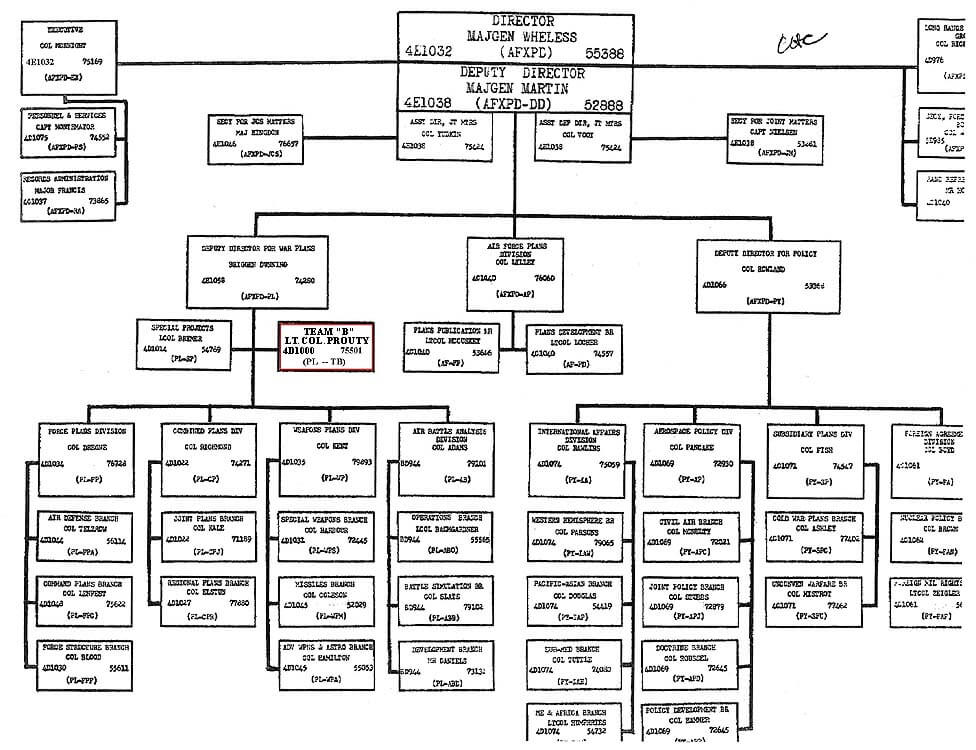


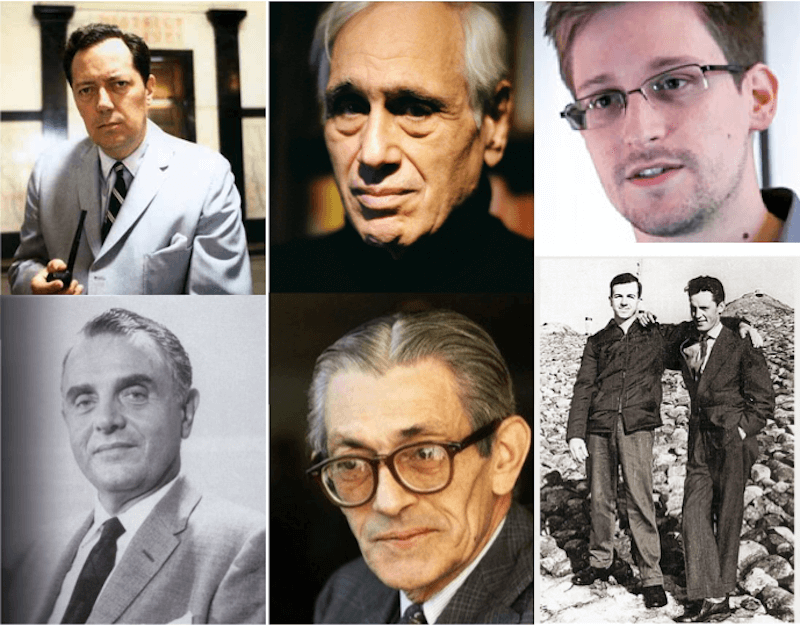 Edward Epstein began his career with a graduate thesis that he then sold as a book. It was called Inquest. He then wrote a book called Counterplot. The first was about the inner workings of the Warren Commission. The second was about the Jim Garrison investigation. These two books are discussed at length in the


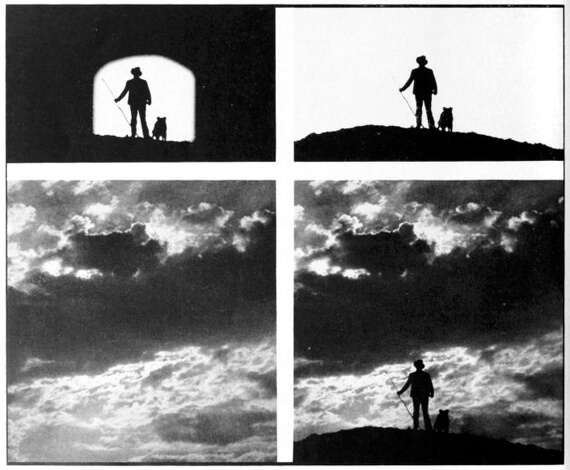






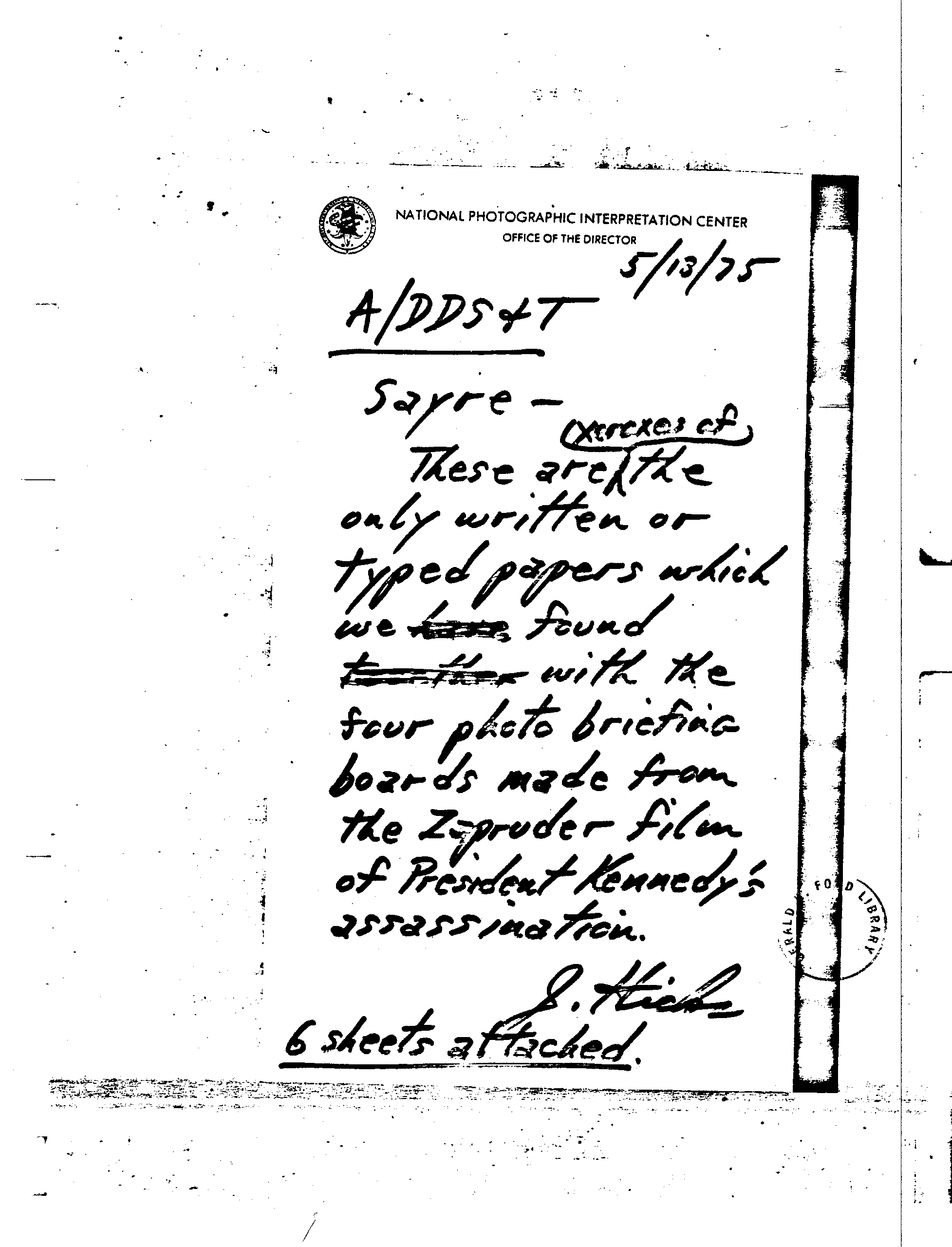
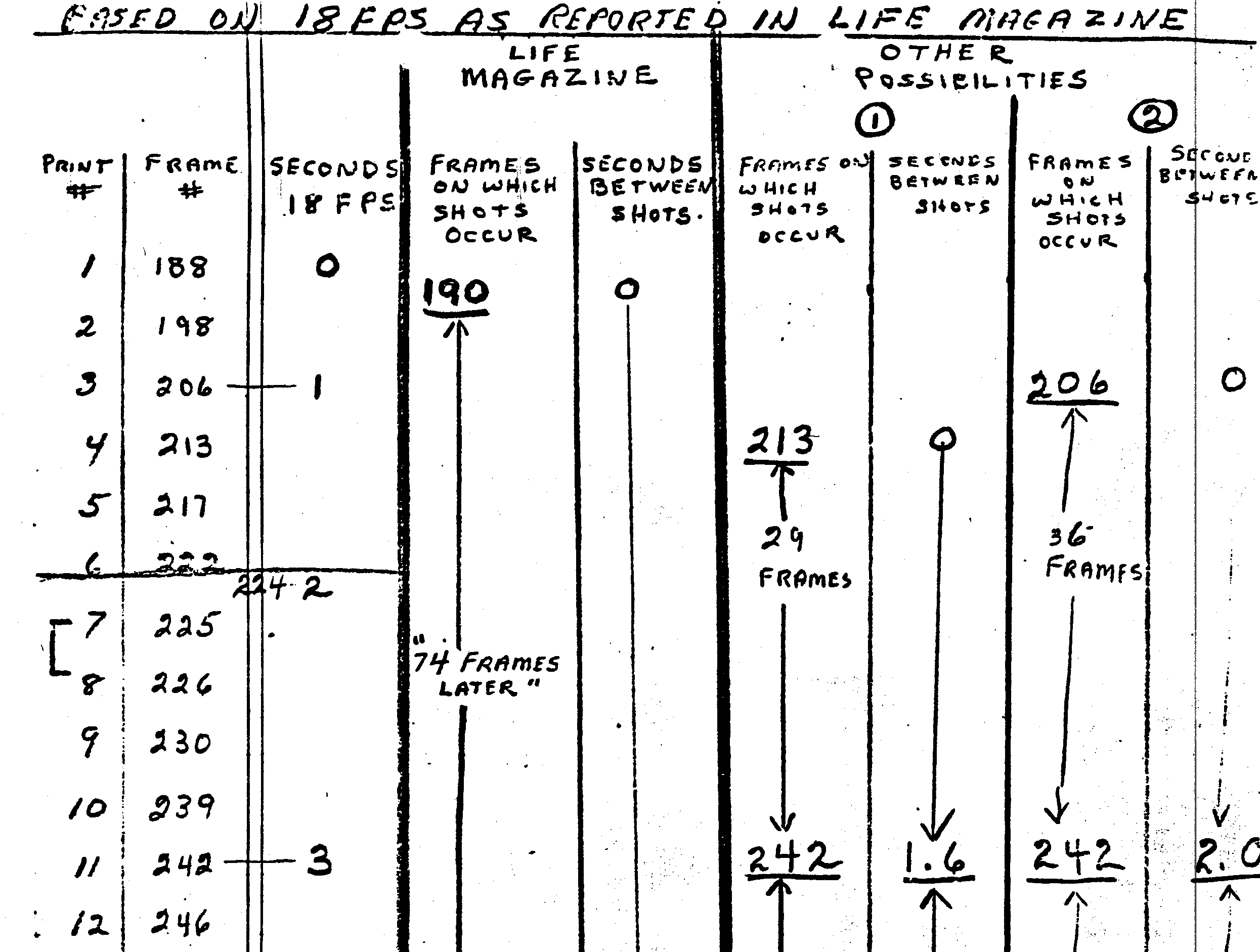

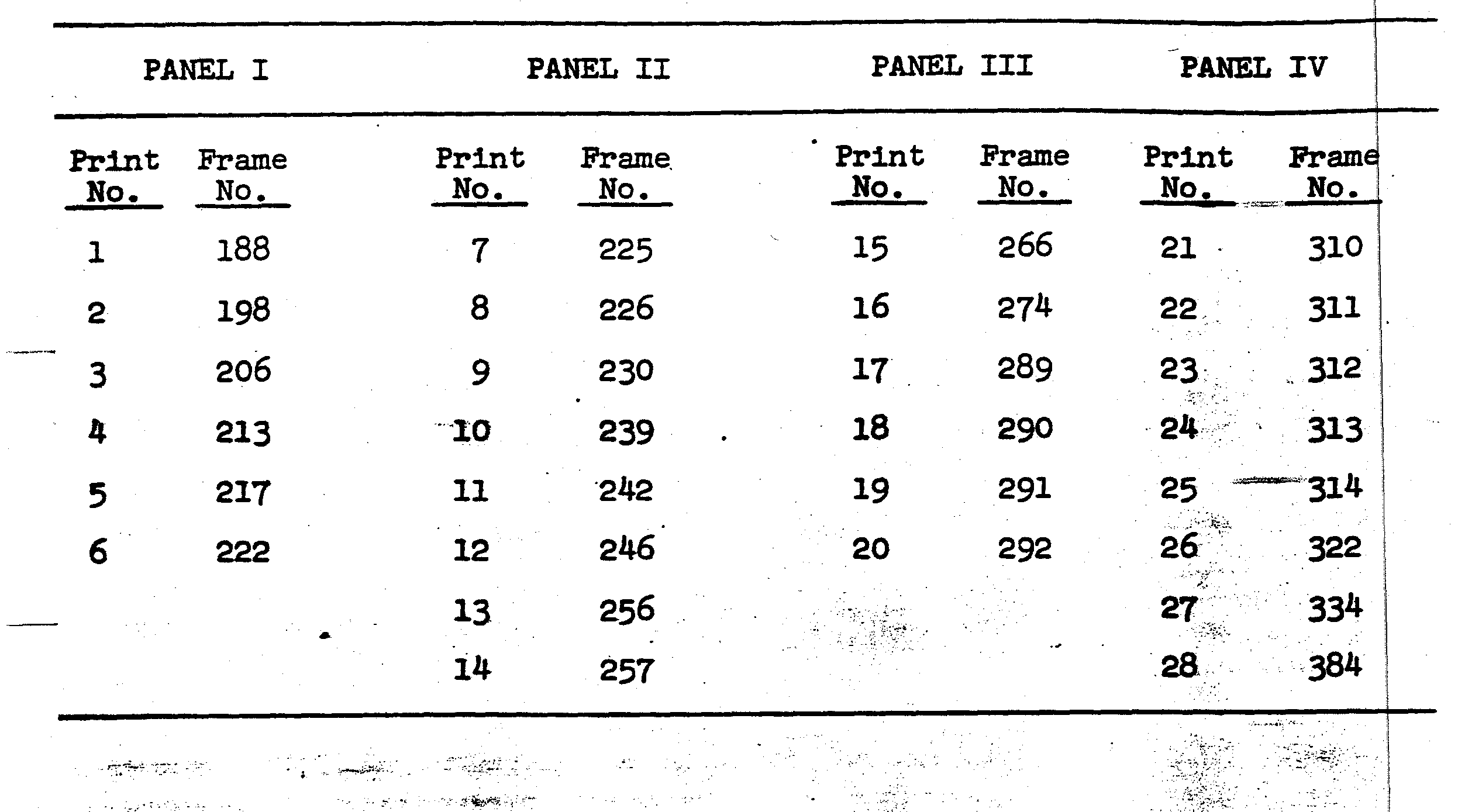
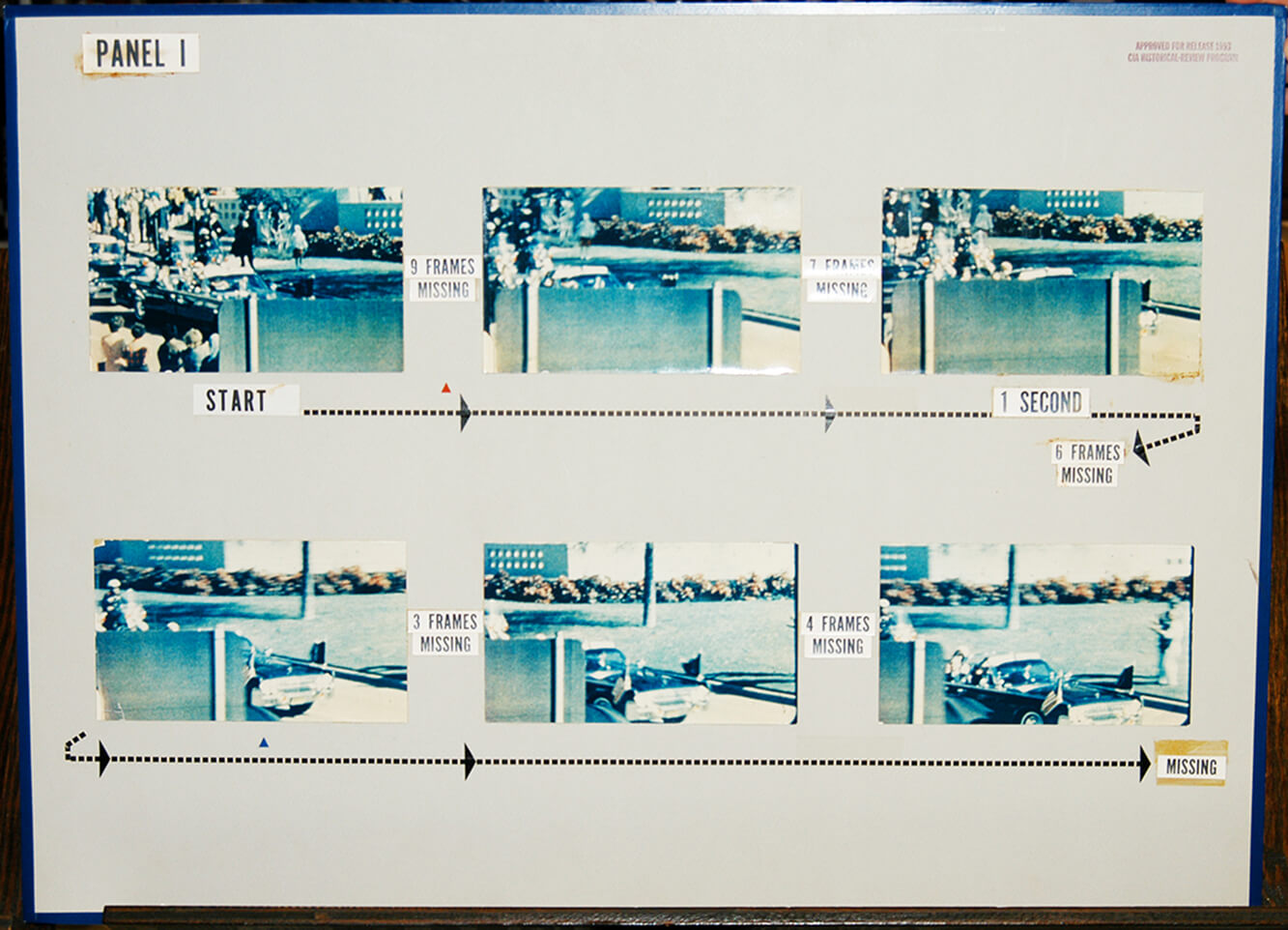







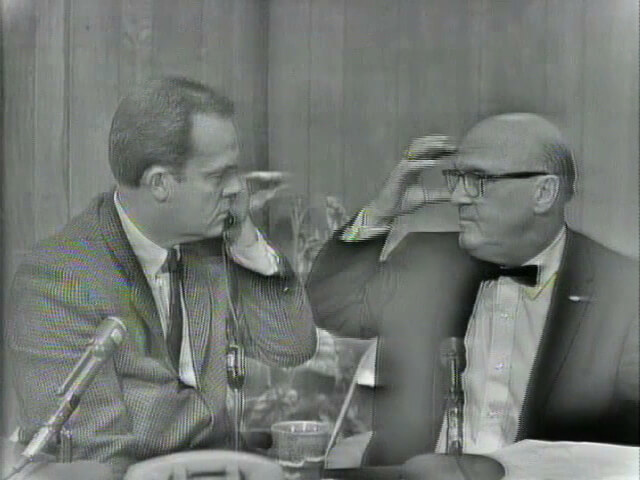
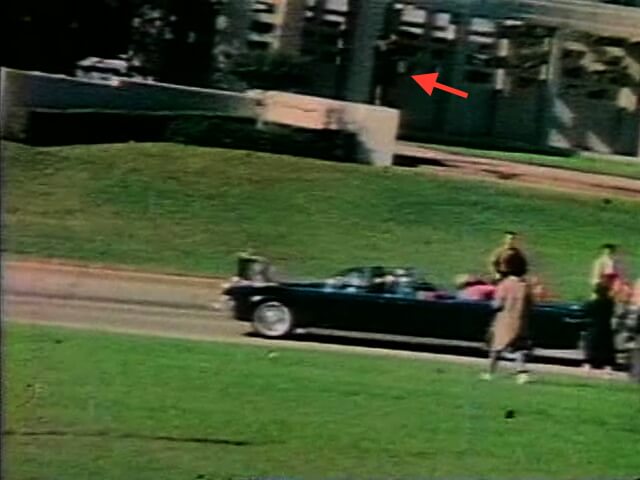
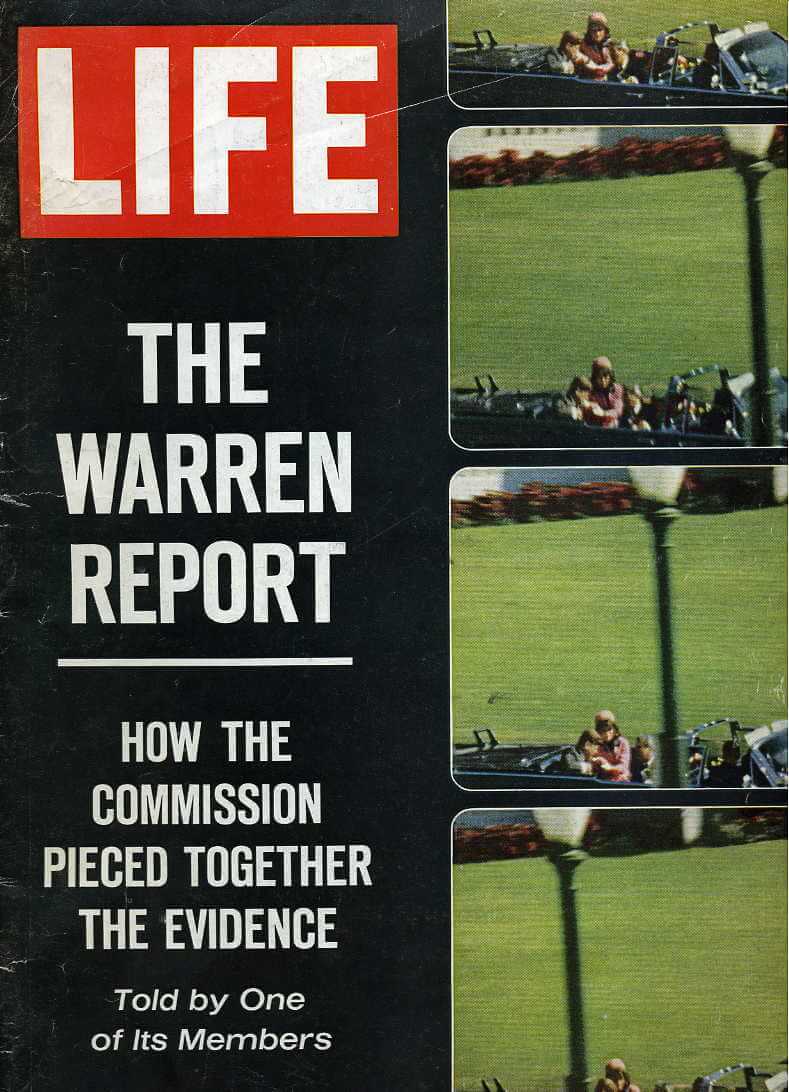 LIFE Magazine would also publish an Oswald backyard photo on its cover in February 1964, after an unauthorized leak from a contact within the Dallas Police Department, exposing millions at supermarkets and newsstands to a rather prejudicial image. This was accompanied by a long biographical article, which portrayed alleged assassin Oswald as a sociopathic loser, the position later adopted by the Warren Commission. In concert with the release of the Warren Report, LIFE’s October 2, 1964 issue featured Zapruder frames on its cover and an approving review of the Report, including an article penned by Warren Commission member Gerald Ford. Author Zapruder refers to the issue as an “examination” of the Warren Report, although the Report itself had not yet been released as the issue went to the printers.
 The above question is posed by author Mark Shaw in his new book, The Reporter Who Knew too Much. But for anyone interested in the JFK case, the questions about Kilgallen’s death are not new. Investigators like Penn Jones and Mark Lane first surfaced them in fragmentary form decades ago. And according to more than one report, Lane was actually communicating with Kilgallen when the latter was doing her inquiry into the JFK case from 1963 to 1965. This reviewer briefly wrote about her death in a footnote to the first edition of Destiny Betrayed. (See page 365, note 15) With the rise of the Internet, various posters, like John Simkin, kept the Kilgallen questions popping up on Kennedy assassination forums.