Tag: MALCOLM X ASSASSINATION

  • Review of James Douglass’s New Book – Pt 2

    Review of James Douglass’s New Book – Pt 2

    Martyrs to the Unspeakable – Pt. 2

    By James W. Douglass


    James Douglass was the only American print journalist in attendance at the entire civil trial in Memphis on the King case in 1999. He was there as a correspondent for Probe Magazine. Court TV was originally going to cover that proceeding, but according to Douglass, they pulled out just a couple of days before. The Memphis Commercial Appeal’s reporter on the King case was not allowed to attend. So he waited each day for Douglass to emerge in order to get the rundown on what happened. The jury in that trial found for the plaintiffs, the King family, against defendant Loyd Jowers. They decided that the King murder was the result of a conspiracy in which local tavern owner Jowers took part. Jim’s report was first published in Probe, and then excerpted in the anthology The Assassinations.

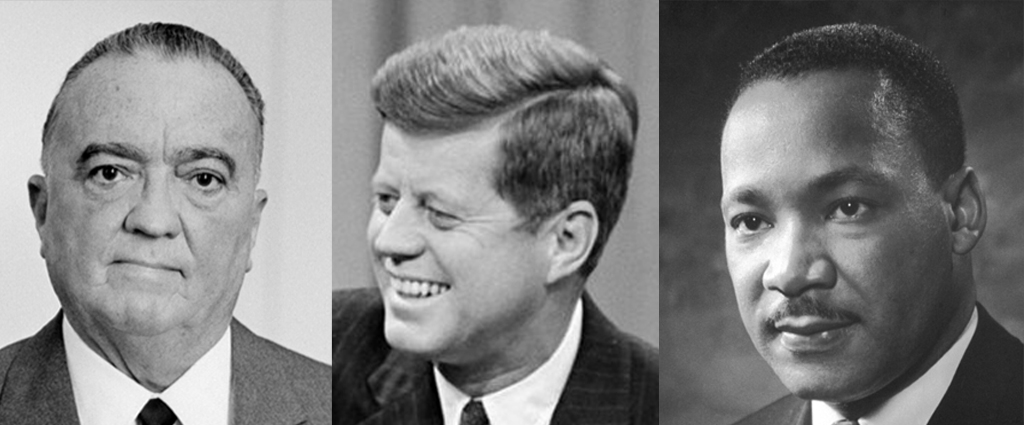
    As with Malcolm X, J. Edgar Hoover was obsessed with the so-called rise of a Black Messiah. Therefore, he did everything he could to discredit King. The first charge was that King was really a secret communist who had infiltrators from Moscow amid his entourage. In fact, Stanley Levison was a private businessman who contributed to the CPUSA but had halted his contributions by late 1956. The FBI knew this, and they also knew that his evolving interest was in the civil rights movement. He was now going to turn his fundraising abilities to that cause. So the FBI tried to get him to return to the party as their informant. He turned them down. (p. 141) So Hoover tried another track: Levison was steering the civil rights movement for Moscow.

    The other target for Hoover was Jack O’Dell. Again, O’Dell was a former member of the CPUSA who went to work for King’s Southern Christian Leadership Conference (SCLC). Beginning in 1961, he was an associate editor for Freedomways, an African-American political journal. He was a good office organizer for the SCLC, especially out of New York.

    As many commentators–like the late Harris Wofford–have noted, Hoover used these accusations of communist influence to drive a wedge between the Kennedys and King. As Douglass notes, the constant harangue by Hoover to expose King as a pinko with communist influences in his camp was, at least, partly successful. President Kennedy told King that if Hoover could prove he had two communists working for him, “…he won’t hesitate to leak it. He’ll use it to wreck the civil rights bill.” (p. 155). Kennedy had fallen for what was at least partly disinformation on Hoover’s part, and he asked King to jettison both men. The president was very sensitive to what Hoover could do to both himself and King. He said in a private conference, “If they shoot you down, they’ll shoot us down too. So we’re asking you to be careful.” (p. 156) King resisted this request on Levison and left the decision up to him. They decided to keep the relationship on a private basis. In 1963, he asked O’Dell to resign, which he did. But King continued to consult with him occasionally.

    What makes this more interesting is that both men fully understood the pressure being brought to bear on all three men: both Kennedys and King. And they understood that whatever they could do for the SCLC, what the Kennedys could do was more important.

    II

    The problem was that the Kennedys had backed the March on Washington. Which turned out to be a smashing success. (pp. 160-61) This had been preceded by President Kennedy’s June 11, 1963, televised declaration on civil rights, the most powerful statement on the matter by any president since Lincoln. In other words, King’s actions, in tandem with the Kennedys, were becoming very potent on a national level. After a thorough study of the FBI files, writer Kenneth O’Reilly stated that the FBI’s,

    …decision to destroy King was not made until the March on Washington demonstrated that the civil rights movement had finally muscled its way onto the nation’s political agenda. (p. 163)

    Under even further pressure from Hoover, he got Robert Kennedy to approve a wiretap on the SCLC’s and King’s phones out of Atlanta. Why did RFK agree to do this? The deal was for thirty days. So “If the taps proved King innocent of Communist associations, then the FBI would have to leave him and Kennedy both alone.” (p. 164). The problem was, as RFK’s personal liaison with the FBI, Courtney Evans, noted:

    …That the assassination of President Kennedy followed these events reasonably close in point of time, and this disrupted the operation of the Office of the Attorney General. ((p. 165)

    If anything, that was an understatement. What happened after JFK’s murder is that Hoover ripped out Bobby Kennedy’s private line to his office. He knew that RFK would not be around very much longer. The rabid racist also knew that his neighbor, Lyndon Johnson, would now allow him much more freedom in his vendetta against King.

    On December 23, 1963, a nine-hour meeting was held at FBI HQ to plan an intensive campaign against King. The aim was to use any technique in order to discredit the man. This included planting a good-looking female in his office:

    We will at the proper time, when it can be done without embarrassment to the Bureau, expose King as an opportunist who is not a sincere person but is exploiting the racial situation for personal gain…. (p. 165)

    The Church Committee adduced testimony that the aim was plain and simple: character assassination. Quite literally, no holds were barred. It was as if King were a dangerous KGB agent. And because Hoover oversaw the Bureau as a monarch, no one dared raise any questions of legality or ethics. It was all made worse when King was named Time magazine’s Man of the Year at the end of 1963. Now, with no one’s permission, the Bureau began to install hidden microphones in the rooms King would stay at on the road. (p. 168). In the spring of 1964, Hoover also got the influential syndicated writer Joseph Alsop to write a communist smear column against King. This was followed a week later by a similar article in the New York Times. (p. 170)

    As he had been warned by President Kennedy, who was not around anymore, King immediately suspected Hoover was behind both pieces. At an airport press conference in San Francisco, he pretty much threw down the gauntlet:

    It would be encouraging to us if Mr. Hoover and the FBI would be as diligent in apprehending those responsible for bombing churches and killing little children, as they are in seeking out allegedly Communist infiltration in the civil rights movement. (p. 171)

    Hoover responded in kind. The tactic now shifted from the Levison/O’Dell angle—which proved to be pretty much a dry well—to the wiretaps and bugs in the hotels. Hoover began this practice at the Willard Hotel in Washington, DC in January of 1964. This campaign was ratcheted up even further when it was announced that King would be given the Nobel Peace Prize for 1964. In other words, one of the highest international honors was being bestowed on Hoover’s beta noire. Hoover retaliated in public against this by calling King “the most notorious liar in the country.” His assistant urged him to qualify that remark as being “off the record”, but Hoover would not. Hoover then doubled down and said King was “one of the lowest characters in the country” and he was being “controlled” by his communist advisors. (p. 173)

    III

    When King was alerted to this attack, he was on vacation in Bimini, preparing his Nobel Prize address. He replied with:

    I cannot conceive of Mr. Hoover making a statement like this without being under extreme pressure. He has apparently faltered under the awesome burden, complexities and responsibilities of his office. (ibid)

    That reply initiated the infamous blackmail tape and letter sent to the Atlanta SCLC HQ in late November of 1964. The entire letter was not found until 2014 by Yale historian Beverly Gage, and Douglass prints it in his book. (pp. 174-75) It is six paragraphs long. The letter is clearly complementary to the alleged taping. In the 4th paragraph, it says the following:

    No person can overcome facts, not even a fraud like yourself. Lend your sexually psychotic ear to the enclosure. You will find yourself and in all your dirt, filth, evil and moronic talk exposed on the record for all time. I repeat—no person can argue successfully against facts. You are finished. You will find on the record for all time your filthy, dirty, evil companions, male and females giving expression with you to your hideous abnormalities….It is all there on the record, your sexual orgies…This one is but a tiny sample….King you are done. (pp. 174-75)

    Toward the end, the letter states: “You are done. There is but one way out for you. You better take it before your filthy, abnormal, fraudulent self is bared to the nation.” (p. 175 ) The FBI mailed it from Miami about five days before Thanksgiving of 1964. But the package sat at the Atlanta headquarters for over a month. It was not opened until after King received his Nobel Prize in Oslo. And it was opened by King’s wife Coretta. She notified her husband, and he and his advisors immediately realized it was from the FBI.

    There has been an ongoing debate over two matters in the package. The letter gave King a deadline of 34 days to act. Some believe that, considering when the package was mailed, this would mean Christmas. Others say it was timed for the Nobel Peace Prize honor, which was about two weeks earlier. The second matter was the aim of the package. The SCLC maintained it was for King to take his own life. The FBI, in the person of William Sullivan, who oversaw the composition of the letter, said they wanted King to resign, as they were already grooming his successor, one Samuel Pierce. (p. 169)

    Whatever the timing, whatever the goal, King concluded correctly that the FBI was out to break him. Through their surveillance, the FBI knew he knew and told Attorney General Nicholas Katzenbach that “King was emotionally distraught and feared public exposure.” (p. 179)

    King decided to continue in his efforts, knowing that neither of the Kennedys was now in office and Hoover’s venom was virtually unfettered. He must have felt even more forlorn when Malcolm X was killed the next month. As some have noted, Malcolm was killed just two weeks before President Johnson sent the first combat troops to Vietnam.

    IV

    Johnson had escalated the war in Vietnam to heights that President Kennedy would have found appalling. By early 1967 there were nearly 400,000 American combat troops in theater. Johnson had activated the air campaign, Operation Rolling Thunder, to complement the combat troops. There ended up being more bomb tonnage dropped in Indochina than had been disposed of during World War II; by a factor of 3-1, the ratio was not even close. The problem was that the bombing campaign inevitably included civilians, since, unlike Germany, Vietnam did not have a highly concentrated industrial base.

    In January of 1967, King was looking at a Ramparts magazine photo/essay entitled “The Children of Vietnam”. Many of the pictures showed little children in a hideously burned state. The article was by attorney William Pepper. King then met with him, and Pepper showed him more photos. It moved King to now begin a sustained assault on Johnson’s prosecution of the war. His first speech was in Los Angeles on February 27th, called “The Casualties of the War in Vietnam”. This was followed up by the more famous address at New York’s Riverside Church on April 4, 1967. As Douglass appropriately notes, a year later, King was dead.

    There were those—like Ralph Bunche– who advised against King taking on the war. But King thought it was hypocritical to send African-American troops to fight in Vietnam for rights that some did not have at home; and to kill so many innocent civilians along the way.

    Another aspect that made King determined to speak out on Indochina was that he had done so in 1965, and then backtracked. At that time, he said that Johnson had a serious problem in this regard because “The war in Vietnam is accomplishing nothing.” (p. 351) About a month and a half later, in April of 1965, he told some journalists in Boston that the United States should end the war. On July 2, 1965, in Petersburg, Virginia, King said that the war must be halted and a negotiated settlement should be achieved. (p. 352). But the SCLC board members did not want King to continue in this vein.

    So King instead had a meeting with UN Ambassador Arthur Goldberg in September to voice his concerns and urge Johnson to negotiate a truce. King even suggested that it would be possible to bring the Chinese into the negotiations. Both Goldberg and Senator Thomas Dodd voiced opposition to these types of talks. (pp. 355-57) And Dodd went further by saying King had no knowledge to speak on matters so complex as Indochina, and further, he was undermining Johnson’s foreign policy. King thought Johnson had put Dodd up to this criticism.

    As others, Douglass sees King’s decision to return to the Vietnam issue, coupled with the stirrings of the Poor People’s March, as raising his targeting from character assassination to outright elimination. As per the latter, what King ultimately hoped to gain from the Washington demonstrations was the following:

    1. A full employment program
    2. Guaranteed Annual Income
    3. Funding for 500,000 annual units of low-cost housing (p. 310)

    King wanted to do in Washington what he did in Birmingham. Through peaceful civil disobedience, he would tie up the city and force its leaders to act on his proposals. But King was going to go even further and unite the two goals:

    After we get to DC and stay a few days we’ll call the peace movement in and let them go on the other side of the Potomac and try to close down the Pentagon, if that can he done. (p. 311)

    King was now talking about closing down both Congress and the Pentagon. The reader should recall that this is on FBI tapings. As Bernard LaFayette, a coordinator of the Poor People’s Campaign, later said, “You see, the Poor People’s Campaign was clearly economic rights. Now, it’s not low volume; it’s high volume.” (ibid). Or as Vincent Harding, the man who drafted King’s Riverside speech, later said: King was moving in “some radical directions that few of us had been prepared for.” He clearly suggested that this necessitated his assassination. (p. 314)

    V

    James Earl Ray escaped from prison in late April of 1967. After working as a dishwasher for a couple of months, he stashed enough money to buy an old car and crossed the border to Montreal, Canada. There, at the Neptune Tavern, he met a man he knew simply as Raul. Although Ray had been attacked for creating this character, a witness who testified at the 1999 King trial confirmed it. Seaman Sidney Carthew also met Raul at the same bar. And he saw him with Ray. (pp. 339-40)

    As Douglass describes it, Ray’s partnership with Raul ended up being a minor gun-running and drug-smuggling operation. It went from Canada to the USA, particularly California, and then to Mexico, and back to the southern part of the USA, ending with Ray being asked by Raul to go to Memphis and buy a rifle. But it was the wrong one. So Raul ordered him to go back and buy another one. As attorney Arthur Hanes testified at the King trial, it was that rifle which was dropped at the door of Canipe’s novelty shop a few minutes before the actual assassination. And that would be the weapon Ray was charged with in killing King. (p. 340) Even though that rifle was never calibrated for accuracy.

    Perhaps the most remarkable aspect of Ray’s journeys after his escape is his use of multiple identities, i.e., Eric Galt, Ramon George Sneyd, Paul Bridgeman and John Willard. As Philip Melanson originally noted, all four lived in a suburban area of Toronto; and within a five-mile radius of each other. But beyond that, three of the aliases—Galt, Bridgeman, Sneyd—approximated Ray’s general appearance, that is, in height, weight and hair color. Further, there is no evidence that Ray had been to Toronto before the assassination of King.

    What makes this even more startling is that Ray signed the Galt alias with the wrong middle name of ‘Starvo’, which came from a scrawl Eric used for ‘St. V’, which actually stood for St. Vincent. But here is the capper: “When Galt shortened it to the initial ‘S’ Ray… did the same.” (p. 341) As Douglass concludes, only someone with access to Galt’s security file at Union Carbide, where he worked, could have known about these nuances.

    Douglass now moves to the preparations made for the King’s murder. First, King’s normal all-African-American security team was removed the morning of his arrival. The replacement team of caucasian guards was then removed late in the afternoon, about an hour before the shooting. Two black officers from the fire station across the street were reassigned to different stations for that day. The tactical police units around the Lorriane Motel, where King stayed, were moved back earlier on April 4th. The first three negated any security, and the last made it easier for an escape. (pp. 343-44)

    Was it even more prepared for than that? The reason King returned to Memphis was because, in his first visit there, about a week earlier, there was a raucous disturbance in the demonstration. That disturbance was caused by the Invaders, an African American youth group modeled on the Black Panthers. (p. 448) A prominent member of that group was Marrell McCullough, who was later uncovered as a police informant and then worked a long career as a CIA officer.

    When King decided to return, the FBI then put out a story that on his original visit, he ignored the Lorraine, which was black owned. He had stayed at the Holiday Inn motel, which was white owned. Therefore, King was initially booked into an interior courtyard room at the Lorraine for his return. Someone, no one knows who, had that room switched to a street-level room. It would have been difficult to assassinate King in that first room. The room on the street made it easier. (pp. 448-49)

    On the day of the murder, Raul delivered a rifle to Loyd Jowers’ eatery, Jim’s Grill. The back door opened up to a bush area across from the Lorraine. There is a dispute as to where the shot that killed King originated. At least two credible witnesses say it did not come from the flophouse where Ray was booked at. It came from that bushy area, and Douglass agrees with that. But the point remains, those bushes were inexplicably cut down early the next morning. (p. 455)

    As the reader can see, there is good reason that the MSM did not cover the Jowers/King trial in 1999. Because they suspected that the King family would win out. Which they did. Jim Douglass does a good job presenting that evidence, which helped Bill Pepper win a judgment.

    Next: JFK and RFK are eliminated. Click here to read part 3.
  • Review of James Douglass’s New Book – Pt 1

    Review of James Douglass’s New Book – Pt 1

    Martyrs to the Unspeakable – Pt. 1

    By James W. Douglass


    In 2008, James Douglass published JFK and the Unspeakable. That book became, more or less, an instant classic in the field. One reason being that Douglass did something quite unusual. Instead of having Kennedy’s presidency as a backdrop to his assassination, he made his assassination a backdrop to his presidency. But, beyond that, Douglass delved deeper into that presidency than virtually anyone in the field had done. He brought in things that had not been studied before, and he dug further into aspects that had been gone over previously. With those explorations, he made the case as to why President Kennedy was assassinated.

    Douglass appropriately ended his fine book with the fact that both Bobby Kennedy and Jackie Kennedy knew what happened to JFK. And, through envoy William Walton, they communicated to Moscow that the John Kennedy/Nikita Khrushchev attempt at détente would now have to be placed on hold; but Bobby Kennedy would soon resign, run for office, and then run for the presidency. At that time, the quest could be resumed.

    The Douglass book struck a chord with the public. After Oliver Stone endorsed it on television, sales zoomed upwards. It was then picked up by Touchstone, which was a division of Simon and Schuster. In all formats, it has sold well over 100,000 copies. It is the rarest of JFK books in that it was both a critical and commercial success. (Click here for my review https://www.kennedysandking.com/john-f-kennedy-reviews/jfk-and-the-unspeakable-by-james-w-douglass)

    At the time of that book’s publication, Douglass was supposed to pen a trilogy about the major assassinations of the sixties. The second book was going to be about the Malcolm X and Martin Luther King assassinations. The third was going to focus on the Robert Kennedy murder. Since the road to completion took 17 years—interrupted by his book on the life and death of Gandhi–the decision was made to collapse them into one volume. So we now have Martyrs to the Unspeakable.

    II

    Douglass begins the book with a pungent quote from Malcolm X:

    It’s a time for martyrs now. And if I’m to be one, it will be in the cause of brotherhood. That’s the only thing that can save this country. I’ve learned it the hard way. But I’ve learned it. And that’s the significant thing. (p. xvii, p. 459)

    This is one of the sub-themes of the book. One lurking not far below the surface and infrequently but explicitly mentioned: Namely, that all four men understood that they were in danger, they were gambling with their lives in advocating the paths they were taking. Malcolm, with his UN resolution condemning America for human rights violations against African-Americans; King, in his organizing of the Poor People’s March on Washington; JFK, in his quest for détente with Cuba and Moscow; and Bobby Kennedy, with his impending victory in the Democratic primary and his pledge to end the Vietnam War. (Douglass points out the little-known fact that the Poor People’s March was Bobby Kennedy’s idea. p. 90)

    Explicitly, Bobby Kennedy told Walter Fauntroy that “…there were guns between me and the White House.” (p. 97). He said about his brother that if the Russians did not meet his attempts at détente halfway, “…his enemies may go to any length, including killing him….” (p. 502)

    JFK said the same thing about himself. He was once asked why he did not move faster for a rapprochement with Moscow. He replied: “You don’t understand this country. If I move too fast on US/Soviet relations, I’ll either be thrown into an insane asylum or be killed.” (p. 503)

    I do not have to tell the reader about King predicting his own death the night before he was assassinated. Why was there this impending doom? Douglass underscores that what these four men were striving for was simply too radical for the national security complex to tolerate. Therefore, they had to be done away with before they could succeed. It is important to note that it was only during John Kennedy’s presidency that all four men were alive and operating at their peaks. As I have noted elsewhere, there was more done on civil rights in those three years than had been achieved in the prior three decades. (Click here and scroll down https://www.kennedysandking.com/reviews/the-kennedys-and-civil-rights-how-the-msm-continues-to-distort-history-part-3) For that reason 1.) There could be no Kennedy dynasty, and 2.) There could be no confederation, which was impending, between Malcolm and King.

    III

    The book is structured into three major headings. Part One is called The Witness. Part Two is called The Way. Part Three is titled The Why.

    In the first part, we see certain policies being advocated by the four major players. For instance, Malcolm going international with a meeting with Achmed Sukarno in 1957 (p. 113); hearing Patrice Lumumba speak at Howard University in July of 1960 (p. 123); his arrangement to have Castro take a room at the Hotel Theresa, and his meeting there with him after midnight on September 19, 1960. (p. 125) This last caused quite an uproar in Harlem since the Cuban leader was going to be charged a $20,000 deposit at the Shelburne Hotel. By the time Malcolm made the arrangements to switch hotels, there were 2,000 people waiting in the rain, fully understanding why the Cuban leader was being forced out of downtown:

    To Harlem’s oppressed ghetto dwellers, Castro was that bearded revolutionary who had thrown the nation’s rascals out and who had told white America to go to hell. (p. 125)

    What these instances did was to broaden both the appeal of Malcolm, and also his intellectual horizons. Malcolm was now not just a regional figure in the USA, but he was seen as associating with figures on the world stage. And these men happened to be striking figures in the rising Third World. But then this was all topped. Because Nikita Khrushchev happened to be in New York, and he decided to join Castro at the Hotel Theresa:

    By going to a Negro hotel, in a Negro district, we would be making a double demonstration: against the discriminatory policies of the United States of America toward Negroes, as well as toward Cuba. (p. 126)

    Malcolm had helped arrange a slap across the face to the Establishment. And make no mistake, they did not like it.

    The Cuban leader’s diplomatic triumph over the US government in Harlem was a dramatic counterpoint to his UN speech. It was facilitated by Malcolm X. When US intelligence agencies focused their attention on Fidel Castro in New York, they discovered Malcolm X standing right beside him, welcoming Fidel and the Cuban revolution to Harlem. By joining forces with Fidel, Malcolm, too, had become a target. (p. 129)

    As Douglass notes, the CIA/Mafia plots to kill Castro began around this time. (p. 128) But as someone close to Malcolm also noted, this meeting with Castro began to divert Malcolm’s thinking away from the narrow restrictions of his loyal service to the Nation of Islam and its leader, Elijah Muhammad, e.g., black power, black nationalism, and racial separation. He began to see that there were other oppressed groups like American Indians, Chicanos and Hispanics, and theirs could be a common struggle. (ibid)

    There were two other elements that began the notorious split between Malcolm and the Nation of Islam (NOI). There was the matter of Malcolm’s inquiries about Elijah Muhammad’s numerous infidelities. (p. 254) Which Malcolm felt were unbecoming for a Holy Man. And there was his Hajj, which ended up lasting much longer than planned, and with Malcolm visiting countries outside the Middle East, including France and Egypt. He then visited Africa again. All told, he went to Africa three times. He became a member of the Organization of African Unity, and adapted it in the USA as the Organization of Afro-American Unity. Which he saw as a Pan African group extending to the USA. (p. 242) Further, he could use their leaders to facilitate his aim at bringing about a UN resolution condemning American treatment of blacks. As he said:

    You must realize that what I am trying to do is very dangerous, because it is a direct threat to the entire international system of racist exploitation. It is a threat to discrimination in all its international forms. (p. 244)

    IV

    One last element that had caused Malcolm’s split from NOI was his suspension after his perceived inappropriate remarks upon the murder of President Kennedy, which he called the chickens coming home to roost. This suspension was originally for 90 days. But it lasted longer, and Malcolm tended to look at it as personal since he was getting more attention as a NOI representative than Elijah was.

    When Malcolm went on his Hajj, he now began to see that there were all kinds of people visiting Mecca, many of them Caucasian with blonde hair and blue eyes. Which also began to make him question the fundamental tenets of NOI and whether it really was Muslim at all. So he decided not just to split from NOI but to convert to Sunni Islam and form the Muslim Mosque. All these elements did not endear him to Elijah or his followers, like Louis Farrakhan.

    In fact, he wrote a letter to a NY Times reporter where he noted that he now regretted the 12 years he had spent in NOI, and called it a “pseudo-religious philosophy”. He then capped that with this:

    I shall never rest until I have undone the harm I did to so many well-meaning, innocent Negroes, who through my own evangelistic zeal, now believe him more fanatically and more blindly than I did. (pp. 245-46)

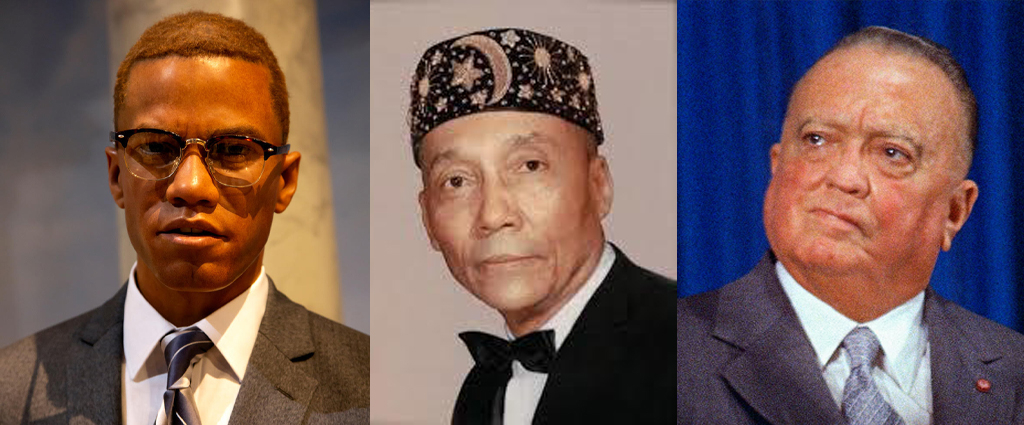
    It is appropriate to note that years before he became Vice President, Lyndon Johnson had a talk with J Edgar Hoover of the FBI. Hoover said they would not have a problem if they could get these black leaders fighting among themselves to the point they would kill each other off. (p. 241) Although they were likely speaking of King and Malcolm, there is no doubt that Hoover later adapted this divide-and-conquer philosophy to other African American groups, most successfully with the Black Panthers. In fact, there is plentiful evidence that Hoover used this technique in exacerbating and inflaming the split between the NOI and Malcolm. This was done through placing informants in both camps and a clear agent provocateur against Malcolm in the NOI camp. The latter was John Ali. (pp. 249-250)

    Ali began with Malcolm in New York in 1958. The next year, Malcolm recommended him to the NOI headquarters in Chicago. That was a recommendation that he came to strongly regret. When Elijah Muhammad moved to Phoenix for health reasons, Ali essentially took over the Chicago HQ. He even got Malcolm’s brother to read a prepared statement denouncing Malcolm and accusing him of being mentally unbalanced. (p. 272) Elijah essentially called for his elimination with this: “Elijah Muhammad said they had better close his eyes.” In early 1964, the message went out that Malcolm had to be liquidated. (p. 256)

    But this could not have succeeded without help from the CIA, the FBI and the NYPD. The last was through their undercover intelligence group called BOSSI. Douglass does a nice job outlining all of this. There was a previous attempt to murder Malcolm by poison in Cairo. Malcolm was rushed to the hospital and had his stomach pumped. Malcolm had retroactively recognized his waiter, who afterwards had disappeared. Malcolm concluded, “I know that our Muslims don’t have the resources to finance a worldwide spy network.” (p. 427). But further, after an engagement in London on February 9th, he flew to Paris to make another speech. At Orly Airport, the French police intercepted him and said he was not allowed to enter France. Why? Because French intelligence had been told, “That the CIA planned Malcolm’s murder, and France feared he might be liquidated on its soil”, and they did not want that to occur on their watch. (p. 437)

    On February 14, 1965, Malcolm’s home in Queens, which was in dispute between him and the NOI, was firebombed. A day later, BOSSI undercover agent Gene Roberts witnessed a dress rehearsal for Malcolm’s murder. Roberts then predicted to his superiors that the real assassination would take place the following Sunday. Hoover had Malcolm monitored for the last 17 days of his life and had an agent at BOSSI each and every day during that time. He had to know this. (pp. 440-41, p. 450)

    V

    As Douglass notes, one of the most tragic aspects about the murder of Malcolm is that not only was he breaking from NOI, he was trying to forge a relationship with King. One complaint Malcolm had with Elijah Muhammad was that the Nation of Islam would not do anything in public unless it impacted one of their own. They basically sat out the whole civil rights movement. So once he split with the Nation of Islam, Malcolm journeyed to the epochal Selma demonstration in early February of 1965. The talk that he was coming had barely started when he arrived at a meeting of the SCLC and SNCC workers. Coretta King was in attendance while her husband was in jail. He told her, “I have not come to Selma to cause difficulty for Dr. King. I only want to show support.” (p. 435)

    When Malcolm spoke at the Brown Chapel that afternoon, he leaned over the podium and said to the media in front, “You had better listen to Dr. Martin Luther King Jr., or you will have to listen to me. Dr. King wants the same thing I want—Freedom!” (p. 436) Unfortunately, this was not to be. For Malcom would be dead in a little more than two weeks.

    On the morning of February 21st, Malcolm was on the phone with his sister. He said, “Ask Allah to guide me, because I feel they may have me doomed for this day.” She said, “Not this day.” Malcolm replied, “Yes, this day.” (p. 451) Making this even more prophetic, Malcolm refused to allow his guards to search people coming into his talks. One of his escorts resigned over this policy after telling him he was going to be killed.

    Once the warning came in from Roberts about the dress rehearsal and the day it would occur, the NYPD should have been in the Audubon ballroom and ready to detect and stop the attempt. They were not and did not. They placed their men in rooms away from the ballroom. And they were not allowed to move in that direction unless given radio permission to do so. But when the shots rang out, the walkie-talkies went dead. Therefore, the police ended up entering the scene fifteen minutes after the murder. (pp. 449-450)

    In other words, egged on by the FBI and allowed to proceed by the NYPD, Malcolm was killed by a NOI plan that the authorities specifically knew about in advance. In other words, it was allowed to happen. Douglass has done a fine job on the relatively ignored case of the assassination of Malcolm.

    Next: The Murder of Martin Luther King. Click here to read part 2.

  • Malcolm X lawsuit against FBI, CIA and NYPD filed

    The family of murdered black civil rights activist Malcolm X is suing the FBI, the CIA and the New York police department. Read more.

  • Four Died Trying, Chapter One

    Four Died Trying, Chapter One


    Four Died Trying is a mini-series streaming on Amazon and Apple TV, on the four major political assassination of the sixties: John Kennedy, Malcolm X, Martin Luther King and Robert Kennedy. Jim DiEugenio wrote a review of the Prologue to this series at his Substack site. Please read that before your read this.

    Chapter One of Four Died deals with the era of the fifties. In other words this installment was meant to lay in the backdrop of what was changed and how those attempts at change were then themselves stopped and rolled back. The main talking heads in this chapter are Bobby Kennedy Jr., Oliver Stone, author Mark Crispin Miller and screenwriter Zachary Sklar.

    The view taken by the narrative is that of, let us call it, “The Haunted Fifties”, the title of an I. F Stone book on the subject. The chapter concentrates on the fear of communism, of being accused of being a communist, and the rise and fall of Senator Joe McCarthy. In accordance with the last, Kennedy talks about his grandfather’s relationship with the senator and how this led to his father’s initial service on McCarthy’s committee. After a few months, RFK switched over to the Democratic side and – although the film does not show it – he was instrumental in causing the senator’s downfall.

    Professor Miller goes into how, in 1947, President Truman was maneuvered into making government employees sign loyalty oaths. This was Executive Order 9835, which mandated there be a loyalty investigation of persons entering as employees of any department of the executive branch of the national government. The film then comments on how this policy was proven to be unwarranted since the FBI had infiltrated the communist party in America to the point that any meeting had as many informants as it did communists. Yet many people were unjustly harassed: the film makes the talented actor and singer Paul Robeson a prime example.

    II

    From here, the film goes into the Hollywood sideshow set up by the House on Unamerican Activities, featuring people like Richard Nixon. Zachary Sklar’s father was a victim of all this and Sklar vividly describes how fearful the writer was of a visit by the FBI and being called as a witness before the committee – as one of his writing partners, Albert Maltz, was. Some of the clips, particularly of actors Adolphe Menjou and Robert Taylor, are rather nauseating in their obsequiousness. The film gives the Hollywood Ten case its proper due, especially the plight of writer Dalton Trumbo, who, with the help of producer Kirk Douglas and ultimately President John F. Kennedy – who went to a theater to see the Trumbo/Douglas film Spartacus – finally broke the Hollywood backlist. The film shows a rather rare clip of baseball player Jackie Robinson, who unlike Menjou and Taylor, managed to keep some of his dignity in the face of this charade.

    The film also includes some of the artistic reactions to McCarthyism, e.g. director Don Siegel’s classic allegory disguised as a sci-fi thriller film, Invasion of the Body Snatchers. Professor Miller aptly comments on how the pressure got to the point that it was almost like the Bill of Rights was on trial. Perhaps this point should have been made more explicitly: that it was not and is not illegal to be a communist. At least not according to the First Amendment. And if this point had been delineated more strongly then perhaps the film could have dovetailed into a larger theme, that is how The Fifties was really a kind of “make believe” era, one for which the perfect figurehead was President Dwight Eisenhower. One in which a rising economic tide masked the serious problems ignored at home, and a marked tendency to use the CIA to intervene in the Third World abroad.

    The title of the series is so evocative and Chapter One, which is not long – just under 40 minutes—is rich on foreshadowing. So yes, the chapter is worth watching, especially if one is unfamiliar with the anti-communist sturm und drang of the 50s.

    III

    The chapter begins dramatically and suggestively. Each of the four murdered political leaders are seen speaking, one by one, on TV screens. Suddenly, unexpectedly, a gunshot can be heard, the screen goes to complete static and the image of the speaker disappears. JFK is first. He can be heard saying “Not a Pax Americana enforced by American weapons of war.” Then Bam! He’s gone. Then Malcolm appears: “People in power have misused it and now there has to be a change, a better world has to be built.” Bam! Malcom is gone. We see bombs being dropped over Vietnam. MLK, Jr. is speaking, “The bombs in Vietnam explode home. They destroyed the dream and the possibility for a decent America.” Bam! Martin is gone. Finally, RFK appears and says, “Cannot continue to deny and postpone the demands of our own people.” Bam! TV goes to static. RFK is gone too.

    These are the four who died trying. But we aren’t told in this chapter what each of them did to warrant being murdered and what the shared trying consists of specifically. The chapter works better as an unfolding, ominous, wait-and-see decade.

    The characterization of postwar America presented to the viewer is an America hell bent on developing a massive military arsenal to combat an evil empire. Director John Kirby’s use of old propaganda film, which scared the daylights out of Americans back then, is effective in making the propagandists sound and look ridiculous today. But the reality of the impact of the propaganda, hysterical though it may seem today, is not lost on the viewer. The fear ginned up that the Russians were about to end civil liberties in America had a near totalitarian quality about it. The set up seductively invites the viewer to yearn for that knight in shining armor to save us all from this American styled, glitzy – America is nothing if not beautiful things to buy – star-spangled neo-fascism.

    The centerpiece in this tableau are several clips of Eisenhower’s well known Farewell Address where he warned citizens of the rising power and presence in American life of the “military industrial complex” (MIC). Kennedy, Jr. is brought in to concur: The MIC “would hollow out the middle class” and “direct” [America] toward constant wars.”

    Eisenhower’s warning becomes more ominous: the MIC represents “misplaced power” that “endangers our liberty and democratic processes.” In fact, Eisenhower concludes that the MIC has penetrated so thoroughly into the American way of life that it has become the very “structure of our society.” Against this tale of America on the ropes, RFK, Jr. provides a bit of foreshadowing that is more specific: the “whole administration” of his uncle, JFK, “was a battle with his own military brass and the intelligence apparatus.”

    Amid this intensity of American ideological managing during the 50s, NYU Professor Miller (who is used throughout as a commentator), explains that because the USSR was “shattered” following WWII, the Soviet Union, actually posed no real military threat to the US. However, Miller wishes to make clear that, “There is no doubt the US was now up against a totalitarian enemy, whose history of bloodshed and oppression is beyond question.” But hold on: There is a real threat to our civil liberties, but not from the Russians themselves but from the anti-communists behind McCarthyism. As Miller explains, “There was no chance that …[the totalitarian enemy] could extend to this country and in any way threaten American democracy. It was the anti-communists who did that.”

    Indeed, Kirby and producer Libby Handros are onto something. We need to be aware of the machinations of the far right, especially when they have the guns and/or the power.

    Context

    One of the many fifties propaganda film voices lets us know that “the main target of the American communists has been labor.” Now there’s something that could provide a clue as to what is going on beneath the surface. The far right aren’t just a collection of madmen and women. As owners of the country they have material interests. So I took a quick look to see what animated the first Red Scare.

    Something that may have been added to the context was what many feel was a prime motivation for the first Red Scare, that is the rise of unions in America. With FDR as president, hundreds of socialists and communists coopted the labor movement and were among the militants pushing for the organization of labor in the industrial sectors of the economy. Consequently, the 30’s saw the greatest growth of unions in American history. Along with numerous social programs, a middle class was being created. And with marginal income tax rates above 90 percent and corporate tax rates above 50%, capitalist were not just on the defensive, they were apoplectic.[1]

    Further, the accomplishments of socialists and communists in the 30s helped build the very middle class that RFK Jr is worried about being “hollowed out.” And to cite one other example of concrete success, because of the pressure organized by A. Philip Randolph, an early supporter of the Bolshevik Revolution, President Roosevelt signed an executive order that opened the defense industry to black workers.[2]

    IV

    Can the situation following WWII be explained by ideology alone? The US did become the world-wide hegemonic power. It inherited, in a certain respect, the colonies of the western world lost during the war. And it was the very rise of the left and the democratic forces and their collision with the burgeoning American empire that explains why the ruling class in 1947 was extremely fearful and why, subsequently, they felt compelled to instill fear among ordinary citizens over the fraudulent Russian presence within the US., which is what Miller is trying to elucidate.

    In the period of 1945-1946, the fired-up union members, many socialists and communists, in a massive outpouring of militancy, struck industries across the nation. More than five million workers were involved and these strikes lasted four times longer than those strikes during the war. “They were the largest strikes in American labor history.”[3]

    The government lost no time in retaliating. The Taft-Hartley Act followed quickly, as did Truman’s loyalty program, both in 1946. The Taft-Hartley Act established new restrictions on labor organizing and was quickly passed. Truman’s Loyalty Program forced employees of the Federal Government to sign oaths declaring that they did not have “sympathetic association” with Communists.[4] This is not to suggest that these acts were due to labor struggles alone. There were many important international acts as well that helped the government in intensifying the fear of the Soviet Union, not the least of which was Winston’s Churchill declaring, also in 1946, that an “Iron Curtain” had descended around Europe.

    As I have mentioned, Chapter One begins with Eisenhower warning Americans of the implications of the rise of the MIC. But if you listen closely and if you look for his explanation as to why this rise took place, he merely states that the US was “compelled”, with no explanation.

    When asked to explain US foreign policy, Michael Parenti, taking into account the imperatives of a capitalist economy noted:

    “The goal is to support all those countries, leaders, and movements that welcome in multinational corporate investors, that open up their land, their labor, their markets and their natural resources to the expropriation and exploitation by these rich people. A side of the same goal is to obliterate or wipe out or undermine any leader, political movement, or nation that tries to develop its own land, labor, and resources for itself.”[5]

    In 1947, the CIA was established. In this postwar year of turmoil, the CIA identified former colonial uprisings or national liberation movements as the most important challenge facing the US. We know JFK was both in support of anti-colonial movements and in favor of peace, but “not a Pax Americana enforced by American weapons of war.” Notice how the analysis changes when we link Kennedy’s peace ambition to the specifics of US foreign policy identified by Parenti. The quest for peace suddenly becomes quite edgy, terrifying, enormously subversive, complex, and risky. Is this sort of quest that may not be possible given the structure of the general foreign policy outlined above. Is Kennedy impossible?

    Chapter One, is good as far as it goes, particularly as a foreshadowing instrument. I appreciate the trajectory or arc of the series plan. There are many moving parts which need to be brought together and I look forward to seeing how the producers and writers manage that task. Clearly a new perspective is in the offing. I only hope that it is edgy, that it does not ignore the sacred cows, and that it locates the threat they posed in the context of the American political economy. We owe that much to those who died trying.


    [1]https://www.google.com/search?q=rick+wolff%2C+socialists+and+communists%2C+great+depression&rlz=1C5CHFA_enIT1028IT1029&oq=rick+wolff%2C+socialists+and+communists%2C+great+depression&gs_lcrp=EgZjaHJvbWUyBggAEEUYOdIBCTE1NTU3ajBqNKgCALACAQ&sourceid=chrome&ie=UTF-8#fpstate=ive&vld=cid:0b2672f5,vid:jfUj5x_PwKA,st:0

    [2] https://inthesetimes.com/article/a-philip-randolph-march-on-washington

    [3] https://en.wikipedia.org/wiki/United_States_strike_wave_of_1945%E2%80%931946

    [4] I would assume that a “small c” communist would be anyone who identified with communist philosophy. Suspect but probably not a target. Whereas, “capital c” Communist indicates that the person in question is a member of a Communist Party.

    [5] https://www.youtube.com/watch?v=KUkwpVXaytc&ab_channel=TS%2FALCOLLECTIVE

  • Jim DiEugenio on the Assassinations of the 60’s, Parts 3 & 4

    Jim DiEugenio speaks with Michael Welch about the four big domestic assassinations of the 1960s (the second two of four interviews).

  • Who Killed Malcolm X? (Review)

    Who Killed Malcolm X? (Review)


    On February 9, 1965, less than two weeks before he was murdered, Malcolm X was prevented from entering France. Police met him at the airport and denied him entrance into the country, forcing him to fly back to England where he had been speaking.

    This was not because the French government was afraid of Malcolm X.

    It was because Charles De Gaulle, the French President, was worried that the CIA would kill Malcolm while he was in the country and France would get the blame. As reported by Jim Douglass in his excellent essay, “The Murder and Martydom of Malcolm X,” the reasoning was revealed by a North African diplomat to journalist Eric Norden a couple of months later. “Your CIA is beginning to murder its own citizens now,” the diplomat said.[1]

    That story, and a great many other things, have been left out of streaming giant Netflix’s new six-part documentary Who Killed Malcolm X? In theory, this should be the kind of thing we should cheer about: For an estimated cost of $1.2 million, featuring a terrific theme song and fine craftsmanship behind the camera, the documentary has made such a splash that there is talk it may actually reopen the case. Great, right? Let’s light up cigars. Especially since, unlike the “other” major assassinations of the 1960s—JFK, MLK, and RFK—there is a substantial lack of mainstream interest. Most people, if they know anything at all about the man, assume that he was a violent man reaching a violent end, no more worthy of interest than intra-gang or mob warfare. (I have found this to be true even among political researchers, who also often demonstrate no interest in the COINTELPRO war against the Black Panthers.) If Who Killed Malcolm X? can get a more mainstream audience to pay attention to Malcolm’s story, this is terrific news.

    Unfortunately, this series falls short in most other aspects.

    So the first thing that seemed strange is that it lacks any major scholars who have dealt with Malcolm X in a comprehensive way. If somebody gave me money to make a documentary on Malcolm X, the first thing I’d want to do is make sure we get Karl Evanzz. And Baba Zak Kondo. And Dr. Jared Ball. And the aforementioned Jim Douglass. For starters. This series only features Zak Kondo. Now the filmmakers do get a number of folks—eyewitnesses and people on the ground—who are fascinating in the stories they have to tell, but the documentary doesn’t have any input from anyone who could put these stories into a bigger picture. Which is because, for whatever reason, the directors Phil Bertelsen and Rachel Dretzin choose to frame everything around the investigation of one man: Abdur-Rahman Muhammad.

    Abdur-Rahman Muhammad tells us right out that he is just a regular guy, an average person who took an interest in the case and studied it for thirty years. The case never sat right with him and he was determined to get at the truth. So this series makes out Muhammad to be their Jim Garrison. Which is a fair enough approach, all things considered. And one thing he is good at is getting people to go on-camera. His status as someone from the neighborhood, as well as his Muslim faith, gives him an edge to anyone else trying to do the man-on-the-street investigation he tries to do. However, what Muhammad does throughout the series, over and over through six parts, is continually tease the uncovering of the TRUTH, just around the next corner. This leads one to believe that the sixth part in this series will be a humdinger, the thing that will develop all the various themes into a strong finish. It doesn’t, but it will take a little explanation to understand why.

    For the first episode I was willing to go along with the ride. It seemed like it was at least citing some of the major aspects of the case. However, somewhere through the course of the second episode, it began to dawn on me that this was going nowhere. Part of this is a question of emphasis, but unfortunately there is a large element of omission.

    MALCOLM X IN HISTORY

    The story of Malcolm X and his assassination requires some knowledge of his background and the background of black civil rights. To begin at the beginning, Malcolm Little was born in Omaha, Nebraska, in 1925. His father was murdered by white supremacists—the Klu Klux Klan. His father, a preacher, had been a supporter of Marcus Garvey. This is an important point, because the Garveyites were separationists. Garvey created the ‘Black Star Line,’ which was supposed to transport black people back to Africa. Garvey had given up on assimilation; in his eyes, only a return to the Homeland could make African Americans come back into their own dignity, as equals with one another. For a variety of reasons, the Black Star Line never worked—one of the principal ones being that the ships were often barely usable, and Garvey eventually lost his grip on reality.[2] It is ultimately a tragic story.

    It’s also an incredibly important story, not the least of which because it underlines the two main approaches that would be taken over the course of the century—one line essentially assimilationist and another separationist. On the assimilationist side was Garvey’s rival W. E. B. DuBois, the first black man to graduate from Harvard with a doctorate. DuBois proffered a theory of the “talented tenth,” the idea that black political equality and civil rights would be gained through the achievements of the best and brightest among the people. It was the sort of theory one might expect from a man with a Harvard doctorate and one unlikely to ever win mass popular support. (DuBois was a strong proponent of the “great man” theory of history, writing short profiles of men he felt were especially important. This included Abraham Lincoln and Joseph Stalin.)

    On the separationist side, Garvey founded the United Negro Improvement Association (UNIA), an organization which—following the Bolshevik Revolution of 1917—grew large enough to attract the attention of a 22-year-old J. Edgar Hoover. Under President Woodrow Wilson, at the direction of John Lord O’Brian, Hoover went to work for the Alien Enemy Bureau. As would become a repeated pattern through the years, government agents were sent to infiltrate UNIA and retrieve intelligence. By 1919, Hoover himself grew to be the head of the General Intelligence Division of the Bureau of Investigation.[3] The next year he joined the Federal Lodge No. 1 in Washington, D.C. and by 1924 he was director—at the age of 29. That is to say, Hoover’s personal history mirrors the rise of black civil rights movements of the 20th century and his first connection with it was conflated with Communism and anti-Americanism.

    Returning to Malcolm, he would wind up in prison in 1946. As related in his classic autobiography, as “told to” Alex Haley, he met a man called John Bembry in prison who converted him to the Nation of Islam (NOI). He became an American Muslim. This is not the same thing as mainstream Muslim faith, but a peculiar strain of Islam with somewhat tenuous connections to other strains.

    Malcolm Little became Malcolm X, disposing of his “slave name.” The NOI, led by the Honorable Elijah Muhammad, dictated that adherents get rid of their surnames since they had nothing to do with their origins but rather served as a kind of American costume. It was no accident that so many American founder names grew to become stereotypically “black” names—Jefferson, Washington, Franklin, and the like. It is natural to bestow a name of distinction on oneself, lacking other options; however, in the case of black Americans, this state of affairs did not emerge from an adoption but from a kidnapping.

    THE DOCUMENTARY

    This is roughly the point at which the documentary begins. It details the rise of Malcolm X as a public figure from the late 1950s to his ultimate murder in 1965. Malcolm, later Malik El-Shabazz, gave everything to the Nation of Islam and received everything in return—his home, his wife, his place in the community.  However, Malcolm became so popular that he eventually posed a threat to Elijah Muhammad and his sons and they broke with one another. Eventually, there were threats and actual violence as Malcolm revealed that Elijah Muhammad had slept with several of his young secretaries and fathered children with them. This revelation had little effect on his believers, except to galvanize their opposition to Malcolm.

    And it’s this internal Muslim conflict that drives the film. In interview after interview shown in the documentary, Abdur-Rahman pursues the questions that personally bother him, which involve (for the most part) concerns about the importation of New Jersey mosque members to murder Malcolm. Curiously, however, he does not explore the fact that the current head of the NOI, Louis Farrakhan, has a connection. The former Louis Walcott, Farrakhan wrote and distributed a document which spelled out his feelings following Malcolm’s betrayal of his former master:

    The die is set, and Malcolm shall not escape, especially after such evil, foolish talk about his benefactor (Elijah Muhammad) … Such a man as Malcolm is worthy of death and would have met with death if it had not been for Muhammad’s confidence in Allah for victory over the enemies.[4]

    There is no doubt of a climate of hate surrounding Malcolm with respect to his former associates within the Nation of Islam. However, there was also continual harassment and violence emanating from the police and FBI.

    To take one example, in January of 1958 a pair of detectives working for the NYC police went to Malcolm’s apartment without a warrant to search for a woman called Margaret Dorsey. Malcolm told the detectives he wanted to see a warrant. Instead, the detectives opened fire on the apartment where his pregnant wife was also living. Although they did not hit anyone, this brought home the level of danger surrounding the minister even at this relatively early date.[5]

    However, in addition to these direct assaults, there were plots being developed within the government. CIA Director Richard Helms had made tracking Malcolm a “priority” beginning in 1964.[6] Strikingly, this was three years before the CIA began its own MH/CHAOS program, which was designed to track and destroy left wing and black resistance movements, and which began via the involvement of Helms and another name familiar to JFK researchers: James Jesus Angleton.[7]

    Further plots arose out of COINTELPRO[8], a program designed specifically to overthrow, neutralize, or kill black leaders and replace them with FBI-approved figures. (In other words, to mirror domestically what covert operations had been doing successfully in other countries.) William Sullivan, J. Edgar Hoover’s handpicked assistant for all investigative operations, helmed the project. Sullivan, through COINTELPRO, successfully infiltrated and damaged left-wing movements in the period between 1956 and 1971.

    In 1964, Sullivan circulated a memo proposing that a “new national Negro leader” be selected after first destroying their three main targets: Elijah Muhammad, Malcolm X, and MLK. Sullivan even had an idea for their replacement: a corporate lawyer named Samuel R. Pierce, Jr.[9]

    Later that same year, a rumour circulated that “Black Muslims” were planning to assassinate Lyndon Johnson. According to news reports, Malcolm X was wanted for questioning. Malcolm immediately realized what was going on—and although he had been meeting Alex Haley to discuss his life, he did not want to discuss the Johnson assassination rumor. If ever there was a day to be a little frightened, that would have been the day. He would have realized the scale of the forces aligned against him.

    Karl Evanzz notes that Elijah Muhammad would have understood the meaning as well:

    For Muhammad, the meaning of the report was readily apparent. He knew that the allegations were a fabrication, but he also realized the underlying message: if the FBI leaked a story linking Malcolm X with Lee Harvey Oswald and the Fair Play for Committee, Muhammad would once again find himself in Washington facing the microphones of the House Un-American Activities Commission. Another HUAC probe could land both him and Malcolm X in prison … There was no way he could permit Malcolm X to return to the Nation of Islam.[10]

    Similarly, in July of 1964, Malcolm went to an outdoor restaurant in Cairo. His food tasted strange to him and he realized that he recognized his waiter from having seen him before in New York. He had been poisoned. He was rushed to the hospital, had his stomach pumped, and barely survived. Malcolm of course understood that the Nation of Islam did not have global agents. This had to be a U.S. government operation.[11]

    THE NIGHT OF THE ASSASSINATION

    For the most part, the documentary shows the basic facts of the actual murder of Malcolm X with reasonable fidelity, although once again there are serious omissions. The assassination took place on February 21, 1965, in the Audubon Ballroom in New York City. Malcolm had been invited to give a speech at this location.

    The Audubon consisted of a long hall. Malcolm was on one side on a stage with a podium.

    At the other end of the hall, facing him, was the main entrance to the building. In between some folding chairs had been set up.

    Before the talk begins, as Malcolm arrived at the podium, there was a fake altercation between two men—that drew people’s attention to them. One of the men yelled, “Get your hands out of my pockets!” Meanwhile, a smoke bomb was thrown into the room.

    First, one man with a shotgun ran up to Malcolm and shot him. He then ran out a side door.

    Then, two men with .45 caliber pistols ran up and shot Malcolm some more, while he was on the ground. They fled out the back way, out the main entrance. One of the men who ran out the back was caught by the people outside, who proceeded to beat him almost to death.

    The documentary makes a big deal out of revealing the identity of William X Bradley as the man with the shotgun who murdered Malcolm X. However, this is not a reveal to anyone who followed the case. Also, the fact that he lived in the neighborhood and had been brought up on charges was well known. One of the bright spots in Manning Marable’s book, for all its flaws, is that Marable points out that Bradley appears to have been protected by the government—even years later:

    On April 11, 1968, the Livingston National Bank of Livingston, New Jersey, was robbed by three masked men brandishing three handguns and one sawed-off shotgun. They escaped with over $12,500. The following year Bradley and a second man, James Moore, were charged with the bank robbery and were brought to trial. Bradley, however, received privileged treatment and he retained his own attorney separate from Moore. The charges against him were ultimately dismissed; meanwhile, after a first trial ending in a hung jury, Moore was convicted in a second trial.

    Bradley’s special treatment by the criminal justice system in 1969-1970 raises the question of whether he was an FBI informant, either after the assassination of Malcolm X or very possibly even before. It would perhaps explain why Bradley took a different exit from the murder scene than the two other shooters, shielding him from the crowd’s retaliation. It suggests that Bradley and possibly other Newark mosque members may have actively collaborated on the shooting with local law enforcement and/or the FBI.[12]

    One of the real missed opportunities of the documentary is the stunning interviews with Senator Corey Booker and Lieutenant Governor Sheila Oliver in episode five of the series. The filmmakers spring the news to Booker that Bradley, the alleged assassin of Malcolm X, appeared in one of his campaign videos. When asked whether he knows Bradley, Booker says yes and that he’s a wonderful man in the community. Booker looks shocked and purports not to have ever heard of the fact that Bradley had a connection to Malcolm X.

    Except that in the other interviews in the documentary, individuals repeatedly assert that everyone in the community knows about Bradley. They just choose to “leave it alone.” However, instead of asking any follow up questions, the documentary moves on to other matters. It’s incredible. They just let Booker off the hook as soon as they catch him on it.

    Now, normally there were a lot of police officers when Malcolm X spoke anywhere, but there were none on the day of the assassination. The lack of police presence was notable and the documentary has interviews with witnesses who confirm this. They also describe how lackadaisical the police were in their response afterward to the shooting.

    What is glossed over is the fact that numerous FBI infiltrators were present in the Ballroom that day. One of them, John X. Ali, met with one of the shooters the day before the shooting. Another FBI man, Gene Roberts, was the man who got to the body of Malcolm X before anyone else and attempted CPR to revive him.[13] Meanwhile, Betty Shabazz screamed and tried to get to her husband.

    It is interesting that Roberts was the man who got to Malcolm X first, because it fits a pattern of other assassinations. Three years later, when Dr. Martin Luther King was murdered in Memphis, the first person to get to his body was an FBI informant named Marrell McCullough. McCullough later went on to work for the CIA.[14] Then, in December 1969, when the Black Panther organizer Fred Hampton was murdered by Chicago police, the man who drugged Hampton so he wouldn’t wake up was the BPP treasurer and also, an FBI informant.[15] When the assassinations take place, it seems efforts are made to have the FBI asset confirm the deceased.

    FINAL THOUGHTS

    Malcolm X was killed at about 3 PM.

    That night, the Audubon Ballroom was scheduled to host the George Washington Celebration.

    Instead of canceling the event, the body was removed, the blood cleaned off the floor, and by 7 PM the party went on as scheduled. Four hours after he was killed, people were dancing literally on the spot he died. They danced in honor of George Washington.

    Symbolism doesn’t get any more obvious than that. Or, as Malcolm himself put it: “The job of the Negro civil rights leader is to make the Negro forget that the wolf and the fox both belong to the same family. Both are canines; and no matter which one of them the Negro places his trust in, he never ends up in the White House, but always the doghouse.”[16]

    About a month before he was assassinated, Malcolm met with the poet and activist Amir Baraka. In that meeting, Malcolm proposed that activists needed to concentrate on making “…politically viable a Black united front in the U.S.” As Baraka points out: “This is the opposite of the religious sectarianism of the Nation of Islam. It is an admission that Islam is not the only road to revolutionary consciousness and that Muslims, Christians, Nationalists, and Socialists can be joined together as an anti-imperialist force in the U.S.”.[17]

    Malcolm was opening up in that last year of his life, which terrified the reactionary elements in the U.S. government who arranged his assassination. Any documentary worth its salt has to take that as its starting point and move forward from there, because it is frankly obvious. It also becomes even more obvious when the greater context of the other assassinations, the movements, and the specific government operations for which voluminous documentation exists. The ultimate message of Who Killed Malcolm X? sacrifices clarity and context by treating the assassination like an ordinary murder, chasing individual suspects and missing the underlying political structures. Unfortunately, that means the six hours of this series wind up in disappointment, as for the most part it relies on the most unedifying aspects of the story.

    But perhaps it’s to be expected. It was always unlikely that Netflix was going to bankroll something that really rocks the boat. In fact, we know what happens to people who try. The filmmaker Louis Lomax, in 1968, who originally brought The Hate that Hate Produced to the attention of Mike Wallace in the Fifties, wanted to make a film about Malcolm X. A film in which the intelligence agencies, not the Nation of Islam, would be blamed for the murder. In other words, it was an attempt to make an Executive Action-style film, an extremely radical project.[18]

    The film never got made. The brakes on Louis Lomax’s car stopped functioning one day in July 1970. Lomax died in the resulting crash.[19] That too, alas, is familiar.


    In the wake of the new documentary series, Jared Ball has also registered his dissent with it:

    New Netflix Documentary Avoids the Why in Favor of the “Who Killed Malcolm X?


    [1] DiEugenio, Jim, and Lisa Pease, ed. The Assassinations (Feral House: Los Angeles CA 2003), 404.

    [2] Grant, Colin, “Negro With a Hat: The rise and fall of Marcus Garvey,” The Independent, 10 February 2008.

    [3] Powers, Richard, The Life of J. Edgar Hoover: Secrecy and Power (The Free Press: New York 1987), 50.

    [4] Carson, Clayborne, Malcolm X: The FBI File (Carroll & Graf: New York 1991), 43.

    [5] Evanzz, Karl, The Judas Factor: The Plot to Kill Malcolm X (Thunder’s Mouth Press: New York), 73.

    [6] Randeree, Bilal, “The Malcolm X Story Lives On,” Alajazeera News, 28 April 2010.

    [7] Rafalko, Frank J., MH/CHAOS: The CIA’s Campaign Against the Radical New Left and the Black Panthers (Naval Institute Press: Annapolis, MD 2011), 15.

    [8] COINTELPRO documents

    [9] Evanzz, 172.

    [10] Evanzz, 175.

    [11] DiEugenio and Pease, 396.

    [12] Marable, Manning, Malcolm X: A Life of Reinvention (Viking: New York 2011), 475.

    [13] Marable, 439.

    [14] DiEugenio, Jim, “The 13th Juror,” (review).

    [15] Green, Joseph E. “The Open Assassination of Fred Hampton,”

    [16] X, Malcolm, The End of White World Supremacy (Arcade Publishing: New York 2011), 137.

    [17] Baraka, Amir, “Malcolm as Ideology,” Malcolm X in Our Own Image (St. Martin’s Press: New York 1992), 29.

    [18] Canby, Vincent, “Two Studios Plan Malcolm X Films: James Baldwin and Louis Lomax writing scripts,” The New York Times, 8 March 1968.

    [19] Evanzz, 319.

  • Ark Media and Malcolm X:  Bad Acting and Half-Truths

    Ark Media and Malcolm X: Bad Acting and Half-Truths


    If the truth will set us free, a lie will keep us in bondage. If you know the whole truth about something but deliberately withhold part of it, you are no better than a person who creates events out of whole cloth. An old adage is that “a half-truth is the same as a whole lie.”

    Having watched the six-part Netflix series, “Who Killed Malcolm X,” I can say emphatically that the makers of this series are peddling a half-truth even though the whole truth was available to them. As such, the series is more propaganda than inquiry, more deception than honesty.

    Why do I call it a half-truth? Because Ark Media had access to the complete film footage of the scene outside the Audubon Ballroom moments after three members of the Nation of Islam assassinated Malcolm X, a charismatic revolutionary who inspired tens of thousands before his death on February 21, 1965, and who inspires millions across the globe today.

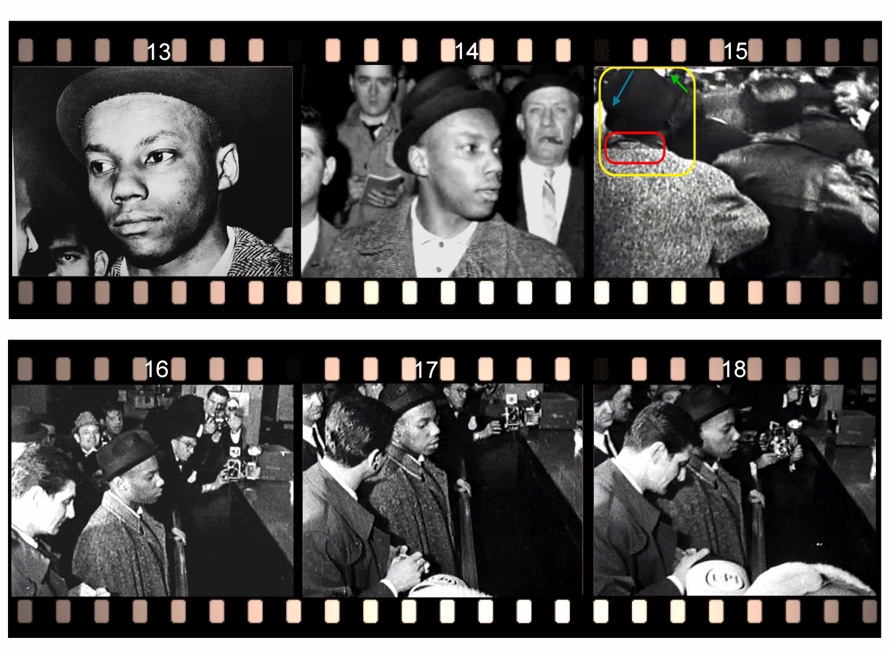
    They had access to the complete footage, but they only revealed half of it. They show the footage of two of the assassins—Talmadge Hayer and William Bradley—fighting with police and spectators, but they deliberately suppressed footage of the third assassin—Norman 3X Butler—wrestling his way through the crowd as the body of Malcolm X is wheeled from the Audubon to the Columbia Presbyterian Hospital across the street.

    There are a host of problems with the series, but the major offenses and omissions are these:

    • They minimize the role of the intelligence agencies in orchestrating the assassination. There is, for example, only one reference to the State Department’s hostility toward Malcolm X, but they don’t show a single document to substantiate it.
    • They fail to make a single reference to the CIA’s spying on Malcolm X while he was in Africa, and they make no mention of Benjamin H. Read, a White House official, telling CIA Director Richard Helms in the spring of 1964 that Malcolm was damaging America’s foreign policy in the Third World and should be “dealt with” the way the CIA dealt with other foreign leaders who cause problems for America.  This information is in the declassified CIA documents on Malcolm X and is readily available.
    • Instead, the entire series is aimed at convincing viewers that Malcolm X was killed by a group of five Black Muslims from the Newark mosque who were acting independently of any leaders of the sect.
    • To buttress this argument, nearly all of the NOI members interviewed are from Newark. There were no interviews with members from Philadelphia, Chicago, or even Harlem, an inexcusable omission.
    • While there is a brief mention of a mandatory meeting of officers in the NOI’s Fruit of Islam group called by Elijah Muhammad Jr., during which he ordered them to kill Malcolm X, there is no mention that Junior added an extra incentive of $10,000 to the person who killed Malcolm.
    • The central premise of the series is that two of the three men convicted for murdering Malcolm X were innocent. While it succeeds in establishing the innocence of Johnson through eyewitness accounts and FBI documents, they fail to show any reliable evidence whatsoever to support Butler’s claim of innocence.
    • They give the false impression that Abdur-Rahman Muhammad is this brave, defiant soldier hell-bent on confronting William Bradley, the shotgun assassin of Malcolm X, but Bradley died before he could do so. This is, of course, utterly ridiculous. Rahman wrote on his blog on April 22, 2010, that he had discovered Bradley’s whereabouts.

    Bradley didn’t pass until October 2018. By then, Ark Media was a full ten months into the project. If Rahman had eight years to confront Bradley, to give the impression that he didn’t locate Bradley until shortly before the latter’s death is dishonest, one of many half-truths in the series.

    The Bradley confrontation hoax is one of many.  Another half-truth is Rahman’s account of how he discovered Bradley’s whereabouts. He claims now that he was visiting a mosque and asked about Bradley when someone gave him Bradley’s new name, Al-Mustafa Shabazz.

    This is at odds with what Rahman told me and other researchers in 2010, when he said that he was the Howard University classmate of the nephew of a prominent NOI official whose name has surfaced repeatedly in relation to the assassination. The nephew was the person who led him to Bradley.

    Here are some of the key problems with the series, episode by episode. I refer to them as “acts” because the series is more theater than documentary.

    Act One

    Rahman begins that he was bothered that no one seemed interested in discovering who killed Malcolm X, and that he spent 30 years wondering “why someone doesn’t want to get to the bottom of this.”

    Rahman knows Professor Zak Kondo of Baltimore and apparently has read his book on the assassination. He began emailing me in 2010 and expressed familiarity with my books, one of which focuses on the assassination. Since Kondo’s book was published in 1993 and mine in 1992, he knows full well that people have tried to solve the question of who actually killed Malcolm X.  Moreover, Newsweek writer Peter Goldman wrote one of the first in-depth accounts of the assassination in 1973, when Rahman was a nine-year-old named Kenneth Oliveira living in Providence, Rhode Island.

    David Garrow: This brings us to the next problem. David Garrow, a white writer who has written a book in which he called Dr. Martin Luther King Jr. a “sexual athlete” (based solely on his opinion, of course), followed by other salacious statements about Dr. King. Garrow’s career has been in the toilet of late, especially after writing a disreputable, overly long biography of President Barack Obama (based almost exclusively on the views of a white girl who dated Obama a hundred years ago, so to speak). His descent into disreputability continued last year when he claimed that Dr. King laughed while one of his associates raped a prostitute.

    “No one alive has done more” than Rahman to solve the riddle of the assassination, Garrow claims.  Even though Rahman claims to have been investigating the assassination for thirty years, he has not in all that time published a single book about his findings. He hasn’t had a single magazine article about his findings. He has blogged for nearly a decade, yet he has never blogged about his findings except to mention that he had located William Bradley.

    So what, Mr. Garrow, has Rahman done to deserve your adulation? There are several university professors in the series, yet none of them express any familiarity with Rahman. I’ll lay you ten-to-one odds that if you had asked any of the professors “Who Is Abdur-Rahman Muhamad?” before April 2010, they would have replied: “I have no idea.”

    This is the first time we hear the theme of the series, namely, that Butler is innocent. Not a single shred of evidence is shown to support this contention.

    Part One ends with the proverbial scene of “The Investigator” (played by Rahman) tacking items about Malcolm X’s assassination to a bulletin board.

    Act Two

    It begins with Rahman arguing that Talmadge Hayer, the assassin caught at the scene, told the jury the truth during the trial but that he was not believed. This is another whopper, one that anyone who has read the trial transcript would recognize. Hayer told so many lies during the early part of the trial that the jury must have thought he was insane.

    Butler wasn’t much better. He was disrespectful to the prosecutor and got caught in a number of misstatements, so much so that he essentially convicted himself. For example, the prosecutor asked Butler whether he ever heard any language besides English in the mosque. Butler became indignant and replied that Muslims were not permitted to speak anything but English in the Nation of Islam.

    The prosecutor then asked him whether “As Salaam Alaikum” was an English phrase. To which Butler replied, “Oh, that’s different” or something to the effect.

    During a break in the trial, Thomas Johnson (whom I interviewed over a span of about five years) said that he, Hayer, and Butler were standing outside the men’s room when he said to them in a stern but calm voice: “Man, y’all are jamming me up. Y’all know I wasn’t there.”

    He was furious at Butler, he said, because Butler “stole my alibi.” He had proof from his physician that he was at home at the time of the assassination sitting in a chair with his right leg propped up due to a circulatory problem.

    When Butler took the stand, he said the same thing. However, when Butler’s doctor was called to testify, he said that he did not see Butler until February 25, four days after the assassination.

    Halfway through the second hour, Garrow is cued again. Apparently, you need a white person to make an argument truly convincing.

    “Historians universally accept that Johnson and Butler are innocent,” he tells us. None of the black historians in the series concurs with this statement during the entire series.

    The rest of the time is spent interviewing members of the Newark mosque and showing footage of the former Newark mosque minister, James 3X Shabazz, a former protégé of Malcolm X who grew jealous of Malcolm’s rise to the forefront of the Nation of Islam.

    Act Three

    Garrow makes his third appearance, during which he tells us that “the FBI had multiple informants inside the Nation of Islam—almost certainly so.” Well, did it or didn’t it?  Again, apparently we are to take this as an article of faith because Garrow has won the Pulitzer Prize or because he is white, or both.  What becomes disturbing at this point is that Garrow, whose reason for being in the series is never explained other than the aforementioned possibilities, is given nearly five times as much air time as Zak Kondo and other black historians in the series. In contrast, these African American historians have written five times as much about Malcolm X as Garrow.

    On a positive note, former New York police officials admit repeatedly during the series that Malcolm X was a thorn in their side and that they therefore routinely violated his privacy rights, worked with FBI agents to surveil him, and had informants inside Malcolm’s group, the Organization of Afro-American Unity. FBI Agent Arthur Fulton admits that the Bureau had informants inside the group.

    In yet another appearance, we see Rahman visiting Garrow’s home, where Rahman seems a bit surprised to see an FBI document about Elijah Muhammad’s adultery. Now, if Garrow believes that Rahman is the most knowledgeable person in the universe about Malcolm X, why does he need to show him a document that Rahman should know by heart?

    Another glaring omission is exposed at this point. When Garrow takes Rahman to the room where he keeps his research, we see boxes and boxes of files, all neatly organized. Even though the series shows Rahman at his home praying and sticking things on a board, we never see any evidence of his alleged thirty years of research, not so much as a single box. He has a few files on a table, but hell, those could well be something that he received from Garrow.

    Garrow also claims that the FBI had three informants inside Elijah Muhammad’s inner circle. He has a document on the table, but we never see it, unlike most of the other documents he discusses. He then claims that three of the ten people in Elijah Muhammad’s inner circle were FBI informants. Once again, we are asked to take this as an article of faith.

    John Ali, an individual long suspected of being an FBI informant, makes for the first time an interesting admission. He says that he applied for a position (which one is unclear, but presumably an agent) with the FBI but was turned down.

    The balance of the hour is spent discussing Malcolm’s mentoring of Muhammad Ali. Historian Peniel Joseph and Jonathan Eig, an award-winning biographer, make brief appearances.

    Act Four

    The scene begins with a rather disturbing and certainly questionable piece of hyperbole about Malcolm X’s mental state during the last year of his life. “He needed a therapist,” Joseph says. “He needed two therapists,” he adds with a grin.

    This is followed by a comment from Lance Shabazz, a diehard believer in Elijah Muhammad and someone who has written critically about Malcolm X for many years. “Malcolm X lost his mind,” he claims.

    A layperson is liable to believe that both men are speaking literally, and perhaps they were given the tone of the segment. In truth, Malcolm X was in great spirits until the last month or so of his life. He was anxious about the numerous attempts on his life, but was functioning as well as he always had. He was holding it all together until members of the Nation of Islam firebombed his home during the early morning hours of Valentine’s Day, 1965.

    He and his wife and daughters would have perished in the fire, but for a stroke of luck. One of the Molotov cocktails aimed at his daughter’s room on the second floor ricocheted, giving the family time to escape.

    What the series fails to note is that the person who threw the homemade incendiary device at the window was none other than Alvan Farrakhan, brother of NOI leader Louis Farrakhan. Farrakhan is seen in the background of several pieces of footage, but I don’t recall hearing his name mentioned more than once or twice.

    The reason why this is an unforgivable omission is because Alvan lived less than half a block from Malcolm X. The gang of Muslims who firebombed the home in all probability threw the bombs and then ran down the street to Alvan’s apartment.

    This is another example of the half-truth nature of the series. They want viewers to believe that the entire plot to kill Malcolm X emanated from Newark, when nothing could be further from the truth.

    Muslims, including John Ali and Butler, claim that Elijah Muhammad ordered his followers not to lay a finger on Malcolm X. There is no mention of the attempt to kill Malcolm X in Boston, the attempt by Boston mosque minister Clarence 2X Gill to obtain a silencer to kill Malcolm X, or the brazen attempt to kill Malcolm X right in front of his home.

    The comedy relief in the otherwise mundane series comes in this hour, when Rahman is visiting Garrow once again (around the 23-minute mark). Garrow shows Rahman and FBI transcript of a wiretapped telephone call between Elijah Muhammad and one of his ministers. During the call, Elijah Muhammad said that it was time for the NOI to deal with Malcolm X the same “way Moses and the other ones did” their bad apples.

    Rahman chimes in that he understands what that meant. It was a reference to how Moses wanted to kill certain Christians who resorted to idolatry when he had to go away for a while.

    When Garrow replied, I nearly bowled over laughing. I could just see them in a comedy.

    Garrow: “Well, golly, Mr. Rahman, I don’t know nothin’ ‘bout Moses. You really need someone with your background to understand all this Moses stuff!”

    It was one of the worst instances of patronizing conduct I have ever witnessed. Garrow has written numerous books and articles about Dr. Martin Luther King Jr. Garrow grew up as a Christian. Yet he sits there with this ridiculous look on his face swearing that he had no idea what the reference to Moses meant.

    Near the end of the segment, Garrow tells us that Rahman “is a person with a cause. He’s one of deep commitment and deep faith and deep courage. What Rahman is doing, he adds, is “dangerous. Rahman knows that.”

    Garrow was doing so much sucking up to Rahman that I expected to find Rahman nursing him in the next episode.

    Act Five

    After telling us at the end of Act Four what a brave man this Rahman fellow is, Act Five opens with Rahman showing a video clip of the scene outside the Audubon moments after the assassination of Malcolm X.  This person, he says, pointing to a tall black man on the screen, “looks a lot like William Bradley.”

    “If I can prove it,” he adds, “I want to confront him face to face.” We see Rahman driving by Bradley’s gym and a daycare center, he says, that have closed. Poor Rahman is foiled again! (the audience laughs)

    This scene was presumably shot sometime before Bradley’s death in 2018.  As I said earlier, Rahman had eight years to confront Bradley, if that was ever his intent. Bradley was a dangerous man and you would have to be more crazy than brave to confront him without backup. That’s why we know this is only theater.

    The premise gets repeated, namely that Butler and Johnson were framed. We are told that there is no physical evidence linking them to the crime. What we are not told—and hence the half-truth aspect—is that many of the eyewitnesses to the assassination described one of the assassins as a man about Butler’s height and Butler’s complexion. Oh yes, they also mention that the assassin wore a tweed coat.

    Butler was the father of six young children at the time and as poor as a mosque mouse.  He had a tweed coat that was a bit too large and a brown suit that he wore two or three times a week. Another way to pick him out of the crowd was the way he wore his black fedora. He wore it at a forty-five-degree angle, always.

    Benjamin Karim, one of Malcolm’s top aides, swore in an affidavit that Johnson and Butler could not have been inside the Audubon that day because he or one of the guards would have seen them and put them out or barred their admittance.

    This affidavit is what threw every historian and researcher off track for decades. In 1992, I wrote in The Judas Factor that Butler and Johnson were not there because Karim said so. Peter Goldman wrote the same thing in 1973 and Kondo reiterated it in 1993. “If Butler and Johnson were there,” Kondo said in “Brother Minister (1994),” I was there.”

    The fundamental problem with Karim’s affidavit is that he did not witness the assassination, so how could he possibly swear that neither Johnson nor Butler was present?

    Ironically, the woman with whom Karim was having an affair in 1965 was also inside the Audubon. After the shooting, she and a group of women were the first people who rushed to help Malcolm. Most of the men were either hiding backstage or hiding under the chairs. Two of the women, a nurse named Yuri Kochiyama and Sharon 6X Poole, a former member of the Harlem mosque who quit to join Malcolm’s new group, positively identified Butler as one of three assassins.


    Sharon was Karim’s mistress. He never mentions that she identified Butler, and he never mentions her in his autobiography. Again, the problem of the half-truth.

    Karim doesn’t mention that Malcolm’s security was compromised by former members of the Newark mosque. Nor does Manning Marable mention that James 67X Warden, a former Harlem mosque member who left with Malcolm, was overheard on February 19 by a member of the security detail threatening to have Malcolm killed.

    “We,” Warden said, “will kill you.” Two days later, Malcolm was killed. Warden was a key adviser on Marable’s biography of Malcolm X.

    A positive scene in this act is the entrance of Eugene “Gene” Roberts, a member of Malcolm’s security detail who was an undercover detective for the New York Police Department’s Bureau of Special Services and Investigations (BOSSI).  He describes how quickly he was hired by BOSSI and how he was essentially a paid informant.

    Another note of interest is Arthur Fulton’s admission that the FBI had at least nine informants in the Audubon Ballroom when the assassination occurred.

    Act Six

    From the opening scene with Malcolm in Africa, we finally think that the series will discuss the revolutionary’s lasting impression on African, Asian, and Latin American leaders. They show a photo of him with Prince Faisal of Saudi Arabia, but they fail to show him with Fidel Castro or Kwame Nkrumah and other prominent Third World leaders.

    Instead, they return us to Garrow’s house, where Rahman, the greatest expert on Malcolm X in the universe, is being educated again by Garrow. Garrow has been amassing files on Malcolm X for over a decade. Presumably, his glowing adulation of Rahman is in anticipation of a biography crediting both of them as the authors.

    In a return to the “Hunt for William Bradley” subplot, Rahman is shown in Newark again. Just as he was about to confront Bradley, he receives a phone call telling him that Bradley had died.

    Rahman attends the funeral, or at least stands outside. He then interviews the same groups of Muslims for the fifth or sixth or tenth time. They assure him that Bradley was a changed man when he died, that he made the hajj and had all of his past sins wiped away.

    “I have given so many decades of my life to unveil who killed him,” Rahman says wistfully. He sacrificed his career (he works as a tour guide in Washington and has held other jobs) and time with his children in his quixotic journey to find the killers.

    As the scene closes, Rahman meets again with Butler. He vows to do everything in his power to get him exonerated.

    If that happens, Butler can sue the city of New York for wrongful conviction and get millions and millions of dollars. The lawyers representing him will take their cut, and everyone lives happily ever after.

    Except those like me who know that Butler was guilty and deserves every day he spent in prison and more.

    Below are photos from the footage shown in the series. They show Bradley and Hagan outside the Audubon shortly after the assassination.


    These photos are from the same footage. It shows Butler at the Audubon as he attempts to view Malcolm’s body to make sure he’s dead. This is the footage that Ark Media deleted. The company purports to seek the truth, the whole truth and nothing but the truth about the assassination.

    But what it delivers is a half-truth. A half-truth is the same as a whole lie.


    The full footage begins at the 16-minute mark in this YouTube film.