Tag: LEE HARVEY OSWALD

  • Kerry Thornley:  A New Look (Part 1)

    Kerry Thornley: A New Look (Part 1)


    I

    At the end of Adam Gorightly’s The Prankster and the Conspiracy, there is a revealing bibliographical reference. In referring to the files of the House Select Committee on Assassinations (HSCA), the author writes that he secured those papers through Freedom of Information Act (FOIA) requests. (Gorightly, p. 274)

    As with many places in the book, my eyebrows arched when I read that passage. I thought: Why would anyone do that? The book was published in 2003. By 1998, five years before its publication, those HSCA files had been declassified by the Assassination Records Review Board (ARRB). All one had to do was call the National Archives—or email them—to make one’s request. Further, the Review Board process had begun in 1994, a full ten years before the book’s publication. Third, anyone familiar with FOIA law—or the JFK case—would know that it would be useless to submit a FOIA for HSCA documents anyway. Because the FOIA law does not apply to congress and, as anyone can note, the HSCA was a congressional committee. So who did Gorightly send his FOIA request to? And how long did it take him to find out that he didn’t know what he was doing?

    What made this even more odd is that I did not recall any reference to the epochal construction of the ARRB in The Prankster and the Conspiracy. Yet, the book is about the John Kennedy assassination. More specifically it is about Kerry Thornley and New Orleans District Attorney Jim Garrison. Not to tell the reader that, beginning in 1994, there were now available millions of pages of declassified files on the JFK case—and by the time the process was completed, still some being withheld—that is a grievous thematic lacunae that is puzzling. Especially since thousands of those newly declassified pages dealt with the Jim Garrison investigation.

    These facts reveal something about the author’s sources. There is a passage at the beginning of the book that reveals the author’s design. On page 19, Gorightly compares Thornley to other “luminaries from the period” like, for example, the trickster/prankster Ken Kesey. That comparison of “luminaries” made me look back at the subtitle on the cover. It reads in part: “How he met Oswald and Inspired the Counterculture”. What? Kerry Thornley inspired the counterculture? Did I miss something in all my decades of reading current American history? Did my graduate professors somehow ignore the powers and influence of a major cultural/literary figure?

    Taken aback, I walked over to my personal library to see if—somehow—I had missed a second Ken Kesey. I looked up two popular histories of that era, Milton Viorst’s Fire in the Streets and Tod Gitlin’s The Sixties. Both authors trace the late fifties cultural rebellion—a lead in to the sixties—to the so called “beat authors”. This would mean writers Jack Kerouac, Allen Ginsberg and William Burroughs. (Viorst, pp. 60-64; Gitlin, pp. 47-54. Gitlin predates this revolt with references to C. Wright Mills and David Reisman.) Kerouac, as most know, met with Kesey in New York, along with Neal Cassady and Allen Ginsberg. This was part of the cross-country bus tour memorialized in Tom Wolfe’s The Electric Kool-Aid Acid Test. When that book was published in 1968, depicting Kesey and Cassidy’s meetings with famous men and their attempts to turn them on to LSD, it made Wolfe a famous writer and forged the New Journalism field. But Ken Kesey had already established a formidable literary name for himself years before.

    In 1962, Kesey wrote One Flew Over the Cuckoo’s Nest. That book was purchased by Kirk Douglas and adapted for the Broadway stage in 1963 by Dale Wasserman. The play has been revived several times in award winning productions, one of them lasting two years. Kirk’s son Michael later made the book into a worldwide, smash hit movie starring Jack Nicholson. That film went on to win all five major Academy Awards: Best Picture, Director, Actor, Actress, and Adapted Screenplay. It ended up being distributor United Artists’ biggest hit.

    But even that is not the whole story about Kesey’s literary career. Some would say—from a purely literary view—it’s not even the best part. Because two years after the publication of Cuckoo’s Nest, Kesey wrote a novel entitled Sometimes A Great Notion. Most critics consider his second, longer book an even better work than his first. Unlike Cuckoo’s Nest, it is not allegorical in design. It is an expansive, episodic, large scale epic about Pacific northwest logging. It touches on the dimensions of national tragedy: contrast and competition between East and West Coast, nature savagely despoiled by industry, conflict between rugged individualism versus communitarianism. Sometimes A Great Notion is on lists of the 100 best American novels of the century. It was called by the late essayist Charles Bowden “one of the few essential books written by an American in the last half century”. It too was also made into a film, this time starring Paul Newman.

    So right at the start of this book a question arises: How can any self-respecting historian or cultural analyst place Kerry Thornley in the midst of Kesey, Kerouac, or Ginsberg? These literary figures are important enough to have feature films and documentaries made about them. (See the films Heart Beat with Nick Nolte and On the Road with Viggo Mortensen.) In historical terms and cultural impact, the attempt by Gorightly to equate Thornley with Kesey strikes me as so bizarre as to be risible. I mean, how did that idiot Charles Bowden miss Thornley’s The Idle Warriors? How did Gitlin pass over Thornley’s writings about weekend nudie/swinger escapades? (Gorightly, pp. 72-73) Were these careful historians somehow unaware of how Thornley “Inspired the Counterculture?”

    This patent absurdity—combined with the earlier observation about Gorightly not even knowing, or ignoring, the ARRB—these factors tip us off as to what this volume is really about. The book will not be any kind of sober, balanced analysis of the subject matter. It will be an exercise in agitprop: a screeching polemic. And it will be a Procrustean polemic. If one recalls the Greek bandit of lore, Procrustes both stretched and amputated his characters beyond recognition in order to fit his immovable bed. Gorightly’s polemic contains three main Procrustean elements:

    1. The simultaneous aggrandizement and concealment of Thornley
    2. The, by now, (yawn) familiar hatchet job on Jim Garrison
    3. Insertions of snark to cheapen the rather serious subject of murder

    If one rigidly follows the above architectural design one achieves the desired result: Thornley is somehow an ignored cultural and artistic lion; Garrison is a demented, hateful, vacuous fraud; and who really cares who killed JFK, what does it matter? The problem is this rigid formula renders the book so eccentric as to be solipsistic. Having dealt with the works of writers like Peter Janney, Lamar Waldron, and Tom Hartmann, I use that word gingerly. But this book is clearly in their league.

    II

    Thornley was born in East Whittier, California in 1938. He met his lifelong friend Greg Hill—who he shared a writing interest with—in high school. He was an actor in school plays and was a big fan of Mad magazine. (Ibid, p. 27) Thornley joined the Marine Corps Reserves in 1956 and attended boot camp that summer. He returned to high school for his senior year. He went to USC to study journalism but dropped out. (p. 29) He then joined the Marines in the spring of 1959.

    It was at El Toro Marine Base, outside of Santa Ana California, where Kerry Thornley met Lee Harvey Oswald. Oswald had already been at Atsugi air base in Japan. Thornley would go there after their meeting. Like Oswald, Thornley was a radar operator. (Ibid, p. 36) It was at Atsugi that Thornley learned of Oswald’s defection to the USSR. Although Gorightly says Oswald renounced his citizenship in Moscow, thanks to the workings of diplomat/CIA agent Richard Snyder, we know that is not accurate. (John Newman, Oswald and the CIA, p. 6) Interestingly, Gary Powers’ ill-fated U2 flight over the USSR occurred while Oswald was in Russia. Gorightly says that Powers’ U2 flight flew out of Atsugi. This is also not true. (Newman, p. 46)

    According to Thornley, it was upon learning about Oswald’s defection that he decided to write a novel about his former colleague. This ended up being called The Idle Warriors. According to his landlord in New Orleans at the time of the assassination, Thornley thought he was going to make a lot of money, because Oswald happened to be the subject of his book. (Jim Garrison, On the Trail of the Assassins, p. 76) Such was not the case. The book was not published until 1991, during the prerelease furor over Oliver Stone’s film JFK.

    On his way back from Japan, Thornley read Ayn Rand’s dystopian novel Atlas Shrugged. According to Thornley, this was a transformative experience for him. It altered his world view. He fell in love with Rand and her radical free enterprise philosophy. (Gorightly, p. 43) After his discharge from the service, Thornley stayed with his parents in East Whittier. He led a rather odd life. He staged a one man reading of The Idle Warriors and apparently thought this would get him work as a lecturer. By who and for what is not specified in Gorightly’s book. After being hassled by the police one night for loitering, Thornley and Hill decided to move to New Orleans. It is not really explained why. After the cop altercation, Thornley said they should move to a place where they could stay up all night. Hill suggested New Orleans. And that was that. (Gorightly, p. 46)

    They arrived in February of 1961, which, of course, was when the preparations in the Crescent City began to shift into high gear over the upcoming Bay of Pigs invasion of Cuba. People like David Ferrie and Guy Banister were involved in these activities out of places like Belle Chase naval air station and Banister’s office at 544 Camp Street. In fact, because of the ARRB, we first found out about the training grounds at Belle Chase from file releases in the nineties about Ferrie. He worked there as a trainer for the CIA, under the auspices of his friend Sergio Arcacha Smith, who worked for the CIA under State Department cover. (Wiliam Davy, Let Justice be Done, pp. 30-31)

    As mentioned, at the time of Thornley’s 2000 mile “loitering harassment” move to New Orleans, he had already met Oswald. And he was writing about him. With the move to the Crescent City, Thornley was now going to run into a group of people who apparently also knew about Oswald and they were associated with this Belle Chase, anti-Castro, CIA associated movement. This group was called the Friends of Democratic Cuba (FDC). It was a shell company created by the CIA and FBI, “which involved the shipment and transportation of individuals and supplies in and out of Cuba.” (Davy, p. 17) The man who was supposed to be the recipient of this merchandise was Sergio Arcacha Smith. Members of the committee were Grady Durham and Bill Dalzell, the latter was a CIA operative and friend of Clay Shaw’s. Both Durham and Dalzell operated, at times, out of Banister’s office at 544 Camp Street, which makes sense since Banister was one of the incorporators of the Friends of Democratic Cuba. The man who was listed as head of the FDC, that is president, was Martin McAuliffe. McAuliffe was a PR man who handled publicity for Smith’s Cuban Revolutionary Council in New Orleans. (Davy, pp. 17-18)

    As most everyone who studies the JFK case knows, due to its timing, the FDC was involved in a rather startling incident. In late January of 1961, actually the day President Kennedy took the oath of office, two men walked into the Bolton Ford Truck Center in New Orleans. They identified themselves as members of the FDC. They wanted to purchase ten Ford Econoline vans. At first, the man who did the talking was one Joseph Moore. But when the bid form was made out, Moore said he wanted his friend’s name on it as co-signer. The second man said this was fine since he was the man with the money. The man signed the form simply “Oswald” and he said his first name was Lee. (Davy, p. 16) This was when the real Oswald was in Russia.

    In other words, Thornley was now in the midst of a group of people who also knew about Oswald and were manipulating his name and impersonating him—in 1961. There can be no doubt about this for the simple reason that McAuliffe knew Thornley and knew about his manuscript. (New Orleans DA memo of 2/20/68) Thornley also showed his manuscript about Oswald to Banister. When the Thornley/Oswald episode was first written about back in the nineties, this Oswald/Banister exchange startled even Mr. Warren Commission Gus Russo. It would be natural for Thornley to do this, since he was among the menagerie at 544 Camp Street. Both Dan and Allen Campbell, who worked for Banister, saw him there. (See Davy, p. 40; James DiEugenio, Destiny Betrayed, second edition, p. 188) In fact, on the day of the assassination, Allen was talking to Thornley. (Gorightly tries to negate Dan’s statement through John McAdams, but the original reference does not say what McAdams says it does. Anthony Summers, Conspiracy, p. 293)

    Why Gorightly should try to dispute the Thornley/Banister association at all is hard to fathom, since Thornley himself admitted showing the manuscript to Banister in his introduction to The Idle Warriors back in 1991. In other words, by a strange and powerful coincidence, Thornley is now united with the only other known group of people in America using Oswald’s name in a fictional setting well in advance of Kennedy’s assassination. There will be more of these coincidences to come.

    III

    It wasn’t just Guy Banister and his staunch anti-communist comrades which Thornley was part and parcel of; and not just McAuliffe of the FDC he happened to run into. During his stay in New Orleans, Thornley worked briefly for rightwing publisher/activist Kent Courtney. (Probe Magazine, Vol. 6 No. 4, “False Witness: Aptly Titled”) But calling Courtney rightwing does not begin to establish who he was. Courtney was a McCarthyite and a John Bircher. In 1960, he ran for governor on the States Rights party ticket. That same year, Courtney organized a ‘draft Goldwater’ movement because he thought Richard Nixon was too liberal. In fact, at times, Courtney thought that Goldwater was not conservative enough for him. Courtney agreed with Robert Welch that Dwight Eisenhower was really an agent of the worldwide communist conspiracy. This reactionary extremism is why Courtney tried to start a political party to the right of the GOP in 1961. Courtney admired Senator Strom Thurmond and backed Governor George Wallace for president in 1968.

    During his two-year New Orleans stay of 1961-63, Thornley also befriended Clint Bolton, an associate of Courtney. (Ibid, Probe Magazine) Bolton wrote publicity copy for the FDC. And Thornley dedicated his 1965 book, entitled simply Oswald, to Bolton. (We will discuss this book later.) According to Garrison’s sources, Bolton was associated with the CIA.

    Thornley also knew Ed Butler through Thornley’s employment by Alton Ochsner’s Information Council for the Americas. (ibid) INCA was another rabid rightwing propaganda mill, managed for the wealthy Ochsner by Butler. (For a profile of Butler, click here.)

    We all know that Butler, along with Carlos Bringuier of the Student Revolutionary Directorate—the DRE, ended up bushwhacking Oswald during an August 1963 broadcast debate in New Orleans. With help from the FBI, they exposed Oswald’s crusading for the Fair Play for Cuba Committee as being colored by his past defection to Russia. According to his girlfriend Jeanne Hack, Thornley once took her to a meeting behind Bringuier’s store. (Joan Mellen, A Farewell to Justice, p. 275) As Jefferson Morley has shown, the first media accusation that Oswald was in cahoots with Fidel Castro in the assassination was made by a DRE broadsheet—which was paid for by the CIA. (Morley, The Ghost, p. 145) Within 24 hours of Kennedy’s murder, Senator Thomas Dodd—who knew Butler before the assassination—had the propagandist shipped up to Washington to testify before congress about Oswald. (Probe Magazine, p. 12, September-October 1996)

    And what was Kerry Thornley doing in the hours immediately following JFK’s murder? He was beside himself with joy. He could not contain himself; he was cheering. He actually referred to Kennedy’s assassination as “good news”. (Mellen, p. 272; Gorightly, p. 53) Within 36 hours, he was being interviewed by the Secret Service, twenty-four hours later, by the FBI. (Gorightly, p. 54)

    Within days of the assassination, Thornley had departed from New Orleans. He left so hastily that he did not even talk to his landlord—even though he had over a week left on his rental. After finding a note, the landlord checked Thornley’s apartment. He found papers torn up all over the floor; but “before being torn up, the paper had been watered down so the ink was blurred, making it unreadable.” (Garrison, p. 76)

    Thornley had hightailed it to Arlington, Virginia. It was almost like he was preparing to be called by the Warren Commission, which he was. He later joked about it. He said there was just cause for the FBI and Secret Service to suspect he had a role in the assassination. But then, for whatever reason, that line of inquiry was quickly dropped. But being where he was, in proximity to Arlington Cemetery, this gave him the opportunity to urinate on Kennedy’s grave. (Garrison, p. 78)

    IV

    To any person who knows anything about who Oswald really was and what the Warren Commission was up to, it is impossible not to take sharp notice of Thornley’s testimony. And, in fact, with his three complete editions of the Commission volumes, this is what first caused Jim Garrison to ponder the case of Kerry Thornley. The Commission wanted Thornley to bring all drafts of his book The Idle Warriors with him, which he did. His main liaison with the Commission was Albert Jenner. Through the FBI and Secret Service reports, Jenner knew about Thornley’s incontinent celebration of Kennedy’s demise and agreed to paper it over by saying the witness was buzzed. (Gorightly, p. 64) Yet, Thornley was working his waiter job when he got the news of Kennedy’s murder. (ibid, p. 53) I am familiar enough with the restaurant business to know that waiters are not allowed to drink on the job. Yet, in spite of that, Thornley actually started singing when he learned Kennedy was shot. (ibid. p. 53) With that nod and wink, any objective reader could see that the Commission was laying down the carpet for Thornley to be a key witness for them. In fact, in what has to be considered an act of concealment, Jenner never mentioned this celebratory aspect of Thornley’s story. Within one page, Jenner began to focus on Thornley’s relations with Oswald in the spring of 1959. (WC, Vol. XI, p. 83)

    Thornley began by saying Oswald had been demoted to doing janitorial work for pouring a beer over an officer’s head. (ibid, p. 84) He then goes on to say that at his first meeting with Oswald, he learned that the man was both a communist and an atheist. (ibid, p. 87) Therefore, within just four pages, Thornley had hit a three-bagger. And this was just for starters. The witness then depicted Oswald as saying with a little grin, “Well, I think the best religion is communism.” Thornley continued that Oswald had concluded Marxist morality was the most rational morality for mankind and Oswald thought “communism was the best system in the world.” (ibid, p. 87) Thornley also revealed that Oswald was studying Russian and subscribing to Russian newspapers. When asked by Jenner if he himself did these things, Thornley replied no, he considered himself presently as an extreme rightist. (ibid, p. 88) Later on, Thornley said Oswald, in the service, was extremely sloppy in his personal habits, would go out of his way to get into trouble, and would pull his hat down over his eyes, so he did not have to look around at anything, “very Beetle Bailey style”. (ibid, p. 90) He then said that on a personal level, Oswald’s relationships with others were “almost nil.” The alleged assassin got along with almost no one. (ibid, p. 94) This would imply that Thornley was his closest pal at the time, therefore he could give the most complete impression of the man.

    Jenner would ask Thornley about aspects of Oswald’s personality and about discussions the two had, since Oswald was an alleged communist and Thornley was not. (Ibid, p. 92) Thornley now described Oswald’s arguments in regards to the Marxian idea of the excess profits corporations derived from labor. (ibid, p. 93) Jenner even pushed Thornley to recall any of Oswald’s comparisons between the USA and the USSR. Thornley stated one could not argue such points, since Oswald said we lived in a state of propaganda and no one had real knowledge of what Russia was like. Again, Jenner pushed Thornley on this point: “Give us some examples and tell us.” (Ibid, p. 94) Thornley used this to say Oswald favored the USSR and it was a part of his personal rebellion against “the present circumstances.”

    Based on a two-sentence verbal exchange with Oswald—after which Oswald allegedly walked off and cut off communications—Thornley later concluded that Oswald was a nut, maybe crazy. Oswald had a “definite tendency toward irrationality at times, an emotional instability.” (ibid, p. 96) Thornley later added that, when he read about Oswald in Moscow, he was surprised. He did not think Oswald’s allegiance to communism was so deep as to defect. Again, Jenner pushed him on this issue of his personal reaction to the defection. Thornley said that Oswald had the idea that the Russians would win the Cold War and he wanted to be on the winning side. He also added that this was part of his “persecution complex…insofar as he has tended to be emotionally unstable.” (ibid, p. 97)

    Later, in explaining the defection, Thornley said:

    He looked upon the eyes of future people as some kind of tribunal, and he wanted to be on the winning side so that 10,000 years from now people would look in the history books and say, ‘Well this man was ahead of his time’…The eyes of the future became what to another man would be the eyes of God, or perhaps to yet another man the eyes of his own conscience. (ibid)

    If the reader can believe it, Thornley went even further. He said that Oswald “wanted to die with the knowledge that, or with the idea that, he was somebody.” (Ibid, p. 98) Later on, Thornley said that Oswald’s Marxism was an irrevocable conviction with the man. (ibid, p. 99) When Jenner asked him for more indications about a persecution complex, Thornley went beyond picturing Oswald as an unstable, glory hungry, irrevocable Marxist. Thornley now added that Oswald had a hint of paranoia about him. Oswald thought “he was being watched and being pushed a little harder than anyone else…I think it was kind of necessary for him to believe that he was being picked on.” (ibid, p. 100)

    Jenner finally admitted what is clear to anyone with any objectivity: what he is pressing Thornley hard for is Oswald’s motivation. (ibid, p. 102) At times, the Q and A gets mildly humorous. Jenner asks Thornley if Oswald felt superior because he was an avid reader. Thornley responds affirmatively. He later tells Jenner that Oswald felt his commanders were too incompetent to give him orders. (ibid, p. 106) So we have a man who had both a persecution complex and superiority complex.

    In going over Thornley’s testimony, I really do not think the Commission could have asked any more of him. There is no arguing this and those who do are in denial. To me, in terms of sheer incrimination and character assassination, Thornley ranks with Ruth and Michael Paine, George DeMohrenschildt, and Carlos Bringuier. He was quite valuable to them in their portrayal of Oswald as a deranged, sociopathic Marxist. And he is duly quoted in the Warren Report in three damaging passages. (See pp. 385-86, 388-89, 686-87)

    But in forensic value, the way a DA would look at it, how much of his testimony could be admitted in a court of law? Paranoia, persecution complex, Beetle Bailey shutting out his environment, wanting the world to know he was somebody? Much of it was surmise, personal opinion, and dime store psychology. From a man who not only was not a psychologist, but was a college dropout. And all the way through, Jenner was pushing him to editorialize. The two were so close that Thornley made sure he had Jenner’s correct phone number at the end. (ibid, p. 115) The fact that this kind of dog and pony show was allowed without objection goes to the heart of how bad the Warren Commission really was. And Thornley was, oh so, eager to cooperate. At a real trial, a defense lawyer would be jumping out of his chair with objections. At a pre-evidentiary hearing, a judge likely would not have allowed it on the grounds that its prejudicial character outweighed its forensic value. To put it plainly, upon lengthy review of his testimony, Kerry Thornley has all the appearances of being a hit man.

    V

    As several authors have written, the Commission featured a whole series of affidavits of servicemen who knew Oswald. These were mostly a bit over a half page each. Although it is clear that these affidavits were externally guided, none of them came close to doing to Oswald what Thornley did. (WC, Volume 8, pp. 315-23) Thornley was allowed the freedom to answer open ended and leading questions for 33 pages.

    But Thornley’s testimony, once we go outside its immediate parameters, deserves even more attention. Minimally, some of the things he said would seem to have merited immediate follow up—if Jenner wanted to get at the underlying facts.

    As we have seen above, Thornley knew both Butler and Bringuier. These were Oswald’s opponents in the August broadcast debate that smeared both the alleged assassin and the FPCC. As we have seen, immediately after the assassination, Butler and Bringuier swung into action to use that incident for psy war purposes: Oswald was guilty and he did it for ideological purposes. Thornley was so eager to please Jenner that, during his testimony, he slipped. He said that he heard these tapes after the assassination. (WC, Volume 11, p. 100) This must have been in the time interval before he left for Virginia. He said he was standing in a TV station as the tape was played. And like every Oswald coincidence Thornley was involved in, he said he just happened to be standing there. Was he waiting for a streetcar? Inside the studio? As we shall see, a newsman would fill this in a bit more. In all probability, Thornley did not just happen to be there.

    The second point a true interlocutor would have focused on was the enduring mystery about Oswald and his application to attend Albert Schweitzer College. Oswald had been a part of a unit at El Toro naval air base called MACS 9 since July of 1958. Kerry Thornley had been a part of MACS 4 since that fall. (Thornley’s 2/8/68 Grand Jury testimony, p. 2) Thornley told Jim Garrison he was not sure when he was transferred to Oswald’s unit. But he thought it was sometime after January or February of 1959. (ibid, p. 3) Again, this is interesting, because, in early March, Oswald sent in an application to Albert Schweitzer College (hereafter ASC). That college was 6000 miles away in Switzerland. It was so obscure that the FBI agents in Europe could not find it. They had to contact the Swiss police to locate it. But even the Swiss police could not find it, because it was not in the official registry at Bern. The police had to undertake an investigation that lasted two months. (Probe Magazine, Vol. 3 No. 3, p. 7) The natural question would be: how did Oswald find out about it at El Toro?

    Make no mistake, the Warren Commission was on to this. And Albert Jenner understood the connection might have been through Thornley. Comprehending how damaging that would be to their star military witness, they had no intention of finding out if such was the case. But George MIchael Evica, not concerned with such matters, thought this might have been what happened. According to Evica, neither the FBI nor the CIA had produced Oswald’s letter for application to the ASC. (A Certain Arrogance, p. 15) This caused Evica to ask: did Oswald’s letter really exist? The ASC episode is of interest, because Oswald’s defection will occur in just six months. When he applied for his passport, he listed ASC as one of his destinations. Three months after his attention in ASC was accented, he applied for a hardship discharge for early release from the service. The reason for this early discharge? At her place of work, his mother had a candy box drop on her head. No kidding. (James DiEugenio, Destiny Betrayed, second edition, p. 135) As many have noted, everything about this hardship discharge was suspect, as was everything about ASC, including the institute’s Director Hans Casparis, who never received any degrees from the colleges he said he attended. (Evica, pp,77-78) Plus the fact that ASC closed down within months after Kennedy’s murder. (DiEugenio, p. 134)

    When the FBI interviewed Thornley after the assassination, they apparently understood this possible connection. As Evica notes, the ASC was promoted and partly administered by the liberal Unitarian Church and the Unitarians had been covertly used by Allen and John Foster Dulles for overseas espionage actions. (Evica, p. 21, pp. 85, 98-99, 123-25) One of the most famous of these Unitarian churches was Stephen Frichtman’s First Unitarian Church in Los Angeles, which sometimes had a thousand attendees. Frichtman had organized the Unitarian Service Committee, once run by Percival Brundage, who was later associated with ASC. (Evica, p. 105) As Evica further notes, Thornley was fully aware of this church and he attended at least several times. The witness also testified that Oswald asked him about this church. (WC, Vol. 11, p. 110) Thornley was also aware that Oswald had visited Los Angeles with his Marine colleague Nelson Delgado. (ibid) The FBI asked Thornley what Oswald’s connection may have been with Frichtman’s church. The witness replied there was none. Quite logically, since Thornley never said he visited LA with Oswald, the FBI had its doubts, because there is a 60 page FBI report on Frichtman’s church in the National Archives. (Evica, p. 21)

    But perhaps even more interesting, the FBI may have found an acquaintance who Thornley had said something contrary to. Because Thornley goes out of his way to deny that his classmate Sylvia Bortin ever knew Oswald. (WC Vol. 11, pp. 110-11) This does not mean that Thornley could not have told her about this upon his return to California in 1963. Clearly, Jenner had rehearsed all of this with the witness in advance. Either during one of their phone calls or their lunch. Both men knew, through the FBI reports, just how close to the edge it came. Evica correctly poses the questions: Did Thornley pick up an ASC brochure from Frichtman and give it to Oswald during one of their discussions about the church; or did he inform Oswald of this available literature and the college?

    Why is that important? Not just because of the upcoming (phony) defection and not just due to the fact of ASC’s obscurity. It is because with all that has come out about the institution, many authors—Evica, John Newman, John Armstrong, and myself—now believe it likely that this alleged higher education institution was a CIA shell or proprietary. Therefore, if Thornley knew about the upcoming defection, it is understandable that he and Jenner would avoid the issue.

    A third matter Jenner should have explored: Thornley made the point that he never saw Oswald after he left El Toro. Jenner then specifically asks about seeing the alleged assassin in New Orleans. Thornley denied it. (WC, Vol. 11, p. 109) He only knew about Oswald’s defection through a published report, probably the military journal Stars and Stripes. He also knew of his return to America, but never talked to him about the book. He says he began the book when he learned of the defection and finished it in February of 1962; Oswald returned in June. He reaffirmed to Jenner there was no contact with Oswald at all after El Toro. (WC Vol. 11, p. 110)

    His father contradicted Kerry. According to an 11/26/63 confidential LA Sheriff’s report, his father Ken said that Oswald had been in letter contact with Thornley. Some of these were of recent vintage. (Mellen, p. 276) Could these possibly be the letters Thornley had ripped up and then watered down in his apartment? Allen Campbell, who worked out of Banister’s office, told Joan Mellen in 2002 that the two had been in contact. (Ibid) That’s just for starters; we will return to the rather important issue of Thornley’s denials on this point later.

    A last area about Thornley’s testimony where Jenner should have challenged the witness, is one which intrigued Jim Garrison. When asked to describe Oswald’s physical stature, Thornley said he wasn’t positive but he thought Oswald stood about 5’ 5” in height. (WC, Vol. 11, p. 89) Now, there is a dispute about how tall Oswald actually was. Some records measure him at 5’ 11”, some at a bit over 5’ 9”, but for Thornley to say Oswald was five inches shorter than he was–when in fact they were around the same height—that was rather notable. The Warren Commission had these records. Jenner had to have been aware of this. As with everything else, he made nothing of it.

    The Commission had allowed Thornley the equivalent of a slalom run at Tahoe.

    VI

    After appearing before the Warren Commission, Thornley published a non-fiction book simply titled Oswald in 1965. As I have written elsewhere, the 1965 book is pretty much a rerun of his planned and patently incriminating Commission testimony. In that book, he says, “Frankly, I agree that the man was sick, but I further think his sickness was…self-induced.” (Thornley, p. 69) How was it self-induced? Because others did not recognize the “mark of destiny clearly visible on his forehead…” (ibid, p. 19) Needless to say, there was no conspiracy to kill JFK. It was all done by his sick acquaintance, Oswald. In addition to the book rights, it was sold for tabloid rights to The National Insider.

    Perhaps for that reason, the book caught the attention of Kennedy researcher David Lifton. Since both were in the LA area, Lifton visited Thornley more than once and—there is no other way to say this—they became friends. Somehow, some way, Lifton was willing to overlook all that Thornley had said for the Warren Commission in smearing and incriminating Oswald. He was also willing to—and this got almost ludicrous—downplay Thornley’s nutty neo-fascist beliefs. For example, In 1964 Thornley attended Robert LeFevre’s Freedom School. LeFevre sued the Girl Scouts for mentioning the United Nations too often in their handbook.

    Consider how Lifton handled this later. He cannot bring himself to accept that Thornley was celebrating Kennedy’s death, so in an article attacking Jim Garrison for a journal called Open City in 1968, this is what he wrote:

    In short, Kerry’s humor, however in bad taste it might be interpreted to have been, had more to do with his own sense of irony and his own ideas about Government, (and the type of man that makes leading other men his life’s work). But this is all really besides the point.

    No one considered Thornley’s comments in jest, including Thornley. And it’s inexplicable for someone who was not there to say such. And how on earth are his fruity extremist beliefs “besides the point”? As examined above, they provide a nexus point for Thornley’s associations with other extremists in New Orleans. We will explore just how extreme—and therefore how important—these beliefs were in a later section.

    Lifton had no subpoena power. He had no detectives to do a field investigation. And there is no evidence that, at the time, he had been to New Orleans. So when Lifton took some signed statements from Thornley and turned them over to Garrison, the combination of Thornley’s previous testimony, and at least one of the signed statements, caused Garrison’s suspicions about Thornley to deepen. For instance, in one of his statements to Lifton, Thornley said he thought he had heard Oswald speaking to another Marine in Russian at Atsugi. He thought his name was John Rene Heindel. In fact, according to a long memorandum Thornley made out on October 24, 1967, that name was given to him by Jenner. According to Thornley, he and Lifton spent hours making out a statement to this effect for Jim Garrison. The information ended up being sent to the DA in a notarized declaration, specifically naming Heindel as the guy who talked to Oswald in Russian. (Grand Jury testimony of Heindel, 10/5/67, pp. 23-24)

    For anyone familiar with the record, this is all confusing. According to Heindel, he was at Atsugi with Oswald. (WC, Vol. 8, p. 318) And he talked to him once briefly in English. But that was the only place he ever talked to him. He never even knew him at El Toro, where he spent most of his time at the helicopter base. He never knew Thornley at all in the service. He only heard of him afterwards. (Heindel, op. cit, p. 4, 24)

    But yet Thornley says he was not at Atsugi at the time Oswald was there. (WC Vol. 11, p. 86) Therefore, if this ever happened, it almost had to be at El Toro. But yet Heindel said he did not speak Russian. (Heindel, op. cit. p. 26) There is a concept put forth by some that, wrapped up in all this, Garrison was trying to lure Heindel into a perjury trap. Based on this Russian language information—and the fact that Oswald supposedly used the name Hidell in ordering the rifle the Commission says was used to kill Kennedy—Garrison was going to implicate Heindel in a huge plot that would somehow lead up to Clay Shaw. (Gorightly, p. 91) When one reads Garrison’s examination of Heindel before the grand jury, the reader can see this is bunk. (Click here for details). In fact, in reading this exchange, it appears that Heindel likely would not have been called without Thornley’s declaration.

    Thornley insisted he never saw Oswald in New Orleans. Yet, there were many witnesses who testified to the contrary:  they either said they saw Oswald with Thornley or Thornley told him he did know Oswald after the service.  Jack Burnside  was  a regular at Ryder Coffee House and said he saw Oswald there. He also knew “Thornley and was with him at Fong’s Restaurant on Decatur Street when Oswald came in and talked with Thornley.” (John Armstrong, Harvey and Lee, p. 591) Peter Deageano told assistant DA Andrew Sciambra of Garrison’s office that while eating a hamburger at the Bourbon House, he saw Thornley with Oswald. He also recalled seeing Oswald leafleting on Canal Street in the summer of 1963. (Interview of October 26, 1967)

    Doris Dowell  knew Thornley from the Shirlington House in Arlington. She said that Thornley told her that he and Oswald had been buddies in New Orleans. (NODA memo of April 2, 1968) L. P. Davis had also seen  Thornley with Oswald at the Bourbon House and he recalled that they had been dressed in a similar manner. (NODA memo of January 30, 1968)

    With this as background, let us dial back to Thornley, the TV station, and the Butler/Oswald tapes being shown after the assassination. Cliff Hall was a program director of WSHO Radio in New Orleans in 1963. He hung out in the French Quarter and got to know Thornley. Shortly after Kennedy’s assassination, he accompanied Kerry to WDSU TV station. There, Thornley was interviewed about Oswald and he rendered the same information he essentially gave the Warren Commission. But then something odd happened. Thornley and Hall went out for a drink. Thornley now admitted that he had seen Oswald since the service. It was in New Orleans. Hall asked him if he knew Oswald well and he said yes he did. (Interview with Richard Burness, January 10, 1968)

    But Thornley did not just visit the TV station to get his message out. He also made the New Orleans States Item, one of the two major papers in the city. On November 27, 1963, they ran an article based on an interview with Thornley. Quoting Thornley, the top headline labeled Oswald a ‘Real Loser’. The article is more qualified than his book. For instance, he says he never saw Oswald doing anything violent. But he calls Oswald schizophrenic and a “little psychotic.” He also adds that the Marines made Oswald a killer. During his testimony with Jenner, Thornley was not asked how the reporter located him or if he located the reporter. (WC Volume 11, p. 112) Whatever the cause, would it not appear to many that Thornley is doing what Butler and Bringuier were doing? Except his twist was character assassination, making Oswald into a pathological case.

    Recall, Thornley had told Jenner that he just happened to be at the studio and very briefly saw parts of the Butler/Oswald debate. That was not credible on its face and it should have been thoroughly examined. Like Thornley taking off to Virginia to await being called by the Warren Commission, here he was doing the same act right after the assassination. And apparently doing it in tandem with his colleagues Butler and Bringuier. To add to this contradictory paradigm, he told both Bernard Goldsmith and Dowell that he knew Oswald was not a communist. (Jeff Caufield, General Walker and the Murder of President Kennedy, p. 229) Yet this was what he was so adamant about for Jenner.

    As with the Commission, Thornley told Garrison in 1968 that he did not see Oswald after the service. (Thornley, Grand Jury Testimony, p. 40) To call his grand jury positions on whether he knew Clay Shaw, Banister, or David Ferrie equivocating, that is simply not accurate. Exaggerating only slightly, they are almost comical to read. (Ibid, respectively, pp 48-50, p. 62, p. 72) To anyone familiar with the JFK case, it’s clear Thornley is trying to avoid being indicted for perjury on those counts also. He did know these men. But if he admitted to that, along with knowing Oswald, along with Bringuier, Butler, and the rest of the CIA subculture around Oswald, what would happen? His carefully constructed Jenner meme, as the guy practicing the piano downstairs in the bordello—or in his case selling aluminum siding—this all would have been brought into question. How do we know this? Because Thornley later positively admitted to knowing all three of these men. (DiEugenio, p. 189) These men also lied about their associations with Oswald in and around New Orleans in the summer of 1963.

    Let us make no mistake, the above is not the accumulation of the evidence Garrison had against Thornley. There were other intriguing witnesses that I have not even mentioned. (See Joan Mellen, A Farewelll to Justice, pp. 271-76;  Joe G. Biles, In History’s Shadow, pp. 56-69)

    The problem was that, by late 1968, Garrison had some serious problems. He was not in good health and his office had undergone a huge blow out over the Bill Boxley affair. (DiEugenio, pp. 283-85 292-93) As has been written by many, Boxley had all the earmarks of being a CIA infiltrator. After this turning point, Garrison had all his volunteer assistants hand in their badges, which cut down on the amount of investigations he could do. And he decided to concentrate on prepping for the upcoming Shaw conspiracy trial with mostly his own office workers. After the huge disappointment of that trial, Garrison filed perjury charges against Shaw. When one follows the memoranda trail, or talks to people in the office, Garrison was revving up for that in a way he should have for the original trial. But in a very unusual move, that trial was moved from state court to federal court. (DiEugenio, pp. 313-15) And in a pre-trial hearing that can only be called surrealistic, the charges were then dismissed.

    After this, it was decided from up above that was it for Garrison and the JFK case. Further, Garrison was going to be made an example of to anyone else who harbored these investigative designs. The Power Elite in both New Orleans and Washington went to work to remove Garrison from office. He underwent two phony trials during which he demonstrated how the local federal attorney’s office had literally fabricated a case against him. (ibid, pp. 316-19) Garrison was acquitted. But the real aim was to mortally wound him in the press and broadcast media, which did occur. And that brought to the DA’s office Harry Connick, a man who has become infamous in legal journals for his rather unusual criminal practices. (Click here for details)

    But, no coincidence, Connick had also been the Justice Department liaison to Shaw’s defense team during his trial. This was discovered by the ARRB. (DiEugenio, pp. 303-05) Therefore, once he took office in 1973, he went to work setting fire to all the JFK files that Garrison had left behind. He literally sent them to the public incinerator. And we only found out about it because of the ARRB. (ibid, p. 320)

    So today, one can only estimate what we have left of Garrison’s files. Considering that this author—through attorney Lyon Garrison—had access to the extant files left over in Garrison’s archives, I would say, that it’s probably about 60%. The rest were incinerated by Connick, stolen by infiltrators like Boxley, or, as Garrison wrote his book editor, Zach Sklar, stolen from the garage of a friend of Garrison’s after he left office. Therefore, as with all witnesses and suspects in the Garrison inquiry, we really do not know the scope and depth of the case against Thornley. The fact that, as Joe Biles has written, Garrison had to concentrate on Shaw before, during, and after his trial detracted from the case against Thornley, who Biles believes would have been a better object of prosecution. (Biles, p. 68) For the reasons elucidated above, that is something we will never know.

    see Kerry Thornley: A New Look (Part 2)

  • Creating the Oswald Legend – Part 3

    Creating the Oswald Legend – Part 3


    I. Was Oswald a Government Agent?

    In part 3, we will try to answer the most important question regarding Oswald. Was he a secret agent of some U.S. intelligence service and, if so, who was controlling him? We will examine his actions in Dallas and New Orleans and, finally, his alleged trip to Mexico before the tragic events of 11/22/1963. We will show that what happened in Mexico has many similarities with his USSR defection and the U2 incident.

    The Warren Commission had examined the possibility that Oswald was some kind of a “government agent”. J. Lee Rankin, the Commission’s general counsel, during the January 27th, 1964 meeting, was trying to convince the other members that they should counter the “dirty rumor” that Oswald was a “government agent”. Three days earlier, the chair of the Commission, Chief Justice Earl Warren, and Rankin had met secretly with members of the Texas Court of Inquiry to discuss whether or not Oswald was a CIA informant. Henry Wade, the Dallas District Attorney, informed them that somehow he learned that Oswald’s CIA identity number was 110669 and that it was consistent with the CIA’s filing system. Rankin later found out from Oswald’s CIA 201 personality file that Oswald’s CIA number on the file was 289248. Rankin never shared the above information with other members of the Commission and instead told them that there was a rumor out there, saying that Oswald was an FBI informant with identity number S-172 and S-179, which were bogus.[1]

    It was Waggoner Carr, the Texas Attorney General, who had provided the information to Rankin that Oswald had an FBI badge with number 179 and he was being paid $200 a month.[2] If that was true, then there should have been records at FBI HQ and probably in Dallas and in New Orleans. He would not have a badge, but a number that would be consistent with the Dallas field office abbreviation (DL), a four-digit number and the letter S at the end to denote security (e.g. DL1268S).[3]

    As it was concluded in part 2 of this series, Oswald’s Pro-Soviet, Pro-Communist bona fides would have allowed him to infiltrate communist subversive and pro-Castro organizations targeted by both the CIA and FBI. It is doubtful that Oswald would have been directly employed by the CIA or the FBI, but he was most likely employed by a private investigating agency that had connections to both or one of these two agencies, most likely the CIA.

    Peter Scott believed that this particular investigating agency’s field was that of industrial security.[4] To answer if that was the case, we should examine the life of another Marine who, like Oswald, showed sympathy towards revolutionaries, communists, and subversives. His name was Robert C. Ronstadt and in 1946 he started selling subscriptions to the Communist Daily People’s World and in 1947 joined the Communist party. However, he later testified to the House Un-American Activities Committee that he was only pretending to be a Communist. In reality, he was working in the Los Angeles firm Allied Records and he was tasked to smoke out employees with Communist sympathies and affiliations. It was also revealed that his true employer was not Allied Records but the private investigative firm owned  by P. McCarthy and Joseph Dunn that was responsible for providing industrial security to Allied Records. Ronstadt was not an FBI agent, but his employers, McCarthy and Dunn, were reporting their work to the FBI. Later, Ronstadt left the security company and became a paid informant to the FBI.[5]

    During the Cold War, all defense contractors and oil companies were obliged by law to conduct industrial security investigation to make sure that no leftists and subversives were hired by them. It was Lee Pennington Jr., an FBI agent, who joined the private organization the American Legion and started collecting and storing information on subversives in a massive library. The infamous James McCord of the CIA contacted Pennington, when he was looking to expose subversives.[6] Later, Pennington became a CIA consultant and transferred his library files from the American Legion to the newly created American Security Council (ASC ), which was a joint FBI-CIA-military industrial complex organization. Among its benefactors were both right wing anti-communists and Wall Street Eastern Establishment members. Some of them were Bernard Baruch, Nelson Rockefeller, Eugene W. Rostow, Henry and Clare Luce, Senator Thomas Dodd, Averell Harriman, General Lyman Lemnitzer, General Edward Lansdale, General John Singlaub, Patrick Frawley, Ray Cline, and James Jesus Angleton.

    Angleton created the Security and Intelligence Fund (SIF) after his forced retirement. John M. Fischer, one of the ASC’s presidents, was a founding director of SIF. Two other members of the Council, Elbridge Durbrow and General Robert Richardson III, were also SIF’s President and secretary/treasurer respectively. Large defense contractors like U.S. Steel, General Dynamics, Lockheed, Motorola, and McDonnell-Douglas were consulting its industrial security database to check potential personnel who could pose threats to their security.[7] Other notable members of the ASC were Admiral Felix B. Stump, Air America’s board Chairman, Henry O’Melveny Duque, Nixon’s former law partner, and vice presidents from Atlantic-Richfield, Standard Oil of California, General Dynamics, and the National Security of Industrial Association.[8]

    Do we have any evidence that Oswald was doing industrial security to expose subversives?

    When Oswald returned to Dallas from the USSR, he contacted Peter Gregory who was a petroleum engineer in Fort Worth. In August 1962, Gregory invited Oswald to dinner, where he met George Bouhe, leader of the White Russian community. We can recall from part 2 that Oswald was probably receiving leaflet materials from a White Russian organization and not the Cuban Consulate, as it was first believed. Bouhe introduced Oswald to other members of the White Russian community, among them Max Clark and his wife Katya, born as Princess Sherbatov of the Russian Royal family.[9] Max Clark was a retired Air Force Colonel and he used to work at General Dynamics as industrial security officer. Clark had also received covert security clearance from the CIA for “Project Rock” while working for General Dynamics. A CIA document had linked “Project Rock” to Project Oarfish, a code for the manufacturing of the U-2 airplane.[10] Clark later denied that he was working for the CIA, but he probably had some connection to them through that project. Surprisingly, another infamous character, William Harvey of CIA’s staff D, also had security clearance for “Project Rock”. According to a CIA document, they re-evaluated Harvey’s file in respect for approval to get security clearance to the above mentioned project.[11]

    Max Clark was working closely with I.B. Hale, a former FBI agent and later head of General Dynamics industrial security. It was Virginia, wife of I.B. Hale, that had helped Oswald to get a job at Leslie Whiting on July 1962.[12]

    George DeMohrenschildt was encouraged by Max Clark and J. Walton Moore of the CIA to befriend Oswald and become his mentor.[13] It was George DeMohrenschildt who helped Oswald get a new job at Jaggars-Chiles-Stovall (JCS) after he quit his job at Leslie Welding. JCS was doing contract work for the U.S. Army Map Service and that work was related to U-2 flights over Cuba. Oswald got the job four days before President Kennedy was shown pictures of missiles in Cuban taken by the U-2.[14]

    When Oswald moved to New Orleans, it is possible that his job there was related to industrial security in search for subversives. He was employed by the Reily Coffee Company, but he also worked covertly for Guy Banister. William Monaghan, an ex-FBI agent, was the company’s Vice President and specialized in industrial security. Alfred Claude, the man who hired Oswald, left Reily and went to work in Chrysler’s aerospace division, which was based in NASA’s New Orleans facilities. Emmett Barbee, Oswald’s supervisor, and two other Reily employees, Dante Marachini and John Branyon, went on also to work for NASA[15], more likely in the industrial security division. Oswald was frequenting a New Orleans’s garage and had revealed to its owner, Adrian Alba, that he was going to work for NASA. Bill Nitschke, a Banister associate, confessed that Banister had given an offer to NASA to get a contract for industrial security in NASA’s New Orleans facilities.

    That Banister’s investigating agency was doing industrial security work can be indicated by the testimony of former Banister associate, Joseph Oster. He told L.J. Delsa, an HSCA investigator, that Banister was using two sources to seek out subversives and Communists, FIDELAFAX and the American Security Council.

    One of the people who Oswald met in New Orleans was Ed Butler, the founder of INCA, the Information Council of the Americas. After Kennedy’s assassination, Jim Garrison learned about Oswald’s activities in New Orleans and his contacts with Butler and INCA. Butler got so scared that he packed all the INCA files and parts of Banister’s files and moved to Los Angeles, where he found employment with Patrick J. Frawley, a prominent member of the American Security Council.[16]

    It will not then be a surprise to learn that, in the fall of 1962, Oswald subscribed to the Daily Worker newspaper of the American Communist Party USA, applied for membership in the Socialists Workers Party, and subscribed to that party’s newspaper The Militant.[17] Both parties were a hive of leftists, subversives, and Communists.

    One could conclude that Oswald was not on the direct payroll of the CIA or the FBI, but possibly through Max Clark he was employed by an unknown industrial security private agency with the purpose of reporting on subversives that were of interest to CIA, the FBI, and defence contractors.

    Had this agency been created and controlled by the CIA or the FBI? For Ed Butler was in contact with people like Charles Cabell, Deputy Director of the CIA, and CIA officer Ed Lansdale, a member of the ASC.[18]

    When Oswald was in New Orleans, he was in contact with Guy Banister, David Ferrie, and Clay Shaw.  When Oswald was fifteen, he met David Ferrie in the Civil Air Patrol (CAP), where Ferrie was a Captain. In 1961, Ferrie and an exiled Cuban, Sergio Arcacha Smith, were part of the CIA’s training and preparation for the Bay of Pigs invasion.[19] During the same period, Banister’s office was located in the Balter building in New Orleans. In the same building were located the offices of a Cuban exile organization, the Cuban Revolutionary Council (CRC), and Sergio Arcacha Smith was the New Orleans representative.[20] When Banister moved to 544 Camp Street, Arcacha Smith rented an office for CRC in the same building. It was CIA officer E. Howard Hunt who had helped create this organization.[21] Gordon Novel has said that he met Arcacha Smith in 1961 at Banister’s office upon Ed Butler’s recommendation and, at that meeting, was a person who fit the description of David Phillips.[22]

    In Part 2, we concluded that high-level CIA officer James Angleton had utilized Oswald for a Counter Intelligence operation. John Newman thought that Oswald was an off-the-books agent for Angleton. When Oswald returned from Russia, Angleton probably would not have used him as an official CIA agent, but he may have used his connection with the American Security Council and “hired” Oswald from the back door through an industrial security private firm. Angleton was very close to William Sullivan, the head of FBI’s Counterintelligence Division 5, and they had cooperated in the past against the KGB in search of a mole. Most of Sullivan’s men were in continuous cooperation with Angleton’s Counter Intelligence and his secret CI/SIG mole hunting unit. Don Moore of the FBI’s Soviet Counterintelligence interviewed Soviet defector Anatliy Golitsyn and he was the FBI’s representative to the joint CIA/FBI mole hunt task force that included Sullivan and Sam Papich. Papich was the FBI’s liaison to Angleton’s Counterintelligence staff and, as we shall see later on, he was part of a joint CIA/FBI effort to discredit the Fair Play for Cuba Committee in foreign countries where it had support.[23]

    Angleton and Sullivan also conspired to rehearse questions and answers for the Warren Commission. It can be logically concluded that Oswald’s mission against subversives was a joint CIA/FBI project orchestrated by Angleton.


    II. Oswald as Agent Provocateur

    Lee Harvey Oswald moved to New Orleans in April 1963 and visited his Uncle and Aunt, Dutz and Lillian Murret, where he stayed for a while until he could a find a job and settle down on his own. As it was shown earlier, Oswald got a job at Reily Coffee Company and then secured his own apartment.

    In part 2, we reported that Oswald was a frequent visitor to the First Unitarian Church of Los Angeles where the people that later founded the Fair Play for Cuba Committee (FPCC) were members. We have also concluded that Oswald’s Soviet bona fides were a part of his preparation to later infiltrate this particular organization. In New Orleans, he did so. On May 26, 1963, Oswald wrote to the central offices of the FPCC asking them to accept him as a formal member and informed them that he would open a small office to use as branch of the organization. He asked if the organization could provide him with a charter, leaflets, paperwork, and a photograph of Fidel Castro.[24]

    On May 29, 1963, the director of FPCC, Vincent Lee, informed Oswald that he was accepted as an official member of the organization. But he tried to discourage him from opening a chapter in an area which he knew would attract few members, since they would have to work hard just to put together a rudimentary apparatus. He also warned about a branch office provoking violent reaction of the city’s well known right-wing extremists, so he advised renting a postal box. [25]

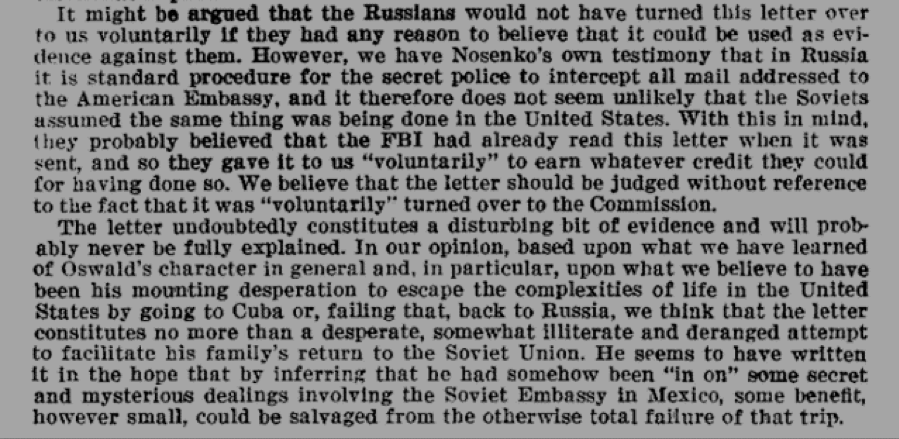
    Oswald did rent a P.O. Box in his own name with number 30061, New Orleans, Louisiana. He added his wife’s name, Marina Oswald, and someone by the name of A. J. Hidell to also be able to receive mail. He then made an order to print 1000 leaflets and 500 applications using the name Lee Osborne. [26] On the leaflets, he had his name printed with A. J. Hidell as the chapter President.  He then informed the Worker and Militant of his new P.O. Box.[27]

    In May and June of 1963, Oswald was distributing FPCC leaflets in at least three New Orleans locations: Tulane University, Canal Street, and the port. Two university students had in their possession FPCC leaflets with “Hands off Cuba” and the name A. J. Hidell instead of Lee Harvey Oswald. A military intelligence officer reported to the FBI that he had found one such a leaflet at Tulane with the name A. J. Hidell, P.O. Box 30016. Oswald also distributed leaflets outside the aircraft carrier Wasp.[28] Although the correct P.O. Box address was 30061, for some peculiar reason on the above occasion, it was written 30016.

    On June 24, 1963, Oswald applied for a passport to travel to England, France, Germany, Holland, the Soviet Union, and Poland. He received it the next day with the warning that he was not allowed to travel to Cuba. On July 19, 1963, the Reily Company fired Oswald on the grounds that he was not working efficiently and he was absent from his post quite often. On July 27, 1963, his cousin Eugene Murret asked him to talk about his life in the Soviet Union at the Jesuit College in Mobile, Alabama, where he was a student.[29]

    During his speech, he said the Communist Party USA had betrayed itself. It had become a sidekick of the USSR against the American government, so the Soviet Union could become the absolute ruler of the American continent. This is strange since Oswald first joined the Communist party USA and now was accusing it of betrayal. It is also odd that he accused the Soviet Union while some days ago, he had applied to travel there. On August 1, 1963, Oswald wrote a letter to Vincent Lee informing him that he had opened the P.O. Box and distributed leaflets on the streets. Then he wrote something bizarre, but prophetic, saying to Vincent that some exiled Cubans attacked one of his demonstrations, the police intervened, and because of that he lost any support and was left alone.[30] We don’t know if Oswald possessed clairvoyant powers, but something similar happened four days later. On August 5, 1963, he visited the clothes shop of Carlos Bringuier, an Anti-Castro exiled Cuban and member of the Revolutionary Student Directorate (DRE), to offer him his skills that he had acquired as U.S. Marine. He appeared to be anti-Castro, but on the 9th of August his true face was revealed when Bringuier and two of his associates witnessed Oswald distributing FPCC “Hands off Cuba” leaflets while seeking support for Castro. This double-faced behavior of Oswald made Bringuier extremely angry and he accused Oswald of  being “a traitor and Communist”. Oswald didn’t seem to be very shaken and replied “OK Carlos, if you want to hit me, hit me”. The police intervened, like Oswald had foreseen, and arrested them all.[31]

    Oswald was locked in jail and he could have been immediately released if he had paid the $25 bail, but he chose not to and stayed in for the weekend. During that time, he was visited and questioned by Police officer Francis Martello and FBI agent John Quigley. What he said to both of them and how this impacted him on 11/22/1963 will be explained later on.

    The focus for the time being will be on the aftermath of his arrest and his subsequent radio interview about the Canal Street event. On the 12th, Oswald testified before the court that he was guilty of disturbing the peace and was sentenced to ten days. However, he paid the bail of $10 and was set free. The Cubans were not sentenced and were released.[32] Oswald continued his leafleting and Bringuier asked the help of Ed Butler of INCA to expose Oswald’s true colors.

    First, Oswald gave an interview to William K. Stuckey’s WDSU-radio program “Latin Listening Post” and talked about his FPCC organization, but he refused to reveal the names of its members. Oswald was questioned if he was a Communist and if Castro’s regime was a Soviet front in the western hemisphere. Oswald did not deny being a Communist, but he said that he was not member of the Communist Party. Stuckey asked Oswald if the FPCC activities promote Communism, which he denied saying that the organization is only concerned with Cuban matters. When asked if he had visited Latin America, he answered that he had been only to Mexico. It should be noted that Oswald never offered the information that he had lived in the Soviet Union. He said the American government and their anti-Cuba policies had forced Castro to seek help from the Soviet Union. Finally, he accused the CIA of mishandling Cuba and called the CIA defunct and Allen Dulles defunct, which might be something an anti-Castro exile would say who thought the Agency did not do a proper job in Cuba during the Bay of Pigs.[33]

    At the end of the interview, Stuckey asked Oswald if he could come again for a more detailed interview and he agreed. On August 21, 1963, Oswald appeared on Stuckey’s show “Conversation Carte Blanche” to debate Carlos Bringuier and Ed Butler of INCA.[34] Stuckey began the interview by asking Oswald if he had lived in the Soviet Union, a tip provided to him by Bringuier. Oswald was surprised by the question and replied that he had. Bringuier intervened and asked him if he represented the Fair Play for Cuba Committee or Fair Play for Russia Committee. Oswald replied that this was a provocative question that didn’t need answering.

    Stuckey then dropped the bomb and asked Oswald if he’d renounced his American citizenship and had become a Soviet citizen. Oswald replied that this had nothing to do with the topic of Cuban-American relations. But Stuckey insisted that it did, since Oswald had been proclaiming that Cuba is not a Russian puppet and now it was revealed that he had past relationship to Russia and maybe he was a Communist. Oswald did not answer if he was a Communist, but admitted that he was a Marxist.

    Stuckey wondered how he supported himself his three years in Russia and asked if he was given any government subsidy there. Stressed, Oswald almost revealed his true purposes when he said that:

    …I worked in Russia. I was under the protection, I was not under the protection of the American government, but I was at all times considered an American citizen. I did not lose my American citizenship…I am back in the United States. A person who renounces his citizenship becomes legally disqualified for returning to the United States.

    In the first interview, he denied that Cuba was under Russia’s control and insisted the FPCC’s concern was only Cuban independence and opposing intervention in Cuban affairs. In his second interview, he was exposed as a Marxist and possible Communist working for the Soviets and taking his orders from them, perhaps as a Soviet spy himself. Oswald, wittingly or unwittingly, had connected the FPCC to the Soviet Union and had hurt the organization’s reputation and credibility. After this debate, Oswald’s career as member of FPCC and Castro’s supporter had lost its purpose, value, and meaning.

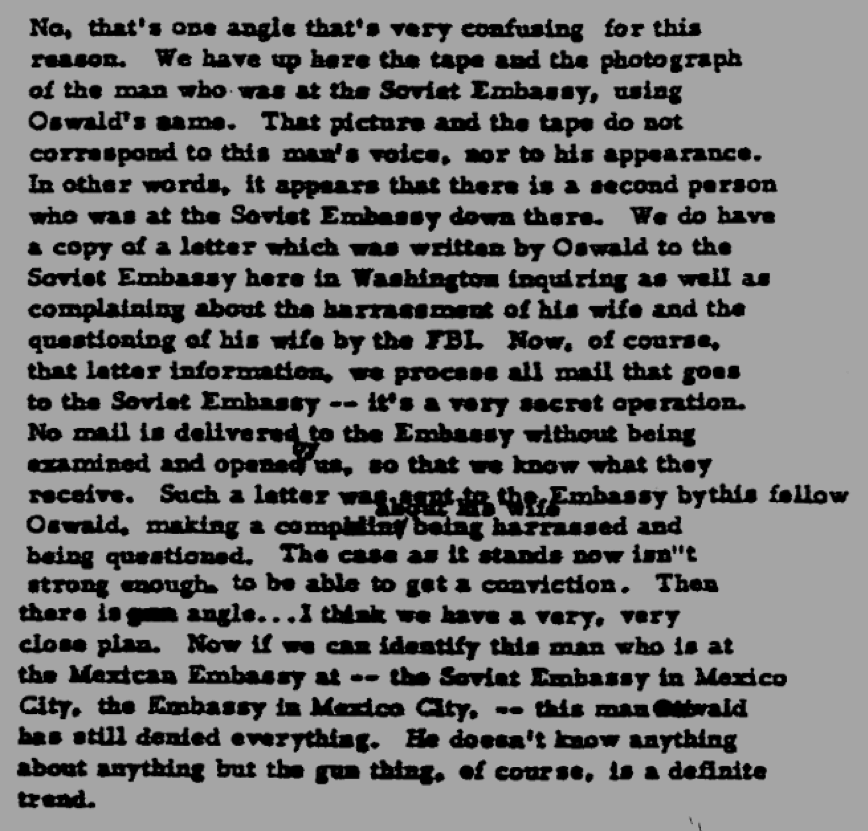
    With his help, his interlocutors made the FPCC look like a Russian Trojan horse in America and a dangerous Communist spying niche. It is more likely that Oswald was acting as such as part of CIA’s anti-FPCC campaign which, as John Newman found out, had been orchestrated by James McCord and David Atlee Philips since 1961.[35] The CIA and FBI suspected that the FPCC back then was trying to infiltrate students that were travelling to Cuba. So Phillips decided to dangle an American student, Court Wood, into the FPCC by pretending to be pro-Castro interesting in starting a new FPCC chapter, something that Oswald tried to emulate two years later.[36]  Although the CIA was not allowed to run domestic operations, the FBI knew they did and turned a blind eye to them as FBI agent in New Orleans Warren DeBrueys told author Jim DiEugenio.[37] It would be very plausible that this CIA anti-FPCC campaign had been passed to CIA’s Domestic Operations Division (DOD), formed in 1962. 

    Researcher Peter Vea discovered a list of documents in the National Archives regarding Clay Shaw’s contacts with the Domestic Contact Service (DCS). One of these documents stated Clay Shaw had been granted covert security approval for project QK/ENCHANT.[38] Newly discovered documents revealed that the CIA was examining the prospect of using Banister’s agency as a cover company for project QK/ENCHANT. Based on ARRB investigation, QK/ENCHANT was a cryptonym for “permission to approach” and utilization for cleared contact purposes. These probably indicated the use of individuals and companies as contact cover for CIA proprietary organizations.[39]

    Author Bill Davy showed the above document to former CIA officer Victor Marchetti and, after examining it, he said to Davy, “That’s interesting…he was doing something there.” He added that Shaw would not need a covert security clearance for DCS. Marchetti then said he was likely doing something for Clandestine Services.  When Dave asked which one, Marchetti replied:

    The DOD (Domestic Operations Division). It was one of the most secret divisions within Clandestine Services. This was Tracey Barnes’s old outfit. They were getting into things…uh exactly what I don’t know. But they were getting into risky areas. And this is where E. Howard Hunt was working for at the time.”[40]

    The DOD offices were not located at Langley, but on Pennsylvania Avenue, in Washington. When Richard Helms was asked about the DOD behind closed doors in 1968, he described the DCS which was not a part of the Directorate of Plans.[41] Donald Freed wrote in his book Death in Washington that the DOD was involved in illegal domestic cover companies and operations against the FPCC.[42]


    III. Setting Up the Patsy

    In this section, we shall look into the events and incidents showing that Oswald was set up to take the fall for Kennedy’s murder. There were many such efforts, but we will concentrate on the most important, since it will be impossible to report in every detail the life of Oswald in this article.

    A. Senator Dodd, Hidell and the Mannlicher – Carcano

    The Warren Commission had a hard time proving that Oswald owned a Mannlicher-Carcano rifle, the weapon that allegedly was used to kill Kennedy. What is certain, though, is that Oswald was interested in how to purchase weapons by mail. When he was working at the Reily Company, Oswald was spending his time visiting Adrian Alba’s garage and engaging him in conversations about mail order weapons. Oswald would also study some magazines about guns in Alba’s office. He had asked Alba, “How many weapons had I ever ordered, and how long did it take to get them, and where had I ordered the guns from.”[43]

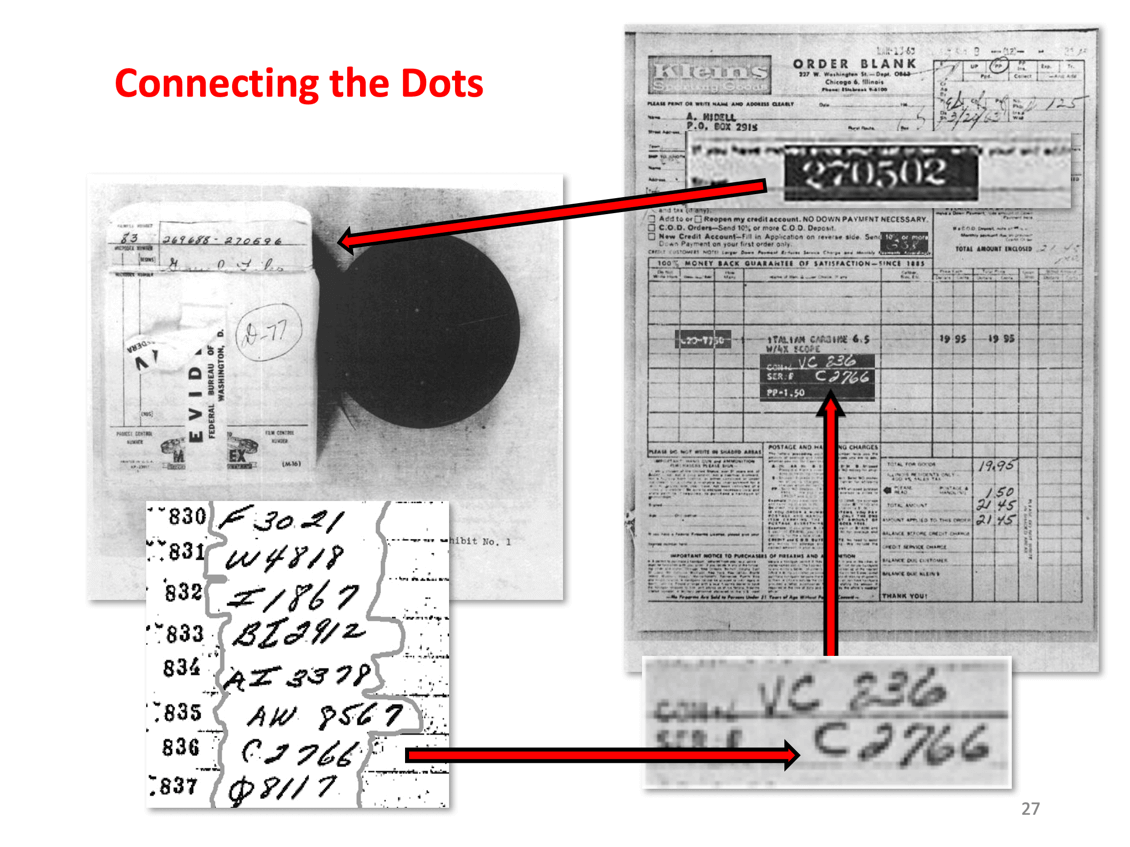
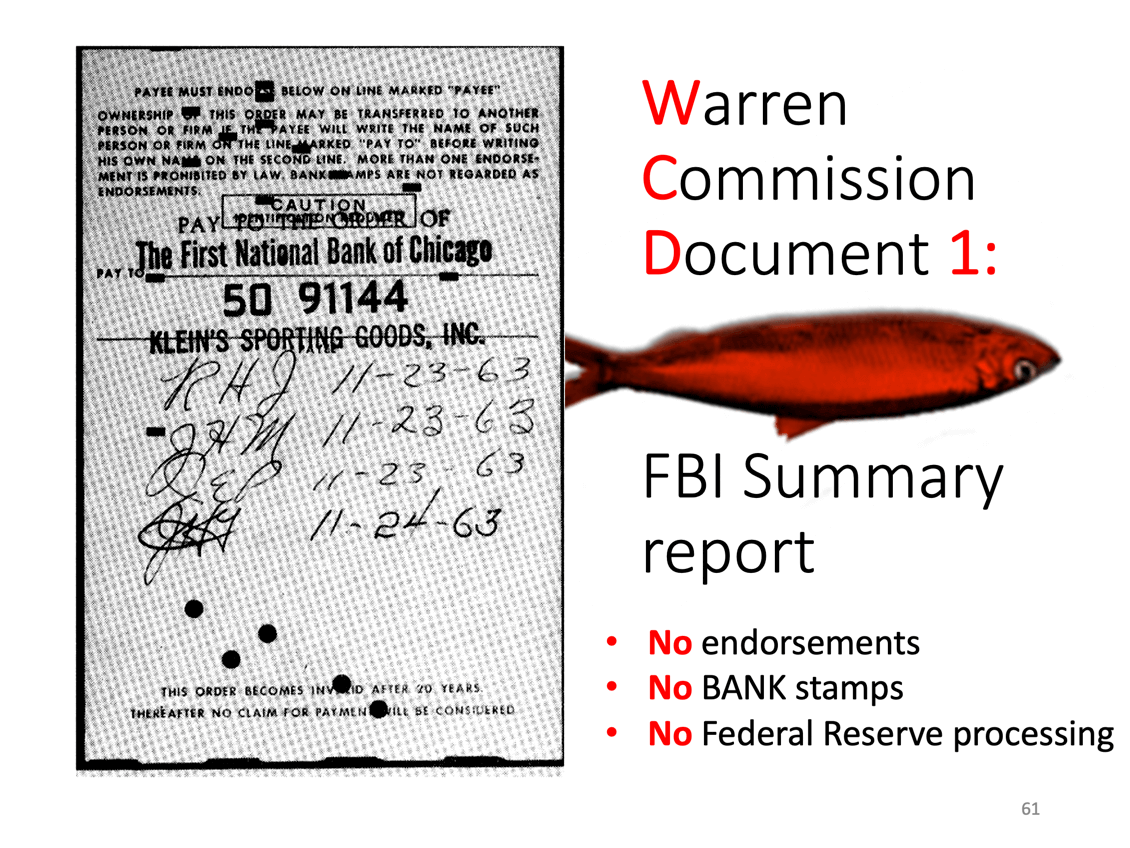
    The Dallas Police said they found an order page from the June 1963 American Rifleman magazine about a Manlicher–Carcano.[44] Oswald, however, had already ordered a Manlicher–Carcano from Klein Sporting Goods on March 12th, 1963, using a coupon from the February issue of the same magazine under the name A. Hidell. He also ordered a Smith & Wesson .38 gun from Seaport Traders of Los Angeles on January 27th, 1963, under the name A. J. Hidell. This was the same gun that Oswald allegedly used to kill Officer Tippit.[45] Was it a coincidence that these two weapons companies were under investigation by the Alcohol, Tobacco, and Firearms agency (ATF)?

    Besides ATF, there was another ongoing investigation about these two companies, conducted by Senator Thomas Dodd, another member of the powerful American Security Council. Dodd was the Chairman of the Senate Juvenile Delinquency Subcommittee trying to legislate the use of interstate mail orders for weapons.[46] Dodd’s subcommittee started its hearings two days after Hidell ordered the Smith & Wesson gun and the Manlicher–Carcano was also one of the weapons investigated.[47]

    Senator Dodd was also member of the Senate Internal Security Subcommittee—headed by the racist, right-wing Senator James Eastland of Mississippi—which was investigating the FPCC. Dodd called the FPCC “the chief public relations instrument of the Castro network in the United States” and believed that both the Socialist party and the Communist Party had infiltrated the committee. It might have been possible that Oswald, as a member of a private investigating firm, was contacted by Dodd’s committee to infiltrate these three organizations.[48]

    The son of one of Senator Dodd’s friends, who had been hired as an investigator to do work for the subcommittee, was involved in a strange incident in Mexico, causing a disturbance in a strip club. He was arrested by Mexican police for having a gun and posing as a police officer. The same man was arrested for carrying three weapons and ammunition in Hyannis Port, Massachusetts, on a weekend that President Kennedy was there.[49]

    As others have pointed out, it would have been stupid for Oswald to order a rifle via interstate mail intending to kill JFK, since it would leave a trail that would ensnare him. It would have been easier to buy a rifle from a gun shop in Dallas anonymously. When Oswald was arrested in New Orleans, he was interviewed by Lieutenant Francis Martello of the New Orleans Police Intelligence Division and New Orleans FBI Agent John Lester Quigley. He showed two FPCC cards, one signed by Vincent T. Lee and the other by A. J. Hidell, his alleged New Orleans FPCC officer. As a result, this information was related by Martello to the 112th Army Military Intelligence Group (MIG) at Fort Sam Houston and by Quigley to the Office of Naval Intelligence in Algiers, Louisiana.[50]

    After the assassination, Colonel Robert E. Jones of the 112th MIG informed the FBI that Oswald was carrying a fraudulent Hidell selective service card; therefore this information linked Oswald to Hidell and the weapon used to shoot the President.[51] This would trace back to the FPCC and, perhaps, Castro as a leading force behind the assassination.  One has to wonder why Oswald would order a weapon using an alias and then carry with him an identity card that would link him to the weapon on the day of the assassination.

    B. The Clinton-Jackson Incident

    Jim Garrison was the first official to present witnesses that had seen Oswald in the company of David Ferrie and Clay Shaw in the areas of Clinton and Jackson, ninety miles north of New Orleans.

    One day, during the late summer of 1963, Ed McGehee the owner of a barbershop in Jackson was visited by a stranger who he later identified as Lee Harvey Oswald. Oswald asked if he could find a job as an electrician in the area. McGehee told him to ask in the East Louisiana State hospital and informed him that it was a mental hospital, something that Oswald did not know and surprised him. He advised him to contact state representative Reeves Morgan.[52]

    Oswald visited Morgan, but he told him that he could not help him since he could not put him ahead of his own constituents. He advised him to register to vote and that might net him extra points in his search of work. Van Morgan, playing in the front yard, noted the black Cadillac parked outside the house; with a man with a shock of white hair in the driver’s seat.[53]

    The next day, Oswald and his two companions went to the neighboring village of Clinton to register. It happened to be the day when a drive to register black voters—organized by the Congress of Racial Equality (CORE)—was on. When the Cadillac appeared, most voters thought it might be the FBI, so they noticed the car and its occupants. Several witnesses, from simple voters, to the Registrar, and the local Sheriff, testified that they identified the three people as Lee Harvey Oswald, David Ferrie, and Clay Shaw. The Sheriff even approached the car and asked the tall grey haired driver for his license. It turned out to be Clay Shaw of the International Trade Mart of New Orleans. Oswald and another man were the only two white voters trying to register that day.[54] When Registrar Henry Palmer asked him for ID, Oswald showed him some Marine separation papers and offered two references, both doctors, Malcom Pierson and Frank Silva. Oswald said that he was living in the state hospital together with the above mentioned doctors. Then Palmer asked him why he wanted to register and Oswald replied that he was advised this would help him secure a job at the hospital. Palmer replied that this was not so, since he knew many people out of Mississippi that were working in Jackson. Hearing that, Oswald left the office, returned to the car and the trio departed.[55]

    Oswald then resurfaced at the East hospital trying to get a job, but he was making a spectacle of himself. Talking loudly and being obnoxious, he asked the hospital employees what it would take to take Castro down, since he was a Marine and he was involved in getting rid of Castro. Frank Silva, a Cuban doctor that Oswald had used as a reference, heard the conversation and took an immediate dislike to Oswald.[56]

    Maxine Kemp, the hospital secretary, remembered Oswald filling an application and a year later, after the assassination, looked for the file and found it. When Garrison investigators went there looking to find it, the file had disappeared.[57]

    Why did Shaw and Ferrie take Oswald to Jackson to seek a job at the hospital and register as a voter? If we could consider Oswald’s actions against leftists and subversives, it would make sense to try to register with the black voters so to link CORE through himself to FPCC, Castro, and the Soviet Union, something that would comprise the CORE movement for racial equality.  However, the most important aspect of this trip was his visit to a mental hospital acting as a troubled young man talking nonsense and behaving erratically. Garrison believed that if Oswald had secured a job at the hospital it would have been easy for someone to alter his file from employee to a mental patient, something that would fit with his later portrayal as the lone nut assassin.

    C. The Odio Incident

    Sylvia Odio was the daughter of the Cuban truck magnate Amador Odio, who was imprisoned back in Cuba along with his wife for actions against the Castro regime. She was living in a Dallas apartment with her two children and her sister Annie, who was helping Sylvia move to another apartment. In late September, Sylvia was visited by two men who presented themselves as Cuban exiles and an American. The exiles were introduced to Sylvia by their war names: Leopoldo and Angelo. They said they were members of JURE, Manolo Ray’s liberal exile organization of which Amador Odio was a founding member.[58] They had come from New Orleans and asked Sylvia to write them letters in proper English to be used to attract financial support for JURE. Sylvia declined since she did not know or trust these strangers and they then left. But the next day one of the Cubans, Leopoldo, called her and told her that the American accompanying them was named:

    Leon…he was an ex-Marine, an expert marksman…he could do anything, like getting underground in Cuba, like killing Castro. He says we Cubans don’t have any guts; we should have shot President Kennedy after the Bay of Pigs. He says we should a thing like that.[59]

    Sylvia never heard from them again and wrote her father about these strange visitors. After the assassination of President Kennedy, Sylvia and her sister Annie recognized Lee Harvey Oswald as “Leon,” the American that came to her house. Sylvia was certain that they visited her apartment on Thursday, the 26th of September or the next day. This created a huge problem for the Commission: Oswald was supposed to be on a bus to Mexico on the 26th of September. This incident is very similar to Oswald’s bragging to Doctor Silva about getting rid of Kennedy and showing radical, unpredictable, and bizarre behavior.

    JURE was considered by the CIA as a leftist organization that had infiltrated the JMWAVE station. At one point, CIA Officer Henry Hecksher had ordered Manuel Artime, E. Howard Hunt’s protégé, to fire on JURE vessels.[60] Hunt despised Ray and referred to his philosophy as Castroism without Castro.   It is plausible that this incident could have been an effort to connect JURE to Oswald and, subsequently, to Castro and the assassination of Kennedy.

    D. Castro’s Gun Dealer

    Either just before or right after visiting Sylvia Odio, two men visited Robert McKeown, a former gun dealer at his house in Bay Cliff near Houston. One of them introduced himself as Lee Oswald and his companion, a Cuban, as Hernandez. They explained that they wanted to buy a large number of guns to start a revolution in El Salvador. McKeown was skeptical and refused to sell them anything, since he was on probation for smuggling guns to Castro in Cuba on behalf of Prio Socarres. When he refused, Oswald tried to convince him to at least sell them four Savage automatic rifles with telescopic sights for $10,000. McKeown again refused and said to Oswald that he could buy these for a few hundred dollars from any Sears Roebuck store in Texas.[61] He thought that the whole deal was fishy and maybe someone wanted to get him in trouble if the guns were really for Castro; especially when he recognized Hernandez as a man he knew in Cuba years ago as a Castro supporter.[62]

    If McKeown had fallen for the trap and one of the rifles was proven to be used in the JFK assassination, then the gun could have been traced back to him and eventually to Castro and Cuba as the instigators of the crime.

    The most important event that took place to incriminate Oswald was the infamous Mexico City incident. Due to its complexity, it will be examined separately, in more detail than the above four.


    IV. Mexico Histrionics

    Oswald’s trip through Mexico and what occurred there is the most convoluted and enigmatic event regarding the assassination, one that could lead to the core of a momentous plot. Analysing it in all its aspects is not within the scope of this essay. One should read John Newman’s book Oswald and the CIA or the Lopez Report, to name just two sources, for a detailed and deep analysis. A summary of the incident will be presented here to note if any parallels can be drawn between the episode and the U-2 shoot down in the Soviet Union.

    Oswald visited the Cuban Consulate in Mexico City on a Friday, September 27, 1963, around 11 a.m. and asked Sylvia Duran—the consulate’s secretary—to grant him an in-transit visa to Cuba on his way to the Soviet Union. To make his case, he showed her his work papers from Russia, his marriage certificate, and his membership cards in the Communist Party USA (CPUSA) and in the FPCC. Duran found his behaviour odd, since he was a member of CPUSA, which was illegal in Mexico; and he had not gotten a visa from CPUSA which had a special agreement with Cuba’s Communist Party to get instant visas for its members. Duran asked him to get some passport photographs, Oswald left, and then returned with photographs, but Duran advised him that she could not issue him an in-transit visa to Cuba unless he first had obtained a visa to the Soviet Union.[63] So Oswald went to the Soviet Embassy. The Soviets refused him a visa, telling him that that he had to fill in an application form that would be sent to Washington and it could take months for a reply. Oswald returned to the Cuban Consulate and told Duran a bold lie, that the Soviets had issued him a visa. Duran, incredulous, called the Soviet Embassy to find out if they had. KGB operative under diplomatic cover Valery Kasimov told her that the reply from Washington could take months. As John Newman concluded, those who handled Oswald had advised him to lie because they wanted to force Duran to call Kostikov and the conversation would be recorded by CIA’s LI/ENVOY telephone tap secret operation in Mexico City. But neither of the two mentioned Oswald by name and instead referred to him as the American.[64]

    Duran would not issue Oswald a transit visa and told him to leave. Oswald got angry and displayed erratic and aggressive behaviour, making a bad impression on the Cubans. He had to be escorted out of the Consulate.

    The next day, Saturday 28, 1963, he returned to the Soviet Embassy, which was closed on weekends. But he managed to meet with Kostikov for a final desperate attempt to get a visa. According to the Russians, he had a revolver, which he said he needed to protect himself from the FBI. They denied his request and asked him to fill in an application for Washington’s Soviet Consulate. Oswald never filled in the form and gave up, leaving the premises.[65] He never again visited either the Cuban Consulate or the Soviet Embassy.

    What happened next is the beginning of the most enigmatic tangled web that surrounded Oswald: a man and a woman impersonating Duran and Oswald, called the Soviet Embassy asking for the visa application that Oswald had not filled in. The name of Oswald is not mentioned. Also, the man spoke poor Russian but good Spanish which was the opposite of Oswald’s case. The imposter told the Russian that he went back to the Cuban consulate to ask for his address in Mexico since they had it.[66] Newman believes that the impersonators wanted it recorded that Oswald had some special relationship with the Cubans. Duran later denied that she made the call as did the Soviets, so it is likely that the Russian recorded answering was also an impersonator.

    Because Oswald’s name was not mentioned, another call occurred on Tuesday, October 1, 1963. The imposter called the Soviet embassy and asked if there were any news on a cable to Washington. Those impersonating Oswald did not know the details of his visits to the Cuban Consulate and Soviet Embassy nor that he had declined to fill in the visa application. If they had known, they would have never asked such a pointless question. Again, the caller spoke poor Russian, which would later pose a problem to them. The imposter asked what was the name of the Soviet official he spoke to and the Russian replied “Kostikov.” Why was it so important to link Oswald to Kostikov? Because Kostikov, according to CIA was, part of KGB’s department 13, responsible for assassinations.

    Newman concluded that the impersonators wanted the names of both Oswald and Kostikov to be mentioned so it would be recorded by LI/ENVOY, planting a virus into the CIA’s records that would be activated on November 22, 1963. That virus would link KGB assassinations and the Soviet Union to the murder of President Kennedy. President Johnson would use the impersonation charade to convince Senator Russell and Chief Justice Warren into preventing a conflict “kicking us into a war that can kill forty million Americans in an hour.”[67] The WWIII virus made sure that the Warren Commission would never investigate what really happened in Mexico.

    It is undeniable that someone impersonated Oswald on these phone calls. But did they impersonate the historical Lee Harvey Oswald or another imposter? There are indications that the real Oswald never travelled to Mexico and there are testimonies by Duran, Cuban Consul Azcue, and a Cuban student that confirm he was not the real Oswald they saw in Mexico.

    Duran testified under interrogation that Oswald was blonde, short, dressed inelegantly, and his face turned red when angry.[68] When the CIA gave Duran’s testimony to the Warren Commission, they eliminated the above description. When Duran testified to the HSCA, she offered the following description: “as approximately five feet six, with sparse blonde hair, weighing about 125 pounds.”[69] Consul Azcue gave a similar description “a white male, between 5’6″ and 5’7″, over 30 years of age, very thin long face, with straight eye brows and a cold look in his eyes.”[70] A Cuban student, Oscar Contreras said that he met an American named Lee Harvey Oswald and he was blonde and short.[71] If these testimonies are true, the impersonator who made the calls had impersonated an already impersonated Oswald: which perplexes things even further.

    Two CIA assets working undercover inside the Cuban consulate told Lopez that the man they saw was not the man accused of assassinating the President.[72] This issue could have been resolved if photographs of Oswald going in and coming out of the embassies existed. The CIA has never been able to present any such photographs and thanks to the Lopez report we know why. Anne Goodpasture was a CIA officer from Staff D posted to the Mexico CIA station. She tried to disguise her role in retrieving photos each day. But Lopez and Hardway found out the man she named in this function only did the legwork for Goodpasture. They finally discovered that Goodpasture was responsible for photographic and electronic surveillance. The translating team said that they did not review all photographs from the Soviet Embassy, only what Goodpasture would allow them to see, and all such photographs were under her control. They also revealed that, although Goodpasture was an assistant to station chief Win Scott, she was a closer assistant to David Phillips, the Chief of Cuban Operations and Covert Action. During that same period, Phillips was also working for the SAS/CI.[73] Phillips was questioned by HSCA Chief Counsel Dick Sprague if he had any photographs of Oswald in Mexico. He replied that the camera was not working those days.[74] Hardway wrote a memo to HSCA Chairman Louis Stokes saying that about ten feet of film was taken from the camera that covered the Cuban Consulate on the 27th and 28th of September. These were developed and sent to CIA HQ, then lost and never seen again.[75]

    The CIA always maintained that the tapes had been erased and there were not any originals for Lopez and Hardway to compare with the existing transcripts. There was a missing conversation of September 30, 1963, that the translator, Mrs. Tarasoff, had transcribed. She remembered that it was a very lengthy call and Oswald had spoken in English and had requested financial aid from the Soviets. She had marked it as urgent and according to her recollection Phillips had also heard it.[76]

    On October 1, 1963, a diplomatic pouch was sent to CIA HQ addressed to a Michael Choaden. This was an alias for Phillips. Phillips had access to all information from Mexico to Washington and vice versa. He had the original tapes that Goodpasture had given him, plus the copies and transcripts at CIA HQ. Simply put: Phillips would have been able to alter the tapes or phony up the transcripts.[77]

    On October 8, 1963, the Mexico station sent a cable to CIA HQ to report an American citizen’s contact with Kostikov. This contact had been known for a week. Phillips tried to explain the delay to Lopez by saying the translators were too slow. But Lopez found out they had finished the translation after 24 hours. Phillips insisted that he was certain about this, since he signed the cable because it concerned Cuban matters. That was another lie, because he had left Mexico the 1st of October and the cable did not say anything about Cuban matters.[78]

    The cable had two separate sections. The first reported that an American male, Lee Oswald, who spoke broken Russian, talked with Soviet consul Kostikov. The second section informed that they had photos of someone entering and leaving the Soviet Embassy that was age 35, athletic build, 6 feet, receding hairline and balding top. The cable did not state that this “mystery man” photographed was the same as Lee Oswald, who was only recorded on the phone.[79]

    It should have been obvious that the mystery man was not Oswald. When Goodpasture was questioned about it, she replied that it was the only photograph of a non-Latin person taken on October 1, 1963. But Lopez and Hardway discovered that the photo was taken on October 2, 1963.[80] All of these falsehoods made Hardway and Lopez suspicious of Goodpasture and Phillips.


    V. A Sinister Mole Hunt Deja Vu

    The Mexico desk at CIA HQ received the Kostikov cable and John Whitten—alias John Scelso—then retrieved Oswald’s 201 file. He found out that it had been dormant for the previous eighteen months. This file had been kept by its custodian Ann Egerter of Angleton’s super secretive CI/SIG. What Whitten could not possibly have known was that the FBI report of Oswald’s debriefing in 1962 was missing. He also could not have known that the FBI reports concerning Oswald’s activities with Cubans and the FPCC in Dallas and New Orleans were not included in his 201 file. Around September 23, 1963, just before Oswald went to Mexico, all this crucial information had been bifurcated to file 100-300-011, entitled “Fair Play for Cuba Committee.”[81] There were no indications that the Cuban affairs office (SAS) read that file, but its Counterintelligence staff SAS/CI did.[82] More importantly, Whitten had no information about Kostikov and did not know that he was suspected of being a KGB officer responsible for assassinations.

    On October 10, 1963, CIA HQ sent a cable to State, FBI, and Navy connecting the mystery man to Oswald and informed them that Lee Oswald contacted the Soviet Embassy and spoke to consul Kostikov. It described Oswald as 35 years old, athletic build, six feet tall with receding hairline. It also reported that this Oswald might be identical to a Lee Henry Oswald that had defected to the Soviet Union and implied that he was still there with his family.[83]

    The same day, they sent another cable to the Mexico City station that included a different description of Oswald as five 5’ 10”, 165 pounds, light brown wavy hair and blue eyes.[84] This cable also identified Oswald with a Lee Henry Oswald that had defected to the Soviet Union and still living there according to latest HQ info dated may 1962; no word about his return to the States and his escapades in Dallas and New Orleans.[85] Most of the Counterintelligence officers in CI/SIG knew that the information included on these cables was not true, but rather deceptive.

    Jane Roman, one the counterintelligence officers who signed both of the cables was interviewed by John Newman and Jefferson Morley in 1994. Roman admitted to them that:

    I am signing off on something I know isn’t true…The only interpretation I could put on this would be that this SAS group would have held all the information on Oswald under their tight control…

    She added “Well, to me, its indicative of a keen interest in Oswald, held very closely on a need-to-know basis.”[86]

    On September 16, 1963, a day before Oswald obtained his tourist visa to Mexico, the CIA sent a memo to FBI for a joint operation to embarrass the FPCC in countries where it had support by planting deceptive information. It would have been a counterintelligence operation inspired by CI/OPS and carried out by SAS/CI.[87] As we have seen in the previous section, Oswald was probably under the control of the CIA’s Domestic Operations Division (DOD), but now that he was to be moved outside of U.S. soil, the SAS and David Phillips would have taken the reigns. Could this have been his mission in Mexico to discredit the FPCC, as he had in New Orleans?

    The CIA, and most likely Phillips, had already run an impersonation operation against an American named Eldon Hensen in Mexico. Hensen wanted to help provide useful information to the Cubans and requested a meeting. The CIA station in Mexico City had an agent pretend to be Cuban and meet Hensen. As a result, Hensen walked into a trap.[88]

    However, most clandestine operations have at least two purposes and an operation might be hidden inside another. It is possible that the SAS could have used Oswald or his legend in an operation designed to kill Castro, although no such evidence exists.  Bill Simpich, in his book State Secret, made the case that the disinformation and false data presented in the two cables were designed as a mole hunt to find out who had betrayed a CIA operation in Mexico by impersonating Oswald. I would agree with him up to a point, that there was a mole hunt but it was not benign, as he seems to think, but a sinister one. The name Lee Henry Oswald, the wrong descriptions of Oswald, Marina’s surname pronounced Pusakova instead of Prusakova were marked cards used in a mole hunt.

    This mole hunt had eerie similarities to the one we described in Part 2, which Angleton used as a cover for the U-2 shoot down. Simpich also believes that it was CIA officer from JM/WAVE, David Sanchez Morales, that had used his Cuban intelligence forces, called AMOTs, to impersonate Oswald and Duran. Morales was clever and knowledgeable of counterintelligence operations, but he was not in any way a CIA general. Would Morales be able to bifurcate information into two separate Oswald files? It was this bifurcation that kept his Cuban activities secret and lowered his profile so he would not be included on the Secret Service security index. These two files emerged after November 22, 1963, to complete Oswald’s profile and reveal that an ex defector to the USSR had been involved upon his return to the States in pro-Castro activities and had been in contact with a Soviet KGB assassinations officer in Mexico City. Further, could Morales have foreseen that the FBI would remove the flash warning from Oswald’s file on October 9th, the day before the CIA issued the two faulty memos? That warning had been intact since 1959. This also allowed Oswald’s threat profile to be lowered.  One last point, as we shall see, the probability remains that Oswald was not in Mexico City. Could Morales have known that the double operation was planned with a man who was not going to be there?  Who was a legend?  And would Morales know what specific legend it was? Was Morales really that far up the food chain?

    By excluding Oswald’s Cuban escapades from the two cables, only the Soviet Counterintelligence staff would be responsible for drafting and signing them, while the SAS was kept in the dark. Tennent Bagley, the Chief of Soviet Russia/CI, had nothing to say about Kostikov’s role as KGB assassination officer. Yet on November 23, 1963, submitted a memo describing Kostikov as “an identified KGB officer…in an operation which is evidently sponsored by the KGB’s 13th department responsible of assassinations.”[89] It is worth mentioning that Bagley was transferred in 1963 from the Bern station in Switzerland to Langley and promoted as Chief of SR/CI, just in time for the suppression of Kostikov’s KGB role. Could Morales have been able to transfer Bagley, an Angleton ally, back to CIA HQ and place him in the right place to ensure that everything would go as he planned and loose ends would be unexposed? Could Morales have anticipated with precision each of Angleton’s moves, all the way to the point that the FBI would remove Oswald from the security index, ensuring he would not  be picked up and removed from the motorcade route in advance?

    Putting it all together, we can try to synthesize the puzzle of what happened in Mexico City. Angleton, who John Neman believes was privy to the conspiracy to assassinate the President, had to design a foolproof plot. The idea was to make it appear that the Cubans and Soviets manipulated Oswald in Mexico City in such a way to use him in the assassination of Kennedy. Angleton knew that the exposure of this plot would plant a WWIII virus in Oswald’s files that would halt any real investigation in order to prevent a possible nuclear war. To achieve that, Oswald’s profile had to be lowered for the six weeks before the assassination. Angleton had to come up with a cover story so no one would ever question his role in the plot. As Newman revealed, he was the only person with access to all the Oswald files and information and he managed to manipulate and restrict his FPCC activities in Dallas and New Orleans. He knew the allegedly explosive information about Kostikov’s involvement in wet affairs and he was in a position to instigate a SAS counterintelligence operation against the FPCC in Mexico.

    Would Oswald have been asked to go to Mexico if only his legend was to be used? Or was he too important for the assassination plot’s success to place him in suspicious and dangerous situations in the Cuban and Soviet embassies, especially with someone as lethal as Kostikov in direct proximity? More importantly, if anyone had taken a photo of him and somehow his legend was exposed, it would have been extremely difficult to lower his profile. He would have been marked a potential threat and would have not have been allowed on the motorcade route. Therefore, it is logical to conclude that a short, blonde man was sent to Mexico to impersonate the real Oswald as part of an SAS counterintelligence operation.

    But we don’t really know how the impersonation was justified for this legitimate CIA operation. The plan was for Oswald to fail to get a transit visa to Cuba, thereby provoking Duran to call Kostikov and plant the WWIII virus. Even if Duran had mentioned Oswald by name to Kostikov, I believe that the telephone call impersonations on 9/28 and 10/1 would have still occurred. This necessitated the bifurcation and also the removal of the flash warning.

    Angleton used the impersonations as an excuse to start a mole hunt in a similar way he did back in 1960 when a mole had betrayed the U-2 secrets that led to its shoot down. Angleton did not find any mole. But he used the mole hunt as an alibi to cover his role in the U-2 incident, which resulted in the Paris Peace Summit cancellation.

    The mole had returned to action and now he had betrayed the CIA operations against Cuba in Mexico, even contacting the head of KGB assassinations before he himself tried to get to Cuba. Angleton had the excuse to manipulate information and to lower Oswald’s profile in a way that it would not raise suspicion until after November 22. Again Angleton would fail to catch a mole, but he had used the mole hunt to cover his true role that resulted in the murder of a U.S. President.

    Below a table would present the parallels between the two mole hunts, in the Soviet Union and in Mexico.

    Oswald in Soviet Union

    Oswald in Mexico

    Oswald defected to USSR

    Oswald claimed to return to USSR via Cuba

    Visited Embassy on a Saturday so he could not defect

    Visited Soviet Embassy in person and phone calls to the embassy on Saturday when closed

    Never returned to sign defection papers

    Never returned to complete visa application

    Impersonated to look like he was replaced by a Soviet Illegal

    Impersonated to look like a Cuban or Latin person had replaced him

    Angleton believed that the U2 was compromised possibly by a Soviet mole inside CIA

    SAS operation to embarrass FPCC
    A possible SAS operation to assassinate Castro and the CIA surveillance operations were all compromised possibly by a Soviet mole inside CIA

    Purpose to cancel Paris peace summit

    Purpose to show that the Cubans and the Soviets controlled Oswald in a plot to kill Kennedy to revenge CIA’s plan to kill Castro

    Oswald legend was used as part of staged mole hunt to find out the Soviet mole that betrayed the U2 secrets

    Oswald legend was used as part of staged mole hunt to find the Soviet mole that betrayed the SAS operation

    Mole hunt was used as a cover to hide Angleton’s true purpose

    Mole hunt was used as a cover to hide Angleton’s true purpose

    FACT: A mole was never uncovered but the Peace Summit was cancelled

    FACT: A mole was never uncovered and JFK was killed instead

    Angleton was the man pulling the strings from the CIA HQ and David Phillips and Anne Goodpasture were his foot soldiers covertly pulling strings down in Mexico City. It is more likely that Morales would have also taken orders from Angleton and not the other way around. This author remains incredulous to the theory that Morales was such a diabolical puppet master that he could organize such an evil plot from Miami, forcing CIA’s Counterintelligence and Angleton’s CI/SIG to unwittingly dance to his music resulting in the President’s assassination. And then get away with it.

    Go to Part 1

    Go to Part 2

    Go to Part 4

    Go to Part 5

    Go to Part 6

    Go to Conclusion

    Go to Appendix


    NOTES

    [1] Gerald McKnight, Breach of Trust, University Press of Kansas, 2005, p. 332.

    [2] Gerald McKnight, Breach of Trust, University Press of Kansas, 2005, p. 129.

    [3] Gerald McKnight, Breach of Trust, University Press of Kansas, 2005, p. 131.

    [4] Scott, Peter Dale, Deep Politics, University of California Press 1993, pp. 243-244.

    [5] Scott, Peter Dale, Deep Politics, University of California Press 1993, p. 244.

    [6] Scott, Peter Dale, Deep Politics, University of California Press 1993, pp. 244-245.

    [7] The American Security Council.

    [8] Scott, Peter Dale, The War Conspiracy, Mary Ferrell Foundation Press 2008, p. 235.

    [9] DiEugenio James, Destiny Betrayed, Skyhorse Publishing, 2012, p.152.

    [10] Weberman J.A., Coup d’etat in America, Nodule 15, p. 39.

    [11] CIA RIF#104-10106-10582, 17/9/1959.

    [12] Simpich Bill, The Twelve who built the Oswald legend, part 6.

    [13] DiEugenio James, Destiny Betrayed, Skyhorse Publishing, 2012, p.153.

    [14] DiEugenio James, Destiny Betrayed, Skyhorse Publishing, 2012, p.154.

    [15] DiEugenio James, Destiny Betrayed, Skyhorse Publishing, 2012, p.157.

    [16] Ed Butler: Expert in Propaganda and Psychological Warfare

    [17] Summers Antony, Not in your Lifetime, Open Road Integrated Media, 2013, p. 187.

    [18] Ed Butler: Expert in Propaganda and Psychological Warfare

    [19] DiEugenio James, Destiny Betrayed, Skyhorse Publishing, 2012, p.86.

    [20] DiEugenio James, Destiny Betrayed, Skyhorse Publishing, 2012, p.105.

    [21] DiEugenio James, Destiny Betrayed, Skyhorse Publishing, 2012, p.395.

    [22] DiEugenio James, Destiny Betrayed, Skyhorse Publishing, 2012, p.105.

    [23] Scott, Peter Dale, Dallas ‘63, Open Road Media, 2015, kindle version.

    [24] Weberman J.A., Coup d’etat in America, Nodule 18, p. 3.

    [25] Weberman J.A., Coup d’etat in America, Nodule 18, p. 4.

    [26] Newman John, Oswald and the CIA, Skyhorse Publishing Inc. 1995, p. 30.

    [27] NARA, JFK Files, RIF 124-10011-10133.

    [28] Newman John, Oswald and the CIA, Skyhorse Publishing Inc. 1995, pp. 310-311.

    [29] SAC Mobile, November 30, 1963, FBI 105-82555-383 1st NR.

    [30] Warren Commission Report, Vol. XX, pp. 524-525.

    [31] Gerald McKnight, Breach of Trust, University Press of Kansas, 2005, p. 315.

    [32] Kaiser David, The Road to Dallas, Belknap Press 2008, p. 219.

    [33] Weberman J.A., Coup d’etat in America, Nodule 19, pp. 60-74.

    [34] Gerald McKnight, Breach of Trust, University Press of Kansas, 2005, p. 321.

    [35] Newman John, Oswald and the CIA, Skyhorse Publishing Inc. 1995, p. 236.

    [36] Hancock Larry, Someone Would Have Talked, JFK Lancer Productions and Publications Inc. 2006, p. 165.

    [37] DiEugenio James, Destiny Betrayed, Skyhorse Publishing, 2012, p.158.

    [38] DiEugenio James, Destiny Betrayed, Skyhorse Publishing, 2012, p.385.

    [39] Hancock Larry, Someone Would Have Talked, JFK Lancer Productions and Publications Inc. 2006, p. 427.

    [40] DiEugenio James, Destiny Betrayed, Skyhorse Publishing, 2012, p.385.

    [41] Marchetti-Marks, The CIA and the Cult of Intelligence, Coronet Books, 1974, p. 257.

    [42] Hancock Larry, Someone Would Have Talked, JFK Lancer Productions and Publications Inc. 2006, p. 427.

    [43] Scott, Peter Dale, Deep Politics, University of California Press 1993, p. 248.

    [44] Scott, Peter Dale, Deep Politics, University of California Press 1993, p. 248.

    [45] Scott, Peter Dale, Deep Politics, University of California Press 1993, p. 249.

    [46] Scott, Peter Dale, Deep Politics, University of California Press 1993, p. 249.

    [47] Evica, George Michael, And We Are All Mortal, Hartford University, 1978, p. 253.

    [48] Evica, George Michael, And We Are All Mortal, Hartford University, 1978, p. 253.

    [49] Evica, George Michael, A Rifle Symposium, The Assassination Chronicles 1976.

    [50] Scott, Peter Dale, Deep Politics, University of California Press 1993, p. 258.

    [51] Scott, Peter Dale, Deep Politics, University of California Press 1993, pp. 259-260.

    [52] DiEugenio James, Reclaiming Parkland, Skyhorse Publishing, 2013, p.157.

    [53] DiEugenio James, Destiny Betrayed, Skyhorse Publishing, 2012, p.89.

    [54] DiEugenio James, Reclaiming Parkland, Skyhorse Publishing, 2013, p.158.

    [55] DiEugenio James, Destiny Betrayed, Skyhorse Publishing, 2012, p.92.

    [56] Mellen Joan, Farewell to Justice, Potomac Books, 2005, pp. 220-221.

    [57] DiEugenio James, The Assassinations, Feral House, 2003, p. 208.

    [58] Hancock Larry, Someone Would Have Talked, JFK Lancer Productions and Publications Inc. 2006, p. 20.

    [59] Hancock Larry, Someone Would Have Talked, JFK Lancer Productions and Publications Inc. 2006, p. 21.

    [60] Hancock Larry, Nexus, JFK Lancer Productions and Publications Inc. 20011, p. 156.

    [61] Hancock Larry, Someone Would Have Talked, JFK Lancer Productions and Publications Inc. 2006, pp. 26-27.

    [62] Russell Dick, The Man Who Knew too Much, Carroll & Graf, p. 280.

    [63] Lopez Report, p. 192.

    [64] Newman John, Oswald and the CIA, Skyhorse Publishing Inc. 1995, p. 616.

    [65] Newman John, Oswald and the CIA, Skyhorse Publishing Inc. 1995, pp. 616-617.

    [66] Hancock Larry, Nexus, JFK Lancer Productions and Publications Inc. 20011, p. 145.

    [67] Newman John, Oswald and the CIA, Skyhorse Publishing Inc. 1995, pp. 616-617.

    [68] Lopez Report, p. 186.

    [69] Lopez Report, p. 194.

    [70] Lopez Report, p. 205.

    [71] Fonzi Gaeton, The Last Investigation, Marry Ferrell Press, 1993, 2008, pp. 289-290.

    [72] Fonzi Gaeton, The Last Investigation, Marry Ferrell Press, 1993, 2008, pp. 293-294.

    [73] DiEugenio James, ch. 6, Chicago and Mexico, excised from Reclaiming Parkland pdf.

    [74] DiEugenio James, ch. 6, Chicago and Mexico, excised from Reclaiming Parkland pdf.

    [75] DiEugenio James, ch. 6, Chicago and Mexico, excised from Reclaiming Parkland pdf.

    [76] DiEugenio James, ch. 6, Chicago and Mexico, excised from Reclaiming Parkland pdf.

    [77] DiEugenio James, ch. 6, Chicago and Mexico, excised from Reclaiming Parkland pdf.

    [78] DiEugenio James, ch. 6, Chicago and Mexico, excised from Reclaiming Parkland pdf.

    [79] Newman John, Oswald and the CIA, Skyhorse Publishing Inc. 1995, p. 398.

    [80] DiEugenio James, ch. 6, Chicago and Mexico, excised from Reclaiming Parkland pdf.

    [81] Newman John, Oswald and the CIA, Skyhorse Publishing Inc. 1995, p. 619.

    [82] Newman John, Oswald and the CIA, Skyhorse Publishing Inc. 1995, p. 394.

    [83] Newman John, Oswald and the CIA, Skyhorse Publishing Inc. 1995, pp. 398-399.

    [84] Newman John, Oswald and the CIA, Skyhorse Publishing Inc. 1995, p. 399.

    [85] Newman John, Oswald and the CIA, Skyhorse Publishing Inc. 1995, pp. 400-401.

    [86] Newman John, Oswald and the CIA, Skyhorse Publishing Inc. 1995, p. 623.

    [87] Newman John, Oswald and the CIA, Skyhorse Publishing Inc. 1995, p. 623.

    [88] Newman John, Oswald and the CIA, Skyhorse Publishing Inc. 1995, p. 362.

    [89] Scott, Peter Dale, Deep Politics II, Mary Ferrell Foundation Press 2003, pp. 31-32.

  • The CIA and the Texas School Book Depository

    The CIA and the Texas School Book Depository


    According to former CIA finance officer James B. Wilcott’s testimony before the House Select Committee on Assassinations (HSCA), Lee Harvey Oswald “was a regular employee, receiving a full-time salary for agent work, for doing CIA operational work.”[1] A memorandum by Warren Commission general counsel J. Lee Rankin said that Oswald’s CIA payroll number was 110669.[2] As we shall see, there is evidence that Oswald worked with another CIA agent in Dallas. That would be William Shelley, who Oswald worked under for six weeks as an order filler for the Texas School Book Depository (TSBD). With perhaps two CIA agents on the same premises, a careful scrutiny of the company they worked for is needed to understand what happened the day President Kennedy was killed.

    The book depository was in a seven-story, red brick building located at 411 Elm Street. Also at this location were the office suites of eight schoolbook publishing companies, including Scott Foresman, Southwestern, Macmillan, and McGraw-Hill. These companies were part of a complex system involving:

    (a) the state legislature, which purchased textbooks through a process called adoption

    (b) the publishers, who were responsible for maintaining sufficient reserves

    (c) the book depositories, which received the books, stored them, and shipped them out as needed to schools around the state

    There were two depositories in the state of Texas. The other one was the Lone Star School Book Depository, also located in the city of Dallas.

    On November 22, 1963, there were sixty-nine people working in the building at 411 Elm Street—thirty-three for the TSBD and forty-six for the publishers. In the decades following that fateful day, former employees of these companies have been reluctant to answer questions. If they do agree to be interviewed, they are truthful in what they say, except on one particular point: the year when they moved into the building. Retired TSBD vice president Ochus Campbell said the move took place about five years prior to the assassination. Spaulding Jones, former branch manager of MacMillan, said they moved in around 1957 or 1958. Mary Lea Williams, a receptionist for Allyn & Bacon, said the move occurred two or three years before the assassination. Dorothy Ann Garner, former staff supervisor of Scott Foresman, thought the move occurred around 1960 or maybe a little later.[3]

    Actually, the move took place a few months before the assassination. According to an FBI report dated November 22, 1963, warehouse manager Roy Truly said, “The Texas School Book Depository has occupied the building at 411 Elm Street for only a few months. Prior to this time, the building was occupied by a wholesale grocery company engaged in supplying restaurants and institutions.”[4] The wholesale grocery company was the John Sexton Company. Two retired Sexton officials told me that they moved out of the building on November 14, 1961, and that it remained vacant for at least a year.[5] Examination of city directories and phone books in the Dallas Public Library shows that the book depository and the publishing companies did not have the 411 Elm Street address until 1963. (Their previous address was 501 Elm Street on the first floor of the Dal-Tex building.)

    Was there something more to this move than meets the eye? Occupation of the building during the summer of 1963 could be a first step in a planning stage. This would include things like:

    (1) determining lines of fire from upper story windows

    (2) planning the access and escape routes for the sniper team

    (3) positioning and controlling the designated patsy as a workman inside the building

    (4) fabricating evidence such as rifle, cartridges, and paper bag to implicate the patsy

    (5) selecting the so-called “sniper’s nest” where the ersatz evidence would be planted

    And perhaps even having people inside the TSBD as assets.

    As described to me by Joe Bergin, Jr., son of the regional manager of Scott Foresman, working conditions changed dramatically after the assassination. New security officers appeared.[6] They held a big meeting during which they warned everyone not to discuss the assassination with outsiders. All visits to the building must be strictly business-related. For example, Joe’s father had to clear visitors with Roy Truly, the building manager, even though they were top executives from the company headquarters in Chicago. Reminder warnings were given on an individual or a small group basis. The rationale for these restrictions was to prevent unscrupulous people cajoling them for information or committing hostile acts against them, because of the notoriety Dallas was suffering. As we shall see, this might have been designed to conceal the fact that some people working there were being harassed and bullied.

    The home of Joe Bergin, Sr. and his wife seemed to have been a target for persecution, perhaps because Mrs. Bergin was strongly pro-Kennedy and actively worked for his election in 1960. She enjoyed keeping up on the Kennedy family during their years in the White House.[7] The Bergins’ house appeared to be under surveillance and their telephone line seemed to have been tapped. They received threats over the telephone, even death threats. Ruffians driving by yelled derogatory things and threw objects at the house such as half-empty beer cans.

    Conditions at home and at work put a severe strain on Joe’s parents. His father lost weight and developed a stoop in the way he stood and walked; his hair and facial features aged prematurely. His mother was a strong, confident woman before the assassination, but afterwards she suffered a complete breakdown in her health and had to be hospitalized. She died in 1969. About a year or two after her death, while his father was away, someone broke into the house and set it on fire, creating a furious blaze. It was a total loss. Joe was unable to determine if the arson was assassination-related.

    Other people who worked at the book depository suffered as well. Jack Cason, the TSBD president, was a stocky, robust man before the assassination. Afterwards, Joe visited him in his office and could hardly believe the change that came over him. He was sickly looking, and, like his father, had lost weight. Unknown adversaries tormented Cason so much at his home on Druid Lane, that he was forced to relocate to another part of the city.

    Apparently, security measures to keep people from talking continued even after they went into retirement or found other occupations. Roy Truly was, up to the time of his death in 1985, continuously frightened by “federal authorities.” His wife Mildred refused to talk about the assassination even with members of her own family.[8] Carolyn Arnold, a secretary for Vice-president Ochus Campbell, told a friend in 1994 that she had been, and still was, terrified. She said that “there is a whole lot more to tell about the TSBD than what has been published—that the whole building should be suspected as more or less of a ‘safe base’ to operate from that day in November 1963.”[9]

    II

    This fear casting a shadow over the lives of former employees was also directed against journalists seeking to lift the veil of secrecy. Consider the following letter:

    June 2, 1989

    Doug Kellner and Frank Morrow

    The Alternative Information Network

    P.O. Box 7279

    Austin, Texas 78713

    Re: THE ASSASSINATION OF PRESIDENT JOHN F. KENNEDY

    Dear Mr. Kellner and Mr. Morrow,

    While working as a journalist in Dallas late in 1974 and early 1975, I met and spoke with Lee Harvey Oswald’s supervisor at the Texas School Book Depository in Dallas, Texas. (At this time the school book depository had been relocated to a warehouse near the intersection of Royal Lane and Interstate 35.)

    During this same time, I also met and spoke with relevant employees who later worked for Lee Harvey Oswald’s supervisor after the assassination of President Kennedy. One of said employees, her husband, and child, disappeared without a trace a few hours after granting me an interview.

    In addition, all of my interview notes and tapes inexplicably disappeared. Finally, under threats and intense harassment from Dallas Police, I was forced to flee Dallas in early 1975.

    In late 1977, while working as a reporter for the Avalanche-Journal newspaper in Lubbock, Texas, I submitted written testimony to the United States House of Representatives’ newly-formed Select Committee on Assassinations. Enclosed is a copy of the response from G. Robert Blakey, Chief Counsel and Director of the Select Committee on Assassinations. Copies of my written testimony have disappeared from my personal files.

    My testimony included numerous meetings with a man named Bill Shelly (I am no longer certain of the correct spelling of his last name.) Mr. Shelly was Lee Harvey Oswald’s supervisor at the time of the assassination of President Kennedy. Mr. Shelly claims to have been an intelligence officer during World War II and thereafter joined the CIA.

    Bill Shelly claims he was arrested by the Dallas Police and formally charged with the assassination of President Kennedy. He claims the charges were dropped, but he stated that he turned away several newspapers and magazines offering huge amounts of money for his personal account of the assassination. He refused to let me quote him or use his name in print.

    One of the aforementioned employees (whose name I cannot recall) stated that when she went to work for Bill Shelly at the school book depository in the early 1970’s she was interviewed for the job by some type of “government agents” who asked if she had been recruited by the F.B.I. or C.I.A. As you can well imagine, she was quite confused because the job was low-paying and involved minor duties.

    This employee said that fellow employees were subjected to similar job interviews by government agents. As mentioned, this woman, her husband, and young child disappeared within hours after my interview. Their apartment looked as if no one had ever lived in it. All I remember is that her husband was previously a member of the musical group “The Nitty Gritty Dirt Band.” She didn’t show up for work the next day and didn’t pick up her final paycheck. Their whereabouts are completely unknown.

    The day after their disappearance, an estimated 20 Dallas policemen pulled up on front of my apartment. They lingered in front of my apartment for nearly an hour, pointing their pistols at my window and shouting in a very threatening manner. As mentioned, I was forced to flee Dallas until another day.

    Insofar as I know, this information has never been made public. Feel free to use any part of it as you please. However, please contact me before mentioning my name to anyone. I will help any way—I just want to be forewarned. There is a very large spider guarding this web of secrecy. I have entered other webs, but this one is different because the spider leaves the web and stalks its prey—sometimes for many years.

    By the way, I am a Mr.—not a Ms.—as the letter from Mr. Blakey indicates.

    In Solidarity,

    (name inked out)

    Cc: My Will

    Below is the letter from Blakey:

    Dear Ms. Glaze,

    Thank you for your letter. It has been directed to the Deputy Chief Counsel in charge of the investigation for his review. Your interest in the work of our Committee is appreciated.

    Sincerely,

    G. Robert Blakey, Chief Counsel and Director

    Obviously, if Shelly had been arrested, someone with the police had that record expunged.

    The letters themselves came to me from Larry Ray Harris, a prominent researcher of the Kennedy assassination, who knew a lot about the shooting of Officer Tippit and was featured in the British television documentary The Men Who Killed Kennedy. During a phone conversation, he told me that he had a letter that mentioned Shelley joining the CIA. At my request, he sent me a copy. He also sent a copy of the letter from Blakey as well as a 1978 article from the Dallas Morning News concerning the aforementioned Carolyn Arnold, “who states she definitely saw Oswald in the second-floor lunchroom at 12:25 pm.” She told a reporter that the FBI falsified her statement to read that she “thought” she caught “a fleeting glimpse” of Oswald on the “first floor” at “12:15.”

    Below is an excerpt from Harris’s letter dated December 15, 1992:

    Dear Bill,

    Enclosed is the Bill Shelley document I read to you over the phone. I don’t recall its origins with clarity, but I think it was given to me by a professor at Southern Methodist University here in Dallas. Regardless, it ended up in my files around the time we opened the JFK Center in 1989. I don’t know that anyone has ever looked into it. It could be a hoax, but sounds sincere. It would be easy to verify:

    (1) if a reporter named Glaze has ever worked for the Lubbock newspaper

    (2) if a journalist named Glaze was living in Dallas in 1974/1975

    (3) if there is/was an ‘Alternative Information Network’ in Austin, or if Kellner and Morrow are real persons and remember receiving the letter.

    If it is true that Shelley was affiliated in some way with CIA or U.S. intelligence, that would be a disturbing and potentially significant development.[10]

    III

    My efforts to follow up on the leads suggested by Harris were initially unsuccessful. I called the number of the Avalanche Journal in Lubbock, Texas and got the personnel director. She said that no one by the name of Glaze was currently working for the newspaper, nor was that name among the files of past employees. She said that she had been in the personnel department since 1982, and she never knew anyone by that name. Years later, I found out that he moved to Austin, Texas, where he began working for the Austin American Statesman in 1979.

    My next call was to the Alternative Information Network founded by Doug Kellner and Frank Morrow. They were co-hosts of a program called “Alternative Views” featuring news, interviews, and opinion pieces from a progressive point of view. It was first broadcast in 1978 on a public access television channel in Austin, Texas. In 1984, they began sending tapes of their programs to public access channels in Dallas and San Antonio and then to other cities around the country, hence the name of the umbrella organization, the Alternative Information Network.

    When Doug Kellner answered the phone, I described to him the contents of the letter. He said he never saw it and said it was strange that I should possess a letter that was addressed to him. He asked that a copy of the letter be sent to his home—not to the business address—and after he read it, he would check into it. Two weeks later when I made a follow-up call, Kellner said that his partner Frank Morrow vaguely remembered the letter, but could not provide any additional information.

    I next called John Peets, the manager of the Nitty Gritty Dirt Band. The band started out in 1966 in Long Beach, California, and became known for its unique blend of country western and rock and roll. It achieved commercial success in 1970 with a hit song called “Mr. Bojangles.” In 1992, the band was still active, touring the country and recording albums. I asked Mr. Peets if he knew of any member of the band who disappeared in Dallas in the mid-1970s. He said there were two musicians who had been with the band since the beginning and he would speak to them. During a follow up call, he told me that the two musicians were not in contact with former members of the band and knew nothing of their whereabouts nor of their current activities. It was not until 1999 that I located and spoke with Leslie Thompson, one of the original members. Although he left in December 1973, he was certain that the musician who disappeared in Dallas was not among the core members of the band. Instead, he might have been one of the temporary musicians. In the mid-1970’s, the band employed a ten-piece orchestra to back them up.

    IV

    After failing to get anywhere, I let the matter sit for six years. In 1999, a friend and fellow researcher named Steve Gaal discovered among the listings of the JFK assassination section of the National Archives website a notice of a letter written by a Mr. Glaze to the HSCA. Upon request, the National Archives sent me a copy of the letter. It was dated December 12, 1977,[11] and, at the bottom, it had the author’s full name. I then proceeded to write an article called “The Glaze Letters” for the May 1999 issue of Jerry Rose’s JFK assassination research journal called The Fourth Decade. Below is Mr. Glaze’s letter:

    House of Re. Kennedy Assassination Committee

    Wash, D.C.

    Dear Persons,

    I have some information concerning the assassination of President John Kennedy that I wish to submit for your scrutiny.

    While working as a journalist in Dallas, Tx. In 1974, I met a person who says she was at that time working for Bill Schelly, who says he was Lee Harvey Oswald’s superior at the time of the assassination.

    According to this person, shortly after going to work for Bill Schelly, she & another new employee were subjected to some rather odd questioning when considering they were hired as clerks.

    Two men, who identified themselves (with I.D.) as members of the F.B.I., approached the two new employees at work & took them to an empty room inside the building. The two new employees were administered a written questionnaire asking about their opinions of current topics of the day, especially social issues. After completing the questionnaire, the two F.B.I. men asked the employees point blank if they were members of the C.I.A. The incident occurred in about 1969.

    The incident interested me enough to question the F.B.I. about it & possibly do a story on it. However, the woman became terrified at the mention of it & said she would deny she ever said it if I tried to publicize the incident.

    She & her husband left Dallas shortly afterward.

    I must admit that my own fear of getting involved in the investigation has prevented me from writing you earlier. I apologize.

    Please excuse this messy letter. Of all times to break down, my typewriter chose tonight to do it. Obviously, my handwriting has long been broken down.

    If you should need to contact me, you may do so in care of the Lubbock Avalanche Journal newspaper in Lubbock, Tx. I am a reporter there.

    God bless you all,

    Nervously yours,

    Elzie Dean Glaze

    Common to both the 1977 and 1989 letters are the strange men asking strange questions. They appear to be members of the security staff described by Joe Bergin, Jr. Glaze’s letters add a further detail that they were members of the FBI. It must have been puzzling to Glaze, as it is to us reading his letters, why a government agency would be providing security for a privately-owned company. Also puzzling is the manner by which they asked new employees “point-blank” if they were members of the CIA. Why would men who had just shown their FBI identification badges suspect that new employees were concealing the fact that they too were connected to an intelligence agency?

    The search for a solution to these riddles leads into the murky world of intrigue involving the FBI and CIA dirty work. CIA finance officer James Wilcott said, “Several different individuals or firms in Dallas had been involved in one way or another with acting as cut-outs for arms shipments to Cuban exiles for the invasion. This we concluded from putting various pieces of information together. I remember hearing about some CIA people who had somehow helped the right-wing Minute Men in Texas to get arms, originally intended for the invasion.” Among the Dallas individuals and companies engaged in supplying arms to Cuban exiles and the Minute Men might have been the ones occupying the building at 411 Elm Street.[12]

    A suggestion of smuggling activities within the TSBD comes in the form of boxes too large to be practical containers of books. Henry Hurt, author of Reasonable Doubt, discovered such boxes while investigating the claims of an alleged conspirator. This man said that a large wooden box, 36 x 48 x 60 inches, was used to import arms into the building, one with a false bottom. Hurt initially doubted that such a large container could be moved into the building inconspicuously. The largest typical box for books measured 12 x 14 x 18 inches, was made out of cardboard, and when filled with books weighed 55 pounds. However, while visiting the vacant building in 1983, Hurt saw seven large wooden boxes on the sixth floor, left behind by the TSBD when it moved to a new location in 1970. All seven boxes had the names of schoolbook publishers stamped on them. One label read Texas School Book Depository, 500 Red Pony books by John Steinbeck, from Bobbs-Merrill. Three of the seven boxes appear in a photograph in his book. By comparing the window next to them, which measured 14 inches off the floor, one box was about 15 x 30 x 60 inches, and thus had an estimated capacity of 15 cubic feet. Since a cubic foot of books is about 25 to 30 pounds, a box such as this, when loaded with books, would have weighed around 375 to 450 pounds—too heavy to manage with a handcart.[13]

    (As an aside, CIA officer William Harvey worked for Bobbs-Merrill in the last years of his life as a law editor.[14])

    Oversized boxes were also seen by Joe Bergin, Jr. when he visited his father at the 411 Elm Street building. He could not remember when this occurred, but it was before the assassination, but after extensive remodeling had been done on the third and fourth floors to add office suites for the publishing companies. This would put his visit in a period sometime during the summer or fall of 1963. When Joe entered the building, he took a recently installed passenger elevator to the fourth floor. Upon exiting the elevator, he saw a short hallway. To his left was a door that led into the office of Scott Foresman. At the end of the hallway to his right was another door. Out of curiosity, he opened this door and saw a large storage area that took over half of the square footage of the fourth floor. In this area were numerous cardboard boxes, four feet square by five feet high. Since the floors were not strong enough to accommodate forklifts, he wondered how the warehouse men could have moved such enormous boxes.

    Yet the mere existence of oversized boxes on the premises does not constitute proof of ongoing illegal activities. The significance of Glaze’s 1989 letter is that it provides a tantalizing piece of information which may indicate a covert side to the depository itself. Namely the mention that Shelley was a CIA operative, while at the same time he was an employee in the schoolbook business.

    At the time of the assassination, Shelley was in his sixteenth year of employment at the TSBD. His first day on the job was October 29, 1945. Earlier that year, he graduated from Crozier Technical School in Dallas. According to his testimony to the Warren Commission, after graduating from high school, he “worked in defense plants a little bit during the war and started working at the Texas School Book Depository.”[15] The short amount of time between his graduation in late May 1945 and the end of World War II on September 2 plus his employment in defense plants seems to conflict with his claim that he joined an intelligence service and became an officer. However, information on the Prayer-man.com website shows that Shelley was indeed an officer during the war, albeit as a lieutenant in the Reserve Officer Training Corps at Crozier Tech. Shelley’s claim that he was an “intelligence officer” would make sense if, as an ROTC lieutenant, he received intelligence training and perhaps even given some assignments in counterespionage. After leaving high school he might have continued as an intelligence operative working undercover in local “defense plants” (plural) during the last months of the war.

    Shelley’s second claim was that he joined the CIA. In 1947, the year when the CIA was formed, the Dallas city directory lists William Shelley as a clerk for the Hugh Perry Book Depository (the old name for the Texas School Book Depository), and that he had a room at 515 Martinique Avenue. The 1960 directory lists him as a department manager for the Texas School Book Depository, living in a house at 126 Tatum Avenue. He was still living on Tatum Avenue at the time of the assassination. If Shelley’s claim to Glaze about his association with the CIA is true, it indicates that he was leading a double life as a schoolbook man as well as an intelligence operative.

    Having a double life would not have made Shelley unique among the people who worked at the book depository. Roy Truly, who started working for the book depository in 1934, took a part-time job at the North American Aviation plant in Arlington, Texas during the war years.[16] At the same time, the president of the company, Jack Cason, spent five days a week, Monday through Friday, in uniform at Fort Wolters at Mineral Wells (80 miles west of Dallas). It was an infantry replacement center as well as a German POW camp.[17] Joe Bergin, Sr. became a Texas Ranger in 1934, while serving concurrently as a school superintendent in Greenville, Texas. In 1938, he became a salesman for Scott Foresman. That he continued to serve in a military, or semi-military, capacity at the same time he was working for a schoolbook company is indicated by his obituary, which said he was a veteran of World War II. Joe Molina, credit manager for the book depository since 1947, worked with FBI informer William Lowery in infiltrating leftist organizations. Apparently, work at the book depository was not so demanding as to preclude these forays into military, law enforcement, or intelligence organizations.

    Investigations of the CIA in the 1960s and 1970s shows that the agency had embedded agents in a wide variety of organizations and institutions, including labor unions, airlines, college student associations, foundations, law firms, banks, savings and loans, investment firms, travel agencies, police departments, post offices, publishing companies, newspapers, call girl services, and mental health institutions. Considering the far-reaching extent of control over so many occupations in American society, the CIA could very well have infiltrated the schoolbook depositories and their associated publishers. The owner of the establishment, rightwing oil man, D. H. Byrd would have had little problem approving that kind of clearance.

    Carolyn Walther, a street spectator waiting to see the president’s motorcade, observed a two-man sniper team at a window on the fifth floor on the far-right side of the building. One man had blonde or light-brown hair, wore a white shirt, and was armed with a rifle. Standing next to him was a man wearing a brown suitcoat. Walther was sure they were not as high as the sixth floor. Confirming these observations were two more spectators, Ronald Fischer and Robert Edwards, who saw a man with light-colored hair and a light-colored open-neck shirt at a window on the fifth floor.[18]

    Less than a minute after the assassination, two Scott Foresman employees, Victoria Adams and Sandra Styles, who were on the fourth floor, ran down the stairs to the first floor. Near the two freight elevators were Shelley and co-worker Billy Lovelady. Adams said, “I believe the President has been shot.” Neither Shelley nor Lovelady said anything in reply.[19] Immediately after Adams and Styles went out the back door, Officer Marion Baker came in through the front door and met Roy Truly. He saw two white men sitting by the stairs.[20] Before going up the stairs, Truly paused to tell Shelley to guard the stairs and elevators to make sure no one uses them.[21]

    There is an interesting paradox about this issue. For in Barry Ernest’s book, The Girl on the Stairs, the reader will read that both Vickie Adams and Sandy Styles told Barry that they did not see either Shelly or Lovelady when they descended from the fourth floor to the first. The Warren Commission did all they could to delay the arrival time on the first floor by Adams and Styles in order to remove the two girls from the stairs when Oswald would have likely been on them.[22] And this likely included coaxing Shelly and Lovelady into making an ersatz trip across the street to the railroad yards before their return to the TSBD, which is now when they said they saw Styles and Adams.

    About a minute or two later, NBC news reporter Robert MacNeil came in through the front door, amazed to see three calm men.

    I went immediately into the clear space on the ground floor and asked where there was a phone. There were, as I recall, three men there, all I think in shirt sleeves. What, on recollection, strikes me as possibly significant is that all three seemed to be exceedingly calm and relaxed, compared to the pandemonium which existed right outside their front door. I did not pay attention to this at the time. I asked the first man I saw—a man who was telephoning from a pillar in the middle of the room—where I could call from. He directed me to another man nearer the door, who pointed to an office. When I got to the phone, two of the lines were lit up. I made my call and left. …I was in too much of a hurry to remember what the three men looked like. But their manner was very relaxed.[23]

    The man using the pay phone was Shelley, for in an affidavit made out that same afternoon, he said, “I went back into the building [from outside where he viewed the shooting of the president] and went inside and called my wife and told her what happened.”[24] Lovelady must have been one of the other calm men, since, as previously noted, he made no response when Adams said that the president had been shot. The third calm man was probably Wesley Fraizer, who stuck close to Shelley and Lovelady. After standing on the front steps to see the shooting of the president, Frazier did something odd, about which he seemed to contradict himself about in an interview with the Sixth Floor Museum in 2013. He said he went back inside and went into the basement for ten minutes, supposedly eating his lunch.[25]

    There was a fourth calm man, perhaps unnoticed by MacNeil, who was getting a coke on the second floor. According to one of the FBI reports of the first interrogation of Oswald in the Dallas homicide office:

    OSWALD stated that he took this Coke down to the first floor and stood around and had lunch in the employees’ lunch room. He thereafter went outside and stood around for five or ten minutes with foreman BILL SHELLEY, and thereafter went home. He stated that he left work because, in his opinion, based upon remarks of BILL SHELLEY, he did not believe that there was going to be any more work that day due to the confusion in the building.[26]

    Pierce Allman, a local newsman, later said that after he approached the TSBD, a man he recalled as Oswald near the front of the building, directed him to a phone inside.[27]

    Considering the noise of gun blasts and the uproar going on outside, it is odd that Oswald continued to be unconcerned. Like Frazier, who was “eating lunch” in the basement, Oswald went to the first-floor lunchroom to eat his lunch. The fact that he went and got his gun afterwards and then walked to the Texas Theater, perhaps to meet with someone, this suggests that he had some kind of agenda to fulfill. What it was is hard to guess. Yet judging by the disgust in his voice when he said at the police station “I’m just a patsy,” he probably did not know that he would be the one accused of killing the president.

    V

    Not long after Oswald departed from the scene, Shelley told Truly that Oswald was missing.[28] A roll call of warehouse employees seemed to indicate that Oswald was indeed absent. Truly notified Police Captain Will Fritz, who immediately thought that it was “important to hold that man.”[29] What makes this even more interesting is the following new information. In the work that Oliver Stone has done for his upcoming four-part documentary series on the JFK case, he uncovered information that Truly was not being paid directly through the Texas School Book Depository in 1963. Which he was allegedly working for. We should not jump to conclusions, since we do not know the entity that was actually paying him. But in the light of the information in this essay, it seems interesting that it was Shelly and Truly who took the name of Oswald to the police. Fritz was on the sixth floor examining the scene when Truly told him of this. Which seems to be an odd premise, especially since, as Jerry Rose pointed out in his article, “Important to Hold that Man” there were at least 14 people missing from the building at the time; and they would not return until 1:30 PM. Charles Givens, like Oswald, had left the building after the assassination.[30] In that same article Rose writes that Shelly was one of the building employees who identified Oswald for the police when he was brought in to the station. As Rose points out, this is a bit odd also, since most of the building witnesses were taken to the sheriff’s office, which was much closer to the TSBD than police headquarters.

    Shelley told Glaze that he himself was arrested for the assassination. There are photos of him getting into a police car along with Bonnie Ray Williams and Daniel Arce. No doubt the police asked Shelley a lot of questions, and it is possible that they kept him in custody until he gave satisfactory answers. Admittedly, there is no record of Shelley’s arrest, but that does not necessarily mean Glaze was wrong. Missing evidence could be attributed to the systematic destruction of anything contrary to the official version.

    A puzzling aspect of Glaze’s 1989 letter was his reference to the book depository having moved to a location near the intersection of Royal Lane and Interstate 35. In 1970, the TSBD and the schoolbook publishers moved out of the old 411 Elm Street building. Yet their new location was seven miles south of the intersection of Royal Lane and Interstate 35 at 8301 Ambassador Row. Obviously, the distance to Ambassador Row was too great to serve as a useful guide to anyone seeking to verify Glaze’s account.

    It was not until 1999 that I spoke to someone who could solve this apparent discrepancy. Dorothy Ann Garner was a former office supervisor of Scott Foresman. She and three co-workers—Victoria Adams, Sandra Styles, and Elsie Dorman—viewed the shooting of the president from their fourth-floor office window. About four or five years after the assassination, she said, Scott Foresman and another publisher called Southwestern decided to sever ties with the Texas School Book Depository. They constructed a new building in the northwest part of Dallas, which both companies shared. I asked her if the new building was near the intersection of Royal Lane and Interstate 35, and she said yes, on Gemini Lane. (Its address, I later learned, was 11310 Gemini Lane.) Garner went on to say that at the same time, around 1969, William Shelley quit the book depository and began working for Scott Foresman. He was still there when Garner retired in 1986.

    Glaze’s meetings with Shelley were therefore not at the Ambassador Row facility, as I originally believed, but rather they occurred at the building on Gemini Lane. The incident involving two government agents asking new employees strange questions also occurred at this location.

    A fellow researcher named Eric Lee Jordan visited the site and took pictures of it. The building is a large, one-story, concrete tilt-up, ideal for storing and moving huge quantities of material goods with forklifts and palettes. Behind the building are five loading docks and an asphalt lot extensive enough to accommodate a number of trucks of any given size. Enclosing the back area is a high, chain-link fence with coils of barbed wire on top. At the time he visited the place, Scott Foresman was gone, and a carpet company was occupying the building.

    When the woman heard that Glaze was planning to go to the FBI, or had already been to the FBI, she was terrified and told him that she would deny everything. Afterwards, she, her husband, and their child quickly disappeared. This is an indication that the covert side of the schoolbook business had shifted to the Scott Foresman and Southwestern building, perhaps because the notoriety of the TSBD had hampered its ability to conduct smuggling operations and thus had to be discontinued.

    Just as in the case of Carolyn Arnold and Roy Truly, the strange menace that Glaze encountered in early 1975 continued to follow him through the course of his life. His desire to tell what he knew overcame his fear at least twice in his life. In the closing paragraphs of his 1977 letter, he wrote, “I must admit that my own fear of getting involved in the investigation has prevented me from writing you earlier. I apologize.” He closed his 1989 letter with a lurid metaphor: “I will help any way—I just want to be forewarned. There is a very large spider guarding this web of secrecy. I have entered other webs, but this one is different because the spider leaves the web and stalks its prey—sometimes for many years.”

    Through another researcher, I obtained Glaze’s mailing address. In my letter to him, I praised him for his courage and expressed the hope that someday he might fill in the gaps of his story for the sake of history. Two weeks later, he wrote back:

    July 14, 1999

    Dear Mr. Weston,

    Received your letter of July 7, 1999. Thank you for your kind words and interest. All that I know—and the attending dead ends—were passed along to a researcher and author in Dallas a few years ago. He is about to publish his book and, as you can understand, friendship and loyalty make me reluctant to discuss this matter with anyone else. It’s perhaps a moot point anyway, because based on what you’ve told me, you now know more than I do. Mine was a happenstance meeting and short, casual friendship with a man who appeared to have fallen through the cracks. Had the seemingly insignificant trail of bread crumbs I stumbled across had not been so he avidly guarded, I might never have given it a second thought. My actions were less courageous than they were the result of being naïve. I was up to my neck before I realized it. You may have noticed that at the end of my letter to “Alternative Views” I carbon-copied to “my will.” It was intended as a jab at myself lest I get too full of myself rereading it 50 years from now.

    “With that, I pass along my rather tiny candle, plus my best wishes and encouragement. Those generations who were there in 1963 are grateful that people like you are continuing the pursuit and taking another look at events which may have been too shocking for the rest of us to ever fully comprehend. Perhaps that is why I was so unprepared during that brief step into the looking glass.”

    Sincerely,

    Dean Glaze

    As far as I know, the unknown Dallas author who interviewed has not published his book.

    Elzie Dean Glaze passed away on November 15, 2019. Below is an obituary from the Austin American-Statesman published on Dec. 15, 2019.

    GLAZE, Elzie Dean Age 66, is celebrated by his family for his compassion, humor and willingness to help family, friends and the world at large. He was an accomplished journalist and author and had worked as a radio engineer in his early career. For many years he assisted organizations that helped veterans, monitored the nuclear power industry, and worked to ensure basic human rights. He had keen interests in history and weather, and much of his writing related to these. He followed environmental concerns and space exploration, and he enjoyed playing and watching sports. He was fortunate to have many travels, including celebration of his 60th birthday in Antarctica. Dean was the son of Elzie L. Glaze and Geneva I. Glaze and was born in Lubbock, Texas. He passed away on November 15, 2019, after a fall causing brain injury. He is loved and will always be remembered by his wife Sylvia Glaze, daughter Hailey Glaze, and sister, brothers, nieces, nephews and friends. He enjoyed giving to others, and loved the companionship of his four dogs. Many notes and gifts, often created by him, are left for us as a tribute to his kindness and love.

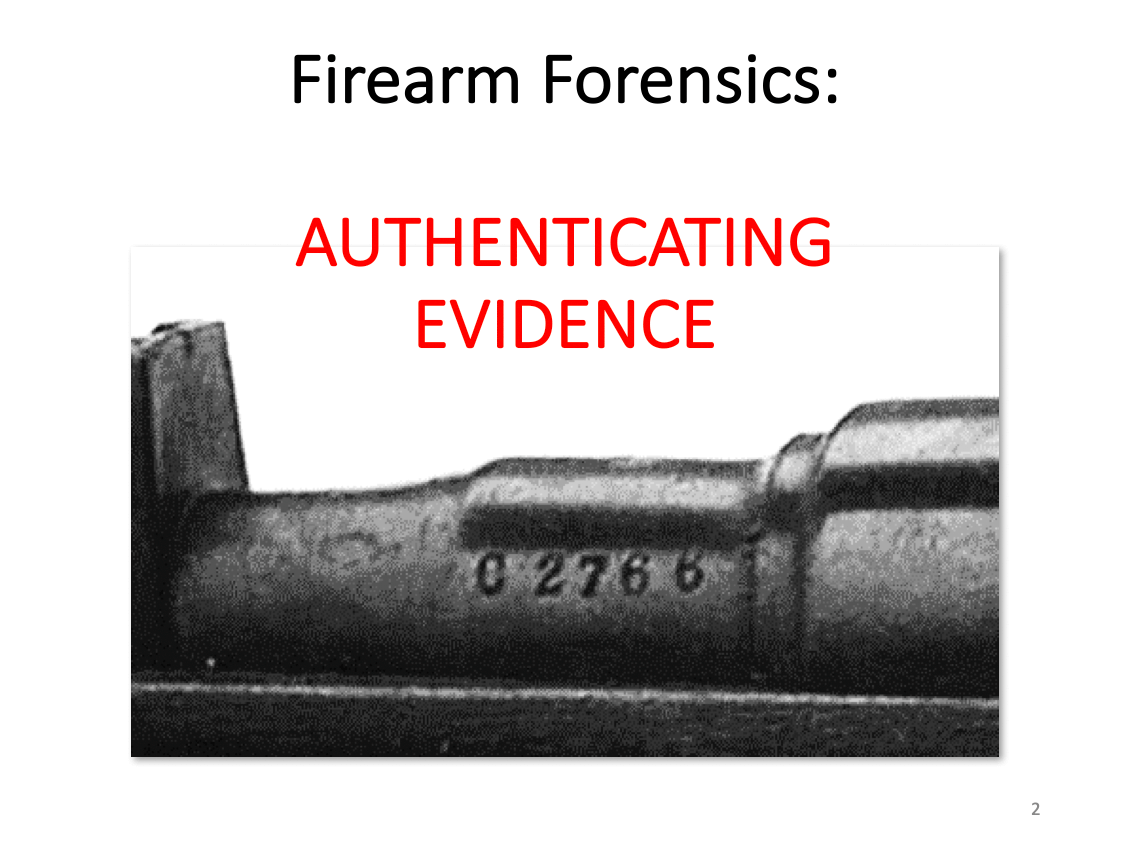
    [1] Testimony of James B. Wilcott, RIF 180-10116-10096, pp.25-26.

    [2] Midnight/Globe, February 14, 1978. The memo said that Oswald’s FBI informant number was S172 and that his CIA number was 110669. Mae Brussell showed copies of this document to the editors of Globe.

    [3] Telephone interviews of Campbell March 19, 1994; Jones, March 19, 1994; Williams, April 4, 1994; Garner, August 14, 1999.

    [4] FBI report of Roy Truly interview by Nat Pinkston, November 23, 1963, File No. DL 100-10461.

    [5] Interviews of Ted Leon and Thomas H. Butler. The November 14, 1961 date came from Leon, Sexton branch manager in Dallas from 1961 to 1964. He kept his pocket calendars from his years of employment, and he noted when the grocery company moved out of the building to a new facility in another part of Dallas. Butler took over as branch manager after Leon transferred to Los Angeles. Butler said that the 411 Elm Street building was vacant for at least a year after his company moved out.

    [6] Interviews of Joe Bergin, Jr. February 12 and 26, 1994 and August 7, 1999. When I interviewed him, he was living alone with his three cats, depending for his income on the charity of his father and disability checks. His father died on November 2, 1990. Joe died on August 29, 2001 at the age of 55.

    [7] Through some insider intrigue, a saleslady at Neiman Marcus found out what Jacqueline Kennedy was going to wear the day of her arrival in Dallas. She confided this information to Mrs. Bergin and told her that she had a copy of the First Lady’s dress, pink in color with the black velvet collar. Mrs. Bergin paid a great deal of money for that dress. She planned to wear it that Friday evening at a social gathering. Needless to say, she never did wear that dress.

    [8] Jim Marrs, Crossfire (Carroll & Graf. New York, 1989) p. 319.

    [9] Carolyn Arnold statement in “Byrd/TSBD Concerns” posted by Martin Barkley on May 24, 2000 on the JFK Today website.

    [10] Larry Ray Harris at the age of 44 died in an automobile accident on October 5, 1996. He was traveling from his mother’s house in Ohio to Georgia. Supposedly, he fell asleep at the wheel, or committed suicide, when he rammed into the back of a semi-truck. Since the CIA has the capability of engineering car crashes to look like accidents, Harris’s name should be added to the list of mysterious deaths, along with Warren Commission witness Lee Bowers, who died when his car ran off the road and ran into a freeway abutment.

    [11] Glaze misdated his letter as “12/12/74.”

    [12] Wilcott’s 3/22/78 HSCA deposition, pp. 25-26.

    [13] Henry Hurt, Reasonable Doubt (New York: Holt, Rinehart, and Winston, 1985), pp. 359-360, 386-387.

    [14] William Harvey obituary in The New York Times, June 14, 1976.

    [15] Shelley testimony, Volume 6 of the Warren Commission Hearings and Exhibits on page 327, hereafter to be cited as 6H327.

    [16] Roy Truly testimony, 3H213.

    [17] Gladys Cason, One Life, self-published book, 2004, pp. 66-67.

    [18] Carolyn Walther, 24H522; Edwards, 24H207; Fischer, 24H208.

    [19] Adams testimony, 6H388-390.

    [20] Baker testimony, 3H263.

    [21] Shelley testimony, 6H330.

    [22] Sylvia Meagher, Accessories After the Fact, p. 74.

    [23] William Weston, “Robert MacNeil and the Three Calm Men”, in the November 1994 issue of The Fourth Decade.

    [24] Shelley affidavit, 24H226.

    [25] Frazier testimony, 2H23.

    [26] FBI report of Oswald at the police station, Warren Report, p. 619.

    [27] Gerald McKnight, Breach of Trust p. 115.

    [28] The Third Decade, May of 1986.

    [29] Shelley affidavit, 24H226.

    [30] Fritz testimony, 4H206.

  • The Evidence is the Conspiracy – The Carbine on the 6th Floor

    The Evidence is the Conspiracy – The Carbine on the 6th Floor


    I will be sharing with you how the DPD, Secret Service, and FBI dealt with the rifle evidence they gathered, as they gathered it, and how Hoover’s FBI, with the help of the US Postal Service, steered this evidence toward Oswald.

    Forensics with firearms includes examining those things that make the firearm unique, which is one of two ways to authenticate our evidence. Authentication, in the law of evidence, is the process by which documentary evidence and other physical evidence is proven to be genuine and not a forgery. Generally, authentication can be shown in one of two ways. First, a witness can testify as to the chain of custody through which the evidence passed from the time of the discovery up until the trial. Second, the evidence can be authenticated by the opinion of an expert witness examining the evidence to determine if it has all of the properties that it would be expected to have if it were authentic.

    The Roman numeral XVIII (18) and the bottom of TERNI do seem ground off—yet we can’t be 100% sure. 1940 only needed adding if the original was from a different year or the entire year and Roman numerals were removed. If the rifle had been a 1939 or 1938, there is a greater likelihood it was a 7.35mm FC carbine.

    Luciano Riva, or someone else, did grind some things off and added others. The rifles were so unsound, that without first checking them, the first batches sold for use caused horrific accidents and even deaths. It is from Crescent (Louis Feldsott’s sister business to Adams Consolidated) that retail orders are first forwarded to Fred Rupp, a licensed gun dealer who was enlisted to check, then fix, and/or replace defective rifles, noting the change on the enclosed packing slips. Our 10 slips show no changes, no substitutions, and still represent the shipments from Italy to Crescent in NYC.

    We have 2 – 6.5 stamped Fucile Corto Barrels and an image from CE541. This is the ONLY image of the caliber on a rifle claimed to be CE-139. I welcome any detailed images of the carbine caliber prior to this image. As you will see, the 6.5 and 7.35 FC rifles are virtually identical.

    The 7.35 Fucile usually had the caliber burned into the butt of the stock on the side with the sling mount. In 1940, when the Army goes back to 6.5mm, it is stamped on the fixed rear sight, in order to help avoid an ammunition mix-up. In the 15-20 years since their use, the parts and pieces of numerous rifles used for parts, can be found in a single, finished weapon.

    We have a wonderful image of Lt. Day carrying the rifle from the TSBD. It is both very large and very clear. Since we’ve never seen an image of the rifle prior to the FBI exhibit images, the possibility of a rifle with no CAL markings prior to the FBI acquiring it – is not so far fetched.

    Early reports from Italy claim the rifle in question is a 7.35 M91/38. Without a clear image of the CAL designation, the 6.5mm shells on the floor – especially in their condition – may have had little to do with the rifle. The white versus black numbers will be a reoccurring theme.


    “C14 is C2766” is a FBI fib used to incriminate Oswald. This declaration came in early December. The report from William Harvey’s Italy said it was a 7.35 model 91/38, among all sorts of interesting things that never made their way into the Warren Commission Report (WCR). Instead, we are told by the FBI that C14 is C2766. Hail Hoover. C14 ≠ C2766b>. On March 27, 1964, Alfred Finish, “professional gunsmith at the Empire Wholesale Sporting Goods,” Montreal, Canada, “assisted in taking critical measures” of the rifles then shipped to Mr. Ouimet. Mr. Ouimet claims to be the owner of Empire Wholesale (aka Century International Arms) owned by William Sucher and source for 700 identical rifles to the one pictured above. We’ll return to Mr. Sucher and Century International Arms (C.I.A.). Mr. Ouimet gives these measures of an “identical model” of the rifle used in the JFK assassination: total length 40 3/16″ – stock 34 3/4″ – barrel and action 28 15/16″ – barrel only 21 1/8″ – rear to receiver 26 1/2.” He underscores the Carcano he had examined during the years “had no set pattern regarding serial numbers.”

    For argument sake, let’s agree with “C2766” identifying that rifle uniquely. It’s much easier to create paper copies of copies than to stamp a rifle.

    Given Texas in 1963, how did they fall upon Feldsott in NYC?

    FBI SA Nat Pinkston is listed as a TSBD employee in the WCR index. He was an FBI agent. His testimony only dealt with Oswald’s clipboard from December 2. His name is on this report having spoken to Al Yeargan about the rifle at the H.L. Green Company (a local department store selling surplus WWII weapons), yet he is never asked about the conversation. 40 years later, H. L. Green is no longer included. We go from Titche-Goettinger right to Klein’s. What SA Pinkston did in 1963/4 and recounts years later bear little resemblance to each other. His recent revelations are uniquely his and are not authenticated or corroborated by any other evidence.

    The SAC in New York City is talking about the records of H. L. Green in Dallas to Chicago 7 hours after the fact. Green says they get their stuff from Crescent Firearms in New York City. Again, info on a 6.5mm C2766 takes 7 hours to convey thru New York City to Chicago, so the Chicago FBI can go to Klein’s?

    Here is the famous affidavit and, not so famous, Rankin note that came with it. Rankin sends Al Feldsott a completed affidavit for his signature and notarization in July 1964. The same thing happens with the H. L. Green employees. This concludes that C 2766 was, indeed, sold to Klein’s Sporting Goods on June 18, 1962, and this info was conveyed to the FBI on the night of November 22. Subsequently, other records are turned over as well.

    On the evening of November 22, the FBI has its evidence. “Mr. White in the study with a candlestick” à la the game, Clue. Crescent to Klein’s on June 18th with C2766.

    William Sucher, owner of Century International Arms, Inc., and Empire Wholesale are the sources to the FBI that the serial numbers on World War 2 surplus rifles are by no means unique. Not one of the 700 has a letter prefix identified. As I discovered, James Ouimet, who is referred to as the “President” of Century Arms, was actually a figurehead, put in place by Sucher and his associates to run Century on their behalf. (G. Murr Education Forum post of 11/26/17) Owner: Empire Wholesale & International Firearms Limited, now known as Century International Arms, CIA.

    We also learn that they are the exact same rifles as the Century 700. “38E” internationally known and “T-38” domestically known as Carcano Fucile Corto rifles. The Klein’s customer invoice copies are simply the duplicates of the original 1960 shipments to Crescent from Italy.

    The rest of that November 22 memo confirms a June 18, 1962, shipment sent to Klein’s, yet the rifle listing only includes an N 2766, not C.

    The New York City FBI SAC confirms with the FBI lab that the rifle in question has 5 digits: C 2766. The records of Klein’s from the night before shows they received “N 2766”. What is the FBI at Klein’s to do now?


    The New York City FBI revises their story on the November 24, confirming that C2766 was received by Crescent from Italy. Thank you, Sherlock Holmes. That it was sold to Klein’s “subsequently” as indicated above, on June 18, 1962. Yet somehow, 2 days earlier, SA Dolan and Waldman and Scibor from Klein’s find the order blank on microfilm.

    Does the FBI know something we didn’t that needed proof by November 24?

    N 2766 does not appear anywhere in the WCR. June 18, 1962, is on the Feldsott contact sheets, an affidavit, and reconfirmed a number of times in FBI documentation.

    This single sheet of paper related to a February 1963 delivery is based upon 10 packing slips sent from Italy to Crescent for Adams Consolidated and in the possession of the FBI on Friday evening, according to the evidence. Notice the 1259 in the top right-hand corner. Yet, the order was 1243, as testified to by General Manager Michael Scibor and Klein’s VP William Waldman. It is very possible the original order written on this page was 1259. As we saw, there were orders in June 1962 and March 1963 in the Klein’s and Crescent records, not February 22, 1963.

    The 10 Feldsott slips would not have been sent to Klein’s as part of their order. Sadly though, we do not know what they would send, for all we have are these 10 slips referring to 38 E, not T-38. It is a small detail I know, yet another brick in the wall.

    Here’s the evidence, the microfilm creates the order blank. The order blank’s handwriting connects the rifle with the list and nothing else. The “VC=Serial # list” claimed to be kept in a master ledger by Klein’s General Manager Michael Scibor, is claimed to be Klein’s way of tracking serial numbers on rifles. When a shipment comes in, the next blank VC# is used to start listing the rifle serial numbers in the shipment. Unless we can see another VC=Serial # list that actually matches real rifles with real orders or any other order showing any one of these 99 rifles, the data on this page could conceivably have been created that night. The details of the evidence will bear this out. At this point, the “VC List Evidence” simply corroborates itself and only for this one rifle. There were 99 more in inventory.


    With just those 2 pieces of evidence, the FBI is able to connect the receipt of C2766 with an order sent to Klein’s in February 1963. Yet, the FBI also told us on the 22nd about the March 1963 order with C2746. On November 22 and 23, there was no mention of a February 1963 order at either Crescent or Klein’s. There is more to it than that, but you’ll need to read my paper, The Klein’s Rifle.

    This is page 2 of 2 for order 1243. The original order number from January 1962. It also says “1259 Page 2 of 2 pages”. A subsequent order becomes the February 1963 order now containing C2766.

    How did they use the information that Crescent supplied the rifle to find this customer order? (Does this make any logical sense?)

    The receiving records from vendors would make it much easier to locate a shipment from a vendor, whereas how does one even begin to locate a sales order with only the serial number and vendor? Those 2 memos on the 22nd and 23rd left the FBI kinda screwed.

    Remember that on Friday and Saturday there are no records for C2766.

    Or that Crescent sent them orders in June of 1962 and March of 1963, not February 1963.

    After Friday evening into Saturday morning, 3 FBI Special Agents including Dolan put their names on a report (WCD7, page 187). SA’s Toedt and Mahan will provide virtually nothing else to the Warren Commission Documents.

    The next page of the report/memo does not have any signatures, but does tell us that Waldman kept the microfilm.

    Virtually the same report is found on the next page (WCD7, page 189), yet the outcome is completely different. This time only Dolan writes a report, in which he claims to have taken the microfilm and provided Waldman with a receipt. The chain of custody for this microfilm is now a hot mess.

    Months later, in testimony, Waldman is no longer talking about his safe and being subpoenaed. He gave that microfilm to the FBI. I’m told by those who went, the microfilm itself is no longer in its box at the archives. Just an empty box. If only a copy of the film was made.

    FBI SA Dolan alone claimed he took the microfilm by the morning of the 23rd. What we come to learn is that copies of this film are made in the weeks after November 22. Dolan gives a copy back to Waldman and once again it is said that Dolan acquired the film from Waldman on the 23rd. Originals with the FBI and copies to the Warren Commission were standard FBI operating procedure. With the original in the FBI’s hands from November 23 until the first copy is returned on December 6, there is no way to know what transpired with that film. I wonder if the copy and the FBI original have the same things on them?

    The microfilm creates the Order Blank. The Order Blank connects to the February Klein’s shipment via 1 piece of paper. What was on the original microfilm is simply no longer knowable.


    Waldman tells us he removed the remaining stock of “assassination” rifles on Monday the 25th. In 1978, we learn the FBI had Klein’s mount scopes on at least 12 rifles, that 40″ rifles were not scoped, and some rifles have no inscription at all. Sharp is not called to the Warren Commission.

    It’s as if those 100 rifles were never at Kleins in the first place.

    None of the people who were actually involved in receiving/shipping this product are interviewed, while Dolan remains an integral part.

    Westra concurs with Sharp about scoping 40″ rifles, but then is set straight. Since the 40″ rifle at the archives is scoped, y’all must have done it. Any information on Lido Luccesi would be appreciated.

    Given the mountain of paper we are given in this case, it remains an obvious “mystery” how Oswald can go through his paces from January 1963 to November 1963: order, pay for, and get delivered both a rifle and a pistol—and yet not have a single page written about those occurrences in any report from any agency prior to November 22nd.

    At the end of the day, the only things with a print of Oswald’s are a box and some paper. The rest is Lieutenant Day being helpful.

    It is not until well after Oswald is dead, that these fingerprint lifts even get consideration at the FBI.

    The rifle goes to Washington DC with SA Vincent Drain on the night of the 22nd, only to be returned and taken again on the 26th. Amazingly, the prints travel from one side of the trigger guard to the other.

    Having taken no photos of the print where it was found, there is only a photo of the lift which was not sent to the FBI with everything else that night.

    There is no part of the barrel showing from the underside of the rifle. Day’s palmprint appears to exist only to suggest Oswald assembled and disassembled the rifle. Despite numerous smooth metal parts including the shells and clip, Day’s prints are highly suspicious.

    Lt. Day needed to explain quite a few things that went awry that first day. Claiming he was told to stop working on the rifle, he claims that’s exactly what he did in mid stroke. Subsequent reports are filled with his excuses.

    In 1978, the HSCA requested to see this “lift”, seeing it was part of the evidence Drain takes again on the 26th. Yet again, we have Day stating all the evidence was taken the 22nd. This palmprint cannot be found—the official reason states:

    In other words, they lost it.

    In the 50’s, the FBI copied and planted prints regularly, along with lying about informants, as well as, virtually all manner of evidence.

    What if there was no money order, like there was no February order? But the FBI needed evidence of one.

    The evidence shows the Postal Money Order (PMO) found on 3 different timelines.

    The first is in Kansas City by the Secret Service

    The second is reverse engineered by Holmes and gang by looking at magazines and guessing about shipping. “Now you thumb through those,” I said, “and when you come to Klein’s Sporting Goods, let’s see what it looks like.” It wasn’t but a couple of minutes that one of the girls hollered, “Here it is!” So I looked at it and down at the bottom of the ad it said that that particular rifle was such and such amount. But if it could not be carried on a person, such as a pistol, like a shotgun or a rifle, then it was $1.25 or $1.37 extra. Shipping charges were also added, so I added those together, took that figure and called around to all the different stations and the main office where these crews were checking stubs. It wasn’t ten minutes that they hollered, “Eureka!” They had the stub!

    The third, and most interesting, is that of the FBI’s in Alexandria, Virginia. You can read all about it in the Rifle Money Order Timeline. For our purposes, the most important things to know about this money order are:

    Remember, the year is 1963. Who saw Catch Me If You Can? Passing bad checks was easier then, because the process took so long and was not computerized.

    We have a number of proofs outside of the Warren Commission Report. J. Harold Marks—the same man—testified in 1960 about tracking Postal Money Orders “as paid through the Federal Reserve Bank.” Another 1960 bit of evidence is this New York Federal flyer explaining how Postal Money Orders are to be accepted as cash items.

    And finally, in the Warren Commission Documents themselves, with Lester Gohr of the Federal Reserve and Wilmouth of Chicago 1st National reconfirming that Postal Money Orders are processed and recorded by these banks for very specific reasons.


    I’d like to begin finishing up with some of the evidence which suggests there were never any shipments of merchandise to Oswald. At his Dallas Post Office Box, Hidell was not listed. Given what was going on with the Dodd investigations (a Senate Committee investigating mail order pistol and rifle sales in the US—Klein’s and Seaport were 2 of their targets), it would seem that a 5′ carton addressed to the wrong person constitutes “where possible”. In the weeks after the assassination, VP Waldman will tell his “partner in microfilm crimes”, SA Dolan, that Senator Dodd’s Committee “was on his back.” It was known that Dodd used “cut-outs” to order rifles as part of his investigation—some surmise that Oswald may have been one of these cut-outs using the name Hidell.

    Given the reality of this and how this rifle suddenly appears after November 22, it defies common sense and logic to believe this goes unnoticed.

    In fact, a box of that size would have triggered the mailing of a notice for Oswald to come claim his oversized package. Yet the package is addressed to Hidell.
    With the need to generate this notice, the rules and regulations are put to an even more stringent test. As we now know, none of this happened.

    I’d like to end today with some more evidence, which I see betraying the conspiracy. The evidence shows that he took 2 small bags with him, when leaving Magazine Street after Ruth leaves with Marina. Yet, the rifle is placed at the Paine’s in October. There’d be only 1 way to get it there.

    If Ruth was supposed to help incriminate Oswald, this didn’t help.

    Neither did this and neither does Michael.

    While many have erroneously injected themselves into this storyline for personal gain or profit, we must look to those who suffered at the hands of the FBI for telling an inconvenient truth.

    Abraham Bolden comes to mind. FBI recalls Yates for a polygraph January 4, 1964: “No significant emotional responses were recorded.” The FBI could therefore not reach a conclusion about Yates. On January 5, 1964, at the insistence of the FBI, Yates begins 11 years of mental institutionalization. “They told me that he was telling the truth [according to the polygraph machine], but that basically he had convinced himself that he was telling the truth. So that’s how it came out. He strongly believed it, so it came out that way.” (Dorothy Yates Walker 2006)

    Despite being the object of numerous 3 letter agencies, we find nothing in the evidence related to these weapons prior to November 22nd.

  • Public Relations and the JFK Case

    Public Relations and the JFK Case


    (Click here to open the document in another page.)

  • Destitute Cuban Studies Institute on the JFK Assassination

    Destitute Cuban Studies Institute on the JFK Assassination


    The Executive Director of the so-called Cuban Studies Institute (CSI), Pedro Roig, presents himself as an attorney and historian in posting “Castro’s Complicity in Kennedy’s Assassination.” The piece leaves much to be desired of Roig’s expertise in both legal and historic studies. It exposes the CSI as a sanctuary of shameless and mindless anti-Castro propaganda. Let’s review Roig’s endeavor to persuade without regard for truth.

    Oswald Contact with Cuban Security Agents

    • “It is now evident that Oswald made contact with Cuban intelligence officers while stationed at El Toro Marine Air Base in Santa Ana, California.”

    No, it’s not. The FBI interviewed 26 U.S. Marines acquainted with Oswald at El Toro. None of them connected Oswald to the budding Castro’s foreign intelligence. Roig cherry-picked Nelson Delgado and disguises his presumptions as quantum of proof.

    • “Under oath, Delgado stated that ‘Oswald told him he was receiving mail from Cubans and had developed contact with Cuban government officials in Los Angeles. Delgado recalled that Oswald met with an unknown visitor … and they spent about one and a half, two hours talking.’”

    Let’s summarize what Wesley J. Liebeler, assistant counsel of the Warren Commission, got from Delgado under oath, upon which Roig dares to even suggest that a Cuban handler came to a U.S. military base at night to talk with his agent Oswald.

    Liebeler: You never asked Oswald who this fellow was that he talked to?

    Delgado: No, no.

    Q: Did you connect this visit that Oswald had at that time with the Cuban Consulate?

    A: Personally, I did, because I thought it funny for him to be receiving a caller at such a late date time … After he started to get in contact with these Cuban people, he started getting little pamphlets and newspapers.

    Q: Did you have any reason to believe that these things came to Oswald from the Cuban Consulate?

    A: Well, I took it for granted that they did after I seen the envelope…

    Q: What was on this envelope that made you think that?

    A: Something like a Mexican eagle, with a big, impressive seal, you know. They had different colors on it, red and white … But I can’t recall the seal. I just knew it was in Latin, United, something like that.

    Q: You don’t know for sure whether it was from the Cuban Consulate?

    A: No. But he had told me prior, just before I found that envelope in his wall locker, that he was receiving mail from them.

    Q: Did he tell you what his correspondence with the Cuban Consulate was about?

    A: No, he didn’t.

    As earwitness, Delgado didn’t know who visited Oswald one night at El Toro; as eyewitness, he described an impressive seal that could be anything but Cuban stuff. Roig has simply recycled the failed 1975 CIA trick of giving Delgado evidential weight to dispel the growing cloud of suspicion over the CIA itself and to point the finger at Castro. Thus, Roig has only proven that the CSI comes to the JFK research community with the spurious arguments of a previous generation.

    In Oswald and the CIA (Carroll & Graf, 1995, 627 pages / Skyhorse, 2008, 696 pages), retired Major John M. Newman, who spent 20 years in U.S. Army Intelligence and became executive assistant of the National Security Agency (NSA), killed the two Delgado birds flown by the CIA with one stone. The ex-Marine Gerry Patrick Hemming told his 1960 CIA debriefers that he had met Oswald at the Cuban Consulate in Los Angeles and then confronted him about it outside the gate at El Toro the night before flying to Washington. In an interview by Dick Russell, Hemming destroyed the wild presumption of a 1959 link between Oswald and the budding Castro’s intelligence services:

    I ran into Oswald in Los Angeles in 1959, when he showed up at the Cuban Consulate. The coordinator of the 26th of July Movement [Castro’s political group] called me aside and said a Marine officer had showed up, intimating that he was prepared to desert and go to Cuba to become a revolutionary. I met with the Marine … I thought he was a “penetrator” [and] I told the 26th of July leadership to get rid of him. (Argosy, Vol. 383, No. 3, April 1976)

    In contrast to Oswald, Hemming did manage to join Castro’s army; in line with Oswald, he also exemplifies the adventurous spirit among many Americans in the early days of the triumphant Cuban revolution. Oswald was released by the U.S. Marine Corps at El Toro on September 11, 1959. On September 3-4, 1959, U.S. Ambassador Phillip Bonsal still expressed “the general sympathy with objectives of Cuban revolution and similarity with many of our own aims and aspirations.” (Foreign Relations of The U.S., 1958–1960, Volume VI, Cuba, Document 359)

    Roig hides this Zeitgeist to portray Oswald as a fully dedicated soldier for Castro: “[Delgado] testified that Oswald kept on asking him ‘how he could help Castro’”. Roig stops here, but the beat goes on with Delgado explaining: “We were on friendly terms with Cuba, you know, so this wasn’t no subversive or malintent”. Delgado clearly revealed the adventurous spirit:

    [W]e had a head start, you see. We were getting honorable discharges, while Morgan [Delgado meant Major William Morgan, who also had been infatuated with the Cuban revolution and ended up executed by firing squad under charge of rebellion against Castro] got a dishonorable discharge from the Army and he went to Castro and fought with Castro. So, we could go over there and become officers and lead an expedition to some of these other islands and free them too … [W]e would do away with Trujillo [The dictator of Dominican Republic, the Caribbean nation that shares the island of Hispaniola with Haiti].

    However, Roig keeps on building a body of evidence about a Castroite Oswald, in a way that resembles the fate of the Cuban character “Chacumbele,” who killed himself. After acknowledging that “defectors like Oswald [were] under close surveillance” by the KGB, Roig broaches a “suspicious coincidence.” In Minsk (Belarus), Oswald was directed to enroll in a Foreign Language School “adjacent to the KGB Academy, attended by Cuban security personnel.”

    The coincidence is not suspicious, but absolutely irrelevant. There is not a shred of evidence in reference to Cuban security personnel and Oswald in his KGB file, which includes daily reports of intensive surveillance, even through a peephole into his bedroom. In addressing this lack of evidence, Roig has concocted an undrinkable cocktail: Marina Oswald “testified that Oswald bragged that he had gotten close to some of the Cubans [and] remembered the Cubans with pleasant memories.”

    Marina clearly stated that Oswald knew “a Cuban family” and she had heard about 300 Cubans in Minsk, “but I never knew even a single one.” In fact, Oswald knew a man named Alfred (last name unknown) from Cuba and a picture of them together is provided by [Warren] Commission Exhibit 2612. Newman demonstrated Alfred does not provide scope for suspicions. He was a student at the University of Minsk and his parents visited him. Oswald knew him through Anita Zieger, who was courted by Alfred. She and her family—of Argentinian origin—were friends of the Oswalds in Minsk.

    Oswald’s Alleged Visits to the Cuban Consulate in Mexico City

    Roig continues his deceptive handling of the facts by masking Oswald as “a militant advocate of the Fair Play for Cuba Committee.” He also labels the FPCC “as a Communist front that supported the Castro’s Marxist-Leninist revolution.” Ironically, this remark closes his new avenue of deception for good.

    In the Spring 1963, Oswald formed a one-man New Orleans chapter of FPCC. Although its leadership warned him about “unnecessary incidents,” Oswald walked into a lair of the anti-Castro Student Revolutionary Directorate (DRE) to offer help. On August 9, he was handing out pro-Castro leaflets in downtown New Orleans. A brawl with DRE militants eventually ensued, but it was staged. Oswald had described the incident in a letter to FPCC postmarked five days before. Less than two weeks thereafter, Oswald and the local DRE head, Carlos Bringuier, met again on a debate at WDSU radio.

    Bringuier exposed Oswald as a re-defector from the Soviet Union. Oswald turned the tables by boasting about his stay there as “excellent qualification to repudiate charges that the FPCC is Communist controlled.” He stressed: “It is inconsistent with my ideals to support Communism … We do not feel that we are supporting international Communism in supporting Fidel.”

    Within a week, Oswald wrote to the Communist Party USA (CPUSA), in order to leave a paper trail of the very linkages he had denied on the air: “I am the secretary of the local brach (sic) of the FPCC, a position which, frankly, I have used to foster communist ideals.” A prime soldier for Fidel Castro does not stab him in the back.

    Roig circumvents the most burning question about Oswald in Mexico City by quoting from the unpublished autobiography of Winston Scott [CIA Chief of Station]: “Every piece of information concerning Oswald was reported immediately … These reports were made on all his contacts, with both the Cuban Consulate and the Soviets … Persons watching these embassies photographed Oswald as he entered and left; and clocked the time he spent on each visit.”

    The core factual issue is that the CIA has never produced either a photo of Oswald nor a tape with his voice on it from Mexico City. Win Scott himself overlooked Oswald in his September 1963 report on the CIA telephone tapping program LIENVOY, although an American in phone contact with both Cuban and Soviet embassies was ipso facto of operational interest. In his attempt to escape from the facts, Roig falls into a preposterous dual story:

    In March 1968, President Lyndon Johnson … requested from his close associate (sic) Marty Underwood to meet with Scott in Mexico City. The timing was excellent … In the meeting with Underwood, Scott stated that early in the morning of November 22, 1963, a small Cuban airplane landed at the Mexico City Airport. The passenger transferred to another plane, that immediately took off for Dallas, Texas. Later that evening, the same plane returned from Dallas and the individual transferred to the Cuban aircraft the flew back to Havana. After many months of investigation, the CIA was confident that the individual was Fabian Escalante.

    Just the timing reveals Roig’s ignorance. Underwood’s only trip to Mexico City occurred in 1966. During his brief meeting with Scott, according to Underwood’s own notes, there was not the slightest reference to November 22, 1963. As a White House advance man, Underwood sought help from Scott for Johnson’s upcoming visit to Mexico. (ARRB Final Report, p. 136) And Escalante—as counterintelligence officer in the Section Q of Castro’s G-2—was so busy in 1963 watching anti-Castro fighters inside Cuba or in exile that he couldn’t have timed a wet operation, id est, involving spilling blood.

    It is incredible that Roig would fall for the deceased Underwood. Because, as noted above, Underwood was exposed for telling fairy tales back in 1998 when the Final Report of the Assassination Records Review Board was published. Not only was his canard about Scott then revealed, but he had also been telling tall tales to Gus Russo and Sy Hersh for the deceitful Judith Exner. And those two willingly gobbled them up. (Ibid)

    State Department: “Do Not Implicate Cuba”

    From the bamboozler Underwood, Roig jumps to Thomas Mann, U.S. Ambassador to Mexico, who “has the answer” about what happened to the CIA files on Oswald in Mexico City. Mann “was personally ordered by the State Department, a few days after Oswald murdered President Kennedy, to shut down any investigation that would implicate Cuba’s involvement.” Roig added that a top CIA official, Tom Karamessinger (sic), memoed Scott: “Arrest of Sylvia Duran is extremely serious matter which could prejudice (us) … Request you ensure that her arrest is kept absolutely secret, that no information from her is published or leaked.”

    Roig is muddying the waters as if the report Oswald, the CIA, and Mexico City (1978), written by HSCA staffers Dan Hardway and Edwin Lopez, hasn’t gone through rounds of declassification since 1993. It became clear that the CIA knew Oswald had been impersonated by phone on September 28 and October 1. Duran was also impersonated on September 28.

    That Saturday, a caller to the Soviet Consulate identified herself as Duran and announced that “an American that was just at the Soviet Embassy … is going to talk with you.” The CIA transcriber, Boris Tarasoff, commented that the American “speaks terrible, hardly recognizable Russian.” On October 1, a caller to the Soviet Consulate identified himself as Lee Oswald. Tarasoff noted he was “the same person who had called a day or so ago and spoken in broken Russian.” Duran was arrested and harshly interrogated by the Mexican Police on November 23 and November 28. The info taken from her included that she neither met Oswald nor made any call to the Soviet Consulate on September 28.

    Duran emphasized “she had no fear [of] extradition to the United States to face Oswald.” On the contrary, the CIA was afraid [that] “any Americans [might] confront Silvia DURAN or […] be in contact with her” [DIR 85318, 11-27-63, in [Duran’s] Information – NARA Record Number: 104-10102-10145, p. 14]. That’s why neither the eyewitness Duran nor the earwitness Tarasoff were ever questioned about the call by the Warren Commission. The CIA itself, not the State Department, shut down any further investigation on a Cuban connection after its Mexico City station not only produced both a tape and a photo that weren’t Oswald’s, but also spread stories—all of them debunked—of Communist conspiracies:

    • Mexican writer Elena Garro de Paz transformed Duran from the Mexican employee, who handled Oswald’s visa request at the Cuban Consulate, into the intelligence officer of Castro, who met Oswald again at a twist party in order to put him up to killing Kennedy.
    • Nicaraguan secret agent Gilberto Alvarado watched Oswald taking $6500 in the Cuban Embassy to kill Kennedy, while Mexican credit examiner Pedro Gutierrez saw Oswald taking money outside the Cuban Embassy.
    • Cuban Embassy employee Luisa Calderon expressed foreknowledge of JFK’s assassination…

    Fidel Castro vs. John F. Kennedy

    Roig comes to his overarching issue with an “unavoidable” clash between Castro and JFK. As veteran of the Brigade 2506, he is as misguided in his analysis now as he was as a member of the force that failed twice in making a diversionary landing near Guantanamo in mid-April 1961. Roig rarefies JFK’s oath—in the December 29, 1962, ceremony at the Orange Bowl stadium (Miami) with the participants in the Bay of Pigs invasion just released from Castro’s prison—that the flag of the Assault Brigade 2506 was to “fly again in a free Havana.”

    For Roig, it was the spark that ignited Castro to engage in “a personal fight to the end” against Kennedy but that’s an utter cognitive distortion of history. On Christmas Eve 1962, the American lawyer Jim Donovan boarded the last flight with the Bay of Pigs prisoners airlifted to Miami as result of his negotiation with Castro. Just before departure, Castro’s aide Dr. Rene Vallejo broached the subject of re-establishing diplomatic relations between the two countries.

    Let’s suppose Castro was, indeed, trying to lure Kennedy. Even so, killing the sitting U.S. President offered nothing else to gain than having Johnson in the White House with no hope of more favorable U.S. policies toward Cuba. The Soviet bloc’s diplomats in Havana were aware of it. On March 31, 1963, Hungarian Ambassador János Beck set out in a secret report to Budapest that Castro was convinced “Kennedy is the best” option among the possible candidates for the U.S. presidency in 1964 (“Talks between Cuba and the USA, March 31, 1963,” in Selected Hungarian Documents on Cuba, 1960-1963,” Cold War History Research Center [Budapest]).

    The anti-Castro fighter Roig is not aware yet of who his greatest enemy was. Castro knew that killing JFK wouldn´t solve anything and entailed risking everything. His personal fight was system-centered. Accordingly, he proceeded to infiltrate both the CIA and the Cuban exile community. Thus, Castro managed to win in the dirty USA-Cuba war.

    Rolando Cubela Secade (sic): The Double Agent Chosen to Kill Fidel Castro

    Nonetheless, Roig obsessively resorted to the neither logically nor circumstantially justified hypothesis brought by Senator Robert Morgan (D / N.C.) of the Church Committee: “JFK was assassinated by Fidel Castro or someone under his influence in retaliation for our efforts to assassinate him [and] this fellow [Cubela] was nothing but a double agent.”

    This fellow [AMLASH-1 for the CIA] was involved in two assassination plots against Castro. His key co-conspirators were the CIA officer Desmond FitzGerald [Chief of the anti-Castro Task Force known as Special Affair Staff (SAS)] and the CIA golden boy Manuel Artime [Chief of the anti-Castro paramilitary group Revolutionary Recovery Movement (MRR)]. Cubela does not fit at all into the facts as double agent loyal to Castro.

    • For unveiling the Artime-Cubela plot, Castro burned his intelligence officer Juan Felaifel, who had infiltrated the CIA in 1963. Another officer, Erasmo Terrero, was gathering evidence against Cubela in Paris. On March 11, 1966 Cubela was sentenced to 25 years.
    • For unveiling the FitzGerald-Cubela plot, Castro had to wait for a July 16, 1976, report by his State Security Department (DSE) stating that the “counterrevolutionary inmate” Cubela was the CIA agent AMLASH-1 who surfaced at the Church Committee. Before that, Castro lacked intel on this 1963 CIA plot.

    At the XI World Festival of Youth and Students in Havana, Castro set up an agitprop court to prosecute the crimes committed by Yankee imperialism. On August 2, 1978, Cubela confessed to both CIA assassination plots against Castro and spelled an inconvenient truth for Roig: “It is absurd to think that a double agent would have spent 12 years in jail.” Cubela also testified before an HSCA panel in Havana. Castro rewarded him by granting the parole legally prescribed after serving half the sentence.

    The Cuban Exile Clandestine Operations

    As a fugitive from history, Roig runs so fast that he misses the two-track policy of the Kennedy administration towards Cuba after the debacle of Operation Mongoose. Roig just follows the track of (sometimes) autonomous operations by select Cuban exile groups, backed, in any event, by the CIA, and forgets the parallel track of accommodation with Castro. In fact, due to the ARRB, we now know just how feeble this activity was. For the incoming president Lyndon Johnson, CIA officer Desmond Fitzgerald wrote a report on what these operations consisted of at the time. He wrote that in the entire second half of 1963, there had been a total of five raids against Cuba. There were only fifty men involved in three cadres. In this letter, Fitzgerald admitted it was completely unrealistic to think that such a meager force would result in any real change in Cuba. He stated that they had now become counter productive, since they could not be taken seriously. And he advised they be discontinued. (Letter from Fitzgerald to McGeorge Bundy, 3/6/64)

    Ignoring this factual aspect, Roig can please himself with a pharisaic righteousness: Kennedy remained “true to his commitment to get rid of Fidel Castro,” thus ignoring Kennedy’s crackdown on other anti-Castro belligerent exiles groups. How the administration was going to overthrow Castro with fifty men is the author’s secret. Perhaps Roig was modeling his essay on the Peter Sellers comedy The Mouse that Roared?

    “Listen to Communications from Texas”

    After such an intermezzo, Roig next stages an act against intellectual integrity. The protagonist is the late Cuban defector Florentino Aspillaga, who back in 1963 was working for Castro at a listening post in Jaimanitas [a small beach town near Castro’s main residence, dubbed as Point Zero, seven miles west of Havana]. The script reads thus:

    On Friday morning, November 22, 1963, Aspillaga received precise orders: “The leadership wants you to stop all your CIA work, (repeat), All your CIA work” and listen to communications from Texas. Around 1:30 (Havana Time), “I began hearing broadcast on amateur radio bands about the shooting of President Kennedy in Dallas.”

    Roig drops the question: “Did Fidel Castro know Kennedy would be killed?” instead of asking: “Who would believe such a tale?” Castro would have never resorted to electronic intelligence to learn something that would have been instantly available through mass media. In 1963, info about anything occurring in Dallas during the JFK visit meant broadcast reports interrupting soap operas on the three national TV networks, and radio stations giving breaking news.

    Aspillaga was in fact a self-defeating storyteller. Radio amateurs must have just been chatting about what the commercial media had already reported. In late 1963, a unique witness gave conclusive evidence contradicting Aspillaga’s claim. French journalist Jean Daniel wrote a first-hand account (“When Castro Heard the News,” The New Republic, December 7, 1963). As Kennedy’s emissary, he was talking with Castro in Varadero Beach the very day of the assassination. After a phone call by Cuban President Osvaldo Dorticós, Castro got all the news “from the NBC network in Miami.” Daniel also recounted Castro was utterly shocked and turned to him saying—about the plans for rapprochement—that everything was going to change.

    Aspillaga told Dr. Brian Latell in 2007 that the CIA had learned the Jaimanitas’ story during his debriefing in 1987. However, it is not to be found among the documents—either declassified or withheld—from the National Archives and Records Administration (NARA) on the JFK assassination. The CIA would not have objected to furnishing a carefully redacted Aspillaga debriefing to the Assassination Records Review Board (ARRB).

    The Paris Meting (sic): Assurance of American support

    In this intermezzo, Roig again addresses Operation AMLASH to reinforce the discredited notion of Cubela as fake conspirator. The Castroite General Directorate of Intelligence (DGI) did not control but rather watched Cubela with a certain inefficiency. Before the Church Committee, the CIA moved to transfigure him into a double agent, even a provocateur, to hide its own shortcoming in recruiting a heavy-drinking, loquacious, third-rate Castro official who couldn’t provide any valuable service.

    The DGI manipulated Oswald’s Violent Outburst at the Cuban Consulate in Mexico City?

    Roig stages this act with an outright lie:

    Oswald requested at the Cuban Consulate in the City of Mexico a transit visa to Russia via Cuba and was denied. Oswald turned violent and began screaming “I am going to kill Kennedy.”

    As FBI super-spy Jakob “Jack Childs” informed J. Edgar Hoover, Castro himself recounted:

    I was told this by my people in the Embassy exactly how he (Oswald) stalked in and walked in and ran out. That in itself was a suspicious movement, because nobody comes to an Embassy for a visa (they go to a Consulate) [W]hen Oswald was refused his visa at the Cuban Embassy in Mexico City, he acted like a madman and started yelling and shouting on his way out, “I’m going to kill this bastard. I’m going to kill Kennedy” [Castro]was speaking on the basis of facts given to him by his embassy personnel, who dealt with Oswald, and apparently had made a full, detailed report to Castro after President Kennedy was assassinated.

    The Consulate was in a separate building from the Embassy. The Cuban diplomatic compound in Mexico City was located at Francisco Marquez Street (Colonia Condesa) with two main entrances: one to the Embassy, on the corner of Tacubaya Alley, and the other to the Consulate, on the corner of Zamora Street. Both the outgoing (Eusebio Azcue) and incoming (Alfredo Mirabal) consuls testified before HSCA that they did not hear Oswald threatening Kennedy’s life. Neither did the Mexican employee Sylvia Duran, who was consistent about it in both her interrogation by Mexican Police and her interview by the HSCA, nor did two other witnesses who had come downstairs from the Commercial Office.

    Roig’s opera seria continues as a vaudeville with a substandard duet: DGI defector Vladimir Rodriguez [dispatched by his own CIA debriefer, Harold Swenson, as lacking “any significant information” on Oswald] and Oscar Marino [an alleged former Cuban intelligence officer imported from the bestiary described by Gus Russo and Stephen Molton in Brothers in Arms (Bloomsbury USA, 2008)]. Roig closes the act by foisting two “outrageous lies [on Castro as] part of a premeditated deniability perfidy[:] that he knew nothing of Oswald’s existence before the Dallas assassination and that he was never informed of Oswald’s threatening remarks against Kennedy in the Cuban Consulate in Mexico City”. The latter is refuted by Childs’ report; the former is still wanting for any evidence.

    Fidel Castro Got Kennedy First

    Before the curtain falls, Roig concocts a Castroite Oswald with a Castro prone to react to the CIA plots against him in the spaghetti western manner summed up by Lyndon Johnson: “Kennedy was trying to get Castro, but Castro got to him first.” Such a fact-free approach thrives only on claques of people who cannot think logically or will not think logically, because they have a fanatical and counterproductive anti-Castro agenda.

  • Oswald’s Last Letter:  The Scorching Hot Potato

    Oswald’s Last Letter: The Scorching Hot Potato


    So much time is spent in the JFK assassination debate arguing about shaky evidence that we have seen serious researchers sometimes turn on one another and lone-nut apologists then pounce and deliver their salvos portraying the research community as made up of quacks. This is even though the official HSCA conclusions, as well as the opinions of an overwhelming number of government inquiry insiders, clearly discredit the Warren Commission conclusion that Oswald and Jack Ruby both acted alone. Therefore, this author has steered clear of discussions around subjects such as Judyth Vary Baker, Madeleine Brown, James Files, the Badge Man photo, the Prayer Man photo, etc.

    My focus has always been on smoking gun evidence. There are three levels of smoking guns:

    1. Those that prove that the Warren Commission inquiry is impeached.
    2. Those that demonstrate conclusively that there was a conspiracy.
    3. Those that prove who some of the conspirators were.

    There are a number that prove the first two points:

    1. Conclusions from post-Warren Commission inquiries and statements made by the investigation insiders.
    2. Oswald during his short life had touch points with over seventy-five people with plausible intelligence links including over thirty with definite ones.
    3. Ruby had ties with the mob including some who are suspects in the assassination such as Santo Trafficante.
    4. Oswald was impersonated in Mexico City.
    5. Too many witnesses in Dealey Plaza, as well as those who inspected the president’s wounds, confirmed a front shot.
    6. The demolishing of the Single Bullet theory.
    7. The similarities in the prior plots to kill JFK.
    8. The weak security on November 22, 1963, and the behavior of some Secret Service operatives.
    9. The obvious cover-up.

    There are none at this point that prove beyond a shadow of a doubt who the conspirators were. Some do expose persons of extreme interest, these include:

    1. Oswald’s summer in New Orleans in 1963.
    2. Oswald’s and Ruby’s links to Trafficante and intelligence.
    3. The case against David Atlee Phillips.

    In this article, we will look at another important piece of evidence and let the reader decide whether it rises to the level of a smoking gun: Oswald’s last letter!

    Dueling Spins

    On the very day that Kennedy was assassinated, forces that desperately wanted the overthrow of the Castro regime went into a press relations frenzy, most likely led by CIA propaganda whizz David Atlee Phillips. The tale they were peddling was that Cuba and Russia were Oswald’s backers.

    Much has been written about the steps taken to sheep-dip Oswald in 1963, so that he could come out looking like an unbalanced Castro sympathizer: the famous backyard photos of him holding alleged murder weapons, as well as communist literature, his recruitment efforts for the Fair Play for Cuba Committee, his scapegoating in the General Walker murder attempt, and his interviews in New Orleans where he openly paints himself as a Castroite.

    Some steps, however, went further. They were designed to make Oswald seem to be in league with Cuban and Russian agents, plotters, and assassins. They came out of the assassination play-book code-named ZR Rifle, authored by exiled, CIA super-agent William Harvey. It would have given the U.S. the excuse they needed to invade Cuba. But the new President Lyndon Johnson eventually nixed this stratagem.

    Persons of interest like John Martino, Frank Sturgis, and Phillips-linked contacts (Carlos Bringuier, Ed Butler, and journalist Hal Hendrix) began a “Castro was behind it” spin to the assassination.

    Carlos Bringuier of the DRE, who had gotten into what was likely a staged fight with Oswald on Canal Street in New Orleans in August of 1963, also wrote a press release that was published the day after the assassination to position Castro as being in cahoots with Oswald.

    The DRE was actually set up under William Kent in 1960, working for David Phillips. David Morales was the group’s military case officer. Later, with Phillips in Mexico City, Kent was George Joannides supervisor. Kent’s daughter told Gaeton Fonzi that her father never mentioned Oswald except one time over dinner. He stated that Oswald was a “useful idiot”.

    Through Ed Butler and the CIA-associated INCA, Oswald’s apparent charade and his televised interview went a long way in painting his leftist persona to the public at large. INCA had been used by Phillips for propaganda purposes during the period leading up to the Bay of Pigs. Butler was quick to send recordings to key people on the day of the assassination.

    These frame-up tactics were the ones the cover-up artists wished had never occurred and worked hard to make disappear. The perpetrators of the framing of Castro offensive soon ran into stiff competition after Oswald was conveniently rubbed out. The White House and the FBI concluded, without even investigating, that both Oswald and Ruby were lone nuts. The pro-Cuba invasion forces were overmatched and their intel leaders had no choice but to fall in line.

    But it was too late, there was too much spilled milk around plan A. In time, government inquiry investigators like Gaeton Fonzi, Dan Hardway, and Eddie Lopez, along with some very determined independent researchers, would uncover leads that all pointed in the same direction: Oswald was framed to appear to be in league with Cuban and Russian agents.

    This can only lead to two possibilities. If Oswald was in cahoots with foreign agents, there was a foreign conspiracy to remove the president. In the more likely scenario that Oswald was being framed to look like he was cahoots with foreign agents, there was a domestic conspiracy to remove the president. In both cases, the lone-nut fairy-tale is obliterated.

    Spilled Milk

    Oswald and Kostikov

    On September 27, 1963, Oswald allegedly travelled to Mexico City and visited both the Cuban consulate and the Russian embassy, in a failed attempt to obtain a visa to enter Cuba. FBI agents, who had listened to tapes of Oswald phone calls made while in the Cuban consulate, and Cuban consul Eusibio Azque, confirmed that there was an Oswald imposter.

    In October 1963, the CIA produced five documents on Oswald that linked him to Valery Kostikov. One of the claims was that they had met in the Russian Embassy in Mexico City. Kostikov was later described as “an identified KGB officer … in an operation which is evidently sponsored by the KGB’s 13th Department (responsible for sabotage and assassination).” They also confirmed that they felt that there were either fake phone calls made by an Oswald impostor to Kostikov while he was allegedly in Mexico or at least faked transcripts.

    In September 1964, the case against Kostikov took a bizarre turn, when a September 1, 1964, Hoover memo (105-124016) to the CIA seemed to indicate that the CIA (James Angleton’s department) in fact had no evidence to prove Kostikov was part of the infamous Department 13.

    This means either one of two things:

    1. Angleton knew Kostikov’s connection to Department 13 was unfounded, but tried to recycle that info in November.
    2. Angleton lied to Hoover on June 25, 1963, perhaps for the same reason (to keep the lid on it until November 22).

    David Atlee Phillips’ dirty tricks

    HSCA investigator Dan Hardway hypothesizes that, because of compartmentalization, Phillips and Oswald may have found out on November 22, 1963, that Oswald was a patsy and Phillips received orders to tie the murder to Castro.

    In a critique of Phil Shenon’s work written for the AARC in 2015, Hardway expresses the opinion that the CIA is heading to what he calls a limited hang-out by admitting that Oswald may have received guidance from Cuba and that the CIA director at the time, John McCone, was involved in a benign cover-up.

    Following the assassination, it became obvious that Phillips was connected to several disinformation stories trying to link Oswald to Castro agents. HSCA investigator Hardway called him out on it:

    Before our unexpurgated access was cut off by Joannides, I had been able to document links between David Phillips and most of the sources of the disinformation that came out immediately after the assassination about Oswald and his pro-Castro proclivities. I confronted Phillips with those in an interview at our offices on August 24, 1978. Phillips was extremely agitated by that line of questioning, but was forced to admit that many of the sources were not only former assets that he had managed, in the late 50’s and early 1960’s, but were also assets whom he was personally managing in the fall of 1963. Mr. Phillips was asked, but could not explain, why the information that came from anti-Castro Cuban groups and individuals pointing to Cuban connections, all seemed to come from assets that he handled personally, but acknowledged that that was the case.

    One of these assets was Nicaraguan double agent Gilberto Alvarado who, on November 25, claimed to have witnessed Oswald being paid off to assassinate Kennedy when Oswald was in Mexico City. A tale that was quickly debunked.

    While the HSCA hearings were going on, Phillips himself made the claim to a Washington Post reporter that he had heard a taped intercept of Oswald when he was in Mexico City talking to a Russian Embassy official offering to exchange money for information (Washington Post, November 26, 1976). Something he never repeated. Phillips also tried to get Alpha 66 operative Antonio Veciana to get one of his relatives in Mexico City to attest that Oswald accepted bribes from a Cuban agent.

    Letters from Cuba to Oswald—proof of pre-knowledge of the assassination

    For this obvious frame-up tactic, it is worth revisiting what was written in this author’s article The CIA and Mafia’s “Cuban American Mechanism”.

    In JFK: the Cuba Files, a thorough analysis of five bizarre letters, that were written before the assassination in order to position Oswald as a Castro asset, is presented. It is difficult to sidestep them the way the FBI did. The FBI argued that they were all typed from the same typewriter, yet supposedly sent by different people. Which indicated to them that it was a hoax, perhaps perpetrated by Cubans wanting to encourage a U.S. invasion. However, the content of the letters and timeline prove something far more sinister according to Cuban intelligence. The following is how John Simkin summarizes the evidence:

    The G-2 had a letter, signed by Jorge, that had been sent from Havana to Lee Harvey Oswald on November 14th, 1963. It had been found when a fire broke out on November 23rd in a sorting office. “After the fire, an employee who was checking the mail in order to offer, where possible, apologies to the addressees of destroyed mail, and to forward the rest, found an envelope addressed to Lee Harvey Oswald.” It is franked on the day Oswald was arrested and the writer refers to Oswald’s travels to Mexico, Houston and Florida …, which would have been impossible to know about at that time!

    It incriminates Oswald in the following passage: “I am informing you that the matter you talked to me about the last time that I was in Mexico would be a perfect plan and would weaken the politics of that braggart Kennedy, although much discretion is needed because you know that there are counter-revolutionaries over there who are working for the CIA.”

    Escalante informed the HSCA about this letter. When he did this, he discovered that they had four similar letters that had been sent to Oswald. Four of the letters were post-marked “Havana”. It could not be determined where the fifth letter was posted. Four of the letters were signed: Jorge, Pedro Charles, Miguel Galvan Lopez, and Mario del Rosario Molina. Two of the letters (Charles & Jorge) are dated before the assassination (10th and 14th November). A third, by Lopez, is dated November 27th, 1963. The other two are undated.

    Cuba is linked to the assassination in all of the letters. In two of them, an alleged Cuban agent is clearly implicated in having planned the crime. However, the content of the letters, written before the assassination, suggested that the authors were either “a person linked to Oswald or involved in the conspiracy to execute the crime.”

    This included knowledge about Oswald’s links to Dallas, Houston, Miami, and Mexico City. The text of the Jorge letter “shows a weak grasp of the Spanish language on the part of its author.” It would thus seem to have been written in English and then translated.

    Escalante adds: “It is proven that Oswald was not maintaining correspondence, or any other kind of relations, with anyone in Cuba. Furthermore, those letters arrived at their destination at a precise moment and with a conveniently incriminating message, including that sent to his postal address in Dallas, Texas … The existence of the letters in 1963 was not publicized or duly investigated and the FBI argued before the Warren Commission to reject them.”

    Escalante argues: “The letters were fabricated before the assassination occurred and by somebody who was aware of the development of the plot, who could ensure that they arrived at the opportune moment and who had a clandestine base in Cuba from which to undertake the action. Considering the history of the last 40 years, we suppose that only the CIA had such capabilities in Cuba.”

    We will see that these letters are suspiciously similar to Oswald’s “last letter.”

    Policarpo Lopez

    Attempts to link foreign governments to the assassination were not just limited to the framing of Oswald. As reported in the article The Three Failed Plots to Kill JFK, eight alternate patsies were profiled and no fewer than five of these made strange trips to Mexico City and at least four had visited Cuba.

    One who did escape authorities to Mexico and was reportedly the lone passenger on a plane to Cuba shortly after the assassination was Policarpo Lopez. Even the HSCA found this case egregious.

    The HSCA described parts of what it called the “Lopez allegation”:

    Lopez would have obtained a tourist card in Tampa on November 20, 1963, entered Mexico at Nuevo Laredo on November 23, and flew from Mexico City to Havana on November 27. Further, Lopez was alleged to have attended a meeting of the Tampa Chapter of the FPCC on November 17 … CIA files on Lopez reflect that in early December, 1963, they received a classified message requesting urgent traces on Lopez … Later the CIA headquarters received another classified message stating that a source stated that “Lopes” had been involved in the Kennedy assassination … had entered Mexico by foot from Laredo on November 13 … proceeded by bus to Mexico City where he entered the Cuban Embassy … and left for Cuba as the only passenger on flight 465 for Cuba. A CIA file on Lopez was classified as a counterintelligence case.

    An FBI investigation on Lopez through an interview with his cousin and wife, as well as document research, revealed that … He was pro-Castro and he had once gotten involved in a fistfight over his Castro sympathies.

    The FBI had previously documented that Lopez had actually been in contact with the FPCC and had attended a meeting in Tampa on November 20, 1963. In a March 1964 report, it recounted that at a November 17 meeting … Lopez said he had not been granted permission to return to Cuba, but was awaiting a phone call about his return to his homeland … A Tampa FPCC member was quoted as saying she called a friend in Cuba on December 8, 1963, and was told that he arrived safely. She also said that they (the FPCC) had given Lopez $190 for his return. The FBI confirmed the Mexico trip (Lopez’ wife confirmed that in a letter he sent her from Cuba in November 1963, he had received financial assistance for his trip to Cuba from an organization in Tampa) … information sent to the Warren Commission by the FBI on the Tampa chapter of the FPCC did not contain information on Lopez’ activities … nor apparently on Lopez himself. The Committee concurred with the Senate Select Committee that this omission was egregious, since the circumstances surrounding Lopez’ travel seemed “suspicious”. Moreover, in March 1964, when the WC’s investigation was in its most active stage, there were reports circulating that Lopez had been involved in the assassination … Lopez’ association with the FPCC, however, coupled with the fact that the dates of his travel to Mexico via Texas coincide with the assassination, plus the reports that Lopez’ activities were “suspicious” all amount to troublesome circumstances that the committee was unable to resolve with confidence.

    Oswald’s Last Letter

    On November 18, 4 days before JFK’s assassination, the Russian Embassy received a letter dated November 9 from “Oswald”, which was uncharacteristically typed and was in an envelope post-marked November 12. The letter, as was the case for all mail sent to the Russian embassy, had been intercepted by the FBI (Hoover phone call to Johnson November 23 10:01). The envelope is addressed to Tovarish Reznekohyenko, N. (note that Tovarish means Comrade).

    Before this incriminating letter, there were at least 6 exchanges in writing between the Oswalds and the Russian Embassy between February and November 1963, where the Russian contact was Nikolai Reznichenko according a number of Warren Commission exhibits. We can assume he is also the recipient of the last letter, despite different spellings.

    The FBI sent a briefing about the letter to the FBI Dallas office who received it on the day of the assassination. The Russians, sensing they could be blamed, handed over a copy of the letter to the Americans after noting correctly that it was the only one of all the letters from Oswald that was typed and that its tone differed from all previous correspondence. As the Soviet Ambassador pointed out at the time, the tone was also quite dissimilar to anything Oswald had communicated before; it gave “the impression we had close ties with Oswald and were using him for some purposes of our own.” Their opinion was that it was either a fake or dictated to him. Previous letters were more straight to the point dealing with visa applications.

    This letter became a hot potato. One that posed problems for the Warren Commission and the HSCA, which were amplified by the different takes Ruth and Michael Paine, Marina Oswald, the CIA, and the Russians had on it and the incredible lack of depth in the Warren Commission probe.

    With time, researchers like Peter Dale Scott, James Douglass, and Jerry D. Rose pointed out several troubling points, not only in the letter itself, but also with a Ruth Paine generated handwritten draft of the letter, as well as a Russian analysis of it.

    Warren Commission Volume 16 Exhibit 16

    Letter from Lee Harvey Oswald to the Russian Embassy, dated November 9, 1963:

    Warren Commission Volume 16 Exhibit 15

    The mistake-riddled letter was linked to Ruth Paine’s typewriter. Ruth Paine and Marina Oswald testified that they had seen Oswald working on the letter shortly before it was sent and Ruth and Michael Paine both testified that they had seen a handwritten draft of the letter, which Ruth Paine handed over to an FBI official on November 23. Somehow, investigators who had combed through the Paine house had missed it. Handwriting analysis apparently confirmed it had been written by Oswald.

    For some incredible reason, by April 1964, the Warren Commission had accepted a Ruth Paine request to have Oswald’s draft returned. However, when the Dallas FBI did return it to her, she decided to send it back to the Commission, because, finally, she felt it would be more proper for it to be kept in the public archives, but would take it in the event it would not be archived. Hoover said with finality that the Commission would not hold onto it and, by May 1964, had the original sent back to Ruth Paine, which escaped further examination as to its authenticity. (JFK and the Unspeakable, p.443)

    Oswald’s draft of the letter found by Ruth Paine:

    HSCA exhibit F 500/Warren Commission exhibit 103

    The Warren Report’s descriptions of Oswald’s trip to Mexico City and his last letter are among the best examples of just how weak their investigation was and how misleading they were in their disclosures.

    It seems the only thing that they found perplexing from the letter was how a “drifter” like Oswald could have known that a consul from the Cuban consulate in Mexico City could have been replaced. So, they asked the CIA to weigh in. The CIA surmised that the consul in question was Eusebio Azque and speculated that Silvia Duran or some Soviet official might have mentioned it if Oswald had complained about an altercation with Azque.

    The Commission recognized that Kostin, who Oswald talks about, was KGB officer Valery Kostikov, but dilutes the meaning of this by stating “that it was common procedure for such KGB officers stationed in embassies to carry on normal duties along with undercover activities”.

    Buried in the appendices of the Report, we can find a memo (Warren Commission Document 347 of January 31, 1964, p. 10) by the FBI’s Ray Rocca, sent to the Commission in January 1964:

    Kostikov is believed to work for Department Thirteen of the First Chief Directorate of the KGB. It is the department responsible for executive action, including sabotage and assassination. These functions of the KGB are known within the Service itself as “Wet Affairs” (mokryye dela). The Thirteenth Department headquarters, according to very reliable information, conducts interviews or, as appropriate, file reviews on every foreign military defector to the USSR to study and to determine the possibility of using the defector in his country of origin.

    Richard Helms, while heading the CIA, went on to confirm this very important detail. Kept hidden from the public was an allegation that Oswald had met Kostikov just a few weeks earlier in Mexico City and that a likely Oswald impostor had placed a call to Kostikov that was intercepted by the CIA! This makes the reference to “unfinished business” that we can read in the letter quite suggestive.
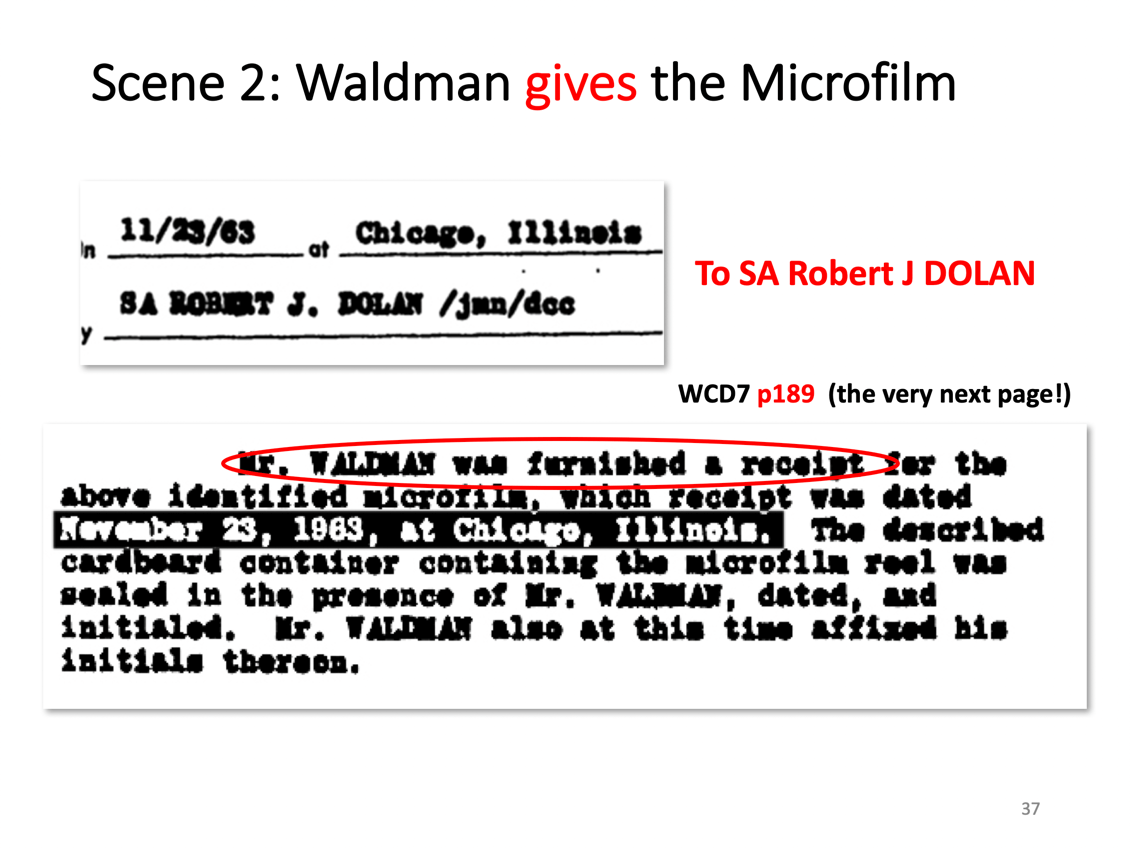
    It is interesting to note that the letters from Cuba designed to incriminate Oswald and link him to Cuban agents use some of the same suggestive language. “Close the business”, “after the business, I will recommend you”, and “after the business I will send you your money” are some of the phrases that can be found in just one of the letters. Others talk about “the matter” or “the plan”.

    A real investigation and transparent report would have revealed a lot more about Kostikov’s explosive background and would have blown the lid off what really happened in Mexico City. It would have also delved into who the recipient of the Washington letter was and its important significance, if Plan A (blaming foreign foes for the assassination) had been pursued. Something we will discuss later.

    Instead, the report concludes its extremely hollow analysis on a whimper: “In the opinion of the Commission, based upon its knowledge of Oswald, the letter constitutes no more than a clumsy effort to ingratiate himself with the Soviet Embassy.” The truth was that, had plan A gone ahead, the letter would have been peddled as further proof of complicity between the president’s “murderer” and foreign adversaries.

    The Warren Report on the letter

    While Jim Garrison clearly suspected something unholy occurred in Mexico City, as well as with the letter, the public had to wait until 1970 to see some of the first clues about what the FBI really thought about this correspondence, when newsman Paul Scott revealed the following:

    The F.B.I. discounts the C.I.A. suggestion to the Warren Commission that Silvia Duran, a pro-Castro Mexican employee of the Cuban Embassy, might have told Oswald about Azque being removed. In her statement to Mexican officials concerning her discussion with Oswald, Mrs. Duran made no mention of Azque. And, although she was questioned at the request of C.I.A., no attempt was made to quiz her about whether she knew of Azque’s recall. This makes the C.I.A. conclusion highly dubious, to say the least.

    Although the F.B.I. still has not been able to resolve the key mystery of the Oswald letter, it has narrowed the sources of where he might have obtained information about Azque. These sources are: (1) An informant in the Cuban Embassy in Mexico City who contacted Oswald after he returned to the U.S. (2) The Central Intelligence Agency. Or (3), the Soviet Secret Police (K.G.B.) in Mexico City. Significantly, the F.B.I. probe discovered that the K.G.B. and the C.I.A. learned of Azque’s replacement at approximately the same time and not until after Oswald visited Mexico City. This finding has raised the possibility that whoever informed Oswald contacted him after he returned to Dallas from Mexico City.

    According to Paul Scott’s son Jim, his father was wiretapped for over 50 years, because of his dogged investigations into the assassination.

    The HSCA

    Perhaps the biggest blow to the Lone Nut fabrication came when the Church Committee and the HSCA investigations deciphered one of the most important ruses, which would turn the tables on the frame-up artists who concocted the aborted Plan A stratagem. This had to be kept secret.

    One thing the Lopez Report makes very clear is that an Oswald impostor made a phone call designed to lay down a trace that would be used as proof of Russian complicity in the assassination and would provide the types of motives and stratagems that were part of the ZR/RIFLE and the Joint Chiefs of Staffs Operation Northwoods play books, both which involved having adversaries blamed for their own covert acts of aggression. The letter served to authenticate the Oswald-Kostikov relationship and add a third player to the mix. The potato became scorching hot.

    This analysis needed to be buried as much and as long as possible. The HSCA did not want to be the ones exposing this in the 1970s. The world had to wait nearly 25 years for the declassification of the explosive reports concerning Oswald’s trip to Mexico City and the mysterious letter and sometimes much later for their eventual release.

    The HSCA’s conclusions about the letter were even more hypocritical than the Warren Commission’s. While they recognize that it is “disturbing”, they seem to ignore the fact that the letter had been intercepted by the FBI and do not factor in the explosive findings of their very own Lopez Report, nor the confirmations about Kostikov’s role as Russia’s head of assassinations for the Western Hemisphere. When we consider the proof that they were sitting on, that an Oswald impersonator was recorded talking to Kostikov, and that Oswald (or an impostor) was said to have actually met him, we can easily see that the context of the letter and its explosive meaning were completely sidestepped in the Report:

    While the second paragraph represents a fake opinion designed to deviate from the real implication of the letter, the first one represents a blatant deception that can be proven outright by the transcript of Hoover’s call to President Johnson the day after the assassination:

    In short, the FBI did in fact examine all mail sent to the Soviet Embassy and had a copy of the letter all along.

    The ARRB and Russians Weigh In

    Thanks in large part to Oliver Stone and his landmark JFK movie classic, the ARRB was founded in 1992 and began declassifying files shortly after on the JFK assassination. In 1996, the Lopez Report was available. By 2003, a less redacted version was released. The explosive document shed light on Oswald impersonators, missing tapes, photos, and bold-faced lying by top CIA officials. The lone drifter was not alone!

    As reported by Jerry Rose in the Fourth Decade, in 1999, Boris Yeltsin handed Bill Clinton some 80 files pertaining to Oswald and the JFK assassination. One of the memos reveals that, at the time of the assassination, Russian ambassador Anatoly Dobrynin had right away seen the letter as a “provocation” to frame Russia by the fabrication of complicity between Russia and Oswald, when none existed. “One gets the definite impression that the letter was concocted by those who, judging from everything, are involved in the president’s assassination,” Dobrynin wrote. “It is possible that Oswald himself wrote the letter as it was dictated to him, in return for some promises, and then, as we know, he was simply bumped off after his usefulness had ended.” In late November, the Russians sent the letter to U.S. Secretary of State Dean Rusk explaining why the letter was a fraud. By then, the White House was peddling the lone nut fable. Kept hidden was the fact that the FBI already had a copy of the letter.

    In his article, Rose points out that the typed letter had many more spelling errors in it than the rough draft. Very odd indeed.

    If you go back to how the Warren Commission fluffs off the alleged Kostikov/Oswald (and/or impostor) exchanges and compare it with what is written by Bagley in the CIA’s November 23rd 1963 memo (declassified in 1998), you will see a startling difference in Kostikov’s status:

    Memo of 23 November 1963 from Acting Chief, SR Division, signed by Tennant Bagley, “Chief, SR/Cl.” CIA Document #34-538

    Just one of the reasons the Warren Report was impeached! But wait, it gets worse.

    The FBI’s Reaction to the Letter and the Mysterious Tovarish Reznkecnyen

    Since the mid-1990s, there have been a few revealing writings about the letter, but very little about the FBI’s take on it.

    Now, thanks to document declassification, we can see it through a wider scope that includes troubling dovetailing facts, such as the impersonation of Oswald in Mexico City and multiple hoaxes to tie him in unequivocally with sinister foreign agents and the chief assassination officer in Mexico—Kostikov. The analysis of tape recordings and transcripts, the mysteriously disappearing evidence, the fake letters from Cuba, and the full-fledged perjury of CIA officer David Atlee Phillips during the HSCA hearings prove there was subterfuge beyond a shadow of a doubt.

    Hoover’s phone call to Johnson is already very revealing. The following FBI report (HSCA Record 180-10110-10104), released only in 2017, is nothing short of stunning. It was the one Scott wrote about in 1970. It is strongly urged that you follow the above link to understand the full implication of the report, which sheds light on the investigation mindset which preceded the whitewash. However, for this article, our attention will be on the following paragraph of the report which focuses on the letter Oswald sent to the Soviet Embassy in Washington.

    Oswald’s letter deeply troubled the FBI for a number of reasons. Its tone was one of ongoing complicity referring to “unfinished business” and convenient reminders of the alarming exchange between Oswald and Kostikov. But the letter stretches the elastic to add yet another element that has so far gone under the radar.

    The fact that the letter was sent to Tovarich Nikolai Reznichenko all of a sudden became alarming, even though the Oswalds corresponded with him several times in 1963. The FBI report clearly refers to him as “the man in the Soviet Embassy (Washington’s) in charge of assassinations.” In 1970, Scott had described him as “one of the top members of the Soviet Secret Police (K.G.B.) in the United States.”

    The significance of this report leads to many conclusions and as many unanswered questions. Hoover had already decided that Oswald acted alone and they would not “muddy the waters internationally”. The HSCA, who possessed this document, in reports debates the authenticity of the same letter that was given to Dean Rusk by the Soviet ambassador, when they knew full well of its existence and FBI worries about its explosive implications. While this author has found little corroboration about Nikolai Reznichenko’s status, or perceived status, he believes it should not be dismissed as a mistake or confusion with Kostikov. This is an official FBI report that was written in 1963. There have not been any clarifications made about this very significant statement, despite the fact that Paul Scott exposed this in 1970 and its access to HSCA investigators.

    The mere fact that he worked in the Russian embassy and that he often corresponded with a “defector” on a watch list and his Russian wife and that the last letter by Oswald addressed to him has a complicit tone while name dropping the Mexico-based KBG chief of assassinations and talking about unfinished business suggests that both the FBI and the CIA had files on him. Where are they? For him to be described by Hoover as the head of assassinations in Washington on the part of the Soviet government in an official FBI document is of utmost significance and requires an explanation.

    This is one issue that deserves more debate in the research community.

    Conclusion

    The last letter on its own, perhaps, does not rise to the level of a smoking gun that proves there was conspiracy. It is another compelling piece of evidence that does prove that the Warren Commission and the HSCA shelved important evidence and information from the public that they found bothersome.

    If one adds this letter to the other attempts to pin the blame on foreign agents, including the charade in Mexico City, false testimonies by CIA contacts, the perjury of CIA officials of interest in the case, the Policarpo Lopez incident, and the incriminating letters from Cuba, we have proof beyond a shadow of a doubt that there was conspiracy. The naysayers cannot have it both ways. Either these events were genuine, which proves an international conspiracy, or they were not, which proves a domestic conspiracy. There has been enough evidence to demonstrate that they were not genuine.

    The letter has one attribute that can play an important role, actually proving who some of the conspirators were. It pre-dates the assassination. As it refers to happenings and ruses that took place in Mexico City two months earlier that few knew about, we can narrow the scope on who was involved. When we inspect the propaganda aspect of the operation, the case against David Atlee Phillips as a person of extreme interest is almost airtight. He had many touch points with Oswald and is easy to link to all of the ruses behind the sheep dipping activities, including the incriminating last letter.


    See also Carol Hewett’s Ruth Paine “Finds” Evidence: Oswald’s Letter to the Soviet Embassy

  • The FBI, JFK and Jim Garrison

    The FBI, JFK and Jim Garrison


    {aridoc engine=”google” width=”700″ height=”400″}images/ppt/FBI-JFK-Garrison-2019.ppsx{/aridoc}


    Open in Google Slides


    Version in .pdf