Tag: LEE HARVEY OSWALD

  • A Death from the First Generation

    A Death from the First Generation

    A Death from the First Generation

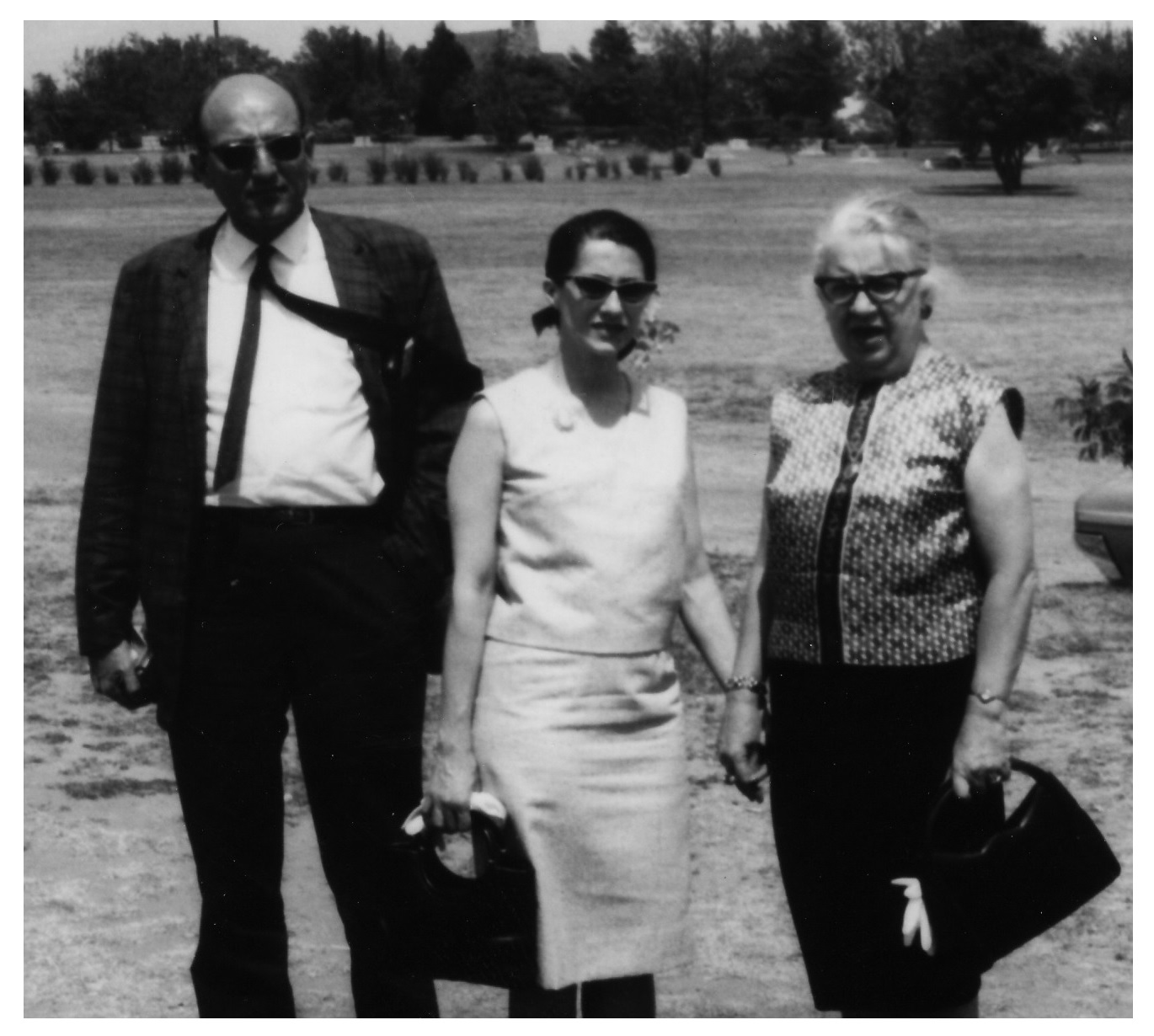
    Immie Feldman died on December 11th, 2024, at the age of 97. She was the widow of Harold Feldman, one of the first generation Warren Report critics.

    Immie, whose given name was Irma, had a key, if peripheral, role in one of the earliest independent investigations into the assassination of John F. Kennedy. These investigations began due to plainly spurious official pronouncements.

    In the summer of 1964, several months before publication of the Warren Report, Immie Feldman accompanied her husband Harold and then-brother-in-law Vincent Salandria to Dallas. They went there on behalf of pioneering critic Mark Lane, whose Citizens Committee of Inquiry had recruited a handful of amateur but highly capable investigators.

    Just before they left, Lane’s assistant mailed Salandria a packet with suggested witness questions. “We didn’t frame any questions for the cops because of the accessibility problem,” she said in her cover letter. “If you do find one drunk in a bar somewhere or hanging over the edge of a precipice by his big toe, I’m sure you’ll know what to ask him…

    “We’ll be eagerly and anxiously awaiting the results of your incursion behind enemy lines!”

    One of the results was a remarkable article written by Harold Feldman. “The Unsinkable Marguerite Oswald,” published in The Realist in September, is an insightful and sympathetic profile of the alleged assassin’s mother. It revealed then-shocking details about the experiences of certain witnesses.

    Feldman’s article contrasted sharply with a book that appeared a year or so later. Jean Stafford’s A Mother in History fully supported the lone-nut scenario, and thus met with favorable response from the mainstream media. Newsweek magazine’s coverage of the book so incensed Immie Feldman that she wrote a letter to the editor, which the magazine published on March 28, 1966.

    Many years later I conducted a telephone interview with Immie Feldman. At the time, I was talking to as many of the earliest Warren Commission critics as I could. What follows is an edited transcript.


    Immie Feldman Interview, Feb 16, 2001

    JK.     If you’re ready, we can just plunge right into it.

    IF.     Okay.

    JK.     You accompanied Vince and Harold to Dallas that summer…

    IF.     That’s correct.

    JK.     I wonder if you had any concerns about that. Or if you – were you looking forward to it, or just along for the ride…?

    IF      Well I was looking forward to it as an adventure. I was interested in the whole thing about it not being Oswald acting alone. And I, you know, I wanted to find out what they could find out…we were anxious to get to Dallas. And we had driven straight through, without stopping to – you know, except for gasoline, and bathroom stops. And eating, yeah. But we, Harold and Vince, and I think you say that in your [questions] – yes, you do – they took turns driving. And we just went right through.

    JK.     Okay. Let’s see, what next do we have? Your initial impressions of Marguerite Oswald. Do you remember that? First meeting her?

    IF.     Yeah, I don’t know what I expected. And so I’m not recalling…but she seemed like a very nice woman. She was very pleasant to us. She seemed, in a way, proud of her son. And she was…I don’t know, it seems like she was, may have been kind of like a distant mother. Do you know what I mean?

    JK.     Not a really warm person?

    IF.     Right, right. What else do I remember about her? She was hospitable to us. And I said we spent the night there, and Vince spent the other nights there also. And she was worried about – that people seemed to be circling her place that she lived, with an automobile that she kept recognizing. And I think that at one time there may have been a van parked in front of her place, that she thought maybe had listening devices or something. And she was constantly on the phone calling the Warren Commission to give them things that she thought were leads or clues. And mostly I think they just thought of her as being a nuisance.

    JK.     Mm-hmm.

    IF.     I think she was rather shabbily treated by people, especially the Council of Churches [in Dallas] that were collecting money [for Tippit’s widow]. And I think I wrote to you about that in my letter, that they received some money that was earmarked for her, and they returned it because they weren’t collecting money for the mother of a murderer.

    JK.     Mm-hmm.

    IF.     Of course, that was very hurtful to her. As naturally, it would be.

    JK.     Harold wrote about, in his article on Marguerite, about going to Helen Markham’s house. Or apartment, I guess it was.

    IF.     Apartment, yes.

    JK.     And Marguerite went with you, correct? It was all four of you?

    IF.     Yes, yes.

    JK.     And, do you recall, do you have recollections of that? I guess you went there a couple of times.

    IF.     Yes, we did go there a couple of times. And I don’t know why I don’t have, you know, any strong recollections there. Because I was kind of, you know, like in the background, and Vince and Harold were the ones that were proceeding with asking questions and trying to get information.

    JK.     Do you remember how you, or they, were received by – did Mrs. Markham seem at all suspicious or unwilling to talk?

    IF.     That, I’m sorry, I don’t recall.

    JK.     Okay. Now, were you with them when, I guess you went initially and she talked for a few minutes, and she was babysitting, I guess it was her granddaughter, and she said, ‘Come back later,’ and you went back a few hours later? And at that time, her husband had come home, and I – that’s when, according to Harold’s article, as you pulled up the second time, you saw, he saw, a few police cars pull away. And they apparently had been threatened by the Dallas police.

    IF.     By the police, mm-hmm.

    JK.     Do you remember that? Vince said something, I think I quoted him, he said to the effect, of having never seen anyone so scared before, and that their teeth were actually chattering. And I think the teeth chattering, I think that Harold mentioned that in his article, too.

    IF.     Yes, I do recall that the Markhams were thoroughly frightened. And apparently, you know, they were threatened.

    JK.     Do you recall noticing that the second time? When you came back a few hours later? As opposed to the first visit earlier in the day?

    IF.     Yes, it was definitely a different atmosphere the second time.

    JK.     Yeah. Okay. That pretty much is what Harold wrote.

    IF.     Yes, and of course, his recollection would have been much closer to the time that it happened.

    JK.     Yeah. Was he keeping notes?

    IF.     Both Harold and Vince did of course take notes, and Vince had brought down an IBM typewriter, and a small copier, so that they were, you know, every night…

    JK.     Busy?

    IF.     Yeah…

    JK.     Taking notes, transcribing…?

    IF.     Making notes, and getting things together. Because, I think, if I remember correctly, the original plan was that we go down and get information for Mark Lane. And then that was not, I don’t think he used that information, and Vince and Harold just used it for their own things that they wrote.

    JK.     Uh, let’s see. Going back earlier, to that first article that was in The Nation, ‘Oswald and the FBI.’ Do you have any memory of Harold becoming aware that the article had prompted, as it did, as I’m sure you’re aware, that secret meeting of the Warren Commission?

    IF.     Yes.

    JK.     And what did he think of that?

    IF.     I was, myself, very apprehensive, because I was wondering you know, what is this going to mean? What kind of difficulties would it make for us?

    JK.     You mean at the time it was first published?

    IF.     Yeah. And…I mean, I don’t know what else to elaborate on that. I was concerned if it would prove to be, make some difficulties in our lives.

    JK.     Yeah, I understand exactly what you mean. It, if you ever had the feeling you were messing with something that would get you in over your head, so to speak?

    IF.     Yes, but still I felt that we had to, Harold and Vince had to sort of, you know, work at what they thought was the truth. But it was, it was, you know. It was scary.

    JK.     Did – you may know – and I’m sure Harold must have seen the – that Gerald Ford wrote about that, mentioned him specifically, in his book. Do you have any memory of Harold thinking one way or another about that? Did he feel like he’d accomplished what he – he got the attention of some…

    IF.     Yeah, he got the attention, and he was in that book that was out there for – we have a copy of the book, or my son Vincent has a copy of the book. And it was, you know, it made an impact. Something that was a little thorn in their sides, apparently.

    JK.     After – I’m not sure exactly how many articles he wrote that were directly related to that case. But there were I think just four or five, is that about right?

    IF.     I think so.

    JK.     The last one that I think, chronologically, was the one about 51 Witnesses on the grassy knoll…?

    IF.     Witnesses on the grassy knoll, right.

    JK.     Which I think was about 1965. And he seems to have dropped out after that. But I’m sure he must have maintained an interest over the years.

    IF.     He maintained an interest over the years. He was, at that time, taking some post-graduate courses, and then in 1966 our son was born… [but] he always maintained an interest, but not actively. And he had a psychoanalytic practice, and he kept very busy. And so he didn’t have the time. He had, other things came into his life, so it wasn’t something that was all-engrossing.

    JK.     Okay. I have one more question, and feel free to not answer it, because I don’t know if I’m getting too personal here. But I was wondering whether Harold’s death was sudden and unexpected? Or was he ill for a time?

    IF.     It was rather sudden. He had had, ten years before he passed away, he had a heart attack and a stroke. And he had fully recovered from it and was able to continue his practice, and teach in this school of psychoanalytic studies here in Philadelphia, and led a very active and normal life. And then in August of ’86, he became ill, and they thought it was a stomach inflammation from medications he was taking. And it turned out to be, it was diagnosed as liver cancer, but then it proved to have come from the pancreas. And he was in the hospital on Wednesday, they made the – he went in the hospital on the weekend, and on Wednesday they made the diagnosis. And the doctor told me that he probably had six months to live. And he died that Friday.

    JK.     Wow.

    IF.     So that was quite a shock. Because he thought that he would be able to tie up some loose ends with the people he had in treatment. And as you can imagine, the shock for all of us, and for his patients, to have this happen this suddenly. 

    JK.     I don’t mean to pry.

    IF.     Sure. No, that’s okay.

    JK.     Okay. Well that’s about all I have this morning. I do appreciate your taking the time to talk to me.

    IF.     If there’s anything I can, you know, add, I’m happy to do it.

    JK.     Okay. Well thank you very much!

    IF.     Okay, you’re quite welcome.

    JK.     I’ll talk to you later.

    IF.     Okay. Bye-bye.

    With Harold Feldman, Vince Salandria and Mark Lane all passed on, she was the last survivor of that trail blazing drive into Dallas. This helps commemorate that important journey.  

    _____

    Read The Unsinkable Marguerite Oswaldby Harold Feldman.

    Read this analysis of Jean Stafford’s interviews with Marguerite Oswald, published in Kennedys and King in November 2022, and based on hearing the original interview recordings.


  • The Missing Calls of Officer Mentzel Pt. 2

    The Missing Calls of Officer Mentzel Pt. 2


    The question thus arises about whether the West Davis accident call of 1:07pm was part of that set up. First as a signal to Mentzel that things were ready, and second as a pretext for Mentzel to separate from Tippit.

    Per the tape, Mentzel labors the call. He in fact determines an accident officer is on the way, accident Officer Nolan, call sign 222. There was no need for Mentzel to go. The DPD had four specialist squads which dealt with motor accidents and there were 32 such officers on duty that day (CE5002), C.T. Walker included, call sign 223.

    Indeed, Officer Summers, call sign 221, responded to a traffic call at 600 W Jefferson 25 seconds before Mentzel called clear at 1:03pm from the 400 block of W Jefferson. Mentzel didn’t go to that call then. Similarly, Summers didn’t get called for the 800 block of West Davis, despite 600 West Jefferson being closer to 800 West Davis than Mentzel – whose job it wasn’t anyway.

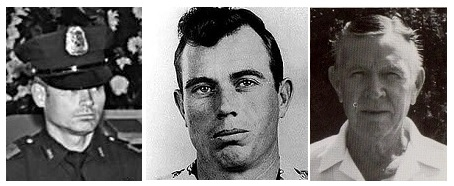
    Speculative question: did Mentzel know all of what was going to happen next to Tippit? Another such question: Was Mentzel duped into tricking Tippit? To consider that requires looking at what Mentzel did as well as what he didn’t do after Tippit was shot.

    A transcribed call was made to Mentzel by dispatch immediately after Temple Bowley’s call of approximately 1:11pm. There is no answer. At approximately 1:16 pm Mentzel signals “91 clear”, and the dispatcher said “91, have a signal 19 [a shooting] involving a police officer at 400 East Tenth. Suspect last seen running west on Jefferson. No description at this time”. Mentzel replies “10-4”.

    Mentzel was given information over the radio at 1:16 pm about the shooting incident as if he’d been incommunicado until he got to Tyler, hence had missed all the calls of the prior 5 minutes – those calls making it clear it was Car 10, Tippit.

    But Mentzel doesn’t do what someone incommunicado might do. He didn’t ask who the officer was, nor did he reveal anything of his or Tippit’s movements in vicinity of E 10th the minutes before Tippit was shot. He also said to the HSCA that he didn’t know the victim was Tippit until he arrived at E 10th: Which suggests a distinct lack of curiosity. Not least given that he told the HSCA he didn’t know Tippit was even in district 91 when shot. The first question should be “Who was it and what were they doing there?”

    As well as that, why would attending a traffic accident that he said was a “minor fender bender” be a reason to stop hunting for Oswald?l Mentzel’s HSCA account of the accident being a ‘minor fender bender’ reads like a trivial brush off, just like any excuse that has seen better days.

    This all leads to another speculative question: Did Mentzel not ask who the victim was because he already knew?

    Shortly after that the dispatcher calls Mentzel to tell him:-

    DIS: 91.

    Mentzel 91: 91.

    DIS: Suspect just passed 401 East Jefferson.

    Mentzel 91: 10-4.

    Unknown: Where did he just pass?

    DIS: 401 East Jefferson.

    Approximately 3 minutes after that (1:22pm) Mentzel calls:

    Mentzel 91: 91.

    DIS: 91.

    Mentzel 91: What was the description besides the white jacket?

    DIS: White male, thirty, five feet eight, black hair, slender build, white shirt, black trousers. Going west on Jefferson from the 300 block.

    [Note. Oswald did not have black hair, but Larry Crafard did.]

    The statement in Warren Commission Exhibit 2645 is ambiguous as to whether Mentzel heard the 1:11pm Bowley call, or the call to Mentzel at 1:16pm.

    Mentzel says he went to the Beckley and Jefferson intersection, but nowhere on the tape is Mentzel told to go to the Beckley and Jefferson intersection. In fact, no one is dispatched there, and by the tape Mentzel isn’t dispatched anywhere.

    Non-assigned traffic accident officer Charles T Walker was also in Oak Cliff on E 10th Street, 2-3 short blocks from where Tippit was shot. None of his radio calls prior to the murder of Tippit are transcribed either. His immediate reaction to the news of the downtown shooting of Kennedy was to go to a fire station to watch what was unfolding on TV (WC Vol VII page 34). He said he then went downtown, and then headed back to Oak Cliff when he heard of the shooting of Tippit.

    By the time Walker had arrived at the Tippit murder scene witnesses had said that the assailant had run south down Patton and headed west along Jefferson. But Walker put out the radio call saying the assailant was in the public library several blocks to the east along Jefferson. The posse of officers was thence sent in the wrong direction.

    A relevant point of geography is that the intersection of Jefferson and Beckley, is 70 yards from the alley that runs parallel and between Jefferson and 10th. From behind, 410 E 10th (it is the alley continuation of Lansing Street), it crosses Patton, Crawford, Storey and then Cumberland to reach Beckley. It then crosses Beckley and Zang and runs to behind the Texas Theater.

    That alley was the last place any suspect was seen, by Mrs Brock, at the Bellew Texaco Garage at E Jefferson and Crawford. She said she saw him walking quickly across the parking lot (FBI Report of 22 January 1964). That would have been approximately 1:10 pm.

    II

    The Warren Commission Testimony of Warren Reynolds of 22 June 1964 (WC Vol 11, page 434) is consistent with that: –

    Mr. REYNOLDS. I looked through the parking lot for him after. See, when he went behind the service station, I was right across the street, and when he ducked behind, I ran across the street and asked this man which way he went, and they told me the man had gone to the back. And I ran back there and looked up and down the alley right then and didn’t see him, and I looked under the cars, and I assumed that he was still hiding there.

    Mr. LIEBELER. In the parking lot?

    Mr. REYNOLDS. Even to this day I assume that he was.

    Mr. LIEBELER. Where was this parking lot located now?

    Mr. REYNOLDS. Corner of Crawford

    Mr. LIEBELER. It would be at the back of the Texaco station, that is on Jefferson where they found his coat. They found his coat in the parking lot?

    Mr. REYNOLDS. They found his coat there.

    Mr. LIEBELER. So that he had apparently gone through the parking lot?

    Mr. REYNOLDS. Oh, yes.

    Mr. LIEBELER. And gone down the alley or something back to Jefferson Street?

    Mr. REYNOLDS. Yes. When the police got there, and they were all there, I was trying to assure them that he was still there close. This was all a bunch of confusion. They didn’t know what was going on. And they got word that he was down at a library which was about 3 blocks down the street on the opposite side of the street.

    Mr. LIEBELER. Down Jefferson?

    Mr. REYNOLDS. Down Jefferson. And every one of them left to go there.

    If that isn’t evidence of the police not trying to find someone, then what is? The reality appears that some officers did know what was going on. Enough to confuse the rest. The ringleader of the confusion was likely CT Walker.

    From when the assailant was seen at the Texaco garage there was no sighting of the assailant until the incident at Hardy’s Shoe Shop, at about 1:40 pm on the basis of someone “looking funny”. This triggered the calling of the police for the arrest of Oswald on the premise that the person had run into the Texas Theater, opposite Hardy’s.

    But for that journey there were no witnesses on the way, not even crossing the six-lane road at Zang nor the four-lane road at Beckley. Police meanwhile were sent to the wrong places, by Walker, they east, and then Westbrook sent people north of the crime scene.

    Mentzel was local to the Oak Cliff district. From 10th at Beckley to the alley behind the garage at Jefferson and Crawford is 380 yards. Mentzel would have a shorter distance to travel than Tippit and he had the advantage of speed. It may even have been Mentzel that suggested that Car 207 went into the same alley behind 410 E 10th.

    III

    A white Eisenhower jacket was found in the parking lot at Bellew. Mary Brock hadn’t mentioned anyone taking it off there when the assailant passed her. Why would someone on the run holding a gun restrict their movement by taking a jacket off whilst holding a gun when someone is looking at them and they are about to do a disappearing trick? Jackets can be difficult to take off in normal times, even more if holding a gun.

    As Oswald in the Texas Theater wasn’t wearing such a jacket, that disposal was ill thought through, and it was never clear which officer had found it. The found jacket was announced by Officer Griffin over the radio at approximately 1:21 pm as being a white one. It is highly unlikely that this jacket was really Oswald’s. It had two laundry tags. The FBI, checked 424 laundries in the Dallas-Fort Worth area, and 293 laundries in the New Orleans area. They were unable to match either the tag or the laundry mark to any them. (See WC Documents, 993 and 1245) The Bureau’s examination of Oswald’s clothing showed not a single laundry or dry cleaning mark or tag. And although the jacket was size medium, all of Oswald’s other clothing was size small. As author Henry Hurt noted, the Warren Report does not entail any references to this extensive effort to trace the laundry marking. By doing so the Warren Commission could say the jacket belonged to Oswald, when that was very unlikely. (Hurt, Reasonable Doubt.)

    There is a catalogue of events which fit with improvised framing of Oswald for Tippit’s impromptu murder alongside the intended framing of Oswald for Kennedy’s murder.

    The gun used to kill Tippit was announced over the DPD radio as an automatic. The Oswald revolver wasn’t. (Sylvia Meagher, Accessories After the Fact, p. 273) The cartridges thrown at the scene were marked as standard practice with initials by Officer Poe. Those marks then disappeared after the evidence chain was broken by taking gun related evidence to Captain Westbrook’s office. (Hurt, pp. 153-54)

    Archived TV footage discovered in 2013 (the ‘Reiland film’) shows police officers examining a wallet at the scene outside 410 E10th before the arrest of Oswald. That wallet was then never mentioned again as an official find at that scene. (McBride, Into the Nightmare, pp. 466-67) Instead, a wallet was supposedly – for evidence purposes – taken from Oswald.

    That is consistent with the ill thought through planting of the wallet, which by virtue of the address it had in it, triggered police to arrive at 1026 N Beckley just after 1:30pm. And according to the landlord Gladys Johnson, the FBI was there also. (Sara Peterson and K. W. Zachary, The Lone Star Speaks.) That time ran against the official line that 1026 N Beckley addressed wasn’t known about until DPD Officers and County Sheriffs arrived at Oswald’s family home in Irving, and that wasn’t until after 3:30pm. But two wallets would have made it transparently obvious Oswald was being framed.

    In all there was a break in the chain of custody of: cartridges, the gun supposedly taken from Oswald, the jacket and the wallet that was found and then unfound.

    IV

    Things continued to be irregular after that. Let us contrast Mentzel’s lack of inquisitiveness to that of Sergeant Owens.

    Owens is probably the least discreet officer on the tape, meaning he asks rational questions. He said at around 1:30 pm of Tippit.

    Owens 19. Do you know what kind of call he was on?

    DIS: What kind of what?

    Owens 19: Was he on a call or anything?

    DIS: No.

    Owens 19: 10-4.

    The dispatcher saying “No”, is yet more evidence the instructions to Tippit and Nelson at 12:45pm call was a fake. But again, Mentzel hasn’t answered to reveal that he and Tippit were working together.

    Some minutes after that Owens then said this:

    Owens 19: Is Sgt H Davis 80 in service?

    DIS: Sgt H Davis 80.

    Owens 19: I think he was sent down to Elm and Central. We need somebody to notify that officer’s wife.

    DIS: Sgt H Davis 80.

    Davis doesn’t respond. But Owens’ linking Davis as the person who should tell Mrs. Tippit suggests Davis was the Sergeant commanding Tippit.

    This is Owens in an FBI memo of 20 May 1964, supplied to the Warren Commission on 5 June 1964 (CE1976) and not followed up by the Commission in its published findings.

    According to Sergeant OWENS, Officer TIPPIT had gone home to eat lunch, which was a normal and approved procedure, at about noontime.

    Sergeant OWENS advised he could not furnish any information as to when or how TIPPIT’s assignment from District 78 had been changed as he, OWENS, had gone to lunch and had not returned during the time that TIPPIT’s assignment had been changed.

    Mr. Ely. Were you on duty on November 22, 1983?

    Mr. Owens. I was.

    Mr. Ely. And what was the nature of your assignment on that date?

    Mr. Owens. Acting lieutenant, Oak Cliff substation.

    Mr. Ely. Because you were acting lieutenant in the Oak Cliff substation, would that mean that Officer Tippit would be under your supervision?

    Mr. Owens. That’s true.

    Mr. Ely. Off the record. (Discussion off the record between Counsel Ely and the witness Owens.)

    Mr. Owens. I don’t know what district Officer J. L. Angel [sic:Angell] was working, but it was my understanding that he also went to Elm and Houston.

    Mr. Ely. Well, he was working somewhere in the Oak Cliff area, was he?

    Mr. Owens. Yes; he was working in the Oak Cliff area under the same sergeant that Officer Tippit was working under

    So, by that, Tippit (78), Angell (81) and Mentzel (91) were working under the same district Officer. By Owens’ Warren Commission Testimony and Exhibit CE 2645, that Officer was Sergeant Hugh F Davis who was supervising 80’s and 90’s patrol districts, hence supervising Nelson (87) as well. Davis was a southwest supervising officer, who then reported to Owens the acting Southwest Commander who was in also in supervisory charge of patrol districts 60’s and 70’s, hence Tippit (78). But whilst at lunch, sometime before 12:30pm, (CE1976) Owens was replaced as supervisor of Tippit by Davis. Owens could not give the reason as to when or how that had occurred, despite having been the acting Commander, and having made all patrol district allocations for the start of that day.

    Bearing in mind that a bullet had been removed from Tippit’s body by 1:30 pm and an autopsy request signed, it’s remarkable that there needed to be any discussion about telling Mrs. Tippit after that. This after all was a police force that had been able to send officers to minor traffic accidents minutes after a president had been shot.

    There was clearly sensitivity. A conversation listed in the first transcript – CD-290 – disappeared in the next two versions CE-705 and CE-1974.

    531 [Despatch] ” “210 was dispatched to notify Mrs Tippit”,

    CD-290 puts this sometime before 1:40pm. It’s missing from CE-705 and the earliest mention in CE-705 to that matter is a call between 1:40 pm and 1:43pm and that transmission used the word ‘wife’ not ‘Mrs. Tippit’. The tape transcripts show that even after 2:00 pm Mrs Tippit still hadn’t been told even though it’s appearing on TV.

    At 1:53 pm there was this exchange.

    DIS: We had a shooting of a police officer which was DOA at Methodist. The suspect has been apprehended at Texas Theater and en route to the station.

    3 (Deputy Chief Stevenson): 10-4. Thank you.

    Mentzel 91: Mentzel 91 clear.

    DIS: Mentzel 91. 1:53.

    At 1:54pm there is this exchange:

    Gerry Hill (550/2): 550/2

    DIS: Gerry Hill (550/2). 550/2 (CT Walker) 223 is in the car with us. See if someone can pick up his car at the rear of the Texas Theater and take it to the station. It’s got the keys in it.

    DIS: 10-4.

    DIS: Mentzel 91. 91

    Mentzel 91:  91.

    DIS: Report back to the Texas Theater. Get CT Walker car and lock it up.

    Mentzel 91: 10-4.

    And a minute later:

    Mentzel 91: 91.

    DIS: 91.

    Mentzel 91: What do you want me to do with the keys after I lock that car up?

    DIS: Just keep them until you can contact CT Walker.

    Mentzel 91: 10-4.

    Mentzel was also told to “report back” to the Texas Theater, and his Warren Commission account via the FBI was that he had gone there, “then [Mentzel] was dispatched to the Texas Theatre, where the suspect was reportedly hiding” and the tape supports that. Mentzel’s HSCA account was that he didn’t go there.

    Added to that, Mentzel at the time felt it was more important to worry about CT Walker’s car than telling Mrs Tippit. As McBride notes in his milestone book in one version of Marie Tippit’s story, her husband left very quickly after lunch because so many officers were downtown due to the motorcade. As McBride then notes, this could imply ”that TIppit already might have suspected, before any trouble occurred downtown, that he would be needed to fill in for other officers vacating Oak Cliff” and that could suggest some knowledge in advance about Oswald. (McBride, p. 510) After all, based on the testimony of Edgar Lee TIppit, the officer’s father, Mentzel and he were looking for Oswald, and Mentzel told the widow that. (McBride, p. 427)

    Recall, although Mentzel was patrolling two districts in Oak Cliff, the dispatcher did not call him to be at large for any emergency that might come in—as were Nelson and TIppit. (ibid, p. 428) Was he at Luby’s when he learned of the assassination, or was that a “cover story for other unacknowledged activities.” (ibid, p. 429). As McBride writes,

    The confusion in this HSCA interview report nearly fourteen years after the events occurred, perhaps is an attempt to rationalize Mentzel’s erratic, somewhat mysterious whereabouts in the 8 minutes between the accident call and the officer’s belated report to the police dispatcher that he was “clear”. (ibid)

    V

    Mentzel’s misrepresentations are consistent with other discrepancies in Warren Commission testimonies, in particular those of Captain Westbrook, Reserve Sergeant Croy and Sergeant Jerry Hill. Time is easier to lie about than location.

    The Russian intelligence network concluded that they’d put the assassination down to a right-wing plot assisted by rogue elements of the Dallas Police Force. If so there would need to be covert movements of police officers and other devices to assist in it. This article doesn’t suggest that any DPD Officers were directly involved in shooting the President, pulling triggers. Quite the opposite.

    What does need to be considered is whether assistance was given to 1) ensure safe getaway of professional assassins, 2) move Oswald as the fall-guy operating under a duped pretext by car to the Texas Theatre where he would be shot.

    It is car 207 that was seen in the rear driveway of 410 E10th at the time Tippit was shot. It was not a random location as Virginia Davis said he was there so often she thought he lived there.

    Mentzel’s calls and self-account before Tippit are highly suggestive for that scenario. The accident call could be genuine. But against that is the fact that none of it was transcribed for any of the three transcripts. No accident would account for Mentzel abandoning “hunting down Oswald”, a fender-bender is hardly a priority in the face of that.

    A rational answer would be “I have something else on”

    The circumstances regarding what and when the Tippit family was told things also stick out like a sore thumb.

    The fact that the Warren Commission would never answer the questions about Oswald and Tippit straightforwardly is obvious. The Warren Commission work outline was largely based on the Nicholas Katzenbach memo to Bill Moyers, an assistant to President Johnson, written just two hours after zenOswald had been killed.

    President Johnson and FBI Director Hoover followed Katzenbach’s memo to a tee, disregarding any other leads that led to a conspiracy.

    Deputy US Attorney Nicholas Katzenbach’s memo:

    It is important that all of the facts surrounding President Kennedy’s Assassination be made public in a way which will satisfy people in the United States and abroad that all the facts have been told and that a statement to this effect be made now.

    The public must be satisfied that Oswald was the assassin; that he did not have confederates who are still at large; and that the evidence was such that he would have been convicted at trial.

    Speculation about Oswald’s motivation ought to be cut off, and we should have some basis for rebutting thought that this was a Communist conspiracy or (as the Iron Curtain press is saying) a right–wing conspiracy to blame it on the Communists. Unfortunately the facts on Oswald seem about too pat — too obvious (Marxist, Cuba, Russian wife, etc.). The Dallas police have put out statements on the Communist conspiracy theory, and it was they who were in charge when he was shot and thus silenced.

    The matter has been handled thus far with neither dignity nor conviction. Facts have been mixed with rumour and speculation. We can scarcely let the world see us totally in the image of the Dallas police when our President is murdered.

    I think this objective may be satisfied by making public as soon as possible a complete and thorough FBI report on Oswald and the assassination. This may run into the difficulty of pointing to inconsistencies between this report and statements by Dallas police officials. But the reputation of the Bureau is such that it may do the whole job.

    The only other step would be the appointment of a Presidential Commission of unimpeachable personnel to review and examine the evidence and announce its conclusions. This has both advantages and disadvantages. It [sic] think it can await publication of the FBI report and public reaction to it here and abroad.

    I think, however, that a statement that all the facts will be made public property in an orderly and responsible way should be made now. We need something to head off public speculation or Congressional hearings of the wrong sort.

    Read Part One

  • Warren Commission Counsels Burt Griffin and Howard Willens Attempt the Impossible: Shoring up the Tottering Credibility of Earl Warren’s Investigation

    Warren Commission Counsels Burt Griffin and Howard Willens Attempt the Impossible: Shoring up the Tottering Credibility of Earl Warren’s Investigation


    By Gary L. Aguilar, MD and Cyril Wecht, MD, JD

    Last fall former Warren Commission assistant counsel Burt Griffin put out a brief in defense of the government’s original 1964 findings regarding John F. Kennedy’s assassination. He was the third Commission counsel to do so. Former Warren Commission assistant counsel David Belin wrote one in 1988.[i] In 2013 assistant counsel Howard Willens did the same with his book History Will Prove Us Right.[ii]

    Now Griffin has picked up the baton with a book of his own, JFK, Oswald and Ruby.[iii] What’s striking, though not surprising, is how little the last two authors seem to know (or are willing to admit they know) of what we’ve learned in the millions of once-secret files that have been unsealed during the past 60 years, particularly during the past 25. Were it not for these declassifications, we might not know that much of what Griffin and Willens asks us to accept as true simply is either not true, or not the whole truth.

    For example, it isn’t true, as Griffin writes, that “The Warren Commission had not sealed its documents. Our intent was complete openness for the public.” (p. 306) This is an old untruth. It was first disseminated by the New York Times on the day the Warren Report was released. In the simultaneously released, October, 1964, New York Times’ edition of the Warren Report, Timesman Anthony Lewis reported, undoubtedly from a Commission source, that “The Commission made public all the information had bearing on the events in Dallas, whether agreeing with its findings or not. It withheld only a few names of sources, notably sources evidently within Communist embassies in Mexico, and each of these omissions was indicated.”[iv]

    This was debunked decades ago. Despite the government’s having slowly released Commission documents in the years following the 1964 release of the Report, the Assassinations Records Review Board (ARRB) discovered that, “at the time that Congress passed the JFK Act (1992), only 3,000 pages of Warren Commission material remained for the agencies and the Review Board to release.[v] “Only?” Moreover, in 2014 historian Philip Shenon reported that Willens was releasing never-seen Commission documents on the former commissioner’s personal website.[vi]

    Nor is it true, as Griffin claims (p. 294) that Bobby Kennedy accepted the Commission’s conclusions. This untruth, first put forward in the Warren Report,[vii] was similarly debunked decades ago, a fact established beyond any doubt years ago by best-selling author David Talbot,[viii] whom neither counsel mentions. Also by historian Philip Shenon who long ago wrote that RFK “had never stopped suspecting that there had been a conspiracy to kill his brother,”[ix] and that Bobby “insisted in public that he believed the commission’s report and accepted that Oswald acted alone—but said precisely the opposite to the people closest to him.”[x] This information is readily confirmable with a simple google search of independent sources.[xi]

    However, it is true, as Griffin and Willens report, that Lee Harvey Oswald was a marine radar operator at Atsugi Naval Air Base in Japan.[xii] But it’s far from the whole truth, or even the most important part of the truth. Which is that Atsugi was a CIA-run base from which U-2 spy planes flew high-altitude missions over the Soviet Union.[xiii] “Defector” Oswald would have tracked those flights. Given long-held suspicions the “lone nut” had undisclosed intelligence ties, this is scarcely an inconsequential detail. (See below.)

    It’s also true, as they report, that Oswald visited Mexico City six weeks before the assassination. The whole truth, which they withhold, includes the fact that someone impersonated this “unknown,” “unaffiliated” “lone nut” in CIA-taped calls that Oswald made to the Soviet Embassy while he was there. This part of the story was published by AP 13 years ago,[xiv] and has been frequently discussed by critics ever since. (See below.)

    Both books establish one thing that is as true today as it was in 1964: one should not look to the Warren Report, or its attorneys who defend it, for the truth about November 22nd, 1963. It’s not that one encounters falsehoods, although there’s no shortage of those. It’s more that inconvenient evidence is omitted, or tendentiously spun to lead away from the truth. It’s a feature that defines the lawyers’ briefs Griffin and Willens have produced, as it did Earl Warren’s 1964 lawyer’s brief. Fortunately, not all former Commissioners sing along in the chorus with Griffin and Willens and Warren. In recent years some of them have sung a different tune.

    Dissent among the ranks

    Alan Dershowitz reported that one-time Commission attorney, Stanford law professor John Hart Ely, “has acknowledged that the (C)ommission lacked independent investigative resources and thus was compelled to rely on the government’s investigative agencies, namely the FBI, CIA and military intelligence.”[xv] Both Griffin and Willens touch on this, but deemphasize it, despite the fact it was firmly established decades ago by subsequent government investigators. (See below.)

    Anti-conspiracy author Gus Russo reported that Commissioner Hale Boggs “was known to have had strong disagreements with the Commission’s official conclusion,” and that “he wished he’d never signed on to the report.”[xvi]

    Before he began singing in harmony with Willens, even Griffin admitted to doubts. House Select Committee on Assassinations’ (HSCA) Chief Counsel G. Robert Blakey disclosed that, “When (the HSCA) asked (Judge Burt Griffin) if he was satisfied with the (Commission’s) investigation that led to the (no conspiracy) conclusion, he said he was not.”[xvii]And he may not have been for the ¬historically accurate reason Griffin gave Gus Russo, “We spent virtually no time investigating the possibility of conspiracy. I wish we had.”[xviii] Griffin has apparently forgotten that wish, and now croons with the man who put him in on the Commission in 1964, Howard Willens, [xix] singing, ‘Trust us. We took a good look. History Will Prove Us Right.

    The “Investigators”

    Griffin’s revealing admissions to Robert Blakey and Gus Russo, though nowhere evident in his new book, are borne out by the record. The Commissioners were powerful political appointees who had full time jobs apart from their Commission work. They were in no position to do the requisite, painstaking, time-consuming investigative work. That was principally left to counsels such as Griffin and Willens. These recent law school graduates who were pulled from the Justice Department were the full timers. But they weren’t criminal investigators. and weren’t remotely what a murder investigation called for, particularly one of this magnitude.

    Warren critic Dwight McDonald made an insightful comment in 1965. He described the young and inexperienced staff counsels who actually did the Commission’s legwork as, “ambitious young chaps who were not going to step out of the lines drawn by their chiefs.”[xx] And they didn’t. What investigation got done was mainly conducted by FBI agents. Director J. Edgar Hoover, who had announced on the afternoon of the murder that Oswald alone had done it, watched closely over his underlings. Hoover’s verdict stuck. Just how the Bureau chief got his preinvestigation epiphany to stick can be understood by a particularly telling anecdote historian Gerald McKnight recounted.

    While under oath before the Commission Hoover volunteered an answer to critics. They questioned why Oswald hadn’t taken the easier, clearer shot at JFK as his limo rolled along Houston St. toward his location in the Depository, rather than the tougher shot as he drove away down Elm St. McKnight writes, “Hoover’s explanation was as seductively simple as it was monumentally wrong: ‘There were some trees,’ the director noted, ‘between the window [of the sniper’s nest] on the sixth floor and the cars’ as they moved toward the TSBD on Houston Street.”[xxi] There were no such trees. Nor were they depicted in the 480-square foot mock-up of the assassination scene that the FBI prepared at Hoover’s request. None of the commissioners called Hoover out on this “mistake.” Nor did the senior FBI executive officers who edited Hoover’s Commission testimony before publication correct the Director. The FBI wasn’t yet finished.

    Two years later the Bureau took after critic Harold Weisberg, who’d mentioned Hoover’s howler about the trees during a broadcast radio interview. When the top echelons at the Bureau heard Weisberg’s claim, they reportedly took a hard look at the evidence, and corrected the wacky conspiracist. “The Director’s testimony,” they officially reported, “was accurate.” As McKnight put it, “The director was right even if the photographs and the FBI’s own elaborate mock-up of Dealey Plaza proved otherwise.”[xxii] This sort of thing was pretty common. Assistant FBI Director William Sullivan once remarked that “Life in the circus was possible only if one unwritten but iron rule was unfailingly observed: The Director was always right.”[xxiii] This rule was followed by both the FBI and, as we’ve learned, the Warren Commission as well. It’s no wonder therefore that almost since the day it was released doubts have swirled around the Warren Report.

    Commissioner Willens rejects this mistrust, arguing, “What the critics often forget or ignore is that since 1964, several government agencies have also looked at aspects of our work.”[xxiv] As if officials had reviewed and endorsed the Commission’s work. But it is Willens who has forgotten or ignored what critics have not. Namely, that “agencies” did take a look, particularly at those aspects that are essential in a murder investigation. They did not approve. Instead, they issued stinging critiques, principally for the Commission’s having gullibly relied upon, and been rolled by, J. Edgar Hoover, and to a lesser extent by the CIA and the Secret Service. The authors’ unwillingness to acknowledge these official findings, to say nothing of addressing them, is among the more notable weaknesses of their work.

    Government vs. government

    It’s a given that investigators hired by the government normally are inclined to favor prior government investigators. To do otherwise would be an “admission against interest” – the government admitting against its own interest as a credible investigative source that its prior investigation lacked credibility. Staffed with the sort of seasoned, criminal sleuths the Warren Commission never had, the Church Committee and the House Select Committee on Assassinations (HSCA) looked at the Commission’s investigation, and did just that. In one of the more unexpected and unheralded scandals of the Kennedy saga, they blistered it. To their discredit neither Griffin nor Willens acknowledge these dour assessments.

    They maintain that, despite Hoover’s initial opposition to the Commission’s creation, and the problems they had dealing with the prickly, imperious Director, a credible investigation was undertaken, and it reached a credible conclusion. That’s not precisely how experienced government investigators later saw it.

    “It must be said that the FBI generally exhausted its resources in confirming its case against Oswald as the lone assassin,” the HSCA concluded, “a case that Director J. Edgar Hoover, at least, seemed determined to make within 24 hours of the of the assassination.”[xxv] In essence, the HSCA determined that the domineering Director had divined the solution to the crime before starting the inquiry. Knowing what was good for them, his underlings readily confirmed the boss’s epiphany with a “slow walk,” amusingly described by the head of the FBI’s General Investigative Division, Alex Rosen. Historian McKnight quipped that “privately (Rosen) characterized the whole sorry affair as the FBI ‘standing with pockets open waiting for evidence to drop in.’”[xxvi] The intimidated commissioners also knew ‘what was good for them,’ and so respectfully curtsied for reasons neither Griffin nor Willens tell.

    Willens, in fact, sanitized one of the good reasons they had to go along with the FBI capo. He euphemized that Hoover had “ordered investigations of commission staff members.”[xxvii] No falsehood there. But as with Oswald at the CIA spy base in Japan, he omitted the most damning detail: Hoover had deployed one of his dirtier tricks to deal not only with lowly support staffers such as Griffin and Willens, but also with the Presidentially-appointed congressmen, senators, and Chief Justice of the Supreme Court – everyone on the Commission. “[D]erogatory information pertaining to both Commission members and staff (including Griffin and Willens) was brought to Mr. Hoover’s attention,” the Church Committee discovered (author’s emphasis). [xxviii] This evasion is of a piece with another one central to the question of conspiracy – Oswald’s assassin, Jack Ruby.

    Neither author tells that the FBI had known of Jack Ruby’s ties to the mob since at least early 1964. The HSCA “found that Ruby’s links to various organized crime figures were contained in reports received by the FBI in the weeks following the shooting of Oswald.” They never pursued that information; never informed the Commission about those reports. The Commission then officially denied those links because of the FBI’s malfeasance. Appropriately, the HSCA concluded that, “the FBI was seriously delinquent in investigating the Ruby-underworld connections.”[xxix] Given the considerable ink both authors spilt on Ruby, the HSCA, and the HSCA’s “the-mob-did-it” chief counsel, G. Robert Blakey, Griffin and Willens were themselves also ‘seriously delinquent’ in omitting the Ruby-mafia story. Particularly Griffin, for he had “primary responsibility” in 1964 for investigating Ruby, whose name he put in the title of his book. (See back cover of Griffin’s book.) But how the FBI flubbed the mob connection is a fascinating tale in its own right. It’s one that shines a light on how the FBI kept the Commission in the dark.

    The FBI averts its gaze and puts blinders on the eyes of the willing Commissioners

    The Bureau had Jack Ruby’s phone records in 1964. It failed to spot, or pretended not to spot, Ruby’s suspicious, atypical pattern of calls to known Mafiosi in the weeks leading up to the assassination. The Commission’s investigators didn’t know enough, or have the capacity or courage, to look into Ruby’s possible mob connections. Basing its conclusions on FBI-supplied “character references” from, among others, two known-to-the-FBI mob associates (Lenny Patrick and Dave Yaras),[xxx] the Commission ultimately concluded Ruby was not connected to the underworld.[xxxi] And who was the Commission attorney who worked on the investigation of Jack Ruby and was denied this information? Burt Griffin,[xxxii] who nowhere acknowledges this in his book, nor does he admit Ruby’s clear ties to the underworld. (Commission attorney Leon D. Hubert, Jr. may have worked with Griffin on the Ruby detail. See Griffin, p. 68.)

    Then in 1977 the HSCA exposed Lenny Patrick’s and Dave Yaras’s mob ties. And it performed the obvious, rudimentary task of actually analyzing Ruby’s calls.[xxxiii] Making the obvious connection, one that fit other compelling, previously ignored evidence, it established that Ruby was mobbed up.[xxxiv] Among other tell-tail signs, he had run guns to both pro- and anti-Castro elements in Cuba in the late 1950s. This was a time when the Mafia was hedging its bets to protect its gambling casinos by supporting both Batista and his nemesis, Castro.[xxxv] Ruby had also gone to a Cuban jail to visit the mobster who had predicted JFK would be “hit,” Santos Trafficante. Unsurprisingly, neither Griffin nor Willens give these HSCA findings any play which, at least circumstantially, linked the mob to November 22nd, and were a pillar in Robert Blakey’s construct of the mob’s role.[xxxvi]

    The Bureau “missed” the connection in 1964 because its senior mafia expert Courtney Evans was excluded from the probe. Evans told the HSCA: “They sure didn’t come to me. … We had no part in that that I can recall.”[xxxvii] [xxxviii] Instead, the Bureau turned to FBI supervisor Regis Kennedy, who then hilariously claimed Carlos Marcello, the New Orleans capo to whom Ruby had been linked, was a “tomato salesman and real estate investor.”[xxxix]43 It’s likely that the Commissioners also willingly averted their gaze, lest they agitate the sensitive FBI director.

    Hoover lays down the law

    “The evidence indicates that Hoover viewed the Warren Commission more as an adversary than a partner in a search for the facts of the assassination,” the HSCA concluded in 1978.[xl] Speaking in 1977, Commission chief counsel J. Lee Rankin admitted that in 1964 the Commissioners were naïve about Hoover’s honesty, and were afraid to confront him when he wouldn’t properly fetch for them. “Who,” Rankin sheepishly asked, “could protest against what Mr. Hoover did back in those days?”[xli]

    Apparently not the high-profile nominees the President had appointed. And so, “The Commission did not investigate Hoover or the FBI,” the HSCA determined, “and managed to avoid the appearance of doing so.”[xlii] This had repercussions on possibly the most explosive rumor the Warren Commission had ever dealt with – the “dirty rumor” that Oswald had been on “our side” – that he had been an “undercover agent,”[xliii] perhaps, as Houston Post journalist “Lonnie” Hudgins suggested, an FBI informant.[xliv]

    The Commission realized that it had to do the right thing. But it was in a tough spot. “There was general agreement within the Commission,” the HSCA remarked, “that they had to go beyond the FBI’s word on the informant allegation.”[xlv] The way the Commission ‘went beyond the FBI’s word’ was to send General Counsel Rankin over to ask Hoover about it. In his book Willens relates that on the day he was to meet with the Bureau chief, Rankin got a letter from Hoover “brimming with anger.”[xlvi] When he met with Hoover, Rankin said he was “quite cold and uncommunicative.”[xlvii]

    Hoover fretted that investigative reporter Harold Feldman’s “Agent Oswald” story that had appeared in The Nation [xlviii] might push Warren “around the bend,” because in Hoover’s view, ‘The Nation was Warren’s bible.’”[xlix] The FBI’s capo dropped the hammer. He handed the Commission his signed affidavit declaring Oswald was not an informant, and he had 10 FBI agents also send in signed affidavits of denial. The “independent” commissioners promptly folded their tents. Case closed.

    The HSCA reached the obvious conclusion: “The Commission did not investigate Hoover or the FBI, and managed the to avoid the appearance of doing so. It ended up doing what the members had agreed they could not do: Rely mainly on FBI’s denial of the allegations [that Oswald had been an FBI informant].”[l] Griffin keeps a steely silence on this telling charade. And Willens spins it in a transparent attempt to wipe off the egg the HSCA had splattered on the faces of the commissioners.[li] Historian Gerald McKnight unearthed an aspect of this farce that’s illuminating.

    The “dirty rumor” that Oswald had been a government informant was so threatening that on January 24, 1964 Warren and Rankin flew four Texas officials up to Washington to explore it in secret session. No transcript of the meeting was made. McKnight agrees with the view that Oswald was probably not a Bureau informant because Oswald’s alleged FBI “badge” numbers, “S172” and “S179,” were not designations the FBI ever used. However, from FBI files that seeped out about that secret meeting, McKnight also noted that the secret session was much more about Oswald’s possibly having been a CIA informant than an FBI one. And that Oswald “carried Number 110669,” a number that “was consistent with the CIA’s system of identifying its informers and sources.”[lii]

    Other than Willens reporting that Hoover and his agents signed affidavits denying the “dirty rumor”[liii] that the “lone nut” had informed for them, he withheld from readers the “rest of the story” – that the CIA was implicated, and that the Commission had wilted. In the hundreds of pages in both books one finds Griffin and Willens repeating this pattern of selective reportage or outright omission.

    Withholding the rest of the story

    As noted, Griffin tells that Oswald was a radar operator at Japan’s Atsugi naval base (p. 107), but not that it was a CIA spy base.[liv] Willens makes no reference to this at all. Nor do either detail Oswald’s known association with numerous intelligence-connected individuals.[lv] Nor his surreal “defection” to Russia during which this former CIA spy base radar operator promised to reveal state secrets to the Soviets, after which the U.S. State Department paid for his return to the U.S. and didn’t arrest him. These omissions blind readers to some of the enduring reasons skeptics have for suspecting Oswald had closer ties to intelligence than ever officially acknowledged.[lvi]

    The authors similarly spin Oswald’s trip to Mexico City six weeks before Kennedy’s murder. Griffin devotes all of chapter 31 to it. Both mention that the CIA had an extensive photographic and electronic surveillance system monitoring both the Russian and Cuban embassies. Oswald visited both more than once. Yet neither author says a word about some oft-reported and well-known findings: Despite the fact the CIA routinely and clandestinely photographed visitors’ comings and goings to both embassies, the Agency implausibly asserted it didn’t have a single photograph of Oswald entering or exiting either of them. (Robert Blakey suspected that they actually did have such images, but that someone else was in the photo(s) with Oswald. So the images were suppressed to avoid having to answer inconvenient questions.)

    What’s more, as reported widely, including by the Washington Post in 1993, but not by either Griffin or Willens, someone had impersonated Oswald in calls made to the Russian embassy in Mexico City that were picked up and recorded in CIA wiretaps. Repeating CIA lies, some Commission loyalists have countered that no such recorded calls survived because the tapes had been taped over and recycled.[lvii] Inconveniently, Commission counsels Coleman and Slawson visited Mexico City in 1964 and said they listened to the supposedly destroyed tapes of Oswald. Again, nary a word of this from Griffin or Willens.[lviii] This half-truth is not unlike others.

    For example, they admit that the FBI never informed the Commission of Oswald’s threatening note to FBI Agent Hosty, which it destroyed. But they don’t mention that Agent Hosty reported that his own personnel file, and other FBI files, had been falsified.[lix] Nor that assistant FBI director William Sullivan told author Curt Gentry that the Bureau had destroyed other JFK documents.[lx] They also leave out that the Bureau never told the Commission about the mafia threats against both JFK and RFK that had been picked up in FBI wiretaps before the assassination, information that might have inspired the institution of new inquiries.[lxi] Hoover had the Commission checkmated.

    Hoover sets the table

    Neither author acknowledges that J. Edgar determined who the Chief Justice of the United States could have as his chief counsel. He vetoed Warren’s choice, Warren Olney, the man about whom Warren once said “I could bet my life for integrity.” Olney’s support for civil rights and his willingness to stand up against the FBI prompted The Director to run a successful, covert “stop Olney campaign.”[lxii] Rankin’s docility made him Hoover’s preferred choice. Moreover, Hoover had someone secretly spying on them before the Commission opened for business – then Commissioner, ex-President Gerald Ford.[lxiii] As the Washington Post headlined it, “Ford Told FBI of Skeptics on Warren Commission.”[lxiv] In a declassified FBI memo, Agent Cartha DeLoach advised Hoover that, “Ford indicated he would keep me thoroughly advised as to the activities of the Commission…He stated this would have to be done on a confidential basis, however he thought it should be done.” At the bottom of the memo, an appreciative Hoover scrawled, “Well handled.”[lxv] Again, no hint of these machinations from Griffin or Willens.

    Thus, the Director’s intimidating and manipulating the Commission can’t be dismissed as a wacky conspiracy theory. It’s a well-documented, official government finding that the assistant counsels don’t cop to. They do, however, dilate on HSCA’s chief counsel, Notre Dame Law Professor Robert Blakey. A criminal investigator and prosecutor with vastly better credentials than anyone on the Commission, Griffin and Willens never tell readers that Blakey has made this very point himself:

    “What was significant,” Blakey has written, “was the ability of the FBI to intimidate the Commission in light of the Bureau’s predisposition on the questions of Oswald’s guilt and whether there had been a conspiracy. At a January 27 [1964] Commission meeting, there was another dialogue [among the commissioners]:

    “John McCloy: ‘… the time is almost overdue for us to have a better perspective of the FBI investigation than we now have … We are so dependent on them for our facts … .’

    “Commission counsel J. Lee Rankin: ‘Part of our difficulty in regard to it is that they have no problem. They have decided that no one else is involved … .’

    “Senator Richard Russell: ‘They have tried the case and reached a verdict on every aspect.’

    “Senator Hale Boggs: ‘You have put your finger on it.’ (Closed Warren Commission meeting.)”[lxvi]

    Despite admitting their misgivings about Hoover, neither counsel wants readers to know how the Commission repeatedly bowed to the inflexible, imperious Bureau chief rather than investigating independently. A noteworthy example of the legal and prosecutorial timorousness of the attorneys who ran the Commission makes this especially clear.

    Commission lawyers keep their revolvers holstered

    The Congress-enacted Joint Resolution 137 (Public Law 88-202) established the Commission. Among its provisions, it “authorized the Commission to compel testimony from witnesses claiming the privilege against self-incrimination under the fifth amendment to the U.S. Constitution by providing for the grant of immunity to persons testifying under such compulsion.”[lxvii] In other words, the Commission was empowered, if not encouraged, to use one of the rudimentary investigative tools that are often essential to any serious probe: granting witnesses immunity from prosecution to get at the whole truth.

    The Commission was composed primarily of lawyers like Griffin. After Yale Law School, he had worked as a federal prosecutor for two years before Howard Willens invited him onto the Commission.[lxviii] He would normally have jumped at the chance to use such a tool. But neither he nor any of the more senior lawyers ever did. “The Commission,” the HSCA reported, “failed to utilize the instruments of immunity from prosecution and prosecution for perjury with respect to witnesses whose veracity it doubted.”[lxix] Even the Commission itself admitted it: “Immunity under these provisions was not granted to any witness.”[lxx] This was but one of its many deficiencies.

    Government investigators give the Warren Commission a failing grade

    The list of Commission shortcomings is vast. It runs to some 47 pages in the Bantam Books version of the HSCA’s Report (p. 289-336).[lxxi] It required much of HSCA’s volume XI to cover it.[lxxii] Read as a whole, the latter’s 500 pages deliver a crushing blow to the credibility of the Warren Commission’s investigation that produced the no-conspiracy conclusion which Hoover had announced before he had lifted an investigative finger.

    “The evidence indicates that facts which may have been relevant to, and would have substantially affected, the Warren Commission’s investigation were not provided by the agencies (FBI and the CIA),” the HSCA determined.[lxxiii] “Hence, the Warren Commission’s findings may have been formulated without all of the relevant information.”[lxxiv] Lest this scathing assessment be dismissed as the mewlings of some “disgruntled” government officials, this grim assessment was also held by another group of independent, experienced government investigators.

    Two years before the HSCA issued its critique, the Senate Select Committee (aka “Church Committee”) reported on its own evaluation of Earl Warren’s signature achievement. While it didn’t investigate the assassination per se, it did study the manner in which the Warren Commission’s was conducted. Previewing the HSCA’s later findings, it similarly concluded that the problem was that “… the Commission was perceived as an adversary by both Hoover and senior FBI officials.” “Such a relationship,” the Committee dryly observed, “was not conductive to the cooperation necessary for a thorough and exhaustive investigation.”[lxxv]

    Griffin touches on the Church Committee (p. 305), but doesn’t reveal what it thought of the Warren investigation. “The Committee has developed evidence which impeaches the process by which the intelligence agencies arrived at their own conclusions about the assassination, and by which they provided information to the Warren Commission … This evidence indicates that the investigation of the assassination was deficient and that facts which might have substantially affected the course of the investigation were not provided the Warren Commission or those individuals within the FBI and the CIA, as well as other agencies of Government, who were charged with investigating the assassination… Rather than addressing its investigation to all significant circumstances, including all possibilities of conspiracy, the FBI investigation focused narrowly on Lee Harvey Oswald. The Committee has found that even with this narrow focus, the FBI investigation, as well as the CIA inquiry, was deficient on the specific question of the significance of Oswald’s contacts with pro-Castro and anti-Castro groups for the many months before the assassination.” [lxxvi] Even some from the days of Warren Commission later came to understand the significance of these glaringly obvious deficiencies, chief counsel Rankin among them.

    If we’d only known

    “Speaking of the CIA-Mafia assassination conspiracies against Fidel Castro, and other such information withheld from the Commission,” the HSCA reported, “Rankin stated: ‘Certainly if we had had that it would have bulked larger, the conspiracy area, the examination and the investigation and report, and we would have run out all the various leads and probably it is very possible that we could have come down with a good many signs of a lead down here to the underworld.’”[lxxvii] (Griffin acknowledges Rankin’s lament, p. 76.)

    Similarly, “Former Attorney General Nicholas Katzenbach told the (HSCA) that he believed the CIA’s and FBI’s withholding of information regarding the existence of the CIA-Mafia plots from the Warren Commission constituted a serious failure to provide relevant evidence: ‘I think given that information, you would have pursued some lines of inquiry probably harder than you might have otherwise pursued them.”[lxxviii] Ironically, though it’s nowhere in his new book, in the late 1970s Griffin expressed the same opinion.

    “Judge Griffin thought that the information about the CIA plots would have led the Commission to investigate more the Cuban/Mafia/CIA connections,” the HSCA said, “and, consequently, a possible connection between Ruby, organized crime, anti-Castro groups and Oswald.” “If we had further known that the CIA was involved with organized criminal figures in an assassination attempt in the Caribbean,” Griffin testified, “then we would have had a completely different perspective on this thing. But, because we did not have those links at this point, there was nothing to tie the underworld in with Cuba and thus nothing to tie them in with Oswald, nothing to tie them in with the assassination of the President.”[lxxix]

    Backtrack

    Today we do have those links that Griffin said he wished he’d had, links that would have led him to look at the “Cuban/Mafia/CIA connections.” We’ve had them for a long time. Yet they no longer ‘bulk larger.’ He pays them no heed; pays no honor to the “completely different perspective” he said such disclosures would have given him. Unfortunately, the CIA’s denying the Commission information on its collusion with the mafia in Caribbean murder plots was not its only act of bad faith. It continued into the late 1970s by compromising the HSCA’s investigation, as Jeff Morley has proven,[lxxx] and as HSCA Chief Counsel Robert Blakey has angrily confirmed.[lxxxi] And its bad faith continues: it’s withholding evidence to this very day.

    Jeff Morley pointed out something Rep. Howard Griffith of Virginia said that’s relevant to the present discussion: “In civil law, when one party does not disclose evidence in its possession, a jury is allowed to draw an adverse inference that the missing information destroyed or not produced was unfavorable.”[lxxxii] Now, 60+ years after Kennedy was assassinated, it’s more than fair to draw the adverse inference that the missing information destroyed or not produced by the FBI, the CIA, and the Secret Service was unfavorable to the government’s claim Oswald acted alone. In like vein, one can similarly infer that commissioners Griffin and Willens have withheld evidence because it would have been unfavorable to their claim that History Will Prove Us Right.

    Postscript

    On June 6, 2016 Howard Willens and since-deceased Commission staffer Richard Mosk published an article in The American Scholar, the journal of the Phi Beta Kappa Society. In “The Truth About Dallas” they aggressively defended their work and the conclusions of the Warren Commission.[lxxxiii] As previously mentioned, in buttressing their case they wrote, “What the critics often forget, or ignore, is that since 1964, several government agencies have also looked at aspects of our work,” and they specified the Church Committee and HSCA. What they denied the journal’s readers was that, as discussed above, both panels wrote scathingly of the Commission’s investigation.

    To rectify that ‘oversight’ Cyril Wecht and I wrote a letter to the editor, ticking off several of the official critiques published here. The American Scholar published it in the December 5, 2016 issue.[lxxxiv] I then republished our letter on-line under the original Willens/Mosk article in the journal’s comments section. [lxxxv] I also put it in the comments section Willens then hosted on his website devoted to his article. Willens never replied to our letter as it appeared in the journal, or in the on-line comments section. Two days after I put our letter in the comments section of his website, the entire portion of his site devoted to “The Truth About Dallas,” including our letter, vanished.

    Judge Griffin cites the Willens-Mosk piece in footnote #3 on page 361 of his book, but he says nothing of our still available, published riposte.


    ________________________________________

    Footnotes

    [i] David Belin. Final Disclosure: The Full Truth About the Assassination of President Kennedy.

    [ii] Howard P. Willens. History Will Prove Us Right. New York, Overlook Press, 2013.

    [iii] Burt W. Griffin. JFK, Oswald and Ruby. Jefferson, North Carolina, McFarland & Company Inc., 2023.

    [iv] Anthony Lewis. “On the Release of the Warren Commission Report.”

    In: Report of the Warren Commission. T¬¬¬he New York Times Edition. New York. McGRAW-HILL BOOK COMPANY, p. xxxii.

    [v] Assassinations Records Review Board: President’s Commission to Investigate the Assassination of President John F. Kennedy (Warren Commission) https://sgp.fas.org/advisory/arrb98/part03.htm

    [vi] Philip Shenon. Was RFK a Conspiracy Theorist? Politico Magazine.10/12/2014. https://www.politico.com/magazine/story/2014/10/was-bobby-kennedy-a-jfk-conspiracy-theorist-111729/

    [vii] Report of the Warren Commission. T¬¬¬he New York Times Edition. New York. McGRAW-HILL BOOK COMPANY, p.310.

    [viii] David Talbot, Brothers. https://www.nytimes.com/2007/05/20/books/review/Brinkley-t.html

    [ix] Philip Shenon. A Cruel and Shocking Act. New York: Henry Holt and Co., 2013, p. 431.

    [x] Philip Shenon. Was RFK a Conspiracy Theorist? Politico Magazine, 10/12/2014. https://www.politico.com/magazine/story/2014/10/was-bobby-kennedy-a-jfk-conspiracy-theorist-111729/

    [xi] A quick google search brought up, among others, Donald E. Wilkes, Jr. RFK and the JFK Assassination: Bobby Never Bought the Lone Gunman Theory. https://digitalcommons.law.uga.edu/cgi/viewcontent.cgi?article=1065&context=fac_pm

    [xii] Burt W. Griffin. JFK, Oswald and Ruby. Jefferson, North Carolina, McFarland & Company Inc. 2023, p. 107.

    [xiii] Donald E. Wilkes Jr. “The CIA and the JFK Assassination, Pt. 1.” University of Georgia School of Law. https://digitalcommons.law.uga.edu/cgi/viewcontent.cgi?article=1239&context=fac_pm

    [xiv] Deb Riechmann. “Call to Soviet Embassy after JFK assassination not from Oswald.” https://www.southcoasttoday.com/story/news/nation-world/1999/11/22/call-to-soviet-embassy-after/50503041007/

    [xv] Alan M. Dershowitz. Los Angeles Times, 12/25/91.

    [xvi] Gus Russo. Live by the Sword. Baltimore: Bancroft Press, 1998, p. 374.

    [xvii] R. Blakey and R. Billings. Fatal Hour – The Assassination of President Kennedy by Organized Crime. New York, Berkley Books, 1992, p. 94.

    [xviii] Gus Russo. Live by the Sword. Baltimore: Bancroft Press, 1998, p. 374.

    [xix] Burt W. Griffin. JFK, Oswald and Ruby. Jefferson, North Carolina, McFarland & Company Inc. 2023, p. 6.

    [xx] Dwight Macdonald. A Critique of The Warren Report. Esquire Magazine, March, 1965.

    [xxi] Gerald D. McKnight. Breach of Trust – How the Warren Commission Failed the Nation and Why. Lawrence, Kansas: Kansas University Press, 2005, p. 148-149.

    [xxii] Gerald D. McKnight. Breach of Trust – How the Warren Commission Failed the Nation and Why. Lawrence, Kansas: Kansas University Press, 2005, p. 150.

    [xxiii] Gerald D. McKnight. Breach of Trust – How the Warren Commission Failed the Nation and Why. Lawrence, Kansas: Kansas University Press, 2005, p. 150.

    [xxiv] Willens H, Mosk R., The Truth About Dallas. The American Scholar, summer, 2016, p. 59. on-line at: Onhttp://howardwillens.com/hwil/wp-content/uploads/2016/08/052WillensMosk.pdf

    [xxv] The Final Assassinations Report – Report of the Select Committee on Assassinations, U.S. House of Representatives. New York: Bantam Books edition, 1979, p. 150.

    [xxvi] Gerald D. McKnight. Breach of Trust – How the Warren Commission Failed the Nation and Why. Lawrence, Kansas: Kansas University Press, 2005, p. 148.

    [xxvii] Willens HP, Mosk RM. The Truth About Dallas. The American Scholar, 6.6.2016. https://theamericanscholar.org/the-truth-about-dallas/

    [xxviii] In: Final Report of the Select Committee to Study Governmental Operations, Book V, p. 47, on-line at:https://www.maryferrell.org/showDoc.html?docId=1161#relPageId=53&tab=page.

    Also cited by: Curt Gentry. J. Edgar Hoover–The Man and His Secrets. New York: W. W. Norton & Co., 1991, p. 549.

    [xxix] HSCA Final Assassinations Report, p. 243. https://history-matters.com/archive/jfk/hsca/report/pdf/HSCA_Report_1D_Agencies.pdf

    [xxx] Curt Gentry. J. Edgar Hoover – The Man and His Secrets. New York: W. W. Norton & Co., 1991, p. 552.

    [xxxi] HSCA Findings. “With respect to Jack Ruby, 2 the Warren Commission similarly found no significant associations, either between Ruby and Oswald or between Ruby and others who might have been conspirators with him. (8) In particular, it found no connections between Ruby and organized crime, and it reasoned that absent such associations, there was no conspiracy to kill Oswald or the president.” National Archives: https://www.archives.gov/research/jfk/select-committee-report/part-1c.html

    [xxxii] HSCA Vol. XI:72. https://www.historymatters.com/archive/jfk/hsca/reportvols/vol11/pdf/HSCA_Vol11_WC_2_FBI_CIA.pdf

    [xxxiii] “In 1946 the FBI was told that (Lenny) Patrick and Dave Yaras … were “‘torpedoes’ for syndicate.” In: R. Blakey and R. Billings. Fatal Hour–The Assassination of President Kennedy by Organized Crime. New York, Berkley Books, 1992, p. 306.

    [xxxiv] HSCA Final Assassinations Report, p. 173: https://history-matters.com/archive/jfk/hsca/report/html/HSCA_Report_0102a.htm  

    [xxxv] Based on the work of the Church Committee and the House Select Committee, and his own interviews and research, author William Scott Malone explores Ruby’s mafia ties and the errands he ran for the mob in extenso.

    See: William Scott Malone. “The Secret Life of Jack Ruby.” New Times, 1.23.78, p. 46-61. http://jfk.hood.edu/Collection/Weisberg%20Subject%20Index%20Files/R%20Disk/Ruby%20Jack%20As%20Gangster%20Related/Item%2001.pdf

    [xxxvi] R. Blakey and R. Billings. Fatal Hour–The Assassination of President Kennedy by Organized Crime. New York, Berkley Books, 1992, p. 312-323.

    [xxxvii] HSCA Final Assassinations Report, p. 243. https://history-matters.com/archive/jfk/hsca/report/pdf/HSCA_Report_1D_Agencies.pdf

    [xxxviii] See also: “JFK Assassination Records.” National Archives, p. 243. https://www.archives.gov/research/jfk/select-committee-report/part-1d.html

    [xxxix] “[FBI agent Regis Kennedy told the HSCA that] he believed Marcello was not engaged in any organized crime activities or other illegal actions during the period from 1959 until at least 1963. He also stated that he did not believe Marcello was a significant organized crime figure and did not believe that he was currently involved in criminal enterprises. Kennedy further informed the committee that he believed Marcello would ‘stay away’ from any improper activity and in reality did earn his living as a tomato salesman and real estate investor.” In: HSCA, vol. 9:70-71. https://history-matters.com/archive/jfk/hsca/reportvols/vol9/html/HSCA_Vol9_0039b.htm

    See also Curt Gentry. J. Edgar Hoover – The Man and His Secrets. New York: W. W. Norton & Co., 1991, p. 530.

    [xl] HSCA Vol. 9:53. https://history-matters.com/archive/jfk/hsca/reportvols/vol11/html/HSCA_Vol11_0030a.htm

    [xli] HSCA Vol. 11:49. https://history-matters.com/archive/jfk/hsca/reportvols/vol11/html/HSCA_Vol11_0028a.htm

    [xlii] HSCA Vol. XI:41. https://history-matters.com/archive/jfk/hsca/reportvols/vol11/pdf/HSCA_Vol11_WC_2_FBI_CIA.pdf

    [xliii] Gerald D. McKnight. Breach of Trust – How the Warren Commission Failed the Nation and Why. Lawrence, Kansas: Kansas University Press, 2005, p. 164.

    [xliv] See 2/11/64 letter to Warren Commission General Counsel Rankin, from J. Edgar Hoover. http://jfk.hood.edu/Collection/McKnight%20Working%20Folders/Part%204/FBI%20-WC%20And%20Dirty%20Rumor/FBI-WC%20And%20Dirty%20Rumor%2014.pdf

    See also: McKnight 2005, op. cit., chapter 6 for an excellent, detailed discussion.

    [xlv] HSCA Vol. XI:41. https://history-matters.com/archive/jfk/hsca/reportvols/vol11/pdf/HSCA_Vol11_WC_2_FBI_CIA.pdf

    [xlvi] Willlens, H.P. History Will Prove Us Right. New York: The Overlook Press, 2013, p. 54.

    [xlvii] Willlens, H.P. History Will Prove Us Right. New York: The Overlook Press, 2013, p. 55.

    [xlviii] Harold Feldman. Oswald and the FBI. The Nation, 1/27/64, pp. 86-89. https://ratical.org/ratville/JFK/OswaldAndFBI.html

    [xlix] Gerald D. McKnight. Breach of Trust – How the Warren Commission Failed the Nation and Why. Lawrence, Kansas: Kansas University Press, 2005, p.136

    [l] HSCA, vol. XI, p. 41.

    https://history-matters.com/archive/jfk/hsca/reportvols/vol11/pdf/HSCA_Vol11_WC_2_FBI_CIA.pdf

    [li] Willlens, H.P. History Will Prove Us Right. New York: The Overlook Press, 2013, p. 53-4.

    [lii] Gerald D. McKnight. Breach of Trust – How the Warren Commission Failed the Nation and Why. Lawrence, Kansas: Kansas University Press, 2005, p. 136.

    [liii] Willlens, H.P. History Will Prove Us Right. New York: The Overlook Press, 2013, p. 545..

    [liv] Burt W. Griffin. JFK, Oswald and Ruby. Jefferson, North Carolina, McFarland & Company Inc. 2023, p. 107.

    [lv] Donald E. Wilkes Jr. The CIA and the JFK Assassination, Pt. 1. University of Georgia School of Law.

    https://digitalcommons.law.uga.edu/cgi/viewcontent.cgi?article=1239&context=fac_pm

    [lvi] Philip H. Melanson. Spy Saga: Lee Harvey Oswald and U.S. Intelligence Hardcover. Praeger, January1,1990. https://www.amazon.com/Spy-Saga-Harvey-Oswald-Intelligence/dp/027593571X

    [lvii] “The CIA has always insisted that while a transcript exists, the tape was routinely destroyed before the Kennedy assassination. However, two staff lawyers for the Warren Commission say that CIA personnel in Mexico City played tapes for them of more than one conversation in the spring of 1964 and told them it was Oswald who was speaking.” Pinkus, W, Lardner G. FEEDING PERSISTENT SUSPICIONS – DISPUTES ABOUT WHAT PROBE UNCOVERED STARTED MOVEMENT THAT WON’T STOP. Washington Post, 11/16/1993. https://www.washingtonpost.com/archive/politics/1993/11/16/feeding-persistent-suspicions/c2d3f186-19d0-4a6e-bca2-6e65fb5c1057/

    [lviii] Pinkus, W, Lardner G. FEEDING PERSISTENT SUSPICIONS – DISPUTES ABOUT WHAT PROBE UNCOVERED STARTED MOVEMENT THAT WON’T STOP. Washington Post, 11/16/1993. https://www.washingtonpost.com/archive/politics/1993/11/16/feeding-persistent-suspicions/c2d3f186-19d0-4a6e-bca2-6e65fb5c1057/

    [lix] James P. Hosty, Jr. Assignment: Oswald. New York: Arcade Publishing, 1996, pp. 178–180, 184–185, 243–244.

    [lx] Curt Gentry. J. Edgar Hoover–The Man and His Secrets. New York: W. W. Norton & Co., 1991, p. 546, footnote.

    [lxi] In: R. Blakey and R. Billings. Fatal Hour–The Assassination of President Kennedy by Organized Crime. New York, Berkley Books, 1992, p. xii.

    [lxii] Philip Shenon. A Cruel and Shocking Act. New York: Henry Holt & Co., 2013, p. 69.

    [lxiii] 12/12/63 memorandum from C. D. DeLoach to Mr. Mohr. (“Ford advised that he would keep me thoroughly advised as to the activities of the Commission. He stated this would have to be on a confidential basis.”)

    See also: Lardner, G. Documents Show Ford Promised FBI Data – Secretly – About Warren Probe. Washington Post, 1.20,78. https://www.washingtonpost.com/archive/politics/1978/01/20/documents-show-ford-promised-fbi-data-secretly-about-warren-probe/3953d76f-e616-4813-89ea-d11a91ff9016/

    See also: Curt Gentry. J. Edgar Hoover: The Man and His Secrets. New York: W W Norton & Co., 1991, p. 557.

    [lxiv] Joe Stephens. Ford Told FBI of Skeptics on Warren Commission. Washington Post. Friday, August 8, 2008. https://www.washingtonpost.com/wp-dyn/content/article/2008/08/07/AR2008080702757_pf.html

    [lxv] See copy of original note: https://www.maryferrell.org/showDoc.html?docId=61488#relPageId=101

    [lxvi] In: R. Blakey and R. Billings. Fatal Hour–The Assassination of President Kennedy by Organized Crime. New York, Berkley Books, 1992, p. 29.

    This testimony was also published in: Mark North. Act of Treason. New York, 1991, Carroll and Graf, p. 515–516.

    [lxvii] Warren Report, p. x-xi. https://history-matters.com/archive/jfk/wc/wr/pdf/WR_Foreword.pdf

    [lxviii] Willens, Howard. History Will Prove Us Right. New York. The Overlook Press, 2013, p. 104.

    [lxix] In: The Final Assassinations Report–Report of the Select Committee on Assassinations, U.S. House of Representatives. New York: Bantam Books edition, 1979, p. 334. Also in: HSCA Final Assassination Report, p. 259. https://history-matters.com/archive/jfk/hsca/report/pdf/HSCA_Report_1D_Agencies.pdf

    [lxx] “Immunity under these provisions (testifying under compulsion) was not granted to any witness during the Commission’s investigation.” (In: Report of the President’s Commission on the Assassination of President John F. Kennedy. Washington, D.C.: U.S. Government Printing Office, 1964, p. xi.) https://history-matters.com/archive/jfk/wc/wr/pdf/WR_Foreword.pdf

    [lxxi] The Final Assassinations Report. New York. A Bantam Book. July, 1979.

    [lxxii] https://history-matters.com/archive/contents/hsca/contents_hsca_vol11.htm

    [lxxiii] HSCA Vol. XI:59. https://www.history-matters.com/archive/jfk/hsca/reportvols/vol11/pdf/HSCA_Vol11_WC_2_FBI_CIA.pdf

    [lxxiv] HSCA, Vol. XI, p. 59. On-line at: http://www.history-matters.com/archive/jfk/hsca/reportvols/vol11/pdf/HSCA_Vol11_WC_2_FBI_CIA.pdf

    [lxxv] In: Final Report of the Select Committee to Study Governmental Operations (Church Committee) , Book V, p. 47, on-line at: https://www.maryferrell.org/showDoc.html?docId=1161#relPageId=53&tab=page

    [lxxvi] The Investigation of the Assassination of President John F. Kennedy: Performance of the Intelligence Agencies, Book V, Final Report of the Select Committee to Study Governmental Operations with Respect to Intelligence Activities, United States Senate, p. 6. https://www.intelligence.senate.gov/sites/default/files/94755_V.pdf

    [lxxvii] HSCA Vol. XI:70. https://history-matters.com/archive/jfk/hsca/reportvols/vol11/pdf/HSCA_Vol11_WC_2_FBI_CIA.pdf

    [lxxviii] HSCA vol. XI, p. 71-73 https://www.historymatters.com/archive/jfk/hsca/reportvols/vol11/pdf/HSCA_Vol11_WC_2_FBI_CIA.pdf

    [lxxix] HSCA Vol. XI:72-3. https://history-matters.com/archive/jfk/hsca/reportvols/vol11/pdf/HSCA_Vol11_WC_2_FBI_CIA.pdf

    [lxxx] Scott Sayare. How a dogged journalist proved that the CIA lied about Oswald and Cuba — and spent decades covering it up. New York Magazine. Nov. 9, 2023. https://nymag.com/intelligencer/article/jfk-assassination-documents-national-archives.html

    [lxxxi] Interview: G. Robert Blakey, Frontline, November 19, 2013. https://www.pbs.org/wgbh/frontline/article/interview-g-robert-blakey/

    [lxxxii] Jeff Morley. JFK Facts. https://jfkfacts.substack.com/p/a-trail-of-destruction-followed-faucis?utm_source=post-email-title&publication_id=315632&post_id=145391771&utm_campaign=email-post-title&isFreemail=false&r=1e6chw&triedRedirect=true&utm_medium=email

    [lxxxiii] Howard P. Willens, Richard M. Mosk. The Truth About Dallas. The American Scholar. June 6, 2016. https://theamericanscholar.org/the-truth-about-dallas/

    [lxxxiv] https://theamericanscholar.org/responses-to-our-autumn-2016-issue/#.WEcbWfrYjgA

    [lxxxv] https://theamericanscholar.org/the-truth-about-dallas/

  • Part 6 of 6: Sixth Floor Evidence


    51. The Credibility Of Shells?
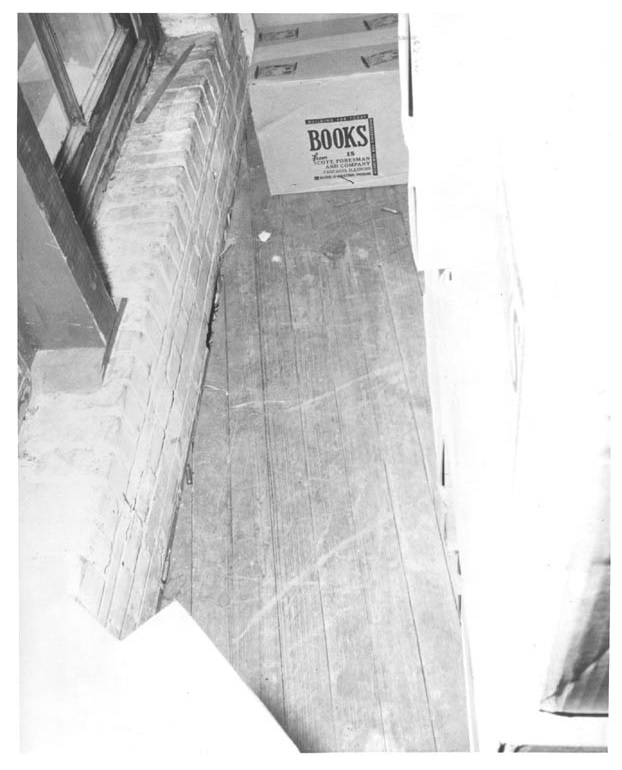
    Commission Conclusion – “The three used cartridge cases found near the window on the sixth floor at the southeast corner of the building were fired from the same rifle which fired the above-described bullet and fragments, to the exclusion of all other weapons.”

    The case assembled against Oswald, stands primarily on the shaky pillars of circumstantial evidence. Paramount among this evidence are three shell casings, designated as CE543, 544, and 545. These were purportedly found on the sixth floor in the aftermath of the assassination. However, the procurement of this evidence revels a labyrinth of inconsistencies concerning the management and preservation of this so-called evidence.

    Scrutinising the chain of custody for these exhibits reveals a disconcerting pattern of discrepancies, starting from their alleged discovery. A glaring contradiction is discernible between the timing of the shell casings discovery as per the Warren Commission’s Report, and the account provided by Deputy Sheriff Luke Mooney. The Commission’s suggests a twelve-minute lapse between the discovery of the supposed “Sniper’s Nest” and the spent cartridges, a fact that starkly contrasts with Mooney’s first-hand testimony.

    Deepening the sense of impropriety are the baffling irregularities in the treatment of the shell casings. As per Lt. J. C. Day’s testimony, the shell casings were not duly marked at the crime scene, a blatant violation of the standard protocol essential for preserving the sanctity of evidence. Furthermore, the casings were housed in an unsealed envelope, opening Pandora’s box of potential contamination threats and casting a dark cloud over the integrity of the evidence. The uncertainty is further amplified when a cornerstone piece of evidence, Commission Exhibit 543, falls prey to misidentification, consequently pushing the case’s credibility into further tumult.

    David Belin. “All right. Let me first hand you what has been marked as ‘Commission Exhibit,’ part of ‘Commission Exhibit 543, 544,’ and ask you to state if you know what that is.”

    Lt Carl Day. “This is the envelope the shells were placed in.”

    David Belin. “How many shells were placed in that envelope?”

    Lt Carl Day. “Three.”

    David Belin. “It says here that, it is written on here, “Two of the three spent hulls under window on sixth floor.”

    Lt Carl Day. “Yes, sir.”

    David Belin. “Did you put all three there?”

    Lt Carl Day. “Three were in there when they were turned over to Detective Sims at that time. The only writing on it was “Lieut. J. C. Day.” Down here at the bottom.”

    David Belin. “I see.”

    Lt Carl Day. “Dallas Police Department and the date.”

    David Belin. “In other words, you didn’t put the writing in that says Two of the three spent hulls.”

    Lt Carl Day. “Not then. About 10 o’clock in the evening this envelope came back to me with two hulls in it. I say it came to me, it was in a group of stuff, a group of evidence, we were getting ready to release to the FBI. I don’t know who brought them back. Vince Drain, FBI, was present with the stuff, the first I noticed it. At that time there were two hulls inside. I was advised the homicide division was retaining the third for their use. At that time, I marked the two hulls inside of this, still inside this envelope.”

    David Belin. “That envelope, which is a part of Commission Exhibits 543 and 544?”

    Lt Carl Day. “Yes, sir; I put the additional marking on at that time.”

    David Belin. “I see.”

    Lt Carl Day. “You will notice there is a little difference in the ink writing.”

    David Belin. “But all of the writing there is yours?”

    Lt Carl Day. “Yes, sir.”

    David Belin. “Now, at what time did you put any initials, if you did put any such initials, on the hull itself?”

    Lt Carl Day. “At about 10 o’clock when I noticed it back in the identification bureau in this envelope.”

    David Belin. “Had the envelope been opened yet or not?”

    Lt Carl Day. “Yes, sir; it had been opened.”

    David Belin. “Had the shells been out of your possession then?”

    Lt Carl Day. “Mr. Sims had the shells from the time they were moved from the building, or he took them from me at that time, and the shells I did not see again until around 10 o’clock.”

    David Belin. “Who gave them to you at 10 o’clock?”

    Lt Carl Day. “They were in this group of evidence being collected to turn over to the FBI. I don’t know who brought them back.”

    David Belin. “Was the envelope sealed?”

    Lt Carl Day. “No, sir.”

    David Belin. “Had it been sealed when you gave it to Mr. Sims?”

    Lt Carl Day. “No, sir; no.”

    David Belin. “Your testimony now is that you did not mark any of the hulls at the scene?”

    Lt Carl Day. “Those three; no, sir.” (Volume IV, p. 253-255)


    The following affidavit was executed by J. W. Fritz on June 9, 1964.

    The Spent Rifle Hulls

    Three spent rifle hulls were found under the window in the southeast corner of the 6th floor of the Texas School Book Depository Building, Dallas, Texas, on the afternoon of November 22, 1963. When the officers called me to this window, I asked them not to move the shells nor touch them until Lt. Day of the Dallas Police Department could make pictures of the hulls showing where they fell after being ejected from the rifle. After the pictures were made, Detective R. M. Sims of the Homicide Bureau, who was assisting in the search of building, brought the three empty hulls to my office.” (Volume VII; p. 403)

    However, the narrative provided by Fritz sharply diverges from the recollection of Tom Alyea, a cameraman for WFFA TV. Alyea provides a contrasting perspective on the actions taken by the Dallas Police on the sixth floor following the assassination.

    Tom Alyea. “After filming the casings with my wide-angle lens, from a height of 4 and half ft., I asked Captain Fritz, who was standing at my side, if I could go behind the barricade and get a close-up shot of the casings.

    He told me that it would be better if I got my shots from outside the barricade. He then rounded the pile of boxes and entered the enclosure. This was the first time anybody walked between the barricade and the windows. Fritz then walked to the casings, picked them up and held them in his hand over the top of the barricade for me to get a close-up shot of the evidence. I filmed between 3–4 seconds of a close-up shot of the shell casings in Captain Fritz’s hand. Fritz did not return them to the floor, and he did not have them in his hand when he was examining the shooting support boxes. I stopped filming and thanked him. I have been asked many times if I thought it was peculiar that the Captain of Homicide picked up evidence with his hands. Actually, that was the first thought that came to me when he did it, but I rationalized that he was the homicide expert, and no prints could be taken from spent shell casings. Over thirty minutes later, after the rifle was discovered and the crime lab arrived, Capt. Fritz reached into his pocket and handed the casings to Det. Studebaker to include in the photographs he would take of the sniper’s nest crime scene. We stayed at the rifle site to watch Lt. Day dust the rifle. You have seen my footage of this. Studebaker never saw the original placement of the casings, so he tossed them on the floor and photographed them. Therefore, any photograph of shell casings taken after this is staged and not correct.”  Follow this link.

    Tom Alyea further claimed, in correspondence with Tom Samoluk of the ARRB, that Day and Studebaker committed perjury in testifying to the Warren Commission.

    “Regarding the perjured testimony given to the Warren Commission Investigators by members of the Dallas Police Department. I understand there were several cases, but the one I checked for myself by reading the printed testimony in the Warren Report, involves Lt. Day and Det. Studebaker. These are the two crime lab men who dusted the evidence on the 6th floor. Their testimony is false from beginning to end. I suggest their reason was to protect their boss, Captain Fritz, and perhaps their own pensions.”  Follow this link.

    Appraisal Of The Known Facts. The handling, preservation, and chain of custody of Commission Exhibits 543, 544, and 545, are encrusted within a myriad of inconsistencies and procedural aberrations. Such discrepancies not only lay bare the potential for contamination, misidentification, and improper handling of evidence but it also invites profound scepticism about the evidence’s trustworthiness, and by extension, the solidity of the case against Oswald. Remember in all criminal proceedings the onus is on the prosecution to present undeniable proof of guilt and like in all the evidentrary aspects of the case against Oswald, this burden is seriously flawed.

    52. No Package In Oswald’s Hands.

    Commission Conclusion: “Oswald carried his rifle into the Depository Building on the morning of November 22, 1963.” (WCR; p. 19)

    Oswald was seen entering the Texas School Book Depository on the morning of 11/22/63 by “one employee, Jack Dougherty, [who] believed that he saw Oswald coming to work but does not remember “that Oswald had anything in his hands as he entered the door” (WCR; p. 133).

    Dougherty’s testimony in the record.

    Joseph Ball. “Now, is that a very definite impression that you saw him that morning when he came to work?”

    Jack Dougherty. “Well, oh–it’s like this–I’ll try to explain it to you this way— you see, I was sitting on the wrapping table and when he came in the door, I just caught him out of the corner of my eye—that’s the reason why I said it that way.”

    Joseph Ball. “Did he come in with anybody?”

    Jack Dougherty. “No.” Joseph Ball. “He was alone?”

    Jack Dougherty. “Yes; he was alone.”

    Joseph Ball. “Do you recall him having anything in his hand?”

    Jack Dougherty. “Well, I didn’t see anything, if he did.”

    Joseph Ball. “Did you pay enough attention to him, you think, that you would remember whether he did or didn’t?”

    Jack Dougherty. “Well, I believe I can—yes, sir—I’ll put it this way; I didn’t see anything in his hands at the time.”

    Joseph Ball. “In other words, your memory is definite on that is it?”

    Jack Dougherty. “Yes, sir.” (Volume VI; p. 376/377)

    This discrepancy alone would have garnered significant consequences for Wade’s case against Oswald. If Oswald did not carry a rifle into the building on 11/22/63 as Dougherty’s testimony suggests, then a critical piece of the prosecution’s case is seriously undermined. This alone might be enough to introduce reasonable doubt into the case against Oswald.


    53. The Phantom Paper Sack.

    “If there is no gun-sack, there is no gun”. Jim DiEugenio.

    Commission Conclusion. “The improvised paper bag [CE142] in which Oswald brought the rifle to the Depository was found close by the window from which the shots were fired.” (WCR; p.19) (Reclaiming Parkland; p. 187)

    Evidence In The Record Which Refutes The Commission Conclusion.

    1. Primarily, there exists no photographic evidence validating the presence of CE142 on the sixth-floor post-assassination. This lack of visual evidence casts significant doubt upon the very existence of CE142. According to the Warren Report, Captain Fritz had expressly commanded that no object should be disturbed or relocated until law enforcement forensics could meticulously record the crime scene using photographic and fingerprint methods. If these directives were adhered to as stated, it raises a compelling question: Why is there an absence of photographic evidence concerning CE142. (WCR; p. 79)

    2. Commission Conclusion. “[Oswald] left the bag alongside the window from which the shots were fired”. (WCR; p.137)

    CE1302 “Approximate Location Of Wrapping Paper Bag. (WCR; p. 139)

    The absence of a photograph which confirms the presence of CE142 around the crime scene is conspicuously evident. Instead, the Commission resorted to publishing a simulated image within their volumes, labelled as CE1302. This image features a dotted line representing the purported location of the paper sack. Detective Robert Studebaker testified that the FBI requested him to superimpose this line onto a crime scene photograph to indicate an approximate location where the bag was allegedly discovered. The veracity of this image is thus open to severe doubt.

    Given that it’s a reconstructed portrayal rather than an original photograph of the crime scene featuring CE142, its evidentiary weight is non-existent.

    This dialogue between counsel Joseph Ball and Detective Studebaker illuminates this questionable practice:

    Joseph Ball. “Do you recognize the diagram?”

    Robert Studebaker. “Yes, sir.”

    Joseph Ball. “Did you draw the diagram?”

    Robert Studebaker. “I drew a diagram in there for the FBI. Someone from the FBI — I can’t recall his name at the moment — called me down. He wanted an approximate location of where the paper was found.” (Volume VII; p. 144)

    This admission uncovers the lack of tangible evidence and reliance on fabricated illustrations, further undermining faith in the Commission’s conclusions. It provokes questions regarding the investigation process’s transparency and authenticity, casting serious doubt on the Commissions case against Oswald. The lack of an authentic photograph, surreptitiously replaced by a manipulated image, signals serious flaws in the handling of this pivotal evidence no doubt further eroding the confidence of the prosecution’s case against Lee Oswald.


    Commission Conclusion.” [Oswald] Took paper and tape from the wrapping bench of the Depository and fashioned a bag large enough to carry the dissembled rifle. (WCR; p.137)

    3. There is no eyewitness testimony in the record which can collaborate the commissions conclusions regarding the origin of CE142. Troy West’s testimony is pivotal in this context. As an employee who dispensed the packing materials—paper, tape, and string—he maintained that he remained at his first-floor workstation throughout the days leading up to the Presidents assassination and even during the motorcade. West, who recognized Oswald, firmly stated he had never seen Oswald attempting to construct a bag, prior to or on the day of the assassination.

    When questioned by staff lawyer David Belin about whether Oswald had ever been seen around the wrapping materials or machinery, West responded, “No, sir; I never noticed him being around.” This testimony was underscored by the late Ian Griggs, a British police investigator. Griggs pointed out two intriguing aspects: firstly, West expounded on the impossibility of removing tape from the dispenser, which was incorporated into a machine that moistened the tape as it was dispensed. Secondly, the FBI later claimed that the tape on the sack bore the specific markings of this machinery. (No Case to Answer, p. 204)

    During West’s testimony, Belin asked several pointed questions: “Did Lee Harvey Oswald ever help you wrap mail?” To which West responded, “No, sir; he never did.” Belin pressed further, “Do you know whether or not he ever borrowed or used any wrapping paper for himself?” West replied simply, “No, sir. I don’t.” (Volume VI; p. 356–363)

    As Belin’s questions continued to draw a blank, this only reinforced the contention that Oswald had no interaction with the wrapping materials or machinery. This contradicts the Commission’s assertion that Oswald had manufactured the bag using the Depository’s materials. Furthermore, the Commission’s conclusion doesn’t address this illogical inconsistency: why would Oswald create a paper bag that could only accommodate a disassembled rifle? If Oswald indeed crafted this bag from scratch, any comprehensive investigation would question why he didn’t make it sizeable enough to transport the rifle in its fully assembled state?

    4. Commission Conclusion. “The presence of the bag in this corner is cogent evidence that it was used as the container for the rifle. (WCR; p. 135.)
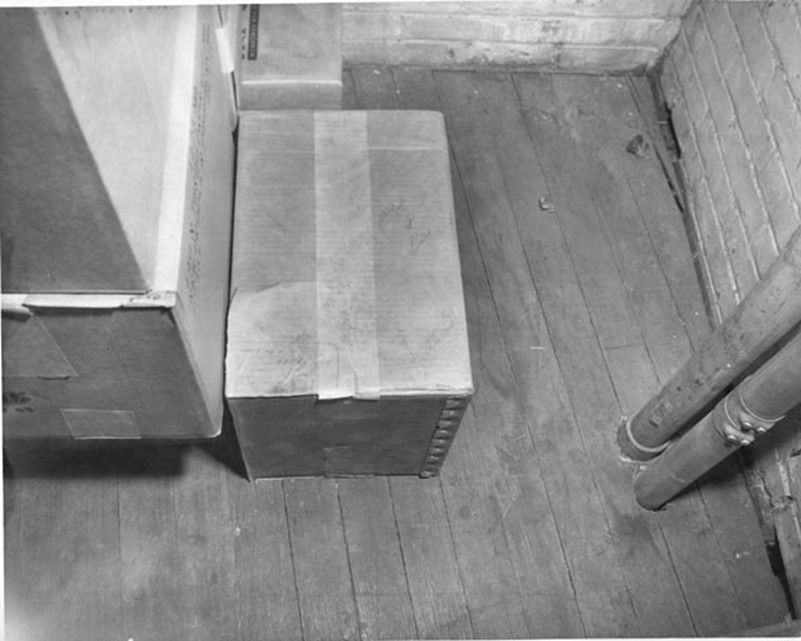
    The Commission’s conclusion that the bag was used as a container for the rifle forms a crucial part of their case against Lee Oswald. However, this assumption is called into question by expert testimony that is present in the record.

    Special Agent James Cadigan, who conducted an examination of the bag for the FBI, presented starkly contrasting findings. According to Cadigan’s testimony,

    Melvin Eisenberg – “Mr. Cadigan, did you notice when you looked at the bag whether there were—that is the bag found on the sixth floor, Exhibit 142–whether it had any bulges or unusual creases?”

    James Cadigan – “I was also requested at that time to examine the bag to determine if there were any significant markings or scratches or abrasions or anything by which it could be associated with the rifle, Commission Exhibit 139 [Mannlicher-Carcano], that is, could I find any markings that I could tie to that rifle?”

    Melvin Eisenberg – “Yes.”

    James Cadigan – “And I couldn’t find any such markings.” (Volume IV; p. 97)

    This testimony from a qualified expert undermines the Commission’s claim that the bag can be linked definitively to the rifle.

    Considering these testimonial inconsistencies, it becomes evident that the Commission’s assertion relies heavily on the mere presence of the bag, without substantiating physical evidence to support its intended use. 5. In a correspondence this researcher had with Buell Wesley Frazier in April of 2021, I asked Mr. Frazier:

    Johnny Cairns. ”On 11/21/63 prior to, during or after you gave Lee Oswald a ride back to Irving, did you observe at any time Lee with a brown paper bag? Or materials to construct a brown paper bag?”

    Buell Wesley Frazier. “No I did not.” (Personal Correspondence)


    6. Inconsistencies in the witness testimony regarding the bag add another layer of uncertainty. When witness accounts vary or contradict one another, it becomes challenging to establish a clear and coherent narrative supporting the bag’s significance as evidence. (No Case To Answer, p.173-214)


    7. Oswald’s partial prints.

    Commission Conclusion. “Oswald’s fingerprint and palmprint found on bag “(WCR; p. 135)

    The inception of CE142 and Oswald’s ‘handling ‘of it raise further troubling questions. It is important to note that the partial prints on the bag, even if genuine, do not provide conclusive evidence that Oswald constructed the bag or carried it on the day of the assassination. These prints alone are insufficient to establish Oswald’s guilt beyond a reasonable doubt.

    Furthermore, the evidence presented in my previous points cast serious aspersions on the CE142 and raises serious doubts about its relevance to the assassination of President Kennedy. This further undermines the significance of the partial prints found on the bag.

    In light of these considerations, it is essential to exercise caution when drawing conclusions solely based on the presence of partial prints on CE142. The partial prints alone do not provide definitive evidence of Oswald’s involvement in the construction or use of the bag on the day of the assassination.


    8. The Greasy-less Prints? “The firing pin and spring of this weapon are well oiled. No oil has been applied to this weapon by the FBI. Numerous shots have been fired with the weapon in its present well-oiled condition as shown by the presence of residues on the interior surfaces of the bolt and on the firing pin.” (Volume XXVI; p. 455.)

    The Warren Commission’s assertion of Oswald’s guilt necessitates the assumption that he engaged in the assembly of the well-oiled Carcano. However, that assumption raises serious doubts with regards to the evidence in this case. For example, the complete lack of any oil or grease residue on Oswald’s hands, the lack of visible oil transfer, from the Carcano, onto the surrounding objects within the ‘snipers nest’, the condition of the wooden floor, devoid of any oil stains and the inexplicable absence of Oswald’s greasy, oily fingerprints make the Commissions assertions highly improbable. What is the likelihood that Oswald in handling the lubricated components of the Carcano, neglected to leave behind any greasy, oily fingerprints at the crime scene?

    The extensive manipulation and shifting through of the rifles various components, within a confined space further intensity’s the scepticism surrounding the absence of any oil transfer from the Carcano to Oswald. Assembling the Carcano in such close quarters would have undoubtedly made it extremely difficult for Oswald to handle it without unintentionally coming into contact with its well-oiled parts.

    Also, the absence of any oil on the wooden floor in the vicinity of Oswald’s alleged assembly and handling of the Carcano is a significant conundrum. With the rifle, well-oiled, it is reasonable to assume that some oil would have dripped or splattered onto the wooden floor during the assembly. Especially, when it is assumed, Oswald emptied the contents of the ‘paper sack’ onto the floor to assemble the Carcano. The absence of visible oil stains or residue on the wooden floor adds another layer of doubt regarding the purported sequence of events. Wooden floors have a porous nature that would likely absorb or retain oil, making it difficult for oil stains to go unnoticed.

    Had Oswald been given the opportunity to stand trial, it would have been a formidable task for Henry Wade, to prove beyond a reasonable doubt that he had assembled the Carcano on November 22, 1963. The rational deductions outlined above cast reasonable doubt on the case against Oswald.


    54. Accessories After The Fact. The Palm Print Evidence.

    “Few people would be ready to convict a man of murder on the basis of such incomplete investigation or such a dishonest presentation of ‘evidence’. Those who would not send a living man to his death on such a basis must ask themselves whether Oswald should be assigned to history stigmatized as an assassin on grounds that would be inadequate if he were still alive.” Sylvia Meagher.

    Commission Conclusion. “Oswald’s palmprint was on the rifle in a position which shows he handled it while it was disassembled.” (WCR; p. 129.) (Accessories After The Fact; p. 120.)

    1. There are no existing photographs taken at the time of the investigation that clearly show the presence of the palm print on the Mannlicher-Carcano rifle, which is a crucial piece of alleged evidence tying Oswald to the weapon.”

    The absence of contemporaneous photographs cannot be understated. These photos would have served as a critical piece of forensic evidence, capturing the initial state of the palm print on the weapon. Their absence raises questions about the authenticity and handling of this key evidence.

    2. “The print on the gun still remained on there… there were traces of ridges still on the gun barrel.” (J.C. Day, Dallas Police)

    Contrary to Day’s account, FBI Fingerprint Expert Sebastian Latona testified that he couldn’t develop any prints on the weapon. “I was not successful in developing any prints at all on the weapon.” (Sebastian Letona, FBI, Volume. IV, p. 23)

    Paul Stombaugh of the FBI observed that the gun had been dusted for latent fingerprints prior to his receiving it, with powder visible all over the gun.

    “I noticed immediately upon receiving the gun that this gun had been dusted for latent fingerprints prior to my receiving it. Latent fingerprints powder was all over the gun.” (Accessories After The Fact; p.121)

    Sylvia Meagher, in her book, questioned the discrepancy between the survival of the dusting powder during the gun’s transit from Dallas to Washington, and the complete disappearance of traces of powder and dry ridges claimed to be present around the palm print on the gun barrel.

    “How could powder survive on the gun from Dallas to Washington, but every single trace of powder and the dry ridges which were present around the palm print on the gun barrel under the stock vanish?” (Accessories After The Fact; p.122)


    3. “Lt. DAY stated he had no assistance when working with the prints on the rifle, and he and he alone did the examination and the lifting of the palm print from the underside of the barrel of the rifle which had been found on the sixth floor of the Texas School Book Depository on November 22, 1963.” (Volume XXV; p. 832.)


    4. Even the Commission harboured significant doubts about the belated discovery of the palm print on the rifle. A memorandum from the FBI, dated August 26, 1964, addressing this uncertainty, states:

    “There was a serious question in the minds of the Commission as to whether or not the palm impression which had been obtained by the Dallas Police Department is a legitimate latent palm impression removed from the rifle barrel or whether it was obtained from some other source and for this reason this matter needs to be resolved.”   Follow this link.


    “Go No Further With The Processing”

    Partial prints discovered on the exterior of the rifle were photographed by Lt Day. However, the FBI determined that these prints held no evidentiary value. According to Day, he captured these photographs at approximately 8 p.m. on November 22, 1963.

    Day testified that he neglected to photograph ‘Oswalds’ latent palm print due to explicit instructions he received from Dallas Police Chief Jesse Curry, who ordered him to cease further processing the Carcano. However, during an interview with the FBI, Day stated that he received these orders from Curry shortly before midnight. Therefore, based on his own admission, Day had nearly four hours between taking the photographs of the external prints and receiving the orders from Curry.

    Given the potential significance of the latent print as critical evidence in Oswald’s trial, it raises the question of why Day chose not to photograph it. It seems likely that he was aware of its importance, making his decision all the more perplexing.

    (Accessories After The Fact; p.122) Follow this link.


    5. On November 22, 1963, Day reportedly informed Chief Curry and Captain Fritz about the discovery of a palm print on the rifle believed to have been used in the assassination of President Kennedy. Day tentatively identified the palm print as belonging to the primary suspect, Lee Oswald. (Meagher, p. 124)

    On November 23rd, when Fritz was asked about the presence of Oswald’s prints on the rifle, he responded with a denial, “No sir”. Similarly, Curry also did not reveal publicly this significant discovery. It was not until November 24th, after Oswald was slain that DA Henry Wade, nonchalantly announced the existence of a palm print found on the rifle.

    Reporter. “What other evidence chief?”

    Henry Wade. “Let’s see, uh. his fingerprints were found on the gun. I said that on the.”

    Reporter. “Which gun?”

    Henry Wade. “The rifle.”

    Reporter. “The rifle fingerprints were his? Oswald’s?”

    Henry Wade. “Yes. A palm print rather than a fingerprint.”

    Reporter. “Wait the palm print… sir the palm print was on the gun?” (the reporter exhibits a completely surprised tone)

    Henry Wade. “Yes”

    Reporter. “Where on the gun? Where on the gun?”

    Henry Wade. “Under the uh… on part of the metal… under the gun.” (Henry Wade, 11/24/63 Press Conference) Follow this link.


    This ‘evidence’ was only disclosed after the Carcano had been returned to Dallas and after Oswald’s death. Considering the gravity of this information, which implicated the main suspect in the assassination, it is perplexing that Fritz, Curry, nor Wade failed to disclose the presence of Oswald’s palm print to the gathered media and television reporters whilst Oswald was alive.


    The State Of The Evidence.

    The palm print evidence cited against Lee Oswald is fraught with significant discrepancies, which seriously undermine its credibility and calls into question the legitimacy of the case against him. Crucially, there are major concerns surrounding the lack of proper chain of custody for this key piece of evidence, thereby casting a shadow over its admissibility and validity in the proceedings.

    A litany of issues plagues this particular evidence. These include the conspicuous absence of crucial photographs, contradictory testimonies that present more questions than answers, and a disturbing lack of corroborative details. Further compounding these problems is the issue of delayed disclosure, which only fuels suspicions and raises more doubts about the way this evidence was handled. In my opinion this evidence reeks of a frame up.


    55. Day’s Admission Of Perjury?

    When requested by the FBI, LT Day specifically declined to sign a sworn affidavit that he had in fact lifted Oswald’s palm print from the barrel of the rifle on the day of the assassination. On that basis alone the print would be inadmissible as evidence in a court of law. (Hear No Evil ; p. 77-78.)


    56. Lt Day Vs FBI Agent Drain.

    Vincent Drain. “I just don’t believe there was ever a print.” Drain noted that there was increasing pressure on the Dallas police to build evidence in the case. Asked to explain what might have happened, Agent Drain said, “All I can figure is that it (Oswald’s print) was some sort of cushion because they were getting a lot of heat by Sunday night. You could take the print off Oswald’s card and put it on the rifle. Something like this happened.” (Reasonable Doubt; p. 109)


    57. Agents Descend On Millers Funeral Home.

    Mortician Paul Groody, who was in charge at Millers Funeral Home, was busy preparing Oswald’s remains for burial when agents arrived in the early hours of 11/25/63 to fingerprint the deceased Oswald.

    Groody stated:” I had gotten to the funeral home with his body something in the neighbourhood of 11 o’clock at night and it is a several hour procedure to prepare the remains and after this time some-place in the early early morning agents came. Now I say agents because I am not familiar at this moment with whether they were Secret Service or FBI or what they were, but agents did come and when they did come, they fingerprinted and the only reason we knew that they did, they were carrying a satchel and the equipment and ask us if they might have the preparation room to themselves. And after it was all over, we found ink on Lee Harvey’s hands showing that they had fingerprinted him, and palm printed him. We had to take that ink back off in order to prepare him for burial and to eliminate that ink” Skip to 3:00:40 Follow this link.


    58. Commission Exhibit 399.

    “The truth has no defense against a fool determined to believe a lie.” Mark Twain.

    Commission Conclusion. “A nearly whole bullet was found on Governor Connolly’s stretcher” (WCR; p. 557.)

    What Is Chain Of Custody? Chain of custody is a crucial concept in legal proceedings that refers to the process of maintaining and documenting the handling of evidence. This starts at the moment the evidence is collected at the crime scene and continues through to its presentation in court. The purpose of this process is to protect the evidence from tampering, contamination, or mishandling, and to provide a documented history of its management and control.

    With this in mind, how would Henry Wade have legitimised CE399 in a court of law? It would have been imperative for Wade to establish a robust chain of custody for CE 399 proving its legitimacy. This would involve providing documented evidence of every individual who handled the bullet, from its alleged discovery at Parkland Hospital to its transportation and subsequent analysis at the FBI crime lab in Washington, and ultimately to its presentation in court.

    In essence, Wade would need to convincingly demonstrate to a jury that CE 399 was the same bullet discovered at Parkland, that it was handled and stored properly at all times, and that it is indeed the bullet that caused the non-fatal wounds to President Kennedy and Governor Connally, as per the single-bullet theory. Establishing a solid chain of custody would be paramount to achieving this. Follow this link.


    Darrell C. Tomlinson. First Link In The Custody Chain.

    Darrell C. Tomlinson, senior engineer, Parkland Hospital: Discovered bullet on a stretcher in a corridor of the hospital emergency area between 1:00 and 1:50 p.m, November 22, 1963. Called O. P. Wright and pointed out bullet. Tomlinson testifies but is asked very little about his finding of the bullet; and nothing about its appearance or his handling and disposition of it. Unlike most other hospital personnel, no written report covering his activities appears in evidence.

    According to CE2011, a document from the FBI located within the Warren Commission Volumes, “Darrell C. Tomlinson was shown Exhibit C1 (CE 399), a rifle slug, by Special Agent Bardwell D. Odum, Federal Bureau of Investigation. Tomlinson stated it appears to be the same one he found on a hospital carriage at Parkland Hospital on November 22, 1963, but he cannot positively identify the bullet as the one he found and showed to O.P. Wright.” (Volume XXIV; p. 412)

    During his Commission testimony Tomlinson is not presented with CE399 and asked to identify it as the bullet he discovered on 11/22/63.


    O.P. Wright. Second Link In The Custody Chain.

    O.P. Wright, Personnel Officer, Parkland Hospital: Received bullet from Tomlinson; or removed it from stretcher after it was pointed out by Tomlinson 1:00-1:50p.m., November 22. Gave it to Richard E. Johnsen shortly thereafter. (Wright not called to testify. No direct statement from him in evidence referring to bullet. He failed to mention it in lengthy report, to hospital administrator, concerning his activities November 22- November 25 (1963), although detailing his handling of President Kennedy’s wristwatch.

    According to CE2011, “O.P. Wright, advised Special Agent Bardwell D. Odum that Exhibit C1 (CE 399), a rifle slug, shown to him at the time of the interview, looks like the slug found at Parkland Hospital on November 22, 1963. He advised he could not positively identify (CE 399) as being the same bullet which was found on November 22, 1963.”

    However, in November of 1966, Josiah Thompson, author of “Six Seconds in Dallas”, undertook a pivotal investigation at Parkland, where he met with Darrell C. Tomlinson and O.P. Wright. These two figures were integral to his objective: to meticulously reconstruct the circumstances surrounding Tomlinson’s discovery of the so-called “stretcher bullet”.

    Guided by Tomlinson and Wright, Thompson endeavoured to re-enact the precise sequence of events that led to the discovery of ‘CE399 at Parkland’. To facilitate this re-enactment, Wright provided Thompson with a prop .30 calibre projectile as a stand-in for ‘399’. During their interaction, Thompson asked Wright to describe the bullet he had obtained from Tomlinson on November 22, 1963. Wright described the projectile as having a “pointed tip” and suggested that it looked similar to “the one you got there in your hand”.

    This characterisation from Wright starkly contrasts the appearance of CE 399. When presented with a photograph of CE 399, along with CE 572 (bullets similar to those from Oswald’s alleged rifle) and CE 606 (bullets similar to those from Oswald’s alleged revolver), Wright rejected them all. None of them resembled the bullet Tomlinson had discovered on a stretcher that day.

    Upon conclusion of their meeting, Thompson recounted a moment that further cast doubt on 399. As he prepared to leave Parkland, Wright approached him with the statement “Say, that single bullet photo you kept showing me… was that the one that was supposed to have been found here?” To which Thompson affirmed, “Yes.” Wright’s response, a simple “Uh…huh,” was delivered with an expressionless face before he turned and returned to his office.

    Thompson interpreted this interaction as a tacit rejection of CE 399 as the bullet Tomlinson handed over to Wright that day.

    Adding to this ambiguity, a declassified document “dated June 20, 1964, from Gordon Shankland, SAC Dallas, to FBI Director J. Edgar Hoover, confirms: “Neither Parkland’s DARRELL C. TOMLINSON nor O. P. WRIGHT can identify this bullet.” which of course contradicts the information in CE2011. (The Bastard Bullet; p.38. Volume XXIV; p 412.Last Seconds In Dallas, Page 24/26).  Follow this link.

    The inability of both Wright and Tomlinson to definitively identify CE 399 as the bullet they handled that day casts serious doubt over its credibility as evidence.


    Richard E Johnsen. Special Agent, U.S Secret Service. Third Link In The Custody Chain.

    The ambiguity surrounding CE 399 continued within the Secret Service’s custody chain. Agent Johnsen received bullet from O.P. Wright at Parkland shortly before 2:00p.m., November 22,1963. Transmitted to James Rowley same day. “On June 24, 1964, Special Agent Richard E. Johnsen, United States Secret Service, Washington, D.C., was shown Exhibit C1 (CE 399), a rifle bullet, by Special Agent Elmer Lee Todd, Federal Bureau of Investigation. Johnson advised he could not identify this bullet as the one he obtained from O. P. Wright, Parkland Hospital, Dallas Texas, and gave to James Rowley, Chief, United States Secret Service, Washington D.C., on November 22, 1963.” Agent Johnsen was not called to testify. (Commission Exhibit 2011, Volume XXIV, p. 412, The Bastard Bullet; p.38)


    James. J. Rowley. Chief, U.S. Secret Service. Fourth Link In The Custody Chain.

    “Received bullet from Johnsen on November 22, 1963. Gave it to FBI Special Agent Todd same day. Rowley testifies July 7th,1964, but is not asked anything about the bullet. No written statement from him concerning his possession of it. On June 24, 1964, James Rowley, Chief, United States Secret Service, Washington, D.C., was shown exhibit C1(CE 399), a rifle bullet, by Special Agent Elmer Lee Todd. Rowley advised he could not identify this bullet as the one he had received from Special Agent Richard E. Johnson and gave to Special Agent Todd on November 22, 1963”. (The Bastard Bullet; p 38. Commission Exhibit 2011, Volume XXIV, p. 412)

    Elmer Lee Todd. Special Agent. FBI. Fifth Link In The Custody Chain.

    Received bullet from Rowley in Washington, D.C., November 221963. Upon receipt, Todd marked bullet with initials at FBI Investigation Laboratory. Gave it to Robert A. Frazier same day. In 1964, Special Agent Elmer Lee Todd, identified C1 (CE 399), a rifle bullet, as the same one he had received from James Rowley, Chief of the United States Secret Service, on November 22, 1963. This identification was based on his own marked initials on the bullet upon its receipt at the FBI Laboratory.”


    Robert Frazier. Firearms Identification Expert, FBI. Sixth Link In Custody Chain.

    “Received bullet from Todd in FBI laboratory, Washington, D.C., November 22, 1963. Frazier put his initials on it.” However according to Robert Frazier’s detailed notes, 399 was transferred into his custody by Special Agent Elmer Lee Todd at 7:30 p.m. on November 22, 1963. However, an examination of the envelope filled out by Agent Todd, documenting the transfer from Rowley, reveals that he did not receive the bullet from Rowley until 8:50 p.m. on 11/22/63. This clear discrepancy of 1:20:00 calls into question the authenticity and validity of the bullet’s chain of custody. The chronology here is of paramount importance.

    If Frazier’s notes are accurate, how could Todd have passed the bullet onto him at 7:30 p.m. when he documented that he only received it from Chief Rowley at 8:50 p.m.? (The Bastard Bullet; p. 38. JFK Lancer)


    John F. Gallagher, spectrographer, Special Agent, FBI.

    “Made spectrographic examination of bullet, (date not given, but apparently prior to March 31, 1966) No written statement from Gallagher appears in evidence. He was not called to testify until September 15, 1964, less than two weeks prior to publication of the Warren Commission Report. His entire seven-page testimony is taken up with a discussion of neutron activation analysis, as it pertains to determination of whether or not an individual has fired a weapon. (Practice has been exposed as junk science) Counsel Norman Redlich failed to ask Gallagher a single question regarding his spectrographic examination of bullet 399.” (The Bastard Bullet;p. 39/39) Follow this linkand  and this link.

    Melvin A. Eisenberg, assistant counsel, Warren Commission: “Received bullet from FBI in Washington, D.C., March 24, 1964. Transmitted to Joseph D. Nichol same day”. (The Bastard Bullet; p. 39)

    Joseph D. Nichol, Superintendent, Bureau Of Criminal Identification, State Of Illinois. Received bullet 399 from Eisenberg in latter’s office, together with other bullets and fragments, Washington, D.C., March 24th, 1964. Made ballistics comparisons with other bullets and fragments. Date not given for return of 399 to FBI custody. Nicol testifies April 1, 1964. Counsel Eisenberg failed to ask his opinion as to whether or not 399 could have caused Governor Connally’s wounds. (The Bastard Bullet; p. 40)

    Bardwell D. Odum, Special Agent, FBI. On June 24, 1964, he is alleged to have shown bullet 399 to Tomlinson and Wright. Odum not called to testify. No direct written statement from him appears in evidence covering his June 12 interviews with Tomlinson and Wright. His written report on unrelated matter, date July 10, 1964, is presented in evidence.

    In 2002 Gary Aguilar and Josiah Thompson approached retired FBI Special Agent Bardwell Odum to review some crucial documents, including CE 2011. Odum expressed surprise and denial over his involvement with CE 399. “I didn’t show it to anybody at Parkland. I didn’t even have any bullet. I don’t know where you got that from, but it is wrong. Mr. Odum remarked that he doubted he would have ever forgotten investigating so important a piece of evidence. But even if he had done the work, and later forgotten about it, he said he would certainly have turned in a “302” report covering something that important. There is no 302 report from Odum in the record. (The Bastard Bullet; p. 40)  Follow this link.

    Elmer Lee Todd. Special Agent, FBI. On June 24, 1964, he showed bullet 399 to Johnsen and Rowley. Todd not called to testify. No direct written statement from him appears in evidence concerning his June 24 interviews with Johnsen and Rowley. (The Bastard Bullet; p. 41)


    Which Stretcher? Connelly or Fuller.

    Commission Conclusion. “Although Tomlinson was not certain whether the bullet came from Connally’s stretcher or the adjacent one, the Commission has concluded that the bullet came from the Governor’s stretcher.” (WCR; p. 81)


    Evidence In The Record Which Refutes Commission Conclusion.

    During his testimony to the Warren Commission, Tomlinson gave a description of the stretcher that he took off the elevator at Parkland.
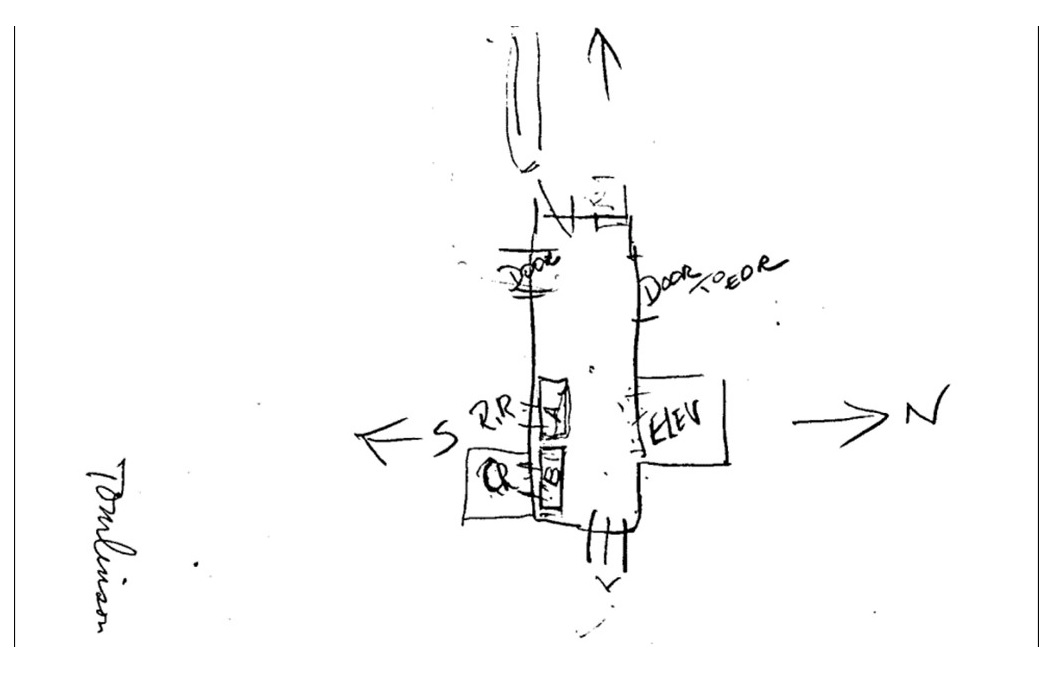
    Arlen Specter. “Was there anything on the elevator at that time?”

    Darrell Tomlinson. “There was one stretcher.” Arlen Specter. “And describe the appearance of that stretcher, if you will, please.” Darrell Tomlinson. “I believe that stretcher had sheets on it and had a white covering on the pad.” (Volume VI; p. 129)


    Tomlinson’s description of the stretcher is collaborated by R. J. Jimison, an orderly at Parkland. Who testified to the Warren Commission that:

    R. J. Jimison. “I came along and pushed it [ Connally’s stretcher] onto the elevator myself and loaded it on and pushed the door closed.

    Arlen Specter. “What was on the stretcher at that time?”

    R. J. Jimison. “I noticed nothing more than a little flat mattress and two sheets as usual.” (Volume VI; p. 126)


    Tomlinson then testifies to his initial discovery of the bullet and which stretcher he believed the bullet was found on.

    Darrell Tomlinson. I pushed it back up against the wall.

    Arlen Specter. What, if anything, happened then?

    Darrell Tomlinson. I bumped the wall and a spent cartridge or bullet rolled out that apparently had been lodged under the edge of the mat.

    Arlen Specter. And that was from which stretcher?

    Darrell Tomlinson. I believe that it was “B”.

    Arlen Specter. And what was on “B”, if you recall; if anything?

    Darrell Tomlinson. Well, at one end they had one or two sheets rolled up; I didn’t examine them. They were bloody. They were rolled up on the east end of it and there were a few surgical instruments on the opposite end and a sterile pack or so. (Volume VI; p. 130/131)

    In the following testimony, Specter appears to engage in a strategy aimed at creating confusion or obfuscating the clarity around which stretcher the bullet was found on. He seemingly contradicts Tomlinson’s assertion that the bullet was discovered on stretcher B, attempting to steer the testimony towards an affirmation that the bullet was instead found on stretcher A.

    This attempt could be interpreted as a deliberate strategy to realign Tomlinson’s account with a predetermined narrative that supports the Commission’s conclusion. Essentially, Specter might be trying to manipulate Tomlinson’s testimony to fit a particular storyline rather than objectively following the evidence presented.

    Arlen Specter. “And at that time, we started our discussion, it was your recollection at that point that the bullet came off of stretcher A, was it not?”

    Darrell Tomlinson. “B.”

    Arlen Specter. “Pardon me, stretcher B, but it was stretcher A that you took off of the elevator.” (Volume VI; p.131)

    Experiencing clear frustration with Specter’s line of questioning, Tomlinson reiterated the sequence of events leading to his discovery of the bullet. What is noteworthy about this portion of his testimony is Tomlinson’s confirmation that both stretchers A and B were left unattended and unprotected at the elevator at the Emergency Department. This lack of security presented a substantial window of opportunity for anyone with access to manipulate the evidence on the stretchers, either by removing or adding items. Consequently, this throws into sharp relief the credibility and integrity of any evidence collected from the stretchers at Parkland Hospital on November 22, 1963.

    Darrell Tomlinson. Here’s the deal– I rolled that thing off, we got a call, and went to second floor, picked the man up and brought him down. He went on over across, to clear out of the emergency area, but across from it, and picked up two pints of, I believe it was, blood. He told me to hold for him, he had to get right back to the operating room, so I held, and the minute he hit there, we took off for the second floor and I came, back to the ground. Now, I don’t know how many people went through that-I don’t know how many people hit them- I don’t know anything about what could have happened to them in between the time I was gone, and I made several trips before I discovered the bullet on the end of it there. (Volume VI; p.132/133)

    Secret Service Agent Johnsen communicates Wright’s account of the characteristics of the stretcher where the bullet was found:

    Richard E. Johnsen, Commission Exhibit 1024. November 22, 1963, 7:30 pm.

    “The attached expended bullet was received by me about 5 min., prior to Mrs. Kennedy’s departure from the hospital. It was found on one of the stretchers located in the emergency ward of the hospital. Also on this stretcher was rubber gloves, a stethoscope and other doctors’ paraphernalia. It could not be determined who used this stretcher or if President Kennedy had occupied it. No further information obtained. Name of person from who I received this bullet: Mr O.P. Wright. Personnel Director of Security. Dallas County Hospital District. By Richard E Johnsen. Special Agent. 7:30pm. Nov 22, 1963.”


    Richard E. Johnsen to Chief James Rowley. “The only information I was able to get from Wright prior to departure of Mrs. Kennedy and the casket was that the bullet had been found on a stretcher which President Kennedy may have been placed on. He also stated that he found rubber gloves, a stethoscope, and other doctors’ paraphernalia on this same stretcher. CE1024. (Volume XVIII; p. 798-800)

    In November 1966, Wright reaffirmed this description of stretcher B to Tink Thompson. Wright also verified “that the stretcher on which the bullet rested was the one in the corner—the one blocking the men’s room door.” (Six Seconds In Dallas; p. 156)

    Ronald Fuller. Ronnie Fuller was received at Parkland Hospital’s Emergency Department around 12:54pm on November 22, 1963. The toddler, aged two and a half years, had sustained an injury to his chin, “which was bleeding profusely. Fuller was placed on a stretcher in the hallway near the nurse’s station before being carried to Major Medicine. Fullers’ stretcher was described as having sheets which were soiled in blood. Rosa Majors told Tink Thompson that she and Era Lumpkin had used gauze pads to clean the child, that either she or Era had been wearing rubber gloves, and that Era had a stethoscope. She cannot remember what happened to this equipment… but it was possible that it was left behind on the stretcher when the two aides carried Ronald Fuller into Major Medicine.” (Six Seconds In Dallas; p. 161/164.)

    Rosa Majors, Nurse Aid Parkland Hospital. Told Tink Thompson that while in trauma room 2 “she removed the Governor’s trousers, shoes, and socks. After removing his trousers, she held them up and went through the pockets for valuables. Had a bullet fallen out of the Governor’s thigh, it would have been trapped in his trousers. When Rosa held them up, any such bullet should have fallen out and been discovered at that time. Rosa told Thompson she never saw any bullet while she was caring for Governor Connally. Much later she heard that a bullet was supposed to have been found on his stretcher. Rosa can’t conceive where such a bullet could have come from.” (Six Seconds In Dallas; p.159)


    The Condition Of CE399.

    Commission Conclusion: “The stretcher bullet weighed 158.6 grains, or several grains less than the average Western Cartridge Co. 6.5mm Mannlicher Carcano bullet. It was slightly flattened, but otherwise unmutilated.” (WCR; p. 557)

    399 is purported to be responsible for inflicting seven non-fatal wounds on both President Kennedy and Governor Connally. According to the Commission

    1. The bullet penetrated President Kennedy’s upper back, traversing through his body. 2. It then emerged from President Kennedy’s throat, just below the Adam’s apple, creating an exit wound. 3. Continuing its trajectory, the bullet entered Governor Connally’s back, near his right armpit, passing through his body. 4. In the process, it shattered several inches of his fifth rib on the right side before exiting his chest. 5. The same bullet is then believed to have passed through Connally’s right wrist, fracturing the distal radius bone. 6. Finally, it lodged itself into Connally’s left thigh, ending its alleged trajectory.

    The following witness testimony is a direct challenge to CE399.

    Dr Robert Shaw. Parkland Hospital. Operated on Gov Connally. “The bullet struck lateral to the shoulder blade. Stripped out approximately 10 cm of the fifth rib, driving fragments of the rib into his chest. Went on and struck his radius bone of his lower arm at this point [pointing to wrist] and a small fragment of bullet, entered the inner aspect of the lower left thigh. I have never seen a bullet that caused as much boney damage as you found in the case of Governor Connally remain as a pristine bullet.  Follow this link.

    <strong” target=”_blank”>Dr Robert Shaw.

    Arlen Specter. What is your opinion as to whether bullet 399 could have inflicted all of the wounds on the Governor, then, without respect at this point to the wound of the President’s neck?

    Dr Robert Shaw. I feel that there would be some difficulty in explaining all of the wounds as being inflicted by bullet Exhibit 399 without causing more in the way of loss of substance to the bullet or deformation of the bullet. (Discussion off the record.)

    Dr Charles Gregory. Parkland Hospital. Operated on Gov Connally.

    Arlen Specter. “I call your attention to Commission Exhibit No. 399, which is a bullet and ask you first if you have had an opportunity to examine that earlier today?”

    Dr Charles Gregory. “I have.”

    Arlen Specter. “What opinion, if any, do you have as to whether that bullet could have produced the wound on the Governor’s right wrist and remained as intact as it is at the present time?”

    Dr Charles Gregory. “In examining this bullet, I find a small flake has been either knocked off or removed from the rounded end of the missile. I was told that this was removed for the purpose of analysis. The only other deformity which I find is at the base of the missile at the point where it Joined the cartridge carrying the powder, I presume, and this is somewhat flattened and deflected, distorted. There is some irregularity of the darker metal within which I presume to represent lead. The only way that this missile could have produced this wound in my view, was to have entered the wrist backward.” (Volume IV; P. 121)


    Commander James Humes, Autopsy Pathologist.

    Arlen Specter. “Now looking at that bullet, Exhibit 399, Doctor Humes…could that missile have made the wound on Governor Connally’s right wrist?”

    Commander James Humes. “I think that that is most unlikely…Also going to Exhibit 392, the report from Parkland Hospital, the following sentence referring to the examination of the wound of the wrist is found: Small bits of metal were encountered at various levels throughout the wound, and these were, wherever they were identified and could be picked up, picked up and submitted to the pathology department for identification and examination. The reason I believe it most unlikely that this missile could have inflicted either of these wounds is that this missile is basically intact; its jacket appears to me to be intact, and I do not understand how it could possibly have left fragments in either of these locations.”

    Arlen Specter. “Dr. Humes, under your opinion which you have just given us, what effect, if any, would that have on whether this bullet, 399, could have been the one to lodge in Governor Connally’s thigh?”

    Commander James Humes. “I think that extremely unlikely. The reports, again Exhibit 392 from Parkland, tell of an entrance wound on the lower midthigh of the Governor, and X-rays taken there are described as showing metallic fragments in the bone, which apparently by this report were not removed and are still present in Governor Connally’s thigh. I can’t conceive of where they came from this missile.” (Volume II; p 375-376)


    Pierre Finck, Autopsy Patholigist.

    Arlen Specter “And could it [CE399] have been the bullet which inflicted the wound on Governor Connally’s right wrist?”

    Pierre Finck. “No; for the reason that there are too many fragments described in that wrist.” (Volume II; p. 382)

    Despite the extensive damage described in the above testimonies, the bullet itself remained remarkably clean, as confirmed by Special Agent Robert Frazier:

    Melvin Eisenberg. “Did you prepare the bullet in any way for examination? that is, did you clean it or in any way alter it?”

    Robert Frazier. “No, sir; it was not necessary. The bullet was clean and it was not necessary to change it in any way.”

    Melvin Eisenberg. “There was no blood or similar material on the bullet when you received it?”

    Robert Frazier. “Not any which would interfere with the examination, no, sir. Now there may have been slight traces which could have been removed just in ordinary handling, but it wasn’t necessary to actually clean blood or tissue off the bullet.” (Volume III; p. 128-129)

    However, blood was retained on two fragments alleged to have been found within the Presidential limousine, CE 567&569.

    Melvin Eisenberg. “Getting back to the two bullet fragments mentioned, Mr. Frazier, did you alter them in any way after they had been received in the laboratory, by way of cleaning or otherwise?”

    Robert Frazier. “No, sir; there was a very slight residue of blood or some other material adhering, but it did not interfere with the examination. It was wiped off to clean up the bullet for examination, but it actually would not have been necessary.” (Volume III; p.437)


    How would Henry Wade have gotten CE399 into evidence? Taking into account all the evidence presented, let’s examine the potential issues Henry Wade might have encountered in attempting to admit CE399 into evidence. Each point will highlight significant inconsistencies and flaws that would seriously challenge the prosecution’s narrative.


    1. Which Stretcher? There is considerable ambiguity regarding which stretcher the bullet was found on. Tomlinson, the person who discovered the bullet, stated that he thought he had found it on stretcher B, whereas the Warren Commission concluded it came from Governor Connally’s stretcher (stretcher A). Wade would need to prove beyond a reasonable doubt that the bullet was indeed discovered on Connally’s stretcher, despite the contradictory testimony.

    2. Unsecured and Unattended Stretcher. Tomlinson’s testimony highlights that both stretchers A and B were left unattended and unsecured at the hospital elevator. This creates an opportunity for tampering, casting serious doubt on the integrity and reliability of any evidence found on these stretchers.

    3. Bullet Identification. Wade would face significant difficulties in establishing a clear chain of custody for the bullet (CE399). Key figures including Tomlinson, Wright, Agent Johnsen, and Chief Rowley, could not definitively identify CE399 as the bullet they handled. In fact, Wright, retired Dallas Police Officer, flat out rejected it as the bullet he had obtained from Tomlinson. The only person who could identify it, prior to its arrival at the FBI Lab was Special Agent Todd, who had conflicting documentation about the timing of the bullet’s retrieval.

    4. Timing Discrepancy. This inconsistency between the times documented by Todd and Frazier further undermines the credibility of CE399 as a key piece of evidence. Todd noted the retrieval time as 8:50pm on 11/22/63, whereas Frazier claimed he received the bullet at 7:30pm the same day.

    5. Lack of Physical Evidence. There’s a lack of physical evidence linking the bullet to Governor Connally. Nurse Aid Rosa Majors, who removed the Governor’s clothing, did not find any bullet when she went through the Governor’s pockets. Had a bullet fallen out of the Governor’s thigh, it would have been trapped in his trousers This brings into question the very presence of the bullet on Connally’s stretcher.

    6. Unnoticed Bullet. It seems implausible that the bullet, if indeed it was on the stretcher from the start, would have gone unnoticed throughout Connally’s medical treatment. Governor Connally was moved from the limousine to the stretcher, brought to Trauma Room 2, had his clothing removed, was transported to the second-floor operating theatre, and then transferred to an operating table. It’s highly unlikely that through all these movements and transitions, a bullet would not only remain undetected but also not fall off the stretcher. Additionally, the noise of a bullet rattling on a metal stretcher as it was moved across different floors of the hospital is something that should have drawn attention.

    7. No Witnesses to Falling Bullet. It’s also worth questioning why there were no eyewitness accounts of the bullet falling from Connally during his movement and treatment. If the bullet had been lodged in his body, the multiple movements and handling would have provided ample opportunity for it to dislodge and fall out in clear view of the medical personnel present. The absence of any such observations raises further doubts about the presence of the bullet on Connally’s stretcher.

    8. The Condition of CE399. Despite causing seven non-fatal wounds on both President Kennedy and Governor Connally, including significant bone damage, 399 was found in relatively pristine condition. As noted in the Commission Conclusion, the “stretcher bullet” weighed only several grains less than a standard 6.5mm Mannlicher Carcano bullet and was slightly flattened, but otherwise unmutilated. This discrepancy was noted by several expert witnesses, including Dr. Robert Shaw, Dr. Charles Gregory, Commander James Humes, and Pierre Finck. Each cast doubt on the ability of CE399 to cause the observed injuries without suffering more substantial deformation or loss of mass. For Henry Wade, the pristine condition of CE399 relative to the extensive physical trauma it allegedly caused would be a significant hurdle in convincing a jury of its role in the sequence of wounds.

    9. Cleanliness of CE399. Another point of contention would be the cleanliness of CE399. Special Agent Robert Frazier confirmed that CE399 was clean upon examination, with no need for removal of blood or tissue. This would be extremely unusual for a bullet that had supposedly passed through two bodies, breaking bone and embedding fragments along its path. This lack of expected biological contamination casts further doubt on the bullet’s history and raises questions about the official narrative.

    Additionally, Commission Exhibits (CE) 567 and 569, which are bullet fragments alleged to have been found within the Presidential limousine, were reported to have a residue of blood or some other material adhering to them. This was confirmed by Robert Frazier’s testimony, stating that there was a slight residue of blood or some other material on 567 and 569. Despite this residue not interfering with the examination, it was wiped off to clean the bullet for examination. The presence of blood on these fragments, yet its notable absence on CE399, which supposedly passed through two bodies, is an additional challenge to the case’s narrative. If the bullet that caused the wounds to President Kennedy and Governor Connally had been as clean as reported, why would fragments found within the limousine retain blood residues? This discrepancy significantly undermines the credibility of CE399 as the bullet that inflicted the seven wounds. For the prosecution, these questions would significantly complicate efforts to validate the evidentiary value of CE399. The bullet’s unexplained cleanliness would stand as a glaring inconsistency in the narrative of its path through two bodies, thereby undermining the case against Oswald.


    59. CE399, A Hard Act To Fellow.

    Dr Joseph Dolce, Chief Consultant of Wound Ballistics for the US Army, supervised the ballistic test conducted by the Warren Commission. Even though he oversaw the Commission’s own ballistics tests, he was not called to give testimony before the Warren Commission. This is what Dr Dolce had to say regarding Commission Exhibit 399: “No it could not have caused all the wounds, because our experiments have showed beyond any doubt that merely shooting the wrist deformed the bullet drastically and yet this bullet [399] came out as almost a perfectly normal pristine bullet… And so, they gave us the original rifle, the Mannlicher Carcano plus 100 bullets, 6.5mm, and we went, and we shot the cadaver wrist as I have just mentioned and in every instance the front or the tip of the bullet was smashed. It’s impossible for bullet to strike a bone, even at low velocity and still come with the perfectly normal tip. The tip of this bullet was absolutely not deformed in no instance whatsoever, in no amount. Under no circumstances do I feel that this bullet [399] could hit the wrist and still not be deformed. We proved that by experiments.”  Skip to 42:17 Skipto 42:17 in video.
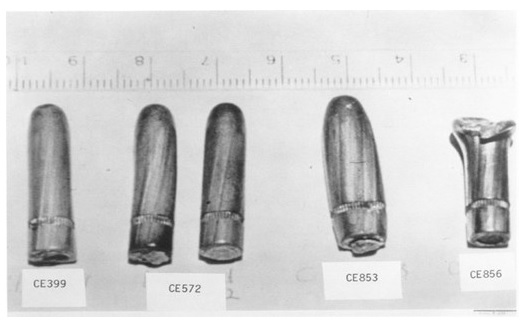
    CE399=Magic Bullet. CE572=Cotton Wadding CE853=Goat CE856=Cadaver Wrist.

    60. CE543, The Dented Lip.

    “There were no shells dented in that manner by the HSCA…I have never seen a case dented like this.” Howard Donahue.  Follow this link.

    The discovery of three spent shells on the sixth-floor post-assassination raised significant questions, and notably, CE 543 stands out as a considerable anomaly in the Commission’s claim that a lone gunman fired three shots at President Kennedy.

    In his compelling and meticulously researched article, “The Dented Bullet Shell: Hard Evidence Of Conspiracy In The JFK Assassination,” Michael T. Griffith sheds light on the dubious authenticity of CE 543 as a piece of evidence from the day of the assassination.

    He cites the insights of fellow researcher Dr. Michael Kurtz, who asserts unequivocally, “CE 543 could not have fired a bullet on the day of the assassination. Moreover, it could not have been discharged from the rifle that Oswald allegedly utilized.”

    In the book I coauthored, ”Case Not Closed”, I sought comment upon CE543 from fellow DPUK member Peter Antill. Peter is a weapons enthusiast who shared with me, his opinion regarding the complexities and irregularities presented by CE543. Antill’s analysis revealed that “One of the more striking characteristics of CE 543 is a significant inward-facing dent in the case lip. This raises the question of how and when this damage could have occurred.

    “Researchers have experimented in throwing an empty Carcano case against a wall or standing on it but failed to do any damage. However, one researcher inflicted exactly the same damage seen on CE 543 on an empty cartridge case while he was loading it into his own rifle.

    “Firing a round results in both the case and its lip expanding slightly and hence there is an increased chance of the case catching on a lip below where the barrel meets the breach if someone tries to subsequently chamber it.

    “If CE 543 had been a live round, such damage would not have been possible as the bullet would have helped to guide the round smoothly into the chamber. This means that either the damage was done before the assassination (and therefore the case could not have been used that day) or if it occurred during it, it raises the question as to why the shooter would waste time trying to manually chamber an empty case.


    Signs of Being Dry Fired

    “According to CE 2968 (a letter from FBI Director J. Edgar Hoover to Commission Counsel J. Lee Rankin, dated 2 June 1964) CE 543 was found with three sets of marks on the base which were not found on the other cases fired through the Carcano, as well as other marks which indicated it had been loaded into, and extracted from a weapon, at least three times. In addition, CE 543 had a deeper, more concave dent in its primer (where it had been struck by the firing pin), a characteristic found with dry fired cartridge cases. The FBI actually reproduced this effect on CE 557, an empty case dry fired in the Carcano for comparison purposes.


    Marks from the Magazine Follower

    “The only marks that link CE 543 to the Carcano were produced by the magazine follower. These marks are caused by the pressure of the magazine follower on the last round in the clip, which pushes the remaining rounds in the clip upwards as their predecessors are chambered and then ejected from the rifle.

    “When the final round is chambered, the clip falls past the magazine follower and drops out of the bottom of the magazine well. While other cases had similar marks, the point is that these marks could not have been caused by the Carcano’s magazine follower on the day of the assassination as the last round in the clip (CE 141) was unfired and still chambered in the rifle when it was found.


    The Chamber Impression

    “CE 543 lacks a characteristic displayed by all the other cartridge cases (CE 544, CE 545 and CE 577) that have been chambered in the Carcano – a distinct impression along one side. Even CE 141 (the live round), showed a similar, if less pronounced, impression.

    “This was probably because it wasn’t fired – firing (where the case expands slightly) would accentuate any marks or impressions caused by the chamber. If CE 543 is supposed to have been fired in the Carcano, how could it be missing this distinct impression?” (Case Not Closed; p. 141-145)


    Final Summation.

    I wish to conclude my article with a poignant reflection on the hope and loss that defined 1960s America. A profound representation of these conflicting emotions can be found in Robert Kennedy’s speech, ‘The Mindless Menace of Violence.’ This speech not only encapsulates the tragic dichotomy of the era but also continues to resonate today, as it stands as a timeless admonition against violence and a plea for compassion and understanding. It inculpates the fear and brutality that marred that period and yet carries a message of hope, encapsulating the complex spirit of a time that will forever leave its mark on the nation’s history.

    The Mindless Menace of Violence

    “Mr. Chairman, ladies and gentlemen, I speak to you under different circumstances than I had intended to just twenty-four hours ago. For this is a time of shame and a time of sorrow. It is not a day for politics.

    I have saved this one opportunity–my only event of today–to speak briefly to you about the mindless menace of violence in America which again stains our land and every one of our lives. It’s not the concern of any one race. The victims of the violence are black and white, rich and poor, young and old, famous and unknown. They are, most important of all, human beings whom other human beings loved and needed. No one–no matter where he lives or what he does–can be certain whom next will suffer from some senseless act of bloodshed.

    And yet it goes on and on and on in this country of ours. Why? What has violence ever accomplished? What has it ever created? No martyr’s cause has ever been stilled by an assassin’s bullet. No wrongs have ever been righted by riots and civil disorders. A sniper is only a coward, not a hero; and an uncontrolled or uncontrollable mob is only the voice of madness, not the voice of the people. Whenever any American’s life is taken by another American unnecessarily–whether it is done in the name of the law or in defiance of the law, by one man or by a gang, in cold blood or in passion, in an attack of violence or in response to violence–whenever we tear at the fabric of our lives which another man has painfully and clumsily woven for himself and his children–whenever we do this, then the whole nation is degraded.

    “Among free men,” said Abraham Lincoln, “there can be no successful appeal from the ballot to the bullet; and those who take such appeal are sure to lose their case and pay the cost.” Yet we seemingly tolerate a rising level of violence that ignores our common humanity and our claims to civilization alike. We calmly accept newspaper reports of civilian slaughter in far off lands. We glorify killing on movie and television screens and we call it entertainment. We make it easier for men of all shades of sanity to acquire weapons and ammunition that they desire. Too often we honor swagger and bluster and the wielders of force. Too often we excuse those who are willing to build their own lives on the shattered dreams of other human beings. Some Americans who preach nonviolence abroad fail to practice it here at home.

    Some who accuse others of rioting, and inciting riots, have by their own conduct invited them. Some look for scapegoats; others look for conspiracies. But this much is clear: violence breeds violence; repression breeds retaliation; and only a cleansing of our whole society can remove this sickness from our souls. For there is another kind of violence, slower but just as deadly, destructive as the shot or the bomb in the night. This is the violence of institutions–indifference, inaction, and decay.

    This is the violence that afflicts the poor, that poisons relations between men because their skin has different colors. This is a slow destruction of a child by hunger, and schools without books, and homes without heat in the winter. This is the breaking of a man’s spirit by denying him the chance to stand as a father and as a man amongst other men. And this too afflicts us all. For when you teach a man to hate and to fear his brother, when you teach that he is a lesser man because of his color or his beliefs or the policies that he pursues, when you teach that those who differ from you threaten your freedom or your job or your home or your family, then you also learn to confront others not as fellow citizens but as enemies–to be met not with cooperation but with conquest, to be subjugated and to be mastered.

    We learn, at the last, to look at our brothers as alien, alien men with whom we share a city, but not a community, men bound to us in common dwelling, but not in a common effort. We learn to share only a common fear–only a common desire to retreat from each other–only a common impulse to meet disagreement with force. For all this there are no final answers for those of us who are American citizens. Yet we know what we must do, and that is to achieve true justice among all of our fellow citizens.

    The question is not what programs we should seek to enact. The question is whether we can find in our own midst and in our own hearts that leadership of humane purpose that will recognize the terrible truths of our existence. We must admit the vanity of our false distinctions, the false distinctions among men, and learn to find our own advancement in search for the advancement of all. We must admit to ourselves that our children’s future cannot be built on the misfortune of another’s. We must recognize that this short life can neither be ennobled or enriched by hatred or by revenge.

    Our lives on this planet are too short, the work to be done is too great to let this spirit flourish any longer in this land of ours.

    Of course we cannot banish it with a program, nor with a resolution. But we can perhaps remember–if only for a time–that those who live with us are our brothers, that they share with us the same short moment of life, that they seek–as do we–nothing but the chance to live out their lives in purpose and in happiness, winning what satisfaction and fulfillment that they can.

    Surely this bond of common fate, surely this bond of common goals can begin to teach us something. Surely we can learn, at the least, to look around at those of us, of our fellow man, and surely we can begin to work a little harder to bind up the wounds among us and to become in our hearts brothers and countrymen once again. Tennyson wrote in Ulysses: that which we are, we are; one equal temper of heroic hearts, made weak by time and fate, but strong in will; to strive, to seek, to find, and not to yield. Thank you very much.” – Robert Francis Kennedy.  Follow this link.


    Go to Part 1 of 6

    Go to Part 2 of 6

    Go to Part 3 of 6

    Go to Part 4 of 6

    Go to Part 5 of 6

  • Dave Emory’s 27-part series on JFK Revisited, with Jim DiEugenio

    Dave Emory’s 27-part series on JFK Revisited, with Jim DiEugenio


    jd emory jfkr


      For The Record #1262 Interview #1 with Jim DiEugenio
      For The Record #1263 Interview #2 with Jim DiEugenio
      For The Record #1264 Interview #3 with Jim DiEugenio
      For The Record #1265 Interview #4 with Jim DiEugenio
      For The Record #1266 Interview #5 with Jim DiEugenio
      For The Record #1267 Interview #6 with Jim DiEugenio
      For The Record #1268 Interview #7 with Jim DiEugenio
      For The Record #1269 Interview #8 with Jim DiEugenio
      For The Record #1270 Interview #9 with Jim DiEugenio
      For The Record #1271 Interview #10 with Jim DiEugenio
      For The Record #1272 Interview #11 with Jim DiEugenio
      For The Record #1273 Interview #12 with Jim DiEugenio and Dr. Gary Aguilar
      For The Record #1274 Interview #13 with Jim DiEugenio and Dr. Gary Aguilar
      For The Record #1275 Interview #14 with Jim DiEugenio and Paul Bleau
      For The Record #1276 Interview #15 with Jim DiEugenio and Paul Bleau
      For The Record #1279 Interview #16 with Jim DiEugenio and John Newman
      For The Record #1280 Interview #17 with Jim DiEugenio and John Newman
      For The Record #1281 Interview #18 with Jim DiEugenio and David Talbot
      For The Record #1282 Interview #19 with Jim DiEugenio and David Talbot
      For The Record #1283 Interview #20 with Jim DiEugenio
      For The Record #1284 Interview #21 with Jim DiEugenio
      For The Record #1285 Interview #22 with Jim DiEugenio
      For The Record #1286 Interview #23 with Jim DiEugenio
      For The Record #1287 Interview #24 with Jim DiEugenio
      For The Record #1288 Interview #25 with Jim DiEugenio
      For The Record #1289 Interview #26 with Jim DiEugenio and Lisa Pease
      For The Record #1290 Interview #27 with Jim DiEugenio and Lisa Pease

  • Book Review: The Oswalds: An Untold Account of Marina and Lee

    Book Review: The Oswalds: An Untold Account of Marina and Lee


    The Oswalds: An Untold Account of Marina and Lee (New York: Diversion Books, 2022), 286 pp.

    The lives of Paul Gregory, a research fellow at the Hoover Institution, and his late father Pete, a Russian émigré from Siberia, intersected with those of Lee Harvey Oswald and his wife Marina in 1962-63. In the summer of 1962, Marina gave lessons in the Russian language to the son Paul. Pete, the father, wrote a letter of recommendation for Lee. And, in the immediate aftermath of the assassination, Pete translated the words of Marina for the Secret Service in a hideaway motel. As both the son and the father conversed extensively in Russian with the Oswalds, and the father was a distinguished linguist, Paul Gregory’s new book may shed light on one of the most important questions about Lee Harvey Oswald: How did a high school dropout become so proficient in the Russian language?

    Gregory’s book is written in the form of memoir. However, his experiences with the Oswalds in the summer of 1962 were not sufficient for a book-length manuscript. Consequently, the author rounded out his coverage of Oswald with a more expansive biography. For his sources, Gregory relied primarily on the Warren Report. This is revealing; it is clear that he has not probed deeply into the work of independent researchers of Oswald and the JFK assassination. The author refers to the latter body of literature as “forensics,” stating that “I cannot consider the hundreds of theories that reject Lee Harvey Oswald as the sole gunman.”[i]; “I am not going to engage in forensic analysis of an extra bullet and shots fired, directives to kill from Castro or Khrushchev, right-wing-fanatics, or deep-state cabals.”[ii] Gregory is convinced that his first-hand experience of Oswald validates the findings of the Warren Commission and is sufficient to demonstrate the lone gunman theory.

    And yet when it comes to the matter of Oswald’s Russian language skills, Gregory cites my article “Oswald’s Proficiency in the Russian Language,”[iii] wherein I explore the evidence indicating that Oswald was already fluent in Russian prior to his departure for the Soviet Union in 1959. My contention was that Oswald was an asset of the United States government sent to the Soviet Union due to his ability to understand Russian, which he carefully concealed during his nearly three-year sojourn in Minsk. Gregory acknowledges that Russian is a difficult language to learn, yet he appears to dismiss my findings as conspiratorial thinking: “Some conspiracy theorists contend that Oswald’s Russian fluency constitutes proof of a conspiracy. They claim that he could not have picked up the language so quickly.”[iv] But Gregory does not explore how, when, and where Oswald did pick up the language so quickly. He only indicates that Oswald’s Russian language skills were “self-taught.”[v] But where did the self-instruction occur? It certainly was not at Arlington Heights High School in Fort Worth in which Oswald dropped out after completing the ninth grade. It was not at the Monterey Institute of Languages, as Oswald never resided in Northern California. There is a suggestion he was there, but no real proof. It did not occur during his stint in the Marines, where Oswald was observed by multiple eyewitnesses as already fully capable of reading Russian-language materials in print.

    As for his spoken Russian, prior to his departure to the Soviet Union, Oswald was commended by Rosaleen Quinn, the aunt of one of Oswald’s Marine buddies, who experienced first-hand Oswald’s Russian language abilities. Quinn had been learning the language for over a year from Berlitz for a future position in the State Department. She later said to author Edward Epstein that Oswald spoke better Russian then she did. Gregory chooses to ignore the evidence that Oswald was already fluent in Russian when he left the Marines. The author simply assumes that Oswald achieved a mastery of Russian while he was in Minsk.[vi] But, during his nearly three-year stay, Oswald was not working diligently with his tutors or practicing on his own; instead, he was remembered by his friends in Minsk as constantly struggling with Russian and primarily speaking to them in English! In an interview that Gregory did with Patrick Bet David on November 22nd of this year, Gregory said that Oswald spoke Russian, but his grammar was very bad. This is not what Quinn said. She told Epstein that Oswald could string entire sentences together without much hesitation.

    When Oswald returned from the Soviet Union, he and Marina received correspondence from their acquaintances in Minsk. Ernst Titovets wrote a letter in Russian addressed to both Lee and Marina, but he included a separate portion to Lee written in English.[vii] The same was true with Aleksandr (Alejandro) Zieger in a joint letter written to Marina and Lee. The undated letter was composed sometime after the Oswalds left Minsk in 1962. Mr. Zieger writes most of the letter in Russian, offering general news of the Zieger family. But at the end, he includes a personal message to “Alek” (Oswald’s nickname in Minsk) that is written in English: “Alek—my best wishes and a ton of good luck.”[viii] These letters demonstrate that his friends in the Soviet Union were under the impression that Oswald could not read Russian. Yet the correspondence was received by the Oswalds at a time when Lee visited the office of Pete Gregory in order to obtain a letter of recommendation that verified his Russian language competency. Pete gave him a test after pulling out Russian volumes from his bookshelves and asking Oswald to translate. Surprised by Oswald’s proficiency, Pete then wrote the brief letter that vouched for Oswald, whose aptitude in Russian was so good that Pete believed him “capable of being an interpreter and perhaps a translator.”[ix]

    In what is revealing information contained in Gregory’s book, the linguist father Pete concluded that, based on his spoken Russian, Oswald was “from a Baltic republic or even Poland with Russian as a second language.”[x] He also speculated that “Oswald’s Russian fluency was explained by immersion in daily life rather than attendance at some sinister Russian language school for spies.”[xi] Pete’s son Paul attested that “having spent hours with Lee speaking Russian, I can confirm that his command of the everyday language was excellent. He could express anything he wanted to say.”[xii] The lapses in grammar and mistakes in gender may be partially explained by the father’s contention that Oswald originally learned Russian as a second language, “possibly from a Baltic republic or even Poland.” This description would explain how Oswald had already become proficient in Russian at the time he departed for the Soviet Union in 1959. It also must give us pause as to what was the true background of this young, bilingual man. The real Lee Harvey Oswald was born in New Orleans and raised exclusively in the United States. But Pete Gregory was referring to a young man who was likely born in Eastern Europe and was speaking both Russian and English as second languages.

    Working under tremendous pressure, Pete Gregory translated the words of Marina in response to questions from the Secret Service shortly after the assassination. His translations were subsequently checked by other experts and judged “faultless without deviation.”[xiii] Previously, he had been selected to accompany President Eisenhower to Moscow to serve as translator during the summit that was eventually cancelled due to the Gary Powers U-2 spy plane incident. In describing his father as “one of the nation’s best Russian interpreters,”[xiv] Paul may not have been engaging in hyperbole. As a world-class linguist, Pete Gregory is an authority worth listening to as an eyewitness to Oswald’s Russian language skills. As it turns out, Pete’s characterization of Oswald having learned Russian as a second language somewhere in Eastern Europe, possibly “from a Baltic republic or even Poland,” merits some consideration.

    How may this lend a clue to our understanding of Oswald? The answer lies in the massive work Harvey and Lee by John Armstrong, along with his articles on the harveyandlee.com website, and his digital archive documenting his research, which is accessible online from Baylor University. Because of the evidence of two Oswald boys using the same name, growing up in different households, attending different schools, and training separately in the Marines, Pete Gregory’s revelation about Oswald’s Russian language abilities could be corroborative evidence of Armstrong’s “The Oswald Project”, which sought to place a Russian speaking American in the Soviet Union as an asset.

    The long-term project of planting a Russian-speaking spy in the Soviet Union must be examined in the context of the aftermath of World War II and the start of the Cold War. Immediately after the war, there was the forced relocation of enormous populations as the map was being redrawn in Eastern Europe. Thousands of “displaced persons” were interred in camps. The so-called Displaced Persons Commission made available to the CIA the names of potential assets. As a result, Eastern European refugees were brought to the United States under a program headed by Frank Wisner, the CIA’s director of clandestine operations. Wisner had become the State Department’s and the CIA’s expert on Eastern European war refugees during the late 1940s and early 1950s. Under Wisner’s program, the refugees were granted asylum in return for their cooperation in secret operations against the Soviets.

    Wisner gained approval from the National Security Council for the “systematic” use of the refugees as set forth in a top-secret intelligence directive, NSCID No. 14 (March 3, 1950). Both the FBI and the CIA were authorized to jointly exploit the knowledge, experience, and talents of over 200,000 Eastern European refugees who had resettled in the United States.[xv] Under Wisner, the CIA was running hundreds of covert projects for the purpose of what the NSCID directive called the “exploitation of aliens as sources of foreign intelligence information.”[xvi] The surviving evidence suggests one of those projects merged the identities of a Russian-speaking immigrant boy, who likely came from Eastern Europe, with an American-born boy named Lee Harvey Oswald.[xvii] 

    Many of the Eastern European children grew up bilingual with Russian as a second language. As observed by journalist Anne Applebaum in her book Iron Curtain: The Crushing of Eastern Europe, 1944-1956, Eastern European children would, as a matter of course, be sent to live with another family at an early age in order to learn a second language. The idea behind this CIA project was to groom the Russian-speaking boy as a spy who, when he reached adulthood, would “defect” to the Soviet Union. Because he had assumed the name and identity of an American, the Soviets would not suspect that he spoke fluent Russian. The result was that nearly a decade later, as an undercover agent who secretly understood Russian, the Eastern European immigrant posing as a disgruntled United States Marine named Lee Harvey Oswald defected and spent nearly three years in the Soviet Union. While there, he married a Soviet woman and returned to the United States with his wife and child.

    Upon his return to the United States, Oswald wrote a lengthy account of his experience working at the Minsk Radio and TV Factory, where he drew upon “his fairly wide circle of friends and acquaintances to gather the figures and descriptions of the inner workings of the Soviet system.”[xviii] In wondering how Oswald “was able to put together such an insightful picture of the Soviet enterprise,”[xix] Gregory notes that Oswald was “a surprisingly keen observer of Soviet reality.”[xx] But there should be no surprise if it had been Oswald’s principal purpose as a false defector to observe and to report on the realities of Soviet life during his stay. Dennis Offstein was a co-worker of Oswald at the graphic arts company of Jaggars, Chiles, Stovall in Dallas shortly after Oswald’s return in 1962. In his testimony to the Warren Commission, Offstein recalled that Oswald gave him a detailed account of Soviet military maneuvers during his residency. Specifically, Offstein remembered Oswald’s description of:

    …the disbursement of the [Soviet] military units, saying that they didn’t intermingle their armored divisions and infantry divisions and various units the way we do in the United States, that they would have all of their aircraft in one geographical location and their tanks in another geographical location, and their infantry in another, and he mentioned that in Minsk he never saw a vapor trail, indicating the lack of aircraft in the area.[xxi]

    This perceptive account of the Soviet military activities that includes being on the lookout for “vapor trails” squares with other detailed observations that Oswald brought back and recorded in detail. In the testimony of Offstein alone, there was enough cause to warrant an investigation of Oswald’s ties to intelligence and the possibility that he was sent to the Soviet Union in 1959 in the capacity of what Offstein called “an agent of the United States.”[xxii] But with the presence of Allen Dulles on the Warren Commission, Oswald’s records in the CIA were effectively pre-screened from the committee. 

    It was Allen Dulles who insisted that the Warren Commission publish a detailed biography of Oswald. As a result, Chapter VII (“Lee Harvey Oswald: Background and Possible Motives”) is a fifty-page narrative replete with inaccurate details and chronological errors. That “biography” may be a mélange of the lives of two young men, and it has misled researchers for nearly sixty years, the latest of which is Paul Gregory. The major premise that undergirds Gregory’s book is that Oswald was a genuine defector. Working closely to the Warren Report, Gregory believes that Oswald was a committed Marxist, that his distribution of pro-Castro leaflets in New Orleans was genuine, that his opening of a branch of the Fair Play for Cuba Committee in New Orleans was genuine (despite him being the only member), and his visits to the Russian and Cuban embassies in Mexico City were genuine (despite the absence of concrete evidence that Oswald himself paid those visits). In paraphrasing the Warren Report, Gregory identifies Oswald’s principal motivation for the assassination not out of animosity for John F. Kennedy, but his belief, shaped by his study of Marxism, that “he was destined for a place in history.”[xxiii]

    But if Oswald was not a genuine defector and was working for the United States government, the entire edifice of the Warren Report collapses like a house of cards. If Oswald really had delusions of grandeur, he had the perfect opportunity to proclaim his great deed to history as he was paraded through the halls of the Dallas police headquarters and was allowed to address the press. But instead, he protested his arrest and insisted on his innocence with the words, “I’m just a patsy!” In this crystalline moment, he may have realized that he was a mere pawn in the greater design of the Cold War.

    A fatal shortcoming of Gregory’s methodology is that he has not kept up with new evidentiary discoveries in the JFK assassination, particularly the findings of the Assassination Records Review Board (ARRB). The military historian John Newman has observed that “in the history of the KGB and the CIA, their wars are not actually shooting each other so much as trying to penetrate each other.”[xxiv] Oswald may be best understood in the context of a myriad number of CIA projects with the goal of “penetrating” the enemy, including the critical area of identifying moles from within. Newman recounts the time when one of the legendary CIA mole hunters and “probably our most celebrated and capable counterintelligence officer in the history of the Central Intelligence Agency,”[xxv] Tennent “Pete” Bagley, sat down with researcher Malcolm Blunt. Bagley and Blunt reviewed the collection of documents on Oswald from the CIA, the State Department, and Naval intelligence. As they assessed the evidence, the stunning revelation came to Bagley that Oswald “had to be witting” in his defection.[xxvi] In other words, this senior CIA officer recognized that the evidence demonstrated that “Lee Harvey Oswald was a witting false defector when he went to Moscow.”[xxvii] This revelation was made possible through the efforts of the tenacious researcher Elizabeth “Betsy” Wolf, who had prepared detailed notes during her time spent on the House Select Committee on Assassinations (HSCA) in the late 1970s. The implications of her notes were so explosive that they were hidden until their declassification on a time-delayed release following the termination of the ARRB in 1998. Salvaging the notes was made possible by Oliver Stone’s film JFK, which led to the JFK Records Act and the establishment of the ARRB. In turn, the indefatigable researcher Malcolm Blunt carefully assembled Wolf’s notes and assessed their implications with Bagley.

    Betsy Wolf had been troubled by the fact that a “201 file” had not been prepared on Oswald by the CIA at the time of his defection in 1959. This point was not addressed by the Warren Commission which paid little, if any, real attention to Oswald’s connections to the intelligence network. According to CIA protocol, 201 files were routinely opened for persons “of active operational interest.”[xxviii] But, inexplicably, after Oswald’s so-called defection, a 201 file was not opened until over a year later on December 8, 1960.[xxix] Wolf’s breakthrough discovery was that early CIA reports on Oswald were pigeonholed in the CIA’s Office of Security (OS), rather than to the SR (Soviet Russia) division. The OS would not refer a 201 file, while SR would. As recounted by researcher Vasilios Vazakas, “in the case of Oswald, his files bypassed the General Filing System and went straight into the Office of Security and its SRS [Security Research Service] component.”[xxx] One possible explanation entertained by Vazakas was that “Oswald was a special project for [James Jesus] Angleton, one he wanted no one else to know about.”[xxxi] In a crucial interview described in Wolf’s handwritten notes and discovered by Blunt, on July, 26, 1978, Wolf spoke with Robert Gambino, at that time, the current chief of the OS. Gambino informed her that a request for the special handling of Oswald’s documents had occurred prior to Oswald’s defection. In other words, CIA documentation on Lee Harvey Oswald predated his defection. With an understanding of that chronology—and the testimony of both Bagley and Gambino– it is clear that the CIA was fully aware of the phony defection in advance of the time it occurred in late October, 1959.[xxxii]

    Even Oswald’s Marine roommate in Santa Ana, California, James Botelho, recognized that Oswald was not a genuine defector when he told attorney Mark Lane that “Oswald was not a Communist or a Marxist. If he was I would have taken violent action against him and so would many of the other Marines in the unit.”[xxxiii] After Oswald’s defection was made public, Botelho told how an investigation at the Santa Ana Marine base was conducted purely for show:

    It was the most casual of investigations. It was a cover-investigation so that it could be said there had been an investigation….Oswald, it was said, was the only Marine ever to defect from his country to another country, a Communist country, during peacetime. That was a major event. When the Marine Corps and American intelligence decided not to probe the reasons for the “defection,” I knew then what I know now: Oswald was on an assignment in Russia for American intelligence.[xxxiv]

    Through a nearly miraculous chain of events starting with Oliver Stone’s film and leading to the ARRB’s preservation of the notes of Betsy Wolf, we have today documentary evidence supporting Botelho’s claims that Oswald was a false defector.

    Instead of following through on the implications of Oswald’s language proficiency in Russian and exploring whether or not he was a genuine defector, Gregory pivots to spend a large portion of his book recounting the stormy relationship of Lee and Marina. Gregory returns to his default mode of the Warren Report to cite the Commission’s alleged motivation for the killing of the President: “The relations between Lee and Marina Oswald are of great importance in any attempt to understand Oswald’s possible motivation.”[xxxv] The fact that the Warren Commission had to look to the marital relationship of the suspected assassin for motivation for the murder of the President demonstrates how flimsy the case was against Oswald. Gregory spends countless pages describing the abuse Lee heaped upon Marina, mainly relying on secondhand information from members of the small Russian émigré community in Dallas. Gregory’s narrative resembles the plot outline of Shakespeare’s The Taming of the Shrew, wherein Lee is the tyrannical overlord of Marina just as Petruchio seeks to keep Katharina on a short leash.

    In what he calls his own “amateur psychoanalysis,”[xxxvi] Gregory repeats on multiple occasions the tiresome refrain of Warren Commission apologists that Oswald was seeking to impress his wife by carving out his place in history. During his time spent with Oswald in the summer of 1962, Gregory “detected none of the trademarks of a future assassin.”[xxxvii] Yet in the back-reading of his own experience through the lens of the Warren Report, Gregory concludes that he had “witnessed firsthand this small man’s attempt to prove to the world and to his young wife that he was indeed exceptional.”[xxxviii] Through a tortured logic, Gregory posits the following in response to Marina’s belittling of her husband’s politics and his substandard performance in the bedroom: “What better way for Oswald to kill two birds with one stone than by the ‘manly’ act of killing the most powerful man on earth?”[xxxix] This psychoanalytical approach completely misses the point that the killing of President Kennedy was a politically driven act at the height of the Cold War, the effect of which was a compete reversal of America’s foreign policy in the 1960s. Many of which were detailed in Oliver Stone’s four-hour film JFK: Destiny Betrayed.

    In an interview given by Gregory shortly before the release of his book, the author indicated that he was motivated to write the memoir because his family was embarrassed at having an association with the alleged assassin of an American president. In Gregory’s words, it was “a black spot on the family.”[xl] The resulting book is not the impartial work of a scholar at the Hoover Institution. Rather, it is the biased opinion of an eyewitness with a personal agenda. Gregory considered Marina Oswald as a friend, as she helped him to prepare a paper on an obscure Russian play during the summer of 1962. But one looks in vain in the book for Marina’s corroboration of what Gregory has written about her and her first husband. The author sent Marina a draft of the manuscript, as well as a cordial letter. But she never replied. The last time Gregory saw Marina was on Thanksgiving Day in 1962. In a 1993 NBC interview, the feisty Marina went toe-to-toe with newscaster Tom Brokaw, as she took issue with the claims of Gerald Posner in his book Case Closed and said of her husband that “he definitely did not fire the shots.”[xli] In 1996, Marina told Oprah Winfrey that she came to the conclusion that her husband was innocent by studying the Warren Report’s supplementary volumes, which puts a damper on the entire hypothesis of Paul Gregory’s book: “And then comes the 26 volumes of the testimony, of the evidence, which does not support their conclusion.”[xlii] Drawing so heavily as he does on the Warren Report, Gregory has written a book that should take its place alongside Priscilla Johnson McMillan’s Marina and Lee, Robert Oswald’s Lee, and Jean Davison’s Oswald’s Game, all of which serve as posthumous daggers in the heart of Lee Harvey Oswald.


    Appendix

    The Media’s Response to The Oswalds and Reflections on the Cold War

    Following the release of Paul Gregory’s book, the media’s response has fixated on the lurid elements of alleged domestic abuse and the troubled marriage of the Oswalds. Writing in the Daily Mail on November 25, 2022, Daniel Bates offers the eye-popping title of “‘He feared he would be exposed as a loser.’ Lee Harvey Oswald assassinated JFK because he was ‘humiliated’ by wife Marina who mocked him as sexually inadequate and cheated with a businessman.”[1]

    Bates’s formal review then begins with the observation that “Lee Harvey Oswald assassinated John F. Kennedy because he feared being branded a ‘loser’ by his wife who ridiculed his pretensions of being a Marxist intellectual.”[2]

    Here the journalist is invoking guilt by association in an argument that goes as follows: If Oswald was belittled and shamed by his wife, it follows that he killed the President in retaliation. A Kirkus review succinctly summarized the book as “an informative view of a killer’s marriage and lethal motivations.”[3] Writing in the New York Post, Heather Robinson concludes her review by speculating that “it’s even possible that Oswald killed JFK because the young president was seen as the ultimate symbol of American masculinity and power — and because Marina liked him.”[4]  Some of this “writing” resembles postmodern literary criticism.

    In the alternative media, Gus Russo on Spy Talk introduces a litany of titillating incidents not even mentioned in Gregory’s book. At the same time, he completely ignores how Oswald attained a superior level of Russian language proficiency, as well as Peter Gregory’s analysis that Oswald spoke like an Eastern European who had learned Russian from daily exposure, as opposed to formal training in the classroom. As Paul’s father, Pete, testified to the Warren Commission, “I would say it would be rather unusual, rather unusual for a person who lived in the Soviet Union for 17 months that he would speak so well that a native Russian would not be sure whether he was born in that country or not.”[5] This linguist was attempting to reconcile what he had heard as the inflections of an Eastern European speaking Russian that conflicted with what he was told by Oswald about how he had learned to speak the language. Russo also makes no mention of Oswald’s “defection” in 1959 and Gregory’s blind acceptance of the Warren Commission’s profile of Oswald as a genuine Marxist.

    In their rush to paint Oswald as a domestic abuser of the most despicable variety, the reviewers fail to mention a very important evidentiary point: Paul Gregory relies extensively on secondhand reporting that he heard from members of the Dallas Russian émigré community. The reviewers give readers the impression that Gregory is offering startling, new revelations. But these individuals were called before the Warren Commission and were questioned about the alleged abuse. Robert Charles-Dunne has provided a valuable collation of their testimony in “Was Oswald a Serial Wife Batterer?” that would serve as an indispensable resource alongside Gregory’s book.

    In following the words of the witnesses, it is apparent that they were not really witnesses. That they too were invariably relying on second- and third- hand reporting of Oswald’s treatment of his wife. The testimony of nineteen witnesses reveals that no police report was ever filed and rarely was there an actual witness to verify Oswald’s displays of temper. Gregory himself never observed Oswald physically striking Marina during any of his forty-eight tutorial sessions. And yet, his allegations are the bedrock foundation for the motivation that Oswald killed President Kennedy.

    Any instance of spousal abuse is reprehensible, and Marina Oswald has acknowledged that she was an abused wife. Yet over time, she was able to separate the abuse from the question of whether or not her husband shot the President. By the 1990s, while continuing to acknowledge Oswald’s shabby treatment of her, she still concluded that Lee had been framed…primarily from her study of the supplementary volumes of the Warren Report!  Scholars who tackle this topic should have the same degree of objectivity as a victim like Marina.

    In investing so much time in writing about the connection between Oswald’s treatment of his wife and the murder of President Kennedy, Gregory has given short shrift to the climate of the Cold War that impacted the lives of everyone described in his book, including his own and especially his father’s. Pete Gregory entered the pressure cooker to translate for Marina in response to questions from the Secret Service over the stressful assassination weekend. His dedication movingly comes across in the memoir. This was an instance of a law-abiding citizen being sucked into the maelstrom of a national crisis. But what was not known until recently was that Pete Gregory was later a likely employee of the CIA. As uncovered by researcher Malcolm Blunt, a set of documents indicates that, in 1965, Pete applied for work in the CIA in the JPRS (Joint Publications Research Service).[6]  

    The recipient of his application was the Chief Officer of the Foreign Documents Division of the CIA. It is possible that Pete may have been applying for a position of translator of sensitive multi-lingual texts at the height of the Cold War. In addition to Pete’s completed application, another document verifies his CIA security clearance through a strict process of vetting that included the administration of a polygraph. By profession, Pete was an engineer working in the petroleum industry of Texas. More work lies ahead in understanding precisely what role Pete was playing in the CIA in a Cold War connection that is never mentioned in his son’s memoir.

    Indeed, discourse on the Cold War in general is conspicuously absent from Gregory’s book. Mark Kramer, who is Director of Cold War Studies at Harvard University, wrote a commendatory blurb that appears at the start of The Oswalds: “Gregory’s book offers a definitive personality sketch of Oswald and a great deal of evidence that should put an end, once and for all, to the notion that shadowy forces intent on murdering the president would have enlisted such an unreliable and tempestuous loser.” This astonishing perspective written by a scholar of the Cold War speaks volumes about what little time the so-called experts have invested in studying the JFK assassination. Historians, journalists, and bloggers should be following trails of reliable evidence and placing a historical event carefully in context. They should not be relying on hearsay, gossip, and psychoanalytical speculation. A seminal moment of the Cold War was the assassination of President Kennedy that shifted the nation’s foreign policy over the course of a weekend. The preponderance of evidence suggests that the scapegoat Lee Harvey Oswald was a creature of the Cold War and that President Kennedy’s death was the result of forces at work against his vision of peace in the period following the Cuban Missile Crisis. Both men were pawns on a chessboard that we can finally understand today if we only take the time to examine the evidence. Until that happens, our knowledge of the Cold War will remain incomplete.


    [i] Paul R. Gregory, The Oswalds: An Untold Account of Marina and Lee (New York: Diversion Books, 2022), 36.

    [ii] Gregory, 230.

    [iii] James Norwood, “Oswald’s Proficiency in the Russian Language,” http://harveyandlee.net/Russian.html.

    [iv] Gregory, 100.

    [v] Gregory, 245.

    [vi] Gregory, 88.

    [vii] Gregory, 124. Gregory describes Titovets’s letter as “jocular.” But if Oswald had achieved “mastery” of Russian while in Minsk, as Gregory suggests, then why would Titovets feel compelled to write a special portion of the letter addressed expressly to Oswald in English?

    [viii] Mr. Zieger’s letter was published in the Warren Commission Hearings, Vol. XVI, 156 (Exhibit 33).

    [ix] John Armstrong, Harvey and Lee (Quasar, Ltd., 2003), 399.

    [x] Gregory, 100.

    [xi] Gregory, 100.

    [xii] Gregory, 100.

    [xiii] Gregory, 202.

    [xiv] Gregory, 207.

    [xv] The first article of the directive reads as follows: “Exploitation of aliens within the U.S. for internal security purposes shall be the responsibility of the Federal Bureau of Investigation. Exploitation of aliens as sources of foreign intelligence information or for other foreign intelligence purposes shall be the responsibility of the Central Intelligence Agency. This allocation to the Federal Bureau of Investigation and to the Central Intelligence Agency of separate areas of alien exploitation responsibility does not preclude joint exploitation, which must be encouraged whenever feasible.”
    NSCID No. 14: https://cryptome.org/nscids-50-55.pdf

    [xvi] NSCID No. 14, article 1: https://cryptome.org/nscids-50-55.pdf

    [xvii] See my article “Lee Harvey Oswald: The Legend and the Truth,” which begins with discussion of the HSCA testimony of Jim Wilcott: http://harveyandlee.net/J_Norwood/Legend.html

    [xviii] Gregory, 59.

    [xix] Gregory, 59.

    [xx] Gregory, 49.

    [xxi] Warren Commission Hearings, Vol. 10, 202.

    [xxii] Warren Commission Hearings, Vol. 10, 200.

    [xxiii] Gregory, 36.

    [xxiv] James DiEugenio and Oliver Stone, JFK Revisited: Through the Looking Glass (New York: Skyhorse Publishing 2022), 193.

    [xxv] DiEugenio and Stone, 193.

    [xxvi] DiEugenio and Stone, 194.

    [xxvii] DiEugenio and Stone, 194.

    [xxviii] John Newman, Oswald and the CIA: The Documented Truth About the Unknown Relationship Between the U.S. Government and the Alleged Killer of JFK (New York: Skyhorse Publishing, 2008), 47.

    [xxix] For researcher Vasilios Vazakas, Betsy Wolf was puzzled because “there were two reasons to open the 201 file on Oswald over a year prior to when it happened. Neither one triggered the opening. Further, when Wolf looked at the 201 file, it only contained copies and the two Naval dispatches were gone…. What could be a more compelling reason for the counter-intelligence office opening a file on Oswald than his threatening to give secrets of the U-2 to the Soviets?” Vasilios Vazakas, “Creating the Oswald Legend—Part 4.” kennedysandking.com. August 15, 2020.

    [xxx] Vazakas.

    [xxxi] Vazakas.

    [xxxii] Historian James DiEugenio summarizes the remarkable discovery of Betsy Wolfe as follows: “Only toward the end of her search did Betsy find out what had happened. Betsy’s notes include an interview with the former OS chief Robert Gambino. According to Malcolm, her handwritten notes are the only place anyone can find anything about this particular interview. (Wolf notes of 7/26/78) Gambino told her that CIA Mail Logistics was in charge of disseminating incoming documents. In other words, someone made this request about the weird routing of Oswald’s files from OS’s Security Research Service. (p. 324) And this was done prior to Oswald’s defection. Malcolm concludes that with what Betsy unearthed, there should now be no question that the CIA knew Oswald was going to defect before it happened.” Book review by James DiEugenio, “The Devil Is in the Details: By Malcolm Blunt with Alan Dale. kennedysandking.com. March 20, 2021: https://www.kennedysandking.com/john-f-kennedy-reviews/the-devil-is-in-the-details-by-malcolm-blunt-with-alan-dale

    [xxxiii] James Douglass, JFK and the Unspeakable—Why He Died and Why It Matters (Ossining, N.Y.: Orbis Books, 2008), 40.

    [xxxiv] Douglass, 40.

    [xxxv] Gregory, 230.

    [xxxvi] Gregory, 229.

    [xxxvii] Gregory, 16.

    [xxxviii] Gregory, 240.

    [xxxix] Gregory, 243.

    [xl] The LBJ Library, “With the Bark Off: A Conversation with Paul Gregory About Lee Harvey Oswald” (October 27, 2022): https://www.youtube.com/watch?v=vJ595whXpdE

    [xli] Marina Porter interview, August 1993 (NBC): https://www.pinterest.com/pin/28640147609703189/

    [xlii] A complete transcript of Marina’s interview with Oprah Winfrey, which includes an appearance by Oliver Stone, may be read in the following transcription made by R.J. DellaRosa: https://www.tumblr.com/novemberdays1963/37177099041/marina-oswald-porter-on-oprah-1996


    [1] Daniel Bates, The Daily Mail (November 25, 2022): https://www.dailymail.co.uk/news/article-11458759/Lee-Harvey-Oswald-assassinated-President-JFK-humiliated-wife-Marina.html

    [2] Bates.

    [3] https://www.kirkusreviews.com/book-reviews/paul-r-gregory/the-oswalds/

    [4] Heather Robinson, “Pal Reveals Lee Harvey Oswald’s Weird, Paranoid Life One Year Before Killing JFK” New York Post (November 29, 2022): https://nypost.com/2022/11/19/pal-reveals-lee-harvey-oswalds-weird-paranoid-life-pre-jfk-killing/

    [5] Warren Commission Hearings, Vol. II, 347.

    [6] According to the Harvard University Library, “The United States Joint Publications Research Service is a government agency which translates foreign language books, newspapers, journals, unclassified foreign documents and research reports.  Approximately 80% of the documents translated are serial publications.  JPRS is the largest single producer of English language translations in the world.  More than 80,000 reports have been issued since 1957, and currently JPRS produces over 300,000 pages of translations per year.” https://guides.library.harvard.edu/jprs

     ________

    James Norwood taught for twenty-six years in the humanities and the performing arts at the University of Minnesota. The curriculum that he offered included a semester course on the JFK assassination. He is the author of “Lee Harvey Oswald: The Legend and the Truth” and “Oswald’s Proficiency in the Russian Language” published at harveyandlee.com. His article “Edmund Gullion, JFK, and the Shaping of a Foreign Policy in Vietnam” was published at kennedysandking.com.

  • Worse Than I Thought: A Mother In History

    Worse Than I Thought: A Mother In History

    The literature on the JFK assassination is rife with dishonest books that endorse, defend, and/or excuse the findings of the Warren Commission. Nothing new about that: this has been true since publication of the Warren Report in 1964, and has carried on through a long line of apologist nonsense.

    One Commissioner and several WC attorneys cashed in on their experiences. A host of lesser, pseudo-serious WC advocates have contributed to this worthless tripe, and profitably. At the time of the assassination’s fiftieth anniversary, Vince Salandria called it a mountain of trash. All of this propaganda is meant to bury the obvious.

    Jean Stafford’s A Mother in History (Farrar, Strauss and Giroux, 1966) was an early entry into this disgraceful body of work. I have written about it before, most recently on this Kennedys and King site. What more could I possibly have to say? Do I have an unhealthy preoccupation with this slender book, ostensibly an unbiased profile of the mother of the alleged presidential assassin?

    If you Google “Jean Stafford A Mother In History” you are likely to find available copies on used book sites, along with reviews and reader opinions. Most of the opinions I found are favorable. All of them, it is safe to assume, are based solely on reading Jean Stafford’s published text. Almost certainly, none of the writers of these favorable judgments had access to some of the book’s raw material, in particular the tape-recorded Stafford-Oswald interviews. I did. Once it has been appraised, and contrasted with the published work, it is difficult to see A Mother in History as anything but a hatchet job intended to destroy Marguerite Oswald.

    The raw material to which I refer is in the Jean Stafford collection at the University of Colorado (CU) in Boulder, part of the Norlin Library’s Rare and Distinctive Collections.

    Stafford, who was from Boulder, left her papers to CU. Since she primarily wrote fiction, the source material for A Mother in History is only a small portion of that archive. This small portion includes typescripts, notes, and an interview transcript, all of which reside in one small box. Not included in the box are the interview tape recordings, which have long since been digitized.

    A Mother In History was published in three sections, simply titled I, II, and III (plus an Epilogue and appendices). A breathless jacket blurb touts Stafford’s “three incredible days” with Marguerite Oswald. That, and other indicators, clearly imply each of those three book sections correspond to one day of conversation between the author and her subject.

    There may have been three days of interviews, incredible or otherwise, but I am highly suspicious of the published chronology. An exchange on the book’s p. 36, as that purported first-day section nears its end, first got my attention. Here Stafford writes that she asked Mrs. Oswald if it would be okay to bring a tape recorder the next day. Marguerite agreed. Stafford does not say so explicitly, but the clear message is that the first day was not tape recorded.

    The audio at CU consists of six undated .mp3 files. A CU archivist told me last summer that the original reel-to-reel tapes were transferred to audio cassette in the 1970s. They were digitized sometime in the 1980s, or perhaps a little later.

    Nowhere, in the .mp3 audio, does Stafford say the day, date, or subject of her interviews. Interviewers often do; it could even be considered a best practice. It creates a record, and helps keep things in order.

    The .mp3 files at CU may be undated, but they do have sequential filenames. The first is stafford-interview-with-mrs.-oswald_-part-1-a.mp3. This particular audio begins with Stafford asking, “Tell me about your early life, Mrs. Oswald. You were born in New Orleans, weren’t you?” The transcript begins the same way. It’s an amiable first question, a likely starting point, and I’m going to go out on a limb and suggest this was, in fact, the very first of the interviews: that is, the first day, which Stafford implied was not recorded.

    As I described in my previous article, I had grown curious about a quote in the first section of the book – an unrecorded first day, readers are led to believe. Lee Harvey Oswald, Marguerite said, “spoke Russian, he wrote Russian, and he read Russian. Why? Because my boy was being trained as an agent, that’s why.”

    In Stafford’s book there was no follow-up question. This baffled me. Even an amateur journalist, like Stafford, should have enough sense to explore such an explosive statement. Surely the audio would clarify things. Instead, it revealed that Marguerite Oswald didn’t say what Stafford quoted her as saying. It is a manufactured quote.

    It’s a little complicated, so bear with me. Most of the words in that quote were, in fact, spoken by Marguerite Oswald. They were also tape recorded; I have heard the audio. But it’s a false quote, because Stafford pieced together several phrases – some of them separated by as much as three minutes. Placing it all within quotation marks implies it is verbatim – but it is not, and is thus a deception.

    I can only speculate on Stafford’s motives. That false quote does not support the lone gunman thesis. Given the magnitude of surrounding events, I cannot believe creating it was innocent. I think Stafford floated the idea of Oswald-as-agent – not a common view at the time – to characterize Marguerite Oswald as paranoid, and out of her mind.

    There are other false and manufactured quotes in A Mother In History. I have not itemized them all and don’t intend to; it would be a huge undertaking. The more I studied the source material, the more dishonesty I found.

    On page 23 of A Mother In History is the following statement, attributed to Marguerite:

    Lee purely loved animals! With his very first pay he bought a bird and a cage, and I have a picture of it. He bought this bird with a cage that had a planter for ivy, and he took care of that bird and he made the ivy grow. Now, you see, there could be many nice things written about this boy. But, oh, no, no, this boy is supposed to be the assassin of the President of the United States, so he has to be a louse. Sometimes I am very sad.

    This is a rather inconsequential matter, but it is still false. Marguerite Oswald didn’t really say it. Here is what she did say, in answer to Stafford’s question, “Did he ever have any pets?”

    Oh yes, Lee had a dog, and with his first pay he bought a bird and a cage – I have pictures of it, with ivy in it and all the food for the bird. Yes, sir. With his first pay. He had a collie shepherd dog that I had gotten for him when it was a little [bitty] puppy. And he had it all those years until we went to New York. And that dog had puppies. He gave one to his school teacher. She wrote a nice article for the newspaper saying Lee loving animals and giving her a pet.

    True, the published quote roughly parallels what she really said. But it is still false. “Lee purely loved animals” does not appear in any of the audio. There is no mention of dogs in the published quote, let alone puppies, or giving one to a school teacher.

    Nor does Marguerite say, “Sometimes I am very sad.” In fact, elsewhere in the recorded interviews, she said quite the opposite: “I’m not unhappy, Jean. You can see I’m not.”

    As I write these words, I feel like I’m in attack mode. I have listened to all the audio that is available. Can I be certain that every last recorded word from the Stafford-Oswald interviews wound up in the CU archive? Of course not. All that CU has is what Stafford gave them. She also wrote, in her book, that when Mrs. Oswald agreed to be tape recorded, she stipulated that there be two recorders so she could have a copy.

    The example about animals and pets is minor, compared to a false quote on pages 12-13 of A Mother In History. This one is presented as dialogue between interviewer and interviewee, and Jean Stafford goes in for the kill. It is intended, I am convinced, to make Marguerite Oswald appear nuts – to use a non-clinical term.

    Marguerite spoke first:

    “And as we all know, President Kennedy was a dying man. So I say it is possible that my son was chosen to shoot him in a mercy killing for the security of the country. And if this is true, it was a fine thing to do and my son is a hero.”

    “I had not heard that President Kennedy was dying,” I said, staggered by this cluster of fictions stated as irrefutable fact. Some mercy killing! The methods used in this instance must surely be unique in the annals of euthanasia.

    This exchange is not found anywhere in the interview audio or the transcript. Marguerite does not make the statement, and Jean Stafford does not make that stunned reply.

    There is something similar to this in the interviews. Unfortunately, the digitized version of the tape recording at CU ends partway through the quote. Did the original tape end there, too? No, because the corresponding transcript, which I have found to be consistently accurate, continues for several more pages. It is convoluted, but this is what Marguerite Oswald really said.

    That President Kennedy was killed by – a mercy killing – by some of his own men that thought it was the thing to do and this is not impossible and since I blame the secret service from what I saw and what I thought it could have been that my son and the secret service were all involved in a mercy killing.

    A minute or so before her “mercy killing” remark, Marguerite did say “a dying President,” but “As we all know” is an invention. She says JFK was dying because he had Addison’s disease, which he did. She also called it a kidney disorder, which it is not. Addison’s can be life-threatening, but Stafford correctly points out that it is a manageable adrenal condition. And Kennedy managed his.

    But Stafford can’t let this go without having some fun, falsely quoting Marguerite calling it Atkinson’s disease. In the audio, there is no doubt: Marguerite says Addison’s. It is rendered as Atkinson’s in the transcript. Maybe Stafford didn’t remember what Mrs. Oswald actually said, and later on trusted the error of the unknown transcriber. While accurate overall, the transcript does, in fact, garble certain words here and there; in places it reminds me of the sometimes-strange voicemail transcripts my Smartphone makes. The ethical thing would have been double-checking Marguerite’s presumed mistake, before putting it to print.

    But the point is that Marguerite Oswald did not say her son was chosen to shoot a terminally ill JFK in a mercy killing. Jean Stafford created that illusion.

    According to biographer David Roberts (Jean Stafford: A Biography, 1988) Jean Stafford later “held parties at which she played the Oswald tapes for her friends.” Roberts cites Stafford’s “fascination” with Marguerite Oswald’s voice.

    It sounds more like arrogance to me. One imagines a bunch of cocktail-quaffing intelligentsia howling with laughter over Marguerite’s unschooled chatter. But maybe not. Maybe Stafford just wanted to give some of her pals a front-row seat to history. Whatever: the image this conjures is, to me, thoroughly repulsive.

    The Stafford-Oswald interviews took place in May 1965. This is approximately ten months after Marguerite met with Harold Feldman and Vince Salandria, after which Feldman wrote “The Unsinkable Marguerite Oswald,” published in September 1964 (available online).

    If Jean Stafford had done her homework, she might have answered a question she puzzled over in her book’s Appendix III. How, she wondered, was an undereducated Marguerite Oswald able to paraphrase an obscure quote from Sigmund Freud? “Without persecution,” she told Stafford, “there would not be a persecution complex.”

    In his article Harold Feldman, a lay psychologist, said that the media consistently portrayed Marguerite Oswald “as a self-centered, domineering, paranoiac showoff with frequent delusions of persecution. It reminds me of Freud’s remark that there would be no such thing as a persecution complex if there were not real persecution.”

    Feldman, whose writing often appeared in psychoanalytic journals, wrote about Marguerite with the deference and sympathy Jean Stafford failed to summon. He observed:

    She has devoted every day since November 22, 1963, to uncovering what she believes and millions believe is a real conspiracy in which her youngest son was the fall guy. As a result, she is held up to scorn as a bitter old woman who sees snares and plots everywhere.

    And he added: “… if Ibsen is right and the strongest is the one who stands alone for integrity and honor, then Marguerite Oswald is the strongest woman in America.”

    Marguerite Oswald was an ordinary woman thrust, quite against her will, into extraordinary circumstances. In spite of tremendous obstacles, she defended her son against the Warren Commission and the mainstream media. She had few allies. Even family members, she told Jean Stafford, distanced themselves from her. “I’m alone in my fight, with no help.”

    Marguerite Oswald may have struck Stafford as eccentric, but who doesn’t have personality quirks? Jean Stafford exploited Marguerite’s to the hilt, and did so ruthlessly, in exchange for money. I could cite many more examples of the dishonesty in A Mother In History, but life is too short.

    Stafford shuffled the truth like a deck of cards, manufacturing quotes and manipulating chronology, all to create the false impression – the lie – that her subject was divorced from reality. Suffice it to say A Mother In History is even worse than I imagined when I visited the Jean Stafford archive at CU.

    But it’s been more than fifty years since publication, so the damage is done.


  • Dale Myers and his World of Illusion

    Dale Myers and his World of Illusion


    Dale Myers has made a career out of giving the MSM what it wants concerning the assassination of President John F. Kennedy. This includes proffering a truly dubious witness, Jack Tatum, to incriminate Lee Oswald as the murderer of J. D. Tippit. Jack Myers exposed the man Myers foisted on the public via PBS in 1993. (Click here for details).

    But that was not enough for Myers. Not by a long shot. On the 40th anniversary of JFK’s murder ABC’s Peter Jennings wanted to do a program supporting the Warren Report. Somehow, he knew where to go. Jennings hired Myers’ buddy Gus Russo as lead reporter. Russo turned to his PBS chum Dale. Myers went to work on two main areas. These were the acoustics evidence, and his Rube Goldberg “computer simulation” of the Zapruder film: an animation that is supposed to reveal the forensic truth about the last few seconds of Kennedy’s life as it was extinguished in Dealey Plaza.

    The problem with both of these is that they turned out to be about as reliable as Myers’ PBS work on the murder of Tippit. Concerning the acoustics evidence, Myers tried to proffer that by relating the movement of the DPD motorcycle driven by H. B McLain in the Hughes film, and then drawing a parallel with the same rider in the famous Zapruder film, he could discredit the acoustics evidence as being inaccurate about the shot sequence in Dealey Plaza. Myers attested that by his mathematical comparison, McLain would have had to have been riding at 200 mph to be in the correct spot to capture the sounds of the bullets in Dealey Plaza on his radio. (Donald Thomas, Hear No Evil, p. 676).

    The problem with Myer’s statement was that the general public only saw the computations it was based on three years later. When informed people finally did, it turned out that Dale had done some MSM like slicing and dicing in order to come out with that 200 mph number, e. g. the timing of the first shot, assuming the grassy knoll shot missed, the placement of Robert Hughes etc. (Thomas, pp 677-680). After a long and detailed analysis, Don Thomas concluded that not only was Myers wrong, but “The ABC documentary’s “concrete evidence” had feet of clay. The producers had relied on an expert whose only credential was a bias against conspiracy theories.” (ibid, p. 684; we will go into the Myers “simulation” shortly.)

    On July 24th, Myers wrote a piece that was his way of getting back at Oliver Stone’s two new documentaries JFK Revisited and JFK: Destiny Betrayed. He bases this critique on his viewing of the two films in the DVD package plus the release of the accompanying book JFK Revisited: Through the Looking Glass, which contains the annotated scripts, and interview excerpts.

    He starts off on the wrong foot by saying the DVD package contains almost ten hours of material. Since the long version of the film is four hours and the short version is two hours, and there is overlap between the two, I guess we will have to wait about another three years to figure out how Dale came to that number. (Even if one throws in the commentary track version, it is not ten hours.)

    Myers now slips up again. He wants to criticize the film for something that it does not include. Namely the murder of Tippit. He then acknowledges that some might think this is not fair, but he brushes this off with another of his patently bombastic pronouncements: “I think this is the heart of why the film comes off like a stacked-deck.”

    This is the guy who used Jack Tatum as his chief witness in the Tippit case, and who then based his 200 mph motorcycle speed on invisible calculations. He now works his way into the mind of Oliver Stone and his screenwriter—namely me—and says imperiously, ”Oliver Stone and James DiEugenio won’t deal with the Tippit murder because it is the snare that entrapped Lee Harvey Oswald. It was Tippit’s murder that made Oswald a prime suspect in the JFK assassination.” Now that is a rhetorical trick worthy of a card sharp. For the simple matter that the film shows that Oswald not only did not shoot Kennedy, he could not have shot Kennedy. Therefore why would he be involved in the Tippit murder? As Bob Tanenbaum, who Stone and I met with numerous times while planning the film, says on screen: With the Warren Report’s evidence you could not convict Oswald in any court in the country. As an Assistant New York County District Attorney in Manhattan Tanenbaum never lost a murder case in seven years. I think those credentials outdo Myers’. Don’t you?

    The book accompanying the DVD contains annotated scripts to both films: the short and long version. It also has excerpts from interviews that largely did not make it into the film due to time issues. Myers refers to that over four hundred page book as being “semi-annotated”. In reality, the pages dealing with the film scripts contain over 500 footnotes. Every statement of factual evidence is sourced.

    Interestingly, Stone’s lawyer actually started that process when, upon seeing the rough cut of the film, she wanted us to prove the things we were saying about the pathologists in the film. She thought they were quite startling and might be hard to comprehend to a general audience. Much of that evidence was produced by the Assassination Records Review Board (ARRB), and this is why we enlisted three members of the Board to appear on the program. The reader may want to ask Myers if, in any of the shows he has worked on, he talked about the existence of that body or revealed any of the new or declassified results of its work. One example: that autopsy photographer John Stringer denied he took the pictures of Kennedy’s brain in the National Archives. After all, JFK Revisited has ARRB employee Doug Horne relating this evidence. He was in the room when Stringer said it under oath. That disturbing testimony leaves us with these questions:

    • Who did take the pictures?
    • Why did someone else have to shoot them?

    This evidence, as presented in the film, is the kind of material that one could have taken into a court room to adjudicate an acquittal for Oswald. Because the presentation of fraudulent evidence in a felony case can be grounds for having the proceeding thrown out. Stone’s film actually has a practicing neurologist, Michael Chesser, talking about this evidentiary issue.

    JFK Revisited, the film and the book, attempted to gather professionals in the field of legal procedure and forensics. I have named two, Tanenbaum and Chesser, and I wish to introduce a third, namely Dr. Henry Lee. Why? Because Myers said that our film included an animated reconstruction of the shooting. No it does not. If we had done so, we would have had to include scale models of the figures in the car, close ups of where the bullets struck the two bodies, and some kind of time sequence also. We chose not to do that. And this is where Dr. Lee comes in to play.

    As screenwriter, I did a pre-interview with Lee when he was in Los Angeles testifying in a case. I asked him about this whole issue of doing computer reconstructions for trajectory analysis purposes in the JFK case. He said simply and pointedly: You cannot do that in the Kennedy case. He added that this is due to the basic reason that neither wound in the president was dissected. Therefore, any trajectory analysis amounts to guesswork. Unless a wound track is dissected, you cannot present a trajectory with any real authority. This from the man who many consider the best crime scene reconstruction professional in the business. I decided he was, in all probability, correct and we did not do that sort of thing.

    Why did I conclude that? Because Lee has worked on 8,000 felony cases, and about 1,000 of them have been death by gunshot. He has written over 30 books about true crime cases and some of those are used as textbooks in forensic science classes. He has been approved to testify in almost every state of the union, and also 42 countries. As with Bob Tanenbaum, I would like to ask Mr. Myers: “How many states have you been approved in to testify as a forensic crime scene reconstruction expert? How many countries?”

    Concerning Lee’s statement, in Myers’ ABC “simulation’ I don’t recall him telling the audience that there was no dissection of the back wound in President Kennedy. Or explaining why. He surely has to know that Kennedy pathologist Pierre Finck admitted under oath at the Clay Shaw trial that there was military brass in the morgue that night and they would not allow the wound to be tracked. (James DiEugenio, Destiny Betrayed, second edition, p. 302). This was rather important information. But I don’t think that Russo or Jennings would have allowed that in the show; for obvious reasons.

    Myers tries to neutralize the attacks on his “computer simulation” by saying the critiques I named of it, that somehow, he had crushed them all. This really makes me wonder about good ole Dale. According to Bob Harris, Myers asked You Tube to remove his critique of Myers’ simulation. To my knowledge, he never replied to Milicent Cranor. Myers said he called David Mantik, but Dave said he never got the call or any message. As for Pat Speer’s, well the reader can see how this exchange turned out himself.

    Anyone who watches JFK Revisited can see that what we did was to present evidence that 1.) It is highly unlikely that a bullet could do the damage that CE 399 did and emerge in such intact condition. 2.) The chain of custody of this bullet is rather suspect. For the former we had forensic pathologist Cyril Wecht on camera along with battlefield surgeon Dr. Joseph Dolce, who worked for the Warren Commission. For the latter we had Dr. Gary Aguilar, Dr. Henry Lee, and former police investigator Brian Edwards as witnesses. In the film, Aguilar proved that the FBI lied when they wrote that Bardwell Odum showed CE 399 to original Parkland identification witnesses O. P. Wright and Darrell Tomlinson. Odum said he never did any such thing. (The Assassinations, edited by James DIEugenio and Lisa Pease, pp.282-84) To repeat: this is the kind of fraud that can get a case thrown out of court. Again, I do not recall Myers discussing this for his ABC “reconstruction”. I think it would be relevant to that presentation. After all, if the bullet was not CE 399, what bullet trajectory was Dale “simulating”?

    Myers objects to my references to the Tippit case in the book, JFK Revisited. He says the essay I wrote and reference is a mélange of work by Bill Simpich, Farris Rookstool and John Armstrong. Anyone who reads that piece can see that there are about 7 references to those three in that profusely annotated work. (Click here.) The two most often used sources are, by far, the Warren Commission volumes and the book by Joe McBride, Into the Nightmare. Myers does not want to acknowledge this, perhaps because it indicates 1.) There is material in the volumes he chose not to use and 2.) McBride’s book showed that Myers’ work on the Tippit case was, to be kind, not as comprehensive as he tried to advertise it.

    For instance, it turns out that– in all the decades he says he worked on the Tippit case–he never interviewed the murdered policeman’s father. If Joe McBride found him, why couldn’t Dale? When McBride quoted Edgar Lee Tippit as stating things that would contradict the Myers/Warren Report version of the Tippit shooting, Dale did a funny thing. He now wrote that Edgar Lee was somehow mentally afflicted. As McBride points out, that information was garnered from a sister of J. D. ten days after Myers ordered McBride’s book. In other words, Myers somehow could not locate the man in some 35 years, but now—oh so conveniently– he finds out it did not matter.

    Anyone can read McBride’s reply to Myers. (Click here.) Myers wants to belatedly discredit Edgar because he brings out evidence that indicates Tippit, and another officer, “Had been assigned by the police to hunt down Oswald in Oak Cliff.” Edgar then added that the other policeman did not make it to the scene since he stopped for an accident. As McBride also reveals, former DA Henry Wade seemed to corroborate Edgar. He told Joe: “Somebody reported to me that the police already knew who he [Oswald] was, and they were looking for him.” McBride goes further and states, with convincing evidence, that the other officer, who did not get to the scene, was William Duane Mentzel.

    In sum, if Oliver Stone had decided to explore the Tippit case, I would have scripted that also. And I would have brought in the work of McBride, as well as authors like Henry Hurt, Jack Myers and myself. I would have chosen what I thought was the best from each of these sources and arranged it as astutely as I could. To put it mildly, it would not have comported with the Warren Report version.

    Myers closes his diatribe by making some of his usual sociologically absurd comments. He first says that there is a movement to silence in America. Really Dale? In the age of Donald Trump? He then gets to his point: Somehow Oliver Stone and myself were ignoring and obfuscating what happened on the day Kennedy was killed. No we were not. We were doing what he never did. We were analyzing the newest evidence in the case with persons who are, unlike him, credentialed professionals. That is why we used people like Dr. Cyril Wecht, criminalist Henry Lee, Dr. Gary Aguilar, physicist David Mantik, neurologist Mike Chesser, former police investigator Brian Edwards, journalist Barry Ernest, ARRB investigator Douglas Horne, surgeon Donald Miller and radiologist Randy Robertson. We easily had more accredited professionals on screen than appeared in all of the programs Myers has worked on combined. In fact, the comparison is so one sided as to be kind of laughable.

    This unprecedented gathering of authorities gave the public some new, evidence-backed insights into the actual circumstances concerning what happened to President Kennedy in Dallas. One example: Chesser, Mantik and Aguilar proffered a case– with House Select Committee on Assassinations advisor Larry Sturdivan’s own evidence—that a shot came from the front. Those same three, plus Horne, also showed that the brain photos, accepted by the HSCA as President Kennedy’s, cannot be his. And, as anyone can see—except Dale Myers—they did this on three evidentiary grounds. I could go on in this vein e.g. about demonstrating Oswald’s alibi, but the point is made. Questions like: What does the autopsy reveal about the true circumstances and the actual cause of death? Does the defendant have an alibi? These are what a criminal investigation of a gunshot homicide are about.

    But that is what Myers, Russo, the late PBS producer Mike Sullivan, and Peter Jennings, were not going to do. It was they who were the masters of silence about really happened to JFK. And this new work helps show Dale Myers for what he was and is: a designer of sand castles in the air.

  • JFK Assassination Records Lawsuit

    JFK Assassination Records Lawsuit


    The documents should have been released by now, but the current and previous administrations keep delaying. The new lawsuit seeks to bring them to light as soon as possible.

    Here’s how CBS portrayed it.

  • The Garrison Files and Oswald’s Escort

    The Garrison Files and Oswald’s Escort


    “After a nearly yearlong investigation, the commission, led by Chief Justice Earl Warren (1891-1974), concluded that alleged gunman Lee Harvey Oswald (1939-1963) had acted alone in assassinating America’s 35th president, and that there was no conspiracy, either domestic or international, involved.” As we all know, this was the Warren Commission’s conclusion about the accused assassin of President John F. Kennedy. One of the premises that this conclusion is based upon was that Oswald was a lone, unstable drifter. “He does not appear to have been able to establish meaningful relationships with other people.”

    Senator Richard Schweiker of the Church Committee, however, underscored the striking dichotomy of Oswald’s interactions with rabid right-wingers as well as pro-Castro subjects, speculating that he was a double agent. The HSCA completed its investigation in 1978 and issued its final report the following year, which concluded that Kennedy was probably assassinated as a result of a conspiracy.

    In this author’s three-part series on Exposing the FPCC, it is made clear that lone-nut theorists present Oswald’s seemingly bizarre behavior in New Orleans during the Summer of 1963 at face value rather, than accepting the obvious: That Oswald was simply following orders in stratagems to counter communism. That is, he was playing the role of a provocateur.

    The number of touch-points he has that put this twenty-three-year-old in proximity with intelligence, anti-communists and rabid right-wingers are so numerous that his drifter tag is simply not credible.

    When one reads the Jim Garrison files, there is one of his sidekicks who stands out. Simply because of his unique appearance, by the important number of witnesses who saw Oswald with him, and by the fact that he has never been publicly identified.

    Jim Garrison tried but was unable. The Warren Commission and FBI knew about him but did not want to probe very thoroughly. Identifying him and other probably Cuban exiles seemingly connected to Oswald, that would have opened up a whole can of worms. This would have proven that Oswald was not a loner and did not drift anywhere. On the contrary, it would have opened the doors to Lee Oswald`s network, his provocation duties, and it would have validated so many testimonies of troubling witnesses who were unified in aspects of these sightings – which stood out like sore thumbs.

    The implications of what you are about to read are many:

    1. Oswald was assigned at least one escort
    2. This escort was most likely known by Guy Banister, David Ferrie, Clay Shaw, Sergio Arcacha Smith and others, and quite possibly handed his assignments by Banister
    3. He may even have been identified by the FBI, which was kept hidden
    4. Some very dramatic and important testimony by witnesses such as Roger Craig, Richard Case Nagell, Perry Russo, Sylvia Odio and many others become even more credible because of the corroborative value of the escorts they described
    5. Garrison’s work and astuteness are once again bolstered after his forced demise
    6. There are signs that the Warren Commission stepped on the brakes and turned a blind eye to these important leads
    7. Jim Garrison’s files need to be gone through with a fine-tooth comb by researchers and cross-analyzed with the ARRB releases, and other sources. And that will help refute, complete, and corroborate evidence and opinions he put forth on a whole host of issues


    This Essay

    The main goal of this article is to lay out over 30 testimonies/reports that provide evidence of Oswald having escorts. These sightings begin in 1957 when Oswald was 16 or 17 and go on to November 22nd 1963. They include incidents that occurred when Oswald was in Russia and his identity in the U.S. was borrowed. Almost all of the escort observations include Oswald (or a double). However, a few are described where they are seen with persons of interest while Oswald was elsewhere. There are sightings in both New Orleans and Dallas, including a few in the Carousel Club. The primary sources for each of these come not only from Garrison’s work, but also the Warren Commission, HSCA, FBI and other intelligence documents. The witnesses vary in age, gender, nationality, profession, city of residence etc. On a number of occasions, there is more than one witness to the same event. Some, such as law enforcement officials, are trained observers. There is one polygraph-based testimony and another one took place while the witness was under hypnosis. Many of the testimonials were given shortly after the assassination, eliminating any form of convoluted plot of coaching witnesses. Some of the leads are perhaps a bit tenuous and refutable or explainable, but in this author’s opinion, an overwhelming number are not. Each should be taken seriously as the tables are now turned: It is clear that Oswald was not a lone nut nor a drifter and that there was according to the U.S. government a probable conspiracy.

    A second goal is to provoke thought and analysis on the increased value of unfairly discredited testimonies and take seriously contentions that go way beyond Oswald being escorted. For example, if Roger Craig’s description of an Oswald being driven away after the assassination by a very muscular, dark complexed Latino cannot be dismissed- consider the implications of this. Do not ask me today to draw definite conclusions. I am unable to.

    To be able to read each record in their entirety, you are encouraged to acquire the Jim Garrison files (available through Len Osanic at BlackOp Radio). Then read the longer primary document through hyperlinking or by using the references to navigate through the files. This will provide the setting, and sometimes, very important collateral affirmations that become more credible if one accepts the escort traces that cannot be explained away by some sort of imagining of so many different individuals. In quoting from the documents, I have underlined what Garrison did and higlighted what he emphasized further.


    On the Trail of the Escort

    The Garrison Files include thousands of pages of information… a lot of it is pretty raw. When I began reading them, some of the content was stunning from the get-go, other parts only began taking form after reading hundreds of pages. The more I read, the more I noticed testimonies, that were separated by days and sometimes weeks of reading, that referred to physical traits of a Latino that almost seemed freakish in nature. At least this seemed to be the case in the eyes of many of the witnesses. Numerous accounts described looks, nationality and oral skills that were unique enough that they could only belong to one person.

    Out of some 35 witnesses, each one said the escorts, (there were often two or more), looked Latin. For many, it was one of the escorts who stood out: This one was often described as short, stocky, in his early to mid-twenties, dark complected and he spoke little English or English with an accent. One person who did take note was Garrison, who would often make special annotations in his documents when this description came up. It is obvious that Latinos following Oswald around this flew in the face of the lone nut-drifter persona the Warren Commission peddled in its report. Garrison wanted to find him

    Because Garrison became toxic due to a smear campaign, there seems to have been reluctance to follow-up on any of his leads, including two in the above article: First, that the escort had been photographed in the vicinity of Oswald while he was handing out Fair Play for Cuba flyers; and that he and a group of Cubans were possibly hidden behind a billboard during the murderous motorcade. This last might jibe with the reported presence of the notorious Bernardo DeTorres in Dealey Plaza, as reported by Gaeton Fonzi in his book The Last Investigation.

    Garrison may not have been the first to realize the importance of this lead. During his Warren Commission exchange with Wesley Liebeler, New Orleans DRE leader Carlos Bringuier confirms the following: That Oswald was in full provocateur mode in the Habana Bar in New Orleans while accompanied by a short stocky Latino seen by two witnesses. (Reasonable Doubt, by Henry Hurt, p. 360) That the FBI, the Secret Service and the Warren Commission were aware of two Latino escorts and seemed to have identified at least one and even had his picture and were trying to locate them. This was corroborated by Evaristo Rodriguez who met both Oswald and David Ferrie.

    Also note how when discussions turn to the photos, Wesley Liebeler goes off the record. This author noticed that Liebeler did not seem to want to dig into this further when questioning other witnesses.

    Mr. BRINGUIER. You see, that is a hard question, because here in the city you have a lot of persons. There are some who are pro-Castro, there are many who are anti-Castro. Even among the Cubans you could have some Castro agents here in the city and you could not have control of everybody.

    But there is something else: The owner of the Habana Bar – the Habana Bar is located in 117 Decatur Street, just two doors or three doors from my store – the owner of the Habana Bar is a Cuban, and he and one of the employees over there, gave the information to me after Kennedy’s assassination – not before, that Oswald went to the Habana Bar one time. He asked for some lemonade. He was with one Mexican at that moment, and when Oswald was drinking the lemonade, he starts to say that, sure, the owner of that place had to be a Cuban capitalistic, and that he arguse about the price of the lemonade. He was telling that that was too much for a lemonade, and he feel bad at that moment, Oswald feel bad at that moment – he had some vomits and he went out to the sidewalk to vomit outside on the sidewalk. These persons here from the Habana Bar told me that the guy, the Mexican, who was with Oswald, was the same one that one time the FBI told them that if they will see him, call them immediately because that was a pro-Communist. I remember that was between August 15 and August 30, was that period of time. I could not locate that because I start to find out all these things after the Kennedy assassination, not before, because before I did not found any connection. They did not told nothing of this before to me. Between the 15th and the 30th the brother of the owner of the Habana Bar came to my store asking me to call the FBI, because he already saw one automobile passing by the street with two Mexicans, one of them the one who had been with Oswald in the bar, and he told me that the FBI, one agent from the FBI, had been in the bar and told them that if they will see those two guys to call them. This person, the brother of the owner of the bar, he gave to me at that moment the number of the plate of the automobile, but he didn’t get from what state. I called the FBI, because this person don’t know to speak English. That was the reason why he came to me. I talked to the person in the FBI. I explained what was going on, but looked like this person on the telephone didn’t know nothing about that matter and he took the – I believe that he took the notes of what I was telling to him, and that was all.

    Mr. LIEBELER. When did this happen, before the assassination or after?

    Mr. BRINGUIER. I called before the assassination, but I didn’t know that that was any connection with Oswald, because they didn’t told me at the Havana Bar that one of them was the one that was with Oswald in the Habana Bar, and learn that Oswald was one day over there with one Mexican, the brother of the owner told me, “Yes. You remember those two Mexicans? One of them was the one who was with Oswald in the bar.”

    Mr. LIEBELER. Now, tell me approximately when you called the FBI about this.

    Mr. BRINGUIER. Well, that was between the 15th of August and the 30th of August, because that was when the owner of the Habana Bar was on vacation. The brother was the one who was at the front of the business at that moment, and we figure that the owner of the Habana Bar went on vacation from August 15 to August 30 and that had to happen in that period of time.

    Mr. LIEBELER. As I understand it, sometime between August 15 and August 30 the brother of the owner of the Habana Bar told you that he had seen a man that had been formerly identified to him by the FBI, and the FBI had asked this man, the brother of the owner of the bar, to notify them if he saw this man?

    Mr. BRINGUIER. Yes.

    Mr. LIEBELER. And he had seen this man together with another man driving in an automobile somewhere here in New Orleans? Is that correct?

    Mr. BRINGUIER. But the question is this: The FBI was, according to the information that the brother of the owner of the Habana Bar told me, the FBI was looking for both men, not for one.

    Mr. LIEBELER. For both of them?

    Mr. BRINGUIER. For both of them, but just one of them was in the Habana Bar with Oswald, not both.

    Mr. LIEBELER. What is the name of the brother of the owner of the Havana Bar?

    Mr. BRINGUIER. Ruperto Pena, and the one who saw Oswald in the bar – that was the one who served the lemonade to him – Evaristo Rodriguez.

    Mr. LIEBELER. Did you report this to the FBI when you talked to them after the assassination?

    Mr. BRINGUIER. After the assassination?

    Mr. LIEBELER. Yes.

    Mr. BRINGUIER. I report this to the Secret Service. I believe so. [Producing document.] I have here a copy of the letter that I send to the headquarters on November 27, 1963, informing here to the headquarters the information that I gave to the Secret Service about the man who was working in the Pap’s Supermarket, that he was going to Delgado Trades School, I believe with the name of Charles, and I have here that I gave to the Secret Service this information during that day.

    Mr. LIEBELER. May I see that? [Document exhibited to counsel.]

    Mr. LIEBELER. It is in Spanish?

    Mr. BRINGUIER. Yes.

    Mr. LIEBELER. Off the record.

    (Discussion off the record.)

    Mr. LIEBELER. You have given me a draft of a document entitled “Open Letter to People of New Orleans,” which I have marked “Exhibit No. 4” to your deposition taken here in New Orleans on April 7, 1964, and I have initialed it in the lower right-hand corner. Would you initial it, please?
    Mr. BRINGUIER. [Complying.] And you agree to send me back the original?

    Mr. LIEBELER. Going back briefly to this story of Mr. Pena telling you that he had seen Oswald in the Habana Bar with this other Mexican, did the FBI ever talk to Mr. Pena about this? Do you know?

    Mr. BRINGUIER. I don’t know. I know that the owner of the Habana Bar, in my opinion, is a good person; but he says that always, when he talks to the FBI in the bar or something like that, that he loses customers. Because, you see, to those bars sometime there are people, customers, who don’t like to see FBI around there, and he says that always he losses customers when the FBI starts to go over there, and sometimes he becomes angry and sometimes he don’t want to talk about. I am sure that the brother, Ruperto – I am sure that he will tell everything that he knows.

    Mr. LIEBELER. Did you form any opinion as to whether the report that Ruperto made about Oswald being in the bar was an accurate report?

    Mr. BRINGUIER. Well, the question is this: Was not only Ruperto told me that Oswald went to Habana Bar. The one who told me that was Evaristo Rodriguez, and I never saw Evaristo Rodriguez telling lies or never—Evaristo is quiet person, he is young, married, but he is quiet. He is not an extrovert, that is, n— a –

    Mr. LIEBELER. He wouldn’t be likely to make this story up?

    Mr. BRINGUIER. No; I don’t believe so.

    (At this point, Mr. Jenner entered the room to obtain photographs, and there ensued an off the record discussion about the photographs.)

    Mr. BRINGUIER. I remember that when somebody—I believe that was the Secret Service showed to me the other picture that I tell you, that they were—they had already identified one and they were trying to identify the other one. I am sure that there were two, and no doubt about that.

    Mr. LIEBELER. In any event, you didn’t recognize any of the –

    Mr. BRINGUIER. No.

    Mr. LIEBELER. Individuals in the pictures that we showed you previously, Pizzo Exhibits 453-A and 453-B, and Exhibit No. 1 to your own deposition?

    Who was the Latino who was identified? For Garrison, finding this Cuban would have helped him resolve the whole Fair Play for Cuba Committee leafletting charade and expose damning links between these escorts and their handlers. For the Warren Commission, it would have opened up a Pandora’s box full of intrigue, informants and a special ops stratagem that would have been diametrically opposed to the WC fairy tale, still referred to today in many history books. This story needed to be buried.


    Oswald’s Escorts

    1.

    George Clark – (Garrison Files, confidential memorandum, Sciambra to Garrison April -23 1969, Shaw leads 2)

    This first event is the only one that does not relate to a Latin escort. But, if true, would perhaps shed light on the strange relationship between down and outers like David Ferrie and Oswald with the upper crust Clay Shaw. George Clark, a plumber, was doing some work in Clay Shaw’s apartment in the Winter of 1959 when he saw a 16-year-old Lee Harvey Oswald in his CAP uniform – David Ferrie had trained Oswald in the Civil Air Patrol – along with another young fellow who looked to be about 17 years old. During his second day of work he saw Clay Shaw arrive after a day’s work at the ITM.

    Does this explain the travel bookings that were made out of the ITM by Oswald when he went to Russia? In the Garrison files there are a number of episodes described where former CAP students seem to be dragged into irresponsible situations by Ferrie and a number of sightings of him with Clay Shaw and young companions. It crossed my mind that Ferrie may have helped set up Shaw with young male dates. I discussed this with Jim DiEugenio and he sent me this jolting information in December 2021:

    “I interviewed Larry Delsa in New Orleans.  We had lunch and talked for about 4 hours. He was the HSCA investigator, along with Bob Buras, for New Orleans. He told me that Ferrie would take his cadets on bivouacking excursions to Keesler air base in Mississippi. Somehow Ferrie was allowed to do this which told him that Ferrie was really in tight with the military.

    He said that from the interviews he did, he got the impression that while working with the CAP that he was securing young men for Shaw. I don’t recall how he attained this information. If it was through interviews he did or files he secured. But that was the definite impression he conveyed to me. Unfortunately, he just passed away so I cannot call him. But he was really reliable.”


    2.

    Fred Hendrick Leemans – (Garrison Files, Statement of Fred Hendrick Leemans Jr. in the Office of the District Attorney, Parish of Orleans May, 5, 1967)

    Around Late 1959 or early 1960, Leemans, became an owner of a gym with a steam bath. On occasion, he saw a man using the name Clay Bertrand accompanied by a friend he would call Lee (later described as Oswald). Sometimes, infrequently, there were two Latinos with them who he described as dark and who spoke Spanish with English.

    While we do know that Oswald was in Russia at this time, this would not have been the only occasion that someone allegedly used his identity or that an Oswald double was thought to be identified.


    3.

    I. E. Nitschke – (Garrison Files, under Banister, pages 3-4)

    What I. E. Nitschke saw in December 1961 was so bewildering that the reader should read this document in full. He describes Banister offices as a real beehive of Cuban exile meetings for gun smuggling. He recalls seeing four or five Latinos, three of whom he goes on to describe, and seems to connect them to photographs that are shown to him. Among them, we have a first sighting of the short muscular one who may have been an Oswald and/or an Oswald double escort. The early sightings of the escort provide powerful arguments that he was taking his orders from Banister and, as we will see, Ferrie. He helps reveal an Oswald- Banister- Ferrie- Shaw foursome. Take good note as this description will echo its way through many of the witness accounts. Also, of interest in his revelations is the reference of Klein’s in Chicago for weapon supplies for Banister activities (where Oswald is said to have ordered his Mannlicher-Carcano.)

    “The taller of the men that were in Banister’s office had a full head of black hair. He appeared to be between 6’ and possibly 6’2” tall. His lips were full or thick. He appeared to be the leader of the conversation. There was a short, stocky man that I estimated to weigh from 210 to possible 230 pounds with obviously large arms and neck. The others were lighter in complexion and all definitely appeared to be Latins.”


    4.

    For many researchers, the Bolton Ford incident is so very incriminating, because a fake Oswald, accompanied by a Latino, supposedly named Joseph Moore, attempted to buy a truck for the Friends of Democratic Cuba in 1961, which featured no other than Guy Banister and ex-Oswald employer Gerald Tujague as two of its officers. Observe closely Fred Sewell’s description, whose account is bolstered by two colleagues and documentary evidence: (Garrison Files: Kent Simms memorandum Feb. 14 1968, to Louis Ivon, interview with Fred Sewel Fleet and Truck Manager)

    “MR. SEWELL, went on to relate that the man who came in with OSWALD had a scar over his left eye, that he didn’t have a Spanish name but that he was a Cuban type. Further, that his man was either an engineer or a mechanic as he was familiar with the working parts of a truck. Also, that he was between 5’6” and 5’8” and well over 200 pounds. He was the athletic type and in his mid-twenties.”


    5.

    Eric Michael Crouchet – (Garrison File, Smith Case L, page 26)

    In this testimony, storekeeper Crouchet relates a damning sighting of Ferrie and the stocky Cuban in 1961 who is used for intimidation purposes after Crouchet had made a complaint against Ferrie in 1961. If this is the same Cuban as the Oswald escort, we have a definite Oswald link to the Ferrie-New Orleans network of anti-Castro right-wingers who were handling Oswald and the bodyguard.

    “According to Crouchet, Ferrie was with another person whom he introduced as a Cuban who had jumped in the recent invasion of Cuba. Ferrie urged him to sign some sort of statement about dropping the charges against him. Crouchet stated that it has been quite a long time ago, and he couldn’t exactly remember what this Cuban looked like. As far as he could remember, he was between 5’8” and 5’10” and weighed between 175 and 180 pounds. He had black wavy, yet sort of “flat” hair stocky build, olive complexion and spoke with an accent. Krouchet stated that this subject appeared to be a weight lifter judging from the way he was built – strong shoulders and a real thick neck.”


    6.

    Charles Noto and other officers at the Levee Board Police Headquarters – (Garrison Files, Memorandum, March 1, 1967, to: Jim Garrison, From John Volz)

    While there is some disagreement on the year that this event took place, the fact that some 7 colleagues of Noto’s were present at the station or during the arrest when Noto brought in “Oswald” who was accompanied by a Latino identified as Celso Hernandez. Hernandez strongly denied this during the Garrison investigation. So far, this author has found two corroborating testimonies you can find in the files.

    “…He made the arrest after noticing OSWALD and another white male whom he identified as CELSO HERNANDEZ from our photographs, together in a white panel truck at a late hour. He recalls the truck belonged to an electronics firm but cannot recall the name. At the time of the arrest OSWALD became very belligerent and went into a spiel about GESTAPO tactics and identified himself as being with Fair Play for Cuba. He demanded to see the officer in charge. Both OSWALD and HERNANDEZ were brought to Levee Board Police Headquarters on the Lakefront, where after a “closed door” session with MARCEL CHAMPON, the officer in charge, he, CHAMPON, told NOTO to release both men.”

    Based on Lousteau’s observation, there is an implication that there is an Oswald impostor who has already begun FPCC manifestations while the real Oswald is in Russia.

    “Mr. LOUSTEAU also said that he can recall the particular incident that NOTO was talking about, but he cannot place any faces or any names. He did take a look at the photograph and said that man is always around the Lakefront area fishing; that he has talked to him on several occasions; that he has seen him around a panel truck with a television repair sign on it which apparently was done by an individual and not by a professional sign painter. However, LOUSTEAU said that this could not have happened in 1962 because, as he remembers it, it was in 1961. He said that he can remember CHAMPON staying there late that night in 1961, but that he knows this incident could not have happened in October or November of 1962 because JOE CRONIN was not working for the Levee Board at that time.”


    7.

    Captain Wilfred Grusich and Sergeant De Dual – (FBI Doc (89-69), 11/30/63, FD 302, (Rev. 1-23-80), by John Quigley)

    New Orleans officer Grusich reported to the FBI that someone fitting the facial characteristics of Oswald and two Cubans came to see him in March 1962 (while Oswald is still in Russia) in order to obtain a permit for an anti-Castro, fundraising parade (probably for the Crusade to Free Cuba).

    “Two of these persons were, as he can remember, Cubans who spoke very little English; the third individual was an American who acted as the spokesman. As best as he can remember, these people represented the Cubans in exile in the United States, and it was their desire to stage a parade for the purpose of raising funds to aid Cubans in Cuba to resist FIDEL CASTRO and his regime.”

    This sighting was partially corroborated by Sergeant George De Dual:

    “Captain GRUSICH said that he discussed this incident with Sergeant GEORGE DE DUAL who is assigned to the Traffic Division, and DE DUAL felt that he had also seen either OSWALD or someone who closely resembled him in the Traffic Division, attempting to secure a parade permit.”


    8.

    James R. Lewallen – (The Garrison Files, J.G. Pages 29-30)

    Lewallen had met David Ferrie in 1948 in Cleveland. He moved to New Orleans in 1953 where he lived with Ferrie for a short while. He met Clay Shaw in 1958. Ferrie introduced him to Guy Banister and Layton Martens. He also met Dante Marichini whom he introduced to Ferrie. Marichini worked with Oswald at the Reilly Coffee Company. Lewallen stated that Ferrie had him over to his apartment a few days after the assassination to try and help find photos and other items that could link him to Oswald. While all of this is suspicious in itself, we can throw in his description of a Latino who was with Ferrie at an airport during the spring of 1962 as an added oddity:

    “As he recalls it, DF and the Latin had just landed. He was introduced to the Latin but did not engage in any conversation with him. He recalls the Latin spoke a few words of English but not having engaged in a lengthy conversation with him unable to say how well he spoke English. The Latin was of olive complexion about 5 feet 7 inches tall with a stocky build appearing to be about 25 years of age. He had black hair… and was wearing casual attire.”


    9.

    Edward Joseph Girnus – (Garrison Files: Dean Andrews Page 10)

    Sometime around May or June 1963, Girnus described this scene with Shaw, Oswald and another unidentified party. While not short per say, he is definitely stocky:

    “SHAW was in the office and they started talking about guns. SHAW allegedly knew people who wanted to buy some guns. SHAW made a telephone call, and sometime thereafter two men came to the office. One of the men was LEE HARVEY OSWALD. OSWALD was introduced by SHAW to GIRNUS as LEE. GIRNUS cannot remember the name of the man who came in with OSWALD. He was well dressed in a business suit, 5’11” tall, 210 pounds, and he had dark black hair. OSWALD was wearing khaki pants and a white shirt.”


    10.

    Garland Babin – (Garrison Files, Shaw leads, page 9)

    One young employee in a restaurant who saw Oswald hobnobbing with Latinos on multiple occasions was Garland Babin. Guess which one stood out most?

    “GARLAND BABIN, a busboy at Arnaud’s Restaurant, said that during the summer of 1963 on no less then 5 occasions he saw LEE HARVEY OSWALD playing pool at the pool hall on Exchange Place. He said OSWALD never talked much and was accompanied by several people who always referred to him as “LEE”. BABIN described one of the persons as being a short, stocky, heavy set, and either black or very dark. (Possibly the escort.) BABIN also remembers (Kerry) THORNLEY coming into Arnaud’s to see some of his friends. BABIN suggests that we talk to some of the regulars around the pool hall for information about OSWALD.”


    11.

    Dean Andrews – (Garrison Files: Dean Andrews page 27, page 43 and Miscel. reports 2 and Shaw Cuba, page 67 and Smith Case L pages 41, 42)

    Oswald’s lawyer, Andrews, has provided researchers with one of a multitude of clear links between Oswald and one of his handlers, Clay Shaw, as well as powerful arguments that Clay Bertrand was a Shaw alias. (See Exposing the FPCC, Pt. 3.) Probably fear, more than anything, made him perjure himself during the Garrison investigation.

    While his descriptions of Oswald’s companions vary, the one of Oswald’s powerful escort are simply too similar to everything else the reader is currently absorbing for it to be dismissed… an escort he saw between three and six times depending on which nervously-evasive testimonial we focus on.

    “ANDREWS said OSWALD came to his office in May or June 1963 for legal assistance. From memory, ANDREWS said he probably saw OSWALD three or four times. ANDREWS’ office was in 627 Maison Blanche Building, New Orleans, when OSWALD came with three young men who were obvious homosexuals.

    The last time ANDREWS saw OSWALD was in front of the Maison Blanche Building when OSWALD was distributing pro-Castro leaflets. ANDREWS approached OSWALD to attempt to collect a delinquent fee but OSWALD had no money to pay him. ANDREWS recalls a Mexican being with OSWALD at this time. This Mexican was about 5’10”, had a short, flattop haircut that tapered in back, and had an athletic-type build. ANDREWS said a Mexican was always with OSWALD. Although the Mexican was not identified or introduced and never spoke, ANDREWS said he could recognize him.”

    Other descriptions by Andrews of the escort:

    “During the summer of 1963, OSWALD came into the office of attorney Dean Andrews from three to five times (XI, 325 et seq). On each occasion he was accompanied by a Latin who was stocky, fairly short and who had an “athletic build” and a “thick neck”. Andrews describes him as having “flat” hair. In Andrews’ parlance, this man “could go to ‘Fist City’ pretty good if he had to”. This man spoke little and then only in Spanish.”

    “But anyway, to give you more of the picture, the description given by Dean Andrews of the Cuban who was always with Oswald. He was about 5 feet 4 inches which is very short, very muscular and strong and unusually dark like an Indian.”


    12.

    R. M. Davis – (Garrison Files, Russo Pages 28, 29)

    Andrews’ on-call investigator, Davis was a very fearful man when questioned by team Garrison. The takeaway from his evasive answers, should be that Oswald was accompanied the way Andrews described and that the Andrews/Bertrand link was real:

    “DAVIS stated the he saw LEE HARVEY OSWALD in DEAN ANDREWS’ office in the Maison Blanche Building. He stated that OSWALD was in company with four or five other individuals and that two of three of these individuals were of Cuban or Mexican extraction. He stated the OSWALD was merely one of the group of characters that came in together.” …

    “When questioned if he knew CLAY BERTRAND, DAVIS stated no. He stated that he had heard the name CLAY BERTRAND. When asked specifically if he knew CLAY BERTRAND as CLAY SHAW, he became nervous and stated that he did not. When asked if he had seen CLAY BERTRAND, he stated that he did not remember if he did or did not see him.”


    13.

    Leander D’Avy and Eugene Davis – (Garrison Files, Memo Sciambra to Garrison, August 14 1967, Interview with Leander D’Avy and Eugene C. Davis (Gene Davis), Grand Jury testimony June 28, 1967)

    Leander D’Avy was a doorman at the Court of the Two Sisters, a well-known gay establishment at the time. In May or June 1963, he was approached by someone looking for a Clay Bertrand, whom he did not know. He saw the manager Eugene Davis talk to this person. Interestingly, even though he estimated the weight of this person to be 185 lbs, he believed he looked like Oswald. D’Avy goes on to say that he saw Eugene Davis talk to Clay Shaw, who began frequenting his place of work at about this time. D’Avy also makes this connection which caught Garrison’s attention:

    Mr. D’AVY also said that GENE DAVIS was very close friends with a Cuban waiter who worked there and whose name was PEPE or JOSE. He said PEPE or JOSE was around 29 to 30 years old with black hair and palled around with a fellow named HAROLD SANDOZ, who was stocky, muscular and had some previous military training and appeared to be rugged.

    Lisa Pease and Jim DiEugenio investigated this further and added the following:

    “Davis spoke to Oswald at the bar and later told D’Avy that the man had been behind the Iron Curtain… In early November 1963… He found Davis in an upstairs storeroom that was being used as a makeshift apartment. With Davis were Oswald, Ferrie, a Cuban, and three unidentified men… Davis was an active informant for the FBI, designated symbol informant 1189-C, as of October, 1961.”

    Davis did admit to Garrison that he knew Clay Shaw very well.


    14.

    Clifford Joseph Wormser – (Garrison Files, New KT File page 19)

    Owner of a junkyard, Wormser, during the summer of 1963, saw Oswald accompanied by likely Marina and their young daughter, as well as two other persons (Latinos). They were there to supposedly sell “Oswald’s” car, which was dealt for 15 bucks, minus 2 tires. Here is how he describes our short hulk:

    About 5’6” tall –Dark Complexion (Latin type) -Black curly hair -Approximately 165 pounds –Stocky frame -Approximately 23 to 25 years of age -Wearing dirty clothes, somewhat similar in appearance to a mechanic who had been working on automobiles -This man spoke English without an accent -No noticeable scars

    This is a second reference to the appearance of a mechanic. Since Oswald did not have a car, this might be a double.


    15.

    Perry Russo -Revelations under Hypnosis (Garrison Files, Russo, page 10)

    Perry Russo was an important witness for Garrison because he was able to place Oswald, Shaw and Ferrie together with Cuban exiles in Ferrie’s apartment when he overheard Ferrie rant about assassinating JFK. Under hypnosis, here is how he made vivid one of the Cubans who attended the gathering at Ferrie’s.

    “Dr. F. Could you count the Cubans that are in the room for me, Perry?

    PR. Four

    Dr. F. I wonder—are they pro-Castro?

    PR. I don’t know, I didn’t talk to them

    Dr. F. Anti-Castro?

    PR. I didn’t talk to them. – They are in green fatigues, one in khaki pants and he is short and strong and hefty and has on a T-shirt—one maybe 22 or 25 and he is dressed in dungarees and checked yellow and red and blue, lots of colors in his shirt…”


    16.

    Roland Brouillette – (Garrison Files: Miscel. Materials 2, page 87)

    IRS employee Brouillette claimed to have seen Oswald with two foreigners entering a drug store (“it could have been Cubans”), during the Summer of 63. Here is part of what he had to say:

    “Three men came up to me and the middle one I later identified as Oswald, the other two looked like foreigners. They were taller than Oswald, they looked like they were fresh from Cuba. They were tall and dark. They were between slight and heavy build… I was looking toward Canal Street and immediately then a heavy-set fellow backed out of the side entrance of Waterbury ‘s and asked the fellow coming out with him in a matter of fact tone, he said “How are you going to kill the President?”


    17.

    Carlos Quiroga – (Garrison Files, Quiroga, Polygraph, pages 43)

    Polygraph results show that Carlos Quiroga knew that Oswald’s role with the FPCC in New Orleans was all a front (also see Exposing the FPCC part 3 for more information about this key subject.)

    He also lied, according to this same test, when he said that he had never seen Oswald with any Latin decent subject:

    18.

    Joseph Oster – (Garrison Files, Misc. Material 1, page 189)

    In 1956 Oster and Banister became business partners until he left to start his own firm in 1958. They remained friendly, and between the middle of 62 and the end of 63 he was introduced to David Ferrie and two Cuban exiles who he portrays this way:

    “…I was also introduced to David Ferrie and two Cuban exiles… (one) was tall, thin, dark hair (Jorge Ramirez – engineer for Warren Moses – 524 – 1277), and I vaguely remember he was a draftsman or some kind of engineer. He was approximately 30 to 32 years-old. At the time I met them, they were definitely driving an old Ford. The other Cuban was short, stocky, moustache and appeared to be highly educated. He was about 45-years old. When Banister introduced me to them, he told me they were Cuban exiles.”

    While the age estimate here seems much older than most of the estimates for the squat tank, he goes on to relate the following that many others claim to have seen:

    “This particular unknown Cuban was watching Oswald pass out pamphlets in front of Maison Blanche, Kress, Aubudon Building.”

    He clearly places a likely Oswald escort in Banister’s office. The other interesting revelation is about the running of weapons and equipment to Cuba revolving around Banister.


    19.

    Miguel Cruz -Oswald’s Photographer (Garrison Files, Miscel. Materials 1, page 183)

    This Cuban exile participated in the skirmish along with Carlos Bringuier and Celso Hernandez. He told Andrew Sciambra that he had worked for Alpha 66 (which was set up by a CIA officer of extreme interest named David Phillips).

    He also described a Latino escort actually taking pictures of the scene:

    “Cruz said that he had never seen Oswald with any strong-looking Latin-American type individuals, but he could remember a strong looking Latin type person around 25 or 30 years-old who was a little taller than OSWALD and who weighed close to 200 pounds, standing in front of the Maison Blanche Building with a camera and taking pictures of OSWALD and other people when OSWALD was distributing leaflets there… He was dressed in a suit and tie and wore dark glasses.


    20.

    Ricardo Davis (Garrison Files, Miscel. Materials, Page 170)

    Davis, an encyclopedia salesman, in front of his lawyer had a lot say to William Gurvich. He knew Ferrie, Arcacha Smith, Banister, Manual Gil, Sylvia Odio, Wray Gill, Ronnie Caire; knew about the training camps; he had been introduced to Oswald by Carlos Quiroga; he knew all about Alpha 66. He also corroborates this escort sighting during the Canal Street scuffle:

    “DAVIS stated he was standing on a corner near where OSWALD was distributing pamphlets and witnessed the scuffle between OSWALD and CARLOS BRINGUIER. Another man, a Latin-American with olive complexion, disappeared from the scene. DAVIS was of the opinion this man was with OSWALD and found his name as TORRES or GOMEZ CORTEZ.”


    21.

    Evaristo Rodriguez – (Garrison Files, Shaw Cuba, Page 67, and Rodriguez Testimony to Warren Commission)

    Orest Pena owned the Habana Bar that Carlos Bringuier describes earlier in this essay, which was just a few doors down from his store. Pena was very involved with the CRC and was an informant for many intelligence actors in New Orleans, including Warren DeBrueys of the FBI and Dave Smith of INS.

    His bartender, Rodriguez, witnessed Oswald, wearing a bowtie, in his full “look at me, shit disturber modeduring the early hours of the morning when he made a stink about a lemonade he had ordered and acted sick while accompanied by mini-herc, whom the bartender described to Wesley Liebeler of the Warren Commission after stating that he spoke Spanish:

    Mr. RODRIGUEZ. I am not able to state what his exact nationality was, but he appeared to be a Latin, and that’s about as far as I can go. He could have been a Mexican; he could have been a Cuban, but at this point, I don’t recall.

    Mr. LIEBELER. What did this man look like?

    Mr. LOGAN. You want a description of him?

    Mr. LIEBELER. Yes; how old?

    Mr. RODRIQUEZ. He was a man about 28 years old, very hairy arms, dark hair on his arms.

    Mr. LIEBELER. About how tall was he?

    Mr. LOGAN. He says he was about my height. That’s about 5 feet 8. He is about the same build of man as I am, short and rather stocky, wide. He was a stocky man with broad shoulders, about 5 feet 8 inches.

    Mr. LIEBELER. Do you know how much he weighed approximately?

    Mr. LOGAN. He probably hit around 155. He doesn’t remember the exact weight, but he would guess around the same weight as I appear to be.

    Mr. LIERELER. So he weighed about 155 pounds or so?

    Mr. RODRIQUEZ. Yes.

    Mr. LIEBELER. Was he taller or shorter than Oswald?

    Mr. RODRIGUEZ. Just a little taller than Oswald.

    Mr. LIEBELER. Was he heavier than Oswald or lighter?

    Mr. RODRIGUEZ. He was huskier and appeared to weigh more than Oswald.

    Also, in during his testimony Liebeler alludes to the FBI search of the escort.


    22.

    Patrolman Manual Ortiz – (Memorandum, February 2, 1967, To: Jim Garrison, From: Andrew Sciambra, Re: Conversation with Manual Ortiz)

    In 1967, Andrew Sciambra questioned a cop who seemed to know the Latino beat and reported the following:

    “…he had heard that we were investigating Cubans who could be possibly involved in this matter, and he said that he had heard that a Spanish or Cuban lady had overheard two Cubans and Lee Harvey Oswald planning the assassination of President Kennedy.


    23.

    Wendall Roache, Ron Smith and David Smith -Stooling for the INS and Customs

    The following two testimonials/documents archived by the Church Committee are really worth reading in full. As in their combined form, we can conclude that Orest Pena was clearly an informant for multiple intelligence players which adds strong corroborative value to Bringuier’s story and clearly places Oswald within the group of “nuts” headed by David Ferrie according to Roache.

    Pena testified that he saw Oswald in conversation with David Smith (Customs), FBI investigator of FPCC/Cuban exile affairs Warren DeBrueys, and Wendell Roache (INS). Pena told the Church Committee that Oswald was employed by Customs. Informant Joseph Oster went further, saying that Oswald’s handler was David Smith at Customs. Church Committee staff members knew that David Smith “was involved in CIA operations”. Orest Pena’s handler DeBrueys admitted he knew Smith. Oswald was also often seen with Juan Valdes, who described himself as a “customs house broker”. (Bill Simpich… The Twelve Who Built the Oswald Legend part 9)

    From Ron Smith (fluent in Spanish) who interviewed Oswald after his scuffle arrest, because he pretended to only speak Spanish after being called in by the NOPD:

    “Ron admitted frequent contact with Orest Pena. Pena’s brother told him that Orest was working for (or was going to work for) the FBI. He also recalls Custom’s David Smith.”

    Roache, when called, by Church Committee investigators, replied that he had been expecting a call for twelve years. What he said about Oswald is so damning that it likely contributed to Richard Schweiker’s suspicions that Oswald was a double-agent spying on both anti and pro-Castro groups:

    “Included in this surveillance was the group of “nuts” headed by David Ferrie. Roache knew the details on Ferrie i.e., dismissal from Eastern Airlines, homosexual with perverse tendencies (“nuttier than a fruitcake”), etc. He stated that Ferries’ office – on a side street between St. Charles and Camp – (we’ll have a street map for him) was under surveillance (although he never surveilled it, another inspector drove him past it and identified it); that Lee Harvey Oswald – who was identified by IN&S as an American when he first appeared on the New Orleans street scene (he does not recall the circumstances surrounding the identification) – was seen going into the offices of Ferrie’s group, and “Oswald was known to be one of the men in the group.”


    24.

    (FBI Document, SA Milton Kaack, Nov. 25, 1963 and CE 1154 WC)

    Some of the sightings came from ordinary citizens such as Oswald’s neighbors, the Rogers. The husband, Eric, claimed the following during his Warren Commission testimony:

    “Mr. Rogers stated that Oswald had several visitors at various intervals, one of whom appeared to be an American; that the others appeared to be foreigners and were the Latin type.”

    “Mr. Rogers stated that he was at home on the occasion when Mrs. Oswald and her child left in a light brown Ford or Chevrolet station wagon with a man and woman. He said the man was about in his 40’s and was short and stocky.”

    Mrs. Gladys Rogers placed the following Oswald companion near his place at around mid-September 1963:

    “…a white male, approximately 5’7”, 175 pounds, dark complexion, and had a foreign appearance, possibly Spanish.”

    A Mrs. Rico corroborates this sighting (Garrison files, Shaw leads 2)

    “Mrs. RICO told the FBI that she was familiar with the couple (OSWALDS) but never knew their names. She describes two of OSWALD’s visitors, one of which was a short, stocky, dark complexed individual who was wearing a dark business suit and looked to be either Mexican or Cuban. (possibly the escort) This visit was approximately 3 weeks before OSWALDS vacated the apartment.”


    25.

    Sylvia and Annie Laurie Odio – (Warren Commission Testimony and HSCA report…)

    From Spartacus: “On 25th September, 1963, Odio had a visit from three men who claimed they were from New Orleans. Two of the men, Leopoldo and Angelo, said they were members of the Junta Revolucionaria. The third man, Leon, was introduced as an American sympathizer who was willing to take part in the assassination of Fidel Castro. After she told them that she was unwilling to get involved in any criminal activity, the three men left.

    The following day Leopoldo phoned Odio and told her that Leon was a former Marine and that he was an expert marksman. He added that Leon had said “we Cubans, we did not have the guts because we should have assassinated Kennedy after the Bay of Pigs”.

    The HSCA found Odio’s account to be very credible, knowing that she spoke about it to others before the assassination. Her description of Oswald’s companions (concurred with by her sister) make it irrefutable, given the corroboration she has from sightings that occurred before and after hers. The implications are seismic.

    “Mr. LIEBELER. Which one of the Cubans?

    Mrs. ODIO. The American was in the middle. They were leaning against the staircase. There was a tall one. Let me tell you, they both looked very greasy like the kind of low Cubans, not educated at all. And one was on the heavier side and had black hair. I recall one of them had glasses, if I remember. We have been trying to establish, my sister and I, the identity of this man. And one of them, the tall one, was the one called Leopoldo.”

    “Mrs. ODIO. One was very tall and slim kind of. He has glasses, because he took them off and put them back on before he left, and they were not sunglasses. And the other one was short very Mexican looking. Have you ever seen a short Mexican with lots of thick hair and lots of hair on his chest?”

    “Mrs. ODIO. It was different. In the middle of his head it was thick, and it looked like he didn’t have any hair, and the other side, I didn’t notice that.

    Mr. LIEBELER. This was the taller man; is that right? The one known as Leopoldo?

    Mrs. ODIO. Yes.

    Mr. LIERELER. About how much did the taller man weigh, could you guess?

    Mrs. ODIO. He was thin-about 165 pounds.

    Mr. LIEBELER. How tall was he, about?

    Mrs. ODIO. He was about 3.5 inches, almost 4 inches taller than I was. Excuse me, he couldn’t have. Maybe it was just in the position he was standing. I know that made him look taller, and I had no heels on at the time, so he must have been 6 feet; yes.

    Mr. LIEBELER. And the shorter man was about how tall, would you say? Was he taller or shorter than Oswald?

    Mrs. ODIO. Shorter than Oswald.

    Mr. LIEBELER. About how much, could you guess?

    Mrs. ODIO. Five feet seven, something like that.

    Mr. LIEBELER. So he could have been 2 or 3 inches shorter than Oswald?

    Mrs. 0DIO. That’s right.

    Mr. LIEBELER. He weighed about how much, would you say?

    Mrs. ODIO. 170 pounds, something like that, because he was short, but he was stocky, and he was the one that had the strange complexion.

    Mr. LIEBELER. Was it pock marked, would you say?

    Mrs. ODIO. So; it was like-it wasn’t, because he was, oh, it was like he had been in the sun for a long time.”

    Her sister agreed according to the HSCA report:

    “… but believed it might have been “Angelo” or “Angel.” She described him, as her sister did, with black hair and looking “more Mexican than anything else”.


    26.

    Robert McKeown and Sam Neal.

    McKeown had done some gun smuggling for Fidel Castro. According to him, sometime in 1959, Jack Ruby asked him for help in gaining contacts for his dealings with Cuba. He also told the HSCA that late in September or early October 1963, Oswald and a Cuban named Victor Hernandez showed up at his place to try and buy four Savage rifles for $10,000. He was suspicious and refused. His wife and a friend, Sam Neil, were present during this visit. His testimony at the time, wasn’t deemed credible by the HSCA.

    If true, the coincidence of his contacts with both Ruby and Oswald is troubling. Some researchers have pointed out that, had he supplied weapons to Oswald and the lone-nut route had not been put into effect, a Castro-linked weapons supplier would have been an effective blame-it-on-Cuba ploy.

    According to Larry Hancock, here is how the Cuban was described: “while the other was Latin, dark skin but not black, just less than six feet, older, late 30’s and dressed in a suit and tie. The younger man opened the conversation, “I’m Lee Oswald; I finally found you. You are McKeown are you not?” He introduced the man with him as “Hernandez.” Hernandez had been driving the car.

    In his HSCA testimony, he said he was well-dressed, in his forties and spoke very little. He also claimed the following: …about two weeks ago, maybe between 8:00, 9:00 o’clock at night, the phone rang and I answered the phone and somebody on the phone said this is McKeown? I said yes. He says when you go to testify at that committee, just remember there was no Latin involved, period, and hung up.”


    27.

    Harvey Lawill Wade -Carousel Club Clients (Garrison Files, Misc. 2, WC CE 2370)

    On November 10, Wade attended the Carousel Club and saw Oswald in the company of two male companions, one of whom he describes as follows: “The number two man is described as a white male, 30-32 years old, 200 lbs, 5 feet 10 inches, a stocky build, long black hair, dark complexion, oval face, and Mexican or Spanish in appearance. He had numerous bumps on his face and was believed to have a one-inch scar in the eyebrow of his left eye.”


    28.

    Floyd and Virginia Davis, Malcolm Howard Price, Mr. and Mrs. Garland Glenwill Slack, Dr. Homer Wood, Sterling Wood -The Sports “Drome” Rifle Range, and the Castro Bearded, Huge-Footed Oswald Target Practice Escort

    The testimonies of these seven, seem to have been bothersome to Wesley Liebeler of the Warren Commission, because it suggests a model. A model designed to support a story of an anti-Kennedy Oswald, sometime in November 1963, practicing and being pre-confirmed as a great shot using a Mannlichher Carcano at a shooting range with a high precision scope, while accompanied by a Latino sporting a Castro-like beard.

    Both Oswald, or the ersatz Oswald and his escort, do everything to make their appearance noticeable and memorable. Oswald shooting on another client`s target, the Latino pounding his neighbors` shooting booths with his large feet. If true, this would have been effective for countering an objection that Oswald was an out-of-practice poor shot and that he teamed up with Castro-backed plotters. Note that this particular escort is different physically, more like a Castro figure.

    Of course when you want to push a lone-nut scenario, such a sighting is very counter-narrative.

    Here are some of their WC testimonies:

    Mr. Floyd Davis Floyd Davis intervened after a complaint from a client about Oswald shooting at his target:

    “Mr. DAVIS. There was a fellow with a black beard in that booth No. 7, at the same time. I remember him because he was outstanding, you know, and I went to these fellows in booth No. 8. and was giving them heck about shooting at the wrong target. And this other fellow, I remember him because he wouldn’t say anything to me. I tried to speak to him two or three different occasions, because he had a lot of guns, and I thought he would be a good customer.

    Mr. LIEBELER. The fellow with the beard?

    Mr. DAVIS. Yes.

    Mr. LIEBELER. He was how tall, approximately?

    Mr. DAVIS. He was over 6 feet and he weighed a good 250 pounds. A big bruiser.

    Mr. LIEBELER. I think we can assume that was not Lee Harvey Oswald.

    Mr. DAVIS. They were trying to find him. Charlie Brown was trying to find this person, and 2 weeks ago on a Sunday morning I saw him in an automobile out on Davis, I believe it was.

    Mr. LIEBELER. The big fellow with the beard?

    Mr. DAVIS. The big fellow there with the beard. And I got the license number on the car and the type of car it was and called it into the office. I haven’t heard anything from Mr. Brown since then, whether he got the information, but I am sure he did when I turned it into the office…”

    Davis even gave the plate-number of the car they drove off in to law enforcement!

    Virginia Davis who helped manage the shooting range describes the following peculiar character causing a ruckus:

    “Mr. LIEBELER. Was this man with the beard there at that time, do you know?

    Mrs. DAVIS. No; that was on a Sunday afternoon or a Saturday. It was a Saturday or a Sunday, and the reason I remember him, it was the same day they said Oswald was out there, and I tried to talk to him, which I talked to everyone that comes in, and he was noticeable because he looked like the Castro type. He had this big beard and he was heavy set and big broad shoulders, and well, he was just outstanding in his appearance. He had big red earmuffs on and I couldn’t help but notice him.”

    Garland Slack, Mr. Slack, who made the complaint, and his wife corroborate:

    “Mr. Slack furnished information to the effect that he had seen a man believed to be identical with Oswald at the Sports Drome Rifle Range on November 10, 1963, and believed that he was accompanied by another man described as tall, having a lot of dark hair, dark complexion, and a full beard.”

    “Mrs. SLACK advised she recalled seeing a great big man with a beard, who was wearing ear muffs, a red plaid shirt, and green pants. She stated he was shooting “big guns” and was shooting from stall No. 4 or 5. She stated she did not see anyone with this person and believed that he was alone at the rifle range .”

    Malcolm Howard Price Mr. Price saw this particular duo twice at the range at the same time and was present when “Oswald” got himself noticed by firing on Slack’s target:

    “Mr. LIEBELER: So, what about the fellow that was in the booth on the other side of Mr. Slack, do you remember anything about him?

    Mr. PRICE: All I remember about him was that he was a big fellow with a long black- it was either black or dark red beard.”

    Mr. LIEBELER: Did you talk to him at all?

    Mr. PRICE: Other than just to comment on his scope-I didn’t have any conversation at all with him.

    Mr. LIEBELER: You are talking about Oswald now?

    Mr. PRICE: No; I’m talking about the fellow with the beard.

    Mr. LIEBELER: Did you look through his scope too?

    Mr. PRICE: Yes; I did.

    Mr. LIEBELER: Did Oswald talk to the fellow with the beard?

    Mr. PRICE: Well, I suppose-he spoke to all of them-to Oswald and Slack both, about the clarity of the telescope.

    Mr. LIEBELER: Were you there when they were talking about the clarity of Oswald’s telescope?

    Mr. PRICE: Yes.”

    Doctor Wood Dr. Wood and his son Sterling both say they saw Oswald at the shooting range:

    “Dr. WOOD. I saw him flashed on the television screen at home several times. They would interrogate him and bring him down the hall and bring him back to his cell. This particular time I mentioned to my wife, I said to her, “Honey, that looks exactly like the fellow that was sitting next to Sterling at the rifle range. But I am not going to say anything to Sterling because I want to see if he recognizes him and if he thinks it was.” Well, I would say within 30 minutes or an hour he was flashed back on the screen and he said to me, “Daddy, that is the fellow that was sitting next to me out on the rifle range.”

    His son Sterling saw Oswald leave with a companion:

    “Mr. LIEBELER. Did you see him go?

    Mr. WOOD. Yes.

    Mr. LIEBELER. How did he go?

    Mr. WOOD. He left with a man in a newer model car.

    Mr. LIEBELER. Did you see the model?

    Mr. WOOD. No, I didn’t. They went into the parking lot. They went around and I heard the car door slam and they took off, but it was a newer model…”

    “Mr. LIEBELER. About this other fellow that this guy was with, was he a big man or just-

    Mr. WOOD. About the same size this man was.

    Mr. LIEBELER. How tall would you say this man was?

    Mr. WOOD. Oh, about 5’9”.

    Mr. LIERELER. About 5’9”?

    Mr. WOOD. Yes.”

    I would suggest two other key points in the testimony of this very observant young fellow: He confirms differences between the scope on the rifle used by “Oswald” at the range and the one shown in photos of the “murder weapon”, and Liebeler skates away from getting a description of Oswald’s companion as he does a number of times with other hindering witnesses.

    According to Arnesto Rodriguez who met Oswald and knew David Ferrie, the FBI affirmed that Oswald`s escort at the firing range fit the description of a person taking pictures of Oswald during his FPCC leafletting activities in New Orleans:

    (Feb 14, 1967 Memorandum, Assistant D.A, Sciambra to Garrison)


    29.

    Roger Craig – (Garrison Files, Lead Files 5, November 3, 1967, Garrison, Craig interview report)

    From Spartacus: “In 1951 Craig joined the United States Army and served in Japan before moving to Texas in 1955. According to his daughter, Deanna Rae Craig: “was released from duty because he kept injuring himself.”

    Craig worked for the Purex Corporation before joining the Dallas Police Department in 1959. He was named Man of the Year by the sheriff’s office in 1960 for his work in aid in helping to capture an international jewel thief. He had a successful career in the DPD and was promoted four times.

    Roger Craig was on duty in Dallas on 22nd November, 1963. After hearing the firing at President John F. Kennedy, he ran towards the Grassy Knoll where he interviewed witnesses. About 15 minutes later he saw a man running from the back door of the Texas School Book Depository down the slope to Elm Street. He then got into a Nash station wagon.

    Craig said he saw the man again in the office of Captain Will Fritz. It was the recently arrested Lee Harvey Oswald. When Craig told his story about the man being picked up by the station wagon, Oswald replied: “That station wagon belongs to Mrs. Paine… Don’t try to tie her into this. She had nothing to do with it.”

    Craig was also with Seymour Weitzman, Will Fritz, Eugene Boone and Luke Mooney when the rifle was found on the sixth floor of the Texas School Book Depository. Craig insisted that the rifle found was a 7.65 Mauser and not a Mannlicher-Carcano.

    Craig became unpopular with senior police officers in Dallas when he testified before the Warren Commission. He insisted he had seen Lee Harvey Oswald get into the station wagon 15 minutes after the shooting. This was ignored by Earl Warren and his team because it showed that at least two people were involved in the assassination. Craig, unlike Seymour Weitzman, refused to change his mind about finding a 7.65 Mauser rather than a Mannlicher-Carcano in the Texas School Book Depository. Craig was fired from the police department in 1967 after he was found to have discussed his evidence with a journalist.

    In 1967 Craig went to New Orleans and was later a prosecution witness at the trial of Clay Shaw. Later that year he was shot at while walking to a car park. The bullet only grazed his head. In 1971 Craig wrote “When They Kill A President”. In 1973 a car forced Craig’s car off a mountain road. He was badly injured but he survived the accident. In 1974 he survived another shooting in Waxahachie, Texas. The following year he was seriously wounded when his car engine exploded. Craig told friends that the Mafia had decided to kill him. Roger Craig was found dead on 15th May, 1975. It was later decided he had died as a result of self-inflicted gunshot wounds.”

    Craig, like Abraham Bolden, was another tragic character who paid a heavy price for telling the truth. Perhaps his description of the driver of an Oswald (or more likely an Oswald double) escort in a getaway car, can help bolster his credibility:

    “Craig’s attention was initially engaged by a whistle, evidently a signal between the operator of the vehicle and OSWALD and then he noticed that OSWALD was leaving the scene while others were arriving. Craig placed the time at about 12:45. He said that the man driving the vehicle was a Negro but that he was dark-skinned—possibly Latin. His skin he said appeared to be very smooth. The driver had a powerful face, neck and shoulders. Craig repeatedly used the words “powerful” and “muscular” to describe his neck and shoulders. The driver wore a light tan zipper jacket found near the scene of the TIPPIT murder, Commission Exhibit 162. Craig said it was identical with the jacket worn by the driver.”


    30.

    Richard Carr’s Birds Eye View

    Witness of the assassination Richard Carr Carr was a World War 2 vet, who had a vista from the Dallas County Courthouse on the seventh floor, and he corroborates Craig: “He reported to me that he saw 2 white men run from behind the wooden fence, that location being the one which we claim some of the shots came from which killed President Kennedy. Carr stated that the two men ran in a northeasterly direction behind the School Book Depository Building, and while they were out of sight they were joined by a colored man (he called him a negro). The colored man got in the driver’s seat of a gray Rambler station wagon. One white man got in the rear seat on the left-hand side and the car drove North on Houston, turning to the right on Pacific. The other man, a dark-complexioned white mail, about 5’8”, heavyset, wearing dark rimmed glasses, brown hat and brown coat, walked South on Houston Street…”

    “After the shooting Carr saw the man emerge from the building. Carr followed the man and later told the FBI: “This man, walking very fast, proceeded on Houston Street south to Commerce Street to Record Street. The man got into a 1961 or 1962 gray Rambler station wagon which was parked just north of Commerce Street on Record Street.” This evidence corroborated those claims made by Roger Craig. Both Carr and Craig described the driver of the car as being dark-skinned.” (Spartacus)

    “A: North is the top, and it was headed in this direction towards the railroad tracks, and immediately after the shooting there was three men that emerged from behind the School Book Depository, there was a Latin, I can’t say whether he was Spanish, Cuban, but he was real dark-complected, stepped out and opened the door, there was two men entered that station wagon, and the Latin drove it north on Houston. The car was in motion before the rear door was closed, and this one man got in the front, and then he slid in from the – from the driver’s side over, and the Latin got back and they proceeded north…”
    Q: Now, Mr. Carr, did you have occasion to give this information to any law enforcement agencies?
    A: Yes, I did.” (EXCERPT OF THE TESTIMONY TAKEN IN OPEN COURT February 19, 1969
    Before: THE HONORABLE EDWARD A. HAGGERTY, JR., JUDGE, SECTION “C”)


    Highlights:

    The witnesses: There are at least 35 witnesses who saw Oswald (or a double), accompanied with at least one Latino escort. Another six corroborate the occurrence of an event described by another witness without giving a physical description of the escort. Nine were connected to intelligence or law enforcement; one was a lawyer and another, his assistant. Eight were Cuban exiles; four owned businesses; six worked in clubs/restaurants/bars; three were Oswald neighbors; Seven saw Oswald at a shooting range. Almost all were in close proximity with Oswald and friends; Many exchanged words with Oswald and/or his escort(s).

    The sightings: Out of all the sightings of the Latinos, sixteen were of two or more; in the case where physical descriptions were given of at least one Latino, twenty-five describe a stocky one (the words, hefty, athletic, muscular, powerful, strong looking come back); four point out his powerful neck or arms; three mention how hairy he was; Most describe a short person; Seventeen point out how dark/olive complexed he was; In general, age estimates range between 20 and 25; about ten did not offer a physical description beyond Latin looking; some eleven events had multiple witnesses. There are five people who claim to have seen Oswald with the escorts while Oswald was in Russia (Reminding us of Jim Garrison’s discovery about the Friends of Democratic Cuba phenomenon). Seventeen of the sightings were in the Dallas area, one in Mexico City, the rest were in New Orleans.

    Wesley Liebeler often uses Pizzo exhibits for identification purposes where a number of witnesses express strong opinions confirming Oswald as one of the persons they had observed:

    Summary

    Warren Commission apologists have often painted witnesses like Richard Case Nagell, Sylvia Odio, Roger Craig, Perry Russo and others as unreliable, possibly demented, mixed-up or brainwashed, all in a desperate attempt to dismiss their stories. Yet a number were given shortly after the assassination. How could all the corroborating testimonies align that much? The sources are too varied to accuse the DA of a form of bias or manipulation.

    And many were up close and had no reason to make anything up. At least three were informants. When one reads WC questioning of witnesses, one gets a feeling that they, at least Liebeler, understood the significance of this blatant, pit-bull lead and avoided shedding light on this potentially explosive piece of evidence by rarely asking for precise descriptions. This character deserved the production of a composite drawing and a full-fledged man-hunt with investigating starting with Dean Andrews’ clients and the goings-on in the Ferrie and Banister network. There are vague references to photos, cars used by the Latin suspects, police investigations that may help confirm identities of Oswald’s escorts. Carlos Bringuier, Orest Pena and Arnesto Rodriguez all stated that the FBI was on the lookout for Oswald Latin companions. There is testimony that he was in fact identified, but never talked about.

    Given the corroborative value of these testimonies, should we not be taking each and every one of these sightings very seriously? The implications are monumental. The myth of Oswald the lone nut should be torn down once and for all. Some of these accounts, including Craig’s, and a few while Oswald was in Russia, would imply that there was in fact an Oswald double. The sightings of Oswald in the Carousel Club need to be reevaluated. As with the Friends of Democratic Cuba, this strongly implies that the escorts were given their assignments by Banister and or Ferrie.

    All this dovetails with a stunning revelation concerning training footage of Cuban exiles (as told to Jim DiEugenio) by Robert Tanenbaum, Chief Council of the HSCA, who was there when it got started:

    JD: Was it really as you described in the book, with all the people in that film? Bishop was in the film?

    BT: Oh, yeah. Absolutely! They’re all in the film. They’re all there. But, the fact of the matter is the Committee began to balk at a series of events. The most significant one was when [David Atlee] Phillips came up before the Committee and then had to be recalled because it was clear that he hadn’t told the truth. That had to do with the phony commentary he made about Oswald going to Mexico City on or about October 1st, 1963. (Probe Magazine, Vol. 3 No. 5)

    The people in the film they are discussing include Banister, Oswald and David Phillips.

    There are a number of witnesses that I did not include in this analysis. And they would bring the sum total to over forty. Some of these were part of decades worth of research by John Armstrong, who developed a highly detailed chronology around two separate paths of two Oswalds, one he calls Harvey and the other Lee. There is a malaise among researchers when it comes to concurring fully with John’s conclusions. This author does not consider himself to be in a position to pronounce himself on all of Armstrong’s work. However, his raw information, just like Jim Garrison’s, cannot be ignored. And it includes many sightings that are revealing if we accept that there may have been an imposter as we know there was in in Mexico City, and while Oswald was in Russia and even on November 22nd. Sightings that included Latin escorts, often the stocky individual.

    Oswald’s escorts give a whole new meaning to Senator Schweiker’s observation that Oswald was mixing with both anti and pro-Castro elements and proves that Garrison was on the right track. This simply cannot be dismissed by anyone who has even a minute sense of logic. The reader is encouraged to read the sources in full. Do not take my word for it, consider this small part of INS officer Wendell Roache’s landmark statement:

    “Roache stressed that the NOPD (specifically the intelligence division) and the East Metairie’s Sheriff’s Office had reports on Ferries’ group. He added that “Garrison had something; I read his reports in the newspaper and they were correct, he received good intelligence information, whether he was using it for politics or not.” Roache also noted that (1) Garrison was all eyes and ears in the French Quarter and (2) that he had heard Ferrie was running when he was killed.”