Tag: KENNEDY FAMILY

  • Gavin Newsom and Sirhan’s Parole

    Gavin Newsom and Sirhan’s Parole


    Today, California is one of only three states in which the governor has the ability to overrule a parole board decision.  Which means he has a political veto over a deliberative process. The other two states are Oklahoma and Maryland.  In Maryland, a bill is advancing through the legislature which would eliminate the gubernatorial veto.  And the citizens of the state support the change overwhelmingly.  I sincerely hope the same thing now happens in California.

    Since taking office in March of 2019, Governor Gavin Newsom has used this discretionary power rather often. To be exact, 46 times. On January 13th he again overruled the parole board, this time in the case of Sirhan Sirhan. In fact, on that day, Newsom wrote an editorial for the LA Times about his decision. He began that column by saying, “… Sirhan assassinated Sen. Robert F. Kennedy just moments after Kennedy won the California presidential primary.” He then added that, “Decades later, Sirhan refuses to accept responsibility for the crimes.”

    He then stated what is likely the real reason for reversing the parole board. He mentioned that his murder left RFK’s “eleven children without a father and his wife without a husband.  Kennedy’s family bears his loss every day.” The Kennedy family made an extraordinary effort to keep Sirhan behind bars––in spite of the parole board’s verdict. They seem to have arranged a multi-platformed media crusade to both counter the parole board decision and also to neutralize the efforts of Robert Kennedy Jr. For he is the only member of that family who has spoken out against the official verdicts in both the John Kennedy and Robert Kennedy cases.

    For instance, Rory Kennedy wrote a piece in The New York Times on September 1st of last year titled, “The Man Who Murdered my Father Doesn’t Deserve Parole.” She  wrote that, “As my father was taken forever, so too should Mr. Sirhan be.”

    The majority of Robert Kennedy’s children––six of them––feel this way, and this helped give political cover to Newsom’s decision to veto the parole board.  The problem with this is dual.  First, the board has rules and guidelines it follows in order to make a decision.  Political advantage and familial vengeance should not be part of that process.  Secondly, as many have noted, Sirhan has served much longer for the charge he was convicted of than the normal term. What is the purpose of keeping him there so much longer when the board has deemed him no danger to society?

    Part of this crusade seems to simply stem from a reaction to RFK Jr’s outspokenness on the issue.  For decades, the policy of the Kennedy family had been not to speak out on the assassinations of either President Kennedy or Senator Kennedy. Bobby Kennedy Jr. changed that pattern. He began speaking out about it back in 2013 during a public appearance with Rory hosted by Charlie Rose in Dallas. (New Haven Register, Associated Press report January 12, 2013) He furthered his ideas on the subject matter with his book American Values in 2018.

    What is so ironic about this is that, as David Talbot’s book Brothers shows, Attorney General Robert Kennedy never bought the cover story about his brother’s death. In fact, within a week of JFK’s murder both Bobby and JFK’s widow, Jackie Kennedy, wrote a letter to the rulers in Moscow saying that they understood that Lee Oswald was simply a front man, and that President Kennedy’s assassination was the work of a large domestic plot. (Talbot, pp. 32-34)

    Somehow, the majority of Robert Kennedy’s children cannot seem to understand this even though their father did. And if this is what Senator Kennedy thought, and he was on the verge of gaining the Democratic nomination, would those who killed President Kennedy hesitate to get rid of him? When, in fact, they murdered his brother while in a motorcade, in broad daylight in front of hundreds of witnesses?

    Many of us have sympathized with the Kennedy family for decades.  After all, Jackie did not even want Bobby to run for the presidency. She feared that what happened to her husband would then happen to him. She was correct.

    But this is now 2022.  Why do we still have a Kennedy family deed of gift for the autopsy materials on John Kennedy? Which means their representative can rule on who sees those exhibits. Why are the notes by William Manchester on his book The Death of a President still ruled off limits to the public? That book was issued in 1967. And now the Kennedy family gets to influence whether or not Sirhan has served enough time in prison? I won’t even argue the idea that Sirhan not only did not but could not have committed the crime, since that should not be argued before the parole board.  Suffice it to say, Sirhan was railroaded by both the LAPD and the DA’s office. Due to his incompetent lawyers, the merits of his case were not argued in court.  In other words, the same thing that happened in the John Kennedy case occurred in the Robert Kennedy case. When Martin Luther King was being legally railroaded in Georgia during the 1960 presidential campaign, the Kennedy brothers intervened. And this showed the difference between them and Richard Nixon. (Mr. Kennedy and the Negroes, by Harry Golden, pp. 20-22)

    California is a big, powerful, liberal state. Gavin Newsom just won a smashing victory against a recall effort. He must also be quite aware that former state Attorney General Kamala Harris is now the country’s vice-president. While state AG she had a perfect opportunity to reopen the RFK case.  She decided to fight the petition by Sirhan’s then attorneys Laurie Dusek and Bill Pepper. (see Lisa Pease, A Lie too Big to Fail, pp. 501-02) She understood that any effort to do the right thing in that case would be a detriment to career advancement. She put her finger in the wind and she went to the Senate and then the White House. Newsom clearly recalls the paradigm.

    Angela Berry is a specialist in these types of parole hearings and cases.  She is Sirhan’s present attorney.  She replied that Newsom “had bowed to political considerations in denying her client parole.” She then added that “the legal decision for his release is clear and straightforward.  We are confident that the judicial review of the governor’s decision will show that the governor got it wrong.”  She further asserted that state law holds that inmates are supposed to be paroled unless they pose a current unreasonable public safety risk. Yet “not an iota of evidence exists to suggest Mr. Sirhan is still a danger to society.”  And she noted that prison psychologists and psychiatrists had assessed his case in such a manner. To cinch the case that he poses no threat to society, Sirhan has waived his right to fight deportation. But prison does pose a threat to him, since Berry said he had his throat slashed by another inmate in 2019. (read the story here

    Let us end with this point of comparison: it should be noted that both Arthur Bremer and John Hinckley are both out of custody today. They both live in the United States. And Hinckley has his own YouTube channel to showcase his music.

  • Robert Kennedy, Jr., Framed: Why Michael Skakel Spent over a Decade in Prison for a Murder He didn’t Commit

    Robert Kennedy, Jr., Framed: Why Michael Skakel Spent over a Decade in Prison for a Murder He didn’t Commit


    framed leader

    Was Michael Skakel Framed?

    When the trial of Michael Skakel for the murder of Martha Moxley took place in the summer of 2002, I deliberately tuned out. I noticed a few of the rather unusual circumstances going on around the proceedings, and I decided that something really weird was going on. For instance, the prosecutor used a one-man grand jury, he pushed to try Skakel as an adult when he said that the defendant had committed the crime as a juvenile, the state rewrote its statute of limitations rules since Skakel had been indicted 23 years after the crime. I concluded that there were sinister subterranean forces at work that I, back then, did not have the time or energy to explore.

    Then, about a year or so after Skakel was convicted, I picked up a magazine at a local convenience store and read a reply by Dominick Dunne to a long essay on the case that Robert Kennedy Jr. had written for The Atlantic. I found Dunne’s reply rather weak and strained. Especially since Dunne was supposed to be the media’s authority on that case, and had been given free reign at Vanity Fair to write about it. After reading Dunne’s tepid reply, I thought, “If this is all he can come up with, maybe I should read that essay by Kennedy.”

    Entitled, “A Miscarriage of Justice”, the Atlantic piece was a long, compelling critique of both the events and the legal techniques used to convict Michael Skakel. Kennedy was angry with not just Dunne, who had a prime role in the affair, but also the MSM. He felt that they had sat on the sidelines through the whole decade-long effort by Dunne and Mark Fuhrman to indict and convict his cousin Mike Skakel. Kennedy brought out many things that had been blurred and/or buried by the rather uninspired, lackadaisical, lemming-like reporting on the subject. Dunne was outraged by that essay, thus began a feud between the two men.

    Kennedy has now decided to expand his essay into a book. It is titled Framed: Why Michael Skakel Spent over a Decade in Prison for a Murder He didn’t Commit. The book seems to me as good or better than his award-winning essay. And the volume shows just how much of the story about the Skakel case went unreported. And consequently, how misinformed the public was about it.

    Some readers of kennedysandking.com may ask: How is the Skakel case related to what this web site is supposed to be about? Which is the assassinations of four great leaders of the Sixties. That is a fair question. Let me explain. Way back in late 1997, this reviewer wrote a two-part essay entitled, “The Posthumous Assassination of John F. Kennedy.” It appeared in the September/October and November/December issues of Probe Magazine. It is available in that format on the Probe CD, but it was also included in the anthology of Probe, entitled The Assassinations; it is also available on this site. It became one of the most famous articles Probe ever published—which is saying something. In it I attempted to lay bare the mythology that had arisen from the posthumous character assassination of President Kennedy. The essay was occasioned by the release of Sy Hersh’s hatchet job of a book The Dark Side of Camelot. In leading up to that book’s release, it was revealed that Hersh had fallen for some of the legerdemain that had been created to fulfill that circus sideshow business. In his case it was the Lex Cusack hoax about Kennedy and Marilyn Monroe. In my article I went through literally thousands of pages of this material. It was a major ordeal. But I came to two conclusions. First, most of it was pernicious junk, politically motivated. Second, I also concluded that there was no end in sight to the phenomenon, since it now appeared to be a (well-paying) part of our culture. The tabloids had led the way, and then the MSM, due to pressures from cable TV and the web, jumped into the mud-wrestling pit that has become modern media.

    At the end of my article I warned that this tabloidization of the media about the Kennedys posed a real threat to our history, because it reflected a genuine danger to journalistic standards. This danger was typified by the late David Heymann, who has now been exposed as a serial confabulator on the Kennedys.

    Yet even in my darkest hour writing that essay, I never thought that what I was describing could lead to putting an innocent man in jail. But it did.

    II

    Martha Moxley was a 15-year-old high school student who was killed in 1975 in the small, exclusive town of Greenwich, Connecticut. Due to some serious mishandling of key evidence —some of which was actually lost—and a small police force that was not equipped to handle a homicide case, no charges were filed as a result of the initial investigation. Moxley was killed at around 10:00 PM on Halloween eve, which is sometimes called Mischief Night or Hell Night in Greenwich. (Kennedy, p. 7) Many children and adolescents go out on the streets to party and drink and, at times, smoke pot. Therefore, there is an influx of young men and women roaming around the streets and alleyways and backyards. Martha’s body was not discovered until late the next morning. It was under a pine tree in the wooded area of the Moxley estate. She had been clubbed with a six iron golf club with such force that the club head broke off. She was then stabbed with the handle, which was protruding from her neck. (p. 12) Her body had then been dragged about 80 feet in a zigzag manner. Forensic pathologist Henry Lee said the torque of the blows projected the club head over 70 feet in the air. The zigzag pattern seemed to indicate that the person(s) who committed the crime did not know their way around the property.

    Right here, there is a serious problem in the case against Skakel. At the time, Michael was about 5’ 5” and 120 lbs. And the author enters pictures into his book that certify this. He had not entered puberty at the time, and actually looks effeminate. The idea that a boy of that size could drag the body that far by himself is hard to believe. But the idea that he could strike such terrific blows that he could break the shaft of the club, sending it flying over 70 feet in the air—that is even harder to buy into. As criminal attorney Linda Kenney Baden noted, this phenomenon is just about unheard of, even with professional killers. The Mob advises its hit men to use golf clubs rather than baseball bats because golf clubs don’t break, while baseball bats do. In one case, the victim’s head was literally broken open with the club, and the cement underneath the body was cracked—but the club stayed intact. (Kennedy, pp. 216-17) She advised the defense to do stress tests on a duplicate club. These were not done. Yet, as we shall see, Baden quickly left the defense team. This ended up being a grave error. And the prosecution got around the strength problem by presenting to the jury a photo of Michael that was taken four years later, into puberty, and after hard physical training at a boot-camp type boarding school. (ibid, p. 217) As we shall see, this is one of the many instances of professional misbehavior that the defense attorney, Mickey Sherman, allowed the prosecutor to get away with.

    What makes this even worse, the handle disappeared. This allowed the prosecutor to say that Skakel took it with him as a trophy. But, as Kennedy writes, three witnesses saw it: two policemen and a doctor. (p. 12)

    At the time of the Moxley killing, 15-year-old Michael Skakel was at a cousin’s house watching TV. This was certified by more than one witness, and also by a police report summary. In other words, he had an alibi. (ibid, pp. 25, 122) How did the prosecutor get around this? He said that Michael’s family conveniently supplied the alibi, and then he kept the police report conclusion from the defense. Further, there was still another witness who was at the cousin’s home watching TV with Michael at the time. He was not a member of the Skakel family. His name was Dennis Osorio and he even talked to Skakel while watching TV. Unfortunately, he was not produced at the Moxley murder trial. (pp. 230-31)

    In sum, there was no hard evidence in the case to convict Skakel, or anyone else. There were no matching blood samples, no DNA, no fingerprints, no eyewitnesses, no shoeprints. This, plus the mishandling of the evidence, and the failure of the local police to turn the case over to higher authorities, made it a case that was eventually going to go cold. The previous prosecutor, Donald Browne, never filed any charges. But he did allow his investigators to build investigatory cases. Their two main suspects were Ken Littleton (the Skakel family tutor), and Michael’s older brother Tom Skakel. The latter was the last person to see Martha alive and was having a sexual affair with her. (ibid, p. 19) But in Browne’s eyes, there simply was not enough of a factual case against either of them with which to file a murder charge. In other words, as Kennedy describes it, Browne was exercising prosecutorial discretion. The job of the prosecutor is not to go after someone in a high profile case because it is expedient. This typifies the win-at-any-cost standard that was exposed, for example, in Tarrant County under the supervision of DA Henry Wade and homicide chief Will Fritz.

    As Kennedy described it, the win-at-all-costs mentality eventually became so dominant that the new prosecutor, Jonathan Benedict, did a cut-and-paste job on audiotapes that Michael had made when he was thinking of writing a book about his ordeal. The Benedict tape mixed words from those writing efforts and cut them out of context to make it appear Skakel was confessing to the murder. Benedict then paid a computer company $67,000 to prepare a skillful PowerPoint presentation built around the cut-and-paste. In court, he played the tapes, and put words on the screen, enlarging the most potent phrases and coloring them in red. If you can believe it, even though Michael implored his attorney to object by saying, “This is bullshit!”, he did not. (ibid, p. 33)

    How did such a curious event happen? What could have caused such a failure of the legal system? How did all the checks and balances go awry? It was largely due to actors involving themselves from outside the system. How and why this occurred tells us a lot about the tabloidization of our present culture, and how that tabloidization has become weaponized.

    III

    Dominick Dunne began his career as a stage manager for television. He then became a TV producer. He later moved to Hollywood and became a movie producer. The films he produced are considered today to be fairly nondescript: Ash Wednesday with Liz Taylor, Play It as it Lays with Tuesday Weld, The Panic In Needle Park with Al Pacino, and William Friedkin’s The Boys in the Band. His marriage failed and he became a narcotics abuser. He moved to Oregon to live a quiet life and rehabilitate. Two things happened that made him a nationally known celebrity reporter. First, in 1983, Tina Brown was asked to take over the editorship of Vanity Fair magazine. One of the first things she did was to get in contact with Dominick Dunne. She was going to change the tone and attitude of the magazine. To do that, she wanted him to write about the upcoming trial of the murder of his actress daughter, Dominique.

    Dominique’s estranged boyfriend, John Sweeney, had strangled the young actress. She went into a coma, and five days later was taken off life support. At the trial, due to a couple of controversial rulings by judge Burton Katz, Sweeney was not convicted of murder, but of manslaughter. He ended up serving only three and a half years in prison. Quite understandably, Dunne was outraged. This all made suitable material for what Brown was doing with Vanity Fair: she was going Hollywood celebrity. This story featured a former Hollywood producer, the father of a murdered young Hollywood actress, and a verdict that was simply unjust. Brown hired Dunne as a regular contributor for her magazine. And he now specialized in crimes among the rich and famous.

    The problem with Dunne’s writing on the subject was that he was much better in describing the hauteur and accoutrements of the milieu than he was as a crime detective. In his book, Kennedy describes a couple of the more notable faux pas Dunne committed: in the Edmond Safra case, and in the Chandra Levy case. In the latter, Dunne reduced himself to a court jester in public. He said that congressman Gary Condit had killed Levy. And he had done it in one of two ways: either via assassins from Dubai, or a redneck motorcycle gang. (ibid, p. 157) He actually said this on Laura Ingraham’s radio show. Condit promptly filed an eleven million dollar libel action. During the proceedings it was discovered that Dunne had based his charges on the words of a proven con artist. He was forced to settle with Condit in 2005, and this more or less ruined his reputation. But, as the author notes, this all came too late for Michael Skakel.

    As his appearance on the Ingraham show demonstrates, Dunne became an insider with the conservative broadcast network. After he met Dorthy Moxley he decided to take a look at her daughter’s case. He was then allowed to write more than one article in Vanity Fair about it. In 1991, when Dunne covered the William Kennedy Smith rape trial in Florida, he dropped a note that Smith had been in Greenwich the night Martha was killed and prosecutor Browne wanted some forensic tests done on him. (ibid, p. 159) This was utterly and completely false. And it is hard to believe that Dunne did not understand that when he wrote it. But it indicated three things: 1.) Dunne had designs to enter the Moxley case; 2.) once he did, fitting with his rich and famous bailiwick, he was going to after a Kennedy relative; and 3.) he was catering in this endeavor to his newfound friends on the right.

    Dunne decided to center his appeal on this point: if the Moxley case was not solved, it was because either the police were incompetent or they were knuckling under to power and influence. Either way, it made the Greenwich authorities look pretty bad. In 1993, Dunne published a thinly disguised novel called A Season In Purgatory. Based on the Moxley case, it depicted a cover-up by the police due to a powerful family’s influence. In that book, if one can believe it, the murderer is a camouflaged John F. Kennedy, Jr. This is how much Dunne was catering to the Ingraham crowd. But because he was a high-profile reporter, he actually got a book tour to push the novel. In the TV and radio interviews he did at this time, he said he really thought the perpetrator was Tommy Skakel. (ibid) The novel was then made into a 1996 mini-series for TV. This got Dunne and the Moxley case even more exposure. But the mini-series had a catapulting effect, because it was that show, plus an unseen event by Dunne, that brought him into contact with a young man named Jamie Bryan. And there lies a huge turning point in the Moxley case. It was a calamity for Michael Skakel. One brought on by his father’s attorney.

    IV

    Michael’s father, Rushton “Rucky” Skakel, was an odd person. He was a very conservative Republican who did not at all care for the Kennedys or their philosophy. He supported Richard Nixon in 1960. (ibid, p. 43) In 1964, he gave money to Republican Kenneth Keating, Bobby Kennedy’s Senate opponent in New York. (ibid) In fact, as the author shows pictorially, Rucky received a crude portrait caricature of Bobby Kennedy from Ronald Reagan at a meeting held at the Bohemian Grove. Both men were smiling during the transaction. (ibid, p. 44) At one point, he forbade the name Kennedy to be uttered in his home. Ethel Skakel, Bobby’s wife, was made the black sheep of the family.

    A constant theme of Dunne’s was to depict the Skakel family as enormously wealthy, even more wealthy than the Kennedys. This was not really true at the time of Martha’s murder and beyond. George Skakel, the founder of the family business Great Lakes Carbon, had died in a plane crash in 1955. His son George Jr. then ran the business. But he died in another plane crash in 1966. Rushton then guided the company, but he did not have the talent or aptitude to keep it at its previous stature. In 1972, when his wife passed away at age 42, Rushton turned to alcohol and drugs to ease the pain. The company suffered progressively and was sold in the early nineties for pennies on the dollar. (Stamford Advocate, 1/4/2003) By this time, the family fortune had declined so much that Rucky had to sell his house and ski lodge to pay for Michael’s defense. (Kennedy, p. 149)

    After Moxley’s body was discovered across the street from his home, he did something that, again, contradicts the Dunne meme of influencing the police investigation. He gave them the run of his house for about two months. Quite literally. He gave them the keys. To attain a search warrant the police usually have to go before a judge and plead their case for the search. Rushton saved the police that trouble. He signed a document giving them entry to his house. He then went beyond that and signed another document giving them access to his ski lodge. He gave them the keys for that place also. (Kennedy, p. 87) When the police interrogated Tommy Skakel at the station for hours, not only was there no lawyer there; there was no adult there. (ibid)

    In 1991, Rushton’s corporate attorney Tom Sheridan offered up a truly horrendous idea to his client. (ibid, p. 96) He proposed that Rushton pay for a private detective company to run deep and lengthy inquiries on his family to see if any of them had anything to do with the Moxley murder. (As we shall see, Sheridan turned out to be a wolf in sheep’s clothing.) Sheridan hired a couple of friends of his, and from the start in 1993, he personally ran the investigation out of his Manhattan office. He rented the third floor of his brownstone to the investigating company, Sutton Associates. This made no sense, since Sutton was located in Long Island, and most of the investigative work was done in Connecticut or Massachusetts. Sheridan was making money off of doing no legwork, but he was also the keeper of the files. (p. 144) Michael Skakel had never been a suspect before this time. But, through Sheridan, he now became one. As Kennedy demonstrates, it is clear that Sheridan’s editing put spin on the Sutton reports to impute suspicion onto Michael. (ibid pp. 145-46) And again, contrary to what Dunne wrote, Rucky had agreed in advance that if anyone turned out to be undeniably guilty, the information would be forwarded to Dorthy Moxley. (p. 97)

    To understand why Sheridan made this bizarre proposal, we must go back to another horrendous decision by Sheridan. In 1978, Michael was arrested for a DUI and driving without a license. He ended up crashing his car into a telephone pole. Sheridan used this incident to recommend to Rushton and the authorities that Michael be admitted to a kind of private reform school in Maine called Élan. As it turned out, Élan was really an unregulated boot camp in which the worst of the worst students ran amok and terrorized others. Michael was beaten up many times and psychologically terrorized. (For a shocking chronicle of what went on at Élan, see pp. 138-143) Michael tried to escape from that house of horrors three times. He was caught and returned each time. And each time he was physically bludgeoned. A psychologist stated that he suffers from PTSD because of this experience. On top of this, Sheridan charged Rushton $60,000 as his fee for getting Michael into this place. As Kennedy points out, it would have only cost two thousand dollars to pay the ticket. (ibid, p. 137) Élan was such an atrocity that finally, in 2011, students who had survived the ordeal got together and closed it down. (ibid, p. 138)

    If the reader can believe it, the prosecution tried to say that Michael was sent there to keep him away from Connecticut authorities for suspicion in the Moxley case. In point of fact, Michael was never under suspicion at that time, or even years later. Second, the local police knew where he was and wrote reports on what was happening to him there. (ibid, p. 137)

    But as far as the Moxley case goes, the important thing was that Élan was now in the Sutton investigative files. And Sheridan had instructed the company to outline worst-case scenarios—he called them “purposefully prejudicial”— for both Tommy and Michael, and two other suspects, one of them being Littleton. If those files were somehow to land in the hands of someone like Dunne, or an ambitious state investigator, it could prove a huge liability for the Skakel family.

    That is what happened.

    V

    In early 1995, on the advice of Tommy’s attorney Manny Margolis, Rushton aborted Sheridan’s Sutton investigation. No one knows what the Sutton inquiry cost for sure, but Kennedy quotes a price of a million dollars. This, at a time when the Skakel fortune was declining precipitously. A few months later, local author Len Levitt got the Sutton Associates reports on Tommy and Michael Skakel from an unnamed source. The author makes a good circumstantial case that the source was Sheridan. (See Chapter 11.) What made this even worse was that Tom and Michael added things in this new inquiry that were not in police files. Since they were very young back then and their father was puritanical, the information in both cases had to do with sex. Tom said that, after he said goodnight to Martha, the couple retreated to a quiet spot and then made out. (ibid, p. 98) This brought him to being with Martha very close to the time when the forensic pathologists pegged Martha’s time of death.

    In Michael’s case, he told the Sutton team about a conversation he had in 1991 with an old friend of his named Andrew Pugh. He said that after he returned that night from watching TV at his cousin’s house, he could not sleep. He then went outside and walked over to a home where he had previously seen a woman undressing through a window. She was fully clothed this night, consequently there was no opportunity to be a Peeping Tom. So he went over to the Moxley home, threw some pebbles up to a window, then climbed a tree and started calling for Martha—not realizing she was dead. Or that he had the wrong window. He then started, in his words, “spanking the monkey” or masturbating. He stopped before ejaculating, went home and crawled into bed at about 12:30. (Kennedy, p. 10)

    This tree is nowhere near the tree where Martha’s body ended up. In fact, it is almost 300 feet away. And unlike what Nancy Grace insinuated, there was no DNA trace from Skakel found at the crime scene. Skakel filed suit for this false claim and won a monetary settlement and an apology from the TV hostess. (Kennedy, p. 11)

    This new information surfaced when the Sutton investigative files got out. As noted above, Levitt most likely got them from Sheridan. Dominick Dunne got them from a young man named Jamie Bryan. Bryan was brought in as a final editor in the process and paid $75.00 per hour. Once the project was aborted on orders of Margolis, Bryan was gravely disappointed. In a staggering misjudgment, Bryan was never asked to sign a non-disclosure agreement before he took the job. Apparently thinking he was going to get a gig writing an article for Vanity Fair, he gave them to Dunne. Dunne then wrote the article himself . He then gave them to investigator Frank Garr. When Dunne felt he was not utilizing them enough, he turned the Sutton files over to Mark Fuhrman. (ibid, pp. 148-49)

    We now enter a stage of the story where the irony warps into a dimension that is worthy of Henry James. Dunne had covered the O. J. Simpson trial in 1995. Like most observers, he was very disappointed in the result. In 1997, he wrote a novel about that case. For some reason, he became almost obsessed with the plight of Fuhrman. He decided to help the former LA detective rehabilitate himself. He and rightwing literary agent Lucianne Goldberg decided to have Fuhrman write another book on the Moxley case. Except this one would not be a novel, but allegedly a non-fiction detective story. Thus the man perceived as helping blow the Simpson case would now revive himself by solving the Moxley case. And armed with the contraband of the Sutton files, he would now go after Michael Skakel. In sum, Michael’s father paid for the investigative files Fuhrman would use in his book. How much more Jamesian can one get?

    Fuhrman visited Élan and talked to several people there. This was the beginning of the so-called Skakel “confessions”. During the preliminary hearing and at the trial, two of the very worst denizens of the Élan horror show testified that Michael had told them he had killed Martha and he would get away with it since he was a Kennedy. The two who actually testified at the trial were Greg Coleman and John Higgins. To explain why neither man should have ever been called to testify in the first place, and then to explain why they had no credibility, would take about ten pages of text. Kennedy does a nice job destroying them in about 13. (pp. 188-200) The cofounder of the place, Frank Ricci, said this about the matter: “The notion of Michael’s confession is just preposterous. I was there and I would know.” He continued by saying that everyone on the faculty would have talked about it. He then would have called the lawyers and asked them for advice on how to proceed. Neither of those things happened. (ibid, p. 193) Coleman named a student, Cliff Grubin, as a corroborating witness. He was not interviewed by the defense until 2005, after the conviction. When he heard Coleman’s testimony, he said the whole thing was invented. Grubin was never in the position Coleman put him in to hear that “confession”. He labeled both Coleman and Higgins as liars. (Ibid, pp. 199-200)

    As bad as these two were, there was another so-called “confession” witness who was probably even worse. But the prosecution didn’t care since their agenda with her was diabolical. Geranne Ridge was a gossipy sometime-model who told a friend that Michael Skakel had been at her home once. She claimed that he supposedly said, “Ask me why I killed my neighbor.” (ibid, p. 181) The idea that he would say this to a perfect stranger at their one and only meeting defies logic and reason. But Geranne told a friend, who told the authorities. Garr now hounded her to testify, which she did not want to do. She tried to back out of it by saying that it was likely all in jest, or that she was in and out of the conversation. She then said she was not in the room when the exchange occurred. And then she told Garr she really didn’t hear anything about the murder. (ibid, p. 183) The woman alternatively subtracted and added to her story. On the stand, she said, “I did make stuff up, trying to appear to be knowledgeable, from things I heard from [her friend] Marissa and from magazines.” (p. 185)

    In reality, Skakel was never at her home. At the time she says he was, Michael was actually out of the country. (ibid) Neither the prosecutor nor Ridge could produce one corroborating witness, even though she claimed eight people were there. It became clear that the story was simply not credible. But as the examination went on, it turned out that was not the point.

    I had to read what I am about to summarize twice. And even now I have a hard time comprehending how it happened in an American court of law. I also do not fully understand it in all of its bizarre nuances. But I will try and convey it as succinctly as I can. In court, the prosecutor Benedict had played a tape in which Ridge had talked about the fictional confession. On the tape, she said she revealed that she picked up a lot of her info from magazines, some of them supermarket tabloids—scandal sheets like Star, Globe and National Enquirer. These had printed every piece of wild theorizing that Dunne, Fuhrman and the prosecutor’s office had peddled. When Michael’s attorney mentioned these by name in his cross-examination, he walked into a trap set by Benedict. Because his staff had brought a copy of each to the court that day. He then asked that they be admitted into evidence, since his witness said she had read them! (ibid, p. 186) But it was even worse than that. Because the stories that Benedict wanted to enter were not directly related to what was being discussed. They were simply compendia of other Kennedy family travails, e.g., Chappaquiddick.

    Surprisingly, the judge did not immediately overrule the motion. As the author writes, the Simpson case has intimidated judges in high profile cases from unilaterally ruling on admissible evidence. Instead, he asked the defense lawyer if he objected. Mickey Sherman did not jump to his feet with a specific objection and shout out, “Hearsay!” or “Potential for prejudice outweighs probative value!” He just said he objected but could not think of any grounds. It simply bothered him that such stuff would go into evidence. He sat down and the judge overruled him.

    When I read this episode I realized that all the things I wrote about 20 years ago had come to fruition: namely, the tabloidization of our culture, the maniacal drive to fill the public’s collective consciousness with the worst anti-Kennedy drivel possible, and the deliberate lowering of any kind of standard of judgment in order to do so. Except now, the hidden agenda was not political. Courtesy of Dunne and Fuhrman, these forces had now been assembled into a judicial setting to enact a kind of black magic ritual for the purposes of sending a man to prison. It sent a shudder through my spine.

    VI

    As I have clearly denoted throughout this review, the prosecution—both Garr and Benedict—were allowed to get away with several highly unethical and dubious practices because of the failures of Skakel’s attorney. For example, one of the ways the prosecution attacked Michael’s alibi was through Andrea Shakespeare. She was a family friend who said she was unsure whether Michael actually went to his cousin’s house the night of the murders to watch television. When she was first interviewed back in 1991, she just said she was not sure about this and Michael may not have been in the car that drove up there. (Kennedy, p. 207) Over time, after the work of Dunne began to circulate, Garr began to drill Shakespeare on this point, until her impression became a certainty: Michael Skakel had not left to watch TV. This, of course, was ridiculous, since there were several witnesses who all recalled he had. And Dennis Osorio actually watched TV with him, eleven miles from the scene of the crime.

    Kennedy uses this episode for two purposes. First, to show how the prosecution seemed intent on planting the seeds of a false memory, which, as Kennedy describes, was done by Garr and by the witness reading Fuhrman’s book. Because by the time of the trial, her impression back in 1991 that Michael might not have gone to his cousin’s had now turned into a certainty. She said there was no doubt in her mind that Michael had not gone and that she had been certain about this since the night of the murder back in 1991. This, as the author shows, is simply not accurate. (Kennedy, p. 209)

    The second reason is to show the procedural failures of the defense.  The testimony was allowed to stand because the defense did not call Osorio to contradict it, or Elizabeth Loftus, the resident authority on the imputation of false memories. Michael’s lawyer Mickey Sherman later said he had reached out to Loftus about this issue, but eventually decided against it. This contradicts records kept by Loftus. She told Kennedy that her callbook does include a communication by Sherman, but it was way past the Skakel trial and about another case. (Kennedy, p. 210) As we have seen, Sherman did not find Osorio. He was found much later during the appeals process under a different lawyer.

    Which brings us to one of the most withering chapters in the book: the author’s critique of Sherman’s defense. To understand how bad it was, we must first note that it ended up costing well over 2.5 million dollars. (ibid, p. 215) This was necessary because the combined efforts of Dunne and Fuhrman ended up infesting the prosecutor’s office. As we have noted, the previous prosecutor Donald Browne refused to file any charges in the Moxley case. In other words, he withstood Dunne’s multi-platform assault for seven years. But two months after Fuhrman published his book, Browne resigned his post. Benedict and Garr then took over the case. A month later, Benedict called for the rarely used one-man grand jury to begin hearing evidence against Fuhrman’s target, Michael Skakel. Skakel was therefore fighting a powerful array of both public and private forces.

    To say the least, Sherman was not up to the job. Manny Margolis had recommended Sherman to the Skakels. He later wrote to Michael in prison, sadly admitting that the Sherman recommendation was the biggest mistake of his life. (p. 222) When Sherman was first appointed, he held a press conference at his office that announced a veritable all-star roster of distinguished east-coast defense attorneys, including Linda Kenny Baden. In just a few weeks, that roster had been depleted of all except the lower level ingénus just out of law school. According to Kennedy, Sherman saw this case as his ticket to stardom. He wanted to run the show and he wanted the primetime exposure. For those media appearances, he charged Rushton Skakel $200,000. (ibid)

    Sherman did not even hire a jury selection expert. This has become of late a very important part of the process, and a good advisor in this phase is worth the cost. As a result, Sherman allowed, of all people, a local policeman to sit on the jury. But further, the policeman had been assaulted by a Sherman client! Beyond that, he was a friend of one of the original investigators of the Moxley case. (ibid, p. 218)

    The litany of incompetence and sloth that Kennedy catalogues against Sherman goes on for over 20 pages. It is simply devastating. In the interest of length, I will describe just two instances.

    First, Sherman did not prepare his witnesses. In a case like this, the defense calls in all witnesses and shows them the previous statements they have made to authorities. You don’t want any witness to be blindsided. And, in a case that extends over decades, you want to refresh their memories, since testimony given closer to the time of the incident is usually more reliable. If there are any discrepancies, you hash them out in the office, before the witness takes the stand. That fundamental process did not happen here. (Ibid, p. 229) Several witnesses for the defense said that Sherman never called them in to review the past record. This is startling, because it is one of the easiest things there is to do. And, as Kennedy points out, the prosecution took advantage of this failing.

    Let me close with what I perceive as probably the worst failure of the defense. In doing so, I relate another episode that I can hardly believe happened in an American court of law. Again, I had to read this twice in order to fully comprehend it. Prosecutor Benedict knew that he had a problem with the time of death in this case. If Martha was dead by 10:00 PM, and Michael was watching television eleven miles away, then how could a jury convict him? Furthermore, the authorities had brought in an outside consultant, one of the most illustrious forensic pathologists in America, Joseph Jachimczyk of Houston, to certify that time. And he said this was the far end of the time frame, which began at 9:30. (ibid, p. 27) In addition, there were other pieces of evidence that corroborated this time frame. (ibid, p. 28)

    To counteract all this, Benedict did something that I have never heard of before. He called the autopsist in this case, Elliot Gross; but he did not put him on the stand. The fact that he did not take the stand indicates that he would not give Benedict the information he wanted to hear. Instead, he put Wayne Carver on the stand, the current medical examiner. Carver said that, looking over the notes, the time of death could be as late as 1:30 AM. The problem was that Carver had never worked on the case. This juggling would seem to present a made-to-order opportunity for a real takedown of Benedict. One could imagine a pointed, detailed, rigorous cross-examination that would expose this as nothing but a ploy. Sherman asked one question in rebuttal: “Could the murder have occurred at 9:30 PM?” Carver replied yes. Sherman sat down. Which should have been the last thing he did. As Kennedy then writes, the obvious next question should have been: “How can you say that the time of death could happen at both 9:30 PM and 1:30 AM?” And that should have been just the beginning. (ibid, p. 28)

    Michael Skakel’s lawyers appealed his case on just this basis— that Sherman had robbed his client of a proper defense. And the failings of that defense caused the resultant verdict. A very courageous judge agreed with that appeal. And he set aside the verdict. But the authorities decided to contest that decision; they did not want to give Michael a new trial, probably because with proper lawyers and the previous shenanigans out in the open, they knew they had no chance of winning. In late December, the Connecticut Supreme Court voted 4-3 to reinstate the conviction. In these post-Simpson days, it is amazing that the vote was that close. Michael’s lawyers intend to submit a motion to reconsider. But since the judge who wrote the decision has since resigned, they will only do so with a full bench intact.

    In my opinion, this book had something to do with the closeness of that vote. Robert Kennedy, Jr. tried to get more than one journalist to either write an article or a book on this case. In the end, he ended up having to do both. That tells us a lot about the state of the media in this country. But this book tells us more. The vast majority of readers who read this review will likely be surprised at the facts and events described herein. That is because the MSM, led lemming like by Dunne and Fuhrman and their multitude of cable TV appearances, dominated the airwaves and polluted the information pool. This book does much to correct that imbalance. Near the end, Kennedy even offers up his view of what really did happen. And it had nothing to do with Michael Skakel. Both Sherman and Benedict ignored it. But he explored this avenue and puts it together as well as a private citizen can.

    In the end, this is a troubling, disturbing, but enlightening book. It tells us much about the shallow tinsel of the culture we live in today, and how destructive to the individual that tinsel can be.

  • Jackie

    Jackie


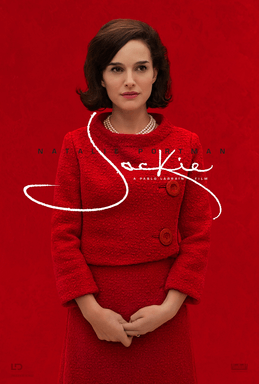
    A few years ago a friend of mine associated with the movie business sent me a very early draft of the film Jackie. Noah Oppenheim’s script was first scheduled as an HBO miniseries, with Steve Spielberg set to produce. But Spielberg then left the project. At the time I read the screenplay, Darren Aronofsky was attached to it as director. And at that time, his girlfriend Rachel Weisz was supposed to play Jacqueline Kennedy. When I got done reading the script my friend asked me what I thought of it. I said, not very much, it seemed kind of dull to me. But I told him I thought it would get made because an A list actress would do it just to get an Academy Award nomination.

    In the six-year journey from first draft to completed film, Wiesz and Aronofksy split up and she dropped out as lead actress. Aronofsky eventually dropped out as director. But he stayed on as a producer. And it is probably through him that Natalie Portman was brought in to play the lead. They were quite familiar with each other since he directed her in her Oscar winning role in Black Swan.

    The film essentially deals with the four days from November 22-25, 1963. John Reed called his book about the Russian Revolution Ten Days that Shook the World. This film depicts four days that shook the world. But since the picture is so narrowly focused on seeing those events through President Kennedy’s widow’s eyes, the full impact of those tumultuous days is never approximated, let alone felt. For instance, we get scenes with Jackie Kennedy talking to an expert on the Lincoln assassination memorial service since she wants to model her husband’s funeral on that event.

    WHTour1962
    Jackie Kennedy during filming
    of White House tour (1962)

    To my knowledge, Jackie Kennedy did three long interviews after the assassination concerning that event and her marriage. The interviewing authors were Arthur Schlesinger, William Manchester, and Teddy White. This film’s overall structure is based upon the long interview Jackie did with Teddy White for Life magazine after the assassination. (Although, to the best of my memory, in the draft of the script I saw, the interview was with Arthur Schlesinger.) There are numerous flashbacks from this interview, which takes place in Hyannis Port. The main flashback is to Jackie’s famous tour of the White House. This was a TV special, initially broadcast on CBS, and NBC on Valentine’s Day of 1962. The program was a milestone in that no First Lady had ever done anything like this before. Also, it was the first time America ever got a long look at the interior of the White House, which JFK solicited two million dollars in private donations for restoration in 1961. The CBS correspondent for the program was Charles Collingwood. The show was viewed by a domestic audience of 80 million, and was eventually broadcast in 50 countries.

    There are other flashbacks; for instance to the actual assassination of President Kennedy, the swearing in of Lyndon Johnson, and some Kennedy cultural/musical programs in the White House. But besides the White House tour, the other main flashback frame consists of the preparations for Kennedy’s funeral.

    LBJ at JFK casket
    LBJ at JFK casket
    in Capitol Rotunda

    After Kennedy’s body was placed in the East Room of the White House, his funeral became a two part public event, taking place on November 24 and 25. On Sunday the 24th, the casket was placed in the rotunda of the Capitol building. Hundreds of thousands lined up to pay their respects. This viewing was scheduled to close at 9 PM, but because of the huge lines of people waiting outside, it was extended into, first, the wee hours of the morning, and then well past dawn of the next day. The actual state funeral was held on the 25th. Over ninety heads of state flew in for the mass at St. Matthew’s Cathedral and then the final procession to Arlington National Cemetery. The heads of state included French president Charles DeGaulle, Canadian Prime Minister Lester Pearson and Ethiopian Emperor Haile Selassie. President Lyndon Johnson also attended, even though many in government worried about a possible assassination attempt. Approximately a million spectators lined this route.

    A bit more than a week later, on December 5, 1963 the two deceased Kennedy children were reburied with their father. These were Patrick, who had predeceased JFK by 15 weeks, and an unnamed stillborn daughter. The film specifically mentions this fact. The picture ends with Jackie and her children on the beach, and her remembrances of dancing with Bobby and Jack at the White House.

    As I recall that early draft by Oppenheim, it suffered from a lack of any real gripping drama. Depicting an interview with a journalist and then recalling a funeral and a White House tour does not make for a lot of wide-screen drama or visual dynamics.  Especially when millions of us have already seen both the funeral and the White House tour. Further, both are available on YouTube. The main conflict the early draft depicted was between the widow and LBJ’s assistant Jack Valenti and Lyndon Johnson himself. These concerned her control over the funeral and also how long she was going to stay at the White House after it was over. Although Oppenheim has said he did not change the screenplay very much in the ensuing drafts, I am not sure this is accurate. It appears to me that the final director, Pablo Lorrain, wanted to jab up interest in what was intended as and was better suited for a small screen TV project.

    To use one example, in watching the film, one would think that, out of the blue, in a moment of divine inspiration, it was Jackie Kennedy who was responsible for choosing the eventual burial site for JFK at Arlington National Cemetery. It is true that she made the decision to not bury John Kennedy in his home city of Brookline, Massachusetts. But first, Sargent Shriver, Kennedy’s brother–in-law and Peace Corps Director, and then both Secretary of Defense Robert McNamara and Attorney General Bobby Kennedy had much more to do with the choice of the ultimate burial site at Arlington than the film depicts. (Click here for details.)

    And although Jackie did have a lot to do with the funeral arrangements, she was not by any means the only person involved in them. Again, RFK and McNamara, and the Pentagon were involved with these arrangements – the last since there were enormous security worries about another assassination attempt, the two most considered targets being LBJ and, as the film, depicts, Charles DeGaulle. But in watching this film, all Bobby Kennedy does is recall certain things about this brother and his legacy, and tries to keep the murder of Oswald from the grieving widow.

    JackieClintRavello
    Jackie Kennedy & Clint Hill
    Ravello, Italy (1962)
    (credit: Lisa McCubbin)

    But if that were not enough, there is also a scene where Jackie calls in Secret Service agent Clint Hill to see her, to congratulate him for his attempt to protect her during the fusillade. And she tells him she wants to talk to the accused assassin Oswald. In all the years I had researched the JFK case, I had never read anything like this scene happening. But I was not an expert on the Clint Hill/Jackie Kennedy relationship. So I consulted with Secret Service authority Vince Palamara. After exchanging emails with him, he said he did not recall this scene being related in any of the books Hill has written or co-written. And certainly not a request to talk to Oswald. Also, since Hill had been assigned to the First Lady from right after the 1961 inauguration, the formality and rigid cordiality shown in this scene would very likely not have existed. Further, the film tries to convey the impression that Hill rode on the trunk of the limousine all the way to Parkland. Again, according to Palamara, this is not accurate. He eventually snuggled into the back seat. And beyond that, there is even a scene where Jackie tries to walk into the autopsy room but she is turned away. My understanding was that the Kennedy entourage waited in a room on one of the upper floors of the Bethesda Medical Center. But again, I decided to consult with Palamara, and he said this did not happen.

    There are further jarring lapses with the record. Near the beginning of the film, when LBJ is about to be sworn in on Air Force One after the assassination, Jackie is depicted in the bathroom, wiping oodles of blood off of her face before the ceremony. Again, I can remember no photo or witness testimony to this happening. Just as I can recall no photo or film depicting her with lots of blood on her face due to the assassination. And in case that particular blood motif is not enough for you, there is a scene when she arrives back at the White House and takes a shower. Director Lorrain shoots it from behind, and we see water tinged in pink pouring down her back. Does this mean her hair was also saturated with her husband’s blood?

    Towards the end Jackie makes a comment to the interviewer that JFK was not really with her the night before the assassination in Fort Worth. Again, this puzzled me. According to William Manchester’s book, The Death of a President, the couple was in their suite by about 9 PM that evening. And that information had to have been at least partly provided by Jackie Kennedy. (Manchester, p. 87)

    So again, as I asked with Steven Spielberg’s Bridge of Spies about the Rudolf Abel/Gary Powers spy exchange: Where are the History Idolators? That is, those commentators who jump out of their chairs and onto the newspaper pages whenever Oliver Stone makes a controversial historical film. Their sole purpose is to bash him for using an excess of dramatic license. Yet again, in this particular case, I have seen next to no objections about the Oppenheim/Lorrain use of the same devices. Why? I will keep on posing this question until someone gives me a formal answer. (Click here for the Bridge of Spies review.)

    As for the film itself, the first thing we see is a tracking shot of Jackie walking back from outside to the house in Hyannis Port as the interviewer arrives. From that instant I had doubts about Lorrain’s ability to control the material. That kind of Kurosawa/Bergman camera strophe was too heavy for an opening shot of a film like this, or for the simple movement of Jackie walking back to begin an interview. Lorrain then slams close up after close up at us during the actual interview itself. Which made the scene play like an inquisition, when, in fact, the content of the interview is not like that at all.

    But even more surprising was the lack of rigor Lorrain showed with his cast. Billy Crudup plays White. It is an uphill part since it is all done in reaction. It has to be worked out in patterns of facial response, and through the eyes. It’s the kind of subtlety that the late Oskar Werner excelled at. Crudup is nothing more than adequate. Peter Sarsgaard is Bobby Kennedy. Sarsgaard has given some interesting performances in the past, for example in Shattered Glass and The Dying Gaul. Which makes it hard to comprehend how undistinguished, how pallid he is as RFK. If you can recall how memorable and precise Donald Moffat was as Lyndon Johnson in Philip Kaufman’s The Right Stuff, then you will see how much is missing from John Carrol Lynch’s rendition of LBJ here. Even good British actors like John Hurt as a priest Jackie confides in and Richard Grant as William Walton do little more than read their lines and collect their paychecks.  The one qualitative exception in the supporting cast is Casper Phillipson.  This Danish actor is spot-on as President Kennedy.  So much so that I wish he had been in the film more.  He gives his rare and brief scenes some much needed vitality.

    There has been a kind of combination media/industry networking effort to promote the idea that Natalie Portman should rank with Betty Davis and Greta Garbo for her acting in the title role. To me, it was a pretty monochromatic performance. Portman looked at a lot of film in order to capture the subject’s voice. And she noticed that there was a difference between the one that Jackie used for the White House tour and that which she used in more personal interviews. She then grieves and weeps a lot throughout. The part, as perceived by the writer, is so limited that the performance seems to be pretty much technical in nature. Portman spends so much effort in perfecting the surface, that there is not much left to actually articulate a character. There isn’t anything here that a dozen other actresses could not have done, either as well or better.

    All in all, it was a flat and disappointing film. Whoever decided that this script needed to be played out on the wide screen of a darkened theater was simply wrong. It seems that the writer and director realized that mistake on the way to production. As noted above, they then tried to justify that decision. In this reviewer’s opinion, it did not work. What is left is little more than an Oscar vehicle for Portman. And considering the subject, that should not have been the case.

  • Jackie

    Jackie


    A few years ago a friend of mine associated with the movie business sent me a very early draft of the film Jackie. Noah Oppenheim’s script was first scheduled as an HBO miniseries, with Steve Spielberg set to produce. But Spielberg then left the project. At the time I read the screenplay, Darren Aronofsky was attached to it as director. And at that time, his girlfriend Rachel Weisz was supposed to play Jacqueline Kennedy. When I got done reading the script my friend asked me what I thought of it. I said, not very much, it seemed kind of dull to me. But I told him I thought it would get made because an A list actress would do it just to get an Academy Award nomination.

    In the six-year journey from first draft to completed film, Wiesz and Aronofksy split up and she dropped out as lead actress. Aronofsky eventually dropped out as director. But he stayed on as a producer. And it is probably through him that Natalie Portman was brought in to play the lead. They were quite familiar with each other since he directed her in her Oscar winning role in Black Swan.

    The film essentially deals with the four days from November 22-25, 1963. John Reed called his book about the Russian Revolution Ten Days that Shook the World. This film depicts four days that shook the world. But since the picture is so narrowly focused on seeing those events through President Kennedy’s widow’s eyes, the full impact of those tumultuous days is never approximated, let alone felt. For instance, we get scenes with Jackie Kennedy talking to an expert on the Lincoln assassination memorial service since she wants to model her husband’s funeral on that event.

    WHTour1962
    Jackie Kennedy during filming
    of White House tour (1962)

    To my knowledge, Jackie Kennedy did three long interviews after the assassination concerning that event and her marriage. The interviewing authors were Arthur Schlesinger, William Manchester, and Teddy White. This film’s overall structure is based upon the long interview Jackie did with Teddy White for Life magazine after the assassination. (Although, to the best of my memory, in the draft of the script I saw, the interview was with Arthur Schlesinger.) There are numerous flashbacks from this interview, which takes place in Hyannis Port. The main flashback is to Jackie’s famous tour of the White House. This was a TV special, initially broadcast on CBS, and NBC on Valentine’s Day of 1962. The program was a milestone in that no First Lady had ever done anything like this before. Also, it was the first time America ever got a long look at the interior of the White House, which JFK solicited two million dollars in private donations for restoration in 1961. The CBS correspondent for the program was Charles Collingwood. The show was viewed by a domestic audience of 80 million, and was eventually broadcast in 50 countries.

    There are other flashbacks; for instance to the actual assassination of President Kennedy, the swearing in of Lyndon Johnson, and some Kennedy cultural/musical programs in the White House. But besides the White House tour, the other main flashback frame consists of the preparations for Kennedy’s funeral.

    LBJ at JFK casket
    LBJ at JFK casket
    in Capitol Rotunda

    After Kennedy’s body was placed in the East Room of the White House, his funeral became a two part public event, taking place on November 24 and 25. On Sunday the 24th, the casket was placed in the rotunda of the Capitol building. Hundreds of thousands lined up to pay their respects. This viewing was scheduled to close at 9 PM, but because of the huge lines of people waiting outside, it was extended into, first, the wee hours of the morning, and then well past dawn of the next day. The actual state funeral was held on the 25th. Over ninety heads of state flew in for the mass at St. Matthew’s Cathedral and then the final procession to Arlington National Cemetery. The heads of state included French president Charles DeGaulle, Canadian Prime Minister Lester Pearson and Ethiopian Emperor Haile Selassie. President Lyndon Johnson also attended, even though many in government worried about a possible assassination attempt. Approximately a million spectators lined this route.

    A bit more than a week later, on December 5, 1963 the two deceased Kennedy children were reburied with their father. These were Patrick, who had predeceased JFK by 15 weeks, and an unnamed stillborn daughter. The film specifically mentions this fact. The picture ends with Jackie and her children on the beach, and her remembrances of dancing with Bobby and Jack at the White House.

    As I recall that early draft by Oppenheim, it suffered from a lack of any real gripping drama. Depicting an interview with a journalist and then recalling a funeral and a White House tour does not make for a lot of wide-screen drama or visual dynamics.  Especially when millions of us have already seen both the funeral and the White House tour. Further, both are available on YouTube. The main conflict the early draft depicted was between the widow and LBJ’s assistant Jack Valenti and Lyndon Johnson himself. These concerned her control over the funeral and also how long she was going to stay at the White House after it was over. Although Oppenheim has said he did not change the screenplay very much in the ensuing drafts, I am not sure this is accurate. It appears to me that the final director, Pablo Lorrain, wanted to jab up interest in what was intended as and was better suited for a small screen TV project.

    To use one example, in watching the film, one would think that, out of the blue, in a moment of divine inspiration, it was Jackie Kennedy who was responsible for choosing the eventual burial site for JFK at Arlington National Cemetery. It is true that she made the decision to not bury John Kennedy in his home city of Brookline, Massachusetts. But first, Sargent Shriver, Kennedy’s brother–in-law and Peace Corps Director, and then both Secretary of Defense Robert McNamara and Attorney General Bobby Kennedy had much more to do with the choice of the ultimate burial site at Arlington than the film depicts. (Click here for details.)

    And although Jackie did have a lot to do with the funeral arrangements, she was not by any means the only person involved in them. Again, RFK and McNamara, and the Pentagon were involved with these arrangements – the last since there were enormous security worries about another assassination attempt, the two most considered targets being LBJ and, as the film, depicts, Charles DeGaulle. But in watching this film, all Bobby Kennedy does is recall certain things about this brother and his legacy, and tries to keep the murder of Oswald from the grieving widow.

    JackieClintRavello
    Jackie Kennedy & Clint Hill
    Ravello, Italy (1962)
    (credit: Lisa McCubbin)

    But if that were not enough, there is also a scene where Jackie calls in Secret Service agent Clint Hill to see her, to congratulate him for his attempt to protect her during the fusillade. And she tells him she wants to talk to the accused assassin Oswald. In all the years I had researched the JFK case, I had never read anything like this scene happening. But I was not an expert on the Clint Hill/Jackie Kennedy relationship. So I consulted with Secret Service authority Vince Palamara. After exchanging emails with him, he said he did not recall this scene being related in any of the books Hill has written or co-written. And certainly not a request to talk to Oswald. Also, since Hill had been assigned to the First Lady from right after the 1961 inauguration, the formality and rigid cordiality shown in this scene would very likely not have existed. Further, the film tries to convey the impression that Hill rode on the trunk of the limousine all the way to Parkland. Again, according to Palamara, this is not accurate. He eventually snuggled into the back seat. And beyond that, there is even a scene where Jackie tries to walk into the autopsy room but she is turned away. My understanding was that the Kennedy entourage waited in a room on one of the upper floors of the Bethesda Medical Center. But again, I decided to consult with Palamara, and he said this did not happen.

    There are further jarring lapses with the record. Near the beginning of the film, when LBJ is about to be sworn in on Air Force One after the assassination, Jackie is depicted in the bathroom, wiping oodles of blood off of her face before the ceremony. Again, I can remember no photo or witness testimony to this happening. Just as I can recall no photo or film depicting her with lots of blood on her face due to the assassination. And in case that particular blood motif is not enough for you, there is a scene when she arrives back at the White House and takes a shower. Director Lorrain shoots it from behind, and we see water tinged in pink pouring down her back. Does this mean her hair was also saturated with her husband’s blood?

    Towards the end Jackie makes a comment to the interviewer that JFK was not really with her the night before the assassination in Fort Worth. Again, this puzzled me. According to William Manchester’s book, The Death of a President, the couple was in their suite by about 9 PM that evening. And that information had to have been at least partly provided by Jackie Kennedy. (Manchester, p. 87)

    So again, as I asked with Steven Spielberg’s Bridge of Spies about the Rudolf Abel/Gary Powers spy exchange: Where are the History Idolators? That is, those commentators who jump out of their chairs and onto the newspaper pages whenever Oliver Stone makes a controversial historical film. Their sole purpose is to bash him for using an excess of dramatic license. Yet again, in this particular case, I have seen next to no objections about the Oppenheim/Lorrain use of the same devices. Why? I will keep on posing this question until someone gives me a formal answer. (Click here for the Bridge of Spies review.)

    As for the film itself, the first thing we see is a tracking shot of Jackie walking back from outside to the house in Hyannis Port as the interviewer arrives. From that instant I had doubts about Lorrain’s ability to control the material. That kind of Kurosawa/Bergman camera strophe was too heavy for an opening shot of a film like this, or for the simple movement of Jackie walking back to begin an interview. Lorrain then slams close up after close up at us during the actual interview itself. Which made the scene play like an inquisition, when, in fact, the content of the interview is not like that at all.

    But even more surprising was the lack of rigor Lorrain showed with his cast. Billy Crudup plays White. It is an uphill part since it is all done in reaction. It has to be worked out in patterns of facial response, and through the eyes. It’s the kind of subtlety that the late Oskar Werner excelled at. Crudup is nothing more than adequate. Peter Sarsgaard is Bobby Kennedy. Sarsgaard has given some interesting performances in the past, for example in Shattered Glass and The Dying Gaul. Which makes it hard to comprehend how undistinguished, how pallid he is as RFK. If you can recall how memorable and precise Donald Moffat was as Lyndon Johnson in Philip Kaufman’s The Right Stuff, then you will see how much is missing from John Carrol Lynch’s rendition of LBJ here. Even good British actors like John Hurt as a priest Jackie confides in and Richard Grant as William Walton do little more than read their lines and collect their paychecks.  The one qualitative exception in the supporting cast is Casper Phillipson.  This Danish actor is spot-on as President Kennedy.  So much so that I wish he had been in the film more.  He gives his rare and brief scenes some much needed vitality.

    There has been a kind of combination media/industry networking effort to promote the idea that Natalie Portman should rank with Betty Davis and Greta Garbo for her acting in the title role. To me, it was a pretty monochromatic performance. Portman looked at a lot of film in order to capture the subject’s voice. And she noticed that there was a difference between the one that Jackie used for the White House tour and that which she used in more personal interviews. She then grieves and weeps a lot throughout. The part, as perceived by the writer, is so limited that the performance seems to be pretty much technical in nature. Portman spends so much effort in perfecting the surface, that there is not much left to actually articulate a character. There isn’t anything here that a dozen other actresses could not have done, either as well or better.

    All in all, it was a flat and disappointing film. Whoever decided that this script needed to be played out on the wide screen of a darkened theater was simply wrong. It seems that the writer and director realized that mistake on the way to production. As noted above, they then tried to justify that decision. In this reviewer’s opinion, it did not work. What is left is little more than an Oscar vehicle for Portman. And considering the subject, that should not have been the case.

  • Caroline Kennedy: JFK wouldn’t have escalated US in Vietnam

    , At: CNN Politics

  • The MSM and RFK Jr.: Only 45 years late this time

    The MSM and RFK Jr.: Only 45 years late this time


    The evidence at this point I think is very,
    very convincing that it was not a lone gunman.

    Robert F. Kennedy Jr.
    Jan. 11, 2013


    On the evening of January 11th, Charlie Rose interviewed Robert Kennedy Jr. and his sister Rory in Dallas at the Winspear Opera House. This was part of Mayor Mike Rawlings hand chosen committee’s year long program of celebrating the life and presidency of John F. Kennedy. In fact, Rawlings introduced the program. He probably did not like how it turned out, for during this interview Kennedy Jr. said that his father thought the Warren Report was a “shoddy piece of craftsmanship” and he was “fairly convinced” that others were involved. Robert Jr. himself thought that the evidence in the JFK case, “…at this point I think is very, very convincing that it was not a lone gunman.”

    To my knowledge, this is the first time that a member of the Kennedy family has stated these sentiments in public. Kennedy Jr. went further and backed up the idea, widely held by many that RFK “publicly supported the Warren Commission report but privately he was dismissive of it.” He added “He was a very meticulous attorney. He had gone over reports. He was an expert at examining issues and searching for the truth.”

    RFK, JR. Charlie Rose
    The Associated Press

    Once this story hit the wires, it created a mini-sensation. Cable and network news programs did segments on it; hundreds of Internet outlets and newspapers carried the story. This really sums up how cloistered and controlled our news media is even today, with cable channels and the Internet now on the scene. The only thing new about this story is what I mentioned above: the fact that a member of the Kennedy family was saying it in public. As of this writing, there is no official transcript available of this interview, nor is there an audio or videotape which seems odd since it was recorded in front of cameras. Since Dallas Mayor Rawlings was there as the taboo subject was mentioned maybe it is not so odd. But clearly, people should contact Rawlings’ office and ask that this interview be placed on the web immediately. Therefore, people can write articles based upon the actual exchange instead of reporters’ stories about the exchange.

    The fact that RFK did not buy into the Warren Report, and he only endorsed it in public for political reasons, this has been established for quite some time. In 2007 David Talbot, in his book Brothers, clearly showed that Bobby Kennedy never bought into the Oswald-did-it line. That from the moment he learned of his brother’s death he suspected a plot had been behind it. (Click for a review)

    He “publicly supported the Warren Commission report but privately he was dismissive of it.” He added “He was a very meticulous attorney. He had gone over reports. He was an expert at examining issues and searching for the truth.

    RFK, Jr. about his father Robert Kennedy

    A decade previous to Talbot, in 1997, Tim Naftali and Aleksandr Fursenko published the fine book, One Hell of a Gamble,a study of the Missile Crisis from the Russian point of view. In that volume, the authors first wrote about William Walton’s now famous mission to Moscow in 1964. Walton was ostensibly going as a goodwill ambassador for cultural exchanges, but his real objective was to carry a message to Nikita Khrushchev from Robert and Jackie Kennedy. That message was that, although the American media had jumped on this lone gunman idea, they thought that President Kennedy had been killed by a domestic conspiracy… one that was politically motivated from the rightwing. That because of this assassination, the attempts at détente that Kennedy and Khrushchev had made would now have to be placed on hiatus. Johnson was much too pro-big business to pursue that ideal. Therefore, RFK would soon resign. When he became president, the effort at reconciliation would then continue. (Talbot, p. 12)

    However, way before that book, there had been instances during Jim Garrison’s inquiry into the Kennedy assassination that indicated Robert Kennedy was quite interested in what the New Orleans DA was uncovering. In this author’s current book, Destiny Betrayed (Second Edition) I note an instance where RFK was in California staying at a friend’s house in 1968. Family friend Mort Sahl was also there. That night, Sahl had to leave for a performance. When he got back, his then wife told him that RFK peppered her with questions about what Garrison was digging up. (Sahl was working for Garrison.) Richard Lubic, a campaign worker for Bobby Kennedy in 1968 told another Garrison investigator, Bill Turner, that RFK said that if he were elected president, he would like to reopen the Warren Commission inquiry. (Talbot, p. 359) In Harold Weisberg’s original manuscript of Oswald in New Orleans, he wrote about being in contact with someone in Bobby Kennedy’s 1968 campaign. He communicated to Weisberg that RFK had real doubts about the Warren Commission. Weisberg told his contact if this were the case RFK should voice his concerns in public, making sure he would not be assassinated because of his belief. After Bobby was killed, Weisberg wrote that never was a seer less happy with the fulfillment of his prophecy.

    In other words, anyone looking for evidence of this could have found it many years previous. Only in our media, especially in the MSM, could any such story be considered news. From a sociological point of view it is interesting to note two factors that figured in the reaction.

    Charlie Rose has built a career out of being the alleged thinking man’s talk show host and he actually began hosting such programs on Dallas’ KXAS-TV in the seventies. He then worked for CBS News in the eighties and began the present version of his talk show on PBS in the nineties. But while doing his show he also worked for the CBS program Sixty Minutes II from 1999 until 2005. Therefore Rose was the perfect choice from the Dallas power elite point of view. All this would indicate that he is pretty much a canned establishment figure. How much of an establishment figure is he? Well, he has attended several Bilderberg Conferences of late. His second wife is the stepdaughter of CBS founder Bill Paley. It will be a cold day in Hades if one ever catches anything on his snooze fest that seriously counters the established American Conventional Wisdom. Therefore Rose was the perfect choice from the Dallas power elite point of view.

    Consequently, when his guest began uttering such heresies in public, Rose automatically kicked into damage control mode. When the son mentioned that his father went into a long funk after JFK was killed, Rose (understanding his next ticket to a Bilderger Conference depended upon his stemming this tide) quickly suggested if this was because RFK felt “some guilt because he thought there might have been a link between his very agressive efforts against Organized Crime?”. This question was, of course, an attempt to simultaneously:

    1. Turn the crime inward on the Kennedy clan by focusing on RFK’s ambitious drive against the Mafia, and
    2. Pin the assassination on an acceptable culprit. One made acceptable by the likes of Robert Blakey, namely the Cosa Nostra.

    Rose’s response was unwarranted. There are any number, or even combination of reasons RFK may have sunk into emotional quicksand. As indicated above, he clearly understood that his brother’s large and looming foreign policy agenda would now go unfulfilled. RFK may also have come to an understanding, realizing the enormous pressure now placed upon him, to become something he was not: a political candidate. He also had to have realized that, in fact, he had no choice but to do so because his power base had now been pretty much circumscribed by President Johnson and J. Edgar Hoover. In fact, this idea was mentioned by the son when he said, “As soon as Jack died, he lost all his power.” Further, after this point, Hoover “never spoke to him again.”

    But RFK Jr. then returned to this Mafia theme when he said one of the things that pricked his father’s curiosity was the phone records of Oswald and Ruby. These contained many calls to organized crime figures. Therefore, his father “was fairly convinced at the end of that there had been involvement by somebody.” Again, Rose jumped in and did his bit: “Organized crime, Cubans.” To which, RFK Jr. (thankfully) replied, “Or rogue CIA.”

    Rose’s initial reaction was the first attempt to channel the story down a certain acceptable path. Rawlings’ decision not to release a recording is another. But the third is the reaction of the Dallas Morning News to it. In about one week they wrote three articles based on the interview. In these articles, dating from January 11th to the 14th, the paper consulted with their official propaganda mouthpiece Gary Mack. Mack tried to cast aspersions on the credibility of RFK Jr. by saying that there really could not be any Oswald phone calls since there is no record of him having a personal phone service. Bill Kelly quickly and effectively countered this deliberate obfuscation. (http://jfkcountercoup.blogspot.com/2013/01/oswald-and-ruby-phone-records-rfk-jr.html) One of the Morning News writers, Rodger Jones, then tried to confuse things even further by saying that, well, RFK Jr. said that Bobby’s interest first began during the Garrison inquiry. Yet, according to David Talbot, Bobby Kennedy actually started his inquiry back in 1963. This spin control ignores two things: 1.) According to Garrison volunteers, like Mort Sahl, the Attorney General clearly did have an interest in Garrison’s investigation, and 2.) Since RFK Jr. was still something of a child in 1963, it is much more likely that four years later, as an adolescent, he would more clearly recall such a matter.

    In further comments, Mack said that it appears that some members of the Kennedy clan have decided to say one thing in public, “But apparently, privately, some members. . . have raised questions about areas of the assassination.” Well, from the material I have presented here, its pretty clear that the Kennedy family did have doubts from a very early date. In fact, we can go back even further, to Arthur Schlesinger’s massive biography of the Attorney General, Robert Kennedy and His Times. In that biography, published back in 1978, Schlesinger made clear that Kennedy thought the Warren Report was a subpar and unsatisfactory effort. And further that CIA Director John McCone told him that two assassins were involved in the shooting. (pgs. 643-44)

    Further demonstrating how only in the MSM can the fairy tale exist that RFK and the Kennedy family abided by the Warren Commission, consider the words of Kennedy cousin Kerry McCarthy to Debra Conway in 1997. McCarthy was a speaker at Lancer’s November in Dallas conference. She told Conway that, whatever the Kennedys say in public about the JFK murder, when you visit their homes, you will see several of the JFK assassination books lining their shelves.

    Chris Lawford, son of Peter Lawford and Pat Kennedy, more or less explained why this was so. In his book, Symptoms of Withdrawal, he wrote that the day after the assassination, “I woke up [and] found my father sitting at the flagpole where I used to raise the presidential flag when Uncle Jack came to visit. He was crying like a baby. Strangers held a vigil on the beach outside my parents’ house for days after the assassination.” Pat Kennedy now started drinking with a new seriousness, and the couple was divorced shortly afterwards.

    It takes a long time to come to grips with that kind of pain. And who wants to deal with it in public? At this talk, Robert Jr. finally did. He also praised one of the books the clan had on their shelves, JFK and the Unspeakable by James Douglass. This is one of the few books on the case that has managed to make its way out of the JFK assassination niche. It has sold well now for four years, and there are now over 100,000 copies of it for sale in various formats, including audio book. Bobby Kennedy Jr. liked this book so much that, after he read it, he called Douglass and congratulated him on a job well done. Maybe that was the first sign of recovering from a family trauma that has lasted for well over four decades. And maybe now the MSM can wake up and say, well, if the Attorney General thought the Warren Report was shot full of holes, maybe it was. Thanks to his son for making that moment possible.

    As mentioned above, the fact that this interview is not on the Internet is a disgrace. Please contact Mayor Mike Rawlings and tell him that, in the interest of democracy, history, and proper journalism, it should be posted immediately.

    Phone: 214-670-4054

    Fax: 214-670-0646

    Address: Dallas City Hall, 1500 Marilla Street, Room 5EN, Dallas Texas, 75201

    or send an email to Chris Heinbaugh, Vice President of External Affairs | AT&T Performing Arts Center

    ~Jim DiEugenio


    Articles online:


  • David C. Heymann, Bobby and Jackie: A Love Story


    As a researcher into a controversial subject – the assassinations of the sixties – people often ask me this question: How do you know which sources to believe and which to disbelieve?

    My answer is this: When you read an author for the first time, check every single fact you don’t already know from elsewhere. If a nonfiction book isn’t even footnoted, it’s not worth your time other than as a source of leads you’ll have to check out on your own. Leads are not data. They are only possible data.

    Hearsay, what someone said when they were not under oath, when nothing was at risk for them personally, I also treat as a lead, not data. Personally, I don’t trust interviews much because people often misremember things, or enhance or embellish the truth, sometimes without realizing it. And some will simply lie for their own reasons, and none of us is so good that we can “just tell” who is lying or not. But by interviewing people you can sometimes get a lead on data for which there is some sort of a verifiable paper trail. And that can be valuable.

    If the book is footnoted, check out the footnotes. And I mean, really check it out – don’t just see if there is a footnote. Go to the library, go to the book referenced, go to that page number, and see if the note is correct. Was the correct reference on that page? Or did the author miss it? (Sometimes book pages change from one printing to the next so check a few pages on either side of the reference in case it’s nearby.)

    Most important, check to see if what is in the footnoted text is accurately represented. I’ve gone through people’s footnotes and found sometimes, to my dismay, that the author misread the original text or is deliberately misrepresenting it.

    What about things you can’t check out, like interviews with people? Then two additional considerations come into play: the credibility of the person being interviewed, and the reliability of the interviewer. Did either person have a reason to lie? Did either person work for an intelligence service, a career which requires one to lie well? Have they lied or misquoted people in the past?

    It is with these considerations in mind that I read C. David Heymann’s latest book, Bobby and Jackie: A Love Story. If I had to describe the book in a single word it would be this: puerile. But because this book has gotten so much media attention, I will say more than one word. And because the book depends nearly entirely on hearsay, I have to examine the overall credibility of the author, as well.

    When I started reading the book, I tried to look up certain items to find Heymann’s source. There were some footnotes, to be sure, but never for the items that interested me. Instead, he sourced the book generally, chapter by chapter, to a list of interviews conducted by Heymann and his researchers. Lacking access to those, the only way for me to evaluate the credibility of Heymann’s claims of a so-called love affair between Bobby and Jackie was to evaluate the credibility of Heymann himself.

    I’ve been researching Robert Kennedy for years. Early on, I picked up Heymann’s book RFK: A Candid Biography of Robert F. Kennedy. At the time, I knew nothing about Heymann. I was writing about Robert Kennedy’s ride to the Ambassador Hotel – a moment of no particular consequence. I just wanted to get the time correct and to quote something ironic that had been said on the drive.

    Here is what Heymann wrote for this episode:

    At six-fifteen, Kennedy and Dutton were driven by John Frankenheimer from Malibu to the Ambassador Hotel. … As Frankenheimer cruised along the Santa Monica Freeway, attempting to make the thirty-minute trip in half that time, Bobby said, “Hey, John, take it slow. I want to live long enough to enjoy my impending victory.”

    The footnote for the above said this:

    “At six-fifteen”: Schlesinger, RK, p. 980.

    If you go to page 980 in Arthur Schlesinger’s book Robert Kennedy and his Times, you find nothing but a page of footnotes with no reference to those events. But a page number mistake is easy to make – and it was easy enough to find the correct page. So I wasn’t going to be too hard on Heymann for such a simple error. I looked up “Frankenheimer” in Schlesinger’s book to get the correct page (p. 913), and found this text:

    About six-thirty Frankenheimer drove him to the Hotel Ambassador. He sped furiously along the Santa Monica Freeway. “Take it easy, John,” Kennedy said. “Life is too short.”

    Schlesinger sources this quote to Robert Blair Kaiser’s book R.F.K. Must Die!, page 15. Schlesinger’s quote of what Kennedy said exactly matches the original in Kaiser’s book, whereas Heymann’s strange misquote added a touch of arrogance (“my impending victory”). Heymann evidently improvised his version, and moved the time he explicitly footnoted up fifteen minutes for no apparent reason. Add that to the wrong page number, and for this inconsequential item, Heymann managed to make three mistakes. That’s way too high an error ratio for me. If he could make three errors on something so simple, what would he do with things more controversial or complex? At that point, I put away Heymann’s book, realizing it would be worthless to my research.

    Had I read further, I would have seen Heymann fabricating events from whole cloth. For example, on page 361 in his RFK book, Heymann wrote something wildly untrue:

    [I]n May 1997, Gerald Ford publicly admitted that in 1975, while president of the United States, he had suppressed certain FBI and CIA surveillance reports that indicated that JFK had been caught in a crossfire in Dallas, and that John Roselli and Carlos Marcello had orchestrated the assassination plot.

    Gerald Ford never said any such thing. What Gerald Ford did say in 1997 was in response to a document that surfaced showing it was his edits that changed the wound from Kennedy’s “back” to the “back of the neck,” a change of verbiage that managed to move the wound up five inches to support the single bullet theory. Never mind that the shirt (which was fitted and could not have bunched up five inches, as some have suggested) showed a bullet hole well down the back and definitely not in the “back of the neck.”

    Here is the passage from the 1997 AP report regarding Ford’s public comment:

    Thirty-three years ago, Gerald R. Ford took pen in hand and changed – ever so slightly – the Warren Commission’s key sentence on the place where a bullet entered John F. Kennedy’s body when he was killed in Dallas.

    The effect of Ford’s change was to strengthen the commission’s conclusion that a single bullet passed through Kennedy and severely wounded Texas Gov. John Connally – a crucial element in its finding that Lee Harvey Oswald was the sole gunman.

    A small change, said Ford on Wednesday when it came to light, one intended to clarify meaning, not alter history.

    “My changes had nothing to do with a conspiracy theory,” he said in a telephone interview from Beaver Creek, Colo. “My changes were only an attempt to be more precise.”

    So Heymann is freely mixing a real event (Gerald Ford’s public comment) with a fictional one (admitting to participating in a cover-up and naming Roselli and Marcello as the conspirators).

    How could Heymann be so wrong? Heymann wouldn’t deliberately lie, not in a nonfiction book, right?

    Wrong. Heymann not only would, he does, and provably so, right on the book’s dust jacket. Under Heymann’s picture, Heymann is described as a three-time Pulitzer Prize nominee. Finding that impossible to believe, I decided to check it out. As I suspected, Heymann was never nominated for any award by the Pulitzer Prize committee. The Pulitzer Prize committee goes to some trouble to ensure that nominees, called “finalists,” are listed on their Web site. Heymann is not there.

    Was it possible that Heymann pulled one over on his editor? I had to find out, so I contacted his current editor, Emily Bestler, at Atria Books, a subsidiary of Simon and Schuster. It never occurred to me that an employee of a Simon & Schuster property would knowingly perpetrate a fraud regarding one of their writers. How naive I was.

    When I queried Bestler about the fact that he was not listed as a Pulitzer Prize nominee on the Pulitzer Prize committee’s site, Bestler explained that his previous publishers had submitted his books for nomination.

    Now, I don’t know about you, but no one in Hollywood would dare call themselves an Academy Award nominee just because their agent submitted their reel to the Academy. They’d be laughed out of the business. The agent and actor would both lose all credibility.

    The same should be true in the publishing world. You can’t seriously claim to be a nominee just because your book, along with thousands of others, was sent to the Pulitzer committee. That’s patently ridiculous. Any author anywhere on the planet could then send in their book and claim the same. Is this the industry’s dirty little secret? Is this a widespread practice?

    I emailed the Pulitzer Prize Web site asking what the Pulitzer Prize committee does when someone claims to be a “nominee” when they’ve only been submitted for nomination. Claudia Weissberg, the Web Site Manager for the Pulitzer Prize committee, wrote back:

    Occasionally when we see misapplication of the term “nominated”, we send a straightforward message informing an author about the misstep and usually get compliance. Also, when people contact us to confirm such a claim, we try to set them straight. Unfortunately, our staff of four is too busy with other things to regularly police the situation.

    So the next time you see someone claiming to be a “Pulitzer Prize Nominee,” don’t believe it until you first confirm it for yourself. (Search www.pulitzer.org. If the author was truly a nominee or an award winner from the year, they will show up in the search, and the date and name of their nomination or prize will be listed. Gus Russo, author of Live By the Sword: The Secret War Against Castro and the Death of JFK, has also misused that term, claiming to be a nominee when he, too, was merely an entrant.) You would think some “truth in advertising” statute should apply here to protect consumers. Whatever else it is, it’s simply dishonest, on any level, and shame on Heymann and Bestler for participating knowingly in a deliberate deception. Shame on Atria Books. Shame on Simon and Schuster for misusing the prestige of the Putlizer Prize to sell some books.

    Why do I spend so much time on this false claim? Because if one is willing to lie about themselves to enhance the sales of their book, what else might they be willing to lie about?

    That question should be foremost in mind when reading Heymann’s book Bobby and Jackie because we, the readers, are not in a position to check the factual accuracy of his most sensational claims. First of all, the most outrageous claims are not footnoted specifically, but sourced generally to people who are now dead. We can’t go question them to see if Heymann quoted them accurately. So how can we check this out?

    We have to go back to Heymann’s past work, and hear from people he has quoted in the past, to assess his accuracy with people when they were living. As it turns out, credibility has long been an issue for Heymann.

    In his book Poor Little Rich Girl: The Life and Legend of Barbara Hutton, about the famous Woolworth heiress, Heymann inaccurately accused a doctor in Beverly Hills of overprescribing drugs for Ms. Hutton. The accused doctor was provably only 14 years old at the time and incapable of prescribing drugs for anyone, and sued Random House. Random House hesitated. They were not eager to destroy a book that had all the markings of a bestseller. After all, the film rights had already been optioned for $100,000.

    Heymann blamed the mistake on one of his researchers, and was upset when Random House held him, the author who had received the $70,000 advance for the book, accountable.

    Shortly after the doctor’s suit, Ned Rorem, an author and composer, pointed out that Heymann had lifted a passage from one of Rorem’s own books and attributed it to Hutton. That was enough, for Random House. The publisher recalled the book and destroyed all copies.

    Heymann was so depressed at this episode, which threatened to destroy the only career he’d ever loved, that he attempted suicide. He then changed his mind, sought emergency medical treatment, and headed to a Manhattan psychiatrist.

    How was it that Random House didn’t review the book for accuracy? The publicity director said Random House relied on Heymann’s assurances of accuracy. (Emily Bestler, his current editor, told me the same thing, that she never questioned him about his sources, never did any independent verification. “He’s the expert,” she said in all seriousness, the irony of which you will understand by the time you finish this review.)

    Heymann’s troubles with the Hutton book were still expanding. As reporter Curt Suplee described in his Washington Post article “The Big Book That Went Bad” (Feb. 8, 1984), “Meanwhile, the unthinkable got worse. Another author cried foul; some of Hutton’s longtime chums claimed they had never seen her keep notebooks; several people quoted in the book either denied that they had been interviewed or disowned the quotations. And in Los Angeles, some old Hutton hands openly doubted that Heymann – who says he conducted six weeks of intermittent interviews with the enfeebled heiress during 1978 – ever met her at all.”

    Heymann said he made no tapes of these alleged conversations, but that he could prove his presence there in a court of law if he had to. (In a separate interview, Heymann said the only person who could verify he conducted the interviews with Hutton was his wife.) No one put that claim to the test, although Manhattan District Attorney Robert Morganthau’s office did investigate Mr. Heymann for fraud. (No indictment was ever issued from Morgenthau’s investigation.)

    A handwriting expert determined that the so-called “diary” (a collection of notebooks and scribblings on random pieces of paper) was not from Hutton. Regarding the authenticity of the handwriting, Suplee noted, Heymann displayed “photocopies of letters Hutton wrote decades ago in an idiosyncratic, loopy script; and apparently more recent sheets of embossed letterhead stationery on which incoherent, broken sentences are printed in big block letters. How could both be written by the same hand? ‘They were written many years apart,’ Heymann says. ‘I didn’t question it.’” Sadly, neither did his editors. Fortunately for history, however, some reporters did.

    David Johnston, a reporter for the Los Angeles Times, said the Times contacted several of Heymann’s alleged sources in an attempt to verify Heymann’s work. Most of the sources were long dead, but a few were still alive.

    Of the nine people contacted, all nine seriously disputed Heymann’s accuracy.

    Seven of the nine said they never spoke to Heymann or his researchers. Heymann told the Times he had taken their anecdotes from Hutton’s notes and that neither he nor his researchers had contacted those people. Heymann claimed to Suplee, however, that these people had spoken with his researchers, which contradicts his earlier statement that he had gotten the anecdotes from the disputed journal entries. The eighth person said that, while part of what was quoted was true, nearly a page-worth of quotes attributed to that person were false. The ninth said he had been contacted by an aide of Heymann’s, but refused to be interviewed. (Los Angeles Times, Dec. 24, 1983)

    Johnston also noted that one lengthy anecdote in the book involved a physician who didn’t exist. Heymann explained that he used fictitious names in the book “in five or six cases.” The book, however, contains no disclaimer indicating that any fictitious names were used. And in a later interview with the Washington Post, Heymann changed the number of fictitious names used to two. “That’s not such an unusual ploy, is it?” Heymann asked the reporter. But, of course, it is. Nonfiction is supposed to be truthful in all aspects, with no made-up names, or, if necessary, with pseudonyms clearly identified as such.

    When asked if he had alerted his editor at Random House to the fact that he had used false names, Heymann said, “Yeah – it would have been impossible otherwise.” According to Suplee in the Post, “a company spokesman denies that Heymann said anything about fictitious names or mentioned that he would be using researchers for the preponderance of the interviews.” “Clem was not forthcoming,” said Heymann’s agent Peter Matson, “about the way he was working.”

    Heymann even dared blame his editor for not insisting on the use of a pseudonym for the doctor who ended up suing. “It seems to me an experienced editor would have said, ‘why use this guy’s real name? Why not use a pseudonym?’” (Wash. Post, Feb. 8, 1984)

    Philip Van Rensselaer, a one-time escort of Hutton’s, told the Post he was thinking of suing Heymann for plagiarism, saying Heymann had copied dozens of sentences from his own biography of Hutton. Heymann had quoted a news article from Van Rensselaer’s book without verifying its accuracy. Van Rensselaer had actually embellished the news item, itself a violation of journalistic standards. Yet Heymann had quoted it verbatim as if it was an actual news item, showing how poor a researcher he is.

    It’s odd, in retrospect, that Random House was so incurious about Heymann’s accuracy, given that his two previous works by that time had already been challenged for accuracy. Had they actually bought Heymann’s claim that, after any nonfiction book is published, “eight out of ten people will deny what they said”? That may be the standard for a Heymann book (and with good reason, if they didn’t, in fact, say what was quoted), but he presents no evidence to support that claim on behalf of other nonfiction authors.

    Random House’s spokesperson told the Post that Random House had been unaware of the problems with Heymann’s earlier books. The Village Voice had given Heymann’s 1980 book American Aristocracy: The Lives and Times of James Russell, Amy and Robert Lowell a “Most Mistakes Medallion” for the huge number of inaccuracies in that volume.

    One of Heymann’s earliest books was on the poet Ezra Pound, who happened to be a close friend of none other than the CIA’s former counterintelligence chief James Angleton. Heymann claimed he had interviewed Pound just before his death, which would have been at least four years before Heymann’s book was published. Time magazine lauded Heymann’s book, calling it “The most harshly realistic portrait of the poet so far produced.” But in 1983, a noted Pound scholar, Professor Hugh Kenner of John Hopkins University, accused Heymann of claiming someone else’s interview with Pound as his own. Heymann dismissed the charge, claiming Kenner was retaliating against Heymann for a negative review Heymann had given to Kenner’s book. Both offered to take and pass a lie detector test supporting their view in this matter. (Wash. Post, Dec. 21, 1983)

    In the wake of the problems resulting from the serious examination of his Hutton book, Heymann moved to Israel where, according to Heymann, he joined the Mossad. The Hutton book was eventually republished by Lyle Stuart (after Heymann rewrote nearly a third of it) and was made into a television miniseries.

    Since Heymann was never really punished for his lax standards, if not outright dishonesty, is it any surprise the errors and misrepresentations continued in subsequent works?

    When Heymann’s book A Woman Named Jackie: An Intimate Biography of Jacqueline Bouvier Kennedy Onassis, came out, Mike Wilson of the Miami Herald did an in-depth review, similar to what the Los Angeles Times and Washington Post reporters had done with the Hutton book. Wilson opens his review with this:

    C. David Heymann has called his book “A Woman Named Jackie” “a search for the real Jackie Kennedy.”

    Sometimes, it seems, the author didn’t search farther than his own bookshelf.

    Wilson goes on to quote a passage from Kitty Kelley’s earlier biography of Jackie, and compares it to Heymann’s. It’s not a direct copy, but it’s a very similar passage. He does this again with a passage from Ralph Martin’s book and compares it to Heymann’s passage, which is even more similar than the first example.

    Wilson also noted that Heymann lifted material from one of Jack Anderson’s columns. “No question about it. It’s obvious. That’s outrageous,” Wilson quotes Anderson as saying. (Heymann’s publicist Sandra Bodner tried to explain this away by suggesting the story was perhaps told to Heymann by Anderson’s source in exactly the same words.)

    Wilson notes some of the key allegations in the book, but adds, “much in the book is not new. And much, Heymann’s sources are saying, is not true.” For example, Larry O’Brien challenged several remarks in the book, telling the Miami Herald he had never said those things. And worse, Heymann has O’Brien essentially lying, saying something O’Brien couldn’t, wouldn’t have ever said because he’d already said the opposite in his own book! (Heymann claimed O’Brien said he refused to speak to Lyndon Johnson on the plane back from Dallas after Kennedy had been assassinated. But in O’Brien’s own book he noted he spoke to Johnson twice on the plane – once on the ground in Dallas and a second time in the air.)

    The first time I cracked Heymann’s book on Jackie open, I randomly turned to a page where a name caught my eye. Heymann quotes “James T. Angleton, director of covert operations for the CIA” talking about Mary Meyer. Surely he meant James J. Angleton, director of counterintelligence for the CIA. But it’s no wonder he got the name and title wrong. When I checked the footnotes, there was no source for the Angleton quote listed, and, according to the footnotes, Heymann sourced no interview with Angleton for that chapter. So whom was he quoting? What source gave him that Angleton quote about Meyer? How could his editor, Allan Wilson, have missed the fact that there was literally no source for that quote? That wouldn’t pass muster in a History 101 course. I had expected more from publisher Lyle Stuart, Heymann’s post-Random House sponsor.

    Heymann does get Angleton’s full middle name correct in his book The Georgetown Ladies’ Social Club: Power, Passion, and Politics in the Nation’s Capital. Unfortunately, according to Washington Post reporter Roxanne Roberts, the book had little to recommend it. Roberts opens with this line:

    There are lies, damn lies, and statistics … and autobiographies, biographies and books by C. David Heymann.

    As with so many before her, Roberts describes Heymann’s work as “unfettered by live subjects,” noting,

    This makes it harder to determine what is true and what is not, assuming one cares about those things. “When you write about people who are dead, you’re libel-proof,” author Kitty Kelley says. “They can’t sue and neither can their families. It just breaks your heart sometimes.”

    When Heymann wrote Liz: An Intimate Biography of Elizabeth Taylor, he told the press that “discussions will continue” with Liz Taylor about whether she would approve the biography as official. But Taylor’s representatives responded they had never been in touch with Heymann and that she would definitely “not be participating” in his project. (Wash. Post, Aug. 15, 1989)

    You would think Heymann would have learned some serious lessons about checking facts, not relying on researchers, verifying everything, and heeding the notion that extraordinary claims deserve extraordinary evidence. You would be so wrong.

    Heymann came under the scrutiny of New York Observer reporter Andrew Goldman when, in the wake of John Kennedy Jr.’s death, Heymann put out the story that John hadn’t wanted to fly to Martha’s Vineyard, but that his wife made him do it. (See Goldman’s article detailing challenges to Heymann’s credibility with several of his books here: http://www.observer.com/node/41806.)

    In the wake of John’s death, Heymann had told Cindy Adams, a New York gossip columnist, that Heymann had just spoken to John a few weeks before his death, and that John had complained about having to drop his wife’s sister off in Martha’s Vineyard the day his plane went down.

    Curiously, this is the same Cindy Adams I wrote about years ago, who wrote a biography of the Indonesian President Sukarno during the period in which the CIA was trying to overthrow him, and the same Cindy Adams who interviewed the Shah of Iran in his last days – the man the CIA had installed as the leader in Iran after overthrowing Iran’s democratically elected leader Mossadegh in 1953. Cindy wrote that Heymann was a frequent source of hers.

    Cindy’s story put Heymann in Rupert Murdoch’s New York Post, and got him interviews on Chris Matthews’ MSNBC show Hardball, among others.

    Heymann claimed to have had a ten-year relationship with John. But, as with the Hutton stories, people close to John found that impossible to believe. No one at John’s magazine George knew of any association. John’s appointment secretary had no appointments with Heymann listed.

    The only person Goldman could find to in any way corroborate an acquaintance between Heymann and John was Heymann’s girlfriend, who claimed only to have seen a man from behind as he departed whom Heymann told her had been John.

    Even Cindy Adams came to believe Heymann had lied to her, and issued a probable mea culpa to her readers, having been assured by the Kennedy clan that Heymann had never spoken to John (New York Post, July 29, 1999). Indeed, it is hard to believe on the face of it that John would have spoken one word to the guy who had trashed his parents in print.

    So who is Heymann? What drives him? His father was a German Jewish novelist, who fled the Nazis with his wife and came to New York in 1937. There, the family entered the hotel business, and Heymann sometimes worked behind the desk. Suplee quotes Heymann as saying, “When I looked at these people coming and going, I always made up imaginative stories of how fascinating their lives were.”

    After the Hutton episode, Heymann expressed a desire to write a novel based on his experiences with the book “to examine myself as if I were a biographical subject.”

    Did he really join the Mossad? If so, why does he openly acknowledge it? Isn’t that, like the CIA, the kind of organization you cannot admit to being a member of?

    And now we come, at last, to the book I started out to review: Heymann’s Bobby and Jackie: A Love Story. I submit that even the title is false, because Heymann doesn’t even attempt to paint a love story. He paints a lust story, and a lopsided one at that. And really, the title should have been: Heymann and the Kennedys: A Hate Story. That would have been a more honest description of the book.

    Heymann goes after nearly all the Kennedys, starting with the father, who he accused of being an “ardent admirer of the Third Reich,” a gross misrepresentation of Joe Kennedy’s views. Joe was an ardent pacifist, who feared that another world war would bring socialism not just to more of Europe, but to America as well. For his reluctance to go to war, or, as historian Will Swift puts it, for his willingness to explore every avenue for peace, he was branded an appeaser. And for that, people made the leap that an opponent of war was a friend of Hitler, when in fact that is an unjustified leap. Those of us who opposed George W. Bush’s war in Iraq did not do so out of any admiration for Saddam Hussein. It’s a ridiculous meme about Joe Kennedy that has persisted for reasons beyond the scope of this book review.

    Heymann goes after John Kennedy, portraying him in such sexual terms one wonders when the guy had a chance to govern. He even claims Kennedy’s youthful glow in the debates was due to his having had sex just prior to the debate, saying “The results of the exercise were obvious to anyone who watched the debates. Kennedy looked refreshed and composed on camera, whereas Nixon seemed nervous and out of sorts.” And pre-debate sex is his only possible explanation? Whatever else Kennedy was, he was ambitious as hell and believed in preparation. It’s just not credible that he would have allowed a moment of pleasure to interfere with the most important political moment of his career.

    Heymann sources this episode to “a longtime congressional and senatorial aide to JFK,” Langdon Marvin. Author David Pietrusza, in his book 1960 – LBJ Vs. JFK Vs. Nixon: The Epic Campaign That Forged Three Presidencies, challenged Marvin’s credibility on this episode, which first appeared in Heymann’s book on Jackie.

    Pietrusza notes that in the original account, Heymann’s version in the Jackie book claims the sex happened at the Palmer House in Chicago. Pietrusza notes that the Palmer House is nowhere near the studio in which the debate was filmed. He also noted that the route there would have taken Kennedy “perilously close” to Nixon’s “Pick-Congress” headquarters. As Pietrusza puts it, “There are risks, there are John Kennedy risks, and there are risks not even a Jack Kennedy would take.”

    Pietrusza also questions Marvin’s assertion, conveyed by Heymann, that just prior to the debates, Jack Kennedy had sex with a stripper in New Orleans while her fiancé, Governor Earl Long, held a party in the next room. The problem with that is that the debate was filmed September 26, Long had left office in May, and had died September 5. So either Marvin or Heymann’s account of what Marvin said is simply not credible.

    Pietrusza notes that Marvin did have a motive to attack the Kennedys. Marvin was an aviation consultant. But for whatever reason, Bobby Kennedy wrote the following to reassure airline industry representatives who expressed concern about Marvin having a role overseeing their industry. Pietrusza quotes the following letter from Bobby Kennedy:

    I assure you that Langdon Marvin will not be a part of the administration. He will not have a job of any kind and will play no role, directly or indirectly, in the policies of the administration.

    Your sentiments regarding Mr. Marvin are exactly in accord with mine, and I assure you that, when I say that Langdon Marvin will have nothing to do with the government for the next four years, I mean what I say.

    As Pietrusza summarized, “Langdon Marvin’s story is a good story. Repeating it uncritically is not very good history.”

    Heymann paints Jackie as, forgive the words, a royal bitch. There is no nuance. There are no other colors. He has her throwing fits at publishers, threatening to sue, demanding payments from the Kennedys for her wardrobe and expenses after John’s death, and, of course in the centerpiece to the book, sleeping with Bobby. Of course, Heymann has no direct source for that. He has all kinds of innuendo, but not one credible account from anyone who can verify their quote to show that the two were in love or had any sexual contact of any kind.

    One of his racier episodes, where he claims a witness spied Bobby with his hand on Jackie’s naked breast at the Kennedy estate in Palm Beach, has already been disputed by Andrew Goldman in his review of Bobby and Jackie in the Daily Beast (July 24, 2009). The witness in question is Mary Harrington, who, according to Goldman, died a year before Heymann ever quoted her. Heymann has Harrington supposedly watching the two on the grass from Harrington’s third-floor window next door to the Kennedy estate.

    The problem with this, Goldman notes, is that, according to Ned Monell, the listing agent for the Kennedy residence when it was sold in 1995, the entire property was walled. The only place, therefore, from which Harrington could have been staying would have been a beach shack which was 10 feet lower than the Kennedy house. And given that heavy vegetation surrounded the house, she couldn’t have seen anything on the lawn at all.

    Many of Heymann’s sources for the affair between Bobby and Jackie are people saying they heard it through the grapevine, so to speak. Here’s a typical factless piece of innuendo:

    Film producer Susan Pollock had a friend who occupied a suite opposite Jackie’s at the Carlyle. On several occasions, the friend saw Bobby and Jackie return to the suite late at night, then leave together in the morning. “You can look at people and tell if they’ve been intimate,” said Pollock. “My friend could tell. In any case, their affair was an open secret. Everyone knew it.”

    What standards of proof does this meet? That is sheer speculation. And of course, there’s a very innocent explanation for overnights. Bobby had taken over the responsibilities of father for his brother’s two children. He read to them at bedtime. He took them to school in the morning. It makes sense he’d spend the night. Anything else is unproven speculation.

    Only a few claim to have any direct knowledge. And while Heymann starts off quoting someone as saying that, while Bobby wasn’t faithful to Ethel, he treated his paramours as “second or third wives,” Heymann then has Bobby and John having sex with their respective females in the same room, being open with friends about it, and coming on to people like Joan Braden, the former wife of the longtime CIA media operative Tom Braden. And this from the same Bobby Kennedy Heymann quotes, via another source, as having said “nothing you saw or heard leaves this office. Is that understood?”

    I had previously read another equally disgusting book, Nemesis, by Peter Evans. That, too, was a book designed to make Jackie look like a bed-hopping whore, selling her body to Onassis in exchange for protection for her children. Not surprisingly, in Bobby and Jackie, Heymann borrows liberally from Evans work. What did surprise me is that Evans found fault with Heymann. He implied Heymann concocted, in his Jackie book, a quote Heymann attributed to Christina Onassis. It seems even Evans has standards which Heymann cannot meet.

    One episode seems inspired more by news that surfaced while Heymann was working on his book rather than by his interviewee, who died in 1998, ten years earlier. In 2008, a story surfaced in the New York Post (April 14, 2008, not April 15, as Heymann has in his footnote) about an alleged FBI tape showing Marilyn Monroe in a “perverted” sex act with a man whose face is never seen. Evidently, Hoover tried to prove, unsuccessfully, that the man was John or Robert Kennedy.

    Heymann claims that Clark Clifford told him about this tape. Clifford ala Heymann even has Jackie asking Clifford if he’s seen a ‘certain film’ of a sex act between Bobby and Marilyn, looping her into this ridiculous scenario as if to give credibility to that having been Bobby. First, Jackie would have been too discreet to ever ask such a question if she had seen such a film. Second, Clifford died in 1998. I find it hard to believe Heymann would have sat on that salacious tidbit for ten years. He would have put it in one of his earlier books.

    Missing from the book is any hint of the loyalty the Kennedy operatives had to the family. He quotes Kenneth O’Donnell, who would have practically taken a bullet for the Kennedys, saying things that, even if true, he would never share. Heymann quotes from him liberally, which is extremely odd, since O’Donnell died in 1978, many years before Heymann wrote about any of the Kennedys. Did he interview him and then sit on that material for years and years? If O’Donnell had talked of an affair in 1978 just before he died, why did it take Heymann nearly 30 years to write that up? And how did he remember something O’Donnell said in 1978 for his 2009 book that he had presumably forgotten for his 1989 book about Jackie? In his 2009 book, Heymann quotes O’Donnell as saying he thought Bobby loved Jackie, but that he understood the “limitations of their romance.” If O’Donnell had really said that, why didn’t Heymann mention that in his book on Jackie, where he briefly quotes several people as having “suspected” there was an affair between them? If he has O’Donnell confirming it, why didn’t he surface that earlier?

    Pierre Salinger, who is dead, is liberally quoted talking openly about an affair. That makes no sense. Salinger was so trusted he was the President John Kennedy’s press secretary. Only the most closed-mouth, trusted associates are considered for such a sensitive role in any administration. John Greenya, in his review of Bobby and Jackie for The Washington Times (August 11, 2009), challenges this point too. Greenya knew Pierre Salinger very well, as they spent over a year together working on Salinger’s book P.S. A Memoir. Said Greenya:

    In the hundreds of hours we spent in conversation, over the phone and in person, he never sounded the way he sounds in this book. And for him to tell Kennedy stories out of school, which he allegedly did to Mr. Heymann, strikes me as completely out of character.

    And I simply cannot believe he would use a crude, locker room term in talking about Mr. Kennedy, the man he devotedly served as press secretary.

    And that’s another point I want to make. I’ve been studying screenwriting for some time now. Good writers know that people don’t all speak the same. Every person has a different vocabulary, with different idioms that give them away. But in Heymann’s book, everyone sounds the same. They all talk like crass older men with a chip on their shoulder. They all talk in grammatically perfect, short, clipped sentences. Most interviewees aren’t writers, and don’t talk like that. They wander. They get off topic. You have to bring them back. This would be indicated by an ellipses in the quote. But when Heymann interviews people, they seem to speak in ready-for-publication phrases.

    Also missing from the book is any sense of the historical context. Bobby was running for the Senate, and later the presidency. J. Edgar Hoover had already tried and failed to link Bobby to Marilyn Monroe. If it was an “open secret” that Bobby and Jackie were having an affair, there’s not a chance in hell that Hoover wouldn’t have found out about it and run to one of his media assets, like James Phelan, with the story of the century. He would have had files on their affair, and maybe even photos.

    Photos. That’s another funny thing. In many research books, people include not just photos of people, but of documents. Howard Hughes books contain photos of his handwriting. JFK books include photos of CIA and FBI files. But Heymann books contain photos of no documents whatsoever. Even ones he mentions in his text. For example, at one point, Heymann mentions a letter from Bobby Kennedy to Katherine Graham. The letter sounded plausible to me, like something Bobby might actually have written. How hard would it have been to put a photo of that in the book? I asked his editor, Emily Bestler, why, given the past charges against Heymann’s credibility she hadn’t asked for that item to be shown. Bestler said the author was responsible for all the content, and that she didn’t recall that particular item from the book, but that if she’d seen it, she would probably have asked for it to have been included. I then asked her: So what was her role as editor, if not to help shape the content? Was she really more of a proofreader? I could tell that offended her by her abrupt change of voice. She said she edited the book for flow. Well, it flows fine. It’s an easy read. There were no typos that I noted. Clearly, she did her job well. But to me, that’s what a copy editor does, not a book editor. A book editor should challenge one for sourcing and demand to see backup for anything not verifiable elsewhere. That’s what people expect when they see a big name publisher. They expect credibility.

    My takeaways from this experience?

    1. I would never believe anything Heymann writes unless I could confirm it elsewhere.
    2. “Pulitzer Prize nominee” is a deliberately misused term.
    3. Editors at major publishers do not fact-check nonfiction books. They simply trust the author. You should not. Believe nothing in a nonfiction book that you can’t independently verify yourself. Check all footnotes. A pattern of honesty or deception will quickly present itself. Judge all else in the book accordingly.

    I feel compelled to note that about 80% of the data in this article was compiled over a two-day period, using only the Internet (with access to past issues of newspapers via a couple of online databases) and copies of a few of Heymann’s previous books. It’s just beyond belief that someone would sign on to be this guy’s editor and not do at least that much due diligence to find out if he’s credible. Especially when he claims to be a Pulitzer Prize nominee – and is provably not.

    Believe it or not, I’m not mad at Heymann. While I dislike intensely what he’s written, I can imagine the situation from his point of view. In his mind, he’s a crafty guy who figured out a way to make a great living, while breaking, to my knowledge, no enforceable laws to do so. That he broke all laws of decency and historical faithfulness, if you put yourself in his shoes, is beside the point. In his mind, he may well be P. T. Barnum, reveling over the number of suckers born a minute. Or worse, he may actually think he did a good job with the historical record! Hey, if no editor ever holds you accountable, how do you know you are failing?

    Whatever the reality inside his mind, in the actual world, Heymann’s work should never have been published without a proper factual, not just textual, review. For that, the blame really must be shouldered by the enablers: the editors who functioned more as proofreaders than as shepherds of content; book reviewers who were too lazy to check to see whether what he wrote was true (with a few notable exceptions); and fellow authors who recycle his writing and spread it around in their own books like a virus, infecting the historical record for future generations.

    What can you do? You know I never like to leave you without a course of action. Why don’t you write to his current publisher, Atria Books, and ask them to make available his audio recordings of the interviews he claims to have made for this book? That would be a real service to the historical record, assuming the voices are authentic and unaltered, and that the tapes even exist.

    In his notes at the end of Bobby and Jackie, Heymann wrote, “Much of the interview material, including tapes and transcripts, has been placed in the author’s personal archive, located in the Department of Special Collections, State University of New York at Stony Brook, Stony Brook, New York, where it is available for viewing and/or listening.” That’s funny, because when the Miami Herald went after Heymann for his book on Jackie, Heymann’s publicist at the time, Sandra Bodner, said that, unless someone sued Heymann, he would not play his tapes for anyone. So who told the truth? Heymann, or his publicist? Can you hear the tapes, or would you have to sue for the privilege?

    Ask Atria Books and find out. You can reach his editor, Emily Bestler, c/o:

    Atria Books

    1230 Avenue of the Americas

    New York, NY 10020

    “I always wanted to write fiction,” Heymann told a Washington Post reporter in 1989. You have the power to determine if his wish came true.

  • Edward M. Kennedy: A Multilayered Object-Lesson in Political Courage


    Here’s a remarkably indirect comment by Mike Barnicle on MSNBC’s Morning Joe: “He knew that he had a certain luxury that his three brothers didn’t have.”

    Translated, it means that Edward M. Kennedy, 77, the youngest of four Kennedy men for whom their father had the most ambitious and tragic hopes, did not die a violent death.

    The sentimental commentaries that consumed our media in the aftermath of his death—all richly deserved—did not do justice to the underlying realities of intrigue and risk in which Ted Kennedy proved himself a hero of his time, and ours. A “managed” and timorous media will see to it that certain taboos are observed.

    “There’s got to be more to it,” Ted Kennedy told Sander Vanocur of NBC News on the plane carrying Bobby Kennedy’s body to the East Coast for interment in June of 1968.

    Of course there was “more to it” in the slaying of the presidential candidate—although you wouldn’t know it if the mainstream media were your only source of information.

    Ted’s two older brothers had been victims of domestic political conspiracies of the most lethal sort: they were assassinated. Countless people were aware that an attempt on JFK’s life would be made. J. Edgar Hoover himself knew for months of plots to kill Kennedy—and did nothing. Bobby, who had said after Dallas that “I thought they’d get one of us, but Jack, after all he’d been through, never worried about it. I thought it would be me,” expressed his renewed sense of risk during the tumultuous 1968 campaign: “I can’t plan. Every day is like Russian roulette.”

    Americans who believe that Jack and Bobby were not victims of conspiracies are at best naïve or ignorant, at worst in full-blown denial. (“It can’t happen here.”) Study the evidence.

    The “heir apparent,” who had come to the Senate in a special election in 1962, was in private deeply suspicious of the forces behind the assassination of JFK, although in his new memoir True Compass, the late senator, it has been widely reported, writes that he has always accepted the lone-assassin findings of the Warren Commission.

    Re-elected seven times, he would play a constructive role in some 300 pieces of major legislation. He recognized—as did many of his mentors and colleagues—that he possessed legislative qualities that Jack had never displayed, and that Bobby as a senator from New York was too impatient—not to mention anguished and distracted—to cultivate.

    The Kennedyesque environment in which she found herself took an alcoholic toll on Ted’s wife Joan, and he too drank heavily—and womanized. In July of 1969 a party of Kennedy cronies and loyal female associates culminated—in circumstances that are unclear to this day—in the drowning death of Mary Jo Kopechne, who had worked tirelessly in Bobby’s 1968 campaign. Ted Kennedy, who had probably been drinking heavily, was pilloried for lying about what he had done—or had not done—to save the young woman, who was found in a car that he had allegedly been driving. He was pilloried for leaving the scene of the accident in the middle of the night and failing to contact authorities for nine hours. He was pilloried for special treatment in being charged with “leaving the scene of an accident after causing injury” and receiving a light sentence of incarceration, which was suspended. Soon thereafter, he addressed the nation in shame and regret. His political prospects had been dashed.

    But his detractors wanted several pounds of flesh. “Chappaquiddick” became a term of derision for legions of Kennedy-haters in the land. Refusing to resign, the villain of this sad story returned to the Senate in a neck brace. In 1972 he decided, for reasons of his own safety, not to run for president. The forces threatening him, he said, “are kind of self-evident.” (They included Kennedy-haters in the CIA.)

    Jack Kennedy had received some 400 death threats annually during his short-lived “thousand days.” Ted Kennedy in the late 1960s and through the 1970s received even more—the majority of them, no doubt, from extremists of the right including white supremacists, fundamentalists, Catholic—haters, liberal—haters, and the like. (Which political party might have fanned these fires?)

    The impetus for substantial health-care reform will take strength from EMK’s courage, his energy, his compassion. As an expression of his stature and legacy, we have the testimony of Boris Kast, a Jewish refusnik whose emigration with his family to the U.S. was negotiated by EMK in the 1970s. Said Kast in an NPR interview: “He’s one of those rare people whose major role in life is to help people.”

    A lion of the Senate indeed—and with his death the end of an epoch in which those responsible for the political murders of two of his brothers have never been brought to justice. The phrase national disgrace barely suffices.


    H.C. Nash, a native Virginian, lives in Williamsport, Pa. He is working on a book entitled Patsy of the Ages: Lee Harvey Oswald and His Nation 46 Years Later.