
{aridoc engine=”google” width=”700″ height=”400″}images/ppt/FBI-JFK-Garrison-2019.ppsx{/aridoc}
Tag: JIM GARRISON
-

Dennis Breo, the New York Times, and JFK
On November 8, 2019, the New York Times printed a letter from an author named Dennis Breo. This was in reply to a review of Jack Goldsmith’s book In Hoffa’s Shadow. In the review of that book, Chris Nashaway wrote that the disappearance of Hoffa ranks with mysteries like the disappearance of Amelia Earhart and the identity of the so-called second shooter on the grassy knoll. Please note the term “so-called” in front of the second shooter.
Well, even that large qualifier was not enough for one Dennis Breo. Breo promptly wrote a letter to the Times who, quite willingly, accommodated him.

Dennis Breo
Stepping up to his soap box, Breo wrote that what the Times had done by printing that sentence was a “serious disservice to history.” He then said that he had been a journalist for the Journal of American Medicine Association (JAMA) when they did interviews with the three autopsy doctors on the JFK case in May of 1992. He wrote that, because of that, he could assure the Times that “there was no second shooter from the grassy knoll or anywhere else.” He then said that the autopsy doctors proved that both wounds in Kennedy went from back to front, that is, his back of the neck wound and his head wound. Therefore, the only possible shooter was Lee Harvey Oswald. He then ended his letter with the fact that the Times endorsed that article saying that “it offers proof against paranoia.”
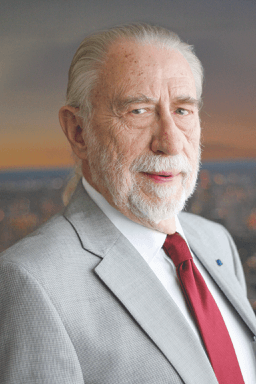
Dr, George Lundberg
This was the first letter on the correspondence page. Above it, the Times bannered the letter with the rubric “There was no Second Shooter on the Grassy Knoll,” all seeming a bit much for printing the phrase “the so called second shooter.”
Naturally, the Times did not reply to Breo’s letter to defend what they originally printed. They did not even let Mr. Nashaway respond. They were wise in doing so, because Breo is a huge target for anyone disputing the Warren Report’s version of events.
First, Dennis Breo is not a doctor and has never been a doctor. He is now a retired journalist, living in Florida. At the time that the film JFK came out, he was working with Dr. George Lundberg, the editor of JAMA. Lundberg did not like the portrayal of his friend Dr. James Humes in that picture. Evidently, he did not care to find out that it was not really a portrayal. It was all based upon facts that were adduced at the trial of Clay Shaw in 1969 in New Orleans. Those facts, recited under oath by Dr. Pierre Finck, were accurately scripted for the film. There was nothing defamatory about these scenes. The film reflected Finck’s testimony on the stand, according to the trial record, which director/writer Oliver Stone had secured.
Finck’s testimony, in and of itself, is quite a story. He was called by the defense. The reason being that Dr. John Nichols, a pathologist, had been an effective witness for the prosecution. He testified that, in his opinion, the Zapruder film proved a shot from the front and, therefore, showed a conspiracy. (James DiEugenio, Destiny Betrayed, second edition, p. 299) The defense was worried about the impact of both the Zapruder film and Nichols. So they called Kennedy autopsy physician Pierre Finck as a witness. The Justice Department was coordinating its coverage of the Clay Shaw trial through attorney Carl Eardley in Washington. (ibid, p. 299) Eardley was the point man on the cover up of the medical evidence in the JFK case. For example, he had coordinated a meeting in 1966 so that four of those present in the Bethesda morgue room—where Kennedy’s autopsy was performed—would testify that all the photos of that procedure were accounted for. Even though everyone knew they were not, including Eardley. (ibid, p. 305). Eardley wisely kept his name off the final draft of the false document.
Finck’s testimony in New Orleans was coordinated with Eardley in advance. (DiEugenio, p. 299) Finck was fine under direct examination. He was reduced to mumbling and bumbling by Jim Garrison’s assistant DA Alvin Oser under cross examination. The Shaw trial was the first direct exposure of the corrupt practices and hierarchical control of what went on in the Bethesda morgue on the evening of November 22, 1963. The examination got so bad that Finck began dodging questions and refusing to answer. The judge had to order him to answer. When he did, he admitted that Kennedy’s back wound was not dissected because the doctors—Humes, Finck, and Thornton Boswell—were ordered not to do so. He also admitted that Humes had to stop the examination once, because of all the interference. Once halted, Humes then asked aloud: “Who is in charge here?” Finck testified that an army general replied, “I am.” Finck then added: “You must understand that in those circumstances, there were law enforcement officials, military people, with various ranks and you have to coordinate the operations according to directions.” (DiEugenio, p. 300, italics added)
Finck had given away the game. Kennedy’s back wound was not dissected, because the military presence there would not allow it. The doctors were not in charge; the Pentagon officers were. Because of this, no one would ever know for certain the precise circumstances by which President Kennedy was killed. Did the back wound transit the body? Did it meet the anterior neck wound as part of its trajectory? Those questions can never be answered, because of the military control of the Bethesda autopsy.
Finck’s testimony was devastating to the official story, so much so, that when local US attorney Harry Connick informed Eardley what the doctor was saying, the maestro of the medical cover up panicked. When Dr. Boswell testified to the Assassination Records Review Board, he said that Eardley was really upset about what Finck said under oath at the Shaw trial. (DiEugenio, p. 304) Eardley told Boswell that he had to get someone to New Orleans quickly, because Finck was “really lousing everything up.” In other words, telling the truth was screwing up Eardley’s cover up efforts. Eardley flew Boswell to New Orleans, where he was met by Connick. But Eardley changed his mind and Boswell did not testify. Eardley’s intent was to have Boswell smear Finck as a “strange man.” Eardley probably changed his mind, because he realized that Finck was more experienced as a forensic pathologist than Humes or Boswell was. That was why they called him in a bit late in the procedure. It would have been difficult to discredit someone with better credentials than yourself. (DiEugenio, p. 304)
This was what writers Oliver Stone and co-writer Zachary Sklar had based this part of the film upon, although they had not yet seen the declassified machinations behind the scenes from Washington with Eardley. But this was all sworn testimony at the Shaw trial. JAMA could have availed themselves of it rather easily by calling Mr. Stone or the court stenographer of the Shaw trial—Helen Dietrich—who was still alive at the time. There is no evidence that Lunderg or Breo did either. Lundberg’s reaction to the film was not at all scientific or medically sound. After he saw the picture, he wrote a letter to his friend Jim Humes. It said:
Have you seen the movie JFK? Three hours and fifteen minutes of truth mixed with non-truth mixed with alleged truth. For the younger person, not knowledgeable about 1963—very difficult to tell the difference. Please either write the truth now for JAMA or let Dennis Breo (and me?) interview you…to set the record straight—at least about the autopsy. (Brad Kizzia in Assassination Science, edited by James Fetzer, p.73)
In other words, Breo and Lundberg went to work to counter the facts that JFK had set forth. Which were based upon Finck’s sworn testimony. It was later revealed in a deposition that Lundberg likely did not know that these autopsy scenes were based upon Finck’s testimony, when he wrote that letter to Humes. (Brad Kizzia in Trauma Room One, p. 165, by Dr. Charles Crenshaw.)

Dr, Charles Crenshaw
Something else had happened while Lundberg and Breo were setting about their task to rehabilitate one of the worst autopsies ever performed. Dr. Charles Crenshaw had published his book, Conspiracy of Silence. In that volume, Crenshaw revealed that upon being shown the autopsy photographs by researcher Gary Shaw, he was taken aback, because they did not conform with what he recalled. (Crenshaw, p. 18) Crenshaw said the back of the head photo did not reveal the blowout wound he saw and the anterior neck wound seemed widened and enlarged. Crenshaw’s book was published in April of 1992. It became a best seller.
Breo and Lundberg prepared the May 1992 issue of JAMA for the original autopsy doctors to tell their story. They even called a press conference, in advance, in New York City. The article and the press conference also brought into question the efficacy of Crenshaw’s book. In fact, Lundberg and Breo even questioned if Crenshaw was in the emergency room. (Crenshaw, pgs. 153, 161, 165)
Somehow, in his recent letter to the New York Times, Breo forgot to mention some rather embarrassing reporting in the Times about that press conference. Dr. Lawrence Altman was at that 1992 event in New York. His two reports for the Times showed that all one had to do was peruse the Warren Commission volumes to discover that Crenshaw was in the emergency room at Parkland Hospital when Kennedy was there. (Crenshaw, p. 166). Even though the Altman articles were published before the issue of JAMA was distributed, there was no correction added to the issue.
Crenshaw requested a right to reply and Lundberg refused. Crenshaw then launched a lawsuit for defamation. Brad Kizzia represented the surgeon. The depositions in that case were rather interesting. It is quite obvious that Lundberg and Breo had an agenda. And they did not care about the long factual record of the Kennedy case. For instance, in his letter to the Times claiming he knows there were only two shots from the rear and they were by Oswald, Breo writes that the lower rear wound came in at the neck. This proves that not only did Breo not study the case before he wrote the JAMA articles—he has not studied it since. The House Select Committee on Assassinations (HSCA) had the autopsy photographs. They published artists’ renditions of the wounds. That wound, which Breo says is in the neck, is clearly in Kennedy’s back. (Crenshaw, p. 269) This is a fact that not even Dr. Michael Baden of the HSCA could deny. If a writer will not even admit that, then how can anyone trust him with the rest of the facts of the JFK autopsy.
For in addition to the autopsy doctors being stopped from dissecting the back wound, there is no existing record of them sectioning Kennedy’s brain. This should have been done, in order to track the bullet path through the skull. No examining doctor since—from the HSCA or the ARRB—has been able to find any records from a sectioning process. (Although Doug Horne has made the case it was done and then covered up. Click here to read that essay.) To say that this was a failing is a monumental understatement. For if the brain was not sectioned, then:
- How can one chart the bullet path through the skull?
- Say with confidence that JFK was hit by only one bullet in the head?
- Tell us that only one bullet came in from behind?
Adding to this problem, the angle from the sixth floor of the Texas School Book Depository to the limousine below is slightly right to left. But if one believes the autopsy, the bullet exited going left to right. There is also the problem that the 1968 Ramsey Clark Panel moved the rear skull wound up four inches to the cowlick area. But yet, for JAMA, Lundberg and Breo moved it back down again. These serious issues in the Kennedy case were all either discounted or ignored by JAMA. (Crenshaw, p. 203) As was the riddle of the weight of Kennedy’s brain. The supplementary autopsy report, filed on December 6, 1963, says that the weight was 1500 grams. (ibid, p. 238) This is virtually impossible to believe. Too many witnesses saw a brain that was missing a significant amount of mass. Secondly, from films and pictures of the assassination, one can see the blood and tissue that was ejected from Kennedy’s skull. This has led many to believe that there was some real subterfuge going on, with not just the autopsy, but the supplemental autopsy days later. It is why so many observers, e.g. forensic scientist Henry Lee, believe that the autopsy in the JFK case was such a mess that no observer can come to real conclusions about precisely how Kennedy was killed. (Lee said this in an interview with Oliver Stone for the upcoming documentary JFK: Destiny Betrayed)
As both Gary Aguilar and Cyril Wecht noted in their review of JAMA’s articles (there was more than one), the fundamental factual errors that Breo and Lundberg made would not pass muster in a high school class on the JFK case. In the first sentence of the first article, Breo wrote that only Humes and Boswell knew what really happened during the autopsy of JFK. Thus ignoring Pierre Finck, who actually was the only experienced forensic pathologist of the three. (Aguilar and Wecht in Crenshaw, p. 202) Breo then added that the JAMA interview was the only time that Humes and Boswell had publicly discussed the JFK case. This was wrong in more than one sense. In 1967, Boswell had granted an interview to Josiah Thompson for attribution in his book Six Seconds in Dallas. In that same year, Humes gave an interview to Dan Rather for a CBS special broadcast in the summer of 1967. All three doctors had appeared in public before the HSCA; Humes was even on television for a second interview done alone. Boswell had given interviews to both the Baltimore Sun and the New York Times. Humes had given an interview for attribution to David Lifton. All of this betrays the fact that JAMA wanted to trumpet their articles as being somehow unprecedented in the literature, when, in fact, that was not an accurate assessment.
In the second article, JAMA stated, through one of the Parkland doctors, that none of what the Dallas doctors saw contradicted that the bullets were fired from behind Kennedy and above. Now, at this time, the Assassination Records Review Board had not declassified the drawings and affidavits given to the HSCA. These clearly denoted a large, avulsive wound in the rear of Kennedy’s skull, which would suggest a shot from the front. But even in 1992, there was testimony and evidence that such was the case. To cite just two examples: the Warren Commission testimony of Secret Service agent Clint Hill and the drawing on page 107 of Thompson’s book Six Seconds in Dallas directed by Dr. Robert McClelland. (Click here for Hill)
One of the worst things about the JAMA articles and Breo’s performance was that, as attorney Brad Kizzia discovered, neither Lundberg nor Breo ever talked to Crenshaw himself. (Crenshaw, p. 164) But, beyond that, Kizzia also discovered that there was no peer review of Breo’s writing about the JFK case. (ibid, p. 165) The excuse given was that Breo’s work was only considered journalism. Considering that this “journalism” discussed and reviewed a quite complex and controversial subject and that Breo was not a physician, this is a truly remarkable decision by the editors at JAMA. And it’s why many doctors suspended their subscriptions to the magazine afterwards. Making all this even more troubling was the fact that Lundberg was a pathologist. Yet he admitted he had not read any books about the JFK case. (Crenshaw, p. 165) JAMA ended up settling with Crenshaw for about a quarter of a million dollars.
The AMA board terminated George Lundberg seven years later. At that time, during the Bill Clinton impeachment proceedings, he was running an article about what college students considered oral sex to be. The executives at the AMA declared that he had compromised “the integrity of the journal” and they had been inserted “into a debate that had nothing to do with science or medicine.” (BBC News, 1/18/99)
That judgment could have been asserted back in 1992.
-

Garrison Interview, “Some Unauthorized Comments on the State of the Union” (May 27, 1969)
This remarkable interview with Jim Garrison was done about two months after Clay Shaw was acquitted.
It is an interview with a European publication since, for reasons he notes, Garrison had given up doing such things with the American press.
Note that some of the things he brings up differ from his previous interview in 1967 in Playboy. For instance, quite early, he brings up the importance of Vietnam to the assassination, and he then returns to this at the end. He is now open about the role of the FBI in cooperation with the Warren Commission in the cover up. (p. 3). Right after this, he singles out Allen Dulles for his role on the Commission. He then becomes one of the first commentators to say there was a link between the murders of JFK, King, and Bobby Kennedy. He understands just how important Pierre Finck’s bombshell testimony was at the Clay Shaw trial (p. 18). He then describes the after-effects of a coup d’état and how the new government ratifies itself (p. 20). He is very pessimistic on the truth about Kennedy’s murder ever coming to light. In retrospect, what makes all this so impressive is how correct he was in the light of history on all these points. It is also enlightening to compare his ideas about the case to what others were writing and saying at the time. Most of the other critics were still concentrating on what happened in Dealey Plaza. They were not even aware of the bombshells in Finck’s testimony. But we now know the Justice Department certainly was, to the point they sent Thornton Boswell, another JFK pathologist, to New Orleans to discredit Finck, although they did not follow through on the plan.
Our thanks to Bart Kamp and the invaluable Malcolm Blunt for this engrossing interview. Thanks also go to Prof. Dennis Riches of Seijo University, Tokyo, for providing the following, more legible transcription of the original document.
~ Jim DiEugenio
(Click here to open the document in another page.)
-

Why Officer Tippit Stopped His Killer
The murder of Officer J.D. Tippit in Oak Cliff was famously cited by David Bellin, Assistant Counsel to the Warren Commission, as being the “Rosetta Stone to the solution” of the JFK assassination. (Jim Marrs, Crossfire, p. 340, all references are to the 1989 edition) “Once it is admitted that Oswald killed Patrolman J.D. Tippit,” the attorney for the commission observed, “there can be no doubt that the overall evidence shows that Lee Harvey Oswald was the assassin of John F. Kennedy.”
Following Mr. Belin’s questionable logic might also lead one to believe the opposite to be true. Once it is shown that Oswald likely did not kill Patrolman Tippit, the case for him having shot President Kennedy and Governor Connally is, therefore, demonstrably weakened.

“I emphatically deny these charges!” shouted Oswald to news reporters while in Dallas police custody. “I didn’t shoot anybody, no sir … I’m just a patsy!” Oswald denied his guilt in many ways and more than once. (Mark Lane, Rush to Judgment, p. 81)
Was the suspect telling the truth?
Sadly, within less than 48 hours, shadowy nightclub owner Jack Ruby would all but terminate the official Dallas Police investigation into the Tippit homicide when he gunned down suspect Lee Oswald in the basement of Dallas Police Headquarters. That unfathomable event, broadcast live on national television, occurred in the presence of more than 50 Dallas policemen. It was their job to ensure Oswald’s safety while he was in custody—so the suspect might be tried on charges of assassinating President Kennedy and murdering Officer Tippit.
“We never worked on any of his (Tippit’s) murder, because there was no use making a murder case (with the suspect dead),” admitted former District Attorney Henry Wade in an interview with veteran Tippit researcher Joseph McBride. “I think we had enough evidence that Oswald did it.”
And despite Belin’s “Rosetta Stone” reference, not only did Dallas authorities abandon the Tippit case, but the Warren Commission, according to McBride, showed “almost no real interest in solving the crime … the commission was deliberately stonewalling a serious investigation of Tippit.”
Any “serious” investigation into Tippit’s death must begin with one fundamental and all-important question: Why did Tippit stop Oswald?
Based on the persistence of several indefatigable private researchers and investigators who kept digging into the Tippit mystery for decades, I believe we can now attempt to answer that question. The answer, it would seem, had nothing to do with the man walking on 10th Street in Oak Cliff matching the Dealey Plaza suspect’s generic description of being a young white male of average height and weight—as was suggested by the Warren Commission.
In the words of Sylvia Meagher, writing in her 1967 book Accessories After the Fact, “The strangeness of Tippit’s actions,” suggests that “it was not probable, perhaps not even conceivable, that Tippit stopped the pedestrian who shot him because of the description broadcast on the police radio. The facts indicate that Tippit was up to something different which, if uncovered, might place his death and the other events of those three days in a completely new perspective.” (See Meagher, pp. 260-66)
What follows in this article is a “new perspective.”
12:00 P.M.
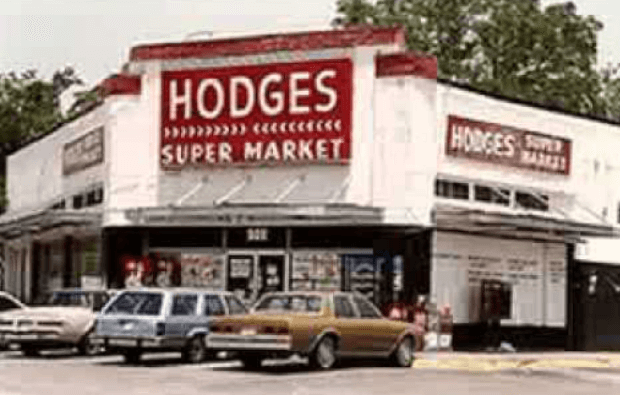
The “strangeness” of Tippit’s actions on 11/22/63 appear to have begun even before shots rang out in downtown Dallas. Tippit, whose normal area of patrol was in Cedar Crest, patrol area #78, was apparently called to a supermarket in the 4100 block of Bonnie View Road. Respected Tippit researcher Larry Ray Harris interviewed the Hodges Supermarket manager in 1978. As described in news reporter Bill Drenas’ oft-cited 1998 article Car #10 Where are You?, the manager told Harris he had caught a woman shoplifter on 11/22/63 and had phoned police.
It was Tippit who responded to that location at about noon, just a half hour before the assassination. The manager knew Tippit, because Tippit routinely came to the market on calls for shoplifters. The interviewee said Tippit placed the woman in his squad car and left. However, Tippit appears not to have brought the shoplifting suspect back to his nearby base of operations. No record of the woman’s arrest or information on who she was or what happened to her has ever surfaced.
12:30 p.m.
President Kennedy’s motorcade was scheduled to have arrived at the Dallas Trade Mart at 12:30. However, because the motorcade was running a few minutes late, President Kennedy was assassinated at 12:30, and Governor Connally was gravely injured, as the motorcade proceeded through Dealey Plaza on route to the Trade Mart. The Hodges Market in the 4100 block of Bonnie View in Tippit’s district was more than seven miles southwest of Dealey Plaza.
12:40 p.m.
The DPD Channel 1 dispatcher reports a shooting in the downtown area involving the President. By this time, Texas School Book Depository employee Lee Oswald has already grabbed his blue work jacket and has left the TSBD on foot. He will board a city bus, but when that bus gets stalled in traffic, Oswald will ask for a transfer, depart from the bus, and walk to a cab stand to catch a quicker ride (with cab driver William Whaley) out to nearby Oak Cliff where the young man resides.
The DPD Channel 1 dispatcher next orders “all downtown area squads” to Dealey Plaza, code 3 (lights and sirens). By 12:44, a general description of the Kennedy suspect (slender white male, 5’10” and 160 pounds) is broadcast over both Channels 1 and 2.
12:45 p.m.
Murray Jackson, the dispatcher, asks Tippit to report his location. Tippit replies, according to police radio logs, that “I am about Keist and Bonnie View,” which is still within Tippit’s regular patrol district down in Cedar Crest. (Joseph McBride, Into the Nightmare, p.441) However, this may not have been the case.
Beginning at approximately 12:45, when Officer Tippit reports he is still in his regular patrol area, Tippit will instead be seen sitting inside his squad car parked at the GLOCO gas station, strategically situated in northernmost Oak Cliff next to the Houston Street viaduct. The viaduct connects downtown Dallas and Dealey Plaza to Oswald’s neighborhood in Oak Cliff—some five miles north of Tippit’s reported position.
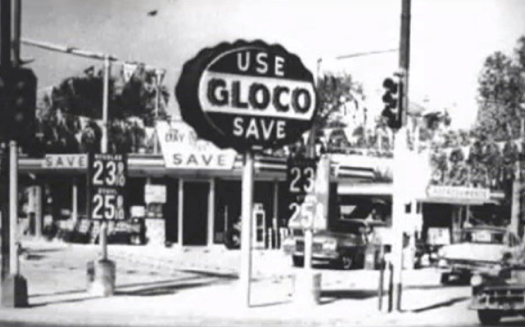
Researcher William Turner, in a 1966 article in the magazine Ramparts, claimed he located five witnesses who saw Tippit sitting in his patrol car at the gas station at this time while watching traffic coming across from downtown Dallas. (McBride, ibid) The location is only 1.5 miles from Dealey Plaza. Two of the witnesses, a husband and wife who knew the officer, say they waved at Tippit who waved back at them. The story was reportedly verified by three of the GLOCO station attendants. Dallas researchers Greg Lowrey and Bill Pulte also interviewed all five of these witnesses to confirm the story. Some said that Tippit arrived at the GLOCO as early as just “a few minutes” after the assassination.
Was Tippit watching for Oswald to come across the viaduct on a Dallas bus? Did he see Oswald instead in the front of William Whaley’s cab? What was Tippit doing?
12:46 p.m.
At this time, dispatcher Murray Jackson ordered Officers Tippit and R.C. Nelson into the Central Oak Cliff area, which was odd since an assigned officer (William Mentzel) was already patrolling Central Oak Cliff. (McBride, pp. 427-30) Tippit, according to witnesses, is of course already there in the northernmost part of Oak Cliff at the gas station. (This was probably unknown to Jackson, since Tippit had just responded to the dispatcher that he was in his assigned patrol area at Bonnie View & Keist some five miles to the south). Officer Nelson instead proceeded on to Dealey Plaza, possibly following the preceding 12:42 “code 3” order for all downtown area squads to report to Dealey Plaza. (Henry Hurt, Reasonable Doubt, pp. 161-63)
Meanwhile, Oswald will soon be crossing the Houston St. viaduct in William Whaley’s cab, heading for Oak Cliff.
The witnesses say that after some 10 minutes of sitting at the gas station, watching traffic crossing from the downtown area, Tippit suddenly pulled out and took off south on Lancaster Avenue “at a high rate of speed.”
12:52 or 12:53 p.m.
Cab driver William Whaley lets Oswald out at the corner of North Beckley and Neely Street, several blocks south of Oswald’s rooming house, which the cab has already passed. Whaley had marked Oswald’s intended location on his run sheet as the 500 block of N. Beckley, even farther south and in the wrong direction from the rooming house. The 500 block of N. Beckley was, in 1963, dominated by the side parking lot of the El Chico Restaurant.
12:54 p.m.
Dispatcher Murray Jackson contacts Tippit, who is now about a mile from the GLOCO Station on Lancaster Street. (McBride, p. 445) Oswald and Tippit are both apparently moving in the direction of the Texas Theater.
1:00 to 1:07 p.m.
Texas Theater manager Butch Burroughs said Oswald entered the theater during this timeframe and later bought popcorn from him at the concession stand at approximately 1:15. (McBride, p. 520) Other movie patrons will similarly report having seen Oswald in the mostly empty theater during the start of the movie, changing seats frequently and sometimes sitting directly next to other moviegoers. Is Oswald supposed to meet someone he doesn’t know personally, perhaps his intelligence contact to whom he is expected to give a briefing?
After 1:00 p.m.
 Employees of the Top Ten Records store, located a block and a half west of the Texas Theater on Jefferson Boulevard, later claim that Tippit parked his squad car on Bishop Street adjacent to the records store and came in hurriedly while asking to use the phone.
A Dallas Morning News reporter interviewed former Top 10 clerk Louis Cortinas in 1981. Cortinas recalled that, “Tippit said nothing over the phone, apparently not getting an answer. He stood there long enough for it to ring seven or eight times. Tippit hung up the phone and walked off fast, he was upset or worried about something.” (McBride, p. 451)
Had Tippit picked up Oswald near the El Chico Restaurant and then dropped him off at the Texas Theater? Had Tippit simply been watching the theater to confirm Oswald’s arrival? Or, was Tippit simply trying to contact someone to find out the latest news on the condition of President Kennedy and Governor Connally?
1:03 p.m.
Around this time, police dispatcher Murray Jackson tries to radio Tippit, but gets no answer. (Meagher, p. 266) Was this when Tippit was entering the Top 10 records store to place the phone call?
Approximately 1:04 p.m.
Several blocks east of Top 10 and the Texas Theater, an unknown young white male about 5’8” to 5’10” and 165 pounds wearing a white shirt and light tan Eisenhower jacket begins to quickly walk west on East 10th Street. The man is in such a hurry that he catches the attention of those inside of Clark’s Barber Shop at 620 E. 10th as he breezes by that establishment’s storefront window. A pedestrian, Mr. William Lawrence Smith, passes the same man as Smith walks east to lunch at the Town & Country Café just a few doors west of the barber shop. (John Armstrong, Harvey and Lee, p. 841)
Approximately 1:05 p.m.
As the unknown white male proceeds west and crosses the intersection of 10th and Marsalis, a major disturbance suddenly breaks out at that corner. Bill Drenas, author of the 1998 article Car #10 Where Are You?, mentioned that a person near the scene of the Tippit shooting told investigator Bill Pulte that, “If you are planning to do more research on Tippit, you should find out about the fight that took place at 12th & Marsalis a few minutes before Tippit was killed.” The interviewee spoke only on the condition of anonymity.
Harrison Livingstone, in his 2006 book The Radical Right and the Murder of John F. Kennedy, adds more crucial detail about this mysterious neighborhood altercation. “There are neighborhood reports of a disagreement at the intersection of 12th & Marsalis,” writes Livingstone, “a few minutes before Tippit was killed. Tippit was headed precisely toward 12th & Marsalis when he left Lancaster & 8th (the report of the 12th & Marsalis argument is from someone whose identity needs to be protected).
“The late Cecil Smith witnessed this fight which was actually at 10th & Marsalis (my emphasis). One of the two individuals was stabbed, but it was never investigated, apparently … just two blocks east from where Tippit was shortly murdered.” The fight also occurred, let it be known, at the same time and location the unknown gunman in the light jacket, white shirt, and dark trousers is passing on his way two blocks west to the fast approaching scene of the fatal Tippit shooting.
But it was not until Dallas researchers Michael Brownlow and Professor William Pulte made public their findings in a 2015 Youtube video that we get the full scoop on this most unusual so-called “fight.”
 Brownlow said it was actually three men and a woman who jumped on another man at the corner, who was then “violently” stabbed. The wounded man, bleeding profusely, was then inexplicably thrown into the back of a blue Mercury Monterey which sped away from the scene. Many people witnessed the assault. 10th & Marsalis was a commercial corner, with an auto parts store, a plumbing supply store, and other nearby businesses such as the barber shop and restaurant. It was Indian summer, pre-air conditioning days, and most of these businesses had telephones within easy reach. Neighbors and teens home from school also allegedly witnessed the noisy and bloody altercation. (See also, Joseph McBride, Into the Nightmare, pp. 447-48)
Emergency phones calls were obviously placed to the Dallas Police, although you won’t find any mention of this incident in the DPD call logs for 11/22/63. Why not?
Approximately 1:05:30
Officer Tippit, now sitting once again in his patrol car outside of the Top 10 Records store, suddenly hears his police radio crackle to life. There has been a reported fight and possible stabbing at the corner of 10th & Marsalis, several blocks east of where his patrol car now sits near the corner of West Jefferson Blvd. and Bishop Avenue. A man has supposedly been stabbed and thrown into the back of a blue car which drove away from the scene. Tippit puts Car #10 into gear and moves out in a big hurry.
 The employees at Top Ten (Lou Cortinas and Dub Stark) watch through their front window as Tippit’s car goes charging through the intersection and races north up to Sunset Street where Tippit blows through the stop sign and disappears from view. (McBride, pp. 451-550)
Approximately 1:06:00
Tippit quickly reaches 10th Street and is about to turn right, heading east towards the disturbance at the corner of 10th & Marsalis. But he instead observes a late model Chevrolet headed west on 10th. Could this be the car escaping from the scene of the fight? So instead of turning right, Tippit makes a quick decision and turns left, following the Chevy that has just passed in front of him. Within a block the officer speeds up, passes the Chevy, turns the wheel, and forces the surprised driver to come to a stop at the curb.
Mr. James Andrews, the motorist—who had been returning to work from his lunch hour—would later give Dallas researcher Greg Lowrey (as reported in Bill Drenas’ article Car #10 Where Are You?) the following description of this bizarre event:
Drenas writes that “The officer then jumped out of the patrol car, motioned for Andrews to remain stopped, ran back to Andrew’s car, and looked in the space between the front seat and the back seat (emphasis mine). Without saying a word, the policeman went back to the patrol car and drove off quickly. Andrews was perplexed by this strange behavior and looked at the officer’s nameplate which read ‘Tippit’ … Andrews remarked that Tippit seemed to be very upset and agitated and acting wild.” (McBride, pp. 448-49)
Much has been made of this incident, which apparently happened just a few short moments prior to Tippit’s death. Some have reasoned that Tippit was looking for Oswald, thought to be hiding in the back of an automobile on his way to Red Bird Airport to catch a flight out of town. Others have found the story so odd that they have tended to dismiss it altogether—couldn’t have happened.
But now that we have a report about a fight at 10th & Marsalis, a stabbing in which the victim was thrown into the back of a car which then sped away from the scene, Tippit’s “wild” actions perhaps make more sense. Tippit may have been looking for the injured stabbing victim in the back of an escaping vehicle—and he was doing so alone, with no backup. That is why he was agitated and acting upset. President Kennedy and Governor Connally have just been gunned down in Dealey Plaza and now Tippit is dealing with a violent, potentially life and death situation in adjoining Oak Cliff.
1:07:00 p.m.
Officer Tippit heads east on 10th Street, heading towards the scene of the reported disturbance at the corner of Marsalis. By now, according to Texas Theater Manager Butch Burroughs—as well as multiple paying customers—Lee Oswald is most definitely in the building for the start of the afternoon’s double war movie feature. (Marrs, Crossfire, pp. 352-53)
1:08:00 p.m.
As Officer Tippit travels east on 10th towards Marsalis, he spots a lone figure walking west just two blocks from the scene of the stabbing incident. Tippit slows Car #10 as he cruises through the intersection of 10th & Patton. Cab driver Bill Scoggins, parked near the corner in his cab while eating his lunch, notices Tippit pass in front of his cab, slow down, and suddenly pull to the curb about 100 feet past Patton Street. The officer apparently summons the young pedestrian, who is wearing the beige Eisenhower jacket, dark trousers, and white shirt, back to his patrol car.
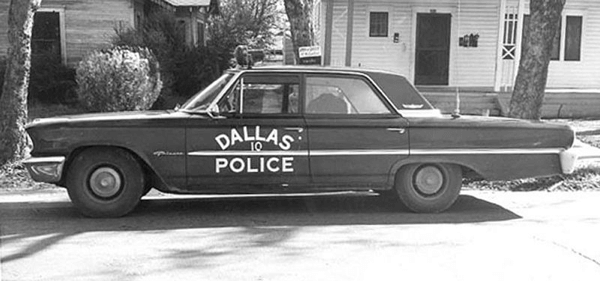 The young man does an about-face, turning around to approach Tippit’s car sitting at curbside. Could this young man have been a witness? A participant in the fight? He doesn’t appear to have any blood on his jacket that the officer can see. Tippit and the young man, who is now leaning over, have a brief conversation through the open vent on the passenger-side window.
1:08:30 p.m.
Officer Tippit, who probably does not fully believe the young man’s story about who he is and what business he has on 10th Street, decides to get out of his car to question the subject further. He adjusts his police cap, begins to walk slowly towards the front of Car #10. As he does, the man pulls a .38 revolver from under his jacket and begins to fire.
No one sees the actual shots. A passing motorist, Domingo Benavides, is startled by the gunfire as he approaches Car #10 while traveling west on 10th. In an act of instinct and self-preservation, Benavides turns his pickup to the curb and ducks down behind the dashboard. (Lane, pp. 177-78)
Cabbie Bill Scoggins sees Tippit fall into the street. A few seconds later, he observes the figure of the young man walking quickly towards his cab, cutting across the adjacent corner property on 10th Street. Scoggins steps out of his cab and hides behind the driver-side fender. The young man emerges from the lawn’s hedges and begins to trot south on Patton Street, still tossing the occasional empty shell to the ground. (Lane, pp. 191-93)
Hearing no further shots, Benavides pokes his head up in time to see the gunman heading for Patton Street, inexplicably tossing a couple of shells into the bushes. Benavides will later tell police he could not positively identify the gunman and will not be taken to any of the subsequent lineups.
1:10:00 p.m.
The gunman turns right on Jefferson Boulevard, as seen by multiple witnesses. He stuffs the pistol back into his pants, walks briskly west for a block before cutting through a service station and turning north on Crawford Street. At this point the young gunman disappears. (Armstrong, p. 855)
Approximately 1:25 p.m.
 “Someone” hands Captain William “Pinky” Westbrook a light tan Eisenhower jacket that was allegedly thrown under a parked car behind the Texaco service station at Jefferson & Crawford. This was supposedly the jacket worn by the fleeing gunman. Westbrook, however, can’t remember the name of the officer who turned over the jacket. (Lane, pp. 200-203)
Approximately 1:36 p.m.
As Dallas police cars continue swarming into Oak Cliff, the unidentified young man from 10th & Patton suddenly reappears again on Jefferson Blvd. near the Texas Theater. The man, who is wearing a white shirt, either purchases a ticket or simply ducks in without paying. The time is now approximately 1:37. Once inside, the new arrival goes upstairs to sit in the theater’s balcony section. (Armstrong, pp. 858-60)
Approximately 1:40-42 p.m.
Dallas police are tipped off to a suspicious person who has entered the Texas Theater.
Approximately 1:42 p.m.
 At 10th & Patton, Captain Westbrook of the DPD shows FBI special agent Bob Barrett a man’s wallet. The Dallas investigators are going through the wallet, and apparently find two pieces of ID. Westbrook asks Barrett if he knows who either Lee Harvey Oswald or Alex Hiddell are. Barrett says no. (Armstrong, p. 856) Years later, when the story about the wallet is revealed by FBI personnel, the DPD will say that Barrett’s memory is faulty, there was no wallet found at the Tippit crime scene. But a check of archived Dallas TV news footage proved the DPD wrong. Later, the story seems to change that some unidentified person in the crowd at Tippit’s murder scene must have handed the wallet to reserve cop Sgt. Kenneth Croy, the first officer on site. Only none of the many Tippit witnesses reported seeing a wallet on the ground. Croy, incredibly, never filed a written report on 11/22/63. And Croy, in his testimony before the Warren Commission, said he knew several of the officers who eventually responded to the shooting at 10th and Patton—but couldn’t remember a single name of any of them.
1:45:43 p.m.
The DPD Channel 1 dispatcher broadcasts a report of a suspect who “just went into the Texas Theater.” A fleet of police cars, marked and unmarked, arrive to surround the theater front and back. (Armstrong, p. 863)
1:50-1:51 p.m.
 Lee Oswald, still wearing his long-sleeved brown work shirt, is subdued in the main (downstairs) section of the theater by DPD officers and is whisked out the front door to a waiting unmarked police car.(Armstrong, p. 868) Meanwhile, a second slender young white male in a white t-shirt is arrested in the balcony and brought out the back door of the theater, as observed by Bernard Haire, the owner of the hobby store two doors east of the theater. The official Dallas arrest report will indicate that Oswald was arrested in the balcony, while in fact he was actually arrested downstairs in the theater’s ground-floor main section. (Armstrong, p. 871) What happened to the second man who was taken away?
Approximately 1:55 p.m.
While accompanied by four Dallas detectives in an unmarked car headed for DPD’s downtown headquarters, Oswald is asked to give his name. He ignores the request. Perturbed, Detective Paul Bentley pulls a billfold from Oswald’s hip pocket and begins to examine its contents. He finds ID cards for both a Lee Oswald and an A. Hidell. “Who are you?” asks Bentley again. “You’re the detective,” Oswald finally answers back. “You figure it out.” (Armstrong, p. 870)
But wait. They just found Oswald’s wallet at 10th & Patton, right? (Armstrong, p. 868) So Oswald carried two wallets, one of which he was good enough to leave at the Tippit murder scene? Along with four shell casings from a .38 caliber revolver?
In the words of an old Rockford Files TV episode: “that plant was so obvious someone should’ve watered it.” No wonder the 10th & Patton wallet disappeared after a billfold was found to have been in Oswald’s possession at the theater.
The Dallas Police knew who Oswald was before they descended on and surrounded the Texas Theater.
Approximately 2.p.m.
Oswald arrives at Dallas Police Headquarters to be interrogated and booked. He will be shot dead that very same weekend. To quote one bluntly sarcastic journalist: “Lee Oswald miraculously managed to survive nearly 48 hours in the custody of the Dallas Police Department.”
The DPD kept no known tapes or transcripts from the hours of interrogation undergone by their suspect. We have little idea what Oswald really said, only that he “emphatically denied these charges.” (Armstrong, p. 893)
Ballistics
 If anyone is looking for ballistics to provide a definitive answer in the Tippit case, they will be sorely disappointed. The ballistics evidence tends to exonerate Lee Oswald as much as it implicates him. (For lengthy discussions of the following, see Henry Hurt, Reasonable Doubt, pp. 151-56 and Joseph McBride, Into the Nightmare, pp. 252-57)
Four shells from a .38 caliber handgun were recovered spread along the ground leading from the crime scene. The DPD officers on site at first figured these were from an automatic pistol (which automatically ejects the spent shells), not a revolver, because who would purposely remove and leave such incriminating evidence at the scene (along with a wallet full of ID)?
The bullets found in Officer Tippit’s body at autopsy could not be matched to Oswald’s .38. And the shells so conveniently recovered at 10th & Patton could not be matched to the bullets. The shells were never properly marked by DPD, evidence was misfiled, and the chain of evidence for the ballistics was, unfortunately, suspect.
In the words of homicide detective Jim Leavelle, the very man tasked with nailing Oswald for the Tippit murder, the ballistics in this case were quite frankly “a mess.”
As Joe McBride notes in his book, Warren Commissioner and congressman Hale Boggs was one of the members of that body who had his doubts about their verdict. Boggs directly challenged the Tippit case ballistics when he said, “What proof do you have that these are the bullets?” (McBride, p. 258) Boggs apparently never received a satisfactory answer.
New Orleans District Attorney Jim Garrison, who took an active role in the JFK assassination investigation in the late 1960s, believed that the ballistics evidence pointed to two shooters at 10th & Patton. Said Garrison in his October 1967 Playboy interview, “The evidence we’ve uncovered leads us to suspect that two men, neither of whom was Oswald, were the real murderers of Tippit.”
Mr. Garrison added that, “… Revolvers don’t eject cartridges and the cartridges left so conveniently on the street didn’t match the bullets in Tippit’s body.”
The cartridge cases—two Western-Winchester and two Remington–Peters—simply didn’t match the bullets—three Western–Winchester, one Remington-Peters—recovered from Officer Tippit’s body.
“The last time I looked,” noted Garrison wryly, “the Remington–Peters Manufacturing Company was not in the habit of slipping Winchester bullets into its cartridges, nor was the Winchester–Western Manufacturing Company putting Remington bullets into its cartridges.”
Witnesses
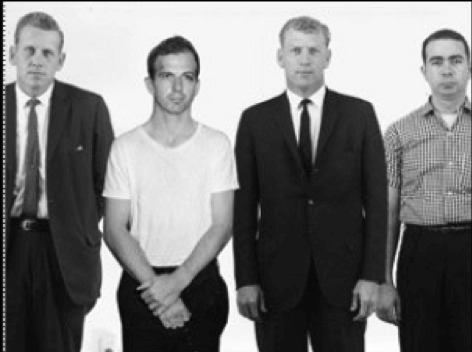 If the ballistics evidence in the Tippit case could rightly be characterized as messy, then the eyewitness testimony regarding the Tippit homicide would have to be labeled a toxic waste site by comparison.
Tippit authority Joseph McBride, author of Into the Nightmare, explained the bizarre situation succinctly when he stated, “The other physical evidence is also confused and contradictory—and the eyewitness evidence is so contradictory that it seems as though there were two sets of witnesses.” (McBride, pp. 460-61)
One set of witnesses identified Oswald as the sole murderer of Officer Tippit. The second set said they couldn’t positively identify Oswald, or could positively exclude Oswald, and saw two or more suspects acting suspiciously, and even saw one of those persons apparently involved in the shooting escape in an automobile.
Dallas authorities, and later the Warren Commission, focused almost exclusively on the first set of witnesses—while minimizing or completely ignoring the second set.
A good example of “witness neglect” was reported by 10th Street neighbor Frank Wright. Wright later told Tippit researchers that “I was the first person out. I saw a man standing in front of the car. He was looking toward the man on the ground (Tippit). The man who was standing in front of him was about medium height. He had on a long coat, it ended just above his hands. I didn’t see any gun. He ran around on the passenger side of the police car. He ran as fast as he could go, and he got into his car. … He got into that car and he drove away as fast as he could see. … After that a whole lot of police came up. I tried to tell two or three people (officers) what I saw. They didn’t pay any attention. I’ve seen what came out on television and in the newspaper but I know that’s not what happened. I know a man drove off in a grey car. Nothing in the world’s going to change my opinion.” (Hurt, pp. 148-49)
 Acquilla Clemons, a caregiver who worked on 10th Street, was not simply ignored the same as was Mr. Wright. Clemons, who saw two suspicious persons escape the Tippit murder scene in different directions, told investigator Mark Lane (during a taped interview) that a man she suspected was a Dallas detective or policeman visited her home on or about 11/24/63. He was carrying a sidearm. Mrs. Clemons reported that the visitor warned her “it’d be best if I didn’t say anything because I might get hurt … someone might hurt me.” (McBride, pp. 490-94)
 Warren Reynolds, a used car salesman who saw the gunman escaping west on Jefferson Boulevard, was indeed hurt—and very badly. Reynolds told news reporters the afternoon of the assassination that he had seen the fleeing gunman, but was simply too far away to have made a positive identification. The FBI finally got around to interviewing Reynolds in January, 1964, at which time the witness reiterated his original story that he had been located across Jefferson Boulevard and was simply too far from the gunman to have made a positive identification. Two nights later, someone sneaked into Reynolds’ place of business, hid in the basement, and shot Mr. Reynolds in the head with a .22 caliber rifle. Miraculously, Reynolds survived. Even more miraculously, the car salesman made such a dramatic recovery that he now found his eyesight had improved and he was able to identify Lee Oswald after all. (Hurt, pp. 147-48; McBride pp. 476-78)
Decades later, Dallas researcher Michael Brownlow tracked down Mr. Reynolds, who was still in the business of selling cars. At first, Reynolds would not admit who he was. But after Brownlow had gained his trust, the researcher asked Mr. Reynolds why he had suddenly changed his testimony regarding his identification of Oswald.
“Because I wanted to live,” Reynolds admitted bluntly.
When Mark Lane came to Dallas to make the documentary Rush to Judgment, his director, Emile de Antonio, made a rather interesting observation. “There was absolutely no tension at all on the scene of the assassination (Dealey Plaza),” commented de Antonio. “… All the tension is where Tippit was killed. That’s right and this (the Tippit slaying) is the key to it.” (McBride, pp. 460-61)
The director’s sense of what was going on in Oak Cliff was seemingly verified by an anonymous letter appearing in Playboy that was sent to the editor after Jim Garrison’s October 1967 Playboy magazine interview:
“I read Playboy’s Garrison interview with perhaps more interest than most readers. I was an eyewitness to the shooting of policeman Tippit in Dallas on the afternoon President Kennedy was murdered. I saw two men, neither of them resembling the pictures I later saw of Lee Harvey Oswald, shoot Tippit and run off in opposite directions. There were at least half a dozen other people who witnessed this. My wife convinced me that I should say nothing, since there were other eyewitnesses. Her advice and my cowardice undoubtedly have prolonged my life—or at least allowed me now to tell the true story…”
There were four main witnesses who gave testimony that Lee Oswald had in fact been guilty. Many who’ve studied the Tippit murder have long felt that competent defense counsel would have reduced the case against Lee Oswald to shambles. If Oswald had received a fair trial, they say, he would have been exonerated of the charge he killed Officer J.D. Tippit.
Of course, Oswald did not receive even the benefit of an unfair trial. The suspect received no trial whatsoever and was instead convicted in the court of public opinion based on government propaganda disseminated by a relentless disinformation campaign. In the words of FBI Director J. Edgar Hoover on the evening of the assassination, “The thing I am concerned about, and so is Mr. Katzenbach (Deputy U.S. Attorney General), is having something issued so we can convince the public that Oswald is the real assassin.” (McBride, p. 142)
That “thing” mentioned by Hoover would eventually, of course, be the pre-determined, hastily prepared whitewash known as the Warren Report … with the so-called “magic” bullet as its centerpiece.
The four crucial witnesses against Oswald in the fatal Tippit incident would be William Scoggins, Ted Calloway, Helen Markham, and—belatedly—Jack Ray Tatum.
Taxi Driver Bill Scoggins
 William “Bill” Scoggins was seated in his cab on Patton Street. (Warren Report, p. 166) He was facing the intersection with 10th Street, when he saw Officer Tippit’s patrol car pass by in front of him. (For discussions of Scoggins’ testimony, from which this material is drawn, see Meagher, pp. 256-57 and Lane, pp. 191-93) He saw no one walk by the front of his cab. The patrol car pulled to the curb on 10th Street approximately 100 feet east of the intersection. Mr. Scoggins’ vantage point was obscured by some bushes at the edge of the corner property on 10th. He suddenly noticed a pedestrian on the 10th Street sidewalk either turn around or walk over to the police car’s passenger side window. Scoggins resumed eating his lunch when, several seconds later, gunshots suddenly rang out. Scoggins, startled, looked up in time to see the officer fall into the street. Soon after the pedestrian, now brandishing a pistol, began walking in the direction of the cab. Scoggins exited his cab, thought about running away, but immediately realized he would be in the open and could not outrun any bullets. Instead, Scoggins opted to hide behind the driver-side fender of his cab. He saw the young man cut across the lawn on the corner property, squeezing through the bushes and stepping out onto the sidewalk very near the cab. Hunkered down by the fender, Scoggins heard the man mumble something like “Poor dumb cop.” He was afraid the gunman might try to steal the cab, but instead the young man proceeded on foot south on Patton towards Jefferson Blvd., crossing Patton at mid-block.
At the Saturday (next day) six-man police lineup, Mr. Scoggins picked Oswald as the individual he had briefly seen emerging from the bushes. However, fellow car driver William Whaley, who had driven Oswald from downtown Dallas to Oak Cliff the previous day, also attended the same lineup as Scoggins. Mr. Whaley made the following cogent observation regarding the nature of that DPD lineup. He testified before the Warren Commission that “… you could have picked him (Oswald) out without identifying him by just listening to him, because he was bawling out the policeman, telling them it wasn’t right to put him in line with these teenagers. … He showed no respect for the policemen, he told them what he thought about them. They knew what they were doing and they were trying to railroad him and he wanted his lawyer.”
Oswald, of course, had a visibly damaged eye, the result of his encounter with the DPD. Oswald was also asked to state his name and to tell where he worked. By Saturday, when Mr. Scoggins participated in this particular lineup, every functioning adult in Dallas and across the USA knew that the lead suspect in the assassination of JFK and the murder of Officer Tippit was a young man named Lee Harvey Oswald who worked at the Texas School Book Depository.
As Mr. Whaley duly noted, “you could have picked him out without identifying him.”
Mr. Scoggins, as it turns out, was actually not able to pick out Oswald during a separate photo lineup. In front of the Warren Commission, Scoggins said that he was shown photos of different men by either an FBI or Secret Service agent. “I think I picked the wrong one,” the cab driver testified. “He told me the other one was Oswald.”
It seems abundantly clear that Mr. Scoggins got only the briefest of glimpses of the gunman, while hiding in fear for his life on the opposite side of his cab. He was unable to identify Lee Oswald as the gunman in the absence of a highly tainted lineup.
And fellow cab driver William Whaley, who saw through the sham of these tainted DPD lineups and denounced them for what they were? Within two years of his Warren Commission testimony he would become the first Dallas taxi driver since 1937, while on duty, to fall victim to a fatal traffic accident.
Ted Calloway
 After the Tippit gunman passed Bill Scoggins’s cab on Patton Street, he soon encountered used car lot manager Ted Calloway. Calloway, a U.S. Marine Corps veteran, had heard the pistol shots and immediately began walking across the car lot towards Patton to investigate. (Warren Report, p. 169) He soon observed a young man heading south on Patton carrying a pistol in what Calloway would later describe as a “raised pistol position.” The young gunman, who noticed Calloway approach the east sidewalk on Patton, then crossed to the west side of the street to avoid the car salesman. (This following material is referenced in Meagher, p. 258 and Mc Bride, pp. 469-70)
“Hey, man!” yelled Calloway as the suspect passed Calloway’s position. “What the hell’s going on?” The man glanced at Calloway, said something unintelligible, then continued past Mr. Calloway and towards Jefferson Boulevard, where he turned west and was soon out of sight.
“Follow that guy,” Calloway instructed two nearby car lot employees. Calloway then hurried up to 10th Street where he saw a small crowd forming around Tippit’s prone body. Calloway next picked up the dead policeman’s handgun and told Bill Scoggins they would use Scoggins’ yellow cab to go hunt for the gunman.
“Which way did he go?” Calloway asked Domingo Benavides, who had stopped his pickup truck only 15-20 feet from Tippit’s patrol car when he heard the gunshots. Is this not a strange question to be asked by a witness who had purportedly just seen the gunman fleeing by him on Patton Street?
Calloway and Scoggins did indeed briefly search the neighborhood, although unsuccessfully, for Tippit’s killer. The FBI would later determine that Mr. Calloway had seen the gunman from a distance of 55-60 feet. Not nearly as close as Bill Scoggins, but Calloway had gotten a longer, clearer look.
Calloway, a thoroughly believable, extroverted, and likeable individual, would have made an excellent witness for the prosecution. Calloway positively identified Oswald at one of the tainted DPD lineups and later told the Warren Commission how he saw Lee Harvey Oswald escaping from the scene of the crime at 10th & Patton.
But a funny thing happened in 1986 when a television special was produced from London, On Trial: Lee Harvey Oswald. This was a mock trial featuring prosecutor Vince Bugliosi and high-profile defense attorney Gerry Spence. Spence had the difficult assignment of defending the man widely accepted to be JFK’s assassin, Lee Oswald. When Ted Calloway took the stand, he was his usual affable, loquacious self. He told the courtroom that he was 100% confident that the man he saw carrying a pistol that day was Lee Harvey Oswald.
When Spence asked Calloway whether it was fair that Oswald was in the lineup with a bruised eye and cuts on his face and was not dressed in a shirt and tie like others beside him, Mr. Calloway said he didn’t think it mattered.
When Spence asked Calloway whether Homicide Detective Jim Leavelle had prejudiced Oswald’s identification by telling Calloway that, “We want to try to wrap him up tight on the killing of this officer. We think he is the same one that shot the President. But if we can wrap him up real tight on killing this officer, we have got him.” Would that not be pressuring the witness?
Ted Calloway, however, did not believe Leavelle’s statement to have been prejudicial, because the car salesman said Leavelle also told Calloway and the others to “be sure to take your time.”
With Calloway refusing to admit he could have been mistaken or pressured in any way by police to make a positive ID, Spence had one final trick up his sleeve. The flamboyant defense attorney must have been a gambling man, because he was certainly gambling on his next move—but it worked.
 Spence’s final question for witness Ted Calloway was to ask him if he could identify someone in a particular photo. This was the infamous and controversial “Doorman” photo taken by a newsman the moment the shots rang out in Dealey Plaza. Some have speculated that the figure of this man in the doorway of the TSBD could have been Lee Oswald. It wasn’t. All evidence instead points to this man having been Billy Lovelady, a lookalike co-worker of Oswald’s at the depository.
Calloway, mildly confused by the question and suspecting Spence was laying some sort of trap, nevertheless replied that the image being shown on the courtroom screen was “a likeness of Oswald.”
But it wasn’t and that was just the point. At a distance of 55-60 feet, Ted Calloway could have easily mistaken Billy Lovelady (and a lot of other young, white males) for Lee Oswald. It is exactly this sort of testimony by a witness who is so “100% positive” that has led to innocent persons finding themselves on death row.
Waitress Helen Markham
Mrs. Helen Markham was the so-called “star” witness of the Warren Commission regarding the murder of J.D. Tippit. Mrs. Markham was the only witness in 1963 who claimed to have actually seen Lee Oswald shoot and kill Officer Tippit. Markham was hurrying to catch a bus downtown to her waitressing job when she, according to her version of events, came upon the scene of Oswald shooting Tippit from across the hood of Tippit’s patrol car. (Warren Report, pp. 167-68)
 The problem with Markham’s eyewitness testimony is that she maintained she saw many things that no other witnesses saw—things that not only did not happen, but that could not have happened.
Markham’s testimony was considered worthless by several of the lawyers who worked for the Warren Commission. Some even considered it downright dangerous and lobbied to have Markham excluded as a witness. (Edward Epstein, The Assassination Chronicles, pp. 142-44) But the higher-ups on the commission realized that without Markham, without at least one supposed eyewitness, the already glaringly weak case against Oswald for the murder of Officer Tippit would potentially collapse. The lawyers were stuck with her. The commission deemed Markham to be a “reliable” witness, despite all evidence to the contrary. “She is an utter screwball,” stated Joseph Ball, senior counsel to the Warren Commission. He characterized her testimony as being “full of mistakes” and that it was “utterly unreliable.” (Anthony Summers, Conspiracy, p. 87)
According to Mrs. Markham’s version of events, she was hurrying to catch a bus to work, walking south on Patton Street towards Jefferson Boulevard. (The major part of her testimony is located in Warren Commission Vol. III, pp. 306-22)
As she approached 10th Street and was waiting for traffic to pass, Markham observed a young man crossing Patton in front of her on the opposite side of 10th Street, As the man continued walking east on 10th, a police car approached from the same direction, rolling slowly through the intersection a few seconds later. The man kept walking, and the police car kept moving slowly forward. Eventually, the patrol car pulled curbside and the officer called or motioned to the young man to approach his patrol car. The man came over and leaned in the open window on the passenger side, talking to the officer. The conversation seemed “friendly” and Markham paid it “no mind.” After several seconds, the policeman got out of his car and began to walk towards the front of his car. The young man stepped back, put his hands to his sides, and also began walking towards the front of Officer Tippit’s patrol car.
When the policeman and the pedestrian passed the windshield and were opposite each other over the hood of the car, the man pulled out a pistol and shot Officer Tippit “in the wink of your eye.”
The gunman then turned and began walking west back to where he had come from. As he was reaching the corner of 10th & Patton again he looked across the intersection and saw Mrs. Markham. Their eyes locked. Mrs. Markham screamed and put her hands over her face. She did so for several seconds. When she began to pull her fingers down to peek, she watched the man escaping the scene by walking across a lot and then disappearing down the alleyway that runs between 10th Street and Jefferson Boulevard. Here is a graphic of the crime scene from Tippit author Dale Myers:
 I have taken the liberty of slightly altering this graphic by putting a circle around Mrs. Markham’s reported position. The graphic is from Mr.Myers’ book, With Malice: Lee Harvey Oswald and the Murder of Officer J. D. Tippit.
After the gunman had disappeared down the alley, Mrs. Markham went to the policeman’s side. The injured officer tried speaking to Mrs., Markham, but she could understand little if anything he said. Mrs. Markham stayed with the policeman, alone in the middle of 10th Street, for almost 20 minutes. Then some people finally came by, and eventually some police too, and then the ambulance. She spoke with the officer until they loaded him into the ambulance and left for the hospital.
The problems with Mrs. Markham’s story are many:
- The gunman, according to the other witnesses, had been walking west on 10th Street, not east as stated by Mrs. Markham. The official Dallas Police report describes the suspect as walking west.
- The passenger side window on Tippit’s patrol car had been rolled up. The gunman could not have leaned inside the window and rested his elbows and arms on the door as described by Mrs. Markham.
- All other witnesses saw the gunman flee west on Jefferson Boulevard. No one else saw the gunman go across an empty lot and disappear down the alley.
- All witnesses and the Dallas County coroner said that Officer Tippit was almost certainly dead when he hit the ground. It was not possible for the dead officer to have held any conversation with Mrs. Markham.
- A crowd formed at that scene very quickly and grew larger with each passing minute. Mrs. Markham’s assertion that she was alone in the street with Tippit for nearly 20 minutes was simply inconceivable. The ambulance came from two blocks away and retrieved Tippit’s body in probably five minutes or less. (For a good review of the problems with Markham, see McBride, pp 478-82)
Mrs. Markham would describe the gunman as being a little bit chunky and with somewhat bushy hair. Lee Oswald had thinning hair—and at 5’9” and 130 pounds could hardly have been described as being even a “little” chunky.
At the downtown police lineup, Mrs. Markham became hysterical and there was some discussion about bringing her to the hospital for medical attention. She was able to continue with the lineup only after someone kindly administered some ammonia to revive her and settle the poor woman’s frazzled nerves.
Markham was able to pick Oswald out at the lineup … not because she recognized him as the gunman, but because she said that when she looked at the “number two man” in the lineup, his appearance gave her chills. Perhaps this may be explained by the fact that, while Oswald stood in that lineup next to well-dressed Dallas police detectives using fictitious names, his face looked as if he had done a few rounds with then reigning heavyweight boxing champion Sonny Liston.
“When I saw this man, I wasn’t sure but I had cold chills run all over me,” was Mrs. Markham’s description to the Warren Commission of her so-called “identification” of the suspect. This, mind you, from their “star” witness.
No less than a half dozen times did Mrs. Markham attempt to explain to the Warren Commission that she did not know any of the men in the lineup and did not recognize any of them either. But Assistant Counsel Joseph Ball refused to settle for this: “Was there a number two man in there?” Ball asked Markham, a rather leading question posed to this witness, one that would have been immediately objected to by any competent defense attorney at a jury trial. Finally, Mrs. Markham was forced to concede that “the number two man is the one I picked.” Not because she recognized the man, but because he gave her chills. (McBride, p. 479)
“Contradictory and worthless” was the description given by Assistant Warren Counsel Wesley Libeler regarding Mrs. Markham’s testimony. “The Commission wants to believe Mrs. Markham and that’s all there is to it,” added staff member Norman Redlich. (McBride, p. 479)
Remember, these were the folks putting their careers on the line and being paid to “wrap him up tight”—not to exonerate the apparent sole suspect of these monumental crimes.
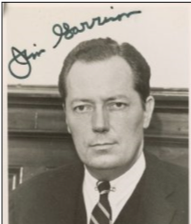 Jim Garrison, in On the Trail of the Assassins, commented dryly that, “As I read Markham’s testimony, it occurred to me that few prosecutors had ever found themselves with a witness at once so eager to serve their cause and simultaneously so destructive to it.” (Garrison, p. 195) Garrison may have been onto something here. What was causing this lady’s testimony to be so strangely bizarre and baffling?
Tippit researchers Joseph McBride, William Pulte, and Michael Brownlow have all hinted at a potential answer. At the time of the JFK assassination and J.D. Tippit’s death, Helen Markham’s son, Jimmy, was facing serious criminal charges in Dallas County. Markham, a single mother of very limited means, could do little in the way of protecting her troubled, at-risk boy. Then, suddenly, the Tippit incident occurred and Mrs. Markham was, in her words, “treated like a queen” by Dallas Police. It must have crossed Helen Markham’s mind that, if she helped the police and the Dallas authorities, her son might receive favorable treatment by the court. Worse, if she refused to help and did not identify Oswald as Tippit’s killer, it might be her son who paid the heavy, immediate price. (McBride, p. 479) But helping Dallas authorities, in this particular highest of profile cases, meant having to finger an innocent man, whether dead or not, for a crime he did not commit. Oswald was simply not the short, slightly heavy, bushy-haired cop-killer who disappeared behind Ballew’s Texaco.
So, it may have been Mrs. Markham’s solution to this conundrum to appear to be helping the authorities while she was actually rendering her testimony useless and therefore harmless to the defendant. Save son Jimmy, but also protect Lee, the young man who was in the Texas Theater as the fatal shots rang out at 10th & Patton.
Medical Photographer Jack Ray Tatum
 Witness Domingo Benavides, the closest passerby to the shooting of Officer Tippit, was unable to make a positive ID of the suspect, because Benavides had instinctively ducked down behind the dashboard of his pickup truck when he heard the shots. Benavides mostly saw the gunman as he was walking away, towards the corner of 10th & Patton, while tossing shell casings into bushes along the way. Benavides did report that the gunman had a haircut that was squared off in the back along the neckline of his Eisenhower jacket. Lee Oswald on that day clearly had hair that was tapered in back, not squared off. (WC, Vol 6, p. 451)
Benavides also noticed something else that would later prove significant—a red Ford Galaxie about six car lengths ahead of his pickup, going west, that pulled over same as Benavides when the shots occurred. (HSCA Vol 12, p. 40) The red Galaxie and its driver supposedly stopped and stayed at the scene for a time—and then left as a crowd quickly gathered. No one ever got the name of this potential important witness.
In September, 1976 the U.S. House of Representatives voted 280-65 to establish the Select Committee on Assassinations (HSCA), in order to investigate the assassinations of John F. Kennedy and Martin Luther King, Jr. This bold move was primarily caused by the first national airing in March of 1975 of the 8 mm film shot by Abraham Zapruder of the JFK assassination. Geraldo Rivera hosted the showing which took place on the ABC show Good Night America. When American citizens finally got to witness the shooting with their own eyes, their response was one of outrage, which in turn prompted the reopening of the investigation. The HSCA would not complete its work until late in 1978 and did not issue a final report and conclusion until the following year, 1979. The final conclusion of the HSCA was that President Kennedy had likely been assassinated as the result of a conspiracy.
A reopening of the JFK assassination necessarily meant the HSCA would also be taking a second look at the Tippit murder. The case against Lee Oswald in the murder of Officer Tippit had been a house of cards from the beginning and there were those in positions of power who apparently did not wish for any second inquiry of the murky, little-investigated events at 10th & Patton on the day of JFK’s assassination.
It was against this backdrop that a Dallas native, Jack Ray Tatum, stepped forward with the claim that he had been the driver behind the wheel of the mysterious red Ford Galaxie seen stopped near the intersection of 10th & Patton on 11/22/63.
Mr. Tatum would proceed to tell an amazing story—perhaps one even more unbelievable than that of the unfortunate Mrs. Markham. Yet unlike that of the much-maligned waitress, it has generally, and inexplicably, been accepted as fact for more than four decades. In a filmed interview with the PBS television show Frontline in 2003, Mr. Tatum re-created his alleged experience on that fateful day in Dallas, 1963.
While taking a detour through the neighborhood to circle back to a jewelry store on Jefferson Blvd. to buy his wife a gift, Tatum said he found himself driving north on Denver Street around 1 p.m. at which time he turned left to head west on 10th Street.
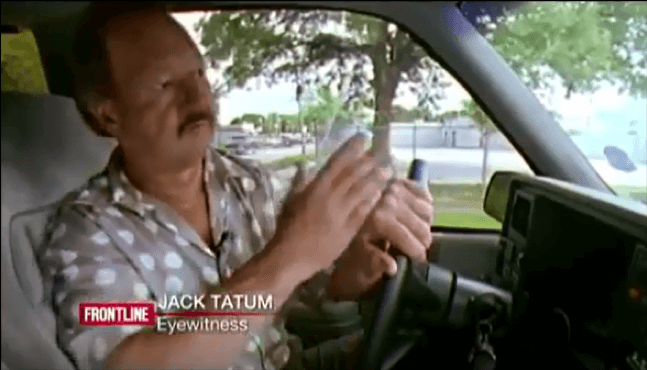 Tatum explained that after he made the turn and began driving west on 10th, he noticed an individual walking in his direction (walking east towards Tatum). A Dallas police car was just pulling over to the curb. As Tatum drove towards where the squad car was now parked he noticed the young man leaning over and talking to the officer. The man had both hands in the pockets of his light-colored tan jacket. Tatum continued on to the intersection of 10th & Patton. As he was about in the middle of that intersection he heard “three, maybe four shots.” Tatum continued through the intersection and then braked to a stop.
What Tatum describes next was seen by no other witnesses.
Tatum looked in his rearview mirror and saw the policeman laying in the street. The gunman, still on the passenger side of the squad car, walked to the rear of Tippit’s car, hesitated, came around the back of the car, then walked up along the driver’s side of the car … and shot Tippit one final time at close range. (McBride, p. 496)
The gunman, according to Tatum, then looked around, surveyed the situation, and started a slow run west in Tatum’s direction. Tatum put his car in gear, drove forward down 10th Street to avoid danger, and kept his eye on the gunman in the rearview mirror.
Tatum said he could see the gunman very clearly and that the corners of his mouth curled up, like in a smile, which was distinctive and made this individual stand out. Then, Tatum delivers his punch line, the big money words the PBS audience is waiting for:
“And I was within 10-15 feet of that individual and it was Lee Harvey Oswald.”
Now, to the casual viewer of this PBS documentary, Mr. Tatum has just laid to rest any and all the conspiracy theories surrounding the murder of J.D. Tippit—and has apparently put the final nail in the coffin of Lee Harvey Oswald. Tatum is so smooth in his delivery, so convincing, so sincere: 10-15 feet? How could he have not identified Oswald?
Frontline and PBS should be ashamed for having filmed this charade and then presenting it to the American public as fact. (The reader can see this interview at Youtube, under the title, “J. D. Tippit Murder Witness Jack Tatum”) Since the entire interview was shot from within Tatum’s vehicle, the viewer can’t see that, according to Tatum’s own description of events, the gunman was likely never closer than 100 feet of Mr. Tatum’s alleged position (in red). Here is the overhead satellite view of that intersection today, with the distance legend in the lower right corner (blue arrow points to 20 ft.):
 According to a study cited by the Innocence Project, after 25 feet face perception diminishes. At about 150 feet, accurate face identification for people with normal vision drops to zero.
 Could Jack Tatum, while watching a fleeing gunman in his rearview mirror from 100 feet or more away (and remember, Tatum said he drove forward again as the gunman approached), have been able to tell that the corners of the gunman’s mouth turned up? Positively ID him as Lee Harvey Oswald? A gunman in a rearview mirror who was ducking behind trees, bushes, Mr. Scoggins’ yellow cab, and all the while brandishing a pistol?
Was Jack Ray Tatum even there? Who says so besides Jack Ray Tatum? Tatum himself admitted that “When they were getting witnesses to go to the Warren Commission, I thought, they hadn’t missed me—no one had mentioned I was there.”
Tatum later claimed he didn’t want to get involved on 11/22/63, that they already had enough witnesses. (McBride, p. 498) And that Mrs. Markham—who Tatum said was there—(with her hands over her eyes) got a better look than he.
Oh, yes, Mrs. Markham. Tatum first said he simply drove away and left the scene of the Tippit slaying. Later he explained that he came back to help poor Mrs. Markham, eventually driving her to a police station to give her statement. A noble gesture to be sure. Only problem is, DPD records indicate that Mrs. Markham was taken to DPD headquarters by Office George Hammer, not Mr. Tatum.
Tatum’s assertion that “Oswald” came within 10-15 feet of him may be an exaggeration of colossal proportion. However, Tatum’s other claim that “Oswald” circled the squad car and then shot Tippit—basically point blank “execution style”—is as absurd as anything Mrs. Markham told the Warren Commission in 1964. Yes, the eyewitness testimony in general was both conflicting and contradictory. Yes, Benavides and Scoggins missed witnessing crucial pieces of the crime as they went ducking for cover. And we can only guess at what Mrs. Markham actually saw. But while the eyewitness testimony may have been difficult if not impossible to reconcile, the ear witness testimony remained extremely consistent.
Witness after witness described Tippit as being killed by a fusillade of shots. They all heard basically the same thing: Pow pow pow pow.
“They was fast,” remarked cabdriver Bill Scoggins, describing how the shots were fired extremely close together, in rapid succession.
“Pow pow, pow pow,” is how neighbor Doris Holan, whose second-floor apartment overlooked the scene, described the loud bangs to researcher Michael Brownlow.
“He shot him in the wink of your eye,” noted Mrs. Markham.
Domingo Benavides described hearing a loud boom followed quickly by two more fast booms.
“Bam bam – bam bam bam,” remarked Ted Calloway, likening the shot sequence to Morse code.
Yet Mr. Tatum insisted that “Oswald” fired 3-4 shots from the front passenger side, stopped, walked to the back of the patrol car, hesitated, then walked behind the squad car, turned, and walked up the driver’s side until he stood over Tippit and fired one last bullet up-close-and-personal.
Except, no one heard that. No one heard anything even remotely resembling that. Nobody heard shots—followed by a several second delay—followed by one final shot.
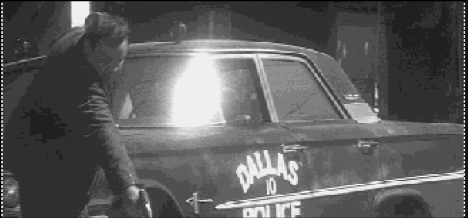 Yet today, if you watch a documentary, movie, or television show describing Tippit’s murder, Jack Tatum’s version of events is what you are almost sure to see. But it never happened that way, couldn’t have happened that way.
“That just didn’t happen,” Calloway told one researcher regarding Tatum’s scenario. “Boy, those shots are as clear in my ear today as the day it happened. Bam. Bam. Bam, bam, bam. Just like that.”
Problem is, the forensic evidence showed that one of the shots was likely fired from a steep downward angle, from above the officer, unlike the other three shots. The final shot was more accurate, more deadly, and apparently done from a much closer distance.
But the man in the light tan Eisenhower jacket didn’t have time to do what Mr. Tatum said he did. After the shots, he began almost immediately to walk in the direction of Bill Scoggins’ cab. That gunman never went around the car and stood over Tippit. Again, there was no time for that. And nobody heard that.
Someone else was there. Someone else who also shot Tippit but escaped before the man in the light tan Eisenhower jacket started dropping shells and walking towards Patton Street. Someone such as the man in the long coat seen by Mr. Wright. The man who looked down at Tippit in the street and then ran fast to a grey 1950 or 1951 coupe and sped away.
“Those are pistol shots!” exclaimed Mr. Calloway when the murder happened. With that the used car manager was on his feet and out the office door. “I could move,” he recalled, “and just as I got to the sidewalk—which is about thirty-feet away, I guess—I looked to my right and there’s Oswald jumping through the hedge.”
Calloway was asked, “If someone tried to convince you that there were four shots and a short pause and then another one fired, you wouldn’t believe that?” “No, I wouldn’t,” Calloway answered, repeating the cadence he recalled, “Bam–bam–bam, bam, bam.”
No time, no how, no way.
So what was accomplished by Jack Tatum’s strange, belated testimony before the HSCA?
- It helped to repair Mrs. Markham’s highly controversial and highly criticized testimony before the Warren Commission in 1964—and helped to verify her presence (doubted by some) at that corner when the shots were fired.
- It reinforced the idea that the gunman had been walking east, not west, a crucial detail needed to allow Lee Oswald to have reached the scene in time to murder Officer Tippit.
- It explained the previously unexplainable, the forensic evidence that showed Tippit had been hit by one bullet from a different, much steeper angle which was also fired from a distance relatively closer than the other bullets.
- It maintained the fiction of only one gunman at the Tippit scene.
- It fingered Lee Oswald as that lone gunman at the Tippit scene.
- Most of all, it gave the HSCA a reason not to delve too deeply into the Tippit case. Which, in retrospect, is one of the HSCA’s many failures: their lack of rigor in reviewing the Tippit case.
Today, under analysis, his testimony has the quality of paper mache. Tatum saw things no one else saw and heard things no one else heard. And his identification of Oswald simply has little or no credibility from that distance. His alleged escorting of Markham is also dubious. It’s almost as if he was a salesman. The ruse, a highly pernicious one, has apparently succeeded—at least so far. Yet, in spite of all this—and because of late Frontline producer Mike Sullivan—his twist on critical events is continually presented as fact.
In the end, however, the HSCA still managed to “overturn” the 1964 pre-determined conclusion offered by the Warren Commission. The HSCA reported that President Kennedy was probably slain as the result of a conspiracy, and that there were likely at least two gunmen in Dealey Plaza—both in the Texas School Book Depository and behind the fence on the Grassy Knoll.
And so now at the end of this article, we have finally come full circle … back to Counsel David Bellin’s “Rosetta Stone” logic. For if President Kennedy was assassinated in downtown Dallas as a result of a conspiracy, then it follows that Officer Tippit was likely murdered in adjoining Oak Cliff in an attempt to further that same conspiracy. 10th and Patton was a setup, the disturbance at 10th was in all likelihood a ruse. The designated patsy sat in a darkened nearby movie theater as Officer Tippit, drawn into a trap, was shot down on a quiet residential street in a Dallas suburb. All went as planned—until the scheme to kill the patsy in the movie theater fell through. That’s when the conspirators, suddenly desperate, went into all-out damage control mode and brought in Mafia bag man Jack Ruby to silence the pasty once-and-for all—live and in front of a national television audience.
Messy, very messy.
And in the words of Tippit author Joseph McBride, America then took a turn and walked into the nightmare. Along the way, they turned a former Marine into a patsy.
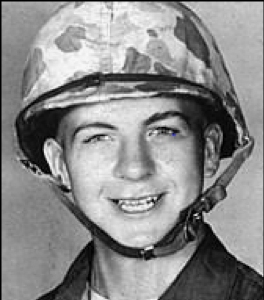
-

Jim DiEugenio’s 25-part series on Destiny Betrayed, with Dave Emory
 For three months, beginning in November of 2018, Jim DiEugenio did one-hour-long interviews on Dave Emory’s syndicated radio show For the Record. Emory has been broadcasting for 40 years. These 25 programs constitute the longest continuous interview series he has ever done. The subject was a sustained inquiry into DiEugenio’s second edition of Destiny Betrayed. Emory was very impressed by the author’s use of the declassified record excavated by the Assassination Records Review Board and how it altered the database of Jim Garrison’s New Orleans inquiry into the assassination of President Kennedy. This series is also the longest set of interviews DiEugenio has ever done about the book. Emory read the book and took extensive notes, which made for an intelligent and informed discussion of what the present record is on the Garrison inquiry.
-
Canadian Archives sued over release of Louis Mortimer Bloomfield papers
In some Kennedy assassination circles, where theories about who was responsible for the murder of President John F. Kennedy are discussed, Louis Mortimer Bloomfield, Montreal lawyer and philanthropist, has for many decades been considered a suspect. Bloomfield is mentioned is several books on the JFK case, including Jim Garrison’s best-seller On the Trail of the Assassins. Michael Benson’s desk encyclopedia Who’s Who in the JFK Assassination, devotes two pages to him. In reading those pages, Bloomfield relates to both Clay Shaw and the mysterious European organization called Permindex. The suspicions about him did not stop Bloomfield from donating his personal papers to Library and Archives Canada (LAC). He donated his papers to LAC with only one stipulation, that they be made available to the public 20 years after his death.1 He died in 1984 and in 2004, Montreal based researcher Maurice Philipps asked LAC to give him access to Bloomfield’s papers and LAC said no. Philipps took the archives to court and in 2006 the court ordered LAC to release Bloomfield’s papers to the public.2
Now LAC has done it again. They have again barred the public from accessing Bloomfield’s papers. The reason cited for their action is “client-solicitor” privilege. As the papers donated to the archives contain letters from Bloomfield to his clients, they are protected by “client-solicitor” privilege and therefore cannot be viewed by the public. But this argument does not sync with the facts of this case. When the files were to be opened to the public in 2004, it was not “client-solicitor” privilege that was the stated reason for barring access to them. The reason for their refusal was Bloomfield’s widow, Mrs. Justine Stern Bloomfield, who asked that they not be released until 10 years after her death citing “… privacy concerns and safeguarding Mr. Bloomfield’s reputation.” 3
So why did LAC again block access to Bloomfield’s papers? There can be any number of reasons; it could be fallout from the release of the JFK files in 2017. Did this trigger concerns that more conspiracy theories would be created about Bloomfield’s alleged participation in JFK’s assassination? Is there information in the files that they do not want the public to see? In his letters to his clients did he mention the name of Clay Shaw or some other person that may have been investigated by Jim Garrison during his investigation of Kennedy’s murder? The result of their action however can only create more suspicion about Bloomfield. What do they not want the public to see?
Support, however, for the opening of his papers to the public has come from an unlikely source: Bloomfield’s nephew, Harry Bloomfield, who is also a lawyer and who lives in Montreal. In a story regarding Philipp’s battle with LAC to gain access to Bloomfield’s papers, it was stated that “Bloomfield’s nephew says he sees no reason to keep the papers shielded from public view. Montrealer Harry Bloomfield says the fight to keep his uncle’s papers behind a veil of secrecy is likely fuelling conspiracy theories tying Bloomfield to JFK’s assassination—theories that he says are completely unfounded.”4
This author has taken LAC back to court. In the case of John Kowalski v Guy Berthiaume, Librarian and Archivist of Canada, the author has asked the Federal Court of Canada to overturn LAC’s decision to block access to Bloomfield’s papers. The case will be heard by the court over the next few months and the author will update Kennedys and King on the outcome of it when it has been decided by the court.
1 Philipps v. Librarian and Archivist of Canada, Date: 2006-11-14, Neutral citation 2006 FC 1378,
File numbers: T-1517-05, section 3, Federal Court of Canada, Federal Court Decision database.
2 Philipps v. Librarian and Archivist of Canada, “Judgement.”
3 Philipps v. Librarian and Archivist of Canada, section 10.
4 E. Thompson “Dispute over releasing archives keeps lid on potential link to JFK’s death” CanWest News Service, January 27, 2007.
-

William Turner speaks with Hal Verb and Elsa Knight Thompson
Listen to the audio on YouTube.
Moderator
I am in the studio with William Turner, staff writer of Ramparts Magazine, and author of a forthcoming book, Police USA, which will be published by Putnam, Invisible Witness, Bobbs Merrill, and The Garrison Case, Award Books. Mr. Turner is a former FBI agent. He wrote the essay “The Inquest” in June Ramparts, outlining Garrison’s case, and the “The Press Versus Garrison” in the September Ramparts. This is not Mr. Turner’s first appearance in our studio. Quite a number of years ago now, several years ago, Mr. Turner appeared over this station when he was originally in the process of leaving the FBI, and us no more popular with the authorities. And so, he’s been a lot of places, and done a lot of things since then.
The second person we have with us is Mr. Harold Verb, who is a reporter for The Berkeley Barb, and has also been doing some work at San Francisco State, conducting a seminar, I believe, on the assassination of President Kennedy, and the Warren Commission report.
Now, what we’ve asked these two to come and chat with us about is what’s going on in New Orleans, and what role Jim Garrison has played in this, where it is now, and how they estimate its significance, its relevance, is it more than simply a theory that Mr. Garrison is working with? Perhaps you could bring us up to date on some of the facts, Mr. Turner.
William Turner
I’d be glad to talk about Jim Garrison’s case. Actually, Garrison first got into the assassination investigation the day after the assassination. On that Saturday, he called what he termed a brainstorming session of his staff, and they went over any possible New Orleans angles, or persons who were erratic enough to have been involved in a conspiracy. At that time, they came up with the name of David William Ferrie, who you will recall died this year, on February 22nd, after he became involved in Garrison’s current investigation.
Now, at that time, Ferrie had a rather mysterious trip to the state of Texas, leaving the afternoon of the assassination. And on that trip, he went first to Houston by car, where he appeared at an ice skating rink, and according to the owner now, he stood by the telephone for several hours on that Saturday afternoon. He apparently received a call, and then went to Galveston.
Now, Garrison was waiting for him when he got back on Sunday to New Orleans, and picked him up, and turned him over to the FBI for interrogation, because of the very suspicious nature of this trip. In other words, Garrison thought it was a very curious trip, by a curious man, at a curious time.
The FBI released him, and apparently the reason was that, number one, Ferrie had not left on that trip until well after the assassination; say, five or six hours. And also, because they determined that his small airplane was not airworthy at the time, and therefore, he couldn’t have been in on an escape plan. Now, there the matter rested, and as Garrison puts it, he said, “I had confidence in the competency of the FBI.” He himself is a former agent of the FBI. He was in approximately a year. And interestingly enough, he was in the same office that I was in, Seattle.
So, it was not until last fall when he was riding a plane to New York with Senator Russell Long of Louisiana, that his interest was renewed. Apparently, they were discussing the various books that had come out, and Senator Long the statement that he really believed that there was more to it than Oswald. And they conversed on it. When Garrison got back to New Orleans, he went into virtual seclusion, pouring over The Warren Report and its volumes, and he quietly launched his inquiry. And on the basis of the initial returns in this inquiry, he became convinced that, indeed, there was an assassination plot, and that the assassination plot had at least one aspect in New Orleans.
So, that is how he got started on it, and as you know, it’s still going on.
Elsa Knight Thompson
Well in what form is it still going on? Would one of you … How is he proceeding at this point, and where does he intend to … Has it just simply become a private investigation now? There’s nobody up for trial at the moment, is there?
William Turner
Well, yes; there is. Clay Shaw is scheduled for trial. But, let me put it this way, that Shaw was arrested … I believed it was the latter part of February. And through all kinds of legal maneuvering … maneuvering is a word that the judge down there, not mine. It’s been postponed and held off, and a trial date has not yet been set. However, Garrison stresses that he does not believe that Shaw is at the center of any web of conspiracy, that he is a peripheral participant in this. And therefore, he has a motion in open court to speed up the trial of Shaw so that he can sort of clear the decks with his own investigation.
As it is, he was held up with all these legal motions in the Shaw case. He does not have a greatly enlarged staff, and they have their normal criminal case load to handle. And he also has been subjected to attacks from Life Magazine, which insinuates that he is somehow sympathetic to organized crime, which is laughable; because probably of all the district attorneys in the nation, he has done more to clean up organized crime than anyone. By NBC, CBS, the bulk of the national media, the mass media, and therefore, he would like to be able to devote more time to the investigation.
But, he does have an investigation. He’s got main files that are set up somewhat like the FBI’s. He has an archivist to handle the Garrison archives. He has men who are specializing in the Kennedy assassination investigation, and I’ve spent a total of two weeks inside his office down there, and every day, there’s a new angle.
Elsa Knight Thompson
Well, tell me, in as much as there must be quite a few people who wish he would dry up and blow away, can he as prosecuting attorney just sit there and utilize that much taxpayer’s money to follow up on something simply because he believes in it? Is there any chance or possibility of actual either legal or political pressure to make him stop this?
William Turner
There have been all kinds of pressures brought to bear. Now, Garrison was carrying on his inquiry in secret. This is the best way, of course, to carry on an inquiry; at least in its initial stages. Now, the States-Item newspaper in New Orleans checked the disbursements of his office and found that there were what they consider these exorbitant travel expenses. People were going to Miami, they were going to Chicago, San Francisco. And this is the way they got wind of what he was doing, and they broke it in the paper.
Well, Garrison, at that time … Number one, there was a loud hue and cry that he was expending public funds on a wild goose chase. Now, he didn’t want to come out and release all his evidence to substantiate that it was not a wild goose chase. Therefore, they formed a group, businessmen in New Orleans formed a group, called Truth or Consequences, Incorporated; which is privately financing the assassination investigation. They signed up and contributed so much a month, and this is what is really subsidizing his assassination investigation.
Elsa Knight Thompson
But, through the prosecuting attorney’s office, or separate from the prosecuting attorney’s office?
William Turner
Well, through the office. Through the office. Now, you’ve mentioned pressures brought to bear. You get in his office down there, and you almost feel like you’re in maybe a Russian embassy on US soil, the way he’s been treated. For one thing, there is an organization down there called the Metropolitan Crime Commission. An ex-FBI agent by the name of Aaron Kohn is the head of this.
Now, of course, this is again, a privately subsidized operation, and Mr. Kohn has to have organized crime around in order for himself to exist. And it seems that, since Garrison’s investigation has come up, Kohn has been inordinately active in trying to say that there’s organized crime in the parish of Orleans. He’s been called before the grand jury down there several times to try and specify what he means by this, and he’s been unable to do so.
Nevertheless, that is one pressure point. As I mentioned, the national press is another pressure point. Bobby Kennedy’s former investigator Walter Sheridan was down there from the inception of Garrison’s investigation, and he has attempted … There is a legal allegation that he has attempted public bribery in getting to Garrison’s witnesses. It is alleged that Perry Russo, who is a key witness in the Shaw case, was offered some money by Sheridan. Sheridan allegedly told him that, “We’ll get you to California, and they won’t be able to extradite you from there.” And various other types of either intimidation or lures. They’ve been using the carrot and stick down there.
Elsa Knight Thompson
Yes, Hal.
Hal Verb
Yes. One of the things that Bill has mentioned are these different pressure points, and he’s pointed out the press, nationally and locally, has not given the Garrison case a fair shake. We can speak about the local press here. I think the only fair shake that they have given Garrison is that there is no news that is covered in the local press here that gives space to anything he says to counter the charges that are against him. I’ll specifically mention one. For example, when Life Magazine said that Garrison had been connected with the mafia, and this was reported in the press, Garrison had an instant reply to that, and he said, “I don’t even know Carlos Marcello,” and that was the specific individual who Life Magazine had tied him in with. “I wouldn’t even know him if he were sitting right here next to me.”
Now, this thing has never even appeared locally; I doubt if there are a few people here in the Bay Area, or in the whole state for that matter, who even know about this remark. This is typical; NBC, CBS will present their program, giving their version of what they say are both sides of the story, when in fact, it is only one side.
Elsa Knight Thompson
Yes. I believe you had something about some TV coverage that you wanted to talk about. Would this be the time that you would like to go into that a little more fully?
Hal Verb
Yes. There seems to have been what I would regard as a massive attempt to, if not obstruct the investigation, to at least put obstacles in the way of it that would prevent Garrison’s case from really coming to court, or at least having his say, with respect to what he has presented. For example, CBS presented a four part series late in the summer, I think it was the end of June, in which they references specifically to Garrison’s case. And one of the things that they mentioned was the kind of attempts that were by Garrison’s office, allegedly, what they said to bribe and intimidate witnesses.
And, for example, they pointed to a writer for the … This is a quote from one of the transcripts that I have of the four part series. They said there was a writer for the Saturday Evening Post who said he had read transcripts of what went on at those sessions. Now, the fact is that there were never any such transcripts, and this writer had actually seen Sciambria’s notes. And what this writer was trying to show was that this particular person had written a document, or statements, in which he had said that a key witness, Perry Raymond Russo, had lied about what he had presented as evidence.
The fact is that this was never the case, because there were in fact memorandums that were prepared, and that this writer actually was aware of the existence of these memorandums. Now, this did not get into TV coverage.
Elsa Knight Thompson
Well. Where would you like to go from here on this? What is Garrison’s theory? You say that the man, Shaw … Ferrie, is dead. There seem to be an awful lot of dead people connected with the whole situation …
William Turner
The tabulation goes on and on.
Elsa Knight Thompson
Yes. So, Ferrie’s dead, whatever it was he was supposed to be doing. Now, what about Shaw, and what is Garrison’s overall …
William Turner
Well, all right. In broad terms, it is this … And I think that this will also explain the orchestrated attack on him. Garrison believes that Oswald, number one, was a CIA agent, and that he probably had been trained at the Atsugi base in Japan when he was in the Marine Corps. This would have been back around 1957, ’58. Atsugi, reportedly, is a U2 installation. And in the restricted documents … there’s still classified documents in the archives … There’s a very tantalizing one entitled “Oswald’s access to U2 information”.
Now, necessarily, this means that when Oswald went to the Soviet Union, he was a CIA operative. And, of course, there is liberal evidence to back this up; most of it suggestive, rather than direct. But, for one thing, when he came back, he told a fellow employee in Dallas, where he was working in a photographic lab, about the disbursement of Soviet military forces, how they did not intermingle, or armored divisions with infantry. And then, he said, “I didn’t notice any vapor trails over Minsk.” Minsk is where he was when he was in the Soviet Union, for most of his stay.
Now, Garrison believes that Oswald’s leftist activity in New Orleans and Dallas, his attempts to insinuate himself into the confidence of the Fair Play for Cuba Committee, the Socialist Workers Party, the Communist Party USA, was nothing more than an attempt to erect a facade. Such a façade would have given him, perhaps, easier access to communist countries. It would have given him, once in, a freer movement.
Now, when Oswald went to the Soviet Embassy … or, excuse me, the Cuban embassy in Mexico City, he very careful listed all these affiliations with these groups; which, of course, existed only in his own mind. He never was formally accepted into any of them.
Now, who was Oswald then, if he was not really a leftist; who was he? Well, Garrison’s evidence will show that Oswald was affiliated with a group in New Orleans, which was anti-Castro in nature, and was paramilitary in nature, that was composed … down in that area, there is a tremendous cross-pollination of people who are members of the Minutemen, who are Cuban exiles, violently opposed to Castro, who are even members of the KKK. And it was with one of these factions with whom Oswald was traveling.
Now, with that in mind, how does the CIA come into it? Because Garrison believes that CIA is the reason that there is this orchestrated attack on him. Well, very simply, it was the CIA which sponsored these anti-Castro groups, which were supposed to, even after the Bay of Pigs failure, never relinquish their dreams of re invading Cuba. And, as a matter of fact, these groups were very active, and training in the environs of New Orleans. Garrison found one of their bases where one of the founders of the Minutemen had been arrested by the FBI and secretly let go. His name never appeared in the newspapers.
These people became very disenchanted with President Kennedy after what they call all his promises about freeing Cuba, and not coming through. And then, his apparent rapproachment with Cuba, which was in the works at the time of the assassination, was being handled through the Cuban ambassador, Carlos Lechuga and the United Nations, and through an intermediary, an ABC newswoman, who was on very close personal terms … Lisa Howard; very close personal terms with Castro.
So, what Garrison believes is these anti-Castro groups, which had been nurtured by the CIA, one of the factions, a spin off from this group, got out of hand, set up Oswald as the patsy, and assassinated Kennedy in Dealey Plaza. And Dealey Plaza ––
Elsa Knight Thompson
In other words, he doesn’t think the CIA ordered Kennedy’s assassination, but simply that a group that had been involved and financed by the CIA, went its own way …
William Turner
Right. The CIA, by its very nature, is compartmentalized, or cellular … They used to talk about communist party cells, and how one didn’t know the other. And this is exactly the structure the CIA, and it’s very easy for one of these CIA cells to become so involved in deceit, duplicity, assassination, murder, to go off and do something like this. And the operation at Dealey Plaza had all the earmarks of a paramilitary type of ambush. No question about it.
Elsa Knight Thompson
And Ferrie and Shaw were involved in that group? Is that …
William Turner
Now the legal allegations against Shaw are that he conspired, it’s a conspiracy charge, in New Orleans with David Ferrie and Oswald to assassinate the president. Garrison’s legal bill in particular states that a session in which they discussed and planned an assassination … talk, or particulars, culminated in what happened at Dealey Plaza. And, as I said before however, Garrison has gone no farther in his charges on Shaw. However, he has independent evidence to back up Shaw’s identity as Clay Bertrand, as you may know that is a big bone of contention; Shaw says he is not Clary Bertrand. Garrison says he is.
Now, Clay Bertrand comes into this way; immediately after the assassination, a New Orleans attorney, Dean Andrews, who had handled what he calls the “gay swishers” in New Orleans, and also Oswald … Oswald apparently wanted his discharge changed; said that, immediately after the assassination, he received a phone call from this man whom he knew as Clay Bertrand. And Clay Bertrand was a man who had referred Oswald to his office. And he said that Bertrand asked him if he would defend Oswald against the assassination charges. Of course, before anything further could be done, Oswald himself was killed.
Now, as I say, it is part of Garrison’s allegations that Clay Shaw is in fact the man using the name Clay Bertrand; and this he intends to prove in court. Also, the facts of the conspiracy. One of the allegations, and to prove this, is that Clay Shaw met in Baton Rouge with Jack Ruby and with Oswald. And he has a witness that will testify to this. So, this is the case against Shaw, which as I say, is up for … It has not yet been set on the calendar, but will come off late this year, or early next.
Elsa Knight Thompson
Does he have any witnesses who claim to have been a member of this group themselves? Or, is this all inferential evidence? Do you know whether or not anyone within the little right wing CIA, whatever you want to call it, type group that this plot took place in according to him; is there anyone who was a part of that, that he has been able to get as a witness?
William Turner
Unfortunately, no. Because, obviously, these people would be accessories before the fact, at the very least, if not participants, accessories after the fact. And certainly, you talked about the mysterious deaths; these people would not be very prone to talk, knowing what the penalty might be.
Elsa Knight Thompson
Well, but he must have found it out some way. I wondered, if by any chance, it was a question of someone from the group informing even if, for reasons that would be very obvious, that this would be protected.
William Turner
Let me put it this way, then, that there have been people who have been within the group, or on the periphery of it, who have been able to give him at least part of a story. No one has come ––
Elsa Knight Thompson
Well, that’s what I was at. I wasn’t expecting that anyone who had helped to plan the assassination of the president would come along and say, “I was a member of a conspiracy.”
William Turner
Like former Minutemen, for example. Yes, there have been a couple of those.
Elsa Knight Thompson
Because, for example, as far as I know, it’s never been absolutely proven that such a group existed, and that Oswald was a member of it. Well, anybody who had ever been in that group would be a valuable witness to that much.
William Turner
This is true.
Elsa Knight Thompson
I was wondering what the depth was on the witness situation.
William Turner
Yeah. There has been no one, unfortunately, who has been able to tell them that, “Yes, I was in this group. Yes, I was part of the assassination team at Dealey Plaza. Yes, so and so and so and so shot from behind the grass …”
Elsa Knight Thompson
No, I understand that, Bill. But, the point is that sometimes you have a group that might be composed of, say, 10 or 15 people, and that doesn’t mean that there wouldn’t be a minority, even within so small a group, that was doing something. But, at least that any one of those 15 people could testify, the people who belong to this group, and who normally came to our meetings were so and so, so and so. And if Oswald, and Ferrie, and Shaw were three of them, then that much would be established. It was that kind of evidence, I was thinking.
William Turner
Right Elsa. There have been a couple of cracks in this little structure. There have been.
Elsa Knight Thompson
Well, that looks as if he’s gotten that far, anyway.
William Turner
Yes, he has.
Elsa Knight Thompson
And with this, does he think this is involved … Well, you mentioned the fact that there was Cuban participation in these groups.
William Turner
Cuban exile.
Elsa Knight Thompson
Yes.
William Turner
Yes, right.
Hal Verb
May I make a point about this?
Elsa Knight Thompson
Yes.
Hal Verb
Very early in the … when the whole case about Garrison’s investigation broke, there were charges that pro-Castro Cubans had somehow been involved. And some of the press had picked up the story that, at first, Garrison ––
Elsa Knight Thompson
This is pro-Castro Cubans?
Hal Verb
This is pro-Castro Cubans.
Elsa Knight Thompson
Yes. This is the, “Was he right? Was he left?”
Hal Verb
Riight. The pro-Castro elements were involved in the assassination, and the press allegedly stated, or stated that, allegedly, Garrison had actually conceived of this as possibly one of the elements in the conspiracy. I’m talking about certain sections of the press. The fact is that, at no time was this a possibility when Garrison launched his investigation. In fact, through all of the investigations that he has conducted, there’s one thing that does stand out, and that is that Oswald, who does play, of course, an important role in this whole case, all his associations during his entire trip, both through New Orleans and Dallas, were with elements that can be considered paramilitary, right wing groups, and that all his associations were primarily of a right wing, extremist nature.
There is no evidence to show that he was, as the press had identified him, as a leftist. This was merely a cover ––
Elsa Knight Thompson
Well, I guess it did come out that he had made approaches to certain left wing groups. But, I remember that, within days, or at least very shortly after the assassination, that there was also a news item about the fact that, at one time, he had volunteered to train people to go in on the Bay of Pigs invasion. In other words, a completely contrary story. Now, that hit the press sometime very quickly after the assassination, and then died. I never saw anything more about that, but I clearly remember this, because it made a great deal more sense in the context of what one knew about Oswald, than the other story. And so, I do remember it.
Hal Verb
Yes. I think what you’re referring to is an incident when Oswald had approached a anti-Castro refugee by the name of Carlos Bringuier, in New Orleans. And, apparently, it’s my belief that when Oswald had done this, he had blown his cover, so to speak, about his connections with the CIA, at this particular point. Because Bringuier had become immediately suspicious of Oswald, that he was a double agent.
Now, while he was in New Orleans, Oswald managed to get himself a lot of publicity. I think this was on the part of an expected cover that he was expected to assume. He got on a program, on radio, WDSU, in which he debated a person who was connected with a group called INCA, which was the Information Council of the Americas Now, this group was connected with right wing, anti-Castro refugees, and had extensive operations in connection with Latin American revolutions.
Now, the thing about this INCA group is that a number of individuals who connected with this particular group, one of them, for example, is a man by the name of Mario Bermudez, who is the man who helped arrange the trip for Clay Shaw when he was here in San Francisco. Now, if you’ll recall, one of the things that Perry Raymond Russo had said in his testimony before the grand jury, was that part of the ploy that was to be executed on the day of November 22nd, when President Kennedy was killed, part of this plot would have to have the principals of the case in other cities at the time, so that no suspicion would be drawn upon them.
It was just curious to see that this man, Bermudez, is arranging a trip for Clay Shaw, the man who has now been charged with conspiring to kill the president. And here is this group, INCA, which manages to arrange this particular debate with Oswald while he’s in New Orleans.
Elsa Knight Thompson
With Oswald taking a view contrary, at that point, to the right wing view. Is that ––
Hal Verb
On this program, he took a view that he was a leftist who identified with the Castro revolution.
Elsa Knight Thompson
Yes. That’s what I mean. Yes. Quite. But, there was … I do distinctly remember seeing the item that he had … In spite of the fact that he was supposed to be on this Friends of Cuba … What was the name of the committee? You know …
William Turner
Fair Play for Cuba.
Elsa Knight Thompson
Fair Play for Cuba, and so on; that he also had been in … had volunteered, at one time, to train people to go in on the Bay of Pigs invasion, Cuban exiles. Which, would be ––
William Turner
This is probably the Carlos Bringuier episode, because he appeared voluntarily at Bringuier office. Bringuier was probably one of the best known of the anti-Castro exiles down there. And, as a sign of good faith, he presented Bringuier with his Marine Corps drill manual, or field manual. And Bringuier felt that he couldn’t be trusted, and maybe was a plant, and had nothing more to do with him. Although, that little altercation, where Bringuier, when Oswald was out in front of the International Trade Mart with his Fair Play for Cuba hand bills, and Bringuier comes up, and his little altercation. And Oswald said, “Well, go ahead; hit me if you want, Carlos.” It almost sounds like it was staged; that Oswald really was trying to say, “Well, I’m on your side.” All the evidence points that way.
Elsa Knight Thompson
Well, everything that one has ever read would give one the impression, certainly, that Oswald, whether by design, and whether on behalf of just himself, or other people, was certainly playing both sides of the street.
William Turner
Oh, yeah.
Elsa Knight Thompson
And so, you therefore have your choice as to which side of the street he was really in the pay of.
William Turner
Well, why would Oswald be associating with a guy like Jack Ruby, and Garrison has abundant evidence to show that he was. Why would he be associating with a man like that, who really is apolitical, on the surface, at least. This isn’t somebody that Oswald would just pick up and associate with, because he didn’t really like nightlife all that much to go to the Carousel Club.
Elsa Knight Thompson
What role does Garrison figure Ruby did play in it?
William Turner
Garrison feels that Ruby was manipulated in this thing, probably by the Dallas police. Now, Dallas police is too general; probably by key people within the Dallas police. And, for example, Hal mentioned Jim Phelan’s article in the Saturday Evening Post, which made Garrison look a little ridiculous. And one of the means of ridicule that Phelan used in this was to quote Garrison as saying that you have to look at this through the looking glass, almost like Lewis Carroll. And this was a source of great hilarity. But, it’s really true; you do have to look at certain aspects of it in the looking glass. You have to look at Oswald in the looking glass. You have to look at Ruby.
His facade was that he would go around in the time between the assassination and his own killing of Oswald, and he’d go down to the postal box, where [Bernard] Weissman’s answers to his advertisement, the black bordered ad, “Wanted for Treason”, President Kennedy, was coming in, and said, “Oh, isn’t that awful?” And draw attention to himself there. He would go out in the middle of the night and call up one of his employees, Larry Crafard, at the club, and go out and photograph the billboard that says, “Impeach Earl Warren” … “Isn’t that awful?” And these tender remarks about Jacqueline Kennedy, about sparing her the ordeal; in other words, this was an attempt to draw attention to the fact that he was really very pro Kennedy, and very incensed that anybody would kill Kennedy, and therefore, it creates a certain illusion. And that’s what Garrison means by the looking glass.
Elsa Knight Thompson
Yes. I can see that. But, where does he think Ruby really was? Does he think that Ruby was a part of this conspiracy?
William Turner
Oh, certainly.
Elsa Knight Thompson
And it’s obvious that if there were a conspiracy, that Mr. Oswald was very definitely the patsy.
William Turner
Yeah. Well, for example ––
Elsa Knight Thompson
Whatever he expected to be, that’s what he was.
William Turner
Yeah. I’ll illustrate by the statement of one witness, sworn statement, in Garrison’s files. I can’t name the man, but it really doesn’t make any difference, he’s evaluated as probably a reliable witness. This man was an artist, sort of a transient artist. He’d go from town to town, and then he got a little bit on the shorts in Dallas, and he went into the Dallas … Or, no; he went into the H.L. Hunts son’s business office, and asked if he could give him a little dough, or something, and H.L. Hunt’s son said, “Well, I don’t give out any … You go down to the Dallas police department, give them your social security number, and they’ll take care of you.”
Now, this man said he went down there, he gave his social security number, the officer fixed him up with some kind of a chit that would get him a full tank of gas, and he was given a little pocket money. And he said, at that point, Jack Ruby came up, and said, “Well, maybe I can get you at least a temporary job.” And he said that Ruby gave him a certain amount of money, a nominal sum, and said, “You go down to Alexandria, Louisiana, and check in the Bentley Hotel there, and somebody’ll contact you further.”
Now, this man, and his wife corroborates this, they went, and the hotel records corroborate it; they went to the Bentley hotel … At least they corroborate that they checked in there fine. His story is that he was no sooner in there, than he was contacted by a man, his phone rang, “Come down to the lobby,” and it was Oswald. And Oswald conferred with him, and made a, what at the time, he considered a very cryptic statement, to the effect that very soon, some Catholic leaders will be killed. Which, he interpreted …
Elsa Knight Thompson
Well, what could Oswald say he was supposed to do, or anything? What did they confer about?
William Turner
He said he’d be contacted further. He was just confirming that he arrived, and then there was no further contact. And after a few days, this guy left. Now, the whole annals of this thing is filled with these kinds of fits and starts, they seemed. But, there was another incident; a man by the name of Donald Norton, who claims that he is a former CIA “unpeople” who worked for CIA on certain assignments, said, number one, that at one time, he was sent to Atlanta, and that he met a man at the Atlanta Airport, who gave him … He was a courier. Norton was a courier. He was to deliver this amount of money to Havana. And this was in ’58, before Castro got to power. And that the man who gave him the money was an Eastern Airlines pilot named Hugh Ferris.
Well, he later identifies Hugh Ferris as being Dave Ferrie, and Ferrie was indeed an Eastern Airlines pilot. He also said he was on another courier assignment to Monterrey, Mexico. And that, in the course of this assignment, he delivered money to Oswald, a man he now identifies as Lee Oswald. This was in September of ’62. And then took documents from Oswald, he doesn’t know what they were, and delivered them to Calgary, Alberta, Canada, where a man gave him the password, “It’s a fine day in Tulsa.” And it was an oil firm employee. And he delivered the documents to him. He got paid by the assignment. He said he got $5,000 for that assignment.
Now, again, this man has been subjected ––
Elsa Knight Thompson
You think it all happens on TV, but I guess it doesn’t.
William Turner
I can guarantee ––
Elsa Knight Thompson
I mean, it’s just beyond ––
William Turner
–– that this thing is almost surrealistic. At times, I feel it’s too James Bond-ish to be true. But, the facts are there, and it really is the way it’s turning out.
Elsa Knight Thompson
And he feels, then, that all of this, or at least a good deal of it, can be brought to light during the trial of this guy Shaw, if he can get ––
William Turner
No, he doesn’t. Garrison has made a statement; he says, “I just hope the American people don’t think that the Shaw trial is going to bring out everything. And actually, we can only introduce what is material and relevant.” And, as he said, Shaw is not at the center of this at all. Shaw was off to the side somewhere. Ergo, he won’t be able to tell the whole story at this trial. And I know that he has a couple of other arrests in mind. But, this, of course, as I say, he is so freighted now, with the Shaw trial, and with this attack against him, that he just has to clear the decks.
Elsa Knight Thompson
And he wants to get the Shaw trial over with before he starts on what he considers to be the next step in ––
William Turner
Yeah. He’s made a motion in open court. And again, the attempt to abort the Shaw trial is very evident. And again, Shaw himself seems to have CIA connections. Now, the foreign press has reported this. I have not read word one about it in the domestic press. But, in 1958, Shaw was on the board of directors of a Rome corporation called the World Trade Center. Now, Shaw, through his attorney, admits he was on this board of directors. He said, however, he was merely asked to be on it by his own broad of directors at the International Trade Mart.
Now, on this board of directors are some very strange people. One of them is a secretary of the Italian neo-fascist party. Another is the son-in-law of Nazi finance minister, Hjalmar Schacht. Another is a fellow who is now an executive of the Bank of Montreal, and he’s a former OSS major, by the name of LM Bloomfield. This group was kicked out of Italy, the World Trade Center, because although it seemed to have plenty of money, it never did any ostensible business, and they suspected, the Italian police, that it was a CIA front. It is now headquartered in Johannesburg, South Africa, under the same name; probably a more friendly climate.
It also had a subsidiary corporation in Switzerland, which likewise, was ousted by the Swiss police, because it was suspected of being a conduit for funds for the OAS Movement; the Algeri-Français movement in Algeria. So, I must say that if Mr. Shaw can explain this in terms of his innocently being asked to go on the board, I will have to say then that the entire board of directors of the International Trade Mart in New Orleans are either extremely naive, or involved with the CIA.
Elsa Knight Thompson
Yes, Hal.
Hal Verb
May I just make this point? Bill has brought up an interesting point, and that is the deeper you get involved in this, the more the connections you see, not only with respect to quasi legal, and also secret groups, such as the CIA, and other operations, but you can see this involves the connections of people who are more or less in a position where they can use people for certain ends.
Now, for example, Clay Shaw, we’ll say, is in a position as director of the International Trade Mart, to oversee operations of the second largest sea port in this country. Now, even Gordon Novel, who was one of the witnesses that Garrison is seeking to extradite from another state, and in fact has had very little success … which, Bill has mentioned that there have been obstructions. One of the things he’s had difficulty in is getting people extradited from different states. There are three states now that have refused to extradite material witnesses in this case.
Anyway, Gordon Novel, who was a very interesting character in this whole case, who also has admitted publicly that he has CIA connections, is reported to have said that Clay Shaw himself probably was connected with the CIA. So, what I’m trying to say here is that you can understand why, then, the Shaw trial would be blocked from coming to court, because the connections that are involved here go very deep within the government, as I see it. This is my belief why that trial is being obstructed. Not only in so far as Shaw’s involvement in the assassination, I think it has a lot to do with connections that the government has set up.
Elsa Knight Thompson
Now, I would think that Mr. Garrison’s life was not worth much on the open market if he proceeds with this. Does he travel with a bodyguard? Does he feel secure? And what motivates this man? Now, you’ve met him, you’ve talked to him; what’s he in this for? You hear the crack, “Well, it’s a lot of cheap publicity. He can’t prove anything. But, it’s putting him on the front pages of all the papers,” and all this kind of thing. I would suspect that it was also, “I want to put him in his coffin.”
William Turner
Well, I believe that this could be the case, Elsa. When I first went down to New Orleans, after his case broke, I really had some reservations about what a Southern prosecuting attorney was going to be like, and what his motives might be.
Elsa Knight Thompson
It did seem a little unlikely, the whole thing, when it first began to break.
William Turner
It did seem a little unlikely. I have now come to the conclusion that Jim Garrison is an unusual man, in an unusual place, at an unusual time. Now, the allegations have been bandied around that he got into this thing for political ends. And I can only say that, if this was his motivation, that he is extremely ignorant of how politicians get elected.
Elsa Knight Thompson
So, I should think it would indicate rather bad judgment.
William Turner
Extremely bad judgment. Now, as I say, I was prepared to meet a Southern prosecuting attorney. I had a stereotype in my mind, which is always bad, but I did. And I ran into a man who was unusual in any region of the country. Garrison was at Dachau, and I think this made an indelible impression on him. Now, before the … He’s also extremely well ––
Elsa Knight Thompson
What do you mean he was at Dachau?
William Turner
With the Allied Armies that came upon Dachau. Yeah, I’m sorry. I should have elucidated a bit on that. And I think that the residual sight there just indelibly impressed him. Because when he wrote an introduction to a very well accepted criminology book, before this whole investigation came up … Now, understand that the very fact that he was asked to write this introduction is somewhat an honor. Before this, he was well known in criminology circles. It is a very sensitive and historically based introduction, and he goes back to Dachau, and the apathy of the German people that permitted this to happen. And he draws a parallel with the Kitty Genovese case in New York, where 36 people watched in their windows as this girl was slowly killed.
And he talks about this lack of commitment, and lack of involvement. And maybe I just read the tail end of this allegory that he brings up at the end of his introduction, and he’s talking about some extraterrestrial being who happens upon our self-destroyed Earth at some future date, and happens upon this human skull, and here’s what Garrison writes in his allegory; he puts the words in the mouth of this being:
“Alas, poor man; a fellow of most infinite jest, of most excellent fancy. Where are your gibbets now? Your thumb screws, and your gallows? Your treasured hates and your cruelties? What happened to your disinterested millions? Your uncommitted and uninvolved; your preoccupied and bored? Where today are their private horizons and their mirrored worlds of self? Where is their splendid indifference now?”
Now, this is Garrison, really, when you talk to the man. We were both in the FBI, and he asks me about a particular weapon that’s in a photograph, and I said, “I don’t know what it is, Jim. Matter of fact, I don’t like guns.” And he said, “Isn’t that funny? I don’t either.” So, he’s a rather unusual prosecutor, and he’s an extremely sensitive man. He told me a year ago, before this whole thing started, he said, “I was, vis-à-vis Vietnam, I was what you might call a mild hawk. I’m really a dove now. This whole thing has changed my thinking.”
Now, if this is a fool, or a knave, or a political opportunist, so be it, but I just don’t believe it. And I think that the press has portrayed him in this light, and they have portrayed him in this light in a very calculated manner. And I think that we have a very definite problem here in New Orleans. As Garrison puts it, “I am probably the only prosecutor, not defendant, that has been convicted in the press prior to trial.” And if they can silence Garrison … And when I say “they”, I mean the orchestrated attack obviously from Washington, obviously involving the mass media; if they can silence Garrison, I’m afraid they’ll be able to silence anyone. If they can portray him in an unfair light, I think they can do it to anyone. And I think that there’s over and above, or maybe parallel to the issue of who killed Kennedy, there is this issue of the press in the United States. And it’s completely slanted coverage of what is going on down there.
Elsa Knight Thompson
Is there anything else you would like to say about what you envisage as the future progress of this, before we close the interview? Either of you? Or, both of you?
William Turner
Well, I think that, as I say, every day, there seems to be a new development in Garrison’s case; not that it makes the papers, but internally. I have seen his evidence, practically all of it, at any rate. Because having researched the Minutemen a year and a half ago, and the Minutemen being involved in this thing, I would suppose that much of the information I have is valuable to his investigation. I would say that he has a very excellent case. It gets better every day. And if … As we both stated, that if we were back in the FBI, and we had 6,000 agents around the country, and we could get on that teletype and mark it urgent, and send out these leads that this assassination conspiracy would be solved inside of three weeks, and the conspirators would be in jail.
But, as I’ve outlined to you, Garrison has very limited jurisdiction, only within the parish of Orleans. He has encountered all kinds of obstructionist tactics from the FBI, from the national press, from the governors of the various states, from people within his own bailiwick, even from an infiltrator in his own organization, who CBS gave national coverage to, and CBS has yet to report that Dean Andrews has been convicted of perjury.
Elsa Knight Thompson
Dean Andrews, I take it, was the man you referred to as having infiltrated the Garrison ––
William Turner
No. William Gurvich is the one who infiltrated down there, and then went on and made some very anti-Garrison statements, and saying that the man didn’t have a case. And CBS interrupted its four part series to put Gurvich on. But, they didn’t interrupt their series the next night to report that Gurvich had been allowed to testify as to what factual material he had before the grand jury in New Orleans, and the grand jury decided that he didn’t have any facts. They didn’t interrupt their program for that.
Elsa Knight Thompson
Well, what about the man who was convicted of perjury? Because I don’t know who he is.
William Turner
Dean Andrews is the attorney in New Orleans who … I originally told you that Clay Shaw is alleged to be Clay Bertrand. Dean Andrews is the attorney who Bertrand referred Oswald to, and he’s the one that got the phone call the day after the assassination, from Clay Bertrand, to defend Oswald. And, at the ––
Elsa Knight Thompson
And did he perjure himself about this?
William Turner
Yes. It was about this. He was very … With no qualifications at all, he told the Warren commission that he could positively identify this Clay Bertrand, and if he ever got his hands on him, he’d drag him right in. So, he’s hauled before some kind of a hearing down there to see whether he can identify Clay Shaw or not as Clay Bertrand, and he says, “I wouldn’t be able to identify anyone as whether it was Clay Bertrand or not.” He’s completely changed his story.
And when Mark Lane tried to interview him, well, this was two years ago; why, first he said, “Yes. Fine. Come on up.” And by the time Mark Lane got to his office, he said, “Gosh, I’m sorry; I can’t discuss anything about it. I called Washington, and they have, in effect, told me that if I say anything, I’ll get a hole in my head.” So, he said, “I’ll take you to dinner, though.”
So, this is the kind of thing that constantly comes up; this intimidation of witnesses, trying to either bribe them, or lure them to tell a different story.
Elsa Knight Thompson
Yes, Hal.
Hal Verb
Yes. Bill mentioned Bill Gurvich. I want to show the very subtle ways in which the press can distort the picture. CBS had presented Bill Gurvich. And, in fact, the press throughout the country had presented Bill Gurvich as Garrison’s chief investigator. Now, the fact is that Gurvich was never the chief investigator. As a matter of fact, if I’m not correct, Bill, isn’t the assistant ranking district attorney the chief investigator for ––
William Turner
Yeah. Garrison’s office doesn’t really have a pecking order there, but Charles Ward is the senior district … But, they have a man, a detective, posted from the New Orleans Police Department who really is the chief investigator. His name is Louis Ivon.
Hal Verb
That’s correct.
William Turner
And he succeeded a man by the name of Pershing Gervais when Gervais resigned a year or two ago.
Hal Verb
Right. Now, CBS, in presenting this, didn’t present Gurvich’s real relationship to this Garrison investigation. He wasn’t on the payroll. He had volunteered his information, or his services. And this, of course, did not come out in the CBS interview. Another curious and interesting thing about this is the timing of Gurvich’s resignation, or declining to associate himself any further with this investigation. When did this occur? This occurred at the end of June of this year, 1967, when at the very time, the Associated Press, and CBS, and NBC were all coming out with their programs. I don’t think that this timing is just accidental; in my own view, I think this was a deliberate timing, to create the impression that Garrison was a totally discredited figure, and that his investigation had no validity to it.
Elsa Knight Thompson
But, I gather from all the detailed information and statements that you have given, and also the overall complexion of what you both had to say, that you feel that Garrison has a case, and that this is a man of high ideals and integrity who is attempting to do something that he believes in. Would that be ––
William Turner
I definitely feel that Garrison is a very committed man, and that he feels that this is very definitely a conspiracy here, and that come hell or high water, it’s his duty to investigate that conspiracy, to bring to justice those who were involved in it, and at least as far as his own jurisdiction in Orleans parish is concerned. And it would have been far more in his own interest, as far as political aspirations, any future aspirations, to have merely said, when Ferrie died, “Well, there goes my chief witness. That’s my case,” and forget it. He would have had a much better chance at becoming Louisiana senator, or whatever these aspirations are supposed to be. And I certainly hope he does have political ambitions, because I’d like to see a man of his caliber in high office.
Elsa Knight Thompson
Well, as I understand it, he says that he’s going to go on with this if it takes him the next 30 years. But, I believe that now our time is up, and I want to thank you very much, William Turner and Hal Verb, for coming in to our studios.
This transcript has been edited for grammar and flow.