Tag: JFK

  • Chris Hedges and Aaron Mate: Please Sit Down

    Chris Hedges and Aaron Mate: Please Sit Down


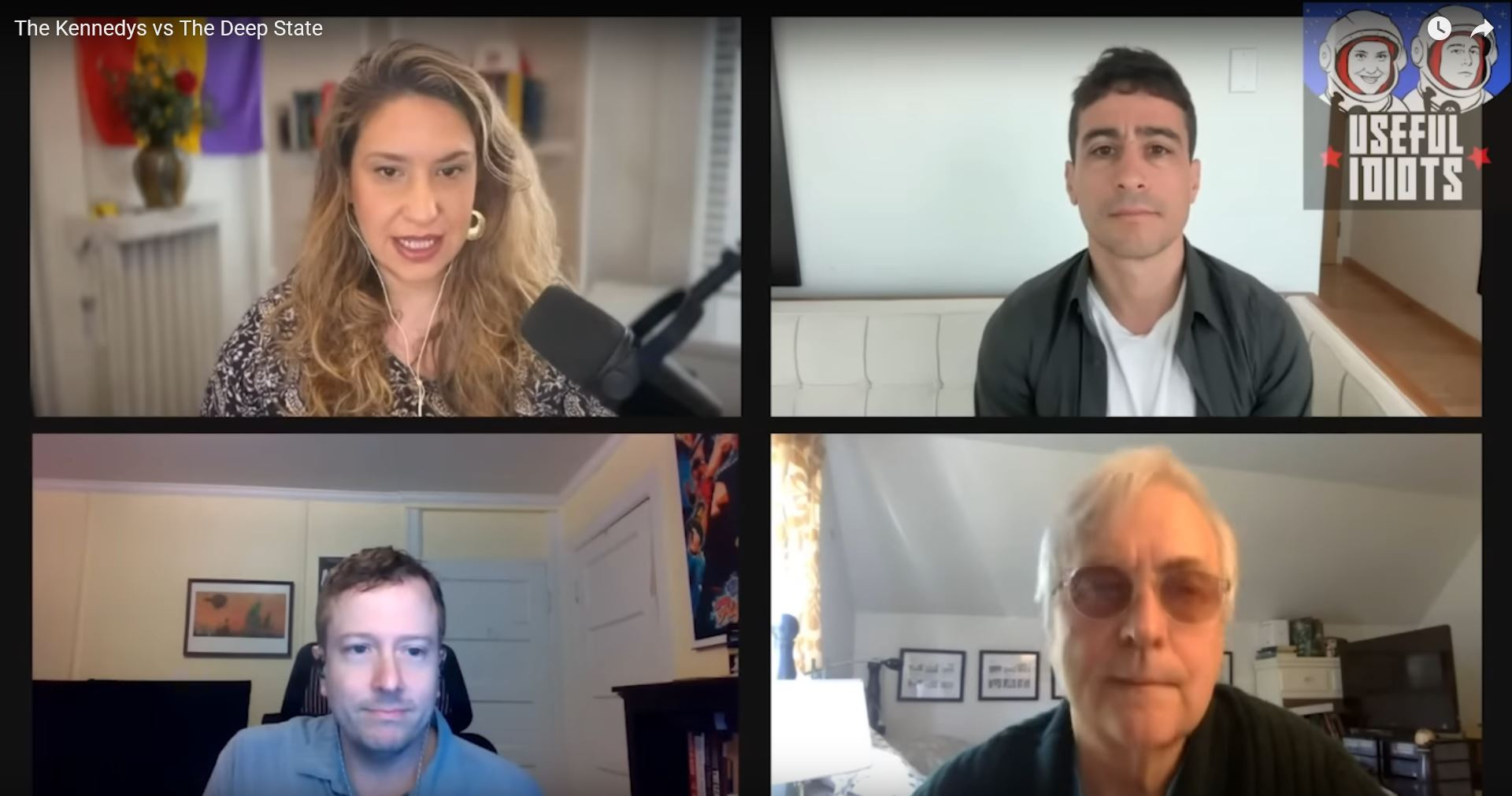
    On the podcast of Useful Idiots for June 23rd, Katie Helper and Aaron Mate guested founder of Salon and bestselling author David Talbot. A second guest was Aaron Good, who hosts the podcast American Exception and is author of the book of the same name. Because of the interest of those two authors in the JFK assassination, plus the presidential candidacy of Robert Kennedy Jr. the subject of the assassination of President John F. Kennedy arose. Helper asked a general question about his assassination: as to why he thought it occurred. Talbot replied that it was likely because of Kennedy’s attempts to end the Cold War. He then named a few examples, like the Partial Nuclear Test Ban, his attempts at détente with Cuba and Russia, and his withdrawal of advisors from Vietnam.

    Aaron Mate then joined in. Mate is a journalist I would like to like. He has done some good work in battling the MSM, for example on the issue of Russia Gate. I was just about bowled over when he said that he had only read the works of Seymour Hersh and Noam Chomsky on the subject of the John F. Kennedy presidency. Which would be the equivalent of him saying that he has only read Gerald Posner and Vincent Bugliosi on his assassination. A respectable reporter could hardly choose two worse sources than those two men. (Click here for Hersh and here for Chomsky)

    Mate started in with, well yes, John Kennedy did make the famous American University Peace Speech. But he also then made his “Ich bin ein Berliner” speech later that same June month in 1963. As this linked article shows Kennedy made the Berlin speech since he wanted to fortify the Atlantic Alliance over the doubts sown about its solidarity by French leader Charles DeGaulle.

    As anyone who studies the Kennedy presidency understands, the city of Berlin, because it was located inside East Germany, was of prime importance to Kennedy, as was the Atlantic Alliance. Unlike Vietnam, he felt this was an area and an alliance that impacted America’s national security. For example, during the Cuban Missile Crisis, Kennedy thought that Nikita Khrushchev was going to use his newly installed missiles in Cuba as a way to either barter or to move on Berlin. (The Kennedy Tapes by Ernest May and Philip Zelikow, pp. 176-77). But this did not affect his continued efforts at rapprochement with Moscow and Havana. Those were ongoing up until his assassination.

    Mate then went on to say that raids against Cuba persisted after Operation Mongoose was discontinued. (He actually said after the Bay of Pigs invasion, but this was a clear chronological error on his part.) Talbot replied that this was merely boom and bang that did not result in anything of substance. Which is correct. In fact, upon Kennedy’s death Des Fitzgerald, CIA’s chief of Cuban operations at the time, suggested they be stopped. There were only five in the second half of 1963 and they were of little consequence, individually or as a whole. In two letters Fitzgerald wrote to the White House he clearly implied this effort was so meager that it was counterproductive. (James DiEugenio, Destiny Betrayed, second edition, p. 70) But the important aspect to note is that, as author Peter Kornbluh has observed, the back channel efforts with Fidel Castro ended upon JFK’s assassination. Much to the chagrin of Castro. (Click here)

    But the worst comments that Mate made were on Vietnam. In reference to National Security Action Memorandum 263, he used the old Chomsky mythology that this thousand man withdrawal was conditional on the war being favorable to Saigon. The implication being that somehow Kennedy would reverse policy if it weren’t. Anyone can read NSAM 263, for example, in John Newman’s revised version of his book JFK and Vietnam. (p. 417). There is nothing conditional about it. The first thousand advisors were being withdrawn by the end of 1963.

    But further, Kennedy told his aides Ken O’Donnell and Dave Powers that he had been convinced by Senator Mike Mansfield. Mansfield had told JFK twice that the American effort in Vietnam was not effective. That the proper policy was to send no more reinforcements and to begin a withdrawal from the area. After the second discussion of Mansfield’s plan Kennedy said that in 1965 he would become an unpopular president. He would be branded a communist appeaser and another McCarthy Red Scare would ensue. But he was satisfied with that. As long as it happened after he was reelected, and everyone was out: “So we had better make damned sure that I am reelected.” (Johnny, We Hardly Knew Ye , by O’Donnell and Powers, pp. 16-17).

    Would Kennedy say he was going to be branded a commie appeaser if he thought the withdrawal would result in victory?

    Secondly, Mate is quoting Chomsky from a book the latter published before the declassification process of the Assassination Records Review Board (ARRB) began. In December of 1997, the ARRB declassified hundreds of pages of records on Vietnam. This included the Sec/Def meeting from May of 1963, where all US representatives—Pentagon, CIA, State Department—would meet to review the situation in Indochina. At this particular meeting Secretary of Defense Robert McNamara collected the withdrawal plans from the Pentagon that he had requested earlier. Everyone in the room understood that the withdrawal would be completed by 1965. There is no mention by anyone of escalation if the war turned south. In fact, General Earle Wheeler noted that proposals for any such action would elicit “a negative Presidential decision.” (Probe Magazine, Vol. 5 No. 3, p. 19)

    Third, as Newman discussed in Oliver Stone’s film JFK: Destiny Betrayed, he was given permission by McNamara to listen to and read the transcripts of his Pentagon debriefs. In that record, McNamara said that he and Kennedy had concluded that they could give equipment, training and advisors to Saigon. But they could not fight the war for them. Once the training mission was completed America was leaving, and it did not matter what the military situation was on the ground.

    Former New York Times journalist Chris Hedges might be even worse on the subject of Kennedy history. I had the misfortune of watching his interview on the Bad Faith podcast with Briahna Joy Gray. Just what we need, another professional Chomskyite leftist who relies on Sy Hersh’s hatchet job of a book on JFK. Anyone who admits that in public—as these two men did—should be pilloried and castigated for being an unreliable sucker.

    First, unlike what Hedges conveys, according to Jules Witcover’s authoritative book 85 Days, prior to the 1968 New Hampshire primary, Bobby Kennedy had decided to enter the Democratic race for president. He stayed out of that primary in deference to Gene McCarthy’s candidacy. Bobby entered the race because he did not think that McCarthy was strong enough on domestic issues.

    Second, I just about fell out of my chair when Hedges said that RFK was somehow obsessed with the death of Fidel Castro. This is simply false. The CIA/Mafia plots to assassinate Castro went back to 1960. And anyone who reads the Inspector General report on them would know that Bobby Kennedy did not know about them until May of 1962. And he found out about them through an accident. Sam Giancana wanted a hotel room in Vegas wiretapped since he thought his girlfriend, Phyllis McGuire, was carrying on with comedian Dan Rowan. This illegal surveillance, commissioned by the CIA Castro plotter Robert Maheu, was discovered by the local authorities. It was kicked up to the FBI. When RFK learned of it he requested a briefing as to why Maheu was trying to comply with Giancana’s request. That is how he found out about the plots. When the CIA briefed him, they told him that the plots had been discontinued. This was a lie and the CIA knew it was false when they told him. (CIA IG Report, pp. 57-66)

    But further, the CIA’s internal report proved that at no time did any president give any approval or authorization to the plots to kill Castro. (IG Report, pp. 132-33). Yet the CIA authorized, through Director of Plans Richard Helms, the use of RFK’s name in a further extension of the plots through a Cuban national named Rolando Cubela. (IG Report, pp. 89-93).

    This is how wrong Hedges is about this whole sorry episode. I mean a function of a journalist—especially an alternative reporter—is to consult the primary sources on a subject like this. If not, you run the risk of misinforming the public. The CIA Inspector General report is online. There is no excuse for not reading it. (Here it is)

    Neither, as Hedges maintains, did JFK buy into the whole Cold War ethos, especially in the Third World. Did Hedges miss Kennedy’s famous speech in 1957, where he bucked the entire media/political establishment on this issue in the French colonial conflict in Algeria? All one has to do is read Richard Mahoney’s JFK: Ordeal in Africa about President Kennedy and the Congo to understand that. Kennedy was backing Congo’s Patrice Lumumba against the European power Belgium in that epic struggle. The CIA helped to get rid of Lumumba about three days before Kennedy was inaugurated.(Mahoney, pp. 69-74)

    Question to Hedges: Was that just a coincidence? Or did they not like the fact that they knew JFK was going to back Lumumba? In fact, Kennedy directly caused the UN to back Lumumba’s successor, labor leader Cyrille Adoula, against the secession of the rich European backed Katanga province. And Kennedy gave the go ahead to use the United Nation’s military force, Operation Grand Slam, to do so. (Mahoney, pp. 154-56).

    I almost threw up when Hedges said that the Kennedys were late to support civil rights. This is just utter nonsense. I proved in a 60 page documented essay that no president since Lincoln did more for civil rights than JFK. And no Attorney General did more on the issue than Bobby Kennedy. And it started within about two months after Kennedy was inaugurated. To name just one achievement: JFK signed the first executive order about affirmative action. To name another: RFK prosecuted the Secretary of Education in Louisiana for not obeying a judicial decree on school integration. (Click here)

    This almost MSM goofiness is topped when Hedges says that RFK hated Martin Luther King. On that one I went from puking to cardiac arrest. Bobby Kennedy supervised the famous March on Washington in 1963. He was determined that this event would come off like clockwork so the civil rights movement would be hailed as a non-violent triumph. It did and it was. (Irving Bernstein, Promises Kept, p. 114). As most people in the know understand—except maybe Hedges—it was Bobby Kennedy who gave King the idea for a Poor People’s March. (Arthur Schlesinger, Robert Kennedy and His Times, pp. 911-12) It was Robert Kennedy who rescued the Freedom Riders and King in Montgomery by sending in 500 federal marshals under the direction of Byron White. (Bernstein, p. 66) It was JFK who called Coretta Scott King when her husband was imprisoned during the presidential race in 1960. It was Bobby who then intervened and had King released.(Bernstein, pp. 35-36) It was Bobby Kennedy who gave the address in Indianapolis the night King was killed to a predominantly Afro-American crowd. That was the only major city that did not go up in flames over King’s murder. Anyone who can listen to this speech and say RFK hated King is not to be trusted on the subject.

    The excuse Hedges gives for cancelling all of this out and saying that Bobby hated King was the approval the Attorney General gave to a wiretap on King’s phone. What he leaves out is that Bobby was under relentless pressure by J. Edgar Hoover to do so. As FBI official William Sullivan wrote, RFK resisted, resisted and resisted any such action. But Hoover’s clearly implied threat was that the FBI would release evidence that King was secretly a communist sympathizer who had people who were pink in his employ. Finally, the AG agreed to a 30 day trial on the grounds that if nothing was found, that would be it for the accusations and the surveillance. The problem was that President Kennedy was killed around the time it lapsed and that was it for RFK’s control over Hoover. To put it mildly, Hoover’s good friend Lyndon Johnson had no such qualms about the FBI’s battles against King. And beyond that, the evidence indicates that Hoover already had King wired, and was trying to cover himself with his threats about exposure. (Harris Wofford, Of Kennedys and Kings, pp. 211-17)

    It is crucial to note that King did not endorse Eugene McCarthy in 1968. He was waiting for RFK to make up his mind. When Bobby announced he said, “We’ve got to get behind Bobby now that he’s in.”(Schlesinger, p. 912) Let me also add, back in 2015, the late Paul Schrade told me that it was Cesar Chavez’ idea to get RFK to Delano, California for the hearings on suppression against the farm workers. To put it mildly, Bobby came through for them. (Click here to see)

    If King and Chavez are not enough, we know that after JFK passed, Gamal Abdel Nasser of Egypt, Achmed Sukarno of Indonesia, and Juan Bosch of the Dominican Republic were all mired in pain, to the point of tears. They all knew the road ahead. They were correct. We know what happened after—except for maybe Chris Hedges and Aaron Mate.

    All of this is not a matter of politics. It is a matter of defiled history.

  • Imperial Blowback and the CIA’s ‘Tainted Source’


    Among the most recent redactions lifted on documents related to the assassination of President John F. Kennedy housed at the National Archives are two lines in a fifteen-page memorandum from presidential aide Arthur Schlesinger, Jr.—“SUBJECT: CIA Reorganization”—written in June 1961 at Kennedy’s request. In the memo, Schlesinger proposes “a fairly drastic rearrangement of our current intelligence set-up.” Although almost a page-and-a-half remains redacted, recently disclosed text includes the title sentence of the blocked-out section: “3. The Controlled American Source (CAS) represents a particular aspect of CIA’s encroachment on policy-making functions.”

    Read the rest of the article here. (The American Conservative)

  • How JFK Would Pursue Peace in Ukraine


    President John F. Kennedy was one of the world’s great peacemakers. He led a peaceful solution to the Cuban Missile Crisis and then successfully negotiated the Partial Nuclear Test Ban Treaty with the Soviet Union at the very height of the Cold War. At the time of his assassination, he was taking steps to end US involvement in Vietnam.

    Read the rest of the article here. (Common Dreams)

  • Peter Kuznick on the Importance of the Anniversary of JFK’s Peace Speech


    On June 10, 1963, President John F. Kennedy delivered the “Peace Speech,” his historic American University commencement address. It came just eight months after the world teetered on the brink of nuclear war during the Cuban Missile Crisis, and it is widely regarded as one of the most visionary American presidential speeches of the 20th century. It marked a new vision for world peace and led to the Partial Nuclear Test-Ban Treaty, prohibiting nuclear tests in the atmosphere, under water, and in outer space.

    Read the rest of the article here. (American University)

  • Ron Paul Says the CIA Killed President Kennedy


    Namely that the CIA assassinated President John F. Kennedy in 1963. If the reader recalls, Paul had Oliver Stone on his own show a few years back after they both appeared at a JFK seminar in Virginia. Here is the transcript as posted by K. K. Lane at the Education Forum.

    Ron Paul: But I do believe there has been a coup, and it’s been taken over, and if I can, I want to just put the date in my mind. Anybody could probably pick any date in the last hundred years. But I’ve picked November 22 1963.

    Interviewer: What happened on that day?

    Ron Paul: That was the day Kennedy was murdered by our government….by the CIA.

    And at the time I was in… a matter of fact…Kennedy was killed in Dallas but he landed at Kelly Air Force Base and I was a flight surgeon there the day before, and I was aware of this trip. So this was a big thing.

    Those early years which we talked about a lot—especially the first year or two: “Oh, Oswald did it. Oswald did it.” And then, you know the person they thought about most is…uh…Allen Dulles as being the instigator of all this. And he, guess what, LBJ met him immediately: “We have to investigate this.” The president has been assassinated. What, what is…they never used the word coup…so he’s been assassinated. So guess who he puts…there were 7 on the commission, and you know, Dulles was put on the commission to investigate it. So, but he was gonna make sure they told the truth. But that was a big day in history in my mind.

  • Dave Emory’s 27-part series on JFK Revisited, with Jim DiEugenio

    Dave Emory’s 27-part series on JFK Revisited, with Jim DiEugenio


    jd emory jfkr


      For The Record #1262 Interview #1 with Jim DiEugenio
      For The Record #1263 Interview #2 with Jim DiEugenio
      For The Record #1264 Interview #3 with Jim DiEugenio
      For The Record #1265 Interview #4 with Jim DiEugenio
      For The Record #1266 Interview #5 with Jim DiEugenio
      For The Record #1267 Interview #6 with Jim DiEugenio
      For The Record #1268 Interview #7 with Jim DiEugenio
      For The Record #1269 Interview #8 with Jim DiEugenio
      For The Record #1270 Interview #9 with Jim DiEugenio
      For The Record #1271 Interview #10 with Jim DiEugenio
      For The Record #1272 Interview #11 with Jim DiEugenio
      For The Record #1273 Interview #12 with Jim DiEugenio and Dr. Gary Aguilar
      For The Record #1274 Interview #13 with Jim DiEugenio and Dr. Gary Aguilar
      For The Record #1275 Interview #14 with Jim DiEugenio and Paul Bleau
      For The Record #1276 Interview #15 with Jim DiEugenio and Paul Bleau
      For The Record #1279 Interview #16 with Jim DiEugenio and John Newman
      For The Record #1280 Interview #17 with Jim DiEugenio and John Newman
      For The Record #1281 Interview #18 with Jim DiEugenio and David Talbot
      For The Record #1282 Interview #19 with Jim DiEugenio and David Talbot
      For The Record #1283 Interview #20 with Jim DiEugenio
      For The Record #1284 Interview #21 with Jim DiEugenio
      For The Record #1285 Interview #22 with Jim DiEugenio
      For The Record #1286 Interview #23 with Jim DiEugenio
      For The Record #1287 Interview #24 with Jim DiEugenio
      For The Record #1288 Interview #25 with Jim DiEugenio
      For The Record #1289 Interview #26 with Jim DiEugenio and Lisa Pease
      For The Record #1290 Interview #27 with Jim DiEugenio and Lisa Pease

  • Sy Hersh Falls On His Face Again, and Again, and Again

    Sy Hersh Falls On His Face Again, and Again, and Again


    Seymour Hersh likes to file what he considers scoops about highly controversial subjects. The doctrinaire left buys him as an investigative journalist so he manages to get air time for his “scoops” on their programs e.g. Democracy Now! The problem with this is simple: as time has gone on, intelligent people who have researched his “scoops” have found them to be rather problematic. In fact, in a few quarters, Hersh has become something of a punching bag.

    His latest is on the Nord Stream pipeline explosions of September 26, 2022. Hersh posted this on his Substack site, where people pay a monthly fee to read his stories. Almost immediately, a partner of mine, Rahul Arya, began to send me a series of e-mails pointing out errors in this so-called expose of how the USA and Norway exploded Nord Stream. For instance, Hersh claimed that the “supreme commander of NATO”, Jens Stoltenberg, was all for it since he “…had cooperated with the American intelligence community since the Vietnam War.”

    Rahul commented on this as such: Stoltenberg was born in March of 1959. President Johnson committed the first American combat troops to Indochina in 1965. President Nixon withdrew the last of the American forces in March of 1973. Are we to believe that Stoltenberg was an informant from the time he was 6 until the time he was 14? Kind of young, no?

    Rahul also pointed out that Hersh said that Norway’s navy “was quick to find the right spot”. Which made it sound like all the detonations took place in close vicinity to each other. When, in fact, the distance between where Nord Stream 1 and 2 were exploded was about 77 kilometers.

    Rahul also listened to Hersh on the accommodating Democracy Now! program for February 15, 2023. He pointed out some problems with that talk. Hersh said there were 19 signers to the 1949 NATO treaty. There were actually 12. In fact, even when the USSR dissolved in 1991 there were still just 16 nations in NATO. It was not until 1999 that the alliance would have 19 members. Hersh only missed it by a half century!

    On that program Hersh said the BALTOPs NATO naval exercises—the key to Hersh’s story—had been conducted for the last 22 years. One can go to a number of sources, including Wikipedia, and see that it began in 1971 and there have been over 50 of these. The Russians have been known to shadow the ships involved.

    So this is what makes, in Hersh’s terms, a beautiful cover story? Hersh also said that mine clearing and detection had not been part of the exercise before. Again, one can go to a number of sources and see that mine detection has been a part of BALTOPS before. Would it not be a giveaway to add that to the recent exercise if one was covering a covert operation involving deep diving?

    I am not going to go into all the other critiques of Hersh’s latest. As Aaron Good emailed me, it might be correct that America had a role in all this. But I will refer the reader to Oliver Alexander’s “Blowing Holes in Seymour Hersh’s Pipe Dream”, Russ Baker’s Nord Stream Explosion: Plenty of Gas, Not Much Light and Rene Tebel’s “Seymour Hersh’s Nord Stream Theory: Fact or Fiction”. After reading through these, the best one can say is that if the USA and Norway did explode Nord Stream, Hersh’s story was a good way to disguise it. And, in fact, the newest explanation is that it was Ukraine who did the subterfuge.

    II

    Democracy Now!, Ralph Nader and others would have been wise to think back to Hersh’s last big “scoop”. This one was about the assassination of Osama bin Laden, the man accused of masterminding the 9-11 attacks. The reader will recall that bin Laden, the founder of Al-Qaeda, was killed as part of a raid by the Navy Seals of Seal Team 6. The operation was called Operation Neptune Spear. It was largely a CIA mission but had significant support from the military.

    The assault took place in Abbottabad, Pakistan on May 2, 2011. After the mission, the American forces returned to Afghanistan, identified the body, and then flew hundreds of miles to deposit the corpse in the Arabian Sea, since this was part of Islamic tradition. The Pakistani government was quite disturbed over what they considered a violation of their territory, since President Obama had decided not to consult with them for fear of a leak. The Pakistanis were so disturbed that they initiated a commission to investigate the episode. The result was called the Abbottabad Commission Report.

    There have been two popular accountings of the operation. Both of them released in 2012. There was a book called No Easy Day written by a Seal participant under the pen name Mark Owen (Matt Bissonnette). That book made the New York Times best seller list. There was also a film directed by Katherine Bigelow titled Zero Dark Thirty. That picture grossed well over a hundred million dollars.

    Hersh’s version of what happened first appeared in The London Review of Books; it was then published in a brief book version. His main thesis is that Obama’s refusal to inform Pakistan, and the bad relations between the two countries afterwards- e.g. the forming of the commission, well this was all a pose, something of a cover. Hersh postulated that, in reality, Pakistani intelligence captured bin Laden in 2006, and kept him prisoner with help from Saudi Arabia. He was their leverage against Al-Qaeda. In 2010, the Pakistanis agreed to sell their prisoner to America for increased military aid and a freer hand in Afghanistan. And they agreed to the staging of the elaborate raid by helicopter with Pakistani support. (See Vox, May 11, 2015, story by Max Fisher) In fact, forget about a fire fight, the Seals were escorted to bin Laden’s bedroom by an ISI officer.

    Hersh then adds two kickers. First, the intelligence materials discovered in the compound were manufactured to provide evidence after the fact. Secondly, there was no actual at-sea burial. The body was so decimated by rifle fire that pieces of the corpse were thrown out over the Hindu Kush mountains during the return flight. (ibid)

    Max Fisher notes that all of this is based upon two main sources. One was in Pakistan’s military intelligence from 1990-92. The other was a retired American intelligence officer who knew about the early information on bin Laden in Abbottabad. There are no supporting documents.

    The motivating force for Pakistan to cooperate was undermined by two facts. There was no increase in military aid to Pakistan, and the cooperation in Afghanistan plummeted because of the raid. (ibid).

    Peter Bergen of CNN also chimed in on this supposed trailblazing scoop. He asked: Why on earth would Saudi Arabia pay to upkeep bin Laden while living in Pakistan? One of his key aims was the overthrow of the Saudi family, which is why they revoked his citizenship back in 1994. (Bergen, CNN, May 20, 2015) Bergen asked, if he really was a prisoner of Pakistan, why would the Saudis not pay their allies to look the other way while they sent a hit team in to finish him off. We all remember Jamal Khashoggi, right?

    Bergen also undermined Hersh’s claim that the only shots fired that night were the ones that killed Bin Laden. Bergen blasted this, since he actually visited the compound before the Pakistanis leveled it. He said that, far from no evidence of a fire fight:

    The compound was trashed, littered almost everywhere with broken glass, and several areas of it were sprayed with bullet holes where the SEALS had fired at members of bin Laden’s entourage and family, or in one case exchanged fire with one of his bodyguards.

    Both Fisher and Bergen also questioned Hersh’s idea that the Pakistanis were in reality holding bin Laden, and the raid was really all a set up between them and America. Bergen, who wrote a book on the subject, said that American officials monitored Pakistan’s ISI communications the night of the raid. The top ISI officials were bewildered, since they had not a clue about bin Laden’s presence there.

    Fisher asked: Why would the Pakistanis allow a fake raid that would humiliate their country? If bin Laden was truly a prisoner there had to be other ways to get rid of him without such a spectacular violation of air and territorial space. In fact, when he was trying to sell the story to editor David Remnick at The New Yorker, Hersh was offering a drone strike outside of the compound. (Vox, ibid) As for the fake intel files, bin Laden’s second in command said they were real. (ibid) Was Ayman al-Zawahiri lying? Was he part of the cover-up?

    III

    Max Fisher ended his critique of Hersh’s theory by noting some of the other outlandish ideas Hersh had reported:

    1. An American prospective attack on Iran, perhaps with a nuclear warhead.
    2. In January 2011, Hersh said that top military and special forces leaders were all members or supporters of Knights of Malta, many of them were also Opus Dei. Vice President Cheney’s idea was to bring Christianity to the Middle East.
    3. In 2012, he reported in The New Yorker that the Bush administration was training members of the anti-Iran group MEK in Nevada. Although this was not discredited, it was also never confirmed.

    The above may be why Hersh had to publish his other ‘scoops” in England or on Substack.

    But for those in the JFK field, the reckoning for Sy Hersh came before all these stories. It was back in the nineties. At that time Hersh was working on what turned out to be one of the worst books ever written on John F. Kennedy or his assassination. That was 1997’s The Dark Side of Camelot. That book got into trouble even before it was published. For those knowledgeable about the JFK field and Hersh it was possible to see the origins of the volume.

    As we know from the late Jim Marrs, Random House editor Bob Loomis had convinced Gerald Posner to write a book on the JFK case in time for the 30th anniversary. Posner accommodated Loomis, his boss Harold Evans, and Random House with Case Closed in 1993. (The Assassinations, edited by James DiEugenio and Lisa Pease, p. 369). Well, Loomis also backed Sy Hersh in the early part of his career. (ibid) If one looks at the intent of the two books, they are complementary: one was to restore the Warren Report verdict, the other was to smear the image of JFK. Both men got massive media tours with no significant opponent to contest their message.

    But Hersh stumbled out of the starting gate. He encountered a man named Lex Cusack, who was a paralegal in a New York office firm founded by his father. A few years prior to their meeting, a woman named Nancy Greene (aka Maniscalco, aka Cusamano) had approached Lex at the New York firm of Cusack and Stiles. Lex’s father, Lawrence, had been appointed supervisor of the trust fund Marilyn Monroe had set up for her mother, Gladys Baker: “Nancy Greene laid out a tangled claim to the Monroe estate…” David Samuels in The New Yorker theorized that this may have been the germinating idea for Cusack to launch a huge hoax which Hersh fell for: headfirst. (Don McGovern, Murder Orthodoxies, pp. 220-26; New Yorker, Nov. 3, 1997) As Samuels wrote, Cusack now searched his father’s files, and this led to the discovery of what was later called the Monroe/JFK trust. Cusack then sold these documents to collectors for a dollar amount well into the seven figures.

    The documents purported to portray a trust agreement between the Kennedys, Monroe and her lawyer Aaron Frosch. The deal was for 600K, to be paid for Monroe’s mother’s upkeeping. In return Monroe would keep quiet about her relationship with JFK, and any Mob figures she observed in his presence. (The Assassinations, edited by James DiEugenio and Lisa Pease, p. 365). From reports by Robert Sam Anson, Hersh was overjoyed when he found the papers. He waved them over his head at a restaurant shouting, “The Kennedys were…the worst people!” (ibid, p. 366)

    Hersh had sold the TV rights to his book to ABC. And they had given him more money based on the documents. But when they began to run them by experts, the hoax collapsed. It is hard to understand why and how Hersh could have missed all the problems with the Cusack papers. For instance, Greg Schreiner, a Marilyn authority in North Hollywood, told me the first time he saw the Monroe signature he knew it was not hers. But its even worse than that. Janet DeRosiers was the last living signee to the “trust”. Hersh showed the papers to her and she said that was not her signature, and she never met Monroe. She warned Hersh and his publisher: they were dealing with forgeries. Hersh did what many of the Monroe zealots do: he termed her a Kennedy apologist. (McGovern, p. 224; Newsweek, 10/ 5/97, story by Mark Hosenball)

    But perhaps the worst aspect was this: typing corrections were made in a liftoff ribbon. This is so clear it was visible in the copies for the Samuels article. That ribbon was not available in 1960. And it was not sold until the seventies. How could Hersh, a man who made his living out of his typewriter, have missed something like that? (DiEugenio and Pease, p. 366)

    ABC’s Peter Jennings took the fiasco personally. After all, ABC had paid Hersh and his publisher before any forensic examination. Jennings hosted the Cusack expose program on 20/20 and did what he could to minimize Hersh’s failures in this regard. Jennings actually said that the idea that ABC saved Hersh on this was not really fair.(LA Times, 9/26/97, story by Eleanor Randolph) But if one adds in the above information, especially by DeRosiers, that appears to be what happened. The supposed “crack” reporter was taken for a ride.

    But Jennings and ABC went through with the program based on Hersh’s book. Sure enough, there was another Hersh styled custard pie awaiting on the program. Predictably, Hersh had fallen for the ever mutating stories of Judith Exner. Exner was someone who, by 1997, many in the know suspected of being another prevaricator in an ever expanding field of them. (DiEugenio and Pease, pp.329-38) Since her story about carrying messages between JFK and Chicago don Sam Giancana surfaced so late—well over a decade after her first questioning by the Church Committee—many observers raised their eyebrows at how Exner had radically changed her story for People magazine in 1988, who reportedly paid her the equivalent of well over $100,000 today. Turns out, she was one of those who told so many BS stories she could not keep them straight.

    For Hersh she indeed said that she carried messages back and forth between Kennedy and Giancana. She added that Bobby Kennedy was in on these secret communications. In fact Bobby would tap her on the shoulder and ask, “Are you still comfortable doing this? We want you to let us know if you don’t want to.” (Hersh, pp. 307-08)

    Apparently, ABC and Hersh knew how weak this would look with no corroborating witness: RFK, the Mafia’s living nightmare, sending messages to his number one target, Sam Giancana, who he had surveillance on! So Hersh got a man named Martin Underwood to back stop the tale. (Hersh, pp. 304-05) And Underwood was to appear on the Jennings program. He backed out. The story as to why he backed out did not emerge until the next year, 1998, with the Final Report of the Assassination Records Review Board. (ARRB) When confronted with a legal body with subpoena power, Underwood, ”denied that he followed Judith Campbell Exner on a train and that he had no knowledge about her alleged role as a courier.” It turned out Underwood was involved in more than one instance of storytelling, used by both Hersh and Gus Russo. To be kind, they turned out to be flatulent. (ARRB Final Report, pgs. 112, 135, 136) Further—and this is really shocking—Hersh did not realize that on February 4, 1992, Exner appeared on Larry King’s show. When King asked her about any relationship with RFK, she replied with one word, “None.” King asked her to clarify that and she said she probably met him once or twice at a political fundraiser or a party in Los Angeles. That was it. So you had Hersh attaching one fairy tale (Underwood’s) to another fairy tale (Exner’s). Question: How bad is bad?

    IV

    Just because Hersh fell on his face with the Cusack documents, that did not mean he was going to leave the subject of JFK and Monroe alone. Nope, not by a long shot. As anyone can garner, Hersh was writing a hatchet job and the Monroe field is full of that material. But even for a hatchet job, Hersh was so extreme as to be sci-fi.

    Hersh wrote that there were accounts of Monroe being impregnated by Kennedy and having an abortion in Mexico. (Hersh, p. 103) Any hack can report ‘accounts’; but it was trashy so Hersh printed it. The problem is that according to Monroe’s gynecologist, Dr. Leon Krohn, Marilyn suffered two miscarriages and one ectopic pregnancy, which she had to terminate. She never submitted to an abortion. (Email communication with Marilyn author Don McGovern, 3/4/2023)

    Hersh also reported that Monroe was at Hyannis Port. (p. 103). Again, today we have both the president’s daily calendar and two Monroe day-to-day books, one by April VeVea and one by Carl Rollyson. That story is not credible either. (op. cit. McGovern) Finally, there is this humdinger: Monroe would call President Kennedy at the White House, with much explicit talk of a sexual nature. (Hersh, p. 454). Kennedy installed the taping system in July of 1962, and the first tapings are from July 30th. Monroe passed away on August 4th, 1962. (ibid). When I ran these by Gary Vitacco Robles, author of a three volume biography of Monroe, he replied that this all struck him as fantasy. (Email of March 4, 2023) It appears that Hersh never double checked anything.

    Why did Hersh insist on using Exner and her phony Washington/Chicago “courier” tall tales? Because he was intent on implicating the Kennedys in the CIA/Mafia plots to assassinate Castro. What Hersh does in this aspect of his book is a bit astonishing. The Church Committee had investigated this for months on end. They could not come up with any credible evidence that any president was aware of these plots. So Hersh decided to rely on someone the committee simply did not believe: Richard Bissell, CIA Director of Plans. When I say the committee did not buy Bissell, it was bipartisan, both Democrats and Republicans. (DiEugenio and Pease, p. 351) For one thing, he was asked six times who called him from the White House to develop such a deadly mechanism. Six times he could not recall. Someone at the White House calls you about a Castro termination project and you cannot recall who it was? (John Newman, Into the Storm, p. 182)

    So why did Bissell prevaricate before the committee? Because in the CIA’s internal report on the matter, it indicates that it was Bissell who initiated the project—before Kennedy was elected! (Inspector General Report, p. 14; Newman, p. 187) In other words, there would be no need for any such call, since Bissell had enacted it already; which was a question the Church Committee posed to Bissell. Hersh has to know this since he refers to the Inspector General report more than once. In other words, Bissell was practicing a CYA exercise, and the committee did not buy it since they knew he was lying. And Hersh keeps this all hush hush. Again, how bad is bad?

    But Hersh also wants to sell the reader on CIA officer Sam Halpern. Halpern was, even more than Bissell, the CIA’s most prolific cover-up artist on the Castro plots. Probably because he was assistant to William Harvey, and Harvey continued the second phase of the plots with help from Ted Shackley. To neutralize those facts, Halpern did something pretty despicable. He used one dead man, Charles Ford, to blame the plots on another dead man, Bobby Kennedy. Again, Hersh had no problem with that. (Hersh, pp. 286-292)

    He should have. For both David Talbot and John Newman have shown this to be another lie. Due to the ARRB—an agency that Hersh never mentions or writes about—we found out what Ford said about this Halpern accusation. When he was asked by the Church Committee to comment he said he had utterly nothing to do with contacting the Mob for any kind of Castro murder plots. He said that, as far as RFK went, his work for him was to try and organize Cuban exile groups in America and to retrieve prisoners from the Bay of Pigs operation. (Talbot, Brothers, pp. 122-23; Newman, pp. 260-67) As Newman shows, we have this information from both sides, RFK and Ford.

    Halpern knew he was lying to Hersh because he signed off on one of Ford’s memos, since Ford was working under Bill Harvey and Halpern in 1961 at CIA. So how could he have been working for RFK? One of the worst lies Halpern told Hersh was that Bobby was using Ford because Harvey could not find someone to help him kill Castro. Bobby was not doing any such thing, and Harvey had found someone, namely John Roselli. And the CIA had lied to Bobby about the existence of that plot. (Newman, p. 279)

    V

    As stated above, the Church Committee had access to the CIA’s IG Report on the Mafia plots to kill Castro. That 145 page document concludes that the CIA conducted the plots with no presidential approval. (pp. 132-33). If anyone can find where Hersh quotes that part of the report, please let me know.

    But Hersh performed a similar stunt with the milestone article “The Confessions of Allen Dulles” (Diplomatic History, Fall 1984). He placed it in an on page footnote, very vaguely described it, and said that the author buried the lead, namely that the Castro plots happened to be going on at the time of the Bay of Pigs invasion. (Hersh, pp. 203-04) That was old news since it had emerged with the Church Committee back in 1975. What Hersh did not tell the reader is what was startlingly new for 1984. In papers discovered at the Princeton library Dulles admitted that he knew the Bay of Pigs invasion would likely fail. Which was not what he was telling the president. In fact, the CIA kept this secret from Kennedy. (James Douglass, JFK and the Unspeakable, p. 14) Why? Because they thought that once Kennedy saw the invasion was lost “…any action required for success would be authorized rather than permit the enterprise to fail.” (Vandenbroucke, Diplomatic History.)

    In other words, it was Hersh who buried the lead. And by doing so, he kept hidden the reason that JFK fired Dulles, Bissell and Deputy Director Charles Cabell. Kennedy had been deliberately mislead about the prospects of Operation Zapata all along. And as the CIA internal review of the operation makes clear, assassination was not part of the actual invasion agenda. (James DiEugenio and Robert Parry, iF Magazine, May-June 1998, p. 5) Larry Hancock has informed me that it was never even orally discussed with the covert ops oversight group. (Hancock email of March 4th) . So when Hersh sources Robert Maheu that it was, he is using someone who was never part of the Bay of Pigs planning. (ibid) Again, with Hersh its one piece of malarkey stacked atop another.

    Hersh of course fell for the whole mythology of the Mob, especially Sam Giancana, helping secure the 1960 election for Kennedy. This idea was put to bed once and for all with a microanalysis by John Binder. (Click here) The raw numbers proved the opposite of what was needed for it to be true. There was no evidence in the Mob-oriented wards that Giancana delivered any advantage to Kennedy in 1960. In fact, the final numbers were below the average, which indicates that, if anything, the advice was to stop Kennedy.

    What about West Virginia? Well, the deal was to send Skinny D’Amato to West Virginia to help Kennedy win the primary there. (Giancana, Double Cross, p. 284; Hersh pp. 100-01) Attorney Dan Fleming searched high and low for any trace of D’Amato in West Virginia. He interviewed over 80 people, and went to some rather unsavory locales to find any evidence of his whereabouts. There were none. But further, there were three formal inquiries into that election. The last by Barry Goldwater who hired an FBI agent to conduct the inquiry. Nothing came up. I wonder why. Further, I wonder why Hersh does not mention any of this. (Fleming, Kennedy vs Humphrey, West Virginia, 1960, pp. 107-12; 170-71)

    Let me make one last comment about this whole Giancana Double Cross fable. As Garry Wills noted in his blistering review of The Dark Side of Camelot: Why can no one get their story straight about it? In Double Cross, the agreement was set up by Joe Kennedy calling Giancana directly. (Giancana pp. 267-69) As noted previously, according to Exner, it was she who was the messenger. As Wills pointed out, for Hersh it was done through a mob lawyer, Robert McDonnell, who set up a meeting with a since deceased judge named William Tuohy. But as Wills also pointed out, according to Tina Sinatra, the connection was through her father. Rummaging through all this, Wills noted: Was there anyone in America who was not involved in this alleged connection? (The New York Review of Books, 12/18/97)

    The reason no one can get it right is because, as with Underwood and Exner, it did not happen. Double Cross is a novel. The idea that Joe Kennedy needed help to win the election in as poor a state as West Virginia is ludicrous. Or that Richard Daley would not be enough to secure Chicago? It’s all as absurd as the multi-millionaire Joe Kennedy wanting to be a bootlegger. When in fact he made tens of millions in the movie business, real estate and stocks. So much that be bought the Merchandise Mart in Chicago. (Click here for details)

    As Wills summed up the book and Hersh:

    It is an astonishing spectacle, this book. In his mad zeal to destroy Camelot, to raze it down, dance on the rubble, and sow salt on the ground where it stood, Hersh has, with precision and method, disassembled and obliterated his own career and reputation.

    ADDENDUM

    On February 22nd, Hersh tried to paste his Nord Stream theorem back together in a rather outlandish way. On his Substack site he posed the question of: why Norway? And he replied that it was because that country had a “long and murky history of cooperation with American intelligence.” He then brings up the Gulf of Tonkin incident in relation to that “cooperation”.

    Cooperation? America purchased several Nasty class ships from Norway for one reason. They were larger than what the USA had and could therefore accommodate more men to perform the raids against the north. (Edwin Moise, Tonkin Gulf and the Escalation of the Vietnam War, p. 12) There were some sailors also recruited from Norway, but these were just one nation out of a rotating cast in order to keep Americans out of the direct line of fire. As Edwin Moise notes, one other country’s mercenaries were from Germany, another was China. Did China have a long history of cooperation with American intelligence?

    People who understand just what a bad reporter Hersh is have informed me of something that is startling. At his Substack site, Hersh is still writing about President Kennedy. And he is still trying to sustain his (proven) malarkey.

    On March 1st, Hersh wrote a column about Kennedy and Vietnam. Hersh writes that in 1962 Kennedy decided he had to take a stand in Indochina and “confront the spread of communism there.” He also writes that Kennedy increased the number of troops in Vietnam. Sy, there were no troops in Vietnam, only advisors.

    So what was really happening?

    In late 1961, Kennedy had sent John Kenneth Galbraith to Saigon to write a report countering the vociferous hawks who wanted him to send combat troops to Indochina. Galbraith wrote the report. When the ambassador to India was in Washington in April, Kennedy sent him to brief Defense Secretary Robert McNamara. (John Newman, JFK and Vietnam, 2017 edition, pp. 234-36) Kennedy and Galbraith got the message through and the next month McNamara met with General Harkins, the supreme commander in Vietnam. He called him aside after a meeting and told him to devise a plan to dismantle the American role in Vietnam. Reportedly, Harkins chin hit the table. This was the beginning of Kennedy’s withdrawal plan. (James Douglass, JFK and The Unspeakable, pp. 119-22)

    Can someone tell Hersh: This was in 1962.

    Hersh also tries to say that the strategic hamlet program was started by the Kennedy administration, specifically Roger Hilsman. It was actually begun by General Lionel McGarr and President Ngo Dinh Diem. (Newman, p. 179)

    The second column concerns his relationship with Dan Ellsberg. Ellsberg talks about his duty in Vietnam with Ed Lansdale. Hersh uses this to bring up the investigation of the Church Committee and Operation Mongoose. Hersh again writes that the orders to assassinate Fidel Castro “clearly came from Jack and Bobby Kennedy.” As we have proven this is utter cow dung. And the CIA admitted it in its own review of the matter. (IG Report, pp. 132-33)

    Further, as anyone who has read the declassified record on Mongoose knows, Castro’s assassination was never part of the program. In fact, when Senator George Smathers tried to bring the subject up with him, Kennedy exploded and smashed a dinner plate over the table. He then said he never wanted to hear that talk again. (Alleged Assassination Plots, p. 124)

    None of the above will stop shows like Democracy Now! from having Hersh on again. And they will not question him about any of the above.

    Go to Part 2

  • America’s Last President, by Monika Wiesak

    America’s Last President, by Monika Wiesak


    The complete title of this new book is America’ Last President: What the World Lost When It Lost John F. Kennedy. Monika Wiesak begins her book by saying about John F. Kennedy that, after some study, “I realized that the public image of him as a careless, thoughtless, self -involved playboy obscured the depth of what he was trying to achieve and intensity of opposition he faced.” (p. iii) She then quotes Bob Dylan’s lyrics on the subject: “They killed him once, and they killed him twice.” She adds that it was not enough that Kennedy be murdered, his ideas had to perish with him.

    In an unprecedented manner, she then traces Kennedy’s anti-imperialist concepts all the way back to 1939, in an unlikely place: Palestine. Even at this early date, young Kennedy writes that the press was not giving the public the whole story. He wrote that it seemed to him that, even at this time, the Zionists wanted to take over Jerusalem, make it the capital of their new country, and to also colonize Trans-Jordan. Kennedy even described what would today be termed as false flag operations: where bombs were being set off in the Jewish quarter, by the Jews, and the British would be called in to fix the damage. (p. 6)

    In 1951, Kennedy visited Asia and the Middle East. He wrote that he felt it was wrong for America to support England’s oil interests in Iran, and her military interest in Suez. He also commented on the plight of the 700,000 Palestinians who were now refugees after the Nakba, and how this would not align itself with the promises of the Voice of America. (p. 8). About Indochina, he wrote that we must not sacrifice nationalism for anti-communism, since he thought the latter cause would fail.

    From here, Wiesak goes to Kennedy’s famous Algeria speech of 1957. She correctly comments on it as: “…to this day, it remains one of the most potent speeches opposing imperialism ever given by a U.S. senator.” (p. 11). She then acutely adds, not only was Kennedy an anti-colonialist, he was keenly aware of the substitute for colonialism, which was imperialism:

    Suspicion is aroused that when colonialism is ousted anywhere and the inevitable vacuum results, dollar control is prepared to move in, so that freedom would amount to little more than a change of masters. (p. 14)

    Some of the other ideas that Senator Kennedy advocated were: no nuclear proliferation, anti-censorship and loyalty oaths, and the government should intervene in the economy actively for the public good. This opening is astutely done since she adds that these concepts would carry over into his presidency. Therefore, “The following chapters detail what happened to a world leader whose priority was the people.” (p. 21)

    II

    The book proper opens with chapters on the CIA and then the Congo. Wiesak focuses on the Bay of Pigs and the deceptions hoisted by the Agency to get Kennedy to go along with that fey excursion. She also points out his deep regrets afterward about allowing himself to be gulled: “How could I have been so stupid, to let them go ahead.” (p. 28) Kennedy literally cried alone with his wife. In fact, she uses the book posthumously published by Caroline Kennedy, Jacqueline Kennedy: Historic Conversations on Life with John F. Kennedy, as a major and revealing source. Which is something that this reviewer thinks is rather original. I have never seen that book used as extensively, or as pointedly, as Wiesak does here. Kennedy’s widow provided some insightful perceptions into her husband’s thinking. Wiesak deserves credit for mining these hidden and concealed jewels.

    In a separate chapter, she writes that presidential candidate Kennedy had sent Averill Harriman to Congo. He reported back to the senator that Patrice Lumumba, newly elected president of Congo, was a nationalist and not a communist and JFK should favor him. (p. 35). In return, Lumumba sent Kennedy a telegram on the day he was elected requesting that he oppose the secession of the state of Katanga and hoping he would cooperate with the United Nations.

    As we know, Lumumba did not live to see his request fulfilled. CIA station chief Larry Devlin recommended drastic steps to eliminate Lumumba before Kennedy took office. After all, Ted Kennedy had visited Africa and urged Lumumba be released from house arrest. (p. 37)

    After the Secretary General of the United Nations, Dag Hammarskjold, was done away with in September of 1961, Kennedy essentially took control of UN policy in Congo. JFK ended up approving the UN military mission, code named Operation Grand Slam, which stopped the secession of Katanga in late 1962. In short order, after JFK’s assassination, Kennedy’s non-imperialist policy there was reversed by President Johnson. Instead of a democratically elected, constitutional republic, Josef Mobutu and Moise Tshombe ended up being despotic co-rulers. Mobutu lasted for about three decades. After he left, about 5.4 million Congolese perished between 1998-2007, partly as a result of two civil wars in the nineties.. (p. 42) Congo should have been a wealthy and independent republic, an example for the rest of sub -Sahara Africa. It ended up as a poverty racked failed state.

    Her chapter on Congo leads up to an overview of Kennedy’s entire Africa policy in Chapter 4. In 34 months, Kennedy greeted 28 heads of state from that continent. This contrasts with President Eisenhower, who met with less than a third as many in eight years. Kennedy’s point man on Africa, G. Mennen Williams, visited every country there except the Union of South Africa; because they would not grant him a visa. (p. 47) Kennedy’s aid package was also different: he sent a larger sum, and less of it was for the military. It is interesting to note, as she does, that Kennedy was criticized for spending too much time and effort on this Third World continent, both by fellow Democrats Dean Acheson and Henry Jackson, as well as the National Review and New York Times.(p. 54). But as Jackie Kennedy said, after she wrote a note to Kwame Nkrumah of Africa, “Jack made you feel how important it was to be polite…how awfully everyone had always treated the Africans, how Eisenhower had kept an African leader waiting for 45 minutes.” (p. 47)

    This policy was seriously altered by Lyndon Johnson. By 1969, Africa was getting 29% of the aid it received in 1962. (p. 56) When Kennedy was assassinated, Tommy Mboya of Kenya said the emotional impact was like a death in the family. The leaders of Africa repaid Kennedy by refusing to grant refueling rights to the Soviets during the Missile Crisis.

    In Latin America Kennedy created the Alliance for Progress, which broke with tradition. Since it was going to lend money at very low, or sometimes, zero interest rates. So there would not be a constant debt expansion problem. Which could only be cured by purchasing American products. Big business did not like the program. They deemed it one step away from socialism. (p. 61) But Kennedy liked the approach, and he visited Latin America three times, and had another visit scheduled in 1964. His wife had gone with him on two of these journeys south. A Wiesak quote from the First Lady crystallizes the Alliance for Progress, and what JFK was about:

    In Venezuela I went to an orphanage, and there was a picture in the paper, all the children were kissing me goodbye, and the headline was…we love Mrs. Kennedy, look, she permits herself to be kissed by these children. And that just hurt Jack so much….And he said you just don’t know the inferiority complex they have that the United States has given them. Jack believed all those things he was saying about our revolution is like yours; at last they had someone they could trust who felt about them. (pp. 63-64)

    Another example of how Kennedy felt about the Alliance for Progress, from Teodoro Moscoso:

    When he went around and saw the farmers, poor undernourished people who never in their life had ever had anything to their name except the clothing on their back, and assisted in handing them over the title to a piece of property, to a piece of land with a fence around it and with a house on it, he got a fantastic lift out of this. (p. 64)

    Jackie Kennedy also wrote that her husband would never have recognized the military juntas in Dominican Republic in 1963 and Brazil in 1964. (p. 64). Juan Bosch, the displaced democratic leader in the Dominican Republic later said of Kennedy’s murder: “The fatal bullet did much harm to you, but greater harm to us.” (p. 66)

    III

    One of the finest aspects of America’s Last President, is Wiesak’s discussion of Kennedy’s economic program. She starts off by noting that celebrated financial journalist/author Seymour Harris wrote that, Kennedy knew more about economics than any president he covered. Since he wrote columns on the subject from 1943, and published over 30 books dating from 1930, that takes in a lot of territory.

    Wiesak notes that, when Kennedy took office, the unemployment rate was 7.7 %. By 1964, it was under 5%. Under Kennedy, the Gross National Product increased by 20%, Industrial Production went up by 22 % and Personal Income increased by 15%. (p. 68) Kennedy greatly wished to stimulate growth and increase productivity. He thought this would contribute to a greater share of wealth for all, but would allow for more to be given to those suffering who were the neediest.

    JFK tried to stimulate economic production by granting a tax credit for new plant and equipment; and also providing for a general tax cut. Kennedy’s tax cut would give the largest percentage of relief to the poorest third of the population and to small business. (p. 71) Kennedy also wanted to keep interest rates low and to increase defense contracts for small business. Things like the Area Redevelopment Act, the Appalachian Regional Commission, and Manpower Development and Training Act, these all poured money into distressed areas that needed it the most. In this regard, Kennedy made much more surplus food available to the poor. In fact, in just two months, he doubled the number of recipients. (p. 75). What else did he do to ease the problems of the poor and not well off?

    1. Extended span of unemployment benefits
    2. Increased the minimum wage
    3. Increased by almost 30% the amount of Social Security benefits
    4. Pushed for a Medicare bill
    5. Sanctioned the VISTA program in poverty stricken areas

    At his last Cabinet meeting, Kennedy uttered the word poverty seven times. The amazing thing about Kennedy’s robust economic program is this: during his administration inflation averaged just 1.7 %.

    Who would be against such a successful program? Well, the denizens of Wall Street of course. Fortune magazine described Kennedy’s policies as a “master government plan.” (p. 80). One of the reasons why people like the owner of that magazine, Henry Luce, bitterly attacked Kennedy was this: he wanted to close off foreign tax havens and loopholes, “which permit and encourage industry to invest overseas.” He even advocated for a withholding tax on dividend payments, since he thought this would be more fair to wage earners and small business. (p. 82-83). Unlike what we had under the likes of Reagan, Bush and Bill Clinton, Kennedy knew where the money was located and wanted to entertain ways to make tax collection more graduated i.e. by eliminating provisions that would allow special tax preferences for wealthy individuals transferring property as gifts. . (p. 83)

    In her examination of Kennedy’s economic program she does not ignore the goals of Kennedy against the Federal Reserve. Which he tried to neutralize through the appointment of James Saxon as Comptroller of Currency. (Click here for more detail.)

    She also examines the now legendary Steel Crisis, where the magnates of Big Business decided to launch a frontal assault on Kennedy’s policies. One of the strategies Kennedy used to defeat his opponents was to begin giving large defense contracts to smaller steel companies, who were not part of the cartel. (p. 90) Kennedy did not think that rigging prices was the way the free market worked. Even after the price fixing case was broken, Bobby Kennedy launched a law suit which made the culprit companies pay maximum fines in 1965 for price fixing from 1955-61. (p. 91). Kennedy made more than one pithy comment on the crisis after it was over. Consider how he characterized the conflict:

    …a small group of men turning against the government and the economy because the government would not surrender to them. That is the real issue. (pp. 94-95)

    Later he added the following:

    If to stop them saying we are anti-business, we are supposed to cease enforcing the antitrust laws, then I suppose the cause is lost. (p. 96)

    Wiesak closes off this section with what is probably the best precis of Kennedy’s environmental program I have seen. Kennedy’s Secretary of the Interior, Stewart Udall, requested that the White House help publicize Rachel Carson’s upcoming book, Silent Spring. The book had been excerpted in The New Yorker in June of 1962. Kennedy then announced he would be investigating pesticides. Kennedy did not back down when the chemical companies started attacking the book. (pp. 98-99)

    As the writer specifies, this is related to Kennedy’s prior address on what he called Consumer Rights. He made this speech on March 15, 1962. Kennedy advocated for more truth in packaging laws, among other consumer rights. Today March 15th is celebrated as World Consumer Rights Day. This was all in keeping with what Kennedy saw as his primary duty, which was protecting the interests of the public. (p. 113)

    IV

    Wiesak, of course, addresses Kennedy’s epochal confrontations with the Pentagon and CIA over Laos, Vietnam and Indonesia.

    About the first, before taking action, Kennedy asked to speak to the American ambassador to Laos, Winthrop Brown. After this talk, where Kennedy said he wanted to hear his observations, not the State Department’s, Brown later said, “I mean, I just thought I’d been in the presence of a great man.” (p. 129)

    The Pentagon wanted to send in troops to stop the Pathet Lao. Specifically, about 140,000 of them. As Max Taylor later wrote, it was President Kennedy who resisted sending in troops. (p. 131) Kennedy insisted on a neutralist solution in 1962.

    In Vietnam, Kennedy sent John Kenneth Galbraith to give him a dissenting opinion from his advisors, who again, wanted to insert combat troops. Kennedy knew Galbraith would give him a radically different opinion, which he did. Kennedy then passed on that opinion to Defense Secretary Robert McNamara, and this was the beginning of the president’s withdrawal of all advisors, which would be begun in late 1963 and be completed in 1965. (p. 133)

    Kennedy was determined to enact this plan without Pentagon interference. So he forbade any higher ups in the military to visit Saigon without being cleared by the State Department. That paved the way for NSAM 263 which began the withdrawal program with one thousand advisors to be taken out by the end of 1963. Again, LBJ did a reversal and it was not long before the OPLAN 34A program was underway. These patrols, really provocations—featuring attack speedboats accompanied by communications destroyers–paved the way for the Gulf of Tonkin incident. Which was then used as a casus belli for the USA to declare war on Hanoi. With Americans fighting the brunt of the war.

    Sukarno of Indonesia liked some of the speeches Kennedy had made in the 1960 election against Richard Nixon. Sukarno had convened the first non-aligned meeting of Third World countries in Indonesia about five years previous. For this and other reasons, covert operations chief Dick Bissell and the CIA did not care for Sukarno. Bissell once said that “Lumumba and Sukarno were two of the worst people in public life I’ve ever heard of…I believed they were dangerous to the United States.” (p. 141). This is how he justified planning to eliminate such “mad dogs”.

    Contrary to the CIA and Secretary of State John Foster Dulles, Kennedy approved of the non-aligned movement. (p. 140) And when Sukarno met with JFK in Washington in 1961, he told the president that 90% of the communist party in Indonesia, the PKI, were really nationalists. The two leaders discussed this issue of non-alignment and neutrality in the Cold War. This is something that both JFK and Dag Hammarskjold agreed upon, specifically in relation to both Congo and Indonesia. (p. 142) Wiesak now reviews the important natural resource information about West New Guinea, today called Papua. How, unknown to either Sukarno or Kennedy, that region was even richer than Katanga in precious metals and oil. In a dispute with the Dutch, who likely did know, Kennedy worked to transfer that land over to Sukarno in 1962. This is something the CIA actually had declared off limits, since they felt it would aggrandize Sukarno’s stature. (p. 144). As Wiesak notes, through the work of Greg Poulgrain, we also know that CIA Director Allen Dulles very likely did know about the enormous amount of resources in Papua.

    Kennedy had planned on visiting Jakarta in 1964. He also planned on a large foreign aid package to be sent to Sukarno at the end of 1963. Both of these were eliminated by LBJ. The relations between the two countries now became much more strained and difficult. And it culminated in eventual overthrow of Sukarno, which began in late 1965. No one knows for sure how many were slaughtered in 1965 and continued into 1966; estimates range from a half million to a million killed. As Wiesak observes, there is plentiful evidence to indicate the CIA was involved in this bloody affair. (p. 148) As scholar Bradley Simpson told Oliver Stone in his interview for JFK: Destiny Betrayed, in all probability, this would not have happened if Kennedy had lived.

    V

    From here, the writer discusses two instances where Kennedy worked with Khrushchev in order to stop what could have ended up in serious conflicts, perhaps escalating into atomic warfare. The two episodes are, of course, Berlin in 1961 and the Cuban Missile Crisis in October of 1962. In the former, she notes how both Berlin commander Lucius Clay and General Bruce Clarke of US Army Europe, were trying to provoke a showdown over the Berlin Wall. (p. 150) The Kennedy brothers negotiated a way out of the stand off which included removing tanks at the Brandenburg gate. Kennedy told William Walton: “I am almost a peace-at-any-price president.”

    This was further illustrated in October of 1962 during the Missile Crisis. Wiesak notes that Kennedy felt the Russians had installed the medium and long range missiles behind his back over the issue of Berlin. (pp. 153-54) That is, they would demand the giving up of West Berlin over negotiations for removal of the missiles from Cuba. Which is something that Kennedy would not deal over since he thought this would be the beginning of the rolling up of the Atlantic alliance. She also notes that Kennedy was taken aback when Russian foreign minister Andrei Gromyko lied to him about offensive weapons in Cuba.

    At the beginning of the crisis, there were two alternatives presented to Kennedy: 1.) A surgical strike against the missile silos, and 2.) An even larger air strike followed by an invasion. But against the majority, Kennedy decided on a blockade. Kennedy stole a quip form Lincoln, saying that his one vote outnumbered all those in opposition. (p. 161) To JFK it was the alternative that had the least amount of casualties attached, and it also minimized the prospect of war, since it allowed for negotiation.

    Wiesak dutifully comments on Kennedy’s discussion of the issue with the Joint Chiefs. He first said to advisor Ted Sorenson, “They all want war.” He then commented “…if we listen to them, and do what they want us to do, none of us will be alive later to tell them they were wrong.” (p. 159). His brother Bobby Kennedy, of course sided with the president and managed to convince Doug Dillon of Treasury to accept the blockade.

    From here, the boundary lines for a negotiated solution were constructed. UN representative Adlai Stevenson suggested using the American missiles in Turkey as a bargaining chip. To which Bobby Kennedy said, this must only come at the end of negotiations. (pp. 162-63). At first, the Russians wanted a pledge that the USA would not invade Cuba. They later added they would also like the Turkish missiles removed. (Which Kennedy thought were already gone.) Under these parameters, Bobby Kennedy met with Russian ambassador Anatoly Dobrynin. RFK told him that the Turkish missiles would be removed six months later. He also added this: the Joint Chiefs are spoiling for a fight. According to Dobrynin Bobby said, “If the situation continues much longer, the president is not sure that the military will not overthrow him and seize power.” (p. 165). Make no mistake, Kennedy was losing support among his advisors, especially when Lyndon Johnson chimed in and said the USA was giving up way too much in the negotiations. (The Kennedy Tapes, by Ernest May and Philip Zelikow, p. 587). The visit to Dobrynin, with RFK’s warning, probably turned things. The next day, Nikita Khrushchev announced he was going to begin removal of the missiles. But as Wiesak writes, Kennedy was so determined to get a deal that, if Khrushchev had not sent the telex, the president was going to negotiate through U Thant at the United Nations–and this would have included the Jupiter missiles in Turkey. When it was all over, JFK told John Kenneth Galbraith that, in relation to bombing the missile silos, “I never had the slightest intention of doing so.” (p. 161)

    Which was fortunate for us all. Because at a much later seminar on the subject, held in Havana in 1992, some important information was revealed. First that, contrary to conventional wisdom, the medium and long range missiles were already installed at the time of the blockade. Therefore, the maneuver had little if any strategic impact. Secondly, that there were short range tactical nuclear missiles on the island and the Soviet commanders had permission to use them if the Americans invaded. Kennedy’s Secretary of Defense Robert McNamara was on hand for this event. When he learned of this information he was so stunned he tore off his headphones and then waved his arms in disbelief. ( p. 167; see also The Armageddon Letters, by James Blight and Janet Lang, p. 279)

    This directly relates to Wiesak’s section on nuclear disarmament. As author Roger Mattson wrote in his book Stealing the Bomb, no president since has been so single-minded and determined about cutting the number of atomic weapons and limiting proliferation than JFK was. Kennedy actually started a new agency for that purpose, the U. S. Arms Control and Disarmament Agency. In 1961, he said before the UN: “Mankind must put an end to war or war will put an end to mankind.” (Wiesak, p. 173)

    Kennedy then outlined a six step process to begin a world-wide disarmament program. Marcus Raskin, who worked on nuclear studies for Kennedy, recommended a 30% cut in arms and JFK liked that idea. (p. 178) Kennedy envisioned a general and complete disarmament that would take place in stages, with no atmospheric testing. This was the background to the famous Peace Speech at American University in June of 1963. That speech was more admired in Russia and Cuba than in the USA. But it did kick start the Partial Test Ban Treaty of September, 1963. Castro liked this move so much that he said he was willing to declare Barry Goldwater his friend if it would help elect Kennedy. And JFK started planning for a visit to Moscow in his second term. (pp. 185-86)

    VI

    As rich as the book is, I think its crowning jewel is Wiesak’s discussion of Kennedy’s approach to Arab-Israeli relations. In synoptic form, it is the best I have seen anywhere. Since no president since has come close to duplicating Kennedy’s policy in vision and fairness, it is important to describe it. And to also show how it was dismantled by his successors. To a point where it became unrecognizable.

    One of the mainstays of Kennedy’s policy was UN Resolution 194, sometimes called the Johnson Plan. Middle East specialist Joseph Johnson had devised a plan which would settle the refugees of the Nakba. They would have the option of returning to where they lived, staying where they were at, or going elsewhere– and the UN, meaning largely the USA, would cover the costs.

    To put it mildly, Israel’s President David Ben Gurion did not like the plan. To be blunt about it, he said, “Israel will fight against this implementation down to the last man.” (Wiesak, p.189) In order to keep the Johnson Plan alive, when the Russians sent equipment to Egypt in 1962, Kennedy had to agree to sell defensive missiles to Israel. Something he was uncomfortable doing. (p. 191). In fact Johnson quit his position in the fall of 1962.

    In the face of much resistance, Kennedy continued to push the plan in bilateral talks. In fact, as Wiesak notes, Kennedy supported the plan through November of 1963. Something the Arabs appreciated, but which Israeli leaders, like Golda Meir and Levi Eshkol, were disturbed by. (p. 193)

    The second mainstay of Kennedy’s Middle East policy was his insistence on keeping up a relationship with the man he saw as the potential leader of a Pan Arab movement, Gamal Abdel Nasser of Egypt. This was done through a series of letters, of which no one knows the exact number exchanged. Kennedy thoroughly understood Nasser’s impressive stature in the Arab world through episodes like the Lavon Affair and the Suez Crisis. In fact, JFK spent much time and effort in the writing of his correspondence, at times redrafting it 5-6 times. Another hallmark of Kennedy’s was he really studied the history of the Middle East. Diplomats would visit with him and emerge saying, “He knows more about our problems than I do.” (p. 197) In fact, by 1963, some senators were criticizing Kennedy for being pro-Nasser. (p. 201) Coupled with this was the Kennedy brothers opposition to the American Zionist Council, RFK wanted them to register as a foreign lobby. (p. 205) As Wiesak notes, this was the beginning of the formation of AIPAC.

    The third rail of Kennedy’s policy in the Middle East was his opposition to the acquisition of atomic weapons by any nation. In March of 1963, Kennedy even drafted a National Security Action Memorandum on the subject. (pp. 210-11) Kennedy was so determined to halt any such program that in April of 1963, when he happened to run into Shimon Peres, Israel’s deputy of defense at the White House, he conducted an impromptu interrogation of him on the subject. After which Kennedy commented to Charles Bartlett, “Sons of bitches lie to me constantly about their nuclear capability.”

    This led to a showdown between Kennedy and David Ben Gurion. Kennedy insisted on biannual inspections of what he suspected was a nuclear weapons reactor at Dimona. Ben Gurion denied this and instead insisted on a bilateral security agreement. To Kennedy, this would have put his relationship with Nasser on the line. It was simply a non-starter. In June of 1963, after Kennedy sent him two letters saying aid to Israel would be placed in limbo if there were no inspections, Ben Gurion stepped down. After which CIA counter-intelligence chief James Angleton visited him at least once in Israel. (p. 217)

    Needless to say, LBJ completely reversed Kennedy’s very careful policy. He ended up cutting aid to Egypt and boosting aid to Israel—supplying them with tanks and aircraft. In other words, offensive weapons. In fact, the sum of military aid Johnson gave to Israel in 1966 surpassed the cumulative sum given to the state since its establishment in 1948! (p. 204) Needless to say, this caused a breakage in US/Egypt relations. The imbalance was epitomized with the attack on the USS Liberty in 1967. George Ball of the State Department cogently commented on this episode. He said that by allowing Israel to cover up what really happened there, LBJ was telling the Israelis that nothing they did would cause America to refuse their bidding. (p. 204)

    Monika Wiesak has written a remarkable and valuable book. It is the kind of volume you can send to friends and relatives for the holidays. It is the best book in its category in fourteen years, since Jim Douglass’ JFK and the Unspeakable.

  • Sirhan’s attorney to Appeal Newsom Parole Veto

    Sirhan’s attorney to Appeal Newsom Parole Veto


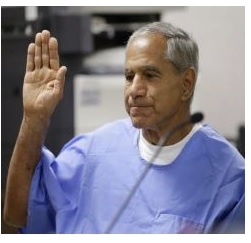
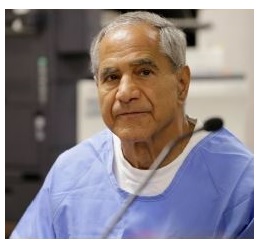
    The attorney representing Sirhan Sirhan has announced an appeal of California Goveror Gavin Newsom’s decision to deny a parole to the convicted killer of Robert F. Kennedy.

    Sirhan was granted the parole in August 2021, having served fifty-four years in prison.

    At a virtual press conference on September 28 2022, attorney Angela Berry stated that in granting the parole last year, the parole board had followed the law, but in denying it, Newsom had not. Considering Sirhan’s age – 78 – and his model prisoner record, his release should have been the normal decision. According to those in contact with him, he poses no danger to society.

    This was one of the most impressive parts of the Sept. 28 conference. Both Berry and Jen Abreu, the director of an agency called Redemption California, presented statements that they secured from those who had contact with Sirhan at Richard J. Donovan Correction Facility in San Diego. Each one of the witnesses stated that Sirhan had both an exemplary record, and was quite cooperative and easy to work with.

    In some instances, they said, he had gone beyond what was required of him. He had attended self-help classes that were offered at Donovan on his own initiative. Abreu was very familiar with this evidence since her group had worked with Sirhan for upwards of 13 months to prepare him for his last parole board hearing. She said that in 54 years of incarceration, the record showed one rule violation. And that over fifty years ago. She said, that in her experience, this was an utterly exceptional record. Consequently, according to the prison rating system for release, Sirhan was in the lowest category as per offering a danger to society.

    Berry said that at the actual hearing, two of the highest ranking commissioners were in attendance. They voted for release. They then passed on their recommendation to the entire board, which agreed with it. Sirhan joined the conference with a video taped talk. There he stated that what makes his case unusual is that even victims of the crime, like Paul Schrade, have advocated for his release. Its rare that something like that occurs.

    There were questions from reporters after the press conference. One was if Berry thought this was going to be a futile effort, due to the notoriety of her client. She replied that she did not think so, since Newsom had previously lost a case like this. In fact, she could have added that the ACLU has filed a lawsuit trying to overturn the governor’s power to do such a thing. (https://www.aclu.org/news/criminal-law-reform/politicians-have-no-place-making-parole-decisions-for-young-people)

    Berry said she will be filing her case in Los Angeles Superior Court Department 66, adding that the process could take several months. She does not think the local DA will oppose her, but the state Attorney General, due to Newsom’s position, probably will. When asked, she said she would appeal if she lost the initial hearing.

    Berry closed with two interesting points. Sirhan’s next parole hearing is scheduled for March 1st of next year. She said she plans on going through with the process at that time. Finally, in a rather forgotten episode, she added that Sirhan had actually been granted parole back in the seventies. But what happened is that the legislature passed a law giving the governor the power to intercede. The parole board then reversed itself and denied Sirhan the parole they had just handed him.

    Sirhan’s family chose Angela Berry to represent him because this kind of law – parole and prisoner release – is her specialty.

    UPDATE: Kennedys and King has received the following request from Angela Berry, the attorney representing Sirhan Sirhan.


    For Sirhan’s upcoming March 1 parole hearing, we need new, updated letters from people.

    As before, the support can be supplemented with the idea that

      1. He’s an old man and no longer dangerous, even [California Department of Corrections] experts have been saying that for many years
      2. It’s a waste of tax payer funds to house an aging man who poses no risk
      3. He shouldn’t be treated differently because of his victim
      4. The Board must find him again suitable for release and refrain from inappropriate persuasion from the Governor
      5. The governor got it wrong and he has no proper place in the decision

    Also as before, the letters should be addressed to:

    State of California, Dept. of Corrections and Rehabilitation

    Board of Parole Hearings

    P.O. Box 4036

    Sacramento, CA 95812-4036

    It would be extremely helpful if the letter authors also sent me a copy of their letter. That way, I can send them also to CDCR to ensure they make it to the “packet” that will be considered by the Board.

    Angela Berry


    Letters in support of Sirhan Sirhan may be sent to:

    Angela Berry

    A Professional Law Corporation

    75-5660 Kopiko Street, Suite C-7, #399

    Kailua-Kona, HI 96740