Tag: JFK

  • The JFK Files: Pieces of the Assassination Puzzle

    The JFK Files: Pieces of the Assassination Puzzle


    Jeff Meek is an anomaly of the first order. He is the only reporter in the country who is allowed to devote a monthly column to the JFK case. It is for the Hot Springs Village Voice and it apparently gets a lot of good feedback since it has been appearing there for three years, since September 15, 2020 to be exact.

    At the beginning of the book, the author relates how he got interested in the JFK assassination. Like many, it was from viewing the famous Geraldo Rivera, Goodnight America program in 1975. The was the evening that electrified the country about the assassination like it had not been since the day Kennedy was killed. Rivera had Robert Groden and Dick Gregory on the program and he screened the Zapruder film, for the first time, on national TV.

    This inspired Jeff to talk to Dallas Chief of Police Jesse Curry. (p. 5) Curry told him that only 35 policemen knew Jack Ruby. Which, as Sylvia Meagher had already pointed out, is a flat out deception. Ruby’s friend, Reagan Turman, told the FBI that “Ruby was acquainted with at least 75 percent, and probably 80 percent, of the police officers on the Dallas Police Department.” Which means he knew several hundred of them. (Accessories After the Fact, p. 423). But Curry did tell Meek that they probably should have investigated Lee Oswald’s friend George DeMohrenschildt more. (p.9).

    This makes a good segue to the House Select Committee on Assassinations (HSCA) and the reporter’s scintillating interview with Dan Hardway. (pp. 13-19) Hardway was recruited from Cornell Law School by Professor Robert Blakey, who became the second, and final, chief counsel to that committee. Dan was teamed with another Cornell law student Eddie Lopez. A couple of their areas of inquiry were the CIA and Lee Harvey Oswald, and Oswald in Mexico City. Dan says that they often requested the identity of the case officer who the CIA appointed for the Cuban exile group, the Directorio Revolucionario Estudiantil, or DRE, in 1963. The CIA would not say who that officer was. We know today that it was George Joannides. And this is the man the CIA sent to perform liaison duties between the HSCA and the Agency. To put it mildly, he was not very forthcoming in that function.

    Dan told Jeff, “I don’t think there is any doubt that they [the Agency] had operational interest in Oswald.” (p. 16) Hardway also said that he was very interested in CIA officer William Harvey. Because Harvey and mobster John Rosselli were running Cuban exile hit teams onto the island. But he and Eddie were not allowed the security file on Harvey.

    Something that I have never heard Dan admit to before, he does say here. That he was actually pitched for recruitment into the Agency by another CIA liaison to the HSCA, Regis Blahut. He reported this in an outside contact report which he thinks has now been lost. (p. 19). But one of the most historically important things that Dan says is that today he does not think the HSCA conclusions stand up. And, in fact, he adds that even Blakey no longer has a lot of faith in them. One major reason being that the HSCA was misled by Agency disinformation.

    This interview is followed up by one with another HSCA staffer. Except this person has not talked nearly as much as Dan. Her names is Leslie Wizelman. (p. 21) She was the third law student Blakey recruited to work on the HSCA. She did not buy the Warren Commission’s official story. But this is what she told Jeff: “Wizelman felt she had given up law school time only to discover that Blakey, initially, had a preconception that Lee Harvey Oswald killed JFK.”

    In fact, she felt the committee was simply got going anywhere. To the point that she wanted to resign and return to her education. But she was discouraged from doing so by Blakey, who told her she was acting immaturely. Once this happened, she was assigned to listen to FBI tapes of the Mafia. She did not think there was much of value there. She also had doubts about Ruby being sent into Dallas at the request of the Chicago Outfit. In fact, the more she looked into this, she though it was wrong. In her opinion, the Mob connection to Jack Ruby was that they knew who he was and knew he was easily influenced. (p. 23)

    Summing up, she feels that congress is not the place to do a homicide inquiry. One reason being the CIA and Defense Intelligence Agency are very obstinate, since they know they can wait you out. When Jeff asked her if they got close to anything, she replied in the negative. She says they were not given enough information and they were constrained by the politics of the committee. She also adds a fascinating observation. She lived with Dan and Ed and thought they were under surveillance. The man next door worked for the phone company.

    Another interesting interview and chapter is the one on Dallas County Detective Buddy Walthers. Walthers found out that Oswald had been at the Alpha 66 meeting house at Harlandale through his mother-in-law. She also said the Cubans had moved out of this house about a week before the assassination. (p. 165) She knew since she lived on the same street, just a couple of doors down. Jeff suspected the woman’s name was Lillian Robinson, which Walthers’ biographer Eric Tagg confirmed was the case. Robinson recognized Oswald’s face on TV the night of the assassination. Look magazine editor T. George Harris had also discovered complementary information about Oswald at the address.

    The man who allegedly rented out the house was Manuel Rodriguez Orcaberro, an official of Alpha 66. As Jeff mentions, although some have said Orcaberro resembled Oswald, after looking at photos of the two, such is not the case. Interestingly, the reporter notes that Walthers learned that members of the DRE also attended some of the meetings. The Secret Service knew about Orcabero, but never connected him to the house. The FBI noted that he was violently anti-Kennedy and was probably the highest official in Dallas for Alpha 66. And the FBI did connect him to the Harlandale home through his own words. (p. 167) The reporter wraps this altogether by locating an interviewing Walther’s daughter, Cheryl Cleavenger.

    There are also interviews with people who were on the White House staff for Kennedy, like Sue Vogelsinger and Nancy Dutton; also columns about incidents during the Kennedy presidency like the Missiles of October and the Berlin Crisis. Meek also interviewed some of the personages Oliver Stone talked to for his film, JFK Revisited, like Jeff Morley, Barry Ernest and Jim Gochenaur. In the last, Jeff got something out of the Church Committee witness that he did not reveal to Stone. That was this: in Secret Service agent Elmer Moore’s portfolio of pictures, there was one of the infamous backyard photos. Jim said, “he could clearly see a line across the photo through Oswald’s chin area.” (p. 139) It would have been nice if Jim could have stolen that photo.

    There some interviews I have reservations about. For example, with Ruth Paine and Secret Service agent Mike Howard. I wish Jeff had talked to Greg Parker and Carol Hewett before doing the first, and Vince Palamara before doing the second. But overall, Meek’s batting average is pretty high. He scores many more hits than pop flies. Especially considering the fact that there are over 40 chapters in the book.

    We should all feel appreciative that there is someone doing this kind of work on a regular basis in journalism today.

  • Mark Shaw Insults Allen, Texas: Part 2

    Mark Shaw Insults Allen, Texas: Part 2


    Two years ago, in a slightly agitated aftermath of reading Mark Shaw’s then new publication, Collateral Damage, I wrote a lengthy and critical review of his literary effort. I published that review on my website Marilyn From The 22nd Row; and Jim DiEugenio kindly published the review on his fine website, Kennedys and King. Recently, a video presentation that Shaw delivered at the Allen Public Library in Allen, Texas, appeared on my YouTube feed. Reluctantly, I watched and created a transcription of his presentation, primarily a commercial for his book. I was not quite as agitated by his Texas presentation as I was by his book; but that fact notwithstanding, in the name of historical and factual accuracy, I am compelled to offer a few comments.

    The first half of Shaw’s presentation focused on Dorothy Kilgallen. Shaw’s fanboy fascination with the star of What’s My Line crossed, at some point in time, into a goofy type of worship that approximates a goofy form of idolatry leading Shaw to engage in hyperbole. According to Shaw, Dorothy was quite possibly thegreatest journalist who ever lived […] Walter Cronkite and David Brinkley rolled into one.Shaw realized that Dorothy had, in fact, achieved the big time because the producers of The Flintstones featured her in an episode broadcast in 1961.And you know you’ve made it, Shaw opined, when you’re on a Flintstones episode. According to Shaw, Dorothy appeared in “The Little White Lie,” the title of the episode, as Dorothy Kilgranite. Not so. She appeared as Daisy Kilgranite, just one of several errors Shaw made regarding the Flintstone episode. Admittedly, it is possible that I am making a mountain out of a cartoon mole hill; but considering the errors Shaw made regarding a twenty-six minute cartoon, readily available for his review, is there any wonder that he made more than a few egregious errors regarding the complicated life of a person as complex as Marilyn Monroe?

    In my lengthy criticism of Collateral Damage, I identified most of Mark Shaw’s errors, but not all of them. I could list them here; but I think the better approach is simply to provide links to my original evaluation of Shaw’s publication: Marilyn From The 22nd Row; link to Kennedys and King.

    Still, there are a couple of assertions made by Shaw during his video presentation that I need to discuss directly: 1) the big clue that Shaw allegedly discovered; and 2) Shaw’s assertion that Collateral Damage does not contain any ofhis opinions or speculations.

    The Big Clue. What follows is what Shaw asserted:

    […] this is the big clue. What did I do here? Well, I was in trouble because I wanted to show that Bobby could have been involved in Marilyn’s death but he wasn’t in Los Angeles at the time. He had an alibi. He was in the San Francisco area, OK. But I just couldn’t believe that he was and so I started looking into things and I found this ledger [security log]at 20th Century-Fox. […] what does it say? That at 11 o’clock on August 4th, 1962, the same day that Marilyn died, Bobby Kennedy and Peter Lawford arrive in a helicopter there. Alright. So he’s in Los Angeles […].

    With the preceding, Mark Shaw clearly took credit; claimed that he and only he uncovered a document, an August the 4th Fox security ledger or log, which proved that Robert Kennedy and Peter Lawford landed at the studio in a helicopter at 11 AM; proved that the Attorney General was in Los Angeles; and by extension, this ledger proved that Robert Kennedy visited Marilyn on August the 4th and that he was, therefore, involved in her murder. But, and there always is, how did Collateral Damage report the explosive big clue?

    In his book, Shaw reported that Bobby had what appeared to be an airtight alibi, one which placed him in the San Francisco Bay Area at the time Marilyn died. Shaw even referenced an Associated Press story confirming that Robert, Ethel, his wife, and four of their children arrived in San Francisco on Friday afternoon, August the 3rd. He even admitted that the Kennedys traveled to the Bates Ranch. Even so, as he also admitted, Shaw did not believe any of the eye-witness, first hand testimony provided by the Bates family and others present that weekend. Shaw did not believe that the ten photographs taken throughout the day, published by Susan Bernard in 2011, proved anything about Robert Kennedy’s location on August the 4th. Shaw did not believe the AP story or a 1985 NYT interview with the senior John Bates, referenced by Shaw, which confirmed that the attorney general never left the Bates ranch. Instead, Shaw accepted the mysterious security log and the testimony of one Frank Neill.

    According to Shaw, the actual security log read as follows:

    Before 11 a.m. on August 4, 1962, a helicopter landed at the Twentieth Century Fox studio’s helipad near Stage 14. Studio publicist Frank Neill, working that Saturday morning, said he saw Robert Kennedy jump out of the helicopter and rush to a dark gray limousine waiting nearby. Neill said he got a glimpse of movie star Peter Lawford, brother-in-law to the Kennedys, sitting inside.

    To begin with, in his Texas presentation, Mark Shaw asserted that both Robert Kennedy and Peter Lawford arrived at Fox’s lots in a helicopter on August the 4th. The alleged security log, on the other hand, indicated that the attorney general arrived in a helicopter while his brother-in-law, Peter Lawford, waited in a nearby limo, a clear contradiction. Which account should we accept as factual?

    Additionally and obviously, the form and wording of the security log strikes the reader as a bit odd. Clearly, a person other than Frank Neill recorded what the studio publicist allegedly said; therefore, who actually wrote down what Neill said? Shaw’s big clue was actually hearsay.

    Why was it necessary to include that Neill was a studio employee; and, by the way, who and what was Frank Neill?

    While I was a practicing architect, I encountered many security offices and security logs at corporate offices, large building material manufacturers and security trailers at fenced, and sometimes guarded, construction sites. Usually, the exact time of one’s arrival had to be recorded. The indefinite arrival time stipulated in the text of the alleged security log confused me. Before 11 AM? Also, usually a precise purpose for one’s visit had to be declared on a security log, something omitted from the Fox log. Moreover, completing a security log is usually only required when a person actually enters secured areas. But evidently, Robert Kennedy never entered the actual Fox lot; at least, that is, Shaw’s log was rather vague on that particular point. The Attorney General entered an awaiting limo which then quickly drove away. Would this necessitate an entry in a security log? And when companies require security clearances, they issue a security badge to visitors and they require the visitor to return to the Security Office, to log out–to enter a precise departure time and to return the security badge. Shaw’s mysterious security log did not include a log out time.

    Finally, the wording of this security log surprised me. Security logs that I’ve encountered required brevity; but the text of Shaw’s security log read more like an excerpt or a description that was lifted, borrowed from a larger narrative.

    Why?

    Hoping to resolve at least some of the preceding issues, and answer some of my questions, while also identifying Frank Neill and clarifying his association with Marilyn Monroe, I spent several days reviewing more than a few pertinent publications. Within the text of Collateral Damage, Shaw was particularly laudatory about one biography, Marilyn: The Tragic Venus, written by Edwin P. Hoyt. Shaw wrote:

    Published in 1965, Hoyt’s biography of Marilyn was released at a time when facts about her life and times and death were not polluted with phony sensationalism, as would be the case with many articles and books in the future. His account certainly appears credible due to the large number of primary sources […] (85).

    I began my review of books about Marilyn with Edwin Hoyt’s biography: Frank Neill did not appear therein. In fact, two decades would elapse before Anthony Summers, in his Marilyn pathography Goddess, would finally mention Frank Neill. According to Summers’ 1985 source notes, Marilyn’s Irish pathographer actually interviewed Frank Neill. From the source notes:Landing at Fox: int. Frank Neill, 1983, and former policeman on pension, who requires anonymity. According to Summers:

    Two fragmentary reports, one from a police source, one from a former member of the Twentieth Century-Fox staff, Frank Neill, suggest Kennedy arrived in the city by helicopter, putting down near the studio’s Stage 18, in an open space then used by helicopters serving the area near the Beverly Hilton. According to these sources, the President’s brother arrived in the early afternoon (350).

    Summers’ 2012 update of Goddess repeats the preceding account verbatim; and nowhere in either version of Goddess did Summers even mention a security log! Also, Summers did not provide any biographical information regarding Fox’s former staff member, Frank Neill; and once again, we have encountered a few contradictions.

    According to Summers’ account of his interview with Frank Neill, the President’s brother did not arrive during the morning: he arrived in the early afternoon. Shaw’s alleged security log stated that Robert Kennedy’s whirlybird landed on a helipad near Stage 14 while Summers reported that the helicopter put down near Stage 18 in an open space […] near the Beverly Hilton. Why the contradictions? Besides, if Frank Neill was involved in the preparation of a security log in 1962, why oh why did he fail to mention that to Anthony Summers during their interview in 1983?

    In 1991, James Spada published The Man Who Kept the Secrets. This was a Peter Lawford biography, sprinkled liberally with the spice of Marilyn and the Kennedys along with many yarns pronounced by the pathological fantasists, Robert Slatzer and Jeanne Carmen. Spada’s literary effort reported the following account:

    Frank Neill, a former employee of Twentieth Century-Fox, later stated that Bobby arrived by helicopter at a landing pad near the studio’s stage eighteen, which was often used by the Beverly Hilton Hotel for that purpose. A confidential police source supports this story(353).

    Not quite identical to Summer’s account but eerily similar. Perhaps the similarity can be explained by Spada’s following admission in his source notes: I drew many of the details of Marilyn Monroe’s last few months from Anthony Summers’s superb investigatory biography of Monroe, Goddess (533). In short, James Spada simply rephrased Summers’ account.

    With the passing of two years, in 1993, Peter Brown and Patte Barham published Marilyn: The Last Take. The first mention of a security log appeared therein. The authors reported:

    On Saturday afternoon, August 4, a Fox security guard squinted through the morning fog to catch a glimpse of the huge government helicopter that hung in the sky above the studio. Waving a fluorescent orange flashlight, the guard directed the chopper toward some hastily drawn landing marks. […] The chopper had been approved to land at just after 11 A.M., as duly noted in the studio’s security log. A dark grey limousine was parked to the side, its driver standing at attention. Studio publicist, Frank Neill, whose office was near the landing pad, wasn’t surprised to see the familiar figure of Bobby Kennedy leap from the helicopter and dash to the limousine. […] Through the open door, Neill caught a glimpse of the carefully tanned face of Peter Lawford(349-350).

    In Brown and Barham’s account, their huge government helicopter landed just after 11 o’clock in the morning; and it landed on what was evidently a makeshift, hand drawn landing target, not a helipad. However, the authors must have been confused regarding the landing time: if the chopper landed just after eleven in a morning fog, how does “Saturday afternoon” fit in? Be that as it may, the authors’ source notes contained the following curiosity: The helicopter landing on the Fox lot was discussed by Robert Slatzer and Lee Hanna, who heard of it from Frank Neill (465). Evidently, Brown and Barham did not actually interview Frank Neill. The authors received their information from either the ubiquitous Robert Slatzer or Lee Hanna, a person with whom I am unfamiliar. If Brown and Barham did not interview Frank Neill, how did they know he was not surprised by the presence of Bobby Kennedy? Well, they could not have known.

    But here is what I find truly odd. If Slatzer knew that Robert Kennedy had landed on Fox’s lot in a helicopter, why did he withhold that information from Anthony Summers during all the interviews the author allegedly conducted with one of his primary sources? I reviewed Slatzer’s 1974 publication, The Life and Curious Death of Marilyn Monroe. There, Slatzer did not mention Kennedy’s arrival by helicopter. Slatzer mentioned Frank Neill with regard to topics unrelated to the topic of this article and asserted that he had met Neill in 1952 on the sets of Niagara. In Slatzer’s The Marilyn Files, published in 1993, Frank Neill likewise appeared with regard to topics unrelated to the topic of this article. Also, Slatzer thanked Neill, and many others, for their invaluable contribution over the years (n9). Slatzer left their contribution unspecified. I can only conclude that their invaluable contribution was their assistance with Slatzer’s masquerade as Marilyn Monroe’s faux second husband.

    Several additional publications that I reviewed did not invoke the name of Frank Neill, and several did. Donald Wolfe’s The Assassination of Marilyn Monroe, published in 1998, and his 2012 update, The Last Days of Marilyn Monroe, presented the following account:

    Early Saturday afternoon, the roar of a helicopter echoed off the sound-stage walls at the Fox studios. A Fox security guard squinted into the bright blue sky as it began its descent into the heliport near Stage 14 […]. As noted in the studio’s security log, the helicopter had received approval to land shortly after 11 a.m. A dark gray limousine waited in the shade as the helicopter touched down in a whirl of dust. Studio publicist Frank Neill, who was working on the lot that Saturday, […] was surprised to see Bobby Kennedy leap from the helicopter and dash to the limousine. As the limousine door opened and Bobby jumped in, Neill caught a glimpse of Peter Lawford (564).

    Wolfe magically transformed the chopper’s landing spot from an open space with some hastily drawn marks, not into just a helipad, but a full scale heliport. The landing transpired in different weather conditions than those mentioned by Brown and Barham. Obviously, Wolfe preferred to have the chopper land under a blue sky in bright sunlight, not a morning fog. And while in the Brown and Barham account, Neill was not surprised to see Bobby Kennedy, in Wolfe’s account the appearance of Bobby did surprise Neill. How did Wolfe know about Neill’s surprise? It is clear that Wolfe did not actually interview Frank Neill. According to his source notes pertaining to page 564: Roar of a helicopter: Summers, p. 350; Brown, p. 303. It is also clear that Wolfe combined the accounts in Goddess and Marilyn: The Last Take to create a hybrid that included a security log which Anthony Summers, who actually interviewed Frank Neill, did not mention.

    Finally, fifty years after Marilyn’s tragic death, Darwin Porter published Marilyn at Rainbow’s End. In Porter’s seamy literary effort, the author transfigured Frank Neill into an implied authority on Fox’s security:Frank Neill, a security guard at Fox,Porter declared, said he saw Bobby arriving by chopper at the helipad on the studio’s lot, which was often used by the Beverly Hilton Hotel for their VIPs (457). But Porter did not mention a security log.

    Returning to the questions that I posed earlier in this article, who and what was Frank Neill and what was his actual association with the world’s most famous blonde actress? Well, Neill was either a former newspaperman, a former police reporter, a garden variety Fox publicist or a unit publicity man for the film Niagara. Not one publication that I reviewed clarified who or what the man actually was, and not one of those publications clarified his association or relationship with Marilyn Monroe. Unfortunately, my efforts to determine the who, what and why of Frank Neill proved to be futile. I could not even locate an obituary.

    So, this question remains: did Mark Shaw uncover–did he and only he discover a mysterious security log or ledger which proved that Robert Kennedy was in Los Angeles on Saturday, August the 4th in 1962? Most certainly he did not. Many other writers have mentioned that mysterious security log; and Shaw did not offer any real proof that the log actually existed. He, like all the sensationalistic conspiracist writers before him, did not publish the actual log. And he did not display a photograph of it during his Texas presentation. A fact which leads me to conclude that he did not and does not possess the security log; and that fact leads me to the real difficulty with Shaw’s assertion.

    Considering that the log was created in 1962, virtually six decades prior to the publication of Collateral Damage, is it even remotely possible that such a document would have been retained by 20th Century-Fox, retained for fifty-nine years? Would such a document have survived to see the 21st century? Speaking only for me, of course, I think not. Taking into consideration all the contradictory accounts regarding the mysterious log, taking into consideration that the actual log has never been published, never been seen, I cannot stretch my gullibility, my credulity quite that far. Speaking only for me, of course, I do not believe Shaw’s story. In fact, I do not believe that the mysterious security log ever existed. I must repeat once again: Shaw’s ledger, the security log, the alleged document has never been published. What Shaw presented in Allen, Texas, was an amalgamation of the many stories written about Robert Kennedy’s whirlybird arrival at Fox studios, an arrival witnessed by a shadow named Frank Neill. Based on actual facts, based on firsthand testimony of persons who were with Bobby that Saturday and based on documentary evidence, we know that the Attorney General was not in Los Angeles on Saturday, August the 4th.

    And finally, to put a period on this philippic, Shaw’s contention that Collateral Damage did not contain any of his opinions or speculations just might be the most absurd conceit uttered by the self-proclaimed Marilyn historian. The text of Shaw’s publication is filled with opinion and speculation; it is also filled with innuendo. For example, on page 562, Shaw wrote:

    Basically a coward in the ilk of his father, RFK would never have had the guts to poison Marilyn on his own initiative. That meant he had, it would seem, two choices: either enlist operatives to do it or engage through an intermediary, perhaps Greenson of Engelberg to do it for him. […] RFK, either on his own or through intermediaries, could have “squeezed” Greenson […] into becoming an operative in the death of Marilyn.

    In Shaw’s goofy world, the preceding does not qualify as speculation. Truly amazing.

    I could present many more examples of Shaw’s opinionating and speculative prowess. But the most incredible example begins on page 613, Shaw’s contrived scenario of how Marilyn was possibly murdered, a scenario that is gross speculation of what most likely may have happened to Marilyn during the night of August the 4th.

    Accosted by two intruders sent by the attorney general, with the president’s approval, asserted Shaw, and stunned with a chloroform-sealed cloth, Marilyn was either dragged or carried into her bedroom, stripped, deposited nude on her newly carpeted floor and callously murdered by a rectal infusion of drugs using a bulb syringe of some sort. The attorney presented absolutely no evidence to support his contrived scenario; and Shaw excused his lack of evidence as follows:

    Of course, as with any theory like this based on circumstantial evidence after so many years have passed, questions will be asked, with answers unfortunately speculative in nature. […] Such observations about Marilyn’s death provide a stop-and-think, food-for-thought considerations as to how Marilyn met her maker and by whose actions […]. If Robert Kennedy’s complicity in Marilyn’s death, through whatever means, had been exposed, causing him to be charged in a court of law, there would never have been a JFK assassination by RFK’s enemies in 1963(624).

    There was not, and there is not, one shred of actual evidence proving that Robert Kennedy was romantically involved with Marilyn Monroe, or that he was involved in any way with her death. In fact, the available evidence proves that actress and attorney general were not involved romantically. Further, Marilyn’s autopsy proves that she was not killed with some sort of bulb syringe: she ingested the drugs that killed her.

    Mark Shaw’s gross speculation that John Kennedy’s assassination could have been prevented by bringing charges against his brother for killing Marilyn Monroe is absolute nonsense of the most preposterous sort. Perhaps Mark Shaw should have stopped and thought before writing a book like Collateral Damage. Perhaps he should have asked a few more questions, like he admonished his video audience to do, before putting his pen to paper.


    Go to Part 1

  • Mark Shaw Insults Allen, Texas: Part 1

    Mark Shaw Insults Allen, Texas: Part 1


    In 2021, author Mark Shaw visited the library at Allen, Texas. Allen is a town of about 100,000 located 20 miles north of the Dallas/Fort Worth metroplex. This was an opportunity to publicize his book Collateral Damage. Some might say: but that was two years ago. Which is true. But for whatever reason, this talk has garnered millions of views on YouTube. Marilyn Monroe authority Don McGovern went ahead and transcribed it. It might be hard to believe, but in some ways this speech is even worse than the book.

    It is very important—actually it is integral—to understand that Shaw is a lawyer. And, as he has described in his prior books, he was a criminal defense attorney. In other words, Shaw is familiar with the rules of evidence and testimony in court. He therefore has to understand the concept of raising objections to such and how a judge can then rule on whether that evidence and testimony can be admitted to a jury. In fact, very often there are pre-trial evidentiary hearings so a judge can rule on these matters.

    What is shocking about Shaw’s presentation is this: there is barely anything in it that would not be challenged in court. And, as we shall see, most of those objections would likely be sustained. It’s quite a spectacle to see an attorney somehow forget the strictures he was taught in law school in order to present a case so diaphanous that it would likely never get out of the starter’s gate. This at a time when most of the JFK critical community is doing the contrary. That is, trying to present a case that would meet standards of proof.

    Mark Shaw is one of the very few in the critical field that still holds that somehow it was the Mafia that killed President Kennedy. What is so bizarre about this—actually it is almost shocking—is that he does not even seem aware of how the new evidence vitiates that conclusion. For instance, the Assassination Records Review Board (ARRB,) declassified many documents from the House Select Committee on Assassinations. The pertinent HSCA records were from November, 1978 interviews with the family of Dutz Murrett, Oswald’s uncle in New Orleans. These showed that, contrary to what the likes of author John Davis had stated, Mr. Murrett was not working for Carlos Marcello in 1963. (Michael Benson, Who’s Who in the JFK Assassination, p. 305) He had resigned his bookmaking position at least two years earlier. This poked a serious lacunae into that theory—one that tangentially connected Oswald to the Mafia Don in New Orleans.

    Further, the famous Ed Becker anecdote about Marcello, which so many have used—including Shaw in this speech—has now also come into dispute. According to Becker, Marcello allegedly stated that soon “the stone” would be removed from his shoe. This meant Attorney General Bobby Kennedy. But he was going to do it by disposing of President Kennedy. (Benson, p. 34) Len Osanic of Black Op Radio has made contact with a witness who renders that whole conversation questionable. There is now a book in preparation on the subject. Yet, as author Michael Benson notes, the HSCA used both of these aspects to bolster their Mob oriented case. As explicated by the late Carol Oglesby in the Afterword to Jim Garrison’s On the Trail of the Assassins, that case was never very strong to begin with. It has now been severely weakened.

    Mark Shaw’s third overall rail of Mafia involvement on the JFK case was that Joe Kennedy had double crossed his backers in Chicago about how he could get RFK to go easy on the Outfit. In return for that, the 1960 mob—controlled wards in Chicago would throw their support to JFK. This point was also rendered moot when it was broken down by statistician John Binder. Binder did a complete study of the voting ratios in those wards. It was not what it should have been if the basis of the book Double Cross was true. Binder’s work pretty much blows up this old wives tale. (Click here)

    Since the Mob did not go along with Kennedy’s alleged wishes, this would indicate he did not have much pull in Chicago. Which indicates that the myth of Joe Kennedy the bootlegger was just that. A myth that emerged, not when Joe was under six federal investigations for positions in government; but arose after, when the underworld, and Jack Kennedy’s enemies—like Richard Nixon—wanted to spread rumors, thereby tarring JFK’s presidential nomination, and later, his reputation. This is the sensible and evidence backed thesis that author Dan Okrent came to in his fine volume on the subject of Prohibition, Last Call (p. 369)

    But in his 2022 book Fighting for Justice—a misnomer if there ever was one—Shaw stated that the Joe Kennedy bootleg charges were all over the HSCA volumes on organized crime (Shaw, p. 66). I read the HSCA volumes on crime, which were in Books 5 and 9. Shaw was passing gas; it’s not there. It is hard to imagine he did not even look at the volumes in advance. If he did, he would have found out that, contrary to any deal, the Kennedys’ strong pressure was collapsing the Mafia. (Vol. 5, p 455)

    In the talk under discussion, Shaw also brings in the 1960 West Virginia primary as another example of the Mob influencing an election at Joe Kennedy’s request. This one was promoted not just by that fatuous book Double Cross, but also by the late Judith Exner, a woman who told so many tall tales she could not keep them straight. (Michael O’Brien, Washington Monthly, December, 1999). As Dan Fleming wrote in his book on that primary, no subsequent study—by the FBI, by the state Attorney General, by Senator Barry Goldwater—ever produced any evidence that there was skullduggery that influenced that election outcome. (Fleming, Kennedy vs Humphrey, West Virginia 1960, pp. 107-12)

    One might point to another aspect of Shaw’s reliance on rather disreputable sources like Double Cross and Frank Ragano’s book Mob Lawyer. In the former book, the authors stated that the Outfit owned the contract of Marilyn Monroe. Since Monroe is a late arriving subject of Shaw’s one would think he would be aware that this is utterly false. And it would therefore touch on the credibility of his source. Either that or it indicates the fact that he has done very little work on Monroe. For as has been shown in the book Murder Orthodoxies, the two men who had control of Monroe’s early career were producer Joe Schenck and Hollywood agent Johnny Hyde. The Chicago Outfit influence on Monroe was simply more malarkey from a book that was full of it. (McGovern, pp. 394-427)

    What is one to think of a lawyer/author who uses these kinds of sources? And still insists on using them long after they have been discredited.

    In this speech Shaw states that he first discovered the subject of Dorothy Kilgallen while he was writing his book about attorney Melvin Belli. Which is kind of odd. Why? Because that book was published back in 2007. Which is ten years before he published his first book on Kilgallen. But further, in Shaw’s first two books dealing with the JFK case there is next to nothing about the reporter, a bit over two pages. His excuse for bringing in Marilyn Monroe is that he somehow discovered that Kilgallen was friends with Monroe. As Monroe biographer Gary Vitacco Robles has noted, there is no such evidence this was the case.

    In addition to these questionable origins, in Shaw’s speech there is his tendency to aggrandize himself. Early on he calls himself a historian. It’s pretty clear from his book that he has no such credentials in that field. And if there is a worse historian of the Kennedy years, I would like to know who it is. One thing a good historian does is sift through how reliable his sources are. As we have seen, Mark Shaw did not do that. Not even close.

    Right before this there is another instance of self-praise. Shaw says the relevance of Collateral Damage is that it shows that nobody asked questions at the time of these murders. To use just one example: Mark Lane was asking questions about the JFK case within hours of the president’s death. (Mark Lane, Plausible Denial, p. 14) When Jack Ruby shot Oswald, those questions exploded into a tidal wave. Because many assumed that the reason someone would shoot the defendant in public was to silence him. This caused Lane to assemble his legal brief for Oswald, which contained plenty of questions amid its ten thousand words. (Lane, pp. 18-19). The edition of The National Guardian where it first appeared sold 100,000 copies. (Author’s interview with Lane, November of 2013). As per Monroe, the first questions were asked very soon after her death also. By, for instance, the photography/reporter team—Bill Woodfield and Joe Hyams—that took the last nude photos of her, and this is in the Fred Guilles biography of Monroe. As per Kilgallen, at her funeral, her mother accused her husband Dick Kollmar of killing her. Experts inside the medical examiner’s office, like Charles Umbarger and John Broich also suspected foul play. Lee Israel, who wrote a biography of Kilgallen, was also onto this trail. All of these sources are in Sara Jordan’s fine online article “Who Killed Dorothy Kilgallen” at Midwest Today. And when one reads that article, the introduction states that this is how Shaw actually began his book.

    Shaw is an inveterate self—aggrandizer. For instance he likes to say, as he does here, that his work is not speculative. That it is based on solid sources like documents. How is the book Double Cross a document? It was not published until three decades after President Kennedy’s murder. As lawyer Shaw has to know, it is hearsay at best. And it is compromised by the fact that the authors clearly wrote it to take advantage of a timely commercial event: the unprecedented controversy over Oliver Stone’s JFK. As I have shown, factually, every major tenet in the book is dubious.

    But it’s even worse than that. Because, concerning the subject of that book, namely Chicago Don Sam Giancana, there are much more factually based sources. One would be FBI agent William Roemer and his book Man Against the Mob. In that book, Roemer describes the almost total surveillance that Bobby Kennedy and the FBI had on Giancana. As he was a major part of it. Roemer listened to all the surveillance tapes they had on Giancana. There was never any mention of any attempt on JFK or RFK. And after the fact, there was no such indication either. (Roemer, p. 188). In court, that would make Shaw’s case pretty vulnerable.

    But again, it’s really worse than that. Because there are now three different versions of the Giancana mythology. There is the version in the novel Double Cross. There is a newer version by another Giancana relative named Pepe as revealed by producer Ron Celozzi in the documentary film Momo: The Sam Giancana Story. The assassination teams differ significantly in the two works. But there is a third version, one which Celozzi is preparing for a projected upcoming feature film on the subject. Again, the hit team is now different than Celozzi’s earlier version. (Click here for the transformations)

    Again, can one imagine presenting all these alterations in court? Showing first how Double Cross is a fraud to begin with. Then following that up with the revisions to the original story? Then finalizing it all with Roemer? Shaw’s case would be decimated. So much for the “historian” not relying on speculation.

    This is the problem when an author depends on a source about which there is no adduced record. Since for all of Shaw’s boasting about his zealotry for Kilgallen, with Kilgallen as your pillar what do you have?. As Shaw has admitted in his works, no one knows what was in Kilgallen’s JFK file. It was allegedly lost after her death. Shaw assumes that since Kilgallen went to New Orleans before her death, that somehow she was on to Carlos Marcello. How does he know this? Again, there is no evidence for it. It is his opinion based on speculation. And this ignores the fact that Oswald was in New Orleans in the summer of 1963, and this might be the reason she went there—to check out what he was doing. In this speech Shaw even says that since Kilgallen had a book coming out based on some of the homicide cases she had investigated, that this is why Marcello had her killed! As a lawyer, how could Shaw back this up?


    Go to Part 2

  • Part 2 of 6: Jack Ruby, the Dallas Police and Oswald’s Rights

    Part 2 of 6: Jack Ruby, the Dallas Police and Oswald’s Rights


    11. The Secret Service and The Picket Fence.

    “The Secret Service agents assigned to the motorcade remained at their posts during the race to the hospital. None stayed at the scene of the shooting, and none entered the Texas School Book Depository Building at or immediately after the shooting. Secret Service procedure requires that each agent stay with the person being protected and not be diverted unless it is necessary to accomplish the protective assignment. Forrest V. Sorrels, special agent in charge of the Dallas office, was the first Secret Service agent to return to the scene of the assassination, approximately 20 or 25 minutes after the shots were fired.” (WCR; p. 52.)

    When Sorrels testified before the Commission, he agreed with that time interval. (Volume VII; p. 347/348.)

    With the facts established regarding the movements of the Secret Service after the assassination, it is important to consider the following testimonies of Dallas Police Officers Smith, Weitzman, and Harkness along with a witness, Mrs Jack Frazen. These individuals testified or gave depositions, that in the immediate aftermath of the President’s murder, they each encountered individuals who claimed to be agents of the Secret Service and, in some instances, even produced Secret Service credentials.

    Joe Marshall Smith testified under oath that he encountered men claiming to be Secret Service behind the picket fence in the immediate aftermath of the assassination.

    Joe Marshall Smith. “Yes, sir: and this woman came up to me and she was just in hysterics. She told me, “They are shooting the President from the bushes.” So, I immediately proceeded up here [Grassy Knoll]”
    Wesley Liebeler. “You proceeded up to an area immediately behind the concrete structure here that is described by Elm Street and the street that runs immediately in front of the Texas School Book Depository, is that right?”
    Joe Marshall Smith. “I was checking all the bushes and I checked all the cars in the parking lot.”
    Wesley Liebeler. “There is a parking lot in behind this grassy area back from Elm Street toward the railroad tracks, and you went down to the parking lot and looked around?”
    Joe Marshall Smith. “Yes, sir; I checked all the cars. I looked into all the cars and checked around the bushes. Of course, I wasn’t alone. There was some deputy sheriff with me, and I believe one Secret Service man when I got there. I got to make this statement, too. I felt awfully silly, but after the shot and this woman, I pulled my pistol from my holster, and I thought, this is silly, I don’t know who I am looking for, and I put it back. Just as I did, he showed me that he was a Secret Service agent.”
    Wesley Liebeler. “Did you accost this man?”
    Joe Marshall Smith. “Well, he saw me coming with my pistol and right away he showed me who he was.”
    Wesley Liebeler. “Do you remember who it was?”
    Joe Marshall Smith. “No, sir; I don’t-because then we started checking the cars. In fact, I was checking the bushes, and I went through the cars. and I started over here in this particular section.” (Volume VII; p. 535.)

    Officer Smith said to the Texas Observer that after the assassination “A woman came up to me in hysterics. She said they’re shooting at the President from the bushes, and I just took off. A cement arch stands between the depository building and the underpass. On the underpass side of the arch, there is a fence that lets through almost no light and is neck-high; an oak tree behind the fence makes a little arbor there. A man standing behind the fence, further shielded by cars in the parking lot behind him, might have had a clear shot at the President as his car began the run downhill on Elm Street toward the underpass. Patrol-man Smith ran into this area. I found a lot of Secret Service men I suppose they were Secret Service men and deputy sheriffs and plain-clothes men, he said. He was so put off by what the woman had said—he didn’t get her name—that he spent some time checking cars on the lot, he said. He caught the smell of gunpowder there. he said: “a faint smell of it—I could tell it was in the air…a faint odour of it.” (Texas Observer; 13th December 1963, p. 9.)

    Smith characterized the Secret Service imposter in this way:“He looked like an auto mechanic. He had on a sports shirt and sports pants. But he had dirty fingernails, it looked like, and hands that looked like an auto mechanic’s hands. And afterwards it didn’t ring true for the Secret Service. At the time we were so pressed for time, and we were searching. And he had produced correct identification, and we just overlooked the thing. I should have checked that man closer, but at the time I didn’t snap on it.” (Anthony Summers, Not In Your Lifetime; p. 57)

    Seymour Weitzman testified that he encountered men claiming to be Secret Service behind the picket fence.

    Joseph Ball. “Did you go into the railroad yards”
    Seymour Weitzman. “Yes sir”
    Joseph Ball. “What did you notice in the railroad yards?”
    Seymour Weitzman. “We noticed numerous kinds of footprints that did not make sense because they were going different directions”
    Joseph Ball. “Were there other people besides you?”
    Seymour Weitzman. “Yes sir; other officers, Secret Service as well, and somebody started, there was something red in the street and I went back over the wall and somebody brought me a piece of what he thought to be a firecracker and it turned out to be, I believe, I wouldn’t quote this, but I turned it over to one of the Secret Service men and I told them it should go to the lab because it looked like human bone.” (Volume VII; p. 107)

    Mrs Jack Frazen. According to an FBI report dated 11/22/63 Mrs Franzen had: “observed police officers and plain-clothes men, who she assumed were Secret Service Agents, searching an area adjacent to the TSBD Building, from which area she assumed the shots which she heard had come.” (Volume XXIV; p. 525.)

    D. V. Harkness testified that 6 minutes after the assassination he had encountered men at the back of the Texas School Book Depository who claimed to be Secret Service.

    David Belin. “Was anyone around in the back when you got there?”
    D. V. Harkness. “There were some Secret Service agents there. I didn’t get them identified. They told me they were Secret Service”. (Volume VI; p. 312.)

    Jesse Curry. “I think he must have been bogus. Certainly, the suspicion would point to the man as being involved, some way or other, in the shooting since he was in an area immediately adjacent to where the shots were and the fact that he had a badge that purported him to be Secret Service would make it seem all the more suspicious.” (Not In Your Lifetime; p. 58)

    According to the Warren Commission’s own findings, the individuals encountered by these witnesses could not have been genuine Secret Service agents. These encounters occurred prior to the return of Forrest V. Sorrels to Dealey Plaza. The presence of these impersonators raises important questions for the case. Who were these individuals claiming to be Secret Service agents? What was their motive or purpose in impersonating members of the Presidents security detail in the immediate aftermath of the President’s murder?

    12. The Testimony Which Negates the Single Bullet Theory.

    Commission Conclusion: “Although it is not necessary to any essential findings of the Commission to determine just which shot hit Governor Connally, there is very persuasive evidence from the experts to indicate that the same bullet which pierced the President’s throat also caused Governor Connally’s wounds.” (WCR; p. 19.)

    The Testimonies of John & Nellie Connally Which Refute the Commission Conclusion.

    Mrs Connally. “When we got past this area I did turn to the President and said Mr President, you can’t say Dallas doesn’t love you. Then I don’t know how soon, it seems to me it was very soon, that I heard a noise, and not being an expert rifleman, I was not aware that it was a rifle. It was just a frightening noise, and it came from the right. I turned over my right shoulder and looked back and saw the President as he had both hands at his neck.”
    Arlen Specter. And you are indicating with your own hands, two hands crossing over gripping your own neck?
    Mrs. Connally. Yes, and it seemed to me there was—he made no utterance, no cry. I saw no blood, no anything. It was just sort of nothing, the expression on his face, and he just sort of slumped down. Then very soon there was the second shot that hit John. As the first shot was hit, and I turned to look at the same time, I recall John saying “Oh, no, no, no.” Then there was a second shot, and it hit John, and as he recoiled to the right, just crumbled like a wounded animal to the right he said, “My God, they are going to kill us all. (Volume IV, p. 147.)Picture1

    Governor Connally.

    ArlenSpecter. “As the automobile turned left onto Elm from Houston, what did occur there, Governor”?
    Governor Connally. “We had, we had gone, I guess, 150 feet, maybe 200 feet, I don’t recall how far it was, heading down to get on the freeway, the Stemmons Freeway, to go out to the hall where we were going to have lunch and, as I say, the crowds had begun to thin, and we could, I was anticipating that we were going to be at the hall in approximately 5 minutes from the time we turned on to Elm Street. We had just made the turn, well, when I heard what I thought to be a rifle shot. I instinctively turned to my right because the sound appeared to come from over my right shoulder, so I turned to look back over my right shoulder, and I saw nothing unusual except just people in the crowd, but I did not catch the President in the corner of my eye, and I was interested, because I immediately, the only thought that crossed my mind was that this is an assassination attempt. So, I looked, failing to see him, I was turning to look back over my left shoulder into the back seat, but I never got that far in my turn. I got about in the position I am in now facing you, looking a little bit to the left of centre, and then I felt like someone had hit me in the back.”
    Arlen Specter. What is the best estimate that you have as to the time span between the sound of the first shot and the feeling of someone hitting you in the back which you just described?
    Governor Connally. “A very, very brief span of time. Again, my trend of thought just happened to be, I suppose along this line, I immediately thought that this—that I had been shot. I knew it when I just looked down and I was covered with blood, and the thought immediately passed through my mind that there was either two or three people involved or more in this or someone was shooting with an automatic rifle. These were just thoughts that went through my mind because of the rapidity of these two of the first shot plus the blow that I took, and I knew I had been hit, and I immediately assumed, because of the amount of blood, and, in fact, that it had obviously passed through my chest, that I had probably been fatally hit.”

    To say that they were hit by separate bullets is synonymous with saying that there were two assassins.” Norman Redlich, Commission Counsel. (Inquest; p. 43 Volume IV, P132-133, watch this)

    13.Truth Is Our Only Client Here?

    “If this is truth, then black is white. Night is day. And war is peace. This is not truth. This is a false document.” Sylvia Meagher.

    Although Robert Kennedy openly endorsed the Warren Commission Report, he held a privately disdainful perspective towards it. RFK had derisively dubbed the extensive 888-page prosecutorial brief a: “shoddy piece of craftsmanship.” Moreover, the southern wing of the Commission, namely Senators Richard Russell, John Sherman Cooper, and Representative Hale Boggs, openly challenged the cornerstone of the Commission’s case: the Single Bullet Theory, expressing their significant dissent.

    John Sherman Cooper. “I could not convince myself that the same bullet struck both of them. No, I wasn’t convinced by [the SBT]. Neither was Senator Russell.” (James DiEugenio, JFK Revisited, pp. 30-31)
    John Sherman Cooper. “I, too, objected to such a conclusion; there was no evidence to show both men were hit by the same bullet.” (Edward Epstein, Inquest; p.149-150)
    Hale Boggs. “I had strong doubts about it [the single bullet theory], the question was never resolved.” (Inquest; pp.149-150)

    In a declassified telephone conversation with President Johnson, Russell expressed his frustration with the Commission’s proceedings.

    Richard Russell. “Now that damned Warren Commission business whupped me down so, we got through today and I just, you know what I did? I went over, got on the plane and came home and didn’t even have a toothbrush, I didn’t bring a shirt, I got a few little things here, I didn’t even have my pills, my anti histamine pills.”
    Lyndon Johnson. “Why did you get in such a rush?”
    Richard Russell. “Well, I was just worn out fighting over that damned report”.
    Lyndon Johnson. “Well, you got to take an hour out…to get your clothes.”
    Richard Russell. “Well, they were trying to prove that the same bullet that hit Kennedy first was the one that hit Connolly…went through him, through his hand, his bone, into his leg, everything else…just a lot of stuff that… I couldn’t hear all of the evidence and cross examine all of them but I did read the record and so I just I don’t know… but I was the only fellow there that practically requested any changes and what the staff got out of it…this staff business always scares me, I like to put my own views down…But we got you a pretty good report”
    Lyndon Johnson. “Well what difference does it make which bullet got Connally?”
    Richard Russell.“Well, it don’t make much difference but they said that they believed…that the Commission believed that the same bullet which hit Kennedy hit Connolly… well I don’t believe it.”
    Lyndon Johnson. I don’t either.”
    Richard Russell. “And so, I couldn’t sign it…. And I said that Governor Connolly testified direct to the contrary and I am not going to approve of that. So, I finally made them said that there was a difference in the Commission in that. Part of them believed that was not so. Course if a fellow was as accurate enough to hit Kennedy right in the neck on one shot and knock his head off with the next one…. Well, he didn’t miss completely with that third shot. But according to their theory he not only missed the whole automobile, but he missed the street. Well, if a man is a good enough shot to put two bullets right in Kennedy, he didn’t miss that whole automobile, nor the street.”

    These insights from the conversation between Russell and Johnson highlight the dissenting opinions and doubts surrounding the Single Bullet Theory within the Commission. It becomes apparent that the Warren Commission Report faced internal criticism and concerns regarding its findings. (read this, watch this and this)

    14. Jack Ruby and The Dallas Police Department.

    Picture2Dallas Police Chief Jesse Curry. “A great deal has been written about the relationship of the Dallas Police Department with Jack Ruby. We have twelve hundred men in our department, and we had each man submit a report regarding his knowledge or acquaintance with Jack Ruby. Less than fifty men even knew Jack Ruby. And less than a dozen had ever been in his place of business. Most of these that had been in his place of business had been in there because they were sent there on investigations or had answered a call for police service. I believe there was four men in our department that we were able to determine had been there socially. That is off duty. That were present in his nightclub.”


    Numerous witnesses have attested to the fact that Jack Ruby was a well-known associate of the Dallas Police Department. Many officers, detectives, and personnel were familiar with Ruby due to his frequent visits to police headquarters and his connections within the city’s nightclub and entertainment industry. Below I have reproduced just some of the testimony on the record, relating to Ruby’s acquaintance with the Dallas Police Department.

    Nancy Hamilton Former Employee of Ruby.

    Mark Lane. “Were you employed by Jack Ruby”?
    Nancy Hamilton. “Yes, I was. This was in 1961 in Dallas at his club The Carousel and I was bartender, waitress and rather the manager there”.
    Mark Lane. “How did you get that job”?
    Nancy Hamilton. “Well, I had gone into Dallas not knowing anyone and of course the first place I went was the Police Department and uh they were very kind and got me the job there”.
    Mark Lane. “They got you the job at Jack Ruby’s”?
    Nancy Hamilton. “Yes, they did”.
    Mark Lane. “Did they know Ruby”?
    Nancy Hamilton. “Personally, oh yes very well, vouched for him…wonderful person…great man…well known by the Dallas Police Department.”
    Mark Lane. “Other than Dallas Police officers what officials did frequent Ruby’s establishment”?
    Nancy Hamilton. “Oh…such as your District Attorney which would be Mr Wade”.
    Mark Lane. “How many police officers do you estimate Jack Ruby knew on a personal level”?
    Nancy Hamilton. At least half and probably two thirds”.
    Mark Lane. “There were almost twelve hundred police officers in Dallas in 1963. Would you say Ruby knew six hundred of them”?
    Nancy Hamilton. “Oh easily.”

    Nancy Hamilton/Rich also reiterated to the Warren Commission the extent of Ruby’s popularity with the Dallas Police.

    Nancy Rich. “There is no possible way that Jack Ruby could walk in Dallas and be mistaken for a newspaper reporter, especially in the police department. Not by any stretch of the imagination.”
    Leon Hubert. “Is that your opinion?”
    Nancy Rich. “That is not my personal opinion. That is fact.”
    Leon Hubert. “Well, on what do you base it?”
    Nancy Rich. “Ye gods, I don’t think there is a cop in Dallas that doesn’t know Jack Ruby. He practically lived at that station. They lived in his place. Even the lowest patrolman on the beat…knew him personally” (Volume XIV; p. 359.)

    Mr Johnson Former Employee of Ruby.

    Mark Lane.“Did Ruby know many Dallas Police officers”?
    Mr Johnson. “Well yes, he did. I’d say he knew ah probably half of the people on the force”.
    Mark Lane.
    “There were about Twelve hundred police officers on the force”.
    Mr Johnson. “Yes, well I am sure he knew about half of them, and he was very nice to them.”

    Barney Weinstein Manager of The Theatre Lounge.
    “He [Ruby] did know a lot of police. He knew ’em all. He curried their favour all the time.” (Texas Observer, December 13 1963, p. 8.)

    Let us use some specifics, Sgt. Patrick Dean said he knew Ruby for approximately three years. (Vol. II, p. 407) Det. Jim Leavelle testified he knew him for approximately 12 years. (Vol. III, p. 16) Det. L. C. Graves, said he knew him for 10 years. (Vol. XIII p. 9) Officer Blackie Harrison, who Ruby concealed himself behind before shooting Oswald, said he knew him for 12 years. (Vol. XII, p. 237). Lt. Jack Revill also knew him for 12 years. (Vol. XII p. 82)

    If one goes through the volumes of Commission testimony, one will see that Lt. Rio Pierce knew Ruby for a dozen years, Captain O. C. Jones knew Ruby for over ten years, Detective Buford Lee Beaty knew him for a dozen years, Det. Combest knew him for about five years, Det. R. L. Lowery knew him for several years, Sgt. Steele knew him for about 8 years, Lt. W. Wiggins knew him for a number of years, and Detective Clardy knew him for about 8 years. And again, this does not begin to exhaust the number of police who admitted to knowing Ruby.

    Now consider the following exchange between the Commission and Ruby’s friend and roommate George Senator.

    Leon Hubert.“What was Jack Ruby’s attitude toward the police as a group?”
    George Senator. “Well, all I know is apparently he must like them. They always used to come to see him.”
    Leon Hubert. “Tell us about those who came to see him. Do you know who they were?”
    George Senator. “I knew a lot of them by face. I didn’t know them all by name.”
    Leon Hubert. “Did they come frequently?”
    George Senator. “Various ones, yes, every day.” (Volume XIV; p. 213)

    Now consider this statement by Detective Will Fritz.

    Leon Hubert. “Do you know Jack Ruby at all, or did you know?”
    Will Fritz. “Did I know him before; no, sir, I did not… That is the first time I ever saw him, when he was arrested.”(Volume XV; p. 148)

    Travis Kirk, Dallas Attorney, 23 Years.“It is inconceivable that Fritz did not know Ruby. Kirk described Fritz as a domineering, dictatorial officer possessing a photographic memory and a thorough knowledge of the Dallas underworld. In light of Ruby’s reputation and notoriety in Dallas prior to the murder of Oswald… Mr Kirk considers it utterly ridiculous that Captain Fritz might pretend that he did not know Ruby, including physical recognition. Mr Kirk states that he would have to question the veracity of Captain Fritz if Fritz were to disclaim knowledge or recognition of Jack Ruby.”

    Upon his arrest for the murder of Lee Oswald, Ruby exclaimed to the arresting officers: “You all know me, I’m Jack Ruby.” (Volume XII-XIII; p 399, 308, 30.)

    15. ‘The Abortive Transfer’? The Tragic Murder of Lee Oswald.

    “The ACLU hold the Dallas police responsible for the shooting of Oswald, saying that minimum security considerations were flouted by their capitulation to publicity…which exposed Oswald to the very danger that took his life”.

    We Are Going To Kill Him.

    Billy Grammer, a Dallas Police Communications Officer, received an urgent anonymous phone call around 9 pm on November 23, 1963. In an interview for the documentary The Men Who Killed Kennedy, Grammer recalled this incident, saying: “I thought I recognised the voice but at the same time I couldn’t put a face or name with the voice. We talked and he began telling me that we needed to change the plans on moving Oswald from the basement that, uh he knew of the plans to make the move and if we did not make a change the statement, he made precisely was we are going to kill him.” Grammer reported the threat made against Oswald’s life to his superiors. Grammer first learned that Ruby had in fact killed Oswald when he saw it on television the next morning: “No sooner than I had turned it on [TV] and they were telling that Jack Ruby had killed Oswald. Then I suddenly realized, knowing Jack Ruby the way I did, that this was the man I was talking to on the phone last night. At that time, I put the voice with the face, and I knew myself that Jack Ruby was the one that made that call to me the night before. I think it was obvious because he knew me, and I knew him, and he called me by name over the telephone and seeing this and knowing what I knew and what he had said to me it had to be Jack Ruby… He made the statement that we are going to kill him. Which leads me to believe that this was not a spontaneous thing that happened on the spur of the moment he was watching Oswald coming out of the door and all of a sudden, he decided to shoot him. I do not believe that. I think this was a planned event with him being the man to do the shooting.” (watch this)

    Will Fritz. “During the night on Saturday night, I had a call at my home from uniformed captain, Captain Frazier, I believe is his name, he called me out at home and told me they had, had some threats and he had to transfer Oswald… I have always felt that that was Ruby who made that call.” (Volume IV; p. 233)

    Officer Perry McCoy testified he got a call a few hours before Oswald was moved and this was from a member of a committee of one hundred, and they had voted to kill Oswald while he was being transferred to the county jail. (Volume XIX; p. 537/538) This same threat was given to the FBI and was sent to the DPD’s William Frazier at about 3:30 in the morning of the 24th. (Volume VII, pp. 53-54)Picture3

    J. Edgar Hoover

    In a declassified document authored by J. Edgar Hoover and written mere hours after Oswald’s murder, Hoover voiced his frustration towards the Dallas Police Department, blaming them for Oswald’s death despite explicit warnings from the FBI.

    “There is nothing further on the Oswald case except that he is dead. Last night we received a call in our Dallas office from a man talking in a calm voice and saying he was a member of a committee organised to kill Oswald. We at once notified the Chief of Police and he assured us that Oswald would be given sufficient protection. However, this was not done”.

    He continued, “Oswald having been killed today after our warnings to the Dallas Police Department, was inexcusable.” (check this)

    Sheriff Decker and Secret Service agent Forrest Sorrels disagreed with the timing of the transfer and the method. Both men thought a transfer in the middle of the night with no one around would be the proper way to do such an assignment. And Decker though he should be placed him on the floorboard of the car. (Volume XIX, pp. 537-38; Volume XIII, p. 63) Jim Leavelle thought that Oswald should have been led out to Main Street while the crowd had gathered thereby avoiding all the reporters and cameras. (Volume III, p. 17)

    L. C. Graves.“We knew better than to transfer him under those conditions, but we didn’t have any choice.” (watch this)

    The procedure used to transfer Lee Oswald, to the county jail, was fundamentally flawed and, without question, should never have been conducted in the manner that it was. A thorough assessment of the circumstances lays bare distinct irregularities and contradictions employed by the Dallas Police. There is indisputable evidence to show that the strategy employed during Oswald’s transfer was egregiously mishandled, serving as the immediate trigger for his untimely demise.

    Burt Griffin. “Were you given any instructions as to how you should guard him?”
    L. C. Graves. “As I said, I was–told to hold to the arm and walk close to him and Montgomery was to walk behind us and Captain Fritz, and Lieutenant Swain in front of us and that is the way we started out to the elevator, and out of the elevator door over to the jail office”.
    Burt Griffin. “Was there any discussion about staying close to Oswald?”
    L. C. Graves. “We were instructed to stay close to him, yes.” (Volume XIII; p. 5)Picture4

    Failure to Follow Established Security Protocols.
    Lee Oswald’s transfer to the county jail, was supposed to be safeguarded by a four-man protection team. The arrangement included Will Fritz at the forefront, Jim Leavelle handcuffed to Oswald’s right, L.C. Graves handcuffed to Oswald’s left, and L.D. Montgomery covering the rear. As the plan dictated, this team was to escort Oswald from the basement elevator to the ‘awaiting’ squad car. However, almost immediately after entering the basement, Captain Fritz strayed from the established protocol. Instead of maintaining close proximity to Oswald for protection, Fritz positioned himself several feet ahead, effectively abandoning his assigned post. This aberration in formation created an open space, a gap that Jack Ruby exploited to access Oswald.

    Throughout the entire process, Fritz did not check back on Oswald once, which raises concerns about the attentiveness and effectiveness of the protection measures afforded Oswald. Travis Kirk stated to the FBI that: “Anyone not having status in law enforcement or the legal profession who had access to the Dallas Police Department facilities would have to be known to Captain Fritz. Reports from Dallas specify that Ruby did have this access.” Kirk speculated that: “It was to captain Fritz’s advantage that Oswald was killed for it enabled him to close, in Fritz’s words, a murder case based on circumstantial evidence. And that the Oswald case was bound to involve the Dallas Police Department, including Captain Fritz, in controversy for years to come.” Kirk explained that “the Jack Ruby matter, insofar as Captain Fritz is concerned, can be more easily handled by the Dallas authorities.” (read this document and watch this video)

    Permitting Unsecured Crowd Proximity.
    One major issue in question is why any individuals especially newsmen, were permitted to be in such close proximity to Lee Oswald during his transfer. The police, cognizant of the substantial threats to Oswald’s life, should have enforced a secure perimeter around him. This hypothetical exclusion zone would have been monitored by police personnel, ensuring that anyone attempting to breach the boundary and approach Oswald would be immediately intercepted. The lack of such a safety measure raises serious questions about the adequacy of the security protocols during Oswald’s transfer.

    L. C. Graves. “I was under the impression there wouldn’t be any news media inside that rampway, that they would be behind that area over there, but they were in the way. Chief Curry told Captain Fritz that the security was taken care of, that there wouldn’t be nobody in that ramp. Anyway, that cameras would be over behind that rail of that ramp. So, what we expected to find was our officers along the side there, but we found newsmen inside that ramp, in fact, in the way of that car.”
    Burt Griffin. “You say you were quite surprised when you saw these news people?”L. C. Graves. “I was surprised that they were rubbing my elbow. You know,if you saw that film, you saw one of them with a mike in his hand. He actually rubbed my elbow. We were in a slight turn when this thing happened, and my attention had been called to that car door, and this joker was standing there with a microphone in his hand, and others that—I don’t know if they were newsmen—they weren’t officers—had cameras around their necks and everything.” (Volume XIII; p. 7/8)

    Absence of Personal Protective Equipment.
    While the unique circumstances surrounding Oswald’s transfer in 1963 were nothing short of extraordinary, it is nonetheless evident that critical safety measures were conspicuously absent. Oswald, a prisoner under intense scrutiny and heightened danger, was denied essential protective resources, such as body armour, even in the face of palpable threats to his life. While it’s understood that such equipment might not have aligned with the standard protocol at the time, the gravity of the situation undeniably called for extraordinary precautions. The omission of available protective gear, in this case, registers as a considerable oversight. The provision of body armour to Oswald, may have been instrumental in preserving his life.

    Lack of Armed Guard Presence.
    Despite the high-profile nature of Oswald’s case and the known threats against him, he was not escorted by an armed guard during the transfer. The presence of an armed guard could have potentially deterred an assassination attempt, like the one carried out by Ruby.

    Poorly Planned Vehicle Positioning.
    The vehicle intended to transport Oswald to the county jail, was not in the correct position at the time of transfer. This meant that Oswald was exposed to potential threats for a longer period.

    Jim Leavelle.“All right, when we left the jail cell, we proceeded down to the booking desk there, up to the door leading out into the basement, and I purposely told Mr. Graves to hold it a minute while Captain Fritz checked the area outside. I don’t know why I did that, because we had not made any plans to do so, but I said, Let’s hold it a minute and let him see if everything is in order. Because we had been given to understand that the car would be across the passageway.”
    Leon Hubert.
    “Of the jail corridor?”
    Jim Leavelle. “And that, and we would have nothing to do but walk straight from the door, approximately 13 or 14 feet to the car and then Captain Fritz, when we asked him to give us the high sign on it, he said, everything is all set.”
    Leon Hubert.“Did you notice what time it was?”
    Jim Leavelle.“No; I did not. That is the only error that I can see. The captain should have known that the car was not in the position it should be, and I was surprised when I walked to the door and the car was not in the spot it should have been, but I could see it was in back, and backing into position, but had it been in position where we were told it would be, that would have eliminated a lot of the area in which anyone would have access to him, because it would have been blocked by the car. In fact, if the car had been sitting where we were told it was going to be, see, it would have been sitting directly upon the spot where Ruby was standing when he fired the shot.”(Volume XIII; p. 17)

    L. C. Graves.“Well, we got down to the basement. We hesitated on the elevator until Captain Fritz and Lieutenant Swain stepped out. Then we followed them around the outside exit door into the hallway which leads to the ramp and then hesitated there a little bit with Oswald so they could check out there and see that everything was all right, and when we got the go-ahead sign, [from Fritz] that everything was all right we walked out with him… Now, we, Captain Fritz sent Dhority and Brown and Beck on down to the basement in plenty of time to get that car up there for us.” (Volume XIII; p. 7/8)

    L.D. Montgomery. “Captain Fritz stepped out into this door leading out to the ramp… and told us, [to] Come on… Like I say, we came out there. They crammed those mikes over there, and we had to slow up for just a second, because they was backing this car into position. It was supposed to have been in position when we got there, but it wasn’t there, so, we had to pause, or slow down for the car to come on back.” (Volume XIII; p. 28/29)

    Given the high-profile and volatile nature of Oswald’s case, it’s puzzling why Captain Fritz authorized the transfer process knowing full well that the vehicle was not yet in position to receive Lee? An optimally orchestrated transfer would have ensured that the car was situated correctly before initiating the process. Additionally, had the vehicle been correctly positioned, an additional precaution should have entailed stationing an armed police officer at the open door that Oswald was meant to enter. This would have facilitated a seamless and safer transfer from the basement to the vehicle, providing an extra layer of security to Oswald during this crucial process. This measure would have significantly minimized the potential for any unplanned incidents, such as what tragically transpired.

    The Car Horns.
    In an unusual occurrence, a car horn sounds as Oswald is led out into the basement, and again just before Ruby stepped out to shoot Oswald.Jim Di Eugenio points out in Reclaiming Parkland, “Once you’re aware of it, it is almost eerie to watch.” Whilst gravely ill in prison Ruby commented about the horns saying: “If you hear a lot of horn-blowing, it will be for me, they will want my blood.” (Reclaiming Parkland; p. 204)

    The Dallas Police Department, entrusted with Oswald’s safety, displayed an egregious level of negligence. Their missteps weren’t just minor oversights or simple mistakes. They bore the weighty implications of life and death, resulting in the irreversible consequence of a human life lost prematurely.

    Imagine an alternative scenario: Oswald, represented by legal counsel, could have experienced an entirely different outcome. A competent legal representative would likely have challenged the plan to transfer Oswald under such precarious conditions, thus potentially changing the course of history. Yet this was not the case.

    To this day, no one from the higher echelons of the Dallas Police Department has been called to account for their role in the circumstances leading to Oswald’s death. This grave oversight is not just a failure of an individual or a department, but a failure of the justice system itself, a sobering reminder of the devastating consequences when those sworn to protect and serve are negligent of their duties.

    “Who else could have timed it so perfectly by seconds? If it were timed that way, then someone in the police department is guilty of giving the information as to when Lee Harvey Oswald was coming down.” Jack Ruby. (Volume V; p. 206)

    16. Did Ruby’s Life Hinge on Killing Oswald?

    Picture5“Everything pertaining to what’s happening has never come to the surface. The world will never know the true facts of what occurred—my motives. The people have had so much to gain and had such an ulterior motive for putting me in the position I’m in. Will never let the true facts, come above board to the world.” Jack Ruby.

    Following the murder, Ruby was promptly detained and transported to a cell in the city jail. Police Officer Don Archer, who had direct contact with Ruby during this time, reported intriguing observations about Ruby’s behaviour in the aftermath of his arrest.

    Don Archer. “His behaviour to begin with, he was very hyper. He was sweating profusely. I could see his heart. Course we had stripped him down for security purposes and he asked me for one of my cigarettes, so I gave him a cigarette. Finally, uh after about two hours had elapsed, which put it around 1pm the head of the secret service came up and I conferred with him, and he told me that Oswald had in effect died and it should shock him [Ruby] cause it would mean the death penalty. So, I returned and said Jack it looks like its gon be the electric chair for you. Instead of being shocked he became calm, he quit sweating, his heart slowed down, I asked him if he wanted a cigarette, and he advised me that he didn’t smoke. I was just astonished that this was a complete difference in behaviour of what I had expected. I would say that his life had depended on him getting Oswald.” (watch this and this)

    17. The People V. Lee Harvey Oswald.

    “Justice denied anywhere diminishes justice everywhere.” Martin Luther King Jr.

    Commission Conclusion. “The numerous statements…made to the press by various law enforcement officials, during this period of confusion and disorder in the police station, would have presented serious obstacles to the obtaining of a fair trial for Oswald. To the extent that the information was erroneous and misleading, it helped create doubts, speculations, and fears in the mind of the public which might otherwise not have arisen”. (WCR; p 20.)

    The Presumption of Innocence.
    “It is a cardinal principle of our system of justice that every person accused of a crime is presumed to be innocent unless and until his or her guilt is established beyond a reasonable doubt. The presumption is not a mere formality. It is a matter of the most important substance.” (read this)Picture6

    The following statements made by Dallas Law Enforcement Officials expressing their firm belief in Oswald’s guilt, seriously undermined Oswald’s presumption of innocence and confirmed a prejudgement of Oswald’s culpability.

    DA Henry Wade. “I would say that without any doubt he’s the killer, the law says beyond a reasonable doubt and to a moral certainty which I…there’s no question that he was the killer of President Kennedy.”

    Reporter. “How do you sum him up, as a man based on your experience with criminal types?”
    Wade. “Oh I think he’s…uh… the man that planned this murder, weeks or months ago… and has laid his plans carefully and carried them out and has planned at that time what he’s gonna tell the police that are questioning him at present”

    Gerald Hill. 11/22/63.
    Reporter. “Do you believe he is the same man that killed the police officer?”

    Gerald Hill. “Having been in it from the very beginning, as far as the officer’s death is concerned, I am convinced that he is the man that killed the officer.” (watch this)

    “Any prosecutor can convict a guilty man. It takes a great prosecutor to convict an innocent man.” Hidden motto of Wade’s office. (Reclaiming Parkland; p.74)

    The notion of a “great prosecutor” convicting an innocent man, as indicated above, raises serious concerns about the practices of the Dallas prosecutor’s office. This implies a mindset that prioritizes securing convictions over ensuring the integrity of the legal process. This approach contradicts the fundamental principles of justice, which demand fairness, objectivity, and a commitment to the pursuit of truth rather than the mere tallying of convictions.

    In a divergent assessment from District Attorney Henry Wade’s public statements, FBI Director J. Edgar Hoover communicated a differing evaluation of the evidence in the case against Oswald to President Johnson on November 23, 1963. Hoover revealed his disappointment with the Dallas Police Department’s inability to build a convincing case proving Oswald’s guilt, a view that stood in stark contrast to Wade’s publicized optimistic portrayal of the investigation’s progress.

    Hoover conveyed: “This man in Dallas. We, of course, charged him with the murder of the President. The evidence that they have at the present time is not very, very strong…The case as it stands now isn’t strong enough to be able to get a conviction.” (read this)

    On November 24th, Hoover detailed his attempts to manage the media narrative surrounding the investigation, frustrated with the local police’s public discourse. He recounted,“I dispatched to Dallas one of my top assistants in the hope that he might stop the Chief of Police and his staff from doing so damned much talking on television. They did not really have a case against Oswald until we gave them our information… all the Dallas police had was three witnesses who tentatively identified him as the man who shot the policeman and boarded a bus to go home shortly after the President was killed.”

    Hoover expressed his concern over Oswald’s potential defense, remarking, “Oswald had been saying he wanted John Abt as his lawyer and Abt, with only that kind of evidence, could have turned the case around, I’m afraid. All the talking down there might have required a change of venue on the basis that Oswald could not have gotten a fair trial in Dallas.”

    He expressed his exasperation with the police department’s uncontrolled dissemination of information to the press, emphasizing:“Chief of Police Curry I understand cannot control Capt. Fritz of the Homicide Squad, who is giving much information to the press… we want them to shut up.”

    Regarding the way in which Oswald’s murder transpired Hoover continued, “It will allow, I’m afraid, a lot of civil rights people to raise a lot of hell because he was handcuffed and had no weapon. There are bound to be some elements of our society who will holler their heads off that his civil rights were violated—which they were.” (read this)

    Nick Katzenbach also echoed Hoovers frustrations with the Dallas officials.“The matter has been handled thus far with neither dignity or conviction. Facts have been mixed with rumour and speculation. We can scarcely let the world see us totally in the image of the Dallas police when our President is murdered.” (read this)

    The following remarks by Mark Lane and the American Civil Liberties Union (ACLU) highlight the profound concerns about Lee Oswald’s presumption of innocence status and his prospects of receiving a fair trial anywhere in the United States.

    “In all likelihood there does not exist a single American community where reside 12 men or women, good and true, who presume that Lee Harvey Oswald did not assassinate President Kennedy.” A Lawyers Brief, Mark Lane. (read here)

    “The American Civil Liberties Union charged yesterday that the police and prosecuting officials; of Dallas committed gross violations of civil liberties in their handling of Lee H. Oswald, the accused assassin of President Kennedy. The group said that it would have been “simply impossible” for Oswald, had he lived, to obtain a fair trial because he had already been “tried and convicted” by the public statements of Dallas law enforcement officials. The organization proposed that the special panel created by President Johnson to investigate the assassination of President Kennedy should also examine the treatment accorded Oswald. The Dallas police and District Attorney Henry Wade have contended that Oswald’s rights were not infringed. The liberties union raised these questions:

    Q. How much time elapsed before Oswald was advised of his rights to counsel?
    Q. How much time elapsed before Oswald was permitted access to a telephone to call his family and an attorney?
    Q. During what periods and for how long was Oswald interrogated?
    Q. What methods of interrogation were used?
    Q. Was Oswald advised of his right to remain silent?

    The ACLU described the transfer of Oswald as “a theatrical production for the benefit of the television cameras…. It is our opinion that Lee Harvey Oswald, had he lived, would have been deprived of all opportunity to receive a fair trial by the conduct of the police and prosecuting officials in Dallas, under pressure from the public and the news media. From the moment of his arrest until his murder two days later, Oswald was tried and convicted many times over in the newspapers, on the radio, and over television by the public statements of the Dallas law enforcement officials. Time and again high–ranking police and prosecution officials state[d] their complete satisfaction that Oswald was the assassin…As their investigation uncovered one piece of evidence after another, the results were broadcast to the public. All this evidence was described by the Dallas officials as authentic and incontestable proof that Oswald was the Presidents assassin. The cumulative effect of these public pronouncements was to impress indelibly on the public’s mind that Oswald was indeed the slayer. With such publicity, it would have been impossible for Oswald to get a fair trial in Dallas or anywhere else in the country. Oswald’s trial would have been nothing but a hollow formality. The American Civil Liberties Union (see this)

    Oswald declines the right to counsel?
    “The ACLU recalled that Greg Olds, president of the Dallas Civil Liberties Union and three volunteer lawyers went to the city jail late in the evening Nov. 22, the day the President was assassinated. They were told by police officials, including Capt. Will Fritz, head of the homicide bureau, and Justice of the Peace David Johnston before whom Oswald was first arraigned that Oswald had been advised of his right to counsel but that he had declined to request counsel. Since the ACLU attorneys had not been retained by either Oswald or his family, they had no right to see the prisoner nor give him legal advice”. (The American Civil Liberties Union) (see this)

    11/22/63, Oswald Requests A Lawyer.
    Lee Oswald consistently expressed his desire for legal representation during his detention. He repeatedly requested legal assistance and expressed confusion about the charges against him. These statements, captured by reporters illustrate Oswald’s awareness of his rights and his desire to have legal counsel present during his questioning.

    Lee Oswald. “These people have given me a hearing without legal representation or anything”
    Reporter. “Did you shoot the President?”
    Lee Oswald. “I didn’t shoot anybody, no sir.”

    Reporter. “Oswald did you shoot the President?”
    Lee Oswald. “I didn’t shoot anybody sir I haven’t been told what I am here for.”
    Reporter. “Do you have a lawyer?”
    Lee Oswald. “No sir I don’t.”

    Lee Oswald. “I would like some legal representation, but these police officers have not allowed me to, to have any. I don’t know what this is all about.”
    Reporter. “Kill the President?”
    Lee Oswald. “No sir I didn’t. People keep asking me that.”

    Friday Night Press Conference.

    Lee Oswald. “I positively know nothing about this situation here. I would like to have legal representation. Well, I was uh questioned by a judge however I uh protested at that time that I was not allowed legal representation during that very short and sweet hearing. I really don’t know what this situation is about, no one has told me anything except I am accused of murdering a policeman. I know nothing more than that and I do request someone to come forward to give me a legal assistance.”
    Reporter. “Did you kill the President?”
    Lee Oswald. “No, I have not been charged with that in fact no one has said that to me yet. The first thing I heard about it was when the newspaper reporters in the hall asked me that question.”
    Reporter. “You have been charged.”
    Lee Oswald. “Sir?”
    Reporter. “You have been charged.” (watch this)

    William Whaley. “He showed no respect for the policemen, he told them what he thought about them. They knew what they were doing, and they were trying to railroad him, and he wanted his lawyer.” (Volume II p. 261)

    Gerald Hill. “He had previously in the theatre said he wanted his attorney.”
    David Belin. “He had said this in the theatre?”
    Gerald Hill. “Yes; when we arrested him, he wanted his lawyer. He knew his rights.” (Volume VII; p. 61)

    Lawyers such as Percy Foreman and Joe Tonahill expressed doubts about the strength of the evidence against Oswald and believed that a fair trial would likely result in a verdict of not guilty due to insufficient evidence. Their opinions further support the contention that Oswald’s trial would have been an exercise in futility and lacked the substance necessary for a fair determination of his guilt or innocence.

    Lawyer Percy Foreman. “Authorities are running a serious risk of jeopardizing their case against Oswald by failing to observe his constitutional rights.” He went on to state: “Officials may have already committed reversible error in the case by permitting the accused to undergo more than 24 hours of detention without benefit of legal counsel.” Citing grounds for reversal, Foreman further asserted: “Under recent decision of the United States Supreme Court, federal procedural guarantees must be observed in state prosecutions. Their abridgement can be grounds for a reversal or even a conviction. This is a new law. They could get a conviction in Texas and get it thrown out on appeal, but it takes a long time for these dim-witted law enforcement officers to realize it.” (St Louis Post Dispatch, 11/24/63)

    Joe Tonahill, Counsel for Jack Ruby.

    Interviewer. “Mr. Tonahill, what, in your opinion, would have been the outcome of a trial, had Oswald gone to trial?”
    Joe Tonahill. “In my opinion…. Under Texas Law…a trial judge, trying him… the judge would have had a weak circumstantial evidence charge to go to the jury. In my opinion he wouldn’t have had that. He would have been forced to instruct the jury to return a verdict of Not Guilty, on the grounds of insufficient evidence.” (watch this)
    “At about 5:30 p.m. [Oswald] was visited by the president of the Dallas Bar Association with whom he spoke for about 5 minutes.” (WCR; p199.)

    President of the Dallas Bar Association Louis Nichols:
    “I asked him if he had a lawyer, and he said, well, he really didn’t know what it was all about, that he was, had been incarcerated, and kept incommunicado.” When asked who Oswald wanted to represent him, Oswald confirmed, “Either Mr. Abt or someone who is a member of the American Civil Liberties Union. I am a member of that organisation, and I would like to have somebody who is a member of that organisation represent me.” Nichols replied, “I’m sorry, I don’t know anybody who is a member of that organization. Although, as it turned out later, a number of lawyers I know are members.” Oswald stated that, “if I can find a lawyer here who believes in anything I believe in, and believes as I believe, and believes in my innocence, then paused a little bit, and went on a little bit and said, as much as he can, I might let him represent me.” Nichols testified to the likelihood that he personally could have represented Oswald, “I wanted to know whether he needed a lawyer, and I didn’t anticipate that I would be his lawyer, because I don’t practice criminal law.” (Volume VII; p. 325-332)

    Oswald’s distress should have been alarming to Nichols. However, it remains unclear why, following their meeting, Nichols didn’t reach out to Mr. Olds to inform him about Oswald’s plea for ACLU representation? Press conference conducted by Nichols in which he confirms Oswald’s request to be represented by John Abt or a lawyer from the ACLU: watch here.

    Oswald had explicitly expressed his concerns, not only to the Nichols but also directly to the press, about his maltreatment at the hands of the Dallas Police. He protested that he wanted his, “basic fundamental hygienic rights, I mean like a shower… and… uh… clothes.” (watch here)

    President of the Dallas ACLU Gregory Lee Olds.

    Gregory Lee Olds. “I called the police department to inquire about this [counsel for Oswald], and finally talked to Captain Fritz, Capt. Will Fritz, and was-raised the question, and he said, “No” that Oswald had been given the opportunity and declined.”
    Sam Stern. “Excuse me. Did Captain Fritz say that Oswald did not want counsel at that time, or that he was trying to obtain his own counsel?”
    Gregory Lee Olds. “What I was told that he had been given the opportunity and had not made any requests… Captain King [also had] assured us that Oswald had not made any requests for counsel.” (Volume VII p.323)

    Denied legal representation, Oswald’s opportunity to mount a defense in the face of hours of questioning was drastically compromised. Compounded by severe media bias and prejudiced public statements from Dallas police and prosecution officials, his chances of receiving a fair trial rapidly dwindled. Here is an object lesson in the presumption of innocence, the right to legal counsel, and providing an impartial platform for every accused person to defend themselves.

    Louis Nichols, despite publicly stating and testifying that he did not practice criminal law, was paradoxically allowed to meet with Oswald. In contrast, Gregory Lee Olds, the President of the Dallas ACLU whom Oswald had sought for representation, was unequivocally denied access on the grounds that Oswald did not want legal counsel. This puzzling discrepancy further underscores the gravity of Oswald’s situation and the troubling injustice perpetuated in his case.

    The disturbing parallels between Oswald and the other suspects prosecuted by Wade become apparent when examining public statements made by Craig Watkins, who took over as DA from Wade in 2006. Watkins asserted “There was a cowboy kind of mentality, and the reality is that kind of approach is archaic, racist, elitist and arrogant.”

    Detractors of Wade, including Watkins, have pointed out numerous problems with cases prosecuted under Wade’s tenure. Allegations of shoddy investigations ignored evidence, and lack of transparency with defense lawyers paint a grim picture of the justice system under Wade. His promotion system, which allegedly favoured prosecutors with high conviction rates, has come under intense scrutiny. As Michelle Moore, a Dallas County public defender and president of the Innocence Project of Texas, observed, “in hindsight, we’re finding lots of places where detectives in those cases, they kind of trimmed the corners to just get the case done.”

    John Stickels, a criminology professor at the University of Texas at Arlington and a director of the Innocence Project of Texas, identifies a culture of “win at all costs” as a key problem. In his view, once a suspect was arrested under Wade’s tenure, their guilt was often presumed.”When someone was arrested, it was assumed they were guilty. I think prosecutors and investigators basically ignored all evidence to the contrary and decided they were going to convict these guys.”

    The parallels between Wade’s regime and the miscarriage of justice in Oswald’s case is compelling.

    As a result: “No other county in America — and almost no state, for that matter — has freed more innocent people from prison in recent years than Dallas County, where Wade was DA from 1951 through 1986.”

    18. Rush to Judgement.

    “Had I known at the outset, when I wrote that article for the National Guardian, that I was going to be so involved that I would close my law practice, abandon my work, abandon my political career, be attacked by the very newspapers in New York City which used to hail my election to the state legislature; had I known that – had I known that I was going to be placed in the lookout books, so that when I come back into the country, I’m stopped by the immigration authorities – only in America, but no other country in the world – that my phones would be tapped, that not only would the FBI follow me around at lecture engagements, but present to the Warren Commission extracts of what I said at various lectures – I am not sure, if I knew all that, that I ever would have written that article in the first place.” Mark Lane. (watch here)

    J. Edgar Hoover and Nicholas Katzenbach, the Deputy Attorney General, revealed their pressing concern about convincing the public of Lee Oswald’s sole guilt in the immediate aftermath of his murder.

    J Edgar Hoover, 11/24/63. “The thing I am concerned about and so is Mr. Katzenbach is having something issued so we can convince the public that Oswald is the real assassin.”

    Nicholas Katzenbach, 11/25/63. “The public must be satisfied that Oswald was the assassin; that he did not have confederates who are still at large; and that the evidence was such that he would have been convicted at trial.”

    This haste in determining Oswald’s guilt following his preventable death exemplified an alarming compromise between public reassurance and the respect for essential legal principles. The urgent need to alleviate public anxiety overshadowed the necessity for a thorough investigation and due process. This swift conviction of Oswald exposed a troubling discrepancy between societal demands during a crisis and the principles of justice, casting a pall over the entire case.

    Unquestionably, every US citizen, is constitutionally granted the presumption of innocence and a fair trial. However, these inherent rights were hastily disregarded in Oswald’s case, representing not only an individual miscarriage of justice but also inhibiting a broader, more comprehensive investigation.

    The hasty conclusions drawn by officials such as Hoover, Katzenbach, and Dallas law enforcement egregiously compromised the fundamental legal maxim of ‘presumed innocent until proven guilty.’ This resulted in a severe infringement of Oswald’s civil and constitutional rights. The abrupt demise of Oswald exacerbated this problem, forever eliminating the possibility of a trial and thus amplifying the precipitous rush to judgment. As a result, this premature rush towards a verdict prompted the untimely abandonment of several potential investigative pathways. These could have included exploring the potential involvement of accomplices, delving into various avenues of conspiracy, and thoroughly assessing Oswald’s claimed innocence.

    19. Are You Lee Oswald? Or Alek Hidell?

    Commission Conclusion. “The arresting officers found a forged selective service card with a picture of Oswald and the name “Alek J. Hidell” in Oswald’s billfold.”(WCR; p. 181)Picture7

    Picture8What is the chain of custody of the Selective Service Card?

    Immediately following his arrest at the Texas Theatre, Oswald was placed in a squad car heading to city hall. Officers Gerald Hill, Bob Carrol, Paul Bentley, C.T. Walker, K.E. Lyons, and the suspect Lee H. Oswald were all present in the squad car.

    The statements and reports of the witnesses.

    Gerald Hill. 11/22/63, NBC News.
    Gerald Hill.“The only way we found out what his name was, was to remove his billfold and check it ourselves; he wouldn’t even tell us what his name was.”
    Reporter.“What was his name on the billfold?”
    Gerald Hill. “Lee H. Oswald, O-S-W-A-L-D.” (Volume XXIV; p. 804/805)

    4/8/64. In his testimony to the Warren Commission. Hill said he first heard the name Hidell in the car transporting Oswald to the station from Paul Bentley.: “I can’t specifically say that is what it was…but that sounds like the name I heard.” Hill said they had two different identifications and two different names. (Volume VII, p. 58)

    Paul Bentley. 12/2/63. Report To Chief Curry.
    “On the way to city hall I removed the suspect’s wallet and obtained his name…I turned his identification over to Lt. Baker. (Volume XXIV; p. 234)

    Paul Bentley was not called to testify.

    Bob Carrol provided testimony to the Commission on two separate occasions. The first testimony took place on April 3, 1964, while the second testimony occurred on April 9, 1964. During his second appearance, Carrol specifically mentioned the ‘Hidell’ card. It is reasonable to infer that he was called back to testify because of this particular detail.

    David Belin. “Was he ever asked his name?”
    Bob Carroll. “Yes, sir; he was asked his name.”
    David Belin. “Did he give his name?”
    Bob Carroll. “He gave, the best I recall, I wasn’t able to look closely, but the best I recall, he gave two names, I think. I don’t recall what the other one was.”
    David Belin. “Did he give two names? Or did someone in the car read from the identification?”
    Bob Carroll. “Someone in the car may have read from the identification. I know two names, the best I recall, were mentioned.” (Volume VII; p.25)

    Officer C. T. Walker. 4/8/64.

    David Belin.“You recall any other conversation that you had with him, or not?”
    Officer Walker. “No; he was just denying it.” “About the time I got through with the radio transmission, I asked Paul Bentley, why don’t you see if he has any identification. Paul was sitting sort of sideways in the seat, and with his right hand he reached down and felt of the suspect’s left hip pocket and said, “Yes, he has a billfold,” and took it out. I never did have the billfold in my possession, but the name Lee Oswald was called out by Bentley from the back seat, and said this identification, I believe, was on the library card. And he also made the statement that there was some more identification in this other name which I don’t remember, but it was the same name that later came in the paper that he bought the gun under.”
    David Belin. “Anything else about him on your way to the police station?”
    Officer Walker. “He was real calm. He was extra calm. He wasn’t a bit excited or nervous or anything. That was all the conversation I can recall going down.”
    David Belin. “After you got down there, what did you do with him?”
    Officer Walker. “We took him up the homicide and robbery bureau, and we went back there, and one of the detectives said put him in this room. I put him in the room, and he said, “Let the uniform officers stay with him.” And I went inside, and Oswald sat down, and he was handcuffed with his hands behind him. I sat down there, and I had his pistol, and he had a card in there with a picture of him and the name A. J. Hidell on it.”
    David Belin. “Do you remember what kind of card it was?”
    Officer Walker. “Just an identification card. I don’t recall what it was.”
    David Belin. “All right.”
    Officer Walker. “And I told him, “That is your real name, isn’t it?”
    David Belin. “He, had he earlier told you his name was Lee Harvey Oswald?”
    Officer Walker. “I believe he had.”

    K. E. Lyons was not called to testify.

    12/2/63. Reports To Chief Curry.
    The arresting officers present in the squad car – K.E. Lyons, Bob Carroll, and C.T. Walker – provided reports to Chief Curry that intriguingly made no mention of the Selective Service card baring the name Hidell. (Sylvia Meagher, Accessories After The Fact, p.186)

    According to the testimony of Dallas Police officer W. M. Potts, he along with two other officers, E. L. Cunningham, Bill Senkel and Justice of The Peace David Johnston, went out to 1026 North Beckley shortly after 2pm on 11/22/63. Potts testified that:

    Joesph Ball. “And you went out to where?”
    Walter Potts. “1026 North Beckley”.
    Joesph Ball. “What happened when you got there?””
    Walter Potts. “We got there, and we talked to this Mrs.–I believe her name was Johnson.”
    Joesph Ball. “Mrs. A. C. Johnson?”
    Walter Potts. “Mrs. Johnson and Mrs. Roberts.”
    Joesph Ball. “Earlene Roberts?”
    Walter Potts. “Yes; and they didn’t know a Lee Harvey Oswald or an Alex Hidell either one” (Volume VII; p. 197)

    However, the mention of the name Hidell by the attending officers is disputed by witnesses who were present in the rooming house on November 22, 1963. When the police arrived at the Beckley rooming house, both the owner Mrs. Johnson and the manager Mrs Robert said they were only asked about Oswald, not Hidell. And they said that Oswald registered as O. H. Lee. (Volume X, pp. 303-04; Volume X p. 295; Volume Vi p. 438)

    In a report by Justice Johnston on 11/22/63, listing all of Lee Oswald’s particulars, Justice Johnston writes: Alias, O. H. Lee- 1026 N Beckley. No mention of A. J. Hidell. (Volume XX; p. 313)

    Detective Richard Sims testified that he had taken off Oswald’s identification bracelet before administering his paraffin test on November 22, 1963.

    Joseph Ball.“Did you see any identification bracelet on Oswald?”
    Richard Sims. “Yes, sir; he had an identification bracelet.”
    Joseph Ball. “Did he have that on at the time of the showup?”
    Richard Sims. “Yes.”
    Joseph Ball. “Did you ever remove that?”
    Richard Sims “Yes, sir; when they were getting his paraffin cast on his hands.”
    Joseph Ball. “And what did you do with that identification bracelet?”
    Richard Sims. “I placed it in the property room cardsheet.”
    Joseph Ball. “Did you examine that identification bracelet?”
    Richard Sims. “Yes, sir”.
    Joseph Ball. “What did it have on it, if you remember?”
    Richard Sims. “It had his name on it.”  (Volume VII; p. 174)Picture9

    Picture10Challenging the Existence of the Hidell Card on November 22, 1963.

    1. Upon his arrest and subsequent detention, Lee Oswald had on a identification bracelet inscribed with the name ‘Lee’. Given this fact, it seems perplexing how the Dallas Police could have possibly thought his name was Alek?
    2. The alias- ‘Hidell’ does not appear in any of the records or statements from the Police, FBI, or Secret Service dated November 22, 1963. On the other hand, the alias ‘O. H. Lee’ was prominently circulated among the media on the day of the assassination.
    3. Upon the Dallas Police’s arrival at 1026 North Beckley, around 2pm on November 22, 1963, three separate witnesses confirm that the Dallas officers, inquired solely about a Lee Harvey Oswald. There was no mention of ‘Alek J. Hidell’.
    4. Oswald’s possession of the Service card, featuring his picture and a name directly linked to the Carcano stashed on the sixth floor, raises some perplexing questions. If Oswald were solely culpable, why would he take the gamble of retaining this potentially condemning evidence?
    5. What proof is there that Oswald made use of the Select Service card prior to the assassination?
    6. Has there been any testimony of anyone having seen this ID in Oswald’s possession prior to November 22, 1963?
    7. When and where was this ID card manufactured?
    8. Did any fingerprints found on the card match those of Oswald’s?
    9. Were any photographs taken of this card on November 22, 1963?
    10. Was this card itemized on an inventory of Oswald’s personal effects at the time of his booking on November 22, 1963?
    11. Selective Service Cards did not typically include the holder’s picture. The presence of a photograph would inevitably raise suspicion to anyone who saw the ID.
    12. The card appears to be a complex forgery, necessitating the forger’s access to high-quality equipment like a professional-grade camera, often found in photo labs or printing facilities, and a typewriter. (Volume IV; p. 388)
    13. Commission Conclusion: “Two typewriters were used in this typing, as shown by differences in the design of the typed figure 4.” The Commission however made no attempt to trace the typewriters, alleged to have been used in the creation of the forged Hidell card. Establishing Oswald’s access to these machines would have been instrumental in validating that he could have created the forged Hidell card. As noted in forensic examination principles, “To determine whether a particular typewriter produced a questioned document, examiners search for individual characteristics that can include misaligned or damaged letters, abnormal spacing before or after certain letters, and variations in the pressure applied to the page by some letters. For example, certain letters can have telltale nicks or spurs that are imprinted on the page, or they can lean to one side or print slightly higher or lower than the others. These defects can be compared to a sample from a suspect typewriter and thus offer powerful individualizing characteristics.” (WCR;p. 572) (see this)
    14. The Commission relates to the creator of the card as the “counterfeiter” not specifically to Oswald. (WCR; p. 571)
    15. The Selective Service Card, along with the introduction of the alias ‘Hidell’, only emerges in the case on November 23, 1963. Interestingly, this is the same day the FBI linked the alias to a mail-order purchase for the Mannlicher Carcano C2766. Yet this correlation appears a full day after the alleged finding of the card. The timing inconsistency not only impacts the chain of custody but also coincides with the sudden connection of the alias to the mail order purchase. This raises substantial questions about the evidence handling process, the chronology of the case, and the overall integrity of the chain of custody. (Meagher, pp. 181-200)

    20. Could Marina have testified against Lee?

    The question of whether Marina Oswald could have legally testified against her husband, Lee Oswald, raises interesting forensic considerations for the case. Under Texas law, spouses are generally permitted to serve as witnesses for each other in criminal cases. However, a crucial exception exists they cannot testify against each other unless one spouse is being prosecuted for an offence committed against the other. In the context of Oswald’s hypothetical trial, Marina’s testimony would have been excluded based on this spousal privilege. This means that the controversial backyard photographs, which were allegedly linked to Lee, could not have been admitted into evidence to be used against him. This is because Marina’s testimony, which was the sole source of corroboration for the photographs, would have been inadmissible due to the spousal privilege. (see this)
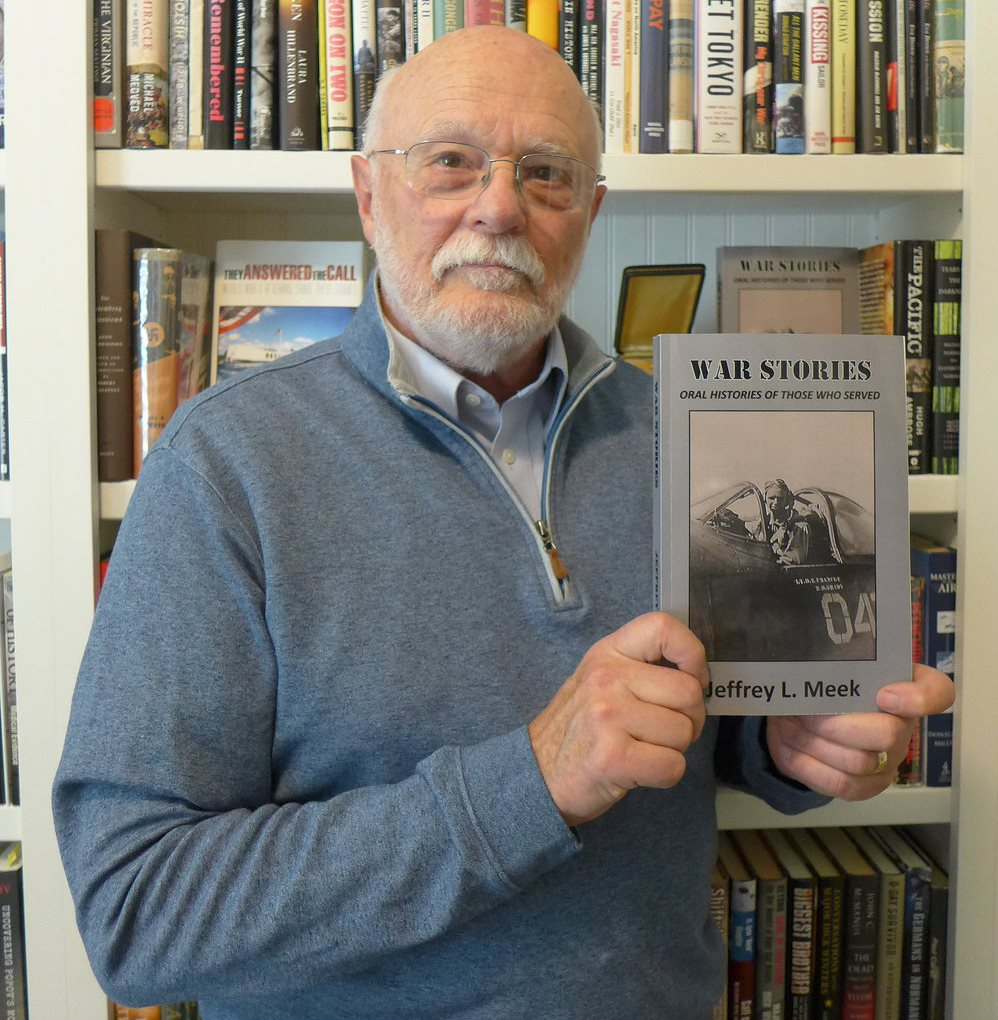

    Go to Part 1 of 6

    Go to Part 3 of 6

    Go to Part 4 of 6

    Go to Part 5 of 6

    Go to Part 6 of 6

  • Orleans Parish Grand Jury | Special Investigation


    DA Harry Connick wanted them destroyed but they were saved by investigator Gary Raymond. See here.

  • Retrospective Approval of JFK Rises to 90%; Trump at 46%


    John F. Kennedy remains the most highly rated former president when Gallup asks Americans whether, in retrospect, they approve or disapprove of the job each did as president. Ninety percent of U.S. adults now approve of the job Kennedy did, 21 percentage points higher than second-place Ronald Reagan’s rating.

    Read the rest of the article here. (Gallup)

  • The Mystery of Kennedy’s Brain Deepens

    The Mystery of Kennedy’s Brain Deepens


    The treasure trove of documents that Malcolm Blunt refers this writer to is almost never ending.

    A few months ago, Malcolm asked me if I knew about something called the Mastrovito interview by the Assassination Records Review Board (ARRB). I said no I did not. He said it was really interesting in relation to the Secret Service cover up. So he linked me to it. After I read it, I thought Oliver Stone should talk about it in his upcoming interview with Tucker Carlson. Carlson was fired by Fox before Stone could appear. But since the interview is so interesting, our readers should be informed about it.

    Let me preface this by saying that once I read it, I called up Dave Montague. He was the principal field investigator for the ARRB after Anne Buttimer left. I asked him how he found out about James M. Mastrovito. I had only seen him mentioned in the work of Vince Palamara, and there only briefly. (Honest Answers p. 129) Montague said that Joan Zimmerman originally told him he should try and find him. Zimmerman was the ARRB employee in charge of the Secret Service inquiry. She gave Dave some background on the man and he began looking for him. With the help of David Marwell, then executive director, the ARRB located him. Once they did, he was sent some materials and asked if he wished to talk. He consented to a phone interview with Joan and Dave. The date of the interview is April 1, 1997.

    Mastrovito was a 20-year veteran of the Secret Service: 1959 to 1979. He was on the White House detail from 1960 to 1962. After the murder of Kennedy, he was relocated from a field office to headquarters. Once the PRS—Protective Research Section — was reorganized into the Intelligence Division, he became a deputy there. He held this spot for about a decade. Then, for a few years before he retired, he became the Director of that division.

    We now come to the part of the interview that interested Joan Zimmerman into first digging up Mastrovito. According to him, Robert Bouck was moved out of the PRS after 1963. So at this time, he became in charge of the Kennedy file. Which was about 5-6 file cabinets worth of material. He was in charge of cutting down the volume of the file. After he was done cutting, miraculously, the collection was pared down to just one 5 drawer file cabinet. He said he thought this occurred in about 1970.

    He added that while the House Select Committee on Assassinations was in session, he was questioned on this issue by then Chief Counsel Robert Blakey. Blakey was quite curious about it and even threatened legal action. On the grounds that some Secret Service files he requested were not around at this time. Mastrovito replied by saying that Director James Rowley’s 1965 memo instructed him to remove “irrelevant materials”. But Zimmerman wrote in her memo that it was Mastrovito who decided what to keep and what to discard.

    Zimmerman then asked an important, probing, type of question: Did he view or obtain any artifacts while he was in charge of the JFK file? In an answer that none could have predicted, he replied that “…he had received a piece of President Kennedy’s brain.” He continued by saying it was contained in a vial with the identifying label on it. And here he offered a very intriguing further detail. The vial, about the size of a prescription bottle, was from the Armed Forces Institute of Pathology (AFIP). When Zimmerman asked him who handed him the vial he said that it was Walter Young, who was the first chief of the Intelligence Division. This was when Young retired and Mastrovito took over; he assumed it was given to Young from someone at AFIP. Unfortunately, Young had died a year before the interview. Incredibly, Mastrovito said he eliminated the content of the vial in a machine that destroys food.

    afipArmed Forces Institute of Pathology (AFIP)

    The reason I wanted Stone to talk about Mastrovito with Tucker Carlson is because his interview complemented, and complicated, the material Stone has in his films, JFK Revisited and JFK: Destiny Betrayed. One of the most compelling aspects of those films from a forensic view was the material dealing with the baffling evidentiary problems presented by Kennedy’s brain. Stone made this argument from differing planes of evidence. First, that the alleged weight of Kennedy’s brain as 1500 grams cannot be accurate. Since that is about 150 grams more than the average weight of a brain according to an extensive Dutch study. As Gary Aguilar notes in the film, how can this be so when we see all the blood, tissue and even bone dislodged by a shot to Kennedy’s head at frame 313 in the Zapruder film. When we also see photos of the back seat of the car covered with loads of blood and tissue? When we look at Jackie Kennedy’s dress? When we know that she handed a doctor at Parkland Hospital a piece of bone from Kennedy’s skull? When we know that two motorcycle policemen to Kennedy’s left recall being splattered with blood and brain tissue–so hard that one thought he was hit by a bullet. (James DiEugenio, The JFK Assassination: The Evidence Today, p. 161)

    Then there is the condition of the brain as witnessed by medical personnel at both Parkland and Bethesda. Multiple witnesses, over ten actually, said they saw a brain that was severely damaged. For instance, Dr. McClelland of Parkland said about a third of the brain was blasted out. Dr. Thornton Boswell at Bethesda, where the autopsy was conducted, said the same. Medical assistant James Jenkins said the brain was so damaged on the underside that it was hard to introduce needles for it to be formalin profused. (Ibid.)

    Yet this is not what the illustrations and pictures show. Not even close. They show a pretty much complete brain, one that is only disrupted on one side but with no real loss of volume. This paradox was brought to a boil when, as Stone shows in his film, the official autopsy photographer, John Stringer, denied he took these brain photos. He did so under oath during a deposition for the ARRB. There were two main reasons he could not accept the photos the Board showed him. First, he said he did not use the type of film these photos were taken with, which was the Ansco brand. Second, he did not utilize the photographic technique involved, called a press pack. This was betrayed by a series number for each photo. Stringer was pretty much stunned when he noticed these numbers. (Ibid, p. 164)

    Obviously, the autopsy itself was done the night of November 22nd at Bethesda Medical Center. There was an alleged supplementary autopsy report done. It was signed only by lead pathologist Jim Humes. There is a date at the top of the first page, December 6, but it is handwritten. Since the rest of the report is typed, this indicates it was added later.

    bethesdaBethesda Naval Hospital

    Now, if the autopsy was done at Bethesda and the official story has pathologist Jim Humes giving the medical exhibits, including the brain, to Admiral George Burkley—Kennedy’s private doctor– for the internment, then how did at least a part of Kennedy’s brain end up at the AFIP? And how and why was this kept hidden for literally decades? The inevitable question suggests itself: was this the destination of Kennedy’s real brain, the one that was blasted beyond recognition? According to Montague this information very much interested and troubled Chief Counsel Jeremy Gunn and Military Records analyst Doug Horne, the two leaders of the ARRB medical inquiry. One reason it did so was that it seemed to corroborate a previous interview the ARRB had done. This was one with a man named Ken Vrtacnik who also worked at AFIP. That interview was done on November 12, 1996, as his name had been provided by an outside, unnamed source.

    Vrtacnik had been stationed at AFIP during the years 1964-65. He was interviewed by Montague and Horne. In a remarkable piece of testimony, he corroborated Mastrovito. He said that he had seen Kennedy’s brain during the 1964-65 period, and he stated it had been kept in a locked room as part of the AFIP complex. Like Mastrovito, he said he knew it was Kennedy’s brain since it was labeled as such. He also added that it was under very tight control. But he said an AFIP employee, Joyce Manus, who ran the Pathology Data Division, could produce a data sheet which would show when the specimen was received, from whom, and its current status there. This writer has not been able to find any ARRB interview with Manus.

    The intrigue over what happened to Kennedy’s brain is now multiplied by these two pieces of testimony. Who would have thought that this aspect could get any worse? But it has. And again, it shows just how utterly incompetent and amateurish the Warren Commission was. They did not even touch this matter. Yet it now seems that the mystery of President Kennedy’s brain is something like a signal light from a watch tower cutting through the foggy night. Kennedy’s brain is now the key to the crime, providing guidance through the storm.

  • Old Wine in New Bottles: Fletcher Prouty’s New Critics Recycle the Past

    Old Wine in New Bottles: Fletcher Prouty’s New Critics Recycle the Past


    (Disclosure: the author is a friend and colleague of Len Osanic, who befriended and worked with Fletcher Prouty in his later years. Len continues to run the Fletcher Prouty online reference site www.prouty.org)

    Recent years have seen a resurgence in reputational criticism of the late Col. L Fletcher Prouty, the former Pentagon official responsible for numerous influential books and essays, and the real-life model for the fictional Mr X character in Oliver Stone’s 1991 film JFK. Curiously, these efforts – by a small but vocal faction – gathered momentum following the passing of John McAdams, a self-styled “debunker” of JFK assassination theories who had been a central source of reputational disparagement of Prouty dating back to the early 1990s.[1]The renewed efforts have added little to what had been previously articulated, but are notable for a distinctly strident tone and a smug certainty in presenting harsh conclusions which are not at all supported by the available record. By this, the new anti-Prouty crowd appear distinguished by being actually worse, or at least more irresponsible and reckless, than their late mentor.

    I

    A central focus for these critics has been Prouty’s 1996 appearance before a panel of ARRB staffers. While this event earned little more than a passing mention in the McAdams compendium, to contemporary debunkers it serves as the effective immolation of Prouty’s entire assassination-related oeuvre as, over the course of a long interview, he allegedly “could not substantiate any of his allegations.”

    Prouty’s Appearance at the ARRB 1996

    The Assassination Records Review Board was created by the US Congress in the wake of Oliver Stone’s JFK film and the resulting outcry over the continuing classification of much of the official record and subsequent investigations. The Board had the mandate to identify records and oversee the process by which they would be made public. In certain circumstances, the Board had the authority to interview persons whose input could assist with locating records or whose personal experiences might help clarify circumstances which were yet incomplete. An interview was arranged with Fletcher Prouty for September 1996, with the intention of both clarifying experiences and identifying records.

    The 9/10/96 letter from Chief Counsel Jeremy Gunn read as follows: “We will ask you to recount your personal experiences from around the time of the assassination of President Kennedy, as well as whatever information you have regarding military activities and procedures in effect. I would also like you to bring with you any relevant documents or notes related to these topics, especially any contemporaneous records (such as personal correspondence, telephone notes, daily diary entries, or the like) you might have.”

    A month previous to this communication, a memorandum had been distributed to Gunn from Tim Wray, a Pentagon veteran who was then running the ARRB’s Military Records Team. Wray understood a potential interview with Prouty would be assisting an effort known as the “112 Military Intelligence Project”, specifically interested in information previously published by Prouty concerning a possible “stand down” order directed to a Texas-based Military Intelligence unit related to presidential protection duties in Dallas 1963.[2]

    Wray’s 8/9/96 memo on Army Intelligence in Dallas read as follows: “We should eventually interview Prouty as well, though I frankly do not expect much from this—everything about his story that we’ve been able to check out so far appears to be untrue….Its only slightly more difficult to check the factual basis for the other elements of Prouty’s story….Prouty’s assertion to the contrary notwithstanding—it appears that military collaboration with the Secret Service was in fact, extremely limited, and that there certainly were no such thing as “military presidential protection units” per se.

    Wray would also later write, “Among other purposes, an important goal of this interview was to ask Prouty about three specific allegations he made in his book, “CIA etc”. These allegations were of particular significance to use because Prouty claimed they were based on his own firsthand knowledge.” (Wray Memo of 2/21/97)

    That there was an identified “important goal” for the interview was not shared with Prouty in the communication from September 10, 1996. Similarly, Wray’s Military Records Team assistant Christopher Barger composed a memo the following day, September 11,1996, identifying specific “allegations” appearing in Prouty’s 1992 book JFK: The CIA, Vietnam, and the Plot to Assassinate John F Kennedy, and proposing a line of questioning marked by an innate skepticism directed to Prouty’s “personal experiences”.[3] This doubting approach to his published work was also not shared with Prouty ahead of his appearance.

    The interview was conducted on September 24, 1996. According to some, referring to his performance, Prouty suffered severe damage to his reputation and the integrity of his rendering of the historic record.[4] This version of events relies on an interview “Summary”, produced by Military Records Team assistant Barger, which frames the exchange as a contentious deposition.[5] The integrity of this Summary relies on the assumption that the Team participating in this interview spoke from a position supported by the confirmed record.

    If It Walks Like A Duck…

    Wray wrote, about a month later:

    “…we should make (Prouty’s) interview with the ARRB easily available in written form so people can see for themselves what’s behind the fluff…There’s no way we can fairly represent the interview in summary form without it looking like a hatchet job.” – (Tim Wray, ARRB Memorandum October 23, 1996.)[6]

    1.TranscriptThe interview transcript was published along with the Summary so that, according to Wray, the process wouldn’t merely appear as a “hatchet job”.

    It might seem obvious that if one cannot “fairly” describe an interview process without it appearing as a “hatchet job”, then the proposition that the process was, in fact, a hatchet job is in play. Wray, to the contrary, asserts, literally, that “the emperor has no clothes” and declares therefore the ARRB Military Records Team is “not planning to do much of (Prouty’s) laundry.”[7] Beyond the strained analogy, Wray’s memorandum establishes the Team engaged the interview as an adversarial contest, tied to their own biases and skewed to a partisan acceptance of the JFK assassination’s Official Story. In a telling example, Barger opines: “Prouty also admits that he has never read or even seen the Warren Commission Report. No reputable historian would write a criticism of a source document without having read the source document first.”[8]

    Barger’s Summary begins by noting the panel’s interest in Prouty stemmed from “claims”, “theories” and “conclusions” often based on “special, firsthand knowledge that he gained through his own experiences” during his years at the Pentagon. The purpose of the interview is therefore, in part, to determine the extent to which his “various allegations or statements” were based on “personal knowledge or experience”, and, “should he disavow factual knowledge”, to determine if he is aware of other “factual data that could tend to prove or disprove his allegations.” The Summary proceeds to itemize ten supposed “allegations” Prouty had articulated or published in his work, and putting them to a test, such as locating reference in official documents or finding confirmation through the identification of other individuals. In conclusion, The Summary insists the Team “intended on hearing his story”, but found “in the face of numerous contradictions, unsupportable allegations, and assertions which we know to be incorrect, we have no choice but to conclude that there is nothing to be gained or added to the record from following up on anything he told us.”[9]

    While this Summary conclusion has apparently convinced some persons that Prouty should not be taken seriously, it represents a prejudiced interpretation reliant on a concept of allegation introduced solely by the Team’s own initiative. The concept of a “hatchet job” is confirmed by the notable reliance in the Summary on this term – allegation – a word never articulated in the communications with Prouty ahead of the interview, and used sparingly during the interview itself.[10] Within the Summary, however, its prominent use is naturalized by repetition, and contemporary endorsements of the Summary’s conclusions repeat the word liberally.

    Put another way, and considering the range of experiences across Prouty’s professional career, one might refer to his “observations” instead of the more obviously loaded preferred description. The difference between the two is quite sharp, particularly since the stated purpose of the interview, from the Team’s perspective, was to “prove or disprove” and “confirm or deny”:

    ob·ser·va·tion |(ə)n |

    a remark, statement, or comment based on something one has seen, heard, or noticed

    al·le·ga·tion |noun

    a claim or assertion that someone has done something illegal or wrong, typically one made without proof

    2.allegationThe Summary of the ARRB interview framed Prouty’s personal experiences as a series of “allegations”.

    There are ten separate “allegations” described in the Interview Summary, each with a “Result or Conclusion by ARRB” attached. Three “allegations” refer to content in the JFK film; one refers to Prouty’s work as a military liaison with the CIA; and six have to do with presidential protection, a field outside of his professional responsibility and of which he had no practical experience.

    The first “allegation” refers to Prouty’s trip to Antarctica in November 1963, noting, in the JFK movie, this trip was portrayed as “out of the ordinary or unusual in some way.”[11] Although, in a later publication, Prouty had surmised retrospectively if there was a hidden reason to being selected for the journey, he otherwise spoke consistently, including to the ARRB panel, of the trip as routine.[12] The assumed “sinister connotations”, portrayed by the ARRB panel as an “allegation”, is in fact a dramatic embellishment attributable to the JFK screenwriters, not to Prouty – who, regardless, is described as unable “to back up the suspicions he mentioned in the excerpt from his book.”[13] The second “allegation” concerns information appearing in wire service news reports and published in a New Zealand paper approximately 5-6 hours after the shots in Dallas.[14] While the Team’s “Result or conclusion” of this minor affair doesn’t refer to an actual result or conclusion, it does suggest “Prouty’s allegation of a ‘cover story’ will be weakened”. The point missed, however, is by his presence in New Zealand Prouty was outside and apart from the common shared experience stateside on that day, dominated by the visceral shock of the initial news followed by a steady drip of information which appeared to follow a sequential logic. Outside the simulacrum, Prouty could make the obvious, and correct, observation that there had quickly appeared a great deal of information about a suspect who had yet to be even arraigned on the JFK case, and in fact wouldn’t be for another 6-7 hours.[15] Having made this first observation, it is fair for him to point out the incorrect reports of “automatic weapons fire” – as others did as well.

    “Allegation” numbers three through five, and ten, concern Prouty’s information – published in his book JFK: The CIA, Vietnam and the Plot to Assassinate John F. Kennedy and in his Foreword to Mark Lane’s book Plausible Denial — regarding an apparent case of security stripping in Dallas involving a military intelligence outfit based in San Antonio.[16] Prouty had privately received information that the 112th Unit had been advised to stand down in Dallas by the Secret Service, This was referring to a Presidential protection capability within the military. According to internal memoranda, the ARRB Military Records Team was skeptical such units existed and was determined to “debunk” Prouty’s information. In the fullness of time, Prouty’s veracity regarding both the actual fact of military intelligence support for presidential protection, and the private communication he received, has been confirmed and the Team’s skepticism debunked.[17]

    Allegations six and seven refer to Prouty’s knowledge of Secret Service presidential protection protocols. When mentioning these, Prouty is referring to events specific to his military career, including several days in Mexico City, 1955, with a Secret Service advance team ahead of an Eisenhower visit. Prouty’s observations from these episodes inform his published statements and his statements during the ARRB interview. He qualifies his interactions as having “logistics purposes, not to learn all about the system.” The ARRB’s Summary characterizes the “allegations” as lacking corroborative documentation. This lack included failing to answer the question: “How many Secret Service agents would you have expected to be providing coverage in Dallas?”[18] Figurative speech is also interpreted literally, such as Prouty’s reference to the Secret Service working from a long-established “book” (he is asked if he has a copy of the “book”), or his impression that the Secret Service was deficient in Dallas stated as “they weren’t there” (he is asked if he meant they literally were not there).[19] This exchange is referred in the Summary as follows: “Prouty makes the very serious charge that the Secret Service was not even on duty in Dallas on November 22, then admits he has no experience upon which to base this statement.”[20] In truth, the deficiencies of the Secret Service during the Dallas motorcade have been well-catalogued, if not by the sources who appear to have influenced the Team.

    “Allegation #8” concerns whether some of Oswald’s activity during his Marine service in Asia – specifically with radar at Atsugi air base (where the U2s were based) and potentially in support of operations directed at Indonesia – could be described as part of CIA-directed programs. Although Prouty correctly describes the existence of the programs and Oswald’s proximity, the Panel jumps on his lack of specific documentation (“substantiating evidence”) as a means of dismissing the notion Oswald was involved. Even though Oswald himself specifically hinted at insider knowledge of U2 activity (at Atsugi) during his communications in Moscow related to his defection to the USSR, the Team presumes to consign this “allegation” as based merely on open-source rumors.

    “Allegation #9” refers to Prouty’s identification of Ed Lansdale in one of the well-known “Tramps” photos, which is portrayed in the JFK film. The Team acknowledges that a “search of travel records” might confirm or deny Lansdale’s presence in the Dallas region at the time, but factors such as the “small likelihood” of finding such records and their “relative unimportance” indicated that such effort was “not worth checking out.” (Summary ,p 11) In 1991, at the time of the JFK film, Lansdale could be traced to Fort Worth, Texas mid-November 1963. Subsequent information has placed Lansdale in Denton, a Dallas suburb, on the evening of November 21, 1963.[21]

    In sum, despite the brutal Summary composed in the aftermath of Prouty’s appearance before the ARRB’s Military Records Team, none of the ten points presuming to “debunk” his “allegations” actually hold up under scrutiny. That is, while the ARRB’s panel makes much of Prouty’s supposed failure to produce information outside his jurisdiction, such as Secret Service “manuals” (of which they aren’t even sure exist in the first place), and proceed to criticize his lived experiences, there is nothing actually incorrect or overstated in his observations. Latter-day critics lionize the Military Records Team’s Summary conclusions using a superficial reading based largely on the Team’s own predetermined finger-pointing, which was biased and subject to partial knowledge later superseded. However, there was one data point appearing in the Summary which has held up over the years as an accurate statement:

    “Fletcher Prouty was where he says he was during the period from 1955-1964. His position can be documented.” (P. 13)

    II

    Prior to the release of Oliver Stone’s JFK in late 1991, L. Fletcher Prouty was a relatively inconspicuous figure known to few outside of aging participants of early Cold War military/intelligence circles, or committed parapolitical researchers and their small followings. The backlash directed against the film – which began while it was still filming – attacked the intellectual foundation of the screenplay, as personified by director Oliver Stone (purportedly being “fooled” by Warren Commission critics), the film’s “compromised” protagonist (Jim Garrison) and, to a lesser extent, the insider Fletcher Prouty (known in the film as “Mister X”).

    3.NYC.Guardian.1991A photocopy of Diamond’s Guardian article was anonymously submitted to the JFK production office, along with several typewritten pages of “opposition research” directed at Prouty.

    All three were in the crosshairs of an article published in the November 1991 issue of Esquire Magazine. With the punning title “The Shooting of JFK”, author Robert Sam Anson put together one of the key contributions to the anti-JFK literature from the period, covering the film’s production. While bashing first Stone, then Garrison, and then turning to Prouty in a late-article segment which combined character assassination with an offhand revelation of why it was exactly the establishment had problems with the film.[22]

    Anson introduces Prouty as a genial grandfather type, at least as so impressing the JFK production office, but notes the whispers of “cautious buffs” who are “leery” and wary of Prouty’s background and “claims.”[23] Suddenly, in the production office, a “small thing” starts “the trouble”, and reporter Anson, despite the staff’s nondisclosure agreements, manages to be in the know and in the loop. Anson reports that some of the office’s research staff had been paging through “a tiny left-wing New York weekly” and, by chance, discovered an article identifying Fletcher Prouty “as a cause célèbre in the virulently anti-Semitic, racist Liberty Lobby.”[24]

    The article in question – ‘Populists’ Tap Resentment of the Elite – written by Sara Diamond and published in the July 3, 1991 issue of The Guardian (NYC) – was a legitimate investigative work, and the specific references to Prouty’s activities were accurate. While, to those who knew Prouty, the concept he was a racist fellow-traveler in step with the most virulent members of the Lobby, or even a “right-winger” as portrayed, appeared fringe and absurd, within Stone’s production office the general consensus was Prouty’s associations “looked bad” and could be a “public-relations time-bomb” for the JFK film.[25] The top researcher on staff told Stone: “Basically, there’s no way Fletcher could be unaware of the unsavory aspects of the Liberty Lobby.”[26]

    The Connections to the Liberty Lobby

    The finger-pointing directed at Prouty associating him with the Lobby was based on essentially four items: guest appearances on a syndicated radio program – Radio Free America – hosted by Tom Valentine and sponsored by The Spotlight, the Lobby’s weekly newspaper (numerous appearances 1988-94)[27];a speaking engagement at The Spotlight’s annual national convention (September 1990); the re-publication of Prouty’s The Secret Team by the Lobby’s imprint Noontide Press (autumn 1990)[28]; and Prouty’s being named to a national policy advisory board for the Lobby’s Populist Action Committee, (spring 1991).[29]

    4.Valentine.showCassettes from Radio Free America, Tom Valentine’s syndicated AM radio program. Prouty was a popular guest with both the host and the audience, appearing several times a year through 1994.

    Taken at face value, in addition to the radio program which he appeared several times a year from 1988-94 as a popular guest, the links may stem from the longer association of Prouty’s colleague Mark Lane with the Liberty Lobby, representing them across several lawsuits in the mid-to-late 1980s. The experiences would result in a book, Plausible Denial, published in 1991, for which Prouty wrote the Foreword. In his book, Lane describes how his interest in representing the Liberty Lobby was piqued by the convergence of the initial litigation, which involved E. Howard Hunt, with the JFK assassination. Lane felt it was an opportunity to litigate a facet of that lingering controversy, and potentially assist its eventual resolution.

    Prouty’s brief direct association with Lobby-related groups in late 1990 / early 1991 is coincident with the preparation of Plausible Denial.

    When You’re A Hammer, Everything Looks Like A Nail

    As it happened, there were at least three researcher/reporters working the far-right “beat” in 1990-91, observing activity sponsored by the Liberty Lobby. One was working for the Anti-Defamation League.[30] The second was Sara Diamond, the author of the piece published in the “tiny left-wing New York weekly”, and at the time working on a UC Berkeley sociology PhD, eventually producing a dissertation entitled “Right Wing Movements in the United States 1945-1992”. The third was activist Chip Berlet, concentrating on the influence of America’s political right with particular concern directed to overlap, or convergence, of the right with the left.[31] Both Berlet and Diamond were outspoken with their opinion that alliances between the extreme right and the Left, initiated through mutual disagreement with official policies such as the Gulf War, was a “bad idea” and perhaps part of a strategic plot by the right to co-opt or discredit Progressives.[32]

    Berlet was in attendance at the 1990 Spotlight conference, at which Prouty spoke, and at which both Mark Lane and Dick Gregory also appeared.[33]Acknowledging the conference’s attention to looming foreign policy controversies in the Middle East,Berlet wrote: “There was considerable antiwar sentiment expressed by speakers who tied the U.S. presence in Saudi Arabia to pressure from Israel and its intelligence agency, Mossad…No matter what actual political involvement, if any…the themes discussed at the Liberty Lobby conference tilted toward undocumented anti-Jewish propaganda rather than principled factual criticisms.”[34] However, rather than analyze the contrasts between the propaganda and the factual criticisms, Berlet is more interested in highlighting links between individuals and organizations, and connecting overarching thematic concepts between them. So the content of Prouty’s remarks, with the topic “The Secret Team”, is not discussed, but his acknowledgment during the presentation of Noontide Press for republishing his book is.[35] Similarly, the reader learns who followed Prouty to the podium, who participated in a panel Prouty moderated, how The Spotlight paraphrased the event, and even how persons “associated” with the Liberty Lobby later circulated antiwar literature “at several antiwar rallies.”

    Researcher Laird Wilcox, editor of the annual Guide To the American Right surveys, criticized in the 1990s what he termed an “anti-racist industry”, claiming anti-racist groups had consistently overstated the influence of what are in fact fringe movements, and named both the ADL and Political Research Associates as having engaged questionable tactics to support their conclusions.[36] “Mr. Wilcox says what most watchdog groups have in common is a tendency to use what he calls ‘links and ties’ to imply connections between individuals and groups.”[37]

    ‘Links and ties’ is certainly not an uncommon technique, particularly for political research. It does however produce a lot of “false positives”, and researchers are perhaps therefore best served exercising a degree of due diligence and establishing secondary sources before jumping to conclusions – such as Diamond’s linking Prouty to the “extreme right” or Berlet labelling him a “fascist”.[38]This can be compounded by a rhetorical strategy of using broad brush strokes to establish and portray monolithic racialist structures – a tendency which may be effective as a partisan effort to “sound the alarm”, but which can be misleading and reduce political complexity to simple and skewed dichotomies.[39]In this fashion, the Liberty Lobby’s weekly newspaper The Spotlight was assumed by the three researchers as necessarily a tool of the anti-Semitic foundation of the Lobby, and was therefore, in their perception, obviously engaged primarily in disseminating that message (although much of that effort may appear in code).[40] Other information portrays The Spotlight, at least during the time in question, as servicing a broader populist conservative community. The publication is described in Kevin Flynn’s 1989 investigative The Silent Brotherhood as “one of the right wing’s most widely read publications”, attracting “a huge diversity of readers, from survivalists and enthusiasts of unorthodox medical treatments to fundamentalist Christians and anti-Zionists.”[41]Daniel Brandt’s NameBase, a parapolitical research tool, described The Spotlight in 1991 as “anti-elitist, opposed to the Gulf War, wanted the JFK assassination reinvestigated, and felt that corruption and conspiracies could be found in high places.”[42]

    Prouty himself responded to the criticisms of his “links and ties” to the Liberty Lobby as follows:

    “I’ve never written for Liberty Lobby. I’ve spoken as a commercial speaker, they paid me to speak and then I left. They print a paragraph or two of my speech same as they would of anybody else, but I’ve never joined them. I don’t subscribe to their newspaper, I never go to their own meetings, but they had a national convention at which asked me to speak and they paid me very, very well. I took my money and went home and that’s it. I go to the meeting, I go home, I don’t join.”[43]

    III

    An honest review of the “hatchet-jobs” directed at Fletcher Prouty invariably sources to the time frame of 1991-1992, coinciding with the U.S. establishment’s attack on Oliver Stone’s JFK film, conducted through its legacy media. In light of that, a curious feature of Robert Sam Anson’s Esquire piece is its concluding section, following directly from the Liberty Lobby “cause célèbre” takedown of Prouty, which had in turn followed a concentrated bashing of Stone and then Jim Garrison. Rather than continuing with the overt criticism, the concluding section hastily endorses a new personage with a point of view said to gel with Stone’s general thesis of JFK’s intention to exit Vietnam, but with a non-conspiratorial spin.

    5.Prouty.with.JudgeProuty with John Judge in early 1992. Small circulation VHS interviews were among the limited options available for efforts to support and supplement Stone’s “JFK”.

    The new personage was John Newman, well-regarded these days with a solid thirty-year run of intensively detailed histories of the Kennedy administration’s national security challenges. Upon this introduction, Anson sets out immediately to contrast Newman with Prouty, utilizing complementary adjectives: Newman is described as “meticulous, low-key, methodical, highly experienced, characteristically cautious” while Prouty is “ever-voluble” and prone to jumping to conclusions. Anson strongly infers that Newman expresses what amounts to the “good” interpretation of events, while Prouty embodies the misshapen “buff” perspective.

    On the other hand, Newman’s perspective still confirms the previously fringe viewpoint that Kennedy had developed a Vietnam policy anticipating an eventual complete withdrawal of “military personnel”, which the JFK film had adopted. Anson opts to promote a presumed back-channel “secret operation” designed to “systematically deceive” the White House so to encourage expansion of the US effort in Vietnam. This secret operation is proposed to be “the real story” above and beyond Fletcher Prouty’s musings regarding the distinctions between National Security Action Memorandums 263 and 273. In the fullness of time, the “back-channel secret operation” never proved a viable hypothesis, while Prouty’s intuitive commentary on NSAM 263 and 273 has been effectively accepted even if debate over motivation continues.

    Therefore, the two express “hatchet-jobs” directed at Prouty in 1991 and 1996 – the Esquire piece and the ARRB interview – both promoting the pretension that Prouty was unstable and his concepts were easily “debunked” by the official record, have proved to be fundamentally in error, first over the NSAMs and second over the military intelligence units. To this day, Prouty’s detractors still cannot articulate where exactly he is wrong – about the assassination or about his experiences during his military career. This is why such criticisms invariably fade into a drab curtain of distraction, stained with reference to the Liberty Lobby, Scientology, Princess Diana, and other irrelevancies.

    Oliver Stone put it well in his published response to Anson’s Esquire piece: “(Prouty’s) revelations and his book The Secret Team have not been discredited in any serious way. I regret his involvement with Liberty Lobby, but what does that have to do with the Kennedy / Vietnam issue?…I have not, nor do I intend, to ‘distance’ myself in any way from Garrison’s or Colonel Prouty’s long efforts in this case. They may have made mistakes, but they fought battles that Anson could never dream of.”


    NOTES:

    [1] Mcadams’ Prouty entry on his JFK assassination website was an oft-cited compilation of disparaging talking points. Most if not all of this concerted “debunking” has in turn been debunked. Disputes over the factual record and Mcadams’ seeming influence over certain Wikipedia gatekeepers (editors) resulted in a classic essay discussing narrative management and the internet: Anatomy of an Online Atrocity: Wikipedia, Gamaliel, and the Fletcher Prouty Entry

    [2] See Fletcher Prouty vs the ARRB by Jim DiEugenio for the full story.

    [3]Memorandum dated Sept 11, 1996.

    [4]L. Fletcher Prouty Talks to the ARRB

    [5]Interview Summary, prepared October 23, 1996 by Christopher Barger

    [6]Memorandum is found on page 70 of this link.

    [7] Ibid

    [8] Interview Summary p11. In context, Prouty’s reference to the Warren Report is based on the understanding it was fully part of a cover-up operation and therefore wholly unreliable as a “historic” record and, in that regard, useless as a “source document.” Prouty’s work never had the pretension to specifically “criticize” the Report for this reason.

    [9] In some instances, the panel holds Prouty as “unreliable” due to his reluctance to identify individuals, despite his specific caution at the interview’s start that he will not identify individuals who are/were operational – “I never name a man who is operational. Never.” He was also labelled unreliable by being unable to produce particular documentation, although he had explained that the types of documents they sought either never existed or had been long destroyed.

    [10] The full transcript of the September 24, 1996 interview with Prouty can be accessed here.

    [11] Allegation #1: Trip to Antarctica may have had sinister connotations. Interview Summary p2

    [12] L. Fletcher Prouty, JFK: The CIA, Vietnam and the Plot to Assassinate John F. Kennedy, Introduction by Oliver Stone (New York: Citadel Press, 1992), p. 284. “I have always wondered, deep in my own heart, whether that strange invitation that removed me so far from Washington and from the center of all things clandestine that I knew so well might have been connected to the events that followed.”

    [13] “Result or conclusion by ARRB:…Prouty made no statements for the record to back up the suspicions he mentioned in the excerpt from his book cited above.” Interview Summary p3.

    [14] “it is alleged that the Christchurch Star, when running its first story about the assassination, included biographical information on Lee Harvey Oswald and named him as the accused before he had actually been arraigned for the crime in Dallas. The allegation is also made that the first reports from Dealey Plaza, which were not entirely accurate, were sent out as a part of a ‘cover story’ of some sort.” Interview Summary p3.

    [15] The rapid identification of Oswald as first the main and eventually the only suspect remains to be accounted for, particularly as the evidence was sparse and the suspect was denying everything. It is not known how or why the FBI concluded Oswald “did it” an hour after his arrest, or the process by which the wire services soon after were presumably signalled that Oswald’s identity and biography was newsworthy. There were other arrests made in connection with Dealey Plaza, but none other than Oswald featured names and personal biographies splashed across the evening news.

    [16] L. Fletcher Prouty, JFK: The CIA, Vietnam and the Plot to Assassinate John F. Kennedy, Introduction by Oliver Stone (New York: Citadel Press, 1992 p. 294. Plausible Denial p XV.

    [17] See: “Fletcher Prouty vs the ARRB” by Jim DiEugenio

    [18] interview transcript p36 Prouty’s tone in reply is noted: “(testily) See, we’re overdoing this. I went to Mexico City once, so I’d know the business…”. In the Summary, the descriptive “(testily”) is changed to “(Very agitatedly)” Summary Barger p8

    [19] Wray: “…When you say “the Secret Service was not in Dallas” do I understand you are speaking a little bit figuratively there? That they may have been there, but weren’t doing their job thoroughly? Or do you mean literally, that they were not there?” Interview transcript (P36).

    [20] Barger Summary p8. Prouty in fact discussed his experience, which was in 1955 in Mexico City

    [21] pp 261-262 Alan Dale with Malcolm Blunt, The Devil Is In The Details, self-published 2020. Prouty’s identification was confirmed by his Pentagon boss Victor Krulak in a personal letter written in the 1980s. There have been claims such letter never existed, but it is be found in the Prouty document archive maintained by Len Osanic.

    [22]Anson had previously written They’ve Killed the President, Bantam 1975, in which he first bashed Garrison and his truncated investigation.

    [23]According to Anson, the whispers suggested Prouty “had a tendency to see the CIA’s dark hand everywhere…Another liability was Prouty’s fondness for putting himself at the center of great events.” These suggestions seem to refer to Prouty’s military career, during which, most everyone agrees, he worked closely with CIA and “was where he says he was…his position can be documented.”

    [24]This may not be an accurate account of this discovery, as around the same time the research staff had been forwarded a photocopy of the article in question, along with several typewritten pages referring to complementary research by a researcher with the Anti Defamation League. Both sources supplied similar reference to associations between Prouty and groups linked with the Liberty Lobby. It is possible the chance “discovery” was more accurately described as the arrival of unsolicited opposition research forwarded to the Stone office. Exactly how Anson got word of this is not known.

    [25]Anson writes: “When questioned, Prouty, the intelligence expert, pleaded ignorance. He had not known of (Liberty Lobby founder) Carto’s Nazi leanings, he insisted…As for (Carto’s) assertion that the Holocaust was a lie, (Prouty)…would say only, ‘I’m no authority in that area.’ ‘My God,’ moaned a Stone assistant after listening to the rationalizations. ‘If this gets out, Oliver is going to look like the biggest dope of all time.’” This paragraph can be read as inferring Stone’s team confronted Prouty and were listening directly to his response. Anson’s sentence structure, however, is not exactly precise and leaves open the possibility, or likelihood, that someone else conducted this questioning of Prouty, under unknown circumstances, and that the staffers “listened” to the “rationalizations” second-hand.

    [26]This opinion is something of an extrapolation, also expressed by Anson i.e.: “When questioned, Prouty, the intelligence expert, pleaded ignorance.” This presumes Prouty’s attention to detail in his professional capacity necessarily carried over to other aspects of his life. Such presumption is not entirely accurate as, for example, at the time they first met, Prouty was entirely unfamiliar with Oliver Stone and had not seen any of his films, despite the publicity associated with Stone’s career momentum in the 1980s and his three Oscar wins.

    [27]Prouty’s appearances, across several years, were cited as a clear indication of his “being up to his neck in the racist right movement”. Len Osanic has copies of Prouty’s Radio Free America appearances on cassette, and says the claim, sourced to Anti Defamation League researchers, that the program engaged in routine anti-semitism and Holocaust Denial are “nothing”. Osanic says Prouty’s appearances were essentially similar to the contemporaneous Karl Loren Live broadcasts from Los Angeles which Prouty also appeared during this period. The author has reviewed several of Prouty’s interviews with Valentine and concurs with Osanic. The discussions cover ground exactly similar to most other interviews Prouty gave at the time, the content of which are entirely uncontroversial.

    [28]Prouty told Len Osanic the publication was a “one-time” commitment, a limited press run for which Prouty received a small amount of money. Prouty told Osanic that he understood Noontide as specializing in editions of books which had fallen out of circulation. Noontide, at the time, had also republished Leonard Lewin’s Report From Iron Mountain. The original edition of The Secret Team in 1973 was subject to distribution problems. Prouty discussed this in a note to the 1997 edition: “ After excellent early sales of The Secret Team during which Prentice-Hall printed three editions of the book, and it had received more than 100 favorable reviews, I was invited to meet Ian Ballantine, the founder of Ballantine Books. He told me that he liked the book and would publish 100,000 copies in paperback as soon as he could complete the deal with Prentice-Hall…Then one day a business associate in Seattle called to tell me that the bookstore next to his office building had had a window full of the books the day before, and none the day of his call. They claimed they had never had the book. I called other associates around the country. I got the same story from all over the country. The paperback had vanished. At the same time I learned that Mr. Ballantine had sold his company. I traveled to New York to visit the new “Ballantine Books” president. He professed to know nothing about me, and my book. That was the end of that surge of publication. For some unknown reason Prentice-Hall was out of my book also. It became an extinct species.” The Secret Team book, and its unavailability, was referred several times on the Valentine radio program ahead of the republication.

    [29]Prouty agreed to the use of his name, but said he had no other involvement with the Committee, i.e. he never provided advice or attended any meetings.

    [30]This may have been Kenneth McVay, whose work, later published online, corresponds to the cited information sent to Stone’s office; see this and this.

    [31]Berlet’s divisive rhetoric targeted “virtually every independent critic of the Imperial State that the reader can name”, which at the time in question (1990-91) included “the Christic Institute, Ramsay Clark, Mark Lane, Fletcher Prouty, David Emory, John Judge, Daniel Brandt” et al. Ace Hughes, Berlet for Beginners, Portland Free Press, July/August 1995.

    [32]Berlet, Chip. Right Woos Left: Populist Party, LaRouchite, and Other Neo-Fascist Overtures to Progressives, and Why They Must Be Rejected, 1999, Political Research Associates.

    [33]“Other conference speakers and moderators at the September 1990 Liberty Lobby convention included attorney Mark Lane, who has drifted into alliances with Liberty Lobby that far transcend his role as the group’s lawyer, and comedian and activist Dick Gregory, whose anti-government rhetoric finds fertile soil on the far right.” Berlet, Chip. Right Woos Left p40

    [34]ibid

    [35]A public expression of gratitude to the publishers is a routine dedication for authors.

    [36]Wilcox, Laird The Watchdogs 1997 self-published.

    [37]Researcher Says ‘Hate’ Fringe Isn’t As Crowded As Claimed, Washington Times, May 9, 2000. p.A2

    [38]NameBase is a cross-indexed database tool for “anti-Imperial” researchers, initiated by Daniel Brandt. Chip Berlet, along with Fletcher Prouty, was on the NameBase Board of Advisors in 1991 when Berlet, describing Prouty as a “Larouche-defender”, announced his refusal to remain on the same Board. Brandt encouraged Berlet to leave, saying “When it came to making a choice between Prouty and Berlet, it was a rather easy decision for me to make.” Berlet took three other Board members with him, and a lingering feud percolated for many years after. See this.

    [39]Via “links and ties”, it was common for right-wing rhetoric in the 1960s to label ideological opponents as literally Communist agents embedded within civil rights and other movements. Debates over methodology – such as links and ties – which were frequent in the 1990s, highlighted the expanding scope of identified political “enemies” (a debate again familiar in today’s polarized political and social landscape). This expansion resulted in erroneous claims such as that Prouty held right-wing, or even “extreme right-wing” political views, claims which are unfortunately being currently recycled by a small faction of researchers.Prouty never openly discussed his personal politics, other than to say “the only club I’ve joined is the Rotary Club.” Prouty, in the author’s opinion, could be fairly described as a “mid-century main-street Rotary Club American”.

    [40]Diamond is referred: “to understand where the Liberty Lobby and its supporters are coming from, you have to understand their code language, which seldom if ever attacks Jews directly, but instead refers to ‘the big medical establishment, the big legal establishment, the major international bankers’, all of them controlled by you know who.” The obvious problem with this proposition is that determining what is “code” and what is legitimate criticism is often a wholly subjective enterprise. Also, a “code” requires both the disseminators and the receivers to be “in” on the cipher interpretation.

    [41]The Spotlight “regularly featured articles on such topics as Bible analysis, taxes and fighting the IRS, bankers and how they bleed the middle class, and how the nation is manipulated by the dreaded Trilateral Commission and the Council on Foreign Relations.” p. 85. Flynn, Kevin and Gerhardt, Gary, The Silent Brotherhood: Inside America’s Racist Underground, The Free Press, 1989.

    [42]“we found only rare hints of international Jewish banking conspiracies or the like in The Spotlight.” See this.

    [43](Col. L. Fletcher Prouty Responds to Accusations of Involvement in Right Wing Extremist Groups Interview Date: April 3, 1996. – Col L. Fletcher Prouty Reference Site. There is no record of Prouty expressing extremist or racist views, as the researchers cited admit: “Diamond says that Prouty himself has, as far as she has been able to determine, made no public racist or anti-semitic utterances.” “Berlet states that Prouty himself has never made any overt anti-semitic or racist comments…” (typewritten document submitted to Oliver Stone’s production office) “Nothing here shows Prouty to have been a Nazi or an anti-Semite…” John Mcadams. This has not prevented a few contemporary critics from asserting that Prouty was, in fact, anti-semitic. This notion appears to be based on two items: an advance notice for a 1991 Liberty Lobby event which lists Prouty as a prospective speaker (Prouty did not in fact appear); and a 1981 private letter authored by Prouty in which, discussing the looming AWACS deal some months ahead of Reagan’s controversial public announcement, Prouty uses the phrase “Jewish Sgt” during a discussion of potential military logistic compromises associated with computerized systems relying on multiple inputs from different locations. The cherry-picked phrase, as presented, reveals essentially a lack of basic knowledge of the historic issue and perhaps a misunderstanding of the term “anti-semitic”. For a balanced perspective on the AWACS controversy see: Gutfeld, Arnon, The 1981 AWACS Deal: AIPAC and Israel Challenge Reagan, Begin-Sadat Center for Strategic Studies.

  • The Biden/CIA Attempt to Usurp Congress’ Authority Over JFK Records

    The Biden/CIA Attempt to Usurp Congress’ Authority Over JFK Records


    The Friday Night News Dump

    In the waning hours of the evening of Friday, June 30, 2023, long after the filing deadlines of the media elite in Washington D.C. and even longer after the most dedicated talking head had left to celebrate their July 4th independence from tyranny in the Hamptons, the Biden Administration issued an Executive Memorandum that is a flagrant and illegitimate attempt to terminate an Act of Congress and usurp congressional authority over its own processes and records. A copy of President Biden’s Executive Memorandum is here.

    It is unclear what truly prompted President Biden to take a flamethrower to an Act of Congress that he himself voted for in 1992 as a member of the Senate, due to bipartisan public pressure to release records related to the 1963 assassination of President John F. Kennedy. It is further perplexing that Biden has chosen to continue to deny the American public transparency into the death of a much admired predecessor since he has chosen to surround himself in the White House with artwork memorializing the Kennedys e.g. the bust of Robert F. Kennedy in the Oval Office and the famous portrait of JFK by Jamie Wyeth that President Biden specifically requested to be borrowed from the Museum of Fine Arts in Boston to hang in his private White House study.

    biden rfk(Stefani Reynolds for The New York Times)

    jfk portrait(Museum of Fine Arts, Boston)

    JFK Records Act Backgrounder

    What exactly is in Biden’s Executive Memorandum that is so egregious? Well, it would help to briefly go back to the 1990s, when Joe Biden was a U.S. Senator from Delaware and the Chair of the Senate Judiciary Committee.

    As a result of decades of significant controversy caused by the government withholding millions of pages of records related to the 1963 assassination of President Kennedy from the American public, Congress enacted the John F. Kennedy Assassination Records Collection Act of 1992 (JFK Records Act”). Congress was put under substantial public pressure to do something about the continuing secrecy around records related to Kennedy’s assassination, because 30 years after his murder, executive agencies were holding hundreds of thousands of assassination related files secret, based on unsubstantiated claims of “national security”. Freedom of Information Act requests were ineffective at penetrating a completely unaccountable lock that the U.S. security state had on these then 30-year-old records. Public outcry after Oliver Stone’s Oscar winning film JFK tipped the balance. So Congress passed the JFK Records Act in a rare, unanimous bi-partisan vote. The act was signed into law by the then President George H.W. Bush, and after numerous delays finally went into effect in 1994.

    The full John F. Kennedy Assassination Records Collection Act of 1992 can be found here. It is worth reading.

    The law mandates, among other things, that by no later than October 26, 2017, all records related to the 1963 assassination of President John F. Kennedy had to be publicly disclosed in full, unless for each record, the President certified that extremely stringent criteria for postponement were met. If such postponement criteria were satisfied based on the legal standard of clear and convincing evidence, the President’s unclassified reasons for postponing each individual record had to be published in the Federal Register. This way the public could at least understand exactly which specific records were being postponed and what the legal basis was for the postponement of each individual assassination record.

    It needs to be noted that in accordance with the provisions of both the JFK Records Act (particularly section 9(d)(1)) and the Constitution’s separation of powers, that the President’s authority to postpone the public disclosure of assassination records only applies to Executive Branch records (which are records created by agencies and offices controlled by the President e.g. CIA, FBI, Secret Service, DEA, NSA, DOD, etc…). The President does not have legal authority over “non-executive branch records”, which include records created by Congress and other sources not controlled by the executive branch. Congress was very careful when drafting the JFK Records Act to ensure that they did not grant the President authority to control their legislative branch records.

    Congress also required that for each assassination record, that all “Government Offices” (the JFK Records Act specifically includes the Executive Office of the President in the definition of “Government Office”) had to issue what is called an “Identification Aid” when any action was taken or decision made in respect to any record. These Identification Aids were tracking forms that attached to all assassination records and recorded a brief description of the record, including the date of the document, the originating agency or entity, the disposition of the record and any action taken with respect to the record, such as the particular section 6 criteria for postponement that provided the legal justification for continuing to hold the assassination record in secret from the public. 

    Further, Congress specifically mandated the Archivist of the United States to ensure that all Identification Aids for every postponed record form part of the Assassination Records Collection. Also, that a publicly accessible Directory of Identification Aids be created and maintained, so that there was full transparency for the public to understand exactly which assassination records were continuing to be held in secret in the Protected Collection and what the legal basis for postponement was under section 6 of the JFK Records Act for each record.

    Most importantly, Congress made it clear in the JFK Records Act that there was a “presumption of disclosure” and the legal burden was on an agency to prove that a specific assassination record met the legal standard for postponement required by the Act and that clear and convincing demonstrable evidence was required in order to deprive the public access to a record.

    In order to ensure that government agencies and offices complied with the JFK Records Act, Congress created the Assassination Records Review Board (“ARRB”). This 5 person citizens’ panel was tasked with collecting, cataloging and reviewing all assassination records, with the mandate to release all assassination records, unless a record met the exacting criteria set out in section 6 of the Act.

    The ARRB’s limited tenure ran fromOctober 1, 1994 to September 30, 1998.During the ARRB’s time in operation, the Board and staff reviewed and made “final determinations” about every single assassination record that was identified and submitted by government agencies and offices. In the mid-1990s when the ARRB was doing its work, the JFK Records Act mandated that only in the most rare and exceptional circumstances were assassination records to be postponed from public disclosure.

    The law also legally mandated that, based on “final determinations” and recommendations for release made by the ARRB, all postponed records had to be periodically reviewed under the same stringent and exacting standards of section 6 of the Act. The purpose of the Periodic Review process was to “downgrade and declassify” all of the records held secret in the Protected Collection. By legally mandating this downgrading and declassification periodic review process, the JFK Records Act makes it clear that as time passes it should become more difficult, not easier for executive agencies to keep assassination records secret and to deny the American people access all the facts about the circumstances surrounding President Kennedy’s murder.

    ARRB “Final Determinations” and the Periodic Review Process

    Every assassination record currently held in the secret Protected Collection is held as a result of an ARRB “final determination”.As the ARRB went about its business between October 1994 and September 1998, it created a form called the “ARRB Final Determination Form”. These forms are not widely published and not a lot of attention has been placed on them by anyone in the research community.

    In every case where the ARRB made a Final Determination to postpone the release of an assassination record, they filled out one of these Final Determination Forms. These included the specific section 6 criteria which formed the legal basis on which a record was legally permitted to continue to be held in secret. The Final Determination Form also provided unclassified written reasons for each postponed record, along with the ARRB’s recommendation for releasing the record (i.e. a covert agent’s death, or a source or method no longer requiring protection).

    “Final Determination Forms” are critically important.

    Judge John Tunheim, the Chair of the ARRB has confirmed that all postponement decisions made by the ARRB are “Final Determinations” under the Act.

    The work with respect to all of the records currently held in the Protected Collection at NARA has been completed for over 25 years. The ARRB did its job. The result is a catalog of Final Determination Forms that state the section 6 criteria for postponement and the ARRB’s recommended release date for each assassination record, based on the section 6 criteria.

    A serious problem that occurred from September 1998 until October 26, 2017, is that virtually no Periodic Review took place in accordance with sections 5 and 9 of the JFK Records Act. The Periodic Review was supposed to happen based on the information and recommendations that the ARRB recorded on their ARRB Final Determination Forms for each postponed record.

    The mandated purposes of Periodic Review were to provide a rolling review of the postponed assassination records in accordance with the criteria and recommendations issued by the ARRB in their ARRB Final Determination Forms. If this had occurred as Congress mandated in the JFK Act, by October 26, 2017, there should have been only a very small number of records still held in the Protected Collection when the October 26, 2017 deadline came up.

    Again, according to the Law, it’s legislative history, and legal commentary, by the time the October 26, 2017 statutory deadline rolled around, based on the statute’s mandated program of Periodic Review, there should have been virtually no records left in the “Protected Collection” held at the National Archives. Because the clear purposes of the Act were to create an accountable, transparent and enforceable process to downgrade, declassify and ultimately fully disclose every single assassination record to the public, so that the public itself could decide for itself what the facts were about what happened in Dallas on November 22, 1963. 

    In reality, despite the law’s clear mandate, when October 26, 2017 did come and go, there were still an undetermined number of assassination records being either fully or partially withheld. By some estimates, the number of withheld records totalled was quite voluminous. But an accurate number was impossible to calculate because of the broken down and functionally inoperable Identification Aid Program that NARA and the agencies have failed to adequately maintain pursuant to their legal mandate.

    President Biden’s Friday Night Memorandum

    Now back to President Biden’s June 30, 2023 Executive Memorandum that postponed an undetermined number of unidentified assassination records. Let that sink in for a moment…

    “Maximum Transparency”

    Despite the clear mandates imposed by the JFK Records Act to establish an “accountable” and “enforceable” process for the full disclosure of all assassination records; and the explicit requirement that each record be accounted for with an identification aid, the President’s June 30, 2023 Memorandum does not identify or account for a single assassination record. 

    President Biden stated in the opening paragraph of his memorandum that, “As I have reiterated throughout my Presidency, I fully support the Act’s aim to maximize transparency by disclosing all information in records concerning the assassination, except when the strongest possible reasons counsel otherwise.” There is an unavoidable divergence from reality in the President’s statement, that is Orwellian in magnitude. For the simple reason that without being able to track which assassination records were postponed from disclosure through the mandated identification aid program, and without providing the legally required reasons for each postponement, on a record-by-record basis (“as required by the Act”), where is the “transparency” and “accountability”?

    When the ARRB issued final determinations on a record-by-record basis in the mid-1990s, only the President could override such final determinations pursuant to his authority under section 9(d)(1) of the Act. In respect to any Presidential determination to postpone or release a record under his 9(d)(1) authority, the President was mandated by law to:

    1. apply the standard of proof and postponement criteria required by section 6 of the Act;
    2. Provide unclassified reasons for the postponement based on the section 6 standard of proof and postponement criteria;
    3. Have the reasons for the postponement published in the Federal Register; and 
    4. Issue an identification aid for each postponed assassination record.

    The above duties, mandated to the President are what are called statutory or “ministerial duties”. The President does not have any wiggle room or discretion with respect to these mandated ministerial duties. If a President does not comply with ministerial duties, the resulting decisions may be reviewed by the courts on an application for judicial review or mandamus. While suing the President is not made easy, there are very narrow pathways that can be found to ensure that a President complies with the law. In the case of the JFK Records Act, these pathways require a refined parsing of the language of the Act to determine what specifically Congress required for a President or other specifically named officials to do.

    Neither President Trump nor President Biden complied with any of the above ministerial duties imposed on them by section 9(d)(1) of the JFK Records Act. They did not apply the standard of proof in section 6 to any postponement. They did not apply the postponement criteria; they did not provide any unclassified reasons for postponement for each record, so that the public could understand the rationale for any of the postponements. They did not issue any identification aids for each postponed record. And there is no way for the public to understand which records the postponements apply to, because there was not even a list of the postponed records published in the Federal Register as is required under the Act.

    All of these violations of the JFK Records Act, make it difficult or impossible for the public to seek any accountability or transparency in respect to the President’s decision-making. Further any attempt to seek judicial review of any specific postponed record will be extremely difficult, because no reasons were given for the postponement of any particular record. One of the requisite elements of any final decision or order under the principles of administrative law is that adequate or sufficient reasons be provided to justify a decision, so that any impacted party would understand the basis for the decision, and so that aggrieved parties would be able to fairly appeal such decisions. These basic legal principles form part of the foundations of our system of law and prevent “Star Chamber” justice and abuses of authority.

    The Clear and Convincing Standard of Proof

    Another serious legal problem arising from President Biden’s opening platitudes is his attempt to modify by edict the legal standards for postponement that are the basis of the JFK Records Act. Nowhere in the JFK Records Act do the words “except when the strongest possible reasons counsel otherwise.”

    The standards and criteria for postponement are only found in section 6 of the JFK Act.

    jfk records act1

    In legal processes there are several different standards of proof. In most criminal proceedings, the standard of proof is the well-known “beyond a reasonable doubt”. Civil standards of proof may vary depending on the seriousness of the process and the range of potential consequences of a ruling. Common civil standards of proof include “balance of probabilities”, “preponderance of evidence”, and “clear and convincing evidence”. When a statute imposes a standard of proof, that is the standard that parties must meet in order to successfully make their case. 

    Parties cannot simply ignore or change a statutory standard of proof in order to better suit their case.

    Congress decided when they enacted the JFK Records Act that the law would impose the relatively high civil standard of proof of “clear and convincing evidence”. There is no other standard of proof when it comes to assessing the grounds for postponing assassination records. All government offices, agencies and the President of the United States must follow the law and comply with the clear and convincing standard of proof mandated by sections 6 and 9(d)(1) of the JFK Records Act.

    To be certain, “Except when the strongest possible reasons counsel otherwise.” is not the standard of proof imposed by the JFK Records Act. In fact…“Except when the strongest possible reasons counsel otherwise.” is not a standard of proof anywhere in the world.

    Final Certification???

    The opening paragraph of President Biden’s Memorandum presents another perplexing statement and completely non-compliant decision by the President. “With my final certification made in this memorandum -– the last required under the Act -– and definitive plans for future disclosures, my Administration is fulfilling the promise of transparency to the American people.” [Emphasis added.] From this statement, one can be left with no other understanding: that with his June 30, 2023 Executive Memorandum, the government and the President’s legal obligations under the JFK Records Act have been fulfilled and that the June 30, 2023 Memorandum will be the final and last word on the undetermined number of unidentified assassination records being held in secret by the government.

    The problem with this statement is that it runs smack into section 12(b) of the Act. That section of the JFK Act is titled, “Termination of Effect of Act”. Part (a) of the section deals with the termination of sections of the Act pertaining to appointments to the ARRB and the operation of the Board. Pursuant to section 12(a), all of the sections of the Act that cover matters dealing with appointments to and operations of the ARRB shall terminate when the ARRB’s mandate ended on September 30, 1998.

    In respect to the sections of the Act that do not deal with appointments to or the operations of the ARRB, all those sections remain in full force and effect until every last assassination record is fully publicly disclosed to the public and the National Archivist certifies that all assassination records are publicly available. Section 12(b) is set out immediately below.

    jfk records act2

    Section 6 of the Act does not pertain to appointments to the ARRB and it does not deal with any ARRB operations. In fact, section 6 of the Act does not even mention the ARRB at all. Section 6 is a part of the Act that is mandated to form the basis of any and all decisions to postpone the disclosure of an assassination record by any and all government offices (including the Executive Office of the President of the United States). Section 12(b) legally mandates that section 6 remains in full force and effect as operational law and is applicable to the President’s authority to postpone disclosure of records, “as required by this Act” pursuant to sections 5(g)(2)(D) and 9(d)(1).

    The JFK Records Act makes no mention or suggestion that the President’s legal duties under the Act come to an end prior to the full public release of every single assassination record. To the contrary, both sections 12(b) and 9(d) make it clear that the President’s duties continue until there are no more secret assassination records held in the Protected Collection at NARA.

    Further, pursuant to sections 5 and 9 of the Act, the President has an ongoing statutory role in the periodic review process. Section 5(g)(2)(D) of the Act, is the provision that contains the purported authority pursuant to which both Presidents Trump and Biden have postponed the release of the remaining secret assassination records. It cannot be ignored that the title of section 5(g) of the Act is, “PERIODIC REVIEW OF POSTPONED ASSASSINATION RECORDS”. 

    Section 9(d)(1) of the Act also specifically weighs in on the President’s ongoing ministerial duties with respect to postponement of assassination records. That section mandates that, after the ARRB has made a “final determination”, regarding the release or postponement of an assassination record, only the President has the sole and non-delegable authority to release or postpone the release of assassination records under the standards of section 6 of the Act. There will be more about section 9(d)(1) later in this article.

    It is therefore unclear what the legal basis is for President Biden’s dismissive assertion that the June 30, 2023 Memorandum is the “final certification” required by the Act. This makes no sense given the clear duties imposed by sections 5, 6, 9 and 12, as discussed above.

    “Each Assassination Record…As Required By This Act”

    In section 2 of the June 30, 2023 Executive Memorandum, President Biden states that, “The Act permits the continued postponement of public disclosure of information in records concerning President Kennedy’s assassination only when postponement remains necessary to protect against an identifiable harm to the military defense, intelligence operations, law enforcement, or the conduct of foreign relations that is of such gravity that it outweighs the public interest in disclosure.”

    It would appear that the process suggested above in the President’s Memorandum directly conflicts with the President’s claims that he supports the transparency and accountability provisions of the Act. Does the JFK Records Act actually authorize the President to certify the postponement of thousands of unidentified assassination records en masse and without providing any reasons for each record that he certifies for postponement?

    The President’s Memorandum seems to cherry-pick words and phrases out of section 5(g)(2)(D), and omits some critically important language from the section. The omissions drastically change the meaning and purposes of this section as purported by the President in his Memorandum. Let’s look at exactly what section 5(g)(2)(D) states.

    5(g)(2)(D) Each assassination record shall be publicly disclosed in full, and available in the Collection no later than the date that is 25 years after the date of enactment of this Act, unless the President certifies, as required by this Act, that—

    1. continued postponement is made necessary by an identifiable harm to the military defense, intelligence operations, law enforcement, or conduct of foreign relations; and
    2. the identifiable harm is of such gravity that it outweighs the public interest in disclosure.

    The words “Each” and “as required by this Act”, seem to be omitted from any reference to section 5(g)(2)(D) of the JFK Records Act made by the government. Including in all of the Presidential Memoranda of both President’s Trump and Biden. It seems that the government is afraid to fully quote section 5(g)(2)(D) in its complete entirety. And the government is particularly frightened by the words “eachand “as required by this Act”, 

    The rules of statutory interpretation impress on lawyers and judges that words printed into laws must be given meaning; and that legislators do not insert meaningless or superfluous words into statutes.

    So what do the words “each” and “as required by this Act” mean in relation to the President’s authority to postpone the public disclosure of assassination records? The answer to this question could consume the better part of a chapter in a book or an entire lawsuit. I will try to provide a brief explanation of the proper interpretation of these words in the context of section 5(g)(2)(D) and in relation to the JFK Records Act as a whole.

    When the word “each” is used at the beginning of section 5(g)(2)(D), the rules of statutory interpretation would strongly imply that the word modifies the following parts of the whole section. It follows that a proper reading of this section would reasonably determine that the word “each” acts to modify both the requirement for public disclosure of each assassination record by no later than the statutory deadline of October 26, 2017; and “each” modifies the alternative requirement for the certification for postponement of each assassination record, as required by this Act. This interpretation would militate against a holus bolus en masse certification of an undetermined number of unidentified assassination records. This interpretation is further supported by the purposes of the Act, as well as all of the other sections dealing with periodic review and Presidential authority to postpone records. It would create an absurdity of law to interpret section 5(g)(2)(D) to mean that prior to October 26, 2017, there were more stringent postponement criteria and public transparency requirements under the Act than after October 26, 2017.

    The words “as required by this Act” must also be given meaning in the context of the President’s authority to certify the postponement of assassination records. If Congress intended that section 5(g)(2)(D) be an isolated, stand-alone provision and the only provision dealing with Presidential postponements, Congress would not have included the additional words, “as required by this Act” in Section 5(g)(2)(D). The inclusion of the words “as required by this Act” must therefore be read consistently and in line with the other sections of the JFK Records Act that pertain to the postponement of assassination records. Namely section 6 (which mandates the standard of proof and the exclusive postponement criteria) and with section 9(d)(1). That is the authorizing provision that grants the President his sole and non-delegable authority under the law to postpone the release of Executive Branch assassination records after the ARRB has rendered a final determination about an assassination record. 

    Instead of addressing the words “each” and “as required by this Act”, President Biden’s Memorandum summarily omits these words and ignores the statutory/ministerial duties that the words legally impose on the President in respect to decisions to continue the postponement of public disclosure of the secret assassination records held in the Protected Collection.

    “Transparency Plans”

    Let’s be blunt. The President’s “Transparency Plans”—originated by the CIA– are the opposite of transparent. They might as well be called “Opacity Plans” if the truth is being told. The JFK Records Act is one big statutory transparency plan that mandates tracking forms (identification aids) and a directory of these aids to provide transparency for each and every document in the Records Collection, including those documents that are continuing to be held in the secret Protected Collection. President Biden’s Transparency Plan seeks to do away with the Identification Aid Program and the publicly accessible Directory of Identification Aids.

    Section 6 of the Act mandates that all government offices apply the clear and convincing standard of proof and the five exclusive criteria pursuant to which postponements are permitted by law. Section 12(b) states that section 6 of the Act remains in full force and effect until the Archivist certifies that every single last assassination record is fully publicly disclosed. The President’s Memorandum seeks to do away with all of these truly transparency driven standards, and replace them by edict with new, less onerous, less stringent, less accountable, and totally unenforceable standards. 

    What happened to the mandate to downgrade and declassify all of the records? How and why did it suddenly become easier for the government to keep these assassination records secret…. not more difficult?

    President Biden’s Attempt to Seize Authority Over Congressional Records

    One aspect of both President Trump and President Biden’s multiple memoranda that ought to have received far more resistance from both the public and Congress, is the Presidents’ assertions of authority over what are termed “non-executive branch records”. These records include House and Senate records, largely originating from the House Select Committee on Assassinations and the senate’s Church Committee. As briefly discussed above, Congress was very careful in drafting the JFK Records Act not to cede any authority over non-executive branch records to the President. Section 9(d)(1) takes particular aim at this issue by explicitly limiting the President’s authority over only executive branch records.

    What impact does this have on the current state of the records held secret in the Protected Collection? It means that any Presidential postponement of a non-executive branch record is unlawful and that by law, every single record that originated from the HSCA and the Church Committee should have been fully publicly disclosed on October 26, 2017. This did not happen because both President Trump and President Biden broke the law when they authorized those records to remain held in secret. Congress should have stepped in to protect their authority over their own records and processes, but to date, Congress has failed to schedule any oversight hearing or call any official to account for the undeniable non-compliance under the Act by NARA, the agencies and the Executive Office of the President. It seems that no branch of the government is interested in complying with the JFK Records Act on any level, in any meaningful way. Senate Majority Leader Chuck Schumer did however mention the JFK Assassination Records Act last week when he suggested that Congress ought to use the that act as a model for new legislation to provide public transparency on the urgent and pressing issue of UFO sightings!! Is our government trolling us?

    As this article goes to print, Judge Seeborg has just issued a decision in the case brought by the Mary Ferrell Organization in San Francisco court. An update on this important decision will be forthcoming next week.

  • Biden’s ‘Final’ Order on Kennedy Files Leaves Some Still Wanting More


    On June 22, 1962, an intelligence official drafted a memo summarizing a letter intercepted between Lee Harvey Oswald and his mother. The memo was made public long ago. But for 60 years, the name of the letter opener was kept secret.

    Now it can finally be told: According to an unredacted copy of the memo released recently by the government, the official who intercepted Oswald’s mail for the CIA in the months before President John F. Kennedy was assassinated was named Reuben Efron.

    Read the rest of the article here. (Yahoo! News)