Tag: JFK

  • RFK Jr. and the Unspeakable: Why This Historic Moment Matters

    RFK Jr. and the Unspeakable: Why This Historic Moment Matters


    When Bernie Sanders ran for president in 2016, he raised nearly a quarter of a billion dollars in grassroots donations to challenge Hillary Clinton for the Democratic nomination. After he dutifully backed out and endorsed the candidate chosen by the party’s super delegates, a lot of his supporters reportedly ended up voting for Donald Trump in November. When a reporter asked him how he felt about ex-members of his camp voting against Clinton, Sanders answered: “Wrong question.” If so many of his followers had decided to turn to someone whose policies were anathema to his own, he asked, then they must have been pretty angry about something, right? The media, he suggested, should figure out what ordinary voters are so mad about instead of blaming him and his populist movement for Hillary Clinton’s defeat.

    While it’s true that the campaign of Robert F. Kennedy Jr. and Nicole Shanahan has not raised Bernie-levels of grassroots cash, it’s also true that ordinary voters have less disposable income than they did eight years ago. What RFK Jr. did do, however, was gather over a million signatures nationwide through the mobilization of some 100,000 volunteers for access to the ballot in all 50 states and the District of Columbia. Sanders never had to worry about ballot access in the Democratic primaries. For some reason, RFK Jr. was not only shut out of the party’s nominating process; he also had to qualify the “hard way,” as an independent, when he finally gave up on the once-upon-a-time party of his father and uncle. 

    Thus began one of the ugliest and most vicious assaults on a presidential candidate in recent memory. Even though he decided to run as an independent, the Democratic National Committee (DNC)  launched a well-financed “lawfare” campaign through the courts to block him from the ballot in the general election. This was when he was taking more voters away from Trump than Biden! DNC-friendly mainstream media lent this discrimination campaign a helping hand by censoring him from their airwaves as much as possible. Joe Biden disgraced his presidency by denying him Secret Service protection until two days after the assassination attempt on Trump, and nearly 15 months after Bobby announced his own candidacy. Now that he’s formed a coalition with Trump, it’s fair to echo Sanders and say his supporters might have been a bit angry also.

    As someone who has volunteered for Kennedy’s campaign since shortly after he declared his candidacy, I confess to brief shock at the announcement that he was suspending his run, endorsing Trump, and calling on his supporters to refrain from voting for him in about ten “battleground states.” Those ten might include my own, Virginia, where “RFK2”– as he’s sometimes known–polls relatively high. But I’m over it. 

    In 1968, many supporters of his liberal father’s presidential campaign transferred their vote to George Wallace, very possibly in sheer protest at RFK’s untimely and highly suspicious demise. For all his faults, New York real estate mogul Donald Trump is neither the racist Alabama governor nor his running mate, warmongering Gen. Curtis LeMay, who may have been smoking a cigar in the autopsy room during the postmortem exam of President John F. Kennedy, a man he hated. Trump has never smoked, and Wallace would have thoroughly disdained Trump’s Oval Office photo ops with African-American admirers.

    With his stance on tariffs and no taxes on tips or on Social Security, Trump claims the mantle of a populist;  and whether he is or not, elites do not like populists. They did not like Sanders either. But the neocons among the “Never Trump” crowd – e.g. Bill Kristol and John Podhoretz – despise Trump mostly for what they perceive as his “nativism,” which embarrasses them as members of the urban-liberal intelligentsia. Trump’s potential isolationism (he started no new wars) is the worst of it and frightens them to this day. Yet even a populist-nativist isn’t necessarily a “threat to democracy.” I think many people sincerely believe Trump is a threat, and I respect that, but I don’t see it myself. January 6th was a tragedy, and Bobby Kennedy Jr. has described Trump’s actions during that violent, vandalistic riot as “reprehensible.” Personally, I’ve never believed Trump intended or foresaw what happened, even if he bore blame through his recklessness or negligence. 

    Moreover, three and a half years later, we have to ask who poses the greater threat to basic freedoms?  Was it those involved in the insurrection or the authorities cracking down in its aftermath? 

    A recent article by Margot Williams at Jefferson Morley’s JFK Facts (a Substack I write for), explains the excesses of federal law enforcement, which even now is rounding up and arresting people who did no more than enter the Capitol and walk around after a (small) advance mob broke in a door with a battering ram under the eyes of the immobile police. 

    RFK Jr. and the JFK Assassination

    At a fundamental level, ending the toxic polarization of American society over the last decade and figuring out how to end it has always been the main theme of the RFK Jr. campaign. But the causes of our current social crisis are deep-seated, rooted in history, and I think they find their origin in the assassination of President Kennedy in 1963, before I was even born. After much study, I now hold the sincere conviction that this isn’t just a historical issue but an extremely important current one too. Every historic episode is both a cause and an effect, but many of our problems lead through November 22, 1963, when the fundamental nature of our government changed. Jeff Morley, who has done invaluable pioneering research into the JFK assassination, opines that it isn’t the most important issue facing America today: people have bills to pay, jobs to hold down, kids to put through school. When ordinary folks are thinking day-to-day about making ends meet this week, they aren’t thinking about a violent event from generations ago. I understand that.

    But whatever John Q. Citizen is thinking as he goes about his day, I respectfully disagree with the JFK Facts editor-in-chief. It doesn’t necessarily follow that an issue is less important because most Americans think so. The “Great Crime” must stay alive as an issue in current U.S. politics and society until it’s resolved to the satisfaction of serious historians and researchers at large. Only one campaign now pledges to address that: Donald J. Trump and his new ally, Robert F. Kennedy Jr. 

    The murder isn’t just a fetish for conspiracy freaks and assassination hobbyists. It is a seminal event that still affects us. Thanks mostly to the political and media influence of RFK Jr. this election cycle, it is a live issue now as well. It may be a long shot to expect Trump and the GOP to seriously do any justice to it, but a long shot is better than no shot at all. Maybe a re-elected President Trump will have no power to force disclosure on the 61-year-old atrocity;  because maybe, as some believe, all presidents are only cyphers of the national-security state. But while cynicism makes some people feel superior, it doesn’t do it for me.

    Regarding transparency over the still-withheld files related to the assassination of JFK, Trump has already disappointed “bigly.” His postponement of full disclosure in 2017 only aroused more public discomfort and mistrust. Yet if Trump was bad on the JFK files, President Joe Biden has proven to be worse.  He is not only postponing release of the remaining withheld assassination records but also announcing the “final certification” under the JFK Records Act. Congress’s unanimous passage of that law in 1992 prevented President George H. W. Bush from vetoing it, and Biden himself voted for the law as a senator. Worse, instead of honoring the spirit and letter of the law to serve the public interest–as attorney Andrew Iler showed–Biden devised a new scheme to conceal the records and replace the JFK Act. 

    This scheme, known as the “Transparency Plan,” was devised by the CIA-led national security apparatus and essentially guts the 1992 federal statute by burying its timeframes and requirement of periodic review. By executive order, Biden handed all declassification decisions over to the CIA and other unelected agencies in control of relevant records, washing his hands of the process forever. In doing so, Biden not only grievously abused the public trust. He probably didn’t even see any records before making his fateful decision. Already in cognitive decline, he very likely just signed where he was told to sign and forgot about it. At least Trump claimed he saw something, at least according to Judge Andrew Napolitano. It’s just that what he saw was so bad, he felt he had to bow to the will of the national security state and keep it under wraps. 

    But Biden? Nothing. Now his vice president, the Democratic nominee for his job, is eventually going to have to make her own position known on JFK. Does Kamala Harris even have an opinion? Born after the assassination, she has – to the best of my knowledge – never expressed any view at all. With any luck, the subject will come up in the upcoming Trump-Harris debate, but how will Harris “get out in front” on the issue when her boss has already tried to bury it? Trump will be able to comment first-hand, but I see no cause for optimism from Harris. I therefore have little compunction over favoring Trump right now.

    The issue of transparency in the JFK assassination isn’t the exclusive reason I decided to support RFK Jr. for president, but it’s at least tied for first place. I already knew his position on his uncle’s assassination – as well as his father’s – and that made him a qualitatively different and unprecedented kind of candidate. But on Friday, August 23rd, confronted with the image of him on stage with Donald Trump in Arizona, I admit I trembled a bit. The former president graciously introduced RFK Jr.  as having “lost his father and uncle in service to our country.” He vowed to establish an “independent presidential commission” to revisit the JFK assassination and release all the withheld records. I imagined RFK Jr. standing there, waiting to speak, exhilarated at coming as close as anyone in the last 60 years to doing what Dorothy Kilgallen said she was going to do right before her mysterious death. 

    Maybe Bobby wasn’t thinking that at all, and when he took the podium, he never even mentioned the JFK assassination. He talked, as usual, about public health, endless war, and censorship. But I wanted to believe he was consciously hoping President Trump would speak to that morbid tragedy in Bobby’s own family for him, and that Bobby – like all of us outside the inner circle of the national security state – still put a top priority on finding out what happened to his uncle. This was probably the best chance he had ever had in his lifetime. Whether Trump was only prompted by the recent attempt on his own life seemed immaterial at that moment. The point was: millions of people were watching and listening. It was live.

    Again, full disclosure over JFK’s murder continues to be a matter of vital public interest. Without at least an official rejection of the official history as currently disseminated by government and mainstream media, Americans won’t even have a version of events that is closer to the truth than what their government now peddles to them. We will continue to languish in a social sickness complementary to the physical degradation Kennedy so passionately wants to reverse, and about which he continually warns us. We need the topic of the JFK assassination in the news cycle now more than ever, so that it resonates into the next administration and stays in the public memory, no matter who wins. In Oliver Stone’s JFK, Jim Garrison paraphrases Tennyson: “Do not forget your dying king.” To find out what happened, we have to resist forgetting.

    Kennedy, Trump, and Harris

    Whatever the political fallout from the Trump-Kennedy coalition (liberal MSM commentators quickly united in their attacks), I have no regrets about supporting RFK Jr.’s campaign. The dominant experience of working with other RFK Jr. volunteers was, primarily, an absence of hate. Plenty of fellow campaign workers had voted for Biden in 2020, and plenty of others for Trump. But when handing out campaign literature or soliciting signatures for ballot access, the only hate we ever encountered came from obvious Biden supporters. They would hiss at us, sometimes spitting inadvertently in the process, their faces red as tomatoes, telling us we were a “disgrace” or “dangerous” or should be “ashamed.” Trump supporters would sometimes refuse to sign our petition forms, but they were never mean or unhinged. The “Bidenista” passers-by were manifestly contemptuous, sometimes calling us “nuts” or “crazy” even as they boiled over right in front of us.

    How different from that experience could Bobby Kennedy’s have been at the level of the DNC high grandees? He and running mate Nicole Shanahan both said that the Biden-Harris people had refused even to speak to them, whereas the Trump campaign was at least willing to meet. Under these circumstances, why would anyone blame RFK Jr. for giving up on cooperation with the arrogant Biden-Harris cabal? Would anyone passionate about issues of vital public interest, who meets a brick wall from one side and an ajar door from the other, go on bashing his head repeatedly against the bricks and mortar? 

    Maybe a significant percentage of RFK Jr. supporters now refuse to back him for endorsing Trump as a means of advancing his own agenda of peace, public health, and free speech. I haven’t met any yet. But at the end of the day, faced with the Democratic Party’s well-financed litigation drive to keep him off the ballot, plus censorship by overwhelmingly DNC-friendly mainstream media, Bobby evidently felt he had to choose between doing something or doing nothing. He decided to do something, to take a chance on Donald Trump honoring an agreement to prioritize the issues closest to him. Even if Trump reneges on his pledge of full disclosure in the JFK assassination, I think Bobby did the right thing. 

    The drab, uninspiring Democratic Party long ceased to be the party of RFK Jr.’s uncle and father. It is not the party of FDR, JFK and RFK. It is the party of LBJ, a corrupt, brutal scoundrel desperate to use the White House for the public adulation he craved. The long-term symptom of LBJ is the Democratic Party of today. And the DNC hit squads are part of this LBJ apparatus. (NY Times, May 2, 2024 online edition or May 4, 2024 print edition, article by Michelle Cottle: “The Drive to Tell Voters What They Don’t Know About R.F.K. Jr.”)

    It is largely a party made up of elites.  Nancy Pelosi ushered out Biden, and after, there was no competition from anyone to take the spot.  Not even a token of a debate took place. And, if one recalls, there was no debate during the Democratic primaries, or what passed for primaries. Harris was anointed, she was not in any way elected.  How interesting that process becomes when compared with how Robert Kennedy Jr. was treated in the media. This is democracy?

    The censorship Kennedy speaks about is not conspiracy theory. It’s real and palpable, and Facebook CEO Mark Zuckerberg now confirms publicly that “deep state” goons pressured him to censor content related to COVID-19 and other subjects. Moreover, the “censorship-industrial complex” (as RFK Jr. calls it) traces its roots to November 22, 1963. In interviews, Bobby has repeatedly recommended James Douglass’s influential book, JFK and the Unspeakable (2008), which refers to a systemic evil, a “void” permeating official policy and discourse, making it soulless and hollow. The assassination put a kind of “final seal” on what had built up over the previous decade and a half, as an unaccountable “deep state” acquired more and more power at the expense of elected authorities. That power manifests itself everywhere, particularly through censorship. Scholarly writers, researchers, and historians of the JFK assassination are marginalized and deprived of the big, lucrative book deals and promotions, as well as prestige. There is no meaningful difference between “muzzling” these writers and state censorship.

    Ironically in the so-called “information age,” the idea that certain things are “unspeakable” is still strong. Six decades after the assassination of JFK, and 56 years after the murder of RFK, Bobby Kennedy Jr. has exhumed a range of issues buried under a mass of mainstream media talking points developed over generations. Possessed of a collective blindness residual of the Cold War, most Americans have ignored the “forever wars,” dietary and environmental toxicity, the waste of our economic resources, and the decline of our civic consciousness. A drug-addled, unhealthy nation, we’ve received a big wake-up call from RFK Jr., who has brought issues of vital public interest back into popular discourse. For instance, the revolving door between big pharma and public health agencies.

    The issues that Kennedy leads with – (1) the war in Ukraine, (2) chronic illness and disease, and (3) the mainstream-media censorship regime – are all the product of the rise in power of the unelected national-security apparatus, which secured its dominance over the political system after passage of the National Security Act of 1947. President Truman signed it into law, giving official birth to the Central Intelligence Agency. As soon as President Kennedy was assassinated, Truman sat about writing an op-ed for the Washington Post, essentially lamenting the effects of a law he was responsible for enacting. He suspected the CIA was involved in the murder of his young successor, and that suspicion permeates his op-ed. 

    The CIA had gradually accumulated more and more power under President Eisenhower, who would warn the public about the dangers of the “military-industrial complex” in his farewell speech in January 1961. By the time JFK attempted to resist its power, it was too little, too late. The title of David Talbot’s book, The Devil’s Chessboard: Allen Dulles, the CIA, and the Rise of America’s Secret Government  (2015) is no cliché. Our unaccountable “secret government” is the biggest open secret in America today. Only one candidate talked about any of this in any detail, and that is RFK Jr. It was probably that, plus his opinion of Anthony Fauci that sealed his fate at the starting gate.

    The Biosecurity Agenda and the ‘Anti-Vaxxer’ Pejorative

    One issue remains largely “unspeakable,” as mainstream media and government barriers to talking about it are still mostly intact. It is what RFK Jr. calls the “Biosecurity State.” The most recent manifestation is the attempt by governments worldwide to restrict freedom in societies over which they preside. The method is known as “PPR” – pandemic preparedness response. The World Health Organization declares a “pandemic,” and national governments stand ready to impose a series of measures, including lockdowns, school closings and other mandates, thus curtailing basic liberties. Behind PPR and restrictions on human freedom stands the obscenely profitable pharmaceutical industry – “Big Pharma” – which rolls out “cures” as soon as it can scare everyone enough. The gravy train is then off and running again. Anyone who dismisses as “conspiracy theory” the idea that Big Pharma is irretrievably corrupt should read a book by a bête noire of Warren Report dissenters everywhere, Gerald Posner’s Pharma: Greed, Lies, and the Poisoning of America (2020). When Kennedy calls Big Pharma a “criminal cartel,” he’s being gentle.

    Many educated people seem to shrug all this off, but many of us are sincerely alarmed. RFK Jr.’s recent book,  The Wuhan Cover-Up and the Terrifying Bioweapons Arms Race (2023), traces the historical continuity between Pentagon and CIA experimentation and abuses at Fort Detrick, Maryland.  This began around the late 1940s,and it spread to the Wuhan Institute of Virology in China in 2020. Which is where former National Institute of Allergy and Infectious Diseases (NIAID) director Anthony Fauci took his “gain of function” research after the Obama administration imposed a temporary moratorium on that dangerous activity within the United States. Kennedy’s previous book, The Real Anthony Fauci: Bill Gates, Big Pharma, and the Global War on Democracy and Public Health (2021), gives scholarly content to a now-widespread perception that the longtime, powerful, and highly-paid NIAID chief is corrupt, self-serving, and responsible for serious public health policy abuses in service to the bottom line of both himself and Big Pharma e.g. the whole disastrous AZT as a cure for AIDS debacle. Fauci has never even hinted at suing Kennedy despite the book becoming an instant bestseller. And it is not just RFK Jr. who has made these charges against Fauci.  Senator Rand Paul has done the same against both Fauci and Gates. Senator Paul wanted to charge Fauci for lying to congress about gain of function research and how this caused the breakout of CV 19 in Wuhan.

    Although RFK Jr. has never led with the issue specifically, he is not shy about explaining his vaccine safety advocacy in the face of accusations that he is a “nut” or (per the first sentence of his Wikipedia page) a “conspiracy theorist.” Most citizens of the industrialized West have been vaccinated for different things at various points in their lives, and I make no exception of myself. Neither does RFK Jr. But the COVID-19 pandemic ushered in tyrannical new rules about the subject.

    RFK Jr.’s Children’s Health Defense (CHD) advocacy group and its online periodical, The Defender, offered scholarly analysis for anyone entranced by the three-letter public health agencies’ scare-mongering for Big Pharma. But they had to be aware of CHD in the first place. CHD should have acquainted everyone with the “Biosecurity State” before censorship of mass media and internet in the democratic West really ramped up, since Kennedy had been warning of it for years. But social media – to say nothing of the MSM – suppressed it. Those of us who had never felt blunt censorship in America could see social media “moderating” or deleting posts for even questioning public health policy by the end of 2020. The words “false” and “falsely” became mantric in MSM, intensifying after President Trump publicly charged that the 2020 election result reflected fraud. 

    The censorship situation in the West became extreme after the “warp speed” rollout of the COVID-19 vaccines, when even wire services openly branded anyone daring to question their safety or efficacy “conspiracy theorists” promoting dangerous views. RFK Jr. became super-prominent among the targets of coordinated attacks by legacy outlets of America’s ostensibly “free press.” The pharmaceutical industry’s power over supposedly neutral organizations like Reuters and AP had been more subtle, but by the end of 2020, the “corrupt merger of state and corporate power” was brazenly and frighteningly visible every day. Another target was author Naomi Wolf, who had written more than one bestseller and was an advisor to both Bill Clinton and Al Gore.

    Friends’ acceptance of my choice to rely on my innate immune system in confronting COVID-19 has, at least, reassured me. Others have been less fortunate. The family of an unvaccinated American friend overseas told him if he wanted to come home for Christmas, he had to be COVID-jabbed. He spent Christmas of 2021 alone in a country that doesn’t even celebrate it. 

    As time has passed, and more and more vaccinated friends have contracted COVID: Jim DiEugenio contracted it twice. The realization that people like me aren’t as loony as they first imagined has become more ingrained. The full symptoms of my own bout with COVID-19 lasted four or five days. After no longer testing positive, I felt even more confident of the benefits of strengthening natural immunity. 

    Even vaccine enthusiasts have to admit to a level of adverse side effects never seen before, since this is a matter of official record, not theory. It isn’t necessary to indulge in conspiracy theory to conclude that the COVID-19 vaccines have never been proven totally safe. The CDC’s own Vaccine Adverse Events Reporting System (VAERS) has received more reports from the COVID-vaccinated than for all previous vaccines combined, yet in the late 1970s, the “swine flu” vaccine was withdrawn after a tiny number of recorded Guillain-Barré Syndrome (GBS) cases. Many more GBS cases have been recorded for the COVID-19 jabs. Again, the best explanation for why the COVID-19 vaccines survived is record levels of state and corporate stipulation. No matter how much others claim to “believe in” the COVID-19 vaccines, there is no basis for “trusting” the companies producing them. They trade in year-end profits, not long-term public health. Whatever COVID vax advocates argue, skeptics have the right to remain skeptical, especially since we cause no increased harm to anyone by remaining “jab free.”

    Warp Speed and Political Orthodoxies

    One does not have to conceive of a “plandemic” designed and implemented by a “high cabal” to reduce the world’s population through vaccine mandates. Corruption and greed can explain what happened, and why it should not happen again. After all, Operation Warp Speed broke several rules in its haste to come up with a vaccine. But there is still an important point to be made, and I felt it most intensely when I attended RFK Jr.’s “Defeat the Mandates” protest in front of the Lincoln Memorial in Washington in early 2022, with SWAT teams on the roof and police helicopters circling loudly overhead. That point is, no matter how much our friends, family, or anyone else may show tolerance toward our refusal to be vaccinated for COVID-19, if universal mandates were ever imposed, the overwhelming majority of these “friends” wouldn’t lift a finger to defend our right to refuse them. One can easily picture them, instead, shrugging, wishing us “good luck,” and sauntering off to comply with the latest Biosecurity-State rule. In short, we have to defend our own civil rights, and RFK Jr. is the most powerful tribune for our cause. 

    Among those of us who have never availed ourselves of the COVID-19 vaccines, the sense of freedom to speak more loudly about our personal choice is much stronger today, in no small part thanks to RFK Jr. His supporters – vaccinated and unvaccinated – overwhelmingly oppose mandates, and the diversity of his base reflects a healthy political realignment, resurrection of wholesome social values, and reintroduction of vital interests to public discourse. 

    As people like Jimmy Dore have shown, the  MSM relies on Big Pharma accounting for a disproportionately large share of its ad revenue. Consequently, it  has already trotted out more pharmaceutical execs posing as “independent experts,” telling us we need to mask up and get the next shot. But yet, neither Peter Hotez nor Jake Tapper for two, would debate Robert Kennedy Jr. Robert Kennedy’s response to Hotez was that he was not talking about a conspiracy, he was talking about an orthodoxy which had taken hold, one that stated silence was the best course; so many smart and moral people decided that the best road was to keep your head down and move forward.

    Reportedly Trump has offered Kennedy a role in his transition team, one in his health program, and one on a commission to declassify all the records on the JFK assassination. These negotiations began right after the attempted assassination of Mr. Trump in Butler, Pennsylvania. At the start the Vice Presidency was on the table, which Kennedy refused outright. Two of the go betweens in the talks were Calley Means, a preventivve health care advocate, and Tucker Carlson who had Kennedy on his much watched program. (NY Times, 9/2/24, story by Maggie Haberman).

    It is interesting of course that these negotiations began after Butler, since RFK was the only candidate talking about the subject of assassinations for months on end. And reportedly it was Carlson—who has famously defied the MSM orthodoxy in the JFK murder– who first connected the two candidates via text message. (ibid). As former RFK manager Dennis Kucinich has noted, the DNC had shown no such outreach to the candidate.  In fact, they had done all they could to sabotage him, similar—and perhaps worse–than what they did to Sanders. (Ibid, NY Timesarticle by Michelle Cottle) The DNC started 9 nuisance lawsuits to keep Kennedy/Shanahan off state ballots; they sandbagged particular events; and according to a talk show interview by VP candidate Nicole Shanahan, they even sent in double agents to certain offices. (Click here for this revealing interview https://www.youtube.com/watch?v=lAqVn5lRdes). And the whole time, Kennedy was denied Secret Service protection, thus forcing his campaign to spend hundreds of thousands per month on private security. This was startling,  considering the history of that family.

    If the alliance with Trump does not, in the end, produce meaningfully greater transparency in the assassination of JFK, RFK Jr. can’t be blamed. The struggle will continue. The “Justice for Kennedy Act” introduced in the House by a Republican congressmen in early 2023 is apparently dead, but the lawsuit of Mary Ferrell Foundation v President Biden and the National Archives has now reached the U.S. Court of Appeals for the Ninth Circuit, already well known for unpredictable decisions. Hopefully, the Democrats will feel forced to confront the assassination issue, perhaps with another legislative initiative, since Biden’s presidency was such a failure on the topic. So even if Trump’s executive-branch “commission” disappoints us, activism elsewhere could compensate for another letdown. There is, in sum, ample cause for hope, attributable in no small part to the influence of Robert F. Kennedy Jr. We now have Trump on tape in front in front of multiple cameras saying so.

  • Under Cover of Night, by Sean Fetter, Part 1

    Under Cover of Night, by Sean Fetter, Part 1


    Sean Fetter’s two volume set on the JFK case, Under Cover of Night, runs over 1000 pages. And in this reviewer’s experienced opinion, there was no reason for that length, none at all. There is so much repetition, so many unnecessary and redundant sentences—Fetter thinks that if he says something often enough the reader will believe it—and so much carrying out personal vendettas by the author, that the book cries out—screams– for a wise and strong editorial hand.

    When I use the phrase “personal vendettas”, I refer to four targets that Mr. Fetter has. They are, in order of intensity of antipathy:

    1. David Lifton
    2. Lyndon Johnson
    3. The MSM

    The fourth target, which Fetter treats more lightly, is the critical community. I would not term his feelings about this last group as antipathy, let us just call it disdain. The reason I point this out at the start is that these extreme feelings color, to a serious degree, what Fetter writes in his book. It is not just a matter of personal invective and insults. It’s literally scores of them peppered throughout both books. To the point that this reviewer came to question the judgment and temperament of a writer who needs to consume so much time and ink in striking out at his perceived enemies.

    In the case of Lifton, what complicates this was, to me, a seeming paradox. Because Fetter’s theory of the crime, at least in the immediate aftermath of the shooting, does not differ that much in overall plan from Lifton. Like Lifton, Fetter says that Kennedy’s corpse was hijacked, bullets extracted, and then the body was altered to disguise shots from the front. Like Lifton, he also states that the Zapruder film was altered in a very serious way. Where he differs from the author of Best Evidence is in how and where all this high level subterfuge occurred.

    I

    As Lifton himself once noted, Best Evidence did not have a lot of support within the critical community. But at least at one time, Fetter, and the man who wrote his Foreword, the late Peter David Rupay, worked for and with Lifton. This was revealed in an online review by Mr. Rupay of the book Bloody Treason. So, most probably, this is why the overall models are similar. But make no mistake, there was clearly a falling out among the three parties. And Rupay ended up disliking Lifton almost as much as Fetter does. In fact, Rupay put Lifton’s name in quotes in the Foreword. Why? Both men say that his real first name was Sam, not David. (I would have thought that sending away for his birth certificate would have settled the matter, which both men seem to think was of paramount importance.)

    Very soon after this, we get a strong hint of what Fetter’s style and format is going to be. Fetter does not place his footnotes at the end of the chapter or at the end of the book. They are all on-page references. Many of them are not really footnotes at all in the academic sense. Because the majority of them refer to either “personal insights” or ‘personal discovery by the author.” There are not scores of these, not hundreds of them, but over a thousand. Some pages contain as many as five of them.(For example, see pages 268 and 270)

    And this is where he places a majority of his personal attacks on Lifton. For instance, in the references on page 28, he says that 1.) His name was actually an alias, and 2.) He had a co -author on Best Evidence, and that was the late Patricia Lambert. He attributes both of these statements to Lifton himself which, perhaps inadvertently, attests to the fact of how close they were at one time.

    Fetter now says that the proper model for his work was not Best Evidence but its precursor Murder from Within. (pp. 26-27) The author calls this the best book on the case in 50 years. (Fetter, p. 57) I have to add here: how many members of the critical community would agree with that declaration? Are we to forget people like Sylvia Meagher, Jim Douglass, and Gerald McKnight, among others? I would venture to say, not many would rate Murder from Within with the works of those others. If anyone would. (But, in one sentence, Fetter does give McKnight the back of his hand.)

    Murder from Within began as a manuscript written in 1974 by Fred Newcomb and Perry Adams. It was later published as a book, which the reader can purchase online. Lifton and Newcomb had been friends and working partners. As Roger Feinman noted in his classic critique of Lifton’s book, Between the Signal and the Noise, the Newcomb/Adams volume resembles Best Evidence to a significant degree. For instance, it advocates a strong criminal role for the Secret Service, and also advocates for both wound alteration and Zapruder film alteration.

    In Part One of Under Cover of Night it is revealed that in his architectural design, Fetter relies on the so called Boyajian Report for an alleged early arrival of Kennedy’s body at Bethesda Medical Center. This took place in the rear. (Fetter, p. 41). This was at 6:35 PM about 20-25 minutes prior to the official arrival. In my review of Harry Livingstone’s book Kaleidoscope, I discussed the use of this document as evidence. First, the actual report does not state the casket picked up by Roger Boyajian’s detail was President Kennedy’s casket, it only refers to it as “the casket”. If Boyajian knew it was Kennedy’s casket, would he not acknowledge that?

    Secondly, the report was not signed by Boyajian and there is no hint as to why he did not sign it. There is a second page to the report that lists the 10 others in the detail, and none of them signed it either. Making it all a bit worse is that when the Assassination Records Review Board questioned Boyajian about whether he recalled picking up Kennedy’s casket, he could not recall doing so. In fact, he could not recall much about that day. Finally, the document the Board had does not appear to be the original. Which makes one wonder if it was ever filed with the military. Needless to say, this is not a good way to begin a radical interpretation of the Kennedy murder. As Carl Sagan noted, remarkable claims require remarkable evidence.

    Fetter then says that something like 25 people observed or directly participated in that covert early arrival at Bethesda. If he includes the people in the Boyajian Report–for reasons noted above–they are dubious. He then lists some other witnesses. The problem with these other listings is going to be one that recurs in Fetter’s sourcing. Namely his aversion to proper footnote style. There is no way from the footnote to locate where and when these witnesses said they saw an early entry since he provides no proper sourcing for their testimony. And I don’t just mean page numbers. I mean the agency they testified to is also absent. (Fetter, p. 42)

    But he also writes that when the corpse arrived people gasped, since what remained of Kennedy’s head was simply a vast, open crater and the skull had already been hacked open and the brain had been deliberately and violently removed from the skull cavity prior to the body’s initial arrival at 6:35 at the morgue. (p. 43) As many observers and commentators have written, there was a brain there; it was not a complete brain but there was a part of the brain present. Witnesses at Bethesda who have testified to this are people like FBI agents Jim Sibert and Frank O’Neill, mortician Tom Robinson, Dr. Thornton Boswell, Dr. James Humes, photographic technician Floyd Riebe and assistant Jim Jenkins. (The JFK Assassination: The Evidence Today, by James DiEugenio, p. 161) In fact Jenkins suffused the brain in solution after it was removed.

    II

    But in the face of this Fetter insists that there was pre autopsy surgery done to the body and that the bodies were switched—an issue I will get to later– and Bobby Kennedy and Jackie Kennedy did not know how Kennedy’s body had actually been transferred to Bethesda from Texas. (Fetter, p. 44). In other words, the altered body was delivered at 6:35 in the rear. Kennedy’s body was not in the bronze coffin coming in from the front. And upwards of 25 people knew about it.

    Again, as per Lifton, Fetter says this was necessary because all the shots in Dealey Plaza came from the front. (Fetter, p. 55) Disagreeing with the majority of critics, Fetter states there was no triangulation of gunfire. (Ibid, p. 56) As many commentators on Best Evidence have stated: If all the shots came from the front, how does this explain Kennedy’s back wound, or the wounds in Governor John Connally– who was sitting in front of JFK? If one cannot make a good case for the fusillade being solely from the front, then does that not make the need for body alteration rather superfluous? For instance, due to the discoveries of the ARRB we now know that there was a hole in the rear of Kennedy’s skull at both Parkland Hospital and Bethesda. So why would there be a need to alter that wound? As Milicent Cranor has written, the doctors at Parkland did do horizontal tracheotomies. But let us give Fetter the benefit of the doubt on this one. What would it have taken to widen the wound in Kennedy’s neck? Would it have taken a bloody, macabre covert operation as the author notes and I will hence describe?

    Let me be clear about it. Fetter is postulating not one, but two instances of body alteration. He is saying that Roy Kellerman took a first hack at the body while it was returning to Washington from Dallas. Kellerman was about 6’ 3” tall but he took a crash axe to Kennedy’s body in a 44 inch high cargo slot. (Fetter, pp. 355-60). As Doug Horne noted in his review of Fetter, the author did not provide an eyewitness to this dastardly deed, nor did he produce anyone who said that Kellerman even asked someone for a crash axe. Fetter makes much of the blood on Kellerman as evidence for this. Yet Kellerman helped take Kennedy’s body out of the limousine and onto a gurney at Parkland. (Harry Livingstone, Kaleidoscope, p. 185, 404)

    But Fetter is stuck with his crash axe in Kellerman’s hands. So he has to state that the use of this produced hundreds of fragments in the skull. (p. 366) He estimates the number at between 500-1000. He largely relies on Humes’s testimony for this. But Humes was describing the condition of the skull from outside, how it broke apart easily. Humes, Boswell, Dr. Pierre Finck and the FBI agents all looked at the skull x rays that night. None of them described this 500-1000 dispersal of fragments in the skull. Not even close.

    But now, Fetter—stuck with his crash axe– leaps to a remarkable conclusion: These x rays do not depict Kennedy’s actual skull. In his words, they are falsified images. He then criticizes other JFK researchers for trying to examine the x rays. They are wasting their time by trying to find the truth through criminally falsified imagery. (Fetter, p. 366)

    So Fetter now gives another back of his hand to a radiologist like Dr. David Mantik who has been to the Archives 9 times to examine these exhibits and is a professionally trained radiologist who makes his living by examining such evidence. I would like to ask Fetter, 1.) How many times have you been to NARA? and 2.) What is your special training in radiology? And if you have no training and have never been there, how could you have detected something that Mantik could not? Fetter does not even attempt to counter the tests done by the HSCA that matched the sinuses and teeth in the post mortem x rays to Kennedy.

    III

    But Kellerman is only stage one of Fetter’s body alteration plot. Stage 2 is something called EORDO. This is an acronym for the End of the Runway Dropoff. (p. 410) What is remarkable about this idea is that Fetter admits he has no specific evidence for the event happening. He just adds that it must have occurred since there are no other options. (Fetter, p. 410) Well, Sean, if someone does not buy body alteration, there certainly are.

    Let us get to the point: Fetter says Stage 2 took place at a place called Malcolm Grow Medical Clinic. This was an Air Force Hospital that opened in 1958 adjacent to Andrews Airfield. This is where Fetter says Kennedy’s corpse was offloaded and additional mutilation, searching for bullets, and photography took place. (Fetter p. 430). The author says this took about 20 minutes—I’m not kidding—and then helicopters arrived to pick up the body and deliver it behind Bethesda. (p. 436)

    In the entire chapter during which Fetter deals with this wild concept–Chapter 21–he produces not one witness to either EORDO or Kennedy’s body being at Malcolm Grow. And that chapter is almost 40 pages long. What was precisely done there as far as the body alteration plot went is not specifically dealt with. It should have been since the author says Secret Service agents already removed bullets from Kennedy’s chest and skull on the plane. (Fetter, p. 310) Without explaining how they knew the projectiles were there.

    I forgot to add, Fetter has a reply to those who do not buy body alteration. Blunt and simple: It happened and he says so. And he then adds as a rejoinder to those who disagree: “The only people who deny this fact today are fundamentally ignorant, fundamentally dishonest, fundamentally cowardly, or fundamentally damaged intellectually. Quite frankly some exhibit all four of those characteristics.” (p. 326). These kinds of insults for those who disagree with his tenets are not at all uncommon in the book. In fact, they occur with rather alarming frequency. Charming fellow.

    But I have gotten a bit ahead of myself and left out some of the even wilder parts of Under Cover of Night. Let us address some of these in chronological order as to when they happened. Let us first deal with the actual shooting of President Kennedy and wounding of Governor Connally in Dealey Plaza. Fetter says that, for instance, Josiah Thompson was completely wrong when he titled his 1967 classic Six Seconds in Dallas. He was also wrong when he titled his next book on the case Last Second in Dallas. (p. 202). Why? Because there was a wholesale alteration of the Zapruder film that someone like Thompson could not somehow detect. After all, “Some people just never learn.” What Thompson did not realize—but what Fetter knows for sure– is that the Zapruder film at NARA does not even depict the actual shooting of President Kennedy. (Fetter, p. 393) Fetter then adds something that I found rather startling, even for him. He writes that somewhere between 20-30 seconds were eliminated from the original film” and this is where the action is.” In a recurring motif, he now adds a plug for an upcoming book: He will reveal what he knows about this “in stunning detail in my second major book…which is well under way.”

    Oh, and because Fetter is making the Air Force a perpetrator in the crime, he knows where the alteration of the film took place. Please brace yourself: It took place in California. At a USAF facility called Lookout Mountain in Los Angeles. (Fetter, p. 578). In the 14 pages of the book that deal with this location, this reader could not find any evidence that places the Zapruder film there. And I can recall no other author who writes about this subject saying anything like this. For example, Doug Horne spends many, many pages on this issue in Volume 4 of his book Inside the ARRB, but I don’t recall a mention of the film going to California.

    IV

    In some respects, this book goes even beyond Best Evidence and Murder from Within. For instance, Fetter says that the body of John F. Kennedy was switched, not on the flight back to Washington, but right there at Parkland Hospital. (Fetter, p. 275). But he actually goes even beyond that. He writes that Jackie Kennedy knew the body had been switched! (p. 267, p.272) There is no explanation that I could find as to why Jackie Kennedy would accept something like this happening to her now deceased husband. But since Fetter has committed himself to this diversion, he has to postulate that Jackie would have to know.

    Why? Because of Jim Bishop. According to Fetter, Bishop described a moment when Jackie left Trauma Room One at Parkland to get a smoke. (Fetter, p. 264) He says that somehow this information is owed to Mr. Bishop, but Bishop did not know what he had discovered. Well, I looked up the sources that Fetter used on this page in Bishop’s book The Day Kennedy Was Shot. Fetter refers to p. 180 and page 208 in Bishop’s book. On neither of those pages in the hardcover edition does Bishop write about Jackie leaving the side of the corpse of her husband at Parkland. If Fetter was referencing a different edition of the book, he should have noted that in his notes. But I should add that Fetter says that he deduced this from information supplied by Bishop. (See Footnote 585 on page 264)

    A problem with Fetter’s dramatic scenario is Nurse Diana Bowron. She was one of the last medical persons to handle Kennedy’s corpse at Parkland. In the Commission volumes, in Bowron Exhibit 4, she describes Jackie’s last actions with the body and that she helped lift the corpse into a bronze casket. (See WC Vol. 19, p. 170) It later turned out that these quotes were relayed to the press not by her but through her mother. But, much later, she repeated them in an interview she did with Harry Livingstone. Bowron actually helped shear off Kennedy’s clothes and then washed Kennedy’s hair after he died to prepare him for the casket. She did this with nurse Margaret Hinchliffe. (Michael Benson, Who’s Who in the JFK Assassination, pp. 190-91) She told Livingstone that she loaded the body into the same bronze coffin she saw it offloaded from Air Force One at Andrews AFB. (Click here.)

    But none of the above reservations and qualifications stop the rather immodest Sean Fetter from writing that he is the first and only person to determine what actually happened to JFK that day. (Fetter, p. 275) In light of the above, I would have to reply, “Oh really?”

    (Go to Part 2 of my review for the political aspects of Fetter’s work.)

    Go to Part 2

  • Brad Pitt, Joyce Carol Oates and the Road to Blonde: Part 2/2

    Brad Pitt, Joyce Carol Oates and the Road to Blonde: Part 2/2


    As noted in Part 1, although Robert Slatzer was an utter and provable fraud, he clearly had an influence in the Marilyn Monroe field. People like Anthony Summers and Donald Wolfe used him quite often in their tomes. He influenced Fred Guiles also. In the revised version of his first book on Monroe—entitled Legend and published in 1984—he now seems to abide by the Slatzerian myth that Bobby Kennedy was having an affair with Monroe which President Kennedy encouraged. (pp. 24-25, reference on p. 479) This angle is absent from his first Monroe biography, Norma Jean, published in 1969. But it’s Guiles’ second book that Oates references in her notation section for Blonde. Summers also accents this RFK angle. And he uses a woman that Slatzer also used in his second book, The Marilyn FIles (1992). That woman was the late arriving Jeanne Carmen —who was nowhere to be seen prior to the eighties.

    I

    As Don McGovern astutely points out, it is quite revealing that Slatzer does not mention Carmen in his first book, published back in 1974. What makes this odd is that Slatzer claimed a years-on-end relationship with Monroe as her best male friend. Carmen claimed the same as her best female friend. Yet they never crossed paths? (McGovern, p. 131). This is a key point because as both Sarah Churchwell and McGovern comment, Carmen created most, if not all, the wild stories about Monroe’s alleged affair with the Attorney General. (McGovern, p. 132; Churchwell, The Many Lives of Marilyn Monroe, p. 293) Carmen also was influential in bringing the Mob into the Monroe field i.e. Johnny Roselli and Sam Giancana.

    But from the very beginning of her story, Carmen presents a plethora of problems that recall Slatzer. But, like Slatzer, she got a lot of exposure—31 TV appearances —for a very problematic witness. For instance, she says in her posthumously published book that she met Monroe at a bar near the Actor’s Studio in New York in the early fifties. But yet, as April VeVea points out, the first time Monroe met anyone connected to the Actor’s Studio was in late August of 1954 on the set of There’s No Business Like Show Business. Monroe then met stage producer Cheryl Crawford who introduced her to Actor’s Studio impresario Lee Strasberg. But this was in 1955 and that is when she enrolled in the famous school. Up until that point, Monroe relied on acting coach Natasha Lytess. (VeVea, “Classic Blondes”, 4/9/18)

    In the tabloid, Globe Carmen said she and Marilyn attended a pool party at Peter Lawford’s during the Democratic Convention of 1960 in LA. (1/17/95) Again, quite dubious, since Monroe was in New York at the time. (McGovern, p. 148)

    But the wildest, nuttiest stories that Carmen was responsible for were the associations between Monroe and the Mob. As VeVea noted in her posting, Carmen actually said that Sam Giancana was murdered by Roselli—over Marilyn! According to Carmen, right before he shot him Johnny said, “Sam, this is for Marilyn.” Which is preposterous. No responsible author on the Giancana case has ever intimated any such thing e.g. William Brashler or Bill Roemer. (Click here for an overview of Giancana) As VeVea notes there is no photographic evidence of any such Mafia association by Marilyn, no evidence of this in her address or phone logs, and no credible biography has ever had Monroe associated with any mobsters. But not only did Carmen know that Marilyn and Giancana were intimate, she even knew how Giancana fornicated with her. (For the prurient reader it was “doggie style”.)

    But if you can comprehend it, Carmen then got even wilder. She later told David Heymann that she herself had an affair with President Kennedy. (Icon, Part 1, p. 64) She also said that her apartment was ransacked the evening of Monroe’s death. Fred Otash then walked in and threw her to the floor. He pointed a gun at her and pulled the trigger, but it did not go off. He told her Giancana had Marilyn murdered by a team of assassins. They wanted to kill Carmen also, but he persuaded them not to do so. And, by the way, one of Sam’s four man hit team anally raped Eunice Murray. (McGovern, pp. 498-99).

    It is difficult to even write these things without suppressing a combination of laughter and disbelief at the circus the field had become. Yet these are the kinds of people who occupy the pages of Goddess (p. 238), and Slatzer’s The Marilyn FIles (pp. 30-33). For the record, Gary Vitacco Robles, Randy Taraborrelli and Don McGovern all agree that there was no romantic or sexual relationship between Monroe and RFK.

    II

    Before getting to the novelization of Monroe by Joyce Carol Oates, I would like to deal with two more stories about her death which many people also find dubious. First from a man named Jack Clemmons who was the first responding officer to arrive at Monroe’s home the night she passed. As April VeVea shows on her site, Clemmons was, to be frank, a dirty cop. (See Marilyn: A Day in the Life, “Jack Clemmons”.) Clemmons was another rightwing fanatic who let his ideology color his duties, or as his supervisor said, “His outside political interests distracted from his job interest.” (Icon, Vol. 2, p. 189) Predictably, he was close to the other rightwing extremist Frank Capell. As VeVea notes, Clemmons told Summers that Eunice Murray was using the washer/dryer on the sheets when he arrived. This was his first whopper. Because as Gary Vitacco Robles and Don McGovern show, and VeVea notes, Monroe did not have this unit, she sent everything out. He also said that he thought Monroe’s dead body was posed since drug overdose deaths usually end in convulsive spasms. (Slatzer, The Marilyn Files, p. 5) This is also not true, as pathologist Dr. Boyd Stephens told assistant DA Ron Carroll’s threshold inquiry in 1982. (Icon, Vol. 2, p.320) Clemmons told Slatzer that there was no drinking glass in Monroe’s bedroom. This was another whopper, as police photos from the scene showed there was one at the base of the nightstand. (McGovern, p. 547). Anyone can figure what Clemmons was doing by painting this false scenario. As McGovern notes, Clemmons had little problem corrupting the truth, and as Don points out, he did it in more than once instance.

    Finally, there is a former wife of Lawford. She said that Lawford went to Monroe’s house after her death to remove evidence of her association with the Kennedy family. (Icon, Part 1, p. 401; Summers pp. 361-62)

    The reason many people find this wanting is that the story did not surface until decades after Monroe’s death, from a wife who was not married to Lawford until 1976. And, according to Vitacco-Robles, they separated after 2-3 months of marriage. (Ibid) Yet all the witness testimony and evidence from the time—that is in 1962—conflicts with this visit happening. In fact, when one follows that testimony a quite different picture emerges.

    On the day she died, Lawford had invited Monroe to a dinner party at his home in Santa Monica. The guests there were talent manager George Durgom, and TV producer Joe Naar and his wife Dolores. (Icon, Pt. 1, p. 394). Lawford invited Monroe to this gathering but she ended up declining since she said she was tired. Lawford was worried because of the tone of her voice: she sounded despondent, her voice was slurred and he knew she had a drug problem. He tried to call back but could not get through. He then called his agent Milton Ebbins and told him to call Monroe’s attorney Milton Rudin. This resulted in a call to Eunice Murray who—not knowing about Monroe’s slurred tone to Lawford — said Monroe was alright. (Icon, Part 1, p. 398, p. 403) Even after he was notified of this, Lawford still wanted to check on Monroe himself; but Ebbins said Murray would tell him the same thing. Reluctantly, and arguing with Ebbins in still a later call, Lawford did not go. According to Ebbins, Lawford felt horrible about not trusting his instincts. It turns out that Ebbins had a hidden agenda. He knew that Monroe was a pill addict and therefore how bad it would look if his client, the president’s brother-in-law, was at her home when paramedics had to be called.

    There are about six corroborating witnesses to this, and Vitacco-Robles uses them all. Ebbins said that later, since he felt guilty, Lawford talked to Dr. Greenson about it. Greenson told the actor that this was just the most recent of five attempts by Monroe. No one could help the woman. (ibid, p. 408). Ebbins told Tony Summers that Lawford never mentioned the Attorney General during that evening, or after he told him she was dead. He concluded with: “If anyone thinks Marilyn killed herself over either one of the Kennedys, they’re crazy, they are absolutely insane.” In a long and comprehensive analysis which he ends by quoting this dialogue, Vitacco-Robles points out that Summers did not include this interview in his 2022 Netflix special about Monroe’s death. (ibid, p. 413)

    III

    With a menagerie like the above, the Summers/Slatzer/Wolfe axis resorted to cries of an official cover up in the Monroe case. For instance, Summers once wrote that the Ronald Carroll inquiry of 1982 did not even interview the first detective at the scene. According to Vitacco-Robles, they did interview Det. Byron who was the detective in charge. One of the things he told them was that there was no credible evidence that RFK was in LA that day. (Icon, Pt. 1, p. 393) If Summers means Clemmons, they talked to him also. (Icon Part 2, p. 184). In fact, they also talked to the con artist Slatzer, who Summers found so bracing. (ibid, p. 108) The difference being that questioners like attorney Carroll, and professional investigators Clayton Anderson and Al Tomich knew what standards meant in these types of investigations. And they understood how worthless witnesses like Slatzer and Clemmons would be before a grand jury. With people like Lionel Grandson one would be edging into the area of comedy. Grandison was a clerk in the coroner’s office who was fired for forgery and stealing credit cards from corpses. (Ibid, p. 211) This ended up being part of a ring to buy auto parts and he was later found guilty in court. It turned out that his eventual story about discovering Monroe’s diary was influenced by a meeting with Robert Slatzer. (ibid, p. 208) When asked to take a polygraph exam by Tomich he initially agreed but then backed out. He needed a lawyer’s advice.(ibid) As I have noted, Monroe did not have a diary. It was a notebook, which was not discovered until much later.

    Another aspect of the “cover-up” was the story that Police Chief William Parker seized the Monroe phone records and hid them since Bobby Kennedy had promised to make him head of the FBI. It turns out that the LAPD did have her phone records and they investigated them, and so did the Carroll inquiry. The calls made to the Justice Department went through the main switchboard. (Icon, Part 2, p. 592) The reason for these calls was very likely Monroe wanting Bobby Kennedy to help her in her dispute with Fox studios which had fired her over her absence from the set of Something’s Got to Give. There are both documents and credible testimony—from publicist Rupert Allan—on this point. (Ibid, p. 535)

    But Robert Slatzer never stopped crying cover up. Not happy with the results of the Carroll probe—which could find no reason for a new inquiry —he now tried to manipulate a grand jury into reopening the Monroe case. To put it mildly, the other jurors did not agree. They requested that Sam Cordova—the juror who Slatzer was working through—be removed. Superior Court Judge Robert Devich agreed to the request. (UPI story of October 29, 1985, by Michael Harris.). Then there was Roone Arledge at ABC News. He vetoed a 20/20 story that Geraldo Rivera and Sylvia Chase were promoting based on Summers’ book with Slatzer as a consultant. Arledge said it was “gossip column” stuff. (ibid) He was correct but maybe too kind. April VeVea has been more frank and calls Goddess an atrocious book. (VeVea, op. cit.). In his acknowledgements, Summers praised attorney Jim Lesar for attaining valuable FBI documents. But Randy Taraborrelli, who wrote a later biography, said the contrary. He said that the FBI files on Monroe were fascinating because they are just so untrue; they do not hold up to modern journalistic analysis. He concluded that J. Edgar Hoover had such animus against the Kennedys “that I think that he allowed a lot of information to be put into those files that just was not true.” (McGovern, p. 351)

    The above was what Joyce Carol Oates was working with when she arrived on the scene. She was going to do a roman a clef novel based on five books about Monroe. Three of them were Guiles’ Legend, Summers’ Goddess, and Marilyn, by Norman Mailer. But after reading Blonde, she seems to have gone to even further extremes than these men.

    IV

    Blonde has been filmed twice. The first version was aired by CBS in 2001, just a year after the book’s publication. That two-parter was directed by Joyce Chopra, and starred Poppy Montgomery as Marilyn. It landed a cover story for TV Guide. Chopra once made a good film, Smooth Talk in 1985. The picture was produced by Robert Greenwald, who is supposed to be an intelligent and discerning man and who I once talked to. The combination of the two make the dull and disappointing result a bit surprising.

    But considering the source material, perhaps that was inescapable. As Sarah Churchwell noted in her study of the field:

    As we shall see, biographies about Marilyn Monroe have a very problematic relationship to fiction. Although biography depends upon an implicit contract with the reader that documented fact is being accurately represented, in Monroe’s case this obligation is rarely, if ever met. (Churchwell, p. 69)

    Well, what happens if one takes it a step further and one makes a novelization of some of these books? As Churchwell notes about Oates: there are no entirely fictional major characters in the book. For example, The Playwright is obviously Arthur Miller, her third husband; Bucky Glazer is James Dougherty, her first husband. As she also observes, the portrait of Monroe drawn by Oates is so one dimensional that its artificial. Instead of an archetype we get a stereotype. She specifically writes about Oates, “Someone who skims across the surface of a life should not be surprised to find superficiality.” (Churchwell, pp. 120-21). Or as reviewer Michiko Kakutani wrote about the book:

    Now comes along Joyce Carol Oates to turn Marilyn’s life into the book equivalent of a tacky television mini-series…Playing the reader’s voyeuristic interest into a real-life story while using the liberties of a novel to tart up the facts. (ibid)

    In fact, one cannot fully blame the excesses of the more recent version of Blonde

    on Dominik and Pitt. Because, as Churchwell notes: 1.) the book depicts Daryl Zanuck sodomizing Monroe in his office 2.) a year’s long menage a trois affair between Monroe and the sons of Charlie Chaplin and Edward G Robinson and 3.) her sexual tryst with President Kennedy at the Carlyle Hotel in New York via Secret Service agents. (Churchwell, pp. 120-23; Oates, pp. 699-708)

    And she continues:

    Oates’ Blonde is one of the most gratuitously conspiratorial of all the Monroe texts, positing as it does a voyeuristic sniper/spy/spook who is at once an aberrant acting alone and the puppet of a governmental plot: the more fictional the take, the more it can toy with the pleasure of a conspiratorial ‘solution” to the mystery. (Churchwell, pp. 317-18)

    What Oates does here is to call this assassin a sharpshooter but he actually kills Monroe via hypodermic. (Oates, p. 737) As Churchwell points out, titling him a sharpshooter is clearly meant to recall the murder of John Kennedy.

    But even before that, Oates actually suggests that Monroe had a secret tryst with Achmed Sukarno of Indonesia for the Agency. (p. 735). With this kind of junk as part of the source material, what chance did these two films have? Not much, but they really did not try very hard to counter the excesses of Oates.

    The first version is not quite as offensive. Since it was a network broadcast it could not be as explicit as the Pitt/Dominik version. But still, overall, it’s a quite mediocre effort, both as written and as directed. The one exceptional aspect of the film is Ann Margaret’s performance as Marilyn’s grandmother. Everything else is pretty prosaic, and this includes the acting of Montgomery as Monroe and Griffin Dunne as Arthur Miller.

    Because of the lowbrow nature of the book, both films deal with the three-sided relationship that allegedly went on for years between Monroe, Chaplin III and Robinson Jr. Monroe authority Don McGovern read both of their books. Chaplin said he only went out with Norma Jean Baker (Monroe’s real name) early in her career. The relationship did not last once she ascended into the film world. (My Father, Charlie, Chaplin, p. 250) In Robinson’s book he never notes that he was romantically involved with Monroe. (My Father, My Son, Chapter 29) McGovern asks just how did this all materialize then? Because, according to Summers, Chaplin actually impregnated Monroe back in 1947 and she got an abortion. (Email of 2/11/23) The problem with this is that, according to her gynecologist, Leon Krohn, Marilyn never had an abortion. Yet both films, borrowing from Oates, play this threesome up to the hilt—and beyond. And both films show Monroe getting an abortion. In the Dominik version the CGI fetus actually talks to Monroe and blames her for getting past abortions! Talk about a cartoon.

    Both films begin with Monroe’s childhood relationship with her mentally unbalanced mother. How Gladys was so unstable that she had to be institutionalized and young Norma Jean was taken to an orphanage. (I should note here, the one exceptional aspect of the Dominik film is Lily Fisher’s convincing performance as the child Baker.). One major difference between the two is that Dominik’s film cuts almost everything that happened afterwards out — until Monroe started her Blue Book modeling career under Emmeline Snively. It then jumps to producer Daryl Zanuck and agent Johnny Hyde and we are rather quickly in the movie business.

    Both films use the Chaplin/Robinson nexus, and the Dominik film is pretty explicit about it. In both films her “abortion” causes her great psychic pain which the directors use as fantasy scenes to recall painful memories from her childhood, like sleeping in a dresser drawer. In both films the marriage to Joe DiMaggio is dealt with briefly and both include the passing of nude pictures of Marilyn to the athlete, and this precipitates serious problems—physical violence — in the ten-month marriage.

    Both films shift to Marilyn in New York trying to get away from Hollywood. Which leads to her meeting with Arthur Miller and taking classes at the Actor’s Studio. The Dominik film is much more explicit about her drug, pill and alcohol excesses. And her erratic behavior on film sets, the latter actually has her driving into a tree.

    The first film has her mentioning her “talks” with President Kennedy, if you can believe it, about Fidel Castro. The second film follows Oates in that it has her taking a plane ride back east, and she is escorted into a hotel room with JFK laying down in bed talking to J. Edgar Hoover, who is relaying him information about rumors of his affairs. There, after walking by a dozen people, she performs fellaltio on Kennedy while he is on the phone. To say this scene did not occur is putting it too mildly—it’s out of an Arthur Clarke novel.

    The first film ends with her singing performance of Happy Birthday to Kennedy at Madison Square Garden, leaving out the fact that there were 17 other performers there that night. The second film ends quite differently. It has Monroe being transported back to California after saying words to the effect, it was not just sexual. Alone in her home, Eddie Robinson calls to tell her Chaplin is dead. She gets a package that tells her that it was Chaplin writing letters from her father, who many think she never met. She starts taking pills, and the last scenes we see are the phone off the hook and her having a fantasy about her father. The camera pulls back from the bed and her dead body; fade to black.

    I should add, the Dominik film transitions from color to black and white quite often. And, for this viewer, I could not really figure any kind of logical or aesthetic scheme for it. Perhaps Mr. Dominik will call me and explain it.

    V

    The reaction to the Pitt/Dominik version was rather strongly negative. In fact, some called the film “unwatchable”. They could not view it for even 20 minutes. Critic Jessie Thompson called it degrading, exploitative and boring, while adding it had no idea as to what it was trying to say. Some commentators called it a “hate letter” to Monroe. Another begged: please leave Marilyn alone. (9/30/22, story by Louis Chilton, The Independent.)

    This is all quite justifiable about both films, but especially the second one. One has to wonder, did Pitt even read the script? I actually hope he did not. Since I think he is a brighter guy than to agree to such a ridiculously reductive film that is simply a caricature of both Monroe’s life and the woman herself. As Sarah Churchwell wrote, Dominik promoted his picture by saying that Monroe’s films are not worth watching. (The Atlantic, 10/21/22). Which is very odd since most critics consider Some Like It Hot to be one of the best American comedies of the sound era. About her modeling career, Emmeline Snively said:

    She started out with less than any girl I ever knew. But she worked the hardest. She wanted to learn, wanted to be somebody, more than anybody I ever saw before in my life. (ibid)

    As Churchwell adds, Monroe studied literature at UCLA at night, she really wanted to be a good actress, she supported racial and sexual equality, she despised McCarthyism and protested the House Un-American Activities Committee. Further, she disliked Richard Nixon who she called cowardly, and did not like Mailer because he was too impressed by power; she added you could not fool her about him. She admired the Kennedys because of their progressive agenda. She once even asked Robert Kennedy about his civil rights program vs Hoover. (Icon, Pt. 2, p. 565). But it is this Monroe who is now forgotten due to the likes of Oates and Dominik.

    The first film of Oates does not really deal with the circumstances of her death, while the second tries to say her house was being monitored for sound at that time. This is another urban legend which VItacco Robles has cast severe doubt upon. (Ibid, Chapter 24). With the work of Don McGovern and Gary VItacco Robles we can now see her tragic demise a lot more clearly. All of the sound and fury created by Slatzer and his followers served to disguise the fact that her death was really a harbinger. One that looked forward to the Elvis Presley and Michael Jackson cases.

    Slatzer did not give one iota about the true facts of her death. To him she was a meal ticket. The amount of drugs that were available to her in the last two months of her life are simply staggering. (ibid, pp. 452-457). And it’s clear that she had additional suppliers besides her own doctors e.g. Lee Siegel for one. The total amount is well over 800 pills. Which comes to over 13 pills per day. The combination of Nembutal (47) and Chloral hydrate (17) is what killed her, and these were ingested not injected, as pathologist Dr. Boyd Stephens described to Ronald Carroll. (McGovern, pp. 494-95, see also Icon Part 2, p. 620) As mentioned, she had tried to end her life 4-5 times previously. The most recent attempt being about ten months prior to August of 1962. (Icon, pt. 2, p. 443)

    As seems clear from the evidence, Dr. Engelberg lied about his prescriptions to Monroe, perhaps to cover up his own culpability. And Siegel’s prescriptions were not covered by the coroner’s office. (ibid, p. 458) Another illustrious pathologist, Cyril Wecht, agreed with all this. He dispelled certain disinformation about the autopsy spewed by Slatzer; saying for example that no, Nembutal does not leave a dye color, and that drugs dissolve much faster than food in the stomach, so the lack of dye and the stomach being empty was not at all odd. (Icon, Part 2, p. 351)

    But he further added that the amount of drugs Engelberg supplied were simply “out of the ballpark”. He also ridiculed the statement by Engelberg that he was weaning her off drugs. He then delivered the capper:

    I believe that he well could have been charged. It would be manslaughter. It could rise to third degree murder. But certainly manslaughter. Think about Conrad Murray in the Michael Jackson case….That is feeding an addiction…If it occurred today, a district attorney would make a move due to a celebrity involved and quantity of drugs involved. (ibid, p. 361)

    Wecht also disagreed with the combination of Nembutal and chloral hydrate. He did not think she should have been given both. When asked why her doctors were not charged, Wecht replied it was a different world back then and the media was much more quiet. He concluded by saying that he agrees with Thomas Noguchi’s finding, and the 1982 Ronald Carroll review: “I see no credible evidence to support a murder theory.” (Ibid, p. 367) When one has three pathologists the stature of Noguchi, Stephens and Wecht, with that much experience, I will take them any day over the likes of Slatzer, Mark Shaw and their ilk.

    Let me end with two quotes that sum up the Marilyn Monroe case and its aftermath. The first is by the estimable Don McGovern:

    While the initial motivation to engage in The Kennedys-Murdered-Marilyn farrago was a political one, it quickly transmogrified into a financial one, most certainly influenced, arguably even fomented by the financial success of Norman Mailer and Lawrence Schiller. There is little doubt that money motivated Robert Slatzer and Jeanne Carmen along with the obvious fact that both were camera and fame whores. (Icon, Vol. 2, p. 32)

    I don’t think one can get more accurate than that about what has become a continuous cesspool of character assassination. Therefore, let us give Marilyn, the victim of this constant calumny, the last word; since the public seems to prefer the voices of Oates and Slatzer to the real person.

    What I really want to say: that what the world really needs is a new feeling of kinship. Everybody: stars, laborers, Negroes, Jews, Arabs. We are all brothers…Please don’t make me a joke. End the interview with what I believe. (Marilyn Monroe, Graham McCann, p. 219)

    Maybe that quote is how we should remember her.


    Go to Part 1 of 2

  • Brad Pitt, Joyce Carol Oates and the Road to Blonde: Part 1/2

    Brad Pitt, Joyce Carol Oates and the Road to Blonde: Part 1/2


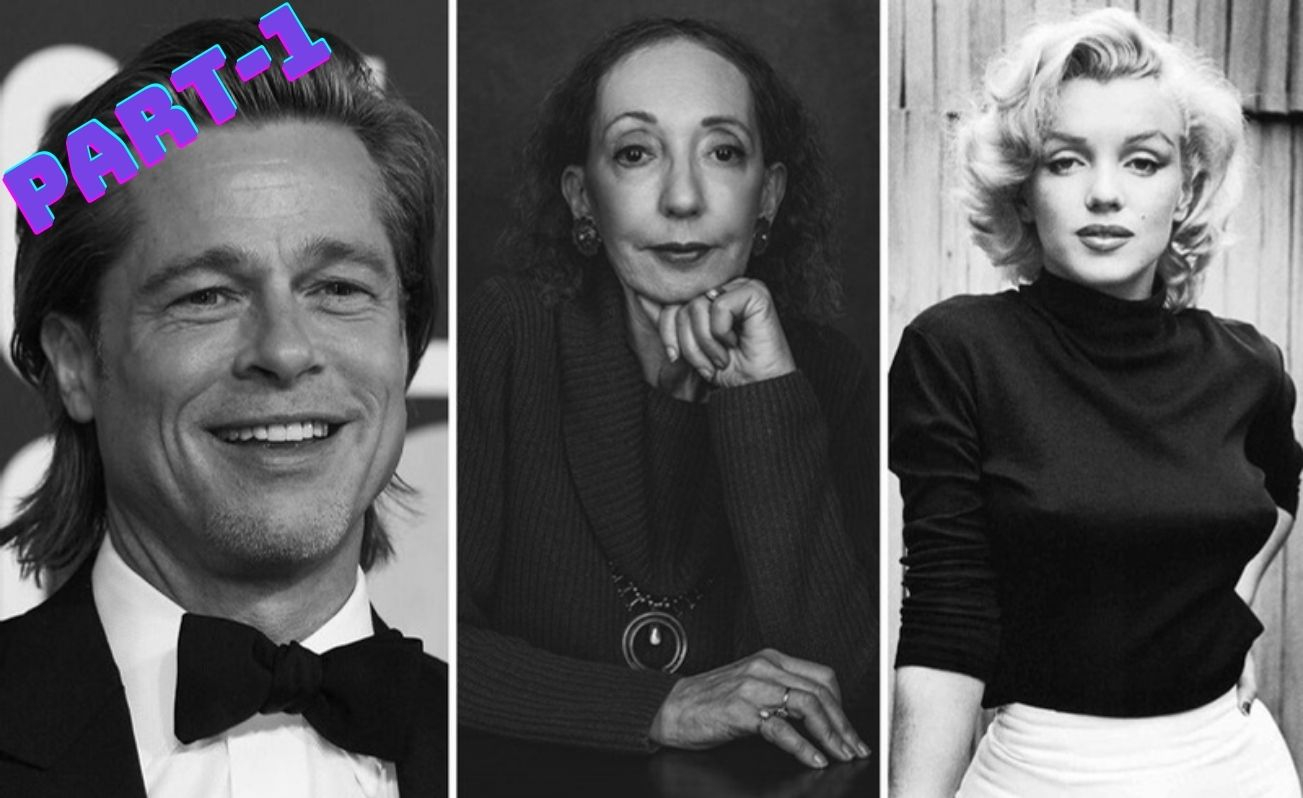
    How did the recent movie version of the Joyce Carol Oates novel Blonde ever materialize? A big part of the answer is Brad Pitt. The actor/producer had worked with film director Andrew Dominik on the 2007 western The Assassination of Jesse James by the Coward Robert Ford and again on the 2012 neo noir crime film, Killing Them Softly. It was around the time of the latter production that actor/producer Pitt decided to back Dominik in his attempt to make a film about Marilyn Monroe, based upon the best-selling Blonde, published in 2000. (LA Times, 6/3/2012). Pitt also showed up at the film’s premiere at the Venice Film Festival in September of 2022 to support the picture.

    Blonde is the first film with an NC-17 rating to be streamed by Netflix. No film submitted to the Motion Picture Association of America had received such a rating since 2013. (Time, September 9, 2022, story by Moises Mendez) After watching the film I can understand why, and its surprising that Netflix even financed the picture. Some commentators believe it was through the powerful status of Pitt that the film ultimately got distributed. But before we get to just how poor the picture is, I think it necessary to understand how the American cultural scene gave birth to a production that is not just an unmitigated piece of rubbish but is, in many ways, a warning signal as to what that culture has become.

    I

    By the time Oates came to write her novel, the field of Marilyn Monroe books and biographies was quite heavily populated. After Monroe’s death in 1962, the first substantial biography of Monroe was by Fred Lawrence Guiles entitled Norma Jean, published in 1969. Norman Mailer borrowed profusely from Guiles for his picture book, Marilyn, released in 1973. Originally, Mailer was supposed to write an introductory essay for a book of photos packaged by Lawrence Schiller. But the intro turned into a 90,000 word essay. Mailer included an additional chapter, a piece of cheap sensationalism which he later admitted he had appended for money. In that section he posited a diaphanous plot to murder Monroe by agents of the FBI and CIA due to her alleged affair with Attorney General Bobby Kennedy. (Sixty Minutes, July 13, 1973). Because the book became a huge best-seller, as John Gilmore pungently noted, it was Mailer who “originated the let’s trash Marilyn for a fast buck profit scenario.” (Don McGovern, Murder Orthodoxies, p. 36)

    Mailer inherited his flatulent RFK idea from a man named Frank Capell. Capell was a rightwing fruitcake who could have easily played General Ripper in Dr. Strangelove. In August of 1964, Capell published a pamphlet entitled The Strange Death of Marilyn Monroe. It was pure McCarthyite nonsense written solely with a propaganda purpose: to hurt Bobby Kennedy’s chances in his race for the senate in New York. Capell was later drawn up on charges for conspiracy to commit libel against California Senator Thomas Kuchel. (Chicago Tribune, February 25, 1965) This was not his first offense, as he had been indicted twice during World War 2 for accepting bribes while on the War Production Board. (NY Times, September 22, 1943). Capell did not like Kuchel since he was a moderate Republican who was backing Bobby Kennedy’s attempt to get his late brother’s civil rights bill through congress. Which tells the reader a lot about Capell and his poisonous pamphlet.

    The next step downward involves Mailer, overtly, and Capell, secretly. I am referring to the materialization of a figure who resembled the Antichrist in the Monroe field, the infamous Robert Slatzer. Slatzer originally had an idea to do an article about Monroe’s death from a conspiratorial angle before Mailer’s 1973 success. He approached a writer named Will Fowler who was unimpressed by the effort. He told Slatzer: Now had he been married to Monroe that would make a real story. Shortly after, Slatzer got in contact with Fowler again. He said he forgot to tell him, but he had been married to Monroe. (The Assassinations, edited by James DiEugenio and Lisa Pease, p. 362)

    The quite conservative Fowler then cooperated with Slatzer through Pinnacle Publishing Company out of New York. Capell was also brought in, but due to his past legal convictions, his cooperation was to be secret. (Notarized agreement of February 16, 1973). The best that can be deciphered through the discovery of the Fowler Papers at Cal State Northridge is this: Capell would contribute material on the RFK angle through his files; Slatzer would gather and deliver his Monroe personal letters, mementoes, and marriage license; and Fowler would write the first draft, with corrections and revisions by the other two. (McGovern, pp. 90-91)

    But in addition to Capell’s past offenses, another problem surfaced: Fowler soon concluded that Slatzer was a fraud, so he withdrew from the project. (LA Times, 9/20/91, article by Howard Rosenberg). The main reason Fowler withdrew is that Slatzer could not come up with anything tangible to prove any of his claims about his 15-year-long relationship, or his three day marriage, to Monroe. Several times in the Fowler Papers it is noted that Slatzer’s tales changed over time “as they also veered into implausibility”. As a result, Fowler started to question his writing partner’s honesty. (McGovern, p. 79) Consequently, other writers were called in to replace Fowler, like George Carpozi.

    II

    The subsequent book released in 1974 was entitled The Life and Curious Death of Marilyn Monroe. To my knowledge, it was the first book published by an alleged acquaintance of Monroe to question the coroner’s official verdict that Monroe’s death was a “probable suicide”.

    Whatever unjustified liberties Capell and Mailer took with the factual record, Slatzer left them in the dust. In addition to his –as we shall see– fictional wedding to Monroe, Slatzer also fabricated tales about forged autopsy reports, 700 pages of top-secret LAPD files, hidden Monroe diaries, inside informants, and perhaps the wildest whopper of all: a secret deposition by Attorney General Robert Kennedy. If ever there was a book that violated all the standards of both biography and nonfiction literature it was The Life and Curious Death of Marilyn Monroe. It was a no holds barred slander fest of both Monroe and Robert Kennedy.

    Slatzer claimed that he and Marilyn went to Tijuana, Mexico on October 3, 1952 and were married there on October 4th. After returning to LA, they had second thoughts about it, and they went back and got the proceeding annulled; actually the attorney who did the service just burned his certification document on October 6th. This tall tale has been demolished by two salient facts. First, there is documented proof produced by author April VeVea that Monroe was at a party for Photoplay Magazine on October 3rd. (See VeVea’s blog for April 10, 2018, “Classic Blondes”.) Secondly, Monroe wrote and signed a check while on a Beverly Hills shopping spree on October 4th. The address on the check is 2393 Castilian Dr., the location in Hollywood where she was living with Joe DiMaggio at the time. Monroe authority Don McGovern has literally torn to pieces every single aspect of Slatzer’s entire Mexican wedding confection. (McGovern, pp. 49-67, see also p. 100)

    Just how far would Slatzer go to string others along on his literary frauds? How about paying witnesses to lie for him? Noble “Kid” Chissell was a boxer and actor. According to Slatzer, he happened to be in Tijuana and acted as a witness to his Monroe wedding. Years later, when asked about it, Chissell recanted the whole affair to Marilyn photographer Joseph Jasgur. He said that there was no wedding between Slatzer and Marilyn. He went further and said he did not even think Slatzer knew Monroe. But Slatzer wanted Chissell as a back-up to his phony playlet and promised to pay him to go along. Which, by the way, he never did. Which makes him both a liar and a welsher. (McGovern, pp. 98-99). It also appears likely that Slatzer forged a letter saying that Fowler had actually seen the Slatzer/Monroe marriage license and Fowler met Monroe while with him. Fowler denied ever seeing such a document or having met Monroe. (McGovern, p. 81)

    III

    One would think that The Life and Curious Death of Marilyn Monroe could hardly get any worse. But it does. To add a layer of official intrigue inside the LAPD, Slatzer created a figure named “Jack Quinn”. Quinn had been an employee of LA County and he got in contact with Slatzer and informed him of a malignant cover up about the Monroe case inside City Hall, particularly the LAPD. (Slatzer, pp. 249-53) The enigmatic Mr. Quinn described a secret 723 page study of the Monroe case. That study stated that the original autopsy report had been deep sixed. Further, that Bobby Kennedy had been in LA at an official opening of a soccer field on August 4, 1962 and he had given a deposition in the case. In that deposition he said that he and his brother-in-law, Peter Lawford, had been at Marilyn’s house and they had a violent argument, to the point he had to bring in a doctor to inject her to calm her down.

    The above is why I and others consider Slatzer’s work a milestone in trashy tabloidism: the forerunner to the manufactures of David Heymann. The only thing worse than writing that RFK would submit to such a legal proceeding is postulating that the LAPD would have any reason to question him. In their official reporting, the first three people at Monroe’s home all said that Monroe was alone in her bedroom when she passed. This included her housekeeper Eunice Murray, her psychiatrist Robert Greenson, and her physician Hyman Engelberg. Engelberg made the call to the LAPD saying that she had taken her own life. (LA Times, 12/21/2005, story by Myrna Oliver) Later in this essay, I will explain why, if anyone should have known the cause of death, it was Engelberg.

    But complementary to this, Robert Kennedy was nowhere near Brentwood–where Monroe lived–at this time. Sue Bernard’s book, Marilyn: Intimate Exposures proves this beyond doubt, with hour by hour photographs and witness testimony. (pp. 184-87; see also, Gary Vitacco-Robles’ Icon, Pt. 2, p. 82) In fact, in his book Icon, VItacco Robles documents Bobby Kennedy’s four days in the Gilroy/San Francisco area from August 3-6th. (See Icon Part 2, pp. 82-83). Therefore, at both geographic ends, Slatzer’s “secret RFK deposition” is pure hogwash, an invention out of Capell.

    In 1982 Slatzer opined in public at the Greater Los Angeles Press Club that the Monroe case should be reopened. The DA’s office began a threshold type inquiry to see if there was just cause to do a full reopening. That inquiry was run by assistant DA Ron Carroll with investigators Clayton Anderson and Al Tomich (Icon Pt. 2, p. 108) They interviewed Slatzer about his “Quinn” angle. Very soon, problems emerged with his story. Allegedly, Quinn called Slatzer in 1972, saying he worked in the Hall of Records building and he had the entire 723 page original record of the case. He said he was leaving his position to move to San Mateo for a new job. Slatzer said he met Quinn, who had a badge on with his name, at Houston’s Barbeque Restaurant. Slatzer gave him 30 dollars to copy the file. Quinn said he would meet him at the Smokehouse Restaurant in Studio City for delivery. Quinn added that he lived in the Fair Oaks area of Glendale.

    Quinn did not show up. Slatzer went to the Hall of Records and found no employee by the name of Quinn, which should have been predictable to Carroll because The Smoke House is not in Studio City, it’s in Burbank. And Fair Oaks is a popular boulevard going from Altadena through Pasadena to South Pasadena, but not Glendale. Slatzer now added something just as sensational. Ed Davis, LA Chief of Police, flew to Washington a month later to ask questions about RFK’s relationship with Monroe. (Was this the secret deposition?) Davis replied that no such thing happened. (Icon, Pt. 2, p. 110) When Carroll began to go through databases of City Hall employees from 1914-82, he could find no Jack Quinn. He also found out that the files of the LAPD would, in all likelihood, not be stored at the Hall of Records. Like his Tijuana wedding, Slatzer’s “Jack Quinn” was another fictional creation from a con artist.

    With Carroll, Slatzer also tried to insert two other phony “clues”. First, that there was a three hour gap between when Monroe’s doctors were summoned and when the call to the police was made. Carroll discovered that the original LAPD inquiry by Sgt. Byron revealed that it was really more like a 45 minute delay. Eunice Murray did not call the doctors until about 3:30 AM. (Icon, Pt. 2, p. 110)

    Slatzer also tried to question the basis of Murray’s initial suspicions of something being wrong with Marilyn. In the original investigation, Murray told Byron that what puzzled her was the light being on in Monroe’s room through the night. She noticed this at about midnight but was not able to awaken Monroe. She then noticed it again at about 3:30 AM and this is when she made a call to Dr. Greenson. (Icon. Vol. 1, p. 278) Slatzer said this was wrong since the high pile carpeting prevented light being seen under the door. It turned out—no surprise– that this was another of Slatzer’s whoppers. With photos and witness testimony, Vitacco-Robles proves that one could see light under the door, and further there were locking mechanisms on the doors. (Icon, Pt. 1, p. 255, p. 380) Slatzer wanted to disguise this fact because it indicates that Monroe ingested the pills, 47 Nembutals and 17 chloral hydrates, and then slowly lost consciousness and slipped into a coma, in spite of the light being on—which normally she was quite sensitive to.

    I could go on and on about Slatzer’s malarkey. For instance, both Vitacco-Robles and Slatzer’s former wife clearly think that the whole years long Monroe relationship Slatzer writes about in his book is balderdash. Gary advances evidence that from 1947-57, Slatzer was not cavorting around LA with Monroe but lived in Ohio. (Icon, Vol. 2, p. 119) Slatzer’s Ohio wife, Kay Eicher, said Slatzer met Monroe exactly once, on a film set in Niagara Falls where Monroe—always kind to her fans- posed with him for impromptu pictures. She added about her former husband, “He’s been fooling people too long.” (ibid, p. 123) Which Slatzer also did with Allan Snyder, Monroe’s makeup artist. This again was supposed to show he knew Monroe. But Snyder later said he never heard of the man while Marilyn was alive. Slatzer just approached him to write up an intro and paid him for it. (ibid, p. 126)

    The reason I have spent a bit of time and space on slime like Slatzer is simple. If a figure like Slatzer had surfaced in the JFK critical community, his reputation would have been blasted to pieces in a week. But back in 1974, there was no such quality control in the Monroe field. Therefore, not only was his book a commercial success, he then went on to write another book, and marketed two TV films on the subject. But beyond that—and I wish I was kidding about this–Slatzer had a wide influence on the later literature. It was not until much later, with the arrival of people like Don McGovern, Gary Vitacco-Robles, April VeVea and Nina Boski that any kind of respectable quality control developed in the field.

    IV

    In the October, 1975 issue of Oui magazine, Tony Sciacca, real name Anthony Scaduto, wrote an essay called “Who Killed Marilyn Monroe.” That article was expanded into a book the next year, Who Killed Marilyn? This book owes much to Slatzer. Including lines and scenes seemingly pulled right out of his book. For example Monroe says that Bobby Kennedy had promised to marry her. ( p. 13). Another steal is Monroe’s red book diary. Where she wrote that RFK was running the Bay of Pigs invasion for his brother. (pp. 65-69). The idea that Bobby Kennedy was going to divorce his longtime wife Ethel, leave his eight children, resign his Attorney General’s position, and forego his future chance at the presidency—all for a woman he met socially four times—is, quite frankly, preposterous. Further, as the declassified record shows, Bobby Kennedy had nothing to do with managing the Bay of Pigs operation. That was being run by CIA Director of Plans Dick Bissell, along with Deputy Director Charles Cabell. (See, for example, Peter Kornbluh’s Bay of Pigs Declassified.) And it turns out that Monroe had no red book diary. What she kept were more properly called journals or notebooks which were found among her belongings decades after she died. These were then published under the title Fragments. And they contain nothing like what people like Slatzer, Scaduto, and later Lionel Grandison, said was in them. (McGovern, pp. 268-71)

    But incredibly, Slatzer lived on in the writings of Donald Wolfe, Milo Speriglio and Anthony Summers. Summers’ 1985 book Goddess became a best-seller. In the introductory notes to the Oates’ novel, she names Goddess as one of the references for her roman a clef. As Don McGovern observes, Summers references Slatzer early, by page 26—and then refers to him scores of times in Goddess, even using Chissell. But yet, Slatzer’s name, address and phone number never appeared in Monroe’s phone or address books. Would not someone so close to Monroe be in there? (McGovern, p. 102)

    But the belief in Slatzer is not unusual for Goddess. In fact, after reading the book a second time and taking plentiful notes, I would say it is more like par for the course. Let us take the case of Gary Wean. Because its largely with Wean that the book begins its character assault on both John Kennedy and Peter Lawford. (For example, see pgs. 221-224). The idea is that Lawford arranged wild parties with call girls, John Kennedy was there and Monroe was at one of them. Summers characterizes Lawford like this: “It was this sad Sybarite who played host to the Kennedy brothers when they sought relaxation in California…”. Geez, I thought JFK and RFK knew Lawford because he was married to their sister.

    These rather bizarre accusations made me curious. Who was Gary Wean and how credible was he? So I sent away for his book There’s a Fish in the Courthouse. Wean was a law enforcement officer in both Los Angeles and Ventura counties; he later became a small businessman. His book has two frames of focus. The first is on local corruption in Ventura County, California. Apparently realizing that this would have little broad appeal, Wean expands the frame to a national level with not just Monroe and Lawford, but also, get this, the JFK assassination! According to Wean, Sheriff Bill Decker and Senator John Tower explained the whole plot to his friend actor Audie Murphy. I don’t even want to go any further. But I will say that Wean’s tale says it was Jack Ruby who was going to kill Oswald, but when J. D. Tippit’s car pulled up, Ruby killed the policeman instead. (Wean, p. 588) Mobster Mickey Cohen got Ruby to now also kill Oswald, and somehow reporter Seth Kantor was tied in to the conspiracy since he could place Ruby at Parkland Hospital and he knew Cohen.

    The primacy of Cohen in this theory can be explained by the fact that Cohen was Jewish and Wean’s book is extremely anti-Semitic. In fact, he later called the JFK murder a Jewish plot. (Wean, p. 593) As we shall see, this directly relates to the accusations about Lawford and John Kennedy. Wean says that these wild parties were at Lawford’s Malibu beach house. (Wean, p. 567) This puzzled me since, from what I could find, Lawford owned homes in Santa Monica and Palm Springs, and no Southern Californian could confuse those places with Malibu. Wean also says that Monroe met JFK at such a party during the Democratic Convention in 1960. But Monroe was not in Los Angeles for the convention. She was in New York City with her then husband Arthur Miller and her friend and masseuse Ralph Roberts. She was working on preparations for the upcoming film The Misfits. (McGovern, pp. 147-48)

    But this is just the beginning of the problems with using Wean as a witness. Because in his book Wean says that it was really Joey Bishop who set up the wild call girl gatherings through Lawford. Why? Because Bishop, who was Jewish, was working with Cohen to get info on how Kennedy felt about Israel–through Monroe. (Wean, p. 567, p. 617). If that isn’t enough for you, how about this: Cohen was meeting with Menachem Begin at the Beverly Hills Hotel and there was plentiful talk about Cuba, military operations and the Kennedys. (Wean, p. 575). Further, Cohen had one of his mob associates at Marilyn’s home the night she died, at some time between 10-11 PM. (Wean p. 617) Wean calls this all part of the Jewish Mishpucka Plot. I could go even further with Wean, but I don’t think the reader would believe it.

    The capper to this is that Wean writes that Summers called Bishop and the comedian admitted the arrangements he made. (Wean, ibid). At this point I thought two things: 1.) Wean was so rightwing he was a bit off his rocker. 2.) Was there anyone Summers would not believe in his Ahab type pursuit of a Monroe/Kennedy plot? Because according to Wean, Summers wanted him to go on TV.

    But there is another Summers’ witness who was pushing the whole Lawford/Kennedy fable about call girl parties at the beach. This was Fred Otash. Otash was a former policeman turned detective who also worked for Confidential magazine, which was little more than a scandal sheet. He was once convicted for rigging horse races. After interviewing him for Sixty Minutes in 1973, Mike Wallace said he was the most amoral man he ever met. He once had his detective license indefinitely suspended.

    In 1960 the FBI found out something rather revealing about Otash. In July of 1960, while JFK was running for president, a high-priced LA call girl was contacted by Otash. He requested information on her participation in sex parties involving JFK and Lawford, plus Frank Sinatra and Sammy Davis. The woman said she could not comply since she had no such knowledge. Otash then asked if she knew any girls who perhaps were there. She said she knew of no one. Otash then asked if she could be introduced to Kennedy, and if so, he could equip her with a tape recorder to take down any “indiscreet statements’ the senator might make. She refused to do so. (FBI Report of 7/26/60)

    The hooker had a higher moral code than the pimp. By those standards who could rely on Otash for anything?


    Go to Part 2 of 2

  • Prouty on Vietnam: NSAM 263 and 273 60 years on

    Prouty on Vietnam: NSAM 263 and 273 60 years on


    “This was the most important fallout of working on this movie JFK for me personally. As soon as we put into the movie the fact of history that John F. Kennedy had signed a White House paper, (a) National Security Action the highest most formal paper the executive branch could publish, number 263, it was dated 11 October 1963, in the month before he died. And that paper clearly said he was not going to put Americans into Vietnam. It went even further, in so many words it said that all American personnel were going to be out of Vietnam by the end of 1965. And the minute we put that into the script of the movie, even before the movie was made and put in the theaters, the newspapers and other pseudo-historians began to say ‘there’s no such thing. Prouty and Oliver Stone are wrong’.” (Col. Fletcher Prouty, May 5, 1994)

    1 Fletcher Prouty 1997

    Prior to the release of Oliver Stone’s blockbuster film JFK, few people were aware of the implications contained within two policy directives generated about seven weeks apart in the autumn of 1963. These directives concerned American involvement in Vietnam, specifically crucial decisions regarding whether to expand or decrease the U.S. military’s role in the country’s future. The eventual decision to expand – massively – became one of the most polarizing events in American history–with consequential effect continuing to reverberate at the time of the release of Stone’s film in late 1991. The George H.W. Bush administration, for example, had been celebrating the supposed vanquishing of the “Vietnam Syndrome”, which had been lamented as a brake on the use of the military as a means of enforcing US foreign policies. With a presidential election looming in 1992, and the generation most directly affected by the Vietnam war fully coming into positions of influence, the dominant Cold War establishment, focused on global hegemony, was not interested in critical reassessments which might reveal cold calculation rather than tragic “mistakes”.

    Retired Air Force Colonel L. Fletcher Prouty served as an advisor for Oliver Stone as the script for JFK was developed. Prouty was the key initial source influencing the insertion of information regarding the policy directive known as NSAM 263 into the film. While active in the Pentagon in 1963, Prouty had directly witnessed the development of the policy while serving under his boss, General Victor Krulak. Prouty’s later descriptive work on this subject, as it appeared across numerous essays and interviews, remains insightful, through its combination of personal experience with close readings of the documentary record.

    Sixty years after the fact, the texts for NSAM 263 and 273 remain a controversial point of contention. Sharp differences regarding their actual meaning continue to influence the understanding of the historical record of the Vietnam war and both the Kennedy and Johnson administrations’ conduct of the war. On the occasion of Prouty’s birthday, and the 60th anniversary of JFK’s murder, it is useful to re-examine these policy initiatives through the work of Fletcher Prouty.

    NSAM 263

    Expressed interest in reducing U.S. military involvement in Vietnam, on behalf of the Kennedy administration, dates back at least as early as the spring of 1963. In a memorandum of discussions between Secretary of Defense McNamara and the Joint Chiefs held on April 29, 1963, McNamara is said to be “particularly interested in the projected phasing of US personnel strength” in Vietnam and the “feasibility of bringing back 1000 troops by the end of this year.”[1] McNamara specifically noted two aspects for consideration: “a) phased withdrawal of US forces, and b) a phased plan for South Vietnamese forces to take over functions now carried out by US forces.” Shortly thereafter, a high-level military meeting in Honolulu featured discussion along the same lines, and indicated that South Vietnam President Diem had already been advised of withdrawal plans.[2] McNamara at this time emphasized a withdrawal plan was necessary for purposes domestic and foreign “to give evidence that conditions are in fact improving”.[3] Both the withdrawal of 1000 troops by year’s end and a lengthier phased withdrawal based on training South Vietnamese to replace US personnel, were key elements of National Security Action Memorandum 263, which was certified as official policy little more than five months later.2 NSAM 263 Official

    For the Kennedy administration, Vietnam was an inherited problem. The partition of the country, the installation of Diem, the Viet Cong insurgency, and a growing U.S. “advisor” population was attributable to the influence of the Dwight Eisenhower era’s Dulles brothers combination at CIA (Allen) and the State Department (John Foster). In 1961 and 1962, crises in Berlin, Laos and Cuba were more immediately acute. However, in the summer of 1963, internal divisions and protests, exacerbated by South Vietnam President Diem’s harsh treatment of political dissenters and the huge Buddhist crisis, these called into question the near-term stability of his government. An American backed coup was contemplated in August, and then walked back, leaving unresolved divisions of power to percolate in an atmosphere intensified by the imposition of Diem’s approval of martial law.

    At noon on August 26, 1963, with President Kennedy in attendance, a meeting was held at the White House to discuss pressing issues regarding Vietnam. At least fourteen such meetings were held from this date through October 11, when NSAM 263 was made official policy.[4] As head of the Pentagon’s Office for Counterinsurgency and Special Activities, General Krulak was assigned to attend most of those meetings. From his position in Krulak’s office, Prouty observed: “…such a full schedule in the White House, and with the President among other high officials in such a concentrated period is most unusual. It shows clearly Kennedy made an analysis of the Vietnam situation his problem, and it relates precisely the ideas he brought to the attention of his key staff on the subject.”[5]

    The initial meetings dealt with the immediate political crisis in South Vietnam, and were concerned with the implications of a potential coup against Diem. It was hoped that a well-chosen approach or negotiation with Diem could isolate Ngo Dinh Nhu – the headstrong Diem brother deemed responsible for the current troubles, whose removal became the minimum requirement derived from these meetings. By September 6, the topics under discussion expanded to hard talk on the political realities in South Vietnam, whether the counter-insurgency programs could be successful with Diem remaining in power, and what should otherwise be done.[6] It was generally agreed a “reassessment” of Vietnam was necessary, and it was recommended that Krulak be sent to Vietnam to gather informed opinions at ground level.

    Krulak left immediately and returned from Vietnam in time to appear at a White House meeting convened September 10.[7] Krulak reported the counter-insurgency effort was not too badly effected by the political crisis, and that the war against the Viet Cong “will be won if the current U.S. military and sociological programs are pursued.” Others disagreed, claiming success would not be possible short of a change in government. Kennedy called for another meeting the following day, and asked that “meeting papers should be prepared describing the specific steps that we might take in a gradual and selective cut of aid.” At that meeting, frank views across a spectrum of options were expressed. A following gathering, on September 12, continued to hone in on a precise description of “objectives and actions”, and the “pressures to be used to achieve these objectives.”[8]

    Other than the unanimous resolve that Diem brother Nhu should be separated from the South Vietnamese government, the expression of opinions during this process could vary in emphasis and focus dependent on who the receiving party was. For example, in a draft letter to Diem at this time, Kennedy emphasized the need for frank discussion, while acknowledging “it remains the central purpose of the United States in its friendly relation with South Vietnam to defeat the aggressive designs of the Communists.”[9]Five days later, Kennedy would express in a memorandum to Robert McNamara: “The events in South Vietnam since May 1963 have now raised serious questions both about the present prospects for success against the Viet Cong and still more about the future effectiveness of this effort unless there can be important political improvement in the country.”[10] McNamara, and Chairman of the Joint Chiefs General Maxwell Taylor, were about to be dispatched to Vietnam for an “on the spot appraisal of the military and paramilitary effort”.

    McNamara and Taylor met with the President on the morning of September 23, just ahead of their departure. This was an unusual meeting on the Vietnam topic due to the small number of participants: four plus the President (previous meetings over the past month had featured at least a dozen, and upwards to twenty, partakers).[11] After Kennedy expressed his opinions on the most appropriate means of convincing Diem to heed to advice from American officials, Taylor referred to a “time schedule” for direct U.S. support of South Vietnam, similar to the theme expressed in late April / May by McNamara:

    General Taylor thought it would be useful to work out a time schedule within which we expect to get this job done and to say plainly to Diem that we were which we expect to get this job done and to say plainly to Diem that we were not going to be able to stay beyond such and such a time with such and such forces, and the war must be won in this time period. The President did not say yes or no to this proposal.

    The McNamara-Taylor trip to Vietnam occurred September 23rd to October 2nd, 1963. During this time, information pertaining to Vietnam generated by the White House meetings of the past month were being collated in Krulak’s office. According to Prouty, this was the work which appeared in a thick bound volume known as the McNamara-Taylor Trip Report, presented to Kennedy in the Oval Office on the officials’ return. Prouty maintained the contents reflected “precisely what President Kennedy and his top aides and officials were actually planning, and doing, by the end of 1963. This was precisely how Kennedy planned to ‘wind down’ the war.“[12] These “plans” appeared in the McNamara-Taylor Trip Report Memorandum, generated from the October 2 meeting with Kennedy, as specific recommendations to withdraw 1000 troops by year’s end, and to wind up direct U.S. involvement by end of 1965. Previously, in a missive to Diem dated October 1, Taylor had written: “… the primary purpose of these visits was to determine the rate of progress being made by our common effort toward victory over the insurgency. I would define victory in this context as being the reduction of the insurgency to proportions manageable by the National Security Forces normally available to your Government.”[13]

    At a meeting of the National Security Council followed at 6PM on October 2, President Kennedy opened the meeting by summarizing what he considered the points of agreement on Vietnam policy going forward, as derived from the past weeks of concentration. “We are agreed to try to find effective means of changing the political atmosphere in Saigon. We are agreed that we should not cut off all U.S. aid to Vietnam, but are agreed on the necessity of trying to improve the situation in Vietnam by bringing about changes there.”[14]McNamara emphasized the “value” of the language on withdrawal of U.S. personnel as it answered domestic political criticism of being “bogged down” in Vietnam by revealing there was in fact a “withdrawal plan.” As well, “it commits us to emphasize the training of Vietnamese, which is something we must do in order to replace U.S. personnel with Vietnamese.” A Record of Action resulting from this NSC meeting noted, echoing Taylor’s words to Diem, “major U.S. assistance” was needed only until the insurgency had been either suppressed or until the national security forces of South Vietnam are capable of suppressing it.”[15]

    The official statement of U.S. national policy, National Security Action Memorandum No. 263, is dated October 11, l963.[16] It was typed on White House stationary and signed by Special Assistant to the President McGeorge Bundy. It records that President Kennedy approved “the military recommendations contained in Section 1 B (1-3) of the (Taylor McNamara) Report.”[17] The specified recommendations are:

    1. General Harkins review with Diem the military changes necessary to complete the military campaign in the Northern and Central areas by the end of 1964, and in the Delta by the end of 1965…
    2. A program be established to train Vietnamese so that essential functions now performed by U.S. military personnel can be carried out by Vietnamese by the end of 1965. It should be possible to withdraw the bulk of U.S. personnel by that time.
    3. In accordance with the program to train progressively Vietnamese to take over military functions, the Defense Department should announce in the very near future presently prepared plans to withdraw 1000 U.S. military personnel by the end of 1963. This action should be explained in low key as an initial step in a long-term program to replace U.S. personnel with trained Vietnamese without impairment of the war effort.

    Antecedent and Context

    In several of his essays, Prouty emphasized two important antecedents to the Kennedy administration’s Vietnam policies which culminated in October 1963 with NSAM 263. Both antecedents were related to operational programs run by the CIA, and both featured an expansion of scale during the period between Kennedy’s election and his inauguration.

    The first involved the introduction of helicopter squadrons in response to “the worsening of internal security conditions in Viet Nam.” Described as an “emergency measure”, an initial total of eleven H-34 Sikorsky helicopters were requested December 1,1963.[18] As Prouty described:

    “In December 1960 just after Kennedy’s election, Eisenhower’s National Security Council did direct the Defense Dept. to send a fleet of helicopters to Saigon under the operational control of the CIA …This was the situation Kennedy inherited by the time of his inaugural. It all happened between the election in Nov 1960 and the inaugural of Jan 1961.”[19]

    The provision of the helicopters would require additional resources, as acknowledged by the JCS as they recommended the plan, including personnel attached to “ground support equipment” and “helicopter maintenance capability.”[20] In this way, the U.S. effort was bound to expand. Prouty:

    “On Oct 30, 1963, there were 16,730 U.S. military personnel in Vietnam. A study performed at that time at the request of the senior military commander, General Harkins, revealed that barely 1,000 of them were in what might be called combatant roles.The rest were in such logistics tasks as helicopter maintenance, supply and training functions for the newly formed and unskilled Vietnamese armed forces.”[21](Ed. Note, by “might be called combatant roles” Prouty means Special Forces and combat advisors, since elsewhere he stated there was not one more combat troop in Vietnam when Kennedy died than when he took office.)

    A few months after Kennedy’s inauguration, the Bay of Pigs invasion/uprising directed at Fidel Castro’s Cuba failed ignominiously. This CIA project had also notably expanded in scope during the lame duck period after Kennedy’s election. The fallout from this failure was magnified by the scale the project had accumulated, leaving a large number of persons directly affected and embittered. During the event, Kennedy had faced enormous pressure to escalate using US military assets directly, and a source of this pressure came from the clandestine milieu assembled by CIA’s regime-change program. Kennedy responded by creating a Cuban Study Group,[22] which was given two formal tasks:

    a) to study our governmental practices and programs in the area of military and paramilitary, guerrilla and anti-guerrilla activity which fell short of outright war with a view to strengthening our work in this area.
    b) and to direct special attention to lessons which can be learned from the recent events in Cuba.

    The first task – to study clandestine “practices and programs” with the aim of “strengthening our work in this area” – resulted in two National Security Action Memoranda which foreshadowed some of the policy directives later applied to Vietnam. These policies would represent a direct challenge to the CIA’s control over covert activity, as established by Allen Dulles during the Eisenhower administration. Prouty identified a moment during the Study Group’s May 10, 1961 interview with Gen. Walter Bedell Smith, Dulles’ immediate predecessor as Director of Central Intelligence, as articulating the need for a new direction. Prouty:

    “This meeting with General Smith emphasized the direction that President Kennedy and his closest advisors were taking on the two related subjects: the future of the CIA and of the warfare in Vietnam. Both were going to be put under control, and ended…at least as they had been administered up to that time.”[23]
    Question: Should we have intelligence gathering in the same place that you have operations?
    General Smith: I think so much publicity has been given to CIA that the covert work might have to be put under another roof.
    Question: Do you think you should take the covert operations from CIA?
    General Smith: It’s time we take the bucket of slop and put another cover over it.

    Taylor submitted an 81-page report on the Bay of Pigs to Kennedy on June 13, 1961. Two weeks later, on June 28, NSAM 55 was signed and disseminated. Its subject was “Relations of the Joint Chiefs of Staff to the President in Cold War Operations” ( Prouty identified the phrase “Cold War Operations” as a reference to Clandestine Operations).[24]As delivered directly to the Chairman of the JCS Lyman Lemnitzer, the document began:

    a) I regard the Joint Chiefs of Staff as my principal military advisor responsible both for initiating advice to me and for responding to requests for advice. I expect their advice to come to me direct and unfiltered.
    b) The Joint Chiefs of Staff have a responsibility for the defense of the nation in the Cold War similar to that which they have in conventional hostilities…”.

    Kennedy clearly felt that the Pentagon had let him down in their advice on the Bay of Pigs operation and that the CIA had lied to him. Because this was a distinct change in direction from the Eisenhower administration’s National Security Council directive 5412 (1954), which designated responsibility for clandestine or covert operations (Cold War Operations) to the CIA. Kennedy was redirecting this responsibility to the Department of Defense.[25]A subsequent memorandum, NSAM 57, was drafted with the subject heading: “Responsibility for Paramilitary Operations”. This document outlined a more detailed breakdown of responsibilities:

    Where such an operation (clandestine) is to be wholly covert or disavowable, it may be assigned to CIA, provided that it is within the normal capability of the agency.
    Any large paramilitary operation wholly or partly covert which requires significant numbers of militarily trained personnel, amounts of military equipment which exceed normal CIA-controlled stocks and/or military experience of a kind and level peculiar to the Armed Services is properly the primary responsibility of the Department of Defense with the CIA in a supporting role.

    Examples of “large paramilitary” operations run by the CIA would, from the vantage of the summer of 1961, include the inconclusive Indonesia campaign from 1958 and the disastrous Bay of Pigs a few months before. However, this description would also apply to the CIA’s ongoing operations in Vietnam, which were then expanding, beginning with the infusion of the helicopters. In his discussions of this policy statement, Prouty made note of specific differentiating language appearing in NSAM 263, identifying separately “U.S. military personnel” followed by “U.S. personnel”. Prouty averred this distinction was deliberate, that the term “U.S. personnel” referenced in particular the ongoing CIA programs operational in Vietnam. In this way, NSAM 263 had continuity with the earlier policy developed after the Bay of Pigs, intended to shift responsibilities for covert paramilitary operations from the CIA to the Defense Department, and to reduce their scope.

    NSAM 273

    On November 6, 1963 Kennedy sent an Eyes Only telegram to Ambassador Lodge, referring to “a new Government which we are about to recognize.” South Vietnam’s President Diem had suffered a coup, resulting in his, and his brother’s, death, a few days before. While the coup had been tacitly accepted in advance (although not anticipating loss of life), there were attendant loose ends and adjustments requiring attention as Kennedy referred: “I am sure that much good will come from the comprehensive review of the situation which is now planned for Honolulu, and I look forward to your own visit to Washington so that you and I can review the whole situation together and face to face.”[26]

    On November 13, the upcoming meeting in Honolulu was discussed at the daily White House staff meeting.[27] Kennedy’s Special Assistant for National Security McGeorge Bundy, who would attend the meeting, was briefed on what to expect by his assistant Michael Forrestal: “From what I can gather, the Honolulu meeting is shaping up into a replica of its predecessors, i.e. an eight-hour briefing conducted in the usual military manner. In the past this has meant about 100 people in the CINCPAC Conference Room, who are treated to a dazzling display of maps and charts, punctuated with some impressive intellectual fireworks from Bob McNamara.”[28] The Record of Discussion also notes: “When someone asks Bundy why he was going, he replied that he had been instructed.”[29]

    The autumn Honolulu Conference was held on November 19-20. The summary of discussion which begins the official Memorandum expresses optimism: “Ambassador Lodge described the outlook for the immediate future of Vietnam as hopeful. The Generals appear to be united and determined to step up the war effort. They profess to be keenly aware that the struggle with the Viet Cong is not only a military program, but also political and psychological. They attach great importance to a social and economic program as an aid to winning the war.”[30]

    This optimism carries over to the summary’s concluding views, which reflect the policy articulated in NSAM 263:

    “Finally, as regards all U.S. programs – military, economic, psychological – we should continue to keep before us the goal of setting dates for phasing out U.S. activities and turning them over to the Vietnamese; and these dates, too, should be looked at again in the light of the new political situation. The date mentioned in the McNamara-Taylor statement on October 2 on U.S. military withdrawal had and is still having – a tonic effect. We should set dates for USOM and USUS programs, too. We can always grant last-minute extensions if we think it wise to do so.”[31]

    The New York Times published a briefing on the Honolulu Conference on November 21, 1963 (datelined November 20). Titled “U.S. Aides Report Gain, 1,000 Troops to Return”, and said to be reflecting “assessments” from the “first full-scale review of the Vietnamese situation since the military coup”, the brief report “reaffirmed the United States plan to bring home about 1,000 of its 16,500 troops from South Vietnam by Jan 1.”

    The decision to remove these troops was made in October after a mission to South Vietnam by Secretary McNamara and Gen. Maxwell D. Taylor, chairman of the Joint Chiefs of Staff, who also attended today’s conference. Officials indicated that although there were no basic changes in United States policies and commitments to South Vietnam, the conference would probably recommend some modifications in American aid programs in an effort to intensify the campaign against the Vietcong guerrillas.” [32]

    McGeorge Bundy attended sessions of the Honolulu Conference on November 19 and 20, and then boarded a plane headed back to Washington either very late on the evening of November 20 or very early on November 21. Defense Secretary McNamara was on the same flight, which landed in D.C. after Kennedy’s Presidential party had already left for Texas. Briefings scheduled for President Kennedy regarding discussions in Honolulu were to be held after his return from Texas. Bundy authored the first draft of National Security Action Memorandum 273 on November 21, perhaps on the plane. Kennedy, of course, was killed the following day. There is no indication that Kennedy received any direct reports on the discussions in Honolulu, although he may have seen the New York Times article. Regardless, the draft penned by Bundy on November 21 anticipates a result:

    The President has reviewed the discussions of South Vietnam which occurred in Honolulu, and has discussed the matter further with Ambassador Lodge. He directs that the following guidance be issued to all concerned:
    1. It remains the central object of the United States in South Vietnam to assist the people and Government of that country to win their contest against the externally directed and supported Communist conspiracy. The test of all decisions and U.S. actions in this area should be the effectiveness of their contribution to this purpose.
    2. The objectives of the United States with respect to the withdrawal of U.S. military personnel remain as stated in the White House statement of October 2, 1963…”[33]

    The difference within this draft, as compared to the language of NSAM 263, is alluded in these first two sections. The second section, for example, affirms the “withdrawal of U.S. military personnel” (1,000 by the end of the year) will remain policy (emphasis added), while the absence of reference to the corresponding withdrawal of the “bulk of U.S. personnel” by 1965 infers, by its omission, that this facet of the withdrawal plan does not, as a policy, remain. This omission is also relevant to the first section, which differs from NSAM 263 by situating US Vietnam policy as primarily concerned with assisting South Vietnam “win their contest” versus the North (and therefore primarily focused on the “effectiveness” of the U.S. effort to do so), whereas NSAM 263’s primary concern was transferring the “essential functions” of the war effort to South Vietnam in the interests of removing U.S. personnel altogether. This revision is also misrepresented as the continuation of previous policy, as the opening words assert “it remains the central object…” (emphasis added)

    This crucial difference, moreover, does not find articulation in the official Memorandum on the Honolulu Conference, which instead notes that deadlines for turning U.S. activities over to the Vietnamese were exhibiting a “tonic effect”. It is neither mentioned in the New York Times article dated November 20, based on an official briefing, which flatly states there were “no basic changes in United States policies and commitments to South Vietnam.”

    Prouty, having worked under Krulak throughout September 1963 assembling the information apprising the Taylor-McNamara Trip Report, working from direction they understood as Kennedy’s himself, was skeptical of NSAM 273’s provenance:

    Strangely, this NSAM #273, which began the change in Kennedy’s policy toward Vietnam, was drafted on Nov 21, 1963…the day before Kennedy died. It was not Kennedy’s policy. He would not have requested it, and would not have signed it. Why would it have been drafted for his signature on the day before he died; and why would it have been given to Johnson so quickly after Kennedy died? Johnson had not asked for it. On Nov 21, 1963 Johnson had no expectation whatsoever of being President…”[34]

    “We have the full record of the development of Kennedy’s Vietnam policy in the Foreign Relations of the United States series, 1961-1963 Volume IV, Vietnam, August-December 1963. There can no question of that policy as formally approved on Oct 11, 1963, and that the draft of NSAM #273 was the beginning of a change of that policy, and of the enormous military escalation in Vietnam much to the satisfaction of the military industry complex…Who could have known, before Kennedy died, that he intended to begin an escalation of the warfare in Vietnam contrary to his decision of Oct. 11th? Someone wanted to make it appear that he did. Thus this National Security Action Memorandum with its origin before his death. Or should the question be, ‘Did those connected with the creation of this document know – ahead of time – that Kennedy was scheduled to die?’ This is a measure of the pressures of that time.”[35]

    3 JFK McNamara Taylor Oct 63Prouty believed, based on having seen numerous copies of the November 21 draft, that it was relatively widely distributed across the senior layers of the national security apparatus. A cover note attached to a copy distributed to Bundy’s brother William, a deputy within the Defense Department, asks him to review and also consult on the draft with McNamara.[36] The draft also appears to have been distributed on November 23 to newly appointed President Johnson, ahead of a meeting with Ambassador Lodge scheduled for the following day which, in an instance of macabre irony, had already been anticipated in the draft’s opening sentence: “the President…has discussed the matter further with Ambassador Lodge”.[37] A State Department Briefing Paper put together for Johnson ahead of the same meeting refers to a “draft National Security Action Memorandum emerging from the Honolulu meeting, which Mr. Bundy has initiated.” (Emphasis added).[38]

    4 Stars and Stripes Oct 1963A second draft of the proposed NSAM 273 was composed on November 24. Changes in the draft were notable in paragraph 7, which originally discussed “the development of additional Government of Vietnam resources” to be used for “action against North Vietnam.” The revision appeared to address kinetic activity generated directly by U.S. forces, in accord with established covert protocols (i.e. the “plausibility of denial”).[39]

    That same day, the anticipated meeting to discuss the South Vietnam situation was held, with LBJ, Rusk, McNamara, Ball, Lodge, McCone and Bundy in attendance.[40] This briefing for the President, focused on recommendations and updates, it represents – other than the one thousand man withdrawal slated for year-end – the internment of Kennedy’s Vietnam policies as developed in NSAM 263. Ambassador Lodge, for example, suggested that talk of a 1965 withdrawal – or “indication” thereof – was merely a negotiating ploy: “Lodge stated that we were not involved in the coup, though we put pressures on the South Vietnamese government to change its course and those pressures, most particularly on indications of withdrawal by 1965, encouraged the coup.” If ever there was a piece of high level CYA, this was it for, as James Douglass shows, Lodge was actually guiding the Diem brothers to their deaths.

    CIA Director John McCone, contradicting the conclusions delivered in Honolulu to the press, said the situation was “serious” and the paucity of optimism regarding the future of South Vietnam was evidenced by large increases in Viet Cong attacks and their advanced preparations for more. For his part, LBJ expressed misgivings with poor handling of controversial situations in the country, exacerbated by internal bickering. He rejected the idea that “we had to reform every Asian in our own image” in reference to political and economic strategies discussed in Honolulu. “(Johnson) was anxious to get along, win the war – he didn’t want as much effort placed on so-called social reforms…”

    “The meeting was followed by a statement to the press which was given out by Bundy to the effect we would pursue the policies agreed to in Honolulu adopted by the late President Kennedy.” This statement was given prominence in a New York Times report published November 25, 1963 (datelined Nov 24) entitled “Johnson Affirms Aims in Vietnam, Retains Kennedy’s Policy of Aiding War on Reds”. The opening sentence, presumably echoing Bundy: “President Johnson reaffirmed today the policy objectives of his predecessor regarding South Vietnam.” This reporting features the first three paragraphs of what would be published as NSAM 273 two days later, including the iteration that the “central point of U.S. policy on South Vietnam remains; namely, to assist the new government there in winning the war against the Communist Vietcong insurgents.” There is also a discussion of the political and economic measures advocated at Honolulu, but downplayed by Johnson shortly before (which is not mentioned), as well as the need for unity within the U.S. bureaucracy assigned in support South Vietnam.[41]

    5 JFK LodgeOn November 26, 1963, National Security Action Memorandum No. 273 was signed by McGeorge Bundy and updated NSAM 263 in United States official policy for South Vietnam.[42] Kennedy’s policy of effecting the removal of all “U.S. personnel” (i.e. military and CIA) from South Vietnam by the end of 1965, clearly referenced during conversations held at the Honolulu Conference, had been essentially erased from memory, even as NSAM 273 and its components were being described as a continuation of, or consistent with, Kennedy’s policies. The intent is now to win the war. Prouty:

    “Two months later, January 22,1964, one of the same authors of NSAM #263, General Maxwell Taylor, wrote to the Secretary of Defense, McNamara: ‘The Joint Chiefs of Staff consider that the United States must: (i) commit additional U.S. forces, as in support of the combat action within South Vietnam, and (j) commit U.S. forces as necessary in direct actions against North Vietnam.’

    These were the same two top level officials who under JFK had gone along with the Kennedy plan for the withdrawal of U.S. men. Then, less than 3 months later, under LBJ, they made totally different recommendations. The only difference was that President Kennedy was against escalation and wanted the men home, and Kennedy had never approved at any time the introduction of combat soldiers under U.S. military commanders for combat purposes in Vietnam. President Johnson, with George Ball in a top position, was doing just the opposite.”[43]

    That was how fast Johnson’s militant position infected Kennedy’s advisors.

    What many consider the true milestone on the road to an American war, NSAM 288, was approved in March, based on recommendations generated from yet another review of South Vietnam’s national security situation, presented by McNamara (working from an initial draft written by Bundy). Among the recommendations: a pledge to “furnish assistance and support to South Vietnam for as long as it takes to bring the insurgency under control”; to put South Vietnam on a “war footing”; to increase and upgrade Air Force, Army, and Naval heavy equipment; to prepare “hot pursuit”, “Border Control”, “Retaliatory Actions”, and “Graduated Overt Military Pressure” against North Vietnam.[44] By August, the increased tempo of activities supported by U.S. military assistance had created the Tonkin Gulf incident, and the inevitable slide to a shooting war. Prouty:

    “By March 1964 the U.S. approach to the situation in Vietnam had changed 180 degrees from the Kennedy policy of NSAM #263 and on March 17, 1964, President Johnson signed NSAM #288 which broadly expanded U.S. policy. About one year later, March 8, 1965, the first U.S. Marines operating under Marine commanders invaded South Vietnam at Da Nang. This was the true beginning of military action in Vietnam.”[45]

    What Kennedy had not done in three years, Johnson had done in three months.

    Obfuscation of NSAM 263

    On January 6, 1992, the New York Times published an opinion piece by Leslie Gelb titled “Kennedy and Vietnam”. Gelb could be described as the consummate Washington insider, with a c.v. laden with high-profile appointments across government, think tanks, and the media, specializing in foreign affairs. In the late 1960s, Gelb served as the director of the so-called Pentagon Papers project, leading the team of analysts in setting down an extensive history of the Vietnam War. Gelb’s authority to criticize premises expressed in Oliver Stone’s then current blockbuster film JFK ensured his opinions would hold some influence in the culture at large.

    In the piece, Gelb angrily accuses Stone (and by extension Prouty) of distorting the record of NSAM 263 and making “swaggering assertions about mighty unknowns.” Gelb claims of NSAM 263 that “some officials took the directive at face value”, but “most” saw it as a “bureaucratic scheme” to fudge the numbers of in-country personnel. He argues that “whatever JFK’s precise intentions” or “underlying thinking”, it was best to understand them as malleable and subject to changing circumstances and complications. Gelb ends his piece with an appeal to recognize the burden of the Presidency, particularly as involved Vietnam: the “private soul-searching” of Eisenhower, the “documented dilemmas ” and “torments” of Johnson and Nixon, matched by the “murky” musings represented by Kennedy’s occasional contradictory public statements. Stone (and Prouty) are therefore attacked for their “foolish” confidence over “decisions J.F.K. would have made in circumstances he never had to face.”[46] Prouty responded:

    “It is almost beyond belief that (Gelb)… in 1992, finds it easier to say that this was a decision ‘he never had to face’ instead of telling it as it is – the reason ‘he never had to face’ that decision was because he had been assassinated.”[47]

    6 McGeorge BundyThe one specific reference Gelb uses to respond to the supposed misrepresentations which had him so vexed, is itself distorted with some lawyerly spin: “Most officials also viewed the withdrawal memo as part of a White House ploy to scare President Diem of South Vietnam into making political reforms…That is precisely how the State Department instructed the U.S. Embassy in Saigon to understand NSAM 263.” What Gelb is referring to (and this became a talking point for other critics as well), is a State Department telegram to Lodge’s Vietnam embassy dated October 5, 1963.[48] While this communication is cited within the body of NSAM 263, it appears as an item of business separate from the primary matters, namely the planned withdrawal of “1000 U.S. military personnel” and the intention of withdrawing “the bulk of U.S. personnel” by the end of 1965.[49]

    7 NY Times 11 25 63Prouty’s issues with Gelb extended beyond the latter’s simplistic denial that Kennedy was just “going to abandon South Vietnam to a communist takeover.” Gelb’s previous role as director of the “Pentagon Papers” project could not be overlooked. Prouty:

    “However it was in the ‘Pentagon Papers’ that the intrigue to distort and misrepresent major episodes of the Kennedy era began. Pre-eminent among these distortions is the Pentagon Papers presentation of the NSAM #263 record. What was done was quite simple, and effective. The title, ‘National Security Action Memorandum No. 263’ appears as Document #146 on page 769 in Volume II of the Gravel Edition, i.e. Congressional Record. But, this is published as only three, single-sentence paragraphs of non-substantive material with no cross referencing. This is like publishing the envelope; but not the letter.”[50]

    This is a good point. While NSAM No. 263, as it appears on pp 769-770 of the Gravel Edition (Vol.II), is accurately transcribed from the original, the presentation, lacking cross reference, is opaque.[51] Since McGeorge Bundy’s original wording is not precise, in that it dates the discussion of the crucial McNamara-Taylor report (October 5, 1963) but doesn’t attribute identifiers to the report itself (dated October 2, 1963), the reader is either left to their own devices to put the pieces together, or must remember to consult a lengthy Chronology which appears some 550 pages previous. Prouty:

    Those few who already know what a true-copy of NSAM #263 looked like will find that the ‘Memorandum For The President’ that is the McNamara-Taylor Trip Report of Oct. 2, 1963 appears as Document 142 on page 751 through 766 with no reference to NSAM #263 whatsoever. This may be why so many ‘historians’ and other writers remain unaware of this most important policy statement.[52]

    8 NSAM 263 Pentagon PapersThe Chronology in Vol. II of the Pentagon Papers begins May 8, 1963 and concludes on November 23, 1963.[53] The Report of the McNamara-Taylor mission appears as a listing for October 2, 1963 (p216). In the brief description, the withdrawal of “1,000 American troops by year’s end” is noted, but there is no mention of the recommendation to withdraw “the bulk of U.S. personnel” by the end of 1965. The publication of NSAM 263 as an official document, October 11, 1963, is not listed.

    The Chronology’s concluding three items feature a description of the Honolulu Conference (20 November 1963), which observes a press release “gives few details but does reiterate the U.S. intention to withdraw 1,000 troops by the end of the year.” That the press release also indicated “no basic changes to U.S. policies” is not mentioned. Then, incongruously, the Chronology concludes:

    22 Nov 1963: Lodge confers with the President Having flown to Washington the day after the Conference, Lodge meets with the President and presumably continues the kind of report given in Honolulu.
    23 Nov 1963: NSAM 273
    Drawing together the results of the Honolulu Conference and Lodge’s meeting with the President, NSAM 273 reaffirms the U.S. commitment to defeat the VC in Vietnam

    9 PP chronologyNeither of these final two items actually occurred as described. Lodge did not meet with either President Kennedy or newly sworn-in President Johnson on November 22, the day on which President Kennedy was assassinated. NSAM 273 was not made official on November 23, and the specific meeting pertaining to the document was not held until the following day. Prouty:

    “NSAM 273 was signed by President Johnson on Nov. 26, 1963. It must be noted, that until an NSAM is approved and signed it does not have a formal number; therefore the subject matter that Lodge and Johnson conferred about could not have been designated NSAM #273 on the 23rd of Nov. 1963.”[54]

    Conclusion

    A separate attack on Oliver Stone’s JFK movie, published by the New York Times during the film’s initial release, was written by Tom Wicker.[55] Prouty’s response to this piece provides a good summary of his position:

    (Tom Wicker) also attacked Stone’s use of Kennedy’s Vietnam policy statement, NSAM #263, with the comment, ‘I know of no reputable historian who has documented Kennedy’s intentions.’ NSAM #263 is the official and complete documentation of Kennedy’s intentions. It was derived from a series of White House conferences and from the McNamara-Taylor Vietnam Trip Report, and it stated the views of the President and of his closest advisers as is made clear in the U.S. government publication Foreign Relations of the United States, 1961-1963, Vol. IV, ‘Vietnam: August-December 1963’. That source is reliable history. Wicker’s December 15, 1991, Times article was a lengthy and unnecessarily demeaning diatribe against Stone and his movie…

    The inclusion of this little-known NSAM #263 in the film became the principal point of attack of the big guns that were leveled at Stone, Garrison, and myself. It really is amazing that the most vitriolic attacks were those that attempted to inform the public that there was no such directive. The furor over that one item, NSAM #263, was evidence that Stone had hit his target. This alone uncovered the ‘Why?’ of the assassination.[56]

    Prouty’s insights pertaining to National Security Action Memorandums numbers 263 and 273 remain vitally important to understanding the development of Kennedy’s Vietnam policy. It is clear that the recommendations described in NSAM 263 were the result of a period of concentrated attention directed by the President. It is much less clear what motivated McGeorge Bundy to draft what became NSAM 273, and how it was that the changes to the earlier document initiated by 273 were long described as representing continuity with Kennedy’s policies. Clearing the web of obfuscation over these directives, as begun in Stone’s JFK, provides clarity to the historical record.

    The Vietnam War, with its intensive U.S. military commitments, proved a massive disaster for the people of Southeast Asia and the American public, although it remains often officially portrayed as a “tragic” event borne of circumstance and not design. As well, the missed opportunity to rein in the CIA’s operational capabilities opened the door to ever larger corrupt cynical undertakings such as Iran-Contra and Timber Sycamore, with the clandestine services’ lack of accountability ever more entrenched. The documented record strongly infers that Kennedy’s potential re-election in 1964, as a “what-if?”, would have been consequential.


    Bibliography:
    L. Fletcher Prouty, Collected Works. CD-ROM
    www.prouty.org


    Notes

    [1] JCS – Sec Def Discussions April 29, 1963 https://www.maryferrell.org/showDoc.html?docId=144

    [2] JCS Official File. May 6, 1963. https://www.maryferrell.org/showDoc.html?docId=122#relPageId=47

    [3] ibid https://www.maryferrell.org/showDoc.html?docId=122#relPageId=115

    [4] The concentrated interest in Vietnam policy during these months is recorded in Foreign Relations of the United States, 1963, vol 3 Vietnam: January-August 1963 & vol. 4 Vietnam: August-December 1963, assembled by the Department of State and published by the U.S. Government Printing Office, 1991 https://www.maryferrell.org/php/showlist.php?docset=1036

    [5] Prouty, JFK: New Preface, 1996. Collected Works

    [6] FRUS Vol. 4, p117. 66. Memorandum of a Conference with the President, White House, September 6, 1963 https://www.maryferrell.org/showDoc.html?docId=945#relPageId=143

    [7] FRUS Vol. 4, p 161. 83. Memorandum of a Conversation, White House, September 10, 1963 https://www.maryferrell.org/showDoc.html?docId=945#relPageId=187

    [8] FRUS Vol. 4, p199, Memorandum for the Record of a Meeting, White House, September 12, 1963 https://www.maryferrell.org/showDoc.html?docId=945#relPageId=225

    [9] FRUS Vol. 4, p231, Draft Letter from President Kennedy to President Diem, September 16, 1963. https://www.maryferrell.org/showDoc.html?docId=945#relPageId=257

    [10] This document would also be described as “draft instructions” from the President for McNamara to guide his upcoming trip to Vietnam with General Taylor. FRUS Vol. 4, p 278. 142. Memorandum from the President to the Secretary of Defence (McNamara) September 21,1963. https://www.maryferrell.org/showDoc.html?docId=945#relPageId=304)

    [11] FRUS Vol. 4, p 280. Memorandum for the Record of a Meeting, White House, September 23, 1963. https://www.maryferrell.org/showDoc.html?docId=945#relPageId=306

    [12] Prouty, The Highly Significant Role Played By Two Major Presidential Policy Directives, 1997. Collected Works. Prouty does make the point that neither McNamara or Taylor would have had the time or resources to compose let alone print the volume seen in photographs from October 2.

    [13] Taylor also wrote: “I am convinced that the Viet Congress insurgency in the north and center can be reduced to little more than sporadic incidents by the end of 1964. The Delta will take longer but should be completed by the end of 1965.” FRUS Vol. 4, p 328. Letter From the Chairman of the Joint Chiefs of Staff (Taylor) To President Diem, October 1, 1963. https://www.maryferrell.org/showDoc.html?docId=945#relPageId=354

    [14] FRUS Vol. 4, p 350. 169. Summary Record of the 519th Meeting of the National Security Council, White House, October 2, 1963. https://www.maryferrell.org/showDoc.html?docId=945#relPageId=376

    [15] FRUS Vol. 4, p 353. 170. Record of Action No 2472, Taken at the 519th Meeting of the National Security Council, October 2, 1963. https://www.maryferrell.org/showDoc.html?docId=945#relPageId=379

    [16] Item 194 Foreign Relations of the United States 1961-1963 Vol. IV p395 https://www.maryferrell.org/showDoc.html?docId=945#relPageId=421)

    [17] Item 167 Memorandum from the Chairman of the Joint Chiefs of Staff (Taylor) and the Secretary of Defense (McNamara) to the President, October 2, 1963 https://www.maryferrell.org/showDoc.html?docId=945#relPageId=362)

    [18] Foreign Relations of the United States 1958-1960, Vietnam Vol 1. p705 Item 255. Special Staff Note Prepared by Department of Defense.

    [19] Prouty, The Hidden Role of Conspiracy, 1993. Collected Works “(Kennedy) inherited it and revisionist historians have saddled him with the ‘Vietnam build-up’ and the ‘creation of the Special Forces’ ever since.”

    [20] Foreign Relations of the United States 1958-1960, Vietnam Vol 1. P703 Item 254. Memorandum From the Joint Chiefs of Staff to the Secretary of Defense (Gates)

    [21] Prouty, 30th Anniversary of Coup, 1994. Collected Works

    [22] The members of this Group were General Maxwell Taylor, Admiral Arleigh Burke, CIA director Allen Dulles, and Robert Kennedy representing the Executive

    [23] Prouty, 30th Anniversary of the Coup, 1994, Collected Works

    [24] copies of NSAM 55-57 as saved in Prouty’s own files can be found at https://ratical.org/ratville/JFK/USO/appE.html

    [25] “When I read to (Chiefs of Staff) President Kennedy’s statement from NSAM #55…you could have heard a pin drop in the ‘Gold Room’. They had never been included in the special policy channel which Allen Dulles had perfected over the past decade, that ran from the National Security Council (NSC) to the CIA for all clandestine operations.” Prouty The Highly Significant Role Played By Two Major Presidential Policy Directives 1997. Collected Works

    [26] Item 304 Telegram from the Department of State to the Embassy in Vietnam November 6, 1963. https://www.maryferrell.org/showDoc.html?docId=945#relPageId=605

    [27] Item 312 Memorandum for the Record of Discussion at the Daily White House Staff Meeting, Washington, November 13, 1963 8 a.m. https://www.maryferrell.org/showDoc.html?docId=945#relPageId=619

    [28] Memorandum to Mr Bundy https://www.maryferrell.org/showDoc.html?docId=146534#relPageId=6

    [29] That might infer he was instructed specifically by President Kennedy, but his reply as recorded does not actually clarify who had so instructed. Since Bundy was the author of NSAM 273, such instruction might explain the how’s and why’s of the original draft, dated November 21, which Bundy later described as drafted “for the President”. The record, however, nowhere indicates any instruction or dialogue involving Kennedy seeking revision to NSAM 263, which had been drafted only weeks previously.

    [30] FRUS Vol. 4, p 608 Item 321 Memorandum of Discussion at the Special Meeting on Vietnam, Honolulu November 20, 1963 https://www.maryferrell.org/showDoc.html?docId=945#relPageId=634

    [31] FRUS Vol. 4, p 610 Item 321 Memorandum of Discussion at the Special Meeting on Vietnam, Honolulu November 20, 1963 https://www.maryferrell.org/showDoc.html?docId=945#relPageId=636

    [32] U.S. Aides Report Gain,1,000 Troops to Return New York Times November 21, 1963, p8

    [33] a copy of the draft, along with John Newman’s discussion of it can be found here: https://jfkjmn.com/new-page-77/

    [34] Prouty, Hidden Role of Conspiracy,1993, Collected Works

    [35] Prouty The Highly Significant Role Played by Two Major Presidential Policy Directives 1997. Collected Works

    [36] “I have other copies of this draft document that were done on various typewriters and they certainly indicate that this draft document had to have been quickly circulated through all of the highest governmental levels…on the 21st. On these draft copies there are some notes, and line outs.” Also: “in this original draft that he circulated among many of the top echelons of the Government, with personal “Cover Letters” to the Director of Central Intelligence, John McCone and to his brother William in McNamara’s office…” Prouty The Highly Significant Role Played By Two Major Presidential Policy Directives 1997. Collected Works

    [37] Item 324. Memorandum From the Secretary of Defense (McNamara) to the President https://www.maryferrell.org/showDoc.html?docId=945#relPageId=653

    [38] Item 326 Briefing Paper Prepared in the Department of State for the President, November 23, 1963 https://www.maryferrell.org/showDoc.html?docId=945#relPageId=657

    [39] The first draft of NSAM 273, and a brief discussion of it, can be accessed on scholar John Newman’s site https://jfkjmn.com/new-page-77/. In an interview, McGeorge Bundy explained to Newman his first draft approach to paragraph 7: “he tried to bring these recommendations ‘in line with the words Kennedy might want to say.’” Which, considering the change in responsibility for activity from Government of Vietnam to U.S. forces from first to second draft, is a back-handed way of admitting the difference in policy, not just of words.

    [40] Item 330 Memorandum for the Record of a Meeting, Executive Office Building, Washington, November 24, 1963, 3 p.m. Subject. South Vietnam Situation https://www.maryferrell.org/showDoc.html?docId=945#relPageId=661

    [41] The concept of “unity” informs one of the paragraphs from the first draft of NSAM 273, which Prouty discussed at some length in a few of his essays. In Bundy’s draft, Paragraph Four reads: “It is of the highest importance that the United States Government avoid either the appearance or the reality of public recrimination from one part of it against another, and the President expects that all senior officers of the Government will take energetic steps to insure that they and their subordinates go out of their way to maintain and to defend the unity of the United States Government both here and in the field.” As published, reference to unity is clarified as “support for established U.S. policy in South Vietnam” – which produces a different reading than the potentially ominous warning written on the eve of the presidential assassination. It could be fairly argued, however, even lacking the precise term “South Vietnam”, that the paragraph in the first draft was referring to policies thereof, as there had been a lot of concern in the period between the Diem coup and the Honolulu Conference with perceived divisions, stoked in part by an article written by David Halberstram. These concerns are reflected in the documents published in Foreign Relations of the United States Aug-Dec 1963 from those weeks in November. That said, Prouty’s alert reading has a context, and it should not be overlooked that McGeorge Bundy was responsible for, among other things: a) called off the flight meant to destroy Castro’s last T33, ensuring failure of the Bay of Pigs b) wrote first draft of NSAM 273 c) believed to have contacted Air Force One from White House Situation Room Nov 22/63 to report lone gunman responsible for JFK assassination d) wrote first draft of NSAM 288.

    [42] Item 331 National Security Action Memorandum No. 273 November 26, 1963 https://www.maryferrell.org/showDoc.html?docId=945#relPageId=663

    [43] Prouty, Kennedy and the Vietnam Commitment, Collected Works

    [44] Memorandum From the Secretary of Defense (McNamara) to the President, March 16, 1964. https://history.state.gov/historicaldocuments/frus1964-68v01/d84

    [45] Prouty, Hidden Role of Conspiracy, 1993, Collected Works

    [46] Leslie Gelb, Foreign Affairs; Kennedy and Vietnam, Section A Page 17, New York Times, January 6, 1992

    [47] Prouty, Vietnam Daze With McNamara, Collected Works

    [48] Item 181 Telegram from the Department of State to the Embassy in Vietnam October 5, 1963. https://www.maryferrell.org/showDoc.html?docId=945#relPageId=397

    [49] The Memorandum states: “After discussion of the remaining recommendations of the report” – that is, recommendations other than those involving the planned withdrawals – “the President approved an instruction to Ambassador Lodge which is set forth in State Department telegram No. 534 to Saigon.” This telegram’s featured “instruction” refers specifically to a series of proposed Actions to guide approaches to Diem, none of which refer to troop withdrawals. The attempt to tie the matters together is strained, but notably had also found expression by Lodge during the meeting with LBJ on November 24, 1963 (i.e. talk of withdrawal simply a negotiating ploy)

    [50] Prouty, Vietnam Daze with McNamara, Collected Works

    [51] In contrast, the presentation of NSAM No. 263 in Foreign Relations of the United States, 1963, vol. 4 Vietnam: August-December 1963, published in 1991, is properly cross-referenced.

    [52] Prouty, Vietnam Daze with McNamara, Collected Works

    [53] Chronology, Pentagon Papers Gravel Edition Vol II, Beacon Press pp 207-223

    [54] Prouty, Vietnam Daze with McNamara, Collected Works

    [55] Tom Wicker, Does JFK Conspire Against Reason?, New York Times, December 15, 1991

    [56] Prouty, Stone’s JFK and the Conspiracy, 1996, Collected Works

  • Counterpunch is at it Again

    Counterpunch is at it Again


    Every once in a long while, Counterpunch will run a decent enough story on the JFK case by someone like Jeff Morley. More often the material they run is pretty much useless, and at times, worse than that. This is probably due to the legacy of the late Alexander Cockburn who teamed with Jeffrey St. Clair to edit the ‘zine. Back in 1991, Cockburn took up arms to attack Oliver Stone’s feature film JFK.

    For the 60th anniversary, Counterpunch was at it again. On two consecutive days, they ran very questionable articles that can only be called smears of President Kennedy. The first was by Howard Lisnoff on December 6th and the second was by Binoy Kampmark on December 7th.

    The first article began with a brief discussion of the Paramount Plus channel documentary entitled, JFK: What the Doctors Saw. Lisnoff acknowledges that the film produces evidence that Kennedy’s neck wound was one of entrance, and the rear head wound was an exit. He even admits that “there is no reason to doubt their clinical assessments.” But then he writes that there are few chances of “someone speaking out, or documents giving some clarity to these events…” Well Howard if you do not keep up with the declassifications of the Assassination Records Review Board or read sites like Kennedys and King, then you can say that. But if you did, you would know something about say Betsy Wolf and her inquiry into the Lee Oswald file at CIA for the House Select Committee on Assassinations. Which showed that someone was rigging that file when Oswald was on his way to defect to Russia in 1959. Does that not provide some clarity?

    From here Lisnoff jumps to the famous Walter Cronkite interview with President Kennedy on September 2, 1963. Lisnoff starts in with the Alabama school case that had just begun at Tuskegee High School. Lisnoff does this without any mention of Kennedy facing down Governor George Wallace less than three months earlier at the University of Alabama on national television. Or saying a word about Kennedy’s civil rights speech of that evening, also broadcast on TV, which is probably the greatest speech on that topic by a president since Abraham Lincoln. That is quite a neat piece of censorship is it not?

    Wallace was clearly stung by these acts and chose to retaliate by preventing the court ordered integration of Tuskegee High in Macon County. During the Cronkite interview, Kennedy refers to federal court orders—which Lisnoff also ignores. The reason Kennedy does this is because he is relying upon the relationship between his brother, Attorney General Robert Kennedy, and the great southern judge Frank Johnson from Alabama, to handle both Wallace and the case. Bobby Kennedy filed a lawsuit to prevent Wallace from interfering in the local issue. Johnson then issued an order to that effect. Wallace called up the Alabama National Guard to block entry into the school. The next morning JFK asserted federal authority over the National Guard. (Click here for the whole story)

    Lisnoff also says that Kennedy made strikingly few appointments of minorities. In March of 1961, Kennedy signed the first affirmative action law in American history. He later extended that order to deal with, not just hiring practices by the federal government, but to all federal contracting to private companies. So, for the first time, companies and businesses in the south had to follow affirmative action guidelines in their hiring practices. For example, textile plants in North Carolina had to hire African American employees or they would lose federal contracts. (Promises Kept by Irving Bernstein, pp. 55-56). Lisnoff might not think this was important. But the conservative enemies of JFK sure did, since they began a 60-year campaign to neutralize it. Which finally succeeded this year.

    LIsnoff then turns to the Vietnam conflict to address what Cronkite brings up about it and how Kennedy replied. He mentions NSAM 263, the order that Kennedy approved of on October 11, 1963 that would begin the withdrawal of American forces at the end of 1963, to be completed in 1965. Lisnoff replies that this was based on rosy predictions about the war made by Secretary of Defense Robert McNamara and JCS Chair Max Taylor. He then tries to throw this all out by saying that Kennedy was a Cold Warrior in light of the Bay of Pigs debacle and the Cuban Missile Crisis.

    In the first instance, Kennedy refused the requests of the military to save the Cuban exile invasion with American forces, even though it was obvious it was about to fail. In other words, he did not escalate even though he was in a losing situation. During the Missile Crisis, Kennedy was in a defensive position. It was the USSR that had provoked that situation by secretly importing a huge atomic armada 90 miles from Florida, and then lying about it. That Russian arsenal included all three branches of the triad: missiles, bombers and submarines. Kennedy rejected an invasion, and he also rejected bombing the missile sites. He settled on the most peaceful alternative which allowed for a negotiated settlement to the crisis, namely the blockade. Far from branding JFK a Cold Warrior, this showed Kennedy at odds with the hawks in his administration.

    This parallels what Kennedy was doing in Vietnam. The USA could help Saigon, with advisors and equipment, but no combat troops. Kennedy had drawn that line in 1961. He never crossed it. And he was planning on getting out at the time of his death. This is proven by other ARRB declassified documents that Lisnoff seems unaware of: the records of the May 1963 SecDef meeting in Hawaii. (Probe Magazine Vol. 5 No. 3, pp. 18-21) These documents showed that McNamara was collecting withdrawal schedules from all American departments in Vietnam. When he saw them he said the plans were too slow. These papers were so convincing that even the New York Times ran a story saying that Kennedy had a plan to exit Vietnam in 1963.

    Lisnoff gets utterly embarrassing in his desperation on the Vietnam topic. He actually uses David Halberstam’s obsolete book The Best and the Brightest to somehow show what Kennedy’s intent was in Indochina. That book was published over a half century ago. It was put out to pasture long ago by scholarship based on new documents that Halberstam either did not see, did not use, or discounted. If that was not enough, Lisnoff then trots out another journalist who initially promoted the Vietnam conflict, Neil Sheehan. I mean please Howard. (Click here for Sheehan)

    Authors like John Newman, Gordon Goldstein and David Kaiser, among others, have shown why Halberstam and Sheehan’s works are museum pieces. Kennedy was withdrawing and Lyndon Johnson purposefully reversed that policy within 48 hours of JFK’s death. It was Johnson who first sent in combat troops at Da Nang on March 8 1965, after carefully and secretly planning for war in 1964. (See Truth is the First Casualty by Joseph Goulden and Frederick Logevall’s Choosing War for long treatments of this planning.)

    Kennedy had no such plans. He did not even want American generals visiting Vietnam. (Monika Wiesak, America’s Last President, p. 133) And, in fact, McNamara declared in his Pentagon debriefs that he and the president had decided that America had only an advisory role in Vietnam. Once that was done we were leaving and it did not matter if Saigon was losing or winning at the time. (Vietnam: The Early Decisions, edited by Lloyd C. Gardner and Ted GIitinger, p. 166)

    Lisnoff closes with comments on what Cronkite asks JFK about the economy and the unemployment rate. At the time, the unemployment rate was about 5%. Kennedy talks about this and faces it head on, specifying where the pockets of unemployment are and what he is doing to counter it. But what Lisnoff leaves out is what Kennedy did with the economy in a short three years. The entering unemployment rate for Kennedy was about 8% inherited from Eisenhower. (John F. Kennedy: The Promise Revisited, edited by Paul Harper and Joann Krieg, p. 184) Once Kennedy’s economic program was enacted in 1964, that rate went down to 3.8 %. (ibid, p. 188). When one adds in that Kennedy increased GNP by 20%, and inflation was quite low, at about 1 % throughout, and with relatively small deficits, Kennedy’s performance on the economy is pretty impressive.

    The following article by Kampmark is probably even worse. It essentially dismisses all the hoopla over the 60th as sentimental hagiography, at times terming it as hysteria. Kampmark dismsses books by Arthur Schlesinger and Ted Sorenson with the usual charge of being done by “court historians”. My reply to this is: then what does one term the works of later writers like Richard Mahoney, James Blight, David Kaiser, Philip Muehlenbeck, Robert Rakove, Monica Wiesak and Irving Bernstein? These books were all done after careful research by men and women who were not working for or associated with the Kennedy administration. (The one exception being that Richard Mahoney’s father worked in the Kennedy state department.)

    The books by these latter-day authors, exploring both foreign and domestic policy, more or less agree with the verdicts of Sorenson and Schlesinger. Should we then add in the debacles that followed? For example, the disastrous escalation of the Vietnam War by Lyndon Johnson which led to the largest air war operation since World War II, Rolling Thunder, over a backwards economy? How about the invasions of Cambodia and Laos by Richard Nixon—the former of which led to the genocide in Cambodia by the Khmer Rouge? Or the Gerald Ford approval of the Indonesia invasion of East Timor, which led to another genocide there.

    Sorry if Kennedy looks pretty good in comparison. But facts sometimes get in the way of propaganda.

  • The Execution of JFK: Extremism in Defense of Liberty

    The Execution of JFK: Extremism in Defense of Liberty


    “There is only one party in the United States, the Property Party…and it has two right wings: Republican and Democrat.” – Gore Vidal

    “Give me liberty or give me death.” – Patrick Henry, Founder.

    Ideological managers have had a field day responding to Trump shenanigans. “Democracy is foundational” to our way of life we have been told ad nauseam. But it isn’t and never has been. What is foundational is just the reverse. It’s liberty.

    This sounds like an innocent assumption, but it has a fundamental consequence. The concept of liberty, when used by elite Americans, is not a garden variety, context-free, concept of freedom. It is a concept that has embodied within it a system of private enterprise. It signifies the right of individuals to own and dispose of productive property.

    So, when Patrick Henry announces that he would prefer death than to have his liberty denied, he is saying that the King has no right to tax him, an owner of private property.[1] Only property owners themselves have the right to decide such things, only owners have the right to dispose of their property (that they stole). What Henry can’t live without is free enterprise.

    Recall that the revolutions of Europe, of which the American revolution is an extension, emerged along the routes of commerce, throughout the medieval market towns or burgs, and within the larger centers of trade where the demand for credit and capital resonated with the vision of some type of government where owners could call the shots. After all, “No one can deny,” asserted the foreign merchants of Antwerp angered by the restrictions placed on trade, “that the cause of the prosperity of this city is the freedom granted to those who trade here.”[2] Justice Story would distill the fundamental notion further: “the equation of personal liberty with private property should be held sacred.” Henry’s siren call, then, could just as easily have been turned around: restrict my right to own and dispose of property you risk your life.

    The post-war political murders and coups through the 1960s fit this frame. It is structural.

    New Realities of Liberty Post-WW II

    “It’s tyranny,” Benjamin Rush shouted in reference to some of the democratic features of the Articles of Confederation before they were cast aside by the men of property. “The moment we submit to them we become slaves.”

    Similarly, in 1948, with the US owning 50% of the world’s wealth and having but 6.3% of the population, George Kennan urged that the US maintain this relationship of “disparity” and, in so doing, “dispense with all sentimentality…[concentrating] our attention everywhere.”

    With the newly minted CIA sanctioned to carry out “massive covert” operations, Allen Dulles, then head of the CIA under Eisenhower, had the cover he needed to use violence for simple annoyances. “Dag is becoming troublesome…and should be removed,” Dulles said of Dag Hammarskjöld, apparently murdered in 1961.[3]

    Complicating the postwar defense of liberty was the “greatest threat,” as perceived by the CIA: the rise of anti-colonial, national liberation movements. The approach to this problem, urged by the CIA, was to return former colonial populations to “traditional subordination” or re-colonization.

    Coups and Murders

    Since its inception, the CIA’s attention had been “concentrated everywhere” but three major foreign events prior to Kennedy’s inauguration belie the structural constraint of having to defend liberty. For example, in 1953 in Iran, the government of Mohammed Mosaddegh stripped foreign investors of their property rights in oil and perhaps unaware, crossed a sacred red line and invited a coup.

    Similarly, the ouster of Jacobo Árbenz in Guatemala was triggered because corporate investors and those who owned huge swaths of land, such as the United Fruit Company, sounded the alarm when Árbenz gave property to landless peasants and softened exploitative labor practices – a “communist reign of terror”- that diminished private control by United Fruit.

    In 1961, Patrice Lumumba, as the first prime minister of the resource rich Democratic Republic of the Congo, was uninterested in re-colonization. He was an African nationalist who sought independence and neutrality, not subordination. The Belgian government tagged Lumumba a communist. President Eisenhower authorized his “elimination.” And so the CIA helped remove him.

    The 1960s murders of Malcom X, MLK, Jr., and Fred Hampton follow similar patterns. X, as with Lumumba, supported national liberation movements, working with leaders of former colonies across Africa. In addition, X brought the issue not of property rights but of human rights to the UN. MLK, Jr. and Hampton both were overtly committed to transforming “the very structure of American society.” Hampton was explicitly anti-capitalist and had innovatively organized across racial lines developing a host of successful social programs.

    But you may ask, so what? Aren’t these good things? No one is getting hurt. Many people are being helped. My response is this: think structure and recall Kennan’s plea: drop the sentimentality. And think of what the architects of our system admonished. Madison: “Democracies have ever been found incompatible with personal security and the rights of property” (my emphasis). And here is where the Kennedys, not socialists at all, get snared. All the programs to mitigate the harshness of the market or to dampen competition over wealth are “wicked projects” because they also mitigate and dampen private rights to property. Moreover, the CIA was concerned with charismatic young leaders, movement builders, who could influence a majority which could then shift power. “The majority, having such coexistent passion or interest, must be rendered, … unable to…carry into effect schemes of oppression.” Rendered unable!. It’s structural.

    The Unfamiliar[4] JFK

    Noam Chomsky has noted that slight deviations from the orthodoxy of power can be met with removal. “The liberal intellectuals…are typically the guardians at the gates: we’ll go this far, but not one millimeter farther; and it’s terrifying to think that somebody might go a millimeter farther.” 

    Below are examples when JFK went one millimeter farther and more. I’ll also include context and the reactions of power when appropriate.

    – JFK, as a Senator in 1957, on the floor of the Senate, criticized French and American colonial imperialism and supported African national liberation efforts. As we have seen this was a direct confrontation with the CIA agenda.

    – Also as a Senator, JFK bought copies of The Ugly American for every senator. Dulles refused to hang the standard presidential photo at Langley.

    – A poisonous atmosphere greets JFK when he arrives at the White House in 1961. The Church Committee suggests that Allen Dulles rushed the murder of Lumumba so that it would take place before JFK was sworn in.

    – The CIA and the JCS approve the CIA invasion force for an assault on Cuba. The CIA knows that the Soviets have learned the date of the invasion more than a week in advance and have informed Castro. The CIA never tells JFK and instead tells the president that the invaders will be greeted as liberators. JFK approves the plan but stipulates no US military support will be given. The CIA and the JCS believe JFK will be forced to send in US military forces once the plan fails. He doesn’t. Gen. Lemnitzer, Chairman of the JCS urges JFK to send in troops. JFK still refuses and accepts defeat. Afterwards, Lemnitzer will say, “Here was a president who had no military experience at all, sort of a patrol-boat skipper in World War II. Kennedy’s attitude was absolutely reprehensible, almost criminal.” JFK told Arthur Schlesinger that Lemnitzer “was a dope.” JFK fires Dulles and the next two top men at the CIA. JFK also tells Schlesinger draw up a plan to radically restructure the CIA and cut its budget. That document is not released in full by the CIA even today.

    – Castro nationalizes Standard Oil and other industries held by the Rockefellers.

    – June 1961, in a White House meeting with Khrushchev’s spokesperson who asked why he wasn’t moving faster to improve relations between the USSR and the US, JFK said “You don’t understand this country. If I move too fast on U.S.-Soviet relations, I’ll either be thrown into an insane asylum, or be killed.”[5]

    – July 1961, at a National Security Council meeting, Lemnitzer presented Kennedy with an official plan for a surprise nuclear attack on the Soviet Union. Kennedy was disgusted and walked out of the meeting and later remarked to Secretary of State Dean Rusk “and we call ourselves the human race.”

    – Early 1962 CIA plans to murder Castro. JFK is kept unaware; no approval is given.[6]

    – CIA, with French Generals, plan to murder De Gaulle for allowing national liberation movements to unfold in Algeria. French Ambassador calls JFK to inquire. JFK responds, “I’m not in control of my own government.”

    – March, 1962, General Lemnitzer presents a plan, Operation Northwoods, that would arrange a terror campaign in Miami and Washington in order to blame Castro and foment revulsion against the Castro government. JFK rejects the idea and three months later he transfers Lemnitzer to Europe.

    – In 1962 JFK sends over 30,000 troops to Mississippi to block segregationists and permit African American James Meredith to attend college.

    – 1961: Despite the Joint Chiefs’ demand to put combat troops into Laos, advising 140,000 by the end of April, JFK bluntly insisted otherwise. Speaking to Averell Harriman, ““Did you understand? I want a negotiated settlement in Laos. I don’t want to put troops in.” Cambodian neutrality and a coalition government is achieved in Laos. CIA fails to honor.

    – Roger Hillsman, advisor: on multiple occasions JFK was only the person in his administration to oppose the introduction of US ground troops [Vietnam], “he was a barrier in that sense.”

    – For several months, the JCS withheld from JFK what they knew about the coming Russian deployment of nuclear missiles in Cuba to insure that JFK would have no time to stop the deployment until they were in place nearly ready to fire. They wanted Kennedy to be backed up against the wall with no option other than to attack Cuba while carrying out a massive surprise nuclear strike to destroy the USSR and China.[7]

    – Cuban Missile Crisis: JFK holds out against his advisors, for a negotiated settlement, refuses to use force, even after a US pilot is shot down. JFK, by means of private messages, aligns with Khrushchev against his own hardliners. Khrushchev does the same to avert hostilities and a likely nuclear war. LeMay, who believes this is the last chance to attack USSR, calls JFK’s actions “dismaying weakness,” sacrificing the defense of Europe.

    – As a result, JFK gives Khrushchev assurances that there will be no US invasion of Cuba. Operation Mongoose is dead. The CIA is angry and concludes that JFK is “dropping even the pretense of overthrowing Castro.[8]

    – Daniel Ellsberg noted that when the missile crisis was over there was a “fury” within the Air Force. “There was virtually a coup atmosphere in Pentagon circles. Not that I had the fear there was about to be a coup -I just thought it was a mood of hatred and rage. The atmosphere was poisonous, poisonous.”

    – Ellsberg notes that civilian distrust of leadership, becomes more intense under JFK. JFK believed that his generals, especially LeMay, were “essentially insane, mad, reckless, or out of touch with reality.”

    – LeMay argues that in nuclear war, the president should not be part of the decision making process at all. “After all, who is more qualified to make that decision…to go nuclear….some politician who may have been in office for only a couple of months or a man who has been preparing all his adult life to make it? Some politician who held back air support from the invasion force at the Bay of Pigs, who had refrained from knocking down the new Berlin Wall, who had refused to send combat troops to Vietnam, having earlier rejected sending them to Laos?[9]

    – JFK forces US Steel to rescind its price increase, by means of a public humiliation. “My father always told me,” JFK shares, “that all businessmen were sons of bitches, but I never believed it until now.”

    – Against the CIA, Kennedy supports Sukarno, Nasser, Nehru and the Non-Aligned movement.

    – By 1963, the CIA is heavily invested in continuing the Vietnam conflict under its own control, was “virtually running the show.”[10]

    – In June 1963, JFK delivers his “peace speech” in which he advocates the abolishment of nuclear weapons, rejects the Pax Americana (the military and economic architecture, which gave US worldwide military and economic supremacy ) in favor of closer relationships and joint projects with the US’s official enemy, the Soviet Union.

    – In June 1963, JFK makes a national televised address saying that civil rights are a moral issue.

    – October 1963, JFK fights for, gets ratified, and then signs the Limited Nuclear Test Ban Treaty with the Soviet Union.

    – In June 1963, JFK makes a national televised address saying that civil rights are a moral issue.

    – On the last day of his life, a Kennedy emissary was in Cuba meeting with Castro in the hope of organizing future direct meetings between the two leaders. This is the message that JFK sent to Castro:

    I believe that there is no country in the world including any and all the countries under colonial domination, where economic colonization, humiliation and exploitation were worse than in Cuba, in part owing to my country’s policies during the Batista regime. I approved the proclamation which Fidel Castro made in the Sierra Maestra, when he justifiably called for justice and especially yearned to rid Cuba of corruption. I will even go further: to some extent it is as though Batista was the incarnation of a number of sins on the part of the United States. Now we shall have to pay for those sins. In the matter of the Batista regime, I am in agreement with the first Cuban revolutionaries. That is perfectly clear.

    Conclusion

    Let me clarify what I mean by a structural analysis. We may refer to Chomsky’s famous summary of post-war US presidents whom he argues could have been tried at Nuremberg for war crimes as were certain Nazis. What does this tell us? That Americans have a terribly faulty way of choosing presidents? Well, we do, but that’s not it. Chomsky is telling us that late capitalism – as a system – is necessarily imperialist. It doesn’t matter who is president, if he or she wishes to stay in that job, he or she will pull the levers of imperialism, as directed by corporations. And so it was with JFK.

    However, we find JFK sporadically, early on, moving in directions that were somewhat troublesome for imperialists. By 1963 he simply was not doing his job. I believe elements within the national security state, rang the alarm, as had been the case with others outlined above, and planned his removal. Supporting liberation movements in Africa undercut the wish of foreign investors to see an abundance of new investment opportunities that recolonization would bring. His support of non-aligned movement leaders threatened investments of men and women of property over vast swaths of the globe as did his efforts at peace making which so annoyed General Le May and others. His willingness to confide in his official enemy against his own generals throughout 1963 was placing the interests of the majority over the opulent few. He was standing liberty on its head and had to be removed.

    Using the language of the Framers, I believe JFK was simply “incompatible” and was “rendered unable” to beautify the world as were the other “bothersome” people who were splendid leaders of non-propertied people. Given that all these leaders were young, popular, and charismatic must have simply freaked out those who ran the national security state. Simply put, a substantial shift in power was in the offing.

    One final point: NARA has not released 8 pages of the Church Committee report on “assassinations.” Disappearing bothersome people is not uncommon. But let us be clear: the murders of the 60s were done at the behest of a corporate directed government or state power. They were not assassinations. An assassination occurs when a lone nut murders a powerful figure. With assassinations, there is no culpability by the state. To call these murders assassinations suggests that the national security state did not direct the murder. It’s time we pull back the curtain, understand what liberty means, and call a spade a spade. JFK, Malcom X, MLK, Jr, RFK, and Fred Hampton were executed by the state for not serving corporate interests and the interests of the opulent few. These people were murdered in the defense of liberty.


    NOTES:

    [1]Henry was a slaver and stealer of lands belonging to indigenous people.

    [2]Hannah Josephson, The Golden Threads (New York: Duell, Sloan and Pearce, 1949). 231.

    [3]South African National Intelligence Agency, 1993. Hammarskjöld was killed when his plane was sabotaged in the air.

    [4]The word used by Daniel Ellsberg to characterize the JFK found in James Douglas, JFK and the Unspeakable.

    [5]Edward Curtin. Click for more.

    [6]Church Committee and the CIA’s own Inspector General Report

    [7]John M. Newman, Official Website

    [8]David Talbot, Brothers, 173.

    [9]Daniel Ellsberg, Doomsday Machine, 113.

    [10]Douglas, 185-186.

  • Part 3 of 6: The Contamination of Evidence, the Inadmissible Lineups and the Autopsy

    Part 3 of 6: The Contamination of Evidence, the Inadmissible Lineups and the Autopsy


    21. Marina’s Credibility.

    The issue of Marina Oswald’s credibility and the evidence suggesting inconsistencies in her testimony is a matter of significant interest. The available evidence, which includes a declassified letter from Freda Scobey and a report from the House Select Committee on Assassinations (HSCA), presents concerns regarding the reliability of Marina’s statements.

    In a declassified letter from attorney Freda Scobey, who worked for Warren Commissioner Richard Russell, there are allegations that Marina, “directly lied on at least two occasions” to the Warren Commission and that Marina’s Testimony “is so full of confusion and contradiction that without the catalystic element of cross-examination it reads like a nightmare. By her own admission Marina is a liar, and it is her voice that tells us how intensely she disliked the FBI and how she lied to that agency almost uniformly. When asked, for example, about the Walker note, she denied knowledge of it, but later admitted her husband wrote it. And when asked on December 3, if she had ever witnessed her husband leaving the house with the rifle, she replied No, but afterwards reversed this by saying she had frequently seen Lee go in and out carrying the rifle, once to “Lopfield” (Love Airfield) for target practice, and, on other occasion, to the park to shoot leaves. How, one asks, can a man go to the park with a rifle either by day or night and shoot leaves off the trees without being reported to the police?” (see this)

    Furthermore, the HSCA report titled: “Marina Oswald-Porter, Statements of a Contradictory Nature,” raises additional doubts about Marina’s credibility. This report, spanning 29 pages, documents inconsistencies in Marina’s statements related to various aspects of the case.

    These reports cast doubt on Marina’s reliability as a source of information in the investigation. The allegations of deception, contradictions, and the questioning of her credibility in these documents are significant factors to consider when evaluating her testimonies before the Warren Commission and their impact on the overall assessment of the case against Oswald.

    Scobey notes that: “Marina is making quite the fortune out of this assassination. It does seem to me that if her testimony lacks credibility there is no reason for sheltering her. The above spots where her veracity was not tested are perfectly obvious to any person reading the report in connection with the transcript, and it might become a policy matter whether this decision to brush her feathers tenderly is well advised.” (see here)

    22. The Contamination Of Evidence.

    Commission Conclusion: “Fibres in paper bag matched fibres in blanket. When Paul M. Stombaugh of the FBI Laboratory examined the paper bag, he found, on the inside, a single brown delustered viscose fibre and several light green cotton fibres. The blanket in which the rifle was stored was composed of brown and green cotton, viscose and woollen fibres.” (WCR; p. 136)

    Evidence In the Record Which Refutes Commission Conclusion:

    The mingling of crucial evidence by the Dallas Police, from the homicide investigations pertaining to President Kennedy and Officer Tippit, in the photographs presented below, raise serious concerns about its scientific credibility. The clear touching of the paper sack (CE142) and the blanket from the Paine garage, poses a considerable risk of cross-contamination. Such contamination not only undermines the integrity of the evidence but also brings into question the ability to reliably connect Oswald to the crimes.

    A thorough and precise approach to handling evidence is crucial to maintaining the investigation’s integrity and building a solid case against an accused individual. Thus, the questionable composition and potential contamination of evidence in these photographs escalate concerns about the overall authenticity of the case against Oswald.

    According to an FBI document dated November 23rd, 1963, from J. Edgar Hoover, the following evidence, was received by Special Agent Orin Bartlett on November 22nd, 1963.

    • Two 6.5 millimeter Mannlicher-Carcano cartridge cases found in the Book Depository Building.
    • Oswald’s right palm print found on a book carton which was part of the ‘snipers perch’ in the Book Depository.
    • A metal fragment from Governor Connally’s arm.
    • A .38 Special bullet taken from Officer Tippit’s body.
    • Textile fibres ‘found’ on the Carcano.
    • The unfired 6.5mm Carcano cartridge alleged to have been found in the rifle.
    • Paper bag- This is probably the same bag which was ‘found’ on the sixth floor by investigators. (CE142, see point 53)
    • Oswald’s shirt, which he was wearing when arrested.
    • ‘Oswald’s’ Revolver.
    • ‘Oswald’s’ green and brown blanket from the Paine garage. (Jesse Curry, JFK Assassination File; pp.88-90)Picture1

    Picture2Lt. Carl Day asserts that he was the photographer of CE738, However, various aspects of Day’s claim cast a shadow of doubt over his involvement and the veracity of his assertion.

    Remarkably, Day does not include a date in CE738, an omission that stands out since he has included dates in previous evidentiary photographs, e.g., CE737. This inconsistency leads us to question why this particular image would be an exception?

    Day’s assertion that he was the exclusive photographer of CE738 lacks corroboration from any third party, which weakens the credibility of his claim. This ambiguity is amplified by Day’s decision to photograph this evidence upon its second release to the FBI on November 26, instead of at its initial handover to the FBI on November 22. This leads us to wonder whether the Dallas police would not have preferred to maintain a visual record of the evidence being flown to Washington on the 22nd?

    Day’s integrity has been called into question by several sources including Tom Alyea, who accused Day of perjury, [see point 51]. This accusation, along with inconsistencies in his handling of crucial evidence, cast a pall over Day’s credibility. Notably, Day admitted to handling the revolver for the purpose of photographing it but denied marking it.

    David Belin “Did you put any initials on the revolver or not?”
    Lt. Carl Day. “No, sir; I don’t think I did.”

    Belin then continues to question Day regarding CE737 & 738.Picture3
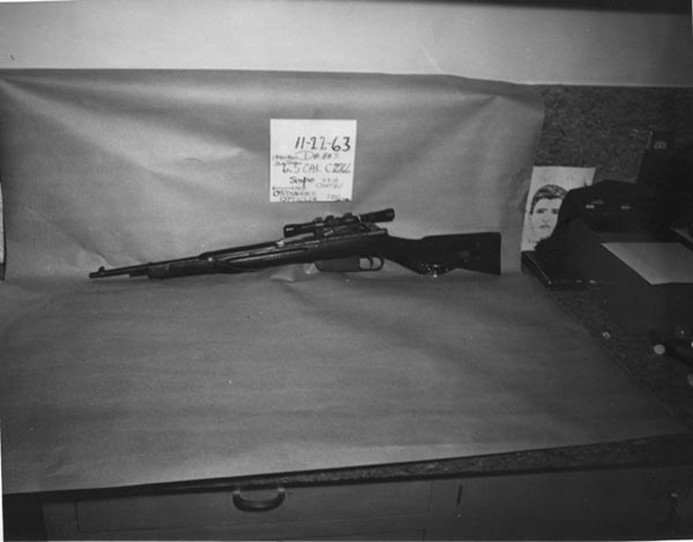
    David Belin. “I am now going to hand you No. 737 and ask you to state if you know what this is.”
    Lt. Carl Day. “Yes, sir. This is the rifle found on the sixth floor of the Texas School Book Depository on November 22, 1963.”
    David Belin. “Who took that picture?”
    Lt. Carl Day. “I took it myself.”
    David Belin. “When?”
    Lt. Carl Day. “About 9 or 9:30 p.m., November 22, on the fourth floor of the City Hall in my office.”
    David Belin. “I am going to now hand you what has been marked as 738 and ask you to state if you know what this is.”
    Lt. Carl Day. “Yes, sir. This is a photograph of most of the evidence that was returned to the FBI the second time on November 26, 1963. It was released to Agent Vince Drain at 2 p.m., November 26.”
    David Belin. “Who took that picture, if you know?”
    Lt. Carl Day. “I took this picture.” (Volume IV; p. 273/274)

    What is striking here is Belin’s detailed questioning about CE737, contrasted with the absence of similar scrutiny for CE738.

    Day’s unconventional decision to combine evidence from two distinct murder investigations into a single image invites additional scrutiny. This method jeopardizes the integrity of both cases, casting a spotlight on Day’s actions and honesty.

    Even if 738 was taken on November 26, after Oswald’s death, the visible cross-contamination within the image questions the reliability of the evidence. Such contamination could render the evidence in this photograph completely useless for future testing. Given the visible cross-contamination, we cannot confidently assert that the evidence was properly handled outside this photograph.

    These factors, including Day’s contested integrity, have substantial implications for the case against Oswald. While Henry Wade might have sought to convince the jury of the state’s evidence’s authenticity, the introduction of this photographic record could cast severe doubt on his case.

    If Oswald had competent legal counsel, this photograph could be pivotal in challenging the state’s case. By emphasizing the potential mishandling and cross-contamination of the evidence, the defense could argue that the evidence’s integrity has been compromised. This photograph serves as a compelling visual aid to underscore these arguments and introduce reasonable doubt about Oswald’s alleged connection to the crimes. Furthermore, the defense could question the rationale behind the Dallas Police’s decision to consolidate evidence from two separate homicide investigations into one photograph – a practice that strays from standard procedure and threatens the reliability of the evidence. Such reasoning could critically undermine the jury’s confidence in the prosecution’s case.”

    23. The Paraffin Test.

    Commission Conclusion.“One would therefore not expect nitrates to be deposited upon a person’s hands or cheeks as a result of his firing a rifle.” (WCR; p. 561)

    “I know that if the case, which has been presented against him, is full of falsehoods and contradictions and I know that right now in the office of the Dallas District Attorney, is a paraffin test which shows that Lee Harvey Oswald did not fire a rifle on November 22 1963. I know that because I have a photostatic copy of that document.” Mark Lane. (see here)

    Just a few hours after the assassination of President Kennedy, Lee Oswald was subjected to a standard forensic procedure applied to individuals suspected of having recently discharged a firearm. This involved a method known as the paraffin test, where a layer of liquid paraffin wax was meticulously applied over the surfaces of Oswald’s hands and onto his right cheek. The principle behind this test was that once the paraffin hardened, it would act as a non-invasive extraction tool, capable of pulling out the most minute residues trapped deep within the pores of his skin, residues that could potentially originate from the firing of a weapon.

    Dr. M. S. Mason, Director of the Dallas City County Criminal Investigative Laboratory, conducted these tests on behalf of the Dallas Police. The items he examined included:

    Exhibit 1. “One manila envelope containing a paraffin cast of the right side of the face of Lee Oswald”.

    Exhibit 2. “One manila envelope containing a paraffin cast of the left hand of Lee Oswald.”

    Exhibit 3. “One manila envelope containing a paraffin cast of the right hand of Lee Oswald.” (see this and this)

    Dr. Mason employed spectrographic analysis, a method regularly used by law enforcement, for the initial test. His findings, reported to the Dallas Police on November 23, 1963, revealed that “No Nitrates were found on exhibit 1. Nitrate patterns consistent with the subject having discharged a firearm were present on exhibits 2 and 3.” The analysis showed evidence of barium and antimony on Oswald’s hands but not on his cheek.

    It is worth noting that these residues, which contain distinct elements like barium and antimony, can also be found in various everyday substances such as “Printing Ink, Paper, Rubber, Plastics, Urine, Tobacco, Cosmetics, and Pharmaceuticals,” etc. Considering Oswald’s job at the Texas School Book Depository, where he frequently handled books, as an order filler, cautious interpretation of these test results is necessary. (WCR; p. 561/562)

    Though spectrographic analysis was deemed reliable enough for most criminal investigations, the lack of positive results on Oswald’s cheek prompted the need for a more incisive examination. This led to the paraffin cast’s being subjected to the process of Neutron Activation Analysis (NAA). This method is capable of detecting the presence of substances in quantities much too small to be identified by spectrographic analysis.Picture4
    Picture5The proposal to subject Oswald’s paraffin casts to Neutron Activation Analysis (NAA) evidently provoked a tangible sense of apprehension within the FBI ranks. This unease seemingly sprang from the potential revelation of exculpatory evidence through the test results. If such evidence was uncovered in Oswald’s favor, it would support the claim that Oswald had not operated a rifle on November 22, 1963, thereby significantly advancing the case for his exoneration.

    On November 27, 1963, in an FBI memorandum, Mr. Jevons (FBI) suggests to his superior, Mr Conrad (FBI), that NAA should be used on Oswald’s casts, “To protect the Bureau against any possible future allegations that if Neutron Activation Analysis type of analysis had been conducted [on the paraffin casts], one might have contained extremely significant data.” Jevons also noted that “allegations might originate from relatively highly placed individuals in the Atomic Energy Commission, charged with developing NAA, who will recognise the publicity potential of such allegations.” Aware of the Bureau’s apprehensions, Mr. Jevons gives such reassurances as, “Oswald is now dead and there will be no trial… Any such examinations will, of course, be with the strict understanding that the information and dissemination of the results will be under complete FBI control.” (see this)

    The results of neutron activation analysis corroborated the findings of the spectrographic examination. No gunpowder residue was present on Lee Oswald’s face, indicating innocence. (see this)

    Despite having knowledge of the genuine results of the Spectrographic Analysis on November 23, 1963, the Dallas Police brazenly announced that Oswald’s paraffin test had returned positive results. This false assertion, deliberately disseminated by members of the Dallas Police and prosecutorial officials, stemmed from their distorted interpretation of the paraffin test findings pertaining to Lee Oswald. The dissemination of such groundlessly accusatory information to the media not only undeservedly cast Oswald in a shroud of suspicion, but it also egregiously violated his constitutional rights. Their contentious remarks, thoroughly marred by deception, are reproduced below for closer scrutiny.

    11/23/63. City detective Charles Brown said he believed the hand tests were positive but was not certain about results of a paraffin test on Oswald’s face.

    11/23/63. Brown said he has great faith in paraffin tests. (AP, 9:42 a.m. CST, Raymond Holbrook and Peggy Simpson.)

    11/23/63. Dallas. Oswald, charged last night with murdering the President, insisted he is not the assassin. But an officer said today, I think we got some good results from the paraffin test on both Oswald’s hands.

    11/23/63. Dallas. Curry said … paraffin tests, made to determine from powder residue whether Oswald had fired a gun, were positive. This meant Oswald had fired a weapon within a short time before he was arrested. Apparently, it could have been either a rifle or a pistol – or both. They wouldn’t say. (AP, 1:50 pm CST Peggy Simpson.)

    11/24/63 Dallas. But a Dallas detective, Charles Brown, said a paraffin test of Oswald’s face and hands for gunpowder particles got good results. The paraffin tests, he said, indicated Oswald recently had fired a rifle – the type of weapon used to kill the President. The gunpowder on the face would come from cradling a rifle against the right cheek while the marksman took aim. It was pointed out that Oswald was also accused of killing Dallas patrolman J. D. Tippitt with a pistol while allegedly trying to flee the assassination scene.

    “Wouldn’t this also leave gunpowder traces on the suspect’s hands?” was one question. But Dallas police indicated that their tests were able to distinguish between gunpowder from a pistol and rifle. (San Francisco Examiner, p. 1 col. 8, Bob Considine, Hearst Headline Service)

    11/24/63. Henry Wade.

    Reporter. “What about the Paraffin tests?”
    Henry Wade. “Yes, I haven’t gone into that. The paraffin tests show he recently fired a gun, it was on both hands.”
    Reporter. “Recently fired a rifle?”
    Henry Wade. “A gun.”

    The Director of the F.B.I. in the Dallas-Fort Worth area in charge of the investigation stated: “I have seen the paraffin test. The paraffin test proves that Oswald had nitrates and gunpowder on his hands and face. It proves he fired a rifle on November 22.” (The Minority of One, 9/64, p.11, “16 Questions on the Assassination”, Bertrand Russell)

    Despite being fully aware of the results of the spectrographic analysis, the Dallas Police persisted in asserting publicly that the findings supported Oswald’s guilt. In certain instances, they went so far as to claim that the test had conclusively detected nitrates on his cheeks, which is an entirely false and fraudulent assertion. (see this)

    (Henry Wade, 11/24/63 Press Conference)

    Nestled within the speculative discourse and conjecture section of the Report, one can find the following declaration:

    Speculation: “Gordon Shanklin, who was the Special Agent in charge of the Dallas office of the FBI, posited that the paraffin test conducted on Oswald’s face and hands produced positive results, indicating that Oswald had indeed fired a rifle.”

    Commission Finding: “However, it’s essential to note that the paraffin tests were undertaken by members of the Dallas Police Department, and the subsequent technical examinations were carried out by the Dallas City-County Criminal Investigation Laboratory. The Commission was notified by the FBI that neither Shanklin nor any other FBI representative had ever made such a claim. The Commission found no substantiating evidence that Special Agent Shanklin had publicly voiced this statement.”

    These statements were underpinned by a letter from J. Edgar Hoover to J. Lee Rankin, dated September 14, 1964. In this communication, Hoover addressed the claim that “Special Agent in Charge, J. Gordon Shanklin of our Dallas Office made a public statement about a paraffin test performed on Lee Harvey Oswald.” Shanklin advised Hoover that he had made no such statement, dubbing the allegation as “completely unfounded.”

    Nonetheless, a conflicting report surfaced from The New York Times on November 25, 1963, claiming Shanklin as the source of the information about Oswald’s positive paraffin tests. The report detailed, “Already the authorities have collected evidence of all sorts, Gordon Shanklin, the FBI agent in charge of Dallas, said today…The FBI noted these other pieces of evidence, which have been assembled by the Dallas Police, FBI, and Secret Service… A paraffin test, used to determine if a person has recently fired a weapon, was administered to Oswald shortly after he was apprehended Friday. It showed particles of gunpowder from a weapon, probably a rifle, remained on Oswald’s cheek and hands” (NY Times; Fred Powledge; November 25th, 1963).

    During the Warren Commission hearings, FBI Special Agent Cortland Cunningham testified about the results of paraffin tests conducted on Lee Oswald. The specific tests in question were aimed at determining whether Oswald had recently fired a weapon, specifically the Mannlicher Carcano, C2766.

    Melvin Eisenberg, one of the Commission’s counsels, inquired whether Cunningham’s tests, or his experience with revolvers and rifles, could shed any light on the significance of a negative result being obtained on the right cheek, stating,

    Melvin Eisenberg.”A paraffin test was also run of Oswald’s cheek, and it produced a negative result.”
    Cortland Cunningham
    . “Yes.”
    Melvin Eisenberg. “Do your tests, or do the tests which you ran, or your experience with revolvers and rifles, cast any light on the significance of a negative result being obtained on the right cheek?”
    Cortland Cunningham. “No, sir; I personally wouldn’t expect to find any residues on a person’s right cheek after firing a rifle due to the fact that by the very principles and the manufacture and the action, the cartridge itself is sealed into the chamber by the bolt being closed behind it, and upon firing the case, the cartridge case expands into the chamber filling it up and sealing it off from the gases, so none will come back in your face, and so by its very nature, I would not expect to find residue on the right cheek of a shooter.”

    Cunningham then testified that he, alongside fellow FBI Agent Charles Killion, executed a rapid-fire test with the rifle, yielding negative results for residues on both the cheek and hands.

    Melvin Eisenberg. Also, before firing the rifle?
    Cortland Cunningham. Yes. We fired the rifle. Mr. Killion fired it three times rapidly, using similar ammunition to that used in the assassination. We reran the tests both on the cheek and both hands. This time we got a negative reaction on all casts.
    Melvin Eisenberg. So, to recapitulate, after firing the rifle rapid-fire no residues of any nitrate were picked off Mr. Killion’s cheek?
    Cortland Cunningham. That is correct, and there were none on the hands. (Volume III; p. 492-494)

    However, Cunningham’s statements were refuted by two different pieces of evidence. The first comes from Vincent P. Guinn, head of the Neutron Activation Analysis (NAA) Section of the General Atomic Division, of the General Dynamics Corporation, in February 1964. Guinn and his colleagues had been using NAA to test the powder residues from discharged firearms. When they ran tests using a rifle similar to the one reportedly owned by Lee Harvey Oswald. Guinn found that “the triple firing of the rifle leaves unambiguous positive tests every time on the paraffin casts. Because of the inferior construction of the Carcano the blowback from one or three shots deposited powder residue on both cheeks of the shooter.(Gerald McKnight, Breach Of Trust; p. 211)

    The second piece of evidence comes from Harold Weisberg, a first-generation researcher who successfully sued for the actual test results from the FBI. Within the records he received, it was stated “These paraffin tests were subjected to NAA…there is no similar evidence [Nitrate] on [Oswald’s] cheek. The tests given me show that in seven “control” cases where others fired a rifle this evidence [Nitrate] was left on the cheeks.” This evidence stands as a direct challenge to Cunningham’s claim that residue wouldn’t be found on a shooter’s cheek. (Weisberg, Post Mortem; p. 437)

    Regrettably, the all-encompassing data yielded from Cunningham’s test – including unprocessed results, spectrographic or neutron activation analyses, photographic proof, and procedural documentation – remains unrevealed. Which makes his testimony problematic to present at trial, especially with the countering evidence described above. That evidence appears to be exculpatory.

    Also why weren’t the clothes worn by Oswald at the Texas School Book Depository and subsequently at his arrest at the Texas Theatre subjected to a gunshot residue analysis? Implementing these tests could have furnished critical evidence that either substantiated or refuted his involvement in the President’s assassination.

    The problems with this evidence shine a spotlight on a fascinating facet of the case. It compelled the Commission to cast a skeptical eye on the veracity of these findings, and the test itself; thereby shrouding these potentially vindicating results in a fog of uncertainty.

    Even Commission counsel Norman Redlich, in a memorandum to Commissioner Alan Dulles, noted, “At best, the analysis shows that Oswald may have fired a pistol, although this is by no means certain. … There is no basis for concluding that he also fired a rifle.” (McKnight, p. 207)

    24. The Dallas Police Line-Ups.

    Commission Conclusion. “The Commission is satisfied that the line ups were conducted fairly.” (WCR; p.169)

    The Department Of Justice.“Testimony concerning a line up or showup identification is inadmissible if, considering the totality of the circumstances, the identification procedure was so impermissibly suggestive as to give rise to a very substantial likelihood of misidentification.” (see here)

    Between November 22 and 23, 1963, a series of line-ups were convened involving Lee Oswald, various Dallas Police personnel, and city prisoners held for unrelated offences. In every instance the participants were required to state their name and occupation to the identifying witness. It is important to note that while some participants provided false information during these line-ups, Oswald consistently provided accurate details about himself, more specifically his infamous name and place of employment, the Texas School Book Depository. Highly concerning is the fact that this information was widely publicised through the media, and many witnesses reported to having observed Oswald’s photograph on television prior to attending the actual line-ups.(Volume VII; p. 239.)

    Joesph Ball. “Now, back to the first showup, did the detective ask you any questions? Ask your name and address and occupation?”
    R. L. Clark. “Yes, sir.”
    Joesph Ball.
    “What did he ask you?”
    R. L. Clark.
    “He asked me my name.”
    Joesph Ball. “Did you give him your real name?”
    R. L. Clark.
    “No, sir.”
    Joesph Ball.
    “Fictitious name?”
    R. L. Clark. “Yes, sir.”
    Joesph Ball.
    “Ask you your occupation?”
    R. L. Clark.
    “Asked my occupation.”
    Joesph Ball.
    “What did you tell him?”
    R. L. Clark
    . “I don’t recall. All of them are fictitious.”
    Joesph Ball.
    “Fictitious?”
    R. L. Clark.
    “Yes, sir.” (Volume XII; p.237/238.)
    Joesph Ball.Policeman ask you any questions? Detective ask you any questions?”
    William Perry.
    “Yes, sir; my name and what have you.”
    Joesph Ball.“Well, what do you mean, “what have you.”?
    William Perry.
    Well, occupation.”
    Joesph Ball.“And what answer did you give him?”
    William Perry.
    “I gave him all fictitious answers.” (Volume XII; p. 234.)
    Joesph Ball.“Did the detective ask you name?”
    Daniel Lujan. “Yes, sir.”
    Joesph Ball.“And did you tell him your name?”
    Daniel Lujan. “Yes, sir.”
    Joesph Ball.“Did he ask your occupation?”
    Daniel Lujan. “Yes, sir.”
    Joesph Ball.“What did you tell him?”
    Daniel Lujan. “Working for S. & F. Meat Co.” (Volume XII; p 245/246)

    The judicial system has established rules by which police departments must adhere to in the assembly of line ups for witness identification. These rules, crucial for maintaining fairness and objectivity, are as follows:

    Participant Similarity: ‘Fillers’ should generally resemble the suspect’s description. This includes aspects like height, weight, age, race, and other distinctive features.

    Inadmissible Lineups.When the others are grossly dissimilar in appearance from the suspect.” (see here)

    Cecil McWatters.“No, sir; they were different ages, different sizes and different heights.” (Volume II; p. 270)

    Lineup Size: A lineup should, by standard, include at least five ‘fillers’ in addition to the suspect. This discourages the suspect from being conspicuously distinctive.

    Suspect’s Position: Suspects should have the liberty to choose their position in the lineup, rather than being consistently stationed at a specific number.

    Oswald, Number 2 man: 3 times. Number 3 man:1 time.

    Witness Instructions: The Police Department should make it clear to the witness that the perpetrator may not be part of the line up, relieving them from the pressure to identify someone.

    David Belin. “Did they tell you one of the men was the man you saw or not, or did they tell you “See if you can”–just what did they say? Did they say, “Here is a lineup, see if you-can identify anyone,” or did they say, “One of the men in the lineup”
    William Scoggins. “Yes, I believe those are the words they used.” (Volume III; p.334)

    Clothing Change: In instances where multiple line ups are conducted, suspects should have their clothing changed. This prevents identification based on clothing instead of physical traits. On November 22, 1963, during all three line-ups, Oswald consistently wore the same clothes, except for the Saturday line-up conducted on November 23. During that particular line-up, Oswald’s brown long-sleeved shirt was missing, as it had been sent to Washington.

    Non-Suggestive Environment: The lineup setting must be unbiased and devoid of suggestive elements. Police officers, for instance, should refrain from hinting at the identity of the suspect.

    Inadmissible Lineups. “When the suspect is pointed out before or during the procedure.” (see here)

    Captain Will Fritz or Jim Leavelle, intimated to an audience which included Ted Calloway, Sam Guinyard and Cecil McWatters that: “We want to be sure. We want to try and wrap him up real tight on killing this officer. We think he is the same one that shot the President, and if we can wrap him up tight on killing this officer, we have got him.” (Volume III; p. 355) (watch this) (see here)

    Line up Protocol and its Importance:

    Inadmissible Lineups. “When an identification is made in the presence of other identifying witnesses.” (see here)

    Adhering to a rigorous and standardized protocol for police line ups is crucial in maintaining the reliability and integrity of witness testimony. This includes taking careful measures to ensure witnesses are kept separate from each other to mitigate any potential influence that may arise from shared discussions or collective reactions. Encouraging each witness to independently identify the suspect underscores the importance of their testimony being solely rooted in their own recollections.

    The primary objective of this protocol is to minimize the risk of corrupting the identification process. Allowing witnesses to converse about the event or discuss the suspect’s attributes could lead to the contamination of the process. Such discourse could inadvertently foster groupthink, induce false positives, or in the worst-case scenario, yield tainted identifications.

    The consequences of such errors are severe and far-reaching. They could trigger misidentifications and, subsequently, wrongful convictions.

    What follows is a compilation of witness testimonies presented to the Commission. These statements confirm that the Dallas Police Department failed to adhere to the established protocol, jeopardizing the integrity of the investigation.

    Sam Guinyard.

    Joseph Ball. “Were you with Ted [Calloway] at the time?”
    Sam Guinyard. “Yes, sir.”
    Joseph Ball. “How close was Ted to you?”
    Sam Guinyard. “Oh, sitting about like that.”
    Joseph Ball. “You mean 3 or 4 feet away from you?”
    Sam Guinyard. “Yes, something like that.” (Volume VII; p. 400)

    Ted Calloway.“We first went into the room. There was Jim Leavelle, the detective, Sam Guinyard, and then this bus driver and myself. We waited down there for probably 20 or 30 minutes.” (Volume III; p. 355)
    William Whaley.“Then they took me down in their room where they have their showups, and all, and me and this other taxi driver [William Scoggins] who was with me, sir, we sat in the room awhile and directly they brought in six men, young teenagers, and they all were handcuffed together.” (Volume II p. 260/261)

    William Scoggins.

    David Belin. “Mr. Scoggins, when you identified the man in the line up at the police station on November 23, was there any other person who at the same time was asked to identify a man in that lineup?”
    William Scoggins. “Yes, one other.”
    David Belin. “Do you know-one other person?”
    William Scoggins. “Yes.” (Volume III; p. 337)

    Virginia Davis

    David Belin. “Where was your sister when you identified him?”
    Virginia Davis. “She was sitting right next to me.”
    David Belin. “How did you identify him? Did you yell that this is the man I saw?” Where was the detective? Was he to your right or to your left?”
    Virginia Davis. “Let’s see to my right.”
    David Belin. “Where was your sister, to your right or to your left?”
    Virginia Davis. “Right.”
    David Belin. “As she was to your right, so you leaned over to the detective and told the detective it was No. 2?”
    Virginia Davis. “Yes, sir.” (Volume VI; p. 462)

    The following is a chronological record of the line ups conducted by the Dallas Police Department on 11/22-11/23-1963.

    11/22/63 16:05
    Showup 1.Picture6
    Picture71. William E Perry, Dallas Police Officer. Aged 34. 5’10”1/2”. 170 Pounds. Brown Hair. Blue Eyes. Dark Complexion. Brown Sports Coat. Gave fictitious name and occupation to witness.
    2. Lee H. Oswald, Texas School Book Depository, Warehouse Employee. Tattered Brown Long Sleeved Shirt. Tattered White T-Shirt. Dark Pants. Aged 24. 5’ 9”.131 Pounds. Medium Build. Brown, Receding Hair. Blue Eyes. Bruise Over His Right Eye. Cut On His Forehead.
    3. R. L. Clark, Dallas Police Officer. Aged 31. 5’9,3/4”. 170 Pounds. Blond Hair. Blue Eyes. Ruddy Complexion. Red Vest, Short Sleeve White Shirt, Brown Pants With Belt. Gave fictitious name and occupation to witness.
    4. Don Ables, Dallas Police Jail Clerk. Aged 26. 5’9”. 165 Pounds. Brown Hair. Eyes Brown. Ruddy Complexion. White Shirt, Gray-Knit Sweater. Dark Trousers. Gave fictitious name and occupation to witness.
    (Volume VII; p. 125/168,170,233,236, 241/242)
    Joseph Ball. “It’s unusual to use officers to show up prisoners?”
    Elmer Boyd. “Well, I would say so.”
    Joseph Ball.“Is that usual to use Don Ables, the clerk, in a show up?”
    Elmer Boyd.“No, sir.”
    Joseph Ball.“It is unusual?”
    Elmer Boyd.“Yes.” (Volume VII; p. 125)

    11/22/63 18:20.
    Showup 2.
    1. William E Perry, Dallas Police Officer. Aged 34. 5’10”1/2”. 170 Pounds. Brown Hair. Blue Eyes. Dark Complexion. Brown Sports Coat. Gave fictitious name and occupation to witnesses.
    2. Lee H. Oswald, Texas School Book Depository, Warehouse Employee. Tattered Brown Long Sleeved Shirt. Tattered White T-Shirt. Dark Pants. Aged 24. 5’ 9”.131 Pounds. Medium Build. Brown, Receding Hair. Blue Eyes. Bruise Over His Right Eye. Cut On His Forehead.
    3. R. L. Clark, Dallas Police Officer. Aged 31. 5’9,3/4”. 170 Pounds. Blond Hair. Blue Eyes. Ruddy Complexion. Red Vest, Short Sleeve White Shirt, Brown Pants With Belt. Gave fictitious name and occupation to witnesses.
    4. Don Ables, Dallas Police Jail Clerk. Aged 26. 5’9”. 165 Pounds. Brown Hair. Eyes Brown. Ruddy Complexion. White Shirt, Gray-Knit Sweater. Dark Trousers. Gave fictitious name and occupation to witnesses.
    (Volume VII; p. 125,168,169,170,233,236, 241/242)Picture8
    Joseph Ball.“Were they dressed differently than Oswald?”
    Richard Sims. “Yes; I know they didn’t have the color of clothes on or things like that.”
    Joseph Ball.“His clothes were rougher looking than the other men?”
    Richard Sims.“Well, I don’t imagine that he would be dressed as nice as the officers were, as far as their clothes.” (Volume VII; p. 170)
    Joseph Ball.“The other three were better dressed than Oswald, would you say?”
    Elmer Boyd.“Well, yes, sir; I would say they probably were.”(Volume VII; p. 127)

    11/22/63 19:40
    Showup 3.Picture9
    1. Richard Walter Borchgardt. City Prisoner. Aged 23. 161 Pounds. 5’9”. Brown Hair. Blue Eyes. Fair Complexion.
    2. Lee H. Oswald, Texas School Book Depository, Warehouse Employee. Tattered Brown Long Sleeved Shirt. Tattered White T-Shirt. Dark Pants. Aged 24. 5’ 9”.131 Pounds. Medium Build. Brown, Receding Hair. Blue Eyes. Bruise Over His Right Eye. Cut On His Forehead.
    3. Ellis C. Brazel. City Prisoner.. Aged 22. 5’10”. 169 Pounds. Green Eyes. Blond Hair. Ruddy Complexion
    4.Don Ables, Dallas Police Jail Clerk. Aged 26. 5’9”. 165 Pounds. Brown Hair. Eyes Brown. Ruddy Complexion. White Shirt, Gray-Knit Sweater. Dark Trousers. Gave fictitious name and occupation to witnesses.
    (Volume VII; p. 131/132,170, 41/242

    11/23/63.
    Showup 4.Picture10
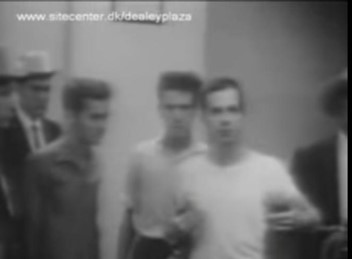
    David Belin. “Had you seen any pictures of Lee Harvey Oswald in the newspapers prior to the time you went to the police station lineup?”
    William Scoggins. “I think I saw one in the morning paper.”(Volume III; p.334)
    1. John T. Horne. City Prisoner. Aged 17. Dark Shirt. Dark Pants. Dark Thick Hair.
    2. David Knapp. City Prisoner. Aged 18. White Shirt. Dark Pants. Dark Thick Hair.
    3. Lee H. Oswald. Texas School Book Depository, Warehouse Employee. Tattered White T-Shirt. Dark Pants. Aged 24. 5’ 9”.131 Pounds. Medium Build. Brown, Receding Hair. Blue Eyes. Bruise Over His Right Eye. Cut On His Forehead.
    4. Daniel Lujan. City Prisoner. Aged 26. 170 Pounds. 5’8”. Black Hair. Brown Eyes. Complexion Olive. Mexican. Blue Shirt. Brown Jacket.
    (Volume VII; p. 170, 245/246) (watch this

    The Curious Case Of Howard Brennan.

    Determining which line up Howard Brennan attended should, in theory, be straightforward. However, the available records yield no clear answer to this surprisingly complex question. This intriguing issue was first highlighted by Ian Griggs, who found no explicit evidence of Brennan attending any specific line up. As outlined in Commission Exhibit 2003, the list of ‘witnesses’ for the line ups is as follows: Helen Markham, Cecil McWatters, Sam Guinyard, Ted Calloway, Barbara Davis, and Virginia Davis on 11/22/63; and William Scoggins and William Whaley on 11/23/63. It is perplexing that the Dallas Police would allow ‘witnesses’ from two distinct homicide cases to participate in the same line up. Furthermore, the actions McWatters and Whaley supposedly witnessed are ambiguous at best. After all, when did taking a bus home or hailing a taxi qualify as a crime?”(Volume XXIV; p. 347)

    For some perspective on this issue, let us first look at the testimony of Brennan himself on this point.

    David Belin.“Now, taking you down to the Dallas Police Station, I believe you said you talked to Captain Fritz. And then what happened?”
    Howard Brennan. “Well, I was just more or less introduced to him in Mr. Sorrels’ room, and they told me they were going to conduct a line up and wanted me to view it, which I did.”
    David Belin. “Do you remember how many people were in the line up?”
    Howard Brennan. “No, I don’t. A possibility seven more or less one.”
    David Belin. “All right. Did you see anyone in the line up you recognized?”
    Howard Brennan. “Yes.”
    David Belin. “And what did you say?”
    Howard Brennan. “I told Mr. Sorrels and Captain Fritz at that time that Oswald–or the man in the lineup that I identified looking more like a closest resemblance to the man in the window than anyone in the lineup.”
    David Belin. “Were the other people in the lineup, do you remember–were they all white, or were there some Negroes in there, or what?”
    Howard Brennan. “I do not remember.” (Volume III; p. 147)

    Here are some notable observations drawn from this excerpt of Brennan’s testimony:

    1. The line-up consisted of four individuals, three fillers and the suspect. If Brennan did indeed view a line-up, how could he possibly forget such a critical detail?
    2. Brennan identified both SS Agent Sorrels and Captain Fritz as present at this line-up.
    3. Curiously, Brennan could not recall the ethnic backgrounds of those in the line-ups. This strikes me as odd. Could Brennan, in his lifetime, have participated in an event more dramatic and pivotal? And in Texas? During segregation?

    The idea that he could forget such fundamental elements of the procedure, assuming he genuinely attended, is quite puzzling to me.

    Now let us take a look at the testimony of Forrest Sorrells.

    Forrest Sorrells. “I got a hold of Captain Fritz and told him that the witness was there, Mr. Brennan. He said, I wish he would have been here a little sooner, we just got through with a line up. But we will get another fixed up. So I took Mr. Brennan, and we went to the assembly room, which is also where they have the line up, and Mr. Brennan, upon arrival at the police station, said, I don’t know if I can do you any good or not, because I have seen the man that they have under arrest on television, and he said. I just don’t know whether I can identify him positively or not because he said that the man on television was a bit dishevelled and his shirt was open or something like that, and he said the man I saw was not in that condition.

    So when we got to the assembly room, Mr. Brennan said he would like to get quite a ways back, because he would like to get as close to the distance away from where he saw this man at the time that the shooting took place as he could.
    And I said, “Well, we will get you clear on to the back and then we can move up forward.
    They did bring Oswald in in a line up. He looked very carefully, and then we rooted him up closer and so forth, and he said, I cannot positively say.
    Sam Stern. “How many other people were in the line up?”
    Forrest Sorrells. “As I recall it, there were five. In other words, all told there was five or six-I don’t remember. I believe there were five.”
    Sam Stern. “Were the others reasonably similar to Oswald in height and physical appearance, and color?”
    Forrest Sorrells. “I noted that to me I thought it was a very fair line up, because they didn’t have anyone that was a lot taller than he was, or anyone a lot shorter. They didn’t have any big fat ones or anything like that. In other words, to me it was a good lineup.” (Volume XII; p. 354/355)

    1. In an affidavit dated November 22, 1963, Mr. Brennan asserted that “he could identify the man if he ever saw him again”, as noted in point 7.
    2. Sorrells failed to specify which line-up Brennan attended or identify any other attendees of the line-up.
    3. Sorrells estimates that there were either “five or six” individuals present at the line-up. It raises questions about Sorrells’ accuracy, given that only four individuals were supposed to be viewed.
    4. Sorrells described it as a “very fair line-up.” This mysterious line-up, which Mr. Brennan allegedly attended, appears to be more of an anomaly than the norm. Given what we know, it’s impossible for an unbiased observer to conclude that the line-ups conducted by the Dallas Police Department were anything but fundamentally flawed, exhibiting a shocking disregard for established protocols.

    Lastly, let’s examine the testimony of Will Fritz regarding this matter.

    John McCloy.“Were you present at the show up at which Brennan was the witness?”
    Will Fritz. “Brennan?”
    John McCloy. “Brennan was the alleged…”
    Will Fritz. “Is that the man that the Secret Service brought over there, Mr. Sorrels brought over?”
    John McCloy. “I don’t know whether Mr. Sorrels…”
    Will Fritz. “I don’t think I was present but I will tell you what, I helped Mr. Sorrels find the time that that man–we didn’t show that he was shown at all on our records, but Mr. Sorrels called me and said he did show him and he wanted me to give him the time of the showup. I asked him to find out from his officers who were with Mr. Brennan the names of the people that we had there, and he gave me those two Davis sisters, and he said, when he told me that, of course, I could tell what showup it was and then I gave him the time.”
    John McCloy. “But you were not present to the best of your recollection when Brennan was in the showup?”
    Will Fritz. “I don’t believe I was there, I doubt it.” (Volume IV; p. 237)

    Here are some notable observations drawn from this excerpt of Fritz’s testimony:

    1. Strangely, Fritz appears not to recognize the name Brennan, even though Brennan was a pivotal witness in his case.
    2. Fritz seems to distance himself from the assertion that he was present at Brennan’s line-up.
    3. According to Fritz, it was Sorrells who informed him that Brennan had been taken to a line-up. Oddly, however, Sorrells wanted Fritz to specify the time of the line-up.
    4. It raises the question, who are the officers that Fritz is referencing?
    5. As Ian Griggs highlights, Brennan did not attend the Davis sisters’ line-up. Griggs posed this query to Dale Myers, who in turn asked Barbara Davis if Brennan or someone fitting his description had been present at her line-up. Barbara’s response was: “Just me and my sister-in-law and some guys from law enforcement” (No Case To Answer; pp. 92/93).
    6. Lastly, if Brennan did indeed attend a line-up, it’s perplexing as to why his name was not listed in any of the Dallas Police Department records concerning these line-ups.

    As highlighted by Ian Griggs, the undeniable facts remain that:

    1. “Brennan or his description, does not appear in the testimony of any of the other eyewitnesses who attended the line-ups. Markham, Calloway, Guinyard, McWatters, Barbra and Virginia Davis, Scoggins, Whaley, fail to mention Brennan.”
    2. “The name Brennan does not appear in the testimony or affidavits of any of the DPD officers who supervised the line-ups on record. Chief Curry, Sims, Boyd, Graves, Leavelle, Dhority, Moore, Potts, Brown, Hall, Senkel.” (Griggs, pp. 77-100)

    Brennan’s name is not only absent from the DPD’s records relating to line-ups, but also from the testimonies and affidavits of the officers present at the other line-ups. Why is this the case? Despite its seemingly straightforward nature, why is there a sense of obfuscation around this event?Picture11
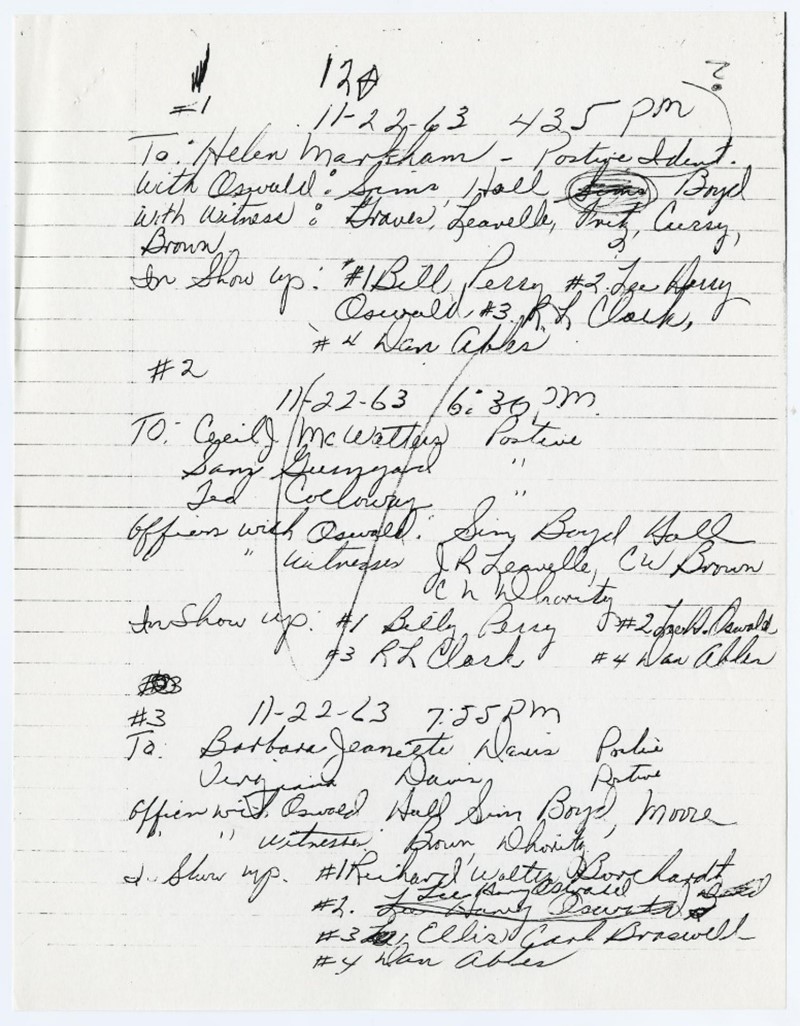
    Picture12Dr Buckout Evaluates.

    In 1979, the late Larry Harris approached Dr. Robert Buckout to assess the Dallas Police line-ups in which Lee Oswald was subjected to. Dr. Buckout, a renowned expert in eyewitness testimony and identification procedures, reached a clear conclusion. He stated,

    “By any stretch of the imagination, virtually every rule in the book was violated in the conduct of these line-ups. The results of any of the line-ups conducted as poorly and under hysterical circumstances, as they were, should be regarded as utterly worthless.” (watch this)

    Line-up participate Daniel Lujan on Oswald’s objections to the lineup:

    Joesph Ball.“You were handcuffed to Oswald?”
    Daniel Lujan. “Yes, sir.”
    Joesph Ball. “He was complaining, was he?”
    Daniel Lujan. “About having a T-shirt and wanted a jacket or something.”
    Joesph Ball.“Oswald was doing some talking?”
    Daniel Lujan.“Yes.”
    Joesph Ball. “Was he shouting loud?”
    Daniel Lujan. “He was shouting. He, he was shouting, said all of us had a shirt on and he had a T-shirt on. He wanted a shirt or something.” (Volume XII; p. 245/246)

    Dr. Buckout’s assessment illuminates the serious flaws and deficiencies in the line-ups conducted by the Dallas Police Department. As an expert in the field of eyewitness testimony and identification procedures, his conclusion carries substantial weight, suggesting that the line-ups were conducted in a manner that not only violated established protocols but implies that they were conducted in such a manner which would reach a desired conclusion. Additionally, the actions of Fritz/Leavelle exposes a specific agenda and a desire to not only link Oswald to the murder of Officer Tippit, but also to the assassination of President Kennedy. It suggests a deliberate effort to construct a strong case against Oswald by solidifying his involvement in both crimes. This highlights the Dallas Police’s predisposition to connect Oswald to both murders, thereby influencing the direction of the investigation and subsequent legal proceedings. This again raises serious questions regarding Oswald’s treatment at the hands of the Dallas Police.

    “When a line up or showup is conducted in violation of the defendant’s right to due process, an in-court identification of the defendant will not be permitted unless the government can establish an independent source. The factors used to establish an independent source where a line up or showup has been conducted in violation of the defendant’s right to counsel are also applicable here.” (see here)

    25. Oswald Gets No Defense.

    Marguerite Oswald:“My son, Lee Harvey Oswald, was tried and convicted within a few hours time, without benefit of counsel. And so, I am appealing to the Board that my son, Lee Harvey Oswald, be represented by counsel… I implore you, I implore you, in the name of justice, to let my son, Lee Harvey Oswald, who is accused of assassinating the President, and I, the mother of this man, who is the accused’s mother, be represented by counsel. Marguerite Oswald. (Volume I; p. 127/128)

    Mark Lane, a seasoned attorney and vocal critic of the case against Oswald, was enlisted by Marguerite, Oswald’s mother. He put forth a petition to the Warren Commission, articulating his intent to advocate for Oswald’s legal rights during the forthcoming hearings. Prior to this, Lane had addressed a letter to Chief Justice Earl Warren, stating, “It would be appropriate that Mr. Oswald, from whom every legal right was stripped, be accorded counsel who may participate with the single purpose of representing the rights of the accused.” Nonetheless, Lane’s request to represent Oswald was rejected. As substantiation, Lane cited a letter dated January 23, 1964, from J. Lee Rankin, the Commission’s counsel. The correspondence stated, “The Commission does not believe that it would be useful or desirable to permit an attorney representing Lee Harvey Oswald to have access to the investigatory materials within the possession of the commission or to participate in any hearings to be conducted by the commission.” Earl Warren also informed Lane “that Oswald was not on trial, and that counsel would not be permitted to represent him”(NY Times, 26 Feb 1964; p. 17)

    26. President Kennedy’s Clothing.
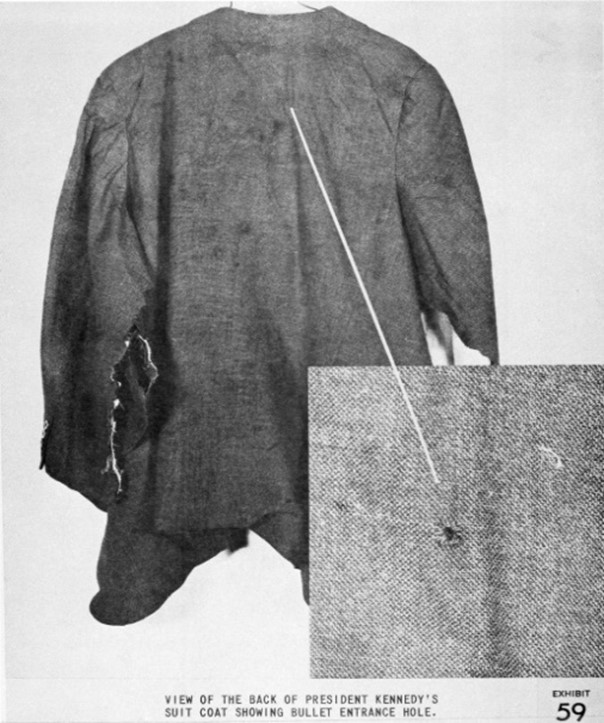
    Picture13Commission Conclusion. “President Kennedy was first struck by a bullet which entered at the back of his neck and exited through the lower portion of his neck.” (WCR, P19.)Picture14
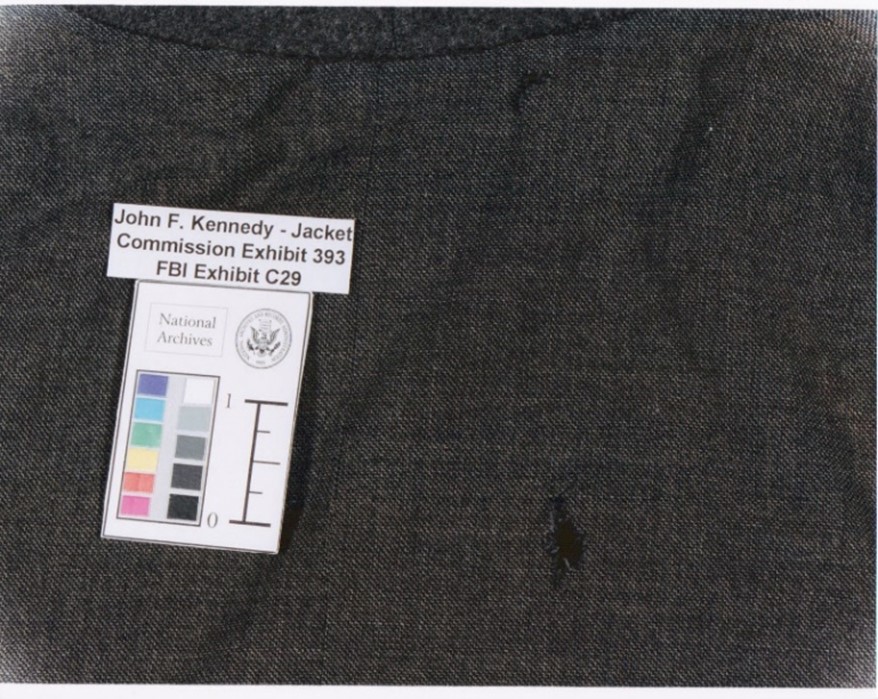
    The clothing worn by President Kennedy serves as compelling evidence in this case. An examination of the garments reveals that President Kennedy sustained a gunshot wound in the upper portion of his back, specifically near the third thoracic vertebra. This fact finds support in numerous eyewitness testimonies and the documented evidence on the record. Had Oswald gone to trial, it would have been imperative for Henry Wade to demonstrate to the jury that despite the President’s shirt and jacket displaying a clear and concise bullet hole in the back, the actual entry point of the sustained injury was at the base of President Kennedys neck.

    Sibert & O’Neill

    FBI agents James Sibert & Francis O’Neill took meticulous notes during the Presidents autopsy. Included in these notes is a detailed description of the wounds sustained by the President.

    “During the latter stages of this autopsy, Dr Humes located an opening which appeared to be a bullet hole which was below the shoulders and two inches to the right of the middle line of the spinal column. This opening was probed by Dr Humes with the finger, at which time it was determined that the trajectory of the missile entering at this point had entered at a downward position of 45 to 60 degrees. Further probing determined that the distance travelled by this missile was a short distance as much as the end of the opening could be felt with the finger.” (Sibert and O’Neil Report on the Autopsy 11/26/63) (see this)

    Admiral George Burkley, Official Whitehouse Death Certificate, 11/23/63. “A second wound occurred in the posterior back at about the level of the third thoracic vertebra.” (see this)Picture15
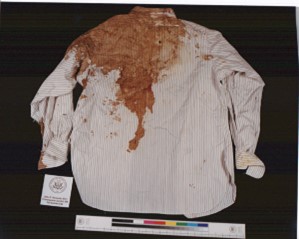
    Picture16Admiral George Burkley.Signed “verified” to the Autopsy Face sheet which depicts the wound in President Kennedy’s back way below the neckline, around the third thoracic vertebra.

    Clint Hill.“I saw an opening in the back, about six inches below the neckline to the right-hand side of the spinal column.”(Volume II; p.143)

    Roy Kellerman.“While the President is in the morgue, he is lying flat. And with part of the skull removed, and the hole in the throat, nobody was aware until they lifted him up that there was a hole in the shoulder. That was the first concrete evidence that they knew that the man was hit in the back first.” (Volume II; p.103)

    Roy Kellerman.“The other wound I noticed was in his shoulder”.

    Arlen Specter.“Which Shoulder”
    Roy Kellerman. “Right shoulder…the upper neckline, sir, in that large muscle between the shoulder and the neck, just below it.” (Volume II; p. 81)

    Glen Bennett.“At this exact time, I saw a shot that hit the Boss about 4 inches down from the right shoulder; a second shot followed immediately and hit the right rear high of the Boss’s head.” (Volume XXIV, pp. 541/542)

    Willam Greer. “It was, to the best of my recollection it was, back here, just in the soft part of the shoulder.” (Volume II; p.127)

    Paul O’Connor.“Finally, we turned the body over, and there was a bullet wound-an entrance wound-in his back, on the right side of his spinal column. To emphasize where it was in proximity to the rest of his body: if you bend your neck down and feel back, you feel a lump and that’s the seventh cervical vertebra. This bullet wound was about three inches down and an inch or two to the right of the seventh cervical vertebra.” (William Law, In The Eye Of History; p.199)

    Jim Jenkins.“There was a bullet wound around the scapula in the back.”
    William Law. “How far do you say that was. Give me an estimate: T1, T2-?”
    Jim Jenkins. “He thinks, reaching around touching his back…I would say say about T4” [the fourth thoracic vertebra. (Law, p.226)

    Pierre Finck, one of three autopsy pathologists who conducted the President’s autopsy has revealed that: “I was denied the opportunity to examine the clothing of Kennedy. One officer who outranked me told me that my request was only of academic interest. The same officer did not agree to state within the autopsy report that the autopsy was not complete, as I had suggested to indicate. I saw the clothing of Kennedy, for the first time on March 16, 1964, at the Warren Commission, before my testimony, more than 3 months after the autopsy.” see this

    Pathologist Gerald Ford.

    A declassified document released by the ARRB (Assassination Records Review Board), proves that Commissioner Gerald Ford made a critical change to the wording of the Warren Report, which describes the location of the wound on the President’s back. The original version explicitly described that “A bullet had entered at the back at a point slightly above the shoulder to the right of the spine.” This description was consistent with the verified autopsy face sheet, the death certificate, and numerous witness testimonies. However, Ford revised the report to state that the bullet entered at the back of the neck, thereby bolstering the credibility of the Single Bullet Theory (SBT). And, more importantly, keeping the blame for the assassination solely on Lee Oswald. Fords revision stated that “President Kennedy was first struck by a bullet which entered at the back of his neck.” This alteration not only calls into question the integrity of the report, but it appears to be a deliberate manipulation of the facts by an elected official. This was done purely to save the circumstantial case against Oswald. Alongside other fraudulent exhibits such as CE1302, these revisions underscore the practices employed by the Commission (See the film, JFK:Destiny Betrayed, Episode 3; WCR; p.19)

    To summarize, the jacket and shirt of President Kennedy effectively serve as evidence that exonerates Oswald in the case, especially the shirt since these were tailored. Examination of the clothing reveals a gunshot wound in the upper portion of the President’s back, near the third thoracic vertebra. This finding is supported by eyewitness testimonies and documented evidence. However, in the aftermath of the autopsy, Dr. Finck has revealed that he was denied access to the President’s clothing, thus limiting the ability of the pathologists to thoroughly examine the evidence during the procedure. Gerald Ford made a critical change to the wording of the report, regarding the placement of the back wound. The original version accurately described the entry point above the shoulder to the right of the spine, but Ford revised it to support the Single Bullet Theory (SBT). This alteration raises serious concerns about the modus operandi of the Commission. It suggests a deliberate manipulation of facts to maintain a predetermined theory that Oswald was the lone assassin.

    27. Admiral Burkley vs. The Warren Report.
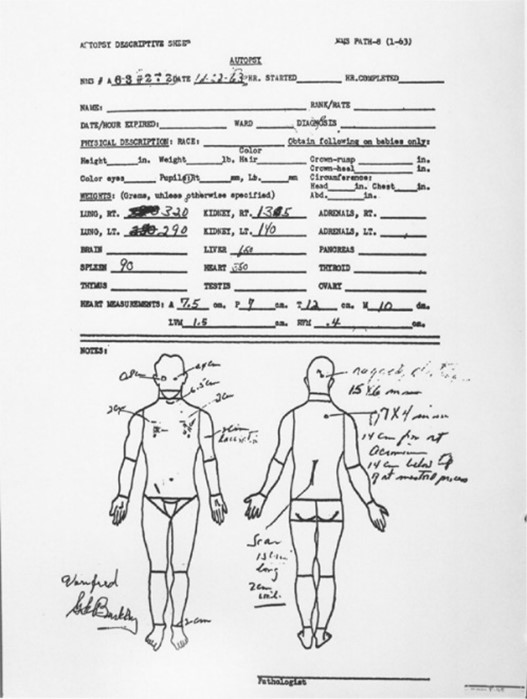
    Picture17“Dulce et decorum est, pro patria mori.” Wilfred Owen.

    Admiral George Burkley, President Kennedy’s personal physician who was present at both Parkland and Bethesda, had firsthand experience witnessing the fatal wounds sustained by the President. Given the significance of his testimony in establishing the facts surrounding the nature and locations of President Kennedy’s injuries, it was crucial for Dr. Burkley’s account to be heard on the record.However, astonishing it may seem, Dr Burkley was not called to testify before the Warren Commission.

    In a 1967 interview with the John F. Kennedy Presidential Library, Burkley declined to comment on the findings of the Commission.

    Interviewer– “Do you agree with the Warren Report on the number of bullets which entered the Presidents body?”Burkley – “I would not care to be quoted on that.” (see this)

    28. Uncovering the Whitewash: Jim Humes and The ARRB.

    James Humes: “In [the] privacy of my own home, early in the morning of Sunday, November 24, I made a draft of this report which I later revised, and of which this [handwritten draft of autopsy report] represents the revision. That draft I personally burned in the fireplace of my recreation room.” Commander J. J. Humes. (Volume II; p. 373)

    Michael Baden: “Where bungled autopsies are concerned, President Kennedy’s is the exemplar.” (James DiEugenio, Reclaiming Parkland; p.37)

    Chief autopsy surgeon Commander J.J. Humes destroyed crucial medical evidence on November 24, 1963, which had significant implications for the case against Oswald. This evidence consisted of the initial draft of President Kennedy’s autopsy report and the accompanying notes it was based upon. It is noteworthy that Humes alleged destruction occurred only after Lee Oswald had been shot to death by Jack Ruby. Humes testified: “The final changes in the notes prior to the typing of the report were made, and I will have to give you the time because whatever time Mr. Oswald was shot, that is about when I finished. I was working in an office, and someone had a television on and came in and told me that Mr. Oswald had been shot, and that was around noon on Sunday, November 24th.” If Oswald had lived to stand trial, these destroyed notes would have played a crucial role as evidence. On February 13, 1996, Jeremy Gunn and Doug Horne from the ARRB conducted a deposition of Commander Humes, during which they addressed the issue of his disposal of the original autopsy material. Gunn ultimately exposed Humes’ explanation for his actions.

    Jim Humes “Also in Greenfield Village, there is an old Illinois courthouse where Lincoln used to preside when he was circuit-riding judge. And in that courthouse was a chair that was alleged to be the chair in which Lincoln sat when he was assassinated in Ford’s Theater. And the docent, in describing this chair, proudly spoke that here on the back of the chair is the stain of the President’s blood. The bullet went through his head. I thought this was the most macabre thing I ever saw in my life. It just made a terrible impression on me. And when I noticed that these bloodstains were on this document that I had prepared, I said nobody’s going to ever get these documents. I’m not going to keep them, and nobody else is ever going to get them. So, I copied them–and you probably have a copy in my longhand of what I wrote. It’s made from the original. And I then burned the original notes in the fireplace of my family room to prevent them from ever falling into the hands of what I consider inappropriate people”

    Gunn then questions Hume’s about a glaring inconsistency in his story regarding the draft and notes:

    Jeremy Gunn. “Did you ever make a copy that–a copy of the notes that contained the same information as was on the original handwritten notes that was in any form other than the form that appears in Exhibit 2?”
    Jim Humes. “No.”
    Jeremy Gunn. “Have you ever observed that the document now marked Exhibit 1 in the original appears to have bloodstains on it as well?”
    Jim Humes. “Yes, I do notice it now. These were J’s. I’m sure I gave these back to J. I presume I did. I don’t know where they came from.” [J refers to Jay Thornton Boswell, who was a partner to Humes on the autopsy.]
    Jeremy Gunn. “Did you ever have any concern about the President’s blood being on the document that’s now marked Exhibit 1?”
    Jim Humes. “I can’t recall, to tell you the truth.”
    Jeremy Gunn. “Do you see any inconsistency at all between destroying some handwritten notes that contained blood on them but preserving other handwritten notes that also had blood on them?”
    Jim Humes. “Well, only that the others were of my own making. I didn’t–wouldn’t have the habit of destroying something someone else prepared. That’s the only difference that I can conceive of. I don’t know where these went. I don’t know if they went back to J or where they went. I have no idea. I certainly didn’t keep them. I kept nothing, as a matter of fact.
    Jeremy Gunn: I’d like to show you the testimony that you offered before the Warren Commission. This is in Exhibit 11 to this deposition. I’d like you to take a look at pages 372 to the top of 373, and then I’ll ask you a question.”
    Jim Humes. “All right.”
    Jeremy Gunn. “I’ll read that into that record while you’re reading it yourself. Mr. Specter asked the question: And what do those consist of? The question is referring to some notes. “Answer: In privacy of my own home, early in the morning of Sunday, November 24, I made a draft of this report, which I later revised and of which this represents the revision. That draft I personally burned in the fireplace of my recreation room. Do you see Mr. Specter’s question and your answer?”
    Jim Humes. “Yes.”
    Jeremy Gunn. “Does that help refresh your recollection of what was burned in your home?”
    Jim Humes. “Whatever I had, as far as I know, that was burned was everything exclusive of the finished draft that you have as Exhibit–whatever it is.”
    Jeremy Gunn. “My question will go to the issue of whether it was a draft of the report that was burned or whether it was—”
    Jim Humes. “I think it was—”
    Jeremy Gunn. “—handwritten notes—”
    Jim Humes. “It was handwritten notes and the first draft that was burned.
    Jeremy Gunn. “Do you mean to use the expression handwritten notes as being the equivalent of draft of the report?”
    Jim Humes. “I don’t know. Again, it’s a hair- splitting affair that I can’t understand. Everything that I personally prepared until I got to the status of the handwritten document that later was transcribed was destroyed. You can call it anything you want, whether it was the notes or what, I don’t know. But whatever I had, I didn’t want anything else to remain, period. This business, I don’t know when J got that back or what.”

    Further in the testimony Gunn asks Humes again about his destruction of the autopsy report and notes:

    Jeremy Gunn. “When I first asked the question, you explained that the reason that you had destroyed it was that it had the blood of the President on it.”
    Jim Humes. “Right”.
    Jeremy Gunn. “The draft report, of course, would not have had the blood of…”
    Jim Humes. “Well, it may have had errors in spelling, or I don’t know what was the matter with it, or whether I even ever did that. I don’t know. I can’t recall. I absolutely can’t recall, and I apologise for that. But that’s the way the cookie crumbles. I didn’t want anything to remain that some squirrel would grab on and make whatever use that they might. Now, whether you felt that was reasonable or not, I don’t know. But it doesn’t make any difference because that was my decision and mine alone. Nobody else’s.” (see this)

    29. Pierre Finck Spills The Beans.

    Harold Weisberg.The President got an autopsy that wouldn’t have been acceptable for a bowery bum. But Oswald got an autopsy fitting of a President.

    The subsequent testimony from the 1969 trial, The People Vs Clay Shaw, strengthens the claim that President John F. Kennedy’s autopsy was significantly faulty, emphasizing the military’s substantial influence over the process. Within this scenario, Alvin Oser, the state prosecutor, cross-examines Pierre Finck, a defense witness who was also one of the pathologists involved in the autopsy that evening. What Oser elicits from Finck is crucial in understanding the autopsy.

    Alvin Oser. “Well, at that particular time, Doctor, why didn’t you call the doctors at Parkland or attempt to ascertain what the doctors at Parkland may have done or may have seen while the President’s body was still exposed to view on the autopsy table?”
    Pierre Finck. “I will remind you that I was not in charge of this autopsy, that I was called –”
    Alvin Oser. “You were a co-author of the report though, weren’t you, Doctor?”
    Pierre Finck. “Wait. I was called as a consultant to look at these wounds; that doesn’t mean I am running the show.”
    Alvin Oser. “Was Dr. Humes running the show?”
    Pierre Finck. “Well, I heard Dr. Humes stating that — he said, “Who is in charge here?” and I heard an Army General, I don’t remember his name, stating, I am.” You must understand that in those circumstances, there were law enforcement officers, military people with various ranks, and you have to co-ordinate the operation according to directions.”
    Alvin Oser. “But you were one of the three qualified pathologists standing at that autopsy table, were you not, Doctor?”
    Pierre Finck. “Yes, I am.”
    Alvin Oser. “Was this Army General a qualified pathologist?”
    Pierre Finck. “No.”
    Alvin Oser. “Was he a doctor?”
    Pierre Finck. “No, not to my knowledge”.
    Alvin Oser. “Can you give me his name, Colonel?”
    Pierre Finck. “No, I can’t. I don’t remember.”

    Testimony continued.

    Alvin Oser. “Colonel, did you feel that you had to take orders from this Army General that was there directing the autopsy?”
    Pierre Finck. “No, because there were others, there were Admirals.”
    Alvin Oser. “There were Admirals?”
    Pierre Finck. “Oh, yes, there were Admirals, and when you are a Lieutenant Colonel in the Army you just follow orders, and at the end of the autopsy we were specifically told — as I recall it, it was by Admiral Kinney, the Surgeon General of the Navy — this is subject to verification — we were specifically told not to discuss the case.”

    Finck’s sworn admission that military personnel were supervising the pathologists during President Kennedy’s autopsy brings to light serious concerns regarding the case against Oswald. In response to Oser’s questions about why Finck had refrained from dissecting the trajectory in President Kennedy’s neck, Finck testified that.

    Alvin Oser. “Did you have an occasion to dissect the track of that particular bullet in the victim as it lay on the autopsy table?”
    Pierre Finck. “I did not dissect the track in the neck.”
    Alvin Oser. “Why?”
    Pierre Finck. “This leads us into the disclosure of medical records.”
    Alvin Oser. “Your Honor, I would like an answer from the Colonel, and I would as the Court so to direct.”
    Judge: “That is correct, you should answer, Doctor.”
    Pierre Finck. “We didn’t remove the organs of the neck.”
    Alvin Oser. “Why not, Doctor?”
    Pierre Finck. “For the reason that we were told to examine the head wounds and that the –”
    Alvin Oser. “Are you saying someone told you not to dissect the track?”
    Judge: “Let him finish his answer”.
    Pierre Finck. “I was told that the family wanted an examination of the head, as I recall, the head and chest, but the prosectors in this autopsy didn’t remove the organs of the neck, to my recollection.”
    Alvin Oser. “You have said they did not, I want to know why didn’t you as an autopsy pathologist attempt to ascertain the track through the body which you had on the autopsy table in trying to ascertain the cause or causes of death? Why?”
    Pierre Finck. “I had the cause of death.”
    Alvin Oser. “Why did you not trace the track of the wound?”
    Pierre Finck. “As I recall I didn’t remove these organs from the neck.”
    Alvin Oser.” I didn’t hear you.”
    Pierre Finck. “I examined the wounds, but I didn’t remove the organs of the neck.”
    Alvin Oser. “You said you didn’t do this; I am asking you why didn’t do this as a pathologist?”
    Pierre Finck. “From what I recall I looked at the trachea, there was a tracheotomy wound the best I can remember, but I didn’t dissect or remove these organs.”
    Alvin Oser. “Your Honor, I would ask Your Honor to direct the witness to answer my question.”
    Alvin Oser. “I will ask you the question one more time: Why did you not dissect the track of the bullet wound that you have described today, and you saw at the time of the autopsy at the time you examined the body? Why? I ask you to answer that question.”
    Pierre Finck. “As I recall I was told not to, but I don’t remember by whom.”
    Alvin Oser. “You were told not to, but you don’t remember by whom?”
    Pierre Finck. “Right.”
    Alvin Oser. “Could it have been one of the Admirals or one of the Generals in the room?”
    Pierre Finck. “I don’t recall.”
    Alvin Oser. “Do you have any particular reason why you cannot recall at this time?”
    Pierre Finck. “Because we were told to examine the head and the chest cavity, and that doesn’t include the removal of the organs of the neck.”
    Alvin Oser. “You are one of the three autopsy specialist and pathologists at the time, and you saw what you described as an entrance wound in the neck area of the President of the United States who had just been assassinated, and you were only interested in the other wound but not interested in the track through his neck, is that what you are telling me?”
    Pierre Finck. “I was interested in the track, and I had observed the conditions of bruising between the point of entry in the back of the neck and the point of exit at the front of the neck, which is entirely compatible with the bullet path.”
    Alvin Oser. “But you were told not to go into the area of the neck, is that your testimony?”
    Pierre Finck. “From what I recall, yes, but I don’t remember by whom.”

    Finck’s testimony introduces serious doubts about the thoroughness of President Kennedy’s autopsy. Finck’s disclosure that military personnel directed the autopsy, including the decision not to dissect the wound in the neck, implies manipulation and restrictions imposed upon the pathologists. These revelations challenge the autopsy’s comprehensiveness and scrutiny of key evidence. This testimony confirms that intentional limitations were imposed upon the autopsy, concealing the fact that President Kennedy was shot from the front. (read this and this.

    30. The Condition Of President Kennedy’s Brain.

    “I’ve a rendezvous with Death. At midnight in some flaming town,
    When Spring trips north again this year, And I to my pledged word am true,
    I shall not fail that rendezvous.”
    Alan Seeger.

    The official record of President Kennedy’s brain post-mortem raises significant questions that further complicate the investigation. The “Supplementary Report of Autopsy Number A63-272 of President John F. Kennedy,” reported the brain weight as 1500 grams after formalin fixation. This is puzzling when compared to the expected average weight of an adult male brain. Typically, brain weight decreases with age, with the average male brain weighing around 1400 grams at the age of 20 and decreasing further to approximately 1300 grams by the age of 65. The recorded weight of President Kennedy’s brain, at 1500 grams presents a perplexing contrast to the evident and disturbing images of a shattered skull and mass eruption of brain matter, which is clearly visible in the Zapruder film. The stark incongruity between the autopsy report and the observable evidence raises significant doubts about the accuracy and trustworthiness of the post-mortem findings. To assess the correlation between witness testimonies and the findings in the supplementary autopsy report, it is crucial to consider the following testimonies from various witnesses who were present during the events surrounding President Kennedy’s death. These witnesses observed the immediate aftermath of the assassination and may have important information regarding the condition of President Kennedy’s brain.Picture18
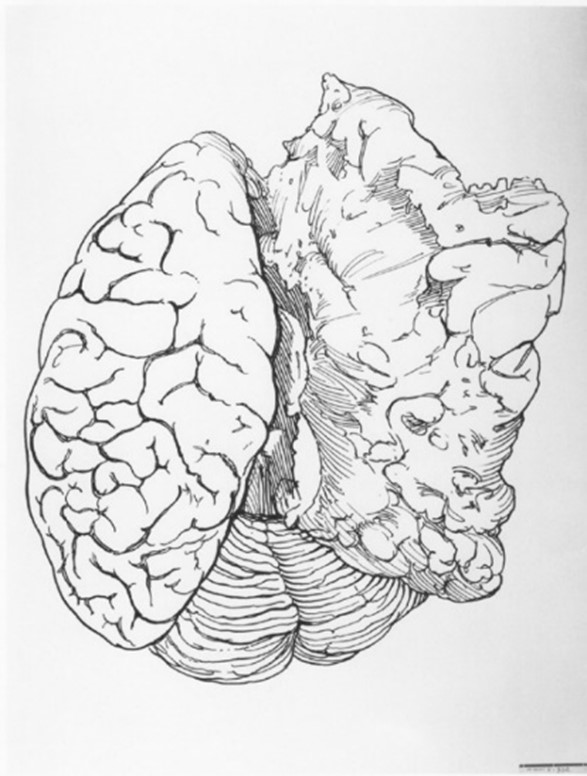
    Dr Robert McClelland.“The cause of death, I would say, would be massive head injuries with loss of large amounts of cerebral and cerebellar [brain] tissues and massive blood loss.” (Volume VI; p. 34.)

    Dr Malcolm Perry.
    “I noted there was a large wound in the right posterior parietal area in the head exposing lacerated brain. There was blood and brain tissue on the cart.” (Volume VI; p. 9.)

    Dr Marion Jenkins. “Regarding the head wound, Dr Jenkins said that only one segment of bone was blown out—it was a segment of occipital or temporal bone. He noted that a portion of the cerebellum (lower rear brain) was hanging out from a hole in the right—rear of the head. During the emergency medical procedures, Mrs Kennedy came in the room and gave Dr Jenkins a piece of the President’s brain.” (Dr Jenkins HSCA Interview with Andy Purdy; p. 15.) (see this)

    Dr Jim Carrico. “The skull wound had avulsed the calvarium and shredded brain tissue present with profuse oozing. Attempts to control slow oozing from cerebral and cerebellar tissue via packs instituted.” (Volume XVII; p. 4/5.)

    Dr Kemp Clark.There was a large wound in the right occipito-parietal region, from which profuse bleeding was occurring. 1500 cc. Of blood were estimated on the drapes and floor of the Emergency Operating Room. There was considerable loss of scalp and bone tissue. Both cerebral and cerebellar tissue were extruding from the wound.” (Volume XVII; p. 3.)

    Dr Paul Peters.“I could see that he [Kennedy] had a large, about 7cm opening in the right occipital parietal area. A considerable portion of the brain was missing there and uh the occipital cortex the back portion of the brain was lying down near the opening of the wound and blood was trickling out”. (see this)

    Dr Charles Baxter.“Portions of the right temporal and occipital bones were missing and some of the brain was lying on the table. The rest of the brain was extensively macerated and contused” (Volume XVII; p. 8.)

    Dr Adolph Giesecke Jr. “I noticed that he [JFK] had a very large cranial wound, with loss of brain substance and it seemed that most of the bleeding was coming from the cranial wound.” (Volume VI; p. 74.)

    Dr Ronald Jones.
    “There was a large defect in the back side of the head as the President lay on the cart with what appeared to be some brain hanging out of this wound with multiple pieces of skull noted next with the brain and with a tremendous amount of clot and blood”. (Volume VI; pp 53-54)

    Dr Don Curtis. After I completed the cut-down, I went around to the right side of the patient [JFK] and saw the head wound.”
    Arlen Specter. “And what did you observe there”?
    Dr Don Curtis. “Oh –fragments of bone and a gross injury to the cranial contents, with copious amounts of haemorrhage.” (Volume VI; p. 60.)

    Clint Hill. “As I lay over the top of the back seat, I noticed a portion of the President’s head on the right rear side was missing and he was bleeding profusely. Part of the brain was gone. I saw a piece of his skull with hair on it lying in the seat. (11/30/63 Report by Clint Hill on Activities on 11/22/63.)

    Clint Hill.
    “His brain was exposed. There was blood and bits of brain all over the entire rear portion of the car.” (Volume II; p. 141.)
    Dr Robert Karnei JR.Dr. Karnei said that normally a neuropathologist is present for the examination of abnormal brains. He said this brain would be “…considered such because of the extensive damage.” (p. 6/7 of summary HSCA interview with Karnei.)
    Governor Connally. “Immediately I could see on my clothes, my clothing, I could see on the interior of the car which, as I recall, was a pale blue, brain tissue, which I immediately recognized, and I recall very well, on my trousers there was one chunk of brain tissue as big as almost my thumb, thumbnail.
    Arlen Specter. “Did Mrs Kennedy state anything at that time”?
    Governor Connally. “Yes; I have to—i would say it was after the third shot when she said, They have killed my husband.
    Arlen Specter. “Did she say anything more”?
    Governor Connally. “Yes; she said, I heard her say one time I have got his brains in my hand”. (Volume IV; p. 133/134.)

    Mrs Nellie Connally. “Then after the third shot she said [Mrs Kennedy] They have killed my husband. I have his brains in my hand.” (Volume IV; p. 148).

    Bobby Hargis

    Mr Stern.“Did something happen to you, personally in connection with the shot you have just described”?
    Bobby Hargis. “You mean the blood hitting me”?
    Mr Stern. “Yes”
    Bobby Hargis. “Yes; when President Kennedy straightened back up in the car the bullet hit him in the head, the one that killed him and it seemed like his head exploded, and I was splattered with blood and brain and a kind of bloody water. (Volume VI; p. 294.)

    J Thornton Boswell. “Well, probably half of one hemisphere was absent…the upper surface of that side of the brain was missing.” (ARRB Interview pp. 42/43)

    Abraham Zapruder.
    Forrest Sorrels testified that Zapruder had told him “My God, I saw the whole thing. I saw the man’s brains come out of his head.” (Volume VII; p. 352).
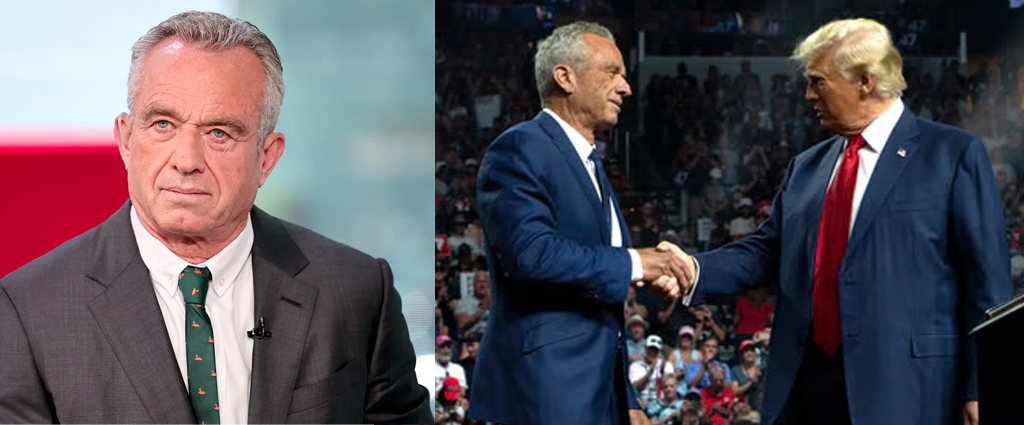

    Go to Part 1 of 6

    Go to Part 2 of 6

    Go to Part 4 of 6

    Go to Part 5 of 6

    Go to Part 6 of 6

  • Part 4 of 6: Medical Witnesses and a Questionable Rifle

    Part 4 of 6: Medical Witnesses and a Questionable Rifle


    31. Entry or Exit? Autopsy ‘Picture’ V. Witness Testimony.

    In a court of law, the admission of photographs follows a specific standard. Generally, photographs are admitted as evidence if they are relevant, authenticated, and have probative value. The standard, McCormick on Evidence, states that “The principle upon which photographs are most commonly admitted into evidence is the same as that underlying the admission of illustrative drawings, maps and diagrams. A photograph is viewed merely as graphic portrayal of oral testimony and becomes admissible only when a witness has testified that it is a correct and accurate representation of the relevant facts personally observed by the witness.”

    With the standard clear, how would Henry Wade have admitted these exhibits into evidence? And is there testimony in the record which would refute the geniality of the autopsy photographs? (Reclaiming Parkland, p.135.)

    Commission Conclusion. “The President was struck a second time by a bullet which entered the right rear portion of his head, causing a massive and fatal wound.” (WCR; p. 19.)

    Eye Witness Testimony That Refutes ‘Autopsy’ Photograph & The Commission Conclusion.

    Dr Paul Peters. “I could see that he [Kennedy] had a large, about 7cm opening in the right occipital parietal area. A considerable portion of the brain was missing there and uh the occipital cortex the back portion of the brain was lying down near the opening of the wound and blood was trickling out”. See supporting video at 25:40.

    Dr Robert McClelland. As I took position at the head of the table that I have already described, to help out with the tracheotomy, I was in such a position that I could very closely examine the head wound, and I noted that the right posterior portion of the skull had been extremely blasted. It had been shattered, apparently, by the force of the shot so that the parietal bone was protruded up through the scalp and it seemed to be fractured almost along its right posterior half, as well as some of the occipital bone being fractured in its lateral half, and this sprung open the bones that I had mentioned in such a way that you could actually look down into the skull cavity itself and see possibly a third or so, at least, of the brain tissue, posterior cerebral tissue and some of the cerebellar tissue had been blasted out. There was a large amount of bleeding which was occurring mainly from the large venous channels in the skull which had been blasted open.” (Volume VI; p. 33.)

    Dr Charles Crenshaw. “I walked to the President’s head to get a closer look. His entire right cerebral hemisphere appeared to be gone. It looked like a crater-an empty cavity. All I could see there was mangled, bloody tissue. From the damage I saw, there was no doubt in my mind that the bullet had entered his head through the front, and as it surgically passed through his cranium, the missile obliterated part of the temporal and all the parietal and occipital lobes before it lacerated the cerebellum. The wound resembled a deep furrow in a freshly ploughed field.” (Crenshaw, Conspiracy of Silence; p. 86.)

    Dr Kemp Clark. “I then examined the wound in the back of the President’s head. This was a large gaping wound in the right posterior part, with cerebral and cerebellar tissue being damaged and exposed. There was considerable blood loss evident on the carriage, the floor, and the clothing of some of the people present.” (Volume IV; p. 20.)

    Dr Malcolm Perry. “…It informed us that the President had been shot and was being brought to the emergency room. We went there immediately, and he had just been brought in. It was obvious initially that he had a severe lethal wound. Arriving at the emergency room Dr Carrico had placed a tube in the President’s trachea to assist his breathing. There was a neck wound internally and a large wound of his head in the right posterior area.” See video

    Dr Ronald Jones. “There was a large defect in the back side of the head as the President lay on the cart with what appeared to be some brain hanging out of this wound with multiple pieces of skull noted next with the brain and with a tremendous amount of clot and blood. * (Volume VI; p. 53/54.)

    Dr Marion Jenkins. “There was a great laceration on the right side of the head (temporal and occipital), causing a great defect in the skull plate so that there was herniation and laceration of great areas of the brain, even to the extent that the cerebellum had protruded from the wound. There were also fragmented sections of brain on the drapes of the emergency room cart. With the institution of adequate cardiac compression, there was a great flow of blood from the cranial cavity, indicating that there was much vascular damage as well as brain tissue damage.” Report of DR. M. T Jenkins, 11/22/63 16:30. (Volume XVII; p. 14/15.)

    Dr Gene Coleman Akin. “The back of the right occipital parietal portion of his head was shattered, with brain substance extruding.” (Volume VI; p. 65.)

    Dr Charles Baxter. “We had an opportunity to look at his head wound then and saw that the damage was beyond hope, that is, in a word-literally the right side of his head had been blown off. With this and the observation that the cerebellum was present-a large quantity of brain was present on the cart.” (Volume VI; p. 41.)

    Dr Adolph Giesecke Jr. “It seemed that from the vortex to the left ear, and from the browline to the occiput on the left-hand side of the head the cranium was entirely missing.”

    Arlen Specter. Was that the left-hand side of the head, or the right-hand side of the head?

    Dr Adolph Giesecke Jr. “I would say the left, but this is just my memory of it.” (Volume VI; p. 74.)

    Nurse Doris May Nelson.

    Ben Bradlee Jr. “On page 104 of the House Assassination Committee Report, this rear view of the head. This is a photograph taken of the President’s head, during the autopsy. I should say it’s not a photograph, it’s a tracing, a drawing, which claims to be an exact replica of the rear-“

    Nurse Nelson. “After he was shot?”

    Bradlee. “After he was shot.”

    Nurse Nelson. “It’s not true”

    Bradlee. “It’s not true?”

    Nelson. ….” Not unless they pulled all that skin back down, but some of his head was blown away, and his brains were fallin’ out on a stretcher.”

    Bradlee. “Oh, can you be more specific? Are you saying that this photo- this photograph does not show the wounds that you saw?”

    Nelson. “No.”

    Bradlee. “And how doesn’t it exactly?”

    Nelson. “Cause there was no hair, there wasn’t even hair back there, it was blown away”. See supporting video at 6:00.

    Nurse Audrey Bell. “I recall the injury being right along in this area (pointing to occipital parietal area in autopsy photograph). I know they lifted it up for me to see the injury at the back of the head.

    Robert Groden. “Ok but you remember there being a large hole there that is not apparent in this photograph?”

    Bell. “Oh yes there was a big hole there. There was a large hole back in this area (pointing to occipital parietal area in autopsy photograph)” See video at 1.03.25

    Nurse Pat Hutton. “Mr Kennedy was bleeding profusely from a wound on the back of his head. A doctor asked me to place a pressure dressing on the head wound, this was of no use, however, because of the massive opening on the back of his head.” (Volume XXI; p. 216.)

    Nurse Diana Bowron. “He was moribund-he was lying across Mrs. Kennedy’s knee and there seemed to be blood everywhere. When I went around to the other side of the car, I saw the condition of his head.”

    Mr Spector. “You saw the condition of his what?”

    Nurse Diana Bowron. “The back of his head”

    Mr Spector. “And what was that condition?”

    Nurse Diana Bowron. “Well, it was very bad-you know.”

    Mr Spector. “How many holes did you see?”

    Nurse Diana Bowron. “I just saw one large hole.” (Volume VI; p. 136.)

    Aubrey Rike. “The first time we began to pick up the President, I put my right hand underneath his head; I could feel the back of the skull had been blown out-it was literally blasted away. I felt the serrated edge of the hole in the skull on my hand. It was not painful, but I could feel the jagged edges of the bones through the sheet on the palm of my hand. I could also feel the President’s brain shifting in my hand within the hole located just to the right of the centre of the head.” (At The Door Of Memory; p. 58.)

    ARRB Testimony

    Jeremy Gunn. “Okay. If we could now look at the sixth view, which is described as the ‘wound of entrance ln right posterior occipital region”. Photograph No.42. Mr. Slbert, does that photograph correspond to your recollection of the back of President Kennedy’s head?”

    James Sibert. “Well, I don’t have a recollection of it being that intact, as compared with these other pictures. I don’t remember seeing anything that was like this photo.”

    Gunn. “But do you see anything that corresponds in Photograph No. 42 to what you observed during the night of the autopsy?”

    Sibert. “No. I don’t recall anything like this at all during the autopsy. There was much- the wound was more pronounced. And it looks like it could have been reconstructed or something, as compared with what my recollection was and those other photographs.” (Sibert, ARRB Testimony; p. 126.)

    Jeremy Gunn. “Okay. Can we take a look at view number six, which is described as wound of entrance in right posterior occipital region, Colour Photograph No. 42…I’d like to ask you whether that photograph resembles what you saw from the back of the head at the time of the autopsy”?

    Francis X. O’Neill. “This looks like it’s been doctored in some way. Let me rephrase that, when I say “doctored” Like the stuff has been pushed back in, and it looks like more towards the end than at the beginning. All you have to do was put the flap back over here, and the rest of the stuff is all covered on up”. (O’Neill, ARRB Testimony; p. 158.)

    Mrs Jackie Kennedy. Declassified excerpt from her testimony to the Warren Commission which was suppressed “I was trying to hold his hair on. But from the front there was nothing. I suppose there must have been. But from the back you could see, you know, you were trying to hold his hair on, and his skull on.” (Weisberg, Post Mortem; pp. 380/381.)

    Secret Service Agent Clint Hill. “The right rear portion of his head was missing. It was lying in the rear seat of the car. His brain was exposed. There was blood and bits of brain all over the entire rear portion of the car. Mrs. Kennedy was completely covered with blood. There was so much blood you could not tell if there had been any other wound or not, except for the one large gaping wound in the right rear portion of the head.” (Volume II; p. 141.)

    Secret Service Agent Roy Kellerman.

    Arlen Specter. “I would like to develop your understanding and your observations of the four wounds on President Kennedy.”

    Roy Kellerman. “OK. This all transpired in the morgue of the Naval Hospital in Bethesda, sir. He had a large wound this size”

    Arlen Specter. “Indicating a circle with your finger of the diameter of 5 inches; would that be approximately correct”?

    Roy Kellerman. “Yes, circular; yes, on this part of the head.”

    Arlen Specter. Indicating the rear portion of the head.

    Roy Kellerman. Yes.

    Arlen Specter. “More to the right side of the head”?

    Roy Kellerman. “Right. This was removed.” (Volume II; p. 80/81.)

    Secret Service Agent William Greer.

    Arlen Specter. “What did you observe about the President with respect to his wounds”?

    William Greer “His head was all shot; this whole part was all a matter of blood like he had been hit”

    Arlen Specter. “Indicating the top and right rear side of the head”?

    William Greer “Yes sir; it looked like that was all blown off.” (Volume II; p. 124.)

    Thomas Robinson, mortician

    Reporter. “What do you remember about the wounds you witnessed”?

    Tom Robinson. “Well, the one at the back of the head course is the major one, that’s the one that took him. The one that killed him… it’s like that [Pointing to diagram on sheet] but its right here [pointing to right back of his head] right at the medulla.

    Reporter. “Yeah… what happened to the brains of the President?

    Tom Robinson. It was removed… course the back [points to back of head] portion of the brain was badly torn up. Then put into a jar and taken away. See supporting video.

    Edward Reed, Bethesda assistant: “The head wound was very large and located in the right hemisphere in the occipital region.” (Stewart Galanor, Cover-Up; p. 33.)

    Dr John Ebersole. “The back of the head was missing.” (Cover-Up; p. 33.)

    Phil Willis. “I am very dead certain that at least one shot including the one that took the President’s skull off had to come from the right front…and I will stand to that to my death. Over my mother’s grave.” See all three Willis statements at 24:00.

    Marilyn Wills. “The head shot seemed to come from the right front. It seemed to strike him here [pointing to right temple] and his head went back, and all of the brain matter went out the back of the head it was like a red halo, a red circle with bright matter in the middle of it it just went like that. It was a terrible time you cannot imagine seeing this. You knew it happened, but you didn’t want to believe it.”

    Linda Kay Wills. “The particular headshot must have come from another direction besides behind him because the back of his head blew off and it doesn’t make sense to be hit from the rear and still have your face intact. So, he must have been hit from another position you know possibly in the front or over to the side I really don’t know where, but the back of his head blew off”.

    Dr John Ebersole. “The back of the head was missing and the regular messy wound.” p. 3 of PDF

    Jan Rudnicki. ” The back right quadrant of the head was missing” p. 2 of PDF.

    James Metzler Bethesda witness “Right side of the head behind the right ear extending down to the centre back of the skull.” (Cover-Up; p. 33.)

    Floyd Riebe

    ARRB. “I would like you to describe as best you recall what or provide a description of the injuries to President Kennedy’s head so we will say from above the throat. Not to the throat but above the throat. What did you observe on the body?”

    Riebe. “The right side in the back was gone (indicating). Just a big gaping hole with fragments of scalp and bone hanging in it.”

    ARRB. “When you said that, you put your hand on the back of your head.”

    Riebe. “The occipital.”

    ARRB. “The occipital area? “

    Riebe. “Yes.” See Riebe deposition

    32. A Violation of Texas Law.

    “Gentlemen, Texas law requires an autopsy, performed by the medical examiner in the jurisdiction where the homicide occurred, in order to have a homicide complaint issued or subsequent indictment occur.” (Walt Brown, The People V Lee Harvey Oswald; pp. 45-46)

    According to Texas law, an autopsy must be conducted by the medical examiner in the jurisdiction where the homicide occurred. In the case of President Kennedy, Doctor Earl Rose, the medical examiner of Dallas County, should have been responsible for performing his autopsy. However, the Secret Service, without legal authority, took possession of the President’s body from Parkland Hospital, disregarding Dr. Rose’s jurisdiction and his rightful role in the investigation.

    Dr. Rose, aware of the legal requirements, informed the Secret Service that he was the appropriate authority to conduct the autopsy. He reminded them that Texas law mandated the autopsy to be performed in the county where the homicide occurred. Dr. Rose’s objection was met with an alarming response from the Secret Service, as they callously threatened him, stating that “he should move out of the way or risk being run over by the casket.” This blatant disregard for the law and the medical examiner’s jurisdiction is a troubling violation of proper legal procedures. The Secret Service’s illegal removal of President Kennedy’s body has significant implications for the case against Oswald. By taking the body out of Dallas and transporting it to Washington, the chain of custody was compromised, potentially allowing for tampering of crucial evidence. This irregularity added to the serious doubts about the integrity of the subsequent autopsy conducted by military pathologists in Bethesda, Maryland. See supporting video at 10:00.

    33. A Package For Hidell?

    Commission Conclusion. “The Mannlicher-Carcano 6.5-millimeter Italian rifle from which the shots were fired was owned by and in the possession of Oswald.” (WCR, p.19.)

    Where Was Oswald On March 12th, 1963?

    Richard Stovall. “The fellow had a good record of being on the job, I mean, he didn’t have any absenteeism.” Albert Jenner. “He was prompt and worked every day and had little in the way of absenteeism?”

    Richard Stovall. “Yes.” (Volume X; p. 173)

    Commission Exhibit 773 provides a crucial piece of evidence in the form of a time-stamped money order envelope for the Hidell rifle. The stamp indicates the purchase location, time and date as “Dallas Tex. 12.1963. Mar12.10:30am.” This raises an important question: Where was Lee Oswald on March 12th, 1963, when the money order for the Hidell rifle was purchased? Is there any evidence in the record which would constitute as proof of Oswald’s whereabouts?

    For this I present, Commission Exhibit 1855. This exhibit is a picture of Oswald’s timecard for Jaggers-Chiles-Stovall. The document shows that Oswald was accounted for at work between 8:00am and 17:15pm, with a lunch break from 12:15pm to 12:45pm. Considering the time stamp on the money order at 10:30am, Oswald’s presence at work during that period establishes a solid alibi. These exhibits collectively indicate that Oswald was accounted for at the relevant time the money order was purchased. This evidence challenges the concept that Oswald initiated the purchase of the Mannlicher, casting doubt on his direct involvement in this aspect of the case. (Volume XVII, p. 635 & Volume XXIII, p 605.)

    34. Postal Regulations.

    Commission Conclusion. “In accordance with postal regulations, the portion of the application which lists names of persons, other than the applicant, entitled to receive mail was thrown away after the box was closed on May 1963. Postal Regulations which were in effect in March 1963.” (WCR; p. 121).

    Actual Postal Regulations In Effect In 1963 Which Refute The Commission Conclusion.

    Contrary to the Commission’s conclusion, the actual postal regulations in effect in March 1963 provide evidence that contradicts the disposal of the portion of the application identifying authorised recipients of mail. These regulations include:

    • “Section 846.53h of the postal manual provides that the third portion of box rental applications, identifying persons other than the applicant authorised to receive mail, must be retained for two years after the box is closed.

    And…

    • Section 355.111b(4) prescribes that the mail addressed to a person at a post office box, who is not authorised to receive mail, shall be endorsed “addressee unknown” and returned to sender where possible.” (Document 37; Cover Up) 35. No Hidell At PO-Box, 2915.

    Commission Conclusion. “It is not known whether the application for post office box 2915 listed “A Hidell” as a person entitled to receive mail at this box” (WCR; p.121)

    Commission Exhibit 2585, is a document from the FBI, dated June 3, 1963. Bullet point 12 states:

    Claim. “The post office box in Dallas to which Oswald had the rifle mailed was kept under both his name and that of “A.Hidell”

    Investigation. “Our investigation has revealed that Oswald did not indicate on his application that others, including an “A.Hidell” would receive mail through the box in question, which was Post Office Box 2915 in Dallas. This box was obtained by Oswald on October 9, 1962, and relinquished by him on May 14, 1963.” (Volume XXV; p. 857-862)

    The evidence from the FBI investigation directly refutes the Commission’s conclusion, demonstrating that Oswald did not list “A. Hidell” as an authorised recipient of mail on his application for post box 2915. The discrepancy between the Commission’s conclusion and the FBI’s documented findings raises questions about the accuracy and completeness of the Commission’s investigation into the matter.

    36. Monitored Mail?

    There is compelling evidence within the report of FBI SA James P. Hosty (CE 829), dated 9/10/63, indicating that the FBI were indeed monitoring Oswald’s post office box.The report reveals connections between Oswald and communist organizations, suggesting surveillance of his activities: “On September 28th, 1962, Dallas confidential informant T-1 advised that LEE H. OSWALD, who at the time resided at 2703 Mercedes Street, Fort Worth, Texas, was a subscriber to The Worker, an East Coast communist newspaper.”

    Furthermore, “On April 21, 1963, Dallas confidential informant T-2 advised that Lee H. Oswald of Dallas, Texas was in contact with the Fair Play For Cuba Committee in New York City at which he advised that he had passed out pamphlets for the Fair Play For Cuba Committee. According to T-2, Oswald had a placard around his neck reading “Hands off Cuba, Viva Fidel.” (Volume XVII; p. 722-775. Volume IV; p 443-444.)

    The FBI also reported “Information from our informant, furnished to us on April 21, 1963, was based upon Oswald’s own statement contained in an undated letter to the Fair Play for Cuba Committee (FPCC) headquarters in New York City. A copy of this letter is included as Exhibit 61 in our Supplemental Report dated January 13, 1964. Our informant did not know Oswald personally and could furnish no further information. Our Investigation had not disclosed such activity on Oswald’s part prior to this type of activity in New Orleans.” (Volume XXVI; p. 92-99)

    The FBI had established links between Oswald and various communist organizations, as evidenced by the Hosty report. It is also evident that the FBI maintained a significant degree of awareness and oversight on PO BOX 2915. Given their professed intensive scrutiny of his activities, it strikes me as highly unlikely that the arrival of the ‘Hidell Carcano’ at the Dallas post office would go unnoticed by the Bureau. This seemingly contradictory situation casts serious doubt upon the FBI’s claim of ignorance about the rifle’s delivery.

    37. An FBI Informant.

    Harry D. Holmes, a Postal Inspector whose testimony significantly contributed to the Commission’s conclusion that Oswald could have received the ‘Hidell Carcano’, has been discovered to be an informant for the FBI. This revelation surfaced when “members of Holmes family, who have stated that their father should be understood within the context of the times when being an FBI informant was considered commendable. They believe he fulfilled his duties responsibly in all aspects related to the investigation of President John F. Kennedy’s murder.” See Holmes document

    38. The ‘Oswald’ Note.

    On November 12, 1963, ten days prior to the assassination of President John F. Kennedy, FBI Special Agent James P. Hosty received an unsigned note, reportedly from ‘Lee Oswald’. Intriguingly, this note, which could have been a key piece of incriminating evidence against Oswald, was destroyed by the FBI in the hours following Oswald’s tragic death on November 24, 1963.

    Jerry Spence. “You received a note, in November 1963 from Mr Oswald, didn’t you?”

    James Hosty. “Indirectly yes”

    Jerry Spence. “After the Presidents assassination but before the Warren Commission met, you were told by the FBI to destroy that note, weren’t you?

    James Hosty. “After Oswald was killed and 10 days to 2 weeks before the Warren Commission was even announced, I was ordered to destroy it yes.”

    Jerry Spence. “And who told you to destroy that note?” James Hosty. I was told by the agent in charge, Gordon Shanklin. He handed it to me: here I don’t ever want to see this again.

    Jerry Spence. And as a result of that what did you do?

    James Hosty. “I got rid of it, I destroyed it.” See video

    The controversy surrounding the note itself revolves around its contents. Nannie Lee Fenner, a receptionist from the FBI’s Dallas office, claimed that Oswald’s note contained a threatening ultimatum to Hosty that Oswald was to “blow up the FBI and the Dallas Police Department if you don’t stop bothering my wife.” Yet, Hosty’s recollection of the note’s contents diverges significantly from Fenner’s. Hosty recalls the note as saying “If you want to talk to me, you should talk to me to my face. Stop harassing my wife and stop trying to ask her about me. You have no right to harass her.” This significantly differing narrative raises a pertinent question? If Oswald had indeed made a severe threat against the Dallas FBI and Police Departments, wouldn’t it have warranted his immediate arrest? (Hosty, Assigment: Oswald; p. 21, p. 195)

    If, as Fenner testified, the note did contain such a serious threat, it would have provided crucial evidence in support of the government’s emerging narrative about Oswald and his purported violent tendencies toward authoritative figures. The government likely would have relied heavily on this note, presenting it as proof of Oswald’s capability to assassinate President Kennedy.

    Despite the potential significance of this evidence, the FBI made the puzzling decision to eliminate the so-called ‘Oswald’ note. The rationale behind the FBI’s decision to eradicate this potentially incriminating document remains, at the very least, puzzling. A genuinely threatening note would have undoubtedly strengthened the case against Oswald, rendering any government justification for its hasty elimination unnecessary.

    39. The Humanitarian Rifle.

    The Mannlicher Carcano (C2766) was a product of surplus weaponry from World War II, and it’s quite possible that it was cannibalized from the parts of several malfunctioning rifles. As William Sucher, who had purchased hundreds of thousands of these rifles from the surplus of the Italian government, testified to the Commission,: “Many of these rifles were collected from battlefields or places of improper storage and were in very poor condition. These rifles were bought by the pound rather than units. Upon arrival in Canada, defective parts were removed, and saleable rifles were sometimes composed of parts of three or more weapons.” To underscore this point even further, it’s worth noting that at the time of the assassination, the lot of rifles that included C2766 was embroiled in a legal dispute. As stated in CE1977: “Concerning the shipment of those rifles to Adam Consolidated Industries, Inc., there is presently a legal proceeding by the Carlo Riva Machine Shop to collect payment for the shipment of the rifles which Adam Consolidated Industries Inc., claims were defective.”

    (Volume XXV; p. 808, CE 2562. Volume XXIV; p. 2)

    40. The Disintegrating Carcano.

    The Mannlicher (C2766) was found to be in a very poor mechanical condition. This weapon had a rusted and disintegrating firing pin as per an FBI report dated August 20, 1964, from J. Edgar Hoover to chief counsel J. Lee Rankin of the Warren Commission stated that: “In connection it should be noted that the firing pin of this rifle has been used extensively as shown by wear on the nose or striking portion of the firing pin, and further, the presence of rust on the firing pin and its spring may be an indication that the firing pin had not been recently changed prior to November 22,1963.” (CE 2974, Volume. XXIV; p. 455)

    “The experts who test fired the rifle deemed that this rifle in evidence was so unreliable that they did not practice with it for fear that pulling the trigger would break the firing pin”. (Reclaiming Parkland; p. 27)
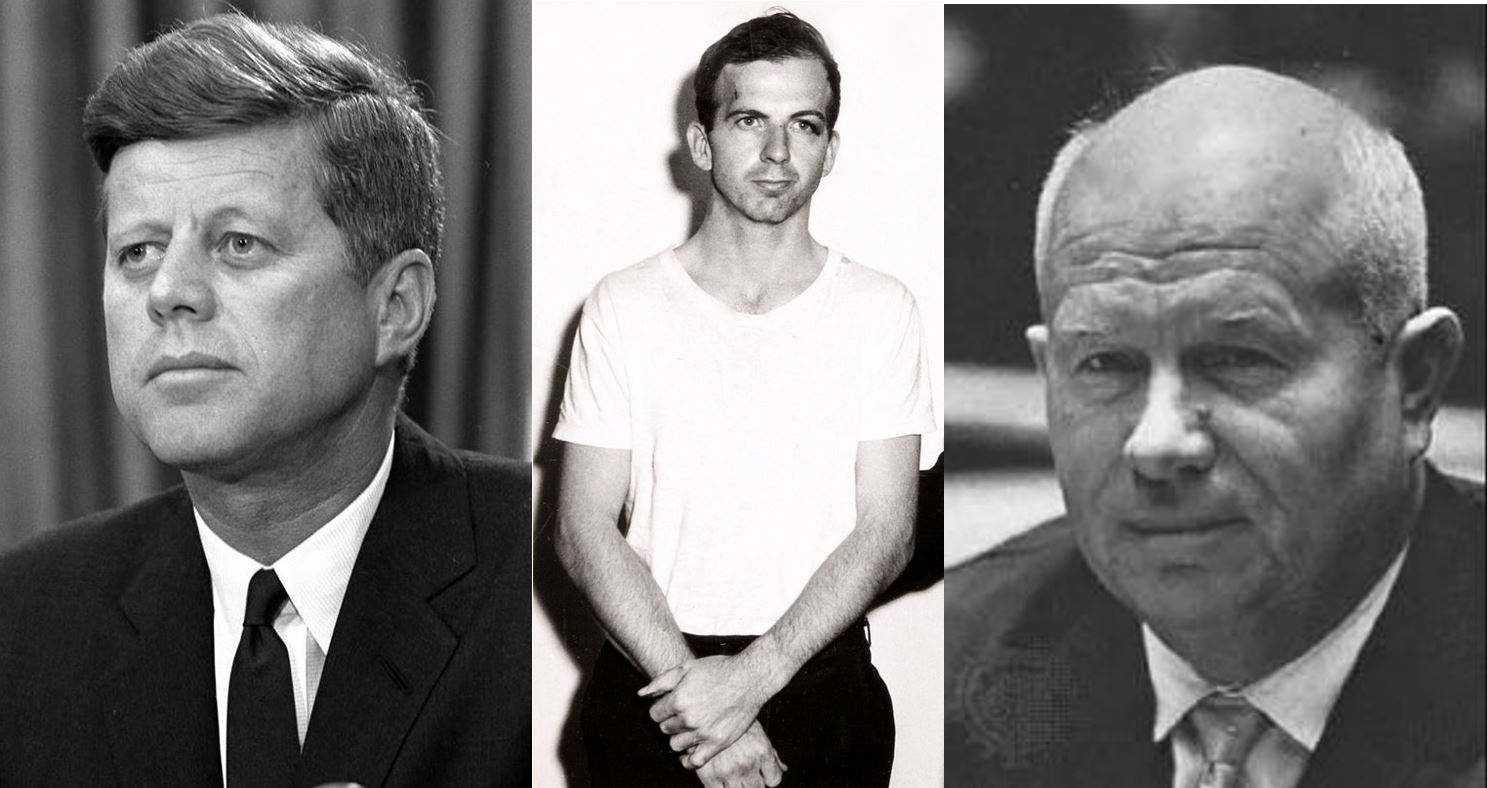

    Go to Part 1 of 6

    Go to Part 2 of 6

    Go to Part 3 of 6

    Go to Part 5 of 6

    Go to Part 6 of 6

  • Former People by James Norwood

    Former People by James Norwood


    James Norwood was a professor at the University of Minnesota for 26 years. Among the classes he taught was a semester course in the John F. Kennedy assassination. He has written for this web site previously. (Click here for one example) He has now published a book which is entitled Former People.

    As Norwood immediately explains, that rubric was used in conjunction with former members of the Russian aristocracy. Many of whom were displaced after the Bolshevik Revolution of 1917. He then uses other examples from Russian history like the Mensheviks who were also retired to what Trotsky called the “dustbin of history.”

    In relation to his current book, Norwood is going to use that term to describe what happened to Nikita Khrushchev, President Kennedy and Lee Harvey Oswald. It’s a unique concept, at least I cannot think of a predecessor in the field. But to point out one useful strophe: the cemetery where Khrushchev was buried was close for renovation because it had too many people visiting after his burial. (pp. 2-3).

    In his discussion of Khrushchev Norwood makes the case that he ended up opposing what Josef Stalin had done since he had a role in some of those crimes, for example, he was complicit in the Great Purges of the thirties. (p. 7) But as most know Khrushchev fought well in World War II, particularly during the epochal battle at Stalingrad. (Norwood points out that, although he took credit for it, Khrushchev was not part of the planning for the Russian offensive there.)

    Having learned the Machiavellian tactics of Stalin’s court, Khrushchev emerged triumphant during the struggle for succession after the tyrant’s death. Yet, he was quite inexperienced in the art of diplomacy and statecraft on the world stage. As the British prime minister Harold Macmillan wrote in his diary:

    How can this fat, vulgar man, with this pig eyes and his ceaseless flow of talk, really be the head—the aspirant Tsar—of all these millions of people in this cast country? (p. 10)

    Yet he was. Norwood hallmarks the strikingly important secret speech of 1956. This was Khrushchev’s repudiation of the terror and purges of Stalin. (p. 40) This speech was entitled, “On the Cult of Personality and its Consequences.” Khrushchev said, “Stalin had committed criminal violations of the law that would have been punished in any country—except for countries not governed by law at all.” (ibid) He then added that Stalin’s rule was much closer to that of the Russian tsars than the Bolshevik revolutionaries. He also pointed out Stalin’s disastrous leadership at the beginning of the German invasion in World War II. As Khrushchev later wrote, the delegates at the Communist Party Congress were thunderstruck especially since Stalin had taken these actions against both Old Bolsheviks and Young Communists.

    Yet, in that same year, Khrushchev ordered the crushing of Hungarian Spring. Which resulted in tens of thousands of casualties on both sides, and hundreds of thousands of refugees who fled the country. (p. 43) The author makes the case that Khrushchev was probably influenced by the Soviet ambassador to Hungary Yuri Andropov, who would later run the KGB for 15 years and briefly reign as General Secretary. For whatever reason Khrushchev also banned the book Doctor Zhivago, although he later admitted this had been a mistake. It resulted in a great propaganda triumph for the CIA.

    In dealing with Kennedy, Norwood describes his many childhood ailments, his heroism in the Navy during the famous PT-109 incident, and the death of his older brother Joe in an air explosion during World War II. (pp. 10-13) He briefly deals with both his political career–elected three times to the House, and twice to the senate—and his literary vocation, the penning of Why England Slept and Profiles in Courage. He points out for praise Senator Kennedy’s 1954 speech warning about further American support of the French war in Vietnam. But, curiously, he does not mention the famous 1957 Algeria speech which literally rocked the political and journalistic establishment. Alistair Cooke, the British journalist, noted that this anti-colonial speech–and the attention the Republicans had given it–had made Kennedy the frontrunner for the 1960 Democratic presidential nomination. (Richard Mahoney, JFK: Ordeal in Africa, p. 29)

    Norwood builds his early narrative structure around two events: the Missile Crisis and Kennedy’s American University Peace Speech. Norwood considers the Russian leader’s decision to place missiles, bombers and 45,000 men in Cuba a result of his aforementioned lack of diplomatic sophistication and serious misjudgment of Kennedy. Norwood also thinks it was part of Russian vozhdism or one person rule. Khrushchev had put the question to the Kremlin leaders. There were no serious objections at this time, but there were would be many later recriminations. (Norwood, p. 23) As the author notes, it should have been clear to Khrushchev that the U 2 overflights would eventually pick up the installations, especially since the troops on the island had not practiced consistent camouflage and disguise techniques. A fact that enraged the Russian leader when he found out about it. The overflights did discover the installations on October 14th. Kennedy had learned from the Bay of Pigs and now changed the command style. It was not just the Pentagon, CIA and NSC. Kennedy felt that had failed him. So this was expanded into something called the Ex Comm which now included Bobby Kennedy and Ted Sorenson.

    Kennedy had been a great admirer of Tuchman classic The Guns of August. Kennedys was determined that no such book could be written about the Missile Crisis, one depicting a march to folly and destruction out of stupidity and impulsiveness. (p. 32) In fact, journalist Jordan Michael Smith wrote that “quite possibly Kennedy’s careful reading of the book helped prevent a nuclear war.” (p. 32)

    If this is so Kennedy had to pretty much bypass his Joint Chiefs of Staff. Who considered the blockade route much too soft and giving way to much lenience to a provocation like this. To them, it was a time for aggression and attack. Although Norwood has Marine General Shoup tell Kennedy that he was in a pretty bad fix, it was actually Curtis Lemay who said it. (Ernest May and Philip Zelikow, The Kennedy Tapes, p. 182)

    Once the deployment was discovered, and the blockade option was approved by Kennedy, Khrushchev was in a precarious situation. One which invited a terrible escalation by either side which could result in atomic war. The only realistic option the Russians had was to negotiate out a settlement. But the Russian ships stopping at the blockade line was not a victory as Dean Rusk exclaimed it was. Because it was later discovered that all the ICBM’s and tactical weapons—162 missiles in all– had been landed on the island before the blockade was secure. (The Armageddon Letters, by James Blight and Janet Lang, p. 257) So the Russians knew that their tactical weapons would incinerate any invading armada crossing the Caribbean. They also knew that with the armada burning at sea, the combination of ICBMS, bombers and submarines could deliver a formidable first strike. The Russian has achieved his goal of placing a hedgehog on Kennedy’s breakfast plate. (Norwood, p. 27) But General Thomas Power, commander of SAC, took it upon himself to raise the DEFCON alert from level 3 to 2. Which was one step short of war. (Norwood, p. 29). And there were three events which almost caused a shooting war to break out: the downing of a U2 over Cuba by Castro, another U 2 that flew off course and over Soviet air space where MIGS scrambled to intercept, but other planes came to the rescue in time. The last was when American surface ships were hurling grenades and depth charges at a nuclear tipped submarine off the coast of Cuba. With all the explosions, the Russians did not know if a war was going on but luckily the commander directed the sub to surface and find out before firing. (Norwood p. 30)

    Having achieved what was for all intents and purposes a (lucky) standoff, the two sides now began to formulate negotiation positions. Adlai Stevenson reputedly brought up the idea of trading the UN Turkish and Italian missiles for the Russian missiles inside of Cuba. Robert Kennedy was determined to go around the Ex Comm through Soviet contacts with diplomat Georgi Bolskakov, and later with the Russian ambassador Anatoli Dobyrnin. And this is where the promise not to invade Cuba came into play.

    The so-called peaceful outcome was not welcome to the hawks on both sides. The Pentagon concluded that Kennedy had blown a perfect chance to get rid of Castro. The Kremlin felt that Khrushchev had luckily dodged a bullet by enacting a hare-brained scheme. Norwood insinuates that the result of that crisis echoed through the next two years, eventually deposing them both.

    Making this even more unfortunate was the mutual attempt at détente by both men e.g., the limited test ban treaty, the direct hot line. This was capped by Kennedy’s Peace Speech, which—like Columbia professor Jeff Sachs– the author spends some time explicating. (pp. 46-52). As a result, Norwood writes, “For a brief moment in history, between June and November of 1963, there was a genuine opening for rapprochement.” (p. 52)

    Khrushchev wept when he heard the news of Kennedy’s death. He suspected American right-wingers had murdered the president in order to sink their attempt at a US-Soviet détente. (pp. 66-67). In some ways, Kennedy’s murder set the stage for Khrushchev’ own removal, since none of the tangible things the two men were working on were now going to be enacted. Therefore, the conservatives in the Politburo set up a plot to get rid of a leader who was actually contemplating with Kennedy a complete demobilization. (p. 75). Norwood argues, with some justification, that the USSR changed for the worse after this removal. A period of reform had now come to the end, economic stagnation ensued plus the formal imposition of the Brezhnev Doctrine. (p. 64). The true circumstances of Kennedy’s murder were covered up, and his achievements went largely unnoted in history textbooks. As far as Khrushchev went, the new Russian hierarchy began to write him out of history. (p. 66)

    The last part of the book deals with the formal methods used to conceal the true circumstances of Kennedy’s death and a probing of the mystery of Oswald. First, he deals with how the MSM, and people like Walter Cronkite, placed a stamp on the three-bullet scenario right out of the gate. Like many before him, including the recently discussed Bart Kamp, Norwood squarely places the official blame for the JFK cover up on J. Edgar Hoover and the FBI. He spends more than a few pages on how eager Hoover was to close the case with Oswald as the lone gunman. (p. 92ff). But he also exposes how people inside the FBI, like William Sullivan and Laurence Keenan, and Hoover himself, understood just how flawed the FBI inquiry really was. For instance, Hoover once said about the Oswald case, “If I told you what I really know, it would be very dangerous to this country. Our whole political system could be disrupted.” (Norwood, p. 101) But since the Warren Commission was so overwhelmingly reliant on the Bureau it more or less had to go along with Hoover’s very quickly drawn official conclusions.

    Norwood ends with Oswald. He spends several pages on a real enigma about the man: How and where did Oswald learn to speak good Russian. He lists several witnesses who came to this conclusion about his fluency: Natalie Ray, Peter Gregory, George Bouhe, Elena Hall Rosaleen Quinn. The last is quite interesting since she conversed with Oswald in Russian before he left for the Soviet Union. (pp. 121-23). But then in Russia, many people have said that Oswald feigned not being able to speak the language. Norwood concludes this was part of his ruse as a fake defector since if he advertised that he could speak Russian the authorities would realize he was sent there by the Navy or CIA to be a spy. I would beg to disagree with Norwood’s portrayal of Ernst TItovets’ take on Oswald. (pp. 138-39) First, Ernst really was not a Johnny Come Lately to the case, as he was in the 1993 PBS special Who was Lee Harvey Oswald? And when I encountered the man in 2014 at the AARC Conference in Maryland, TItovets told me that when he met Oswald, he spoke good Russian.

    Norwood is an advocate of the John Armstrong theorem of there being two Oswalds from an early age. He chalks up the long incubating experiment in doubles to CIA official Frank Wisner who used many people on the displaced persons list from World War !! as part of covert operations across Europe. And he notes that Robert Kennedy assistant William Vanden Heuvel on December 4, 1963 noted that “files of the IRC (International Rescue Commission) contain information pertaining to Oswald.” (p. 155) In an appendix, the author depicts Oswald’s Certificate of Enlistment for the Marines. He notes that the original name on the card was Harvey Lee Oswald, corrected to Lee Harvey Oswald. (p. 197). Another appendix lists a useful timeline in milestones on the JFK case beginning with Oswald’s defection and concluding with Oliver Stone’s two recent documentaries on the case, JFK Revisited and JFK: Destiny Betrayed.

    In sum, Norwood’s book is unique in concept, mercifully concise, and adroitly argued. All the more impressive since it is his first book on the case.