Tag: JFK ASSASSINATION

  • The Lost Bullet: Max Holland Gets Lost In Space


    Max Holland first surfaced in the JFK case when John McAdams did, after the release of Oliver Stone’s film JFK. His first writings appeared in academic historical journals and he took aim at writers on the Kennedy case like Peter Dale Scott. For some strange and unfathomable reason, The Nation then hired him and he wrote about the Kennedy case there for a number of years. He was housed at this time at the Miller Research Center at the University of Virginia. This is supposed to be a sort of scholarly base where academics can do research through grants in aid. One of the directors there was Philip Zelikow; the executive consul of the much criticized 9-11 Commission. After writing for The Nation, he then set up his own web site called Washington Decoded. (For a very good overview of the man’s career concerning this case, click here) But some of his pieces have been turned down by more mainstream organs. So he goes where they will not be refused: the CIA’s own web site.

    Robert Stone is a long time documentary filmmaker who has made many films since his first, which was called Radio Bikini in 1988. From 1988 to 2010 he worked for PBS and The American Experience program. While there, in late 2007, he produced and directed a film about the JFK case called Oswald’s Ghost. Although the film was skillfully done, the skill covered up a rather blatant propaganda piece that ignored much of the new evidence and relied on discredited talking heads to pin the Kennedy assassination on Lee Harvey Oswald. (See my review here)

    Well, on November 20, 2011, for the 48th anniversary of JFK’s murder, these two teamed up to create another propaganda piece. Presented on the National Geographic cable outlet, it was called The Lost Bullet. The concept for this program goes way back to 2007. At that time Holland and Johan Rush wrote an article for the web site of the History Channel and postulated that the first shot fired in the Kennedy assassination actually came much earlier than anyone had previously supposed. In fact, it occurred even before Abraham Zapruder started filming! If you can believe it, the authors theorized that the first shot came just after the presidential limousine turned from Houston Street onto Elm.

    How ‘out there’ was this idea? Way out there. The Warren Commission placed the firing sequence at around Zapruder frame 210 on to about frame 313. The House Select Committee placed the first shot at about Zapruder frame 189. Holland and Rush placed the first shot before Zapruder’s camera rolled so it’s hard to apply a Zapruder frame to it. It may go back to a (theoretical) frame 107. A few months after the first installment of this bizarre theory appeared, it was then repeated in an op-ed piece for the New York Times. How bad was the piece? It was so bad that it was criticized by the likes of Gary Mack and Dale Myers. And in no uncertain terms. They made it clear they thought it was poppycock: both unfounded and sloppily researched. The Holland article went through still another transformation in 2008. This time Holland received help from Seattle attorney and JFK assassination student Kenneth R. Scearce. It was again harshly criticized from the same quarters.

    None of this seemed to matter to Holland. Or to his producer Mr. Stone. Why? Because they were on a mission. What was that mission? Well, it is pretty transparent. See, the more you push back the time for the first shot, the more time you give the (lone) assassin to fire the entire shooting sequence. This has been a consistent objective of the Warren Commission advocates from the start. Why? Because to them, it gives their fall guy Oswald the necessary time to fire the proverbial three shots from sixth floor window with a manual bolt action rifle. Holland’s thesis, as we shall see, is so weak that it’s this point that is the actual purpose of the show. (The other problem is the rapidity of the final two shots: according to ear witnesses, almost back to back, which is difficult to imagine with that Mannlicher-Carcano bolt-action rifle. Talking head Holland mentions this but does not deal with it.)

    II

    Because this is a Robert Stone production it begins with people crowding around in Dealey Plaza and shots of Robert Groden selling his literature there. As shown in his previous film, Oswald’s Ghost, Stone likes these kinds of shots. It gives him an opportunity to do four things:

    1. Show that this is an ongoing mystery that confuses the public
    2. Blame this confusion on the Warren Commission critics
    3. Show at least one critic selling his products in Dealey Plaza
    4. Ending with his recurrent theme that the real reason for the confusion is that people just cannot accept a socially maladjusted loser like Oswald killed an exalted leader like John Kennedy. (This last refrain originated with CIA asset Priscilla Johnson at the 15th anniversary. Stone actually featured this Agency shill in his previous film, without telling the viewer who she was.)

    The narration then continues with a huge whopper. The voice says something like Max Holland will now lead a team of researchers in re-opening the Kennedy case to see if Oswald could really have gotten off three shots the Warren Commission said he did. We are supposed to believe that somehow Robert Stone does not know who Max Holland really is. That he does not know that Holland has been a shameless cheerleader for the official story since at least 1994. That he has spared no time or energy in smearing the critics. Stone doesn’t know that this particular piece of flotsam he is about to demonstrate has been around (and gotten roasted) since 2007? Sorry Robert. You do know. And you are trying to sell the public that you are taking an objective approach, when you are not. Stone’s advocacy will be further demonstrated when he trots out his ballistics expert. If you can believe it, it is Larry Sturdivan. A guy who actually worked for the Warren Commission. And whom Robert Blakey actually used for the House Select Committee on Assassinations (HSCA), to prop up the ludicrous single bullet theory. With this deception, the show is not off to a good start. And it gets worse.

    The narrator now intones that this show will now tell the truth about what happened to each bullet’s trajectory that day in November 1963. But guess what? It’s the Warren Commission’s scenario: three shots, from that familiar sixth floor window; Kennedy hit twice and Connally once. If you can believe it, the narrator says something like there is a general agreement on this formula. There is none on this either with the general public or with specialists in the case. Especially when a detailed examination of the condition of the Magic Bullet i.e. CE 399, its provenance, and it flight path is provided. As we shall see, this does not happen here. Stone, Holland and Sturdivan are good con artists. They knew better than to go into this matter.

    The program now proceeds and Holland says he will work backwards with his three Warren Commission bullets. Therefore, he begins with Zapruder frame 313, the fatal headshot to Kennedy. And with this segment, the program now descends into the purest advocacy. To use one example: Stone and Holland do not even mention the fact that the entry point for this bullet was switched from where the Warren Commission originally placed it. They had it at the base of the skull, right above the neck. Both the Ramsey Clark panel and the HSCA moved this entry point upward by nearly four inches! Which means it went from the bottom of the skull to the top, at the cowlick area. Why do they ignore this problem? Because by ignoring it they do not have to explain that if the bullet came in at the base of the skull, Z frame 313 shows that the bullet could not exit at the Warren Commission’s point at the right temple, above and to the right of the ear. This problem was pointedly illustrated way back in 1967 by Josiah Thompson in his book Six Seconds in Dallas. (See page 111) Thompson also demonstrated that the Warren Commission lied about this issue in their illustrations to cover up this fact. By glossing it over, Holland and Stone continue that cover up.

    There is another issue here that the Dynamic Duo conceal. That is the mystery of the 6.5 mm fragment. The Clark Panel saw something on the x-rays that apparently the original autopsy team missed. Namely the existence of a bullet fragment near the rear of the skull. This fragment was also agreed to by the HSCA. The problem is that if that is what it is, it creates another huge problem for the official story. Because the two fragments recovered of this head shot bullet constituted the front and tail of the bullet. Therefore, this fragment must come from the middle of the bullet. So we are to believe that the bullet broke into thirds upon immediate entrance and the rear of the bullet somehow elevated itself over the center of the bullet—which was left behind—and proceeded forward and out with the front of the bullet. The show’s own expert, Sturdivan, has said this is not possible. In the words of Henry Lee, “Something is wrong here.” And neither Stone nor Holland wants to deal with it. Which shows the reader how honest they are. To the program’s credit, during this segment they show high definition scans of the Zapruder film to demonstrate that the driver, Secret Service agent Bill Greer, did turn around, but he did not shoot Kennedy. This was always a nutty theory that no serous critic of the official story advocated. But I am glad they addressed it here.

    But then the mendaciousness picks up again. They admit that Time-Life held the Zapruder film in their vaults for years without making it public. Which is true. But they then say the reason was to keep the graphic images of the headshot away from the public. Most informed people would disagree. They would say that Time-Life, with all of its ties to the intelligence community, kept this from the public because this part of the film—with its unforgettable image of Kennedy being hurtled backwards with incredible force and speed against the car seat—betrays a shot from the front. And Oswald was behind Kennedy.

    Holland does address this issue. He screen captures a frame from the Zapruder film that shows the blood mist exiting from Kennedy’s skull. It appears to be exiting slightly forward. Because of this, we are to forget about Kennedy being hit so hard from the front that his whole body rockets backward. What Holland does not say is this: When a projectile hits the skull, it creates a medical phenomenon called cavitation. This is, roughly speaking, a pressure center in the brain. This pressure center then finds a means of escape. And often, this comes from a weak point in the skull. Which happens to be near the front. In other words, the exit point has nothing to do with the directionality of the shot.

    I could hardly believe what Holland and Stone did next. Using their high definition scans from other films, not the Zapruder film, they panned across the grassy knoll. They then announced that they could not find a man with a rifle there. So they concluded the shot could not have come from the front. Uh, Bob, Max. You could just have shown a close up of the Moorman photograph and given the audience a hint of the Badge Man image. And there are others images in the canon that reveal something funny happening behind the picket fence—not on the knoll. And you then could have related that to the testimony of people like Lee Bowers and Sam Holland to close that argument. Stone and Holland did not. Which reveals this is a propaganda tract.

    III

    The show now introduces Mr. Sturdivan formally. It then proceeds to a discussion of some of the evidence against Oswald. It deals with it in about the same way it deals with the headshot. Meaning it does not at all go into the myriad problems the critics have demonstrated with it. For instance, the show mentions something called a “handprint” on the rifle. I think this word invention is to get around the fact that it was not a fingerprint but a palmprint. And of course, the show does not discuss the fact that the FBI expert, Sebastian LaTona, saw no such print when the rifle went to FBI headquarters that night. Neither does the show mention that FBI agent Vince Drain was the man who picked up the rifle from the Dallas Police to ship it to the FBI. No policeman told him at that time there was such a print on the rifle. The palmprint only appeared after the rifle was returned to the Dallas Police and after the FBI found no Oswald prints at FBI headquarters. (Henry Hurt, Reasonable Doubt, pgs. 107-09)

    This deceptive technique is fitting for what is about to happen next. Which, even for Stone and Holland, is a bit wild. Using none other than Larry Sturdivan—the inveterate Warren Commission sycophant—they now try to demonstrate that the Single Bullet Theory actually occurred. Before getting to that though, let me mention what Sturdivan had just done for the producers previously. When assaying the headshot, Sturdivan took a page from Gary Mack and his hideous Inside the Target Car. He lined up his marksman from the middle of the picket fence. Not the end. Again, as with Mack, this is deceptive. Anyone who goes to Dealey Plaza will see that the shot from the end of the picket fence is where most people think the fatal shot came from. But Mack wanted to use the other location because then he could lie to the American public and say that a shot from that location would have hit Jackie Kennedy. Which it would not have. And Mack knew that before he said it. So it was a premeditated lie. (See for yourself here)

    Well, Sturdivan repeated that same lie here. He only said it in passing, and he framed it with a conditional. But he did say it. So even after this lie has been exposed for what it is, Stone and Holland still feel fit to repeat it. This tells you all you need to know about this program. If only it had stopped there. But it does not.

    Sturdivan now trots out to Dealey Plaza, lines up the models in the car, fires a laser at them and presto! He now says that the Single Bullet Theory actually happened. Again, I wish I was kidding but I’m not. Needless to say: Garbage In, Garbage Out. First, Sturdivan lined up the models as Vince Bugliosi did in his book Reclaiming History. Using false dimensions for the car, he has Kennedy way outside of Connally. As Robert Groden will show with photographs in his upcoming book, this was not the case. Secondly, and shockingly, there was no discussion of the flight path through either man. All the program showed was two green dots on the rear of the bodies. And it appeared that Sturdivan showed the rear wound of JFK to be at the HSCA location, down the back. The obvious question here is: Then why did Jerry Ford move that location upwards from the back for the Warren Commission? Holland does not ask this question. Probably because he would then have to admit that this location makes it hard to believe that the bullet would then exit through the neck. There is then no discussion of why the cervical vertebrae in Kennedy were not cracked. Which they would have to be if the bullet exited at the neck. Neither does the show address the curious trajectory through Connally. That is, through the chest, rightward to hit his wrist and then left to hit his thigh.

    And obviously, the program does not even mention two very salient facts. First, the overwhelming evidence that the Magic Bullet, CE 399, was switched. (See here for that evidence) And second, the compelling evidence that Connally was hit by a separate bullet. Further, that the FBI knew both of these facts and was complicit in the cover up. By themselves, these two brief articles shatter the cheap dog and pony show that Sturdivan is selling here.

    Before leaving this (gaseous) segment of this phony program, let me add one more ersatz announcement in it. Like Inside the Target Car, Stone and Holland hired a military marksman. They actually say that Oswald had the same training in rifle fire that their marksman had. This is so ridiculous as to be ludicrous. Oswald had no special training at all in marksmanship. His training was the same as that of the scores of Marines he took rifle practice with. And in fact, when Henry Hurt interviewed some of Oswald’s military cohorts, they were aghast at the Warren Commission contention that Oswald could have pulled off what happened in Dealey Plaza by himself. He was that poor on the rifle range. (See Hurt, pgs. 99-100) Again, this is a fact that this agenda driven show tries to cover up.

    IV

    Before proceeding to the program’s fraudulent finale, let us remind ourselves of two main points. The show has not done what it said it would do, that is trace the bullets in the Kennedy case. It has not done this in any real way, or even come close. Further, it has not searched for evidence of any other bullets fired that day, besides the Warren Commission exhibits. Second, it has not in any real sense done a new investigation, or reopened the case. I mean, how could it with Larry Sturdivan there, the man who was involved in the original Warren Commission inquiry? (How Robert Stone missed inviting Arlen Specter escapes me.)

    But now the show is about to proceed to its closing summation. The program says there has been generally two schools of thought abut the firing sequence. The Warren Commission allowed six seconds for the shots to be spaced. This began with the president disappearing behind the freeway sign, and then ended with Z frame 313. The HSCA said the shots were begun slightly earlier than that. At about frame 189, which would allow for about seven seconds. Yet this longer time clearly allowed for a conspiracy since the first shot had to be fired through the branches of an oak tree. And almost no one would be able to believe that any marksman could have hit the target with that obstruction there. (Let us not ever forget, the greatest sniper of the Vietnam era, Carlos Hathcock, said that he repeatedly tried to do what the Commission says Oswald did. He failed every time.)

    Obviously, Holland is disturbed by these results, which eliminate Oswald as the lone gunman. So what does he do? He says that the first shot happened even before Zapruder started filming! The problem with this is that if one watches the opening frames of Zapruder’s film as the car has entered Elm Street, there is nothing to indicate anyone has fired a shot. And when Vince Bugliosi tried to move the first shot up a bit more than the HSCA did, Pat Speer showed that he embroidered some witness testimony with the liberal use of ellipsis to accomplish that goal. (See here)

    Holland first takes out a high definition scan to show what he says is someone or something in the Hughes film in the sixth floor window. Being as objective as I could be, I could not determine if it was a person or boxes. It was that obscure. And for the show to trumpet this as a “new discovery” is more pretentious gas. At the end of Josiah Thompson’s 1967 book Six Seconds in Dallas, he uses the exact same film and frames to make the argument that there are two men in that window. (See pgs. 244-46) Except Thompson brings in supplementary evidence that supports his idea—and it’s credible. To show you just how strained this film is, Holland and Stone are so biased that they go beyond saying that this rather indeterminate frame represents a single person. Holland actually said it was Oswald! For pure arrogant zealotry this might match Dale Myers going on national TV in 2003 and lying his eyes out by saying his phony computer simulation had just proven something called the “Single Bullet Fact”.

    Holland then says that the positioning of the shells at the scene proves there was an early shot and then two close together. On its face, this is silly. One might ask Stone and Holland: Did you do any experiments to prove this? But really it’s worse than that. Tom Alyea was a local TV photographer who entered the Texas School Book Depository before the building was sealed off. He was one of the very first to see the three shells lying on the sixth floor. (Michael Benson, Who’s Who in the JFK Assassination, p. 12) He had trouble filming the shells because of the boxes. Captain Will Fritz then picked them up for him to better shoot a picture. Fritz then threw the shells back on the floor! Which means, of course, that the photos of the shells we have now in the Commission volumes are not of the original crime scene. But Alyea went even further. He told certain researchers than when he first saw the shells they were not scattered as they appear in the volumes today. He stated you could span the three shells with your hand. (Interview with Larry Hancock, 11/19/11)

    I now make a further challenge to Stone and Holland: please fire a Mannlicher Carcano rifle and eject three shells from it. Do it one hundred times. Call me when you get three shells ejected perfectly within a hand span. I will tell the reader right now: I will never get that phone call.

    Holland also uses the testimony of the three depository workers below the sixth floor who later said that they heard a rifle bolt working and shells falling to the floor above them. What he does not say is that this was not their original testimony in their first Secret Service report. Patricia Lambert long ago wrote about this in a long two-part article. (See here)

    Holland also uses witnesses Tina Towner and Amos Euins for this earlier shot. But if one clicks through to the article by Dale Myers I linked to at the start, one can see that he is not faithful to what they originally said. Further, he has selectively used Euins’ testimony in two ways. First, he has cut out the parts that seem to eliminate Oswald as the assassin e.g. seeing a bald spot on the back of his head. (Rodger Remington, Biting the Elephant, pgs. 116-18) Second, he does not detail all the problems with Euins as a witness. For instance Euins told the Secret Service he was not sure if the assassin was black or white. When asked definitively, he told the Secret Service he was black. He then told the police he was white. (ibid, p. 126) When he was asked if he could recognize the man if he saw him again, he said he could not. (Ibid, p. 127) He also said he heard four shots. (Ibid p. 115)

    As the reader can see, Holland has shamelessly cherry picked the testimony of a 15-year-old boy.

    V

    Holland and Stone now proceed to the climax of their tedious opus. Holland asks: If the shot came that early, with the car that much closer to the window, how did the shot miss? This rhetorical question leaves out two key points. First, Holland and Stone have not come close to proving the shot came that early. Second, they ignore an obvious adjunct question. Namely, if the assassin was going to fire that early on Elm, why did he not fire when the car was right below him on Houston? With a telescopic site, this is close to a can’t miss shot.

    Well, this is what Holland and Stone give us as their answer to this question. They say that this shot missed because it hit a traffic light on a metal pole first. Now one has to ask another obvious question: If that were the case, when the assassin went to line up the shot, would he not see the pole and light in his cross hairs?

    But further, as Holland states, this has to be the shot that then went forward to hit near James Tague standing on a concrete island beneath the overpass near Commerce Street (and a piece of the curb cut his face). Now this Tague/curb hit had always been very difficult to explain for those maintaining the official fiction of three shots. In fact, the FBI simply decided to cut it out of their report. This eliminated the Magic Bullet fantasy from their version. And this is one reason the Warren Commission did not place that report in the volumes. But yet, the people in Dallas would not let it go away. And finally, the local U. S. attorney wrote a letter to the Warren Commission about it. The Commission then had to include the Tague/curb hit in their report. And this is one of the main reasons that the Single Bullet Theory—or as Robert Groden calls it, the Single Bullshit Theory—exists today. If one bullet hit the curb near Tague and one killed JFK, there is only one bullet left to do the rest of the damage to Connally and Kennedy.

    For Holland and Stone to include the Tague hit on the trajectory of this traffic light hit shows just how much they have migrated into outer space. Consider this: they now have a bullet smashing into a traffic light right out of the gate. But then this bullet has the torque left to fly something like 400 feet further—one and a third football fields—and then smash into a curb sending out shards of concrete, cutting open Tague’s cheek.

    Again, did Holland and Stone do any experiments on this? For the traffic light is still there. I would have liked to have seen them. I think it would have resembled a Buster Keaton movie.

    But it’s even worse than that. As Harold Weisberg found out during a protracted battle with the FBI, the Bureau did some metal testing of the curbstone after they were forced to acknowledge the Tague hit. They found something very odd. There were no copper traces in the concrete sample. (Hurt, p. 136) If one looks at the ammunition allegedly used in the shooting, this would seem impossible. The bullets are literally coated in copper metal. Therefore, as Henry Hurt concludes, this in itself proves, at a minimum, that Oswald did not act alone. (ibid, p. 138) You probably know by now what Stone and Holland do with this key information. That’s right. They don’t mention it. I wonder why.

    If you can believe it, it is even worse than that. Because it turns out the producers did do experiments with the traffic light. But only to see if a shot hitting it would leave a hole or not. Holland first reported that there was a hole in the traffic light. But it was later revealed that this was a separation in the metal that was part of the design. And in fact, on the show, Holland admits there is no hole or even a visible dent in the light today. So how does he conclude what he does, that the bullet ricocheted off the light? He says that there is a “white spot” on the light. How this proves a bullet hit it is not discussed in any way. But as Pat Speer notes, the company that did the experiments reported for the program concluded that if a shot hit the light there would have been very visible damage to it; and from street level. So much so that it would have been reported on the day of the assassination. (Follow this link to post 11)

    In other words, Stone and Holland likely knew that the reason d’être for their show was wrong–before they went on the air. Does it get much worse than that?

    This farce of a program proves that, as with the three old main networks, the cable TV channels are almost pathologically incapable of telling anything close to the truth about Kennedy’s assassination. All the rules of journalism are now thrown out the window. And farceurs like Gary Mack, Robert Stone, and Max Holland are allowed to take center stage carte blanche; with no one exercising any kind of fact checking or standards review. As discussed here, four of the last five cable programs on this case have been abysmal in every way. The only exception was National Geographic’s own The Lost JFK Tapes. But now it appears that that channel has joined up with Discovery Channel to produce a show that actually ranks with the works of Gary Mack/Larry Dunkel. Which I actually thought was not possible. But here it is.

    All that Stone and Holland proved is that documentary films can lie as much as fiction films do. In fact, they can lie even more.

  • Transcript of conversation between Joseph Alsop and LBJ, 11/25/1063


    (Click here if your browser is having trouble loading the above.)

  • James W. Douglass, JFK and the Unspeakable

    James W. Douglass, JFK and the Unspeakable

    This book is the first volume of a projected trilogy. Orbis Books has commissioned James W. Douglass to write three books on the assassinations of the 1960’s. The second will be on the murders of Malcolm X and Martin Luther King, while the third will be on the assassination of Bobby Kennedy.

    This is one of the few books on the Kennedy case that I actually wished was longer. In the purest sense, Jim Douglass is not a natural writer. But it seems to me he has labored meticulously to fashion a well organized, thoroughly documented, and felicitously composed piece of workmanship that is both comprehensible and easy to read. These attributes do not extend from simplicity of design or lack of ambition. This book takes in quite a lot of territory. In some ways it actually extends the frontier. In others it actually opens new paths. To achieve that kind of scope with a relative economy of means, and to make the experience both fast and pleasant, is quite an achievement.

    I should inform the reader at the outset: this is not just a book about JFK’s assassination. I would estimate that the book is 2/3 about Kennedy’s presidency and 1/3 about his assassination. And I didn’t mind that at all, because Douglass almost seamlessly knits together descriptions of several of Kennedy’s policies with an analysis of how those policies were both monitored and resisted, most significantly in Cuba and Vietnam. This is one of the things that makes the book enlightening and worthy of understanding.

    One point of worthwhile comparison would be to David Talbot’s previous volume Brothers. In my view, Douglass’ book is better. One of my criticisms of Talbot’s book was that I didn’t think his analysis of certain foreign policy areas was rigorous or comprehensive enough. You can’t say that about Douglass. I also criticized Talbot for using questionable witnesses like Angelo Murgado and Timothy Leary to further certain dubious episodes about Kennedy’s life and/or programs. Douglass avoided that pitfall.

    One way that Douglass achieves this textured effect is in his quest for new sources. One of the problems I had with many Kennedy assassination books for a long time is their insularity. That is, they all relied on pretty much the same general established bibliography. In my first book, Destiny Betrayed, I tried to break out of that mildewed and restrictive mold. I wanted to widen the lens in order to place the man and the crime in a larger perspective. Douglass picks up that ball and runs with it. There are sources he utilizes here that have been terribly underused, and some that haven’t been used before. For instance, unlike Talbot, Douglass sources Richard Mahoney’s extraordinary JFK:Ordeal in Africa, one of the finest books ever written on President Kennedy’s foreign policy. To fill in the Kennedy-Castro back channel of 1963 he uses In the Eye of the Storm by Carlos Lechuga and William Attwood’s The Twilight Struggle. On Kennedy and Vietnam the author utilizes Anne Blair’s Lodge in Vietnam, Ellen Hammer’s A Death in November, and Zalin Grant’s Facing the Phoenix. And these works allow Douglass to show us how men like Henry Cabot Lodge and Lucien Conein did not just obstruct, but actually subverted President Kennedy’s wishes in Saigon. On the assassination side, Douglass makes good use of that extraordinary feat of research Harvey and Lee by John Armstrong, the difficult to get manuscript by Roger Craig, When They Kill a President, plus the work of little known authors in the field like Bruce Adamson and hard to get manuscripts like Edwin Black’s exceptional essay on the Chicago plot. Further, he interviewed relatively new witnesses like Butch Burroughs and the survivors of deceased witnesses like Thomas Vallee, Bill Pitzer and Ralph Yates. In the use of these persons and sources, Douglass has pushed the envelope forward.

    But it’s not just what is in the book. It is how it is molded together that deserves attention. For instance, in the first chapter, Douglass is describing the Cuban Missile Crisis at length (using the newest transcription of the secretly recorded tapes by Sheldon Stern.) He then segues to Kennedy’s American University speech. At this point, Douglass then introduces the figure of Lee Harvey Oswald and his relation to the U-2 (p. 37). This is beautifully done because he has been specifically discussing the U-2 flights over Cuba during the Missile Crisis, and he subliminally matches both Kennedy and Oswald in their most extreme Cold War backdrops. He then switches back to the American University speech, contrasting its rather non-descript reception in the New York Times with its joyous welcome in Russia, thus showing that Kennedy’s efforts for dÈtente were more appreciated by his presumed enemy than by the domestic pundit class.

    These artful movements would be good enough. But the design of the book goes further. As mentioned above, in his first introduction of Oswald Douglass mentions the Nags Head, North Carolina military program which launched American soldiers into Russia as infiltrators. Near the end of the book (p. 365), with Oswald in jail about to be killed by Jack Ruby, Douglass returns to that military program with Oswald’s famous thwarted phone call to Raleigh, North Carolina: the spy left out in the cold attempting to contact his handlers for information as how to proceed. But not realizing that his attempted call will now guarantee his execution. Thus the author closes a previously prepared arc. It isn’t easy to do things like that. And it doesn’t really take talent. One just has to be something of a literary craftsman: bending over the table, honing and refining. But it’s the kind of detail work that pays off. It maintains the reader’s attention along the way and increases his understanding by the end.

    II

    One of the book’s most notable achievements is the 3-D picture of the Castro-Kennedy back channel of 1963. Douglass’ work on this episode is detailed, complete, and illuminating in more ways than one. From a multiplicity of books, periodicals, and interviews, the author produces not opinions or spin on what happened. And not after the fact, wishy-washy post-mortems. But actual first-hand knowledge of the negotiations by the people involved in them.

    It started in January of 1963. Attorney John Donovan had been negotiating the release of the Bay of Pigs prisoners when Castro’s physician and aide Rene Vallejo broached the subject of normalizing relations with the USA (p. 56). Right here, Douglass subtly tells us something important. For Vallejo would not have broached such a subject without Castro’s permission. In approaching these talks, Dean Rusk and the State Department wanted to establish preconditions. Namely that Cuba would have to break its Sino/Soviet ties. Kennedy overruled this qualification with the following: “We don’t want to present Castro with a condition that he obviously cannot fulfill.” NSC assistant Gordon Chase explained Kennedy’s intercession, “The President himself is very interested in this one.” (pgs. 57-58)

    Because the State Department was cut in at the start, the CIA got wind of the opening. Douglass makes the case that David Phillips and the Cuban exiles reacted by having the militant group Alpha 66 begin to raid Russian ships sailing toward Cuba. Antonio Veciana later stated that Phillips had arranged the raids because, “Kennedy would have to be forced to make a decision and the only way was to put him up against the wall.” (p. 57) The initial raid was followed by another a week later.

    Phillips did indeed force Kennedy into making a decision. At the end of March, the Justice Department began to stop Cuban exiles from performing these raids off of American territory. This resulted in crackdowns and arrests in Florida and Louisiana. And it was this crackdown that provoked a bitter falling out between the leaders of the CIA created Cuban Revolutionary Council and President Kennedy. Dr. Jose Miro Cardona stated that the “struggle for Cuba was in the process of being liquidated” for “every refugee has received his last allotment this month, forcing them to relocate.” (p. 59) The CRC had been a special project of both Phillips and Howard Hunt. As the Associated Press further reported in April, “The dispute between the Cuban exile leaders and the Kennedy administration was symbolized here today by black crepe hung from the doors of exiles’ homes.” (Ibid)

    Clearly, Kennedy was changing both speeds and direction. At this time, Donovan visited Castro and raised the point of Kennedy clamping down on the exile groups. Castro replied to this with the provocative statement that his “ideal government was not to be Soviet oriented.” (p. 60) When newscaster Lisa Howard visited Castro in late April, she asked how a rapprochement between the USA and Cuba could be achieved. Castro replied that the “Steps were already being taken” and Kennedy’s limitations on the exile raids was the first one. (p. 61)

    As Douglass observes, every Castro overture for normalization up to that point had been noted by the CIA. And CIA Director John McCone urged “that no active steps be taken on the rapprochement matter at this time.” (p. 61) Deftly, the author points out that– almost simultaneous with this–Oswald inexplicably moves from Dallas to New Orleans to begin his high profile pro-Castro activities. And later that summer, CIA case officers will secretly meet with Rolando Cubela to begin another attempt on Castro’s life.

    Oblivious to this, the back channel was now picked up and furthered by Howard and William Attwood. Howard reported that Castro was even more explicit now about dealing with Kennedy over the Russian influence in Cuba. He was willing to discuss Soviet personnel and military hardware on the island and even compensation for American lands and investments. The article she wrote at this time concluded with a request that a government official be sent to negotiate these matters with Fidel. (p. 70) This is where former journalist and then diplomat Attwood stepped in. Knowing that Attwood had talked with Castro before, Kennedy instructed him to make contact with Carlos Lechuga. Lechuga was Cuba’s ambassador at the United Nations, and Kennedy felt this would be a logical next step to continue the dialogue and perhaps set some kind of agenda and parameters. Howard arranged the meeting between the two opposing diplomats. Attwood told Lechuga that Kennedy felt relations could not be changed overnight, but something “had to be done about it and a start had to be made.” (p. 71) Lechuga replied that Castro had liked Kennedy’s American University speech and he felt that Castro might OK a visit by Attwood to Cuba. This, of course, would have been a significant milestone.

    A funny and revealing thing happened next. Both sides alerted the other that they would be making boilerplate anti-Cuba and anti-America speeches. (Adlai Stevenson would be doing the anti-Cuba one at the UN.) This clearly implies that the players understood that while relations were warming in private, motions had to be gone through in public to please the pundit class.

    Howard then requested that Vallejo ask Castro if Fidel would approve a visit by Attwood in the near future. Attwood believed this message never got through to Castro. So Kennedy decided to get the message to Castro via Attwood’s friend, French journalist Jean Daniel. (p. 72) What Kennedy told Daniel is somewhat stunning. Thankfully, and I believe for the first time in such a book, Douglass quotes it at length. I will summarize it here.

    Kennedy wanted Daniel to tell Castro that he understood the horrible exploitation, colonization, and humiliation the history of Cuba represented and that the people of Cuba had endured. He even painfully understood that the USA had been part of this during the Batista regime. Startlingly, he said he approved of Castro’s declarations made in the Sierra Maestra Mountains. He added, “In the matter of the Batista regime, I am in agreement with the first Cuban revolutionaries. That is perfectly clear.” Daniel was somewhat taken aback by these sentiments. But, Kennedy continued, the dilemma now was that Cuba — because of its Soviet ties — had become part of the Cold War. And this had led to the Missile Crisis. Kennedy felt that Khrushchev understood all these ramifications now, after that terrible thirteen days.

    The president concluded with this, “…but so far as Fidel Castro is concerned, I must say I don’t know whether he realizes this, or even if he cares about it.” Kennedy smiled and then ended Daniel’s instructions with this: “You can tell me whether he does when you come back.”

    Daniel then went to Havana. On November 19th Castro walked into his hotel. Fidel was fully aware of the Attwood/Lechuga meetings. He was also aware of Kennedy’s briefing of Daniel. He had found out about this through Howard. In fact, he had told her he did not think it would be a good idea for him to meet Attwood in New York. He suggested that the meeting could be arranged by picking up Attwood in Mexico and flying him to Cuba. Castro also agreed that Che Guevara should be left out of the talks since he opposed their ultimate aim. Attwood said that Lechuga and he should meet to discuss a full agenda for a later meeting between himself and Castro. This was done per Kennedy’s instructions, and JFK wanted to brief Attwood beforehand on what the agenda should be. Things were heading into a higher gear.

    Daniel was unaware of the above when Castro walked into his room for a six-hour talk about Kennedy. (pgs. 85-89) I won’t even attempt to summarize this conversation. I will only quote Castro thusly, “Suddenly a president arrives on the scene who tries to support the interest of another class … ” Clearly elated by Daniel’s message, Castro and the journalist spent a large part of the next three days together. Castro even stated that JFK could now become the greatest president since Lincoln.

    On the third day, Daniel was having lunch with Fidel when the phone rang. The news about Kennedy being shot in Dallas had arrived. Stunned, Castro hung up the phone, sat down and then repeated over and over, “This is bad news … This is bad news … This is bad news.” (p. 89) A few moments later when the radio broadcast the report stating that Kennedy was now dead, Castro stood up and said, “Everything is changed. Everything is going to change.” (p. 90)

    To say he was prophetic is putting it mildly. Attwood would later write that what it took 11 months to build was gone in about three weeks. By December 17th it was clear that President Johnson was brushing it all aside. Retroactively, Attwood came to conclude that it had all really ended in Dealey Plaza. He finalized his thoughts about the excellent progress made up to that point with this: “There is no doubt in my mind. If there had been no assassination we probably would have moved into negotiations leading toward normalization of relations with Cuba.” (p. 177)

    Douglass has done a real service here. Gus Russo will now have an even more difficult time in defending the thesis of his nonsensical book. No one can now say, as the authors of Ultimate Sacrifice do that these negotiations were “headed nowhere.” And if they do, we will now know what to think of them.

    III

    Equally as good as the above is Douglass’ work on Kennedy and Vietnam. Especially in regards to the events leading up to the November coup against Ngo Dinh Diem and the eventual murder of both he and his brother Ngo Dinh Nhu.

    Taking a helpful cue from David Kaiser’s American Tragedy, Douglass begins his discourse by analyzing Kennedy’s single-minded pursuit of a neutralization policy in neighboring Laos. (pgs. 98-101) Douglass exemplifies just how single-minded JFK was on this by excerpting a phone call the president had with his point man on the 1962 Laos negotiations, Averill Harriman: “Did you understand? I want a negotiated settlement in Laos. I don’t want to put troops in.” (p. 104)

    Unfortunately, no one felt the same way about Vietnam. Except President Kennedy. The Pentagon, the CIA, Lyndon Johnson and the Nhu brothers all looked askance at Laos as a model for Vietnam. (p. 106) Even the one general that JFK favored, Maxwell Taylor, told him to send in combat troops as early as 1961. (Ibid) After Taylor’s visit there, Ambassador Frederick Nolting wired Kennedy that “conversations over the past ten days with Vietnamese in various walks of life” showed a “virtually unanimous desire for introduction US forces in Viet Nam.” (p. 107) In other words, his own ambassador was trying to sell him on the idea that the general populace wanted the American army introduced there. Finally, both Secretary of Defense Bob McNamara and his assistant Ros Gilpatric also joined the chorus. As Taylor later recalled, no one was actually against it except President Kennedy “The president just didn’t want to be convinced … . It was really the President’s personal conviction that U.S. ground troops shouldn’t go in.” (Ibid) But in 1961, Kennedy was not yet ready to withdraw. So he threw a sop to the hawks and approved a new influx of 15, 000 advisers.

    In April of 1962, John K. Galbraith sent a memo to Kennedy proposing a negotiated settlement with the North Vietnamese. The Joint Chiefs, State Department, and Harriman vigorously opposed the idea. It was too much like Laos. (pgs 118-119) But Kennedy liked the proposal. And in the spring of 1962 he instructed McNamara to initiate a plan to withdraw American forces from South Vietnam. In May of 1962, McNamara told the commanders on the scene to begin to plan for this as the president wanted to see the blueprint as soon as it was ready.

    To put it mildly, the military dragged its heels. It took them a year to prepare the outline. In the meantime Kennedy was telling a number of friends and acquaintances that he was getting out of Vietnam. Douglass assembles quite an impressive list of witnesses to this fact: White House aide Malcolm Kilduff, journalist Larry Newman, Sen. Wayne Morse, Marine Corps Chief David Shoup, Canadian Prime Minister Lester Pearson, Asst. Sec. of State Roger Hilsman, Sen. Mike Mansfield, Congressman Tip O’Neill, and newspaper editor Charles Bartlett, among others. Mansfield, for one, wrote that Kennedy had become unequivocal on the subject of withdrawal by the end of 1962. (p. 124)

    In May of 1963, at the so-called SecDef meeting in Honolulu, the generals in Vietnam finally presented their withdrawal plan. McNamara said it was too slow. He wanted it revised and speeded up. In September, Kennedy and McNamara announced the order — NSAM 263 — to begin the withdrawal. It consisted of the first thousand troops to be out by the end of the year. Which, of course, would be reversed almost immediately after his death. (See Probe, Vol. 5 No. 3 p. 18.)

    The parallel story that Douglass tells — with grim skill and painful detail — is of the tragic demise of the Nhu brothers. It is the clearest and most moving synopsis of that sad tale that I can recall. It begins in May of 1963 with the famous bombing of the Hue radio station during a Buddhist holiday. A Buddhist rally was in progress there to protest another discriminatory edict passed by the Catholic Diem. The importance of this bombing, and the subsequent firing into the crowd–which left seven dead and fifteen wounded–cannot be minimized. As many commentators have noted, this localized incident mushroomed into a full-blown political crisis, spawning huge strikes and large street demonstrations. The twin explosions that shook the building were first blamed on the Viet Cong. Then on the South Vietnamese police. Which enraged the Buddhist population against Diem even further since his brother Nhu was in charge of the security forces. It was a milestone in the collapse of faith by the State Department in Diem. And it eventually led them to back the coup of the generals against the Nhu brothers.

    What Douglass does here is introduce a new analysis based on evidence developed at the scene. Because of the particular pattern of destruction on both the building and the victims, the local doctors and authorities came to the conclusion that it had to have been caused by a certain plastic explosive — which only the CIA possessed at the time. A further investigation by a Vietnamese newspaper located the American agent who admitted to the bombing. (p. 131) This puts the event in a new context. Douglass then builds on this in a most interesting and compelling manner.

    As mentioned above, the Hue atrocity caused even the liberals in the State Department to abandon Diem. So now Harriman and Hilsman united with the conservative hawks in an effort to oust him. In late August, they manipulated Kennedy into approving a cable that gave the go-ahead to a group of South Vietnamese generals to explore the possibility of a coup. (Afterwards, at least one high staffer offered to resign over misleading Kennedy about McNamara’s previous approval of the cable.) The leading conservative mounting the effort to dethrone Diem was Henry Cabot Lodge. Kennedy had planned to recall Ambassador Nolting and appoint Edmund Gullion to the position. And, as readers of the Mahoney book will know, Gullion was much more in tune with Kennedy’s thinking on Third World nationalism. He had actually tutored him on the subject in 1951 when Congressman Kennedy first visited Saigon. But Secretary of State Dean Rusk overruled this appointment, and suggested Lodge for the job. Lodge lobbied hard for the position because he wanted to use it as a springboard for a run for the presidency in 1964.

    Many, including myself, have maintained that if there was a black-hatted villain in the drama of Saigon and the Nhu brothers in 1963, it was Lodge. Douglass makes an excellent case for that thesis here. Before moving to Saigon, Lodge consulted with, of all people, Time-Life publisher Henry Luce. He went to him for advice on what his approach to Diem should be. (p. 163) Kennedy’s foe Luce advised Lodge not to negotiate with Diem. Referring him to the work of a journalist in his employ, he told Lodge to engage Diem in a “game of chicken”. What this meant was that unless Diem capitulated on every point of contention between the two governments, support would be withdrawn. The ultimate endgame would be that there would be nothing to prop up his rule. And this is what Lodge did. With disastrous results.

    From the time of the August cable, Lodge plotted with CIA officer Lucien Conein to encourage the coup and to undermine Diem by ignoring him. Even though, as Douglass makes clear, this is contrary to what JFK wanted. Kennedy grew so frustrated with Lodge that he sent his friend Torby McDonald on a secret mission to tell Diem that he must get rid of his brother Nhu. (p. 167)

    It was Lodge who got John McCone to withdraw CIA station chief John Richardson who was sympathetic to Diem. Lodge wanted McCone to replace him with Ed Lansdale. Why? Because Lansdale was more experienced in changing governments. Richardson was withdrawn but no immediate replacement was named. So in September of 1963, this essentially left Lodge and Conein in charge of the CIA’s interaction with the generals. And it was Conein who had been handling this assignment from the beginning, even before Lodge got on the scene. Around this time, stories began to emanate from Saigon by journalists Richard Starnes and Arthur Krock about the CIA being a power that was accountable to no one.

    It was Lodge, along with establishment journalist Joe Alsop — who would later help convince Johnson to create the Warren Commission — who began the stories about Diem negotiating a secret treaty with Ho Chi Minh. (p. 191) This disclosure — looked upon as capitulation– further encouraged the efforts by the military for a coup. In September, Kennedy accidentally discovered that the CIA had cut off the Commodity Import Program for South Vietnam. He was taken aback. He knew this would do two things: 1.) It would send the South Vietnamese economy into a tailspin, and 2.) It would further encourage the generals because it would convey the message the USA was abandoning Diem. (p. 195)

    On October 24th, the conspirators told Conein the coup was imminent. JFK told Lodge he wanted to be able to stop the coup at the last minute. (Conein later testified that he was getting conflicting cables from Washington: the State Department was telling him to proceed, the Kennedys were telling him to stop.) At this time Diem told Lodge he wanted Kennedy to know he was ready to carry out his wishes. (p. 202) But Lodge did not relay this crucial message to Kennedy until after the coup began.

    The rest of Douglass’ work here confirms what was only suggested in the Church Committee Report. Clearly, Conein and Lodge had sided with the generals to the ultimate degree. And, like Lenin with the Romanov family, the generals had decided that Diem and his brother had to be terminated. Lodge and Conein helped the coup plotters to facilitate the final bloody outcome. In turn, by using the Alsop-Lodge story about the Diem/Ho negotiations, the CIA egged on the murderous denouement. (p. 209) Not knowing Lodge was subverting Kennedy’s actual wishes, Diem kept calling the ambassador even after the coup began. This allowed Lodge to supply his true location to Conein after the brothers had fled the bombed presidential castle. So when the brothers walked out of the Catholic Church they had taken refuge in, they thought the truck that awaited them was escorting them to the airport. But with the help of their two American allies, the generals had arranged for the truck themselves. And the unsuspecting Nhu brothers walked into the hands of their murderers.

    Kennedy was so distraught by this outcome he decided to recall Lodge and fire him. He had arranged to do this on November 24th. Instead, President Johnson called the ambassador back with a different message: the US must not lose in Vietnam. (p. 375)

    These are the best twin summaries on Kennedy’s 1963 Vietnam and Cuba policies that I have seen between the covers of one book. After his death, the negotiations with Cuba would disappear forever. And, with even more alacrity, Lyndon Johnson now embarked on an escalation into a disastrous war in Southeast Asia whose price, even today, is incalculable. Douglass makes a convincing case that neither would have occurred if JFK had lived. I leave it to the reader to decide whether those two irrevocable alterations directly and negatively impacted the lives of tens of millions in America, Cuba, and Southeast Asia.

    IV

    Generally speaking, Douglass has done a good job of choosing some of the better evidence that has appeared of late to indicate a conspiracy. What he does with Ruth and Michael Paine, especially the former, is salutary.

    Michael Paine did not just work at Bell Helicopter. He did not just have a security clearance there. His stepfather, Arthur Young, invented the Bell helicopter. His mother, Ruth Forbes Paine Young, was descended from the Boston Brahmin Forbes family — one of the oldest in America. She was a close friend of Mary Bancroft. Mary Bancroft worked with Allen Dulles as a spy during World War II in Switzerland. This is where Dulles got many of his ideas on espionage, which he would incorporate as CIA Director under Eisenhower. Bancroft also became Dulles’ friend and lover. She herself called Ruth Forbes, “a very good friend of mine.” (p. 169) This may explain why, according to Walt Brown, the Paines were the most oft-questioned witnesses to appear before the Commission.

    Ruth Paine’s father was William Avery Hyde. Ruth described him before the Warren Commission as an insurance underwriter. (p. 170) But there was more to it than that. Just one month after the Warren Report was issued, Mr. Hyde received a three-year government contract from the Agency for International Development (AID). He became their regional adviser for all of Latin America. As was revealed in the seventies, AID was riddled with CIA operatives. To the point that some called it an extension of the Agency. Hyde’s reports were forwarded both to the State Department and the CIA. (Ibid)

    Ruth Paine’s older sister was Sylvia Hyde Hoke. Sylvia was living in Falls Church, Virginia in 1963. Ruth stayed with Sylvia in September of 1963 while traveling across country. (p. 170) Falls Church adjoins Langley, which was then the new headquarters of the Central Intelligence Agency, a prized project of Allen Dulles. It was from Falls Church that Ruth Paine journeyed to New Orleans to pick up Marina Oswald, who she had been introduced to by George DeMohrenschildt. After she picked Marina up, she deposited her in her home in Irving, Texas. Thereby separating Marina from Lee at the time of the assassination.

    Some later discoveries made Ruth’s itinerary in September quite interesting. It turned out that John Hoke, Sylvia’s husband, also worked for AID. And her sister Sylvia worked directly for the CIA itself. By the time of Ruth’s visit, Sylvia had been employed by the Agency for eight years. In regards to this interestingly timed visit to her sister, Jim Garrison asked Ruth some pointed questions when she appeared before a grand jury in 1968. He first asked her if she knew her sister had a file that was classified at that time in the National Archives. Ruth replied she did not. In fact, she was not aware of any classification matter at all. When the DA asked her if she had any idea why it was being kept secret, Ruth replied that she didn’t. Then Garrison asked Ruth if she knew which government agency Sylvia worked for. The uninquiring Ruth said she did not know. (p. 171) This is the same woman who was seen at the National Archives pouring through her files in 1976, when the House Select Committee was gearing up.

    When Marina Oswald was called before the same grand jury, a citizen asked her if she still associated with Ruth Paine. Marina replied that she didn’t. When asked why not, Marina stated that it was upon the advice of the Secret Service. She then elaborated on this by explaining that they had told her it would look bad if the public found out the “connection between me and Ruth and CIA.” An assistant DA then asked, “In other words, you were left with the distinct impression that she was in some way connected with the CIA?” Marina replied simply, “Yes.” (p. 173)

    Douglass interpolates the above with the why and how of Oswald ending up on the motorcade route on 11/22/63. Robert Adams of the Texas Employment Commission testified to having called the Paine household at about the time Oswald was referred by Ruth — via a neighbor– to the Texas School Book Depository (TSBD) for a position. He called and was told Oswald was not there. He left a message for Oswald to come down and see him since he had a position available as a cargo handler at a regional cargo airline. Interestingly, this job paid about 1/3 more than the job Oswald ended up with at the TSBD. He called again the next day to inquire about Oswald and the position again. He was now told that Lee had already taken a job. Ruth was questioned about the Adams call by the Warren Commission’s Albert Jenner. At first she denied ever hearing of such a job offer. She said, “I do not recall that.” (p. 172) She then backtracked, in a tactical way. She now said that she may have heard of the offer from Lee. This, of course, would seem to contradict both the Adams testimony and common sense. If Oswald was cognizant of the better offer, why would he take the lower paying job?

    In addition to his work on the true background of the Paines, which I will return to later, Douglass’ section on the aborted plot against Kennedy in Chicago is also exceptional. The difference between what Douglass does here and what was done in Ultimate Sacrifice is the difference between confusion and comprehension. After they were informed of a plot, the police arrested Thomas Vallee on a pretext. Interestingly Dan Groth, the suspicious officer in on the arrest of Vallee, was later part of the SWAT team that assassinated Black Panthers Fred Hampton and Mark Clark in 1969. (p. 204) Groth took several lengthy leaves from Chicago to Washington for special training under the auspices of the FBI and CIA. Groth never had a regular police assignment, but always worked counter-intelligence, with an early focus on the Fair Play for Cuba Committee. (Ibid)

    Thomas Vallee, the presumed patsy, is just as interesting. The Chicago version of Oswald had suffered a severe concussion during the Korean War. It was so debilitating, he was discharged and then collected disability payments. When he got home he was in a bad car crash and suffered serious head injuries, which caused him to slip into a two-month coma. (p. 205) He was later diagnosed as mentally disturbed with elements of schizophrenia and paranoia. The CIA later recruited him to train Cuban exiles to assassinate Castro. It was these connections which probably helped maneuver him to be in a warehouse overlooking President Kennedy’s parade route for a scheduled visit to the Windy City. After his arrest, and the cancellation of the early November visit, the police tried to track down his license plate. They found out they couldn’t. (p. 203) The information was “locked”. Only the FBI could “unlock” it.

    I should also note the author’s probing of the enduring mystery of Carl Mather and Collins Radio. This originates from the sighting of an Oswald double about ten minutes and eight blocks from his arrest at the Texas Theater. Around 2:00 PM, auto mechanic T. F. White noticed a Ford Falcon that first drove past, and then parked oddly in the lot of El Chico Restaurant. Which was across the street from White’s garage. He told his boss about the man in the car who seemed to be hiding. White walked over to get a closer look. About ten yards away from the car, he stopped as the man in the white T-shirt looked right at him. (p. 295) Before he left the lot, he wrote down the license plate number of the car. When he went home that night and saw Oswald’s face on TV, he told his wife that this was the man he saw in the Falcon.

    Local Dallas broadcaster and future mayor Wes Wise heard about White’s experience. When he interviewed him, White gave him the license number. Wise called the FBI. The Bureau traced the license to one Carl Mather of Garland, Texas. But the license number was on Mather’s Plymouth, not a Falcon.

    Mather did high-security communications work for Collins Radio, a major contractor for the CIA. How major and sensitive? Collins had outfitted raider ships for sabotage missions off the coast of Cuba. They also installed communication towers in Vietnam. Further, Mather had installed electronics equipment on Air Force Two. (p. 297) After Wise’s call, the Bureau wanted to talk to Mather. But Mather didn’t want to talk to the Bureau. So they talked to his wife Barbara. She surprised the G-men by saying her husband had been a close friend of J. D. Tippit. How close? When Tippit was shot, his wife phoned them. Many years later, the HSCA also wanted to talk to Mather. He didn’t want to talk to them either. They persisted. He relented upon one condition: he wanted a grant of immunity from prosecution. But he still had no explanation for how his license ended up on a car with an Oswald double in it right after Oswald’s arrest. This is all interesting, even engrossing, on its own. But the author takes it further. Citing the valuable work of John Armstrong, he then builds a case that there were two Oswalds at the Texas Theater on November 22, 1963. One was arrested and taken out the front door. The second Oswald was hiding in the balcony and later escorted out the back by the police. Before anyone gets too dismissive, there are two Dallas Police Department reports that refer to Oswald being in the balcony of the theater. (p. 293) And there are two witnesses who saw an Oswald lookalike escorted out the rear: Butch Burroughs and Bernard Haire. (I should add here, in a 4/8/08 interview I did with Armstrong for this review, he said there was a sheriff’s officer who also saw this second Oswald on the stairs between the mezzanine and the first floor.) The author postulates that the man who exited the rear is the man who ended up in the Falcon. He then wraps this up by saying that this double was ultimately flown out of Dallas on a military transport plane. This is based on the testimony of retired Air Force officer Robert Vinson. It is contained in a 52-page affidavit given to his attorney James P. Johnston of Wichita, Kansas.

    I would like to conclude this section by noting Douglass’ attention to the pain and suffering inflicted upon those who have tried to tell the truth as they knew it about the JFK case. Their only misfortune being that what they saw and knew was not conducive to the Warren Commission’s mythology.

    Most of us are aware of what happened to Richard Case Nagell. How he was railroaded and incarcerated after he was arrested in El Paso, Texas on September 20, 1963. (pgs. 152-158) But Douglass sheds light on what happened to three other important witnesses. Jim Wilcott and his wife worked for the Agency out of the Tokyo station. On the day of the assassination, Wilcott pulled a 24-hour security shift. That evening, more than one employee told him that the CIA had to have been involved in Kennedy’s killing. When Wilcott asked how they knew this, the response was that they had handled disbursements for him under a cryptonym. Also, he had been trained by the Agency as a double agent at Atsugi. (pgs. 146-147) Later, both Jim and his wife quit the Agency. They then went public with their knowledge. Jim lost his private sector job, started receiving threatening phone calls, and had the tires on his car slashed.

    Abraham Bolden was a Secret Service agent who had asked to leave the White House in 1961. He did not care for the lackadaisical practices of the White House detail. (p. 200) On October 30, 1963 Bolden was in Chicago when the local agents were briefed on what they knew about an attempt being planned on JFK’s life there. After Vallee’s arrest and the foiling of the plot, Bolden felt a foreboding about Kennedy’s upcoming trip to Dallas. When Kennedy was killed, Bolden noted the similarities between what had occurred in Dallas and what almost occurred in Chicago. In May of 1964 he was in Washington for a Secret Service training program. (p. 215) He tried to contact the Warren Commission about what he knew. The day after his call to J. Lee Rankin, he was sent back to Chicago. Upon his arrival he was arrested. The pretense was that he was trying to sell Secret Service files to a counterfeiter. Upon his arraignment he was formally charged with fraud, obstruction of justice, and conspiracy. (Ibid) Needless to say, Bolden was convicted based upon perjured testimony. (The phony witness later admitted this himself.) He was imprisoned at Springfield where he was placed in a psychiatric unit. (p. 216) He was given mind-numbing drugs. But other inmates alerted him to the nature of the drugs in advance. So he knew how to fake taking the pills. While in prison, his family endured a bombing of their home, setting fire to their garage, and a sniper shooting through their window. Mark Lane, while working for Garrison, visited him in 1967. Lane then wrote about Bolden’s knowledge of the plot in Chicago. When the prison authorities learned about this, they placed Bolden in solitary confinement. He was finally released in 1969.

    Compared to the fate of Ralph Yates, Bolden did all right. On November 20, 1963 Yates was making his rounds as a refrigerator mechanic for the Texas Butcher Supply Company in Dallas. That morning he picked up a hitchhiker on the R. L. Thornton Expressway. The man had a package with him that was wrapped in brown paper. When Yates asked him if he would prefer to place it in the back of the pickup, the passenger said no. They were curtain rods and he would rather keep them in the cab. (p. 351) The conversation rolled around to the subject of Kennedy’s upcoming visit. The man asked Yates if he thought it was possible to kill Kennedy while he was there. Yates said that yes, it was possible. The hitchhiker then asked if Yates knew the motorcade route. Yates said he did not, but it had been in the paper. The man asked if he thought it would now be changed. Yates said that he doubted it. The passenger asked to be let off at a stoplight near Elm and Houston. Yates then returned to his shop and told his colleague Dempsey Jones about the strange conversation. (p. 352)

    After the assassination, Yates noted the hitchhiker’s resemblance to Oswald. So he volunteered his experience with him to the FBI. They brought him back for a total of four interviews. It became clear they did not want to believe him. The reason being that Oswald was not supposed to be on the expressway at that time. They finally gave him a polygraph test. The agents then told Yates’ wife that, according to the machine, her husband was telling the truth. But, they concluded, the reason was that “he had convinced himself that he was telling the truth. So that’s how it came out.” (p. 354) The FBI told Yates that he needed help. So they sent him to Woodlawn Hospital, where he was admitted as a psychiatric patient. To quote the author, “From that point on, he spent the remaining eleven years of his life as a patient in and out of mental health hospitals. ” (Ibid) Such was the price for disturbing the equilibrium of the official story.

    V

    In this last section, I want to tie together four strands Douglass deals with. I also want to suggest how they fit together not just in a conspiratorial design, but a design against this particular president.

    In addition to his elucidation of the Castro/Kennedy back channel, Douglass also deals with Kennedy’s back channel to Khrushchev. Kennedy had gotten off to a rocky start with the Russians because of the Bay of Pigs debacle and the roughness of the 1961 Vienna summit. But toward the end of 1961, he and the Russian premier had established a secret correspondence. The first letter was delivered by Georgi Bolshakov to Pierre Salinger wrapped in a newspaper. (p. 23) Khrushchev seemed to be trying to tell Kennedy that although he may have seemed unreasonable in Vienna, he was dead set against going down a path to war that would lead to the death of millions. The letter was 26 pages long, and Khrushchev mentioned hot spots on the globe like Laos and Berlin. Kennedy dutifully responded. And the correspondence went on for a year. It was then supplemented by two unlikely cohorts: Pope John XXIII, and Saturday Review editor Norman Cousins. Cousins had been the intermediary between John and the premier. When Kennedy heard of this, he decided to have Cousins carry messages to Khrushchev for him also. In fact, it seems that it was actually Cousins who provided the impetus for Kennedy to make his remarkable American University speech of June 10, 1963. (p. 346)

    This speech is one of the centerpieces of the book. Douglass prints it in its entirety as an appendix. (pgs. 382-388) He also analyzes it at length in the text. (pgs. 41-45) Khrushchev was ecstatic about the speech. He called it, “the greatest speech by any American president since Roosevelt.” (p. 45) So inspired was he that he countered the speech and the renewed correspondence in multiple terms: 1.) A limited test ban treaty 2.) A non-aggression treaty between NATO and the Warsaw Pact, and 3.) He encouraged Castro in his back channel with Kennedy. Douglass places much importance on the last and he uses Russian sources, including Khrushchev’s son, to bolster it. (pgs 68-69)

    There was another person at the time tiring of the Cold War and his role in it. Except he had a much lower profile than the four luminaries depicted above. His name was Lee Harvey Oswald. As Marina once said, Oswald “liked and approved of the President and he believed that for the United States in 1963, John F. Kennedy was the best president the country could hope to have.” (p. 331) At the New Orleans Public Library, he checked out William Manchester’s profile of JFK, Portrait of a President, Kennedy’s own Profiles in Courage, and a book called The White Nile. The last he read only because Manchester noted that Kennedy had read it recently. (Ibid) When Kennedy spoke on the radio about the test ban treaty, Lee listened intently and told Marina that he was making an appeal for disarmament. Curiously, he also informed his wife that Kennedy would actually like to pursue a more gentle policy with Cuba. But unfortunately he was not free to do so at the time. Doesn’t sound like the Krazy Kid planning on murdering JFK does it?

    The night after Kennedy’s test ban speech, Oswald gave a speech of his own at Spring Hill College in Mobile, Alabama. His cousin, Eugene Murret was a seminarian there and he invited him to talk about his experiences in the Russian system. Douglass uses Oswald’s notes on the speech to inform us what he was thinking at the time. And, for the man depicted by the Warren Commission, its extraordinary. Away from New Orleans, away from his handlers, away from scripted situations arranged by others, Oswald said some surprising things. He first chided his audience. Sounding like JFK, the man he admired, he warned them that military coups are not a far away thing in some banana republic in South America. It could happen here, in the USA, their own country. (Ibid) Which organization could do such a thing? He said it could not come from the army, because of its many conscripts, its large and cumbersome structure, its huge network of bases. Amazingly, he specifically mentioned Kennedy relieving Edwin Walker of his command as evidence it would not come from there. Walker, the man he derisively dismisses here, is the man he was already supposed to have tried to shoot!

    He then said that from his experience in both Russia and America, “Capitalism doesn’t work, communism doesn’t work. In the middle is socialism and that doesn’t work either.” (p. 473) He concluded that by returning to the USA, he was choosing the lesser of two evils. This does not remotely suggest the ideological zealot debating Ed Butler about the merits of Marxism, who was passing out flyers begging for fair treatment for Cuba, who got into street fights with anti-Castro Cubans who perceived him as a defender of Fidel. Here, in a secluded place, many miles away from Clay Shaw, David Ferrie, and Guy Banister, he sounds like a spy ready to come in from the cold. Ready to retire to a desk job under the president he admired.

    But his handlers weren’t ready to retire him just yet. As Ruth Paine left her stay in Falls Church to head south to pick up Marina, Oswald allegedly embarked on what Philip Melanson called his Magical Mystery Tour to Mexico. The object of this final charade of course was to depict Oswald as trying to obtain visas for Cuba and the Soviet Union. As Douglass describes it, this utterly intriguing journey is multi-layered. What Oswald seems to think he is doing is the final act of what he did in New Orleans: discrediting the FPCC. Which had been an operation the CIA had that was ongoing. As John Newman has pointed out, David Phillips and James McCord were in on it. But there was also something else going on here. After the fact, the CIA seems to have tried to create a questionable trail, one that would suggest Oswald was trying to get into contact with Valery Kostikov. Kostikov worked at the Soviet consulate but was also a KGB agent who the FBI had discovered was involved in assassination plots. (p. 76) But as the author demonstrates here, the record of this trip is so fraught with inconsistencies, improbabilities, conflicting testimony and outright deception that it “inadvertently revealed more about the CIA” than about Oswald. (p. 75)

    The author notes the witnesses at the Cuban embassy who could not identify the man they saw as Oswald. Using the fine work of Newman, Douglass shows that at least some of the calls attributed to Oswald are dubious. (p. 76) He also adroitly notes that, prior to the assassination, the CIA held this alleged Kostikov/Oswald association close to its vest. If they had not, then it is highly probable that Oswald would not have been on the president’s motorcade route on 11/22. Which, shortly after his return, was insured by the Paines not telling Oswald about the other job offer. Douglass astutely relates the final way his presence there was ultimately clinched. A man at the Bureau, Marvin Gheesling, deactivated Oswald’s FLASH warning on 10/9/63. This meant that Oswald was not placed on the Security Index in Dallas. Again, if he would have been on this list, it is very likely the Secret Service would have had him under surveillance prior to November 22nd. Hoover was furious when he found out what Gheesling had done. He had him censured and placed on probation. On the documents censuring him he wrote, “Yes, send this guy to Siberia!” (p. 178) Later, on the marginalia of another document, he wrote that the Bureau should not trust the CIA again because of the phony story the Agency had given them about Oswald in Mexico City. (Ibid)

    As others have noted, the combination of Oswald moving around so much plus the late-breaking, dubious, but explosive details of the Mexico City trip, all caused the system to overload in the wake of the JFK assassination. On November 23rd, after talking to Hoover by phone and John McCone in person, Johnson was quite clear about his fear of nuclear war. He told his friend Richard Russell that the question of Kennedy’s murder had to be removed from the Mexico City arena. Why? Because “they’re testifying that Khrushchev and Castro did this and did that and kicking us into a war that can kill forty million Americans in an hour.” (p. 231) The manufactured trail in Mexico helped freeze any real attempt to search for the actual facts of this case. It was too dangerous. And there was a second built-in element that curtailed any real investigation. The fact that the FBI was short changed on information about Oswald — by the files not getting from New Orleans to Dallas quickly enough, and by the CIA withholding crucial information about Oswald in Mexico City — this helped pitch the Bureau into a CYA mode. For clearly, their surveillance of Oswald had been faulty. His activities in New Orleans, his alleged attempts to contact Kostikov in Mexico, his threatening message left at the Dallas FBI office, all of these should have put him on the Security Index.

    But as Donald Gibson has noted, the safety valve to all this soon emerged. First, Jock Whitney’s New York Herald Tribune put out the cover story about a disturbed Oswald being a “crazed individual” with “homicidal fantasies”. (Probe, Vol. 7 No. 1 p. 19) This, of course, began to detract from the Oswald as the Marxist-motivated, Kostikov-employed assassin. It created a new profile for Oswald. He was now the lonely and disturbed sociopath. As Gibson further showed, a day after this, the lobbying effort of Eugene Rostow, Dean Acheson, and Joe Alsop would convince Johnson to create the Warren Commission. (Probe, Vol. 3 No. 4 p. 8) And at one of its very early meetings, Allen Dulles passed out a book promoting this particular view of American assassinations.

    If all Douglass had written about the technique of the cover-up was the above, he would have done a salutary and exceptional job. But he has gone further. And this makes his writing on the subject both new and even more valuable. Carol Hewett once wrote a quite interesting article (Probe, Vol. 4 No. 3) about how Ruth Paine “discovered” Oswald’s alleged letter to the Russian embassy in Washington. The date of this letter is November 9th. In the letter Oswald writes about “recent events” in Mexico with a man he calls Comrade Kostin. (This has usually been taken to mean Kostikov, although Hewett pointed out that there actually was a Soviet agent named Kostin.) Oswald went on to write, “I had not planned to contact the Soviet embassy in Mexico so they were unprepared, had I been able to reach the Soviet embassy in Havana as planned, the embassy there would have had time to complete our business.” (p. 228, Douglass’ italics.) The author comments, “here the letter deepens the Soviet involvement in the plot and extends the complicity to Cuba.” In other words, “the business” would have been part of a co-conspiracy between the two communist countries. Further, Oswald betrayed knowledge in the letter that Eusebio Azcue, an employee at the Cuban consulate, had been replaced. But this did not happen until November 18 –the day the letter arrived at the Soviet embassy. How Oswald knew this would happen in advance has never been adequately explained.

    In his call to Johnson on November 23rd, Hoover mentioned the letter. But he played down its more explosive and conspiratorial elements. (p. 229) But it was not until 1999, when Boris Yeltsin turned over long-secret documents to President Clinton, that we got the contemporaneous Soviet reaction to the arrival of this letter. The Soviet diplomats considered it a clear provocation against them. (p. 230) They also considered it a deception, since they had no such ties to Oswald. They also noted it was typed yet other letters that he wrote to them were handwritten. They thus concluded it was a forgery. Or perhaps someone had dictated it to him–perhaps as a completion of the FPCC counter-intelligence operation. But most significantly, the Soviets felt the letter was “concocted by those … involved in the President’s assassination.” (p. 230) To disown it, they turned it over to the State Department on November 26th.

    But, by then, the FBI already had two copies of the letter. One from a mail intercept program and one via Ruth Paine. Ruth Paine gave FBI agent Jim Hosty her handwritten copy of the letter on November 23rd. As Hewett pointed out, how and why she copied this letter was a matter of a long colloquy spread over three days between her and the Warren Commission. Altogether, she gave three different reasons as to why she copied the letter. She finally decided on this: since Oswald left it on her secretary desk, he must have wanted her to read it! The shifting and unconvincing excuses all seem a way to disguise and obfuscate one simple but revealing fact: she was spying on Oswald. And this spying went as far as copying his private correspondence without his permission. (For who she is spying and why is, of course, never broached.) Further, her copy of the letter differs in some interesting ways from the typewritten one. As the author notes, it de-emphasizes Oswald’s contacts with the communist embassies. Instead, it emphasizes his differences with the FBI. It also replaces the pregnant phrase “time to complete our business” with phrases like “time to assist me” referring to a travel process. (p. 233) Amazingly, it was this Ruth Paine version of the letter — not the one Oswald allegedly typed and mailed — that the Warren Commission used in its analysis of what the correspondence meant. The Commission then returned Oswald’s rough draft, the one Ruth copied, not to Marina, but to Ruth. According to Carol Hewett, Ruth’s handwritten copy is nowhere to be found today. (Hewett interview, 4/8/08)

    There are many fascinating aspects to Ruth Paine’s role with this letter. So many that one could write a lengthy essay about it. One thing I wish to point out here. The FBI could not make their version of the letter public since it would have revealed their intercept program. Clearly, the State Department did not want to reveal their version. Because by November 26th, Johnson had decided to bury the allegations about Oswald in Mexico City to avoid the threat of conflagration. But by Ruth Paine’s spying on Oswald, it was possible to circulate a softer version of the letter, thus further labeling him a communist who had problems with American authority. Douglass has finally brought this episode, and Ruth Paine’s role in it, into bold relief.

    I do have some reservations about the book. Let me note them briefly. Douglass, like several others before him, couldn’t resist mentioning and misinterpreting David Morales’ remarks as quoted by Gaeton Fonzi in The Last Investigation. (p. 57) Second, he places more faith in some assassination witnesses than I do, e.g. Ed Hoffmann. And I disagree with his characterization of JFK as a ‘cold warrior” who “turned” during the Missile Crisis. If Kennedy was actually a cold warrior when he entered office, he would have sent in the Navy and Marines to complete the job at the Bay of Pigs. Which is what a real cold warrior, Richard Nixon, told him to do. He also would have sent combat troops into Vietnam in 1961, when all of his advisers said it was necessary.

    But overall, and overwhelmingly, this is a rich, rewarding, and reverberating book. One that does two things that very few volumes in the field do: it both illuminates and empowers the reader. I strongly recommend purchasing it. It is the best book in the field since Breach of Trust.
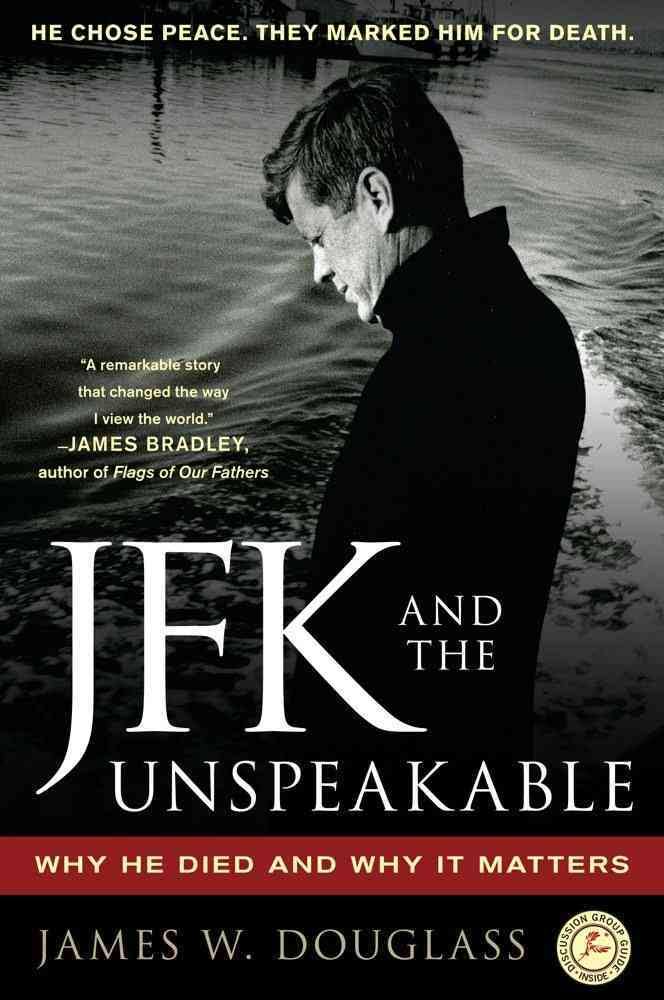
  • After Dallas DA’s Death, 19 Convictions Are Undone

    After Dallas DA’s Death, 19 Convictions Are Undone


    DALLAS – As district attorney of Dallas for an unprecedented 36 years, Henry Wade was the embodiment of Texas justice.

    A strapping 6-footer with a square jaw and a half-chewed cigar clamped between his teeth, The Chief, as he was known, prosecuted Jack Ruby. He was the Wade in Roe v. Wade. And he compiled a conviction rate so impressive that defense attorneys ruefully called themselves the 7 Percent Club.

    But now, seven years after Wade’s death, The Chief’s legacy is taking a beating.

    wade

    Henry Wade

    Nineteen convictions ‹ three for murder and the rest involving rape or burglary ‹ won by Wade and two successors who trained under him have been overturned after DNA evidence exonerated the defendants. About 250 more cases are under review.

    No other county in America ‹ and almost no state, for that matter ‹ has freed more innocent people from prison in recent years than Dallas County, where Wade was DA from 1951 through 1986.

    Current District Attorney Craig Watkins, who in 2006 became the first black elected chief prosecutor in any Texas county, said that more wrongly convicted people will go free.

    “There was a cowboy kind of mentality and the reality is that kind of approach is archaic, racist, elitist and arrogant,” said Watkins, who is 40 and never worked for Wade or met him.

    ‘Not a racist’

    But some of those who knew Wade say the truth is more complicated than Watkins’ summation.

    “My father was not a racist. He didn’t have a racist bone in his body,” said Kim Wade, a lawyer in his own right. “He was very competitive.”

    Moreover, former colleagues ‹ and even the Innocence Project of Texas, which is spearheading the DNA tests ‹ credit Wade with preserving the evidence in every case, a practice that allowed investigations to be reopened and inmates to be freed. (His critics say, of course, that he kept the evidence for possible use in further prosecutions, not to help defendants.)

    The new DA and other Wade detractors say the cases won under Wade were riddled with shoddy investigations, evidence was ignored and defense lawyers were kept in the dark. They note that the promotion system under Wade rewarded prosecutors for high conviction rates.

    In the case of James Lee Woodard ‹ released in April after 27 years in prison for a murder DNA showed he didn’t commit ‹ Wade’s office withheld from defense attorneys photographs of tire tracks at the crime scene that didn’t match Woodard’s car.

    “Now in hindsight, we’re finding lots of places where detectives in those cases, they kind of trimmed the corners to just get the case done,” said Michelle Moore, a Dallas County public defender and president of the Innocence Project of Texas. “Whether that’s the fault of the detectives or the DA’s, I don’t know.”

    ‘Win at all costs’

    John Stickels, a University of Texas at Arlington criminology professor and a director of the Innocence Project of Texas, blames a culture of “win at all costs.”

    “When someone was arrested, it was assumed they were guilty,” he said. “I think prosecutors and investigators basically ignored all evidence to the contrary and decided they were going to convict these guys.”

    A Democrat, Wade was first elected DA at age 35 after three years as an assistant DA, promising to “stem the rising tide of crime.” Wade already had spent four years as an FBI agent, served in the Navy during World War II and did a stint as a local prosecutor in nearby Rockwall County, where he grew up on a farm, the son of a lawyer. Wade was one of 11 children; six of the boys went on to become lawyers.

    He was elected 10 times in all. He and his cadre of assistant DAs ‹ all of them white men, early on ‹ consistently reported annual conviction rates above 90 percent. In his last 20 years as district attorney, his office won 165,000 convictions, the Dallas Morning News reported when he retired.

    In the 1960s, Wade secured a murder conviction against Ruby, the Dallas nightclub owner who shot Lee Harvey Oswald after Oswald’s arrest in the assassination of President Kennedy. Ruby’s conviction was overturned on appeal, and he died before Wade could retry him.

    Wade was also the defendant in the 1973 landmark Roe v. Wade Supreme Court decision legalizing abortion. The case began three years earlier when Dallas resident Norma McCorvey ‹ using the pseudonym Jane Roe ‹ sued because she couldn’t get an abortion in Texas.

    Cases overturned

    Troubling cases surfaced in the 1980s, as Wade’s career was winding down.

    Lenell Geter, a black engineer, was convicted of armed robbery and sentenced to life in prison. After Geter had spent more than a year behind bars, Wade agreed to a new trial, then dropped the charges in 1983 amid reports of shoddy evidence and allegations Geter was singled out because of his race.

    In Wade’s final year in office, the U.S. Supreme Court overturned the death sentence of a black man, Thomas Miller-El, ruling that blacks were excluded from the jury. Cited in Miller-El’s appeal was a manual for prosecutors that Wade wrote in 1969 and was used for more than a decade. It gave instructions on how to keep minorities off juries.

    A month before Wade died of Parkinson’s disease in 2001, DNA evidence was used for the first time to reverse a Dallas County conviction. David Shawn Pope, found guilty of rape in 1986, had spent 15 years in prison.

    Watkins, a former defense lawyer, has since put in place a program under which prosecutors, aided by law students, are examining hundreds of old cases where convicted criminals have requested DNA testing.

    ‘Protecting a legacy’

    Of the 19 convictions that have been overturned, all but four were won during Wade’s tenure. In two-thirds of the cases, the defendants were black men. None of the convictions that have come under review are death penalty cases.

    “I think the number of examples of cases show it’s troubling,” said Nina Morrison, an attorney with the Innocence Project, a New York-based legal group affiliated with the Texas effort. “Whether it’s worse than other jurisdictions, it’s hard to say. It would be a mistake to conclude the problems in these cases are limited to Dallas or are unique to Dallas.

    Former assistant prosecutor Dan Hagood said The Chief expected his assistants to be prepared, represent the state well and be careful and fair.

    “Never once ‹ ever ‹ did I ever get the feeling of anything unethical,” Hagood said. He denied there was any pressure exerted from above ‹ “no `wink’ deals, no `The boss says we need to get this guy.’”

    But Watkins said those who defend The Chief are “protecting a legacy.”

    “Clearly it was a culture. A lot of folks don’t want to admit it. It was there,” the new DA said. “We decided to fix it.”
    © 2008 MSNBC.com

  • John Hankey Marches Onward and Downward


    with Frank Cassano


    Introduction

    As readers will recall, Seamus Coogan did a long analytical piece on Hankey’s documentary, JFK II. That negative critique stung Hankey and his followers – yes, he does have some, though not quite as many after as before. Hankey posted a reply at the web site: JFK Murder Solved, and then Jim DiEugenio replied and there was then a rebuttal round.

    On that forum, Hankey admitted that he was embarrassed by the sheer number of errors – over 20 – that he had made in an 85 minute film, that was supposed to be “a documentary.” He then said that he could not hire a fact-checker. Yet, as Jim pointed out: What had prevented him from going to the library and picking up say, three books on the JFK case? This would have saved him the subsequent embarrassment. He then tried to save the day by saying that the accumulation of mistakes exposed by Seamus did not touch on his major thesis. Anyone who reads Seamus’ essay will understand that this is a dubious and face-saving assertion.

    At first, Hankey apparently did not understand the hit his credibility had sustained; though later he did, since he now has shifted tactics. He now says that he only made – please sit down before you read this – all of one error! This is simply a deception on his part. As anyone can comprehend by reading Coogan’s essay. The litany of errors he made is staggering. And understand, that essay was cut down by about 20 pages on the grounds of overkill. The total amount of pratfalls was more like 50. A fact Hankey cannot admit to today.

    His other new tactic is to actually accuse Jim DiEugenio – again, sit down before you read this – of being a CIA operative. This is simply nutty. No one writing today has accused the CIA more often and more strongly of being behind the JFK murder. Can Hankey really be ignorant of this? If so, it indicates why his work is so full of errors. But because CTKA published Seamus’ essay, this is what Hankey is reduced to. Even though it was Coogan – not DiEugenio – who wrote the original piece.

    Hankey’s new tactics were revealed on an Internet radio show called The Corbett Report. After his appearance, several readers let us know about what he had said. Frank Cassano (and others) wrote the host a letter and Jim DiEugenio left a call. On January 2nd of the new year, Mr. Corbett then granted Jim and Seamus an opportunity to respond. (Click here to download an mp3 file of Jim’s and Seamus’ appearance on The Corbett Report.)

    John Hankey’s statement below, made in an interview with podcast host James Corbett, shows the limited scope of his logic, and is a fine way to begin this brief examination of Hankey’s latest faux pas on the show of December 4th, 2010. For those of you new to this debate, I refer you to my review of Hankey’s appalling documentary, JFK II and Jim DiEugenio’s reviews of Dark Legacy and Hankeyan clone Russ Baker’s Family of Secrets.

    The Hankeyan Strategy:  “Everything I get – all the major points – are from Plausible Denial.”

    Mark Lane’s book Plausible Denial was published in 1991. Since that time there have been many published JFK books and much updated research. Lane’s book is an important contribution that did much to sharpen the point that E. Howard Hunt did not have an alibi for where he was on 11/22/63. Which leads to the question: Why did he need one? When combined with the fact that his friend and colleague, David Phillips, admitted to his brother that he was in Dallas that day – well, that is quite interesting. When you add in a third point, that it was James Angleton that proffered the memo saying that Hunt did need such an alibi – well, that is even more than interesting. It’s compelling. Hankey, however, completely leaves out the latter two facts. He then tries to connect Hunt, not to Phillips or Angleton, but to Richard Nixon and George Bush. Even though Hunt did not work for Nixon until ten years after the assassination. And there is no proof that Bush and Hunt worked with each other at all. It is only a Hankeyan presumption.

    Now, although Nixon figures prominently in the Hankey film as part of the JFK plot, contrary to what Hankey says above, he is not part of the plot – in any way – in Lane’s book. (Hankey seems to have borrowed his material on Nixon from Paul Kangas, a notoriously unreliable and sensationalistic researcher.) But Hankey tried to save the day by telling Corbett that Lane’s book also implicates George Bush in the JFK case – a distortion that Corbett seemed to accept.

    The problem is that Lane does not mention George Bush in the main text of the book. And that is where he actually discusses his investigation of the JFK case. He only mentions him in the Epilogue. And he references here the famous Joseph McBride articles in The Nation. McBride, of course, talked about the J. Edgar Hoover memo which showed Bush’s ties to the Central Intelligence Agency. (And those of you familiar with my earlier treatment of Hankey will know he mangled that memo beyond all normal usage.) What Hankey did with Corbett was to extract one sentence from this Epilogue to provide as evidence that Lane and he are actually “soul brothers.” In this Epilogue, Lane was trying to jab up present interest in the JFK case. So he asked if there was any person on the scene today with a relation to the “Kennedy drama.” (Lane, p. 329) He then discusses Bush and the McBride articles. And he adds that Bush knew George DeMohrenschildt and Bush may have been involved in the Bay of Pigs. (Ibid, pgs. 332-33) And that is it. So for Hankey to state that somehow Lane’s book presaged his interest in, and use of, Nixon and Bush in the JFK assassination is simply not accurate.

    Hankey has adopted an interesting strategy of naming respected sources such as Fletcher Prouty and Lane and then claiming that people like Jim DiEugenio and myself are unwilling to criticize them, choosing instead to pick on him – which is stretching things. Since in my original article, I did jab at Lane for using Marita Lorenz at face value. Hankey also tries to insinuate that we are antagonistic towards them, another patently false allusion since CTKA respects the work of both authors as seen in numerous articles. Finally, his last recourse is exceptionally creative: He seeks to combine these factors and then literally blame it all on Lane and Prouty:

    And anyone as brilliant about his facts as Seamus is, knows it. But he attacks me, and pretends that Mark Lane and Fletcher Prouty have nothing to do with any of this. I don’t blame him for not wanting to take on Mark Lane. But this pretense is not merely cowardly. It is fundamentally, and darkly, dishonest.

    In retrospect, we really shouldn’t have edited out some points in the original Hankey piece. But due to the originals mammoth 52 pages, some things went to the cutting room floor. One of the things deleted was another thing Hankey has failed to give serious thought to: If Prouty’s assertions about the Bush connection in the naming of the Bay of Pigs vessels as the Barbara and Houston are correct, Prouty never made a big song and dance about it. Nor did Prouty elevate Bush into the realms of the planners for the Kennedy assassination. But Hankey has. Prouty showed common sense with his allegations and didn’t go off on tangents. It is people like Hankey who inadvertently damage reputations like Prouty’s by taking Prouty’s positions to extremes that were never intended.

    Finally, there is this: Prouty and Lane have brought to the table much of benefit to all serious researchers. Lane has written three valuable books on the case: Rush to Judgment, A Citizen’s Dissent, and Plausible Denial. Prouty has written a classic book on the CIA – The Secret Team – and a good book on Kennedy’s assassination and his intent to withdraw from Vietnam – JFK: The CIA, Vietnam, and the Plot to Assassinate John F. Kennedy. There is much, much more to both men than simply Hunt, Nixon being depicted with a rifle in hand, George Bush being named in a Hoover memo, allegations that Bush named some boats used in the Bay of Pigs, and the Christchurch Star. Hankey, who has brought next to nothing to the table, grossly misrepresented or overstated what they and other authors have said or written. This is a far more serious offense than any small differences of opinion with them over the naming of two ships used in the Bay of Pigs invasion.

    Another bizarre and immature Hankey strategy is to admit fault in his data collection, but then to say DiEugenio and I are either nit-picking over minor details that don’t threaten his main thesis, or to greatly minimize the number of errors he made in JFK II. These two issues intersect each other: because if you make literally dozens of errors, as Hankey did in JFK II, who can trust what you say at all? One thing that Hankey is aware of, and hoodwinks his few supporters into ignoring, is that every “minor” detail we pick up on, no matter how divergent (and he gets pretty diverse in his multiplicity of errors), is a building block to the foundation of his overall conclusion. And that he himself has included it, not us. When we include other pieces of information it is to show what Hankey has missed.

    Let us give the reader an idea of how Hankey has tried to counter the exposé of his error-filled film. When my long review first appeared, a discussion of it surfaced at the web site: JFK Murder Solved. An indiscriminating radio host named Michael Dell tried to minimize the myriad errors Hankey had made. (Dell had hosted Hankey, and obviously was stung by the fact that somehow he had not caught any of his litany of errors.) Hankey joined the discussion and admitted that he should have done a better job in his fact-checking. But somehow he did not have the budget for a researcher. Jim DiEugenio chimed in and added words to the effect: Well, can’t you drive to the nearest public library and pick up a few books to prevent you from taking so many pratfalls?

    On the Corbett show, Hankey has now organized a different defense against his failure to fact-check. He now tries to insinuate that the only mistake he made was that he said the CIA had killed Mossadgeh in the Iran coup of 1953. Let us call this for what it is: A deliberate lie to save face in public. That may be strong, but it is wholly justified. Why? Because just in that particular section of the early edit of JFK II, it was pointed out that he made another error: He implied that Jacobo Arbenz had died in the CIA coup the following year. Again, this was false. He did not die until 1971. Further, he also tried to imply that Prescott Bush was the guiding hand behind those two coups, plus the murder of Patrice Lumumba in 1961 – which, for anyone who knows anything about the CIA, is patently false. Clearly, the Dulles brothers guided the first two operations, and Allen himself supervised the last.

    To show just how dishonest Hankey was on the Corbett show in this regard, let us go back to the thread on JFK Murder Solved. In the exchange with Hankey and Dell, Jim DiEugenio examined only the first 45 minutes of the film. From my review, he extracted nearly 20 factual errors! Or almost one per minute. And, as Jim further noted, the second half of the film is even more error-strewn than the first half, e.g., Hankey puts words in Bill Colby’s mouth that he never told the Church Committee. So for Hankey to say in public that he made only one error is simply knowingly deceitful.

    Another ploy that Hankey and some of his followers (like Michael Green) have developed is to call my essay “a hit piece.” This is ridiculous. In its traditional usage, that term means that a journalist or reporter is called in by his superiors and told words to the effect: Go out and wreck this story, or impugn this guy’s character – or both. In the traditional media, this often occurred. For example, the Los Angeles Times appointed a task force to go after the late Gary Webb and his generally accurate story about cocaine smuggling into Los Angeles by the Contras. Further back, in 1967, Walter Sheridan and NBC deliberately set out to wreck Jim Garrison’s case against Clay Shaw. (Click here for the details.) No such thing happened here. After watching Hankey’s film, I was appalled by the many factual errors in it. I relayed some of them to Jim DiEugenio, not telling him they were a part of Hankey’s film. After about four of these, Jim asked me “Where are you getting these whoppers from?” I told him. I then suggested I do an essay on the film. So the process was just the opposite of what is considered a “hit piece.” Hankey’s film was so just so poor that it inspired a writer to correct the record. I was commissioned to do so by no one. I just wanted to set the record straight, and I wanted to raise the bar for the research community to shoot for. The surprise is that it took so long for anyone to do that – which tells you something about the quality control in the field.

    Another Hankey tactic is to portray critical comments as down-playing certain individuals’ roles or credentials, like say Oswald’s intelligence connections. I hate to tell him, but it isn’t a big deal anymore that Oswald was a low-level CIA operative and FBI informant. It’s no big deal Bush was associated with the CIA before he admitted he was; and therefore that the Hoover memorandum is not such a big deal either. Why? Because better researchers than Hankey have pored over this stuff for years and have drawn much the same conclusions. Conclusions utterly divergent from Hankey’s fantasies, e.g., fantasies like George Bush and two Cubans storming into Hoover’s office and threatening him with a flechette gun (a truly nutty proposition which Hankey prudently cut from the final edit of his film).

    10:44: “No members of the Kennedy’s family ever alleged there was an assassination plot.”

    Untrue, Kerry McCarthy spoke out about it at JFK Lancer in 1997.

    This is shaping up to be a vintage performance from Hankey here and this is an utterly hilarious statement. In my review of Hankey, there’s a statement by The King of Comedy in which he attested to a fan that David Talbot’s book Brothers backed his findings in the case.

    If you thought the above comments were a little exaggerated, then check this one out. It comes from an email exchange between Hankey and an online fan:

    I’m grateful that you called me at all. But it sounds like I’m better off to shut my mouth about what you’ve told me, since, like many true stories, it’s so incredible and the other evidence is there in plain sight anyway. This new book, Brothers, further corroborates all the CIA-trained Cubans and Mafia material in JFK II.

    Does he really think that his video JFK II was the first to expose the CIA-Mafia plots and their possible coordination with Cuban exiles? Did Hankey ever hear of Anthony Summers’ valuable book, originally titled Conspiracy? It was first published many, many years – even decades – before JFK II began to circulate. Further, how was David Talbot’s Brothers inspired by Hankey’s research? You will not see Hankey’s name in Talbot’s index. But you will see Summers’ name. (p. 476) But even that gives Hankey too much credit. For the Talbot book does not really outline any such conspiracy to kill President Kennedy.

    There’s further evidence that Hankey has never even read Brothers. The entire book is based on the evidence from RFK’s closest confidants that he believed there was a high level conspiracy to kill his brother.

    16:57: Dulles, the Chief Sponsor of the Kennedy Hit

    The above section concerning Prescott’s dominion over Dulles (a key theme running throughout Hankey’s work) is very interesting stuff because Hankey soon back-flips and admits (extremely begrudgingly by the sound of his tone) that Dulles had been the king-pin of the JFK coup. This may be due to the drubbing given him by myself, Jim DiEugenio, and likely numerous others after his comments on Black Op Radio in 2009 that Dulles was Bush’s puppet.

    19:44: “I’ve been attacked recently by some very, very reputable people.”

    Apparently this is “rather chilling” because Hankey’s “evidence” is apparently “clear and overwhelming” – according to himself and “lots and lots of people who agree with me that if somebody’s challenging that, it throws into question their credibility.” This is astounding in its delusionary rationalization. The idea that Jim DiEugenio’s reputation in the research community, or at large, or CTKA’s credentials, or my own are in some way going to suffer when our work is compared to Hankey’s – well, what can one say to such nonsense?

    21:33: James Jesus Angleton Memorandum about Hunt

    Hankey gets something correct again. James Angleton did supply the Hunt memorandum about Howard Hunt needing an alibi for Dallas. But what he won’t like is that this is a correction that came from my piece. Re: 40:13 into his film:

    First, he says that the famous CIA memorandum explaining how they must provide Howard Hunt with an alibi for 11/22/63 was written by Director of Plans, Richard Helms. Yet according to his own source, it was written by James Angleton, Chief of Counter-Intelligence. (Lane, p. 145)

    Of course Hankey has no idea that this memorandum (purportedly dated back to 1966) was leaked out during the closing phases of HSCA; nor that by 1978 Helms and Angleton were not formally employed by the agency. I should also add that in the same sentence I mentioned above, I also recall that I have never heard Hunt admit that he was an assassin. Hankey makes this vacant claim at a later stage of his “documentary.”

    23:34: Mark Lane writes, “All of the participants are dead except George Bush.”

    As mentioned above, this is not accurate. When Plausible Denial was published in 1991, two figures considered prominently involved in the assassination were alive: E. Howard Hunt and Richard Helms. Lane says so in the book on page 235, a few sentences before he even mentions George Bush. He never named Bush as a participant in the plot. But in the “Kennedy drama,” which is not the same thing. Hunt’s trial occurred in 1987 (a year Hankey, the Mark Lane devotee, could not even name at one point). At the time of writing this book, Lane believed Bush was somewhere around the scene and he believes Bush named the boats (as we have said, fine, he has every reason to think so). But that is about it. And the idea that Bush was a businessman asset used in the Bay of Pigs invasion is something that is defensible and logical. Like Prouty, Lane didn’t offer much more than that. They both had bigger fish to fry. But Hankey wrote this in his bizarre and needlessly convoluted argument on JFK Murder Solved. It concerns the much vaunted CIA memo (which is discussed in-depth in my actual review):

    Coogan pretends that I am alone in my position that this Bush-supervised group was directly involved. But that is precisely the principal thesis of Mark Lane’s Plausible Denial (the content of which is outrageously misrepresented by Coogan); and Gaeton Fonzi, cited by Coogan, has said that this is the most important area for further investigation into the murder.

    I don’t know if John ever read the same book everyone else did, but as I said earlier, George Bush is not mentioned in Lane’s book as part of the conspiracy. He never forges any relationships in Plausible Denial between Bush, Marita Lorenz, Gerry Hemmings, Hunt, and Frank Sturgis. He actually corrected himself because of Jim DiEugenio, who posted this reply about Hankey’s above spiel:

    This is pure balderdash. The Cubans Bush was allegedly associated with in the memo are never named in the memo. So what is the evidence that they are the same as those in Lorenz’s group? He produces none. And to conflate Fonzi with Lane on this issue is fundamentally dishonest. As Seamus pointed out, Fonzi in his fine book The Last Investigation, showed why Lorenz was not to be trusted on this point. He came to the conclusion she was trying to sell a screenplay. He explains why in detail on pages 83-107. Fonzi’s book came out in 1993, two years after Lane’s. Lane may have been unaware of this evidence against her. But Hankey should not have been. And used her tall tale anyway. After all, he needed some Cubans, any Cubans.

    25:03: Unintelligible Ramble

    Okay he’s getting into his famous memo here but he’s misappropriated something. In fact, he’s babbling on about an imminent invasion of Cuba and that somehow Hoover knew all about it and that Fabian Escalante was a Cuban Intelligence Officer, etc., etc. Oh boy, where does it end? I ask anyone: Does the Hoover document he’s discussing mention an invasion anywhere? (Click here to read it yourself.) It mentions the possibility of an “unauthorized raid” by some misguided anti-Castro Cubans. But next up and true to form, he’s discussing an imminent invasion of Cuba after the Kennedy assassination as discussed by Fabian Escalante – or did he? It’s all very unclear. Escalante and Cuban intelligence thought there was definitely the potential for it. The CIA had been pumping a story that Castro’s agents did it and that Oswald was an operative. But in an odd twist, Hankey, who had said earlier that the Mafia was not involved, yet mentions that Escalante has the invasion backed by “the Mob and United Fruit.”

    The invasion that Hankey discusses is not a central tenant of Escalante’s 2006 book, JFK: The Cuba Files, in any way, shape, or form. Escalante’s chief concern, indeed, the theme of his book, were the leads Cuban intelligence had developed in the case. The judgement by most researchers is that, though interesting in some regards, he was fairly off in terms of who organized it all. But Hankey picks up tidbits wherever he can.

    27:42: Jim Di-you-hay-neo

    John Hankey pronounces the surname of Jim DiEugenio (pronounced dee-you-jee-neo) in what seems like Spanish vowels. He obviously thinks Jim is Hispanic. The problem is, that with so many things, he is wrong. He overlooked that the DiEugenio surname is of Italian origin and is taken to mean “Son of Eugenio.”

    Nor can he even say the name of DiEugenio’s book correctly. It’s real title is The Assassinations. He calls it The Assassins. He gives no indications that this is his second book, his first being Destiny Betrayed. Judging by his mispronunciation of DiEugenio’s last name, Hankey also has no idea that Jim DiEugenio was a consultant to Stone on the DVD re-release of JFK and featured in a segment on new evidence declassified by the ARRB. Or that he has appeared as a guest in several documentaries on this case. Or that he has done literally scores of radio shows.

    28:00: DiEugenio, “The Operator,” and Mr. Bush Goes to Washington… Again

    At 28:00 minutes we are greeted with this slanderous tirade from Citizen Hankey about Jim DiEugenio:

    He’s a guy of great repute, and you hear intelligent people, who I believe are honest, and so on, referring to him with great deference, and… I think that he’s an operative. He’s certainly attacking the conclusions that I’ve drawn in a wildly unprofessional and unintelligent fashion. I mean, the guy has written extensively. He’s very, very well versed. He’s very knowledgeable, and nothing I’ve ever seen that he’s written has been incredibly stupid… [emphasis added]

    Now this is what we have come to expect from Hankey. Hankey say’s nothing negative about DiEugenio, except that he is “an operative.” In other words, that he is a CIA plant within the research community. And his evidence for this cheap smear? Well, it is that “he’s certainly attacking the conclusions that I’ve drawn in a wildly unprofessional and unintelligent fashion.” This is the sum of the evidence against DiEugenio. He disagreed with both the factual data in his film and the overall conclusion. Did Hankey ever read DiEugenio’s review of Ultimate Sacrifice? Say this for Lamar Waldron and Tom Hartmann: They never reduced themselves to slander to counteract a negative review. Further, is there anyone on the current scene who has accused the CIA more strongly and more often of being involved in the JFK murder than Jim DiEugenio? Finally, why is Hankey going after DiEugenio in the first place? He did not write that review of his film. I did.

    Within seconds, Hankey then confuses himself by saying that Hoover is supervising the Cubans. Luckily for Hankey, Corbett corrects him once again (not for the last time). Hankey gets back on track, but then he goes back to the idea of this memo advocating an invasion of Cuba (which it does not do). And then get this one. Really lean back and concentrate. For we are now in for another Hankeyan leap of logic. Even though the Hoover memo does not mention any kind of USA sponsored invasion, Hankey then says does notand that Hoover is writing the memo because Bush is the guy in charge of the possible invasion! It then gets worse: Hoover’s report constitutes a warning to Bush saying, in effect, “You’re busted,” and to shut it down. Why else, according to Hankey, would the FBI contact him? At this point it is a good idea to provide another link to the document. Please read it closely. Now compare what it says to what Hankey is aggrandizing it into for his own solipsistic purposes.

    Is there anything in the memo that mentions any kind of invasion? Or hints that it is CIA or state sponsored? What it actually says is that the FBI has heard that the State Department is worried that, in the wake of Kennedy’s murder, “some misguided anti-Castro group… might undertake an unauthorized raid against Cuba… .” In fact, the memo goes on to say that the FBI sources in Miami say they “knew of no plans for unauthorized action against Cuba.” So what is Hankey talking about? This seems to be nothing but pure and irresponsible hyperbole.

    Hankey clearly doesn’t understand how intelligence works. For if the memo really said what he is inflating it to say, some FBI heavy-hitter like William Sullivan or Cartha DeLoach would be sent out to talk with some CIA representative, say someone like Richard Helms or Tracy Barnes or Desmond Fitzgerald (all of them way above and beyond George Bush). And this discussion would be off the record. It would not be written up at all. As Warren DeBrueys told Jim DiEugenio in his home in Metarie, whenever the FBI stumbled across a CIA operation, they did not interfere with it. If the situation was volatile enough, the report from such a meeting would likely wind up in Hoover’s personal files and not routed through the system, as this was. Larry Hancock explained as much in my review. If Bush is so important and if this was word of an “invasion,” then why did it get written up in the first place?

    Hankey then makes another enormous leap and mentions the utterly fictional meeting between Hoover and Bush at the FBI. This is precisely the angle he got attacked on by myself and which he erased out of Dark Legacy (before our first review appeared). But he brings it back up again. This encounter never ever happened. With regards to this, in his outing on JFK Murder Solved, he accused me of illicitly procuring a copy of JFK II, in which the demonstrably fraudulent meeting between Bush and Hoover is depicted. The joke here is that Hankey has numerous versions depicting this ridiculous scene all over the internet, and has done so for a rather long time.

    31:28: Mallon and Bush Send for Dulles

    What is it with official documents that John Hankey doesn’t get? Because the lies and distortions of the historical record just keep on a rolling in. In JFK II and Dark Legacy, Hankey unearths a letter from Neil Mallon to Allen Dulles. In the draft version of my review I had paid some attention to this. As I said earlier, it was one of the things that didn’t make it in. In the Mallon memo, which is by itself an interesting little document (if one can squint they can see it), Mallon is thankful that a friend, “Tiny,” (it’s what it looks like to me), has “convinced” Dulles to come to the Carlton (presumably the Ritz Carlton in Georgetown, Washington) at 7:00 pm to celebrate the Anniversary. (Not sure precisely what they were celebrating, but Hankey, in his zeal to prove a point, doesn’t recognize that the date appears to be mid-April, near enough to the date of the Bay of Pigs invasion. Needless to say, I regret bringing this up because Hankey will now change his tack and make numerous other claims.) This location was chosen by Mallon (who is going to stay at the DuPont Plaza) because it was the most convenient place for Dulles to go to. He also says he has someone else is coming, whose name is indiscernible, and he has also invited Prescott Bush. Mallon wants Dulles to “listen in” on their “Pilot Project in the Carribean.”

    Hankey describes this memo as Bush and Mallon “sending” for Dulles, as if he is a notch above the hotel concierge in status. In JFK II, moments before we view the Mellon/Dresser Industries document, Hankey had shown a memo in which Bush had sent a letter to C. D. Jackson recommending his pal Mallon for a position, and he mentions that he had been recruiting people for Allen Dulles and the CIA. Allen Dulles is regarded as the father of the agency by any and all researchers (bar John Hankey). Thus most reasonable people would assume that Mallon was, for all intents and purposes, Dulles’ follower.

    Most people would also clearly see that Mallon had pestered Dulles to come along. Of all the people attending, the location was named as being the most convenient for Dulles. As for Bush sending for Dulles, this is ludicrous. He’s been invited and seems to have had no problem wanting to be in Dulles’ presence. There’s nothing indicating Bush sent for him or demanded his presence in any way. If he had planned it with Mallon, which is a distinct possibility, they focused all attention on Dulles. Dulles was the man they needed, not the other way around. It’s as clear as daylight. Another thing that is pretty clear is the date of the document, which Hankey ignores while claiming to Corbett that the Pilot Project in the Carribean is “George Bush and the Bay of Pigs.” The problem here is that the document looks like it is dated in April of 1963. The Bay of Pigs occurred in 1961 – two years earlier.

    36:40: Prouty Picked up a Newspaper in Australia

    Part way through this ramble, Hankey says Fletcher Prouty was involved in NSAM 273, the order to withdraw 1000 troops from Vietnam by Christmas 1963. In fact, it was NSAM 263 which contained this order – and all troops by the end of 1965. NSAM 273 was the beginning of Lyndon Johnson’s reversal of NSAM 263, which ultimately resulted in the deployment of 185,000 troops into Vietnam by the end of 1965.

    Now Prouty figures fairly prominently in Oliver Stone’s film JFK. Who can forget the scene where Mr. X encounters Jim Garrison in Washington and tells him about picking up a newspaper and instantly thinking there was a cover story put out about Oswald? As it turns out, Hankey can. He forgot what country Fletcher Prouty was in, and the famous name of the newspaper he picked up. Corbett had to correct him again. Prouty was not in Hankey’s Australia, but in New Zealand and the paper was the Christchurch Star. But Hankey isn’t done. He then calls Prouty a CIA operative. This is JFK 101 level stuff and Hankey is flunking. In the film, Mr. X explicitly denies this. Everybody knows that Colonel Prouty was a high-level liaison between the Pentagon and the CIA. If Hankey were as big an advocate of Prouty as he says he is, he would know that Prouty never worked for the Agency.

    John, let’s stop here and take a quick breather. Are these horrific mistakes irrelevancies to you? Are these minor matters, or mistakes that do not interfere with your overall analysis that the Bush family orchestrated the assassination? If so John, let’s take you – no, let’s walk you – back to the start. The irrelevancies we discuss are the irrelevancies you bring up. Not us. Understand this. We simply clean up your errors – big and small. What has Fletcher Prouty in New Zealand got to do with anything regarding your grand scheme? Did George Bush send him there John? Well you seem to think so. Why on earth would you say stuff along the lines of: “It’s clear they moved Prouty out of the country to move Bush into Dallas to supervise his troops.” And later on when discussing Bush’s phone call to the FBI in Tyler, Texas, why would you joke that he should have placed the call from New Zealand?

    Fletcher Prouty never actually said New Zealand got the story ahead of the rest of the planet. After spending five years examining the Star (unlike your 5 minutes), I agree with Prouty that there was a probable cover story. This went out around the world. None of the potential conduits of this information have any bearing on the Bush family. It has more to do with individuals like Joe Goulden, Hal Hendrix, and David Atlee Phillips. Persons you think are not relevant. While you are at it, please tell us that Prescott Bush invented Operation Mockingbird, which was a major part of the plot that day.

    39:10: George Bush’s Impossible Phone Call in Tyler, Texas

    Hankey’s mysterious conflict with documentation again rears its ugly head. But before we tap this rich vein of Hankeyism, let us note that he says that Bush cannot remember where he was that day. This is a myth. Paul Kangas is the spiritual father to Hankey, which, considering his grip on facts, makes perfect sense. He seems to have come up with the idea of “Bush, The Amnesiac.” In this excerpt from a draft for another project, Kangas provided no sources for the following 1991 diatribe in his piece The Kennedy Assassination: The Nixon Bush Connection:

    On the day of the assassination Bush was in Texas, but he denies knowing exactly where he was. Since he had been the supervisor for the secret Cuban teams, headed by former Cuban police commander Felix Rodriguez, since 1960, it is likely Bush was also in Dallas in 1963. Several of the Cubans he was supervising as dirty-tricks teams for Nixon, were photographed in the Zagruder film.

    Only Hankey could be influenced by someone who calls the most famous home movie ever, the “Zagruder film,” and then calls George’s dad “Preston.” And to make it a trifecta, Kangas says “Preston” (he, of course, should have said “Prescott”) ran his son’s non-existent campaign for the Senate in 1962. That Hankey and Russ Baker have both fallen for this line says much about their “rigorous research standards.” (And yes, Jesse Ventura was criticized by me as well for this.) Hankey then tries to say here that Bush was not really in Tyler, Texas at the time! How? He says there was only seven minutes for him to make a call to the FBI about Thomas Parrot. As if seven minutes were not enough time to call the FBI. Yet, the FBI document says that Bush called at 1:45. George Bush actually had something like 15 minutes to make the phone call. It is there in black and white in the document he so astoundingly says gave Bush 7 minutes to make the call. Hankey’s excuse – and he always has one – will be something like the call would have taken time to get through and so on. I’m sorry, but it’s all there and it looks like an extremely simple operation to any rational person looking at the document in question. (Click here for a view.)

    56:07: Madeleine Brown, The Prostitute

    Hankey’s right to be skeptical of Madeleine Brown. However, he’s not prepared to go all the way. He seems to believe that the mystical Murchison assassination-eve party occurred. It’s not clear to me if he does or not. But he goes all the way and smears the dead woman by calling her a prostitute. I have seen no evidence which suggests she was a prostitute. Yet based on the fact that she attended some upper-echelon Dallas parties, the woman is called a prostitute: “Why do you think they keep inviting her?” Hankey asks. In the midst of Brown’s purported whoring, Hankey, in his excitement, forgets the name of the prominent Wall Street figure on the Warren Commission who was supposed to be there also. John J. McCloy was the name you were after John. Gad, you “expert” you.

    1:13:41: Hankey, The Eternal Victim

    James Corbett clearly wanted Hankey on his show to discuss Dark Legacy. But what it turned into was a rambling diatribe against CTKA. The debate on Murder Solved is an interesting case in point. In the final stages of his interview, Corbett asks Hankey if he has formulated a response to “Delhayneos” CTKA “hit piece” on him. (Even though I – not Jim – wrote it.) Hankey’s reply, as per usual, was all over the place and yet deeply revealing:

    Hankey: The way I’ve been dealing with it is to address it where it’s raised and to ignore it when it’s…. and I haven’t raised it on my website because I don’t think that 99 percent of the population are familiar….and, and god, I mean have you read it?

    Corbett: Yes, I actually have.

    Hankey: Yes…..well congrats … you know, what is it 25 pages?

    Corbett: Yeah, it’s quite voluminous.

    Hankey: And it’s horrible I think….um and I find it impenetrable, [Yes, after myriad silly and petty assaults at it, he’s finally figured it out] and it’s…anyway, anyway you can find my rebuttals at JFK Murder Solved, because they raised it ah at JFK Murder Solved and so I asked DiYouhayneo…..will you know allow me to respond? And he said nooo ha ha ha, okay alright… so now what?

    Now, let us do our usual Hankeyan breakdown. First of all, Hankey has raised the issue on his web site. We have seen it. But what he does is quite slick. In order to preserve his fig leaf that he really didn’t make that many errors in the film, he eliminates any reference to Jim’s second post there. Why? Because Jim listed the 20 errors he made in the first half of the film. Secondly, as Jim later explained when he was allowed to reply on Corbett’s show, CTKA has a general rule that we don’t allow authors to counter the reviews we place, for the simple reason that we negatively review so many books, essays, and DVD’s that it would take up much too much time. (There has only been one exception to this rule, a reply to my discussion of Alex Jones.)

    But let’s continue Hankey’s “comeback special” tirade, where he is a bit more candid:

    Um and… anyway to me it’s such a stupid ugly, ah, rabbit hole that I don’t bring it up at my place. I do have a link I can send you if you like where I have Coogan’s statement, my response, DiYouhayneo’s response and my response they’re all at JFK Murder Solved. Um I have them on a hidden page at my website but I don’t put them out front. Because I don’t think that’s really that much of a problem…

    Yes, John. That’s why you’re saying you’re hiding it when it’s a public forum. That totally makes sense. But in the next sentence you completely give the game away:

    Right I mean I didn’t make my movie for those people…those the………what percent of the population I dunno the small percent of the population that um read 25 page…..25 page hit pieces on a little known documentary about Bush’s involvement.

    As we have explained, my piece was not a “hit piece.” It was a painstaking correction of a litany of literally scores of errors. If Hankey would have done his homework, he would not have been embarrassed, as he himself admitted at JFK Murder Solved. Incredibly, he never even turned the film over to a fact-checker who was more well-versed in the JFK case than he was – which is just irresponsible.

    Hankey’s JFK II is not a little video by any account. In fact, by all accounts it has gone viral and brought Hankey quite a lot of attention. Thus, when Hankey plays victim, he’s either deluded or making a fantastic marketing pitch.

    1:16:15: J in Latin is I-I

    He then uses an example of CTKA’s correcting his use of the boat named Barbara in the Bay of Pigs. The boat we explained was the Barbara J, not simply, the Barbara. Now Hankey ignored the middle initial because it damaged his point. (Which he’ll blame now on Prouty and then us for going against Prouty-foul betrayers; we are as you will see in the grand finale). Barbara Bush was George Bush’s wife, but Barbara has no middle name. So perhaps he was wrong to insinuate the ship was named after her? He now tries to reclaim ground by making the bizarre claim that the “J in Latin is I-I.”

    Hankey’s excuse for all of this:

    Now Bush being the classest classicist, a classic devil worshipper if, you’ll, you’ll allow me to go there, you know what I am saying these guys are into that sort of …….his, his Skull and Bones name I believe is “Beelzebub” but they’re into that weird crap. So it’s legitimate to suggest that it is called the Barbara II. Because ‘J’ in Latin is double ‘I’. I’m not going into all that.

    Now, Hankey spent a good deal of time in his film discussing Bush’s association with Skull and Bones. In the CTKA review, he was roundly shredded because of his inaccuracies. Hankey, “the S&B expert,” should have known that Bush’s name was “Magog.” As for the conversion of ‘J’ into Roman numerals, it is a half truth. Is he really trying somehow to equate Roman numerals with the letter value of ‘J’ ? If he took a quick look on Google, it would have shown him that there was little numerical usage in replacing ‘J’ with an ‘I’ or ‘i’, and it definitely didn’t equal two of them.

    In any case, Prouty said it… “first-hand knowledge, in this codified fashion.”

    Hankey reaches a new all-time low with regard to misappropriating Fletcher Prouty – who never ever said anything of the “codified” sort in his discussions about the Bay of Pigs.

    In a field abounding with some truly bad research and researchers, John Hankey scoops the pool. To even call Hankey a researcher is to shame what the term means. Real researchers, when they are criticized, do not have to hide behind the skirts of their elders and betters, and then scream they are being singled out and victimized. They defend their work on its own terms.

    Hankey cannot. So he hides.


    “The Dark Legacy of John Hankey”

    Hankey/DiEugenio Debate Murder Solved

    DiEugenio’s Review Update of “Dark Legacy”

    Coogan Reply to Fetzer at Deep Politics Forum


    Master Class with John Hankey, Part 1

    Master Class with John Hankey, Part 2

    Master Class with John Hankey, Part 3

    Master Class with John Hankey, Part 4

  • JFK and the Majestic Papers: The History of a Hoax, Conclusion


    Part 7: Conclusion

    We have covered some extensive ground with JFK and MJ-12. We effectively started out in Hollywood, journeyed into space and then returned to Dallas. So how to summarize all of this within a page or two was always going to be a challenge. But at least I hope the reader has learned the following:

    1. The Monroe-JFK-MJ-12 documents, which the Woods’ back to the hilt, are fraudulent. Yet they still persist in championing their authenticity, even after the original owner, Timothy Cooper, disowned them as a prank. Jim Marrs, author of Alien Agenda and one of the few JFK researchers to ever entertain the Monroe-JFK-MJ-12 document/s, has been very inconsistent in his appraisal of them. Marijane Grey proves conclusively that Monroe was not obsessed with the Kennedys, nor did the diaries she kept throughout her life contain anything more than appointments and brief details, which makes a mockery of her being murdered for any of her personal writings.
    1. In the research notes I assembled, and in an earlier draft, I hoped to show that JFK had no particular interest in UFO’s. The remaining JFK-MJ-12 documents, like the Monroe-JFK-MJ-12, are also hoaxes. In particular, the celebrated ‘Scorched/Burnt Memo’ which supposedly laid the grounds for Kennedy’s assassination. Kennedy’s disinterest in the topic may have come from finding out about Dulles’ games, or Dulles could have even shot the breeze when the relationship was more cordial. Red herrings and ‘pitfalls’ in the case were discussed with looking into Cabell and Prouty on the topic of UFO’s. Bar some interesting links between Oswald, the J Reilly Coffee Company and NASA that Jim Garrison discovered and the fact that Dulles’associate and UFO philanthropist and disinformation conduit Arthur Young was Michael Paines stepfather there’s really nothing to see here folks.
    1. Perhaps the most fun part of the series was coming across the Woods’ hilarious replies about Cooper’s failed lie detector test, and then coming to grips with how deluded the Woods really are. Why they never thought (like a good many ufologists did) to compare Colby’s actual handwriting with the document in question is beyond me. That they hired remote viewers to find out about how truthful Cooper was should be beyond anybody.
    1. Linda Moulton Howe and Bob Wood were always going to have a party. Sure enough the two trashed the house, and further each other’s credibility permanently with their utterly inept examinations of the tell-all ‘Scorched/Burnt’ and ‘Colby’ memos.
    1. A curious predicament has befallen Ufology, those hunting for scam artists and hoaxsters are also trying to weed out the disinformation from the very chaff these schemers lay. Indeed the ersatz efforts and wild discourse have helped mask and convolute the role of individuals like Collins and his underlings like Doty and Cooper– who helped Hollywood out on their next big venture. All the while they have attempted to embroil two very well-known and highly suspect individuals, Allen Dulles and James Angleton, with all manner of UFO tomfoolery, which is counter to the reality of what Dulles himself created.
    1. Guss Russo, long time ‘Lone Nut’ ambassador, got caught up with UFO’s but inadvertently got caught with pants down. Denying any and all forms of CIA malfeasance in the JFK case (and their spreading of disinformation) has been his and his partners’ (Dave Perry and John McAdams) main aims in the disinformation game. As has been aligning the Kennedy assassination with Ufology. Yet Russo was quite happy to hang out with some of Ufology’s worst, and in doing so discuss US intelligence playing games in the UFO field.

    What’s ironic is that Russo and his buddies, bar one or two barbs hurled at Marrs for entertaining the JFK-MJ-12 documents, were just as bad as he was and never saw the need to castigate or investigate the Collins, Doty and Cooper, the people behind the documents. The reason for doing so is remarkably transparent. To oust these people would be an admission that at least one US intelligence agency was running a disinformation campaign aimed at trivializing the Kennedy assassination in the aftermath of Stone’s film JFK. For in exposing these assets in the former, they ran the risk of exposing themselves in the latter.

    In Preamble I, I briefly discussed the bad blood existing between the DIA and CIA and their disputes over the USAF. There is a possibility that in muddying the waters of the Kennedy assassination that the documents do seem to have one or two jabs at the CIA within them. CIA disinformation rarely, if ever, implicates themselves in anything. It’s usually, Johnson, Mob, Cuba, not to mention the classic Kennedy had blowback coming to him for something. But then again it could still be CIA all the way, or some sort of ‘fruity’ salad all outputting the BS.


    Organic Self Sustaining Disinformation, the Best Kind.

    While trying vainly to wrap this whole thing up I consistently found myself going over my notes and returning to points I made at the very beginning of this exercise.

    In the Preambles one will note how I discussed the CIA’s playing both sides of the UFO equation, effectively marginalizing those voices asking the real questions about the CIA’s manipulation of UFO’s e.g. Leon Davidson. In Parts I till now you would have seen this initiative mutate into associating UFO’s with JFK researchers. But it failed to divide assassination researchers over a JFK-UFO link, nor have the two groups ‘joined at the hip’. After the film, they merely planted their usual little disinformation seeds on both sides of the Kennedy debate, while sending an invitation for Ufologists to join it. They then sat back and watched as an assortment of UFO crazies, new age pseudo leftists, and the Libertarian right grew into weeds effectively burying the much smaller Kennedy research base with their own vivid imaginings. The free market, which appealed to and exploited these appetites, has long been exploited by the CIA and its rival agencies. The UFO detour into the Kennedy quadrant was simply a detour for this longstanding operation and was achieved with relative ease. The hype surrounding the X-Files is a case in point as Coppens writes in his article ‘Alien Overlords’

    The drive that the government – and specifically the CIA – is involved in an “alien cover-up” was paramount throughout the 1990s, popularised by the existence of “The X Files”, which in the eyes of the UFO community seemed to “validate” them.

    While I wholeheartedly agree with Coppens that it gave Ufologists a ‘voice’ (and a lousy one at that), the X-Files article he linked it too was extremely poor. It lacked any of Coppens skeptical analysis in his previous articles and exemplified why he contributes to Nexus and is friends with the likes of David Hatcher Childress. Coppens praises the courage of the shows of director Chris Carter and their pioneering qualities (despite his mentioning of Doty’s consultancy in the show). Now the X-Files pioneered something alright, but it wasn’t ‘positive’. Furthermore, the X-Files didn’t spark the ‘conspiracy’ subculture; it was Stone’s JFK. And evidence suggests this ‘subculture’ was created purely as a reaction to Stone’s film in an attempt to conflate the Kennedy assassination (a stand alone event wholly unrelated to UFO’s) with all manner of tabloid fantasies.

    Now, I don’t buy this ‘lighten up it’s only a show’ line. Programs like the X-Files and others have subverted real inquiry into real issues for purely entertainment and disinformation purposes. (And it culmianted in silliness like Men In Black.) Stories based around fake UFO abductions, which were apparently covered on the show, albeit as an aside, yet The X-Files hammered Aliens as real most of the time. It their audiences look for truth in carefully marketed and designed myths, and quite clearly put the idea out there that anybody thinking such a thing, or that Kennedy was killed by the ‘Cancer Man’ in the Storm Drain must be a fan of the show or a ‘conspiracy theorist’. The large amounts of people who have told (note ‘told’, most X-Files UFO types never ask serious researchers anything) me of this last ludicrous idea is considerable. I have even had someone tell me in all seriousness the cancer man ‘did it’.

    Films like Z, The Parallax View and JFK were never intended for this sort of thing. Costa Gavras, Alan Pakula and Stone took big commercial risks in presenting such ugly, fearful and most of all, real, views of the world we live in. The individuals in their films saw conspirators as faceless and sinister ‘gods’ whose only goal was control of control itself. In The X-Files we can see that the elite conspirators are doing so in a ruthless yet benign fashion to bide time in preventing an imminent Alien invasion of Earth (which was the major plot arch of the series).

    If that premise isn’t selling the hoary old ‘elites know best’ ‘have a plan’ or they do what they do ‘for the common good’, I don’t know what is. People also forget that the series was a fantastic advertisement for the FBI, and they aided in the show’s development.To this endI’ll give the reader a quote discussing one of the nineties most undeserving heroes, namely The X-files creator, Chris Carter from page 83 of Greg Bishop’s book Project Beta: The Story of Paul Benewitz, National Security, and the Creation of a Modern UFO Myth (thanks to Steve Snider for bringing it my attention):

    After the final season of the show, X-Files producer Chris Carter was reportedly spotted at the Los Angeles FBI shooting range. Which makes one wonder who was courting whom?

    Contrast Carter’s hassle-free ride he received in the press for his shows, with what Stone got after JFK. There were no reports of Stone hanging out at the FBI shooting range after JFK’s run in the theatres ended. Hence it’s safe to say I think the question of who has more ‘manna’ is pretty darn obvious. Kennedy’s death won’t lead anyone to little green men, but it may lead us to the man whom, in large part likely helped create them, Allen Dulles. Who probably would have been something of a fan of X-Files. After all, he was part of that Elite the show depicts as benign.

    Thus we return to the problems discussed at the very beginning of this essay. Why are there balanced debates about the greatest questions of our time ‘is there a God’ and/or ‘are we alone out there’. Yet Tom Hanks jumps on board the Bugliosi ‘lone nut’ band wagon and Leonardo DiCaprio gets involved in Lamar Waldron’s lame and unfounded conspiracy musings? Neither initiative brings any balance to the table, nor valid discussion. If life ‘out there’, is such a concern for the CIA, why have they tried to associate and mock serious JFK researchers as being aspiring Ufologists since the sixties. And why whenever something concerning the assassination and/or other important events gets notoriety, UFO’s suddenly get bandied around in the press?

    The big lie that X-Files spouted was that the ‘Truth is out there’. The reality is that the ‘Truth is really within us’. Once we strip away the hype from the myths we can see who is behind them, and if their points are worthy of pursing or not. Ultimately, when it comes down to conspiracy, I am an ardent advocate of the late Carl Ogelsby’s comment with regards to the Kennedy assassination: “We must be careful of running off into the ether of our imaginations.”In particular nowadays, when it is precisely our imaginations that are being targeted by intelligence inspired, consumer driven conspiracy nonsense like the JFK-MJ-12 hoax. The ‘Truth’ in matters of conspiracy is usually far stranger, yet more banal, than the fiction.


    Special Thanks

    During the course of this project two people who would have been rather interested in its outcomes CH and TS passed away. I didn’t know either as well as I would have liked and found out about their interests in SETI and UFO’s respectively much too late. CH whom I met through his associates CM and GH had in fact given myself a lot of support over the ten years I’ve known him in various endeavours. With particular relevance to this assignment my very good friend and now draft editor for much of my CTKA work JS lost her brother TS, a person also deeply interested in the UFO field. What added to the sadness was that they both witnessed the famous Kaikoura light shows of the seventies as children, which left an indelible imprint on them. My thoughts and feelings go out to CM, GH and JS for their loss, not to mention, a big ‘thanks’ for all their help.

  • JFK and the Majestic Papers: The History of a Hoax, Part 6


    Part 6: Gus Russo “Phone Home”

    “Fly me to moon let me play among the stars.”

    ~ Frank Sinatra, 1964; ‘It Might as Well Be Swing’


    I agree with Robert Hastings that ‘Reality Uncovered’ (a well-known moderate UFO site) and its co-founder, Ryan Dube, deserve accolades for exposing some of the shenanigans of Collins and his crew. In particular with regards to Angleton and more recently with regard to Doty’s backing of the utterly asinine Project SERPO, not to mention their toughness concerning hoaxers and cheats. I also like their line, which appears to be that ‘yes there may well be extra-terrestrials but there’s too much garbage in the way to see it clearly at the moment’.

    But I also agree with Hastings: they have picked up some rather nasty fugazys along the way. One ‘fugazy’ is Gus Russo, who seemed to have charmed his way into their midst back in 2007. It’s hugely ironic that a poster by the name of Mike Jamieson, whose moniker is ‘Clearly Discerns Reality’ makes the following comment about Russo’s upcoming appearance on the site:

    Isn’t this GR an investigative reporter with fringe theories on JFK’s death, etc?

    In his rather uniquely misguided way, our dear Mr. Jamieson is correct. Gus Russo is indeed an advocate of ‘fringe theories’. Like the magic bullet for starters. That Oswald was an agent of Castro for two, and the utterly unproven ‘theory’ that Castro had JFK killed because of his brother Robert’s against Fidel.

    That Ryan Dube (co-founder of the site with Steve Broadbent, and a sensible guy) bought into the Russo charm offensive and his ‘zany’ theories, enough to promote them in his follow up post to Jamieson, this is a prime example of what happens to even the most discerning in ufology circles. Their scope is simply too big. The broader one’s scope in any research becomes, the more one opens themselves up to all manner of untruths in some other sphere like the Kennedy assassination. (Or perhaps myself in venturing into the UFO one.)

    With a bit of delving prior to Russo’s appearance, Dube (whom we shall return to in a bit) would have seen that Gus Russo is a man who had been so badly discredited in the JFK fold by groups like CTKA, that he had to find a new home chasing ubiquitous false leads (or endorsing them for his nefarious purposes) like the Aviary. Hence, I advise, any Russo cynic to have a read of these excellent articles by Jim DiEugenio ‘Who is Gus Russo’() and ‘Inside the Target Car: Part Three() which will give the reader some important background as to Russo’s dabbling in and around the Kennedy assassination up to 2003.

    Russo’s debut turn in the ET arena began with an interesting article about government assets currently circulating around the UFO field. This paid some attention to Richard Doty and his ongoing contacts in US intelligence circles. However, his version of the modern day ‘Aviary’ made no mention of Cooper and only gave a small mention to Collins as Doty’s co-author. In so doing, Russo, who made his bones in the ‘JFK’ delta, inexplicably avoided any mention of the fake JFK-MJ-12 documents, an area one would think a researcher like himself would have tried to unravel, or at least should have while they were in their heyday.

    Instead, Russo dismissively calls them the “MJ-12 documents of old” without a second glance. Okay, Russo may well have been moving forward from his embarrassing foray into JFK, and his article on Doty does hit the target (not very hard when considering the bloated and slow moving blimp that Bob Hastings, Don Ecker, Greg Bishop, Pilkington, Greenwood, Dube and others helped make Doty into), and he did let slip an inkling of a CIA link to Doty. But if Russo had truly moved on from JFK, why then did he suddenly use Doty in comparison to Jim Garrison. When Garrison’s investigations had nothing at all to do with UFO’S, and Garrison was anythign but an intelligence asset:

    Nonetheless, much the same way that reporters speculated about the fraudulent New Orleans DA Jim Garrison forty years ago, there remains a group of UFO bloggers who continue to opine about Doty: “He must have something.”

    I mean, considering the ET zone Russo is delving into wouldn’t he have been better off comparing Doty to people like Bill Ryan, Richard Dolan, David Wilcock, Dick Hoagland, David Icke or our dear George Adamski and their followers in the naïve ‘He must have something’ stakes? Speaking of George, well Gus, there’s a very high possibility that Allen Dulles thought he had something at least. What’s also extremely dishonest is that Russo also failed to mention in his article that Garrison’s case, while far from being perfect (a case Garrison and his advocates have never denied), was fed all manner of ‘disinformation’ from numerous people very similar to the ‘unhinged’ Doty, Cooper and Collins. Namely Fred Crisman, Bernardo De Torres, Bill Boxley and Gordon Novel.

    Russo also ignored the famous and very real document concerning CIA use of its media assets in wake of the Garrison trial. This isn’t Nexus Magazine buffoonery, nor MJ-12 type musings: this is the ‘real deal’. If you want to find out more about Operation Mockingbird (which this document was part of) I suggest you check out what Bill Kelly wrote().


    Hypocrisy and Dishonesty

    Thus Russo’s article was not only guilty of ignorance, it was a piece of hypocrisy. By 2007 he was now more than prepared to discuss government sponsored individuals floating around spreading chaos in the UFO field. But heartily deny their very existence in the Kennedy field. It’s also indicative of Russo’s messiah complex, that while he’s now allowed to speculate about all manner of space related ‘funkiness’, he once derided well known Warren Commission and HSCA medical evidence critic, Dr. Cyril Wecht’s appearance on the infamous Ray Santilli ‘Alien Autopsy: Fact or Fiction’ special in 1995 on FOX. Russo’s comment (seen below) was inspired by Wecht unleashing a well-deserved tirade upon Russo at the 1993 ASK conference in Dallas. Russo, in his extremely lame and dishonest reply to DiEugenio’s original article on him ‘Who is Jim DiEugenio’ described Wecht’s passion for aliens under the heading ‘Close encounters of the foulest kind’:

    What made the event even more surreal was the fact that while he was screaming, my escalator had reached the second floor, so those below only saw the good doctor screaming at the ceiling. He was eventually coaxed outdoors, where it was thought by some he was on the verge of a stroke. If he indeed suffered permanent damage, it would explain why, four years later, Wecht was seen on TV calling the most ludicrous rubber dummy a possible space alien (“Alien Autopsy” on Fox.)

    Well, as we have seen, it was actually two years later not ‘four’ but considering Russo’s penchant for inaccuracy, well who knows? The funny thing is that Wecht never called it a possible ‘Space Alien’ in the show. Fearing I had missed something I asked Dr. Wecht himself about his comments on the show. His first reply back to me would make Shakespeare himself blush:

    Gus Russo is a cowardly, vicious, dishonest, unethical, opportunistic piece of shit.

    Wecht in a subsequent email described how he was asked by a Fox Producer to do the show and how he was instructed to focus on the ‘purported’ autopsy. In regards to this he made the following comment:

    I recall saying that – “the body shown and subjected to dissection was quite different from any human body I have ever seen or autopsied”. I stated that the Fox investigative reporter should attempt to learn more about the film – who made it? where? when?  etc. – Where did the “body” come from?

    Now I’ve watched the show and I can confirm Wecht’s comments, as I’m sure you, the reader, can. Indeed, even Wikipedia, which grinned at the (proven) fraudulent cases brought against him by pro-Bush Republicans in his had to comment:

    Noted forensic pathologist Cyril Wecht, who considered the autopsy procedures in the film to be authentic but stopped short of declaring the being an alien.

    Wecht himself was once again not shy in coming forward:

    I never stated that I believed it was an “alien”, or that I believe in “aliens”. 

    It also appears that Wecht, like myself and the majority of other people, believes that the abundance of galaxies in the universe make the chances of other life forms exceptionally high. As to his belief in whether or not Aliens have visited Earth his answer was as non-committal as mine back in the Introduction:

    At the same time, inasmuch as there are billions of galaxies in outer space, I do think it is supreme intellectual arrogance for someone to categorically deny the possibility of some form(s) of life existing in one of those galaxies. How can we possibly know that?

    So Russo, in misrepresenting Wecht, has, like his forbear Ed Epstein, tried to lump a well-known figure in the JFK nexus into the ‘UFO’s are real’ community without their say so. You may recall that previously Gus Russo’s friend John McAdams had implied Prouty’s insanity with a mere statement on the issue. There’s certainly a pattern here, indeed a fine tradition likely started by James Angleton (Dulles heir apparent in the UFO stakes). And Russo and others are certainly keen on continuing it in a big way. We can clearly see that he’s also guilty of conjoining Garrison and his advocates with a paid government disinformationist Richard Doty and his cabal of UFO train wrecks. When was Garrison ever a paid disinformation spreader Gus? What agency was he hooked up to? Surely you don’t believe the ludicrous idea of Novel’s that Garrison was a stooge of the FBI wanting to destroy Lyndon Johnson and the CIA (well at least that’s one version of his silly tale). To think Russo still has the nerve to call someone like myself or Jim Garrison ‘nuts’, after what we will see below, is delusional.


    Gus Calling Orson – Come in Orson

    Now, Russo’s article was inspired by his friend Dan Smith. Smith was/is close friends with a confirmed CIA scientist, Dr Ron Pandolfi. Pandolfi has been floating around the UFO scene since the mid-nineties and been an influential figure in spreading all manner of UFO disinformation. Yet Smith still boasts that he feeds him some information occasionally (). Mr. Smith is also very caught up in a sort of Christianity meets UFO sort of delirium (another all too common occurrence in UFO circles). In fact he’s gone one better than Tim Cooper and claims he is the second coming of the Messiah. Because he was apparently in touch with ‘Pandolfi’ whom Reality Uncovered once called ‘one of the few true government insiders’ Dube and Broadbent once entertained the notions of Smith (). Yet to their credit, Reality Uncovered has since fully discarded Russo’s hero Smith as a reliable source (showing a level of humbleness and introspection seldom seen in UFO circles). They also have come across the fact that Ron Pandolfi had been buddies with Novel (an individual they have rather stubbornly denied has had any genuine intelligence connections for a long time). In the midst of all this Pandolfi apparently attacked Dube and his site for asking direct questions of Novel’s credentials. ().

    If Reality Uncovered’s turnaround on Smith and Pandolfi wasn’t bad enough for Russo, he really crossed the Rubicon in 2008. According to Gary S. Bekkum, a longtime advocate of the absurd Serpo hoax, Russo (who appears to have been a friend of his) really is searching for that ‘mind altering close encounter’:

    Furthermore, according to Russo’s source, not only is NSA currently involved in fringe science involving mind-bending psychic intelligence collection, but their psychics have run into a mental firewall. Specifically Russo mentioned “an unknown extra-terrestrial source.

    Now wait a minute: hadn’t Russo, some years earlier, tried to falsely accuse Cyril Wecht as some kind of ‘UFO nut’? And wasn’t Russo now hanging out with a staunch protagonist of the very ‘Serpo’ hoax that Reality Uncovered had effectively decimated and that he himself had congratulated them for uncovering? Indeed, Reality Uncovered has done a number of pieces in critique of Bekkum Russo’s article. So Gus Russo, as we can see, is clearly an unrepentant conspirahypocrite. While criticising numerous figures in the JFK cavalcade for their implicating ‘unhinged’ individuals like Gordon Novel and Dave Ferrie in the Garrison case, he’d been playing ‘hide the sausage’ with a bunch of people no respectable ufologist in their right minds would go near and whom RU have since disowned. In fact RU has since distanced themselves from Russo as Dube explained to myself:

    About Russo – I have to be honest, I’ve never trusted the guy. He interviewed me for the piece that he wrote for Dan Smith, but his association with the likes of Gary Bekkum, who is essentially insane, always causes me pause. I remember looking over his work on JFK, but never followed it closely enough to know what his part was or where he fell within the field of JFK researchers … .

    Unbeknown to Dube it appears that Gus Russo (who makes jest of this oh so simple meeting in ‘Who is Jim DiEugenio’) was indeed part of a very real non-flake JFK ‘Aviary’ and in 1994 wined and dined with no lesser CIA luminaries than ex head of the agency Bill Colby (the real Bill Colby not some invention of Cooper’s), Ted Shackley, chief of the notorious Miami Station at the time of the assassination and well known media asset Joe Goulden, a close friend of the deceased David Phillips (). These are serious guys that make the supposed higher-ups in the Aviary nexus (depending on whom one reads) look like kittens. One of Russo’s old school friends, Dave Perry, was behind a dubious hit piece on Jim Marrs in 2001 in Dallas Observer. () And it’s here we encounter a rather troubling question and one which goes to the very heart of the fake JFK-MJ-12 documents. 


    Grand Master Perry & The Art of Encirclement

    Not many people who read the Robert Wilonsky piece in Dallas Observer on Marrs knew that Wilonsky and Dave Perry went back some ways. And Perry, of course, was never a fan of Marrs work. Nor did they realize that Perry isn’t considered a member of the ‘real’ research community. Or that Perry’s mission since he moved to Dallas seemed to be to discredit the local faction of writer/researchers on the JFK case there. I also doubt that people know how low the ‘lone nut’ side is prepared to stoop.

    For it appears that Perry, Wilonsky and Gary Mack (of the Sixth Floor Museum) were prepared to use Wilonsky’s mother as bait in an attempt to confuse the medical accounts at Parkland Hospital. And also make use of her associations with Jack Ruby’s old synagogue as a lure so they could conflate JFK researchers with charges of anti-Semitism (). Now, did this have nothing to do with the fact that fringe conspiracy books, one by Jim Fetzer (who has been accused by David Lifton of having anti-Semitic tendencies ) and Mark Piper (the Jews run the world) had been prevously been published?

    People reading Gus Russo’s article on Reality Uncovered wouldn’t know that while Perry (who is also exceptionally close friends with the CIA/FBI affiliated Hugh Aynesworth) was out there heckling Marrs over his views on remote viewing as espoused in his book Alien Agenda. At around the same time Gus Russo, his best buddy, was likely dabbling around in the very same fields Marrs had looked into (and perhaps doing it with aliens to boot). Now talk about a classic Dulles type of encirclement operation. As if this wasn’t bad enough, Dave Perry reveled in publishing updates on the bogus Cyril Wecht civil trial on his website, but then deleted them without a trace after the trial was deemed null and void.

    Dave Perry is a quite clever guy. And many believe a key strategist in Kennedy related disinformation. And considering his more hardened approach to new (and poor) research in the JFK sphere, the work he has done, makes the likes of ufology’s bogey men like Doty, Collins and Cooper look utterly primitive.

    At the time the first JFK-MJ-12 documents broke in 1992 many established JFK researchers were far too busy in the wake of renewed interest in the case to pay much attention to rumours, in particular those emitting from the crank ridden UFO crowd. There was good (and bad) research to be done, organizations to be formed, websites built, earth-based disinformation to fight (often resulting from the aforementioned bad research), people like Russo to be ousted, and findings of the ARRB to observe. Individuals running the gamut from Bob Groden, Steve Gerlach, Dan Ratcliffe, Len Osanic, Mike Griffiths, John Judge, Walt Brown Jim DiEugenio, Deborah Conway, Charles Drago, Lisa Pease, John Kelin and Rex Bradford are just but a sampling of the web presences we have who were all part of the maelstrom of the nineties.

    Despite the bad blood in some spheres of ‘Kennedy space’, stemming from this phase, the majority of researchers mentioned above would have agreed with the study under discussion some 15 years ago. Had Marrs seen more critical activity concerning the JFK-MJ-12 documents there’s every chance he may not have touched them with a barge pole, or been more openly critical of them. But being critical of the research community at the time was rather awkward. Individuals like Perry, Russo and McAdams effectively owned the critique and discourse surrounding many of the dubious claims being made, and respected figures like Marrs weren’t criticized for their inanity with MJ-12 because of a fear of being associated with the likes of Perry, Russo and McAdams. This is the beauty of a counter-intelligence operation in its classic form. One in which people disguised as sincerely seraching for the truth are actually not.


    ‘Ask The Question Dammit!’

    This is where Gus Russo’s and Dave Perry’s actions become ever more suspicious.
    Wilonsky’s (Perry-inspired) jibes at Marrs for advocating the Monroe-JFK-MJ-12 document in the Dallas Observer masked something deeper. And to borrow from Oliver Stone, ‘uglier’. Perry, like all of his lone nut brethren– McAdams, Dave Reitzes, David Von Pein and others–when he’s not distorting and smearing more complex and credible individuals like Mark Lane, Wecht and Prouty, these people built up their score cards by cracking onto easy ‘Doty’ like ‘crank’ targets e.g. Judyth Baker, Madeliene Brown. Yet not once did they ask the most valid question concerning Marrs’ delving into the ‘crank’ ridden JFK-MJ-12 milieiu………

    Jim, how on earth could you trust anything coming from guys like Doty, Collins and Cooper, considering the involvement of Doty and Collins with US intelligence disinformation campaigns in the mid-eighties, not to mention after Bill Moore openly discussed his role in the infamous MJ-12 campaign at the 1989 MUFON conference in Las Vegas which caused a huge stir?

    This question, or more to the point, the lone nut fraternity’s unwillingness to answer it, is where, for me, the charade collapses. Because in asking this question they would have readily acknowledged that people with verifiable links to US intelligence were wittingly spreading disinformation linking UFO’s with the JFK assassination. This denial is the very thing their careers in the Kennedy disinformation game has been based upon.

    By not askign this, were they actually encouraging the propagation of the phony Majestic Papers? I hasten to add that there is no evidence of this as yet and I’m not holding my breath, though it would certainly be within the scope of Russo’s CIA chums he dined with.

    To my knowledge what you are reading here is one of the first in-depth looks into the scam surrounding the JFK-MJ-12 memos anywhere, and it will be interesting to see if anything floats to the surface as a result. But if Coppen’s article ‘The Alien Overlords’ is anything to go by, one gets the feeling it’s a hell of a lot bigger than the likes of Dave Perry, Gus Russo and John McAdams. The CIA may have started the whole thing back in the forties. And I have no doubt were involved in the nineties; but if Greg Bishop’s detailing of Benewitz is anything to go by, numerous agencies were likely involved in the dissemination and propagation of the JFK MJ-12 lie. There are so many facets to the campaign that was run they Russoo and Perry may been involved anywhere.

    But whatever their location, I strongly suspect Russo and Perry were indeed involved.

  • JFK and the Majestic Papers: The History of a Hoax, Part 5


    (with Larry Hancock)

    Part 5: A Very Sad Attempt at Making a Rabbit-Hole

    “There’s a Starman waiting in the sky. He’d like to come and meet us. But he thinks he’d blow our minds.”

    David Bowie, 1972: ‘Ziggy Stardust and the Spiders from Mars’


    A Declaration of Speculation

    Try as I might, I feel the final stages of this journey are a bit of a let down. Part of the problem is that I’m now delving into an area a number of people far more knowledgeable and interested than myself have discussed and researched at length. The other part is that even after their excellent work uncovering the scammers involved as seen here at VISUP there is still a lot of speculation floating around. Indeed speculation is the key word herein. The problem I have had with making anything more out of the contacts and higher ups in the infamous Aviary rumour mill is that the ‘Aviary’ represent a nebulous mismatch of half-truths and myths self-fueled by those who were directly involved in it like Robert Collins and or ‘Rick’ Doty (the more well known of the two). The MJ-12 documents were indeed a counter intelligence operation. Counter intelligence operations are specifically designed to sow confusion and create what in intelligence terms is ‘a legend’, a background story; and part of the MJ-12 legend was the Aviary .


    Unstable and Unusable?

    In light of Timothy Cooper’s antics, I can understand the opposition to what I am about to propose about Bob Collins (or Condor if you go by his Aviary namesake). Don Ecker commented that he found Collins to be more or less ‘unhinged’ in his Paracast interview with Robert Hastings (Don Ecker, Paracast May 24th 2009). Though Ecker never actually said it, the inference could well be “How could such an individual/s be in control or involved in any ongoing operation.” In fact this seems to be a debate many people have about myriad individuals within the UFO sphere, and the arguments seem to be rather black and white. But when dealing in counter intelligence operations, to steal a line from Jim Garrison, “black is white, and white is black” and thus it’s all very much a shade of grey.

    In Preamble I we saw that the CIA, well before any official involvement in disinformation campaigns, had clearly made use of the mass media via the manipulation of figures like Adamski and Crisman, and quite likely assets like Arthur Young (and lord knows how many others); plus the willingness of media assets like Ray Palmer and C.D. Jackson to cooperate. Yet it is not well understood that deceptive and boisterous individuals with minimal credibility like Palmer, Crisman, and Adamski make for excellent foils in counter intelligence. As do more gentle individuals like Young.

    It’s often forgotten (or not realized) that US intelligence agencies like the CIA backed killers like Osama Bin Laden, and Mobutu Sese Seko. And their allies (namely Britain’s MI5 and Israel’s Mossad) aided the rise of ‘Mr Charisma’ himself Idi Amin to advance the cause of Democracy in their respective Third World enclaves. If this is all recalled, we see that American intelligence uses what we would term ‘unhinged’ individuals as a matter of fact.

    But these guys of course were higher functioning individuals of the ‘unhinged’ variety, right? The agents themselves are ‘straight as arrows’. Well, forget about that one as well. If you have read anything by Jon Ronson or watched his documentaries based on his book Them: Adventures with Extremists and The Men Who Stare at Goats (not the awful movie), or anything from Adam Curtis, one would see things aren’t all what they are cracked up to be in the world of special agents. If Joseph Trento ever did anything good in his examinations of the Agency, his exposure of the high incidence of burn out, stress, and alcoholism rife in cold war era intelligence work was a valuable contribution. For example: Bill Harvey, James Angleton, Dave Morales, and David Phillips.

    The careers of legendary CIA operatives like Bill Harvey, James Angleton, Dave Morales and David Phillips were all blighted with alcohol. These were likely the controllers of slightly unhinged, kooky, yet ultimately patriotic figures like, say Dave Ferrie, Guy Banister, and Clay Shaw, and more loud mouthed individuals like Gerry Hemming, Frank Sturgis and Fred Crisman. This is all apropos of our disucssion of the lineage of Timothy Cooper.


    That Crazy Cat Cooper?

    Timothy Cooper’s father Harry did photographic work for the USAF, which may have been of a classified (non UFO) nature. And he could well have indirectly brought his son Tim to the attention of Air Force Intelligence (Larry Hancock email 2011). Though this may not be significant, it’s a possible toe hold. Doty himself had rather strong familial connections to intelligence work via his father and his uncle as well.

    The real question is this: Did Cooper Jr., like say Kerry Thornley, then don a madman’s cap as a sort of cover for himself to fit in with the scenery? Despite what the Woods said in their misguided defence of Cooper, he clearly lied about being involved with other people. In the same way he also lied to Bob Hastings about Friedman and the Woods forcing the documents upon him, not to mention how he received them. In an odd twist, Cooper’s claims against Friedman correspond to a baseless accusation that Friedman himself had cooked up the first batch of documents some months later .

    It appears that if Timmy has his eyes on the prize for such rubbish then he’s not the wayward Paul Benewitz type duped by others (like Bill Moore), an image he played up to at the end. The fact that Cooper has dropped out of all circulation nowadays is also an indication that he had enough sense to get the ‘hell out of Dodge’. His phony pronouncements and profligate lying certainly make him worthy of being co-opted or exploited for any counter intelligence disinformation operation going – whichever way one looks at it.


    Captain Condor and his Chain of Command

    Now what cannot be doubted in all of this is that Robert Collins was involved in a US intelligence disinformation operation hawking false documents pertaining to relate to
    MJ-12 in the eighties. What’s never been sufficiently asked till now is what role Collins played in the JFK-MJ-12 palava, because I think there’s a very good chance that he was the hidden hand on the ground floor behind it. It also appears that he’s been higher up the chain of command than he has let on. Also, far too many people seem to ignore the subject of rank and the formal command structure when dealing with Collins and Doty.

    In Gregory Bishop’s Project Beta: The Story of Paul Bennewitz, National Security, and the Creation of a Modern UFO Myth Collins is briefly described as an employee in the DIA (Defence Intelligence Agency). Now that makes quite an impression doesn’t it? (Bishop, p. 212) However, Larry Hancock pointed out to me in the blurb to his book Exempt from Disclosure that Collins is merely described as:

    Robert M. Collins, Author, Writer, Consultant and Editor: A former Air Force Intelligence Officer (Chief Analyst in theoretical Physics) at the Foreign Technology Division (FTD, Air Force Achievement Award)

    Now I’m more than inclined to go along with a reliable source like Bishop than Collins. But in saying that, there are some complications worth mentioning that may trip people up. Collins’ close pal Doty, spent some time in Europe and during his time there, according to Gus Russo, was known to no lesser than ‘two’ former Directors of the CIA before their ascensions. Now while Russo never actually says Doty was or is involved with the CIA, it’s odd that he never bothered to ask if his good pal Collins had links to the agency as well. But as we’ll see in my next part, this type of selective investigation is standard for Russo.

    I really can’t be bothered in entering into any debate about how high up Collins went. That’s just adding fuel to the fire he himself has lit. But let’s clarify the point that Doty was, and has always been, Collins’ underling (a fact a number of people struggle greatly with). Doty has never been regarded as anything more than a ‘Sergeant’ in the AFOSI (Airforce Office of Special Investigations); more commonly referred to as OSI. MUFON themselves investigated the group and named ‘Doty’ as Collins middleman . The insinuation here seems to be that Collins could have been the Colonel to whom Doty deferred. Now that’s a step up from Captain – if indeed it is Collins, because whatever rank Collins truly held, be it Captain, or a Colonel in the DIA or OSI or whether these were covers for some contract CIA roles, if we put this into the era of the JFK-MJ-12 documents, we can see that Collins is Alpha, Doty is Beta, Cooper is Gamma.


    JFK-MJ-12 Connections between Collins, Cooper and Doty

    What the following is largely based upon is the work of Robert Hastings. Hastings had Collins and his pals in his crosshairs a long time before anybody else did. Thus I advise anybody interested in Hastings and Don Ecker’s comments on Collins to listen to this interview.

    After trying to foist more fake MJ-12 documents on the terminally trusting ‘JFK expert’ Linda Moulton Howe, circa 1987, Collins remarked that he had been in touch with a certain Bill Moore for years. Now if one checks in on any history of MJ-12, be it Coppens, or more advanced treatises like Bishop’s or Pilkington’s, you will see how important a role Moore played in the original MJ-12 setups. Clearly, Collins was likely more involved in a ‘behind the scenes capacity’ with the first batch of MJ-12 documents than has been reported.

    But I’m going to stop right there with Collins and the first batch. As I have said, this whole Aviary thing is a mess no matter how you view it, and I don’t want to add any more to the gibberish Collins and Co. have spouted. If Collins was deeply involved at this stage (and in all probability he was) he was still answerable to some other feathered friends higher up in the DIA (and possibly CIA), food chain. The problem is, of course, that there are a number of different conclusions out there and it’s a very real mess. And not just for researchers. It’s actually very hard to discern who is in control of much of the modern day disinformation concerning UFO’s and MJ-12. As Leon Davidson pointed out long before any rifts became apparent there was, and remains, very real tension between the CIA and the DIA, with organisations like the USAF and their intelligence network caught up in the middle of it all. (This point will be discussed briefly at the end of the next section.)

    What is of interest to the ‘right here and now’ however is that according to Hastings, Collins was at Kirtland AFB by 1987 working in the Sandia National Laboratory. Doty by all accounts was there also. Collins left what seems his cover job in 1988, the very same year Doty also left the Air Force. If you recall from Parts 2 and 3, Doty and Collins left at the very same time that Cooper’s interest in the Kennedy assassination bloomed with his supposed FOIA requests.

    While this is all rather neat and tidy, there is a problem with creating any kind of linkage between Collins and Cooper prior to or shortly after JFK. Simply put folks, there is no evidence of contact until around 1999-2000, when Collins was openly promoting Cooper’s musings about Monroe’s DOD ID card. By this stage Cooper certainly knew Collins and indeed seemed very familiar with him. Collins critical analysis of Marrs conversation with the dubious Bill Holden about UFO’s also indicates an interest in Kennedy on his own behalf, not to mention the links to JFK assassination stuff on one of his webpages. Indeed, it also seems that Cooper was very familiar with the legend of the ‘Aviary’.

    For instance, Cooper has written elsewhere:

    When I learned about Bill Moore and his “aviary” sources who were really OSI agents. Unlike yourself and others Moore was taken in by EBE’s.

    Now Extra Biological Entities’ aside, if someone knows about Moore, and the Aviary then the likelihood of them not hearing the names of Collins and Doty being associated with it by, say 2000, are next to impossible. Or are we to believe that the ‘OSI agents’ in truck with Moore were not Collins and Doty and that Cooper boldly investigated this as well? While one could say that Cooper or someone else could have picked up on this information via the internet. It’s also very safe to say that Cooper surely knew whom he was dealing with at this stage. Because within months of S-1’s warning about Moore he was busy ‘horsing around’ with Collins with the aforementioned Monroe DOD ID. Which is ironic, because it’s right back with dear Norma Jean, where we find them all.


    Doty and Dolan do Hollywood

    The addition of JFK to the entire quagmire is totally tangential, based on the political agendas (and hugely paranoid world views) of some of those initially promoting it (Ride a Pale Horse) and separately on JFK’s market value – when you throw JFK into the mix of anything you reach out to a brand new audience. Take a look at the genesis of the TV series Dark Skies to appreciate that (total garbage but really fun TV).
    (Larry Hancock 2001)

    The key link to Cooper and Collins is, of course, their misunderstood pal Dick Doty’s sauntering around Hollywood. If Doty knew of or was promoting the second batch of papers as early as, say, 1992 or 1993, then there’s a fair chance that it was he, rather than the more reclusive Cooper (who seemed to have emerged in public much later) who helped sell the Monroe-JFK-MJ-12 line to people like Milo Speriglio. But most importantly people like Chris Carter of the X Files who he apparently was a consultant for between 1994-1996 (Greg Bishop, Project Beta, page 83), and Richard Dolan’s buddy Bryce Zabel of Dark Skies, whom I believe was also in contact with Doty at the time.

    If so, just how much of a conspirahypocrite is Dolan? Well check this out for size – in Michael R. Schuyler’s article Richard Dolan’s Tinfoil Hat; a General Systems Theory of Conspiracy Dolan already has a curious history with Doty:

    He tells the story of Doty recruiting William Moore into intelligence work against Paul Bennewitz, and comes to the conclusion that Doty was the likely origin of the MJ-12 documents sent to Moore and Jaime Shandera. In other words, he exposes Doty as a disinformation agent……….Yet a few pages later Dolan uses Doty as a source for a story about a briefing to Bush 1 relating to plans for UFO disclosure. (p. 565) He has a nice little disclaimer at the beginning of the story, but then tells it with the same relish as every other story. You’re left scratching your head saying, “Wait, I thought Doty was one of the Bad Guys!

    Fret not Mike. There’s solid evidence that Doty was indeed good pals with Dolan’s buddy Bryce Zabel. According to Phil Coppens, dear old Richard Doty was an advisor on the show he produced Taken in 2002. Yes, Dolan and Zabel, like the Woods, are all connected up in the same foul smelling stench. This means, of course, there’s an extremely high chance that Doty would have been in contact with his old pal Collins ‘by proxy’ at this point, and considering Doty’s previous history with Moore and Benewitz, he didn’t just stumble over Cooper’s new documents, he was, to use an English phrase, ‘likely, well in on it’.

    For the record I emailed both Dolan and Zabel asking about their relationship with Mr Doty and also challenging them to an organised debate between myself and Jim DiEugenio on Black Op Radio. Unsurprisingly these brave heroes of the truth never replied. Nor do Jim and I anticipate they ever will. The conveniant excuse will likely be that they are now too busy. Both are involved with a film called ‘Majic Men’ set for 2012. It will be fascinating too see whom the consultants for the show will be and whether they’ll be crass enough and try and once again tie the Kennedy assassination into this movie about Stanton Friedman and the race between himself and a rival to bust the story of Roswell. Needless too say I do hope concerned readers send them emails asking were and why they are hiding (http://www.imdb.com/title/tt1719048/).

    Another link which gives us a hint as to Collins hand in all of this is that from 1992 onwards James Angleton featured heavily in Cooper’s fantastical documentation. Word had it that Collins had actually edited Cooper’s bizarre Nexus Magazine article about Angleton. However this had been conveniently erased from all other internet postings of the article. Thus I despaired of finding it. That was until I happened upon the aptly named ‘Chemtrail Central’ forum (you can get the tone of the conversation). An individual called ‘nsasucks’ has put the entire article in a post dated the 2nd of May 2001 (http://www.chemtrailcentral.com/ubb/Forum1/HTML/000389-4.html). Near the top we can clearly see that underneath the embarrassing ‘majestictim’ email address is Collins editing credit. Indeed, thanks to Bob Hastings relentless pursuit of Cooper I can also go further with confirmations. In Cooper’s apochryphal letter to him in 2009 he mentions that in Collins woeful ‘Exempt from Disclosure’ that Collins had edited his Angleton, Nexus article used in the book.

    My only inclusion in the book amounted to Collins taking a speculative piece I wrote for the internet back in 1999 about James Jesus Angleton, which he unilaterally edited into the book and was not a co-author of in any real sense.

    But as we have seen previously, with Cooper’s goofy idea that a ‘Hebrew Bible’ was recovered from a crash site at White Sands, Angleton was clearly not the only ‘angle’ Cooper covered in Collins’ book. Furthermore, Hastings had not even asked Cooper if Collins was a co-author in any real sense. So why did a liar like Cooper even bring it up? When there is ample and overwhelming evidence that Collins had been involved with the article and Cooper prior to 2005 when his book was published. The inference is that Collins and Cooper did indeed co-author that particular Nexus article and likely the asinine Dulles one. Both the Angleton and Dulles articles were highly sympathetic to the two men. Indeed, Cooper and Collins seem to have gone so far as to make Angleton out to be a patsy of MJ-12:

    On a final note, the legend of James Jesus Angleton and his “wilderness of mirrors”, as he often referred to his daunting task of protecting vital state secrets, faded into obscurity on May 11, 1987. But the secret that went with him re-emerged almost precisely the day he died. Perhaps Jim was not the real bad guy in the counterintelligence game. Maybe he was its victim?

    At the time of reading this, I naively thought the article was quite possibly the most bizarre Angleton disinformation I had ever read. That was until I came across a fantastic article on the ‘Reality Uncovered’ site describing how the Collins, Doty and Cooper fell in with an individual claiming to be the Grandson/Nephew (depending on the version you hear from them) of Jesus Angleton himself. In Collins’ book there is also a small tract explaining how the Miami Angleton’s father had worked for Jesus. The clincher is that this was the exact same job that Cooper’s father had also worked in. Their job was apparently attempting to teleport rats! This was apparently with Great Grand Daddy Angleton’s full knowledge.


    Are they ‘Schill’ Working for US Intelligence?

    As far as Collins involvement in officially sanctioned UFO-JFK disinfo today, though it goes against my better judgement, I’ll say ‘I agree’ with a number of commentators that’s probably not the case now. Collins was probably cut loose to do his own thing, quite likely at the same time that Cooper bailed on him and Doty, or even well before. Playing it even safer, Cooper continuing work with Doty, in the form of his book, was less part of an operation than a cashing in on the havoc they themselves had wreaked for the better part of thirty odd years together.

    I want to reiterate the fact that I know perfectly well that Collins is ‘not the be all and end all’ of disinformation in the UFO nexus, and quite clearly in the first batch of MJ-12 documents in the eighties he had higher ups he was answerable to. Likely so in his foray into the Kennedy field. But let’s not assume that the same people behind his work in the eighties were actually involved in his second stint. If he were contracted out (and yes this does happen in intelligence circles) it’s likely he would have had a very different set of masters. But once again, this is where I’ll tread carefully. Without definitive proof of this at the present time one could just say ‘Collins and his cronies innocently collaborated together to cash in on the JFK buzz and conned a number of people’. But a critical link to Collins and his crew’s involvement in a broader agenda is the lack of investigation into the JFK-MJ-12 documents in the JFK zone itself, not to mention the lack of interest shown in discrediting them by old pals Gus Russo, John McAdams and Dave Perry.

  • JFK and the Majestic Papers: The History of a Hoax, Part 4

    JFK and the Majestic Papers: The History of a Hoax, Part 4


    Part 4: Lunacy, Loyalty, and Failed Lie Detectors

    “Ladies and Gentlemen, welcome aboard the star ship Boney M for our first passenger flight to Venus.”

    ~ Boney M, 1978; ‘Night Flight to Venus’


    Knock on Wood

    Let us return once again to those unfortunates the Woods, who in many ways are almost as big a stars of this essay as Timothy Cooper is. Because unless I am very much mistaken it is they, not their little urchin ‘Pip’ Cooper who have actually been pumping the UFO-JFK stuff too all and sundry over the years, inspiring people like Dickie Dolan to leap into the fray. After asking around it appears that the Woods are in fact very well liked. In particularly the Dad ‘Bob’ thus, a number of people are likely to be highly upset with the following. But spare me the tears please. The Woods themselves have asked for this. If they aren’t conmen in my mind they are utter ‘crackpots’. And while their credentials in the fields of physics and mathematics are impeccable, for all their obvious intellect they have clearly not put 1+1 together as far as Cooper and the Kennedy assassination is concerned.

    Indeed, the Woods are the 21st Century version of Arthur Young. But at least Young seems to have had the good sense to realize he had been manipulated by the CIA in some way.


    Wood I lie to you Baby?

    In 1999 at about the same time as his JFK-Lancer-Snoop memoranda came out. Mr Cooper failed a lie detector test, as the ‘Saucer Smear’ site explains.

    We hear that researcher Bob Durant is hopping mad at Tim Cooper and the Woods because of an incident that began when the four of them were on a radio show together last January. “Smear” readers will recall that Bob and Ryan Wood are the father & son team that has been pushing the “new” MJ-12 documents, and Tim Cooper is their principal source. Durant challenged Cooper to take a lie detector test regarding his claims and he agreed to do so. The test was given last April 18th by a polygraph expert chosen by the Woods, but unfortunately Cooper flunked it anyhow. Worse, the Woods tried to avoid telling Durant the outcome of the test, even though he had paid for part of it!

    The Woods comeback against the failed test is now something of a legend in UFO circles. They claimed that the questions which Cooper failed (those dealing with his sources) were because he knowingly kept the identifications of his sources secret; not to mention that ‘this was a good thing’. TO further this, on their webpage introducing the argument surrounding the authentication of the documents the third section is titled ‘Critic’s arguments are often speculative’

    Now if the above statements by the Woods weren’t speculative enough for you let’s examine the speculation involved in their ‘Ten Reasons Why Tim Cooper is NOT a Provenance Problem’. Which successfully places them in the league of the all time great conspirahypocrites.

    1. He did not seek out publicity for himself. In fact, he gave away documents and publicity to Tim Good with the “Hillenkoetter to Military Assessment of the Joint Intelligence Committee memo of 19 September 1947.”

    Yes Cooper was extremely coy with publicising his ‘Majestic Tim’ email address and his comments with regards too Angleton and the Monroe-JFK-UFO stuff wasn’t he? Did he grow in confidence from 1992 onwards? It appears so. Its also interesting to note that in point 4) We can see that Good deemed the document Cooper fobbed off too him to be a fraud. Is it any wonder he wasn’t jumping around talking about it?

    2. If Bob and Ryan Wood did not visit him, talk with him, become his friend and ask for documents they would still be in Cooper’s attic gathering dust. This shows that Cooper is not seeking recognition for his alleged forgery, which is a characteristic action of forgery criminals.

    It’s bizarre enough the Woods seem to be writing this in third person, it’s another to say that Cooper was not seeking recognition, thus the Woods logic here is remiss. Prior, to their encountering Cooper as we have seen he had also contacted the aforementioned Good and Stanton Friedman, who was dubious of the claims and asked the Woods to check Cooper out for him. Which as you have seen already, was rather a big mistake on Friedman’s part. We have also seen that an intermediary of Cooper’s (discussed in Part V) had likely contacted Speriligo, in Hollywood at the same time.

    Another question for the Woods is why would Cooper have to promote his documents to them if they were keen to befriend him and get his documents off of him in the first place? Aren’t the Woods supposed to be objective investigators? An investigator isn’t there too gain trust and make friends. The endowment of trust and legitimacy is theirs to bestow upon the investigated. This ‘minor’ detail seems to have escaped them at the time. In much the same way as this rather incredible statement, in his 2009 email to Bob Hastings in which Cooper describes himself as an:

    Unwitting dupe in this charade (I must confess I was willing to be led into believing it by Friedman and the Woods).

    It’s one thing to say that he now believes the MJ-12 documents he had were fake. It’s another thing to slander Friedman, the ‘doubting Thomas’ of MJ-12’s second coming, and the Woods, that it was they who‘led’ him into believing in the documents’ authenticity.

    3. Tim Cooper has a skeptical attitude. He did not openly embrace the documents nor did he have the time to verify the details that have been partially checked by Wood & Wood and others.

    Cooper’s ‘skeptical’ attitude (or total lack thereof) were seen in his take on Monroe’s diary and her DOD ID in Part I. This article (which I found by typing Cooper’s ‘Majestic Tim’ email into a basic Google search) is an unsourced quasi religious UFO rant from the man, which touched briefly on how the MJ-12 Documents back up Biblical prophecy. . Now let us return briefly too Cooper’s bio on the Majestic Documents site also touched on in Part I. Here it is detailed that Cooper’s interests lie in ‘military history, intelligence practices’ but most importantly ‘Biblical textual research’. The most curious thing here is that on page 5 of one of the last documents Cooper was ever sent we see mad ramblings from a source called S-1 (Source 1) about MJ-12 being ‘Majestic Jehovah-12’, after Christ and the apostles. Cooper then finally topped himself with a contribution to a book entitled Exempt from Disclosure: The Black World of UFO’s one of the more maligned books in genuine research circles.

    We also hear from Tim Cooper a bit in this book and he has some interesting titbits. One was about a crash in 1948 or 1949 at White Sands in which Tim Cooper’s father Harry Cooper, a AF Msgt, says a very ancient Hebrew Bible was recovered from crash site. Code breakers at the NSA succeeded in breaking the Hebrew Bible Code and the information was given to MJ-12. The Hebrew Bible was thought to be the key to understanding the UFO/Alien phenomena.

    How this failed to set off alarms for the Woods is unfathomable. That numerous other tripwires should have gone off when Cooper told them his initial interest in conspiracy was piqued by the Kennedy assassination has me thinking it must have been a pure fluke that the Woods never hooked up with Marshall Applewhite, Raoul from the Raellians or had David Icke join their document authentication team.

    Tim says he was with his father on November 22, 1963, watching television about the assassination of President John F. Kennedy. Timothy told Bob Wood that there were tears in his father’s eyes when Harry Cooper said, ‘They really did it.’ That led Timothy to become very interested in the Kennedy assassination. Timothy Cooper started putting in Freedom of Information requests back in the late 1980s for information about the Kennedy assassination. At the same time, Timothy began to ask about UFOs. Timothy had put in FOIA requests too about fourteen different government agencies for everything they had about the Kennedy assassination and UFOs.

    An important figure here is Harry Cooper, Timmy’s dad. Harry, a Master Sergeant in his day is, judging by the actions of his spawn, a guy I wouldn’t put much trust in. On Bob Collins ‘Peregrine Communications site’ we can see that Cooper Sr. provided his son with (wait for it) a medal and a certificate from Curtis Le May for his work on UFO’s. And in the same commendation it congratulates Harry for…

    His exemplar knowledge of film processing and printing techniques.

    Now, considering it’s the first I’ve ever heard of LeMay handing out certificates for individuals working on a UFO assignment anywhere, we have to consider what one would do with a certificate from a likely classified operation. Mounting and framing it for decoration in the study or living room would certainly be a problem, and putting it in a CV for a job would be out of the question. One would also think that anyone in their right mind would raise an eyebrow to the potential for forgery of the certificate, considering Cooper Sr’s talents and his son’s proclivities.

    But for the umpteenth time, the lunacy of the Woods’ trumps itself yet again (and trust me these guys are still just warming up). If one scrolls down the page in which Harry Cooper’s ‘certificate’ is described, under the list of contributors to Peregrine Communications (the Peregrine is of course a Falcon, which was Collins’ ‘pal’ Doty’s Aviary codename) both the Woods are listed as major contributors to Collins’ studies and his book Exempt from Disclosure, their association with Collins may well have changed since then. The Woods’ failure to acknowledge the circuitous nature of Cooper’s interest in the Kennedy assassination, the information he received, what he peddled, the rants he made, articles he wrote, the company he kept, not to mention that Collins has a website linking all manner of outdated Cooper JFK conspiracy gibberish linked to his home page . All this means that, at the very least, the Woods have no qualities of discernment.

    4. Despite claims of forgery by Tim Good, Dr. James Black (a forensic typewriter specialist) was unable to conclude that the documents in question were typed with the same typewriter, only that the make and model are the same. Any of the tens of thousands of typewriters are suspect.

    The typewriter is merely inconclusive. It has not been proven or disproven and one could go either way. I tend to think it proves fraudulence. You, the reader, may not. For what it’s worth, this little technicality hardly saves him.

    5. Tim Cooper is just one of many sources of the Majestic documents that mutually re-enforce the content of the Cooper originated documents. Cooper is NOT the linchpin to dismissing the government paper trail of UFO and ET complicity.

    This comment is quite astounding. That Cooper is just one source is common knowledge. While the fact there are more sources clearly shows what an abysmal failure the fellows involved in MJ-12 would have been in throwing a surprise party. They’re also saying that he confirms his own documents and is not the ‘linchpin’ to dismissing the paper trail. But if Cooper is not the key to solving it all then who is? For since Cooper walked out on them in 2009 there’s been slim pickings MJ-12 wise.

    6. There is clear evidence in the form of postage meters, original envelopes, and postmarks showing that many of the documents Cooper received did in fact travel through the mail. Furthermore, two were postmarked “Langley Virginia” (CIA headquarters postage meter) and Ft. Meade, FOIA office.

    Postmarks are easy enough to forge. In particular when naïve people want to believe in what’s been delivered to the exclusion of all other possibilities. The funny thing is that Cooper could easily have sent these off to other people to be repackaged and sent back. Or someone at Langley conjured up some stuff for him to disseminate for a giggle. Of course these concepts require a little more abstract thought than the Woods are capable of.

    7. Several researchers have commented to Wood & Wood that Cooper’s writing style is inconsistent with the leaked documents. Although anecdotal, forensic linguistics is being applied to definitely conclude that Tim did or did not write any of the documents in question.

    This is a real doozy. There are numerous similarities and themes in Cooper’s documents, writings and his appalling research work. One needs not to do an in-depth investigation on him. I also sincerely doubt that people like the Woods, who also employed ‘remote viewers’ to check into the authenticity of Cooper’s claims (see number ten) will ever find the truth of the matter. What they really should have done was employ a handwriting expert (or a number of them), in particular with regards to the ‘similarities and themes’ found on the letter sent to Cooper by Thomas Cantwell in 1999, and in an extremely unlikely document in which William Colby writes about Angleton from November 12 1963 (which is appended here). It appears to my eyes that Cantwell, Colby and Cooper are all the same person. Furthermore Colby’s handwriting and signature on the document is not comparable to Colby’s informal printing style. I also hasten to add that if anybody who is an accredited document and signature analyst would like to pass judgement, please contact CTKA and an update will ensue.

    Colby handwriting scam


    8. Cooper’s failed lie detector test is consistent with him protecting his in-person document sources — the CIA archivist, the legionnaire, and Thomas (Cy) Cantwheel.

    It’s also very consistent with him denying that he created them isn’t it? Because we once again hit a familiar problem: ‘secrecy’. The amount of different people who contacted Cooper with information once again jeopardizes the covert nature of this highly sensitive operation. How unlikely is it that some random recipient recieves numerous top secret files from multiple sources for one, and how odd it is that none of them knew they were doubling up? Note also that Salina Cantwell (Thomas Cantwell’s daughter), a well known fable in MJ-12 lore like her father, also claimed to work for Angleton. Thus that makes it four sources of their top secret documentation-or insight. Three of them are from the CIA, and two are father and daughter whistle blowers who both worked in arch paranoic James Angleton’s office. There’s no evidence of Angleton having a family working for him in his enclave whatsoever, furthermore it doubles the chance of a security leak. And if you believe that Angleton, a man meticulous to the point of psychosis would do such a thing, you’d believe anything.

    9. No one has admitted, or come forward claiming authorship.

    Why would they when a whole crop of incompetent upper echelon figures couldn’t wait to get their names in or on the memos, even going so far as signing them for other people. Weren’t these self incriminating ingrates the authors themselves?

    10. Although of speculative value, high quality remote viewing (psychic) assets have targeted Tim Cooper and the documents and concluded the documents are predominately real and Cooper is not a forger. In fact, there seems to be multiple origins of documents feeding to Cooper.

    I had to read this comment numerous times toreally let this sink in. If they were really suspicious of Cooper, wouldn’t a private detective charting his movements be somewhat more efficient? Previously, I stated that Tim Cooper signed two affidavits stating that he was not the author of the materials he received, nor did he know who sent them. In article six of the second affidavit it states:

    That he and others have performed and are now performing due diligence to locate, identify, and bring forward the person AKA THOMAS CANTWHEEL or establish his true identity and credentials.

    But as Bob Greenwood and Robert Hastings comment:

    So Cooper was receiving ostensibly classified government documents in his personal PO box, illegally. He was also receiving improperly prepared materials in his mailbox, subverting post office fees without postage due. If Cooper was walking out of the post office with the documents in hand, and saying nothing, he was breaking the law (that is of course if they were genuine).
    Did Cooper report the illegal ‘mailing’ to the postmaster or box line clerk at the post office, exercizing “due diligence” to locate the perpetrator, Mr. Cantwheel? After all, Cooper could have gone to federal prison for Mr. Cantwheel’s alleged actions. How did Cooper know he wasn’t being set up for a sting by accepting the papers without question? None of this seemed to have been a concern to him.
    Cooper had a PO box. It was a locked box. Only he could get into it, unless he handed out his key to others, inviting abuse. One can’t hand a stack of papers to a clerk to put into a PO box for free. They must be in a mailing container with postage. If the clerk didn’t do this they would be fired. What mail clerk would repeatedly put classified government documents into a customer’s mailbox from a stranger for free, knowing full well that the postal inspection service is always trying to catch illegal acts like this?
    Cantwheel was said to approach 90-years-old. Did he break into the post office repeatedly and plant the documents, raising the question again: Did Cooper report the illegal activity to the post office? If not, why not? Only someone who knew they weren’t going to get into trouble would approve of this going on, and that would be because this story-line never happened. So where is the documentation of Cooper’s reporting a “crime” to the post office? By Cooper’s own words promoting MJ-12, he was outwardly committing a crime if he believed the documents were genuine. If he didn’t believe they were genuine, he was committing fraud.

    It is now 2011, the affidavits were written way back in 1999. Cooper gave up the ghost of MJ-12 ten years later in 2009. Likely without ever trying to find the identity of the individuals who sent him the documentation. Not that any of this concerns the Woods or Linda Moulton Howe, who cashed in her chips big time in light of the renewed interest in the Kennedy MJ-12 links. In so doing she also cashed out of any credibility she may have had.