Tag: JFK ASSASSINATION

  • Gary Mack Strikes Again

    Gary Mack Strikes Again


    Many people expected that Gary Mack (real name Larry Dunkel) would begin to raise his profile as the 50th anniversary of President John Kennedy’s assassination began to approach. Well, no surprise, he has. In two recent articles in the Dallas Morning News, Mack/Dunkel has again inserted himself both into the JFK assassination debate and the continuing struggle over who will be allowed in Dealey Plaza for the 50th anniversary this fall. Let us take up the latter issue first.

    On March 1st, the Dallas Morning News ran an article by staff writer David Flick. The article was headlined, “Blue Angels flyover at Dallas, JFK commemoration threatened by budget impasse”. The article began with the federal budget impasse and its possible impact on what Mayor Mike Rawlings and Ruth Altshuler have planned for their Dealey Plaza ceremony. The legendary Navy jet flying team the Blue Angels might not be able to perform because of the ongoing sequester process. Altshuler, appointed by Mayor Rawlings to head the committee running the event, presented this news to a local civic group at the Crescent Hotel.

    Gary Mack, photographer unknown

    Gary Mack of The Sixth Floor Museum was also at the Crescent. Mack, who continues to go by his radio name even though he is not in radio for well over a decade, admitted that he had once been a critic of the Warren Commission. He also said that he still has questions about the murder although the case against Oswald was quite convincing. He then added what has become a continuing refrain of his, namely that there is not any hard evidence that the assassin was anyone but Oswald. To which one should add, if CE 399, the infamous “Magic Bullet”, is not hard evidence Gary, then please tell us, what is?

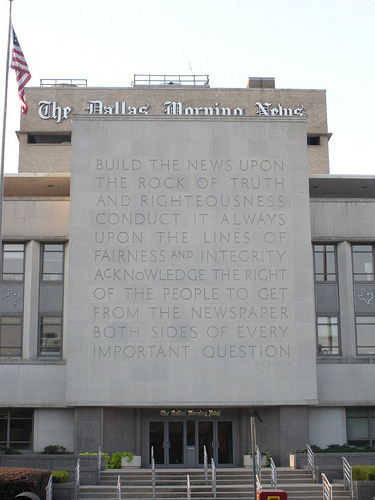
    The article then closes with Mack trying to address the continuing controversy about the attempt by Rawlings and Altshuler to close off Dealey Plaza on the 22nd and only to allow certain VIP ticketed persons into the Plaza. This will be an important time since, obviously, the klieg lights of the international mass media will be employed in Dallas for the event. Mack, of course, now works for the “Power Elite” in Dallas, now being represented by Rawlings and Altshuler. In fact, the newspaper that this article appeared in, the Dallas Morning News, is owned by Belo Corporation, which in large part is financing the restoration of Dealey Plaza for the fiftieth. So Mack ended the piece by saying that although there were some legitimate questions about the assassination, “. . . there is a time and place to ask them. The November event is not that time and place.”

    The reporter, Mr. Flick, apparently did not think it appropriate to ask Mr. Mack, “Well, if on November 22nd in Dealey Plaza is not the time and place, where is? Maybe Times Square in New York City on New Year’s Eve?” Clearly, the three-headed hydra—the Sixth Floor Museum, Belo Corporation, Rawlings’ administration—that set up this whole cordoning off of the Plaza at the appointed hour is feeling the heat of both the local and national exposure of their ill-conceived scheme. For instance, the Wall Street Journal ran an article on the controversy (Wall Street Journal, December 25, 2012) where Rawlings said he would be glad to meet with members of the critical community. (He later did so, meeting with Jefferson Morley and John Judge). But according to our sources, there has not been any movement off the main issue: the failure to grant access to the Plaza for any other group for that day. Therefore, leaving the critical community no choice, legal remedies are being prepared for if they are necessary. So, in addition to the bad publicity already accumulated, more may be on the way as a result of court proceedings. (Dallas Morning News, December 7, 2012).

    Dallas Morning News, Photographer unknown

    If there is a lawsuit enacted, one of the most interesting things to be found out in the discovery process is this: Who’s idea was it to file for a week long permit in order to preempt anyone else from getting one? According to information we have, this petition was originally submitted by the Sixth Floor. Who, I should add, Robert Groden thinks is also behind his continual ticketing and arrests in Dealey Plaza for selling literature critical of the Warren Commission’s findings. As Dallas reporter Jim Schutze has noted, Groden’s civil suit against the city is ongoing for City Hall has not been able to make any trespassing charge against Groden stick. Groden has since filed a counterclaim for harassment charges. (Dallas Observer, February 25, 2013). Somehow Mack, Altshuler and the Morning News could not see fit to address any of these important issues at the panel meeting at the Crescent Hotel. Since they deal with the fundamental issues of freedom of speech and assembly, that is quite puzzling. What makes it moreso is that it now appears that the Rawlings/Altshuler strategy of preemption is not coming off as cleanly as expected.

    But, in one sense, this March 1st article was really just a warm up for Mack/Dunkel. Because the next day he was the exclusive focus of another article in the Morning News. Written by another staff writer, Michael Young, the banner on this piece was, “Gary Mack and the evolution of a JFK conspiracy Theorist”. In this story, Mack tried to address exactly what caused him to turn from being a strong critic of the Warren Commission’s verdict to actually supporting that verdict. To understand this paradox, one must be informed about Mack’s history in the critical community. For a long time, in fact, well over a decade, Mack/Dunkel was part of the Dallas based critical community. For example, he wrote articles for publication in journals like Penn Jones’ The Continuing Inquiry. He met at research meetings in the area that were instituted by Mary Ferrell. When the House Select Committee on Assassinations was convened he helped surface the Dallas Police radio dictabelt recorded on the Dealey Plaza route of the motorcade on November 22nd. This recording was the basis for the acoustical testing which led to the government’s House Select Committee on Assassinations finding of at least four shots fired in the plaza, and therefore, a crossfire and conspiracy. In the eighties, along with Bob Groden, he was a main commentator on British documentary director Nigel Turner’s first installment of The Men Who Killed Kennedy documentary series.

    Today, of course, he has pretty much reversed field. Not only does he work for a museum that completely enshrines the Warren Commission, he has, by far, the highest profile of any person at The Sixth Floor. No one, repeat: NO ONE at that venue appears on TV, quoted in the media, or hosts as many cable TV specials on the case as Mack/Dunkel. And when he so appears he almost always states that the Warren Commission somehow got it right.

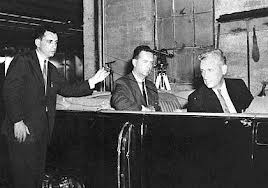
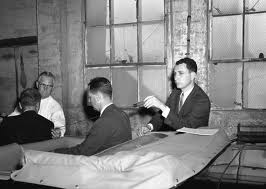
    In fact, Mack has hosted two of the very worst specials in TV history dealing with the Kennedy case. (Which, considering that history, is really saying something.) Specifically those would be, Inside the Target Car, and The Ruby Connection. (For just how bad those shows were, click here and here) One only has to consider the following about both presentations: Although the first show dealt with the issue of blood spatter pattern in and on the limousine, neither Sherry Fiester, a legal expert and recent author on that forensic issue, nor Pamela M. Brown, an authority on the limousine itself, were on the program. In the show on Ruby, not one authority or biographer of Ruby appeared e.g. author David Scheim. This is how much of a Baryshnikov pirouette Mack/Dunkel has performed. Not only does he now advocate—through specious methods—the now unsupportable conclusions of the Commission; he goes beyond that. He will not allow any other viewpoint to oppose him on the air or at The Sixth Floor Museum. Since, as any visitor can see, there are no books critical of the government’s findings on the assassintion on sale there. One will not see, for example, recent works by authors like Warren Commission expert Gerald McKnight or Jim Douglass on the bookstore shelves.

    So now, after many years of public silence, Mack/Dunkel how comes forward in his medium of choice to explain how he went from A to Z. Few informed people will buy his pretext. He is actually quoted in the article as saying that it was the case of Ricky White that caused his about face. For those unaware of the White case: White stated at a press conference in Dallas in July of 1990 that his father, deceased Dallas policeman Roscoe White, was part of the conspiracy to kill Kennedy and also eliminate contrary witnesses. To make a long story short, this turned out to be, at best, a false story. At worst, it was a contrived hoax. (Click here for details as to how it fell apart.)

    To me there seems to be a couple of problems with Mack’s claim. First, the Roscoe White fairy tale does not—at all— impact on the evidence in the Kennedy case. That evidence is the same as when Mack/Dunkel appeared on The Men Who Killed Kennedy. In fact, there is even more evidence of conspiracy today since the JFK Act of 1992’s Assassination Records Review Board declassified 2 million pages of documents related to Kennedy’s assassination thereby doubling the previous page count. Much of that evidence vitiates the Warren Commission even further. What those 2 million pages have to do with Ricky White is rather elusive, but since the Sixth Floor avoids it all, perhaps it’s not all that elusive for the simple matter that they don’t want to deal with it. Therefore, they censor this newly declassified evidence from their shelves.

    The second problem with this rather superfluous Roscoe White excuse is the timing of it. After the horrendous Inside the Target Car special appeared, I did an article on Gary Mack to try and explain this very question: What motivated his reversal? (Click here for that article.) From the interviews and research that I did, Gary Mack began to migrate to the other side before the exposures of the Roscoe White affair were fully aired. In fact, according to my sources, Mack’s transformation began with a notable event: his growing friendship with Dave Perry. Perry moved to the Dallas/Fort Worth area in the eighties. Through his former friend, the infamous Gus Russo, he tried to ingratiate himself with the local Kennedy research community. The problem was that few bought into the all too slick Perry as a Warren Commission critic. But one of the few who did was Gary Mack. In fact, they became fast friends. Some would say they were bonded at the hip. This friendship predated the Roscoe White affair. And, in fact, the two reportedly worked on that case together. To some of the people I talked to, it was this friendship that was central to Mack’s transformation. In fact, to one source, Perry admitted that he was Mack’s “handler”, and helped get him his job at the Museum. What makes this association even more curious is that once Perry moved into town, he also became fast friends with the CIA and FBI associated media asset Hugh Aynesworth. When “lone-nut” author Gerald Posner visited Dallas to research his now discredited book Case Closed, he reportedly stayed with Perry.

    Mack, Aynesworth and Perry clearly did not like my article. Because, first, it concentrates on this issue of the friendship and influence of Perry on Mack. Secondly, because it shows the very important relationship between Perry and Aynesworth. Today, Aynesworth is so well documented as being a government asset on this case that it’s embarrassing. Well, to everyone except Perry, Mack and the Dallas Morning News. That Perry developed this close alliance and friendship with the exposed cover up artist Aynesworth says all we need to know about him.

    Predictably, the article ends with a real schoolboy howler which is par for the course with Mack. If one recalls, in Inside the Target Car, Mack attempted to argue that no shot came from the front of the limousine, since if that were so, Jackie Kennedy would have also been injured. In looking at stills from the Zapruder film, it’s obvious that Jackie was not in the line of fire. Robert Groden was in Dealey Plaza the day of the Target Car filming and told the producer that the actors playing President and Mrs. Kennedy were seated incorrectly. But yet, on the first telecasts of the show, Mack actually broadcast this canard, that Mrs. Kennedy would be shot, which he later retracted.

    Well, here we go again. Near the end of this article Mack claims that when Oswald woke up on November 22nd, he left behind on the dresser bureau, money, “his wedding ring and written instructions on what to do if he was arrested . . . . When a man does that, he’s made a major life changing decision. He’s decided to do something drastic and dramatic.” Except, Oswald didn’t leave any written instructions that morning for his wife to find. According to the Warren Commission, this alleged note was left behind back in April, 1963—seven months previously.  It was after the assassination when Ruth Paine, the owner of the house where Marina Oswald had been staying (and where the Oswald possessions were stored), told the police to give Marina Oswald two books left at the Paine home. Ruth claimed Marina needed them since she used them every day. Tucked in one of the books was this note— supposedly written by Oswald though his latent fingerprints were not on it. Even more curious, the FBI took “seven latent fingerprints off the note; yet none of them matched Lee or Marina.” (James DiEugenio, Destiny Betrayed, Second Edition, p. 201) This was just part of the near endless stream of dubious evidence that Ruth Paine produced in the wake of the assassination. Mack made his argument for Oswald’s “life changing decision” by including evidence that didn’t exist that day.

    One wonders: do they have fact checkers at the Morning News? If so, how could a whopper like that escape them? Or maybe its just part of their mutual attempt to rewrite history.

  • The MSM and RFK Jr.: Only 45 years late this time

    The MSM and RFK Jr.: Only 45 years late this time


    The evidence at this point I think is very,
    very convincing that it was not a lone gunman.

    Robert F. Kennedy Jr.
    Jan. 11, 2013


    On the evening of January 11th, Charlie Rose interviewed Robert Kennedy Jr. and his sister Rory in Dallas at the Winspear Opera House. This was part of Mayor Mike Rawlings hand chosen committee’s year long program of celebrating the life and presidency of John F. Kennedy. In fact, Rawlings introduced the program. He probably did not like how it turned out, for during this interview Kennedy Jr. said that his father thought the Warren Report was a “shoddy piece of craftsmanship” and he was “fairly convinced” that others were involved. Robert Jr. himself thought that the evidence in the JFK case, “…at this point I think is very, very convincing that it was not a lone gunman.”

    To my knowledge, this is the first time that a member of the Kennedy family has stated these sentiments in public. Kennedy Jr. went further and backed up the idea, widely held by many that RFK “publicly supported the Warren Commission report but privately he was dismissive of it.” He added “He was a very meticulous attorney. He had gone over reports. He was an expert at examining issues and searching for the truth.”

    RFK, JR. Charlie Rose
    The Associated Press

    Once this story hit the wires, it created a mini-sensation. Cable and network news programs did segments on it; hundreds of Internet outlets and newspapers carried the story. This really sums up how cloistered and controlled our news media is even today, with cable channels and the Internet now on the scene. The only thing new about this story is what I mentioned above: the fact that a member of the Kennedy family was saying it in public. As of this writing, there is no official transcript available of this interview, nor is there an audio or videotape which seems odd since it was recorded in front of cameras. Since Dallas Mayor Rawlings was there as the taboo subject was mentioned maybe it is not so odd. But clearly, people should contact Rawlings’ office and ask that this interview be placed on the web immediately. Therefore, people can write articles based upon the actual exchange instead of reporters’ stories about the exchange.

    The fact that RFK did not buy into the Warren Report, and he only endorsed it in public for political reasons, this has been established for quite some time. In 2007 David Talbot, in his book Brothers, clearly showed that Bobby Kennedy never bought into the Oswald-did-it line. That from the moment he learned of his brother’s death he suspected a plot had been behind it. (Click for a review)

    He “publicly supported the Warren Commission report but privately he was dismissive of it.” He added “He was a very meticulous attorney. He had gone over reports. He was an expert at examining issues and searching for the truth.

    RFK, Jr. about his father Robert Kennedy

    A decade previous to Talbot, in 1997, Tim Naftali and Aleksandr Fursenko published the fine book, One Hell of a Gamble,a study of the Missile Crisis from the Russian point of view. In that volume, the authors first wrote about William Walton’s now famous mission to Moscow in 1964. Walton was ostensibly going as a goodwill ambassador for cultural exchanges, but his real objective was to carry a message to Nikita Khrushchev from Robert and Jackie Kennedy. That message was that, although the American media had jumped on this lone gunman idea, they thought that President Kennedy had been killed by a domestic conspiracy… one that was politically motivated from the rightwing. That because of this assassination, the attempts at détente that Kennedy and Khrushchev had made would now have to be placed on hiatus. Johnson was much too pro-big business to pursue that ideal. Therefore, RFK would soon resign. When he became president, the effort at reconciliation would then continue. (Talbot, p. 12)

    However, way before that book, there had been instances during Jim Garrison’s inquiry into the Kennedy assassination that indicated Robert Kennedy was quite interested in what the New Orleans DA was uncovering. In this author’s current book, Destiny Betrayed (Second Edition) I note an instance where RFK was in California staying at a friend’s house in 1968. Family friend Mort Sahl was also there. That night, Sahl had to leave for a performance. When he got back, his then wife told him that RFK peppered her with questions about what Garrison was digging up. (Sahl was working for Garrison.) Richard Lubic, a campaign worker for Bobby Kennedy in 1968 told another Garrison investigator, Bill Turner, that RFK said that if he were elected president, he would like to reopen the Warren Commission inquiry. (Talbot, p. 359) In Harold Weisberg’s original manuscript of Oswald in New Orleans, he wrote about being in contact with someone in Bobby Kennedy’s 1968 campaign. He communicated to Weisberg that RFK had real doubts about the Warren Commission. Weisberg told his contact if this were the case RFK should voice his concerns in public, making sure he would not be assassinated because of his belief. After Bobby was killed, Weisberg wrote that never was a seer less happy with the fulfillment of his prophecy.

    In other words, anyone looking for evidence of this could have found it many years previous. Only in our media, especially in the MSM, could any such story be considered news. From a sociological point of view it is interesting to note two factors that figured in the reaction.

    Charlie Rose has built a career out of being the alleged thinking man’s talk show host and he actually began hosting such programs on Dallas’ KXAS-TV in the seventies. He then worked for CBS News in the eighties and began the present version of his talk show on PBS in the nineties. But while doing his show he also worked for the CBS program Sixty Minutes II from 1999 until 2005. Therefore Rose was the perfect choice from the Dallas power elite point of view. All this would indicate that he is pretty much a canned establishment figure. How much of an establishment figure is he? Well, he has attended several Bilderberg Conferences of late. His second wife is the stepdaughter of CBS founder Bill Paley. It will be a cold day in Hades if one ever catches anything on his snooze fest that seriously counters the established American Conventional Wisdom. Therefore Rose was the perfect choice from the Dallas power elite point of view.

    Consequently, when his guest began uttering such heresies in public, Rose automatically kicked into damage control mode. When the son mentioned that his father went into a long funk after JFK was killed, Rose (understanding his next ticket to a Bilderger Conference depended upon his stemming this tide) quickly suggested if this was because RFK felt “some guilt because he thought there might have been a link between his very agressive efforts against Organized Crime?”. This question was, of course, an attempt to simultaneously:

    1. Turn the crime inward on the Kennedy clan by focusing on RFK’s ambitious drive against the Mafia, and
    2. Pin the assassination on an acceptable culprit. One made acceptable by the likes of Robert Blakey, namely the Cosa Nostra.

    Rose’s response was unwarranted. There are any number, or even combination of reasons RFK may have sunk into emotional quicksand. As indicated above, he clearly understood that his brother’s large and looming foreign policy agenda would now go unfulfilled. RFK may also have come to an understanding, realizing the enormous pressure now placed upon him, to become something he was not: a political candidate. He also had to have realized that, in fact, he had no choice but to do so because his power base had now been pretty much circumscribed by President Johnson and J. Edgar Hoover. In fact, this idea was mentioned by the son when he said, “As soon as Jack died, he lost all his power.” Further, after this point, Hoover “never spoke to him again.”

    But RFK Jr. then returned to this Mafia theme when he said one of the things that pricked his father’s curiosity was the phone records of Oswald and Ruby. These contained many calls to organized crime figures. Therefore, his father “was fairly convinced at the end of that there had been involvement by somebody.” Again, Rose jumped in and did his bit: “Organized crime, Cubans.” To which, RFK Jr. (thankfully) replied, “Or rogue CIA.”

    Rose’s initial reaction was the first attempt to channel the story down a certain acceptable path. Rawlings’ decision not to release a recording is another. But the third is the reaction of the Dallas Morning News to it. In about one week they wrote three articles based on the interview. In these articles, dating from January 11th to the 14th, the paper consulted with their official propaganda mouthpiece Gary Mack. Mack tried to cast aspersions on the credibility of RFK Jr. by saying that there really could not be any Oswald phone calls since there is no record of him having a personal phone service. Bill Kelly quickly and effectively countered this deliberate obfuscation. (http://jfkcountercoup.blogspot.com/2013/01/oswald-and-ruby-phone-records-rfk-jr.html) One of the Morning News writers, Rodger Jones, then tried to confuse things even further by saying that, well, RFK Jr. said that Bobby’s interest first began during the Garrison inquiry. Yet, according to David Talbot, Bobby Kennedy actually started his inquiry back in 1963. This spin control ignores two things: 1.) According to Garrison volunteers, like Mort Sahl, the Attorney General clearly did have an interest in Garrison’s investigation, and 2.) Since RFK Jr. was still something of a child in 1963, it is much more likely that four years later, as an adolescent, he would more clearly recall such a matter.

    In further comments, Mack said that it appears that some members of the Kennedy clan have decided to say one thing in public, “But apparently, privately, some members. . . have raised questions about areas of the assassination.” Well, from the material I have presented here, its pretty clear that the Kennedy family did have doubts from a very early date. In fact, we can go back even further, to Arthur Schlesinger’s massive biography of the Attorney General, Robert Kennedy and His Times. In that biography, published back in 1978, Schlesinger made clear that Kennedy thought the Warren Report was a subpar and unsatisfactory effort. And further that CIA Director John McCone told him that two assassins were involved in the shooting. (pgs. 643-44)

    Further demonstrating how only in the MSM can the fairy tale exist that RFK and the Kennedy family abided by the Warren Commission, consider the words of Kennedy cousin Kerry McCarthy to Debra Conway in 1997. McCarthy was a speaker at Lancer’s November in Dallas conference. She told Conway that, whatever the Kennedys say in public about the JFK murder, when you visit their homes, you will see several of the JFK assassination books lining their shelves.

    Chris Lawford, son of Peter Lawford and Pat Kennedy, more or less explained why this was so. In his book, Symptoms of Withdrawal, he wrote that the day after the assassination, “I woke up [and] found my father sitting at the flagpole where I used to raise the presidential flag when Uncle Jack came to visit. He was crying like a baby. Strangers held a vigil on the beach outside my parents’ house for days after the assassination.” Pat Kennedy now started drinking with a new seriousness, and the couple was divorced shortly afterwards.

    It takes a long time to come to grips with that kind of pain. And who wants to deal with it in public? At this talk, Robert Jr. finally did. He also praised one of the books the clan had on their shelves, JFK and the Unspeakable by James Douglass. This is one of the few books on the case that has managed to make its way out of the JFK assassination niche. It has sold well now for four years, and there are now over 100,000 copies of it for sale in various formats, including audio book. Bobby Kennedy Jr. liked this book so much that, after he read it, he called Douglass and congratulated him on a job well done. Maybe that was the first sign of recovering from a family trauma that has lasted for well over four decades. And maybe now the MSM can wake up and say, well, if the Attorney General thought the Warren Report was shot full of holes, maybe it was. Thanks to his son for making that moment possible.

    As mentioned above, the fact that this interview is not on the Internet is a disgrace. Please contact Mayor Mike Rawlings and tell him that, in the interest of democracy, history, and proper journalism, it should be posted immediately.

    Phone: 214-670-4054

    Fax: 214-670-0646

    Address: Dallas City Hall, 1500 Marilla Street, Room 5EN, Dallas Texas, 75201

    or send an email to Chris Heinbaugh, Vice President of External Affairs | AT&T Performing Arts Center

    ~Jim DiEugenio


    Articles online:


  • Brian Latell, Castro’s Secrets


    The End of an Obsession: A Review of “Castro’s Secrets”

    After almost half a century of conspiracy theories on the JFK assassination, a former CIA analyst and current research associate at the Institute of Cuban and Cuban-American Studies (ICCAS) at the University of Miami has accidentally given the conclusive evidence that Castro had nothing to do with Oswald or Kennedy’s death. In his latest book, Castro’s Secrets (Palgrave Macmillan, 2012), Dr. Brian Latell insisted on unveiling a conspiracy of silence: Castro would have known in advance Oswald was going to kill Kennedy and chose to remain silent about it. Far from making even a circumstantial case against Castro, Dr. Latell actually paved the way for critical thinking which erases any cloud of suspicion.

    The Comer Clark Allegation

    Castro’s foreknowledge is an old story that was first broken by late British journalist Comer Clark. This was a story entitled “Fidel Castro Says He Knew of Oswald Threat to Kill JFK” (National Enquirer, London, October 15, 1967, pages 4-5). On July 9, 1967, Clark flew to Havana and tried to carry out an interview with Castro, but it was flatly denied. (note)

    Nevertheless, Clark wrote that an impromptu interview had taken place anyway. It took place on a sidewalk at a pizzeria in front of a cheering crowd. The claim was that Castro told Clark,

    “Yes,I heard of Lee Harvey Oswald’s plan to kill President Kennedy. It’s possible I could have saved him. I might have been able to, but I didn’t. I never believed the plan would be put into effect.”

    Castro went on and explained that Oswald visited the Cuban Embassy in Mexico City twice. The second time he said something like: Someone ought to shoot that President Kennedy. Then Castro said,

    “And this was exactly how it was reported to me; ‘Maybe I’ll try to do it.”

    This was less than two months before the American President was assassinated. The House Select Committee on Assassinations (HSCA) contacted Fidel about this accusation. On April 3, 1978, he replied that since he never went to public restaurants, the man must have invented the story.

    Congressman Christopher Dodd (D/Connecticut) stressed that it was ridiculous that the head of a country would give a print interview in a pizzeria. (HCSA Report, Volume III, pages 207-09). Dodd could have further added that he would never do so in a crowd and certainly not about such a sensitive matter.

    Anthony Summers further undermined the Clark tale. He discovered that Clark, who was now deceased, had a reputation for selling sensational and sometimes spurious stories. When Summers talked to Clark’s widow, she said that he never mentioned such an interview to her. Beyond that, Nina Gadd, Clark’s secretary, said that it was she who originated the story, even though she had never even been to Cuba. Gadd supposedly did this based not upon Clark, but what she heard from a Latin American foreign minister. (Summers, Conspiracy, p. 364)

    Nevertheless, the Final Report of HSCA (U.S. Government Printing Office, 1979, page 122) said that the substance of Clark’s interview with Castro had been independently reported to the U.S. Government by a highly confidential and reliable source: Oswald had indeed vowed in the presence of Cuban consulate officials to assassinate the President. But further investigation led the HSCA to believe that Oswald did not voice such a threat to Cuban officials, and however reliable the confidential source may be, it would be in error in this instance.

    The Jack Childs report

    Although Chief Counsel Robert Blakey would not reveal who the source was, it turned out to be Jakob “Jack” Childs, codenamed NY 694-S by the FBI. Jack had engaged with his brother Morris in the Operation SOLO (1958-77). Their mission was to infiltrate the Communist Party of the United States (CPUSA), in order to gather intelligence about its relations with the USSR and other communist regimes. On May 20, 1964, Jack Childs flew from Moscow to a beach in Cuba on the SOLO Mission 15. He allegedly spent ten days there and was able to talk with Castro about the JFK assassination.

    Childs reported to FBI Director J. Edgar Hoover that Castro received the information about Oswald’s appearance at the Cuban Embassy in Mexico in an oral report from “his diplomats” in the Embassy. (John Newman, Oswald and the CIA, p. 428) According to Childs, Castro was told about this immediately:

    ˜I was told this by my people in the Embassy exactly how he (Oswald) stalked in and walked in and ran out. That in itself was a suspicious movement, because nobody comes to an Embassy for a visa (they go to a Consulate). [Castro] stated that when Oswald was refused his visa at the Cuban Embassy in Mexico City, he acted like a madman and started yelling and shouting on his way out, ‘I’m going to kill this bastard. I’m going to kill Kennedy.’ [Castro] was speaking on the basis of facts given to him by his embassy personnel, who dealt with Oswald, and apparently had made a full, detailed report to Castro after President Kennedy was assassinated.” (FBI Records: The Vault – SOLO, http://vault.fbi.gov/solo. See part 63, pgs. 58-59).

    The old sleuth Hoover summed up to Warren Commission General Counsel, James Lee Rankin, on June 17, 1964: The information furnished by our source at this time as having come from Castro is consistent with and substantially the same as that which appears in Castro’s speech of November 27, 1963. No further action is contemplated by this Bureau. (Warren Commission Document 1359).

    The Latell Report

    In the June 2012 edition of the electronic newsletter, The Latell Report, published by the ICCAS-UM , Dr. Latell summed up: Childs learned that Castro received the information about Oswald’s appearances at the Cuban embassy, because he was told about it immediately. Fidel spoke to Childs on the basis of facts given to him by his embassy personnel, who dealt with Oswald, and apparently made a full, detailed report. By trimming the phrase “after President Kennedy was assassinated” from the Childs report, Dr. Latell turned this alibi into a smoking gun against Castro, who had denied any foreknowledge of Oswald in both his speech at the University of Havana on November 27, 1963, and his Radio/TV appearance on November 23, 1963.

    Dr. Latell boasts about catching Castro in a lie, but only by keeping hidden the actual time ”after President Kennedy was assassinated” in which Castro knew about Oswald. Childs also tapers the story by furnishing the exact location of the Oswald outburst: the Cuban embassy, not the consulate, located in a separate building. The Lopez Report [a.k.a. “Oswald, the CIA, and Mexico City”, 1978] actually states that the CIA photographed the visitors to the Cuban diplomatic compound from two different windows in a third floor apartment at 149 Francisco Marquez Street (see pages 12 ff.) because the entrance to the embassy was on the corner of Tacubaya Alley and the entrance to the consulate, on the corner of Zamora Street.

    Moreover Childs came to the foregone conclusion that Castro had nothing to with the assassination. After discussing his statements with Beatrice Johnson, the CPUSA representative in Cuba, Childs and Johnson decided never to talk again about the issue because it was dynamite. Hoover took it seriously, but Dr. Latell does not. He dared to manipulate time and location for making his point, and no wonder the issue exploded in his hands.

    The HSCA’s Sound Judgment

    Unaware of the actual circumstances, the least the HSCA could do was discard that Oswald voiced threat to Cuban officials. Why? Because both the outgoing and incoming Cuban consuls in Mexico City, Eusebio Azcue and Alfredo Mirabal, testified (HCSA Report, Volume III, pages 127-58 and 173-78, respectively) that they did not recall hearing Oswald threatening Kennedy’s life while dealing with him about an in-transit Cuban visa to go to the Soviet Union. Neither did the Mexican employee Silvia Duran (JFK Exhibit F-440A), who attended Oswald three times on the same day, September 27, 1963, regarding his visa application (JFK Exhibit F-408).

    Based only on newspapers, Castro knew that the HSCA—especially the authors of the Mexico City report, Ed Lopez and Dan Hardway—had extensive information about phone conversations in Mexico City. Azcue and Mirabal were forced to truthfully testify to avoid being potentially caught in a lie at a public hearing in the United States. And one will search in vain for any such threats in the transcripts declassified today in the Lopez Report.

    As Newman writes, the problem with the Childs Report as issued to Hoover is that there is no specificity in it: Who were the diplomats who heard this threat? On what day was it made? How was it communicated from Mexico City to Havana? And how could the CIA not have known about it with all their audio surveillance installed? (Newman, p. 428) But beyond that, in a private interview Newman gave to Jim DiEugenio in San Francisco, the former intelligence analyst showed him the actual Childs report as given to Hoover. Newman told DiEugenio that, because he had seen hundreds of such informant reports, he could tell by the formatting that it was a forgery.

    The First Defector

    For disputing HSCA logic discounting Childs, Dr. Latell resorts to defectors from the Castro General Directorate of Intelligence (acronym DGI in Spanish). The first one, Vladimir Rodriguez-Lahera, would have told the CIA that Castro lied when he publicly denied any knowledge of Oswald. The legend says Vladimir defected to Canada around April 24, 1964, and the CIA codenamed him AMMUG-1.

    His debriefing (RIF 104-10400-10118) included that “the only possible fabrication known by this source was the specific denial by Fidel Castro on a television program [November 23, 1963], of any Cuban knowledge of Oswald.” For turning the possible fabrication into evidence, Dr. Latell swallows AMMUG-1, saying that the most routine matters at the Cuban diplomatic compound in Mexico City were reported directly to Castro. This author begs to disagree. Neither Castro nor any other Chief of Government has time for being informed about visa applications or nasty applicants.

    By May 8, 1964, the CIA realized AMMUG-1 didn’t know what he was talking about. He ended up admitting: “I have no personal knowledge of Lee Harvey Oswald or his activities.” His CIA handler wrote: “The source does not claim to have any significant information concerning the assassination of President Kennedy or about the activities of Oswald.” Even so, Dr. Latell keeps on agonizing about an AMMUG-1 report that Oswald was in contact with DGI officers before, during and after his visits to the Cuban consulate.

    AMMUG-1 did not give the slightest conjecture about after. In regards to ‘during’ the Mexico City trip, he stated that senior intelligence officer Manuel Vega mentioned that Oswald had gone to the Cuban consulate two or three times in connection with a visa. AMMUG-1 didn’t recall anything else about Oswald contacting DGI officers, but added: he felt sure that he would have done so because Vega had said that Oswald had returned several times and [it was] the usual procedure [for] expediting the granting of visas to DGI agents: if the visa applicant does not utter indicative phrases, the DGI officers tell the applicant to return in a few days. This house of cards falls down not only because Oswald came three times on the same day to the Cuban embassy. (See Warren Report, p. 734-35, below) But AMMUG-1 felt sure there was a contact during under the premise that Oswald was a DGI agent. This implies a contact before, but at this point AMMUG-1 became entirely pointless.


    CLICK ON IMAGES TO ENGLARGE

    AMMUG-1 page 1
    AMMUG-1 page 3
    WR page 734
     
    AMMUG-2 page 1
    AMMUG-3 page 3
    WR page 735


    He said that he thought that Luisa Calderon might have had contact with Oswald because he learned about 17 March 1964, that she had been involved with an American in Mexico. (The DGI had intercepted a letter to her by an American who signed his name as Ower, phonetic, or something similar. He said she had been followed and seen in the company of an American. He did not know if this could have been Oswald.)

    The problem with this is that the Calderon story today is a non-sequitir. If one is not familiar with it, it goes like this: Luisa was a Cuban Embassy employee who was heard on a tapped phone line saying words that were translated as, “I knew almost before Kennedy.” As Rex Bradford pointed out, in the 70’s this became a teaser for, “Did she have foreknowledge of the assassination?” The HSCA could not interview Luisa. But with AMMUG-1 saying to the CIA in 1964 that Oswald may have met with Calderon in 1963 during visits prior to the September-October journey, Luisa’s story now grew even heavier with suspicion.

    As Bradford notes, this call was intercepted at 5:30 PM. So the question becomes: “Were there any other calls previous to this where Luisa could have heard of the assassination?” It turns out there were two such calls. In the first one, captured at 1: 30, she expressed surprise on hearing the news of Kennedy’s death, and she said she did not believe it and asked who did it. As Bradford notes on his Luisa Calderon page at Mary Ferrell Foundation, it is odd that the CIA apparently did not show this other transcript to the HSCA to settle the matter once and for all.

    Neither Calderon nor Mirabal led to Dr. Latell’s suggestion that the DGI was acquainted with Oswald and had started a file on him when he was a Marine stationed (December 22, 1958 – September 11, 1959) in California. The specific account on Oswald attempting to get in with Castroite consular officials in Los Angeles in early 1959 suggests quite the contrary. Former marine (1954-58), Castroite pilot (1959-60) and anti-Castro soldier of fortune (1960-62) Gerald Patrick Hemming stated that he thought Oswald might have been on the Naval Intelligence payroll. “You know, a penetrator. I told the [Castroite] leadership to get rid of him. (Dick Russell, The Man Who Knew Too Much: Hired to Kill Oswald and Prevent the Assassination of JFK, Carroll & Graf, 1992, page 178).

    The Most Valuable Defector

    The last straw in Dr. Latell’s unveiling of a conspiracy of silence is a classic non sequitur fallacy slipped by Major Florentino Aspillaga, a Castro intelligence officer until the year 1985 who defected from Czechoslovakia to Austria in June, 1987. Being hardly 16 years old, Aspillaga already had the standing assignment of electronically detecting CIA agents and infiltration teams. On November 22, 1963, he got an unprecedented order around 9:00 or 9:30 am EST: “Listen to any small detail from Texas.” At 1:40 pm EST, CBS anchor Walter Cronkite broke the news in Dallas, Texas: three shots were fired at President Kennedy’s motorcade. Aspillaga drew the conclusion: Castro knew Kennedy would be killed.

    Whatever the reason Castro would have had to give the order, the most unlikely is some foreknowledge about Oswald’s intention to shoot Kennedy, because it would imply that Castro must have been sure about Oswald’s whereabouts on November 22, 1963. The well-known, and quite eventful journey of Oswald makes such foreknowledge by Castro highly improbable. Shortly before Oswald left New Orleans for Mexico City, his wife Marina Oswald (nee Prusakova) had moved to Irving, about 17 miles from Dallas, for the birth of their second child. She stayed at her friend Ruth Paine’s home. Oswald came back from Mexico City on October 2, 1963, when nobody, including God and the CIA, knew whether he would still be in Dallas or elsewhere by the time of the “still in the talking stage” JFK visit. Oswald arrived in Dallas on October 3, 1963, and checked in at the YMCA. The day before, the FBI Field Office in New Orleans was tasking Dallas, Fort Worth, and even Malvern (Arkansas) for ascertaining Oswald’s whereabouts.

    After failing to get hired at Padgett Printing in Dallas, Oswald hitchhiked to Ruth Paine’s house in Irving. He returned to Dallas on October 7, 1963, but couldn’t get a job again and went again to Irving on October 12. He came back to Dallas on October 14. As Ruth Paine mentioned that he was having trouble finding work, her neighbor Linnie Mae Randle hinted about an opening at the Texas School Book Depository (TSBD), where her brother Buell Frazier was employed. Paine called Oswald and he began to work at the TSBD on October 16, 1963.

    Apart from the strange order to use intelligence resources for knowing details that will be surely available by listening to the commercial radio, Aspillaga’s credibility is as weak as his reasoning. He told Dr. Latell that he had previously given the information about that order only to the CIA in 1987. Then it must be fully explained why the CIA didn’t come forward with Aspillaga to the Assassination Records Review Board (ARRB), which gathered records from 1994 to 1998 after the fireworks made by Oliver Stone with his film JFK (1991). It also makes everyone wonder why Aspillaga abstained from revealing the issue to the media. In June 1988, for instance, he referred to Castro 69 times during a radio interview with Tomas Regalado in Miami, but not even once to Kennedy.

    Dr. Latell wrote in his book he owes a special debt of gratitude to Aspillaga. But both have put themselves in a delicate spot with an anecdote delivered a la carte 25 years later for connecting Castro to Oswald. Dr. Latell abjures social science by messing around with DGI defectors, despite his own foreknowledge about the methodological circumstance that their tales couldn’t be compared with Castro’s archives. The blame is not on Castro for shielding them from outsiders, but on Dr. Latell, since he used the creative imagination of Cuban defectors for writing a non-fiction book instead of a novel about the JFK assassination.


    Note: typically meant wiretaps. (back)

    Note: HSCA Interview of Fidel Castro (back)

    Note: Link to MFF file. (back)

  • HSCA Interview with Fidel Castro


    INVESTIGATION OF THE ASSASSINATION OF PRESIDENT JOHN F. KENNEDY MONDAY, SEPTEMBER 18, 1978 HOUSE OF REPRESENTATIVES, SELECT COMMITTEE ON ASSASSINATIONS, Washington, D. C.


    KENNEDY SELECT COMMITTEE ON ASSASSINATIONS
    Name: Fidel CASTRO RuzDate: April 3, 1978 Time: 6: 30 p.m.
    Address: Havana, CubaPlace: Presidential offices
    Interview: Present were President Fidel CASTRO and his interpreter, Senorita Juanita Vera, Captain Felipe Villa, Senor Ricardo Escartin, Zenen Buergo, and Alfredo Ramirez (representing the Government of Cuba). Also present representing the Government of the United States were Congressmen Louis STOKES, Richardson Preyer, Christopher Dodd and staff personnel of HSCA: G. Robert Blakey, Chief Counsel, Gary Cornwell, Deputy Chief Counsel and Edwin Lopez, Researcher/Translator.


    Interview of Fidel Castro Excerpt A

    STOKES: Mr. President, did it come to your attention shortly after the assassination that Lee Harvey oswald, who was the accused assassin, had had contact with your Embassy in Mexico City?

    CASTRO: Yes. In fact, it was after Kennedy’s death that he caught my attention. Because here nobody receives news about anyone filing applications for a visa. These things are always solved through the Office of the Minister of Foreign Affairs. So it never is taken to the government. You know, it is not necessary. This is normal routine work. None of us has anything to do with visas. Some officials knew about it when somebody in particular filed an application there. But tens – or maybe hundreds of thousands of people file applications. But when Kennedy was assassinated and Oswald’s actions were published in the newspapers, the officials who had handled visa applicaitons realized that this Oswald could be the same Oswald who had gone to the Consulate in order to apply for a visa. That is why we had news about it, you know? After Kennedy’s death we learned that a man by the name of Oswald had gone to the consulate and filled out an application for a visa – that he had been told that we did not normally give an intransit visa until the country of destination granted one. And, then we were told that a person had gotten very upset and had protested in an irate manner because he could not receive a visa. This was the news I had, more or less. the rest you know.

    STOKES: We were wondering your…

    CASTRO: There is something I would like to add in that connection. You see, it was always very mcuh suspicious to methat a person who later appeared to be involved in Kennedy’s death would have requested a visa rom cuba. Because, I said to myself – what would have happened had by any chance that man come to cuby – visited Cuba – gone back to the States and then appeared involved in Kennedy’s death? That would have really been a provocation – a gigantic provocation. Well, that man did not come to Cuba simply because that was the norm we rejected visa applications…like that. In those days the mechanism was very rigid because, of course, we had suspicions of anyone who tried to come to Cuba. People in charge of granting visas asked themselves: Why does (this applicant) want to come to Cuba? What kind of counter-revolutionary activity could he carry out in cuba? Maybe the people thought that the person was a CIA or FBI agent, you know, so it was very difficult for a north American, just from his own wishes, to come to Cuba – because systematically we denied the visas. So, I think that there could always be an exception, but in those times it was very, very difficult to have anyone from the United States come into Cuba because there was a tremendous suspicion and because in general permits to (travel to cuba) were denied. Now, if it was a transit visa going toward another country – let’s say had the Soviet Union granted the visa, you may be sure that our Consul would have granted the transit visa because the person would not be coming to Cuba only, but would be going to another country. The person would have to come (here) and if the Soviets would have granted the visa, then that would have accredited the person..like, you know, the person would have been given a transit visa because I feel that if the Soviets had granted the visa, then he would have come here. (In that era) it was not so crazy (that he tried) to come to Cuba because if he had obtained the visa from another country, it would have been for certain that our Consul would have granted him the visa to stop here. Now, can you imagine if that person had been to Cuba in October and then in November the President of the United states would have been killed? That is why it has always been something a very obscure thing – something suspicious because I interpreted it as a deliberate attempt to link Cuba with Kennedy’s death. That is one of the things that seemed to me very strange…

    STOKES: Let me ask you this question, Mr. President. One of the persons that we have talked with since we have been here in Havana has been your former Consul, Mr. Azcue, who was produced at our request by your officials here. He told us that with reference to the man who appeared at your Embassy and who filled out an application for an intransit visa, that the photograph which appears on the visa application is the photograph of the man who died in the United States as Lee Harvey Oswald, but, that this man was not the individual who had appeared at your Embassy in Mexico City. And, my question would be in two parts: One, have you had an opportunity to talk with Mr. Azcue? And secondly, from all the information available to you, would this be your opinion alsothat the man who appeared at the Embassy was an imposter?

    CASTRO: Actually, I don’t have an opinion about that. I wouldn’t be able to say whether I’ve met Azcue once. I don’t remember now. I have no recollection at present of having met Azcue. Because I had been given the information about all that, I myself did not know whether he was in Mexico or here. It is very likely that I have seen him some time; however, I don’t recall having met Azcue those days. Secondly, about the idea of an imposter, I have no special theory on that. As far as I have understood, Azcue has an idea on that. I’ve heard those comments before comments about the possibility of a difference, that he noticed the difference between the person who appeared requesting the visa and the person known as Oswald. But, I don’t have a theory on that. It is likely that there could be two different people. But, now I am thinking if the person had obtained the visa, would he have visited Cuba? That is a hypothesis. What did he want the visa for? From my point of view, the individual could have come to Cuba and compromised us. He would have us compromised. It seems to me that to apply for the visa had the purpose of having the individual come to Cuba. Now, we would have to enter into many conjectures to reach a conclusion on that. Because where did he get the passports? Where did he find the passports that he was taking there? Where was Oswald’s passport? What became of Oswald’s passports? Those papers should be somewhere. I don’t know what could have been the sense of sending another man, but I wouldn’t dare deny that posibility. Actually, we would have to know what would have been the purpose. Why would another person have been sent? I don’t know whether you would have a theory about that. Personally, I don’t have a theory.

    Villa: About the possibility of an imposter, in public sources we have read that the possibility exists that there could be a double that carried out some actions that the real Oswald did not on some occasions in 1963.

    CASTRO: There is something that I can guarantee. The Cuban government believes that Azue is a serious and honest man; and that he has never said something differently from what he said the first time. He has more or less kept his story as far as I know. I mean, he is a person you can trust. He is a trustful man. That is all I can say about Azcue. But, I amy say that if many people have elaborated theories, I am not among them.


    EXCERPT B

    Comer Clark’s Allegation

    Cornwell: One passage reads as follows: An interview in July 1967 with a British journalist, Comer Clark…do you have the translation of it there?

    Villa: Yes.

    CASTRO: Let me see it. I have it here.
    Pause: (Approximately one minute while President CASTRO reads it.)

    CASTRO: This is absurd. I didn’t say that.

    Cornwell: Did the interview ever occur?

    CASTRO: It has been invented from the beginning until the end. I didn’t say that. How could I say that? It’s a lie from head to toe. If this man would have done something like that, it would have been our moral duty to inform the United States. You understand? Because if a man comes here, mentions that he wants to kill Kennedy, we are (being provoked), do you realize that? It would have been similar to a mad person. If somebody comes to us and said that, it would have been similar to a mad person. If somebody comes to us and said that, it would have been our moral responsibility to inform the United States. How could we accept a man from Mexico to Cuba who tells us that he is going to kill President Kennedy? If somebody is trying create provocation or a trap, and uhwe would have denounced him. Sure, a person coming here or even in one of our embassies saying thatand that never happenedin no part, as far as I know.

    Escartin: That refers to the interview you spoke about in the beginning.

    CASTRO: But how could they interview me in pizzeria? I never to to public restaurants and that man invented that. That was invented rom the upper to the bottom. I do not remember that. And, it is a surprise for me to se because I couldn’t have said that. You have to see who wrote it. And, what is the job of that journalist? What is engaged in? And, what prestige has this journalist? Not the one that wrote that book, but the origin of that version. You should have to find who he is and why he wrote it, and with whom he is relatedand which sense they have to attribute those words which are absolutely invented. I think it is possible that you would be able to find out who that journalist was. Do you have some news about about that journalist in that newspaper?

    Villa: He was in Cuba and tried to carry out an interview with you.

    CASTRO: Let me tell you. of every one hundred interviews that are requested of me I only grant one because if I were to give all the interviews that I am requested to, you can be sure that I would not be able to have anything but twenty-four hours of my life to have interviews. I would not have enough time to do anything else. Barbara Walters waited three years for an interviewjust almost three years. And even that of Moyers. I didn’t want to have that Moyers interview. He started talking and the truth is that he was very insistent form the time he came down from the airplane and in spite of the fact that there was no commitment from me regarding the interview. I granted one. There are a lot of interview. I granted one. there are a lot of interview requests and it is very difficult, but I would never have given a journalist an interview in a pizzeria.

    Dodd: I don’t even give interviews in a pizzeria. (back)

    Villa: Another element commander. That interview was published in a sensationalist or yellow press from the United States. It is a non-serious newspaper.

    CASTRO: Especially at that time, a lot of barbaric things were publisheda lot of lies.


    EXCERPT C

    Use of Assassinations As a Political Weapon

    CASTRO: ……………….It was really something inconceivable – could have the idea of killing the President? First, because that would have been a tremendous insanity. The Cuban Revolutionaries and the people who have made this Revolution have proven to be intrepid and to make decisions in the right moment. But, we have not proven to be insane people. The leaders of the Revolution do not do crazy things and have always been extremely concerned to prevent any factor that could become a kind of an argument or a pretext for carrying out agression against our country. We are a very small country. We have the United States 90 miles from our shore which is a very large, powerful country economically, technically, militarily. So, for many years we lived concerned that an invasion could take palce..I mean, indirect and at the end a direct aggression. We were very close to that. Yet look at the conclusions we draw. If the elections of 1960 had not been won by Kennedy, but Nixon instead, during the Bay of Pigs, the United States would have invaded Cuba. We mean that in the midst of the fight that Kennedy followed the line that had been already traced.

    There is no doubt that we appreciate very highly the fact that Kennedy resisted every kind of pressure not to have the Marines land in our country. Because, there were many people who wanted the Marines to land here. Nixon himself was in favor of that. Had Nixon been President during the Bay of Pigs invasion, a landing by the military army of the United States would have taken place. We are absolutely convinced of that. However, Kennedy resisted all the pressures and he did not do that. What would that have meant for us? The destruction of the country? Hundreds of thousands, maybe millions of deaths? Because, undoubtedly the people would fight. The people I am absolutely sure about. An invasion of Cuba by the United States would have cost hundreds of thousands of lives, maybe millions of lives. We were aware of that. We have an American military base in our territory, by force. And, it is not assumed that anyone is going to have a military base on someone else’s territory, if it is not on the basis of an agreement. However, the United States has military bases in many places of the world, but here, it is by force. From that base, many provocations have been carried out against Cuba. There were people wounded..there were people killed. What did we do?

    We brought our guards away from the lines, from the fence. We never shot at them. Why? Because we made every possible effort so that an incident of that kind would not become a pretext to be attacked. So, we have followed the policy. We had an American boat just three miles away from us for years, a warship full of electronic communications equipment and never a hostile action was carried against that warship. So, there are many events that have proven how careful Cuba has always been to prevent the perpetration of an invasion. We could have died heroically – no doubt about it. Now, that would have been a victory for our people. They’re willing to be sacrificed and to die. Yet, it would have been just another page in history..nothing else. So, we have always been very much aware to not give The United States the pretext..the possibility..for (an invasion.) What was the cause of the missile crisis? The need we had to seek protection in case of an (invasion) from the United States. We agreed on the installation of the (stategic) missiles, because undoubtedly that diminished the danger of direct aggression. That became a danger of another kind, a kind of a global danger we became, but we were trying to protect our country at all times. Who here could have operated and planned something so delicate as the death of the united States President. That was insane. From the ideological point of view it was insane. And from the political point of view, it was a tremendous insanity. I am going to tell you here that nobody, nobody ever had the idea of such things. What would it do? We just tried to defend our folks here, within our territory. Anyone who subscribed to that idea would have been judged insane..absolutely sick. Never, in twenty years of revolution, I never heard anyone suggest nor even speculate about a measure of that sort, because who could think of the idea of organizing the death of the President of the United States. That would have been the most perfect pretext for the United States to invade our country which is what I have tried to prevent for all these years, in every possible sense. Since the United States is much more powerful than we are, what could we gain from a war with the United States? The United States would lose nothing. The destruction would have been here. The United States had U-2 air surveillancing for almost fifteen years. The planes flew over our territory every day. The women said that they called not go over their terrace naked for the U-2 would have taken a picture of them. That thing we could not allow to happen, you know, because it was demoralizing. So, there were, you know, those flights just fery close to the soil. Those kind of flights was really demoralizing for our people. It was impossible to let them continue to do that, so we had to shoot at them. On the following day after the missile crisis, we had the need to shoot at those planes, because to have allowed that would have created a demoralization among our people. And, I say that if we allowed that, you wouldn’t have been able even to play baseball here. Because those planes came just twenty meters from here, so it was really demoralizing. See, the U-2 came very high, you know, and I tell you, Cuba has been characterized by following a firm policy, a policy of principles. Our position was known after the missile crisis. We were not in a position to make any concessions. That is a known position, but Cuba, the leaders of the Cuban Revolution, have never made that kind of insanity, and that I may assure you. And the biggest kind of insanity that could have gone through anyone’s mind here would have been that of thinking of killing the President of the United States. Nobody would have thought of that. In spite of all the things, in spite of all the attempts, in spite of all the irritation that brought about an attitude of firmness, a willingness to fight, that was translated by our people into a spirit of heroism, but it never became a source of insanity. I’ll give you practical reasons. Apart from our ideology, I want to tell you that the death of the leader does not change the system. It has never done that. And, the best example we have is Batista. Batista murdered thousands of our comrades. If there was anyone in which that kind of revenge was justified, it was Batista. However, our movement did very difficult things, but it never had the idea of physically eliminating Batista. Other revolutionary groups did, but never our movement. We had a war for twenty-five months against Batista’s army and spent seven years under Batista’s dictatorship with thousands dying. But, it never came to our minds..we could have done it, very well, but we never thought about that, because it was different from our feelings. That is our position. That is why we are interested. That is why I was asking you whether you are really hopeful to give serious conclusions on this. On your part, if there is something we could give you, we would, without any kind of precondition. The information we have offered you is not conditioned to anything. In spite of the fact that the problem is thorny, that doesn’t stop this Committee here from giving the impression that we are being judged here, that we are being tried.


    EXCERPT D

    Statements Made By Fidel CASTRO At the Brazilian Embassy on September 7, 1963

    CASTRO: ……………….Then a journalist asked me…and the purpose I had…I don’t remember literally what I said, but I remember my intention in saying what I said and it was to warn the government that we know about the (attempted) plots against our lives. I mean, in one way or the other to let the United States government know that we knew about the existence of those plots. So, I said something like those plots start to set a very bad precedent, a very serious one that that could become a boomerang against the authors of those actions…but I did not mean to threaten by that. I did not mean even that..not in the least..but rather, like a warning that we knew; that we had news about it; and that to set those precedents of plotting the assassination of leaders of other countries would be a very bad precedent..something very negative. And, if at present, the same would happen under the same circumstances, I would have no doubt in saying the same as I said (then) because I didn’t mean a threat that. I didn’t say it as a threat. I did not mean by that that we were going to take measures – similar measures – like a retaliation for that. We never meant that because we knew that there were plots. For three years we had known that there were plots against us. So, the conversation came about very casually, you know, but I would say that all these plots or attempts were part of the everyday life.

    I do remember about being in the Brazilian Embassy at that time..that I did make a statement in that sense…in the sense that I was informed of the plots and that that was a very bad precedent to form the various principles in relation to..


    KENNEDY SELECT COMMITTEE ON ASSASSINATIONS
    Name: Fidel CASTRO Ruz
    Date: April 3, 1978 Time: 6: 30 p.m.
    Address: Havana, CubaPlace: Presidential offices
    Interview: Present were President Fidel CASTRO and his interpreter, Senorita Juanita Vera, Captain Felipe Villa, Senor Ricardo Escartin, Zenen Buergo, and Alfredo Ramirez (representing the Government of Cuba). Also present representing the Government of the United States were Congressmen Louis STOKES, Richardson Preyer, Christopher Dodd and staff personnel of HSCA: G. Robert Blakey, Chief Counsel, Gary Cornwell, Deputy Chief Counsel and Edwin Lopez, Researcher/Translator.
    The meeting opened and President CASTRO stated:

    CASTRO: Do you have the supposed statements that I have made? I have tried to remember. There is an individual who says that he interviewed me in a restaurant. That is very strange. I tried to recall him, you know. I tried to recall (the proposed) interview and on one occasion (he) said that it was in a (pizzeria). I just reached a conclusion not only because of the circumstances in which he says the interview was made, but also because of the content of the interview…or the alleged interview. I am absolutely certain that that interview never took place. Now, I will have to check that about the (alleged interview at the Brazilian Embassy) because that is true. I mean it’s true that I went to the Brazilian Embassy. I’ve been trying to remember, and I recall the following: It is not that I found out that an attempt was being plotted. Villa, when did the interview occur?

    Villa: On September the seventh, 1963. You spoke about the topic with Bill Moyers.

    CASTRO: Then I had know for a long time. It was not recent because the attempt against our lives started to be planned here a long time before that. I could say that from 1959 that was known to us. We were constantly arresting people trained by the CIA and being provided equipment by the CIA that would come to the country with explosives, with the telescopic target rifles, even bazookas every kind of weapon. Here they organized, since very early, plots at Grantanamo base. So, that was very well known to us. Then a journalist asked me..and the purpose I had…I don’t remember literally what I said, but I remember my intention in saying what I said and it was to warn the government that we know about the (attempted) plots against our lives. I mean, in one way or t he other to let the United States government know that we knew about the existence of those plots. So, I said something like those lots start to set a very bad precedent, a very serious onethat that could become a boomerang against the authors of those actions…but I did not mean to threaten by that. I did not mean even that..not in the least..but rather, like warning that we knew; that we had news about it; and that to set those precedents of plotting the assassination of leaders of other countries would be a very bad precedent..something very negative. And, if at present, the same would happen under the same circumstances, I would have no doubt in saying the same as I said (then) because I didn’t mean a threat by that. I didn’t say it as a threat. I did not mean by that that we were going to take measures – similar measures – like a retaliation for that. We never meant that because we knew that there were plots. For three years we had known that there were plots against us. So, the conversation came about very casually, you know; but I would say that all these plots or attempts were part of the everyday like.

    I do remember about being in the Brazilian Embassy at that time…that I did make a statement in that sense…in the sense that I was informed of the plots and that that was a very bad precedent to form the various principles in relation to…I remember (another nefarious precedent) was that of the hijacking of planes. The first planes hijacked in this area were Cuban planes, and the hijacking of the planes was encouraged by the United Stated government. Even an amount of money was offered as a reward to the people that hijacked a Cuban plane. And later what happened? well, it was all the way around terrorist elements and insane elements and every kind of people. (Once) the precedent was established, these people started to hijack planes. And that is what I may tell you is part of that experience. And I repeat again that if a similar situation would come about, I could say just the same words I could say just just same. Now, I cannot guarantee because I don’t have the exact recollection. I don’t have the exact copy of what I said literally. And, of course, one always has to be careful with the versions even on a given statement. But that he had interviewed me in the restaurant, and writing the things he wrote? There was a deliberate purpose of creating confusion, of planting confusion and trying to have Cuba involved in these events.

    STOKES: Mr. President, as a result of the statements or the conversation you had with this gentleman at that time, did you ever hear from President Kennedy?

    CASTRO: I am trying to recall the date. I can tell you that in the period in which Kennedy’s assassination took place Kennedy was changing his policy toward Cuba. I mean by that he was not adopting measures, not in fact. The whole style and aggressive measures against Cuba existed for many years. First of all, the Bay of Pigs; then the missile crisis; then the pirate attacks those attacks which were organized in central America and Miami, at a time at which they sent the mother boats to attack the refineries, the warehouses, boats, merchant ships, port installations and even the (innocent) population was also attacked in those days by these people. It has been known later – more or less – for how long these actions lasted. Now at that time, Kennedy was starting to question all these things. One of the facts, one of the events, was that an American official from the United Nations called my house. I don’t speak English, so he spoke to one of my comrades who was with me there. After that, I’ve been able to go with more accuracy through those things. And, I think it was Atwood. I think it was Atwood because later he was appointed Ambassador to Guinea, and that was very significant because it was the first time such a thing happened – – the first time such a gesture came about. And, you could see undisputably that a new trend was coming (into) existence in the sense of established contacts. So, it was a sort of a change (in) policy. I don’t recollect exactly what month it was. Have you been able to reconstruct the time at which Atwood (phoned me) at my house?

    Escartin: We have been able to reconstruct that date around (inaudible).

    CASTRO: Well, that was after the missile crisis, I think. That was after the Bay of Pigs and the missile crisis. I was of the opinion that the only man who could change that policy was Kennedy himself, because it seemed to me that at that time it was not a time of the Bay of Pigs. At that time he had more experience. And, he had much more authority. Maybe after the missile crisis, he had much more influence. I was convinced that Kennedy was the man with enough talent and enough courage to question and change that policy. And, people started to (feel) about it. And I felt that a positive act was that famous speech he made at the American University. It was a speech about the need for peace, the need for prevention of war, the destructions that Hitler’s invasion on the Soviet Union had caused. (He expressed this) in terms that he had not used for a long time that had not been used in the American theory for a long time. I have read all over that speech again. I cannot say that that’s a perfect (speech), I feel that it had some gaps, but if you bear in mind what he said, at the moment he said it, in the midst of the cold war, there is no doubt that those statements were of a tremendous value. Now, in addition to that, the unfortunate circumstance happened that in the days previous to Kennedy’s death a french journalist visited our country Jean Daniels. Then he told me..he said that he was interested in having a discussion about a special topic with me. I remember that I took him with me to Veradero. Then, in the morning it was the morning on the way to Verado and also at the beach he was explaining to me his purpose. We were taking about all this. And, I would say that he was bringing a kind of message from Kennedy. In substance, as far as I remember now, he himself has spoken about this on several occasions. But, the most important thing was he told me that Kennedy had explained to him the great danger that existed during the missile crisis, and that Kennedy asked himself whether I (also) was aware of the whole danger that was announced at the time of the missile crisis. But, he was (somewhat) traumatized with all the remembrances of those days. When Kennedy found out that this journalist was coming to Cuba – he had a long talk with this journalist. (He asked the journalist to talk with me, and then return to Washington with a response). We were just talking in those terms. He had to finish explaining to me everything he had talked about with Kennedy and I had to give him an answer about all this. But then at lunchtime or after lunch I don’t remember quite well the first news started to arrive by radio that an attempt against Kennedy had taken place and that he had been seriously wounded precisely at the moment that we were having that talk and that came to be another symptom, that Kennedy was questioning the policy that had been followed so far. Maybe he was elaborating some formula in order to have that policy changed. (From our) point of view, Mr. Kennedy was the only man that at that point had the authority and enough courage in order to bring about the change in that policy. That was my opinion at that time.

    STOKES: Do you remember the name of the journalist?

    CASTRO: Jean Daniel, a french journalist very well known enjoys prestige. He (had) met with Kennedy for some time, and he was well impressed with Kennedy and he was precisely letting us know (about) the whole interview with Kennedy, and the things that he had talked about with Kennedy regarding Cuba. It was assumed that I had to tell him something so that he would go back and convey it to Kennedy. But, before we had just finished with our conversation, the news arrived of the attempt against Kennedy’s life. Actually, we were very much concerned and immediately we suspected that an effort could be made in order to try to link us…to link that death attempt with the Cuban problems. Because immediately, you know, it seemed to (us that) also within that atmosphere of a cold war, some people could try to have us linked with Kennedy’s death to the point that we were very concerned and we thought about the measures that we could take in the face of a danger of that sort.

    STOKES: Mr. President, I think perhaps in that respect that it might be good for you to tell us what your reaction and that of the Cuban people was to the assassination of President Kennedy.

    CASTRO: I have no objection in telling you my reaction. It was a natural and logical reaction. Actually, I felt sad about it. I received that news with bitterness. Reasons? First, I think an event of that nature always produces that reaction even when it is a political adversary. It’s kind of a repulsion, a rejection. In the second place, I think I have said before that Kennedy was an adversary that we had sort of become used to. I mean that political, a strong political struggle existed. But, he was a known adversary. He was somebody we knew. We had (undergone) the Bay of Pigs, we had had the missile crisis so many things had happened. And, at least he was an adversary we knew about. And all of a sudden, you have the impression that something is missing…that something is missing. (Thirdly,) on the basis of very deep political feelings, I think the first thing I learned from Marxism was the idea that situations, societies and social processes do not depend on men, but rather that there is a system; and the system cannot be changed by changing the men even on the basis of an old controversy. For the very past century among revolutinaries, between these who thought that the Czar should be eliminated or that the emperor had to be eliminated because they were the chiefs. That was the theory of dictatorships. Marxists always have been opposed to the idea of killing or having a person killed. That was a very much debated topic among the Marxist (elements). That is one of the first things the Marxists learned; and that it doesn’t make sense to kill the political leaders…to such an extent that in our own experience here (in Cuba) it never came to our minds the idea that Batista’s regime could be eliminated by eliminating the person. We attacked a regiment with 120 men…over 120 men…one of the strongest regiments of the country…in order to take hold of the weapons and to start a struggle against Batista. And, it never came to our minds the idea of killing Batista. If we had wanted to eliminate Batista, we would have been able to. Later 82 men came back to the country from Mexico in a boat that was barely 60 feet long. We traveled 1500 kilometers. We started a war in Sierra Maestra and it never came to our minds the idea of eliminating Batista physically. (Some) people thought that killing Batista would change the system.

    And finally, maybe one of the things that I regretted the most was that I was convinced that Kennedy was starting to change, himself. And, I was going by the (impression) that I was here talking to that man who was bringing a message from him. Actually, I was sad. I was very badly depressed. The impression I got was very bad. I was very sad about it. He was an adversary; a man with his personal characteristics..being intelligent..you may always have the adversaries, but you have an assessment of them as a person, as an intellectual, as political leaders. To a certain extent we were honored in having such a rival. He was not mediocre. He was an outstanding man. And, that was my reaction.

    STOKES: Mr. President, did it come to your attention shortly after that assassination that Lee Harvey Oswald, who was the accused assassin, had had contact with your Embassy in Mexico City?

    CASTRO: Yes. In fact, it was after Kennedy’s death that he caught my attention. Because here nobody receives news about anyone filing applications for a visa. These things are always solved through the Office of The Minister of Fieign Affairs. So it never is taken to the government. You know, it is not necessary. This is normal routine work. None of us has anything to do with visas. Some officials knew about it when somebody in particular filed an application there. But tens – or maybe hundreds of thousands of people file applications. But when Kennedy was assassinated and Oswald’s actions were published in the newspapers, the officials who had handled visa applications realized that this Oswald could be the same Oswald who had gone to the Consulate in order to apply for a visa. That is why we had news about it, you know? After Kennedy’s death we learned that a man by the name of Oswald had gone to the Consulate and filled out an application for the visa – that he had been told that we did not normally give an intransit visa until the country of destination granted one. And, then we were told that a person had gotten very upset and had protested in an irate manner because he could not receive a visa. This was the news I had, more or less. The rest you know.

    STOKES: We were wondering your…

    CASTRO: There is something I would like to add in that connection. You see, it was always very much suspicious to me that a person who later appeared to be involved in Kennedy’s death would have requested a visa from Cuba. Because, I said to myself – what would have happened had by any chance that man come to Cuba – visited Cuba – gone back to the States and then appeared involved in Kennedy’s death? That would have really been a provocation – a gigantic provocation. Well, that man did not come to Cuba simply because that was the norm we rejected visa applications … like that. In those days the mechanism was very rigid because, of course, we had suspicions of anyone who tried to come to Cuba. People in charge of granting visas asked themselves: Why does (this applicant) want to come to Cuba? What kind of counter-revolutionary activity could he carry out in Cuba? Maybe the people thought that the person was a CIA or FBI agent, you know, so it was very difficult for a North American, just from his own wishes, to come to Cuba because systematically we denied the visas. So, I think that there could always be an exception, but in those times it was very, very difficult to have anyone from the United States come into Cuba because there was a tremendous suspicion and because in general permits to (travel to Cuba) were denied. No, if it was a transit visa going toward another country – let’s say had the Soviet Union granted the visa, you may be sure that our consul would have granted the transit visa because the person would not be coming to Cuba only, but would be going to another country. The person would have to come (here) and if the Soviets would have granted the visa, then that would have accredited the person..like, you know, the person would have been given a transit visa because I feel that if the Soviets had granted the visa, then he would have come here. (In that era) it was not so crazy (that he tried) to come to Cuba because if he had obtained the visa from another country, it would have been for certain that our Consul would have granted him the visa to stop here. Now, can you imagine if that person had been to Cuba in October and then in November the President of the United States would have been killed? That is why it has always been something a very obscure thing something suspicious because I interpreted it as a deliberate attempt to link Cuba with Kennedy’s death. That is one of the things that seemed to me very strange. (The facts of the events) seemed very strange also. As it was published, Oswald would have shot several times at a car that was moving with a telescopic (rifle). (I remember) when he trained in Mexico in order to come to Cuba to make revolution we had several guns like that and it could be that we learned almost everything that could be learned about telescopic pistols, even the differences between different pistols; a normal pistol with a trigger, an automatic pistol and a telescopic (rifle). It is much more practical if you use a normal sight…when you try to focus a moving target and you (do it) more accurately..with that kind than with a telescopic sight. A telescopic sight view gun should be used against a fixed target not a moving one It is very difficult. And, I tell you it seemed very strange that he used that weapon and that those shots could have been made with that kind of weapon. Because, when you shoot the first charge you have to take the weapon away from your face to (focus) it again, to try to find the object again..the target..and you lose time it is quite difficult. I don’t know whether later things were technical proof – technical tests were made to see whether – just a normal shooter at that distance and at that speed of the car could have (accurately made such shots). That was something else that was very suspicious to me. But, as far as we are concerned, what was most strange was Oswald’s attempt to visit Cuba.

    STOKES: Realizing, Mr. President, the enormity of the appearance of Oswald at your Embassy and realizing the significance that it had relative to the assassination itself, was it important enough that you summon individuals who would have knowledge about his appearance to talk with you or to submit written reports relative to this matter?

    CASTRO: I think what happened was the following: Nobody knew that. The comrades who had news of that, after the events took place, they reported it, I think, to the Minister of Foreign Affairs. So, the only thing we did was when the Warren Commission was created and it requested information bout this, it was agreed to send all the information we had at that time…I recall that we were consulted with something about the visa application and we were willing to offer all the information they wanted. Now it was assumed that they were conducting the investigation. If they had wanted some additional action on our part (material from us), they should have (requested) it. But, they did not request any other (information) since…as far as I have understood…here we spoke with the people (our people) who had been in Mexico and our people went into the details of what really happened. And, that was very well clarified. Beyond this, there was not much more that we could do. You can imagine there was not much that we could contribute. As far as I have understood, the Mexican lady who used to work at the Consulate was later the object of many pressures even some kind of persecution.

    Villa: She was arrested by the Mexican police with the purpose of finding out what he had said at the Consulate.

    CASTRO: All that they said it was assumed that they wanted her to say that also while at the Embassy he had made reference to killing Kennedy. So the Mexican police had the purpose of having the Mexican declare that.

    Villa: Exactly.

    CASTRO: And, who were the people interested in that? Who could be the people interested in that?
    Villa: To us that is very clear.

    CASTRO: But, that is something worth to be taken into account. Why would that lady become the object of that oppression? What do you know about this lady now?

    Villa: She lives in Mexico at present. She used to work in the Consulate and she was sympathetic of the Cuban revolution.

    CASTRO: She, of course, has a very high meritand that after that, knowing how these things are, a person that did not enjoy the diplomatic immunity could have been coerced. She could have been blackmailed and she could have been submitted by fear, you know, in order to have her make a statement that would be against Cuba harmful to Cuba. So, it was a tremendous merit that this Mexican lady did behave the way she did because you know how the people are in some countries of the world. They take a helpless woman without any kind of protection and then she can be forced to say anything. One question I would like to raise with you because we are speaking about that topic about which we are very pleased to give you all the opinions and all the cooperation that you might request that is in our hands. Now, do you think you are going to be able to bring out something really clear on the whole work you’re doing? Do you think you are going to be able to reach a clear conclusion?

    STOKES: Mr. President, that is the precise reason why we are here in your country. One of the things we said to your top officials Friday morning at our first session was that we came to your country without any preconceived ideas or notions or conclusions of any type. We have tried to pursue the entire investigation in a fair and objective manner, searching only for the truth. The assassination of President Kennedy was a traumatic experience for the American people. And in addition to the trauma which was incurred by them, we found that a Gallup Poll in January of 1977 revealed that 81% of the American people believe that someone other than Lee Harvey Oswald participated in the assassination of President Kennedy. Only 19% believe that he was a lone assassin. Consequently, the mandate given this Committee by the House of Representatives was for us to investigate all of the facts and circumstances surrounding the assassination of President Kennedy. Precisely, it is our job to ascertain who killed the President. Did such a person have help either before or after that assassination? And then to ascertain in that respect whether there was or was not a conspiracy to kill the President. Additionally, we are charged with the responsibility to ascertain the performance with the responsibility to ascertain the performance of our own agencies in the United States; that is, the FBI, CIA, Secret Service, all of the American agencies that participated in some way in the investigation conducted by the Warren Commission. And then lastly, our mandate is to make recommendations to the United Stated congress based upon our findings as a result of the total investigation. So we have approached the investigation in that way hoping that we will be able to ascertain the truth of these facts and then be able to put to bed the theories, the rumors, the speculation that presently exists around the assassination of President Kennedy.

    CASTRO: Have you had a broad access to all the pollible sources of information?

    STOKES: Yes, we have. If you have reference to our own agencies and our own files, the answer is yes, we have.

    CASTRO: Are you optimistic about the fact that you’ll be able to reach a sound conclusion on this problem? Are you optimistic about it?

    STOKES: We are optimistic that even though the job is an awesome responsibility for the eleven men and one woman who are members of this committee, along with the staff of 115 people, all of whom we feel are dedicated to this task, our final report will be one that will be a highly professional and competent job.

    CASTRO: Any other question that you would like to raise I would be pleased to answer.

    STOKES: Could we for a moment, Mr. President, go back to the moment you learned about Lee Harvey Oswald having been at your Embassy in Mexico City? Do you recall a speech that you made on the 23rd of November?

    CASTRO: This is on the twenty…the speech on the 23rd. Did we have the data at that time that Oswald had been at the Embassy?

    Villa: No. No.

    CASTRO: So very likely we did not have it. I think I learned about that some days later and not immediately.
    Villa: You mentioned that in the speech on November the 27th.

    STOKES: 27th – all right. Then my question would be firstly in two parts. One, if he remembered the speech he made on November 27th, and then secondly….

    CASTRO: But, you should not confuse the man with the system.

    STOKES: Yes, right, right. That’s what you told us earlier, right.

    CASTRO;That would be a negative fact for the interest of humanity. These ideas I’ve always had about this.

    STOKES: And with reference to the second part of my question regarding the matters which occurred at the Cuban Embassy in Mexico City which you referred to in the November 27th speech. Do you recall from whom you learned what had transpired at your Embassy?

    CASTRO: I cannot recall. It should have been through foreign Relations or maybe the Minister of the Interior. Somebody reported to me. We were just reported to about the facts that a gentleman had appeared at the Embassy requesting a visa by the same name as the man accused of having assassinated Kennedy. I don’t remember how it was told to the American authorities. I remember the Warren commission requested through the Swiss Interest Section all the information we had about it. And, immediately, we put at their disposal all the materials we had. Because of course, we were interested more than anyone else in those events being clarified. We were more interested than anyone. At the first moment we were somewhat, you know, uncertain about what was behind this whether there were some people that wanted to use that in order to promote an aggression against Cuba. We had many reasons to suspect that because tremendous things had happened in that sense. We thought that maybe some very reactionary element could have wanted to eliminate Kennedy and just on the way try to eliminate Cuba, you know. That’s why we were observing the whole development of events. But, some days later it started to be clearly seen that it was not a campaign orchstrated against Cuba. But, I’m not – I have no doubt in the least that if they had had the least evidence to link Cuba, that would have been done. A tremendous campaign would have been made and a very dangerous situation would have been created for us. But, now you have to bear in mind, at least to the extent that we know, that the Warren Commission did not make any charge against Cuba, nor did it conduct any effort in that sense. We were under the impression though, that they were working objectively or that if they were able to discover something, they would handle it. They would expose it. But, we thought that the danger that we were concerned about in the very first moments were then no longer so bad. The fact that somebody went to the Embassy was what brought about the suspicion that somebody had tried to link Cuba. The other theory is that this individual decided himself just because of his initiative to visit Cuba – with what purpose? That nobody knows. You would have to have good doses of naivete to think that he was the one who planned the trip to Cuba that he planned the trip to the Soviet Union himself. Actually, all of that is very strange, you know, very rare that he tried to go to the Soviet Union; that he tried to go through Cuba no other place, but through Cuba; because to go to the Soviet Union you don’t have to go to Cuba necessarily. And to this we could add the further event that this individual who could have been able to clarify all because who could have shed more light on this than he himself – Oswald – 24 or 48 hours later. How many hours after the event?

    Villa: 28 hours.

    CASTRO: He was killed 28 hours after the event. And the only explanation given by the assassin was a sentimental reason. As far as I recall from what I read at that time he said that he had seen Kennedy’s widow crying and seen the whole drama. He decided to take revenge with his own hand. And later on it was known that he was not a kind of a sentimental man; I mean to say he’s a psychotic character and in the very face of the policemen – killed the supposed author of Kennedy’s death. Because, who could have verified that better? Why was this man killed? I do know that you have more information than I do much more information than I may have on Jack Ruby’s personality..and, if Jack Ruby for a kind of strictly sentimental reason would have gone there to the very police station and in the face of the policemen killed the supposed author of Kennedy’s death. All this seemed to us very strange. And that is why we have such importance to the effort he made in the Cuban Embassy. It was a kind of an attempt by somebody to have Cuba involved in the whole affair, in the whole issue. Another reasonable fact which I think deserves attention, a fact that deserves attention – and that is something that was known after wards when the Senate Committee conducted their investigations was that practically the same day that Kennedy was killed, a CIA agent was going to have an interview. I do not know whether he had planned that interview with an important agent (Cubela) in order to assassinate me. I felt that a poison was going to be given to that person who was supposed to kill me. So, that is another element which is very suspicious. The same day Kennedy is killed, well about those same days, I get an attempt, a very urgent attempt by an individual with a plan to assassinate me. The Senate (Intelligence Committee) did not give his name, but we know who he was. And, there is no doubt that if one person had the possibility to carry out that attempt, it was that person. Because, he was a man who came from the revolutionary ranks and he had very much good relations with us. So, I would say that among the very many attempts, plans, plots, collaboratins of the CIA, this was one that had many possibilities of success because that individual had access to us. And that visit practically coincided that’s a very suspicious coincidence with the Kennedy assassination – very..We did not learn this until the Senate Committee investigation was conducted. Now, in connection with this Embassy, what were you interested in in connection with the Embassy and the visit?

    STOKES: Let me ask you this question, Mr. President. One of the persons that we have talked with since we have been here in Havana has been your former Consul, Mr. Azcue, who was produced at our request by your officials here. He told us that with reference to the man who appeared at your Embassy and who filled out an application for an intransit visa, that the photograph which appears on the visa application is the photograph of the man who died in the United States as Lee Harvey Oswald, but, that this man was not the individual who had appeared at your Embassy in Mexico City. And, my question would be in two parts; One, have you had an opportunity to talk with Mr. Azcue? And secondly, from all the information available to you, would this be your opinion also that the man who appeared at the Embassy was an imposter?

    CASTRO: Actually, I don’t have an opinion about that. I wouldn’t be able to say whether I’ve met Azcue once. I don’t remember now. I have no recollection at present of having met Azcue. Because I had been given the information about all that, I myself did not know whether he was in Mexico or here. It is very likely that I have seen him some time; however, I don’t recall having met Azcue those days. Secondly, about the idea of an imposter, I have no special theory on that. As far as I have understood, Azcue has an idea on that. I’ve heard those comments before comments about the possibility of a difference, that he noticed the difference between the person who appeared requesting the visa and the person known as Oswald. But, I don’t have a theory on that. It is likely that there could be two different people. But, now I am thinking if the person had obtained the visa, would he have visited Cuba? That is a hypothesis. What did he want the visa for? from my point of view, the individual could have come to Cuba and compromised us. He would have us compromised. It seems to me that to apply for the visa had the purpose of having the individual come to Cuba. Now, we would have to enter into many conjectures to reach a conclusion on that. Because where did he get the passports? Where did he find the passports that he was taking there? Where was Oswald’s passport? what became of Oswald’s passports? Those papers should be somewhere. I don’t know what could have been the sense of sending another man, but I wouldn’t dare deny that possibility. Actually, we would have to know what would have been the purpose. Why would another person have been sent? I don’t know whether you would have a theory about that. Personally, I don’t have a theory.

    Villa: About the possibility of an imposter, in public sources we have read that the possibility exists that there could be a double that carried out some actions that the real Oswald did not on some occasions in 1963.

    CASTRO: There is something that I can guarantee. The Cuban government believes that Azcue is a serious and honest man; and that he has never said something differently from what he said the first time. He has more or less kept his story as far as I know. I mean, he is a person you can trust. He is a trustful man. That is all I can say about Azcue. But, I may say that if many people have elaborated theories, I am not among them. I have not operated on a theory like that. I just see many strange things that are not logical. It started with the very attempt of the person to come to Cuba; the calibre of weapon used, the absolutely abnormal way in which those people behaved. I mean there have always been many strange things that made me (suspicious) about other people. I tell you, I read the book. I read that book “The Death of the President” written by Manchester. Manchester had the theory that this man acted alone and he argues a lot. He makes a kind of psychoanalytical (study) of Oswald and he defends the (lone assassin theroy). Many people have a different theory. So, I have not been able to elaborate I wouldn’t dare elaborate a theory for with me, everything would be speculation. On our account and because of our interest, some time ago we started gathering elements in order to have a better founded idea, you know. And, that is why our people started to gather materials and information. A group of comrades has been working in this direction. But, I am very much aware that we don’t have access to (sources: of information which are fundamental. We have no access to the CIA archives or the FBI archives. We don’t have access to the Warren Commission’s files. How could we do something really well founded? When the Cuban government saw the senate Committee Report, it was something real and it was that that individual who was the man to be given the weapon to kill me in Paris. This man never spoke about that. He was tried and was sentenced on account of the attempts, the plots against our lives. Those plans (had been continuous) and he sent weapons to Cuba until he was discovered. He confessed and told us the truth, but he never spoke about that interview in which he was going to be given the weapon to kill me and that was published by the Senate Committee. He never made reference to that. That person is alive because I had to request some leniency. I mean, because his crime was very serious. It was a tremendous betrayal. It was treason, and at that time to participate in such an action was very severely sanctioned. And, following a tradition with individuals that had participated in the revolution, whenever it has been possible to prevent drastic measures, we have done so. This gentleman had been a revolutionary leader. He had been a good revolutionary fighter, and the public opinion was very irritated about it. His crime was really very serious. I wrote a letter to the Cuban Tribunal morally condemning him (but asking for leniency). I did it for the public opinion…That is Cubela’s case. We learned that later when the Senate committee report appeared. But, all these elements made us think about the advisability or organizing some investigation on our account. We had hoped that being in contact with your Committee could give us some elements of judgment for our own information. But, as far a I know, you don’t contribute many elements of judgment because as I have been told you cannot make use of most of the information you possess. I have been told that one of our hopes was to receive some information. We are giving as much information as we have and we are receiving nothing.

    STOKES: One thing I would like to say and I think you ought to know is that many Americans are ashamed of the CIA and the degrading attempts that they’ve made on your life. And, that’s something that disturbs many, many decent Americans and I think you ought to know that. Mr. President, with your permission I’d like to defer to my other colleagues, if they have any questions, if that is agreeable to you.

    CASTRO: Yes, please.

    STOKES: Mr. Preyer?

    Preyer: Mr. President, you mentioned that you believe that you could transfer power of chains of government without killing the head of the government. That is the tradition of our country also. I speak personally and not forour government, but I join Chairman STOKES in saying that when I read about AMLASH, Cubela and the church Committee reports I was shocked and outraged. I am confident that is the overwhelming reaction of the American people. I am convinced that the President did not know about that; the head of the CIA, John McCone, did not know of that; or our other high officials; and that this was an aberration of small group and that it would have shocked our high officials just as it shocks me if they had known of it. The fact that the Church Report on AMLASH came from the Agency from the government itself rather than being leaked through a newspaper story or something of that sort.

    Interpreter: Excuse me, I didn’t get that last part. I am sorry.

    Preyer: Well, the fact that the information on AMLASH and Cubela was revealed by our government agencies themselves and was now brought out against their will through a leak or newspaper story, I think, indicates the strong feeling in our government that this kind of thing must never happen again. And, we have set up now a House Intelligence Committee and a Senate Intelligence Committee, both new, to insure that it does not.
    On the question of our not giving information, but receiving it, let me say we have a common interest in arriving at a final answer, a clear answer, to the question of the assassination of President Kennedy. We are seeking your help in that and your officials have indicated to us they are willing to continue working to help on that. Our Committee goes out of existence at the end of this year. When we file our final report, there will be a great deal of information in it.

    CASTRO: Is it going to be public?

    Preyer: It will be public which will be of interest to you. Until that time, because of our different jurisdictional problems, there is some evidence which does not belong to us which we cannot release. But in the final analysis, the full report will make available much information of interest to you and may answer many of the rumors. In the meantime, one reason we press so hard for information is that this is the last opportunity that will probably be made in our country to reach a final answer. The last chance where an official body of Congress an official governmental body will make a judgment on this question. That is why we hope that any information that bears on this subject that may come up in the next few months and any effort that could be made, even strenuous effort, would be justified because this opportunity may not come again. And I hope very much that we will be able to give clear answers to the questions. Your help will assist very much.

    CASTRO: I think you are right in what you are saying. When I spoke about the hope of obtaining some information, it was not but a hope. It is absolutely our curiosity, you know. But, it is absolutely evident that we have the duty of handling over all the information we may gather. We are very much interested in having Kennedy’s assassination clarified because in one way or the other attempts have been made to try to have Cuba involved in it. We have our conscience clear. There is nothing so important as having your conscience clean absolutely clean. That’s why it is not a matter of conscience, but rather a matter of political, historical interest to have all these problems clarified. It is also true that the fact that the United States has conducted an investigation on the (attempts on our people) and the fact that (it) has been made public is a very correct thing to do very right. Of course, I (hear) that in that publication many names were not disclosed on reasons of safety. When we conduct an investigation, in general, we publish everything because..anyway..but I would have liked for the Senate report to have been more complets. It should have not protected so many people in the interest of the national security because that, you know, diminishes its moral value. It diminishes the moral value of the publication. However, I coincide with you that the fact that the investigation had been conducted and that all those materials were released is something highly positive. Now, you see, I was recalling Bill Moyers’ report. Bill Moyers made a very important report of all these attempts all these logs on terrorist groups. Now, then, there is one point in which an intimation is made that Kennedy’s death could have been a result of all these attempts against our lives. It is to say to a certain extent Moyers’ report which has many positive things can leave the doubt that Cuba could have had some participation in that because there is a Representative of Congress speaking I thing I spoke later, and at the end a senator spoke that said that he had no doubts about that topic. So, we are very much..we are highly interested in that party being satisfied. Because, even when the Senate Intelligence Report was released, in some people the idea could have become stronger that Kennedy’s death could have been our revenge for all that had been planned against us. If Cuba had something to do with Kennedy’s death, it would have been indirectly because many people were trained in hanling weapons and many things that were not normal were done, and under the shade of these irregularities, terrorism (arises and) develops, so (that) all these acts become the (norm). It was precisely in that sense that I said that it was a nefarious precedent. Can you imagine that in the (entire) world I was one of the naive people who thought that these things could not happen. Not in the Middle Ages, but now in this era in which the whole apparatus of the government can remain very quiet and promote the killing of leaders of other countries? What is to happen to the world in the nuclear era if that becomes a practice? Now we are lucky that all those plans were a failure. We have not had to (regret the) death of any comrade leader of the revolution. Our attitude is not given that of hatred or resentment. On very rare occasions do we talk to visitors about these problems. That belongs in the past. It happened a long time ago and still the prints existstill the poor things exist. You have to see he terrorist attack against a Cuban plane in flight a plane that exploded. Before that plane fell down, all the people got burned alive. Seventy-four people died. Who perpetrated that crime but people who ere trained by the CIA? We suspect that some CIA agent had to do with that terrorist act. It’s very strange, because that happened after Angola. The United States had adopted a very violent attitude towards us and Nixon made forceful statements against us. One of the individuals who was recently arrested in Miami because he was involved in the preparation of terrorist activities was just declared non-guilty in a trial and he defended himself by saying simply that he had been in the White House. He said who he had spoken with and who gave him the weapons, and precisely those facts, those events, took place a week before the attempt before the sabotage on the cuban plane in flight. And, he is just defending himself by saying that in the trial. He is one of the persons that was in the group who perpetrated the sabotage. Now, I am going to tell you something. I think that now Carter is – I don’t know what Party you belong to – and it is not interesting to the part of what I’m going ot say, if I hurt someone’s sensitivity I apologize for that, but I would have not trused Johnson. I may say sincerely, I sincerely believe that Johnson would have followed that line, of the attempts against people’s lives, terrorism, subversion. I have no doubt that Nixon was a man without scruples. I was always under a bad impression. I was convinced of that. But now, I see that this President of the United States would not be capable of resorting to that kind of action. There are two things in this connection: One, I think there is an attitude in the public opinion as to that Watergate affair, and the Senate investigations have contributed to create a sort of consciousness. I also think that the politicians have taken that into account, and I think also that personally Carter is a man of a differently mentality. If I am asked whether I think Carter would be capable of plainning these kinds of actions, I would say no. I would say I don’t think him capable of doing such a thing. I am quite convinced. In that sense, we feel more relaxed. We had to defend ourselves from these actions for many years. You should not think that I like to be surrounded by people. I think you have to be alone. I would like to have a normal life. We have taken many measures in all these years preventing attempts with different kinds of explosives and weapons, attempts with poison, and actually we are not saying all. I will tell you something. I would even say that I underestimated the CIA somewhat because I thought them capable of many things, but when I read the Senate Committee Report, I confess that I had not thought so much. because, all that from bacterias, viruses, poisons, a shell with explosives, I don’t know how many tremendous things. But it was not only that. I want you to know that if we would have been careless, they would have brought a microphone and put it over there in one of the ashtrays and one mike over there in that seat and everything. There were not only subversive activities, but also espionage. There were many activities related to espionage. I remember that around the day in which the sabotage against our plane took place, the CIA asked in a question, to one of their agents here, whether I was going to travel to Africa, whether he could find out what place I was going to visit, what means of transportation I was going to use, I mean, a whole set of investigation which was not political, but rather that could be used for anything else. Now, going back to this topic, one of the things I’ve gone into recently with some people, is why Cuba – it was realy something inconceivable – could have the idea of killing the President?

    First, because that would have been a tremendous insanity. The Cuban Revolutionaries and the people who have made this Revolution have proven to be intrepid and to make decisions in the right moment. But, we have not proven to be insane people. The leaders of the Revolution ot not do crazy things and have always been extremely concerned to prevent any factor that could become a kind of an argument or a pretext for carrying out aggression against our country. We are a very small country. We have the United States 90 miles from our shore which is a very large, powerful country economically, technically, militarily. So, for many years we lived concerned that an invasion could take place. I mean, indirect and at the end a direct aggression. We were very close to that. Yet look at the conclusions we draw. If the elections of 1960 had not been won by Kennedy, but Nixon instead, during the bay of Pigs, the Unites States would have invaded Cuba. We mean that in the midst of the fight that Kennedy followed the lined that had been already traced. There is no doubt that we appreciate very highly the fact that Kennedy resisted every kind of pressure not to have the Marines land in our country. Because, there were many people who wanted the Marines to Land here. Nixon himself was in favor of that. Had Nixon been President during the Bay of Pigs invasion, a landing by the military army of the United States would have taken place. We are absolutely convinced of that.

    However, Kennedy resisted all the pressures and he did not do that. What would that have meant for us? The destruction of the country? Hundreds of thousands, maybe millions of deaths? Because, undoubtedly the people would fight. The people I am absolutely sure about. An invasion of Cuba by the United States would have cost hundreds of thousands of lives, maybe millions of lives. We were aware of that. We have an American military base in our territory, by force. And, it is not assumed that anyone is going to have a military base on someone else’s territory, if it is not on the basis of an agreement. However, the United States has military bases in many places of the world, but here, it is by force. From that base, many provocations have been carried out against Cuba. There were people wounded..there were people killed. What did we do? We brought our gruard away from the lines, from the fence. We never shot at them. Why? Because we made every possible effort so that an incident of that kind would not become a pretext to be attacked. So, we have followed the policy. We had an American boat just three miles away from us for years, a warship full of electronic communications equipment and never a hostile action was carried against that warship. So, there are many events that have proven how careful Cuba has always been to prevent the perpetration of an invasion. We could have died heroically – no doubt about it. Now, that would have been a victory for our people. They’re willing to be sacrificed and to die. Yet, it would have been just another page in history..nothing else. So, we have always been very much aware to not give the United States the pretext..the possibility.. for (an invasion.) What was the cause of the missile crisis? The need we had to seek protection in case of an (invasion) from the United States. We agreed on the installation of the (strategic) missiles, because undoubtedly that diminished the danger of direct aggression. That became a danger of another kind, a kind of a global danger we became, but we were trying to protect our country at all times. Who here could have operated and planned something so delicate as the death of the United States President. That was insane. From the ideological point of view it was insane. And from the political point of view, it was a tremendous insanity. I am going to tell you here that nobody, nobody ever had the idea of such things. What would it do? We just tried to defend our folks here, within our territory. Anyone who subscribed to that idea would have been judged insane..absolutely sick. Never, in twenty years of revolution, I never heard anyone suggest nor even speculate about a measure of that sort, because who could think of the idea of organizing the death of the President of the United States. That would have been the most perfect pretext for the United States to invade our country which is what I have tried to prevent for all these years, in every possible sense. Since the United States is much more powerful than we are, what could we gain from a war with the United states? The United States would lose nothing. The destruction would have been here. The United States had U-2 air surveillancing for almost fifteen years. The planes flew over our territory every day. The women said that they could not go over their terrace naked for the U-2 would have taken a picture of them. That thing we could not allow to happen, you know, because it was demoralizing. So, there were, you know, those flights just very close to the soil. Those kind of flights was really demoralizing for our people. It was impossible to let them continue to do that, so we had to shoot at them. On the following day after the missile crisis, we had the need to shoot at those planes, because to have allowed that would have created a demoralization among our people. And, I say that if we allowed that, you wouldn’t have been able even to play baseball here. Because those planes came just twenty meters from here, so it was really demoralizing. See, the U-2 came very high, you know, and I tell you, Cuba has been characterized by following a firm policy, a policy of principles. Our position was known after the missile crisis. We were not in a position to make any concessions. That is a known position, but Cuba, the leaders of the Cuban Revolution, have never made that kind of insanity, and that I may asssure you. And the biggest kind of insanity that could have gone through anyone’s mind here would have been that of thinking of killing the President of the United States. Nobody would have thought of that. In spite of all the things, in spite of all the attempts, in spite of all the irritation that brought about an attitude of firmness, a willingness to fight, that was translated by our people into a spirit of heroism, but it never became a source of insanity. I’ll give you practical reasons. Apart from our ideology, I want to tell you that the death of the leader does not change the system. It has never done that. And, the best example we have is Batista. Batista murdered thousands of our comrades. If there was anyone in which that kind of revenge was justified, it was Batista. However, our movement did very difficult things, but it never that the idea of physically eliminating Batista. Other revolutionary groups did, but never our movement. We had a war for twenty-five months against Batista’s army and spent seven years under Batista’s dictatorship with thousands dying. But, it never came to our minds..we could have done it, very well, but we never thought about that, because it was different from our feelings. That is our position. That is why we are interested. That is why we are interested. That is why I was asking you whether you are really hopeful to give serious conclusions on this. On our part, if there is something we could give you, we would, without any kind of precondition. The information we have offered you is not conditioned to anything. Inspite of the fact that the problem is thorny, that doesn’t stop this Committee here from giving the impression that we are being judged here, that we are being tried.

    STOKES: We certainly don’t want in any way to convey that, in fact, uh,…

    CASTRO: No, no, no. I mean not you. I am not thinking of you. I mean that some people could see it that way; that Cuba has been investigated by the Committee.

    STOKES: Well, Mr. President, one thing we have done in that respect, we even said to your Cuban Interest Section in Washington when we first began that we wanted to come down here and do this part of the investigation very quietly without any fanfare, without any publicity, and this is the overall way we have tried to conduct our whole investigation.. everything is being done quietly in executive session until such time that we compile all he data so that we don’t in any way declaim or degrade anyone. Then, hopefully, at the end we can come out with a report that everyone will respect.

    CASTRO: There is something which is not secret. If I may ask you, is there anything true, or how much could be true about those publications which state that many people who could have had a part in Kennedy’s death have died in accidents and things like that?

    STOKES: This is one of the difficulties of attempting to conduct an investigation thirteen years after the event has occurred. Obviously, there are people who in the normal course of the investigation we would have wanted to talk with, we cannot talk with because they are now deceased. This is one of the difficulties that we face. I yield to Congressman Dodd.

    Dodd: Mr. President, I won’t take much time. I think most of the questions have been asked. I wish we had…

    CASTRO: I have time. Please don’t mind about my time. I made no other commitment today, so I would have time. Nobody is waiting for me.

    Dodd: I wish we had an evening just to talk about the Peace Corps, but we will save that for another time. A tape is played?

    There are a couple of things here. The question you asked of Chairman STOKES – the one regarding the optimism we have over reaching a final conclusion in regard to this effort is one that I think we all ask ourselves almost every day. It is the question that is very important in the minds of many, many people, not only in government, but also of course, the American people are concerned about our efforts. I said today in one of our meetings that I strongly suspected that your grandchildren and my grandchildren will be reading books about the assassination, just as we read them today about the assassination, just as we read them today about the assassination of Lincoln, another historical figure that had been assassinated, and where the suspicion of conspiracy has existed. I think we would be fooling ourselves if we tried to suggest that at the conclusion of our hearings we were going to end once and for all, all of the speculation for all time. I don’t think that is possible.
    But, what we are going to try and do, and I think that what we have done successfully over the past year and a half, is to approach this case with an open mind and not prejudge the case. And, the temptations are great to do that. For every day we almost see a new theory. But, we are determined to proceed through this process listening to all sides and then using that evidence that we are able to collect, to reach as definitely as we can, regarding those points that have been nagging at the consciences and minds of the people all across the earth.

    Two other points: One is that we intend not only to publish our hearings and the conclusion that we reach. We also intend to use every available means of communication in the United States, hopefully television, radio, to conduct open public hearings, not only showing our conclusions, but how we arrived at those conclusion. We suspect that many, many people do not want to read a boring report, but would rather be better informed by radio and television and newspapers. We intend to hide nothing, to release all information without any fear whatsoever as to where that information leads or what our conclusions would be. I think, I know I can speak for myself, and I’m sure I can speak for everyone else on this Committee. I wouldn’t serve on this committee if I didn’t think in the end that I could say to my constituents that I had done an honest and thorough job and that I wasn’t hiding anything from them. And, my last point is, Mr. President, that had some of your government officials not mentioned it today, we would have, but it was very encouraging to hear it come from them, that they would like to continue to keep the lines of communication open between themselves, your government and our Committee. And, as that old Chinese proverb goes – a journey of a thousand miles begins with a single step. And I think this is a good beginning and I want to just say here and now that I have been deeply impressed by your statements. I find your logic compelling and I gurantee you that we will do the very best job we can, including the final report.

    CASTRO: How many legislators do your have on this committee?

    STOKES: There are twelve in all, one lady and eleven men.

    CASTRO: Don’t you all have to be involved in elections at the end of this year now?

    STOKES: Uh huh. Yes, we do.

    CASTRO: And how would you be able, how would you manage to carry out all this work, and take care of the election campagins at the same time? How would you?

    Dodd: He doesn’t have any trouble at all. (About another Congressman.) (Laughter)

    CASTRO: And you work personally in the campaigns, don’t you? I mean, with all this? The twelve, I mean the twelve people on the Committee work together, perticipate in all hearings and all the interviews and all that?

    STOKES: The committee…I have been in Congress ten years, Mr. President, and I serve on several other committees in the House. And, I know in general they are hard working committees. but, I have never seen twelve people who have worked together the way this committee has. We work extremely long hours, we have worked into the night when the occasion necessitated it. We have worked Saturdays and Sundays when it was necessary and remained in Washington to work on Committee matters. We just have twelve people who are dedicated to the fact that this is an opportunity to do something of historic nature and they are dedicated to devoting the time that it requires. In addition to the twelve Members of Congress, we have a staff of 115 people. The staff is headed up by Professor Blakey. You might be interested in knowing that we spent three months searching for a director of the staff. And, we were extremely concerned that we get a person of the highest professional ability, along with integrity that cannot be compromised in any respect, and one who would direct the staff in a way that we would let the chips fall where they may in the final analysis. And to that degree, I am sure…

    CASTRO: Now he as to continue working while you run the reelection campaign.
    (Laughter)

    STOKES: But, when we go home he has to keep on working right here.

    CASTRO: You would have to go to meet your constituents and then..that would be the most important moment of all these efforts, you know? The moments to draw the conclusions…Would it be possible for you to finish up the report when due? Don’t you need more time?

    STOKES: We promised the House of Representatives (laughter) that there would be no further requests for time. I am not worried about time; it is the money part. The House is appropriating about five million dollars over the two-year period forus to complete this investigation…and

    CASTRO;And only 115 people?

    STOKES: Well, Mr. Barber of Maryland who watches the purse strings of the House says it involves a lot of money. We have had to face that kind of opposition on the floor of the House of Representatives.
    Blakey: Mr. President, I have no questions to ask of you, but less we as guests only asked questions and did not respond to any of yours, let me answer at least in part that question you asked.

    You expressed some interest in what we call the mysterious death projects. The literature about the Kennedy assassination is filled with instances of people who have in some way been connected to the assassination and have themselves died under mysterious circumstances. We are looking into those deaths and seeing whether there are sinister explanations for them. Let me comment on one of them: Now, this is not from our investigation, but from my own information, and he may be a man of some interest ot you. Let me put it in context for you. I cannot comment on many of the facts in the investigation. As you put it, much of the information is limited by matters of national security. For example, in our country, it has never been officially acknowledged that AMLASH was Rolando Cubela and nothing that we say here today should be read as an indication on our part that that is true or not true. But to continue..Sam Giancana, who was a Mafia leader in Chicago, who according to the Senate Intelligence Report, directly plotted on your life, was a person who was under investigation by myself in the department of Justice and ironically on November 22nd, 1963, I was with the Attorney General, Robert Kennedy, in a meeting of the Organized Crime session and among the subjects taken up at that time was the Attorney General’s personal interest in my work in seeking to prosecute Sam Giancana. I bring this to your attention for two reasons: First, to express to you the feeling of one who has spent a great deal of his life working to see to it that members of the Mafia in the united States consistent with due process receive justice. I know from personal knowledge that Robert Kennedy shared those concerns. He would never have been knowingly involved in using those people to plot an assassination of you. And, while I cannot speak of personal knowledge of the President of the United States, there was not difference between them. I say that to express my sense of shame and outrage that members, according to the Senate intelligence Report, of the CIA were involved in that. Those people who were in charge of our government at that level in my judgment had no knowledge. But to respond more particularly to your question, it is unlikely that Sam Giancana died because he testified before the Senate Intelligence committee. As I indicated to some of the members of your staff, Mr. Giancana was responsible for the death of hundreds of people in Chicago, and the remarkable thing is not that he died then, but that he had not been killed much earlier.

    STOKES: The last gentleman here, Mr. President, is Gary Cornwell. Gary is the deputy Chief Counsel for the Kennedy Subcommittee and he would have direct responsibility in terms of the final work product related to the Kennedy investigation. I separate out the Kennedy assassination because as you know we are investigating also the assassination of Dr. Martin Luther King. Two murder investigations are going at the same time.

    CASTRO: The five million dollars is for both?

    Blakey: You ought to also know, Mr. President, that this is the budget attributable to the Committee itself. In fact, the United States Senate, particularly the people who were responsible for the Church Committee investigation, have been helping this Committee. The Federal Bureau of Investigation ahs a relatively large staff devoted to getting their foles made available to us. We have actually received cooperation form the Central Intelligence Agency. Some members of the staff would say not as fast and as full as we might like, but the final report is not in. The police departments in Dallas and in Memphis have been helping us and if you consider the work that was done in 1963 and 1964, the actual available resources in the United States devoted to these investigations are considerable more than five million dollars.

    CASTRO: May I suggest something? Why don’t you investigate also Oswald’s personality in one sense, whether Oswald was also a member of any intelligence agency in the United States?

    Blakey: That is among the issues that we are looking into.

    CASTRO: I think that is a very important thing. Because, for me, Oswald’s personality – it’s a mystery.. that first he was in the Army, the Navy,[Marines] and later he appears in the Soviet Union. He married a Soviet citizen. He came back to the States. I still get the impression that this individual’s personality is that of a spy. It is the typical way you recruit a spy and send him to another country. This seems to me very important. I think it is very important to go very deeply into his past, to see if at any time it was possible to really know about his personality. That would be very important.

    Blakey: Of all the questions I think we will answer, that I feel with a degree of certainty, we will. I should also add, Mr. President, that if you consider the resources that your staff has also devoted to this organization and the time and effort they have put into it, the five million dollars grows even more.(laughter)

    CASTRO: Sure, they have been working. But as you know, our contribution is very modest because I think that the fundamental things for the investigation could be conducted only in the United States. And, what we can do is very little, very little. But from the first moment we made the decision to make available anyone you wanted to talk with. I think that your task is a hard one. Hard, because your prestige is at stake with the investigation. You face a task of tremendous responsibility and in that sense I think avery hard job has been assigned to you.

    STOKES: We share your feelings on that, Mr. President.

    Blakey: Their job is harder. They are politicians. They must run for reelection. I can always go back and teach.

    CASTRO: Will the report be many volumes?
    (Laughter)
    How big is the Warren Committee Report? When will the Warren Committee Report be published?

    Blakey;The Warren Commission has already been published.

    CASTRO: Warren Commission?

    Blakey: Commission. Yes.

    CASTRO: Warren Commission, what was it?

    Villa: It was twenty-six volumes. We had two copies of the summary, but we have not seen the twenty-six volumes.

    CASTRO: Have you read all that?

    Villa: Yes, we have.

    CASTRO: We have to say that the Warren Commission was objective. They did not try to commit Cuba. You were a Federal Judge. Then, are you the man with the most experience in this kind of business.

    Preyer: Well, in the federal courts we didn’t have to deal with anything as complex as this with so many remors and so many facets to it. Usually, we had a narrow question, so this is really a new experience for me.

    CASTRO: They would give their lives to discover something decisive, you know?
    (Laughter)
    Is there anyone else you would like to meet?

    Villa: Piniero. Piniero worked at the Ministry of Interior at that time. They are interested in speaking to Piniero because he met with Santo Trafficante in the early sixties and gave him 24 hours to leave the country, and also because he met with Ascue.

    CASTRO: We did not even have a Ministry of Interior at that time. He worked as some kind of investigator, but at that time we did not have a Minister of Interior. I think it was for the Army. Some things we have now that w e did not have then. They were created, you know, in the course of the years. The first year everybody did whatever they wanted. There was chaos, you know. The state was not organized, so the people came in and out, absolutely free. There were not the controls that existed later, that were created later, especially in the first year of the revolution. I recall a social problem. All the casinos were closed and thousands of people were unemployed without a solution to the problem. So, we had to take back that measure to gain time to find an economic solution for the people who would remain unemployed when the casinos were closed. So, the state had to cover the salaries of all the people who worked there. And, I want to tell you something else: As you know, recently there was a television conference where efforts were being made in order to have the Cuban government involved in drug traffic, smuggling drugs. That is very curious, you know. I don’t know why that theory is expounded now. It is a very recent invention. It happens that we are the one country in this hemisphere that has cooperated the most with the United States without any purpose, I mean, we have no intention of doing the United States a disfavor. but, anyway, on the basis of Cuba’s belief with regard to drugs, very severe measures were implemented to prevent them. We have become the number one cooperators of the United States in this area. You don’t know how many boats we have captured here that come along Cuban coasts carrying drugs. You don’t know how many planes we have taken here carrying drugs and, of course, over the past twenty years the individuals who have been involved in drug traffic have always been sentenced, always. These were not people that could affect us. They were just going and coming from South America and Central America to the Untied States. And, they just happened to come here by chance. Dozens of people have been searched on account of drug traffic, on account of the international drug traffic laws. We have eliminated drug use in cuba and I myself wonder why it is we have to cooperate with the United States if when the embargo was imposed on our country we could have planted ten thousand acres of marijuana and become the largest supplier of marijuana to the United States in combination with all those people. We did not do that since we were blockaded and knowing that in the United States there is a market for marijuana even though the government in this country has fought the most against drugs. Besides in Cuba we don’t have drug problems, but we had to even uproot the last plants of marijuana planted in the mountains. And actually, look at how we’re being paid back now; they pay us back by trying to link us into the drug traffic. It’s incredible, you know. We can say it like that; this is the government that has fought the most against drug traffic in this hemisphere. No discussion about it. And, we are lucky that we don’t have that problem ourselves because unless the State imported cocaine and marijuana, that problem has almost disappeared.
    (Laughter.)

    Translator left; said she would be around.
    Second translator arrives.

    CASTRO: Well, we have almost finished.

    Escartin: Who was the one who made that impeachment about the drug problem where Reprsetative Wolff participated?
    He was the head of the Committee.

    CASTRO: Why did he do that? Do you know the address, because I am going to write them a note.

    (Laughter. )

    CASTRO: And, I am going to ask a budget for stamps and paper. I’m going to sabotage the next election.

    Escartin?Even though he made some political statements with a certain prestige, he is deceitful. It seems that there are some statements made by him on the basis of an investigation and that this man used them as he wished trying to attain certain political objectives of propaganda because you have explained our stand regarding that. And, there is something strange there: A Cuban Counter-Revolutionary was mentioned who made an operation with Columbia which seems to have serious drug problems…and they tried to link him with us. Afterwards, Hernandez-Cartaya who was a Counter-Revolutionary, particiated in the Bay of Pigs. He made some declaration saying that he was anti-CASTRO and that he had nothing to do with this.

    CASTRO: Just two old friends down there defended me. The President of Columbia defended me also, so I have to thank some two persons who defended me.

    Escartin: It is interesting that Hernandez-Caraya was retained there by the FBI. It seems that somebody is trying to solidify this story…that’s the situation.

    STOKES;Mr. President, before we continue, Gary Cornwell, I think, has a couple of questions to ask you.

    Cornwell: Mr. President, there was a book published by Daniel Schorr called “Clearing the Air”. If you haven’t read the book, I would like to read one passage.

    CASTRO: I haven’t read that. You know about that book?

    Villa: I haven’t.

    Cornwell: One passage reads as follows:

    “An interview in July 1967 with a British journalist, Comer Clark..”, do you have the translation of it there?

    Villa: Yes.

    CASTRO: Let me see it. Yes, I have it here. This is absurd.

    Pause: (approximately one minute while President CASTRO reads it.)

    CASTRO: This is absurd. I didn’t say that.

    Cornwell: Did the interview ever occur?

    CASTRO: It has been invented from the beginning until the end. I didn’t say that. How could I say that? It’s a lie from (head to toe). If this man would have done something like that, it would have been our moral duty to inform the United States. You understand? Because if a man comes here, mentions that he wants to kill Kennedy, we are (being provoked), do you realize that? It would have been similar to a mad person. If somebody comes to us and said that, it would have been our moral responsibility to inform the United States. How could we accept a man from Mexico to Cuba who tells us that he is going to kill President Kennedy? If somebody is trying to create provocation or a trap, and uh…we would have denounced him..sure, a person coming here or even in one of our embassies saying that..and that never happened..in no part, as far as I know.

    Villa: That refers to the interview you spoke about in the beginning.

    CASTRO: But how could they interview me in a pizzeria? I never go to public restaurants and that man invented that. That was invented from the upper to the bottom because you asked me about the Brazilian Embassy and I have no obligation to that and never said it was true. That in the Brazilian Embassy I talked about this problem of the attempt. That was true. I could deny it, but I don’t because it was strictly the truth. I didn’t remember who the journalist was nor…but I have the idea that something like that was discussed and that there was a declaration at the Brasilian Embassy. I can’t assure it because I don’t remember it, but it probably occurred…Later on they tried to present it as a threat and I didn’t do it with that intention. Of course, I didn’t do it with that intention. But, not that other interview. I do not remember that. And, uh, it is a surprise for me to see because I couldn’t have said that. You have to see who wrote it. And, what is the job of that journalist? What is he engaged in? And, what prestige has this journalist? Not the one that wrote that book, but the origin of that version. You should have to find who he is and why we wrote it, and with whom he is related….and which sense they have to attribute those words which are absolutely invented. I think it is possible that you would be able to find out who that journalist was. Do you have some news about that journalist in that newspaper?

    Villa: He was in Cuba and tried to carry out an interview with you.

    CASTRO: Let me tell you. Of every one hundred interviews that are requested of me I only grant one because if I were to give all the inteviews that I am requested to, you can be sure that I would not be able to have anything but twenty-four hours of my life to have interviews. I would not have enough time to do anything else. Barbara Walters waited three years for an interview..just almost three years. And even that of Moyers..I didn’t want to have that Moyer interview. He started talking and the truth is that he was very insistent from the time he came down from the airplane and in spite of the fact that there was no commitment from me regarding the interview. There are a lot of interview requests and it is very difficult, but I would never have given a journalist an interview in a pizzeria.

    Dodd: I don’t even give interviews in a pizzeria.

    Villa: Another element commander…That interview was published in a sensationalist or yellow press from the United States. It is a sensationalist newspaper.

    CASTRO: Especially at that time, a lot of barbaric things were published. They are still being written. Yesterday I was reading an English paper, I don’t remember its name, speaking about Angola, and saying that we in military operations against the blacks killed thousands of women and children and so forth. And, I also mentioned before the declaration of that Representative about the drug traffic. Previous to that incident they tried to implicate us in that. If there is somebody in this world that has accustomed himself to listen to the worst things without losing sleep, it is us. The campaigns that were carried out, directed campaigns that were carried out throughout the world – in western continents and also in the United States – against Cuba and all of us had no precedents. There are a lot of people that are badly informed about Cuba, and we have nothing to hide, nothing. They have spoken about tortures in Cuba, and that was a tradition from the war..during the Revolutionary War. We never put a finger on another person because we created an awareness in our people. We condemned torture and I can assure you that this is a principal that knows not a single exception in our country, because it would have the repulsion of all the world..Why are our policemen so efficient..especially the security policemen who protected all of us? Do you know why? Because, it was precisely a police which did not carry out torture. There are a lot of countries where they apply torture and they never discover anything. They never became policement in themselves. Now our people couldn’t be able to receive any information by means of torture, and they develop intelligence, and the technique of investigation and of prevention. There is a time in which we had more than one hundred counter-revolutionary organizations and all of them were penetrated. We knew more than the counter-revolution armies when a person was arrested because there were some things that he didn’t remember: who he met, which places and so forth. I’m going to tellyou, there was a time in which penetration of our people increased so much that in turn they became the heads of some of those counter-revolutionary organizations. The police wouldn’t be able to develop a technique of investigation and they wouldn’t have investigated anything if they just took one person and tried to destroy him. That tradition will never serve. A true police is one which is developed and that will seek intelligent ways of obtaining information. Batista’s policement tortured and didn’t discover anything. And, for us there is no problem. Security has a lot of advantages because all of the people are militants within the Revolution – country people, children, neighbors, students, peasants and the women. Everybody is organized and, that is why. Through the agents we know everything that is going on. Let me tell you something. One day a parrot was lost. In Havana, we told this to the Committees for the Defense of the Revolution – about trying to find out where this parrot was, and they found the parrot. Some other time, a woman was at the hospital. She had a daughter. Her daughter was robbed from the hospital, so we had to find the girl. Everybody assumed that it was a mental case of somebody. Of course, that was not published in the newspapers. Why not? We did not want any panic. We called up all the CDRs and forty-eight hours later, the girl appeared. One person in one place had a child and they hadn’t seen that she was pregnant. That woman was obsessed about having a child and she went to the hospital dressed up like a nurse and she took the girl. And, after forty-eight hours, they found her. There was something else: Here we never have a political kidnapping. Here we never have a terrorist activity. We find out earlier. There were some counter-revolutionaries. But, there is something. The greatest part of them went ot the United States, especially the wealthy people. The social base of the counter-revolution was transferred to the United States. The United States wanted to take from us the doctors and the professions – they got half of the doctors. Out of six thousand doctors, they got three thousand. But then that forced us to concentrate on a school of medicine. Now we have twelve thousand doctors – almost one thousand are abroad in different countries working. We have thirty-five hundred students at the Cuban Medicine School. By 1985 with the new facilities now in progress we will enroll some seven thousand students every year. We are going to train thirty-three thousand students at the University. Our doctors are distributed throughout the country, and before they were all located in the Captiol. So, if the United States wanted to take our professional personnel, they forced us to develop a new system. Fortunately, they didn’t take only technical people, but also wealthy people, deliquents, pimps…
    (Laughter).

    and exploiters of vices such as drugs, gangsters and all that type of people. They went to the United States. They opened the doors because before the Revolution they had a limit. The United States couldn’t receive more then ten thousand and there were a lot of people who wanted to go there trying to find some jobs or social programs. Then, when the Revolution triumphed, the United States opened its doors. Can they repeat that procedure with some other countries? No, they can’t. What would happen if the United States opened the way for all those Mexicans who want to go to the United States trying to find jobs? What about all the Brazilians, Colombians, Peruvians..? They opened the doors and they took the social ground work of the Counter Revolution. So, they left the houses. Those houses were turned into schools and dwelling houses for humble people. You understand? And all those who left here, they left these houses for humble people..and, in the country, the most humble people stayed. You understand? What resources they need to carry on the Revolution and what social ground work they need for making Counter Revolution, they don’t have. That is why the country is defending itself. And that is why we were able to depend on intelligence, and not torture. Thousands of times, they have sid that in Cuba we torture. It is like that, but people of all nations know how things were and are in Cuba. We never had any persons disappear. It wasn’t a new invention. We would never have that. We never found a dead man in the street. We were forced to legisate tough laws, but nobody was ever sanctioned except through the courts and through previous law. Since we were in the Sierra Maestra, we started making the first law. We said to the people..Well, the assassins and torturers are going to be punished. Nobody will take revenge in their own hands. That was a promise we made to the people. The torturers were punished and also the criminals, who generally are not punished. You can see now that things are going on in Chile and in some other countries. They are doing unbelievable things. Sometimes I have heard some stories about things going on there, and they are unbelievable. That is why we are not in agreement with their thinking. We have been accused of denying a man his human rights; that is to say that things are worse here then in Chile, Brazil and so forth. Who are they going to tell that story in this case? But, in spite of it all, we have survived. And the campaigns did not manage to destroy us.

    REST OF INTERVIEW CONSISTS OF PERSONAL REMARKS
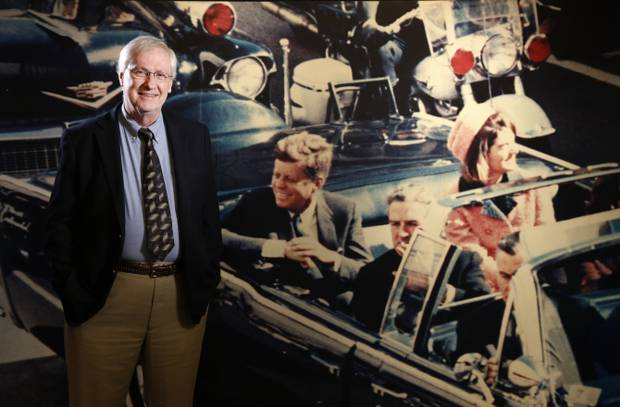
  • Notes on Lunch with Arlen Specter on January 4, 2012

    Notes on Lunch with Arlen Specter on January 4, 2012


    Truly, to tell lies is not honorable; but where truth entails tremendous ruin, to speak dishonorably is pardonable.

    Sophocles


    On January 4, 2012 at 11:25 a.m. I arrived at the Oyster House restaurant in Philadelphia for a meeting with former U.S. Senator Arlen Specter. He had called me a week or so earlier and suggested we have lunch.

    We met, shook hands, and seated ourselves at a table. I thanked him for suggesting having lunch with me.

    I told him that I viewed his work on the Kennedy assassination as very likely having saved my life. I also wanted him to know that if I had been given his Warren Commission assignment, and if I knew then what I know now about power and politics in our society, I would have done what he did. Of course, as a pacifist peace activist with socialist leanings, such as I was and am, I would never have been selected for Specter’s job with the Warren Commission. Arlen Specter was neither a pacifist nor a peace activist. He was a lawyer. I believe that Specter did not know that after the assassination of President Kennedy he was no longer a citizen of a republic but rather was a subject of the globally most powerful banana republic.

    But if I had been chosen for his assignment, i.e. to frame Lee Harvey Oswald as Kennedy’s killer, I would have done what Specter did. As a lawyer I would have been obligated to serve the best interests of my client, the U.S. government. My assignment would have been to cover up the state crime, the coup. I said that not to do that work and not to steer the society away from the ostensible plot to kill President Kennedy, which plot had as its central theme a pro-Castro and pro-Soviet origin, would have resulted in terrible political consequences.

     …if I had been chosen for his assignment, i.e. to frame Lee Harvey Oswald as Kennedy’s killer, I would have done what Specter did. As a lawyer I would have been obligated to serve the best interests of my client, the U.S. government. 

    ~ Vincent Salandria

    salandria
    Vincent Salandria

    I told Specter that the American people could never have accepted my view of the assassination as a covert military-intelligence activity supported by the U.S. establishment – not then, and not now. They would have readily accepted as truth the leftist-plot script that the assassins employed. Even now, most Kennedy assassination critics will not accept my view of a U.S. national security state military-industrial killing. I explained that my very bright and rational wife could and would not completely accept my version of the meaning of the Kennedy assassination.

    The U.S. national security state’s killing of Kennedy was cloaked in the Oswald myth. That myth included a supposed U.S. defector to the Soviet Union who headed up a Fair Play for Cuba Committee, and who before the assassination allegedly sought a Cuban passport. Therefore, the myth pointed an accusing finger at Fidel Castro and the Soviets.

    If the U.S. public had been convinced that Castro and the Soviets were behind the killing of Kennedy, then the military would have considered the killing an act of war, and a military dictatorship in the U.S. would have probably resulted.

    Oswald, a U.S. intelligence agent whose past had been molded by the C.I.A., could have been cast into whatever his intelligence masters chose. If the Oswald myth had completely unraveled and had exposed the joint chiefs to the U.S. public as the criminals behind the coup, they, the joint chiefs, would never have quietly surrendered their newly acquired power. I believe that instead, they would have sought to preserve and exploit their newly acquired status of possessing ultimate power over the U.S. arms budget and foreign policy. I believe that they would have proclaimed a national security emergency and imposed martial law. They would have declared a state of emergency, to a state of war, and would have designated the replacement for President Kennedy as a unitary president. We now have been made to understand that the unitary president is unhampered by constitutional separation of powers and the restraints of the bill of rights. In short, the unitary president is a euphemism for the correct political designation of a dictator.

    Specter asked me what I thought was the reason for the assassination. In reply I asked whether he had read the correspondence between President Kennedy and Nikita Khrushchev. He had not. I explained that my reading of the correspondence convinced me that Kennedy and Khrushchev had grown very fond of one another. I saw them as seeking to end the Cold War in the area of military confrontation. They were in my judgment seeking to change the Cold War into a peaceful competition on an economic rather than military basis, testing the relative merits of a free market and command economy. I saw the U.S. military intelligence and its civilian allies as being opposed to ending the Cold War.

    I told him that I concluded that there was also a conflict between Kennedy and our military on the issue of escalation in Vietnam. In order to deter the efforts of Kennedy and Khrushchev to accomplish a winding down of the Cold War, the C.I.A, with the approval of the U.S. military, killed Kennedy.

    I said that I believed the assassination was committed at the behest of the highest levels of U.S. power. I said that I did not use sophisticated thinking to arrive at my very early conclusion of a U.S. national-security state assassination. I told him that I think like the Italian peasant stock from which I came. We use intuition.

    … if Oswald was the killer, and if the U.S. government were innocent of any complicity in the assassination, Oswald would live through the weekend.  But if he was killed, then we would know that the assassination was a consequence of a high level U.S. government plot. 

    Vincent Salandria

    I explained that the day after the Kennedy assassination I met with my then brother-in-law, Harold Feldman. We decided that if Oswald was the killer, and if the U.S. government were innocent of any complicity in the assassination, Oswald would live through the weekend. But if he was killed, then we would know that the assassination was a consequence of a high level U.S. government plot.

    Harold Feldman and I also concluded that if Oswald was killed by a Jew, it would indicate a high level WASP plot. We further decided that the killing of Oswald would signal that no government investigation could upturn the truth. In that event we as private citizens would have to investigate the assassination to arrive at the historical truth.

    Specter uniformly maintained a courteous, serious and respectful demeanor, as did I. He asked me whether I had talked to Mark Lane frequently. I told him that I had spoken to him, and that I had spoken to essentially every assassination critic then active. I described meeting Mark Lane at a dinner in Philadelphia at a lawyer’s home. The dinner was in 1964. I could not recall the name of the lawyer host. I related that Spencer Coxe, the Executive leader of the Philadelphia branch of the American Civil Liberties Union, was also present.

    At that dinner I informed Lane that I was interested in Oswald as a likely U.S. intelligence agent provocateur. Lane was not interested in the concept of Oswald as a possible U.S. intelligence asset. Specter asked me what Lane believed regarding the assassination. I said that at that time he believed there was a plot, but he did not name who the plotters were and did not discuss what he thought the reason was for the killing. I did say that later, Lane got a jury to decide for Lane’s client who had said that E. Howard Hunt was in Dallas on the date of the Kennedy assassination. Lane’s client had been sued for libel. He described the case in his 1991 book Plausible Denial.

    In 1964, after his work with the Warren Commission was completed, Specter had been honored for this association at a meeting of the Philadelphia Bar Association. He asked me what I remembered about that event. I told him that I attended with my copy of the Warren Report and directed some questions at him regarding the shots, trajectories and wounds in the Kennedy assassination. After the meeting some of my colleagues at the bar asked me to write an article. That night I did so. I sent the article to Theodore Vorhees, the Chancellor of the Philadelphia Bar Association, and asked him to have it published. He sent it back and asked me to tone it down. I did so. He got it published in The Legal Intelligencer.

    Specter recalled that in our confrontation I had accused him of corruption. He said that he had asked me at that time whether I would change the charge to incompetency. I had refused. I told him that I could not change it to incompetency because I knew then from his public record, as I know now, that he was not incompetent. My charge was reiterated in the Legal Intelligencer article, which described the Warren Commission’s work as speculation conforming to none of the evidence. I said the Warren Report did not have the slightest credibility, committing errors of logic and being contrary to the laws of physics and geometry.

    Specter, during our 2012 lunch, asked me whether I thought that the Warren Commission was a set up. I answered that probably not all of the Commissioners knew it was a set up, but that Dulles and Warren knew. I also told him that I thought that McGeorge Bundy was privy to the plot. Specter did not respond to this.

    I explained that I did not discuss with friends my view of the assassination and my conception of how controlled our society is. I said that I did not discuss with my friends matters such as we were discussing because people are just not ready to accept my view of the assassination and the tight control over our society. I said that I had nothing to offer to people in terms of solutions to the mess we are in. I related how last year, when I had a blood condition and thought I was going to die, my big regret was the mess of a society we were bequeathing to our children.

    Specter commented: “Washington is in chaos.” I told him that I was deeply concerned about whether we are going to bomb Iran. Specter said, “We are not going to bomb Iran.”

    I offered an example of how out of control the society is. I pointed out that he had been against escalation in Afghanistan. While Obama was supposed to be meditating over whether or not to escalate the U.S. forces there, Generals McChrystal and Petraeus were speaking to the press telling the world that we were going to escalate. These statements by the generals were made while Vice President Biden was speaking publicly against escalation. I said that I thought McChrystal and Petraeus should have been court martialed for violating the chain of command. I then said that I don’t think Obama any longer has power over the military, despite the ostensible constitutional chain of command.

    I told Specter that I knew there was a conspiracy to kill Kennedy notwithstanding his single-bullet theory because the holes in the custom-made shirt and suit jacket of Kennedy could not have ridden up in such a fashion to explain how a shot from the southeast corner of the sixth floor of the Texas Book Depository Building, hitting Kennedy at a downward angle of roughly 17 degrees, and hitting no bone, could have exited from his necktie knot. I told him that Commission Exhibit 399 was a plant.


    sbt 1 sbt 2
    CE399

    CE 399

    Specter creating the “Single Bullet Theory” for the Warren Commission


    I admitted that I had coached Gaeton Fonzi before his interview with him on the questions that he should ask Specter. Specter asked me where Fonzi is. I told him that he lives in Florida, and that he is sick with Hodgkin’s disease. Specter said he was a good reporter. I told Specter that Fonzi was a great investigative reporter.

    I told Specter that my very smart wife does not accept my political thinking regarding the nature of the power in control of the country and the world. Specter asked me about my wife. I told him that she is Jewish. She is a graduate of Swarthmore College. She studied at the University of Chicago and accomplished all but the dissertation in Russian Literature there. She owns and manages 41 apartments around Rittenhouse Square. Her father was a fellow traveler. He was subpoenaed before the House Un-American Activities Committee. He retained Abe Fortas as his lawyer. The hearing was cancelled. He was a philanthropist who financed the Youth Ruth Wing of the Jerusalem Museum and a college and high school in Israel.

    I suggested to Specter that he was selected to perform the hardest assignment of the Warren Commission because he was a Jew. The government could have selected a right WASP lawyer for the job. I said that I had received less criticism for my work on the assassination than he had received for his work on the Commission and as senator. He related how in Bucks County in a speaking engagement a man had risen and shouted at him that he should resign because he was too Jewish. I told him that I thought that he was a good senator. He replied that being a senator was a good and interesting job.

    So how is it that Arlen Specter’s work on the Warren Commission saved my life? If I had been successful in arousing public opposition to the National Security State, whom I viewed at the President’s true killers, then the National Security State, possessing supreme power after its successful coup, would have liquidated any effective dissent. In 1966, after a public forum on the Warren Commission’s evidence, I was advised by Brandeis Professor Jacob Cohen that I would have to be killed. I viewed Professor Cohen as speaking for the assassins.

    The Warren Report quieted the public. And as it developed, I was completely ineffective. There was no need to dispose of me. So, I consider my life was saved by the effectiveness of Arlen Specter’s work and the ineffectiveness of my own.

    As we were leaving the Oyster House I gave Specter a copy of James W. Douglass’s book, JFK and the Unspeakable. I said it was the best book on the assassination, and that it was dedicated to a friend of mine and me.

    Specter was smiling broadly as we left. I told him that he had a great smile, but that he did not sport it often in public. I asked him whether he was in good health. He said he was, and seemed optimistic about his well-being. I don’t know whether he was then aware of his illness. In dealing with his protracted struggle against very serious afflictions he displayed remarkable fight and courage.

    Knowing what I know now, and being then, as now, committed to historical truth, I would have not changed my earliest statement that the Kennedy assassination was a crime of the U.S. warfare state. But I would not have endeavored to rally people to confront, as I did, the assassins. I know now that the U.S. public never did want to accept the U.S. warfare state as the criminal institutional structure that it is. I know now, that even if the U.S. public ever was ready to accept the true historical meaning of the Kennedy assassination, that there are and have been no institutional structures open to them with which they could hope to countervail successfully the Kennedy killers, the enormous power of the U.S. empire and its warfare state.

    I know that my efforts to convince people to oppose Kennedy’s assassins were feckless. But was that same effort of a small community of people to establish the historical truth of the Kennedy assassination valueless? I think not. I feel that historical truth is the polestar which guides humankind when we grope for an accurate diagnosis of a crisis. Without historical truth, an accurate diagnosis of the nature and cause of crisis, we would have no direction on how to move to solve societal disease.

    Knowing what I know now, would I change my harsh criticisms of Arlen Specter? Yes, I would. Specter was a superior lawyer who enlisted his services to the U.S. government. The Warren Commission Report, through its lies, served to calm the U.S. public in a period of great crisis. If any serious domestic or foreign effort had been made to counter the coup, the weaponry commanded by the state criminals would have resulted in catastrophic loss of life. Therefore, in my judgment of Arlen Specter I defer to the wisdom of Sophocles, who said: “Truly, to tell lies is not honorable; but where truth entails tremendous ruin, to speak dishonorably is pardonable.”


    1. JFK and the Unspeakable: Why He Died and Why It Matters

  • Dead Men Talking: An Update


    Pat Speer alerted me to the fact that I might have made an error in my review of Dead Men Talking. He said that I had misinterpreted the fingerprint evidence that was given to Nathan Darby for analysis. He further added that Vincent Bugliosi had not been accurate in how he represented this evidence and episode. So for me to use him to criticize Dean Hartwell was rather imprudent.

    Taking Speer’s advice, I went back and reconsidered the data about this issue of Bugliosi vs. Darby on the Warren Commission’s fingerprint evidence. It appears Speer was right. I came to two unrelated conclusions after my review of this evidence.

    First, Barr McClellan’s book Blood, Money and Power, where Darby’s work appears, is still a piece of pulp. McClellan has Oswald killing Tippit, shooting at Walker, and on the sixth floor with Mac Wallace firing two shots.(pgs. 211, 268, 205) Wallace casually approached Oswald in 1962 outside a print shop. (pgs. 264-65) Why Oswald would be frequenting such a place far before his New Orleans undercover assignment is not asked or explained. McClellan has Lyndon Johnson’s attorney Ed Clark in attendance at the ever evolving Murchison gathering the night before Kennedy’s murder. Clark announces to cheers and applause that there would be a change in government the next day. (p. 270)

    My opinion of McClellan as an empty confidence man is the same.

    But part of my mistake was I let my impression of McClellan color my judgment about Darby’s work in the appendix. The other thing that led to this error was this: because I had gone after Bugliosi for so long on so many different angles, I felt I had to give him credit for something. I shouldn’t have felt that way.

    Let me summarize the problem. On August 27, 1964 Wesley Liebeler alerted Warren Commission senior counsels Howard Willens and Norman Redlich that, although Oswald’s prints had been identified, there were still over 20 unidentified finger and palmprints from the sixth floor. (HSCA Vol. XI, p. 213) On September 18th, the FBI reported back that of those leftover markings, all but one palmprint had been identified as belonging to Dallas Policeman Robert L. Studebaker or FBI clerk Forest Lucy. And this was noted in the Warren Report. (p. 566) Yet the actual data used in the comparisons was not available. (McClellan,p. 324) Though the Bureau stated a palmprint was left unidentified, if you read this page closely, you will see the Bureau is equivocating. They are leaving out what seems to be one identified fingerprint. I should add that there are three other prints, which they disguise by labeling “not identifiable” or having “indistinct characteristics”. (See Richard Bartholomew’s monograph “Conflicts in Officials Accounts of the Cardboard Carton Prints”). As Bartholomew notes, another trick the Commission used in disguising the actual information about the prints was using reporting numbers that differed from those on official itemized lists.

    Some of these prints are in Warren Commission Volume XVII. (See especially CE 656) The late Jay Harrison, a former Dallas police officer, ordered copies of all of these from the National Archives. He also discovered that either the FBI or the Commission hid one print exhibit with another. In other words, two prints were under one exhibit number. (Print 22, Box B).

    What Bugliosi tried to say was that all Darby worked with is the one unidentified palmprint mentioned in the WR. (p. 566) This is clearly the impression given in his book as to his conversation with Darby. (Reclaiming History, pgs. 922-23) Bugliosi tries to state that Darby mistook a palmprint for a fingerprint. Or that he was only supplied with a palmprint and didn’t know the difference in that he was comparing it with a Mac Wallace fingerprint.

    It is clear now that 1.) Numerous unidentified prints were given to Darby. 2.) He did not mistake a palmprint for a fingerprint. 3.) No one tried to trick him that one was the other. Darby matched a fingerprint the FBI attributed to Studebaker to Wallace. (McClellan p. 327) After talking to both Richard Bartholomew and Dawn Meredith, who knew Darby and Harrison well, Darby was not duped, neither was he a dunce. And in fact, Harrison obtained exhibits on this matter that are not even in the Commission volumes. (Like Arthur Mandella’s original inventory of the prints.) All of this seems evident in rereading the long appendix and exhibit section in the McClellan book. So evident that it is hard to believe Bugliosi could not have understood it correctly.

    Whatever one thinks of the value of Darby’s work here in identifying both previously identified and unidentified prints to Wallace, the problems are not the ones that Bugliosi represents in his book.

    Bugliosi’s work on this aspect was so circumspect I wanted to call Darby to ask him about the call the author describes in his book. (op cit) Unfortunately, Darby has since passed away.

    My apologies to Darby, Dean Hartwell, and the late Jay Harrison.

  • The Power Elite in Dallas Takes Charge

    The Power Elite in Dallas Takes Charge


    dallas skyline


    On November 18th, Hugh Aynesworth clocked in with his annual Kennedy assassination cover up article in the only daily circulation paper in Dallas, The Dallas Morning News. In this article the longtime CIA-FBI asset did two things. He first took his usual slam at the critics of the Warren Commission. Secondly, with help from Larry Dunkel aka Gary Mack, he did protective cover for his protégé and apparent successor in the local cover up, Dave Perry.

    To understand who Perry is–and how bad he is–one needs to refer to the fine Bob Fox article on this web site. (Click here for that article) By reading that essay one can see that Perry is not to be trusted in his research. As Fox concluded, his work in the instance of the Mary Bledsoe arrest report was “so incomplete, so one-sided, so agenda-driven as to be misleading.” And this is a very important instance. Why? Because a hidden part of Perry’s agenda in this piece was to conceal just how bad a witness Mary Bledsoe really was. Bledsoe was the person that the Warren Commission relied upon in order to place Oswald on a bus after the assassination. In her masterly book, Accessories After the Fact, Sylvia Meagher first began to point out a few of the many problems with her testimony about Oswald being on the bus. In 2012, through the additional work of Joe Backes, Rodger Remington, Pat Speer, and Lee Farley, the nagging stream of doubt about Bledsoe has now turned into a raging river. To the point that today, when presented with all the problems with her testimony, most objective people have serious doubts that Oswald was ever on that bus—or that Bledsoe was on it when she said she was. In other words, with all the evidence we have today, it looks like Bledsoe was suborned, perhaps by Secret Service agent Forrest Sorrels. (Sorrels advised her to bring notes to her Warren Commission appearance. See James Folliard’s, “The Bledsoe Bust”, The Fourth Decade, Vol. 2, No. 1, p. 32.)

    For what reason would such an act occur? As Fox states in his piece, to discredit the testimony of Roger Craig. Craig testified that, after the assassination, he saw a man running down the embankment on Elm Street. As he did so, there was a light green Rambler station wagon driving slowly west on Elm. The driver was dark complected in appearance. He was leaning to his right and looking at this man who was running down the embankment. The running man jumped into the Rambler and the car sped away from the scene. Later, when Oswald was arrested and placed in custody at the police station, Craig saw him. He told Captain Fritz that he was the man who jumped into the Rambler. (WC Vol. 19, p. 524) Marvin Robinson, who said he saw the same thing, corroborated Craig’s testimony very closely. (Josiah Thompson, Six Seconds in Dallas, p. 242)

    The Commission could not tolerate this testimony. At the least, it seemed to indicate that there was an Oswald double at the scene. And that would have been impossible to explain unless there was a plot unfolding. As Fox noted in his important essay, as the years have gone on and the Commission cover up has been torn to tatters, the Craig-Robinson version has been bolstered by researchers like John Armstrong and Anna Marie Kuhns Walko. While Bledsoe’s story has been shot so full of holes that she now stands with the likes of Commission witnesses Helen Markham and Howard Brennan as models of untrustworthy testimony. As Fox also notes, somehow, in all of his writing related to Bledsoe, Perry managed to ignore all of the many problems with her testimony. Which, with all we know today, seems impossible. But it’s true.

    It’s natural that Aynesworth would write this article about Perry since he set the standard for carrying water for the Commission. (Click here to see how.) And everyone who knows anything about the Kennedy case understands that fact. Only the editors at the Morning News can act as if they do not know that Aynesworth has was long ago exposed as an FBI asset and an applicant for the CIA. Therefore, only Hugh Aynesworth could call Perry a ‘One-man truth squad’. In fact, as Fox notes, Perry much more resembles Lt. Frank Drebin from The Naked Gun, telling spectators at an exploding warehouse, “Nothing to see here.” All we need to know about Perry is the he associates himself with a sell out like Aynesworth to the point of letting him write something about him. For the last thing that interests Perry or Aynesworth about the JFK case is the truth. And this extends way back to 1964. For that is when Aynesworth actually began his career of upholding the Warren Commission. Even before the Warren Report was published. In 1964, he wanted the Commission to portray Oswald as trying to shoot Richard Nixon. Even when Nixon was not in Dallas! (James DiEugenio, Destiny Betrayed, Second Edition, p. 250) Aynesworth got this story from Marina Oswald, who he was clearly manipulating at the time. Aynesworth also was actively involved in helping Kennedy murder suspect Sergio Arcacha Smith avoid questioning by Jim Garrison’s assistant, Jim Alcock. (ibid, p. 253)

    On the other hand, Aynesworth has never admitted in public as to what the declassified record reveals: That he was in bed with both the FBI and the CIA while dealing with the Kennedy case. Like the late Jim Phelan, he has actually tried to deny this fact. Further, he has never written anything derogatory about the Commission itself. Even about the preposterous Magic Bullet. So when someone like Aynesworth praises someone like Perry, that tells you all one needs to know about Dave Perry.

    What does Aynesworth praise Perry for? If you can believe it, for going after the likes of Judy Baker and Ricky White. The article also spends many pages on Madeleine Brown. Who has also been critiqued on this site. (See here ) The author then lets Perry add that such trickery proves a “disservice to those who wish to get to the truth of this tragic event.” Wisely, Aynesworth does not add the following fact: for him the truth is that Oswald killed Kennedy. This would mean he would then have to explain the Magic Bullet. Which he does not want to do. Or even admit to.

    Towards the end Aynesworth takes a stab at Oliver Stone’s film, JFK by referencing a list by Perry called “Rashomon to the Extreme.” Yet, the list has little or nothing to do with that film. It is supposed to be a compendium of all the accused assassins of Kennedy. Except its not. For instance Perry includes Joseph Milteer and attributes his name to Bob Groden. But Groden has not said Milteer was a shooter. He has just said he thinks Milteer was in Dealey Plaza. And from his alleged position, along Houston Street in a large throng, he could not have fired without being 1.) Caught on camera, and 2.) Apprehended.

    The real role of Dave Perry has been to obfuscate the true facts of the Kennedy assassination. Namely that President Kennedy was killed by a conspiracy and the Commission used some dubious witnesses to conceal that fact. Two of them being Bledsoe and Wesley Frazier. The latter has been a special assignment for, first Aynesworth, and now Perry. Today, Perry has become Frazier’s chaperone.

    II

    At the very end of the article, Aynesworth predictably brings up Gary Mack and the Sixth Floor Museum. And that brings us to the larger focus of this pitiful piece of reportage. And make no mistake, the Dallas Morning News is an integral part what is going on in Dallas. Or why else would they allow the silly and irrelevant meanderings of Aynesworth to appear in this day and age. In my article “How Gary Mack Became Dan Rather”, I outlined the relationship between these three men in detail. (Click here for that piece) But I also outlined the origins behind The Sixth Floor Museum. Namely that it was a creation of the Dallas power structure who, at one time, wanted to raze the building in order to wipe out the memory of JFK’s assassination altogether.

    Instead, they created a monument to the Warren Commission. In the two bookstores the Sixth Floor maintains, one will not see any critiques of the Commission. In fact, among the many books and films sold within, one will only see two that can be considered contra the official story: the DVD version of JFK, and John Kelin’s Praise from a Future Generation. (The latter is not really a critique of the Commission. It traces the relationships that began the critical movement against the Warren Report.) This is in keeping with the wishes of the upper classes, which helped raise the money to finance the institution in the first place. For them, it was embarrassing to try and explain how President Kennedy, Officer J. D. Tippit , and then Lee Harvey Oswald were all killed in the space of 48 hours. The last while he was literally in the arms of the Dallas Police. And how could one explain how Jack Ruby got into the basement of the Dallas Police headquarters in order to kill Oswald? Did he have help getting there? The House Select Committee on Assassinations seemed to think so. And if that was the case, was it the police themselves who helped set up the alleged assassin to be killed? That was a truth too terrible for the upper crust to take. The Sixth Floor Museum is their attempt to conceal all that. And Gary Mack, with his buddy Dave Perry, are now the two most active citizens in Dallas plying the roots of the cover up.

    This year, on the 30th of May, Aynesworth’s flagship, The Dallas Morning News, announced the formation of a “high-powered committee of Dallas philanthropists and community leaders” to begin “the sensitive job of planning events to commemorate the 50th anniversary of President John F. Kennedy’s assassination.” Mayor Mike Rawlings was the man who formed this committee. Rawlings is virtually a lifelong corporate denizen who has been the CEO of three companies, including Pizza Hut. On a radio interview he did recently for Lite FM 103.7 in Dallas, he said that since the 50th anniversary was going to be a huge international event, Dallas had to get out in front of the curve to be sure the city is represented in the right way. The world would be looking at Dallas, and the city had to be careful in order to control the face of Dallas and present it in the right way. Therefore, they had to be careful to celebrate only the life and achievements of John F. Kennedy. He then went on to praise the work of The Sixth Floor Museum as setting the right example in this regard. He described Dallas as a city of opportunity and growth. Incredibly, he then tried to equate this with Kennedy’s vision of a New Frontier. That previously mentioned May article also contained a revealing sentence about the formation of the committee, “In the immediate aftermath of the assassination, much of the world appeared to be looking for a scapegoat. Civic leaders believed the city of Dallas was miscast in the role of villain.” The article then says that city leaders “historically avoided planning any events around the anniversaries because of the lingering stain on the city. The committee’s formation indicates that the 50th anniversary…will be different.”

    Rawlings was sure to appoint people to the committee like Lindalyn Adams, who was also involved with the creation of The Sixth Floor Museum. Another revealing choice is that of Ken Menges, an attorney and board chairman of The Sixth Floor Museum. The article went on to say that the committee’s makeup promised multi-ethnic events, spiritual observations, and artistic presentations. This crossover seems to suggest that the permit that The Sixth Floor was granted to take hold of Dealey Plaza for one week—from November 18-24– was not done on its own. To pull off a permit that all encompassing, one would seem to need help. It now appears that City Hall was a part of that help.

    On that radio interview, Rawlings stated some of his ideas for the November 22, 2013 commemoration. At 12:30 he said there would be a U.S. Navy flyover, a choir singing, and historian David McCullough speaking. The choice of the last is also revealing. As McCullough is Tom Hanks favorite historian. Hanks made a mini-series out of his book on John Adams. And McCullough has now succeeded the late Stephen Ambrose as the preeminent Establishment Historian. In other words, he can be relied upon not to rock any boats or disturb anyone’s sensibilities. Rawlings also said that this would be a ticketed event. Apparently, if you have no tickets, you will not get to attend. Further, that it would definitely be in Dealey Plaza.

    All of this is a bit disturbing to anyone who is actually interested in not just the life, but also the puzzling circumstances surrounding the death of President Kennedy. First of all, why was it necessary to place a memorial to his life and achievements in Dealey Plaza? Dallas constructed a memorial to Kennedy a few blocks away from Dealey Plaza, near the Adolphus Hotel decades ago. If there was to be no discussion of his death, why not hold this event there? Second, why is this a ticketed event? And how will the tickets be allotted? Will one have to pay to get to see the Establishment Historian pontificate on something he knows little about? That is, the career and presidency of John F. Kennedy. Finally, if this is the main event, why was it necessary for them—through The Sixth Floor—to get a permit that lasts a week? What Rawlings is describing will last maybe an hour or two. In other words, not even the whole day, let alone the night, or the previous evening. In a democratic form of government, about an issue that is important to so many people, these kinds of questions are not ignored. If only to dispel the idea that Rawlings, his committee, and The Sixth Floor, have some kind of hidden agenda at work.

    Many people, including myself, suspect that this may well be the case. Especially considering the length of the permit. If no one else is allowed to attain such a permit, then the conclusion would be that this was a preemptive move. One that was done in an effort at prior restraint. The objective being to cut off anyone else from being in Dealey Plaza to bring up questions about the one thing these people do not want discussed. Namely, the bizarre circumstances surrounding the murder of President Kennedy. And also why Dallas, the state of Texas and the government of the USA have never been able to deal with them in an honest way.

    III

    On November 19th the Dallas Morning News again chimed in on this issue. David Flick wrote that attendance to the event will be restricted to VIPs. Considering the make up of this committee one can imagine who those people will be. Robert Groden will not be on the list. And his article goes on to explain why he won’t be. Flick writes that because there had been no official program in other years, the plaza was “dominated by conspiracy theorists, and sometimes simply by attention seekers….” Flick then goes on to state that both city and museum officials had been concerned for months about the image of Dallas to be presented next year, when it will likely get international attention. Rawlings said, “Dallas has been somewhat defined by the events of that day. We will have a chance to present what Dallas is.” Flick then writes that, “Last year, museum officials secured a permit for Dealey Plaza during the anniversary week, a permit since taken over by city leaders.” So it appears that The Sixth Floor’s action was simply done as an appendage to Rawlings and the Power Elite. Which, of course, is what the Sixth Floor has been since its creation.

    Which brings us to Judith Garrett Segura. As Joe Backes pointed out to me, the so-called restoration of Dealey Plaza now seems a part of this overall plan. As The Dallas Morning News reported in October 2012, all the rather expensive repairs to the plaza should be completed by the summer of next year. Well before the 50th anniversary of Kennedy’s death. That article then said the following: “Judith Garrett Segura, a historian and former president of the Belo Foundation, has led the effort to raise funds to restore the plaza.” The article then went on to say that 350,00 dollars of the 2 million dollar cost of the restoration came from the descendants and legacy companies of the plaza’s namesake, George Bannerman Dealey. The legacy companies include the A. H. Belo Corporation.

    What is the Belo Corporation that Segura once wrote a book about? The Belo Corporation is the parent company of the Dallas Morning News. A. H. Belo was born in North Carolina and fought for the confederacy in the Civil War. He then moved to Texas and was part owner in a couple of Houston area newspapers. After his partner died, he became sole owner and named his business A. H. Belo and Co. Looking to expand, Belo sent George Bannerman Dealey to Dallas to try and establish a paper in that city. Thus the efforts of Belo and Dealey gave birth to the Dallas Morning News. Which became part of Belo’s growing newspaper dominion. After Belo died, Dealey became president of the company. He renamed it A. H. Belo Corporation. Dealey was once publisher of the newspaper and Dealey Plaza is named after him. Dealey began an expansion of Belo. In the 1930’s the Belo owned radio station WFAA-AM boosted its power to 50,000 watts, becoming the first “super station” in the southwest. In 1950, after Dealey’s death, Belo purchased Dallas TV station KBTV and renamed it WFAA-TV. Today the ABC affiliate is the leading station in Dallas, and the flagship of Belo’s TV group. As Segura wrote in her 2008 book, simply titled Belo, at the turn of the century, Belo owned four daily newspapers, twenty-six television and cable stations, and over thirty interactive web sites. In fact, on this project, Segura now appears to be working for the Belo Foundation out of the Belo Building in Dallas. Belo’s flagship newspaper is still the Dallas Morning News.

    From Hugh Aynesworth, to Gary Mack and the Sixth Floor, to Rawlings and Belo, we have now come full circle in our exposure of how the Power Elite in Dallas plan on putting a lid on the 50th anniversary of John F. Kennedy’s death. At the 30th anniversary, CTKA secured a permit rather easily for the evening of the 21st. Reverend Steve Jones began with a religious invocation. Speakers like John Newman, Marina Oswald, Gaeton Fonzi and Cyril Wecht all gave powerful and dignified speeches commemorating the murder of President Kennedy. At midnight, four hundred listeners assembled in front of the speakers with candles held in front of them. It was a memorable, incandescent moment that showed just what was missing from The Sixth Floor Museum. And it is this kind of thing, under the klieg lights of the national media, that Rawlings has been told to avoid at all costs.

    In fact, the Dallas Morning News and Belo Corporation gave him their official imprimatur with an editorial on November 20th. They blessed his plan as having the “right ingredients”. They even praised his exclusive list of VIPs to be in attendance. They should, since Rawlings said people started asking him about this subject almost two years ago. Therefore it appears these same people gave him the exclusive and anti-democratic idea in the first place. After all they endorsed him for mayor. Its hard to win a mayor’s race in a one newspaper town without that one newspaper on your side. Rawlings wasn’t going to risk running again without Belo behind him.

    ~Jim DiEugenio

  • Noam Chomsky’s Sickness unto Death

    Noam Chomsky’s Sickness unto Death


    ChomskyNoam Chomsky’s attempt to obfuscate President Kennedy’s policy to withdraw from Vietnam turned out to be rather unsuccessful. If one recalls, at the time that Oliver Stone’s JFK was released, Chomsky wrote an article for Z Magazine and then published a book called Rethinking Camelot. Beneath all the excess verbiage, Chomsky was saying the following:

    1. That NSAM 263, issued in October 1963, did not actually mean what it said. Namely that Kennedy was planning on removing all American advisors from Vietnam.
    2. NSAM 273, signed by LBJ after Kennedy’s death, did not actually impact or alter NSAM 263.
    3. All the witnesses that John Newman, Fletcher Prouty and Peter Scott adduced to bolster the fact that Kennedy was withdrawing from Vietnam, these men were all either biased or wrong.
    4. Vice-President Johnson was not really all that bad of a guy. And there was no real break in Vietnam policy when he took over. After all, he and Kennedy were essentially the same man in the sphere of foreign policy.

    To put it mildy, Chomsky’s attempt to promulgate this line was not effective. Especially when the Assassination Records and Review Board unearthed even more documents supporting Kennedy’s plan. These were enough to influence even the mainstream media into writing news articles about Kennedy’s plan to withdraw from Vietnam. (Probe Vol. 5 No. 3 pgs. 19-21) These new documents were released by the ARRB on December 22, 1997. Within days, the New York Times headlined a story with, “Kennedy Had a Plan for Early Exit in Vietnam.” The Associated Press story read, “New Documents Hint that JFK Wanted U.S. out of Vietnam.” The Philadelphia Inquirer story was bannered, “Papers support theory that Kennedy had plans for a Vietnam pullout.”

    The work of the ARRB on the Vietnam issue also influenced academia. Scholars like Howard Jones, David Kaiser and Gordon Goldstein wrote a number of new books. Each of them ignored Chomsky and endorsed the Newman/Prouty/Scott view as expressed in the Stone film. This culminated in a milestone event. In 2005 a group of nearly 20 authorities on the subject met at St. Simons Island off the coast of Georgia. After two days of reviewing documents and debating the subject, a vote was taken. Half the attendees said Kennedy would not have escalated in Vietnam as Johnson did. (Virtual JFK, edited by James Blight, p. 210) This conference resulted in both a book and film, Virtual JFK, which argued that President Kennedy and Vice-President Johnson had different views on the war. Wisely, and pointedly, Chomsky was not invited to this conference.

    Soundly defeated on this issue, Chomsky did not retreat with his tail between his legs. Instead, he has now navigated to a different aspect of Kennedy’s foreign policy: Cuba.

    JFK

    President John F Kennedy in his office during a meeting with Secretary of Defense Robert McNamara and Vice-president Lyndon B Johnson, at the White House in Washington, DC, 1961.

    Photograph: Henry Burroughs/AP

    This year is the fiftieth anniversary of the Cuban Missile Crisis. Chomsky has chimed in with an article for The Guardian of London. (It can be read here). This article confirms what has been clear to many for a long time. Chomsky is not a historian. And when he gets anywhere near having to deal with the Kennedy assassination, or Kennedy’s presidency, his work is so bad as to be embarrassing. In that regard, he is really a polemicist. Polemicists, by definition, can’t write good or accurate history. And for anyone who did not understand that, this useless article proves it once more.

    Today, there have been at least three books published based upon the actual transcripts of the deliberations of the so-called ExComm. That is, the committee of Kennedy’s advisers assembled to discuss paths of action during the thirteen days that constituted the crisis. The first was The Kennedy Tapes by Ernest May and Philip Zelikow. The second, Averting ‘The Final Failure’ is by Kennedy archivist Sheldon Stern. The third is called The Presidential Recordings, edited by May, Zelikow and Tim Naftali.

    These books are absolutely essential to understanding who President Kennedy really was. Because in this instance, you actually do not have to rely upon memoirs, or memoranda written later. You actually have the words of the participants as spoken right in front of you. And for any objective person, these discussions show just how different Kennedy was from the vast majority of his advisors. This includes Vice-President Johnson, National Security Advisor McGeorge Bundy, and Secretary of State Dean Rusk. At one stage or another these three men all advocated armed intervention to resolve the crisis. And Johnson did not even like the ultimate resolution to the crisis: withdrawal of the American Jupiter missiles from Turkey in exchange for the Russian withdrawal of the missiles from Cuba. He talks about it as leaving the impression “that we’re having to retreat. We’re backing down.” (May and Zelikow, p. 586) Johnson said this even though the Polaris missiles–which were to later serve the same purpose as the Jupiters–were much more modern in both range and accuracy. And since they were submarine launched, they were more difficult to detect and preemptively target. Towards the end of the crisis, Johnson was actually using Kennedy’s nationally televised speech of October 22nd–in which he alerted the pubic to the danger of the Russian installed missiles–against him. The vice-president was saying that the public was going to be disappointed in Kennedy’s performance when compared to his words: “The president made a fine speech. What else have you done?” Even Johnson’s rather friendly biographer, Bob Caro, points out in The Passage of Power that, compared to JFK, during these discussions, Johnson was much more militant in tone and confrontational in approach.

    What does Chomsky say about this most important Kennedy/Johnson juxtaposition? Not a word. Which is about what he said in comparing the policies carried out by President Johnson in Vietnam after Kennedy was killed. In the game of poker, this is called a ‘tell’. Or as Peter Scott terms it, it’s a negative template. Chomsky won’t touch this evidence since it pretty much disintegrates his argument that there was no difference between Kennedy and Johnson in foreign policy.

    So Chomsky now devises another way to attempt to explain why Kennedy sounded so much more dovish during these debates than nearly anyone else in the room. He says that since Kennedy had ordered the installation of the taping system, he knew they were being recorded while the others did not. Again, Chomsky leaves out two important points here. The first is the reason Kennedy ordered the recording devices installed in the first place. As professor Ernest May has stated more than once–for example on ABC’s Nightline–he installed the system because he was upset about how many participants had misrepresented what they said during the discussions leading up to the Bay of Pigs invasion. With the taping system, there could be no argument about who said what and when. Secondly, these tapings were not made public for nearly four decades after Kennedy’s death. If there was some kind of plan to get them out sooner–and show how statesmanlike JFK was compared to everyone else–it was not very effective.

    But the point which Chomsky again avoids is this: Kennedy sounds dovish and level-headed here just as he did during the debates in November of 1961 over whether or not to send combat troops into Vietnam. (See the notes of military attaché Howard Burris dated 11/15/61 in the book Virtual JFK, pgs. 281-83) In other words, it is all of a piece, because it’s the same man. And the taping system is irrelevant to the issue. Why? Because it was not installed in 1961. In that instance, as he was during the Missile Crisis, Kennedy was virtually alone in holding out against the commitment of combat troops to Southeast Asia. And almost every commentator has noted this point, from David Kaiser to Gordon Goldstein. For his own personal, polemical reasons, Chomsky cannot.

    Another piece of flapdoodle that Chomsky tries to peddle here is the actual cause of the crisis. He says that the Russians moved the missiles onto the island in reaction to Operation Mongoose, the secret war against Cuba. To preserve this mythology, Chomsky ignores two pieces of evidence. First, the subterfuge Khrushchev practiced in transporting the weapons across the Atlantic, and second the size and scale of the deployment. Concerning the latter, the eventual arsenal was to consist of the following: 40 land based ballistic missile launchers and sixty missiles. The missiles were of both the medium (1,200 miles) and long–range variety (2,400 miles). These missiles were much more powerful than those used against Hiroshima and Nagasaki. The 9 missile sites were to be protected by 140 air-defense missile launchers. In addition there were to be 40 IL-28 bombers, each capable of carrying a nuclear weapon. This air arm would be supplemented by a submarine pen made up of 11 subs, 7 of them capable of launching nuclear missiles. In other words, the Russians could now threaten America with a nuclear missile arsenal capable of hitting the 100 largest American cities by land, sea and air.

    In addition to this, there was to be a Russian army of 45, 000 troops, with 250 tanks, supplemented by a wing of the latest Russian fighter aircraft, the MiG 21. There were also 80 nuclear-capable cruise missiles for coastal defense. Each of these had the explosive capability of the bombs dropped on Japan in 1945. (May and Zelikow, pgs. 676-77) And, as Kennedy later discovered through U2 photography, the Russians had even given the Cubans a number of Luna ground to ground rockets with a 30 mile range and 2 kiloton warheads. Because of their short range these were termed tactical nukes since they could be used in battlefield circumstances. (ibid, p. 475)

    With these facts on the table, here is my question to the former MIT professor: What use would these nuclear weapons be against a speedboat full of Cuban exiles with rifles, grenades and dynamite sent in to blow up a power plant? Would this not be equivalent to the antique analogy of using a cannon to kill a fly in your house? Why blow up your house trying to kill a fly? Could the Russians and Cubans be this stupid?

    Which relates to the subterfuge. What made Kennedy so suspicious about the deployment was the secrecy surrounding it. Multiplying that was the Russians lying about it. For instance, to choose just one instance, Russian Foreign Minister Andrei Gromyko lied to Kennedy on October 17th by saying that this was only a defensive deployment. If the aim was simply to try and neutralize Mongoose, then all that was needed was the conventional forces. And Khrushchev would have won a great international propaganda victory by announcing a Cuban-Russian military alliance in public, for instance at the United Nations. He could have claimed the diplomatic high ground by saying that this was purely a defensive alliance to defend Cuba from external aggression. If the idea was to fend off a possible invasion then the tactical nukes would have done the trick. And again, an alliance made in public would have been sympathetic to most of the world.

    But he did not. There is no evidence he even contemplated such a public announcement. Why? Because the real motive behind the massive deployment was much wider in scope. It was a way for the Russians to close the missile gap. At the time, only twenty of the Soviet long-range missiles could hit the USA from Russian territory. With what was going into Cuba, the Russians now had a formidable first-strike effort stationed 90 miles away from Miami. And anyone who understands the nuclear terminology of that day will understand how important a credible first strike force was. Secondly, once the secret installation was complete, Khrushchev could then announce it and ask for the thorn in his side to be removed: namely West Berlin. (See Slate, “What the Cuban Missile Crisis Should Teach Us”, by Fred Kaplan. See also May and Zelikow, pgs. 678-79, 691)

    This had been something that had seriously bothered the Russians since the days of the Berlin Airlift of 1948-49. And, more recently, Khrushchev had hectored Kennedy about it at their summit meeting in Vienna in 1961. This would be a significant change in the political calculus of Europe. What Chomsky does by covering up these key facts is to falsely blame President Kennedy while excusing some very irresponsible and reckless gambling by Nikita Khrushchev.

    Chomsky continues in this jingoistic mode when he then names what he thinks should be called the most dangerous moments of the crisis. One of them is on October 27th, when the U. S. Navy, trying to enforce Kennedy’s blockade, had orders to make the Russian submarines surface before they violated the quarantine line. Each Russian submarine carried a nuclear tipped torpedo. American destroyers were to drop depth charges to make the subs surface. Naturally, Chomsky does not reveal the actual instructions given to the American destroyers. They first were to drop “four or five harmless explosive sound signals”, after which the subs should emerge and proceed due east. And, in fact, the State Department told European governments about this technique, including the Russians, in advance. (National Security Archive, Briefing Book No. 399) The problem was that the Russian subs were not getting much information from Moscow and never got this message. They were monitoring Miami stations instead, which of course were carrying much more militant messages. (New York Times, 10/22/12)

    The other moment that Chomsky details is the round the clock B 52 bombers holding their fail safe points in the sky in case of an attack. He states that one pilot, Don Clawson, revealed that there was little control over these flights from Strategic Air Command, and that a rogue pilot could have easily started nuclear war. Chomsky does not say that his source for this is an almost do it yourself book published nine years ago by Clawson himself. The book is a rollicking memoir written 40 years after the fact. In other words, there was no formal input from SAC HQ about what measures really were in place in case this occurred. And Chomsky did not crosscheck his source to see if there was. (This last is a recurrent polemical practice of Chomsky’s.)

    If anyone were to list the most dangerous moments of the crisis, they would have to include three events that need no cross checking. For they have been in the record for decades. The first would be the episode that caused the only fatality by enemy fire during the entire 13-day crisis. That would be the death of Rudolf Anderson. Anderson was America’s top U-2 pilot in 1962. The plane he was flying was clearly marked with Air Force insignia. Khrushchev had assured Kennedy that the Russians would only fire if fired upon. (May and Zelikow, p. 571) The U-2 was a surveillance plane. It was not furnished with missiles or machine guns, only cameras under its wings. And everyone knew that. But, apparently, the Cubans decided to use their Russian furnished surface to air missile sites (SAM’s) near Banes, Cuba to knock the plane down and kill Anderson.

    The information about Anderson’s death was turned over to President Kennedy during an ExComm meeting at 4 PM on October 27th, the day before the crisis ended. (ibid) It gave needed ballast to the hawks in attendance, e.g. General Maxwell Taylor and Assistant Secretary of Defense, Paul Nitze. (ibid, pgs. 571-73) It also seems to have been one of the reasons why Defense Secretary Robert McNamara became more militant during the last two days of the crisis. (The other factor influencing McNamara seems to be Johnson’s not very subtle war mongering.) Following the news of Anderson’s death, there were pleas by Taylor, Bundy and Nitze to immediately take out the SAM sites. (ibid, pgs. 571-72) McNamara moved to take out the Banes SAM site and begin a much larger air attack against the island on the 31st. (ibid, pgs. 571, 575) Kennedy dutifully listened to these proposed courses of action due to this provocation. He then skillfully bent the discussion around to formulating a reply to Khrushchev’s letter requesting a deal for the Jupiters. (ibid, p. 576) There ended up being no retaliation to this reckless shoot down of an unprotected surveillance pilot. (Which, one could argue, was really tantamount to murder.) In fact, there was actually a contingency plan in place which necessitated an agreed upon retaliation. Kennedy overruled that plan and held back the air strike. (ibid, p. 695)

    Another dangerous moment came when Castro actually wanted to launch nuclear missiles against the USA. (ibid, p. 688) In other words to strike first, therefore surely starting a chain reaction leading to nuclear Armageddon. Or as Fidel Castro put it none too subtly to the Russian representative, he was ready to launch against the USA and risk incinerating Cuba in a counter attack. Alexander Alekseev was shocked. But he dutifully relayed the message to Moscow. (The Armageddon Letters, edited by James Blight and Janet Lang, p. 116) At the conclusion of the crisis, Khrushchev chastised Castro for even proposing such an act under these circumstances. He characterized such a proposal to carry out a nuclear first strike against enemy territory as “very alarming”. He continued with: “Naturally you understand where that would lead us. It would not be a simple strike, but the start of thermonuclear world war.” (May and Zelikow, op cit.)) Apparently, since Castro was and is a Marxist, in Chomsky’s book, these kind of inexcusable acts are to be ignored. To dramatize the polemicist’s double standard: Imagine what Chomsky would say if President Kennedy was on record uttering such a thing. But not only does Chomsky not comment on this nutty request by Castro, he does something even worse. He does not tell the reader about it. That act of censorship tells you all you need to know about Chomsky’s fairness and honesty in this article.

    There was another nominee for most dangerous moment. And again, you will not find it in Chomsky’s article. During the crisis, CIA officer William Harvey—a man who despised the Kennedys—secretly dispatched several teams of Cuban exile paratroopers onto the island. (Larry Hancock, Nexus, p. 80) Harvey never fully revealed what the mission of these men actually was. But since he constantly assailed the Kennedys for not having the guts to get rid of Castro once and for all, one can imagine what he had in mind. Furthering this thesis was the fact that these men were on a secret radio frequency, so that when Bobby Kennedy found out about it, he could not recall them directly. (ibid, p. 70) RFK was enraged when he found out what Harvey had done. And this was the beginning of the end for Harvey’s storied CIA career. The reason Chomsky will not touch this incident is that it violates another aspect of his special and peculiar ideology. Namely, his belief that the CIA only performs functions requested by the president. Yet, under Kennedy, the CIA often enacted autonomous actions.. (And there are many examples in both Hancock’s book and Jim Douglass’ JFK and the Unspeakable.) But Chomsky cannot admit this, no matter how foolish it makes him look. Because it would indicate that, 1.) The CIA and President Kennedy had different aims, and 2.) The Agency did not just enact policy. At times, it made its own.

    Let us continue with just how bad the Marxist leadership was leading up to and during the crisis. On September 4th, after getting preliminary intelligence reports about construction on Cuba, Kennedy had specifically warned the Russians about using the island as a forward base in the Americas. And he told Russian ambassador Anatoly Dobrynin that he would not tolerate purely offensive weapons in Cuba. He then said the same in public. (Blight and Yang, pgs. 58-59) In his reply to Kennedy’s warning, Khrushchev again lied. He said the only nuclear missiles he had trained on the USA were based in Russia. (ibid, p. 62) In July of 1962, Castro asked him: What would happen if the USA discovered the installation in progress before it was completed? Khrushchev responded with a reply so ridiculous that it must have disheartened Fidel. The Russian premier said he would send out the Baltic fleet as a show of support. (May and Zelikow, p. 677) This silly response, from a man who held the fate of the world in his hands, showed that Khrushchev had not thought through all the possibilities the dangerous installation entailed. To top it all off, the premier tried to end game the worst scenario. That is the Americans launching a counterforce attack on the Cuban missiles. The premier felt that even if this was 90% effective, “even if one or two big ones were left—we could still hit New York, and there wouldn’t be much of New York left.” When Khrushchev was ousted from office in 1964, his irresponsible actions before and during the crisis were named as prime reasons for his removal. (May and Zelikow, p. 690) Again, none of this is deemed worth mentioning by Chomsky. Probably because in his world no Marxist can do anything wrong.

    Chomsky also tries to imply that the resolution to the crisis was done by the Russians alone. He mentions the arrival of Khrushchev’s letter of October 26th at the State Department. This letter outlined a deal that would entail the removal of the Russian missiles in return for a pledge by Kennedy not to invade Cuba. The Russians later added that they also wanted the Jupiter missiles removed. Kennedy agreed to both parts of the deal. But what Chomsky leaves out is that Kennedy himself proposed the Jupiter swap more than a week before. At an ExComm morning meeting of October 18th he specifically proposed a direct trade of the Jupiters in Turkey for the Russian missiles in Cuba. (May and Zelikow, p. 137) On October 23rd he authorized his brother Robert to create a back channel to Russian Ambassador Dobrynin through Russian representative Georgi Bolshakov. (ibid, pgs. 343-46) This culminated in a formalization of the Jupiter deal as an adjunct to the no-invasion pledge. Chomsky criticizes Kennedy for not announcing this at the time. He leaves out the fact that JFK anticipated that Castro would create problems with verifying the removal of all arms of the nuclear triad from Cuba. And therefore it would take awhile for the Russians to complete their part of the deal. He was correct about this. It took over a month to complete the negotiations for verification. (May and Zelikow, pgs. 664-66)

    Chomsky’s failings as a historian are nowhere more obvious then in his discussion of Cuban-American relations in 1962-63. For instance, he writes that a plot to assassinate Castro was apparently initiated on the day of Kennedy’s murder. Chomsky is referring to the so-called AM/LASH plot. This maneuvering of the CIA with disenchanted Cuban national Rolando Cubela was not initiated in November of 1963. It had been going on for many months. And it had nothing to do with the Kennedys. (James DiEugenio, Destiny Betrayed, Second Edition, p. 73) The CIA deliberately kept it secret from JFK since they knew he would not approve it. Chomsky cannot admit this, even though it’s true, because it again shows the CIA and Kennedy at cross-purposes. He follows this by saying Mongoose was terminated in 1965. Wrong again. Mongoose was ended on November 29, 1962 at an NSC meeting of that day. (See Volume XI of Foreign Relations of the United States, Document 217) Chomsky mentions an attack on Cuba of November 8th. What he does not say is this was a response to a devastating Cuban attack in Venezuela that “had reportedly destroyed or disrupted one-sixth of the [oil] refining capacity of Venezuela….” (May and Zelikow, p. 639. Chomsky adds a reference to a contemplated invasion of Venezuela here. This appears to be fabricated since there is no such mention of any such event in the transcripts.)

    But the real point is that Kennedy began to dismantle Mongoose almost immediately after the Russian removal was verified. Cuban exile operations were severely curtailed, stipends were withdrawn, and groups were disbanded. By mid-1963, for all intents and purposes,Mongoose had been all but eliminated. As CIA official Desmond Fitzgerald wrote to President Johnson in 1964, in the second half of 1963 there were all of five raids against Cuba. The entire commando force consisted of fifty men. (Op, cit. DiEugenio, p. 70) Kennedy had clearly decided to pursue back channel negotiations with Castro with the goal of achieving normalization of relations with Cuba. The goal appeared to be in sight when Castro got the news of Kennedy’s death. He then turned to Kennedy’s representative Jean Daniel and said, “Everything is changed. Everything is going to change.” Castro was correct. Johnson showed no interest in continuing Kennedy’s goal of détente with Cuba. (ibid, pgs. 73-75) When Chomsky writes that the majority of Americans favor normalization of relations with Cuba, yet our leaders dismiss this opinion, one does not know whether to laugh or cry. Johnson cut off Kennedy’s eleven months of negotiations to achieve just that. And no American president since has ever come as close as JFK did to doing just that. And Castro himself admitted this at the time.

    The silliest part of this all too silly article is toward the end. Chomsky writes that war was avoided in 1962 “by Khrushchev’s willingness to accept Kennedy’s hegemonic demands.” When he writes something like that, one wonders if, unawares, Chomsky has Alzheimer’s disease. It was Khrushchev’s attempt to establish hegemony over West Berlin that originated the crisis. It was his insistent ignoring of Kennedy’s warnings over this first strike capability that brought the crisis to fruition. It was the premier’s lies about his intent that exacerbated it all. It was Castro’s orders to kill an American pilot that almost escalated the crisis beyond saving. And it was Castro who wanted to launch a first strike that would have led to Armageddon. The deal that Kennedy had contemplated all along was a good one for the Russians. Cuba stayed protected as a Marxist bastion, as it has to this day. After negotiations with NATO ally Turkey the Jupiters were removed. All that the USA got was the removal of a first strike threat—one which should have never been installed. And needless to say the Russians eventually caught up and actually surpassed America as a nuclear power. Gaining no real advantage at a great financial cost.

    Chomsky has now been proven both wrong and misleading on both Kennedy and Vietnam, and the Missile Crisis. But it’s worse than that. Chomsky simply has no regard for facts or evidence in the two cases. The mark of a good historian is that he provides balance and proper context first. He then produces the totality of the evidence, or close to it. His conclusion then follows inductively from the evidence. Chomsky violates each one of these strictures. Which is why his conclusion is so easily reduced to absurdity. In fact, his performance here is so bad, that when linked to his record in defending Pol Pot, his friendly ties to Holocaust deniers, and his flip-flop on the question of Kennedy’s assassination, the best thing his friends and colleagues can do is advise him to retire. The man is 84 years old. And his mental faculties seem to be failing him. Rather than embarrass himself further, it would be better if he spent the twilight of his life fishing off the Massachusetts coast. That would be better for him, the historical record, and us.

  • Evaluating the Case against Lyndon Johnson


    with Seamus Coogan and Phil Dragoo


    lbj color

    In light of the ongoing stream of LBJ-did-it books, beginning with the Glenn Sample/Mark Collom The Men on the Sixth Floor in 1996, and capped by Philp Nelson’s rather overstated LBJ: Mastermind of JFK’s Assassination in 2011, the authors’ decided to analyze some of the common evidence used in these tomes. From 1996 to 2011 there have been at least six books saying more or less the same thing: LBJ was in charge of the Kennedy plot. Besides the two named above, there are works by the bombastic Barr McClellan, the prolific Joseph Farrell (Click here to see that review), one by Mark North (click here to see that review ), and a revision of his first book The Texas Connection by Craig Zirbel called The Final Chapter. Almost all of these books use one or more of the following pieces of evidence of testimony in advancing their arguments. Johnson has occupied a curious position at CTKA. Barring two reviews of books, by Seamus Coogan and Joe Green, (Click here for Joseph Green’s review of Philip Nelson’s book), arguments mitigating this “Johnson did it alone theory” are scattered around CTKA in a number of articles and on linked websites. Perhaps the two most detailed looks are Coogan’s review of Alex Jones (Click here for that) and a reply by Coogan to George Bailey on Greg Parker’s site, which has now been removed. The authors have tangled with this myth in various threads related to Nelson’s book at the Lancer and DPF forums, with the assistance of people like Charles Drago, Gerald Ven, Tony Franks and Albert Doyle, to name just a few.

    No matter how often you tell people that the accumulated evidence clearly shows that Johnson had grave doubts about the assassination, and was unconvinced (as was Hoover) with the evidence concerning Oswald in the days after the assassination (Gerald McKnight, Breach of Trust, p. 283), and no matter how often you send people the link of LBJ asking Hoover, if any shots had been fired at him, there is still an “LBJ as mastermind” syndrome afoot. We are not saying that Johnson had no role in the assassination or cover up. The evidence for the latter is clear. But for some writers to say, as Barr McClellan and Phil Nelson do, that Johnson was the prime force behind the conspiracy, this simply has not been demonstrated to any convincing degree. Indeed a suspicious amount of LBJ did it obfuscation abounds. Let us detail some of it.

    1: LBJ created the Warren Commission

    This is perhaps the biggest fallacy (and it’s really the most ignored ‘truth’) in all the pro conspiracy LBJ-did-it phenomena. Thanks to the excellent work of Donald Gibson, in his star turn in Probe Magazine (reprinted in The Assassinations) we now know the true, documented story behind this potent but ultimately fanciful tale.

    The HSCA’s description of how the Warren Commission came into existence is neither complete nor accurate. The myth–or at least part of it–goes that Johnson, Fortas, Katzenbach and RFK decided to create a presidential committee to silence rumors of conspiracy. Katzenbach himself testified before the HSCA in 1978 and gave an extremely mixed account of how the commission was set up, not to mention who originated the idea. Indeed, it appears that he and the Committee were reluctant to discuss that rocky road.

    Donald Gibson found out that the idea for a commission was first suggested by Eugene Rostow, Dean of the Yale Law School during a telephone call to presidential aide Bill Moyers, on the 24th of November 1963. Moyers then informed LBJ about his discussion with Rostow on the morning of November 25th. That same day LBJ talked with Hoover at 10.30 am about the idea put forward to him about a commission, telling Hoover that it was a bad idea. Indeed, he stated unequivocally that he preferred an FBI report sanctioned by the attorney general that would support a Texas court of inquiry. A mere ten minutes later LBJ got a call from journalist Joe Alsop. Alsop, using all the charm and persuasion he could muster, tried to change LBJ’s mind regarding a presidential commission and he encouraged him to discuss the matter with former Secretary of State, Dean Acheson. Gibson believes that the idea originated from Rostow, Alsop, and Acheson, and it was supported by the Washington Post and the New York Times and Dean Rusk. LBJ called Senator Eastland on the 28th of November and persuaded him to abandon the idea to create an independent senate investigative committee. So LBJ was transformed in the space of four days from an opponent to the creator of the commission.

    One of the more sinister things that happened during this time was that, in talking to the White House, Rostow gave every indication that there were other people in the room with him awaiting the outcome of that very conversation. Alsop told Johnson he had just talked with Acheson. Who were Rostow’s “other people”? Well, that’s anyone’s guess. But when we consider that Rostow, Acheson and Alsop were all members of the Eastern Establishment it’s hardly surprising that Seamus Coogan and Jim DiEugenio suspect that one of the people listening in on Rostow’s phone call was Allen Dulles.

    Further Reading: The Creation of the ‘Warren Commission by Donald Gibson, pages 3-16, The Assassinations edited by James DiEugenio and Lisa Pease, 2003.

    2. E. Howard Hunt named LBJ as the Mastermind of the assassination

    In 2007, E. Howard Hunt, the infamous CIA officer and Watergate conspirator gave a deathbed confession to his son Saint John Hunt. He left behind a taped confession in which he claimed that LBJ ordered the murder of JFK. He claimed that LBJ asked CIA officer Cord Meyer to organize a plot to kill the man he considered an obstacle between himself and the Presidency. Then Meyer enlisted CIA officers, David Phillips, William Harvey, David Morales, Frank Sturgis and a French gunman to carry out the assassination. Hunt claimed that he did not take part in the plot, but was merely a benchwarmer. Should we really believe Hunt and his allegations that LBJ was the mastermind of the plot? Of course not.

    Hunt was a professional liar during his career at the CIA and he remained a liar to his death. Old habits die hard. Mark Lane proved in his book Plausible Denial that Hunt had lied about everything, like his denial that he was in Dallas the 22nd of November. And there is also his dirty effort to blame the deceased President Kennedy for the murder of Vietnamese President Ngo Dinh Diem by forging documents.

    It seems that his confession was a limited hangout to shift the blame for the deed from the real conspirators to a past president. So he gives us something to satisfy our curiosity, like some renegade CIA agents and LBJ in order to stop us from searching further, thus protecting the identity of the real conspirators to whom Hunt was intensely loyal.

    If Hunt was indeed part of the plot (and there are strong indications that he was no bench warmer but ‘well in on it’), he would have taken orders from people like Dulles, Dick Helms and James Angleton. For example he was exceptionally close with Dulles, helping author his memoirs once Kennedy had him kicked out of the agency after the Bay of Pigs debacle. Yet Hunt did not mention any of this and instead suggests for the organizing role, for the first time, another CIA officer, Cord Meyer. The problem with this attribution is simple: There is little or no corroborating evidence to show that Cord Meyer was a part of the conspiracy. On the other hand, there are plentiful indications that Hunt was involved.

    It is important to note here how this whole ‘Hunt confession” episode, which Jesse Ventura also used on his Kennedy conspiracy program, got started. Canadian journalist David Giammarco and actor Kevin Costner had an abiding interest in the JFK murder. They tried to get Howard Hunt to star in a documentary about the case. They wanted him to tell what he knew about it. It literally took years to coax him into doing so, and Costner had to make a special trip down to Florida and entice Hunt with a promise of a producer credit for the show. As with most TV specials, Hunt would be paid a certain amount upfront when the project sold, and then he would get a certain percentage of the profits later.

    As most people know, the thing eventually fell to pieces. And then, Hunt’s son, Saint John Hunt, became his father’s sole adviser on the project. From here on in, it was all downhill. The project never got made. What was left then was a one-sided story in the April 5, 2007 Rolling Stone, which is incomplete and not factually solid. This then was the genesis of the so-called Hunt confession(s). We use the plural because the one detailed in the Rolling Stone piece and in Hunt’s last book differ slightly. But the key points are, the CIA was ordered to do a job by Vice-President Johnson; and Hunt is not a participant. Which, to anyone really interested in the case, is a telling point. Because when it came time in court to prove where Hunt was on November 22, 1963, the CIA psy war operator who despised President Kennedy couldn’t do it. Even with hundreds of thousands of dollars and his reputation on the line.

    In summary, except for Cord Meyer, the rest of the CIA officers that Hunt named—David Phillips, Bill Harvey, Antonio Veciana, Frank Sturgis, Dave Morales, Lucien Sarti—are in reality nothing new. For they are have all been mentioned by other authors, and often in other scenarios not related to the Kennedy assassination. In fact Sarti, Hunt’s grassy knoll gunman, was first introduced in the original The Men Who Killed Kennedy series as part of the, now discredited, Christian David-Steve Rivele French assassination team story. Further, Hunt actually says that Sturgis invited him in on the plot, but he turned down the opportunity. To anyone who knows Hunt’s imperious and condescending approach to the Cubans he manipulated during the Bay of Pigs and Watergate, the idea that Sturgis would approach his boss Hunt for a project simply does not ring true. But by doing this, apart from spreading disinformation, Hunt gave his son a little gift to provide him with some extra income. His son cashed in on this in a big way: he now sells everything his father ever said. Further, there is no declassified evidence that Cord Meyer was close to the Kennedy case either in the months leading up to it, or in the months afterwards when the cover up ensued. And Hunt says that Meyer was the action officer in charge of the operation.

    On the other hand, there is evidence that people like Phillips, Jim Angleton, Richard Helms, and Howard Hunt were so involved. And there is plentiful evidence that Allen Dulles was a large part of the cover up on the Warren Commission. But yet, except for Phillips, none of these men were mentioned by Hunt. I wonder why.

    Indeed an indication of how far Saint John Hunt has slumped in credibility since his Rolling Stone stardom can be seen in the generally negative opinions of his appearance on Jesse Ventura’s show. Some months before his appearance, CTKA had run one of the first exposés of Hunt’s very public and explicit wheeling and dealing in a well known article on Alex Jones (Alex Jones on the Kennedy Murder: A Painful Case by Seamus Coogan). When Saint John Hunt stated along the lines that the more exposure he had the more dangerous it had become for him, Hunt’s lack of sincerity was all too obvious.

    3. Madeleine Brown’s allegations

    Out of respect to people who have passionately advocated for Madeleine Brown, her claims that she was LBJ’s mistress are likely true. But she gets a bit wobbly with her claims she gave birth to his illegitimate son Stephen, and she falls off the precipice with her murder plot party story. For instance, before her son passed away, he filed a lawsuit against Lady Bird Johnson for depriving him of his legal heirship. This action was dismissed since Stephen failed to appear in court. (“Dallas Morning News”, 10/3/90) As so often happens with people like Brown, the temptation to embellish upon the original tale is simply too great. In the cruel, imbalanced world of tall stories, serial liars like Judith Campbell Exner thrive, while those like Madeleine Brown are punished from all quarters and quite mercilessly so.

    In this regard Brown’s claims that Johnson was behind the assassination led her into the clutches of Dave Perry. During the nineties, and still today, Perry glories in picking up on the worst aspects of conspiracy research, pulling it apart and cleverly insinuating that the research community is advocating for people like Brown. When, in fact, only a small group of largely Dallas-based JFK researchers have ever endorsed her story. Brown left herself open to Perry, the bottom rung opportunity feeder.

    According to Brown’s story she was invited to a social party at the mansion of Clint Murchison, the Texas oil tycoon. She said that among the guests were J. Edgar Hoover, Clyde Tolson, Richard Nixon, H. L. Hunt, Fred Korth, Cliff Carter, etc. In her own words “Tension filled the room upon his arrival. The group immediately went behind closed doors. A short time later Lyndon, anxious and red-faced, re-appeared. I knew how secretly Lyndon operated. Therefore I said nothing… not even that I was happy to see him. Squeezing my hand so hard, it felt crushed from the pressure, he spoke with a grating whisper, a quiet growl, into my ear, not a love message, but one I’ll always remember: ‘After tomorrow those goddamn Kennedys will never embarrass me again – that’s no threat – that’s a promise.’” But did this meeting happen? And were LBJ and Hoover present? As explained in the Alex Jones article, probably not. There are a number of versions of this myth and each one gets wilder than the next.

    Johnson himself was seen by a few thousand people and filmed that night in the company of President Kennedy at the Houston Coliseum. Johnson didn’t arrive in Fort Worth until 11.05 pm on the night of the 21st of November, and it is roundly reported that he wound up his day in the same hotel at a very late hour with his advisors. (William Manchester, Death of a President, pgs 135, 138).

    The same goes for Dick Nixon, who was on the town late that night with Joan Crawford. (Nixon was a partner in a law firm that represented the Pepsi-Cola Company. Crawford was the wife of the CEO of Pepsi.) This was widely reported in the Dallas press and was still being reported until fairly late that evening. (The Dallas Morning News, Friday, November 22, 1963, Section 1-19) Kai Bird’s biography describes John McCloy hearing the news of the assassination while having breakfast with former President Eisenhower. (The Chairman, p. 544) As for Hoover, according to Anthony Summers, it is highly likely (to the point of absolute certainty) that J. Edgar Hoover, like McCloy, was nowhere near Texas at the time. For instance, the next day he was calling Bobby Kennedy from his Washington office at around 1:34 P.M EST with news of the shooting. (Summers, Official and Confidential, p. 394). In fact, none of the standard biographies of Hoover—Powers, Theoharis, Gentry, or Summers—notes him being in Texas that evening.

    A Dallas-to-Washington round trip is around 3.5 hours each way. Why would two very powerful and highly visible 68-year-olds, like Hoover and McCloy, fly to Dallas to meet with Johnson at some ungodly hour, well after 11:00 P.M CST, compromising themselves in the process, and then fly back from Dallas, arriving home anywhere between 3:00-5:00 AM the following morning?

    The chauffer that supposedly furnished the Hoover story was identified as Warren Tilley, but he was unable to talk due to throat cancer. His wife Eula who also worked for Murchison said that there wasn’t any such party, and further, that Clint Murchison Sr. had suffered a stroke in 1958 and he would have been unable to attend. But beyond that, Clint Murchison Sr. was not even living in that house those days, but in his ranch 75-85 miles southeast of Dallas. His son John Murchison was occupying the house in question with his wife. Another purported witness to the party was a seamstress named May Newman who did not work in the house that staged the alleged party but in the house of Virginia Murchison, Clint’s second wife. And, if so many famous people flew into Dallas that night, and so many of them drove to one house, would not at least one or two reporters have noticed it? Or been told about it?

    Assuming that Murchison, LBJ, Nixon, McCloy and Hoover among others were planning to assassinate JFK, would they have waited until the night before the assassination to finalize the plan? And, my God, why would they meet in front of so many attendees? Why would they plan the killing in Texas, Johnson’s and Murchison’s home state? And why wouldn’t the four lads based in Washington just get together there? These sorts of logical questions have to be discounted for one to believe this scenario in all its extremities.

    Another problem with Brown is that she appears to be contradictory—and contradicted—on certain points. For instance: When did she first announce her relationship with LBJ? In 1982, almost 20 years after Kennedy’s murder. At that point, there was no accompanying announcement that she had a child with Johnson. She says she first met LBJ at the Adolphus Hotel in Dallas in early October of 1948. But there is no evidence in any publications or newspapers that LBJ was in Dallas at that time. She first claimed that LBJ was behind the assassination, but then went on to say that LBJ told her that “It was the oil men and the CIA.” LBJ later told aide Marvin Watson that the “CIA had something to do with this plot.” Brown published a photograph in her book Texas in the Morning that shows an angry RFK hitting a post while LBJ looks really shocked. Madeleine claimed that the White House photographer that took the picture heard RFK screaming at LBJ: “Why did you have my brother killed?” How does she know that is what was said? Did the photographer tell her? Is it her interpretation? Nothing like this was verified in Talbot’s Brothers nor in Anthony Summers’ biography of J. Edgar Hoover. Or in any standard reference work on Bobby Kennedy. Then later in 1992, she told Harry Livingstone that LBJ did not die a natural death. His own Secret Service had him killed. Why? Because they hated his guts. She now had discovered even more evidence about the assassination. Namely that there were actually three plots to kill Kennedy, and the other two were backup plots. It was Johnson’s which succeeded with the KGB’s help. And Billy Sol Estes knew the names of all three assassins. Further, it was H. L. Hunt who called Jack Ruby to murder Oswald. (Killing the Truth, pgs 503-07)

    Brown’s motive for putting herself in the spotlight may have been her dire financial situation. This had led her to be convicted of fraud in 1988 by forging the will of a relative and thus forging her destiny as a dubious LBJ source. (The conviction was reversed on appeal in 1994 on a procedural error.)

    4. The Billie Sol Estes allegations

    Billie Sol Estes was a friend of Johnson’s who provided lots of money for his political campaigns. The Department of Agriculture subsidized farmers to prevent overproduction and oversupply, things which occurred during the Depression. Cotton production on new land was prohibited so each farmer could produce cotton according to allotments that were given to them according to a formula.

    Estes made millions of dollars from Federal subsidies for storing grain and cotton allotments by illegally purchasing allotments from other farmers for his farm. The Department of Agriculture suspected that Estes was involved in illegal activities and sent Henry Marshall, one of its officials, to investigate Estes. Marshall was killed in 1961 while investigating the scandal, but the case was (wrongly) ruled a suicide. Estes was convicted of fraud in 1962; he was sent to jail and was released in 1971. In 1984 Estes’ attorney sent a letter to the Justice Department and offered his client’s sworn testimony that LBJ had ordered the murders of eight people, including those of Henry Marshall, LBJ’s own sister Josefa and President Kennedy. Estes claimed that LBJ passed his orders through his aide Clifton Carter to Mac Wallace. (It is odd that Estes’ list included Josefa since she reportedly died of a cererbal hemorrhage in 1961 a the age of 49.)

    Now, if we examine the original charges and newspaper stories that put Estes away—all based upon defrauding the government—one will see very little credible evidence, if any, showing that Johnson was involved with Estes’ schemes. There were three articles published in the Pecos Independent and Enterprise which triggered a federal investigation. Those articles don’t show any evidence that LBJ was involved in the scam or brought any improper influence to bear to protect Estes. (J. Evetts Haley, A Texan Looks at Lyndon, pgs 112-13, 119-20, 123) In 1984, when the murder of Marshall was reopened, Estes took the stand for the grand jury. Here he made the charges mentioned above, and this is where the Mac Wallace as LBJ assassin angle began. Since everyone Estes named was dead, it was easy for him to make the charges. And impossible to indict anyone. And contrary to unsupported rumor, there was no return of uninidicted co-conspirator charges against LBJ, Carter, and Mac Wallace in the Marshall case. How can one indict dead people who never appear before a grand jury?

    Why did Estes turn on LBJ in 1984? In his book, Billy Sol Estes, he writes that he thought LBJ would help him when he was charged in the sixties. And Estes says Johnson could have done so. But this claim is bereft of logic. For if the sensational claims about Wallace killing Marshall are true, how much more can one help someone than ordering murder for hire? Which is what Estes says happened with Marshall. But if LBJ could have helped Estes in his legal plight, then why did he not just push some levers instead of resorting to murder?

    If we examine the benefits Estes asked in return for the above information we’ll discover that he requested in return immunity from prosecution, his parole restrictions lifted, favorable consideration being given to remove his long-standing tax liens, and an official pardon. From his own words, its obvious that, as stated above, a convicted felon and liar like Estes—who was actually conviced of fraud twice– had personal motives to implicate a dead President in the murder of JFK. Therefore we cannot take for granted the word of someone with a damaged reputation, little credibility, a criminal past and evident personal self-interest like Billie Sol Estes. In furtherance of this, if, as he said in his book (pgs 138, 143, 150, 152-3, 165) he had tapes of Carter talking about his carrying out LBJ’s orders in the Kennedy murder, he could make a million selling them. He never did so. And the reason he says he has tapes is probably to neutralize the fact that there is no other credible corroboration for his late arriving story.

    But beyond that, as noted in the Madeleine Brown section, Estes later became a conduit for unbeleivable stories about the assassination. In addition to knowing the identities of the three assassins in the murder, he later got into a mutated form of David Lifton’s body alteration theory. In his 2005 book he now said there was body alteration in the JFK case. But it was not to JFK, but to a lookalike. Before the assassination, a mortician named John Liggett was to find a body like Kennedy’s, and it was to later match certain wound descriptions. On the day of the murder, Liggett was picked up in a hearse that contained the lookalike’s body. At Love Field he got on a plane and instructions were relayed to him and he made it look like the double had been shot in the head from the rear. Then, photographs of both bodies were taken and were later mixed and matched for the offical story. (Estes, pgs 155-157)

    Who can beleive such a man? Or such a story? Well, maybe the always gullible Nigel Turner. He put Liggett’s wife on his extremely disappointing 2003 version of The Men Who Killed Kennedy. Turner and Arts and Entertainment Network were promptly sued by Liggett’s brother. A settlement was reached in 2005. That is what Turner gets for listening to a con man who said, at his second trial for fraud, words to the effect that his problem was he lived in a dream world. (Wall Street Journal, 8/7/79)

    5. LBJ and Ed Clark organized the assassination

    In 2003 Texas attorney Barr McClellan published his book Blood, Money & Power: How LBJ Killed JFK. Here he presented his theory that LBJ was the prime instigator who authorized the murder of JFK. McClellan was an attorney who in 1966 went to work in the law firm Clark, Thomas & Winters in Austin, Texas. This law firm represented LBJ’s interests, including advising on political strategy, campaign contributions, media issues and labor disputes. McClellan became a full partner in the firm in 1972 and left after a dispute with Ed Clark. McClellan claimed that Don Thomas, one of the partners, revealed to him in 1973 the truth about the president’s murder. Thomas allegedly said that LBJ confessed to him a month before his death that he had ordered attorney Ed Clark to organize the assassination of Kennedy. LBJ had also confessed this to his psychiatrist while being treated for depression. Thomas also claimed that LBJ asked him to reveal the truth to the world after he was dead to redeem himself from guilt. McClellan was astounded by these revelations but kept quiet until after Thomas’s death. In fact, at the 40th anniversary when the book was published, no one was around to contradict him. Not LBJ, not Thomas, not Clark, and of course, not the LBJ constant, Mac Wallace, who died in a car accident in 1971. That makes it kind of convenient to go on TV and say you knew Johnson killed John Kennedy.

    This book, like Billy Sol Estes, and like a similar Johnson did it product, The Men on the Sixth Floor, says that Johnson was in on the Henry Marshall murder. Except in the Estes version, Clifton Carter arranged the murder. In the McClellan version its Ed Clark who did the arranging. But again, McClellan never advances any credible evidence that Johnson had anything to do with Estes’ scams. Which makes it easy for him to avoid the question of why Johnson would do such a thing. But, with McClellan, no evidence is really needed. Estes had LBJ responsible for about eight murders. McClellan goes way beyond that. LBJ was a veritable Murder Incorporated, responsible for eleven confirmed killings and with nine more possible ones.

    Why would Thomas reveal all this to McClellan? Why would LBJ tell Thomas in the first place? This is how the author explains it. He sets forth a long conversation that he says Thomas told him about. Shortly before Johnson died in 1972, Thomas was at his ranch. Johnson now started to tell him about how he had Kennedy killed. Why did he say this? Because his presidency had collapsed, his reputation was nil, and he thought this confession would elevate his low image! Which is why he wanted Thomas to broadcast it after his death. Yep, that’s what he says. Maybe LBJ really was over the edge at the time? Or maybe it never happened. The psychiatrist himself did not reveal anything and neither he nor LBJ left anything written. McClellan’s whole book is like this. A series of sensational disclosures is made, and one goees looking for the annotation. Or even some corroboration. Its not there. Or if its there, it is so nebulous as to be meaningless. And when I say sensational, I mean it. Consider this string of accusations: Clark brokered a deal with Joe Kennedy to put LBJ on the 1960 ticket. LBJ learned about the art of assassination from the attempt on FDR and Thomas was involved in the famous heist of the senate seat from Coke Stevenson in 1948.

    And then there is the Kennedy murder. Again, unlike with Estes, it was Clark who set this up, not Carter. Somehow Leon Jaworski got involved with a search for a second assassin, the first–it goes without saying—was Mac Wallace. Again, there is no evidence for this Jaworski allegation. Or any reason why it was Jaworski who Clark called. And there is no evidence advanced that Clark knew Wallace. Further, McClellan says he has no idea how Wallace met Oswald or interested him in the plot. So he just says that Wallace met Oswald at a print shop in Dallas in 1962. But there is no evidence in the record that Oswald had anything printed in 1962. McClellan then has Oswald firing at the motorcade with Wallace from the sixth floor. Even though there is no credible evidence Oswald was there at that time. The assassination scenario for McClelan differs from The Men on the Sixth Floor. In the latter there are three assassins Oswald, Wallace, and a Chickasaw Indian named Loy Factor. In the McClellan version Oswald and Wallace are up there, but the third assassin is on the knoll. If you can believe it, in defiance of the ballistics evidence, McClellan has Oswald killing Tippit and shooting at Edwin Walker. In other words, Barr McClellan did not know anything about the evidence in the JFK case; and he didn’t care to learn. So he just wrote what he wanted in defiance of the facts.

    There is also the evidence of self-interest and personal motive since McClellan left the company after a heated dispute with Ed Clark. Not only would he have taken his revenge against Clark but he would have become famous as the man who solved the case. Or, alternatively, he distracted everyone at the 40th anniversary with his whimsical fantasy.

    6: LBJ and Mac Wallace

    Apart from the above, McClellan also enlisted in the Mac Wallace as JFK assassin ranks. He says Wallace fired shots from the 6th floor of the TSBD. If he could prove that Wallace was at the sniper’s nest, then by association he can cling to his theory that LBJ ordered the murder. An unidentified fingerprint was found on a box in the sniper’s nest. McClellan’s fingerprint expert, the late Nathan Darby, compared the fingerprint stored in the Archives against the fingerprints of Mac Wallace and found a match. But other experts have disputed the results, including those offered by author Glenn Sample, as did the FBI. So we cannot say with certainty that the fingerprint belonged to Wallace. And, further, if it was really LBJ who put Wallace up to this, then why would Wallace not wear gloves?

    The book by Glen Sample and Mark Collum, The Men on the Sixth Floor, also claimed that Wallace was one of the shooters in the TSBD and that Wallace had recruited Ruby and Oswald into the plot. The book based this information on a man named Loy Factor who served a long stretch in prison for murder. Just before he died, Factor confessed that he was one of the three gunmen in the TSBD, the other two being Oswald and the omnipresent Wallace. Factor was not a very credible witness. In 1948 he had been declared incompetent by the Veteran’s Administration, to the point they required a legal guardian for him. In 1969 he strangled his wife. He also had a severe case of diabetes. In this version of the story, Wallace recruited Factor after testing his marksmanship ability. He then offered him ten thousand dollars for the job. At a house in Dallas two days before the assassination, Factor was in on planning sessions with Wallace, two mysterious Latins, and two others: Ruby and Oswald. He was then driven to the TSBD the day of the murder and escorted to the sixth floor and handed a gun. When he arrived there, both Oswald and Wallace were already at their firing positions. An Hispanic woman named Ruth Ann had a walkie talkie and gave them a countdown. Afterwards, Wallace, Factor and the girl all managed to escape, presumably with weapons and walkie talkie intact. The getaway is even more questionable: Factor was left at a bus stop to get out of town. But then Ruth Ann and Wallace thought better of it and picked him up. But yet, it was not exactly a great commando team escape. The car broke down in Oklahoma due to a bad clutch. And Factor, get this, had to hitchhike home. God knows what happened to Wallace and the girl. Factor died in 1994, and we do not know what motivated him to make this wild claim.

    7: LBJ and the Connally – Yarborough incident

    According to this one there was a severe argument between LBJ and JFK regarding the seating arrangement in the Dallas motorcade. JFK wanted Senator Ralph Yarborough to sit in the same car with Johnson and Governor Connally in the Presidential limousine. On the contrary LBJ was furious with this arrangement since he hated Yarborough for his political views and he demanded that Connally sit next to him and Yarborough sit with Kennedy. Those who believe that LBJ planned the plot take this incident as proof that LBJ knew that an assassination attempt was to happen during the parade in Dallas and he wanted to protect his good friend Connally and have Yarborough shot along with JFK.

    The problem is that LBJ refused to sit next to the senator not because he knew about the assassination, but because he disliked the man and could not stand the sight of him. And it was mutual.

    When Kennedy arrived in Texas, Connally organized a dinner in his mansion to honor the President. Yarborough was furious when he learned that he was not placed at the head table with Kennedy and that his wife was not invited at all. He was fuming and he held LBJ responsible for the arrangement and refused to sit next to him. That was the cause of the heated argument between JFK and LBJ that many overheard.

    8: LBJ and the Mafia

    One of the proponents of this theory is Craig Zirbel. Zirbel is returning for another slice of the ‘Lyndon did it’ pie. In his first book broaching the LBJ angle, The Texas Connection, he unequivocally stated that LBJ had nothing to do with the Italian mob and that they had nothing to do with the assassination. Now on the eve of the 50th Mr. Zirbel has changed his tune completely. He now says he was incorrect—the Mob was in on it with LBJ all along! His book, pretentiously named The Final Chapter, ignores years of work by numerous researchers since the late 70’s that the assassination had been carried out by the Mob for their own benefit.

    Mark North is another individual who toes this line. In his latest book Betrayal in Dallas, North argues that JFK was killed in Dallas by Mafia contract killers hired by Louisiana Mob boss Carlos Marcello with the help of Dallas crony Joe Civello.. They picked Dallas because it was a Mafia-friendly city where LBJ, Henry Wade and other officials were bribed by gangsters. Robert Kennedy was determined to destroy the Civello mob in Dallas. To save himself and his political future LBJ went along with the Mafia plot and assassinated JFK. As Bill Davy noted in his review of this book, the name of the local Mob, the “Pearl Street Mafia”, was actually manufactured by North. In reality, there is no such named organization. And although the North book was hyped as being backed by dozens of declassififed documents, Davy showed that this was just that: hype. For North overwhleming relied upon old newspaper sources for his footnotes. And a myriad of them. For example, footnote 10 to Chapter 3, lists 200 Dallas Morning News articles. Davy concluded that about 90% of his footnotes were to newspaper articles. Geez, with that kind of advance publicity, how did the assassination ever take place? Everyone and their uncle must have known about it. But as Davy also notes, when it comes time to come up with real references for criminal acts, the book comes up empty. These are not footnoted. (Click here for this review .)

    It isn’t worth discussing this theory in any depth. It has been explained in the past that the Mafia could not manipulate CIA files, arrange the Mexico City incident, manipulate Richard Case Nagell, run the CIA’s anti-FPCC campaign of which Oswald was a part of, stage the Odio incident, manipulate the ballistics evidence, cover up the crime and then alter the medical evidence, or influence the Warren Commission cover up. If the Mafia was involved they were very junior partners. Most likely brought in to infuence Ruby to kill Oswald.

    A serious question that we can pose is: Why would LBJ choose Dallas as the city where the assassination would take place? It would not have been clever to commit the murder in his own backyard and face the risk of exposure if the plot backfired. If the Mafia figures involved in the plot were to be arrested and confess that LBJ was responsible, it would have been difficult for LBJ to defend himself with all the potential scandals swirling around him (Estes, TFX, Bobby Baker). Why would he stupidly incriminate himself when it would have been easier to organize it from outside Texas, maybe in Chicago, Tampa or Miami? This is seldom pondered by the few Johnson sponsors like Joseph Farrell, Craig Zirbel, and Phil Nelson.

    altgens

    9: LBJ photographs during and after the assassination

    Phil Nelson claimed that looking at the famous Altgens photograph he could not see LBJ, therefore he concludes that LBJ was hiding to avoid being hit because he had prior knowledge of the assassination. Unfortunately for Nelson, an object that is either LBJ or his Secret Service agent Rufus Youngblood can be made out in the photograph. This renders the notion of Altgen’s photo showing LBJ hiding to be utterly inconclusive at best.

    One of the more bizarre theories tied to this was explained by the ever unimpressive Alex Jones: that Johnson was in communication throughout the motorcade with death squads armed with grenades and bazookas along the route. The stupidest thing about this is that for Johnson to have been orchestrating this event he had to be doing so in front of his wife, and barely four feet away from his arch political enemy Ralph Yarborough. Yarborough, in fairness, made something of a stir when he claimed to Jim Marrs that Johnson asked Herschel Jacks (not an agent), to turn the radio on so he could hear reportage of the motorcade on a local radio station. (William Manchester, The Death of a President, p. 203) Occasionally, he would ask how much further they had to go. Then, Rufus Youngblood, Johnson’s assigned agent, would radio back to his follow up car “And ask them how many more miles and so forth.” (Youngblood Testimony, Warren Commission, Vol. II, p. 151) The closest Johnson ever got to a walkie-talkie was when Youngblood eventually managed to get over the seat and protect him from any possible shots. From there, Youngblood was barking orders to the other agents. (Manchester, pgs 244-245, Youngblood Testimony, p. 149). There’s nothing hidden here: Johnson admitted to being near Youngblood’s device when he got up off the floor. (Johnson Statement: Warren Commission; Vol V P. 562)

    If this evidence isn’t enough for you, how does logic sound? For Johnson to have coordinated the strike, it meant that he would have had to have undertaken a truly incredible sleight of hand. Because he was sitting next to his wife Lady Bird and a few feet away from his arch foe, Senator Ralph Yarbrough. Now, Yarbrough never said anything about Johnson talking into a radio in his Warren Commission affidavit. (Warren Commission, Vol. VII pgs 439-440) Nor did he say anything about Johnson being in continual radio contact with others to William Manchester in The Death of a President. (Manchester, pgs 244-245)
    H.B. McClain, the motorcycle policeman whose job it was to shadow Johnson’s car, like other patrolmen, didn’t much like Johnson’s attitude towards him and his fellow officers either. Yet he never saw Johnson do anything of the sort. (Larry Sneed, No More Silence, pgs 162-169). Let’s not forget the scores of witnesses who never saw anything of the sort either.

    All accounts of Johnson after the assassination are one of someone in deep confusion and fear. At Parkland Johnson was inconsolable and told Mac Kilduff that he wanted the announcement of JFK’s death to be delayed until he was safely on the plane, stating his belief in a potential ‘world wide conspiracy’. Now, Kilduff did not obey this command in any way. Johnson’s performance at Parkland Hospital and on Air Force One were certainly not mugging, as some like the abjectly awful Alex Jones researcher Paul Watson, has claimed. (Talbot, pgs 282-285). He also took off for Love Field quite literally with Secret Service Agents sitting on top of him according to Evelea Glanges who saw Johnson leave the hospital ducking down in his vehicle on the way to Love Field (Crenshaw, Conspiracy of Silence, p. 107). On Air Force One, recently released documents citing Godfrey McHugh’s observations of Johnson’s behavior indicate he was so terrified that prior to the aforementioned swearing in he had to be coaxed out of the Air Force One toilet.

    This leads us to another tangential myth that LBJ ordered Kennedy’s body to Bethesda Naval Hospital upon disembarkation in Washington. This is not true at all and the Secret Service’s actions, though illegal, were probably not as sinister as they have been made out to have been.

    The four main instigators behind the Secret Services seizure of the body and sending it off to Bethesda for one of the most bungled autopsies ever done were Admiral Burkley, Dave Powers, Godfrey McHugh, and Ken O’Donnell who, fearing the madhouse that Parkland was becoming, convinced Jackie to get out of there. (Manchester, pgs 415-434).

    Kennedy’s physician Admiral Burkley wanted the autopsy done in Bethesda. General Ted Clifton had wanted it done at Walter Reed. Johnson, had no say at all over where the autopsy was being held (Manchester, p 177 ). David Talbot then goes on to say that, at Bethesda, Bobby Kennedy became the most important figure. However, he did not run the autopsy as has been irresponsibly pushed by others (Brothers, pgs 14-17). And neither did Johnson from afar as much as some people would like him to. It was clearly the military in charge, and Harold Weisberg explains as much in his book (Never Again pgs 472-474).

    10. It was Dallas, Texas, Johnson’s backyard, therefore he had to have been the mastermind.

    This means because the murder took place in Texas, LBJ was at the controls. The problem with this is with what we know today, there were probably at least three plots afoot to kill President Kennedy in the fall of 1963. And the first two were in Florida and Chicago. The one in Chicago has been recently fairly well documented due to the book by Secret Service agent Abe Bolden, The Echo from Dealey Plaza, the rediscovered in-depth essay by Edwin Black, and the work by Jim Douglass in his book JFK and the Unspeakable. (If you have not read the Black essay, click here) One has to ask: If the Chicago plot had succeeded, would these books have been published?

    Was Johnson in on the assassination in some way? Perhaps. Did he know it was going to happen? Maybe. Was he in on the cover-up? Undoubtedly.

    But the problem is that the last answer is documented with credible evidence. For instance, there were phone calls made by President Johnson to make people serve on the Commission in which Johnson used knowingly questionable evidence to make them say yes. He then suspended the specter of nuclear holocaust over them, which intimidated Earl Warren into asking for an investigation without investigators. Johnson also understood that FBI Director J. Edgar Hoover was running a makeshift inquiry which was focused on Oswald from the first day. These, and other instances, are documented and provable.

    The answers to the first two questions are not. As we have tried to show here, some of the evidence adduced by those who advocate for Johnson’s culpability is not very trustworthy or convincing. There is little doubt that the Bobby Baker scandal and Don Reynolds’ scandals were threats to LBJ. Even Robert Caro acknowledges them in his disappointing book The Passage of Power. According to LBJ spokesman George Reedy, the former was not not a real threat to LBJ, the latter was more serious. Yet the latter, as Caro notes, was rather small in monetary value. Reynolds, Johnson’s insurance salesman, was asked to buy for Johnson’s wife a combination TV-stereo console set. Unless Reynolds had more up his sleeve, this seems a rather miniscule reason to murder the president, wound your friend the governor of Texas, and place yourelf in jeopardy of being tried and electrocuted for charges of murder and treason.

    Perhaps there is more to this. Edgar Tatro is working on a long book on the subject. Based on Tatro’s past work, it should be worth reading. But we also know that there is evidence upcoming in Jim DiEugenio’s revised version of Destiny Betrayed that there was work done by hidden intelligence assets to fool Jim Garrison into buying into a Texas based conspiracy. And even before that, in 1966, there was an FBI undercover agent sent to convince Vincent Salandria and Sylvia Meagher that Johnson was behind the plot. The woman said her name was Rita Rollins. She was a nurse from Texas who saw practice runs for the assassination on a large ranch there. She said she had witnesses in Canada who could prove that this happened and Johnson was involved in it. Well, when Meagher started asking her questions about her nursing job, she couldn’t answer them. Six months later, Salandria found out that the real name of Rita Rollins was Lulu Belle Holmes. She worked for the FBI as an agent provocatuer in the Peace Movement. So its not like questionable efforsts in this vein are new. We are not saying that the latest round of books are FBI inspired—not at all. These authors all seem sincere. We just wish they could come up with something better than the above. Or actually start with something better than the above and work from more original sources.

    Until then, works like McClellan’s, Nelson’s and The Men on the Sixth Floor, remain, for reasons stated above, not very convincing. And at worst, they lead to a cul de sac. With two million pages of declassified files, we have to do better.