Tag: JFK ASSASSINATION

  • Vincent M. Palamara, Survivor’s Guilt


    Vince Palamara is, with little question, the critical author who has the most knowledge of the failures of the Secret Service in their obligation to protect President Kennedy on November 22, 1963. In other fields of knowledge and information e.g. who is the most outstanding expert in the medical field, on Jim Garrison, on the HSCA etc., there is some room for debate. But very few would argue about Palamara being on first base in regards to the Secret Service.

    Well over a decade ago, Palamara put together a self-published manuscript of his work in that area. It was also called Survivor’s Guilt. By his own admission, he then burnt out on the case. He succumbed to the hype about Vincent Bugliosi’s colossal charade of a book, Reclaiming History. Impressed by the prosecutor’s reputation, the author put together a You Tube video in which he said that Bugliosi had solved the case. Thankfully, several months later, Palamara then reversed himself on the subject of Reclaiming History. He has since written some good reviews for this site on books by Gerald Blaine and Clint Hill. He also has his own blog, and maintains a site which commemorates the heroism of Abraham Bolden. So today, Palamara is back in good standing among the critics.

    The 2013 version of Survivor’s Guilt runs to about 430 pages of text. In this reviewer’s opinion, the first half of the book is rewarding, informative and well worth reading. That first half makes up one of the more distinctive efforts timed for the 50th anniversary of JFK’s murder. It is well argued, profusely and accurately documented, and is quite frank and candid about what went wrong in Dealey Plaza, and why it is hard to buy the Secret Service’s incredibly poor performance as a case of pure negligence. There are 18 chapters in the book. The first half, that is up to Chapter 9, makes up the worthwhile part of the work. So let us discuss that valuable part at this time.

    I

    Palamara begins the book with what most would think is some of his strongest material indicating a cover up after the fact by the Secret Service. In the days after the murder, there were questions as to why there were no agents riding on the rear bumper of Kennedy’s limousine at the time of the shooting. After all, this is what the specially modeled bumper is designed for. But at the time the limousine entered Dealey Plaza, there were no agents in place on the rear bumper.

    This is an important point to explore. Because if one buys the Warren Commission verdict of three shots from the rear, then having no agents on the rear of the car probably had an effect on the shooting. At the least, if they had been in place, it would have made it more difficult. The Warren Commission had questions about this also. (Palamara, p. 3) Therefore, Secret Service Director James Rowley had five affidavits prepared about their experiences with President Kennedy. As the author notes, “At first glance, all five reports appear to support the notion that President Kennedy did not want agents on or near the rear of his limousine.” (ibid, emphasis added) The five reports were allegedly done by Jerry Behn, Floyd Boring, Emory Roberts, John Ready and Clint Hill.

    The problem with this evidence is that it seems clearly coerced by Rowley. Why? Because when Palamara later interviewed many of these agents, they contradicted what they had written for the Commission. For instance, when Palamara talked to Boring, the agent said that Kennedy did not exercise control over them at all. (ibid, p. 6) Clint Hill told the author that Kennedy never told the agents not to ride on the car. But he further added that, “I had never heard the president ever question procedural recommendations by his Secret Service detail. (ibid, p. 14) In fact, earlier in the Dallas motorcade, Hill actually was on the bumper. (ibid, p. 11)

    Palamara notes other oddities about these submissions. Three of the five reports are not even on official Secret Service stationery. They are on plain typing paper. Clint Hill’s report is not even dated. Four of the five reports are based on exchanges with Boring. In other words, the agents heard this from him. Yet, as the author points out, this was later contradicted by Boring. Gerald Blaine even says there was a Secret Service meeting on November 25th, in which it was decided to cover up Kennedy’s orders not to ride on the car. As Palamara points out, this is absurd. The implication is that Rowley made some of the agents switch the blame for the Secret Service’s lack of protection to Kennedy.

    Palamara further points out the absurdity of Blaine and Rowley’s positions by mentioning the famous film of agent Donald Lawton being called off the back of the limousine by Emory Roberts as it pulled out of Love Field. Lawton memorably shrugs his shoulders in bewilderment three times as this recall. Palamara further adds that agent Henry Rybka was supposed to be in the follow up car. But, in fact, inexplicably, Rybka was left at the airport. (ibid, p. 9)

    Further, and quite compellingly, Palamara now goes to other agents ignored by Rowley. He asks them if Kennedy ever directed the Secret Service not to ride on the back of the limousine. This list of agents goes on well into the double digits. It includes people like Winston Lawson , Rufus Youngblood, and Sam Kinney. Almost none of them back up what Rowley is proffering. For instance, Kinney states, “That is absolutely, positively false … no, no, no. He [Kennedy] had nothing to do with that. No, never.” (ibid, p. 27) Arthur Godfrey said, “That’s a bunch of baloney; that’s not true.” When Palamara asked John F. Norris about the charge against Kennedy, he replied, “I would doubt that very much.” (ibid, p. 28) Jerry O’Rourke wrote to the author, “Did President Kennedy order us off the steps of the limo? To my knowledge, President Kennedy never ordered us to leave the limo.” (ibid, p. 37)

    Clearly, from this opening episode the author is implying that there was some very odd behavior by the Secret Service in Dallas. And secondly, Rowley was intent on covering it up, by any means necessary. Even if it meant he was going to blame the victim for his own death. Palamara then goes on to mention how this myth then got enshrined in the literature by writers like William Manchester, Blaine and Ron Kessler. (ibid, pgs. 19, 20) In fact, Palamara points out that fellow Secret Service agent Talmadge Bailey told him that Blaine made up the information about the November 25, 1963 meeting. (ibid. p. 23) Palamara also points out that Blaine submitted what he termed to be contemporaneous handwritten notes to the National Archives. The author then notes glaring discrepancies which indicate that these “contemporaneous notes” were obviously composed at least months, if not years later. (ibid)

    This opening chapter closes with more interesting evidence discrediting the “Kennedy ordered the agents off the car” myth. Roy Kellerman was the de facto man in charge of the Secret Service detail in Dallas. This was because, Gerald Behn, who should have been in charge on the ground, decided to take a leave at the time. Kellerman testified to the Warren Commission for two days. If Boring had actually relayed a Kennedy order to the Secret Service on this point, would not have Kellerman known about it? If that is so, then why did he not mention it during his two days of testimony? (ibid, p. 43)

    II

    In Chapter 2, Palamara notes another rather bizarre oddity about the failure of the Secret Service in Dallas.

    Most informed observers understand that Dallas was not really in Kennedy’s back pocket politically. In fact, there were many sectors of rightwing animus towards the president. And for a variety of reasons: civil rights, his failure to invade Cuba in 1961 or 1962, his attempt to lower the oil depletion allowance etc. In Miami when the Secret Service checked the security index, they came up with six pages of warnings about people like Orlando Bosch and Pedro Diaz Lanz.(p. 169) Yet, when Secret Service agents Winston Lawson and Kellerman checked the indices of the Protection Research Section (PRS) files for any threats on November 8th and 10th, none were found. Youngblood did a check on the morning of November 22nd. Again, no warnings turned up. This is astonishing; on many different levels. First of all, there was a Cuban exile community in Dallas. In fact, there was a small unit of Alpha 66 in town, one of the most high profile and militant anti-Castro groups in existence. Second, Dallas was the home of former General Edwin Walker. Kennedy had removed Walker from his command for passing out John Birch literature to his men. After this, Walker lived in Dallas. He became quite close to some extreme rightwing groups there. He was also active in the riots at Ole Miss over the entry of James Meredith, an entry which Kennedy backed forcefully. Third, a few months earlier, Kennedy’s UN ambassador Adlai Stevenson had been in town. He was reportedly spat upon and even jostled with a placard. Fourth, in November, Joseph Milteer had already told FBI informant Willie Somersett about a coming assassination attempt on Kennedy from an office building with a high-powered rifle. Why did the Secret Service not have this information in their PRS files? Or anything about the failed attempt to kill Kennedy in Chicago, which predated all three checks.

    Further, there seems to have been some last minute switches in personnel in the November trips to Chicago, Miami, New York and Dallas. For instance, although Glen Bennett was on a temporary assignment for the Presidential Protection Division (PPD), he was on the trips to Tampa and Dallas. Yet, Bennett told the HSCA he was not on this Florida trip, which was on November 18th. (ibid, p. 62) Bennett was detailed from PRS to PPD and then onto protection duty in New York, Tampa and Dallas. Tim McIntyre also denied he was on protection details in November in Chicago and Miami. Yet, he was. This is interesting because there were threats on JFK’s life in both Miami and Tampa. Therefore, PRS and the White House Secret Service detail should have been ratcheted up to the equivalent of Defcon 5 by Dallas. Especially after the (now famous) Chicago attempt on Kennedy’s life. Yet, as everyone knows, most significantly the author, nothing of the sort happened in Dallas. In fact, as Palamara is at pains to show, quite the opposite occurred. Instead of a tightening of security around Kennedy, a loosening of security occurred. A loosening so blatant and extraordinary, that it seems today to cross over into the negligent. If not worse.

    III

    In Chapters 3 and 4, Palamara details two significant aspects of the Secret Service failure in Dallas. He devotes Chapter 3 to denuding another attempt by the White House detail to blame the victim for his own murder. With ample evidence, he shows that it was not Kennedy who wanted the bubble top removed in Dallas. That was a Secret Service decision. (p. 91)

    Chapter 4 is devoted to the setting of the motorcade route. This is a key point. Because as anyone who has been to the Dealey Plaza, triple underpass site will know, the two turns made by the motorcade into the plaza, onto Houston and then Elm, created an almost ideal situation for what military assassins call an L shaped ambush. That is a slow moving target, vulnerable to snipers from concealed places at three points surrounding the target. In addition, the location allowed for easy exits since there were parking lots adjoining at least two sniper locations: the Depository and the grassy knoll. Palamara does some good and interesting work in regard to the mystery of how this bizarre, indefensible route was chosen. He states that considering the fact that agent Gerald Behn, White House assistant Ken O’Donnell and Kennedy advance man Jerry Bruno were all opposed to the Trade Mart as the dinner destination, its seems odd that it was ultimately chosen. (pgs. 98-101) As late as November 14th, there was no dogleg on the motorcade route. The route came straight down Main Street. (ibid, p. 102)

    The author makes the case that the two men who added the dogleg onto Houston and Elm Streets were Secret Service agents Forrest Sorrels and Winston Lawson. There were other routes possible, and the motorcade route was not automatically determined by the selection of the Trade Mart. (ibid, p. 103) Palamara later adds that the final route was not actually decided upon until November 20th. He feels that this change, which included the dogleg, was kept secret after being authorized in Washington by agent Floyd Boring. In a suppressed Commission document the author found, the assistant police chief, Charles Batchelor, revealed that the secrecy about this change in the route made it hard for the local authorities to furnish any help to the Secret Service. (p. 105) Another witness, Sgt. Sam Bellah told the author that the police did not know about the route change until the evening of November 21st. Bellah said the original plan did not have the motorcade pass in front of the Texas School Book Depository. Bellah said that his commander, Captain Lawrence, came to his home late on the evening of the 21st. He took him to the triple underpass to show Bellah the new route for the motorcycle advance escort, of which Bellah was a part. (ibid) Bellah said that there was never any explanation as to why the route was changed at the last moment.

    Another local policeman, Captain Orville Jones told author Larry Sneed the same thing. That the motorcade route was changed just prior to the 22nd. Jones told the author that many people he knew in the Secret Service did not approve of going through Dealey Plaza at all. There were other routes discussed which avoided the triple underpass. (ibid)

    Another witness to this strange alteration was motorcycle officer Bobby Joe Dale. Dale said that there was more than one route discussed and reviewed by the police. In fact, three had been bandied about. Dale said it was not until Kennedy’s arrival at Love Field that morning that he was alerted to what the actual route was going to be. (ibid, p. 106)

    Winston Lawson told the Warren Commission that the dogleg was necessary, “Because it is my understanding there isn’t any entrance to the freeway on Main Street.” (ibid, p. 108) But as the HSCA correctly noted, ” … the Trade Mart was accessible from beyond the triple underpass in such a way that it was not necessary to enter the Elm Street ramp to the expressway. The motorcade could have proceeded westward through Dealey Plaza on Main Street, passed under the underpass and then proceeded on Industrial Boulevard to the Trade Mart.” (ibid) In fact, this is the route that Jones thought Kennedy would take that day. As the HSCA attorney in charge of the motorcade route inquiry wrote, “Any map of Dallas in 1963 shows that it was easy to reach the Trade Mart on streets that join Main on the West side of the overpass.”

    Compounding this shockingly poor choice of a route was the fact that Secret Service protocol was then broken while it was being navigated. Two years before Kennedy’s murder, Mike Torina, Chief Inspector, stated that whenever a motorcade must slow down for a turn, the entire intersection must be checked in advance.(p. 109) That did not occur here.

    James Rowley wrote to the Commission that he had no knowledge of who actually released the motorcade route to the press. This seems another deception by Rowley. Palamara says it was Betty Forsling Harris a Dallas socialite on the local committee, who did so. She was working closely with representatives of John Connally, the Secret Service, and LBJ aide Bill Moyers. Palamara concludes that this false information was given out for purposes of plausible deniability. That is, the Secret Service could later say that the route was purposely advertised in more than one configuration to show that there was more than one option in hand. When, in reality, the Secret Service knew between November 18th and 20th what the actual route was, including the dogleg.

    This is a quite disturbing issue. In and of itself it seems simply bizarre that Lawson and Sorrels would choose this incredibly dangerous route. But then to not protect the president as he was going through this dangerous path is even more bizarre.

    Once this route was chosen, then the only way it could be made secure was by the Secret Service being supplemented by local law enforcement agents i.e. the police, the sheriff’s office, military intelligence. Again, none of this happened. According to the author, Sheriff Decker told his men not to participate in any security operations. Palamara then writes that the local Dallas police force was called off the night before by the Secret Service. (p. 118) Captain Will Fritz was supposed to commander a detail riding behind the Vice-President with rapid-fire machine guns. According to two sources, this was changed the night before. Instead, this detail was sent to the Trade Mart to protect the speaker’s stand.

    Palamara now brings in witnesses like former Eisenhower press secretary Jim Haggerty, and former agent Darwin Horn who state that supplementing the Secret Service with local police was a common practice. He then quotes Winston Lawson as denying this before the Warren Commission under oath. His specific words were, “This was not usual procedure.” (ibid)

    Palamara now makes a penultimate point about the arrangement of the motorcade. Military aide Godfrey McHugh almost always rode in the president’s car on these occasions. Yet, in Dallas, another anomaly took place. In Dallas, he was asked by the Secret Service “for the first time” to “ride in the back, instead, as normally I would do, between the driver and the Secret Service agent in charge of the trip.” (p. 119) The reason given was this would allow the president fuller exposure to the crowd. As Air Force aide, one of McHugh’s duties was to supervise Air Force One.

    Finally, the author notes that Batchelor told the Commission that he did not think any local authorities were in place below Houston Street. He then quotes William Manchester as writing, “Possibly [Police Chief] Curry’s department met its responsibilities by deciding to end supervision of Friday’s crowd at Houston and Main, a block short of the ambush … ” Manchester then added, perhaps for ironic effect, “The weakest link in downtown Dallas was Dealey Plaza.” (p. 120)

    As Palamara points out with detailed accuracy, everything about this route, from its unnecessary choice, to the lack of supporting personnel, to the violation of protocol, to the secrecy about which route was actually to be used, to the almost incredible lack of protection at its most exposed point, cried out for a thorough investigation. To put it mildly, that did not happen.

    IV

    From here, Palamara now moves to probably his most grievous charge against the Secret Service. He calls it “security stripping”. The author notes that as of November 10th, there were 18 motorcycles listed in the motorcade. Buy by November 21st, Winston Lawson had decreased the amount or motorcycles on either side of the limousine from four to two. (ibid, p. 131) At Love Field the orders were relayed for the cycles to ride to the rear of the car. Dallas policeman Marrion Baker wrote the author that he never got to the bottom of this strange order. Fellow policeman cyclist B. J. Martin said the same thing about this formation. That it was given to them at Love Field. And it was the weirdest formation he ever heard of. Martin said, “Ordinarily, you bracket the car with four motorcycles, one on each fender.” (ibid, p. 133) HSCA attorney, Belford Lawson wrote about this matter: “The question that must be answered is why the instructions were given to the officers so shortly before the motorcade…” (ibid, p. 132) In fact, two of the motorcycle cops were so far to the rear of Kennedy, that they weren’t even on the same street with him when he was shot. (ibid, p. 134)

    By way of comparison, the author compares the protection in Tampa, with that in Dallas. There it was much tighter and there were police on top of tall buildings. (ibid, p. 136) Interestingly, Lawson was the advance man on presidential visits that year to Little Rock and Billings, Montana. Those records were destroyed in 1995, after the creation of the ARRB.

    The HSCA shined a light of this issue when it wrote the following: “The Secret Service’s alteration of the original Dallas Police Department motorcycle deployment plan prevented the use of maximum possible security precautions.” It then continues with another comparison, “Surprisingly, the security measure used in the prior motorcades during the same Texas visit shows that the deployment of motorcycles in Dallas by the Secret Service may have been uniquely insecure.” (ibid, pgs. 137-38)

    Palamara now points out still another anomaly about the Dallas motorcade. There was a flat bed truck with the media aboard that was supposed to ride in front of the president’s car. Again, according to members of the press, this was cancelled at the last minute. The press was moved much further back and placed in Chevy convertibles. (ibid, p. 139) Palamara fairly poses the question: “Was the motorcade manipulated to prevent photographic records of the crime from being made.” (p. 139) Which they probably would have been if the truck was in front of Kennedy.

    The same exchange of proximity applies to the president’s physician George Burkley. Burkley said he virtually always rode in close proximity to the president. He could think of only one previous exception, the visit to Rome in July of 1963. But in Dallas, he was actually relegated to a bus at the rear of the motorcade. (ibid, p. 142) This, of course, delayed his reaction time in getting to the president. Towards the end of this discussion of the out of order cars, and passengers, Palamara then drips in another interesting tidbit. It was Lawson who was in charge of the car numbers for the motorcade. (p. 143) The author says these changes occurred somewhere between November 19th and the 22nd. And Lawson tried to pass them off to advance man Jack Puterbaugh. (ibid) But Palamara writes, Puterbaugh never made any mention of any such responsibility on his part. HSCA attorney Belford Lawson again summed the situation up well: “Why was there so much juggling around and controversy about seating at Love Field, and why was there so much constant repositioning and shuffling of dignitaries’ cars in relation to press cars during the Texas trip?” Lawson then added another tantalizing question: “Why was the [Dallas] motorcade longer than any other motorcade on the Texas trip?” (ibid, p. 144) Unfortunately, the HSCA never answered these pointed and crucial questions in anywhere near a satisfactory manner.

    From here Palamara now segues to violations of Secret Service protocol according to various manuals. A prime example was the overpass over Elm Street . It should have been cleared of bystanders. It was not. (ibid, p. 144) Buildings were not checked. Even on the dogleg through the Plaza. Buildings should have been checked in the dogleg onto Houston Street. They were not. (ibid, p. 146)According to inspector Michael Torina, agents and police officers should have been standing atop tall buildings. (p. 147) There should have been policemen facing the crowds. As they had been in Fort Worth. There also should have been military officers on hand, as they had been in San Antonio the day before. (p. 150)

    And, of course, there was the incident at the late night bar called The Cellar. This is where several agents spent the night before drinking hard alcohol. The agents stayed there until at least 3:00 AM. Some stayed even later than that. This was an obvious violation of rules of conduct since the morning call was at seven. But further, the Secret Service then hired local firemen to protect the president while they were partying. In a high-risk city like Dallas. Yet, no one was punished for this clear violation. As many have asked, how can agents react quickly and smoothly with so much alcohol in them. (pgs. 150) Palamara compares the reaction time of Johnson’s Secret Service protector, Rufus Youngblood, which was almost instant, with JFK’s which was very slow. Perhaps fatally slow. Or as former Secret Service officer John Norris stated in colorful language, “Except for George Hickey and Clint Hill, everybody else just basically sat there with their thumbs up their butts while the president was gunned down in front of them.” (Palamara, p. 152) Making this violation even worse was Hill’s comments on the later Secret Service sex scandal in Cartagena Columbia. Hill said, “There’s no tolerance at all , no room for any misbehavior in the Secret Service. There’s no loose chain. You are on the clock from the time you leave, until the time you return home.” As many know, Rowley deliberately chose not to punish anyone even though he knew about the incident.

    As the author then notes, what makes all this malfeasance even more suspicious is that there seems to be an institutional memory about it. For as Palamara notes in the book, in January of 1995, the Secret Service destroyed some records, including presidential protection survey reports for some of Kennedy’s visits in the fall of 1963. (p. 161) This was after the formation of the Assassination Records Review Board. Further, it was discovered that agent James Mostrovito did destroy documents, but he also got rid of a vial containing a portion of Kennedy’s brain. He then went on to a career in the CIA.

    The author concludes this section of the book with a look at the behavior of agent Bill Greer, the driver of Kennedy’s car. He first notes that ordinarily, the Secret Service liked to maintain speeds of at least 20-30 MPH. Which was much faster than what Dealey Plaza allowed. He also adds that, at the first shot, Greer slowed the car down. He then turned around. Kellerman shouted, “Let’s get out of here!” But Greer did not. He disobeyed a superior and turned around again. (p. 188)

    Later on, Greer and Kellerman said there was bullet expelled from the president’s body through cardiac massage. (p. 195) Further, even though agent Richard Johnsen was an important witness to the chain of possession of CE 399, he was not interviewed by the FBI or the WC. The author then makes an error in his discussion of the provenance of CE 399. He writes that Elmer Lee Todd initialed CE 399. Not so. Hoover said this happened. But his initials are not on the bullet today. Which is utterly bizarre. Palamara recovers a bit when he then writes that Dr. Robert Shaw announced that CE 399 was still in Connally’s leg, when in fact, according to the Commission it was being carried on a plane to Washington. And secondly, as Robert Harris has noted, Connally wrote that a bullet fell out of his body after CE 399 was discovered. (Palamara pgs. 197-98)

    Palamara goes on with Secret Service malfeasance in the wake of Kennedy’s murder. The Secret Service did not produce the clothing of the president when the doctors asked for it at Bethesda. A roll of 120 film was destroyed by a Secret Service agent that night. (ibid, p. 199) Admiral David Osborne sated that an intact bullet fell out of Kennedy’s clothing at Bethesda. Osborne added, “Several people had it. I know the Secret Service had it…” And Palamara also notes the role of the infamous Secret Service agent Elmer Moore in altering the first day testimony of the Parkland doctors about the direction of the bullet that pierced Kennedy’s throat. Originally reported as being an entrance wound, after Moore was done massaging the testimony of the doctors and nurses at Parkland, the Commission had enough leeway to make this an exit wound for the SBT.

    V

    The above constitutes what I believe to be the contributions of (considerable) value in this book. From about page 210 on, that is approximately the second half, the quality of the work drops off. And the approach changes. As does the level of the analysis. For instance, at around this point, Palamara begins to rely upon witnesses like Gerry Patrick Hemming, a man who the late, great Gaeton Fonzi warned us all about. Recall, Hemming is the guy who confirmed the Marita Lorenz assassination caravan. Palamara interviewed him twice. (pgs. 213-14) As if that is not enough, the author now brings in DNC advance man Martin Underwood in a big way. (p. 214) Underwood is the guy who the lamentable Gus Russo dug up to try and say that Fabian Escalante and the Cuban G-2 were actually in on the Kennedy murder plot. When Underwood testified before the ARRB, as they revealed in their report, it turned out his so-called contemporaneous notes on official stationary were neither contemporaneous nor official. This was such a blatant Russo ploy, even Max Holland saw through it. I mean when one Oswald did it zealot goes after another zealot, you know the witness has problems. As Underwood does.

    Underwood tells the author that CIA station chief Win Scott told him things he never told anyone. Including his wives and son. Underwood was on a mission for LBJ. LBJ wanted to know what really happened with the JFK case. So Marty goes to talk to Scott in Mexico. Scott tells this low level flunky that the CIA, FBI and the Mob all knew Kennedy was going to be hit. But not just that. They all knew it was going to be on 11/22/63 in Dallas! But eve that it not good enough for Underwood, who here actually goes beyond his flights of fancy for Russo. Let me quote what Underwood tells Palamara: “His number was on the board. I found out later, if they missed him in Dallas, they were thinking of getting him at the LBJ ranch.” (p. 215) This is Alex Jones stuff. But now, good ole Marty goes to see Sam Giancana. Sam tells him to tell Johnson that the Mafia had him on their hit list also.

    But Underwood now tells the author that 18 hours before the landing at Love Field, they were getting all sorts of solid reports about Kennedy being assassinated in Texas. Well, Underwood now goes to the president and tells him about this. What does JFK say? According to Underwood, he replies with “Marty, you worry about me to much.” (ibid)

    Enough about Underwood.

    From here, Palamara now begins a long section of the book which he would have been well advised to forsake. For literally scores of pages, he catalogues the names of dozens of Secret Service agents and what their performance was like in relation to the JFK assassination. I did not understand why he did this. In the fine opening 200 pages of the book, Palamara clearly named the agents he felt should have been seriously investigated, and why. Further, many of the people he names here had little or nothing to do with the assassination. So this gets both superfluous and boring. It’s not all like that of course. But the author would have been much better off trimming this section down by at least 50%. It goes on for more than a hundred pages.

    At the end, Palamara concludes with a couple of more dubious chapters. In Chapter 15, where he talks about a motive for the Secret Service to go along with a plot, he actually brings up Sy Hersh’s excremental book, The Dark Side of Camelot. In other words because Kennedy was having affairs, the Secret Service looked askance at him as being of low character. (p. 385) I didn’t know whether to laugh or cry at this. These are the same guys who Abe Bolden said were heavy drinkers and also serial womanizers. But yet, they could not stomach Kennedy’s philandering? Which we know through many good sources was exaggerated. In fact, by these same Secret Service agents who Hersh enlisted in his cause.

    The author gets back on track a bit by mentioning Elmer Moore’s rightwing politics and his outburst against Kennedy for selling out the country to the Reds. This seems much more realistic as a motive for complicity.

    At the end, Palamara lists a very good chronicle of failures by the Secret Service in Dallas. (p. 387) It goes on for three pages. It is very provocative and even disturbing. The author uses it to crystallize the argument he has been making without being explicit about it. That is, after explaining all these serious lapses in protection which enabled the murder to take place, he concludes that the Secret Service was not just negligent, but culpable in the assassination. With the amount of evidence in the first half of the book, it’s hard to disagree with him.

    In sum, I feel about this work as I do about Doug Horne’s multi- volume set. Palamara needed an editor to control his excesses. If he had done that a book worth reading would have been sterling.

  • Dale Myers, With Malice (Part 2)


    The following is Part Two of a review of the 2013 Kindle edition of Dale Myers’ book With Malice.


    VIII: Proof positive

    Myers dedicates this chapter to a discussion of Tippit’s autopsy, and the physical evidence against Oswald such as the revolver allegedly used to kill Tippit, and the bullets and the spent shell casings. He also discusses the fingerprints found on Tippit’s squad car, and the light gray jacket discarded by the killer in the parking lot behind the Texaco Service station. Myers quotes from DPD captain Will Fritz’s interrogation report where he allegedly asked Oswald where he had obtained the revolver, to which Oswald allegedly replied that he bought it in Fort Worth, Texas (With Malice, Chapter 8). Fritz allegedly asked this question during an interrogation on Saturday November 23, 1963. But in order to believe Fritz, including the FBI and USSS agents who were present during Oswald’s interrogations, one must ignore all of the evidence discussed throughout this review that the DPD had framed Oswald for Tippit’s murder, and that the FBI and the USSS also wanted Oswald to be found guilty. As far as the USSS is concerned, consider that several researchers such as Ian Griggs have explained that the USSS was by all likelihood involved in coercing Howard Brennan into claiming that he was at a DPD line-up, during which he allegedly identified Oswald as the man he saw in the so-called sniper’s nest window on the sixth floor of the TSBD (Griggs, No Case To Answer, page 91).

    It is Myers’ contention that Oswald ordered the revolver from Seaport Traders Inc., Los Angeles, California, on January 27, 1963, under the name A.J. Hidell, and then had it shipped to his P.O. Box in Dallas which was under his real name (ibid). To begin with, Myers simply has no qualms about Oswald having ordered the revolver using an alias, only to have it delivered to his P.O. Box which was under his real name. Obviously, the purpose of Oswald allegedly using an alias to purchase the gun was to hide the fact that he (Oswald) was purchasing it. So then why would he have it shipped to a P.O. box under his real name? Does that not defeat the purpose of having purchased a revolver using an alias? Myers admits that it is not known whether the application for P.O. Box 2915 (to which the revolver was allegedly shipped) listed A.J. Hidell as someone entitled to receive mail at that box (ibid). Myers then uses the Warren Commission testimony of postal inspector Harry Holmes, during which Holmes stated that the portion of the P.O. Box application which listed others entitled to receive mail at the same P.O. Box was discarded in accordance with postal regulations, after the box was closed in May, 1963 (ibid). Myers also uses Holmes’ testimony to explain that regardless of who is entitled to receive a package at a P.O. Box, a notice is placed inside the P.O. Box, and the person who has rented that particular P.O. Box can then take the notice to a window and is given the package.

    Contrary to what Myers wants the reader to believe, Holmes has been caught lying on these issues. As author Jim DiEugenio explains, postal regulation No. 355.111 dictates that; “Mail addressed to a person at a P.O. box who is not authorized to receive mail shall be endorsed ‘addressee unknown’ and returned to the sender where possible” (DiEugenio, Reclaiming Parkland, pages 60 and 61). Furthermore, according to postal regulation 846.53h, it was customary for the post office to retain the application forms for the P.O. boxes for two years after the box was closed (ibid, page 61). In assessing Holmes’ credibility, the reader should also bear in mind that Holmes was an FBI informant (John Armstrong Baylor collection, tab entitled: Harry Holmes). On November 26, 1963, a memorandum was sent from Alan Belmont to William Sullivan stating that the FBI’s report on the assassination is to; ” … settle the dust, in so far as Oswald and his activities are concerned, both from the standpoint that he is the man who assassinated the President, and relative to Oswald himself and his activities and background, et cetera.” (Church Committee: Book V, page 33). By helping to cement Oswald’s guilt as Tippit’s murderer, the FBI (much like the DPD) could then use Tippit’s murder as evidence that Oswald was more than capable of assassinating the President in cold blood. As an FBI informant, Holmes would only be too happy to help out in that regard. In fact, as Jim DiEugenio explains, Holmes subservience to the FBI was so extreme that his family actually contacted the JFK Lancer group and told them to try and understand his behaviour in this regard (DiEugenio, Reclaiming Parkland, page 61). Predictably, none of this is mentioned by Myers.

    Myers also cites the testimony of Heinz Michaelis, the office manager of George Rose and company, as evidence that a balance of $19.95 plus a $1.27 shipping charge was collected from Oswald under the name Hidell, and allegedly shipped to P.O. Box 2915 on March 20, 1963 (ibid). However, as author Jim DiEugenio explains, the Railway Express Agency was required to send a postcard to Oswald’s P.O. Box informing him to pick up the revolver (DiEugenio, Reclaiming Parkland, page 104). But there is no proof, or even evidence, that a postcard was ever sent to Oswald’s P.O. Box (ibid). This is a very odd hole in the evidence trail. Another requirement was that a 5024 form be filled out by Oswald for the revolver. But again, there is no proof that this was done (ibid). There is also no proof of a signed receipt by Oswald (as Hidell) for the revolver; or that he ever produced a certificate of good character to pick-up the revolver as required by the law (ibid). Again, these serious lacunae are glossed over by Myers. In a normal criminal case, they would not be.

    Finally, although Myers mentions in his endnotes that the rifle Oswald allegedly used to assassinate President Kennedy was also shipped to the same P.O. Box, he nevertheless omits that both the rifle and revolver were shipped to Oswald’s P.O. Box on the same day; even though they were ordered over a month apart and from different suppliers! Namely, one supplier (Klein’s Sporting Goods) was from Chicago and the other (Seaport Traders) was from Los Angeles. As it defies the odds that such a thing occurred, Myers is careful not to point this fact out to his readers. Readers should bear in mind that no ammunition for the revolver was found by the DPD at the rooming house at 1026 North Beckley where Oswald was allegedly living at the time of the assassination. Although a holster (WCE 144) was allegedly found at the rooming house by the DPD, researcher Lee Farley has demonstrated that it was actually Larry Crafard who was living at the rooming house and not Oswald! (See the thread entitled A House of Cards? on Greg Parker’s research forum Reopen Kennedy Case).

    Naturally, Myers also uses the Warren Commission testimony of Marina Oswald as evidence that Oswald actually owned the revolver allegedly used to kill Tippit (With Malice, Chapter 8). Unfortunately for him, Marina Oswald has been exposed as an incredibly compromised witness by a multitude of researchers. For one thing, Marina initially denied that Oswald ever used the name Hidell (WCE 1789). However, when she testified before the Warren Commission in February 1964, she now claimed that she first heard of the name Hidell, “When he [Oswald] was interviewed by some anti-Cubans, he used this name and spoke of an organization.” (WC Volume I, page 64). She was referring to Oswald’s debate with Ed Butler of INCA and anti-Castro Cuban Carlos Bringuier on William Stuckey’s radio show on August 21, 1963. The problem is the name Hidell was never mentioned during the debate by anyone (WC Volume XXI, Stuckey Exhibit No. 3).

    When Marina testified before the Warren Commission on June 11, 1964, she now claimed that she signed the name “A.J. Hidell” on the Fair Play for Cuba Committee card (WCE 819), which Oswald allegedly had in his possession when he was arrested in New Orleans on August 9, 1963! (WC Volume V, page 401). It should be obvious to any intellectually honest researcher that Marina was being pressured into being less than honest.

    In assessing Marina Oswald’s credibility as a witness, the reader should also bear in mind that according to Oswald’s brother Robert, Marina may have been deported back to Russia if she didn’t co-operate with the FBI (WC Volume I, page 410). Marina also admitted during her testimony before the Warren Commission that a representative from the United States immigration service had advised her that it would be better for her to help the FBI, in the sense that she would have more rights in the United States (WC Volume I, page 80). Although she testified that she didn’t consider this a threat, the mere fact that she had been advised she would have more rights in the United States if she co-operated should send the message to researchers that she would even lie to obtain those rights (ibid). Marina Oswald also testified that she initially ” … didn’t want to say too much” to evidently protect her husband (WC Volume I, page 14). However, Marina’s friend Elena Hall told the Warren Commission that she didn’t think that Marina ever actually loved her husband, and would apparently belittle him (WC Volume VIII, page 401). Such a revelation undermines the notion that Marina lied to protect her husband. None of these problems with Marina Oswald’s credibility as a witness is ever discussed by Myers.

    But if Myers use of Marina Oswald as a witness isn’t bad enough, then consider that he also cites the book Passport to Assassination, by KGB Colonel Oleg Maximovich Nechiporenko, as evidence that Oswald owned the revolver allegedly used to kill Tippit. According to Nechiporenko, Oswald pulled out a Smith and Wesson revolver inside the Soviet embassy in Mexico City (With Malice, Chapter 8). Sadly for Myers, it has been demonstrated by several competent authors that Oswald was impersonated inside the Soviet embassy in Mexico City; and that he probably never even travelled to Mexico City as postulated by the Warren Commission (see Jim DiEugenio’s long discussion of Oswald’s alleged trip to Mexico City). Finally, as many researchers have explained, the so-called backyard photographs (WCE 133-A and B) of Oswald which show him with the rifle he allegedly used to assassinate the President, and the revolver which he allegedly used to kill Tippit, are very likely ersatz.

    Another piece of evidence cited by Myers as proof that Oswald owned the revolver allegedly used to kill Tippit is the holster (WCE 142). This was discovered in the rooming house on 1026 North Beckley Avenue where Oswald was said to be living at the time of the assassination. However, as previously mentioned, researcher Lee Farley has demonstrated the likliehood that Oswald didn’t live there as claimed. In the final paragraph of his discussion of Oswald’s alleged ownership of the revolver, Myers writes; “There can be little doubt that Oswald owned the 0.38 caliber Smith and Wesson revolver pulled from his hand in the Texas Theater” (With Malice, Chapter 8). In light of everything discussed previously in this review about the revolver, this is a tremendously fatuous statement to make. Still, the question remains as to why the FBI would want to forge the order coupon for the revolver using the name Hidell instead of Oswald? Although this reviewer cannot provide a definitive answer, perhaps the FBI believed that this is precisely what Oswald would have done to try and conceal from them that he had ordered a rifle and revolver. Bear in mind that the FBI were well aware of Oswald when he returned from the Soviet Union, but were not aware that Oswald (allegedly) used the name Alek James Hidell as an alias prior to his arrest in New Orleans on August 9, 1963. Therefore, the FBI probably thought they could sell the idea that since Oswald knew the FBI was keeping an eye on him, he would use an alias they weren’t aware of at the time to order both the rifle and revolver.

    On the night of the assassination, FBI agent Vincent Drain confiscated several pieces of evidence against Oswald, such as the Mannlicher Carcano rifle he allegedly used to murder the President. Included amongst the evidence confiscated were the revolver (WCE143) and the bullet removed from Tippit’s body at Methodist Hospital after he was pronounced dead (WCD 81, page 448). However, what the DPD did not release to the FBI were the four spent shell casings discarded by Tippit’s killer, and the three bullets removed by Dr. Earl Rose at Parkland Memorial Hospital during Tippit’s autopsy. The omission of the shell casings is significant, as the unique markings of the breech face and the firing pin of the revolver could be used to determine whether the shell casings were fired from the revolver in question; which the FBI eventually determined was the case (WC Volume III, page 466).

    The implication is that the DPD were concerned that the shell casings were not actually fired from “Oswald’s” revolver. In his endnotes, Myers acknowledges that the DPD did not release the shell casings to the FBI on the night of the assassination, but writes that; “At the time of the submission [of the evidence to the FBI], the Dallas Police had no reason to believe that the bullet and revolver would not be sufficient to connect Oswald’s pistol to Tippit’s death.” But the DPD surely must have known that the markings from the firing pin and breech face of the revolver could be used to determine whether the spent shell casings were fired from the revolver, and therefore, they should have released them to the FBI along with the revolver.

    As FBI agent Cortlandt Cunningham told the Warren Commission, the bullet the DPD released to the FBI on the night of the assassination (WCE 602) was too mutilated, and that; “There were not sufficient microscopic marks remaining on the surface of this bullet, due to the mutilation, to determine whether or not it had been fired from this weapon [WCE 143].” (ibid, page 475) Cunningham also testified that unlike WCE 602, the other three bullets removed from Tippit’s body and head (WCE 603, 604, and 605) did bear microscopic marks for comparison purposes (ibid). As any ballistics expert will be able to confirm, the most mutilated bullet will be the hardest in determining whether it had been fired from a particular gun. Whilst the DPD may not have known just by looking at WCE 602 that it was the most mutilated bullet, a photograph of WCE 602 shows that its nose is bent out of shape. Furthermore, the DPD may have thought that by releasing all four of the bullets to the FBI on the night of the assassination, they would have had a better chance of determining that the bullets had been fired from a different gun.

    But is there actually an innocent explanation for why the DPD initially only released WCE 602 to the FBI? According to Myers, after Dr. Earl Rose had removed the three bullets from Tippit, he gave them to DPD detective Frank J. Corkery. Corkery then delivered them to Captain Will Fritz. When FBI agent Vincent Drain questioned Fritz as to why the DPD had not released these three bullets to the FBI on the night of the assassination, Fritz told Drain that a detective had placed the bullets in his (Fritz’s) files, and had not made a record of their location. Although Myers considers Fritz to be an honest officer who would not deliberately conceal evidence, let’s consider one example which suggests otherwise.

    As every researcher of the assassination is probably aware, DPD officer Marrion Baker and TSBD superintendent Roy Truly allegedly spotted Oswald inside the second floor lunchroom of the TSBD within ninety seconds of the assassination. But contrary to this belief, Baker made no mention of an encounter with Oswald inside the lunchroom in his first day affidavit, writing instead that he had encountered a man walking away from the stairway on either the third or fourth floor of the TSBD (Dallas Municipal archives, Box 2, Folder 1, Item 4). In fact, as researcher Sean Murphy has convincingly demonstrated, Oswald was most likely standing outside the TSBD (on top of the front entrance steps), when the shots were fired at the President! (The Education Forum, thread entitled; Oswald leaving TSBD?).

    Although Roy Truly provided an affidavit to the DPD on November 23, 1963, in which he claimed they had encountered Oswald inside the lunchroom, DPD detective Marvin Johnson wrote in his report to Chief Curry that Officer Baker had encountered a man he ” … later identified as Lee Harvey Oswald … ” on about the fourth floor of the TSBD, walking away from the stairway (Dallas Municipal archives, Box 5, Folder 5, Item 26). However, this was a lie by Johnson, as Baker did not claim in his affidavit that Oswald was the man he encountered; even though, as researcher Greg Parker has pointed out, Baker had to pass by Oswald at DPD headquarters when he made out his affidavit. Johnson’s lie was one which was repeated by Captain Fritz in his note to Chief Curry, where he claimed that Baker had stopped Oswald on either the third or fourth floor, whilst he (Oswald) was coming down the stairs (Papers of Capt. Will Fritz: Note from J.W. Fritz to Jesse Curry of 23 December 1963).

    When Fritz testified before the Warren Commission, he explained that Truly or someone else had told him while he was still at the TSBD that Truly and Baker had “met” Oswald on the stairway, but then added; ” … our investigation shows that he [Baker and/or Truly] actually saw him in a lunchroom … ” (WC Volume IV, page 213). Fritz then claimed that Oswald had told him when he was being interrogated that he was eating his lunch in the lunchroom (ibid).

    Despite what one may believe about where Officer Baker had actually accosted Oswald, Fritz’s claim that Baker had encountered Oswald when Oswald was coming down the stairs was a lie. In this reviewer’s opinion, the most viable explanation for this lie was to make it seem like Oswald was coming down from the sixth floor of the TSBD after allegedly assassinating the President. With all this in mind, it seems very likely that Fritz (and others) would conspire to release only one of the bullets removed from Tippit’s body to the FBI on the night of the assassination, to minimize the chances of the FBI determining that Tippit was shot by a gun other than WCE 143. Although this reviewer is not aware of when the bullets were supposedly handed to Captain Fritz by detective Corkery, it was presumably on the night of the assassination after Dr. Rose had concluded the autopsy on Tippit’s body.

    As probably every researcher is also aware, three of the bullets removed from Tippit were of the Winchester Western brand, and one bullet was of the Remington Peters brand. However, only two of the spent shell casings discarded by Tippit’s killer were of the Winchester Western brand, and the other two were of the Remington Peters brand. This has led conspiracy advocates to believe that the actual shell casings discarded by Tippit’s killer were substituted to help incriminate Oswald; a point of view which this reviewer shares. Myers explanation for this discrepancy is that there were actually five shots fired at Tippit, with one Remington Peters bullet missing him and going astray, and one Winchester Western shell casing being discarded but not handed over to the DPD (With Malice, Chapter 8). Myers admits that the number of shots heard, and the sequence in which they were fired, varied from one witness to another, but then used Ted Callaway’s belief that he heard a total of five shots to bolster the notion that there were indeed five shots fired at Tippit.

    According to Myers, “Over the course of six separate interviews, Callaway has consistently reported hearing five shots coming from the direction of Tenth and Patton [Streets].” (ibid). When Myers interviewed Callaway in 1996, Callaway explained that when he was questioned by the DPD, he informed them that he had heard five shots (ibid). What Myers doesn’t point out to his readers is that when Callaway (allegedly) wrote out his affidavit to the DPD on the day of the assassination, he merely claimed that he heard “some” shots (Dallas Municipal archives, Box 2, Folder 2, Item 1). Whilst some will argue that by “some” shots Callaway could easily have meant that he really heard five shots, why wouldn’t he have just said so in his affidavit? Taking into account all of the aforementioned problems with Callaway as a witness, and the likelihood that he was coaxed into identifying Oswald as Tippit’s killer, it also seems likely that he was coaxed into claiming that he had heard five shots as a way of explaining the aforementioned discrepancy between the bullets and the spent shell casings. The first interview, during which Callaway claimed that he had heard five shots, appears to be his interview with the USSS on December 3, 1963 (WCD 87, page 552). The DPD released the four spent shell casings allegedly discovered at the Tippit murder scene to FBI agent Vincent Drain on November 28, 1963 (WCD205, page 206). Therefore, if the authorities had realised before Callaway’s interview with the USSS that there was a discrepancy between the discarded shell casings and the bullets removed from Tippit’s body, they could have coerced him into claiming that he had heard a total of five shots.

    Another problem with using Callaway to explain a missed shot (which Myers evidently wants to ignore), is that Callaway claimed that he heard two shots fired, followed by three more shots in rapid succession (With Malice, Chapter 8). However, Myers also wants his readers to believe that Jack Tatum heard two or three shots fired, followed by a single shot to Tippit’s head after a slight pause (ibid). So if Tatum is correct, then Callaway’s “recollection” must be in error; and as this reviewer has discussed previously, Tatum’s claim that he witnessed Tippit being shot is not to be trusted. Suffice it to say, Myers cannot have it both ways. This reviewer should also point out that Frank Griffin, who allegedly witnessed Tippit being shot, told Myers during an interview in 2004 that he ” … vividly recalled hearing five gunshots … ” However, Griffin also claimed that he heard the five shots fired “equally spaced” (With Malice, Chapter 8). But if Griffin’s “recollection” is correct, then Jack Tatum’s own “recollection” can’t be true. Griffin also claimed that he saw Oswald fleeing the scene of the murder after the shots were fired (see the thread entitled FRANK GRIFFIN – TKS WITNESS CLAIMS BEFORE 2010? on John Simkin’s Education Forum).

    In his endnotes, Myers writes that Griffin remained silent about what he witnessed because his father, Johnnie Frank Griffin, was murdered after he testified before a grand Jury concerning what he witnessed when Alabama attorney General- elect Albert Patterson was murdered, and evidently feared that he may share the same fate as his father. But as Myers admits, there are several discrepancies between what he told Myers in 2004 and what appeared in his own book in 2008; though he assures us that most of these discrepancies are “minor and of no consequence.” On the contrary, given the discrepancies between his interview with Myers and what he wrote in his book, including the lack of any credible evidence that five equally spaced shots were fired at Tippit, Griffin’s claim that he heard five equally spaced shots and then observed Oswald should be not be considered credible.

    To bolster the notion that one “discarded” shell casing was not recovered, Myers quotes from the interviews of witnesses B.M. (Pat) Patterson, and Harold Russell, both of whom said they witnessed Tippit’s killer come down Patton Street and turn West onto Jefferson Blvd. (With Malice, Chapter 8). Patterson informed the FBI that the killer; “stopped still, ejected the cartridges, reloaded the gun, and then placed the weapon inside his waistband.” (ibid). Russell informed the FBI on February 23, 1964 that; “the man [gunman] unloaded the gun, jammed it in his pants under his belt and disappeared down Jefferson Boulevard.” (ibid). But Myers omits information from his discussion which contradicts what he’s trying to sell to his readers. First of all, in his initial interview with the FBI on January 21, 1964, Russell only stated that the killer was attempting to either reload the gun or place it into his belt. There was no mention of the killer unloading the gun (WC Volume XXI, Russell exhibit A). When Russell was interviewed by the FBI on February 23, 1964, he also claimed that he was put into a DPD squad car by officers to point out the area where he had last seen the killer; even though he made no mention of being put into a squad car in his interview with the FBI one month before (WCD 735, page 270). This is yet another example of how Russell’s story evolved over time.

    With regards to Patterson, during his initial interview with the FBI on January 22, 1964, he made no mention of the killer stopping to eject shells from his gun (WC Volume XXI, Patterson exhibit A). In an affidavit to the FBI on August 25, 1964, Patterson now allegedly claimed that the killer had stopped, ejected cartridges, and then reloaded the gun (WC Volume XXI, Patterson (B.M.) exhibit B). Patterson also allegedly told the FBI on August 26, 1964, that he saw the killer cross over to the North side of Jefferson Blvd (thus implying that the killer went down to the south side of Jefferson Blvd.) after he had stopped (ibid). However, Patterson’s latter claim that the killer had stopped to eject empty shells from the gun is not corroborated by Lewis, Russell, Warren Reynolds, Ted Callaway, and Sam Guinyard. In fact, Harold Russell told the FBI during his interview with them on February 23, 1964, that the killer was ejecting the shells as he was “hurrying down” Patton Street. In light of all of the above, there is no good reason to believe that Tippit’s killer had discarded one or more spent shell casings from the revolver as Russell and Patterson allegedly claimed he did during their latter interviews with the FBI. Besides, if Russell and Patterson really did see the killer discard empty shell casings from the revolver, why didn’t they inform the DPD Officers present at the Tippit murder scene of this observation, or why wouldn’t they have picked up the empty shell casings and hand them to the DPD officers?

    Myers also quotes from his interviews with Barbara and Virginia Davis in 1996 and 1997, during which they told him that their father-in-law, Louis Davis, had discovered a spent shell casing a short time after Tippit’s murder; which was allegedly similar to the ones which the Davis sister-in-laws discovered and gave to the DPD (With Malice, Chapter 8). Louis Davis allegedly kept it as a souvenir. However, given the aforementioned problems with the Davis sister-in-laws as witnesses, and the likelihood that they were coaxed into identifying Oswald as Tippit’s killer, their story that a fifth shell casing was discovered by their father-in-law should not be trusted. Even Myers admits that; “Whether the shell [allegedly found by Louis Davis] was one ejected by Tippit’s killer is likely to remain a mystery” (ibid).

    Suffice it to say, there is no credible evidence that more than four shell casings were discarded by Tippit’s killer, or that more than four shots were fired. There is no evidence that any bullets hit one of the houses in the vicinity of the Tippit murder scene, or anything else such as the road surface. The only other explanation for a missing bullet which this reviewer can think of is that for some bizarre reason, Tippit’s killer had fired a shot in the air. However, the eyewitness statements do not support such an assertion. Despite Myers attempt to explain the discrepancy between the shell casings and the bullets, the fact remains that there is no credible evidence that one Remington Peter’s bullet had missed Tippit, and that one Winchester Western shell casing was unaccounted for. All alternative explanations for this discrepancy are also pure speculation.

    There is yet another problem with the spent shell casings which Tippit’s killer allegedly discarded. As most researchers are probably aware, DPD Officer Joe Mack Poe, who was at the Tippit murder scene with his partner Leonard Jez, informed the FBI on July 6, 1964, that he marked the two spent shell casings which were given to him by Domingo Benavides with the initials J.M.P. (WCE 2011). The problem is that Poe’s mark from the two shell casings are curiously missing, and Myers wants his readers to believe that Poe didn’t mark the shells as he claimed. Conspiracy advocates, on the other hand, believe that Poe missing marks are due to the shell casings being substituted for the ones he marked. When Poe testified before the Warren Commission on April 9, 1964, counsel Joseph Ball asked him if he put any markings on the shell casings, to which Poe responded; “I couldn’t swear to it; no, sir.” (Volume VII, page 68). When Ball again asked Poe if he made a mark on the shells after showing them to him, Poe explained; “I can’t swear to it; no, sir.”, but then claimed; “There is a mark. I believe I put on them, but I couldn’t swear to it. I couldn’t make them [the marks] out anymore.” (ibid, page 69). In other words, Poe was implying that he did mark the shells, but was unable to recognise them on the shells he was shown.

    According to Myers, the fact that Poe was reluctant to swear that he had marked the shells, raises the question of whether Poe had marked the shells as he claimed (With Malice, Chapter 8). However, consider that if Poe was an honest police officer who really did mark the shells, but now couldn’t make out his marks on any of the shells shown to him whilst testifying under oath, then his reluctance to swear that he had marked the shells is perfectly understandable. One thing which Myers never bothers to mention in his book is Poe’s interview with author Henry Hurt in 1984. According to Hurt, Poe told him that he was “absolutely certain” that he had marked the shells, and explained that he couldn’t be certain of a single other instance during his twenty eight years as a police officer when he failed to properly mark evidence (Hurt, Reasonable Doubt, page 153). Poe also told Hurt that prior to his testimony before the Warren Commission; he was interviewed by the FBI concerning the shell casings (ibid). However, this reviewer has been unable to locate such an interview.

    Poe also informed Hurt that he “felt certain” that the shell casings entered into evidence were the ones at the scene and that perhaps the reason he couldn’t find his marks was because somebody else had placed their mark on top of his (ibid). Clearly, Poe was implying to Hurt that the shell casings were not switched. After examining the shell casings at the National Archives, Hurt informed Poe that he wasn’t able to find any evidence that this was the case, to which Poe indignantly responded; “I [have] talked to you all I’m going to talk to you. You already got your mind made up about what you’re gonna say. I know what the truth is.” and then abruptly hung up the phone (ibid, page 154). The fact that Hurt included this indignant response from Poe speaks well for Hurt’s credibility on this issue. Hurt also explains that in each of the spent shell casings he examined; “at least 50 percent of the surface area around the inside rim has no marking at all, leaving ample space for even additional identifying marks.” (ibid).

    In an apparent attempt to discredit Poe, Myers quotes from his interview with detective Jim Leavelle in 1996. According to Myers, Leavelle claimed that Poe told him (Leavelle) that he didn’t remember marking the shells, and that Poe only told the FBI that he marked the shells because he was ” … afraid he would get in trouble for failing to mark evidence.” (With Malice, chapter 8). As previously mentioned, Leavelle informed the Warren Commission that ” … the only time I had connections with Oswald was this Sunday morning [November 24, 1963]. I never had [the] occasion to talk with him at any time …”, but then lied to Myers when he claimed he had interrogated Oswald on Friday shortly following his arrest. Evidence discussed below further demonstrates Leavelle’s duplicity. Although Myers doesn’t state that he absolutely believes Leavelle, merely writing that “In retrospect, Leavelle’s explanation has a sense of truth about it”, the fact that Myers uses someone such as Leavelle to discredit Poe, whilst ignoring Poe’s interview with Henry Hurt (even though he quotes from Hurt’s book elsewhere), is yet another example of Myers’ lack of objectivity. Readers should also keep in mind that Leavelle is a dyed in the wool supporter of Oswald’s guilt, who wrote the following blurb for Myers’s book; ” … Dale Myers has finally cut through the veneer of insinuations and innuendos applied by the conspiracy buffs for the past thirty odd years. He has cleared up the points of confusion brought on by the rumors and hearsay that had no basis in facts.” Therefore, it should come as absolutely no surprise to any honest researcher that Leavelle would proffer Poe not marking the spent shells.

    Myers also speculates that due to the presence of DPD Sgt “Pete” Barnes at the Tippit murder scene, allegedly “a few minutes” after Benavides had handed Poe the two spent shell casings, Poe may have handed the shell casings to Barnes without marking them (With Malice, Chapter 8). Whilst Myers is free to speculate as much as he wants, the fact remains that Poe insisted he had marked the two shell casings given to him by Benavides. Then again, we cannot know with absolute certainty that Poe did mark the shell casings. In fact, perhaps the best argument against the shell casings being switched (ironically) came from Sgt. Gerald Hill. When Hurt interviewed Hill in 1984, Hill explained that if the spent shell casings discovered at the Tippit murder scene had been switched, then Poe’s marks would have been forged onto the shell casings (Hurt, Reasonable Doubt, page 155).

    Myers also briefly discusses the issue of Sgt “Pete” Barnes identification of the shell casings which were given to him at the murder scene by Officer Poe. As Myers explains, Barnes ultimately decided that Poe gave him the spent shell casings designated by the FBI as Q-74 and Q-77; which Myers claims were both of the Remington Peters brand (With Malice, Chapter 8). According to his interview with the FBI on June 15, 1964, Barnes had located his mark (this being the letter B) on the aforementioned shell casings (WCE 2011). However, when he testified before the Warren Commission on April 7, 1964, Barnes claimed that the two shell casings he was given were actually Q -74 and Q-75. Myers actually admits that this was the case in his book (With Malice, Chapter 8). Barnes also told the Warren Commission that he placed the letter B ” … the best that I could, inside the hull of Exhibit 74 -I believe it was Q-74 and Q-75 … “ (WC Volume VII, page 275).

    In his demeaning article on researcher Don Thomas’ work on the Tippit murder, Myers explains that Barnes’ mark, “a crude letter B”, can be seen on the inside of the spent shells casings designated Q-74 and Q-77. Myers then went on to explain that this means Barnes did mark the spent shell casings after Poe had given them to him (see the blog post The Tippit Murder: Why Conspiracy Theorists Can’t Tell the Truth about the Rosetta Stone of the Case Against Lee Harvey Oswald on Myers’ blog). Curiously, this explanation is absent from Myers’ book. Although Barnes may very well have placed this crude looking B (which actually looks like the letter D) inside the spent shell casings, this reviewer discusses below that Barnes lied about the fingerprints discovered on Tippit’s squad car in order to conceal the possibility that Oswald didn’t shoot Tippit. Therefore, it is entirely conceivable that Barnes deliberately placed his crude looking mark inside the spent shell casings which the DPD had substituted for the ones which were actually discarded by Tippit’s killer after he shot Tippit, in order to make it appear as though there was no substitution for the spent shell casings.

    Myers writes that; “Two of the four shells recovered at the [Tippit murder] scene have a clear, unbroken chain of custody and were proven to have been fired in Oswald’s revolver to the exclusion of all other weapons” (With Malice, Chapter 8). Myers is referring to the two spent shell casings allegedly discovered by the Davis sister-in-laws shortly following Tippit’s murder, which they then gave to the DPD. Of course, Myers’ explanation ignores all of the aforementioned evidence (including evidence discussed further on) that the spent shell casings recovered from the vicinity of the Tippit murder scene were switched. Myers also discusses the allegations that Tippit’s killer was actually armed with an automatic handgun. The first report that Tippit’s killer was armed with an automatic handgun was from DPD Officer Howell W. Summers, whom reported over the DPD radio that an “eyeball” witness claimed the killer was armed with an automatic (WCE 705/1974). Although Myers believes this witness was Ted Callaway; as discussed previously, there is very good reason to believe that Callaway didn’t actually observe Tippit’s killer; and that the witness could have been the elusive B.D. Searcy.

    In any event, this reviewer should point out that Ted Callaway told Myers during an interview in 1996 that the reason he allegedly thought the killer was armed with an automatic was because; “he [the gunman] had his pistol in a raised position and his left hand going to the pistol. My sidearm was a forty-five. When I was in the Marine corps, and I’d used that same motion before in pushing a loaded magazine up to the handle of a forty-five, you know? And so, when they [the DPD] asked me what kind of gun that he had I told them it was an automatic; on account of that motion.” (With Malice, Chapter 8). No matter whom one might believe was the witness who provided Officer Summers with the information that the killer was armed with an automatic, the witness may have been mistaken if he didn’t get a really good view of the weapon, and if he thought the shots were fired in rapid succession. Keep in mind that the recollections of how many shots, and the sequence in which they were fired at Tippit, were recalled differently by the witnesses who heard the shots. Therefore, it doesn’t necessarily mean that the gun used to kill Tippit was an automatic if a particular witness recalled hearing the shots fired rapidly.

    The second claim that the spent shell casings found in the vicinity of the Tippit murder scene were fired from an automatic was by Sgt. Gerald Hill. Hill broadcast the following message over the DPD radio at approximately 1:40 pm; “The shell at the scene indicates that the suspect is armed with an automatic .38 rather than a pistol.” (WCE 705/1974). As this reviewer will explain in the upcoming essay on Hill, Hill had by all likelihood framed Oswald for the murder of Officer Tippit, and that Hill only claimed that the spent shell casings were fired from an automatic handgun to divert suspicion away from himself. Unlike many other conspiracy advocates, this reviewer believes that the revolver Oswald allegedly had in his possession was the gun used to kill Tippit. Shortly following Oswald’s arrest at the Texas Theater, Gerald Hill was filmed showing reporters the revolver and the live rounds removed from the revolver. As Myers explains in his book, the bullets removed from Officer Tippit were of the 0.38 special caliber and had five lands and five grooves with a right twist; which are the class characteristics of the barrel of WCE 143 (With Malice, Chapter 8). The bullets removed from Tippit’s body also had microscopic scratches similar to those found on the test bullets fired from the revolver (ibid). Finally, the bullets removed from Tippit’s body showed signs of gas erosion, which results from the bullets being fired through the barrel of a gun where the diameter of the barrel is slightly larger than the diameter of the bullets; as was the case with the “Oswald” revolver (ibid).

    In his endnotes, Myers discusses the DPD’s alleged discovery of five Winchester Western cartridges inside Oswald’s front left pants pocket following his arrest. The cartridges were allegedly discovered by detective Elmer Boyd, as Boyd and his partner, detective Richard Sims, allegedly searched Oswald just prior to the first line-up (Dallas Municipal archives, Box 3, Folder 4, Item 5). Sims confirmed that the cartridges were removed from Oswald’s left front pants pocket when he testified before the Warren Commission (WC Volume VII, page 173). However; there are several problems with this alleged discovery. First of all, when Gerald Hill was interviewed by Eddie Barker in 1967, he claimed that Oswald was frisked inside the theater, but made no mention of any live rounds of ammunition being found in Oswald’s pants pocket (read Hill’s interview with Barker). Although Hill denied during his testimony before the Warren Commission that Oswald was searched by the arresting officers after he was handcuffed, his denial may have been to conceal the fact that after Oswald was searched, they had failed to discover the five cartridges in his pants pocket (WC Volume VII, page 66). If this was the case, then Hill had probably forgotten that he was meant to deny during his interview with Barker that Oswald was searched shortly following his arrest at the theater.

    Secondly, as researcher Gil Jesus explains on his website, the five rounds of ammunition allegedly removed from Oswald’s pants pocket show corrosion which is consistent with the cartridges having spent a considerable amount of time in either a gun belt or a bullet slide; neither of which were found amongst Oswald’s possessions. Jesus claims that police departments were known to use gun belts and bullet slides; and concludes, based on this assertion, that the five cartridges had originated from the DPD (Read more.) The reader should also keep in mind that the DPD didn’t release the five cartridges to the FBI until November 28, 1963; thus there was more than enough time to fabricate the discovery of the cartridges inside Oswald’s pants pocket (WCD 205, page 206). Finally, consider that, at the time detective Boyd allegedly discovered the five cartridges inside Oswald’s pants pocket, detective Sims had allegedly discovered a bus transfer inside Oswald’s shirt pocket. However, when DPD Chief Jesse Curry was asked by a reporter on the day following the assassination how Oswald had travelled to “the other side of town”, Curry replied that; “We have heard that he [Oswald] was picked up by a negro in a car”, but made no mention of a bus transfer being found in Oswald’s pocket (WCE 2146). Furthermore, researcher Lee Farley has demonstrated that Oswald’s alleged bus ride following the assassination was a likely fabrication (see the thread entitled Oswald and Bus 1213 on John Simkin’s education forum). Therefore, this is more evidence that the DPD would falsify evidence against Oswald.

    In the endnotes to his book, Myers acknowledges that several officers who participated in Oswald’s arrest had observed what appeared to be a nick from the firing pin on one of the live rounds inside the revolver allegedly removed from Oswald inside the theater. This included officers Nick McDonald, Bob Carroll, Gerald Hill, and Ray Hawkins. As Myers also acknowledges, when FBI agent Courtlandt Cunningham testified before the Warren Commission, he claimed that there was no evidence that the firing pin of the revolver had hit the bullet (WC Volume III, page 460). In fact, the nick was offset from the centre of the bullet’s primer (ibid). Myers is at a loss to explain what had actually caused the nick. One explanation is that it was put there by the DPD, after perhaps learning from Officers Charles Walker and Thomas Hutson that they heard what they allegedly thought sounded like the snap of the revolver’s hammer (Dallas Municipal archives Box 2, Folder 7, Items 25 and 47). This reviewer will be further discussing the nick on the live round in the upcoming essay on Gerald Hill.

    This reviewer should point out that Officer Ray Hawkins told the Warren Commission that “I didn’t know whether it was a snap of the gun or whether it was in the seats someone making the noise” (WC Volume VII, page 94). When Johnny Brewer testified before the Warren Commission, he claimed ” … we heard a seat pop up, but couldn’t see anybody” (ibid, page 5). Therefore, the snapping sound may have been from one of the seats during the scuffle with Oswald, just as Hawkins evidently thought that it might have been. Based on all of the evidence discussed previously, it is this reviewer’s belief that the DPD switched the four spent shell casings found in the vicinity of the Tippit murder scene with spent shell casings they had removed from “Oswald’s” revolver after they fired four live rounds from it. For those who doubt that the DPD could have done this, keep in mind that the revolver was returned to them by the FBI on November 24, 1963, and as stated previously, the DPD released the four spent shell casings to the FBI on November 28, 1963 (WCD 5, page 161), (WCD 205, page 206).

    Following his discussion of the ballistics evidence, Myers moves onto a discussion of the fingerprints found on Tippit’s squad car, which were photographed by DPD Sgt. W.E. “Pete” Barnes. As Myers explains, Barnes testified before the Warren Commission that he was told that Tippit’s killer had come up to the right side of Tippit’s squad car, and had possibly placed his hands there (With Malice, Chapter 8). Although Myers admits that Barnes testified that none of the fingerprints found on the car were of value, he nevertheless omits that Barnes also claimed that; “No legible prints were found” after Counsel David Belin asked him; “Were you able to find any identifiable prints?” (WC Volume VII, page 274). (See the photographs of the fingerprints found on Tippit’s squad car.) Looking at the photographs, it is apparent that Barnes was lying when he said that no legible prints were found, as the ridge patterns of some of the fingerprints are distinguishable.

    Furthermore, Myers explains that Herbert Lutz, a senior crime scene technician for Wayne County, Michigan, U.S.A, with twenty six years of experience as a latent fingerprint examiner, had examined the fingerprints found on Tippit’s squad car, and that Lutz; ” … was of the opinion that one person was probably responsible for all of them” (With Malice, Chapter 8). Myers then explains that Lutz believed the ridges and furrows of the fingerprints obtained from the top of the right side passenger door of Tippit’s squad car were consistent with the fingerprints obtained from the right front fender of the car (ibid). Significantly, Myers explains that Lutz compared a fingerprint from Tippit’s squad car, which Lutz identified as being created by the “right-middle index finger”, with the print from Oswald’s right-middle index finger on one of his fingerprint cards (ibid). Based on his examination, Lutz concluded that the fingerprints taken from Tippit’s squad car were not Oswald’s (ibid). But if none of the fingerprints from Tippit’s squad car were legible, as Sgt. “Pete” Barnes testified, then how was an experienced latent fingerprint examiner like Lutz able to determine that the aforementioned print was not caused by Oswald’s right middle index finger?

    Furthermore, if the fingerprints from Tippit’s squad car were not “legible”, then Lutz would surely have said so. Although Barnes never stated how many years of experience he had photographing and dusting for fingerprints during his testimony before the Warren Commission, he nevertheless stated that he had been doing photography work for the crime scene search section of the DPD since the year 1956, and that he had also been personally making Paraffin tests since that same year (WC Volume VII, pages 272 and 279). Therefore, it is apparent that Barnes also had seven years of experience photographing and dusting for fingerprints by the time Tippit was killed. With that in mind, it is inconceivable that Barnes could possibly believe that the prints from Tippit’s squad car were not legible. As stated previously, Barnes testified before the Warren Commission that he was told that Tippit’s killer had come up to the right side of Tippit’s car, and had possibly placed his hands on there. Therefore, it is apparent that Barnes and the DPD wanted to conceal evidence that showed Oswald might be innocent of killing Tippit. Myers must surely be aware of this fact, but by omitting the fact that Barnes testified there were no legible prints found on Tippit’s squad car, he can pretend that this was not the case.

    Of course, the question remains as to whether or not Tippit’s killer did in fact place his hands on the right side of Tippit’s squad car. As Myers explains, witness Jimmy Burt claimed that Tippit’s killer had placed his hands on the right side of the car, as he leaned down and talked to Tippit through the window (With Malice, Chapter 8). In his endnotes, Myers references this claim to Burt’s interview with Al Chapman in 1968. However, Myers also explains that Jack Tatum “specifically recalls” that as he drove past Tippit’s squad car, the killer had both of his hands inside his zipper jacket as he spoke to Tippit (ibid). As this reviewer has discussed previously, it is quite unlikely that Tatum actually witnessed Tippit being shot as he proclaimed; and was coerced into claiming that he had. Thus, his claim that Tippit’s killer had both of his hands in his pockets may have been to dispel the notion that the fingerprints found on the right door of Tippit’s squad car belonged to Tippit’s real killer. By the same token, Jimmy Burt’s claim that he observed Tippit’s killer place his hands on the right side of Tippit’s squad car should also be taken with a grain of salt; as Burt made no mention of having seen the killer talking to Tippit through the window during his interview with the FBI on December 15, 1963, (WCD 194, page 29).

    One other witness who claimed she saw Tippit’s killer lean over and place his hands on the right door of Tippit’s squad car was Helen Markham. Although Myers mentions that Markham demonstrated to the DPD officers at the Tippit murder scene how the killer had leaned on the passenger (right side) door of Tippit’s squad car as he spoke through the “cracked vent window” in chapter five, he curiously omits this from his discussion of the fingerprints in chapter eight. When Markham testified before the Warren Commission, she stated that the killer had placed his arms; “On the ledge of the window” (WC Volume III, page 307). In fact, during a television interview, Markham demonstrated that the killer had placed both of his hands on the top of the window ledge as he leaned over to talk with Tippit (See the footage.) Yet, all of the fingerprints in question were (allegedly) removed from the outside of the right front door.

    If Tippit’s killer had placed his hands on the outside of the right front door of Tippit’s squad car; then the killer (by Hubert Lutz’s examination of the fingerprints) was not Oswald. Although Markham was consistent with her claim that she observed Tippit’s killer place his hands on the right front door of Tippit’s squad car, this reviewer should point out that given the angle from which she observed Tippit’s killer as she was standing on the northwest corner of the tenth and Patton street intersection, and given her overall lack of credibility as a witness, Markham’s claim that Tippit’s killer had placed his hands on top of the window ledge should not be taken too seriously. In conclusion, given that there is no credible eyewitness account that Tippit’s killer was responsible for the fingerprints found on the right side of Tippit’s squad car, the lack of Oswald’s prints on the squad car shouldn’t be used as proof that Oswald didn’t shoot Tippit.

    The final piece of evidence which Myers uses to convict Oswald for Tippit’s murder is the light gray zipper jacket (WCE 162) which the killer discarded in the parking lot behind the Texaco Service station located on Jefferson Blvd. The DPD allegedly discovered the jacket under the rear of a car in the parking lot (With Malice, Chapter 8). It is alleged that Tippit’s killer discarded the jacket to alter his appearance. This reviewer has no qualms with that assertion. Myers uses Marina Oswald’s testimony before the Warren Commission as evidence that the light gray jacket was owned by Oswald, but once again neglects to inform his readers of the problems with Marina’s credibility. Although Myers acknowledges that the jacket had the size M (Medium) printed in its collar, he never mentions that Oswald wore size small shirts and sweaters (WCD 205, pages 162 and 163). In light of this fact, it makes little sense that Oswald would be wearing a size medium jacket.

    The DPD discovered that the light gray jacket had a dry cleaner tag inside it with the number B 9738. This was broadcasted over the DPD radio at about 1:44 pm (CE 705/1974). The jacket also contained the laundry mark “30” in its collar (Dallas Municipal archives, Box 9, Folder 4, Item 5). Myers admits that the FBI had canvassed hundreds of dry cleaners in Dallas and New Orleans; and that they were unable to determine if any of them had served Oswald, or had even used a laundry tag identical to the one found inside the jacket (With Malice, Chapter 8). In fact, the FBI also claimed that none of Oswald’s other clothing contained a dry cleaners or laundry mark that could be associated with the laundry tag of the light gray jacket (ibid). Although Myers states that none of Oswald’s belongings contained any dry cleaning tags, a pair of Khaki-colored trousers and a Khaki long-sleeved shirt which belonged to Oswald, contained laundry tags bearing the number “03230”. However, this is not identical to the laundry mark or dry cleaning tag found on the light gray jacket. Finally, even Myers admits that Marina Oswald told the FBI that she could not recall if Oswald ever sent the light gray jacket to a dry cleaner; but that she recalled hand washing them herself (ibid).

    Myers admits that the eyewitness recollections of what color the jacket that Tippit’s killer was wearing varied from one witness to another, and that Earlene Roberts, the housekeeper at the rooming house on 1026 North Beckley where Oswald was allegedly living at the time of the assassination, gave differing accounts of what color the jacket the man (whom she thought was Oswald) was wearing as he left the rooming house (With Malice, Chapter 8). Oswald had allegedly returned to the rooming house following the President’s assassination, and left after allegedly retrieving the jacket and the revolver used to kill Tippit. When Roberts testified before the Warren Commission, she explained that as “Oswald” was leaving the rooming house, he was zipping up a jacket (WC Volume VI, page 439). When Counsel Joseph Ball showed Roberts the light gray jacket, she claimed that the jacket which “Oswald” was wearing when he left was a darker colored jacket (ibid). However, Myers explains that when Roberts was interviewed on radio during the afternoon of November 22, 1963, she “accurately described” the jacket “Oswald” was wearing when he left as a “short gray coat” (With Malice, Chapter 8).

    Whilst Roberts may certainly have been describing the light gray jacket found in the parking lot behind the Texaco Service station, this reviewer has previously pointed out that researcher Lee Farley has explained that it was actually Larry Crafard (and not Oswald) who was living at the 1026 North Beckley rooming house at the time of the assassination. Therefore, it may well have been Crafard whom Roberts observed entering and then leaving the rooming house with the jacket. In fact, as Greg Parker has explained to this reviewer, researcher Mark Groubert believes the jacket Crafard was wearing when he was photographed by the FBI on November 28, 1963, was from the same manufacturer of WCE 162; namely Maurice Holman of Los Angeles, California (See the thread entitled The Stevenson Incident and the Assassination on Greg Parker’s research forum).

    There are also problems with the discovery of the jacket. To give one example, the Warren report states that the jacket was discovered by DPD captain W.R. Westbrook (WCR, page 175). However, this was a lie! When Westbrook testified before the Warren Commission, he stated that as the jacket was still lying on the ground, it was pointed out to him by “someone”; whom he thought might have been a DPD Officer (WC Volume VII, page 115). In fact, Westbrook testified that the jacket was pointed out to him after the false alarm at the Jefferson Branch Library (ibid). But according to the transcripts of the DPD radio recordings, an unidentified Officer (whom Myers believes was motorcycle officer J.T. Griffin) broadcasted the discovery of the jacket at approximately 1:25 pm (WCE 705/1974). According to the same transcripts, Officer Charles Walker broadcasted on the radio that he had seen whom he thought was Tippit’s killer entering the Jefferson Branch Library at approximately 1:35 pm! So unless the Officer(s) who discovered the jacket decided to leave it lying on the ground for over ten minutes following its discovery, Westbrook lied when he said it was lying on the ground when it was pointed out to him. Myers mentions none of this to his readers.

    Myers asks the reader; “If Oswald didn’t kill Tippit, what happened to his [Oswald’s] jacket?” He then cites an a FBI lab report, dated December 3, 1963, in which it is stated that dark-blue, gray-black, and orange-yellow cottons fibers were found in the debris removed from the inside areas of the sleeves of the jacket, and that the fibers “match” in their microscopic characteristics to the fibers from the shirt (WCE 150) which Oswald was wearing when he was arrested inside the Texas theater. However, this finding is nowhere to be found in the Warren Report, and it was not mentioned by Paul Morgan Stombaugh, the FBI’s hair and fiber examiner, when he testified before the Warren Commission. In his endnotes, Myers explains that in a letter he wrote in the year 1998 to former Warren Commission counsel, David Belin, he asked him why this alleged finding was not used by the Commission. According to Myers, Belin’s response was that there was “overwhelming” evidence to tie Oswald to the Tippit shooting, such as the “positive” identification of Oswald as the killer by witnesses, and the ballistics evidence. Belin went on to explain that the “experts” retained by the commission determined that individual fibers are not unique, and that apparently he didn’t believe that the quality of the fiber evidence was as good as the ballistics identification of the spent shell casings allegedly recovered from the Tippit murder scene as having been fired from “Oswald’s” revolver. In spite of Belin’s explanation to Myers, it seems incredibly odd to this reviewer that the Warren Commission would never mention this alleged finding.

    Myers naturally believes that the fibres allegedly found inside the sleeves of the light gray jacket are authentic, and that they weren’t placed there by either the DPD or the FBI. However, this ignores all of the previously discussed evidence that the spent shell casings discovered at the Tippit murder scene were switched to ensure that the shell casings would be ballistically matched to the revolver which Oswald allegedly had in his possession when he was arrested. It also ignores all of the previously discussed evidence that the eyewitnesses were coaxed by the DPD into identifying Oswald as Tippit’s killer; and the aforementioned memorandum from Alan Belmont to William Sullivan on November 26, 1963. On his website, researcher Pat Speer explains that the DPD had likely planted fibers from the shirt Oswald was wearing when he was arrested onto the butt end of the rifle discovered on the sixth floor of the TSBD (Read more.) Such a notion reinforces the belief that it was the DPD who planted fibers from that shirt into the sleeves of the light gray jacket.

    Should the reader remain unconvinced that the DPD wanted Oswald to be found guilty of Tippit’s murder, then consider the following from Ted Callaway’s testimony before the Warren Commission. Callaway explained to Counsel Joseph Ball that when he and Sam Guinyard were waiting to view the line-up of Oswald, detective Jim Leavelle told them; “When I show you these guys [in the line-up], be sure, take your time, see if you can make a positive identification … .. We want to be sure, we want to try to wrap him [Oswald] up real tight on killing this officer. We think he is the same one that shot the President. But if we can wrap him up tight on killing this officer, we have got him” (WC Volume III, page 355). Sam Guinyard, who allegedly viewed the line-up with Callaway, denied during his testimony that any DPD Officer had said anything to them before they viewed the line-up (WC Volume VII, page 400). Cecil McWatters; the bus driver who also allegedly viewed the line-up of Oswald with Callaway, also failed to confirm that any DPD Officer had said anything to them before they viewed the line-up.

    Despite the lack of corroboration by Guinyard and McWatters, during an interview with author Joseph McBride, Leavelle claimed that captain Fritz told him to ” … .go ahead and make a tight case on him [for Tippit’s murder] in case we have trouble making this one on the presidential shooting.” (McBride, Into the Nightmare, pages 235 and 236) Not only do these statements imply that the DPD were determined that they wanted Oswald to be convicted for both Tippit’s murder and the President’s assassination, but that they would also fabricate evidence to ensure that such was the case. One could rightly ask why Callaway would want the Warren Commission to know that the DPD wanted Oswald to be found guilty of Tippit’s murder if he was coerced by them into identifying Oswald as the killer. This reviewer can think of two alternative reasons. Perhaps Callaway was under a fair amount of pressure (and nervous) when testifying, and therefore, he didn’t realize the implication of what he told the Commission. On the other hand, perhaps Callaway, feeling guilty for helping to implicate Oswald, wanted to give the Commission a clue that he was coerced into identifying Oswald by the DPD. One could also ask why Callaway, and indeed all the other witnesses who had been coerced into identifying Oswald, wouldn’t eventually confess that they had been coerced into identifying Oswald as Tippit’s killer. In this reviewer’s opinion, it was probably because they didn’t want to expose themselves as liars who helped convict an innocent man for murder.

    Myers concludes this chapter with the following remarks: “The physical case against Oswald is impressive. When combined with his actions, there seems little doubt he killed J.D. Tippit.” But as this reviewer has demonstrated throughout this review, this is hyperbole of the first order. Myers then writes; “But before drawing any conclusions, it’s important to consider some of the claims that challenge the notion of Oswald as perpetrator.”

    IX: Hints and allegations

    Throughout this chapter, Myers discusses many of the allegations made by conspiracy advocates concerning Tippit’s murder. For the purpose of this review, I will only be discussing two of the allegations which Myers writes about in his book. According to Myers; ” … many claims have been proven to be groundless, but some hold just enough intrigue to make us wonder if there really isn’t more to the whole story” (With Malice, Chapter 9). The first allegation which Myers discusses is the discovery of a wallet in the vicinity of the Tippit murder scene containing identification for Oswald and his alleged alias, Alek James Hidell. The wallet can be seen in film footage by WFAA-TV cameraman Ron Reiland, as it is shown to DPD captain George M. Doughty by Sgt. Calvin “Bud” Owens (ibid). A third person, believed to be Captain Westbrook, reaches for the wallet with his left hand, just as Reiland’s footage of the wallet concludes (ibid).

    The allegation surfaced when former FBI agent James Hosty wrote in his book Assignment Oswald that captain Westbrook had shown FBI agent Robert M. Barrett a wallet allegedly found at the Tippit murder scene which contained identification for Oswald and Hidell; and had asked Barrett if the FBI knew anything about Oswald and Hidell (ibid). However, Myers writes that when he interviewed Barrett in 1996, Barrett told him that he wasn’t shown any of the identification inside the wallet, but that Westbrook merely asked him if he knew who Lee Harvey Oswald or Alek James Hidell were, as he held the wallet in his hand (ibid). In fact, Myers explains that Barrett was adamant that he was asked about the names at the Tippit murder scene (ibid). But contrary to Barrett’s claim, identification for Hidell was allegedly found inside Oswald’s wallet after he was arrested inside the Texas Theater. After Oswald had been placed into an unmarked DPD car to be taken to DPD headquarters, detective Paul Bentley removed a wallet from Oswald’s pants pocket (Dallas Municipal archives, Box 2, Folder 7, Item 4).

    If both accounts are true, then the implication is that Tippit’s killer left the wallet containing identification for Oswald and Hidell after he killed Tippit to incriminate Oswald. The only other explanation is that for some bizarre reason, Oswald was carrying two wallets with him when he shot Tippit, and then he (unbelievably) left one of them behind which had identification for Hidell in it. However, it makes little sense that Oswald would be carrying two wallets on his person; let alone that he would have identification for Hidell in his wallet on the day he allegedly used a rifle he ordered under that name to assassinate the President. According to Myers, Barrett also told him that a witness claimed that Tippit’s killer had handed Tippit a wallet through the right front passenger window of his squad car (With Malice, Chapter 9). However, the identity of this so-called witness is unknown. As this reviewer has discussed previously, Barrett wrote in his report on the day of the assassination that he heard Oswald yell in a loud voice; “Kill all the sons of bitches!” inside the Texas Theater as he was scuffling with DPD Officers (WCD 5, page 84). But as stated previously, Barrett was almost certainly lying about this, as no other witness or DPD Officer involved in Oswald’s arrest ever claimed that Oswald yelled out “Kill all the sons of bitches!” This then raises the possibility that Barrett was lying when he said that Captain Westbrook had asked him at the Tippit murder scene if he knew who Oswald and Hidell were; in order to reinforce the notion that Oswald was Tippit’s killer.

    Myers’ contention is that Barrett had simply misremembered where he was when Westbrook asked him if he knew who Hidell and Oswald were, and that the wallet which Paul Bentley removed from Oswald’s pocket en route to DPD headquarters contained identification for both Oswald and Hidell (With Malice, Chapter 9). Myers explains that Barrett failed to mention the wallet in his report which he wrote on the day of the assassination, and that he had failed to mention the wallet again when he testified before the Senate Select Committee on Intelligence Activities in 1975 (ibid). This also raises the possibility that Barrett lied when he claimed that Westbrook asked him if he knew who Oswald and Hidell were to counter all the claims that Oswald wasn’t Tippit’s murderer. On the other hand, perhaps Barrett didn’t mention the wallet in his report on the day of the assassination because he had assumed that the DPD would have mentioned it to the media, and that the officers present at the Tippit murder scene would have mentioned it in their own reports. Hence, Barrett may have thought that there would be no point of him mentioning it in his own report. Alternatively, Barrett may have neglected to mention it if he had observed/heard one of the DPD Officers broadcast the discovery of the wallet with identification for Oswald and Hidell over the police radio at the Tippit murder scene. Although no such transmission exists in the transcripts of the DPD radio recordings, this transmission may have been removed from the recordings to hide the fact that Oswald had been framed for Tippit’s murder.

    Rather than simply speculating whether Barrett lied, or even misremembered where he was when Captain Westbrook asked him if he knew who Oswald and Hidell were, let’s consider all of the evidence which supports Barrett’s claim; evidence which Myers either omits, distorts, or buries in his endnotes.

    But first, it’s important to keep in mind that several disinformation shills such as Vincent Bugliosi and David Von Pein have argued that the wallet filmed by Ron Reiland belonged to Tippit. However, Myers explains that in the year 2012, he was shown photographs of Tippit’s wallet which; ” … clearly show that Tippit’s black billfold was different in style than the one depicted in the WFAA-TV film footage [by Ron Reiland]” (ibid). The bottom line is that Tippit’s wallet was definitely not the wallet which Reiland filmed. Myers also explains that in the year 2009, he interviewed reserve Sgt. Kenneth Croy, the first officer to arrive at the Tippit murder scene. Croy told Myers that after he arrived at the murder scene, he recovered Tippit’s revolver and a billfold (wallet) which he thought had seven different ID’s in it; but that none was for Oswald. In fact, Myers writes that Croy was “particularly adamant” that there was no identification for Oswald in the wallet (ibid). However, researcher Jones Harris told George Bailey that when he (Jones) interviewed Croy in 1990, Croy claimed that he didn’t examine the contents of the wallet (See George Bailey’s review of With Malice on his blog).

    Croy told Myers that a witness claimed that Tippit’s killer threw the wallet away as he fled. However, Myers explains that no witness has come forward saying that the killer discarded a wallet as he fled (With Malice, Chapter 9). But if Croy’s recollection was correct, then it would seem that Oswald wasn’t Tippit’s killer, as there was no identification for Oswald inside the wallet. Croy also told Myers that Tippit’s killer picked up Tippit’s revolver then threw it away; and that it was allegedly found with the wallet a short distance from the murder scene (ibid). But contrary to Croy’s recollection, when he testified before the Warren Commission, he said that; “There was a report that a cab driver [William Scoggins] had picked up Tippit’s gun and had left, presumably”, but made no mention of a witness who allegedly saw the killer toss Tippit’s revolver (WC Volume XII, page 202). In fact, it was allegedly Ted Callaway who had picked-up Tippit’s revolver from the ground, and then placed it on the hood of Tippit’s squad car (WC Volume III, page 354). Furthermore, T.F. Bowley claimed that he had taken Tippit’s gun from the hood of Tippit’s car, and placed it inside the car (Dallas Municipal archives, Box 2, Folder 3, Item 14). Suffice it to say, Kenneth Croy’s forty six year old recollections are not particularly credible.

    In his endnotes, Myers explains that assassination researcher John Armstrong wrote in his book Harvey and Lee that when researcher Jones Harris interviewed Kenneth Croy in the year 2002, Croy told him that an unidentified civilian had handed him a wallet “later found to contain identification for Lee Harvey Oswald and Alex Hidell.” Myers then reminds his readers that Croy told him during his interview in the year 2009 that the wallet didn’t contain identification for Oswald. According to researcher George Bailey, Harris told him that when he interviewed FBI agent Robert Barrett, he asked Barrett why didn’t mention the wallet in his report. Harris claimed that Barrett replied; “What was the point Mr. Harris, after all, the man is dead” (See George Bailey’s review of With Malice on his blog). Although it is not clear from reading Bailey’s review whether Barrett was referring to Oswald or Tippit when he allegedly told Harris ” … after all, the man is dead”, if he was referring to Oswald, either Barrett was mistaken or lying (or perhaps Harris was lying), as Oswald was very much alive when Barrett wrote out his report on the day of the assassination (WCD 5, page 84). Suffice it to say, it would be foolish to consider what Harris told Bailey (including what Croy allegedly told Harris for that matter) as being unquestionably reliable.

    During a filmed interview, former FBI analyst Farris Rookstool claimed that Kenneth Croy informed him that he had recovered Oswald’s wallet at the murder scene. (See the interview of Rookstool.) Robert Barrett was also interviewed, and again insisted that he was asked about Oswald and Hidell at the Tippit murder scene. Croy’s claim to Rookstool that he recovered Oswald’s wallet contradicts what Croy allegedly told Myers in 2009. Given all of the contradictions between the statements which Croy allegedly made to the aforementioned researchers, this reviewer takes everything Croy allegedly had to say about the wallet with a grain of salt. Also, readers are encouraged to read through Lee Farley’s discussion of Croy’s credibility in the thread entitled Kenneth Hudson Croy at Greg Parker’s research forum.

    Myers explains to his readers that a number of people who were at the scene “in the first moments”, such as Jack Tatum, Ted Callaway, and ambulance attendant Eddie Kinsley and Clayton Butler, insisted that no wallet was found near Tippit’s body (With Malice, Chapter 9). However, as this reviewer has discussed previously, Tatum and Callaway should not be regarded as credible witnesses, as they were most likely coerced into identifying Oswald as the killer. With this mind, if a wallet containing identification for Oswald was really found at the Tippit murder scene (which would imply that Oswald was framed for the murder), then perhaps Callaway and Tatum were also coerced into saying that no wallet was found. As for Kinsley and Butler, Myers explains that the only thing they reported seeing lying near Tippit’s body was his revolver (ibid). Of course, this doesn’t discount the possibility that the wallet with identification for Oswald and Hidell may have been found on the right side of Tippit’s squad car.

    When Myers interviewed former DPD Officer Joe Mack Poe in 1996, Poe told him that to his knowledge, no wallet was found at the scene (ibid). However, given the controversy created by his missing marks from two of the spent shell casings recovered at the murder scene, Poe may only have said that to Myers to avoid stirring up another controversy. Myers also interviewed Poe’s partner, Leonard Jez, and he also claimed that he knew nothing about a wallet being found at the murder scene (ibid). However, in his endnotes, Myers explains that when Jez had attended a conference for JFK assassination researchers on November 20, 1999, he allegedly told researcher Martha Moyer that Oswald’s wallet had been found at the Tippit murder scene! According to Myers, Moyer told him in an email exchange in December, 2012, that she was listening to Jez as he was talking about his experiences at the Tippit murder scene during the conference banquet, when she asked him whose wallet was found there. Moyer also explained to Myers that she thought Jez said he heard the names Oswald and Hidell mentioned as the wallet was being examined at the scene. When Moyer asked Jez if he was certain that a wallet containing identification for Oswald was found at the murder scene, Jez told her (without smiling); “Missy, you can take it to the bank!”

    Myers attempts to discredit what Jez allegedly told Moyer by noting that during the morning of the conference when Jez was interviewed on camera, he claimed that he didn’t remember seeing a wallet. Myers then smugly writes that “more importantly”; Moyer’s account is at odds with what Jez told him (Myers) during his interview with him in 1996. Namely that he didn’t know anything about a wallet being found. However, Jez may have only said this to Myers, because at the time, Jez may not have known that James Hosty had published Barrett’s allegation that the wallet discovered in the vicinity of the murder scene contained identification for Oswald and Hidell in his book Assignment Oswald, and didn’t want to start a controversy over it. Furthermore, as researcher John Armstrong explains in his book, a confidential source who knows Jez claimed that Jez doesn’t want to be formally interviewed on the issue of the wallet, but he told her (the confidential source); “You can bet your life that was Oswald’s wallet.” (Armstrong, Harvey and Lee: How the CIA framed Oswald, pages 856 and 857). Revealingly, Myers doesn’t mention this information; even though he did mention the allegation that Croy was given a wallet containing identification for Oswald and Hidell which was on the same page of Armstrong’s book!

    If Jez didn’t want to be formally interviewed on the issue of the wallet, as the confidential source claims, then this could explain why Jez didn’t tell the audience at the JFK assassination conference that a wallet containing identification for Oswald and Hidell was examined at the Tippit murder scene. As for why he would later tell Martha Moyer about the wallet; perhaps after learning (sometime prior to the conference) that Barrett claimed a wallet containing identification for Oswald and Hidell was found in the vicinity of the murder scene, Jez felt comfortable enough to tell someone about it to get it off his chest. The reader should keep in mind that in the endnotes to his book, Myers wrote that after the first edition of his book was published in 1998, he gave Jez a copy of the book. Therefore, it would seem that Jez learned about Barrett’s allegation from reading Myers book. The end result is that two independent sources claimed that Jez told them it was Oswald’s wallet which was found at the murder scene, and although Jez referred to the wallet as belonging to Oswald, he naturally would have assumed this to be the case if he heard Oswald’s name mentioned as the contents of the wallet were being examined.

    In addition to Robert Barrett, Kenneth Croy, and Leonard Jez, evidence that the DPD were examining a wallet containing identification for Oswald and Hidell at the murder scene comes from Julia Postal, the Texas theater cashier. In her interview with the FBI on February 27, 1964, Postal claimed that the Officers who were arresting Oswald identified him to her by calling out his name (WCD 735, page 265). However, the official story is that Oswald’s wallet was removed from Oswald’s left hip pocket after he was taken out of the theater, and that the DPD didn’t broadcast over the radio that Oswald was missing from the TSBD after the superintendent, Roy Truly, had informed Captain Fritz of this fact. But if the DPD had discovered identification for Oswald in the wallet being examined at the Tippit murder scene with his photograph on it, then this would explain how they knew his name was Oswald.

    Myers acknowledges in his endnotes that Postal told the FBI that Oswald’s name was called out by the arresting officers. But Myers explains that in her interview with the USSS on December 3, 1963, she made no mention of the “onsite identification” (WCD 87, page 819). Myers also explains that in her affidavit to the DPD on December 4, 1963, Postal claimed that “Later on I found out that the man’s name, who the officers arrested at the Texas Theater, was Lee Harvey Oswald.” (Dallas Municipal archives, Box 2, Folder 3, Item 21). Finally, Myers writes that when Postal testified before the Warren Commission, she explained that; ” … the officers were trying to hold on to Oswald – when I say ‘Oswald’, that man, because as I said, I didn’t know who he was at that time … ” (WC Volume VII, pages 12 and 13). Whilst all of this true, the fact that Postal didn’t inform the USSS that she heard Oswald’s name being called doesn’t actually contradict what she told the FBI.

    As for what Postal said in her affidavit to the DPD, Postal may have only claimed that she found out later on that Oswald was the man who was arrested, if the DPD had coerced her into saying so. Think about it. If the DPD wanted to hide evidence that a wallet containing identification for Oswald was found in the vicinity of the Tippit murder, they would coerce Postal into not mentioning that Oswald’s name was called out before his wallet was removed from his pocket. But then why would Postal inform the FBI that Oswald’s name was called out? In this reviewer’s opinion, it is entirely conceivable that Postal forgot that she was not to mention it when she was interviewed by the FBI. If the DPD had learned that she did tell the FBI, then they would have reminded her not to mention it when she testified before the Warren Commission. This could explain why she stated during her testimony that she didn’t know who he was at the time.

    Myers explains that after Oswald was arrested, Sgt. Gerald Hill was ” … the first person on record talking about Oswald’s wallet” (With Malice, Chapter 9). During a television interview recorded by NBC-TV, a reporter asked Hill; “What was his [Oswald’s] name on the billfold?” (WCE 2160). The reporter surely meant to ask Hill what the name inside the billfold was. Hill responded that it was Lee H. Oswald (ibid). Myers acknowledges this in his book, but omits that Hill never told the reporters that the name Hidell was also found inside the wallet. When Hill testified before the Warren Commission, he claimed that after detective Paul Bentley removed Oswald’s wallet from his pants pocket, he called out Oswald’s name from the wallet (WC Volume VII, page 58). He went on to say that Bentley called out another name which he couldn’t remember, but that it was the same name (Hidell) that Oswald “bought the gun under”, and that Hidell sounded like the name her heard Bentley call out (ibid). But despite allegedly knowing at the time he was questioned by reporters that the name Hidell was inside Oswald’s wallet when Oswald was arrested, Hill only mentioned the name Oswald.

    Myers writes that when detective Paul Bentley was interviewed on the day following the assassination by WFAA-TV, he stated that he obtained Oswald’s identification from his wallet (With Malice, Chapter 9). However, what Myers omits is that Bentley was specifically asked during that interview what kind of identification Oswald had in his wallet. Bentley responded that he obtained Oswald’s name from a Dallas public Library card, and that he thought Oswald had a driver’s license, credit cards, and “things like that”, but made absolutely no mention of any identification for Hidell being discovered! (See the interview.) In fact, Bentley also made no mention of identification for Hidell being found in Oswald’s wallet in his arrest report to Chief Curry; the same report in which he wrote that he had obtained Oswald’s name from his wallet en route to police headquarters (Dallas Municipal archives, Box 2, Folder 7, Item 4). When the FBI interviewed Bentley on June 11, 1964, he allegedly admitted that he removed a Selective Service System, Notice of Classification Card; and a United States Marine Corps Certificate of Service Card, both bearing the name Alek James Hidell from Oswald’s wallet (WCE 2011). Despite whether or not Paul Bentley actually informed the FBI that he did remove these cards from Oswald’s wallet, it is utterly inconceivable that Bentley would not remember one day following the assassination that he had found identification for Hidell inside of Oswald’s wallet.

    Myers informs his readers that detective Bob Carroll also testified before the Warren Commission that he recalled two names being mentioned inside the unmarked DPD car which took Oswald to Police headquarters (With Malice, Chapter 9). However, Myers does not inform his readers that Carroll made no mention of this in his arrest report to Chief Curry. In fact, none of the five Officers who were with Oswald inside the car; Bob Carroll, Kenneth Lyon, Gerald Hill, Paul Bentley, and Charles Walker mentioned anything about identification for a second name being found inside of Oswald’s wallet (Dallas Municipal archives, Box 2, Folder 7, Items 4, 12, 23, 28, and 47). Though granted, the fact that none of the five officers mentioned in their reports that identification for a second name was found inside Oswald’s wallet, doesn’t necessarily mean that no identification for a second name was found.

    It is also noteworthy that Dallas DA Henry Wade didn’t mention that identification bearing the name Hidell was found inside of Oswald’s wallet during his press conferences on November 22 and 23, 1963. In fact, Wade first mentioned the Hidell name on Sunday, November 24, when he told reporters that Oswald had ordered the rifle allegedly used to assassinate President Kenney under that name (WCE 2168). According to Mark Lane’s testimony before the Warren Commission, Henry Wade’s office had released the name “A. Hidell” on November 23, 1963, after the FBI had “indicated” that Oswald had ordered the rifle under that name (WC Volume II, page 46). However, it would seem that Lane was in error, as Wade apparently didn’t tell reporters about the name Hidell until Sunday November 24, 1963. Myers does not point this out to his readers.

    On the day following the assassination, DPD chief Jesse Curry informed reporters that the FBI had the money order which Oswald allegedly used to order the rifle under the name “A. Hidell” (WCE 2145). However, Curry did not inform the reporters that identification for Hidell was found in Oswald’s wallet after he was arrested. In fact, Curry claimed that he didn’t know if Oswald had ever used the name Hidell as an alias before (ibid). Myers does not mention this to his readers. In that same press conference, Curry explained that this evidence would be shown to Oswald by Captain Will Fritz, but gave no indication that Fritz was already aware of the fact that the rifle was ordered using the name A. Hidell (ibid). When Fritz testified before the Warren Commission, Counsel Joseph Ball asked him if he had questioned Oswald on the day of the assassination about ” … this card which he [Oswald] had in his pocket with the name Alek Hidell?”, to which Fritz responded that he did (WC Volume IV, pages 221 and 222). When Chief Curry testified before the Warren Commission, he indicated that he had spoken to Captain Fritz on the day of the assassination following Oswald’s first interrogation (WC Volume IV, page 157).

    If identification for Hidell was found in Oswald’s wallet, then presumably, Fritz would have informed Curry of that fact. And if he did, it is inconceivable that Curry would not have informed the reporters that identification for the same name which Oswald allegedly used to order the rifle was not found in his wallet following his arrest. However, it’s possible that since a connection between the name Hidell and the money order for the rifle had not yet been established on the day of the assassination, Fritz may not have informed Curry that identification for Hidell was found in Oswald’s wallet. Therefore, it should not be assumed that just because Curry didn’t inform the reporters that identification for Hidell was found in Oswald’s wallet, Oswald actually didn’t have such identification in his wallet.

    The reader should keep in mind that in his report to Chief Jesse Curry, detective Paul Bentley claimed that he turned Oswald’s identification over to Lt. T.L Baker of the homicide and Robbery bureau (Dallas Municipal archives Box 2, Folder 7, Item 4). According to Myers, when he interviewed Lt. Baker in the year 1999, Baker told him that; “The Officers [who brought Oswald from the Texas Theater] handed [the wallet] to me and I left it on Captain Fritz’ office desk for just a couple of minutes. I asked that two officers stay with him in the interrogation room because all our Officers were out at the time. So then, I went back in Captain Fritz’ office and I started going through his billfold [wallet] and I came across two sets of identification -Hidell and Oswald” (With Malice, Chapter 9). Baker then went to explain that Oswald told him his real name was Oswald; and that he then turned the wallet over to Captain Fritz (ibid).

    What Myers doesn’t tell his readers is that, contrary to what Baker told him in 1999, Baker never once mentioned in his lengthy report to Chief Curry that there was identification for Hidell inside Oswald’s wallet (Dallas Municipal archives, Box 5, Folder 5, Item 4). Also, despite telling Myers that; “all our [homicide and Robbery bureau] Officers were out”, Baker wrote in his report that Oswald was being held inside the interrogation room by detectives Guy “Gus” Rose and Richard Stovall, both of whom were homicide detectives (ibid). As stated previously, detectives Rose and Stovall confirmed in their own report to Chief Curry that they were with Oswald; and confirmed this when they testified before the Warren Commission (Dallas Municipal archives, Box 3, Folder 1, Item 3), (WC Volume VII, pages 187 and 228).

    Myers writes; “Two officers remembered Oswald’s wallet and identification being in close proximity to the suspect shortly after his arrival at Police headquarters.” He then names Charles Walker and Jim Leavelle as the two officers, but never tells his readers that the two officers to whom Baker was referring to in his aforementioned interview were almost certainly Gus Rose and Richard Stovall; and that Baker was mistaken when he told Myers thirty six years later that all of the homicide and Robbery Bureau officers were “out” (With Malice, Chapter 9). The reader should keep in mind that although Rose and Stovall both testified that they found identification for Hidell inside of Oswald’s wallet when they spoke to him, they made no mention of any such identification being found in their report to Chief Curry (Dallas Municipal archives, Box 3, Folder 1, Item 3). When Rose testified before the Warren Commission, he claimed that after Oswald was asked what his name was, he told him that it was Hidell (WC Volume VII, page 228).

    But when Richard Stovall (who was in the interrogation room with Oswald and Rose) testified before the Warren Commission, he stated that Oswald said his name was Lee Oswald ” … as well as I remember.” (ibid, page 187). Both men cannot be correct, and it is inconceivable that they could have confused one name for the other, as the two names sound nothing alike. It also makes no sense that Oswald would admit that he was Hidell if he had allegedly ordered the rifle used to assassinate the President under that name; let alone that he would be carrying identification for Hidell in his wallet on the day he allegedly used that rifle to murder the President. The reader should also keep in mind that both Rose and Stovall testified that they found a card inside Oswald’s wallet which said “A. Hidell” (WC Volume VII, pages 187 and 228). However, the Selective Service System, Notice of Classification Card; and the United States Marine Corps Certificate of Service Card which Oswald allegedly had inside of his wallet when arrested bore the name “Alek James Hidell”, and not “A. Hidell”

    When Officer Charles Walker testified before the Warren Commission, he claimed that after he had escorted Oswald from the Texas theater; “I sat down there [in the interrogation room], and I had his pistol, and he had a card in there with a picture and the name A.J. Hidell on it.” (WC Volume VII, page 41). It is apparent that by “Pistol”, Walker actually meant wallet. Therefore, he either misspoke, or the transcription of his testimony was in error. Walker also stated that after he allegedly asked Oswald if Hidell was his real name, Oswald told him that it wasn’t (ibid). If both Walker and Richard Stovall were telling the truth, then it’s fairly obvious that Gus Rose was lying when he told the Warren Commission that Oswald said his name was Hidell. Myers acknowledges that Walker told the Warren Commission he had Oswald’s wallet, but also cites Walker’s interview with the HSCA, during which Walker stated that he remembered taking Oswald’s wallet out of his pants pocket, and that he had found a card inside it with the name Hidell on it (With Malice, Chapter 9).

    There can be little doubt that Walker was lying when he said that he had Oswald’s wallet, and that he found a card inside it with the name Hidell on it. First of all, as stated previously, detective Paul Bentley was interviewed on the day following the assassination by WFAA-TV, and stated that he obtained Oswald’s wallet en route to police headquarters; and verified this in his report to DPD Chief Jesse Curry. Secondly, Gerald Hill testified before the Warren Commission that it was Bentley who had removed Oswald’s wallet from his hip pocket (WC Volume VII, page 58). Thirdly, as even Myers indirectly acknowledges in his book, Walker made no mention of obtaining Oswald’s wallet in his own report to Chief Curry (Dallas Municipal archives, Box 2, Folder 7, Item 47).

    The reader should also bear in mind that detective Gus Rose told the Warren Commission that two uniformed Officers had brought Oswald into the interrogation. However, it is an established fact that Charles Walker was the only uniformed Officer who brought Oswald into the interrogation room (WC Volume VII, page 228). Rose also stated that he didn’t know if the officer (Charles Walker) who brought Oswald into the interrogation room had Oswald’s wallet or not (ibid). However, during a television documentary, Rose claimed that it was he who had removed Oswald’s wallet from his pants pocket; despite making no such claim when he testified before the Warren Commission! (Dealey Plaza Echo, Volume 13, Issue 2, page 3). It should be readily apparent to any intellectually honest researcher that both Walker and Rose were lying; and that there is no good reason to believe either one of them when they claimed that Oswald had identification for Hidell in his wallet when he was arrested. Myers avoids Rose, but he simply cannot bring himself to admit that Walker was lying. In fact, how desperate must Myers be to cite both Walker’s claim that he had Oswald’s wallet; and the evidence which actually contradicts it in order to assure his readers that Oswald had identification for Hidell in his wallet? In this reviewer’s opinion, Myers desperation is almost humorous.

    When Myers interviewed Jim Leavelle in the year 1996, Leavelle claimed that Oswald’s wallet was still in the interrogation room when he allegedly arrived to question Oswald following his arrest (With Malice, Chapter 9). Leavelle claimed that he remembered seeing an identification card with Oswald’s name, but apparently, he couldn’t remember if there was any identification for Hidell (ibid). Once again, Myers neglects to inform his readers that Leavelle testified before the Warren Commission that he had not spoken to Oswald prior to the morning of Sunday November 24, 1963; and was therefore likely lying to Myers when he said that he had questioned Oswald (WC Volume VII, page 268). During his testimony, Leavelle claimed that when Oswald was interrogated on the morning of Sunday November 24, 1963, inspector Thomas Kelly of the USSS asked Oswald; “Well, isn’t it a fact when you were arrested you had an identification card with his [Hidell’s] name on it in your possession?” (ibid, page 267). According to Leavelle, Oswald admitted that he did, and that when inspector Kelly asked Oswald; “How do you explain that”, Oswald responded with words to the effect; “I don’t explain it.” (ibid, page 268). However, in his report on Oswald’s interrogation, inspector Kelly made no mention of asking Oswald about any identification card bearing the name Hidell (Warren report, Appendix XI: Reports relating to the interrogation of Lee Harvey Oswald at the Dallas Police department).

    In fact, U.S. Postal inspector Harry Holmes, who was also present at the Sunday morning interrogation, wrote in his own report on the interrogation that it was Captain Fritz who had asked Oswald about the Selective service card bearing the name Hidell (ibid). According to Holmes, Oswald indignantly told Fritz; “I’ve told all I’m going to about that card … . You have the card … . you know about it as much as I do” (ibid). When Holmes testified before the Warren Commission, he stated that when Captain Fritz asked Oswald about the card with the name Hidell on it, Oswald allegedly responded; “Now, I have told you all I am going to tell you about that card in my billfold … . You have the card yourself, and you know as much about it as I do.” (WC Volume VII, page 299). What’s noteworthy is that unlike in his interrogation report, Holmes claimed that Oswald admitted to having the card in his wallet.

    But if this were true, then surely Holmes would have mentioned it in his report. Furthermore, Oswald’s claim that Fritz knew as much about the card as he did implies (in so many words) that Oswald actually didn’t know anything about the card. With this mind, it is apparent to this reviewer that Holmes was lying when he told the Warren Commission that Oswald admitted to having the card in his wallet. But if the rest of what Holmes claimed concerning the Selective Service card bearing the name Hidell is true, then it is apparent that Jim Leavelle was lying when he testified that it was USSS inspector Thomas Kelly who had asked Oswald about the card, and was also lying when claimed that Oswald admitted to Kelly that he had it in his wallet. Not that it matters to Myers.

    But to gain a broader understanding of how the authorities lied about Oswald having the selective service card with the name Alek James Hidell in his wallet following his arrest, the reader should consider the following. According to the report by Lt. T.L. Baker to DPD Chief Curry, Oswald was interrogated twice on the day following the assassination. The first interrogation began at approximately 10:30 am, and the second at approximately 6:30 pm (Dallas Municipal archives, Box 5, Folder 5, Item 4). FBI agent James Bookhout and Inspector Thomas Kelly of the USSS were present during both interrogations (ibid). According to Bookhout’s report on the morning interrogation, Oswald admitted to Captain Fritz that he had carried this card in his wallet, but that he declined to stated that he wrote the signature of Hidell on the card (Warren report, Appendix XI: Reports relating to the interrogation of Lee Harvey Oswald at the Dallas Police department). Bookhout repeated this when he testified before the Warren Commission (WC Volume VII, page 310).

    In his own report concerning that interrogation, Thomas Kelly made no mention of Oswald admitting that he carried the card, stating instead that Oswald refused to discuss it after both Bookhout and Captain Fritz allegedly asked Oswald for an explanation of it (Warren report, Appendix XI: Reports relating to the interrogation of Lee Harvey Oswald at the Dallas Police department). If Oswald really did admit to carrying the card in his wallet, then surely Kelly would have no reason not to mention this in his report. On the other hand, if Fritz didn’t actually ask Oswald if he carried the card in his wallet, then both Bookhout and Kelly were lying in their reports. Either way, both men could not have been telling the truth.

    It is also noteworthy that in that same report, Clements omits that a United States Marine Corps Certificate of Service Card with the name Alek James Hidell was found inside Oswald’s wallet. This reviewer should also point out that although DPD detectives Walter E. Potts and B.L. Senkel mentioned in their own reports to chief Curry that upon arrival at the rooming house on 1026 North Beckley, they checked the registration book for a person named Hidell, what’s significant is that none of the officers who claimed to have handled Oswald’s wallet (Bentley, Walker, Rose, Stovall, and Baker) mentioned in their own reports that any identification bearing the name Hidell was found inside his wallet (Dallas Municipal archives, Box 2, Folder 9, Item 32), (ibid, Box 3, Folder 12, Item 1).

    Myers explains that ultimately, three wallets were catalogued by the FBI as being part of Oswald’s property (With Malice, Chapter 9). Myers lists them as a brown billfold, found in the residence of Ruth Paine (with whom Oswald’s wife Marina was living with at the time of the assassination) by the DPD, a red billfold also found by the DPD in the residence of Ruth Paine, and the wallet Oswald had in his left hip pocket when he was arrested at the Texas theater (ibid). In his endnotes, Myers states that a fourth wallet described as; “black plastic with an advertisement that reads: ‘Waggoner National Bank, Vernon, Texas.’”, which was given to Oswald by his mother Marguerite, was allegedly found on Marina Oswald’s bedroom dresser following the assassination. This wallet was catalogued by the USSS. Myers states that neither the brown or red billfolds discovered in the residence of Ruth Paine resembled the wallet being handled by DPD Officers at the Tippit murder scene (With Malice, Chapter 9). However, Myers also states that the wallet removed from Oswald’s left hip pocket following his arrest does resemble the wallet being examined at the Tippit murder scene (ibid).

    After obtaining permission from the national archives, Myers took photographs of the wallet Oswald had when he was arrested, and compared them with the film footage of the wallet being examined at the Tippit murder scene. According to Myers, both wallets were “apparently” made of leather, both had a photo picture sleeve area covered with a leather flap, both had a snap and a metal band mounted on the photo flap, and both had a zipper for the area holding paper money (ibid). Myers concludes that the wallet examined by the DPD is not the wallet which was removed from Oswald’s hip pocket following his arrest at the Texas Theater. According to Myers, the wallet which was examined at the Tippit murder scene is ” … thinner and considerably more worn than Oswald’s arrest wallet”, and the metal band on the wallet which was examined at the Tippit murder scene covers the leather flap “edge to edge”, whereas Oswald’ wallet has a metal band which is “shorter and centered” (ibid). Myers adds that the corners of the leather flap of the wallet which was examined at the Tippit murder scene are square, whereas the corners of the leather flap of Oswald’s are “rounded”; and that surface imperfections which are “visible” on the wallet examined at the Tippit murder scene are not seen on Oswald’s wallet (ibid).

    This reviewer is unable to tell by comparing film footage of the wallet examined at the Tippit murder scene to photographs of the wallet removed from Oswald’s left hip pocket, whether the former wallet is considerably more worn and has surface imperfections not seen on the latter wallet. However, it appears that Myers is correct in stating that the wallet examined at the Tippit murder scene is thinner, and has a different metal band and leather flap than Oswald’s wallet. Therefore, it is also this reviewer’s opinion that they are two different wallets. Myers states that Captain Fritz kept the wallet removed from Oswald’s left hip pocket until November 27, 1963, when he released it to FBI agent James Hosty (ibid). Indeed, there is a receipt for a billfold and for 16 cards and pictures taken from Oswald following his arrest (Dallas Municipal archives Box 15, Folder 2, Item 61). Myers writes that Hosty photographed Oswald’s wallet and other items prior to them being shipped to Washington for analysis (With Malice, Chapter 9). In his endnotes, Myers references this claim to pages 79 and 80 of Hosty’s book, Assignment Oswald. Myers explains that on the day following the assassination, Captain Fritz sent Oswald’s wallet and its contents to the DPD crime lab for photographs to be made (ibid). This is based on the crime scene search section form, which lists 16 miscellaneous pictures, Identification cards, and the wallet to be photographed (Dallas Municipal archives Box 7, Folder 2, Item 23).

    Although Myers writes that the wallet itself was not photographed, in his endnotes, he explains that a 1966 Police report describing evidence pertaining to the assassination states that the wallet was photographed. According to the report, the aforementioned items were brought to the DPD crime lab by homicide detective Richard Sims. However, Myers states that no photograph of the wallet was found ” … among any of the official records.” The fact that the DPD apparently took no photographs of the wallet, and the fact that Captain Fritz released the wallet to FBI agent James Hosty five days following the assassination, has led to speculation that perhaps the wallet which was given to Hosty was the one found in the vicinity of the Tippit murder scene. Although this reviewer doesn’t dismiss that possibility, it seems unlikely that Fritz would actually give that wallet to the FBI if he wanted to conceal its existence.

    In this reviewer’s opinion, the weight of the evidence strongly suggests that the wallet which was examined by DPD Officers at the Tippit murder scene contained identification for Oswald and his alleged alias, Alek James Hidell. It is also this reviewer’s opinion that the wallet did not belong to Oswald, but was a mock-up wallet left behind by Tippit’s real killer in order to frame Oswald for the murder. When FBI agent Manning Clements testified before the Warren Commission, he claimed that the Selective Service System, Notice of Classification Card with the name Alek James Hidell allegedly found in Oswald’s wallet following his arrest was “obviously fictitious”, as it had a photograph on it (WC Volume VII, page 321). Therefore, if Oswald had ordered the rifle he allegedly used to assassinate the President under the name Hidell, why would he be carrying in his wallet a fake card with a photograph of him (and with the name Hidell on it) on the day of the assassination, when the only purpose it served was to incriminate him?

    Myers speculates that perhaps it was either Ted Callaway’s or Williams Scoggins’ wallet the police were examining, as both men went after the killer with Tippit’s revolver, and then returned to the murder scene. But Myers admits that neither one of them claimed that their wallet was examined by the DPD (With Malice, Chapter 9). Myers states that if a wallet containing identification for Oswald and Hidell was really found; “It certainly would have been trumpeted by the world press that very afternoon, held up for the world to see by the Police that weekend, and served as prima facie evidence in the Warren Commission’s case against Lee Harvey Oswald.” (ibid). Myers then snidely remarks; “Even conspiracy theorists who fancy the wallet filmed by WFAA-TV as a plant, left behind by Tippit’s ‘real’ killer, would have to admit that police would have no reason to hold back the discovery of a discarded wallet with Oswald’s name in it the night of the assassination; and even less reason for the press to ignore such an important detail.” (ibid).

    In his blog post chastising Farris Rookstool (and others), Myers also snidely remarked that; “Anyone with a brain knows that if Oswald’s wallet had been found at the Tippit murder scene it would have been printed in every newspaper and broadcast on every radio and television station in America before the end of the day, Friday, November 22, 1963” (see the blog post entitled JFK Assassination Redux: The best and the worst of 50th Anniversary Coverage on Myer’s blog). By the same token, anyone with a brain, aside from perhaps Myers, must understand that after the President of the United States of America was arrogantly gunned down in full public view in broad daylight, Captain Fritz and the DPD would have been under a tremendous amount of pressure to find those responsible for the crime. If Fritz and the DPD were unable to find those responsible, they would undoubtedly have faced severe embarrassment. Therefore, they had to place the blame on someone! That someone was Lee Harvey Oswald. When Captain Fritz testified before the Warren Commission, he claimed that after TSBD superintendent, Roy Truly, allegedly informed him that Oswald was missing from the building, he “immediately” left the TSBD as he ” … felt it important to hold that man [Oswald]” (WC Volume IV, page 206). Fritz also explained that he wanted to check to see if Oswald had a criminal record, and that after learning that Oswald was arrested for Tippit’s murder, he wanted to ” … prepare a real good case on the officer’s [Tippit’s] killing so we would have a case to hold him [Oswald] without bond while we investigated the President’s killing where we didn’t have so many witnesses” (ibid, page 207).

    Evidently, from the time he left the TSBD to the time he arrived at police headquarters, Captain Fritz had determined that Oswald was President Kennedy’s assassin. By implicating Oswald for Tippit’s murder, Fritz and the DPD could portray Oswald as a homicidal maniac who was not only capable of assassinating the President, but that he shot Tippit because he thought the DPD suspected he killed the President, and wanted to avoid being arrested. However, after learning that Oswald’s wallet was removed from his hip pocket following his arrest, and that a wallet bearing identification for Oswald was also discarded in the vicinity of the Tippit murder scene, an experienced detective like Fritz would surely have realised that Oswald was framed for Tippit’s murder, and quite possibly for the President’s assassination as well. But Captain Fritz and the DPD needed Oswald to be found guilty for both crimes, so that they could then inform the public (and the entire world for that matter) that President Kennedy’s assassin was caught.

    Therefore, the decision was made that the wallet left behind to implicate Oswald for Tippit’s murder would be concealed. By the account of FBI agent Robert Barrett, the last known person who handled the discarded wallet was Captain W.R. Westbrook. It is with little doubt that as soon as Captain Westbrook arrived at Police headquarters, he would have turned over the discarded wallet to Captain Fritz, or to one of Fritz’s men to give it to him. Although Westbrook wrote in his report to DPD Chief Jesse Curry, and also informed the Warren Commission that he asked Oswald what his name was inside the Texas Theater following his arrest, he may have only stated this to cover up the fact that he already knew what his name might be from the contents of the discarded wallet (Dallas Municipal archives, Box 2, Folder 7, Item 50), (WC Volume VII, page 113).

    But is there other evidence which supports the contention that the DPD were determined early on that Oswald was both President Kennedy’s assassin, and Tippit’s murderer? As it turns out, there is. When Johnny Brewer testified before the Warren Commission, he claimed that one (or more) of the officers yelled out to Oswald; “Kill the President, will you.” (WC Volume VII, page 6). When Julia Postal testified before the Warren Commission, she claimed that she overheard an officer using the telephone inside the box office of the theater say “I think we have got our man on both accounts” (ibid, page 12). Although Postal only wrote in her affidavit to the DPD that some officer said; “I’m sure we’ve got the man that shot officer Tippit”, she may have been coerced into not making any statements that the DPD were determined from the time Oswald was arrested that he was also President Kennedy’s assassin; as they may have thought that people would suspect they would falsify evidence against Oswald to implicate him for the President’s assassination as they didn’t have evidence at the time that the Mannlicher Carcano rifle allegedly used to murder the President belonged to Oswald (Dallas Municipal archives, Box 2, Folder 3, Item 21).

    Myers also spends several pages discussing the attempted murder of Tippit murder witness, Warren Reynolds. On the night of January 23, 1964; two days following his initial interview with the FBI, Reynolds was shot in the head by a .22 caliber rifle inside the basement of Johnny Reynolds Motor Company (WCD 897, page 417). As Myers explains, the man suspected of shooting Reynolds was Darrell Wayne Garner. (With Malice, Chapter 9). Garner had been at Johnny Reynolds Motor Company on Monday January 20, 1964, and had gotten “extremely upset” with Warren Reynolds when Reynolds refused to buy a 1957 Oldsmobile which Garner was trying to sell (WCD 897, page 418). Garner had boasted to his sister-in-law that he had shot Reynolds, but then claimed that he only said this because he wanted her to think that he was a “big shot” (ibid).

    Nancy Jane Mooney, who allegedly worked at Jack Ruby’s carousel club as a stripper, provided Garner an alibi for the time of the shooting; and apparently committed suicide by hanging herself with her toreador slacks in her jail cell on February 13, 1964, after she was arrested by the DPD for disturbing the peace (ibid). Although many researchers believe that Mooney was killed because she provided Garner an alibi for the time Reynolds was shot, an acquaintance of Mooney’s named William Grady Goode claimed that she had attempted suicide on two occasions (WCD 897, page 420). Readers should also keep in mind that the DPD had allegedly determined that a .22 caliber rifle removed from the home of Garner’s mother was not the rifle used to shoot Reynolds (ibid, page 419).

    Prior to being shot, Reynolds informed the FBI that although he believed Oswald was Tippit’s killer ” … he would hesitate to definitely identify Oswald as the individual [he observed].” (With Malice, Chapter 9). Reynolds suspected that he was shot because he had observed Tippit’s killer; a belief which is shared by many researchers (ibid). When Reynolds testified before the Warren Commission, he now claimed that in his own mind, Oswald was Tippit’s killer (ibid). However, given his belief that he was shot because he had observed Tippit’s killer, Reynolds’ latter claim to the Warren Commission should not be considered reliable; as he may have thought that he would be shot at again (and killed) if he didn’t identify Oswald as the killer.

    Many researchers, such as Robert Groden, have suggested that witness Domingo Benavides was also targeted by the conspirators because he failed to identify Oswald as Tippit’s killer. As Myers explains, in February, 1965, Edward (Eddie) Benavides, who was Domingo Benavides’ brother, was allegedly shot and killed in a Dallas tavern by accident; after he was caught in the middle of an argument inside the tavern (ibid). Many researchers have alleged that Edward Benavides was shot because he was mistaken for Domingo, and that he was shot in February, 1964. This then allegedly caused Domingo to tell the Warren Commission when he testified on April 2, 1964, that Tippit’s killer resembled Oswald.

    But in spite of the allegation that Eddie Benavides was shot in February, 1964, Dallas county death records show that Edward Benavides was shot and killed in February, 1965! (John McAdams’ website: The Not-So-Mysterious Death of Eddie Benavides). According to a Dallas Morning News article dated February 17, 1965, witnesses to Edward Benavides’ death claimed that he was not involved in the fight inside the bar, but was seeking cover when he was shot (ibid). Furthermore, if Domingo Benavides was truly fearful that he would be shot if he didn’t identify Oswald as Tippit’s killer, then why didn’t Benavides positively identify Oswald as the killer, instead of merely informing the Warren Commission that Oswald looked like the killer? (WC Volume VI, page 452).

    In his discussion of whether Edward Benavides was shot because he was mistaken for his brother, Myers reminds his readers that Benavides allegedly told his boss, Ted Callaway, that he didn’t actually see Tippit’s killer (With Malice, Chapter 9). But as this reviewer has explained previously, Myers conceals evidence from his readers which indicates that Callaway’s claim is not to be trusted. But despite his misrepresentation, Myers then has the smugness to write that: ” … this book shows that much of Benavides’ story, including his identification of the gunman, was embellished after the fact.” (ibid).

    The reader should keep in mind that John Berendt from Esquire magazine wrote that after Benavides had changed jobs, the man who replaced him in his job, and who allegedly resembled him, was also shot (Esquire, August, 1966). Berendt also wrote that, amongst other things; “Threats had become a daily occurrence”, and that Benavides’ father-in-law had also been shot at (ibid). However, it is not known whether any of this is related to the fact that Benavides had initially failed to positively identify Oswald as Tippit’s killer. But Myers mentions none of this.

    X: Profile of a killer

    We now come to what is probably the most asinine chapter of Myers’ book. Myers begins by explaining to his readers that the Tippit murder scene ” … clearly fits the profile of a disorganized murder” (With Malice, Chapter 10). He explains that a disorganized crime scene ” … is one in which the crime was committed suddenly and with no plan for deterring detection.” He then writes that; “In a disorganized crime scene, the victim is usually left in the position in which he was killed. No attempt is made to conceal the body. Fingerprints, footprints and physical evidence are usually left behind at the crime scene providing police with plenty of evidence” (ibid). He references these findings to an FBI law enforcement bulletin entitled; Crime Scene and Profile Characteristics of Organized and Disorganized Murders, and to a book by a forensic psychiatrist named John Marshall McDonald entitled; The Murderer and His Victim (published in 1986). Continuing on, Myers writes that; “Tippit was caught off guard by his murderer and was left in the street where he fell … The killer then fled, unloading his gun and dropping incriminating evidence [the spent shell casings] at the scene” (ibid). As discussed previously, if Oswald was framed for Tippit’s murder, then it only makes perfect sense that the real killer would leave behind the spent shell casings hoping that the authorities would be able to determine that they had been discarded from the revolver which Oswald allegedly had in his possession when he was arrested at the Texas Theater.

    Quoting Herbert Lutz, whose police work included extensive work in the field of criminal personality profiling, Myers writes; “Another clue to the murderer’s desperation is seen in the quickness with which the gunman reloads. This indicates that he feels he will need his weapon again almost immediately. In other words, he doesn’t feel the threat [to him] has been totally eliminated by the death of Officer Tippit.” (ibid). Of course, Lutz’s explanation to Myers ignores all of the evidence that Oswald was framed for Tippit’s murder. Once again referring to John Marshall McDonald’s book The Murderer and His Victim, Myers writes that; “The murderer of a disorganized crime scene was likely below average intelligence and a high school dropout. If he served in the armed forces he may have been discharged within a few months. He has a menial job and a poor work record. He does not own a car and may be unable to drive, so he rides a bicycle or relies on public transportation. He is a sloppy dresser and a loner of solitary interests such as watching television or reading books. He lives alone or with his parents. He may have a physical handicap or a speech impediment and has a poor self- image” (ibid).

    In yet another attempt to link Oswald to Tippit’s murder, Myers writes that like the above character profile, Oswald was a high school dropout, with an employment history of menial jobs ” … none of which lasted long”, who didn’t own a car and instead used public transportation “religiously”, had a small number of friends and was living alone at the time of the assassination (ibid). He also writes that Oswald took a hardship discharge from the U.S. Marines, had a “voracious appetite for reading”, but allegedly suffered from Dyslexia; which Myers believes was the cause of his reading, writing, and spelling problems (ibid). However, much of the above can be accounted for by Asperger’s syndrome; an autism spectrum disorder which was apparently first recognized in the United States as a separate disorder in 1994 (Cognitive -Behavioral Therapy for Adult Asperger Syndrome, by Valerie L. Gaus).

    Readers are encouraged to read through the research of Greg Parker on the likelihood that Oswald had Asperger’s Syndrome, and to spend some time researching Asperger’s syndrome themselves (Readers are also encouraged to read through researcher Allen Lowe’s comments concerning this discussion on Greg Parker’s research forum.) Although expert opinions on whether a person with Asperger’s syndrome is likely to commit a crime such as murder vary, in the book The Complete Guide to Asperger’s Syndrome, author Tony Attwood explains that; “Experience has indicated that people with Asperger’s Syndrome who have committed an offence have often been quick to confess and justify their actions” (this information can be found through a Google search of Attwood’s book). Although it will probably never be known with certainty whether Oswald had Asperger’s Syndrome, researchers should not solely rely on Myers’ narrow minded evaluation of Oswald’s habits and personality traits. But on the issue of Oswald’s so-called hardship discharge from the U.S. Marines, many researchers such as Jim DiEugenio have shown that it was nothing but an utter sham, so that it is truly laughable that Myers would use it to try and portray Oswald as a “disorganized” murderer.

    Like every supporter of the lone assassin theory before him, Myers believes that after Oswald left the TSBD building, he first attempted to return to the rooming house on 1026 North Beckley avenue (where he was allegedly living) by first boarding the bus driven by Cecil McWatters, but then riding in the cab driven by Cab driver William Whaley after McWatters’ bus allegedly became jammed in traffic (With Malice, Chapter 10). However, as researcher Lee Farley has thoroughly demonstrated, both the bus ride and cab ride stories were fabricated by the DPD (see threads entitled; Oswald and cab 36 and Oswald and bus 1213 on John Simkin’s education forum). Myers portrays Oswald as a man desperate to escape the TSBD following the assassination, but he nevertheless believes that Oswald stayed inside the rooming house for over two minutes after he allegedly returned there and retrieved “his” revolver (With Malice, Timetable of events). But if Oswald was a man desperate to avoid capture by the DPD, it seems likely that he would have left the rooming house in less than a minute.

    In a pathetic attempt to again portray Oswald as a guilty man to his readers, Myers writes; “Unlike an innocent man, Oswald did not cooperate with [the] police upon capture” (With Malice, Chapter 10). In this reviewer’s opinion, this statement is laughable. Does Myers honestly believe that after being assaulted by DPD Officers inside the Texas Theater, and after having his face forcibly covered by officer Charles Walkers’ hat outside the Theater (as shown in a photograph taken by Stuart Reed), and after the humiliation he faced with bystanders shouting out words such as “Kill the dirty ‘Sob’” (as detective Bob Carroll wrote in his report to Chief Jesse Curry), that Oswald (guilty or not) would be acting friendly towards the police? Myers then explains that when detective Jim Leavelle allegedly questioned Oswald shortly following his arrest, Leavelle asked him about shooting Tippit, to which Oswald allegedly remarked; “I didn’t shoot anybody” (ibid). According to Leavelle, Oswald’s remark that he didn’t shoot “anybody”, as opposed to saying that he didn’t shoot “the cop” or “that officer”, was an indication to him that Oswald knew that the DPD were also going to accuse him of assassinating the President (ibid). However, Myers once again fails to inform his readers that when Leavelle testified before the Warren Commission, he denied questioning Oswald prior to the morning of Sunday November 24, 1963; and that Leavelle was likely dissimulating when he claimed later on that he had questioned Oswald.

    Myers also spends several pages discussing the question of whether or not Oswald could have reached the Tippit murder scene from the rooming house at 1026 North Beckley in time to shoot Tippit. Although Myers places the time of Tippit’s murder at approximately 1:14.30 pm, as this reviewer has explained previously, Tippit was most likely shot at about 1:06 pm. Although Earlene Roberts told the Warren Commission that “Oswald” arrived at the rooming house circa 1:00 pm, and then left after spending “about 3 or 4 minutes” inside his room, when she was interviewed by KLIF radio on the afternoon of the assassination, she claimed that “Oswald” had “rushed in -and got a short gray coat and went on back out in a hurry” (WC Volume VI, page 438). Roberts’ claim suggests that “Oswald” did not spend about three to four minutes inside the rooming house, but had left much sooner. If the person whom Roberts thought was Oswald (entering the rooming house) was in fact Tippit’s actual murderer, it seems highly unlikely that he would spend over a minute inside the house before leaving to murder Tippit. Bear in mind that witnesses such as William Lawrence Smith and Jimmy Brewer claimed that Tippit’s killer was walking west along Tenth Street when he confronted Tippit, and that as this reviewer has explained previously, there is no credible evidence that Tippit’s killer was walking east.

    When the FBI timed how long it would have taken Oswald to have walked the assumed 0.8 mile (approximately 1.29 km) distance from the rooming house to the Tippit murder scene, they determined that it would have required twelve minutes to cover that distance (WCE 1987). However, as Myers more or less explains, the FBI had assumed that Tippit’s killer was initially walking east and not west along Tenth Street when he confronted Tippit (With Malice, Chapter 10). This reviewer will be discussing the issue of whether or not Oswald could have made it to the Tippit murder scene at about 1:06 pm to shoot Tippit in the upcoming essay on Gerald Hill. It is also worth pointing out that Myers admits, in so many words, that no witnesses have ever come forward claiming that they had seen Oswald going towards the Tippit murder scene on foot (ibid).

    According to former assistant Dallas district attorney William F. Alexander, the DPD were unable to determine whether Oswald had travelled towards the Tippit murder scene by a bus or a cab from the rooming house (ibid). Myers then writes that; “If Oswald did hitch a ride, it apparently had to come from the private sector”, and that if an “innocent citizen” had given Oswald a lift, he or she would not have come forward and admitted this “for obvious reasons” (ibid). Indeed, if one or more persons had given Oswald a lift form the rooming house towards the Tippit murder scene; they almost certainly would have been embarrassed to publicly admit that they had given the alleged murderer of a police officer a lift. Besides, they may have feared that the DPD might charge them as accessories to Tippit’s murder. Myers also snidely remarks that; ” … it’s difficult to imagine any believable scenario that has conspirators picking up Oswald at his room, only to discharge him a short distance later” (ibid). First of all, this belief assumes that Oswald actually was living at the rooming house on 1026 North Beckley Avenue at the time of the assassination. Secondly, it dismisses the likelihood that DPD squad car 207 was outside the rooming house at the time “Oswald” was inside, just as Earlene Roberts told the FBI when they interviewed her on November 29, 1963, that it was (WCE 2781). As this reviewer will explain in the upcoming essay on Gerald Hill, Hill had (by all likelihood) commandeered DPD squad car 207, and that he and another DPD Officer picked up Tippit’s murderer from the rooming house, and then dropped him off somewhere to the east of where Tippit was shot.

    But despite the question of whether or not Oswald could have made it on time to shoot Tippit, Myers writes that; ” … one thing is certain; eyewitness testimony and physical evidence proves Oswald’s presence on Tenth Street” (With Malice, Chapter 10). He then reminds his readers that Helen Markham, William Scoggins, Ted Callaway, Sam Guinyard, and the Davis sister-in-laws all identified Oswald as the killer from the DPD line-ups. But as this reviewer has previously explained, none of these identifications should be considered credible. Myers then adds that Warren Reynolds, Harold Russell, and B.M. “Pat” Patterson all subsequently identified Oswald as the man they observed from photographs. Although (as discussed previously) Reynolds informed the FBI when they interviewed him on January 21, 1964, that he thought Oswald was the man he observed coming down Patton street, but would hesitate to definitely identify Oswald as the man, his later “certainty” that it was Oswald should not be considered credible, as he informed the FBI that he thought he was shot on January 23, 1964, due to the fact that he had observed the gunman (WCE 2587). Therefore, he may have only claimed that Oswald was the man he observed out of fear of being shot again.

    Although Harold Russell “positively” identified Oswald as the man he observed when he was interviewed by the FBI on January 21, 1964, Russell’s “positive” identification may have been influenced by the fact he had seen Oswald’s face on television and in the Newspapers following his arrest for Tippit’s murder and the President’ assassination (WC Volume XXI, Russell exhibit A). There can be little doubt, as explained in this review, that Tippit’s actual killer would have resembled Oswald somewhat, and after seeing Oswald’s face on television and in the newspapers in connection with Tippit’s murder, Russell may have convinced himself that Oswald was indeed the man he observed. Whilst some researchers may believe that the two FBI agents who interviewed Russell fabricated Russell’s “positive” identification of Oswald as the man he observed, readers should keep in mind that those same two FBI agents also interviewed witness L.J. Lewis on the same day they interviewed Russell, and claimed that Lewis told them that he ” … would hesitate to state whether the individual [he observed] was identical with Oswald” (WC Volume XX, Lewis (L.J.) exhibit A).

    As for B.M. (Pat) Patterson, Myers omits that in his interview with the FBI dated August 25, 1964, Patterson claimed that he couldn’t recall being shown a photograph of Oswald when he was interviewed by the FBI on January 22, 1964 (WC Volume XXI, Patterson (B.M.) exhibit B). However, when Patterson was interviewed by the FBI on August 26, 1964, he was allegedly shown two photographs of Oswald, and claimed that Oswald was “positively and unquestionably” the same person he had observed coming down Patton Street (ibid). But as discussed previously, in that same interview, Patterson allegedly claimed that Oswald had stopped still and removed spent shell casings from the revolver; even though this is not what he claimed in his initial interview with the FBI (WC Volume XXI, Patterson (B.M.) exhibit A). Readers should also keep in mind that Warren Reynolds, Harold Russell, L.J. Lewis, Ted Callaway, and Sam Guinyard never claimed that they had seen Tippit’s killer stop still and then remove spent shell casings from the revolver. Therefore, Patterson’s interview with the FBI should not be considered credible. Even if we are to believe that Patterson had simply forgotten that he had been shown a photograph of Oswald (and identified him as the man he had observed) in his initial interview with the FBI, he may have been influenced in a similar way to Harold Russell into believing Oswald was the man he had observed.

    Mary Brock, who observed Tippit’s killer going north towards the parking lot behind the Texaco service station located on Jefferson Blvd., was interviewed by the FBI on January 21, 1964, and told them that the man who went past her was Oswald (WC Volume XIX, Brock (Mary) exhibit A). However, she may also have been influenced in a similar way to Harold Russell into believing Oswald was the man she observed. Readers should keep in mind that her husband, Robert Brock, who was with her and also observed Tippit’s killer head north towards the parking lot, failed to identify him as Oswald when he was interviewed by the FBI on the same date (WC Volume XIX, Brock (Robert) exhibit A). Another witness who later on claimed that Oswald was Tippit’s killer was William Arthur Smith. When the FBI interviewed Smith on December 12, 1963, he informed them that he was ” … too far away from the individual [who shot Tippit] to positively identify him” (WCD 205, page 243). When Smith testified before the Warren Commission, he now claimed that Oswald was Tippit’s killer. However, he also stated that he only saw the side and back of “Oswald” as he was running away (WC Volume VII, page 84). Furthermore, although Smith “identified” WCE 162 as the jacket the killer was wearing during his testimony, he told the FBI that the killer was wearing a “light brown” jacket (WCD 205, page 243). It seems apparent to this reviewer that Smith was coerced into identifying Oswald as the killer when he testified before the Warren Commission, and therefore, his claim that Oswald was Tippit’s killer should be taken with a grain of salt.

    Despite Murray Jackson’s ridiculous explanation for why he allegedly ordered Tippit to move into the central Oak Cliff area, the discovery of the wallet bearing identification for Oswald and Hidell in the vicinity of the Tippit murder scene is strong evidence that Oswald was framed for Tippit’s murder, and that Tippit was lured to Tenth Street to be shot. Although several researchers are of the opinion that Tippit attempted to contact the DPD dispatchers at approximately 1:08 pm (per WCE 705) because he had just encountered a suspect, it seems highly unlikely that he did try to contact the dispatchers, as the last thing the conspirators would have wanted was for Tippit to become suspicious. As for how Tippit was lured to Tenth Street, this reviewer can only speculate that perhaps one of the DPD conspirators, such as Gerald Hill, told Tippit (for example) that he was to meet up with a confidential informant along Tenth Street who would be wearing a light gray jacket so that Tippit would be able to recognise him, and that the “informant” would have confidential information to give him “related” to a DPD investigation. Keep in mind that Helen Markham told the Warren Commission that Tippit was driving “real slow” along Tenth Street (WC Volume III, page 307). Similarly, William Scoggins told the Warren Commission that Tippit was driving “Not more that 10 or 12 miles [an] hour, I would say” (ibid, page 324). It is almost as if Tippit was looking to meet up with someone.

    After Tippit spotted his would be killer wearing the light gray jacket, he probably called him over through the cracked vent window of his squad car, and asked him if he was the man he was to meet up with. If the statements by Helen Markham and Jimmy Burt are to be believed, the killer then leaned down to talk to Tippit through the front right window with his hands on the door. In this reviewer’s opinion, the killer probably told Tippit to step outside of his car so that they could talk, and as Tippit got to the hood of the car, the killer shot him. Several witnesses such as T.F. Bowley and Ted Callaway claimed that Tippit’s gun was out of his holster when he was lying down on the ground (Dallas Municipal archives, Box 2, Folder 3, Item 14), (WC Volume III, page 354). According to Murray Jackson, Tippit usually walked with his hand on the butt of his gun, “western style” (With Malice, Chapter 4). Therefore, if Tippit had seen his killer pull out the revolver used to kill him, he probably had enough time to pull out his own revolver before he was shot.

    In yet another apparent attempt to reinforce the notion that Oswald shot Tippit, Myers explains that Oswald’s brother Robert wrote in his book; Lee: A Portrait of Lee Harvey Oswald By his Brother, that Oswald had once made the remark “That dumb cop!” about a police officer who had given Robert a ticket for running a red light (With Malice, Chapter 10). Myers then explains that William Scoggins recalled hearing Tippit’s killer mutter the words “poor dumb cop” or “poor damn cop” as he went by his cab (ibid). Another explanation for why Tippit’s killer would have snidely muttered the words “poor dumb cop” is because he thought Tippit was “dumb” for unwittingly allowing himself to be lured to Tenth Street and then be shot.

    One mystery about Tippit’s murder which remains to be answered is why Tenth Street was chosen by the conspirators as the location to murder Tippit? First of all, we should keep in mind that several witnesses have indicated through their statements that Tippit was a frequent visitor to neighbourhood in which he was killed. When Jimmy Burt was interviewed by the FBI, he claimed that he recognised Tippit as an officer who frequented the neighbourhood, and that the residents of that area knew him by the name “friendly” (WCD 194, page 29). When Mark Lane interviewed Aquilla Clemmons, he asked her if she knew Tippit. Clemmons remarked; “Yes, I saw him … many times” (See Lane’s interview with Clemmons.) When William Scoggins testified before the Warren Commission, he claimed that he wasn’t paying too much attention to Tippit as he went by his parked cab because he ” … just used to see him [Tippit] every day … ” (WC Volume III, page 325).

    Most interesting of all, Virginia Davis stated during her testimony that Tippit’s car was parked ” … between the hedge that marks the apartment house where he [Tippit] lives in and the house next door” (WC Volume VI, page 468). Although Tippit certainly didn’t live in that house, Davis’s statement clearly implies that Tippit (for some reason) was a frequent visitor to that particular house. Myers explains that when he interviewed Virginia Davis in 1997, she “recalled how nervous she was” when she testified before the Warren Commission, and that what she probably meant to say was that Tippit’s car was parked between the hedge that marked the apartment house where “we” were living in at the time of Tippit’s murder, and the house next door (With Malice, Chapter 9). She also allegedly told Myers that she had never known or seen Tippit prior to time he was shot (ibid).

    The reader should keep in mind that when Myers interviewed former DPD Officer Tommy Tilson in 1983, Tilson claimed that Tippit was having an affair with a waitress who lived in the house directly in front of where he was killed (ibid). However, Tilson is also well known for his ludicrous allegation that he had seen a man come down the grassy slope from the railroad tracks on the West side of the triple underpass, then throw something into the back seat of a black car, and then took off, with Tilson chasing after him (The Dallas Morning News, Ex-officer suspects he chased ‘2nd gun’, by Earl Golz). Although Tilson’s daughter, Judy Ladner, “verified” her father’s allegation, there is absolutely no independent corroboration for Tilson’s tale (ibid). Furthermore, there doesn’t appear to be any independent corroboration for Tilson’s claim that Tippit was having an affair with a waitress who allegedly lived in the house directly in front of where he was killed; and therefore, Tilson should not be considered a reliable witness.

    As for Virginia Davis, although this reviewer believes that she is a compromisedwitness, it is entirely possible that she did misspeak when she testified before the Warren Commission. Finally, whilst we may never know why Tippit was specifically lured to Tenth Street to be shot, it was nevertheless in close proximity to the rooming house in which Oswald was allegedly living in at the time of the assassination. Thus, the conspirators probably thought that with a wallet left behind bearing identification for Oswald and his alleged alias Hidell, the DPD would be convinced that Oswald could easily have traversed the distance from the rooming house to Tenth Street.

    Perhaps the most important question pertaining to Tippit’s murder is if Oswald didn’t shoot Tippit, then who did? Although shills such as David Von Pein believe that researchers who doubt that Oswald murdered Tippit are under an obligation to provide an answer to that question, the reality is that they are under no obligation whatsoever. Just consider that when a defendant appears in court in the U.S. for a crime, the presiding judge doesn’t tell the defence attorney(s) that he/she must find out who actually committed the crime, otherwise their client will be found guilty for the crime for which they have been charged. With that said (and as stated previously), in an upcoming essay, this reviewer will make the case that Tippit’s killer could have been Larry Crafard.

    Throughout this review, this reviewer has explained how Myers omits, distorts, or buries evidence in his endnotes which contradicts or undermines his contention that Lee Harvey Oswald shot and killed DPD Officer, J.D. Tippit. Although this reviewer doesn’t pretend to have explained/demonstrated beyond any doubt that Oswald didn’t shoot Tippit, this reviewer can state beyond any doubt that With Malice is not the definitive book on Tippit’s murder! Not by a long shot. It is a thoroughly deceptive book with a strong bias against any notion that someone other than Oswald killed Tippit. The truth is that many who praise the book e.g. Vince Bugliosi, David Von Pein, care not one iota about the truth behind Tippit’s murder or President Kennedy’s assassination. Their only interest is in upholding the myth that Oswald murdered both Tippit and the President. According to Von Pein; ” … Myers leaves no room here for even the slimmest sliver of doubt with regard to the question at hand: ‘Who Killed Officer Tippit?’” Recall, Von Pein is fond of calling hard working and honest researchers such as Jim DiEugenio “kooks”. He cannot bring himself to admit that Myers cherry picks evidence which bolsters the notion that Oswald shot Tippit. According to David Reitzes, Myers has; ” … done, in essence, what all the king’s horses and all the king’s men couldn’t: closed the Tippit case.” But as this reviewer has explained throughout this review, nothing could be further from the truth.

    September 27, this year, will mark the 50th anniversary of the day the Warren Report was released for the public to read. After all these years, it is time for people interested in learning the truth behind the tragic events of November 22, 1963, to stop paying attention to these disinformation shills.

    Acknowledgements

    I would like to thank researchers Jim DiEugenio, Greg Parker, Lee Farley, Steven Duffy, Martin Hay, and Robert Charles-Dunne for all the help and advice they have given me. With all of the disinformation out there concerning Tippit’s murder and President Kennedy’s assassination, even after 50 years, we need honest and hardworking researchers such as them more than ever.
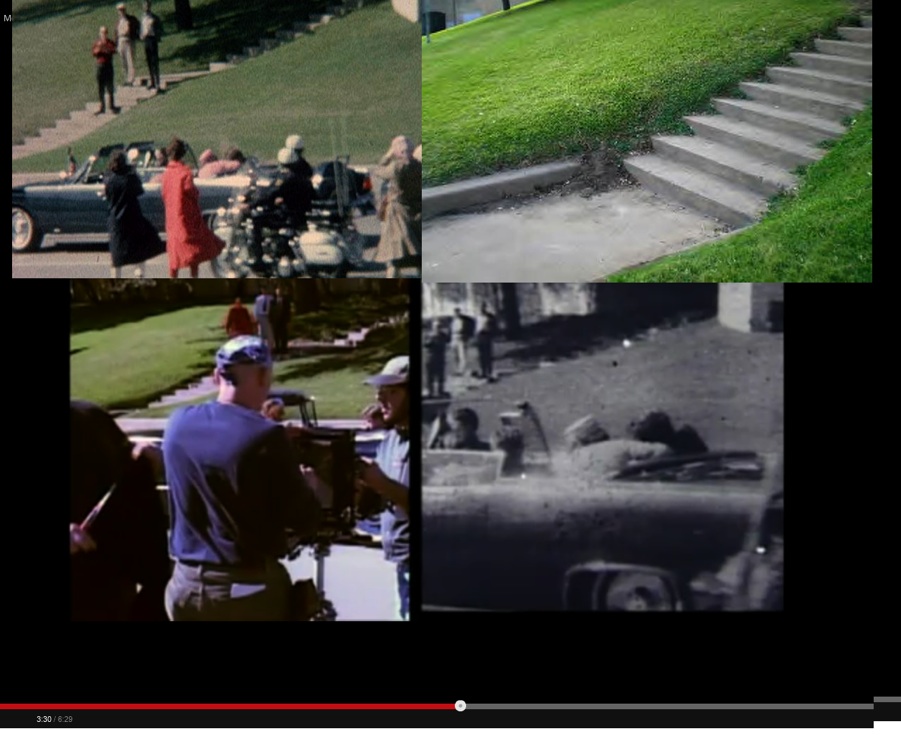
    Go to Part 1


  • Dale Myers, With Malice (Part 1)


    The following is a review of the 2013 Kindle edition of Dale Myers’ book With Malice.

    Commonly used abbreviations throughout this review:

    DPD = Dallas Police department
    WCD = Warren Commission document
    FBI = Federal Bureau of Investigation
    Sgt. = Seargent
    USSS = United States Secret Service
    Lt. = Lieutenant
    WCE = Warren Commission exhibit


    For the 50th anniversary of the assassination of President John F. Kennedy and the murder of Dallas Policeman J.D. Tippit, Dale Myers decided to publish an updated version of his book on Tippit’s murder entitled, With Malice. The updated book contains new text, photographs and maps pertaining to Tippit’s death. I had never read With Malice before, and it was only at the insistence of Jim DiEugenio that I decided to review the updated book. As anyone who is familiar with Myers knows, his contention is that Lee Harvey Oswald murdered Tippit in cold blood, after allegedly assassinating the President. As I hope to explain throughout this review, the notion that Oswald shot Tippit is utterly absurd. But before getting to the book itself, it is first important to outline some of the reasons why Dale Myers is not to be trusted when it comes to both Tippit’s murder and President Kennedy’s assassination.

    As most researchers of the JFK assassination are probably aware, Myers has claimed to have proven through his 3-D animation of President Kennedy’s assassination that the single bullet theory is actually true. However, as researchers such as Milicent Cranor, Bob Harris, and Pat Speer have shown, Myers’ work is highly deceptive. Speer’s comprehensive analysis of the statements of the ear/eye witnesses to the assassination has demonstrated beyond a reasonable doubt that the majority of ear/eye witnesses didn’t hear the so-called single bullet shot, and that the shot(s) to Governor Connally did not originate from the sixth floor of the Texas School book depository. Myers is also known for his support of the ludicrous notion that the first shot missed the President’s limousine, and caused the injury to bystander James Tague. Contrary to this belief, Tague always denied that the first shot was responsible for the cut to his left cheek. In fact, following the airing of Max Holland’s utterly fallacious documentary, The Lost Bullet, in which Holland claimed Tague’s injury was caused by the first shot, Tague indignantly exclaimed; “Holland is full of crap. One thing I know for sure is that the first shot was not the missed curb shot. Another thing I am positive about is that the last shot was the missed shot. You may not want to believe the Warren Commission’s final findings, but you can believe the 11 witnesses who state it was the last shot that missed.” (Read Tague’s remark). Although Tague was not always certain whether it was the second or third shot he heard which caused his injury, his confusion is understandable given that like the majority of ear/eye witnesses, he claimed that the next two shots he heard were fired in rapid succession (WCD 205, page 31). The fact that Myers pretends this theory is true in spite of Tague’s adamant denial, speaks poorly for his credibility as a researcher.

    Then there is Myers’ interview with John Kelin in 1982. During that interview, Kelin asked Myers what he thought about Oswald, to which Myers responded with the following remark; “…First off, I don’t think Lee Harvey Oswald pulled the trigger.” Myers also said that as far as saying Oswald is guilty, “…I find that extremely hard to believe”. However, most revealing of all was his denial that Oswald had shot Tippit; namely that “I think I will be able to show, beyond a reasonable doubt, that Oswald was not the killer of J.D. Tippit.” Researcher and author Jim DiEugenio once asked what had caused Myers to suddenly believe that Oswald hard murdered Tippit? Although we may never know the real answer to that question, it hardly matters. However, in this reviewer’s opinion, it was most likely due to Myers fondness for many of the DPD Officers he had interviewed, such as former DPD dispatcher Murray James Jackson. In fact, as this reviewer demonstrates below, Myers shows favouritism towards these very same officers.

    Although there are some people who believe that With Malice is the definitive book on Tippit’s murder, nothing could be further from the truth. Myers omits many facts and pieces of evidence which tend to exonerate Oswald as Tippit’s killer. Myers also shows favouritism towards witnesses who support Oswald’s guilt (even though, as I will explain, they lack credibility). In the introduction to his book, Myers also quotes many of Tippit’s family members and friends who dismiss the notion that Tippit was somehow involved in a conspiracy to murder either President Kennedy or Oswald. For example, Myers quotes Marie Frances Gasway, Tippit’s widow, who said the following during an interview in 2003: “The conspiracy stuff is so untrue, so totally unfounded.” (With Malice, Introduction). Quoting Tippit’s youngest son, Curtis Tippit, Myers writes: “People want sensationalism. Mom’s been abused by conspiracy theories and tabloid publications… Too many people want to cling to a false history, believing my father was in on something with Jack Ruby… Really it’s all kind of silly and funny” (ibid).

    Although it is perfectly understandable that Tippit’s family and friends want to feel a sense of closure by believing that the man who allegedly murdered Tippit was arrested by the DPD, it is nevertheless important that an honest analysis of the evidence and facts pertaining to his murder be presented to current and future researchers of that case. Furthermore, given the shame and embarrassment any allegation that Tippit was somehow involved in a conspiracy would bring to his family members and friends, it is also perfectly understandable that they would vehemently deny any such allegations. Readers should keep in mind that since writing several articles on Tippit’s murder on my blog, I have since changed my mind on a number of issues, and have come to realize that I had also made a number of mistakes and misjudgements.

    I: The search begins

    Myers begins his above titled Chapter 1 with the following sentences: “Lee Harvey Oswald murdered J.D. Tippit. The Dallas Cops believed it. The newspapers reported it. The Warren Commission made it official and the House Select Committee on Assassinations reaffirmed it.” (With Malice, Chapter 1). Myers and his fellow Warren Commission defenders scoff at the idea that the DPD and the Dallas district attorney’s Office could have helped frame Oswald for the murders of President Kennedy and J.D. Tippit. In fact, Myers snidely writes the following: “It was claimed [by Warren Commission critics] that Oswald was framed by a zealous Police force” (ibid). Thanks to Dallas district attorney Craig Watkins, we now know that with Henry Wade as District Attorney of Dallas, the DPD was one of the most corrupt Police departments in the entire United States; something which Myers and his ilk want to pretend isn’t true. To give the reader one example of just how bad the DA’s Office and the DPD were, let’s take the case of James Lee Woodard. Woodard was an African American man who spent twenty seven years in prison for a murder he didn’t commit. As it turned out, Henry Wade’s Office had withheld evidence from Woodard’s defence attorney which exonerated him as the killer. According to Michelle Moore, the President of the Innocence Project of Texas’ “…we’re finding lots of places where detectives in those cases, they kind of trimmed the corners to just get the case done”. She also added; “Whether that’s the fault of the detectives or the DA’s, I don’t know.” (Readers are strongly encouraged to read through this article, to see for themselves just how corrupt Wade’s Office and the DPD were).

    As for why the DA’s Office and the DPD would want to frame Oswald, just consider the following. The president of the United States of America (the most powerful man in the world) was gunned down in broad daylight and in full public view. Naturally, the entire United States, including the leaders of foreign countries, were anxiously waiting to learn who was responsible for the crime. Since the assassination of a sitting President was not a federal crime in 1963, the DPD had jurisdiction, and were undoubtedly under a tremendous amount of pressure to find those responsible, in order to avoid embarrassment for not being able to identify those responsible. Naturally, the DPD also had to find those responsible for the murder of one of their own policemen. As many researchers of the assassination have pointed out, a wallet bearing identification for Oswald and his alleged alias, Alek James Hidell, was discovered in the vicinity of the Tippit murder scene. This allegation first appeared in the book by former FBI agent James Hosty entitled Assignment Oswald. Myers dismisses the idea such a wallet was left behind to incriminate Oswald. But as this reviewer explains later on in this review, there is very good reason to believe that this was the case.

    It’s important to keep in mind that with a wallet left behind to incriminate Oswald, the DPD had a viable suspect for Tippit’s murder. The DPD could then use Tippit’s murder to portray Oswald as a violent man who was capable of assassinating the President. In fact, Warren Commission counsel David Belin once remarked that: “Once the hypothesis is admitted that Oswald killed patrolman Tippit, there can be no doubt that the overall evidence shows that Lee Harvey Oswald was the assassin of John F. Kennedy”. (ibid). To say that such a belief is narrow-minded would be an understatement. Myers also makes several demeaning comments against those who refuse to believe that Oswald shot Tippit. For example, Myers writes that; “Many eyewitness accounts of the [Tippit] shooting were twisted to exonerate Oswald” (ibid). The readers of this review can make up their own minds on whether or not this is the case. Myers also writes that; “Lee Harvey Oswald murdered Officer J.D. Tippit. There can no longer be any doubt about that”, and that no matter what role Oswald had in the President’s assassination “…Oswald’s guilt in the Tippit shooting must be hereafter considered a historic truth.” (ibid). In light of all the evidence to the contrary, to say that Oswald’s guilt in the Tippit murder must be considered a historic truth is almost absurd. However, Myers can make that claim, because he omits a lot of the evidence which tends to exonerate Oswald.

    II: The quiet cop

    In this chapter, Myers discusses Tippit’s life from his childhood, his high school years, his service in the United States Army as a paratrooper, on to his career as a DPD Officer. Myers portrays Tippit as a good and honest cop, killed in the line of duty. In his discussion of Tippit’s Army experiences, Myers explains that it had “…made deep impressions…” Namely that Tippit’s friends recalled that he would be startled by any loud noise and that he was “…still a little nervous…” (With Malice, Chapter 2). What Myers omits however, is that Tippit’s DPD personnel files contain evidence that he may possibly have been unstable. (Reopen Kennedy case forum, thread entitled: J.D Tippit: the perfect DPD recruit). In his discussion of Tippit’s career as a DPD Officer, Myers explains that since joining the DPD as an apprentice Policeman in July, 1952, Tippit was an “exemplary” Police Officer (With Malice, Chapter 2). However, Myers also mentions that in 1955, Tippit had received several reprimands for not appearing in court as ordered (ibid). In order to bolster his claim that Tippit was a good and honest Police Officer, Myers quotes several of Tippit’s fellow Police Officers, such as Tippit’s supervisor, Calvin “Bud” Owens, who vouched for this (ibid). Even if these claims are true, it has little bearing on whether Tippit was lured to Tenth Street to be shot and killed. The evidence for that lies in the fact that a wallet was left behind to incriminate Oswald for his murder. Furthermore, the DPD would naturally want to avoid making claims to the contrary, as any such claims could lead to speculation that Tippit was somehow involved in a conspiracy; and bring about embarrassment to the DPD.

    III: The final hours

    In this chapter, Myers relates to the readers the final hours of Tippit’s life; from the time he left his home at 6:15 am, to the time he was shot and killed on Tenth Street in the central Oak Cliff area of Dallas (With Malice, Chapter 3). The issues which Myers deals with here include why Tippit was in central Oak Cliff when he was killed, the sighting of Tippit at the Gloco Service station located at 1502 North Zangs blvd., the sighting of a DPD squad car which Earlene Roberts, the house keeper at 1026 North Beckley where Oswald was allegedly living at the time of the assassination, a car she claimed was outside the rooming house when “Oswald” was inside following the assassination, and finally, Tippit’s alleged presence at the Top Ten records store a few minutes prior to his death. Myers writes that; “Tippit wished he could have seen the President, whom he had voted for and admired.” (ibid) Whilst that may be true, it is this reviewer’s belief that it has little (if any) bearing on his death. Myers also relates to his readers the all too familiar tale that Howard Brennan was sitting directly across from the TSBD on Elm Street, when he allegedly observed Oswald firing the shots at President Kennedy (ibid). But what Myers doesn’t tell his readers is that the Zapruder film shows beyond any doubt that Brennan was sitting directly across Houston Street, and that Brennan was lying when he said he sitting directly across from the TSBD.

    In his discussion of whether or not Earlene Roberts had really seen a DPD squad car outside of the rooming house, Myers does everything he can to discredit her story. When Roberts was interviewed by the FBI on November 29, 1963, she told them that the number of the car she observed outside the rooming house was 207 (WCE 2781). As Myers explains, that particular car was assigned to DPD Officer Jim M. Valentine, and which took DPD Sgt. Gerald Hill and Dallas Morning News reporter Jim Ewell to Dealey Plaza from Police headquarters. As this reviewer will explain in an upcoming essay on Gerald Hill, Hill had by all likelihood commandeered car 207 from Officer Valentine, and was one of the two Officers inside the car when it was seen by Roberts outside of the rooming house. In that same essay, this reviewer will discuss Myers’ narrow minded attempt to discredit Roberts.

    On the day of the assassination, Tippit was assigned to patrol district 78 (testimony of Calvin Bud Owens, WC Volume VII, page 80). However, the patrol district in which Tippit was killed (district 91) was assigned to a DPD Officer named William Duane Mentzel (WCE 2645). Tippit and another Officer named Ronald C. Nelson were allegedly ordered to move into the central Oak Cliff by DPD dispatcher Murray Jackson at approximately 12:45 pm (WCE 705/1974). According to DPD chief Jesse Curry, the central Oak Cliff area included patrol district 91 (WCD 1259, page 3). According to the map of the DPD patrol districts, it stands to reason that districts 92, 93, 94, 108, and 109 which were adjacent to district 91 were also part of the central Oak Cliff area (Dallas Municipal archives, Box 7, Folder 10, Item 2). Although Jackson was never called to testify before the Warren Commission, during a filmed interview with Eddie Barker from CBS, he explained that he had ordered Tippit into the central Oak Cliff area because “We [the dispatchers] were draining the Oak Cliff area of available Police Officers….” (See the interview). Myers accepts that this was the case, and writes that Jackson told him during an interview that he had ordered Tippit into the central Oak Cliff area because Tippit had once helped him out during an incident with seven drunk teenagers, and that allegedly feeling that he could once again rely on Tippit, Jackson ordered Tippit into the Oak Cliff area to “help him [Jackson] again…. to cover Oak Cliff” (With Malice, Chapter 3).

    But contrary to Jackson’s claim, there is very good reason to believe that he never ordered Tippit and Nelson to move into the central Oak Cliff area. In the first transcript of channel one of the DPD radio recordings (Sawyer exhibit B), the order to send Tippit and Nelson into the central Oak Cliff area is curiously missing. Myers doesn’t mention this to his readers. In that very same transcript, the channel one dispatchers (Jackson and Clifford Hulse), allegedly broadcast the following message over the DPD radio at approximately 12:43 pm; “Attention all squads in the downtown area code three [lights on and sirens blazing] to Elm and Houston with caution.” (Sawyer exhibit B, page 398). Myers acknowledges this in his timetable of the events which occurred on the day of the assassination, but hides from his readers the fact that according to the next transcript which the DPD had provided to the FBI on March 20, 1964, the dispatchers had actually broadcast the following message: “Attention all squads, report to [the] downtown area code 3 to Elm and Houston, with caution.” (WCE 705).

    Whilst it certainly makes more sense that only the squads in the downtown area would be dispatched to the assassination scene, thereby leaving all the “outer” area squads in their assigned districts in the event a crime such as a robbery were to occur, the exact same transmission appears in the next transcript on the DPD channel one and two radio recordings (WCE 1974). On July 21, 1964, DPD chief Jesse Curry furnished the FBI a copy of the “original” tape recordings of the DPD radio traffic, which were reviewed by an agent of the FBI at the DPD (ibid). If the transmission “Attention all squads, report to [the] downtown area code 3 to Elm and Houston, with caution” was not recorded on the tapes, then the FBI would surely not have allowed it to be placed into the new transcript. Confirmation that the dispatchers had actually ordered all squads and not only the squads in the downtown area to proceed to Elm and Houston comes from DPD chief Curry himself. In a letter to the Warren Commission on July 17, 1964, Curry wrote; “…between 12:37 p.m. and 12:45 p.m., the dispatcher requested all squads to report to Elm and Houston in the downtown area, code 3” (WCD 1259, page 3). Curry then added; “It might further be pointed out that Officer Tippit remained on his district until the dispatcher had requested all squads to report to Elm and Houston…” (ibid). But perhaps most significantly of all, Jackson himself confirmed that all squads had been dispatched to Elm and Houston Streets in his filmed interview with Eddie Barker in 1967. According to Jackson; “…we immediately dispatched every available unit [squad] to the triple underpass where the shot was reported to have come from.” Myers mentions none of this to his readers.

    In light of all of the above, the notion that Jackson was only concerned that the Oak Cliff area was being “drained’ of available DPD Officers when all squads had been ordered to Elm and Houston seems strained. Jackson’s next transmission to Tippit was at approximately 12:54 pm, when he asked Tippit if he was in the Oak Cliff area (WCE 705/1974). Tippit allegedly responded that he was at Lancaster and Eighth. Jackson then allegedly instructed Tippit; “You will be at large for any emergency that comes in.” Keep in mind that the alleged order to Tippit and Nelson was to move into the central Oak Cliff area. On the day of the assassination, districts 93 and 94 were assigned to Officer Holley M. Ashcraft, and districts 108 and 109 were assigned to Officer Owen H. Ludwig (WCE 2645). Although the tape recordings of channel one of the DPD radio reveal that the dispatchers sent Ashcraft to Inwood road and Stemmons expressway to cut traffic (Listen to the recording), and although Ludwig was allegedly guarding the front of the Sheraton-Dallas-Hotel, Jackson never bothered to try and contact William Mentzel on the radio, who was on a lunch break at approximately the time of the assassination (ibid). None of the transcripts of the DPD radio communications show that Jackson had attempted to contact Mentzel; and the notion that Jackson would order Tippit and Nelson to move into the central Oak Cliff without even once bothering to contact Mentzel to ensure that Mentzel was patrolling his assigned districts (91 and 92) is also strained (ibid). Again, Myers does not mention to his readers that Jackson never bothered to contact Mentzel by the DPD radio.

    Finally, there is the fact that despite being allegedly ordered to move into the central Oak Cliff area, Ronald Nelson proceeded to Dealey Plaza, and even told the dispatcher that he had gone there at approximately 12:52 pm (WCE 705/1974). But despite disobeying Jackson’s order, we are supposed to believe that he had the audacity to then ask the dispatchers if they wanted him to go over to the Tippit murder scene (ibid). Myers explains that after Jackson allegedly ordered Tippit and Nelson to move into the central Oak Cliff area, Tippit responded; “I’m at Kiest and Bonnieview”, and Nelson allegedly responded that he is “…going North of Marsalis, on R.L. Thornton” (With Malice, Chapter 3). What Myers doesn’t mention is that the aforementioned alleged responses by Tippit and Nelson do not appear in either WCE 705 or Sawyer exhibit B. They first appear in WCE 1974. Myers also writes that Nelson told the dispatchers that he was at the South end of the Houston Street Viaduct (ibid). However, according to both WCE 705 and WCE 1974, the Officer who made the transmission was actually B.L. Bass; and that Bass had identified himself to the dispatchers by his radio number (101).

    When author Henry Hurt interviewed Nelson in 1984, he asked him; “Did you get the call to go to central Oak Cliff” (Hurt, Reasonable Doubt, page 162). After first telling Hurt that he wasn’t sure what he meant by his question, he then said “I had rather not talk about that” (ibid). According to Hurt, Nelson apparently considered that information to be worth some money (ibid). Myers explains that Nelson had declined a request for an interview with him (With Malice, Chapter 3). Nelson’s reluctance to be interviewed may have been due to the fact that he actually wasn’t ordered to move into the central Oak Cliff area, and that his explanation to Hurt that it was worth some money was just an excuse to discourage Hurt from talking about it with him. Suffice it to say, the notion that Tippit and Nelson were ordered to move into the central Oak Cliff area is dubious, and the transcripts and tape recordings of the DPD radio communications were in all likelihood altered to make it appear as though they actually were sent into the central Oak Cliff area.

    Obviously, the DPD had to provide an explanation for what Tippit was doing there; hence Jackson was coerced into claiming that he had sent them into central Oak Cliff. In this reviewer’s opinion, the DPD claimed that Nelson was also sent into central Oak Cliff so that they wouldn’t make it appear obvious that they were covering up for Tippit’s singular presence there. But did Jackson also have a personal reason for lying about Tippit’s presence in central Oak Cliff? As it turns out, there is. Jackson told Henry Hurt during an interview with him that he was a very close personal friend of both Tippit and his family (Hurt, Reasonable doubt, page 162). As any reasonable person would be able to understand, Tippit’s unauthorised presence in central Oak Cliff would have led to rumours which would probably be upsetting for his family members. Jackson may have thought that by claiming he had ordered Tippit to move into the central Oak Cliff area, he would be sparing Tippit’s family members of these upsetting rumours.

    In his timetable of events which occurred on the day of the assassination, Myers writes that Tippit was at the GLOCO (Good luck Oil Company) service station, located on 1502 North Zangs Blvd., apparently watching traffic “coming out of downtown.”, from about 12:56 pm to 1:06 pm (With Malice, Timetable of events). In the endnotes, Myers cites David Lifton’s interview with a photographer named Al Volkland, who told him that he was well acquainted with Tippit, and that he had seen him at the service station. Volkland’s claim of seeing Tippit there was allegedly confirmed by his wife; and both claimed that they observed Tippit at the service station 10 or 20 minutes following the assassination. Furthermore, J.B. “Shorty” Lewis and Emmett Hollingshead, who were employed at the service station, and Tom Mullins who was the owner of the station at the time of the assassination, also claimed they had seen Tippit there (With Malice, Chapter 3).

    In his endnotes, Myers also cites the Ramparts magazine article by David Welsh, in which Welsh wrote that Lewis, Hollingshead, and Mullins claimed Tippit was at the service station for about ten minutes, between 12:45 pm and 1:00 pm. However, Myers explains that in an interview with him in 1983, Hollingshead claimed that he had seen Tippit at the service station before the President was assassinated. Myers also claims that in an interview with him in 1983, Lewis said that other employees of the service station had seen Tippit there, and not him. Myers offers no source for why he believes Tippit arrived at the service station at 12:56 pm, and as this reviewer explains below, there is compelling evidence that Tippit was actually shot at about 1:06 pm. If Tippit really was at the service station, his presence there is a mystery. Whilst Myers doesn’t believe that Tippit was at the service station by 12:45 pm, and that he only moved into the central Oak Cliff area following the alleged order by Murray Jackson to do so, he nevertheless ignores all of the compelling evidence that Jackson didn’t order Tippit to move into the central Oak Cliff area.

    According to the DPD radio transmission transcripts, Murray Jackson asked Tippit for his location at approximately 1:03 pm, but received no response (WCE 705/1974). However, Myers writes that as the dispatchers were trying to determine the location of Officer A.D. Duncan, a garbled transmission was made that had the tonal characteristics of other “known” transmissions made by Tippit (With Malice, Chapter 3). In his endnotes, Myers explains that the transcripts describe the alleged transmission by Tippit as “more interference”, which is true (WCE 705/1974). In fact, according to the transcripts of the DPD radio communications, the interference was due to “…intermodulation similar, according to [the] Dallas Police Department, to that most often originating from the Dallas Power and light company” (ibid). Given Myers skewed conclusion driven agenda , as demonstrated throughout this review, readers are cautioned against believing much of what Myers writes. According to Myers, Tippit was at the Tip Top Records store at 1:11 pm, where he was allegedly trying to place a phone call to someone (With Malice, Chapter 3). However, given that Tippit didn’t respond to Jackson at 1:03 pm, Tippit was probably in the store at this point in time. If Tippit really was in the store trying to call someone, it remains a mystery as to who it was, and why he was trying to call him/her.

    IV: Murder on Tenth Street

    Myers now discusses Tippit’s murder on Tenth Street, and the events that followed. It is Myers contention that Tippit was shot at approximately 1:14.30 pm (With Malice, Chapter 4). Myers writes that the tape recordings of the DPD radio communications show that Domingo Benavides had attempted to inform the DPD dispatchers of Tippit’s death at 1:16 pm, as the tape recordings show that he began “keying” Tippit’s microphone at that time; and had been doing so for about one minute and forty one seconds. Based on the eyewitness account of Ted Callaway , Myers then speculates that Tippit was probably shot ninety seconds prior to Benavides attempt to contact the dispatcher (ibid). However, let’s look at all the evidence that Myers ignores to reach his conclusion that Tippit was shot at about 1:14.30 pm. To begin with, Myers never informs his readers that according to WCE 705, T.F. Bowley, who had arrived at the murder scene shortly following Tippit’s death, reported Tippit’s death just prior to 1:10 pm! In WCE 1974 however, the time of Bowley’s transmission was noted as being made at about 1:19 pm.

    Bowley claimed in his affidavit to the DPD that when he arrived at the Tippit murder scene, he looked at his watch and it read 1:10 pm. He also claimed that the first thing he did was to try and help Tippit, and then informed the DPD dispatchers that Tippit was shot (Dallas municipal archives, Box 2, Folder 3, Item 14). Assuming that Bowley took no more than a minute to try and help Tippit before informing the dispatchers of the shooting, the actual time of Bowley’s arrival would have been approximately 1:09 pm. Nevertheless, both WCE 705 and Bowley’s watch place Tippit’s death sooner than Myers time of 1:14.30. Myers deals with Bowley’s watch reading 1:10 pm in his endnotes, where he writes that no one determined whether Bowley’s watch was accurate on the day of the assassination. Whilst we will probably never know just how accurate Bowley’s watch was, WCE 705 places Bowley’s transmission at about 1:10 pm, which is fairly consistent with Bowley’s claim his watch read 1:10 pm after he arrived.

    In his endnotes, Myers also deals with the allegation by Mrs. Margie Higgins, who lived 150 feet east of and across the street from where Tippit was shot. As Myers writes, Mrs. Higgins told author Barry Ernest that she was watching the news, when the announcer stated that the time was 1:06 pm (Ernest, The Girl On The Stairs, page 90). Mrs Higgins told Ernest that she then checked the clock on top of the TV, which confirmed that the time was 1:06 pm, and that it was at that point when she heard the shooting. Myers tries to discredit Mrs Higgins’ claim by telling his readers that, “A review of archival recordings of all three networks broadcasting that afternoon in Dallas failed to verify her [Mrs Higgins’] recollection.” Myers then adds “In fact, none of the networks broadcast a time check at 1:06 p.m. as she claimed.” Although this review cannot verify whether this is true or not, readers are once again cautioned against taking Myers word for it, for this reviewer demonstrates throughout this review that Myers is not a candid or balanced researcher. Readers should also keep in mind that Mrs. Higgins’ claim is consistent with Helen Markham’s claim in her affidavit that she was standing on the corner of Tenth and Patton Streets at approximately 1:06 pm when Tippit was shot (Dallas Municipal archives, Box 2, Folder 1, Item 18).

    Both Markham’s and Mrs Higgins’ claims are also consistent with the fact that Markham told FBI agent Robert M. Barrett that when she left the Washateria of her apartment to catch her bus, she noticed the time shown on the clock of the Washateria was 1:04 pm (WCD 630). Markham explained to Barrett that she was attempting to call her daughter on the Washateria phone (ibid). The FBI determined that it would have taken Markham about two and a half minutes to reach the intersection of Tenth and Patton Streets, which means Markham would have arrived at the intersection close to 1:07 pm (ibid). Myers acknowledges in his book that Markham reportedly left the Washateria at 1:04 pm, but claims that Markham “probably” didn’t leave the Washateria before 1:11 pm, and speculates that this was perhaps the case because of her “eagerness” to contact her daughter by phone (With Malice, Chapter 4). In his endnotes, Myers snidely writes that in order to believe the statements by Markham, Higgins, and Bowley of when Tippit was killed; “…one would have to believe that Tippit lay dead in the Street for eight to twelve minutes before anyone notified [the] Police.” But only by ignoring the fact that WCE 705 places the time of Bowley’s radio transmission at approximately 1:10 pm can Myers make this claim and think that he can get away with it.

    Myers writes that the Dudley Hughes Funeral home, which had dispatched the ambulance which took Tippit’s body to Methodist hospital, was informed of the shooting at 1:18 pm by the DPD, and that Dudley M. Hughes Junior, who took the call from the DPD at the funeral home, allegedly filled out an ambulance call slip which was time stamped 1:18 pm (With Malice, Chapter 5). Myers references this call slip to an essay by researchers George and Patricia Nash in The New Leader entitled: The Other Witnesses (John Armstrong Baylor collection, tab entitled: George & Patricia Nash). However, the call slip itself doesn’t appear to be amongst the Dallas Municipal archives collection, and taking into account all of the evidence which contradicts the notion that the funeral home received the call at 1:18 pm, this piece of evidence should be considered unreliable. Of course, it is entirely likely that if the ambulance call slip actually exists, the DPD had falsified it in order to bolster the notion that Tippit was shot close to 1:18 pm; and thereby allowing Oswald plenty of time to reach Tenth and Patton in order to shoot Tippit after he allegedly left the rooming house at 1026 North Beckley.

    Readers should keep in mind that justice of the peace, Joe B. Brown, filled out an authorisation permit for an autopsy to be performed on Tippit’s body, and in that permit, Brown noted that Tippit was pronounced dead on arrival at Methodist hospital, and noted the time of death as 1:15 pm (Dallas Municipal archives, Box 3, Folder 24, Item 2). Although there is conflicting evidence for the time Tippit was pronounced dead at Methodist hospital, researcher Martin Hay discovered that in a supplementary offense report by DPD Officers R.A. Davenport and W.R. Bardin, Dr. Richard Liguori pronounced Tippit dead at Methodist Hospital at 1:15 pm (ReopenKennedycase forum, thread entitled: Question Concerning Time). Given the fact that (according to WCE 705) T.F. Bowley’s transmission to the DPD dispatchers was at approximately 1:10 pm, and given all of the aforementioned evidence which supports the notion that Tippit was shot prior to 1:10 pm and then taken to Methodist Hospital where he was most likely pronounced dead at 1:15 pm, Myers assertion that Tippit was shot at 1:14.30 pm is simply not tenable.

    According to WCE 705, Tippit allegedly tried to contact the DPD dispatchers twice at approximately 1:08 pm. However, these alleged transmissions are curiously missing from WCE 1974; and instead, there appears to be two garbled transmission from DPD Officers with the radio numbers 58 and 488. Although some researchers believe that the alleged call by Tippit at circa 1:08 pm is proof that Tippit was still alive at that time, and that he was attempting to report that he had just encountered a suspect, there is good reason to believe that this alleged call was added into the transcript by the DPD. Consider that with Helen Markham’s first day affidavit, the DPD would have realised that Tippit was killed at approximately 1:06 pm. It is this reviewer’s opinion that the DPD took advantage of the fact that there were two garbled transmissions at about 1:08 pm, and claimed that it was Tippit to make it appear as though he was alive after 1:06 pm.

    As far as Tippit’s alleged attempts to report that he had just encountered a suspect are concerned, the discovery of the wallet containing identification for Oswald and Hidell in the vicinity of the Tippit murder scene strongly implies that Tippit was lured to Tenth Street to be shot. With this in mind, the last thing the conspirators would surely have wanted was for Tippit to become suspicious. Therefore, it seems very unlikely that Tippit actually attempted to report that he had encountered a suspect. Myers never mentions that WCE 705 shows that Tippit attempted to contact the dispatchers, writing instead that: “A check of the Dallas Police tapes revealed that Tippit did not notify the dispatcher that he was stopping to question the man on Tenth Street” (With Malice, Chapter 4). It is this reviewer’s belief that Myers never mentions Tippit’s alleged attempts to contact the dispatchers, because he was probably concerned that his readers would think that Tippit had stopped “Oswald” at about 1:08 pm; and by implication, was also shot at this time.

    This reviewer would also like to point out that when T.F. Bowley reported the shooting to the DPD dispatchers, Murray Jackson allegedly responded by calling out Tippit’s radio number (78), because according to Myers, Tippit was “…thought to be the only available patrol unit in the Oak Cliff area.” (ibid) By ignoring all the evidence that the DPD radio traffic tape recordings have been altered, Myers can pretend that Jackson really did call for Tippit.

    Furthermore, in an apparent attempt to explain why Jackson immediately thought of calling for Tippit instead of William Mentzel, Myers writes in his endnotes that Mentzel, and another officer named Vernon R. Nolan, were sent to a traffic accident at about 1:11 pm. Curiously, there is nothing within WCE 705 and WCE 1974 that Mentzel was sent to a traffic accident.

    Another issue which Myers discusses in this chapter is the direction in which the killer was walking when he was spotted by Tippit. Based on the observations by William Lawrence Smith, Jimmy Burt, Jimmy Brewer, and William Scoggins, Myers concludes that Tippit’s killer was initially walking west (ibid). This reviewer agrees. However, readers should keep in mind that in his interview with the FBI on December 15, 1963, Burt made no mention of seeing Tippit’s killer at all (WCD 194, page 29). Based on the statements of witnesses Helen Markham and Jack Ray Tatum, Myers speculates that Tippit’s killer then turned around and was walking east when he observed Tippit’s squad car approaching, and that this is what caused Tippit to pull over to the curb and question his soon to be killer (ibid). According to Myers: “The eyewitness accounts depict the suspect traveling in two conflicting directions, with the key moment of change occurring just east of Tenth and Patton” (ibid). But as even Myers ironically notes at the end of this chapter, Helen Markham told the USSS on December 2, 1963, that she first observed Tippit’s killer on the sidewalk after Tippit had pulled his squad car to the curb (ibid). Myers also notes that on March 17, 1964, Markham told FBI agent Robert M. Barrett that she had first seen Tippit’s killer as Tippit passed the intersection of Tenth and Patton (ibid). When Markham testified before the Warren Commission, she claimed that she saw Tippit’s killer crossing Patton street (heading east), and about to step up onto the curb (WC Volume III, page 307).

    Not only do Markham’s statements directly contradict Myers assertion that the killer changed direction just east of Tenth and Patton, but given her overall unreliability as a witness, her claim that she had observed Tippit’s killer walking east should not be considered credible. Also, consider that in her affidavit to the DPD, she made no mention of which direction Tippit’s killer was walking when she first observed him (Dallas Municipal archives, Box 2, Folder 1, Item 18). According to researcher John Armstrong, a barber named Mr Clark claimed he had also seen Tippit’s killer walking west along Tenth Street, and that he would bet his life that the man he saw was Oswald However, Clark does not count as a witness to seeing Tippit’s killer walking west along Tenth Street, because he claimed he saw the man in the morning, whereas Tippit was most certainly there after 1:00 pm in the afternoon (John Armstrong Baylor research collection, tab entitled: 10th St. Barber shop).

    Myers also explains to his readers that a Mrs Ann McCravey (believed to be Mrs Ann McRavin who allegedly lived at 404 east Tenth Street) claimed that she had seen Tippit’s killer running (With Malice, Chapter 4). Although McRavin didn’t specify which direction she had seen Tippit’s killer running, Myers writes that given her vantage point; “…Tippit’s killer could only have been running in a westerly direction [when she saw him]…” (ibid). But contrary to McRavin’s claim, no other witness is on record saying that Tippit’s killer was running, and given the evidence that Tippit was lured to Tenth Street to be shot, it seems highly unlikely that his killer would have been running and making himself appear suspicious to Tippit. Therefore, if she really did see Tippit’s killer, her claim that he was running should not be considered credible.

    As far as Jack Tatum is concerned, there is good reason to believe that he may be a phony witness used not only to help incriminate Oswald for Tippit’s murder, but to also help explain the presence of a suspicious red Ford at the Tippit murder scene. When Tatum was interviewed by HSCA investigators on February 1, 1978, he claimed that after he witnessed Tippit being shot in the head, he sped off in his car, and made no mention of having returned to the murder scene (HSCA report, Volume XII, page 41). In fact, when Tatum was asked if there was anything he wished to add to the statement he made to investigators Jack Moriarty and Joe Bastori, he replied; “At this time I can’t think of anything.” (John Armstrong Baylor research collection, tab entitled: Jack Tatum). However, when Myers interviewed Tatum in 1983/84, Tatum now began to aggrandize his story and his importance in it. He now claimed that he had gone back to the Tippit murder scene, and had taken Helen Markham to a policeman (With Malice, Chapter 4). Evidently, by the time Myers had interviewed him, Tatum had experienced a case of memory improvement. It is also noteworthy that during a telephone interview on March 18, 1986, Tatum allegedly stated that he had taken Markham to the police station to give evidence (John Armstrong Baylor research collection, tab entitled: Jack Tatum). However, this allegation is dubious. As Myers acknowledges in his book, Markham was taken to DPD headquarters by an officer named George W. Hammer (With Malice, Chapter 7). According to the transcripts of the DPD radio communications, Hammer was indeed the officer who took Markham to DPD headquarters (WCE 705/1974).

    Whilst Myers and his ilk will probably argue that the interviewer was in error, the truth is that no intellectually honest researcher should assume that this was the case, and then argue that Tatum definitely didn’t make such a claim. Readers should also bear in mind that Tatum didn’t come forward as a witness shortly following Tippit’s murder because he allegedly thought that there were enough witnesses, and that he didn’t think he could “add anything” (John Armstrong Baylor research collection, tab entitled: Jack Tatum). During his aforementioned telephone interview, Tatum also claimed that he was concerned about rumors of a conspiracy, and in particular a Mafia one; and that this may have been another reason for him remaining quiet (ibid). Perhaps the most significant detail about Tatum is that he was employed by the Baylor Medical Centre in Dallas, which, according to researcher William Kelly, had received funds from both the U.S. Army and the CIA for the heinous MK/ULTRA research, between the years 1963 and 1965 (John Simkin’s education forum, thread entitled: Frank Kaiser). As many researchers have pointed out, the CIA has been involved in the cover-up of Oswald as President Kennedy’s assassin. Therefore, the possibility exists that the CIA may have been involved in coercing Tatum into identifying Oswald as Tippit’s killer in order to bolster the notion that he was President Kennedy’s assassin. Whilst this reviewer feels certain that Myers will dismiss this as ridiculous, it nevertheless remains a possibility.

    When Domingo Benavides testified before the Warren Commission, he claimed that a man in a red colored Ford had stopped and pulled over following the shooting, and that he never saw him get out of his car (WC Volume VI, page 463). During his interview with John Berendt from Esquire magazine, Benavides claimed that the car he had seen was red colored Ford with a white top, and that it came back to the Tippit murder scene a few minutes following the shooting (John Armstrong Baylor research collection, tab entitled: Igor Vaganov). Jack Tatum claimed that the car he was driving in when he arrived at the Tippit murder scene was a red colored 1964 model Ford Galaxie 500 (With Malice, Chapter 10). Whilst Myers readily accepts that the car Benavides had seen belonged to Jack Tatum, several researchers are of the opinion that it actually belonged to Igor Vaganov, who quite possibly played a role in Tippit’s murder (see the thread entitled Igor Vaganov on John Simkin’s Education Forum). Whilst this reviewer believes that the driver of the red Ford was quite possibly Igor Vaganov, it is also this reviewer’s opinion that Tatum was quite likely pushed into saying that he was the man driving the red Ford to help dispel the notion that the car belonged to Vaganov. As for why Tatum wasn’t coerced into coming forward sooner with his tale, this reviewer cannot offer an explanation. On a final note, Tatum may have been coerced into saying that Oswald was walking east to make it appear as though Tippit had stopped “Oswald” because he had turned around after seeing Tippit approaching in his squad car; just as Myers contends.

    V: Search for a killer

    Myers now explains to the readers the search for Tippit’s killer by the DPD, beginning with the discovery of the spent shell casings on the sixth floor of the TSBD by Dallas County deputy Sheriff, Luke Mooney (With Malice, Chapter 5). Myers believes that DPD Sgt. Gerald Hill was on the sixth floor when Mooney discovered the spent shell casings. But as this reviewer will explain in an upcoming essay on Hill, there is very good reason to believe that Hill was on the sixth floor of the TSBD before Mooney discovered the spent shell casings. Myers writes that the first officer to arrive at the Tippit murder scene was Kenneth Hudson Croy, who was a sergeant in the DPD reserves (With Malice, Chapter 5). According to Myers, the next Officer to arrive at the scene was Howell W. Summers, arriving about one minute after Kenneth Croy, circa 1:20 pm. However, according to the transcripts of channel one of the DPD radio transmissions, Officer Summers informs the dispatchers that he is at the murder scene after 1:25 pm, and after Officers Joe M. Poe, Leonard E. Jez, and Sgt. Calvin “Bud” Owens report that they have arrived at the murder scene (WCE 705/1974).

    Now if Summers was the second Officer to arrive, he waited for over five minutes before telling the dispatchers he arrived, which seems ridiculous. Although this reviewer doesn’t know why Myers doesn’t point this out to his readers, the fact that he doesn’t speaks poorly for his credibility. But in order to bolster the notion that Summers was the second Officer to arrive, Myers writes in his endnotes that Officer Roy W. Walker, who broadcast the first description of Tippit’s killer at about 1:22 pm, told him during an interview in 1983 that when he (Walker) arrived at the murder scene, there were two Officers already there. One of the Officers would undoubtedly have been reserve Sgt. Kenneth Croy. However, the identity of the second Officer to arrive (if Walker’s recollection was accurate) remains an open question.

    According to both WCE 705 and 1974, at approximately 1:32 pm, DPD Officer Jerry Pollard informs the dispatchers on channel one of the DPD radio that; “They [witnesses] say he [the killer] is running west in the alley between Jefferson and Tenth [Streets]”. Myers explains that the two witnesses who gave this information to the DPD Officers were Jimmy Burt and William Arthur Smith (With Malice, chapter 5). In his endnotes, Myers sources this claim to Burt’s interview with Al Chapman in 1968. According to Burt’s interview with the FBI on December 16, 1963, Burt claimed that “…he ran to the intersection of 10th and Patton and when he [Burt] was close enough to Patton Street to see to the south he saw the man running into an alley located between 10th and Jefferson Avenue on Patton Street. The man ran in the alley to the right would be running west at this point.” (WCD 194, page 29). However, Burt was most certainly lying, as no less than four witnesses; Warren Reynolds, B.M. “Pat” Patterson, L.J. Lewis, and Harold Russell, claimed they observed the gunman turn west from Patton Street onto Jefferson Blvd. (With Malice, Chapter 4). When Burt was interviewed by Al Chapman in 1968, he claimed that he and William Arthur Smith “…got to the alley [between Tenth and Jefferson] and we kind of come to a stop and looked down the alley and we saw this guy down there. He was down almost to the next street.” (With Malice, Chapter 4). Myers then writes that Burt and Smith may have been the last two witnesses to see Tippit’s killer fleeing west along the alley behind the Texaco Service station located on Jefferson Blvd. (ibid).

    In his endnotes, Myers acknowledges the discrepancies between Burt’s remarks to the FBI and his remarks to Al Chapman, but tries to explain the discrepancy by stating that because of his police record, his trouble with the U.S. Military, and his alleged desire to withhold his identity from the DPD, Burt possibly “altered” his 1963 interview with the FBI to avoid “deeper” involvement in the case. However, this appears to be nothing but a pathetic attempt at trying to conceal the fact that Burt lied during his interview with Al Chapman, and that the so-called radio transmission by Officer Pollard was probably added into the recordings/transcripts of the DPD radio transmissions to dismiss the possibility that Tippit’s real killer was hiding inside the Abundant Life Temple, located on the corner of Tenth and Crawford Streets (this reviewer will elaborate on this in the upcoming essay on Gerald Hill). Now if Burt really was concerned about all of the above as Myers claims, then why the heck would he lie to the FBI when he surely would have realized that he would be getting himself into more trouble? Myers also acknowledges in his endnotes that William Arthur Smith informed both the FBI and the Warren Commission that he and Burt did not follow the gunman, and also acknowledges that when he (Myers) interviewed Smith in 1997, Smith was unable to recall if they had followed the killer or not. Given all of the above, and despite what Myers wants his readers to believe, Burt should not be considered a credible witness.

    VI: Closing in

    Myers begins this chapter with a discussion of the false alarm at the Jefferson branch Library located on Marsalis and Jefferson streets, and concludes the chapter with Oswald’s arrest inside the Texas Theater. The person who triggered the false alarm at the library was Adrian Hamby, who worked there as a page (With Malice, Chapter 6). Hamby was approached by two plainclothes DPD “detectives”, and was allegedly told to go into the Library and inform management that a Police Officer was shot, and to have them lock all the doors and to not let anyone enter the Library until they secured the area (ibid). As Hamby was entering the Library, he was allegedly spotted by DPD Officer Charles T. Walker, after which Walker put a broadcast on the DPD radio that the suspect was in the library (WCE 705/1974). In his report to DPD Chief Jesse Curry, detective Marvin Buhk wrote that there were “Secret Service” men at the Jefferson Branch Library who informed DPD Officers at the Library that after Adrian Hamby came out of the Library, one of them claimed that Hamby was not the suspect (Dallas Municipal archives, Box 2, Folder 7, Item 56).

    In his endnotes, Myers writes that detective Buhk was the only officer to mention Secret Service agents being at the Library. As far as this reviewer in concerned, Myers is correct. Myers also writes that the “Secret Service” man referred to by Buhk in his report was actually one of the two “lawmen” who instructed Hamby to go into the library and have all the doors locked. The fact of the matter is that there is no known evidence that any genuine Secret Service agents were present at the Jefferson Branch Library on the day of the assassination. Furthermore, the identity of the two men who spoke to Hamby has never been determined, and if they were DPD detectives, then surely their identity would be known to Buhk and others, and surely Buhk would not have referred to them as Secret Service agents. One alternative explanation is that the so-called Secret Service men may have been conspirators, who may have deliberately triggered the false alarm at the Library to pull the DPD Officers away from the Abundant Life Temple, where Tippit’s actual killer was perhaps hiding (this reviewer will be discussing this theory in the upcoming essay on Gerald Hill). The possibility that these “Secret Service” men were conspirators is bolstered by the fact that several men who identified themselves as Secret Service men were present in Dealey Plaza shortly following President Kennedy’s assassination (readers are encouraged to read through this article on this reviewer’s blog). In his dismissal of the “Secret Service” men at the Library as being nothing sinister, Myers never mentions the fact that men identifying themselves as Secret Service men were present in Dealey Plaza.

    As perhaps every researcher of the JFK assassination is aware, Oswald was apprehended inside the Texas Theater after he allegedly tried to shoot Officer M. Nick McDonald with the revolver he supposedly used to murder Tippit. Myers’ discussion of the scuffle inside the theater with Oswald is perhaps the low point of his book, a considerable negative achievement. The author deliberately ignores evidence which contradicts the notion that Oswald had pulled out the revolver and tried to shoot Officer McDonald. Before entering the theater, Oswald was allegedly spotted by shoe store owner Johnny Calvin Brewer outside the lobby of his store on Jefferson Blvd., as he was allegedly trying to avoid the DPD (With Malice, Chapter 6). Brewer then allegedly observed Oswald duck into the theater behind Julia Elizabeth Postal, who was the cashier at the theater (ibid). Myers explains that Oswald had not paid for a ticket, and that Postal had seen Oswald “out of the corner of her eye” as he was coming towards the theater from the east (ibid). During her testimony before the Warren Commission, Postal claimed that she informed the DPD over the telephone that she hadn’t heard of Oswald’s description, but then described him as “ruddy looking.” (WC Volume VII, page 11).

    Towards the end of her testimony, counsel Joseph Ball showed Postal the shirt Oswald was wearing (WCE 150), when he was arrested inside the theatre. He asked her; “when he went in [to the Theater] was it [the shirt] tucked into his pants when he went in?” to which Postal responded; “No, sir; because I remember he came flying around the corner, because his hair was and his shirt was waving.”, and that “It [the shirt] was hanging out”! (ibid). So if Postal had merely seen “Oswald” out of the corner of her eye, how on Earth was she able to describe all of the above? The simple answer is that she did not see “Oswald” out of the corner of her eye, but actually got a good view of him. But, ironically, she also testified that she did not see him enter the theatre.

    Another pertinent piece of information which Myers omits is that when researcher Jones Harris allegedly interviewed Postal in 1963, Harris asked her if she had sold Oswald a ticket for the theater. Upon hearing the question, Postal burst into tears. When Harris asked her again if she had sold him a ticket, he received the same response. The obvious implication of Postal’s reaction is that she did sell a ticket to Oswald. Although this reviewer discusses evidence further on in this review which casts doubt on Harris’s credibility as far as the wallet containing identification for Oswald and Hidell is concerned, Postal’s own testimony as described above suggests that she did in fact sell Oswald a ticket. In fact, in both her affidavit to the DPD and in her interview with the FBI on February 29, 1964, she claimed that she had seen/noticed Oswald duck into the Theater (WCD 735, page 264), (Dallas Municipal archives, Box 2, Folder 3, Item 21) . As the reader can see, Postal is a problematic witness. And it appears to be that she did sell Oswald a ticket.

    Which makes Johnny Brewer problematic. Brewer testified that he had seen Oswald duck into the theater without paying for a ticket (WC Volume VII, page 4). However, he also testified that he had asked Postal if she sold him a ticket (ibid). When Counsel Joseph Ball enquired why Brewer had asked Postal if she sold Oswald a ticket, he said that he didn’t know! (ibid, page 5). The notion that Brewer would have to ask Postal if she had sold a ticket to Oswald, when he already knew the answer is far fetched. Brewer, along with Warren “Butch” Burroughs, who worked behind the concession stand inside the theater, then allegedly searched the theater to find Oswald (With Malice, Chapter 6). After they were unable to find him, Postal called the police (ibid). One important detail which Myers never mentions in his book is that Brewer told author Ian Griggs during an interview in 1996 that when he allegedly observed Oswald standing outside his store, there were two men from IBM in the store with him (Griggs, No Case to Answer, page 58). According to researcher Lee Farley, one of the two so-called “IBM men” was quite possibly Igor Vaganov (see the thread entitled Igor Vaganov on John Simkin’s education forum). This reviewer believes that Vaganov was likely one of the two “IBM” men in the store, and that the purpose of these two men was to alert Brewer that they had seen a man enter the theater with a gun looking like he was trying to hide from the police, so that Brewer would then alert the theater staff to call the DPD in order for Oswald to be arrested.

    Readers should keep in mind that when Warren Commission counsel David Belin asked Brewer how he found out about President Kennedy’s assassination, he testified that; “We were listening to a transistor radio there in the store…” (WC Volume VII, page 2). Belin however, didn’t both to ask Brewer who was in the store with him. Although Postal and Brewer were the two people who purportedly led the DPD to the Theater, the DPD never bothered to take affidavits from them on the day of the assassination. In fact, Postal and Brewer provided their affidavits to the DPD on December 4 and 6, 1963, respectively (Dallas Municipal archives, Box 2, Folder 3, Items 16 and 21). On the other hand, George Applin, who witnessed Oswald’s arrest inside the Texas Theater, provided the DPD an affidavit on the day of the assassination (Ibid, Folder 2, Item 3). Similarly, many of the people who witnessed the President’s assassination provided affidavits on the day of the assassination. Yet, incredibly, Postal and Brewer provided affidavits to the DPD over a week following the assassination. Curiously, there doesn’t appear to be an affidavit from Warren “Butch” Burroughs amongst the Dallas Municipal archives. Furthermore, according to both Warren Burroughs and a theater patron named Jack Davis, Oswald may have been inside the theater much sooner than when Brewer allegedly saw him outside his store at about 1:36 pm looking “funny/scared”

    After the police arrived at the Theater, the first Officer to approach Oswald as he was sitting down was Nick McDonald. Although Johnny Brewer was credited with pointing Oswald out to the DPD Officers inside the theater, Myers writes in his endnotes that the Dallas Morning News and the Dallas Times Herald published an article two days after the assassination, in which McDonald was quoted as saying; “A man sitting near the front, and I still don’t know who it was, tipped me [that] the man I wanted was sitting on the third row from the rear on the ground floor and not the balcony.” However, Brewer testified that he pointed Oswald out to the officers as he was standing on the stage of the theater (WC Volume VII, page 6) If McDonald’s account is true, then the obvious implication is that Brewer wasn’t the man who pointed Oswald out to the police. Myers evidently wants his readers to believe that the man was in fact Johnny Brewer, but doesn’t mention that Brewer was standing on the stage when he allegedly pointed Oswald out to the Officers.

    When Officer McDonald testified before the Warren Commission, he claimed he ordered Oswald to stand up, after which Oswald raised both of his hands and then allegedly yelled out “Well, it is all over now” (WC Volume III, page 300). Although McDonald also wrote in his arrest report to DPD Chief Jesse Curry that Oswald said “Well, it’s all over now”, this is not what McDonald initially claimed Oswald had said to him (Dallas Municipal archives, Box 2, Folder 7, Item 32). When McDonald was interviewed by WFAA-TV on the day following the assassination, he explained that Oswald said “This is it” (See the video). What’s most telling about the interview is that McDonald looks down to the table and sounds nervous (both of which are indications of lying) as he explains that Oswald said “This is it”. Myers doesn’t mention this discrepancy to his readers. Furthermore, when McDonald was interviewed by Lloyd Shearer, he told Shearer that he heard Oswald say “Now, it’s all over” (Oakland Tribune Parade, March 8, 1964). When Gerald Hill testified before the Warren Commission, he informed Counsel David Belin that he thought McDonald and Officer Thomas Hutson (who was also involved in Oswald’s arrest), said that they heard Oswald say “This is it”; but that he didn’t hear this himself (WC Volume VII, page 51). However, when Hutson was asked by Counsel David Belin if he remembered hearing Oswald say anything, Hutson said that he didn’t (WC Volume VII, page 32). It would therefore seem that Hill may have been embellishing.

    When Ian Griggs interviewed Johnny Brewer in 1996, Brewer told him that he heard Oswald shout out “It’s all over”; or words to that effect (Griggs, No Case to Answer, page 64). But when Brewer testified before the Warren Commission, Brewer merely claimed that he heard some hollering, and that he couldn’t make out exactly what Oswald said (WC Volume VII, page 6). Contained within the John Armstrong Baylor collection is an interview with a little known witness named David. According to David, he was with a friend named Bob in the theater when Oswald was arrested (John Armstrong Baylor collection, tab entitled: ‘David’). Evidently, David and Bob are the two young boys spotted by Officer Thomas Hutson sitting at the rear of the theater (WC Volume VII, page 31). David claimed that when McDonald approached Oswald and asked him to stand-up, the only thing he recalled Oswald saying was words similar to “All right”, and made no mention of him saying anything else The reader should bear in mind that there doesn’t appear to be any direct corroboration for the presence of Bob and David in the theater when Oswald was arrested. Yet, none of the above is even mentioned by Myers.

    In his report to Dallas Sheriff Bill Decker, Deputy Sheriff Buddy Walthers, who also allegedly witnessed Oswald’s arrest, wrote that the only thing he heard Oswald say was “It’s all over” (WC Volume XIX, Decker exhibit 5323). However, after reading through Walther’s report, it isn’t clear whether Walthers was saying Oswald said “it’s all over” before or after he was arrested; and as this reviewer will explain in the upcoming essay on Gerald Hill, former Dallas deputy sheriffs Bill Courson and Roger Craig have disputed Walther’s claim that he was inside the theater when Oswald was arrested. Readers should keep in mind that none of the other officers involved in Oswald’s arrest, or theater patrons John Gibson and George Applin who witnessed his arrest, claimed they heard Oswald shout out either “This is it” or “Well, it’s all over now” as McDonald claimed.

    As Myers writes in his book, FBI agent Robert M. Barrett, who also witnessed Oswald’s arrest, claimed in the report he wrote out on the day of the assassination that Oswald shouted in a loud voice; “Kill all the sons of bitches!” (With Malice, Chapter 6). But what Myers doesn’t tell his readers is that no other witness to Oswald’s arrest said that they heard him shout out words similar to what Barrett claimed he did; and that Barrett was almost certainly lying. In conclusion, it is readily apparent that McDonald was lying when he claimed that Oswald said; “This is it” or “Well, it’s all over now”. It is utterly inconceivable that McDonald could have confused the expressions “This is it” with “Well, it’s all over now” as they sound nothing alike. But Myers cannot admit that McDonald (and Barrett for that matter) were lying; as their agenda is to convince researchers that Oswald was guilty of killing Tippit beyond any doubt. Readers are encouraged to read through this article on this reviewer’s blog, which further demonstrates that McDonald was a liar.

    We now come to the question of whether or not Oswald tried to shoot Officer McDonald after McDonald ordered him to stand up; and whether Oswald did in fact have a gun when he was arrested. Although Myers admits in his endnotes that McDonald told Eddie Barker from CBS that he prevented “Oswald’s” gun from firing when his hand was allegedly jammed between the primer of the gun and the hammer, he nevertheless omits that when detective Paul Bentley was interviewed by reporters on the day following the assassination, he claimed that he prevented it from firing! (WCE 2157). However, Bentley also claimed that “…we [evidently referring to McDonald] got a thumb or something in between the hammer and the firing pin so that it mashed the firing [of the gun]…” and that the hammer of the gun “just snapped slightly” (ibid). But despite being allegedly confused about who had prevented the gun from firing, Bentley then almost humorously said; “…my hand was across to prevent it from firing…we don’t know if it was my thumb, finger or hand. I got a bruised hand from it. I don’t know if it was the thumb or the finger.” (ibid). Even though a photograph taken inside the Texas theater shows Bentley standing to the right of Oswald as he is apparently being handcuffed, there is no corroboration from McDonald or anyone else that Bentley prevented the gun from firing as he described (see Gerald Hill Exhibit A). It is therefore probable that Bentley was lying.

    Myers writes in his endnotes that WFAA-TV cameraman, Tom Alyea, claimed that he had seen a bandaged wound on McDonald’s hand during a filmed interview, but that when Alyea wanted to film it, McDonald objected. Although this would seem to corroborate McDonald’s claim that his hand had been jammed between the hammer and the firing pin of the revolver, Alyea described it as looking like someone had jabbed an ice-pick into it. In other words, it didn’t appear as though it was caused by the hammer of a revolver. If McDonald already had this injury before the scuffle with Oswald, then perhaps this is what gave him the idea later on to claim that the hammer of the gun had struck the fleshy part of his hand. Also, given that McDonald made no mention of his hand preventing the gun from firing in either his report to DPD chief Jesse Curry or during his testimony before the Warren Commission, it is apparent he has a credibility problem. McDonald also testified that the four inch scar on his left cheek was made by “Oswald’s” revolver during the scuffle inside the theater (WC Volume III, page 300). However, according to FBI agent Robert M. Barrett, McDonald told him that the graze on his left cheek was caused by Oswald punching him in the face, and knocking him against the seat; and not by the gun (WCD 5, page 84). Myers does not mention this contradiction in his book.

    Although McDonald implies in his report to DPD Chief Jesse Curry that officers Ray Hawkins, Charles Walker, and Thomas Hutson were with him when Oswald allegedly pulled out the revolver from his belt, during his testimony before the Warren Commission, he claimed that he had already disarmed Oswald by the time the aforementioned Officers had arrived to assist him (Dallas Municipal archives, Box 2, Folder 7, Item 32, WC Volume III, page 300). However, Hawkins, Walker, and Hutson all testified that Oswald had pulled the revolver out of his belt after they had arrived (WC Volume VII, pages 32, 39, and 94). Although McDonald took full credit for disarming Oswald, officer Hutson testified that McDonald and “somebody else” had taken the gun out of Oswald’s hand, but added that he “couldn’t say exactly” (ibid, page 32). Walker also testified that as several hands were on the gun, a detective “…reached over and pulled the gun away from everybody, pulled it away from everyone, best I can recall” (WC Volume VII, page 40). However, McDonald told the Warren Commission that after he had disarmed Oswald, he handed the gun to detective Bob Carroll (WC Volume III, page 301). When Carroll testified before the Warren Commission, he claimed that he saw a gun pointing at him (towards the south aisle of the theater) and then grabbed it and jerked it away from whoever had it (WC Volume VII, page 20).

    Myers selectively quotes from the testimony of Officer Charles Walker before the Warren Commission, during which Walker claimed that after Oswald pulled the revolver from under his shirt, it was about waist high and pointed at about a forty-five degree angle (With Malice, Chapter 6). Walker also wrote in his report to Chief Curry that the gun was being waved around approximately waist high (Dallas Municipal archives, Box 2, Folder 7, Item 47). Although Walker also testified that one the Officers had commanded Oswald to “let go of the gun”, to which Oswald allegedly responded “I can’t” (With Malice, Chapter 6). Whilst Myers has no problem using this claim by Walker, he nevertheless neglects to tell his readers that there is no corroboration for Walker’s claim; let alone that no officer is on record claiming that he had ordered Oswald to let go of the gun. Officer Hutson told the Warren Commission that Oswald was pointing the gun towards the theater screen when he allegedly heard the snap of the gun’s hammer, and that Oswald wasn’t aiming the gun at any Officer in particular (WC Volume VII, page 32). However, when McDonald was interviewed by Eddie Barker from CBS in 1964, he demonstrated to Barker that Oswald had allegedly aimed the gun at him (towards the south aisle of the theatre), and then the gun allegedly snapped as he and Oswald were down in the theater seats scuffling (See the footage).

    Hutson also testified that the only officer who could have come between the line of fire of the gun as it was allegedly aimed towards the screen was Ray Hawkins (ibid). Although Charles Walker testified that; “…Hawkins was in the general direction of the gun”, and that the gun was pointing slightly towards the theater screen, this is not what Hawkins claimed during his own testimony (WC Volume VII, page 39). Hawkins, who had approached Oswald and McDonald from the row of seats in front of them, testified that when the gun came out of Oswald’s belt “…it was pulled across to their right, or toward the south aisle of the theatre” and made no mention of the gun being aimed in the direction of the theater screen or towards him (WC Volume VII, page 94).

    When Johnny Brewer testified before the Warren Commission, he claimed that he observed a gun in Oswald’s hand aimed “up in the air” (WC Volume VII, page 6). During his interview with Ian Griggs in 1996, he now claimed that Oswald was trying to shoot McDonald in the head (Griggs, No Case to Answer, page 64). Yet, none of the other witnesses and the arresting Officers, let alone Nick McDonald, claimed that this is what they had seen during the scuffle. Moreover, Brewer’s claim is directly contradicted by Charles Walker, who stated that the gun was pointed about waist high. In his report to Chief Curry, detective John B. Toney wrote that Oswald had a pistol in his right hand, with his right arm “pinioned” across McDonald’s left shoulder (Dallas Municipal archives, Box 2, Folder 7, Item 43). It is also worth noting that Toney told author Larry Sneed many years later that he had seen a gun in “…someone’s hand over someone’s shoulder, and someone was holding the arm.” (Sneed, No More Silence, page 308). Not only do Toney’s remarks contradict what McDonald demonstrated to Eddie Barker in the aforementioned film footage, but none of Toney’s fellow officers offered corroboration for this claim.

    John Gibson, who was a witness to Oswald’s arrest, testified before the Warren Commission that as the DPD Officers walking along the aisles of the theatre, Oswald was standing in the aisle with a gun in his hand! (WC Volume VII, pages 71 and 72). When Counsel Joseph Ball asked him if any of the DPD Officers had a hold of it that time, Gibson testified that he didn’t believe so (ibid, page 72). Gibson’s account of what he allegedly witnessed is bizarre, for not one DPD Officer or any other witness claimed that Oswald was standing in the aisle with the gun in his hand as the Officers were walking along the aisles! Readers should keep in mind that the aforementioned self-proclaimed witness named David, claimed that Oswald pulled a gun, but didn’t see it until it was “taken away from him” It would therefore seem that David had merely assumed that Oswald pulled a gun, and as this reviewer will explain in the upcoming essay on Gerald Hill, this was by all likelihood the case. As for Dallas deputy Sheriff Buddy Walthers, he wrote in his report to Sheriff Bill Decker that when he reached the scuffle with Oswald; “…I could see a gun on the floor with 2 or 3 hands on it…” (WC Volume XIX, Decker exhibit 5323). Walthers also wrote that he thought it was detective Bob Carroll who reached down to the floor and got the gun. But when Walthers testified before the Warren Commission, he was now “real sure” that it was Carroll who got the gun, and curiously left out that the gun was on the floor (WC Volume VII, pages 547 and 548).

    Let’s now look at the statements by witness George Jefferson Applin. In his first day affidavit to the DPD, he allegedly wrote that Oswald “…had his arm around the officer’s left shoulder and had a pistol in his hand” (Dallas Municipal archives, Box 2, Folder 2, Item 3). But in his affidavit to the USSS on December 1, 1963, Applin claimed that during the scuffle between Oswald and McDonald “…one of the two had a pistol in his right hand” (WCD 87, page 558). In other words, Applin was saying that he wasn’t sure who had a hold of the gun. In his interview with the FBI on December 16, 1963, Applin allegedly claimed that Oswald pulled out a gun and aimed it at McDonald’s head, and that he thought the gun was on McDonald’s shoulder when Oswald allegedly pulled the trigger (WCD 206, page 69). Aside from what Johnny Brewer told Ian Griggs in 1996, there is no corroboration for the claim that Oswald pointed the gun at McDonald’s head. By the same token, apart from what John Toney wrote in his report to DPD chief Jesse Curry and what he told author Larry Sneed, there is no corroboration from anyone, let alone from McDonald, that Oswald had placed the gun on McDonald’s shoulder. Therefore, the aforementioned statements Applin allegedly made to the FBI should be taken with a grain of salt.

    When Applin testified before the Warren Commission, he made no mention of seeing the gun on McDonald’s shoulder or that he had seen Oswald aim the gun at McDonald’s head. In fact, when Counsel Joseph Ball asked him who pulled out the revolver, Applin claimed; “I guess it was Oswald, because -for one reason, that he had on a short sleeve shirt, and I [had] seen a man’s arm that was connected to the gun.” (WC Volume VII, page 89). Although it isn’t clear, it seems that Applin thought that the man with the short sleeved shirt was the one who had the gun, and that he thought Oswald was wearing a short sleeved shirt. However, Oswald was arrested wearing a long sleeved shirt (WCE 150). Similarly, on the day of the assassination, McDonald was photographed wearing a long sleeved shirt as he was talking to Dallas Morning News reporter Jim Ewell. As far as Applin’s claim (in his first day affidavit) that he had seen Oswald with his arm around McDonald’s shoulder and with a gun in his hand is concerned, the reader should keep in mind that according to DPD Lt. E.L. Cunningham, the officer who took Applin’s affidavit was detective John Toney; the same John Toney who claimed that he had seen a gun in his Oswald’s hand with his right arm pinioned across McDonald’s left shoulder (Dallas Municipal archives, Box 2, Folder 7, Item 15). Given the similarity between what Toney wrote in his report to Chief Curry and what Applin allegedly claimed in his affidavit, it is entirely conceivable that Toney altered what Applin actually told him.

    None of these many contradictions and inconsistencies between the statements by the aforementioned officers and witnesses is ever mentioned by Myers. Given the fact that he is a rabid advocate of Oswald’s guilt in the Tippit murder, Myers will probably dismiss all of the above contradictions and inconsistencies as being irrelevant. However, the truth is that no intellectually honest researcher would (or should) dismiss them as being irrelevant; and when they are taken in conjunction with all of the evidence discussed in this review that the DPD framed Oswald for Tippit’s murder, there is reason to believe that Oswald never had a revolver with him when he was arrested inside the theater. In a caption to one of the photographs taken outside the theater by Stuart Reed, as Oswald is being dragged towards a police car with his face covered by Charles Walker’s hat, Myers writes that detective Bob Carroll is holding onto Oswald’s revolver (With Malice, Chapter 6). Whilst the photograph does show Carroll holding onto a gun, his own statements rule out that this was “Oswald’s” revolver.

    In his report to DPD chief Jesse Curry, Carroll wrote that; “I grabbed the pistol and stuck it in my belt and then continued to assist in the subduing of Oswald” (Dallas Municipal archives, Box 2, Folder 7, Item 12). When Carroll testified before the Warren Commission, he confirmed that; “…I saw a pistol pointing at me so I reached and grabbed the pistol and jerked the pistol away and stuck it in my belt and then I grabbed Oswald” (WC Volume VII, page 20). He further added that; “The first time I saw the weapon, it was pointed in my direction, and I reached and grabbed it and stuck it into my belt… At the time, I was assisting in the arrest of Lee Harvey Oswald” (ibid, page 24). By omitting these statements from his book, Myers deceives his readers. In the report he wrote out on the day of the assassination, FBI agent Robert M. Barrett stated that; “One of the Officers took a .38 Calibre snub nose revolver out of Oswald’s right hand and handed it to detective [Bob] Carroll”. However, as discussed previously, Barrett lied when he wrote in his report that he heard Oswald yell in a loud voice “Kill all the sons of bitches”, and therefore, his claim that someone handed Carroll “Oswald’s” gun should be taken with a grain of salt (WCD 5, page 84).

    On a further note, the gun which Carroll was photographed holding outside of the theater appears to have a longer barrel than “Oswald’s” revolver, with what appears to be sunlight reflecting off of the barrel towards the muzzle end. As for whose gun Carroll was holding outside of the theater, this review will discuss this issue in the upcoming essay on Gerald Hill. In that same essay, this reviewer will be arguing that Hill framed Oswald for Tippit’s murder after he (or possibly one of his co-conspirators from the DPD) obtained the revolver Oswald allegedly had in his possession when arrested from Tippit’s real murderer. The reader should keep in mind that theater patron Jack Davis, told author Jim Marrs that Oswald had first sat next to him, but then got up and sat next to another person. (Crossfire, p. 353) In fact, Davis told Marrs that he thought it was strange that Oswald would sit right next to him inside a big theater with many seats to choose from (ibid). Warren “Butch” Burroughs told Marrs that Oswald had also sat next to a pregnant lady. Oswald’s actions imply that he thought he was to contact someone inside the theatre. And as many researchers, such as Greg Parker have noted, when Oswald was arrested, he had in his possession a torn box top with the label “Cox’s Fort Worth” printed on it, and that Oswald may have been using this to identify himself to the person he thought he was to meet inside the theater (see thread entitled Neely St Questions on John Simkin’s education forum).

    On a further note, the DPD took a list of the names of all the witnesses inside the theater after Oswald was arrested, but the list is now nowhere to be found. And the only two patrons who were interviewed concerning what they witnessed were John Gibson and George Jefferson Applin (Dallas Municipal archives, Box 2, Folder 7, Item 35). In this reviewer’s opinion, the reason the list was made to disappear was to conceal the identity of any would be conspirators inside the theater. Keep in mind that officer McDonald was quoted by the Dallas Morning News and the Dallas Times Herald as saying that a man sitting in the front row of the theater pointed Oswald out to him as the man he was seeking. It is also worth keeping in mind that George Applin testified that he had told a man sitting in the back row of the theater; “Buddy, you’d better move. There is a gun”, and that after doing so, the man calmly remained seated and didn’t budge (WC Volume VII, page 91). Given the man’s behaviour, the possibility exists that he too may have had some involvement in Oswald’s frame-up.

    Let’s now examine what Oswald allegedly said after he was removed from the theater, words which disinformation shills like David Von Pein have used against him. The five officers who took Oswald to DPD headquarters were Bob Carroll, Kenneth E. Lyon, Gerald Hill, Paul Bentley, and Charles T. Walker. Oswald was sitting in the rear seat, with Bentley sitting to his left and Walker sitting to his right. Myers quotes from K.E Lyon’s reports to DPD chief Jesse Curry in which he claimed that whilst en route to Police headquarters, Oswald admitted to carrying a gun inside the theater (With Malice, Chapter 6). Detective Bob Carroll made this same claim in his own report to Chief Curry (Dallas Municipal archives, Box 2, Folder 7, Item 12). Myers also quotes from Charles Walker’s Warren Commission testimony, where he claimed that Oswald admitted to carrying a gun inside the theater (ibid). However, Walker didn’t mention this in his report to Chief Curry.

    When Paul Bentley was interviewed by WFAA-TV on the day following the assassination, he also claimed that Oswald admitted to carrying a gun inside the theater. Given all the evidence presented in this review for Oswald being framed for Tippit’s murder, these statements should not be considered credible. The reader should also bear in mind that when Gerald Hill was interviewed by reporters shortly following Oswald’s arrest, he made no mention of Oswald admitting to carrying a gun inside the theater (WCE 2160). In fact, Hill complained that Oswald “…wouldn’t even admit he pulled the trigger on the gun in the theatre” (ibid). When Hill was interviewed by Bob Whitten of KCRA radio on the day of the assassination, he again neglected to mention that Oswald admitted to carrying a gun inside the theater; even though he did claim that Oswald allegedly said “This is it” after Officer McDonald approached him, and that Oswald admitted to being a communist (WCD 1210).

    Myers also quotes from Charles Walker’s testimony before the Warren Commission, during which Walker claimed that after Oswald was told that he was suspected of killing Tippit, Oswald made the remarks; “I hear they burn for murder” and “Well, they say it only takes a second to die” (With Malice, Chapter 6). Although Gerald Hill testified that Oswald made a statement similar to “You only fry for that” or “You can fry for that”, Hill made no mention of this to reporters on the day of the assassination, or during his interview with Bob Whitten (WC Volume VII, page 58). In fact, Hill told Whitten that when they had questioned Oswald inside the car about Killing Tippit, Oswald allegedly made the remark; “I don’t have to tell you all anything”, and made no mention of Oswald saying what both he and Walker claimed he did when they testified before the Warren Commission (WCD 1210). Furthermore, Hill made no mention of Oswald saying the above when he was questioned by reporters on the day of the assassination, telling them instead that Oswald “…did not make any definite statement other than demanding to see a lawyer and demanding his rights…” (WCE 2160).

    When detective Paul Bentley was interviewed by reporters on the night of the assassination, he told them that after Oswald was arrested, he just said “This is it, it’s all over with now” (WCE 2157). Similarly, when Bentley was interviewed the following day by WFAA-TV, he stated that Oswald was advised in the car that he was being placed in jail for suspicion of murdering Tippit; but made no mention of Oswald saying what Walker and Hill told the Warren Commission he did. There was also no mention of these alleged comments by Oswald in the arrest reports by Carroll, Lyon, Hill, Bentley, and Walker to Chief Curry (Dallas Municipal archives, Box 2, Folder 7, Items 4 , 12, 22, 28, and 47). During his testimony, Walker claimed that they never put the conversations they had with suspects in their reports to Chief Curry (WC Volume VII, page 42). However, the evidence discussed throughout this book suggests that Walker was deceptive.

    VII: A bird in the hand

    In this chapter, Myers discusses the events subsequent to Oswald’s arrival at DPD headquarters after his arrest. Myers writes that shorty following Oswald’s arrival at DPD headquarters, he was interrogated by detective Jim Leavelle; the homicide detective who was placed in charge of investigating Tippit’s murder (With Malice, Chapter 7). This is based on Myers’ interview with Leavelle, and was probably one of the most dishonest statements made in the book. When Leavelle testified before the Warren Commission, he claimed that the first time he had ever sat in on an interrogation with Oswald was on Sunday morning, November 24, 1963 (WC Volume VII, page 268). In fact, when Counsel Joseph Ball asked Leavelle if he had ever spoken to Oswald before this interrogation, he stated; “No; I had never talked to him before”! (ibid) Leavelle then stated during his testimony that; “…the only time I had connections with Oswald was this Sunday morning [November 24, 1963]. I never had [the] occasion to talk with him at any time…” (ibid, page 269).

    There is also nothing in Leavelle’s own report to DPD chief Curry about him interrogating Oswald shorty following Oswald’s arrival at DPD headquarters on Friday (Dallas Municipal archives, Box 3, Folder 8, Items 1 and 2). Myers is undoubtedly aware that Leavelle testified that he didn’t speak to Oswald before Sunday, but chooses instead to deceive his readers. But let’s understand why Myers does this. It is evident throughout his book that Myers’ agenda is to portray Oswald as the man who killed Tippit, and that the DPD did not frame him for Tippit’s murder. Since Leavelle was the homicide detective put in charge of investigating Tippit’s murder, the last thing Myers would want to admit is that Leavelle was unreliable, or an outright liar. It should also come as no surprise that Myers cannot tell the truth about Leavelle, as he is not even capable of telling readers the truth about where Howard Brennan was sitting when he allegedly witnessed Oswald firing his rifle at the President. Whilst Myers never questions Leavelle’s integrity as a DPD Officer, the reader should keep in mind that when author Joseph McBride interviewed Leavelle, Leavelle told him that the President’s assassination was no different than a South Texas “nigger” killing (McBride, Into the Nightmare, page 240). This remark reveals that Leavelle was a racist who was not really concerned about who killed President Kennedy.

    Myers also deceives his readers by omitting that DPD detectives, Gus Rose and Richard Stovall, wrote in their report to Chief Curry that they had briefly spoken to Oswald after he had been brought into the homicide Office (Dallas Municipal archives, Box 3, Folder 1, Item 3). Rose and Stovall confirmed that they had briefly spoken to Oswald shortly following his arrival, when they testified before the Warren Commission (WC Volume VII, pages 187 and 228). In his report to Chief Curry, Lt. T.L. Baker wrote that Oswald was brought into the interrogation room, from where he was “being held” by detectives Rose and Stovall, and made no mention of Leavelle having interrogated Oswald (Dallas Municipal archives, Box 5, Folder 5, Item 4). Suffice it to say, this reviewer knows of no reason to believe that Leavelle had interrogated Oswald shortly following his arrival at DPD headquarters.

    Myers explains that following Oswald’s arrest, Lt. Colonel Robert E. Jones of the U.S. Army’s 112th Military intelligence group (MIG) learned that a man named A.J Hidell “…had been arrested or come to the attention of law enforcement agencies.” (With Malice, Chapter 7). Myers writes that colonel Jones checked the MIG indices and discovered that there was an index on Hidell which “cross-referenced” with a file on Oswald; who allegedly used the name Alek James Hidell as an alias (ibid). Jones then allegedly pulled the file on Hidell, and notified the San Antonio FBI Office that he had some information (ibid). Colonel Jones testified before the HSCA that military intelligence officials had opened a file on Oswald after they allegedly received a report from the New Orleans Police department that Oswald had been arrested in connection with his activities associated with the Fair Play for Cuba Committee (ibid). Whilst Myers apparently considers this to be the gospel truth, Australian researcher Greg Parker has pointed out that Mrs. Marcelle Madden, who worked for the identification division of the New Orleans Police department, informed the FBI agent John Quigley on November 26, 1963, that she had no identification record for a man named Alek James Hidell (Reopen Kennedy case forum, thread entitled Hidell: The frame was bold and ruthless). Although Myers doesn’t mention this to his readers, he does explain in his endnotes that Army intelligence “routinely” destroyed Oswald’s file.

    Myers then moves onto a discussion of DPD Captain Will Fritz, in which he praises Fritz’s legacy as the long-time Captain of the DPD’s Homicide and Robbery bureau. Myers writes that Fritz ran his department “with an iron fist”, and that under his command, the homicide bureau had a 90% success rate at solving murders (With Malice, Chapter 7). What Myers doesn’t mention to his readers is the horrible legacy of the DPD with Henry Wade as the district attorney of Dallas and Fritz as the department chief (as discussed previously). Myers also writes that; “For Captain Fritz, modern technology had no place in his squad room. A calm, disarming manner was his weapon.” (ibid). Evidently, this is Myers’ explanation for why Fritz never tape recorded any of his interrogations with Oswald. As the man who was charged with murdering the President of the United States of America, Fritz; along with the FBI and USSS agents who interrogated Oswald, should have tape recorded the answers Oswald gave to the various questions he was allegedly asked. There is simply no excuse for why the interviews were not tape recorded. Instead, researchers must rely on the typed summary reports by the interrogators, and their testimonies before the Warren Commission. Naturally, Myers doesn’t point this out to his readers.

    In his discussion of the credibility of Helen Markham as an eyewitness to Tippit’s murder, Myers admits that her statements are “…laced with inaccurate and inconsistent details” but omits other pieces of evidence which cast doubt on Markham’s reliability as a witness (ibid). For one thing, Myers writes that when Markham testified before the Warren Commission, she identified Oswald as the number two man in the line-up; but omits that Warren Commission Counsel Joseph Ball had asked her the following leading question during her testimony; “Was there a number two man in their [the line-up]” (WC Volume III, page 310). Ball asked Markham this question after she claimed that she didn’t recognise the men in the line-up from their faces, and had never seen any of them before. But after he asks her this question, she now testifies that she recognised Oswald “Mostly from his face.” (ibid, page 311). Markham also testified that she thought Ball wanted her to describe their clothing, which is allegedly why Markham claimed that she hadn’t previously seen any of the men in the line-up; even though he had not yet asked her that question! (ibid). It is obvious from reading Markham’s testimony that she was an unreliable witness. In fact, during a debate with Mark Lane, Joseph Ball once famously remarked that he thought Markham was “an utter screwball”. Myers does not note this to his readers.

    Myers also omits that when Markham was interviewed by FBI agent Bardwell Odum on the day of the assassination, she told him that the killer was about 18 years old, with black hair, and had a red complexion (WCD 5, page 79). However, Markham denied during her testimony before the Warren Commission that she told Odum the killer had a ruddy complexion. But despite her denial, during a filmed interview for the program The Men who Killed Kennedy, Markham explained that the killer had a ruddy (red) complexion (View Markham’s interview). Curiously, when Domingo Benavides testified before the Warren Commission, he claimed that the killer’s skin looked “…a little bit ruddier than mine” (WC Volume VI, page 451). He also testified that the killer’s complexion was “…a little bit darker than average” (ibid). Yet, Oswald’s complexion did not appear to be ruddy/red or what can be described (in this reviewer’s opinion) as a little bit darker than average. The reader should also keep in mind that when Julia Postal testified before the Warren Commission, she claimed that the man who ducked into the theater looked ruddy to her (WC Volume VII, page 11). As Myers writes in his endnotes, Bernard Haire, the owner of Bernie’s hobby house which was located a few doors east of the Texas Theater, claimed he saw a man with a “flushed” appearance. This raises the distinct possibility that the man Haire saw was the same man Julia Postal observed ducking into the theatre. This reviewer will elaborate on this in the upcoming essay on Gerald Hill.

    Myers also takes a swipe at Mark Lane for (what he calls) badgering Helen Markham by asking her three times if she had ever told anybody that Tippit’s killer was short/stocky and had bushy hair (With Malice, Chapter 7). But at the same time, Myers apparently has no qualms about Warren Commission counsel David Belin repeatedly asking Virginia Davis if her sister-in-law, Barbara Davis, had telephoned the DPD before or after they had seen Tippit’s killer cut across their lawn (WC Volume VII, pages 455 to 468). Myers also never mentions that in the aforementioned film interview for The Men who Killed Kennedy program, Markham claimed that the killer was “a short guy”.

    Following his discussion of Markham, Myers moves on to a discussion of the identification of Oswald as Tippit’s killer in a line-up viewed by Ted Callaway and Sam Guinyard. Myers considers Callaway to be a reliable witness, writing that; “Ted Callaway has been one of the few Tippit witnesses whose story has remained accurate and unwavering for more than thirty-three years.” (With Malice, Chapter 8). Myers can pretend that Callaway is a reliable witness because he never notes the contradictions between the observations of Callaway and Guinyard, both of whom allegedly observed the killer fleeing south on Patton Street after Tippit was shot. At the time of the assassination, Callaway was the manager of the Harris Bros Auto sales at 501 East Jefferson Blvd, located on the northeast corner of the Patton Street/Jefferson Blvd. intersection (WC Volume III, page 352).

    Sam Guinyard testified that he worked there as a porter, and was polishing a car when he heard the shooting (WC Volume VII, page 395). According to Callaway’s testimony, Tippit’s killer crossed from the east side of Patton Street over to the west side of the street at a point just south of where William Scoggins cab was parked when Scoggins witnessed the shooting (Callaway marked this on WCE 537). In Chapter four of his book, Myers illustrates the killer’s flight path, along with the locations of Callaway and Guinyard when they allegedly saw him walking south on Patton Street; and the location of a third man named B.D. Searcy, who according to Callaway, was standing behind him when Tippit’s killer went by them (WC Volume III, page 354). Evidently, Myers based the killer’s flight path on WCE 735.

    According to Myers’ illustration, the killer had already crossed over to the west side of Patton Street when he went passed Sam Guinyard’s position. However, Guinyard testified that when he observed the gunman, he was on the east side of Patton Street, and he was about ten feet away from him when he observed him! (WC Volume VII, page 398). Guinyard further explained that the killer crossed over to the west side of Patton Street when he got to about five feet from the corner of the intersection of Patton Street and Jefferson Blvd. (ibid, page 397). Yet, Callaway testified, and illustrated on WCE 735, that the killer was already on the west side of Patton Street when he went by him (WC Volume III, page 353). Obviously, both men can not be correct.

    Callaway testified that he hollered at the gunman; “Hey man, what the hell is going on”, after which the gunman turned to look at him, shrugging his shoulders, and said something to him which Callaway claimed he couldn’t understand (ibid, pages 353 and 354). Callaway stated that he then told B.D. Searcy to keep an eye on the gunman and to follow him, after which he ran to the Tippit murder scene (ibid, page 354). On the contrary, Guinyard testified that it was Callaway who followed the gunman; “…trying to see which way he was going”, after which they allegedly went to the Tippit murder scene together (WC Volume VII, page 398). Furthermore, Guinyard made no mention of Callaway hollering at the killer, and the killer looking at Callaway and then saying something to him. When counsel Joseph Ball showed Guinyard the dark brown shirt Oswald was wearing when he was arrested at the Texas theatre, he testified that he saw Oswald wearing it as he came down Patton Street (ibid, page 400). Callaway on the other hand, testified that he couldn’t see this shirt! (WC Volume III, page 356). When Counsel Joseph Ball asked Guinyard if all the men in the line-up were about the same color, Guinyard exclaimed twice that; “…they wasn’t all about the same color.” (WC Volume VII, page 399). However, Oswald and the three men who were with him in the line-up; DPD detective Richard Clark, DPD detective William Perry, and DPD jail clerk Don Ables, were all Caucasians (see WCE 1054). If one is to believe that Guinyard’s eye sight was such that he was able to observe small differences in the skin tones of the four men in the line-up, one must simultaneously ignore all of the above contradictions between Callaway’s observations and his own.

    None of the above contradictions between the observations of Callaway and Guinyard, which raises serious questions about their credibility as witnesses, (and if they actually viewed Oswald in a line-up), are ever mentioned by Myers. Although the line-up allegedly seen by Callaway and Guinyard was conducted at approximately 6:30 pm on the night of the assassination, when Callaway was interviewed by FBI agent Arthur E. Carter on February 23, 1964, he told Carter that he recalled the line-up was conducted on the night after Tippit’s murder (WCD 735, page 262). In other words, Callaway was implying that the line-up was held on the night of November 23, 1963. However, Callaway would go on to testify that it was held on the night of the assassination. The reader should also bear in mind that when Domingo Benavides testified before the Warren Commission, he explained that after Callaway had gotten into William Scoggins cab to look for the killer with Scoggins, he asked him (Benavides) which way the killer went, but found out later on from Callaway that he did see the killer (WC Volume VI, page 452). If Callaway really did see the killer, he obviously had no reason to ask Benavides which way the killer went. Therefore, Benavides testimony strongly implies that Callaway never actually saw Tippit’s killer.

    Although Myers acknowledges in his endnotes that Benavides testified that Callaway asked him which way the killer went, he then uses Callaway and Jim Leavelle to discredit Benavides as a witness. According to Myers, during an interview in 1996, Callaway told him that Benavides confided to him that he didn’t actually see the gunman as he told the Warren Commission that he had (With Malice, Chapter 7). Myers also quotes from Jim Leavelle’s testimony where Leavelle claimed that; “I think he [Benavides] said he never saw the gunman actually…either that or he [Benavides] told me he could not recognise him, one or the other.” (ibid). Readers should also keep in mind that in his supplementary report on Tippit’s murder (evidently written on the day of the assassination), Leavelle wrote that Benavides didn’t see the killer (Dallas Municipal archives, Box 1, Folder 4, Item 3). Myers can pretend that Callaway and Leavelle are both trustworthy on this issue, because he never explains to his readers the serious credibility issues of both of these men It is apparent to this reviewer that Myers wants to discredit Benavides because he wants to maintain that both Callaway and Leavelle are credible witnesses.

    There are some issues with Benavides own credibility as a witness. For one thing, when Benavides testified before the Warren Commission, Counsel David Belin asked him if WCE 163 (the dark greyish blue jacket which Oswald allegedly wore to the TSBD on the morning of the assassination) was the jacket Tippit’s killer was wearing. To which Benavides responded; “I would say this looks just like it.” (WC Volume VI, page 453). However, Benavides had previously testified that the killer was wearing what appeared to be a light-beige jacket (ibid, page 450). In this reviewer’s opinion, Benavides could conceivably have mistaken the light gray jacket which the killer was wearing (WCE 162) as being a light beige color. Furthermore, the possibility that Belin was misquoted by the court reporter when he allegedly asked Benavides if WCE 163 was the jacket the killer was wearing cannot be ruled out.

    Benavides is also known for taking credit for notifying the DPD radio dispatchers that Tippit had been shot, when in fact it was T.F. Bowley who notified the dispatchers. Although this may seem as if Benavides lied to put himself in the spotlight, the fact is that T.F. Bowley was never called to testify before the Warren Commission. Many researchers, including myself, believe Bowley was avoided because according to his affidavit to the DPD, it was about 1:10 pm when he reported the shooting over the DPD radio; which was much too soon for the “official” time at which Tippit was shot (Dallas Municipal archives, Box 2, Folder 3, Item 14). Therefore, it seems likely that Benavides was coerced into taking credit for reporting the shooting over the radio. Although Benavides never positively identified Oswald as Tippit’s killer when he testified, he nevertheless claimed the killer looked like Oswald (WC Volume VI, page 452).

    Although it is this reviewer’s belief that Ted Callaway and Sam Guinyard never actually observed Tippit’s killer, there is one mystery concerning Callaway that remains. According to the DPD radio transcripts, Officer Howell W. Summers reports that he has an “…eyeball witness to the get-away man; that suspect in this shooting.” (WCE 705/1974). Summers then broadcasted the description of the suspect given to him by the witness over the radio. Although Myers claims that this witness was Ted Callaway, the distinct possibility exists that the witness was in fact B.D. Searcy, who worked at Harris Bros Auto Sales (WCD 735, page 261). Searcy is somewhat of an enigma, as there doesn’t appear to be any FBI and USSS interviews with him, and there also doesn’t appear to be an affidavit by Searcy to the DPD on what he heard and saw. Even though Ted Callaway told the FBI that both he and Searcy were standing on the front porch of the car lot, and even though Callaway was photographed standing on the front porch, there are no photographs depicting Searcy standing on the front porch (ibid, WCD 630, page 38). It is this reviewer’s opinion that Searcy was avoided because, unlike Callaway and Guinyard, he refused to be coaxed into identifying Oswald as Tippit’s killer. The reader should also bear in mind that even though Guinyard identified Oswald as the killer, there doesn’t appear to be an interview of him by the FBI and the USSS, and there doesn’t appear to be any photographs by the FBI showing where Guinyard was standing when he allegedly observed Oswald (WCD 630).

    Following his discussion of the identification of Oswald as Tippit’s killer by Callaway and Guinyard, Myers now moves onto the Davis sister-in-laws, Barbara and Virginia. Both of them allegedly identified Oswald as the killer in a DPD line-up on the evening of the assassination (With Malice, Chapter 7). The Davis sister-in-laws allegedly witnessed Tippit’s killer cut across the lawn of their apartment house, located on the southeast corner of the tenth and Patton Street intersection; emptying shells from the revolver as he did so. Myers writes that some critics have questioned the powers of observation of the two women because Barbara Davis testified before the Warren Commission that she observed the killer wearing a dark coat; even though he was actually wearing a light gray jacket (With Malice, Chapter 7). What Myers omits is that when counsel Joseph Ball asked her if Oswald was dressed the same in the police line-up as he was when she allegedly observed him after Tippit was shot, she replied; “All except he didn’t have a black coat on when I saw him in the line-up” (WC Volume III, page 347). In other words, Davis claimed that Tippit’s killer was wearing a black coat. It is incomprehensible to this reviewer that she could have mistaken or misremembered the light gray jacket (WCE 162) to be a black coat; and when she was shown the light gray jacket during her testimony, she refused to identify it (ibid). Contrary to what Myers wants us to believe, Davis’s testimony that the killer was wearing a black coat raises serious doubts about her credibility as a witness.

    Although Barbara and Virginia Davis allegedly observed the gunman together, they contradicted each other on a number of points. Barbara Davis testified that she called the DPD after the killer had gone out of sight (ibid, page 345). On the other hand, Virginia Davis was confused during her testimony as to whether Barbara called the DPD before or after they had seen the killer. Although Myers acknowledges this in his book, he nevertheless omits several other contradictions between their observations and recollections (With Malice, Chapter 7). For one thing, Barbara Davis testified she was standing on the front porch when the killer went by, whereas Virginia Davis testified that they both observed the killer through the front screen door; only to later on acknowledge that they were standing on the front porch when they saw the killer, just as she claimed in her affidavit to the USSS on December 1, 1963 (WCD 87, page 555). In that same affidavit she claimed that the killer was holding the gun in his left hand and unloading it into his right, and that she was lying down in bed with Barbara and her two children when she heard the shots (ibid).

    However, when she testified before the Warren Commission, she now claimed that the killer was holding the gun in his right hand and unloading it into his left, and that she was actually lying down on the couch when she heard the shots. Barbara Davis testified that she saw the killer cut across the middle of the yard of their apartment house, and illustrated this on WCE 534 (WC Volume III, page 344). However, Virginia Davis testified that the killer cut across the yard only about three feet from the sidewalk on Tenth Street (WC Volume VI, page 458).

    As far as the identification of Oswald in the line-up is concerned, Virginia Davis testified that she was the first to identify Oswald as the killer, and also testified that there were five men in the line-up; when in actual fact there were only four in total (WC Volume VI, page 462). However, when Barbara Davis testified, she took credit for being the first to identify Oswald as the killer (WC Volume III, page 350). Virginia Davis also testified that she went to the DPD to identify Oswald “…probably about 5:30”, which is ridiculous since according to the DPD, the line-up she and her sister-in-law allegedly viewed was conducted at approximately 7:55 pm (Dallas Municipal archives, Box 5, Folder 5, Item 4). Although Warren Commission defenders might argue that the contradictions between the two women’s recollections was due to one or both of them being nervous when they testified, the fact remains that all of the above raises doubts that they had seen the killer; or that they even viewed Oswald in a line-up, as both they and the DPD claimed. Myers actually writes in his book that Virginia Davis told him during an interview in 1997 that she was nervous when she testified before the Warren Commission (With Malice, Chapter 9)

    There is yet another piece of evidence which casts serious doubt on the credibility of the Davis sister-in-laws. Contained within the list of contacts for Jack Ruby is the name Leona Miller, with the telephone number WH3 – 8120 (WCD 717, page 6). When Barbara and Virginia Davis gave their affidavits to the DPD (allegedly on the day of the assassination), they listed their phone number as WH3 – 8120 (Dallas Municipal archives, Box 2, Folder 1, Items 20 and 22). Myers acknowledges this fact in his book, but dismisses its significance by writing that; “…apart from the phone number, there is no known connection between Leona Miller, Barbara Jeannette and Virginia Davis, and Jack Ruby.” (With Malice, Chapter 9). Contrary to what Myers would like us to believe, the fact that the phone number of two witnesses who contradicted each other on their observations of Tippit’s killer (despite both of them being certain that Oswald was the killer), and the fact that Barbara Davis believed that Tippit’s killer was wearing a black coat, raises the distinct possibility that the Davis sister-in-laws were ersatz witnesses used to implicate Oswald as Tippit’s killer. According to the testimony of Curtis Laverne Crafard (a.k.a Larry Crafard), Miller was apparently a girl who had phoned Ruby seeking employment at the Carousel club as a waitress (testimony of Curtis Laverne Crafard, WC Volume XIV).

    Curiously, there was a Leona Miller (married name Leona Lane) with whom Ruby was acquainted (WCD 1121, page 35). However, it is not known whether Miller (Lane) ever lived at the address the Davis sister-in-laws were living at when they allegedly observed Tippit’s killer. In my upcoming essay on Gerald Hill, this reviewer presents evidence that Tippit’s killer could in fact be Larry Crafard; which gives credence to the possibility that the Davis sister-in-laws were fake witnesses used to implicate Oswald. Though, truth be told, there is absolutely no solid connection between Jack Ruby, Larry Crafard, and the Davis sister-in-laws.

    On the day following Tippit’s murder, cab driver William W. Scoggins, along with cab driver William W. Whaley, were brought to the DPD to view Oswald in a line-up (With Malice, Chapter 7). Myers’ book contains a photograph by Jack Beers showing what he claims to be Scoggins and Whaley leaving the DPD homicide office to view the line-up (ibid). Scoggins told the Warren Commission that as the killer went past his cab, the killer looked back over his left shoulder, and that; “It seemed like I could see his face, his features and everything plain, you see.” (WC Volume III, page 327). Although Scoggins testified before the Warren Commission that he identified Oswald as Tippit’s killer in the line-up, he doesn’t mention this in his affidavit to the DPD on November 23, 1963 (Dallas Municipal archives, Box 2, Folder 1, Item 24). Myers doesn’t mention this to his readers. Myers also doesn’t mention that although DPD Lt. T.L. Baker wrote in his report to Chief Curry that Scoggins positively identified Oswald as Tippit’s killer in the line-up, detectives Marvin Johnson and L.D. Montgomery made no mention of this in their own reports to chief Curry. In fact, neither Johnson nor Montgomery mention in their reports that Scoggins viewed a line-up of Oswald (Dallas Municipal archives Box 5, Folder 5, Items 4, 26, 28, and 35).

    Although Myers admits that Scoggins told the Warren Commission that he had seen Oswald’s picture in the newspaper before he allegedly identified Oswald in the line-up as Tippit’s killer, he nevertheless omits that when Scoggins was reinterviewed by the FBI on November 25, 1963, he claimed that after viewing a photograph of Oswald, he was not certain that the man he observed fleeing from the Tippit murder scene was actually Oswald (WCD 5, page 77). The reader should bear in mind that when Scoggins testified, he claimed that some of the photos of Oswald shown to him by the FBI/USSS didn’t resemble Oswald, and that he may have picked the wrong photo (WC Volume III, page 335). However, according to his aforementioned interview with the FBI, Scoggins was only shown one photograph. Therefore, Scoggins was either lying, mistaken, or was actually referring to another interview.

    Scoggins also testified that he overheard William Whaley telling one (or more) of the cab drivers at the Oak Cliff cab company, for whom they were both employed, that he picked Oswald up at the Greyhound bus station, and then dropped him off at the 500 block of Beckley avenue in Oak Cliff (ibid, page 340). However, as researcher Lee Farley has demonstrated, Whaley did not give Oswald a ride to Oak Cliff in his cab, and that Scoggins was lying (see the thread entitled Oswald and cab 36 on John Simkin’s Spartacus education forum). It is also worth keeping in mind that despite hearing Tippit’s killer mumble either “Poor dumb cop” or “Poor damn cop” as he went by his cab, Scoggins never claimed that the killer’s voice was identical to Oswald’s (ibid, page 327), (Dallas Municipal archives, Box 2, Folder 1, Item 24). Finally, perhaps it’s also worth keeping in mind that even though Scoggins testified that he was “kind of crouched” behind his cab; and observed the killer through the windows of his cab, in his affidavit to the USSS on December 2, 1963, he claimed that he saw the killer after he (Scoggins) ran to the west side of Patton Street, opposite to his cab (WCD 87, page 553). In conclusion, much like Ted Callaway, Sam Guinyard, and the Davis sister-in-laws, William Scoggins is a witness whose credibility has question marks around it. Not that it matters to Myers.

    Many conspiracy advocates, past and present, have claimed that the Oswald line-ups were unfair. Although this reviewer shares that opinion, once it has been established that the witnesses were unreliable, and by implication, coaxed by the DPD to identify Oswald as the killer in the line-ups, the issue of whether the line-ups were fair or unfair becomes irrelevant. The contradictions between the alleged observations of Ted Callaway and Sam Guinyard are perhaps the best indication that witnesses were coaxed by the DPD to identify Oswald as Tippit’s killer, and once it is accepted that one or two witnesses were coaxed to identify Oswald as the killer, then logically, every eyewitness identification of Oswald as the killer in the DPD line-ups must be considered suspect. If Oswald was framed for Tippit’s murder by those responsible for the President’s assassination, then it only makes perfect sense that Tippit’s killer resembled Oswald, as they certainly would want any witness who saw the killer to think that it was Oswald.

    Towards the end of this Chapter, Myers discusses the paraffin tests used by the DPD to determine whether or not Oswald had fired a gun on the day of the assassination. Myers writes that; “…the lab report on the paraffin cast from Oswald’s right hand showed that the nitrate traces were not only positive, but ‘typical of the patterns produced in firing a revolver’. Such a finding suggests that, in this case, the presence of nitrates was the direct result of firing a handgun, and not due to the handling of some unknown nitrate-laced product.” (With Malice, Chapter 7). However, once again, Myers deceives his readers. For one thing, although he prints a sketch of the nitrates on Oswald’s right hand, he never explains that most of the nitrates were found on the palm side of the hand, and not on the back side of the hand where the nitrates from the revolver would have been deposited. Myers also omits that the FBI’s agent John Gallagher, who worked in the FBI’s laboratory in the physics and chemistry section, testified that; “No characteristic elements were found by neutron activation analysis of the residues which could be used to distinguish the rifle from the revolver cartridges.” (WC Volume XV, page 748 ). This further undermines the “finding” that the nitrate traces on the paraffin cast of Oswald’s hand are typical of the patterns produced by firing a revolver.

    In his discussion of the paraffin test, Myers also writes that the chemicals used in processing the nitrates will also react to nitrates found in urine, tobacco, cosmetics, kitchen matches, fertilizers and many other common items (ibid). Although Myers believes the paraffin tests applied to Oswald’s hands were valid, he never mentions that according to the report by DPD detectives Elmer Boyd and Richard Sims to Chief Curry, Sgt. W.E. “Pete” Barnes and detective John Hicks of the DPD crime lab applied the paraffin test to Oswald’s hands after Hicks had taken fingerprints from him! (Dallas Municipal archives, Box 3, Folder 4, Item 5). This was confirmed by Lt. T.L. Baker in his own report (ibid, Box 5, Folder 5, Item 4). Now if this true, it casts serious doubt on the validity of the tests, as Oswald’s hands would have been contaminated from the fingerprint ink, and washed afterwards to remove all ink. When Sgt. Barnes testified before the Warren Commission, he claimed that that he took palm prints from Oswald’s hands immediately before applying the paraffin test; only to quickly correct himself stating that it was done immediately after the paraffin test (WC Volume VII, page 284). However, Barnes’ correction should not be taken seriously, as evidence discussed below demonstrates that Barnes is not a credible witness. Readers should also keep in mind that when counsel David Belin asked Barnes during his testimony “Suppose I were to wash my hands between the time I fired it [WCE 143] and the time you took the paraffin test?”, Barnes claimed that this would “hurt the test” (WC Volume VII, page 280).

    In spite of all of his deceptions, Myers then has the audacity to write the following; “Every aspect of Tippit’s murder became the focus of relentless – and often unfair – criticism.”, adding that “Some doubters [critics] sought to exonerate Oswald of Tippit’s death by challenging the eyewitness accounts” (With Malice, Chapter 7). Yes, Dale. Shame on those of us who, unlike you, actually want to honestly point out the contradictions between the eyewitness accounts which raise serious doubts about their credibility. Suffice it to say, the readers can judge for themselves whether or not I have made unfair criticisms of the witnesses.


    Go to Part Two

  • Shane O’Sullivan, Killing Oswald


    I. Introduction

    Shane O’Sullivan is an Irish writer and filmmaker best known for his book and documentary RFK Must Die where he examined the assassination of Robert Kennedy. O’Sullivan created a sensation and made headlines when he identified three mysterious looking persons at the Ambassador Hotel at the time of the Bobby Kennedy assassination, as CIA agents. He named them as David Morales, George Johannides and Gordon Campbell. Most researchers have disputed his claim and believe that O’Sullivan was mistaken. And to his credit, he himself has admitted his error.

    In his new film, he decided to take on the JFK assassination. He made a film to document the life of the alleged assassin, Lee Harvey Oswald. The title he chose was Killing Oswald and it gave me the impression that the theme of the film would have been an examination of Oswald’s murder by Jack Ruby. After watching it I realized that the title was not the best of choices. The film does not deal with his murder per se, but with his life and actions before the assassination. A more appropriate title would have been something like “Oswald the Patsy” or “The Life and Death of Oswald” or even “Was Oswald an Intelligence Agent?”

    The documentary consists of fourteen chapters beginning with Oswald’s days in Japan, his defection to Russia, his relationship to the CIA, his Cuban escapades in New Orleans, his bizarre trip to Mexico and finally the day of the assassination. Other chapters examine double agent Richard Case Nagell, the Odio incident and the attempt to kill General Walker. One the best features of the film is the rare historical footage, including that of Castro entering Havana with Che Guevara, interviews with George De Mohrenschildt and Antonio Venciana, the Bay of Pigs invasion, David Atlee Phillips in Mexico and Oswald in custody.

    Now let’s examine if the O’Sullivan produced film is what some claimed it is: the best documentary ever about the JFK assassination.

    II. Kaiser and the Theology of Conspiracy

    In the opening of the documentary we watch Oswald talking to the reporters and declaring himself a “Patsy” followed by Chief of Police Curry’s assurances that Oswald will not be in danger since the police have taken all the necessary precautions. Unfortunately for Curry history proved him wrong. As America watched Ruby assassinate Oswald while inside the Police station in front of Police officers. Marguerite, Oswald’s mother predicts what we now know with a degree of certainty: that Oswald was a patsy and that “history will absolve him of any involvement in the deaths attributed to him.” Then O’Sullivan proceeds with a clip from a Woody Allen movie where Woody is obsessed with the assassination and his girlfriend mocks him for using the conspiracies theories to avoid sex with her. Although the scene is humorous, I did not quite understand what purpose it was supposed to serve, other than ridicule JFK researchers as conspiracy theorists who will believe any whacky theory. I would expect this from someone like John McAdams, but not from someone who does a movie to help explain this complex case and this complicated figure.

    However this was nothing compared to the second blow, which hit me directly in the face. The first person to be interviewed, of all people, is David Kaiser, a man who firmly believes that the Mafia instigated the assassination. And he elaborated on this theorem in his book The Road to Dallas. One only needs to read Jim DiEugenio’s review of that book to understand Kaiser and his beliefs. An historian by trade has now decided to talk in theological terms to explain the various beliefs regarding the assassination. He informs us that there are three churches:

    1. The Lone Nut Church, whose high priests are Gerald Posner and Vincent Bugliosi and believe that Oswald and Ruby were lone nuts that acted of their own.
    2. The Grand Conspiracy Church whose founder was Mark Lane and has Oliver Stone as its high priest and who believe in a large conspiracy and a cover up.
    3. The Middle Church, which includes a few people like Robert Blakey and David Kaiser. They believe that Oswald was guilty but as a part of a conspiracy put together by Organized Crime.

    So there you have it. This is the “Divine Conspiracy” according to Kaiser, to paraphrase Dante’s “Divine Comedy.” In my view Kaiser’s beliefs constitute a “Conspiracy Comedy.”

    Now, if a church includes as its members Lane and Stone, I will proudly join that church. I am very wary of those middle ground researchers who are not sure of what really happened, who think that Oswald maybe did what the WC says or maybe he did not; that maybe, just maybe, there was a conspiracy. Kaiser puts himself in the same league with Robert Blakey, the Chairman of the House Select Committee on Assassinations who chose to not investigate the case in depth and surrendered to the CIA’s wishes. If one wants to learn more about the deeds of Blakey he can read Jim DiEugenio’s excellent piece called “The Sins of Robert Blakey” from the book The Assassinations, which he co-edited with Lisa Pease. Unfortunately for him, Kaiser’s theory is outdated and today, with the possible exception of Tony Summers, all serious researchers disagree with the idea that the Mafia was behind the assassination.

    If one reads DiEugenio’s books, like Reclaiming Parkland and Destiny Betrayed, one will find out that Oswald was never in the sniper’s nest during the assassination. Therefore, he did not fire the alleged weapon.

    I cannot comprehend why O’Sullivan invited Kaiser to be a part of his documentary. Even worse he was a, perhaps “the” central figure in the documentary, speaking more than the other three guests. I would agree that John Newman, Dick Russell and Joan Mellen were excellent choices but I cannot imagine what prompted him to pick Kaiser. If he wanted a historian or a researcher with a good grasp and knowledge of the case, there were plenty to choose from. Some that come to my mind are Gerald McKnight, Peter Dale Scott, Jim DiEugenio, Lisa Pease, James Douglass, Larry Hancock and Greg Burnham. These researchers have proved time and again that they have a superior knowledge of the case than Kaiser will ever have. However, this is something that only O’Sullivan can explain. In my opinion, it was a serious blunder that cast a shadow over his entire effort.

    III. Oswald’s Defection to the Soviet Union

    Luckily things get better when John Newman and Dick Russell talk about Oswald’s years in Japan, and his subsequent defection to the USSR. Newman tells us that there was a mole in the KGB who informed the CIA that there was a mole in the U-2 program. He obviously meant Colonel Pyotor Popov who revealed to the CIA the above information after overhearing a drunken Colonel bragging that the KGB had obtained technical information about the U-2 spy plane (see Peter Dale Scott’s article “In Search of Popov’s Mole”). Popov was arrested by the Russians for treason on October 16, 1959, the day Oswald arrived in Moscow. Dick Russell explains to us that Richard Case Nagell, who met Oswald in Japan “had a casual but purposeful acquaintanceship with Oswald”, related to Oswald’s feature defection to USSR with radar secrets. Newman continues that Oswald, while announcing to American Consul Richard Snyder that he wanted to renounce his citizenship, also threatened to reveal classified information of special interest to the Soviets. Newman says that it was not necessary to do that in order to renounce his citizenship, which could have resulted in his arrest. Because it was Saturday Oswald could not fill out the necessary paperwork so he did not renounce his citizenship officially. We also see an actor, Raymond Burns, as Oswald. He recites monologues from the historic diary regarding his defection.

    I believe that O’Sullivan wasted valuable time on the historic diary, which only helps to reveal Oswald’s bone fides as a false defector. Instead, he should have examined the defection in more depth to fully understand what happened.

    Snyder assumed Oswald was referring to the U-2. Snyder concluded that Oswald was assuming that the KGB had bugged the American Embassy, and “was speaking for Russian ears in my office. If he really wanted to give secret information to the Soviets he could have gone straight to them without the Americans ever knowing. Bill Simpich (State Secret, Ch.1, www.maryferrell.org) believes that if Snyder’s assumption was right, Oswald may have been wittingly or unwittingly prepped by someone from Bil Harvey’s Staff D, since they were responsible for signal intelligence.

    It is worth it to mention that Bill Harvey of Staff D worked on the U-2 related Project Rock. This documentary should have also examined the theory that Oswald somehow had something to do with the shootdown of the U-2 plane by the Soviets on May 1, 1960 which led to the abortion of the Soviet-American peace conference in Paris. The failure of that process ensured the continuation of the Cold War, which satisfied a treasonous cabal of hard-line US and Soviet Intelligence officers, whose masters were above Cold War differences as George Micahel Evica and Charles Drago believe. Among the Soviet hardliners were Leonid Brezhnev, Yuri Andropov and Yekaterina Furtseva who wanted to wrest power from Khrushchev (see Joe Trento, The Secret History of the CIA). Dick Russell wrote in his book (The Man Who Knew Too Much, p. 118) that Furtseva-who was the most powerful woman in Russia-urged that Oswald be allowed to stay in Russia, and then prevented KGB from recruiting him.

    I don’t think that Oswald gave the Soviets any important information with which to aid them in the shootdown the U-2. His role was a distraction to take the blame for this treasonous act, instead of those who were responsible. Bob Tanembaum wrote in his book Corruption of Blood that “every intelligence agency is plagued by volunteers and individuals who wish to become spies. Virtually all of them are useless for real intelligence work…but some of them can be used as pigeons, that is, as false members of a spy network who can distract attention of counterintelligence operatives…” I believe that Oswald played that pigeon role in USSR and later in New Orleans and Mexico City. Many believe that Oswald was some kind of CIA operative, but not directly. John Newman noted that since Oswald had defected to the USSR, it should have been the Soviet Russia Division that should have opened a file on him. Strangely enough, it was Jim Angleton’s CI/SIG that opened the file, a year after his defection. And simultaneously he was put in the mail intercept HT/LINGUAL program, which made Oswald quite unique. Newman told Jim Dieugenio that he suspected that Oswald was an off-the-books agent for Jim Angleton because Oswald’s first file was opened by CI/SIG, and he was on the super secret and exclusive mail intercept list. (Destiny Betrayed, p. 144).

    IV. New Orleans and Cuban Escapades

    Two of the great mysteries that surround Oswald’s life are his activities and associations in New Orleans and Mexico City. When in New Orleans Oswald contacted the Communist Party (CPUSA), The Socialist Workers Party (SWP) and he tried to open a local charter of the pro-Castro organization, Fair Play for Cuba Committee (FPPC). While there he was in the company of strange fellows, which on the surface, did not make sense. Private Detective Guy Banister a fanatical rightwinger, anti-Communist, anti-Castro and segregationist. Jim Garrison proved Oswald was also in contact with a weird character named David Ferrie, and also Clay Shaw, a local businessman employed by the International Trade Mart. Somehow, O’Sullivan does not mention Ferrie and Shaw while examining Oswald’s activities in New Orleans. I feel that he should have done so. He correctly shows Oswald’s contact with the anti-Castro organization DRE, his phony fight with Bringuier, and his TV and radio interviews that brought him in contact with Ed Butler of an anti-Communist and anti-Castro organization, named Information Council of the Americas (INCA).

    Kaiser came to the conclusion that Oswald was part of FBI’s COINTELPRO program, which had as its goal to disrupt subversives, and it targeted organizations like the FPCC, the CPUSA and the WSP. He also concluded that Oswald was not working directly for the FBI, but he was working for anti-Communist organizations like INCA that were given the assignment by Hoover. Peter Dale Scott had first suggested in his book Deep Politics that Oswald didn’t work directly for the FBI but for a private investigative firm that probably had contracts to many different intelligence agencies. Kaiser may be right about this conclusion, but not entirely. We have evidence that both Banister and Butler were in contact with the CIA and not just the FBI. As DiEugenio showed, Butler was in communication with people like Charles Cabell, Deputy Director of the CIA, and Ed Lansdale, the legendary psy-ops master within the Agency who was shifting his focus from Vietnam to Cuba. Gordon Novel, the CIA agent who spied against Garrison said that he had seen David Atlee Phillips, and Sergio Arcacha Smith in Banister’s office (DiEugenio, p. 105, Destiny Betrayed). It is also documented that the CIA, back in 1961 was planning to discredit the FPCC, and the officers involved in the operation were James McCord and David Atlee Phillips. Thankfully, John Newman and Joan Mellen remind us that Oswald’s actions in New Orleans were choreographed by the CIA and David Atlee Phillips. Antonio Venciana, a Cuban exile, said in his interview that he had seen in Dallas his case officer Maurice Bishop talking to Oswald in Dallas. Gaeton Fonzi believed that Phillips was Bishop but Veciana never confirmed it. Luckily, in November, during the 50th anniversary, Venciana sent a letter to Fonzi’s widow confirming that Phillips was indeed the officer he knew as Maurice Bishop.

    A key facet of information missing from the documentary is that George Johannides, a CIA officer, was the man handling Carlos Bringuier’s New Orleans DRE organization from Miami, something that was hidden from the HSCA when he was the CIA liaison with the Committee. Other key incidents missing are the Cliton-Jackson incident and the story of Rose Cheramie.

    O’Sullivan then takes on the famous Sylvia Odio incident, giving us three different versions as to what happened then, and who the Cubans were, known by their war names as Leopoldo and Angel. Dick Russell, correctly in this author’s opinion, said that we still don’t know their true identity. Mellen tell us her belief that Leopoldo was Bernardo DeTorres and Angel was Angel Murgado, a Cuban associated with Robert Kennedy. But many researchers have disputed her claim. Kaiser states that it was Loran Hall, Laurence Howard and William Seymour, the three visitors to Odio. This theory was promoted by Hoover but long discredited, and without merit (DiEugenio, Reclaiming Parkland, pp.239-242).

    I believe that, instead of trying to identify these persons, he should have concentrated on the fact that Odio was a member of JURE, a Cuban exile organization used by the CIA against Castro. Some CIA officers like E.H. Hunt and David Morales hated its leader Manolo Ray and considered him to be a communist, not much better than Castro. Leopoldo presented Oswald as a nut and expert marksman, which is exactly what the Warren Commission supported. So it was an effort to associate Oswald the nut, and the subsequent assassination of the President, with Manolo Ray and JURE, the group the CIA hated. None of this is included in the documentary.

    Oswald in Mexico

    Despite the time limitations of the documentary, O’Sullivan does a fairly decent job in describing Oswald’s alleged visits to the Cuban and Soviet embassies in Mexico City, what occurred there, and the impersonation of Oswald that linked him to Valeri Kostikov, a KGB officer who allegedly was a member of KGB’s Department 13, responsible for assassinations.

    John Newman, in trying to explain what occurred in Mexico, stated “My explanation is that the story reflects a failure in the primary mission which was that Oswald, or the Oswald character, was supposed to be able to get to Cuba, ostensibly on his way to the Soviet Union…to cement the story that Oswald was connected to Castro…When that failed, to get the visa from the Cubans and Soviets…they had to come up with a plan B, … the phone conversations, mentioning his name and Kostikov’s name…”

    I am a great admirer of John Newman and his work, and we owe him a great deal of gratitude for deciphering the Mexico City mystery. However I will have to respectfully disagree with him that the primary mission was to get Oswald to Cuba. I cannot believe that his handler-who Newman thinks was probably David Phillips-did not know that to get a Cuba visit, one had to arrange it via the CPUSA, or that the Cubans would have required a Soviet visa first. I think the whole operation was a ruse to make it appear that Oswald wanted to travel to Cuba and force the Cubans to call the Soviets to have on record that they were cooperating together in controlling Oswald. Kaiser is certain that Oswald did travel to Cuba, but I disagree with him. If Oswald was in Dallas visiting Odio he would not have been able to make it in time to Mexico. If one reads the Lopez report it is almost clear that someone had impersonated him all along and that Oswald never traveled to Mexico.

    Although Newman names Phillips as the man handling Oswald in Mexico, O’Sullivan for whatever reason, chose not to include Newman’s view regarding James Jesus Angleton, the Chief of CIA’s Counterintelligence. In the 2008 epilogue of his superb book Oswald and the CIA Newman names Angleton as the man who designed the Mexico City plot. In fact, the name of Angleton is not mentioned even once during the two hour duration of the documentary. The same goes with Anne Goodpasture, Win Scott’s assistant in the US Embassy in Mexico. The very person that produced the “Mystery Man” photograph, that was supposed to be Oswald entering the Cuban and Soviet Embassies. He is not a mystery man though, because the Lopez Report has settled the issue many years ago. “Since the time of the assassination, this man has been identified as Yuriy Ivanovich Moskalev, a Soviet KGB officer” Lopez Report (p.179). These should have been included, since it is by now fairly obvious that it was Angleton in Langley and Phillips with Goodpasture in the field who choreographed Oswald’s moves and set up the Mexico City charade.

    Two others facts that are very crucial in the case are not covered by this documentary. The first was a memo that the CIA sent to FBI the day before Oswald got his tourist visa to visit Mexico. There, the CIA proposed a counter-operation against the FPPC. According to the memo, the CIA was considering “planting deceptive information to embarrass the organization in areas where it had support” (Newman, Oswald and the CIA, pp. 622-623).

    The second fact had to do with CIA’s reply to Mexico Station that included the statement that they had no information on Oswald after May 1962, which was a lie. Jane Roman, Angleton’s subordinate who signed off on the bottom of the cable, admitted to John Newman in 1994 after seeing the cable that “I am signing off on something I know isn’t true.” She also told him that “the SAS group would have held all the information on Oswald under their tight control”, and that “it’s indicative of a keen interest in Oswald, held very closely on a need-to-know basis” (Newman, ibid).

    VI. DeMohrenschildt and Ruth Paine

    After Oswald returned from Russia, he settled with his family back in Dallas. O’Sullivan documents the fact that Oswald was befriended by a White Russian Baron, George DeMohrenschildt, with CIA connections. It was Dallas CIA station chief J. Walton Moore who asked DeMonhreschildt to get into contact with the ex-Marine. O’Sullivan includes some rare footage of the Baron being interviewed and one of its best moments is a very clever and witty remark by DeMohrenschildt: “As it stands now, Oswald was a lunatic who killed President Kennedy. Ruby was another lunatic who killed the lunatic who killed the President – and now we have the third lunatic, supposedly Garrison, who tries to investigate this whole case. I think it is extremely insulting to the United States, the assumption, that there are so many lunatics here.”

    When Oswald went to New Orleans, his wife Marina and his child moved to her friend’s Ruth Paine. After hearing some of the interviews that Ruth Paine gave and presented on this documentary, one would get the impression that she was a very compassionate and altruistic person, who helped her friend Marina out of kindness. You would certainly not assume that this woman had CIA connections, and had played an important role in the framing of Oswald. She seems joyful and smiling, a housewife clueless, about the assassination. However if O’Sullivan have done his homework, he would have known that she was more than a housewife.

    Most of the incriminating evidence against Oswald was found at Ruth Paine’s garage. Among them,

    1. The pictures of the outside of General Walker’s house, along with the backyards photographs, showing Oswald holding in his hands, communist literature, a rifle and a handgun (DiEugenio, Destiny Betrayed, p.202).
    2. The documents produced after JFK’s assassination that proved that Oswald had travelled to Mexico City, evidence that the Police couldn’t find after searching her house (DiEugenio, Reclaiming Parkland, p.284).
    3. Testimony that she had seen Oswald typing a letter referring to Kostin (another name for Kostikov), about their meeting in Mexico that was sent to the Soviet Embassy in Washington. This letter is considered to be a forgery.
    4. Ruth Paine was the one who found Oswald the job at the Texas School Book Depository. However he received a phone call on October 15, 1963 from the unemployment office which asked her to inform Oswald that they had found for him a job with Trans-Texans Airlines, as a baggage carrier. They were paying him $100 more than the Texas Book School Depository, yet Oswald chose the job at the library. The truth is that Ruth never told Oswald about the phone call. (John Armstrong, Harvey and Lee, p.725).

    I could have written a lot more about her, but this not in the scope of this review. But if you wish to learn more about her you can read DiEugenio’s Destiny Betrayed and Evica’s A Certain Arrogance.

    VI. Conclusions

    This is a good enough documentary for the novice, but it does not contain enough information that is vital to understanding this complex case. I also believe that there were plenty of good researchers to recruit instead of David Kaiser, who, with all due respect, is just a better version of Robert Blakey. I noted earlier on that the choice of the documentary’s title was not the most appropriate. But I bypass this issue since the film was one of the few antidotes to the 50th anniversary Lone Nut blitz of propaganda, e.g. the movie Parkland and the numerous books that supported the Warren Commission fraud. It was a brave act by O’Sullivan to produce a documentary that tried to present and unravel the mysteries surrounding Oswald’s life, almost all of which were ignored at the 50th. And I hope that more JFK researchers will take this as an example and produce similar work. It is a duty we all have that is long overdue.

  • Dale Myers, With Malice: Lee Harvey Oswald and the Murder of Officer J. D. Tippit


    Dale Myers and his “So-Called Evidence”

    Dale K. Myers wrote what I have described as “in effect, the Warren Report of the Tippit case.” Myers’s 1998 book, revised for the publication of a second edition in October 2013, gives away its agenda in its title, With Malice: Lee Harvey Oswald and the Murder of Officer J. D. Tippit. Like the Warren Commission, Myers begins by assuming Oswald’s guilt and then works backward to deploy a misleading array of what the accused man called “so-called evidence,” rather than investigating the case empirically to reach conclusions that are not preordained. During part of the thirty-one years I was working on my own investigation of the Tippit murder for my book Into the Nightmare: My Search for the Killers of President John F. Kennedy and Officer J. D. Tippit, published in June 2013 by Hightower Press, I sometimes found Myers’s work a useful foil and a source of documents and other data, much as researchers mine the commission’s twenty-six volumes for nuggets that contradict the report itself.

    But like material emanating from the commission, With Malice must be used with caution because of Myers’s bias and his flawed methodology, which tends to load opposing evidence into his lengthy end notes, there to be summarily dismissed and/or belittled rather than seriously examined. Anything Myers puts forth in his Oswald-did-it Tippit hagiography must be carefully checked against all other available information, a method serious researchers have learned to follow with any assertions and documents in these two murder cases. (Myers’s more widely seen work as a computer animator creating speciously constructed models that purport to show the bullet paths in Dealey Plaza displays his willingness to promote the commission’s single-bullet theory in pseudo-scientific mainstream documentaries.)

    Since Into the Nightmare was published, Myers has taken it upon himself to joust against a few of my arguments as part of “The Good, the Bad, and the Ugly: New and Updated Books about the JFK Assassination,” his November 18, 2013, survey published on one of his two websites, Secrets of a Homicide. The other website Myers runs is jdtippit.com, a conduit not only to promote his book but also to serve the similarly hagiographic agenda of the Tippit family. They have supplied a wealth of valuable family and historical material to the second edition of With Malice as well as to jdtippit.com.

    Myers’s book survey includes shamelessly giving a rave review to a book he helped write without credit, Vincent Bugliosi’s Reclaiming History: The Assassination of President John F. Kennedy (2007), which Myers praises as “Hands down the best single volume on the assassination that was never read. Some minor flaws, but incredibly [sic] readable, exhaustive in its analysis, and highly entertaining.” Perhaps since Myers believes that book “was never read,” he thought readers of his article would not realize he worked with Bugliosi on that gargantuan, often truly incredible anti-conspiracy screed (1,648 pages plus a CD-ROM), before they had a mysterious falling-out. Myers’s involvement is acknowledged by Bugliosi as a “noteworthy” writing contribution; he adds that “no one helped me as much as Dale Myers.” Myers’s contribution is among the topics covered in James DiEugenio’s definitive demolition job in his book Reclaiming Parkland: Tom Hanks, Vincent Bugliosi, and the JFK Assassination in the New Hollywood (published in October 2013). Drawing from information provided by fellow assassination researcher David S. Lifton, DiEugenio reports that Myers has a legal settlement preventing him from discussing the issue of his work with Bugliosi. But if Myers found it impossible to include a disclaimer in his survey, he could have avoided disingenuously reviewing and praising a book to which he heavily contributed. And, in fact, for which he was once slated to get a cover credit.

    Following his standard approach to evidence that contradicts his own propagandistic work on behalf of the lone-nut theory, Myers’s book survey briefly dismisses as “utter nonsense … nutty bull-dongles” the great majority of Into the Nightmare for amassing evidence that points to Oswald’s innocence in both murders. His review can be discounted as sour grapes, the type directed at a rival author whose conclusions are diametrically opposite of his. But Myers has a broader agenda. Here, from the article, is a partial inventory of what Myers views as valid evidence against Oswald: “[H]ow Oswald brought the gun to work, the curtain rod story, how the employees left him on one of the upper floors, the lunchroom encounter, the scuffle and attempt to shoot an officer in the theater, the palm print on the rifle stock, the marked street map found in Oswald’s room, and the statements by bus driver McWatters and taxi driver Whaley.” That all these claims of culpability have been conclusively exposed as fallacious in whole or in part by other researchers, including me, hardly seems to have registered with Myers, whose MO is to pretend that serious issues about the evidence do not exist.

    In regard to the Tippit case, contrary evidence I analyze and often dug up with my own research is scorned in Myers’s article as “the same old re-cycled nonsense about Tippit’s death,” including “a much earlier shooting time than ever officially acknowledged, marginal eyewitness testimonies elevated to central roles, [and] Dallas cops switching evidence to frame poor Lee Oswald.” In this reference to the issue of the shooting time, Myers implicitly dismisses the basic exculpatory question of how Oswald could have walked from his rooming house to the scene of the shooting, a distance of nine-tenths of a mile, in the five minutes between his last sighting at the rooming house and the time Tippit was shot.

    I refer interested readers to the entirety of my 675-page book for my own thorough critique of those and other key points in the official case against Oswald. My exposition and arguments, and the flaws in Myers’s highly selective dossier on Oswald for the two murders, cannot be summarized in a short space without seeming simplistic. But in addressing one major discovery of my investigation and a few other points Myers cherry-picks from my lengthy book – thereby demonstrating his sensitivity to certain issues and the importance he places on trying to refute them – Myers makes some misleading claims about Into the Nightmare, including false aspersions on one of my sources, Edgar Lee Tippit, Officer Tippit’s father.

    II. Edgar Lee Tippit’s revelations

    Let’s start with what Myers calls “The big revelation.” I report that Officer Tippit’s murder did not stem from a random encounter with Oswald but from his assignment by the Dallas Police Department to hunt down Oswald shortly after the 12:30 p.m. assassination in downtown Dallas. Within fifteen minutes of that event and until his death at about 1:09 p.m., Tippit was seen by a number of eyewitnesses racing ever more frantically around suburban Oak Cliff, clearly searching for someone until his fatal encounter with parties other than Oswald on East Tenth Street. Some early coverage of the events of November 22, 1963, and various articles and books over the years speculated that Tippit might have been tracking Oswald, but strongly supporting evidence emerged when I interviewed Edgar Lee Tippit at his home in rural Clarksville, Texas, in December 1992.

    Mr. Tippit, who was then a vigorous, mentally alert ninety years old and would live to the age of 104, had been a farmer most of his life when I went to see him and was still working on farming chores. Mr. Tippit told me that shortly after November 22, another Dallas policeman had come to see J. D.’s widow, Marie, and told her what had happened. As I write, “Tippit’s father told me he had been informed by Marie Tippit, the officer’s widow, that J. D. and another officer had been assigned by the police to hunt down Oswald in Oak Cliff. According to Edgar Lee, ‘They called J. D. and another policeman and said he [Oswald] was headed in that direction. The other policeman told Marie.’ …

    “Edgar Lee made another important revelation in our interview. He told me what Marie learned from that other policeman about why he had not made it to the scene of the shooting on Tenth Street: ‘The other boy stopped – he would have got there but he had a little accident, a wreck. They both started, but J. D. made it. He’d been expecting something. The police notified them Oswald was headed that way.’”

    No source should be taken at face value, including one so close to the subject. So I carefully compared Mr. Tippit’s account to other reliable documentation about the activities of his son J. D. and other police officers in Dallas and Oak Cliff during that time period. I found that Mr. Tippit’s account squared with the other pertinent information, and that he provided the strongest evidence to explain what his son’s mission was that afternoon and how it went awry. Into the Nightmare discusses various suspects in the officer’s shooting and identifies three as highly suspicious persons of interest in the ambush (DPD Officer Harry Olsen, Jack Ruby-connected hoodlum Darrell Wayne [Dago] Garner, and Ruby himself), while exonerating others who have been brought forth as suspects, including Oswald, Tippit’s mistress Johnnie Maxie Witherspoon, and her husband Stephen (Steve) Thompson, Jr.

    Myers conveniently, and falsely, tries to discredit Edgar Lee Tippit by claiming that he was suffering from “a dash of dementia” when I interviewed him and therefore cannot be trusted. Mr. Tippit told me he had never been interviewed before. In one of the end notes to the first edition of With Malice, published while Edgar Lee was still living, Myers wrote, “Little is known about Tippit’s parents, Edgar Lee and Lizzie Mae Tippit.” That situation could have been corrected if Myers, who claims he has been researching the Tippit case since 1978, had ever interviewed Mr. Tippit, but the second edition also shows no sign that happened. Perhaps Myers was reluctant to find out what Edgar Lee had to say. As a source for the allegation that Mr. Tippit was demented, Myers cites Joyce Tippit DeBord, a sister of J. D. whom he reports having interviewed on July 11, 2013. That was ten days after Myers ordered a copy of my book. So he apparently felt the belated need to quickly dig up a family source willing to help him discredit Mr. Tippit and his revealing interview.

    I had a wide-ranging interview of several hours with Mr. Tippit and found him lucid, articulate, and forthcoming. He showed no apparent difficulty recalling events or topics I asked about, and when he did not remember something specific (such as the name of the officer who briefed Marie Tippit), he told me so, a mark of his honesty and a bolstering of his clear recollection of other names and information. In the course of my more than fifty years as a journalist and my long experience as a biographer, I have interviewed many elderly people, including numerous men and women in their nineties and beyond. I have found that, contrary to ageist assumptions, many have still been mentally sharp. For Myers, though, an elderly man’s honesty is a sign of “dementia.”

    The strangest part of Myers’s attack is that he seems to essentially endorse Mr. Tippit’s account even while smearing his cognitive abilities and my reporting. Myers describes Edgar Lee’s story as “slightly skewed” and “no doubt a slightly scrambled version of true events,” while accepting his report that an officer came to see Marie Tippit to explain what happened and told her he was prevented from getting to the scene of the shooting because of a traffic accident. I suggest in Into the Nightmare that the two officers may have been trying to kill Oswald if not take him into custody. Myers denies that Tippit and the other officer were “part of some secret Dallas police hit squad bent on rubbing out Oswald.” The fact that Oswald was soon murdered in the custody of dozens of Dallas policemen and that he may have narrowly escaped that fate while captured in the Texas Theatre shortly after the Tippit killing for which he was scapegoated suggests it is not far-fetched to ask whether the police may have been out to eliminate Oswald that afternoon. And when I interviewed former Dallas County District Attorney Henry Wade in January 1993, he lent further corroboration to this account of an earlier than officially acknowledged pursuit of Oswald, telling me, “Somebody reported to me that the police already knew who he [Oswald] was, and they were looking for him.”

    III. The Other Police Officer

    And who was the other police officer involved in that pursuit, the one who, according to Edgar Lee Tippit’s account, briefed Marie Tippit? I point strong suspicion in Into the Nightmare at Sergeant William Duane Mentzel. A former patrol partner of J. D. Tippit, the thirty-two-year-old Mentzel was the officer actually assigned to the district in which Tippit was shot (Tippit was four miles out of his assigned patrol district). Mentzel gave conflicting stories about his whereabouts during the crucial time period (including whether or not he was eating lunch) and was reported to have gone to the scene of an auto accident at 817 West Davis in Oak Cliff, eleven and a half blocks from the location of the Tippit shooting. That accident was reported at 1:11, two minutes after Tippit was shot. I suggest that Mentzel, who was at the accident scene for only about five to ten minutes (accounts vary), actually may have had the accident he supposedly was investigating.

    After my book appeared, I found what I consider the clinching information that Mentzel was the other officer besides Tippit who was hunting down Oswald, and I found it in a surprising place, i.e., the second edition of Myers’s book. In a new end note reporting on his 2008 interview with Ardyce Mentzel, the officer’s widow (he had died in 2002), Myers reports that Mentzel phoned his wife soon after Tippit was shot and told her, “I’m just calling to say that the police officer shot in Oak Cliff wasn’t me.” Mentzel, writes Myers, “served as an honor guard alongside Tippit’s casket at the Dudley Hughes Funeral Home and at the graveside ceremony. He told his wife Ardyce how bad he felt about Tippit’s death, particularly because of the fact that Tippit had been killed in his district. He felt that Tippit had died for him. He was very emotional about the honor guard duty[,] telling her, ‘It’s so hard for me to go to that funeral.’” Myers also writes in the second edition that when Mentzel arrived at the Tippit shooting scene, “A heavy feeling washed over the patrolman. It could have been him … If he hadn’t been called to the traffic accident on West Davis, it might’ve been him laying [sic] up on a gurney at Methodist Hospital right now, instead of J. D. Tippit.” Myers drew that information from Ardyce Mentzel, whom he further quotes directly in his book survey: “Bill told me how bad he felt about Tippit’s death. He felt like Tippit had died for him, since he was killed in my husband’s district.”

    In telling me what the second officer told Marie Tippit about the accident, Edgar Lee Tippit reported that “he said if he hadn’t been stopped, he was closer to this place [the shooting site on East Tenth Street] than J. D. was, and he’d have been [instead of] J. D. there and he’d have gotten it.” But Myers rather illogically writes, “Officer Mentzel’s link to a traffic accident in Oak Cliff (a fact known for better than thirty years) doesn’t really support the essence of Mr. Tippit’s allegation, does it?” Nevertheless, along with Myers’s somewhat surprising agreement with the bulk of Edgar Lee Tippit’s story about the two officers’ pursuit of Oswald – surprising because Myers seems so exercised by my interviewing Mr. Tippit and reporting what he told me – Myers seems to agree with the conclusion that Mentzel was the other officer involved with J. D. Tippit in the pursuit. Myers writes, “It doesn’t take a mental giant to figure out that Mentzel is the one who approached Marie Tippit” with an account of what happened “and that Marie passed this on to J. D.’s father.” This is how Myers summarizes the events in his article: “Officer Mentzel told his wife that had he not got hung up at the traffic accident he was called to, it likely would have been him that would have come across Oswald, been killed, and been lying up at the funeral home instead of J. D. Tippit.”

    Where Myers draws the line is at my suggestion that Mentzel, like Tippit, could have been out to kill Oswald, not just to capture him or help him escape (although I also raise those two possibilities, while tending to discount the latter). Myers seems to believe Mentzel’s role, like Tippit’s, was not suspicious and does not seem particularly bothered by the likelihood that these two policemen were clandestinely assigned by the DPD to hunt down a suspect whose identity would not officially be known to the department until after he was arrested and taken downtown. That early pursuit of the scapegoat in itself was evidence of a conspiracy involving the DPD and these two officers. Although Mentzel was only a patrolman, after the assassination he was given the important assignments of guarding Oswald’s widow, Marina, and one of President Lyndon B. Johnson’s daughters, according to a 1977 interview with the officer by an investigator for the House Select Committee on Assassinations.

    IV. The alleged lunch

    Myers also objects to my questioning Marie Tippit’s account (actually her changing accounts) of her husband coming home for a quick lunch on November 22. If that were the case, and if the timing were right, Tippit could have had an alibi to show that he was not “Badge Man,” the man who appears to be in a Dallas policeman’s uniform, firing a shot at President Kennedy from the Grassy Knoll. In my book, as others have before me, I discuss the possibility of Tippit being “Badge Man”. Contrary to what Myers writes, I do not establish it as a certainty because of the lingering uncertainty over whether Tippit could have been home for lunch and may have conducted a brief investigation of a reported shoplifting in Oak Cliff at 12:17 p.m. (The evidence for that stop on his itinerary is also questionable).

    Mrs. Tippit, who turned eighty-five in October 2013, is still giving interviews and making public appearances. I heard her speak at the November 22, 2013, DPD memorial tribute to J. D. Tippit. “I was blessed to have him,” she said. “He was a wonderful husband and father.” That comment, similar to others she has made in the past, conflicts with the evidence brought forth in my book and elsewhere that he had been cheating on her with Johnnie Maxie Witherspoon (whom I interviewed at length about their affair) and reportedly had been involved with other women as well. As I discuss in Into the Nightmare, it was said by some observers that soon after her husband’s death, Mrs. Tippit seemed to exhibit suspicions about his fidelity (Myers’s book mentions one of those instances).

    My book does not accuse Mrs. Tippit of “lying about her husband’s lunchtime visit,” as Myers writes in his article. What Into the Nightmare does is question her conflicting accounts of the time of the lunch and when she learned of her husband’s death. These are among the problems surrounding the story of the lunch that, as I write in my book, “raise more troubling questions about whether Tippit was actually home for lunch at all that day or whether that could have been a convenient fiction developed with [fellow DPD officer, friend, and neighbor Bill] Anglin and other helpful friends from the DPD busily engaged in damage control from day one.” Mrs. Tippit has never been interrogated under oath about the lunch, or other events, which seems a conspicuous omission in the official investigations, and a widow giving an alibi for a husband is not sufficient to settle an important question about a criminal case. Myers correctly notes that I wrote Mrs. Tippit on March 5, 2013, to request an interview, and that she did not respond. Somehow he twists that to blame me for not talking with her for my book, which I was continuing to write until shortly before its publication that June. A Dallas Morning News article about the Tippit family on November 1, 2013, contains an interview with Marie, who “says musings that [J. D.] was part of an assassination plot, or wasn’t killed by Oswald, are ‘not worth talking about.’”

    Mrs. Tippit’s public position on what happened that day has remained consistent. She said at the DPD memorial tribute that her husband “was killed by the killer of the president” and “that led to the police being able to capture Oswald sooner.” It’s worth noting that this rationale for portraying Officer Tippit as an heroic figure who sacrificed himself for his country by dying at the hands of the escaping Oswald follows the line first put forth on the very day of the assassination by Bill Anglin himself. Anglin went to the Tippit home that afternoon and told (the ubiquitous coverup specialist) Hugh Aynesworth of the Morning News, “One thing, he [Tippit] didn’t die in vain. Had he not stopped that guy the whole City of Dallas might have been wide open by nightfall.” (“That guy” was not identified by name in the article, but Oswald was identified elsewhere in the paper’s November 23 edition as the suspect charged with both murders.)

    Reports about Tippit’s alleged visit to his home for lunch have shown some further emendations by the Tippit family since my book was published. Into the Nightmare quotes a November 2003 article in the Morning News, drawn from an interview with Marie, which states that on the morning of November 22, 1963, “she received a call from the nurse at [their son] Allan’s school, telling her he was vomiting and needed to come home. So he was there when his dad came home for lunch one last time.” That account could suggest Allan was already in some distress shortly before that day’s murders and might reinforce a report (which Allan later denied, to Myers) that his father, before leaving home for work early that morning, hugged the boy and said, “No matter what happens today, I want you to know that I love you.” But the November 2013 article on the Tippits in the Morning News has Allan claiming he told a false story about why he came home early from school on the day his father was shot: “Allan, the oldest child, remembers when the crushing news arrived. He was home that day from eighth grade, faking a stomach ache to avoid an exam, he says.”

    More importantly, Mrs. Tippit has revised her earlier story about how often her husband came home for lunch. She told Morning News columnist Frank X. Tolbert for an August 1964 profile in the Saturday Evening Post, “My husband was away from his family a lot because of his side jobs, so when it didn’t interfere with his patrols, he came home for lunch, mainly so he could spend an hour with me and little Curtis.” But the 2013 Morning News article states, “Her memory of a husband, father and police officer includes his telephone call that Friday morning half a century ago. He was coming home for lunch, a surprising break in routine.” An article distributed that same day by the Associated Press, also containing an interview with Marie, similarly reports that “J. D. Tippit had broken from his usual routine that day and ate lunch at home with his wife.” And in an interview for Where Were You?: America Remembers the JFK Assassination, a book compiled and edited by Gus Russo and Harry Moses, published on November 5, 2013, Mrs. Tippit says, “This was really something for him to come home for lunch. J. D. never got to come home for lunch.”

    V. The doubting DA

    Myers’s other specific gripe about a portion of my book is to claim I have distorted Dallas DA Henry Wade’s June 8, 1964, testimony to the Warren Commission in order to demonstrate that Wade did not believe he and the Dallas police had a valid case to prosecute Oswald for the murders of Kennedy and Tippit. Myers, who asserts that Wade “felt they had plenty of evidence,” does his usual cherry-picking of material to suit his arguments. Myers pulls three Wade quotes from my book in which the DA expressed concerns to the commission about whether the evidence was sufficient to file a complaint charging Oswald with murdering Kennedy, which actually was filed late on the night of November 22 (although Oswald, as I report, was never arraigned on the charge of killing Kennedy, only on the earlier charge of killing Tippit). By arguing over the timing of Wade’s comments, Myers claims I take his remarks out of context. But in making that argument, Myers takes my quoting of Wade out of the overall context of his testimony and my analysis of it. I preface the DA’s skeptical quotes by writing, “Wade expressed doubts to the commission about the evidence assembled by the police against Oswald and made extraordinarily candid admissions about the overall weakness of the assassination case, in contrast to what he had told the media on November 24, when he declared that Oswald was guilty ‘to a moral certainty’ of killing Kennedy.”

    Wade’s testimony is elaborate and sometimes convoluted and cryptic and covers forty-one pages of the commission’s supplementary Volume V. The initial concerns he testified to having, before he was briefed by the police about their evidence (“I wasn’t sure I was going to take a complaint”), resurfaced later and, in my reading of his testimony, may have been on his mind from the day of the assassination onward. The evidence Wade admitted to the commission was weak included two of the most vital facets of the case against Oswald, i.e., whether he owned the Mannlicher-Carcano rifle found in the Texas School Book Depository (which Wade, notoriously, told the media early in the morning on November 23 was “a Mauser, I believe”) and whether Oswald’s palmprint was found underneath the barrel of the rifle. Though the history of these two pieces of “so-called evidence” is too complex to analyze in a short article, those who have read Into the Nightmare and such landmark books as Sylvia Meagher’s Accessories After the Fact: The Warren Commission, The Authorities, and The Report (1967) and John Armstrong’s Harvey and Lee: How the CIA Framed Oswald (2003) will know that both pieces of evidence are fraudulent. The FBI did not find a palmprint on the rifle, but one that supposedly came from the rifle was belatedly supplied by Lieutenant J. C. Day, the print man for the Dallas police. Wade told the commission, referring to Day, “I have learned since that he probably can’t identify the palmprint under there but at that time they told me they had one on it.”

    Myers does not discuss Wade’s curious claim in his testimony that Captain Will Fritz, the DPD’s lead homicide detective, told him about the palmprint evidence in their meeting shortly after 7 p.m. on November 22, which, if true, could be proof that the police were planning or expecting to use fabricated evidence against Oswald. The Warren Report claims Day lifted the palmprint on the night of November 22, but he did not release it to the FBI until November 26, and it did not arrive at the FBI Laboratory until November 29. Neither Captain Fritz nor DPD Chief Jesse Curry mentioned this supposedly crucial piece of evidence to the media on the assassination weekend. As Sylvia Meagher writes, “Oddly enough, the first public mention of Oswald’s palmprint on the rifle came from District Attorney Henry Wade at his Sunday night press conference (of which Mark Lane has said that Wade was not guilty of a single accuracy).” I discuss in Into the Nightmare the possibility that the FBI obtained the palmprint on Sunday night or Monday morning at the Fort Worth funeral home where Oswald’s body was being prepared for burial.

    With his testimony more than six months later, Wade contradicted his own claim to surprised reporters on November 24 that an Oswald palmprint had been found, and in a considerable understatement, admitted about that news conference, “I was a little inaccurate in one or two things but it was because of the communications with the police … I ran through just what I knew, which probably was worse than nothing.” Wade also told the commission that at his earlier news conference shortly after midnight on November 23, following his briefing by the police on the so-called evidence, “I was the one who was answering the questions about things I didn’t know much about, to tell you the truth.”

    Myers argues that I have misled the reader by quoting Wade’s testimony that he “felt like nearly it was a hopeless case” against Oswald after Chief Curry, disregarding Wade’s advice not to have the department broadcast so much evidence, went on national television on the afternoon of November 23 to talk about the FBI evidence supposedly linking Oswald to the purchase of the rifle. Myers fails to mention that Wade, both before and after that comment to the commission, gives them a lengthy disquisition on how hard it would have been to get a conviction of Oswald after the police had so badly tainted the potential jury pool by parading and discussing evidence in public, as was their usual practice. Wade deplored that practice as counterproductive, even though he did a lot of it himself that weekend. Wade testified he told Curry in the late morning of November 23 that “there may not be a place in the United States you can try it with all the publicity you are getting.”

    Differing interpretations indeed can be put on various aspects of Wade’s voluminous and often evasive testimony, as Myers and I both do. The point of my analysis was to highlight some of the many revealing instances in which Wade let slip doubts about the evidence in the midst of his pro-forma support of the lone-gunman theory. Obviously, a leading Dallas establishment figure such as Wade, despite telling me in our 1993 interview, “I probably made a lot of mistakes,” was not going to make public statements in 1963, 1964, or even much later (such as to me), that he and the police had no case at all against Oswald. But those who carefully read his 1964 testimony will find only tepid acknowledgments that he had a case he could try in court, and admissions that he doubted the validity of much of the evidence the police claimed to him they had and that he did not know much of anything about it.

    Nor did Wade believe the allegations of his far-rightwing Deputy DA Bill Alexander that Oswald was part of a communist conspiracy. Wade admitted to me, as he had to the commission, that he found those claims unsupported as well as beside the legal point and that he followed the urging of President Johnson’s aide Cliff Carter by phone on November 22 not to include the conspiracy charge in the complaint against Oswald in Kennedy’s murder. While addressing the conspiracy claims, Wade testified, “I don’t know what evidence we have, we had at that time and actually don’t know yet what all the evidence was.” He further testified, “I never saw any of the physical evidence in the Oswald case other than one or two statements [sic], and I think I saw the gun while they were taking it out of there bringing it to Washington … I will say Captain Fritz is about as good a man at solving a crime as I ever saw, to find out who did it, but he is poorest in the getting evidence that I know, and I am more interested in getting evidence, and there is where our major conflict comes in.” Those are just some of the numerous quotes from Wade’s testimony expressing doubts about the evidence.

    When I interviewed Wade, whom Warren Commission General Counsel J. Lee Rankin described as “a very canny, able prosecutor,” I found he still seemed “canny” and “able,” within his longstanding limitations, as a practicing Dallas attorney of seventy-eight. But Wade’s reputation has suffered grievously from disclosures in recent years that he and his office were riddled with corruption, ethics violations, and bias. So much so that they routinely convicted innocent people of crimes, with a reckless disregard of the evidence. In my interview, I found that Wade continued to display a mixture of evasiveness, genuine or feigned ignorance about the basic facts of the case about the murders of Kennedy and Tippit, and occasional blunt revelations that contradicted major aspects of the official story (such as his claim that the FBI had spoken with Oswald only a day or two before the assassination). In analyzing Wade’s cryptic testimony and my own interview with him, I was recognizing that Wade had an ambivalence about the case that he tended to acknowledge only partially, guardedly, and suggestively.

    And I was following the lead of Carl Oglesby, who in his 1976 book The Yankee and Cowboy War: Conspiracies from Dallas to Watergate brilliantly analyzes the hidden meanings of Jack Ruby’s even more convoluted and cryptic testimony to the Commission on the day before Wade testified. I could have gone on at more length in my already voluminous book about Wade’s curious performance before the commission, but Myers misses the import of my critique of Wade for not being fully forthcoming and my attempt to excavate the deeper meanings he may have been trying to signal to the world.

    VI. The Hofstadter/CIA ploy

    Before leaving Myers and With Malice to the scrutiny of its readers (and I welcome the perverse utility of a book that attempts to catalogue official accounts of that murder), I will pass over Myers’s unintentionally comical pseudo-psychoanalytical theory of why I wrote my book, other than to correct a couple of important factual distortions in his so-called evidence for it.

    In creating a straw man in my place, Myers misquotes an interview I gave to Len Osanic on Black Op Radio on July 25, 2013, in which I discussed how my skepticism about our political system was grounded on being “terribly lied to and fooled as a kid, as a lot of us were, by my religion, my parents, Democratic beliefs – my Democratic Party beliefs – and by the schools, and by the media.” Myers leaves out the phrase “as a lot of us were” and misleadingly puts “democratic” in lowercase while omitting the explanatory phrase “Democratic Party beliefs.” This is an important distinction in quoting a writer whose mother, Marian Dunne McBride, was vice chairman of the Wisconsin Democratic Party when Kennedy won the 1960 presidential primary, in which I worked for him as a volunteer. As I make abundantly clear in Into the Nightmare, I have never lost my democratic beliefs but believe that our political system forfeited its claim to being a genuine democracy after Kennedy was murdered and the government failed to solve the crime. Other than correcting those factual distortions, I will simply note that in constructing his ad hominem attacks, Myers is following the tediously overused playbooks of the late historian Richard Hofstadter and the Central Intelligence Agency about how to attempt to discredit those dreaded “conspiracy theorists.”

    Despite Hofstadter’s high reputation and many excellent books, he was criticized by colleagues in his own field for indulging in amateur psychoanalysis of people with whom he disagreed. That tendency pervades Hofstadter’s influential polemical essay “The Paranoid Style in American Politics,” which was first published in November 1964 and was based on a lecture he gave at Oxford University in November 1963. Acting on Hofstadter’s cue and that of the infamous 1967 CIA memo “Countering Criticism of the Warren Report,” countless Warren Commission apologists, including Dale Myers, have routinely employed personal attacks rather than actually grappling with the arguments advanced by those with whom they disagree. Resorting to rhetorical and ad hominem attacks is a standard ploy by those who don’t have real arguments about the basic facts.

    So I am hardly surprised to be subjected to the same basically irrelevant treatment by an author who either refuses to deal seriously with the many genuine issues of the Tippit case or is incapable of doing so, as his book and article seem to indicate. One of the most dismaying aspects of Myers’s approach and the adherence of members of the Tippit family to the official version is that they, like Tippit’s fellow Dallas police officers in 1963, seem content with a seriously flawed concept of the case. In my view, that mythic version of Tippit’s murder ignores much of the real evidence and pins the blame instead on an innocent man.

  • Gary Mack’s “Magical” Powers of Dissuasion


    During the last half century, the assassination of President Kennedy has seen a lot of obfuscation and disinformation. All of it presented as evidence to support the guilt of Lee Harvey Oswald as the lone assassin of JFK. A lot of these demonstrations, as exposed on this web site, have been shown to be calibrated lies. Many of us are not knowledgeable enough in certain intricate areas of the JFK case to fully grasp this disinformation campaign. But in this field, we cannot afford to rely on most evidence shown through the medium of television because that medium, since the issuance of the Warren Report, has been firmly on the side of the perpetrators. Who can forget Walter Cronkite and Dan Rather putting together a program to support the Warren Report the day it was published. Once we understand this, then we should view almost all TV presentations touting the verdict of the Warren Commission as nothing but a continuation of the Cronkite-Rather production, and we unfortunately just experienced a blitzkrieg like effort last November leading up to the 50th anniversary. Truth was hit hard. But sometimes when a perpetrator covers truth with a falsity, it therefore causes even more to submerge than the original lie, and more knowledge to become illuminated.

    Having established this as a touchstone, let us take a closer look at some past instances of fraudulent evidence portrayed as factual on mass broadcasted cable TV and perhaps learn more about who or what was behind it. Ten years ago, the Discovery Channel, ran a JFK episode on its series Unsolved History. In 2003’s Unsolved History entitled “The Conspiracy Myths” a live shooting recreation was featured along with a laser trajectory test done in Dealey Plaza

    Michael Yardley was the weapons and terrorism expert who was chosen to do the live shooting and the night time laser trajectory tests. According to his web site, Yardley thinks that Oswald fired at least one shot that day, but that he was not just a lone nut. Yardley also thought that until his simulation, all previous attempts to do so had been flawed. But as we will see Yardley was not aware of how flawed his own test was. And that the laser recreations in Dealey Plaza were flawed scientifically, causing their conclusions to be false.

    The voice that serves as the narrator for this show told us things like “We scientifically search for evidence”, and “Was the book depository the only place where a gunman could have fired the fatal shots?” My personal favorite from the narrator was, “In order to find out we will turn the city of Dallas into a laboratory.” But as we will find out for ourselves, as with all these programs, their methods do not end up being fully scientific. At times, even being quite contrary to scientific methods. We shall see that their flaw was that the film-makers had to alter known facts and images, and even their own supposed conclusive findings in order to disprove an only hypothetical frontal shot trajectory. And when all the hocus pocus is exposed, it becomes quite believable that they knew of the plausibility of such a shot.

    Let us now take a close look at the night-time possible trajectory tests with the lasers, and their supposed scientific claims. The lasers were used as an attempt to check the possibility of sources of shots from in front of the motorcade and possible scenarios for a sniper. As the narrative voice chimes, “This is an experiment,” and “We will turn the city of Dallas into a laboratory”, it gives the show a feeling of importance and honesty. But now we’ll see ourselves how credible and objective these experiments actually were. After Yardley tries out a few locations, which never really seemed to have much credibility as a potential frontal shot source, he then moves up behind the picket fence, to a location known as the North storm drain. This is where the western end of the picket fence, which sits atop the grassy knoll, approximates the railroad overpass bridge. Yardley readies his Mannlicher-Carcano carbine with a trigger-activated laser and opens fire as the motorcade stand-in rides down Elm Street.


    This illustrates a potential trajectory to a JFK stand-in, and Yardley hits him on the right side of the head. Which is where many think he was actually hit by the fatal shot. Along with Yardley that night, are historian Daniel Martinez, and of course, the spokesman for the Sixth Floor Museum Gary Mack. (Mack must be making quite a living these days off these cable TV programs.)  (Watch the video segment embedded below.)

    Now, as we see the alignment of Yardley’s rifle with the head of the person standing in for JFK, the narrator reiterates that yes, the shot did line up, but there are some complications. Gary and Daniel Martinez huddle on the street like an officiating team during a football game. Gary Mack (real name Larry Dunkel) now proceeds to inform us of these complications: “We know from the pictures there were three men standing on the middle of the steps, so they were in the way.” He also says there was a tree in the way, but it’s no longer living, and he then spoke of the trouble finding the target from that angle. According to Mack/Dunkel, “You would only have a fraction of a second to find him in the motorcade.” Yet, Yardley the weapons expert, certainly had no problem locating the target, did he Gary? Also, in a 2008 episode when Yardley did a daytime test run, again from near the same storm drain, he stated that there was, “Plenty of time to track the vehicle”, and who is a better witness to the validity of a potential shot, than a weapons expert?

    So the main complications Gary Mack claims prevented a shot from the drain were the three men, who were standing basically at the Elm Street sidewalk base. And they display a night time background shot of the grassy knoll, along with a cut out portion of the Mary Moorman photo. This cut out segment contains the three men and the cement staircase on which they stood. It seemingly represents a collaged image of then and now, and should be visual proof of the terrain and obstacles from 1963, merged with that of the background of today. But it is not a factual representation. It may have been visually verified by a said “Kennedy assassination expert”, and on a show under the titular rubric of “solving history”, but things are not always what they seem. They precisely merged a modern background shot with the Moorman segment with the three men.

    But upon proper scrutiny of this collage, one can see that some of the alleged obstacles that would have been there that day have been altered. Most blatantly the three men who stood on the steps the day Kennedy was shot have now – in the altered collage – taken a slide down Gary Mack’s Magical Staircase, into the pages of some sort of a fictitious Hollywood annual of history. Obviously this alteration was done to conceal the fact there was a true line of sight from JFK to the north storm drain. The three men on the stairs would not have been in the way of an assassin’s bullet. But with a simple altered collage and the help of Gary Mack and his magical power of dissuasion, it seems as if the trio would have blocked this shot. Although one can hardly anymore believe what is seen or said about Kennedy’s assassination on television. In other words, someone or more than one person at Unsolved History manipulated this collage and placed the three men from the Moorman photo all the way to the bottom of the Elm Street sidewalk. And somehow, they got Gary Mack from the Sixth Floor to verbally agree with this altered image and supposed reality. This tinkering with time, space, and images now allows the storm drain location to be labeled as another “outrageous theory”. Yet in the altered image, there are as many as seven steps missing to make the men appear as if they are all the way down at street level. So if anything is an outrageous theory, its this altered collage through which the producers and Gary Mack try to trick the uninitiated into thinking something is not possible. When in fact it most certainly is and most likely did happen. As we shall see, Mack had to have known the true locations of the three men. As he was at another filming location for the show where the trio was recreated in their true locations.

    Because of this fakery, the lead man of the trio, Emmett Hudson is shown as being all the way down on the sidewalk. This would have made him the closest witness to the shooting. But he was not. In fact, it actually appears that the program created a new staircase. While looking at the forgery one can see the white reflection off the concrete middle beak on the staircase, just to the left of the men. This is because in order to falsely prove that the men were in the way, a separate staircase had to be created. Let us now refer to it as, Gary Mack’s Magic Staircase. So basically when the faked collage was superimposed over the nighttime background shot in 2003, the creators took the overblown cut out of Moorman, and pasted it using the three men to cover over the area of the bullet path, and used Gary Mack to say: Well see these three men would have blocked the path of such a shot. In the genuine unaltered Moorman photo, the top of the limo windshield blocks us from seeing Emmett Hudson’s feet. But in the altered version they just have him standing on the sidewalk anyway – without his feet. Another obvious point of forgery is when Mack first points to the knoll, we can see the concrete wall and the pergola. But when the collage is completed, this whole area disappears, and the grossly enlarged clip covers over the true background of the knoll. All that is intact is a small portion of the pergola not blocked by Mack’s head or covered over by the blown up segment. The concrete wall and pergola are true landmarks still standing today. So they should be visible. But because of this overblown cut-out, it causes the portion of the picket fence to approximately double in size. It then blocks out the concrete wall and much of the pergola.

    Let us now take a look at another episode of this series called Unsolved History. This installment also featured the ubiquitous Gary Mack who, at the very least, should have no problem sending his son to college. This one was called “Death in Dealey Plaza” and was aired in early 2003. It includes a segment attempting a photo recreation or staging of the Moorman photo. The recreation was also done in Dealey Plaza, and there is an attempt to take a photo with the same type of camera Mary Moorman used, and from the nearly exact spot that she took her famous photo from. Since the three witnesses on the staircase were part of Moorman’s photo, stand-ins for the trio of men are placed on the staircase for the Moorman photo recreation. The men are shown in the still taken from the show, seen below, and it gives one quite a shock,. For this time they are placed in their correct locations. From the top left, we have a still from the Muchmore film, a known verified image along with the Moorman photo. On the top right is a close up of the cement staircase where it meets a walk up from the T intersection with the sidewalk. This is how the staircase was then, and is still today. So this is further visual proof that the collage shown in 2003’s “The Conspiracy Myths”, was faked. One can detect this because none of the three men could be standing on the staircase where it meets the sidewalk, because it does not even exist in physical terrain in this manner. Not then and evidently still not now. This also causes the sidewalk barrier where it turns a ninety degree angle and meets the staircase, to vanish.


    In the graphic at right, the images in the bottom left and right quadrants are an intact screen grab that was a double split screen image shown in Death in Dealey Plaza. Their Moorman recreation is on the left, and on the right, the original intact Moorman photo without alterations. The reason this is so important is that Gary Mack was on hand for this. Not merely present, but by his own admission, a participant. “I was fully involved in the restaging,” he said in response to a question on a Discovery Channel viewer page. So how in the world could Gary have not known the true locations of the trio in November of 2003, when we see that yes, he already did know their accurate locations for the earlier show airing in February of 2003?

    If there is no cover up going on today in the media then why were these 2003 images altered, and yet only months before the same person was admittedly so “fully involved” in the restaging, and had the three men placed in their correct locations. In other words basically in the earlier show when it was not necessary to disguise the origins of a frontal shot trajectory, the men’s positions were truthful, but when they did need to discredit a frontal shot they were not honest in their image overlay shown in the later 2003 episode. Seemingly so to deny the validity of a shot from the storm drain area, even after their laser trajectory aligned, and how strange for Gary Mack to be the one who verbally denies this possibility. Since Gary has been involved directly with the Mary Moorman photograph for decades, he had to have known the true locations of the three men, and has admitted being fully involved with the Moorman photo staging in the earlier filmed episode. How strange it is to have two separate placements that supposedly represent the three men’s locations, in a span of one year, on the same series, and Gary Mack involved with both. There must be a grand reason for this strange historical contradiction.

    Let us look at another attempt at disinformation. This one is also associated with Gary Mack, and another Unsolved History production. This time Gary and the show say that no one could have fired from the storm drain because there were too many witnesses in the area and two railroad workers nearby. According to Gary, these two RR men were to have been so close, that no shot could have come from there without them hearing the shot, or the supersonic crack of the bullet. Again, Michael Yardley lines up there, this time with a rifle without a laser attached. He makes an attempt to line up a shot and fire at a stand in. But now there is shrubbery in the north storm drain area, and it blocks his view. So Yardley now moves to the front of the picket fence, standing on the grassy knoll. Everyone can see that Yardley has a clear shot at Kennedy, even though the program director has Jackie Kennedy giving her husband a bearhug – something she is not actually doing at this time. It’s apparently done to make it appear she would get hit by such a shot, and further discredit this ateempt. Still Yardley notes “There is plenty of time to track the vehicle”, and this is a potentially viable shot.

    But then, old reliable Gary Mack informs us there is a “historical problem.” There were two railroad men “not ten feet from there.” A shot from a video taken from behind the presidential limousine shows these railroad men standing on the overpass bridge as the car passes underneath. Unfortunately for Gary Mack, a still photo exists of these same two men dressed in white, and still standing in basically the exact placements when the shots were fired.


    One can see from this photo, and by estimating these men as being close to six feet tall, it’s quite obvious they were more like the 40-50 feet away from the storm drain., and not less than 10 feet. In a talk I had with Dave Perry, a close associate of Gary Mack, he agreed that the closest witnesses were not ten feet away, but more like 40-50 feet away. It’s interesting that even after Gary Mack dumped his bad information on Yardley, the expert sniper adds, “Nevertheless, with all that going on, I’d still take this spot into consideration, provided I could get away.” Which he could since the parking lot was adjacent to the storm drain.

    I also asked Perry about the claim made by Gary Mack about the three witnesses being on the stairs and in the line of sight for an assassin from the storm drain. Perry referred to a plan of Dealey Plaza prepared by Greg Ciccone and said, “Using the Ciccone drawing, a shot from this location fired to the point of the fatal head shot would not have an effect on the three individuals standing on the steps. The bullet would pass several feet to the south of their position with Emmett Hudson being the closest to the path of the bullet. So if Mr. Mack claims the men would be in the way, that would be incorrect.” (Emphasis in original.)

    Kennedy assassination researcher Dr. David Mantik also chimed in on this issue. He said that he thought the storm drain was a very good spot for an assassin. Mantik said he had been to this spot, “and I have seen how isolated one could be there…Because of the way the fence was angled at this point, it would have been difficult for anyone actually on the grassy knoll, or on the overpass, to see any activity in the storm drain.” Even though Mack has stated how a shot would surely have been noticed, even having to exaggerate the proximities of witnesses, but still Dr. Mantik and Yardley see it as a potential sniping location. In his review of the Unsolved History show, Dave Mantik said, “My own observations of the skull X- rays suggested to me a shot from about this direction.” So here a medical doctor agrees, and he is not the only one. President Kennedy’s personal physician, Dr. George Burkley, who saw his head-wound said, “It was a simple matter of a bullet right through the head”. Later when acting Presidential Press Secretary Malcolm Kilduff parroted this to the press, as he said , Kennedy died of a gunshot wound to the head, and he pointed to his right temple. Strange that this is the same right head/temple location that aligned for Yardley’s laser, only to be falsely denied as possible. Did they at Unsolved History know the likeliness of this right temple shot, and how it best matches only to the North storm drain?


    Later on Dr. Mantik saw the image (graphic at right, top left) of a crowd of witnesses and a police officer who first ran up the knoll to the storm drain area. On the top right is an enhanced photo taken seconds after the last shot. Circled at right in this image is a possible cloud of gunsmoke; it too appears to come from the drain area.

    The images at the bottom, left and right, are from Mark Lane’s film Rush to Judgment, and it is a clear view of the north drain from behind. The red mark denotes as close as the 2 railroad men stood to the drain and clearly one can see how far away these two RR men were from a potential shooter at the fence at the drain. They are not the 10 feet away Gary said, but more like the 40-50 feet away as Perry admitted they were.

    According to Unsolved History, they were shedding light on the assassination, and seemingly solving history. Well, with an unbiased viewpoint, let us shed some light on true known images, and also see how they accomplished their forged images and trickery. By literally illuminating some images from the episode, we will enhance contrast and see how it was actually done.

    The narrator back in 2003 told us that lasers did find a possible trajectory from the north storm drain, but that “witnesses and obstacles in the way conclusively eliminate these storm drain theories.” Yet, from the images here, we see that there are no obstacles nor were there any witnesses that day that would have prevented such a shot trajectory. We can see that the actual photos show the three men at the staircase break, well above the sidewalk. (SEE IMAGES BELOW)


    The image seen at top left is the grassy knoll seen from the south side of Elm Street. Notice the white cement retaining wall sticking out above the bushes, and the full, intact staircase on the grassy slope, with its reflection off the middle break in the steps. There, just below the middle break is where the trio stood, and this image helps us see the men’s positions in relation to the road. Clearly as Dave Perry also noted, we all can see the shot would have gone below the men. That must have been the reason that they created the faked collage, seen at bottom right. In the same image atop left, also note the white cement cage structure just to the right of the staircase, known as the pergola. Part of this structure seems to magically vanish when the cutout of the three men is inserted. Also we can see in the altered collage that the fence grows nearly to the height of the pergola, which becomes quite ridiculous when comparing the fence’s height difference to that of the pergolas, seen in the images at top. Next is Mary Moorman’s photo taken at just about the impact moment of the head shot, and it clearly shows the three men standing just below the middle break on the staircase. Below are two screen captures from “The Conspiracy Myths”. At bottom left is Gary Mack, pointing to where he claims these three men stood. But he falsely portrays them at the sidewalk base, seen in the picture on the bottom right. Just look at the two photos on the right, top and bottom, and see how the three men have been moved. They clearly have been swept down in the form of half of an X, riding down on Gary’s magical staircase, only to become the physical vanguards of denial for a frontal shot.

    Now go back to the bottom left, and we can see the top of the white cement retaining wall, and we can just see the upper edge about the bush line. Look right above the top of Gary’s pointing finger and we see the wall; which is visible in all the photos except the bottom right. So we see that this section in missing in the right bottom image, #4. It is missing because the collaged section containing the three men has been overblown to falsely portray the men in the line of fire; whereby it causes the cutout section containing the fence to be grossly enlarged. But without a contrast change, the deception is hard to pick up. Surely, the producers at Unsolved History knew the dark backgrounds during the night filming eased their deceptions. By simply performing a contrast enhancement, we all can see how easily the forgery was created.

    It would seem from this that the show’s producers and Mr. Mack are not working from empirical evidence in their deductions. They had an agenda. Their agenda was to make the audience believe that there was no frontal shot. If the reader recalls, Mr. Mack did the same thing for Discovery Channel’s Inside the Target Car, even altering the position of Jackie Kennedy’s stand in inside the limousine. Mack tried to say that a shot from a much more oblique angle up the picket fence would not work. Now we have shown that it appears he tried a similar ploy, except with the shot further down, near the end of the fence. Except that this is just as fatuous as his former pretext. Can we trust these were just errors? Even if they are now done at least twice to the same effect? Someone should pose that question to Mr. Mack.

    Or perhaps the Oswald family, Marina and her daughters should investigate filing a lawsuit for fraud.

  • In Search of a JFK Second Shooter


    A second shooter at Dealey Plaza on November 22, 1963, is part of a major problem. At the sniper’s nest in the Texas School Book Depository (TSBD), Tom Alyea (WFAA-TV) filmed a 40.2″ bolt action short rifle Mannlicher-Carcano with telescopic sight, but the Warren Commission (WC) reported that Oswald got a 36″ Mannlicher-Carcano carbine ordered by mail to Klein’s Sporting Goods (Chicago), which placed scopes on the carbines, not on the short rifles.

    An expert in rifles with scopes, Fidel Castro, ascertained that “Oswald could not have fired three times in succession and hit the target” in the available time, since “once a rifle with telescopic sight is fired against a target, it gets lost due to the shot itself and the shooter needs to find it again, moreover in case of a bolt action rifle.” Thus, searching for a second shooter should not cloud that even the first shooter has not been established beyond any reasonable doubt.

    Trying to dismiss a second shooter, the lone gunman theorist John McAdams (Marquette University) came through with the two main directions from which the shots would have come: the TBSD and the Grassy Knoll, according to 64 and 33 earwitnesses, respectively. Among these latter ones, 21 were law enforcement officers experienced in firearms and crime scene investigation, including Dallas Police Chief Jesse Curry. As Jeff Morley noted, these 21 cops were dispersed within 150 feet from JFK when the shots rang out and would have heard different echo patterns, but unanimously reacted by going to search the grassy knoll.

    Dealing with the Sources

    According to Anthony Summers, none of the previously named plotters has the qualifications of Cuban henchman Hermino Díaz, a.k.a. Herminito, for shooting a gun accurately from behind the stockade fence on the grassy knoll.

    Marking the fiftieth anniversary of JFK’s death, the updated edition of Summer’s book Not in Your Lifetime brought to light his 2007 interviews with the late Reinaldo Martínez, a former Cuban political prisoner who came to Miami in the 1980 Mariel boatlift. He had called former HSCA Chief Counsel George Robert Blakey to get something off his chest before dying. He sounded credible and was interviewed vis-a-vis by Blakey and Summers. Both agreed on having found “the first, perhaps plausible, claim to identify a previously unknown gunman.” What did they base this on?

    As an inmate, Martínez worked at the infirmary in a Castro prison and treated the anti-Castro commando Tony Cuesta. They happened to have a common acquaintance with Herminito, who along with Cuesta had infiltrated Cuba on May 29, 1966, for the purpose of killing Castro. Herminito died on the spot and Cuesta was seriously wounded in a gunfight 10 miles off the coast.

    Cuesta told Martínez that, while waiting for the landing, Herminito had confided to him of having taken part in the JFK assassination. Cuesta did not elaborate and Martínez abstained to press him, because in a Castro prison you couldn’t converse too much even “with your own shadow.”

    Shortly after arriving in Miami, Martínez met his old friend Remigio “Cucú” Arce, a veteran anti-Castro fighter, who had actually introduced Herminito to him in pre-Castro Cuba. Arce dropped in his cups: “Listen, the one who killed the President was our little friend, Herminio.” Martínez furnished the info to the FBI, but the duty officer “did not seem interested.”

    Martínez admitted he had “no evidence to know whether it was true” what Cuesta and Arce told him. During a visit to Cuba in 2005, he would have even discussed the issue with retired General Fabián Escalante, former head and current historian of the Cuban State Security. At a meeting with JFK historians in Nassau Beach Hotel on December 7-9, 1995, Escalante identified Herminito as “one of the people we feel was most definitely involved in the plot against Kennedy.” He added that in early 1978 Cuesta referred to Eladio del Valle as a plotter, but “we didn’t know if it was true or not.”

    Escalante must have corroborated the intel, since he flatly stated in the Cuban-Brazilian TV documentary ZR Rifle (1993) that “according to our investigations, the participants in the shooting were: Lenny Patrick, David Yaras, and Richard Gaines, all members of the Chicago Mafia, and Eladio del Valle Gutiérrez and Herminio Diaz-Garcia, Cubans and CIA agents.” The Minister of Foreign Affairs Roberto Robaina told Reuter that Cuba had waited so long to produce a theory on the JFK assassination because the investigations had been long and thorough.

    Herminito’s résumé

    There was a printed version of Escalante’s findings, ZR Rifle (Ocean Press, 1994). This was written by Brazilian journalist and filmmaker Claudia Furiati who consulted extensively with Escalante. Here, the “long and thorough” documented case of the quintet of shooters does not come across as such

    Escalante didn’t argue his claim that fifty-year-old hoods Yaras and Patrick were “expert riflemen.” Del Valle had appeared as JFK shooter in W.R. Morris’ The Men Behind the Guns (Angel Lea Books, 1975) and in Double Cross (Warner Books, 1992. The latter was by a half-brother (Chuck) and a nephew (Sam) of Chicago mob boss Sam Giancana. These latter authors also mentioned another JFK shooter identified (and misspelled as Gaines) by Escalante: Richard Cain, a police officer and made man in the Chicago Outfit.

    Herminio Diaz stands out for his curriculum vitae, but it’s unlikely that a very fresh Cuban exile had been recruited for such a very sensitive plot as killing a sitting U.S. President. Lamar Waldron states in Legacy of Secrets (Counterpoint Press, 2009) that Herminito “had left Cuba in July 1963, first going to Mexico City, where David Atlee Phillips ran Cuban operations” (page 268). Herminito actually entered the U.S. (INS File A 13319255) with his wife Alicia Teresa Mackenzie and their infant daughter on July 3-4, 1963. They arrived at Port Everglades (Florida) aboard the SS Maxima, the last ship bringing Cuban civilians as part of the Castro-Donovan agreement for releasing the Brigade 2506 prisoners after the Bay of Pigs fiasco.

    The CIA station in Miami was advised that Herminito (CIA Personality File 201-203040) was “fond of gambling and committing any crime for money.” At the refugee debriefing center in Opa Locka, he was spotted either as KUDESK agent or MHAPRON asset. MHAPRON coordinated operations focusing in the rift among Cuban militaries and even a coup d’état; KUDESK enrolled refugees as intermediaries for recruiting people in Cuba.

    Herminito was close to Efigenio Ameijeiras, former Chief of Castro’s Police. He alleged that Major Ameijeiras was part of “a small passive group” against the Commies in the Cuban government, although not personally opposed to Castro.

    Diaz had been bodyguard of Mafia boss Santo Trafficante Jr. and worked afterward as security chief (1959-60) at Havana Riviera Hotel, but was demoted to cashier. At the time of Bay of Pigs, he was incarcerated for 70 days. On March 1962, he was imprisoned again for 20 days by Castro G-2. He earned respect as a marksman in the gang Revolutionary Insurrectionary Union (known by its Spanish acronym UIR), to which Fidel Castro himself belonged. UIR leader Emilio Tró was riddled in the massacre of Orfila on September 15, 1947. The gang split and Herminito headed a faction. He avenged Tró’s death by killing former deputy chief of Cuban secret police, Rogelio “Cucú” Hernandez, at the Cuban consulate in Mexico City on July 17, 1948, and allegedly escaped to Cuba with the help of Mexican artist Diego Rivera.

    Apart from several shootings in Havana, Herminito was involved in plots against the Dominican dictator Rafael Trujillo (Havana Police Report 1185, April 16, 1949) and the Cuban dictator Fulgencio Batista (Havana Urgency Court, Case 318, June 6, 1956). He sought asylum at the Haitian embassy in Havana on June 28, 1956, and ended up flying into exile in Costa Rica. Here he would be arrested on May 17, 1957, under charges of conspiracy for kidnapping President José Figueres. The legend says Herminito was released thanks to Ameijeiras’ arrangement.

    Monte Barreto

    On May 29, 1966, he got on board a boat at Marathon Key (Florida) together with Tony Cuesta, Armando Romero, Eugenio Zaldívar, Guillermo Álvarez and Roberto Cintas. The Cuban army and militia were still in combat readiness after the killing of a border guard by U.S. Marines at Guantanamo Bay on May 21, 1966.

    Herminito and Romero went ashore in Monte Barreto, near the former Comodoro Yacht Club, in the residential Havana suburb of Miramar. They ran to Fifth Avenue in order to take position for shooting Castro on his usual way. However, the former club was now housing a fishing school full of Castro militiamen. They killed Herminito and Romero. The others re-embarked, but were intercepted by two patrol boats. Álvarez and Cintas were missing in action; Cuesta and Zaldívar were wounded and captured.

    Escalante feels that Herminito was sent to Cuba for the purpose of getting rid of him as a man who knew too much. Nonetheless, he had revealed to FBI Special Agent George E. Davis on January 27, 1966, the plan of another mission against Castro on his own, after an “only for propaganda” attack on Havana on November 14, 1965. Herminito told Davis that the Cuban Representation in Exile (RECE) will provide financial support and that, once his mission was accomplished, Major Ameijeiras will cooperate in a new government.

    Coda

    Making the Cuesta case murkier is that when Escalante explained in Nassau why the written report on Cuesta can’t be supplied: “It is a Cuban document.” Likewise, two U.S. files on Cuesta were “postponed in full,” id est: they wouldn’t be declassified until October 2017 under the JFK Assassination Records Act (1992). A full disclosure of records is needed on both sides of the Florida Straits, because Cuesta is not a reliable source.

    After being released on October 21, 1978, Cuesta told Tom Dunkin the specious story that he wasn’t driven straight to the airport because Castro asked to see him. Cuesta affirmed: “I was forced by circumstances to shake the hand of the one man in the whole world whom I most wanted to kill.” The circumstances included sitting on a deep-pile sofa, smoking a huge cigar, drinking scotch on the rocks, and Castro talking “in a low, soft, sweet, gentle tone.” Cuesta crowned his story with a tribute to vanity: “I stiffened my spine, taking advantage of the phenomenon that had always galled him. I was a half inch taller (…) He knew I had lost the hand in a last attempt to kill him (…) The only reason he had not executed me 12 years ago was his fear of my power as a martyr.”

    There is one piece of evidence that does help the Blakey/Summers case. As “mulatto” (Waldron, page 107) or “mestizo” (File 30-1949, Cuban Police), Herminito would even fit the dark-skinned man seen by witnesses Arnold Rowland and Ruby Henderson at the TSBD (Summers, page 38). On February 15, 1966, the FBI provided a photo to the Secret Service, due to his “potentially dangerous” background and connections with groups “inimical” to the U.S. This “daring person [was] a fearless individual [ready] to assassinate Fidel Castro.” That photo appears at his Spartacus Educational’s bio. Summers shows another in the video of his 2007 interview with Martinez, but it zoomed in on Cuesta, instead of Herminito, who stands on Cuesta’s left. The confusion spread.

  • The Pigs Grunt

    The Pigs Grunt


    “What do you expect from a pig but a grunt?”

    – Kevin Costner as Jim Garrison, JFK


    In early February 1967, Warren Commission critic Ray Marcus received a letter from Robert Richter of CBS News. The news organization was thinking of producing a new program on the Warren Report, Richter said, and was contacting some of its critics. One of them, Vincent Salandria, had given Richter a copy of The Bastard Bullet and described some of Marcus’s other work. Perhaps Marcus would be willing to give CBS a hand.

    Marcus wrote back on February 14: “I shall be happy to assist as best I can.” He described his Zapruder film analysis and his conclusions on the assassination shot sequence, and some of his photographic work, including the #5 man detail of the Moorman photograph, which he believed revealed a gunman on the grassy knoll.

    no 5

    A few months later Marcus nearly changed his mind. He was in Boston attending to some business interests when he happened to see an article in The Boston Herald-Traveler by the paper’s television editor, Eleanor Roberts. The article’s first sentence told most of the story. “A most unusual television experiment is taking place at CBS News—the preparation of a documentary on another look at the Warren Commission Report—which may never be telecast.” Unless CBS could develop new information that weakened the arguments of the Commission’s critics, Roberts wrote, the project might be shelved.

    Immediately, Marcus telephoned Roberts. She would not tell him the source of her story, but did say it was a CBS executive who had been a reliable contact in the past.

    A few weeks later Marcus heard again from Bob Richter. The CBS program was in development and he wanted to discuss Marcus’s work with him. But Marcus said no, he had changed his mind; he had seen the Roberts article, and it was plain that CBS was not approaching the subject impartially.

    But Richter had a good comeback. “Some of us here are trying to do an honest job,” he said, “and if those of you who have important information don’t cooperate with us, you’re just guaranteeing that the other side wins.” Richter seemed sincere and his reasoning sound. Marcus agreed to meet with him.

    The two men met several times and Marcus outlined the work that he had done. Richter was impressed with the Moorman #5 man detail (below right), discovered by David Lifton in 1965, which Marcus and Lifton both believed revealed a Dealey Plaza gunman. Richter agreed that the murky image was almost certainly a man. He saw a series of ever-larger blow-ups of the picture, which Marcus had placed in a special portfolio. Richter arranged to have duplicates made of the entire set, and said he would show them to his superior at CBS, Leslie Midgley, the producer of the program.

    article 3

    Midgley, it turned out, said he could not see anything resembling a man in any of the pictures when Richter showed them to him. But he agreed to meet with Marcus to go over the portfolio one more time. They met, along with Richter, in Midgley’s office. Included in the portfolio was a detail from a photograph of civil rights activist James Meredith moments after he was shot—a photo which revealed, unambiguously, his assailant in the shrubbery along the side of the road. Marcus had included an enlargement of the gunman for purposes of comparison to the #5 man detail, since the lighting and the figure obscured among leaves—this one known to be a man—were similar in appearance. Flipping through the series of #5 man enlargements, Midgley kept repeating that he couldn’t see anything that looked human. Then he came to an especially clear photo, and he said, “Yes, that’s the man who shot Meredith.”

    Marcus and Richter immediately glanced at one another, in what Marcus took to be obvious and mutual understanding of what had just happened. Midgley was looking not at the photo of the Meredith gunman, but of the clearest enlargement of the Moorman #5 man detail, which he had previously looked at but dismissed.

    Midgley understood what happened, too. He visibly reddened but did not acknowledge the error. Marcus must have felt completely vindicated, for this was an absolute, if tacit, admission: in order for Midgley to wrongly identify the #5 man detail as “the man who shot Meredith,” he first had to be able to see #5 man in the picture.

    Marcus politely reminded Midgley he was looking at #5 man. The meeting ended shortly after this, without further discussion of what had just happened.

    After the incident in Les Midgley’s office, Marcus had met again with Richter and stayed in touch with him by telephone. By June, the broadcast date was drawing near, and the CBS project had developed into a four-part special. On June 19 Marcus wrote Midgley an eleven page letter describing, in great detail, the incident in Midgley’s office, and calling the mis-identification “a very understandable error. But one which would have been impossible for you to make had you not promptly recognized the #5 image as a human figure, despite your earlier denials that you saw anything in the pictures that looked like a man.” With its vast resources, both technical and financial, CBS was obviously capable of presenting the #5 man image clearly and objectively. “Need it be stated,” Marcus told Midgley, “that if CBS fails to do so—especially considering your positive reaction to #5 man—that fact in and of itself will constitute powerful evidence that the entire CBS effort was designed to be what I fear it to be: a high-level whitewash of the Warren Commission findings?”

    The next morning Marcus mailed the letter to Midgley and enclosed additional copies of #2 and #5 man and other photographs. That same day he telephoned Bob Richter in New York. He wanted Richter to confirm, in writing, the mis-identification of the #5 image that had taken place in Midgley’s office, which Richter agreed to do. Then Richter, while cautioning that Marcus would probably be unhappy with the overall content of the four programs, added that some of the Moorman details might make it into the final edit of the show. Richter described one of images but Marcus said it wasn’t the best one to use. Which one was? Richter asked. The most advantageous one to show, Marcus replied, would be the clearest one of the bunch—the one Richter’s boss, Les Midgley, had mistaken for the man who shot Meredith.

    cbs ad

    That same evening, the CBS television network broadcast the first of its four-part CBS News Inquiry: The Warren Report. CBS was touting the documentary as “the most valuable four hours” its viewers might ever spend in front of their TV sets. It was anchored by Walter Cronkite, a broadcasting legend already considered the Dean of American television newsmen. Cronkite said later it would have been “the crowning moment of an entire career—of an entire lifetime—to find that Oswald had not acted alone, to uncover a conspiracy that took the life of John F. Kennedy.” But, he continued, “We could not.”

    Each segment of the CBS News Inquiry posed a series of questions and answered them with an unbiased evaluation of the evidence. That, at any rate, was the appearance. The actual content of the four programs left many wondering whether CBS had really taken a disinterested approach to the subject. The Boston Herald Traveler article Ray Marcus had seen, stating that the CBS documentary might really be aimed at “weakening the arguments of those who criticize” the Warren Report, may have been accurate, after all.

    Mark Lane also had a stake in the program. “I decided to watch the CBS effort very closely,” he said later. Like Ray Marcus, Lane had met with Bob Richter in the months preceding the broadcast, and had also been interviewed for the documentary. After watching the series he concluded that the programs were highly deceptive. “What had evidently been the original approach—to present the evidence and permit the viewer to draw his own conclusions—bore no resemblance to the final concept.”


    In 1964, Thomas G. Buchanan observed that the facts of the assassination as they were initially reported in the media changed several times, but the conclusion of Oswald’s lone guilt never did. “If, as a statistician, I were solving problems with the aid of a machine and I discovered that, however the components of my problem were altered, the machine would always give me the same answer, I should be inclined to think that the machine was broken.”

    CBS was such a machine. It altered its components with firearms and ballistics tests that improved on the original FBI tests; with new analyses of the Zapruder film; and with new interviews with witnesses to the events of November 1963. But its answer was the same one it had always reported, the same one delivered by the Warren Commission: Lee Oswald, for reasons not entirely fathomable, had murdered President Kennedy without direction or help from anyone.

    To answer the questions it posed, CBS used a number of experts. One of them was Lawrence Schiller. Schiller was the photographer and journalist who had once acted as Jack Ruby’s business agent, and had played a role in developing research that became an anti-critic triple threat: an article in a World Tribune Journal supplemental magazine, a record album called The Controversy, and a book called The Scavengers and Critics of the Warren Report. CBS used Schiller to refute allegations that a photograph of Lee Harvey Oswald brandishing the alleged assassination rifle was a forgery.

    Schiller, Walter Cronkite said, had studied both the original photograph and its negative. Appearing on-camera, Schiller said that the critics “say that the disparity of shadows, a straight nose shadow from the nose, and an angle body shadow proves without a doubt that [Oswald’s] head was superimposed on this body.” But Schiller said he had gone to the precise location in Dallas where the original was taken, and on the same date, at the same hour, had taken a photograph of his own. This picture, he said, perfectly reproduced the controversial shadows, indicating the Oswald picture was genuine.

    Mark Lane was not able to respond to Lawrence Schiller on the CBS program. But he later said that the negative for the photograph was never recovered by the authorities, suggesting the photograph was not genuine. Lane wrote: “It is interesting to fathom the CBS concept of the life of the average American if it imagined that watching Jack Ruby’s business agent after he studied a nonexistent negative might constitute ‘the most valuable’ time spent watching television.”

    On the second installment of the CBS documentary, Dr. James J. Humes, the Navy doctor who had been in charge of the President’s autopsy and had burned his autopsy notes, was interviewed. Asked about the discrepancy between the schematic drawings that placed an entry wound at the base of the neck, and the autopsy “face sheet” that indicated this wound was really lower down on the back, Humes said that the face sheet was “never meant to be accurate or precisely to scale.” The exact measurements were in fact written in the face sheet margins, and conformed to the schematic drawings.

    Sylvia Meagher was so incensed by this that she wrote to CBS News President Richard Salant. The CBS documentary was “marred by serious error and fallacious reasoning which inevitably will have misled and confused a general audience.” In the case of Dr. Humes, while he insisted the measurements written in the face sheet margin were correct, “CBS failed to pursue or challenge this explanation, as in conscience it should have done, by pointing out no marginal notations giving precise measurements for any other wound, cut-down, or physical characteristic appear on the diagram; that every other entry in the diagram appears to be accurate, as opposed to the crucial bullet wound in the back; that the clothing bullet holes match the diagram, not the schematic drawings; that a Secret Service agent saw a bullet hit the President four inches below the neck; and that another Secret Service agent, summoned to the autopsy chamber expressly to witness the wound, testified that this wound was six inches below the neck.”

    The third part of the CBS special proved to be especially newsworthy. A portion of this segment was devoted to the JIm Garrison investigation in New Orleans, although for much of it Garrison was put on the defensive. CBS included a sound bite with Clay Shaw, who said: “I am completely innocent … I have not conspired with anyone, at any time, or any place, to murder our late and esteemed President John F. Kennedy, or any other individual … the charges filed against me have no foundation in fact or in law.”

    Most damaging to Garrison was the appearance of William Gurvich, a former Garrison investigator introduced as his “chief aide” who, Cronkite told his viewers, had just resigned from the DA’s staff. Asked why he quit, Gurvich said that he was dissatisfied with the way the investigation was being conducted. “The truth, as I see it, is that Mr. Shaw should never have been arrested.” Gurvich said he had met with Senator Robert F. Kennedy “to tell him we could shed no light on the death of his brother, and not to be hoping for such. After I told him that, he appeared to be rather disgusted to think that someone was exploiting his brother’s death.” The allegations of bribery by Garrison investigators, Gurvich said, were true. Asked whether Garrison had knowledge of it, Gurvich answered: “Of course he did. He ordered it.”

    Garrison himself was interviewed by Mike Wallace. Reflecting on all the bad publicity he was getting, which included allegations of witness intimidation and bribery, the DA said, “This attitude of skepticism on the part of the press is an astonishing thing to me, and a new thing to me. They have a problem with my office. And one of the problems is that we have no political appointments. Most of our men are selected by recommendations of deans of law schools. They work nine to five, and we have a highly professional office—I think one of the best in the country. So they’re reduced to making up these fictions. We have not intimidated a witness since the day I came in office.”

    Not missing a beat, Wallace pressed on: “One question is asked again and again. Why doesn’t Jim Garrison give his information, if it is valid information, why doesn’t he give it to the federal government? Now that everything is out in the open, the CIA could hardly stand in your way again, could they? Why don’t you take this information that you have and cooperate with the federal government?”

    “Well, that would be one approach, Mike,” Garrison countered. “Or I could take my files and take them up on the Mississippi River Bridge and throw them in the river. It’d be about the same result.”

    “You mean, they just don’t want any other solution from that in the Warren Report?”

    “Well,” the DA replied, “isn’t that kind of obvious?”

    Garrison told Wallace there was a photograph in which assassins on the grassy knoll were visible. He was referring, of course, to the #5 man detail of the Moorman photograph. As he had for CBS, Ray Marcus had supplied Garrison with a portfolio of images from the picture, including the clearest copies of the #5 man enlargement.

    “This is one of the photographs Garrison is talking about,” Wallace told his viewers, holding up one of the Moorman pictures Marcus had given to Bob Richter. It was not the one that Marcus had recommended to Richter. Instead Wallace held up a smaller version—the smallest one, Marcus recalled, that he had given CBS. “If there are men up there behind the wall,” Wallace said, “they definitely cannot be seen with the naked eye.”

    Marcus had urged Bob Richter to use the enlargement that the producer of the CBS New Inquiry, Les Midgley, had mis-identified as “the man who shot Meredith.” Some months after the airing of the CBS documentary, Midgley was asked to reflect on the broadcasts. Echoing Walter Cronkite, Midgley said, “Nothing would have pleased me more than to have found a second assassin. We looked for one and it isn’t our fault that we didn’t find one. But the evidence just isn’t there.”


    The final segment of the CBS Inquiry on the Warren Report was broadcast on the evening of June 28. It posed viewers with the question, Why doesn’t America believe the Warren Report?

    “As we take up whether or not America should believe the Warren Report,” said correspondent Dan Rather, “we’ll hear first from the man who perhaps more than any other is responsible for the question being asked.” That man was Mark Lane.

    Lane said that the only Warren Commission conclusion that was beyond dispute was that Jack Ruby had killed Lee Harvey Oswald. “But, of course, that took place on television,” Lane said. “It would have been very difficult to deny that.” Beyond that, Lane continued, there was not a single important conclusion that was supported by the facts. The problem was compounded by so much of the Commission’s evidence being locked up in the National Archives where no one was allowed to see it.

    The photographs and X-rays of the President’s body, which represented some of the most important evidence in the entire case, were not seen by any of the Commission members, Lane said. This was a very serious shortcoming, since these films could show decisively how many wounds the President had suffered and precisely where they were located.

    Rather than immediately address this, however, CBS chose to question Lane’s credibility, presenting a Dealey Plaza eyewitness named Charles Brehm, who accused Lane of misrepresenting his statements in his book Rush to Judgment.

    But the most notable feature in the final installment of the CBS documentary was the appearance of former Warren Commission member John McCloy. Aside from his comments to the Associated Press the previous February when the Garrison case first broke, these were his first public statements about the Warren Commission investigation. “I had some question as to the propriety of my appearing here as a former member of the Commission, to comment on the evidence of the Commission,” McCloy told Walter Cronkite as their in-studio interview began. “I think there is some question about the advisability of doing that. But I’m quite prepared to talk about the procedures and the attitudes of the Commission.”

    The Warren Commission, McCloy said, was not beholden to any administration. And each Commission member had his integrity on the line. “And you know that seven men aren’t going to get together, of that character, and concoct a conspiracy, with all of the members of the staff we had, with all of the investigation agencies. It would have been a conspiracy of a character so mammoth and so vast that it transcends any—even some of the distorted charges of conspiracy on the part of Oswald.”

    McCloy insisted that the Warren Commission had done an honest job. Its Report may have been rushed into print a little too soon, he said, but the conclusions in it were not rushed. McCloy did, however, indulge in a little second-guessing. “I think that if there’s one thing I would do over again, I would insist on those photographs and the X-rays having been produced before us. In the one respect, and only one respect there, I think we were perhaps a little oversensitive to what we understood was the sensitivities of the Kennedy family against the production of colored photographs of the body, and so forth. But … we had the best evidence in regard to that—the pathology in respect to the President’s wounds.”

    At the outset of this last installment of the CBS News Inquiry, Walter Cronkite had informed his audience: “The questions we will ask tonight we can only ask. Tonight’s answers will be not ours, but yours.” In wondering why America didn’t believe the Warren Report, CBS asked two underlying questions: Could and should America believe the Warren Report? “We have found,” Cronkite said at the program’s conclusion, “that wherever you look at the Report closely and without preconceptions, you come away convinced that the story it tells is the best account we are ever likely to have of what happened that day in Dallas.” He criticized the Commission for accepting, without scrutiny, the FBI and CIA denials that there was any link between Lee Oswald and their respective agencies. And he criticized Life magazine for its suppression of the Zapruder film, and called on Time-Life to make the film public. Nevertheless, Cronkite said that most objections to the Warren Report vanished when exposed to the light of honest inquiry. Compared to the alternatives, the Warren Report was the easiest explanation to believe.

    “The damage that Lee Harvey Oswald did the United States of America, the country he first denounced and then appeared to re-embrace, did not end when the shots were fired from the Texas School Book Depository. The most grevious wounds persist, and there is little reason to believe that they will soon be healed.”

  • The State of the JFK case: 50 Years Out


    What occurred at the 50th anniversary of Kennedy’s murder was one of the most bizarre outbursts of controlled hysteria that the MSM has put on in years. Perhaps since its mad rush to protect the exposure of George W. Bush’s transparently phony excuses for invading Iraq. In fact, the basic underlying tension was evident everywhere. The most blatant example was the cordoning off of Dealey Plaza with 200 police officers. The public, and most of the media, both knew that what was being broadcast was false. But in order to fulfill their function as tribunes for the Establishment, the media was going to put their heads in the sand again.

    Another good example would be the Tom Brokaw/Gus Russo NBC special, Where Were You? This show interviewed several famous people about their initial reaction to the news President Kennedy was dead e.g. Jane Fonda, Steven Spielberg. But alas, if that is all the show had been about, Brokaw would not have needed Gus Russo. The big-name celebrities were there to pull in the ratings. The show made no bones about wanting to 1.) Reinforce the Warren Commission verdict that Oswald was the lone assassin, and 2.) insinuate fairly openly that all this residual affection the public has for Kennedy is misplaced. He really was not that good of a president. The ultimate proof of this was the interview done with film director Oliver Stone, the man who made JFK. His spot on the two-hour show ran about 15 seconds. Yet, when I talked to Stone about this program, he told me he was actually interviewed for about an hour. (Author interview with Stone, 12/20/2013.) The fact that almost all of this was cut shows that Brokaw and Russo had no intention of letting the other side have anything like equal time at this important point in the JFK assassination saga.

    What makes that undeniable element of MSM control so unbelievably bizarre today is this: There had been no change in the media’s attitude in this regard since 1964! To those old enough to recall, almost immediately after the Warren Report was issued, CBS News put together an evening special hosted by Walter Cronkite. Now, this program was broadcast within hours of the report being issued to President Johnson. In other words, neither Cronkite nor anyone else on his production staff had read the 26 volumes of supporting evidence, which would not be published until the next month.

    In 1967, due to the investigation by New Orleans DA Jim Garrison, the CBS network launched another special program on the JFK case. This ended up being a four night special. It again ended up siding with the Warren Commission in every significant aspect. There was a story behind this that CBS did not want anyone to know about. After a similar 1975 special, CBS employee Roger Feinman began writing letters to the network’s Standards and Practices department about how Cronkite and Dan Rather had violated the company’s code of ethics in both the ’75 and 1967 programs. Executives at the company moved to terminate him, but Roger did not go quietly. In subsequent hearings he asked for certain documents that he knew existed since he heard of them through other employees.

    Those documents showed that producer Les Midgley had originally planned for a real and open debate between the Commission counsel and some of the more prominent critics of the report. [Some of this is described in a 2009 CTKA articleEd.] He even wanted to spend one night interviewing witnesses the Commission had ignored. Then a panel of law school deans would decide the case. But as this proposal was passed up the corporate ladder to executives like CBS President Frank Stanton and News Chief Dick Salant, this idea became diluted. When the executives passed the proposal on to two northern California attorneys, Bayles Manning of Stanford, and corporate lawyer Edwin Huddleson, both of them cited the “political implications” and “the national interest” in shooting it down. Manning suggested that CBS ignore the critics, or even convene a panel to criticize their books. When Midgley persisted in critiquing the Commission, Salant did something behind his back. He showed his memo to former Commissioner John McCloy. McCloy now fired back a broadside at Midgley’s proposal. This was the beginning of Midgley becoming emasculated on the issue, and McCloy becoming an uncredited consultant on the program. Something CBS would keep secret. In fact, during Feinman’s dismissal proceeding, both McCloy and Stanton would deny this secret relationship.

    But some say, that was then. This is now. Surely with all the information that has surfaced in the intervening decades, the media would now grant the critics equal time. As Pat Speer showed in his valuable blog, “The Onslaught,” such was not the case. (Click here for that report) Not by a longshot. What is most disturbing today is that even alternative media, like PBS, now joined in the mass denial exercise. Online journalists who had a reputation for being mavericks, like Fred Kaplan also turned tail.

    What makes this all even more puzzling is the results of polls on the issue by first class professional Peter Hart. Done for the University of Virginia Center for Politics, the work of Hart essentially shows that, after decades of being pounded on this issue by both the MSM and the Establishment, the public still does not buy the official story. Either about the assassination, or about President Kennedy. A full 75% responded that they do not accept the Warren Commission verdict that Oswald acted alone. (Larry Sabato, The Kennedy Half Century, p. 416) That figure is stunning. Because since the last major poll by ABC in 2003, it has remained unchanged. Even though every aspect of the national media, has been unrelenting in their attempt to make the public believe the whole Commission propaganda tale about Oswald as the lone assassin. It hasn’t taken. But further, and perhaps even more stunning, Kennedy is, far and away, the most admired of the last nine presidents. (ibid, p. 406) Perhaps the most stunning number of all was this one: 91% said that Kennedy’s assassination altered the United States a “great deal.” The general reaction described by Hart was that a “deep depression set in across the country, and the optimism that had mainly prevailed since the end of World War II seemed to evaporate.” (ibid, p. 416) The respondents’ reactions when discussing President Kennedy were “eye-popping” to political scientist Sabato. Kennedy was perceived as “the polar opposite of the very unhappy views they have of the country today. Whereas contemporary America is polarized and divided, Kennedy represents unity and common purpose … as well as a sense of hope, possibility and optimism.” (ibid, p. 417) Brokaw and Russo tried to attack this image also in their tawdry special.

    So the question arises: Why is the country schizoid on this issue? Why does the Establishment and the MSM continue to hold these views of the Kennedy case, which the public simply does not believe, and have not since about 1966? What makes this even more puzzling now is the fact that the state of the evidence today is much more powerful with respect to the fact of conspiracy than it was back then in the sixties with Jim Garrison.

    II

    Due to the work of the Assassination Records Review Board, the database about the John F. Kennedy murder was greatly expanded. If one is talking only about sheer volume of paper, the document page count was doubled. But if one is talking about the actual knowledge base, the increase was much exponentially larger. Because as many people felt, what the government was hiding was of paramount importance. But secondly, the many authors who used these documents incorporated them with previous knowledge to create large advancements in the case. Some would call these quantum leaps.

    For instance, the ARRB finally declassified the HSCA’s Mexico City Report, commonly called the Lopez Report. Despite what Vincent Bugliosi has written, this legendary document has lived up to its reputation. The sheer quantity of information in the 400-page report was staggering. No one ever got inside a CIA operation – in this case the surveillance of the Russian and Cuban embassies in Mexico City – the way that authors Ed Lopez and Dan Hardway did. But besides the sensational disclosures in that report, at Cyril Wecht’s recent Passing the Torch conference, we learned that the HSCA had prepared three indictments over their inquiry into Mexico City. There were two separate perjury charges for David Phillips, and one for Anne Goodpasture. One would have thought that this would have merited some kind of attention by the media during their three-week extravaganza over the 50th anniversary of Kennedy’s death. In their attempt to reassert the Warren Commission, it was bypassed. Even though, the credibility of Phillips and Goodpasture are of the utmost importance to the Warren Commission’s story about Oswald in Mexico. For as Phillips himself later admitted, there is no evidence that Oswald ever visited the Soviet Embassy there. (Mark Lane, Plausible Denial, p. 82)

    In fact, today, one can question each aspect of the original report assembled by the Warren Commission of Oswald’s supposed purpose and itinerary in Mexico City. To the point that one can argue whether or not Oswald was there at all. And if that is the case to any degree – even if Oswald was only impersonated at the two compounds – then it is highly unlikely that there could be any benign explanation for such a deception. Which is why Phillips and Goodpasture risked going to jail. Mexico City looms more importantly today than it ever did. (Read the summary of these discoveries.)

    The attempt to kill Kennedy in Chicago in early November was also ignored during the three-week exercise in denial. This is incredible. Because before the publication of Abraham Bolden’s The Echo from Dealey Plaza, and Jim Douglass’ JFK and the Unspeakable, almost no one had done any real work on this very crucial topic. But thanks to the work of the ARRB and Douglass, Edwin Black’s exceptional 1976 report about Chicago was finally recovered and placed online. As Douglass pointed out, it is very hard to exaggerate the importance of both Black’s work, and the outline of the conspiracy in Chicago. Why? Because its outline unmistakably resembles the successful plot in Dallas. So much so that it is very hard to believe it could be a coincidence. If it is not, then it appears that the same forces that failed to kill Kennedy in Chicago, succeeded three weeks later. With a similar plan. Why would the MSM ignore such an important discovery dealing with the methodology of the crime?

    In another aspect, what we know about Oswald today, and his associations with the CIA and FBI, completely vitiates the paradigm the Warren Commission tried to sell to the public about him. Its quite clear now, as John Newman and Jefferson Morley have pointed out, that both intelligence agencies had much more information about Oswald than they ever admitted to in public. In fact, this began as soon as Oswald defected to Russia in 1959. At that time both the FBI and CIA began to keep files on Oswald. According to John Newman’s updated edition of his milestone book, Oswald and the CIA, counter-intelligence chief James Angleton was the man at the Agency who had access to all of the Oswald files. (Newman, p. 636) The fact that the CIA had so much paper on Oswald is something that the Agency had tried to conceal for three decades. One of these documents is quite tantalizing. Before Oswald returned from the USSR, the chief of the Soviet Russia division wrote, “It was partly out of the curiosity to learn if Oswald’s wife would actually accompany him to our country, partly out of interest in Oswald’s own experiences in the USSR, that we showed operational intelligence interest in the Harvey (Oswald) story.” (Destiny Betrayed, Second Edition, p. 150)

    Newman did much to rebuild this file on Oswald in his book and show what it revealed about who knew what about Oswald at both the FBI and CIA prior to the assassination. Along the way he revealed that the CIA and FBI had continually misrepresented what they knew about the man. This rebuilt file trail – which the Warren Report did not even approximate – raises the most compelling questions about Oswald, especially in conjunction with what happened in Mexico City. The surviving counsels of the Warren Commission have repeatedly said they saw these files. They most recently reiterated this antique plaint to Philip Shenon for his apologia, A Cruel and Shocking Act. Yet, none of those survivors, e.g. Howard Willens or David Slawson, has ever explained why they never noted the significance of this trail in the Warren Report. For example, why did the CIA not open a 201 file on Oswald until over a year after he defected? Why did it take over a month for the CIA to file its acknowledgement of Oswald’s defection? And then, when it did, why did it go to the wrong place at the Agency? (DiEugenio, Destiny Betrayed, pgs. 143-44)

    Today, the portrait we have of Oswald as an undercover intelligence agent is substantively more well-defined than when Philip Melanson published his important book on Oswald, Spy Saga, in 1990. This career began in the Marines with Oswald’s language training as part of the CIA’s fake defector program. (ibid, p. 139) To the KGB it was fairly obvious what he was up to in Russia. Therefore they shipped him out of Moscow and put up a security net around him in Minsk. (ibid, pgs. 145-46) After his return from Russia, he was working in New Orleans, out of Guy Banister’s office, as part of the Agency/Bureau attempt to discredit the Fair Play for Cuba Committee. That effort was being run on the Agency’s side by David Phillips and James McCord. (DiEugenio, Reclaiming Parkland, p. 155) Again, its truly remarkable that except for Shane O’Sullivan’s documentary Killing Oswald, there was no serious attempt to deliver to the public any of this new information we have about the alleged assassin of President Kennedy during the 50th anniversary. ()

    The ARRB conducted a rather lengthy inquiry into the medical evidence in the JFK case. Today, this is one of the most controversial areas of evidence in the case. The official story, as first assembled by the Warren Commission, is today riddled with so many holes it simply cannot be taken seriously. That spurious tale was assembled mainly by Commission counsel Arlen Specter, with help from chief pathologist James Humes. (DiEugenio, Reclaiming Parkland, p. 119) It is clear from Shenon’s disgraceful book that he had help on it from the deceased Specter, and also Specter’s former co-author and collaborator, Charles Robbins. One of the worst parts of Shenon’s travesty is his failure to confront the problems with the autopsy in the Kennedy case. This surely must be the only autopsy in which the official story had the victim hit by two bullets – but yet neither of those two bullet tracks was dissected! And Specter never explained why this was not done in the Warren Report.

    Further, the Warren Report never explains the crucial difference between the witness reports about the hole in the back of Kennedy’s head and the failure of the autopsy photos to reveal this fact. Through the work of the ARRB we now know that the House Select Committee lied about this by saying this hole was not seen at Bethesda Medical Center, when in fact it was seen. The problem was, apparently no one took a photo depicting this wound. Probably because it would clearly suggest an exit wound. Which would mean Kennedy was hit from the front.

    Then there is the problem with Kennedy’s brain, perhaps the most important exhibit in the medical side of the case. Why was the brain not weighed the night of the autopsy? Why are there no photos of the brain sections in order to trace directionality? Why is there no written description of the sectioning process? Why did photographer John Stringer deny he took the official photos of this exhibit? And finally, if so many witnesses saw a brain with so much matter missing and damaged, why do the photos and Ida Dox drawing of the brain show pretty much an intact brain? (DiEugenio, Reclaiming Parkland, pgs. 136-41) This problem is so inherent in the case that “Oswald did it” writers – like Shenon and Larry Sabato – talk about a severely damaged brain, without understanding that these statements vitiate the official story they are upholding. Again, the reader should ask himself, was any of this absolutely crucial evidence discussed during the anniversary extravaganza?

    Finally, as far as forensics goes, there are the questions surrounding the weapon and the ammunition. For many, many years the upholders of the official Commission mythology e.g. Tom Brokaw, would always maintain, that well, the rifle in evidence is the one that Lee Harvey Oswald ordered. Due to work by the late Ray Gallagher, and John Armstrong, this aspect of the case is also rendered dubious. In two respects. First, there are simply too many irregularities in the evidence trail of this rifle transaction – both in the mailing in of the money order, and in the sending and picking up of the rifle. Secondly, the rifle in evidence today is not the rifle the Commission says Oswald ordered. The Commission says Oswald ordered a 36-inch Mannlicher-Carcano carbine. The weapon in evidence is a 40.2 inch short rifle. The HSCA discovered that Klein’s Sporting Goods placed scopes on the carbine. But not the short rifle. Yet the rifle in evidence has a scope. Not only did the Warren Commission not answer this question. They never even outlined any of these problems. (DiEugenio, Reclaiming Parkland, pgs. 56-63)

    Then there is the shell evidence found at the alleged “sniper’s nest” on the sixth floor of the Texas School Book Depository. We now know that the photos found in the Commission volumes depicting these shells scattered in a haphazard way were staged. Police photographer Tom Alyea was the first civilian witness on the sixth floor. He states for the record that when he first arrived on the scene, the shells were spaced within the distance of a hand towel. They were then picked up and dropped by wither Captain Will Fritz or police photographer R. L. Studebaker. (DiEugenio, Reclaiming Parkland, p. 70) Which suggests that the police understood that for forensic photographic purposes the initial arrangement was not credible. It was too indicative of the shells being planted.

    What makes the shell evidence even worse is the condition of CE 543. This was the infamous dented shell. This exhibit cannot be explained away, and for multiple reasons. Unlike the other shells, it had markings on it indicating it had been loaded and extracted from a weapon three times before. The other shells did not have these markings on them. (ibid, p. 69) Further, of all the markings on this shell, only one links it to the rifle in evidence. And that mark comes from the magazine follower, which marks only the last shell in the clip. Yet, this was not the last shell since the clip contained a live round. This suggests that this shell had been previously fired from the rifle, it was recovered and then deposited on the sixth floor. (ibid)

    To further that thesis, as Josiah Thompson, the late Howard Donahue and British researcher Chris Mills have all shown, the dent on CE 543 could not have been made during normal usage. That is, from either falling to the floor or from ejection. Mills has demonstrated that this dent could have only originated during dry loading, that is with only the shell in the breech. (ibid) Finally in this regard, and also exculpatory of Oswald, there was never any evidence entered into the record that Oswald purchased any of the ammunition that was used in the assassination. The evidence trail the FBI did produce indicated he had not. (ibid)

    Finally, as we all know today, the evidence which the HSCA used as the “lynchpin” in its case against Oswald has now been thoroughly discredited. That would be the Comparative Bullet Lead Analysis, sometimes called Neutron Activation Analysis for bullet lead traces. That FBI procedure always had questions surrounding it. In fact, the first time it had been used was in the JFK case. Today, after the painstaking reviews by two professional teams of metallurgists and statisticians, it has been so vitiated that the FBI will never use it again in court. (ibid, pgs. 72-73) Unfortunately, that verdict came a bit late for Oswald.

    When approaching CE 399 today, the so-called Magic Bullet, one wonders how Warren Commission defenders can keep a straight face discussing it. All the desperate schemes used in the past decade on cable TV shows with their preposterous computer simulations and numerous trajectories all avoid the main point. And it is the similar problem that we have with CE 543. Today, the adduced evidence trail indicates that CE 399 was never fired in Dealey Plaza. The work of people like Gary Aguilar and Josiah Thompson, John Hunt, and Robert Harris, clearly indicates that CE 399 is, and always was, a plant.

    To quickly sum up this work, Aguilar and Thompson discovered that the FBI likely lied about showing CE 399 to the witnesses at Parkland Hospital, O. P. Wright and Darrell Tomlinson. Because the agent who was supposed to have done so, Bardwell Odum, said he never did. (ibid, p. 66) Secondly, Hunt discovered that the FBI lied again about this exhibit. The Bureau said that agent Elmer Lee Todd placed his initials on it. It turned out that Hunt discovered at the National Archives that Todd’s initials are not on it. (ibid, pgs. 224-26) But beyond that, Hunt also found out that, although the FBI was not in receipt of the magic bullet from the Secret Service until 8:45 on the evening of the assassination, the FBI lab had already checked in the “stretcher bullet” at 7: 30. Which indicates that either there were too many bullets and one was deep-sixed, or that someone later substituted the present CE 399 for another bullet. If the latter, that would jibe with Wright’s statement to Thompson in 1966 that the bullet in evidence today is not the bullet he gave to the Secret Service. Finally, Robert Harris has noted with quite compelling evidence, from witnesses like Henry Wade, that a separate bullet fell out of Governor John Connally’s body and was picked up by a nurse.. The FBI then covered this up, realizing it would create problems since this bullet was supposed to have been found on an empty stretcher. (ibid, p. 67)

    As noted above, all this new evidence strongly indicates that there never was any Magic Bullet trajectory through Connally and Kennedy. Just as there never was any miraculous minimal loss of mass from the bullet. For the simple reason that bullet was never fired in Dealey Plaza. In fact, all this so-called “hard evidence” is clearly so suspect today that it does not deserve to be seriously considered. Because in a real court of law, with adequate defense counsels employed, it would all be skewered and roasted like hot dogs on a griddle. And without this evidence, where is the case against Oswald?

    III

    The above is the actual state of the evidence today in the JFK case. There is such a split between the above and what was broadcast and printed for the 50th anniversary that it seems that America is divided up into two countries: a reality based one and a mythological one. The MSM is clearly in the latter. But a veteran newsman like Tom Brokaw is smart enough to employ people like Gus Russo to help him navigate through the ponderous and complex evidence trail. They know people like Russo will keep them from stumbling, however accidentally, onto the truth. After all, that is what Gus Russo gets paid to do these days.

    And this, as well as the above, shows a rather disturbing conclusion about the Kennedy case. Which is that even today, fifty years after the fact, there has never been a real investigation done of it by either the federal government of any MSM outlet. Today we know that the Warren Commission was a haphazard body at best. Most of the staff quit before the investigation was completed. Howard Willens then hired assistants that were barely out of law school, with no experience in criminal cases, to finish writing the document.

    But even before that, we know today that the FBI investigation was severely compromised. Even before Nicolas Katzenbach typed his memorandum about satisfying the public that Oswald was the lone assassin and he had no accomplice, J. Edgar Hoover had expressed similar aims the day before, on November 24th. (DiEugenio, Reclaiming Parkland, pgs. 252-53) But, as we have seen from above, Hoover actually was in a position to falsify the evidentiary record. And he did. We know this not just from the sorry chain of evidence, but also from people in the FBI who talked about the alterations later. This includes agents and employees like Harry Whidbee, William Walter, and most recently, Don Adams. Adams is especially interesting in that he was stationed in Dallas in the summer of 1964 while the FBI inquiry was still ongoing. He had an opportunity to see the Zapruder film with two other agents. Afterwards, he told them it was clear that Kennedy was hit from two different directions. They replied that they were aware of that but Hoover did not want them to go down that path. So they would not. (Ibid, p. 221) Since the Commission was overwhelmingly reliant on the FBI for their information, the Warren Report was doomed to be a counterfeit inquiry from the start.

    Most people today know what happened to the House Select Committee on Assassinations. It began as a promising, open-ended inquiry into the case led by two veteran criminal prosecutors, Richard Sprague and Robert Tanenbaum. When the MSM saw this was going to be a real criminal inquiry, which would expose the fallacies of the Warren Commission, they began to attack, and eventually derailed, the committee. Both Sprague and Tanenbaum then resigned. The handwriting was now on the wall for the new chief counsel Robert Blakey. And he ran a much more controlled operation. In its published volumes we know that the HSCA never really challenged the crime scene evidence noted above. When the Assassination Records Review Board declassified its working papers we discovered that the HSCA was even worse than we imaginedsince it knowingly lied and manipulated evidence e.g. about the location of the wound in Kennedy’s back, about the Zapruder frame where Kennedy was first hit, and, as described above, also about the condition of the back of Kennedy’s head.

    What we know today would indicate that, if anything, the first generation of critics on the JFK case did not go far enough. They erred in accepting pieces of evidence like Oswald ordering the Mannlicher-Carcano rifle, and that Oswald had been in Mexico City. Things like this were allowed to enter the record for the simple reason that the Warren Commission never obeyed any kind of rules of evidence or the adversarial legal procedure. Which is startling since the body was overwhelmingly made up of attorneys, including the Chief Justice of the United States. And Earl Warren was primarily responsible for advocating for the rights of the accused to have sufficient counsel so that justice would not be denied to them. But in this case, Oswald was never represented by any counsel. As far as being a fact-finding commission, the HSCA criticized the performance of those duties by the Commission in no uncertain terms. (See especially Volume11 of the HSCA volumes.) In fact, every attorney who has looked into this case in any official capacity since 1964 has nothing but disdain for the work done by the Commission. (DiEugenio, Reclaiming Parkland, p. 315) The fact that almost none of this coruscating criticism was aired during he MSM’s three week media blitz shows how deep the denial runs.

    In fact, it has become so bad that two staples of the Commission’s fraudulent case – Ruth Paine and Wesley Frazier – resurrected themselves for the occasion. They were revived, resuscitated and polished, as if there were no questions to be asked about their bona fides. When , in fact, in keeping with the mass ritual of denial, there were literally dozens of pointed questions that should have been posed to these two witnesses. But just like the prospective indictments of Phillips and Goodpasture, the MSM put up a sign saying, “Stop! Don’t go there!”

    The irony in all this is that the head in the sand attitude perfectly exemplifies the attitude of the MSM in “going down with the ship”. We all know today that the MSM is dying. Newsweek recently sold for a pittance. As Jefferson Morley revealed at the Passing the Torch conference in Pittsburgh, he tried to get the Washington Post to cover the Kennedy case repeatedly. They refused. Even though as he noted, their circulation numbers continued to decline. The Post was recently sold to Jeff Bezos of Amazon.com for the shockingly low price of 250 million dollars. The LA Times has also declined radically in circulation from a peak of 1.1 million to almost half of that today. The LA Times was purchased by Tribune Company, which filed for bankruptcy protection in 2008. There have been numerous reports about the precarious financial position of the New York Times. One of the problems of course has been a loss of readers to the Internet. Not just because it’s mostly free, but also because it offers a wider variety of information. For example, this year, CTKA.net broke all of its records for readership, with over 3.5 million hits. Much of this was aided by the blackout by the MSM in November. But the MSM still does not get the message. Not only does hardly anyone else believe them anymore on this and related subjects, but with the competition from the web, they are now on the endangered species list as financial entities.

    But that doesn’t appear to matter to them. That is how wedded they are to the Commission’s follies. Even when all the new evidence indicates they are wrong, they ignore it. In fact, as we saw with the case of Mayor Mike Rawlings in Dallas, he and the Power Elite did not even want to hear anything about it. Even if it meant violating the first amendment rights of American citizens.

    That is the state of the JFK case today. There is more evidence now of what really happened than there has ever been. The problem is that the general public is not aware of it. Because the MSM refuses to countenance it. Even if it is to the detriment of themselves, this country, and democracy. The MSM and the Power Elite continue to deny it all. That death wish, of course, says much more about them than it does the Kennedy assassination.

  • Larry Sabato, The Kennedy Half Century


    There are two important short sections in The Kennedy Half Century. One occurs at the beginning, the other near the end.

    The author, Professor Larry Sabato, works out of the Center for Politics at the University of Virginia. In his acknowledgements section, Sabato traces his financial backing for this project over the five-year gestation time of the book. Some of his backers include: the Reynolds Foundation, McGuireWoods Consulting, the Hobby Family Foundation, the World Affairs Council of Dallas/Fort Worth, and the president and provost of University of Virginia. It’s with this kind of backing that Sabato was able to do the polling and focus group interviews he did for the volume. Which, to me, is far and away the most valuable part of the tome. His description of these polling results begins on page 406 of the book’s 427 pages of text.

    Like the polling cited by Robert Dallek in Camelot’s Court, Sabato’s polling – through the well-respected Hart Research Associates in Washington – discovered that, of the last nine presidents, Kennedy is the most admired. This is remarkable since that time period includes men like Dwight Eisenhower, Bill Clinton, and Ronald Reagan, all of whom served two full terms. Therefore, they had a much longer time period to both pass legislation and plant their imprint on the national consciousness. And again, as with Dallek, the margin by which Kennedy outpaced the others was not really close. (Sabato, p. 406) Further, a remarkable 78% said that Kennedy’s presidency had a profound impact on the United States. When asked to name four lasting achievements of the JFK presidency, two of the four most named issues dealt with civil rights for black Americans (ibid, p. 412). The other two were the Cuban Missile Crisis and the Apollo mission.

    Sabato then details what are probably the two most politically charged findings in his polling. An amazing 91% of the respondents said that Kennedy’s murder changed the United Sates a “great deal”. (p. 416) Which is a number so astronomically high that it surprised even this writer. The general reaction described was that a “deep depression set in across the country , as the optimism that had mainly prevailed since the end of World War II seemed to evaporate” (ibid). The final result affirmed what had been, more or less, a constant in the polling since about 1967 and the publicity surrounding the Jim Garrison investigation. A full 75% of the public “reject the Warren Commission’s conclusion that Lee Harvey Oswald acted alone” (ibid). As Sabato notes this is the same percentage that ABC News polled back in 2003 on the 40th anniversary of the Kennedy assassination.

    That is significant in and of itself. Why? Because of what has happened in the intervening decade. There has been a steady stream of cable produced television specials – using the same phony methodology of the 2003 Peter Jennings/Gus Russo/Dale Myers fiasco called Beyond Conspiracy – which have tried to use computer simulations to make the impossible Single Bullet Theory palatable. Many of these execrable programs have been aired on Discovery Channel. Several of them have used the auspices of the Sixth Floor Museum. And some of the very worst have used Sixth Floor employee Gary Mack as either a consultant or a host. Like Dale Myers did, many of these programs have actually altered evidence to make the Magic Bullet possible. (CTKA provided one of many exposes on the infamous Myers.) But miraculously, in the face of this incessant drumbeat of propaganda, the American public has said no, we don’t buy the computer simulations. As they say in the tech business, its all GIGO, garbage in, garbage out.

    Sabato ends this polling chapter with a summary of Kennedy’s presidency in the following terms. Sabato writes that it was “eye-popping to see and hear the terms of endearment lavished on John Kennedy.” He then writes that Kennedy’s presidency is perceived as “the polar opposite of the very unhappy views they have of the country today. Whereas contemporary America is polarized and divided, Kennedy represents unity and common purpose … as well as a sense of hope, possibility and optimism.” (Sabato, p. 417)

    These are quite significant findings. And Sabato is to be congratulated for making them public and employing such a venerated pollster as Peter Hart to attain them. To me, they just about certify all the things that the critical community has been saying about the significance of the Kennedy assassination in the collective unconscious of the American psyche. His murder really was an unprecedented shock to the system. And the fact that Kennedy was perceived as such a breath of fresh air, this made it all the worse as to its impact. This community can certainly cite these results as evidence that our perception of the JFK murder is the right one.

    II

    Unfortunately, that is about as far as the kudos go for this book. The rest of the volume is so inferior that it’s almost like Sabato wrote the rest to counteract the results of the polling. Because much of the rest of the work is arranged around two themes. First, JFK really does not deserve all the admiration the public has for him. Second, although the Warren Commission might have made some errors, they got the bottom line correct: Oswald really did kill President Kennedy. Of course, these two concepts were the major ideas behind much of the programming and many of the books released around the 50th anniversary. Therefore, Sabato’s tome is symptomatic of the much larger MSM and Establishment cultural barrage that took hold of the country in preparation for that event.

    A good example would be the Tom Brokaw/Gus Russo NBC special which was supposed to be made up of personal reminisces of famous people about November 22, 1963. That turned out to be only a pretext to hook the viewer. The actual program, entitled Where Were You, had the same aims as Sabato’s book. Its true agenda was to deceive the public about who actually killed President Kennedy, and to try and demean his presidency so people would not think any kind of legacy was worth honoring about the man. What else could the show have been about with Brokaw hosting it and Gus Russo as the consultant? Both men have been doing those same things for the last 20 years.

    And so with Sabato. According to some CTKA sources at the University of Virginia, Sabato has always strived to get media attention for his Center for Politics. He likes being in front of cameras, no matter what the occasion. He has a rather liberal backing for money for his Center. But, as Mike Swanson notes in the accompanying article, he also knows how to get on television. He knows what feeds the beast of the MSM. Therefore, so as not to seem as big a denialist and cover-up artist as Philip Shenon, he spent some time with Virginia lawyer Dan Alcorn. Alcorn is well versed in the literature of the JFK case. Alcorn knows the many problems with the official story. And he was not shy about telling Sabato about them. Therefore, unlike Shenon, who only spoke to people like Commission lawyer Howard Willens, and took everything Willens said at face value, Sabato displays a bit of sophistication. Not a lot, but a bit. From his polling, he understands that the much larger part of the public does not buy the Warren Commission as any kind of serious fact finding entity. Today, that is simply a dog that will not hunt. Therefore, unlike the preposterous Shenon, he gives some space to some of the problems with the evidence in the JFK case.

    There are really three parts to The Kennedy Half Century. There is a discussion of Kennedy’s path to the presidency and what he did in office. Then, there is a discussion of what happened in Dallas and the evidence for and against the Warren Commission verdict. And third, there is a discussion about how the shadow of JFK and the Kennedy family has been cast over subsequent presidents.

    As we deal with these three parts, it is important to keep in mind the following facts. Sabato is not a historian. He is a political scientist. And one who is very much in tune with the demands of the MSM. Further, he offered an online course about President Kennedy as a lead up to the release of his book. In the syllabus to that course, he listed a wide variety of sources for the student to read. That list revealed he was aware of the good work which has actually broadened our perspectives on who Kennedy was. One of the things that make his book odd is that, in light of that fact, it is striking that his book has no bibliography. One has to go through his long footnotes section – which often includes more text – to find out his basis for the information in the book. Which is what this reviewer, quite laboriously, did.

    As we shall see, there seems to have been a reason for the author to make this odd choice. Because Sabato was selective about the actual texts he used in writing the book. If one compares the volumes he listed for his online course, versus what he used for his book, Sabato appears to have selectively pruned from the former in order to produce a much more MSM friendly product. This made for good public relations for Sabato. Unfortunately, it does not make for good history, or for good scholarship.

    III

    Sabato begins his narrative with Kennedy’s trip to Texas in November of 1963. He traces that through to the arrival in Dallas, the shooting in Dealey Plaza, the trip to Parkland Hospital afterwards, and the actual autopsy at Bethesda Medical Center than night. From here he then launches into a retrospective of Kennedy’s political career from about 1956 to 1963. All this takes up about the first 45 pages of the book. And just from reading that far one begins to see that Sabato has an agenda. For instance, there is no mention in the entire text of State Department official Edmund Gullion. Considering the fact that Sabato is a political scientist, that lack is a bit startling. Even Thurston Clarke understood the importance of Kennedy’s meeting with Gullion in Saigon in 1951, and how that meeting changed Kennedy’s consciousness about communism and the Third World. As many authors today have shown, it was this meeting that then caused Kennedy to make several speeches mapping out his differences with Eisenhower and the Dulles brothers. Especially on how hard the United States should press developing countries on being for us or against us on the issue of being non-aligned between east and west during the Cold War. (James DiEugenio, Destiny Betrayed, pgs. 21-24)

    In his further attempt to diminish Kennedy, Sabato gives short shrift to the striking speech Kennedy made in 1957 about the French/Algerian colonial conflict. In fact, he deals with it in about one page. (Sabato, pgs. 42-43) Incredibly, he gives over to John Foster Dulles more space for his critique of the speech than he does to Kennedy’s actual speech! And he badly underplays the opposition to the speech itself. Not just from the Republicans, but also from Democrats like Dean Acheson and Adlai Stevenson. (DiEugenio, p. 26) The opposition of Stevenson is important politically since he was considered in the forefront of the liberal section of the Democratic Party. Further, Sabato never mentions that the vast majority of newspaper editorials lined up against Kennedy on the issue. But finally, by not reproducing the actual text of the speech, Sabato avoids mentioning the most powerful part of the address. One which Kennedy made quite explicit. He was comparing what the United States and France had done in Vietnam with what was now happening in Algeria. By allying itself with a European colonial power, America was playing on the wrong side of history.

    Why does Sabato do this tailoring? Because he wants to divorce Kennedy from being a liberal icon. He adds that young people today associate the Kennedy name with liberalism. He writes that it was really the post 1963 Robert Kennedy, and younger brother Teddy “who transformed the family name’s ideology …” (Sabato, p. 41) Well, if you cut out Gullion, eliminate Kennedy’s speeches opposing the Dulles brothers’ foreign policy, excise his interest in the Third World, and significantly curtail his milestone Algeria speech, then yep, you can somehow proffer Kennedy as some kind of a moderate. But that is not writing history. It is practicing a political agenda. It is not scholarship. It is in Edward Luttwak’s phrase, “renting a scholar”.

    The other main way that Sabato tries to denude Kennedy’s liberalism here is through another method, one which has been utilized by a queer combination of the regressive right and loopy left. This hoary complaint says that, somehow, President Kennedy was not really concerned about civil rights for black Americans as a senator. He then moved at a glacial pace on the issue once in the White House. I was really sorry to see that Sabato had enlisted in this kind of Fox News distortion of history. But since he does, let us correct the record.

    There are three good books on this subject. They are Mr. Kennedy and the Negroes by journalist and author Harry Golden, Of Kennedys and Kings by former senator and Kennedy advisor Harris Wofford, and the classic Promises Kept by the late UCLA professor Irving Bernstein. (It is important to this discussion that I could find no reference to either the first or last book in Sabato’s footnotes.) As many on the right note, Senator Kennedy lined up against most liberals in his party on the processing of the 1957 Civil Rights Act. They did not want the House bill to go the Judiciary Committee. Because it was headed by staunch segregationist James Eastland of Mississippi.

    Majority Leader Lyndon Johnson was so apathetic about it that he did not back this move. Kennedy was against it. Not because he was against the overall goal. But because he thought it would create a dangerous precedent in the Senate. One that could be used against liberal Democrats in the future struggle for progressive causes. (Golden, p. 94) Kennedy felt that, if needed, the Democrats could use a discharge petition to yank the bill out of committee and onto the floor for a vote.

    Unlike Fox News, Sabato does not further the myth that Kennedy voted against the act. (That myth has been exposed.) On the procedural question, Kennedy wrote a strongly worded letter to a constituent on the point. He wrote that, “I would be the first to sign a discharge petition to bring the civil rights bill to the floor.” (Letter from Kennedy to Alfred Jarrette, August 1, 1957) Kennedy then added that, “I have fought long and consistently for a good civil rights bill. I was one of only 38 senators who voted to retain Title III in the present bill, the section which would extend civil rights to areas other than voting privileges” (ibid).

    To his credit, Sabato does note Kennedy’s support for Title III. (Sabato, p. 42) But he does not explain why this was so important. That part of the act allowed the Attorney General to step in almost unilaterally in cases of, not just voting discrimination, but also school desegregation. And it allowed the use of civil actions, which could hurt municipalities in the treasury. This was clearly the most far-ranging clause in the bill. And Kennedy was one of its most ardent proponents. Because now, finally, the federal government could intercede inside the obstructionist state governments. And contrary to what Sabato writes, Kennedy trumpeted Title III at the expense of political capital. Many commentators have noted that Kennedy’s outspoken stance about this aspect of the bill is what began to erode his support in the south. (Golden, p. 95)

    In a practical way, what was so important about this as far as civil rights were concerned? Because once Robert Kennedy became Attorney General, the Kennedy brothers began to use that clause in a much more widespread way than Eisenhower ever imagined. But, in keeping with his agenda, Sabato does not tell you this part of the story. On the day Robert Kennedy was confirmed by the senate, Eastland reminded him, “Your predecessor never brought a civil rights case in Mississippi.” (ibid, p. 100) This was true. Eisenhower only used the Title III clause ten times in three years. And two of those cases were filed on the last day of his administration. (ibid, p. 104) The day after Bobby Kennedy was approved, in response to Eastland’s reminder, President Kennedy told his brother, “Get the road maps – and go!” (ibid, p. 100) In other words, start sending investigators into the backwoods of the south and start filing cases.

    RFK did just that. In one year, he doubled the number of lawyers in the civil rights section of the department. At the same time he more than doubled the amount of cases Eisenhower had filed. By 1963, the number of lawyers had been nearly quintupled. (ibid, 105) The Attorney General also hired 18 legal interns to search microfilm records for discrepancies in voting statistics in suspect districts. This allowed him to open files on 61 new investigations. That remarkable number was achieved in just one year. (Ibid, p. 105) This had been a preplanned strategy by JFK. In October of 1960, at a meeting of his civil rights campaign advisory board, Kennedy told them this was the method he had decided upon to break the back of voting discrimination in the south. (ibid, p. 139)

    These facts blow up the myth that Sabato is trying to propagate about Kennedy and civil rights. But let us go further in order to show just how agenda-driven the author really is.

    When Kennedy became president, it was clear that neither the Brown vs. Board decision of 1954, nor the Civil Rights Acts of 1957 and 1960 were having any strong effect in increasing the black vote in the south. The eight states with the lowest turnout figures in the 1960 election were all in the south. It was obvious that even with those three laws on the books, Eisenhower’s enforcement of them was so lacking in rigor that the southern states felt no real compunction to obey them. And clearly, Eisenhower and Nixon had given those state governments a nod and a wink in this regard. For instance, in 1956 Eisenhower had told a reporter that the Brown vs. Board decision had set back progress in the south at least 15 years. (John Emmet Hughes, The Ordeal of Power, pgs. 200-01) Vice-President Nixon echoed this attitude. He said, “… if the law goes further than public opinion can be brought along to support at a particular time, it may prove to do more harm than good.” (Golden, p. 61)

    This was a self-fulfilling prophecy. The law was not going to go very far because, in fact, it was not being supported to any real degree. This created entrenched resistance to a piecemeal approach. In other words, it might take several years to challenge each district in court. What the Kennedys did next was to try and bypass going district by district in their legal actions. They now decided to collect data on whole states to present in court. This is how President Kennedy took on Eastland’s home state in the case of United States vs. Mississippi. President Kennedy was pleased with the approach. Across the Justice Department’s 1962 report, he scrawled “Keep pushing the cases.” (Golden, p. 111)

    President Kennedy was also sensitive about the lack of black Americans employed in branches of government, including the armed services. Therefore, he appointed the illustrious civil rights lawyer Thurgood Marshall to the federal bench in 1961. Through Abraham Bolden we know he didn’t like the fact that there were no black Americans on the White House Secret Service detail. On his inauguration day, he commented to Lyndon Johnson that there were no black Americans in the Coast Guard marching detail. That evening he learned that there had never been a black student at the Coast Guard Academy. This was remedied in 1962. (Bernstein, p. 52) At one of the first Cabinet meetings he noted that there were only ten African American lawyers employed by the federal government. That figure went up by a factor of seven in six months. (Golden, pgs. 114-15)

    In March of 1961, just two months after being inaugurated, Kennedy first proposed an executive order decreeing there would be no racial discrimination in hiring by contractors working for the federal government. This was signed into law nine months later. In two years, 1700 complaints were heard. Over 70% of the cases ended with the employer being disciplined. Under Eisenhower, only six such suits were ever brought. (Golden, p. 60)

    But Kennedy went further. He got 100 large private corporations to sign onto this agreement voluntarily. He also got 117 labor unions to pledge they would fight for the cause and report hiring discrimination on the job. He then ordered the Labor Department to investigate discrimination in apprenticeship and training programs. (ibid) This attitude, as opposed to the implicit acceptance of the status quo by Eisenhower and Nixon, encouraged thousands of complaints to be filed.

    As a result, by 1963 in South Carolina, black Americans were – for the first time – working alongside whites in advanced positions in textile mills. The superintendent explained it in practical economic terms: if the black Americans were not hired, the company would lose government contracts. If that happened, they would have to close their doors. (Helen Fuller, Year of Trial, p. 131) Again, these kinds of acts cost Kennedy plenty of votes in the south. It hurt him because, unlike with Eisenhower, he actually spoke about the problem and then acted independently of the Supreme Court. With Eisenhower and the Little Rock crisis, commentators could blame the federal intervention on Earl Warren. That was not the case with Kennedy and his new measures. Especially since, on May 6, 1961, Robert Kennedy spoke at the University of Georgia’s Law Day. There he announced that, unlike Eisenhower, he would vigorously pursue the implementation of the Brown vs. Board decision.

    Like others, Sabato criticizes Kennedy for not issuing an executive order on housing as he did on employment until two years after his election. (Sabato , p. 111) As Fuller made clear in her book, this was because Kennedy thoroughly understood that if he signed it earlier, he could never attain other pieces of legislation that were important to him. The entrenched southern power barons in congress would retaliate. (Fuller, pgs. 37-42) In fact, after he signed the housing bill, Senators John Stennis and Richard Russell voted against his test ban treaty. Another example of this occurred when Kennedy tried to create a new cabinet department, Housing and Urban Development. He announced that African American Robert Weaver would be the Secretary for the new department. The House Rules Committee then rejected the proposal. (Golden, p. 121) These were very real concerns that Kennedy rightfully anticipated.

    Robert Kennedy sent a progress report each week to his brother about the court actions in his voting rights cases. At the end of 1962, he told the president it would be all over by 1968. (ibid, p. 131) But something else happened in the meantime. By getting out in front of the issue, and by signing two important executive orders (on employment and housing) President Kennedy was fulfilling the symbolic agreement he had made in the 1960 campaign. This was when he and his brother intervened in the Georgia jail case of Martin Luther King. An incident which Sabato spends about eight words on. (Sabato, p. 70) Through their intervention, King was released from some trumped up charges.

    By openly allying himself with King, Kennedy was giving the civil rights movement ballast and hope. After he won the White House, this encouraged the movement leaders to become more active under his presidency than they had ever been before. So now a certain synergy entered into the equation. Something that would not have happened under Eisenhower and Nixon. In fact, Harris Wofford had written a memo to Kennedy in December of 1960 stating the major problem with civil rights had been the fact that there had been no real leadership in the executive branch or congress to supplement the work of the courts.

    In that memo, Wofford essentially mapped out the path Kennedy should take. He said that in 1961 there did not seem to be any way to get a real omnibus civil rights law through the senate because of the almost guaranteed filibuster by the southerners. Wofford proposed changing the cloture rules on filibuster to circumvent that tactic. Which is something that Kennedy had mentioned in his above referenced 1957 letter to Alfred Jarrette. In the meantime, Wofford proposed that Kennedy use executive actions to advance the cause.

    Kennedy immediately did so by shifting the balance of power on the Commission on Civil Rights. This was a body set up by the 1957 Civil Rights Act. It had the power to launch investigations, hold hearings and make recommendations as far as exposing discriminatory laws went. Eisenhower had made it a rather moderate agency. He manned it with two integrationists, two segregationists, and two middle of the roaders. In March of 1961, Kennedy had an opportunity to make two new appointments. In doing so he tilted the balance toward the integrationists. He furthered this aim by also naming a staff director who was also an integrationist. (Bernstein, pgs. 50-51)

    Kennedy also urged a kind of affirmative action program for all the cabinet level departments. He wanted figures on how many black Americans were employed by each department secretary. When the numbers were returned, he made it clear they were not nearly satisfactory. This sent each secretary scrambling to find suitable black employees in order not to be dressed down by the president at the next meeting. (ibid, p. 53) Kennedy also made it clear that he would not attend functions at any institution that practiced segregation. This created a wave of resignations by White House employees from such places like athletic clubs and golf courses. (ibid)

    It was against this drastically new backdrop that the civil rights movement now began to truly assert itself e.g. the Freedom Riders, King’s SCLC, James Farmer’s CORE. For instance, James Meredith sent away for his application to the University of Mississippi the day after Kennedy was inaugurated. (Bernstein, p. 76) For as Wofford and Bernstein have written, there was never any doubt that Kennedy would support these groups. (Ibid, p. 65) In fact, the White House arranged financing in some cases for them to launch voter registration drives. It was simply a matter of what tactics would be used. But there was a byproduct to these dramatic confrontations e.g. Nicolas Katzenbach removing George Wallace from the front gate at the University of Alabama, President Kennedy calling out the military to quell the violence over Meredith at Ole Miss, Robert Kennedy ordering 500 marshals into Montgomery to protect the Freedom Riders. That was this: the more these ugly confrontations were televised, the more people outside the south became repelled by the actions of the white southerners. In other words, through television, the incidents had a dual effect: the spectacles began to turn people who had previously been apathetic on the subject into civil rights advocates. In turn, this began to isolate the segregationists of the south. Through that double movement, the balance of power began to shift in congress away from Eastland and toward Kennedy and King.

    As Wofford, Robert Kennedy and Bernstein have all noted, the culminating showdown was in Birmingham, Alabama. With a black population of forty per cent, it was probably the most segregated big city in the south. For example, although it was industrialized, less than five per cent of the Hayes Aircraft workforce was black. (ibid, p. 85) The symbol of Birmingham’s unstinting fealty to segregation was Commissioner of Public Safety Eugene “Bull” Connor. Connor was so defiant in the face of Bobby Kennedy’s attempts to integrate the south that he called him a “bobby-soxer” and challenged him to a fistfight. (ibid, p. 86) Because of these factors, the city was a prime target for demonstrations. King had an executive meeting of the SCLC in January of 1963 to plan the assault on Birmingham.

    As everyone knows, Connor played into the hands of Kennedy and King. The images captured by TV cameras of Connor unleashing savage police attack dogs, and using powerful fire department hoses against young boys and girls, these were a media sensation. Birmingham became the magazine, newspaper and television capital of America. President Kennedy sent Burke Marshall, head of the civil rights division, to negotiate an agreement to end the violence. Both King and Robert Kennedy called the agreement a great victory. (Bernstein, p. 92)

    Comedian/activist Dick Gregory had been in Birmingham from the beginning. On the night after Connor unleashed the German Shepherds and hoses, he returned home. His wife was waiting for him when he arrived after midnight. She told him that President Kennedy had called. He had left a message that he wanted Gregory to call him when he got in. Gregory noted the late hour. His wife replied with, “He said it didn’t matter what time it was.” So Gregory called the White House and Kennedy picked up the phone. He said, “Dick, I need to know everything that happened down there.” Gregory went on for about 10 minutes detailing the whole sorry spectacle. When he was done, Kennedy exclaimed, “We’ve got those bastards now!” Gregory, overcome with emotion, began to weep. (2003 radio interview with Gregory)

    After this, Kennedy now wrote his civil rights act, made his memorable national speech the night Medgar Evers was murdered, and supervised – and supplemented with white union members – King’s March on Washington. For all intents and purposes the battle had been won. Because as Kennedy predicted in November of 1963, and as Thurston Clarke proved in his book, the civil rights act was going to pass the next year. As both Johnson and Kennedy understood, the key in the senate was Everett Dirksen, who JFK had good relations with.

    Now, anyone looking at the above précis would have to conclude the obvious: Kennedy did more for the civil rights of black Americans in three years than the previous 18 presidents had done in a century. That includes Harry Truman, Franklin Roosevelt and the so-called progressive presidents: Wilson, Teddy Roosevelt and Taft. Sabato, of course, is aware of all this. But because of his agenda, he can’t admit it. In fact, you will see little, if any, of the above in The Kennedy Half Century. Even though it is accepted history. To be frank, I am a little disturbed that I had to dust off my books and consult them to correct Sabato’s Orwellian attempt to turn Kennedy into the equivalent of a Tennessee congressman on civil rights. It’s a similar trick to what Tom Brokaw and Gus Russo did for their tacky TV special. But this is what happens when one deals with the politically charged Kennedy case. It’s simply not enough to distort the facts of his assassination. The attempt at abridgement extends out from his murder, and into his presidency.

    IV

    As noted, like Robert Dallek, Sabato is intent on denuding Kennedy’s presidency of any real value. So in addition to his misrepresentations on civil rights, the author also goes after the idea that Kennedy was withdrawing from Vietnam at the time of his death. It’s hard to believe that this could be seriously contemplated at this time. But as with Kennedy’s civil rights record, Sabato is not above distorting and simply eliminating aspects of the adduced record in order to achieve his aim. The author is nothing if not Machiavellian.

    Sabato begins his discussion of this issue with a usual ploy used by the likes of Chris Mathews. He tries to make the Vietnam issue something ideological. In two ways. He says that liberals have forgotten all the aid the USA gave to Ngo Dien Diem in the way of military hardware, like Green Berets, guns and money. (Sabato, p. 123) That whole concept is simply bogus. All of this material about Kennedy’s approval of military aid to Diem in late 1961 is thoroughly detailed in John Newman’s masterly book JFK and Vietnam. That book was published over 20 years ago. It is a book that many so-called “liberals” use. But Newman is a conservative. Which should demonstrate to everyone but Sabato that people on both sides of the ideological compass can try to seek the truth of a situation when there is no agenda driving them.

    The other ideological strophe he uses is a real dandy. He writes that, “Eisenhower had been wary of American involvement in Vietnam, having watched the French get bogged down in Southeast Asia and then withdraw in humiliation in 1954” (ibid). For sheer and utter nonsense, for the utter perversity prize in a book that is full of it, this sentence might take the cake. Sabato can only get away with such baloney because, as noted at the top of Section 3 of this review, he leaves out all the important things in the story pertaining to Kennedy ‘s visit to Vietnam in 1951, his meeting with Edmund Gullion, his altered consciousness about the Third World, and most of all, Operation Vulture. This was the proposed atomic bombardment of Dien Bien Phu by the Dulles brothers and Eisenhower. I don’t see how seriously considering the use of an American air armada to deliver nuclear weapons in order to preserve the last vestiges of European colonial empire qualifies Eisenhower as being “wary of American involvement in Vietnam.” In fact, it’s just the opposite of what Sabato implies. It was Kennedy who protested in public this frightening nightmare scenario of dropping three atomic bombs over a country the USA not even formally at war with.

    And make no mistake about just how wrong Sabato is here. Because it was not just in aid of France that Eisenhower was willing to take the final step towards nuclear holocaust. For as Gordon Goldstein notes in his fine book, Lessons in Disaster, President Johnson derived much succor from the fact that Eisenhower supported his escalation in Vietnam each step of the way. Up to and including the possible use of tactical nuclear weapons. (Goldstein, p. 161) In other words, Sabato has the record exactly wrong here about Eisenhower vs. Kennedy and how far each man was willing to go in Vietnam.

    Now, Sabato says it took him five years to put together this book. Goldstein’s work was published in 2008. John Prados’ book, Operation Vulture, was published in 2002. In addition to himself, Sabato had his colleague at Virginia, history professor Andrew Bell, help him compose the book. (Sabato, p. xi) And also Sean Lyons, who “supervised a crack team of graduate and undergraduate interns and researchers.” Sabato then goes on to name 28 members of that intern team. So, in all, we are to believe that 31 people missed both the Goldstein book and the Prados book? I don’t think so. Again, as with the civil rights issue, Sabato ignored the factual record because it did not fit into his preconceived agenda.

    But that is just the beginning of Sabato mangling the record on Kennedy and Vietnam. Sabato writes that by the autumn of 1963, Kennedy realized his strategy for Vietnam was not working. He writes this in the context of Kennedy’s flexible response concept to communism. (Sabato, p. 123) Now, let us assume Sabato is correct: Kennedy had somehow chosen Vietnam as an anti-communist battleground. That he was employing flexible response, and the first step, sending in more advisers was not working. Would not the next step up the response ladder be sending in combat troops? Why did Kennedy not order them in at this time? Why did he do the opposite, that is sign NSAM 263 which actually ordered all advisers out beginning in December of 1963 and the last ones out in 1965? Sabato cannot even bring himself to type the words “NSAM 263”. So he says this was just a political ploy by Kennedy to get re-elected. He can get away with this because he does not tell the reader about the other part of the plan: the total withdrawal by 1965. (Sabato, p. 126)

    But further, Sabato does not tell the reader that today we can pretty much put together the origins of the withdrawal plan. It began way back in early 1962. After Kennedy had agreed to send in more advisers, he sent John Kenneth Galbraith to Saigon to give him a report on conditions there and if further American involvement would help. Predictably, Galbraith came back with a view that increased American involvement would not help Diem. That report was passed on to Secretary of Defense Robert McNamara. Kennedy now told McNamara to begin putting together a plan to wind down the war. The military dragged its feet on this. But at the Sec/Def meeting in May of 1963, the plans were all presented through the assembly of an in country team in Hawaii. McNamara replied that the pace was too slow and it should be speeded up. This was reported back to Kennedy. And this was what Kennedy activated when he signed NSAM 263 in October of 1963. (DiEugenio, Destiny Betrayed, pgs. 365-371) Needless to say, Sabato leaves all of this out of his book.

    For this and other reasons, both noted and unnoted, as a discussion of Kennedy’s presidency, Sabato’s book is worthless.

    V

    As I noted above, Sabato begins his book with Kennedy’s arrival at Love Field in Dallas. At this point of the book, the author simply describes the assassination pretty much as the Warren Commission does. With all the errors of that fraudulent document intact. For example, the author writes that Howard Brennan saw a man with a gun on the sixth floor of the Texas School Book Depository. (Sabato, p. 11) In fact, as many authors, including Ian Griggs have noted, it’s highly unlikely that Brennan saw anyone. Sabato describes the entire Truly/Baker/Oswald incident on the second floor lunchroom just as it is in the Warren Report. Again, this is highly suspect today. It has been questioned by some because Baker never mentioned the incident, or Oswald, in his first day affidavit. Even though when he made out the affidavit, Oswald was sitting right across from him in the witness room at Dallas Police headquarters. (James DiEugenio, Reclaiming Parkland, pgs. 192-96) But researcher Sean Murphy has gone beyond that. He argues, with compelling evidence and logic that, at the time of the assassination, Oswald was most likely outside the building. Standing back in the alcove of the Houston street doorway with his sandwich and soda pop. In the Darnell film, this image has been termed “Prayer Man”, because of the position of the subject’s hands in still shots. The man next to this figure, and a step above him, is Wesley Frazier. Needless to say, if this figure is actually Oswald, not only is the Warren Commission shown to be a complete fraud, but also the worst suspicions about Frazier being suborned are also true. (See this discussion of the issue.)

    In his discussion of the medical evidence, Sabato has the same problem Philip Shenon did. He doesn’t seem to be aware that what he says contradicts the extant exhibits. For instance, he says that Secret Service agent Emory Roberts saw massive head trauma to Kennedy while taking his body into Parkland Hospital. (Sabato, p. 13) Yet, no photos we have today show such massive head trauma. Two pages later, the author says that Kennedy had one third of his brain blasted away. Well then Larry, why do the photos and the Ida Dox drawings for the HSCA depict an almost totally intact brain? Again, like Shenon, the man doesn’t understand that he is arguing for a case of conspiracy.

    Sabato then goes further in this vein. In his brief discussion of CE 399 he allows that it may have been found on Kennedy’s stretcher. And, in fact, it could have been planted. (ibid) But, a few pages later, he says its certain that Oswald killed Officer Tippit. When, in fact, as John Armstrong and Joe McBride have written, it is not even a sure case that Oswald was at the scene of the Tippit murder. And the latest evidence in that case, the so-called “third wallet”, would appear to indicate that he was not there and someone planted that wallet.

    As per Oswald’s arrest at the Texas Theater, Sabato recites some of the worst Warren Commission balderdash. Namely that Oswald tried to shoot Officer McDonald. As many authors have proven, not only did this not happen, the FBI proved it could not have happened. (Joseph McBride, Into the Nightmare, pgs. 202-03)

    Later on in the book, unlike Shenon, Sabato acknowledges that there are some problems in the evidentiary records. In my e-mail exchange about the book with attorney Dan Alcorn, he revealed that this section probably stems from Sabato’s talks with him. In fact, outside of the chapter on the Hart Research polling, this is probably the best part of the book. Which, as the reader can see, is damning with faint praise.

    Sabato includes in this part of the book, the following statement, “…any fair minded observer can conclude that both the Dallas police and, for more important, the federal government botched the most important murder investigation of the twentieth century.” (Sabato, p. 139) Sabato mentions that the Dallas Police did not cordon off the Depository building anywhere near quickly enough. He then says that Oswald should never have been paraded in front of crowds in the DPD headquarters as he was. He notes that the Warren Commission inexplicable failed to interview some important Dealey Plaza witnesses, like Bill and Gayle Newman. (Ibid, p. 140) He admits that Vickie Adams, who went down the stairs of the Depository right after the shooting was treated like a threat to the Commission, not a valuable witness. (ibid, p. 146)

    But after this fairly decent Chapter 7, something happens. Sabato seems to understand that he has stepped too close to the precipice. So he steps backward in his next chapter, which is mostly about Oswald. He badly underplays all we know about the man today. Sabato actually seems to buy into the hogwash that Oswald was looking to shoot Richard Nixon. Which is a story that not even the Warren Commission bought into. (Sabato, p. 171) He then adds that Oswald also shot at General Walker. In his footnotes, he bases this on the rifling characteristics of the so-called recovered bullet and how it allegedly matches the Mannlicher Carcano rifle in evidence. What he does not say is that, first, almost all rifle bullets have the same rifling pattern the FBI attributed to the bullet in evidence today. (DiEugenio, Reclaiming Parkland, p. 80) But second, the bullet in evidence today is not the bullet originally recovered by the Dallas Police. (ibid, p. 76) Apparently, Sabato is desperate to make Oswald into some kind of sociopathic killer. He’s so desperate, he uses phony evidence to do it.

    Like Vincent Bugliosi, Sabato is intent on getting the CIA off the hook for any culpability in the JFK case. So, he writes that the Agency as an institution was not involved in the conspiracy. Which is neither here nor there, since no one claims that Director John McCone was involved in the plot. (Sabato, p. 188) But he then writes that, overall, the Agency sent good information to the Warren Commission. Again, this might be true as an overall statement. But it is not true in certain crucial areas of the case. And Sabato cooperates with the Agency in covering up those crucial areas. For instance, in his discussion of the Clinton/Jackson incident, he allows that it may have been David Ferrie with Oswald in the two hamlets. (ibid, p. 176) But he then writes that we don’t know who the third man was. Yes we do. But Sabato does not want to admit to the identification of Clay Shaw since it would lend Jim Garrison too much credibility.

    In his discussion of Mexico City, Sabato writes that, “Without question, someone showed up in the Cuban and Russian embassies claiming to be Lee Oswald, but was he actually an Oswald imposter?” (ibid, p. 178) But Sabato does not make clear that almost all the personnel at the Cuban embassy said that the man who visited was not Oswald. Sabato then caps this with a real puzzler. He says that the two differing cables sent from the CIA about Oswald in Mexico – one describing the real Oswald, one describing the famous Mystery Man photo – were likely the result of a mistake. (ibid) He then writes, under a picture of the Mystery Man photo, that some people claim “he was an agent of the eventual assassins, sent to impersonate Oswald.” Where did Sabato get that piece of information? No one I know of has said such a thing. But right after this, Sabato writes that “others say” he was the Russian Yuri Moskalev. Its more than “others say” Larry. That particular piece of information is in the 400 page, thoroughly documented Lopez Report.

    Which it does not appear that Sabato has read. For if he had read it, he would have known that the picture of Moskalev should have never been sent in the first place. When investigators Ed Lopez and Dan Hardway interviewed Mexico City CIA officer Anne Goodpasture, the woman who originally sent the picture, she said she sent it because it was the only photo the CIA station had of a non-Latin male entering the Soviet compound on October 1st, the day the CIA says Oswald made a call there. That turned out to be a lie. Because when Lopez and Hardway went through the raw data, they discovered the photo of Moskalev was not taken on October 1st, but on October 2nd. (Lopez Report, p. 139) This makes what Goodpasture did even more suspect. Because if the photo had been taken on October 1st, it could have been a mistake, since Oswald was still allegedly in Mexico City. But that standard did not apply for the next day. Because Oswald was supposed to have left that morning. In other words, why was Goodpasture even looking for photos of Oswald taken that day?

    Goodpasture then tried her to conceal her faux pas. She attributed her error about the dates to a misreading of the log sheets. But Lopez and Hardway then found the log sheets. On those sheets, the individual days are marked off in columns separated by red percentage marks! (Lopez Report, p. 140) Because of this fact, Lopez and Hardway found Goodpasture’s excuse about a mistake in days “implausible”. And they found it highly unlikely that she would not know about this error for 13 years. That is until the House Select Committee on Assassinations was formed in 1976. In fact, Goodpasture was lying again. The two dogged investigators found a CIA cable to Mexico City dated 11/23/63. It said that the photo Goodpasture had sent to them was not of Oswald. The cable then requested a recheck of the photos. (Lopez Report, p. 141) When they did the recheck it was discovered that the Agency had other photos of Moskalev taken after October 2. And, in all likelihood, they knew who he was back in October. (Lopez Report, p. 179) In fact, Lopez and Hardway concluded that Goodpasture knew the picture was not Oswald by October 11th. (ibid, p. 159) In other words, when one familiarizes oneself with the primary documents, the possibility that the Mystery man photo was sent in error is all but eliminated.

    But there is more in this regard that makes the whole Goodpasture/Mystery Man discussion even more malignant. From his footnotes, it does not appear that Sabato interviewed Lopez or Hardway. If he had interviewed them he would have learned something which he probably would not have put in his book. The two had prepared an indictment of Goodpasture for the Justice Department over her multiple perjuries. In other words, Goodpasture was going to be indicted for lying about Oswald and Mexico City in a murder case. (Author’s interview with Dan Hardway, 10/17/2013) But beyond that, the HSCA had prepared two perjury indictments for Goodpasture’s working colleague David Phillips also. And they were on separate counts. When people lie continually, and they risk being indicted by the Justice Department, it’s usually not because they were in error. Its because they were trying to cover something up. The question then becomes: Why were they covering up?

    VI

    If Sabato is not adequate with New Orleans or Mexico City, what can one say about his description of Kennedy’s autopsy. He says, “…the autopsy performed at Bethesda Naval Medical Center … was inadequate in some ways.” (Sabato p. 212) Inadequate? Some, like the HSCA’s Dr. Michael Baden, have called it the exemplar for how not to do an autopsy. For example, neither bullet path in Kennedy was dissected. Neither the bullet that entered his back nor the one that entered his skull. Sabato chalks this up to time limitations. (ibid) This is ridiculous since the body was in front of the pathologists for three hours that night. And the supplementary examination of Kennedy’s brain was done on a different day. Further, Sabato tries to imply that the autopsy doctors – Jim Humes, Thornton Boswell, and Pierre Finck – later agreed with the HSCA about the placement of the head wound in the cowlick area. (Sabato, pgs. 214-15) This is simply false. Humes, and Humes alone, agreed with this at his testimony before the public hearings of the HSCA. But two years later, he went back to his original testimony, that the bullet entered at the base of the skull. The other two doctors have never wavered on this point. (DiEugenio, Reclaiming Parkland, p. 132)

    Towards the end of his discussion of the evidence, Sabato begins to side with the official story, all the way down the line. He even tries to explain away the fact that there was no copper found on the curb where a bullet ricocheted and hit bystander Jim Tague. (Sabato,pgs. 221, 508) Yet to anyone who has seen the copper coated, Western Cartridge Company bullets supplied for the Mannlicher Carcano rifle attributed to Oswald, this seems simply impossible.

    Chapter 12 culminates Sabato’s six-chapter discussion of the evidence in the JFK case. Predictably, he comes down on the side of the official story. He writes, “There is no reasonable doubt that at least one of John F. Kennedy’s assassins was Lee Harvey Oswald. It may well be that Oswald was the only killer in Dealey Plaza…” (Sabato, p. 248) What he does now is list some of the most questionable and mildewed evidence possible to support that thesis. For instance, he writes that the Mannlicher Carcano was Oswald’s rifle. As several authors have noted, that is no longer a categorical fact. The rifle the Warren Commission says Oswald ordered is not the same rifle the Commission placed into evidence. The Warren Commission had to have known this, but they papered it over. (James DiEugenio, Reclaiming Parkland, pgs. 57-63) Sabato also says that “…the weight of the evidence is overwhelming that Oswald was there in the window and fired the bullets.” Actually, the weight of the evidence says Oswald was not in that window. If he had been, then he would have had to have run down the stairs after the shooting. Depository workers Vickie Adams and Sandra Styles would have seen or heard him. They did not. Again, the Commission had to have known this. And again, they papered it over. (ibid, pgs. 91-95) The Commission’s star witness to place Oswald on the sixth floor, Howard Brennan, is so bad that not only do people question his identification, today people even wonder if he ever actually identified Oswald at a lineup. (ibid, p. 207)

    Finally, there is Sabato’s bought and paid for attempt to denigrate the acoustics evidence produced by the HSCA, which indicated more than one assassin, and therefore a conspiracy. Sonalysts is a sound engineering company which does much work for both the media and the government. Suffice it to say, since the HSCA’s verdict of conspiracy was issued in 1979 based on the acoustical record of the Dallas Police motorcycle dictabelt, many government-associated bodies have spent countless hours trying to discredit it. I have no strong feelings about this aspect of the case, since in my view, one can prove conspiracy in the JFK case many other ways. But for Sabato to say that not only were the two teams of professionals that the HSCA employed for this study wrong, but they were amateurish to the point that somehow they did not even know where the recording motorcycle was or was not, or if it was even in Dealey Plaza at the time, well that is a bit wild. But it fits with the book’s agenda.

    I don’t consider myself an authority on this aspect of the case. Don Thomas is. I cannot do better in discounting this part of the book than he has already done. I therefore gladly recommend the reader to read his essay on Sabato’s irresponsibility with this evidence.

    VII

    The last part of the book, Chapters 13 through 20, deals with the shadow cast over later presidents by comparisons with the Kennedys. Although there are some interesting observations in this section, like how Ronald Reagan tried to give himself cover for his supply side tax cut by invoking Kennedy’s name, its really rather unsatisfactory. And that is because, throughout, the very unsteady hand of Larry Sabato is drawing comparisons with his misguided historical compass.

    One of the most bizarre statements in this part of the book is when the author says that, since LBJ followed Kennedy, we must give both men credit for not just the civil rights legislation passed in 1964 and 1965, but also for the expansion of the Vietnam War. (Sabato, p. 426) I had to read that statement twice to see if I had misinterpreted it. Unfortunately, I didn’t. I actually think Sabato means it. Which is a bit scary. Because, with the civil rights issue, Johnson was continuing something Kennedy had advocated since, at least, 1957. And, in fact, JFK had largely paved the way for Johnson to come in and sign the 1964 act.

    The case with Vietnam is not at all the same. Johnson actually broke with Kennedy’s withdrawal policy, which had been in preparation since 1962. And which Kennedy had explicitly primed through McNamara at the Sec/Def meeting in Hawaii, and then signed into law with NSAM 263. And, in fact, if one consults the latest scholarly books on the subject, e.g. James Blight’s Virtual JFK, one will see documentary evidence that says Johnson knowingly and deliberately reversed Kennedy’s policy. Contrary to what Sabato writes, LBJ thoroughly understood that he was breaking with Kennedy’s withdrawal policy. (Sabato, p. 281) But he did it anyway. Further, he bullied McNamara into now being his point man on an escalation policy. At the same time that he ridiculed Kennedy’s withdrawal plan to the secretary! (Blight, pgs. 304-310) Why should Sabato ask us to give Kennedy equal credit for a policy of his that Johnson had now reversed?

    But beyond that, there was a precedent for this in the record. In 1961, President Kennedy sent Vice-President Johnson to Saigon to meet with South Vietnam’s leader, Ngo Dinh Diem. Even at this early date, Johnson was in consultations with the Pentagon and being advised the USA had to escalate the war. When he met with Diem, with one of the generals he had talked to previously in the room, he told him he probably needed American combat troops to win the war. (John Newman, JFK and Vietnam, p. 72) This was not in line with Kennedy’s policy. In 1961, JFK turned down no less than nine requests to send combat troops to Vietnam. (Gordon Goldstein, Lessons in Disaster, pgs. 53-66) And we know what happened afterwards. In less than three months, Johnson signed NSAM 288. These were plans for a massive air war over Vietnam. In other words, something Kennedy never even contemplated in three years, Johnson had signed off on in three months. (DiEugenio, Destiny Betrayed, p. 369) No surprise, NSAM 288 is not even mentioned by Sabato.

    Sabato goes even further in this regard. He makes the argument, similar to one in David Halberstam’s obsolete book The Best and the Brightest, that somehow there was a consensus within America for Johnson to escalate the war. That somehow, this was pre-ordained and that the Vietnam War was part of some kind of inevitable, tragic arc. As Fredrik Logevall demonstrated in his book, Choosing War, this is simply not the case. Johnson could have gotten out in 1964. In fact, LBJ was encouraged by some powerful and important people, like Walter Lippman, to do just that. He ignored that advice. (Blight, p. 240) As Logevall demonstrates in detail, from almost the week he became president, to the spring of 1965, Johnson essentially planned for America’s direct intervention in Vietnam. As Logevall further demonstrates, but which Sabato tries to imply, Robert Kennedy had nothing to do with any of it. (Sabato, p. 279)

    Just how obsessed was Johnson with presenting a unified front in his escalation plan? When Vice-President Hubert Humphrey suggested a rather mild alternative – negotiating with North Vietnam – Johnson banned him from meetings and placed him under surveillance. (Blight, pgs. 188-89) I would like to hear Sabato say that Kennedy would have done the same.

    Near the end, the Sabato can’t control himself. And now his true agenda becomes manifest. He actually says that President Obama is well to the left of President Kennedy. (Sabato, p. 339) Which is such a ludicrous statement that it could only be designed to get him on television. Since only the likes of Tom Brokaw and Dan Rather could listen to such nonsense without laughing. In my book Destiny Betrayed, and further in my speech at Cyril Wecht’s Passing the Torch conference in Pittsburgh, I demonstrated in depth and detail where Kennedy had consciously and deliberately altered the Eisenhower/Dulles foreign policy. That previous policy was based on a globalist view of American imperialism, especially in the Third World. Kennedy’s overall view of this matter was different. Kennedy was much more of a nationalist who was willing to accept non-aligned countries e.g. Indonesia, Laos, Congo, Egypt, Brazil. Therefore, once he took office, there was a clear demarcation and overturning of previous policy. (DiEugenio, Destiny Betrayed, pgs. 28-33) This had been in the making for years, since Kennedy’s foreign policy ideas can be traced back to his meeting with State Department official Edmund Gullion in Saigon in 1951. (ibid, p. 21)

    The problem that many people have with Obama is that there has been no real reversal in foreign policy from his horrendous predecessor. Or if there has, it has been rather minimal. On the domestic side, because he took office in time of economic emergency, Obama had an opportunity to actually launch a Second New Deal. To put it mildly, he did not. That he was not going to do so was pretty much a given once one saw who he was placing into positions of power on his economics team e.g. Lawrence Summers. Kennedy’s chief economic adviser, Walter Heller, was a Keynesian. I doubt very much that Heller would have been satisfied with what Summers and Tim Geithner proposed to get the USA out of the greatest economic debacle since 1929. In fact, their anemic proposals are a large reason we are still mired in what Paul Krugman has called The Great Recession. Recall, Kennedy thought the Eisenhower recession was unacceptable. In fact, one can argue that the Obama/Geithner/Summers plan essentially preserved the nutty supply-side theories Ronald Reagan, which were adapted from Milton Friedman. Friedman was a man who Heller used to make fun of. And it was Friedman’s ideas, as implemented by Reagan, that caused the great and permanent transfer of wealth from the middle class to the upper classes in America.

    So when Sabato ends his book by saying there really was no Kennedy legacy, this tells us more about him than it tells us about Kennedy. If there was no lasting legacy, it was because that legacy was crushed. This was begun by Johnson’s reversal of Kennedy’s foreign policy in several places, like Indonesia and Congo. Another place would be Kennedy’s back channel with Fidel Castro. Sabato doesn’t mention these, so he can act as if they did not exist. Secondly, Johnson’s escalation of the Vietnam War began the economic stagflation which afflicted the economy for well over a decade. In fact, it was the wrenching of that stagflation out of the economy by Federal Reserve chair Paul Volcker under President Carter that contributed to the coming of Ronald Reagan.

    The other factor that brought on Reagan was Carter’s coziness with the Shah of Iran. Once Carter appointed Zbigniew Brzezinski as his National Security Advisor, this automatically brought Carter closer to David Rockefeller. Rockefeller was a friend of the Shah’s since his bank housed much of Iran’s money. As Donald Gibson has pointed out, Kennedy was opposed to the globalist designs of David Rockefeller. (Battling Wall Street, pgs. 73-74) And as James Bill notes in his book The Eagle and the Lion, the Kennedy brothers were much opposed to the Shah’s regime. Therefore, because of the Carter/Brzezinski/Rockefeller axis, once the Shah was overthrown, and the fundamentalist Islamic forces took power, America became their target. This was something which Kennedy warned about as far back as his great Algeria speech in 1957. All of this crucial data is quite naturally ignored by Sabato and his team of 31. But you can read about it here.

    Except for where he notes some of the problems with the JFK assassination’s evidentiary record, this book is pretty much not just without distinction, but so agenda driven as to be misleading. On the 50th anniversary of Kennedy’s murder, we needed a lot better. As Mike Swanson notes, Sabato got his MSM appearances. But the rest of us needed a book that told us much more about John Kennedy, and much less about Larry Sabato.