Tag: JFK ASSASSINATION

  • National Enquirer working for Trump?


    One has to wonder whether the relationship between President Elect Trump and National Enquirer CEO David Pecker is the genesis for this cover story blaming the murder of JFK on Castro.  Recall Trump and Pecker tried to tar Ted Cruz’ father with the Oswald brush by misidentifying Cruz as being with Oswald in the summer of 1963 in New Orleans.

    ~Jim DiEugenio

  • National Enquirer working for Trump?


    One has to wonder whether the relationship between President Elect Trump and National Enquirer CEO David Pecker is the genesis for this cover story blaming the murder of JFK on Castro.  Recall Trump and Pecker tried to tar Ted Cruz’ father with the Oswald brush by misidentifying Cruz as being with Oswald in the summer of 1963 in New Orleans.

    ~Jim DiEugenio

  • Castro’s death has revived a Castroite Oswald

    Castro’s death has revived a Castroite Oswald


    James Piereson is a conservative scholar who serves as Chairman of the Center for the American University at The Manhattan Institute for Policy Research. He is the author of Camelot and the Cultural Revolution: How the Assassination of John F. Kennedy Shattered American Liberalism (Encounter Books, 2007). Shortly after Castro passed away in Havana on November 25, 2016, Piereson deemed it worthy of recalling that “Castro played a large role in the 1963 assassination of President John F. Kennedy.” This arrant nonsense would have as a preliminary factual basis:

    • Dallas Police (DP) identified the rifle used in the assassination as belonging to Oswald;
    • Ballistic tests confirmed that the bullets that killed JFK were fired from this rifle.

    From such “hard evidence,” Piereson jumped “to Oswald as the assassin with his motives linked somehow to Castro, the Soviet Union, and the Cold War”. He further explains that “Oswald was a communist” who by 1963 had transferred his political allegiance to Castro’s regime in Cuba. “He was a creature of the far left … on the lookout for opportunities to act out his radical convictions”; for instance: taking “a shot at retired General Edwin Walker [with] a scoped rifle later used to shoot President Kennedy.”

    For arguing that Oswald’s motives “were almost certainly linked to his desire to block Kennedy’s campaign to assassinate Castro or to overthrow his government,” Piereson relies on Edward Jay Epstein’s Legend (McGraw-Hill, 1978), and concludes: “It was, after all, one of Castro’s supporters who killed President Kennedy—and there is the lingering possibility that Oswald may have been something more than just a supporter.”

    A bunch of malarkey

    First and foremost, Piereson’s hard evidence vanishes, since there is neither a rifle identified as Oswald’s nor a ballistic validation that the killer bullets were fired from the rifle in evidence.

    • The latter is a scoped 40.2″ Mannlicher-Carcano short rifle; the Warren Commission (WC) Report states that Oswald had ordered a 36″ Mannlicher-Carcano carbine via coupon to Klein’s Sporting Goods (Chicago). Moreover, HSCA testimony revealed that Klein’s placed scopes on the carbine, not on the short rifle. The WC Report also says that Oswald mailed his money order from Dallas on March 12, 1963, and it was deposited the next day in Klein’s account at the First National Bank of Chicago. Such expeditious service was highly improbable in 1963.
    • Let us leave alone that the Magic Bullet (CE 399) could not have remained virtually intact—as it appears in evidence—after hitting Kennedy’s neck and Governor Connally’s chest and wrist. The dented shell CE 543—allegedly found in the sniper nest—had marks on it indicating it had been loaded and extracted three times before; however, just one mark could be linked to the rifle in evidence. CE 543 came from the magazine follower, which marks only the last shell in the clip, but it wasn’t the last shell, since the clip seized by the police contained a live round.

    Piereson nonchalantly ignores the findings of sound research by the late Howard Donahue, Gary Aguilar, Josiah Thompson, John Hunt, Robert Harris, Chris Mills, David Josephs and many others who have revealed that the so-dubbed “hard evidence” is a bunch of malarkey. Similar fate has befallen the allegation of Oswald firing against General Walker.

    The WC used the Walker incident to set a behavioral precedent for Oswald’s determination “to carry out a carefully planned killing,” but the DPD had been investigating that case since April 4, 1963, and Oswald had never even been brought up as suspect before the JFK assassination.

    On top of that, the bullet recovered from Walker’s home was described by DPD officers Van Cleave and McElroy as a steel-jacketed 30.06 (7.65 x 63 mm) round, which is very different from the 6.5 x 52 mm ammunition for the Mannlicher-Carcano.

    Left-winger LHO working for Castro?

    Oswald’s critical portrait as a U.S. intelligence asset is clearer nowadays than when the late Philip Melanson published Spy Saga (Prager, 1990). The CIA was watching Oswald all the way from Moscow (1960) to Dallas (1963), accumulating a thick file with index cards for the Covert Operations Desk [since May 25, 1960], a Personality File (201-289248) [since December 9, 1960] and a file (100-300-011) on the Fair Play for Cuba Committee (FPCC) [since October 25, 1963]. Even so, Piereson remains stuck on the Oswald-Castro connection, an old and debunked conspiracy theory first spread by the CIA-backed anti-Castro belligerent group, the Cuban Student Directorate (known in Spanish as the DRE).

    Let there be no illusions. If Oswald was a real communist and Castro was somehow behind Oswald in killing JFK, Piereson must explain why a former Marine couldn’t be spotted as a security risk in Dallas if the CIA knew—before the assassination—that he had defected to the USSR and re-defected to the U.S., had subscribed to the red newspaper The Worker, and handed out FPCC flyers wearing a placard which read “Hands Off Cuba, Viva Fidel.” To make matters worse, Oswald had been detected by the CIA in Mexico City visiting both the Soviet and Cuban embassies and even trying to illegally travel to Cuba. Piereson seems to be gratuitously unaware of some key facts:

    • The CIA Station in Mexico City has never produced either a picture or a voice recording of Lee Harvey Oswald, despite having a) both the Cuban and Soviet embassies under heavy photo surveillance, which were visited by him three and two times, respectively, on September 27, 1963; and b) the transcripts of two tapped phone calls made to the Soviet Consulate on September 28 and October 1 by a man who, speaking in broken Russian, impersonated LHO, even saying—in the second call—he was Lee Oswald;
    • In their October 1963 cable traffic, the CIA Station in Mexico City and the Headquarters in Langley hid from each other their respective data on LHO’s relationships with any Cubans; on Christmas Eve 1963, CIA Counterintelligence Chief Jim Angleton prevented—with the approval of Deputy Director Dick Helms—John Whitten, Mexico Desk Chief, from investigating LHO’s contacts with both pro- and anti-Castro Cubans.
    • The Lopez Report (1978) on “Oswald, the CIA, and Mexico City” revealed that the CIA Inspector General lied by stating: “It was not until 22 November 1963 [the] Station learned [that] Oswald had also visited the Cuban Embassy.” CIA officers David Phillips and Anne Goodpasture also lied to the extent that HSCA was ready to indict them.
    epstein
    Edward J. Epstein

    Piereson’s lack of knowledge can’t be filled with Epstein’s legend about “the secret world” of LHO. In a 1993-review of counterintelligence literature, Cleveland Cram, a researcher at the CIA in-house think tank Center for the Study of Intelligence (CSI), discerned two books in Epstein’s Legend (McGraw-Hill, 1978): one about Soviet defector Yuri Nosenko and the other about the American re-defector Oswald. They were assembled to support the conspiracy theory that the Kremlin masterminded the JFK assassination, under the presumption that Nosenko would have been dispatched by Moscow in order to decouple Oswald from the KGB.epstein angleton

    Since Epstein reported so much intel about Nosenko, the leak was easily traced to CIA Counterintelligence Staff. Cram concluded that Epstein was taking part in a disinformation campaign orchestrated by Angleton. Piereson simply joins this ghost tour under Epstein’s guidance and comes to a halt at a Castroite Oswald strongly reacting against Kennedy.

    Nevertheless, raids and seizures against anti-Castro Cubans exiles were common in the JFK administration from the spring of 1963 on. Let’s review just an arbitrary sample:

    • April 10. Tad Szulc reported that the Florida refugee groups subsidized by the CIA exploded with bitterness, charging Kennedy with “coexistence” with Castro;
    • April 19. Under the headline “Cuban Exile Chief Quits With Attack on Kennedy,” The New York Times published the full statement by Dr. Miro Cardona on his resignation from the Cuban Exile Council. By the same token, Nixon criticized JFK before the American Society of Newspaper Editors in Washington;
    • July 27. St. Louis Globe Democrat informed that Washington had pressured London into stopping Cuban exiles from using bases in the Bahamas for raids against Castro;
    • August 1. The Times-Picayune reported an FBI raid in Lacombe (Lake Pontchartrain, New Orleans) that seized more than a ton of dynamite, 20 bomb casings, napalm material, and other devices at the home of anti-Castroite William Julius McLaney.

    Piereson would have us believe that Oswald threw all this press info away and got mad just by reading the AP Dan Harker’s piece, “Castro Blasts Raids on Cuba,” which The Times-Picayune conveyed on September 9, 1963. Harker quoted Castro at the Brazilian Embassy in Havana: “U.S. leaders should think that if they are aiding terrorist plans to eliminate Cuban leaders, they themselves will not be safe”. JFK had had the same idea around November 1961, while talking with aide Dick Goodwin about the pressure from other advisors to okay a Castro murder. The President commented: “If we get into that kind of thing, we’ll all be targets.” (Mahoney, Richard: Sons & Brothers, Arcade Publishing, 1999, p. 135). But Piereson likes to walk among ghosts.

    Inside the company

    He is not alone in this. Regnery Publishing—its compelling slogan is “the leader in conservative books”—has had the audacity to publish a muddy account by Robert Wilcox (Target JFK, Regnery History, 2016) based on “secret diaries” kept by the late O.S.S. [CIA forerunner] operative Douglas DeWitt Bazata. The most shocking revelation is that Bazata’s O.S.S. fellow Réné Dussaq told him: “We will kill your Kennedy [because he] had authorizing the killing of Castro”. Under Castro’s political influence, Dussaq would have masterfully conducted Operation Hydra K, which includes firing by himself the fatal shot against Kennedy and turning Oswald into a patsy.

    targetJFKWilcox’s proof for validating Bazata’s remarks on Dussaq is a 1976-diary entry that referred to an obscure Cuban exile in Mexico City, José Antonio Cabarca, who came to light after the 1995 ARRB declassification. It included a CIA report about a phone call made by Cabarca on November 24, 1963, to anti-Castro rabble-rouser Emilio Nuñez in Miami. The gist of the call was: “Plan of Castro carried forward. Bobby is next.”

    Certainly, knowing about Cabarca in 1976 does not prove Dussaq’s involvement in the JFK assassination. Bazata had many fellow CIA contacts from whom he could have learned about Cabarca before the ARRB releases. On the routing and record sheet of the mentioned report at the CIA Station in Miami (JM/WAVE), a marginal note reads thus: “This call was heard by lots of people.”

    There is also a signature of David Phillips dated November 25, 1963. By that time, David Atlee Phillips was wearing a three-cornered CIA hat: Covert Action, Cuban Desk, and Staff D (SIGNINT). HSCA staffer Eddie Lopez told James DiEugenio: “Jim, this conspiracy was like a giant spider web, and in the middle of it was Phillips.”

    david atlee phillips allen dulles 300x202
    David Atlee Phillips
    and Allen W. Dulles

    Likewise, Major General Fabian Escalante—former head of the Cuban intelligence services (CuIS)—told HSCA staffer Gaeton Fonzi: “Phillips was the key man. He was our major enemy [and] mastermind of many Castro assassination plots.”

    Let’s recall the passage in Gaeton Fonzi’s The Last Investigation (Thunder’s Mouth, 1993) on Phillips’ being interrogated by HSCA staffer Dan Hardway. Although Phillips already had a cigarette burning, he went ahead—hands shaking—and lit up a second. A lesser known anecdote is perhaps more illustrative. After retiring in 1991 with the rank of Lieutenant Colonel, CuIS dangle Nicolas Sirgado appeared in the Cuban TV documentary ZR Rifle (1993) and narrated that his CIA handler Harold Benson, aka David Phillips, had “told me [that during a visit to Arlington Cemetery] he had seized the opportunity to urinate on Kennedy’s grave, since he considered Kennedy a damned Communist.”

    Under the alias of Maurice Bishop, Phillips was also the CIA handler of true anti-Castro militant Antonio Veciana. Two major assassination plots against Castro arose from their bond: firing a bazooka at his speaker’s rostrum in Havana (1961) and shooting him with a gun hidden in a TV camera in Santiago de Chile (1971). Veciana has said that both attempts failed because—like almost all other cases—those willing to kill Castro wanted to see his funeral.

    Veciana went public about the conspiracy against JFK, too. He recounts that arriving at a meeting with Bishop in downtown Dallas in September 1963, the latter was with a young man who immediately left; after the assassination, Veciana realized this young man was Oswald. Veciana added that his cousin Hilda was married to Guillermo Ruiz, Cuban Commerce Attaché in Mexico City, and Bishop tried to take advantage of it to learn how to get a visa at the Cuban Consulate and to recruit Ruiz in order to present him as a defector who would reveal CuIS had given Oswald precise instructions to kill Kennedy. General Escalante thinks Veciana was part of the plot, since the CIA tried to recruit Ruiz before the assassination.

    The CIA retains four of Phillip’s operational files that comprise some 600 pages and should be declassified in October 2017, unless the CIA chooses to ask for—and President Trump grants—another delay in the release. Meanwhile, as if Phillips-Bishop-Benson had never existed, Piereson and other conservative species dip into the absurd hypothesis that “Castro did it” to whitewash what in reality was the planned gambit of a Castroite Oswald in New Orleans and Mexico City who became a lone gunman shooting a magic bullet in Dallas.

  • Castro’s death has revived a Castroite Oswald

    Castro’s death has revived a Castroite Oswald


    James Piereson is a conservative scholar who serves as Chairman of the Center for the American University at The Manhattan Institute for Policy Research. He is the author of Camelot and the Cultural Revolution: How the Assassination of John F. Kennedy Shattered American Liberalism (Encounter Books, 2007). Shortly after Castro passed away in Havana on November 25, 2016, Piereson deemed it worthy of recalling that “Castro played a large role in the 1963 assassination of President John F. Kennedy.” This arrant nonsense would have as a preliminary factual basis:

    • Dallas Police (DP) identified the rifle used in the assassination as belonging to Oswald;
    • Ballistic tests confirmed that the bullets that killed JFK were fired from this rifle.

    From such “hard evidence,” Piereson jumped “to Oswald as the assassin with his motives linked somehow to Castro, the Soviet Union, and the Cold War”. He further explains that “Oswald was a communist” who by 1963 had transferred his political allegiance to Castro’s regime in Cuba. “He was a creature of the far left … on the lookout for opportunities to act out his radical convictions”; for instance: taking “a shot at retired General Edwin Walker [with] a scoped rifle later used to shoot President Kennedy.”

    For arguing that Oswald’s motives “were almost certainly linked to his desire to block Kennedy’s campaign to assassinate Castro or to overthrow his government,” Piereson relies on Edward Jay Epstein’s Legend (McGraw-Hill, 1978), and concludes: “It was, after all, one of Castro’s supporters who killed President Kennedy—and there is the lingering possibility that Oswald may have been something more than just a supporter.”

    A bunch of malarkey

    First and foremost, Piereson’s hard evidence vanishes, since there is neither a rifle identified as Oswald’s nor a ballistic validation that the killer bullets were fired from the rifle in evidence.

    • The latter is a scoped 40.2″ Mannlicher-Carcano short rifle; the Warren Commission (WC) Report states that Oswald had ordered a 36″ Mannlicher-Carcano carbine via coupon to Klein’s Sporting Goods (Chicago). Moreover, HSCA testimony revealed that Klein’s placed scopes on the carbine, not on the short rifle. The WC Report also says that Oswald mailed his money order from Dallas on March 12, 1963, and it was deposited the next day in Klein’s account at the First National Bank of Chicago. Such expeditious service was highly improbable in 1963.
    • Let us leave alone that the Magic Bullet (CE 399) could not have remained virtually intact—as it appears in evidence—after hitting Kennedy’s neck and Governor Connally’s chest and wrist. The dented shell CE 543—allegedly found in the sniper nest—had marks on it indicating it had been loaded and extracted three times before; however, just one mark could be linked to the rifle in evidence. CE 543 came from the magazine follower, which marks only the last shell in the clip, but it wasn’t the last shell, since the clip seized by the police contained a live round.

    Piereson nonchalantly ignores the findings of sound research by the late Howard Donahue, Gary Aguilar, Josiah Thompson, John Hunt, Robert Harris, Chris Mills, David Josephs and many others who have revealed that the so-dubbed “hard evidence” is a bunch of malarkey. Similar fate has befallen the allegation of Oswald firing against General Walker.

    The WC used the Walker incident to set a behavioral precedent for Oswald’s determination “to carry out a carefully planned killing,” but the DPD had been investigating that case since April 4, 1963, and Oswald had never even been brought up as suspect before the JFK assassination.

    On top of that, the bullet recovered from Walker’s home was described by DPD officers Van Cleave and McElroy as a steel-jacketed 30.06 (7.65 x 63 mm) round, which is very different from the 6.5 x 52 mm ammunition for the Mannlicher-Carcano.

    Left-winger LHO working for Castro?

    Oswald’s critical portrait as a U.S. intelligence asset is clearer nowadays than when the late Philip Melanson published Spy Saga (Prager, 1990). The CIA was watching Oswald all the way from Moscow (1960) to Dallas (1963), accumulating a thick file with index cards for the Covert Operations Desk [since May 25, 1960], a Personality File (201-289248) [since December 9, 1960] and a file (100-300-011) on the Fair Play for Cuba Committee (FPCC) [since October 25, 1963]. Even so, Piereson remains stuck on the Oswald-Castro connection, an old and debunked conspiracy theory first spread by the CIA-backed anti-Castro belligerent group, the Cuban Student Directorate (known in Spanish as the DRE).

    Let there be no illusions. If Oswald was a real communist and Castro was somehow behind Oswald in killing JFK, Piereson must explain why a former Marine couldn’t be spotted as a security risk in Dallas if the CIA knew—before the assassination—that he had defected to the USSR and re-defected to the U.S., had subscribed to the red newspaper The Worker, and handed out FPCC flyers wearing a placard which read “Hands Off Cuba, Viva Fidel.” To make matters worse, Oswald had been detected by the CIA in Mexico City visiting both the Soviet and Cuban embassies and even trying to illegally travel to Cuba. Piereson seems to be gratuitously unaware of some key facts:

    • The CIA Station in Mexico City has never produced either a picture or a voice recording of Lee Harvey Oswald, despite having a) both the Cuban and Soviet embassies under heavy photo surveillance, which were visited by him three and two times, respectively, on September 27, 1963; and b) the transcripts of two tapped phone calls made to the Soviet Consulate on September 28 and October 1 by a man who, speaking in broken Russian, impersonated LHO, even saying—in the second call—he was Lee Oswald;
    • In their October 1963 cable traffic, the CIA Station in Mexico City and the Headquarters in Langley hid from each other their respective data on LHO’s relationships with any Cubans; on Christmas Eve 1963, CIA Counterintelligence Chief Jim Angleton prevented—with the approval of Deputy Director Dick Helms—John Whitten, Mexico Desk Chief, from investigating LHO’s contacts with both pro- and anti-Castro Cubans.
    • The Lopez Report (1978) on “Oswald, the CIA, and Mexico City” revealed that the CIA Inspector General lied by stating: “It was not until 22 November 1963 [the] Station learned [that] Oswald had also visited the Cuban Embassy.” CIA officers David Phillips and Anne Goodpasture also lied to the extent that HSCA was ready to indict them.
    epstein
    Edward J. Epstein

    Piereson’s lack of knowledge can’t be filled with Epstein’s legend about “the secret world” of LHO. In a 1993-review of counterintelligence literature, Cleveland Cram, a researcher at the CIA in-house think tank Center for the Study of Intelligence (CSI), discerned two books in Epstein’s Legend (McGraw-Hill, 1978): one about Soviet defector Yuri Nosenko and the other about the American re-defector Oswald. They were assembled to support the conspiracy theory that the Kremlin masterminded the JFK assassination, under the presumption that Nosenko would have been dispatched by Moscow in order to decouple Oswald from the KGB.epstein angleton

    Since Epstein reported so much intel about Nosenko, the leak was easily traced to CIA Counterintelligence Staff. Cram concluded that Epstein was taking part in a disinformation campaign orchestrated by Angleton. Piereson simply joins this ghost tour under Epstein’s guidance and comes to a halt at a Castroite Oswald strongly reacting against Kennedy.

    Nevertheless, raids and seizures against anti-Castro Cubans exiles were common in the JFK administration from the spring of 1963 on. Let’s review just an arbitrary sample:

    • April 10. Tad Szulc reported that the Florida refugee groups subsidized by the CIA exploded with bitterness, charging Kennedy with “coexistence” with Castro;
    • April 19. Under the headline “Cuban Exile Chief Quits With Attack on Kennedy,” The New York Times published the full statement by Dr. Miro Cardona on his resignation from the Cuban Exile Council. By the same token, Nixon criticized JFK before the American Society of Newspaper Editors in Washington;
    • July 27. St. Louis Globe Democrat informed that Washington had pressured London into stopping Cuban exiles from using bases in the Bahamas for raids against Castro;
    • August 1. The Times-Picayune reported an FBI raid in Lacombe (Lake Pontchartrain, New Orleans) that seized more than a ton of dynamite, 20 bomb casings, napalm material, and other devices at the home of anti-Castroite William Julius McLaney.

    Piereson would have us believe that Oswald threw all this press info away and got mad just by reading the AP Dan Harker’s piece, “Castro Blasts Raids on Cuba,” which The Times-Picayune conveyed on September 9, 1963. Harker quoted Castro at the Brazilian Embassy in Havana: “U.S. leaders should think that if they are aiding terrorist plans to eliminate Cuban leaders, they themselves will not be safe”. JFK had had the same idea around November 1961, while talking with aide Dick Goodwin about the pressure from other advisors to okay a Castro murder. The President commented: “If we get into that kind of thing, we’ll all be targets.” (Mahoney, Richard: Sons & Brothers, Arcade Publishing, 1999, p. 135). But Piereson likes to walk among ghosts.

    Inside the company

    He is not alone in this. Regnery Publishing—its compelling slogan is “the leader in conservative books”—has had the audacity to publish a muddy account by Robert Wilcox (Target JFK, Regnery History, 2016) based on “secret diaries” kept by the late O.S.S. [CIA forerunner] operative Douglas DeWitt Bazata. The most shocking revelation is that Bazata’s O.S.S. fellow Réné Dussaq told him: “We will kill your Kennedy [because he] had authorizing the killing of Castro”. Under Castro’s political influence, Dussaq would have masterfully conducted Operation Hydra K, which includes firing by himself the fatal shot against Kennedy and turning Oswald into a patsy.

    targetJFKWilcox’s proof for validating Bazata’s remarks on Dussaq is a 1976-diary entry that referred to an obscure Cuban exile in Mexico City, José Antonio Cabarca, who came to light after the 1995 ARRB declassification. It included a CIA report about a phone call made by Cabarca on November 24, 1963, to anti-Castro rabble-rouser Emilio Nuñez in Miami. The gist of the call was: “Plan of Castro carried forward. Bobby is next.”

    Certainly, knowing about Cabarca in 1976 does not prove Dussaq’s involvement in the JFK assassination. Bazata had many fellow CIA contacts from whom he could have learned about Cabarca before the ARRB releases. On the routing and record sheet of the mentioned report at the CIA Station in Miami (JM/WAVE), a marginal note reads thus: “This call was heard by lots of people.”

    There is also a signature of David Phillips dated November 25, 1963. By that time, David Atlee Phillips was wearing a three-cornered CIA hat: Covert Action, Cuban Desk, and Staff D (SIGNINT). HSCA staffer Eddie Lopez told James DiEugenio: “Jim, this conspiracy was like a giant spider web, and in the middle of it was Phillips.”

    david atlee phillips allen dulles 300x202
    David Atlee Phillips
    and Allen W. Dulles

    Likewise, Major General Fabian Escalante—former head of the Cuban intelligence services (CuIS)—told HSCA staffer Gaeton Fonzi: “Phillips was the key man. He was our major enemy [and] mastermind of many Castro assassination plots.”

    Let’s recall the passage in Gaeton Fonzi’s The Last Investigation (Thunder’s Mouth, 1993) on Phillips’ being interrogated by HSCA staffer Dan Hardway. Although Phillips already had a cigarette burning, he went ahead—hands shaking—and lit up a second. A lesser known anecdote is perhaps more illustrative. After retiring in 1991 with the rank of Lieutenant Colonel, CuIS dangle Nicolas Sirgado appeared in the Cuban TV documentary ZR Rifle (1993) and narrated that his CIA handler Harold Benson, aka David Phillips, had “told me [that during a visit to Arlington Cemetery] he had seized the opportunity to urinate on Kennedy’s grave, since he considered Kennedy a damned Communist.”

    Under the alias of Maurice Bishop, Phillips was also the CIA handler of true anti-Castro militant Antonio Veciana. Two major assassination plots against Castro arose from their bond: firing a bazooka at his speaker’s rostrum in Havana (1961) and shooting him with a gun hidden in a TV camera in Santiago de Chile (1971). Veciana has said that both attempts failed because—like almost all other cases—those willing to kill Castro wanted to see his funeral.

    Veciana went public about the conspiracy against JFK, too. He recounts that arriving at a meeting with Bishop in downtown Dallas in September 1963, the latter was with a young man who immediately left; after the assassination, Veciana realized this young man was Oswald. Veciana added that his cousin Hilda was married to Guillermo Ruiz, Cuban Commerce Attaché in Mexico City, and Bishop tried to take advantage of it to learn how to get a visa at the Cuban Consulate and to recruit Ruiz in order to present him as a defector who would reveal CuIS had given Oswald precise instructions to kill Kennedy. General Escalante thinks Veciana was part of the plot, since the CIA tried to recruit Ruiz before the assassination.

    The CIA retains four of Phillip’s operational files that comprise some 600 pages and should be declassified in October 2017, unless the CIA chooses to ask for—and President Trump grants—another delay in the release. Meanwhile, as if Phillips-Bishop-Benson had never existed, Piereson and other conservative species dip into the absurd hypothesis that “Castro did it” to whitewash what in reality was the planned gambit of a Castroite Oswald in New Orleans and Mexico City who became a lone gunman shooting a magic bullet in Dallas.

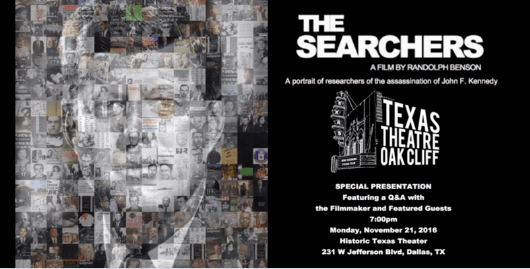
  • Randy Benson, The Searchers

    Randy Benson, The Searchers


    Through a Lens, Clearly: Randy Benson’s The Searchers

    Since President Kennedy’s assassination on November 22, 1963, many films have attempted to document that horrific event and unearth its meaning. The first one, of course, was filmed by Abraham Zapruder, held in place by his secretary on his famous perch in Dealey Plaza. The initial 12 year public disappearance of Zapruder’s original home movie also marked the beginning of the federal government’s attempts to cover up the true facts about the case. In addition to hiding evidence, and ignoring (and in some cases, perhaps eliminating) key witnesses, the CIA literally invented the term “conspiracy theorist” to attack those who disagreed with the official investigation. In spite of all this, there has been a modest stream of credible films and features over the last fifty-four years.

    One of the earliest, Rush to Judgment, featuring Mark Lane and directed by Emile de Antonio, appeared in 1967 and continues to be one of the better films ever made on the case. It contains some of the earliest interviews ever obtained. But these kinds of efforts have been opposed, and sometimes drowned out, by the less honorable efforts of the mainstream media on the JFK case. The major media has done a generally awful job of even reasonably objective reporting, much less showing commitment to the truth. CBS broadcast a special in 1964, on the day the Warren Report was released—without telling the public how they could possibly do that unless they knew the results well in advance. And they then agreed to go along with them without any independent analysis.

    Then, in 1967, NBC produced an infamously slanted ‘special report’ on Jim Garrison’s investigation. That hatchet job was produced by former NSA counter-intelligence chief Walter Sheridan. It was done with permission from corporate headquarters in New York to, literally, “shoot him down.” (Destiny Betrayed, by James DiEugenio, Second Edition, p. 239) Sheridan literally surveilled and harassed witnesses in order to get them to change their stories from what they had originally told Jim Garrison. They then put these witnesses on the air without telling the viewer what they had done.

    Like Old Reliable, CBS would then produce one special in 1967, and another one in 1975; the latter was designed to defuse interest in the Church Committee. With the help of memoranda obtained by the late CBS employee Roger Feinman, Jim DiEugenio has carved these productions up and shown how fundamentally dishonest they were. For instance, Dick Salant, president of CBS, beat back an attempt by his employees—e.g. Daniel Schorr and Les Midgley—to do a fair minded, probing program. By pulling rank, Salant turned the fair-minded proposal into a one-sided defense for the Warren Report. CBS then hired compromised “experts”, like urologist John Lattimer and Dallas Policeman Jerry Hill, as their consultants to make sure that is what the program ended up as (Click here https://kennedysandking.com/john-f-kennedy-articles/why-cbs-covered-up-the-jfk-assassination)

    In 1986 Vincent Bugliosi prevailed in a ridiculous “show trial” in London over an unprepared Gerry Spence. That program was later broadcast in America on Showtime. Later network productions have been as bad. In 2003, Peter Jennings hosted Beyond Conspiracy for ABC, another inane effort. That one featured the notorious duo of Gus Russo and Dale Myers. The latter helped bring us the hilarious spectacle of ABC proclaiming the Single Bullet Theory, as the Single Bullet Fact, all done by the alchemy of Myers’ computer graphics. (Click here for more on Myers https://kennedysandking.com/john-f-kennedy-articles/dale-myers-an-introduction)

    More recent years have brought about the (now deceased) Gary Mack-assisted Inside the Target Car; Oswald’s Ghost from PBS, directed by a man who had a spiritual awakening that told him Oswald was guilty; JFK: The Lost Bullet, in which Max Holland claimed he could see Oswald walking by on the Sixth Floor; and JFK: The Smoking Gun, in which an Australian detective tries to sell us on George Hickey having fired the fatal shot into JFK. The common thread in all these films is they either support a lone nut verdict or try to “solve the case” in such a way as to let the government off the hook.
    rbenson
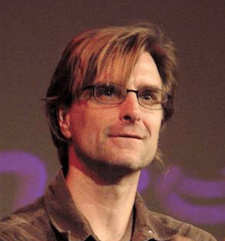
    Filmmaker Randy Benson

    Randy Benson’s The Searchers is not one of those films. Instead, his film takes two essential tracks—on the one hand, providing a brief history of the state of the case over the last fifty years, and on the other, filling out portraits of the men and women who provided most of the breakthroughs—the “searchers” of the title. For the former track, he uses some milestones in the history of the JFK case. For example, the Garrison inquiry, the convening of the House Select Committee on Assassinations because of the 1975 broadcast of the Zapruder film on ABC, and the 1991 release of Oliver Stone’s film JFK.

    The other track Benson pursues is rather bracing in its simplicity. From about 1966, it became the strategy of the MSM not to let the Warren Commission critics speak without being interfered with, or caricatured. After Stone’s movie came out, provoking a year long firestorm, that was changed. Now the MSM simply would not place the critics on their programs at all.

    Benson counters that by simply letting the critics speak about the case without being interfered with. People like Gary Aguilar, Debra Conway, and Lisa Pease simply answer questions or address issues. And once the viewer sees this, he or she understands why it’s not done. Because without the interference, or the caricaturing, the critics would carry the day. Simply based on the strength of their arguments and their in-depth knowledge of the JFK case. Because of media censorship, these are aspects of the case that the public is not allowed to see today, but which Benson munificently supplies.

    In a more perfect world, it is the sort of film that would have been done long ago by PBS, with a substantial budget and a major release. But as we know from their Gus Russo/Dale Myers 1993 fiasco Who was Lee Harvey Oswald?, PBS is part of the MSM on this case. Instead, mirroring the struggle of the researchers, this film arrives after a fourteen-year odyssey largely by one man—Benson—and unfortunately after the deaths of two of the participants, John Judge and Mark Lane.

    The great achievement of the film is to humanize the researchers themselves. After years of being portrayed as kooks (or worse, as in Larry Schiller’s book The Scavengers and Critics of the Warren Report), here is a film that depicts them as they are. The earliest researchers were not themselves part of any government tribunal; instead, they were people who had to be coaxed away from their trust in the federal government. They were not born anarchists or people in search of fame, or money. They were housewives, lawyers, doctors, teachers, and professionals, who found—much to their chagrin—that the government was lying, and over the matter of a murdered president, they would not stand for it. The Warren Commission never thought anyone would read their 26 volumes of evidence. Surely, the reporters of the MSM did not. Or how could they issue their kudos about the Warren Report in September when the 26 volumes of evidence were not issued until October? But some interested parties did read the 26 volumes. And they noticed that the evidence in the volumes did not support the conclusions in the Warren Report. Once they took that stand based on the evidence, people like Shirley Martin, Vincent Salandria, Penn Jones, Sylvia Meagher, Mae Brussell, and Harold Weisberg simply couldn’t let it go. And it is to their credit that they did not.

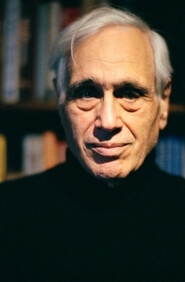
    Unfortunately, while these folks were unavailable to interview (all but Salandria are now deceased, but John Kelin ably fills in some of the details on their backgrounds), the interviews that were obtained for the film are formidable. Crosscut throughout the documentary are insights from Mark Lane, John Judge, Robert Groden, Dr. Cyril Wecht, Dr. Gary Aguilar, Jim DiEugenio, Lisa Pease, Jim Marrs, Josiah Thompson, Rex Bradford, Walt Brown, and Debra Conway. And because Benson was able to shoot most of these interviews on-location with the researchers, we get to see them in contexts we might otherwise not see them. At home with Mark Lane, showing us his personal copy of the Warren volumes, or in the garage with Tink Thompson tinkering with his motorcycle, or watching Robert Groden age over the years as we see the famous footage from the 1975 Geraldo Rivera program with Dick Gregory—right up to the present as he greets people on the grassy knoll in Dealey Plaza.

    Another great strength of the film is that it is made for an audience that is not necessarily expert in all things JFK. The director made it, in his words, for “himself, before I got into all this.” In other words, he was a person who thought of himself as informed, college-educated, granted many benefits in this society, but unaware of the real history that lies underneath what is called history. We see that play out, in rough chronological order, but instead of hearing from established media, we see that history through the eyes of real historians like Judge and DiEugenio.

    At the same time, there is little attention paid to some of the great schisms that have occurred in the research community—for example, the question of the Zapruder film’s authenticity—instead focusing on the great areas of agreement between researchers. The great majority of us know that Oswald didn’t do it, and that the cover-up could only have been performed by those in positions of great power. We might argue about who that might be, but we all agree on most of the basics. It is to this majority to which this film speaks. And it makes heroes out of the ordinary men and women who chose to devote their lives to this mostly thankless duty. If they had been listened to instead of marginalized and caricatured, America might not be in the situation that it is in today.

    The latest election in the United States has revealed, more than ever before, the deep-set corruption in both our government, and our media. In a stunning turn of events, we have elected a person who is as far away from John Kennedy as one could imagine. It’s worth reflecting, for a moment, what we once had, and what we have now. For all intents and purposes, the assassination of President Kennedy began our long national nightmare, and Donald Trump seems to be only the latest chapter. This is a time when we need to look to each other and find spaces of agreement, rather than conflict, and it seems to me The Searchers aids that end.

    If The Searchers has a central thesis, it would seem to be that, on complex cases, the best work is often done by ordinary people with an extraordinary tenacity to get at the truth. Where the government has failed us, where official investigations have failed us, we might succeed. In this new age of friendly fascism, each other might be all we’ve got.


    The Searchers is currently available for purchase in a DVD edition for researchers that includes 37 hours of full interviews with all of the researchers in the movie.

  • Randy Benson, The Searchers

    Randy Benson, The Searchers


    Through a Lens, Clearly: Randy Benson’s The Searchers

    Since President Kennedy’s assassination on November 22, 1963, many films have attempted to document that horrific event and unearth its meaning. The first one, of course, was filmed by Abraham Zapruder, held in place by his secretary on his famous perch in Dealey Plaza. The initial 12 year public disappearance of Zapruder’s original home movie also marked the beginning of the federal government’s attempts to cover up the true facts about the case. In addition to hiding evidence, and ignoring (and in some cases, perhaps eliminating) key witnesses, the CIA literally invented the term “conspiracy theorist” to attack those who disagreed with the official investigation. In spite of all this, there has been a modest stream of credible films and features over the last fifty-four years.

    One of the earliest, Rush to Judgment, featuring Mark Lane and directed by Emile de Antonio, appeared in 1967 and continues to be one of the better films ever made on the case. It contains some of the earliest interviews ever obtained. But these kinds of efforts have been opposed, and sometimes drowned out, by the less honorable efforts of the mainstream media on the JFK case. The major media has done a generally awful job of even reasonably objective reporting, much less showing commitment to the truth. CBS broadcast a special in 1964, on the day the Warren Report was released—without telling the public how they could possibly do that unless they knew the results well in advance. And they then agreed to go along with them without any independent analysis.

    Then, in 1967, NBC produced an infamously slanted ‘special report’ on Jim Garrison’s investigation. That hatchet job was produced by former NSA counter-intelligence chief Walter Sheridan. It was done with permission from corporate headquarters in New York to, literally, “shoot him down.” (Destiny Betrayed, by James DiEugenio, Second Edition, p. 239) Sheridan literally surveilled and harassed witnesses in order to get them to change their stories from what they had originally told Jim Garrison. They then put these witnesses on the air without telling the viewer what they had done.

    Like Old Reliable, CBS would then produce one special in 1967, and another one in 1975; the latter was designed to defuse interest in the Church Committee. With the help of memoranda obtained by the late CBS employee Roger Feinman, Jim DiEugenio has carved these productions up and shown how fundamentally dishonest they were. For instance, Dick Salant, president of CBS, beat back an attempt by his employees—e.g. Daniel Schorr and Les Midgley—to do a fair minded, probing program. By pulling rank, Salant turned the fair-minded proposal into a one-sided defense for the Warren Report. CBS then hired compromised “experts”, like urologist John Lattimer and Dallas Policeman Jerry Hill, as their consultants to make sure that is what the program ended up as (Click here https://kennedysandking.com/john-f-kennedy-articles/why-cbs-covered-up-the-jfk-assassination)

    In 1986 Vincent Bugliosi prevailed in a ridiculous “show trial” in London over an unprepared Gerry Spence. That program was later broadcast in America on Showtime. Later network productions have been as bad. In 2003, Peter Jennings hosted Beyond Conspiracy for ABC, another inane effort. That one featured the notorious duo of Gus Russo and Dale Myers. The latter helped bring us the hilarious spectacle of ABC proclaiming the Single Bullet Theory, as the Single Bullet Fact, all done by the alchemy of Myers’ computer graphics. (Click here for more on Myers https://kennedysandking.com/john-f-kennedy-articles/dale-myers-an-introduction)

    More recent years have brought about the (now deceased) Gary Mack-assisted Inside the Target Car; Oswald’s Ghost from PBS, directed by a man who had a spiritual awakening that told him Oswald was guilty; JFK: The Lost Bullet, in which Max Holland claimed he could see Oswald walking by on the Sixth Floor; and JFK: The Smoking Gun, in which an Australian detective tries to sell us on George Hickey having fired the fatal shot into JFK. The common thread in all these films is they either support a lone nut verdict or try to “solve the case” in such a way as to let the government off the hook.

    rbenson
    Filmmaker Randy Benson

    Randy Benson’s The Searchers is not one of those films. Instead, his film takes two essential tracks—on the one hand, providing a brief history of the state of the case over the last fifty years, and on the other, filling out portraits of the men and women who provided most of the breakthroughs—the “searchers” of the title. For the former track, he uses some milestones in the history of the JFK case. For example, the Garrison inquiry, the convening of the House Select Committee on Assassinations because of the 1975 broadcast of the Zapruder film on ABC, and the 1991 release of Oliver Stone’s film JFK.

    The other track Benson pursues is rather bracing in its simplicity. From about 1966, it became the strategy of the MSM not to let the Warren Commission critics speak without being interfered with, or caricatured. After Stone’s movie came out, provoking a year long firestorm, that was changed. Now the MSM simply would not place the critics on their programs at all.

    Benson counters that by simply letting the critics speak about the case without being interfered with. People like Gary Aguilar, Debra Conway, and Lisa Pease simply answer questions or address issues. And once the viewer sees this, he or she understands why it’s not done. Because without the interference, or the caricaturing, the critics would carry the day. Simply based on the strength of their arguments and their in-depth knowledge of the JFK case. Because of media censorship, these are aspects of the case that the public is not allowed to see today, but which Benson munificently supplies.

    In a more perfect world, it is the sort of film that would have been done long ago by PBS, with a substantial budget and a major release. But as we know from their Gus Russo/Dale Myers 1993 fiasco Who was Lee Harvey Oswald?, PBS is part of the MSM on this case. Instead, mirroring the struggle of the researchers, this film arrives after a fourteen-year odyssey largely by one man—Benson—and unfortunately after the deaths of two of the participants, John Judge and Mark Lane.

    The great achievement of the film is to humanize the researchers themselves. After years of being portrayed as kooks (or worse, as in Larry Schiller’s book The Scavengers and Critics of the Warren Report), here is a film that depicts them as they are. The earliest researchers were not themselves part of any government tribunal; instead, they were people who had to be coaxed away from their trust in the federal government. They were not born anarchists or people in search of fame, or money. They were housewives, lawyers, doctors, teachers, and professionals, who found—much to their chagrin—that the government was lying, and over the matter of a murdered president, they would not stand for it. The Warren Commission never thought anyone would read their 26 volumes of evidence. Surely, the reporters of the MSM did not. Or how could they issue their kudos about the Warren Report in September when the 26 volumes of evidence were not issued until October? But some interested parties did read the 26 volumes. And they noticed that the evidence in the volumes did not support the conclusions in the Warren Report. Once they took that stand based on the evidence, people like Shirley Martin, Vincent Salandria, Penn Jones, Sylvia Meagher, Mae Brussell, and Harold Weisberg simply couldn’t let it go. And it is to their credit that they did not.

    Unfortunately, while these folks were unavailable to interview (all but Salandria are now deceased, but John Kelin ably fills in some of the details on their backgrounds), the interviews that were obtained for the film are formidable. Crosscut throughout the documentary are insights from Mark Lane, John Judge, Robert Groden, Dr. Cyril Wecht, Dr. Gary Aguilar, Jim DiEugenio, Lisa Pease, Jim Marrs, Josiah Thompson, Rex Bradford, Walt Brown, and Debra Conway. And because Benson was able to shoot most of these interviews on-location with the researchers, we get to see them in contexts we might otherwise not see them. At home with Mark Lane, showing us his personal copy of the Warren volumes, or in the garage with Tink Thompson tinkering with his motorcycle, or watching Robert Groden age over the years as we see the famous footage from the 1975 Geraldo Rivera program with Dick Gregory—right up to the present as he greets people on the grassy knoll in Dealey Plaza.

    Another great strength of the film is that it is made for an audience that is not necessarily expert in all things JFK. The director made it, in his words, for “himself, before I got into all this.” In other words, he was a person who thought of himself as informed, college-educated, granted many benefits in this society, but unaware of the real history that lies underneath what is called history. We see that play out, in rough chronological order, but instead of hearing from established media, we see that history through the eyes of real historians like Judge and DiEugenio.

    At the same time, there is little attention paid to some of the great schisms that have occurred in the research community—for example, the question of the Zapruder film’s authenticity—instead focusing on the great areas of agreement between researchers. The great majority of us know that Oswald didn’t do it, and that the cover-up could only have been performed by those in positions of great power. We might argue about who that might be, but we all agree on most of the basics. It is to this majority to which this film speaks. And it makes heroes out of the ordinary men and women who chose to devote their lives to this mostly thankless duty. If they had been listened to instead of marginalized and caricatured, America might not be in the situation that it is in today.

    The latest election in the United States has revealed, more than ever before, the deep-set corruption in both our government, and our media. In a stunning turn of events, we have elected a person who is as far away from John Kennedy as one could imagine. It’s worth reflecting, for a moment, what we once had, and what we have now. For all intents and purposes, the assassination of President Kennedy began our long national nightmare, and Donald Trump seems to be only the latest chapter. This is a time when we need to look to each other and find spaces of agreement, rather than conflict, and it seems to me The Searchers aids that end.

    If The Searchers has a central thesis, it would seem to be that, on complex cases, the best work is often done by ordinary people with an extraordinary tenacity to get at the truth. Where the government has failed us, where official investigations have failed us, we might succeed. In this new age of friendly fascism, each other might be all we’ve got.


    The Searchers is currently available for purchase in a DVD edition for researchers that includes 37 hours of full interviews with all of the researchers in the movie.

  • Adele Edison passes away at 88


    “A New Oswald Witness Goes Public”.  Originally posted Wednesday, December 30, 2009

    By William Kelley, At:  JFK Countercoup


    Adele Edison has passed away at age 88. She was an instructor in physiology at several colleges and universities in a long academic career. But she was also a fascinating JFK witness who told her story to the FBI very soon after the JFK assassination. Please read the attached story for the details.

    ~Jim DiEugenio

  • Adele Edison passes away at 88


    “A New Oswald Witness Goes Public”.  Originally posted Wednesday, December 30, 2009

    By William Kelley, At:  JFK Countercoup


    Adele Edison has passed away at age 88. She was an instructor in physiology at several colleges and universities in a long academic career. But she was also a fascinating JFK witness who told her story to the FBI very soon after the JFK assassination. Please read the attached story for the details.

    ~Jim DiEugenio

  • Robert F. Kennedy saw conspiracy in JFK’s assassination

    This Boston Globe article is a rare exception for the MSM. It is an honest and complete review of the evidence showing Bobby Kennedy never bought into the lone assassin, “Oswald did it” scenario. Not on 11/22/63, and not in 1968, when he was running for president in California, just before he himself was killed under suspicious circumstances.

    ~Jim DiEugenio

  • Robert F. Kennedy saw conspiracy in JFK’s assassination

    This Boston Globe article is a rare exception for the MSM. It is an honest and complete review of the evidence showing Bobby Kennedy never bought into the lone assassin, “Oswald did it” scenario. Not on 11/22/63, and not in 1968, when he was running for president in California, just before he himself was killed under suspicious circumstances.

    ~Jim DiEugenio