Tag: JFK ASSASSINATION

  • Uncovering Popov’s Mole

    Uncovering Popov’s Mole


    Introduction

    For anyone who has analyzed the JFK assassination, it does not take much analysis to see through the Warren Commission depiction of Oswald being a demented sociopathic killer. It is also clear that Oswald’s sojourn in Russia from 1959 to 1962, and his provocative behavior on behalf of the Fair Play for Cuba Committee during the summer of 1963 in New Orleans were intelligence linked missions.

    This author’s articles at KennedysAndKing (Oswald’s Intelligence Connections and Exposing the FPCC) exhaustively demonstrate much of this. No-one said it better than Senator Richard Schweiker of the Church Committee when he famously stated: “We do know Oswald had intelligence connections. Everywhere you look with him, there are fingerprints of intelligence.” (Dick Russell, On the Trail of the JFK Assassins, p. 44)

    What kind of asset Oswald was, is one question that deserves our attention. Oswald was a fan of the spy series, I Led three Lives, he did work as a radar operator on a U-2 spy plane base in Atsugi Japan and learned Russian. A number of researchers believe that it was his Civil Air Patrol mentor, David Ferrie, who helped map out a game-plan for Oswald to become involved with intelligence. On the flip side, he was a high-school drop-out with the writing skills of a dim-witted 12 year old, horrid with a gun and not professionally stable. This was no James Bond or George Smiley. Perhaps only Oswald may have thought of himself as a bonafide spy. So, what was he really to the CIA: an organization that takes pride in its image and resources?

    Carlos Bringuier of the Directorio Revolucionario Estudiantil (DRE), had gotten into what was likely a staged fight with Oswald on Canal Street in New Orleans in August of 1963. He later wrote a press release that was published the day after the assassination to position Castro as being in cahoots with Oswald.

    The DRE was actually set up under CIA operative William Kent in 1960, working for David Phillips, Chief of Cuban Operations. Later, with Phillips in Mexico City, Kent was George Joannides’ supervisor. George is now infamous for his role in sabotaging the HSCA. Kent’s daughter told HSCA investigator Gaeton Fonzi that her father never mentioned Oswald except one time over dinner. He stated that Oswald was a “useful idiot”.

    Handing out FPCC flyers in New Orleans in 1963 to help flush out communists stands out as a perfect task for such a pawn. In this author’s Prior Plots article, other useful idiots like Oswald are profiled who performed similar functions. One of the confirmed informants is even described as a fruitcake by one of his intel contacts.

    Who would take on such a degrading task one may ponder? Someone who may think of himself as a big man, someone who could use quick cash (Oswald told his lawyer Dean Andrews that he was being paid 20 dollars a day to hand out flyers), someone who may have been promised a good job, (Oswald thought he was going to join NASA), someone who had trouble doing regular work… Perfect for becoming a patsy.

    There are a few aspects of Oswald’s mission in Russia that always puzzled me. Just what was it? Entering Russia with no idea where one may end up? Ultimately at a Minsk radio factory? Some have suggested that, using his relationship with the US spy plane in Atsugi, Japan, that Oswald may have been told to observe how Russians interrogate and handle defectors. It is likely that Oswald was debriefed in Europe before his return to American, but that this was kept hidden.

    Uncovering Popov’s Mole by John Newman delineates these queries with much more precision. The provocative and well-documented thesis of the book is that the CIA was using Oswald as bait to flush out a mole in the CIA… But there was another higher-level strategy going on that Newman also exposes: one that would make sure that this endeavor failed.

    How would that be possible? Newman makes the case that the molehunter was most likely the actual mole.

    The Author’s Propitious Background

    What makes the author such a positive asset for the JFK research community is his unique combination of professional experience, work ethic and his network. Having spent twenty years in Army Intelligence, he comprehends the inner workings of espionage and he is a meticulous researcher. Having recently spoken to him, one can see how his data mining through intelligence files is so careful that he keeps finding new pieces of the puzzle. He even let me in on some tantalizing discoveries he is making about a likely traitor with FPCC links… This is fascinating to me because of my interest in David Atlee Phillips and the FPCC. (Click here)

    John is also a trusted network member and benefits from his relationships with other eminent researchers such as Malcolm Blunt, James DiEugenio, and others of this stripe. It is through the efforts of Newman and his colleagues that some key CIA cryptonyms have been deciphered. Without people like him, we would not likely know about how a realm of Cuban intelligence-linked family members, the Rodriguez clan, entered Oswald’s world and created a direct link between Oswald’s summer in New Orleans and the CIA’s Miami station JM/Wave.

    His book JFK and Vietnam (1992) is credited for proving that JFK had no intentions of starting a war in Vietnam, which is directly contrary to what is written in history books. Newman also penned Oswald and the CIA which is credited for countering intelligence claims that there was no intelligence interest in Oswald after his return from Russia. The author adroitly demonstrates that the removal of Oswald from watch lists by the CIA and the FBI shortly before the assassination, and his presence in the Texas School Book Depository adjacent to JFK’s motorcade route should be viewed with the highest degree of suspicion.

    Newman is not married to his original writings. His thoughts evolve with new information. For instance, he, like many, once argued that Oswald’s handler was James Angleton who was the architect of the maneuvering of Oswald. (Click here) His most recent book represents a reversal on this, at least with respect to Oswald`s sojourn in Russia. The author confirmed to me that his recent findings will have a major impact on his planned writings.

    John is not infallible, and some of his sources outside of his data mining are questionable: Double Cross and Judy Exner come to mind.

    This book critic has read three out of four books in a series of writings (with more to come), where Newman is gradually zeroing in on a likely scenario around JFK’s assassination. The first three books are titled: Where Angels Tread Lightly: The Assassination of President Kennedy: Volume 1 (2015), Countdown to Darkness: The Assassination of President Kennedy Volume II (2017) and Into the Storm: The Assassination of President Kennedy Volume III (2019).

    The accomplishments in his first two are many: Through his research, Newman sets the table by identifying characters and developments during the pre-Bay of Pigs era that would later come into play during the assassination: Frank Sturgis, David Phillips, Santo Trafficante, Bernard Barker, June Cobb, Manuel Artime are but some of the players who readers get to know.

    One of the key points this reviewer tried to demonstrate in his article The CIA and Mafia’s Cuban-American Mechanism was that the Cuban Exiles, Intelligence operators and Mafiosi who became persons of interest in the assassination were part of a network that had its roots in Cuba during the Batista dictatorship and later coalesced in Miami under the scrutiny of JM Wave. Newman nails this down even further. His description of Cuban economic policy and its disastrous effects on American business (example Freeport Sulphur) and mafia interests are also well chronicled and explains the repercussions to the USA and Cuba that was certain to follow.

    In Countdown to Darkness, the author shows that Oswald’s CIA file management is unique and is clearly different from what was done with other “defectors”, proving that his mission in Russia was in fact an intelligence stratagem. The other highly significant revelation was to show that the USA’s removal of Lumumba in the Congo was part of an agreement to gain European support for the eventual overthrow of Castro.

    Having read the first two books, it was my intention to go on to the third one soon, but I was sidetracked by Uncovering Popov’s Mole when it was exposed to CAPA members in November 2022. Though it is referred to as Volume 4 of the series, it can be read independently from the other books without loss of continuity.

    While performing research for his series, Newman kept uncovering major pieces around the unsolved mystery of a high-level mole who caused untold damage to US spy operations and was the reason Oswald wittingly went to Russia most likely not knowing that he was being used as bait to flush out a mole and even less cognizant that the molehunter himself was the mole and that the hunt was designed to fail. This was so important to the author, that UPM became a priority to write about and insert itself into the all-important series Newman continues to work on.

    Anyone who has taken a deep dive into the Kennedy Assassination will tell you that it is quite a daunting endeavor. With all the sloppy work from some conspiracy mongers and the counterattacks by defenders of the Warren Commission, simply finding reliable authors is a stiff challenge. Some of the most informative books tend to be long, dry and complex. The number of names and titles that come up are often in the hundreds, mixed with dates, cryptonyms and aliases. I find that simply getting used to the multiethnic cast of characters to be at times overwhelming. John Newman’s books require extreme focus as the reader must absorb a steady flow of complex facts from the secret world of spooks.

    UPM has the added element of including many characters with Russian names. If you are looking for a LeCarré style thriller, it is not written in that way. Yet, in its own way it is riveting and dramatic.

    The significance of what is presented is as monumental in scope as the classic Tinker, Taylor, Soldier, Spy.

    Except that this story is not fictional.

    Newman’s Thesis

    It is important to add that the author is proposing a thesis. This one is almost Biblical in terms of implications.

    The Thesis: “A high level mole in US intelligence, revealed to the Russians that the US was running one of their agents, Pyotr Popov, causing him to be apprehended and put to death by Moscow but not before telling his US handlers that there was a mole in US intelligence who betrayed him. This was certain to initiate a US based mole hunt that had to be independent of James Angleton’s CI/SIG Division where the mole was thought to have burrowed into. The hunt involved sending Oswald to Russia as a marked card dangling U2 spy plane secrets. The kicker is that the CIA molehunter, Bruce Solie, was in fact the mole who was in the perfect position to thwart the hunt and present false conclusions.”

    If this theory is proven… The ramifications are monumental:

    1. It would mean that James Angleton, chief of counterintelligence for the Central Intelligence Agency (CIA) from 1954 to 1975, would have been fooled a second time by a traitor. In 1963, high level British intelligence officer Kim Philby, was a double agent for the Soviets right under Angleton’s nose.
    2. American intelligence would have been highly compromised for decades. Angleton himself revealed sensitive secrets to the molehunter for years… A crushing blow to the Allen Dulles tenure.
    3. Oswald’s mission in the Soviet Union can be seen through a completely different prism. One that may take a decade to fully understand.
    4. The CIA’s inability to uncover the mole in the middle of the Cold War should put into question the security of the nation as a whole.
    5. All we thought we knew about Angleton and his possible role in the assassination has to be put into question.

    In this review, a lot of focus will be placed on the forewords, the introduction and section 1. These are where the thesis, its foundation and key facts are laid out in front of us without any punches being pulled. The reader will be drawn in and begging for more. After the opening fireworks, the author bolsters and defends his thesis by putting the cornerstones under a microscope… full of wonderful nuggets but with much of the bombshell in the rear mirror. The effect is a reverse crescendo for entertainment seekers, for JFK assassination scholars the overall effect should be mind-blowing… Even for those who are not sold on some of the major conclusions, the events described and the personalities we are introduced to are fascinating and demand our attention.

    Uncovering Popov’s Mole
    Third Party Endorsements and a Strong Start:

    When presenting a case, a theory or launching anything really that shakes the grounds of current perceptions or values, it is a time-tested practice to refer to opinion leaders and recognized experts for a stamp of approval to escape the missionary, lone wolf status often labeled on trend-setters.

    John Newman sets the tone quickly in his book by positioning his writings as a thesis. He then gets favorable reviews from Peter Dale Scott, Malcolm Blunt (two researcher/writers- who are known for their efforts in this specific subject area) as well as none-other than the late high-level CIA officer Tennent Pete Bagley who is quoted as saying: “That Solie provided rock-like protection to Nosenko, there is no doubt. Why, is the question. The bond was sealed by Nosenko’s marrying Solie’s wife’s sister. Let’s add Solie to the short list.”

    Bang: With that one snippet out of the starting blocks of the book, one should conclude that this will not be some off-the-wall fabulation… if one knows who Bagley, Solie and Nosenko are, which is far from a given.

    Figuring out who is who and the inner workings espionage operations of this Cold War superpower maneuvering is not for the James Bond audience, at least 80% of it, but everything is there for a Shakespearian drama spinoff based on a real case that is still mesmerizing to say the least. At first, I did not think that in the myriad of mysteries in the JFK Cold Case that my already heavily occupied headspace would have more room for another mystery. Breaking news for my fellow JFK researchers: Newman’s research opens a pandora’s box around the relations between the CIA – perhaps the world’s most important organization during the Cold War, Oswald—the useful idiot, and the murder of JFK.

    UPM Introduction

    Some critics of Newman’s earlier work underline his hesitance to point to the CIA institutionally as a suspect in the assassination. I cannot really comment as I have only read three books out of the four, he has penned in his current series of writings. In his introduction of UPM, whatever he has written in the past, I see no inhibitions in pointing to strong intel links to the hit. Within his five hypotheses to what was involved in a conspiracy, he points to an Oswald agent handler tasking him to look pro-Castro and CIA manipulation of his files.

    This reviewer does not interpret this as a CIA institutional coup. It is far from conclusive that the head of the CIA, John McCone was involved. CIA-ousted Allen Dulles, sanctioned by the rich and powerful, may have designed an operation that could have been carried out by coup specialists in the Dulles network which included regime change operatives from within and outside the outfit… How wide the involvement was is still a matter of debate. The need to compartmentalize must have been a priority.

    While working on Into the Storm and Armageddon, Newman combined post 2018 document releases with previous ones and amassed a multitude of clues for him to add a sixth hypothesis: “The not yet uncovered mole, CIA double agent Piotr Popov warned about before being executed by the Russians, had knowledge of the ultra-sensitive U2 program. His understanding of it became the peg upon which the flypaper of Oswald, a U2 radar operative with security clearance, was dangled in 1959.”

    Newman argues that what everyone to this date wrongly believed was an ensuing Angleton mole hunt, was in fact a misdirection by the genuine molehunter, Bruce Solie, who was the chief of the research branch in the security research staff of the Office of Security. UPM presents evidence and a rationale that Solie was also the real mole.

    In the introduction, Newman passes on his valuable knowledge on the importance of human intelligence penetration in espionage and the potential damage caused by even a staff level leaker if he has access to strategic information. The reader is also introduced to Pete Bagley, a veteran in the analysis of double-agents and a key source for Newman who he met through Malcolm Blunt. Bagley revealed how a mole hunt in 1956 helped uncover Edward Ellis Smith who became a deep cover KGB operative after being compromised in a sex trap. The key to uncovering Ellis: travel records. If one can believe it, Solie travel records obtained in 2010 trough Ancestry.com became a key piece of evidence for Newman.

    Newman predicts that the reader will find the book to be repetitious, it is intentionally so. The teacher in Newman believed that firming up premises on a continual basis was key to solidifying his thesis. He calls his technique a military methodology of stacked transparencies spanning over a significant time period.

    In Newman we have an interesting mix of academia and intelligence expertise so needed in the community of researchers. There are not many intelligence insiders like Victor Marchetti, William Sullivan and Fletcher Prouty who were willing to reveal secrets from a scandalous past. Through Newman, bolstered by Bagley, UPM delivers gold for researchers that can only increase their knowledge, sharpen their wits and open new roads that can lead us farther away from the Warren Commission Fairy Tale and closer to the whole truth.

    Section 1

    In his first three chapters, the author explains who Popov was and introduces Oswald’s role in a false mole hunt orchestrated by Solie, which is the reason Oswald defected to the enemy.

    In 1952 Popov defects, in 1957 he was uncovered. Throughout 1958 the KGB created a scenario by which they could arrest him without revealing their source in the CIA. Before his arrest, he warned his US handler about a KGB mole who could betray technical details of the US’s U2 spy planes. During his six years of work, it is estimated that he had passed on the equivalent of half a billion dollars in research value. One thing that Bagley revealed was that it was clear that the strain on Popov built up to a point that he was drinking too much, taking on a mistress and acting recklessly.

    Perhaps this is one of the reasons that Newman’s work is at a thesis level. It became easy to argue that Popov compromised himself by becoming a loose cannon.

    Another potential source for the KGB may have been their mole inside British Intelligence, George Blake, who happened to be in proximity of a translator who was working on a Popov letter.

    After Popov’s execution and intensified efforts to penetrate foreign spy networks under Khrushchev, Lee Harvey Oswald was dispatched to Russia as a false defector wrapped in U2 flypaper as a lure to help identify Popov’s mole, incorrectly said to be in the CIA Soviet Russia Division.

    The KGB devised a plan using their mole to get Angleton to look in the wrong places. It worked and culminated in turning him into becoming a paranoid mole hunter driven almost mad by the end of his career.

    Bagley who helped handle Popov later plays a key role when stationed in Bern, Switzerland where he accepts Yuri Nosenko’s defection in 1962. Nosenko became very controversial: likely a false defector who deflected attention away from the KGB mole and who, by 1964, made false claims about Oswald being of no interest to the KGB.

    By the end of chapter 1, readers are exposed to Solie’s KGB handler Vladislav Kovschuk, Oleg Gribanov who planned the false mole hunt, Popov’s boss Alexi Kriatov, Dmitry Polyakov a GRU Colonel, defector Anatoly Golitsyn who used his own sources to warn Angleton of the mole, and a host of other Russian and American names plus a number of pseudonyms… I had to read the book twice and create a special file just to keep track… This why UPM is a challenging read. But espionage books as well as the JFK assassination are bound to be complex and is why researchers like Newman are so important.

    He goes on to show how both Russia and Washington, after JFK’s assassination, needed to distance themselves from Oswald who became the uninteresting lone nut. The reality was that tabs were kept on Oswald everywhere he went, including by the KGB while he was in Minsk. During his retirement, Pete Bagley when shown incoming documents from other agencies and their subversion right after Oswald defected, realized that Oswald had to be a witting fake defector. It was only late in his writing the current series of books, that Newman realized a mistake he and other researchers were making: The mole hunt was designed to fail.

    One extremely important nuance is introduced in chapter 2… This was an OS mole hunt and not an Angleton (CI/SIG) mole hunt. Angleton was limited to supporting the operation and not leading it, because his own unit was potentially where the mole was hidden. This meant that all incoming information would be diverted to the OS from all other agencies as instructed (normally the Soviet Russia Division (SRD) would have been the key recipient). The director of the OS was Sheffield Edwards who oversaw six staff-level components including the Security Research Staff headed by Paul Gaynor who tasked Bruce Solie, who was Chief of his Research Branch, to run the mole hunt.

    It is Solie who duped a trusting Angleton into thinking that the mole worked out of the SRD of the Directorate of Plans. Worse, Solie gained access to a lot of what Angleton knew. Solie also lied to both CIA-FBI liaison Jane Roman and the FBI’s Sam Papich by claiming that OS had no records on Oswald after he defected.

    Oswald’s file was again given special treatment upon his return to the US in May 1962 up until the assassination and became accessible in a sensitive Cuban Affairs Staff (SAS) file “held very closely on a need-to-know basis” according to Roman.

    In late 1963, this file as well as Oswald’s behavior culminating in the Mexico City affair where “Oswald” was being connected with Castro, Khrushchev and their agents in order to frame all of them for the assassination. This was at a time that American hawks were pushing for the nuclear elimination of Russia and planning all sorts of false flag operations. The only way to avoid such a catastrophe was to turn Oswald into a lone nut… A route favored by LBJ, Cuba and Russia.

    With the right screenplay and a committed producer, Newman already has the material needed, after only two chapters, for a blockbuster movie… There are 16 chapters.

    In chapter three, the conveyor belt of information keeps flowing: Newman points out that the American Consulate had advance knowledge that Oswald would get electronics training while in Russia once again suggesting the presence of a mole; Despite a questionable performance by likely false defector Nosenko, Solie was able to shore up his bona fides and create doubt around a likely real defector by the name of Golitsyn and destroy operations against Soviet Intelligence; Only in 1998 when the ARRB was nearing the end of its mandate did a new piece of the puzzle come to light… A 1981 genuine defector, Sergei Papushin, revealed some of the hidden history in Minsk that destroyed the Nosenko persona Solie helped peddle and any notion that Oswald was of no interest to the Russians.

    This information, because of intelligence sensitivity, would only be released to the public in 2017. How Papushin defected and later revealed what he knew about Oswald and Marina is fascinating. What he had to say, if true, sheds light in the very murky Russia part of the Oswald chronology.

    According to this defector:

    Oswald, who was considered an agent, was being handled by two teacher agents named Sluzer and Yurshack, who were colleagues of Papushin at the Minsk KBG Higher School of Counterintelligence.

    The KGB considered using Oswald as a source after his return to the US but ended up rejecting the idea. Papushin also stated the following:

    Oswald was considered unstable and a bit crazy by one of the handlers.

    Oswald fell into a deep depression before returning to the US.

    Marina, also considered an agent, was a swallow (plant) used to recruit men by getting them in bed.

    Marina was interested in Oswald, but more interested in escaping Russian poverty.

    As we can see Newman in Section one sets the foundation for an explosive thesis… What goes on from here? The author diligently develops the founding blocs by weaving back and forth through time, dissecting the evidence piece by piece. Painstakingly, we are exposed to evidence such as reports, travel documents, chronologies and observations from one of the premier insiders in this era of counterespionage: Pete Bagley.

    Section 2

    This section is devoted to the background information during the Truman, Eisenhower and Kennedy presidencies around the escalation of the Cold War. Here the author does a masterful job in explaining the growing rift between Kennedy and the Pentagon and how Kennedy’s attempts to defuse Armageddon policies by introducing measured response concepts to being attacked and a no cities-first strike policy probably added to the motives to remove him. He also exposes quite neatly, how Maxwell Taylor, his go-to person to set arguments against military involvement in Vietnam, was offered the CIA director position to succeed Dulles. In an Et-Tu Brute moment, Newman also points out that Taylor made a side-deal with Admiral Lemnitzer- who was not a JFK fan to say the least. Newman concludes that Taylor became Lemnitzer’s spy inside the Oval Office.

    The Russians are not spared by the author in their role in the escalation by pointing out how they refused offers by the US of a controlled arms race.

    Section 3

    In this section Newman does a great job of presenting Yuri Nosenko’s false flag defections in 1962 and 1964. Bagley was one who doubted his bona fides all along. In 1962, during his CIA provocation, Nosenko tried to direct Bagley away from Golitsyn’s leads on Popov`s mole. In 1964 when he defected for good, suddenly, he was bringing knowledge about Oswald… Programmed by SCD Chief Gribanov, he claimed that Oswald was seen in Russia as a nuisance. The goal here was to definitively distance themselves from Oswald after the assassination. This also suited the lone nut narrative going on the US. Nosenko’s lies were only released after 1991 and the fall of the Berlin Wall. In fact, Nosenko did not know that experienced KGB operatives interviewed Oswald from the get-go when he was in Russia. By his own contradictory statements and real defector Golitsyn’s revelations it became easy to deduce that Nosenko was muddying wells.

    Sergei Papushin’s 1981 description of Oswald’s handling in Minsk further obliterates Nosenko’s yarns.

    Newman deduces that it was highly likely that through their mole, they knew Oswald was a flytrap during his Russian sojourn.

    One thing that is perplexing in this section is that the mole could have convinced the CIA that the buffoon, Nosenko, was a genuine defector. Bagley certainly smelled a rat. Nosenko was even polygraphed. The thesis is not clear on the results of the polygraph- but there was definite deception on certain questions. Angleton who was duped by Philby and other moles in MI-6, got taken for a ride again. This for me is difficult to fathom. Could it be that the pressure around propping up the lone nut b.s. be the reason everyone played ball. Newman suggests this was certainly a motive in 1966 for the FBI who were only too happy to swallow a new defector’s endorsement of Nosenko and the lone nut scenario and not risk damage to their image.

    Whatever the explanation, a genuine defector, Golitsyn, was eventually thrown under the bus according to Newman who analyzed his interview in 1964 by Angleton with a fine-tooth comb. It was made clear that Golitsyn was suspicious of Solie and begged to see CIA files that he could have decoded and perhaps zero in on or clear Solie.

    Nosenko was so bad that the KGB sent in a second fake defector in 1966, Igor Kochnov, who helped prop him up, weaken Golitsyn and helped dispose of another bona fide defector: Nikolay Artomonov. Solie actually was appointed by Helms to run Kochnov for a time. Newman points out that Angleton fed Solie secrets that were hence made accessible to Kochnov… The Soviet Bloc Division was rendered operationally useless, thus turning the CIA inside out… Poor, poor Angleton. The FBI and the CIA’s Leonard McCoy and Bruce Solie were only too eager to endorse Kochnov and deem Nosenko bona fide.

    Section 4

    In this section Newman focuses on how the KGB countered the Golitsyn defection in 1961 with Nosenko’s first provocation against the CIA in 1962 in Geneva. Golitsyn confirmed Popov’s warnings about a mole and clearly did not trust Solie despite attempts by Angleton to reassure him.

    The author uses the successful penetration of French intelligence by the KGB to buttress his description of M.O.s used against the CIA.

    The readers are introduced to Sergey Kondrashev, a legendary Russian high-ranking intelligence officer who developed a cordial relationship with Pete Bagley during their retirements and who divulged important clues about Russian penetration.

    In 1957 Kondrashev recruited embassy clerk, Edward Smith, in the US Moscow embassy which led to the eventual placement of the KGB mole in the CIA. Newman shows how Solie’s 1962 trip to Geneva dovetails with the provocations and his support of Nosenko.

    The Golistyn story is tragic. His analysis in 1964 of the Nosenko false flag operation, his exchanges with Angleton and his eventual demise leave this reviewer with the sickening feeling that the CIA would have uncovered the mole had they supported him. Golitsyn even establishes a link between messages coming in from the U.S. to Nosenko’s commander Gribanov… a channel later confirmed by Pete Bagley! Newman shows how Gribanov led other successful penetrations in a number of countries` intelligence organizations and common threads involving other double agents and Nosenko. Golitsyn even convinced French debriefers of the treason taking place in their headquarters with extremely detailed information. Unfortunately for Golitsyn who avoided Solie like the plague, Angleton spilled the beans on him to Solie thus facilitating his later discrediting.

    Another, more difficult to prove, part of the thesis is Newman’s demonstration of CIA leaks of secret intelligence to Moscow. This, according to Newman, proves that there was indeed a high-level mole in the CIA. Newman zeroes in on the mole by ruling out all those who could not have access to what was being leaked based on compartmentalization protocols… ergo a short list that includes Solie (and perhaps others in the CI staff) … the molehunters!

    Then there is this… In 1962, Angleton likely tells Solie about Golitsyn`s threatening revelations, Solie heads to Paris two weeks later at the same time as does a senior KGB officer (Mikhail Tsymbal) from Moscow, who was known to run French moles and is linked to Nosenko… which is followed a short time later by Nosenko’s first clumsy provocation.

    Other than through Golitsyn, Newman proves that Nosenko was a provocateur using other sources, along with demonstrable lies flowing out of Nosenko’s mouth.

    Key to accepting all this malarkey coming in months before the Warren Report was issued: Russia was off the hooks with regard to any connections it could have been accused of having with Oswald, the FBI was spared some of the embarrassment of letting a Russian connected defector be on the motorcade route, and the Warren Commission could peddle the lone-nut scenario and stifle all talk of confederates including foreign ones… Thrown under the bus with all of this: Golitsyn and any possible progress of uncovering the mole.

    This brings us to Solie, was he building up Nosenko to help deflect from the Golitsyn leads, or was he told to play ball also? Afterall, the Dulles- Angleton complicity in the Warren Commission manipulation was in full swing.

    In this section, Newman also does and excellent job of describing the backdrop of US atomic war mongering led by hawks who wanted the obliteration of China and Russia during a window where the US had an overwhelming nuclear advantage. He advances that JFK’s approval of Operation Mongoose was the worst decision of his presidency (I believe that keeping Dulles and Hoover in place was even worse). The author says that the JCS knew in advance of Khruschev’s plans to equip Cuba with Nukes but kept it hidden to force JFK’s hand to strike the communist world ruthlessly and decisively.

    Section 5

    In the last section of UPM, Newman presents a summation to prove that Solie is a reasonable candidate in the search of Popov’s mole.

    His description of the year 1956 and its importance with respect to the Cold War as well as Eisenhower’s fear of Nuclear Armageddon paves the way in explaining the mole’s strategic importance for the Soviets and sets the stage for JFK’s entry into a madhouse of ruthless hawks who were itching for an all-out war. LeMay pushed for more: the dropping of 133 A-Bombs over Russian cities. Eisenhower had the crustiness, standing and wisdom to handle reckless mad bombers like Lemay and Lemnitzer. JFK fell victim to some of their manipulation at first and when he ended up countering them, he paid the ultimate price.

    It was during this time, that the US forged ahead in filling the vacuum left by weakened European allies in the sphere of influence being eyed by the Soviets. It was also at this time that the US began their very provocative U2 spy plane flights over Russia. The Russians intensified penetrations of Western intelligence with the U2 technology in their sights. Angleton was the conduit through which the KGB compromised both MI-6 via Kim Philby and the CIA via another mole… quite possibly Bruce Solie.

    Newman uses Philby’s candid memoirs to reveal how he made mincemeat out of Angleton. Then in 1957, Solie takes over duping the Ghost. Incredibly, almost, Newman uses an Ancestor.com record to show that Solie traveled to Beirut while Philby was there and suggests this could be part of the passing of an Angleton-sting baton.

    After reading this part of the book, no-one can accuse Newman’s account of lacking in detail… The full summary of Solie’s recruitment, travels, fingerprints of deceit are put together in a compelling narrative.

    One of the highlights of section 5 is Newman’s description of a battle between Angleton and Golitsyn where he tries hard but fails to convince him to trust Solie who was pitching Nosenko’s genuineness to David Slawson of the Warren Commission.

    The reason John does not qualify Solie as being more than “a candidate” and asks the reader to come up with his own opinions is explained thoroughly in his final chapter: Cold War research of espionage is fraught with compartmentalization.

    Nevertheless, he uses “an evidentiary hierarchy based on an abundance of independent sources” to nail down his case. He summarizes the arguments presented throughout under five levels: 1) Evidence that there was in fact a mole. 2) Evidence that Golitsyn’s defection in 1961 led to the dispatch of the provocateur: Nosenko. 3) Nosenko’s 1964 mission of covering up KGB interest in Oswald when he was in Minsk. 4) Proof of communications between the mole and the KGB and 5) The case for Bruce Solie being the mole.

    The most difficult to prove is the last one. Newman focuses on who could have had access to the secrets being leaked, Solie’s timely travels, his design of a false mole hunt, the Philby-Solie continuum in the duping of Angleton, Solie’s behavior in 1964 to discredit Golitsyn and prop up Nosenko.

    Not to be ignored is the eerie five-page epilogue that Newman bases on Shadrin by Hurt. In 1975, a seemingly sociopathic Solie dooms another defector who is guaranteed certain death. The book ends with Solie staring blankly forward while accompanying the grieving defector’s bride.

    Conclusion

    This is really a fascinating book. I can easily imagine a movie deal in the works. On the surface, the thesis seems to rest on solid foundations. What makes this reviewer hesitant to fully endorse it, is that it needs to be peer-reviewed by other hard to come by free-speaking intelligence experts.

    After reading this book a second time, pursuing parallel sources of information and taking time to breathe it all in, my feeling is that if Solie is innocent, how can one explain the very suspicious chain of events put forth by the author.

    But even if one remains un-convinced that Solie was the elusive mole, there is so much more to this book that is worth its weight in gold:

    1. Oswald was likely a useful idiot being used as a marked card during his Russia sojourn. This goes a long way in explaining the very incriminating administration of his CIA files as uncovered by Betsy Wolf of the HSCA.
    2. Nosenko was clearly a plant, that the FBI, CIA and others were keen to accept as genuine to protect their own image and to support the lone nut scenario that excluded foreign influence in the assassination.
    3. Newman identifies for the first time, how the Russians handled Oswald in Minsk and who his handlers were.
    4. Marina is described as an unwilling “Swallow” or plant used in honey traps, who wanted out from this role and to escape Eastern Bloc poverty.
    5. The CIA was clearly stung by Russian penetration as were European allies and NATO.
    6. Angleton comes across as a twice jilted narcissistic, sucker.
    7. Oswald was seen as unreliable and weird by the Russians and of no use as a double agent.

    What other, recent JFK body of work has revealed this much?

    These are but a few of the seismic revelations from this unique book. It is important to note that Newman is still ferreting away in the files and finding nuggets that are bewildering and that are trailblazing in the very dark corners of the plotters’ universe. There are a number of paths to find the guiding hands, Newman has sunk his teeth into one.

    UPM is complex and could have been made easier for the reader to follow. Clearly a picture section for the main characters with short bios as well as a summary timeline carrying us through Popov’s defection to the downfall of Angleton would have helped us keep better track of events and characters.

    Also, the aftermath of Solie’s ultimate victory in 1966, other than in the epilogue, is thin. Afterall, he retired in 1981. This leaves this reader pondering what other damage was unleashed by the mole and if other traces could be found around similar treasonous behavior that should have followed. For instance, this reviewer found some links between Solie and Richard Case Nagell that may be worth digging into. (I have sent these to the author).

    Also, the Dulles attitude and behavior in all of this is a big unknown. This reviewer thinks that perhaps what was true for Hoover and his fear of embarrassment must have been doubly-so for a megalomaniac like Dulles. How did this influence Angleton?

    When it comes to linking intelligence involvement with the assassination, the author seems to have gone from dismissive in some of his early bodies of work to prudent and methodical in his current writings. His premises clearly point to handling of Oswald by intelligence-linked persons of interests. Because of compartmentalization, and the rogue tint to some of the characters whose names come up in other research, the author still remains non-committal on the nuts and bolts of the coup. But he should not be labeled as someone who is pulling punches on his employers of the past, he is still circling the wagons and has much more to reveal… especially in areas where most of us have less expertise.

    Was Solie the high-level mole who turned the CIA inside out? The thesis makes sense on the surface.

    Should Solie be on a short list of candidates? Yes

    Is Uncovering Popov’s Mole worth our attention? Most definitively!

    There should be more to come from John… Stay tuned!
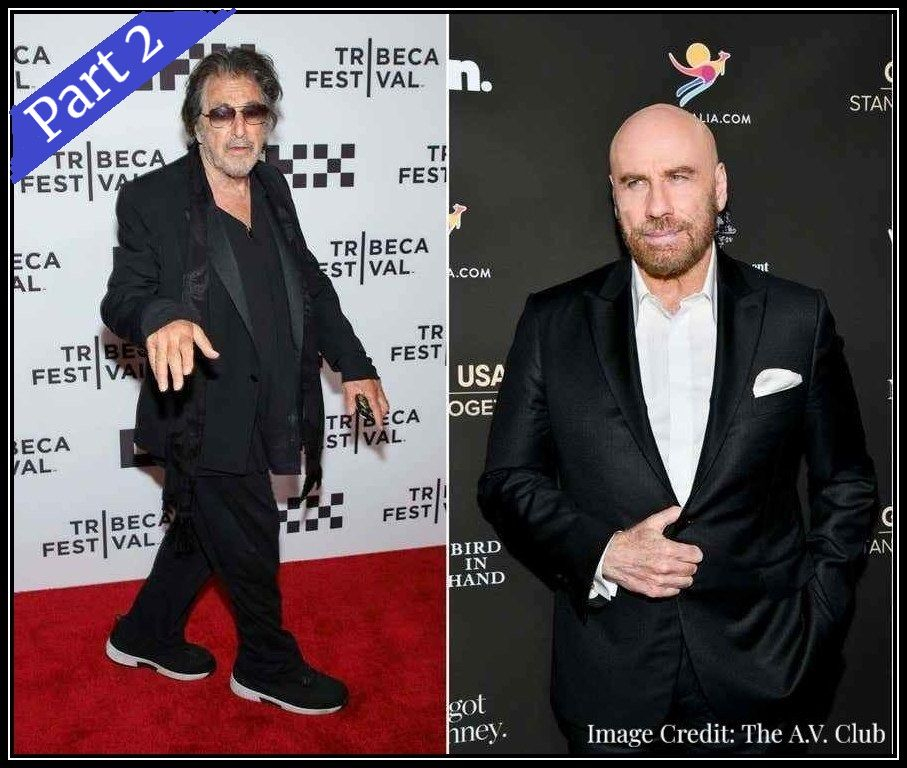
  • Al Pacino and John Travolta Meet the Giancana Myth – Part 2

    Al Pacino and John Travolta Meet the Giancana Myth – Part 2


    Nicholas Celozzi is an important part of the upcoming film because he will be a producer and he wrote a first draft of the script. Therefore its important to examine his 2011 documentary about Sam Giancana, Momo: The Sam Giancana Story. As I wrote in the first part of this essay, that film is rather prosaically produced, and it is only adequate as a sophomore’s version of Giancana’s life. Yet what makes it worse is that in its second half, it takes off into what I call the Giancana mythology.

    As I have tried to show, Sam Giancana had a higher profile than either Tony Accardo or Paul Ricca. At times, its almost as if he tried to raise his profile. Doing things like getting in a shouting match with an FBI agent at O’Hare Airport, and informing the agent, Bill Roemer to tell RFK to contact Frank Sinatra about any problems with The Outfit; these were off limits to someone like Accardo. Accardo’s belief was it was much easier to work in the dark than in the light. But because of incidents like these, because of his public romance with Phyllis Maguire and also due to his role in the CIA/Mafia plots to kill Castro, Giancana became probably the most publicly identified big city Don since Al Capone.

    About halfway through Celozzi’s documentary, he begins to indulge in the mythology. Much of this owes itself to the 1992 best-selling book Double Cross. I have written about that volume more than once and exposed it as a bad novel. As we shall see, it is not to be taken seriously. Anyone who does either has an agenda or has not done their homework.

    For instance, in William Brashler’s solid book on Giancana, one will not see any mention of Marilyn Monroe in the index. Which is as it should be. But in Celozzi’s film, her picture comes up right after the opening credits. And if we buy this film, Sam knew Monroe from way back. He was introduced to her by John Rosselli. Sam had invested in her career. But that is just for starters. Now Celozzi dives into National Tattler territory. Sam found out from Bob Maheu that the CIA had tapes of President Kennedy in bed with Monroe. Maheu then said that JFK dumped Monroe and Bobby Kennedy then began an affair with her.

    Even that isn’t enough. Sam learned that Monroe had love letters from Bobby Kennedy at her house. Giancana now schemed to have two killers terminate Monroe with a suppository thus making it appear a suicide. But scattering the letters through the house, thus exposing RFK and driving him from office. But, according to the film, somehow the Secret Service got there and stole the letters.

    Everything in those above two paragraphs is unadulterated horse crap. Brashler never mentioned Monroe, because she never had any attachment to the mobster, either financial or emotional. Monroe authority Don McGovern closely examined the rise of Monroe’s career. He concluded that The Outfit had nothing to do with it. The two men most responsible for her ascent were Joe Schenck and Johnny Hyde, particularly the latter. (Murder Orthodoxies, pp. 409-11) Much of this Monroe malarkey originates with Double Cross. McGovern took the section of that book dealing with Monroe and sliced and diced it. For instance, if we believe the novel then Chicago owned Marilyn’s contract when she was seventeen, named Norma Jeane, and married to Jimmy Dougherty in the San Fernando Valley. Which is a non-starter.

    McGovern also blows up the whole suppository story—at length. To raise just one point: if that would have been employed there would have been more of the drug found in her blood stream than her liver, the opposite of what happened. (McGovern, p. 514) Further, Double Cross maintains that Bobby Kennedy was in Los Angeles the day Monroe passed. (Chuck Giancana, p. 314). This was conclusively disproven by Sue Bernard’s book Marilyn: Intimate Exposures.(pp. 186-87) Finally, why would the Secret Service have been at Monroe’s house for any purpose? President Kennedy was back east at the time.

    But beyond that, as McGovern has explained, there is simply no credible evidence that Bobby Kennedy ever had any kind of affair with Monroe. And the two people most responsible for that false claim, David Heymann and Jeanne Carmen, have been shown to be serial fabulists. Carmen actually ended up stating, please sit down: that Rosselli murdered Giancana over Marilyn! In light of what we have established about Giancana’s death, this is pure fantasy. (See “Classic Blondes, Jeanne Carmen”, by April VeVea, 4/9/18)

    II

    In the Giancana documentary, Celozzi also uses the ever evolving tall tales of the late Judith Exner. Specifically that she was somehow a courier between the White House and Giancana for various nefarious functions like the plots to kill Castro. Exner’s fictions began in earnest back in 1988 for People magazine. After writing a near 300 page book in 1977 for a combined rights sale of what would be well over a million dollars today, it seems that Exner left out some rather important matters about her relations with both President Kennedy and Sam Giancana. What makes this lacuna even more strange is that her co-writer was Ovid Demaris, Demaris specialized in the Mafia, was an idolator of J. Edgar Hoover, and did what he could to prop up the Warren Commission cover up of President Kennedy’s assassination.

    In spite of that, Exner evidently had temporary amnesia back in 1977. For today’s equivalent of another 130,000 dollars from People magazine, she managed to enter into recovered memories syndrome and now recalled what she could not in 1977 or in her testimony before the Church Committee. To anyone actually versed in the CIA/Mafia plots to kill Castro, what she dumped out in 1988 is not just false. It is so bad that one wonders how it got printed.

    This time out, Exner’s writing partner was allegedly none other than Kitty Kelley. (I say allegedly, because as we shall see, Kelley was not active in the writing.) In this edition of Exner’s story, unbeknownst to her, she was actually carrying messages between Washington and Chicago, for, among other things, the liquidation of Fidel Castro. (The Assassinations, edited by James DiEugenio and Lisa Pease, p. 333). But it went beyond that. Kennedy was actually meeting with both Giancana and Rosselli! And get this: At the White House! After arranging these meetings, Exner realized retroactively that it was about terminating Castro.

    In the real world of course, this is pure malarkey. The idea that somehow two well-known mobsters like Rosselli and Giancana would be anywhere near the White House is science fiction. And as the 145 page CIA Inspector General Report proves, the Kennedys were never involved in the CIA/Mafia plots. (DiEugenio and Pease, pp. 328-29)

    It was later revealed that this whole pile of Exnerian rubbish was fabricated. Why? Because Exner and Kelley, to put it mildly, did not get along. As author George Carpozi discovered, the pair spent most of their time fighting because Kelley wanted to milk Exner for material on Frank Sinatra for an upcoming book. But the problem was the magazine had too much money invested in the project—six figures. To salvage that investment, the article ended up being prepared by the editors. (ibid, p. 334)

    As I have written in my recent two-part expose about Sy Hersh, Exner told so many lies that: 1.) Proposed corroborating witnesses couldn’t stomach her, and 2.) She could not keep track of her own prevarications.

    Concerning the first, Hersh got a man named Martin Underwood to say he was a witness to Giancana getting the messages from Exner. (Hersh, The Dark Side of Camelot, pp. 304-05) Unfortunately for Hersh, Exner and ABC, Underwood refused to appear for Peter Jennings on their TV special based on Hersh’s book. When Underwood was questioned under oath by the Assassination Records Review Board, (ARRB) we found out why he was a no show. He now denied the whole episode; saying that “he had no knowledge about her alleged role as a courier”. (ARRB Final Report, pp. 112, 135-36)

    Concerning point 2, Hersh wrote in his book that Bobby Kennedy was in on this messaging between the White House and Giancana. Exner told Hersh that RFK would tap her on the shoulder and ask, “Are you still comfortable doing this? We want you to let us know if you don’t want to.” (Hersh, pp. 307-08) Well, if such was the case, then how does one explain an exchange Exner had with the late Larry King on his program of February 4, 1992. King asked her about any relationship with RFK and she replied with a single world : None.

    The whole contention of this “Washington-Chicago messaging” is fundamentally preposterous. For the simple matter that, as revealed in part 1, the FBI and the Justice Department had a massive surveillance program on Giancana. This began shortly after the infamous 1957 Apalachin meeting in New York, which exposed in public a national network of organized crime. After that embarrassment, J Edgar Hoover began his Top Hoodlum Program in major cities, but with special attention to Chicago. That team of top agents began a program that created wall to wall monitoring—including pervasive electronic surveillance—of the Chicago mob. And especially on Giancana, since by 1957 he was the titular leader. The idea that this “Exner messaging” would not turn up on all those reels and reels of tape is more than just ridiculous. Its risible. Its even more risible when one realizes that RFK knew all about it and pushed it even further. Thus placing himself right in Hoover’s crosshairs. Please. (Man Against the Mob, by William Roemer, pp. 74-78, 167)

    III

    But because Momo: The Sam Giancana Story buys into Exner’s fantasies, it has to go all the way with them. So inevitably we get the whole elections heist of 1960. Which is Exner as transformed by the novel Double Cross. What that means is this. For People Exner said that it was not just the Castro plots she was “messaging” about. It was also the West Virginia primary which was held on May 10, 1960. (Since she meet JFK on February 7 of that year, we are supposed to believe the relationship progressed to a national political level at warp speed.) And, of course, the general election in November of 1960. In Double Cross this got amplified into Joseph Kennedy asking for Giancana’s help to get his son elected, with his word that the new president would lay off the pressure on him once elected. Oh, and I almost forgot, Joe knew The Outfit since he had been a bootlegger.

    Two authors blew up the last part of this mythology. Daniel Okrent wrote one of the best books on Prohibition. Towards the end of his volume he examined this charge of Joe Kennedy being part of the bootlegging industry. He cogently observes that since Kennedy had to be congressionally approved for the six appointments that presidents gave him, there were extensive investigations of his background. In over 800 pages of inquiry, there was not one piece of evidence revealing this alleged black market business. What makes this even more compelling is that the first three appointments occurred right after Prohibition had been repealed. Therefore, why was no one willing to rat out Papa Kennedy? (Last Call, p. 369)

    As Okrent adds, Joe Kennedy did get into the liquor business, but it was after Prohibition had been repealed. In light of that, he was not a bootlegger. It was legal. (ibid, p. 367)

    The other book that helped expose this mythology was David Nasaw’s biography, The Patriarch. That work contained the widest and most detailed accounting of Joe Kennedy’s wealth ever published. Joe Kennedy began by investing in the stock market and distressed properties. In fact he joined Hayden/Stone, the largest stock broker in New England, in 1919 when Prohibition passed. (Are we to believe he was putting up stills at those distressed properties?)

    But this was only the beginning for the multimillionaire. He made so much off a booming stock market that he took those holdings and chose to get into the movie business. One reason he got so wealthy was that insider trading was legal at that time. (Nasaw, p. 78) With that stock market and real estate wealth he put together a film distribution and exhibition company, and then bought his own theaters in the northeast. (Ibid, pp. 59-67). In just three years, Kennedy resigned Hayden/Stone and opened up his own bank.

    Joe Kennedy made so much money in the film business, he first moved to New York, and then bought a second home in Beverly Hills. Both estates had servants and chauffeurs. He bought a Rolls Royce. (Nasaw, pp. 87-89) Joe Kennedy distributed 51 pictures in one year! At a time when there were 20,000 theaters in America. But Joe also purchased stocks in film companies and was in demand as a chief executive. He wound up running three companies. And he demanded and got stock options, which he could trade at any time. (Nasaw, pp. 119-27). But he never got out of real estate. In 1947 he purchased the Merchandise Mart in Chicago for 12 million. In 2007 it was valued at nearly a billion.

    So the idea that Joe would jeopardize this legitimate financial empire he had to get into something criminal is just not credible. Especially since his overall ambition was to get his children into politics. In other words, according to Celozzi, Joe would sacrifice both his financial fortune and his children’s careers to do something illegally that he did eventually do legally.

    IV

    John Binder pulled out the rug on the other part of the Double Cross fantasy. Namely the idea that Giancana helped put Kennedy over the top in Illinois. Author Binder has shown that there is not any evidence that Giancana delivered an advantage to Kennedy in the wards The Outfit controlled. In fact, they actually performed under par that year. (Public Choice, February 2007, “Organized Crime and the 1960 Presidential Election.)

    The other election that the Mob devotees mention is the West Virginia primary. Again, that contention is rendered dubious under analysis. There are two good books on the subject. One by Dan Fleming—Kennedy vs Humphrey, West Virginia, 1960—and one by Ray Chafin—Just Good Politics. The former is an after the fact academic study. The latter is written by a prominent union member who saw it all from the inside as it was happening. Neither author detected any kind of mob influence or any trace of Skinny D’Amato, the man Double Cross says Giancana sent to West Virginia to work with local sheriffs and officials. (Chuck Giancana, p. 284). For example, Fleming did 80 interviews, and visited some shady underworld venues and characters. No word of D’Amato. (Fleming, pp. 170-71) And as the author notes, no subsequent investigation by either the FBI or the state authorities ever uncovered any illegality. Not even one performed by Barry Goldwater who hired a former FBI official, Walter Holloway, to investigate. (Fleming, pp. 107-12)

    The authors who prop up this whole Double Cross Illinois idea are so agenda-driven, and the people who listen to it are so thoughtless that they ignore something quite important and obvious. Kennedy would have won in 1960 even if he had lost Illinois due to the structure of the Electoral College. (For those who desire a more in depth examination of these fatuous electoral issues, please see the second half of my review of Mark Shaw’s Denial of Justice)

    I won’t examine the other nutty Mob claims in this documentary, that is about Joe Kennedy and the Purple Gang (?) and Frank Costello. In light of the above factual record, they see to me to have the credibility and gravitas of a Three Stooges comedy. (in fact, as Okrent notes, Al Capone’s 93 year old piano tuner once claimed that Joe Kennedy came to Capone’s house to trade a shipment of Irish whiskey for a load of Capone’s Canadian variety.) But I will add this, Celozzi cuts out almost everything about Bobby Kennedy and his blistering public attacks on the Cosa Nostra in the fifties. Which is quite an omission since it was from his position on the McLellan Committee that RFK was launched into national prominence. Maybe Celozzi does not want to show this since it would render questionable any idea that somehow Bobby would barter away his almost messianic mission once he became Attorney General.

    Let us be plain. This whole fractured framework was and is a way for a gang of criminals to carry out revenge on the Kennedy clan for exposing them, ridiculing them, demeaning them in public and placing them in jail. At one point, almost bringing them to their knees. (HSCA Vol. V, p. 455) Its their way of saying: “Well, who do those Kennedys think they were anyway? The father was no better than us.” The fact that its not true and the idea that RFK would be part of it, that does not matter. Its sensational, raw meat, tabloid stuff. And that is what, in large part, the MSM has catered to—especially with the rise of cable TV in the late eighties and early nineties. Far from being true history, what all this does is reveal the shallowness of the culture we live in today.

    V

    Momo: The Sam Giancana Story ends with two murders. The first is the killing of President Kennedy in Dallas. The second is the slaying of Giancana in Chicago after his return from Mexico. For the latter, the film generally follows the outline I sketched in part one i.e. about Blasi and Accardo. The one exception being that it maintains that Phyllis McGuire got Sam’s money. It does not explain how or why this occurred. For according to The Don the couple had split and Giancana had a new west coast paramour. (Brashler, pp. 296-97)

    In the documentary, Celozzi says that Oswald was suggested by Carlos Marcello. Giancana arranged the hit team of Richard Cain, Chuck Nicoletti and Phil Alderisio. He then got J. D. Tippit and Roscoe White who, according to Celozzi, were on his payroll to shoot Oswald. But Oswald killed Tippit and therefore Jack Ruby was brought in to murder Oswald.

    As the reader can see, Giancana brother Pepe’s story differs from brother Chuck’s Double Cross. According to Chuck’s novel, there was a group of assassins. The three above plus Charles Harrelson and Jack Lawrence and two nameless men brought in by Santo Trafficante. (Chuck Giancana, p. 334). Another contradiction: in Double Cross, TIppit and White were not on Giancana’s dole, they were CIA men. (ibid, p. 335)

    There are two different versions of what Sam was doing that day. According to the documentary, one of his daughters says he was at home. In news stories, Celozzi says Pepe was driving Sam around for a couple of days. (Deadline, June 27, 2022). Also, according to Daily Mail, Celozzi’s assassination team has now changed for the feature film. John Rosselli is a part of it. (July 15, 2022.). The problem with that is simple: Johnny was first in Las Vegas, and then in Los Angeles during that assassination weekend. (Lee Server, Handsome Johnny, pp. 418-19). As Larry Hancock has written, Johnny may have been in Vegas to escape the FBI surveillance on him.

    In Double Cross, Roscoe White killed Tippit when the patrolman showed signs of cold feet. (Giancana, p. 335). In the documentary, Oswald killed Tippit. But in the Daily Mail interview Celozzi now has Chuck Nicoletti, not White, in the car with Tippit.

    I should add one last caveat from a most credible source. As stated in part one, FBI agent William Roemer had at least four electronic devices planted in Giancana’s meeting places by 1963. He listened to all of this coverage and he wrote that he never heard of any discussion of an attempt on JFK, or RFK for that matter. And, post facto, there was no indication of any such thing either. He found it hard to understand how it could have escaped his team. (Roemer, Man Against the Mob, p 188).

    So do I.

    How many brothers of Sam Giancana are going to rise and tell their version of how Momo did away with John Kennedy. Recall, Chuck was at least alive when he wrote his novel. Pepe died 27 years ago.


    Go to Part 1 of 2

  • Al Pacino and John Travolta Meet the Giancana Myth – Part 1

    Al Pacino and John Travolta Meet the Giancana Myth – Part 1


    The first announcement I saw was on last June 27, 2022. It was in the Hollywood trade paper Deadline. It said that David Mamet was going to direct a film version of a Nicholas Celozzi script about Celozzi’s great uncle Sam Giancana. In describing the script, the key statement in that story was the following:

    …that purports to tell how his great uncle, the notorious Chicago mobster Sam Giancana, arranged the assassination of President John F. Kennedy as revenge for trying to bring down organized crime after the mob helped put JFK in the White House.

    The story also stated that Bonnie Giancana, Sam’s daughter, will be a consultant and executive producer.

    David Mamet has a strong interest in the JFK case. Oliver Stone and I met with him about two years ago for lunch at a restaurant in Brentwood. He was kind enough to bring along copies of his script called Blackbird. That was an interesting entertainment about the possible alteration of the Zapruder film. As noted in the article, someone pulled the plug on that production the day before they were to start filming, even though Cate Blanchett was signed as the star.

    Let us now leap forward to another story in Deadline, dated May 15, 2023. In 11 months, Celozzi put together a cast consisting of Al Pacino, John Travolta, Viggo Mortenson, Shia La Beouf, Rebecca Pidgeon and Courtney Love. In this installment, the story line is still the same: “a hit ordered by Chicago mob kingpin Sam Giancana as payback for JFK’s attempt to undermine the mob after they helped get him elected.” The story then parenthetically adds that this theme was a big part of Oliver Stone’s JFK. Which it was not. In fact, I don’t even recall it being any part of the 1991 feature film.

    In the first article Celozzi states that much of his material is based on stories he recalled hearing from a guy named Pepe Giancana, real name Joseph. He was a brother of Sam who died in 1996.

    The longest story I have seen about this project was in the Daily Mail last July 15th. It turns out that in two days in November of 1963 (the original title of the script), Pepe—a lowly bookmaker—drove Sam around. He had to since Giancana had sent men to Dallas for 11/22/63. Their job was to help Lee Oswald murder JFK, but to also make sure Oswald did not talk afterwards. Celozzi told reporter Tom Leonard that the three men in Dallas were Charles Nicoletti, John Rosselli and Jack Ruby. But they did not have a clear idea of how the murder would be done. It turned out Rosselli was to take out Kennedy if Oswald missed and Nicoletti was to kill Oswald before he was apprehended.

    Pepe told Celozzi that Oswald misfired from the upper floors of the Texas School Book Depository. So Rosselli fired and hit JFK. This caused Oswald to flee the building. Nicoletti was in a car with patrolman J. D. Tippit and was screaming at Oswald to get in, but he did not. So they followed and TIppit caught up with him but Oswald shot the policeman. Nicoletti followed Oswald but lost him. Sam then contacted Jack Ruby. According to Celozzi, Jack knew he only had six months to live since he had cancer. So he polished off Oswald.

    After reading these stories, I decided to go back and look at a documentary film made by Celozzi about ten years ago. It was called Momo: The Sam Giancana Story. Because two of the main talking heads were Sam’s daughters—Francine and Antoinette—the documentary was rather a warm and fuzzy look at the Chicago Don who, according to the FBI, was responsible for about 13 murders as he was working his way up the ladder in Chicago. The first half of that film was passable as a biography. But left some important details out. Since Giancana is the major character in the upcoming feature, let us fill in some factors that help spell out the man’s life. Including the probability that a pall bearer at his funeral, Butch Blasi, was his likely murderer.

    II

    Giancana was not the real name of the family. It was Giangana and they stemmed from Sicily. (William Brashler, The Don, p. 12) Leaving Italy, Sam’s father Antonio moved into a section of Chicago called The Patch, which was the equivalent of New York’s Little Italy. Sam (original name Salvatore), was born in 1908 and his mother died when he was two. (Sam the Cigar, by Fergus Mason, p. 19) Antonio remarried—actually twice—and eventually the family had 8 children. His father was not very kind to Salvatore and physically abused him. Sam was thrown out of school and escorted to St Charles Reformatory.

    When he left the reformatory in 1921, Sam joined a gang of juvenile delinquents in The Patch called The 42’s. That title was based on the Ali Baba legend of the 40 thieves. (Brashler, p. 32) For Sam, this was a kind of apprenticeship for his future career in La Cosa Nostra. The 42’s pulled off burglaries and stole cars, graduating to bombings and murders. But they also learned how to manipulate the system by paying off cops and judges. This was done by collecting dues from members. (Susan McNicoll, Mafia Boss: Sam Giancana, p. 10) But still, shortly after marrying his only wife Angeline DeTolve, Sam went to Joliet prison on charges of attempted burglary.

    Sam made his reputation as what was called a “wheel man” or getaway driver. (Brashler, p. 33) That ability, combined with an ill-fated amendment, is what caused Sam to come to the attention of La Cosa Nostra in Chicago. Due to the 18th amendment and the accompanying Volstead Act, in January of 1920 America went dry. Sam became a transporter of illicit liquor between men like Joe Esposito and the Genna brothers who set up a series of stills.(McNicoll, pp. 10-12) Esposito was killed in a murder in which Giancana was the getaway driver.

    The first leader of this profitable Chicago network was Big Jim Colosimo, who brought in Johnny Torrio from New York. Torrio ended up killing Colosimo over control of liquor distribution. Torrio had stills set up in Canada and he expanded the business scope by opening up speakeasies all over the city. But Torrio was then shot in 1925, returned to Italy and Al Capone, Torrio’s partner, took over. (Mason, p. 27) Sam became a driver for Capone’s gang and was inducted as a member in 1926. (ibid, p. 30) He was also arrested for murder around this time, but got off when the chief witness was killed.

    Capone was convicted of income tax evasion in 1931. He was paroled in 1939 but did not return to live in Chicago. He died in Florida in 1947. When Capone was jailed, control of the Chicago mob was given to Frank Nitti and Paul Ricca. And it was around that time that Lucky Luciano set up the national commission of organized crime. (Brashler, p. 68)

    Ricca liked Giancana but Sam was busted again in 1939. He got a four year term for manufacturing alcohol without a license. This ended up being a blessing in disguise. Because while in prison he met up with a man named Bill Skidmore. It was Skidmore who introduced him to Eddie Jones. Jones was the leading member of a family who ran the lottery rackets in the African American community. To say this was profitable does not begin to describe the money it brought in: the low estimates being $15,000 per day. (Brashler, p. 91; Mason p. 39) Skidmore knew about this and he knew who Jones was, since he was in the same cell block. Eddie Jones did something that most of his henchmen did not do: he talked to Caucasian members of the Chicago mob, now called The Outfit. Jones and Skidmore took Sam to school on the numbers game. Giancana did the computations and figured no other racket The Outfit was in had this kind of profit margin.

    III

    Jones had made a mistake. For when Sam got out of prison in late 1942 he understood what could bring him both wealth and stature in The Outfit. In May of 1946 he kidnapped Eddie and threatened him with death unless he gave up his lottery racket to Sam. In return Sam would give him a cut and a lump sum of 250,000 dollars. Jones took the offer he could not refuse and left for his villa in Mexico. (Brashler, pp. 101-05)

    This greatly expanded Giancana’s wealth, since the Jones lottery was not just in Illinois but in at least three other states: Iowa, Maine and Idaho. This prize greatly curried favor with Tony Accardo, Ricca and Jake Guzik, the triumvirate over The Outfit. Giancana now became the equivalent of Accardo’s chief of staff. (Brashler, p. 112). But there was still one holdout for the African American lottery in Chicago, a man named Ted Roe. This feud between Roe and Giancana went on for years, with several casualties. Finally, Sam had Roe killed in late summer of 1952.

    Sam now had so much money he could set up genuine small businesses and list himself as a salesman for his brother-in-law’s Central Envelope Company. He used his new wealth to set up gambling centers through wire services. All the while Accardo was teaching Sam the ways of The Outfit. When his student was fully tutored, Accardo decided to step down since he was under intense pressure from the IRS. Giancana assumed power in 1955, a year after his wife died. (Mason, p. 54). The understanding was that Accardo would serve as first consigliere.

    But once Sam took power in Chicago, it was almost deemed that his would be a rocky reign. First, back in 1950-51 Senator Estes Kefauver held hearings throughout the country on organized crime and many of these were broadcast to a wide audience. (McNicoll, p. 41) That was the first national exposure of La Cosa Nostra. And people like Accardo, Ricca, and Frank Costello testified. The single division of the Chicago Police Department investigating organized crime gave Kefauver some materials they had on The Outfit. One of the outcomes of this attention is that it made it difficult for the FBI to now deny that La Cosa Nostra existed in America.

    IV

    In 1957 two events occurred which further exposed organized crime in America to a point that there was no turning back. One was caused simply by accident i.e. the discovery of the Apalachin meeting in New York. Scores of Cosa Nostra leaders were gathered there to discuss, among other things, the aftermath of the attempted murder and the actual murder of, respectively, Frank Costello and Albert Anastasia. The local authorities thought it was odd to have so many expensive cars gathering in such a rural location. When they discovered many of them were registered to known criminals, they called in state policemen, set up roadblocks and raided the home of Joseph Barbara. Giancana never wanted the meeting to be there and pushed to have it in Chicago. (Brashler, p. 172) But he did attend, and was one of the capos to escape into the woods while over sixty were apprehended. But their convictions were overturned on appeal the following year. This event provoked J. Edgar Hoover to form the FBI’s Top Hoodlum Program. (ibid, p. 135) As part of it a special team was assigned to Chicago. Men who were college graduates, some with law degrees e.g. Ralph Hill, Vincent Inserra, Jack Roberts and, as we will see, Bill Roemer.

    The other event that made things troublesome for the Cosa Nostra in 1957 was the formation of the McClellan Committee, sometimes billed as the Rackets Committee. That committee was led by Senator John L. McClellan, a Democrat from Arkansas. But both Senator John Kennedy and his brother Robert served on it. The former as a committee member and the latter as Chief Counsel and investigator. This is where RFK’s legendary pursuit of Teamster leaders Dave Beck and Jimmy Hoffa began. Bobby soon discovered that Hoffa had set up several ‘paper locals” for members of Cosa Nostra to run, these were local unions in name only which Hoffa used to prop up vote counts. Therefore, Kennedy’s inquiry spread over into organized crime. When Apalachin occurred, he immediately went to FBI headquarters and was shocked when he found out how little information Hoover had on these big city Mafiosi. (McNicoll, p.49)

    Like its predecessor, the Kefauver Committee, the McClellan hearings attracted much media attention, some of it on live television. In front of cameras, the public saw Beck take the fifth amendment 117 times. He was indicted for tax evasion in May of 1957. Later that year, the AFL-CIO expelled the Teamsters from membership. In one of his most memorable confrontations, Bobby Kennedy finally got Giancana in front of the committee. This was after Sam had criticized the committee at length to reporter Sandy Smith. (Brashler, pp. 156-57) RFK did not take this mildly and he referred to Giancana as ‘Chief gunman for the group that succeeded the Capone mob.” Which was more or less accurate. (Arthur Schlesinger, Robert Kennedy and His Times, p. 172) In June of 1959 Giancana took the Fifth Amendment 33 times as Pierre Salinger set forth his past record. Then the following much quoted exchange took place:

    RFK: Would you tell us if you have opposition from anybody you dispose of …by having them stuffed in a trunk? Is that what you do Mr. Giancana?
    SG: I decline to answer because I honestly believe my answer might tend to incriminate me.
    RFK: Would you tell us about any of your operations or will you just giggle every time I ask you a question?
    SG: I decline to answer because I honestly believe my answer might tend to incriminate me.
    RFK: I thought only little girls giggled Mr. Giancana. (ibid)

    Around this time, the FBI was beginning to get some traction against The Outfit. Hoover allowed them to use electronic surveillance, to recruit informants, and to follow Giancana wherever he went. By following Giancana, Gus Alex, Murray Humphreys, Jake Guzik and Frank Ferraro, they began to locate their meeting places. They applied for permission to bug their conference rooms and this was approved. But once this was in place, something really bizarre upset the proverbial apple cart.

    The CIA recruited Giancana to kill Fidel Castro.

    V

    There have been many renditions of how this recruitment happened, how it progressed and its ultimate failure. Many of which the reader should avoid. Perhaps the very worst is in Seymour Hersh’s hatchet job of a book, The Dark Side of Camelot. But one of the first things the Assassination Records Review Board (ARRB) did in the mid-nineties was to declassify the CIA’s Inspector General’s Report on these plots. That report was written at the request of Lyndon Johnson. The reason being that John Rosselli was talking to certain people in Washington and distorted versions of the plots were getting out into the media e.g. Drew Pearson. (Handsome Johnny, by Lee Server, pp. 460-61, also All American Mafioso, by Charles Rappleye and Ed Becker, p. 270). Unfortunately, the Church Committee chose not to include the 145 page IG Report in its four volumes. But when the ARRB did declassify it, the mythology about what had happened was dispelled.

    In 1960, President Eisenhower had approved a plan to get rid of Fidel Castro. This included a possible invasion. The Director of Plans, Richard Bissell, began to think up a fallback position—namely assassination—to help with Castro’s removal. He broached the idea of contacting underworld figures with Sheffield Edwards, chief of the Office of Security. (IG Report, p. 14) Edwards thought about using Robert Maheu since he had been on retainer for CIA and also had contacts in Las Vegas, where the Cosa Nostra had some very profitable gambling casinos. John Rosselli was The Outfit’s man in Vegas and Maheu contacted him. Rosselli decided that the two men who could help the most in this effort were Giancana and Santo Trafficante of Tampa and he introduced the CIA, in the form of Edward’s go-between, Jim O’Connell, to the two men. (IG Report, pp. 16-19)

    Giancana, the seasoned killer, rejected a gangland shooting since he said no one would volunteer for an assignment like that since it would be almost impossible to escape. He preferred administering certain poisons to Castro. (IG Report, p. 25). The long and the short of it was that none of the attempts worked. And therefore, when the Bay of Pigs failed spectacularly, the man who started the plots—Dick Bissell- and the men who approved them—Director Allen Dulles and Deputy. Director Charles Cabell—were fired. (IG Report, pp. 17-18). But the reasons for their firings were for misleading President Kennedy over the Bay of Pigs invasion. The IG Report makes it clear that neither JFK nor RFK knew anything about the plots to kill Castro. (IG Report, pp. 132-33)

    So how did Attorney General Robert Kennedy find out about the plots? Giancana asked a favor of Maheu. Sam suspected his girlfriend, professional singer Phyllis McGuire, was cheating on him with comedian Dan Rowan in Las Vegas. (Brashler, p. 206) So he asked Maheu to bug Rowan’s hotel room. But the authorities discovered the bugging equipment. (IG Report, pp. 58, 59,68) This was then reported to the FBI. The FBI reported the episode to RFK and he requested a briefing on the incident. He could not understand why Maheu was so interested in aiding Giancana with his personal life. He got the answer to that question in May of 1962. (David Talbot, Brothers, pp. 85-86). But as the IG Report makes clear, the CIA deceived Kennedy by saying the plots had been discontinued when in fact they had not. (IG Report, p. 64) In what the Agency termed Phase Two of the plots, one gangster from the first phase, John Rosselli, had teamed up with CIA officer William Harvey in attempts to send teams into Cuba to terminate Castro. (Talbot, p. 86).

    The plots went on until 1966. With first Harvey and Rosselli, and then with a Cuban national named Rolando Cubela. But we will end our discussion of them here since this ended Giancana’s role in them. If the reader has not read the CIA’s IG Report, I recommend he does to avoid being misled by writers with an agenda, like Hersh. (Click here)

    VI

    To say that Giancana’s decade long reign as the leader of The Outfit was rocky does not convey how contrary to the rules of La Cosa Nostra it was. Accardo was very determined to never draw any undue attention to his activities, since that allowed them to work in the dark so to speak. But for whatever reason Giancana could not or would not conduct himself in that manner. Relying on Maheu to do him a personal favor which backfired is one example. His open wooing of Phyllis McGuire is another. Mafia Dons are not supposed to let themselves be photographed in public, especially with a celebrity. Since those kinds of pictures go around the world in newspapers and magazines. But this is what happened with Giancana. Unlike Accardo, he also had a volatile temper. Once after FBI agent Bill Roemer walked into one of his meeting places as a deliberate provocation, Giancana had one of his men, Chuck English, stop the G man as he was leaving. English told Roemer that if Bobby Kennedy wanted to talk to him, he knew who to go to. Roemer took this to be Frank Sinatra, and the reply confirmed it. (Man Against the Mob by William Roemer, p. 263) When The Outfit’s foremost fixer, Murray Humphreys, heard this he shouted, “You don’t give up a legit guy! For Christ sakes that’s a cardinal rule!” (ibid)

    And then of course, there was the famous shouting match at O’Hare Airport in July of 1961. The FBI had decided to really turn up the heat on Giancana, knowing that AG Bobby Kennedy had made him a prime target. In fact, in a short time, RFK would assign 70 agents to Chicago, which was a 1400 % increase in manpower. (Roemer, p. 167). The Bureau decided to intercept Giancana as he was traveling with McGuire. They met her as she was getting off a plane and escorted the singer to a private room to discuss Giancana, knowing this would enrage the Don. Did it ever. Roemer and Giancana got into a screaming match with literally hundreds of people walking to and fro. Roemer and Ralph Hill asked Giancana if he knew anything about the listening device in Dan Rowan’s room in Vegas, knowing this would provoke him. Sam responded with some rather harsh language sprinkled with profanity, even threatening Roemer at least twice, but then backing off. Finally Roemer let loose with the following:

    All you folks. Come over here! I want you to see something. Take a look at this piece of slime! This is Sam Giancana. He is the boss of the underworld here in Chicago. Take a good look at this garbage! The big boss, Giancana. You people are lucky, you’re just passing through Chicago. We have to live with this jerk! (Roemer, p. 150)

    It was these kinds of open confrontations that the outside leaders of The Outfit, like Accardo and Paul Ricca, looked at with disdain.

    Bobby Kennedy’s focus on Giancana eventually led to the Lock Step tactic in 1963. This was a degree of surveillance that came pretty much close to being total and 24/7. Nine FBI agents were on each 12 hour shift.

    1. When Sam arrived at the airport they trailed him off the plane and drove home behind him.
    2. At night there were three cars around his house.
    3. He was followed while taking walks in the park.
    4. When Sam went to dinner they took the next table.
    5. If Sam got up from the table to go to the men’s room, Roemer went to the men’s room and was in the next urinal.
    6. When Sam went golfing, they were behind him in the next foursome.

    I could go on, but this does not even include the electronic surveillance they had blanketed Giancana with. (We will get to that later.). Giancana couldn’t take it and he filed a lawsuit. In Celozzi’s documentary he says that Giancana won the suit. This is not really true. Bobby Kennedy decided not to mount a defense on constitutional grounds. He did not think a lower court could intervene in a DOJ inquiry. So even though Giancana prevailed at trial, this was overruled on appeal.(Brashler p. 243) And there was no let up in the interim between the two court rulings, since Roemer got the sheriff’s office to make up the parameters which the local court had limited the FBI to. (Roemer, p. 270)

    This was really the beginning of the end for Giancana. For now, with all of this surveillance on the man, the local US attorney’s office, led by David Schippers, decided to place him in a legal vise. They would subpoena Giancana and grant him immunity. This way, if he refused to reply to questions, he could be prosecuted for contempt. That is what happened and Giancana was convicted of contempt. All of his appeals failed.(Brashler, p. 272) When Giancana was released after a year—the life left on the grand jury,—he knew that he could not regain power since Ricca and Accardo would veto it. He also knew the DOJ could use the same tactic to place him in prison again. So in 1966 he made a smart decision and fled to Cuernavaca in Mexico with Richard Cain.

    Cain was a complex character about which one could write a separate essay. He started as a Chicago cop who was fired for supporting Mayor Richard Daley’s GOP opponent. He went to Miami and trained Cuban exiles for the Bay of Pigs. He then went to work for Richard Oglivie, the Chicago sheriff. But it was found out he was—with the help of the Cosa Nostra—making phony drug raids in order to build his own reputation; so he was fired again. He was also convicted for perjury, obstruction and conspiracy, but that was overturned on appeal. (Brashler, pp. 288-89)

    Cain set up Sam in Cuernavaca and furnished him with a lawyer named Jorge Castillo. There he served as a roving ambassador for The Outfit. He set up gambling casinos on cruise ships in the Caribbean and even one as far away as Tehran. It is likely that Sam would have stayed there for the rest of his days. But Castillo made a rather large mistake: he failed to gain Giancana permanent resident status. So in July of 1974 his new home in San Cristobal was raided and he was sent back to Chicago where Roemer was waiting for his plane. But the man who got off was not the same Giancana. In fact, he told the burly G man he wanted no trouble and did not want to get personal like it had been. (Roemer, p. 352)

    Upon his return Giancana made four grand jury appearances and was reputed to have said he was not going to rot in jail. He also told Accardo he was reluctant to share his new enterprises in the Caribbean and Tehran with The Outfit. (McNicoll, pp.96, 98) Along with his notoriety—he was slated to appear before the Church Committee—these may have been the reasons for his murder.

    The circumstantial evidence seems to indicate that Blasi was the hit man. He had been at the home that July night, left, and was seen coming back later, around 10 :30 PM by Francine Giancana. (ibid, p. 98; see also Brashler, p. 321) Giancana knew his killer since he let him into his house and then turned his back on him as he was cooking peppers and sausages. The weapon was a .22 Duromatic target pistol with a silencer. The first bullet came in at the back of the head landing in the front left portion of his brain. Giancana fell to the floor and the killer shot him through his mouth. Finally the silencer was placed under the victim’s chin, aimed upward, and five more bullets shattered his jaw. Giancana had lived by the gun and now he had died by the gum.

    The above is a summary of Giancana’s life. And the Celozzi documentary deals with most of the matters in an adequate way. It is not at all distinguished as film making. But the offensive part of the film is in certain matters that, to this viewer, should not be in a serious documentary. Since it is part of what has come to be known as the Giancana myth.

    We will deal with these in Part 2.


    Go to Part 2 of 2

  • Lawsuit Filed Over the Original Nix Film


    Read the article here. (New York Post)

  • Walker Bullet CE 573: Is it Real?

    Walker Bullet CE 573: Is it Real?


    As most JFK researchers know, the “Walker Bullet,” or CE 573, was purportedly extracted from the home of General Edwin Walker on April 10, 1963, and was contemporaneously described in official Dallas Police Department (DPD) reports as “steel jacketed.” Someone had taken a potshot at Walker that night, through the window on the rear side of his house, in front of which the General was seated. Or so Walker had related to the DPD that night.

    Not one, but rather two, DPD detectives, by the names of Ira Van Cleave and Don E. McElroy, put their signatures on a General Offense Report, and authored and signed a Supplementary Offense Report on April 10.

    In the Supplementary Offense Report, both detectives observed “a bullet of unknown caliber, steel jacket, had been shot through the window” at Walker’s home, as the General sat his desk.[1]

    Two DPD patrolmen, B.G. Norvell and J.P. Tucker authored the General Offense Report, which also identified the Walker Bullet as a “steel jacketed bullet.” All four DPD officers had held the Walker Bullet that night in their hands that night, and inscribed initials into it, according to official reports.

    The Walker Bullet that night famously missed the right-wing General—a national political figure—and had then passed through an interior wall, became badly deformed, but, reportedly, subsequently and curiously came to rest in between bundled papers stacked up against the wall.

    Months later, the Warren Commission would conclude it was Lee Harvey Oswald (LHO) who shot at and attempted to murder Walker that night. In part after the FBI said the Walker Bullet, or CE 573, was in fact the same type of Western-brand ammo that LHO used in his Mannlicher-Carcano rifle. Of course, the problem is the Walker Bullet in the possession of the Warren Commission, CE 573, is copper jacketed, and obviously so.

    CE 573, whatever its true origins, is a severely mangled bullet; so much so that its copper-jacketing has been torn asunder. Thus any observer, even a layman, can easily see the copper jacket is in fact copper through-and-through, and not a relatively uncommon steel-jacketed bullet with copper-gilding. It would not be surprising if a photo of CE 573 is used in police-cadet training courses somewhere as a classic example of a copper-jacketed bullet.

    Moreover, there are initials carved into CE 573, though of mysterious origin. Anyone carving initials into a copper-jacketed bullet would immediately know it was copper-jacketed, and not steel-jacketed, as copper is softer than steel.

    In addition, anyone carving initials into a copper-gilded steel jacketed bullet would notice the steel color and hardness emerging from under the microscopically thin copper gilding. It is inexplicable that even one big-city police detective would describe CE 573 as “steel-jacketed.” But two DPD detectives and two DPD patrolman authored and signed brief one-page reports prominently describing the Walker Bullet as exactly that, “steel jacketed”—after having handled the slug and marking it with their initials.

    Steel-Jacketed Bullets are a Rarity

    There are yet more puzzling aspects of the DPD detectives concurring and specifically noting that the Walker Bullet was “steel jacketed.”

    The vast majority of bullets in the 1960s, and even today, are copper-jacketed, and have been for more than a century.

    Bullets with metal jackets largely replaced plain lead bullets at about the same time that smokeless propellants replaced black powder in the majority of rifle ammunition. The higher pressures and temperatures produced by smokeless propellants were more than plain lead could support. This was overcome by adding an outer skin of harder metal to lead bullets. Since pure copper is difficult to cold-work, copper alloys became the standard jacket material.” — Global Forensic & Justice Center.[2]

    So, copper-jacketed (technically, copper-alloy jacketed) bullets largely replaced unjacketed lead bullets in first half of the 1900s, and had become standard by the 1960s.

    Steel-jacketed bullets, in contrast, are generally specialty items, designed for extraordinary penetrating power, often in military applications. But importantly, there have been inexpensive, steel-jacketed bullets on US civilian markets in the decades after WWII, often military surplus. More on that key topic later.

    In any event, any competent police detective working an attempted murder scene, when picking up the bullet in evidence, would, of course, try to detect its nature—the bore, jacketing, brand, and so on. A relatively rare, steel-jacketed bullet would be very notable—a valuable clue. The would-be murderer would have been armed with unusual ammo, very much worth noting. Especially in the case of an attempted murder of a very high-profile public figure, as in General Walker.

    Why would DPD detectives call an obviously copper-jacketed slug, a “steel jacketed” bullet?

    It defies explanation, especially as copper-jacketed bullets were and are the norm.

    Warren Commission

    That there is a dubious history of CE 573 is of no doubt. But the Walker Bullet becomes even more iffy when the Warren Commission’s wan efforts to examine the authenticity of the CE 573 are reviewed.

    So, imagine: You had two detectives with a big-city police department who attested, in writing, in a brief same-day April 10 report that the Walker Bullet, now known as CE 573, was steel-jacketed. As did two patrolman. Worth noting is that April 10 was months before the JFKmurder, and before any subsequent pressure to make evidence fit the case.

    Though not considered official evidence, the April 12, 1963 edition of The New York Times reported that Walker had been targeted with a 30.06 rifle, citing information provided by DPD detective Ira Van Cleave. Van Cleave would tell not only the Times, but the national wire service the Associated Press and at least two Texas newspapers that he had, in effect, handled and marked a steel-jacketed 30.06 slug the night of April 10 1963, in the Walker home.[3]

    From Copper to Steel

    But then, on Dec. 3 the purported Walker Bullet was sent from Dallas to the FBI’s DC lab, where it became CE 573, and wherein the slug was examined and found to be obviously copper-jacketed. Without hesitation, Robert Frazier of the FBI identified the CE 573 as a “copper-jacketed lead bullet” in a hand-written report dated Dec. 4.[4]

    This presented the Warren Commission with a conundrum.

    The WC needed to dispense with this troublesome point of steel having been transmogrified into visible and obvious copper. But the Dallas Police Department records could not be retroactively corrected.

    So the Warren Commission fleetingly asked Frazier, special agent from the FBI lab, about “why someone might have called this (CE 573) a steel-jacketed bullet?

    Melvin Eisenberg, assistant counsel, asked the question.

    Eisenberg: Is this a jacketed bullet?
    Frazier: Yes, it is a copper-alloy jacketed bullet having a lead core.
    Eisenberg: Can you think of any reason why someone might have called this a steel-jacketed bullet?
    Frazier: No sir; except that some individuals commonly refer to rifle bullets as steel-jacketed bullets, when they actually in fact just have a copper-alloy jacket.[5]

    And that was that.

    Frazier said “some individuals” commonly refer to rifle bullets as “steel jacketed,” and the questioning was closed off.

    “Some individuals,” of course, is an unlimited category that might include anyone on the planet, or park winos, or hunter’s housewives—or FBI special agents whistling in the dark. Sure, “some individuals” unfamiliar with firearms might breezily mix up steel- and copper-jacketed bullets—but police department detectives gathering evidence at the scene of an attempted murder, of a very high profile political figure?

    At the time he was allegedly shot at, Walker was nationally famous, featured on national magazine covers.

    The Warren Commission notably did not ask Frazier if the FBI lab ever conflated steel- and copper-jacketed bullets, or if police reports at the time readily interchanged the terms. Of course, they did not.

    Moreover, a review of ammo ads and literature from the 1960s, albeit limited to what is available online in the present, shows a great deal of specificity regarding bullet jackets. Ammo makers did not blithely mix up “steel” vs. “copper.”

    There is no reason why DPD detectives would refer to a common copper-jacketed bullet as a relatively rare, steel-jacketed bullet. There is not the slightest hint in industry literature that rifle bullets were ever commonly described as “steel jacketed”—nor would that make sense, since rifle bullets became commonly copper-jacketed in the early 1900s.

    The Chain of Evidence

    Anybody (except the Warren Commission) might be reasonably curious if CE 573 was really the bullet extracted from the Walker home on April 10, 1963.

    So, how did the FBI check the chain of evidence on the CE 573?

    Did they show CE 573 to the two DPD detectives, McElroy and Van Cleave?

    No.

    The DPD crime lab?

    No.

    The FBI, checking the authenticity of CE 573, showed a slug to DPD Patrolman B.G. Norvell.

    Who? Who was Norvell?

    In a June 10, 1964 report, the FBI wrote that on the night of April 10 at the Walker residence, “Patrolman B.G. Norvell handled a bullet, which Norvell stated he had found among some papers and literature in the room next to the room where General Walker had been sitting at the time of the shooting” to the DPD Crime Scene Search Section officer, named B.G. Brown.

    Okay, as far as it goes. But (italics added):

    But then reading in that very same report, the FBI also recorded that DPD Detective “McElroy, a police officer for thirteen years, advised it appeared the bullet had entered through a window in the back of the house and gone through a wall next to which General Walker had been sitting at the time, in the room next to where General Walker had been sitting. McElroy stated he found a spent bullet among some papers and literature. There was a hole in the wall through which the bullet had apparently entered. McElroy stated he picked up the bullet and later gave it to Officer B.G. Brown, of the Crime Scene Search Section.”[6]

    You can’t make this stuff up.

    According to the FBI report, the DPD detective McElroy said he found the original Walker Bullet and gave the mangled slug to the crime scene officer…but the patrolman Norvell told the FBI that he, Norvell, found the Walker Bullet and handed it to the crime scene officer.

    It should be noted that Norvell was, at best, a novice. Norvell had joined the DPD in December of 1962, and had been with the department for five months on the night of Walker shooting. Norvell then left the DPD less than one month later. Yes, Norvell’s entire police career spanned six months.

    The FBI report pointedly noted that Detective McElroy had been on the force for 13 years at the time of the Walker shooting.

    But it was to Norvell that the FBI, 14 months after the Walker shooting, showed a slug. Norvell said he recognized the CE 573 bullet from the “BN” or “N” he had scratched into the bullet.

    There is other evidence and complications.

    The other DPD patrolman with Norvell that night, named Tucker, told the FBI that Norvell had initially found the bullet, perhaps buttressing the story. But then Tucker also told the FBI he never saw Norvell initial or inscribe the bullet.

    Of course, it is always uncomfortable to make accusations.

    But at best the novice Norvell handled the original Walker bullet briefly, before being asked to identify a bullet shown to him by the FBI 14 months later. Suppose an “N” was on a mangled bullet? Or…who is to know if the FBI, in fact, showed the true original steel jacketed Walker Bullet to Norvell, while CE 573 stayed back in the FBI lab?

    Photographs? Lab Reports?

    The Dallas Police Department did send original reports and seven photographs of the Walker crime scene to the FBI in early December, 1963—but no photographs of the Walker bullet.

    If the Walker bullet was photographed on April 10, 1963, or shortly thereafter in the DPD lab, there is no record of it.[7]

    Indeed, there are few surviving paper records from the DPD lab regarding the Walker Bullet at all.

    If anyone in the DPD lab ever described the Walker Bullet in writing, either as steel-jacketed or copper-jacketed, the records have disappeared. The Warren Commission did produce a small, dark, black-and-white photo of CE 573 in their 26-volume set, in which determining the color of the bullet is impossible.

    The Rankin Order Regarding Chains of Evidence

    J. Lee Rankin was the general counsel to the Warren Commission, and thus one of the staffers who “did the real work” of the body.

    On May 4, 1964, Rankin sent to FBI Chief J. Edgar Hoover a memo, regarding physical evidence and the chain of evidence in the JFK case. That memo in part reads:

    “We would like you to determine, and set forth in one document, where and by whom these items were found following the assassination. In each case the item should be shown to the person who found it so that he can identify through inspection….However it is unnecessary to trace the chain of possession forward past the first person who can identify the item by inspection.”[8]

    The memo specifically mentions the Walker Bullet, CE 573.

    Thus, FBI agents followed Rankin’s directive, and showed the Walker bullet CE 573 only to patrolman Novell, even though there was a conflict in the written official FBI record regarding if Novell actually found and handled the bullet. One obvious interpretation is that Rankin wanted to sidestep showing the bullet and getting testimony from DPD detectives McElroy and Van Cleave.

    Asst. Director W. C. Sullivan

    On Dec. 4, 1963, mere hours after the FBI had recorded receipt of the Walker Bullet, FBI Asst. Director W.C. Sullivan was evidently in a frenzy regarding the slug.

    jfk bullet type secretAccording to an FBI memo sent to the FBI office in Dallas, on Dec. 4, “Asst. Director W. C. Sullivan called at 3:10 am and instructed he receive a return phone call and be filled in on the details regarding to the alleged bullet shot into the home of General Edwin A. Walker.”[9]
    Yes, 3:10 am.

    The FBI memo, on which the sender’s identity has curiously been redacted, continued, “Mr. Sullivan then instructed that agents review Dallas newspaper morgues first thing Wednesday morning, 12/4/63, and details be obtained and furnished to him by teletype.”

    Sullivan may have been a night owl. Perhaps overwrought by JFK case duties. But even so, it is evident that Sullivan had urgent concerns about the authenticity of the Walker Bullet, and called the purported Walker Bullet the “alleged” slug—unusual for evidence submitted to the FBI by a police department. Well before sunrise on Dec. 4, Sullivan was issuing urgent orders demanding immediate action from the Dallas FBI and information on the Walker Bullet.

    But not only did Sullivan think the true Walker Bullet might actually be steel jacketed.

    DPD Chief Curry Opines JFK Shot with “Steel Jacketed” Bullet

    More curiosities abound.

    On Nov. 29, 1963 Dallas Police Chief Jesse Curry told the Associated Press that “in his opinion the bullets [that struck President Kennedy] were steel jacketed, but he said this was not confirmed to him [by the FBI].”

    Huh? “Steel jacketed”?

    This bit of recovered history is jarring, to say the least.

    Why on earth would Chief Curry, one week after the murder, opine to a national news media organization that the bullets that struck JFK—which Curry had never seen, or examined, and which were still an FBI “secret”—were relatively rare steel-jacketed bullets, rather than the industry norm, standard and very common copper-jacketed bullets?

    There is nothing in the JFK case itself to suggest steel-jacketed bullets were used. In fact, the horrible head shot at Z-313 was evidently accomplished with a copper-jacketed bullet—or at least so says the WC. So why late in November 1963 was the Dallas Police Chief Curry seeking to have confirmed, by the FBI, that the bullets that struck JFK were steel-jacketed? This becomes more interesting when one again ponders the nature of bullets.

    Interestingly, as early as Nov. 23, 1963, Chief Curry was asked by an unidentified news reporter whether LHO was the failed assassin of General Walker, as captured on film in a hallway interview.[10]

    Curry replied, “I don’t know.”

    According to Dec. 4, 1963 FBI memo sent to FBI Director Hoover, the DPD had considered turning the Walker Bullet over to the FBI even before being asked, as “they felt there was some possibility that Oswald might have shot at Walker.”[11]

    Steel-Jacketed Bullets Are Relatively Rare

    As stated, in the early 1960s almost all rifle bullets and most other bullets were copper-jacketed (technically, copper-zinc alloys). The jacketing helps prevent lead-fouling of rifle barrels (lead being a very soft metal). Also, the increasing explosive power of bullets had necessitated jackets to prevent a pure lead slug from mushrooming or deforming as it went down the barrel.

    The idea that the Dallas Police Chief Curry would be seeking confirmation, from the FBI, that the bullets that struck JFK were steel-jacketed is remarkable.

    Why would Curry suspect steel-jacketed bullets?

    The answer almost certainly goes back to the ever-controversial April 10, 1963 rifle shot taken at General Walker. As stated, inside the Walker home a slug was recovered by police and identified as steel jacketed by two DPD detectives, and two patrolmen, in the same-day official police report they authored and signed.

    DPD Detective Van Cleave then told reporters from at least four different news organizations, including the AP, that the bullet recovered was a “30.06.”

    Which is interesting—especially the part about the “30.06.”

    The US military, under dire duress of WWII wartime copper shortages, did in fact manufacture a steel-jacketed 30.06 during the war and shortly thereafter, bullets which were sold into surplus when the US adopted NATO-compatible ammo in 1955. The steel-jacketed 30.06’s were phased out of military use.[12]

    small arms ammunitionSo civilians could buy the steel-jacketed 30.06 bullets.
    Moreover, by Nov. 29, DPD detectives had been through the belongings of Lee Harvey Oswald, and had found the ever-gloomy backyard photograph of General Walker’s house (the one with an auto license plate cut out), along with four other photographs of roads and railroad tracks leading to the Walker residence.

    Also on Nov. 29, the German newspaper Deutsche National und Soldaten-Zeitung published an article that accused LHO of having shot at General Walker.[13]

    The reasonable deduction, indeed inevitable conclusion, is Chief Curry on Nov. 29 or earlier had reviewed the official DPD files on the Walker shooting, and read that a steel-jacketed slug had been found in the Walker residence.

    So, it looked like this to Chief Curry: LHO, accused of shooting at JFK and now himself dead, had had in his possession backyard photos of the Walker house—the very house in which Walker, another high-profile public figure, had also been shot at. A house in which a steel-jacketed slug had been recovered on the night of the shooting.

    So, naturally, Curry opined LHO used the same type of steel-jacketed bullets in shooting JFK, and asked the FBI to confirm as much. That info would help close the books on the Walker attempted murder.

    It stretches credulity that Chief Curry would blunderbuss or conflate the terms “steel jacketed” and “copper jacketed’ when asking the FBI to confirm the type of bullets used in the assassination of a sitting US president.

    CE 573: No “DAY” and no “+”

    There are other incongruities regarding the true Walker Bullet. On two separate occasions Lt. J.C. “Carl” Day of the DPD testified he had marked the true Walker Bullet with the word “DAY” and a “cross.”

    On or about Dec. 5 1963, Lt. Day told the FBI he had placed upon the Walker slug the word “Day” and a “cross.” The slug itself, not an envelope, box or tag.

    Then, here is Lt. Day testifying before the WC in 1964:

    Mr. BELIN. I will ask you this. Have you ever seen Commission Exhibit 573 before, if you know?
    Mr. DAY. Yes, sir; I have.
    Mr. BELIN. Could you tell us what 573 is?
    Mr. DAY. This slug was gotten from the home of former General Edwin Walker, 4011 Turtle Creek, April 10, 1963, by Detective B. G. Brown, one of the officers under my supervision. He brought this in and released it to me.
    Mr. BELIN. You are reading now from a report that is in your possession, is that correct?
    Mr. DAY. Yes, sir. Those are the official records of my office.
    Mr. BELIN. Was that prepared under your supervision?
    Mr. DAY. Yes, sir.
    Mr. BELIN. In the regular course of your duties at the Dallas Police Department?
    Mr. DAY. Yes, sir. The slug has my name “DAY” scratched in it.[14]

    After that last comment, Belin quickly changed topics. It is not clear why Day was reading from his official DPD records, or if Day even handled the bullet during the hearing.

    Another problem is this: in 1979 the National Archives and Records Service, on behalf of the House Select Committee on Assassinations, took CE 573 to the FBI lab in Washington, where it was “microscopically” examined. The examiners found the markings “Q188,” “N,” “B,” “J,” “D,” “A,” “O,” and “D”.[15]

    The examiners did not see the word “DAY” or a “cross.” Even under a microscope. Extant photos of CE 573 do not reveal the word “DAY” either.

    The Walker Bullet Was Found—Resting between Bundles of Literature?

    Among the many oddities of the true Walker Bullet is where it was found.

    If DPD patrolman Norvell is correctly quoted, he found the steel-jacketed slug resting atop one bundle of paper in a stack of bundles, after another bundle had been removed from atop of it.

    That is, the Walker Bullet missed Walker, then passed through an interior wall behind Walker. The Walker Bullet then purportedly came to rest in-between bundles of paper.[16]

    bundles of paperCommission Exhibit 1009: The Walker Bullet was found “in between” bundles of paper such as this?
    Per an FBI report dated June 4, 1964 (italics added):

    “In his adjoining [Walker’s] room, the [Dallas Police Department] officers [Tucker and Norvell] found numerous bundles and literature and papers stacked against this common wall. Upon removing some, they found a mushroom-shaped bullet lying on one of the stacks of literature near the hole in the wall.”

    There has always been speculation that General Walker, a national public figure, had staged the Walker shooting as a publicity stunt, with or without LHO’s participation.

    If the true Walker Bullet was found resting in-between bundles of paper, lying on one of the stacks, then one might have suspicions the bullet had been planted there.

    CE 399

    ce573 ce399CE 399 is, of course, the controversial “magic bullet” or the relatively pristine slug purported to have been recovered at Parkland Hospital on Nov. 22, 1963.

    CE 399 is a Western ammo 6.5 millimeter copper-jacketed slug—a brother bullet to CE 573. Same make and bore, type. The 6.5 Western ammo is used in the Mannlicher-Carcano rifle said to have been owned or used by LHO.

    But a key fact is this: No one in any local or federal police agency ever called CE 399 a “steel jacketed” bullet. Nowhere in the voluminous FBI files is there a single reference to CE 399 as a “rifle bullet,” ergo one that is “steel jacketed.”

    That is to say, CE 399 was immediately and correctly ID’ed as a copper-jacketed bullet, which it obviously is. But CE 573 is a brother bullet to CE 399, and even more obviously copper-jacketed, as it has been mangled, revealing a solid copper jacketing. It stretches credulity that there are police agency errors, misnomers and problems of nomenclature regarding CE 573—but not CE 399.

    Conclusion

    One could be forgiven for having reasonable doubt that CE 573 is the true Walker Bullet, the slug extracted from the General’s residence on April 10, 1963. Indeed, one could ask how anyone could be “reasonably certain” that CE 573 is bona fide evidence from the Walker shooting.

    To recap and ponder—

    • The original and official DPD reports described a relatively rare “steel jacketed” slug found in the Walker home, on April 10, 1963, the night of the shooting. The bullet was handled and initialed through inscribing by four DPD officers. But CE 573—the WC’s purported Walker Bullet—is obviously copper-jacketed.
    • The extremely thin Warren Commission questioning of FBI agent Frazier, as to how and why the Walker Bullet could ever be described as “steel jacketed” by DPD detectives. Frazier answered that “some individuals refer to all rifle bullets as steel jacketed,” a novel and unique observation. There is nothing in police or FBI literature to suggest police detectives or FBI special agents anywhere ever described “all rifle bullets” as steel jacketed—especially when copper-jacketed rifle bullets were and are the norm.
    • Lt. Day of the Dallas Police Department, stating unequivocally to the FBI and then to the WC that he had carved the true Walker slug with his name “DAY” and a cross. No such markings can be seen on CE 573, even under a microscope.
    • The lack of same-day April 10, 1963, or indeed any Dallas Police Department photographs of the true Walker Bullet. The true Walker Bullet was never photographed or, if it was, the photographs have disappeared. Moreover, there are no surviving written DPD lab reports on the Walker Bullet that describe the slug as steel- or copper-jacketed.
    • The weak chain of evidence confirmation by the FBI-WC on the provenance of CE 573. The FBI in 1964 showed a slug purported to be the Walker Bullet only to Norvell, the DPD patrolman, who at best handled the slug briefly 14 months earlier. The FBI did not show the purported Walker Bullet to detectives McElroy or Van Cleave.
    • Neither FBI nor the Commission ever asked Van Cleave why they thought the Walker Bullet was a steel-jacketed 30.06. A simple question, such as “OK, Van Cleave. You handled and inscribed the Walker Bullet, held it in your hand on April 10. Why did you call the Walker Bullet ‘steel jacketed’ in official police reports and 30.06 when talking to reporters?” That simple question was never asked of the best witness.
    • Chief Curry opining on Nov. 29 that JFK had been assassinated with “steel jacketed” bullets, and that he was trying to confirm that fact with the FBI. Curry was almost certainly referring to the Walker shooting, and the “steel jacketed” 30.06 slug found on the scene—a shooting being laid at the feet of LHO, due to the photographs of the Walker home and approaches found in LHO’s possession post JFKA.

    In sum, it is difficult to have confidence the true Walker Bullet, described as steel-jacketed, is also the WC’s CE 573, the torn-asunder copper-jacketed.

    What could be corroborating evidence—the correct marks on the CE 573, or correct same-day detective reports, or a true contemporary April 1983 Walker Bullet photograph, or a true contemporary written report from the DPD lab—are all lacking regarding CE 573. Anyone driving to confirm the authenticity of CE 573 meets roadblock after roadblock after roadblock.

    It is hardly a secret that the job of the Commission was not to investigate the JFK case, but rather to prosecute LHO as a “leftie, loner, loser.” And their narrative on the Walker shooting was that Oswald took a potshot at the General, thus indicating LHO’s predisposition to assassination of public figures.

    However, prosecutorial zeal can lead to excesses and shortcomings.


    NOTES:

    [1]Texas History

    [2]Jacketed Bullets

    [3]Walker Escapes Assassin’s Bullet

    [4] Document from HSCA Administrative folder (page 13)

    [5] Testimony of Robert A. Frazier

    [6] CE 1953

    [7]Texas History

    [8] FBI 62-109090 Warren Commission HQ File, Section 17 (page 119)

    [9]FBI Files on Edwin Walker, 82-2130 File (page 27)

    [10] November 23, 1963 – Dallas Police Chief Jesse Curry speaks with reporters in the corridor

    [11]FBI Files on Edwin Walker, 82-2130 File (page 30)

    [12] 100 Year History of the .30-06; see also US WWII produced steel case 30-06 (read the posted volume, “Record of Army Ordnance, Research and Development,” from the Office of the Chief of Ordnance)

    [13] FBI file number 124-10369-10024 (see page 5)

    [14] Testimony of J. C. Day

    [15] Document from HSCA Administrative folder (page 10)

    [16] CE 1953

  • Justice for Kennedy Act of 2023


    The Justice for Kennedy Act (H.R. 637) was introduced in the House on January 30 by Rep. David Schweikert (R-AZ1). It would not only require six government departments to publicly release any remaining unreleased JFK assassination records in unredacted form within 30 days of its enactment but also eliminate the prohibitions on releasing Lee Oswald’s tax records and records subject to deeds of gift.

    The bill has been referred to the following House Committees: Armed Services, Foreign Affairs, Oversight and Accountability, Judiciary, Ways and Means and the Permanent Select Intelligence. However, it has yet to attract any co-sponsors. Without additional sponsors, it will not move forward to the hearing phase.

    We ask you to contact your representative before the House takes its summer recess and ask them to consider becoming a co-sponsor.

    The bill summary and details may be accessed here.

    This bill is not about who killed the president but simply but about complying with the law and government transparency. The purpose of the bill is to simply finish the job that Congress demanded 30 years ago when it said the prior 30 years had been enough time!

  • Does Tim Weiner Believe his own BS?

    Does Tim Weiner Believe his own BS?


    Robert Kennedy Jr. probably never expected the assassination of his uncle to take a prominent position in his campaign for the presidency. But it was almost predestined that he would be asked about the matter by some people in the media. He was, and to his credit, he did not dodge the question. On more than one occasion, including WABC Radio in New York, the query popped up. He answered honestly and courageously: He thought the CIA was complicit in the John F. Kennedy murder.

    That is all that Tim Weiner needed to hear. He replied with the following tweet:

    I cannot emphasize enough that this is a lie first promulgated by the KGB in 1967, and that RFK Jr is acting as a useful idiot for the Kremlin.

    Hmm. Does this mean that both Ron Paul, a former candidate for the presidency , and Tucker Carlson, the former highest rated cable TV host, are also both “useful idiots” for the Kremlin? Why does Tim not say that if he thinks it’s the gospel truth?

    One reason is simple: It is not true. This is a phony story put out by Warren Commission apologist Max Holland. When the ersatz Russia Gate winds were blowing, Max Holland decided to transfer the focus from Hillary Clinton and her accusations to the JFK case. And the horrid online ‘zine Daily Beast actually ran with it. I blasted Holland’s article to bits back in 2017. (Click here) I actually showed that this story itself, part of the Mitrohkin archives, was manufactured for the defecting Russian agent to curry favor with the British and American intelligence agencies he was seeking monetary rewards and solace from. Because the Mitrokhin ‘archives”, as Russian scholar Amy Knight noted, was a mildly ludicrous creation. In fact, in more than one instance, it was proven to be utterly false. But for someone like Holland, that did not matter one iota.

    Tim Weiner used to write for the New York Times. He now writes for Rolling Stone. How that once proud and honest journal has fallen with his arrival. Rolling Stone was the place where Carl Bernstein published his epochal exposure of the CIA’s Operation Mockingbird. (Click here) During the early days of the House Select Committee on Assassinations (HSCA), Rolling Stone printed intelligent and penetrating stories about the JFK case. With the arrival of the NY Times vet, all that appears to be gone.

    For this is the second time in less than 17 months that Weiner has trotted out this mildewed and utterly false story to detract attention from any real examination of the true circumstances surrounding the JFK case. Tim, why not answer these questions for us?

    1. Would the Magic Bullet, CE 399, ever be admitted into any court in America after a pre-trial evidentiary hearing?
    2. What happened to the baseball sized hole that disappeared from the back of JFK’s head, the one that 41 people saw and some drew pictures of for the HSCA?
    3. If Oswald killed Kennedy, as you seem to imply, why did none of the four secretaries on the 4th floor of the Texas School Book Depository see or hear him on the only stairs leading down from the 6th floor to the first after the shooting?
    4. If the evidence in the case is solid against Oswald why did autopsy photographer John Stringer, under oath, deny he took the extant pictures of Kennedy’s brain in the National Archives?
    5. If the Warren Commission was correct, why did Admiral George Burkley tell the interviewer at the Kennedy Library in 1964 that he did not wish to comment on their verdict? Geez Tim, maybe because Burkley signed a document which placed the back wound at the level of T -3 which would make it all but impossible to exit through the throat?

    So Tim, why not ask your guru Mr. Holland about these? The man who made one of the worst documentaries ever on the JFK case, The Lost Bullet. See what excuses he tosses you and how he hems and haws as he tosses them. I could go on with about 40 statements just like this one and would love to have you reply to them in open debate. But I know you would never show up. The point is this: the Warren Commission was dead wrong. And you were dead wrong when you said that well, Lee Oswald probably got off a lucky shot. How can that be Tim if the ballistics and x-ray evidence portrays Kennedy’s head shot going from front to back? Geez did Oswald run around Dealey Plaza and shoot Kennedy from front and back? Love to hear you say that with a straight face.

    For the record, there were at least four people who thought the CIA was involved in the JFK murder before Tim says the KGB put out a story about it. The first one was Bobby Kennedy. Within momnets of hearing his brother had been killed, he called John McCone, the CIA Director, and asked him if his agency was involved in this horror. One can read all about that in David Talbot’s book, Brothers. It is shocking to me that Weiner shows no knowledge of this at all.

    After RFK, there was Los Angeles attorney Stanley Marks, German expatriate writer Joachim Joesten, and New Orleans DA Jim Garrison. But beyond that, Garrison arrested CIA contract agent Clay Shaw before the alleged KGB story ever ran in the Italian leftist newspaper Paesa Sera. And let us not forget what President Johnson told his chief of staff Marvin Watson after reading the Inspector General Report on the CIA/Mafia plots to kill Castro, a report he commissioned from Director Richard Helms. He said that the CIA was in on the JFK murder. That deduction was based on the CIA’s own report in the spring of 1967, not an Italian newspaper. (City Watch, article by Jefferson Morley, January 3, 2022)

    Let me repeat that again so Tim can maybe understand it: Garrison arrested CIA contract agent Clay Shaw before the alleged KGB story ever ran in the Italian leftist newspaper Paesa Sera.

    So how can Holland’s accusation be true? But beyond that, Garrison called the CIA covert security cleared Shaw in for questioning in December of 1966! (William Davy, Let Justice be Done, p. 63). This was almost three months before the alleged KGB story ran.

    In other words, there is no evidence at all that Garrison was ever influenced by the Italian article: to either suspect Shaw or to arrest the CIA agent. And if I use the terms CIA agent or covert security cleared, its because the declassified records of the Assassination Records Review Board (ARRB) prove that Shaw was just that. (Davy, p. 95; Joan Mellen, Our Man in Haiti, p. 54). It would be nice if Rolling Stone would allow someone like myself, Oliver Stone, Jefferson Morley or John Newman to write about some of these new discoveries made by the ARRB relevant to the JFK case. But as I said, those glory days appear to be long gone for Rolling Stone.

    Robert Kennedy Jr. is not the first person on the presidential campaign trail to say the Warren Commission was a pile of sludge. Al Gore did it when he was running for vice-president way back in 1992. And its an interesting story how that came about. When Gore first came to Washington as a congressman from Tennessee, he was asked a favor by a fellow Tennessean, Bud Fensterwald. Fensterwald was an attorney and founder of the Assassination Archives and Research Center in Washington. He asked Gore for just a stretch of time—about 45 minutes every Friday—before he flew back to Tennessee. Bud asked Gore to drop by his office at that time and he would have some documents arrayed on a desk for him to read. He would not consult with him about them, he just wanted him to read them.

    Congressman Gore agreed to the arrangement. After about a year Gore told Fensterwald: “You are correct. It was a conspiracy.’ And Gore never went back on this. In fact he said as much during that 1992 campaign. So by that accounting—Gore, Paul, and RFK Jr.—that makes three candidates for office who agreed the Warren Report is and was bunk.

    One last point about RFK Jr. If Tim Weiner was a real reporter—which he is not on this case—he would have done something elementary to any journalism 101 class. He would have called Bobby up and asked him how he came to such a conclusion. Bobby would have told him what he told me. He was giving a speech in the New York area and was waiting in the green room to be called on stage. He noticed that Jim Douglass’s book, JFK and the Unspeakable was in the bookshelf. He read a few pages and later on he ordered the book. Like many people who have read that book he was duly impressed. So much so that he ended up calling Jim Douglass. Bobby was struck by Jim’s emphasis on Kennedy’s Peace Speech at American University in the summer of 1963. So much so that the two ended up working on a very interesting article. It was called “John F. Kennedy’s Vision of Peace”.

    I saved the punchline for last. It was published in Rolling Stone on November 20. 2013. Would that happen today? I doubt it.

  • Case Closed 30 Years On: Even Worse – Part 5/5: Jet Effect, Neuromuscular Spasm and CE 399

    Case Closed 30 Years On: Even Worse – Part 5/5: Jet Effect, Neuromuscular Spasm and CE 399


    It is worth noting that in the decades that followed the release of the HSCA report, other medical experts such as neuropathologist Dr. Joseph Riley and forensic pathologist Dr. Peter Cummings have viewed the autopsy materials and agreed with the original entry location proposed by the autopsy surgeons. On the other hand, the three forensic specialists who viewed the photographs and X-rays on behalf of the ARRB could find no entry hole anywhere in the rear of the head. (Doug Horne, Inside the ARRB, pgs. 584-586) Additionally, in his fine book, Hear No Evil: Social Constructivism & the Forensic Evidence in the Kennedy Assassination, Dr. Donald Thomas makes the argument that Humes and Boswell had not found a through-and-through entry hole in the skull but had, in fact, found a semi-circular, bevelled notch on the margins of the large defect that they had mistakenly interpreted as a portion of a wound of entrance. Whichever of these arguments about the rear entry wound is correct, the fact remains that the trail of bullet fragments in the top of the head could most likely not have been the result of a bullet entering the rear since the pattern of their dispersal indicates the reverse.

    skull fragments

    Front to Back

    When a bullet disintegrates on striking a skull, the smaller and more dust-like fragments are found closer to the point of entrance whereas the larger particles are found closer to the exit. This is because the larger fragments, having greater mass, have greater momentum and are carried further away from the point of entry. It can be clearly seen in JFK’s post-mortem X-rays that the smallest metallic fragments are located in the right temple area and the largest are found in the top rear of the skull. Therefore, the bullet appears to have been travelling from front to back.

    This evidence of a frontal shot not only further validates the acoustics evidence and the witnesses who heard a shot from the grassy knoll, but it also fits well with the President’s reaction as shown on the Zapruder film. Few observers can fail to be struck by the way Kennedy’s head is slammed backwards by the fatal shot. Celebrated American novelist Don DeLillo once commented on the “confusion and horror” that result from viewing this portion of the film, asking, “Are you the willing victim of some enormous lie of the state―a lie, a wish, a dream? Or did the shot simply come from the front, as every cell in your body tells you it did?” (Thompson, Last Second in Dallas, p. 353) Indeed, the film is so persuasive in this regard that its first showing on national television in 1975 led directly to the formation of the House Select Committee on Assassinations.

    Alvarez and Sturdivan Hijinks

    Warren Commission defenders like Posner, of course, maintain that JFK’s backward motion means nothing. He quotes HSCA forensic pathology panel chairman Dr. Michael Baden as stating that “People have no conception of how real life works with bullet wounds. It’s not like Hollywood, where someone gets shot and falls over backwards. Reactions are different on each shot and on each person.” (p. 315) Posner then offers two theories to explain away the backward motion: the “jet effect” and the “neuromuscular spasm.” Neither of these theories is viable in 2023.

    The “jet effect” was the brainchild of Nobel Prize-winning physicist Luis Alverez who had previously undertaken a “jiggle analysis” of the Zapruder film and suggested that there were three episodes of blurring on the film, demonstrating that the Warren Commission was correct in saying only three shots had been fired. Like Ramsey Clark, Alvarez had been disturbed enough by what he saw in Six Seconds in Dallas that he set out to find a “real explanation” for the backward movement of Kennedy’s head. In the end, what Alvarez offered was the hypothesis that the explosive exiting of blood and brain matter from the right side of JFK’s skull had thrust it in the opposite direction. As Posner tells it, Alvarez established [the jet effect] both through physical experiments that recreated the head shot and extensive laboratory calculations.” (p. 316) The problem, as Josiah Thompson discovered decades later, was that Alvarez had rigged his tests and hidden important aspects of his results.

    Seven years after first seeing Thompson’s book, Alvarez reported on an experiment he had conducted by firing rifle bullets into melons, stating that six out of seven of them had moved back towards the shooter as a result of the “jet effect,” thus validating his theory. Yet, as Thompson discovered when he got his hands on the raw data from Alvarez’s shooting tests, Alvarez had failed to disclose the fact that there had been two earlier rounds of shooting which had achieved very different results. During those earlier firings, Alvarez had used larger, heavier melons which apparently did not behave the way he wanted them to. So, in later tests, he reduced their size by half and jacked up the velocity of his bullets to 3000 feet per second. Alvarez had also fired at a variety of other objects besides melons. There were coconuts filled with jello which were blown 39 feet forward; a plastic jug of water which went 6 feet downrange; and 5 rubber balls filled with gelatin; all of which were blown away from the rifle. It was not until he settled on melons that weighed half as much as a human head and increased the velocity of the rifle by more than 1,000 feet per second above that of the Mannlicher Carcano rifle that Alvarez finally achieved the desired effect (see Thompson’s presentation at the Passing the Torch symposium in 2013 on YouTube.) Whilst Alvarez may have succeeded in demonstrating the already established existence of the “jet effect,” he had in no way shown it to be relevant to the motion of President Kennedy’s head.

    Larry Sturdivan, who writes that “The jet effect, though real, is not enough to throw the president’s body into the back of the car,” (Sturdivan, p. 164). He advanced instead the other hypothesis that Posner cites: the neuromuscular reaction theory. In a nutshell, Sturdivan postulates that the disruption to Kennedy’s brain “caused a massive amount of nerve stimulation to go down his spine. Every nerve in his body was stimulated…since the back muscles are stronger than the abdominal muscles, that meant that Kennedy arched dramatically backwards.” (NOVA Cold Case: JFK, PBS broadcast in 2013) Yet Sturdivan’s postulate, which he based on what he observed from shooting experiments conducted on anesthetised goats, suffers from an anomalous understanding of human anatomy.

    As Dr. Thomas writes, “In any normal person the antagonistic muscles of the limbs are balanced, and regardless of the relative size of the muscles, the musculature is arranged to move the limbs upward, outward, and forward. Backward extension of the limbs is unnatural and awkward; certainly not reflexive. Likewise, the largest muscle in the back, the ‘erector spinae’, functions exactly as its name implies, keeping the spinal column straight and upright. Neither the erector spinae, or any other muscles in the back are capable of causing a backward lunge of the body by their contraction.” (Thomas, p. 341) Additionally, the type of reaction Sturdivan posits is simply not in keeping with what we see on the Zapruder film. President Kennedy’s movement did not begin with the arching of his back. Rather, as the ITEK corporation noted following extensive slow motion study of the Zapruder film, his head snapped backwards first, “then his whole body followed the backward movement.” (ITEK report, p. 64)

    In summary, Posner cites two theories dreamed up by two different scientists who do not even agree with one another. One of those was a Nobel Prize-winning physicist who rigged his experiments and cherrypicked his results. The other was a ballistics specialist who confused the reactions of goats with those of human beings and, in so doing, offered a theory that was anatomically impossible―on top of being contradicted by JFK’s actual reaction as seen on the Zapruder film. It can be confidently stated, then, that neither hypothesis truly explains why Kennedy was sent hurtling backwards and leftwards by the bullet that struck his skull. There is one straight forward explanation, however, that does not rely on rigged shooting experiments or misunderstanding of human physiology. Namely, a shot from the grassy knoll.

    Posner and the Magic Bullet

    The number and direction of bullets striking President Kennedy’s head will likely be debated ad nauseum unless and until some new or definitive evidence emerges. But there is one debate related to the shooting that should have ended decades ago because there really is no serious discussion to be had. Namely, the debate over The Single Bullet Theory―or “Magic Bullet Theory” as it was aptly dubbed by the first-generation critics of the Warren Report. The SBT is a scientific absurdity that was fabricated solely to prop up the Warren Commission’s faulty lone gunman conclusion and was almost entirely debunked within two years of publication of the Commission’s report. The only reason it continues to be defended to this day is because it is, as Cyril Wecht has repeatedly stated, the “sine qua non” of the official story. It is the keystone of the government’s central conclusion that Lee Harvey Oswald acted alone. Commission lawyer Norman Redlich once candidly admitted to author Edward Epstein that “To say that they [President Kennedy and Governor Connally] were hit by separate bullets, is synonymous with saying that there were two assassins.” (Epstein, Inquest, p. 38) Indeed, as critics and researchers have maintained ever since the publication of the Warren Report, without the SBT there could not have been a single gunman whether it was Oswald or anybody else. It is not surprising, therefore, that Posner spends virtually an entire chapter trying to lend the SBT a legitimacy it does not deserve.

    The premise of the SBT is that a bullet, dubbed Commission Exhibit (CE) 399, entered the back of JFK’s neck heading downwards and leftwards and exited his throat just below the Adam’s apple, hitting no boney structures along the way. It then went on to strike Governor Connally in the back of his right armpit, sailed along his fifth rib, smashing four inches of it, before exiting his chest below the right nipple. It pulverized the radius of Connally’s right wrist then entered his left thigh just above the knee, depositing a fragment on the femur, before miraculously popping back out to be found in near-pristine condition on an unattended stretcher in Parkland Hospital. The problems with this outlandish hypothesis are myriad and begin at the very start of its imaginary journey.

    As noted earlier in this review, neither CE399 nor any other bullet could have entered the back of Kennedy’s neck and ranged downward out of his throatbecause there was no bullet wound anywhere in the posterior neck. The rear entrance wound was in the President’s upper back, at a point that was anatomically lower than the wound in his throat. The HSCA forensic pathology panel made clear that, given the true location of the back wound, the only way a downward trajectory to the throat would have been possible was if JFK had been leaning drastically forward at the instant he was hit, which is something that is not seen in the Zapruder film. The absolute necessity of the forward lean was confirmed in 1998 during experiments conducted in Dealey Plaza using precision test lasers.

    laser test

    Furthermore, when the Discovery Channel attempted to simulate the SBT by shooting at replica human torsos from a crane set at the height of the sixth-floor window, it wound up demonstrating that a bullet striking the upper back of an upright-seated individual and continuing on a downward trajectory of 20 degrees, would―as common-sense dictates―exit not through the throat but through the chest.

    laser test 2

    And as if this was not enough by itself to invalidate the SBT, the lateral trajectory through the torso is equally destructive. Dr. John Nichols, a pathology professor to whom Posner makes only a single passing reference, conducted extensive tests with Carcano ammunition and human cadavers and concluded in 1973 that a straight-line from the back wound to the alleged exit in the throat had to pass directly through the hard bone of the spine. (The Practitioner, p. 631-632, November, 1973) Dr. Nichols’s work was fully validated in 1998 by radiation oncologist Dr. David Mantik via a cross-sectional CAT scan of a patient with the same upper body dimensions as President Kennedy.

    cat scan

    What the above clearly demonstrates is that a straight-line, downward trajectory through President Kennedy’s torso is a virtual impossibility and, therefore, the SBT is rendered null and void before CE399 is even able to complete the first leg of its fictional journey. Nonetheless, for the sake of thoroughness, let us continue to analyse some of the salient points in Posner’s attempted validation of the Warren Commission’s most infamous fabrication.

    Posner pinpoints Zapruder frame 224 as the moment “the bullet, with an initial muzzle velocity of more than 2,000 feet per second, passed through [JFK and Connally] almost simultaneously…” (p. 330) As previously noted, he bases this on the apparent flipping up of Connally’s jacket lapel. But what Posner fails to disclose is that the bullet hole in Connally’s jacket was not in the lapel, it was several inches below it.

    cat scan

    Therefore, it is very much debatable whether the lapel movement is in any way related to the passage of a bullet. An even bigger problem for Posner, however, is that at frame 224 Kennedy’s hands are already pulling in towards his chest in reaction to being shot. If Kennedy is already reacting to a gunshot at the very moment CE399 is supposed to be exiting Connally’s chest, then frame 224 provides further evidence that they were struck by separate bullets.

    For many critics, the most indigestible facet of the SBT is the remarkable condition of CE399 itself. To the naked eye, the bullet appears in near-pristine condition with almost no deformity besides a very slight flattening of the base. It looks remarkably like bullets the FBI test-fired into tubes of cotton waste and to ones that author Henry Hurt fired into water. In fact, the test bullet pictured in Hurt’s book looks almost exactly like CE399, slightly flattened base-end and all. This raises an obvious question: How is it possible that CE399 could have pierced seven layers of skin and flesh and broken two bones and emerged almost indistinguishable from bullets fired into nothing more than cotton or water?

    ce399 and test specimens

    For the better part of six decades, critics have challenged Commission defenders to produce a single documented example of a bullet that was able to do what they say CE399 did, yet no such bullet has been produced. In a spirited dissent from the HSCA findings, Dr. Cyril Wecht made sure that this fact was entered into the historical record.

    For the past 12 or 13 years,” he testified, “I have repeatedly, limited to the context of the forensic pathologist, numerous times implored, beseeched, urged, in writing, orally, privately, collectively, my colleagues; to come up with one bullet, that has done this. I am not talking about 50 percent of the time plus one, 5 percent or 1 percent―just one bullet that has done this…at no time did any of my colleagues ever bring in a bullet from a documented case…and say here is a bullet…there is the crime lab report, it broke two bones in some human being, and look at it, its condition, it is pristine. (1HSCA337)

    Dr. Milton Helpern, who was Chief Medical Examiner of New York City for twenty years and conducted more than 10,000 autopsies on gunshot victims, joined Dr Wecht in his skepticism.

    I cannot accept the premise that this bullet thrashed around in all that bony tissue and lost only 1.4 to 2.4 grains of its original weight. I cannot believe either that this bullet is going to emerge miraculously unscathed, without any deformity, and with its lands and grooves intact…You must remember that next to bone, the skin offers greater resistance to a bullet in its course through the body than any other kind of tissue…The single bullet theory asks us to believe that this bullet went through seven layers of skin, tough, elastic, resistant skin…this bullet passed through other layers of soft tissue; and then shattered bones! I just can’t believe that this bullet had the force to do what [the Commission] has demanded of it; and I don’t think they have really stopped to think out carefully what they have asked of this bullet. (Robert Groden & Harrison Livingstone, High Treason, p. 66)

    CE 399 and John Lattimer’s Trail Of Deception

    Posner’s response to this problem is to exaggerate the very slight amount of damage to CE399 by quoting Howard Donahue―creator of the bizarre and ridiculous theory that JFK’s fatal head shot was the result of an accidental discharge by a Secret Service agent―describing the bullet as “somewhat bent and severely flattened.” (p. 335) He goes on to quote John Lattimer as explaining that the reason CE399 appears relatively undamaged is because it tumbled, lost velocity, and struck Connally’s bones side-on. “When it exited the President,” Lattimer says, “it begun tumbling [rotating] and that is evident by the elongated entry wound on the Governor’s back.” (p. 336) In his own book, Kennedy and Lincoln: Medical & Ballistic Comparisons of Their Assassinations, Lattimer writes that “The wound of entry into Connally’s back was 3 cm long (one and one-fourth inches long, the exact length of bullet 399) …” (Lattimer, p. 268) This claim, that the bullet was already tumbling when it struck Connally, is doubly useful for Commission apologists, not only because it can it be used to slow CE399 down but it also suggests that the bullet had been destabilized by striking something else before it hit Connally. Unfortunately for Posner and his lone nut cohorts, the claim is based on Lattimer’s own lie.

    The wound in Governor Connally’s back was not 3 cm in length. Rather, as Connally’s thoracic surgeon Dr Robert Shaw explained to the Warren Commission, 3 cm was the length of the wound after it was surgically enlarged. Its original size was only 1.5 cm, half the length Lattimer claimed it was. (WC Vol. 6 p.85)Shaw’s testimony is proven to be accurate by the holes in Governor Connally’s jacket and shirt which measured 1.7 cm and 1.3 cm respectively. (HSCA Vol. 7, pp. 138-41) Of course, at 1.5 cm the wound would still be considered somewhat elongated, but this does not, by itself, constitute evidence that the bullet was tumbling. As Milicent Cranor has pointed out, the wound in the back of Kennedy’s scalp also measured 1.5 cm in length and no one is suggesting that the bulletwhich caused it was tumbling. Rather, as Dr. Shaw explained, the type of elongated or “elliptical” wound seen in the Governor’s back often occurs when the “the bullet enters at a right angle or a tangent. If it enters at a tangent there will be some length to the wound of entrance.” (WC Vol. 6, p.95) One of the Commission’s wound ballistics experts, Dr. Frederick Light, agreed that the bullet “could have produced that wound even though it hadn’t hit the President or any other person or object first.” (WC Vol. 5 p. 95) He explained that the “obliquity” was the result of “the nature of the way the shoulder is built.” (Ibid 97)

    Dr. Shaw did not believe the bullet was tumbling as it passed through the Governor’s chest and made special note of “the neat way in which it stripped the rib out without doing much damage to the muscles that lay on either side of it.” (WC. Vol. 4 p.116) Further support for Shaw’s contention comes from the aforementioned experiment the Discovery Channel conducted for its 2004 television special JFK: Beyond the Magic Bullet. The Discovery Channel’s bullet tumbled its way through the “Connally” torso and in so doing it struck two ribs, not one. Furthermore, their test provided additional support for the case against the SBT when their bullet emerged severely bent, looking drastically different to CE399.

    discovery channel bullet

    When the Warren Commission showed CE399 to its medical experts, none of them believed it could have passed through the radius bone of Connally’s right wrist. The Governor’s wrist surgeon, Dr. Charles F. Gregory, explained in his testimony that the amount of cloth and debris carried into the wrist indicated it had been struck by “an irregular missile.” In his second appearance before the Commission, Dr. Gregory expanded on this point, noting “that dorsal branch of the radial nerve, a sensory nerve in the immediate vicinity was partially transected together with one tendon leading to the thumb, which was totally transected.” This, he said, “is more in keeping with an irregular surface which would tend to catch and tear a structure rather than push it aside.” (WC Vol. 4 p.124) Posner claims that Dr Gregory “agreed that based on examination of the wrist’s entry wound, the bullet had been tumbling and entered backward.” (p. 336) This is a blatant distortion of Gregory’s testimony. When shown the remarkably undeformed CE399 and asked whether it could have produced the wrist wound he had seen and remained so intact, Dr Gregory replied, “The only way that this missile could have produced this wound in my view, was to have entered the wrist backward…That is the only possible explanation I could offer to correlate this missile with this particular wound.” (WC Vol. 4, p.121) However, Dr Gregory clearly did not consider the idea very likely. In fact, later in his testimony he noted that the two mangled bullet fragments found on the floor of the limousine were much more likely the type of missile “that could conceivably have produced the injury which the Governor incurred in the wrist.” (Ibid, p. 128)

    At Edgewood Arsenal, the Commission’s experts fired bullets through the wrists of human cadavers and Dr Alfred Olivier later testified to having closely replicated the entrance and exit wounds to Connally’s wrist. When shown an X-ray from one such test Dr Olivier stated that it was “for all purposes identical” to the X-rays of the Governor’s wrist. (WC Vol. 5 p.81) Yet when asked to compare the condition of the test bullet which created the wound to that of CE399 he noted, “It is not like it at all. I mean, Commission Exhibit 399 is not flattened on the end. This one is very severely flattened on the end.” (Ibid 82)

    Fackler and Guinn

    Posner’s means of getting around all of this is to reference an experiment conducted by wound ballistics specialist Dr. Martin Fackler, who managed to fire a Carcano round through a cadaver’s wrist and have it emerge virtually unscathed by slowing its velocity to 1,100 feet per second. (p. 339) But the relevance of this experiment to the assassination is questionable to say the very least. Firstly, Fackler’s bullet had not already pierced four layers of skin and flesh and smashed a rib as CE399 is alleged to have done. Therefore, the accumulative effect of all this was eliminated from his experiment. And secondly, the average muzzle velocity of the sixth floor Carcano was 2,165 feet per second and its average striking velocity at 60 yards was 1,904 feet per second. (WC Vol. 5 p.77) According to the results of the Commission’s tests, the bullet would have lost a little over 100 feet per second passing through JFK’s back/neck and around 400 feet per second in Connally’s torso. (Ibid 86) All of which means it would have struck the wrist at approximately 1,400 feet per second, a much greater velocity than was utilized in Fackler’s experiment and one at which the bullet would undoubtedly have suffered distortion.

    The inexplicable condition of CE399, and the convenience of its alleged discovery on an unattended stretcher at Parkland Hospital, led many early critics to believe it had been planted to complete the frame up of Lee Harvey Oswald. Posner claims, however, that such speculation was ended in 1979 by Dr. Vincent Guinn, a chemist who had performed a sophisticated process known as Neutron Activation Analysis (NAA) on all available bullet fragments and provided “indisputable evidence that [CE399] had travelled through Connally’s body, leaving behind fragments [in the wrist].” (p. 342) Unfortunately for Posner, while the type of comparative bullet lead analysis (CBLA) Guinn conducted was still very much in use when Case Closed was first published in 1993, it has since been abandoned by investigating authorities. In fact, it is widely considered to be “junk science” today.

    Guinn’s conclusions rested on his claim, as explained by Posner, that the Western Cartridge Co. bullets made for the Carcano were different from any of the other bullets he had tested during twenty years…the most striking feature, and most useful for identification purposes, was that ‘there seems to be uniformity within a production lot.’” (p. 341) Guinn told the HSCA that the Carcano bullets were virtuallyunique amongst unhardened lead bullets in that they contained varying amounts of antimony. He further suggested that the antimony levels in an individual bullet remained constant but different to the levels found in other bullets from the same box. This, he claimed, meant it was possible to trace a fragment to the individual bullet of origin and distinguish it from all others even if they came from the same box. Thus, he was able to prove that the fragments recovered from Kennedy’s skull and those found on the floor of the limousine all came from one bullet, while the fragments removed from Connally’s wrist came from CE399. Or so he said.

    In July 2006, two scientists from the Lawrence Livermore Laboratory, metallurgist Erik Randich, Ph.D, and chemist Pat Grant, Ph.D, thoroughly debunked Guinn’s claims in an article published in the Journal of Forensic Science. Randich, and several colleagues who had begun to have grave doubts about CBLA, had already published a serious critique of the process four years earlier, which had led to a review by the National Academy of Sciences and ultimately compelled the FBI to shut down its CBLA lab and order its agents not to testify on the issue in future. Specifically addressing Guinn’s NAA, Randich and Grant showed that Dr Guinn was wrong to suggest that the varying levels of antimony present in Carcano bullets made them unique. They noted that for his comparison tests Guinn had used non-jacketed ammunition which has strictly controlled levels of antimony because the hardness of the round is determined by the amount of antimony mixed into the lead. This, however, is not true of jacketed rifle bullets. As a result, Randich and Grant reported that the assassination bullets and fragments “need not necessarily have originated from MC ammunition. Indeed, the antimony compositions of the evidentiary specimens are consistent with any number of jacketed ammunitions containing unhardened lead.”

    Dr. Guinn’s other crucial assertion, that the antimony content of individual Carcano rounds remained constant, was also shown to be erroneous. By presenting highly detailed photomicrographs of Carcano bullets cut in cross-section, Randich and Grant showed how the antimony tends to “microsegregate” around crystals of lead during cooling. This means that a sample taken from one portion of a bullet can have a level of antimony that is entirely different from another sample taken from the same bullet. “The end result of these metallurgical considerations”, Randich and Grant explained, “is that from the antimony concentrations measured by [Guinn] from the specimens in the JFK assassination, there is no justification for concluding that two, and only two, bullets were represented by the evidence…the recovered bullet fragments could be reflective of anywhere between two and five different rounds fired in Dealey Plaza that day.”

    It was thanks to Randich and Grant that, as Josiah Thompson puts it, “CBLA was formally thrown into the dust bin of junked theories and bogus methodologies.” (Last Second in Dallas, p. 191) In 2023, then, Vincent Guinn’s NAA can no longer be reasonably used as evidence that CE399 passed through Governor Connally’s wrist or to prove that the first-generation Warren Commission critics were wrong to speculate that the bullet had been planted at Parkland Hospital. That said, fewer critics make the latter argument today because an alternative scenario has since emerged.

    CE 399 and the FBI

    Although Posner claims that CE399 was found by Parkland Hospital’s senior engineer Darrell Tomlinson when he bumped into Connally’s stretcher, causing the bullet to roll onto the floor, Tomlinson himself was less certain that the stretcher in question was indeed the one that had been used to transport the governor. In his 1967 classic Six Seconds in Dallas, Josiah Thompson made a persuasive case for the bullet Tomlinson found having come from a stretcher that was last occupied by young boy named Ronald Fuller. (Six Seconds in Dallas, pgs. 154-165) But more intriguingly, Thompson noted that when Tomlinson and Parkland Personnel Director O.P. Wright―the man to whom Tomlinson had handed the bullet―were later shown CE399 by the FBI, “both declined to identify it as the bullet they each handled on November 22.” (Ibid, p. 156) Furthermore, the FBI reported that bothSecret Service Agent Richard Johnsen and Secret Service Chief James Rowley, the next two individuals in CE399’s supposed chain of possession, “could not identify this bullet as the one” (WC Vol. 24, p.412)

    When Thompson interviewed Tomlinson and Wright, Tomlinson was seemingly unsure of what the bullet he handled had really looked like. Wright was adamant that it had had a pointed tip. Thompson showed him pictures of CE399 and the FBI’s comparison Carcano rounds. But Wright, a law enforcement officer with considerable firearms experience, “rejected all of these as resembling the bullet Tomlinson found on the stretcher.” (Six Seconds in Dallas, p. 175) Thompson did not know what to do with Wright’s recollection at the time and mentioned it only in a footnote where he labelled it “an appalling piece of information” because, if accurate, it suggested that “CE399 must have been switched for the real bullet sometime later in the transmission chain.” (Ibid, p. 176) But three decades later, Gary Aguilar―with Thompson’s help―wound up lending considerable weight to Thompson’s incredulous speculation.

    The FBI’s July 7, 1964, report had named Bardwell Odum as the Special Agent who had shown CE399 to Tomlinson and Wright. And so, knowing thatit was standard practice for an FBI Agent to submit a FD-302 reporting his field investigation, Aguilar requested the National Archives search for any reports written by FBI Agent Odum concerning his contacts with Tomlinson and Wright. After a vigorous search, however, he was informed that no such report could be found and that the serial numbers on the FBI documents ran concurrently with no gaps, indicating that no material was missing from the files. Dr Aguilar then decided to seek out Odum himself and in 2002 he tape-recorded the following exchange:

    AGUILAR: …From what I could gather from the records after the assassination, you went into Parkland and showed (CE399 to) a couple of employees there.
    ODUM: Oh, I never went into Parkland Hospital at all. I don’t know where you got that. … I didn’t show it to anybody at Parkland. I didn’t have any bullet. I don’t know where you got that but it is wrong.
    AGUILAR: Oh, so you never took a bullet. You were never given a bullet…
    ODUM: You are talking about the bullet they found at Parkland?
    AGUILAR: Right.
    ODUM: I don’t think I ever saw it even.

    Recognizing the significance of Odum’s remarks, Aguilar suggested that perhaps the retired agent had simply forgotten the whole episode. “Answering somewhat stiffly,” Aguilar writes, “he said that he doubted he would have ever forgotten investigating so important a piece of evidence in the Kennedy case. But even if he had forgotten, he said he would certainly have turned in the customary 302 field report covering something that important and he dared us to find it. The files support Odum; as noted above, there are no 302s in what the National Archives states is the complete file on #399.” (Aguilar & Thompson, The Magic Bullet: Even More Magical Than We Knew?)

    To summarise the above: Darrell Tomlinson, the person alleged to have discovered CE399 after it rolled off of a stretcher at Parkland Hospital was unable to positively identify it as the one he found. The man to whom he handed the bullet, O.P. Wright, not only denied CE399 was the bullet Tomlinson gave him but insisted that the one he personally handled had had a pointed tip. The next two links in the chain of possession, Secret Service Agent Johnsen and Chief Rowley, could not identify CE399 as the bullet they handled. And another crucial link in the chain, FBI Agent Odum, denied that he had ever even seen the Parkland bullet let alone performed the actions described in the July 7 FBI report and what’s more, the record supports his recollection. If you can believe it, things get even worse for old CE399.

    FBI technician RobertFrazier had marked the time he received CE399 on his November 22 laboratory worksheet as “7:30 PM,” and he put the same time on a handwritten note he titled “History of Evidence” which was presumably used as a memory aid during his Commission testimony. And yet, Todd had also made a note of the time he received the stretcher bullet, writing it on the outside of the envelope in which it was held. The time he wrote was “8:50 PM.” This raises a crucial question: how could Frazier receive a bullet from Todd at FBI HQ one hour and 20 minutes before Todd was handed the same bullet at the White House by Chief Rowley? The obvious answer is that he could not. And when we consider this alongside the everything else noted, it leads to the almost inescapable conclusion: that Josiah Thompson’s 1967 speculation was right on the mark.It may well be that the real Parkland bullet was made to disappear and was substituted for one that could be used to pin the blame squarely on the shoulders of Lee Harvey Oswald.

    Requiem Mass for Posner

    It would be impossible to respond to every false claim, every example of cherry picking, or every instance of deceptive reporting in Posner’s account of the assassination of President Kennedy without writing a book of epic length. What the above hopefully does, however, is get to the core of his case for Oswald as lone gunman and show how and why, despite the accolades he received for his attempt, Posner cannot make an argument in its favor without resorting to the type of trickery of which he accuses the Warren Commission critics.

    Putting Oswald in the sniper’s nest requires Posner to ignore his own advice regarding witness testimony and select the latter accounts of witnesses who originally did not recall seeing Oswald on the sixth floor or who claimed to have seen Oswald fire the shots but failed to pick him out of a line-up. It also requires that he ignore the type of mishandling of evidence by the Dallas police that would almost undoubtedly have seen key items excluded from trial had Oswald lived to face his day in court. Most egregious of all, making a case against Oswald compels Posner to invent his own solipsistic record, such as saying that Linnie Mae Randle saw Oswald with a package tucked under his arm that did not quite reach the ground, or that Troy West had been in the depository lunchroom at the time of the assassination and not seen Oswald there as he allegedly claimed to have been. None of this would be necessary if the evidence against the accused assassin was as “overwhelming” as Posner laughably says it is.

    But whether one believes Oswald acted as part of the conspiracy or was merely its innocent pawn, there is and always has been overwhelming evidence that the assassination was the work of more than one gunman. And whilst Posner was able to effectively rubbish or hide some of that evidence in 1993, such is simply not possible in 2023. A key tenant of his position, the Neutron Activation Analysis of Vincent Guinn, has been thoroughly discredited, and the very process he used has been abandoned by investigating authorities. Conversely, the acoustical evidence of a gunshot from the grassy knoll that Posner so confidently dismissed has gotten more persuasive over the last two decades, with the major objections to it having been neutered. There is also a much better understanding of what remains of the medical evidence today, with more independent experts having cast their gaze across the materials and made special note of the trail of bullet fragments in JFK’s skull that simply could not have been left behind by a bullet entering the rear of the skull in either of the locations proposed by the Warren Commission and its defenders.

    The lynchpin of Posner’s lone gunman scenario, the Single Bullet Theory, was considered absurd by many when first proposed in 1964 and yet somehow still manages to look worse today. Posner makes much of a 3-D computer animation created by Failure Analysis Associates that, he says, not only demonstrated that one bullet could have passed through both President Kennedy and Governor Connally but also, using “reverse projection,” supposedly showed that the shot came from the sixth-floor window of the Texas School Book Depository. (p. 334-335) But real-life experiments that have been performed utilising lasers in the actual environment of Dealey Plaza or involved firing real Carcano bullets through mock torsos have demonstrated otherwise. In fact, together with the CAT scan provided by Dr David Mantik, they have ended the debate once and for all in the minds of all reasonable people.

    Gary Aguilar, Josiah Thompson, and John Hunt have hammered the final nail into the coffin for the SBT by demonstrating that CE399―the bullet that was absurdly claimed to have caused all seven non-fatal wounds and then conveniently shown up on a stretcher at Parkland Hospital looking magically unaffected by the bones it broke―has not even a semblance of a chain of evidence. Not only did the first four people who supposedly handled the round fail to recognise it as the one; not only did one of those individuals deny it resembled the bullet he actually handled; but contemporaneous documents place the stretcher bullet in the hands of the Chief of the Secret Service one hour and twenty minutes after the FBI’s Robert Frazier, to whom Chief Rowley handed the missile, had already received CE399! The conclusion that there were two bullets in Washington that day and one of them, the pointed-tip round found by Darrell Tomlinson, was deep-sixed in favour of one that was fired from the sixth-floor rifle is almost impossible to resist or refute. And recall, Posner is a lawyer so he knows all about chain of custody and inadmissible evidence.

    Case Closed failed to live up to its title in 1993 because of its author’s blatant and overwhelming bias. Whilst the uninformed academics and journalists who had spent decades looking in the other direction and avoiding criticism of the government’s conclusions may have been taken in by Posner’s artfully constructed prosecution brief, those who had taken the time to study and understand the evidence recognized the book for what it was and recognized Posner for what he is. And Posner did a wonderful job of affirming his incredible bias shortly after the book’s publication when he made apparently ersatz claims before a congressional committee and then stonewalled when asked to provide the proof of his assertions.

    Furthermore, thanks to the work of the Assassination Records Review Board―which shed light on numerous issues related to the life and background of Lee Harvey Oswald, the official investigations of the assassination, and the circumstances surrounding the President’s autopsy―and to the diligence and dedication of private researchers such as Gary Aguilar, Josiah Thompson, John Hunt, Russell Kent, Barry Ernest, Donald Thomas, David Mantik, Jim DiEugenio and many others, Case Closed looks even worse today. Oswald has been revealed as a far more complex and interesting individual than Posner gave him credit for being, and the impossibility of the assassination having been the work of a lone individual has been so thoroughly demonstrated that no amount of denialism, no matter how cleverly presented, can prop up the central conclusions of Case Closed in 2023.


    Go to Part 1 of 5

    Go to Part 2 of 5

    Go to Part 3 of 5

    Go to Part 4 of 5