Tag: JAMES ANGLETON

  • Creating the Oswald Legend – Part 1

    Creating the Oswald Legend – Part 1


    vasilios leader

    I. An Unusual Defector

    Lee Harvey Oswald defected to the Soviet Union in the fall of 1959, on October 16. On the Saturday morning of 31 October 1959 he visited the U.S. Embassy in Moscow and threw his passport to the receptionist while announcing that he was willing to renounce his American citizenship. The surprised receptionist advised Oswald to discuss his matter with the American Consul, Richard Snyder. Oswald handed over to the consul a hand-written letter declaring his allegiance to the “Union of the Soviet Republics”. The second Consul, John McVickar, later testified to the Warren Commission that Oswald followed a pattern of behavior indicating that someone or some unknown parties had coached him.1

    The receptionist, Joan Hallet, later recalled that a security officer took Oswald to the secure area upstairs and that “a visitor would never ever get up there unless he was on official business. 2

    Oswald revealed to Snyder that on the 16th of October he had applied for Soviet citizenship. Snyder gave him a form and asked him to fill in his U.S. address plus the address of his closest relative. Oswald became upset because he did not want to involve his mother in this, but eventually he had to report her address in Fort Worth, Texas.

    When asked: Why did he wish to defect to the Soviet Union? he replied that he was a Marxist. Snyder then asked him if he was willing to serve the Soviet state, to which he replied that he was a radar operator in the Marines and he had willingly declared to the Soviets that if he was to become a Soviet citizen he would then reveal information regarding his time in the Marines, and his duties. He insinuated to them that he knew something of special interest.3

    Snyder assumed that his words “of special interest” were a reference to the ultra secretive project involving the spy plane known as U-2, which flew missions from U.S. military bases around the world. Oswald was familiar with the U-2 since the plane was also flying out of Atsugi Japan where he had been stationed as a Marine during 1957-1958. This revelation to Snyder was quite odd, because it could have led to his arrest. Snyder believed that Oswald did it on purpose since Oswald had probably assumed that the Soviets had bugged the U.S. Embassy, and he was speaking for Russian ears in his office. This is also another odd and peculiar thing to do in order to get the Soviets’ attention. If he really wanted to give up military secrets he could have gone straight to the Soviet authorities in secret so the American Intelligence services would have never learned of his treason. Bill Simpich4 believes that if Snyder’s assumption was right, Oswald may have been wittingly or unwittingly prepped by someone from CIA officer William Harvey’s Staff D, since they were responsible for signal intelligence. Bill Harvey was stationed in Berlin during Oswald’s visit to the U.S. Embassy in Moscow, so we cannot conclude with certainty that he had anything to do with Oswald and Staff D at that time.

    Snyder informed Oswald that there was no time left to fill in the necessary documents because it was Saturday noon and they had to close the consulate. He advised him to come back on Monday morning to complete the process of renouncing his citizenship. He also asked Oswald to hand him his passport. Oswald got very irritated and upset and he stormed out of the Embassy and never returned to pick up the documents he so desperately needed. However, he did oblige Snyder’s request and gave him his passport. By doing so he wittingly or unwittingly made sure that his passport would not be detained by the Soviets. He had therefore kept the door open for his return to the States.5

    Before Oswald, two American citizens had tried to renounce their citizenship during the same September month. They were Nicholas Petrulli, on the first week of September, and Robert Webster on Saturday, September 17. Strangely enough, both of these defectors, like Oswald, had visited the Embassy on a Saturday, which made it difficult to finalize the process for renouncing their citizenship. Petrulli did manage to achieve it, but he then changed his mind and asked to return to the U.S. Webster is a person of interest who we will examine further at a later stage. It was Petrulli’s change of heart that prompted Snyder to give Oswald a chance to think it over in case he also changed his mind during the weekend.6

    After Oswald’s departure, Snyder prepared his report regarding Oswald’s visit and he sent a cable to the State Department. Cable 1304 warned that Oswald offered information to the Soviets that he had acquired as a military radar operator. For whatever reason there was not any mention of the possibility that he might have revealed the U2 spying activities.

    On Tuesday morning, November 3, the FBI and CIA had begun to look for information about Oswald after hearing the news about Oswald from the press in Moscow. Snyder had not sent his cable yet to State, so nobody knew of its existence back in the America. Around noon, the Navy received a cable from the Navy attaché in the Moscow embassy that the following diplomatic pouches –– 224/26 October and 234/2 November –– were on their way from Moscow. The content of the two cables included information about two ex Navy persons, Lee Harvey Oswald and Robert Webster.7

    Pouch 234 with the Oswald information arrived at the State Department on Thursday, November 5, and the Navy attaché alerted the Navy to ask for it after its arrival. On the same afternoon the FBI and CIA received pouch 234, and also Snyder’s cable but, to this day, the CIA has not been able to confirm which officer was the recipient.8

    As former intelligence officer John Newman has noted, from the beginning, Oswald’s file had fallen into a black hole. The Navy sent its attaché cable to the CIA, which described how Oswald threatened to reveal top secrets about radar to the Soviets. This cable had also fallen inside a black hole, because no one ever saw it until after JFK’s murder. So when Sam Papich, FBI’s liaison to the CIA’s Counterintelligence division (CI), asked for information relating to Oswald’s defection, the CIA responded that they had none.9 The FBI still put Oswald’s name on their watch list to stop his entering the country under any name.

    At CIA, the Navy cable eventually landed in James Angleton’s Counterintelligence Special Investigation Group (CI/SIG) on December 6 –– but we have no knowledge of its whereabouts the previous 31 days. In addition it was not sent to the right department, which was the Soviet Russia Division (SR).10

    Meanwhile, while waiting on the Soviet decision to allow him to stay in the USSR, Oswald stayed in his hotel room in Moscow writing letters to his family explaining why he wanted to defect. He also gave interviews to two American journalists, one of them was Priscilla Johnson.8 Priscilla testified to the HSCA in 1978 that it was McVickar who pressed her to take an interview from Oswald with the excuse that, because she was a woman, it would have been easier for Oswald to talk to her. Snyder had asked McVickar to talk to Oswald and try to change his mind about defecting, but he had not told him to ask Priscilla to do it. As a result Snyder was very upset with McVickar.11

    McVickar said to Priscilla that there was a fine line between her duty as a journalist and as an American. She later testified that McVickar told her before leaving to remember that she was an American.12 On November 16, Priscilla interviewed Oswald for 5 hours. Oswald revealed to her that the Soviets would allow him to stay in the USSR and would examine the possibility for him to study at a Soviet institution.13 According to Priscilla, Oswald hoped to be useful to the Soviets since he was a radar operator and he could offer them something to harm his country. Oswald was staying in room 233 of the Metropole Hotel, where the KGB had secretly installed infrared cameras to spy on tourists, and the CIA knew that.14

    The next day, November 17, John McVickar invited Priscilla to dinner to discuss her interview with Oswald. After dinner McVickar wrote a memo where he stated that Priscilla had told him that Oswald would be trained in electronics but Priscilla later denied that she did.15

    Oswald was later sent by the Soviets to Minsk to work in an electronics factory, information that Snyder did not know, so one has to question how McVickar was privy to it at that time. McVickar also falsely wrote that it was Priscilla that asked him to meet with Oswald.16 It seems that McVickar had taken a personal interest in Oswald, and one has to wonder if he was privy to information about Oswald that Snyder never had a chance to get.

    Priscilla wrote an article based on her Oswald interview that was published in the Washington Evening Star, 26 November 1959, describing Oswald as a handsome and serious young man, six feet tall, from the South, with a slight accent and different ideas, but did not report any of his intentions to reveal military secrets to the Soviets.17 So who was Priscilla Johnson?

    Priscilla Johnson, as a college student majoring in the Russian language, was a member of “United World Federalists”, an organization that tried to spread the idea that a World Government was necessary and that the U.N. should be given more powers. One of the founders of this organization was Cord Meyer of the CIA’s International Organizations Division.18 After her graduation in 1952 she tried to enlist in the CIA but she was rejected. In 1953 she briefly worked for the office of Senator John F. Kennedy.

    In 1955 she moved to Moscow, where she worked in the U.S. Embassy as a translator. In 1958 the CIA’s office of Counterintelligence/OperationalApproval (CI/OA) asked for permission to utilize Priscilla in its operations. To this day, this operation that involved Priscilla is still classified.

    She returned to the States where she was hired as a reporter for the North American Newspaper Alliance (NANA). On November 13, 1959, she went back to Moscow and happened to interview Lee Harvey Oswald, the ex-Marine who wanted to defect to the USSR.19

    What kind of news organization was NANA? NANA was a news agency competing with the likes of Associated Press and United Press International. Sometime in the 50’s it was bought by Ivory Bryce, a former officer of British Intelligence, and his American partner Ernest Cuneo. Both men were good friends with Ian Fleming, the James Bond author and ex-intelligence officer of the British Navy.20

    Some of NANA’s members were novelist Ernest Hemingway, Inga Arvad, suspected of being a Nazi spy, and Virginia Prewet who worked for David Phillips. It would seem that NANA was an intelligence network closely connected to Operation Mockingbird.21 According to Deborah Davis, the author of Katharine the Great: Katharine Graham and her Washington Post Empire, Meyer was Mockingbird’s “principal operative”.

    When Josef Stalin died, his daughter Svetlana defected to the States and stayed with Priscilla’s father, Stewart Johnson. Priscilla helped Svetlana write her memoirs.21

    Following JFK’s assassination, Priscilla was privileged enough to spend time with Marina Oswald in the summer and fall of 1964. As an important witness to testify for the Warren Commission, Marina was not allowed to come in contact with anyone, living under Secret Service protection. How Priscilla managed to stay with her when nobody else could approach her is a question that has not been answered. Priscilla had one more privilege: to write Marina’s biography.

    Senator Richard Russell, a member of the Warren Commission, was not convinced that Oswald was guilty or that he had travelled to Mexico, but an unexpected incident helped change his mind. Marina testified that she found a ticket to Mexico inside a magazine while writing her biography with Priscilla. In other words, after numerous searches, the FBI and the Dallas Police could not find it, but Priscilla and Marina did.22

    In 1977 Priscilla published her book titled Marina and Lee. Marina revealed that she did not contribute much to the book; it was Priscilla who had to discover most of the facts and put them in order. Priscilla never stopped trying to convince the public that Oswald was guilty. On April 20, 1978 she appeared before the HSCA, along with her attorney and a written affidavit. The Committee found this odd, since she was not being accused of anything so the affidavit and the lawyer were not necessary.23

    Researcher Peter Whitmey revealed Priscilla Johnson’s relations with the CIA after a large number of CIA documents were made available to the National Archives. A document dated 11 December 1962, written by Donald Jameson of CIA, revealed that the CIA believed Miss Johnson could be encouraged to write articles that they wished.24 Other documents reveal that she met with CIA officers for seven hours in 1964, while in 1965 there was another meeting at her request. The CIA’s office of Security granted her clearance to secret information in 1956. It is difficult to give credence to Priscilla’s words when we now know that she was trying for years to conceal her relationship to the CIA, at the same time she was perpetuating a false mythology about Oswald as Kennedy’s killer. 25


    II. Minsk and the U-2 Incident

    The Soviets did not grant Oswald the Soviet passport and citizenship that he wanted. Eventually he was given a residence document, without citizenship, which allowed him to stay in the Soviet Union. In January 1960, he was sent to Minsk, the capital of Belorussia, a city that was a center of science and technology. Oswald was given a position in the experimental division of a radio factory of 5000 employees that had been producing electronic systems. The job proved to be a disappointment because he ended up manufacturing metal parts with a lathe machine. The Soviet state provided for him an apartment with a view of the river at a very cheap rent of only 60 rubles. His monthly salary was 700 rubles, and together with the economic aid given to him by the Russian Red Cross, he ended up earning 1400 rubles, which equaled the salary that the factory’s director was receiving.26

    According to KGB files, Oswald was under constant surveillance. His apartment was bugged, his mail was opened and some of his neighbors and coworkers were informing the authorities about his activities.

    His employment in an electronics factory fulfilled McVickar’s uncanny prediction that Oswald would be trained in electronics, but is also in line with a discovery announced in a 1991 Nightline broadcast that examined recently released KGB files. It was discovered that the KGB had issued this order: “Find employment using his electrical skills”.27 We know the Soviets were suspicious that Oswald might have been a U.S. intelligence dangle, since they knew that the Americans were trying hard to get any information about the Soviet electronics industry. So why would the Soviets send a possible fake defector and dangle, who could have been a CIA spy, to work in an electronics factory? It would have made more sense to send him to work in a milk plant or a vodka distillery that had no connection to defense or the military. This would make sense, however, if the Soviets wanted to pretend playing along and thereby feed back to U.S. intelligence false information about their electronics industry.

    Oswald’s “Historic Diary” offered a detailed description of the Minsk factory size and number of employees, manufacturing 87,000 large powerful radios and 60,000 television sets.28 Oswald’s supervisor and the chief engineer was Alexander Romanovich Ziger, a Polish Jew who had immigrated to Argentina in 1938 and then returned to Belorussia in 1956. He could speak English with an American accent and had worked with an American company in Argentina. Oswald and Ziger became friends: Oswald would spend recreational time at Ziger’s home socializing with Ziger’s daughters.29

    On May 1, 1960, the very day that the Soviets shot down the U-2 spy plane, Oswald was at Ziger’s house attending a party. That night Ziger advised Oswald to return to America and Oswald wrote in his diary: “Ziger advises me to go back to U.S.A., it’s the first voice of dissention [sic] I have heard. I respect Ziger, he has seen the world. He says many things and relates many things I do not know about the U.S.S.R. I begin to feel uneasy inside, it’s true!!”30

    That same day the Soviets were parading their military personnel and armor in front of the Kremlin. Gary Powers, the U-2’s pilot, survived the wreckage and was arrested by the Soviets. The U-2 was the pride of American intelligence and was a testament to America’s technological superiority.31 The New York Times labeled the U-2 flights as the most successful project in the history of intelligence. Allen Dulles, the CIA’s Director, stated that the U-2 could collect information with more speed and accuracy than any spy on the ground.32 For the first time they would have a view of all Soviet military bases, factories, train rails, radars, missiles, even submarines. Considering all the above, the downing of the U-2 would be disastrous for U.S. intelligence. Was it really such a disaster, or, in a disguised way, a surprising success?

    One thing we can say about it is this: it was disastrous for the peace summit in Paris that was soon to take place. Eisenhower and Khrushchev were scheduled to meet, along with other leaders from Western Europe. If successful, the two Presidents were supposed to talk further in Moscow. The U-2 shootdown made sure that the peace talks would be shot down just as the spy plane was. The Peace Summit was disbanded quite quickly, and it was replaced by a show trial that convicted Powers. He was sent to prison, and this humiliated Eisenhower and weakened his foreign policy. The U-2 incident proved to be a disaster for U.S. diplomacy.33 In fact, there are some who even believe that it was the cause of Eisenhower’s famous Farewell Address, in which he warned Americans to beware the rise of the Military-Industrial Complex.

    What exactly happened to the U-2 plane that fateful May day remains a mystery. President Eisenhower had forbidden the flights over the Soviet Union because he did not wish to provoke the Soviets just before the summit. The CIA had used the “missile gap” as leverage to continue the U-2 flights, since they believed the Soviets were far ahead in the matter of Intercontinental Ballistic Missiles (ICBMs) that could attack the U.S. at any time soon.34

    Eisenhower was willing to reconsider as long as the U-2 did not fly inside Soviet air space. So he authorized operation HOT SHOP on the 9th and 18th of June 1959 above the Iran-USSR border that managed to record for the first time an ICBM eighty seconds after launch.35 Eisenhower did not want to authorize any more flights, but the CIA and the Secretary of State convinced him to continue. They felt the information they could get about the Soviet ICBMs was more important than the danger of being caught.

    On July 9, 1959, a U-2 flew above the Ural mountains and photographed a whole range of ICBMs. Despite the mission’s success, Eisenhower did not authorize another flight because he was expecting Khrushchev to visit Washington on 15-27 September, 1959. On September 12, 1959, the Soviets sent Luna 2 orbiting the moon, and Khrushchev was bragging about their success when they met. He also bragged about the powerful range of their ICBMs, which he thought could wipe out whoever dared to threaten his country. The American Government listened carefully and took36 with great seriousness his allegations. Eisenhower was then persuaded to allow another flight on April 9, 1960. The flight was successful and the Soviets did not complain about it, so there was a chance that they did not detect that U-2 flight. Eisenhower was asked to allow one more flight and he reluctantly agreed only if the flight would not occur after May 1, 1960, since the summit talks were about to begin37. The CIA assured the President that, even in the unlikely event of the Soviets shooting down the U-2, the plane was equipped with self-destruction mechanisms and that the pilots had been ordered to commit suicide rather than be captured alive. After the shootdown, and believing the abovementioned claims, a confident U.S. government tried to cover it all up by saying that it was a meteorology airplane that had accidentally entered Soviet airspace.

    Moscow had waited 48 hours to announce to the world that their missiles had shot down the U-2 from its flight height of 70,000 feet; an altitude that the Americans believed made it impossible for the Soviets to track it and shoot it down. Data collected from the NSA showed that the automatic pilot malfunctioned and forced the plane to tumble to 30,000 feet. Allen Dulles was the official who announced the NSA information, but inexplicably the U.S. Government changed its story and went along with the Soviet claim that they had shot it down.38 Before, Khrushchev had called Eisenhower an honest person that he could sit down and talk with. He changed his rhetoric at the summit in order to humiliate and embarrass the U.S. President.

    On May 16, 1960, Khrushchev demanded to be the first to speak at the summit. He strongly complained about the U-2 spying over his country and asked Eisenhower to publicly apologize. Eisenhower replied that the flights had been cancelled but refused to apologize in public. Khrushchev became irritated and left the summit and simultaneously cancelled Eisenhower’s visit to Moscow.39

    The big question is: How did the Soviets manage to shoot down the U-2? The official version is that the aircraft was hit when it entered the engagement zone of a SAM battalion above the town of Sverdlovsk. The U-2 was flying at 70,500 feet when a SAM-2 surface-to-air missile detonated close behind the aircraft. A retired Soviet Colonel, Alexander Orlov, revealed in 1998 that a SAM 2 missile had missed but exploded behind the U-2 and its fragments pierced the tail and wings without touching the cockpit.40

    At first, no one on the ground in Sverdlovsk and Moscow realized that the intruding U-2 had been downed. A target blip reappeared on radar and was immediately hit by a missile from another SAM battalion. But this target turned out to be a Soviet fighter jet that had been scrambled to intercept the U-2. The monitor screens then cleared up, and it became clear that the U-2 had been shot down.41

    Others, like the late USAF Colonel and liaison with the CIA, Fletcher Prouty, disagreed and did not believe the official version. The aircraft was flying at a very high altitude where the air was thinner, so it needed the addition of pure oxygen, sprayed in small doses into the fuel to boost ignition. If the oxygen ran out or stopped spraying, then the engine could stop working and the plane would have to descend to a lower altitude to get the engine running again. Prouty claimed that an unknown inside party sabotaged the oxygen bottle –– which looked like a fire extinguisher –– and as a result the U-2 lost height and dropped to a lower altitude. At this height, the MIG fighters escorted the aircraft and forced Powers to land on its belly. To support his claim, he revealed that some time before, a U-2 had landed on its belly at Atsugi base in Japan where Oswald was based. That particular aircraft was sent to Lockheed for repair and then to the Peshawar airbase in Pakistan, the same base from which Gary Powers took off on May 1, 1960.42 Prouty believed that the above incident was a trial, to test-land a U-2 on its belly in the Soviet Union without completely destroying it.

    Gary Powers was certain that the Soviets knew about his mission long before he learned of it. The order was transmitted from Germany to Turkey and from there to Pakistan. The previous night the man responsible for communications at the airbase in Germany had left his post for a few hours to rest. During that time a black out in communications occurred. As a result, his assistant who was filling the post decided to call the airbase in Turkey by phone, which was forbidden because the line was not secure. Why had the black-out occurred? Was it just an innocent mistake or was it deliberate? 43

    Allowing either of these two explanations about the U-2 incident, we have to wonder as to who was responsible for its demise. If the official version is true, the Soviets were able track it down and hit it. This poses a problem, because the aircraft would have blown to pieces. If Prouty’s version is true, then we would have to look elsewhere to identify those that were responsible. In the former case we have to consider the following two possibilities. Either Oswald had offered the necessary information to the Soviets, or a mole inside the U.S. intelligence had compromised it. In the latter case, we have to consider it an inside job, as Prouty implies. We then need to ask why U.S. officials would have committed such an act. And further, one has to wonder what could have been Oswald’s role in this sinister scenario, if any.

    When Oswald showed up at the U.S. Embassy in Moscow, he threatened to offer information to the Soviets, “something of special interest”. Could this “special interest” refer to the U-2 program? Oswald’s Captain at El Toro base in California said after the JFK assassination that “he did not know whether Oswald actually turned over secrets to the Russians. But for security sake it had to be assumed that he did.”44

    Lt. John Donovan also testified to the Warren Commission that Oswald had access to the location of all bases on the West Coast, to all radio frequencies, squadron strength, number and type of aircrafts in a squadron, and the authentication code for entering and exiting the Air Force Defense Identification Zone (ADIZ). Oswald also knew the range of all U.S. radar and radios and was schooled in the MPS 16 height finder radar and TPX-1, a piece of machinery that would deflect the radio and radar signals several miles away from their actual source so the Soviet missiles would aim at a false target. To mislead the Soviet radar, the U-2 was equipped with TPX-1 that would cause the SAM-2 missiles to deviate from their target.45

    Gary Powers believed that Oswald betrayed to the Soviets the height at which the U-2 flew, a knowledge that he had acquired while working with the new MPS 16 height-finding radar.46 Kelly Johnson, Lockheed’s chief engineer, the man responsible for designing the U-2, believed that the Soviets were able to shoot down the aircraft because they had managed to isolate its scramble signals or to measure exactly its radar signals.47 Donovan told the Warren Commission that they wasted a lot of working hours changing all the tactical frequencies and destroying the old codes after Oswald defected to the USSR. Donovan could not believe that the Warren Commission never bothered to ask him about the U-2.48

    Oswald’s unit, MACS-1 in Japan, seemed to follow the movements of a U-2 operation called “Detachment C”, a CIA operation producing vital information of U.S. strategic importance. Operation “Detachment C” began on April 8, 1957, and it was moving all around the Far East.49 Oswald was at Atsugi Japan from September until November 1957, a period of time that coincided with the launch of the Sputnik satellite and the beginning of the Soviet ICBM program. From November 1957 until March 1958, Oswald’s unit MACS-1 was moving over to the Philippines as part of operation STRONGBACK; its purpose was an invasion of Indochina, which was aborted. While in Cubi Point, Philippines, Oswald was tracking the U-2 flights over China that would have collected useful information about China’s military strength and the alleged crisis between China and the Soviet Union. Oswald was in Taiwan at the same time that a crisis had emerged there. The knowledge of all the above mentioned information that Oswald possessed would have been very valuable to the Russian intelligence agencies, the KGB and GRU.50

    It is bizarre that the Warren Commission did not examine the possibility that Oswald had given information to the Soviets that helped them to shoot down the U-2. It is even more bizarre that the CIA did not arrest and charge Oswald with treason after he returned to the U.S. If Oswald had nothing to do with the U-2 shoot down then one should wonder why the CIA closed down all U-2 missions from Atsugi. Powers did not fly from Atsugi, but from Pakistan. The only connection between Atsugi and the U-2 incident was Oswald.51

    It is illuminating to hear Allen Dulles’ own thoughts regarding the U-2 shoot down as recorded by a statement he made to the “Senate Foreign Relations Committee” on 31 May 196052:

    “They [the Soviets] have gone through four years of frustrations in having the knowledge that since 1956 they could be over flown with impunity, that their vaunted fighters were useless against such flights, and that their ground-to-air capability was inadequate. It was only after he [Khrushchev] boasted, and we believed falsely, that he had been able to bring down the U-2 on May first by a ground-to-air missile, while the plane was flying at altitude, that he has allowed his people to have even an inkling of the capability which we have possessed.”

    Dulles went even further to state that “Our best judgment is that it did not happen as claimed by the Soviets; that is, we believe that it was not shot down at its operating altitude of around 70,000 feet by the Russians. We believe that it was initially forced down to a much lower altitude by some as yet undetermined mechanical malfunction.”

    If we were to believe Allen Dulles, the possibility that the U-2 was hit by Russian missiles becomes distant. Gary Powers maintained all his life that the U-2 had not drifted down to a lower altitude due to malfunction. However, shortly before the helicopter crash that cost his life, he said during a radio interview that his plane had been sabotaged on the ground before takeoff and since the security was extremely tight, it had to be an inside job, probably CIA’s Office of Security.53

    So if Oswald or a mole was not responsible for the U-2 shoot down, who was responsible and why?


    III. OXCART and CORONA

    When the U-2 began operating in the summer of 1956, it was expected to have a relatively short operational life in overflying the Soviet Union –– perhaps no more than a year or two. The estimates did not predict that the Soviets would be able to develop missiles capable of shooting down the U-2; rather that they could develop radar capable of tracking the U-2 aircraft.54 If they could achieve that then they would have undeniable proof to support diplomatic protests that would gain the world’s sympathy and support.

    The Soviets were able to track down the U-2 during its first over flight above the USSR. The need for a new, better and invincible aircraft had arisen, and this give birth to operation OXCART.

    In 1956, the CIA decided to build a more advanced aircraft that could fly at much higher speed and altitudes than the U-2, and with more powerful cameras, radar and deflection systems. Thus, in the fall of 1957, operation GUSTO was born and Richard Bissell established a committee to oversee the selection procedures. The committee’s chairman was Polaroid’s chief executive Edwin Land, along with officials from the Air Force, the Navy and defense manufacturers. Two companies were the most prominent: Lockheed, which had built the U-2, and Convair, which had built the B-58 Hustler supersonic bomber for the Air Force.55

    Lockheed’s Clarence “Kelly” Johnson, said that “It makes no sense to just take this one or two steps ahead, because we’d be buying only a couple of years before the Russians would be able to nail us again …. I want us to come up with an airplane that can rule the skies for a decade or more.”56

    Convair’s proposal was known as KINGFISH while Lockheed’s proposal was the A-12 that could reach MACH 3.2 and fly up to 97,000 feet, at a range of 4,600 miles.57

    The two competing firms presented their final designs to the selection committee on 20 August 1959. On 29 August the committee selected Lockheed’s A-12 to replace the U-2. On 3 September, Project GUSTO was concluded and Project OXCART, designed to build the A-12, was begun. However, the committee asked Lockheed to reduce the radar cross-section (which eventually resulted in a weight reduction of 1,000 pounds), to increase its fuel load by 2,000 pounds, and to lower maximum altitude to 91,000 feet instead of the original 97,000 feet.58

    On 11 February 1960, the CIA signed a contract to order 12 A-12s, three months before the fateful flight of the U-2.59 The A-12 was, however, never used for its intended purpose of overflying the USSR. Instead, it was used in conventional warfare. Even then, it was decided that the A-12 would be replaced by the Air Force’s variant, the SR-71. The most advanced plane was decommissioned a year after it began operating because of fiscal pressures and competition between the CIA and the Air Force. After Kennedy took over from Eisenhower, he stated publicly that he would not allow any overflights of the Soviet Union.60 The most decisive factor in this decision was the technological advancements in satellite technology that made it feasible to safely collect information about the Soviet military.61 The CIA, however, did not lose out on this situation since the Agency was part of the CORONA satellite project which was destined to rule the skies.

    The idea for this project was first conceptualized in late 1957 with the purpose of providing high quality images of missile launch sites and production facilities. President Eisenhower gave the go-ahead in February 1958. The project was a joint effort of the CIA, the private defense industry and the Air Force. The CIA once again had nominated Richard Bissell to be its representative. The most prominent defense companies involved were Lockheed, Itek Corporation and General Electric. The reconnaissance satellites were produced and operated by the CIA’s Directorate of Science and Technology. During its time, it collected valuable information about Soviet and Chinese military sites. On their first mission, the CORONA satellites were able to collect more information than all the U-2 flights over the USSR.62

    Maybe the A-12 did not fulfill the purpose that CIA had envisioned, but even then they knew that it would last for a brief period of time. In his project log in 1967, Johnson wrote63:

    “I think back to 1959, before we started this airplane, to discussions with Dick Bissell where we seriously considered the problem of whether there would be one more round of aircraft before the satellites took over. We jointly agreed there would be just one round, and not two. That seems to have been a very accurate evaluation.”


    IV. Cold War Business

    Therefore, in practical terms, one could conclude that the downing of the U-2 was not such a disaster after all, since better and more advanced alternatives were already on the sidelines waiting to usurp the skies instead. We cannot claim that the A-12 and the CORONA satellites were produced as a result of the U-2 incident, but surely it helped in accelerating the urgency of replacing the U-2 in intelligence reconnaissance. In other word, these two projects would have materialized regardless of the U-2 shoot down. As we saw earlier on, the U-2 incident achieved one major Cold War gambit, and that was to sabotage the Peace Summit in Paris, thus eliminating any hope for an Eisenhower attempt at detente. For the CIA, the Air Force and the defense industry contractors, this would be justification to vigorously pursue the development of more projects like A-12 and CORONA, which ensured more business with millions of dollars to be earned. As Dick Russell wrote in his The Man whoKnew too Much, “Interestingly, after the U-2 went down, the price of shares of arms manufacturing companies rose sharply on the New York Stock Exchange, and government military-contract awards increased substantially.”64 Cleverly enough, they hit two birds with a stone: successfully prolonging the Cold War and increasing their profits –– business as usual. The sacrifice of the U-2 was a small price to pay since they knew from its inception that operationally it would only last for a few years.

    We cannot only blame the U.S. side for unilaterally achieving this result. There were in the Soviet Union powerful people who were to benefit as much from the continuation of the Cold War. Khrushchev had concluded that the Cold War could bankrupt the Soviet Union, and he was looking forward to easing the economic burden by agreeing with Eisenhower to some sort of slowing of the relentless pursuit of the arms race.65 Some of the KGB members and some powerful politicians did not see it that way, as they believed that something like that would threaten their power and their benefits. So the sabotaging of the Paris Summit could have been a collaboration of American and Soviet hard liners, what George M. Evica described as “a treasonous cabal of hard line U.S. and Soviet Intelligence agents, who saw their mutual meal tickets in jeopardy.”66

    yfurtseva
    USSR Minister of Culture
    Yekaterina Furtseva

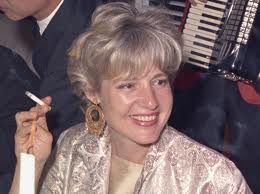
    The Soviet members of this cabal may have been Yekaterina Furtseva, Leonid Brezhnev, and Yuri Andropov, who wanted to wrestle power away from Nikita Khrushchev.67 Yekaterina Furtseva was an interesting character that some believe was the most powerful woman in the Soviet Union and Khrushchev’s lover. She even had authority over KGB’s head, Vladimir Y. Semichastny, threatening to replace him with his deputy whenever he displeased her. She loved everything American and she was primarily concerned about her family’s well being.68

    In 1993, it was revealed that Oswald had a champion in the Politburo, and it was none other than Furtseva. In The Man who Knew too Much Russell reported that “Furtseva urged that the young ex-Marine be allowed to stay on … and sought to keep KGB chief Semichastny from recruiting Oswald.” Later Semichastny concluded that Furtseva was running her own shop.69

    The big question that we considered earlier was if Oswald had any role in the U-2 incident and if the information that he might have provided helped the Soviets to bring down the aircraft. We have argued here that the Soviets may not have shot down the U-2, that it was probably an inside job and that Oswald had nothing to do with it. So why was he sent to the Soviet Union? Research by Peter Dale Scott70, Bill Simpich71 and John Newman72 tend to support the theory that Oswald was sent to the Soviet Union by Angleton’s counterintelligence division on a mole hunt. It all started in 1953, when the CIA succeeded in recruiting Pyotor Popov, a Soviet Military officer who in turn passed secrets to the CIA. In 1958, Popov informed his CIA handler, that a Soviet mole was planted in the CIA and had betrayed technical details about the U-2. All three researchers argue that Oswald was a dangle, designed by Angleton to surface this mole. Some researchers would argue that Popov himself was eventually betrayed by this mole. The latter assertion is erroneous, however, since Popov was not betrayed by any mole. As Angleton biographer Tom Mangold revealed, Popov was found out when an American Embassy officer left a letter for Popov in a mail box, unaware that he was followed by the Soviets, who then found the letter.

    If there was a mole inside the CIA, he might have betrayed information about the U-2, but not Popov’s double role. To analyze in detail this mole hunt is not the purpose of this essay. It is also alleged that Angleton used Oswald to catch a mole, this time in Mexico, in the fall of 1963. However, in both cases a mole was not found. But in the first case, the Paris Summit was sabotaged, and in the second case the mole hunt helped to accommodate the assassination of President Kennedy. If we apply Occam’s razor, then the simpler explanation is the right one. I tend to conclude that the mole hunt in both instances was not a benign one, but was used by Angleton as a cover, to conduct his own dark operations which provided him with a potential alibi in the subsequent investigations. If anyone would question how the U-2 was shot down, for instance, they could claim that a mole betrayed it and the CIA had tried to find out who he was (by using the Oswald dangle), but that unfortunately the mission had failed to reveal him.

    We have discussed the U-2 incident, operations OXCART and CORONA, and the sabotage of the Peace Summit. We noted that the final proposals for the aircraft that would have replaced the U-2 were presented to the evaluation committee on August 20, 1959, and the final choice was made on August 29. Is it a coincidence, as Mark Prior pointed out73, that three days earlier, on August 17, Oswald had filed for his discharge from the Marines? It is possible that the CIA, along with the Air Force and parts of the defense industry, had decided to throw Oswald into their Cold war games. Before travelling to the Soviet Union, Oswald had applied to attend the fall semester of an obscure European institution, the Albert Schweitzer College. Little did he know that by doing so, he would unwittingly cross paths with an influential Unitarian74 who was President of the American Friends of Albert Schweitzer College, had been a Director of the Bureau of Budget, and was involved in the U-2 and the CORONA project, through the Pentagon and the CIA.

    Go to Part 2

    Go to Part 3

    Go to Part 4

    Go to Part 5

    Go to Part 6

    Go to Conclusion

    Go to Appendix


    NOTES

    1 Dick Russell, The Man Who Knew too Much, Carroll & Graf 2003, p. 116.

    2 ibid, p. 116.

    3 John Newman, Oswald and the CIA, Skyhorse Publishing Inc. 2008 [1995], pp. 2-5.

    4 Bill Simpich, State Secret, ch. 1, “The Double Dangle.”

    5 Newman, op. cit., p. 6.

    6 Bill Simpich, The Twelve who built the Oswald legend, part 2.

    7 Newman, op. cit., p. 22.

    8 ibid, pp. 23-24.

    9 ibid, p. 25.

    10 ibid, p. 27.

    11 ibid, p. 77.

    12 ibid, p. 72.

    13 ibid, p. 73.

    14 CIA memo, document 861-374, 4 June, 1964.

    15 Newman, op. cit., p. 84.

    16 Newman, op. cit., p. 81.

    17 Simpich, The Twelve who built the Oswald legend, part 2.

    18 The Twelve who built the Oswald legend, part 1.

    19 http://spartacus-educational.com/JFKjohnsonPR.htm

    20 Bill Kelly & John Judge, “Was Oswald Bottle-fed by NANA?”

    21 ibid.

    22 James DiEugenio, “Priscilla Johnson McMillan: She can be encouraged to write what the CIA wants”.

    23 ibid.

    24 Peter Whitmey, “Priscilla Johnson McMillan and the CIA”.

    25 DiEugenio, “Priscilla Johnson McMillan”.

    26 J.A. Weberman, Coup d’etat in America, Nodule 7, p. 7.

    27 Russell, op. cit., p. 117.

    28 ibid, p. 124.

    29 Newman, op. cit., p. 147.

    30 Weberman, op. cit., p. 10.

    31 Gary Francis Powers, Operation Overflight, Holt, Reinhart & Winston 1970, p. 58.

    32 Allen W. Dulles, The Craft of Intelligence, The Lyon Press 2006, p. 61.

    33 Russell, op. cit., p. 119.

    34 Gregory W. Pedlow & Donald E. Welzenbach, The CIA and the U-2 program, 1992, https://www.cia.gov/library/center-for-the-study-of-intelligence/csi-publications/books-and-monographs/the-cia-and-the-u-2-program-1954-1974/u2.pdf, pp. 159-160.

    35 ibid, p. 162.

    36 ibid, pp. 163-164.

    37 ibid, p. 170-172.

    38 Russell, op. cit., pp. 119-120.

    39 Pedlow & Welzenbach, op. cit., pp. 180-181.

    40 https://www.cia.gov/library/center-for-the-study-of-intelligence/csi-publications/csi-studies/studies/winter98_99/art02.html

    41 Alexander Orlov, The U-2 program: A Russian Officer Remembers, https://www.cia.gov/library/center-for-the-study-of-intelligence/csi-publications/csi-studies/studies/winter98_99/art02.html, p. 11.

    42 http://www.prouty.org/sabotage.html

    43 Powers, op. cit., p. 356.

    44 Newman, op. cit., p. 39.

    45 ibid, p. 44.

    46 Russell, op. cit., p. 120.

    47 Powers, op. cit., p. 338.

    48 Newman, op. cit., p. 46.

    49 ibid, p. 30.

    50 ibid, pp. 42-43.

    51 ibid, p. 46.

    52 https://www.cia.gov/library/readingroom/collection/francis-gary-powers-u-2-spy-pilot-shot-down-soviets

    53 Russell, op. cit., p. 120.

    54 https://www.cia.gov/library/center-for-the-study-of-intelligence/csi-publications/books-and-monographs/a-12/from-the-drawing-board-to-factory-floor.html

    55 ibid.

    56 ibid.

    57 https://en.wikipedia.org/wiki/Lockheed_A-12

    58 https://www.cia.gov/library/center-for-the-study-of-intelligence/csi-publications/books-and-monographs/a-12/from-the-drawing-board-to-factory-floor.html

    59 ibid.

    60 https://www.cia.gov/library/center-for-the-study-of-intelligence/csi-publications/books-and-monographs/a-12/a-futile-fight-for-survival.html

    61 ibid.

    62 https://www.cia.gov/news-information/featured-story-archive/2010-featured-story-archive/corona-the-nation2019s-first-photoreconnaissance-satellite.html

    63 https://www.cia.gov/library/center-for-the-study-of-intelligence/csi-publications/books-and-monographs/a-12/a-futile-fight-for-survival.html

    64 Russell, op. cit., p. 119.

    65 Joseph Trento, The Secret History of the CIA, Basic Books 2001, p. 255.

    66 George Michael Evica, A Certain Arrogance, Trine Day 2011, pp. 193-194.

    67 Trento, op. cit., p. 256.

    68 ibid, p. 256.

    69 Russell, op. cit., p. 118.

    70 Peter Dale Scott, Dallas ‘63, The First Deep State Revolt against the White House, kindle version, ch. 3, “Hunt for Popov’s Mole.”

    71 Simpich, State Secret, ch. 1, “The Double Dangle.”

    72 John Newman, Countdown to Darkness, kindle version, ch. 1, “Oswald and the Angleton Mole Hunt.”

    73 Mark Prior, “Oswald and the U-2 program”, www.KennedysandKing.com

    74 Evica, op. cit.

  • Ron Rosenbaum Fires the First Salvo, Part 2


    Rosenbaum Whitewashes Angleton


    In Part 1 of this article we detailed the rather systematic way in which, in 1983, MSM journalist Ron Rosenbaum did all he could to demean the Warren Commission critics and cheapen any real investigation into the JFK case. That article, “Still on the Case’ was penned for Texas Monthly, which, for decades, has provided a welcome outlet for writers who cover-up the JFK case.

    Just a month before that, in October of 1983, Rosenbaum did a rather curious, actually bizarre essay about James Angleton. On April 10, 2013, from his perch in Slate, he more or less recycled his 1983 essay and coupled it with a cover story about Lee Harvey Oswald. One written by a former intelligence analyst that blamed JFK’s murder on Oswald and indirectly, Fidel Castro. A tall tale that would bring a wink and a nod from Angleton’s ghost. Which seems to be something Rosenbaum is very interested in doing. But which today, with what we know about the fruity Angleton, simply will not fly. And it is very hard to think that Rosenbaum is not aware of it. Which makes it even more puzzling as to why he tries to get away with it.

    I

    Before trying to answer the question about Rosenbaum’s bona fides, let us do two things. Let us review who Jim Angleton was, and then review Rosenbaum’s writings about him. That will provide the scaffolding to properly approach his 2013 essay.

    During World War II, Hugh Angleton pulled some strings and got his son out of the infantry and into counter-intelligence work in the OSS. This division was called X-2. Stationed in London, Jim rose to man the Italy desk for the OSS. (Tom Mangold, Cold Warrior, p. 38) Late in 1944, he was transferred to Rome, and became the top counter-intelligence chief for Italy. He had a high clearance and shared in the Ultra Secret, the breaking of the German spy code. Angleton stayed in Italy after the war. He developed connections with other spy services. And because he has met Allen Dulles there, he helped Dulles rig the 1948 Italian elections to prevent a likely communist victory. As Christopher Simpson noted in his book Blowback, this was done from the offices of the Dulles brothers law firm Sullivan and Cromwell. Angleton worked with the Dulles brothers, Foster and Allen, plus Frank Wisner, and Bill Colby. (Simpson, p. 90)

    Allen Dulles and Angleton had become great friends in Italy. Therefore, when the CIA was formed in 1947, Allen used his considerable influence to make sure Angleton was part of it. And Angleton brought in another friend he met in Italy, Ray Rocca. (Mangold, p. 45) Rocca would serve as Jim’s close assistant until the end of his career in 1975. Angleton was responsible for collection of foreign intelligence and liaisoning with other intelligence agencies. He eventually took over the CIA’s Israeli desk. And he became involved in Wisner’s attempt to roll back Soviet domination in East Europe.

    It was when Dulles became Deputy Director in 1953, and then Director in 1954, that Angleton began to carve out his Counter-Intelligence domain. As Tom Mangold notes in his book, it is not really possible to exaggerate the impact Dulles had on Angleton”s career. As he writes, “his sponsorship of Angleton and his staff was the key factor in the untrammeled growth of Angleton’s internal authority.” (ibid, p. 50) In fact, after the war Angleton was thinking of taking a job under his father with NCR. But it was Dulles who insisted he stick with intelligence work. (Ibid) It was the freedom that Dulles gave Angleton that allowed the CI chief to essentially build his own arm of the Agency. A branch that would eventually number close to 200 persons. But more importantly, it would allow him to work both outside of anyone’s purview and outside any legal restrictions. When Dulles was fired by President Kennedy, Angleton’s power was now protected by Richard Helms who was Director of Operations, then Deputy Director, and then DCI from 1962-1973. In other words, Angleton worked without regulation or review for two decades. (Ibid, pgs. 51-52) As we shall see, this was a blunder of titanic proportions. One which the public was not made fully aware of until 1991. Four years after Angleton had passed away.

    II

    After Britain’s intervention in the Russian Civil War, the NKVD (precursor to the KGB) decided to begin a long-term internal subversion project against England. One which had tremendous potential for long term profits.

    The idea was to recruit spies at the upper class, elite institute of higher learning, Cambridge. The most famous group recruited was later termed the Cambridge Five. This consisted of Anthony Blunt, Guy Burgess, Donald McLean, John Cairncross, and, most importantly to our story, Kim Philby. All five of these men ended up in high positions in the British government, serving in either MI5 or MI6; the former corresponds to the FBI, the latter to the CIA. The five men were all in position throughout World War II and beyond, well into the beginning of the Cold War. (The film Another Country is based on the origins of this ring and focuses on Burgess.)

    At Cambridge, Philby was a member of the outspoken left which critiqued the Labor Party, a group called the Cambridge University Socialist Society. After a trip to Berlin, where he saw the Nazi persecution of communists, he then navigated over to the Comintern. Further, Philby’s first wife, Litzi Friedman, was certainly a socialist, probably a communist. He met her in Austria where he was trying to help the country resist the German Anschluss, and also aiding the Comintern in enabling communists to escape Hitler. From there on in, Philby did all he could to conceal his leftist sympathies and replace them with a conservative veneer.

    In 1937, as a journalist, he went to Spain and was actually decorated by the fascist General Francisco Franco. On his return to London, he finally became what the NKVD hoped he would: a member of the Secret Intelligence Service, MI6. He worked there along with Burgess.

    Philby was quite good at climbing the ladder. For in 1944 he became chief of the Soviet and communist division. In other words, he could tell Stalin everything the British knew about him. Plus, he was in position to mislead MI6 about Stalin’s plans. He was even in position to know about NKVD defectors who could expose him. Which prospective defector Konstantin Volkov tried to do, but which Philby was in perfect position to stop. And he did. In fact, in 1945, Philby received the Order of the British Empire (OBE) for his intelligence work during the war. The Queen did not know that, at around the same time, the NKVD was secretly honoring Philby for what he was doing for them.

    In 1949, Philby was transferred to Washington. He became the British liaison to the CIA and FBI. Burgess also joined him, and they worked out of the British Embassy. It was there that both of the deep cover spies met James Angleton and William Harvey.

    III

    FBI code breaking analyst Robert Lamphere said about Philby’s position in Washington that he was in “as perfect a spot for the Soviets as they could possibly get a man.” (David Martin, Wilderness of Mirrors, p. 44) For instance, Philby was knowledgeable about the hunt for the spy ring that gave away the secret of the atom bomb. Kim Philby “was aware of the results of the … investigation of Klaus Fuchs.” (ibid) Philby even knew about the upcoming arrests of the Rosenbergs and Morton Sobell. But in spite of that knowledge, the Russians chose to sacrifice the trio rather than run the risk of exposing Philby.

    At this time, 1949-51, one of Angleton’s duties was to be formal liaison to high-ranking foreign intelligence officers. This coincided with Philby’s tour of duty in Washington. Philby later said that the two men would lunch about three times every two weeks and speak on the phone 3-4 times per week. (Mangold,p. 64) Angleton’s secretary would escort Philby into his office and she would then type up the oral dictation Jim made of those meetings into memoranda. (Ibid, p. 65) As Philby said, he cultivated Angleton socially since he thought that, “the greater the trust between us overtly, the less he would suspect covert action.” He then added that he was not sure who gained the most from this complex game-playing: “But I had one big advantage. I knew what he was doing for CIA and he knew what I was doing for SIS. But the real nature of my business he did not know.” (ibid, p. 65)

    What brought it all down was that the FBI found out the Soviets had intercepted a telegram from Winston Churchill to President Truman. They didn’t know who did it, but they knew he worked from inside the British Embassy. (Martin, p. 44) The inquiry then worked its way from the bottom upward. FBI analyst Robert Lamphere was one of the men who had access to the Venona crypts. This was the FBI’s deciphering of the Soviet secret code. The Bureau now began to center on a man named HOMER in the Venona codes. Philby knew who this man was. And he thought he would crack if the CIA or FBI got to him and questioned him. And if he did, that could expose Burgess and himself.

    Guy Burgess had gone from MI6 to the BBC to the Foreign Service. He was living as a lodger in Philby’s Washington home at this time. One night, Philby had a dinner party for Lamphere, Angelton, Harvey and their wives. Libby Harvey got a little tipsy. Burgess was fond of drawing caricatures of people. He drew an obscene one of Libby. Bill Harvey didn’t think it was funny and took a swing at him. Angleton jumped between them. And Philby tried to usher the guests out before any more violence took place. (Martin, p . 48)

    It turned out that the HOMER in Venona was McLean. With that knowledge, Philby knew he had to get McLean out of London before MI5 could act on that information. But it could not appear that he was the one warning him. Therefore, he had put Burgess up to acting outrageously e.g. with Libby. Burgess also pulled the stunt of getting three traffic tickets in one day. And he mouthed off to the officers in all three instances. The combination of these acts finally did the trick. Burgess was recalled to London. McLean had been scheduled to be questioned by MI5 on Monday, May 28, 1951. On Thursday, May 24th, Burgess arrived in England. Once he landed, he told a fellow passenger that, “A young friend of mine in the Foreign Office is in serious trouble. I am the only one who can help him.” (ibid, p. 50) He then rented a car and drove to McLean’s home. Burgess now drove his fellow Cambridge spy to Southampton, where they boarded a cross-channel ship to Saint-Malo. From there they went to Rennes and caught a train to Paris. Neither man was seen in public again until they held a joint press conference in Moscow in 1956. (ibid)

    To this day, no one knows why Burgess left England with McLean. Those were not Philby’s instructions. Until the end of his life, Philby never forgave Burgess for disobeying him. For the fact is that Philby knew about Venona and HOMER. Burgess had been Philby’s lodger, and now Burgess had fled also. This now did what nothing had ever done before: it cast suspicion on Philby himself. Was he The Third Man who had tipped off his two spy friends?

    CIA Director Walter Bedell Smith asked Harvey and Angleton to write up reports of what they knew about Burgess, his ties to Philby, and who they thought Philby was. (Mangold, p. 65) Harvey’s five-pager was an accusatory masterpiece. It was full of hard facts that built a strong circumstantial case that Philby had sent Burgess to aid his fellow Cambridge spy. But it went further. It declared that Philby had also been the one to derail the Volkov defection in order to save himself. Which was true. (Martin, p. 54)

    On the other hand, Angleton’s memo was fuzzy and impressionistic. It noted some oddities about Burgess, but seemed to excuse Philby on the grounds he was unwise in his choice of friends. A CIA officer who saw the report described it as, “a rambling, inchoate, and incredibly sloppy note.” Angleton even told Smith not to tell the British Philby might be a spy since it would damage CIA-MI6 relations. (Mangold, p. 66) Wisely, Smith forwarded SIS the Harvey memo. They used it to, at first, examine and then suspend Philby. But after years of inquiry, Philby did not confess. And they could not find any hard evidence to expose him. Cleared in public by Prime Minister Harold Macmillan, he was later brought back as a low level British agent in Lebanon, where he also served as a reporter. In 1963, MI6 finally put together a substantial case against him. An agent was sent to induce Philby to confess in return for immunity. Philby agreed and asked for time to set his affairs in order. This ended up being an excuse to arrange for his passage to Moscow. It was now certain that Philby was perhaps the highest level Soviet agent to ever operate in London and Washington. And it was also clear that Angleton could not have been more wrong about his friend.

    IV

    That Angleton was tricked by Philby could not really be held against him. Because Philby had done that to many people on both sides of the Atlantic. But the fact that Angleton was still in the dark afterwards, when Burgess and McLean had escaped, that should have been a tell-tale sign to everyone involved. Especially in comparison to the fact that Harvey had been uncannily accurate about Philby and his career. Making the comparison even worse was that, “No one had known Philby better or spent more time with him than Angleton.” (Martin, p. 55) In fact, up to the moment he was recalled to London, Philby was still chumming around with Angleton. Harvey was shocked at this. To the point that he actually thought that Angleton might be a Soviet agent. (Ibid, p. 57) In fact, even in 1952, when Philby was in the process of being thoroughly examined and then suspended, Angleton was still in his camp. He actually told another British intelligence officer that Philby would one day lead MI6. (Mangold, p. 66)

    In 1963, when the master spy had escaped to Moscow, Angleton finally got around to issuing a damage report on Philby. And even that was sketchy and incomplete. (Ibid, p. 67) But further, the real data upon which any accurate damage report would be based was the record contained in the memos of the Philby/Angleton meetings. As we have seen, these had been dictated by Angleton after each instance. These should have been examined by a team of analysts. But Angleton never volunteered those memos to any higher authority. After he was forced into retirement, there was a thorough search of his office. Not a single memo was found. There was evidence, a sign in sheet, of 36 meetings in his office (Ibid) There should have been 36 memoranda discovered. None were available.

    When Angleton became Chief of Counter-Intelligence, he controlled the Philby file. It was locked in a vault next to his office. No one could have stopped him from pilfering from it. Peter Wright of MI5 told biographer Tom Mangold that Angleton burned the memos of those meetings. Wright knew this because Angleton told him about it. Wright wanted them produced for his own investigation. When he asked for them, Jim A. said, “They’re gone Peter. I had them burned. It was all very embarrassing.” (ibid, p. 68)

    Leonard McCoy, who became Deputy Chief of Counter-Intelligence after Angleton left, said that the CIA had all kinds of operations going on at the time in areas like Albania, the Baltics, Ukraine, Turkey and southern Russia. They also had “stay behind” projects in East Europe. Almost all of them were rolled up by the Russians and their allies. McCoy said it was unfair to blame it all on Angleton’s closeness to Philby. But it would also be unfair to say that none of it was caused by that friendship. (ibid) McCoy said that this was a most difficult episode for Angleton to assimilate. Both the personal betrayal and the damage done to the CIA and the USA were owed in part to a man Angleton completely trusted. Consequently, he very seldom talked about it.

    But he did say some words to Wright. Wright said, “Jim was obsessed by Kim’s betrayal … .Can you imagine how much information he had to trade in those booze-ups?” Wright said that Angleton talked about killing Philby. (Ibid, pgs. 68-69) He concluded that, “Jim developed an awful trauma about British spies. Kim did a lot of damage to Jim. A lot of damage.” Cicely Angleton said that Philby’s betrayal hurt her husband, “terribly deeply-it was a bitter blow he never forgot.” In fact, after Philby went to Russia, Angleton thought that Philby was still “maintaining the campaign against Western intelligence from Moscow.” Walter Elder, special assistant to CIA Director John McCone from 1961-65, said that Philby’s betrayal was a very important event in Angleton’s life: “The Philby affair had a deep and profound effect on Jim. He just couldn’t let the Philby thing go. Philby was eventually to fit neatly into Jim’s perception of a Soviet “master plan” to deceive the entire West.” Elder continued in this vein thusly: “Long after Philby’s defection in 1963, Jim just continued to think that Philby was a key actor in the KGB grand plan. Philby remained very prominent in Jim’s philosophy about how the KGB orchestrated the “master plan” scenario.”

    As we shall see, Elder is talking about Angleton’s reception to Major Anatoli Golitsyn of the KGB. A defector whom Angleton-to put it mildly-placed too much trust in. And that misguided trust originated in the paranoia of the Philby betrayal. Angleton bought into Golitsyn’s wild and lurid portrayals of a KGB ‘monster plot’ because it fit the state of mind he was in after Philby’s personal treachery. As we shall see, this does appear to be one way to explain the incredible scenarios that Angleton fell for at the hands of Golitsyn.

    V

    According to Rosenbaum’s 1983 article in Harper’s, all the above is wrong. Why? Sit down please. Because Ron tells us that it was Angleton who was playing Philby. Therefore, all the above was a beautiful act by Jim A. The lamentations to his wife, to Peter Wright, his reluctance to turn over the memoranda which would have shown the information Angleton and Philby shared. According to Ron, Angleton even let all those operations in East Europe, and other places in Central Europe be rolled up. In other words, he got people killed because he was playing up to Philby to get his confidence.

    Then what is one to make of all the honors bestowed upon Philby when he finally fled to the USSR? Continuing and up to his burial with full honors, and a posthumous stamp issued with his name on it. Was that all unearned? Because, according to Ron, Philby was really informing to Angleton all the time he was in the USSR. Even though Angleton, as we have seen, told others at the time that Philby was still leading the KGB “master plan” from Moscow.

    It should be added, the above is just the beginning of the honors Philby won in the USSR. Before his death, he received the Order of Lenin, one of the highest honors a civilian could attain in the USSR. The KGB actually protected him from assassination. At his wake, several KGB agents made commemorative speeches as to his importance. He was then buried in the exclusive Kuntsevo Cemetery, a place where former premier Georgy Malenkov was buried. After his death, he had his plaque placed at the current Russian spy service center, and his portrait is in the Hall of Heroes.

    But according to Ron, those Russkies are just plain stupid. What is Ron’s evidence for the Russians being so dang dumb and honoring a guy who was just a tool of Angleton? If you read Ron’s article in the 1983 Harper’s, as collected in his anthology Travels with Dr. Death, its actually two sources: William Corson and Teddy Kollek. Both say that Angleton was informed of the Cambridge group at the time he knew Philby in Washington. (See Rosenbaum, Travels with Dr. Death, pgs. 23-25.)

    Now, from just the mention of the two names, this is strained even for Rosenbaum. Why? Because Corson was part of a circle of intelligence officers and reporters who worked with Angleton! After he left the CIA, that particular circle also included former Agency officer Robert Trumbull Crowley, and journalist Joseph Trento. Corson was a Marine in Vietnam who worked with the Southeast Asia Intelligence Force. There he became close with the CIA. Crowley and Angleton were friends and colleagues in the Agency. Corson wrote a book with Crowley called The New KGB. This book clearly showed the influence of Angleton’s thinking. Because it really was more of a history of the KGB rather than a current dossier on who they were. But further, it said that the Communist Party was not really in charge of the USSR anymore, the KGB was. Therefore, there was no real hope for detente. And “Soviet professions of reasonableness are pretense, a smokescreen behind which Russia under its new KGB masters reverts to harshest Stalinism.” With that in mind, there was little left to do but hold the USSR at “arm’s length and proceed with President Reagan’s Strategic Defense Initiative or “Star Wars” program. (New York Times, July 7, 1985)

    What is incredible about this is that the book was published the year Mikhail Gorbachev came to power! In fact, it was published four months after he became General Secretary. This is how wrong the authors were. And Angleton was right there with them since he was still saying similar things about the USSR at that time. (Mangold, p. 356) Now, in itself, that is something interesting that Rosenbaum does not inform the reader about. For if Philby was really Angleton’s tool, and he was now stationed in Moscow, why would Angleton and his circle still be so wrong about who Gorbachev was? And this was just two years before Angleton’s death. If any such communication existed-and there is no evidence it did-then it indicates Philby was still tricking Angleton.

    What about Kollek? Kollek was a long time Zionist who became the Mayor of Jerusalem in 1965. Angleton took over the Israeli desk in 1949 and was criticized by many for being too favorable to Israel during his tenure. Therefore, when Kollek says in a 1977 book on Anthony Blunt that he passed on the identity of the fifth member of the Cambridge spy ring to Angleton, one has to raise an eyebrow. (Rosenbaum, p. 25) Besides the fact that the “Fifth Man” was not who Kollek says he was, there is the problem that this “revelation” came in 1977 from a friend of Angleton’s. (Just as the “revelation” from Corson came out in 1977.) In other words, just two years after Angleton was fired, his friends now came out with these glimmers that Angleton was really aware of what Philby was doing all along.

    How weak are these excuses? Even Rosenbaum and Angleton have to acknowledge their transparent flimsiness. When Rosenbaum calls Jim A. for a comment on these newly discovered secrets–which arrive about 26 years too late–Angleton replies: “My Israeli friends have always been among the most loyal I’ve had. Perhaps the only ones to remain loyal.” (Ibid) For once Angleton and the author agree on something: His friends are trying to (unjustifiably) redeem him. In fact, Rosenbaum himself admits this may be true. In one moment he writes that, “Needless to say, there will be those among Angleton’s many critics who would say that the whole notion … was carefully planted by Angleton and his allies in an attempt to turn his most mortifying failure-the Philby case-into a clandestine success.” (ibid, p. 26)

    It is reassuring that even Rosenbaum is sometimes able to discern the obvious.

    VI

    Except there is even falsity in that above admission. Because Philby was not Angleton’s “most mortifying failure”. Most people would easily hand that honor to Anatoli Golitsyn. But in his writing on Angleton, Rosenabum has always been reluctant to fully describe just how blind Angleton was to Golitsyn’s fantasies. Or that Anatoli was manipulating Angleton for his own personal gain. Which he was. Golitsin was an ordinary KGB analyst who defected in December of 1961. When asked if he knew of any KGB double agents in Washington, he said he knew none. But he did know one of them in Europe who was codenamed SASHA. (Mangold p. 75)

    Very quickly, Golitsyn showed signs of megalomania. After a few weeks in America, he said he was tired of dealing with low level case officers like Dick Helms. (Who happened to be the number three guy in the CIA at the time.) He wanted to see President Kennedy and Attorney General Robert Kennedy. (Ibid, pgs. 76-77) He also wanted 15 million dollars to direct an organization to begin his plan to overthrow the USSR.

    Golitsyn did not get to see President Kennedy, but he did meet with Director John McCone–more than once. When he was asked to place his ideas about defeating the KGB in writing, he would not. McCone’s assistant concluded that, “Golitsyn was basically a technician. He had no knowledge of Soviet policy or decision-making processes at the high levels.” (Ibid, p. 77) But further, Angleton then got him a meeting with Allen Dulles. When Dulles asked him if he knew of any KGB penetration agent within the CIA, Golitsyn said he did not. (Ibid, p. 78)

    What these two episodes prove is that other people saw through Golitsyn rather quickly and easily. And second, Golitsyn later changed his story about a KGB mole inside the CIA. Yet, in spite of all this, Angleton continued to buy into him for 12 more years.

    Angleton did more than buy into him. He helped create and aggrandize Golitsyn. He violated a cardinal rule about defectors. He gave Golitsyn access to top secret Soviet Division files. He then laid down rules for how other agencies could interview him. This had the effect of letting Anatoli now create his own espionage tales, at the same time he was being at least partially protected by Angleton. But further, in the middle of a military debrief, Angleton arranged for Golitsyn to have an expenses paid two-week vacation to Disneyland. (Ibid, p. 81) But when he returned for the debrief, he was caught dead to rights creating a false story about how the KGB had gained access to a sensitive portion of the US Embassy in Moscow. (ibid) When confronted with this lie, Golitsyn walked out of the debrief. And he did not return.

    This pattern was repeated time after time during Golitsyn’s first year in America. He would be caught making something up, Angleton would ignore it, and he would demand, and get, more access to secret files. Sometimes he would even get access to the files of other agencies, like the FBI.

    But then Golitsyn made a claim that sealed Angleton’s fate. And his eventual disgrace. Anatoli told Jim that he should not listen to any defectors who followed him. Because they would all be fakes sent by the KGB for the purpose of discrediting him. This was part of the Soviet master plan, which also included secret messages in newspaper clippings. (Mangold, p. 87)

    Angleton was not content with allowing Golitsyn to only foul the intelligence networks in America. He then allowed him to do the same in England and France. He then would charge handsome fees for doing so. After seeing their files, he then would finger certain operatives. In England it was Roger Hollis and Graham Mitchell. But he also claimed that Labor candidate for prime minister, Hugh Gaitskell, was killed in order to allow Harold Wilson to take office. Therefore, the natural assumption was that Wilson was really a KGB asset. (Mangold, p. 95) Thus began a whisper campaign against Wilson.

    Armed with files from the CIA, FBI, MI5 and MI6, Golitsyn now pronounced any attempt at detente with the Russians to be useless. He also said that the idea of a Sino-Soviet split was part of the “master plan” to deceive the West. (It had actually begun in 1960 and was in full bloom by 1962) He also said that the idea that Eastern Europe wanted to be free from the USSR, that was also a deception and part of the master plan. And now he reversed himself on a key issue: the KGB had planted domestic agents inside the CIA.

    The more extreme Golitsyn got, the more Angleton liked it. When he returned from England, Anatoli got three gifts from his benefactor. He lent him his own lawyer-accountant, Mario Brod. He gave him a cash reward of 200,000 dollars. (Which would be about a million dollars today.) He then introduced him to a first-class stockbroker, James Dudley. In other words, as Golitsyn began to foul up the CIA’s operations here and abroad, Angleton began to personally reward him in ways that the middle level analyst had never dreamed of. The defector now bought a New York City townhouse and a farm in upstate New York. So the question then becomes: If you were Golitsyn, wouldn’t you also tell your benefactor not to trust any other defectors? If he did, they could endanger Golitsyn’s new status and prestige.

    Which is what happened with Yuri Nosenko.

    VII

    It is difficult to talk about the Nosenko case without referring to Edward Epstein. And it’s difficult to talk about Rosenbaum without mentioning Epstein. For the simple reason that Rosenbaum once wrote that Epstein’s Legend was a groundbreaking piece of work. (Rosenbaum, p. 37) Today, with later, more honest books about Angleton, most would disagree with that assessment. Most people would say that, like what Corson and Kollek did, Legend was a propaganda piece for Angleton. It was published around the same time, and it was a way for Angleton to press his case that William Colby had fired him unjustly.

    In the wake of all the information we have today, Angleton’s complaint against Colby is simply not credible. The truth is Nosenko was one of the most valuable defectors the CIA ever had. His information was much more valuable than Golitsyn’s. And it had very few, if any of the liabilities. Further, he had a much higher batting average. That is, his leads panned out at a much higher rate than Anatoli’s did. (Mangold, pgs. 333-34) But the point is that, by buying into the KGB ‘master plan’, that all other defectors would be fakes, Angleton ignored defectors who had an even higher batting average than Nosenko.

    Just how badly was Angleton tied into Golitsyn’s creed? He tried to discredit Nosenko to others months before he ever appeared in America. (Mangold, p. 169) This is an important fact that Epstein does not reveal in Legend. And neither does Rosenbaum. How did Angleton do this? He showed Golitsyn the record of Nosenko’s first debrief. This was done in Europe with CIA officer Peter Bagley. Bagley was at first impressed with Nosenko. But now the two men targeted Bagley and turned his opinion around on Nosenko. Epstein later admitted that Bagley had been a major source for him when he wrote Legend. (The Assassination Chronicles, p. 552) But as noted above, Epstein never reveals this plotting by Angleton in his book.

    That is a crucial point in the story. Because, as most know today, when Nosenko arrived in America, he was immediately imprisoned. He was then made to undergo intense hostile questioning and a rigged polygraph test. Undoubtedly, part of this was due to the fact that Nosenko actually defected two months after Kennedy’s murder. And he told the CIA that Oswald was not a Russian agent, and the KGB had only routinely surveilled him while he was in Russia. (Mangold, p. 174) This was more poison to Angleton. Because he was the CIA’s liaison to the Warren Commission at the time. And its clear he was pushing the line that Oswald was a Russian agent and the USSR had been behind the plot to kill Kennedy. In other words, Nosenko endangered both Angelton and Golitsyn.

    The basic facts about Nosenko’s imprisonment and torture were presented by Epstein. But Mangold’s book went much further in detail. Suffice it say, his imprisonment went on for five years. It got so bad that Nosenko went on a hunger strike. When he did, the CIA threatened to feed him intravenously. (Mangold, p. 188) For three years, he was not given anything to read. He did not see a dentist. Therefore, his teeth rotted. His second polygraph was also rigged. (Ibid, p. 189) Bagley wanted him to sign a fake confession for purposes of “disposing” of him.

    It wasn’t until Nosenko was imprisoned for three years that the tide began to turn against Angleton. Nosenko was finally given over to CIA officers who were not so influenced by Angleton and Golitsyn, and were not so biased against the man. When Bruce Solie of the Office of Security took over the case he was shocked at what he found. He quickly saw that Nosenko’s replies had often been mistranslated and the polygraph tests had been gamed against him. He also found out that at least six leads given to Bagley by Nosenko had been ignored. When Solie discovered them and passed them on, they all panned out. Some of them led to arrests. (ibid, p. 198) All of this important information was omitted by both Epstein and Rosenbaum.

    But further, Solie found that the reasons given by Bagley for suspecting Nosenko was a false defector were illogical. Nosenko had exaggerated his position in the KGB and lied about certain recall orders. Solie concluded that these kinds of things were commonplace with defectors. The former was used in order to make them more attractive to the CIA, and the latter was done to hurry his exfiltration to the West. (Mangold, p. 197) Solie now gave Nosenko a third polygraph. One that was not done under hostile conditions, nor was it rigged. Nosenko passed. Solie issued a 283 page report saying that Nosenko was a genuine KGB defector. The FBI now took up nine more of his leads. In 1969, Nosenko was finally set free and became a CIA consultant. Every CIA Director after Richard Helms agreed with Solie about Nosenko. In fact, Bill Colby was repelled by what Angleton had done to the man: “The idea that the CIA could put a guy in jail without habeas corpus just scared the living daylights out of me. That kind of intelligence service is a threat to its own people.” (Ibid, p. 203)

    But what is incredible about the Golitsyn/Angleton folie a deux is that it did not stop with Nosenko. It was repeated in the Yuri Loginov scandal. And again, neither Epstein nor Rosenbaum tell their readers about that. Loginov was also a prospective KGB defector. He was problematic to Angleton because, first, he said Nosenko was genuine, and second he said the Sino-Soviet split was real. But, probably even worse, he said that the exposure of a CIA double agent in Russia, Pyotr Popov, was not done by Golitsyn’s alleged mole, but by a mistake in tradecraft the KGB picked up on. (Mangold, pgs. 213-17) Because of this, Loginov was marked as a fake defector. But what Angleton did to Loginov was even worse than what he did to Nosenko. He turned him over to BOSS, the South African intelligence service, as a KGB agent. Without telling them Loginov was working as a double agent for the CIA. But like Nosenko, Loginov would not crack under interrogation. So he was handed over to West Germany and used by them in a spy trade with the Russians. To this day, no one knows for certain what happened to Loginov. There are some reports that he was simply dismissed. There are some reports that he was shot. But Angleton certainly knew that his execution was a probability once he was turned over to BOSS.

    In all, Angleton bragged that he turned back 22 defectors as fakes. The CIA later found that every single one of them was genuine. (Mangold, p. 231) Angleton’s pathological obsession with Golitsyn had paralyzed the CIA’s main mission in the Cold War: to collect reliable human intelligence on what was going on inside the Kremlin.

    The ultimate end game of the Angleton/Golitsyn marriage was codenamed HONETOL. This was the formal search for the mole inside the CIA. The mole which, in 1962, Golitsyn told Dulles did not exist. This search never bore any fruit: the mole was never found. But it ended up damaging, in some cases, wrecking the lives of those who came under suspicion. This occurred when Angleton gave Golitsyn their files. By the time it was finished, over 100 people were investigated. It got so bad that, after Colby fired Angleton, an act of congress was passed so that his victims could seek redress for having their careers stalled or destroyed. (Mangold, p. 277) Those were the lucky ones. Because there were victims overseas who could not seek redress from congress. Again, this tragic facet of the Angleton/Golitsyn union is not noted by either Epstein or Rosenbaum.

    For the truth about Angleton is easy to apprehend today. Books by Mangold, David Wise, and Michael Holzman were not one-sided mouthpieces for Angleton and his pals, as Legend was. Because toward the end, when Angleton and Golitsyn could not find their invisible mole, they turned inward. They now said a former ally against Nosenko, David Murphy, was the mole. Angleton actually flew to Paris, where Murphy was stationed, to warn the SDECE that Murphy was a double agent. (Mangold, p. 299) By the time Angleton was removed from office, he had investigated Prime Minister Harold Wilson of England, Prime Minister Olof Palme of Sweden, Chancellor Willy Brandt of West Germany, industrialist Armand Hammer, diplomat Averill Harriman, Prime Minister Lester Pearson of Canada, and National Security Advisor Henry Kissinger. These were all elements of Golitsyn’s ‘Monster Plot’.

    When Bill Colby took over, he did something unusual with Angleton. He began to review his performance as Counter Intelligence Chief. He later commented, “I couldn’t find that we caught a spy under Jim. That really bothered me.” (Mangold, p. 313) The further he looked the more obvious it became to Colby, “He was not a good CI Chief.” (ibid) For example, Colby could not find one productive operation Angleton was running in the USSR. Angleton’s division was on its own, cut off from the CIA. So much so that it had almost nothing to do with the rest of the Agency. When Colby found out that Angleton had routed all Israeli communications to himself, not to be shared with other Mideast stations, he took him off the Israeli desk. For this had prevented effective communications during the Yom Kippur War. (Ibid, p. 314) Colby also found out that Angleton was actually running agents through a private person, his lawyer Mario Brod.

    That was it for Colby. He called Angleton into his office and gave him three options. He could take another job in the Agency, take early retirement or become a consultant. When Angleton declined all three, Colby cooperated with CIA asset Sy Hersh to expose Angleton’s roles in an illegal mail intercept project and MH Chaos, a huge domestic surveillance program. Finally, in 1975, Angleton was forced out. At least 13 years too late. Unfortunately, Colby allowed Angleton several weeks to clean out his office. Still, when George Kalaris took over, he was surprised at what he discovered. There were dozens of letters from the illegal mail intercept program that had never been opened. (Ibid, p. 327) Angleton had not left behind the combinations to several safes. Kalaris had to have them blown open. To just recover all the hidden files took several weeks. It took three years to integrate them into the Agency’s central filing system.

    When Kalaris got to the HONETOL files on Wilson, Roger Hollis, Armand Hammer and Kissinger he was so ashamed at what was in them he had them incinerated. Kalaris commissioned a complete review of Golitsyn’s record. He found out that less than 1% of his leads had panned out. (Mangold, pgs. 333-34) Meanwhile, Kalaris discovered another source Angleton had ignored. A Russian military officer from the GRU. Kalaris decided to investigate those ignored leads which had been buried by Angleton. This source, code named NICK NACK, scored a perfect 20 for 20. (Ibid, p. 344)

    Kalaris now decided to retire Golitsyn. But he had to get all the files Angleton had given him back. It turned out that Angleton had allowed Anatoli to take FBI files and CIA personnel files to his home! Former CIA analyst Cleveland Cram was brought in to write the history of the CI division. It ended up being 12 volumes long. Cram concluded that Angleton had had a detrimental impact on the CIA. And the Golitsyn years had been a nightmare. (Ibid, p. 345) He also reviewed the literature of the period. He said that Epstein’s book Legend was part of a disinformation campaign. And it gave Angleton and his supporters an advantage by placing their argument forward first, adroitly but dishonestly.

    Angleton never gave up. He told CIA officer Walter Elder that the Church Committee was a KGB plot run by Philby out of Moscow. He was endorsing Goltisyn’s pronouncements into the eighties. Even though each of six predictions he made in 1984 turned out to be wrong. This was the true and sorry record of the man praised by Epstein and Rosenbaum. As a spy chief, Angleton was horrid.

    VIII

    Which brings us to Rosenbaum’s 2013 piece in Slate. Like Angleton, Ron just can’t give up. His New York Times July 10, 1994 essay on Philby was so confused and unwieldy that Rosenbaum seemed to say it was Philby who planted the idea of a mole in the CIA on Angleton. In fact, it was Golitsyn who did so. In that same 1994 piece, he seemed to drop the whole ‘Angleton played Philby’ nonsense. He said Philby had only one master, the Soviet Union. He added that only “die-hard supporters of James Angleton” would persist down the Angleton played Philby path.

    Well, I guess Ron is a die-hard Angleton supporter. He now tries to bring back the idea he discarded in 1994. In an article called “Philby and Oswald” he is ready to revive the old disinfo. His basis is an Epilogue to a recent novel called Young Philby. And what is Ron’s basis for this: an interview the novelist did with Teddy Kollek! Oh my aching back. Let us refer to the wise word of Daniel Wick in his discussion of two books on Philby published back in 1995:

    The evidence overwhelmingly demonstrates that Philby did great harm to the interests of the West and none whatsoever to Soviet interests, and that his treachery caused the deaths of dozens of Western agents while he did nothing that harmed a single Soviet. In the end, pop romantic speculation aside, he was Moscow’s man. (LA Times, January 1, 1995)

    In this same article, Ron tries to push the terrible book by CIA analyst Brian Latell, Castro’s Secrets. I would refer the reader to the ctka review of that book by Arnaldo M. Fernandez. (Castro’s Secrets) Once one does that, one will see that Ron is up to his old tricks again. His major endeavor in all this Angleton and Kennedy stuff is to confuse matters. Here is a guy who can write about the JFK case, “every once in a while something new turns up, a new twist, a declassified document an overlooked defector, a forgotten witness.” I guess Ron missed those 2 million pages of ARRB declassified documents. He sure missed the declassified Inspector General Report on the CIA-Mafia plots to kill Castro. Because Rosenbaum can write in his 2013 article that Castro was under threat from “assassination plots orchestrated by JFK and his brother Bobby.” If Rosenbaum had read the IG report he would have seen that these plots were deliberately kept from the Kennedys by the CIA.

    Would that have made any difference to him? Probably not. Rosenbaum is incorrigible. To the author, he represents all that is wrong with the MSM on both Jim Angleton and the JFK case. He can actually write that Angleton had a “mythic reputation within the intel community as the Master of the Game.” Whatever reputation Angleton had in the intelligence community has been destroyed with the release of new information about himself and his relationship with Oswald. As we have seen, Angleton was a disaster as a CI Chief. He was taken by not just by Philby but by Golitsyn. And as John Newman shows in his book Oswald and the CIA, he was very likely Oswald’s ultimate control agent. (Click here for a review.)

    If Rosenbaum is not aware of any of this, then he is irresponsible. If he is aware of it, then he is executing a whitewash. Either way, the man is irrelevant to the matters he is writing about on this the 50th anniversary of the JFK case.


    Go to Part 1

  • Ron Rosenbaum Fires the First Salvo, Part 1


    Rosenbaum and The Critics


    For all intents and purposes, on April 10th , Ron Rosenbaum kicked off the 50th anniversary battle over the JFK case in the media. He did it from his friendly perch at Slate Magazine. In his article entitled “Philby and Oswald,” he clearly connotes two things. First, he understands that the JFK community is coming very close to a unanimous vote about who Lee Harvey Oswald actually was. And second, a consensus is also gathering about who controlled Oswald, namely James Angleton. These developments – which owe much to the writing of John Newman and Lisa Pease – are very important in the JFK case. With them one can now discard the obsolete portrait of Oswald as painted by the deceitful Warren Commission. Secondly, one can now begin to indicate with authority who had control of Oswald’s files at Langley and the dance that was done with them in October and November of 1963. A dance that now seems all too deliberate. Knowing how crucial this information would be in any coming public debate, Rosenbaum decided to try for a preemptive strike about both Angleton and Oswald.

    To understand why he would do this one needs to know a bit about the history of journalist Ron Rosenbaum.

    I

    After graduating from Yale, Rosenbaum first secured a reporting job at The Village Voice. He left in 1975 and then began regularly contributing to Esquire, Harper’s, High Times, and Vanity Fair. Most recently he has written for New York Times Magazine and Slate. He has also published several books. Some of these have been anthologies of his previously published work. His most celebrated book is probably 1998’s Explaining Hitler. There the author interviewed several authorities trying to explain Hitler’s bizarre psychology.

    After he left The Village Voice, Rosenbaum first entered the JFK field. In July of 1976 he co-wrote an article about the death of Mary Meyer. Meyer was the divorced wife of CIA officer Cord Meyer who was murdered in 1964. This long article showed the hallmarks of what his later writing would be in the field. This included a trust for highly placed sources, a sneering cynicism about President Kennedy and those who thought there was something important about his presidency, and third, a strange, symbiotic relationship with and trust in James Angleton. Concerning the last, it is important to understand that this article appeared about two years after Angleton had been forced out of the CIA – in essence he was fired – by Director William Colby. Further, Angleton had been a person of interest in the Kennedy assassination to the Church Committee and, very soon, would be the same to the House Select Committee on Assassinations. But in spite of this, Rosenbaum and Nobile accepted just about all he said about the death of family friend Mary Meyer at face value. One does not have to abide by the wild schemes of Peter Janney to note that the authors should have been more circumspect about the canned counter-intelligence chief.

    But the 1976 article was really just a dress rehearsal. In November of 1983 Rosenbaum had his opening night gala. And what a bash it was. Texas Monthly has always been out to denigrate the critics of the Warren Commission. Realizing their mutuality of interests, for the 20th anniversary of President Kennedy’s assassination, Rosenbaum stepped up to the plate and smacked it out of the park for them. He penned a long article called “Still on the Case”. Rosenbaum’s essay was a slightly diluted, more concise version of the 1967 Lawrence Schiller/Richard Lewis volume, The Scavengers and Critics of the Warren Report. Except, in some ways, it was even more dishonest than that book. At the beginning of the piece, he appointed himself as the public’s tour guide, nicknaming himself El Exigente: the Demanding One from coffee taster lore. In other words, since he was a “real journalist”, he would be able to tell us what the critical community had actually developed in the 20 years since President Kennedy had been killed.

    The problem with so pompously appointing himself was simple: this was a disguise. Rosenbaum was not out in any way to fairly judge what the developments in the critical community had been for 20 years. He was not really interested in presenting any new information to the public. This is made obvious from the very opening of the article. The first two words in the subhead after the title are “Conspiracy Buffs”. Rosenbaum deliberately does not use the term “critics of the Warren Commission.” Therefore, in a stroke, he elevates the status of the Commission and lowers the status of the critics. He repeats this technique throughout the article. Consider the following usages of the term:

    buff books
    the buff grapevine
    buff biz
    ascendant buff
    buff trend
    buff factionalism
    buff fever
    technobuff
    buff theorists
    buff faith
    buff fratricide
    buff literature
    buff contacts
    second-body buffs
    Dallas buffs

    And I may have missed a couple of other turns. Clearly, from the very start, Rosenbaum was out to belittle any effort to find out the truth about the Kennedy case; but he was also out to caricature those who thought the cause worth pursuing. He jams this message home by using this term, “other assassins”, which he deliberately puts in quotes. Presumably meaning it’s a thought too nebulous to consider. As to other suspects in the case, he refers to them as The People Behind it All. That’s right, all in capital letters.

    II

    Rosenbaum opens the essay with a scene of him with Penn Jones in Dealey Plaza. Penn was demonstrating to Rosenbaum if a shot could be aimed at Kennedy from a manhole cover. This is how The Demanding One begins his search for truth and justice. It further reveals Rosenbaum’s agenda. If one were to ask ten writers to outline the shooting scenario in Dealey Plaza, I would guess that, at the most, perhaps one would say a shot came from a sewer or storm drain. More likely, none would propose that idea. But this is how Rosenbaum achieved his goal for his editors. He took the most extreme ideas in the research community and implied they were representative of that community. Which they were not. Another example Rosenbaum used as being representative was Michael Eddowes’ exhumation of Oswald’s corpse and his attempt to show that somehow the KGB had substituted an agent for Oswald while he was in the USSR. Still another example: Ron Ranftel’s published essay on the Psychedelic Oswald. This article was based on an FBI interview with a New Orleans lawyer who said a man named Oswald asked him about a book he had read by Aldous Huxley concerning the use of psychedelic drugs. If you can believe it, Rosenbaum goes on with this silly angle for two pages. (Rosenbaum, Travels with Dr. Death, pgs. 74-76) This article was so ephemeral that if you Google Ranftel’s name today you will only find it in relation to Rosenbaum’s book. But yet The Demanding One actually wrote that “The Psychedelic Oswald hypothesis offers an explanation, a way of reconciling some of the intractable contradictions he left behind.” No Ron. No one ever believed that. It was a way for you to fulfill your agenda of Reducing It All to Trivia.

    This is further exposed elsewhere by his equating of the critics with the term “deconstruction”. (ibid, p. xv) For those outside the realm of literary criticism, deconstruction refers to the 1960’s theory of criticism related to semiotics. It generally held that an author’s meaning could be divined more from the differences between words than from their reference to things they actually stood for. And that different meanings could be discovered by taking apart the structure of the language used, thereby exposing the assumption that words have a fixed reference beyond themselves. Having dealt in criticism for decades, I have never found this concept very useful. Although I could see how someone could use it in the realm of say films or novels. But in a murder case? Balderdash. The first generation of critics attacked the Warren Commission on two major grounds:

    1. Its main conclusions were not upheld by its own evidence. In other words, the Commission did not prove Oswald was guilty of killing President Kennedy or that Ruby had no help in killing Oswald.
    2. The amount of exculpatory evidence the Warren Report ignored about Oswald was shocking.

    In other words, the critics were not deconstructing text or film images. They were taking apart a criminal case piece by piece. Just as a defense lawyer for Oswald would have if the accused had not been killed by Jack Ruby. But to show just how biased Rosenbaum is, consider this passage from the essay. In describing a plaque outside the Texas School Book Depository set up by the Texas Historical Commission, he says it “still astonishes with its frank rejection of Warren Commission certainty.” Why? Because it refers to Oswald as the alleged killer of President Kennedy. To Ron, this is “astonishing” (ibid. p. 67). To anyone else, it is simply natural since Oswald never had a lawyer, let alone a trial.

    And then there are the howlers in the piece. In the acknowledgements to his anthology book, Travels with Dr. Death, Rosenbaum thanks the dozens of fact checkers at the magazines which published his essays. Including this one. (Which he retitled for its inclusion as “Oswald’s Ghost”.) Well, I don’t know what on earth Rosenbaum is thanking them for, since they allowed him to get away with some incredible errors. Which reveal that the man was either a dilettante or a fabricator.

    One of the methods Rosenbaum uses to ridicule the critics is to refer to certain recurring phenomena in the case with a rubric. The rather see-through intent behind this is to imply: “See that particular thing happened before, years ago, so why is it important now?” So when someone tells him about Carolyn Arnold, and her buried testimony about seeing Oswald downstairs during lunch after he was seen upstairs working, he writes “It isn’t the greatest missing-witness story I’ve heard. Nothing like the classic Earlene Roberts rooming house story.” (ibid, p. 63) Let us examine this passage to see just how gaseous Rosenbaum really is.

    First of all, the main point about Carolyn Arnold’s submerged story is not that it was apparently never given to the Warren Commission. Its not even that it tends to be exculpatory of Oswald. Rosenbaum notes those aspects. The key point about Arnold is this: The FBI changed her statement. In other words, they altered evidence in a murder case. When Anthony Summers interviewed Arnold in 1978, five years before Rosenbaum’s article appeared, she was immediately taken aback by what the report said. The FBI had written that, from outside the depository, she “thought she caught a fleeting glimpse of Lee Harvey Oswald standing in the hallway”. (Summers, Conspiracy, p. 77) Before Summers could even describe why her statement was important, the witness insisted this was not what she told the Bureau. First, she knew Oswald since he had come to her more than once for change. Secondly, she did not catch a glimpse of him from outside. At about 12:15 or later, she went into the lunchroom on the second floor and saw Oswald sitting in one of the booth seats on the right side of the room. Pretty nonchalant behavior for a murderer planning to be upstairs on the sixth floor in about five minutes setting up his boxes as a barricade, piecing together his rifle, loading a magazine, and lining up his target.

    The FBI altered a witness’s testimony in order to strengthen its case against Oswald. That is what is left out by Rosenbaum. And it is crucial. Because it suggests that the main investigative arm of the Warren Commission, J. Edgar Hoover’s FBI, was out to rig the case by making Carolyn Arnold’s identification much less certain than it was. Rosenbaum, striving so hard to be part of the MSM choir, wasn’t going to risk raising the ire of his editors by putting that key point in there. Even if the public needed to be made aware of it in order to understand the whole story behind the Warren Commission debacle.

    But if that’s not bad enough, Rosenbaum now screws up the Earlene Roberts aspect of his passage. Roberts, of course, was Oswald’s landlady at the rooming house at 1026 Beckley in Dallas. Rosenbaum recounts her story about Oswald coming into his room at about 1:00 PM on the 22nd, a police car pulling up and honking, and Oswald then leaving. Rosenbaum says that J. D. Tippit was then shot. He then assumes it might have been Tippit honking at Beckley. (Rosenbaum, p. 65)

    As we shall see, Ron didn’t do his homework on this issue. Roberts said there were two men in the car. Tippit was alone, so it was unlikely to have been him. (Mark Lane, Rush to Judgment, p. 169) But Rosenbaum also leaves out another key point. Roberts said that the last time she saw Oswald he was waiting at a bus stop outside her house. Rosenbaum fails to tell his readers that. Or this: the bus that stopped at that corner was headed the opposite way of the Tippit shooting. (ibid, p. 171)

    But here is Ron’s real howler. Rosenbaum says that Roberts died mysteriously before she was able to give her testimony. (Rosenbaum, p. 66) This is what I mean about thanking his non-existent fact checkers. Because Roberts testified to the Warren Commission on April 8, 1964 at the post office building at Bryan and Ervay Streets before Commission attorneys Joe Ball and Sam Stern. (WC Vol. VI, pgs 434-44) That same year, she appeared on a nationally televised CBS special. Her testimony appears prominently in several early books on the case, including Mark Lane’s best-selling Rush to Judgment. (See pgs. 168-71) Could Ron and his Thankful Fact Checkers really have missed all this? Some Demanding One.

    But El Exigente is not done spilling coffee on himself. Because then there is Ron and his 544 Camp Street Claim. In 1983, the address of 544 Camp Street, and all it conveyed, had been circulated fairly far and wide. First by the Jim Garrison investigation in the sixties. Then by the House Select Committee on Assassinations in the seventies. And then by Anthony Summers in his popular book entitled Conspiracy. That book was first published in 1980, and reprinted in 1981. It was reviewed in the Philadelphia Daily News, New York Post, Cosmopolitan, New York Review of Books, The Village Voice and the LA Times, among others. Summers begins his chapter on New Orleans with the famous Corliss Lamont pamphlet, “The Crime Against Cuba.” He describes it as an evidentiary “time bomb”. Because Oswald had stupidly stamped the address on it as follows: FPCC, 544 Camp St., New Orleans, LA. (Summers, pgs. 286-87) Summers then dutifully describes the problem with this address stamped by Oswald. Namely that there was no Fair Play for Cuba Committee office at that address. But there was an office for Guy Banister there. And plenty of witnesses saw Oswald in that office that summer. (James DiEugenio, Destiny Betrayed, 2nd edition, pgs. 111-113) Therefore, to do an article in 1983 about the state of the research in the JFK case, it would have been difficult not to address this issue about Oswald and Banister.

    Rosenbaum did address it. But in a truly weird way. A way that reveals how deep his commitment was to minimizing the Warren Commission’s perfidy. He writes that the Commission was fully aware of this issue and what it represented. (Rosenbaum, p. 81) According to Ron, the commission staffers were actually writing memos about 544 Camp Street. And when they presented their memos about it “to the harried chief counsel of the Warren Commission, it came back with these words scrawled on it: “At this stage we are supposed to be closing doors, not opening them.” (ibid)

    If the above paragraph about the Warren Commission, Guy Banister, and 544 Camp Street sounds like a fairy tale to the reader, that’s because it is. There is simply no evidence–even at this late date–after the declassification of 2 million pages of documents by the Assassination Records Review Board, that such an internal debate ever happened. And it is hard to think Rosenbaum didn’t understand that in 1983. Why? Because of his usage of the infamous line, “At this stage we are supposed to be closing doors, not opening them.” Everyone who knows anything about this case recognizes that this reply, by Chief Consul J. Lee Rankin to junior counsel Wesley Liebeler, was not made in relation to 544 Camp Street. It was made in reply to questions about the testimony of Sylvia Odio. (Edward Epstein, The Assassination Chronicles, p. 114) Again, where were Ron’s Thankful Fact Checkers? How demanding was El Exigente? The answer in regards to the Warren Commission is: Not Very.

    III

    As we know today, the FBI was very conscious of Oswald being at 544 Camp Street. That’s because some FBI agents, like Regis Kennedy, were actually at the place. (DiEugenio, p. 342) Hoover understood that to fully expose the paradox of a supposedly communist Oswald in the presence of rabid right-wingers in league with the CIA, this paradox would create a colossal problem for the Commission, the media, and the public. Therefore, as both John Newman and Anthony Summers have written, Hoover tried to cover up the fact that there was powerful evidence Oswald was indeed there. For instance, a message from New Orleans agent Harry Maynor to FBI HQ was lined out but still visible. It said, “Several Fair Play for Cuba pamphlets contained address 544 Camp Street.” (DiEugenio, p. 102) Also, when the FBI forwarded its few reports to the Warren Commission on Banister, they used the alternative address of 531 Lafayette Street. (ibid) Again, by leaving this out, Rosenbaum deprives the reader of the important knowledge that the FBI was furnishing duplicitous reports to the Commission. And the reason for that was because Hoover was not at all interested in finding out who the real killers of Kennedy actually were. If Rosenbaum had admitted this, it would have shown what a parody of justice and law enforcement the Commission actually was. And The Demanding One did not want to do that. It would have made the people he was busy caricaturing into real critics. And his editors unhappy.

    The ending section of the essay is in keeping with what has come before it. Rosenbaum makes a couple of contacts with people he esteems as the Wise Men of “buffdom”. They are Paul Hoch and Josiah Thompson. Paul Hoch, as everyone knows, is about as conservative on this case as one can get. And at the time of this article, he really wasn’t a researcher anymore. He was more or less an archivist who put out a rather undistinguished newsletter called Echoes of Conspiracy. Which was just that: a newsletter. It was not a research journal at all. In the sense that he didn’t commission articles on certain subjects in the field. Well, realizing that, Ron gets exactly what he wants from Hoch. After looking over Echoes of Conspiracy, the author writes, “Clippings. There seemed to be no edge, no direction, no sense that any of this was leading to anything.” (Rosenbaum, p. 85) Well, looking at that publication, yes you could say that. You could not say that about say, Probe Magazine in the nineties. That publication was geared to the ARRB and featured many cutting edge pieces based on the declassified materials that Rosenbaum never saw or even mentions.

    He then calls Hoch and tells him, “I get the impression that you’re shifting from being an assassination investigator to something more like a commentator.” Hoch replies, “I think that’s true.” Rosenbaum asks, “But what about solving the case?” And the response is, “I just don’t know. I just don’t know if it’s too late now.”

    If anyone can show me an instance when Paul Hoch was ever trying to crack open the Kennedy case, I would be interested in hearing about it. This is a man who once recommended that Lisa Pease read Carlos Bringuier’s book Red Friday since it had some good information in it. He also once said that he felt that the HSCA was actually improved once Richard Sprague was ousted as Chief Counsel. After a speaking panel in Chicago, which featured Commission counsel Burt Griffin and HSCA Deputy Counsel Robert Tanenbaum, Hoch said he preferred Griffin. This is the man to whom El Exigente asks the question: “What about solving the case?”

    The last interview Rosenbaum does is with Josiah Thompson. Rosenbaum writes that Thompson was a former philosophy professor of his at Yale. What results from this conversation is, again, more or less predictable. Thompson’s book Six Seconds in Dallas had been published back in 1967, sixteen years previous. The only book he had worked on in the meantime was an unpublished anthology with Peter Dale Scott and Hoch called Beyond Conspiracy. Having seen the manuscript, thank God it was never published. It largely bought into the findings of the HSCA. Therefore, as with Hoch, if Thompson did not have any edge, or direction, it was because he was not still on the case. That is clear from one of the first things he tells The Not So Demanding One. Incredibly, Thompson says that the NAA testing done by Vincent Guinn for the HSCA is “very powerful evidence that the single-bullet theory is correct. It absolutely astonishes me, but you gotta look at what the evidence is.” (ibid, p. 88. To be fair to Thompson, he does bring up a question about he provenance of CE 399)

    Of course today we know what others had long suspected. Vincent Guinn’s NAA as applied to bullet lead analysis was a sham. Or as some luminaries call it today, junk science. It has been so badly discredited by two academic teams that the FBI will not use it in court anymore. (Click here for a review.) Rosenbaum then closes the piece with this opinion: If there was any conspiracy, it was probably a Mafia hit. Which, if Rosenbaum was accurate, Thompson himself was leaning toward at the time. (ibid, pgs. 88-89) Rosenbaum confirms this in an update to his essay. Written in 1991, those four paragraphs praise the work of the late John Davis in Mafia Kingfish. He calls this the best conspiracy concept we are ever likely to get. But he finally adds that he is suspicious of conspiracy theories that make Oswald a pawn. He still feels that Oswald was more of a manipulator than a pawn, “if only of his own impersonations.” (ibid, p.91) So for Ron, it was either a Mafia did it or Oswald did it scenario. Although I am a bit confused by the last quoted six words. Does this mean that Oswald had actually tricked Marcello and Trafficante into taking the blame for what he actually did himself?

    IV

    By essentially leaving out authors like Tony Summers, George Michael Evica and their more current efforts, El Exigente had reduced the two decades of research into the JFK case into a morass of eccentricity and confusion. But even more, he had made it so unattractive, so bizarre, and so pointless, that his article would discourage anyone else from entering the field. Which, of course, is what the Texas Monthly has always wanted to do.

    But there were another lacunae in The Demanding One’s work. In his introduction to Travels with Dr. Death, the author writes about the JFK case as such: “And so investigation begets investigation begets re-investigation, and still the ghost of Oswald lurks in the static with that inscrutable smirk on his face…” What he is referring to is the sequence of first, the Warren Commission, then the Church Committee, and finally the HSCA. What he leaves out is what anyone who is familiar with those inquiries knows. The Warren Commission was not an investigation at all. It was controlled by the information given to it by the FBI and the CIA. And since the Commission had no independent investigators, it really had no choice but to go along with those two bodies. Even, as we have just noted, when they were being lied to. There is no better example of this than the Commission’s non-investigation of Oswald’s alleged journey to Mexico City. If El Exigente had interviewed either Eddie Lopez or Dan Hardway-the co-authors of the HSCA’s classified report on that subject-he would have understood that. But there is no trace that he did, or even considered doing so.

    The Church Committee was not an investigation of Kennedy’s murder. It was an investigation of the performance of the intelligence agencies in service to the Warren Commission. And it was quite negative about that performance. Scoring both the Bureau and the Agency for not being fully candid or timely with important information. Like, for instance, keeping the CIA’s Castro assassination plots secret from both the Kennedys and the Commission. In fact, the 1975 Church Committee was the first time that the plots were fully revealed. This was 11 years after the Warren Commission. But as far as the actual facts of the assassination, the Church Committee did not really investigate that aspect. But if El Exigente had talked to the co-chair of that committee, Sen. Richard Schweiker, he would have gotten an earful about 1.) How bad the Warren Commission really was 2.) Oswald’s status as a U. S. intelligence agent, and 3.) A guy named Maurice Bishop who he learned was CIA officer David Phillips, and who had been seen with Oswald in late August of 1963 in Dallas by a prominent Cuban exile official. Again, there is no evidence in the article that The Demanding One interviewed Schweiker, or even considered doing so. And, if you can believe it, after Summers, Evica and the HSCA, there is no mention of Phillips in the entire essay.

    Concerning what he refers to as the “re-investigation”, Rosenbaum is actually referring to the House Select Committee on Assassinations. What’s kind of startling, even for someone as undemanding as Rosenbaum, is that there is no notice in the essay about the split in leadership in that committee. That is, Rosenbaum does not at all describe how the first Chief Counsel, celebrated Philadelphia prosecutor Richard Sprague, was replaced by Cornell law professor Robert Blakey. Most commentators would agree that this was a very important part of the tale. Some would say it was the key part of what happened to the Committee. Or, as Bernard Fensterwald once said, “The House Select Committee sure went all to hell in a hand basket” after this. (The Assassinations, edited by James DiEugenio and Lisa Pease, p. 69) And most chroniclers would agree with that assessment.

    Why? Because Sprague was going to conduct an all out, full court, homicide investigation. Using his own professional investigators, his own experts, with no agreements with the FBI or CIA about what could be withheld from the committee or what was considered out of bounds for investigation or publication. In other words, for the first time, the Kennedy case was really going to be investigated at a federal level. We all know what happened to Sprague. Much like Jim Garrison, he was vilified in the press and infiltrators were sent in to the committee to foul his relationship with Committee chairman Henry Gonzalez. (DiEugenio and Pease, pgs. 59-61)

    What came from Blakey’s leadership was something quite different. As Cyril Wecht has stated, it was a much more controlled operation. It was much more friendly and cooperative with the FBI and CIA. And it was also much more interested in upholding the main findings of the Warren Commission. As we have just seen, the main way Blakey did this was through the now discredited bullet lead testing of Vincent Guinn. Also, there was never any real examination of the three shells at the so-called “sniper’s nest”. Something that has been now brought into serious question. (DiEugenio, Destiny Betrayed, 2nd edition, pgs. 343-44) So when Rosenbaum calls the HSCA a “reinvestigation” he is using that word much more liberally than the facts allow. And, perhaps more importantly, Rosenbaum is not telling the reader why it turned out so poorly. Or that Blakey’s “Mob did It” hypothesis was never accepted by most of the critical community. In fact, it was his fig leaf for disguising what the real findings of his committee were. Which he then tried to classify for fifty years. Until the creation of the ARRB. (For a fuller discussion of why this happened, see DiEugenio, pgs. 325-45, and DiEugenio and Pease, pgs. 51-89)

    In other words, what El Exigente leaves out of his long essay is this rather important fact: There has never been a genuine investigation of the murder of President Kennedy by the federal government. And that is why so many questions abound and why private citizens spend so much time on it. But his editors at Texas Monthly wouldn’t have liked that. Because it would have given away Ron’s game and exposed his El Exigente posturing as a cheap and transparent Wizard of Oz facade.

    But the above is only half the story about Ron Rosenbaum. And one has to understand the other half if one is to fully grasp his opening salvo on the coming November War for America’s historical consciousness. The other half is this: Rosenbaum is one of a vanishing breed. In fact, it’s almost an extinct breed. For he is one of the very few men in America who still admires former CIA Counter-Intelligence Chief James Angleton. In fact, way back in October of 1983, just one month before he wrote his hit piece for Texas Monthly, he penned an all too kind article about the defrocked officer for Harper’s. Right before the 20th anniversary of President Kennedy’s death. Was this just a coincidence? Perhaps. Perhaps not.

    But as we shall see, El Exigente does the same thing with Angleton as he does with the critics. Except in reverse. He hides the worst aspects, softens the weak spots, and covers up the man’s disasters. And, most necessary of all, he completely censors Angleton’s associations with Oswald. In other words, he repeats today in 2013, what he started back in 1983.

    We shall detail how Rosenbaum recycled what he did for 20th anniversary in preparation for the 50th anniversary in Part 2.

  • Peter Janney, Mary’s Mosaic (Part 2)

    Peter Janney, Mary’s Mosaic (Part 2)


    Mary’s Mosaic, Part 2: Entering Peter Janney’s World of Fantasy

    Part One by Lisa Pease


    Mary Meyer
    Mary Meyer

    The first two people to inform me of Peter Janney’s upcoming book on Mary Meyer were Lisa Pease and John Simkin. Many years ago I wrote a two-part essay for Probe called “The Posthumous Assassination of John F. Kennedy” (This was later excerpted in The Assassinations.) The first part of that essay focused on the cases of Judith Exner and Mary Meyer giving me a background and mild interest in the subject. Consequently, when Lisa Pease told me about Peter Janney I wondered what kind of book he was going to write. After Lisa exchanged e-mails with him she told me not to expect much, since Janney had bought into Timothy Leary hook, line and sinker.

    JFK forum owner John Simkin’s backing was a real warning bell. For two reasons: first, Simkin is an inveterate Kennedy basher. He once wrote that Senator Kennedy was the choice of the so-called “Georgetown crowd” for the 1960 presidential election. Most accurately described as Georgetown, which seemed to house half the hierarchy of the State Department and the CIA and the journalistic establishment, many of whom gathered for argumentative high-policy dinner parties on Sunday nights (‘The Sunday Night Drunk,’ as one regular called it.” Smithsonian magazine, December 2008) This shows that Simkin is the worst kind of Kennedy basher: the kind that knows next to nothing about Kennedy. If Simkin was backing Janney’s book then I naturally figured the plan would be to aggrandize Meyer and diminish Kennedy. (Which, as we shall see, is what happened.) Second, Simkin said that Janney would be taking up the late Leo Damore’s work on Meyer. The dropping of Damore’s name and work really raised my antennae. Although Simkin praised Damore with Truman Capote type accolades, I discounted all of them. Why? Because I had read Senatorial Privilege, Damore’s book about Ted Kennedy and the Chappaquiddick tragedy. (Senatorial Privilege: the Chappaquiddick Cover-Up, Regnery Gateway 1988) I knew about the controversy surrounding that book. In addition to being sued by his original publisher to get their advance back, Damore was also sued by one of his interview subjects, Lt. Bernard Flynn. Flynn declared that Damore had an agreement with him in which he was promised $50,000 for his cooperation in writing the book. (Sarasota Herald Tribune, 7/10/89) Checkbook journalism was almost to be expected for that book and so was Damore’s excuse for why Random House had declined his manuscript, namely that the Kennedys were behind it. (A premise, as Lisa Pease noted, which the judge did not accept.)

    Rejected by Random House, Damore was then picked up by rightwing political operative Lucianne Goldberg. With her leading the way, Damore signed with the conservative oriented publishing house Regnery. This move showed that Random House was correct in divorcing themselves from Damore because, unlike Random House, Regnery did not review the book’s facts or interpretations. As James Lange and Katherine DeWitt show, Damore distorted his book so much that its main theses were not supportable. (Chappaquiddick the Real Story by James Lange and Katherine Dewitt, July 1994)

    Damore
    Leo Damore

    Damore picked up John Farrar’s unlikely theory that the drowned Mary Jo Kopechne could have survived for hours in the overturned car by means of an “air pocket”. The problem is that Farrar was not in any way a forensic pathologist or experienced crime scene investigator. He was the manager of the local Turf ‘N Tackle Shop and supervisor of the local Fire and Rescue unit where he did have experience with scuba searches and rescues. For as Lange and DeWitt show, three of the four windows in the car were either blown out or open as the car drifted underwater. (ibid, p. 89) Since Kopechne was in the front seat, the current was raging, and water pouring in, how could she have survived in an air pocket? Second, Farrar and Damore ignored the danger of hypothermia, which is the cooling of body temperature from water that can lead to death. (ibid, p. 83) Further, as Lange and DeWitt show, there was no collusion by the Kennedys to gain favorable treatment. Damore misquoted the laws of Pennsylvania where Kopechne was buried in order to make that faulty impression. (ibid, p. 156) Relying on an estranged and embittered Kennedy cousin Joe Gargan, Damore tried to say that Ted Kennedy wanted him to state that someone else drove the car. (ibid, p. 81) As more than one commentator has written, the problem with this is that Ted Kennedy never made this request at any time. It comes from Gargan and Gargan himself did not say it until 14 years after the fact. Damore bought it whole.

    The worst part of Senatorial Privilege is the title. Because, as Lange and DeWitt demonstrate, Ted Kennedy did not get preferential treatment. He got what any other citizen would have gotten back in 1969 if he could afford a good lawyer. Lange was an attorney who specialized in these types of cases, personal injury and car accidents. On the criminal side, Kennedy was liable for the charges of leaving the scene of an accident and reckless driving. On the civil side, he and his insurance company paid out $140,000 to settle with the Kopechne family for wrongful death. (About a half million today.) And that was what anyone else could expect under these circumstances. Keep in mind this incident preceded the formation of Mothers Against Drunk Drivers and the escalating penalties for DUI’s. There simply was no other credible evidence to sustain any other charges. Consider what Joseph Kopechne, father of Mary Jo, said in this regard, “I can understand shock, but I cannot understand Mr. Gargan and Mr. Markham. They weren’t in shock. Why didn’t they get help? That’s where my questions start.” (ibid, frontispiece)

    This comment cuts to the heart of the matter. Gargan and Markham were the two people who Kennedy went to after he tried repeatedly to rescue Kopechne from the car. There is no doubt that Kennedy was suffering from a concussion. It was so bad that his doctors were thinking of doing a lumbar puncture (spinal tap) to see if there was brain damage. (ibid, pgs. 47, 72) This explains his shock, disassociated state, and his retrograde amnesia. And this is where Gargan and Markham should have stepped into the breach and gotten Kennedy to a hospital, or called the Coast Guard or police. They did neither.

    For me, the Lange and DeWitt volume is the best book on that subject and they, not surprisingly, had some unkind words for Damore as an author. They said the problem with Damore was that he believed anyone. Without checking up on what they said – even when it was easy to do so. They were also specific about two serious background defects Damore had as a writer. He was very weak on the legal research side and his knowledge and skill in forensic science left much to be desired. (ibid, p. 269)

    As stated, Damore was working on a book about Mary Meyer when he died. The late Kennedy researcher and author John H. Davis was briefly associated with the project, but he did not proceed. Peter Janney then decided to pick up where Damore left off. A major problem with Janney is this: He never questioned anything that Damore did previously even though Senatorial Privilege tended to show that Damore was an agenda driven kind of an author who did not do his necessary homework. Further toward the end of his life Damore was suffering from some serious psychological problems that were manifesting themselves in visible ways. Both areas should have been addressed by Janney.

    Before leaving Damore for now, let me note one more important fact about both him and Janney. The text of Janney’s book runs for almost 400 pages yet you will not see the quote that Damore gave to The New York Post about where his book was headed: “She (Meyer) had access to the highest levels. She was involved in illegal drug activity. What do you think it would do to the beatification of Kennedy if this woman said, ‘It wasn’t Camelot, it was Caligula’s court.’” (Damore biography at Spartacus Educational site.) Caligula was the ancient Roman Emperor who was said to have had incest with all three of his sisters, opened a brothel in a wing of the imperial palace and wanted to make his horse into a consul. This revealing statement illustrates the complaints that Lange and Dewitt had about Damore as an author. That is, he believed anyone without doing any checking or homework because, as we will see, there is virtually no credible evidence to support any of that statement.

    II

    There are two reasons I spent some time on Leo Damore. First, as stated, much of what Janney writes derives from Damore. Second, the portrait drawn of Damore as an author is seriously skewed by both Janney and his promoter Simkin. (Simkin actually pushed Janney’s work on writer David Talbot, and he included it in his book Brothers: The Hidden History of the Kennedy Years. A segment that seriously flawed a fairly good book.) This skewing of Damore is echoed throughout Mary’s Mosaic. Janney’s book is so preconceived, so agenda-driven, so monomaniacal, that the character portraits the author draws can kindly be called, stilted. Unkindly, one could say they are distorted, almost grotesque. Before getting into this baroque gallery of caricature, let me briefly summarize the story that Janney is at pains to portray.

    Mary Pinchot was the sister of Antoinette Pinchot. Antoinette was the wife of Ben Bradlee, future editor of the Washington Post. Mary Pinchot married Cord Meyer, a rising star in the World Federalist movement who eventually joined the CIA and rose to an officer’s status. The Meyers divorced in the late fifties after having three sons. Mary then began to cultivate what appears to have been a hidden but real talent for painting. Due to the fact that her sister was friends with the First Lady, and Ben Bradlee was friends with President Kennedy, she was often invited to the White House. Less than a year after Kennedy was assassinated, Mary Meyer was killed while jogging. The accused assailant, for whom there was plentiful probable cause, was Ray Crump. Crump was acquitted due to the services of a bright and skillful lawyer named Dovey Roundtree. It is important to note that, up to this point, 1964-65, there was nothing more to this story. Mary Meyer was killed, the only suspect was acquitted and that was that. It was not until 12 years later that the story began to mastasize itself. Through former Washington Post/Newsweek reporter James Truitt, The National Enquirer now wrote that Mary was having an affair with JFK and this included a claim of them smoking grass in the White House. This revelation was not enough for Timothy Leary. Several years after the National Enquirer story surfaced, Leary then added to it by saying that Meyer and Kennedy were not just toking weed, but dropping LSD. And that he supplied it to Mary. Although according to Leary, Mary never named JFK, Leary adduced that Kennedy was killed because Mary had given him LSD and this had turned a cold warrior into a peace seeker.

    This was the tale that Damore picked up and Janney then completed. They add to it that Mary had somehow become disenchanted with the national security state, and had become some kind of foreign policy maven. She was therefore advising former cold warrior Kennedy in 1963. After Kennedy was killed, she suspected that it was a high level plot. She also figured out that the Warren Report was a cover up. The CIA learned about this and decided to have her eliminated in an elaborate, commando type of plot in which Ray Crump was an innocent bystander.

    The reader is familiar with the old saying that extraordinary claims demand extraordinary evidence. If not, they are reduced to empty bombast. This book is filled with claims and revisionism that are so extraordinary that they are startling. The problem is that there is a paucity of evidence for them that is simply appalling. It is so appalling that, for the experienced and knowledgeable reader, one has to wonder why Janney wrote the book. After reading it, and taking 15 pages of notes, I think I figured it out. And it relates to the problem of his skewed portrayal of Damore.

    Peter Janney
    Peter Janney
    marysmosaic.net

    When the Meyers were married and Cord worked for the CIA, their family became friends with the Janney family. Peter Janney’s father was a CIA analyst. The Janney children therefore knew the children of Cord and Mary Meyer. It is fairly clear from his description of her that young Peter Janney became enamored with Mary Meyer early in life. While playing baseball at her house he raced around to retrieve the ball and discovered her sunbathing nude. This is how he describes the scene: “She lay completely naked, her backside to the sun. I was breathless… and I stood there for what seemed to me a very long time, gawking. At the time, I had no words for the vision that I beheld….” (Janney, p. 12) If this is not enough, he then adds to it by saying this experience had left him “somehow irrevocably altered, even blessed.” (ibid) So, for Janney, seeing Mary Meyer’s nude backside was a quasi-religious experience that altered him permanently. To make this point even more clear, it is echoed when Janney learns that Mary Meyer is dead. He says he crawled up into bed in a fetal position. He adds that his sleep was fitful that night as he wrestled with the fact of her death. (p. 14) The problem with this early infatuation is that Janney kept and nurtured it his entire life. Anyone can see that by the way he approaches her. He doesn’t write about the woman. He caresses her in print. This is not a good attribute for an author. For it causes the loss of critical distance. As Dwight MacDonald once wrote about James Agee, a far superior writer to Janney, “The lover sees many interesting aspects of his love that others do not. But he also sees many interesting ones that aren’t there.” This is clearly the case here. For the aggrandizement of Mary Meyer in this book is both unprecedented and stupefying. If Janney could back it up with credible evidence, it would be one thing. He doesn’t. Therefore it gets to be offensive since it says more about Janney’s childhood wish fulfillment than it does about Mary Meyer.

    But there is something even worse at work here. Since Mary Meyer is to be the exalted center of the book’s universe, this means that all the other personages rotating around her will be defined by Janney’s blinding portrait of Mary. Cord Meyer is insensitive, brooding, and worst of all, no fun. James Truitt, Mary’s friend who started it all off, has been maligned. Ron Rosenbaum and Philip Nobile, who wrote an extended essay on the search for Mary’s “diary”, are independent, and searching authors wedded to the truth. Ray Crump is an innocent naïf who just happened to be at the scene of a CIA hit. And, worst of all, John Kennedy was an empty playboy who needed to be guided to his vision of world peace by Mary Meyer and, of all people, Timothy Leary.

    The problem with all the above is not so much that its wrong – it is. But that, as with his portrait of Damore, Janney tries to juggle and curtail and borrow from certain sources in order to make it seem correct to the novice reader. Most readers, of course, are not aware of the juggling, curtailment, and borrowing, or the reliability of the sources. To demonstrate, let us start with the two most important people in the book: Meyer and Kennedy. As I noted, Janney tries to portray the young Mary Meyer as something like a supernatural being who is not so much headed for Vassar as Valhalla. Consider this: “Was it encoded in Mary Meyer’s DNA to be so independent, strong-willed, even courageous? Quite possibly yes.” (Janney, p. 145) Or this: “For her life’s mosaic only begins to reveal the complexity and uniqueness of a woman…. This remarkable odyssey… reveals a glimpse of a strikingly rare and exceptional woman….” (Ibid, p. 144) Oh my aching back. After reading this I wrote in my notes: “Is he serious? The reason we are talking about Mary Meyer is twofold: her brother-in-law was Ben Bradlee and her husband was Cord Meyer.” That might seem cold, but it’s a lot closer to the truth than the hot air Janney spews.

    Why do I say that? Because there is no credible evidence to show that Mary Meyer was the foreign policy maven that Janney wants – needs – her to be. The closest that anyone can come is to say that she once worked as a reporter for both NANA and UPI. (Janney, p. 159) She also freelanced articles to Mademoiselle on things like sex education and venereal disease. (New Times, July 9, 1976) This was in the early to mid forties. So what does Janney do to fill in the breach of the intervening years? He tries to say that Mary, the housewife and mother, furthered this interest while married to Cord Meyer while he was president of United World Federalists (UFW). So I went to Cord Meyer’s book Facing Reality to see if there was any proof of this. There isn’t. For example, while on a working holiday, Mary was not helping him write, she was fishing. (Meyer, p. 39) In fact, Cord Meyer actually writes that his position in UWF had created a distance between him and his family and this is one reason he resigned. (Meyer, pgs. 56-57) Cord then went to Harvard on a fellowship in 1949-50. If Mary had any special interest in foreign affairs, this was the place to develop it. Yes, she did take classes, but they were in design. And this is where she first discovered her painting ability. In 1951, Cord Meyer is about to join the CIA. If Mary had really been helping Cord in his UFW work, wouldn’t she have said “No, that is not what we believe in.” Again, the opposite happened. Mary was all in favor of him joining the CIA. (Ibid, p. 65) But further, Cord Meyer kept a journal. In his book, when he is discussing their decision to divorce, the split in not over the nature of his work. Its simply because he spends too much time on it and therefore is not a good husband since he doesn’t take enough interest in her. (ibid, p. 142) This, of course, is a common complaint among housewives.

    After this, when the two separated and then divorced in the late fifties, Mary got custody of the two sons. Therefore, she raised them and worked on her painting. She was under the instruction of one Ken Noland. Noland was not just her instructor, she also slept with him and their relationship went on for a while. But he was not the only one for Mary Meyer was involved with several men after her divorce. (ibid, New Times) So, as unconventional as Mary’s life seemed to be, where did she get the time and knowledge to become, in Janney’s terms, Kennedy’s “visionary for world peace”? While Meyer was quite intelligent and studied, the evidence for this is simply not there. This is the price a writer pays when he idealizes his subject beyond recognition.

    But it’s worse than that. As I said, Mary is Janney’s sun, everything else in the book revolves in a direct relationship around her. Therefore to fulfill his childhood dream of Mary as JFK’s muse, not only does Janney exalt Mary, he must then diminish Kennedy beyond recognition. I was a bit surprised as to how he accomplished this. In this book, any kind of CIA source, including Janney’s father, is suspect in regards to Mary, as is the Washington Post. But yet, this standard is reversed with Kennedy. For Janney now uses authors like Post favorites Peter Collier and David Horowitz to characterize the young Kennedy as the empty young playboy who first encounters Mary Meyer when he was a college freshman. He also trots out, of all people, CIA asset Priscilla Johnson. But that’s just the beginning. Janney is so intent on reducing Kennedy to Hugh Hefner that he then hauls in books like Kitty Kelley’s biography of Jackie Kennedy, and even Edward Klein, who has been convincingly accused of manufacturing quotes. Seeing this pattern, I waited for Janney to drop the neutron bomb. That is, Seymour Hersh’s piece of discredited tripe, The Dark Side of Camelot. He didn’t disappoint me. It’s there at the end of Chapter 8, with all the other rubbish.

    Janney has to do this because he simply will not let anything – like facts or evidence – counter his agenda. For if he did try to present the true facts about young John Kennedy it would undermine the picture he is laboring so hard to etch. For instance, Janney writes, “Jack Kennedy entered his presidency as an avowed Cold Warrior.” (Janney, p. 234) He says this because he needs to portray Mary as Kennedy’s guide to a different world. There’s a big problem with this: It’s a lie.

    John Kennedy did not need a Mary Meyer to tell him anything about what his foreign policy vision was. As anyone who has read good books about Kennedy knows, his unusual ideas about the United States, Russia, the Cold War and communism did not begin with the Truitt/Leary fantasy about drugs in the White House. Kennedy’s education went back over a decade earlier. This was when young congressman Kennedy visited Saigon in 1951 to find out what the French colonial war there was actually about. There he discovered a man named Edmund Gullion. Gullion worked in the State Department and understood what was really happening in Indochina. He told Kennedy that the conflict was not about communism versus democracy. It was about national liberation versus European imperialism. And the French could never win that struggle since Ho Chi Minh had galvanized the populace so much around the issue that thousands of young men would rather die than stay under French rule. (Richard Mahoney, JFK: Ordeal in Africa, pgs. 14-15.) This visit was the key to turning Kennedy’s views around on this issue. Kennedy never forgot Gullion, who was his real tutor on the subject. Once he became president, Gullion came into the White House. Predictably, you will not find Gullion’s name in this book.

    Now, if Janney were really interested in finding out the truth about Kennedy, after establishing this fact, he would have then done two things. First, he would have asked: Why did the congressman do what he did in Saigon? He didn’t have to go off the beaten track like that. He could have just swallowed the hokum about communism, the domino theory and the Red Scare. How do you explain what he did as he was now about to embark on a race for the Senate? Secondly, the author then would have traced the speeches Senator Kennedy gave pummeling the Dulles brothers, Eisenhower, Nixon and the Establishment’s view of the Cold War. These speeches are plentiful and easy to find. One can locate them in the Mahoney book or in Allan Nevins’ The Strategy of Peace. Kennedy continually railed against John Foster Dulles’ hackneyed and Manichean view of the Cold War. In 1957 Kennedy said, “Public thinking is still being bullied by slogans which are either false in context or irrelevant to the new phase of competitive coexistence in which we live.” (Mahoney, p. 19) In 1956, he made speeches for Adlai Stevenson in this same vein. Stevenson, the darling of the liberal intelligentsia, thought they were too radical and told him to stop. (ibid, p. 18) Then, in 1957, Kennedy rose in the Senate to make his boldest attack yet on the White House and it’s backing of European colonialism. This was his blistering speech concerning the administration’s inability to talk France out of a second colonial civil war, this time in their North African colony of Algeria. (ibid, pgs. 20-21)

    Janney cannot present Kennedy honestly – even though this information is crucial to understanding the man – because that would make him too interesting and attractive to the reader. For the enduring attraction of John F. Kennedy is this: How did the son of a Boston multi millionaire sympathize so strongly with the Third World by the age of 40? For that is how old Kennedy was when he made his great speech about Algeria. That seeming paradox seems to me much more important and interesting than any aspect of Mary Meyer’s life. But beyond that, it would show that Kennedy was anything but a Cold Warrior when he entered office in 1961. This is all demonstrable because it was this decade long education that made Kennedy break so quickly with Eisenhower/Dulles in 1961 and on so many fronts e.g. Congo, Indonesia, Laos, Vietnam, and Iran.

    So this whole idea that Janney is peddling, that somehow a single mom and fledgling painter like Mary Meyer was going to teach the sophisticated John Kennedy what the likes of Gullion, John K. Galbraith or Chester Bowles could not, this is simply not tenable. It can only exist in utter ignorance of who Kennedy really was, way before he got to the White House. So when Janney tries to pull off a rather cheap trick, as he attempts to do on pages 259-74, for anyone who knows Kennedy, it’s transparent. What he does here is set up Jim Douglass’ JFK and the Unspeakable on one side of the table. On the other he has a calendar of when Mary was at certain presidential functions in 1963. He then tries to argue that, somehow, if she was there when such a thing happened, then she had advised JFK to do it. Once you understand the method, it gets kind of humorous to watch. For instance, when Kennedy goes to the Milford, Pennsylvania Pinchot estate for a family dedication in September of 1963, he is about to announce NSAM 263, the withdrawal order from Vietnam. Also, the back channel with Fidel Castro is heating up with Cuban diplomat Carlos Lechuga, ABC reporter Lisa Howard and American diplomat Bill Attwood. Presto, Mary is again responsible. (By the same logic, Kennedy’s limo driver could have been advising him also, since he was there too.) What Janney doesn’t tell you is that Kennedy’s withdrawal plan began two years earlier, in the fall of 1961. That’s when he sent John K. Galbraith to Saigon in order to present a report to Secretary of Defense Bob McNamara recommending a draw down in American forces. (James Blight, Virtual JFK, pgs. 72-73) The back channel actually began in late 1962 and early 1963, when New York lawyer James Donovan was negotiating the release of the Bay of Pigs prisoners. (See Cigar Aficionado, “JFK and Castro”, September/October 1999.) An author should not deprive the reader of important information like that. But this is how intent Janney is to abide by his Mary Meyer social calendar so he can make something out of nothing. Its also how intent he is on diminishing Kennedy. In reality, this information proves the Timothy Leary part of this fairy tale is an utter fabrication and that Janney and Damore were suckers to buy into it. Kennedy needed nothing from Leary’s psychology or mind enhancing to achieve his goals.

    First, Leary had written literally dozens of books prior to his 1983 opus Flashbacks. (In Flashbacks, Leary said he slept with Marilyn Monroe. I have little doubt Janney buys that also.) For my earlier essay, I waded through the previous books one by one trying to find any mention of the episode that – mirabile dictu – first appeared there. For it was in 1983 when Leary first wrote about a scene in which this striking looking woman comes to see him back in the early sixties. Her goal is to turn on some powerful people in Washington. So Leary supplies Mary with mind-altering drugs. Then, in early 1964, she comes in looking sad. She says words to the effect: “he was changing too fast”. The implication being that somehow the combination of Mary’s (phantom) knowledge and Leary’s drugs made JFK see the light. Leary was so desperate to sell his book Flashbacks that he didn’t do his homework. He didn’t notice that even though he had written over 20 books previously, and had 21 years to do so, he never once mentioned this unforgettable and crucial incident in the thousands of pages he had already published. Somehow it slipped his mind. Maybe because it didn’t happen?

    Second, Kennedy did not need either him or Mary Meyer to construct a vision of how he was going to alter American foreign policy. As I have shown above, he had been preparing for that well in advance and immediately got to work on it in 1961. The exposure of Leary as a fabricator, along with the facts about Kennedy’s real foreign policy ideas, this combination obliterates one of the book’s main theses and with it, two entire chapters: 9 and 10.

    III

    Janney needs to have a reason for Meyer to be killed by someone besides Crump. So what did he and Damore dream up as a motive for a precision commando team to do away with the single mom who was trying to be a painter? According to the two sleuths it was this: Mary doubted the Warren Report. (Janney, p. 329) Yep, that’s it. We are supposed to believe that the CIA so feared the single mom’s Vincent Salandria-like forensic skills that they decided to kill her. The problem with this is that there isn’t any credible evidence for it. But that’s no problem for Janney and Damore. They find a way around it. According to Janney, Mary must have read Mark Lane’s critical essay about the Commission in The Guardian in December of 1963. She must have read the New Republic piece called Seeds of Doubt by Staughton Lynd and Jack Miniss also. And, of course, Mary had to have read the article by Harry Truman in the Washington Post, which really is not about Kennedy’s assassination, but about how Truman felt the CIA had strayed from its original mission. I think this is what Janney is saying. Since he spends six otherwise unnecessary pages describing these 3 essays. (pgs. 297-302) The problem is there is no evidence, let alone proof, she did any of this, or was even interested in it. Just as there is no proof that Mary discussed the assassination with William Walton. Even though, if you can believe it, Janney spends five pages on that possibility. (pgs. 302-06) Janney apparently thinks that if he describes something long enough we will be convinced that Mary read it. Not so. For anyone who sees through that tactic, this material is empty filler.

    But then comes something that had me agog. It was bold, even for Janney. Janney writes that, when the Warren Report was published, Mary rushed out and bought it. She read it carefully and she became fully enraged by the cover up taking place. She even had notes in the margins, with many pages dog-eared for future reference. Now, let us step back from this construct for a moment. The report was issued on September 28, 1964. Meyer was killed on October 14th, about two weeks later. Janney wants us to believe that the fledgling painter with two kids and a number of boyfriends read the 888 page Warren Report, fully digested it, and thoroughly deconstructed it in two weeks. As someone who has actually studied the Warren Report, I found this quite far-fetched. So much so that it made me wonder if Janney had actually even read that volume. I really don’t think he has. Because the Warren Report has over 6,000 footnotes to it. Almost all of them are to the accompanying 26 volumes of hearings and exhibits. And those were not issued until after Mary was killed! It would have been difficult for anyone to understand the report enough to be “enraged at the cover up” without seeing the back up evidence. The first person to actually do this was Vince Salandria, an experienced lawyer, and it took Salandria months to assemble and break down the evidence in the volumes. Unless there were evidence showing she was in communication with someone who was following the government’s investigation closely, are we really to believe that painter Mary could do in a flash what it took lawyer Salandria months to achieve? Please.

    But let us grant Janney his miracle. Maybe Mary took Evelyn Wood classes in speed-reading. Maybe she made secret trips to Dallas. Maybe, through her ex-husband, she got Warren Commissioner Allen Dulles to give her an advance copy of the Warren Report and the volumes. Let us grant Janney any or all of these necessary illusions. How was this single mom, this private citizen with no official position anywhere, going to do anything about the media’s embrace of the Commission? If we are old enough, let us think back to the release of the Warren Report. Every single arm of the mainstream media was broadcasting how great the report was, and in the most thunderous and unqualified terms. It was a coordinated propaganda operation run out of the White House, with help from the United States Information Agency. Was Mary going to march into the local CBS affiliate and demand airtime? Was she going to fly to New York and request a coast-to-coast hook up from NBC? While there, would she demand a front-page article in the New York Times? That was not going to happen in 1964 or 1965. Not with people like Bill Paley (CBS) and David Sarnoff (NBC) in charge. Was she then going to go to her brother-in-law, Ben Bradlee, then of Newsweek, later the Washington Post? Because Bradlee obviously didn’t publish anything suspicious of the Warren Report regardless of his relationship with JFK, for he knew it would endanger his power base. (David Talbot, Brothers, p. 393) And if this is not the point, then what is? That Mary was going to talk about her doubts with her sons, or her friends? What would that achieve? Especially with the mass media smothering all attempts to raise any doubts. And again, where is the proof of this? Once we realize that Janney has built on a base of unfounded assumption, then the reason d’être for the book evaporates. There simply was no motive for the CIA to kill Mary Meyer. And they didn’t.

    IV

    When Dovey Roundtree was first approached about the case of Ray Crump she was an accomplished attorney who was one of the few females to graduate from Howard University Law School. Quite naturally, the whole issue of race formed a big part of her life. Consider this passage from her book Justice Older than the Law where she describes her feelings about going to Spelman College in Atlanta: “I was nearly paralyzed by my pain in those years. Decades would pass before I finally let go of the seething rage I harbored toward every white person who had ever wronged me, toward the whole faceless mass of white humanity who might someday wrong me for the mere fact of my blackness.” (p. 30, Roundtree and Katie McCabe) This is why, after she became a lawyer, she then became an ordained minister at Allen Chapel African Methodist Church in Washington D.C. I note this because, although Crump was black, even Roundtree was hesitant to take his case at first. As she writes, “I was dubious about his innocence, so persuasive were the facts the government had arrayed against him.” (ibid, p. 190) What then pushed her into taking on his cause? Through her own minister, Crump’s mother decided to make a personal plea to Roundtree. Predictably, she said her son was a “good boy.” And, of course, he would never do anything like what he was accused of doing here. With her background, this plea emotionally resounded with Roundtree. As she writes, “I compared her, consciously, to my grandmother, fighting ever so ferociously for Tom and Pete and all us “chillun” against onslaughts of every sort.” (ibid, p. 191) Since her grandmother had just died, this vaulted her to defend Crump “with a force I would not have thought possible.” (ibid, p. 194)

    The prosecutor, Alan Hantman, made two tactical errors which allowed Roundtree to raise the issue of reasonable doubt. Since the police arrived within minutes of the attack, and sealed the publicly known egresses, there was no exit from the towpath area where Mary was killed. Therefore, Hantman deduced that Crump, who had been hiding in the undergrowth next to a culvert, had to be the assailant. The problem is that the mapmaker, Joseph Ronsivale, had never actually walked the area himself. The well-prepared Roundtree had. On cross-examination, she indicated there were possible areas of exit not on the map. (Nina Burleigh, A Very Private Woman, p. 263) Secondly, there appeared to be a discrepancy in the chief witness’ estimate of the height of the assailant. (Although, as Lisa Pease noted, jut about everything else in his identification was spot on.) Roundtree harped on the point to establish reasonable doubt. It was not until the end of the trial that Hantman was alerted to the fact that Crump had worn shoes with two-inch heels that day. Therefore, the prosecutor only brought this up in his summation and could not restore Henry Wiggins while he was on the stand. (Ibid, pgs. 272-73) But Wiggins saw the assailant slip something dark into his jacket pocket as he stood over the fallen body. And the moment he saw the apprehended Crump he exclaimed, “That’s him!” (New Times, 7/9/76)

    Crump
    Ray Crump

    Hantman also made a strategic error. He thought Crump would testify on his own behalf. When Crump was apprehended, he was soaking wet. He was wearing a t-shirt with torn black pants. He was covered with bits of weed. He had a bloody hand and a cut over his eye. The police later discovered a jacket near the scene. Along with his cap, Crump had ditched it, and his wife confirmed it was his. (Burleigh, p. 234) There was no one else in the area in this condition. Hantman looked forward to cross-examining Crump, not just about his condition at the time, but all the lies he had told to explain his incriminating state away. For example, he said he was in the area to go fishing. Except he didn’t bring his pole. He said he cut his hand on a bait hook – which he also left at home. How did he explain having his fly down? An officer did it. Why was he soaking wet? Crump first tried to explain this by saying that he had slipped into the river from his fishing spot. When that lie was exposed, he said he had fallen into the river while asleep. (ibid, p. 265) Did his hat and jacket fall off his body as he slipped? Once these lies were exposed for what they were, Hantman would then be able to show that Crump’s condition had all the earmarks of a man who had been involved in a sexual attack. It had been resisted, and Crump had then tried to wipe away the nitrates in the water, and bury the weapon in the soft dirt. Once he was under cross-examination, Crump would wither and weep and say, as he did to the police, “Looks like you got a stacked deck.” (ibid, p. 234) Justice would be done.

    Hantman never got his opportunity to expose Crump. Roundtree was too smart and experienced for that. She knew Hantman would demolish her client. (Ibid, New Times.) So she declined to put him on the stand. Roundtree did what a good defense lawyer does. She raised the specter of reasonable doubt. Crump was acquitted.

    And that is a shame. For Crump had serious problems prior to Meyer’s murder. He had been arrested for larceny. And he had a bad drinking problem. He suffered from excruciating headaches and even blackouts. His first wife despised his drinking problem. When drunk, he became violent toward the women around him. (ibid, p. 243) And there was evidence Crump had been drinking that day. As Nina Burleigh demonstrated in abundance, Crump went on to become a chronic criminal, a real menace to society. He committed a series of violent crimes, many of them against women. Roundtree and Janney understand what a serious problem this is for them. No lawyer wants to admit they helped a guilty man go free. So she came to say that it was Crump’s incarceration while under arrest, and the pressure of the trial, that did this to Crump. This ignores his record prior to the arrest. And it begs the question: If Crump was really the put upon naïf they make him out to be, he would not have been arrested 22 times afterwards. The record indicates the opposite: a budding sociopath was now free to terrorize many more innocent people

    Lisa Pease did a neat job rendering absurd the scenario Janney tries to conjure for his version of what happened on the towpath. We are supposed to believe that this was a precision commando team plot:

    1. One of the trial witnesses who identified Crump, William Mitchell, was actually a deep cover CIA hit man, the actual assassin. As Lisa points out, in Janney’s world, Crump was picked out that morning.
    2. Apparently one of the platoon was stationed outside of Sears or Penney’s with a walkie-talkie. (Janney actually says they were delivered by CIA technical services.)
    3. When Crump was located near the scene, his clothes description was relayed to this person via radio.
    4. The person bought clothes that perfectly fit Crump.
    5. The clothes were then delivered to Mitchell. And Mitchell actually killed Meyer.

    The reader should note: this James Bond scenario has two problems with it. First, it is so precise and intricate it makes the Mossad look like Keystone Cops. Why go through all of in the first place? Why not just kill Mary from any of the concealed areas nearby with a sniper, a silenced rifle and sabot? This would take care of any witness contingencies, or any possible friends joining Mary for her jog. And, in fact, Helen Stern had arranged to meet Mary that day for a run. (Burleigh p. 230. You won’t find Stern’s name in Janney’s book.) Secondly, would not such a precise commando team realize that there was a big problem somewhere along the way? Namely that Crump was black and Mitchell was white? So I imagine that after all the clothes were ordered, then delivered to the crime scene, some Navy Seal put on his color corrected glasses, looked up and said: “Oh shit! The guy’s black!” We are supposed to believe that with its enormous reach, and realizing this was Washington D.C., the CIA could not find one black covert operator in all of its worldwide operations.

    As is his bent, Janney shoves that lacuna under the rug. What he does to paper it over is startling. I had to read this section over twice to make sure I did not misread it the first time. Mary was shot twice. There is evidence her body was also dragged about 20 feet. Janney writes that this was done in order to be sure there was a witness! (Janney, p. 335) But why would you do that if Mitchell was white and Crump was black? Well see, the CIA had ways to alter skin pigmentation. (ibid, p. 332) Apparently the chemical process could be done on the scene and was effective instantaneously. In a matter of minutes, Mitchell went from Caucasian to African-American. It must have been an amazing sight to watch. (And Michael Jackson’s doctor was way behind the times.) But Janney’s pen cannot keep up with the constant convolutions of his imagination. Because three pages later he now says that Mitchell escaped after the killing and was replaced by a stand-in for Crump. (ibid, p. 335) Janney never asks himself: “Why would the CIA do that?” Why not just have the African-American stand in kill Mary in the first place? Maybe because someone just wanted to see if Mitchell could transform himself from a white guy to a black guy in front of your eyes?

    As the reader can see, in his unremitting effort to fit a square peg into a round hole, Janney has ascended into the heights of dreadfulness. And he spared himself no embarrassment in getting there.

    V

    If I did not mention the reports about Mary’s “diary”, I would be remiss. In 1976, James Truitt was the source for an article in The National Enquirer. The article said that Meyer had been having an affair with JFK in 1962 and 1963 but that wasn’t enough for Truitt. He added that Kennedy and Meyer smoked weed in the White House, but Kennedy had told Mary she should try cocaine. Truitt actually said he supplied the joints and that Mary had kept a diary about the affair. The original article supplied almost nothing about why Truitt should reveal this at the time about two people who had been dead for over a decade. But there were some strong indications as to why. And the Enquirer was not at all forthcoming about them. Ben Bradlee was promoted to executive editor of the Post in 1968. One year later he fired Truitt. According to Nina Burleigh, Truitt had developed a drinking problem by this time and had also begun to show signs of mental instability, perhaps a nervous breakdown. (Burleigh, p. 284; Washington Post 2/23/76) Therefore, Bradlee forced him out with a settlement of $35,000. (Burleigh, p. 299) Truitt’s problems now grew worse. It got so bad that his wife Anne sought a conservatorship for him based on a physician’s affidavit that he was suffering from mental impairment. (ibid, p. 284) The actual words used in the affidavit were that he was incapacitated to a degree “such as to impair his judgment and cause him to be irresponsible.” (ibid, italics added) In 1971, Anne divorced him. A year later, so did the conservator. All this left Truitt in a sorry state with nowhere to turn. He wrote to Cord Meyer and asked for a job with the CIA. When the job did not materialize he moved to Mexico. He remarried and lived with a group of expatriates, which included many former CIA agents. And he now began to experiment with psychotropic drugs. (ibid) If this was your source for a front-page story, I can understand not revealing the man’s background.

    The upshot of The National Enquirer story was that Ron Rosenbaum and Philip Nobile later wrote an article for New Times in which they tried to trace what happened to Mary’s incriminating “diary”. It is hard to decipher this story because you have to understand the personal relationships at work. Ben Bradlee was at loggerheads with CIA counter-intelligence chief James Angleton. Angleton thought that Bradlee had blown his cover when writing a review of a book by Kim Philby, a high-ranking member of British intelligence who was exposed as a double agent. (Burleigh, p. 283)

    As we have seen, Truitt had serious problems, was doing psychotropic drugs, was involved in a CIA expatriate community, and was clearly closer to Angleton than he was to Bradlee. Truitt also seems to have had an anti-Kennedy bias from the beginning. (See Bradlee’s Conversations with Kennedy, pgs. 43-49) I won’t go through the whole morass of testimony on the “diary” issue. I already did that in my previous article. (For those interested, see The Assassinations, edited by James DiEugenio and Lisa Pease, pgs. 339-44) Further, contrary to what Janney tries to imply, the two people who wrote the 1976 New Times essay, Ron Rosenbaum and Philip Nobile, were not paragons of honest and indefatigable reporting. In fact, one could argue they were much too close to both the CIA and the Post. I once wrote a short article about Rosenbaum for Probe revealing what a CIA lackey Rosenbaum went on to be. (Probe, Vol. 4 No. 6, p. 28) And further, how he had been co-opted by Angleton and his acolyte Edward Epstein. To the point that Rosenbaum actually argued that Kim Philby had not snookered Angleton. Instead Angleton had let Philby escape to Russia so that he could relay back to him secrets of the KGB! Rosenbaum’s sources for this one? Epstein and Howard Hunt. Need I add, that along with his pro-Angleton tendencies, a clear anti-JFK coloring also marked his work. (ibid) In other words, if Angleton could have picked a writer to follow up on the Truitt tale, he could hardly have done better than Rosenbaum.

    But the bottom line is this: Even considering all the relationships and biases, there is no credible evidence that any diary, in the normal sense of that term, was found. What was found was a sketchbook that had traces of Mary’s relationship with Kennedy in it. (ibid, p. 343) Toni Bradlee, Mary’s sister, destroyed it, which was the natural choice.

    After sifting through this whole “diary” imbroglio, I came to a conclusion in this regard as far as Angleton went. If the diary had depicted what Truitt told The National Enquirer, wouldn’t Angleton have found a way to get it into the press? With his connections? But he never did that, did he? And he had 23 years to do so. So he did the next best thing. Recall, Angleton had been fired at the time of The National Enquirer story’s appearance. In regards to Kennedy’s assassination he was now becoming “a person of interest” to both the Church Committee and the House Select Committee on Assassinations. Realizing this, he was starting to map out defenses. One of these, apparently worked out with Dick Helms, was a veiled threat to discredit and smear JFK personally. (Dick Russell, On the Trail of the JFK Assassins, p. 57) What I believe happened is that after Angleton was ousted he contacted his friend Truitt. Due to his social and emotional state, and his animus toward Bradlee, Truitt was now easy prey. Angleton got the poor guy to say things Angleton wished the “diary” had said, but it didn’t. (But, in fact, Truitt was now actually doing those things himself.) It is also important to note that, at this point in time, Angleton told these kinds of bizarre stories to anyone who would listen to them. He once told reporter Scott Armstrong that Truitt was not just doing peyote and mescaline in Mexico but that he had done LSD in America. Who was his acid trip partner? Phil Graham, previously the publisher of the Post. He also told Armstrong that Mary Meyer had had an affair with Graham, among several other men. (Burleigh, p. 299) Of course, these posthumous libels never got into print. But, the Enquirer was a different story as far as evidence and credibility went.

    Let me touch on one more method that Janney uses to further his unremitting agenda. As noted by Lisa Pease, like Truitt, Leo Damore was a very troubled man towards the end of his life. But knowing that, the indiscriminate Janney still sources many of his footnotes to “Interview with Leo Damore”. No documents, no exhibits, no independent corroboration. Just Janney talked to Damore. In the echelons of academia, this technique is called the self-reinforcing reference. And Janney does not just use the technique with Damore. For instance, I have pointed out why Timothy Leary is a dubious witness. To bolster Leary’s credibility, who does Janney use? More Leary. Maybe Janney thinks if he makes a walking, talking hologram of Leary that will make him believable.

    Well, Janney’s piece de resistance in this regard is a set of notes made by Damore’s lawyer, Jim Smith, about a phone call Damore had with him in 1993. Damore called Smith and said he solved the Meyer case. Damore said he sent a letter to a CIA safe house to one William Mitchell. Recall, this is the guy who used a chemical process to turn himself from white to black to fake out Wiggins in the murder. Well, if you can believe it, Mitchell replied to Damore’s letter.

    Again, it is necessary to step back from the construct. I have been doing field research in this case for a long time. I have encountered CIA safe houses. The reason they are called that is that they are run, monitored, and controlled by the Agency. The idea that a journalist like Damore would write a letter to one, it would get through, the hit man would reply, and they then would talk for hours on the phone, this is all quite foreign to my experience. But that is what Janney wants us to believe happened. (Janney p. 407) Janney even writes that Damore supposedly met the man in person. (ibid, pgs. 378, 404) Now, just this would be enough for me to arch my eyebrows and close my eyes. But further, there are no tapes or transcripts of any part of the call. Even though Damore said he taped the whole thing. (ibid, p. 408) Even though Damore said he was up most of the night talking to the man. (ibid, p. 404) Further, none were produced either at the time of the call in 1993, after Damore’s death two years later, or in the intervening 17 years. Any writer worth his salt who had been working on a project as long as Damore had would have:

    1. Taped the call
    2. Had it transcribed almost immediately
    3. He would then have had the tape and transcripts duplicated.
    4. The originals would have been placed either in a personal safe or in a safe deposit box at a bank. Not just to prevent them from being purloined. But because they were worth money. They would be instrumental in negotiating a large book contract from a major publishing house.

    What does Janney say in this regard? That Damore’s book agent told him “he thought he remembered Damore talking about certain aspects of this call.” (ibid, p. 412, italics added) Under normal conditions, once Damore told the agent about every aspect of the call, the agent would have requested the copies be sent to him special delivery. He then would have begun working the phones. Within a week or so, he would have had a substantial contract for Damore to sign. Yet, none of this happened, or even came close to happening. Damore had two years to come up with this proof, or to meet with Mitchell, attain his photo, and ascertain his precise living conditions. Yet none of this information exists.

    But Janney now goes further in using Damore. The notes say that Damore talked to Fletcher Prouty. Prouty helped Damore put some pieces of the puzzle together and identified Mitchell as an assassin. (ibid, p. 420) This jarred me. Knowing the life and work of Prouty as I do, it was out of character for him. Fletcher never identified a black operator unless he had a high public profile e.g. Ed Lansdale, Alexander Butterfield. I knew this not just from his work but also from the patron of his work, Len Osanic. So I talked to Len about this point: Did you ever know Fletcher to expose an undercover black operator? He replied in the negative. In fact, he even sent me a radio show in which a host was badgering Prouty to do just that. Fletcher would not. I then asked him if Fletcher had ever mentioned Damore, Janney, or Mary Meyer to him. He said no. I asked if, since Fletcher’s death in 2001, Janney had called him to confirm anything? He said no he had not. I then asked him when Fletcher had resigned his position in the Pentagon. Len said it was in January of 1964. (E-mail communication with Osanic of 6/22/12) I now started to scratch my head. Mary Meyer was killed in October of 1964. How could Fletcher have known about the Damore/Janney “operation” if he wasn’t in the Pentagon anymore?

    But that’s not the worst about Damore. For Damore, his most obstinate obsession was his protean attempt to turn Mary Meyer into a combination of Sylvia Meagher and Madeleine Albright. And the key for that was the existence of a “diary”. One that would say more than what the Bradlees said it did. Well, for that poor soul Damore, this became his equivalent of the Holy Grail of Arthurian legend. And according to those notes Janney finds so bracing, Damore found it. But I think the notes overdo it. Because he didn’t find it just once. Not even just twice. But three times. (See pgs. 325, 328, 349) Even Mitchell had a diary. Did he break into her apartment after killing her? (What skin pigment did he use this time? Maybe Native American?) But guess what? None of these are around today. As the reader can see by this sorry trail, Lange and DeWitt were correct. Damore’s problem is that he believed anyone – without doing any checking. But Janney then multiplied this problem. Because, in turn, he believed anything Damore told him. And as shown above, he also didn’t check it. Even, it appears, when Damore was in a questionable mental state.

    VI

    From the above analysis, it is difficult to find a credible source that Janney uses to further his rather leaky conspiratorial construct. Or a credible document. And this brings us to a man whose name I thought I would never again have to type: Gregory Douglas. As Lisa Pease pointed out, Douglas has many names he goes under e.g. Peter Stahl and Walter Storch. And in fact, it appears his son might us one of them. He also has a proven record of being involved in past forgeries, including Rodin statuettes. But Janney is going to minimize the past history of this scoundrel. In fact, he actually begins his section on the man by praising his knowledge of the Third Reich and his book Gestapo Chief: The 1948 Interrogation of Heinrich Muller. (Janney, p. 352) Again, this is disturbing because that book is certainly a forgery. In it, it is claimed that the wedding between Hitler and Eva Braun in the Berlin bunker was a staged production. The real Hitler was planning to escape so he poured through Berlin to find a stand-in for himself. (Reminds one of Janney’s Crump stand-in.) Hitler staged this bit of theater and then had the stand-in killed to mislead the Russians. Hitler then escaped Germany in April of 1945 for Spain. In other words, the stand-in, who, apparently, even talked like Hitler, fooled all the seven – actually even more – witnesses who were in the bunker. Another giveaway is that Douglas claimed to have the original interrogations of Muller. Yet he needed to get these translated into German for German publication. The problem is that, according to the American version of the book, these already were in German. (When you lie as often as Douglas, it’s hard to keep track of them all.) Douglas also has been known to modify bad forgeries. In other words, after the first run through, someone will point out that, say, the heading on the letterhead is wrong. He will then correct that technical error. But he keeps the fabricated information the same. Douglas also tried to pass off a letter to David Irving and Gitta Sereny showing that Hitler knew nothing about the Holocaust. (http://www.fpp.co.uk/Legal/Observer/Sereny/Independent291191.html)

    Why is a discredited person with no credibility important to Janney? Because of the so-called Zipper Documents. These were part of a group of papers that Douglas alleges were left to him by former CIA officer Robert Crowley. Crowley knew Angleton. If one believes Douglas, Crowley likely had foreknowledge of the JFK assassination and Angleton left him a set of papers, which depicted his planning of the murder. This is ridiculous in and of itself. The idea that a man like Angleton would keep such a record in his possession is laughable. That Crowley would be left a copy is even more so. But the worst thing about the Douglas dubbed “Zipper Documents” is that, like the Muller book, they have been demonstrated to be near certain forgeries. (Click here for one demonstration http://www.ctka.net/djm.html). In 2002, when Douglas used these to publish his book Regicide, more than one person began to examine them. Finding serious problems with them – like Lyman Lemnitzer being Chairman of the Joint Chiefs in 1963, when he was not – they began to do some background work on the author. They discovered his long and sorry history of flim-flammery. But Janney wants to minimize this key fact. Why does he want us to do such a thing? Because Douglas included a couple of paragraphs about Mary Meyer in his faked book.

    But it’s even worse than that. Because Janney seems to have developed a friendly relationship with the forger. As noted in the above referenced article I wrote about Douglas, journalist Joseph Trento and Douglas got into a dispute about Crowley’s papers. To the point that Trento and Crowley’s surviving family thought of filing legal action against Douglas/Stahl/Storch. (This seems to have stopped Douglas from setting up a web site based on his phony documents.) Janney seems intent on making this confidence man credible. So he allows Douglas to produce an email exchange between him and Trento in which Trento asks Douglas to produce some documents from the Crowley papers. (Janney, p. 360) Janney then says that this email reveals that Douglas actually had the actual Crowley papers. What can one say about such logic? Except that Janney never asked himself this question: If a man is going to forge a four volume set about Hitler’s Gestapo chief Muller, then what does it take to fake a one paragraph email? And when I called Trento, and read him this e-mail he stopped me about four lines into it and said, “No, I never sent him an email like that at all. And anyone who believes I did is a fool.” (Phone interview with Trento, 7/3/12. Also, there are web sites devoted to the subject of faking e mails.)

    Let me close this section by addressing another significant point in this rather sorry excuse for a book. In Janney’s obsession, he is willing to actually say that his father, Wistar Janney, was somehow part of a conspiracy involving Mary Meyer. Wistar’s crime: He was listening to the radio at work and heard about a murder in the towpath area which Mary frequented. From the description, the victim was likely Mary. So Wistar called his friends Cord Meyer and Ben Bradlee and told them about it. Let us see how this is dealt with by the man on the other end of the line, Bradlee: “My friend Wistar Janney called to ask if I had been listening to the radio. It was just after lunch, and of course I had not. Next he asked if I knew where Mary was, and of course I didn’t. Someone had been murdered on the towpath, he said, and from the radio description it sounded like Mary. I raced home.” (Bradlee, A Good Life, p. 266) What could be suspicious in that? Further, if one believes Rosenbaum and Nobile, this is how Angleton also first heard about the possibility that Mary may have been the victim. His wife called him after listening to the radio. But not taking it seriously, he shrugged it off and went back to a meeting. (Ibid, New Times.) Further, Cord Meyer writes about the call he got from Wistar in his book also. (Facing Reality, p. 143) Some conspiracy. But further, why would the plotters need Wistar to be listening to the radio and make the calls if this was some kind of ultra precision CIA elimination? According to Janney there were about a half dozen people involved in the crack commando team right there on the scene. Shouldn’t one of them have contacted a relay center? Makes a heck of a lot more sense than a desk guy listening to his radio.

    But further, in most states, the definition of a criminal conspiracy is this: two or more people agree to perform a crime and there is one overt act committed in furtherance of the enterprise. Mary was already dead at the time of this call. So what was the overt act Wistar committed? But beyond that, what was the crime in Wistar alerting Mary’s brother-in-law and former husband that she may have been the victim of an attack? Wouldn’t her sister and children be the most impacted people if it was her on the towpath? Therefore, weren’t Ben Bradlee and Cord Meyer the right people to call? But let us consider this also: What if Wistar had not made the contact? Would not the two men have found out about it later that day anyway? Yes they would have. In fact, Bradlee’s home was notified by the police to identify the body. So if Wistar had not made the call, what would have ended up differently? The Bradlees still would have been at Mary’s apartment that night, and so would the Angletons, since they had a previous engagement with Mary that night. (Ibid, New Times)

    VII

    After long and careful textual and source analysis, what does this book rely on to advance its theses? It relies on people like Damore and Truitt who, as shown here, simply were not reliable in the state they were in. It relies on a chimerical “diary” that does not exist, and which the best evidence says was really a sketchbook. It relies on so-called CIA documents that are demonstrative fakes originating from a proven forger. It relies on a man like Leary whose story only surfaced 21 years later after he had somehow missed 25 opportunities to tell it.

    Like a contemporary Procrustes, the author then distorts the major characters to fit into his agenda. If one recalls from Greek mythology, Procrustes was a bandit from Attica who would abduct people and then either stretch them or crush them to make them fit into an iron bed. This book stretches Mary Meyer beyond recognition, and crushes JFK beyond recognition. It elongates Crump and then crushes Mitchell to fit into that iron bed. The combination of its dubious information plus the distorted character portraits makes the volume look less like a book than a 17th century phantasmorgia.

    But as bad as the book is, it might have been worse. Because in its original form, Janney’s book was not just going to be Mary leading the neophyte Kennedy to worldwide détente. But she also was leading him to the hidden secrets about UFO’s! (Was this is one of the versions of the “diary” Damore found?) Therefore, Kennedy and the USA were not just going to achieve world peace, but Spielberg-like, Mary would also help him make peace with the creatures from the outer space. Although, as Seamus Coogan points out on this site, this whole UFO thing appears to be another Douglas like hoax. (Click here as to why http://www.ctka.net/2011/MJ-12_Preamble_I.html)

    And further, Janney was going to use another spurious major source, namely the late David Heymann. In fact, Janney and Simkin talked about spending hours on end talking with Heymann years ago. It was not until Lisa Pease and myself exposed Heymann as the serial fabricator he was that they realized he was a liability and separated themselves from him.

    The worst part about this whole sorry spectacle is that, as with David Talbot, Janney has somehow convinced some people they should take him and his book at face value. What can one say when Doug Horne jumps on Amazon.com to praise Mary’s Mosaic? Or when Dick Russell writes an introduction for the book? Or Jim Marrs gives Janney a blurb? Because someone knows the JFK case, or thinks they know it, does not mean they know the Meyer case, and this is one of the very worst things about this book. Janney often navigates back and forth between the really fine work done in the JFK case and people like Leary and Douglas and Damore. Unlike what Janney tries to imply, these are two distinct and separate entities. They contain two separate databases of evidence, two separate lists of source literature, and, for the most part, two separate casts of dramatis personae. To say that if one is familiar with JFK, that you then have the credentials to pronounce judgment on a book about Mary Meyer, that is simply a fallacy. And what is worse, it appears that none of these people did their homework. They just rushed out to create unwarranted accolades and now are left with custard pie on their faces.

    If we actually place any value in Mary’s Mosaic, then we simply become a reverse mirror of the MSM. They think almost no history-altering event is a conspiracy. Our side replies, “Well look, if you are imaginative enough, dedicated enough, and work long enough, anything can be a conspiracy. And a high level, dastardly one too.” As long as you don’t scratch it too much. After nearly 49 years, we have to be better than that. The fact that Janney’s book has been accepted by some in the critical community indicates to me the continuing ascendancy of the Alex Jones, “anything goes” school. That is, an alternative media with no standards; one which accepts any conspiracy theory as long as its contra the official story. To me, as the USA declines further and further, this is just another form of distraction to entertain the masses in the coliseum. Pity the country that has to choose between Jones and say Chris Matthews. If that’s the choice, to paraphrase W. C. Fields, I’d rather be in Costa Rica.

  • Peter Janney, Mary’s Mosaic (Part 1)

    Peter Janney, Mary’s Mosaic (Part 1)


    Mary’s Mosaic: Entering Peter Janney’s World of Fantasy

    Peter Janney has written a book entitled Mary’s Mosaic: The CIA Conspiracy to Murder John F. Kennedy, Mary Pinchot Meyer, and their vision for World Peace. From the subtitle, researchers can be forgiven for thinking that Janney’s book is a serious contribution to our side, as many of us believe that the CIA killed John Kennedy in part because he was trying to end the Cold War and rein in covert operations. But Janney’s book is such a frustrating mix of fact, fiction, speculation and unverifiable data that I cannot recommend this book. Indeed, I’d rather it came with a warning label attached.

    Most people don’t read books the way I do. Most people assume the data presented is true unless proven false, and they give the author the benefit of the doubt. On any topic of controversy, especially the JFK assassination, which has become so imbued with disinformation that it’s hard to know whom to believe, I take the opposite approach. I pretty much dare the author to prove his case to me, and I check every fact I don’t already know from elsewhere against the author’s sources to determine whether or not I find his “facts,” and therefore his thesis, credible.

    When I first picked the book up in the store, I turned to the footnotes. You can tell a lot about an author by the sources he cites. From that moment, I knew this would be a troubling and not worthwhile book. As I flipped through the pages, I saw Janney, as if in a cheap magic act, attempt to resurrect long-discredited information as fact. Frankly, I wouldn’t have wasted the time reading it at all, had I not been asked to review it.

    I cannot, in a book review, take on the task of refuting every factual error and pointing out every unsubstantiated rumor-presented-as-fact in this book. Simply because there seemed to be at least a couple of these per page. Since the text runs to nearly 400 pages, it’s just too big a task. So I’ll focus on challenging some specifics regarding the three key points of Janney’s overall thesis: 1) That Mary Meyer was not killed by Ray Crump, the man arrested and tried, but not convicted of her murder, 2) That Meyer had an ongoing, serious sexual relationship with a President Kennedy that involved drug use, and 3) That Meyer’s investigation into the CIA’s role in the JFK assassination got her killed.

    Janney accepts these three conclusions as fact. After reading his presentation, and examining his case, I’m convinced that none of them are true.

    Let’s start with Mary Meyer’s murder. If Crump was truly framed for a crime he didn’t commit, the CIA theory is at least possible, if not exactly probable. But if Ray Crump actually committed the crime, then Janney’s thesis, and indeed, the thrust of his whole story, goes out the window. So let’s examine that issue, based on the evidence Janney presents.

    The Murder

    Janney opens his chapter on Mary’s murder with witness Henry Wiggins, Jr. While on the road above the tow path where Mary was killed, Wiggins heard “a whole lot of hollerin,” followed by a shot. He ran to the edge of the embankment, heard a second shot, looked down toward the canal and saw an African American man standing over Mary Meyer’s body. Wiggins described the “Negro male” as having a “medium build, 5 feet 8 inches to 5 feet 10 inches, 185 pounds.” Wiggins said the man was wearing a beige zippered jacket, dark trousers, dark shoes, and a dark plaid cap. What was Crump wearing that day? According to his neighbor, who remembered Crump passing that morning, Crump had been wearing, quoting Janney, “a yellow sweat shirt, a half-zipped beige jacket, dark trousers, and dark shoes.” Quoting the neighbor, via Janney, “he had on a kind of plaid cap with a bill over it.” That’s a pretty exact match.

    Crump would eventually get off because his very astute lawyer, Dovey Roundtree, harped on the height discrepancy. Her client was much shorter than 5’10”. His driver’s license, says Janney, said he was 5’3½ and 130 pounds. But Janney doesn’t tell us when Crump got his license. Lots of kids sprout another inch or two (or more) after getting their driver’s license. Your height isn’t verified when you renew your license. And, in fact, Janney tells us the police measured Crump upon his arrest and recorded his height as 5’5½”. Janney says “it’s not clear” whether Crump was measured with the 2″ heels he was wearing that day. But this is just silly. Why would the police have measured him with his shoes on? Even my doctor makes me take my shoes off to weigh me and to check my height. Why would the police would do less. So from Janney’s own evidence, Ray was 5’5½”, wearing 2″ heels, putting his overall height at 5’7½”. This is quite close enough to Wiggin’s lower end of 5’8″. Janney also quotes Crump’s emotionally invested lawyer Roundtree as saying Crump was shorter than her. But if she were wearing heels and crump was in prison flats, that could explain her perspective. (At one point Janney is naïve enough to say Roundtree would never have represented a guilty man. Clearly, the woman believed Crump was innocent. But that does not mean her faith in him was justified.)

    In addition, Janney shows, by a picture, that Crump was a fairly normal-sized man, not skinny, not heavy. A “medium build,” just like Wiggins described. And Crump weighed in at 145 pounds, which was fifteen pounds more than the weight on his driver’s license. By his own logic, does Janney want us to believe Crump had 15-pound shoes on? Or was it simply that time had clearly passed between the time the young man got his driver’s license and the time of his arrest? And if the young man had gained weight, couldn’t the young man have grown a couple of inches, too? (I knew someone who was short until he went to college, where he suddenly grew by several inches.) If Crump was only 5’3″, 145 pounds would have made Crump look downright stocky. That many pounds on a 5’5½” frame, however, would look simply healthy, matching what we see in the picture Janney provides of Crump on the day of his arrest.

    In addition, Crump lied to the officer who arrested him. And more than once. And it began immediately. Asked if he had worn a jacket and cap, he said no. But yet it turned out he had discarded them and they were later found. (Burleigh, A Very Private Woman, p. 234) Asked why he was dripping wet, he claimed he had been fishing and fallen in the water. But he had no fishing tackle on him. His fishing equipment was still in his garage at home. His pants were unzipped and when the officer asked why, Crump said it was because the officer had roughed him up. And so he unzipped his pants? This was nonsense. Crump sounded more like a pathological liar than an innocent man. The officer concluded he was a likely suspect and thought he had jumped in the river to attempt to swim away. Janney tells us that’s not possible because Crump couldn’t swim. But plenty of people would choose water over arrest if they thought that was their only chance of escape. Anyone can dog paddle. You don’t need to know how to swim to attempt to do so. Janney claims Crump had fallen asleep drunk after a tryst with a girlfriend, woke and stumbled into the river. But according to Burleigh, Crump developed this story after his fishing rod was found at home, which reduced that first excuse to pablum. (ibid, p. 244) And this belated discovery about his fishing equipment also made his excuse for a bloody hand—he cut it on a fishhook—rather flimsy. (Ibid, p. 265) In other words, Crump was lying about why he was there. And he was also lying about how he got in the very suspicious condition he was in at the time. That is, dowsed in water, with blood on him and his zipper down. With an attractive dead woman on the scene, these would all be indications of a sexual attack, resistance, and either escape, hiding, or an attempt to get rid of some blood or other evidence on his person. In fact, when his discarded jacket and tossed cap were found, indicating he had tried to change clothing to escape witness identification, Crump himself started weeping uncontrollably while saying, “Looks like you got a stacked deck.” (Ibid, p. 234)

    Janney trots out the suggestion that Crump’s arrest and prosecution were racially motivated. But how did his race dictate the condition he was in when apprehended? Is Janney trying to say that if a white man was found at the scene of the murder drenched in water, with blood on him, his zipper down, and lying his head off, he would not have been apprehended? Nonsense. Further on this point, Wiggins, the original witness, was himself a black man. And even further, three-quarters of the jury was black! Dovey Roundtree was black. If anyone ever got a fair shake, it was Crump.

    Janney tries to argue that this innocent naif turned to a life of crime after having been jailed for an offense he didn’t commit. I find this argument at odds with the facts. Janney read and quotes from Nina Burleigh’s book A Very Private Woman, a biography of Meyer in which Burleigh discusses the killing in depth. But Burleigh also pointed out that Crump had a criminal record before the Mary Meyer murder. (Burleigh, p. 243) Janney chooses not to share that information with his readers. Presumably because it would neutralize his argument about Crump, the put upon victim. When, in fact, it appears Crump was a sociopath before the murder of Mary Meyer. Because not only did he have a criminal record and been in prison, but he had a drinking problem. Plus, he had a head injury which caused him extreme headaches, and even blackouts. When intoxicated, he had been violent toward the women in his life. (ibid) Which fits the circumstances here. Crump had been drinking prior to the murder. And, in fact, not only was Crump arrested with plentiful probable cause, and with a criminal and anti-social background, but as the author acknowledges, Crump then went on to a life studded with serious crimes. These included arson, violent threats to two women, and apropos to our discussion here, rape and assault with a deadly weapon. (Or, as Roundtree later admitted, Crump did have some trouble with the law.) The man ended up being arrested 22 times! His first wife left him. He then remarried and doused his home with gasoline. He then set it afire. With his second wife inside. He also pointed a gun at her. Naturally, she left him also. But then, in 1978, he set fire to an apartment building where his new girlfriend was living. Previously, he had threatened to murder her also. Several months later, he took the 17 year old daughter of a friend on a shopping tour in Arlington. Afterwards, he took her to an apartment. There he raped her. Tried on a previous arson charge, he spent four years in jail. (Burleigh, p. 280) And this is but the half of it. So, far from Janney’s gibberish about an innocent man being stressed out, the actual adduced record strongly indicates the opposite: the justice system allowed a criminal to be set free. He therefore went on to terrorize several innocent people because of that. But Janney is so involved with his agenda that, near the beginning, he writes that we should all feel sorry for the ruined life of the wrongfully prosecuted Ray Crump. Wrongfully prosecuted? A man caught in those kinds of circumstances? But beyond that, Janney wants no one to feel anything at all for the numerous victims of this sociopath.

    And so, we get to the crux of the problem with Janney’s book. He discounts evidence that discredits his thesis, no matter how credible, and props up information that supports it, no matter how flawed and insubstantial. I find that troubling. If it only happened a couple of times, that’s understandable, and human. When it becomes a pattern, there are only two possible conclusions: either Janney really doesn’t understand the evidence, or he hopes we don’t.

    Time-challenged

    Before I leave Crump’s case, I want to point out one other episode, because I think it illustrates Janney’s shortcomings as an author and researcher.

    Janney spends a good many pages analyzing the time it took for officers to reach Crump. Why? Because he understands the other forensic problem he has with Crump’s arrest. Not only was it the very suspicious condition he was in, but there was no one else fitting the Wiggins’ description at the scene at the time. Therefore, the author wants us to believe there was a second black suspect in the woods that day. Janney says Detective John Warner arrested Ray Crump at 1:15 p.m. , and then tries to make a big deal of a misstatement by another officer in court, who said he saw a black man poke his head out of the woods at about 1:45 p.m. Yet everything else the officer says makes it likely he really meant 12:45 p.m., not 1:45 p.m. But Janney wants to make the later time stick.

    Janney says officers Roderick Sylvis and Frank Bignotti arrived at a boat house about a mile east of the murder scene at about 12:30 p.m. Janney says they waited “about four or five minutes” after arriving at the scene. Then, he says they exited their patrol car and spent “about five minutes positioning themselves for their eastward trek toward the murder scene.” Does anyone believe that officers would rush to a murder scene and then sit in the car for four or five minutes before getting out? I don’t. It sounds more like Janney has used the same five minutes twice to make ten. Next, Janney says the two got out of the car, walked about 50 feet (4 yards), and stopped to talk to a couple on the path to ask what, if anything, they had seen. The officers said this took about five minutes. Even if Janney was right to add the first five minutes twice, adding another five minutes should bring Janney to 15 minutes, making the time 12:45 p.m. Janney then says, however, that 30 minutes had then provably elapsed. That the time by now was about 1:00 p.m. (I’m not kidding. See for yourself on pages 122-123 in his book.)

    But it gets worse. Janney says Officer Sylvis then walked a mile towards the murder scene. At which point he saw the head of a black man pop up from the woods to look at him. Janney allows that he could have walked a mile in 15 minutes. I agree. But that puts the time at 1:00 p.m., even with Janney double-counting those first five minutes. But Janney can’t even follow his own math here. Because he states that 45 more minutes had elapsed! Can anyone else add 5+5+5+15 and get 75? That’s number of minutes Janney wants us to believe this episode took in order to get him from 12:30 p.m. to 1:45 p.m.? I can’t compute that. Janney did.

    Sylvis said it took him about 15 minutes to return to his fellow officer along the path he had come. That makes sense. If it took 15 minutes to get out about a mile, it should take the same 15 minutes to return. That puts his total time on the ground there at about 45 minutes (5+5+5+15+15), which is also what Sylvis testified to in court. Janney, however, claims in an interview with Sylvis, Sylvis confirmed the “1:45 p.m.” timeframe. But without knowing what exactly Janney asked, and what exactly Sylvis answered, I simply don’t find this credible. Did Janney just read him his testimony and say is that what you meant? No doubt, he would have answered yes. But that would be a meaningless confirmation if presented to Sylvis out of context. Janney offers no other new information from Sylvis that would explain how 45 minutes became 75.

    Janney tries a similar technique with Detective John Warner. Warner said he got to the canal path at about 12:30 p.m., waited a few minutes, and then walked 45 minutes west, at which point he found the wet Ray Crump. Janney presents the trial testimony of Warner’s account of the exchange between Warner and Crump. Incredibly, Janney claims that the time it would have taken to have this conversation and then walk a tenth of a mile would be ten minutes. Finding this rather suspect, I tried it myself and timed it. It took about 45 seconds to say the questions and answers out loud, and I even elaborated on the answers. How long does it take to walk one-tenth of a mile? If you can walk one mile in 15 minutes, as Janney already conceded, then a tenth of a mile would take you all of 1.5 minutes. So that’s a bit less than 2.5 minutes, total. Which is not even close to the Janney induced 10. It’s hard to believe that a man with a BA from Princeton, a Ph.D. from Boston University and an MBA from Duke could have this much trouble with simple math. But the logic of arithmetic is not what defines Janney. What defines him is his desire to support his theory of who killed Mary Meyer and why. Any evidence that gets in the way is simply discarded or reshaped to fit his theory. As the reader can see from our discussion so far, that last statement is not at all harsh or unjustified.

    Co-authored by Damore

    That brings up the subject of Leo Damore. After reading the tome, the book should say “co-authored by Leo Damore,”. That is how prevalent his presence is in Janney’s work. Janney relies on him at every turn, even buying Damore’s deus ex machina solution to Meyer’s murder: a CIA hit man did it. Which hit man? William Mitchell, says Janney, based on Damore’s lawyer’s notes of a call with Damore. Mitchell had gone to the police after hearing of the murder to describe a man who had been following Mary. And Mitchell was a good witness to incriminate Crump. The man exactly fit Crump’s clothing and description. So now, what is Damore’s evidence that Mitchell was not really just a witness, but the actual killer? To Janney and Damore, Mitchell appeared to have used military and teaching titles as fronts for CIA work. And, according to them, he once lived in a nearby CIA safe house. William Mitchell may have been an intelligence agent, or he may not have been. But that doesn’t make him Mary’s killer. Oh, but Mitchell confessed, according to Damore–says Janney. That’s right. Get this, in reply to a letter to a safehouse! The idea the CIA would let such a letter through is absurd on its face. The idea they would then let a hit man reply to it is worse.But Janney actually believes a CIA hit man would confess to a journalist–who had every intention of making the comment public–that he had killed Mary Meyer. Any hit man worth his salt knows better than to confess to doing an elimination, especially if one ever wants to work again, much less live to talk about it. (No tape of this allegedly taped conversation has ever surfaced.) And in fact, it is third hand hearsay: from the hit man, to Damore, then relayed by phone from Damore to his lawyer before he died. Therefore, there is no possible way one can crosscheck this very hard to swallow information.

    Janney wants us to believe the following scenario: Meyer, an essentially powerless citizen who held no elected office, who was so private that it was noted in the title of her only biography, was targeted for assassination. Why? Janney says she didn’t believe the Warren Report. This is the extent of what Janney offers as a motive for murder. Although he takes many more pages to do it. (And, by the way, Nina Burleigh says she did believe the Warren Report.) According to Janney/Damore, in order to control the damage–lest the private woman start espousing conspiracy theories to her CIA neighbors–a large-scale assassination plot, comparable to the one that killed Kennedy, had to be launched. Unlike the Kennedy assassination, however, where Oswald was designated as a patsy well in advance, according to Janney, Crump was chosen as the designated patsy the very morning of the crime. Talk about a precision commando platoon. These guys make the Mossad look like Keystone Kops. Someone on the hit team radios Mitchell what Crump is wearing. (Presumably, Mitchell then runs to Sears, waits for the store to open, and found just exactly the right combination of clothes, right down to the plaid hunting cap.) Mitchell finds Meyer on the tow path and kills her shortly before 12:30 p.m.

    Not only does Janney have Mitchell killing Meyer in essentially plain sight, he then has Mitchell stopping and pausing deliberately to allow witness Wiggins to get a good view of him. (That was not a mistype. That is what Janney writes.) Now why did the Agency do this kind of up close kind of assassination, which reminds us of a Mafia hit, involving witnesses who could see both the victim and assailant? Why not just hire a long range sniper with a silencer and a sabot? This is what the author says: See, because they wanted a witness to identify Mitchell as a black man. Why? To frame Crump. Those of you who think normally may ask: But wasn’t Mitchell a white man? Yes he was. Well, did they use a hologram? Did they hypnotize Wiggins? Nope. But its close to that. Janney says that the CIA can alter skin pigmentation easily. But evidently, they didn’t employ African-American black operators to save themselves that problem. Sometimes, Janney can’t even keep up with his own convolutions, his incessant desire to fit a square peg into a round hole. Because after he talks about this Michael Jackson type skin altering, he then says there was a black man ready as a stand-in nearby. I kid you not. Read this side-splitter for yourself on pages 332-35.

    Where does all this blather come from? Its based on Damore’s rantings to his lawyer and the lawyer’s cryptic notes of that session, From this third hand, truly wild hearsay, Janney concludes that Damore learned that Mitchell killed Meyer for the CIA. But yet there is an important fact that Janney mentions near the start, but does not fully describe until near the end. In the last couple of years of his life, Damore had some serious psychological problems that may have stemmed from an undiagnosed brain tumor. Therefore, he was acting paranoid: he thought he was being tailed, he thought his phone was tapped. Damore ended up taking his own life. But Janney is agenda driven until the end, of both the book and Damore’s life. The author somehow thinks the CIA manipulated Damore into committing suicide. Even though Damore had told Janney he had thoughts of suicide and begged Janney to take him in. Extraordinary claims, like this one, demand extraordinary evidence. What Janney offers us here does not even come close to that standard.

    And Janney does not stop at Damore’s wild and possibly tumor-induced scenario regarding Mitchell as CIA hit man. He tries to make his own father a part of the plot. Wistar Janney, a CIA analyst, called two friends to alert them to the likelihood of Meyer’s death early in the afternoon: Ben Bradlee, whose wife was Mary’s sister, and Cord Meyer, her estranged husband. This is how Bradlee describes the incident in his book: “My friend Wistar Janney called to ask if I had been listening to the radio. It was just after lunch, and of course I had not. Next he asked me if I knew where Mary was, and of course I didn’t. Someone had been murdered on the towpath, he said, and from the radio description, it sounded like Mary. I raced home.” (A Good Life, p. 266) Let us step back for an instant and think rationally. If one does that, I don’t see anything sinister in the timing or the incident. The Janneys had been friends with the Meyers for well over ten years. The radio identification matched that of Mary and she lived in the area. It was a logical assumption. So would it not be natural to alert the closest relatives? But yet, in a startling stroke, author Janney leaps to the most sinister explanation possible: his father was privy to the hit and therefore culpable in the murder.

    At this point, I couldn’t help but think of Jim DiEugenio’s humorous recounting of Robert Slatzer’s efforts to promote a story about Marilyn Monroe. The man he approached told Slatzer he didn’t find his story credible. But, if he had been married to Marilyn, now that would be a story. A week later Slatzer returned to the man and said something like, “It slipped my mind. I was married to Marilyn, for 72 hours, in Mexico.” Yeah, sure you were. I couldn’t help but wonder if Janney’s “revelation” about his father’s involvement had a similar genesis, given how long Janney had been trying to sell a project based on a CIA murder of Mary Meyer.

    A mutual friend had put me in touch with Janney years ago, and we had a series of email arguments back and forth. At that time, Janney was peddling a screenplay based on this scenario, with the added twist that Kennedy and Meyer were killed because they knew the truth about UFOs. I told him at that time that I had not found Damore’s work credible. Janney defended him vigorously. Damore’s most famous book, Senatorial Privilege, which is essentially a hit piece on Ted Kennedy over the Chappaquiddick murder, was so poorly proven it was rejected by the publishing house that had initially given him a $150,000 advance to write it: Random House. (The publisher eventually went to court with Damore over the advance.) Predictably, when the publisher demanded their money back, Damore blamed the Kennedy family, claiming they had pressured Random House to cancel the book. As Jim DiEugenio noted, “The judge in the case decided that, contrary to rumor, there were no extenuating circumstances: that is, the Kennedy family exerted no pressure. He ruled the publisher had acted in good faith in rejecting the manuscript.” In addition, Damore had been accused of “checkbook journalism,” i.e., paying his sources. As the FBI found out so often in the 1960s, if people find there’s a value in their information, they will soon start inventing more to keep the cash coming. Did Damore not learn that lesson?

    So what happened to Senatorial Privilege after the court case? Well, Damore’s next book agent was the infamous rightwing espionage operative Lucianna Goldberg. A woman who made a career out of targeting Democrats, from George McGovern to Bill Clinton. And especially the Kennedys. Goldberg was a natural ally for Damore’s book, since it clearly cast Ted Kennedy in the worst possible light. Through Goldberg, Damore found a home at the self-proclaimed “leading conservative publisher in America,” Regnery books. (For those who enjoy conspiracy theorizing, consider that Regnery Press was formed in 1947, the same year the CIA was formed.) For someone who either has, or likes to cultivate the appearance of a liberal bent, it’s frankly bizarre how Janney is so credulous of Damore.

    In her New York Times review of Senatorial Privilege, former New York Times correspondent and journalism teacher Jo Thomas questioned a central point of Damore’s thesis. Damore credits particularly incriminating information to Kennedy cousin Joseph Gargan, the host of the party preceding the tragic event in which Kennedy’s car disappeared off a bridge into the water, drowning Mary Jo Kopechne. Thomas notes: “What undermines Mr. Damore’s account is that these accusations, while seeming to come from a first-hand source, are not direct quotes from Mr. Gargan, nor are they attributed directly to the 1983 interviews. (And this is, otherwise, a carefully attributed book, with 45 pages of footnotes.) One cannot tell if they are true, Mr. Gargan’s interpretation of the Senator’s behavior or, worse, the author’s own interpretation, based on what Mr. Gargan told him in 1983.” Further, as Thomas noted, Damore was unable to corroborate what Gargan told him, namely that he wanted Gargan to say that he was the driver of the car. For as Thomas noted, Kennedy admitted to being the driver from the start.

    In other words, Damore strongly relied on one witness he could not corroborate, and his technique in handling this information raised questions about the author’s critical distance and objectivity. And if you can’t believe him on one of his most important interviews, how much can you believe of the rest? As Jim DiEugenio has previously noted, “That book used a collection of highly dubious means to paint Kennedy in the worst light. For instance, Damore misquoted the law to try and imply that the judge at the inquest was covering up for Kennedy. He used Kennedy’s cousin Joe Gargan as a self-serving witness against him, even though Gargan had had a bitter falling out with the senator over an unrelated matter. He concocted a half-baked theory about an air pocket in the car to make it look like the victim survived for hours after the crash. This idea was discredited at length by author James Lange in Chappaquiddick: The Real Story (pgs. 82-89) In other words, Damore went out of his way to depict Kennedy’s behavior as not just being under the influence, or even manslaughter, but tantamount to murder. “ This is the guy Janney trusts?

    In his own notes at the end of the book, Janney rightfully points out factual errors in Damore’s research, without giving it proper weight. In the law there’s the saying, “false in part, false in whole,” meaning, if any part of something is not true, all of it should be called into question. Janney has legitimate reason to question the rest of Damore’s account due to this. That’s not to suggest nothing Damore said could be believed, but one should take far greater caution than Janney has.

    The most serious credibility issue regarding Damore is his allegation that Damore had interviewed Kenneth O’Donnell, a trusted intimate of John and Robert Kennedy. If O’Donnell truly said the things attributed to him, that would be good evidence for me. The problem is that Janney references no actual recordings. He says he saw “transcripts” of these conversations. It’s hard to believe the son of a CIA agent, who knows how the CIA operates, could fall for something like that. Damore, or frankly, anyone, could have made up those conversations and injected them into the record, waiting for some gullible soul like Janney to fall for them. The book is so credulous of these kinds of sources, and what they say that it really makes one question Janney’s judgment. In light of what is in them, I’m only saying that it would be easier for me to believe that the son of a CIA officer was actively involved in creating disinformation than to believe that the son of a CIA officer was such an unwitting dupe of it. Take for example this information from page 230 of the book. This is allegedly what O’Donnell saw in his good friend Jack Kennedy: “Kenny had always admired Jack as a cool champion, the man of political celebration. He saw it start to collapse because of Mary. Jack was losing interest in politics.” (italics added) This is a president who was planning his campaign for 1964 in 1963. A man who had gone through the ordeal of the Cuban Missile Crisis. A man who had planned on making an opening to China once he was re-elected. Yet we are supposed to believe that somehow, he was losing interest in politics? But that is not the capper. Allegedly O’Donnell then said that JFK was going to leave office, divorce his wife and set up house with Mary Meyer! Now, what is Janney’s source for all this rather bizarre and unprecedented information? Well, its based on an interview Janney did. But not with O’Donnell, or any member of his family. But with Damore. Therefore, the self-reinforcing technique is circular.

    Why did Janney need to be more circumspect about this matter? Because when the Mary Meyer story surfaced for the first time, in that bastion of credible reporting, The National Enquirer, the Washington Post queried Kenny O’Donnell directly regarding whether Meyer and the president were seriously involved. In the Post’s follow-up article, Don Oberdorfer reported, “Former White House secretary Kenneth P. O’Donnell said yesterday, “She knew Jackie as well as she knew Jack.” O’Donnell said allegations of a love affair were totally false.”

    “Calling her ‘a legitimate, lovely lady,’” Oberdorfer wrote, “O’Donnell said Mary Meyer made infrequent visits to the White House ‘through my office—never privately, either, not when Jackie was away or when Jackie was there.’” Why does this make the O’Donnell interview hard to swallow? Because the Enquirer story was printed in 1976. O’Donnell died in 1977. What on earth could have made O’Donnell do a pirouette in public in one year? Thereby turning himself into a lying hypocrite.

    The original story in the Enquirer was surfaced by James Truitt, a good friend of CIA super-spook James Angleton, the man many of us researchers believe, based on revelations from the CIA’s own files, was directly involved in setting Oswald up as the patsy and covering up the CIA’s role in the assassination after the fact. (See my long two-part article on James Angleton in The Assassinations for the wealth of evidence showing Angleton’s involvement in the Oswald story both before and after the assassination.) Angleton was a far-right-winger who ran his own set of journalist-operatives off the books, funded by his own secret source of money, according to Carl Bernstein’s landmark article “The CIA and the Media.”

    Why did the story surface at that time, saying what it did? Truitt used to work for the Washington Post. Why had Truitt never told that story when he had a much bigger media outlet at his fingertips? Jim DiEugenio is the only person who has ever taken the time to put the allegations of sexual affairs between John Kennedy and Mary Meyer, Judith Exner (Campbell) and Marilyn Monroe in their proper historical and political context. No rumor of any such activities had surfaced during his presidency. It wasn’t until the Republican Party was hurting politically from the fallout from Watergate, and the CIA was under renewed scrutiny for their possible role in the assassination of President Kennedy, that these stories started to surface. I encourage people to read DiEugenio’s landmark essay “The Posthumous Assassination of John F. Kennedy” in The Assassinations for the full details of the evolution of this picture of JFK as sexual madman.

    DiEugenio contrasts this evolving image of JFK ,based on less-than-credible sources with the image of those who previously and provably knew him well. Charlotte McDonnell was a longtime girlfriend of the president’s, but said there was no sex between them. Another Kennedy intimate, Angela Greene, said that he was never physically aggressive, just “Adorable and sweet.” Yet another woman who had invited Kennedy into her place was shocked when he jumped up from the champagne and low music to listen to a newscast on the radio. That is the Kennedy who ran the country. That is not the image Janney, however, wants to present.

    The Enquirer article introduced a new twist to all this. Not only was JFK a cheater, he was a doper, too. Kennedy never even smoked cigarettes. But we’re to believe he smoked marijuana with Mary Meyer at the White House? In the same Washington Post rebuttal to the Enquirer article, Kennedy aide Timothy J. Reardon, Jr. was quoted as saying that he had never heard of Meyer, and that “nothing like that ever happened at the White House, with her or anyone else.”

    The Washington Post article appeared in February of 1976. But Janney would have us believe that a year later, O’Donnell would reverse his stance to a reporter just because Damore helped O’Donnell locate an estranged relative. Janney admits he has never heard tapes of the calls Damore claims to have shared with O’Donnell. Janney has only seen transcripts..

    But further, why would Damore, if he had such an explosive scoop in 1977 (the last year of O’Donnell’s life), sit on it for so many years? Why would Damore be working on the Chappaquiddick story for local papers if he had a story about Ted Kennedy’s more famous brother?

    Of CIA officers, liars and forgers

    But Janney’s credulity doesn’t stop there. Janney uses both Robert Morrow and Gregory Douglass as sources to the Meyer-Kennedy angle. Janney says that because their accounts corroborate each other, they should be considered credible. What kind of illogic is that? If person A lies, and person B repeats the lie, that’s not confirmation. That’s reinforcement of the lie. How can the highly educated Janney truly not understand this?

    Robert Morrow, a former CIA officer, wrote three books about the assassinations of John and Robert Kennedy. The first was admittedly fiction. The second was, so Morrow claimed, the nonfiction version of what he had alluded to in his novel. The third was so far off base it was sued out of existence. Morrow accused a man of having assassinated Robert Kennedy who was provably elsewhere at the time. This caused a libel action to be filed. Morrow’s unwise publisher lost the case. The publisher had to burn the books. Yet this is a man Janney has no trouble believing.

    Another of Janney’s sources is—incredibly—Gregory Douglas, aka Walter Storch, aka Peter Stahl, aka Michael Hunt, aka Samuel Prescot Bush, aka Freiherr Von Mollendorf, aka Peter Norton Birch, aka Peter Norwood Burch. Yes, this is another man Janney finds credible. Douglas is a self-admitted forger who also claims a relationship with American intelligence services. He also wrote exposés of the forgery of others, showing a sophisticated knowledge of the market for forged documents. This is the man Janney believes regarding the papers of Robert Crowley, a former CIA officer whom Douglas claimed entrusted him with his most sensitive documents upon his death, even though the two never met face to face.

    Janney goes to great lengths to attempt to give Douglas credibility. Why? Simple: he needs the corroboration. However, another man who stood to benefit from Douglas’ work showed more appropriate cynicism regarding Douglas’ claims. Mike Weber, director for the Institute of Historical Review, an organization that supports holocaust denial, would have benefited had Douglas’ books on the Third Reich for a series called Gestapo Chief: The 1948 Interrogation of Heinrich Müller, had he been able to prove any of it true. He could not do so. And he essentially called it a forgery. Yet, this is the book that Janney uses to try and give Douglas/Stahl credibility! (See for yourself on p. 352.) But Weber, who has a Master’s degree in history, knew enough to question Douglas’ claims and not accept his word at face value. He actually checked Douglas out, and found him seriously wanting in the credibility department. Regarding some of Douglas’ earlier work, in which one of Douglas’ wilder claims is that Hitler didn’t die in Germany but escaped to Spain, Weber wrote:

    My view that the Gestapo Chief series is an elaborate hoax is based not only on an examination of the books themselves, but on lengthy telephone conversations with the author. From these talks, I can attest that “Gregory Douglas” is intelligent, loquacious, knowledgeable, and literate, but also amoral, evasive, and vindictive. Those who have spoken at any length with him are struck by his chronic cynicism — a trait that, interestingly enough, is reflected in the words he attributes to Müller throughout the Gestapo Chief series. …

    His son, with whom I have also spoken, sometimes fronts for his father as the author of the Gestapo Chief books. For more than a year the son has been living and working in Rockford, Illinois, under the name Gregory Douglas Alford. He is also a former staff writer for the Sun-Star newspaper of Merced, California, and the Journal-Standard of Freeport, Illinois. Apparently he has sometimes used the name Gregg Stahl.

    So “Gregory Douglas” isn’t even just one person. It’s two. None of this apparently bothers Janney.

    Janney appears to be the only person in the research community to have taken Douglas/Storch/Stahl/Hunt/Bush/ Mollendorf/Birch/Burch’s book seriously. Most researchers believe Douglas forged the documents he claimed to have obtained from the now dead CIA officer Crowley.

    Several people have asked me lately if I found Crowley credible. How can I answer that, when it’s not clear that any of the documents Douglas/Storch provides are actually from Crowley? All we have is this proven liar’s assertion that they are.

    Janney sources emails ostensibly between Joe Trento, the actual legal recipient of Crowley’s files, and Douglas. Douglas lies to Trento in these mails, saying “Walter Storch” gave Douglas Trento’s name. Crazy stuff. And did Janney check the emails with Trento? Or did Douglas just invent the so-called exchanges? Jim DiEugenio talked to Trento and asked him why Crowley would give his files to two different writers. Trento told DiEugenio emphatically that Douglas was “a complete liar” who didn’t “have anything” of Crowley’s. Seriously, would anyone believe that a top CIA operative from the covert side of the agency would trust a man he had never even met in person with the CIA’s most important secrets? Well, Janney believes that.

    In addition, I know personally how Douglas operates. Douglas’ “news” site “TBR News” published an article ostensibly written by me that I never wrote. It was clearly designed to look like I had written it, when I had not, even to the point of including a rather awful picture of me with it. I wrote Douglas and said that article was not by me and asked that it be removed. It never was, as you can see from the link above. So how can I find Crowley credible, when all the data from him comes from Douglas? How can I find Janney credible when he believes a forger and fabricator?

    Janney says he never heard tapes Douglas claimed to have from Crowley, but read transcripts, and believed them credible. Shades of Damore. What is it with Janney and transcripts? “Seeing is believing?” Are you kidding me? Anyone can make anything up and type it. And Douglas has actually done so. He put together an agenda for a whole so-called “assassination meeting” helmed by Angleton. He said he got these papers from, of course, Crowley’s files. Which, according to Trento, he never had. Trento should know. Since he actually has those files. Again, I must ask: How could a man who was born into the world of lies, whose own CIA father was friends with one of the CIA’s manipulators of the media, Cord Meyer, fail to consider these possibilities? And CIA history aside, how can a man who went to Princeton, earned a doctorate from Boston University and an MBA from Duke be that gullible, period?

    And then there’s Timothy Leary. Janney’s use of Leary made me break into laughter. More than once. Janney sources the claim that Meyer and JFK smoked pot in the White House to Leary. But just a few sentences earlier, he had noted that Meyer never named names when talking to Leary. What was the source of that particular information? Leary himself! If Meyer never named JFK to Leary, why is he so certain the two smoked pot at 1600 Pennsylvania Avenue?

    Jim DiEugenio noted that, in all the many, many books Leary wrote prior to Flashbacks, the one where he made the allegations re Meyer, Leary never whispered a hint that he was sitting on such information about Meyer and Kenendy. Janney attempts to bolster Leary on this point. Janney wrote that Leary had made an initial attempt to investigate Meyer’s murder in 1965. But Janney’s source for this data is—I kid you not—Leary himself! How can you bolster the shaken credibility of a suspected con man—someone whose biographer said he made up having an affair with Marilyn Monroe—to that very same person? To Janney, that is credible evidence. In the real world, its not evidence at all.

    Janney also uses Anne Truitt, wife of James Truitt, as if she is a credible source. Both Anne and James Truitt were close friends of Angleton. Angleton was a master of disinformation, and used friends and acolytes (such as Edward J. Epstein) to convey his thoughts to the world. So pardon me if I dismiss anything any friend of Angleton’s says with a grain of salt. She might have told the truth, but unless I could verify that independently, I’d be loathe to believe her at face value on any point relating to Mary Meyer. Janney, of course, must believe all these sources, no matter how incredible, or he’d have no book.

    Janney even tries, although tentatively, to use C. David Heymann to back up his allegations of the Meyer-Kennedy affair. And there is little doubt that, at one time, he had planned on using Heymann as a major source. But by the time his book was submitted for publication, I had written a long article showing how questionable Heymann’s work is,. Janney claims he confronted Heymann about these allegations, upon which Heymann got defensive. Even after acknowledging the challenges to Heymann’s credibility, Janney still cites Heymann’s information as at least partially confirmed. C’est incredible!

    Even beyond the lack of credible sourcing, the book has many other problems. Janney resurfaces long-discredited information as if it is fresh, new, and proven. Such as the allegation that Robert Kennedy was at Marilyn Monroe’s house the day she died. In fact, to show just how low Janney has sunk, he actually says RFK was there twice that day. Kennedy’s whereabouts in Northern California that day have long been established. Reading such bad history like this makes me feel like I’m playing Whackamole. No matter how many times you beat the disinformation down, it will simply pop up again. (See Jim DiEugenio’s aforementioned essay in The Assassinations for a breakdown of this fiction.) There are many other such “facts” that aren’t facts at all. That’s why I think the book should come with a warning label. Most people will believe what they see in a book, thinking that publishers are checking the facts as they go. They are not! No one does that. If they did, a large number of books would have to be moved from the “nonfiction” to “fiction” sections.

    Where’s the beef?

    Lastly, the style of the writing itself is off-putting. I like my fiction luscious, but my nonfiction dry. When nonfiction starts to read like fiction, in my experience, it usually is. As someone who is working on a book myself at the time of this writing, I know how tempting it is to try to put words in someone’s mouth. But I resist that temptation. If I say someone “thought” this or that, it’s because that person actually wrote or told someone their thoughts at that point in time. I don’t try to imagine thoughts for them. Janney, on the other hand, relishes putting thoughts in other people’s heads. Consider how Janney embellishes the Truitt assertion that Meyer and JFK were toking at the White House:

    She was curious as to how he might react. At first, he had become “hungry” for food—“soup and chocolate mousse”—before their amorous embrace that evening, where she might have held a more tender man. The connection may have frightened him initially, but her self-assured presence and trust likely conveyed that he was, however momentarily, safe—safe in her arms, safe in her love, even safe in his own realization that it might be possible for him to face the sordid, fragmented sexuality that kept him from his own redemption.”

    That’s not fact. That’s not history. That’s poor, fantasy-induced supposition, and shoddy scholarship. It recalls the type of thing the late Dave Heymann specialized in.

    In addition, Janney seeks to embellish moments that should not be embellished. Does anyone really want to read this, save those with a perverse love of gore? “She must have smelled the stench of burning flesh and gunpowder as something hard and hot seared into the left side of her skull just in front of her ear. A gush of wet warmth poured down her face, soaking the collar of her blue angora sweater, turning it red.”

    Janney tries to make an epic romance out of a story which–when read strictly on a factual basis, sans Janney’s spin–seems anything but. But here’s a typical passage that demonstrates his gaseous and overblown style: “What drove Jack back to Choate that weekend remains a mystery. But he returned, unaccompanied, a stag. Perhaps he thought the homecoming on familiar territory would be good for his self-confidence, which had lagged since being forced to take a medical leave from his studies at Princeton, still in the Class of 1939. Whatever the force that drew him backward (or perhaps forward) isn’t known, but something propelled him; for during the gala Winter Festivities Dance of 1936, he would encounter Mary Pinchot for the first time, etching into his being an unforgettable moment.” (That was only half the paragraph, by the way, which started in the same floral tone.) How many facts were in that paragraph that matter? One: the date that he first met Mary Meyer. All the rest is scenery. “Too many words!” I found myself screaming at several points while reading this book. Get to the facts and leave the speculating to some failed screenwriter. Oh, wait …

    I believe and sympathize with Anne Chamberlin’s comments to Janney after his persistent requests to interview her. Janney tells us repeatedly that Chamberlin “fled” Washington to move to Maine and thinks she isn’t talking to him out of fear of retribution. But what does Chamberlin herself say? “It saddens me that you continue to pursue the long-gone phantom prey. I have nothing to say about Mary Meyer, or anything connected with Mary Meyer.” Too bad Janney didn’t make that response to heart. It would have at least given him a trace of skepticism. Which is what he really needed.

    In fact, Janney’s own life story would have made a better book than this one. Growing up with the children of other spooks, the second generation who had to deal with the fallout of the world created by their parents—now that would have been a book worth reading. He wouldn’t have had to trust others. He could have simply repeated his own stories, and the stories of others like Toni Shimon, daughter of Jose Shimon, a top CIA operative. The best parts of Janney’s books are direct quotes from the children of spooks who learned only slowly what their fathers really did for a living, and the emotional challenges growing up with a father who couldn’t share what he did took on the families. That would have been a book worth reading. This one, simply, is not.


    In Part 2 of this series, Jim DiEugenio examines the faulty methodology of Peter Janney’s book.

  • William Olsson, An American Affair

    William Olsson, An American Affair


    They finally made a movie about Mary Meyer. And it was directed by a Swede. William Olsson directed An American Affair, which is his first feature. His first problem may have been agreeing to film this script. And I hope his unfamiliarity with American history was the reason it turned out as it did. Because although Olsson’s direction is nothing to write home about, the real problem is the screenplay by Alex Metcalf.

    This is one of those films that is not “based upon” a true story, but is “inspired by” actual characters and events. So although the main character is Mary Meyer, her name in the film is Catherine Caswell. (Get it? MM becomes CC.) Her estranged husband Cord Meyer also appears, except his first name is Graham. James Angleton is titled Lucian Carver. They didn’t have much of a choice with President Kennedy, so his name is the same.

    But the odd thing about the script is that none of these people features as the real main character. The protagonist—Adam Stafford—is a boy in what appears to be about the ninth grade. The film begins with him and it ends with him. The Meyer story is largely told through his eyes. And this is a problem I had with the film. Everything outside the Meyer story, and even a lot within the Meyer/Stafford story, seemed to me to be pretty much banal. It was essentially the teen Coming of Age Tale. And his coming of age is hurried along and impacted by his affection for and experience with the older woman across the way. This concept was not new in the film Summer of ’42. And that picture is nearly four decades old now. And like that film, when all is said and done, this picture does not really comment on the time frame it is based in. It more or less exploits it.

    Adam Stafford attends a co-ed Catholic school in the northeast. (Although I think the setting is supposed to be Pennsylvania, the actual shooting of the film took place in Baltimore.) After the story establishes some of the trite tumult a boy his age goes through—fights in school, Playboy masturbation fantasies—Catherine/Mary moves in across the street. Adam gazes at her sitting in her window one night, and becomes infatuated by her. She has just become estranged from her husband, and is living alone. So, as a way to get close to her, Adam volunteers to do some chores for her in her new house. She accepts and his parents do not find out about it until afterward. When they find out, they try to discourage him from working for her. Why? Since Dad is a journalist, they know something about her oddities. But Adam persists.

    It is through this rather thinly caused association that Metcalf brings in the controversial and hotly disputed details of the Meyer/Kennedy/Angleton tale. (Jim DiEugenio has done a lot of work on his subject. For his most recent take on those details, see his essay elsewhere on the site.) In the Metcalf rendition, Meyer is separated from Cord at the start. At the time we encounter her, the affair with Kennedy is taking place. Yet Cord/Graham is trying to win her back. Mary is an artist who also has other lovers and pot parties at her place. To spice up the plot, Adam accidentally happens to be present during both encounters. One reason Cord/Graham seems to want to get back with Mary is because he understands the diary she is keeping makes the man he works with Carver/Angleton suspicious of her. Why? Because the hint is clear that Carver is in on something having to do with Kennedy’s upcoming murder. In fact, in one of the most strained scenes in the film, Stafford sees Carver and Graham meeting in public with a Cuban named Valle—clearly meant to suggest David Ferrie’s friend and colleague Eladio Del Valle.

    To tie the story together, Stafford’s father is a journalist who is on assignment to Dallas, Texas in November of 1963. And, of course, Carver knows this in advance. Catherine senses something is about to happen and she tries to call and visit the White House to warn JFK. But he will not accept her calls or let her on the grounds. After the assassination, Adam steals the diary from Catherine. Catherine tries to get it back. But just as Adam has arranged to return it, Carver/Angleton visits Adam’s home and gets it from his parents. Adam finds out about this too late. He runs to Catherine’s house and finds Carver reading the diary in front of Catherine’s fireplace. He asks her where Catherine is. Carver says he thought she was meeting him. He runs to their meeting place and finds her dead body at the bottom of a long outdoor stairway. He pushes back her hair and sees what appears to be a bullet hole.

    The coda of the film is Adam receiving a posthumous package from Catherine in the mail. He and his parents open up the box. It is a four-panel painting of Adam.

    To say that Metcalf has taken some liberties with the story is putting it mildly. And a lot of the liberties he takes strain credulity. The idea that a behind the scenes CIA general like Carver would meet with someone like Del Valle in public, and then allow himself to be seen, is hard to swallow. When Catherine goes to Stafford’s house and tells his mother that the boy has something of hers, why does the mother not ask what it is? Why does Mary not tell his Mom to get it for her? The scene where Meyer throws a drink in Carver’s face after he makes a comment about her dead son is not set up enough to explain her motivation. Would Kennedy actually pull up in a presidential limo with Secret Service escort to see Mary at night in a heavily residential area? And smart aleck Metcalf had to throw in that fatuous fairy tale about Kennedy’s famous “Ich bin ein Berliner” speech being a mistranslation for a donut. For a thorough debunking of this urban legend, see this essay.

    Besides the hackneyed story elements, another reason the film never really becomes synoptic of its time is because of that ending I just described. Finishing as it does, the story becomes more about the relationship between Adam and Catherine than any of the historical elements in the picture. And also, that historical aspect leaves us with a question. If Carver/Angleton got the diary from Adam’s parents, why did he have Catherine killed? Which is what the film implies.

    Olsson has directed the film adequately in all aspects. Which means its rather commonplace in that regard. With the exception of Mark Pellegrino—who tries for the heartbreak of an estranged husband who still loves his wife—the acting is what I would call representational. That is, the cast looks like the people they are supposed to be, and they don’t make any blatant false moves. Which is OK for the Norman Rockwell type parents of Adam. But it’s not OK for someone acting the role of Catherine/Meyer and especially Tarver/Angleton. In those roles, the audience has the right and the assumption to expect some real creative acting. Acting of both skill and intelligence that carves the hearts and minds of the characters. To put it lightly, Gretchen Mol and especially James Rebhorn don’t fulfill the expectation. If you can imagine what say, the late Klaus Kinski could have done with the Angleton/Tarver role, you can see how pallid Rebhorn is.

    But alas, Kinski was an artist. Which is what none of the principals in this disappointment are. At least not yet.

  • John Newman, Oswald and the CIA (re-issue)

    John Newman, Oswald and the CIA (re-issue)


    Oswald and the CIA is not an easy book to read. And I think this is one of the reasons that it was underappreciated when it was first published in 1995. One would expect this result in the mainstream press. But even the research community was not up to the task of understanding the true value of this important work when it was originally published.

    newman
    John Newman, 1995 (Probe file photo)

    Jerry Rose’s The Fourth Decade discussed the book twice: once directly and once indirectly. That journal specifically reviewed the book in late 1995 (Vol. 3 No. 1). The reviewer was a man named Hugh Murray. His review was completely inadequate. He gave the book less than two pages of discussion. Murray never even addressed the volume’s two crucial chapters on Mexico City, which are the key to the book. (This would be like criticizing the Warren Report and never addressing the single bullet theory.) In the summer of the following year (Vol. 3 No. 3), Peter Dale Scott did something that may have been even worse. He wrote a long article for Rose’s publication entitled “Oswald and the Hunt for Popov’s Mole”. This piece seriously distorted and misinterpreted both the book itself and some of the important information Newman had unearthed. This sorry performance partly explains why the book’s achievement was never really comprehended even within the critical community.

    But to be honest, Newman made some mistakes that contributed to the book’s disappointing reception. The author felt it was important to get the book out quickly. He thought he should do so while the Assassination Records Review Board (ARRB)) was still operating in order to draw attention to its work. I thought this was an error at the time. I still do. For there were some documents, not fully processed at the time, which would have been useful to the endeavor. For instance, The House Select Committee’s Mexico City Report, aka the Lopez Report, had not yet been fully declassified. And to his credit, Newman updated his work on Mexico City with a 1999 article for Probe (Vol. 6 No. 6 ). This is included in The Assassinations.

    Secondly, because of this haste, the book is–to put it gently–not adroitly composed. Newman’s previous book, JFK and Vietnam, also deals with a complex topic: President Kennedy’s intent to withdraw from the Vietnam conflict. Yet that book is skillfully arranged and written. When I asked the author about the comparison between the two, he said, “But Jim, that book was ten years in the making.” I should also add that he had an editor on the first book. Something he did not have, at least to my knowledge, on the second.

    Third, Major John Newman was an intelligence analyst for twenty years. And he approached Oswald and the CIA in that vein. In other words, he played to his strengths. Therefore the book is a study of Oswald as he is viewed through the intelligence apparatus of the United States government. Or, as the author notes, it’s about “Oswald the file”. The author rarely tries to fill out the story or the personage. For instance, the alleged attempted suicide of Oswald in Russia is not mentioned here. Ruth Paine is mentioned once; Michael Paine not at all. Only a highly disciplined, almost obsessed mind, could hew to that line almost continuously. Or the mind of a former intelligence analyst. Consequently, because of its inherent longeurs, the book makes some demands on the reader. Which some, like Scott and Murray, were not up to.

    II

    Now, with caveats out of the way, lets get to the rewards in this valuable, and undervalued, book. No person, or body, not even the House Select Committee on Assassinations (HSCA), has ever dug more deeply into what the American intelligence community knew about Oswald prior to the assassination. What Newman reveals here literally makes the Warren Commission look like a Model T Ford. All the denials issued to that body by the likes of John McCone and J. Edgar Hoover are exposed as subterfuges. Contrary to their canards, there was a lot of interest in Oswald from the time he defected to Russia until the assassination.

    Newman first discovered this when he was hired by PBS to work on their ill-fated Frontline special about Oswald in 1993. And it was this discovery that inspired him to write the book. The CIA Director at the time of the debate in Congress over the creation of the Assassination Records Review Board had testified there were something like 39 documents at CIA about Oswald. Most of them were supposed to be clippings. Newman discovered there was many, many times that amount. Further, he discovered the Agency held multiple files on Oswald. And finally, and perhaps most interestingly, there were some puzzling irregularities within the record. (When the author expressed his continuing bewilderment about this to the archivist, the archivist replied, “Haven’t you ever heard of Murphy’s Law?” To which Newman shot back, “Every time I turn around I’m walking into Mr. Murphy.”)

    Mr. Murphy makes his appearance right at the start. Once Oswald defected to Russia in 1959 the FBI opened up a file on him for security purposes. But at the CIA there is a curious, and suspicious, vacuum. Richard Snyder of the American Embassy in Moscow sent a cable to Washington about Oswald’s defection. But the exact date the CIA got it cannot be confirmed (p. 24). Further, the person who received it cannot be determined either. Since Oswald was a former Marine, the Navy also sent a cable on November 4th. This cable included the information that Oswald had threatened to give up radar secrets to the Soviets. But again, no one knows exactly when this cable arrived at CIA. And almost as interesting, where it was placed upon its immediate arrival. (p. 25) This is quite odd because, as Newman points out (Chapter 3), Oswald’s close association with the U-2 plane while at Atsugi, Japan should have placed alerts all over this cable. It did not. To show a comparison, the FBI recommended “a stop be placed against the fingerprints to prevent subject’s entering the US under any name.” (Ibid) So, on November 4, 1959, the FBI issued a FLASH warning on Oswald. This same Navy memo arrived at CIA and, after a Warren Report type “delayed reaction”, eventually went to James Angleton’s CI/SIG unit on December 6th. Angleton was chief of counter-intelligence. SIG was a kind of safeguard unit that protected the Agency from penetration agents. It was closely linked to the Office of Security in that regard. But as Newman queries: where was it for the previous 31 days? Newman notes that the Snyder cable and this Navy memo fell into a “black hole ” somewhere. In fact, the very first file Newman could find on Oswald was not even at CI/SIG. It was at the Office of Security. This is all quite puzzling because, as the author notes, neither should have been the proper resting place for an initial file on Oswald. This black hole “kept the Oswald files away from the spot we would expect them to go-the Soviet Russia division.” (p. 27)

    Another thing the author finds puzzling about this early file is that he could find no trace of a security investigation about the danger of Oswald’s defection. This is really odd because while talking to some of his friends the author found out that Oswald knew something that very few people did: the U-2 was also flying over China. If Snyder’s original memo said that Oswald had threatened to give up secrets on radar operation to the Russians, and Oswald had been stationed at the U-2 base in Japan, there should have been a thorough security investigation as to what Oswald could have given the Russians. For the obvious reason that the program could be adjusted to avoid any counterattack based upon that relayed information. Newman could find no evidence of such an inquiry. (pgs 28,33-34) Further, the author found out that Oswald was actually part of a unit called Detachment C, which seemed to almost follow the U-2 around to crisis spots in the Far East, like Indonesia. (p. 42)

    Needless to say, after Oswald defected, the second U-2 flight over Russia–with Gary Powers on board–was shot down. Powers felt that, “Oswald’s work with the new MPS 16 height-finding radar looms large” in that event. (p. 43) The author segues here to this question: Whatever the CIA did or did not do in regard to this important question, it should have been a routine part of the Warren Commission inquiry. It was not. As the author notes, “When called to testify at the Warren Commission hearings, Oswald’s marine colleagues were not questioned about the U-2.” (p. 43) Oswald’s commander in the Far East, John Donovan, was ready to discuss the issue in depth. The Commission was not. In fact, Donovan was briefed in advance not to fall off topic. (p. 45) When it was over, Donovan had to ask, “Don’t you want to know anything about the U-2.” He even asked a friend of his who had testified: “Did they ask you about the U-2?” And he said, “No, not a thing.” (Ibid) Donovan revealed that the CIA did not question him about the U-2 until December of 1963. But this was probably a counter-intelligence strategy, to see whom he had talked to and what he had revealed. Why is that a distinct probability? Because right after Powers was shot down, the CIA closed its U-2 operations at Atsugi. Yet, Powers did not fly out of Atsugi. As Newman notes, the only link between Powers and Atsugi was Oswald. (p. 46)

    Right after this U-2 episode, Newman notes another oddity. The CIA did not open a 201 file on Oswald for over a year after his defection, on 12/8/60. (p. 47) This gap seriously puzzled the House Select Committee on Assassinations. Investigator Dan Hardway called CI officer Ann Egerter about it. It was a short conversation. She didn’t want to discuss it. (p. 48) The HSCA tried to neuter the issue by studying other defector cases. But as Newman notes: defection is legal but espionage, like giving up the secrets to the U-2, is not. (pgs 49-50) So the comparison was faulty. In fact, when Egerter finally opened Oswald’s 201 file, the defection was noted, but his knowledge of the U-2 wasn’t. This delay in opening the 201 file was so unusual that the HSCA asked former CIA Director Richard Helms about it. His reply was vintage Helms: “I am amazed. Are you sure there wasn’t? … .I can’t explain that.” (p. 51) When the HSCA asked where the documents were prior to the opening of the 201 file, the CIA replied they were never classified higher than confidential and therefore were no longer in existence. Newman notes that this is a lie. Many were classified as “Secret” and he found most of them, so they were not destroyed. Further, the ones that were classified as confidential are still around also. (p. 52)

    And this is where one of the most fascinating discoveries in the book is revealed. Although no 201 file was opened on Oswald until December of 1960, he was put on the Watch List in November of 1959. This list was part of the CIA’s illegal HT/LINGUAL mail intercept program-only about 300 people were on it. Recall, this is at a time when Oswald’s file is in the so-called Black Hole. It was not possible to find a paper trail on him until the next month. How could he, at the same time, be so inconsequential as to have no file opened, yet so important as to be on the quite exclusive Watch List? This defies comprehension. In fact, Newman is forced to conclude, “The absence of a 201 file was a deliberate act, not an oversight.” (p. 54) Clearly, someone at the CIA knew who Oswald was and thought it was important enough to intercept his mail. Long ago, when I asked Newman to explain this paradox in light of the fact that his first file would be opened at CI/SIG, he replied that one possibility was Oswald was being run as an off the books agent by Angleton. In light of the other factors mentioned in this section, i.e. concerning the U-2 secrets, the “black hole” delay, plus what we will discover later, I know of no better way to explain this dichotomy.

    III

    In his analysis of the Russian scene with Oswald on the ground, Newman made clear two important points. First, whereas most of the attention prior to this book was on embassy official Richard Snyder’s interaction with Oswald, Newman revealed a man behind the scenes, peering through the curtains: John McVickar. It was this other embassy official who asked Priscilla Johnson to interview Oswald without Snyder’s OK. (p. 72) What makes this interesting is the timing. Oswald had actually refused an interview with American reporter Bob Korengold. He had not been very forthcoming with Aline Mosby, the first journalist to talk to him. Then two things happened. First, the Russians communicated to Oswald that he would be allowed to stay in Russia (p. 73). Second, after McVickar gave Johnson the tip about Oswald, the defector agreed to meet her at her room. He arrived at nine at night. He stayed until well past midnight. (p. 72) What makes this interesting is that Newman reveals that Oswald’s room at the Metropole Hotel was equipped with an infra-red camera for the observation of its occupants-and the CIA knew this. (p. 9) Second, Oswald found out he would be allowed to stay through a Russian official who actually visited his room.

    After the long interview with Priscilla Johnson, McVickar had dinner with the reporter. Johnson, of course, worked for the conservative, and intelligence affiliated, North American News Alliance. At this dinner, somehow, some way, McVickar revealed that Oswald was going to be trained in electronics. (p. 84) Which he was.

    Besides the discoveries about McVickar, Newman actually found documents that revealed that Johnson had applied to work for the CIA as early as 1952. She then worked with Cord Meyer, who helped fund the Congress for Cultural Freedom, exposed later as a CIA conduit. At the time Newman wrote the book, it was not yet revealed that the CIA did not hire her because they later deduced she could be used to do what they wanted anyway and they classified her as a “witting collaborator.” (The Assassinations p. 435) The story based on this interview received little play in the media at the time, although it did announce that Oswald was a defector. But after the assassination, Johnson revised this original story-to Oswald’s disadvantage– and it received circulation through the wire services, including the front page of the Dallas Morning News. Thanks to Newman we now know that McVickar was ultimately responsible for it.

    Another hidden action that was first revealed in this book was that in 1961, the CIA launched a counterintelligence program against the Fair Play for Cuba Committee, which had been formed the year before. According to the author, that effort was launched by the CIA’s Office of Security, under the orders of James McCord. (p. 95) Further, this operation was done within the United States, which made it illegal for the Agency, and without the permission of the FBI. Making it even more interesting is that, as Newman first revealed, David Phillips was also part of this program. (p. 241) This program used neighbors hired as spies, and double agents posing as sympathizers, both reporting back to the CIA. (p. 241)

    When Oswald decided he wanted to return from Russia, Newman notes another appearance by Mr. Murphy. Actually two. No “lookout” card was inserted on Oswald by the State Department. Although it appears that one was prepared, it was never active. (p. 138) This would have alerted State and other agencies that a security risk had applied to reenter the country. Second, many FBI files that contained the security risk information on Oswald from 1959 are now missing. (p. 153) Finally, the FBI very selectively issued documents from these files to the Warren Commission. The HSCA got more of the picture. But in 1994, when the author went looking for the information hinted at to the HSCA, he couldn’t find them. (p. 154)

    When Oswald tries to return, he negotiates to have potential legal proceedings against him dropped. (p. 218) Interestingly, he was taken off the Watch List in 1960, then placed back on it in August of 1961. (But yet, his mail was opened even when he was off the list! p. 284) And at this time, there is the first documentary evidence that the CIA had an operational interest in Oswald. At the end of a memo about Oswald’s probable return, the chief of the Soviet Russia division wrote, “It was partly out of curiosity to learn if Oswald’s wife would actually accompany him to our country, partly out of interest in Oswald’s own experiences in the USSR, that we showed operational intelligence interest in the Harvey [Oswald ] story.” (p. 227)

    Marina got her exit visa surprisingly fast. Oswald explained his behavior there as, “It was necessary to make this propaganda because at the time he had wanted to live in Russia.” (p. 235) Oswald thought his passport would be confiscated when he returned. But, surprisingly-or not-Oswald was actually able to sign papers for a government loan at the American Embassy. A man named Spas Raikin of the Travelers Aid Society was contacted by the State Department to meet Oswald and his new wife in New York in June of 1962. The Oswalds made it through customs and immigration without incident. And without any evidence of an attempt at a debriefing.

    When Oswald arrived back in Texas, FBI agent John Fain did do an interview with him. Oswald then got a job at Leslie Welding, and started to subscribe to communist newspapers. At this point, Mr. Murphy pops up again. Even though the FBI had informants in many post offices looking out for just this sort of thing-a former defector subscribing to communist periodicals- and Oswald has signed a post office form instructing the post office to deliver him foreign propaganda, the Bureau did an inexplicable thing. In October, they closed their Oswald file. (p. 271)

    What makes the timing of this fascinating are two events. First, the CIA campaign against the FPCC begins to heat up, and the FBI opens up a similar front against the FPCC led by Cartha De Loach. (p. 243) Second, George DeMohrenschildt, the Baron, enters Oswald’s life. In his interview with the Warren Commission, the Baron tried to conceal his knowledge of who J. Walton Moore was. Moore was the head of the CIA office in Dallas who, it was later revealed, approached the Baron about going out to meet the returned defector. But DeMohrenschildt told the Warren Commission that Moore was “some sort of an FBI man in Dallas. Many people consider him the head of the FBI in Dallas.” (p. 277)

    Newman closes this section of the book with a beautiful Mr. Murphy episode. He notes that FBI agent James Hosty was now, rather belatedly, looking for Oswald and his wife. This was in March of 1963. Hosty also recommended that Oswald’s case be reopened. The grounds for this reopening? Oswald had a newly opened subscription to the Communist newspaper, The Worker. (p. 273) But, as the author notes, when the Dallas FBI office had previously learned of an earlier such subscription-to the exact same publication-it had closed his file! This recommendation had a caveat. Hosty left a note in Oswald’s file “to come back in forty-five to sixty days.” (Ibid) But by then, of course, Oswald would be in New Orleans. Newman poses the question: Was the reason Oswald’s case was closed for these six months because DeMohrenschildt was now making his approach to Oswald? (p. 277) Was another reason because Oswald was now about to enter the fray, along with the CIA and FBI, against the FPCC in New Orleans? (p. 289)

    IV

    The two finest parts of this distinguished work are the sections on New Orleans and, especially, Mexico City. Newman notes that the official story is that the FBI lost track of Oswald while he was organizing his FPCC group in New Orleans under the name of Hidell. This is when many credible witnesses place him in league with Guy Banister and Sergio Arcacha Smith at 544 Camp Street. But even though FBI agents Regis Kennedy and Warren DeBrueys were specialists on the anti-Castro beat in New Orleans, the FBI holds that Hosty did not know that Oswald moved to New Orleans until June 26th. In this book, the author demonstrates with a chart why this is so hard to believe. On page 300 he lists seven different events between May 14th and June 5th that should have caused the Bureau to realize that Oswald had moved. If you believe the Bureau, it wasn’t enough.

    The author suspects this methodical obtuseness was due to the fact that Oswald was in, what Newman calls, his “undercover” phase in New Orleans. That is, he has visited Jones Printing to order flyers with two different stamps applied, neither of them in his name. The first is under the name Hidell, and the second is addressed 544 Camp St. Newman believes that Banister was using Oswald to smoke out leftwing students and liberal professors at Tulane, like Prof. Leonard Reissman. Newman also brings out the fact that in a memo to the Bureau from New Orleans, the information that several FPCC pamphlets contained the 544 Camp St. address was scratched out. (p. 310)

    The next discovery made by the author is also arresting. The FBI says they discovered Oswald was in New Orleans at the end of June. (p. 317) Yet they did not verify where he lived until August 5th. As Newman notes, the latter is the same day that Oswald broke out of his undercover mode and contacted some Cuban exiles, using his real name. Or as the author puts it: ” … the FBI’s alleged blind period covers-to the day-the precise period of Oswald’s undercover activity in New Orleans.” (Ibid)

    On August 5th, Oswald begins to play an overt role as an agent provocateur with Carlos Bringuier of the anti-Castro exile group, the DRE. The Warren Commission never knew that the DRE had a CIA code name, AMSPELL. When Oswald is arrested on Canal Street after his famous altercation with Bringuier, he actually had the Corliss Lamont booklet, “The Crime Against Cuba” with him. This had the “FPCC 544 Camp Street” stamp on it. (As I showed in my first book, this particular pamphlet was very likely provided to Banister through the CIA itself. See Destiny Betrayed, p. 219) Newman then details Oswald’s arrest, his court date, his activities in front of the International Trade Mart-with flyers in his own name with his own address, and how Oswald now goes to the papers to get ads published for his cause. Oswald was attracting so much attention that J. Edgar Hoover requested a memorandum on him in late August with a detailed summary of his activities. This went to the CIA. When Oswald debated Bringuier on a radio program, the moderator Bill Stuckey offered the tape to the FBI. And the DRE reported the incident to the CIA. As Newman builds to his climax, all of this is important in light of what will happen next.

    After creating a lot of bad publicity for the FPCC in New Orleans, Oswald now lowers his profile again. At the Mexican consulate in New Orleans, he and CIA operative Bill Gaudet get visas to go to Mexico on September 17th .Why is the date important? Because on the day before, the 16th, the CIA told the FBI they were considering countering FPCC activities in foreign countries. A week later, Oswald leaves New Orleans on a bus to Mexico.

    What Newman does with the legendary Oswald trip to Mexico is, in some respects, revolutionary. Greatly helped by the release of the finally declassified Lopez Report, he actually goes beyond that magnificent document. According to the Warren Commission, Oswald was in Mexico City from Friday September 27th to Wednesday October 3rd. The ostensible reason was to acquire an in-transit visa from the Cuban consulate so he could travel from Cuba back to the Soviet Union. But as Newman notes, this story makes little sense and is likely a ruse. (p. 615) Oswald already had a passport to Russia, but the stamp warned that a person traveling to Cuba would be liable for prosecution. If he really wanted to go to Russia, Oswald could have gone the same roundabout route he had in 1959. The route he was choosing this time actually made it much harder, if not impossible, to get to Russia in any kind of current time frame.

    When Oswald first shows up at the Cuban consulate it allegedly is at 11:00 AM on Friday. (p. 356) Yet as the author notes on his chronological chart, he is supposed to have already called the Soviet Consulate twice that morning. (Ibid) The problem with those two calls is that they were both in Spanish which, as the Lopez Report notes, the weight of the evidence says Oswald did not speak. He tells receptionist Silvia Duran he wants an in-transit visa for travel via Cuba to Russia. But he has no passport photos. He leaves to get the pictures taken. When he returned with the photos, Duran told him that he now had to get his Soviet visa before she could issue his Cuban visa. (p. 357)

    Oswald now went to the Soviet Consulate. But here we find another problem with what is supposed to be his third call there. The time frames for the call and the visit overlap. He cannot be outside calling inside when he is already inside. (Ibid) Further, this call is also in Spanish, which creates a double problem with the call. Once inside, Oswald learns he cannot get a visa to give to Duran unless he requested it from Washington first. And the process would take weeks. Oswald now makes a scene and is escorted out. He goes back to the Cuban consulate. Oswald tells Duran there was no problem with the Soviet visa. She does not buy his story and calls the Soviet consulate. They tell her they will call her back. Embassy official and KGB secret agent Valery Kostikov calls back. Oswald’s attempt falls apart since Oswald knows no one in Cuba and the routing to the Russian Embassy in Washington will take too long. (p. 359) This call seems genuine. But as the author notes, and as we shall see, there was one problem with it: neither Duran nor Kostikov mentioned Oswald by name.

    Oswald creates another scene and quarrels with Cuban counsel Eusebio Azcue. Now, and this is important, Duran insists that this is the last time she saw or spoke to Oswald. This created a serious problem because the Warren Commission reported that she did talk to him again.(p, 408) The apparent source for this is an FBI memo of Dec. 3, 1963. The HSCA realized this was a problem. So they grilled Duran on this point. They tried three different ways to get her to admit she could be wrong. She stuck by her story. (pgs 409-410)

    Why is this so problematic? Because on the next day, Saturday September 28th, the Lopez Report says there was a call from a man and a woman to the Soviet Consulate. Further, in his interviews, Newman discovered that the Russians maintain that the switchboard was closed on Saturday. (p. 368) From this and other evidence, Newman concludes that the man in this call is not Oswald. Duran says the woman is not her. Further evidence of this impersonation is that Oswald had visited the Russian Consulate earlier that day. And this phone conversation has little, if any, connection to what he discussed there. From information in the Lopez Report, from CIA Station Chief’s Winston Scott’s manuscript, and interviews with the transcribers, there was also a call made on Monday, the 30th, from Oswald to the Soviet Consulate. This call is apparently lost today.

    Finally, on Tuesday, October 1st, there are two calls from Oswald to the Soviet Consulate. Right off the bat, these are suspicious because they are in poor Russian. Yet Oswald was supposed to have spoken fluent Russian. So again, these two calls appear to have been made by an imposter.

    But why? In the new Epilogue written for this edition, Newman writes it is because when Duran originally called the Soviet Consulate, Oswald’s name was not specifically mentioned. When Oswald then went to the Soviets on Saturday, and created another scene, this was the last of the actual encounters. The specific problem was this: There was no direct record made between Oswald and Kostikov. As we shall see, this could not be allowed. So the two calls on Tuesday had to be made. And the necessity was such that the risk was run of exposing the charade by not having Oswald’s voice on the tapes. Why was this so important?

    V

    Prior to Oswald’s Mexican odyssey, the FBI reports on his FPCC forays in New Orleans went into a new operational file at CIA, which did not merge with his 201 file. (p. 393) According to the author, this file eventually contained almost a thousand documents. Newman dates the bifurcation from September 23rd: shortly after Oswald goes to the Mexican consulate, and right about when he leaves New Orleans. The FBI report goes to Oswald’s CI/SIG soft file and his Office of Security file. (p. 394) But after the assassination, all the FBI reports suddenly revert back to Oswald’s 201 file. Only two compartments in the Agency had all of Oswald’s file-CI/SIG and Office of Security. As we shall see, there is a method to all this meandering.

    At CIA HQ, after the information about Oswald in Mexico City arrives, a first cable is sent on October 10. This cable is meant for the FBI, State Department and the Navy. This cable describes a man who does not resemble Oswald. He is 35 years old, has an athletic build, and stands six feet tall. (p. 398)

    At almost the same time this cable was sent, a second cable from CIA HQ goes to Mexico City. This one has the right description of Oswald. So therefore, in a normal situation, the officers in Mexico City could match the description to their surveillance take. But it was missing something crucial. It said that the latest information that CIA had on Oswald was a State Department Memorandum dated from May of 1962. This was not true. For just one example, the Agency had more than one FBI report about Oswald’s FPCC activities in New Orleans. Yet, for some reason, the file used to draft this cable was missing the FBI New Orleans reports. What makes these two varyingly false cables even more interesting is that Angleton’s trusted assistant Ann Egerter signed off on both of them for accuracy. (p. 401) Apparently, she didn’t know what she was signing, or if they contradicted each other. Further, Egerter sent Oswald’s 201 file, which was restricted, to the HQ Mexico City desk until November 22nd. (Ibid)

    For the first cable, Jane Roman was the releasing officer. She also participated in the drafting of the second cable. What makes her participation in all this so interesting is that she had read the latest information about Oswald in New Orleans on October 4th, less than a week before she signed off on the first cable. When Newman confronted her with these contradictory documents, she said: “I’m signing off on something that I know isn’t true.” (p. 405) She went on and tried to explain it with this: “I wasn’t in on any particular goings-on or hanky-panky as far as the Cuban situation … to me it’s indicative of a keen interest in Oswald, held very closely on a need-to-know basis.” (p. 405) Note her reference to the “Cuban situation”. For it was Oswald’s activities with the Cubans in New Orleans that was left out of the second cable to Mexico City. Therefore Mexico City chief Win Scott could not coordinate Oswald’s New Orleans activities with what Oswald had done on his home turf.

    For the second cable, the releasing officer was Tom Karemessines who was deputy to Richard Helms. It has never been explained why this cable had to go so high up into officialdom for permission to release it.

    There is one last piece to this mosaic that is necessary for its deadly denouement to be fully comprehended. Ann Egerter testified that their counter-intelligence group knew Kostikov was a KGB agent. But the story is that they did not know he was part of Department 13, which participated in assassinations, until after Kennedy’s assassination. (p. 419)

    All of this is absolutely central to the events that occur on November 22, 1963. Consider: Here you have a defector who was in the Soviet Union for almost three years. He returns and then gets involved confronting anti-Castro Cubans in New Orleans. He then goes to Mexico City, and visits both the Cuban and Soviet embassies trying to get to Russia from Cuba. He creates dramatic scenes at both places, and here is the capper: He talks to the KGB’s officer in charge of assassinations in the Western Hemisphere. By the time Oswald returned to Dallas, the alarm bell should have been sounding on him throughout the intelligence community. Especially in view of Kennedy’s announced visit to Texas. He should never have been allowed to be on the motorcade route. The Secret Service should have had the necessary information about him and he should have been on their Security Index.

    This did not happen. In fact, at the time his profile should have been rising, these false cables within the CIA and to the FBI, State, and Navy were actually lowering it. The final masterstroke, which made sure the information would be concealed until November 22nd, was not discovered until after the book’s initial publication. As stated above, the FBI had issued a FLASH warning on Oswald back in 1959. After four years, this was removed on October 9, 1963! This was just hours before the first CIA cable mentioned above was sent. (The Assassinations p. 222)

    As Newman notes, “the CIA was spawning a web of deception”. (p. 430) When JFK is killed, and Hoover tells President Johnson about Oswald’s trip to Mexico City and his visits to both the Cuban and Russian embassies, the threat of nuclear war quickly enters the conversation. But when the FBI discovers that the voice on the tapes are not really Oswald’s it does two things: 1.) It points to something even more sinister, therefore throwing the intelligence community into a CYA mode, and 2.) It forces the Agency to hatch a cover story: the tapes were routinely destroyed days after they were made. The result of all this was an investigation that was never allowed to investigate. A presidential commission whose leader was told beforehand that millions of lives were at risk because the Cubans and Russians might be involved. And it exposed an intelligence community that was asleep at the switch, therefore allowing the alleged assassin to be moved into place by the KGB. The result was therefore preordained: a whitewash would follow. And Newman presents written evidence from both J. Edgar Hoover and Nicolas Katzenbach demonstrating that the subsequent inquiry was curtailed at its inception. Deputy Attorney General Katzenbach wrote that speculation about Oswald had to be “cut off” and the idea that the assassination was a communist conspiracy had to be rebutted. (p. 632) Newman later discovered that Hoover realized he had been duped by the CIA about Oswald in Mexico City. (The Assassinations, p. 224)

    In his new Epilogue for this 2008 edition, Newman explains why only someone who a.) Understood the inner workings of the national security state, and b.) Understood and controlled Oswald’s files, could have masterminded something as superhumanly complex as this scheme. One in which the conspiracy itself actually contained the seeds that would sprout the cover-up.

    In this new chapter, Newman names James Angleton as the designer of the plot. (p. 637) He also names Anne Goodpasture, David Phillips’ assistant in Mexico City, as the person who hatched the internal CIA cover up by saying the ersatz tapes had been destroyed in October. This is evidenced in a cable she sent on 11/23 (pgs 633-634). Yet she probably knew this was false. Because she later testified to the ARRB that a voice dub of a tape had been carried to the Texas border on 11/22/63, the night before she sent the cable (p. 654). Further, Win Scott had made his own voice comparison after the assassination. He could not have if the tapes had been destroyed. (p. 635) Angleton made sure Scott’s voice comparison never became public by swooping into Mexico City and confronting, nearly threatening, Win Scott’s widow after he died. Once he was inside the house, he removed four suitcases of materials from Scott’s office. This included the contents of his safe where the Mexico City/Oswald materials had been stored. (p. 637)

    This remarkable book could never have been composed or even contemplated without the existence of the Assassination Records Review Board. No book takes us more into Oswald’s workings with the intelligence community than this one. And his section on Mexico City is clearly one of the 5 or 6 greatest discoveries made in the wake of the ARRB. The incredible thing about the case he makes for conspiracy and cover up is this: The overwhelming majority of his evidence is made up of the government’s own records. It’s not anecdotal, it’s not second hand. In other words, it’s not from the likes of Frank Ragano, Billy Sol Estes, or Ed Partin. It is material that could be used in a court of law. And it would be very hard to explain away to a jury. Imagine the kind of witness Jane Roman would make.

    Which is why it all had to be concealed for over thirty years. So much for there being nothing new or important in those newly declassified files. Angleton knew differently. Just ask Win Scott’s widow. Or read this book.