Tag: HSCA
-
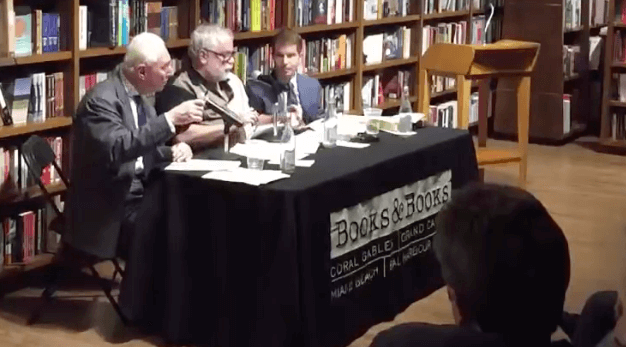
Gerald Posner vs. Roger Stone in Coral Gables
On the 54th anniversary of President Kennedy’s assassination, at a bookstore in Coral Gables, Florida two famous authors convened. They were Gerald Posner and Roger Stone. The subject was a debate over the circumstances of Kennedy’s assassination. Obviously, because of the orientation of their books on the subject, Posner defended the Warren Commission verdict while Stone argued for a conspiracy.

Robert Loomis Posner was trained as a lawyer. At age 23, he became one of the youngest attorneys ever employed by Cravath, Swaine and Moore, John McCloy’s old law firm. In 1980, he left that firm and opened a private practice with a partner. In 1986, he left that practice and became an author. In a relatively short period of time, he wrote three non-fiction books and one novel. In 1991, he was enlisted by Robert Loomis of Random House to write a response to Oliver Stone’s movie about the Kennedy assassination, JFK. The very plugged-in Loomis promised Posner that the CIA would cooperate with him on the project. (The Assassinations, edited by James DiEugenio and Lisa Pease, p. 369) And they did. Without their help, how else could an author gain access to high level defector Yuri Nosenko?

Harold Evans As was exposed in a later lawsuit by the late Roger Feinman, Random House put a major effort into selling Posner’s Case Closed. One that was personally supervised by Harold Evans, who was president of the publishing house at the time. According to information Feinman discovered in his lawsuit, it was Evans who personally approved the infamous NY Times ads for the book. This was a four-phase campaign. It began with two teaser ads that promised to name the guilty parties in the JFK assassination. It culminated with two more ads. These featured the faces of Oliver Stone, David Lifton, Robert Groden, Jim Marrs, Mark Lane and Jim Garrison under a title which boldly accused them of the charge: “Guilty of Misleading the American Public”. If the reader knows anything about advertising costs in major newspapers, he can guess what those four ads cost. (Click here for Feinman’s essay about his lawsuit against Random House.)
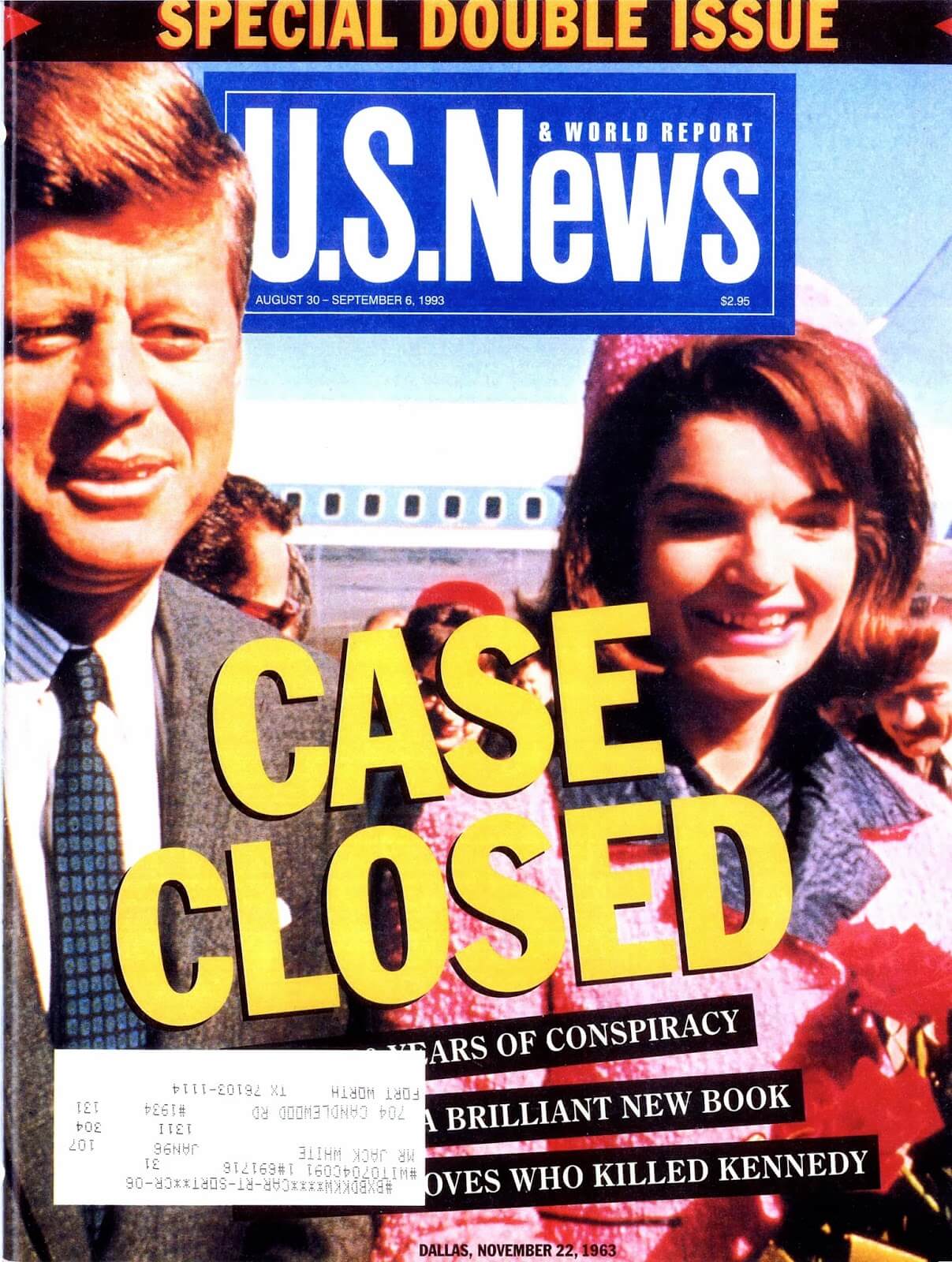
But that was not all. Apparently because Evans had previously served as a director of US News and World Report, that magazine gave Posner’s book a cover story. The book became such a cause celebre that other authors have successfully used it as a way to curry favor with the MSM, e.g., Jeff Toobin and Robert Dallek.
The problem with all this hoopla, which was designed to coincide with the 30th anniversary of the assassination, is that it was completely unwarranted. There were several reviews that showed just how flawed Case Closed was: for instance, David Wrone’s. (See also this index of items on this site.) In fact, there were so many problems with Posner’s book that activist Dave Starks put together a compendium page of articles to show that, not only was Case Closed a very bad piece of scholarship, but it might have been worse than that. In his haste to do a hatchet job on the critics, Posner may have created interviews he did not actually do. For instance, Peter Scott talked to Carlos Bringuier after Case Closed came out. Contrary to the book’s claims, Bringuier said he never talked to Posner. (Author interview with Scott in San Francisco in 1994) Same with Dealey Plaza witness James Tague, who the author clearly states he talked to on two successive days. (See Posner, paperback edition, p. 546) When Gary Aguilar talked to Tague, he said he never spoke to Posner. To use another example, although the author said he interviewed JFK’s forensic pathologist Thornton Boswell, Boswell told Aguilar he never spoke to him. (Click here for Starks’ devastating page on Posner.)
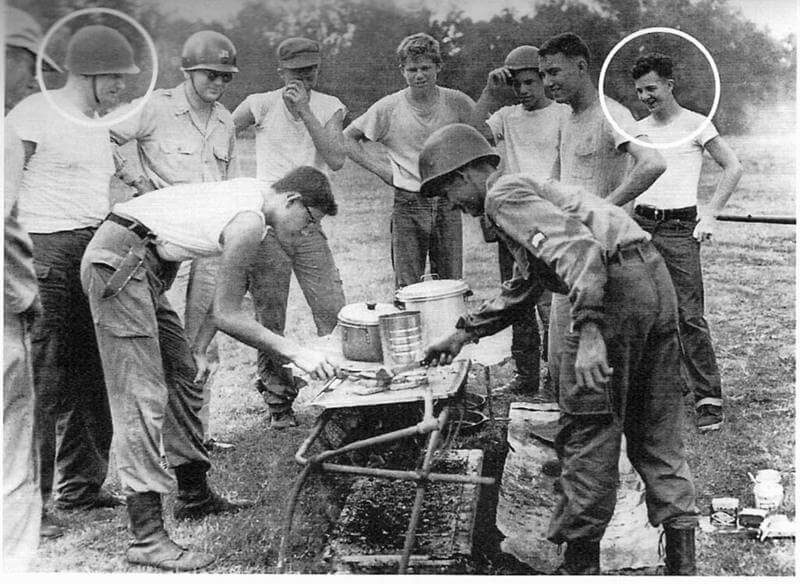
David Ferrie & Lee Oswald,
Civil Air Patrol (1955)Posner also committed some outright howlers in his much-ballyhooed book. For example, in his schematic drawings of the assassin at the Texas School Book Depository window, he has him posed as firing from an extreme left to right angle. So much so that these “Posner shots” would have ended up in the railroad yards behind the picket fence. (See Appendix A of Case Closed, paperback edition.) This makes one wonder if Posner was ever in Dallas. Because to anyone who has been to the building and peered out the sixth floor window—which was possible back then—it presents a slight right to left angle. Posner also wrote that there was no evidence to connect David Ferrie with Oswald. (Posner, p. 425) This was utterly ridiculous on many counts. But to name just one, when the book came out PBS did a special which featured a photo of Oswald and Ferrie together at a Civil Air Patrol (CAP) barbecue. They found it by questioning some other members of the CAP. Which means Posner could have done the same if he had knocked on some doors in the Crescent City. Posner also writes that there was no such personage as Clay Bertrand in New Orleans. When the JFK Act declassified both the Jim Garrison files and the papers of the HSCA, Posner again ended up with custard pie on his face. Those documents reveal that the number of witnesses who stated that Clay Shaw used the alias of Clay Bertrand was in the double digits. (Destiny Betrayed, Second Edition, by James DiEugenio, pp. 211, 387, 388)
Posner’s book showed us in excelsis just how schizoid America is on the murder of President Kennedy. It did not matter to the Powers That Be just how error-strewn Posner’s book was. It did not matter to them that he was more or less acting as a hired gun for Loomis and Evans. It did not matter to them that the book was obviously a rush job for the 30th anniversary. Or that the title was preposterous since the declassification process of the JFK Act had not even gone into effect yet. In other words, the book was saying the case was closed when, in fact, two million pages of documents were about to be declassified in the next four years.
Clearly, as representatives of the Anglo-American Establishment, the important thing for Loomis and Evans was this: They wanted to create a tangible cultural artifact to rally around at the 30th anniversary. Why? In order to beat back the tsunami effect of Oliver Stone’s JFK, which had blindsided them. Posner’s book was a concocted historical event. Today the book has been retired to the (rather large) ash heap of useless volumes on the JFK case. It has no intrinsic factual merit to it at all. It is simply an exemplar of a two-part cultural/historical phenomenon. I say two parts, because the second phase of this Jungian neurotic outbreak occurred four years later, with another Loomis client. This time the collective seizure was over Sy Hersh’s equally horrendous book. This one was a biography of John Kennedy, The Dark Side of Camelot. That bookend volume was as bad in its own way as Posner’s tome. But Oliver Stone had not just said that JFK was killed by a conspiracy. His film also stated that Kennedy was a foreign policy iconoclast who was changing things in that realm. This was true and has been proven even more accurate by recent scholarship. But that did not matter with Hersh, whose book was so bad that some critics said it should have been titled, The Dark Side of Seymour Hersh.
II
Roger Stone was born in Lewisboro, New York to a reporter mother and a father who drilled oil wells. Stone got hooked on politics when he read Conscience of a Conservative by Barry Goldwater. Although he admired Goldwater’s ideas he could not comprehend the tactics of his 1964 campaign. To put it mildly, he thought they were rather quixotic. As he told writer Matt Labash, “It’s like he was trying to lose. Going to Tennessee and coming out against the Tennessee Valley Authority? These were suicidal acts.” (Weekly Standard, November 5, 2007)

Roger Stone & Nixon Because of this, Roger Stone became more enamored with Richard Nixon as his conservative standard bearer. He deduced that Nixon was “more pragmatic, more interested in winning than proving a point.” He took a pithy aphorism from RMN: “Losers don’t legislate.” (ibid) Stone liked Nixon so much that he decided that his newly found idol had not really lost the 1960 election. He had been robbed of the presidency through electoral fraud. So he wrote Nixon a letter at his New York law firm encouraging him to run again. Nixon replied that he did not plan on doing so, but if he did, he would be in touch with young Stone. (Stone is such a Nixon fan he had his face tattooed on his back.)
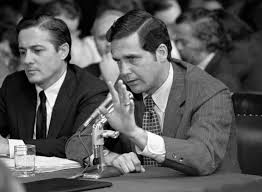
Jeb Magruder testifies
during the Watergate hearingsWhile a student at George Washington University in Washington D.C., Stone invited Jeb Magruder, deputy director of the Committee to Reelect the President, to speak at the college’s Young Republican Club. After the speaking engagement Stone asked Magruder for a job with CREEP. At age 19, Stone decided to forsake his studies and joined right in with the antics of the infamous CREEP. For instance, he planted a mole in the camp of Democratic rival Hubert Humphrey. Magruder and his cohorts were obsessed with intelligence and skullduggery, and Stone had a natural affinity for them. He once wrote a check to Nixon rival Pete McCloskey from an account inscribed as the Young Socialists Alliance. Once he got the receipt he leaked it to the reactionary newspaper Manchester Union-Leader. (ibid)
Against Senator George McGovern in the general election, Stone hired another spy he termed Sedan Chair II. But according to Stone, he did not understand the mentality of CREEP. To him it did not make any sense to take the kinds of risks they were taking when the Democratic candidate, McGovern, had so little chance of winning. After Watergate, which spelled the end of Nixon’s political career, he went to work for Bob Dole, and then for the (failed) Ronald Reagan campaign of 1976. During this period, he co-founded the National Conservative Political Action committee, which was designed to execute a GOP takeover of the Senate. Which, by recruiting men like Dan Quayle and Chuck Grassley, it did. As he noted to Jeffrey Toobin, “The Democrats were weak, we were strong.” (The New Yorker, June 2, 2008)

Donald Trump & Roy Cohn 
John Anderson (Sept. 16, 1980) In 1980, he again worked for Reagan. In that election, he joined forces with the notorious attorney Roy Cohn, sworn enemy of the late Bobby Kennedy. They decided that the best way for Reagan to beat incumbent president Jimmy Carter in New York was to help Democratic congressman John Anderson get on the ballot. This way, the Democratic Party vote would be split and therefore weakened. According to Stone, Cohn told him to get in contact with a lawyer friend he had. Once in contact, he was to ask him how much it would cost to get Anderson the Liberal party nomination in New York. Stone reported back that the price was $125,000. A couple of days later, Stone was told by Cohn to pick up a suitcase and deliver it to the lawyer. He did so, and Anderson won the Liberal Party nomination. Reagan won New York with 46% of the vote. (ibid, Labash)

Reagan’s victory in 1980 allowed Stone to enter the upper stratosphere of political campaign managing and lobbying. He now set up an office with two other GOP stalwarts, Charles Black and Paul Manafort. They would later be joined by none other than the late Lee Atwater, the man usually given credit for the Willie Horton TV ads, which helped defeat Democrat Michael Dukakis in 1988. The firm was lobbying on behalf of such people as Ferdinand Marcos, dictator of the Philippines, as well as conservative causes like the Nicaraguan Contras, and Angola’s UNITA rebels. And they advised several presidential candidates, even when they opposed each other.
Stone’s primacy in the higher circles of the GOP came to an end in 1996. He was serving as an unaccredited adviser to Bob Dole’s presidential campaign when scandal struck. And it struck through the National Enquirer. They billed the story as “Top Dole Aide Caught in Group-Sex Ring.” (op. cit., Toobin) He and his second wife had run ads for swinging partners to participate in bedroom games. (op. cit., Labash) The tabloids even got hold of the advertising photos. Stone tried his usual “Deny, deny, deny” tactics. But they did not succeed.
But in 2000, James Baker, who was running the GOP recount effort in Florida against Al Gore, brought Stone back to perform one last piece of political subterfuge. That act would have a momentous impact on America for decades into the future. It has come to be known as the “Brooks Brothers riot”.
When the Florida Supreme Court ruled that Gore could have a recount in four counties, Stone and Baker decided this had to be thwarted. Scores of Republican congressional aides—the Brooks Brothers suits—had been flown to Miami to simulate grass roots, Floridian protest against the recount. Stone stationed himself in a Winnebago outside the building where the Miami-Dade County recount was taking place. Outfitted with walkie-talkies and cell phones, he went to work using these aides to create the illusion of an indigenous attack on the building. He did this by having the congressional aides actually enter the building and demand the recount be halted. According to the New York Times, some people were struck or kicked. (11/23/2000) This scene inside the building was coupled with Stone inspired Spanish language radio warnings about carloads of Cuban exiles driving to the scene. (op. cit., Toobin) In its broad outlines, the operation resembled the CIA coup in Guatemala in 1954. Between the Brooks Brothers demonstrators and the “imminent Cuban exile assault”, the recount was discontinued. The episode likely stopped Gore from actually taking the lead for the first time. This—plus the later Antonin Scalia order granting emergency relief due to the “irreparable damage” of counting votes—ultimately led to the US Supreme Court decision stopping the recount. And that brought us George W. Bush, perhaps the worst president in history.
III

After his work for Random House on the JFK case, in 1998 Posner wrote a book on the 30th anniversary of the Martin Luther King assassination. To no one’s surprise, Killing the Dream came to the same conclusion as Case Closed—the official story was correct. One year later of course, William Pepper demonstrated in court that Posner was wrong. The jury in a civil case brought by the King family ruled that King was killed as a result of a conspiracy.

David Marwell Because of his establishment-pleasing writings, Posner became a TV and MSM presence. And he continued to write more non-fiction books. He appeared on many TV programs and also as an editorial writer for some major newspapers. According to Doug Horne in his book Inside the ARRB, the first director of the Assassination Records Review Board, David Marwell, said he found much of value in Case Closed. Consequently, he had lunch with Posner more than once. Harold Evans’ wife, Tina Brown, hired Posner as an investigative journalist for the online magazine Daily Beast. But he was forced to step down from that position in 2010 over several accusations that demonstrated that Posner was a serial plagiarist. He not only plagiarized for his articles at Daily Beast, but also in at least three of his books, e.g., Miami Babylon. (See Slate, “The Posner Plagiarism Perplex”, 2/11/2010, also Miami New Times, March 30, 2010)

Tina Brown 
Harper Lee Three years later, the late Harper Lee filed a lawsuit claiming that her literary agent’s son-in-law had directed Posner to set up a corporation to defraud Lee of her royalties from her colossal best-seller To Kill a Mockingbird. In her court filing she said that she had faulty hearing and eyesight and these had been used by Samuel Pinkus to snooker her into signing over her book copyright. Pinkus assigned the copyright to a company incorporated by Posner. (NY Post, May 4, 2013) Four months later, Posner settled the suit and was dismissed from the legal action.
After his work for James Baker in Miami, Roger Stone tended to concentrate on two new subjects. First, there was his friendship with Donald Trump. Stone was sold on the idea of Trump making a run for the presidency on the Reform Party ticket, the party created by Ross Perot. Although Trump made some overtures to run in the 2000 election, he ultimately decided against it. Stone also began to develop an avocation as an author. To say that his output has been prolific does not do him justice. In the space of about three years, beginning in late 2013, Stone has written or co-written—at last count—seven books. At least three of them rely on his relationship with Richard Nixon, who he still holds in high regard. If one looks closely, three of them rely on his relationship with Trump, who he had worked for in Trump’s 2015-16 campaign before they (allegedly) parted ways. His book about Jeb Bush, Jeb and the Bush Crime Family, was clearly meant as a broadside against the candidate most perceived as the favorite in the GOP primary campaign. His book about the Clintons, The Clintons’ War on Women, was meant as a preemptive strike against the attacks against Trump’s philandering with females.


But Roger Stone/author first came to prominence at the 50th anniversary of the JFK assassination. At that time he co-wrote a book entitled The Man Who Killed Kennedy: The Case Against LBJ. That book became a New York Times bestseller. In fact, of all the books released at the 50th, it likely sold the most copies. Since then he has stayed involved in the field. In fact, his co-writers on the two previously mentioned books come from the JFK field. They are, respectively, Saint John Hunt and Robert Morrow.
Why has Stone done this? It likely does not pay him the fees he commanded as a Washington lobbyist working in a very powerful PR firm. In a profile written by Jeff Toobin for The New Yorker, some hints for this career move are tossed out—almost inadvertently. One of the reasons Stone gives for being so enamored of Nixon is his anti-elitism. He adds Nixon was class conscious. And he identified with average people who ate TV dinners and watched Lawrence Welk. To Stone, Nixon “recognized the effectiveness of anti-elitism—a staple of American campaigns even today—as a core message.” In comparing Nixon with Reagan, Stone states that although many Republicans give Reagan credit for the defections of the working class from the Democrats, it was really Nixon who started it. Stone then zeroes in on the whole polarization concept:
Nixon figured out how to win. We had a non-elitist message. We were the party of the workingman! We wanted lower taxes for everyone across the board. They were the part of the Hollywood elite. … The point that the Democrats missed was that the people who weren’t rich wanted to be rich.
There is little doubt that Nixon, with his appeals to the Silent Majority in order to expand and lengthen the Vietnam War, did use these kinds of techniques. It’s obvious from the declassified tapes at the Nixon Library that he did not mean any of it. This was amply exposed by author Ken Hughes, among others, in his fine book Fatal Politics. And this exposure helps explain why Nixon and his family fought so long and hard not to have those tapes declassified. That book reveals that Nixon knew the war was lost in 1969. But he did not want to have South Vietnam fall on his watch. Therefore, he lied to Nguyen Van Thieu of South Vietnam to keep him in his corner while he negotiated an agreement with the north. The whole time he slaughtered tens of thousands of innocent civilians in an expanded air war over all of Indochina. The only reason for this was to announce a peace agreement on the eve of the 1972 election to make sure he had a landslide victory. This is all admitted to on these tapes in the Hughes book, and in letters he sent to Thieu in the book The Palace File.
But the relevant point for today’s scene is that this cultural anti-elite aspect was well used by both Stone and Trump during the latter’s successful presidential campaign. Trump decided to leapfrog most of the MSM, and he did this with Stone’s help. In addition to the two books mentioned above, Stone helped promote the whole mythology of Ted Cruz’s father being seen in New Orleans with Lee Oswald in the summer of 1963. Stone used the word of Judyth Baker to promote this bizarre story. And Trump went on national TV with it. (Click here for our reaction.) The Morrow/Stone book about Clinton helped Trump alleviate the impact of the compelling Access Hollywood videotape. And this whole anti-cultural-elite concept helped avoid the question of how in the heck do the interests of a billionaire real estate investor coincide with America’s shrinking middle class? With the announcement of Trump’s cabinet, we can see that, as with Nixon, the whole idea is little more than window dressing. The policies that this cabinet and the Republican Party will try to enact will gut the middle class even more.
IV
All of the above about these two men is more than relevant to their debate in Coral Gables. Because it informs us of the state of the JFK case in America today. This author would not walk across the street to see Posner speak about either the JFK or King case. Simply because he is a lawyer who is in the employ of the official story. Therefore, it does not matter if what he is saying is incomplete, dubious or just specious. This reviewer has never read any of Stone’s books for the simple reason that I have a hard time thinking that Stone could master something as complex and multi-layered as the JFK case in just a matter of 3-4 years. I am also skeptical of the case that he and others have made against Lyndon Johnson. In watching this confrontation it appears I was correct about these suspicions.
Roger Stone presented first. He led off with remarks about the avulsed rear skull wound that, for him, disappeared from the back of Kennedy’s head after he left Parkland Hospital. (This is not accurate. Gary Aguilar has shown it did not disappear, it was apparent at both the emergency room at Parkland and Bethesda Medical Center, where Kennedy’s body underwent an autopsy.) Stone later added the confusing point that the House Select Committee on Assassinations (HSCA) was convened because of Oliver Stone’s film JFK. I think Roger meant the Assassination Records Review Board (ARRB) was convened.
But he then confuses this issue even more by saying that the HSCA revealed more of Ruby’s Mafia ties, which led them to conclude organized crime involvement in the JFK case. This is not really accurate, as the HSCA did not deduce this as one of their conclusions. Chief Counsel Robert Blakey did that in his later book on the JFK case, The Plot to Kill the President (which was co-written with Dick Billings).
Stone also talked about his relationship with Senator Arlen Specter and how Specter did not have access to the autopsy materials during the Warren Commission proceedings. This needed to be qualified. As revealed by the declassified transcripts of the their executive hearings, the Warren Commission did have the autopsy materials. (Gerald McKnight, Breach of Trust, p. 171) And as Pat Speer has shown on his web site, Specter did see at least one of the autopsy photos. (See Chapter 10, “Examining the Examinations”.)
Stone also said that the alleged rifle used by Oswald was purchased for $75.00 and that no marksman was able to duplicate what he did, that is get 2 of 3 direct hits in six seconds. The latter part of this is correct, the former sum is about three times what the rifle actually cost. Stone then concluded with the Jay Harrison/Barr McClellan sponsored Mac Wallace fingerprint found on the sixth floor. He also even mentioned one Loy Factor’s involvement with Wallace and the LBJ plot.
Posner then replied. He criticized Stone’s book for having so many footnotes to other books. He therefore termed the book outdated. This is bizarre since Posner’s book is overwhelmingly reliant on the Warren Report and the accompanying volumes of evidence. He then said there was no evidence on the autopsy x-rays and photos that revealed anyone firing from anywhere except from behind and the general vicinity of the sixth floor.
Apparently, Posner was not aware of the ARRB interview with Tom Robinson who worked out of Gawler’s funeral parlor. He said there was a wound near the right temple of the president that he filled in with wax. He said it was so close to the hairline it was difficult to see. (Murder in Dealey Plaza, p. 250, edited by James Fetzer.) Author Don Thomas has also done good work with the autopsy photos, which makes this wound easier to discern. Posner also ignores the fact that, as many have indicated, if the autopsy doctors are correct and the entrance wound in the skull came in near the base, then there is no trajectory of bullet particles on the X-rays to match it up with.
Since Stone gave Posner an opening about only the Parkland doctors seeing the hole in the back of the skull, lawyer Posner took advantage of it. He said that since Kennedy’s body was not turned over at Parkland, they really didn’t see it. This is ridiculous on more than one count. First, as Gary Aguilar has shown, this avulsed wound did not “disappear” after Dallas. It was clearly observed at Bethesda, except the HSCA hid these interviews from the public. Therefore they were only declassified with the advent of the ARRB. (ibid, p. 199) And Posner talks about using dated information.
Secondly, Parkland nurse Diana Bowron actually saw this wound as she was aiding the entourage bringing Kennedy’s body into the emergency room, and she saw it again as she was prepping Kennedy’s corpse to depart. (ibid, pp. 60, 199) Neurosurgeon Kemp Clark examined Kennedy’s skull as the tracheotomy was being performed and he stated that he saw this wound. (ibid, p. 193) Nurse Audrey Bell told the ARRB that Malcolm Perry showed her this wound by turning Kennedy’s head slightly. (Interview of 4/1/97) Then, of course, there is the testimony of Secret Service agent Clint Hill who said he saw this wound in the limousine on the way to Parkland. (op. cit., Fetzer, pp. 198-99) Stone should have literally harpooned Posner for citing such specious information.
The bloviating Posner then added something just as dubious. He said that in order to argue conspiracy one must state that the X-rays and photos are altered. More baloney. Stone should have asked Posner on rebuttal, “How did the 6.5 mm fragment get on the X-rays if it’s not in the autopsy report and none of the autopsy doctors saw it that night?” He then should have asked the prosecutor, “What happened to the trail of fragments that lead pathologist Jim Humes wrote about in his report which goes from the bottom rear of the skull to the top? Those do not exist today. Why Gerald?” (Reclaiming Parkland, by James DiEugenio, pp. 152-54) Stone should also have asked the attorney, “Gerald, if all the shots came from the rear, including the head shot, why is there no blowout in the front of Kennedy’s face?”
Further, the brain was never sectioned. Therefore we do not know the path of the bullet through the skull, or if there was only one bullet. That would have been the best evidence of exactly what killed President Kennedy. But it was not done. Why?
Finally, the back wound was not dissected. So we do not know if this wound was a through and through wound–did it transit the body? If it did not, then the Single Bullet Theory Posner upholds is kaput. And according to pathologist Pierre Finck’s testimony at the Clay Shaw trial, the reason it was not tracked is that the doctors were prevented from doing so by the military brass at Bethesda.
These all indicate a cover up, if not a conspiracy. And they all would have been better evidence than the photos and X-rays. After all, one cannot photograph autopsy practices that were never performed.
Posner then said it is wrong to say that no marksman ever duplicated Oswald’s shooting feat. He said the Commission did, CBS did, and the HSCA did.
Concerning the first, I don’t know what Posner is talking about. Mark Lane and Sylvia Meagher have discussed the rifle experiments of the Warren Commission. (Meagher, Accessories After the Fact, pp. 108-10; Lane, Rush to Judgment, pp. 126-30) The FBI tried to get off three shots in six seconds, scoring two of three direct hits in the head and shoulder area. They failed. Therefore, the Commission had three military snipers try it. These tests were rigged. They were done from about twenty feet up, not sixty, as would have been the case with Oswald. The three riflemen were given as much time as they wanted to gauge the first shot, again not the case for Oswald. Third, they were firing at stationary and not moving targets. And even at that, the targets were grouped much closer together than what the Commission said was the firing series in Dealey Plaza. Fifth, these were some of the vey best marksmen in the military. They were so good they were above the best in the Marine Corps, and could qualify for the Olympics. To put it mildly, Oswald was nowhere near this quality. But even at that only one of them got the shots off in the required time. And none were able to get two of three direct hits.
Concerning CBS, apparently Posner has not read my essay based on CBS internal memoranda adduced by their employee Roger Feinman. Unlike what Posner stated, their first marksman, a famous military sniper, using a model of the 6.5 Mannlicher Carcano, could not do what Oswald did. They then brought in a team of riflemen, and let them practice for a week—which Oswald did not do in any way, shape or form. They then set up a target that eliminated the oak tree from the sixth floor, eliminated the curve in the street, and instead set up a moving sled to fire at. This last was the most important factor. Why? Because the sled posed an enlarged target, as Feinman notes, it at least doubled the target area. In other words, CBS cheated after their first marksman failed. (Click here for that information.)
Stooping to the HSCA for evidence on this subject is really hard to understand. Even for Posner. Because the HSCA did no rifle tests during its actual duration. They did not do them until after the HSCA ceased operation. Wallace Milam sent me the full memo on this episode. It turns out that Chief Counsel Robert Blakey, his assistant Gary Cornwell, and some Washington policemen went out to a rifle range. There they tried to do what the Commission said Oswald did. In their overweening ambition, at first they decided not to use the telescopic site. Which is ridiculous since the Commission said Oswald did use it. After all, why would it be attached to the rifle if it were not used? As I can inform the reader, that scope makes a huge difference. To say Oswald did what he did without it is simply preposterous. But when the policemen used only the iron sights on the rifle, they had the same problem that the Commission did. They could not maintain accuracy within the six second time interval of the Warren Commission. So what did Blakey and Cornwell do? They used something called “point aiming”. Which means not using any site at all, just pointing the rifle. When they got off two shots in under two seconds that was enough. They then deduced it was possible to do what Oswald allegedly did even though they were only 20 feet up instead of 60 feet and their accuracy results were not recorded. (The Assassinations, edited by James DiEugenio and Lisa Pease, p. 83)

Marine sniper
Carlos HathcockStone should have replied that, yes, you can do what the Commission said Oswald did. But you have to cheat. And then not tell the public about the cheating. I would have then added that Carlos Hathcock, the greatest sniper of the Vietnam War, actually did try and duplicate accurately what the Commission said Oswald did. He told author Craig Roberts that he could not do it, even though he tried more than once.
Posner actually used the fingerprint evidence on the alleged Oswald rifle to try and convict Oswald. Without telling the public that this so-called evidence was presented only after the FBI found there were no prints found on the rifle when Sebastian LaTona examined it that night. (Meagher, op. cit., pp. 120-27) Prints only showed up about a week later, and then thirty years later for a PBS special. Stone rightly pointed out that the FBI was inexplicably at the Oswald funeral parlor trying to get fingerprints off of his corpse. (Henry Hurt, Reasonable Doubt, pp. 107-09) Which is weird, since the Dallas Police already had Oswald’s fingerprints.
Posner concluded by rebutting the use of the Mac Wallace fingerprint with the work of FBI authority Robert Garrett, as is featured in Joan Mellen’s book, Faustian Bargains.
I won’t go on with my analysis since it would just be more of the same. Posner making more and more dubious claims and Stone replying with populist type experts, e.g., Judyth Baker on Cruz, and Richard Bartholomew on the Wallace print. (Yet, to my knowledge, Richard is not a fingerprint expert.) Posner actually tried to impeach Victoria Adams not seeing Oswald running down the stairs after the shooting by saying she did not see officer Marrion Baker or supervisor Roy Truly either. Again, Posner seems unaware that Miss Garner, Victoria’s supervisor, did see those two men come up the stairs after Adams and co-worker Sandy Styles went down. Further, the Warren Commission had this document in their hands, since it was dated June 2, 1964. While they were in session.
Now, obviously, if Garner saw Baker and Truly after Victoria and Sandy went down the stairs, then the two women left within seconds of the shooting, as they said they did. Yet the Warren Report says they left much later, minutes afterwards. In other words, the Commission covered up the true facts of what had occurred. Because Adams and Styles give Oswald a rock solid alibi for not being on the sixth floor when they needed him to be so. (DiEugenio, op. cit., pp. 115-20)
The most important thing that was said during this debate was that Stone would try and talk to Mr. Trump about the declassification of the final documents being held at the National Archives by the JFK Act. They are supposed to be finally disposed of in October of this year. Let us hope Mr. Stone uses his influence to see that through. It would be in keeping with his and Mr. Trump’s obeisance to conservative populism.
(The debate video is embedded below, or the reader can watch it by clicking here.)
-
Gerald Posner vs. Roger Stone in Coral Gables
On the 54th anniversary of President Kennedy’s assassination, at a bookstore in Coral Gables, Florida two famous authors convened. They were Gerald Posner and Roger Stone. The subject was a debate over the circumstances of Kennedy’s assassination. Obviously, because of the orientation of their books on the subject, Posner defended the Warren Commission verdict while Stone argued for a conspiracy.
Robert Loomis Posner was trained as a lawyer. At age 23, he became one of the youngest attorneys ever employed by Cravath, Swaine and Moore, John McCloy’s old law firm. In 1980, he left that firm and opened a private practice with a partner. In 1986, he left that practice and became an author. In a relatively short period of time, he wrote three non-fiction books and one novel. In 1991, he was enlisted by Robert Loomis of Random House to write a response to Oliver Stone’s movie about the Kennedy assassination, JFK. The very plugged-in Loomis promised Posner that the CIA would cooperate with him on the project. (The Assassinations, edited by James DiEugenio and Lisa Pease, p. 369) And they did. Without their help, how else could an author gain access to high level defector Yuri Nosenko?
Harold Evans As was exposed in a later lawsuit by the late Roger Feinman, Random House put a major effort into selling Posner’s Case Closed. One that was personally supervised by Harold Evans, who was president of the publishing house at the time. According to information Feinman discovered in his lawsuit, it was Evans who personally approved the infamous NY Times ads for the book. This was a four-phase campaign. It began with two teaser ads that promised to name the guilty parties in the JFK assassination. It culminated with two more ads. These featured the faces of Oliver Stone, David Lifton, Robert Groden, Jim Marrs, Mark Lane and Jim Garrison under a title which boldly accused them of the charge: “Guilty of Misleading the American Public”. If the reader knows anything about advertising costs in major newspapers, he can guess what those four ads cost. (Click here for Feinman’s essay about his lawsuit against Random House.)
But that was not all. Apparently because Evans had previously served as a director of US News and World Report, that magazine gave Posner’s book a cover story. The book became such a cause celebre that other authors have successfully used it as a way to curry favor with the MSM, e.g., Jeff Toobin and Robert Dallek.
The problem with all this hoopla, which was designed to coincide with the 30th anniversary of the assassination, is that it was completely unwarranted. There were several reviews that showed just how flawed Case Closed was: for instance, David Wrone’s. (See also this index of items on this site.) In fact, there were so many problems with Posner’s book that activist Dave Starks put together a compendium page of articles to show that, not only was Case Closed a very bad piece of scholarship, but it might have been worse than that. In his haste to do a hatchet job on the critics, Posner may have created interviews he did not actually do. For instance, Peter Scott talked to Carlos Bringuier after Case Closed came out. Contrary to the book’s claims, Bringuier said he never talked to Posner. (Author interview with Scott in San Francisco in 1994) Same with Dealey Plaza witness James Tague, who the author clearly states he talked to on two successive days. (See Posner, paperback edition, p. 546) When Gary Aguilar talked to Tague, he said he never spoke to Posner. To use another example, although the author said he interviewed JFK’s forensic pathologist Thornton Boswell, Boswell told Aguilar he never spoke to him. (Click here for Starks’ devastating page on Posner.)
David Ferrie & Lee Oswald,
Civil Air Patrol (1955)Posner also committed some outright howlers in his much-ballyhooed book. For example, in his schematic drawings of the assassin at the Texas School Book Depository window, he has him posed as firing from an extreme left to right angle. So much so that these “Posner shots” would have ended up in the railroad yards behind the picket fence. (See Appendix A of Case Closed, paperback edition.) This makes one wonder if Posner was ever in Dallas. Because to anyone who has been to the building and peered out the sixth floor window—which was possible back then—it presents a slight right to left angle. Posner also wrote that there was no evidence to connect David Ferrie with Oswald. (Posner, p. 425) This was utterly ridiculous on many counts. But to name just one, when the book came out PBS did a special which featured a photo of Oswald and Ferrie together at a Civil Air Patrol (CAP) barbecue. They found it by questioning some other members of the CAP. Which means Posner could have done the same if he had knocked on some doors in the Crescent City. Posner also writes that there was no such personage as Clay Bertrand in New Orleans. When the JFK Act declassified both the Jim Garrison files and the papers of the HSCA, Posner again ended up with custard pie on his face. Those documents reveal that the number of witnesses who stated that Clay Shaw used the alias of Clay Bertrand was in the double digits. (Destiny Betrayed, Second Edition, by James DiEugenio, pp. 211, 387, 388)
Posner’s book showed us in excelsis just how schizoid America is on the murder of President Kennedy. It did not matter to the Powers That Be just how error-strewn Posner’s book was. It did not matter to them that he was more or less acting as a hired gun for Loomis and Evans. It did not matter to them that the book was obviously a rush job for the 30th anniversary. Or that the title was preposterous since the declassification process of the JFK Act had not even gone into effect yet. In other words, the book was saying the case was closed when, in fact, two million pages of documents were about to be declassified in the next four years.
Clearly, as representatives of the Anglo-American Establishment, the important thing for Loomis and Evans was this: They wanted to create a tangible cultural artifact to rally around at the 30th anniversary. Why? In order to beat back the tsunami effect of Oliver Stone’s JFK, which had blindsided them. Posner’s book was a concocted historical event. Today the book has been retired to the (rather large) ash heap of useless volumes on the JFK case. It has no intrinsic factual merit to it at all. It is simply an exemplar of a two-part cultural/historical phenomenon. I say two parts, because the second phase of this Jungian neurotic outbreak occurred four years later, with another Loomis client. This time the collective seizure was over Sy Hersh’s equally horrendous book. This one was a biography of John Kennedy, The Dark Side of Camelot. That bookend volume was as bad in its own way as Posner’s tome. But Oliver Stone had not just said that JFK was killed by a conspiracy. His film also stated that Kennedy was a foreign policy iconoclast who was changing things in that realm. This was true and has been proven even more accurate by recent scholarship. But that did not matter with Hersh, whose book was so bad that some critics said it should have been titled, The Dark Side of Seymour Hersh.
II
Roger Stone was born in Lewisboro, New York to a reporter mother and a father who drilled oil wells. Stone got hooked on politics when he read Conscience of a Conservative by Barry Goldwater. Although he admired Goldwater’s ideas he could not comprehend the tactics of his 1964 campaign. To put it mildly, he thought they were rather quixotic. As he told writer Matt Labash, “It’s like he was trying to lose. Going to Tennessee and coming out against the Tennessee Valley Authority? These were suicidal acts.” (Weekly Standard, November 5, 2007)
Roger Stone & Nixon Because of this, Roger Stone became more enamored with Richard Nixon as his conservative standard bearer. He deduced that Nixon was “more pragmatic, more interested in winning than proving a point.” He took a pithy aphorism from RMN: “Losers don’t legislate.” (ibid) Stone liked Nixon so much that he decided that his newly found idol had not really lost the 1960 election. He had been robbed of the presidency through electoral fraud. So he wrote Nixon a letter at his New York law firm encouraging him to run again. Nixon replied that he did not plan on doing so, but if he did, he would be in touch with young Stone. (Stone is such a Nixon fan he had his face tattooed on his back.)
Jeb Magruder testifies
during the Watergate hearingsWhile a student at George Washington University in Washington D.C., Stone invited Jeb Magruder, deputy director of the Committee to Reelect the President, to speak at the college’s Young Republican Club. After the speaking engagement Stone asked Magruder for a job with CREEP. At age 19, Stone decided to forsake his studies and joined right in with the antics of the infamous CREEP. For instance, he planted a mole in the camp of Democratic rival Hubert Humphrey. Magruder and his cohorts were obsessed with intelligence and skullduggery, and Stone had a natural affinity for them. He once wrote a check to Nixon rival Pete McCloskey from an account inscribed as the Young Socialists Alliance. Once he got the receipt he leaked it to the reactionary newspaper Manchester Union-Leader. (ibid)
Against Senator George McGovern in the general election, Stone hired another spy he termed Sedan Chair II. But according to Stone, he did not understand the mentality of CREEP. To him it did not make any sense to take the kinds of risks they were taking when the Democratic candidate, McGovern, had so little chance of winning. After Watergate, which spelled the end of Nixon’s political career, he went to work for Bob Dole, and then for the (failed) Ronald Reagan campaign of 1976. During this period, he co-founded the National Conservative Political Action committee, which was designed to execute a GOP takeover of the Senate. Which, by recruiting men like Dan Quayle and Chuck Grassley, it did. As he noted to Jeffrey Toobin, “The Democrats were weak, we were strong.” (The New Yorker, June 2, 2008)
Donald Trump & Roy Cohn John Anderson (Sept. 16, 1980) In 1980, he again worked for Reagan. In that election, he joined forces with the notorious attorney Roy Cohn, sworn enemy of the late Bobby Kennedy. They decided that the best way for Reagan to beat incumbent president Jimmy Carter in New York was to help Democratic congressman John Anderson get on the ballot. This way, the Democratic Party vote would be split and therefore weakened. According to Stone, Cohn told him to get in contact with a lawyer friend he had. Once in contact, he was to ask him how much it would cost to get Anderson the Liberal party nomination in New York. Stone reported back that the price was $125,000. A couple of days later, Stone was told by Cohn to pick up a suitcase and deliver it to the lawyer. He did so, and Anderson won the Liberal Party nomination. Reagan won New York with 46% of the vote. (ibid, Labash)
Reagan’s victory in 1980 allowed Stone to enter the upper stratosphere of political campaign managing and lobbying. He now set up an office with two other GOP stalwarts, Charles Black and Paul Manafort. They would later be joined by none other than the late Lee Atwater, the man usually given credit for the Willie Horton TV ads, which helped defeat Democrat Michael Dukakis in 1988. The firm was lobbying on behalf of such people as Ferdinand Marcos, dictator of the Philippines, as well as conservative causes like the Nicaraguan Contras, and Angola’s UNITA rebels. And they advised several presidential candidates, even when they opposed each other.
Stone’s primacy in the higher circles of the GOP came to an end in 1996. He was serving as an unaccredited adviser to Bob Dole’s presidential campaign when scandal struck. And it struck through the National Enquirer. They billed the story as “Top Dole Aide Caught in Group-Sex Ring.” (op. cit., Toobin) He and his second wife had run ads for swinging partners to participate in bedroom games. (op. cit., Labash) The tabloids even got hold of the advertising photos. Stone tried his usual “Deny, deny, deny” tactics. But they did not succeed.
But in 2000, James Baker, who was running the GOP recount effort in Florida against Al Gore, brought Stone back to perform one last piece of political subterfuge. That act would have a momentous impact on America for decades into the future. It has come to be known as the “Brooks Brothers riot”.
When the Florida Supreme Court ruled that Gore could have a recount in four counties, Stone and Baker decided this had to be thwarted. Scores of Republican congressional aides—the Brooks Brothers suits—had been flown to Miami to simulate grass roots, Floridian protest against the recount. Stone stationed himself in a Winnebago outside the building where the Miami-Dade County recount was taking place. Outfitted with walkie-talkies and cell phones, he went to work using these aides to create the illusion of an indigenous attack on the building. He did this by having the congressional aides actually enter the building and demand the recount be halted. According to the New York Times, some people were struck or kicked. (11/23/2000) This scene inside the building was coupled with Stone inspired Spanish language radio warnings about carloads of Cuban exiles driving to the scene. (op. cit., Toobin) In its broad outlines, the operation resembled the CIA coup in Guatemala in 1954. Between the Brooks Brothers demonstrators and the “imminent Cuban exile assault”, the recount was discontinued. The episode likely stopped Gore from actually taking the lead for the first time. This—plus the later Antonin Scalia order granting emergency relief due to the “irreparable damage” of counting votes—ultimately led to the US Supreme Court decision stopping the recount. And that brought us George W. Bush, perhaps the worst president in history.
III
After his work for Random House on the JFK case, in 1998 Posner wrote a book on the 30th anniversary of the Martin Luther King assassination. To no one’s surprise, Killing the Dream came to the same conclusion as Case Closed—the official story was correct. One year later of course, William Pepper demonstrated in court that Posner was wrong. The jury in a civil case brought by the King family ruled that King was killed as a result of a conspiracy.
David Marwell Because of his establishment-pleasing writings, Posner became a TV and MSM presence. And he continued to write more non-fiction books. He appeared on many TV programs and also as an editorial writer for some major newspapers. According to Doug Horne in his book Inside the ARRB, the first director of the Assassination Records Review Board, David Marwell, said he found much of value in Case Closed. Consequently, he had lunch with Posner more than once. Harold Evans’ wife, Tina Brown, hired Posner as an investigative journalist for the online magazine Daily Beast. But he was forced to step down from that position in 2010 over several accusations that demonstrated that Posner was a serial plagiarist. He not only plagiarized for his articles at Daily Beast, but also in at least three of his books, e.g., Miami Babylon. (See Slate, “The Posner Plagiarism Perplex”, 2/11/2010, also Miami New Times, March 30, 2010)
Tina Brown Harper Lee Three years later, the late Harper Lee filed a lawsuit claiming that her literary agent’s son-in-law had directed Posner to set up a corporation to defraud Lee of her royalties from her colossal best-seller To Kill a Mockingbird. In her court filing she said that she had faulty hearing and eyesight and these had been used by Samuel Pinkus to snooker her into signing over her book copyright. Pinkus assigned the copyright to a company incorporated by Posner. (NY Post, May 4, 2013) Four months later, Posner settled the suit and was dismissed from the legal action.
After his work for James Baker in Miami, Roger Stone tended to concentrate on two new subjects. First, there was his friendship with Donald Trump. Stone was sold on the idea of Trump making a run for the presidency on the Reform Party ticket, the party created by Ross Perot. Although Trump made some overtures to run in the 2000 election, he ultimately decided against it. Stone also began to develop an avocation as an author. To say that his output has been prolific does not do him justice. In the space of about three years, beginning in late 2013, Stone has written or co-written—at last count—seven books. At least three of them rely on his relationship with Richard Nixon, who he still holds in high regard. If one looks closely, three of them rely on his relationship with Trump, who he had worked for in Trump’s 2015-16 campaign before they (allegedly) parted ways. His book about Jeb Bush, Jeb and the Bush Crime Family, was clearly meant as a broadside against the candidate most perceived as the favorite in the GOP primary campaign. His book about the Clintons, The Clintons’ War on Women, was meant as a preemptive strike against the attacks against Trump’s philandering with females.
But Roger Stone/author first came to prominence at the 50th anniversary of the JFK assassination. At that time he co-wrote a book entitled The Man Who Killed Kennedy: The Case Against LBJ. That book became a New York Times bestseller. In fact, of all the books released at the 50th, it likely sold the most copies. Since then he has stayed involved in the field. In fact, his co-writers on the two previously mentioned books come from the JFK field. They are, respectively, Saint John Hunt and Robert Morrow.
Why has Stone done this? It likely does not pay him the fees he commanded as a Washington lobbyist working in a very powerful PR firm. In a profile written by Jeff Toobin for The New Yorker, some hints for this career move are tossed out—almost inadvertently. One of the reasons Stone gives for being so enamored of Nixon is his anti-elitism. He adds Nixon was class conscious. And he identified with average people who ate TV dinners and watched Lawrence Welk. To Stone, Nixon “recognized the effectiveness of anti-elitism—a staple of American campaigns even today—as a core message.” In comparing Nixon with Reagan, Stone states that although many Republicans give Reagan credit for the defections of the working class from the Democrats, it was really Nixon who started it. Stone then zeroes in on the whole polarization concept:
Nixon figured out how to win. We had a non-elitist message. We were the party of the workingman! We wanted lower taxes for everyone across the board. They were the part of the Hollywood elite. … The point that the Democrats missed was that the people who weren’t rich wanted to be rich.
There is little doubt that Nixon, with his appeals to the Silent Majority in order to expand and lengthen the Vietnam War, did use these kinds of techniques. It’s obvious from the declassified tapes at the Nixon Library that he did not mean any of it. This was amply exposed by author Ken Hughes, among others, in his fine book Fatal Politics. And this exposure helps explain why Nixon and his family fought so long and hard not to have those tapes declassified. That book reveals that Nixon knew the war was lost in 1969. But he did not want to have South Vietnam fall on his watch. Therefore, he lied to Nguyen Van Thieu of South Vietnam to keep him in his corner while he negotiated an agreement with the north. The whole time he slaughtered tens of thousands of innocent civilians in an expanded air war over all of Indochina. The only reason for this was to announce a peace agreement on the eve of the 1972 election to make sure he had a landslide victory. This is all admitted to on these tapes in the Hughes book, and in letters he sent to Thieu in the book The Palace File.
But the relevant point for today’s scene is that this cultural anti-elite aspect was well used by both Stone and Trump during the latter’s successful presidential campaign. Trump decided to leapfrog most of the MSM, and he did this with Stone’s help. In addition to the two books mentioned above, Stone helped promote the whole mythology of Ted Cruz’s father being seen in New Orleans with Lee Oswald in the summer of 1963. Stone used the word of Judyth Baker to promote this bizarre story. And Trump went on national TV with it. (Click here for our reaction.) The Morrow/Stone book about Clinton helped Trump alleviate the impact of the compelling Access Hollywood videotape. And this whole anti-cultural-elite concept helped avoid the question of how in the heck do the interests of a billionaire real estate investor coincide with America’s shrinking middle class? With the announcement of Trump’s cabinet, we can see that, as with Nixon, the whole idea is little more than window dressing. The policies that this cabinet and the Republican Party will try to enact will gut the middle class even more.
IV
All of the above about these two men is more than relevant to their debate in Coral Gables. Because it informs us of the state of the JFK case in America today. This author would not walk across the street to see Posner speak about either the JFK or King case. Simply because he is a lawyer who is in the employ of the official story. Therefore, it does not matter if what he is saying is incomplete, dubious or just specious. This reviewer has never read any of Stone’s books for the simple reason that I have a hard time thinking that Stone could master something as complex and multi-layered as the JFK case in just a matter of 3-4 years. I am also skeptical of the case that he and others have made against Lyndon Johnson. In watching this confrontation it appears I was correct about these suspicions.
Roger Stone presented first. He led off with remarks about the avulsed rear skull wound that, for him, disappeared from the back of Kennedy’s head after he left Parkland Hospital. (This is not accurate. Gary Aguilar has shown it did not disappear, it was apparent at both the emergency room at Parkland and Bethesda Medical Center, where Kennedy’s body underwent an autopsy.) Stone later added the confusing point that the House Select Committee on Assassinations (HSCA) was convened because of Oliver Stone’s film JFK. I think Roger meant the Assassination Records Review Board (ARRB) was convened.
But he then confuses this issue even more by saying that the HSCA revealed more of Ruby’s Mafia ties, which led them to conclude organized crime involvement in the JFK case. This is not really accurate, as the HSCA did not deduce this as one of their conclusions. Chief Counsel Robert Blakey did that in his later book on the JFK case, The Plot to Kill the President (which was co-written with Dick Billings).
Stone also talked about his relationship with Senator Arlen Specter and how Specter did not have access to the autopsy materials during the Warren Commission proceedings. This needed to be qualified. As revealed by the declassified transcripts of the their executive hearings, the Warren Commission did have the autopsy materials. (Gerald McKnight, Breach of Trust, p. 171) And as Pat Speer has shown on his web site, Specter did see at least one of the autopsy photos. (See Chapter 10, “Examining the Examinations”.)
Stone also said that the alleged rifle used by Oswald was purchased for $75.00 and that no marksman was able to duplicate what he did, that is get 2 of 3 direct hits in six seconds. The latter part of this is correct, the former sum is about three times what the rifle actually cost. Stone then concluded with the Jay Harrison/Barr McClellan sponsored Mac Wallace fingerprint found on the sixth floor. He also even mentioned one Loy Factor’s involvement with Wallace and the LBJ plot.
Posner then replied. He criticized Stone’s book for having so many footnotes to other books. He therefore termed the book outdated. This is bizarre since Posner’s book is overwhelmingly reliant on the Warren Report and the accompanying volumes of evidence. He then said there was no evidence on the autopsy x-rays and photos that revealed anyone firing from anywhere except from behind and the general vicinity of the sixth floor.
Apparently, Posner was not aware of the ARRB interview with Tom Robinson who worked out of Gawler’s funeral parlor. He said there was a wound near the right temple of the president that he filled in with wax. He said it was so close to the hairline it was difficult to see. (Murder in Dealey Plaza, p. 250, edited by James Fetzer.) Author Don Thomas has also done good work with the autopsy photos, which makes this wound easier to discern. Posner also ignores the fact that, as many have indicated, if the autopsy doctors are correct and the entrance wound in the skull came in near the base, then there is no trajectory of bullet particles on the X-rays to match it up with.
Since Stone gave Posner an opening about only the Parkland doctors seeing the hole in the back of the skull, lawyer Posner took advantage of it. He said that since Kennedy’s body was not turned over at Parkland, they really didn’t see it. This is ridiculous on more than one count. First, as Gary Aguilar has shown, this avulsed wound did not “disappear” after Dallas. It was clearly observed at Bethesda, except the HSCA hid these interviews from the public. Therefore they were only declassified with the advent of the ARRB. (ibid, p. 199) And Posner talks about using dated information.
Secondly, Parkland nurse Diana Bowron actually saw this wound as she was aiding the entourage bringing Kennedy’s body into the emergency room, and she saw it again as she was prepping Kennedy’s corpse to depart. (ibid, pp. 60, 199) Neurosurgeon Kemp Clark examined Kennedy’s skull as the tracheotomy was being performed and he stated that he saw this wound. (ibid, p. 193) Nurse Audrey Bell told the ARRB that Malcolm Perry showed her this wound by turning Kennedy’s head slightly. (Interview of 4/1/97) Then, of course, there is the testimony of Secret Service agent Clint Hill who said he saw this wound in the limousine on the way to Parkland. (op. cit., Fetzer, pp. 198-99) Stone should have literally harpooned Posner for citing such specious information.
The bloviating Posner then added something just as dubious. He said that in order to argue conspiracy one must state that the X-rays and photos are altered. More baloney. Stone should have asked Posner on rebuttal, “How did the 6.5 mm fragment get on the X-rays if it’s not in the autopsy report and none of the autopsy doctors saw it that night?” He then should have asked the prosecutor, “What happened to the trail of fragments that lead pathologist Jim Humes wrote about in his report which goes from the bottom rear of the skull to the top? Those do not exist today. Why Gerald?” (Reclaiming Parkland, by James DiEugenio, pp. 152-54) Stone should also have asked the attorney, “Gerald, if all the shots came from the rear, including the head shot, why is there no blowout in the front of Kennedy’s face?”
Further, the brain was never sectioned. Therefore we do not know the path of the bullet through the skull, or if there was only one bullet. That would have been the best evidence of exactly what killed President Kennedy. But it was not done. Why?
Finally, the back wound was not dissected. So we do not know if this wound was a through and through wound–did it transit the body? If it did not, then the Single Bullet Theory Posner upholds is kaput. And according to pathologist Pierre Finck’s testimony at the Clay Shaw trial, the reason it was not tracked is that the doctors were prevented from doing so by the military brass at Bethesda.
These all indicate a cover up, if not a conspiracy. And they all would have been better evidence than the photos and X-rays. After all, one cannot photograph autopsy practices that were never performed.
Posner then said it is wrong to say that no marksman ever duplicated Oswald’s shooting feat. He said the Commission did, CBS did, and the HSCA did.
Concerning the first, I don’t know what Posner is talking about. Mark Lane and Sylvia Meagher have discussed the rifle experiments of the Warren Commission. (Meagher, Accessories After the Fact, pp. 108-10; Lane, Rush to Judgment, pp. 126-30) The FBI tried to get off three shots in six seconds, scoring two of three direct hits in the head and shoulder area. They failed. Therefore, the Commission had three military snipers try it. These tests were rigged. They were done from about twenty feet up, not sixty, as would have been the case with Oswald. The three riflemen were given as much time as they wanted to gauge the first shot, again not the case for Oswald. Third, they were firing at stationary and not moving targets. And even at that, the targets were grouped much closer together than what the Commission said was the firing series in Dealey Plaza. Fifth, these were some of the vey best marksmen in the military. They were so good they were above the best in the Marine Corps, and could qualify for the Olympics. To put it mildly, Oswald was nowhere near this quality. But even at that only one of them got the shots off in the required time. And none were able to get two of three direct hits.
Concerning CBS, apparently Posner has not read my essay based on CBS internal memoranda adduced by their employee Roger Feinman. Unlike what Posner stated, their first marksman, a famous military sniper, using a model of the 6.5 Mannlicher Carcano, could not do what Oswald did. They then brought in a team of riflemen, and let them practice for a week—which Oswald did not do in any way, shape or form. They then set up a target that eliminated the oak tree from the sixth floor, eliminated the curve in the street, and instead set up a moving sled to fire at. This last was the most important factor. Why? Because the sled posed an enlarged target, as Feinman notes, it at least doubled the target area. In other words, CBS cheated after their first marksman failed. (Click here for that information.)
Stooping to the HSCA for evidence on this subject is really hard to understand. Even for Posner. Because the HSCA did no rifle tests during its actual duration. They did not do them until after the HSCA ceased operation. Wallace Milam sent me the full memo on this episode. It turns out that Chief Counsel Robert Blakey, his assistant Gary Cornwell, and some Washington policemen went out to a rifle range. There they tried to do what the Commission said Oswald did. In their overweening ambition, at first they decided not to use the telescopic site. Which is ridiculous since the Commission said Oswald did use it. After all, why would it be attached to the rifle if it were not used? As I can inform the reader, that scope makes a huge difference. To say Oswald did what he did without it is simply preposterous. But when the policemen used only the iron sights on the rifle, they had the same problem that the Commission did. They could not maintain accuracy within the six second time interval of the Warren Commission. So what did Blakey and Cornwell do? They used something called “point aiming”. Which means not using any site at all, just pointing the rifle. When they got off two shots in under two seconds that was enough. They then deduced it was possible to do what Oswald allegedly did even though they were only 20 feet up instead of 60 feet and their accuracy results were not recorded. (The Assassinations, edited by James DiEugenio and Lisa Pease, p. 83)
Marine sniper
Carlos HathcockStone should have replied that, yes, you can do what the Commission said Oswald did. But you have to cheat. And then not tell the public about the cheating. I would have then added that Carlos Hathcock, the greatest sniper of the Vietnam War, actually did try and duplicate accurately what the Commission said Oswald did. He told author Craig Roberts that he could not do it, even though he tried more than once.
Posner actually used the fingerprint evidence on the alleged Oswald rifle to try and convict Oswald. Without telling the public that this so-called evidence was presented only after the FBI found there were no prints found on the rifle when Sebastian LaTona examined it that night. (Meagher, op. cit., pp. 120-27) Prints only showed up about a week later, and then thirty years later for a PBS special. Stone rightly pointed out that the FBI was inexplicably at the Oswald funeral parlor trying to get fingerprints off of his corpse. (Henry Hurt, Reasonable Doubt, pp. 107-09) Which is weird, since the Dallas Police already had Oswald’s fingerprints.
Posner concluded by rebutting the use of the Mac Wallace fingerprint with the work of FBI authority Robert Garrett, as is featured in Joan Mellen’s book, Faustian Bargains.
I won’t go on with my analysis since it would just be more of the same. Posner making more and more dubious claims and Stone replying with populist type experts, e.g., Judyth Baker on Cruz, and Richard Bartholomew on the Wallace print. (Yet, to my knowledge, Richard is not a fingerprint expert.) Posner actually tried to impeach Victoria Adams not seeing Oswald running down the stairs after the shooting by saying she did not see officer Marrion Baker or supervisor Roy Truly either. Again, Posner seems unaware that Miss Garner, Victoria’s supervisor, did see those two men come up the stairs after Adams and co-worker Sandy Styles went down. Further, the Warren Commission had this document in their hands, since it was dated June 2, 1964. While they were in session.
Now, obviously, if Garner saw Baker and Truly after Victoria and Sandy went down the stairs, then the two women left within seconds of the shooting, as they said they did. Yet the Warren Report says they left much later, minutes afterwards. In other words, the Commission covered up the true facts of what had occurred. Because Adams and Styles give Oswald a rock solid alibi for not being on the sixth floor when they needed him to be so. (DiEugenio, op. cit., pp. 115-20)
The most important thing that was said during this debate was that Stone would try and talk to Mr. Trump about the declassification of the final documents being held at the National Archives by the JFK Act. They are supposed to be finally disposed of in October of this year. Let us hope Mr. Stone uses his influence to see that through. It would be in keeping with his and Mr. Trump’s obeisance to conservative populism.
(The debate video is embedded below, or the reader can watch it by clicking here.)
-
Mark the Date: Oct 26, 2017
Rex Bradford discusses some of the files that are being readied to be declassified in October of 2017. This is a transcription of a talk he presented at the Lancer Conference, November 18, 2016.
~Jim DiEugenio
-

Howard Willens and The American Scholar
How far the Warren Report has fallen in public estimation is an almost humorous subject. When it was first issued in the fall of 1964, the report was met with almost universal acclaim as an historically unquestionable document. All branches of the media – the press, television, periodicals and radio – accepted it with almost no reservations. Perhaps because none of the commentators had read the nearly 15,000 pages of accompanying evidence, which was not published until a month later. To show just how strange this reception was, and how lacking in rigor the media examination was, CBS prepared a two-hour documentary on the Warren Report the day it was published! Clearly, this show was being prepared in advance of the release of the report. In other words, CBS had accepted the Warren Report without reading it. Or, someone in the government passed them a copy before anyone else had it.
Yet, this mass propaganda deployment did not hold. Within three years, the majority of Americans now doubted the main tenets of the Warren Report. And that figure has never dipped below a majority in the nearly fifty years since. Which is a tribute to both the work of the critical community and the good sense of the American people. Because the members of the Warren Commission have never let up in their attempts to reinculcate the public with their fallacious verdict based upon, at best, incomplete evidence.
For instance, when Oliver Stone’s film JFK was released, David Belin appeard at the National Press Club to criticize the film. (Click here for that appearance https://www.c-span.org/video/?25215-1/kennedy-assassination-controversy). When the late Dr. Charles Crenshaw, who was in residence at Parkland Hospital in 1963, published his book Conspiracy of Silence suggesting something was awry with the autopsy of President Kennedy, Belin appeared in the pages of the Dallas Morning News to denounce his book. Years earlier, Commission attorneys David Slawson and Wesley Liebeler communicated with the Justice Department to construct a limited medical examination that would hinder Jim Garrison’s investigation in New Orleans. And as Pat Speer has shown, in all probability, before Arlen Specter passed away, he got in contact with New York TImes journalist Phil Shenon to coax him into writing his limited hangout book, A Cruel and Shocking Act. (Click here for our review)
Wesley Liebeler, Arlen Specter and David Belin have all since passed away. So today, Commission counsel Howard Willens is the most active participant in sustaining the verdict of the Warren Commission into the new millennium. In 2013, he wrote an ill-titled volume called History Will Prove Us Right. The review at this site by Martin Hay was so scathing, Willens actually replied to it on his personal web site. (Click here for Hay’s review http://www.ctka.net/reviews/willens.html, and here for Willens’ reply http://howardwillens.com/jfk_history/conspiracy-communitys-response-book/) Willens’ reply was so weak and unfounded that Martin had little trouble demolishing it also. (Click here http://themysteriesofdealeyplaza.blogspot.com/2014/06/the-watchman-waketh-but-in-vain-howard.html) Apparently, Willens did not learn his lesson. Or he is a glutton for punishment. He has sallied forward again. This time he has joined forces with survivng member Richard Mosk.
Attorneys Willens’ and Richard Mosk’s latest defense appears in, of all places, The American Scholar. This essay on their work for the Warren Commission they served on is more notable for what they omit from the official record than what they include. “What the critics often forget or ignore,” they write, “is that since 1964, several government agencies have also looked at aspects of our work” (American Scholar, Summer, 2016, p. 59). As if the Church Committee and the House Select Committee on Assassinations (HSCA) had reviewed and applauded the commission’s work. Indeed, they did look at it. But rather than plaudits, they issued stinging rebukes, principally for the commission’s having been rolled by J. Edgar Hoover, and to a lesser extent, by the CIA and the Secret Service.
“It must be said that the FBI generally exhausted its resources in confirming its case against Oswald as the lone assassin,” the HSCA concluded, “a case that Director J. Edgar Hoover, at least, seemed determined to make within 24 hours of the of the assassination.”1 In essence, the experienced investigators concluded that Hoover had divined the solution to the crime before the investigation began, and then his agents confirmed the boss’s epiphany. The intimidated commission went right along. And with good reason, only part of which Mr. Willens tells.
He admits that the “FBI had originally opposed the creation of the Warren Commission,” and that Hoover “ordered investigations of commission staff members.” But he doesn’t reveal that Hoover deployed one of his favorite dirty tricks to deal not only with lowly support staffers, such as Mr. Willens, but also with the heralded commissioners themselves. “[D]erogatory information pertaining to both Commission members and staff was brought to Mr. Hoover’s attention,” the Church Committee reported.2 (emphasis added)
Willens and Mosk also forgot to mention that Hoover had a personal spy on the Warren Commission, then Rep. Gerald Ford, who tattled on Commissioners who were (justifiably) skeptical of the Bureau’s work. “Ford indicated he would keep me thoroughly advised as to the activities of the Commission,” FBI executive Cartha DeLoach wrote in a once secret memo. “He stated this would have to be done on a confidential basis, however he thought it should be done.”3 At the bottom of the memo, Hoover scrawled, “Well handled.”4 The success of Hoover’s machinations was obvious to subsequent government investigators.
The HSCA’s chief counsel, Notre Dame Law Professor Robert Blakey, an experienced criminal investigator and prosecutor, was impressed with neither the Commission’s vigor nor its independence. “What was significant,” Blakey wrote, “was the ability of the FBI to intimidate the Commission, in light of the Bureau’s predisposition on the questions of Oswald’s guilt and whether there had been a conspiracy. At a January 27 [1964] Commission meeting, there was another dialogue [among Warren Commissioners]:
“John McCloy: ‘… the time is almost overdue for us to have a better perspective of the FBI investigation than we now have … We are so dependent on them for our facts … .’
“Commission counsel J. Lee Rankin: ‘Part of our difficulty in regard to it is that they have no problem. They have decided that no one else is involved … .’
“Senator Richard Russell: ‘They have tried the case and reached a verdict on every aspect.’
“Senator Hale Boggs: ‘You have put your finger on it.’ (Closed Warren Commission meeting transcipt.)”5
Testifying before the HSCA, the Commission’s chief counsel J. Lee Rankin shamefully admitted, “Who could protest against what Mr. Hoover did back in those days?”6 Apparently not the President’s commissioners. The HSCA’s Blakey also reported that, “When asked if he was satisfied with the (Commission’s) investigation that led to the (no conspiracy) conclusion, Judge Burt Griffin said he was not.”7 Moreover, author Gus Russo reported that Griffin also admitted that, “We spent virtually no time investigating the possibility of conspiracy. I wish we had.”8
Thus, despite their clear misgivings, rather than truly investigate, the Commissioners bowed to the notoriously corrupt and imperious Bureau chief. This policy had serious repercussions when the Commission confronted two key issues: published claims that Lee Harvey Oswald had been an FBI informant, and the possibility Jack Ruby had a relationship with organized crime.
“The Commission did not investigate Hoover or the FBI, and managed to avoid the appearance of doing so,” HSCA investigators determined. “It ended up doing what the members had agreed they could not do: Rely mainly on the FBI’s denial of the allegations (that Oswald had been a Bureau informant).”9 Hoover merely sent the Commission his signed affidavit declaring that Oswald was not an informant, and he also “sent over 10 additional affidavits from each FBI agent who had had contact with Oswald.”10 And with those self-exonerating denials, the case was closed.
About Jack Ruby: in 1964 the FBI had his phone records, yet failed to spot Ruby’s obvious, and atypical, pattern of calls to known Mafiosi in the weeks leading up to the assassination. After performing the rudimentary task of actually analyzing those calls, the HSCA determined that, if not a sworn member of La Cosa Nostra, Ruby had close links to numerous Mafiosi.11 Thus the HSCA found that the Commission was wrong in concluding that, “the evidence does not establish a significant link between Ruby and organized crime.”12
The list of Commission shortcomings the HSCA assembled is not short. A brief summary of them runs some 47 pages in the Bantam Books version of the report (pp. 289-336), which outlines what required much of the 500 pages of HSCA volume XI to cover (available on-line).13 “The evidence indicates that facts which may have been relevant to, and would have substantially affected, the Warren Commission’s investigation were not provided by the agencies (FBI and the CIA). Hence, the Warren Commission’s findings may have been formulated without all of the relevant information.”14 The Church Committee said that the problem was that “… the Commission was perceived as an adversary by both Hoover and senior FBI officials.” “Such a relationship,” Committee observed, “was not conducive to the cooperation necessary for a thorough and exhaustive investigation.”15
But the FBI did more than just withhold evidence from the Commission. Although he mentions that the FBI destroyed a note Oswald wrote to Agent Hosty and withheld that information from the Commission, Mr. Willens doesn’t mention that Agent Hosty reported that his own personnel file, and other FBI files, had been falsified.16 Nor that author Curt Gentry learned from assistant FBI director William Sullivan that there were other JFK documents at the Bureau that had been destroyed.17
Although too numerous to explore here, American Scholar readers should understand that legitimate questions persist about issues Messrs. Willens and Mosk consider settled. These include the notorious Single Bullet Theory and JFK’s hapless autopsy,18 to name but two. But if the authors cannot even be completely honest with what the HSCA and Church Committee wrote about them, then should one trust them with those two radioactive issues?
Notes
1 House Select Committee on Assassinations Final Report, p. 128. On-line at: https://www.maryferrell.org/showDoc.html?docId=800#relPageId=158&tab=page.
2 In: Final Report of the Select Committee to Study Governmental Operations, Book V, p. 47, on-line at: https://www.maryferrell.org/showDoc.html?docId=1161#relPageId=53&tab=page. Also cited by: Curt Gentry. J. Edgar Hoover – The Man and His Secrets. New York: W. W. Norton & Co., 1991, p. 549.
3 “Ford Told FBI of Skeptics on Warren Commission”, By Joe Stephens, Washington Post Staff Writer, Friday, August 8, 2008. On-line at: http://www.washingtonpost.com/wp-dyn/content/article/2008/08/07/AR2008080702757_pf.html.
4 See copy of actual memo at Mary Ferrell: http://www.maryferrell.org/showDoc.html?docId=61488#relPageId=100.
5 In: R. Blakey and R. Billings. Fatal Hour – The Assassination of President Kennedy by Organized Crime. New York: Berkley Books, 1992, p. 29. This testimony was also published in: Mark North. Act of Treason. New York: Carroll and Graf, 1991, p. 515-516.
6 House Select Committee on Assassinations, Vol. XI, p. 49, on-line at: http://www.maryferrell.org/showDoc.html?docId=83#relPageId=55&tab=page.
7 Blakey and R. Billings. Fatal Hour – The Assassination of President Kennedy by Organized Crime. New York: Berkley Books, 1992, p. 94.
8 Gus Russo. Live by the Sword. Baltimore: Bancroft Press, 1998, p. 374.
9 HSCA, Vol IX, p. 41. On-line at: http://www.history-matters.com/archive/jfk/hsca/reportvols/vol11/pdf/HSCA_Vol11_WC_2_FBI_CIA.pdf.
10 HSCA, Vol IX, p. 41. On-line at: http://www.history-matters.com/archive/jfk/hsca/reportvols/vol11/pdf/HSCA_Vol11_WC_2_FBI_CIA.pdf.
11 See excellent discussion in: House Select Committee on Assassinations Final Report, p. 148-156, on-line at: http://www.maryferrell.org/showDoc.html?docId=800#relPageId=178&tab=page.
12 Warren Report, p. 801. On-line at: http://www.archives.gov/research/jfk/warren-commission-report/appendix-16.html.
13 http://www.history-matters.com/archive/contents/hsca/contents_hsca_vol11.htm.
14 HSCA, Vol. XI, p. 59. On-line at: http://www.history-matters.com/archive/jfk/hsca/reportvols/vol11/pdf/HSCA_Vol11_WC_2_FBI_CIA.pdf.
15 In: Final Report of the Select Committee to Study Governmental Operations (Church Committee), Book V, p. 47, on-line at: https://www.maryferrell.org/showDoc.html?docId=1161#relPageId=53&tab=page.
16 James P. Hosty, Jr. Assignment: Oswald. New York: Arcade Publishing, 1996, pp. 178-180, 184-185, 243-244.
17 Curt Gentry. J. Edgar Hoover – The Man and His Secrets. New York: W. W. Norton & Co., 1991, p. 546, footnote.
18 The Chairman of the Forensics Panel of the HSCA, former New York Coroner Michael Baden, MD, has written, “Where bungled autopsies are concerned, President Kennedy’s is the exemplar.” See Baden, Michael M., Unnatural Death: Confessions of a Medical Examiner. New York: Ivy Books, published by Ballantine Books, 1989, p. 5. See also, Larry Sturdivan, The JFK Myths, chapter 10, “Bungled Autopsy,” St. Paul, MN: Paragon House, pp. 185-220.
-
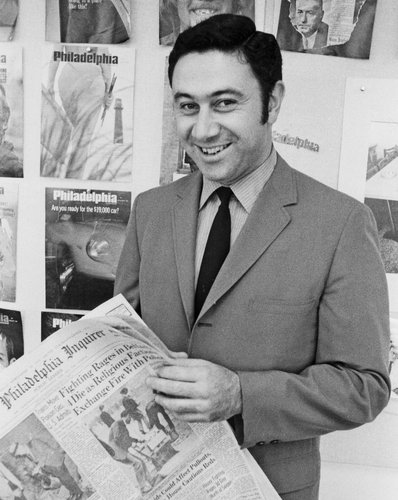
JFK and the Unforgivable: How the historians’ version of the JFK assassination dishonors the historical record – Part 2
United States House of Representatives Select Committee on Assassinations (HSCA)
Established in 1976 to investigate the assassinations of Martin Luther King and John F. Kennedy, the HSCA issued its final report in 1979. It found that there was a “probable conspiracy” in the JFK case.
The following is a summary of their findings (source: National Archives):
Findings of the Select Committee on Assassinations in the Assassination of President John F. Kennedy in Dallas, Tex., November 22, 1963:
- Lee Harvey Oswald fired three shots at President John F. Kennedy. The second and third shots he fired struck the President. The third shot he fired killed the President.
- President Kennedy was struck by two rifle shots fired from behind him.
- The shots that struck President Kennedy from behind him were fired from the sixth floor window of the southeast corner of the Texas School Book Depository building.
- Lee Harvey Oswald owned the rifle that was used to fire the shots from the sixth floor window of the southeast comer of the Texas School Book Depository building.
- Lee Harvey Oswald, shortly before the assassination, had access to and was present on the sixth floor of the Texas School Book Depository building.
- Lee Harvey Oswald’s other actions tend to support the conclusion that he assassinated President Kennedy.
- Scientific acoustical evidence establishes a high probability that two gunmen fired at President John F. Kennedy. Other scientific evidence does not preclude the possibility of two gunmen firing at the President. Scientific evidence negates some specific conspiracy allegations.
- The committee believes, on the basis of the evidence available to it, that President John F. Kennedy was probably assassinated as a result of a conspiracy. The committee is unable to identify the other gunman or the extent of the conspiracy.
- The committee believes, on the basis of the evidence available to it, that the Soviet Government was not involved in the assassination of President Kennedy.
- The committee believes, on the basis of the evidence available to it, that the Cuban Government was not involved in the assassination of President Kennedy.
- The committee believes, on the basis of the evidence available to it, that anti-Castro Cuban groups, as groups, were not involved in the assassination of President Kennedy, but that the available evidence does not preclude the possibility that individual members may have been involved.
- The committee believes, on the basis of the evidence available to it, that the national syndicate of organized crime, as a group, was not involved in the assassination of President Kennedy, but that the available evidence does not preclude the possibility that individual members may have been involved.
- The Secret Service, Federal Bureau of Investigation and Central Intelligence Agency were not involved in the assassination of President Kennedy.
- Agencies and departments of the U.S. Government performed with varying degrees of competency in the fulfillment of their duties. President John F. Kennedy did not receive adequate protection. A thorough and reliable investigation into the responsibility of Lee Harvey Oswald for the assassination of President John F. Kennedy was conducted. The investigation into the possibility of conspiracy in the assassination was inadequate. The conclusions of the investigations were arrived at in good faith, but presented in a fashion that was too definitive.
- The Secret Service was deficient in the performance of its duties.
- The Secret Service possessed information that was not properly analyzed, investigated or used by the Secret Service in connection with the President’s trip to Dallas; in addition, Secret Service agents in the motorcade were inadequately prepared to protect the President from a sniper.
- The responsibility of the Secret Service to investigate the assassination was terminated when the Federal Bureau of Investigation assumed primary investigative responsibility.
- The Department of Justice failed to exercise initiative in supervising and directing the investigation by the Federal Bureau of Investigation of the assassination.
- The Federal Bureau of Investigation performed with varying degrees of competency in the fulfillment of its duties.
- The Federal Bureau of Investigation adequately investigated Lee Harvey Oswald prior to the assassination and properly evaluated the evidence it possessed to assess his potential to endanger the public safety in a national emergency.
- The Federal Bureau of Investigation conducted a thorough and professional investigation into the responsibility of Lee Harvey Oswald for the assassination.
- The Federal Bureau of Investigation failed to investigate adequately the possibility of a conspiracy to assassinate the President.
- The Federal Bureau of Investigation was deficient in its sharing of information with other agencies and departments.
- The Central Intelligence Agency was deficient in its collection and sharing of information both prior to and subsequent to the assassination.
- The Warren Commission performed with varying degrees of competency in the fulfillment of its duties.
- The Warren Commission conducted a thorough and professional investigation into the responsibility of Lee Harvey Oswald for the assassination.
- The Warren Commission failed to investigate adequately the possibility of a conspiracy to assassinate the President. This deficiency was attributable in part to the failure of the Commission to receive all the relevant information that was in the possession of other agencies and departments of the Government.
- The Warren Commission arrived at its conclusions, based on the evidence available to it, in good faith.
- The Warren Commission presented the conclusions in its report in a fashion that was too definitive.
The committee had other troubling conclusions: Neither Lee Harvey Oswald nor Jack Ruby were the loners depicted by the Warren Commission, and were involved in relationships that could have matured into a conspiracy; Lee Harvey Oswald was connected to David Ferrie and Guy Banister- two conspirators according to Jim Garrison; Jack Ruby was in fact connected to the Mafia (an issue sidestepped by the Warren Commission); Marina Oswald’s incriminating statements against her husband were found to be lacking in credibility; they were inclined to believe Sylvia Odio who asserted that she was visited before the assassination by two Cuban exiles and a Leon Oswald in an attempt to portray Oswald as unbalanced and hostile to JFK. Her testimony was rejected by the Warren Commission even though she had related the event before the assassination; The Lopez Report established that someone was impersonating Oswald seven weeks before the assassination in Mexico City in an attempt to get a visa to travel to Cuba and that the CIA had tampered with the electronic evidence.
While the HSCA asked the Justice Department to re-investigate the case- it chose to only look at the acoustical evidence, which it rejected based on science that itself is also contested.
For those who have used this final point to argue that the Warren Commission got it right and discard all the other incriminating findings- It will prove useful to read what the key members of the Committee had to say:
Gaeton Fonzi – Church and HSCA investigator
Gaeton Fonzi was interviewed a number of times after the investigations. The information he brought forward in his 1993 book, The Last Investigation was considered credible and explosive. Fonzi described an exchange he had with Arlen Specter (the Warren Commission’s principal proponent of the Single Bullet theory) where he described him as being unnerved when discussing the Commission’s evidence. He also revealed how Cuban exile group Alpha 66 leader Antonio Veciana exposed his CIA handler Maurice Bishop (a cover name for top ranking CIA officer David Atlee Phillips) who he witnessed meeting with Oswald. He discussed how close contacts of CIA officer David Sanchez Morales heard him admit a conspiracy in the assassination. He described how the HSCA was stonewalled by the CIA. He also complained about second Commission head Robert Blakey’s submissive relationship with the CIA.
Gaeton Fonzi(mid-1970s) In a speech in 1998 while receiving the Mary Ferrell JFK Lancer Pioneer Award he had this to say about the Warren Commission: Is there any doubt that the Warren Commission deliberately set out not to tell the American people the truth?
There is a brief glimpse, an illustration of the level at which that deceit was carried out, in an incident that occurred during the Warren Commission’s investigation. Commission chairman Earl Warren himself, with then Representative Gerald Ford at his side, was interviewing a barman, Curtis LaVerne Crafard. Crafard had worked at Jack Ruby’s Carousel Club. But he was seized by the FBI as he was hightailing it out of town the day after the assassination, having told someone, “They are not going to pin this on me!”
In the interview, Warren asks Crafard what he did before he was a bartender.
“I was a Master sniper in the Marine Corps,” Crafard answered.
The next question that Warren immediately asked was: “What kind of entertainment did they have at the club?”
In a 1999 interview he gave to Michael Corbin, Fonzi contradicted Robert Blakey by stating that the HSCA investigation also lacked thoroughness. He also wonders out loud whether the “…the Government itself or a power elite within the government was a controlling element here”.
He opined that the failed Bay of Pigs, the Missile Crisis followed by the cessation of secret anti-Castro operations were probably a guiding motivation for operatives linked to the JM Wave CIA station in Miami to remove the President and which end up dovetailing with Oswald’s movements in 1963.
He makes the claim that Oswald was an agent of the intelligence establishment who was coded as a leftist. He was not a lone nut. He believes that he was also a patsy who did not fire a shot and that Dealey Plaza became a shooting gallery on November 22nd 1963.
He describes also how David Phillips was not only seen with Oswald by Antonio Veciana, but how a lot of the cover-up and misinformation campaigns about Oswald were linked to him.
He concludes the interview by stating :“there is no doubt that it was a coup d’état”!
Dan Hardway and Edwin Lopez – HSCA “staffers”
(authors of appendix 13 of the HSCA Report, “Oswald, the CIA and Mexico City”, also known as the Lopez Report)
History Matters provides an excellent introduction about this report only released in 1996:
The “thirteenth appendix” to the HSCA Report on the JFK assassination is a staff report entitled “Oswald, the CIA, and Mexico City.” This report describes what the Committee learned about Lee Oswald’s trip to Mexico City less than two months prior to the assassination. Questions it grapples with include why the CIA was apparently unable to obtain a photo of Oswald from any of its photographic surveillance stations (and instead produced a photo of a “Mystery Man” who was clearly not Oswald), whether Oswald was impersonated in Mexico City, and what credibility to attach to any of the indications and allegations of Communist conspiracy emanating from that city.
The so-called “Lopez Report,” written by staffers Dan Hardway and Edwin Lopez, was released in its present form in 1996, but remains redacted in several places. It is a good starting place for grappling with some of the many mysteries of the Mexico City affair. Newly released files have provided new information not present in this report. The LBJ taped phone conversations for instance, include startling corroboration for the claim that audio intercepts of an Oswald impersonator were listened to by FBI agents in Dallas while Oswald was in custody. Declassified testimony of David Phillips, the Tarasoff couple who translated the tapes for the CIA, and others illuminate some areas and deepen the mystery in others.
The “Lopez Report” is a good point of departure for a journey into this mysterious affair.
Dan Hardway In 2014, for an ARRC conference, both Hardway and Lopez talked about their experience on the HSCA and the report. A lot of focus was put on how they had been making progress in the HSCA investigation until the CIA placed George Joannides as their resource person in charge of supervising the CIA’s interaction with the HSCA. Despite claims that Joannides was impartial, it was confirmed that he was directly involved with the Cuban exile organization called the DRE in 1963. Oswald had direct interaction with the DRE in events that became very public and were used to paint him as a communist. Hardway concludes his speech with:
“The CIA has something to hide; Joannides knew what they had to hide. The CIA knew he knew and knew we did not know who or what he was hiding; Joannides hid what he had to hide.”

Edwin Lopez Edwin Lopez confirmed the stonewalling and gave examples on how they were being spied on. He referred to the continued holding back of documents as a mess we all needed to work on together.
They also confirmed that they felt that there were either fake phone calls done by an Oswald impostor while he was allegedly in Mexico or at least faked transcripts.
Hardway hypothesizes that because of compartmentalization Phillips and Oswald may have found out on November 22, 1963 that Oswald was a patsy and Phillips received orders to tie the murder to Castro.
In a critique of Phil Shenon’s work written for the AARC in 2015, Dan Hardway expresses the opinion that the CIA is heading to what he calls a limited hang-out by admitting that Oswald may have received guidance from Cuba and that the CIA director at the time, John McCone, was involved in a benign cover-up.
In an interview he gave to Black Op Radio that same year, he recommended The Devil’s Chessboard by David Talbot, a book which exposes incriminating information about Alan Dulles and William Harvey, who can be seen now as persons of high interest in the case.
In 2015, for a civil action where plaintiff Jefferson Morley, was suing the CIA for access to information, Dan Hardway signed a Sworn Deposition that underscores CIA obfuscation techniques as well as some of his findings during the investigation. The following are some of his statements:
Beginning in May of 1978, the CIA assigned George Joannides to handle liaison with Edwin Lopez and me. In the summer of 1978, Mr. Joannides began to change the way file access was handled. We no longer received prompt responses to our requests for files and what we did receive no longer seemed to provide the same complete files that we had been seeing. The obstruction of our efforts by Mr. Joannides escalated over the summer, finally resulting in a refusal to provide unexpurgated access to files in violation of the Memorandum of Understanding previously agreed to by the HSCA and the CIA;
During the course of the spring and summer of 1978 I had been looking into several areas of research which were actively impeded under Mr. Joannides’s direction. These included back channel communications methods used by the CIA’s Mexico City Station, William Harvey’s Office of Security files and his continuing relationship with certain Mafia figures, the use of an impulse camera to photograph the Cuban Consulate in Mexico City, missing production from one of the photographic installations that covered the Soviet Embassy in Mexico City as well as the impulse camera at the Cuban Consulate, and David Atlee Phillips’ possible involvement in stories about LHO that appeared after the assassination of John F. Kennedy.
Before our unexpurgated access was cut off by Joannides, I had been able to document links between David Phillips and most of the sources of the disinformation that came out immediately after the assassination about Oswald and his pro-Castro proclivities. I confronted Phillips with those in an interview at our offices on August 24, 1978. Phillips was extremely agitated by that line of questioning, but was forced to admit that many of the sources were not only former assets that he had managed, in the late 50’s and early 1960’s, but were also assets whom he was personally managing in the fall of 1963. Mr. Phillips was asked, but could not explain, why the information that came from anti-Castro Cuban groups and individuals pointing to Cuban connections, all seemed to come from assets that he handled personally, but acknowledged that that was the case.
We have, since 1978, learned that George Joannides was running the propaganda shop at the CIA’s Miami JMWAVE Station in 1963. It is extremely unlikely that Mr. Joannides could have occupied that position and not have known, and worked with, David Atlee Phillips. In addition, in 1963, we now know, George Joannides was the case officer handling the DRE. In 1977 the CIA specifically denied that DRE had a case officer assigned when asked that question by the HSCA.
Robert Tanenbaum – Chief Counsel HSCA
In a Probe Magazine interview in 1993, Tanenbaum explained why he and Richard Sprague resigned from the Commission:
Q: I interviewed a friend of yours down in New Orleans, L.J. Delsa. He said that he felt that one of the reasons the Congress turned against the Committee was, because of Sprague’s approach. It could have set a precedent in Washington to have really serious investigations instead of fact-finding commissions. Did you get any feeling about that?
A: In my opinion, Congress never wanted to go forward with these investigations at all. That’s just based upon my having spoken with a lot of the membership of the House as I was asked to do by the Committee, in order to get funding. That’s something I never thought would be an issue before I went down there. They sort of politicized into it with some very distinguished members of Congress who were retiring in 1976, requesting that the Kennedy portion be investigated because they had seen Groden’s presentation of the Zapruder film and were very persuaded by it. Then the Black Caucus got involved and said well, investigate the murder of Dr. King. It was an election year and they said, “Ok, why not? We’ll do that.” But there was no commitment to really do it, unfortunately, which regrettably we found out while we were in the midst of investigating the case. They pulled our budget, they pulled our long-distance phone privileges, our franking privileges, we couldn’t even send out mail. And all of this was happening at a time when we were making some significant headway. So, L. J. may be right with respect to his perception, but at the same time I don’t believe they were ever committed to it. Tip O’Neill, who was the Speaker, was never committed to it. Only many, many years later did he realize that he’d made a tragic mistake.
He also reveals troubling information about David Atlee Phillips:
JD: Another thing you’ve discussed and it’s featured in your book, is this incredible movie of the Cuban exile training camp.
BT: To the best of my recollection, we found that movie somewhere in the Georgetown library archives. The movie was shocking to me because it demonstrated the notion that the CIA was training, in America, a separate army. It was shocking to me because I’m a true believer in the system and yet there are notorious characters in the system, who are being funded by the system, who are absolutely un-American. And who knows what they would do, eventually. What if we send people to Washington who they can’t deal with? Out comes their secret army? So, I find that to be as contrary to the constitution as you can get.
JD: Was it really as you described in the book, with all the people in that film? Bishop was in the film?
BT: Oh, yeah. Absolutely! They’re all in the film. They’re all there. But, the fact of the matter is the Committee began to balk at a series of events. The most significant one was when [David Atlee] Phillips came up before the Committee and then had to be recalled because it was clear that he hadn’t told the truth. That had to do with the phony commentary he made about Oswald going to Mexico City on or about October 1st, 1963.
JD: Would you describe that whole sequence, because I feel that is one of the real highlights of your book.
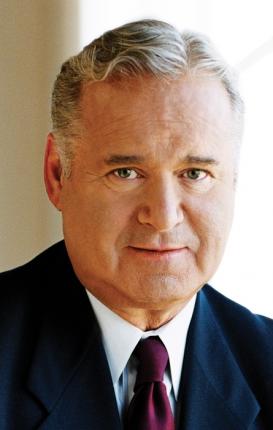
Robert Tanenbaum BT: As I said, I had never followed the sequence of these events and I wasn’t aware of any of this, before I went to Washington. If you had told me all this before I went, I would have said, “This is madness. Talk to me about reality!” So, Phillips was saying that an individual went to Mexico City on or about October 1st and the CIA was claiming this was Lee Harvey Oswald, just as the Warren Commission claimed. However, the following occurred: “Oswald” goes to the Russian Embassy and identifies himself as Lee Henry Oswald. He wants to fake everybody out by changing his middle name. There were tapes of what he said because the CIA was bugging the Embassy the same as they were doing to the U.S. Embassy, according to Phillips. And the CIA was photographing people going in and out of the Embassy, the same as they were doing to the U.S. (We found out, from our own sources that the CIA had a contract employee named Lee Henry Oswald, in their files.) Phillips testimony was that there was no photograph of “Oswald” because the camera equipment had broken down that day and there was no audio tape of “Oswald’s” voice because they recycled their tapes every six or seven days. The problem with his story was, we had obtained a document, it was from the desk of J. Edgar Hoover, it was dated November 23rd, 1963, the very next day after the assassination. This document was a memo to all FBI supervisorial staff stating, in substance, that FBI agents who have questioned Oswald for the past 17 hours approximately, have listened to the tape made on October 1st, by an individual identifying himself as Lee Henry Oswald inside the Russian Embassy, calling on the phone to someone inside the Cuban Embassy and the agents can state unequivocally that the voice on the tape is not the voice of Lee Harvey Oswald, who is in custody.
JD: Did you have this document while you were questioning Phillips?
BT: No. It was a whole separate sequence of events that occurred. But, I wanted to get him back before the Committee so we could confront him with this evidence, because we were in a position to demonstrate that that whole aspect of the Warren Report, and what he had testified to, was untrue. And of course, the Committee was not interested in doing that.
Tanenbaum also vindicated Garrison, incriminated Clay Shaw and shared thoughts about leads that were not followed up on:
JD: You’ve said that you’ve actually seen a CIA document that says they were monitoring and harassing Jim Garrison’s witnesses.
BT: Right. We had that information. I was shocked to read that because I remember discounting everything Garrison had said. I had a negative point of view about Garrison based upon all the reportage that had gone on. And then I read all this material that had come out of Helm’s office, that in fact what Garrison had said was true. They were harassing his witnesses, they were intimidating his witnesses. The documents exist. Where they are now, God only knows. It’s a sad commentary on the lack of oversight on the executive intelligence agencies.
JD: I read something about you to the effect that during the brief period you ran the Committee, after Sprague left, one of the areas that really interested you was New Orleans and its connection to JM/Wave and Miami. Also, Delsa told me, as far as he was concerned, that was one of the most productive areas they were working.
BT: That’s correct. The meeting in Clinton and the Clay Shaw connection and the fact that the government was lying about Clay Shaw and the aliases and so on. That the fact that the government and the executive intelligence agencies, not Garrison, were lying about that, was definitely an area to probe to find out what the justification for that was. Why were they involved in all this, if in fact, nothing had occurred? If it was meaningless, why get involved in creating a perjurious situation for a prosecutor in New Orleans? What was he really on to?
JD: What’s interesting about the day that Sprague resigns, is that’s the day De Mohrenschildt is found dead.
BT: Right. The night before the Committee vote, we had sent an investigator to serve him a subpoena. The night of the day he received the subpoena from the Committee is when he was found dead.
JD: I guess the Committee was so crippled at that time that it couldn’t really pursue whatever investigation there may have been into his murder. And he was a key witness, right?
BT: Right. We desperately wanted to find out what happened. He was someone who had not been subpoenaed before, certainly not by the Warren Commission. [CTKA note: he was questioned, but not subpoenaed.] And you’re right, he was a key player.
JD: Another thing you guys were on to that Blakey never seemed to be on to, was the connection between the people in the background of the assassination and the scandal that had just happened in Washington – namely, Watergate.
BT: Right. E. Howard Hunt, Frank Sturgis. Interestingly, some of them had been with Castro in the Sierra Maestra during the revolution and became players after the revolution. And then wound up in the Nixon White House as the “plumbers.”
JD: You’ve stated that the Committee never got any cooperation from the Kennedys.
BT: We called Senator Kennedy 20-30 times. He never responded once to an inquiry. I found that to be astounding, because after all, he is a member of this legislative branch of government. He conducts probes, he engages in fact-finding missions. How could he stonewall from his brethren in the other chamber? He could have just simply acknowledged a phone call. How could he know what information we wanted? The fact of the matter was, as a matter of courtesy, we wanted to let him know we knew he was around and we wanted to discuss with him areas that he felt we should look into and get his opinions. We certainly felt that they would be valid. So, we were very disappointed in that regard. Frank Mankiewicz came by as a representative of the Kennedy family, wanted to see whether or not Sprague and I had two or three heads. He told us, interestingly, Bobby Kennedy couldn’t put a sentence together about the assassination, he couldn’t even think about it, he couldn’t focus on it. Which explains, in large measure why the Kennedy family was willing to accept what the Warren Commission said, without concern. The event was so horrific, in and of itself, they really weren’t concerned with bringing someone to justice other than what the Warren Commission had said. In their minds, from what Mankiewicz said, if it wasn’t Oswald-some nonperson-then it was some other nonperson. What difference would it make?
JD: When the attacks on Sprague began, most notably in the New York Times and a few other newspapers, did you begin to see a parallel between what was happening to Sprague and what had happened to Jim Garrison?
BT: Of course. But, I didn’t pay much attention to it because it didn’t mean anything to me. I’m not moved to any great extent, by what people write in newspapers. They were trying to cause controversy. But, we were on a mission to do a job and nothing some dope in the New York Times or any other newspaper was going to write, that was blatantly untrue, was going to interfere with what we were doing. Whether it was a positive article or a negative article, it didn’t matter.
In 2003, Tanenbaum spoke at the Wecht Conference and what he had to say would certainly give students of American History new insights in the assassination that would not have pleased Earl Warren or Gerald Ford and some of their disciples.
Here are but a few of the points he made:
What I am saying is that from the evidence we produced, there were substantial questions about the assassination …
What I’d like to do very briefly is to explain some of the reasons why, from a prosecutorial point of view, from what our investigation revealed, there was, in my judgment, no case to convict Lee Harvey Oswald of murdering the President …
The assassination was approximately 12:30; at 12:48 a description of a suspect was sent out: “‘white male, approximately thirty, slender build, height five foot ten inches, weight 165 pounds.” Where did that description come from?
And the answer the Warren Commission gives is that this fellow Brennan was… looking up at the Depository window. And he allegedly sees this person – the shooter – Oswald the Warren Commission maintains, and was able to give a description, a miraculous feat … because if he stood up in the window you would only see a partial of his body [his knees] because the first few feet was opaque. [the window was close to the floor]
Whoever the shooter was that was in that window – in that Sniper’s Nest, he was crouched down looking out that window which was raised about 12 inches. At best, if anybody saw anybody in that window, they would have seen a partial of their face, at best.
During a 2015 interview on Len Osanic’s Black Op Radio, he talked about how the Warren Commission did not want look into a conspiracy, including Oswald’s links with intelligence and Ruby’s to the mob and the Dallas Police Department.
Richard Sprague – Chief Counsel
Historians can be illuminated by what this top level insider of impeccable credentials thought about the assassination and the ensuing cover-up from the many interviews he gave.
In the BBC Documentary The Killing of President Kennedy, Sprague related the following about Oswald:
His trip to Russia raised a number of questions that we wanted to get into. For example, when any American went to Russia and renounced his American citizenship and subsequently changed his mind and wanted to come back to this country, upon returning to this country there was a thorough debriefing by the CIA, with one exception as far as we could ascertain- Oswald…
The photographs allegedly of Oswald going into the Cuban embassy as we all know in fact are not photographs of Oswald. Secondly it turns out that those photographs, even if they were of the wrong person, you would expect they would be of a person entering the Cuban embassy but it turns out they are photographs of someone entering the Russian embassy and the question raised how could they so mix up even what building they are talking about. In addition when we inquire where are the photographs you took of the people entering the Cuban embassy the day in question we are told the cameras were not working that day. I want to talk to the camera people I want to find out if that’s true and that’s where we got stopped.
The CIA said they had re-used the tape prior to the assassination of President Kennedy, yet the FBI has a document stating that some of their agents listened to the tape after the assassination of President Kennedy and that the voice on there was not Oswald’s. In addition the CIA presented a transcript of that conversation; we had interviewed the typist who typed it up who said that the transcript presented was not in fact what was typed up by whoever it was who spoke in that conversation. These are areas that I wanted to get into.
From the photographic evidence surrounding the sixth floor window, as well as the grassy knoll, Sprague, Tanenbaum and most of the staff knew Oswald had not fired any shot, they suspected no shots came from the sixth floor “sniper’s nest” window, and knew there had been shots from other points in Dealey Plaza. They knew the single bullet theory was not valid, and strongly suspected there had been a pre-planned crossfire in Dealey Plaza. They were not planning to waste a lot of time reviewing and rehashing the Dealey Plaza evidence, except as it might lead to the real assassins.
They had set up an investigation in Florida and the Keys, of some of the evidence and leads developed in 1967 by Garrison. Gaeton Fonzi was in charge of that part of Sprague’s team. They were going to check out the people in the CIA that had been running and funding the No Name Key group and other anti-Castro groups, e.g., Willaim Seymour, Manuel Garcia Gonzalez, Jerry Patrick Hemming, Loran Hall, Lawrence Howard, and Rolando Masferrer and Carlos Prio Socarras.
This new situation, with Richard Sprague and his team garnering so much knowledge of the CIA’s role in the murder and the cover-up caused the Establishment to face a crisis. They knew they had to do several things to turn the situation around and keep the American public in the dark. Here is what they had to do:
- Get rid of Chief Counsel Richard Sprague.
- Get rid of Committee Chairman Henry Gonzalez.
- Get rid of Sprague’s key men and keep them away from more incriminating CIA evidence.
- Install their own chief counsel to control the investigation.
- Nominate a new HSCA chairman who would go along, or who could be fooled.
- Limit Sprague’s investigations of CIA people. Make sure some of the people aren’t found or, if necessary dispose of CIA people who might talk.
- Create a new investigative environment whose purpose would be to confirm all of the findings of the Warren Commission and divert attention away from the who-did-it-and-why approach.
- Control the committee staff in such a way as to keep any of them separate from other teams and silent by signing non-disclosure agreements.
- Control the media by not holding any press conferences.
These things all happened. And they fundamentally altered the temperament and goals of the HSCA. It simply was not the same. As many observers think, this was the last, best chance to solve the JFK case.
How did it happen? According to Gaeton Fonzi in The Last Investigation:
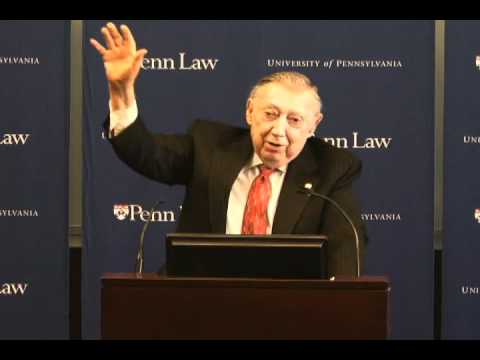
Richard Sprague The key factors that drove Richard Sprague to resign as Chief Counsel of the Assassinations Committee appeared, at the time, to be apparent and on the surface. His proposed use of certain investigative equipment, his demand for an expensive, unrestricted investigation, his refusal to play politics with Chairman Gonzalez – all were apparent grounds for the vociferous criticism which, in the long run, was debilitating to the Committee’s efforts to get on with its job. However, after his resignation and a brief respite from the turmoil of Washington, Sprague was able to view his experience in a broader perspective.” … “If he had it to do over again, he would begin his investigation of the Kennedy assassination by probing “Oswald’s ties to the Central Intelligence Agency.” Recently, I asked Sprague why he had come to that conclusion. “Well,” he said, “when I first thought about it I decided that the House leadership really hadn’t intended for there to be an investigation. The Committee was set up to appease the Black Caucus in an election year. I still believe that was a factor. But when I looked back at what happened, it suddenly became very clear that the problems began only after I ran up against the CIA. That’s when my troubles really started.
In a 2000 interview for Probe Magazine with John Williams, he described his being fired this way:
SPRAGUE: We were just going to do that type of thorough thing. I demanded the records from the CIA, and now there was an abrupt refusal, and I subpoenaed them. At that point, Gonzales, who was Chairman of the Committee, ordered the CIA, or told the CIA that they need not respond to my subpoena, and fired me, and ordered the U.S. Marshals come in and remove me from my office.
WILLIAMS: Oh, so that firing was directly after you had subpoenaed the records from the Central Intelligence Agency.
SPRAGUE: Right. But there’s more involved in it than the timing …
WILLIAMS: Right.
SPRAGUE: … if you checked the record. That came up after that. He ordered my firing. He ordered marshals to remove me from my office in what I’m sure was the first and only time in the history of the United States Congress. The rest of the Committee, backed me to a man and overrode the Chairman, and ordered that I remain, and the marshals were directed to get off.
Of course, that led to Gonzales taking it up in the House of Representatives, and the House backed the rest of the Committee. And he resigned and Stokes came on. [Louis Stokes was the Representative from Ohio. Eds. Note] I’m sure that’s the only time in the history in the United States Congress that in a fight between the Chairman and the Director, that the Chairman got bounced.
But there’s a terrible price paid for that. Every Congressman dreams of being Chairman of a Committee and being all powerful. It ultimately did not sit well with the Congress that a Chairman got ousted …
Robert Blakey – Chief Counsel and staff director 1977-79
While Sprague’s replacement, Robert Blakey, frustrated some investigators for being too trusting of the CIA, he too did not buy the Warren Commission’s final conclusions.
While at first Blakey felt that the HSCA had investigated the CIA enough to absolve them of any role in the assassination, in 2003 in an addendum to an interview with PBS, his opinion evolved. Because he found out that the CIA misled him and the HSCA by bringing George Joannides out of retirement as the CIA liaison with the Committee and hiding the role he had with an anti-Castro group called the DRE which played an important role by its interaction with Oswald:
I am no longer confident that the Central Intelligence Agency co-operated with the Committee. My reasons follow:
The Committee focused, among other things, on (1) Oswald, (2) in New Orleans, (3) in the months before he went to Dallas, and, in particular, (4) his attempt to infiltrate an anti-Castro group, the Directorio Revolucionario Estudiantil or DRE.
These were crucial issues in the Warren Commission’s investigation; they were crucial issues in the committee’s investigation. The Agency knew it full well in 1964; the Agency knew it full well in 1976-79. Outrageously, the Agency did not tell the Warren Commission or our committee that it had financial and other connections with the DRE, a group that Oswald had direct dealings with!
What contemporaneous reporting is or was in the Agency’s DRE files? We will never know, for the Agency now says that no reporting is in the existing files. Are we to believe that its files were silent in 1964 or during our investigation?
I don’t believe it for a minute. Money was involved; it had to be documented. Period. End of story. The files and the Agency agents connected to the DRE should have been made available to the Commission and the Committee. That the information in the files and the agents who could have supplemented it were not made available to the Commission and the Committee amounts to willful obstruction of justice.
Obviously, too, it did not identify the agent who was its contact with the DRE at the crucial time that Oswald was in contact with it: George Joannides.
During the relevant period, the Committee’s chief contact with the Agency on a day-to-day basis was Scott Breckinridge. (I put aside our point of contact with the office of chief counsel, Lyle Miller) We sent researchers to the Agency to request and read documents. The relationship between our young researchers, law students who came with me from Cornell, was anything but “happy.” Nevertheless, we were getting and reviewing documents. Breckinridge, however, suggested that he create a new point of contact person who might “facilitate” the process of obtaining and reviewing materials. He introduced me to Joannides, who, he said, he had arranged to bring out of retirement to help us. He told me that he had experience in finding documents; he thought he would be of help to us.
I was not told of Joannides’ background with the DRE, a focal point of the investigation. Had I known who he was, he would have been a witness who would have been interrogated under oath by the staff or by the committee. He would never have been acceptable as a point of contact with us to retrieve documents. In fact, I have now learned, as I note above, that Joannides was the point of contact between the Agency and DRE during the period Oswald was in contact with DRE.
That the Agency would put a “material witness” in as a “filter” between the committee and its quests for documents was a flat out breach of the understanding the committee had with the Agency that it would co-operate with the investigation.
The Committee’s researchers immediately complained to me that Joannides was, in fact, not facilitating, but obstructing our obtaining of documents. I contacted Breckinridge and Joannides. Their side of the story wrote off the complaints to the young age and attitude of the people.
They were certainly right about one question: the Committee’s researchers did not trust the Agency. Indeed, that is precisely why they were in their positions. We wanted to test the Agency’s integrity. I wrote off the complaints. I was wrong; the researchers were right. I now believe the process lacked integrity precisely because of Joannides.
For these reasons, I no longer believe that we were able to conduct an appropriate investigation of the Agency and its relationship to Oswald. Anything that the Agency told us that incriminated, in some fashion, the Agency may well be reliable as far as it goes, but the truth could well be that it materially understates the matter.
What the Agency did not give us, none but those involved in the Agency can know for sure. I do not believe any denial offered by the Agency on any point. The law has long followed the rule that if a person lies to you on one point, you may reject all of his testimony.
I now no longer believe anything the Agency told the Committee any further than I can obtain substantial corroboration for it from outside the Agency for its veracity. We now know that the Agency withheld from the Warren Commission the CIA-Mafia plots to kill Castro. Had the commission known of the plots, it would have followed a different path in its investigation. The Agency unilaterally deprived the commission of a chance to obtain the full truth, which will now never be known.
Significantly, the Warren Commission’s conclusion that the agencies of the government co-operated with it is, in retrospect, not the truth.
We also now know that the Agency set up a process that could only have been designed to frustrate the ability of the committee in 1976-79 to obtain any information that might adversely affect the Agency.
Many have told me that the culture of the Agency is one of prevarication and dissimulation and that you cannot trust it or its people. Period. End of story.
I am now in that camp.
Anyone interested in pursuing this story further should consult the reporting by Jefferson Morley of the Washington Post. See, e.g., Jefferson Morley, “Revelation 1963”, Miami New Times (April 2001).

Robert Blakey During his appearance for the AARC Conference in 2014, Blakey’s views seem to have crystallized by stating that at first he felt the CIA had cooperated but that he had come to change his mind. He also explained how he was sold the idea by the CIA of bringing in a facilitator in Joannides to help in the liaison between the CIA and the HSCA, and that that was when things went downhill. He also said that they were refused the DRE file and were told by Joannides that there was no case agent for the DRE, when in fact he was the case agent! It was also discovered subsequent to the HSCA hearings that Joannides was acting as an undercover agent in his dealings with the HSCA. He also said that FBI agent Regis Kennedy described Marcello as a tomato salesman who was not part of the mob.
During this presentation and on a 2015 Black Op Radio program he confirmed his belief in the single bullet theory, but also that a shot came from the grassy knoll due to witness testimony from several people who the Warren Commission made every effort to undermine. This includes Secret Service agents, S. M. Holland, and presidential assistant Dave Powers. He said this caused him to lose confidence in the Warren Commission report. He said that “It’s not an investigation … It’s a justification to assert that Oswald acted alone … They used the testimony of Lenny Patrick – a mob shooter – to exculpate Ruby from mob connections …” He concluded that the committees, including the ARRB, were had.
Comments on the HSCA
A diligent historian who prides himself in honoring the historical record should really take the time to digest the conclusions of the report and the statements of the high level insiders who are in the know… They do not buy the Warren Commission version of the assassination; they do not conclude that Oswald acted alone; they do not find that the murder was adequately investigated!
Liberty Lobby vs. E. Howard Hunt
Contrary to the other investigations which were governmental, this instance was a civil trial which pitted CIA operative and Watergate burglary planner E. Howard Hunt against Mark Lane. Lane came in because Spotlight was a publication which ran a piece in 1985 reporting that the CIA had a memo confirming its intention to out Hunt as having been involved in the JFK assassination, acting as something like a rogue agent. Hunt sued and won for slander but lost on appeal after Liberty Lobby hired Lane to represent them.
Spotlight wrote the following about its victory: “Scattered news reports did mention Hunt had lost a libel case against The SPOTLIGHT. However, no media reported what the jury forewoman had told the press: ‘Mr. Lane was asking us to do something very difficult. He was asking us to believe John Kennedy had been killed by our own government. Yet when we examined the evidence closely, we were compelled to conclude that the CIA had indeed killed President Kennedy.’”
Mark Lane, who passed away in 2016, was among the earliest researchers who detailed problems about the Warren Commission, which he related in the best-seller Rush to Judgement. His books Plausible Denial and the Last Word cover the trial extensively.
Comments about the Liberty Lobby – Hunt trial
While many Warren Commission defenders have tried to discredit Mark Lane through the years, an open-minded historian should consider the jury members who were asked to play an important role in ensuring that justice was served. They took in and evaluated all the evidence. And have added themselves to the already overwhelming number of insiders who do not buy what is written in most history books, i.e., the Warren Commission version of events.
ARRB Assassination Records Review Board
This Board was created in 1994 after the movie JFK put pressure on Congress to pass the 1992 JFK Assassination Records Collection Act. During a four-year period, it declassified millions of documents. Its mandate was different from the other investigations: The major purpose of the Review Board was to re-examine for release the records that the agencies still regarded as too sensitive to open to the public. In addition, Congress established the Review Board to help restore government credibility. To achieve these lofty goals, Congress designed an entity that was unprecedented.
It was not set up to re-investigate the case, nor to solve what happened on November 22, 1963. It nevertheless provided valuable information to assassination researchers that historians seem oblivious to. It achieved the following:
- Reviewed and voted on over 27,000 previously redacted assassination records.
- Obtained agencies’ consent to release an additional 33,000+ assassination records.
- Ensured that the famous Zapruder Film of the assassination belonged to the American people and arranged for the first known authenticity study of the Zapruder Film.
- Opened previously redacted CIA records from the Directorate of Operations.
- Released 99% of the “Hardway/Lopez Report” documenting the CIA’s records on Lee Harvey Oswald’s trip to Mexico City before the assassination.
- Conducted its own inquiry into the medical record of President Kennedy’s autopsy and his treatment at Parkland Hospital by deposing 10 Bethesda autopsy participants, five Parkland Hospital treating physicians, and conducting numerous unsworn interviews of Parkland and Bethesda personnel.
- Secured records relating to District Attorney Jim Garrison’s prosecution of Clay Shaw for conspiracy to assassinate President Kennedy, including Shaw’s diaries, records from Shaw’s defense attorneys, investigative records from the District Attorney’s office, and grand jury records.
- Made available to the public all FBI and CIA documents from previous official investigations, like the HSCA.
- Sponsored ballistics and forensic testing of Warren Commission Exhibit 567, the bullet “nose fragment” from the front seat of the Presidential limousine (the HSCA Firearms Panel first recommended the testing in 1978, but the testing was not conducted until the Review Board existed).
- Permanently preserved all the extant autopsy photographs of President Kennedy in digitized form, and conducted sophisticated digital enhancement of selected, representative images.
Jeremy Gunn – Executive counsel
On November 10, 2013 he made the following remarks for NPR:
“There were many things that were disturbing.”

J. Thornton Boswell (left)James J. Humes (center) Pierre Finck (right) When Gunn pored over the material, what stuck out most for him was the medical evidence. For instance, what he learned in his 1996 deposition of James Joseph Humes. Humes, who died three years later, was one of the doctors who performed the autopsy on Kennedy’s body.
For one thing, Humes told Gunn that the autopsy was not performed strictly by the book; some procedures were left out, such as removing and weighing all the organs. Then, Humes made an eye-opening revelation.
“Dr. Humes admitted that the supposedly original handwritten version of the autopsy that is in the National Archives is in fact not the original version,” Gunn says. He says Humes had never said that publicly before, even to the Warren Commission.

Saundra K. Spencer When Gunn showed Saundra Spencer, the Navy Warrant Officer who processed the autopsy film, the official photos from the National Archives during her deposition in 1997, she said they were not the pictures she remembered processing. What’s more, the official pictures weren’t anything like the ones she remembered. “The prints that we printed did not have the massive head damages that is visible here,” she told Gunn. “… The face, the eyes were closed and the face, the mouth was closed, and it was more of a rest position than these show.”
“[I] can recite a litany of other unresolved questions surrounding the Kennedy assassination — ones the Warren Commission failed to answer. For example, in New Orleans in 1963, Oswald came in contact with the FBI. When he was arrested after a scuffle at a demonstration, he asked to meet with the FBI. Why would Oswald ask to see someone from the FBI?” Gunn asks. “But an FBI agent went and interviewed Oswald, came back and wrote a memo on it, put it in the file.”

Jeremy Gunn “For me, it’s quite simple,” Gunn says. “I don’t know what happened.”
“There is substantial evidence that points toward Oswald and incriminates Oswald,” he says, “and the only person we can name where there is evidence is Oswald. But there’s also rather important exculpatory evidence for Oswald, suggesting he didn’t do it, and that he was framed.”
“So they wanted to write the document in a way that would reassure the American public that it was a single gunman acting alone, somebody who’s a little bit unstable, and that that’s the explanation for what happened. Since the facts aren’t clear, though, that document can look like a whitewash.”
For the Warren Commission, transparency had its own difficulties. “There are serious problems with the forensics evidence, with the ballistics evidence, with the autopsy evidence,” Gunn says. “And, in my opinion, if they had said that openly, it would have not put the issue to rest.”
“If the president had been killed as part of a conspiracy, that needed to be known,” he says.
“The institution that had the opportunity to best get to the bottom of this, as much as it was possible, was the Warren Commission, and they didn’t do it,” he says. “Now it’s too late to do what should have been done originally.”
Doug Horne – Senior analyst
Doug Horne reviewed the military records including the military autopsy for the ARRB. What he found was revealed during interviews as well as the book he wrote, Inside the ARRB, published in 2009. Its contents are fascinating and would surprise students of American history who base their beliefs on many of the history textbooks.
Numerous persons the ARRB deposed or interviewed (FBI agents Sibert and O’Neill, mortician Tom Robinson, and others) have essentially disowned the autopsy photographs showing the back of JFK’s head intact. O’Neill said the photos of the back of the head looked “doctored” (by which he meant that he thought the wound had been repaired – put back together – not that the photo looked altered), and Sibert said the back of the head looked “reconstructed.” Tom Robinson of Gawler’s funeral home said there was a large hole in the back of the head where it looks intact in the photos. Pathologist J. Thornton Boswell said that there was a lot of bone missing in the right rear of the head behind where the scalp looks intact, but did not explain how the scalp could be intact if the bone in the right rear of the skull was missing! (See the ARRB deposition transcripts of Frank O’Neill, James Sibert, and J. Thornton Boswell, as well as the unsworn report of the ARRB interview with Tom Robinson.)
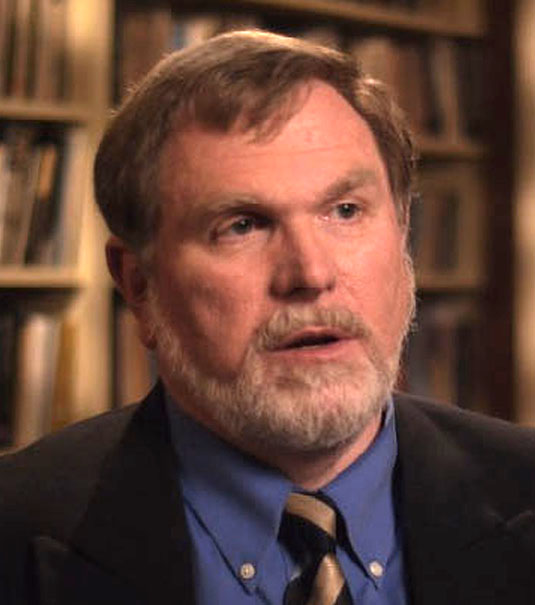
Doug Horne But perhaps Horne’s most stunning conclusion was that the photographs of “the President’s brain” in the autopsy collection are really photographs of someone else’s brain … a major deception in this case. These images, which appear to show damage consistent with a shot from above and behind, were disowned under oath to the ARRB by John Stringer, the photographer who took the official brain photos at JFK’s supplementary autopsy. He disowned the images because of the angles at which they were shot, and because they were taken on the wrong film – film he did not use. (FBI agent O’Neill also disowned the brain photos in the autopsy collection, saying that there was too much tissue present, and that at autopsy over one half of the President’s brain was missing.) These photos have been used for years by supporters of the Warren Commission’s conclusions to support their shooting scenario, and to discount those who claim there were shots from the front or right front.
General conclusions
Most historians who talked about their sources when writing about the JFK assassination were not aware of the ARRB and the wealth of new evidence made available starting a year after Gerald Posner wrote Case Closed. As a matter of fact, not one cited any of the official investigations as a source other than the Warren Commission. Which, of course, is the oldest, most contested, highly rushed, poorly investigated, biased governmental source possible.
That assessment does not come from independent authors who are trying to sell books. It comes from written reports of subsequent investigations and the statements of a very significant cross-section of insiders that participated in the investigations including the Warren Commission: Senators (some Republicans, some Democrats), counsel, staff members, attorneys, researchers, historians, archivists, investigators, FBI, DPD and Louisiana State law enforcement agents. As well as from the highest ranking members of the HSCA and Church committees. As well as an impressive number of dissenting participants of the Warren Commission itself, who have voiced their opinions in reputable magazines, newspapers, documentaries and books, all easily accessible on the web. We are not talking about zany, fringe, book peddling conspiracy theorists here. These are persons that witnessed the autopsy, questioned persons of interest under oath while looking them in the eye, poured over reports and secret documents, worked in teams to analyze the evidence, etc. – people who the U.S. government entrusted to investigate the crime of the century and who curious historians may learn from.
While they may not all know what in fact happened, they all agree on certain key points: The Warren Commission conclusions are not reliable; the investigations into the assassination were deficient (especially the Warren Commission’s); they are far from certain that Oswald and Ruby acted alone. Many of them believe that: government agencies hid the truth; the Single Bullet Theory is a fabrication; that there has been a long-lasting cover-up; that Oswald and Ruby were involved in very suspicious relationships, and the list goes on and on. All diametrically opposed to what historians, for money, are telling adolescents as part of a captive audience! Which is that Oswald did it and the Warren Commission got it right! End of story!
The American Historical Association statement of conduct stipulates that historians are to honor the historical record.. To do so they first need to know what it is! If the next edition of their history books continues to support the cover-up, their behavior should be considered nothing less than unforgivable.
Go to Addendum
Go to Part 1
-
HSCA chair Louis Stokes dead at 90
by Emily Langer
-
O’Reilly Lied About Suicide Of JFK Assassination Figure
by Hannah Groch-Begley
At: MediaMatters
-
Introduction to the 2013 Presentation on the HSCA
Because of the creation of the Assassination Records Review Board (ARRB) we now know a great deal more about what went on behind the scenes during the years of the House Select Committee on Assassinations (HSCA). When Robert Blakey took over that committee, a veil of secrecy descended over it. This differed from the approach his predecessor, Richard Sprague, had taken. Sprague realized that a serious problem with the Warren Commission was that it had worked too much in secret. There was no kind of open, transparent democratic process involved in their efforts. Sprague wanted to avoid this. Therefore he announced that he would have open hearings and public experiments.
When Sprague was forced out, Blakey pretty much reversed this policy. He did have public hearings near the end of the inquiry, but as we know today, these were largely scripted. And that was about it for transparency. This was actually even worse than the Warren Commission. Because with the executive branch agencies—which the Commission was—one can use the Freedom of Information Act (FOIA) to ferret out records and testimony. And to a degree, this did happen. (Although, contrary to what some obtuse commentators say, there was still material being withheld by the Commission even after the ARRB closed down. Like the working papers of David Slawson.)
But there is no FOIA law for the legislative branch, which the HSCA was. Thus it was not really possible to find out if their reports concealed anything from their proceedings. With the declassification of the ARRB, we now know that the HSCA did do this. For example, as Gary Aguilar has noted, the HSCA medical report lied about witnesses at Bethesda Medical Center not seeing a gaping hole in the rear of Kennedy’s head during the autopsy. So today, there is large agreement about both witnesses from Parkland Hospital and Bethesda seeing this large, avulsed wound in the rear of Kennedy’s head. Which strongly indicates a shot from the front. We also know that the HSCA covered up evidence in their report that proved it was Clay Shaw driving the car in the Clinton-Jackson incident with David Ferrie and Lee Oswald, not Guy Banister, because Sheriff John Manchester swore to this under oath in executive session (William Davy, Let Justice be Done, p. 106). The HSCA also concealed the fact that it was not just Jack Martin who saw Oswald at Guy Banister’s office in the summer of 1963. Several other witnesses also saw him there (James DiEugenio, Destiny Betrayed, Second Edition, pgs. 110-14). The HSCA Report also did not reveal that investigators Dan Hardway and Ed Lopez prepared perjury indictments for David Phillips and Anne Goodpasture for lying to them about Mexico City. And lastly, Robert Blakey did not mention in his report that there was massive interference with the committee’s work by the CIA. He does admit that today.
Further, many of the so-called scientific panels and experts that Blakey relied upon have also been called into serious question. For example, Vincent Guinn’s bullet lead analysis has today been completely discredited (James DiEugenio, Reclaiming Parkland, pgs. 71-76). Thomas Canning, his trajectory analyst, has also been undermined (Destiny Betrayed, p. 344). And Blakey accepted the so-called sniper’s nest evidence of the rifle and three shells. Further analysis has proven this evidence is dubious (ibid,, pgs. 343-44).
There were some good things in the published HSCA volumes. For example, Gaeton Fonzi’s work on Sylvia Odio and Antonio Veciana; the panel on Jack Ruby’s polygraph; the report on Rose Cheramie. But today most informed observers understand that this was a blown opportunity, the last chance to actually find out who killed President Kennedy became a victim of politics.
That political maneuvering was hidden at the time of the HSCA’s published report. Therefore, some critics – Peter Scott, Paul Hoch, and Josiah Thompson – actually took the report seriously. They then wrote an unpublished manuscript called Beyond Conspiracy. They worked from premises that were (falsely) developed by the HSCA. For example, that the single bullet theory was valid, and that the Chicago Mafia was a real player in the plot. Thank God, this book was never published. If it has been it would have 1.) given more ballast to a false narrative, and 2.) eventually would have deposited a lot of egg on the authors’ collective faces – though that may be hard to do in Hoch’s case, since at the end of the inquiry, he actually said he preferred Blakey’s approach to Sprague’s. As Gaeton Fonzi noted, Tony Summers also fell for Blakey’s mob did it scenario. As he was reviewing the galleys for Summers’ first edition of Conspiracy, he was taken aback by how much of the mob angle Summers included. But it was actually worse than that. In a later edition, Summers actually included the CIA memo saying that John Roselli had met with Jim Garrison in Las Vegas. This was preposterous on its face. But not only Garrison, but as Joan Mellen has shown, Roselli and even Richard Helms denied it happened.
Today, with the declassification process, we know much more about the HSCA and why it failed. This visual presentation does not at all pretend to the tell the whole story of how that happened. It serves only as a précis of that wasted opportunity. But it does so with much new information culled from those files. And it shows, as Ben Franklin said long ago, that secrecy is the enemy of democracy, not security.
{aridoc engine=”google” width=”400″ height=”300″}images/ppt/HSCA.ppt{/aridoc}