Tag: HOLLYWOOD

  • Vincent Bugliosi, Tom O’Neill, Quentin Tarantino, and Tate/LaBianca, Part 2

    Vincent Bugliosi, Tom O’Neill, Quentin Tarantino, and Tate/LaBianca, Part 2


    Part 2

    A Review of Once Upon a Time in Hollywood

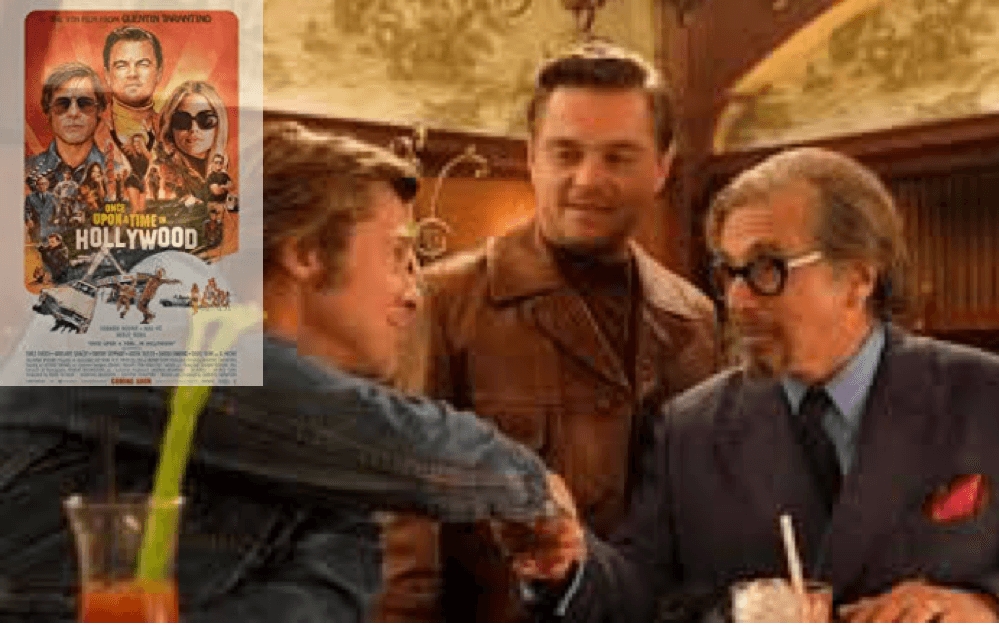
    Once Upon a Time in Hollywood is the wrong film at the right time. As noted in Part 1 of this discussion, the highly questionable thesis of the Vincent Bugliosi/Curt Gentry massive bestseller Helter Skelter is finally being seriously questioned. Therefore, it would have been a good time to review the subject matter for a more truthful rendition of those infamous events. Quentin Tarantino is not the guy to do it. The man who turned the Third Reich into a comic book and American slavery into a Spaghetti Western was not going to make any real attempt to confront the Tate/LaBianca case.

    In fact, the current film spends considerably more time on its two major characters’ travails in Hollywood. Those two characters are Rick Dalton, played by Leonardo DiCaprio, and Cliff Booth, played by Brad Pitt. Dalton is a TV actor trying to transition to films. Booth is his stunt man/friend. They are loosely modeled on Burt Reynolds and his pal, stunt-man-turned-director Hal Needham. Why a director/writer would want to configure Tate/LaBianca around two men who, when they finally made it big in movies, decided to give us stuff like The Cannonball Run, Smokey and the Bandit and Stroker Ace, eludes this reviewer. But since Tarantino handed Needham a Governor’s Ball Oscar in 2012, he apparently thinks that somehow Needham’s oeuvre should be given further homage.

    The film begins in February of 1969 with a TV preview of Dalton’s Western series, Bounty Law. That fictional series is modeled on Steve McQueen’s Wanted Dead or Alive. We then watch an interview with Dalton and Booth to promote the series. The following credit sequence cuts between the two main characters and Sharon Tate arriving at LAX. Although Dalton lives next door to Tate and her husband Roman Polanski, and Booth spends a lot of time at Dalton’s, there is no direct relationship between them until the very last scene.

    Al Pacino plays Dalton’s producer/manager. At the beginning of the film he tells Dalton that his career has plateaued with television. Between the series he does and guest shots on other televisions series he will never break through. He advises him to go to Italy to make features. (The film uses the name of the Italian director who hired Reynolds to do Navajo Joe, which closely resembles the film title used here, Nebraska Jim.)

    The locations are meant to recall Burbank, the home of a few studios. And this is how the Manson Clan is introduced. Pitt/Booth sees some of the them standing on corners trying to hitch rides. After dropping off Dalton from work, Booth jumps in his VW Karmann Ghia and drives home. Tarantino has always been obsessed with people driving in cars with the top down—just ask Uma Thurman. He somehow thinks it is emblematic of film art to show the driver’s hair being blown by the wind as he or she drives fast through traffic. Booth/Pitt lives in a cheap trailer with his pit bull dog right next to the Van Nuys drive-in. As we shall see, the dog will be important to the resolution of the film.

    This drive across town by Booth is then echoed by Polanski and his wife Sharon Tate as they go to a party at the Playboy Club. As they walk in, they are greeted by celebrities like Michelle Phillips, Cass Elliot, Steve McQueen and McQueen’s hair stylist Jay Sebring. This shows that the director understands some of the true underpinnings of the real story, for in addition to Sebring being a victim in the Tate murder, McQueen and Elliot were involved in the drug dealings around the Polanski home. (See Part 1)

    The story is filled with what former film critic John Barbour has characterized as aimless and pointless scenes, like Pitt/Booth fixing his friend’s TV antenna and this being crosscut with Polanski and Tate waking up the morning after the Playboy party. There is another scene between Pitt and Bruce Lee from his Green Hornet days getting in a sparring contest. (I will deal more with this incident later.) There is then a very long sequence with Dalton guest-starring in a segment from a real western series, Lancer. During this part of the film, there is also a hint that Booth murdered his wife on board a boat. (Is this supposed to remind us of the death of Natalie Wood?)

    The only time we see Charles Manson is in a scene where he goes up to the Polanski home and finds out his acquaintance, music producer Terry Melcher, does not live there anymore. Jay Sebring tells him that. Manson then walks off never to be seen again. It was apparently more important to show us Tate driving to a bookstore to pick up a copy of Thomas Hardy’s Tess of the D’Urbervilles and then walking into a nearby theater to watch herself in the (bad) movie The Wrecking Crew. We know the character enjoyed this since Tarantino has actress Margot Robbie take off her shoes and put her bare feet on the seat in front of her. (Her feet looked kind of dirty to me. The sign of a true auteur.)

    Before the ending of the film, the closest association between any of the main characters and the Manson Clan comes when Pitt picks up one of the girls on a street corner and drives her to Spahn ranch in Chatsworth. This was where Manson was living with the permission of the owner George Spahn. Spahn sometimes rented out his property for filming Western movies. Pitt insists on seeing Spahn against the approval of just about all of the Manson followers, who do not want him there. Tarantino directs him going into Spahn’s room with the weighted threat of some kind of slasher film. But before that, he has about 14 of the Clan watch him as he enters the cabin Spahn is in. This included three males. After doing nothing but talking to Spahn, Pitt leaves and walks to his car. The one remaining male has stuck a knife into the left front tire. Pitt then beats him up and makes him fix the tire. Like many scenes in the film, this made little sense to me. Besides all the pretention of the music and dark lighting before the Spahn meeting, why would the Clan have given the guy a flat tire if they wanted him gone ASAP? From the very cold greeting he received, he would have already gotten the message.

    The film then flashes forward to August of 1969 and Dalton’s return from Italian film making. For no real reason, Kurt Russell, who plays a stunt supervisor in the film, now narrates it a bit. (Why him? Shouldn’t it be Pacino, who sent him to Italy?) The actor and stunt man have made four films abroad and Dalton is now married to an Italian wife. After dropping off the spouse, the two friends go out drinking and Dalton tells Booth that they will probably now have to split up. (Again, I found this inexplicable. Which was about par for the course with this film.) There are other pointless scenes in this part of the story: for instance, Tate being visited by her actress friend, Joanna Pettet, and Lee teaching Sebring martial arts. The (overdue) ending comes with Sharon Tate going out with her friends: Sebring, Abigail Folger and her boyfriend Voytek Frykowksi. This is crosscut with Booth and Dalton getting bombed at a bar. Both parties go home, and as the reader may recall, they are neighbors.

    The climax comes with Tex Watson driving a junky car up Cielo Drive since Manson has told him and his three cohorts to kill the residents at Terry Melcher’s former house. But Dalton hears the car idling on the street and comes out to yell at the driver and passengers since they are making too much noise. They drive back down the road and one of the girls—who is inexplicably Asian—delivers an unbelievable monologue from the back seat of the car. I had to see the film twice to understand this scene, since it is the nexus for what follows. She has recognized Dalton as a TV star who usually plays law enforcement figures. And he usually ends up shooting someone. She says something like, “forget what we were told to do and instead give back some of the violence our culture has taught us on those who presented it.”

    The idea that anyone in such a motley crew as Manson’s would ever utter such a thing in this situation is so stupid as to be beneath any comment. It’s clearly a cheap plot device. The Manson attackers now directly meet up with the protagonists inside Dalton’s house. Dalton has gone out on his patio pool as they enter the home. Pitt is inside and recognizes them from his visit to Spahn ranch. Tex Watson pulls a gun while the girls have knives. Dalton’s Italian wife is woken up and dragged into the living room. How do the unarmed good guys win? It’s out of an R-rated Lassie movie. Pitt’s dog attacks Watson’s arm and gets the gun loose. The dog then attacks Watson’s crotch and begins biting on it. (I saw the movie twice and took copious notes, so I am not making this up.) When Pitt gets stabbed in the hip, he goes bonkers and starts slamming the Caucasian woman’s head into anything on the wall that Tarantino can think of, such as the phone and the top of the fireplace, just for starters. The Asian girl has also been smacked and she starts screaming hysterically and waving her arms and the knife. She actually smashes through the glass doors onto the pool deck and into the water. She is till screaming and waving as the pool gets bloody. Dalton goes to his tool shed and—again I am not making this up—he brings back a flame thrower and incinerates her. (This had been planted earlier as a prop Dalton used in a war film to incinerate some Nazis. Tarantino evidently was doing an homage to himself—Inglourious Basterds.) We are then treated to some nice medium close ups of her charred body in the water as this scene—mercifully—comes to an end.

    At the very end, after the cops have left and Booth/Pitt is taken to the hospital, Jay Sebring comes over and asks what happened. (We are supposed to believe that somehow a drunken Dalton heard the car idling outside his house, but no one heard the utter and complete mayhem going on during this murder and destruction scene.) Dalton talks to Tate through the intercom and she invites him in for a drink. The end.

    As I have tried to point out, in the form of a story, the differing strands do not connect, let alone comment on each other. They really don’t even support each other in a structural way. There are examples of film narrative structure where writers do handle disparate strands of a story with skill and adroitness, and as a result, the ending packs a punch. For instance, in the film Network, Paddy Chayefsky kept the nine pins of his plot spinning throughout the entire two hours. And what came before in the film was at least some justification for a rather wild ending. That does not happen here. As I said, this film has an added-on ending in which one can see the writer working through his characters, almost using them as puppets for his preordained finale. This is why there is no emotional payoff at the end.

    I would have liked to say that somehow this pointless story is redeemed by some skillful filmmaking. Nope. Tarantino is simply not a gifted director. He has no eye for striking compositions, little sense of how to stage violence with any kind of sensibility or poetry, and there is not one performance in the film that merits any real comment. But one cannot really blame the actors for that, since there is so little characterization for them to work with. That even includes a proven performer like Pacino. Brad Pitt gets by on his personal charm. As Sharon Tate, Margot Robbie strikes a series of poses. She might as well have been on a modeling shoot. DiCaprio has a couple of scenes where he has to register some pathos and self-disgust. He does it adequately. And that is it for the acting.

    The violence in the film is pretty much of the Kill Bill variety—a previous Tarantino pastiche. I couldn’t sit through Part One, let alone Part Two. This is kind of ironic, considering Polanski is a character in the film. Because Polanski is famous for memorable and telling treatment of violence in his films. Who can forget the scene in his film Chinatown where, in an acting role, he slit Jack Nicholson’s nose? Or the gripping final fight scene in Macbeth? —to name just two instances. Scenes like those—not to mention what men like Kurosawa and Peckinpah have done—justify the use of violence in films. With Tarantino it’s pretty much just a bunch of bloody junk being thrown at us. In that regard, he makes Martin Scorsese look imaginative and artistic.

    There is something else I have to mention about this film which others have pretty much ignored. I don’t see how anyone cannot detect its anti-Asian bias. Many have pointed out the scene in which Bruce Lee (played by Mike Moh) boasts of his being able to defeat Cassius Clay. The very fact that Tarantino has Lee call the heavyweight champion Clay in 1969—four years after he changed his name to Ali—shows that he wants to demean him. But further, the justification for the scene is false. There is also a scene from the Tate movie The Wrecking Crew where we see her defeat Nancy Kwan in a fight. And then there is the incineration of the Asian girl by flame thrower at the end. Evidently, the director thinks that Asians have gotten too much praise and respect in our society. He wanted to take them down a peg.

    To me, Once Upon A Time In Hollywood is simply an unrewarding mess. In every way. It surprises me that more people are not calling it out as such. In the end this reminds me of Dwight Macdonald’s review of the 1966 British film, Morgan! Karel Reisz’ film was popularly praised in certain quarters at the time of its release. Macdonald didn’t see it that way. He asked some pertinent questions. If the film was a comedy, he did not find it funny. If it was supposed to be a drama, or to wring pathos, he was unmoved. If the film was a satire, where was the edge to it? But he was asked, you aren’t taking it seriously are you? It was really a fantasy. Not really. Because fantasies that are really well done do take themselves seriously. They follow their own set of rules. And by showing that kind of discipline, there is a payoff at the end. For example: who can forget the memorably done ending of Warren Beatty’s Heaven Can Wait?

    As Macdonald said in his review, an “in” thing to do back in the 18th century was to visit a mental asylum; in 1966, one goes instead to Reisz’ film. Well, in 2019, we go to this film. And somehow, through an industry-wide PR plot, no one is supposed to say that they got snookered. The idea that Quentin Tarantino is some kind of genuine talent is due to the utter collapse of American film criticism. The truth is the man simply has nothing to say, in both the narrowest and widest sense of that phrase.

    In a real sense, we are all still paying for Jane Hamsher taking out that option from Tarantino while he was a clerk in a Manhattan Beach video store back in the nineties. The intellectual bankruptcy of the man is he did not even understand how Oliver Stone, in Natural Born Killers, had turned his sow’s ear of a script into a silk purse. Hollywood is a bereft place today. It consists of Marvel and DC comics and the likes of Tarantino and Jordan Peele. To see Peele’s Us and then this film is to be really disheartened about the state of the American movie business. The only good thing about this picture may be that Tarantino has said he is only going to make one more.

    Let us all try and hold him to that promise.


    Go to Part 1

  • Vincent Bugliosi, Tom O’Neill, Quentin Tarantino, and Tate/LaBianca, Part 1

    Vincent Bugliosi, Tom O’Neill, Quentin Tarantino, and Tate/LaBianca, Part 1

    Part 1

    A Review of Chaos: Charles Manson, the CIA, and the Secret History of the Sixties

    In August of 1969, one of the most sensational murder cases in recent history exploded onto TV screens and the front pages of newspapers. On two successive evenings in Los Angeles, seven people were brutally attacked and killed with both guns and knives. What made the homicides even more gripping was that, on the first night, one of the victims was Sharon Tate. Tate was a popular actress who was ascending in the star ranks at the time. She had done several film and TV roles, including the 1967 movie adaptation of the novel Valley of the Dolls. She was married to film director Roman Polanski. Among his films, Polanski had directed two hits that dealt with macabre subjects: Repulsion and Rosemary’s Baby. This gave the murders an even higher profile, with a darker undertone. Those undertones were broadened by the fact that the killers had left certain words behind etched in blood: “rise”, “pig” and “helter skelter”.

    For weeks on end, the police and District Attorney’s office could find no productive leads. But in November, they got a call from an inmate at Sybil Brand Institute, a detention center for women. The caller said that one of the fellow prisoners had told her about her participation in the murders. It was that tip which broke open the Tate/LaBianca case.

    His successful prosecution of Tate/LaBianca vaulted assistant DA Vincent Bugliosi into the stratosphere of celebrity attorneys. He now joined the likes of F. Lee Bailey, Melvin Belli and Percy Foreman. It also made him a wealthy man and gave him an almost automatic TV/radio platform nearly until the end of his days: one from which he could pontificate on a variety of legal issues. That wealth and position was largely due to the book he co-wrote on Tate/ LaBianca with established author Curt Gentry. Published in 1974, it was titled Helter Skelter and it eventually became the number one best-selling true crime book. (James DiEugenio, The JFK Assassination: The Evidence Today, p. 70). Those sales were greatly augmented by a two-part TV film that aired in April of 1976. That dual airing set records as far as ratings for a TV film at the time.

    I did not read the Bugliosi/Gentry book until many years after publication. There was something about the sensationalism and assumed collective psychosis that made me leery about the way the story was presented. But, in 2007, Bugliosi published Reclaiming History on the assassination of President Kennedy. That giant tome was so poor that I took Mark Lane’s advice. He said that after what Bugliosi had done with JFK, we should go back and examine Tate/LaBianca. Between my examination of Helter Skelter, and my critique of Reclaiming History, my opinion of Bugliosi as an author and attorney diminished.

    My critique of both the Bugliosi books is contained in my current volume entitled The JFK Assassination: The Evidence Today. The first chapter of that book contains a biography of Bugliosi along with my analysis of the problems with Helter Skelter. At about the time I began to express my doubts about the earlier book, a writer named Tom O’Neill got in contact with me. We later met and then talked on the phone a few times. Those discussions confirmed for me the serious underlying problems with the Bugliosi/Gentry scaffolding of their bestselling book.

    At the time I met Tom, he was struggling to finish a book he had been contracted out to write on the Tate/LaBianca case. He had been caught up in a dizzying labyrinth for a number of years and was having problems finding his way out. He had piled up a veritable mountain of research on both Bugliosi and the Tate/LaBianca murders and, like myself, he had found the Helter Skelter scenario unconvincing. To remind the reader, what this entails is Charles Manson ordering the Tate/LaBianca murders to begin some kind of race war. After the war, only the Black Muslims would be left standing. Manson and his followers would now emerge from a deep black pit underground. And after having multiplied, they would retire the Muslims and now rule the world. (see DiEugenio, pp. 12-14 for the long version)   I hope the reader can understand how, even in this abridged form, some people could find this concept wanting.

    Tom found a co-writer—Dan Piepenbring—to help him sort out his research and interviews. The book has now been published under the title Chaos: Charles Manson, the CIA, and the Secret History of the Sixties. It is really two books. One is a powerful critique of Bugliosi’s methodology in convicting Manson and the cohorts involved in the murders at the Tate/Polanski home and then the house of Leno and Rosemary LaBianca. There were a total of seven people killed over the nights of August 8 and 9, 1969. At the Benedict Canyon address, in addition to Sharon Tate, there was men’s hair stylist Jay Sebring, coffee heiress Abigail Folger, her boyfriend Victor Frykowski, and recent high school graduate, Steve Parent. The next night, in the Los Feliz area, the LaBianca couple were killed. Bugliosi ended up being the lead prosecutor in the case after Aaron Stovitz was removed for violating a gag order. (O’Neill, p. 5) With Bugliosi now in the driver’s seat, he was the one who garnered the media attention for the many months of the trial.


    II

    O’Neill had been a celebrity/movie writer for magazines like Us and Premiere. At the 30th anniversary of Tate/LaBianca he was asked by the latter publication to do an update article on the principals involved who were still alive. It was in doing his preliminary research for that article that he began to understand that not all was as it seemed in what had become the received wisdom on the case. He also found out that Bugliosi was very protective about Tate/LaBianca and his role in it. (O’Neill, p. 7) In one of the most memorable exchanges in the book, the author reveals a conversation he had with newspaper reporter Mary Neiswander. She was one of the very few writers on Tate/LaBianca who actually talked to alleged mastermind Charles Manson and developed a rapport with him. She did her own set of interviews and discovered evidence that contradicted what Bugliosi was eliciting from witnesses on the stand. She also did not buy Bugliosi’s Helter Skelter theory of the crime.

    Neiswander was one of the first local journalists to note that the work of the two investigators on the prior Gary Hinman murder case was crucial to understanding what happened on August 8 and 9. But the LAPD ignored the work of Charles Guenther and Paul Whiteley and they allowed the population of Los Angeles to descend into a state of, as she wrote, “terror stricken, gun toting, guard dog buying crazies.” (Assassins … Serial Killer … Corrupt Cops, e-book version, p. 147) She also noted that, if Manson had not consented to be tried with his cohorts, it would have been very difficult to prove his guilt in a stand-alone case. (Neiswander, p. 161; for this point also see George Stimson’s Goodbye Helter Skelter, p. 405) She then wrote that since the judge would not let him defend himself, Manson insisted on having the worst lawyer in the city defend him. According to Bugliosi, he got him in the person of Irving Kanarek. (Neiswander, p. 175).

    Because of her unusual, outside-the-envelope reporting, Bugliosi decided to attack the woman in public. He said about her that she was “pro-defense, anti-prosecution and she hates police.” (Neiswander, p. 183) She also noted that Bugliosi had actually taken a swing at Susan Atkins in court after she messed up the notes for his summation. She also knew from a secret source that Bugliosi’s prime witness, Linda Kasabian, had been less than truthful on the stand. And this deception tended to undermine his Helter Skelter thesis. (Neiswander, p. 188)

    But there was something between Bugliosi and Neiswander that the reporter did not relate in her book. She told it, however, to O’Neill. As she was prepping a long exposé of the Manson prosecutor back in the eighties, he made her understand that he knew where her children attended school, “and it would be very easy to plant narcotics in their lockers.” (O’Neill, p. 80) This anecdote is quite telling in two respects. First, it shows a dark side to the prosecutor, one which I talked about in my book and which O’Neill also writes about here. But further, it reveals that Bugliosi was hyper-defensive about anyone questioning his tactics in the Tate/LaBianca case. What was the famous prosecutor so worried about? What secrets was he so desperately trying to protect?

    The author begins his book with a review of the killings at the Tate and then the LaBianca homes. Tate and Polanksi lived at 10050 Cielo Drive, north of Beverly Hills. That home was rented out by talent manager Rudy Altobelli, who was not in the country at the time. He had hired a groundskeeper named William Garretson to take care of the place in his absence. Garretson lived in a cottage behind the main house and Parent was visiting him that night. The LaBianca home was at 3301 Waverly Drive, which was right next door to a home where Manson had actually stayed more than once. The author notes that the LaBiancas were worried since people had been breaking in and moving their furniture around. (O’Neill, p. 23)

    Before getting into the actual centerpieces of the book, I would like to pose some questions about the two murder scenes and the victims. When I met with the author, he told me that there was more to the killing of Steve Parent than met the eye. If there was, O’Neill does not address it in his book. He also said that the ideas about the extravagant wealth of Rosemary LaBianca was a point that Bugliosi had gotten wrong in his book. (DiEugenio, p. 19) Again, if that was an error by Bugliosi, it is not addressed by the author. He said that Altobelli had lost his money and was living in a small apartment paid for by Jack Nicholson. Again, this decline is not addressed, let alone explained by the author. Finally, the daughter of the LaBiancas actually discovered her parents’ bodies that night. She was accompanied by a man named Joe Dorgan. Dorgan was a member of the Straight Satans. This was a cycle gang modeled on Hell’s Angels that was close to the Manson Clan up at Spahn Ranch in Chatsworth. Danny DeCarlo, an important witness for Bugliosi, was a member of that gang. But further, that daughter, Suzan Rae, began to write letters to the main killer, Tex Watson, in 1986. She then argued for his parole at a hearing: the man who had the major role in killing her parents! It was later discovered that Rae lived in an apartment about 200 feet from Watson before the murders. (DiEugenio, p. 20) The author told me that all this was coincidental. I wish he had shown why he was so sure in his text.

    But the main fulcrum of the book is O’Neill’s exposure of what Bugliosi and the DA’s office—led by Evelle Younger—did in its conduct of the Tate/LaBianca case. There were five perpetrators who were on trial for the crimes: Leslie Van Houten, Patricia Krenwinkel, Susan Atkins, Manson and Tex Watson. (Watson resisted extradition and was later tried separately.) In what is probably the most significant achievement of the book, the author proves what some have long suspected about the unethical methodology the DA ‘s office used to get a death verdict at the trial, and ensure that Bugliosi’s grandiloquent concept would gain currency.


    III

    The first method involved Susan Atkins. Atkins was talking to almost anyone in earshot at Sybil Brand about the Gary Hinman case. Therefore she thought she could trade her knowledge of Tate/LaBianca for a deal. As Nikolas Schreck notes in his book, The Manson File, Atkins talked about what happened at the Polanski home to at least four people in detention, double the two the DA’s office admitted: Virginia Graham and Roni Howard. And she said things that made the crime scene out to be devilishly psychic in its nature: for instance, that she drank Sharon Tate’s blood and liked the way it tasted. It is interesting to note that she took back almost all of these sensationalist claims in her later book, The Myth of Helter Skelter. (See especially p. 222 of the e-book version.) She also noted that at the Hinman scene, the term “political piggy” was left on the wall in blood, and Bobby Beausoleil (also imprisoned since he was found driving the deceased’s car) made a bloody palm print on the wall to suggest a panther paw. This was a half-baked attempt to blame the murder on the Black Panthers. (Atkins, p. 80, e-book version) Although Manson had cut Hinman’s ear, it was Beausoleil who had actually killed Hinman. There are two motives given for the killing. Bugliosi says it was over an inheritance Hinman had come into. Ed Sanders, in his book The Family, writes that it was over a bad batch of mescaline Hinman had sold Beausoleil. (Sanders, p. 180-184) Either way, since Atkins was there, she was implicated as an accessory to the crime.

    When the word got back that Atkins was talking, she was interviewed by the DA’s office. And this is where one of the most important revelations in Chaos occurs. It powerfully illustrates the links between a corrupt prosecution and a corrupt MSM. Bugliosi did not want to use Atkins as a trial witness since she was implicated in the crimes, including the Hinman case. (O’Neill, p. 244) So a two-stage secret operation was enacted. Atkins’ original court-appointed attorney was replaced—without either her or the lawyer’s consent. Why was this done? Because the DA needed “strong client control”. (O’Neill, p. 246) Yet Atkins was not the DA’s client. She was their defendant. But her original counsel was being removed because they wanted someone who would cooperate with them by controlling Atkins. They went to the judge, and inexplicably, he approved the switch to a man named Richard Caballero who, according to Sanders, later became very friendly with Bugliosi.

    On November 26, 1969, Caballero became the attorney of record for Atkins at her first hearing. The record of that hearing is now gone. (O’Neill, p. 247) Caballero had previously worked in the DA’s office for 8 years. Caballero did something rather odd. He got Atkins to agree to a deal with the DA that was neither signed nor written. Although police chief Ed Davis was sparse with the details of the announcement of Atkins’ cooperation and what she had revealed to the authorities, Caballero became a veritable fountain of information. For the first time, Charles Manson’s name now entered the case as Caballero talked it up for four straight days, saturating the local media. (O’Neill, pp. 248-49) On December 5th, Atkins testified to the grand jury and on that basis Manson, Atkins, Linda Kasabian, Patricia Krenwinkel, Leslie Van Houten and Tex Watson were indicted on seven counts of murder.

    Bugliosi allowed Atkins to record her story at Caballero’s office. After listening to the tape, he noted that what she said there apparently differed from what she told Graham and Howard. Now she said she did not actually kill Tate; she held her as Watson killed her. The DA’s office allowed her to be visited by former members of her Clan, knowing full well that this would probably give her second thoughts about testifying against them. It did. But as O’Neill notes, although he did not admit it in his book, Bugliosi was already in negotiations with Linda Kasabian, a more sympathetic witness, since she did not kill anyone and did not enter either home. Her lawyer insisted on a written grant of immunity—which he got. (Bugliosi and Gentry, Helter Skelter, p. 252). Since Caballero was really representing the DA’s office and not his client, there was no problem in switching witnesses and leaving Atkins with nothing. Kasabian’s attorney, Gary Fleischman told the author that the DA used Atkins for a grand jury indictment and then dumped her; Caballero got away with this crime as he sold his client down the river. (O’Neill, p. 253)


    IV

    But that wasn’t the worst part of the Atkins operation. It was not enough for her lawyer to pollute the jury pool in Los Angeles. Caballero would now blast out his client’s words around the world. He made a deal with “journalist” Larry Schiller. Schiller should be familiar to readers of this site. He was an informant for the FBI on the JFK case. (The Assassinations, edited by James DiEugenio and Lisa Pease, p. 361) In 1967, he co-wrote a book attacking the critics of the Warren Commission: The Scavengers and Critics of the Warren Report. As the author notes, Schiller also arranged to have a deathbed confession from Jack Ruby saying he acted alone in killing Oswald.

    Caballero allowed Schiller to listen to and transcribe the tape he had made of his witness. That manuscript was then sold to the LA Times. At 6,500 words it ran to nearly three pages. (O’Neill, p. 254) It essentially cooked Manson’s goose. As the Schiller/Atkins story depicted, he was “a criminal mastermind, a cult leader, a conspiring lunatic.” (O’Neill, p. 254) The ACLU declared it was now impossible for Manson to get a fair trial anywhere in Los Angeles. But Schiller went further and published a quickie paperback book. This was titled The Killing of Sharon Tate and in its various versions featured either Manson or the actress on the cover. He then sold overseas rights in Germany and England.

    As the author points out, the idea that Bugliosi conveys in Helter Skelter—that he was somehow blindsided by the Times story and the book—is quite dubious, because Caballero and his partner Paul Caruso were not only allowed to interview Atkins at his Beverly Hills office, but Caballero went to her cell at Sybil Brand. The sign-in sheet said that the visit by Caballero and a second party was for “future psychiatric evaluation”. Since the second party was LA Times reporter Jerry Cohen, that pretext was bogus. It turns out that Schiller needed more material for the book and Cohen was his ghost writer. Cohen was also a less than heroic figure on the JFK case. He worked with Schiller to talk Loran Hall out of going to New Orleans to be interviewed by DA Jim Garrison. He was essentially the LA Times man on the Clay Shaw trial and was reportedly in the room when Attorney General Ed Meese refused to formally extradite Hall to New Orleans at the request of Garrison. As the author notes, Cohen tried to talk reporter Peter Noyes out of writing a book on the JFK case. (O’Neill, p. 262) In fact, he offered him a job at the LA Times if he did so. Noyes declined. He was soon terminated from his position at CBS News. (See this YouTube video for a summary of Schiller.)

    When the jailhouse interview was over, Caballero asked for the hour-long tape. He then obliterated part of it. On the stand, Caballero admitted that he did so because what Atkins said there contradicted her grand jury testimony. The destroyed tape “contained comments from Atkins suggesting that she’d lied to the grand jury at his direction.” According to the author, the witness said words to the effect, “Okay, I played your game. I testified. I said what you wanted me to say. I don’t want to do it anymore.” (O’Neill, p. 256) Although Schiller took credit for the interview, he was never inside Sybil Brand with Atkins. He later lied about this fact. (O’Neill, p. 258) He waited in the car outside and then Cohen wrote the story at Schiller’s home. In his book, Bugliosi maintains he only found out about this arrangement near the tail end of the nearly ten-month trial. As O’Neill reveals, this is hard to buy, because Bugliosi knew Cohen from before the Tate/LaBianca murders. He was actually working with Cohen on a book about another murder case he had tried. The court could not prove that Bugliosi put Cohen up to the scheme because Cohen dodged subpoena servers and failed to testify about the issue. (O’Neill, p. 258) Some of these legal abuses with Atkins had been exposed by a local TV reporter named Pete Miller. But his reports stopped when Bugliosi visited the station and had a meeting with station management. The prosecutor clearly did not like Miller’s exposure of his designs to pollute the jury pool. Caballero was well compensated for selling out his client to Schiller and Cohen. For example, just the UK rights sold for $40,000, about 200 grand today. According to author Ed Sanders, even though Caballero was being compensated by the public defender’s office, he got the highest percentage of the incoming fees from the escrow account he set up. (see this forum entry from 08/24/2014)

    Because of all this chicanery—which the LA Bar later termed improper and unethical—the author poses a question: What did Atkins actually say before she came under the control of the DA’s office through their proxy Caballero? O’Neill found an official memorandum dated November 18th in the LAPD files. This was the day that Roni Howard first called the police to inform them of what Atkins was saying at Sybil Brand. The author notes some key differences between the memo and what would later become the Atkins official story. He also notes that Howard’s story changed within a week of the original interview. (O’Neill, p. 263)

    First, Atkins originally said the killers were on LSD the night of the murders. When Kasabian testified, she said they were not on drugs. This subtraction took away the defense of diminished capacity. But as the author notes, in a 2009 documentary interview, Kasabian now said everyone had taken speed that night. (O’Neill, p. 263) As I noted in my book, Bugliosi was intent on eliminating the drug angle to the crime in any way. In this early version, Atkins was inside the LaBianca house and participated in the attacks. In the Bugliosi version she stayed outside in the car. And as the author notes, in the first Howard interview there was no mention of any of the Helter Skelter elements of Manson’s race war, except that those words were left in blood on the refrigerator. Atkins did not even mention Manson ordering them to go anywhere or kill anyone. Also, Atkins did not admit to stabbing Tate according to Howard. After Caballero’s arrival, Howard said such was the case and Atkins had talked about the Tate stabbing in detail. (O’Neill, p. 264)

    O’Neill caps this section with a telling point. He writes, “eventually all the killers settled on a story similar to the one that Atkins told after her attorney swap.” Their parole release bids have been based on that concept: namely that they were all under Manson’s control. In one of his last interviews, Bugliosi—who passed on in 2015—said he did not think Manson believed the Helter Skelter concept. The interviewing reporter did not follow up with: Well what was the motive for Mr. Manson then?


    V

    What the DA’s office did with Atkins was unethical and improper. What Bugliosi did to wipe the record clean of any drug influence was deceptive and deprived the accused of a defense. In my opinion, what Bugliosi did with Terry Melcher was probably even worse.

    The son of actress Doris Day, Melcher was a prominent music producer at the time. Through his talent scout Gregg Jakobson, and Beach Boys drummer Dennis Wilson, he had heard of Manson and was seriously thinking of producing him and/or making a documentary film about their commune life style.

    One of the most estimable achievements of this book is that it makes clear what others, including myself, had suspected. Bugliosi did a deal with Melcher to conceal the extent of his relationship with Manson. When Rudy Altobelli began to talk to O’Neill, the author pressed him on this issue: Was Manson or anyone from his Clan at the Cielo Drive house prior to the murders? Altobelli got back to Melcher about this line of questioning. Melcher responded with: “Vince was supposed to take care of all that. And now it’s all resurfacing.” (O’Neill, p. 119) The author pursued this angle steadily. He eventually met up with Sandi Gibbons, a reporter turned lawyer. She said that since Bugliosi stole official files for his book, she would copy files for O’Neill. One of the files contained information from a key Bugliosi witness, Danny DeCarlo, which exposed this hidden agreement with Melcher. DeCarlo said that he saw Melcher at Spahn Ranch twice, and once at Barker Ranch, in Inyo County—where Manson later moved his Clan—after the murders. On one visit, DeCarlo said that Melcher drove up alone in a Metro truck and stayed for 3-4 hours. (O’Neill, pp. 121-22) DeCarlo placed these visits in August and September. Yet, on the witness stand, Melcher said he did not see Manson after mid-May of 1969. DeCarlo, a witness who Bugliosi relied upon to a great extent for his case, was never asked about this matter at trial. In fact, in his notes, Bugliosi actually drew lines through this information.

    According to the 1963 Supreme Court case, Brady v. Maryland, the defense should have received a copy of this interview. When the author showed these notes to Patricia Krenwinkel’s attorney, the late Paul Fitzgerald, he was startled. He had never seen them before, and he recognized Bugliosi’s handwriting. He then added that Bugliosi was quite deceitful during the trial, writing a script that he got his witnesses to follow. (O’Neill, p. 124)  

    Melcher also denied ever recording Manson, and Bugliosi repeated this in his summation to the jury. This was also false. The author found the technician who did the recording for Melcher. (O’Neill, p. 125) Melcher also lied on the stand about Manson and Tex Watson not being at his Cielo Drive home, the scene of the first night murders. Steve Kay, who assisted Bugliosi at the trial, told the author such was the case. And actress Candice Bergen was also there at this time. But Kay told O’Neill Bergen would not talk about it. (O’Neill, p. 108) I hinted at this in The JFK Assassination: The Evidence Today. I based that declaration on Deana Martin’s book. She was another friend of Melcher’s who was at his home many times. O’Neill tried to say she was not a good source. But at her trial testimony, Martin was not directly asked whether or not she ever saw Manson at Melcher’s. But she did ID Watson, albeit tentatively, since his appearance had changed so much in the interim.

    The point of all this is that when one adds it all up, Manson was probably at Melcher’s as many as three times. Watson was probably there twice. (James DiEugenio, The JFK Assassination: The Evidence Today, pp. 18-19) This is likely how Watson knew where to cut the phone lines the night of the murders. And also how to enter the grounds bypassing the front gate. But there is one last point made by O’Neill on this issue. Bugliosi realized he needed at least one connection between Manson and the Cielo Drive location. That came mainly through a man named Shakrokh Hatami. (O’Neill, p. 185) He was Sharon Tate’s photographer. He said that Manson had been at the Cielo Drive house, looking for Melcher. Bugliosi plays this scene up for great effect in his book. Manson does not know Melcher had since moved out to Malibu, and he is chagrined about Melcher not signing him to a music deal or following through on the documentary film. (Bugliosi and Gentry, pp. 229-30) Hatami sends him to the rear house where Altobelli was residing, and Rudy tells him Melcher does not live there anymore. Bugliosi admits to a problem. Hatami says this visit occurred in the afternoon, Altobelli says it happened at night. Bugliosi papers this over and then states that he had now connected Cielo Drive to Manson.

    As presented above, this scenario is specious. In my book, I explained how it was designed to keep Manson away from both Melcher and the Hollywood music and drugs scene. But O’Neill adds something that makes it even worse. In interviewing Hatami, he said he was never sure the man was Manson. He told the author his testimony had been coerced. He added that he really did not like what Bugliosi put him through. In fact, like Marina Oswald in the JFK case, Hatami—who was an Iranian citizen—was threatened with deportation unless he told the story that the prosecution wanted him to tell. Afterwards, it turns out that Bugliosi guaranteed the witness coercion would not be discovered. When he interviewed Hatami—as Captain Will Fritz did with Lee Harvey Oswald—there was no stenographer present, and the session was not recorded on tape. This indicates the perpetrator was covering his tracks. (O’Neill, pp. 186-187)

    This brings up two related issues both of which the author acknowledges. First, Melcher’s perjury was not just condoned by Bugliosi; it appears to be a cooperated-upon enterprise. (O’Neill, p. 88) This is an important point to keep in mind, since, as we shall see, it impacts on the whole Helter Skelter motive issue. Second, in his book, Bugliosi says the reason Manson was there was to find Melcher. (Bugliosi and Gentry, pp. 228-231)   But as O’Neill and other writers point out, Manson knew Melcher was not living there at the time. (O’Neill, p. 87) This makes one wonder if Altobelli was lying also. According to Bugliosi, Altobelli said he only met Manson once prior to this incident and it was at Beach Boy Dennis Wilson’s house. (O’Neill, p. 87) But this does not ring true, since author Ed Sanders wrote that Manson knew Altobelli was gay. With Bugliosi, Manson knew that from meeting him just once? And consider: this was back in 1969, when most homosexuals were closeted. This makes Manson’s knowledge even more curious.

    There is one other matter that should be noted about Bugliosi’s unethical conduct of this case. O’Neill discusses an interview he did with Irving Kanarek, Manson’s lawyer. During this interview, Kanarek called Bugliosi an indicted perjurer. This was in regard to the so-called “celebrity hit list”. (O’Neill, p. 111) One of the lawyers in the case had slipped information about a “hit list” that the Manson Clan allegedly had. It included major stars like Tom Jones, Frank Sinatra, Liz Taylor and Richard Burton, who they were allegedly going to polish off. This information originated with either Virginia Graham or Atkins. According to Graham, it came from Atkins. It was not credible on its face. For instance, Graham later revealed that Atkins told her they were going to kill Sinatra, skin him, and sell purses made of his skin on Hollywood Boulevard. They were also going to pluck Taylor’s eyes out. (USA Today, May 29, 2015) Bugliosi knew he would never be able to admit this material at trial. As many writers, such as Nicolas Schreck, have noted, if Atkins said it, it was part of her attempt to get someone to call the authorities to arrange a deal for her. I know of no evidence adduced in the later record that such a “hit list” really existed. In fact, the attackers did not even know celebrity actress Sharon Tate would be at the Cielo Drive home that night. (DiEugenio, p. 25)

    But Bugliosi was desperate to publicize the information. He knew it would make the case even more sensational and attract more publicity to both the case and himself. He sent his assistant Steve Kay to interview Graham about it. That tape was then transcribed and, under the law of discovery, Bugliosi gave a copy to each opposing attorney. But that was not enough. Bugliosi was later indicted for sending the transcript to local reporter Bill Farr, who got it in the newspapers. At a preliminary hearing, Kay’s testimony made it fairly obvious it was Bugliosi who sent the transcript to Farr. (DiEugenio, p. 26) That testimony warranted a trial for Bugliosi. But according to Kanarek, the DA’s office realized that if Bugliosi was convicted, it would endanger the prior verdicts in Tate/LaBianca. So they got the judge to grant a motion to dismiss the case due to an arcane technicality. The last thing they wanted to do was discredit Bugliosi and retry a ridiculously expensive and exceedingly long case. In his book, Bugliosi said he did not give the transcript to Farr. This is cow dung. (Bugliosi and Gentry, p. 632)

    As Steve Kay told the author, Bugliosi saw Tate/LaBianca as his meal ticket. (O’Neill, p. 109) It was his way to escape the drudgery and anonymity of being one of 450 assistant DA’s in the Los Angeles office. As noted above, he was already at work with Cohen writing a book on a previous case he had won. That book was later completed and made into a 1992 TV film entitled Till Death Us Do Part. But Tate/LaBianca was a much bigger and more sensational case. So the previous writing attempt was put off. Although he once said he co-wrote the book because no one else would, he had his writing partner, Curt Gentry, supplied with a seat in the court room each day. In other words, they were working on the book before anyone was convicted. (O’Neill, p. 109).

    Not only did Bugliosi see this case as a way to garner fame and riches; he also thought he could gain political position. For instance, at about the time his book was published, he ran for state Attorney General. He also ran twice for Los Angeles District Attorney. He lost all three races. Influential in those losses were two scandals. Both cases made it into the papers during his races for public office and were influential in his losses. (O’Neill, pp. 396-99) As I noted in my book, this is why Bugliosi did not like talking about his failed political career.


    VI

    As outlined above, Bugliosi did not like being questioned on his actions in regard to Tate/LaBianca. According to O’Neill, the prosecutor kept tabs on what the author was digging up. (O’Neill, p. 129) Melcher was also unhappy with his efforts and threatened him with a lawsuit. (p. 135) Bugliosi then sent a 34-page threatening letter to O’Neill’s publisher. (p. 406) This all indicates there was something to hide. O’Neill does an excellent job in exposing the unethical tactics that Bugliosi and the DA’s office indulged itself in to make sure they would ram the perpetrators into the gas chamber. Bugliosi took away the diminished capacity defense by getting Kasabian to conceal the use of drugs that night. The prosecutors completely used and wasted Susan Atkins by taking away her attorney and replacing him with a ringer. They used her without a written agreement to get a grand jury indictment. They then assigned two compromised journalists to sensationalize and market what she had said in order to contaminate the jury pool, not just in Los Angeles, but nationally and internationally. Bugliosi then covered up the real relationship between Manson and his Clan with the recording (Melcher) and film (Bergen) scene in LA. He resorted to the threat of deportation in order to suborn perjury from Hatami. In violation of the Brady rule, Bugliosi hid the important DeCarlo evidence from the defense. It is not an exaggeration to state that, taken in aggregate, Bugliosi should have faced a disbarment hearing for his conduct of this trial. The ends do not justify the means.

    As I said, all of the above work in Chaos seems to me to be quite good. Where I think O’Neill and Piepenbring falter is in the explication of what the actual motive was. When I briefly talked to O’Neill before the book was published, he told me words to the effect that he could not find any drug connection to the crime. After reading the book, this is a puzzling statement. Because he does note some of the drug aspects surrounding the case. For instance, he names the three Canadian drug dealers who Tate and Polanski knew and whom Bugliosi refused to name in Helter Skelter. He notes the dealing association between one of the victims, Voytek Frykowski, and this threesome. He also states that one of the Canadians—Pic Dawson—gained entry to the Polanski circle through a friendship with singer Cass Elliot. He writes that Sharon Tate was beginning to tire of Frykowski and his girlfriend Abigail Folger because of that drug angle. (O’Neill, pp. 59-67) And he brings in a new angle to this. He says that Charles Tacot, an infamous drug dealer with ties to military intelligence, was seen bringing Manson and two girls to a party in Santa Monica at Corinne Calvet’s home. The actress Calvet herself told the author this. If true, it is important since Tacot was close to the three Canadian drug suppliers. (O’Neill, p. 73. Tacot’s name is not in the index to Helter Skelter.)

    But there are some things that O’Neill and Piepenbring leave out. For instance, I could not find any enumeration of the drugs found at the scene of the Tate murders. Even Bugliosi listed that information. (DiEugenio, p. 15) He also does not describe the angle some have used to explain the death of Gary Hinman, which was the bad batch of mescaline capsules that he was supposed to have sold to Bobby Beausoleil. (O’Neill, p. 22; Stimson, pp. 136-7) Bugliosi and O’Neill say the motive was to rob Hinman of a $20,000 inheritance he came into; and that Manson ordered both the heist and the killing. (O’Neill, p. 143) Beausoleil has denied Manson did so many times. What gives his denial weight is that it is a denial against interest, since it would help him with the parole board if he did blame Manson for it. (Stimson, pp. 139-42)

    Another drug issue that O’Neill leaves out is the Joel Rostau angle, which both Schreck and Sanders have written about at length. Rostau was a mob connected Los Angeles drug supplier who had allegedly dropped off some product at the Polanski home that day and was supposed to return that evening. (DiEugenio, p. 16) Some have questioned this information since it comes from Rostau’s girlfriend, and Rostau later denied it. Why Rostau would admit such a thing to the authorities—potentially involving himself deeply in the case— escapes me. They also say well, see, Rostau passed a polygraph test given by the LAPD. This, as we shall see, is ludicrous. Another reason I tend to believe this information is that Rostau was found dead, his body stuffed in the trunk of his car at JFK, on the eve of the trial. Jay Sebring, one of the victims at Cielo Drive, was a client of Rostau’s and one of his clients—both for hair styling and drugs—was Steve McQueen. (DiEugenio, p. 16) Rostau’s girlfriend, the source of the info, worked for Sebring. Why does this have some import? Because after Melcher moved out, Nancy Sinatra complained about the hippie types and open dope smoking at the Polanski housewarming in March of 1969. At another party at Cass Elliot’s, Michael Caine said he was introduced to Manson. (DiEugenio, pp. 17-19) Finally, Ed Sanders wrote that there was evidence entered into the record that one of Manson’s followers had been burned on the purchase of a thousand dollars’ worth of the drug MDA from people at the Polanski home. MDA is the drug Frykowski was importing through the Canadians. Today a thousand dollars is valued at close to seven grand.

    As I noted in my prior discussion of this whole issue, Bugliosi clearly tried to divorce Manson and his Clan from the music/Hollywood/drug scene—to the point that, as O’Neill writes, the prosecutor never subpoenaed Beach Boys drummer Dennis Wilson. (O’Neill, p. 114) Yet it was Wilson who convinced the Beach Boys to record Manson’s songs. It was Wilson who introduced Neil Young to Manson. It was Wilson who was the connecting point between Manson and Melcher. (O’Neill, p. 90) In fact, this Wilson link was so important that the FBI was monitoring Wilson and the Beach Boys after the murders. (O’Neill, p. 126)

    O’Neill and Piepenbring write that, as with Hinman, Manson ordered his Clan to kill those at the Cielo Drive and Waverly residences, i.e., Tate/LaBianca. (pp. 17-23) In his book, Goodbye Helter Skelter, George Stimson vigorously disputes this issue. (Stimson, pp. 210-25) Since, at the trial, there was no defense offered, there was no way to contest Bugliosi’s concept of Helter Skelter, and this is how Manson was convicted. Manson did not actually kill anyone in the Tate/LaBianca case. He was not even there when the murders took place. But in order to make his theory work, Bugliosi had to reel in Manson as the evil ringleader, and Helter Skelter is how he did it. But Stimson shows that, for example, Patricia Krenwinkel was not aware of what they were doing until they scaled the fence at Cielo, and then she thought it was a robbery. The idea was to secure funds to move out of LA and to Inyo County. Linda Kasabian also thought it was a robbery. Bobby Beausoleil never heard of Helter Skelter until the media started parroting it after the killings. In 1993, at a parole hearing for Clan member Bruce Davis, one of the assistant DA’s said that Bugliosi did a fine job selling a theory that almost no one else in the DA’s office bought into. O’Neill writes that Bugliosi consciously forged this bizarre idea by having Clan members testify to this thesis in exchange for lighter sentences and dropped charges. (O’Neill, p. 327)

    Stimson postulates the other major alternative to the crimes, namely that they were copycat killings. The idea was to weaken the case against Bobby Beausoleil, and perhaps get him out of jail. Because Beausoleil had tried to blame the killing of Hinman on the Black Panthers by imprinting a paw on the wall, if the others did the same at Cielo Drive and Waverly, the police would think they had the wrong man and the killers were still at large. This is why similar bloody imprints were left at both the Tate and LaBianca residences. After Atkins was used up and wasted by the prosecution, she stated that this was the real reason for the killings. Krenwinkel realized this was the motive also. Cathy Gilles and Sandra Good, both members of the Clan, also thought this was the reason. Oddly, Stimson concludes it was Kasabian who originally floated the idea. (Stimson, pp. 233-43)

    O’Neill and Piepenbring do not really declare a reason for the murders. But the book strongly suggests that Manson was a cut-out for a combination of the CIA and military intelligence, the idea being he was to incite terror and discredit the left. (See Chapter 14) The book bases this on two concepts. First, the authorities who were supposed to be monitoring Manson after he got out of Terminal Island never busted him for this parole violation; therefore, this must have been cleared from above with some special dispensation. But as Stimson notes in his book, before Manson was released from Terminal Island, he made it clear he did not want to be on a strict parole release. He would rather stay in prison. He did not want to be on a rigid reporting routine. (Stimson, p. 74)

    The book also makes a stab that somehow the infamous CIA mind control agent Jolly West was involved with Manson. But there is no direct connection ever made, and O’Neill admits this. (O’Neill, p. 368) Further, the argument that somehow Manson had absolute control over those at Spahn Ranch is undermined by the many comings and goings of the membership. How could that have happened if Manson had control of them? The book then steers into the JFK assassination, which West was associated with through Jack Ruby’s last prison days. The authors make some pretty amateurish mistakes in this part of the book. For example, Hale Boggs could not have testified before the House Select Committee on Assassinations, since he was dead before that committee was formed. (O’Neill, p. 384) If the writers were going to go down this path, the assassination they should have studied was not John Kennedy’s, but the Bobby Kennedy case. That was also very poorly investigated and prosecuted by the LAPD and the LA District Attorney’s office, and by some of the very men involved in the Tate/La Bianca case, like David Fitts. The police famously falsified polygraph exams in order to intimidate witnesses through CIA cut-outs like Hank Hernandez. People who they needed to make their lone gunman case, they passed. Those they needed to discredit, they flunked. And there most definitely was an element of mind control to that case. (see A Lie too Big to Fail, by Lisa Pease.) It really surprised me that O’Neill went down this path. It is even more surprising that he never asked me about it since I could have advised him to use the Bobby Kennedy case.

    In sum, this is two books. One is quite good: the part exposing a now discredited Vincent Bugliosi. The second part is not so good: where the authors try to salvage a new case from the rubble of Helter Skelter. But I would still say the book is worth reading. In fact, if one reads it in tandem with Stimson’s book, Goodbye Helter Skelter, those two readings would serve as a healthy antidote to the hoary and pernicious deceptions of Bugliosi and Curt Gentry.


    Go to Part 2

  • Nicholas Schou, Spooked: How the CIA Manipulates the Media and Hoodwinks Hollywood

    Nicholas Schou, Spooked: How the CIA Manipulates the Media and Hoodwinks Hollywood


    Sometime during production of the film All the President’s Men, the director Alan J. Pakula fired the screenwriter, William Goldman. This isn’t especially notable—writers are always the first people to get fired off any production—although this wasn’t just any screenwriter. In his book Adventures in the Screen Trade, Goldman writes that it seemed like everybody on the planet knew he’d been having issues with that script. He says he happened to meet Walter Cronkite during this period, and the only thing Cronkite said to him was “I hear you’re having script trouble.”

    In 1976, Goldman won the Oscar for writing All the President’s Men, despite having been fired off the picture.

    Other writers had done passes on the script, most notably Nora Ephron. Ephron was dating Carl Bernstein at the time, the reporter portrayed by Dustin Hoffman in the picture, who in turn was the partner to Bob Woodward, played by Robert Redford. Goldman later observed that Bernstein sure seemed to be “catnip to the ladies” in Ephron’s scenes.

    Did Goldman deserve the Oscar? He definitely built the structure to carry the story, which is not easy to do. All the President’s Men isaesthetically—a terrific movie, and it starts with the writing. Jason Robards got an Oscar for stealing every scene he’s in, but honestly the part is gift-wrapped for him. There is snappy dialogue, some terrific reversals, and a gripping story. It’s become a model for this sort of film—the recent Oscar-winning Spotlight showed its influence, for example.

    There’s only one problem. All the President’s Men is a lie. It’s the setting in stone of the public face of the Richard Nixon scandal, told with the help of Woodward and his ex-ONI buddies and Al Haig. It glorifies the myth of “Woodstein,” intrepid reporters taking down a criminal president. It also did for Bob Woodward what the JFK assassination did for Dan Rather—provide a platform to kick off a career serving the state through the media.

    Hollywood has had a complicated relationship with the government for a long time, partly for reasons of actual patriotism and partly because of money. (It’s always at least partly the money.) Right now on Netflix there is a wonderful documentary series Five Came Back, about how great directors like John Ford, Frank Capra, and John Huston, among others, helped make films supporting the U.S. against the Nazis. They took their job seriously in this regard. Joseph McBride details the background, for example, of the making of the film Mr. Smith Goes to Washington in his wonderful book Frank Capra: The Catastrophe of Success. Capra, a complex figure if ever there was one, felt conflicted by the thought he might have made a picture casting his adopted country in a negative light. “When a prominent man like the ambassador of England says this is going to hurt the war effort, that was serious. Would it do that? I wanted to do what was right.” (McBride, 423).

    However, it’s one thing to make pro-American films when the cause is just. When Indiana Jones says, “Nazis. I hate these guys,” we agree.

    Unfortunately, there are some Hollywood directors who are eager to cooperate with the U.S. in favor of more dubious causes, as with Kathryn Bigelow in The Hurt Locker and Zero Dark Thirty, or Michael Bay making the military look terribly exciting for young men in the Transformers series. Clint Eastwood took up the ridiculous cause of invading Grenada in Heartbreak Ridge and the Pentagon backed Top Gun: essentially a long commercial for fighter pilots. Ben Affleck celebrated the CIA in Argo and was rewarded for it by both the public and the Academy. Tom Hanks infamously backed Vincent Bugliosi—a project that united the typically fractious JFK research community.

    On the other side, films opposing the American military-intelligence-complex tend to face stiff opposition and little funding. Oliver Stone has been the exception rather than the rule in this arena, as the best political films tend to be either foreign or small-budget enterprises, such as Costa-Gavras’s Z. While controversy can help sell a picture, criticizing established structures of power isn’t the kind of controversy producers like. This even extends to actors. When Jean Seberg, the beautiful ingénue from Jean-Luc Godard’s famous film Breathless, began to donate money to leftist causes, the FBI opened a COINTELPRO operation against her. Among the things they did was falsely accusing her of fathering a boy with a Black Panther.


    II

    In the last few years, a slate of books about the unhealthy relationship between domestic intelligence agencies and media centers have emerged. Nicholas Schou’s Spooked is one of the newest, and it comes with heavy praise: a foreword by David Talbot, as well as endorsements from the likes of Oliver Stone and Peter Dale Scott. Schou’s own bona fides are formidable, having worked as an investigative journalist and written the Gary Webb biography Kill the Messenger, which was made into a film of the same title starring Jeremy Renner.

    The subtitle of the book is How the CIA Manipulates the Media and Hoodwinks Hollywood. Unfortunately, this subtitle is itself something of a hoodwink. A short book (less than 150 pages), the content really consists of a survey of some of the major news stories of the last half-century or so. The chapters deal with various aspects, for example, of WikiLeaks and its relation to the media, Julian Assange, Edward Snowden, the Iraqi war scandals, the Church committee, Seymour Hersh on the Osama bin Laden raid, Robert Parry and his work, and a short summation of the Gary Webb crack-cocaine CIA scandal. These are all worthy topics, and deserve longer treatments than they get here (and in fact did, since as noted Schou also wrote the Webb biography.)

    The short length of the book means that each topic is dealt with in a superficial manner. For example, he mentions that when CIA agent Valerie Plame was “outed,” it was by Richard Armitage (Schou, p. 67). However, he gives no further information on Armitage, who was Assistant Secretary of Defense for International Security Affairs under Ronald Reagan, and a key player in the Iran-Contra scandal. In addition to that, Armitage also met with General Mahmoud Ahmed, the leader of the Pakistani ISI, the week of 9/11. General Ahmed is important because he ordered a wire transfer of $100,000 to the alleged leader of the Saudi-Arabian hijackers, Mohammed Atta. There is a wealth of information lurking behind the stories that appear in Spooked, and while it’s understandable that he can’t get to everything, Schou misses some key aspects of the particular events he is trying to summarize. He also fails to cite much information in the way of demonstrating that CIA “manipulates the media” or “hoodwinks Hollywood.”

    First of all, the idea that the CIA “hoodwinks” or “manipulates” the media is a questionable premise to being with. In many cases, the CIA more or less is the media. We know because of Carl Bernstein’s famous article in Rolling Stone that the CIA quite often pays journalists directly to work for the agency. And Schou does mention this in his book, as well as citing examples like William Paley at CBS and other stories that are already pretty well known.

    Also, Hollywood isn’t hoodwinked. Like any other business, there are people who are willing to play ball and others who aren’t. For example, when it was announced that Antoine Fuqua was going to make a picture about heroin being smuggled into the United States in the caskets of American soldiers during the Vietnam War, I got excited. Fuqua tried to push the boundaries while he was hot off his film Training Day. Not hot enough, alas. Universal fired him, replacing him with Ridley Scott. Scott made American Gangster into a fairly standard cop and criminal picture, soft-pedaling the elements that might make the state nervous.

    This kind of thing happens all the time.

    So let’s get back to Schou. He should have a deep insight into at least one project in particular, right? Which would be Kill the Messenger. I remember when the film was announced, because of Peter Landesman, who had written and directed the disastrous JFK assassination film Parkland. That had the smell of cover-up all over it. Landesman, who had never helmed anything remotely the size of Parkland before, made a bad film that tanked at the box office.

    When Parkland was still in pre-production, I had been hired to work as a research and script consultant to a film called Dallas in Wonderland, directed by Ryan Page. Over the course of three years or more, we did location scouting, casting, and—while we were waiting to get Dallas off the ground—ended up making a documentary with Oliver Stone called King Kill 63. Anyway, I was in L.A. a lot during that time, and in a lot of meetings, and that Parkland script was everywhere. Everybody had seen it. And everybody said, “Hey, listen, don’t tell anybody, but I saw this script … ” It was well-known in the industry that the Parkland script was a pile of crap.

    At the time, the idea was that Dallas in Wonderland would be the anti-Parkland. And the script was good. It would have been a thriller in the tradition of 70’s thrillers like The Parallax View and, especially, Brian de Palma’s Blow Out (itself a quasi-remake of Antonioni’s Blowup, a film that alluded to the JFK assassination directly). Anyway, during this period I learned a lot about how films are made—in terms of the production aspect—and all the things that go into how decisions get made in Hollywood.

    Mostly, it’s accountants. You’d think that with a modestly budgeted picture (say $12-15 million) you could more or less cast who you want. You can’t. There were actors that I thought would be great to play the lead, for example, but we couldn’t do it because they had no juice in China. Or they’re considered TV actors (see the James Toback documentary Seduced and Abandoned for more on this). If we were going to get the picture made, we needed a male lead and that male lead needed to be a big star.

    But that’s another story. The point is, Parkland had NOTHING going for it. Not a thing. The director, Peter Landesman, was not only not a name director, he had never directed a film before. The script was bad—even Hollywood people who liked the message, thought it was bad. There’s really no foreign market. (JFK assassination pictures which mimic the Warren Commission don’t travel.) There were no big stars to build a campaign around; some fine actors, but no A-listers who can get a film made and then open it. But in spite of all that:

    The thing got made anyway.

    That’s what I would have loved to hear about from Schou. Why? Parkland disobeyed the natural laws of how Hollywood pictures get made. But it got made anyway. How did that happen?

    This is what Schou says about Landesman:

    Landesman, who worked as a foreign correspondent in Pakistan after 9/11 and wrote national security stories for the New York Times magazine, was equipped with a better bullshit detector than most filmmakers by the time he got to Hollywood. “I have had a number of dealings with the CIA, both as a journalist and a screenwriter,” he said. “I quickly learned that I could never, ever, take what any [CIA] officer says at face value. They are hardwired to deflect, even off the record.” (108)

    I felt like Jim Garrison (Kevin Costner) in JFK reading this part: Ask the question! Ask the question!

    What’s the question Schou needed to ask Landesman?

    If you learned you can’t trust anything the CIA tells you, why the hell did you make Parkland?

    That question doesn’t get asked.

    The punchline is that this director who laid an egg with Parkland wrote Kill the Messenger, and that ended up being a solid film. (see the review of the latter at Consortium News)

    Because Hollywood is weird. And complicated. And who knows what back-room deals got engineered—maybe it was “do this one for us, and we’ll let you do one for you.” There’s a story there somewhere. In the end, both films got buried. For Schou to write this book, on this topic, without even getting to the details of how his own book got made into a movie is inexplicable and inexcusable.

    The movie I worked on, Dallas in Wonderland, might never get made. The documentary I co-wrote and co-produced, King Kill 63, closed the Dallas International Film Festival at the Texas Theatre and played great. I answered audience questions afterward until they literally kicked us out of the theatre. The reason nobody can see it is that it’s long and complicated and I’ll write that book someday. Meanwhile, I cross my fingers that it gets released.

    One last anecdote.

    When Ryan and I arrived in Dallas for the DIFF showing in 2015, we had an email waiting for us from the Sixth Floor Museum. They were very disturbed about our movie being shown. We were using footage that belonged to them—by which they meant, essentially, all extant footage even vaguely involving the Kennedy assassination. They suggested we not show the film that night unless we were prepared to pay them, for example, for using the Zapruder film. These were not nominal fees, and this already was an expensive film—we had shot with a full film crew all over the country.

    We discussed our options, legal and otherwise. I talked to another documentary filmmaker friend who had recently gone through this with the Sixth Floor. At the end of the day, we decided to show it.

    The morning after our showing at the Texas Theatre, we got another email. The representative they sent from the Sixth Floor had liked the film, they said, and hoped we could work something out in the future. The person they’d sent had stayed for the Q&A session afterward but declined to identify himself.

    A little creepy, that.

    One more aside: when we were location scouting for Dallas in Wonderland, it was decided that I would not go with the producers that day because they were concerned Gary Mack or somebody on the Sixth Floor staff would recognize me. (I don’t think that would have happened, but they didn’t want to take chances.) So I went out with the second unit crew to shoot some stuff in Lee Harvey Oswald’s jail cell. Anyway, when we all met again that night, the producers said the Sixth Floor had a large board set up in the Sixth Floor offices that showed every single film or television project on the topic of JFK that was ongoing. Even if it was just in the option stage.

    We were on that list, and we hadn’t even been announced in Variety yet at that point.

    There’s a lot more to this story, much of which I can’t tell for various reasons, but the main point is that my expectation would be that Mr. Schou would have some insight into similar aspects in the making of Kill the Messenger.

    He doesn’t. He says he wasn’t at all involved. Okay. Contrast that with Jim DiEugenio’s recent interview with John Barbour, whose newest film is an extension and expansion of a long interview he did with Jim Garrison.


    III

    Having said all that, this is not a bad book. It just doesn’t really live up to the title and subtitle. However, if you’re looking for a short overview of important aspects of journalism and the government, there is good information here. It would make a good gift for someone who is getting introduced to this material and, as a quick read, does efficiently get across, for example, some of the key aspects of the Gary Webb story.

    Schou also directs attention to one of the real classics in this genre, Frances Stonor Saunders’s The CIA and the Cultural Cold War. That’s a fine book every researcher should have. There are many other good ones, like Hugh Wilford’s The Mighty Wurlitzer. Another classic, which is similar to this book but superior, is the anthology Into the Buzzsaw edited by Kristina Borjesson. (That book, among other things, tells the story of how William Casey bought ABC. For a while.) The books that deal best with the media in relation to the JFK assassination were written by Jim DiEugenio: The Assassinations, Reclaiming Parkland, and Destiny Betrayed. Very few other writers ever talk about people like James Phelan, for example, where you really get to see how the sausage gets made in the media.

    And that might be a good place to point out what I think the key issue is with this book versus more useful books. There are different kinds of thinkers on the left of the political spectrum. There are those who are so because they believe that people shouldn’t be denied basic human rights for their sexuality or religious preference, or that Social Security is a good thing and that having a post office and health care is desirable for everyone, rather than just those who can afford them (people with these views usually refer to themselves as “progressives”). This is all well and good.

    They stop, however, at the Kennedy assassination or anything tainted by “conspiracy.” Noam Chomsky-type “structuralists” can be like this; and corporate democrats run away from the word.

    The trouble is, if you don’t understand that the state killed JFK, and MLK, and RFK, and Malcolm X, and a whole lot of others besides, you’re never really going to fundamentally understand how the world works. Spooked is written for the first type of progressive, and that’s OK. But for people who are serious political researchers, it’s not good enough. Spooked is limited in scope, and therefore limited in impact.

  • Jackie

    Jackie


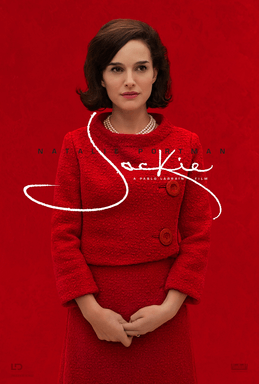
    A few years ago a friend of mine associated with the movie business sent me a very early draft of the film Jackie. Noah Oppenheim’s script was first scheduled as an HBO miniseries, with Steve Spielberg set to produce. But Spielberg then left the project. At the time I read the screenplay, Darren Aronofsky was attached to it as director. And at that time, his girlfriend Rachel Weisz was supposed to play Jacqueline Kennedy. When I got done reading the script my friend asked me what I thought of it. I said, not very much, it seemed kind of dull to me. But I told him I thought it would get made because an A list actress would do it just to get an Academy Award nomination.

    In the six-year journey from first draft to completed film, Wiesz and Aronofksy split up and she dropped out as lead actress. Aronofsky eventually dropped out as director. But he stayed on as a producer. And it is probably through him that Natalie Portman was brought in to play the lead. They were quite familiar with each other since he directed her in her Oscar winning role in Black Swan.

    The film essentially deals with the four days from November 22-25, 1963. John Reed called his book about the Russian Revolution Ten Days that Shook the World. This film depicts four days that shook the world. But since the picture is so narrowly focused on seeing those events through President Kennedy’s widow’s eyes, the full impact of those tumultuous days is never approximated, let alone felt. For instance, we get scenes with Jackie Kennedy talking to an expert on the Lincoln assassination memorial service since she wants to model her husband’s funeral on that event.

    WHTour1962
    Jackie Kennedy during filming
    of White House tour (1962)

    To my knowledge, Jackie Kennedy did three long interviews after the assassination concerning that event and her marriage. The interviewing authors were Arthur Schlesinger, William Manchester, and Teddy White. This film’s overall structure is based upon the long interview Jackie did with Teddy White for Life magazine after the assassination. (Although, to the best of my memory, in the draft of the script I saw, the interview was with Arthur Schlesinger.) There are numerous flashbacks from this interview, which takes place in Hyannis Port. The main flashback is to Jackie’s famous tour of the White House. This was a TV special, initially broadcast on CBS, and NBC on Valentine’s Day of 1962. The program was a milestone in that no First Lady had ever done anything like this before. Also, it was the first time America ever got a long look at the interior of the White House, which JFK solicited two million dollars in private donations for restoration in 1961. The CBS correspondent for the program was Charles Collingwood. The show was viewed by a domestic audience of 80 million, and was eventually broadcast in 50 countries.

    There are other flashbacks; for instance to the actual assassination of President Kennedy, the swearing in of Lyndon Johnson, and some Kennedy cultural/musical programs in the White House. But besides the White House tour, the other main flashback frame consists of the preparations for Kennedy’s funeral.

    LBJ at JFK casket
    LBJ at JFK casket
    in Capitol Rotunda

    After Kennedy’s body was placed in the East Room of the White House, his funeral became a two part public event, taking place on November 24 and 25. On Sunday the 24th, the casket was placed in the rotunda of the Capitol building. Hundreds of thousands lined up to pay their respects. This viewing was scheduled to close at 9 PM, but because of the huge lines of people waiting outside, it was extended into, first, the wee hours of the morning, and then well past dawn of the next day. The actual state funeral was held on the 25th. Over ninety heads of state flew in for the mass at St. Matthew’s Cathedral and then the final procession to Arlington National Cemetery. The heads of state included French president Charles DeGaulle, Canadian Prime Minister Lester Pearson and Ethiopian Emperor Haile Selassie. President Lyndon Johnson also attended, even though many in government worried about a possible assassination attempt. Approximately a million spectators lined this route.

    A bit more than a week later, on December 5, 1963 the two deceased Kennedy children were reburied with their father. These were Patrick, who had predeceased JFK by 15 weeks, and an unnamed stillborn daughter. The film specifically mentions this fact. The picture ends with Jackie and her children on the beach, and her remembrances of dancing with Bobby and Jack at the White House.

    As I recall that early draft by Oppenheim, it suffered from a lack of any real gripping drama. Depicting an interview with a journalist and then recalling a funeral and a White House tour does not make for a lot of wide-screen drama or visual dynamics.  Especially when millions of us have already seen both the funeral and the White House tour. Further, both are available on YouTube. The main conflict the early draft depicted was between the widow and LBJ’s assistant Jack Valenti and Lyndon Johnson himself. These concerned her control over the funeral and also how long she was going to stay at the White House after it was over. Although Oppenheim has said he did not change the screenplay very much in the ensuing drafts, I am not sure this is accurate. It appears to me that the final director, Pablo Lorrain, wanted to jab up interest in what was intended as and was better suited for a small screen TV project.

    To use one example, in watching the film, one would think that, out of the blue, in a moment of divine inspiration, it was Jackie Kennedy who was responsible for choosing the eventual burial site for JFK at Arlington National Cemetery. It is true that she made the decision to not bury John Kennedy in his home city of Brookline, Massachusetts. But first, Sargent Shriver, Kennedy’s brother–in-law and Peace Corps Director, and then both Secretary of Defense Robert McNamara and Attorney General Bobby Kennedy had much more to do with the choice of the ultimate burial site at Arlington than the film depicts. (Click here for details.)

    And although Jackie did have a lot to do with the funeral arrangements, she was not by any means the only person involved in them. Again, RFK and McNamara, and the Pentagon were involved with these arrangements – the last since there were enormous security worries about another assassination attempt, the two most considered targets being LBJ and, as the film, depicts, Charles DeGaulle. But in watching this film, all Bobby Kennedy does is recall certain things about this brother and his legacy, and tries to keep the murder of Oswald from the grieving widow.

    JackieClintRavello
    Jackie Kennedy & Clint Hill
    Ravello, Italy (1962)
    (credit: Lisa McCubbin)

    But if that were not enough, there is also a scene where Jackie calls in Secret Service agent Clint Hill to see her, to congratulate him for his attempt to protect her during the fusillade. And she tells him she wants to talk to the accused assassin Oswald. In all the years I had researched the JFK case, I had never read anything like this scene happening. But I was not an expert on the Clint Hill/Jackie Kennedy relationship. So I consulted with Secret Service authority Vince Palamara. After exchanging emails with him, he said he did not recall this scene being related in any of the books Hill has written or co-written. And certainly not a request to talk to Oswald. Also, since Hill had been assigned to the First Lady from right after the 1961 inauguration, the formality and rigid cordiality shown in this scene would very likely not have existed. Further, the film tries to convey the impression that Hill rode on the trunk of the limousine all the way to Parkland. Again, according to Palamara, this is not accurate. He eventually snuggled into the back seat. And beyond that, there is even a scene where Jackie tries to walk into the autopsy room but she is turned away. My understanding was that the Kennedy entourage waited in a room on one of the upper floors of the Bethesda Medical Center. But again, I decided to consult with Palamara, and he said this did not happen.

    There are further jarring lapses with the record. Near the beginning of the film, when LBJ is about to be sworn in on Air Force One after the assassination, Jackie is depicted in the bathroom, wiping oodles of blood off of her face before the ceremony. Again, I can remember no photo or witness testimony to this happening. Just as I can recall no photo or film depicting her with lots of blood on her face due to the assassination. And in case that particular blood motif is not enough for you, there is a scene when she arrives back at the White House and takes a shower. Director Lorrain shoots it from behind, and we see water tinged in pink pouring down her back. Does this mean her hair was also saturated with her husband’s blood?

    Towards the end Jackie makes a comment to the interviewer that JFK was not really with her the night before the assassination in Fort Worth. Again, this puzzled me. According to William Manchester’s book, The Death of a President, the couple was in their suite by about 9 PM that evening. And that information had to have been at least partly provided by Jackie Kennedy. (Manchester, p. 87)

    So again, as I asked with Steven Spielberg’s Bridge of Spies about the Rudolf Abel/Gary Powers spy exchange: Where are the History Idolators? That is, those commentators who jump out of their chairs and onto the newspaper pages whenever Oliver Stone makes a controversial historical film. Their sole purpose is to bash him for using an excess of dramatic license. Yet again, in this particular case, I have seen next to no objections about the Oppenheim/Lorrain use of the same devices. Why? I will keep on posing this question until someone gives me a formal answer. (Click here for the Bridge of Spies review.)

    As for the film itself, the first thing we see is a tracking shot of Jackie walking back from outside to the house in Hyannis Port as the interviewer arrives. From that instant I had doubts about Lorrain’s ability to control the material. That kind of Kurosawa/Bergman camera strophe was too heavy for an opening shot of a film like this, or for the simple movement of Jackie walking back to begin an interview. Lorrain then slams close up after close up at us during the actual interview itself. Which made the scene play like an inquisition, when, in fact, the content of the interview is not like that at all.

    But even more surprising was the lack of rigor Lorrain showed with his cast. Billy Crudup plays White. It is an uphill part since it is all done in reaction. It has to be worked out in patterns of facial response, and through the eyes. It’s the kind of subtlety that the late Oskar Werner excelled at. Crudup is nothing more than adequate. Peter Sarsgaard is Bobby Kennedy. Sarsgaard has given some interesting performances in the past, for example in Shattered Glass and The Dying Gaul. Which makes it hard to comprehend how undistinguished, how pallid he is as RFK. If you can recall how memorable and precise Donald Moffat was as Lyndon Johnson in Philip Kaufman’s The Right Stuff, then you will see how much is missing from John Carrol Lynch’s rendition of LBJ here. Even good British actors like John Hurt as a priest Jackie confides in and Richard Grant as William Walton do little more than read their lines and collect their paychecks.  The one qualitative exception in the supporting cast is Casper Phillipson.  This Danish actor is spot-on as President Kennedy.  So much so that I wish he had been in the film more.  He gives his rare and brief scenes some much needed vitality.

    There has been a kind of combination media/industry networking effort to promote the idea that Natalie Portman should rank with Betty Davis and Greta Garbo for her acting in the title role. To me, it was a pretty monochromatic performance. Portman looked at a lot of film in order to capture the subject’s voice. And she noticed that there was a difference between the one that Jackie used for the White House tour and that which she used in more personal interviews. She then grieves and weeps a lot throughout. The part, as perceived by the writer, is so limited that the performance seems to be pretty much technical in nature. Portman spends so much effort in perfecting the surface, that there is not much left to actually articulate a character. There isn’t anything here that a dozen other actresses could not have done, either as well or better.

    All in all, it was a flat and disappointing film. Whoever decided that this script needed to be played out on the wide screen of a darkened theater was simply wrong. It seems that the writer and director realized that mistake on the way to production. As noted above, they then tried to justify that decision. In this reviewer’s opinion, it did not work. What is left is little more than an Oscar vehicle for Portman. And considering the subject, that should not have been the case.

  • Jackie

    Jackie


    A few years ago a friend of mine associated with the movie business sent me a very early draft of the film Jackie. Noah Oppenheim’s script was first scheduled as an HBO miniseries, with Steve Spielberg set to produce. But Spielberg then left the project. At the time I read the screenplay, Darren Aronofsky was attached to it as director. And at that time, his girlfriend Rachel Weisz was supposed to play Jacqueline Kennedy. When I got done reading the script my friend asked me what I thought of it. I said, not very much, it seemed kind of dull to me. But I told him I thought it would get made because an A list actress would do it just to get an Academy Award nomination.

    In the six-year journey from first draft to completed film, Wiesz and Aronofksy split up and she dropped out as lead actress. Aronofsky eventually dropped out as director. But he stayed on as a producer. And it is probably through him that Natalie Portman was brought in to play the lead. They were quite familiar with each other since he directed her in her Oscar winning role in Black Swan.

    The film essentially deals with the four days from November 22-25, 1963. John Reed called his book about the Russian Revolution Ten Days that Shook the World. This film depicts four days that shook the world. But since the picture is so narrowly focused on seeing those events through President Kennedy’s widow’s eyes, the full impact of those tumultuous days is never approximated, let alone felt. For instance, we get scenes with Jackie Kennedy talking to an expert on the Lincoln assassination memorial service since she wants to model her husband’s funeral on that event.

    WHTour1962
    Jackie Kennedy during filming
    of White House tour (1962)

    To my knowledge, Jackie Kennedy did three long interviews after the assassination concerning that event and her marriage. The interviewing authors were Arthur Schlesinger, William Manchester, and Teddy White. This film’s overall structure is based upon the long interview Jackie did with Teddy White for Life magazine after the assassination. (Although, to the best of my memory, in the draft of the script I saw, the interview was with Arthur Schlesinger.) There are numerous flashbacks from this interview, which takes place in Hyannis Port. The main flashback is to Jackie’s famous tour of the White House. This was a TV special, initially broadcast on CBS, and NBC on Valentine’s Day of 1962. The program was a milestone in that no First Lady had ever done anything like this before. Also, it was the first time America ever got a long look at the interior of the White House, which JFK solicited two million dollars in private donations for restoration in 1961. The CBS correspondent for the program was Charles Collingwood. The show was viewed by a domestic audience of 80 million, and was eventually broadcast in 50 countries.

    There are other flashbacks; for instance to the actual assassination of President Kennedy, the swearing in of Lyndon Johnson, and some Kennedy cultural/musical programs in the White House. But besides the White House tour, the other main flashback frame consists of the preparations for Kennedy’s funeral.

    LBJ at JFK casket
    LBJ at JFK casket
    in Capitol Rotunda

    After Kennedy’s body was placed in the East Room of the White House, his funeral became a two part public event, taking place on November 24 and 25. On Sunday the 24th, the casket was placed in the rotunda of the Capitol building. Hundreds of thousands lined up to pay their respects. This viewing was scheduled to close at 9 PM, but because of the huge lines of people waiting outside, it was extended into, first, the wee hours of the morning, and then well past dawn of the next day. The actual state funeral was held on the 25th. Over ninety heads of state flew in for the mass at St. Matthew’s Cathedral and then the final procession to Arlington National Cemetery. The heads of state included French president Charles DeGaulle, Canadian Prime Minister Lester Pearson and Ethiopian Emperor Haile Selassie. President Lyndon Johnson also attended, even though many in government worried about a possible assassination attempt. Approximately a million spectators lined this route.

    A bit more than a week later, on December 5, 1963 the two deceased Kennedy children were reburied with their father. These were Patrick, who had predeceased JFK by 15 weeks, and an unnamed stillborn daughter. The film specifically mentions this fact. The picture ends with Jackie and her children on the beach, and her remembrances of dancing with Bobby and Jack at the White House.

    As I recall that early draft by Oppenheim, it suffered from a lack of any real gripping drama. Depicting an interview with a journalist and then recalling a funeral and a White House tour does not make for a lot of wide-screen drama or visual dynamics.  Especially when millions of us have already seen both the funeral and the White House tour. Further, both are available on YouTube. The main conflict the early draft depicted was between the widow and LBJ’s assistant Jack Valenti and Lyndon Johnson himself. These concerned her control over the funeral and also how long she was going to stay at the White House after it was over. Although Oppenheim has said he did not change the screenplay very much in the ensuing drafts, I am not sure this is accurate. It appears to me that the final director, Pablo Lorrain, wanted to jab up interest in what was intended as and was better suited for a small screen TV project.

    To use one example, in watching the film, one would think that, out of the blue, in a moment of divine inspiration, it was Jackie Kennedy who was responsible for choosing the eventual burial site for JFK at Arlington National Cemetery. It is true that she made the decision to not bury John Kennedy in his home city of Brookline, Massachusetts. But first, Sargent Shriver, Kennedy’s brother–in-law and Peace Corps Director, and then both Secretary of Defense Robert McNamara and Attorney General Bobby Kennedy had much more to do with the choice of the ultimate burial site at Arlington than the film depicts. (Click here for details.)

    And although Jackie did have a lot to do with the funeral arrangements, she was not by any means the only person involved in them. Again, RFK and McNamara, and the Pentagon were involved with these arrangements – the last since there were enormous security worries about another assassination attempt, the two most considered targets being LBJ and, as the film, depicts, Charles DeGaulle. But in watching this film, all Bobby Kennedy does is recall certain things about this brother and his legacy, and tries to keep the murder of Oswald from the grieving widow.

    JackieClintRavello
    Jackie Kennedy & Clint Hill
    Ravello, Italy (1962)
    (credit: Lisa McCubbin)

    But if that were not enough, there is also a scene where Jackie calls in Secret Service agent Clint Hill to see her, to congratulate him for his attempt to protect her during the fusillade. And she tells him she wants to talk to the accused assassin Oswald. In all the years I had researched the JFK case, I had never read anything like this scene happening. But I was not an expert on the Clint Hill/Jackie Kennedy relationship. So I consulted with Secret Service authority Vince Palamara. After exchanging emails with him, he said he did not recall this scene being related in any of the books Hill has written or co-written. And certainly not a request to talk to Oswald. Also, since Hill had been assigned to the First Lady from right after the 1961 inauguration, the formality and rigid cordiality shown in this scene would very likely not have existed. Further, the film tries to convey the impression that Hill rode on the trunk of the limousine all the way to Parkland. Again, according to Palamara, this is not accurate. He eventually snuggled into the back seat. And beyond that, there is even a scene where Jackie tries to walk into the autopsy room but she is turned away. My understanding was that the Kennedy entourage waited in a room on one of the upper floors of the Bethesda Medical Center. But again, I decided to consult with Palamara, and he said this did not happen.

    There are further jarring lapses with the record. Near the beginning of the film, when LBJ is about to be sworn in on Air Force One after the assassination, Jackie is depicted in the bathroom, wiping oodles of blood off of her face before the ceremony. Again, I can remember no photo or witness testimony to this happening. Just as I can recall no photo or film depicting her with lots of blood on her face due to the assassination. And in case that particular blood motif is not enough for you, there is a scene when she arrives back at the White House and takes a shower. Director Lorrain shoots it from behind, and we see water tinged in pink pouring down her back. Does this mean her hair was also saturated with her husband’s blood?

    Towards the end Jackie makes a comment to the interviewer that JFK was not really with her the night before the assassination in Fort Worth. Again, this puzzled me. According to William Manchester’s book, The Death of a President, the couple was in their suite by about 9 PM that evening. And that information had to have been at least partly provided by Jackie Kennedy. (Manchester, p. 87)

    So again, as I asked with Steven Spielberg’s Bridge of Spies about the Rudolf Abel/Gary Powers spy exchange: Where are the History Idolators? That is, those commentators who jump out of their chairs and onto the newspaper pages whenever Oliver Stone makes a controversial historical film. Their sole purpose is to bash him for using an excess of dramatic license. Yet again, in this particular case, I have seen next to no objections about the Oppenheim/Lorrain use of the same devices. Why? I will keep on posing this question until someone gives me a formal answer. (Click here for the Bridge of Spies review.)

    As for the film itself, the first thing we see is a tracking shot of Jackie walking back from outside to the house in Hyannis Port as the interviewer arrives. From that instant I had doubts about Lorrain’s ability to control the material. That kind of Kurosawa/Bergman camera strophe was too heavy for an opening shot of a film like this, or for the simple movement of Jackie walking back to begin an interview. Lorrain then slams close up after close up at us during the actual interview itself. Which made the scene play like an inquisition, when, in fact, the content of the interview is not like that at all.

    But even more surprising was the lack of rigor Lorrain showed with his cast. Billy Crudup plays White. It is an uphill part since it is all done in reaction. It has to be worked out in patterns of facial response, and through the eyes. It’s the kind of subtlety that the late Oskar Werner excelled at. Crudup is nothing more than adequate. Peter Sarsgaard is Bobby Kennedy. Sarsgaard has given some interesting performances in the past, for example in Shattered Glass and The Dying Gaul. Which makes it hard to comprehend how undistinguished, how pallid he is as RFK. If you can recall how memorable and precise Donald Moffat was as Lyndon Johnson in Philip Kaufman’s The Right Stuff, then you will see how much is missing from John Carrol Lynch’s rendition of LBJ here. Even good British actors like John Hurt as a priest Jackie confides in and Richard Grant as William Walton do little more than read their lines and collect their paychecks.  The one qualitative exception in the supporting cast is Casper Phillipson.  This Danish actor is spot-on as President Kennedy.  So much so that I wish he had been in the film more.  He gives his rare and brief scenes some much needed vitality.

    There has been a kind of combination media/industry networking effort to promote the idea that Natalie Portman should rank with Betty Davis and Greta Garbo for her acting in the title role. To me, it was a pretty monochromatic performance. Portman looked at a lot of film in order to capture the subject’s voice. And she noticed that there was a difference between the one that Jackie used for the White House tour and that which she used in more personal interviews. She then grieves and weeps a lot throughout. The part, as perceived by the writer, is so limited that the performance seems to be pretty much technical in nature. Portman spends so much effort in perfecting the surface, that there is not much left to actually articulate a character. There isn’t anything here that a dozen other actresses could not have done, either as well or better.

    All in all, it was a flat and disappointing film. Whoever decided that this script needed to be played out on the wide screen of a darkened theater was simply wrong. It seems that the writer and director realized that mistake on the way to production. As noted above, they then tried to justify that decision. In this reviewer’s opinion, it did not work. What is left is little more than an Oscar vehicle for Portman. And considering the subject, that should not have been the case.

  • Rules Don’t Apply

    Rules Don’t Apply


    For many years Warren Beatty had wanted to do a movie about Howard Hughes. According to various reports, he had dallied with the idea since the seventies. Because Beatty has produced and directed some distinguished films, most of us who heard about this project had some high expectations for it. An accomplished and intelligent Hollywood film-maker was going to take on a fascinating and complex American historical figure, about whom much mystery and fascination have existed. In fact, one could argue that Hughes was the most famous and controversial American billionaire before Donald Trump. Except he was much richer than Trump. To give one example: when Hughes Aircraft was auctioned off in 1985—about a decade after Hughes’s death—it sold for $5.2 billion.

    Trump, early in his career, actually thought of going into the movie business. He then optioned for real estate. Hughes actually did go into the movie business for about a twenty-year period. After that, he became a major real estate investor in the Las Vegas area. As Trump did in Atlantic City, Hughes purchased several hotel-casinos.

    CIA counterintel tsar
    James Angleton

    But in many ways, Hughes’ life and career is much more interesting, complex, and puzzling than Trump’s. In fact, the last part of Hughes’ life is so mysterious that, to this day—over forty years after his death—writers are still trying to figure out the last ten years of it. All one needs to know as to why the mystery exists is this little known fact: Although there is no evidence that Hughes actually met James Angleton, the legendary CIA counter-intelligence chief attended Hughes’ funeral.

    Robert Maheu in Las Vegas

    CIA agent Robert Maheu—who ran Hughes’ Nevada holdings for four years—once said about him that Hughes wanted to “set himself into an alliance with the CIA that would protect him from investigation by government agencies.” (Playboy, September , 1976, “The Puppet and the Puppetmasters”, by Laurence Gonzales and Larry DuBois) After Maheu was unceremoniously expelled from his position as Hughes’ manager in Nevada at the end of 1970, the CIA found a way to mitigate Hughes’ fear about government inquiries. They secretly contracted out with Hughes for something called Project Jennifer. This was a top secret operation that was budgeted at about $350 million. The idea was to build a huge salvage ship that would surface a sunken Russian submarine in the Pacific about 700 miles from Hawaii. At that time, it was one of the largest contracts for a single national security item the CIA had ever extended. This, of course, allowed the Agency to plant agents inside the company.

    But this was only a rather small part of the cross-pollination of Hughes companies with the CIA. On April 1, 1975, The Washington Post reported that “Hughes Aircraft had been mentioned as a potential hotbed of interrelationships with the CIA.” For the simple reason that “Hughes gravitated into areas that other people refused to go into or didn’t believe in.” (op. cit. DuBois and Gonzales) This allowed the CIA to negotiate with Hughes for many of their black budget items. Time magazine once reported that, in the last ten years of his life, the CIA had contracted out about six billion dollars worth of this kind of work to Hughes. This is why, as more than one investigator has noted, at times it was difficult to know where the Hughes empire ended and the CIA began.

    This problem did not just exist with Hughes Aircraft, but also with Hughes Tool Company, whose chief asset was an oil drill bit which cracked through rock in record time. This device was invented by Hughes’ father, but he refused to market it, preferring to patent and then lease it. It was a sensational success, both nationally and internationally. As one source revealed, the information garnered from these leases became an important part of the Hughes/CIA relationship because of the Agency’s interest in resource-recovery information. Other countries could not keep the true value of their petroleum resources secret anymore. (ibid)

    Bebe Rebozo with Nixon

    Even Hughes Medical Institute was not immune to this melding of interests. HMI was originally set up in 1953 in Florida with much fanfare. Hughes announced it would be a great research institute that would benefit all mankind. In reality, it was a tax dodge scheme. Much of the profits from Hughes Aircraft were funneled through HMI. Now Hughes would not have to pay taxes on them since HMI was designed as a tax exempt charity, with Hughes as the sole trustee. But by the late sixties, as Hughes became more eccentric, incapacitated, and cut off from the outside world, and as his interests became entwined with the Agency, there were reports that HMI became a CIA front. One Pentagon official told Time words to that effect. When, on instructions from Hughes, employee John Meier went on a visit to HMI in 1969, he learned the same thing from HMI president Ken Wright. He also learned that Wright was siphoning off money to Richard Nixon’s close friend Bebe Rebozo. (Lisa Pease, “Howard Hughes, John Meier, Don Nixon and the CIA”, Probe Magazine, January-February 1996) All these instances, and more, explain why Angleton was quite appreciative of the opportunities Hughes gave the Agency to extend its reach and power.  In fact, the role of Hughes with the Agency was joked about in the halls of Langley. There, they referred to Hughes as “The Stockholder”. (Jim Hougan, Spooks, p. 259)

    We should add one more notable point about this particular issue. Most commentators seem to agree that a central crossroads in Hughes’ life and career was a mysterious journey that he made to Boston in 1966. While in Boston, he stayed at the Ritz-Carlton. But he also visited a hospital whose physician in chief was George Thorn, a director of Hughes Medical Institute. (Howard Hughes: His Life and Madness, by Donald Bartlett and James Steele, p. 276) To this day, no one knows the purpose of this trip, why Hughes was in the hospital, or what was done to him there. But in addition to Thorn’s presence, the security for the Boston journey was arranged by CIA agent Robert Maheu. (ibid, p. 275) It was after this that Hughes made the decision to move his empire to Nevada, and he also went into a state of near hibernation. He moved into the top floor of the Desert Inn hotel and began to inject himself with large liquid doses of codeine and Valium.

    Hughes parade after his
    around-the-world flight (1938)

    In addition to all the above intrigue, Hughes was a movie producer and director for a period of about twenty years. After he lost interest in films, he still ran the RKO studio as a kind of absentee owner until the fifties, when he sold it. He was a record-breaking airplane pilot. In 1935, piloting a plane he himself commissioned, he easily smashed the prevailing air speed record. In 1936 and 1937, he set four consecutive records for transcontinental flight times. (Bartlett and Steele, pp. 82-87) In 1938 Hughes cut Charles Lindbergh’s flight time from New York to Paris in half. That same year, as part of the same flight, Hughes did the same with the late Wally Post’s round the world flight. (ibid, pp. 94-97) For that achievement Hughes and his four-man crew received a ticker tape parade down Broadway that rivaled Lindbergh’s.

    Donald Nixon’s diner

    Then there was Hughes’ relationship with Richard Nixon. The Internal Revenue Service recognized that Hughes had set up a tax scam with HMI, and refused to give the so-called medical center the necessary tax exemption. So Hughes did what he became famous for: he found a way to grease a politician’s palm. Except, in this case, it was the politician’s brother. Donald Nixon was having problems with a business enterprise called Nixonburgers—a combination fast food venture and shopping center. He was tendered a loan for over two hundred thousand dollars—well over a million today. The loan came from Hughes. It was extended in December of 1956, a month after the presidential election in which President Dwight Eisenhower and Vice-President Richard Nixon were re-elected. The loan was secured by a plot of land in Whittier, California—except the lot was worth, at most, about $50,000. Once the transaction was completed, Hughes headquarters in Hollywood notified the Vice-President all was in place for his brother Donald. (ibid, p. 204) That phone call was made in February of 1957. On March 1st, the IRS reversed its decision about Hughes Medical Center: the tax dodge scheme was now made legal.


    Actress Jean Peters
    Hughes & Noah Dietrich

    In the late fifties, Hughes began to struggle with his personal demons and galloping eccentricities. One of America’s richest and most powerful men called an old friend in Texas and told him he had ruined his life beyond repair. (ibid, p. 225) For instance, his marriage to actress Jean Peters in 1957 seems to have been a marriage of convenience. Hughes thought that his long time employee, Noah Dietrich, was plotting to have him declared incompetent so as to appoint a conservator over his affairs. Once married, this could not be done unless Peters approved it. (Beatty refers to this aspect more than once in his film) So, after 32 years, Hughes ended up firing Dietrich. There was reason for Hughes to fear such a coup. For example, when once facing a financial crisis with TWA, he lived and worked out of a screening room in West Hollywood for months. (ibid, p. 231) Unlike the depiction in the Martin Scorsese/Leonardo DiCaprio film, The Aviator, it appears it was at this time that he began to act bizarrely: walking around nude, spending hours in the bathroom, refusing to touch doorknobs etc. He also became addicted to drugs, e.g., painkillers like codeine and sedatives like Valium.

    The TWA Constellation,
    which Hughes requested
    Lockheed to build

    After losing control of TWA in 1965, Hughes decided to sell his stock in that company. That transaction, worth well over a half billion dollars, was one of the largest single stock sales in history up to that time. To lower his taxes, he then decided to move to Las Vegas. He promptly purchased both the Desert Inn and the Sands hotel casinos in 1967. Shortly after, he purchased the Castaways, the Landmark, and the Frontier hotels plus the Silver Slipper casino. He also bought a local TV station. As with his Nixon bribe, he then assigned a lawyer on his staff to run envelopes full of cash to scores of politicians in the state, both Democrats and Republicans. (ibid, p. 344) Hughes had designs on buying every major hotel-casino on the Las Vegas Strip, and then extending his empire north to Reno and Lake Tahoe. For all intents and purposes, he was going to own Nevada.

    The Desert Inn (1967)

    He made one mistake. He had moved too far too fast. He had Nevada pretty much sewn up; even Governor Paul Laxalt was in his corner. (ibid, p. 307) But after the TWA stock sale he was now billed as the richest man in America. And he now seemed intent on using that money to buy Las Vegas. When word leaked out he was going to buy the Stardust, the Justice Department stepped in: If that sale was announced they would file suit on anti-monopoly grounds. This was anathema to Hughes, because it would necessitate him appearing in court—which he would never do.

    Once his plans to take over the state were neutralized, Hughes’ life entered its final, almost surreal chapter. It is so strange, so fantastic, that it has generated a surfeit of controversy. In 1970, Jean Peters began divorce proceedings against Hughes. His behavior now began to get even more bizarre: for instance, he began to urinate into glass bottles and then cap them. (ibid, p. 426) Rumors of a palace coup based on declaring Hughes incompetent again began to swirl. This time they were spread by Maheu about Bill Gay, the head of Hughes operations in Los Angeles. Hughes now moved out of his penthouse at the Desert Inn and, for no apparent reason, relocated to Paradise Island in the Bahamas. He then moved from the Bahamas to Nicaragua, to London, to Vancouver, to Acapulco. Hughes reportedly passed away in Mexico and his body was flown to his hometown of Houston in April of 1976.

    With the size, scope and drama of this kind of life and career, the subject of Hughes has provoked dozens of essays, books, and even novels; for example, Harold Robbins’ pulp novel, The Carpetbaggers, which was later made into a movie. Much of this output was generated after he passed away. In addition to more than one full length biography, there have been books devoted solely to Hughes’ actions in Hollywood, or in Las Vegas. There have been four films I know of that have dealt with Hughes either as the major character or a supporting figure. Jonathan Demme’s 1980 film Melvin and Howard deals with the much questioned incident between Hughes and one Melvin Dummar, who claimed to have picked up Hughes on a highway in Nevada and driven him to the Desert Inn. Years later, a Hughes will was discovered in a Mormon church in Salt Lake City. It left Dummar $150 million. But in 1978, a jury declared that the will was invalid.

    To my knowledge, there have been two films made strictly about Hughes. In 1977 Tommy Lee Jones starred in a four-hour television mini-series entitled The Amazing Howard Hughes, which was based upon Noah Dietrich’s 1972 book. This is the only film I know that tries to trace the entire arc of Hughes’ adult life. In 2004, Martin Scorsese directed The Aviator starring Leonardo DiCaprio as Hughes. This film was a hundred million dollar super production that concentrated on Hughes in Hollywood. It made liberal use of dramatic license. Especially near the end where it portrayed the extreme symptoms of Hughes’ dementia about ten years earlier than they actually occurred—and impacting events they did not impact.

    The Hoax (2006)

    In 2006, Lasse Hallstrom directed Richard Gere as author Clifford Irving in The Hoax. That film depicts the episode where Irving attempts to pass off a manuscript he wrote about Hughes as being based upon hundreds of hours of private interviews he did with the reclusive billionaire. Irving sold the book to McGraw-Hill for over $700,000. The publisher did not go far enough in testing Irving or the manuscript, for Irving had never even met Hughes, let alone interviewed him. He had procured the manuscript of the Dietrich book and used that for much of his work. The caper later unraveled when it was discovered that Irving’s wife had deposited checks the publisher made out for Hughes into her personal bank account in Switzerland.

    Warren Beatty’s current Hughes film begins with a fictionalized version of the Irving affair. In reality, Hughes made his famous phone call contesting the book from the Bahamas to a Hollywood sound stage at Universal Studios. The much ballyhooed event was televised live. Hughes had issued a press release saying he had nothing to do with the Irving manuscript, which had generated significant publicity well before it was printed. Therefore seven reporters had gathered on stage, along with an eighth person who was a Hughes PR official. The reporters—like James Bacon and Vernon Scott—had all covered Hughes extensively. They were there to hear the man’s voice and ask him questions about his past that he should have been able to recall. And they would use these to see if it was really Hughes on the line and to measure his denials about the book. Considering the fact he was under the high dosages of Valium and codeine injected into his body via syringe, Hughes did fairly well. But there were still certain questions that he could not answer, and these left malingering questions about the book. Those were later dashed by the discovery of the spouse’s foreign bank deposits.

    Beatty’s film, entitled Rules Don’t Apply, fictionalizes the phone call. It treats it as a complete triumph. It subtitles the scene as taking place in 1964 and the call being from Acapulco. Also, the purported autobiography has now become a novel which claims Hughes has amnesia and cannot recall the last five years of his life. From here, the film flashes backwards in time to the very end of Hughes’ film career to pick up the main body of the story. Towards the end of that part of his life—and for a few years after—Hughes had a curious habit. He had made stars out of relative unknowns Jean Harlow and Jane Russell in, respectively, Hell’s Angels and The Outlaw. From these promotions Hughes apparently thought he had the Midas touch with young starlets. For even though he was not really active in the movie business, he would send employees of his, like Maheu, out as talent scouts to say, a Miss America contest. They would sign up one or two young ladies and Hughes would pay for certain dancing, singing, and drama classes.

    This was a very minor part of Hughes’ career, and most serious biographers deal with it in, perhaps, a page or so. But Beatty has made it the fulcrum of his film. After the movie’s prelude, with Hughes preparing for the live phone call about the ersatz book, he begins the film proper with a mother and daughter arriving in Los Angeles after being signed by a Hughes agent. The mother gets tired of waiting around and tells the daughter Hughes is playing around with her. The mother (played by Beatty’s wife Annette Bening) then leaves.

    Gail Ganley

    The girl that the story concentrates on is named Maria Mabrey. I assume, because of the use of alliteration in the name, that this character was based upon a woman named Gail Ganley. Ganley was a promising singer who was signed by Hughes, given acting classes, and told to keep her deal with Hughes a secret. She was promised $450 a week, plus expenses, and a future contract with Hughes. A driver transported her to her lessons each day in a Hughes auto. She was to keep the arrangement secret from everyone except those in her immediate family. And she was also to hold herself ready for a meeting with Hughes about her career. But as weeks dragged into months, none of what she was promised—the weekly salary, or the Hughes contract—actually materialized. When she complained about the delay she was put off by being told that Hughes was simply too busy at this time to deal with her—but he would in the future. She finally raised such a ruckus that she was told to drive to the Hughes headquarters at 7000 Romaine in Hollywood. She did and, as instructed, she honked her horn three times. On cue, a window flew open from the second floor. A man lowered an envelope with money in it by a string. This action was repeated a couple of times, but Ganley never got her contract. She later sued and received an out of court settlement. This weird ritual then ended. (Bartlett and Steele, pp. 243-44)

    The “Spruce Goose”

    The story progresses through a relationship developed between Mabrey (played by Lily Collins) and her driver, a character named Frank Forbes (Alden Ehrenreich).   Like Ganley, Mabrey begins to complain about the lack of progress with her career. Frank tells her about a plot of land he wants to develop with another Hughes employee named Levar Mathis (Matthew Broderick). Frank , who is engaged, begins to lose interest in his fiancée and gets entangled emotionally with Mabrey. Frank hopes to interest Hughes in his land deal. One night he drives Hughes to see the infamous Spruce Goose in Long Beach. On the way Hughes reminds him that his employees should not be having relationships with each other (hence the film’s title).

    Noah Dietrich (Martin Sheen) tells Hughes that he is beginning to act eccentrically—he is forgetful and repeating phrases. Hughes suspects Dietrich is plotting against him in order to have him declared incompetent. So he fires him and promotes Forbes. Mabrey then meets with Hughes, and in a rather odd scene, she starts crying and drinking, and he then proposes to her. The two get carried away and have sex. This happens while a Wall Street banker is calling Hughes, trying to see him about saving his investment in TWA.

    Mabrey gets pregnant and tells Hughes, who does not believe her and thinks she is out for his money. She and Frank have an argument about Hughes with her saying that her mother was right about him using people. Hughes then says he wants to travel the world, so the film actually does a flash-forward. We see Hughes with Frank and Levar in Nicaragua, and then London—where Hughes pilots a plane. (This really happened and is one of the very last times anyone in the outside world saw Hughes.) While in Nicaragua, Hughes is informed the U.S. government is suing him for $645 million. He is then advised by one of his attorneys that he must sell Hughes Tool Company—founded by his father—to pay for it.

    The film then returns to the phone call. Maria arrives with her son, who wanders around the suite and into Hughes’ bedroom. Hughes does not recognize him. On the phone he tells the reporters he has never met or seen the author of the book. Frank now decides to quit his job. He runs after Maria and the two, including Hughes’ son, leave the eccentric billionaire forever.


    As noted previously, Beatty had contemplated doing a film about Hughes for a long time. Because of that, plus the fact that Beatty has made some distinguished historical films, many had high hopes for this film. Consider his track record in this regard. In 1967 he produced and acted in Bonnie and Clyde, which is both a classic and a milestone in American film history. In 1981 he produced, co-wrote, starred in and directed Reds, a moving chronicle about the life of American journalist John Reed. In 1991, he co-produced and starred in Bugsy, an entertaining and well-acted film about gangster Benjamin Siegel and the creation of Las Vegas. He also starred in The Parallax View in 1974, a tense, taut thriller about the assassinations of the sixties.

    But in the last thirty years, Beatty has only appeared in six films prior to Rules Don’t Apply. And excepting Bugsy, those films have been, at best, non-distinctive—Dick Tracy, Love Affair, Bulworth; at worst, disasters—Ishtar, Town and Country. That record makes one wonder just how interested Beatty is, at age 79, in making films at this stage in his life. Because Rules Don’t Apply seems to me to be rather uninspired for a film that Beatty has contemplated doing for so long. One can excuse all of the rather excessive use of dramatic license if it adds up to something justifiable on its own. But the best one can say about the film’s meaning is that it shows us how two young people finally see that Howard Hughes is an irresponsible scoundrel who, for all his money, is someone they would be better off without. Which is the same message one can get from, say, the film of The Devil Wears Prada.

    As a film, the best one can say is that it is competently made. There was one memorable shot in it. At night, Hughes and Frank are having hamburgers at the Long Beach airport, the camera at a high angle looking down on them. We then reverse the angle and see that they are staring at the colossal Spruce Goose in its hangar. But that’s about it as far as visual creativity and drama go. And I hate to say it, but that lack of creativity extends to Beatty’s performance. Twelve years ago I was not enamored with Leonardo DiCaprio’s performance as Hughes in The Aviator, but at least he tried for the basic outline and design of the man. In Rules Don’t Apply, Hughes does not appear until about twenty minutes into the film. But from the outset, this reviewer was surprised at how superficial Beatty’s acting was. There are several films that survive of Hughes today. Watching those films would be a starting point for any actor. But there seems to me to be very little effort by Beatty to capture any of the vocal inflections or speech patterns of Hughes. And beyond that, there was even less attempt to delineate any of the inner turmoil within the man that finally broke out into dementia in the latter part of the sixties. For me it was a pallid, barely subcutaneous performance from a talented actor who was both vivid and memorable in Bonnie and Clyde, Reds and Bugsy.

    As I said, Beatty has been quite liberal in his use of dramatic license in this film. Even in the past, he has had a tendency to romanticize and glamourize his main characters. As Hughes is waiting for his opening phone call, the subtitle appears that this is taking place in 1964. As I said, the actual phone call took place in 1972. But as I walked out of the theater contemplating the mystery of Beatty’s lackluster performance, I wondered if the date of the call had something to do with his acting. For if Beatty had not fictionalized the call or its timing, then he would have had to present Hughes in a much more extreme state of dementia and emaciation. Evidently, as actor-star, he didn’t want to do that. I can’t really blame him for it. Except for someone as dedicated and meticulous as Robert DeNiro, most major American stars don’t like to present themselves as being that distasteful and unattractive.

    And that seems to me to be a major problem with the film. As outlined above, there are all sorts of intriguing angles about Hughes’ career that can be explored without using dramatic license. With the grand scope of his life, one could actually make a case that Hughes was a tragic character who, as he himself said, screwed up his life at a rather early age. Rules Don’t Apply avoids virtually all those aspects and turns Hughes into your weird Uncle Willie, the relative who got shoved off into a separate room at Christmas. And his film is really a light romantic comedy.

    As I have outlined above, Hughes was a heck of a lot more than that. And the nightmare he lived—touching on the movie business, air travel, the growth of Las Vegas, and the CIA—was a large and fascinating canvas to draw on. Perhaps such a story could only be told through the auspices of a cable channel like HBO, which would give the tale its full airing. Beatty probably should have gone that route. Then he would not have had to reduce this large-scale saga to the status of a fairy tale for adults.

  • Rules Don’t Apply

    Rules Don’t Apply


    For many years Warren Beatty had wanted to do a movie about Howard Hughes. According to various reports, he had dallied with the idea since the seventies. Because Beatty has produced and directed some distinguished films, most of us who heard about this project had some high expectations for it. An accomplished and intelligent Hollywood film-maker was going to take on a fascinating and complex American historical figure, about whom much mystery and fascination have existed. In fact, one could argue that Hughes was the most famous and controversial American billionaire before Donald Trump. Except he was much richer than Trump. To give one example: when Hughes Aircraft was auctioned off in 1985—about a decade after Hughes’s death—it sold for $5.2 billion.

    Trump, early in his career, actually thought of going into the movie business. He then optioned for real estate. Hughes actually did go into the movie business for about a twenty-year period. After that, he became a major real estate investor in the Las Vegas area. As Trump did in Atlantic City, Hughes purchased several hotel-casinos.

    CIA counterintel tsar
    James Angleton

    But in many ways, Hughes’ life and career is much more interesting, complex, and puzzling than Trump’s. In fact, the last part of Hughes’ life is so mysterious that, to this day—over forty years after his death—writers are still trying to figure out the last ten years of it. All one needs to know as to why the mystery exists is this little known fact: Although there is no evidence that Hughes actually met James Angleton, the legendary CIA counter-intelligence chief attended Hughes’ funeral.

    Robert Maheu in Las Vegas

    CIA agent Robert Maheu—who ran Hughes’ Nevada holdings for four years—once said about him that Hughes wanted to “set himself into an alliance with the CIA that would protect him from investigation by government agencies.” (Playboy, September , 1976, “The Puppet and the Puppetmasters”, by Laurence Gonzales and Larry DuBois) After Maheu was unceremoniously expelled from his position as Hughes’ manager in Nevada at the end of 1970, the CIA found a way to mitigate Hughes’ fear about government inquiries. They secretly contracted out with Hughes for something called Project Jennifer. This was a top secret operation that was budgeted at about $350 million. The idea was to build a huge salvage ship that would surface a sunken Russian submarine in the Pacific about 700 miles from Hawaii. At that time, it was one of the largest contracts for a single national security item the CIA had ever extended. This, of course, allowed the Agency to plant agents inside the company.

    But this was only a rather small part of the cross-pollination of Hughes companies with the CIA. On April 1, 1975, The Washington Post reported that “Hughes Aircraft had been mentioned as a potential hotbed of interrelationships with the CIA.” For the simple reason that “Hughes gravitated into areas that other people refused to go into or didn’t believe in.” (op. cit. DuBois and Gonzales) This allowed the CIA to negotiate with Hughes for many of their black budget items. Time magazine once reported that, in the last ten years of his life, the CIA had contracted out about six billion dollars worth of this kind of work to Hughes. This is why, as more than one investigator has noted, at times it was difficult to know where the Hughes empire ended and the CIA began.

    This problem did not just exist with Hughes Aircraft, but also with Hughes Tool Company, whose chief asset was an oil drill bit which cracked through rock in record time. This device was invented by Hughes’ father, but he refused to market it, preferring to patent and then lease it. It was a sensational success, both nationally and internationally. As one source revealed, the information garnered from these leases became an important part of the Hughes/CIA relationship because of the Agency’s interest in resource-recovery information. Other countries could not keep the true value of their petroleum resources secret anymore. (ibid)

    Bebe Rebozo with Nixon

    Even Hughes Medical Institute was not immune to this melding of interests. HMI was originally set up in 1953 in Florida with much fanfare. Hughes announced it would be a great research institute that would benefit all mankind. In reality, it was a tax dodge scheme. Much of the profits from Hughes Aircraft were funneled through HMI. Now Hughes would not have to pay taxes on them since HMI was designed as a tax exempt charity, with Hughes as the sole trustee. But by the late sixties, as Hughes became more eccentric, incapacitated, and cut off from the outside world, and as his interests became entwined with the Agency, there were reports that HMI became a CIA front. One Pentagon official told Time words to that effect. When, on instructions from Hughes, employee John Meier went on a visit to HMI in 1969, he learned the same thing from HMI president Ken Wright. He also learned that Wright was siphoning off money to Richard Nixon’s close friend Bebe Rebozo. (Lisa Pease, “Howard Hughes, John Meier, Don Nixon and the CIA”, Probe Magazine, January-February 1996) All these instances, and more, explain why Angleton was quite appreciative of the opportunities Hughes gave the Agency to extend its reach and power.  In fact, the role of Hughes with the Agency was joked about in the halls of Langley. There, they referred to Hughes as “The Stockholder”. (Jim Hougan, Spooks, p. 259)

    We should add one more notable point about this particular issue. Most commentators seem to agree that a central crossroads in Hughes’ life and career was a mysterious journey that he made to Boston in 1966. While in Boston, he stayed at the Ritz-Carlton. But he also visited a hospital whose physician in chief was George Thorn, a director of Hughes Medical Institute. (Howard Hughes: His Life and Madness, by Donald Bartlett and James Steele, p. 276) To this day, no one knows the purpose of this trip, why Hughes was in the hospital, or what was done to him there. But in addition to Thorn’s presence, the security for the Boston journey was arranged by CIA agent Robert Maheu. (ibid, p. 275) It was after this that Hughes made the decision to move his empire to Nevada, and he also went into a state of near hibernation. He moved into the top floor of the Desert Inn hotel and began to inject himself with large liquid doses of codeine and Valium.

    Hughes parade after his
    around-the-world flight (1938)

    In addition to all the above intrigue, Hughes was a movie producer and director for a period of about twenty years. After he lost interest in films, he still ran the RKO studio as a kind of absentee owner until the fifties, when he sold it. He was a record-breaking airplane pilot. In 1935, piloting a plane he himself commissioned, he easily smashed the prevailing air speed record. In 1936 and 1937, he set four consecutive records for transcontinental flight times. (Bartlett and Steele, pp. 82-87) In 1938 Hughes cut Charles Lindbergh’s flight time from New York to Paris in half. That same year, as part of the same flight, Hughes did the same with the late Wally Post’s round the world flight. (ibid, pp. 94-97) For that achievement Hughes and his four-man crew received a ticker tape parade down Broadway that rivaled Lindbergh’s.

    Donald Nixon’s diner

    Then there was Hughes’ relationship with Richard Nixon. The Internal Revenue Service recognized that Hughes had set up a tax scam with HMI, and refused to give the so-called medical center the necessary tax exemption. So Hughes did what he became famous for: he found a way to grease a politician’s palm. Except, in this case, it was the politician’s brother. Donald Nixon was having problems with a business enterprise called Nixonburgers—a combination fast food venture and shopping center. He was tendered a loan for over two hundred thousand dollars—well over a million today. The loan came from Hughes. It was extended in December of 1956, a month after the presidential election in which President Dwight Eisenhower and Vice-President Richard Nixon were re-elected. The loan was secured by a plot of land in Whittier, California—except the lot was worth, at most, about $50,000. Once the transaction was completed, Hughes headquarters in Hollywood notified the Vice-President all was in place for his brother Donald. (ibid, p. 204) That phone call was made in February of 1957. On March 1st, the IRS reversed its decision about Hughes Medical Center: the tax dodge scheme was now made legal.


    Actress Jean Peters
    Hughes & Noah Dietrich

    In the late fifties, Hughes began to struggle with his personal demons and galloping eccentricities. One of America’s richest and most powerful men called an old friend in Texas and told him he had ruined his life beyond repair. (ibid, p. 225) For instance, his marriage to actress Jean Peters in 1957 seems to have been a marriage of convenience. Hughes thought that his long time employee, Noah Dietrich, was plotting to have him declared incompetent so as to appoint a conservator over his affairs. Once married, this could not be done unless Peters approved it. (Beatty refers to this aspect more than once in his film) So, after 32 years, Hughes ended up firing Dietrich. There was reason for Hughes to fear such a coup. For example, when once facing a financial crisis with TWA, he lived and worked out of a screening room in West Hollywood for months. (ibid, p. 231) Unlike the depiction in the Martin Scorsese/Leonardo DiCaprio film, The Aviator, it appears it was at this time that he began to act bizarrely: walking around nude, spending hours in the bathroom, refusing to touch doorknobs etc. He also became addicted to drugs, e.g., painkillers like codeine and sedatives like Valium.

    The TWA Constellation,
    which Hughes requested
    Lockheed to build

    After losing control of TWA in 1965, Hughes decided to sell his stock in that company. That transaction, worth well over a half billion dollars, was one of the largest single stock sales in history up to that time. To lower his taxes, he then decided to move to Las Vegas. He promptly purchased both the Desert Inn and the Sands hotel casinos in 1967. Shortly after, he purchased the Castaways, the Landmark, and the Frontier hotels plus the Silver Slipper casino. He also bought a local TV station. As with his Nixon bribe, he then assigned a lawyer on his staff to run envelopes full of cash to scores of politicians in the state, both Democrats and Republicans. (ibid, p. 344) Hughes had designs on buying every major hotel-casino on the Las Vegas Strip, and then extending his empire north to Reno and Lake Tahoe. For all intents and purposes, he was going to own Nevada.

    The Desert Inn (1967)

    He made one mistake. He had moved too far too fast. He had Nevada pretty much sewn up; even Governor Paul Laxalt was in his corner. (ibid, p. 307) But after the TWA stock sale he was now billed as the richest man in America. And he now seemed intent on using that money to buy Las Vegas. When word leaked out he was going to buy the Stardust, the Justice Department stepped in: If that sale was announced they would file suit on anti-monopoly grounds. This was anathema to Hughes, because it would necessitate him appearing in court—which he would never do.

    Once his plans to take over the state were neutralized, Hughes’ life entered its final, almost surreal chapter. It is so strange, so fantastic, that it has generated a surfeit of controversy. In 1970, Jean Peters began divorce proceedings against Hughes. His behavior now began to get even more bizarre: for instance, he began to urinate into glass bottles and then cap them. (ibid, p. 426) Rumors of a palace coup based on declaring Hughes incompetent again began to swirl. This time they were spread by Maheu about Bill Gay, the head of Hughes operations in Los Angeles. Hughes now moved out of his penthouse at the Desert Inn and, for no apparent reason, relocated to Paradise Island in the Bahamas. He then moved from the Bahamas to Nicaragua, to London, to Vancouver, to Acapulco. Hughes reportedly passed away in Mexico and his body was flown to his hometown of Houston in April of 1976.

    With the size, scope and drama of this kind of life and career, the subject of Hughes has provoked dozens of essays, books, and even novels; for example, Harold Robbins’ pulp novel, The Carpetbaggers, which was later made into a movie. Much of this output was generated after he passed away. In addition to more than one full length biography, there have been books devoted solely to Hughes’ actions in Hollywood, or in Las Vegas. There have been four films I know of that have dealt with Hughes either as the major character or a supporting figure. Jonathan Demme’s 1980 film Melvin and Howard deals with the much questioned incident between Hughes and one Melvin Dummar, who claimed to have picked up Hughes on a highway in Nevada and driven him to the Desert Inn. Years later, a Hughes will was discovered in a Mormon church in Salt Lake City. It left Dummar $150 million. But in 1978, a jury declared that the will was invalid.

    To my knowledge, there have been two films made strictly about Hughes. In 1977 Tommy Lee Jones starred in a four-hour television mini-series entitled The Amazing Howard Hughes, which was based upon Noah Dietrich’s 1972 book. This is the only film I know that tries to trace the entire arc of Hughes’ adult life. In 2004, Martin Scorsese directed The Aviator starring Leonardo DiCaprio as Hughes. This film was a hundred million dollar super production that concentrated on Hughes in Hollywood. It made liberal use of dramatic license. Especially near the end where it portrayed the extreme symptoms of Hughes’ dementia about ten years earlier than they actually occurred—and impacting events they did not impact.

    The Hoax (2006)

    In 2006, Lasse Hallstrom directed Richard Gere as author Clifford Irving in The Hoax. That film depicts the episode where Irving attempts to pass off a manuscript he wrote about Hughes as being based upon hundreds of hours of private interviews he did with the reclusive billionaire. Irving sold the book to McGraw-Hill for over $700,000. The publisher did not go far enough in testing Irving or the manuscript, for Irving had never even met Hughes, let alone interviewed him. He had procured the manuscript of the Dietrich book and used that for much of his work. The caper later unraveled when it was discovered that Irving’s wife had deposited checks the publisher made out for Hughes into her personal bank account in Switzerland.

    Warren Beatty’s current Hughes film begins with a fictionalized version of the Irving affair. In reality, Hughes made his famous phone call contesting the book from the Bahamas to a Hollywood sound stage at Universal Studios. The much ballyhooed event was televised live. Hughes had issued a press release saying he had nothing to do with the Irving manuscript, which had generated significant publicity well before it was printed. Therefore seven reporters had gathered on stage, along with an eighth person who was a Hughes PR official. The reporters—like James Bacon and Vernon Scott—had all covered Hughes extensively. They were there to hear the man’s voice and ask him questions about his past that he should have been able to recall. And they would use these to see if it was really Hughes on the line and to measure his denials about the book. Considering the fact he was under the high dosages of Valium and codeine injected into his body via syringe, Hughes did fairly well. But there were still certain questions that he could not answer, and these left malingering questions about the book. Those were later dashed by the discovery of the spouse’s foreign bank deposits.

    Beatty’s film, entitled Rules Don’t Apply, fictionalizes the phone call. It treats it as a complete triumph. It subtitles the scene as taking place in 1964 and the call being from Acapulco. Also, the purported autobiography has now become a novel which claims Hughes has amnesia and cannot recall the last five years of his life. From here, the film flashes backwards in time to the very end of Hughes’ film career to pick up the main body of the story. Towards the end of that part of his life—and for a few years after—Hughes had a curious habit. He had made stars out of relative unknowns Jean Harlow and Jane Russell in, respectively, Hell’s Angels and The Outlaw. From these promotions Hughes apparently thought he had the Midas touch with young starlets. For even though he was not really active in the movie business, he would send employees of his, like Maheu, out as talent scouts to say, a Miss America contest. They would sign up one or two young ladies and Hughes would pay for certain dancing, singing, and drama classes.

    This was a very minor part of Hughes’ career, and most serious biographers deal with it in, perhaps, a page or so. But Beatty has made it the fulcrum of his film. After the movie’s prelude, with Hughes preparing for the live phone call about the ersatz book, he begins the film proper with a mother and daughter arriving in Los Angeles after being signed by a Hughes agent. The mother gets tired of waiting around and tells the daughter Hughes is playing around with her. The mother (played by Beatty’s wife Annette Bening) then leaves.

    Gail Ganley

    The girl that the story concentrates on is named Maria Mabrey. I assume, because of the use of alliteration in the name, that this character was based upon a woman named Gail Ganley. Ganley was a promising singer who was signed by Hughes, given acting classes, and told to keep her deal with Hughes a secret. She was promised $450 a week, plus expenses, and a future contract with Hughes. A driver transported her to her lessons each day in a Hughes auto. She was to keep the arrangement secret from everyone except those in her immediate family. And she was also to hold herself ready for a meeting with Hughes about her career. But as weeks dragged into months, none of what she was promised—the weekly salary, or the Hughes contract—actually materialized. When she complained about the delay she was put off by being told that Hughes was simply too busy at this time to deal with her—but he would in the future. She finally raised such a ruckus that she was told to drive to the Hughes headquarters at 7000 Romaine in Hollywood. She did and, as instructed, she honked her horn three times. On cue, a window flew open from the second floor. A man lowered an envelope with money in it by a string. This action was repeated a couple of times, but Ganley never got her contract. She later sued and received an out of court settlement. This weird ritual then ended. (Bartlett and Steele, pp. 243-44)

    The “Spruce Goose”

    The story progresses through a relationship developed between Mabrey (played by Lily Collins) and her driver, a character named Frank Forbes (Alden Ehrenreich).   Like Ganley, Mabrey begins to complain about the lack of progress with her career. Frank tells her about a plot of land he wants to develop with another Hughes employee named Levar Mathis (Matthew Broderick). Frank , who is engaged, begins to lose interest in his fiancée and gets entangled emotionally with Mabrey. Frank hopes to interest Hughes in his land deal. One night he drives Hughes to see the infamous Spruce Goose in Long Beach. On the way Hughes reminds him that his employees should not be having relationships with each other (hence the film’s title).

    Noah Dietrich (Martin Sheen) tells Hughes that he is beginning to act eccentrically—he is forgetful and repeating phrases. Hughes suspects Dietrich is plotting against him in order to have him declared incompetent. So he fires him and promotes Forbes. Mabrey then meets with Hughes, and in a rather odd scene, she starts crying and drinking, and he then proposes to her. The two get carried away and have sex. This happens while a Wall Street banker is calling Hughes, trying to see him about saving his investment in TWA.

    Mabrey gets pregnant and tells Hughes, who does not believe her and thinks she is out for his money. She and Frank have an argument about Hughes with her saying that her mother was right about him using people. Hughes then says he wants to travel the world, so the film actually does a flash-forward. We see Hughes with Frank and Levar in Nicaragua, and then London—where Hughes pilots a plane. (This really happened and is one of the very last times anyone in the outside world saw Hughes.) While in Nicaragua, Hughes is informed the U.S. government is suing him for $645 million. He is then advised by one of his attorneys that he must sell Hughes Tool Company—founded by his father—to pay for it.

    The film then returns to the phone call. Maria arrives with her son, who wanders around the suite and into Hughes’ bedroom. Hughes does not recognize him. On the phone he tells the reporters he has never met or seen the author of the book. Frank now decides to quit his job. He runs after Maria and the two, including Hughes’ son, leave the eccentric billionaire forever.


    As noted previously, Beatty had contemplated doing a film about Hughes for a long time. Because of that, plus the fact that Beatty has made some distinguished historical films, many had high hopes for this film. Consider his track record in this regard. In 1967 he produced and acted in Bonnie and Clyde, which is both a classic and a milestone in American film history. In 1981 he produced, co-wrote, starred in and directed Reds, a moving chronicle about the life of American journalist John Reed. In 1991, he co-produced and starred in Bugsy, an entertaining and well-acted film about gangster Benjamin Siegel and the creation of Las Vegas. He also starred in The Parallax View in 1974, a tense, taut thriller about the assassinations of the sixties.

    But in the last thirty years, Beatty has only appeared in six films prior to Rules Don’t Apply. And excepting Bugsy, those films have been, at best, non-distinctive—Dick Tracy, Love Affair, Bulworth; at worst, disasters—Ishtar, Town and Country. That record makes one wonder just how interested Beatty is, at age 79, in making films at this stage in his life. Because Rules Don’t Apply seems to me to be rather uninspired for a film that Beatty has contemplated doing for so long. One can excuse all of the rather excessive use of dramatic license if it adds up to something justifiable on its own. But the best one can say about the film’s meaning is that it shows us how two young people finally see that Howard Hughes is an irresponsible scoundrel who, for all his money, is someone they would be better off without. Which is the same message one can get from, say, the film of The Devil Wears Prada.

    As a film, the best one can say is that it is competently made. There was one memorable shot in it. At night, Hughes and Frank are having hamburgers at the Long Beach airport, the camera at a high angle looking down on them. We then reverse the angle and see that they are staring at the colossal Spruce Goose in its hangar. But that’s about it as far as visual creativity and drama go. And I hate to say it, but that lack of creativity extends to Beatty’s performance. Twelve years ago I was not enamored with Leonardo DiCaprio’s performance as Hughes in The Aviator, but at least he tried for the basic outline and design of the man. In Rules Don’t Apply, Hughes does not appear until about twenty minutes into the film. But from the outset, this reviewer was surprised at how superficial Beatty’s acting was. There are several films that survive of Hughes today. Watching those films would be a starting point for any actor. But there seems to me to be very little effort by Beatty to capture any of the vocal inflections or speech patterns of Hughes. And beyond that, there was even less attempt to delineate any of the inner turmoil within the man that finally broke out into dementia in the latter part of the sixties. For me it was a pallid, barely subcutaneous performance from a talented actor who was both vivid and memorable in Bonnie and Clyde, Reds and Bugsy.

    As I said, Beatty has been quite liberal in his use of dramatic license in this film. Even in the past, he has had a tendency to romanticize and glamourize his main characters. As Hughes is waiting for his opening phone call, the subtitle appears that this is taking place in 1964. As I said, the actual phone call took place in 1972. But as I walked out of the theater contemplating the mystery of Beatty’s lackluster performance, I wondered if the date of the call had something to do with his acting. For if Beatty had not fictionalized the call or its timing, then he would have had to present Hughes in a much more extreme state of dementia and emaciation. Evidently, as actor-star, he didn’t want to do that. I can’t really blame him for it. Except for someone as dedicated and meticulous as Robert DeNiro, most major American stars don’t like to present themselves as being that distasteful and unattractive.

    And that seems to me to be a major problem with the film. As outlined above, there are all sorts of intriguing angles about Hughes’ career that can be explored without using dramatic license. With the grand scope of his life, one could actually make a case that Hughes was a tragic character who, as he himself said, screwed up his life at a rather early age. Rules Don’t Apply avoids virtually all those aspects and turns Hughes into your weird Uncle Willie, the relative who got shoved off into a separate room at Christmas. And his film is really a light romantic comedy.

    As I have outlined above, Hughes was a heck of a lot more than that. And the nightmare he lived—touching on the movie business, air travel, the growth of Las Vegas, and the CIA—was a large and fascinating canvas to draw on. Perhaps such a story could only be told through the auspices of a cable channel like HBO, which would give the tale its full airing. Beatty probably should have gone that route. Then he would not have had to reduce this large-scale saga to the status of a fairy tale for adults.

  • James DiEugenio, Reclaiming Parkland


    When I first heard that Jim DiEugenio would be turning his ten part review of Vincent Bugliosi’s overblown tome, Reclaiming History, into a book, I was happy to endorse him. Ever since I first discovered DiEugenio’s website CTKA.net, I knew that he was a devoted and honest researcher. Prior to his writing Reclaiming Parkland, DiEugenio completely rewrote the first edition of his 1992 book, Destiny Betrayed. In this reviewer’s opinion, Destiny Betrayed (the second edition) was an exceptionally well written and sourced book. This reviewer can honestly state that after reading Reclaiming Parkland, it is in the same league with DiEugenio’s previous book. However, Reclaiming Parkland. isn’t just a review of Bugliosi’s book. The book is divided into three sections. In section one, the author discusses Bugliosi’s past, from his childhood and career as assistant district attorney of Los Angeles County, to his participation in the utterly shoddy mock trial of Oswald in London. Section two of the book is the author’s very long review of Reclaiming History. In section three of the book, the author mainly discusses the failure of Hollywood heavyweight, Tom Hanks as a true historian, and how much influence the CIA and the Pentagon have today on how Hollywood produces films, and therefore what the American public sees on their movie and TV screens.

    Introduction

    The author begins his book by telling the reader that Bugliosi was once a subscriber to the excellent Probe magazine, which the author edited along with the esteemed Lisa Pease back in the nineties. The author then moves onto explaining how the mainstream media in the United States have praised Bugliosi’s book without reservation,or as the author put it directly in his book;

    Any book that supports the original Warren Commission verdict of Lee Harvey Oswald as the lone assassin of JFK is not going to be roundly criticized in the mainstream media (hereafter referred to as the MSM). (DiEugenio, Introduction).

    One such review which the author uses as an example to demonstrate this point is the review of Reclaiming History, in The Wall Street Journal by journalist Max Holland. As the author explains to the reader, Holland is a vehement defender of the Warren Commission’s conclusion that Lee Harvey Oswald was the lone assassin (ibid). Readers of this review may already be aware of the fact that DiEugenio provided a critical review of Holland’s deceptive documentary on the assassination, The Lost Bullet, on his website (read that review). The author reveals that in the year 2001, Holland became the first author outside of the Government to be given the Studies in Intelligence award by the CIA (ibid).

    On the issue of why he decided to write such a long review of Reclaiming History, the author more or less explains that it was because the negative reviews of the book which he had read were narrow in focus (ibid). In other words, the previous reviews were not based on the entire book. How the author could undertake such a feat, is in this reviewer’s opinion, is a testament to his commitment to exposing the lies and the omissions of facts. Traits which all too common amongst Warren Commission defenders.

    One of the most truly ridiculous claims that any researcher of the JFK assassination could make, is that the Kennedy murder is a simple case. Yet, this is precisely what Bugliosi told the author in an interview with him (ibid). To demonstrate the absurdity of this statement, the author provides several examples of complex issues pertaining to the assassination. The author begins by explaining how the seven investigations into the President’s murder, from 1963 to 1998, differed in opinions on various pieces of evidence, such as whether or not the single bullet theory was true, and how the Church Committee in the 1970’s came to the conclusion that the FBI and the CIA had withheld important documents from the Warren Commission (ibid). Although Bugliosi has nothing but scorn for the critics of the Warren Commission, he is on record for believing that Senator Robert Kennedy was the victim of a conspiracy. As the author writes, Bugliosi said the following during a civil trial of the RFK assassination:

    We are talking about a conspiracy to commit murder … a conspiracy the prodigious dimensions of which would make Watergate look like a one-roach marijuana case. (ibid).

    In the introduction to Reclaiming History, Bugliosi gave his readers the pledge that he would not knowingly omit or distort anything about President Kennedy’s assassination, and that he would set forth the arguments of the Warren Commission critics the way they would want them set forth, and not the way Bugliosi wanted (ibid). However, as DiEugenio demonstrates throughout his nine chapter long review of Reclaiming History, this was not the case. Not by a long shot. (The nine chapters include one which was excised.) The author concludes the introduction to his book by briefly explaining the purchase of the film rights to Reclaiming History. by the Tom Hanks and Gary Goetzman owned production company, Playtone (ibid). As mentioned previously, what the reader will learn by reading this book is that, contrary to what he likes to proclaim, Tom Hanks is not in any way a true historian.

    I: The prosecutor

    Aptly titled The Prosecutor, this first chapter explores Vincent Bugliosi’s career as assistant DA of Los Angeles County, where he shot to fame for his prosecution of Charles Manson and several of his followers for the August, 1969, Tate/LaBianca murders (ibid). The reader will also read about Bugliosi’s indictment for perjury following the Manson gang convictions, his two attempts to become the District attorney of Los Angeles County, and his run for the Attorney General of California. The Author begins the Chapter with the following quote by Bugliosi during an interview with Playboy magazine in 1997:

    “People say I’m an extremely opinionated person. If opinionated means that when I think I’m right I try to shove it down everyone’s throat, they are correct … As for arrogant, I am arrogant and I’ m kind of caustic … The great majority of people I deal with are hopelessly incompetent, so there’s an air of superiority about me.” (DiEugenio, Chapter 1).

    As anyone who reads Reclaiming Parkland. will understand, Bugliosi was being candid when he described himself as arrogant and extremely opinionated. After a brief introduction into Bugliosi’s childhood, family background, and service in the United States Army prior to joining the Los Angeles county District attorney’s office, the author moves onto a discussion of the two murder cases which helped bolster Bugliosi’s reputation as a prosecutor more than any others. The first case was the murder convictions of former Los Angeles Police Officer Paul Perveler and his girlfriend Kristina Cromwell. Bugliosi had successfully convicted them in February, 1969, for conspiring to murder Cromwell’s husband Marlin, and Perveler’s wife Cheryl (ibid).

    As most people who have heard of him are aware, Bugliosi co-authored the bestselling book Helter Skelter with Curt Gentry. The book was based on the murders of Sharon Tate, Jay Sebring, Abigail Folger, her boyfriend Victor Frykowski, Steve Parent, and Leno LaBianca and his wife, Rosemary. Bugliosi had successfully convicted Charles Manson and several of his followers, such as Tex Watson and Susan Atkins, for these horrific murders. Curiously, like Reclaiming History, Helter Skelter was published by W.W. Norton, and following its publication in 1974, it went on to become the number one best-selling true crime book to date (ibid).

    The author spends several pages in his book explaining why Bugliosi’s motive for the crimes is not supportable today. The author also spends several pages comparing Bugliosi’s views on the investigation of the Tate/LaBianca murders, to those of President Kennedy’s assassination. According to Bugliosi, the murders were inspired in part by Manson’s prediction of Helter Skelter, a so-called apocalyptic war which he allegedly believed would arise from tensions over racial relations between whites and blacks. However, as the author explains, the more likely motive for the murders was to get a friend of Manson’s named Bobby Beausoleil out of jail for murdering Gary Hinman in July, 1969 (ibid). Hinman was stabbed to death by Beausoleil, after Manson sliced Hinman’s ear due to a dispute over a bad batch of mescaline (ibid). As the author writes, Manson once actually said that the real motive for the murders was to get Beausoleil out of jail. This was confirmed by Susan Atkins (ibid). In fact, the Los Angeles Police had actually thought the Tate and LaBianca murders were copycat murders (ibid). All of this would seem to undermine Bugliosi’s motive for the crimes.

    The author also scores Bugliosi by showing how Bugliosi’s opinions on the investigations of the Tate/LaBianca murders contradict his opinions on the investigation of President Kennedy’s assassination. For one thing, Bugliosi spent many pages in Helter Skelter complaining about how the Los Angeles Police had initially failed to connect the Tate murders to the LaBianca murders; because of the similarity of the crimes. However, in Reclaiming History, Bugliosi refuses to acknowledge the similarities between the attempted plot to assassinate President Kennedy in Chicago, and his eventual assassination in Dallas (ibid). Bugliosi also complains in Helter Skelter about the length of time it took for the gun used by Tex Watson during the murders to arrive at the San Fernando Valley Police station, but doesn’t have any qualms about the Dallas Police departments delay in sending three of the four bullets removed from the body of J.D Tippit, to the FBI lab in Washington for ballistics tests.

    The author goes on to explain that following the prosecution of Tex Watson for the Tate/LaBianca murders, Bugliosi was indicted for perjury. This came about after someone leaked a transcript of Susan Atkins’ discussion about the murders with Virginia Graham, a fellow inmate of Atkins in the Sybil Brand jail (ibid). The transcript was leaked to Los Angeles Herald Examiner reporter, William Farr. Bugliosi was one of two lawyers involved in the Manson trials to be indicted for perjury, the other being Daye Shinn. Bugliosi’s assistant, Stephen Kay, testified at his perjury trial that William Farr had asked him (Kay) to hand Bugliosi a manila envelope (ibid). Kay had also testified that Farr was in Bugliosi’s office during the afternoon that Bugliosi accepted copies of Graham’s statement for storage, and that Bugliosi had threatened to remove him and a fellow assistant named Don Musich from the Tate/LaBianca cases, if either he or Musich asked for a hearing into the passing of the manila envelope between Farr and himself. (These proceedings had been covered by the LA Times in June and October of 1974. The reader can also read about this incident.)

    Then there’s Bugliosi’s two time campaign to become the DA of Los Angeles in 1972 and 1976, and his run for Attorney general of California in 1974 (ibid). As the author explains, all three campaigns were personal and rabid in nature. For instance, in his 1976 run for DA against John Van de Kamp, Bugliosi accused Van de Kamp of not prosecuting 7 out of 10 felony cases when he was District attorney; whereas in actual fact, Van De Kamp had the highest prosecution rate in the whole of California, at an 80% prosecution rate (ibid). Bugliosi also stated that Van De Kamp had never prosecuted a murderer or rapist. But in actual fact, Van De Kamp had successfully prosecuted two murder cases (ibid).

    If all of the above isn’t enough to convince the reader that Bugliosi has a tendency for hyperbole, then consider each of the following. Bugliosi had harassed his former milkman, Herbert H. Wiesel, after Bugliosi suspected him of having an affair with his wife (ibid). Bugliosi later broke into the home of a woman named Virginia Caldwell, who claimed that Bugliosi was having an affair with her, after Caldwell refused to have an abortion at Bugliosi’s request. After striking her, he then convinced Caldwell to concoct a cover story that the bruise on her face, was actually caused by her child hitting her with a baseball bat (See Fact Check Vincent Bugliosi).

    To my knowledge, no one has ever put all of these quite pertinent facts about Bugliosi into one place before.

    II: The Producers

    Following his long discussion of Bugliosi’s character, and his career as a prosecutor, the author moves onto a discussion of how Playtone producers Tom Hanks and Gary Goetzman, along with actor Bill Paxton, conceived the idea of turning Reclaiming History. into a television mini-series; which thankfully never came to fruition. Included in this chapter is a biography of Hanks, which serves as a prelude to the author’s discussion of why Tom Hanks is not a true historian. The author actually begins this chapter with the following statement by Gary Goetzman in the Hollywood trade magazine Daily Variety, in June, 2007: “I totally believed there was a conspiracy, but after you read the book, you are almost embarrassed that you ever believed it.” (DiEugenio, Chapter 2). For Goetzman to say that he was “almost embarrassed” to believe that President Kennedy’s assassination was a conspiracy after reading Reclaiming History. is, in this researcher’s opinion, utterly absurd. In this day and age, the evidence that there was a conspiracy is simply overwhelming.

    According to the author’s sources, the idea to produce a mini-series based on Reclaiming History, actually originated with actor Bill Paxton. As it turns out, Paxton had an interest in the assassination, because on the morning of the assassination, at the age of just eight, Paxton’s father took him to see President Kennedy in Fort Worth, Texas, as the president emerged from a Texas hotel (ibid). As Paxton told Tavis Smiley on Smiley’s talk show, he (Paxton) wondered whether anyone had told the story of the assassination without bias, without an agenda, and without a conspiracy (ibid). It is apparent to this reviewer that Paxton had an agenda from the beginning: namely that Oswald had acted alone. And as the author put it, Paxton was; “…uniquely unqualified to inform any prospective buyer about the merits of Reclaiming History. .” (ibid).

    The author then goes on to explain how the positive reviews of Reclaiming History. had influenced Tom Hanks and Gary Goetzman to purchase the film rights to the book. Within a period of just three months after Hanks and Goetzman had purchased the rights to the book, the President of HBO films, Colin Callender, announced that HBO would be producing a ten part mini-series based on the volume (ibid). And as the author painstakingly explains in the book, the film which came out of all this, entitled Parkland, does not even resemble Reclaiming History. . The author asks the reader, how did a man like Tom Hanks ” … get into a position to make such momentous public decisions about highly controversial and very important historical issues?” (ibid).The author tells us that in order to understand all of that, we must understand who Tom Hanks is (ibid). Whilst I will spare the reader every sordid detail about Tom Hanks’ past, from his childhood, to his career as an actor and producer, I will briefly give the reader an overview of what, in this reviewer’s opinion, is the essential information to understanding why Tom Hanks bought into Reclaiming History.

    Born in Concord, California, in 1957, Tom Hanks began his screen acting career in the 1980 slasher film, He Knows You’re Alone (ibid). Hanks, of course, starred in the multi awarded film, Forrest Gump, and in the Ron Howard directed film, Apollo 13. Reading through Reclaiming Parkland, it is this reviewer’s opinion that the three productions in which Hanks was an actor and/or producer, which are essential in understanding the type of historian that Hanks is, are From the Earth to the Moon, Saving Private Ryan and Charlie Wilson’s War (the author discusses the latter film in Chapter 12 of the book).

    From the Earth to the Moon was a 12 part television mini-series by HBO, which was co-produced by Hanks (ibid). As Hanks’ biographer David Gardner wrote, Hanks believed the NASA space missions of the 1960’s ” … were amongst the few lasting, happy memories he had of the era” and ” … he [Hanks] wanted to reclaim the ’60’s for his own generation by giving the space program a context he felt it had been denied.” (ibid). Reading through these quotes, it immediately struck this reviewer that Hanks was much more concerned about the space programs than the four political assassinations of the era. Worse still, as the author explains, towards the end of part 4 of From the Earth to the Moon, the script says that a person had wired into NASA during the Apollo 8 space flight in 1968 and the script now said that the flight ” … redeemed the assassinations of King and RFK that same year since, a woman named Valerie Pringle said so.” (ibid). That quote almost made this reviewer’s eyes pop out of their sockets. For how could any true historian contemplate that a manned space mission had somehow “redeemed” the RFK and MLK assassinations? In this reviewer’s opinion, such a notion is completely ridiculous.

    In 1998, Hanks starred in the Steven Spielberg directed film Saving Private Ryan; which, as the author writes, was a fictional film, with Hanks’ goal being to “…commemorate World War II as the Good War and to depict the American role in it as crucial.” (ibid) The author states that the film was actually 90% fiction, and that Tom Hanks had to have known it was so (ibid). But in spite of this, Hanks made the following remarks:

    When I saw the movie for the first time I had the luxury of being in a room by myself, so I wept openly for a long time. I have never cried harder at a movie, or almost in real life, than at the end of this one-it was just so painful. I think an absolutely unbelievable thing has occurred here, and I am part of it, and I sort of can’t believe it. (ibid).

    It is quite curious that Hanks actually said the above. For why would an alleged true historian cry over a fictional film? The author tells the reader that the story of Frederick “Fritz” Niland (portrayed as James Ryan in the film) was first reported in the book Band of Brothers, authored by Stephen Ambrose (ibid). As the author explains, Ambrose is Tom Hanks’ favorite historian. Hanks first met him when Ambrose worked as a consultant on Saving Private Ryan (ibid). Ambrose was also instrumental in influencing Hanks and Gary Goetzman to launch Playtone. What’s important to bear in mind, is that Ambrose was critical of Olive Stone’s film JFK, and demeaned several Warren Commission critics such as Jim Garrison and Jim Marrs in the New York Times, following the release of JFK. (ibid). But Ambrose didn’t just demean the critics of the Warren Commission. He also made the comment that ” … it seems unlikely at best that he [Kennedy] would have followed a course much different from the one Lyndon Johnson pursued” (ibid). But as the author writes this is “completely fatuous”, as books such as James Blight’s Virtual JFK have utilized declassified documents (such as President Kennedy’s National Security Action Memorandum # 263) to show that Kennedy was withdrawing from the Vietnam War at the time of his death (ibid). Ambrose was also exposed as a liar and a serial plagiarizer (ibid). For one thing, Ambrose lied when he said that it was Eisenhower’s idea for him to write Eisenhower’s official biography (ibid). Ambrose also lied when he said he spent hundreds of hours with Eisenhower to write his biography. In reality, Ambrose had merely met with Eisenhower three times; which totalled only five hours (ibid). With someone like Ambrose as Tom Hanks’ favorite historian, it comes as no shock to this reviewer that Hanks decided to produce a film upholding the Warren Commission’s conclusion that Oswald acted alone in murdering President Kennedy.

    There is also one other important detail about Hanks which is not in Reclaiming Parkland, but which the author told this reviewer about on Greg Parker’s research forum, Reopen the Kennedy case. Apparently, Tom Hanks named his sons, Truman and Theodore Hanks, after the American presidents Harry Truman and Theodore Roosevelt. As most of us know, it was Truman who had two atomic bombs dropped on Japan during World War Two. However, this reviewer wasn’t aware that Roosevelt helped force Colombia out of its northern province when they voted not to sell it to use for the Panama Canal. Roosevelt then helped fake a rebellion (with help from the French), sending ships into the Caribbean to prevent the Colombian Army from restoring order. As anyone who has a true understanding of the sort of President that John F. Kennedy was should know, Kennedy would never have contemplated the aforementioned acts by Truman and Roosevelt. But it would seem that Tom Hanks is quite unaware of these differences. So how can we say that Tom Hanks is someone who admired President Kennedy, and therefore, is someone we can trust to tell the truth about his assassination? In this reviewer’s opinion, we cannot.

    III: You call this a trial?

    What follows next is the author’s masterful discussion of the shameful London Weekend Television mock trial of Oswald in 1986. Vincent Bugliosi was the mock prosecutor at this trial. According to the author, it was this trial which inspired Bugliosi to write his overgrown tome, Reclaiming History. (DiEugenio, Chapter 3). Since the trial can be viewed online on YouTube, it is not this reviewer’s intention to spend a considerable amount of time discussing it here. Suffice it to say, the author meticulously explains to the reader just how biased the trial was in Bugliosi’s favor, and also illuminates the incompetence of Gerry Spence, the acting defense attorney, in defending the deceased Oswald.

    In the opening paragraphs of his discussion, the author makes a number of astute observations of just why the trial was strongly biased against Oswald, and how this ultimately led to the jury finding Oswald guilty. First of all, obviously, Oswald was not present at the trial. As the author soundly explains, Oswald would have been the most important witness to his defense, as he would have been able to inform the jurors of his connections to extreme right wing figures such as David Ferrie, Guy Bannister, and Clay Shaw (ibid). Shockingly, Bugliosi actually wrote in Reclaiming History. that it was probably better for the cause of pursuing the truth behind Kennedy’s assassination that Oswald died. (ibid). In this reviewer’s opinion, this is one of the most bizarre statements that Bugliosi has made concerning the assassination.

    Furthermore, the author notes that the following important witnesses were also absent from the trial: Marina Oswald, who, amongst other things, testified before the Warren Commission that her husband owned the alleged murder weapon. The three autopsy doctors who performed the autopsy on the President’s body at Bethesda Naval hospital were also absent. Also, Sylvia Odio, the young Cuban woman who testified before the Warren Commission that Oswald and two Latin looking men had visited her at her apartment in Dallas, was also absent from the trial (DiEugenio, Chapter 3). Odio’s testimony was crucial, as it strongly implied that Oswald was being framed for the assassination.

    The author also makes several other sharp observations, such as the fact that the prosecution called a total of fourteen witnesses, whereas the defence called a total of only seven witnesses (ibid). The prosecution had also used scientifically false evidence against Oswald, namely, the Neutron Activation Analysis tests, which Bugliosi’s witness, Vincent Guinn, presented to the jury as evidence that CE 399 (the magic bullet) went through both President Kennedy and Governor John Connally. This was allegedly accomplished by showing that the lead from the core of CE 399, was identical to the lead fragments embedded in Governor Connally’s wrist (ibid). Neutron Activation Analysis has since been thoroughly debunked as a valid scientific method for identifying the origin of lead fragments.

    Another key point the author makes is that the jurors (unlike in an actual trial) were not allowed to view the actual exhibits located in the National Archives in Washington. As an example of why this is important, the author states that the marksman who originally tested the rifle in evidence, said it had a defective telescopic sight and the bolt was too difficult to operate, but the jurors wouldn’t be able to know that for themselves since they weren’t allowed to actually handle the rifle. Furthermore, the defense was limited, as the 2 million pages of documents declassified by the Assassination Records Review Board, following the passing of the JFK act were not yet available. (ibid

    In his discussion of each of the witnesses, the author first introduces them by describing who they were, and how they were involved with the assassination, and/or its aftermath and the investigations which followed. The author then provides an evaluation of how the witnesses were questioned by both Vincent Bugliosi, and Gerry Spence. For the purpose of this review, I will discuss the author’s evaluation of one of the prosecution witnesses, and one of the defense witnesses. Let’s begin with Ruth Paine, in whose house Oswald allegedly stored the rifle the Warren Commission concluded was used to assassinate President Kennedy. As the author introduces her, Ruth Paine testified at the London trial that she had helped Oswald obtain his job at the TSBD prior to the assassination (ibid). During the trial, Bugliosi attempted to make a major issue out of the fact that Oswald had normally visited the Paine home (where his wife was staying) on weekends after obtaining the job at the TSBD, but had broken that so-called routine by instead arriving on the Thursday night prior to the assassination (ibid). The author scores Bugliosi by pointing out that Oswald had broken that so-called routine the previous weekend, since he didn’t turn up at the Paine home (ibid). The author also scores Gerry Spence by pointing out that Spence failed to mention that Oswald’s “routine” was only one month old (ibid).

    Bugliosi also tried to make a big deal out of the fact that Ruth Paine claimed someone had left the light on in the Paine garage on Thursday evening. Bugliosi asked Paine if she thought that it was Oswald who left the light on, and she responded that she thought it was him. The author scores Spence and the presiding judge for not objecting to the question, as it called for a conclusion not based on observable facts (ibid). It was an opinion which was contradicted by the testimony of Marina Oswald who said Oswald was in their bedroom at the time. The author also scores Spence for not objecting to Bugliosi’s question to Ruth Paine about how Oswald viewed the world around him, since Paine had limited contact with Oswald (ibid). In this reviewer’s opinion, the author could also have criticized Spence by noting, for example, that during his cross-examination, he didn’t ask Paine about the metal file cabinets which contained what appeared to be the names of Cuban sympathizers. The information about these metal file cabinets was contained in the report by Dallas deputy Sheriff, Buddy Walthers, to Bill Decker, who at the time of the assassination was the Sheriff of Dallas County. (See Warren Commission, Volume 19, p. 520 for Walthers’ report).

    In his discussion of reporter Seth Kantor, the author gives credit to Spence for using Kantor, as Kantor discussed Ruby’s phone calls with Mafia enforcers such as Barney Baker, Lenny Patrick, and Dave Yaras, in the latter part of 1963 (ibid). Kantor also testified that he had seen Ruby at Parkland Hospital, just as he testified that he had before the Warren Commission (ibid). However, the author criticizes Spence for not using Kantor more effectively on how Ruby had entered the basement of the Dallas Police Department, where he shot Oswald as Oswald was being transferred to the County jail (ibid). As a matter of fact, throughout the entire discussion of this sordid trial, the author rightly criticized Spence for not calling many of the key witnesses to the assassination to testify. For example, Victoria Adams and Sandra Styles (both of whom were on the rear stairs of the TSBD when Oswald was allegedly coming down the stairs, but never noticed him) were not called to testify. In the reviewer’s opinion, reading the author’s takedown of this trial was delightful.

    IV: On first encountering Reclaiming History

    Since it was the London trial’s guilty verdict which inspired Bugliosi to write Reclaiming History, what naturally follows, in Chapter 4, is the beginning of the author’s meticulous discussion of just why Bugliosi’s book is nothing but a cover-up tome for the Warren Commission. The author begins his discussion of Reclaiming History. with the following quote by Bugliosi in the U.S. News and World Report:

    The conspiracy theorists are guilty of the very thing they accuse the Warren Commission of doing … There is no substance at all for any of these theories, they’re all pure moonshine … I’m basically telling them that they’ve wasted the last 10 to 15 years of their lives. (DiEugenio, Chapter 4)

    But in reality, as the author shows, it was Bugliosi who had wasted twenty years of his life writing a specious book defending the utterly ridiculous Krazy Kid Oswald concept. In the opening paragraph of the chapter, the author actually writes that Bugliosi has the personal attributes of humour, self-effacement (emphasis added) and intelligence (ibid). Whilst Bugliosi may be both funny and intelligent, this reviewer couldn’t help but think that the author had erred in describing him as a self-effacing person, as Bugliosi’s arrogance in upholding the Oswald acted alone theory, and demeaning the critics of the Warren Commission, is simply palpable. (In discussions with the author, Mr. DiEugenio has informed me that this quality is one Bugliosi displays in private.)

    DiEugenio begins his long discussion of Reclaiming History. by first complementing Bugliosi on three of his previous books: No Island of Sanity, The Betrayal of America, and The Prosecution of George W. Bush for Murder. The author recommends all three of these books, and writes that compared with Reclaiming History, all three of these books were brief, and were actually based on facts, the law, and morality (ibid). The author writes that Reclaiming History. is essentially divided into two separate books, which Bugliosi smugly entitled “Matters of fact: What happened” and “Delusions of Conspiracy: What did not happen” (ibid). Book one covers topics such as the autopsy, the Zapruder film, evidence of Oswald’s guilt, and Oswald’s possible motive. Book two is comprised of nineteen chapters, and covers topics such as the various groups suspected of being involved in the assassination, including the Sylvia Odio incident, and a ferocious attack on Oliver Stone’s film JFK, and critics such as Mark Lane and David Lifton (ibid). Bugliosi also makes an abundance of negative remarks throughout his overblown book, such as “…simple common sense, that rarest of attributes among conspiracy theorists…” and “But conspiracy theorists are not rational and sensible when it comes to the Kennedy assassination.” (ibid).

    Perhaps one of the most interesting revelations about Reclaiming History. is that it was actually co-authored by two other Warren Commission defenders; namely, Dale Myers, and the late Fred Haines. DiEugenio credits this discovery to David Lifton (ibid). Haines apparently wrote most of the section of the book on Oswald’s biography. Dale Myers apparently wrote a lot about the technical aspects of the assassination in the book, such as the photographs taken during the assassination, and the acoustics evidence (ibid). However, Bugliosi and Myers had a falling out, so Myers’ name wasn’t mentioned on the front cover of the book (ibid).

    The author devotes a large section of this chapter to a discussion of Oswald’s alleged ownership of the Mannlicher Carcano rifle discovered on the sixth floor of the TSBD. Like every Warren Commission defender before him, Bugliosi states that Oswald owned the rifle, and the author describes the rifle as the centrepiece of Bugliosi’s case against Oswald (DiEugenio, Chapter 4). According to Bugliosi: “If there is one thing that is now unquestionably certain, it is that Lee Harvey Oswald ordered and paid for one Mannlicher Carcano rifle that was found on the sixth floor of the Texas School Book Depository.” (ibid). In light of all the compelling evidence DiEugenio presents to the contrary, to say that it is now unquestionably certain that Oswald owned the rifle is a rather unjustified statement to make, and the book specifically demonstrates why that is so.

    But first, the author explains that the first type of rifle reported as being found on the sixth floor of the TSBD, was a 7.65 mm German Mauser bolt action rifle (ibid). To bolster his argument, the author cites the affidavits and reports by Dallas Deputy Sheriff, Eugene Boone, and Dallas Deputy Constable, Seymour Weitzman, in which they reported that the rifle discovered was a 7.65mm German Mauser (ibid). In this reviewer’s opinion, the Mauser discovered was probably one of the two rifles owned by TSBD employee, Warren Caster, and that Caster then participated in a cover-up to dispense with the Mauser story. (Read through this reviewer’s discussion of this pertinent issue.) It is perhaps also worthwhile noting that Sam Pate told HSCA investigators that he observed DPD detective, Charlie Brown, carrying two rifles outside the TSBD following the assassination (click ).

    Oswald allegedly purchased and mailed the money order for the rifle on the morning of March 12, 1963, during his work hours (ibid). However, Oswald’s time sheet at work for March 12 shows that Oswald was working when he allegedly purchased and mailed the money order (ibid). Furthermore, the money order allegedly arrived and was deposited by Klein’s sporting goods at the First National Bank of Chicago (a distance of approximately 700 miles), received by the Chicago Post Office, then processed and deposited in the bank by Klein’s all within a period of 24 hours! As the author states, this supposedly happened before the advent of computers, and that he; ” … sends letters within the county of Los Angeles that do not arrive the next day” (ibid). So this is truly exceptional.

    To make matters worse for Bugliosi (and Warren Commission defenders alike), the date of the duplicate deposit slip for Klein’s bank deposit on the rifle reads February 15, 1963; whereas the money order for the rifle was allegedly deposited on March 13, 1963. There were also no financial endorsements on the back of the money order, which Robert Wilmouth, the Vice President of the First National Bank of Chicago, claimed there should have been (ibid). Worse still, Oswald allegedly ordered a 36 inch long Mannlicher Carcano rifle, using a coupon from The American Rifleman magazine, but he was instead shipped a 40.2 inch long rifle (ibid). This reviewer could go on, but to do so would take too long, and I would refer the reader to Gil Jesus’s website for even more details on this topic. This reviewer can state that DiEugenio leaves Bugliosi standing on nothing but quicksand on this issue. And further, contrary to the above noted pledge made by the prosecutor, Bugliosi does not state the critics’ case on this point as they themselves would make it.

    V: Oswald’s Defense

    Throughout this entire chapter, the author proves that Bugliosi’s claim that; “There was not one speck of credible evidence that Oswald was framed,” is preposterous (DiEugenio, Chapter 5). The issues discussed by the author include the provenance of CE 399, the Neutron Activation Analysis tests used to allegedly determine that the lead fragments embedded in Governor Connally’ wrist originated from CE 399, the Tippit shooting and the Walker shooting (both of which the Warren Commission concluded Oswald was responsible for), Oswald’s alibi at the time President Kennedy was assassinated, Marina Oswald’s credibility and so forth.

    As far as CE 399 is concerned, the author notes the familiar fact that Darrell Tomlinson, who allegedly discovered the bullet on a hospital stretcher in Parkland Hospital, testified to the effect that the bullet was not found by him on Governor Connally’s stretcher (ibid). The author also cites the interview of Parkland Hospital security chief, O.P Wright, by Josiah Thompson, during which Wright told him that Tomlinson gave him a sharp nosed, lead colored bullet (ibid). This is not at all what CE 399 looks like. As the study by statistics professor Cliff Spiegelman and metallurgist Bill Tobin showed, Neutron Activation Analysis was useless as a means of identifying lead fragments as originating from a particular bullet (ibid). This finding was supported by a separate study by statistician Pat Grant and metallurgist Rick Randich, which was actually released before Reclaiming History. was published (ibid). Yet in spite of this finding, Bugliosi tried to argue in his book that Neutron Activation Analysis was still reliable (ibid).

    As far as the Tippit shooting is concerned, the author argues that the four shell casings recovered after the shooting were two Remington Peters and two Winchester Western casings, whereas the bullets removed from Officer Tippit’s body were three Winchester Westerns and one Remington Peters, and therefore, the shell casings had been switched (ibid). Furthermore, the author also cites the discovery of a wallet in the vicinity of the shooting, which contained ID for both Oswald and his alleged alias, Alek James Hidell. This reviewer discussed this pertinent issue on his blog in an article entitled Oswald and the Hidell ID. Regarding the Walker shooting, which occurred on the night of April 10, 1963, the author cites the fact that the bullet recovered in Walker’s home was originally reported as a 30.06 being steel jacketed bullet, and that a witness named Walter Kirk Coleman, told the FBI that he observed two men driving away from the Walker home following the shooting in separate cars, whereas the Warren Commission concluded that Oswald had acted alone. Furthermore, Michael Paine (Oswald’s friend and Ruth Paine’s husband) actually testified before the Warren Commission that he had dinner with the Oswalds on the night of April 10, 1963; which tends to exonerate Oswald as the shooter. (This was amended later by Ruth Paine.)

    Like every other Warren Commission defender, Bugliosi discounts the testimony of TSBD employee Victoria Adams before the Warren Commission, where she testified that both she and her co-worker, Sandra Styles, had taken the rear stairs to the first floor from the fourth floor shortly following the assassination and they didn’t encounter Oswald coming down the stairs (ibid). Adams allegedly told David Belin during her testimony that she saw William Shelley and William Lovelady on the first floor, as soon as she stepped off the stairs (ibid). Shelley’s and Lovelady’s testimony indicates they had gone to the railroad tracks, and then returned to the TSBD. This was then used to discredit Adams’ testimony that she had arrived on the first floor shortly following the assassination (ibid). The author scores Bugliosi and the Warren Commission, by noting that neither Shelley nor Lovelady made any mention of going towards the railroad tracks in their first day affidavits. Furthermore, the author notes that Sandra Styles was not called to testify before the Warren Commission, and neither were Dorothy Ann Garner or Elsie Dorman, both of whom were with Adams and Styles on the fourth floor viewing the President’s motorcade (ibid). Relying on Gerald McKnight however, the author errs in stating that the FBI kept Sandra Styles interview with them separate from the other TSBD employees, for in Warren Commission exhibit 1381. Styles interview is included amongst the interviews of 73 TSBD employees.

    It would take an entire essay on its own to thoroughly discuss all of the problems with Marina Oswald as a witness. For the purpose of this review, I will limit my discussion. The author scores Bugliosi by noting the many contradictions Marina Oswald made concerning the so-called backyard photos, Oswald’s rifle practice, the so-called Walker note which Oswald allegedly left her, and the Warren Commission’s own doubts about using her as a witness. For example, Alfredda Scobey, a member of Richard Russell’s staff, claimed that she lied directly on at least two occasions (ibid). Warren Commission lawyers Joseph Ball and David Belin described her to be; “at best and unreliable witness” (ibid). Furthermore, Norman Redlich told the FBI and the Secret Service that she was a liar (ibid).

    Chicago and Mexico City

    As most researchers of the assassination are aware, in early November, 1963, the Secret Service had discovered a plot to assassinate President Kennedy in Chicago. In fact, the author opens this chapter with the following quote from Edwin Black, who wrote about this plot in the Chicago independent, in November, 1975:

    There are strong indications that four men were in Chicago to assassinate John F. Kennedy on November 2, 1963, twenty days before Dallas. Here’s how it happened.

    The designated patsy for the assassination plot in Chicago was a disgruntled ex-Marine named Thomas Arthur Vallee (ibid). As the author explains to the reader, there are many similarities between the Chicago plot and the assassination in Dallas, and between Oswald and Vallee. There are so many that no objective researcher (which Bugliosi is not) could possibly dismiss all of them as meaning nothing. For example, as James W. Douglass, the author of the fine book JFK and the Unspeakable discovered, the President’s motorcade in Chicago would have taken him past the building in which Vallee was working, in a similar slow turn in which his motorcade made in Dallas from Houston Street onto Elm Street (ibid). As far as Oswald and Vallee are concerned, both of them had been US Marines, and both of them had been stationed in a U2 base in Japan while in the Marines. Also, just like Oswald, the cover unit for Vallee’s probable CIA recruitment was allegedly called the Joint Technical Advisory Group. Like the Oswald who appeared at Sylvia Odio’s, Vallee had actually spoken bitterly about President Kennedy after the Bay of Pigs invasion failed (ibid). Yet Bugliosi never mentionsd any of the above in Reclaiming History. . He does however, snidely describe Black’s magazine article as follows; “For a long magazine article trying to make something of the Vallee story … see HSCA record 180-10099-10279…” (ibid). This about what is perhaps the most crucial essay written on the JFK case at that time.

    One of the most important events related to the assassination was the impersonation of Oswald at the Russian and Cuban embassies in Mexico City. Just as the Warren Commission concluded before him, Bugliosi believes that Oswald actually was in Mexico City attempting to get a visa to travel to Cuba (ibid). Whilst DiEugenio is amongst those researchers who believes it unlikely Oswald ever went to Mexico City in late September, 1963, this reviewer has not made up his mind on the matter yet. However, there is little doubt that Oswald was being impersonated. Referring to the so-called Lopez Report, written by HSCA investigators Eddie Lopez and Dan Hardway, Bugliosi calls it “A giant dud” (ibid). But this came as no shock to this reviewer, since it was CIA Officer David Philips (one of the CIA Officers involved in the Mexico City cover-up and who lied under oath before the HSCA on this matter) who helped encourage Bugliosi to write a book on the assassination! (ibid)

    The author spends many pages discussing the numerous problems with Oswald’s alleged trip to Mexico City; in fact, it is one of the longest sections of the book. Whilst Bugliosi is fond of referring to the assassination as a simple case, the author thoroughly demonstrates that the entire Mexico City debacle on its own destroys that utterly absurd belief. For instance, the author scores Bugliosi on this crucial issue by noting the fact that it has never been firmly established how Oswald allegedly went to Mexico City, after first travelling to Houston from New Orleans (ibid). However, Sylvia Odio testified before the Warren Commission that two Mexican looking Cubans had visited her apartment with Oswald in Dallas, in late September on either Thursday the 26th or Friday the 27th; whereas Oswald allegedly boarded a bus to Houston on the 25th (ibid). Bugliosi actually believes Oswald was at Sylvia Odio’s apartment with the two Cubans, but claims that it actually occurred on either the 24th or the 25th of September (ibid). Bugliosi also believes Marina Oswald’s testimony before the Warren Commission, where she testified that Oswald went to Mexico City, even though she initially denied that he did! (ibid).

    The impersonation of Oswald in the Russian consulate in Mexico City is one of the most significant factors pertaining to the assassination. For Oswald allegedly spoke to Valery Kostikov, a man suspected by the CIA of being the KGB agent in charge of assassinations in the Western Hemisphere (ibid). In fact, the information about Kostikov was quite conveniently revealed on the day of the assassination. As the author explains, Oswald’s alleged meeting with Kostikov implied that Oswald had conspired with the communists to assassinate President Kennedy (ibid). This then forced President Lyndon Johnson to cover-up the assassination, because, as he told Senator Richard Russell on the phone; “… they’re testifying that Khrushchev and Castro did this and did that and kicking us into a war that can kill forty million Americans in an hour.” (ibid) However, if the reader can comprehend it, Bugliosi didn’t think that this was important enough to mention in Reclaiming History.

    VI: Bugliosi on the Zapruder film and the Autopsy

    Here, the author discusses Bugliosi’s opinions on both the famous Abraham Zapruder film, and Kennedy’s utterly horrendous autopsy. As the author writes, in defiance of common sense and logic, Bugliosi actually believes the Zapruder film is not really all that important in understanding the assassination. Why? Because according to him, physical evidence such as the three spent shell casings discovered on sixth floor of the TSBD provide conclusive evidence that only three shots were fired at the President (DiEugenio, Chapter 6). The author scores Bugliosi by pointing out that one of the shell casings discovered on the sixth floor (CE 543) had a dented lip, and could not have been fired at the time of the assassination (ibid).

    Just like the overwhelming majority of Warren Commission defenders, Bugliosi believes in the single bullet theory, and actually writes in his book that President Kennedy and Governor Connally were aligned in tandem when the same bullet allegedly went through both men (ibid) However, he then doubles back on himself in a subsequent page in his book when he writes that they were not actually aligned in a straight line. DiEugenio argues that Bugliosi was actually misinformed on this matter by his ghost writer, Dale Myers (ibid). Myers says Connally was six inches inboard of JFK. Yet, as Pat Speer has pointed out, the HSCA said the distance was less than half of that. Bugliosi actually included in his book Senator Richard Russell’s objection to the single bullet theory in the Warren Commission’s executive session hearing on September 18, 1964, in which he wanted his objection to the single bullet theory described in a footnote (ibid). However, Bugliosi discounts the fact that Chief Counsel J. Lee Rankin fooled Russell into believing there would be a stenographic record made of his objection, when in actual fact, there wasn’t (ibid).

    As far as the autopsy is concerned, Bugliosi doesn’t believe it was botched; even though he actually acknowledged on the same page of his book that his own primary expert, Dr Michael Baden, claimed that it was (ibid). As the author writes, Baden claimed: “Where bungled autopsies are concerned, President Kennedy’s is the exemplar.” (ibid) This reviewer finds this to be incredibly ironic. Adding further to the irony, Bugliosi tries to defend the autopsy doctors by stating that the HSCA medical panel’s critique of the autopsy was “considerably overstated”. But at the same time, he agrees with the HSCA medical panel that the autopsy doctors had mislocated the bullet entry hole in the back of President Kennedy’s skull! (ibid) As the author writes, “What he [Bugliosi] seems to be trying to do is to soften the critique of the autopsy and actually vouch for the competence and skill of the pathologists.” (ibid) This reviewer couldn’t agree more.

    What’s worse, in this reviewer’s opinion, is that Bugliosi actually tries to pin the blame about the limited autopsy on the President’s own family. The author scores Bugliosi on this assertion by informing the reader that both Drs. Humes and Boswell told the Assassination Records Review Board that this was not true (ibid). In fact, Dr Humes actually told a friend that he was given orders not to perform a complete autopsy, but this order did not come from Robert Kennedy (ibid). But perhaps the final blow to Bugliosi’s absurd assertion comes from Admiral Galloway, who was the commanding Officer of the Bethesda Naval Center. Galloway claimed that; “…no orders were being sent in from outside the autopsy room either by phone or by person.” (ibid). Bugliosi can blame the Kennedy family all he wants for the botched autopsy, but Reclaiming Parkland proves that they were not responsible.

    VII: Bugliosi vs. Garrison and Stone

    Former New Orleans District Attorney, Jim Garrison is, without a doubt, one of the most – if not the most – vilified Kennedy assassination investigator ever. Garrison has been berated by Warren Commission defenders for prosecuting prominent New Orleans businessman, and CIA agent, Clay Shaw, for conspiring to assassinate President Kennedy. By the same token, Oliver Stone, the director of the controversial film JFK, has been berated by Warren Commission defenders for what they conceive to be a distortion of facts in his film about the assassination JFK. Being the zealous Warren Commission defender that he is, Bugliosi pummels both Garrison and Stone (DiEugenio, Chapter 7).

    As the author reveals, Bugliosi uses Harry Connick, who was Garrison’s successor as district attorney, as a witness against Garrison in Reclaiming History. (ibid) But what Bugliosi omits is that Connick had destroyed many of the court records and investigative files pertaining to Garrison’s investigation and the prosecution of Clay Shaw (ibid). Connick also fought the Justice Department for over one year before he was finally ordered by a federal court to turn over Garrison’s file cabinets to the Assassination Records Review Board (ibid). As any objective minded person can understand, using such a man as a witness to berate his predecessor does not make for a convincing argument. Incredibly, in spite of all the evidence which surfaced prior to his writing Reclaiming History, Bugliosi also does his best to deny that David Ferrie and Oswald knew each other. The author scores Bugliosi with the famous photo of Oswald and Ferrie in the Civil Air Patrol, which surfaced in the nineties. Bugliosi also tried to discount the fact that six witnesses claimed that Ferrie and Oswald knew each other (ibid). Even worse in this reviewer’s opinion, Bugliosi tried to deny that Oswald was ever associated with the notorious Guy Banister at Banister’s office at 544 Camp Street in New Orleans. Bugliosi does so in spite of the fact that Oswald had 544 Camp Street stamped on the flyers he was passing out in August, 1963; and despite the fact that no less than thirteen witnesses indicated that Oswald was either at 544 Camp Street or seen with Banister. Amongst the witnesses who saw Oswald there were Banister’s secretary, Delphine Roberts, and two INS agents named Wendell Roache and Ron Smith (ibid). This reviewer could also go on about, for example, Bugliosi’s denial that Clay Bertrand was in reality Clay Shaw, but to do so would take a very long essay. Suffice it to say, by going through the declassified files of the ARRB, DiEugenio has supplied a surfeit of witnesses for that fact also.

    Bugliosi refers to Oliver Stone’s film JFK, as being a “Tapestry of Lies” (ibid). Reclaiming Parkland provides a detailed discussion of the film. There are certain scenes that are not entirely accurate as far as the historical record is concerned. However, the author argues that in any movie a certain amount of dramatic license is allowed, and that a film has to allow for “…the ebb and flow of interest and emotion in order to capture and sustain audience interest.” (ibid). One issue for which Bugliosi pummels both Stone and his screenwriter, Zachary Sklar, is whether President Kennedy was withdrawing from the Vietnam War. Bugliosi actually writes that the evidence President Kennedy was withdrawing from the Vietnam War is at best conflicting and ambiguous (ibid). Yet, as the author explains, books such as Jim Blight’s Virtual JFK and Gordon Goldstein’s Lessons in Disaster, which were based on the many declassified documents pertaining to this issue, show beyond a doubt that President Kennedy was in fact withdrawing from Vietnam (ibid). Bugliosi also writes that President Johnson’s intentions in Vietnam were not really certain. The author scores Bugliosi by noting that in Reclaiming History, there is no mention of Fredrick Logevall’s book Choosing War, which proves that from the moment he became President, Johnson’s intention was to escalate the war in Vietnam. (ibid). Furthermore, Bugliosi leaves out the fact that back in 1961, Johnson urged Ngo Dinh Diem to ask Kennedy to send combat troops to Vietnam! (ibid). The author proves that Bugliosi was clearly being less than comprehensive about the Vietnam War.

    VIII: Bugliosi on the first 48 hours

    The first Official investigation of the President’s assassination was by the Dallas Police department. As the author puts it, Bugliosi has nothing but fulsome praise for the DPD’s investigation of the assassination (DiEugenio, Chapter 8). Throughout this entire chapter, the author chronicles what he terms ” … some of the unbelievable things done by the first official investigators of the John F. Kennedy assassination.” (ibid). Whilst Bugliosi happily praised the DPD and former Dallas district attorney, Henry Wade, it was later revealed that Wade and the DPD had been responsible for framing African Americans, e.g. James Lee Woodard, for crimes which they didn’t commit (ibid). The investigation into wrongful convictions was undertaken by Craig Watkins, who was elected the district attorney of Dallas in 2006. As the author writes, Watkins claimed that most of the convictions by Wade, “were riddled with shoddy investigations, evidence was ignored and defense lawyers were kept in the dark.” (ibid).

    The author also spends several pages discussing the brown paper sack which Oswald allegedly used to carry the rifle into the TSBD, on the morning of the assassination. The only two witnesses who allegedly saw Oswald carrying a package on the morning of the assassination were Buell Wesley Frazier (Oswald’s co-worker who drove him to work on that very morning) and his sister, Linnie Mae Randle. Not only do both witnesses have serious credibility problems, but Jack Dougherty, the only TSBD employee who saw Oswald enter the building, claimed he didn’t see Oswald carrying any package. Nor did any other TSBD employee, besides Frazier (ibid). When the FBI tested the paper bag, they found no abrasions or gun oil on its interior surface. (ibid) Oswald allegedly made the bag using paper and tape from the TSBD shipping department. However, no TSBD employee, including Troy Eugene West, who worked as a mail wrapper using the tape and paper the bag was made from, ever recalled seeing Oswald with any paper or tape (ibid). Furthermore, no photographs of the bag were taken by the DPD where it was allegedly discovered (ibid). The reader is encouraged to read through Pat Speer’s work on the paper bag.

    According to the Warren Commission and Bugliosi, Jack Ruby entered the basement of the DPD where he shot Oswald, by coming down the ramp from Main Street. This ramp was guarded by Dallas Policeman, Roy Vaughn (ibid). But what Bugliosi discounts is that Vaughn, reporter Terrance McGarry, cab driver Harry Tasker, and DPD Sgt Don Flusche (among others) all denied that Ruby came down the ramp (ibid). As the author explains, although former DPD Officer Napoleon Daniels said he saw Ruby come down the ramp, he claimed this was when no car was going up the ramp (ibid). Yet, Ruby allegedly came down the ramp when the car driven by Lt Rio Pierce and Sgt James Putnam was exiting the ramp, and neither one of them saw him (ibid). Bugliosi also claims that if Ruby had planned to kill Oswald in advance, he would have been in the basement well ahead of the transfer (ibid). However, the author scores Bugliosi by pointing out that a church minister claimed he was on an elevator with Ruby at Police headquarters at 9:30 am, with the transfer occurring at about 11:20 am (ibid). The author also points out that three TV technicians named Warren Richey, Ira Walker, and John Smith all claimed they saw Ruby outside the Police station before 10:00 am, standing near their broadcast van (ibid). Like Ruby, Bugliosi claims that Ruby’s motive for killing Oswald was to spare Jacqueline Kennedy the ordeal of a trial, but he also writes that Ruby liked to be in the middle of things no matter what it was (ibid). However, Bugliosi again minimizes the instances where Ruby placed himself as part of a larger apparatus. For example, the fact that Ruby had given former Dallas deputy Sheriff Al Maddox a note in which Ruby claimed he was part of a conspiracy, and that his role was to silence Oswald (ibid).

    IX: Bugliosi and the FBI

    Just as he defends the Dallas Police department’s investigation of the assassination, Bugliosi also defends the utterly shoddy investigation of the assassination by the FBI. At the time of the assassination, the man who was at the helm of the FBI was J. Edgar Hoover, who’s sordid past the author spends page after page exposing, and to whom he refers to as an “ogre” (DiEugenio, Chapter 9). In his book, Bugliosi wrote; “J. Edgar Hoover, since his appointment as FBI director in 1924, at once formed and effectively ran perhaps the finest, most incorruptible law enforcement agency in the world.” (ibid). In this reviewer’s opinion, for anyone to claim that Hoover ran the finest and most incorruptible law enforcement agency in the world, is a rather startling comment to make. In upholding Hoover’s professional integrity and character, Bugliosi ignores or heavily discounts, for example, the Palmer raids of 1919/1920, the deportation of Emma Goldman, the FBI’s campaign against Martin Luther King and the Black Panthers, and the framing of Bruno Hauptmann. The important thing to keep in mind is that Hoover was directly involved in all these heinous acts (ibid).

    In upholding the FBI’s investigation, Bugliosi also ignores the fact that Warren Commissioner Hale Boggs once famously said; “Hoover lied his eyes out to the Commission – on Oswald, on Ruby, on their friends, the bullets, the gun, you name it.” (DiEugenio, Chapter 9). Bugliosi also ignores what the Warren Commission’s own chief counsel, J. Lee Rankin, said of the FBI’s investigation. Namely that; “They [the FBI] are concluding that Oswald was the assassin … that there can’t be a conspiracy. Now that is not normal … Why are they so eager to make both of these conclusions.” (DiEugenio, Chapter 9). Several former FBI agents and employees, such as Laurence Keenan, Harry Whidbee, and William Walter, provided information that Hoover had determined from the beginning that Oswald was the lone assassin (ibid). Finally, on the very next day following the assassination, instead of investigating the assassination from his office, Hoover was at the racetrack running the inquiry between races . (ibid). Yet, this is the man Bugliosi, and Warren Commission supporters alike, defend as an investigator into the Kennedy murder.

    X: Bugliosi hearts the Warren Commission

    Of course, no defence of the Oswald acted alone theory would be complete without defending the Warren Commission itself. Here, the author explains why the Warren Commission’s investigation was spurious from the start. For one thing, there was no defense team representing Oswald (DiEugenio, Chapter 10). The author also argues that since Oswald had been essentially convicted by the national media, the pressure was on the Warren Commission to find Oswald guilty. As a matter of fact, in a document dated January 11, 1964, and titled “Progress report”, J. Lee Rankin prepared a work outline, with subheadings titled “Lee Harvey Oswald as the Assassin of President Kennedy”, and “Lee Harvey Oswald: Background and Possible Motives” (ibid). Therefore, before the first witness was called to testify, the Warren Commission decided that Oswald was the assassin. In fact, Earl Warren didn’t even want to call any witnesses to testify before the commission, or have the power to subpoena them. (ibid). One must ask how the Commission was to investigate the assassination, if they weren’t going to subpoena any witnesses? The author also spends much time discussing Senator Richard Russell’s internal criticisms of the Commission. He then does something that very few, if any, writers in the field have done. He fills in, at length, the sordid backgrounds of the commission’s three most active members: Allen Dulles, John McCloy, and Gerald Ford. Besides being interesting and revelatory on its own, this helps us understand why the Commission proceeded as it did. For the author collectively refers to these three men as the Troika , as Reclaiming Parkland. shows, it was they who controlled the Commission proceedings. (ibid). It is amazing that in the over 2,600 pages of Reclaiming History, Bugliosi could not bring himself to do such a thing. Probably because he knew that it would seriously hurt his attempt to rehabilitate the Commission’s effort.

    XI: The DA acquits everyone

    As one can easily guess, what the author discusses here is how Bugliosi dismisses any involvement of suspect groups in the assassination. This includes President Johnson, the Mafia, the FBI, the CIA, the KGB, Fidel Castro, and the radical right-wing (DiEugenio, Chapter 11). As the author meticulously demonstrates, two of Bugliosi’s most ridiculous denials are that Jack Ruby had no connection to the Mafia, and that the CIA was not at all complicit in the assassination. On Ruby and the Mafia, Bugliosi wrote in his book that Ruby “was no more of a Mobster than you or I…” (ibid). The author explains that although this may be true in a purely technical sense, Ruby was associated with Mafia figures such as Joe Campisi and Joseph Civello (ibid). Further, Ruby also idolized Lewis McWillie, the Mafia associate who was involved in transporting guns to Cuba with Ruby. And according to British journalist John Wilson, Ruby had visited an American gangster named Santo, in a Cuban prison. Wilson was almost certainly referring to Mafia don, Santo Trafficante. (ibid). But perhaps most significantly, Ruby was in contact with Mafia figures such as Lenny Patrick and Barney Baker leading up to the assassination (ibid). As the author writes, Bugliosi believes this was over a labor dispute, something which the even the anti-conspiracy advocates of the HSCA didn’t believe. (ibid)

    The author refers to Bugliosi’s section on possible CIA involvement in the assassination as one of the worst in Reclaiming History. (ibid). Bugliosi argues that there is no evidence that Oswald had any relationship with the CIA. However, the author scores him by pointing out that Oswald was a member of the Civil Air Patrol with the CIA affiliated David Ferrie (ibid). And Ferrie had recruited many of these young men for future affiliation with the military. And it was at this point that Oswald began to show an interest in Marxism and in joining the military. A contradiction that Bugliosi acknowledges but never explains. As DiEugenio also notes, there is very little, if anything, in the section dealing with the role of James Angleton. Which is quite odd given all the work that serious analysts have done on the Oswald/ Angleton relationship due to the ARRB declassification process.

    Bugliosi actually writes that once Oswald was in Mexico City, the CIA initiated background checks on Oswald, and informed other agencies of Oswald’s possible contacts with the Soviets (ibid). The author refutes this claim by stating that the CIA had sent the wrong description of Oswald to other agencies, and that Angleton had bifurcated Oswald’s file so that only he had all the information about him. This then resulted in no investigation of Oswald by the CIA before the assassination. (ibid)

    Shockingly, Bugliosi also tries to minimize any antagonism between the CIA and the President Kennedy. The author scores Bugliosi by noting that after President Kennedy realized the CIA had deceived him with the Bay of Pigs invasion, he fired CIA director Allen Dulles, deputy director Charles Cabell, and Director of Plans Richard Bissell (ibid). The author also explains that CIA officers who are suspected of being involved in the assassination, such as David Philips, Howard Hunt, and James Angleton, were all close to Dulles (ibid). To further undermine Bugliosi, President Kennedy issued National Security Action Memoranda 55, 56, and 57, to limit the CIA’s control over paramilitary affairs (ibid). He also issued orders that the CIA would not be able to supersede the charges of American ambassadors in foreign countries (ibid). In sum, what the author has shown here is that Bugliosi’s belief that President Kennedy was warm and friendly towards the CIA is simply unfounded.

    XII: Hanks as Historian: A Case Study

    From this stimulating and comprehensive discussion of the many shortcoming of Reclaiming History. the book now shifts to focus to a review of Tom Hanks’ qualities as a historian, the CIA’s influence in Hollywood today, and a review of an early script of the film Parkland.

    The discussion of Hanks as a historian is keyed around a review of his purchase of the book by George Crile called Charlie Wilson’s War. That film was a Playtone production which Hanks had control over and which tells us much about his view of what makes good history. Therefore, DiEugenio entitles his chapter about the film, A Case Study. In the film, Hanks starred as Charlie Wilson, the conservative Democrat from Texas who was a member of the United States House of Representatives (ibid). As the author explains, Wilson was a staunch supporter of the CIA’s policy of arming the Afghan rebel groups, such as the Mujahideen, to fight the Soviets after they invaded Afghanistan (ibid). The author spends time here discussing Wilson, Crile’s book, and the film of the book. In fact, it is hard to point to another discussion of this adaptation which is as multi-layered and as comprehensive as this one. DiEugenio does this because, in his own words it, “…reveals all we need to know about his [Tom Hanks’] view of America, and also what he sees as the function of history.” (ibid). In this reviewer’s opinion, once you read through this illuminating chapter, it’s hard to disagree with the author on either observation. And that is not very flattering to Hanks.

    In both Crile’s book and Hanks’ film of the book, Wilson is portrayed as a hero of the Afghan refugees (ibid). But the author shows that there are many omissions and distortions of facts to support this image of Wilson. For one thing, in his book, Crile only gives a brief mention about the opium trade out of Afghanistan, and about the dangers of supplying weapons to radical Muslim fundamentalists (ibid). As the author also reveals, Wilson was an admirer of Central American dictator, Anastasio Somoza. And Wilson’s closest partner in the Afghan operation was CIA Officer Gust Avrakotos, a man who backed the coup orchestrated by the Greek colonels in 1967 (ibid). The author also reveals that Wilson used his position as a member of the House appropriations committee and its sub-committee on defense to raise the funds for CIA director William Casey who, in turn, allowed General Zia, the Pakistani dictator and Islamic fundamentalist, to have complete control over all weapons and supplies the CIA brought into Pakistan (ibid). Through General Zia, Charlie Wilson and the CIA ended up working with Muslim extremists such as Jalaluddin Haqqani, Gulbuddin Hekmatyar, and finally, Osama Bin Laden (ibid.) These all turned out to be disastrous associations, since these men all turned out to be anti-American terrorists who the USA ended up combating later.

    In this reviewer’s opinion, perhaps worst of all, Wilson persuaded the United States Congress not to take retaliation against Pakistan for building nuclear bombs. Which eventually resulted in about eighty nuclear warheads being built by Zia and Pakistan (ibid). Yet, this is the sort of man Playtone decided to produce a movie about, and whom Tom Hanks himself portrayed as a hero in the film. Go figure. As DiEugenio notes, in and of itself, that decision tells us much about Hanks the historian. Especially since, by the time the film was released, Steve Coll’s much better, more honest, and comprehensive book, Ghost Wars, had been in circulation for three years. There is no evidence that Hanks ever read Coll’s award winning book on the subject. Which tells us a lot about his qualities as an amateur historian.

    XIII: Where Washington Meets Hollywood

    In this chapter, the author gives the reader a true understanding of just how closely the CIA is associated with Hollywood. This reviewer vividly remembers watching Michelle Obama announce the winner of the 2013 Oscar awards from the State Room of the White House. From there, she announced Ben Affleck’s CIA inspired film, Argo, as the winner of the Best Picture Oscar. (DiEugenio, Chapter 13). My initial response to this was something like, “Well, that’s interesting”. It was only after reading through this chapter of the book that the reality of this event hit me like a ton of bricks. The author discusses two people who, unknown to this reviewer, have had an enormous influence on how films are produced in the United States. These two people are Phil Strub, the Pentagon’s liaison to Hollywood, and Chase Brandon, a twenty five year veteran of the CIA’s clandestine services branch before becoming the CIA’s first chief of their entertainment liaison office, in 1996 (ibid).

    Reading about the influence these two men have had in film production was, to say the least, rather startling. As the Pentagon’s liaison to Hollywood, Phil Strub has the power to actually make film producers to alter their screenplays, eliminate entire scenes, and can even stop a film from being produced. (ibid) As the author explains, for film producers to be able to rent military equipment, such as tanks and jet fighters, they must first seek approval from Strub and his colleagues (ibid). But even if the producers are finished shooting the film, and then editing it for release, the film must first be screened in advance by the generals and admirals in the Pentagon (ibid). In other words, in a very real way, with military themed projects, the Pentagon decides what the public is allowed to see. One example the author uses to demonstrate this point is the film Thirteen Days, which was based on the Cuban Missile Crisis. Strub and the Pentagon didn’t cooperate with the film’s producer, Peter Almond, because the film portrayed Air Force General Curtis Lemay in a realistic manner (ibid). Therefore, Strub refused to cooperate with Almond, even though the negative portrayal of LeMay in the film was accurate (ibid). However, most shocking of all, the author reveals that the Unites States Congress never actually gave Strub the power to curtail free speech or to limit artistic expression (ibid). However, by doing so, Strub and the Pentagon have the ability to exercise influence on the cinematic portrayal of historical events, such as the Missile Crisis.

    Equally enlightening was the author’s discussion of Chase Brandon. Since becoming the CIA’s first chief of its entertainment liaison office, Brandon has been astonishingly effective in influencing film producers to portray the CIA in a positive light. For example, Brandon provided the writers of the film, In the Company of Spies, with ideas of what should go into the script, and both the film-makers and the actors met with high officials of the CIA (ibid). And the film actually premiered at CIA headquarters in Langley (ibid). Brandon also worked on the TV series entitled, The Agency. Michael Beckner, who was the producer and writer of the show, submitted drafts of each script to Brandon, which Brandon then forwarded to his CIA superiors (ibid). The production team were then allowed access to shoot the film at CIA headquarters, and an original CIA assigned technical advisor actually became an associate producer of the series! (ibid). Brandon used the show to deflect criticism of the CIA for its negligence in predicting and combating the Islamic terrorist threat, which so surprised the Bush administration. Aiding Brandon in this Hollywood endeavor was Bruce Ramer, who is one of the most influential entertainment lawyers in the film industry. One of Ramer’s clients is the legendary director and producer, Steven Spielberg (ibid). Spielberg and Hanks are best friends. They even drive each other’s kids to private school. What’s noteworthy in this reviewer’s opinion is that Spielberg was an early proponent of George Bush’s invasion of Iraq in 2003. He and Hanks are friends with both Bill Clinton and Barack Obama, and Spielberg has donated close to $700,000 to political candidates (ibid). With all of the above in mind, and much more, this reviewer now understands how it came to be that Michelle Obama, from the White House, presented the Oscar to a CIA inspired film. But as the author notes, this incestuous relationship furthers the tyranny of the two party system in America. Which leaves the public with little choice at the ballot box.

    XIV: Playtone and Parkland

    Following on from his discussion of the CIA’s influence on film production, the author moves onto a discussion of the movie Parkland, co-produced by Tom Hanks and Gary Goetzman, and directed by Peter Landesman (ibid). But prior to discussing the film itself, the author provides the reader with an insight into Tom Hanks’ own relations to the Agency. For one thing, Hanks is a close working associate of Graham Yost, a man who worked with Hanks on Playtone’s two mini-series, Band of Brothers and The Pacific (DiEugenio, Chapter 14). Yost is the executive producer of the FX series entitled The Americans, which was created and produced by a former CIA agent named Joe Weisberg (ibid). For the film Charlie Wilson’s War, Hanks and Playtone hired Milt Beardon as a consultant, the former CIA station chief in Islamabad who was involved in the US-backed Mujahedeen war against the Soviets. (ibid). In this regard it is interesting to note that although it was revealed too late to be included in the book, director/writer Landesman had consulted with infamous intelligence asset Hugh Aynesworth on the script of Parkland. (Dallas Morning News, August 28, 2013)

    As for the film Parkland, the author writes that he was able to obtain an early draft of Peter Landesman’s script for the film (ibid). Oddly, Landesman had no experience in directing or writing a produced screenplay prior to this assignment (ibid). But apparently, this didn’t bother Tom Hanks. Essentially, the film depicts the time period of a few hours before, and 48 hours following the assassination. The main locations in the film are Parkland Hospital, the Dallas FBI station, Dallas Police headquarters, and Abraham Zapruder’s home, office, and the film labs where his film was developed and copied (ibid). As the author explains, the script omits any mention by Dr. Malcolm Perry (who was played by Hanks’ own son, Colin Hanks) that the wound to President Kennedy’s throat was one of entrance (ibid). Hanks and Landesman also omit from the script any mention of the backwards movement of the President’s body, after he is shot in the head (ibid). The script also has Oswald’s brother, Robert, recognize the rifle shown to him at DPD headquarters as Oswald’s; even though the last time Robert saw him was before Oswald allegedly purchased it in March, 1963. (Wisely, this last howler was omitted from the edited film.)

    Landesman and Hanks also tried to demean Marguerite Oswald in the script simply because she thought Oswald was some kind of intelligence asset and wanted him to be represented by an attorney. (ibid) As the author writes: “Maybe Hanks forgot: in America the defendant is innocent until proven guilty.” (ibid) Perhaps even worse is the script treatment of James Hosty, the FBI agent who was assigned to keep an eye on Oswald after his return from the Soviet Union (ibid). According to the script, when someone asks Hosty why he has been keeping an eye on Oswald, he replies; “I couldn’t tell. Just a sorry son of a bitch.” (ibid). Evidently, someone, perhaps Aynesworth, later told Landesman that there was a lot more to Oswald than just that. Like, for example his defection to the USSR at the height of the Cold War. So, again, this was incorporated into the completed film. (ibid).

    Although the film has already been released and is headed to home video, the author reviewed the early draft of the script to show that Hanks had an agenda. Namely, as with Reclaiming History, the book it was adapted from, from the start, it was meant to uphold the Warren Commission’s conclusion.

    XV: My Dinner with Giorgio

    What the author has demonstrated thus far is that Vincent Bugliosi and Tom Hanks are not genuine historians. In Chapter 15, the author discusses his meeting with Giorgio DiCaprio (the father of actor Leonardo DiCaprio). The author met with DiCaprio after it was announced by Entertainment Weekly, that Leonardo DiCaprio’s production company, Appian Way, had purchased the film rights to Lamar Waldron and Thom Hartmann’s bizarre book, Legacy of Secrecy (DiEugenio Chapter 15). This reviewer has never read Legacy of Secrecy, and after reading DiEugenio’s review of it on CTKA website, I felt that it would be a huge waste of time. At the meeting at Appian Way, with the author and Giorgio were Paul Schrade, a witness to Robert Kennedy’s assassination, documentary film producer Earl Katz, and Waldron himself (ibid). Essentially, what the author demonstrates here is that much like Tom Hanks, Giorgio DiCaprio and Katz did not do their homework either on the JFK , or the book they decided to adapt.

    After briefly discussing Waldron and Hartmann’s theory that the Mafia had the President assassinated, the author explains what specifically transpired at the meeting with Giorgio, Katz, and Waldron, and how loud and argumentative Waldron was when challenged by both the author and Shrade. For example, when the author and Schrade brought up the importance of John Newman’s work on the entire Mexico City charade, Waldron shouted the following weird remark, “What does he [Newman] know about Mafia!” As the author writes, as he sat in stupefied silence, neither Giorgio nor Katz asked Waldron what the Mafia had to do with Mexico City (ibid). As most informed researchers are aware, the Mafia had nothing to do with Mexico City. Furthermore, when the author and Schrade brought up the issue of how Waldron and Hartmann incorrectly referenced Edwin Black’s essay on the Chicago plot to assassinate Kennedy, to a book called the The Good Neighbour, by George Black in their footnotes, Waldron accused the error on his footnote editor (ibid). DiEugenio notes, he has never heard of a footnote editor, and this reviewer has never heard of one either. Incredibly, Giorgio DiCaprio then also blamed this error on the footnote editor (ibid). Suffice it to say, after reading through the author’s discussion of this meeting, it is readily apparent that Giorgio DiCaprio is a novice on the subject of President Kennedy’s assassination.

    Afterword

    In the interesting Afterword, DiEugenio tells us that, just like the book Reclaiming History, the film Parkland is irrelevant today. And for the same reasons. Neither work tells us anything about how President Kennedy was killed or what that event means to America today. He then intertwines two subjects: The decline of the USA after Kennedy’s death, with the decline of American cinema after 1975. This reviewer has never seen this done before. It is quite a fascinating subject in and of itself. And it tells us something about the scope of the book.

    The author also tells the reader that Oliver Stone’s decision to produce and direct the film JFK, for which he was exoriated in the national media, was a gutsy and patriotic act which resulted in the declassification of two million pages of documents pertaining to the President’s assassination. But yet, after the impact of Strub and Brandon, the conditions in Hollywood today are so poor, that the public knows little or nothing about those discoveries of the ARRB. Furthermore, the author pays a tribute to John Newman for his milestone books, JFK and Vietnam and Oswald and the CIA. As the author put it, a real historian like John Newman is worth a hundred Vincent Bugliosis, a hundred Tom Hanks, and a thousand Gary Goetzmans (p. 384). Because an author like Newman liberates the public from a pernicious mythology about the past. One that, as with Vietnam, helped gull the country into a huge and disastrous war in Southeast Asia.

    In this reviewer’s opinion, the American public owes a debt to Jim DiEugenio, an ordinary, everyday American citizen, who through his dedication, courage, and above all, patriotism, produced an insightful book explaining why Reclaiming History is a sham, and explaining the influence the CIA and the Pentagon have on what the public is allowed to see on their theater and television screens. Perhaps the biggest lesson to be learned from reading this book is that no one should be afraid to voice their opinions against those who have attained fame, power, and prestige.

    Let me put it this way; if Jim DiEugenio can do it, then I think the rest of us can as well.


    This review was based on the unexpurgated, uncorrected proof version of Reclaiming Parkland. Interested readers can see the expurgated sections.