Tag: GOVERNMENT INVESTIGATIONS

  • Vince Foster, JFK and the Rise of Chris Ruddy

    Vince Foster, JFK and the Rise of Chris Ruddy


    One of the most nauseating characteristics of the New Right is its hypocrisy. For instance, the GOP has historically been the party of sound money and banking. Yet, in their devotion to supply-side/trickle-down economics, it was their party which ran up the national debt to heights no Democrat ever dreamed of doing. And it was a Republican administration which oversaw the worst banking/real estate crisis and economic downturn since 1929. Another example: for all of their pontificating about religion and family values, most of the GOP evangelist preachers endorse a president who had to pay off two former girlfriends to keep quiet during his election campaign.

    Which brings us to the subject of this article. On December 17th, a week before Christmas, a man named Paul F. deLespinasse wrote an article for the conservative website Newsmax. It was titled: “Conspiracy Theories Merit Only Undivided Suspicion”. Mr. deLespinasse began by saying that such theories are meant to confuse the public, “often for political purposes.” As most conservative shills do, he tried to belittle this kind of thinking with a ludicrous example. He said that Nicholas II of Russia faked his overthrow and ruled from the back room. Obviously, he concedes, he made that up out of whole cloth. But the author said since it made sense to his students, he went on and “concocted new conspiracy theories about the Kennedy assassination.” He goes on to mention two truly ridiculous ones about the JFK case. The first was that Joe Kennedy wanted to have Jackie killed so she would not divorce his son while in office. So the father hired Lee Oswald, but Oswald missed. He then writes, well maybe JFK learned that his medical problems would kill him within months. Therefore he staged his own assassination to become a martyr in order to increase the chance his brothers would follow him into office. (In both of these examples, it is still Oswald as the killer.)

    As was his intention, the author then goes on to ridicule any and all other kinds of alternate ways of thinking about certain momentous events: the 9-11 attacks, Pearl Harbor, the death of Franklin Roosevelt, the idea that America never went to the moon. Note the way he has deliberately mixed in events of genuine interest and scholarship with those that amount to piffling: JFK and the moon landings, for instance. Consequently, he concludes that the best way to remain of sound mind is just to ignore “conspiracy theories and regard their propagators as probable cranks.” Which, of course, is what the Power Elite would like the general public to think, so they can continue on their rampage, killing whatever hopes we have of recovering our democratic processes.

    The reason I mention this piece of claptrap is because it was run in Newsmax. For anyone who knows something about that business entity, the irony of the posting of this article is too rich to be ignored. It underscores the hypocrisy I just pointed out. How so? Because the CEO and founder of Newsmax is Chris Ruddy. And Newsmax would not exist if not for Ruddy’s propagation of one of the wildest and most rudderless conspiracy theories of recent decades––namely, that Vince Foster was murdered by sinister forces employed by Bill and Hillary Clinton. Why would the Clintons murder their close friend and legal colleague? Well, for any number of reasons. These would include that he was having an affair with Hillary Clinton or he was about to give away the secrets of the Whitewater scandal to Congress. But since there were no secrets to that manufactured scandal, then it must have been the first reason. Even though there was no credible evidence of that either. Note that deLespinasse did not mention the Foster case in his long listing, probably because he was aware that it was Ruddy’s hand that was feeding him.


    II

    Vince Foster was a legal and political colleague of Bill and Hillary Clinton in Arkansas. He worked with her there at the Rose Law Firm. By all accounts, he was an effective and successful lawyer. After the 1992 presidential election, the Clintons invited Foster to move to Washington and work for the Clinton administration. He did so, and this turned out to be a serious mistake on his part. Foster was a sensitive soul who was not cut out for what author James Stewart later termed the “blood sport” of Washington DC during the Clinton years.

    It is important to recall an ignored historical milestone at this point. Late in the presidency of Ronald Reagan, the Republicans had managed to achieve one of their longtime goals. They negated the Fairness Doctrine and the Equal Time provisions of FCC law. This was quickly followed by ABC moving Rush Limbaugh from Sacramento to New York and channeling him nationwide. Rupert Murdoch had now become an American citizen. His purchase of Metromedia TV and a share of 20th Century Fox around this time would be the kernel that would launch Fox TV. In other words, what David Brock termed “The Republican Noise Machine”—a huge propaganda network––was now in place, well-positioned to amplify and aggrandize the so-called Clinton Scandals.

    The first two out of the box were the Travel Office affair and the Whitewater real estate imbroglio. Foster worked as Deputy White House counsel. He was involved in the first, and tangentially in the second––which was even more of a pseudo-scandal than the first. Foster was also involved in vetting candidates for positions in the administration; for example, the Nannygate episode over the nomination of Zoe Baird for attorney general. Because of the controversy over these instances, in June and July of 1993 Foster came under political attack in the Wall Street Journal. By several different accounts, Foster was now suffering from depression and anxiety over these attacks. (Dan Moldea, A Washington Tragedy, pp. 203-12). His sister recommended he see a psychiatrist, and he called one to set up an appointment. In the meantime, his personal doctor gave him prescriptions for anti-depressants. Foster was so distraught that he thought of leaving Washington and going back to Little Rock. But he felt that this would be admitting defeat. (Moldea, p. 215). On July 20, 1993 Foster shot himself at Fort Marcy Park in Virginia with a handgun given to him by his father many years previous.

    The first investigation of his death was submitted by the U.S. Park Police on August 10, 1993. The police had been supplemented by the FBI and Justice Department. Relying on that investigation and the medical examiner’s findings, they concluded that Foster had taken his own life. But now something absolutely remarkable began to occur. And for this author, it was the first manifestation of the awesome power of the advancing rightwing media.

    To fully understand the spectacle, worthy of the Roman Colosseum, that was about to be unleashed on the national stage, one needs to outline the metamorphosis that the Republican Party had undergone. To do that, one must delve into a brief––but appropriate––historical synopsis.


    III

    Prior to the election of 1960, the two leaders of the Republican Party had been Senator Robert Taft and President Dwight Eisenhower. In 1952, those two had fought a close and bitter battle all the way to the convention for the Republican nomination for president. It was only through a questionable ploy at the convention that Eisenhower managed to win the nomination.

    There are two points that should be drawn about these men in order to understand the subject at hand. First, Taft was a non-interventionist in foreign policy, to the extent that he was opposed to American involvement in World War II, the Nuremburg Trials and the formation of NATO. Second, Eisenhower more than once said that he was not about to repeal FDR’s New Deal. When Eisenhower left office after eight years, the income tax rate was 91 per cent for the highest income earners.

    One last point needs to be made in order to delineate the dichotomy that was to come. Around this time—early to middle sixties––there was actually a moderate wing to the Republican Party. People like Senator Mark Hatfield, Governor George Romney, Senator Charles Percy, Senator Jacob Javits, Governor Raymond Shafer, Senator Charles Mathias, Governor William Scranton, Senator Margaret Chase Smith, Congressman Pete McCloskey, these and others constituted a minority, but an influential one, within the GOP. As many have noted, what began to alter the Republican Party, and eventually made its moderate wing extinct, was the Barry Goldwater campaign of 1964. That nomination brought to the forefront the extreme rightwing elements of the party—the John Birch Society types—who declared war on the moderate elements in the party. Although the Goldwater forces lost, they succeeded in establishing a beachhead in the GOP. Senator Goldwater had voted against the Civil Rights Act of 1964, was against the high taxation rate, and felt President Johnson was soft on communism. He became the first Republican nominee to consciously run on a Southern Strategy, one which was designed to break up the Democratic majority in the south by employing racist symbology. That strategy, plus the fact that Goldwater was from Arizona, began to rebuild the Republican party on a Southern/Western axis.

    This included California Governor Ronald Reagan. Reagan made a last-minute televised appeal for Goldwater in 1964. And that appeal first put him on the national political map. At that time, the highest political office Reagan had attained was president of the Screen Actors Guild.

    It was not just Reagan who supported Goldwater; it was also William F. Buckley Jr. Buckley’s Young Americans For Freedom supplied the shock troops for the Goldwater campaign. Goldwater was trounced, but Buckley and Reagan now started to pull the Republican party to the far right. In a blatant effort to exterminate them, Buckley began to defame and run against those from the moderate wing of the party: for instance, Charles Goodell and John Lindsay. The very threat of a Reagan run in 1976 provoked President Gerald Ford to perform the Halloween Massacre. That panic-stricken move, for all intents and purposes empowered the neoconservative movement and triggered the rise of Dick Cheney.

    Once Reagan won the White House in 1980, he began to meet with representatives of the Religious Right in order to incorporate them into the GOP. But as writers like Sidney Blumenthal have noted, this was really a kind of flirtation that never made it to the altar. Reagan never gave people like Jerry Falwell what they really wanted, things like prayer in school or a bill banning abortion. But allowing them tea time was enough incentive to make them attack dogs against the Democratic Party. They therefore were useful politically. (Salon, 10/24/15, article by Neil J. Young.)

    Because of all this, by the nineties, the Republican Party had undergone a stunning metamorphosis. Its philosophy had become the antithesis of Taft’s non-interventionism. The GOP now went looking for wars, such as against the Sandinistas in Nicaragua. Reagan assailed the War on Poverty by saying that the result of it was that poverty had won. This kind of talk eventually allowed his acolytes like Newt Gingrich and Paul Ryan to begin the effort to privatize Social Security. Reagan had called Medicare “socialism”. His success allowed the new GOP to do what Eisenhower said he would not: assault the New Deal. (LA Times, 12/8/2017, article by Michael Hiltzik) With the cooperation of Bill Clinton, they almost succeeded at this. (See US News and World Report, 5/29/2008, “The Pact Between Bill Clinton and Newt Gingrich”)

    The new Republican Party had cultivated a more reactionary base. Through Limbaugh-led talk radio, and people like Falwell, it traded on social conservatism, Christian fundamentalism, so-called family values, xenophobia, veiled racism and hostility toward immigrants (the anchor baby syndrome). The new GOP had no problem in depriving minority groups of their right to vote by scrubbing election rolls, which gave George W. Bush his win over Al Gore in the 2000 election heist in Florida. All of this was amplified and channeled into the Limbaugh/Fox sound machine. It was designed to appeal to what many have called “the angry white man vote.” This propaganda formula was so powerful that it managed to convince millions of working-class Americans that their interests coincided with those of billionaires like Richard Mellon Scaife and later the Koch brothers.


    IV

    The staggering force of this new apparatus broke dramatically into the open during the rightwing war against Bill Clinton.

    After the first verdict in the Foster case was rendered by the Park Police, unfounded rumors now began to circulate, like the claim Foster’s body had been moved while wrapped in a carpet and there was no exit wound, even though Foster had shot himself through the mouth. As we shall see, these were both false. In fact, the autopsy report described the exit wound at the rear of the skull. But at that time, Richard Mellon Scaife was also in the process of forming the so-called Arkansas Project—hiring people to dig up dirt on the Clintons from their Arkansas days—through the conservative magazine American Spectator, and Limbaugh was now pushing that journal on his radio show. The Foster case and Whitewater were an early instance of the powerful rightwing propaganda outlets bleeding over into the mainstream media. The first book on the Foster case was published in February of 1994, entitled, The Murder of Vince Foster. It concluded that the Clintons had Foster killed. (Moldea, p. 286)

    More importantly, Chris Ruddy was about to leave Murdoch’s New York Post, where he had already written some stories on the Foster case, for the Pittsburgh Tribune Review. That newspaper was owned by Scaife. With the creator of the Arkansas Project now his boss, Ruddy had free reign to go after the Clintons and the Foster case. After 12 years of Republicans in the White House, the conservative media barons were intent on bringing down the new Democratic president––and it did not matter how they did it. The incessant work of people like Ruddy resulted in enough buzz for the appointment of a special prosecutor. Attorney General Janet Reno appointed a respected Republican lawyer named Robert Fiske to helm that inquiry. Opening an office in Little Rock, Fiske employed 15 lawyers and 25 FBI agents. (New York Times, “Muddy Water”, March 24, 1996) After a careful inquiry, during which he interviewed 125 people, Fiske concluded that the Clintons had not wielded undue influence in the Whitewater matter and that the original police inquiry was correct about Vince Foster’s death.

    On the day that Fiske issued his report, President Clinton signed the reauthorization of the Independent Counsel law, with the difference that instead of being chosen by the Attorney General, a special prosecutor would now be picked by a panel of federal judges. The panel was led by Judge David Sentelle. Sentelle was elevated to the federal court upon the request of Senator Jesse Helms. Under the influence of Helms, Ronald Reagan duly appointed Sentelle in 1985. Reno requested Fiske be reappointed. Under the influence of Helms and fellow reactionary senator Lauch Faircloth, Sentelle and his two cohorts declined to do so. (Washington Post, 8/12/94, article by Howard Schneider). In August of 1994, they replaced Fiske with the even more conservative Ken Starr.

    The Foster case was one of the most bizarre and, at the same time, most assiduous instances of a national political paroxysm this writer can remember. The entire effort to manufacture the case was backed by the late Jerry Falwell, the late billionaire Scaife, with people like reporter Ruddy and west coast political hatchet-man Pat Matrisciana. Matrisciana produced the dubious videotape The Clinton Chronicles. That infamous video began the whole fairy tale about the “Clinton body count”. This quartet perfected a combination business/political model that rose to a grand scale, prefiguring the rise of Alex Jones. Falwell raised money for Matrisciana and Ruddy by selling their productions, which then helped produce more films. Scaife paid for the ad campaigns for Ruddy’s pamphlets on the Foster case. By 1997, Matrisciana and Ruddy had a shared bank account worth over 3 million dollars.

    Some of this massive haul was spent on paying off “witnesses” to talk about the alleged crimes of the Clintons. In other words, it was checkbook journalism. This included signing up Arkansas State Troopers Roger Perry and Larry Patterson. Their contract was designed to pay them to make statements saying that Vince Foster had not died in Fort Marcy Park in Virginia. Foster had actually died in the White House parking lot. This concoction quickly collapsed when the person who was supposed to have made a phone call revealing this––White House aide Helen Dickey––testified and proved that she did not learn of Foster’s death until late in the evening, not in the afternoon, which was when Foster’s body was discovered. As reported by Robert Parry, Starr concluded that Dickey was telling the truth and the troopers were not. (The Consortium, March 30, 1998; see also New York Review of Books, August 8, 1996, reply by Gene Lyons to Ambrose Evans Pritchard)

    Just how far would these deceptive practices go? During an infomercial, Falwell interviewed a witness in silhouetted background he labeled an investigative reporter. The mystery witness said that he knew his life was in danger because not one, but two insider witnesses had been killed before he got their stories. They both died in plane crashes. (Note, the idea of neutralized witnesses was apparently borrowed from the JFK case.) The silhouetted “investigative reporter” then asked: “Jerry, are these coincidences? I don’t think so.” It was later revealed by journalist Murray Waas that the mysterious investigative reporter was Matrisciana himself. When the scheme was later exposed, Matrisciana tried to blame the idea on Falwell. (See again Parry, cited above) With this in mind, again note the hypocrisy: the name of Matrisciana’s business outfit was Citizens for Honest Government.

    What troubled me about this outbreak of rightwing profiteering designed to increase political dementia was this: When I once mentioned it in Probe Magazine, I got a letter saying that somehow I was wrong to belittle the efforts of Ruddy and Matrisciana. The author then equated the death of Vince Foster to what had happened to President Kennedy. And that somehow, the “cover-up” around Foster’s death equated to what the Warren Commission did to JFK’s murder. I was disheartened by the letter. If one of our readers could not tell the difference between the political flackery around Foster’s death and the real criminality and cover-up around President Kennedy’s demise, then I was not doing a very good job as a writer or researcher. Either that, or the forces arrayed against me were simply too awesome to contemplate.


    V

    At around this time (1994-95), another Scaife-funded journalistic entity, Western Journalism Center (WJC), began to issue pamphlets based on Ruddy’s writings on the Foster case. These were supported by full-page ads in numerous newspapers throughout the nation, including the Washington Times, Chicago Tribune and New York Times. This writer was given one of Ruddy’s WJC reports by a friend. I immediately began to note even further that the techniques Ruddy was using were reminiscent of what the early critics of the Warren Commission had done. Ruddy was questioning the forensic basis of the prior pronouncements on the case by trying to find errors, misstatements or inconsistencies in those judgments. For example, Ruddy said that, although Foster’s body was found with the gun in his right hand, Foster was actually left-handed. Like so many other Scaife-sponsored “facts”, this turned out to be false. (Sixty Minutes, October 8, 1995). But this did remind me of the strange circumstances in the death of Gary Underhill, one of the earliest witnesses to proclaim a conspiracy in the death of President Kennedy. (Destiny Betrayed, Second Edition, p. 100) So Ruddy seemed to be imitating the early Warren Commission critics. The problem as I saw it was that there was simply no comparison between the circumstances of the two cases—in any manner. And by 1995, two more judgments had been rendered on the Foster case. One by the Senate Banking Committee and one by Congressman Bill Clinger of the Government Operations Committee. Both concluded that the original police investigation was correct. What I found striking about this was Clinger was a Republican and the Senate investigation was completed under the co-leadership of the highly partisan Republican Al D’Amato. (Starr Report on Foster, Section 2, part C)

    This point was rammed home when, once Starr replaced Fiske, Brett Kavanaugh found a way to reopen the Foster case. (See article by Charles Pierce, Esquire, August 3, 2018). As any objective observer can conclude, Ken Starr had a rather unethical reign as independent counsel. More plainly: Starr had an agenda. He also utilized questionable methods in order to fulfill that agenda. (For a rather harrowing look at those methods, see Susan McDougal’s book The Woman Who Wouldn’t Talk.) Yet, in spite of this, Starr came to the same conclusion everyone else did. (Although he delayed announcing it for well over a year to keep the controversy brewing.) But he did employ the man who many consider to be the finest criminalist in America, Henry Lee. Lee is noted for his independence. He has bucked the establishment in the OJ Simpson case and the JFK case. Lee teamed up with two other experts, Dr. Brain Blackbourne and Dr. Alan Berman, to certify that Starr agreed with Fiske.

    The beginning of Starr’s Report relies upon the work of two doctors: James Beyer and Donald Haut. Dr. Haut was at the crime scene and Dr. Beyer did the autopsy. Unlike with the JFK case, the doctors identified the wound path with no ambiguities. (Moldea, p. 30) And there was an alignment between the entrance and exit wounds. In other words, there was no impossible Single Bullet Theory to contend with. Nor, as with Kennedy’s head wound, did the bullet come in from one angle and then veer 90 degrees to the right for its exit. (Read it here)

    The Office of Independent Counsel traced the purchase of the .38 handgun as far back as 1913. Henry Lee actually determined how Foster carried the weapon that day. Lee also detected blood stains on nearby vegetation. These investigators, along with the FBI lab, also determined where the carpet fibers on Foster’s clothes came from, which was Foster’s home in Washington and the White House. These two evidentiary conclusions effectively countered Ruddy’s suppositions that, first, the weapon was not traceable, and therefore was not Foster’s; second, that Foster was killed elsewhere––or took his own life elsewhere––and then his body was transported to the park; and third, contrary to what Fiske’s critics reported, that there was a considerable amount of blood at the Fort Marcy Park scene (Moldea, p. 203), thus neutralizing reports saying there was not very much there and consequently Foster must have been killed elsewhere. (See section 6 of the report, part B; see also Moldea, pp. 312-17)

    The work of Henry Lee and forensic pathologist Brian Blackbourne was devastating to the likes of Ruddy and conservative media attack dog Reed Irvine. In addition to the above, Foster’s DNA was found on the barrel of the handgun. There was a bone chip on a nearby piece of brown paper, and through DNA testing it was proven that the chip was part of Foster’s skull. Contrary to another myth, Lee found that Foster’s shoes did contain soil materials and vegetative matter. (See again Moldea, cited above)

    The findings by Lee and Blackbourne were so compelling that when Ruddy issued his book on the Foster case—The Strange Death of Vincent Foster—even critics of conservative orientation, like Byron York and Jacob Cohen, panned the book. The American Spectator, home of the Arkansas Project, also filed a negative review of Ruddy’s volume. (Moldea, p. 320). When Scaife heard about the latter, he pulled his funding for the magazine, which indicated what the whole sorry episode was really about. Because of that, the journal went into a financial tailspin and was later sold to George Gilder. (Washington Post, May 2, 1999, “Arkansas Project Led to Turmoil and Rifts”)

    As the reader can see, the Foster case and Kennedy case are not at all forensically equivalent. Virtually every forensic aspect of the JFK case is genuinely susceptible to challenge. These are challenges that, when followed through on, prove the opposite of what the Warren Commission concluded; this is especially the case with the medical and ballistics evidence, including Oswald’s alleged possession of the rifle and handgun.

    Neither was there any credible evidence that the Foster autopsy was obstructed by officials on the scene. Or that notes were burned and the autopsy was rewritten once or twice. In the JFK case, both David Mantik and Doug Horne have argued that the autopsy we have in the JFK case is likely the third version. (See Doug Horne, Inside the ARRB, Volume 3, pp. 851-878) And this change occurred the morning of Sunday the 24th, when Jack Ruby killed Oswald, a murder which guaranteed there would be no trial for the defendant. I won’t even detail the wholesale revisions made in the Kennedy autopsy by the Ramsey Clark Panel in 1968. But the record shows there has never been a true official forensic inquiry into the JFK case. What Arlen Specter and the Warren Commission did was pretty much a pathetic disgrace. The forensic examination by the House Select Committee on Assassinations was flawed beyond recognition by its use of the junk science of Thomas Canning and the late Vincent Guinn. (The Assassinations, edited by James DiEugenio and Lisa Pease, pp. 76-82) On top of that, the HSCA concealed much of their evidence, and then misrepresented the evidence that was concealed. (Essay by Gary Aguilar in Trauma Room One, pp. 208-11) This is why, in the upcoming Oliver Stone documentary, JFK: Destiny Betrayed, the public will––for the first time, fifty-seven years after the fact––see a real forensic review of the evidence in the JFK case.


    VI

    I would like to close the crime detection part of this essay with a direct comparison of the findings of a so-called expert in forensics who participated in both the Foster and JFK cases. That man is the late Vincent Scalice. Like many who worked for the House Select Committee, Scalice came out of the New York City Police Department. He was hailed as a fingerprint expert.

    As both Sylvia Meagher and Henry Hurt have noted, there was a timing problem with the discovery of Lee Harvey Oswald’s palmprint on the barrel of the Mannlicher Carcano rifle found at the Texas School Book Depository. On the night of the assassination, there was no print announced by the Dallas Police. (Sylvia Meagher, Accessories After the Fact, p. 124) Their identification expert, Carl Day, was supposed to have been working on the rifle at the time it was taken from the police and sent to the FBI. Vincent Drain was the FBI agent who picked up the rifle from Day that evening and shipped it to Washington. Drain told author Henry Hurt that no such print was pointed out to him by Day when he picked up the rifle on the evening of the assassination. (Henry Hurt, Reasonable Doubt, p. 109)

    What makes Drain’s statement compelling is that when the rifle was examined by FBI expert Sebastian Latona, he said that there were no prints of value he could discern on the weapon. (Hurt, p. 107) Latona was probably the foremost authority on the subject at that time. In conversations with Chief of Homicide in New York, Robert Tanenbaum, he told this writer that every DA in America wanted Latona for his case, for the simple reason that his pamphlet on fingerprint analysis was used by most local police departments as an instruction guide.

    What happened after Latona came up with a negative verdict on the prints shows why the Dallas Police Department was later exposed as the single most corrupt police force in the country. (James DiEugenio, The JFK Assassination: The Evidence Today, pp. 196-98) After the rifle was returned to Dallas, DA Henry Wade announced that, presto, they now had a print on the rifle. What made the late arriving print even more suspect was this: After Oswald was killed by Jack Ruby on the 24th, his body was taken to Miller’s Funeral Home in Fort Worth. In 1978, agent Richard Harrison told Gary Mack that he had driven another agent to the funeral parlor with the alleged “Oswald rifle”. His understanding was that this other agent was to get a palm print off the corpse for “comparison purposes”. This makes no sense since Oswald had been fingerprinted three times while in detention. (Jim Marrs, Crossfire, 1989 edition, p. 444) The owner of the parlor, Paul Groody, later said it took a long time to remove all of the “black gook” from the hand of the corpse. And that convinced him the agents were there to retrieve a palm print. (Hurt, p. 107) When the Warren Commission wanted Day to sign an affidavit to the effect he had identified the print before the rifle was turned over to the FBI, Day refused to execute the document. (Marrs, p. 445) Because of these rather suspicious circumstances, no serious author on the JFK case believed the palmprint was legitimate.

    Then, in 1991, a man named Rusty Livingston entered the scene. Livingston had worked for the Dallas Police, and his nephew Gary Savage later produced a book, called First Day Evidence, based on his uncle’s remembrances and souvenirs. Livingston claimed that, in addition to the palm print, there was a fingerprint Day developed on the trigger guard. He had pictures to prove such was the case. When the late Mike Sullivan of PBS heard about this, he and his crew—which included Gus Russo and Scott Malone––hurried to talk to Rusty and Gary. And this new evidence turned out to be the final sequence for their (quite flatulent) 1993 Frontline special entitled Who Was Lee Harvey Oswald?

    Savage had tried to get a confirmation that the trigger guard prints were Oswald’s from an examiner named Jerry Powdrill. Powdrill’s examination was quite weak; he only said he could match three points. This number is four times less than the usual standard in US courts, and five times less than in British courts. (Savage, p. 109)

    Sullivan was undeterred. PBS then brought in a former FBI examiner, George Bonebrake. He said the prints were not clear enough for identification purposes. But that still did not discourage Sullivan and PBS. They now brought in Vincent Scalice. As Pat Speer notes in his fine article, “Un-smoking the Gun”, back in 1978, when working for the House Select Committee on Assassinations, Scalice said these trigger guard pictures were not defined enough for identification purposes (Volume 8, p. 248). But now, Mr. Scalice determined the prints were Oswald’s. He explained this switch by saying that he now had more and better pictures to work from.

    As Speer notes, Scalice and Savage were wrong about the new and better photos which allowed the new determination. After separating out blow-ups from originals, Speer determined that Scalice worked from all of two photos––not as PBS said, “a set”. Scalice was also wrong when he said he had only seen one photo of the trigger guard prints while with the HSCA. He had seen more than one while working for that committee. (HSCA Admin Folder M-3, pp. 5-6, at Mary Ferrell Foundation Archives.) PBS was also wrong when they said that the trigger guard prints had been ignored prior to 1993. They had been examined by the HSCA and the FBI. (See preceding link)

    But as Speer points out, although the misrepresentations above were pretty bad, they were not the worst part of the dog and pony show that Sullivan and PBS had produced. Sullivan realized PBS had a problem with the FBI work on the rifle which occurred the very evening of the assassination. So when PBS presented the program for the 40th anniversary of Kennedy’s murder in 2003, they wrote the following piece of narration: “The FBI says it never looked at the Dallas police photographs of the fingerprints ….” This statement strongly implies that when Latona examined the rifle for the Warren Commission, he did not have the DPD photos.

    Again, this is false. In his Warren Commission testimony, Latona is quite clear on this point. He states that he did examine photos of the trigger guard area that were sent by the Dallas Police. (WC Vol. IV, p. 21). And he went beyond that. He says that he examined the area with a magnifying glass. (WC Vol IV, p. 20). He then adds that he called in a photographer and took his own photos. He states that they tried everything, “highlighting, side-lighting, every type of lighting that we could conceivably think of ….” Latona also said that he then processed the entire rifle, to the point of dismantling the weapon and breaking down all its parts. He concluded that there were no prints of value on the rifle. (WC Vol IV, p. 23)

    It’s one thing to make a mistake. We all do that. But when you state as fact the opposite of what happened, then the audience has a right to suspect that the producer of the program––in this case Mr. Sullivan––has an agenda. I simply do not believe that every person involved with this program had failed to read Latona’s sworn testimony. Not when this issue was the concluding segment of the show. They had to have read it. But they were so eager to pronounce Oswald guilty that they ignored it. They did not want to explain why the best fingerprint expert the FBI had––using every technique he could muster––could not find a print on the weapon while Oswald was alive; but the most corrupt police department in America did find it after he was dead. If the case had been presented that way, then the audience would have been thinking: “Where did Day’s prints come from?” And they would have been justified in asking that question. As they would have been in asking these questions: What the heck is PBS up to? Didn’t this used to be a reputable network? And also this one: Why is Scalice going along with this cheap charade? (I strongly advise the reader to peruse the rest of Speer’s article, because, if you can believe it, the smelly evidentiary trail of this print gets even worse.)

    After retiring from the NYPD Scalice had become a forensic examiner in the private field. In other words, he was for hire. And, yes sir, after his work for PBS and Sullivan, he later took part in the Foster case. And he joined it with a vengeance. In April of 1995, he issued a report through the WJC agreeing with the idea that Foster’s body had been transported to Fort Marcy Park from an outside location. (Moldea, pp. 249-50). Part of this “analysis” was based on the phony tenet that there was not any soil found on Foster’s shoes. (Associated Press Report of 4/28/95) The problem with this, as we have seen, is that Henry Lee proved it was wrong.

    But Scalice now plunged further into the Foster mire. A few months later, he switched hats and became a document examiner, one specializing in handwriting analysis. Investment advisor James Davidson was friendly with both Ruddy and Republican stalwart Grover Norquist. He also later became a board member of Newsmax. In 1995, Davidson called a press conference. Vince Foster had written a note prior to his death. He had ripped it up and thrown it into his briefcase. It expressed his discouragement with the Washington scene and his disdain for the unfair attacks on him. It was found four days after his body was discovered. Both the Fiske and the Starr inquiries had employed authorities who determined the note was written in Foster’s hand. (See Final Report of Independent Counsel, Volume 3, Part 3, p. 278, published in 2001 and finalized by attorney Robert Ray)

    Well, to counter this, Davidson put Scalice on a panel with two other men, including one Reginald Alton from England. (Alton seems to have been a bit biased against the Clintons; see Moldea, p. 373.) Their analysis differed from the prior ones and said the note was a forgery. That analysis was vitiated by Marcel Matley in the Volume 21 No.1, Spring 1998 issue of the Journal of the National Association of Document Examiners.

    After reading the above analysis, this author is compelled to note that when Scalice offered up his confirmation statement of the Oswald fingerprint for PBS, he did not furnish any comparison charts. This would have been standard procedure for any legal proceeding. As Pat Speer wrote, this should have been easy for him to do, as exemplars of Oswald’s prints were in the record going all the way back to his Marine Corps days. Because of that, and the other points mentioned above, it is safe to suggest that, by the nineties, Scalice was pretty much planning for his retirement. Masquerading as a versatile forensic expert, he was the equivalent of a think-tank academic for hire. With the confirmation bias agreed upon during the signing.


    VII

    As the reader can see, unlike the first generation of critics in the JFK case, people like Chris Ruddy and Reed Irvine had a sugar daddy who was supplying them with bucketloads of cash. This patronage both furthered their endeavors and allowed them to be publicized via full page ads in large newspapers, thus ensuring their information would be available to millions of readers. This is almost the opposite of what happened with writers like Harold Weisberg, Mark Lane, Vincent Salandria and Sylvia Meagher. Weisberg was reduced to self-publishing his books after his first. The FBI stopped Lane from publishing Rush to Judgment in the USA, leading to its first being published in England. (Mark Lane, Citizen Lane, pp. 160-61) Whatever that first generation of critics achieved was largely due to the quality of their work, not to any promotion by wealthy rightwing backers.

    But it was that rightwing backing that kept on advancing further inquiries into the Foster case. And these further official inquiries were all done by those who would be politically in line with the likes of Ruddy and misaligned with the Clintons. Again, this is contrary to the Kennedy case. The Warren Commission was clearly politically biased from the start to attain a no-conspiracy verdict. (See James DiEugenio, The JFK Assassination: The Evidence Today, Chapter 11) Once Dick Sprague and Bob Tanenbaum left the the House Select Committee on Assassinations, Robert Blakey attempted to convict Oswald, using a lot of the same dubious evidence the Warren Commission did. (See The Assassinations, edited by James DiEugenio and Lisa Pease, pp. 63-89). Because of this innate bias, there has never been anywhere close to a real examination of the true circumstances of Kennedy’s death. This bias is furthermore why both of those inquiries proffered the ridiculous Single Bullet Fantasy as the sine qua non of their verdicts against Oswald.

    But forensics was not what the Foster case was about. It was a political crusade. So––as we have seen––facts were not important. When needed, they could simply be made up. (For some further examples of this, see the Salon 12/23/97 article by Gene Lyons.) The idea, as future Solicitor General Ted Olsen told his then ally David Brock, was to publish speculation that even they understood was false, so that it would preoccupy the White House until a new scandal came along. (Washington Monthly, article by Martin Longman, 5/24/16). Can anyone in their right senses say that this stands in any comparison to what authors and activists in the Kennedy case were doing? But the underlying results in the Clinton case seem fairly obvious: it was effective. And it clearly drove Bill Clinton to the right. Which is why he hired the likes of Dick Morris to run his political office and his 1996 campaign.

    The Clinton Wars brought some of the worst political hacks into the MSM. In addition to those I have mentioned, there were Ann Coulter, Laura Ingraham, Floyd Brown, and David Bossie. And it was these characters who further decimated the Republican Party of any political beliefs it previously held under Taft and Eisenhower. They are and were simply shock troops. As congressman Trey Gowdy recently said upon leaving congress, the GOP is about one thing: winning. And since that party has been reduced to the level of Coulter and Bossie, it is about winning through a scorched earth policy, as in the case of Donald Trump Jr. trying to revive the Foster case in 2017. (CNN Report of May 11, 2017 by Andrew Kaczynski) Along with this, there was the constant refrain from the Right that the MSM was too liberal. This, of course, was preposterous. The Power Elite, which has owned the media in America for eons, was never liberal––which is why they cooperated so completely with the cover-ups of the assassinations of the sixties. As Eric Alterman has noted, this refrain about being too liberal was the equivalent of “working the refs” in sports. You softened up the gatekeepers in order to get your message on the field. And it worked. It also caused writers who had formerly been on the left to move right in order to to gain access, one example being the late Christopher Hitchens.

    The Republican Party has become so bereft, so craven by this continuing devolution that it all but ignores the real scandals that have taken place in order to distract the public with these ersatz ones. The heist of the 2000 election, the probable stealing of the 2004 election, the Iran/Contra scandal, the importation of drugs into the USA by the CIA, these all are minimized or ignored by the GOP. In fact, during the Brett Kavanaugh confirmation hearings, Senator Lindsay Graham said the fact that the Senate allowed a sexual assault accuser to testify against Kavanaugh was one of the worst things he saw in his political career. Evidently, the Supreme Court and Roger Stone stealing the 2000 election––thus allowing the deaths of 600,000 Iraqis in a phony war––this did not count for anything to Graham. That is how bonkers that party has become. Their aim is to be constantly riling up the base, which does not really understand they are being used as lemmings to ensure policies that will make their lives worse.

    To be clear: I never voted for either of the Clintons. Since I live in the safe state of California, I could vote Green in the general election. I never voted for either one in the primaries. As Robert Reich later noted, the Clintons were really Eisenhower Republicans. I mean, can anyone imagine Bobby Kennedy attending H. L. Hunt’s funeral, like Bill Clinton did Scaife’s? (CBS News, August 3, 2014, report by Jake Miller) My point here is that the political antics that surrounded them was nothing but a cheap and tawdry circus, one which, without Scaife’s money, likely would have never existed. And when all the investigations were done, what real charges were there? Monica Lewinsky. Talk about hypocrisy, as Larry Flynt later showed: the GOP was full of similar instances. (See SF Weekly, 9/15/99, article entitled “Inside Flynt”) To take the hypocrisy of the Lewinsky matter even further: Scaife himself carried on a long affair with a call girl, one which his wife found out about and exposed. (Vanity Fair, 1/2/08, article by Michael Joseph Gross) There were two good books written on the stupidity of all this. First, there is Blood Sport by James Stewart from 1997; and then The Hunting of the President by Joe Conason and Gene Lyons, which came out in 2001. The latter was made into a documentary film in 2004.

    Chris Ruddy rode the tidal wave of ridiculousness. He was well rewarded by his backers for his incessant efforts to aggrandize nonsense and create an aura of mystery where none actually existed: to suggest there was some kind of kill squad employed by the Clintons; that Vince Foster had to have been murdered and then, James Angleton style, the murder was made to look like a suicide; and that this was all over the Whitewater real estate deal in which the Clintons lost money. Today he runs Newsmax, which employs people like Mr. deLespinasse, who ridicules all ideas about conspiracies, but conveniently passes over the Foster mythology in silence. But when Ruddy does run a story and documentary on a possible JFK conspiracy, who is it about? The poseur James Files. (Report on Newsmax by Jim Myers, August 29, 2016). Ruddy has us nailed both ways.

    Donald Trump has complained that he is the most attacked president in decades. Mr. Trump has a short memory. Bill Clinton was. Just ask Chris Ruddy how he did it. And how he benefited so much from it.
  • Deconstructing Kowalski

    Deconstructing Kowalski


     Copyright August 2000 (Probe, Vol 7 No 6, September-October 2000) (original .pdf)


    “Scary” is the word attorney Dr. William Pepper uses to describe the Justice Department’s official report about the assassination of Dr. Martin Luther King, Jr.

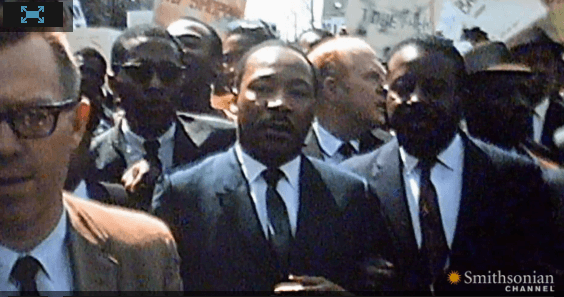
    MLK march

    Issued in June 2000 by US Attorney Barry Kowalski, the King Report [1], which was initiated in 1998 at the request of the King family and Dr. Pepper, completely absolves the federal government of any involvement in a conspiracy to kill the Noble Prize-winning Civil Rights leader and anti-war activist. According to the King Report, James Earl Ray was the lone assassin – and anyone who says otherwise is crazy, a liar, or just out for the money.

    This is a scary message, especially if you are an outspoken witness with a different point of view, a member of the King family, or a skeptic conducting research into the King assassination.

    “I mean “scary” in a very serious way,” Pepper emphasizes. “The extent to which they papered-over and denied the facts is seriously scary.”

    Pepper – who is compiling a list of fifty relevant facts that Kowalski deliberately overlooked in his attempt to rewrite history – should know. For years he has represented the King family in its flawed quest to discover the federal government’s actual role in Dr. King’s assassination. Pepper also is the object of much of the King Report’s artless innuendo, for while Kowalski’s stated purpose is to determine the truth, his true intention is to frighten anyone and everyone, but especially Pepper and the King family, from ever again disputing the official story.

    Read the King Report from cover to cover and the message it sends is perfectly clear: no matter what the truth is, if you even suggests that the government was part of a conspiracy to kill Dr. King, the government has the power to twist what you say and destroy your reputation – and there’s not a damn thing you can do about it.

    What’s It All About, Kowalski?

    In making its intimidating point, the King Report focuses on four general subjects:

    1. the allegations of Loyd Jowers, a Memphis businessman who claimed to be one of the people who planned King’s assassination;
    2. the allegations of Donald Wilson, a former FBI agent who claims that in 1968 he discovered papers that contained references to Raoul in James Earl Ray’s car. (Sometimes referred to as Raul, Raoul was the mystery man whom Ray, over a period of thirty years, steadfastly maintained had managed his movements and ultimately framed him in the assassination);
    3. Raoul and his role in the assassination, if any; and
    4. the evidence and witnesses that prompted a Memphis jury to conclude, in December 1999, that the federal government was somehow involved in the assassination.

    Kowalski tackles the first two subjects first, and in two separate sections of the King Report he systematically destroys the allegations, and reputations, of Jowers (whose numerous contradictory statements are recounted in dissembled detail) and Wilson (who is portrayed as unstable and unreliable). The primary, unscrupulous tactic Kowalski uses in achieving this result is the sweeping distortion and selective presentation of evidence and facts.

    For example, on Page 3 of Part 2 of the King Report, Kowalski makes two assertions. The first is the straightforward statement that Jowers “refused to cooperate with our investigation.” This is a charge that will be repeated over and over again when Kowalski seeks to defame a particular individual. In this case, Kowalski is asserting that Jowers refused to accept an offer of immunity.

    The second assertion is a vague generalization that relies heavily on innuendo. Kowalski states that, “In 1993, Jowers and a small circle of friends, [2] all represented by the same attorney, sought to gain legitimacy for the conspiracy allegations by presenting them first to the state prosecutor, then to the media. Other of Jowers’ friends and acquaintances, some of whom had close contact with each other and sought financial compensation, joined the promotional effort over the next several years. For example, one cab driver contacted Jowers’ attorney in 1998 and offered to be of assistance. Thereafter, he heard Jowers’ conspiracy allegations, then repeated them for television and during King v Jowers. Telephone records demonstrate that, over a period of several months, the cab driver made over 75 telephone calls to Jowers’ attorney and another 75 calls to another cab driver friend of Jowers who has sought compensation for information supporting Jowers’ claims.”

    The transparent implication of this second assertion is that Jowers’ unnamed attorney concocted a scam to package and sell the contrived conspiracy theory of a small group of hustlers. As proof of this “conspiracy,” Kowalski cites 75 phone calls from an unnamed cab driver to the attorney. We are supposed to believe that all of this is true, because Kowalski is a decent chap who does not name the conniving attorney.

    But was Kowalski really trying to protect the reputation of the attorney, while issuing this backhanded slap in the face? The attorney, Lewis Garrison, does not think so. Garrison believes that Kowalski is playing with words and toying with the truth, and he adamantly disputes both of Kowalski’s assertions.

    Regarding the first assertion, that Jowers refused to cooperate with Kowalski’s investigation:

    “Please be assured,” Garrison stresses, “that Kowalski never, repeat never offered immunity to Mr. Jowers. When Kowalski first contacted me, he indicated that he could obtain immunity from the United States Government, but was advised that the US Government could not provide immunity because the Statute of Limitations prevented it. Kowalski then indicated that he could obtain an agreement for immunity from the local District Attorney. But that was never done. Kowalski may have gotten an agreement for immunity from the State of Tennessee, as he asserts in his Report, but he never communicated that fact to me.”

    Barely three pages into Part Two of the King Report, and already Kowalski stands accused of lying about Jowers’ refusal to cooperate, and of dissembling information about the immunity agreement Jowers was allegedly offered by the State of Tennessee.

    Garrison notes that within two days of Kowalski’s promise to obtain immunity from the State of Tennessee, the local District Attorney, John Pierrotti (who was later forced to resign his post for misappropriating funds), made an announcement through the local newspaper that he did not believe Jowers, and would never grant immunity to him.

    Once the DA had made public his intentions not to grant immunity to Jowers, why would Garrison believe that Kowalski could obtain it? And knowing that Kowalski was dangling a false promise, why on earth would Garrison want to cooperate with him?

    Kowalski also distorted the facts when he stated that Jowers would have been immune from prosecution if, in lieu of a proffer, he had submitted a videotape of his October 1997 meeting with Dexter King, son of the slain Dr. King. Kowalski cites Jowers’ refusal to submit the videotape as proof that he was being untruthful. But, as Bill Pepper is careful to point out, Kowalski was only offering “use” immunity in regard to statements Jowers made on the videotape; Kowalski could not promise that the State of Tennessee would not prosecute Jowers in regard to anything else he said.

    According to Garrison, “Kowalski was advised that if he could obtain a grant of immunity from Tennessee, Mr. Jowers would meet with him and answer every question he wanted to ask. We offered videotapes and transcripts of interviews with Jowers and Ray in exchange for immunity. But Kowalski never wanted to interview Jowers. His intention was to attack his credibility along with that of former FBI agent, Wilson.”

    Kowalski’s second assertion – that Garrison was the mastermind of a conspiracy of petty crooks – is proof that his unstated intention was to falsely destroy the credibility of everyone associated with Jowers and Garrison. Kowalski himself raises the best example of this dubious tactic when he refers to James Milner, the cab driver who ostensibly made 75 phone calls to Garrison. Kowalski’s implication is that Milner made those 75 calls directly to Garrison, but that implication is not a fact.

    “Milner, who knew nothing at all about the assassination, may have called my office 75 times,” Garrison sighs in dismay, “but we never talked 75 times. Five times maybe, but not 75.”

    When asked why a US Attorney would stoop so low as to misrepresent the actions of a non-entity, and then elevate those distorted actions to monumental proportions, Garrison suggests that Kowalski had professional help. “There is very little difference between the Report Kowalski submitted and the book written by Gerald Posner,” he says. Garrison adds that Posner, whom he describes as “deceptive,” misquoted him in his FDA-approved, conspiracy-debunking book, Killing The Dream.

    Curiously, Kowalski credits Posner as a major contributor to the King Report. But apart from informing every aspect of the King Report with his methodology, which is to ignore any evidence that contradicts his premise, Posner’s qualifications and motives are suspect. Posner’s only interest in the King assassination is pecuniary. He never spoke to James Earl Ray, Loyd Jowers, or any members of the King family, and he never attended the King versus Jowers trial.

    But for that matter, Kowalski was never at the trial either.

    “Kowalski is deceptive too,” Garrison concludes. “He was fully aware that the judgment from the Circuit Court in Shelby County was against Jowers, the City of Memphis, the State of Tennessee, and the United States Government. He knew this before the King versus Jowers trial. He knew the US Government had been named as a defendant, but he never took any action to defend it.
    “On the other hand, although we were advised that his Report was completed several months ago, it is interesting that Kowalski waited until the death of Mr. Jowers (on 20 May 2000) before releasing it.”

    The Motive In His Madness

    Nowhere is Kowalski’s adopted methodology of distortion and selective presentation of facts and evidence more evident than in his cursory investigation of Raoul. To the exclusion of all other evidence, Kowalski focuses solely on the theory that Raoul is a Portuguese man living in New York City. Granted, he makes an airtight case that this particular Raoul was not involved in the assassination. But he never searched for any other Raouls, and he disingenuously assumed that because the New York City Raoul had an alibi, Raoul was a figment of James Earl Ray’s criminal imagination.

    Some of us are not convinced. However, time and space do not permit an in-depth examination of this aspect of the King Report, or of the section dealing with Donald Wilson, who is composing his own rebuttal. Instead, this article will focus on the weakest part of the King Report: Kowalski’s assertions that there is no evidence of the federal government’s involvement in the King assassination, and that a jury in Memphis was wrong in concluding that there was.

    It is important to understand that Kowalski makes his case more through style than substance, by disparaging, discrediting, or simply ignoring anyone or any evidence that in any way casts doubt on the official story that James Earl Ray was the lone assassin of Dr. King. The rampaging US Attorney takes no prisoners in effecting this scorched-earth policy. But while he succeeds, superficially, in discrediting Jowers, Wilson, and notions of Raoul, his argument fails when it attempts to dismiss the evidence and witnesses that convinced the Memphis jury that the federal government was involved in a complex conspiracy to kill Dr. King.

    The basic flaw in Kowalski’s argument is his failure to address the overwhelming question: Was institutionalized, government-sanctioned racism one of the reasons Dr. King was assassinated?

    You bet it was; and institutionalized, government-sanctioned racism, as represented by the King Report, is one of the main reasons why the federal government will never acknowledge its role in the conspiracy to kill Dr. King.

    In order to understand the subtext of the insidious King Report, which is so laden with racial bias that one feels contaminated simply by touching it, one must understand the racial situation as its existed and exists in Memphis, Tennessee, where, according to Lewis Garrison, 80% the people prosecuted by the current DA are black, while 80% of the DA’s staff are white.

    Unfortunately for Garrison, the people he often represented, and the people who often were the most convincing witnesses at the King versus Jowers trial, are poor and black. And unfortunately for the King family and the American public, the fact that Garrison was surrounded by poor blacks provided Kowalski with the pretext for a strategy of character assassination, as the basis of a continuing cover-up.

    Betty Spates, for example, was a young black woman working as a waitress for Loyd Jowers at his tavern, Jim’s Grill, on 4 April 1968. Jim’s Grill was located on the ground floor of the rooming house from which James Earl Ray allegedly shot Dr. King. Spates in April 1968 was having an affair with Jowers, and in a March 1994 affidavit (taken by William Pepper) she claimed to have seen Jowers pass through the grill with the murder weapon in his hands, moments after King was killed. She is the only person to corroborate this aspect of Jowers’ story, but she is summarily dismissed by Kowalski as “not credible.”

    Referred to as “the alleged corroborating witness,” Spates is “not credible” because, Kowalski argues, she stayed in touch with Jowers, was represented by Garrison, and “refused to cooperate” with his investigation. She also is named by Kowalski as one of the money-hungry hustlers in Garrison’s conspiracy of petty crooks. But Spates’ biggest sin is having contradicted herself in a January 1994 statement to the local District Attorney. In that statement she said she was not at the grill at the time King was killed, and that she did not see Jowers with a rifle. Since then she has become “confused” and cannot reconcile her contradictory statements.

    Kowalski offers no reason why Betty Spates contradicted herself, or why she became confused, but he does grudgingly acknowledge that on 3 February 1969, she told two bail bondsmen that her “boss man” (Jowers) had killed Dr. King. This February 1969 statement came within a year of the King assassination and should have represented a major breakthrough in the case. It was made long before her association with Garrison as well, and no one offered her money to make it. But, as Kowalski is careful to note, when confronted by police about her allegation, Spates retracted her statement nine days later.

    Kowalski says, “Spates’ conduct in 1994 duplicates what she appears to have done in 1969. At both times she made a critical allegation about the assassination but, when confronted by law enforcement officials, denied ever making the allegation and refuted it truth.”[3]

    Kowalski chooses to interpret this recurring phenomenon as proof of Spates’ unreliability. But people who actually know her have another interpretation, one that offers a more comprehensive explanation as to why, ever since 4 April 1968, certain witnesses have been hesitant to come forward, why these witnesses have contradicted themselves when confronted by local, state, and federal law enforcement officials, and why crucial evidence has mysteriously vanished or been overlooked.

    Racism and Plausibility

    Coby Smith was a black revolutionary in Memphis at the time of the assassination of Dr. King. A founder and leader of the Memphis-based Invaders (patterned on the more famous Black Panthers and Blackstone Rangers), Smith says that Betty Spates was “compromised because she was having fun.” In other words, Spates used drugs and engaged in prostitution, and thus the Memphis police held a very heavy hammer over her head. An unwed mother with a bad reputation, she is a typical victim of a racially biased judicial system that sometimes seems to have been established by our Founding Fathers specifically to provide the ruling white class with the on-going pretext it needs to avoid prosecution for its crimes against poor blacks.

    The King Report exemplifies this exercise in cognitive dissonance. Kowalski’s main consultant, Gerald Posner, has made a tens of thousands of dollars by exploiting the King assassination story, but his lily-white motives are never questioned. Spates and her cabal of poor black co-conspirators, on the other hand, are considered unreliable because, according to Kowalski, they sought compensation for their telling their stories.

    Kowalski applies this same double standard to Olivia Catling, and for the same reasons. At the King versus Jowers trial, Catling testified that on the evening of 4 April 1968, she heard a gunshot that came from the vicinity of the Lorraine Motel. Located at 450 Mulberry Street, the Lorraine is less than one hundred yards from Catling’s house on the corner of Mulberry and Huling Streets. Upon hearing the shot, Catling ran outside with her two children and saw “a man in a checkered shirt come running out of the alley beside a building across from the Lorraine. The man jumped into a green l965 Chevrolet just as a police car drove up behind him.” The man sped around the corner up Mulberry past her house, but the police ignored the man and blocked off the street, leaving his car free to go the opposite way.[4]

    Eyewitness Catling testified that the man she saw was not James Earl Ray. She also testified that she could see a fireman standing across from the motel when the police drove up. She heard the fireman say to the police, “The shot came from that clump of bushes,” indicating a brushy area behind Jim’s Grill, opposite the Lorraine and near the neighborhood fire station.[5]

    “The police,” Catling told reporter Jim Douglas, “asked not one neighbor [around the Lorraine], ‘What did you see?’ Thirty-one years went by. Nobody came and asked one question. I often thought about that. I even had nightmares over that, because they never said anything. How did they let him get away?”[6]

    If one is poor and black and living in Memphis, it takes courage to accuse the local authorities of complicity in the King assassination. But this reality never factors into Kowalski’s equation. It doesn’t matter that no one is offering Olivia Catling movie deals or money for her story; it is solely because she is black and poor that he dismisses her as “inconsistent, and contradicted by several key witnesses.”

    Would it surprise you to learn that the “key witnesses” who contradicted Catling are Memphis policemen? Kowalski asked the cops if Catling’s allegations were true, and they said “No.” They would have remembered if someone had run their blockade, or if the firemen had called to them.[7]

    Kowalski also cites the fact that Catling waited twenty-five years before stepping forward with her story, and he uses that to imply that she is just another hustler out to make a fast buck.

    Former Invader Coby Smith has a more plausible explanation. Smith says that Catling, like so many of her ilk, was unwilling to come forward until 1993 because she was afraid of the police.

    One begins to see a pattern developing here, a pattern that indicates either a conspiracy by poor black hustlers under the guidance of a greedy lawyer, as Kowalski contends, or a pattern of obstruction of justice by law enforcement officials, as this writer contends. One makes ones choice depending on ones prejudices. But in making your choice, consider this: just as Olivia Catling did not step forward for twenty-five years, it is equally true that no one from law enforcement sought her testimony on 4 April 1968, when it would have had real significance. Indeed, many leads in the King assassination could have been developed through a house-to-house search and interviews of the many eyewitnesses in the predominantly black neighborhood. But none of that was done. The responsibility for doing those things belonged to law enforcement officials, but according to Kowalski’s skewed way of thinking, people like Betty Spates and Olivia Catling are to blame for not coming forward.

    While understanding of white policemen, and willing to give them the benefit of the doubt in every instance, Kowalski invariably derides and stigmatizes lower class blacks, thus personifying the sort of insidious racism that replaced legal segregation and now permeates American society, and which defines and undermines the King Report.

    Fear and Loathing in Memphis

    One of the biggest threats to the government (in its local, state, and federal manifestations) in its efforts to cover-up its involvement in the King assassination, was and is the possibility that black revolutionaries with insights into the King assassination might step forward.[8] In particular, members of the Invaders had to be intimidated, and so the authorities designed a different method of silencing them.

    Enter the FBI and its infamous COINTELPRO Program, which was created to neutralize black power groups through extra-legal methods, including infiltrators, agent provocateurs, planting of false evidence and rumors, and by any other means necessary. Dr. King himself was a primary target of the COINTELPRO Program and at one point, on orders of J. Edna Hoover, FBI agents wrote a letter to King suggesting that he kill himself. “There is only one way out for you,” the message read. “You better take it before your filthy, abnormal, fraudulent self is bared to the nation.”

    The historical record is clear that the FBI and the military aggressively investigated King as an enemy of the state. His movements were monitored; his phones were tapped; his rooms were bugged; derogatory information about his personal life was leaked to discredit him; and he was blackmailed about his extramarital affairs. Thus it is hard to believe that the FBI was not involved in his assassination.

    But Kowalski does not discuss the malice aforethought represented by Hoover’s COINTELPRO Program, nor does he mention that the COINTELPRO Program was directed against the Invaders, whom Hoover called “one of the most violent black nationalist extremist groups”.[9]

    Nowhere in the King Report does one learn that in July 1967, at the direction of the FBI (and with the assistance of the CIA), the Memphis Police Department (MPD) formed a four-man Domestic Intelligence Unit (DIU) specifically to infiltrate and undermine the Invaders. Nor does Kowalski explain, in this regard, the significance of the January 1968 appointment of Frank Holloman, a 25-year veterans of the FBI, as Chief of Public Safety in Memphis. As Chief of Public Safety, Holloman managed the city’s police and fire departments. Holloman served much of his FBI career in the South, including a tour in Memphis and seven years as inspector in charge of J. Edna Hoover’s Washington office. It also is important to know that the DIU, under Lieutenant Eli Arkin, was Holloman’s top priority.

    Assisting the FBI and the MPD DIU was a special detachment of the 111th Military Intelligence Group (MIG), headquartered in Atlanta, Georgia. Commanded by Major Jimmie Locke, this twenty-member special detachment was assigned to Memphis on 28 March 1968 as part of a Civil Disorder Operation code-named Lantern Strike (under USAINTC OPLAN 100-68). LanternStrike was a training exercise designed to facilitate the working relationship between the 111th MIG, the MPD, the Tennessee National Guard, and the FBI, in their common effort to monitor and, if possible, disrupt any civil disorder that might arise in Memphis as a result of a Sanitation Workers strike..

    And civil disorder there was. Dr. King arrived in Memphis on 28 March to lead a march organized by the predominantly black Sanitation Workers, who had been on strike for several weeks. The march began at eleven o’clock and within minutes rioting broke out. Governor Buford Ellington called out the Tennessee National Guard at 12:30 pm. and at 2:00 pm, sixteen year old Larry Payne, a black high school student, was shot and killed by Memphis cops. The policemen claimed that Payne was attempting to loot a service station on South 3rd Street, and that he attacked them with a butcher knife.

    The situation degenerated further and by the time the smoke had cleared, Dr. King’s reputation as a proponent of non-violent protest was severely damaged. Wide rifts in Memphis were opened between blacks and whites, and between various segments of the black community itself. There were rumors that an FBI informant, who was also an undercover police spy in the Invaders, had incited the 28 March riot that ended in Payne’s death, and for all these reasons Dr. King was forced to return to Memphis to reclaim his status as an advocate of peaceful civil disobedience.

    Kowalski ignores the importance of these events in the assassination of Dr. King. It is irrelevant to him that King and the Invaders formed an alliance in support of the Sanitation Workers, or that ninety percent of the garbage collectors were black. He never mentions the fact that the MPD was composed of 850 officers, of whom a mere 100 were recently appointed blacks; that tension between the white and black policemen was visceral; or that Arkin’s DIU was given the job of infiltrating and monitoring the Sanitation Workers union, King’s entourage, and the Invaders. The few black officers in the DIU who received this unenviable assignment were well known to other members of the black community, and came under intense criticism. For example, DIU undercover officer Edward Redditt, who met Dr. King’s party when it arrived in Memphis on 3 April 1968, was allegedly threatened with his life if he did not decease and desist. The situation was that explosive.

    Prelude To An Assassination

    Although Kowalski in the King Report seems unaware of the danger in Memphis, the various federal agencies that were monitoring Dr. King and the Invaders were not. Information on the most intimate details of the Sanitation Workers strike, and of the supporting role of Dr. King and the Invaders, was shared freely among them. But the most crucial information was invariably withheld from the subjects of their surveillance. For example, on 1 April 1968, the American Airlines office in Atlanta received a threat from anonymous white caller saying: “Your airline brought Martin Luther King to Memphis and when he comes again a bomb will go off and he will be assassinated.”[10]

    The FBI, in what amounted to criminal negligence, notified every law enforcement agency, plus the 111th MIG, but not Dr. King. According to author Gerald McKnight, the orders to keep King in the dark emanated directly from Hoover. Members of the MPD DIU were aware of the threat as well, but they too declined to tell Dr. King.[11]

    These issues bring us to one of the most provocative subjects of the Kowalski Report: the role of MPD DIU undercover agent Marrell McCullough in the assassination of Dr. King. For according to Loyd Jowers, McCullough was one of four people, along with MPD Homicide Chief N. E. Zachary, MPD Lieutenant Earl Clark, and Clark’s unnamed deceased partner, who plotted King’s assassination at Jim’s Grill. As fate would have it, McCullough also was the first person to reach Dr. King’s side after he was shot on the balcony of the Lorraine Motel. Thus he deserves special attention.

    Marrell McCullough

    Described as “short, stocky, and dark,” Marrell McCollough was born in Tunica, Mississippi in 1944, and after earning a general equivalency high school degree, he enlisted in the US Army, serving “mostly” as a Military Policeman. According to what may or may not be accurate military records, McCullough was discharged in February 1967 and then fell off the radar screen for six months, until he entered the MPD police academy in September 1967. In February 1968 he became a full-fledged policeman and was assigned as an undercover officer in Eli Arkin’s DIU. His code name was “Max” and his job was to infiltrate the Invaders, which he did. Because he owned a VW hatchback, and because he claimed to be a Vietnam veteran, McCullough was made Minister of Transportation by Coby Smith.

    McCullough’s FBI reports are still available in FBI archives, but most of his police reports were destroyed by the MPD in 1976, after the American Civil Liberties Union filed suit against City of Memphis. The files that survive indicate that McCullough liked to smoke pot with the Invaders, with whom he consorted for over a year, until he set up a drug bust in which many top Invaders leaders were entrapped. After that McCullough stayed in the MPD in other roles until he joined the CIA in 1974.[12]

    Along with the missing reports, there are several reasons to consider McCullough as a suspect in the King assassination. To begin with, he misrepresented himself to the House Select Committee on Assassinations (HSCA). McCullough was called to testify before the HSCA because he had attended a meeting with the Invaders and King on the night before the assassination, and because he was still on the premises of the Lorraine Motel when King was shot on 4 April 1968 – even though the Invaders has been ordered to leave by Reverend Jesse Jackson and Memphis-based Reverend Billy Kyles. In fact, McCullough was the first person to reach King. As he explained to the HSCA, “I ran to (King) to offer assistance, to try to save his life.” McCullough said he pulled a towel from a nearby laundry basket and tried to stop the bleeding.[13]

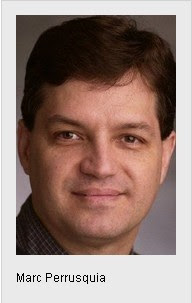
    Also testifying before the HSCA was FBI agent William Lawrence. Now deceased, Lawrence was serving in Memphis in April 1968, but testified that he did not know McCollough. However, another FBI agent who was serving in Memphis in April 1968, Howell S. Lowe, told reporter Marc Perrusquia that, “Lawrence recruited McCollough well before King’s murder,” and that the FBI “used McCollough to report on campus radicals at Memphis State University, now the University of Memphis.”[14]

    Supporting Lowe’s claim was DIU chief Eli Arkin, who told Perrusquia that he had selected McCullough “at Lawrence’s recommendation.” According to Perrusquia, “the FBI arranged McCullough’s placement in MPD Intelligence Squad.”[15]

    Not only did FBI agent Lawrence lie to the HSCA, so did McCullough. He identified himself to the Committee as a “Police Officer” from Memphis, Tennessee, not as a CIA officer. When the HSCA asked McCollough if he had any relationship with CIA in April 1968, he said “no”. He also said “no” when asked, “Did you have any relationship with any other intelligence agency?”[16]

    McCullough lied to Congress about his affiliation with the CIA and the FBI for one reason and one reason alone: the HSCA had reason to believe that McCullough was the FBI informant and MPD undercover agent who provoked the 28 March 1968 riot that resulted in the death of Larry Payne, and forced King to return to Memphis for his rendezvous with death.

    In the absence of evidence to the contrary, however, McCullough was exonerated by the HSCA. But in view of his perjury, the question looms larger than ever. As Perrusquia notes, “The thoroughness of HSCA’s investigation now is open to question. Has McCollough told all he knows, or is he hiding something?”[17]

    McCullough & The Plot At Jim’s Grill

    Barry Kowalski ignores McCullough’s history of perjury in the King Report, but he is forced to confront the serious allegation Loyd Jowers made against McCullough. Kowalski deals with these allegations in characteristic style. According to Kowalski, Jowers was “suspiciously vague” when he said that he (Jowers) had met at Jim’s Grill with McCullough, Homicide Chief Zacharay, police Lieutenant Clark, and Clark’s deceased partner, to plot the assassination of Dr. King.

    Of course Kowalski found no evidence to support the allegation. He talked to Zacharay, who “fully cooperated” and denied the allegation. Zachary said he “may have been” at Jim’s Grill later on the evening of 4 April, but his confusion was understandable and Zachary was believed. Clark’s wife said her husband was at home when King was killed, and she was believed too.[18] Clark’s deceased partner was unavailable for comment, leaving only Marrell McCullough.

    At the time of his interview with Kowalski, McCullough was employed by the Central Intelligence Agency. Considering that fact, and the fact that the CIA has been implicated in the King assassination by members of the Jowers-Garrison-Spates cabal, Kowalski asked McCullough to take a polygraph exam. McCullough “cooperated” and agreed to take the test, which was administered by the Secret Service. In Kowalski’s own words, McCullough was found to be “not deceptive” when he denied plotting to harm Dr. King. “However, the polygraph was “inconclusive” as to his denial that he ever met with other police officers at Jim’s Gill.” [19]

    “Not deceptive” implies something less than truthfulness, and to someone other than Kowalski, “inconclusive” polygraph results would certainly raise some doubts. But McCullough, like Zachary and the other Memphis cops, “cooperated” and therefore was believed, despite his inconsistencies. But only by using this double standard is Kowalski able to dismiss the provocative claim made by Jowers that McCullough played the crucial role of ”liaison” between the various elements of the assassination cabal.

    The Continuing Cover-Up

    Just as Kowalski is careful not to mention that FBI agent Lawrence and CIA agent Marrell McCullough lied to the HSCA, so too is the devious US Attorney willing to avoid other incriminating evidence that links the MPD, FBI, and 111th MIG to the assassination of Dr. King.

    For example, Kowalski notes that, “Years prior to Jowers’ vague allegation, speculation focused on: (1) the withdrawal of the security detail assigned to Dr. King on April 3; (2) the supposed withdrawal of tactical units from the immediate area of the Lorraine; (3) the removal of two African American detectives from the surveillance post of Fire Station No. 2 on April 4; and (4) the removal of to African American firemen from the same firehouse on April 3.[20]

    Without explaining that the HSCA was given a heavy dose of disinformation, as he is well aware, Kowalski says the Committee extensively examined the charges and found nothing untoward.

    According to Kowalski, the police security detail, headed by MPD officer Don Smith, was withdrawn at Smith’s request because the King party was (here’s that word again) “uncooperative.” King’s party refused to provide King’s itinerary to Smith because they didn’t trust the cops, whom they felt had over-reacted the week before during the rioting. But Kowalski, using innuendos Posner probably contrived, characterizes this as an example of irrational black paranoia.

    Then he proceeds, without any resolution or explanation, to contradict his own assertion. “The HSCA,” Kowalski notes, “never conclusively resolved whether it was the chief of police or another top official who actually approved Smith’s request.”

    Does it matter if former FBI agent Holloman (who was close to Hoover and was in liaison with FBI agent Lawrence, who lied to Congress about knowing McCullough), removed the security detail? Of course it does! Especially if Holloman was relaying orders from Hoover. The HSCA ruled the security detail was improperly withdrawn, as Kowalski admits, but he doesn’t spend a moment trying to find out why. Kowalski’s indifference is absolutely amazing, but it is also an essential ingredient in his attempt to shift blame the assassination on Dr. King himself. [21]

    Kowalski says, “In an affidavit to HSCA, TACT Unit Commander William O. Crumby stated that on 3 April he received a request from the King party to withdraw police patrols from within sight of the Lorraine.” The request, claims Kowalski, was “honored,” as if to imply it was honorable, but he then admits that the man who allegedly asked Crumby to withdraw the TACT units, Inspector Sam Evans, denied making the request. Again Kowalski sees no purpose in resolving this contradiction among cops, nor does he use that contradiction to impugn their reliability or consider the possibility that the security details were withdrawn, perhaps at the request of the FBI or CIA, in order to facilitate the assassination. Perish that thought.[22]

    Likewise, when considering the removal of police officer Redditt from his surveillance post at Fire Station No. 2, a mere two hours prior to assassination, Kowalski again sees nothing sinister – despite the fact that Redditt was removed at the insistence of Philip R. Manuel, a staff member of the US Senate Subcommittee on Investigations, who “informed the Memphis Police Department of a threat to kill “a Negro lieutenant” in Memphis.” [23] Kowalski offers no explanation as to what Manuel was doing in Memphis, or by what authority he was able to direct the MPD, nor does he acknowledge that before joining the Senate staff as an investigator, Manuel spent his entire military career with the 902nd MIG, which William Pepper implicates in the assassination of Dr. King. Pepper also implicates Senator James O. Eastland (D-MS), who in 1968 was one of Manuel’s bosses. When asked by this writer why he failed to properly identify Manuel, Kowalski said that he could not discuss the subject, because Manuel’s testimony was “sealed.”

    The Military & Martin Luther King

    Using Gerald Posner’s strategy of disregarding anything that contradicts the case he wants to make, US Attorney Barry Kowalski refuses to address any issues that might suggest that King was killed by a cabal of lynch-mob mentality segregationists in the halls of Congress, the clean-cut FBI, the patriotic CIA, and the equal opportunity army. James Earl Ray is the only racist, according to Kowalski, who acted on his desire to kill Dr. King.

    But what if these powerful Establishment forces did join together, under cover of Operation Lantern Strike, to create a situation in which someone like Ray could kill King and get away with it? Ironically, the best clues that such a conspiracy existed are to found within the context of institutionalized racism and government arrogance as represented by the King Report.

    The first hints of this conspiracy were made public in The Phoenix Program, a book that detailed a secret CIA “assassination” operation in South Vietnam. Published in October 1990, the book reported a rumor that members of the 111th MIG had taken photographs of King and his murderer.

    In an article published in November 1993 by The Memphis Commercial Appeal, reporter Stephen G. Tompkins expanded on this rumor. Citing unnamed sources, Tompkins said the 111th MIG “shadowed” King in Memphis, using “a sedan crammed with electronic equipment.”

    Tompkins then went on to become an investigator for William Pepper, who further expanded upon this rumor in his 1995 book, Orders To Kill. Based on Tompkins’ sources, Pepper claimed that two unnamed members of the 902nd MIG were on the roof of Fire Station No. 2, and that they photographed King’s assassination and assassin. Based on information provided by Tompkins, Pepper also claimed that two members of the 20th Special Forces (code-named Warren and Murphy), attached to the Alabama National Guard, were on the roof of the Illinois Central Railroad Building overlooking the Lorraine Motel as part of an eight-man sniper squad that was in Memphis. Their assignment was to shoot the leaders, including King, if rioting broke out.

    Foppish celebrity Gerald Posner in turn debunked Pepper’s theory in his book, Killing The Dream, in part by falsely claiming that the author of The Phoenix Program had fed Pepper the names Warren and Murphy.

    Eventually, rumors about the presence of the 111th MIG in Memphis were finally substantiated by reporter Marc Perrisquia in a series of articles that appeared in The Memphis Commercial Appeal in late 1997. Perrisquia interviewed several members of the 111th MIG, including retired Col. Edward McBride, who oversaw the 111th’s Memphis mission from Fort McPherson in Atlanta. Perrusquia quotes McBridge as saying “We were never given any mission to keep King under surveillance. Never.”[24]

    Perrusquia also interviewed retired Lieutenant Colonel Jimmie Locke, who in March and April 1968 commanded the 111th MIG’s special detachment in Memphis. In an apparent oversight, Perrusquia, however, neglected to ask Locke if he had sent anyone onto the roof of Fire Station No. 2. But Locke had – and in trying to dismiss that action as insignificant, the King Report descends into pulp fiction.

    In signed affidavits prepared by William Pepper and dated September and November 1995, Stephen Tompkins states that he met with two members of an Army Special Forces team that was deployed to Memphis on the day of King’s assassination. These men, whom Pepper refers to as Warren and Murphy, claimed they were positioned on the roof of the Illinois Central Railroad Building overlooking the Lorraine Motel on 4 April 1968. According to Tompkins, Warren provided information linking the 902nd MIG to the Mafia crime family of Carlos Marcello, mystery man Raoul, and the assassination of Dr. King.

    In his September affidavit,Tompkins states, “I have closely read the section of Dr. Pepper’s book concerning the military and I find it to be true and accurate to the best of my knowledge and belief.”[25] In the next paragraph Tompkins adds, “I can unequivocally state that everything he has written in the book about what I had done at his request and what I have said and reported to him and the process we followed is true and accurate. So far as I am concerned, his credibility and integrity in the pursuit of truth and justice in this case are unimpeachable.”

    Likewise, Perrusquia, in a 4 May 1997 article for The Memphis Commercial Appeal, quotes Tompkins (then press secretary to Georgia Governor Zell Miller) as saying that Pepper had accurately characterized his investigation. Tompkins told Perrusquia, “I really respect the work that he (Pepper) does.”

    However, when confronted by Kowalski, Tompkins disavowed Warren and Murphy. Tompkins allegedly told Kowalski, “that he never found anything to corroborate the Alabama National Guardsman and his observer and no longer believes them.”

    Likewise, when confronted by Kowalski, Tompkins allegedly asserted that he did not believe his source from the 902nd MIG. Tompkins had reported to Pepper that this source, identified as Jacob Brenner in the King Report, was positioned on the roof of Fire Station No. 2 on the day of the assassination. As described in Orders To Kill, based on information provided by Tompkins, Brenner’s partner took photos of the assassination and of King’s assassin, who had fired the fatal shot from behind Jim’s Grill.

    But Tompkins told Kowalski that Brenner was “a slimeball” whose story was no different that numerous false stories he had heard from conspiracy buffs asking for money, and that he would have said so if called as a witness at the King versus Jowers trial. [26]

    Tompkins told Kowalski that he “found no evidence to substantiate that the 902nd MIG ever conducted a surveillance of Dr. King or was in Memphis. Rather, he determined that the 902nd MIG’s mission did not include domestic intelligence work..”

    Kowalski claims The Department of Defense “confirmed Tompkins’ understanding that the 902nd MIG did not conduct domestic intelligence work.”

    But that is totally untrue. A lie. This writer interviewed retired Colonel Alfred W. Bagot, who commanded the 902nd MIG from June 1968 until November 1968. When asked if the 902nd MIG conducted domestic intelligence operations, Bagot said, “Yes! Of course it did. The 902nd MIG was the principle source (of domestic intelligence) for the US Army Assistant Chief of Staff for Intelligence.”[27]

    Why did Tompkins change his tune? What hammer did Kowalski hold over his head? Was it the allegation, raised by Perrusquia, that Tompkins was fired from a reporting job in Tulsa, Oklahoma, for forging a document? Did Tompkins forge documents in order to defraud Pepper? Was Tompkins working for military intelligence all along, as a disinformation specialist whose mission was to mislead Dr. Pepper?

    Up On The Roof

    “Notwithstanding Tompkins’ assessment of Brenner’s credibility and story,” Kowalski said, “we investigated whether military personnel from the 902nd MIG or from some other unit were on the roof of Fire Station No. 2, observed the assassination, or photographed a man with a rifle after the shooting.”[28]

    A search of military documents uncovered no such evidence, and Kowalski was advised by Jimmie Locke that neither Locke nor anyone else from the 111th MIG “had firsthand knowledge that any military personnel were in the vicinity of the Lorraine on the day of the assassination or that military personnel conducted surveillance of Dr. King.” However, former 111th MIG sergeant Steve McCall did remember “somehow hearing that agents from his unit were being dispatched to the Lorraine on the day of the assassination,” but he could not recall the source of this information or any other details, so he was dismissed as being mistaken.[29]

    One witness from the 111th MIG also admitted to being on the roof of Fire Station 2. James Green, then a Sergeant and investigator with the 111th MIG, recalled “going to the fire station on the day that King’s advance party arrived in Memphis, perhaps March 31st. He claims he went with another agent from his unit, whom he could not now recall (italic added), to scout for locations to take photographs of persons visiting the King party at the Lorraine Motel at a later time, if necessary. According to Green, someone from the fire station may have shown them to the roof, where he and the other agent remained for 30 to 45 minutes before determining it was too exposed a location from which to take photographs.”[30]

    Although Kowalski ignores them, there are problems with Green’s inability to recall the name of his partner, as well as his description of the fire station roof. Jimmie Locke told this writer that,

    “The 112th MIG (headquartered in San Antonio, Texas) sent a photographer to Memphis to get a picture of one of King’s lieutenants. I’ve forgotten the reason for wanting this, but one of the men assigned to me, James Green, took him up to the fire station roof to see if that would be an adequate spot from which to photograph. It wasn’t. They were on the roof less than five minutes and only that one time.” [31]

    Locke doesn’t remember what day this was, but it certainly contradicts Green’s statement that he was on the roof with another member of the 111th MIG. This discrepancy raises the $64,000 question, never addressed by Kowalski, as to the identity of the second man on the roof. Was he perhaps a CIA agent with a rifle? If he didn’t find the fire station roof suitable, did he go elsewhere?

    As to the roof being unsuitable for clandestine photography, Christopher Pyle, an expert on military surveillance, describes it as “perfect.” Pyle explains that the agents would have erected a tripod in the middle of the roof, so that only the camera lens would be visible over the parapet. The men would not have been seen looking over the rampart, nor would they have been visible to onlookers, as Kowalski contends.

    The third problem is the testimony of Carthel Weeden, a former captain with the Memphis Fire Departmentwho was in charge of Fire Station No. 2 on the day King was killed. At the King versus Jowers trial, Weeden testified that on the afternoon of April 4, 1968, two men appeared at Fire Station No. 2 across from the Loraine Motel. They were carrying briefcases (which may have contained cameras and a tripod, and perhaps even weapons) and presented credentials identifying themselves as Army officers. They asked for permission to go to the roof. Weeden escorted them to the roof and watched while they positioned themselves behind a parapet approximately 18 inches high.

    Their position gave them a clear view of the Lorraine Motel, the rooming house window from which Ray allegedly fired the shot that killed King, and the area behind Jim’s Grill. If the reader will recall, Jowers claimed the fatal shot was fired from behind his grill and that the assassin escaped down an alley, while Jowers brought the murder weapon into his diner.

    Kowalski does not dig deeply into the military’s actions.[32] He doesn’t search for documents, and when it comes to contradictions, he does he apply the same standard to soldiers as he does to poor blacks. And when faced with the disturbing testimony of credible witnesses like Weeden, he relies on Posner’s strategy of dissembling.

    According to Kowalski, Weeden was not sure they were military men, and he “acknowledged that his memory of an event 30 years ago might be inexact, and thus, it was possible that he took the military personnel to the roof sometime before – not the day of – the assassination. (Weeden) added that he had never spoken with anyone about his recollection until Dr. Pepper interviewed him…in 1995. Accordingly, Green’s recollection that military personnel went to the roof on a different day than the assassination appears accurate.”[33]

    Weeden, who was never questioned by local or federal authorities about the presence of federal agents on the fire station’s roof, insists that he wasn’t even on duty the day before the assassination. A simple check of the fire stations would resolve this question, but Kowalski prefers to leave the innuendo dangling. Because innuendo is the best weapon he’s got.

    Contradictions

    Among the evidence that Kowalski ignores is a report, in the possession of Marc Perrusquia, which was passed to Memphis police, indicating that the 112th MIG warned the 111th MIG that four men, including one from Memphis, had purchased ammunition in Oklahoma on April 3rd and two rifles on April 4th.

    Is this the message from the 112th MIG that prompted Jimmie Locke to send James Green to the roof of Fire Station No.2. If so, Green had to have been on the fire station roof with someone from the 112th MIG on the afternoon of April 4th, as Weeden says.

    Kowalski also has no interest in the identity of a white man in a suit looking out a window of a room in the Lorraine Motel at the crowd of people standing around the body of Dr. King. Reporter Perrusquia believes this individual was with the 111th MIG or the FBI. Perhaps he was with the CIA? Perrusquia, who supports Posner’s theories and cooperated with Kowalski, believes there was closer FBI surveillance than previously acknowledged.

    Perrusquia also believes there was a greater military involvement. He reported that “Senate hearings in 1971 explored abuses in an Army surveillance program established under President Lyndon B. Johnson after riots in Los Angeles in 1965 and Newark, N.J., and Detroit in 1967. At times, Senate investigators charged, the Army exceeded its authority, crossing into improper political surveillance that included filming demonstrators in Chicago and keeping dossiers on civilians. When caught in such direct surveillance, the Army often denied it (italic added), saying it got information from sources such as the FBI, which had jurisdiction for most domestic intelligence and kept intense watch on King.”[34]

    If Perrusquia can admit that the military covered-up its illegal activities in other cities, why can’t Kowalski strive to resolve the contradictions of government officials, and uncover what was really going on in Memphis? Why does the King Report ignore the FBI and military’s belief that the black movement was led by Communists, and that King, whom they hated, was dangerous to the well being of the nation?

    More than James Earl Ray, the FBI, CIA, and military had the motive, means, and opportunity to kill Dr. King. And that’s a fact.

    Kowalski says the HSCA dismissed the idea that Marrell McCullough was the agent provocateur who incited the riot that prompted King to return to Memphis and a rendezvous with death. In fact, Kowalski only cites conclusions reached by the HSCA that support his own. [35]

    Consistent with his methodology, nowhere in the King Report does he cite the testimony of former US Representative Walter Fauntroy at the King versus Jowers trial. Fauntroy, who chaired the HSCA sub-committee that investigated the King assassination, complained that his committee might have proven there was more than just a low-level conspiracy, if the FBI and military been forthcoming in 1977.

    But the FBI and military lied, and according to Fauntroy, “it was apparent that we were dealing with very sophisticated forces.” Fauntroy’s phone and television set were bugged, and when his investigator, Richard Sprague, requested files from the intelligence agencies he was forced to resign. The records were not sought by Sprague’s replacement, and the investigation failed to uncover any hint of government involvement in the King assassination.[36]

    However, Fauntroy has since come to believe that James Earl Ray did not fire the shot that killed King, and was part of a larger conspiracy that possibly involved federal law enforcement agencies. Upon leaving Congress in 1991, Fauntroy “read through his files on the King assassination, including raw materials that he’d never seen before. Among them was information from J. Edgar Hoover’s logs. There he learned that in the three weeks before King’s murder the FBI chief held a series of meetings with “persons involved with the CIA and military intelligence in the Phoenix operation in Southeast Asia.

    Fauntroy also discovered there had been Green Berets and military intelligence agents in Memphis when King was killed. “What were they doing there?” he asked researcher James W. Douglas.[37]

    If he did nothing else to arrive at the truth, Kowalski should have demanded that the HSCA records, which are sealed until 2029, should be opened. But Kowalski’s only concern is perpetuating the cover-up, which is why he sweeps over the testimony of Maynard Stiles, a senior official in the Memphis Sanitation Department who claimed at the King versus Jowers trial that he and his crew cut down the bushes behind Jim’s Grill on the day after Dr. King was assassinated. Stiles received his instructions from MPD Inspector Sam. In other words, ‘within hours of King’s assassination, the crime scene that witnesses were identifying to the Memphis police as a cover for the shooter had been sanitized by orders of the police.”[38]

    Kowalski also ignores the Mafia’s role in the assassination, for one simple reason. The Invaders knew the Mafia was peddling drugs to blacks, with police protection. And to investigate the Mafia would necessarily result in uncovering its modus vivendi with law enforcement.

    Cody Smith reminds us of what happened to the Blackstone Rasgers in Chicago. “When the Rangers went after the Italian drug wholesalers, the FBI wiped them out,” he observes.”

    Not wanting to suffer the same fate, the Invaders scattered after the assassination and many, till this day, live in fear of being killed. Which is why one of them will not testify about his having seen Marrell McCollough at Jim’s Grill.

    Kowalski in the King Report conveys no understanding of the racial situation in Memphis, or why Betty Spates would be confused by events beyond her comprehension. Instead, he cynically plays her eye-witness word against the theoretical word of Gerald Posner, the fancy celebrity who has dinner and drinks with Dan Rather, and helped Kowalski write his report.

    Regarding the rift in the black community, Kowalski is definitely on the side of those blacks, like Marrell McCullough, Jesse Jackson, and the Reverend Billy Kyles, who religiously cooperated with law enforcement. As Reverend Fauntroy is happy to point out, Reverend Jackson since the assassination has regularly cooperated with the CIA.

    Thus Kowalski dismisses the allegations that Jesse Jackson ordered the Invaders to leave the Lorraine Motel, and that Reverend Kyles lured Dr. King onto the balcony, as part of the conspiracy.

    As outlandish as those allegations may be, Kowalski’s sins of omission indicate consciousness of guilt, and thus it is still impossible to determine the truth.

    The Smear Campaign

    In the absence of any “truth”, Kowalski and the federal government have initiated a smear campaign, of which the King Report is part and parcel, in order to silence the King family and prevent any further investigations into the King Assassination.

    The smear campaign began with Gerald Posner‘s book, Killing The Dream, and was advanced immediately after the King versus Jowers trail, when leading newspapers across the country immediately denounced the verdict as a one-sided presentation of a mad conspiracy theory. The Washington Post even lumped the conspiracy proponents in with those who insist that Hitler was unfairly accused of genocide.

    Since the trial, Kowalski and Posner have gathered support among those members of the black community who resent the position adopted by Corretta King and her sons. For example, on 27 March 2000, Time Magazine columnist Jack E. White, in an article titled “They Have A Scheme”, described the King family’s conspiracy theory as “lurid fantasies” that “sprang from the fertile imagination of Ray’s former lawyer, William Pepper.”

    According to columnist White (to whom Kowalski leaked an early version of the King Report) , Pepper cast a “bambozzling spell” over the King family, and “(t)he real mystery is why King’s heirs, who more than anyone else should want the truth, prefer to believe a lie.”

    But perhaps, as indicated by the information provided in this article, the Kings know something that Mr. White, the Establishment press, and the Justice Department aren’t telling the American public? Indeed, if government agencies were involved in the conspiracy from the beginning, why would the Justice Department now want to reveal the truth?

    To date, James Earl Ray stands as the lone assassin, possibly as part of a low-level conspiracy of a few white racists who despised King for his role in ending segregation. But for three decades, Ray declared his innocence. And researchers now, as in the case of President John Fitzgerald Kennedy, must nibble away at the myths, and dig deep for new material evidence.

    The Next Step

    The next step in uncovering new evidence in the King assassination case is being taken by attorney Daniel Alcorn, who obtained, through the Freedom of Information Act, the After Action Report of the Civil Disorder Operation: LANTERN SPIKE, 28 March – 12 April 1968. Written by members of the 111th MIG, the Report casts light on the activities of the military on the day Dr. King was killed.

    However, when Alcorn asked the Pentagon for copies of the daily reports of the 111th MIG and the 902nd MIG, the military claimed to have lost the records somewhere between the National Archives and the Center For Military History. In March 2000 a federal judge supported the military’s claim that it was not responsible for locating the documents, and Alcorn filed an appeal.

    Let it be known that the military is lying when it says it cannot find the records. The records exist and some of them were provided in 1997 to Marc Perrisquia by the chief of Public Affairs at the Pentagon, Colonel John Smith. Perrisquia provided copies of these documents to Barry Kowalski, who is aware of Alcorn’s lawsuit and appeal, but has failed to notify him or the judge of their existence.

    Thus the venal cover-up continues at all levels, casting further shame on the federal government. Just as the MPD destroyed its files on Marrell McCullough, the 111th MIG and other Army intelligence units are in the process of destroying any records that might implicate the military, the CIA, or the FBI in Dr. King’s assassination.

    This only confirms the sad truth that the government knew the plotters were out there. The intelligence agencies feared the up-coming Poor People’s march in Washington, and they feared Dr. King’s anti-War rhetoric, and if they didn’t actually do the job themsleves, they let it go down.

    As evident in the King Report, Barry Kowaklski’s job was to maintain the cover-up. Kowalski selected and interpreted, and ruth to Americans is what supports their prejudices and biases


    NOTES

    [1] The King Report’s full title is United States Department of Justice Investigation of Recent Allegations Regarding the Assassination of Dr. Martin Luther King, Jr.

    [2]According to Kowalski the motley crew of disreputable hustlers included James McCraw, Willie Akins, Betty Spates, Nathan Whitlock, Louis Ward, William Hamblin, James Isabel, and James Milner, several of whom connected the Mafia to the assassination through the CIA. Kowalski found no Mafia of CIA involvement.

    [3] King Report, Part 3, Page 15.

    [4] Douglas, James W., Probe Magazine, May-June 2000.

    [5]Fire Station No. 2 occupies the space on Butler Street between Mulberry Street and South Main. The rear of Fire Station No. 2 overlooks the Lorraine Motel on Mulberry, and the entrance to the Fire Station, on South Main (an area now gentrified and filled with art galleries) is just down the street from Jim’s Grill and the flop house above it, from which Ray allegedly shot King.

    [6] Douglas, James W., Probe Magazine, May-June 2000.

    [7] King Report, Part 3, Page

    [8]Invader Charlie Cabbage had information that James Earl Ray was at the Lorraine Motel the night before King was shot. Invader Coby Smith is certain that someone other than Ray or Clark fired the fatal shot from behind Jim’s Grill.

    [9]McKnight, Gerald, The Last Crusade: Martin Luther King, Jr., the FBI, and the Poor People’s campaign. Westview Press, 1998, Boulder, Colorado. P 142,

    [10] McKnight, P 69

    [11] McKnight, P 69.

    [12]Perrusquia, Marc, The Memphis Commercial Appeal, 2 August 1998.

    [13]Perusquia, Marc, Memphis Commercial Appeal, 2 August 1998.

    [14] ibid.

    [15] ibid.

    [16] ibid.

    [17] ibid.

    [18]DIU agent Redditt is on record as having said that Clark might have been involved in the assassination because he was an expert shot and a racist, but Redditt’s opinion was dismissed. Clark’s widow said he was friends with a mobster named Liberto, but Kowalski decided it was another Liberto, not Frank Liberto, whom Jowers claimed was the man who organized the assassination.

    [19] King Report, Part 3, Page .

    [20] ibid, Part 3, Page 33.

    [21] King Report, Part 3, Page 34.

    [22] Ibid, page 35.

    [23] Military surveillance expert Christopher Pyle contends that Manuel would never have had the authority to make such a request.

    [24] Perrusquia, Marc, 30 November 1997, The Memphis Commercial Appeal.

    [25](Which is not surprising, as Pepper based those passages on Tompkins’ research.).

    [26] King Report, Part 6, Page 7.

    [27]Bagot succeeded Colonel John W. Downie, who commanded the 902nd MIG from February 1967 until June 1968, and was its commander when King was killed. Locke describes the 902d MIG as “an odd-ball unit, stationed at the Pentagon, not assigned to an Army area. We called them the “Black Shirts” as they often got tasks beyond the normal level of sensitivity.”

    [28] King Report, Part 6, Page 7.

    [29] King Report, Part 6, Page 8.

    [30] Ibid.

    [31] Reporter Perrusquia has a copy of a telex from the 112th MIG in San Antonio, to the 111th MIG, reporting that people at Oklahoma State had purchased 306 rifles and were on their way to Memphis. Notably, the weapon that killed Dr, King was a 306 rifle. (Perrusquia, 2 August 1998, The Memphis Commercial Appeal.)

    [32] In 111th Reports leading up to 4 April, there is no mention of Green at all. Who is Green?

    [33] King Report, Part 6, Page

    [34] Perrusquia, Marc, date, The Memphis Commercial Appeal

    [35] It is rumored that McCollough was an undercover agent with the 111th MIG.

    [36] Douglas, James W. Probe Magazine, May-June 2000.

    [37] Ibid.