Tag: FBI
-

Walter Machann Interview Synopsis
Gayle Nix Jackson’s Interview Excerpts with Walter Machann.
http://jfkcountercoup2.blogspot.com/2018/09/walter-machann-interview-excerpts.html
For the complete interview – see Gayle Nix Jackson, Pieces of the Puzzle (2017)
We know Gayle Nix Jackson as the granddaughter of Orville Nix, who, like Abraham Zapruder, filmed the assassination of President Kennedy, the subject of her first book—Orville Nix: The Missing Assassination Film (2014).
Then, after interviewing a number of important witnesses, including Walter Machann, Gayle put together a second book, Pieces of the Puzzle, an anthology that includes contributions from a number of other JFK researchers and touches on other important subjects. The interview with Machann stands out however, as a key piece to the Dealey Plaza puzzle.
Not only did Gayle Nix Jackson find Walter Machann; it can’t be overemphasized how important it was that she gained his trust and he talked to her on the record, answering key questions.
One of the more significant and elusive characters in the JFK assassination story, Walter Machann was a Catholic priest who catered to the needs of the Cuban exile community of Dallas, including Silvia Odio and her family.
Before the assassination, Silvia Odio told Father Machann about three visitors to her Dallas apartment, including “Leon” Oswald, a former Marine who said President Kennedy should have been assassinated after the Bay of Pigs. Machann not only confirms Odio’s story but provides and exact date, a fact that had eluded official investigators.
To put things in chronological order, Machann explained to Gayle Nix Jackson: “I’m Polish on my father’s side. Irish on my Mother’s side … My dad worked as a shipping clerk for over 50 years at an oil company. My mother had only a high school education. My dad finished high school at night school … I never had money. I wasn’t tied to luxuries in life … My mother sent me to school at age 5 … Sister Winifred took me like her little boy. I graduated high school before my 16th birthday … and I was shipped off to the Seminary. I had been an altar boy and one of my friends was a secular priest. I got interested in philosophy because the Jesuits are famous for that, for their arguments, like Socrates and St. Thomas Aquinas. I was really just being carried along in the wave … I was ordained before I was 23. The cut-off age was 24. I have a little frame of the Pope in Rome that gave me dispensation to be ordained before age 24. I wasn’t really prepared emotionally, but I was very pious, very religious.”
“I spent a summer in Mexico while still in Seminary,” Machann continued; “I saw a lot of Mexico and can speak Spanish well. It’s almost a second language.” Which is why he became head of the Catholic Cuban Relief Program in Dallas.
“Bishop Tschoeper appointed me (to the Catholic Cuban Relief Program),” Machann said. “He knew I spoke Spanish and had done well at the University of Mexico. I was young and energetic. I think he felt I would be the right person for that job. The Cuban Catholic Committee of Dallas was not very representative of all the Cubans. There were different segments … a pretty small group … It’s always difficult when you have such people who have been thrust into a new country knowing no one and longing for their families. So many of these Cubans were young or newly married. Many of them were from quite wealthy families in Cuba and they got here and could barely scrape up enough money to buy food. It was very sad for them.”
“As for the Odios,” Machann said, “I knew her sisters. Sarita. I knew Annie. She was a teenager. They were accustomed to living in a higher part of society. Castro made their country estate into a prison. That’s what revolutions are about I guess. Castro was at their house a lot. They had a wedding there for (Castro’s) sister.”
Gayle gave Machann Silvia Odio’s book of poetry, written in Spanish, from which Machann translated to English and from which we learn that Silvia was born in Cuba in 1937, but was sent to the United States to go to school. She graduated from Sacred Heart High School in Philadelphia, studied law at Villanova University, returned home and then left Cuba in December, 1960.
According to Machann, “She was artistic, semi-intellectual. The Spanish philosopher Ortega de Garcet [sic; probably refers to José Ortega y Gasset] was her favorite … She was romantic about the fate of Cubans coming to Dallas. Some of her ideas I even put in my sermons. Because of the trauma of the revolution, going from wealth to poverty, you have to remake yourself. Forge a new self.”
Catholic Cuban Relief
As for the Catholic Cuban Relief Program, Machann said, “ … I would talk to businesses asking them to help and then there were many socialites who helped bring clothing and food and such for us to distribute to the refugees.”
Among the Dallas socialites who assisted Machann in taking care of the Cuban refugees was Lucille Connell. “Lucille Connell! Yes! She was one to remember … ,” said Machann. “There were a group of women who … helped with the Cubans. Most of them weren’t even Catholic, but a few were. They were more social than they were anything. I suppose because of the times it was their way of being in a kind of club to help others. They were always in the paper, Lucille Connell especially.”
And it was Connell, not Silvia Odio, who first alerted authorities to Odio’s three visitors, including Lee Harvey Oswald, the accused assassin.
In Lucille Connell’s testimony, she mentions Silvia and Annie going to the movies. Gayle says that “Faith Leicht … said that while they were at the movies, Silvia said she would be right back. They figured she was going to the restroom. She didn’t show up after the movie was over. Faith said that they later found Silvia wandering around Turtle Creek near General Walker’s home. This was April 10th of 1963. Faith said that Annie called you to see if you knew where Silvia was and then called Lucille Connell. They then called the police. The police picked her up on Turtle Creek and took her to Lucille Connell’s home.”
April 10th was the date someone took a shot at General Walker while he was in his home office on Turtle Creek. To that story, Machann said, “I don’t think that happened. I think that must be made up. I don’t remember anyone calling me about Silvia … It seems like another distraction. I don’t know what proof there is that he ever shot at General Walker and just missed him.”
Besides Lucille Connell and Faith Leicht, another Dallas socialite who assisted Machann in helping the Cuban refugees was Trudi Castorr, wife of Colonel Castorr, who was involved in running guns to Cuba with the husband of one of the bartenders at the Carousel Club, and Jack Ruby was the bagman in the operation. But Machann doesn’t recall Trudi Castorr.
“Trudi Castorr? That doesn’t ring a bell, but I didn’t know all of them,” Machann said. But he did know Sylvia Odio, intimately. “Silvia was one of the Cubans from a wealthy family; in fact, I heard that her dad was one of the wealthiest men in Cuba. Silvia immediately took up with Lucille … She also liked attention and nice things. Her state of mind, I don’t know how you would describe it, but she was prone to nervous breakdowns. She was highly excitable, but also very strong. She told me she was her father’s favorite child and I think she must have been very much like him. Though she would faint and feign nervousness, she was strong and outgoing, unlike her sister Sarita … Sarita went to the University of Dallas and was here with their younger sister (Anne) who was in high school. She was engaged to a Swedish man. I think they may have gotten married. Sarita was very quiet. She never rocked the boat. She was the opposite of Silvia.”
The Visitors
Before the assassination Silvia wrote to her father in a Cuban prison to tell him about the three visitors, told a Navy psychiatrist—a friend of Connell—and told Father Machann. She told those three close confidants, and Connell, about three strangers who visited her apartment seeking assistance for their Cuban cause, including “Leon” Oswald, the accused assassin of the president, who said that JFK should have been killed after the Bay of Pigs.
When the strangers came, Silvia’s younger sister Annie answered the door and the visitors at first asked for her other sister Sarita. Silvia’s father was affiliated with JURE, a liberal anti-Castro group led by Manolo Ray, while Silvia’s sister Sarita was a Dallas college student involved in the DRE, the Directorio Revolucionario Estudiantil.
The visitors said they were “working in the underground,” and they introduced themselves as “Leopoldo,” “Angelo,” and “Leon” Oswald, an American. The next day, Leopoldo called Silvia and told her Oswald was a former Marine and expert marksman who said the Cubans should have assassinated President Kennedy after the Bay of Pigs.
Machann said, “The one thing I did tell them was that I remember that date because Silvia and Lucille were going to a celebrity party with that actress (Janet Leigh) … and I felt slighted. I wondered why they didn’t ask me to go. I would have liked to have gone. I just remembered when she called and told me … I connected it to that party I didn’t go to … I do know she told me the day she said they came was the day they were going to the party.”
Gayle found a Tuesday, September 24, 1963, newspaper report on the Galaxy Gala Ball that was scheduled for the following Friday, September 27, setting the date of the visitors exactly.
Besides having knowledge about Odio’s visitors before the assassination, and providing the date, Father Machann, the Dallas newspapers also reported, introduced John Martino to a John Birch Society audience in Dallas when he was promoting his book, I Was Castro’s Prisoner. In that talk, with Sylvia Odio’s sister Sarita in the audience, Martino said he knew her father Amador Odio in the Isle of Pines prison in Cuba. Odio was incarcerated for participating in a plot to kill Fidel Castro that also included Antonio Veciana, who also becomes entwined in the JFK assassination story. Martino’s mention of her father caused Sarita to cry.
John Martino is well known to JFK researchers from his role in the Bayo-Pawley raid to Cuba with William Pawley and other suspects in the assassination. In the 1990s, while I interviewed Martino’s sister and brother in Atlantic City, Anthony Summers was in Florida interviewing Martino’s son and wife. Martino’s widow told Summers that her husband had expressed foreknowledge of the assassination of the president on the morning of the murder.
Machann however, says today that he didn’t know John Martino and doesn’t recall introducing him to the Birch Society audience.
Machann said that with the Cubans, “Politics and religion were separate. Whereas in Texas, politics is religion … I just remember I think it was at a Mass we had for him, I gave a sermon, that was later published in the Catholic Weekly, and it was, kind of my interpretation of some of the things that Silvia had said about this philosopher Ortega y Garcet [Gasset], talking about consciousness, the change of consciousness, I kinda played a little on that now they needed to think of something positive for the future.”
Machann said that “I would go to different businesses asking for help with the organization. I met the oil baron H. L. Hunt that way … When I went to Mr. Hunt’s office he just talked about the Communism problem and his Lifeline show. He never donated any money to us.”
The CIA Connection
While Machann assisted the Cubans and helped raise donations for them, he worked closely with a Cuban, Mr. Joaquin “Papa” Insua. “We worked together. Mr. Insua kept our books so he knew about all the money we took in and gave out … I didn’t [hire him], I don’t know who did, but I would think it was someone from the Diocese.”
Strange enough, after the assassination, the Dallas Cuban Refugee Office, where Machann worked, caught fire. Of that Machann says, “I know all the records that Mr. Insua kept were burned. He died not long afterwards, or maybe it was before. The memory of an old man isn’t reliable is it?”
It was Joaquin Insua who kept the records and accounted for the money, the origins of which we now know was the CIA.
The Catholic Church’s support for the Cuban refugee relief was sponsored, as least in part, by the Philadelphia-based CIA conduit Catherwood Foundation.
[See: Catherwood Fund—http://jfkcountercoup.blogspot.com/2008/01/catherwood-fund.html and Cuban Aid Relief—http://jfkcountercoup.blogspot.com/2008/01/cuban-aid-relief.html].
The CIA’s interest in refugees from communist countries began with Nazi German general Reinhard Gehlen, Hitler’s intelligence chief for the Eastern front, who recognized the value of the information provided by the refugees fleeing the Soviets with Operation Wringer. The CIA continued this operation with the International Rescue Committee, headed by Leo Cherne, who Lee Harvey Oswald wrote to three times from the Soviet Union seeking assistance in returning home.
As most Cubans are Catholic, it wasn’t surprising for the Catholic Church to support the Cuban refugees, and the Church’s effort was in turn supported by the CIA Catherwood Foundation, that provided money and set up medical clinics in Miami, New Orleans, and Dallas, where large numbers of Cubans settled.
New Orleans
Sometime shortly after the assassination, Machann suddenly left the priesthood, disappeared from Dallas, and resurfaced in New Orleans.
“I didn’t see them after the assassination. I moved to New Orleans and never saw any of those people again,” Machann said.
As for leaving the priesthood, Machann says: “There’s a saying, ‘El camino que no coriste.’ It means, ‘The road you didn’t take.’ People do tend to think what would have happened had I stayed? I mean, I see many of my classmates … what happened to them in their careers. You know. I had a very good friend who was a counselor at the University of Dallas, another was a chancellor to the Arch Diocese, at that time every place I had been assigned, they couldn’t find anything to keep me challenged. I couldn’t find anything to keep me adequately engaged. They kept me busy. I would do all the things and turn the money over to them, but basically it was not something I had really chosen. It didn’t seem to be what my potential was. You know? It wasn’t my real vocation, whatever that is, my calling. It was my mother’s dream … My mother didn’t like me leaving the priesthood. I didn’t really tell her I was going. I just left. She didn’t even know where I was … I ended up negotiating with the Diocese, very privately, that I could be admitted to Loyola in New Orleans. They didn’t know what to do with me, and they … It’s not that they didn’t want me, I just found the priesthood unfulfilling. Of course, I was a bit scandalized by some of the things I saw, which of course you would be when you get too close to people who are very sanctimonious, or at least have all the trappings of religion … I held myself to a certain standard but I didn’t see anyone else doing it. I think shock is what allowed me to make the break. Otherwise, I may have not ever broken away. It was a critical time. My personal crisis just happened to occur simultaneously as the Kennedy Crisis.”
When he left the priesthood, Machann had talked the church leadership into allowing him to attend Tulane University, where he got a degree in Sociology and Philosophy.
In New Orleans, unknown to Silvia, he visited her uncle, Dr. Augustin Guitart, a college professor who attended Oswald’s court hearing after the altercation with Carlos Bringuier and the DRE Cubans who accosted him. Guitart was a friend of Bringuier.
Of his time there Machann said, “I knew the Odio family well enough that when I went to New Orleans I would visit her uncle (Augustin Guitart). He was a professor … He taught physics … It was nice knowing him though because I was in a city where I knew no one and I would go to his home and it felt like family.I spent a lot of time at the Guitart home … He was a quiet man. He didn’t seem like an activist. He was a physics professor, short in stature. He was a mature, serious pleasant man.”
After the Warren Commission learned about what became known as “The Odio Incident,” an investigator visited Machann in New Orleans. Besides Gayle Nix Jackson, Machann says there have only been two other interviews with him. “One was an FBI agent that found me in New Orleans, the other was a Frontline team that put me on camera and asked me questions. There were only two official interviews. The FBI guy in New Orleans and Frontline.”
Machann’s associate in the Dallas Catholic Cuban Relief program, Mr. Insua, had a daughter who served as their secretary and taught school at the church, including the son of FBI agent Hosty, a parishioner. And it was Hosty, Machann says, who tracked him down in New Orleans and interviewed him there.
“That FBI guy’s name was James Hosty,” Machann now says. “He was a former parishioner at Blessed Sacrament Church where my family had attended church for a long time and he was the one who found me in New Orleans and came to my boarding house where I was renting a room. He called me downstairs and had a talk and I followed his direction, he asked me to make a phone call which I did. But the only thing I could tell him is what I said. He couldn’t get any more information, I wasn’t really involved. If they did send him, or why they did send him, he didn’t ask me a lot of questions, like did they ever confess to you. Even if I had heard confessions, it’s nobody’s business, it’s sealed and locked away. Maybe they were just trying to find out anything they could find. They like trying to catch someone. Like fishing. They’ll try anything. I didn’t know anything. How soon the investigation got to be a cover-up rather than an investigation, I don’t know. It became more a distraction than an in-depth investigation … They talked to me … just because it was a way to throw sand up in everybody’s face … they had to pretend they were doing a completely thorough investigation.”
The problem here is that the official Warren Commission records indicate that it was not Hosty, but Secret Service Inspector Thomas Kelley, who questioned Machann in New Orleans about the Odio incident. According to these documents, the investigator had Machann call Sylvia Odio on the phone and ask her once again about her visitors. And according to the official report, Odio then said one of the visitors was Rogelio Cisneros, but she later denied saying that.
And then we don’t hear from Machann for many years. When I tracked Machann’s family to Texas and talked to his sister on the phone, she said her brother was in Thailand, where he moved to after leaving the priesthood. I imagined he had continued his theological musings and became a monk, but boy was I wrong.
Machann says that, “My first real job other than being a priest or throwing a newspaper route was working at the Mental Health Halfway house (in New Orleans).”
World Travel—Thailand
After leaving New Orleans, Machann says, “I worked in Florida for a few years in the mental health field. I didn’t like the commercialization of Florida. I lived in West Palm Beach where the rich people were … I traveled throughout Russia with a travel group. It was a break in the Cold War. They wouldn’t let you read just any book, so you had to be careful which books you carried. I bought a Volkswagen in Hamburg in 1968 and drove all the way through the Baltic States, the Czech Republic and the Coast of Spain. I was sleeping in the car and eating just to stay alive. I ran out of money and had to come back home.”
“When I was in New York, I was having a hard time finding a job. I had put in applications to many overseas jobs and WHO just happened to hire me. I moved to Thailand and lived there many years. In fact, I had my son there. Yes, I have a son … Unfortunately, his mother died when he was seven of dengue fever. He basically grew up as an orphan. He had no mother. But he always was interested in philosophy as well. I don’t know how much of who we are is genetic, environment or education, but he was mesmerized by Greek books at a very young age … He did a few tours in Iraq and came back a different man. He tried to find peace here, but eventually moved back to Thailand. I’m going to see him soon.”
“I haven’t talked much about my low points in life, because you don’t go through traumatic changes in your life without discussing your philosophy, emotions, mental state and the like. My wife dying forced me to come back to Texas. That’s when I also found that in life after 40, you become unemployable in the states. My friends tried to get me jobs. Incidentally, one was a medical director at UT Southwestern. He hated the Kennedys. What came out was, he had a tremendous hatred for the Kennedys even though he was from the north. I was kind of shocked. He was one of these New England Harvard graduates, I don’t know. But I knew I didn’t want to work there.”
“Truth is a difficult thing. I don’t know how to explain it. Have you read a book called Killing Time? [Paul Feyerabend’s autobiography; see https://en.wikipedia.org/wiki/Killing_Time_(book)] The man who wrote it is one of my favorite modern philosophers … The world is changing politically and environmentally. It’s harder to travel these days. When I came back to the states, I noticed how different everything was. I knew I needed to be here to help my sister, but the Thai government was making me jump through hoops, so it was necessary to come back. They were making my life inconvenient. My son and his Thai wife were living here with me for a while … While I’m thinking about it and it amazed me that it happened. I used to come on home leave every 2 years from Thailand and other places. I was back at the house on Oak Cliff Blvd. and the phone rang, no one was there but me, I don’t know where everyone else was and it was Silvia Odio. She called me from Miami. She was telling me about her new husband making all these trips to Cuba and had other girlfriends and she was kinda complaining … She said she was very, very crushed and upset. She said people were twisting the truth, they don’t believe me. Of course, she was a very unusual person and personality so she inspired a lot of interest … It was a short conversation. We kind of cooled off then. We never spoke again.”
The Assassination
As for the assassination itself, Machann says: “I thought there was a conspiracy. Though Oswald was very left-wing and pro-Castro, none of it seemed to make sense. I still think there is something more to the assassination but I have no idea what … After the Bay of Pigs, there were many upset Cubans, they were patriots. They missed their homes. But I don’t believe they were upset enough to kill the President.”
“I think it was something far out of my realm and my hands. I think it was power at the very highest levels. That’s one thing I learned about Greek history and civilization—trouble always began when the power and wealth is concentrated in the hands of the few. That’s what’s happened in the US now. Very few have wealth and power, elected or not. So, I’m just afraid this was a power elite type of conspiracy. They have the confidence of power. They can do all kinds of things.”
“At that time (Oswald) was doing crazy things … I heard a radio interview he had once in New Orleans … The guy talked very honestly like he was involved in these causes for a reason. He was convincing. He didn’t sound stupid, he just sounded confused or misguided or mixed up.”
“The thing that really blows my mind is they really put the story across that using that weapon, he fired those shots you have to really twist everything around upside down and inside out to make that stand up. Only power can do that … We still don’t know some of the secrets of the Roman Emperors. You know, this is almost like a thorough kind of reduxia ad absortum [sic; = reductio ad absurdum] as if there are other possible explanations, other than a top down kind of conspiracy, deliberate type plan. These things don’t just happen like this.”
“Let’s face it, there is room somewhere in the real world that somethings are not what they seem to be and the story we get told and we are led to believe aren’t always true. The American Dream is not all real … But you can see how I was pulled into maybe as a distraction or confusion to muddle the picture. Something like that, I really feel like I was a spectator like everyone else … But you see, that’s like all the bloodhounds following the false scent somewhere. And I think that was deliberate on someone’s part, to put up all these distractions. Whereas the real culprits escaped.”
“I didn’t see that (JFK) movie for a long time. When I did see it, I thought it was pretty well made … but then … it finally made up my mind, you know, I could never believe their story. I was convinced there was a conspiracy.”
In Conclusion
“Well, that’s all. I hope that you can tie it up and be satisfied that you’ve done what your conscience compelled you to do and call it a new day and become a writer in your own right.”
Gayle noticed that when Machann talked about his past he did so in the third person, as if he was another person, as he says in his parting shot letter to Gayle:
“The way or path to come through a better and stronger person while showing compassion for those you have spent so much of your life trying to support is one you must find for yourself. There are different paths. I have found my own, and my son has tried his own, but now we share the same. The work it entails determines the degree it rewards … I expect you may try and will find the path for yourself. In response to your questions re my past … Fr. Machann is an earlier person, self-evolved into a changed identity beginning 50 or more years ago. As I recall, he was an innocent bystander with respect to that tragic event of the murder of an American president. My own present memory, i.e., of Walter J. Machann Jr., can add little to your specific requests for evidence in your work to expose facts and a more truthful history of that crime. I can feel how personal this quest has become. I don’t believe that a chapter on “Father Machann” would be meaningful, or really pertinent to the core of your work. Whatever you decide I will remain a friend and confidant in need as you wish.” Sincerely, Walter J. Machann Jr.
What Walter Machann remembers of Father Machann is meaningful and pertinent to the core of our work, as he was innocently entwined in the murder like a fly in a web, the intelligence network that was responsible for the covert action that resulted in the murder of the President—the Dealey Plaza Operation.
From what we now know, it is disturbing that Machann doesn’t recall introducing John Martino at his Birch Society book promotion, or Trudi Castorr, society wife of Colonel Castorr, involved in a Cuban gun-running operation with Jack Ruby.
The discrepancies are disturbing. Was it FBI Agent Hosty or Secret Service Inspector Kelley who questioned Machann in New Orleans? And who were Leopoldo, Angelo and “Leon” Oswald, and was it the historic Oswald or an imposter? Either way the whole scene stinks of conspiracy.
What Machann does tell us is significant. He was apparently unaware of the CIA-backing of the exiled Cuban Aid Relief; and the sudden, suspicious death of Joaquin Insua and the arson fire that destroyed their records leaves open areas of new investigation.
Machann gives us dates, names and places that provide additional leads that will allow us to find other missing pieces to the Dealey Plaza puzzle.
[Some of the quoted text has been slightly edited for grammar and punctuation]
-

Max Holland Says Enough!
 On December 12th, Max Holland unleashed another volley in his gaseous but incontinent war against all those who remain doubtful about the official version of President Kennedy’s assassination. That is, those who do not buy the Warren Commission Report. What was the occasion for this sallying forward on his black horse? Holland didn’t like all the attention that the media had been paying to the JFK case. There had been a recent two-week debate on whether or not—in keeping with the congressionally passed law—all the documents left over from the Assassination Records Review Board (ARRB) should finally be released to the public in complete and unredacted form. What disturbed Holland is that this debate extended over into the MSM. Exaggerating only slightly, Holland’s complaint was that he was not allowed to dominate the press and air waves for that two-week period.
It does not take long for the maestro of misinformation to get to his polemical point. In paragraph five he says the newly released documents tell us nothing we did not already know. Therefore, in the cozy comfort of the pages of the Weekly Standard, he can pronounce that this whole national cacophony has been, in Max’s terms—borrowing from a famous English playwright—Much Ado about Nothing.
Which, right off the bat, tells us that Holland is up to his old tricks. The main one he uses is this: he does not reveal anything new or important to his readership, so he can then make ersatz pronouncements, like the above. In fact, his web site, Washington Decoded, specializes in this technique when dealing with the JFK case. Let us take some examples to show just how blindfolded Holland is.
Most objective observers would say that the revelation that Mayor Earle Cabell of Dallas—brother of Deputy Director of the CIA Charles Cabell—was a CIA asset would be of some importance. Especially since President Kennedy was murdered in Dallas under rather suspicious circumstances. Another document released a few weeks ago says that an electronics store owner told the FBI that Jack Ruby had been in his shop a couple of weeks before the assassination. Ruby’s companion at the time was Lee Oswald. Ruby told Oswald to write down the proprietor’s name for a complementary pass to his club. Needless to add, the Warren Commission concluded that Ruby and Oswald did not know each other. A third revelation is one that corrodes the Warren Commission mythology of Oswald being in Mexico City. The CIA had two informants inside the Cuban Embassy there. That embassy was supposed to have been visited by Oswald more than once while the alleged assassin was in Mexico City. The two informants told the CIA that neither one of them had seen Oswald at all while he was supposed to have been in that domicile. Again, this raises the most serious doubts about the Commission and its inquiry into Oswald and Mexico City. And this was an important part of the Commission’s indictment of Oswald since they used this information to portray Oswald as a communist, trying to get to Russia through Cuba. But if Oswald was not there, and in fact was being impersonated, this would alter that portrait in a 180-degree manner.
One last example: it turns out that Jim Garrison was correct about Clay Shaw. The latest documents, even before this last release by NARA, revealed that Shaw was a highly valued and compensated CIA contract agent, a fact that the Agency had done all it could to conceal from the public. (Joan Mellen, Our Man In Haiti, pp. 54-55) It now turns out that the internal deception by the CIA about Shaw appears to have gone even further. One of the ARRB releases from when it was active, 1994 to 1998, revealed that the Agency had destroyed something called Shaw’s ‘Y’ files. It now appears that the destruction of Shaw’s files extended even further, into his 201 file. (See this ARRB memo) As I have written about this matter previously, this trail of mangled files concerning Shaw affirms something that the late Gordon Novel wrote about back in the seventies. Namely that in 1964, while the Warren Commission was in session, the CIA began a cover-up about Shaw’s true Agency status that would continue through the days of the House Select Committee on Assassinations, 15 years later.
But further, some of the new releases have been enlightening about the rôle of the media in going along with this cover up. There have been fascinating revelations about the New York Times, CBS, and NBC acceding to the demands of the official story, in some cases, even after concluding the official story was wrong! Does it get much worse than that? How does one maintain a democracy when the press decides it will not pursue the facts about the murder of a president? (See “The Newly Declassified JFK Assassination Files” )
Therefore, right at the start, as he usually does, Holland fails the smell test for any responsible journalist: He is not being candid with the reader.
From there, Holland goes into a mini history/summary of what the ARRB did in its four years of active existence. Holland broaches the comical when he writes that, in its dealings with intelligence agencies, the “Secret Service was probably the most difficult agency, in that it actually tried to classify documents in an effort to keep some information secret.” As more than one reporter has documented, the Secret Service actually destroyed documents from a crucial period of time—1963—while the ARRB bill was being enacted. (See ARRB Final Report, p. 149) According to Doug Horne, who worked for the ARRB, this caused a significant disturbance within the Board as to how public they should make what they considered a deliberate defiance of the law.
Holland then concludes that many of the still classified CIA documents fall under the rubric of NBR, or “Not Believed Relevant”. The insinuation here seems to be that critics are confusing that category with those “Postponed in Full”, and thus are exaggerating the number of documents the ARRB deemed relevant but which have not yet seen the light of day in fully unredacted form. NBR was a curious designation that the ARRB accepted as a reason for maintaining secrecy. But Holland’s assertion is not correct. The NBR documents clearly constitute a separate group, a fact which anyone can figure out by just looking at how many exist. According to Freedom of Information attorney Jim Lesar, they run into the tens of thousands. And surprisingly, according to John Newman, the Cabell document mentioned above was originally classified as NBR. The latter has always been distinguished from those the ARRB “postponed”, and their counts understood to be separate.
Another dubious point the author states is that if the ARRB had stumbled across any fact that challenged the official verdict, the release would have been instantly approved. The curious point about this statement is that it comes from David Marwell, the former ARRB Executive Director. As everyone who followed the ARRB knows—but Holland does not reveal—Marwell did not endure the entire four years of the ARRB. He left after something more than two years and was replaced by Chief Counsel Jeremy Gunn. But while Marwell was there, he struck up friendly relationships with the likes of Gerald Posner, Gus Russo and, of course, Max Holland. (Doug Horne, Inside the ARRB, p. 13) In fact, Holland quotes Marwell as having been disappointed in the splurge of coverage during the October 26th period, because according to Holland, Marwell thought the goal of the ARRB was “not just preservation and transparency but closure.” If Marwell really said that, it shows why he was meeting with those three authors.
On the other hand, Gunn was less cordial with these types of authors, and he was more critical of the official story, especially the medical aspects of it. In fact, the work Gunn and Horne did on this part of the assassination is one of the most enduring legacies of the ARRB. And, in and of itself, in Marwell’s terms, it challenges the official verdict. But as Horne explains, Marwell is what the Board wanted:
There is no doubt in my mind that had David expressed concern about even the possibility of any kind of conspiracy or cover-up in the Kennedy assassination during his job interview, he would not have been hired by the Board members as their staff Executive Director, no matter what kind of archival or administrative experience was in his resume. (Horne, p. 13)
As Horne observed, the majority of the ARRB staff thought the Warren Commission had gotten the story correct. They therefore looked upon their function “as simply an exercise in restoring public trust in government by opening sealed records.” (Horne, p. 13) The most important evidence indicating that attitude was in relation to the above point. Most objective commentators would say that one of the most important achievements of the Board was its inquiry into the medical evidence. Just the new evidence Gunn surfaced concerning the mystery surrounding Kennedy’s brain was worth that effort. But as Horne tellingly wrote, “Not one Board member attended one medical witness deposition, and I was reliably informed by Jeremy Gunn that not one Board Member read the transcript of any medical deposition during he active lifespan of the ARRB.” (p. 17)
As more and more shortcomings of the ARRB become evident over time, this essential problem that Horne first exposed becomes rather important: Did the Board perform a zealous inquiry into pursuing its mandate, and was it equipped by law to do so? When one considers the cases of Terri Pike and the Air Force One tapes, the verdict would appear to be in the negative. (See “The Railroading of LCDR Terri Pike” and “ARRB Search for AF1 Radio Tapes”) And, in fact, one achievement of the 2017 effort at declassification is that some commentators are now reconsidering their original verdict on the ARRB in light of the newly declassified record.
One of the silliest parts of Holland’s silly essay is when the tries to use the Board’s work as proof that the Warren Commission verdict was left intact. Because the way he does this is, as is his technique, to ignore what the Board did. Or to assume that either Marwell or the Board would be cognizant of each and every document that the Board declassified. We know, however, that they did not read the vast majority of those 2 million pages. Take this example: he writes that the Board never found any evidence that anyone but Oswald fired the shots in Dealey Plaza. Yet during the ARRB session, Noel Twyman found a receipt for a 7.65 Mauser shell recovered from Dealey Plaza. This ties in with the first identification of a rifle found at the Texas School Book Depository being a 7.65 Mauser rifle. (James DiEugenio, Reclaiming Parkland, p. 92) Did Oswald have two rifles, and did he fire them both that day?
Holland goes on to further embarrass himself by saying that nothing the ARRB discovered indicated more than two shots entered Kennedy, or that they entered in any direction except from behind. If anything shows that Holland, in addition to Marwell, did not read the records of the Gunn medical inquiry, that statement does. The results of Gunn’s inquiry have given birth to both books and critical essays that prove just those points. To offer one example, Dr. David Mantik entered the Kennedy case after Oliver Stone released his 1991 film JFK. Much of his work is based upon the newly declassified ARRB records and the Gunn inquiry. In 2015, he published a valuable e-book on Kennedy’s head wounds. I would recommend that book to anyone interested in the case. The evidence in it contradicts both of Holland’s silly shibboleths. In fact it reduces them to nonsense. (See David Mantik, John F. Kennedy’s Head Wounds: A Final Synthesis, available at amazon.com)
But since no one edited this piece at Weekly Standard, Holland was allowed to continue in his nonsensical vein. He then goes on to say that there was never any evidence of involvement by Oswald in any conspiracy; that Oswald never worked for the FBI or CIA; and neither agency had any evidence that should have landed Oswald on the Secret Service’s Security Index prior to the assassination (which would have removed him from the Dealey Plaza area on the day Kennedy was killed).
Now, one area that the ARRB did a decent job in was the collection of the records of the late New Orleans DA Jim Garrison. Those records go beyond anything that was in Garrison’s book On the Trail of the Assassins. They caused the writing of Bill Davy’s book Let Justice be Done, Joan Mellen’s book A Farewell to Justice and the revision of this author’s book, Destiny Betrayed. In the light of those documents, the associations of Oswald with Clay Shaw, Guy Banister, and David Ferrie—who all worked with the CIA—are simply undeniable today. That activity, teamed with the aborted plot to kill Kennedy in Chicago, and what Oswald allegedly did in Mexico City, all of these should have brought Oswald to the attention of the Secret Service. But there were certain odd things that prevented that from happening. Like, for instance, the FBI removing their FLASH warning on Oswald’s file on October 9, 1963, just after Oswald’s alleged return from Mexico City to Dallas. That warning had been in effect since 1959. The Warren Commission expressed no curiosity as to its removal. In fact, they did not report its removal at all. (James DiEugenio, Destiny Betrayed, second edition, p. 356)
But, beyond that, consider this as to a relationship between Oswald and the CIA. Pete Bagley was an assistant to CIA counter-intelligence chief James Angleton for many years. British researcher Malcolm Blunt became friends with him a few years before Bagley died in 2014. In an email communication with this writer, Blunt conveyed something that seems of the utmost importance to this question. Bagley asked Blunt to map the routing of the first cables about Oswald as they went through the CIA. When Bagley asked Blunt if a pattern like that betrayed whether or not Oswald’s defection to Russia was witting or unwitting, Blunt said he was not sure; but he guessed unwitting. Bagley said he was wrong. A routing pattern like that, around all the places the files should have gone, betrayed that Oswald’s defection was witting—meaning the CIA expected it and was planning in advance. So much for there being no connection between Oswald and the CIA.
Holland then writes that the excessive coverage on October 26th betrayed a logical inconsistency. He says that since there had been plenty of time to go over the paper trail, why would the federal government ever release documents on the Kennedy case; why not just destroy them? Again, Holland discloses no such inconsistency, he just ignores that this appears to be what the CIA did in regards to Clay Shaw. (For other destroyed records, see “What you won’t find in the final JFK assassination records”)
To show the reader just how extreme Holland is, he acknowledges that he did not like many of the so-called experts the MSM used at the time in question. Many other people did not appreciate it because these talking heads showed that they knew very little about what was still being withheld, and what had already been declassified. A good example of this would be the large amount of material that the CIA was still leaving classified about assassination suspect David Phillips. (See “The Intelligence Community Flips Off America”) Dan Hardway, who worked for the HSCA, did a nice article on this issue. He should know, since while working for the House Select Committee on Assassinations, he drew up a bill of indictment for perjury in relation to Phillips’ patently false testimony. Yet this was not mentioned on any broadcast this viewer saw. (Hardway revealed the fact of this indictment at the Cyril Wecht Conference in Pittsburgh in 2013)
But Holland does not object to the commentators on those grounds. He actually states that any criticism of the CIA, the FBI or the ARRB was unwarranted. In other words, the idea that Philip Shenon—a very popular guest at the time—tried to propagate, that the CIA somehow screwed up by not reporting Oswald to the Secret Service, not even that is merited by Holland. In Holland’s solipsistic universe, historian Michael Beschloss is irresponsible when he says there are still mysteries about the JFK case and documents in the files can explain them. Holland does not even think that anything Oswald said or did in Mexico City amounted to an intelligence failure by the CIA or FBI. As John Newman wrote in his book Oswald and the CIA, even former CIA employees—like Jane Roman— admitted such was the case. But this is the second CIA employee ignored by Holland, since they both defeat his argument.
Consider what Holland is saying: Oswald was a former defector to Russia who returned to America with a Russian wife, whose uncle was in the Soviet NKVD. Oswald then goes to Mexico City seven weeks before the assassination. There, he reportedly talks to the alleged KGB head of assassinations in the Western Hemisphere, Valery Kostikov. While there, Oswald arranges for a visa that would take him from Cuba to Russia. He then returns to Dallas and gets a job on the President’s parade route about a month in advance of Kennedy arriving there. And somehow, none of that should have been reported by the CIA to the FBI or Secret Service. Even though the CIA had about seven weeks to process it before the assassination. With this, Holland resembles the late Leslie Nielson as Lt. Frank Drebin, telling the spectators, “Nothing to see here!” as the building behind him explodes in flames.
But we would not be dealing with Max Holland if something written by him did not mention the late Mark Lane. Holland found space to actually repeat his ridiculous charge about Lane’s volunteer Kennedy research group being funded by the KGB. If anything shows just how irresponsible Holland is, this phony charge does, because it was effectively demolished by Lane himself. (See “How Max Holland Duped the Daily Beast”) But Holland then extends this to say that it was Earl Warren who decided to take the ideological charge out of Kennedy’s murder by saying Oswald was only a lonely communist and there was no Cuban or Russian control.
Even for Holland, this is pretty bad. As anyone who has read the declassified record of the Warren Commission, it was President Johnson who told Warren that he had to remove Oswald from any sphere of influence by Cuba or Russia, or else nuclear holocaust was threatened. After that pronouncement, Warren was reported leaving the White House in tears. Warren was effectively neutralized after this. He did not want the Warren Commission to perform any kind of active investigation at all. He even ventured that maybe they should not even call any witnesses. (DiEugenio, Destiny Betrayed, p. 359) As recently revealed by Bill Davy at a talk at VMI, Warren told a judicial colleague at a conference in Florida that he bitterly resented what Johnson had done to intimidate him. He admitted that the Commission had been a cover-up, and he was ashamed of it. (See “Bill Davy at the VMI Seminar”) One should add that to Gerald Ford’s later conversation with French president Valéry Giscard d’Estaing in 1976, where Ford revealed that there was an organization that killed Kennedy. We already knew that Warren Commissioners John Sherman Cooper, Hale Boggs and Richard Russell publicly defected from that original verdict within just a few years. In fact, as Gerald McKnight revealed in his book, they had to be duped into going along with it in the first place. (James DiEugenio, Reclaiming Parkland, pp. 317-20) Which means that of the original seven members of the Warren Commission, five of them were either intimidated or conned into going along with the 1964 verdict. This leaves Holland siding with the likes of Allen Dulles and John McCloy, because they are the only two who are left today.
Because of his rigorous use of censorship, Holland can close with both an unwarranted assumption and a large crevice in his argument. Concerning the latter, he does not detail the fact that even to this day, NARA is issuing documents that are heavily redacted, sometimes illegible, with many containing pages that are completely blank, as well as issuing cover pages that have no accompanying report attached. If Holland was not going to detail all of this, then what was the point of his article?
Secondly, he now says that the two-week publicity binge given to the issue was so unwarranted that it reveals something has gone a bit mad with the country. This idea seems swiped from Kurt Anderson’s historically phony article that made the cover of Atlantic Monthly from September 2017. (See “How The Atlantic Monthly and Kurt Andersen Went Haywire”)
To somehow blame the state of America today on the still classified state of the record in the JFK case tells us very little about the former. But it tells us a lot about Max Holland’s JFK mania.
-

The Newly Declassified JFK Assassination Files
October 26, 2017 was supposed to be the last day for secrecy in the John F. Kennedy assassination. After 54 years, all the files on that case were finally supposed to be open to the public. In fact, President Trump actually tweeted about this occasion twice, saying how much he looked forward to it. This was a good indication that all the files would now be declassified, since only the president could halt that process.
But on October 26th, President Trump gave in to last minute pleas from the CIA and FBI. He decided not to declassify everything. He now said that he would delay things until April of 2018 so that only very small bits of information like an agent’s real name or address would be concealed. The media then told us that only 300 documents would be deferred until that new release date of April, 2018. As we shall see, this often quoted 300 number is simply wrong and vastly understates what is still being withheld.

Richard Helms The mainstream media (MSM) has been guilty of futher distortions. On a few occasions, they have reported old information as if it were new: for instance, regarding a memorandum written by FBI Director J. Edgar Hoover about convincing the public that Oswald was the lone assassin (see further below); or the transcript of then Ambassador to Iran Richard Helms’ testimony to the Rockefeller Commission which is supposedly cut off just as he is responding to the question of whether Oswald was a CIA asset. In both cases, this information has been known for some time; in the latter, the full document providing Helms’ response (in the negative) has been long available. As much as one might be inclined to excuse journalists for not being deeply familiar with the case, and thus unaware that they were inappropriately sensationalizing, it is hard to pardon the smugness with which the media asked us, for the most part, and without adequate knowledge, to accept their word that there was not anything really interesting in these releases. Like Lt. Frank Drebin in The Naked Gun, they were telling us, “Move on. Nothing to see here.”
Having actually reviewed many of these documents, I would respectfully disagree. One might ask, for instance, why the following (old) information, which has resurfaced through the release of either previously unseen documents, or of documents which have had previous deletions removed, was not mentioned. Might it possibly be because some of it concerns the mainstream media—specifically, how they cooperated with the FBI, the Warren Commission, and perhaps the CIA, in order to uphold in the public eye the dubious tenets of the Warren Report?
Consider the following previously withheld documents:
- In an FBI document dated 2/1/67, it is noted that information received from the CIA reveals that The New York Times had lost faith in the Warren Report and was working on a full-scale exposé of its tenets, which it did not consider reliable anymore. That information was attained by talking to an informant of that Agency (the former head of the FPCC, Richard Thomas Gibson) who knew a reporter on the Times. We have actually had this information in nuce for a while: see the original memo from the Director of Plans to Hoover, in which the informant’s name is redacted, but in which the source at the Times, reporter Peter Khiss (misspelled ‘Kihss’ in the documents) is revealed.
- An FBI teletype dated 12/11/63 reveals that NBC was preparing a program on the JFK case, but the producer’s policy would be to televise only “those items which are in consonance with” the FBI report.
Then, there are the following documents which were re-released but with redactions now filled in:
- A document which contains the minutes of a meeting on December 6, 1963, between LBJ and CIA Director John McCone; while the missing information which has now been filled in is of much interest (there were discussions at this point about the banning of underground tests, and the situations in Cambodia and Malaysia), one bit of “old” information contained here, and which again has gone largely unnoticed, is striking: a highly reliable CIA source reported that Russian intelligence was trying, through an Indian intermediary, to prod LBJ, RFK and Earl Warren into a thorough investigation of President Kennedy’s assassination.
- A CIA memorandum which was actually classified as OPEN IN FULL and already figured in the 1995 ARRB releases, but which has oddly received little attention, reveals that on November 23, 1963, Deputy Director of Plans Richard Helms wrote the FBI that voice comparisons of calls made to the Soviet Embassy in Mexico City had indicated the caller on September 28 was the same one as the caller identifying himself as Oswald on the October 1 call. This clashes with the story coming out of Mexico City by then, which was that no voice comparisons had been done because the recording of the 9/28 call had been destroyed before the second call on 10/1. But what is even more curious about this memo is that by November 23rd, the FBI already knew that the voice on the tape claiming to be Lee Oswald was not the same as that of the man in custody in Dallas.
- Making the above document even more interesting is a CIA Mexico City cable from just three days later. This information has also been available for some time. The Agency had two informants in the Cuban embassy in Mexico City. Neither recalled Oswald being there at any time. Yet the Warren Report said he was there on three occasions. Was he or wasn’t he? Again, if the MSM does not tell you about these reports, then that question cannot be raised. (In the re-released version, John Whitten’s name, formerly not visible, now appears, but the identities of the two assets, whose cryptonyms were LITAMIL-7 and LITAMIL-9, had already been deciphered.)

Roger Feinman These five documents alone raise some troubling questions. One being, how can we uphold a democracy when broadcast agencies like NBC collude with intelligence agencies to spin the facts about the murder of the president? Or when the New York Times decides that it does not believe the Warren Report, but then goes on to say that it does? What happened to that full-blown exposé of the Warren Commission that the Times was planning? Well, perhaps the same as what happened to a CBS special critical of the Warren Report. We know through the late CBS employee Roger Feinman that CBS reporters wanted to do a special critical of the Commission. But due to pressures from above, the reporters were discouraged from that, and CBS decided to do a four-night segment supporting the Warren Report. (See “How CBS News Aided the JFK Cover-Up”)

CBS correspondent
Eddie BarkerWhat happened at CBS is further elucidated in another declassified teletype from the FBI recovered by researcher Bill Davy (available prior to the current releases in Section 30 of the FBI Warren Commission HQ Liaison File 62-109090). This memo reveals that as early as January of 1967, CBS had decided to slant its upcoming late June multi-night documentary into, quite literally, a hatchet job. CBS was going to take books critical of the Warren Commission, like Mark Lane’s Rush to Judgment, and, as the memo, says, “tear them apart”. The informant providing this information to the Bureau was Eddie Barker, a local Dallas CBS correspondent who would appear on the CBS program. Barker, quite naturally, requested anonymity. But he added that the documentary would not be critical of the FBI and would support the Warren Report. Barker understood that the executives at CBS had already been in contact with members of the Warren Commission. He specifically mentioned Warren Commissioners John McCloy, Allen Dulles, and former Chief Counsel J. Lee Rankin. It was his opinion that they would cooperate with the production, which had not actually begun yet. One would think all this would be an interesting question for members of the so-called New Media like Rachel Maddow, or Josh Marshall, to address. But as we shall see, they did not.
Media specials and articles in places like Politico have also recently recast the spotlight on Oswald’s alleged visit to Mexico City. Ever since 1964, there have been serious issues with the way the Warren Report treated this supposed trip. One problem is that the CIA, which had covert multi-camera photo surveillance on both the Cuban and Russian embassies Oswald visited, could not produce a single photo of alleged assassin Oswald entering or exiting either building—even though he made a total of five combined visits to both places. That would mean the Agency should have ten pictures of Oswald in Mexico City. But as early as November 23, 1963, the CIA reported that it could find no picture of Oswald entering either place.
Noteworthy in this regard is the original rough draft of Warren Commission lawyer David Slawson’s report on the Warren Commission visit to Mexico City, which has also been re-released (it was previously released with restrictions in the 90s). Present in this version is a description of the meeting that Slawson, William Coleman and Howard Willens had with station chief Winston Scott. They inquired if Scott had a photo of Oswald at either the Russian or Cuban embassy. Scott replied in the negative. He said this was due to lack of manpower, funding and proper lighting supplements (see both the previous and current releases at pp. 25-26). There is no way to characterize that reply as less than a deception. From the declassified Lopez Report, however, we know that the CIA had full-time coverage of both embassies during operating hours, and that Oswald did not enter either embassy at night (see Oswald, The CIA and Mexico City: The Lopez-Hardway Report [Mary Ferrell Foundation, 2003], esp. pp. 12-46). This information tends to bring Scott into the web of the cover-up about Mexico City, the CIA and Oswald.
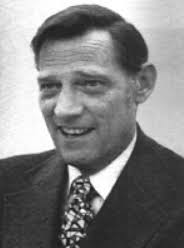
David Phillips 
Anne Goodpasture The two documents referred to earlier deepen this mystery. On November 23, 1963, CIA officer Richard Helms forwarded the above-mentioned memo to the Director of the FBI, J. Edgar Hoover. In it Helms wrote that voice comparisons made of phone intercepts at the Russian Embassy in late September and early October indicated that these conversations are “probably the person who identified himself as Lee Oswald on 1 October 1963.” There are two serious problems with this statement by Helms. First, the CIA officer in Mexico City, David Phillips, would later tell the HSCA that no voice comparisons were made, since the tapes had routinely been destroyed within seven or eight days of their origination. (Destiny Betrayed, Second Edition, p. 354) This is, in fact, what the first cable [MEXI 7023, 11/23/63, para 2] from Anne Goodpasture suggested, at least for the 9/28 recording. Goodpasture then followed this with another cable [MEXI 7025, 11/23/63, para 4] suggesting that it was the translator (Boris Tarasoff) of the two calls who connected the two speakers, i.e., that he “recognized” the 10/1 caller to be the same as the 9/28 one. Tarasoff, however, testified to the HSCA that he did no voice comparisons per se (see further Oswald, The CIA and Mexico City, pp. 164-167).
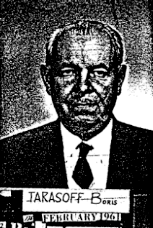
Boris Tarasoff But secondly, and perhaps more importantly, the FBI had already discovered on the day they got the Helms memo that the voice on the tape was not the same as that of the man held in custody in Dallas. In fact, Hoover had already memorialized that fact in a memorandum, and also in a phone call with President Lyndon Johnson. (Destiny Betrayed, p. 357) So where did Helms get his information from? And what was it based on? And why in heaven’s name is the MSM reporting that it was Oswald in communication with the Russian embassy, when the FBI determined that the voice on the tapes was not him? But further, the other document shows us that the CIA informants inside the Cuban embassy had told the Agency they had no knowledge of a visit by Oswald at any time. These kinds of evidentiary problems have led some to believe, with justifiable cause, that Oswald was impersonated, both at the consulates and on the phone, in Mexico City. But if the public is not informed of the facts in these documents then they cannot even begin to comprehend that thesis.

Nikita Khrushchev with JFK 
Washington correspondent
Drew PearsonOr the following fact: the CIA knew that Russian Premier Nikita Khrushchev did not believe the official story about Oswald and, in fact, was quite dismissive about it in discussions with Washington reporter Drew Pearson. Pearson and his wife had met Khrushchev and his wife in late May, 1964, while on vacation in Cairo. Pearson met with the CIA station chief there afterwards and told him about their conversations on the subject and how Khrushchev did not believe American security forces could be so inept. Pearson added that he could make no headway at all trying to change the Russian couple’s understanding. The Russian leader thought a right-wing coup had taken place. Apparently, Khrushchev felt this way from the start, since there is the previous report from December 6, 1963, that the KGB was trying to tell President Johnson, Chief Justice Earl Warren and Attorney General Robert Kennedy that no stone should be left unturned in their inquiry into Kennedy’s assassination. This report joins others on Charles DeGaulle, Fidel Castro, and Achmed Sukarno, adding to the list of world leaders who did not believe the lone gunman solution to the assassination.

DeGaulle, Sukarno and Castro all questioned the lone gunman explanation
Let us step back now a moment to review how we have arrived at our present state of knowledge. In 1998 the Assassination Records Review Board (ARRB) closed its doors after four years. It had been created due to the uproar over Oliver Stone’s film JFK. At the end of that film, it was revealed that the files of the 1979 House Select Committee on Assassinations (HSCA)—the last inquiry into Kennedy’s death—were classified until 2029. Few people knew about this massive classification, or that the HSCA had concluded that Kennedy was killed as a result of a probable conspiracy. Assaulted by thousands of phone calls and telegrams due to their exposure to these facts, Congress created the ARRB to begin to declassify two million pages of Kennedy assassination related documents.

John Tunheim and members of the ARRB meet with President Clinton It is clear today that the Board had neither the lifespan nor funding to properly complete its assignment. That assignment was not only to declassify all federal files, but also to search other repositories and seek out hidden pieces of evidence that could elucidate the circumstances of Kennedy’s murder. For the last three weeks—actually longer—we have been watching the leftover residue of their work, which results from the fact that the enabling legislation for the Board said there should be nothing still withheld 25 years after the law was passed in 1992. This clause in the legislation is what this furious debate has been all about.
The MSM did an unsatisfactory job in covering the four-year life of the Board. There were some rather sensational discoveries unearthed by that body. Some authorities would state that this new information altered the calculus of the Kennedy case. But the public never heard of it because the MSM either did not know about it, or they did know about it and failed to make it public. (See “The State of the JFK Case 50 Years Out”)
That poor prior performance has been repeated for the last three weeks. It spiraled upward into a paroxysm of chattering nabobs on Thursday, October 26th. The congressional legislation that gave birth to the Board allowed them to, at their close, grant what they called “postponements” to certain documents: that is, a document’s release would be delayed for say two years or ten years. The most sensitive documents would be given the longest postponement, which would be 25 years past the signing of the legislation, i.e., October 26, 2017. The most commonly based exemptions were if a document endangered an agent’s identity, or if it could cause the exposure of an ongoing operation. The usual numbers given for such 20-year postponements are 3,571 documents withheld in full, and approximately 32,900 still redacted in part. This past July, Martha Murphy, who is running the release project at the National Archives, declassified 441 documents in full. On October 26, contrary to what was commonly passed off in the media, there were only 52 of those documents released to the public. In the two releases since, there have been very few added to that sum. As of today, there are still over 2,700 JFK classified documents that the public has never seen!

Rex Bradford These numbers come from Rex Bradford at the Mary Ferrell Foundation, and Gary Majewski, who has been a consultant on this project at the kennedysandking.com website. They have been confirmed by Jim Lesar, a Washington Freedom of Information Act attorney. One reason that the public was so misinformed is that none of the TV hosts consulted with Lesar or Bradford, who know much more about the subject than anyone the MSM used as authorities. In other words, only 52 of the “withheld in full” documents were declassified on Thursday, October 26th; and only 2,800 of the over 28,600 documents “released with deletions” were re-released on that day. What this means is, that amid all of the media hoopla, about 2% of the former, and less than 10% of the latter were finally released. And here we are, 54 years after Kennedy was killed. Twenty years after the Board closed down. In retrospect, what President Trump did was probably about the worst thing he could have done. Because if he had followed the law, it is very likely that everything would have been declassified on that day.

Jim Lesar What makes that failure even more important is another aspect of that Thursday release. Shockingly, several of the 52 withheld in full documents still contained redactions! For instance, a 1975 CIA document describes an Agency training camp set up outside of New Orleans in advance of the Bay of Pigs invasion. In scanning over the document, I have discovered there are easily 25 deletions still in it. The reason the document may be important is that Oswald’s New Orleans friend David Ferrie was one of the trainers at this base, and CIA officer David Phillips—a suspect in the JFK murder—was in charge of sterilizing it after the invasion. (William Davy, Let Justice be Done, pp. 30-31)
But on top of that, many of the released documents are not just redacted; they contain many pages that are completely blank. And the CIA is getting very good at doing this. Now they do not even black out, or white out pages. It looks like they just photocopy a blank page over and over, or cover the entire document page with a blank sheet, so one cannot decipher anything. For example, one CIA document on Jim Garrison is supposed to be 11 pages long. Yet 8 of those pages are blanked out completely.
In addition to that lengthy redaction, there is a fascinating memo from the internal email messages of the ARRB about even more extensive concealment. In a message dated November 14, 1996, the Board is describing its approach to the CIA about documents concerning Clay Shaw and the New Orleans CIA station. In its final paragraph, it is revealed that the Board intended to ask for information about the destruction of Shaw’s 201 file. If this is accurate, then it is something that no one has ever revealed before. The closest anyone has come to it is the discovery in Bill Davy’s book Let Justice be Done that a certain “Y file” of Shaw’s had also been destroyed (p. 200). If both statements are true, and both of these refer to separate files, then they lend credence to what Gordon Novel wrote to researcher Mary Ferrell in a letter during the House Select Committee proceedings in 1977. He stated that during the Warren Commission hearings, the CIA had deliberately concealed Shaw’s true status with the Agency. Novel would appear to be a good source since he was hired by Allen Dulles to infiltrate Garrison’s office (Destiny Betrayed, Second Edition, pp. 232-33).
Beyond the outright concealment of pages or destruction of files, there are documents that the National Archives admits are simply illegible. But they declassify them anyway. Calling them illegible does not do justice to how bad they really are (see this example). Even if one scanned them using OCR software, that would not improve readability, since there is so little to recognize in them.
Another way the law is being circumvented is that in some of these releases the cover sheet describes a report, giving the reader the originating agency, the author and the subject, and listing a page count. But it does not then include the report itself! This has been done several times (see, for example, this CIA file).

Earle Cabell, CIA asset
and mayor of Dallas on 11/22/63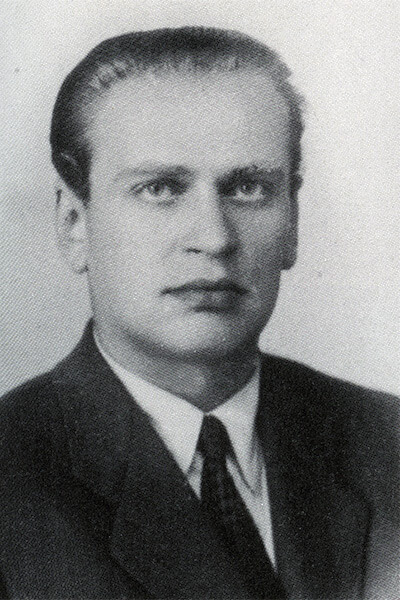
Soviet defector Yuri Nosenko There is still another category of documents that has not been discussed by the MSM. This category was labeled by the Board as “NBR”, Not Believed Relevant. It is fairly clear today that this rubric was abused. For instance, one of the most fascinating July releases was on Earle Cabell, the mayor of Dallas in 1963. It was revealed that he was a CIA asset at the time of the assassination. According to former intelligence analyst John Newman, that document was previously classified as NBR. How anyone could deem such information irrelevant is unfathomable. Lesar told this author that files on Yuri Nosenko were also deemed irrelevant. Nosenko was the Soviet defector who arrived in America in 1964 and said that the KGB had never recruited Oswald while he was in the USSR for approximately three years. CIA officer James Angleton then more or less had him imprisoned and tortured for nearly 36 months to try and make him admit he was sent over to mislead the CIA about Oswald. Author Edward Epstein, an Angleton idolater, wrote a book—Legend—endorsing Angleton over Nosenko and portraying Oswald as a communist spy. Again, it is extremely puzzling to think Nosenko documents would be labeled as irrelevant. Luckily, Murphy declassified many of the Nosenko documents and the Cabell document. But, according to Lesar, there are tens of thousands of these NBR documents that the Review Board allowed to be deferred. They must be located and declassified.
In its vapid coverage of the JFK releases, the MSM largely ignored things that were new and important, and focused, as we have already mentioned, on papers which had been released before in whole or in part. Two of the worst examples of this kind of presentation were by representatives of the so-called New Media, i.e., cable television and online journalism.

Rachel Maddow 
Tom Pettit Rachel Maddow reran a segment that had been filmed back in 1993 featuring deceased newsman Tom Pettit. Pettit visited the National Archives on the first day of the ARRB declassification. He apparently did not understand the difference between documents that were declassified and ones that were already among the exhibits of the Warren Commission, that flawed 1964 investigation into President Kennedy’s assassination, because he pointed to documents in the latter as if they had been newly declassified that day. (See this full report on that segment)

Nicholas Katzenbach On October 27th, Josh Marshall at Talking Points Memo discussed an 11/24/63 memorandum written by FBI Director J. Edgar Hoover (alluded to above) in which he stated that he was concerned that something must be issued in order to convince the public that Oswald is the real assassin. That document is a forerunner to the famous and long ago declassified document which would be typed the next day by Assistant Attorney General Nicholas Katzenbach, who Hoover had talked to the night of the 24th, after Oswald had been shot. Marshall then said that this did not necessarily indicate that Hoover had any doubts about the case and that it was not incriminating of his investigation.

Josh Marshall Apparently, Marshall was unaware of one of the keystones of the JFK case, namely the Single Bullet Theory, aka the Magic Bullet. Hoover never bought into that dictum. Which is why the original FBI report on the JFK case was not included in the Warren Commission volumes. The Warren Commission’s shooting scenario maintains that one shot, aimed at his skull, killed Kennedy; a second shot went through both Kennedy and Texas Governor John Connally, making seven wounds, and smashing two bones in the two men; and one shot missed the limousine by 200 feet, hitting the curb on a different street, and dislodging the concrete upwards, cutting the face of bystander James Tague. Hoover rejected this and said all three shots hit both men in the car. How did he manage to bypass the shot that ricocheted upward and hit Tague? He quite literally erased it. He had it carved out, pasted over and shipped back to Washington. (James DiEugenio, Reclaiming Parkland, p. 252) In other words, Hoover tried to make his verdict stick by altering the evidence. A rather important point which Marshall either is unaware of, or does not want his readers to know about.
The two men who know the state of these documents best, Bradford and Lesar, were nowhere to be seen on the domestic MSM. (Although Bradford did get on abroad.) Instead, we had people like Gerald Posner, Larry Sabato, and Philip Shenon, who conveyed none of the important information that would have explained what was really happening, or what was in the new documents.

Media darlings Gerald Posner, Larry Sabato & Philip Shenon
But there is an even larger story here about the pernicious effects of secrecy and how it has worked in the JFK case. And it’s one that no one has written about. Ramon Herrera is a computer information technology expert with a strong interest in the JFK case. He decided to clone the entire records database of the online JFK collection at the National Archives. He used some revolutionary “scraping” software he developed together with a friend from abroad. The process lasted a week and he repeated it four times, then wrote programs to compare the results, record number by record number, to make sure they were identical. With this exact copy in hand, he then extended the capability which NARA provides by making the field “Current Status” searchable. That allowed him to count the number of records for each of the three categories: “Postponed in Full”, “Released with Deletions” and “Open”. Herrera came up with a remarkable discovery. His number of records classified “Postponed in Full” is over three times as large as the official number: 9,718. One reassuring aspect of his work is that his number of “Released with Deletions” documents is very close to NARA’s. This would seem to indicate that either the Archives records on the JFK case are wrong, or Martha Murphy has not updated her database to insure a proper count of what has been released and what is being withheld.
What all of this reveals is that the ARRB process was, in large part, subverted. The Review Board did some good and valuable work. But as Lesar told this writer, Congress wanted to get rid of the public pressure, but they also wanted to do it fast and cheap. But when one is dealing with a subject that strikes at the heart of the national security state—as the JFK case does—there is no fast and cheap way to approach it. For the simple reason that the executive intelligence agencies understand the technique of waiting an opposing agency out; that is, the CIA knew it was going to be with us long after the Board left. In fact, British researcher Malcolm Blunt found an Agency internal document which contained words to that effect. Written in late 1995, the author wrote that the Agency considered the Board not so much a releasing agency—but as one setting dates for future review: in other words, as a review and postpone apparatus. In many ways, that seems to have been the case, so the Agency packed in as many postponed documents as they could. It also appears that with what President Trump did on October 26th, there will be a lot of court hearings for Jim Lesar to attend to clean up the mess that Trump and the media made of this momentous occasion.
But as Lesar informed me, there might even be instances that he cannot salvage. While trying a case directly related to the ARRB process, the attorney was advised to visit a sitting general. The general told him that after the Board disbanded, there were a lot of burning parties going on in Washington. That is how deep the secrets of the JFK case go in the capital. Which is why the MSM has never been able to deal with the subject.
-

Rachel Maddow, JFK and Easy Money
In the lead up to the final declassification of the long awaited secret files on President Kennedy’s assassination, there were literally dozens of TV broadcast segments alerting the public to what President Trump had decided to do and what it all meant. Not one of these programs went beyond the surface of the event. And most of them relied on nothing but general information, questionable guests, and past clichés about the case to create their segments. Incredibly, the MSM even trotted out Mr. Plagiarism, Gerald Posner, for some appearances. No one noted that Posner has not done any work of the JFK case in twenty years. And his discredited book Case Closed was written and published before the creation of the Assassination Records Review Board (ARRB) in 1994. Therefore, not only was Posner not familiar with the current batch of declassified files, he was not aware of what was in the two million pages declassified from 1994-1998. But that did not stop Michael Smerconish from hosting him on his CNN show as an authority.
But probably the worst of the segments happened to be one of the longest ones, timing in at almost ten minutes. This took place on October 25th, the day before the documents were supposed to be released. It was on MSNBC’s Rachel Maddow Show.
MSNBC has a reputation, and a niche, in cable television as being a liberal haven. Compared to say Fox, that is true. But many would question just how liberal, and honest, the cable network is. For instance, Melissa Harris-Perry was an acute, well-informed host who really tried to book rarely heard voices onto her program. In fact, her show was the only Sunday talk show that did not utilize a majority of white males as guests. After four years, she was forced out in early 2016. She concluded that, since she was an African-American female, they did not want to hear her comments on election returns that year. Try and find anything online, or anywhere else, that Maddow said or wrote about Perry’s highly publicized dispute with management. My other point would be this: How liberal and honest can MSNBC be if Chris Matthews is the longstanding bellwether of the network? This is the man who actually wrote a book—Kennedy and Nixon—that tried to equate the political career of John Kennedy with that of Richard Nixon. He then wrote a completely inadequate biography of JFK. In all the years I listened to the Bay-area blowhard, I never heard anything but inside-the-beltway pabulum from the man. For this he makes five million a year. Nice work if you can get it.
Maddow has followed the Matthews paradigm on the Kennedy case, and she has also steered away from Perry’s dangerous list of guests. Her show on October 25th is a prime exhibit for what is wrong with cable news. It also demonstrates why the so-called cable revolution—begun by Ted Turner back in 1979—has been such a disappointment. Maddow’s program started off with her spoken intro to the subject of the long delayed release of the JFK assassination files. She began by showing footage of Oswald being held in detention. (To her credit, she did say Oswald was the “alleged” assassin.) She then said that as Oswald was being transferred in the basement of the Dallas jail, he was shot and killed. She added that NBC had a reporter there covering that event. His name was Tom Pettit . She then ran the NBC footage of Jack Ruby shooting Oswald. Pettit said three times that “Oswald has been shot”, and he topped it off with, “There’s no question Oswald has been shot.”
After this memorable footage was shown, Maddow said not one word about it. She just left it with Pettit ’s rather vapid and repetitive, “Oswald has been shot.” No comment on how Jack Ruby entered the building, or how the House Select Committee on Assassinations concluded that the Warren Commission was dead wrong when they wrote Ruby came down the Main Street ramp. No observations on how the Dallas Police covered up that Ruby had help entering the building, and that even the Warren Commission suspected such was the case. (Reclaiming Parkland, by James DiEugenio, pp. 229-30) Nor did she mention that the night before, Oswald had attempted to make a call to one John Hurt in North Carolina, a former military intelligence officer. But that call was aborted on orders of the Secret Service. Nor did she say that Ruby had called the police the night before and warned dispatcher Billy Grammer not to transport Oswald the next day or “We are going to kill him.” (ibid, p. 224, italics added) Maddow did not even state that this event meant there would be no trial for Oswald, and thus he would not have any defense against the Dallas Police charges. Nor did she say that when the Warren Commission was constructed, they failed to give Oswald any defense at all, while violating almost every protection constitutionally afforded to the accused.
Instead of any of that, which seems pretty important in setting the table for the JFK case, what did Maddow talk about instead? Well, Maddow seems to think Tom Pettit is more important then the murder of Oswald by Jack Ruby. She now mentioned his presidential interviews and some of the broadcast awards he had garnered. She chose to do that because she wanted to set up something that was really kind of inexcusable. The Pettit synopsis was used to bridge the time gap from 1963 to the release of Oliver Stone’s film JFK in 1991. She described the film as positing a theory for a broader conspiracy in the Kennedy case. She then added that there had always been theories like that, without describing any of the evidence that Stone’s film advanced. Including how Ruby actually did get into the police basement.
Our hostess then added that Stone’s film caused the enactment of the JFK Act in 1992. But she did not say that the last title card of the film noted that the files of the House Select Committee on Assassinations—which shuttered in 1978—were classified for over fifty years. The exposure of that fact embarrassed some of the people who were involved with that classification, like Committee Chairman Louis Stokes. And this caused hearings to be held on Capitol Hill to declassify the remaining files and let Americans see what was being kept secret. Besides missing much of that, she then added something completely unwarranted. She said the idea behind this law was to “tamp down some of the assassination conspiracy theories”. The idea behind the law was to eliminate the secrecy that enshrouded one of the most pivotal events of the second half of the twentieth century. To let the public in on what, until then, only certain people in the executive intelligence community were allowed to know. And thus let the public make up its own mind about the matter. The irony of her pronouncements here is that they were all done against the background of scenes from Stone’s film.
From here, Maddow then segued to 1993. And we now saw why she built up Tom Pettit . Because she now cuts to Pettit ’s original segment from the first day that the JFK Act declassified any of the long secret files. This was before the Assassination Records Review Board was even constructed. Consequently, if one attempted on that day to see these files, more often than not, what you would get is a RIF notice. Which meant that the file had been tagged by its originating agency—be it the FBI, CIA, or State Department—and it would remain secret until the yet to be appointed Review Board ordered it declassified. And the vast majority of the 2 million pages that were to be declassified had to go through that process.
Why did she choose to show this particular report? Because Pettit ’s segment is pretty much worthless. He shows us documents that he does not even know had already been declassified and are a part of the Warren Commission volumes. And he relates facts that anyone with any familiarity with the case would have already known. For example, that Oswald had defected to the Soviet Union and returned with a Russian wife. Pettit would then smugly and stupidly say, “We already knew that.” Which would be a little like saying that President Kennedy was killed in Dallas in 1963; but we already knew that.
Pettit began his report by saying the documents released that day showed that the CIA was deeply involved in the JFK investigation. This is false on two counts. The two chief investigative arms of the Warren Commission were the FBI and the Secret Service. The CIA was mainly involved with Oswald in Russia and Mexico. (And also trying to get information on foreign authors the Commission wanted to discredit, like Thomas Buchanan and Joachim Joesten.) What is quite puzzling about the Warren Commission is that the CIA produced little about Oswald in either country. In fact, as was demonstrated in the documents released this past July by the National Archives, the Agency, in the immediate days after the assassination, could not find any evidence that Oswald had been in Mexico City. This failure was driving them to distraction. Because they were stuck with audiotapes, allegedly of Oswald’s voice, in the Cuban and Russian consulates in Mexico City. So the question now became: How did the CIA capture his voice, but have no evidence he was there? And the answer to this was that—as the FBI soon discovered—it was not Oswald’s voice on the tapes. So the Agency decided to turn over this evidentiary problem about Oswald being in Mexico City to their friends in the Mexican government, specifically the Interior Department.
Yet, in another document released this past July—which Maddow or her staff could have easily attained—it is shown that the men involved in running that investigation were not at all cooperative with the Warren Commission representatives sent to investigate the crime. In fact, as the rough draft of Commission lawyer David Slawson’s report reveals, he, William Coleman and Howard Willens were given the run around by the officers running the Mexican arm of the investigation. (Slawson Report “Trip to Mexico City” 4/22/64) This is an important point that was smudged in the final draft of Slawson’s report, which was declassified twenty years ago by the ARRB. Again, Maddow’s staff could have easily gotten hold of that report, too. The reports would have shown that the three Warren Commission representatives had all of one meeting with the man running the inquiry in Mexico. That man, Luis Echeverria, would soon become the President of Mexico.
In reading that rough draft, they also would have learned that CIA station chief Winston Scott lied to the Commission attorneys on a key point: Namely, why he could produce no pictures of Oswald in Mexico City. (Slawson report, p. 25) Scott told his visitors that the reasons there were no photos were that the CIA was limited to daylight hours, there was not enough manpower, lack of funds, and no artificial light. This was nonsense. To take just one example: the Soviet consulate was covered by (at least) two cameras. One operated from 2 PM until darkness each day except Sunday (when the consulate was not open). The other operated from dawn to 2 PM, except Sunday. Since today we know that Oswald was supposed to be at the Soviet consulate on Friday and Saturday before 2 PM, the CIA should have four photos of him. (See John Newman, Oswald and the CIA, p. 356; DiEugenio, p. 292) Scott was blowing smoke at the Commission—which is understandable on his part. What is not understandable is that the three investigators readily accepted it.
But since neither Maddow nor her staff has looked at these July 2017 hidden files, she sticks with Tom Pettit back in 1993. What does Tom tell us? Well, I hate to inform Rachel of this, but Tom misinformed his audience. He told them that in these declassified files it is revealed that Oswald returned home by bus from Mexico City under the name of H. O. Lee. Tom is wrong here on two points. That information was not declassified in 1993. It is in the Commission volumes, labeled as Commission Exhibit 2530 Commission Exhibit 2530. So when Pettit then adds his refrain, “We already knew that.” Well duh? Tom, it’s in the 26 volumes, so why are you showing it to us? But there is something even worse about CE 2530, and Pettit was not going to tell us about it. And Maddow’s staff did not fact check his 24 year old report.
As noted above, the CIA decided to solve its problem about Oswald being/or not being in Mexico City by turning over its inquiry to Echeverria, who was a friend and colleague of Scott. (Jefferson Morley, Our Man In Mexico, pp. 262, 275) The FBI did not join this inquiry until February. A point that surprised even the Commission lawyers in Mexico. (Slawson rough draft, p. 65) When the Bureau did finally arrive, they had problems with what Echeverria had done. For instance, there was no record of Oswald leaving Mexico through the border by bus, but there was a record he left by car. (FBI cable to Mexico City 3/12/64) The Bureau did not want that information to stand because Oswald had no car and probably could not drive, implying Oswald was with someone. After a while, the FBI finally thought they located the buses Oswald used to leave Mexico. But they could not locate his name on a bus manifest. (ibid) Through a confidential informant, they then discovered that his name was supposed to be on a reservation request made out by a travel agency. But when they found the travel agency and the reservation number, the woman said that particular form was blank. Then another confidential source showed up at the travel agency and discovered a carbon of this form with O. H. Lee’s name on it. But when the FBI checked on the exchange of this form for a ticket, the attendant said the man she recalled exchanging it was tall with a great deal of hair. This could not have been Oswald. (John Armstrong, Harvey and Lee, p. 685)
This is what Tom Pettit did not tell us about “what we already knew” because he didn’t know it. And this is the quality of the fact-checking Maddow’s staff did. If you can believe it, based on Pettit ’s fraudulent first day report, Rhodes scholar Maddow labeled the entire ARRB process “a bust”. This about a four year long inquiry that declassified 2 million pages of documents, produced Chief Counsel Jeremy Gunn’s milestone inquiry into the medical evidence, and yielded a largely unredacted version of the finest study of Mexico City, the HSCA’s Lopez Report. That report makes Slawson’s two Mexico City reports look like kindergarten coloring books. But again, the viewer does not know this since Maddow and her staff likely never read the Lopez Report. Which, again, they could have easily secured if they called the National Archives.
Maddow concluded by guesting another alleged authority, author and former New York Times reporter Philip Shenon; even though Shenon had been on MSNBC three days earlier. One thing she could have asked Shenon is: Why in your book A Cruel and Shocking Act, do you say that Earl Warren, in some kind of deal with the Kennedys, refused to have the Commission look at the autopsy X rays and photos? First of all, the Kennedys had no control over the autopsy evidence in 1964; it was the property of the Secret Service. Secondly, during an exchange in the Commission’s executive session hearings, it was revealed to John McCloy that the Commission did have a secured room that housed this evidence. (Gerald McKnight, Breach of Trust, p. 171)
But there is no way she was going to ask Shenon about the problems with his book. She then began to characterize those interested in this subject as being “crazy” about the next day’s release. There was not one comment on why on earth it would be necessary to keep 3100 files and tens of thousands of documents secret 54 years after Kennedy was killed. In other words, it was the critics who were touched, not those who want secrecy ad infinitum. When she asked Shenon just what was going to be released, he escaped into some gas about how much the government knew about Oswald. When in fact, just by looking at the National Archives spreadsheet, one can see that there are documents on the CIA/Cuban exile base JM/WAVE, the alleged CIA assassination program ZR/Rifle, and files on suspects like Bill Harvey, David Phillips, Howard Hunt and James Angleton. Harvey, Phillips and Hunt were all in Dallas in November for no apparent reason.
But Shenon was allowed to spew his usual pap about how the CIA and FBI somehow knew that Oswald was talking about killing the president in advance. As I showed near the end of my review of Shenon’s ersatz book, the evidence he uses for this was all created after the fact by the most dubious sources and in the most dubious places. And it has been decimated by experts like John Newman and Arnaldo Fernandez.
The wrap up to all this was so condescending, it was almost a parody. Maddow asked Shenon something like: how much crazinesss do you expect about this tomorrow? (The second time she used the C-word in regard to those who are interested in the case.) And also, do you expect a lot of tumult tomorrow? To which Shenon said, sight unseen, that a lot of the documents should be difficult to decipher, but it would be like Christmas for the army of conspiracy theorists looking for material to support their concepts. When I used the word parody above, I meant that the back-and-forth was parodic of the two conversants. Because Maddow never asked Shenon about his bizarre theory that somehow Castro controlled Oswald through Silvia Duran in Mexico City at the Cuban consulate and she knew he was ready to strike for Fidel.
But if Maddow and her staff had done their homework, and really wanted to educate and interest their audience, she would have confronted Shenon with a record declassified this past July. It was an FBI document, dated February 1, 1967. The Bureau’s William Brannigan had discovered through the CIA that Shenon’s employer, The New York Times, had now lost faith in the Oswald-did-it confection. They were now engaged in a “special project involving a full-scale exposé of the Warren Report.” The memo said that this Times project would conclude that the Commission’s conclusions were not reliable. That investigative project was never enacted. And one can only guess that when the Agency got that report, they forwarded it to former Warren Commissioner Allen Dulles, who got in contact with Arthur Sulzberger, publisher of the Times, because Dulles was a good friend of the family. Since Maddow is part of that mediaocracy, this would have been too far outside the confines for her to bring up. In fact it would have blown up the whole segment.
Maddow’s show was pretty much symptomatic of the MSM’s attitude toward these releases. It was Leslie Nielson/Frank Drebin time from The Naked Gun. Well if you ignore what happened in Vietnam, Cambodia and Indonesia just two years after Kennedy was killed, then yep it’s just a board game for kids on Christmas. But personally, I think it’s pretty difficult to ignore the deaths of about 5.5 million people, most of them innocent, defenseless civilians. It’s like asking someone to forget about the Holocaust.
What these shows do is all too easy. In this one Maddow’s staff fished out some archival footage from NBC, did some research on Pettit, got permission to show parts of JFK and called up Shenon. As shown above, it results in nothing but aimless and uninformed banter. Great for the highly paid participants, but a disservice to the causes of public information, history and democracy. On this issue, all of these recent programs, not just Maddow’s, are pretty much indistiguishable from the likes of Bill O’Reilly or Sean Hannity. In the cause of journalistic irresponsibility, on the subject of JFK, left meets right. The hosts and producers simply don’t know anything and really don’t care to learn. Which is bad since, as shown above, it is an epochal subject. But unfortunately, it strikes at the feet of the Power Elite, the one that Shenon and Maddow work for and prosper at.
I don’t really mean to single out Maddow. As I said, I did not see one good program in this ongoing boring and ultimately stultifying circus. But I did want to show that even some of the most promising figures in the media have succumbed to the radioactivity of the JFK case. Maddow attended Stanford and Oxford. She has a Ph. D. in philosophy. But as director Martin Ritt once said of actor Richard Burton, “I don’t care how talented he is. It’s how he uses that talent that concerns me.” Whatever promise Maddow showed in her early days back at WRSI in Northampton Mass. or at Air America, she has now settled into a formulaic, smooth oiled-rail routine at MSNBC. I’d wish her well on that success, but it’s not the success I had imagined for her.


