Tag: FBI

  • Part 2 of 6: Jack Ruby, the Dallas Police and Oswald’s Rights

    Part 2 of 6: Jack Ruby, the Dallas Police and Oswald’s Rights


    11. The Secret Service and The Picket Fence.

    “The Secret Service agents assigned to the motorcade remained at their posts during the race to the hospital. None stayed at the scene of the shooting, and none entered the Texas School Book Depository Building at or immediately after the shooting. Secret Service procedure requires that each agent stay with the person being protected and not be diverted unless it is necessary to accomplish the protective assignment. Forrest V. Sorrels, special agent in charge of the Dallas office, was the first Secret Service agent to return to the scene of the assassination, approximately 20 or 25 minutes after the shots were fired.” (WCR; p. 52.)

    When Sorrels testified before the Commission, he agreed with that time interval. (Volume VII; p. 347/348.)

    With the facts established regarding the movements of the Secret Service after the assassination, it is important to consider the following testimonies of Dallas Police Officers Smith, Weitzman, and Harkness along with a witness, Mrs Jack Frazen. These individuals testified or gave depositions, that in the immediate aftermath of the President’s murder, they each encountered individuals who claimed to be agents of the Secret Service and, in some instances, even produced Secret Service credentials.

    Joe Marshall Smith testified under oath that he encountered men claiming to be Secret Service behind the picket fence in the immediate aftermath of the assassination.

    Joe Marshall Smith. “Yes, sir: and this woman came up to me and she was just in hysterics. She told me, “They are shooting the President from the bushes.” So, I immediately proceeded up here [Grassy Knoll]”
    Wesley Liebeler. “You proceeded up to an area immediately behind the concrete structure here that is described by Elm Street and the street that runs immediately in front of the Texas School Book Depository, is that right?”
    Joe Marshall Smith. “I was checking all the bushes and I checked all the cars in the parking lot.”
    Wesley Liebeler. “There is a parking lot in behind this grassy area back from Elm Street toward the railroad tracks, and you went down to the parking lot and looked around?”
    Joe Marshall Smith. “Yes, sir; I checked all the cars. I looked into all the cars and checked around the bushes. Of course, I wasn’t alone. There was some deputy sheriff with me, and I believe one Secret Service man when I got there. I got to make this statement, too. I felt awfully silly, but after the shot and this woman, I pulled my pistol from my holster, and I thought, this is silly, I don’t know who I am looking for, and I put it back. Just as I did, he showed me that he was a Secret Service agent.”
    Wesley Liebeler. “Did you accost this man?”
    Joe Marshall Smith. “Well, he saw me coming with my pistol and right away he showed me who he was.”
    Wesley Liebeler. “Do you remember who it was?”
    Joe Marshall Smith. “No, sir; I don’t-because then we started checking the cars. In fact, I was checking the bushes, and I went through the cars. and I started over here in this particular section.” (Volume VII; p. 535.)

    Officer Smith said to the Texas Observer that after the assassination “A woman came up to me in hysterics. She said they’re shooting at the President from the bushes, and I just took off. A cement arch stands between the depository building and the underpass. On the underpass side of the arch, there is a fence that lets through almost no light and is neck-high; an oak tree behind the fence makes a little arbor there. A man standing behind the fence, further shielded by cars in the parking lot behind him, might have had a clear shot at the President as his car began the run downhill on Elm Street toward the underpass. Patrol-man Smith ran into this area. I found a lot of Secret Service men I suppose they were Secret Service men and deputy sheriffs and plain-clothes men, he said. He was so put off by what the woman had said—he didn’t get her name—that he spent some time checking cars on the lot, he said. He caught the smell of gunpowder there. he said: “a faint smell of it—I could tell it was in the air…a faint odour of it.” (Texas Observer; 13th December 1963, p. 9.)

    Smith characterized the Secret Service imposter in this way:“He looked like an auto mechanic. He had on a sports shirt and sports pants. But he had dirty fingernails, it looked like, and hands that looked like an auto mechanic’s hands. And afterwards it didn’t ring true for the Secret Service. At the time we were so pressed for time, and we were searching. And he had produced correct identification, and we just overlooked the thing. I should have checked that man closer, but at the time I didn’t snap on it.” (Anthony Summers, Not In Your Lifetime; p. 57)

    Seymour Weitzman testified that he encountered men claiming to be Secret Service behind the picket fence.

    Joseph Ball. “Did you go into the railroad yards”
    Seymour Weitzman. “Yes sir”
    Joseph Ball. “What did you notice in the railroad yards?”
    Seymour Weitzman. “We noticed numerous kinds of footprints that did not make sense because they were going different directions”
    Joseph Ball. “Were there other people besides you?”
    Seymour Weitzman. “Yes sir; other officers, Secret Service as well, and somebody started, there was something red in the street and I went back over the wall and somebody brought me a piece of what he thought to be a firecracker and it turned out to be, I believe, I wouldn’t quote this, but I turned it over to one of the Secret Service men and I told them it should go to the lab because it looked like human bone.” (Volume VII; p. 107)

    Mrs Jack Frazen. According to an FBI report dated 11/22/63 Mrs Franzen had: “observed police officers and plain-clothes men, who she assumed were Secret Service Agents, searching an area adjacent to the TSBD Building, from which area she assumed the shots which she heard had come.” (Volume XXIV; p. 525.)

    D. V. Harkness testified that 6 minutes after the assassination he had encountered men at the back of the Texas School Book Depository who claimed to be Secret Service.

    David Belin. “Was anyone around in the back when you got there?”
    D. V. Harkness. “There were some Secret Service agents there. I didn’t get them identified. They told me they were Secret Service”. (Volume VI; p. 312.)

    Jesse Curry. “I think he must have been bogus. Certainly, the suspicion would point to the man as being involved, some way or other, in the shooting since he was in an area immediately adjacent to where the shots were and the fact that he had a badge that purported him to be Secret Service would make it seem all the more suspicious.” (Not In Your Lifetime; p. 58)

    According to the Warren Commission’s own findings, the individuals encountered by these witnesses could not have been genuine Secret Service agents. These encounters occurred prior to the return of Forrest V. Sorrels to Dealey Plaza. The presence of these impersonators raises important questions for the case. Who were these individuals claiming to be Secret Service agents? What was their motive or purpose in impersonating members of the Presidents security detail in the immediate aftermath of the President’s murder?

    12. The Testimony Which Negates the Single Bullet Theory.

    Commission Conclusion: “Although it is not necessary to any essential findings of the Commission to determine just which shot hit Governor Connally, there is very persuasive evidence from the experts to indicate that the same bullet which pierced the President’s throat also caused Governor Connally’s wounds.” (WCR; p. 19.)

    The Testimonies of John & Nellie Connally Which Refute the Commission Conclusion.

    Mrs Connally. “When we got past this area I did turn to the President and said Mr President, you can’t say Dallas doesn’t love you. Then I don’t know how soon, it seems to me it was very soon, that I heard a noise, and not being an expert rifleman, I was not aware that it was a rifle. It was just a frightening noise, and it came from the right. I turned over my right shoulder and looked back and saw the President as he had both hands at his neck.”
    Arlen Specter. And you are indicating with your own hands, two hands crossing over gripping your own neck?
    Mrs. Connally. Yes, and it seemed to me there was—he made no utterance, no cry. I saw no blood, no anything. It was just sort of nothing, the expression on his face, and he just sort of slumped down. Then very soon there was the second shot that hit John. As the first shot was hit, and I turned to look at the same time, I recall John saying “Oh, no, no, no.” Then there was a second shot, and it hit John, and as he recoiled to the right, just crumbled like a wounded animal to the right he said, “My God, they are going to kill us all. (Volume IV, p. 147.)Picture1

    Governor Connally.

    ArlenSpecter. “As the automobile turned left onto Elm from Houston, what did occur there, Governor”?
    Governor Connally. “We had, we had gone, I guess, 150 feet, maybe 200 feet, I don’t recall how far it was, heading down to get on the freeway, the Stemmons Freeway, to go out to the hall where we were going to have lunch and, as I say, the crowds had begun to thin, and we could, I was anticipating that we were going to be at the hall in approximately 5 minutes from the time we turned on to Elm Street. We had just made the turn, well, when I heard what I thought to be a rifle shot. I instinctively turned to my right because the sound appeared to come from over my right shoulder, so I turned to look back over my right shoulder, and I saw nothing unusual except just people in the crowd, but I did not catch the President in the corner of my eye, and I was interested, because I immediately, the only thought that crossed my mind was that this is an assassination attempt. So, I looked, failing to see him, I was turning to look back over my left shoulder into the back seat, but I never got that far in my turn. I got about in the position I am in now facing you, looking a little bit to the left of centre, and then I felt like someone had hit me in the back.”
    Arlen Specter. What is the best estimate that you have as to the time span between the sound of the first shot and the feeling of someone hitting you in the back which you just described?
    Governor Connally. “A very, very brief span of time. Again, my trend of thought just happened to be, I suppose along this line, I immediately thought that this—that I had been shot. I knew it when I just looked down and I was covered with blood, and the thought immediately passed through my mind that there was either two or three people involved or more in this or someone was shooting with an automatic rifle. These were just thoughts that went through my mind because of the rapidity of these two of the first shot plus the blow that I took, and I knew I had been hit, and I immediately assumed, because of the amount of blood, and, in fact, that it had obviously passed through my chest, that I had probably been fatally hit.”

    To say that they were hit by separate bullets is synonymous with saying that there were two assassins.” Norman Redlich, Commission Counsel. (Inquest; p. 43 Volume IV, P132-133, watch this)

    13.Truth Is Our Only Client Here?

    “If this is truth, then black is white. Night is day. And war is peace. This is not truth. This is a false document.” Sylvia Meagher.

    Although Robert Kennedy openly endorsed the Warren Commission Report, he held a privately disdainful perspective towards it. RFK had derisively dubbed the extensive 888-page prosecutorial brief a: “shoddy piece of craftsmanship.” Moreover, the southern wing of the Commission, namely Senators Richard Russell, John Sherman Cooper, and Representative Hale Boggs, openly challenged the cornerstone of the Commission’s case: the Single Bullet Theory, expressing their significant dissent.

    John Sherman Cooper. “I could not convince myself that the same bullet struck both of them. No, I wasn’t convinced by [the SBT]. Neither was Senator Russell.” (James DiEugenio, JFK Revisited, pp. 30-31)
    John Sherman Cooper. “I, too, objected to such a conclusion; there was no evidence to show both men were hit by the same bullet.” (Edward Epstein, Inquest; p.149-150)
    Hale Boggs. “I had strong doubts about it [the single bullet theory], the question was never resolved.” (Inquest; pp.149-150)

    In a declassified telephone conversation with President Johnson, Russell expressed his frustration with the Commission’s proceedings.

    Richard Russell. “Now that damned Warren Commission business whupped me down so, we got through today and I just, you know what I did? I went over, got on the plane and came home and didn’t even have a toothbrush, I didn’t bring a shirt, I got a few little things here, I didn’t even have my pills, my anti histamine pills.”
    Lyndon Johnson. “Why did you get in such a rush?”
    Richard Russell. “Well, I was just worn out fighting over that damned report”.
    Lyndon Johnson. “Well, you got to take an hour out…to get your clothes.”
    Richard Russell. “Well, they were trying to prove that the same bullet that hit Kennedy first was the one that hit Connolly…went through him, through his hand, his bone, into his leg, everything else…just a lot of stuff that… I couldn’t hear all of the evidence and cross examine all of them but I did read the record and so I just I don’t know… but I was the only fellow there that practically requested any changes and what the staff got out of it…this staff business always scares me, I like to put my own views down…But we got you a pretty good report”
    Lyndon Johnson. “Well what difference does it make which bullet got Connally?”
    Richard Russell.“Well, it don’t make much difference but they said that they believed…that the Commission believed that the same bullet which hit Kennedy hit Connolly… well I don’t believe it.”
    Lyndon Johnson. I don’t either.”
    Richard Russell. “And so, I couldn’t sign it…. And I said that Governor Connolly testified direct to the contrary and I am not going to approve of that. So, I finally made them said that there was a difference in the Commission in that. Part of them believed that was not so. Course if a fellow was as accurate enough to hit Kennedy right in the neck on one shot and knock his head off with the next one…. Well, he didn’t miss completely with that third shot. But according to their theory he not only missed the whole automobile, but he missed the street. Well, if a man is a good enough shot to put two bullets right in Kennedy, he didn’t miss that whole automobile, nor the street.”

    These insights from the conversation between Russell and Johnson highlight the dissenting opinions and doubts surrounding the Single Bullet Theory within the Commission. It becomes apparent that the Warren Commission Report faced internal criticism and concerns regarding its findings. (read this, watch this and this)

    14. Jack Ruby and The Dallas Police Department.

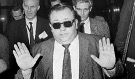
    Picture2Dallas Police Chief Jesse Curry. “A great deal has been written about the relationship of the Dallas Police Department with Jack Ruby. We have twelve hundred men in our department, and we had each man submit a report regarding his knowledge or acquaintance with Jack Ruby. Less than fifty men even knew Jack Ruby. And less than a dozen had ever been in his place of business. Most of these that had been in his place of business had been in there because they were sent there on investigations or had answered a call for police service. I believe there was four men in our department that we were able to determine had been there socially. That is off duty. That were present in his nightclub.”


    Numerous witnesses have attested to the fact that Jack Ruby was a well-known associate of the Dallas Police Department. Many officers, detectives, and personnel were familiar with Ruby due to his frequent visits to police headquarters and his connections within the city’s nightclub and entertainment industry. Below I have reproduced just some of the testimony on the record, relating to Ruby’s acquaintance with the Dallas Police Department.

    Nancy Hamilton Former Employee of Ruby.

    Mark Lane. “Were you employed by Jack Ruby”?
    Nancy Hamilton. “Yes, I was. This was in 1961 in Dallas at his club The Carousel and I was bartender, waitress and rather the manager there”.
    Mark Lane. “How did you get that job”?
    Nancy Hamilton. “Well, I had gone into Dallas not knowing anyone and of course the first place I went was the Police Department and uh they were very kind and got me the job there”.
    Mark Lane. “They got you the job at Jack Ruby’s”?
    Nancy Hamilton. “Yes, they did”.
    Mark Lane. “Did they know Ruby”?
    Nancy Hamilton. “Personally, oh yes very well, vouched for him…wonderful person…great man…well known by the Dallas Police Department.”
    Mark Lane. “Other than Dallas Police officers what officials did frequent Ruby’s establishment”?
    Nancy Hamilton. “Oh…such as your District Attorney which would be Mr Wade”.
    Mark Lane. “How many police officers do you estimate Jack Ruby knew on a personal level”?
    Nancy Hamilton. At least half and probably two thirds”.
    Mark Lane. “There were almost twelve hundred police officers in Dallas in 1963. Would you say Ruby knew six hundred of them”?
    Nancy Hamilton. “Oh easily.”

    Nancy Hamilton/Rich also reiterated to the Warren Commission the extent of Ruby’s popularity with the Dallas Police.

    Nancy Rich. “There is no possible way that Jack Ruby could walk in Dallas and be mistaken for a newspaper reporter, especially in the police department. Not by any stretch of the imagination.”
    Leon Hubert. “Is that your opinion?”
    Nancy Rich. “That is not my personal opinion. That is fact.”
    Leon Hubert. “Well, on what do you base it?”
    Nancy Rich. “Ye gods, I don’t think there is a cop in Dallas that doesn’t know Jack Ruby. He practically lived at that station. They lived in his place. Even the lowest patrolman on the beat…knew him personally” (Volume XIV; p. 359.)

    Mr Johnson Former Employee of Ruby.

    Mark Lane.“Did Ruby know many Dallas Police officers”?
    Mr Johnson. “Well yes, he did. I’d say he knew ah probably half of the people on the force”.
    Mark Lane.
    “There were about Twelve hundred police officers on the force”.
    Mr Johnson. “Yes, well I am sure he knew about half of them, and he was very nice to them.”

    Barney Weinstein Manager of The Theatre Lounge.
    “He [Ruby] did know a lot of police. He knew ’em all. He curried their favour all the time.” (Texas Observer, December 13 1963, p. 8.)

    Let us use some specifics, Sgt. Patrick Dean said he knew Ruby for approximately three years. (Vol. II, p. 407) Det. Jim Leavelle testified he knew him for approximately 12 years. (Vol. III, p. 16) Det. L. C. Graves, said he knew him for 10 years. (Vol. XIII p. 9) Officer Blackie Harrison, who Ruby concealed himself behind before shooting Oswald, said he knew him for 12 years. (Vol. XII, p. 237). Lt. Jack Revill also knew him for 12 years. (Vol. XII p. 82)

    If one goes through the volumes of Commission testimony, one will see that Lt. Rio Pierce knew Ruby for a dozen years, Captain O. C. Jones knew Ruby for over ten years, Detective Buford Lee Beaty knew him for a dozen years, Det. Combest knew him for about five years, Det. R. L. Lowery knew him for several years, Sgt. Steele knew him for about 8 years, Lt. W. Wiggins knew him for a number of years, and Detective Clardy knew him for about 8 years. And again, this does not begin to exhaust the number of police who admitted to knowing Ruby.

    Now consider the following exchange between the Commission and Ruby’s friend and roommate George Senator.

    Leon Hubert.“What was Jack Ruby’s attitude toward the police as a group?”
    George Senator. “Well, all I know is apparently he must like them. They always used to come to see him.”
    Leon Hubert. “Tell us about those who came to see him. Do you know who they were?”
    George Senator. “I knew a lot of them by face. I didn’t know them all by name.”
    Leon Hubert. “Did they come frequently?”
    George Senator. “Various ones, yes, every day.” (Volume XIV; p. 213)

    Now consider this statement by Detective Will Fritz.

    Leon Hubert. “Do you know Jack Ruby at all, or did you know?”
    Will Fritz. “Did I know him before; no, sir, I did not… That is the first time I ever saw him, when he was arrested.”(Volume XV; p. 148)

    Travis Kirk, Dallas Attorney, 23 Years.“It is inconceivable that Fritz did not know Ruby. Kirk described Fritz as a domineering, dictatorial officer possessing a photographic memory and a thorough knowledge of the Dallas underworld. In light of Ruby’s reputation and notoriety in Dallas prior to the murder of Oswald… Mr Kirk considers it utterly ridiculous that Captain Fritz might pretend that he did not know Ruby, including physical recognition. Mr Kirk states that he would have to question the veracity of Captain Fritz if Fritz were to disclaim knowledge or recognition of Jack Ruby.”

    Upon his arrest for the murder of Lee Oswald, Ruby exclaimed to the arresting officers: “You all know me, I’m Jack Ruby.” (Volume XII-XIII; p 399, 308, 30.)

    15. ‘The Abortive Transfer’? The Tragic Murder of Lee Oswald.

    “The ACLU hold the Dallas police responsible for the shooting of Oswald, saying that minimum security considerations were flouted by their capitulation to publicity…which exposed Oswald to the very danger that took his life”.

    We Are Going To Kill Him.

    Billy Grammer, a Dallas Police Communications Officer, received an urgent anonymous phone call around 9 pm on November 23, 1963. In an interview for the documentary The Men Who Killed Kennedy, Grammer recalled this incident, saying: “I thought I recognised the voice but at the same time I couldn’t put a face or name with the voice. We talked and he began telling me that we needed to change the plans on moving Oswald from the basement that, uh he knew of the plans to make the move and if we did not make a change the statement, he made precisely was we are going to kill him.” Grammer reported the threat made against Oswald’s life to his superiors. Grammer first learned that Ruby had in fact killed Oswald when he saw it on television the next morning: “No sooner than I had turned it on [TV] and they were telling that Jack Ruby had killed Oswald. Then I suddenly realized, knowing Jack Ruby the way I did, that this was the man I was talking to on the phone last night. At that time, I put the voice with the face, and I knew myself that Jack Ruby was the one that made that call to me the night before. I think it was obvious because he knew me, and I knew him, and he called me by name over the telephone and seeing this and knowing what I knew and what he had said to me it had to be Jack Ruby… He made the statement that we are going to kill him. Which leads me to believe that this was not a spontaneous thing that happened on the spur of the moment he was watching Oswald coming out of the door and all of a sudden, he decided to shoot him. I do not believe that. I think this was a planned event with him being the man to do the shooting.” (watch this)

    Will Fritz. “During the night on Saturday night, I had a call at my home from uniformed captain, Captain Frazier, I believe is his name, he called me out at home and told me they had, had some threats and he had to transfer Oswald… I have always felt that that was Ruby who made that call.” (Volume IV; p. 233)

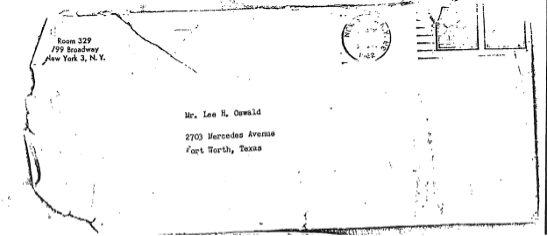
    Officer Perry McCoy testified he got a call a few hours before Oswald was moved and this was from a member of a committee of one hundred, and they had voted to kill Oswald while he was being transferred to the county jail. (Volume XIX; p. 537/538) This same threat was given to the FBI and was sent to the DPD’s William Frazier at about 3:30 in the morning of the 24th. (Volume VII, pp. 53-54)Picture3

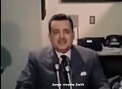
    J. Edgar Hoover

    In a declassified document authored by J. Edgar Hoover and written mere hours after Oswald’s murder, Hoover voiced his frustration towards the Dallas Police Department, blaming them for Oswald’s death despite explicit warnings from the FBI.

    “There is nothing further on the Oswald case except that he is dead. Last night we received a call in our Dallas office from a man talking in a calm voice and saying he was a member of a committee organised to kill Oswald. We at once notified the Chief of Police and he assured us that Oswald would be given sufficient protection. However, this was not done”.

    He continued, “Oswald having been killed today after our warnings to the Dallas Police Department, was inexcusable.” (check this)

    Sheriff Decker and Secret Service agent Forrest Sorrels disagreed with the timing of the transfer and the method. Both men thought a transfer in the middle of the night with no one around would be the proper way to do such an assignment. And Decker though he should be placed him on the floorboard of the car. (Volume XIX, pp. 537-38; Volume XIII, p. 63) Jim Leavelle thought that Oswald should have been led out to Main Street while the crowd had gathered thereby avoiding all the reporters and cameras. (Volume III, p. 17)

    L. C. Graves.“We knew better than to transfer him under those conditions, but we didn’t have any choice.” (watch this)

    The procedure used to transfer Lee Oswald, to the county jail, was fundamentally flawed and, without question, should never have been conducted in the manner that it was. A thorough assessment of the circumstances lays bare distinct irregularities and contradictions employed by the Dallas Police. There is indisputable evidence to show that the strategy employed during Oswald’s transfer was egregiously mishandled, serving as the immediate trigger for his untimely demise.

    Burt Griffin. “Were you given any instructions as to how you should guard him?”
    L. C. Graves. “As I said, I was–told to hold to the arm and walk close to him and Montgomery was to walk behind us and Captain Fritz, and Lieutenant Swain in front of us and that is the way we started out to the elevator, and out of the elevator door over to the jail office”.
    Burt Griffin. “Was there any discussion about staying close to Oswald?”
    L. C. Graves. “We were instructed to stay close to him, yes.” (Volume XIII; p. 5)Picture4

    Failure to Follow Established Security Protocols.
    Lee Oswald’s transfer to the county jail, was supposed to be safeguarded by a four-man protection team. The arrangement included Will Fritz at the forefront, Jim Leavelle handcuffed to Oswald’s right, L.C. Graves handcuffed to Oswald’s left, and L.D. Montgomery covering the rear. As the plan dictated, this team was to escort Oswald from the basement elevator to the ‘awaiting’ squad car. However, almost immediately after entering the basement, Captain Fritz strayed from the established protocol. Instead of maintaining close proximity to Oswald for protection, Fritz positioned himself several feet ahead, effectively abandoning his assigned post. This aberration in formation created an open space, a gap that Jack Ruby exploited to access Oswald.

    Throughout the entire process, Fritz did not check back on Oswald once, which raises concerns about the attentiveness and effectiveness of the protection measures afforded Oswald. Travis Kirk stated to the FBI that: “Anyone not having status in law enforcement or the legal profession who had access to the Dallas Police Department facilities would have to be known to Captain Fritz. Reports from Dallas specify that Ruby did have this access.” Kirk speculated that: “It was to captain Fritz’s advantage that Oswald was killed for it enabled him to close, in Fritz’s words, a murder case based on circumstantial evidence. And that the Oswald case was bound to involve the Dallas Police Department, including Captain Fritz, in controversy for years to come.” Kirk explained that “the Jack Ruby matter, insofar as Captain Fritz is concerned, can be more easily handled by the Dallas authorities.” (read this document and watch this video)

    Permitting Unsecured Crowd Proximity.
    One major issue in question is why any individuals especially newsmen, were permitted to be in such close proximity to Lee Oswald during his transfer. The police, cognizant of the substantial threats to Oswald’s life, should have enforced a secure perimeter around him. This hypothetical exclusion zone would have been monitored by police personnel, ensuring that anyone attempting to breach the boundary and approach Oswald would be immediately intercepted. The lack of such a safety measure raises serious questions about the adequacy of the security protocols during Oswald’s transfer.

    L. C. Graves. “I was under the impression there wouldn’t be any news media inside that rampway, that they would be behind that area over there, but they were in the way. Chief Curry told Captain Fritz that the security was taken care of, that there wouldn’t be nobody in that ramp. Anyway, that cameras would be over behind that rail of that ramp. So, what we expected to find was our officers along the side there, but we found newsmen inside that ramp, in fact, in the way of that car.”
    Burt Griffin. “You say you were quite surprised when you saw these news people?”L. C. Graves. “I was surprised that they were rubbing my elbow. You know,if you saw that film, you saw one of them with a mike in his hand. He actually rubbed my elbow. We were in a slight turn when this thing happened, and my attention had been called to that car door, and this joker was standing there with a microphone in his hand, and others that—I don’t know if they were newsmen—they weren’t officers—had cameras around their necks and everything.” (Volume XIII; p. 7/8)

    Absence of Personal Protective Equipment.
    While the unique circumstances surrounding Oswald’s transfer in 1963 were nothing short of extraordinary, it is nonetheless evident that critical safety measures were conspicuously absent. Oswald, a prisoner under intense scrutiny and heightened danger, was denied essential protective resources, such as body armour, even in the face of palpable threats to his life. While it’s understood that such equipment might not have aligned with the standard protocol at the time, the gravity of the situation undeniably called for extraordinary precautions. The omission of available protective gear, in this case, registers as a considerable oversight. The provision of body armour to Oswald, may have been instrumental in preserving his life.

    Lack of Armed Guard Presence.
    Despite the high-profile nature of Oswald’s case and the known threats against him, he was not escorted by an armed guard during the transfer. The presence of an armed guard could have potentially deterred an assassination attempt, like the one carried out by Ruby.

    Poorly Planned Vehicle Positioning.
    The vehicle intended to transport Oswald to the county jail, was not in the correct position at the time of transfer. This meant that Oswald was exposed to potential threats for a longer period.

    Jim Leavelle.“All right, when we left the jail cell, we proceeded down to the booking desk there, up to the door leading out into the basement, and I purposely told Mr. Graves to hold it a minute while Captain Fritz checked the area outside. I don’t know why I did that, because we had not made any plans to do so, but I said, Let’s hold it a minute and let him see if everything is in order. Because we had been given to understand that the car would be across the passageway.”
    Leon Hubert.
    “Of the jail corridor?”
    Jim Leavelle. “And that, and we would have nothing to do but walk straight from the door, approximately 13 or 14 feet to the car and then Captain Fritz, when we asked him to give us the high sign on it, he said, everything is all set.”
    Leon Hubert.“Did you notice what time it was?”
    Jim Leavelle.“No; I did not. That is the only error that I can see. The captain should have known that the car was not in the position it should be, and I was surprised when I walked to the door and the car was not in the spot it should have been, but I could see it was in back, and backing into position, but had it been in position where we were told it would be, that would have eliminated a lot of the area in which anyone would have access to him, because it would have been blocked by the car. In fact, if the car had been sitting where we were told it was going to be, see, it would have been sitting directly upon the spot where Ruby was standing when he fired the shot.”(Volume XIII; p. 17)

    L. C. Graves.“Well, we got down to the basement. We hesitated on the elevator until Captain Fritz and Lieutenant Swain stepped out. Then we followed them around the outside exit door into the hallway which leads to the ramp and then hesitated there a little bit with Oswald so they could check out there and see that everything was all right, and when we got the go-ahead sign, [from Fritz] that everything was all right we walked out with him… Now, we, Captain Fritz sent Dhority and Brown and Beck on down to the basement in plenty of time to get that car up there for us.” (Volume XIII; p. 7/8)

    L.D. Montgomery. “Captain Fritz stepped out into this door leading out to the ramp… and told us, [to] Come on… Like I say, we came out there. They crammed those mikes over there, and we had to slow up for just a second, because they was backing this car into position. It was supposed to have been in position when we got there, but it wasn’t there, so, we had to pause, or slow down for the car to come on back.” (Volume XIII; p. 28/29)

    Given the high-profile and volatile nature of Oswald’s case, it’s puzzling why Captain Fritz authorized the transfer process knowing full well that the vehicle was not yet in position to receive Lee? An optimally orchestrated transfer would have ensured that the car was situated correctly before initiating the process. Additionally, had the vehicle been correctly positioned, an additional precaution should have entailed stationing an armed police officer at the open door that Oswald was meant to enter. This would have facilitated a seamless and safer transfer from the basement to the vehicle, providing an extra layer of security to Oswald during this crucial process. This measure would have significantly minimized the potential for any unplanned incidents, such as what tragically transpired.

    The Car Horns.
    In an unusual occurrence, a car horn sounds as Oswald is led out into the basement, and again just before Ruby stepped out to shoot Oswald.Jim Di Eugenio points out in Reclaiming Parkland, “Once you’re aware of it, it is almost eerie to watch.” Whilst gravely ill in prison Ruby commented about the horns saying: “If you hear a lot of horn-blowing, it will be for me, they will want my blood.” (Reclaiming Parkland; p. 204)

    The Dallas Police Department, entrusted with Oswald’s safety, displayed an egregious level of negligence. Their missteps weren’t just minor oversights or simple mistakes. They bore the weighty implications of life and death, resulting in the irreversible consequence of a human life lost prematurely.

    Imagine an alternative scenario: Oswald, represented by legal counsel, could have experienced an entirely different outcome. A competent legal representative would likely have challenged the plan to transfer Oswald under such precarious conditions, thus potentially changing the course of history. Yet this was not the case.

    To this day, no one from the higher echelons of the Dallas Police Department has been called to account for their role in the circumstances leading to Oswald’s death. This grave oversight is not just a failure of an individual or a department, but a failure of the justice system itself, a sobering reminder of the devastating consequences when those sworn to protect and serve are negligent of their duties.

    “Who else could have timed it so perfectly by seconds? If it were timed that way, then someone in the police department is guilty of giving the information as to when Lee Harvey Oswald was coming down.” Jack Ruby. (Volume V; p. 206)

    16. Did Ruby’s Life Hinge on Killing Oswald?

    Picture5“Everything pertaining to what’s happening has never come to the surface. The world will never know the true facts of what occurred—my motives. The people have had so much to gain and had such an ulterior motive for putting me in the position I’m in. Will never let the true facts, come above board to the world.” Jack Ruby.

    Following the murder, Ruby was promptly detained and transported to a cell in the city jail. Police Officer Don Archer, who had direct contact with Ruby during this time, reported intriguing observations about Ruby’s behaviour in the aftermath of his arrest.

    Don Archer. “His behaviour to begin with, he was very hyper. He was sweating profusely. I could see his heart. Course we had stripped him down for security purposes and he asked me for one of my cigarettes, so I gave him a cigarette. Finally, uh after about two hours had elapsed, which put it around 1pm the head of the secret service came up and I conferred with him, and he told me that Oswald had in effect died and it should shock him [Ruby] cause it would mean the death penalty. So, I returned and said Jack it looks like its gon be the electric chair for you. Instead of being shocked he became calm, he quit sweating, his heart slowed down, I asked him if he wanted a cigarette, and he advised me that he didn’t smoke. I was just astonished that this was a complete difference in behaviour of what I had expected. I would say that his life had depended on him getting Oswald.” (watch this and this)

    17. The People V. Lee Harvey Oswald.

    “Justice denied anywhere diminishes justice everywhere.” Martin Luther King Jr.

    Commission Conclusion. “The numerous statements…made to the press by various law enforcement officials, during this period of confusion and disorder in the police station, would have presented serious obstacles to the obtaining of a fair trial for Oswald. To the extent that the information was erroneous and misleading, it helped create doubts, speculations, and fears in the mind of the public which might otherwise not have arisen”. (WCR; p 20.)

    The Presumption of Innocence.
    “It is a cardinal principle of our system of justice that every person accused of a crime is presumed to be innocent unless and until his or her guilt is established beyond a reasonable doubt. The presumption is not a mere formality. It is a matter of the most important substance.” (read this)Picture6

    The following statements made by Dallas Law Enforcement Officials expressing their firm belief in Oswald’s guilt, seriously undermined Oswald’s presumption of innocence and confirmed a prejudgement of Oswald’s culpability.

    DA Henry Wade. “I would say that without any doubt he’s the killer, the law says beyond a reasonable doubt and to a moral certainty which I…there’s no question that he was the killer of President Kennedy.”

    Reporter. “How do you sum him up, as a man based on your experience with criminal types?”
    Wade. “Oh I think he’s…uh… the man that planned this murder, weeks or months ago… and has laid his plans carefully and carried them out and has planned at that time what he’s gonna tell the police that are questioning him at present”

    Gerald Hill. 11/22/63.
    Reporter. “Do you believe he is the same man that killed the police officer?”

    Gerald Hill. “Having been in it from the very beginning, as far as the officer’s death is concerned, I am convinced that he is the man that killed the officer.” (watch this)

    “Any prosecutor can convict a guilty man. It takes a great prosecutor to convict an innocent man.” Hidden motto of Wade’s office. (Reclaiming Parkland; p.74)

    The notion of a “great prosecutor” convicting an innocent man, as indicated above, raises serious concerns about the practices of the Dallas prosecutor’s office. This implies a mindset that prioritizes securing convictions over ensuring the integrity of the legal process. This approach contradicts the fundamental principles of justice, which demand fairness, objectivity, and a commitment to the pursuit of truth rather than the mere tallying of convictions.

    In a divergent assessment from District Attorney Henry Wade’s public statements, FBI Director J. Edgar Hoover communicated a differing evaluation of the evidence in the case against Oswald to President Johnson on November 23, 1963. Hoover revealed his disappointment with the Dallas Police Department’s inability to build a convincing case proving Oswald’s guilt, a view that stood in stark contrast to Wade’s publicized optimistic portrayal of the investigation’s progress.

    Hoover conveyed: “This man in Dallas. We, of course, charged him with the murder of the President. The evidence that they have at the present time is not very, very strong…The case as it stands now isn’t strong enough to be able to get a conviction.” (read this)

    On November 24th, Hoover detailed his attempts to manage the media narrative surrounding the investigation, frustrated with the local police’s public discourse. He recounted,“I dispatched to Dallas one of my top assistants in the hope that he might stop the Chief of Police and his staff from doing so damned much talking on television. They did not really have a case against Oswald until we gave them our information… all the Dallas police had was three witnesses who tentatively identified him as the man who shot the policeman and boarded a bus to go home shortly after the President was killed.”

    Hoover expressed his concern over Oswald’s potential defense, remarking, “Oswald had been saying he wanted John Abt as his lawyer and Abt, with only that kind of evidence, could have turned the case around, I’m afraid. All the talking down there might have required a change of venue on the basis that Oswald could not have gotten a fair trial in Dallas.”

    He expressed his exasperation with the police department’s uncontrolled dissemination of information to the press, emphasizing:“Chief of Police Curry I understand cannot control Capt. Fritz of the Homicide Squad, who is giving much information to the press… we want them to shut up.”

    Regarding the way in which Oswald’s murder transpired Hoover continued, “It will allow, I’m afraid, a lot of civil rights people to raise a lot of hell because he was handcuffed and had no weapon. There are bound to be some elements of our society who will holler their heads off that his civil rights were violated—which they were.” (read this)

    Nick Katzenbach also echoed Hoovers frustrations with the Dallas officials.“The matter has been handled thus far with neither dignity or conviction. Facts have been mixed with rumour and speculation. We can scarcely let the world see us totally in the image of the Dallas police when our President is murdered.” (read this)

    The following remarks by Mark Lane and the American Civil Liberties Union (ACLU) highlight the profound concerns about Lee Oswald’s presumption of innocence status and his prospects of receiving a fair trial anywhere in the United States.

    “In all likelihood there does not exist a single American community where reside 12 men or women, good and true, who presume that Lee Harvey Oswald did not assassinate President Kennedy.” A Lawyers Brief, Mark Lane. (read here)

    “The American Civil Liberties Union charged yesterday that the police and prosecuting officials; of Dallas committed gross violations of civil liberties in their handling of Lee H. Oswald, the accused assassin of President Kennedy. The group said that it would have been “simply impossible” for Oswald, had he lived, to obtain a fair trial because he had already been “tried and convicted” by the public statements of Dallas law enforcement officials. The organization proposed that the special panel created by President Johnson to investigate the assassination of President Kennedy should also examine the treatment accorded Oswald. The Dallas police and District Attorney Henry Wade have contended that Oswald’s rights were not infringed. The liberties union raised these questions:

    Q. How much time elapsed before Oswald was advised of his rights to counsel?
    Q. How much time elapsed before Oswald was permitted access to a telephone to call his family and an attorney?
    Q. During what periods and for how long was Oswald interrogated?
    Q. What methods of interrogation were used?
    Q. Was Oswald advised of his right to remain silent?

    The ACLU described the transfer of Oswald as “a theatrical production for the benefit of the television cameras…. It is our opinion that Lee Harvey Oswald, had he lived, would have been deprived of all opportunity to receive a fair trial by the conduct of the police and prosecuting officials in Dallas, under pressure from the public and the news media. From the moment of his arrest until his murder two days later, Oswald was tried and convicted many times over in the newspapers, on the radio, and over television by the public statements of the Dallas law enforcement officials. Time and again high–ranking police and prosecution officials state[d] their complete satisfaction that Oswald was the assassin…As their investigation uncovered one piece of evidence after another, the results were broadcast to the public. All this evidence was described by the Dallas officials as authentic and incontestable proof that Oswald was the Presidents assassin. The cumulative effect of these public pronouncements was to impress indelibly on the public’s mind that Oswald was indeed the slayer. With such publicity, it would have been impossible for Oswald to get a fair trial in Dallas or anywhere else in the country. Oswald’s trial would have been nothing but a hollow formality. The American Civil Liberties Union (see this)

    Oswald declines the right to counsel?
    “The ACLU recalled that Greg Olds, president of the Dallas Civil Liberties Union and three volunteer lawyers went to the city jail late in the evening Nov. 22, the day the President was assassinated. They were told by police officials, including Capt. Will Fritz, head of the homicide bureau, and Justice of the Peace David Johnston before whom Oswald was first arraigned that Oswald had been advised of his right to counsel but that he had declined to request counsel. Since the ACLU attorneys had not been retained by either Oswald or his family, they had no right to see the prisoner nor give him legal advice”. (The American Civil Liberties Union) (see this)

    11/22/63, Oswald Requests A Lawyer.
    Lee Oswald consistently expressed his desire for legal representation during his detention. He repeatedly requested legal assistance and expressed confusion about the charges against him. These statements, captured by reporters illustrate Oswald’s awareness of his rights and his desire to have legal counsel present during his questioning.

    Lee Oswald. “These people have given me a hearing without legal representation or anything”
    Reporter. “Did you shoot the President?”
    Lee Oswald. “I didn’t shoot anybody, no sir.”

    Reporter. “Oswald did you shoot the President?”
    Lee Oswald. “I didn’t shoot anybody sir I haven’t been told what I am here for.”
    Reporter. “Do you have a lawyer?”
    Lee Oswald. “No sir I don’t.”

    Lee Oswald. “I would like some legal representation, but these police officers have not allowed me to, to have any. I don’t know what this is all about.”
    Reporter. “Kill the President?”
    Lee Oswald. “No sir I didn’t. People keep asking me that.”

    Friday Night Press Conference.

    Lee Oswald. “I positively know nothing about this situation here. I would like to have legal representation. Well, I was uh questioned by a judge however I uh protested at that time that I was not allowed legal representation during that very short and sweet hearing. I really don’t know what this situation is about, no one has told me anything except I am accused of murdering a policeman. I know nothing more than that and I do request someone to come forward to give me a legal assistance.”
    Reporter. “Did you kill the President?”
    Lee Oswald. “No, I have not been charged with that in fact no one has said that to me yet. The first thing I heard about it was when the newspaper reporters in the hall asked me that question.”
    Reporter. “You have been charged.”
    Lee Oswald. “Sir?”
    Reporter. “You have been charged.” (watch this)

    William Whaley. “He showed no respect for the policemen, he told them what he thought about them. They knew what they were doing, and they were trying to railroad him, and he wanted his lawyer.” (Volume II p. 261)

    Gerald Hill. “He had previously in the theatre said he wanted his attorney.”
    David Belin. “He had said this in the theatre?”
    Gerald Hill. “Yes; when we arrested him, he wanted his lawyer. He knew his rights.” (Volume VII; p. 61)

    Lawyers such as Percy Foreman and Joe Tonahill expressed doubts about the strength of the evidence against Oswald and believed that a fair trial would likely result in a verdict of not guilty due to insufficient evidence. Their opinions further support the contention that Oswald’s trial would have been an exercise in futility and lacked the substance necessary for a fair determination of his guilt or innocence.

    Lawyer Percy Foreman. “Authorities are running a serious risk of jeopardizing their case against Oswald by failing to observe his constitutional rights.” He went on to state: “Officials may have already committed reversible error in the case by permitting the accused to undergo more than 24 hours of detention without benefit of legal counsel.” Citing grounds for reversal, Foreman further asserted: “Under recent decision of the United States Supreme Court, federal procedural guarantees must be observed in state prosecutions. Their abridgement can be grounds for a reversal or even a conviction. This is a new law. They could get a conviction in Texas and get it thrown out on appeal, but it takes a long time for these dim-witted law enforcement officers to realize it.” (St Louis Post Dispatch, 11/24/63)

    Joe Tonahill, Counsel for Jack Ruby.

    Interviewer. “Mr. Tonahill, what, in your opinion, would have been the outcome of a trial, had Oswald gone to trial?”
    Joe Tonahill. “In my opinion…. Under Texas Law…a trial judge, trying him… the judge would have had a weak circumstantial evidence charge to go to the jury. In my opinion he wouldn’t have had that. He would have been forced to instruct the jury to return a verdict of Not Guilty, on the grounds of insufficient evidence.” (watch this)
    “At about 5:30 p.m. [Oswald] was visited by the president of the Dallas Bar Association with whom he spoke for about 5 minutes.” (WCR; p199.)

    President of the Dallas Bar Association Louis Nichols:
    “I asked him if he had a lawyer, and he said, well, he really didn’t know what it was all about, that he was, had been incarcerated, and kept incommunicado.” When asked who Oswald wanted to represent him, Oswald confirmed, “Either Mr. Abt or someone who is a member of the American Civil Liberties Union. I am a member of that organisation, and I would like to have somebody who is a member of that organisation represent me.” Nichols replied, “I’m sorry, I don’t know anybody who is a member of that organization. Although, as it turned out later, a number of lawyers I know are members.” Oswald stated that, “if I can find a lawyer here who believes in anything I believe in, and believes as I believe, and believes in my innocence, then paused a little bit, and went on a little bit and said, as much as he can, I might let him represent me.” Nichols testified to the likelihood that he personally could have represented Oswald, “I wanted to know whether he needed a lawyer, and I didn’t anticipate that I would be his lawyer, because I don’t practice criminal law.” (Volume VII; p. 325-332)

    Oswald’s distress should have been alarming to Nichols. However, it remains unclear why, following their meeting, Nichols didn’t reach out to Mr. Olds to inform him about Oswald’s plea for ACLU representation? Press conference conducted by Nichols in which he confirms Oswald’s request to be represented by John Abt or a lawyer from the ACLU: watch here.

    Oswald had explicitly expressed his concerns, not only to the Nichols but also directly to the press, about his maltreatment at the hands of the Dallas Police. He protested that he wanted his, “basic fundamental hygienic rights, I mean like a shower… and… uh… clothes.” (watch here)

    President of the Dallas ACLU Gregory Lee Olds.

    Gregory Lee Olds. “I called the police department to inquire about this [counsel for Oswald], and finally talked to Captain Fritz, Capt. Will Fritz, and was-raised the question, and he said, “No” that Oswald had been given the opportunity and declined.”
    Sam Stern. “Excuse me. Did Captain Fritz say that Oswald did not want counsel at that time, or that he was trying to obtain his own counsel?”
    Gregory Lee Olds. “What I was told that he had been given the opportunity and had not made any requests… Captain King [also had] assured us that Oswald had not made any requests for counsel.” (Volume VII p.323)

    Denied legal representation, Oswald’s opportunity to mount a defense in the face of hours of questioning was drastically compromised. Compounded by severe media bias and prejudiced public statements from Dallas police and prosecution officials, his chances of receiving a fair trial rapidly dwindled. Here is an object lesson in the presumption of innocence, the right to legal counsel, and providing an impartial platform for every accused person to defend themselves.

    Louis Nichols, despite publicly stating and testifying that he did not practice criminal law, was paradoxically allowed to meet with Oswald. In contrast, Gregory Lee Olds, the President of the Dallas ACLU whom Oswald had sought for representation, was unequivocally denied access on the grounds that Oswald did not want legal counsel. This puzzling discrepancy further underscores the gravity of Oswald’s situation and the troubling injustice perpetuated in his case.

    The disturbing parallels between Oswald and the other suspects prosecuted by Wade become apparent when examining public statements made by Craig Watkins, who took over as DA from Wade in 2006. Watkins asserted “There was a cowboy kind of mentality, and the reality is that kind of approach is archaic, racist, elitist and arrogant.”

    Detractors of Wade, including Watkins, have pointed out numerous problems with cases prosecuted under Wade’s tenure. Allegations of shoddy investigations ignored evidence, and lack of transparency with defense lawyers paint a grim picture of the justice system under Wade. His promotion system, which allegedly favoured prosecutors with high conviction rates, has come under intense scrutiny. As Michelle Moore, a Dallas County public defender and president of the Innocence Project of Texas, observed, “in hindsight, we’re finding lots of places where detectives in those cases, they kind of trimmed the corners to just get the case done.”

    John Stickels, a criminology professor at the University of Texas at Arlington and a director of the Innocence Project of Texas, identifies a culture of “win at all costs” as a key problem. In his view, once a suspect was arrested under Wade’s tenure, their guilt was often presumed.”When someone was arrested, it was assumed they were guilty. I think prosecutors and investigators basically ignored all evidence to the contrary and decided they were going to convict these guys.”

    The parallels between Wade’s regime and the miscarriage of justice in Oswald’s case is compelling.

    As a result: “No other county in America — and almost no state, for that matter — has freed more innocent people from prison in recent years than Dallas County, where Wade was DA from 1951 through 1986.”

    18. Rush to Judgement.

    “Had I known at the outset, when I wrote that article for the National Guardian, that I was going to be so involved that I would close my law practice, abandon my work, abandon my political career, be attacked by the very newspapers in New York City which used to hail my election to the state legislature; had I known that – had I known that I was going to be placed in the lookout books, so that when I come back into the country, I’m stopped by the immigration authorities – only in America, but no other country in the world – that my phones would be tapped, that not only would the FBI follow me around at lecture engagements, but present to the Warren Commission extracts of what I said at various lectures – I am not sure, if I knew all that, that I ever would have written that article in the first place.” Mark Lane. (watch here)

    J. Edgar Hoover and Nicholas Katzenbach, the Deputy Attorney General, revealed their pressing concern about convincing the public of Lee Oswald’s sole guilt in the immediate aftermath of his murder.

    J Edgar Hoover, 11/24/63. “The thing I am concerned about and so is Mr. Katzenbach is having something issued so we can convince the public that Oswald is the real assassin.”

    Nicholas Katzenbach, 11/25/63. “The public must be satisfied that Oswald was the assassin; that he did not have confederates who are still at large; and that the evidence was such that he would have been convicted at trial.”

    This haste in determining Oswald’s guilt following his preventable death exemplified an alarming compromise between public reassurance and the respect for essential legal principles. The urgent need to alleviate public anxiety overshadowed the necessity for a thorough investigation and due process. This swift conviction of Oswald exposed a troubling discrepancy between societal demands during a crisis and the principles of justice, casting a pall over the entire case.

    Unquestionably, every US citizen, is constitutionally granted the presumption of innocence and a fair trial. However, these inherent rights were hastily disregarded in Oswald’s case, representing not only an individual miscarriage of justice but also inhibiting a broader, more comprehensive investigation.

    The hasty conclusions drawn by officials such as Hoover, Katzenbach, and Dallas law enforcement egregiously compromised the fundamental legal maxim of ‘presumed innocent until proven guilty.’ This resulted in a severe infringement of Oswald’s civil and constitutional rights. The abrupt demise of Oswald exacerbated this problem, forever eliminating the possibility of a trial and thus amplifying the precipitous rush to judgment. As a result, this premature rush towards a verdict prompted the untimely abandonment of several potential investigative pathways. These could have included exploring the potential involvement of accomplices, delving into various avenues of conspiracy, and thoroughly assessing Oswald’s claimed innocence.

    19. Are You Lee Oswald? Or Alek Hidell?

    Commission Conclusion. “The arresting officers found a forged selective service card with a picture of Oswald and the name “Alek J. Hidell” in Oswald’s billfold.”(WCR; p. 181)Picture7

    Picture8What is the chain of custody of the Selective Service Card?

    Immediately following his arrest at the Texas Theatre, Oswald was placed in a squad car heading to city hall. Officers Gerald Hill, Bob Carrol, Paul Bentley, C.T. Walker, K.E. Lyons, and the suspect Lee H. Oswald were all present in the squad car.

    The statements and reports of the witnesses.

    Gerald Hill. 11/22/63, NBC News.
    Gerald Hill.“The only way we found out what his name was, was to remove his billfold and check it ourselves; he wouldn’t even tell us what his name was.”
    Reporter.“What was his name on the billfold?”
    Gerald Hill. “Lee H. Oswald, O-S-W-A-L-D.” (Volume XXIV; p. 804/805)

    4/8/64. In his testimony to the Warren Commission. Hill said he first heard the name Hidell in the car transporting Oswald to the station from Paul Bentley.: “I can’t specifically say that is what it was…but that sounds like the name I heard.” Hill said they had two different identifications and two different names. (Volume VII, p. 58)

    Paul Bentley. 12/2/63. Report To Chief Curry.
    “On the way to city hall I removed the suspect’s wallet and obtained his name…I turned his identification over to Lt. Baker. (Volume XXIV; p. 234)

    Paul Bentley was not called to testify.

    Bob Carrol provided testimony to the Commission on two separate occasions. The first testimony took place on April 3, 1964, while the second testimony occurred on April 9, 1964. During his second appearance, Carrol specifically mentioned the ‘Hidell’ card. It is reasonable to infer that he was called back to testify because of this particular detail.

    David Belin. “Was he ever asked his name?”
    Bob Carroll. “Yes, sir; he was asked his name.”
    David Belin. “Did he give his name?”
    Bob Carroll. “He gave, the best I recall, I wasn’t able to look closely, but the best I recall, he gave two names, I think. I don’t recall what the other one was.”
    David Belin. “Did he give two names? Or did someone in the car read from the identification?”
    Bob Carroll. “Someone in the car may have read from the identification. I know two names, the best I recall, were mentioned.” (Volume VII; p.25)

    Officer C. T. Walker. 4/8/64.

    David Belin.“You recall any other conversation that you had with him, or not?”
    Officer Walker. “No; he was just denying it.” “About the time I got through with the radio transmission, I asked Paul Bentley, why don’t you see if he has any identification. Paul was sitting sort of sideways in the seat, and with his right hand he reached down and felt of the suspect’s left hip pocket and said, “Yes, he has a billfold,” and took it out. I never did have the billfold in my possession, but the name Lee Oswald was called out by Bentley from the back seat, and said this identification, I believe, was on the library card. And he also made the statement that there was some more identification in this other name which I don’t remember, but it was the same name that later came in the paper that he bought the gun under.”
    David Belin. “Anything else about him on your way to the police station?”
    Officer Walker. “He was real calm. He was extra calm. He wasn’t a bit excited or nervous or anything. That was all the conversation I can recall going down.”
    David Belin. “After you got down there, what did you do with him?”
    Officer Walker. “We took him up the homicide and robbery bureau, and we went back there, and one of the detectives said put him in this room. I put him in the room, and he said, “Let the uniform officers stay with him.” And I went inside, and Oswald sat down, and he was handcuffed with his hands behind him. I sat down there, and I had his pistol, and he had a card in there with a picture of him and the name A. J. Hidell on it.”
    David Belin. “Do you remember what kind of card it was?”
    Officer Walker. “Just an identification card. I don’t recall what it was.”
    David Belin. “All right.”
    Officer Walker. “And I told him, “That is your real name, isn’t it?”
    David Belin. “He, had he earlier told you his name was Lee Harvey Oswald?”
    Officer Walker. “I believe he had.”

    K. E. Lyons was not called to testify.

    12/2/63. Reports To Chief Curry.
    The arresting officers present in the squad car – K.E. Lyons, Bob Carroll, and C.T. Walker – provided reports to Chief Curry that intriguingly made no mention of the Selective Service card baring the name Hidell. (Sylvia Meagher, Accessories After The Fact, p.186)

    According to the testimony of Dallas Police officer W. M. Potts, he along with two other officers, E. L. Cunningham, Bill Senkel and Justice of The Peace David Johnston, went out to 1026 North Beckley shortly after 2pm on 11/22/63. Potts testified that:

    Joesph Ball. “And you went out to where?”
    Walter Potts. “1026 North Beckley”.
    Joesph Ball. “What happened when you got there?””
    Walter Potts. “We got there, and we talked to this Mrs.–I believe her name was Johnson.”
    Joesph Ball. “Mrs. A. C. Johnson?”
    Walter Potts. “Mrs. Johnson and Mrs. Roberts.”
    Joesph Ball. “Earlene Roberts?”
    Walter Potts. “Yes; and they didn’t know a Lee Harvey Oswald or an Alex Hidell either one” (Volume VII; p. 197)

    However, the mention of the name Hidell by the attending officers is disputed by witnesses who were present in the rooming house on November 22, 1963. When the police arrived at the Beckley rooming house, both the owner Mrs. Johnson and the manager Mrs Robert said they were only asked about Oswald, not Hidell. And they said that Oswald registered as O. H. Lee. (Volume X, pp. 303-04; Volume X p. 295; Volume Vi p. 438)

    In a report by Justice Johnston on 11/22/63, listing all of Lee Oswald’s particulars, Justice Johnston writes: Alias, O. H. Lee- 1026 N Beckley. No mention of A. J. Hidell. (Volume XX; p. 313)

    Detective Richard Sims testified that he had taken off Oswald’s identification bracelet before administering his paraffin test on November 22, 1963.

    Joseph Ball.“Did you see any identification bracelet on Oswald?”
    Richard Sims. “Yes, sir; he had an identification bracelet.”
    Joseph Ball. “Did he have that on at the time of the showup?”
    Richard Sims. “Yes.”
    Joseph Ball. “Did you ever remove that?”
    Richard Sims “Yes, sir; when they were getting his paraffin cast on his hands.”
    Joseph Ball. “And what did you do with that identification bracelet?”
    Richard Sims. “I placed it in the property room cardsheet.”
    Joseph Ball. “Did you examine that identification bracelet?”
    Richard Sims. “Yes, sir”.
    Joseph Ball. “What did it have on it, if you remember?”
    Richard Sims. “It had his name on it.”  (Volume VII; p. 174)Picture9

    Picture10Challenging the Existence of the Hidell Card on November 22, 1963.

    1. Upon his arrest and subsequent detention, Lee Oswald had on a identification bracelet inscribed with the name ‘Lee’. Given this fact, it seems perplexing how the Dallas Police could have possibly thought his name was Alek?
    2. The alias- ‘Hidell’ does not appear in any of the records or statements from the Police, FBI, or Secret Service dated November 22, 1963. On the other hand, the alias ‘O. H. Lee’ was prominently circulated among the media on the day of the assassination.
    3. Upon the Dallas Police’s arrival at 1026 North Beckley, around 2pm on November 22, 1963, three separate witnesses confirm that the Dallas officers, inquired solely about a Lee Harvey Oswald. There was no mention of ‘Alek J. Hidell’.
    4. Oswald’s possession of the Service card, featuring his picture and a name directly linked to the Carcano stashed on the sixth floor, raises some perplexing questions. If Oswald were solely culpable, why would he take the gamble of retaining this potentially condemning evidence?
    5. What proof is there that Oswald made use of the Select Service card prior to the assassination?
    6. Has there been any testimony of anyone having seen this ID in Oswald’s possession prior to November 22, 1963?
    7. When and where was this ID card manufactured?
    8. Did any fingerprints found on the card match those of Oswald’s?
    9. Were any photographs taken of this card on November 22, 1963?
    10. Was this card itemized on an inventory of Oswald’s personal effects at the time of his booking on November 22, 1963?
    11. Selective Service Cards did not typically include the holder’s picture. The presence of a photograph would inevitably raise suspicion to anyone who saw the ID.
    12. The card appears to be a complex forgery, necessitating the forger’s access to high-quality equipment like a professional-grade camera, often found in photo labs or printing facilities, and a typewriter. (Volume IV; p. 388)
    13. Commission Conclusion: “Two typewriters were used in this typing, as shown by differences in the design of the typed figure 4.” The Commission however made no attempt to trace the typewriters, alleged to have been used in the creation of the forged Hidell card. Establishing Oswald’s access to these machines would have been instrumental in validating that he could have created the forged Hidell card. As noted in forensic examination principles, “To determine whether a particular typewriter produced a questioned document, examiners search for individual characteristics that can include misaligned or damaged letters, abnormal spacing before or after certain letters, and variations in the pressure applied to the page by some letters. For example, certain letters can have telltale nicks or spurs that are imprinted on the page, or they can lean to one side or print slightly higher or lower than the others. These defects can be compared to a sample from a suspect typewriter and thus offer powerful individualizing characteristics.” (WCR;p. 572) (see this)
    14. The Commission relates to the creator of the card as the “counterfeiter” not specifically to Oswald. (WCR; p. 571)
    15. The Selective Service Card, along with the introduction of the alias ‘Hidell’, only emerges in the case on November 23, 1963. Interestingly, this is the same day the FBI linked the alias to a mail-order purchase for the Mannlicher Carcano C2766. Yet this correlation appears a full day after the alleged finding of the card. The timing inconsistency not only impacts the chain of custody but also coincides with the sudden connection of the alias to the mail order purchase. This raises substantial questions about the evidence handling process, the chronology of the case, and the overall integrity of the chain of custody. (Meagher, pp. 181-200)

    20. Could Marina have testified against Lee?

    The question of whether Marina Oswald could have legally testified against her husband, Lee Oswald, raises interesting forensic considerations for the case. Under Texas law, spouses are generally permitted to serve as witnesses for each other in criminal cases. However, a crucial exception exists they cannot testify against each other unless one spouse is being prosecuted for an offence committed against the other. In the context of Oswald’s hypothetical trial, Marina’s testimony would have been excluded based on this spousal privilege. This means that the controversial backyard photographs, which were allegedly linked to Lee, could not have been admitted into evidence to be used against him. This is because Marina’s testimony, which was the sole source of corroboration for the photographs, would have been inadmissible due to the spousal privilege. (see this)

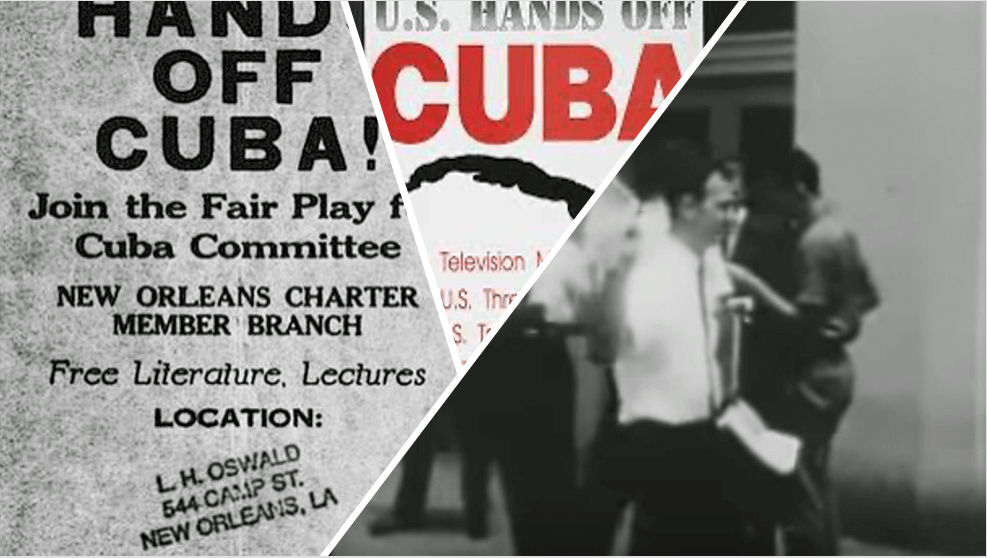
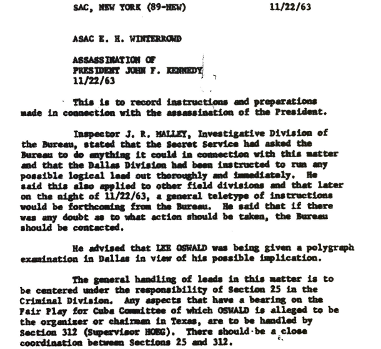
    Go to Part 1 of 6

    Go to Part 3 of 6

    Go to Part 4 of 6

    Go to Part 5 of 6

    Go to Part 6 of 6

  • Hoover vs. King: The ARRB Documents

    Hoover vs. King: The ARRB Documents


    Most of us know just how bizarre and extensive J. Edgar Hoover’s obsession with the civil rights movement–and Martin Luther King Jr in particular–was. For example, in 1958, after King was stabbed during a New York City book signing, a man named Benjamin Davis donated blood for him. The FBI noted that Davis was a member of the Communist Party. (Martin Luther King Jr.: The FBI File, edited by Michael Friedly and David Gallen, p. 21) The Bureau also took note that King’s name appeared on a petition for clemency for a man who was imprisoned because of his refusal to testify before the House Un-American Activities Committee (HUAC). (ibid)

    As both Hoover and the upper level of the Bureau knew, King was not a communist in his ideology, and was never a member of that party. But Hoover was determined to use the tried-and-true tactic of guilt by association to smear King:

    Though nothing has come to the Bureau’s attention to indicate the Reverend Martin Luther King is a Communist Party member, he has been linked with numerous leftist and communist front organizations and is currently active in racial and segregation matters. (Friedly and Gallen, p. 22)

    As many observers have commented, the specter of the pitifully weak Communist Party was being used to attack liberal causes, like integration. And if this information had to be gained by breaking and entering, the FBI would do it with the Southern Christian Leadership Conference (SCLC) offices. (Curt Gentry, J. Edgar Hoover: The Man and his Secrets, p. 501) The first noted occurrence of this was in 1959. And, in a much later Justice Department review, it was revealed that the purpose was to gain information on King. It was also later uncovered that the FBI had been tapping King’s phone in Atlanta since the late fifties. (ibid)

    The conflict between King and Hoover became more direct when King wrote an article for the February 4, 1961 issue of The Nation. King argued that the FBI should be used more to combat violations of civil rights in the south. He further added that one reason it might not be was that there were so few agents of color. At the bottom of a memo on King dated May 22, 1961, this sentence appears, “King has not been investigated by the FBI.” The Director underlined that sentence and added in his usual scrawl, “Why not?” King later criticized the FBI in public for employing too many agents who were native southerners. In factual terms, that statement was not accurate. Most of the agents–seventy per cent in the south– came from above the Mason-Dixon line. (Gentry, p. 499)

    On January 8, 1962 the SCLC issued a report continuing this attack on the FBI. Most writers believe that it was this report that began Hoover’s continual assailing of King to Attorney General Robert Kennedy. Hoover’s main charge was that two of King’s supporters in the SCLC were either former or present communist agents. These were Stanley Levison and Jack O’Dell. In fact, Hoover had already spread these rumors—which turned out to be pretty much baseless—to certain politicians on Capitol Hill. (Gentry, p 503)

    When first informed of this information about Levison in 1962, through Kennedy aides John Siegenthaler and Harris Wofford, King “refused to act against the man who had been his friend and advisor for the past six years.” (Friedly and Gallen, p. 24). Levison was a wealthy attorney who gave King free legal advice and was a strong fund raiser. O’Dell worked directly for the SCLC in their New York City, and later their Atlanta, and Albany, Georgia offices. Whatever associations either man had with the CP had ended back in the fifties. (Friedly and Gallen, p. 25, 27). In fact, Levison later declared that, unlike what Hoover said about him, he was never any kind of Russian agent. He was not even a CP member. But he said he understood the worries of both Bobby and Jack Kennedy.

    They were so committed to our movement, they couldn’t possibly risk what could have been a terrible political scandal. When I realized how hard Hoover was pressing them and how simultaneously they were giving Martin such essential support, I didn’t feel any enmity about their attitude toward me. (Arthur Schlesinger, Robert Kennedy and His Times, p. 376)

    And this was a real threat. By the fall of 1962 the FBI was penning internal memos about exposing O’Dell and his CP background to various newspapers. In fact, the Long Island Star-Journal, and a few other papers, did print the story about a high-level CP member who infiltrated the SCLC New York office. (Friedly and Gallen, p. 29)

    II

    Apparently, King was sensitive to the charges. In November of 1962, with O’Dell’s consent, King announced his resignation while the SCLC did an inquiry. But King said he knew nothing about his background. King also—not altogether honestly– denied the role O’Dell had reportedly played in the SCLC up to that time. He then added that “it is also a firm policy that no person of known Communist affiliation can serve on SCLC’s staff, executive board or its membership at large.” (Friedly and Gallen, pp. 29-30) This temporary resignation later become permanent. (David Garrow, Bearing the Cross, p. 275)

    King was much more reluctant about Levison. But Levison later said that he induced King to make a direct contact break: “The movement needed the Kennedys too much.” But King managed to stay in contact with Levison through New York attorney Clarence Jones. (Ibid, Garrow.)

    Hoover now assigned Cartha DeLoach to contact King for the purpose of correcting some of his critical statements about the Bureau. Which DeLoach did try and do. But it is clear that King made up excuses to avoid talking to him. (Friedly and Gallen, p. 32)

    On January 15, 1963 DeLoach distributed a memo within the Bureau. It essentially said that King was avoiding him since he does not wish to be alerted to the facts. He then said that King had used “deceit, lies and treachery as propaganda to further his own causes….” He made reference to Levison who he called “a hidden member of the Communist Party in New York”. As some have commented, thus King may have triggered a whole new level of conflict between himself and Hoover.

    The FBI had already broken into Levison’s home in the spring of 1962. But now, in 1963, the FBI portrayed Levison as a top level functionary who was actually part of the Russian intelligence network. (Schlesinger, p. 372) This was at a time when the White House was backing King and the civil rights movement like no prior administration. In June of 1963, after a White House meeting with King and other civil rights leaders, President Kennedy took a stroll in the Rose Garden with King. (About which King observed that Hoover must be bugging JFK also.)

    During this private talk, Kennedy told King he was under strong surveillance. He asked him to remove O’Dell and Levison. He said their mutual enemies were already denouncing the March on Washington as a communist stunt. Because this administration had now tied its fate to a civil rights bill and also the upcoming demonstration, if King’s enemies shot him down, then his administration would fall with it. When King asked to see the evidence about Levison, Kennedy told him Burke Marshall—the administration specialist on civil rights– would show it to King’s assistant Andrew Young. (Schlesinger, pp. 372-73)

    Marshall met with Young at a courthouse in New Orleans. But Young remained unconvinced since all Marshall did was repeat what Deloach and Hoover were saying. (Schlesinger, p. 373) Consequently, King remained skeptical. He and Young thought this was just FBI intimidation. But as mentioned above, Levison gallantly solved the problem, and Jones provided a nexus point to avoid halting communications.

    President Kennedy was evidently satisfied with the conclusion. Feeling he had parried Hoover effectively he made a rather startling announcement on July 17, 1963. He became the first white politician in Washington to back the August 28th demonstration. He then pointedly added that there was no evidence to show that any civil rights leaders were communists, “or that the demonstrations were communist inspired.” (Schlesinger, p. 373). Robert Kennedy then wrote a letter to 2 senators saying the same thing:

    It is natural and inevitable that Communists have made efforts to infiltrate the civil rights groups and to exploit the current racial situation. In view of the real injustices that exist and the resentment against them, these efforts have been remarkably unsuccessful. (Church Committee Report, Book 3, p. 100)

    This was a direct affront to Hoover. And so the FBI said there was no way RFK could back such a definite claim. The only way to be sure was to place a tap on King’s phone. Robert Kennedy had repeatedly rejected this. But Hoover then reported that he had information that King was still communicating with alleged KGB agent Levison by telephone. (Schlesinger, p. 375) In October, the Attorney General gave in and authorized a trial tap for 30 days. If nothing came up, that would be the end of it.

    We all know what happened in November. (Harris Wofford, Of Kennedys and King, p. 217) As Kennedy’s first civil rights advisor Harris Wofford adds, all the evidence indicates—as mentioned above– the FBI had already been tapping King’s phone anyway. They just wanted a cover for it.

    III

    After JFK’s death, Hoover ripped out Bobby Kennedy’s private line into his office. Even though there was never any evidence of communist affiliation, Hoover kept the tap on King’s home phone until the middle of 1965. The FBI then added taps on 21 microphone settings in various King hotel and motel rooms. (Schlesinger, p. 375). One can write with justification that, once Hoover knew he did not have to deal with Robert Kennedy, the dam broke. As author Kenneth O’Reilly wrote, by the summer of 1964 the Bureau was not just focused on King, but had expanded its operations and surveillance to all civil rights leaders, indeed to all civil rights related events. (Racial Matters, p. 140)

    Whereas Robert Kennedy had demanded that Hoover recall a memo that the FBI had prepared attacking King, this defiance of the Director did not succeed under successors Nicholas Katzenbach or Ramsey Clark. (Schlesinger, pp. 376-77) One probable reason being that President Lyndon Johnson had a long and warm friendship with the Director.

    Hoover now set up a special desk at the Internal Security section with two supervisors to coordinate what he termed Communist Influence Racial Matters inquiries (CIRM). And he instructed them to use the rubric “communist” in the broadest view. (O’Reilly, p. 140). But the problem was the FBI struck a dry well with Levison and his alleged communist angle. Even though they burglarized Levison’s home at least 29 times between 1954 and 1964. (O’Reilly, p. 141)

    In fact, King took his issue with this to the public in 1964. During a press conference on May 10, 1964 he began to echo what the Kennedys had said in public, but without their private fears: “It is time for this question of communist infiltration t be buried all over the nation.” Fellow activist James Farmer then added, “Communism is based on a denial of human freedom. It’s tough enough being black without being black and red at the same time.” On July 23rd in Jackson, Mississippi King said he was:

    …sick and tired of people saying this movement has been infiltrated by communists and communist sympathizers…There are as many communists in this freedom movement as there are eskimos in Florida.

    Therefore, Hoover now switched to character assassination. During a November 1964 meeting with a group of women reporters, Hoover called King “the most notorious liar in the country”. (O’Reilly, p. 142) Even though DeLoach was there and tried to get Hoover to take that comment off the record, Hoover would not.

    In March of 1964, the FBI became cognizant that Marquette University was going to honor King with an honorary degree. The Bureau sent agents to tell them about all the derogatory information they had on him. The same thing happened at Springfield College. (Friedly and Gallen, p. 42) Around the end of the year, the FBI recruited its first informant in the SCLC, an accountant named James Harrison. (Garrow, p. 468)

    When Time magazine named King its Man of the Year at the end of 1963, Hoover wrote on a 12/29/63 UPI press release, “they had to dig deep in the garbage to come up with this one.” (O’Reilly. P. 136) But Hoover really went bonkers when it was announced that King, at age 35, would be awarded the Nobel Peace Prize for 1964 in Oslo—along with a cash award of almost $55,000. The honor was “for his non-violent struggle for civil rights for the Afro-American population.”

    IV

    That award would be formally bestowed at the end of 1964. Between the Time magazine honor and the Nobel announcement in the fall King made a speech in San Francisco. It was quite frank and indicated King had had it with the communist infiltration ploy:

    It would be encouraging to us if Mr. Hoover and the FBI would be as diligent in apprehending those responsible for bombing churches and killing little children as they are in seeing our alleged communist infiltration in the civil rights moment. (FBI memo of 4/23/64)

    In a memo from Alan Belmont to William Sullivan, it was revealed that Division Five was working on material which was being pushed and will be given to Hoover for his consideration (Belmont to Sullivan 4/23/64, with 2 pages denied in full) Hoover had Division Five Chief William Sullivan and DeLoach distribute tapes and transcripts of what they alleged to be King’s philandering in various hotel rooms. (O’Reilly, pp. 137-38). Division Five had the FBI lab make a composite tape of alleged highlights of various hotel bugs and taps. DeLoach offered a copy of a transcript to Ben Bradlee, who was then the Washington bureau supervisor for Newsweek. Bradlee turned down the offer. When Burke Marshall heard of this through Bradlee, he warned President Johnson about it. But Johnson did something rather weird. He reacted “by warning the FBI about Bradlee. He was unreliable, the president said, and was telling the story all over Washington.” (Ibid, p. 144) The same offer was made to the Atlanta Constitution editor, Eugene Patterson. Who also refused to listen. (Friedly and Gallen, p. 51)

    Marshall then warned White House advisor Bill Moyers that Hoover was trying to smear King through the media. Moyers informed the FBI White House liaison about it. Hoover now did something really bizarre. He accused Marshall of being a liar. In fact, Hoover ordered one of his aides to call Marshall and tell him just that. (Wofford, p. 220). What is notable about this is that it is before Johnson’s escalations of the Vietnam War in early 1965. Meaning the King/Johnson relationship was going to get even worse.

    This all culminated with the notorious letter that Hoover had Sullivan compose in November of 1964. Some have written that the implicit threat was that King had no way out except to take his own life. But FBI defenders, and Sullivan himself, replied that it was really meant to get King to step aside as leader of the SCLC. It partly reads as follows:

    King, look into your heart. You know you are a complete fraud and a great liability to all of us Negroes…King, like all frauds, your end is approaching. You could have been our greatest leader…But you are done…No person can overcome facts. The American public, the church organizations that have been helping—Protestant, Catholic and Jews, will know you for what you are…So will others who have backed you. You are done…there is only one thing left for you to do. You know what this is. (O’Reilly, p. 144)

    The FBI enclosed the compilation tape with the letter. The package was mailed from Miami to the Atlanta office of the SCLC. This was shortly before King was to fly to Oslo to accept the Nobel. Around the same time, November 24th, Hoover made a strong speech against King. This time indirectly accusing the SCLC of being run by “communists and moral degenerates.” (ibid)

    King later noted, after reading the letter and hearing the tape, it was clearly from the FBI. And this was a war in which, “They are out to break me.” (Friedly and Gallen, p. 49)

    V

    But it was not just in America that the FBI declared war on King. The ARRB declassified papers dealing with this overseas battle. Researcher Gary Majewski has sent me many of them. The FBI was determined for King’s Nobel journey to Scandinavia to have little or no impact on the leaders of Europe. These documents deal with cables and airtels from the FBI to intelligence centers in Europe, especially England. They were designed to poison any planned meetings between King and European public officials. What is so startling about these documents is that, as bad as they are, they are still heavily redacted: whole pages have been denied. But from what was left unredacted, some of the tale can be revealed.

    It appears that somehow, some way, the FBI found out just how King would journey to Oslo. Bayard Rustin, one of the organizers of the March on Washington, was acting as an ad hoc advance man. The Bureau seemed to have had a spy in Rustin’s camp. The FBI knew when Rustin would be departing and they knew who he would be contacting to arrange meetings with luminaries in Europe. (FBI Cablegram of 11/10/64) One of these people appears to be Labor Party member Peggy Duff. Rustin apparently wanted Duff to arrange for a meeting with a higher up—his identity is redacted. The Bureau’s objective was to try and get to these higher ups in advance in order to smear King as

    …surrounded by numerous advisors having present or former communist connections. He has maintained an association with and received guidance and counsel from secret Communist Party USA members, notwithstanding advice to King about their communist backgrounds. (ibid)

    This information, plus a smear of Rustin, was to be forwarded to MI 5– roughly the equivalent of the FBI in England. The Bureau actually wanted this info to be sent to Prime Minister Harold Wilson. The excisions are clearly noted as being in connection “with efforts being made by King to see British Prime Minister Harold Wilson when King passes through London enroute to Oslo…”

    Amazingly, the information did get to Wilson though MI 5 official Roger Hollis. Hollis then furnished the FBI with data about Rustin’s arrival, where he would be staying, and that MI 5 would cover Rustin’s activities and report to FBI. (Airtel of 11/13/64) The Bureau also made plans to brief the American ambassadors in London, Copenhagen, Stockholm and Oslo about the same matters. This was being done to discourage any attempt to make King a guest of honor. (FBI Memo of 11/13/64 and memo of 12/10/64). This effort ended up being at least partly effective. The American ambassador in Stockholm had planned on meeting King at the airport. He now decided to send a representative.

    In another FBI memo of 11/24/64 the State Department is enlisted to briefing the USIA on the smears of King, including information about King’s alleged immoral conduct. When Belmont heard the USIA was in agreement, he went ahead and approved the FBI reports and sent memos to that body.

    How an FBI Director was allowed to interfere or even become involved with foreign affairs is, to say the least, a very problematic question. How he was allowed to send salacious material to representatives of intelligence agencies, and to ambassadors, is a little disgusting. And that this whole story has yet to be fully revealed in 2023 is appalling. There is an inter-agency meeting of 12/8/75 between the FBI and the Justice Department on King that is nine pages long. There is no ARRB cover sheet on it. And it is almost completely whited out.

    We all know how this ended. King was shot in Memphis in April of 1968. When that news was broadcast, the agents in the FBI office shouted, “They got Zorro! They finally got the SOB!” When further word came that King was dead, “One agent literally jumped up and down with joy.” (Gentry, p. 606)

    What Hoover was trying to do with his war against King was to make him so radioactive as to split him off from other civil rights leaders. (FBI Memo from DeLoach to Mohr, 11/27/64) Prior to that, as Harris Wofford has pointed out, what Hoover was also trying to do was drive a wedge between King and Bobby Kennedy.

    Bobby Kennedy was killed in June of 1968. Early in the year, Hoover’s close friend Clyde Tolson had wished for this to happen. (Gentry, p. 606) But that was not enough. During Kennedy’s televised funeral, Ramsey Clark was drawn aside by an FBI agent. The FBI knew that Scotland Yard had captured alleged King assassin James Earl Ray the night before, but they had refused to hold the story. In fact, DeLoach had told an FBI asset the night before about it. Therefore, the media was distracted by the apprehension of Ray during the RFK funeral. (Ibid, p. 607) How could anyone trust any FBI inquiry into either man’s death?

    Hoover’s mania later spread to all black nationalist movements. Urged on and abetted by Richard Nixon’s manipulation of white backlash, he approved COINTELPRO operations against the Black Panthers. By 1969 Hoover was investigating every chapter of the Black Panther Party and over a thousand members, and also those Hoover considered sympathizers. (O’Reilly, p. 298) Many commentators hold Hoover responsible for the decimation of that group e.g., the framing of Panther Geronimo Pratt and the death of Chicago leader Fred Hampton. (See, O’Reilly, Chapter 9)

    It is a sorry story, this tale of FBI perfidy and its war on a civil rights leader. Hopefully, one day, it will be able to be seen in its entirety, without being expurgated.

    Do we need an ARRB on the King case?

  • Exposing the FPCC, Part 1

    Exposing the FPCC, Part 1


    Introduction

    In January 2019, a petition began circulating where, among other startling affirmations, the 2500 signatories, including prominent JFK assassination experts, agreed that, “As the House Select Committee on Assassinations concluded in 1979, President John F. Kennedy was probably killed as the result of a conspiracy. In the four decades since this congressional finding, a massive amount of evidence compiled by journalists, historians and independent researchers confirms this conclusion. This growing body of evidence strongly indicates that the conspiracy to assassinate President Kennedy was organized at high levels of the U.S. power structure, and was implemented by top elements of the U.S. national security apparatus using, among others, figures in the criminal underworld to help carry out the crime and cover-up.”

    The destruction of classified documents pertaining to the JFK assassination and the refusal to release others 58 years after the assassination only strengthens the perceptions of the conspiracy researchers.

    One of the premises that is key to this scenario is that when ex-marine Oswald entered the Soviet Union in 1959 and spent two and a half years there, he did so as a false defector within a program called REDSKIN.1

    Given the above, shouldn’t the most plausible premise for Oswald launching the Fair Play for Cuba Committee chapter in New Orleans, perhaps the most hostile city for such an endeavor at a time when the FPCC was in a downward spiral, be that it was also an intelligence operation?

    Oswald’s strange dance with the FPCC in the months leading up to the assassination is not scrutinized enough––as this quest put Oswald right in the realm of those who would later accuse him of being Kennedy’s killer.

    What do we really know about the Fair Play for Cuba Committee? It lacks scrutiny even though, like his adventure in Russia, the evidence of intelligence is everywhere. However, context and insight about the FPCC is lacking, even though it should have been turned inside out by the WC and the HSCA. But it was not, thanks largely to Allen Dulles, George Joannides and other spies who knew what to hide and were perfectly placed to obstruct real investigations.

    Research into the FPCC will help lay the groundwork for what should have been a leading hypothesis that should have guided the investigations:  that is, that Lee Harvey Oswald was again following orders when he penetrated the FPCC, thereby turning him into an ideal patsy for the assassination of the President.

    The FPCC: A Brief History

    In 1993, author Van Gosse wrote Where the Boys Are: Cuba, Cold War America and the Making of the New Left. It gives one of the more complete accounts of this odd association.

    The FPCC was founded in the spring of 1960 by Robert Taber and Richard Gibson––CBS newsmen who covered Castro’s ascent to power––as well as Alan Sagner, a New Jersey contractor. Its original mission was to correct distortions about the Cuba revolution. It was first supported by writers, philosophers, artists and intellectuals such as Norman Mailer, Truman Capote and Jean-Paul Sartre. It also touched a chord with university students. Some estimates place its African American membership at one third of its roster. In April 1960, Taber and Gibson ran a full-page ad in the New York Times.

    Around Christmas time 1960, it organized a huge tour to Cuba, which led to a travel ban to the country by early 1961. According to Gosse, its high point was after the failed Bay of Pigs invasion. There was no official membership headcount, but organizers claimed the FPCC had between 5 and 7 thousand members and 27 adult chapters, almost all in the Northeast, a few on the West Coast and only one in the Southeast in Tampa.

    When it became clear that the U.S. would not tolerate the revolution, it began dissipating. After a short-lived peace demonstration binge during the missile crisis in 1962, its spiral downwards was accelerated and the FPCC died not long after one of its members allegedly killed JFK.

    The FPCC was characterized as “Castro’s Network in the U.S.A.” by the HUAC. Membership within this anti-U.S. organization was described during hearings as an effective door opener to enter Cuba via the Cuban Embassy in Mexico City and Cubana Airlines. Though the HUAC had been seriously rattled by the McCarthy-era witch hunts, Castro was breathing some new life into this outfit for political showcasing of American patriotism. The FBI may even have bribed an FPCC insider to testify that a launch ad placed by the FPCC was financed by Cuba.

    The Senate Internal Security Subcommittee (also known as the Eastland Committee) questioned Dr. Charles Santos-Buch, a young Cuban physician, who was a self-described FPCC organizer. On January 6, 1961, Santos-Buch told chief prosecutor Julian Sourwine that he and Taber had received the needed money from “eight different people.” The documents reveal that Santos-Buch changed his story on January 9 at a subsequent executive session, and that he was also given a promise that the CIA would help get a number of family members out of Cuba. He changed his story, at least in part because of his desire to extricate his family from Cuba. On January 10, Santos-Buch publicly testified that he and Robert Taber obtained $3,500 from the Cuban government through the son of Cuba’s Foreign Minister Raul Roa. This money, along with $1,100 in funds from FPCC supporters, paid for the full-page FPCC ad in the April 6, 1960, edition of the New York Times. A week later, Jane Roman from James Angleton’s counterintelligence office in the CIA reported that security concerns made it too dangerous for the CIA to keep its promise to Santos-Buch.

    According to one of its national leaders, Barry Sheppard, the Socialist Workers Party (SWP) was very involved with the FPCC: “We came to be part of the leadership of the FPCC partly as the result of a crisis in the organization. The original FPCC leadership was somewhat timid, and shied away from forthright defense of the revolution as it radicalized. In response, Cuban members of the 26th of July Movement living in the U.S. aligned with the SWP and some other militants, and took over the leadership of the Committee.”

    Sheppard’s memoir shows that the SWP was much larger than the FPCC. He describes protest mobilization during the Missile Crisis in 19622 this way:

    We stood up to it. The PC discussed and approved the thrust of a statement to appear in the next issue of The Militant. It ran under the headline, “Stop the Crime Against Cuba!” We alerted SWP branches and YSA (Young Socialists of America) chapters that night to mobilize to support the broadest possible actions against the threat. In New York, there were two major demonstrations. One was called by Women Strike for Peace and other peace groups. We joined some 20,000 protesters at the United Nations on this demonstration. Then the Fair Play for Cuba Committee held its own action, more specifically pro-Cuba in tone, of over 1,000 people, also near the UN.

    The following points concerning the July 1963 SWP convention cast even more suspicion around the timing and motives of the already suspiciously late openings of FPCC chapters in the deep south by Santiago Garriga in Miami and Oswald in New Orleans and the continued involvement with the FPCC by other odd subjects:

    At the convention, a meeting of pro-Cuba activists discussed the situation in the Fair Play for Cuba Committee. Cubans living in the United States who supported the 26th of July Movement had helped us build the FPCC. Now most of them had returned to Cuba. In most areas, the FPCC had dwindled down to supporters of the SWP and YSA. Since we did not want the FPCC to become a sectarian front group, the meeting decided to stop trying to build it. The FPCC then existed for a while as a paper organization, until the assassination of President John Kennedy dealt it a mortal blow.3

    FBI reports confirm that FPCC National Chapter meetings plummeted from 25 meetings a year to 3 in its last year of existence.

    Red Scares, the HUAC and McCarthyism

    The first Red Scare in the U.S. took place in 1919-20 because of the Russian Revolution in 1917 and the fear of this movement spreading to the United States as well as the influx of immigrants that did include a small number of anarchists. In one case, a bomber blew himself up by accident in an attempt to assassinate John Rockefeller and J.P. Morgan. Because of this, the General Intelligence Division (the forerunner of the FBI) was formed and J. Edgar Hoover was chosen to lead it.

    In 1938, The House Committee on Un-American Activities (HCUA) was formed to investigate individuals, groups and organizations considered subversive or disloyal with a special focus on communist-leaning credos.

    The second Red Scare is considered to have begun shortly after World War II in 1947, when President Truman signed an order to screen government employees, and lasted 10 years. Through the propaganda and grandstanding of politicians, working in symbiosis with the press and the FBI, panic and hysteria was omnipresent. The HUAC went into overdrive, with Senator Joe McCarthy as its poster boy and with the Communist-hating Hoover eager to oblige.

    By 1956, after overstepping and ruining hundreds of lives, McCarthy was taken down by lawyer Joseph Nye Welchin his heroic “Have you no decency” retort during the Army-McCarthy hearings.

    This, however, did not stop the anti-communist fervor of the FBI and CIA. They just became even sneakier with no regard for the rule of law.

    COINTELPRO and AMSANTA

    The Church report,4 in its section “USING COVERT ACTION TO DISRUPT AND DISCREDIT DOMESTIC GROUPS,” describes the illegal activities of the FBI that were put in motion between 1956 and 1971 under the acronym COINTELPRO [Counter Intelligence Program], which claimed to have as a motive the protection of National Security.

    The FBI acted as a vigilante by not just breaking the laws but by taking the law into its own hands against both violent and nonviolent targets. Some of the targets were law-abiding citizens who were advocating change, but were labelled as domestic threats unilaterally by the FBI, e.g., Martin Luther King. Others were violent groups such as the Black Panthers and the Klan, where due process was ignored. Once the FBI started down this dangerous path, they not only targeted the kid with the bomb but also the kid with the bumper sticker!

    Organizational targets fell under five umbrella groups: The Communist Party; The SWP; White Hate groups; Black Hate groups; and the New Left. This opened the floodgates to investigate any group that had a potential for violence, including nonviolent groups such as The Southern Christian Leadership Conference, which was labelled as a Black Hate Group, as well as sponsors, civil-right leaders, students, protesters; and the list goes on …

    The FBI used five main methods during COINTELPRO: infiltration; psychological warfare; harassment via the legal system; illegal force; undermining of public opinion.5 

    These actions stepped up in the wake of the Communist takeover in Cuba. Church Committee members exposed the dimensions of the mail opening program, and discovered that the CIA and FBI had placed the names of 1.5 million Americans in the category of “potentially subversive.” Together, both agencies opened about 380,000 letters.6

    Larry Hancock, in Someone Would Have Talked, describes the FBI program called AMSANTA:

    The program was initiated by the FBI as part of its effort targeting the FPCC as a subversive group and involved the CIA in briefing, debriefing and possibly monitoring travel of assets through Mexico City to and from Cuba. The program began in late 1962, had one major success in 1963 and appears to have been abruptly terminated in fall 63.

    According to John Newman (Oswald and the CIA)7, the CIA, led by David Phillips and James McCord (of Watergate fame), began monitoring the FPCC in 1961. In December 1962, the CIA joined with the FBI in the AMSANTA project.  A September 1963 memo divulged an FBI/CIA plan to use FPCC fake materials to embarrass Cuba.

    There are strong indicators that the CIA efforts to penetrate and use the FPCC were local and illegal––such as spying on U.S. citizen/members of the FPCC. As a David Phillips asset stated, it was “At the request of Mr. David Phillips” that, “I spent the evening of January 6 with Court Wood, a student who has recently returned from a three-week stay in Cuba under the sponsorship of the Fair Play for Cuba Committee.”8

    The opening of a Miami FPCC chapter in 1963 by Santiago Garriga is more evidence of illegal domestic espionage on or through the FPCC by the CIA. According to Bill Simpich, author of State Secret, Garriga’s resumé was perfect for patsy recruiter/runners––interaction with Cuban associates in Mexico City; seemingly pro-Castro behavior; and his crowning achievement: like Oswald in 1963, he opened an FPCC chapter in a market deemed very hostile for such an enterprise.

    Garriga is the potential fall guy who is the most clearly linked with intelligence. Like Oswald, he could be portrayed as a double agent by those who packaged him. What makes Garriga so unique are, as Simpich writes, his pseudonym and close links with William Harvey’s (CIA Cuban Affairs) team. To cover this intriguing lead, it is best to cite a few excerpts from State Secret:

    During October 1963 Garriga worked with other pro-Castro Cubans to set up a new chapter of the Fair Play for Cuba Committee in Miami  … Although it appears that Garriga’s ultimate loyalty was with the Castro government, it’s likely that Garriga’s FPCC activity was designed by Anita Potocki (Harvey’s chief aide at the wiretap division known as Staff D) to set up a flytrap for people like Oswald.  Maybe even Garriga himself was considered as a possible fall guy.

    However, in the days before 11/22/63, the FBI ran an operation that investigated the Cuban espionage net that included Garriga and shared the take with the CIA. The CIA referred to this investigation as ZRKNICK. Bill Harvey had worked with ZRKNICK in the past … The memos that identify Garriga were written by Anita Potocki.

    Was there something sinister in this effort to set up FPCC Miami? It certainly looks ominous, given that AMKNOB-1 is the main organizer and that Anita Potocki is one of his handlers. The FPCC leadership recognized that it was dangerous to set up such a chapter in Miami due to the possibility of reprisals by Cuban exiles. For just these reasons, the FPCC leadership had discouraged Oswald from publicly opening an FPCC chapter in the Southern port town of New Orleans.

    The fingerprints of AMSANTA and COINTELPRO were also all over Oswald.

    Targeting the FPCC 

    By the time Oswald opened his Crescent City chapter of the FPCC, it was under the intense scrutiny which had started in 1960, the year of the national launch. An FBI report9 in response to NSAM 43 and 45 to the attorney general, dated April 24, 1961, outlines steps taken by then to counter pro-Castro organizations. It was already a full-court blitz.

    In this document, the FBI makes it clear that the Castro movement is a serious threat to the U.S. The FPCC is underlined as a key target pursuant to Executive Order 10450. The overall coverage of pro-Castro activities in the U.S. is described as having begun in November 1955 when Castro came to the U.S. looking for financial support for the rebel cause, and the 26th of July Movement started up in the U.S. When Castro took power in January 1959, the FBI had files on this organization as well as lists of members it shared with other intelligence agencies and sharply expanded its surveillance operations. Spying on Cuban diplomatic institutions, questioning defectors and the infiltration of pro- and anti-Castro groups with informants, are listed as key Intel tactics.

    By the time the report was written10, the FBI numbers the pending matters at 1000 and information sources at over 300. The FBI had by then identified 140 Castro supporters in the U.S. who constituted a threat to security. “We are maintaining close coverage of the various Cuban establishments as well as pro-Castro groups and their leaders,” which was shared generously with other intelligence groups. The FPCC is described as the most important such group, and received support from Cuba as well as the SWP and CP, according to the report.

    The FBI claimed that Cuban agents were receiving assistance from their surveillance targets and that Cubana Airlines was an important tool for their activities. The FBI was keeping close tabs on pro-Cuba propaganda. Covert informants were given a T symbol,11 preceded by a location identifier such as NY for New York, followed by a number. Also identified were the locations they could report on and the subject matter. Some informants were government employees, post-office workers, intelligence assets on assignment (June Cobb was assigned to spy on Richard Gibson and slander Oswald in Mexico City)12 and freelancers (as we will see later Ruth Paine quite possibly was a provider of FPCC intelligence), etc., who could oversee documentary movement around targets. Others infiltrated FPCC chapters and were present during meetings. These would report on who was present, who said what, and the materials shown and exchanged. License plates of parked cars of meeting attendees were recorded. In some cases, chapter officers were key sources: Thomas Vicente (National), Harry Dean (Detroit), Harrold Wilson (Tampa), John Glenn (Indiana) were all definite or likely snitches for the FBI.

    In April 1963, aided by Thomas Vicente, the FBI broke into FPCC NY offices for a black bag operation.  FBI files indicate that NY alone had over 25 covert informers who were being used along with other sources. Tampa had at least 11 informants carrying the TP-T code.

    The CIA also was all over the FPCC.  Two days after the FPCC ad in the NY Times, William K. Harvey, head of the CIA’s Cuban affairs, told FBI counterintelligence chief Sam Papich: “For your information, this Agency has derogatory information on all individuals listed in the attached advertisement.” Other files confirm that Jane Roman and James Angleton were also monitoring the FPCC.

    Recipients of intel included the Secret Service, the CIA, Customs Bureau, the Immigration and Naturalization Service, the Post Office Department, the Aviation Agency, the Federal Communications Commission, the Department of Health, Education and Welfare, the U.S. Information Agency, the Treasury Department, the U.S. Information Agency, the Bureau of Foreign Commerce. The report also stresses the importance of coordinated efforts with other intel agencies as well as local FBI offices.

    After the failed Bay of Pigs and the Missile Crisis, we can assume that when Oswald, already notorious for his Russian adventure, opened an FPCC chapter in, of all places, New Orleans by the middle of 1963, he was a known quantity.

    Frank S. DeBenedictis on the Tampa FPCC

    In 2002, Frank S. DeBenedictis submitted a thesis13 about the Cold War coming to Ybor City, and the Tampa FPCC, for his Master of Arts at Florida Atlantic University.  DeBenedictis adroitly points out that the reason FPCC files have been very difficult to access is that after the assassination of JFK, these files were categorized as classified JFK assassination files instead of Cold War files.

    The following represents some of the key information/passages from his thesis.  It is based largely on government and intelligence investigations of the FPCC, declassified JFK assassination documents, Van Gosse’s research, newspaper articles as well as FPCC propaganda and correspondence. Almost all of the FPCC chapters were situated in the North of the U.S. or along the West Coast. The reason Tampa was unique in hosting an important FPCC chapter was because it had a large Cuban exile population who were anti-fascist and had fled the brutal Marchado and Batista regimes. In 1955, Castro raised money there for his rebellion and had satellite followers to his 26th of July Movement. Ybor City (part of Tampa) was known for its Latino culture and its cigar industry.

    By 1961, Eisenhower cut all ties with Castro, and the 26th of July Movement ceased activity in the U.S. It was being replaced by the FPCC. As Frank writes, “It was somewhat different from the older pro-Castro groups, since it came about after Castro was already in power. When Cuba formed ties with the Soviet bloc, the FPCC and its defense of Castro increasingly became part of the Cold War. By late 1961 the very active Tampa chapter had established its own newsletter, and drew attention from both Castro supporters outside Florida, and anti-Castro Cuban exiles and a variety of government operatives.”

    The influx of anti-Castro Cuban exiles (including Batista followers as well as other Cubans who were disappointed by Castro’s political and economic systems as well as his strong-arm tactics) took refuge in large numbers in Florida and were ready to counter the FPCC on all fronts––with the support of intelligence forces. Violence among Cubans ensued: riots, intimidation, vandalism directed at FPCC sympathizers were the order of the day. Hosting chapters in the deep south became perilous, with strong anti-Castro sentiment coming from Latinos, business, government, intelligence and Americans from all walks of life.

    “An organization formed in rebellion at this time, against the Castro regime. It called itself the Cuban Front. The group was made up of Cuban exiles and residents, which at this early date of disaffection with Castro, was composed primarily of Batista supporters. Since Cuba and the United States had by early 1961 experienced two years of deteriorating diplomatic relations, the Cuban Front’s strategy was to raise the specter of communism coming to Cuba.” One violent confrontation called the Marti Park Incident featured CRC leader Sergio Arcacha Smith, who entered Oswald’s universe in 1963.

    The Bay of Pigs invasion commenced on April 17, 1961, and FPCC chapters organized protests against the U.S. action. Five days before the invasion, Tampa chapter leader V.T. Lee wrote a letter to the Tampa Tribune deriding both the Tampa daily and the Senate Internal Security Subcommittee, which was investigating the organization. His letter lambasted Senators Thomas Dodd and James 0. Eastland, whose strident anti-communism began accusations that the FPCC was run by a foreign government.

    On April 22, 1961, when FPCC-led public protests against the Bay of Pigs operation became prevalent on a daily basis, the Kennedy administration’s National Security Council passed National Security Action Memo [NSAM] 45. This memo ordered the Attorney General and the Director of Central Intelligence to “examine the possibility of stepping up coverage of Castro activities in the United States.” On April 27, 1961, J. Edgar Hoover issued a general order for FBI agents to report on pro-Castro agitation. Hoover noted that the Fair Play for Cuba Committee’s actions showed the capacity of a national group organization to mobilize its efforts.

    Florida Congressman William C. Cramer testified on April 3, 1963. A primary subject was, in the words of the Senate Committee, “the flow of subversives through the open door of subversion, the Cuban Embassy in Mexico City, by way of Cubana Airlines.’’

    For the Tampa FPCC, in large part this meant that the Florida Legislative Investigative Committee [aka––Florida Johns Committee] became involved in investigating the activities of the pro-Castro group. Its investigation of the pro-Castro 26th of July Movement and Fair Play for Cuba Committee began in 1959 and continued into 1964.

    Local police intelligence unit “red squads” and state investigative committees filled the anti-Communist void in the post-McCarthy era. Florida’s Johns Committee had a counterpart in Louisiana, which was the Louisiana Un-American Activities Committee [LUAC].

    The following passage by DeBenedictis explains the degree of FBI infiltration of an FPCC chapter, and the stunningly high number of informants per FPCC meeting attendee ratio.

    A January 30, 1964, FBI report told of meetings the pro-Castro group had at the Tampa residence of Christine and Manuel Amor. Information about this meeting came from October 13, 1963, reports by FBI Special Agents Charles C. Capehart and Fredrick A. Slight. This data was gathered by taking down automobile license plate numbers registered to individuals in attendance. Eight cars were at the Amor residence. An FBI informant inside reported that a meeting cancellation notice had been sent to members, but several still showed up. Slide presentations and a tape recording of V.T. Lee’s Cuba trip were planned on this October date. Background reports provided data on FPCC members past affiliations with the Communist and Proletarian Parties. Jose Alvarez, who in June 1962 was elected the organization’s financial secretary, was identified by TP T-7 as a Communist Party member in Tampa in 1943. Other members, at late 1963 FPCC meetings, were listed as protestors and supporters of radical causes. Among these causes were opposition to the McCarran Act, and support of Cuba’s right to have Soviet missile stations. In addition, these members had links to the Communist Party in northern cities. FPCC informants were given the cryptonyms TP T-1 through TP T-11. Among them was TP T-2, who was identified as M. Miller, Superintendent of Mails at Ybor City’s post office. The FBI’s mail surveillance program complemented the CIA’s HT/LINGUAL mail opening program. FBI agents relied extensively on informants in the Tampa FPCC.

    The key with Tampa is that it served as a model for Oswald’s agitation activities as well as FPCC countering strategies for many of the people Oswald would network with in New Orleans.

    The FPCC in New Orleans

    At least three city police intelligence units kept files and conducted surveillance on the Tampa FPCC. These included Miami, Tampa, and New Orleans. In addition, the police units also cooperated with each other and with the U.S. Senate Committee investigating the organization.14

    Perhaps the most interesting of the police intelligence correspondence is the one between the Tampa Police Intelligence Unit and its New Orleans counterpart. The NOPD Intelligence Unit collected data about the FPCC from March to September 1961 from newspaper articles. In 1962 this changed when the NOPIU initiated a chain of correspondence with the TPIU. Sgt. J.S. de Ia Llana, supervisor of the TPIU, replying to a December 1962 information request on the Tampa Fair Play for Cuba Committee chapter, informed P. J. Trosclair (NOPIU): “The Tampa Chapter (of the FPCC) is very active in Tampa, these members hold secret meetings and distribute various types of literature. Also, movies are shown. Enclosed are some of the circulars which are distributed. This unit maintains a current file on the local chapter and its members.” The Tampa PD Intelligence Unit enclosed several circulars for its NOPD counterpart, and promised them its full cooperation.15

    Early in 1963, the Tampa PD would write to New Orleans, giving them information about a Dr. James Dombrowski, a left-wing activist in New Orleans, claiming that he was an active FPCC member. The NOPD investigation of the FPCC collected a copy of Tampa Fair Play; a list of 202 travelers to Cuba, which can also be found in FBI files, and Florida Johns Committee files.  Also included are the pre-Kennedy assassination arrest records and post-assassination warnings on Lee Harvey Oswald.  For the NOPD, their late-1962-initiated correspondence to Tampa was odd since New Orleans had no known FPCC chapter in late 1962 and early 1963. Also unusual was the NOPD inquiry to Tampa about FPCC activity in New Orleans!

    Oswald and the FPCC in Dallas

    According to an FBI report, there is evidence that Oswald agitated for the FPCC in Dallas before moving to New Orleans. Dallas confidential informant T-2 advised that Lee H. Oswald of Dallas, Texas, was in contact with the Fair Play for Cuba Committee. According to T-2, Oswald had a placard around his neck reading, “Hands off Cuba Viva Fidel.”

    The following day (April 19), Oswald wrote to the FPCC in New York and said:

    I do not like to ask for something for nothing but I am unemployed. Since I am unemployed, I stood yesterday for the first time in my life. with a placard around my neck. passing out Fair Play for Cuba pamphlets, etc. I only had 15 or so. In 40 minutes they were all gone. I was cursed as well as praised by some. My homemake [sic] placard said: ‘Hands OFF CUBA! V IVA Fidel’ I now ask for 40 or (50) more of the fine, basic pamplets-14. Sincerely, Lee H. Oswald16

    The following lead merits investigation. One of the Cuban exiles who was cursing during the so-called skirmish involving Oswald and Carlos Bringuier was Celso Hernandez, who may have met Oswald before. According to Bill Simpich’s research, the CIA examined Celso Hernandez as a Castro penetration agent.  There is an intriguing report of FPCC member Oswald being arrested with Celso Hernandez in New Orleans in late 1962. The ID of Hernandez was made years later and is admittedly shaky. The ID of Oswald is more substantive, as he identified himself to the police as an FPCC member––but he was living in the Dallas area. The story is that the two men were picked up at the lakefront in Celso’s work truck, owned by an electronics firm that was Celso’s employer.17

    FBI agency file number 97-2229-7 even states that Oswald was the FPCC organizer and chairman in TEXAS!

    FBI agency file number 97-2229-7

    (Note: also explosive in this document is the statement that Oswald was being polygraphed on November 22––sounds like another offshoot, sigh!)

    Oswald’s first attempt at interacting with the FPCC may have been as early as late summer 1962, when the head of the FPCC at the time, Richard Gibson, responded to a request for information from a Lee Bowmont from Fort Worth, Texas. Gibson felt he may have been in a group of three Trotskyites he had met shortly after.18

    And then we have the following mind-boggling correspondence(s)  courtesy of Malcolm Blunt:

    Oswald FPCC envelope return address

    This envelope, with the FPCC return address, as it stands is difficult to analyze because of the unclear postmark and its content has not been revealed as far as I know (which would once again represent obstruction of justice if this were the case).  However, we do know Oswald lived at the above address from about July to October of 1962. This confirms that Oswald/FPCC relations began clearly before 1963. The following May 5, 1961 letter is food for thought:

    May 5, 1961 letter

    It was not only Oswald who was interested in the FPCC before he went to New Orleans; others from the Big Easy were gathering information. Guy Banister was also a member of the Scotch Rite19 which figures on the letterhead. What on earth is this organization doing corresponding with the FPCC in 1961?

    May 5, 1961 letter, letterhead close-up

    Oswald and FPCC Worst Practices

    Location, Location, Location!

    As we have seen by chronicling the demise of the FPCC, Oswald’s sense of timing was horrendous when he launched the New Orleans chapter in the summer of 1963. His choice for a location was even worse.

    The two most dangerous places to open chapters in the U.S. at the time were probably Miami and New Orleans. Dallas would not have been far behind. New Orleans perhaps stood out as the worst because of its dependence on North-South trade. Its proximity to Cuba caused many sleepless nights during the October 1962 missile crisis. V.T. Lee had urged Oswald to avoid New Orleans.

    When the HSCA published its completed Final Report in 1979, it showed two areas related to the FPCC that the Warren Commission failed to investigate adequately. One overlooked area was the identity of occupants at the address Oswald used for his FPCC literature distribution. The address 544 Camp Street appeared on materials that Oswald was handing out. This address was the New Orleans Newman Building. The Warren Report stated that, at an earlier date, the building was occupied by an anti-Castro group, but the name was not revealed in the final report. Later it was found to be the Cuban Revolutionary Council. Another resident of the Newman Building was the private detective agency of Guy Banister. He also was not mentioned in the Warren Report. Banister was the retired FBI Special Agent in Charge of the Chicago FBI field office. After his FBI retirement in the mid-1950s, he moved to New Orleans and helped set up that city’s police intelligence unit. Guy Banister, a staunch anti-communist, continued his anti-subversion work well after his official ties with the FBI were severed. The HSCA determined in their investigation that in 1961 Banister and Sergio Arcacha Smith of the CRC were working together in the anti-Castro cause.20

    The 544 Camp Street address, which Oswald foolishly stamped on some of his handouts, was also surrounded by intelligence organizations, including the ONI, CIA, Secret Service and the FBI.

    The HSCA did take a closer look at the Camp Street enigma. Here were some of the findings:

    (467) During the course of that investigation, however, the Secret Service received information that an office in the Newman Building had been rented to the Cuban Revolutionary Council from October 1961 through February 1962.

    (466) The investigation of a possible connection between Oswald and the 544 Camp Street address was closed. The Warren Commission findings concurred with the Secret Service report that no additional evidence had been found to indicate Oswald ever maintained an office at the 544 Camp Street address.

    (469) The committee investigated the possibility of a connection between Oswald and 544 Camp Street and developed evidence pointing to a different result.

    (482) The overall investigation of the 544 Camp Street issue at the time of the assassination was not thorough. It is not surprising, then, that significant links were never discovered during the original investigation. Banister was involved in anti-Communist activities after his separation from the FBI and testified before various investigating bodies about the dangers of communism. Early in 1961, Banister helped draw up a charter for the Friends of Democratic Cuba, an organization set up as the fundraising arm of Sergio Arcacha Smith’s branch of the Cuban Revolutionary Council.

    (489) The long-standing relationship of Ferrie and Banister is significant since Ferrie became a suspect soon after it occurred.

    (491) Witnesses interviewed by the committee indicate Banister was aware of Oswald and his Fair Play for Cuba Committee before the assassination. Banister’s brother, Ross Banister, who is employed by the Louisiana State Police, told the committee that his brother had mentioned seeing Oswald hand out Fair Play for Cuba literature on one occasion.

    (492) Ivan F. “Bill” Nitschke, a friend and business associate and former FBI agent, corroborates that Banister was cognizant of Oswald’s leaflet distributing.

    (494) Delphine Roberts, Banister’s long-time friend and secretary, stated to the committee that Banister had become extremely angry with James Arthus and Sam Newman over Oswald’s use of the 544 Camp Street address on his handbills.

    (495) The committee questioned Sam Newman regarding Roberts’ allegation. Newman could not recall ever seeing Oswald or renting space, to him … Newman theorized that if Oswald was using the 544 Camp Street address and had any link to the building, it would have been through a connection to the Cubans.

    Roberts claimed Banister had an extensive file on Communists and fellow travelers, including one on Lee Harvey Oswald, which was kept out of the original files because Banister “never got around to assigning a number to it.”

    (514) Significant to the argument that Oswald and Ferrie were associated in 1963 is evidence of prior association in 1955 when Ferrie was captain of a Civil Air Patrol squadron and Oswald a young cadet. This pupil-teacher relationship could have greatly facilitated their reacquaintance and Ferrie’s noted ability to influence others could have been used with Oswald.

    (515) D. Ferrie’s experience with the underground activities of the Cuban exile movement and as a private investigator for Carlos Marcello and Guy Banister might have made him a good candidate to participate in a conspiracy plot. He may not have known what was to be the outcome of his actions, but once the assassination had been successfully completed and his own name cleared, Ferrie would have had no reason to reveal his knowledge of the plot.

    On page 145 of its final report, the HSCA states that “it was inclined to believe that Oswald was in Clinton, August – early September 1963, and that he was in the company of David Ferrie, if not Clay Shaw. The Committee was puzzled by Oswald’s apparent association with David Ferrie, a person whose anti-Castro sentiments were so distant from those of Oswald, the Fair Play for Cuba Committee campaigner.”

    Research since this very accusatory report has only re-enforced this conclusion.  We now know for certain that Clay Shaw was a well-paid CIA asset, something that he vehemently denied during the Garrison inquiry. He was also using the alias Clay Bertrand and that he was seen in the company of Oswald in Clinton.

    Birds of a Feather

    If Oswald’s sense of timing and choice of location for opening an FPCC chapter were awful, his networking strategies were catastrophic … if you believe he was serious about promoting Fair Play for Cuba.

    Jim Garrison had already pointed out how Oswald’s hobnobbing with White Russians in Dallas was diametrically opposed to his supposed pro-Marxist credo. His universe of contacts in New Orleans was even worse––unless he was involved in something else, like infiltrating pro- and anti-Castro groups to help the FBI in their oversight objectives. Let us highlight a few (for a more in-depth coverage of Oswald’s contacts read this author’s article Oswald’s Intelligence Connections: How Richard Schweiker clashes with Fake History):

    David Ferrie

    David Ferrie
    David Ferrie

    Oswald’s first intel connection is one of the most important for confirming Schweiker’s assertion. David Ferrie plays an important role in Oswald’s fate during two phases of Oswald’s short life. In 1955, both Ferrie and Oswald were members of the Louisiana Civil Air Patrol where Ferrie taught, among other things, aviation. Ferrie later became a contract CIA agent flying bombing missions over Cuba. During the summer of 1963, Ferrie and Oswald linked up once again at 544 Camp Street. During this period, Ferrie was frequently seen in the building and elsewhere, in the company of Banister, CIA agent Clay Shaw, the CIA-connected Sergio Arcacha Smith, Oswald and others of this ilk who became key suspects in the Garrison investigation.


    Kerry Thornley

    Kerry Thornley
    Kerry Thornley

    When Oswald was stationed back to California in 1959, Thornley wrote a book about him before the assassination called The Idle Warriors, and then another in 1965. In the summer of 1963, Thornley popped backed into the picture in New Orleans where several witnesses saw him with Oswald either in public or at Oswald’s apartment. There is evidence that Thornley picked up Fair Play for Cuba flyers for Oswald. An FBI memo states that Thornley and Oswald went to Mexico together. And despite preliminary denials, he eventually admitted links to David Ferrie, Guy Banister, Carlos Bringuier and Ed Butler.


    Victor Thomas Vicente

    When Lee Oswald wrote his first letter to the Fair Play for Cuba Committee HQ in New York in April 1963, he asked for “forty to fifty” free copies of a 40-page pamphlet. The author of the pamphlets, Corliss Lamont, turned out to be holding a receipt for 45 of these pamphlets from the CIA Acquisitions Division. These pamphlets were mailed to Oswald by FPCC National Chapter worker Victor Thomas Vicente. Vicente was a key informant for both the CIA and the FBI’s New York office.

     John Martino

    John Martino
    John Martino

    Martino showed pre-knowledge of the assassination and also admitted observing Oswald during the summer of 1963. Martino certainly did have CIA connections in 1963, primarily to David Morales and Rip Robertson.

    William Monaghan and Dante Marichini

    During the summer of 1963 in New Orleans, Oswald gained employment at the Reilly Coffee Company, an organization of interest because of its links to Caribbean anti-communist politics. The Reilly brothers backed Ed Butler’s INCA (the CIA-linked Information Council of the Americas, which factors heavily in Oswald’s later Marxist PR activities) and the CRC (Cuban Revolutionary Council).

    Reilly Coffee Co
    Reilly Coffee Co

    William Monaghan was the V.P. of Finance there who ended up firing Oswald. He was also an ex-FBI agent. He was listed as a charter member of INCA in a 1962 bulletin. Other employees there of interest to researchers included four of Oswald’s co-workers who joined NASA during the summer of 1963. Dante Marichini, who was a friend of David Ferrie’s and the neighbor of Clay Shaw, was one of these.

    Guy Banister

    Guy Banister
    Guy Banister

    What emerges from all we know about 544 Camp Street is that Oswald was assisting Banister, a known communist hunter, in identifying Castro-sympathizers and that Banister was deeply involved in activities supplying weapons to anti-Castro groups like Alpha 66––a key organization of interest in the assassination.

    Clay Shaw

    Clay Shaw
    Clay Shaw

    Thanks to Jim Garrison, we were introduced to a key person of interest in Clay Shaw. The HSCA investigation concluded that New Orleans district attorney Jim Garrison and his office ”had established an association of an undetermined nature between Ferrie, a suspect in the assassination of President Kennedy, and Clay Shaw and Lee Harvey Oswald.”

    In Destiny Betrayed, Jim DiEugenio underscores other Shaw links with the CRC and with Banister, CIA-cleared doctor Alton Ochsner, and Ed Butler, who are all connected to the Information Council of the Americas, which appears to have played a role in the sheep-dipping of Oswald (see Ed Butler). He also shows that Shaw was cleared for a project called QK/ENCHANT during the Garrison investigation. Howard Hunt also belonged to this project, which was part of the CIA’s Domestic Operations Division, according to CIA insider Victor Marchetti.

    William Gaudet

    William Gaudet
    William Gaudet

    Gaudet had worked for the CIA before he crossed paths with Oswald. He most likely continued freelancing for it. He worked virtually rent-free out of Clay Shaw’s International Trade Mart. It seems plausible that Gaudet played a part in monitoring Oswald, perhaps for the benefit of Shaw.

    Dean Andrews

    Dean Andrews
    Dean Andrews

    Lawyer Dean Andrews was called by Shaw, under the pseudonym Clay Bertrand, and given instructions to represent Oswald, as told by Garrison in his famous interview with Playboy.


    Sergio Arcacha Smith

    Sergio Arcacha Smith
    Sergio Arcacha Smith

    The CIA selected him to be a key leader of Cuban exiles as a representative of the Cuban Revolutionary Council. That group was created by Howard Hunt as an umbrella organization of many Cuban exile groups such as Alpha 66 and the DRE. The FDC was allegedly organized for his benefit, and it  borrowed Oswald’s name when he was in Russia. It is in this role that he associated closely with Clay Shaw, Guy Banister, David Ferrie and Doctor Alton Ochsner. Gordon Novel claims that David Phillips participated in at least one meeting where Smith and Banister were in attendance.

    At the time of the working relationship between Banister and CRC leader Sergio Arcacha Smith, the CRC became involved in Tampa’s Marti Park demonstrations against the FPCC. (Frank S. DeBenedictis thesis).

    Carlos Bringuier, Carlos Quiroga, Celso Hernandez and Frank Bartes

    Carlos Bringuier
    Carlos Bringuier

    Bringuier was part of the DRE, a militant right-wing, anti-Communist, anti-Castro, anti-Kennedy group. Bringuier, based in New Orleans, was placed in charge of DRE publicity and propaganda. According to Bringuier, the following summarizes his strange encounters with Oswald:

    On August 9, 1963, Oswald, while leafleting FPCC flyers on Canal Street, drew the ire of Bringuier and his Cuban associates Celso Hernandez and Miguel Cruz. Bringuier did the swinging while Oswald tried to block his blows. Oswald was then interviewed on a Bill Stuckey show along with Bringuier where his Marxist and FPCC credentials were discussed for all to hear.

    According to E. Howard Hunt, the DRE was started by David Phillips, who is the CIA career employee with the most links with Oswald. The DRE was eventually overseen in 1963 by George Joannides, who helped sabotage the HSCA investigation.

    Smith, Gil and Quiroga
    Arcacha Smith, Manuel Gil,
    & Carlos Quiroga

    A Jim Garrison polygraphed interrogation of Quiroga, plus other research, proved that Quiroga knew Banister and Sergio Arcacha Smith, had met Oswald more than once, and had supplied Oswald with Fair Play for Cuba literature on the orders of Carlos Bringuier. One of the Cuban exiles arrested during the so-called skirmish was Celso Hernandez, who may have met Oswald before. According to Bill Simpich’s research, the CIA examined Celso Hernandez as a Castro penetration agent.

    While Oswald and Bringuier were in court after their altercation, a sympathizer and friend of Bringuier’s, Frank Bartes, showed up to offer moral support. This Cuban exile went on to conduct anti-Castro press relations. Bartes followed Smith as the CRC leader in New Orleans based in the Newman building with Banister. In 1993, the ARRB released files confirming that Bartes was an informant for the FBI agent who just happened to be monitoring Oswald: Warren DeBrueys.

    Jesse Core

    Core was Clay Shaw’s right-hand man who was present during the incident on Canal Street and Oswald’s leafleting in front of the Trade Mart. He contacted Shaw’s friends at WDSU TV. He also is the one who warned his team about Oswald’s blunder of placing Banister’s address on some of the literature he was handing out.  Jesse Core’s reports about Oswald made their way to intelligence outfits.

    John Quigley and Warren DeBrueys

    Warren DeBrueys
    Warren DeBrueys

    After the altercation with Bringuier, while under arrest, Oswald made a bizarre request. He asked to see an FBI agent. The FBI sent agent John Quigley, who spent somewhere between 90 minutes and three hours with Oswald. It’s safe to say that they were not discussing Bringuier simply being mean to the alleged communist. Quigley stated that Martello told him that Oswald wanted to pass on information about the FPCC to him. Joan Mellen’s research finds that Oswald actually asked specifically for Warren DeBrueys. DeBrueys, who ran Bartes as an informant, would further nail down the real reason Oswald started an FPCC chapter in a hostile place like New Orleans. William Walter, an employee at the New Orleans FBI office, claimed to have seen an FBI informant file on Oswald with DeBrueys’ name on it.

    Arnesto Rodriguez and family

    Before his approach to Bringuier, Oswald had contacted the head of a local language school, Arnesto Rodriguez Jr., expressing an interest in learning Spanish. One of Arnesto’s closest associates in New Orleans was Carlos Bringuier, and both men acted as sources for the FBI (Arnesto aka Ernesto was assigned FBI source number 1213 S).

    The father of the Rodriguez family, Arnesto Napoleon Rodriguez Gonzales, had his own intelligence connections, having worked for the Office of Naval Intelligence during World War II; he had also served as an on-island source for the CIA before leaving Cuba. In terms of Lee Oswald’s being known to JFK conspirators, the most important point is that Arnesto’s father and Arnesto Jr. were both in routine touch with a relative in Miami, a CIA officer deep within JM/WAVE intelligence operations. That individual (son to Arnesto Sr; brother to Arnesto Jr.) was Emilio Americo Rodriguez Casanova (crypt AMIRE-1). Emilio was a close friend to both David Morales and Tony Sforza as well as a number of other SAS and JM/WAVE officers. He had also worked with, and appears to have been in contact with, David Phillips in 1963.21

    Orestes Peña, Joseph Oster, David Smith, and Wendell Roache

    Orestes Peña
    Orestes Peña

    Curiously, the evidence that Oswald collaborated with Customs is stronger than with almost any other agency. Cuban exile Orestes Peña testified that he saw Oswald chatting on a regular basis with FBI Cuban specialist Warren DeBrueys, David Smith at Customs, and Wendell Roache at INS. Peña told the Church Committee that Oswald was employed by Customs. Informant Joseph Oster went farther, saying that Oswald’s handler was David Smith at Customs. Church Committee staff members knew that David Smith “was involved in CIA operations.” Orestes Peña’s handler Warren DeBrueys admitted he knew David Smith.

    Ed Butler and Bill Stuckey

    Butler & Bringuier
    Butler & Bringuier

    The Canal Street incident led to Oswald being part of a debate on WDSU reporter Bill Stuckey’s weekly radio program called Latin Listening Post. Later, Butler and Carlos Bringuier were also invited to debate Oswald about his Marxist views on a show called Conversation Carte Blanche.

    To fully comprehend the significance of Oswald’s media exposure during his debate with Carlos Bringuier on WSDU, it is critical to have some insights on Ed Butler and INCA as well as Bill Stuckey and WSDU. These were dissected by Jim DiEugenio22:

    INCA was, in essence, a propaganda mill that had as its targets Central and South America, and the Caribbean. It would create broadcasts, called Truth Tapes, which would be recycled through those areas and, domestically, stage rallies and fund raisers to both energize its base and collect funds to redouble its efforts. By this time, as Carpenter and others point out, Butler was now in communication with people like Charles Cabell, Deputy Director of the CIA, and Ed Lansdale, the legendary psy-ops master within the Agency who was shifting his focus from Vietnam to Cuba. These contacts helped him get access to Cuban refugees whom he featured on these tapes. Declassified documents reveal the Agency helped distribute the tapes to about 50 stations in South America by 1963. There is some evidence that the CIA furnished Butler with films of Cuban exile training camps and that he was in contact with E. Howard Hunt––under one of his aliases––who supervised these exiles in New Orleans. Some of the local elite who joined or helped INCA would later figure in the Oswald story e.g. Eustis Reilly of Reilly Coffee Company, where Oswald worked; Edgar Stern who owned the local NBC station WDSU where Oswald was to appear; and Alberto Fowler, a friend of Shaw’s; plus future Warren Commissioner Hale Boggs who helped INCA get tax-exempt status. Butler also began to befriend ground-level operators in the CIA’s anti-Castro effort like David Ferrie, Oswald’s friend in New Orleans; Sergio Arcacha Smith, one of Hunt’s prime agents in New Orleans; and Gordon Novel, who worked with Banister, Smith and apparently, David Phillips, on an aborted telethon for the exiles.

    Two other acquaintances of Butler were Bill Stuckey, a broadcast and print reporter, and Carlos Bringuier, a CIA operative in the Cuban exile community and leader of the DRE, one of its most important groups in New Orleans. 

    Stuckey claimed that his show helped destroy the FPCC in New Orleans. It is during this show that Oswald let slip that he was under the protection of the government while in Russia.

    So, as we can see, the arrival of Oswald in New Orleans, his behavior and his network were very closely linked to the demise of the FPCC and his own tragic fall, as well as a ploy to blame Castro.

    His short stint in the Big Easy was not only a godsend for right-wing fanatics; it was planned and welcomed. FBI files discovered by Malcolm Blunt, as well as Stuckey’s testimony to the Warren Commission, confirm that the radio host was making inquiries about whether or not the FPCC was present in New Orleans as early as 1961. In other words, Stuckey was not just a free-lance journalist.

    FBI-Stuckey

    INCA WDSU
    INCA WDSU
    “Conversation Carte Blanche”

    Both Butler and Stuckey were briefed in advance about Oswald’s defection to Russia: Stuckey by the FBI, Butler by the House Un-American Activities Committee (HUAC). Therefore, they were able to ambush Oswald and expose him as a Soviet defector, which compromised his debate position as one who desired “fair play” for Cuba. The records of this show were used immediately after the assassination (through Butler and Bringuier) to paint Oswald as the lone-nut Marxist. In fact, Butler was flown up to Washington within 24 hours to talk to the leaders of the HUAC.

    According to author Ed Haslam, Butler also became the secret custodian of Banister’s files years after his death.23

    see Part 2


    Notes

    1 AEBALCONY_0005.pdf (cia.gov).

    2 Barry Sheppard, The Party, p. 83.

    3 Sheppard, The Party, p. 103.

    4 Church Report, p. 211, Section: “Using Covert Action to Disrupt and Discredit Domestic Groups.”

    5 Brian Glick, War at Home.

    6 See n. 13 below.

    7 Newman, Oswald and the CIA, location 1329, Kindle.

    8 Newman, location 3122.

    9 FBI report (CR-109-12 210-2990).

    10 FBI report (CR-109-12 210-2990).

    11 FBI document James Kennedy Report 11/29/1963.

    12 FBI file 124-10324-10098.

    13 Frank S. DeBenedictis, Cold War comes to Ybor City: Tampa Bay’s chapter of the Fair Play for Cuba Committee (Ph.D. diss., Florida Atlantic University, 2002).

    14 DeBenedictis, Cold War comes to Ybor City.

    15 DeBenedictis, Cold War comes to Ybor City.

    16 John Armstrong, Harvey & Lee,  p. 542.

    17 https://www.opednews.com/populum/page.php?f=THE-JFK-CASE–THE-TWELVE-by-Bill-Simpich-120825-173.html.

    18 CIA file, NBR 89970 Dec 18, 1963.

    19 William Guy Banister (1901-1964) – Find A Grave Memorial.

    20 DeBenedictis, Cold War comes to Ybor City.

    21 Hancock, Tipping Point, part 4, “Oswald in Play.”

    22 James DiEugenio, “Ed Butler: Expert in Propaganda and Psychological Warfare“ (2004).

    23 Haslam, Dr. Mary’s Monkey, pp. 161-165.

  • A Presumption of Innocence: Lee Harvey Oswald, Part 2

    A Presumption of Innocence: Lee Harvey Oswald, Part 2


    Part 1

    CE 399

    How does one go about verifying the authenticity of Commission Exhibit 399? That is a very important question. Had Lee Harvey Oswald survived long enough to see a public trial, no doubt one of the most important pieces of evidence against him would have been the nearly pristine bullet found on a stretcher at Dallas’s Parkland Hospital in the wake of the president’s murder. One of the most important aspects of any criminal case is verification of physical evidence which is being presented in a court of law. This high-profile murder case is no exception; therefore the provenance of CE 399 must be explored if we are to make a determination as to its authenticity. This exploration begins through the study of the variety of documentation and witness statements relating to this core evidence. This legal doctrine behind this exploration is termed ‘chain of possession.’ In relation to CE 399, we want to determine:

    1. Who found the bullet?
    2. Who took possession of the bullet?
    3. What documentation and markings exist in relation to the bullet?
    4. What do the witnesses say about the bullet?

    The discovery of the bullet is credited to Parkland maintenance employee Darrell C Tomlinson. Mr Tomlinson was in the process of moving a stretcher which was blocking an area in front of an elevator in the hospital’s emergency department. Tomlinson stated before the Commission that:

    Mr. TOMLINSON.  I pushed it back up against the wall.

    Mr. SPECTER.      What, if anything, happened then?

    Mr. TOMLINSON.  I bumped the wall and a spent cartridge or bullet rolled out that apparently had been lodged under the edge of the mat.

    (Testimony of Darrell C Tomlinson)

    Upon the retrieval and inspection of this bullet, Tomlinson handed it over to Mr. O. P. Wright, who was Parkland’s personnel director. Mr Wright was a retired Dallas deputy chief of police, in charge of patrol division in the 1950’s. Upon close inspection of this bullet, Wright sought out a Secret Service agent. That agent was Richard E Johnson. Agent Johnson kept in his possession the Parkland bullet until he had flown back to Washington D.C. with the slain president’s body. Once in Washington, Johnson handed over possession of the bullet to chief of the Secret Service, James Rowley. In turn, Rowley handed the bullet over to FBI agent Elmer Lee Todd. Todd, who is alleged to have placed his markings upon the bullet, handed the bullet over to Robert Frazier of the FBI crime lab. That is the official explanation as to how the bullet found in Dallas ended up in Washington D.C. on 11/22/63.   Let us examine some of the participants in this chain:

    Tomlinson => Wright => Johnson => Rowley => Todd => Frazier

    Darrell C Tomlinson

    Tomlinson appeared before the Warren Commission on March 20th, 1964. Amazingly, Mr. Tomlinson was not shown CE 399 during his hearing and consequently was not asked to ID it as the bullet that he found on the stretcher at Parkland Hospital on 11/22/63. This is strange behaviour from the Commission as Mr. Tomlinson was an important witness to the identification of this key piece of evidence.

    According to one memo (Commission Exhibit 2011, p.2), on June 12, 1964, Darrell C. Tomlinson, maintenance employee, Parkland Hospital, Dallas, Texas, was shown Exhibit C1 (CE 399), a rifle slug, by Special Agent Bardwell D. Odum of the Federal Bureau of Investigation. To quote from that report, “Tomlinson stated it appears to have been the same one he found on a hospital carriage at Parkland Hospital on November 22, 1963, but he cannot positively identify the bullet as the same one he found and showed to Mr. O. P. Wright.” Did Tomlinson at least concede that CE 399 resembled the bullet he held in his possession that day?

    O P Wright

    As incredible as it sounds, Mr. Wright was not called to testify before the Commission. According to an FBI Memo which was printed in the Warren Commission hearings (Commission Exhibit 2011, p.2), on June 12, 1964: “O. P. Wright, Personnel Officer, Parkland Hospital, Dallas, Texas, advised Special Agent Bardwell D. Odum that Exhibit C1 (CE 399), a rifle slug, shown to him at the time of the interview, looks like the slug found at Parkland Hospital on November 22, 1963. He advised he could not positively identify C1 (CE 399) as being the same bullet which was found on November 22, 1963.” But does the evidentiary record support the notion that Wright conceded that the Parkland bullet looked like CE 399?

    In November of 1966, Josiah Thompson visited Tomlinson and Wright at Parkland Hospital in Dallas. Thompson later asked Wright to describe the bullet he got from Tomlinson on 11/22/63. Wright described the bullet he obtained as having a “pointed tip.” (Six Seconds in Dallas, p. 175)

    In reference to an earlier re-enactment done with Tomlinson, Wright stated to Thompson that the stretcher bullet looked “like the one you got there in your hand,” referencing the .30 calibre projectile used for the re-enactment. (Thompson, Last Second in Dallas, p. 24)

    This description from Wright must bring into question Wright’s alleged concession to Odum that CE 399 looked like the bullet he had in his possession that day. When Thompson showed Wright a picture of CE 399, similar bullets from Oswald’s alleged rifle and CE 606, similar bullets from Oswald’s alleged revolver, Wright denied that any of these resembled the bullet Tomlinson found on 11/22/63. 

    Thompson stated that later, while getting ready to leave Parkland, Wright approached him and said, “Say, that single bullet photo you kept showing me … was that the one that was supposed to have been found here?” Thompson replied “Yes.”  Thompson states that Wright “looked right at me, his face expressionless, and said, ‘Uh…huh.’ Then Wright turned and went back to his office.” (Last Second in Dallas, p. 26)

    To Thompson, Wright had rejected CE 399 as the bullet Tomlinson handed over to him that day. Tomlinson also could not identify CE 399 as the bullet he found on the stretcher on 11/22/63.

    In a declassified document dated 6/20/64 from Gordon Shanklin, SAC Dallas, to FBI Director J Edgar Hoover, Shanklin states: “Neither Parkland’s DARRELL C. TOMLINSON, nor O. P. WRIGHT, can identify this bullet.”

    So as of June 20th 1964, the FBI knew that neither Tomlinson nor Wright could identify CE 399 as being the bullet which came from a stretcher at Parkland Hospital on 11/22/63. 

    Richard E Johnson

    Richard E Johnson was another important witness whose testimony the commission neglected to hear. Maybe it is because, contained within the document CE 2011, we find the following information with regard to his identification of CE 399:

    On June 24, 1964, Special Agent Richard E. Johnson, United States Secret Service, Washington, D.C., was shown Exhibit C1 (CE 399), a rifle bullet, by Special Agent Elmer Lee Todd, Federal Bureau of Investigation. Johnson advised he could not identify this bullet as the one he obtained from O. P. Wright, Parkland Hospital, Dallas Texas, and gave to James Rowley, Chief, United States Secret Service, Washington D.C., on November 22, 1963. (Commission Exhibit 2011, Volume XXIV, p. 412)

    James Rowley SS Chief

    On June 24, 1964,  James Rowley, Chief, United States Secret Service, Washington, D.C., was shown exhibit C1(CE 399), a rifle bullet, by Special Agent Elmer Lee Todd. Rowley advised he could not identify this bullet as the one he had received from Special Agent Richard E. Johnson and gave to Special Agent Todd on November 22, 1963. (Commission Exhibit 2011, Volume XXIV, p.  412)

    Elmer Lee Todd

    On June 24th, 1964, Special Agent Elmer Lee Todd, Washington D.C. … identified C1 (CE 399), a rifle bullet, as being the same one he had received from James Rowley, Chief, United States Secret Service, Washington D.C. … on November 22, 1963. This identification was made from initials marked thereon by Special Agent Todd at the Federal Bureau of Investigation Laboratory upon receipt, November 22, 1963. (Commission Exhibit No. 2011, Volume XXIV, p.  413)

    So according to CE 2011, SA Elmer Todd was able to identify CE 399 because of the initials Todd had placed upon the bullet to establish chain of custody.  

    Well respected Kennedy researcher John Hunt wanted to establish if the bullet which sits in the National Archives today in fact bears the marking of Special Agent Elmer Lee Todd. Hunt managed to put together an illustration using photographs of CE -399.” He was thenable to track the entire surface of the bullet using four of NARA’s preservation photos.”

    As Hunt states in his fine essay on this subject:

    There is no question but that only three sets of initials appear on CE -399. There is likewise no question that they have all been positively identified:  RF was Robert Frazier, CK was Charles Killion, and JH was Cortland Cunningham … It can be stated as a fact that SA Elmer Lee Todd’s mark is not on the historical CE -399 bullet.” (Phantom Identification of the Magic Bullet: E. L. Todd and CE-399)

    We also find further collaboration for Hunt’s work from Dr David Mantik. At NARA in June 1994, Mantik and astronomer Steve Majewski confirmed that Todd’s initials are not on the historical CE 399.  In an email communication with me, Mantik stated, “The other initials are precisely as described by John Hunt.”

    Robert Frazier FBI

    Another of John Hunt’s masterclasses comes in the form of the essay, “The Mystery of the 7:30 Bullet.” Hunt discovered through his examination of Robert Frazier’s detailed notes that the Parkland bullet was recorded as “Reed Elmer Todd, 11/22/63 – 7:30 p.m.” According to Frazier himself, he took custodianship of the bullet from Todd as of 7:30 p.m. on 11/22/63.

    However, upon further analysis of the documentation, Hunt came across an envelope which was filled out by SA Elmer Lee Todd upon receipt of the bullet from Chief Rowley. This documentation states:

    Received from Chief Rowley, USSS, 8:50 p.m. 11/22/63 E. L. Todd. (The Mystery of the 7:30 Bullet)

    Question: How could Todd have given Frazier the stretcher bullet at 7:30 p.m. when Todd had not yet received that bullet from Chief Rowley until 8:50 p.m.? This discrepancy further casts the authenticity of the prosecution’s evidence into the most serious doubt.


    Gary Aguilar and Josiah Thompson Track Down Odum

    Dr Gary Aguilar and Josiah Thompson tracked down former FBI agent Bardwell Odum. The following encounter is well documented in their fine essay, “The Magic Bullet: Even More Magical Than We Knew?” (The Assassinations, edited by James DiEugenio and Lisa Pease, pp. 282-84)

    On September 12th 2002, Aguilar phoned Odum and the two conversed about various things, but naturally the discussion turned to the assassination of John Kennedy. Odum agreed to look over various documents for Aguilar. Mr. Odum was sent three separate documents. The three were CE 2011, which states that Odum had shown CE 399 to Tomlinson and Wright at Parkland, the FBI airtel dated June 12, 1964, and the three-page FBI memo dated July 7, 1964. After a few weeks, Aguilar phoned Odum back. During that second phone call, Bardwell Odum then made the following statements: “Oh I never went to Parkland Hospital at all. I don’t know where you got that?” When Gary Aguilar asked Odum about CE 399, Odum replied, “I didn’t show it to anybody at Parkland. I didn’t even have any bullet. I don’t know where you got that from, but it is wrong.” (The Magic Bullet: Even More Magical Than We Knew?)

    Mr. Odum then went on to state that he never even saw CE 399, let alone had it in his possession. What makes it all worse is that Mr. Odum was a personal friend of O. P. Wright. Surely if Odum had at any time taken possession of this important piece of evidence relating to the murder of President Kennedy and presented it to his friend for identification purposes, then Odum would have remembered, would he not have?

    Summary 

    It is pretty clear that CE 399 would have been an evidentiary debacle for a prosecuting attorney trying Lee Oswald. In order for evidence to be ruled as admissible in a court of law, the item must have an intact chain of possession. If a certain piece of evidence does not meet that standard, then this evidence is wide open to serious questioning by a defense attorney. Why would any prosecutor want Tomlinson, Wright, Johnson, and Rowley to testify that CE 399 was not the bullet each of them took possession of that day? Why would the prosecution want Todd testifying that he had indeed marked the Parkland bullet, when the historical CE 399 which sits in evidence today does not bear his marked initials? Why would the prosecution want Frazier to take the stand and testify under oath that he had received the bullet from Todd at 7:30 pm, when the bullet from Dallas wouldn’t be received by Todd until 8:50 pm?

    Mark Lane, quoting Mark Twain, summed it up best:  “Who so clinging from a rope by his hands severeth it above his hands must fall. It being no defense to claim that the rest of the rope is sound.”


    C 2766 Palm Print

    Leaving behind CE 399, I now would like to turn our attention to another piece of evidence which is cited against Lee Oswald: the alleged presence of his palm print upon the rifle claimed as the murder weapon of John Kennedy. This alleged discovery of the print was made by J. C. Day of the Dallas police on 11/22/63. Even at that early stage it is alleged that Day had tentatively identified the palm print as coming from the main suspect, Lee Oswald. (Sylvia Meagher, Accessories After the Fact, p. 123) Is there any photographic evidence in existence of the print on C2766? The shocking but unsurprising answer to that question is there is no contemporaneous photographic evidence. Standard practice is to photograph a lift before an attempt at its removal is made. This step is taken to safeguard against the possibility of losing the print. Take, for example, the statements of FBI Fingerprint Expert Sebastian Latona: “Primarily, our recommendation in the FBI is simply in every procedure to photograph and then lift.” (Meagher, p. 123)  The absence of any contemporaneous photograph of the print on the rifle is even more dumbfounding when we learn that Lieutenant Day attended an advanced latent print school conducted in Dallas by the Federal Bureau of Investigation. (Meagher, p. 123)

    There are photographs of other partial prints taken by Day which were found on the exterior of the rifle. These prints were found to be valueless by the FBI.  Day claimed that he had taken these photographs around 8 p.m. on 11/22/63.

    Day claimed that he did not take a photograph of the most important latent palm print because he was given orders by Dallas Police Chief Jesse Curry to “go no further with the processing.” However, prior to his Commission testimony, Day related to the FBI that he received these orders from Curry shortly before midnight. So by his own admission, Day had almost 4 hours to photograph the print he identified as Oswald’s before receiving the orders from Chief Curry. (Commission Exhibit 3145)

    Why, then, did he not photograph the latent print? He must have known that this would be important evidence in any trial of Oswald. Not only is there no evidence that the palm print was ever present on the rifle, but when the FBI received the weapon and tested it for prints, they found no evidence of any fingerprint traces and no evidence of a lift ever being performed. (Henry Hurt, Reasonable Doubt, p. 107) Day testified that “the print on the gun … still remained on there … there was traces of ridges still on the gun barrel.” (WC Vol. 4, pp. 261-62) Which is in stark contrast to the findings by the FBI.

    There is also no independent collaboration to Day’s alleged lifting of the print, as Day claimed to be alone when he attempted the lift. (CE 3145)

    Day also apparently neglected to inform FBI agent Vincent T. Drain. Drain transferred the rifle to Washington D.C. on 11/23/63.  Day said he informed Drain he had indeed found a palm print on the rifle which he believed was Oswald’s. As Henry Hurt wrote, Drain clearly disputes this:  he says Day never showed him any such print or left any indication on the rifle where to look for it. (Hurt, p. 109)

    Once the rifle arrived in Washington D.C., FBI hair and fibre expert Paul Stombaugh examined it, stating, “I noticed immediately upon receiving the gun that this gun had been dusted for latent fingerprints prior to my receiving it. Latent fingerprints powder was all over the gun.” (Meagher, p. 121)

    In Accessories After the Fact, Sylvia Meagher states, “How could powder survive on the gun from Dallas to Washington, but every single trace of powder and the dry ridges which were present around the palm print on the gun barrel under the stock vanish?” (Meagher, p. 122)

    Now when Capt. Will Fritz was asked on Saturday, November 23, if Oswald’s prints were found on the rifle, he stated “No sir.”  Chief Curry also made no mention of this important discovery to the media. (Meagher, p. 124) In fact, the first mention of a palm print discovered on the rifle was announced on 11/24/63 by Dallas DA Henry Wade. (Hurt, p. 108) This was after the rifle was back in Dallas and after Oswald was murdered. The following is very hard to swallow:  Day allegedly informed Fritz and Curry on 11/22/63 that he had found a palm print on the rifle which allegedly was used in the killing of President Kennedy and that he had tentatively identified the palm print as coming from the main suspect, Lee Oswald. (Meagher, p. 124)

    With this powerful information in their arsenal, neither Fritz, Curry nor Wade, who were guilty of making many fraudulent and prejudicial statements of “fact” against the accused, offered not once to the assembled media on 11/22 or 11/23 that the existence of Oswald’s palm print had indeed been found on the suspected murder weapon.

    The statements emanating from law enforcement officials were so prejudicial against Oswald that they warranted comment from various sources, one of these being Attorney Percy Foreman. According to the St Louis Post Dispatch, Foreman suggested that “authorities are running a serious risk of jeopardizing their case against Oswald by failing to observe his constitutional rights.” He went on to state: “Officials may have already committed reversible error in the case by permitting the accused to undergo more than 24 hours of detention without benefit of legal counsel.” Citing grounds for reversal, Foreman further asserted: “Under recent decision of the United States Supreme Court, Federal procedural guarantees must be observed in state prosecutions. Their abridgment can be grounds for a reversal or even a conviction. This is a new law. They could get a conviction in Texas and get it thrown out on appeal, but it takes a long time for these dim-witted law enforcement officers to realize it.”  (St Louis Post Dispatch, 11/24/63)

    After Oswald’s murder, all the evidence pertaining to the murder of President Kennedy was transferred from Dallas to Washington for good on November 26th. Day’s alleged lift of the palm print on the rifle did not reach Washington until November 29th. Why did this important piece of evidence not arrive with the others? (Meagher, p. 123)

    In his book Reasonable Doubt, Henry Hurt interviewed retired FBI agent Vincent T Drain. Remember, Drain was the man who transferred the rifle from Dallas to Washington in the early hours of 11/23/63. When Drain was asked about the authenticity of the palm print, he replied: “I just don’t believe there was ever a print.” He noted that there was increasing pressure on the Dallas police to build evidence in the case. Asked to explain what might have happened, Agent Drain said, “All I can figure is that it (Oswald’s print) was some sort of cushion because they were getting a lot of heat by Sunday night. You could take the print off Oswald’s card and put it on the rifle. Something like this happened.” (Hurt, p. 109)

    From Latona’s testimony it appears that the FBI never did find any of Oswald’s prints on C 2766. Latona confirmed Oswald’s prints from pictures supplied to him by the Dallas Police on November 29th. (WC Vol. 4, pp. 24-25). To put it mildly, any accomplished defense attorney would have moved for what is called an evidentiary hearing prior to any trial of Oswald on both these pieces of evidence. He would likely have had both declared inadmissible. If not, he would have demonstrated to any jury that they were worthless as evidence since no chain of custody existed with either one. Beyond that, people were lying in order to create the illusion of a chain.


    Part 3