Tag: ECONOMIC POLICY

  • Deep Fake Politics: Getting Adam Curtis Out of Your Head

    Deep Fake Politics: Getting Adam Curtis Out of Your Head


    Filmmaker Adam Curtis is a strange figure. He is a skilled film-maker with a unique—if by now cliché—style. His films delve into areas often ignored by “mainstream” media. In that way, he appears to be someone who explores deep politics, the term Peter Scott coined to describe “all those political practices and arrangements, deliberate or not, which are usually repressed rather than acknowledged.”[1] However, as someone steeped in deep political scholarship, Curtis’ omissions and distortions are glaring and egregious. These flaws are very much on display in his latest BBC series, Can’t Get You Out of My Head (hereafter CGYOMH).

    The series is eight hours long and, as such, this review will focus on select key areas—specifically those related to Curtis’ tendentious approach to issues and historical episodes that fall within the realm of deep politics. These topics include his approach to Western finance, his dismissal or obfuscation of state crimes/elite conspiracies, as well as his smug and derisive approach to the West’s enemies du jour (most notably China and Russia). A recurring theme is the fecklessness of Adam Curtis in terms of identifying villainous actors and how they might be confronted for the benefit of humanity. Eventually, this multi-part review will conclude with an assessment of his work and what it reveals about his politics. At the risk of spoiling the conclusion, CGYOMH and Curtis’ other trippy films offer the audience not an illuminating “red pill,” but rather a BBC-approved red placebo.

    Curtis opens CGYOMH with a quote from David Graeber: “The ultimate hidden truth of the world is that it is something that we make and could just as easily make differently.” I have some admiration of Graeber, but I find him an odd choice for Curtis to quote given Graeber’s left-anarchism and Curtis’ carefully contrived “apolitical” posture. Said Curtis to an interviewer, “People often accuse me of being a lefty. That’s complete rubbish. If you look at The Century of the Self, what I’m arguing is something very close to a neo-conservative position.”[2] He also said, “If you ask me what my politics are…I don’t really have any.”[3] Of course, being anti-left is not apolitical, but I digress.

    The world “is something that we make.” This formulation might be useful in a poetic sense. It is obviously a pithy restatement of humanism. Human societies have been created by humans. The ultimate truth of, say, an anthill is that it is made by ants and ants could just as easily make it differently. Unfortunately, and as Graeber would likely agree, the story of civilization is not a rosy tale of shared sacrifice and shared rewards. Civilization has always been predicated on hierarchy—on expropriation and exploitation. Civilization only advanced thanks to exploited persons, the fruits of whose labor allowed others to engage in other activities besides acquiring food. That said, as material capacity improves, civilization offers the means for enlightened progress.

    This fundamental, unresolved contradiction of human civilization should be at the center of any deep investigation into fundamental systemic problems. Alas, this is not the case for CGYOMH. Unlike Curtis, I don’t feel a need to disingenuously claim that I have no perspective on politics and/or history. If pressed, I would describe myself not as a Marxist, but as a Millsian, i.e., a scholar working in the tradition of the sociologist C. Wright Mills. That said, in 2021, it is harder to gainsay Marx’s overarching critiques of capitalism and class structure across time and space. Even Plato, centuries earlier, recognized much of this—though he deemed his insights so dangerous that he used fictional sock puppets like Socrates and Thrasymachus to make his points. Plato’s hypothetical myth of the metals was an acknowledgement of the necessity for stratification—and for the myths that must be deployed to obscure the injustice of it all. Similarly, the allegory of the cave can easily be read as an elitist argument for the technocratic manufacture of consent. Plato, by this reckoning, acknowledged the primacy of class…and saw it as desirable, or at least unavoidable.

    However, as stated above, civilization also offers redemption through enlightenment—the presumptuous control of our fate by way of human reason. My own study of deep politics has led me to conclude that under US hegemony, Western “liberal democracy” has failed to fulfill the promise of the Enlightenment. More precisely: state secrecy, the extreme concentration of politico-economic power, and high criminality have created a despotic anti-democratic system of top-down governance. We live under a political regime obscured and protected by the totalizing corruption and/or co-opt-a-tion of the liberal institutions that supposedly allow for democratic sovereignty. For us to arrive at solutions to our civilization’s crises, we must understand how and why we have arrived at this juncture. Such an undertaking requires a historical narrative. A narrative is, of course “a story,” something that Curtis repeatedly tells viewers is very dangerous. He repeatedly makes some variation of this claim throughout his own films, i.e., through his own stories.

    Curtis and “His Story”

    There are major problems with Curtis’ history, in particular his historical rendering of postwar US hegemony. In the 1950’s, C. Wright Mills wrote about two ideal types of history—drift vs. conspiracy. The older version of history as drift was history as “fate” or “The Unseen Hand.” This is tantamount to imagining the tale of Oedipus as something of an allegory for human history. The contemporary social science version of this is history as “drift” wherein innumerable human decisions collectively produce historical outcomes that no person or persons could have controlled.[4] Wrote Mills, the “view that all is blind drift is largely a fatalist projection of one’s own impotence, [or] a salve of one’s guilt.” The problem with this perspective is not all historical moments are so anarchic. What if the circle of elites with decisive history-making power is rather narrow and centralized, and what if the decisions of these elites are of great consequence? In such a context, history-making power may rest within circles of actors that are known or at least knowable.[5]

    Mills’ second problematic ideal type imagines history as “conspiracy.” This perspective maintains that history plays out along lines determined by compact sets of villains or heroes. Such views represent the failure to attempt the more challenging task of grappling with the ways in which evolving social structures provide opportunities to an elite of power which may or may not capitalize on them. Argued Mills, “To accept either view—of all history as conspiracy or all history as drift—is to relax the effort to understand the facts of power and the ways of the powerful.”[6]

    To restate: both ideal types—drift and conspiracy—are flawed. Elites do collaborate in the creation of history-making decisions, but they do so within various structural, historical, and institutional contexts. As Mills pointed out, the postwar US power elite were “Commanders of power unequaled in human history.”[7] In social science terms, the historical ideal types of drift/conspiracy are analogous to issues of structure/agency. How much can various outcomes be explained by structural factors or by human agency? Both factors can have more or less weight in different situations.

    The overwhelming postwar material power of the US vis-à-vis the rest of the world was a structural fact. That structural reality bequeathed to US policymakers tremendous agency—agency that was deployed to create the structure of the international capitalist system. This is structural power,[8] i.e., “agency of the highest order.”[9] Curtis fails to adequately examine just how and why postwar US elites successfully wielded this structural power to establish the subsequent liberal imperial order. Instead, he repeatedly focuses on marginal characters or bureaucrats or technocrats or those whose ideas inform various actors at the middle levels of power. In this way, Curtis time and again obscures the elite origins of the various ideas and techniques deployed by middling actors to serve power. Curtis thus functions as something of an anti-Mills, ignoring the sociologist’s assertion that a “master task” for intellectuals should be: “To confront the new facts of history-making in our time, and their meaning for the problem of political responsibility.” Curtis does the opposite, but in a stylish and disorienting way which serves to conceal his propagandistic function.

    This is not to state that he does so intentionally; I am agnostic on that score. However, if Curtis suddenly abandoned his myopia toward the power elite, he would likely find that he was no longer welcome on the BBC and his work would not likely be reviewed favorably by the prestige media.

    CGYOMH and the “American Century”

    Given the systemic crises that Curtis explores in CGYOMH, he would have been wise to devote some of the film’s eight-hour run-time to the origins of the US-led world order whose present decrepitude he documents. During and after World War II, there were debates over what to do with America’s historically singular position of unrivaled dominance. Wall Street’s Council on Foreign Relations (CFR) wanted an “American Century,” i.e., hegemony over the international capitalist system. Daniel Ellsberg aptly terms this covert empire—empire that does not acknowledge and actively obscures (to the extent possible) its imperialism.[10] This global imperialist turn was opposed by some at the time, most famously Henry Wallace, FDR’s vice president. Opposing the “American Century” proposed by CFR man Henry Luce,” Wallace instead called for a “Century of the Common Man” in which,

    No nation will have the God-given right to exploit other nations. Older nations will have the privilege to help younger nations get started on the path to industrialization, but there must be neither military nor economic imperialism. The methods of the 19th century will not work in the people’s century which is now about to begin.[11]

    Wallace’s defeat may have been inevitable. The forces driving US imperialism conspired against him at the 1944 Democratic convention. As Oliver Stone and Peter Kuznick describe in The Untold History of the United States, he was dropped from the Democratic ticket despite being the second most popular US politician at the time—behind only Franklin Roosevelt himself. Progressive internationalism was abandoned. Instead, the only viable foreign policy positions were confined to “containment” or “rollback”—both products of men in the service of Establishment scion Dean Acheson—respectively, George Kennan[12] and Paul Nitze.[13]

    The CIA was created with communism as its ostensible foil. Behind the scenes, the Agency was created largely at the behest of Wall Street forces.[14] Though the US did preside over a process postwar “decolonization,” the Cold War served as cover for neocolonialism—the preservation of colonial economic relationships without formal colonization. By 2021, it should be obvious that—because of the historical continuity it represents—the Cold War offered a massive structural pretext for neocolonialism. How much difference is there between early 20th century US imperialism, the Cold War, and the post-Cold War era? Think of the earliest so-called “banana republics,” the Cold War CIA Operation PBSUCCESS which overthrew Guatemalan democracy at the behest of United Fruit, the 1964 coup in Brazil, or the 21st century “lawfare” coups in Brazil which took Dilma Rousseff and Lula de Silva out of politics. It is one of the straighter lines that can be found in history and social science.

    While discussing many episodes involving covert operations and foreign policy debacles, Curtis largely ignores the driving, discernable corporate interests. These interests animated the CIA at its inception and throughout its existence. The pithy truism that “the CIA is capitalism’s invisible army” goes unacknowledged—the implication being that these criminogenic organizations are just more examples of the misadventures of misguided technocrats possessed of troublesome ideas.

    Monetary Myopia

    On money and finance, CGYOMH is at its obscurantist worst. Curtis acknowledges that in 1971 Nixon ended Bretton Woods, though he doesn’t name it. CGYOMH does explain that the period of fixed exchange rates was ended. Curtis also doesn’t adequately explain the crucial fact that while the soft gold standard of Bretton Woods was abandoned, the dollar was not. Once this post-Bretton Woods regime was consolidated, it allowed the US to run historically unprecedented balance-of-payments deficits without suffering inflation. The dollar and the US Treasury Bill replaced the role formerly played by gold, but without the limitations imposed by the scarcity of Gold. This “gave the US the Rumpelstiltskinian power to create credit that the rest of the world would have to treat as being ‘as good as gold.’”[15] It is hard to overstate the extent to which the establishment of this regime represented both the use and acquisition of enormous structural power for the US.

    It was Vietnam War spending that created the deficits that killed Bretton Woods.[16] In CGYOMH, Curtis states flatly that Vietnam caused the economic problems and the inflation of the 1970’s. However, chronological correlation does not imply causation. The Vietnam era was an economic boom period for the US. There was indeed a dollar glut in foreign banks which necessitated systemic adjustment, but this could have been addressed in different ways. Instead, it was resolved by closing the gold window and later by way of the “oil shocks.” The explosion in the price of oil did cause some economic problems for the US public. But here again, Curtis errs on the side of obfuscating conspiratorial elite malfeasance. He states that in 1973, Middle Eastern leaders “decided to use oil as a weapon…to force America to stop supporting Israel.” But as Gowan[17] and Varoufakis[18] point out, this explanation was essentially a cover story. The explanation Curtis puts forward,

    …runs counter to logic and evidence. For if the Nixon administration had truly opposed the oil price hikes, how are we to explain the fact that its closest allies, the Shah of Iran, President Suharto of Indonesia and the Venezuelan government, not only backed the increases but led the campaign to bring them about? How are we to account for the administration’s scuttling of the Tehran negotiations between the oil companies and OPEC just before an agreement was reached that would have depressed oil prices?[19]

    This is further corroborated by the former Saudi oil minister, Sheikh Ahmed Zaki Yamani, who told The Guardian that,

    I am 100 per cent sure that the Americans were behind the increase in the price of oil. The oil companies were in real trouble at that time; they had borrowed a lot of money and they needed a high oil price to save them.[20]

    The Shah of Iran—a CIA-installed dictator—told Yamani, “Why are you against the increase in the price of oil? That is what they want? Ask Henry Kissinger—he is the one who wants a higher price.”[21] In addition, secret Saudi agreements with the Nixon administration established that the kingdom would use oil revenues to buy US Treasury bills at special auctions,[22] and that Saudis would only sell oil in US dollars.[23]

    The final gambit to cement the post-Bretton Woods regime was the massive increase in interest rates. Bowing to David Rockefeller’s advice, Jimmy Carter tapped Paul Volcker to chair the Federal Reserve. Volcker then drastically raised interest rates. Though this was harmful to much of the US public, it served to stabilize the global financial system in such a way as to secure for the US the most “exorbitant privilege” in world history—ownership of the global reserve currency backed by nothing.

    The takeaway here is that Curtis is wrong on a crucial matter when he states in the third episode of CGYOMH that Nixon created a new global monetary system “by accident” and that the OPEC nations and Western bankers had themselves created an economic system beyond the control of politicians. In fact, the US government actually had enormous control over the monetary system, as well as the historically unprecedented ability to run massive to budget deficits to address any priority or social problem. This enormous economic power has studiously not been utilized for the benefit of most Americans. Through massive obfuscation of the true nature of American structural power over the global economy, the US public has been kept largely ignorant of the democratic state’s abdication of controlling authority over the domestic and international monetary system. This can be described as a central manifestation of American antisocialism—the prevailing US tendency to crush democratic political forces which would subordinate capital to human society rather than vice versa e.g. Wallace, and Bernie Sanders.

    In 1978, Paul Volcker—one of the first officials to call for the abandonment of Bretton-Woods—gave a speech admitting that, faced with collapse of Bretton Woods, the US privileged the retention of “freedom of action for national policy” over the creation “of a stable international system.” This speech was delivered shortly before Volcker’s appointment by Jimmy Carter to chair the Federal Reserve. In this same speech, Volcker stated that “controlled disintegration in the world economy is a legitimate objective for the 1980’s.”[xxiv] How did this play out? The enormous volume of petrodollars that flowed into US banks allowed for massive loans to the formerly colonized nations of the Global South. By the mid-1970’s, these nations were extremely vulnerable to any increase in interest rates. The massive Volcker interest rate hike led to the Third World debt crisis.[25] Writes Varafoukis,

    The IMF happily offered to lend money to governments for the purposes of repaying the Western Banks, but at an exorbitant price: the dismantling of much of their public sector, the shrinking of the newly founded state institutions, and the wholesale transfer of valuable public assets to Western companies. [The] crisis was the colonized world’s second historic disaster…from which most Third World countries have never quite recovered. [It all] proved more effective in destroying the enemies of US foreign policy around the globe than any military operation the US could ever mount.[26]

    The consolidation of this monetary regime was manifest in the so-called “Washington Consensus.” It was in this context that China entered as a major actor in the world economy. Here again, Curtis errs in such a way as to obscure Western imperialism and elite perfidy while conveniently depicting the West’s adversaries in a harsh light. In the fifth episode of CGYOMH, Curtis addresses the Asia crisis of 1997 and 1998. He discusses how a speculative bubble burst, resulting in capital flight and severe economic downturns for the effected countries. He states that the IMF tried to help, but (surprise!) their prescriptions just made things worse. Curtis even shows Malaysian prime minister Mahathir Mohamad denouncing the Western powers behind the corruption of global financial markets.

    However, the film fails to mention that Malaysia weathered this crisis remarkably well by doing the exact opposite of what the US-dominated IMF prescribed: the country enacted stringent capital controls to prevent capital flight that would have destroyed the country’s currency and thus its economy. Since this goes unmentioned, there is no need to explore the probability that these misguided IMF measures actually enrich Western economic interests through the impoverishment of other countries—by design.

    The Chinese Culprits

    After this myopic and obscurantist discussion of the Asia crisis, Curtis turns to his favorite bête noire, China. As Curtis describes it, Jiang Zemin—apparently a unitary actor with sole command over the Chinese state—decided that China would recycle its dollar surpluses into US treasury bills in order to keep its currency weak. This boosted China’s exports and strengthened the US dollar. China’s policy also allowed the US to keep interest rates low, flooding the US with cheap credit which would allow US citizens to buy even more goods produced by the scheming Chinese. This allows Curtis to essentially blame China for the bubble economy that emerged in the US, leading the poor Americans into “a protective dream world that was increasingly detached from the reality outside.” But as Michel Hudson often speaks and writes about, and as is delineated above, the system was designed to make surplus countries do exactly what the Chinese were doing: recycle dollars into US treasuries.[27] Cue Curtis’ nutty footage of a confused-looking George W. Bush walking around in a blue Zhongshan suit.

    If surplus countries like China do not invest in US treasuries, their currency will rise in value and damage their export economies. This demonstrates the remarkable fact that the US is able to dominate the global economy through its position as the biggest debtor in human history. Furthermore, for all the “free trade” mythology about the US, the country has refused to allow the Chinese to invest those dollars in key US companies. For example, the US government quashed a Chinese bid to acquire the oil company, Unocal, for $18.4 billion.[28]

    It is absurd for Curtis to suggest that Chinese machinations are responsible for the various speculative bubbles in the US economy. And it is risible to imply that the dystopian George W. Bush years were also somehow related to devious Chinese plots. In fact, China is well aware that by helping finance America’s massive military budget, the country is financing its own military encirclement. The Chinese are increasingly looking for ways to escape the dollar system without destabilizing their economy. The mandarins of US imperialism are acutely aware of this and have explicitly called for making sure that China cannot do any such thing. The US/NATO imperial brain trust known as the Atlantic Council recently issued a manifesto entitled “The Longer Telegram.” This is a straight steal from George Kennan’s 1946 Long Telegram, which explained the policy of containment toward the USSR. This time the warning is about China’s ambition to “undermine US dominance of the global financial system and the status of the US dollar as the global reserve currency.” The paper called for policymakers to “protect the global status of the US dollar.”[29]

    In 2003, US President George W. Bush—or Xiao Bushi (Little Bush), as the Chinese call him—launched the Iraq War. US leaders, as Curtis would have it, were presumably influenced in part by the dream-like state that China had contrived to addle the usually sensible and peaceful Americans. Curtis notes that while Vietnam caused inflation and political unrest, the Iraq War produced no such effects. Why? China, of course. With their nefarious purchasing of US Treasuries, CGYOMH implies, the Chinese have forestalled and/or sabotaged the political reckoning that liberal democracy is designed to produce.

    As for the lack of political unrest caused by Iraq—which really is not true, but let us grant it for the sake of argument—a responsible commentator might want to mention that unlike the Vietnam era, there were no Americans drafted to fight in Iraq. Additionally, the US waged the Vietnam War as the hegemon of the Bretton Woods system. Due to that system’s gold peg, the astronomical war spending did impact the US economy. With historic high-handedness and imperial hubris, the US defaulted on its obligations by unilaterally discarding Bretton Woods. Said Secretary Treasury John Connolly at the time (yes, that John Connolly), “It’s our currency, but it’s your problem.”[30]

    So while Curtis would like to blame China for US irresponsibility, the obvious fact is that it wasn’t China, but the post-Bretton Woods petrodollar/US Treasury-bill standard[31] that allowed the US to prosecute the Iraq War without experiencing the disastrous economic consequences that nations historically suffer after launching expensive military adventures. It was this same dynamic that allowed Reagan to slash taxes for the rich while exploding the military budget. This is why Dick Cheney famously said, “Deficits don’t matter.” He was largely correct, but this obviously belies the GOP/neoliberal Democrat austerity consensus, so it went substantively unexplored by the press.

    The Sub-Prime Crisis, Adam Curtis-Style

    As we should expect by the final episode of CGYOMY, Curtis does not handle the sub-prime crash very well either. Those foolish bankers and technocrats thought their data modelling and algorithms could effectively manage all risk. On the ground, this led to massive amounts of unrepayable loans being made to poor people who couldn’t pay it back. While Curtis does reveal the scandalous fact that the massive bank losses were transferred to the public domain, he does not reveal to his audience that the government could have bailed out homeowners for a fraction of the cost of bailing out the fraudulent banks. Writes Michael Hudson:

    You hear no talk from Mr. Paulson or Mr. Bernanke about bailing out homeowners by writing down their debts to match their ability to pay. This is what economies have done from time immemorial. Instead, the Republicans—along with their allied Wall Street Democrats—have chosen to bail out investors in junk mortgages presently far exceeding the debtor’s ability to pay, and far in excess of the current (or reasonable) market price. The Treasury and Fed have opted to keep fictitious capital claims alive, forgetting the living debtors saddled with exploding adjustable-rate mortgages (ARMs) and toxic “negative amortization” mortgages that keep adding on the interest (and penalties) to the existing above-market balance.[32]

    The result of the sub-prime bailouts was a massive upward shift of wealth and millions of evictions across the US. JP Morgan reportedly said that in an economic downturn, capital “return[s] to its rightful owners.” Firms like Blackstone benefitted from the American state’s largesse toward finance and the penury of former homeowners by buying up massive amounts of foreclosed properties. In 2020, Fortune reported that Blackstone had become “the world’s biggest corporate landlord,” with control of property worth a collective $325 billion.[33]

    Given these outcomes, it begs the question as to whether or not those at the pinnacle of wealth and power really would consider the affair to be a terrible mistake. While the crisis was devastating for the US public, high finance benefitted enormously. Banks made vast profits through control fraud as the bubble expanded. After all, loans created essentially out of thin air are what banks “sell.” Huge bonuses were paid on the basis of fraudulent lending practices. While the public may be ignorant of the structural power bequeathed by the Petrodollar/US T-Bill Standard, the people who run the Federal Reserve, the US Treasury, and the Too-Big-to-Fail/Jail banks are most certainly aware. The last scene of the film Margin Call neatly illustrates this protective scheme as Jeremy Irons says the crash will not hurt his company that much since the federal government will bail them out, which, in large part, they did.

    The opacity of the higher circles means that we are never likely to know the extent to which the subprime crisis, subsequent bailouts, and failure to prosecute the fraudsters collectively represent something of a rolling deep state coup by a financial Power Elite. Suffice it to say that we should all be so lucky as to spectacularly “fail” in such a way as to effect an historically monumental transfer of wealth to ourselves.

    The Deep State Financial Elephants in the Room

    If Curtis wanted to honestly report on big money’s takeover of politics and society, he could tell us about Blackstone, or more importantly, the “Big Three” capital firms—BlackRock, Vanguard, and State Street. As Paul Jay reported,

    Financialization of the economy produced two shadow banks that tower over the rest of the corporate world. Blackrock and Vanguard with other smaller money management firms, control 90% of the S&P 500 public companies, including fossil fuel companies, arms manufacturers and major U.S. media outlets that own ‘mainstream’ news. The top three financial services firms manage 15 trillion dollars of assets. That’s more than China’s 2019 GDP. Blackrock is the largest with 7.4 trillion, followed by Vanguard at 5.3 trillion and State Street Global Advisors at 2.5 trillion.[34]

    This massive concentration of politico-economic power is another crucial aspect that Curtis obscures. The hegemony of organized money over society did not arise by accident. It involved a series of coups d’etat profonde, or strokes of the deep state. In my dissertation, I defined the deep state as,

    …the various institutions that collectively exercise undemocratic power over state and society. Pluralistic to varying degrees, the deep state is an outgrowth of the overworld of private wealth. It includes most notably the institutions that advance overworld interests through the nexuses connecting the overworld, the underworld, and the national security organizations that mediate between them.[35]

    I would add that deep state can also refer to what is often called “the Establishment,” i.e., those parties whose political dominance has “been institutionalized via the cooptation or subversion of state, civil society, and liberal institutions. In this broadest sense, elements of organized religion, the educational system, the corporate media (and much of the ‘independent’ media) can be considered part of the deep state.”[36]

    By putting forward conventional or benign, idiosyncratic explanations of historical events—and by failing to interrogate deep political intrigues—Curtis lets culpable elite actors and institutions off the hook. This is beguiling and ultimately disempowering. The same can be said for his various critiques of technocrats and their “misguided” notions—wrongheaded ideas whose invariable usefulness to the politico-economic elite is typically obscured or regarded as coincidental. And of course, this criticism also applies to his oft-conveyed lament that the solipsistic foolishness of random persons is somehow to blame for the prevailing political dystopia we are living through. Given what has changed in US society since World War II, it is more accurate to blame the elites, and their American anti socialism, for the purposeful incremental neutering of American democracy.

    In Part 2, Aaron Good will explore how Curtis’ financial obscurantism is of a piece with his take on “conspiracy theories” and the parapolitical practices of America’s covert empire.

    see Deep Fake Politics (Part 2): The Prankster, the Prosecutor, and the Para-political

    see Deep Fake Politics (Part 3): Empire and the Criminalization of the State


    [1] Peter Dale Scott, Deep Politics and the Death of JFK (Berkeley, CA: University of California Press, 1993), p. 7.

    [2] Adam Curtis and Chris Darke, “Interview: Adam Curtis,” Film Comment, July 17, 2012.

    [3] Curtis and Darke, “Interview: Adam Curtis.”

    [4] C. Wright Mills, The Power Elite (New York, NY: Oxford University Press, 1956), p. 21.

    [5] Mills, The Power Elite, p. 27.

    [6] Mills, The Power Elite, p. 27.

    [7] Mills, The Power Elite, p. 361.

    [8] Susan Strange, States and Markets, 2nd ed. (New York, NY: Continuum, 1994).

    [9] Aaron Good, “American Exception: Hegemony and the Dissimulation of the State,” Administration and Society 50, no. 1 (2018): p. 10.

    [10] Daniel Ellsberg, Conversation with author’s Intensive Peace Studies of the American Century class, February 2, 2021.

    [11] Wallace, Henry A. “The Century of the Common Man.” American Rhetoric. New York, NY, May 8, 1942.

    [12] Bruce Cumings, “‘Revising Postrevisionism,’ or, The Poverty of Theory in Diplomatic History,” Diplomatic History 17, no. 4 (October 1993): p. 564.

    [13]NSC-68, 1950,” U.S. Department of State – Archive (Washington D.C., January 20, 2009).

    [14] Good, “American Exception: Hegemony and the Dissimulation of the State,” p. 15.

    [15] Aaron Good, “American Exception: Hegemony and the Tripartite State” (Temple University, 2020), p. 165.

    [16] Michael Hudson, Super Imperialism: The Origin and Fundamentals of US Dominance (Sterling, VA: Pluto Press, 2003), pp. 306–308.

    [17] Peter Gowan, The Global Gamble: Washington’s Faustian Bid for World Dominance (London, England: Verso, 1999), pp. 20–21.

    [18] Yanis Varoufakis, The Global Minotaur: America, Europe and the Future of the Global Economy, 2nd ed. (London, England: Zed Books, 2015).

    [19] Varoufakis, The Global Minotaur: America, Europe and the Future of the Global Economy, p. 97.

    [20] The Observer, “Saudi Dove in the Oil Slick,” The Guardian, January 13, 2001.

    [21] The Observer, “Saudi Dove in the Oil Slick,” The Guardian, January 13, 2001.

    [22] David E. Spiro, The Hidden Hand of American Hegemony: Petrodollar Recycling and International Markets (Ithaca, New York: Cornell University Press, 1999), p. 107.

    [23] Spiro, The Hidden Hand of American Hegemony: Petrodollar Recycling and International Markets, 124.

    [24] Varoufakis, The Global Minotaur: America, Europe and the Future of the Global Economy, p. 100.

    [25] Varoufakis, The Global Minotaur: America, Europe and the Future of the Global Economy, p. 107.

    [26] Varoufakis, The Global Minotaur: America, Europe and the Future of the Global Economy, p. 108.

    [27] Michael Hudson, J Is for Junk Economics: A Guide to Reality in an Age of Deception (Glashütte, Germany: ISLET-Verlag, 2017), p. 79.

    [28] AP, “China’s CNOOC Drops Bid for Unocal,” NBC News, August 2, 2005.

    [29] Anonymous, “The Longer Telegram: Toward A New American China Strategy,” Atlantic Council Strategy Papers (Washington D.C., 2021).

    [30] Kevin Hebner, “The Dollar Is Our Currency, but It’s Your Problem,” IPE, October 2007.

    [31] Good, “American Exception: Hegemony and the Dissimulation of the State,” p. 12.

    [32] Michael Hudson, “The Paulson-Bernanke Bank Bailout Plan,” Counterpunch, September 22, 2008.

    [33] Shawn Tully, “How Blackstone Became the World’s Biggest Corporate Landlord,” Fortune, February 17, 2020.

    [34] Paul Jay, “Three Investment Banks Control More Wealth Than GDP of China – and Threaten Our Existence,” January 22, 2020.

    [35] Good, “American Exception: Hegemony and the Tripartite State,” p. 277.

    [36] Good, “American Exception: Hegemony and the Tripartite State,” p. 288.

  • James Saxon and John Kennedy vs. Wall Street

    James Saxon and John Kennedy vs. Wall Street


    In this author’s opinion, the best book ever written about President John Kennedy’s economic policies is Donald Gibson’s Battling Wall Street. It was first published in hardcover in 1994. It was re-released in 2014 in a trade paperback edition. Before addressing my main subject, I would like to review a bit of that important book. The main reasons being:

    1. It is relatively rare, and
    2. No other book I know of equals its thoroughness of subject matter.

    As Walter Heller, the Chairman of the Council of Economic Advisors, stated, Kennedy was very interested in the details of economic policy and he was a good student of worldly philosophy. One of his major goals as president was to attain higher rates of growth and productivity. (Gibson pp. 6, 20) As early as 1961, Kennedy said that he supported “long range planning for national economic growth.” (ibid p. 21) This included a multipronged program of tax policy, trying to balance the budget, investment in technology and education, and the use of fiscal policy for capital improvements.

    In the decades since, the Republican Party has tried to use Kennedy’s tax cut proposal—achieved after his death by Lyndon Johnson—as intellectual support for the whole Arthur Laffer/supply-side economics concept. There are many, many problems with this faulty comparison. First, any economist should know that Kennedy was a Keynesian, not an apostle of what we call today, the Austrian School, best represented by the late Milton Friedman. (Heller had nothing but disdain for Friedman, considering him something of a clown.) As Heller later said, Kennedy chose the tax cut option as a stimulant, because he knew it would be an easier sell to congress and it would cure the mild recession faster than a capital investment program. (Gibson, p. 21) Once the recession danger had subsided, he would then begin a capital investment program.

    Further, as Timothy Noah pointed out in 2012, when congressman Paul Ryan was selling this false comparison, there was a distinct difference between the Kennedy/Heller tax cut and the Mitt Romney/Ryan proposal. The latter was an across the board cut. The Kennedy proposal was weighted toward the middle and especially the lower classes. (The New Republic, 10/11/2012) As Noah wrote, this, in itself, demonstrates that it was a demand, not supply, oriented cut. As Noah also pointed out, Ronald Reagans’ 1981 tax cut was also supply-side oriented, since the higher ratio of tax cuts went to the upper class. Budget director David Stockman later admitted that the upper-class cuts were the point of the act. But it was hard to sell ‘trickle-down economics.’ So, they dressed it up with a new term: ‘supply-side’. (Ibid) And let us not forget: at the time JFK entered office, the top marginal rate was 91 percent. Kennedy was proposing to cut it to around 71%. When President Reagan was done with it, that top rate was eventually reduced to 28 per cent. In other words, Reagan cut it by more than 60 per cent. There can be little doubt that this colossal cut for the already wealthy contributed to the very serious problems of income inequality and the bankruptcy of the treasury.

    As Gibson points out, that marginal cut was only part of Kennedy’s tax reform program. He also wanted to encourage investment in plant and technology, so he provided an investment tax credit for corporations to do so. (Gibson, p. 21) Kennedy added a caveat to this: it was only good on materials located in the USA and had an operative life of six years or more. In other words, it was aimed at improving domestic production in the long term. One of the specific aims of this incentive was to make American goods more competitive in world markets by increasing productivity. (ibid, p. 22) In other words, it was a nationalist program.

    Related to this, Kennedy wanted to end the policy of tax deferral for companies investing abroad, especially in low tax countries and places like Switzerland. His tax reform program would move to eliminate these kinds of tax breaks. (The only exception to this was to preserve certain tax breaks if a company invested in a developing country emerging from colonialism, e.g. Indonesia.) As Gibson comments, Kennedy’s overall program was not anti-business. It was really pro-production and nationally oriented.

    II

    Kennedy’s tax proposal was also aimed at securing for the treasury billions of dollars “in income from interest and dividends going unreported and untaxed each year.” (Gibson, p. 23) His proposal was to use an annual withholding tax, as with middle class income. For dividends, he proposed a higher rate of tax on families with incomes over $180,000 per year—almost two million today. He also proposed tax code alterations to prevent the wealthy from concealing income garnered through advantages like investing in holding companies.

    As Gibson notes, many of these proposals—and others—did not make it through congress or to the ultimate revenue bill passed in 1964. It’s not possible to predict if Kennedy would have brought them back if he had lived. But even in their raw proposal state, they would indicate where Kennedy was headed. And that would be on a notably liberal—today the word is progressive—pathway. Kennedy felt that wealth should be acquired and used through productive investments that benefited society as whole. He was not in favor of profits accrued through financial speculation and inheritance. As Gibson notes, Kennedy’s overall program was trying to guarantee that the

    …search for profit would not end up destroying rather than creating economic prosperity for the country. In this he was very clear, consistent and coherent. (p. 24)

    Kennedy did not like running deficits, but if they were necessary, he would utilize them in aid of economic expansion and low unemployment, in other words, for Keynesian aims. (Gibson, p. 27) Part of that aim was to prepare a stand by program to prevent future economic downturns. A future downturn was to be alleviated through a combination of tax cuts, capital improvements—including direct grants in aid to cities and states—and expanded unemployment insurance. In this regard, and as we should all be cognizant of today after CV 19, JFK seems to be granting options to himself from the domain and prerogatives of the Federal Reserve. (Gibson, p. 29)

    The program as a whole was to be greater than the sum of its parts. In other words, Kennedy meant to have it perform in a synergistic fashion. As Gibson wrote, “each specific policy would reinforce and intensify the other initiatives.” (ibid, p. 30) Kennedy wanted to shift capital from non-productive to productive investments. He was specifically interested in expanding low cost energy production. (Gibson, p. 24)

    The above program, combined with Kennedy’s policies overseas (which this site had reviewed at length), made the president rather unpopular with the corporate aristocracy. The early sixties were the maturation of the multinational corporation. But beyond that, Kennedy had made himself a target for big business by his stand in the U.S. Steel case in 1962. As the late John Blair wrote about that conflict, it was “the most dramatic confrontation in history between a president and a corporate management.” (Blair, Economic Concentration, p. 635)

    Kennedy had taken much time to negotiate a freeze on both wages and prices in the steel industry, in order to head off an inflationary spiral in the economy. After he thought this had been accomplished, on April 10, 1962, Roger Blough of U. S. Steel requested a personal meeting with the president. This was about ten days after the agreement had been signed. Blough flew into Washington and handed the president a press release saying that his company would announce a 3.5% price increase in six hours. (Gibson, p. 10)

    Kennedy was outraged that Blough would turn on him at the last minute. He perceived that what the steel companies were trying to do was to humiliate him and cripple leadership of his economic program in public. Most readers of this site know how this turned out. Attorney General Robert Kennedy had FBI agents serve subpoenas on the chief executives of the steel consortium in the wee hours of the morning for suspicion of collusion and price fixing. JFK went on national television to condemn their actions. In no uncertain terms he said that the:

    …simultaneous and identical actions of United States Steel and other leading steel corporations increasing steel prices by some $6 a ton constitutes a wholly unjustifiable and irresponsible defiance of the public interest. (Click here for details)

    Beyond that, he then went even further in his priority of the pubic good over corporate greed. He stated that the American people would find it hard to accept,

    …a situation in which a tiny handful of steel executives, whose pursuit of private power and profit exceeds their sense of public responsibility, can show such utter contempt for the interests of 185,000,000 Americans.

    Within hours, one by one, the steel companies capitulated. (Gibson, p. 11) I don’t have to ask the reader the last time he recalls a president speaking up like this for the interests of the common man over the Wall Street oligarchy. In fact, Fortune magazine theorized that Blough may have been acting as an emissary for the corporate class to discourage the Kennedy example of cooperation between government and business. (Fortune, May, 1963) That article said that this hidden motive could explain the bizarre timing and inherent disdain of Blough’s audience with JFK. The article also stated that it was almost as if the intent was to provoke the maximum friction between the new president and the business world. Author Grant McConnell agreed that Blough’s awkward move was meant as a direct challenge to Kennedy. (Steel and the Presidency, 1962, pp. 6–7) McConnell then developed this idea further:

    Acceptance would have had the result of forcing the administration to abandon any hope of dealing actively with economic issues, which was of course, one of the chief desires of many business leaders.

    III

    There are indications that Blough was representing more than himself in his conflict with Kennedy. One such indication was the continual attacks on Kennedy and his administration in what many have called the Lucepress, that is Henry Luce’s Time-Life-Fortune magazine empire. In fact, one of the earliest and most lasting assaults on Kennedy was published in Fortune magazine. Fortune was a business-oriented monthly publication at that time, e.g. publishing the annual Fortune 500 and Fortune’s Investors Guide. It was designed for the Wall Street, high-end investor class to inform them about business directions and places where capital could be increased through speculation.

    Yet, in September of 1961, reporter Charles Murphy was allowed to publish an article called “Cuba: The Record Set Straight.” It was not at all a business article. Without exaggeration, it was an all out attack on Kennedy’s foreign policy. And it was not actually written by Murphy; he was the ghostwriter. It was actually designed by Howard Hunt, under the supervision of Allen Dulles. Hunt himself spent two days working on the formal composition with Murphy. (James DiEugenio, Destiny Betrayed, Second Edition, p. 54) That Luce would allow his flagship business magazine to be used in such a way tells the reader how highly he valued Dulles and, inversely, what he thought of Kennedy.

    The article is written in pure Hunt/Dulles, heightened Cold War style. Although its title refers to Cuba, it attacks Kennedy for seeking a neutralist solution in Laos and for not backing Ngo Dinh Diem strongly enough in Vietnam. It then leaps to the conclusion that because of those weak policies, Kennedy had to resort to the Bay of Pigs invasion of Cuba. It was this article which began the whole myth of the cancelled D-Day air strikes. The idea that, on the morning of the actual landing of the Cuban exiles, there was a scheduled air strike from Guatemala intended to knock out the last remnants of Castro’s air force and thereby allowing the invading force to land freely and proceed up the beach uncontested.

    At the time this article was being composed, President Kennedy had already decided to terminate Dulles as CIA Director. His brother Robert had served on the Taylor Commission, the White House inquiry into the Bay of Pigs debacle. RFK had the opportunity to examine Dulles and he had concluded that Dulles had lied to his brother about the operation’s chances of success and certain crucial elements of its staging. (DiEugenio, pp. 42–43) It was Robert who then motivated his brother to terminate Dulles for this subterfuge.

    As we know today, and as President Kennedy knew back then, there were no such D-Day air strikes scheduled from Guatemala or anywhere else except Cuba. Both the CIA and Kennedy understood that the president wanted further sorties to be flown from a secured air strip on the island. (DiEugenio, p. 45) As Bobby Kennedy later concluded, Dulles knew the operation would fail on its own. He was gambling that Kennedy would send in the Navy to save the expedition, rather than sustain a humiliating defeat. Dulles was wrong. Kennedy found out about his scheme and decided to relieve him. Through his friend Luce, Allen Dulles now had Hunt and Murphy covering for him. He would blame the failure of the Bay of Pigs on Kennedy.

    In 1963, Fortune opened up on Kennedy’s general economic policies. They scored his Keynesian approach to the economy. The editors said the real wise men of economics were monetarists like Milton Friedman and Friedrich Hayek. They also criticized JFK for running budget deficits to create growth. As Gibson observes, “Fortune was among the leaders in rejecting virtually every major aspect of Kennedy’s domestic economic program.” (ibid, p. 59)

    But that was not all. Charles Murphy wrote another article in Fortune in March of 1963. It was entitled, “Billions in Search of a Good Reason.” This one went after Kennedy’s foreign aid program. Murphy criticized Kennedy’s efforts to try to promote industrialization and growth in the Third World. He concluded that this process had gotten out of hand.

    Murphy also criticized Kennedy’s attempts to deal with these nations directly in bypassing international organizations, e.g. the World Bank. Murphy also scored his failure to stipulate that aid must be linked to agreements to purchase goods from America. This seems to be partly a reaction to Kennedy’s Alliance for Progress, which offered direct aid from the Treasury to Latin American nations. As Walter LaFeber notes in his book Inevitable Revolutions, that program was stripped down under Lyndon Johnson. When Nixon became president, he assigned Nelson Rockefeller to write a report on the program. Once Rockefeller’s report was submitted, the president eliminated the alliance. (Click here for details)

    Murphy concluded his article by saying that a large and important part of the banking community was against Kennedy’s foreign aid program. He specifically named the chairman of the board of Chase Manhattan and the president of First National Bank of Chicago. To even have Murphy writing these articles was clearly a conflict of interest on a personal level. Because once Kennedy had read the 1961 article on the Bay of Pigs, he was so angry that he stripped Murphy of his Air Force reserve status. In a letter to Edward Lansdale, Murphy said this did not bother him that much. Why? For his true loyalty was not to President Kennedy but to Allen Dulles. (DiEugenio, p. 46)

    As anyone who knows what Kennedy was trying to do in places like Congo and Indonesia, it would be fitting that the banking community would be opposed to his reformist policies. As John Perkins outlines in his book, Confessions of an Economic Hit Man, the aim of the international banking community was and is to keep emerging nations in debt so that they can control investment, thereby substituting imperialism for colonialism. Kennedy actually mentioned his opposition to this policy in his Inaugural Address: “…we pledge our word that one form of colonial control shall not have passed away merely to be replaced by a far more iron tyranny.” To this writer, that statement—and Kennedy’s policies in places like Indonesia and with the Alliance for Progress—seems to be in opposition to the emerging globalist agenda of the American banking community. As the European colonial era was ending, Wall Street saw an opening for American imperialism to take its place.

    IV

    Douglas Dillon was ambassador to France as part of the Eisenhower administration. He was quite familiar with the Rockefeller family, since he attended the elite private school of Pine Lodge in New Jersey with three of the Rockefeller brothers: Nelson, Laurence, and John. After the war, he became chairman of his father’s firm, Dillon, Read, and Company, a large investment bank on Wall Street. He was a lifelong Republican, who aided Dwight Eisenhower in his campaign to secure the GOP nomination in 1952. He was also a large contributor to Ike’s general election. As many authors have pointed out, John Kennedy did not really appoint his own cabinet. His brother-in-law Sargent Shriver and, to a lesser extent, Ted Sorenson and Phil Graham of the Washington Post organized a search list, which they then brought to Kennedy. (Arthur Schlesinger, A Thousand Days, p.132) According to Arthur Schlesinger, it was Paul Nitze who first suggested Dillon as Treasury Secretary. Then Graham and Joe Alsop pushed him on Kennedy. What made this even more odd is that Dillon had contributed to Nixon’s campaign in 1960. (ibid, p. 135) When Schlesinger pointed this out, Kennedy replied he really did not care about that issue. What he wanted to know was if Dillon was able and would he go along with his program?

    Dillon was able, but if Kennedy had demanded a bit more research, he would have found out that Dillon was a questionable enlistee in his program. For instance, from before he was elected, it was clear that Kennedy was going to support the democratically elected Patrice Lumumba in an independent Congo. Dillon had backed the Allen Dulles view that Lumumba was in the arms of Moscow—which he was not. He also feared Lumumba’s powers of oration to rally the army about him. (David Talbot, The Devil’s Chessboard, p. 379–80) Another African leader that Kennedy favored was Kwame Nkrumah of Ghana. Dillon thought that Nkrumah was a Castroite and, therefore, Kennedy should not aid Nkrumah’s pet project, the Volta Dam. (Philip Muehlenbeck, Betting on the Africans, pp. 84–85)

    As Donald Gibson notes, one of the things that many of his critics were disturbed about was Kennedy’s willingness to loan what they called “easy money” for credit purposes. Which, of course, is what the Alliance for Progress was about: low interest or no interest loans for infrastructure and capital improvement. By 1962, Dillon seemed to have gone over to the side of Kennedy’s critics on this and other issues. For example, he was pressing for less government spending, except for defense expenditures. The Wall Street Journal, another consistent critic of Kennedy, wrote in 1963 that the activists in the administration, like Heller, had gained the upper hand over the conservatives like Dillon. (Wall Street Journal, 10/3/63, article by Philip Geyelin) The article said that Kennedy did not want to rely on monetary policy to cure a balance of payments problem. And, in fact, the president had come to think that such problems were too important to be left to bankers. He also did not agree with another of their notions, namely letting interest rates rise. (Hobart Rowen, The Free Enterprisers: Kennedy, Johnson and the Business Establishment, p. 179)

    By 1963, there was a split within the administration over general economic policy. There was on one side the activist Kennedy group which included JFK, Heller, and Franklin Roosevelt Jr. of the Commerce Department. On the other side was Dillon, the Federal Reserve, and their outside backer David Rockefeller of Chase Manhattan. (Gibson, p. 74)

    V

    One way that it appears that Kennedy tried to get around this logjam was through James Saxon. Saxon was Kennedy’s Comptroller of the Currency. That position charters, regulates, and supervises all national banks and, back then, thrift institutions. It also had control over branches and offices of foreign banks in America. I first recall reading about Saxon in the late Jim Marrs’ book, Crossfire. As Marrs described it, Saxon had been:

    …at odds with the powerful Federal Reserve Board for some time, encouraging broader investment and lending powers for banks that were not part of the Federal Reserve System. Saxon also had decided that non-Reserve banks could underwrite state and local general obligation bonds, again weakening the dominant Federal Reserve banks. (p. 275)

    From here, Marrs went on to the controversy surrounding Executive Order 11110, where Kennedy authorized printing silver certificate currency out of the Treasury. I believe Marrs was wrong about that issue, as many others have been. (Click here and scroll down to EO 11110) But he was correct about James Saxon’s struggle.

    In November of 1963, Saxon granted an interview to US News and World Report. The interview was given before the assassination, but not published until after Kennedy’s death, in the issue of 11/25. In the introduction to the interview, the editors wrote that:

    A little-known federal banking agency suddenly has burst into the news, stirring controversy. James J. Saxon, Comptroller of the Currency, who has shaken up many banking regulations, now finds himself at odds with the Federal Reserve Board and some of this country’s leading bankers. The Comptroller approved scores of new national banks, and branches, spurred key mergers, revised outmoded rules. Result: Keener competition for deposits and loan customers.

    In this interview, Saxon explained why he was taking these rather exceptional measures. He attacked the banking establishment for not doing all they could to fulfill their customers’ needs; whether they be individuals or businesses. He specifically criticized low interest rates on saving accounts and the shortage of installment loans. He also complained about the reluctance of banks to make loans to farmers. He added that some of this was due to over-regulation, but he was also clear that banks “ought to be out working with all sorts of businesses, with industry, with farmers finding ways to be helpful. Many haven’t been doing it.” Saxon noted that he was attempting to relax rules in certain areas in order to encourage more widespread granting of credit. He said that he was very well received among commercial entities interested in borrowing.

    Saxon went on to say that his reform agenda had run into opposition within the banking industry itself, mainly from bankers of the older generation. He also specifically said he had problems with the Federal Reserve Board. He mentioned the Chairman of the Board, William McChesney Martin, as being in disagreement with him. The interviewer stated that when Saxon went to congress, Martin opposed all of his reform suggestions.

    Saxon thought the Fed had too much power over what banks could offer as interest rates on accounts and also too much control over loans on large construction projects. In regards to that, he specifically stated that the Fed should not determine how money can be used. In the interview, he said that Rockefeller’s Chase Manhattan had too much sway with the Fed. Saxon wanted more competition in banking and he wanted more new banks in more communities, since he felt banks had much to offer to the life of a community, no matter how small. I encourage everyone to read this remarkable interview.

    At the end, he clearly implies he had John Kennedy’s backing and no one had resisted his policies from above. In reading the interview, one wonders if Saxon was the man Kennedy sent forward to duel with Chase Manhattan, since Dillon would not. It turns out that Kennedy and Saxon had a common problem, namely Dillon.

    After Kennedy’s death, on May 18, 1964, Saxon sent Dillon a memo.  It was really more of a complaint. Saxon’s office had sent three bills to Dillon to pass on for approval to congress. They all coincide with the tenor of the Saxon interview. The first was to expand the comptroller’s office powers over foreign banking and financing corporations. The second was to clarify requirements of reports on conditions of national banks. The third was “to remove the power of the Board of Governors of the Federal Reserve System to examine National Banks.” Saxon was quite upset that Dillon had stalled on all three, to the point that he felt his office was being discriminated against. He complained that his views were being ignored, especially when the Federal Reserve took a contrary opinion, which they likely did in regards to the third bill he mentioned to Dillon. One has to wonder if, with Kennedy dead, Dillon felt free to marginalize Saxon.

    At the end of Part 6 of his “Creating the Oswald Legend” series, Vasilios Vazakas points to the upper levels of the American Power Elite as to where the final approval over JFK’s assassination came from. As Gibson points out, and as I have tried to indicate here, the economic powers in America had been pushing for a globalist agenda even during Kennedy’s presidency. They wanted European colonialism to be replaced by American imperialism, which would allow American business entities to be shipped abroad. They also wanted old-fashioned tight-money monetarist rules in banking. Kennedy opposed both.

    As David Talbot notes in The Devil’s Chessboard, Doug Dillon supervised the Secret Service back in 1963. Even Howard Willens of the Warren Commission was surprised as to how Dillon managed to escape a real grilling, including refusing to turn over certain Secret Service records. (Talbot, p. 584) Willens later found out that Dillon had enlisted Warren Commissioner John McCloy in his cause and McCloy had gone to President Johnson to give Dillon more backup. McCloy was employed at the time by the Wall Street law firm of Milbank, Tweed, Hadley, and McCloy. McCloy’s office was located in New York, at Rockefeller Center.

  • Kamala Harris: Part 2

    Kamala Harris: Part 2

    Our mainstream media never fails to amaze this author. The day after Kamala Harris attacked Joe Biden at the Miami debate over the issue of busing, she was asked if she supported busing and said that she did. (Talking Points Memo, June 30th, story by Josh Marshall)

    In that story, nobody asked her what kind of program she would support or propose in her busing plan.

    No one asked her if she ever came up with such a plan as Attorney General of California. After all, she had six years to do so. Where was it?

    No one asked her if she proposed such a plan while she was District Attorney in San Francisco. She had over six years to do so in that position. Could she show when and where she did put forth such a plan?

    I believe the reason there is no evidence of her proposing these plans is fairly simple to figure out. If she had gone to any court, as either DA or AG, and done so, it would have been highly improbable the plan would have passed. But if it had, and if it had been comprehensive, Harris would have not been long for the political world. Court-ordered busing is not the equivalent of Harris’ policy of arresting the parents of students with chronic truancy problems. Those parents did not have strong constituencies behind them. So making those arrests was the moral and political equivalent of President Bill Clinton taking the advice of advisor Dick Morris and passing on welfare to the states in the form of block grants. Without Bobby Kennedy or Martin Luther King around, no one of any real stature was going to scream bloody murder. In fact, as I noted in the first part of this essay, since both men were dead and buried, Clinton could even invoke RFK’s name while he signed the bill.

    The fact that no one asked these questions—and the likes of Josh Marshall actually praised her for her honesty on the issue—illustrates what is wrong not just with the MSM, but also with the so-called liberal blogosphere. Because what the questioners were seemingly unaware of was the fact that court-ordered busing is pretty much dead. Two decisions by the Supreme Court, both under George W. Bush, killed it. These were the Belk decision in 2002, and the Seattle School District case of 2007. Anyone can look those up and see for themselves. I would have liked to have asked Harris if she ever made any comments on those two cases as they were handed down. If so, could she produce them? If busing meant so much to her, then why didn’t she?

    For anyone to report on this issue today, or comment on it, without recalling the history of court-ordered busing, is simply not leveling with the reader. This issue pretty much tore apart at least two cities: Boston and Los Angeles. In Los Angeles it led to the rise of politicians who attacked the issue like Roberta Weintraub and Bobbi Fielder. As Kevin Drum indicated in Mother Jones, court-ordered busing provoked one of the largest political backlashes in modern American history. When it was over, Ronald Reagan was president, and Reagonomics dominated the nation for the next forty years. Who did this benefit? The rich and powerful. Who did it hurt? Ethnic minorities. (Blog post of July 1st) Drum points out that the program Harris participated in had her transported all of three miles. Plus it was voluntary, not court-ordered. (LA Times, June 30, 2019) But even at that, the city of Berkeley deep-sixed it more than 20 years ago. And just about every major city dumped it in the eighties because of the enormous resistance to it.

    One reason that there has been no real progress in integrating public schools is simple. It is a matter of geography, which itself was a reaction to busing. When court-ordered busing began to be enacted in a comprehensive way in the seventies, many white members of the community resisted it by moving to the suburbs and/or unincorporated areas. To cite one example: in Boston when the program began, over half the students in public schools were white. Today, it is less than 15 percent. In Pasadena, the results were similar. As a result of seventies court-ordered busing, over 82 percent of the students today are non-white So what is the point in bringing up the issue today? You simply cannot enact it because of the geographic facts, the brutal memories it evokes, and the potential of more backlash. And that is what makes it a perfect issue for a showboat like Harris.

    There is no doubt that we need comprehensive reform to improve public schools. Students who are unfortunate enough to be born in a rundown neighborhood should not have to go to inferior schools because of that fact. But court-ordered busing is not the answer. And everyone, including Harris, knows it. One solution is something called open enrollment. This means that in a large school district, like say Los Angeles, one could divide up the district into three large sections. Students in each section could be allowed to go to any school in that area, and the district has to provide the transportation. If too many students desert a neighborhood school, then the district should have to go in and reform it until its reputation improved enough for students to want to go there. This is a serious, and feasible solution; yet Harris, to my knowledge, has never suggested it. Her plan, as I noted previously, is to arrest the parents of truant kids. Even if the kid had sickle cell anemia.

    The fact that there is no evidence of her ever proposing anything comprehensive, that she never objected to the Supreme Court decisions, that there is no evidence that she proposed any kind of busing plan when she was in a position to do so—these all indicate that she brought the issue up for one reason: political expediency. As I showed in part one, this is a hallmark of her career. And it was the same reason the Clintons proposed their welfare program in the election year of 1996. As I said, if you want more of Clintonism and Barack Obama, Harris is your candidate. I don’t agree with that. In fact, a political opportunist is just what we don’t need right now.


    Read the first part of this essay here.

  • The Kennedys and Civil Rights:  How the MSM Continues to Distort History, Part 4

    The Kennedys and Civil Rights: How the MSM Continues to Distort History, Part 4


    Part 4: Assaulting the Ghetto: LBJ vs. the Kennedys

    As I have tried to show in this series, the gestalt message contained in the books under discussion—that President Kennedy had no vision of what he wanted to do in regards to civil rights—is not supported by the record. (For an expression of that idea, see Bryant, pp. 471-73) John F. Kennedy did have a vision. It was articulated as far back as 1956, when he stated in a New York City speech that Harry Truman must be given credit for trying to pass a civil rights bill and added that Democrats must not waver on the issue. (NY Times, 2/8/56) It was reiterated when he voted for Title III of the Civil Rights Act of 1957. He advocated for that part of the bill because it would have given the attorney general expansive powers to file lawsuits on both voting rights and school integration issues. (Golden, pp. 94-95) In 1960, he told his civil rights advisory team that they could use information garnered by the Civil Rights Commission to break the back of voter discrimination in the South. (Golden, p. 139)

    That goal was also contained in Harris Wofford’s memo, which was delivered to JFK in late December of 1960. (Nick Bryant writes that this was a thousand word memo; Wofford says it was 30 pages long, a rather significant difference. Since Wofford wrote it, I think we can trust him. See Bryant, p. 225; Wofford, p. 130) That memo advised he do as much as possible with executive orders and the judiciary, with the idea that this pressure would eventually cause something to break in the legislature. As we have seen, that is what President Kennedy did. When he placed an omnibus civil rights bill before Congress in February of 1963, he stated he felt he had gone as far as he could with executive orders; it was now time for the legislature to do its part. (Risen, p. 36) Contrary to what Bryant implies, the president then conducted one of the longest and most comprehensive lobbying actions ever in order to get the bill passed. (Bryant, p. 410; Risen, pp. 62-63) Based upon the actions of Bull Connor in Birmingham, and the president’s conversation with Dick Gregory, the February 1963 bill was revised and fortified. Again, contrary to what Bryant writes, the president did not lose interest in the bill that fall. (Bryant, pp. 450-52) He directly intervened in the legislative process in October. (Thurston Clarke, JFK’s Last Hundred Days, p. 249) He also told Philip Randolph, “I know this whole thing could cost me the election but I have no intention of turning back, now or ever.” (Golden, p. 98)

    Michael Harrington
    Michael Harrington

    The Other America

    At this point in the discussion, we should pay particular attention to the last part of that statement, as it is one more indication that Kennedy did have a vision. And he and his brother were ahead of almost everyone—as we shall see, most certainly James Baldwin and Jerome Smith. For as his bill was moving through Congress, he was already thinking beyond its parameters. In June of 1963, Kennedy told a group of labor leaders that something would have to be done for the Negro. He continued by saying that we all owed them a debt of gratitude for being “in the streets” and calling our attention to the American Dream. (Golden, p. 131) What did JFK mean by this?

    Walter Heller and JFK
    Walter Heller & JFK

    As several authors have written, earlier in the year, the president had read Dwight MacDonald’s 13,000-word review of Michael Harrington’s book about the poor, The Other America. It left an indelible impression on him. In October of 1963, Homer Bigart had written a long article in The New York Times about pockets of poverty in Kentucky. The impact of those two articles caused a series of discussions between the president and his chief economic advisor, Walter Heller. (Clarke, pp. 242-43) Heller had written him a memo well before the Bigart article appeared. In it he stated that although the economy was expanding overall, there were pockets of poverty that were resistant to growth. Over months of discussion, the staunch Keynesian economist had to admit that in those pockets, people were “caught in a web of illiteracy, lack of skills, poor health and squalor.” After giving the president some statistics on the matter, Heller suggested what he called an “attack on poverty”. Kennedy told Heller that he was going to make this an election issue and he would visit some blighted areas in order to enter it onto the national stage.

    In other words, the “War on Poverty”, or as some call it, the “Second Reconstruction”, was not President Johnson’s idea. But beyond that, there is something else lurking here as a back-story. Something that Thurston Clarke did not touch upon. And, in fact, few authors have ever discussed it. This back-story concerns the figure of David Hackett.


    II

    David Hackett and RFK
    David Hackett & RFK

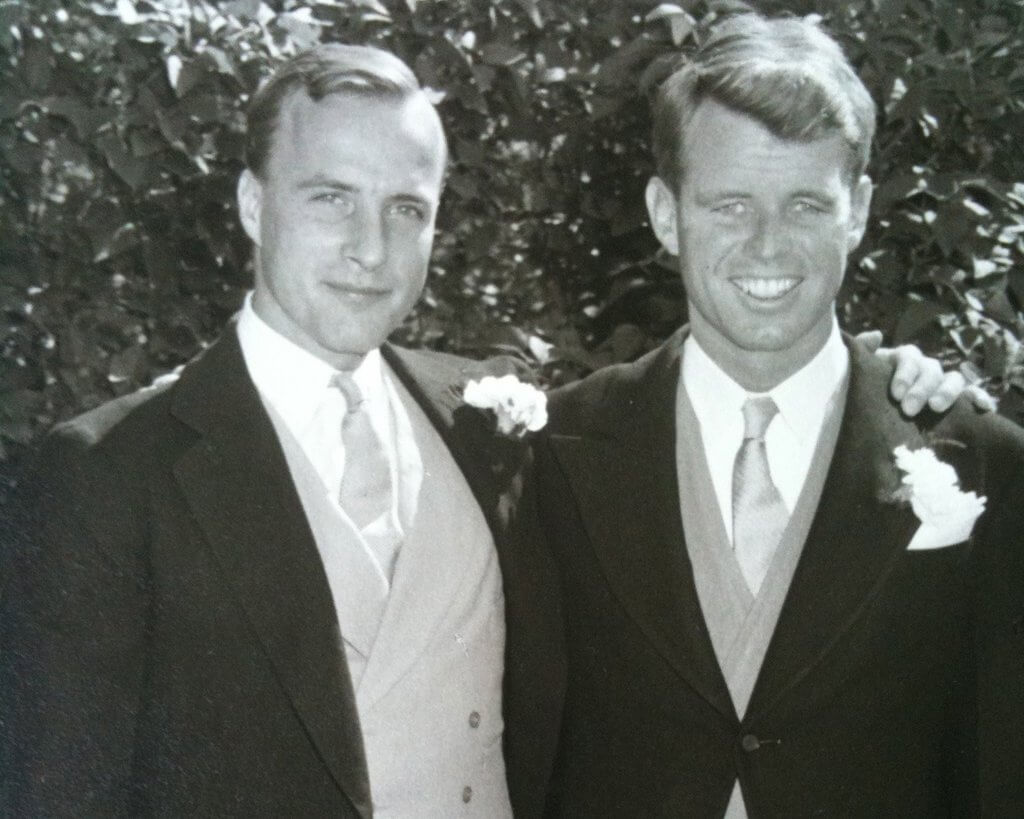
    Like William Vanden Heuvel with the Prince Edward Schools crisis, Hackett was a friend of the Kennedy family. Specifically, he attended prep school with Robert Kennedy. He was such a good athlete that novelist John Knowles modeled the charismatic figure of Phineas in A Separate Peace on him. (See this bio)

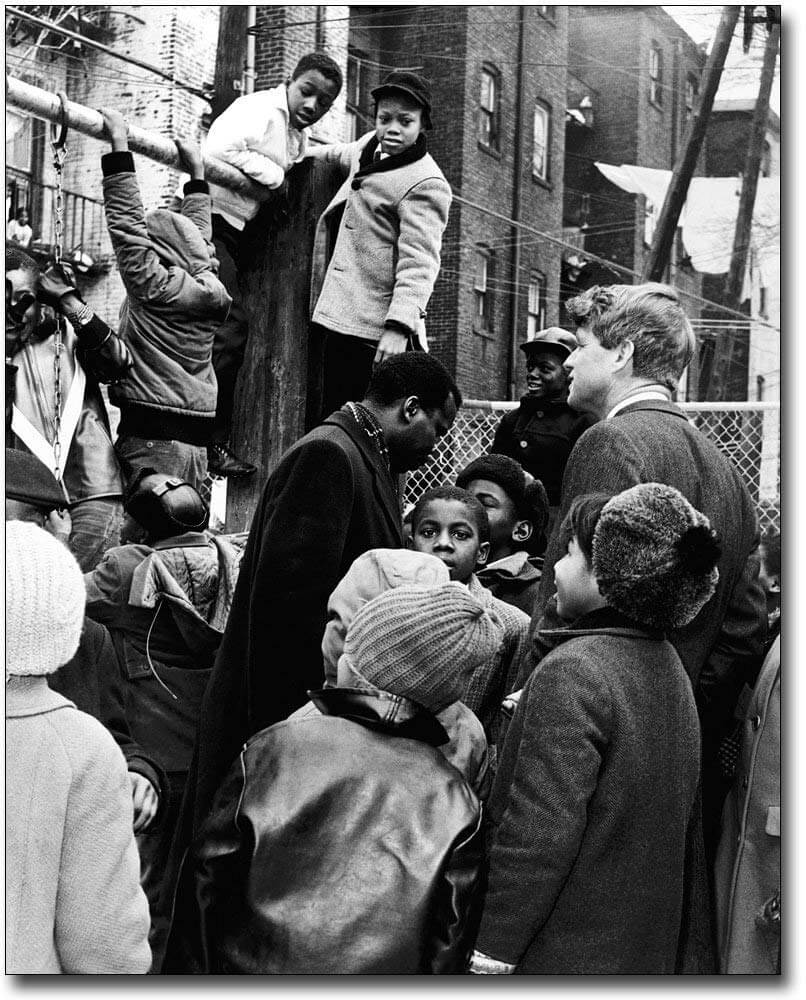
    Influenced by the work of his sister Eunice Shriver, one of the first things Robert Kennedy did as attorney general was to take a dual interest in the rights of the poor to have attorneys and also the problems and causes of juvenile delinquency. (Edward R. Schmitt, President of the Other America, p. 68) The siblings convinced President Kennedy to issue an executive order creating the President’s Committee on Juvenile Delinquency. The committee had a three-year life span and JFK made Hackett the executive director. Hackett had a wide mandate. The attorney general wanted his friend to explore the issue in all of its dimensions and manifestations. Which he did. Sometimes he and RFK would just take a stroll through Harlem or the slum areas of Washington DC. Hackett would then introduce Kennedy to someone he knew, preferably a gang member, and the three would talk. Other times, Hackett would show RFK the shabby conditions of schools or recreation areas. The attorney general was moved by these and so he invited celebrities—Cary Grant, Chuck Connors, Edward R. Murrow—to come into those blighted neighborhoods to give talks to the kids who lived there. (Schmitt, pp. 69-70) The attorney general would also attain appropriations to repair some of these facilities.

    The question that Hackett eventually began to hone in on was this: What caused the problem of delinquency? In doing so, he first reviewed the literature. He then interviewed some of the authorities in the field: for instance, sociologist Lloyd Ohlin and psychiatrist Lawrence Kumrie. He then traveled outside the east coast to the Watts ghetto and East LA barrio. (Schmitt, pp. 71-72)

    Lloyd Ohlin
    Lloyd Ohlin

    After doing this research and field investigation, Hackett formulated two broad conclusions. First, he agreed with Ohlin and his approach to the subject. Ohlin co-wrote a book called Delinquency and Opportunity. That volume challenged the accepted paradigm that the problem was one of individual adjustment. It made the case that the real underlying problem was the poverty of the slum area and how that constricted opportunities for youth. To remedy the situation, one therefore had to supply more and better opportunities for youth in blighted areas. The second conclusion that Hackett came to was that this was not a simple phenomenon. What made it worse was the paucity of past efforts in the field, rendering it difficult to ensure that new programs would work. After all, Ohlin’s book had just been published in 1960. It was thus unlikely a solution could be found by the traditional remedy of starting up a series of FDR/New Deal-type programs. (Schmitt, p. 72)

    Leonard Cottrell
    Leonard Cottrell

    In the latter part of 1961, President Kennedy proposed a bill that would create 16 demonstration projects funded at 30 million dollars and provide Hackett a staff of 12 full-time employees. (Allen Matusow, The Unraveling of America, pp. 111-112) A year later, when Harrington’s book came out, Eunice Shriver recommended forming a domestic version of the Peace Corps. (When Johnson enacted his War on Poverty this ended up being called VISTA.) But there was one point that Hackett disagreed with Ohlin about. The sociologist suggested a top-down schedule of opportunities that those in the community could choose to participate in, e.g., jobs for teenagers, legal services, day care centers, or local centers offering government services. Hackett brought in a new expert, Leonard Cottrell of the Sage Foundation. They decided that the choice of options should not originate from the top down, but from the bottom up. In other words, the poor should choose what they wanted to pick from. Hackett called this “the competent community”. (Matusow, p. 117)

    With respect to this proposal, there are two points the reader should keep in mind. First, after doing his study, Hackett understood that there was no established meme via which to frame the problem—let alone cure it. Until the day he died, he always insisted that there needed to be continual assessment as to what was working and what was not. (Schmitt, p. 92) Related to this, Hackett wanted to expand the number of demonstration projects. He reasoned that it was necessary to test what would work with differing ethnic groups; that is, what worked in East LA might not work in South Central. After he expanded his focus from delinquency to the circumstances of poverty, he knew there was more work to be done. (Matusow, p. 121) Second, he also insisted that a pure influx of funds would not solve the problem. There needed to be research and planning behind it. He convinced Bobby Kennedy on that point. (Schmitt, p. 84)

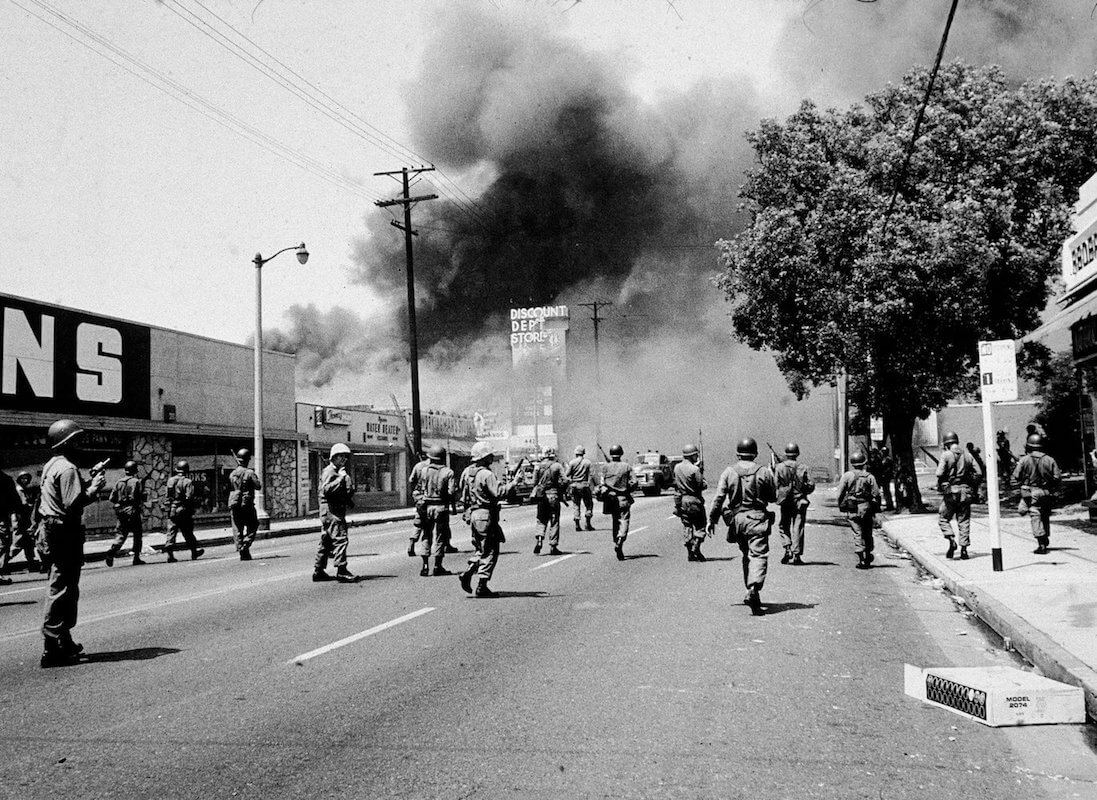
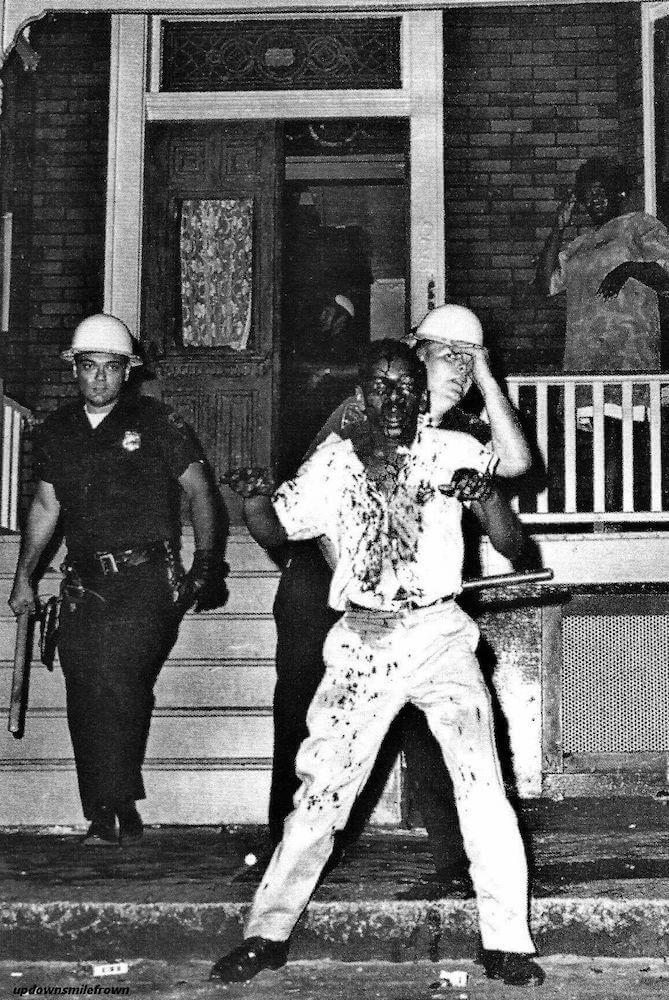
    Both men understood the urgency of the problem. From what they had read and seen, America was sitting on a ticking time-bomb. This is not after-the-fact revisionism. While everyone was concentrating on the South, Hackett and Bobby Kennedy were examining sociological predicaments elsewhere that could not be solved by an accommodations bill or a voting rights act. In these places, the problems were not simple and the remedy was not as direct. In fact, RFK predicted that riots would erupt soon if nothing was done. (Schmitt, p. 86) He told a Senate committee in February of 1963 that America was “racing the clock against disaster … We must give the members of this new lost generation some real hope in order to prevent a shattering explosion of social problems in the years to come.”

    Two and a half years later, when Martin Luther King visited Watts after the riots, that was the message he had for President Johnson. (See the film King in the Wilderness) As we saw in Part 2, this was the subject—northern race relations—that Bobby Kennedy wanted to discuss with James Baldwin and his friends at their meeting in New York in May of 1963. Through the work of Hackett, the attorney general understood that the problems of discrimination in the northern ghetto were not the same as segregation laws in the South. After the riot at Ole Miss, in the fall of 1962, he told Arthur Schlesinger words to the effect: if you think this is bad, wait till you see what we are headed for up north. (Ellen B. Meacham, Delta Epiphany, chapter 3) Because the circumstances were so different, he and Hackett knew that creative ideas were needed. That is what he wanted from people like Baldwin, Lorraine Hansberry and Lena Horne. He and Burke Marshall were lawyers; they did not need any advice on whether or not they could arrest the likes of Bull Connor. But they were now about to set sail on uncharted waters and they wanted some input. The fact that authors like Larry Tye and Michael Eric Dyson completely miss the hidden epic tragedy of that wasted opportunity demonstrates the kind of writers they really are. The real truth of Dyson’s pitiful book could be illustrated with an aerial picture of the Watts riots on the front cover with RFK’s words of warning on the back. That, Mr. Dyson, is what truth really sounds like.


    III

    Needless to say, no other administration had ever gone this far in this specific field. As author David Farber has noted, Harrington’s book—which eventually sold over a million copies—surprised America. This is one of Harrington’s most quoted passages:

    The other America … is populated by failures, by those driven from the land and bewildered by the city, by old people suddenly confronted with the torments of loneliness and poverty, and by minorities facing a wall of prejudice. (The Age of Great Dreams, p. 18)

    As Farber observed, the reason the book had such an impact was that during the forties, fifties and early sixties, the topic of poverty was pretty much non-existent. But in 1943, the mechanical cotton-picker displaced tens of thousands of workers, mostly African Americans, in the south. The problem was that since these laid-off workers had little skill and less education, there was no real future for them in the north. This may have been what Richard Russell had in mind when he told his colleague Senator Harry Byrd that what he feared if John Kennedy got elected was that he would go beyond even the Democratic platform. (Brauer, p. 53) The insight may have originated from Russell’s personal exposure to Kennedy while they were in the Senate. And indeed, as we have seen, that is what the president was doing at the time of his death, before his civil rights bill passed.

    To crystallize how the Kennedys conceived the dilemma they would eventually face, let me quote Robert Kennedy:

    You could pass a law to permit a Negro to eat at Howard Johnson’s restaurant or stay at the Hilton Hotel. But you can’t pass a law that gives him enough money to permit him to eat at that restaurant or stay at that hotel. I think that’s basically the problem of the Negro in the North. (Guthman & Shulman, p. 158)

    That was not the entire problem of course. But the basic idea was that the matter was more complex and insidious once you got out of the South. As the president told Heller at their last meeting on the topic, “Yes, Walter, I am definitely going to have something in the line of an attack on poverty … I don’t know what yet.” (Schmitt, p. 93) To show how interested he was, at his final meeting with his cabinet, President Kennedy mentioned the word “poverty” six times. After his death, Jackie Kennedy took the notes of that meeting to Bobby Kennedy. The attorney general had them framed and put up on his wall. (Schmitt, pp. 92, 96)

    As with many of President Kennedy’s policies, once it was assumed by Lyndon Johnson, it was changed. One of the underlying traps was what Hackett warned the Kennedys about. This problem could not be solved by constructing a New Deal program and blindly throwing money at it. As intimated above, the reason for this was that an unambiguous or certain remedy for it had not been identified. Hackett was still managing and evaluating his experimental projects, and JFK was not ready to commit to a specific program either. He wanted to do something, but he was not sure what it was.

    FDR and LBJ
    FDR & LBJ

    A significant difference in the backgrounds of Lyndon Johnson and John Kennedy is that Kennedy did not arrive in Congress until after Franklin Roosevelt’s death, while Johnson was there in the thirties. He prided himself on being a New Dealer. He ran the National Youth Administration in Texas, which meant he supervised 20,000 youths. One of his proudest moments occurred during FDR’s visit to Galveston, when Johnson had all of his boys lined up for the president’s visit. (Nancy Colbert, Great Society, pp. 36-38) Unlike what Ohlin and Harrington were writing about—and what Heller was describing to the president—Roosevelt was not facing peculiar pockets of poverty amid a generally thriving economy. FDR was confronted with a massive, nationwide economic blowout that covered almost the whole country. He was facing a macroeconomic problem: how can I revive the entire economy by using Keynesian solutions? In the meantime, he had to provide aid to literally millions of people who were unemployed. And those people crisscrossed all kinds of economic, ethnic and racial boundaries. FDR’s New Deal was like a combination giant fire engine, ambulance corps, and cafeteria truck dropping supplies and services throughout the country in an attempt to stimulate the economy, give people jobs, and provide relief programs so they would not starve.

    As Hackett told RFK, this was not the situation America faced in 1962. It was much more localized and much more complicated. As we have seen, Kennedy was going to run on it in 1964 in order to transform it into a national issue. He did not plan on starting his program until after the 1964 election. (Bruce J. Schulman, Lyndon B. Johnson and American Liberalism, p. 71) What happened after his death shows how important one man can be in determining the currents of history.

    Walter Heller met with Johnson the day after Kennedy’s murder. The economist told the new president about the ideas he and JFK had reviewed for relieving poverty. Johnson told him that it sounded like his kind of program and he wanted to go full tilt on it. He then added that John Kennedy was a bit too conservative for his taste. (Schmitt, p. 96) When Heller got back to him with the demonstration projects that were running under Hackett, Johnson almost eliminated the entire program. In his eyes, such a project had to be big and bold in order to win congressional approval and make a rhetorical impact with the public. (Schulman, p. 71; Matusow, p. 123)

    But there was another aspect to why LBJ trotted the program out before it was ready. The new president understood that the civil rights act making its slow way through Congress was really Kennedy’s. As I have noted, Clay Risen’s book, The Bill of the Century, proves that point. But Kennedy’s poverty program had not been formally announced or written up. Therefore, Johnson could present it as his own. (Evans and Novak, pp. 431-33) Also, like a star athlete in sports, LBJ wanted to set records in getting bills passed. (Farber, p. 106) He ended up doing both.

    Just six weeks after he met with Heller, Johnson now appeared before the nation in an evening version of the State of the Union address. He announced to that nationwide audience that:

    This administration, today, here and now, declares unconditional war on poverty in America … It will not be a short or easy struggle, no single weapon or strategy will suffice, but we shall not rest until that war is won. The richest nation on earth can afford to win it. We cannot afford to lose it.

    This kind of rhetoric about a program whose specific points had not even been worked out yet! A bit over four months later, Johnson would announce the Great Society. Most analysts have differentiated the Great Society from the War on Poverty. The main agency for the latter was called the Office of Economic Opportunity (OEO). In five years, from 1965-70, OEO was granted 1.5% of the budget for all of its programs. Had that money been instead sent to each person living in poverty in America, the total would have come to about seventy dollars a year. (Maurice Isserman & Michael Kazin, America Divided, p. 192) How can you lift someone out of poverty spending that small sum? As many have said, the latter got lost and distracted by the former.

    The greater expenditure on the Great Society was of particular consequence in this regard, because programs like Medicare, highway beautification, the National Endowment for the Arts, the creation of the Department of Transportation, and public broadcasting generally favored the middle class. Programs like air and water purification, and consumer protection, these favored almost all citizens. The problem with this panoply of programs was that when Johnson announced the Great Society at the University of Michigan on May 22, 1964, he did it with the same, if not more, extravagant language that he did his War on Poverty. In retrospect, what makes that even more shocking is this: Johnson had not run for president yet! For that matter, he had not even been formally nominated as the candidate of his party in the 1964 election. That would not occur for three more months, in August at Atlantic City.

    In Johnson’s almost manic attempt to differentiate himself from his predecessor, what Hackett warned against was now going to happen. Johnson was going to play the New Dealer. He was going to create and pass an anti-poverty program well before the 1964 election. Yet before that was even passed, he was going to announce something even bigger: the Great Society. Needless to say, all this hubbub necessitated that the cautious Hackett be retired to the sidelines. Which he was. While Johnson was putting together his package, David Hackett—the man who ran the program for three years, who knew more about it than anyone—was now working on Bobby Kennedy’s senatorial campaign in New York. RFK tried to intervene. In January of 1964, he wrote the president a memo: “In my opinion, the anti-poverty program could actually retard the solution of these problems” unless Hackett’s basic approach was used. (Matusow, p. 123) At the time he was shunted aside, Hackett was working on something he called “competence and knowledge”. Using Ohlin’s opportunity approach, he wanted the people in these affected areas to have a complete knowledge of the opportunities at their disposal. And he wanted them to be able to designate their own leaders who could then competently use those opportunities in order to improve the lives of those they represented. It is safe to say that this was a continuation of Hackett’s dispute with Ohlin and his siding with Cottrell. Hackett wanted what he called his “community action experiments” to resemble something like a socialist democratic laboratory.

    It didn’t end up that way.


    IV

    Sargent Shriver and LBJ
    Sargent Shriver & LBJ

    With unwise alacrity, Johnson sent his program to Congress in March of 1964. (Matusow, p. 125) As Harris Wofford notes in his book, the choice Johnson made to replace Hackett with as supervisor of his War on Poverty surprised many people. On February 1, 1964, he appointed Sargent Shriver to lead it. (Wofford, p. 286) As Wofford further writes, what was so surprising about this was that Shriver already had a position in the administration. He was running what many saw as a great success: JFK’s Peace Corps. Why have him running two programs? Why not make directing the War on Poverty a full-time job? With someone like, say, Bill Moyers running it?

    Later in the year, Heller would also leave the White House. What made that decision worse was that Heller wanted to preserve much of what Hackett had done, whereas Shriver did not believe in the community action program, which was Hackett’s central idea. Shriver memorably said, “It will never fly.” (Wofford, p. 292) But he couldn’t kill it, since Robert Kennedy was still attorney general. Instead, he added other elements to it: a job training program, a summer jobs program, a work-study program, assistance to small farms and small business, and the aforementioned VISTA program. This brought in other parts of the administration, like the Department of Agriculture and the U. S. Office of Education. Bobby Kennedy had targeted help for pre-school children that would bypass the regular school system. This is how Head Start and Upward Bound entered into the overall program. (Schmitt, p. 114) These were probably the two best parts of the entire OEO schedule.

    But what quickly became one of the problems with the overall program was a lack of administrative oversight. When Johnson turned it over to Shriver, he said, “You just make this thing work. I don’t give a damn about the details.” (Isserman & Kazin, p. 109) As Bruce J. Schulman noted in his book about Johnson, the president did not speak very much or spend any amount on the oversight or administration of the Great Society or the War on Poverty. (Schulman, p. 95) He argues that Johnson understood that the sooner underlying problems were exposed, the sooner Congress would cut back on them. So, in essence, he tried to ignore them. The other problem was the visible and vocal disagreement about Hackett’s ideas for community action.

    As almost every commentator on the subject has observed, what came to be called the Community Action Program (CAP) fell prey to forces on the right and left. Hackett always said that he was not done fully defining what the program should be at the time he left. But he and Bobby Kennedy did agree on a stricture called “maximum feasible participation.” (MFP) This was their way of keeping the CAP democratic and also out of the hands of the local and state bureaucracies that had already failed their citizens in these areas. Another reason Kennedy tried to push MFP was that he knew that veteran local politicians would see the OEO money as simply a bounty they could get to and then spend on their own favorite programs, which did not benefit the people he and Hackett wanted to help.

    Richard Daley
    Richard Daley

    He was correct. Mayor Richard Daley said, “We think the local officials should have control of this program.” (Matusow, p. 125) Another city official said, “You can’t go to a street corner with a pad and pencil and tell the poor to write you a program. They don’t know how.” (Farber, p. 107) That last comment was nonsense. Hackett did not envision the citizenry writing the programs. He wanted the local poor to be able to vote on what kind of opportunities they should have through their community action grant. But it showed why Hackett and Kennedy feared that CAP would be taken over by already standing local agencies.

    When RFK arrived in the Senate, he had the opportunity to debate one of Daley’s cronies on this issue. Like Daley, the Chicago schools superintendent argued that the education programs of OEO should be taken over by his school district. Senator Kennedy then asked, if that occurred, what would safeguard the targeted children’s rights to get the benefits of the grants? The superintendent’s answer was that it would be the school community in the form of local groups of parents. From his experience in walking the streets of Harlem with Dave Hackett, the senator replied thusly:

    Many of them do not have parents. They do not have two parents anyway. They might have one parent, and maybe they have a group in the community that is going to come down and make their protest known; but a lot of times that is very difficult. They are working for seven or eight dollars a day and making forty or fifty dollars a week. It is difficult to take off and go down and protest … I think we have a special responsibility to those people who are less fortunate then we are, to make sure that the money that is being expended is going to be used so that the next generation will not have to have these kinds of hearings. (Schmitt, pp. 115-16)

    Later, RFK continued in this vein by saying:

    The institutions which affect the poor—education, welfare, recreation, business, labor—are huge, complex structures, operating outside their control. They plan programs for the poor, not with them. Part of the sense of helplessness and futility comes from the feeling of powerlessness to affect the operation of these organizations. (Matusow, p. 126)

    What Kennedy and Hackett were saying was rather simple: How can we trust the same people who allowed these inequities in the first place with the millions meant to cure them? (Schulman, p. 94) Author Schulman then listed a few examples that proved the Hackett/Kennedy warning. To cite one: a Camden New Jersey physical education program was subsidized with OEO money, yet it was a class for middle class students. I can also state from my own experience that such was the state of affairs. At the high schools I worked at which were entitled to what is called Title 1 funds, the administration tries to get the faculty behind a program that will benefit the majority of the students. As I recall, there was never any consideration given to targeting the students that Hackett and Kennedy wanted to single out and help. Many commentators concluded that this problem stemmed from the lack of oversight Johnson built into the program. (Schulman, p. 95)

    Kenneth Clark
    Kenneth Clark

    The other problem was something that was not foreseen by Hackett and Kennedy. In some cities, the CAP was taken over by, let us say, some persons on the left who also did not understand its original aims. In Harlem, respected sociologist Kenneth Clark was forced out and Livingston Wingate spent a lot of money producing the street plays of Leroi Jones. When the board argued about these productions, Wingate brought in some thugs to intimidate them. (Matusow, pp. 257-59) Wingate paid himself 25 grand a year, close to two hundred thousand today. When Kenneth Marshall, a civil rights worker who worked with Clark, examined the program records, he said he simply did not think that many of the offerings were useful. And most of the 20 million disappeared without a trace left behind. (Matusow, p. 260)


    V

    This is not to say that the whole thing was a boondoggle, as, for reasons of agitprop, some on the right have claimed. As noted, there were some good programs designed for the poor and underprivileged: Head Start, Upward Bound, and Legal Services, for example. And in some places, the CAP concept did succeed as it was designed. For instance, in Ellen Meacham’s book Delta Epiphany, she describes a community action center she was familiar with. It was in Mississippi and it was called Coahoma Opportunities. It offered what Hackett had envisioned. It maintained an array of services that would aid those who needed them: tutors who could help young children learn to read, Legal Services as a way to claim Social Security benefits, help with emergency food aid, placing a child in Head Start, a guide to gaining a summer job, job training that paid while you were learning, and help in finding a credit union. The reason it worked was because it had fine leadership. Aaron Henry was the head of the state branch of the NAACP, and his partner was a local white businessman who saw the program benefiting the business community and contributing to racial harmony. (Meacham, chapter 8) That is what Hackett wanted the CAP to be. The problem, as I have tried to state, was not so much the concept as its execution.

    Eventually the administration gave in to the local and business leaders on CAP. By 1967, Johnson had folded his cards on community action. He allowed them to be taken over by the local entities Hackett feared. Shriver left to become ambassador to France. In the end, LBJ had lost all faith in it and said it was being run by “kooks and sociologists”. (Matusow, p. 270)

    The beginning of Johnson losing faith started in Watts in the late summer of 1965. To his credit, I have never read anything that states that Bobby Kennedy had his “I told you so” moment at this time, even though, as we have seen, he did predict it. On August 11, 1965, a slightly drunken motorist, Marquette Frye, who was on parole for robbery, was stopped and pulled over by a highway patrolman, Lee Minikus. Frye resisted arrest. As he did, a crowd began to gather at the intersection of Avalon and 116th Street. It quickly swelled to a thousand. The police had to call in reinforcements. The crowd began hurling rocks and bottles. They then began to shout the chant that became the chorus to the hundreds of riots that would soon follow: “Burn, baby, burn.” (Matusow, p. 360)

    Watts Riots
    Watts 1965

    During the next six days, a 46-square-mile section of Los Angeles turned into a battle zone. The conflagration raged for the better part of this period. At one time or other, nearly 30,000 residents participated in the looting, sniping and torching. A crowd estimated at 60,000 cheered them on. The local authorities called in 2,300 National Guardsmen. They were sent in on the fourth day and this started to bring things under control. (Matusow, p. 361) They joined a force of about 1,700 local and state police. When it was all over, there were 34 dead, 1,072 injured, 977 buildings damaged, and nearly 4,000 arrests.

    Johnson was stunned by Watts. It exploded just one week after he had signed into law the Voting Rights Act of 1965. It was King’s Selma demonstration that had made that act possible. But both men had cooperated in the process. According to his chief domestic aide, Joe Califano, after Watts, LBJ refused to take King’s calls for a period of 24 hours: “He just wouldn’t accept it. He refused to look at the cables from Los Angeles describing the situation.” (Schulman, p. 112) When he came out of it, Johnson asked, “How is it possible, after all we’ve accomplished? How could it be?” (Schmitt, p. 120) Politically, the riots handcuffed the president. He had to issue a statement condemning the looting and lawlessness, but he also understood that if he went too far, a backlash would now ensue against the War on Poverty.

    Why did Watts explode? To its residents, the arrest of Frye seemed to symbolize what the white community of Los Angeles thought of the neighborhood. Nearly 2/3 of Watts high school students had flunked at least one grade; almost that many had dropped out. Forty per cent of its residents had no cars, which in a commuter city made it tough to find a job. African American unemployment was three times that of whites. (Farber, p. 113) Bobby Kennedy commented on this police symbolism when he said the law did not protect those in the ghetto from paying too much for inferior goods; from having their furniture repossessed, or “from having to keep lights turned on the feet of children at night to keep them from being gnawed on by rats.” (Schmitt, p. 120)

    Detroit Riots
    Detroit 1967

    The volcanic eruption in Watts initiated an annual series of rolling explosions of summer riots, most of them in the north. In 1966, 43 urban ghettoes went up in flames, in 1967 there were 167 incinerations, in 1968, there were over 125. (Farber, p. 115; “The Legacy of the 1968 Riots,” The Guardian, April 4, 2008) In 1967, eight American cities were occupied by the National Guard. (Matusow, p. 362)

    Neward Riots
    Newark 1967

    The 1967 Newark and Detroit riots actually surpassed Watts in their ferocity. In Newark, the violence resulted in a maelstrom: the Guardsmen were firing on police and the police returned fire. The Guardsmen then fired into a housing project, killing three women. The governor called in SDS leader Tom Hayden, who had done a study of inner-city Newark. Hayden told him to withdraw the Guard. A few hours later, things calmed down. (Matusow, pp. 362-63) One week later, on July 23, 1967, the worst riot in a century broke out in Detroit. Governor George Romney had to request the White House send in the army to quell the insurrection. It ended with 43 dead, 7000 arrested, 1,300 buildings burned down and 2,700 businesses looted. (Matusow, p. 363)

    Tom Hayden
    Tom Hayden

    By 1966, both King and longtime civil rights lawyer Joe Rauh had split with Johnson. (Randall Woods, LBJ: Architect of American Ambition, p. 699) One reason for this was that Johnson—with America going up in flames—continued to escalate in Vietnam, thereby contributing to student unrest and devoting a huge amount of money to a senseless war that neither Rauh nor King could understand. A war that, at that time, was killing or wounding an inordinate number of men of color. King later decided to memorialize the War on Poverty:

    A few years [ago] there was a shining moment, as if there was a real promise of hope for the poor. Then came the build-up in Vietnam, and I watched the program broken and eviscerated as if it were some idle political plaything of a society gone mad on war … So I was increasingly compelled to see the war as an enemy of the poor and to attack it as such. (Isserman & Kazin, p. 192)

    But Johnson insisted that he could still do all three; that is, wipe out poverty, build his Great Society and fight a large land war in Indochina—and win all of them. He said as much in his January 12, 1966 State of the Union address. This contributed to his growing credibility gap—for the simple reason that very few people saw it that way, especially with more and more cities being incinerated while more and more troops were coming home in body bags. All of this caused another sociological and historical milestone to manifest itself.

    Carmichael and Brown
    Stokely Carmichael & H. Rap Brown

    As the country seemed to be spinning out of control, not only did this contribute to the rise of rightwing backlash and demagoguery (e.g., Alabama Governor George Wallace entering the national scene); it also contributed to the rise of a leftwing militancy, both in the civil rights movement and the student protest movement. We thus witnessed the appearance on the scene of people like Stokely Carmichael and H. Rap Brown in the former and Bernardine Dohrn and the Weathermen group in the latter. In 1966, Carmichael directly confronted King on a march in Mississippi with his new slogan, “Black Power”. He later said that integration was a “subterfuge for the maintenance of white supremacy.” He then added that people of color would not be beaten up anymore: “Black people should and must fight back.” (Matusow, p. 355) Carmichael, and later Brown, meant this to be their version of the militancy and separatism of the late Malcolm X. First Carmichael and then Brown used this extremism to take over the Student Nonviolent Coordinating Committee. (Isserman & Kazin, pp. 174-75) Apparently, few members noticed that this approach contradicted what their acronym stood for. Carmichael—who wanted to start an “anti-imperialist guerilla war in the ghetto to free the Afro-American colony”—was directly responsible for inciting riots after speaking engagements. (Matusow, p. 365)

    Johnson responded to this by going first to the CIA and starting up Operation MH/CHAOS. When he did not like the results he got there, he went to the FBI, and reactivated COINTELPRO. These were illegal spying programs on these two groups, which also utilized subversive operations to destabilize them. (Schulman, p. 146) Coupled with this, in the fall of 1967, he also made an appearance in Kansas City for the International Association of Chiefs of Police. (Matusow, p. 215)

    Bobby Kennedy was not taking that path. In early 1967, he met with SDS founder Tom Hayden for an exchange of ideas. Hayden later said that Kennedy wanted to get the networks to run documentaries on what life was really like in the ghettoes. He also wanted them to broadcast what the real poverty statistics there were. (Schmitt, p. 175) Six months later, when Detroit erupted, Kennedy predicted this would be the death knell of the Great Society. When Senator Kennedy tried to propose a new package of bills, the White House refused to back it. (Schmitt, p. 190)

    The White House also failed to back its own proposals. In the wake of Newark and Detroit, Johnson had appointed what he called the National Advisory Commission on Civil Disorders. This was helmed by Illinois governor Otto Kerner and was therefore referred to as the Kerner Commission. It was composed of some visionary personages, for example Senator Edward Brooke of Massachusetts and Congressman Jim Corman of California. On February 29, 1968, they handed in their remarkable report. Its most quoted passage asserted that America was becoming “two societies, one black and one white—separate and unequal.” (Joseph A Palermo, In His Own Right, p. 161) One of its recommendations was to adopt ideas similar to RFK’s: a triangular union of private business, government grants and community leadership to rebuild impoverished communities. Both Robert Kennedy and Martin Luther King were disappointed that Johnson pretty much ignored the report and its guidelines. (Palermo, pp. 161-62)

    As many have commented, it was this splitting of the Democratic/liberal coalition over the issues of Vietnam and urban rioting which gave the GOP/conservative coalition their golden opportunity to break it asunder. Conservative strategists like Kevin Phillips and Pat Buchanan began to write up plans to do so. (Isserman & Kazin, pp. 216-17, 272-73) In 1967-68, the promise of 1963-64 became a distant memory. Politicians like Ronald Reagan and Richard Nixon now went to work on their “law and order” themes in the shadows and smoke of Watts, Detroit and Newark while the Living Room War raged each night on TV and the police clubbed SDS protestors in the streets. What caused it all to be even more made-to-order for the right wing is reflected in a comment by Johnson to Bill Moyers after he signed the Civil Rights Act of 1964. The president remarked, “I think we just delivered the South to the Republican Party for my lifetime and yours.” (Schulman, p. 76)

    Inspired by the example of George Wallace, Republicans like Nixon and Reagan strove to siphon off the racist vote in the South. This resulted in Nixon’s infamous Southern Strategy, and Reagan’s equally infamous appearance at the Neshoba County Fair in Mississippi in 1980 to kick-start his campaign. The location of that fair was just seven miles from the site where the bodies of three murdered civil rights workers had been found sixteen years prior (Read further about this here). This technique has been a standby for the GOP ever since, and has been amplified to new levels by Donald Trump.


    VI

    We will oppose … with every facility at our command, and with every ounce of our energy, the attempt being made to mix the white and Negro races in our classrooms. Let there be no misunderstanding, no weasel words, on this point: we dedicate our every capacity to preserve segregation in the schools.

     ~Virginia Governor James L. Almond Jr.

    I would like to close this series by discussing two fascinating and important projects that get little detailed attention, either by the MSM or even in academia. The first deals with a topic that we discussed in passing in Part 3: the Prince Edward County Schools crisis. The second is a subject not addressed yet: Robert Kennedy’s Bedford Stuyvesant restoration.

    As I, and many others, have shown, President Eisenhower and Vice-President Nixon did next to nothing to support or enforce the Brown decision. This holds true when it was first announced in 1954, and when it was restated in 1955. The decision made by the Republican administration was unfortunate, since without any enforcement, the Brown case now became a rallying cry for the rightwing establishment in the South. What is worse, as we have also shown: when Eisenhower and Nixon did mention it, it was with disdain.

    In Virginia, the state legislature mounted a policy of “massive resistance”. In 1958, following the Orval Faubus example in Arkansas, schools were closed rather than allow African American students to register. When this policy was overturned by the courts, Prince Edward County officials defied the decision. The County Board of Supervisors decided to cut off funding to the Prince Edward Schools altogether. Private academies for white students now opened which excluded pupils of color. This policy was upheld by Richmond newspaper columnist James Kilpatrick and his good friend William F. Buckley.

    As a result, Prince Edward’s African American students had no schools to attend. In other words, rather than integrate and obey the law, the power brokers in Virginia, egged on by Kilpatrick, resurrected the claims of John C Calhoun: interposition can override the central government. What made this all the worse was that, as Nancy Mclean notes in her book Democracy in Chains, it was a 1951 walk-out protesting segregated schools that caused Prince Edward to be included in the Brown v Board filing. (Mclean, p. 6)

    Harry F. Byrd
    Harry F. Byrd

    Consequently, students of color decided to cross over into North Carolina, or find relatives elsewhere who would let them move in, to continue their education. (Lee, p. 2) At this time, Senator Harry Byrd was one of the dominant forces in Virginia and he vigorously opposed the Brown decision. Along with Governor Almond, this made Virginia—even though it was in the upper South—quite reactionary. As analyst V. O. Key wrote at the time, “Compared to Virginia, Mississippi is a hotbed of democracy”. (Lee, p. 14) Local liberal leaders appealed to the White House to enter the fray in some way. Eisenhower actually encouraged the creation of the white private schools. (Lee, pp. 49-50)

    The Byrd/Almond nexus was quite powerful. Religious ministers did not speak out for fear of being transferred. When an education administrator complained, he was forced to resign. When Almond tried to sell the former schools, which were now empty, half the school board resigned. (Lee, pp. 68-74) Professors who wrote against these decisions were spied upon, harassed and sometimes fired. (Lee, p. 78) But that still was not enough. With the likes of Kilpatrick leading the way, laws were now passed to outlaw the NAACP in the state. And the agency was now forced to turn over its membership rolls. (Lee, p. 79) In 1960, when a 13-year-old who had been out of school for a year wrote the White House, the reply was he should express his feelings to the local officials. (Lee, p. 90)

    Two months after President Kennedy’s inauguration, Robert Kennedy called the Virginia attorney general to Washington for a meeting. When that did not get very far, a month later RFK and Burke Marshall filed a suit to join the legal action. As one commentator has written, the filing of the Kennedy/Marshall lawsuit all but stopped the Byrd/Almond movement to close down all public schools. (Lee, p. 156) The problem was that the Fourth Circuit Court of Appeals was not as law-abiding as the Fifth Circuit in the Deep South, so the progress in gaining favorable decisions was much slower, at least until President Kennedy was allowed to appoint two of his choices to that court. (Lee, p. 100)

    RFK at Prince Edward

    While all this stalling was going on, the Kennedys decided to make a bold, unprecedented move. JFK had told Burke Marshall he wanted to make Prince Edward a high priority. (Lee, p. 258) In February of 1963, after President Kennedy mentioned the Prince Edward case in his civil rights speech, the Kennedys decided to erect a new school system in Prince Edward, from grade school through high school. (Lee, pp. 33-34) As he did with Dave Hackett, Bobby Kennedy recruited a friend, William Vanden Heuvel, and gave him the assignment of creating the Free Schools system out of nothing in Prince Edward. (Lee, p. 292) By this time, four years had gone by. Some students did not even know how to hold a pencil. (Lee, pp. 314-15)

    William Vanden Heuvel
    William Vanden Heuvel

    Vanden Heuvel, with Bobby Kennedy and the president backing him all the way, did the seemingly impossible. He secured 1.2 million in grants and hired an integrated school faculty and staff with Dr. Neil Sullivan as his superintendent. Sullivan got threatening phone calls, and his car was shot at. Some children were afraid to come to school since they had no shoes or proper attire. Vanden Heuvel got them the clothes. There was a remarkable class ratio of 12-1 in the high school. The system opened on September 16, 1963 with nearly 1,600 students, including four whites. The Free Schools were an oasis in the desert. It showed what could be done in the face of complete adversity.

    RFK in Watts
    RFK in Watts

    RFK visited Watts in November of 1965. When he returned, he told a couple of his staffers, Ed Edelman and Adam Walinsky, to continue with Hackett’s research, but to take it a step further. He wanted ideas on how to address the entire phenomenon of the urban ghetto and how to structurally transform it. They did so, and in January of 1966, the senator gave three speeches on the subject of race and poverty. (John Bohrer, The Revolution of Robert Kennedy, pp. 255-61) Those speeches marked the birth of the Bedford Stuyvesant Restoration project. It was RFK’s answer to Lyndon Johnson and the New Deal.

    Bedford Stuyvesant was a ghetto in the Brooklyn area of New York. It had a population of 400,000. This made it the second largest ghetto in America outside the south side of Chicago. It covered 9 square miles. There was no hospital, college or local newspaper. After he gave his speeches, the senator asked Walinsky and Edelman to start fashioning a project for Bedford Stuyvesant that would put those ideas into action. Bobby Kennedy’s idea was to form a tripartite partnership between the federal government, businesses and foundations, and the residents, to transform the area and revive it.

    RFK in Bed-Stuy
    RFK in Bedford Stuyvesant

    He first got the business community to chip in by going to people like financier Andre Meyer and IBM chairman Tom Watson. He also secured foundation grants. (Schmitt, p. 151) He used that money to hire the local unemployed to do restoration for the fronts of local homes, a program that ended up being exceedingly popular. (Schmitt, p. 162) The plan’s next step was to push for tax incentives in order to get businesses to move there. He also attained a mortgage pool of money that allowed residents to secure low down payment FHA loans to finance real estate deals. He brought in a Dodge car lot. He got Watson to locate a factory there. He even convinced the City University of New York to open a branch, which was later named Medgar Evers College. (Schmitt, p. 165) John Doar became the chief executive officer of the restoration.

    Restoration Plaza
    Restoration Plaza
    The Bedford Stuyvesant Restoration Corporation
    was established in 1967 as one of the first community
    development corporations in the United States.

    He announced the formation of what he called the community development corporation on December 10, 1966 at Public School 305 in Bedford Stuyvesant. He said that he was now going beyond community action in order to gain the power to act with “the power to command resources of money, mind and skill.” (Schmitt, p. 155)

    The Bed-Stuy project was a qualified success, not a total success as the Prince Edward School District was. The reason it did not attain that instant stature was that Bobby Kennedy got involved in the 1968 race for the presidency. Yet, apart from whatever may currently be occurring there, no less than Michael Harrington once stated concerning this project, “It is extremely satisfying to witness a social idea that works.” (Schmitt, p. 166) The CDC idea was in fact widely imitated. Today there are over 4000 of them, and companies that specialize in that field. Bobby Kennedy and Dave Hackett made a formidable reply to Johnson’s New Deal. One that has echoed down through the decades.


    VII

    Whatever the ambitions of these four authors were, as the reader can see, their efforts to belittle what the Kennedys did for civil rights do not stand up to scrutiny. Instead, upon actual inspection, they simply reveal their own poverty. (Again, I would make a mild exception in this regard for David Margolick.)

    As Harrington said of RFK, “As I look back on the sixties, he was the man who actually could have changed the course of American history.” (Wofford, p. 420)

    Journalist Pete Hammill wrote RFK before the presidential race of 1968:

    I wanted to remind you that in Watts, I didn’t see pictures of Malcolm X or Ron Karenga on the walls. I saw pictures of JFK. That is your capital in the most cynical sense. It is your obligation in another, the obligation of staying true to whatever it was that put those pictures on those walls. (Schmitt, p. 221)

    As Brenda Luckett, one of the young African Americans Bobby Kennedy saw in the impoverished Mississippi delta in 1967, said after his death, “We felt like Kennedy was purged. He should have gotten out. It’s like we knew they were going to kill him for helping black people.” (Meacham, chapter 12)

    Charles Evers, brother of the murdered Medgar, said of him, “Mr. Kennedy did more to help us get our rights as first class citizens than all of the other US attorney generals put together.” (Arthur Schlesinger, A Thousand Days, p. 976)

    But this sentiment had been previewed several years earlier. During the Freedom Riders’ episode, when King arrived in Montgomery, the citizens rallied to him and realized that something new was afoot. One youth said, “President Kennedy is on our side.” A woman said, “Bless God! We now have a president who’s going to make sure we can go anywhere we want like the white folks in this country.” (Brauer, p. 103)

    Unfortunately, it did not last very long. One is left to imagine what America would be like today if President Kennedy had lived, and Bobby Kennedy and Dave Hackett had run the War on Poverty. Without Vietnam, and those men in charge, it is even possible that America would not have burned.

    rfk mississippi 1967


    A Summary of Major Points Made by this Essay

    1. Reconstruction ended up as a failure for the liberated slaves of the South. And due to several odd and adverse Supreme Court decisions afterwards, the Reconstruction laws and amendments were neutralized. (Part 1, section 1)
    2. From 1876 to 1932, no president did anything to alleviate what had occurred in the South thanks to the rise of the Redeemer movement. In fact, some of them clearly sided with that movement. (Part 1, section 2)
    3. Franklin Roosevelt and Harry Truman, respectively, passed the FEPC law and integrated the military under pressure from the prominent civil rights leader Philip Randolph. But they were constricted from doing much else by the southern bloc in Congress and the threat of a filibuster. (Part 1, section 3)
    4. Charles Hamilton Houston began the modern civil rights movement by initiating a systematic challenge to the Supreme Court decision in Plessy v Ferguson. This ended in the epochal Brown v Board decision. (Part 1, section 3)
    5. Because of the Brown decision, Dwight Eisenhower had an opportunity to move in a major way on the issue, since he won two resounding victories in 1952 and 1956. For political purposes, he and Richard Nixon largely avoided the issue. (Part 1, section 3)
    6. Senator John Kennedy was not enthralled by southern interests on the race issue. This is shown by his 1956 public statement of support for Truman’s civil rights bill; his speech declaring his support for the Brown decision in 1957; his vote for Title III of the civil rights bill, also in 1957, and his reference to the issue in several speeches in the 1960 campaign. (Part 2, section 1)
    7. Senator Kennedy addressed the issue during the 1960 campaign several times, accentuating its moral dimension. He spent several moments criticizing the Eisenhower administration on their performance during his second debate with Richard Nixon. (Go to the 13:45 mark here)
    8. President Kennedy did not delay in addressing the problem once he got into office. In fact, he got to work on it his first day, originating an affirmative action program that would eventually spread across the entire expanse of the federal government. (Part 2, section 3)
    9. It was not possible to pass an omnibus civil rights bill in 1961. The evidence in support of that conclusion is overwhelming. (Part 2, section 1)
    10. It was also not possible to alter the filibuster rules in 1961. The Democrats had tried to do this prior to Kennedy, and they tried to do it several times after Kennedy’s death. It was not achieved until 1975. (See pages 6 and 7 of this paper)
    11. Attorney General Robert Kennedy took on school desegregation within weeks of entering office and did things in that regard in New Orleans and Prince Edward County, Virginia that Eisenhower had never done. (Part 3, section 1)
    12. The Kennedys worked closely with the Fifth Circuit Court of Appeals in order to ensure voting rights, integrate colleges and enforce the Brown decision. Again, this had not been done prior to 1961. (Part 3, sections 2 & 5)
    13. JFK extended fair hiring practices to contracting companies who did work for the federal government and private colleges which got research grants from Washington. This helped integrate business and higher education in the South. (Part 3, section 3)
    14. The Kennedy administration did more to advance civil rights in three years than the prior 18 did in nearly a century. This is simply a matter of record. (See the chart at the end of Part 3.)
    15. Kennedy tried to get a civil rights bill on voting rights in 1962 but he could not defeat the filibuster. (Part 3, section 3)
    16. In February of 1963, Kennedy announced he had gone as far as he could through executive orders and the judiciary, and that he was submitting an omnibus civil rights bill to Congress. (Part 3, section 6)
    17. The implications of the encounter between RFK and James Baldwin in May of 1963 have been wildly distorted and pulled out of context. The discussion Kennedy wanted to have with those attending that meeting concerned what he had been working on with David Hackett: ways to approach racism and discrimination in the north. Baldwin and Jerome Smith hijacked the agenda and thereby wasted a golden opportunity. The danger of an eruption of inner-city violence, which Kennedy predicted and wished to talk about, was confirmed 27 months later with the Watts riots. (Part 2, section 3; Part 3, section 4; Part 4, section 2)
    18. Due to Fred Shuttlesworth’s highly publicized demonstrations in Birmingham, JFK’s confrontation with George Wallace in Tuscaloosa, and his televised speech on the subject, the February 1963 bill was redrawn and strengthened. It eventually passed in 1964 due to the efforts of RFK, Hubert Humphrey and Thomas Kuchel, not LBJ. This eliminated Jim Crow. (Part 3, sections 5 & 6)
    19. John Kennedy was working on an attack on poverty before his civil rights bill was sent to Congress. This effort had begun in 1961 with the research of David Hackett on the issues of poverty and delinquency. (Part 4, sections 1 & 2)
    20. LBJ appropriated that program as his own, and retired Hackett. He started it up before the research was completed. It ended up being taken over by interests who did not center it on the people it was designed for. The mishandling of this program, it could be argued, exacerbated the issue, and, as Bobby Kennedy predicted, America descended into a nightmare of riots and killings for four straight summers, 1965-68. (Part 4, section 5)
    21. Republican strategists Kevin Phillips and Pat Buchanan advised candidates on how to use this violence to manipulate white backlash and break up the Democratic Party coalition. Richard Nixon and Ronald Reagan did so, and this strategy, which has been used ever since, has risen to new heights under Donald Trump. (Part 4, section 5)


    A Selected Bibliography

    1. Jack Bass, Unlikely Heroes. New York: Simon & Schuster, 1981.
    2. Patrick Henry Bass, Like a Mighty Stream. Philadelphia: Running Press, 2002.
    3. Michael Berman, The Politics of Civil Rights in the Truman Administration. Columbus, OH: Ohio State University Press, 1970.
    4. Irving Bernstein, Promises Kept. New York: Oxford University Press, 1991.
    5. John Bohrer, The Revolution of Robert Kennedy: From Power to Protest after JFK.  New York: Bloomsbury Press, 2017.
    6. Herb Boyd, Baldwin’s Harlem. New York: Atria Books, 2008.
    7. Carl M. Brauer, John F. Kennedy and the Second Reconstruction. New York: Columbia University Press, 1977.
    8. Thurston Clarke, JFK’s Last Hundred Days. New York: Penguin Press, 2013.
    9. Andrew Cohen, Two Days in June. Toronto: Signal, 2014.
    10. Nancy A. Colbert, Great Society. Greensboro, NC: Morgan Reynolds, 2002.
    11. Charles Euchner, Nobody Turn Me Around. Boston: Beacon Press, 2011.
    12. Rowland Evans & Robert Novak, Lyndon B. Johnson: The Exercise of Power. New York: New American Library, 1966.
    13. David Farber, The Age of Great Dreams. New York: Hill & Wang, 1994.
    14. Eric Foner, with Joshua Brown, Forever Free. New York: Knopf, 2005.
    15. Harry Golden, Mr. Kennedy and the Negroes. Greenwich, CT: Fawcett, 1964.
    16. Lawrence Goldstone, Inherently Unequal. New York: Walker and Company, 2011.
    17. Edwin Guthman & Jeffrey Shulman, Robert Kennedy in His Own Words. Toronto: Bantam, 1988.
    18. Maurice Isserman & Michael Kazin, America Divided.  New York: Oxford University Press, 2000.
    19. William P. Jones, The March on Washington. New York: W. W. Norton, 2013.
    20. John F. Kennedy, Profiles in Courage. New York: Avon, 1956.
    21. Brian E. Lee, A Matter of National Concern.  Unpublished Ph. D. thesis.  Chapel Hill, NC: University of North Carolina, 2015.
    22. David Leeming, James Baldwin: A Biography. New York: Knopf, 1994.
    23. Nicolas Lemann, Redemption. New York: Farrar, Straus & Giroux, 2005.
    24. Nancy MacLean, Democracy in Chains. New York: Viking, 2017.
    25. Allen J. Matusow, The Unraveling of America. New York: Harper & Row, 1984.
    26. Ellen B. Meacham, Delta Epiphany. Jackson, MS: University Press of Mississippi, 2018.
    27. Diane McWhorter, Carry Me Home. New York: Simon and Schuster, 2001.
    28. Joseph Palermo, In His Own Right. New York: Columbia University, 2001.
    29. Clay Risen, The Bill of the Century. London: Bloomsbury Press, 2014.
    30. Arthur Schlesinger, Robert Kennedy and His Times. New York: Houghton Mifflin Company, 1978.
    31. Arthur Schlesinger, A Thousand Days. New York: Houghton Mifflin, 1965.
    32. Edward R. Schmitt, President of the Other America. Boston: University of Massachusetts Press, 2010.
    33. Bruce J. Schulman, Lyndon B. Johnson and American Liberalism. Boston: Bedford Books, 1995.
    34. Frank Sikora, The Judge. Montgomery, AL: River City Publishing, 1992.
    35. Theodore Sorenson, Kennedy. New York: Harper and Row, 1965.
    36. Harris Wofford, Of Kennedys and Kings. Pittsburgh: University of Pittsburgh Press, 1980.
    37. Randall Woods, LBJ: Architect of America Ambition. New York: Free Press, 2006.

    Go to Part 1

    Go to Part 2

    Go to Part 3

  • John Kenneth Galbraith:  A Hero in our Time

    John Kenneth Galbraith: A Hero in our Time


    As many who are interested in the JFK case know, John Kenneth Galbraith was truly A Man for All Seasons. There are few men in public life who pulled off the triple crown like he did: serving with distinction as a public figure, an academician, and as a man of letters. Specifically, Galbraith was an advisor to Presidents Franklin Roosevelt, Harry Truman, John Kennedy and Lyndon Johnson; he served as an instructor at Harvard for over 25 years; was a writer and editor at Fortune and, all told, wrote over forty books. Two of them are considered classics: The Great Crash and The Affluent Society. To have performed just one of those endeavors would make an individual a significant figure in American life. To have done all of them is a remarkable achievement. To have done them with the wit and style that Galbraith possessed makes what he did just about unique in modern American history.

    Galbraith was born in Ontario, Canada in 1908. He was granted an undergraduate degree at a branch of the University of Toronto in 1931. He then went to the University of California, Berkeley to attain his Masters and Ph. D. in agricultural economics. After graduation he taught at both Harvard and Princeton from 1934-40. He worked in the Office of Price Administration for Roosevelt, and then as one of the directors of the Strategic Bombing Survey under Truman. In the last position, he disagreed with his boss, the eternal hawk Paul Nitze, on the effectiveness of the bombing over Germany in reducing war production. After this he went to work at Henry Luce’s Fortune and then in 1949 he was appointed a full professor in economics at Harvard.

    Galbraith had a role in writing the summary reports for both the bombing survey of Germany and Japan. He concluded that war production had expanded during the bombing of Germany. Some strategic targets were impacted; others were not. But bombing had not decided the war in Europe. The air war cost America more than it did the Germans; it was just that the USA could afford it at the time. The real value of the bombing was in support of ground troops. They had won the war. (Richard Parker, John Kenneth Galbraith, p. 183)

    Galbraith’s input into the summary survey of the bombing of Japan was probably even more important at dispelling myths. He described the terrible fire bombings of Japanese cities that sometimes consumed as many as 16 square miles, causing massive numbers of civilian deaths, but barely touching industrial production. He then wrote that in all probability, Japan likely would have surrendered in December of 1945, or maybe even in November, without the two atomic bombs being dropped. (Summary Report, Pacific War, July of 1946, p. 26)

    These insights by a skilled economist like Galbraith seem to be quite valuable, especially in light of the later emphasis placed on bombing in both the Korean War and especially the war in Indochina. The tons of bombs dropped over Indochina exceeded the tonnage dropped over both Germany and Japan during World War II. In fact, it was not even close. Yet none of the countries in Indochina—Laos, Cambodia and Vietnam—had a real industrial base as did Japan and Germany. Most of the population made its living from agriculture. So Galbraith had a real perspective on this issue during his advisory years with President Kennedy.

    It was during his first stretch of employment at Harvard that he met young John Kennedy. From 1936-39, Galbraith tutored JFK at Winthrop House. (Parker, p. 324)

    It is difficult to overestimate how much Galbraith liked writing and being on the faculty at Harvard. For instance, in 1946, he turned down an offer from Nelson and David Rockefeller to become chief economist for the Rockefeller family. (Parker, p. 222) I should not have to inform our readers the kind of money and status that position would have offered him.

    In 1956, Senator Kennedy sought his advice on an agricultural issue. After that, Kennedy developed a rather close relationship with Galbraith as an unpaid advisor. The relationship deepened after the launch of Sputnik in 1957. The two would often meet in Cambridge when Kennedy was in Boston. Kennedy came to rely on Galbraith briefing him before his major appearances. (Parker, p. 325)

    In 1960, Galbraith was one of candidate Kennedy’s floor managers at the Los Angeles Democratic convention. He then wrote several speeches for the nominee during the campaign and prepped him for the third debate with Richard Nixon. He was at Kennedy’s campaign headquarters the night of the election. (Parker, p. 336)

    As most people who have studied Kennedy’s political career know, he had a genuine interest in the huge country of India. He felt that being the largest democracy in the world, and sitting in south Asia, it was of large strategic importance. In the late fifties, he wrote an article for The Progressive on the subject. With Senator John Sherman Cooper, he drew up an aid bill for the country. (Cooper had been President Dwight Eisenhower’s ambassador to India.)

    But another reason Kennedy viewed India to be of central importance is because of its proximity to Red China, and also to the former countries of French Indochina. If there were tensions in that area—as there were bound to be—then India could be both a counterweight, and also a nearby emissary. If such were the case, Kennedy would need a man whom he trusted implicitly to be the ambassador there. Which is why he chose Galbraith for the position.

    But with the kind of relationship the two men had, Galbraith was still advising Kennedy on a wide variety of subjects. On economics, Galbraith was a disciple of the great Englishman John Maynard Keynes. So he urged Kennedy to adapt an expansive economic policy in order to encourage growth. As almost any observer of the Kennedy presidency knows, the years 1961-66 were probably unmatched in post-war American economic history. Gross National Product averaged 5% growth each year, employment grew 2.5% each year, unemployment receded to 3.9%, poverty declined by a third and inflation was at a quite manageable 2 per cent. All of this was done with no significant budget deficits and a positive balance of payments.

    To show how in sync Galbraith was with Kennedy, during his confirmation hearings, the economist suggested that the USA recognize Red China. This created quite a stir on the committee. (Parker, p. 351) But as our readers know through the recently posted interviews with State Department official Roger Hilsman, this is what Kennedy had discussed with Hilsman as early as 1961.

    Galbraith tried to warn Kennedy about committing to the Bay of Pigs operation. He also warned about using American ground troops in Laos. (Parker, pp. 354-56) Kennedy agreed with this and told Richard Nixon, “I just don’t think we ought to get involved in Laos, particularly where we might find ourselves fighting millions of Chinese troops in the jungle.” (Galbraith, Ambassador’s Journal, pp. 45-48)

    And, of course, there was Vietnam. Kennedy had been advised by the likes of Edmund Gullion, Nehru of India, and General Douglas MacArthur on the subject. They all advised him not to send in combat troops. Galbraith agreed with them. Inside the Kennedy White House, he sided with Chester Bowles and George Ball for non-intervention. In prior treatments of precisely what Galbraith’s role was in these debates, the picture painted of it was, to say the least, a bit murky.

    For instance, in David Halberstam’s long book The Best and the Brightest, Galbraith is portrayed as being some kind of outsider, on the periphery of Kennedy’s circle. (Halberstam, p. 152) To state it kindly, Halberstam’s book has not aged well. To be unkind, today it seems quite misleading; so much so that this author would call it pernicious. In addition to getting the role of Robert McNamara wrong, the highly praised Halberstam also mischaracterized Galbraith’s part.

    John Newman came closer to what the true facts and characterizations were in his milestone book JFK and Vietnam, first published in 1992. There, Newman wrote that Galbraith had written Kennedy in March of 1962 after visiting Vietnam. He was quite derisive about America being involved there at all. He suggested a neutralist political solution, similar to what the administration was negotiating for in Laos. (Newman, p. 236) This is more accurate but is still unsatisfactory since it is incomplete.

    Galbraith’s role in all this began even before the famous two week long November, 1961 debate over committing combat troops to Saigon. In July of 1961, Galbraith wrote the president, warning him about the information he was getting about Indochina. He said that President Ngo Dinh Diem was not the right man to lead South Vietnam. He had alienated the public to a much further degree than the newspaper reporters have let on. (Galbraith, Letters to Kennedy, pp. 76-77) But it turns out that Galbraith was directly involved in the November debates.

    The ambassador was in Washington to accompany Prime Minister Jawaharlal Nehru on a state visit. Galbraith had already heard about the mission President Kennedy had sent General Max Taylor and Deputy National Security Advisor Walt Rostow on in October. The ambassador feared America’s entry into a war in Vietnam would be a disaster. It could endanger Kennedy’s domestic programs, tear the Democratic Party apart, and perhaps provide the opening for a new conservative era in American politics. (The Nation, February 24, 2005, “Galbraith and Vietnam”)

    Galbraith had arranged the luncheon to be at the Newport Rhode Island home of Jackie Kennedy’s mother, so no other State Department representative would be there. Kennedy and Galbraith asked the Indian leader to participate in a neutralist solution for Vietnam. They even asked him to talk to Ho Chi Minh about forming a UN observer team as a first step in that direction. Nehru was non-committal except for saying that America should not get into a shooting war in Indochina. (Galbraith, A Life in our Times, pp. 470-77)

    The next day in Washington, Galbraith made a beeline for Rostow’s office. He questioned Rostow about the actual contents of the report. Rostow said it was highly classified. Then the phone rang. With Rostow distracted, Galbraith stole a copy of the report from his desk and left. (The Nation, 2/24/2005)

    Reading it back at his hotel, the ambassador was stunned. He realized that this report and its recommendations would create the first commitment of combat troops to Saigon and that would then be the pretext for an open-ended conflict. The first group of 8,000 men were to go in under the guise of “flood relief workers”. The report recommended deepened cooperation between the CIA and Saigon’s intelligence, more covert operations and massive training of Vietnamese soldiers. Plus the use of a sprayed herbicide which Secretary of State Dean Rusk told Kennedy was really a weed killer. (At first this was called Agent Purple, it later turned into Agent Orange.)

    Kennedy had seen Galbraith the day before the Newport meeting. Realizing there was going to be a long debate over the Taylor-Rostow report, he had asked him to prepare a paper to contest direct American involvement. This now became the basis for his memo to the president. JFK read both documents and then postponed the meeting on Vietnam. Meanwhile, Galbraith did something that the president had already done. (Jim Douglass, JFK and the Unspeakable, p. 107) The ambassador started leaking stories to the press that Kennedy was opposed to the escalation his advisors were pressing on him. Before Galbraith left to return to India, he told Kennedy it would be a good idea if he stopped off in Saigon. JFK agreed and then instructed the ambassador to report back to him alone. (The Nation, 2/24/2005; Parker, p. 370-72)

    At the crucial meeting, which occurred on November 11, Galbraith’s biographer Richard Parker notes something that Newman did not mention, namely that Bobby Kennedy was in the room. Later, authors like David Kaiser and Gordon Goldstein did write about this information, based upon recovered notes. In what appears to be a mapped out plan, the Attorney General would repeatedly deny any suggestion of ground troops by saying flatly, “We are not sending combat troops. Not committing ourselves to combat troops.” (David Kaiser, American Tragedy, p. 113) Then the president would add that if there was ever going to be a troop detachment sent in it would be a multilateral mission, under the aegis of the UN or SEATO. (Parker, p. 371)

    As most of us know, this two week long debate ended with Kennedy issuing NSAM 111. That order significantly increased the number of American advisors to over 15,000 and it sent in more equipment, like helicopters. But this is as far as Kennedy was going to go. He was going to aid Saigon, but he was not going to fight their war for them. He never allowed combat troops into theater. In fact, there was not one more combat troop in Vietnam on the day Kennedy was killed than on the day he was inaugurated. The president even wanted to replace Frederick Nolting as ambassador to Saigon with George McGhee, who he knew was opposed to intervention. But Dean Rusk, who had been one of the leaders for troop insertion during the debate, nixed this idea by saying Nolting should stay since he had Diem’s confidence. (Parker, p. 376)

    It seems to this author that with the information about Bobby Kennedy’s role in the November, 1961 debates, the attempt by Kennedy to replace Nolting, and the now fully revealed role of Galbraith, this episode is even more clearly a demarcation line than before. Kennedy simply was opposed to transforming Vietnam into America’s war, and he knew that was what it would become if ground troops were placed in theater. As the president had told Arthur Schlesinger:

    They want a force of American troops. They say it’s necessary in order to restore confidence and maintain morale … The troops will march in; the bands will play, the crowds will cheer, and in four days everyone will have forgotten. Then we will be told we have to send in more troops. It’s like taking a drink. The effect wears off and you have to have another … The war in Vietnam could be won only so long as it was their war. If it were ever converted into a white man’s war, we would lose as the French had lost a decade earlier. (Gordon Goldstein, Lessons in Disaster, p. 63)

    Upon Galbraith’s return to Asia, he did file a report from Saigon. In fact, he eventually filed three of them. These all ended up being back channel cables, meaning they bypassed the usual State Department protocols. They were laced with Galbraith’s blend of impatience and sarcasm: “Who is the man in your administration who decides what countries are strategic? I would like to … ask him what is so important about this real estate in the Space Age.” (The Nation, 2/24/2005) And again, Halberstam was wrong about what happened as a result of these, just as he was wrong about how Kennedy regarded his advice in November of 1961. For Galbraith was not on the periphery, he was at the center of the story—in two ways.

    First, Kennedy attempted to follow up on the ambassador’s proposal to open negotiations for a neutralist Vietnam settlement through India. Unfortunately, he tasked the wrong person with the mission. Averill Harriman was Kennedy’s point man on the attempts to defuse the Laotian situation with a coalition government. Apparently he did not feel the same way about Vietnam. In December of 1961, Harriman had been appointed to Assistant Secretary of State for East Asian and Pacific Affairs. Kennedy asked Harriman to send instructions to Galbraith about pursuing a peace plan by having Indian and Russian diplomats approach Hanoi. Harriman suggested a delay, which the president agreed to. But Kennedy concluded “that instructions should nevertheless be sent to Galbraith, and that he would like to see such instructions.” Harriman said he would send them. (Douglass, p. 119) Harriman did send instructions, but “he struck the language on de-escalation from the message with a heavy pencil line.” The diplomat dictated a memo to his colleague Edward Rice which changed the de-escalation approach to a threat of escalation of the war unless Hanoi accepted American terms. When Rice tried to rewrite the memo with the original instructions, Harriman again struck Kennedy’s language. He then simply killed the telegram altogether. (Gareth Porter, Perils of Dominance, pp. 158-59)

    Galbraith’s other attempt at de-escalation was more successful. In early April of 1962, the ambassador was visiting the Kennedy family for a weekend at Glen Ora, their rented estate in the Virginia countryside. Jackie Kennedy had just made an official visit to India and they were watching a TV special about it. He then told the First Lady about his talk with the president about the situation in Saigon, his later visit to Defense Secretary Robert McNamara, and the memo he left behind. (Parker, p. 389)

    It turned out that Kennedy had been giving the Galbraith memos about Vietnam a lot of attention. He wanted the ambassador to put his thoughts in writing and give a copy to McNamara. In that memo, Galbraith stated American policy should keep the door open for a political solution. We should also measurably reduce our commitment to the present leadership of South Vietnam. He then added that the advisors who were already there should not be involved in combat and kept out of any combat commitment. Their roles should become as invisible as the situation allowed. (Newman, p. 236)

    As described in JFK and Vietnam, this memo was mightily resisted by the Pentagon, because, just five months after sending in advisors and equipment, Kennedy now had an alternative. Newman also notes that Kennedy had said at that time “he wished us to be prepared to seize upon any favorable moment to reduce our commitment, recognizing that the moment might yet be some time away.” (Newman, p. 236) In other words, Galbraith had just given Kennedy support for what he really wanted to do in Indochina. As both Douglass and Newman have written, Galbraith’s visit to Washington and the handing off of his memo to McNamara were the beginning of Kennedy’s withdrawal plan from Vietnam. (Newman, p. 237; Douglass, p. 119)

    The very next month, in May of 1962, Robert McNamara now delivered a surprising message to his subordinates in Vietnam. Arriving in Saigon for one of his so-called SecDef meetings, McNamara asked some of the higher-ups to stick around after the formal meeting ended. The defense secretary now echoed what the president had told Arthur Schlesinger: “It was not the job of the U.S. to assume responsibility for the war but to develop the South Vietnamese capability to do so.” (Douglass, p. 120) He then asked when they thought Saigon would be able to assume sole responsibility for all actions. The secretary got no satisfactory reply, since everyone was shocked by the question. So he proceeded to tell the commander in charge of the American advisory command, General Paul Harkins, “to devise a plan for turning full responsibility over to South Vietnam and reducing the size of our military command, and to submit this plan at the next conference.” As Jim Douglass notes, Kennedy and McNamara only wanted a plan for withdrawal at this time. For as he had told Galbraith in November of 1961, “You have to realize that I can only afford so many defeats in one year.” (Galbraith, A Life in Our Times, p. 469) The president was referring to the Bay of Pigs and Laos, the latter of which he knew the Pentagon would consider a defeat.

    It took quite a long time for the commanders of all departments in Vietnam to prepare their withdrawal schedules for McNamara. More than a year to be exact. But finally, in May of 1963, at a SecDef meeting in Hawaii, they were presented to McNamara. McNamara said they were not fast enough and requested they be accelerated “to speed up replacements of U.S. units by GVN units as fast as possible.” (Douglass, p. 126) This plan was then coordinated with Kennedy’s NSAM 263 order and its accompanying report, which dictated that a thousand men would be withdrawn from Vietnam by the end of 1963, and all American advisors would be removed by 1965. So much for Galbraith being at Halberstam’s “periphery”. In a very real sense, the ambassador had provided the rationale for Kennedy’s withdrawal plan.

    Galbraith always said that he would only serve under Kennedy for a bit more than two years since he had to get back to Harvard in order not to lose tenure. How badly did Kennedy want him to stay? He offered him the ambassadorship to the USSR. (Parker, p. 406) If Kennedy had lived, and Galbraith had taken that position, one can only imagine how relations between the two superpowers would have turned out. But the fact that JFK offered him the position shows what the president had in mind for the future. He saw how visionary Galbraith was on Vietnam, and he wanted to try more of that with Russia.

    Galbraith continued to be an advisor to the White House after Kennedy’s assassination. But he and President Johnson simply did not agree on Indochina policy, and Galbraith really did not like how the escalation of the Vietnam War began to downsize the War on Poverty. In January of 1966, he wrote a memo to Johnson saying that America had no national interest at stake in Vietnam. A few months later he tried again. He offered to write a speech that would set the stage for American withdrawal. Johnson did not appreciate the advice. And that was about it for their relationship. (Parker, p. 431)

    But about four months before that happened, and probably provoking the exchange, Galbraith had shared a dinner with Richard Goodwin, Carl Kaysen, Arthur Schlesinger, and Defense Secretary McNamara. By this time, January of 1966, each of these men, except for McNamara, had left the White House. Galbraith described the meeting as jarring. McNamara was extremely emotional as he described what was happening in Indochina and at the White House. The Defense Secretary said the war was spinning out of control. Rolling Thunder, the bombing campaign Johnson had banked on, was not effective. Johnson was getting depressed over the results. But he still seemed insistent on victory, even if it meant more escalation. If America did not find a way out soon, we would lose the war. (Kai Bird, The Color of Truth, p. 345; Galbraith, A Life in our Times, pp. 482-83) This is why he wrote to LBJ. Instead, Johnson escalated the war further. He then pushed McNamara out of office. But it was very likely that dinner which caused McNamara to begin the task of writing the Pentagon Papers.

    Galbraith now wrote a book entitled How to Get out of Vietnam. It sold 250,000 copies. Along with Schlesinger and Goodwin, he organized a protest group called Negotiations Now. He had concluded that if LBJ would not end the war, someone who would must run against him in 1968. Things go so bitter between the two men that Johnson told White House advisor John Roche to start attacking Galbraith in the press. (Parker, p. 432)

    Galbraith finally did find someone to run against Johnson. It was Senator Eugene McCarthy. When Bobby Kennedy later announced he was also in the race, Galbraith was in a sticky position. But he felt he should be loyal to his first choice, so he stuck with McCarthy, even though after Johnson made his shocking announcement not to run, it was apparent RFK was the stronger candidate with a better chance to defeat Richard Nixon in the fall.

    After Robert Kennedy was assassinated, McCarthy, for all intents and purposes, dropped out of the race. After Kennedy’s funeral, Galbraith visited him in Washington. He later wrote the following about that meeting:

    Gene was deeply depressed; the death of Robert Kennedy showed the hopelessness of the game. What had been real would now be pretense; what had been pleasure was now pain … I pleaded that he carry on. The banality of my argument still rings flatly in my ears. Gene remained sad and unmoved, but proposed another talk in Cambridge a few days later. This we had with Coretta King and a number of McCarthy’s local supporters present. His mood was better … but I don’t believe that Eugene McCarthy’s heart was ever again wholly in the battle. (Galbraith, A Life in our Times, p. 499)

    The Kennedy administration was responsible for being the first to bring some remarkable men into the White House, or promoting them to their highest positions. These individuals were not just outstanding civil servants; they were extraordinary men in their own right. People like Robert Kennedy, George Ball, Richard Goodwin, Harris Wofford, Ted Sorenson, Sargent Shriver, Arthur Schlesinger, Edmund Gullion, Adam Yarmolinsky and G. Mennen Williams were all distinguished individuals and personalities who have yet to be surpassed in talent and achievement by those who followed. As a group no other administration comes close.

    John Kenneth Galbraith is one of the most distinguished of them all.

  • Does Paul Street get paid for this junk?

    Does Paul Street get paid for this junk?


    I really hope the answer to the question posed by this article’s title is no. Why? Because Street’s latest exercise in fruitiness is nothing but a recycling of two previous columns he wrote. His current article, which was supposed to be a salute to the memory of Martin Luther King, is really no such thing. It is actually a cheapening of King’s memory, because Street chose to elevate King at the same time that he denigrates President Kennedy. But beyond that, the article is ironically titled, “Against False Conflation: JFK, MLK and the Triple Evils”, since Street himself is guilty of conflating one column he did in January on King with another he did in February on Kennedy. The latter was posted at Truthdig; the former at Counterpunch. What he does in his current effort at the latter site is largely a cut-and-paste job of the two articles. Which is what I mean about hoping he does not get paid for this stuff.

    I demolished his February piece on Kennedy at length already. (See Paul Street Meets Jane Hamsher at Arlington for the ugly details) But what he does now is make believe that demolition did not happen, and he simply modifies it slightly to serve as the first part of his worthless essay. So if he is getting paid, it’s easy money.

    When I heard of what he had done, I emailed Counterpunch and asked if I could reply on site. After four days I received no reply. Therefore, I will reply here again. And to place Street on warning: whenever I hear about more of his nonsensical writing on the subject, I will reply in the future. Especially since his scholarship is so bad that this is like shooting fish in a barrel. In fact, Kennedys and King may end up with a special section called “Street is a Dead End”.

    As I stated, Street slightly modified the first part of his hatchet job on President Kennedy. He opens his article by aseerting that he does not pretend to know the full stories behind who killed Kennedy or King. But he cannot help but list the lone gunman option first. Anyone who has the slightest interest in the subject would howl with laughter at anyone who would proffer that option today. That Street leaves it open tells us a lot about the argument he wishes to make. For if he did admit that JFK was killed by a high-level plot, it would tend to undermine his nonsensical thesis.

    This is especially true in light of the fact that so many of President Kennedy’s policies were altered and then reversed after his death. For example, there were no American combat troops in Vietnam on the day Kennedy was killed. By the end of 1965, not only were there 175,000 combat troops in theater, but also Rolling Thunder—the greatest air bombardment campaign in history—was operating over North Vietnam.   We can make other comparisons to the same effect from the scholarly literature that Street refuses to consult. For example, by reading Richard Mahoney’s JFK: Ordeal in Africa, one can see that a very similar trend followed in Congo. By reading Lisa Pease’s essay about the giant conglomerate Freeport Sulphur, one can see the same trend line in Indonesia. (See JFK, Indonesia, CIA & Freeport Sulphur) By reading just a few pages from Donald Gibson’s masterful volume, Battling Wall Street, one can see that it occurred in the Dominican Republic as well. (See pages, 76-79) By reading Robert Rakove’s fine overview of Kennedy’s revolutionary foreign policy, one can see that the same thing happened in the Middle East, where Kennedy favored Gamel Abdel Nasser. After his death, Johnson and Nixon moved back to favoring Iran and Saudi Arabia, with disastrous results. (See Kennedy, Johnson and the Non Aligned World.) The story of Africa outside the Congo also followed a similar plot line. And the reader can see that by reading Philip Muehlenbeck’s Betting on the Africans.

    What is remarkable about Street’s articles is that there is no evidence at all in any of them that he read any of this material. Consequently, in addition to the ignorance he shows on the subject, there is also a tinge of arrogance involved. Does he think that since he knows better, somehow he is above reading the latest scholarship on the subject? Well, that is one way that he can keep his screeds coming, isn’t it?

    The other point that he implies with his opening is that the assassinations of the Sixties are not really linked in any way. Again, this is quite a difficult thesis to swallow. Lisa Pease and I wrote a 600-page book on that very subject called The Assassinations. There, with rather intricate and up-to-date evidence, we tried to show how the four major assassinations of the decade—President Kennedy, Malcolm X, King, Robert Kennedy—all shared similar characteristics in both their outlines and design, and in the cover-ups afterwards. We also offered a final essay in which we tried to show that it was the cumulative effect of those murders that brought us to the election of 1968: the coming of Richard Nixon and the rise of the hard right to power—a phenomenon that drastically altered the social and economic landscape of this country, and from which it may never recover. One only needs to look at what happened after Nixon left office: how Jerry Ford allowed Donald Rumsfeld and Dick Cheney to bring the Committee on the Present Danger into the White House and do battle with the CIA over their estimate of the Soviet Threat, an unprecedented event. The people they brought in—Paul Nitze, Paul Wolfowitz—thought as Rumsfeld and Cheney did: namely, that Henry Kissinger, Nixon, and Alexander Haig were too moderate. (See Jerry Sanders, Peddlers of Crisis.)  

    That remarkable, little noted occasion had two effects. First, it gave birth to the neoconservative movement, and its later cast of characters, e.g., Jeanne Kirkpatrick and Richard Perle. Second, it was the final burial of Kennedy’s progressive, visionary foreign policy. And I do not just mean his attempt at détente with Cuba and the USSR. I also mean his attempt to mold a policy concerning the Third World which was not bound to Cold War ideology, but which was characterized instead by an effort to understand and ameliorate the problems of nations coming out of the debilitating state of European colonialism.

    Indonesia and Congo offer the two most notable examples. And if Street had done a little bit of reading on the subject he would have known better. For as Susan Williams wrote in her study of the murder of Dag Hammarskjold, Harry Truman made a curious comment when he heard about the UN Secretary General’s death. He said, “Dag Hammarskjold was on the point of getting something done when they killed him. Notice, I said ‘When they killed him.’.” (Susan Williams, Who Killed Hammarskjold?, p. 232) Why on earth did Truman say this? We did not learn why until Australian scholar Greg Poulgrain published another book Street has never read.   It is called The Incubus of Intervention. In examining how Kennedy’s Indonesian policy was opposed by Allen Dulles, the author talked to George Ivan Smith, a close friend and colleague of Hammarskjold’s at the United Nations. Smith revealed that Hammarskjold and Kennedy were secretly cooperating not just on the Congo, but on the problem of Dutch occupation of West Irian, which Indonesian leader Achmed Sukarno felt should be a part of Indonesia. Smith added that Kennedy had let former Democratic president Truman in on that cooperation. That is why Truman made the comment he did. (Poulgrain, pp. 77-78. For a fuller discussion of the Hammarskjold/Kennedy nexus, see Hammarskjold and Kennedy vs. The Power Elite)

    What is so remarkable—in fact, admirable—about this revelation is this: Kennedy kept his pledge to Hammarskjold even after the UN Secretary General was killed! As anyone who reads Mahoney’s book, or Lisa Pease’s essay, or Poulgrain’s book will see, Kennedy was diligent throughout his abbreviated term on both fronts. He personally visited the United Nations on two occasions to ensure that the UN would not forget what Hammarskjold was doing in Congo after he died. And Kennedy allowed American troops into battle to stop the secession of the Katanga province, a move sponsored by Belgium and, to a lesser extent, by England. (See Desperate Measures in the Congo)

    The same was true of Indonesia. Kennedy stuck by Sukarno until the end. He engineered the ceding of West Irian to Indonesia under the negotiated guidance of his brother Robert. President Kennedy had also arranged a state visit to Jakarta in 1964, in part to stave off the confrontation between Sukarno and the United Kingdom over the creation of the Malaysia federation. When Sukarno wanted to expel foreign corporations, Kennedy negotiated new agreements with them so that Indonesia would benefit from the profit split, which JFK requested be 60/40 in Indonesia’s favor. After Sukarno was overthrown, that split was 90/10 in favor of the companies. (Poulgrain, p. 242) Without Kennedy, Sukarno lasted less than two years. President Johnson now backed Malaysia in the dispute with Sukarno, and consequently, Sukarno withdrew from the United Nations. As Lisa Pease notes in her above-referenced article, President Johnson altered Kennedy’s policy towards Sukarno very quickly, and within 12 months the CIA started to plot his overthrow.

    These are just two examples. But they typify President Kennedy’s overall foreign policy. If Street can show me another president since him who did these kinds of things in two separate instances—that is, attempt to foster a revolutionary, nationalist government against European imperialists, and work with the United Nations to do so—I would very much like to hear about them.

    Ignoring the above two cases, Street brings up Vietnam in relation to the issue of Kennedy and the Third World. Here Street says that there has been since 1991 an ongoing debate on whether Kennedy was going to withdraw. He states that the debate was between Oliver Stone and Jamie Galbraith on one side, and Noam Chomsky and Rick Perlstein on the other. He then claims that, somehow, the latter two writers have won that debate. First off, Chomsky has not done any new work on Vietnam since before 1991. But secondly, other authors have done new and important work that is based on new material. Real historians like Howard Jones, David Welch and David Kaiser have uncovered new evidence to make the original argument, first offered by John Newman in 1992, even stronger. For Street to even bring up Perlstein shows just how threadbare he is. For Perlstein did nothing but reiterate Chomsky’s dated, musty and unconvincing polemics. To note just one difference in the quality of scholarship: Welch offered up declassified tapes of Lyndon Johnson actually admitting that he knew Kennedy was withdrawing from Indochina and thus had to cover up the fact he was breaking with that policy. (Welch, Virtual JFK, pp. 304-14) I ask the reader, how much more proof does one need? Well, how about Assistant Secretary of Defense Roswell Gilpatric revealing that his boss Robert McNamara told him that Kennedy had given him orders to wind down the war? (Welch, p. 371) Is Street, who was not there, going to say he knows better than Johnson and Gilpatric, who were in the room?

    This relates to the overall comparison of King with the Kennedys. As anyone who studies American history understands, after the Civil War, the states of the former confederacy passed local and state laws which created the conditions of segregation throughout the southeast: from Texas to the Atlantic Ocean. No one wanted to challenge these laws out of fear of violent retribution from white terrorist groups, but also because of the political price that was going to be exacted. The most that any president did was Harry Truman, who decided to integrate the armed forces. Which really did not cost him much politically, since it was invisible stateside.

    From the beginning, the Kennedys decided that they were going to take the issue on, no matter what the price. They decided they were going to use the Brown vs. Board decision as a legal basis to break down the structure of segregation. Kennedy announced this before he was elected. And he stated he was prepared to lose every southern state at the Democratic Convention because of that stand. (Harry Golden, Mr. Kennedy and the Negroes, p. 95) Which, of course, completely contradicts Street’s dictum that the Kennedys were constricted on civil rights because of votes in the South.

    But prior to that, during the debate over the 1957 civil rights act, Kennedy stressed the prime role of Title 3 in the bill. That clause allowed the Attorney General to enter into a state to enforce school desegregation. When Kennedy, in no uncertain terms, came out for Title 3, he began to lose support in the South. It got worse when he made a speech in Jackson, Mississippi—let me repeat: Jackson, Mississippi—where he reiterated that he supported the Brown vs. Board decision as the law of the land. (Golden, p. 95) Again, this is before he entered the White House.

    It did not change once he was elected. Kennedy had his civil rights advisor Harris Wofford draft a long memorandum on how to strategically attack the segregation problem. Wofford advised that the president use a series of executive actions to forge a path and build momentum until it was possible to pass a bill over a filibuster in the Senate. (Irving Bernstein, Promises Kept, p. 47) To anyone who studies Kennedy’s presidency, it is common knowledge that this memorandum furnished the design of his plan to attack the bastions of southern racism.

    His brother, Attorney General Robert Kennedy, understood this out of the gate. To the Kennedys, civil rights were simply a matter of doing the right thing. As RFK said, “it was the thing that should be done.” (Robert Kennedy in his Own Words, edited by Edwin Guthman and Jeffrey Schulman, p. 105) The Attorney General announced this in public at his famous Law Day speech at the University of Georgia in May of 1961. In other words, three months after the inauguration, RFK went into the Deep South and said he was going to support Brown vs. Board in the courts. Does Street think this helped him get votes for his brother in the South?

    Quite the contrary. But, as many have noted, what these pronouncements did was provide a catalyst for the civil rights movement. They finally had someone in the White House who was on their side. This sparked King and his allies to incite even larger displays of civil disobedience. As Bobby Kennedy noted later, the emerging images and films of Bull Connor’s actions to stamp out the Birmingham demonstration were the impetus that made his civil rights bill possible. JFK used to joke about it by calling it ‘Bull Connor’s Bill’. (Guthman and Schulman, p. 171) It was that, plus Kennedy’s showdown with Governor Wallace at the University of Alabama, that provoked Bobby Kennedy to suggest his brother go on national television and make his famous speech about civil rights. That powerful oration was then followed by the Kennedys helping King arrange the March on Washington in August of 1963. (Bernstein, pp. 103; 114-15) This provided the ballast to start Kennedy’s civil rights bill on its path through Congress.

    One of the most bizarre things Street says in his article is that, somehow, the Kennedys were responsible for things like the killing of civil rights workers in the South. In his mad crusade, is he trying to blame the Kennedys for the rise of the Klan? That began about ninety years before Kennedy entered the White House. Or is Bobby Kennedy to be blamed for J. Edgar Hoover’s lack of rigor in counteracting white racists? As Burke Marshall, who was in charge of the civil rights division at Justice, once noted, it was Bobby Kennedy who had to push Hoover and the FBI into investigating civil rights matters. (Guthman and Schulman, p. 139)

    In his zealous jihad, Street can do what he wants to rewrite history and rearrange the make-up of government bodies. He can blame the whole Reconstruction Era on President Kennedy. He can ignore what Hoover failed to do. He can discount all the previous Attorney Generals before RFK. He can erase the record of all the presidents from Lincoln to Kennedy who did next to nothing on civil rights issues. He can cast a blind eye to the virtual inaction of President Eisenhower and Vice President Nixon in the six years after Brown vs. Board. But there is one simple truth that no one can deny: the Kennedys did more for civil rights in three years than all the previous 18 presidents did in nearly a century. That is an ineradicable fact.

    And Street’s hero, Martin Luther King, knew it. This is why, in March of 1968, King told his advisors that he would be behind Bobby Kennedy in the election. At this time, both McCarthy and President Johnson were in the race, but RFK had not formally declared. King preferred Bobby Kennedy over McCarthy for the specific reason that Kennedy had a stronger record on civil rights than the Minnesota senator. And he knew Kennedy would withdraw from Vietnam. (Martin Luther King, Jr: The FBI File, edited by Michael Friedly and David Gallen, p. 572)

    But further, as Arthur Schlesinger revealed through Marian Wright, it was Bobby Kennedy who gave King the idea for the Poor People’s Campaign in Washington. He suggested it to her, and then she relayed it to King. (Schlesinger, Robert Kennedy and His Times, pp. 911-12) So much for Street’s charge that the Kennedys never wanted to redistribute wealth. King very much liked what RFK offered as a candidate. As he told his inner circle, Bobby Kennedy could become an outstanding president and there was no question that King was going to formally endorse him. (Schlesinger, p. 912) But I am sure Street would say: Well, King was wrong about that one. Even though he was there.

    The judging of presidents is a comparative exercise. There is no absolute standard to propose. Mother Theresa, or an equivalent, would not have been a viable candidate. With the declassification process we have had—and which Street is apparently oblivious to—presidents like Johnson and Nixon have looked worse, Nixon much worse. But the more documents we get on JFK, the better his administration appears. Street does not read them, so he does not know. But whether he denies it or not, the bottom line is simple: King was right.

    It’s always nice to be able to hoist a pretentious gasbag on his own petard.

  • Paul Street meets Jane Hamsher at Arlington

    Paul Street meets Jane Hamsher at Arlington


    About a decade ago I fell out of love with the liberal blogosphere. Prior to that time, I had read many of their sites assiduously, e.g., Think Progress, Daily Kos, Firedoglake and so on and so forth. Then, in December of 2008, I came across a rather mindless attack by Jane Hamsher at her Firedoglake site on Caroline Kennedy. That irresponsible and jejune jeremiad was picked up by Markos Moulitsas at Daily Kos. It was about whether or not JFK’s daughter was fit to serve in the Senate seat that Hillary Clinton was going to leave to become Secretary of State under President Obama.

    I was taken aback by the lack of any historical perspective, by the fundamental errors, and—there is no way around it—the deliberate distortion of the record. I decided to reply, and my reply ended up evolving into a three part series. This was the beginning of the end of my romance with the so-called “liberal blogosphere”. Later on, someone who worked for one of those sites read my series and confirmed all of my fears about what it had become. When I mentioned in my series the hopes some had for a revival of the likes of Art Kunkin and LA Free Press and Warren Hinckle’s Ramparts, he said, “Art Kunkin? You are dreaming my friend.” He then added words to the effect that: These people fell into this field. They don’t understand at all what real journalism is, let alone investigative reporting and research. And, what is worse, they are not interested in learning about it.

    Evidently my series did not have much of an impact, because someone named Paul Street has now repeated the hit piece begun by Hamsher and Moulitsas. Street writes for journals like Z Magazine and Counterpunch, former homes to the likes of Noam Chomsky and the late Alex Cockburn. They are part of what I call the doctrinaire Left that has done so much to lead so many good-hearted people astray in both history and politics.

    What is the occasion of Street picking up the cudgel to attack both President Kennedy and, to a lesser extent, Senator Kennedy? Well, it is similar to the occasion that Hamsher embarrassed herself about. Street did not like the fact that the Democratic Party chose Bobby Kennedy’s grandson, Joseph Kennedy III, to counter President Trump’s State of the Union address. As far as I could tell, Street did not mention anything that Congressman Kennedy said in his speech. Nor did he point to his attacks on Trump’s tax plan, or the Affordable Care Act, both of which were vigorous and effective. So, right at the start, we know that Street is going to be playing the usual shell game in his screed. This consists of distorting the adduced record, leaving key points out, and relying on folklore and not scholarship to jimmy together another cheap smear job.

    This gaming begins with the title: “Joe Kennedy III, Just Another False Progressive Idol, like JFK”. So from the outset, Street has no equivocations about what he is about to say, even though almost none of his essay is footnoted. Like many before him, he begins with the whole mildewed cliché that JFK has a stellar image today because of his glamorous wife, his charisma, and his two cute kids. Yawn.

    If you can believe it, Street begins his assault by referring to a book that is over forty years old, Bruce Miroff’s musty and obsolete Pragmatic Illusions. From here, Street now begins to argue that Kennedy was part of the upper class—what we would call the 1 per centers today—who wanted to perpetuate inequalities and had no interest in altering the “established socioeconomic arrangements.”

    How anyone could write something this false and have it published by any kind of journal—whether electronic or print media—is almost beyond imagining today. And why would one use Miroff’s book on the subject and ignore Donald Gibson’s classic volume on Kennedy’s economic policies, Battling Wall Street? Gibson’s book was published almost twenty years after Miroff’s and constitutes the most definitive statement in the literature on Kennedy’s economic program. Thus, right off the bat, Street shows us that he is not being honest with the reader; he has an agenda about a kilometer wide. Gibson’s volume was an example of real scholarship. He used documents and reports that had never been discussed in any kind of depth before. And after presenting these materials, reviewing President Kennedy’s showdown with the steel companies, and analyzing the long-term design of his national and international economic plan, he concluded that Kennedy’s economic concept was the most progressive he had seen since Franklin Roosevelt’s.

    One of the many valuable things Gibson did was to demonstrate the split between David Rockefeller and President Kennedy (Gibson, pp. 73-74). To anyone who knows anything about the structure of the Power Elite at that time, such a split would not have existed if Kennedy were part of that “one percent” exclusive club, for, as Gibson points out, when Kennedy took office, David Rockefeller had emerged as its leader. (Gibson, p. 73) In an exchange of letters, Rockefeller requested that Kennedy place reins on spending; that he raise interest rates, and also tighten the money supply. As Gibson notes, Kennedy shunted aside each of these requests. Kennedy’s chief economic advisor was Walter Heller, a noted Keynesian. Heller had nothing but derisive scorn for the rising policies of the Austrian School of Economics, soon to be popularly represented by Milton Friedman, who would become the darling of the GOP Eastern Establishment. Further disproving Miroff, both Henry Luce’s Fortune and the Wall Street Journal strongly attacked Kennedy’s expansive and remedial domestic economic policies and programs. (Gibson, pp. 58-67) For instance, in 1962, Kennedy instituted the Manpower Development and Training Act and attempted to pass a Medicare bill. (Irving Bernstein, Promises Kept, pp. 187, 256-57) Questions for Street: How would those programs uphold the status quo? And why doesn’t he mention them?

    Kennedy also opposed Rockefeller in his international economic policy, as exemplified by the Alliance for Progress, which extended loans to Latin America from the Treasury Department, thereby bypassing the IMF and Export-Import Bank. In fact, after Kennedy’s death, Rockefeller expressed his relief that Lyndon Johnson had done much to eviscerate this program. (Gibson, p. 84) But further, as Philip Muehlenbeck and Robert Rakove have also pointed out, Kennedy eschewed using military force in the Third World and instead wanted to use aid and loan programs to curry favor with nationalist leaders in these emerging nations, e.g., Sukarno of Indonesia, Kwame Nkrumah of Ghana. (See, respectively, Muehlenbeck, Betting on the Africans, pp. 73-96, and Rakove, Kennedy, Johnson, and the Nonaligned World, pp. 148-49)

    Continuing with his exercise in absurdist theater, Street now goes on to say that, somehow, President Kennedy and his brother Robert were also on the wrong side of the civil rights issue. He even writes that the Kennedy brothers were calculating their moves in this arena by counting how far they could go without losing white votes in the South. Before Mr. Street wrote that, he should have read the opening pages of John Bohrer’s new study of the Attorney General. The Revolution of Robert Kennedy begins with the AG pondering whether or not he should resign his position because he has lost the South for his brother due to his aggressive backing of Martin Luther King’s cause. That was on November 20, 1963. The reason for his quandary was that, from the beginning—when Robert Kennedy was being questioned by Senator James Eastland of Mississippi during his confirmation hearing—Eastland reminded him that his predecessor had never brought a legal action against discrimination or segregation in his state. (Harry Golden, Mr. Kennedy and the Negroes, p. 95) That was true. But in one year it all changed. In that time span, RFK doubled the number of lawyers in the Civil Rights Division, and in 12 months he had more than doubled the amount of cases that President Eisenhower had filed in eight years! By 1963, the number of lawyers in the Civil Rights Division had nearly quintupled. (Golden, p. 105) RFK then hired 18 legal interns to search microfilm records for evidence of discrimination in voting rights; and that led to him opening up 61 more cases.

    This was all a part of a preplanned strategy by President Kennedy. In October of 1960, Kennedy had told his civil rights advisory board that this was the legal strategy he planned on using in order to break the back of voting discrimination in the South. (Golden, p. 139) President Kennedy felt that with the Brown vs. Board decision, plus the civil rights acts of 1957 and 1960, his brother would be able to win these court cases and defeat the voting rights problem in the Southern states.

    President Kennedy had chosen this path since he understood that he could not get an omnibus bill through Congress because it would be filibustered in the Senate. In fact, when President Kennedy submitted one in 1962, it went nowhere (Robert Kennedy in his Own Words, p. 149, edited by Edwin Guthman and Jeffrey Shulman.) Therefore, as he had been advised by civil rights advisor Harris Wofford, he kept on using administrative actions as far as he could, e.g., the New Orleans Schools case (Guthman, pp. 80-82), the integration of interstate busing through the ICC (Guthman, p. 100), the integration of higher education at Ole Miss and the University of Alabama, the formation of the 1961 Committee on Equal Employment Opportunity, the Fair Housing Act of 1962, and the industry agreements to hire minorities involving all federal contracting (Golden pp. 60-61). There were many more, all of which Street is either ignorant of, or deliberately ignores in order to complete his hatchet job.

    In conjunction with the legal proceedings, what these unprecedented administrative actions did was to inspire African American groups and individuals to heights they had not scaled before. James Meredith applied to go to the University of Mississippi the day after Kennedy’s inauguration. (Bernstein, p. 76) As can be seen on the DVD of the film Crisis, Vivian Malone defied George Wallace in Tuscaloosa because she trusted the Kennedys to protect her, which is what RFK did by assembling over 3,000 federal troops against Wallace’s 845 state troops. All of this, and much more, gave the leaders of the civil rights movement more ballast and backing.

    It culminated in Birmingham. It was there where Governor Wallace and Police Commissioner Bull Connor overplayed their hand. The ugly images of fire hoses and barking dogs repelled Americans outside of the South, and even many in the South. Dick Gregory was on the scene. One night he left Alabama to fly home. When he got there, his wife told him that President Kennedy called and said he wanted him to phone the White House. Gregory said, “But it’s midnight.” She replied, “He said it didn’t matter what time it was.” Gregory called the White House. Kennedy picked up the phone. He told the comedian, “I need to know everything that went on, even the stuff not on TV.” Gregory spoke for about ten minutes. After he was done, Kennedy said, “Good. We’ve got those bastards now.” Gregory started to weep. (Author interview with Gregory on the Joe Madison Show in 2003)

    It was things like that, and the public face-off with Wallace, that allowed Kennedy the leverage to make his epochal civil rights speech to the nation in June of 1963. That speech is commonly referred to as the greatest presidential oration on civil rights since Lincoln. A month later he became the first white Washington politician to endorse King’s March on Washington, which occurred that August. (Bernstein, p. 114) This was the beginning of the passage of the two bills that guaranteed both civil rights and voting rights for African-Americans throughout America. It is why King, in 1968, told his advisors they would back RFK over Gene McCarthy. (Martin Luther King: The FBI File, edited by Michael Friedly and David Gallen, p. 572) I will take King’s judgment over Street’s any day of the week.

    But, Street actually outdoes himself when he begins to address President Kennedy’s foreign policy, ignoring the fact that the day before Kennedy made his civil rights speech, the president delivered his famous Peace Speech at American University. In the face of that address, Street can actually call Kennedy’s foreign policy record “militantly imperial and militarist.” He ignores not just Sukarno, who Kennedy backed to the end of his life, but also Patrice Lumumba, who the CIA helped to get rid of before JFK was inaugurated because they knew once he was in the Oval Office Kennedy would try to restore Lumumba to power. (James DIEugenio, Destiny Betrayed, Second Edition, p. 29) Street also ignores the new work by Australian Greg Poulgrain, who has broken new ground with his discoveries about the informal alliance between Kennedy and UN Chairman Dag Hammarskjold over Congo and Indonesia, one that Kennedy continued by himself after Hammarskjold was murdered. (See Poulgrain, The Incubus of Intervention, pp. 71-83)

    Street writes that somehow Kennedy was involved in the planning of the coup to overthrow President Goulart in Brazil. As A. J. Langguth wrote, the group behind the coup was called the Business Group for Latin America. It was headed by David Rockefeller. As we have seen, and as Donald Gibson has demonstrated, Rockefeller was not on good terms with President Kennedy. In fact, he had been given the cold shoulder by JFK for three years. But once Kennedy was killed, this all changed. With President Johnson in the White House and his new assistant on Latin America Thomas Mann in charge, Rockefeller and his group were now warmly received. (Langguth, Hidden Terrors, p. 104) Within a few months, a CIA operation, which Warren Commissioner John McCloy was part of, was aimed at Brazil. It was codenamed Brother Sam and this overthrow, plus Johnson’s 1965 invasion of the Dominican Republic, essentially spelled the beginning of the end of the Alliance for Progress. (Kai Bird, The Chairman, pp. 551-53; Gibson, pp. 78,79)

    In keeping with his utter ignorance of the declassified record, Street now turns to Cuba and Vietnam. He repeats the mantra that somehow the Kennedy White House was behind the plots to kill Castro. This was discredited with the declassification of the CIA’s Inspector General report in the nineties. There, the Agency admitted that there was no plausible deniability for them on this issue. But as William Davy has further discovered, when the Church Committee interviewed the co-author of that IG report, he admitted the same thing. He then went further and said the CIA had deliberately deceived Robert Kennedy about the plots being terminated. (Church Committee interview with Scott Breckinridge, June 2, 1975, pp. 30-33, 49)

    On Indochina, Street now says that somehow there is still a debate going on over whether or not Kennedy was going to withdraw advisors from South Vietnam. Again, this completely discounts the declassified record, either out of pure ignorance or by purposeful design. The record of the SecDef meeting in May of 1963 was probably the single most important declassified document released by the Assassination Records Review Board. That document shows that Secretary of Defense Robert McNamara had ordered all State Department, CIA officers, and Defense Department employees from Vietnam to show up in Hawaii with withdrawal plans in hand. When McNamara read the plans, he said the schedules were not fast enough and had to be hastened. (DiEugenio, pp. 336-37) This is all in black and white; it is not a Rick Perlstein/Noam Chomsky stunt over language. If Street has not read these records, then a conclusion is necessitated: He should not be writing about the issue, for the simple reasons that he is misinforming his readers and therefore resorting to propaganda. And it is this deliberate approach that allows him to ignore a very simple fact: When Kennedy was killed, there was not one combat troop in Vietnam. By the end of 1965, Lyndon Johnson had inserted 175,000 in theater. By the end of Johnson’s presidency there were over a half million there.

    If one can believe it, and by now one can, Street concludes his discussion of JFK’s foreign policy by saying that the kudos Kennedy gets over his leadership of the Missile Crisis is nauseating. Yet he somehow finds room to praise Nikita Khrushchev’s actions instead.

    Let us be clear about this: Khrushchev provoked the crisis by secretly moving a first strike force into Cuba. This included all three arms of the nuclear triad: bombers, submarines and ICBMs. All told, there were well over 100 delivery systems in this armada. Enough to knock out every major city in America except those in the Pacific Northwest. (DiEugenio, p. 60) The Russians lied to Kennedy when he wanted to discuss their presence there. They did this knowing he had repeatedly warned Moscow not to do what they had just done. Even after this Soviet subterfuge, and ignoring most of his advisors, Kennedy resorted to the least violent alternative: a blockade. He refused to bomb the missile silos since he felt too many civilians would be killed. And he refused to authorize an invasion even after the Cubans had knocked down an unarmed U2 plane, killing the American pilot. Which was the only fatality of the 13-day crisis. If one reads the transcripts of the tape-recorded discussions, any rational person—which Street is not—would admit that Kennedy was the person who saved Cuba from both a bombing campaign and an armed invasion. And it was his brother who helped defuse the crisis through his secret meetings with undercover KGB agent Georgi Bolshakov and Russian Ambassador Anatoly Dobrynin. All one has to do to see the difference is to read what almost everyone else was saying toward the end, especially Lyndon Johnson. (The Kennedy Tapes, pp. 590-91, edited by Ernest May and Philip Zelikow) Not just Kennedy’s advisors, but Senators Richard Russell and William Fulbright were also for a full invasion. (DiEugenio, p. 64) By the end, one can safely say that it was John Kennedy who rammed through a deal with Khrushchev: he would get his missiles out of Cuba, we would pledge not to invade the island and get our Jupiter missiles out of Turkey and Italy.

    Needless to say, Street makes not one mention of the détente that Kennedy was working on with both Castro and Khrushchev at the time of his assassination. Or the pain that both communist leaders felt about his death once they heard the news. Or that both men also believed that Kennedy had been the victim of a high-level government plot. This is the crazy cul de sac one arrives in following on the heels of Noam Chomsky.

    The truth is that Kennedy’s foreign policy—like his plan for civil rights—was largely arranged before he entered the White House. It was germinated on his first trip to Saigon in 1951 and his meeting with State Department official Edmund Gullion. It was later honed and refined until it was eloquently stated in his 1957 speech on the Senate floor attacking Eisenhower’s support for the French colonial war in Algeria. (The Strategy of Peace by Allan Nevins, pp. 66-80) In that speech, Kennedy directly referred to Eisenhower, Nixon and the Dulles brothers as repeating the same mistake they had made three years prior in Vietnam by not negotiating a peaceful way out before the inevitable French defeat at Dien Bien Phu.

    Did that tragic episode not teach us that, whether France likes it or not, admits it or not, or had our support or not, their overseas territories are sooner or later, one by one, inevitably going to break free and look with suspicion on the Western nations who impeded their steps to independence?

    Kennedy went on to say, “The problem is to save the French nation, as well as free Africa.” If Street can point out any other Washington politician who made these comments in public at this time I would like to read them. As Audrey and George Kahin wrote, in their book Subversion as Foreign Policy, at no time since World War II

    … has violence—especially on a militarized level—in the execution of covert American foreign policy been so widespread as during the Eisenhower administration. Especially was this so with respect to US relations with Third World countries … .” (p. 8)

    All one needs to do is recall Arbenz in Guatemala, Mossadegh in Iran, the attempted coup against Sukarno, and the murder plots against Lumumba. Kennedy formulated his foreign policy in opposition to this Dulles/Eisenhower/Nixon backdrop. And he specifically said on the eve of the 1960 Democratic convention that he had to win, because if the nominee was Johnson or Stu Symington, it would be a rerun of Foster Dulles or Dean Acheson. (Muehlenbeck, p. 37; I should note that Kennedy was correct about Johnson, as exhibited in Vietnam, Brazil, the Dominican Republic and Greece.) As George Ball said, Kennedy’s policies stated that if we did not encourage nascent nationalism, then America would be perceived as part of the imperial status quo and we would lose out to the USSR. Therefore, to compete with the Russians we had to side with those promoting change. (Muehlenbeck, p. xiv)

    It was these ideas about the Third World which stopped Kennedy from bailing out the CIA’s failed Bay of Pigs invasion, prohibited him from admitting combat troops into Vietnam, and prevented him from bombing the missile sites in Cuba during the October, 1962 crisis. This gestalt concept is easy to understand if one studies Kennedy’s career. And I have been at pains to elucidate these distinctions on more than one occasion. The last time I did so, I pointed out how Kennedy’s ideas were opposed to the stated objectives of the Council on Foreign Relations, proving once more that Mr. Street is flat wrong about Kennedy being part of the Eastern Establishment.

    As I wrote, the occasion for this leap into the abyss is Street’s outrage over Joseph Kennedy’s speech answering Trump. He is about as reliable and honest on the younger Kennedy as he is on JFK and RFK. For example, he writes that the congressman is against single payer health care. Not true. And he does not link to his speeches on Trump Care or Trump’s tax plan.

    As I noted at the start, I left the liberal blogosphere a decade ago. From reading Street, I made the right choice.

  • JFK at 100

    JFK at 100

    logo 750 wide 2

    On May 29, 2017, the nation commemorated the 100th birthday of President John F. Kennedy. As we all know, Kennedy was cut down before reaching the age of 50. Yet, his short term in office still casts a giant shadow over contemporary American history.  As author Larry Sabato has shown, the vast majority of Americans believe that something went wrong with America after he was assassinated. We take this opportunity to remind us all of what might have been and to commemorate what was.  And it’s important, too, to learn about the many things Kennedy achieved while in office, but which you won’t hear about from today’s mainstream media.

    The images below are linked to a four-part slideshow and afterword featuring highlights from the life and political career of John Fitzgerald Kennedy, 35th President of the United States, which we hope you will find informative.

    ~Jim DiEugenio


    1917-1960:  From Brookline to Washington 1961:  The Kennedy Presidency
    1962:  The Kennedy Presidency 1963:  The Kennedy Presidency