Tag: EASTERN ESTABLISHMENT

  • Neil Sheehan: In Retrospect

    Neil Sheehan: In Retrospect


    Neil Sheehan passed away on January 7th.  His death would have attracted more attention if it had not occurred the day after the Trump/Giuliani inspired insurrection at the Capitol in Washington DC. We will give his death more than passing notice because, in a real way, the Establishment-honored Sheehan represented much of what was wrong with the New York Times, and big book publishing in general.  So if our readers are looking for an adulatory or commemorative eulogy for Sheehan, they should go over to the NY Times.  It won’t be found here.

    Sheehan was born of Irish parents  in Holyoke Massachusetts and graduated from Harvard in 1958.  After his military service he went to work for UPI in Tokyo.  He spent two years as UPI’s chief correspondent covering the Vietnam War.  It was at this time––1962-64––that he became collegial and friendly with the Times’ David Halberstam. And he was then employed by the Grey Lady.

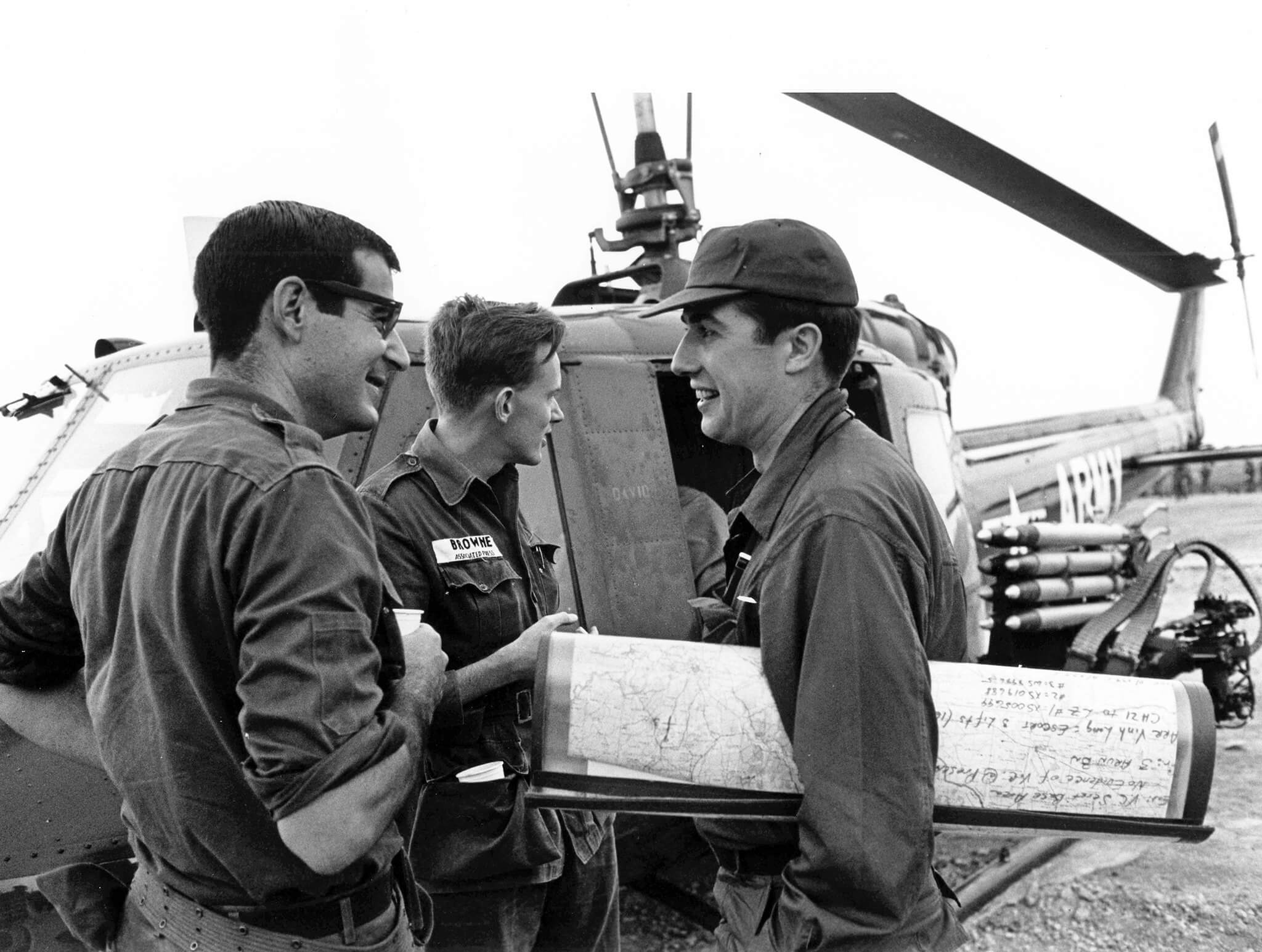
    halberstam sheehan

    As the reader can see from the picture above, Sheehan and Halberstam rode in helicopters with the military to cover the war. From the looks on their faces, they appear to have enjoyed the assignment.  In fact, in the Ken Burns/Lynn Novick documentary series The Vietnam War, Sheehan said he found these helicopter sorties exciting to be involved with.

    The commander in Vietnam at that time was General Paul Harkins.  Since those two reporters were intimately involved with the actual military operations, they knew things were not going well. Yet Harkins insisted they were going fine.  As author John Newman wrote in his milestone book JFK and Vietnam, this rosy outlook was an illusion perpetrated by both military intelligence and the CIA.  It was carried out by Colonel James Winterbottom with the cognizance of Harkins. (Newman, 1992 edition, pp. 195-97). In a 2007 interview that Sheehan did, he said that he and Halberstam had a conflict with Harkins over this issue of whether or not Saigon and the army of South Vietnam (the ARVN) was actually making progress against the opposing forces in the south, namely the Viet Cong.  He said that their impression was that Saigon was losing the war. Their soldiers were reluctant to fight, the entire military hierarchy was corrupt, and as a result, the Viet Cong forces in the south were getting stronger and not weaker.

    There is one other element that needs to be addressed before we move further. It is something that David Halberstam did his best to forget about in his 1972 best-seller The Best and the Brightest, but Sheehan was more open about in his 2007 interview.  The smiles in the picture above were genuine because Sheehan and Halberstam truly believed in winning the Vietnam War.  At any and all costs.  As Sheehan further explicated about the duo:

    … we believed it was the right thing to do. We believed all those shibboleths of the Cold War, all of which turned out to be mirages : the “domino theory” that if South Vietnam fell, the rest of––Cambodia, Thailand, Indonesia––they were all going to fall one by one.  We believed the Vietnamese Communists were pawns of the Chinese and the Russians, they were taking their orders from Moscow and Bejing.  It was rubbish.  They were independent people who had their own objectives, and they were the true nationalists in the country.  We didn’t know any of this really, but we did know we were losing the war.

    I was quite fortunate to find this interview. Because I had never seen Sheehan or Halberstam be so utterly explicit about who they were and what they were about at that time. In his entire 700 page book, The Best and the Brightest, and later in his career, I never detected such a confessional moment from Halberstam. The simple truth was that Sheehan and Halberstam were classic Cold Warriors who wanted to kick commie butt all the way back to China. They saw what America was doing as some kind of noble cause. They felt that we and they––that is, all good Americans––were standing up for democracy, liberty and freedom. As far as political sophistication went, they might as well have been actors performing in John Wayne’s propaganda movie, The Green Berets. They wanted a Saigon victory with big brother America’s help. Which is the message of the last scene of Wayne’s picture. And they didn’t think Harkins was up to the task. In fact, they did not even know what Harkins was up to with his attitudinizing about America winning the war.

    II

    Neither Harkins nor Winterbottom was unaware of the true situation on the ground. In fact, as Newman shows in his book, Winterbottom would simply create Viet Cong fatalities out of assumptions he made. Harkins understood this and went along with it. (Newman, p. 224) The idea was to control the intelligence out of Saigon in order to bamboozle Secretary of Defense Robert McNamara. (Newman, p. 225) There were honest records kept. But throughout that year of 1962, whenever McNamara would report back to President Kennedy after one of his SecDef Meetings––a conference in the Pacific of all American agency and division chiefs in Saigon––he would deliver to the president the same rosy message he had just heard. And that message was false in two senses: the number of Viet Cong casualties was exaggerated, and the number of ARVN casualties was being reduced. (Newman, p. 231)

    This intelligence deception was happening in the spring of 1962. In  November of 1961, with his signing of NSAM 111, Kennedy had agreed to raise the number of American advisors and ship more equipment to Saigon.  Therefore, the true results on the battlefield in the spring of 1962 would denote that this was not really helping the war effort. As Newman wrote, the Viet Cong “had been quick to alter their tactics to counter the effectiveness of the helicopter:  quick strikes followed by withdrawal in fifteen minutes to avoid rapid reaction … .” (p. 233)

    At about this time, in April of 1962, President Kennedy sent John Kenneth Galbraith to visit Robert McNamara in Washington. He told Galbraith to give him a report that JFK had requested the ambassador to India write about the American situation in Vietnam.  Kennedy knew that Galbraith was opposed to increased American involvement in Indochina, since he had voiced those doubts to the president before.  As James Galbraith, the ambassador’s son, said to me, Kennedy fully understood that what Galbraith would write would counter the hawks in his cabinet. (phone interview of July, 2019)  Kennedy wanted the report to go to McNamara since the Defense Secretary could then begin to withdraw the (failed) American military mission.  Galbraith did so and he then told JFK that McNamara got the message. (see this article)

    One month later, McNamara had a SecDef meeting in Saigon. After that meeting, he instructed Harkins––and a few others military higher ups––to stick around for a few minutes. He told them, “It is not the job of the U.S. to assume responsibility for the war but to develop the South Vietnamese capability to do so.”  (James Douglass, JFK and the Unspeakable, p. 120) He then asked them to complete the ARVN training mission and to submit plans for a dismantling of the American military structure in South Vietnam.  He concluded by telling Harkins:

    … to devise a plan for turning full responsibility over to South Vietnam and reducing the size of our military command, and to submit this plan at the next conference. (Douglass, p. 120)

    To me, and to any objective person, this has to be considered quite important information. First, the message is quite clear and unambiguous: McNamara is saying we can only train the ARVN.  Once that is done, we are leaving; we cannot fight the war for them. Second, it is multi-sourced: from both Galbraith, and the people at the SecDef meeting in Saigon. In addition, when word got out that Kennedy had sent the memo to McNamara, a mini war broke out in Washington over what was happening. (Newman, pp. 236-37). Then in May of 1963, the withdrawal schedules were delivered to McNamara at another SecDef meeting. (James DiEugenio, Destiny Betrayed, second edition, p. 366)

    Now, here is my plaint to the reader: try to find this step by step by step milestone in Halberstam’s book. That is, from:

    1. Galbraith visiting Kennedy, to
    2. Galbraith seeing McNamara, to
    3. McNamara ordering Harkins to begin the dismantling of the American mission, to
    4. The withdrawal schedules being presented to McNamara.

    If you can find it, let me know.  Because even though I read the book twice, I could not locate any of it.  Also, try to find it in any of the many interviews that Sheehan did that are online.  On the contrary, both men always spoke of the “inevitability” of the Vietnam War. You can only maintain such a stance if you do not reveal the above information. In fact, it can be fairly stated that, in 700 pages, Halberstam essentially gives the back of his hand to the influence of Galbraith on Kennedy. And he also completely reverses  the roles of McNamara with Kennedy in Vietnam.  Halberstam wrote that it was McNamara who went to Kennedy, “because he felt the President needed his help.” (Halberstam, p. 214) He then says, on the next page, that McNamara had no different ideas on the war than Kennedy did.

    Let us be frank:  This is a falsification of the record. It was Kennedy who, through Galbraith, went to McNamara.  And it was not for the purpose of promoting the ideas of the Pentagon on the war. Now, if the alleged 500 interviews Halberstam did were not enough to garner this information, there was another source available to him:  the Pentagon Papers––which Halberstam says he read. Moreover, he says they confirmed the direction he was going in. (Halberstam, p. 669)

    Either Halberstam lied about reading the Pentagon Papers, or he deliberately concealed what was in them. Because in Volume 2, Chapter 3, of the Gravel Edition of those papers, the authors note that because progress had been made, McNamara directed a program for the ARVN to take over the war and American involvement to be phased out. That phasing out would end in 1965.  Is it possible for Halberstam to have missed this? The information appears in the chapter explicitly headed, “Phased Withdrawal of US Forces, 1962-64.”  That chapter is forty pages long. (see pp. 160-200)

    III

    At that time period when the two reporters were in Vietnam, not only did they both want to urge America and Saigon to victory.  They thought they found the man to do it.  That was Colonel John Paul Vann. In fact, before he wrote The Best and the Brightest, Halberstam wrote another book on Vietnam, called The Making of a Quagmire. It is a book that he wished everyone would forget. Unfortunately for the deceased Halberstam, it’s still in libraries. In that book, Halberstam criticized every aspect of the Saigon regime as led by America’s installed leader, Ngo Dinh Diem. Halberstam writes toward the end that “Bombers and helicopters and napalm are a help but they are not enough.” (p. 321) He then adds, “The lesson to be  learned from Vietnam is that we must get in earlier, be shrewder, and force the other side to practice self-deception.” (p. 322) In other words, at that time, Halberstam and Sheehan wanted direct American intervention; as did Colonel Vann.

    What this reveals is something important about the trio:  They had no reservations about the war America had involved itself in. America got in by its backing of France.  When France was defeated, the USA took its place.  America then violated the Geneva Accords peace treaty that ended the war.  The USA would not hold free elections in order to unify the country. America created a new country called South Vietnam, one that did not exist before.  And they installed their own handpicked leader, Ngo Dinh Diem, to rule over it.  Diem’s early regime was stage-managed by General Edward Lansdale.  According to the first chapter of Sheehan’s book about Vann, A Bright Shining Lie, Lansdale was Vann’s hero.

    Both Sheehan and Halberstam fell in love with Vann.  They were completely unaware of what was happening in Washington, how Kennedy had decided to take Galbraith’s advice and begin to remove all American advisors.  They wanted to win, and they both felt it was only through Vann that the war could be won. They both maintained that he was the smartest man for Harkins’ position.

    There was a serious problem with the approach of these three men in 1965. None of them ever raised the fundamental question of what America was doing in Vietnam, or how we got there. Lansdale was not building a democracy.  He was building a kleptocracy. He also rigged elections so Diem could win by huge margins. (Seth Jacobs, Cold War Mandarin, p. 85) He was constructing  the illusion of a republic when, in fact, none existed. Diem was soon to become a dictator. (Jacobs, p. 84) For Vann to make Lansdale his role model is a troubling aspect of the man.

    One of the reasons Kennedy decided to get out is simple:  he did not think Saigon could win the war without the use of American combat troops.  Or as he told Arthur Schlesinger:

    The war in Vietnam could be won only so long as it was their war.  If it were converted into a white man’s war, we would lose as the French had lost a decade earlier.”  (Gordon Goldstein, Lessons in Disaster, p. 63)

    Kennedy said the same thing to NSC aide Michael Forrestal: America had about a one-in-a-hundred chance of winning. The president said this on the eve of his going to Dallas in 1963.  He then added that upon his return there would be a general review of the whole Vietnam situation, how we got there, what we thought we were doing, and if we should be there at all. (James Douglass, JFK and the Unspeakable, p. 183)

    The point about it becoming a white man’s war and the whole French experience echoes back to Kennedy visiting Saigon in 1951. There he met with American diplomat Ed Gullion who told him France would never win the war, and the age of colonialism was coming to an end. (Douglass, p. 93) That visit and the meeting with Gullion had a profound effect on Kennedy’s world view. He now saw nationalism as the main factor in these wars in former European colonies. He also thought that anti-communism was not enough to constitute an American foreign policy.  America had to stand for something more than that. (For the best short discussion of this, see James Norwood’s essay on the subject.)

    And there was a further difference between JFK and the Establishment on Third World nationalism. Kennedy did not see the world as a Manichean, John Foster Dulles split image.  Unlike President Eisenhower, he did not buy into the domino theory.  It was no one less than National Security Advisor McGeorge Bundy who said this about Kennedy in an oral interview he did in 1964. (Goldstein, p. 230) This is why, as Gordon Goldstein wrote in his book about Bundy, Kennedy turned aside at least nine attempts by his advisors to commit combat troops into Vietnam during 1961.

    IV

    It’s very clear from the interviews that Sheehan did later in his life that, like Halberstam, he had a problem with admitting Kennedy was right, and he, Halberstam and John Paul Vann were wrong about Vietnam. To fully understand Sheehan, one has to refer to the first chapter of A Bright Shining Lie, his book about Vann. That chapter is called “The Funeral”. It describes the ceremony preceding Vann’s burial. Consider this assertion about 1961:

    The previous December, President John F. Kennedy had committed the arms of the United States to the task of suppressing a Communist-led rebellion and preserving South Vietnam as a separate state governed by an American sponsored regime in Saigon.

    If Kennedy had thus committed himself, then why had he told McNamara in 1962 that he was to start a withdrawal program? And it’s no use saying that ignorance is an excuse for Sheehan.  Peter Dale Scott understood such was not the case when he wrote about Kennedy and Vietnam originally back in 1971.  Kennedy simply did not see South Vietnam as a place the USA should pull out all the stops for.  John Paul Vann did see it as such.  So did Halberstam and Sheehan.

    Sheehan also describes Ted Kennedy arriving late at the funeral and sitting in a back pew. He writes that Ted had turned against the war that his brother,  “John had set the nation to fight.”  Nothing here about President Eisenhower creating this new nation of South Vietnam that did not exist before. He then adds that John Kennedy wanted to extend the New Frontier beyond America’s shores.  And the price of doing that had been the war in Vietnam. 

    I think we should ask a question right here:  Why not mention Bobby Kennedy’s antagonism against the war in Vietnam, which was clearly manifest during Lyndon Johnson’s presidency?  In fact, as author John Bohrer has written, Robert Kennedy had warned President Johnson against escalation as early as 1964. (The Revolution of Robert Kennedy, p. 70). Kennedy had told Arthur Schlesinger that, by listening to Eisenhower, Johnson would escalate the war in spite of his advice. (Bohrer, p. 152)

    When Halberstam heard about this, he now began to criticize RFK.  How dare Bobby imagine that he was smarter than Johnson and Ike on the war. What did Robert Kennedy think? You could win the war without dropping tons of bombs and using overwhelming force?  Again, this exchange exposes who Halberstam and Sheehan really were in 1965. If I had been that wrong, I would have excised it also.

    As per extending the New Frontier beyond its borders, this is contrary to what Kennedy’s foreign policy had become after his meeting with Gullion.  JFK was trying for a neutralist foreign policy, one that broke with Eisenhower’s, and tried to get back to Franklin Roosevelt’s.  And as anyone who reads this site knows, this is amply indicated by his policy in places like Congo and the Dominican Republic.

    What Sheehan is doing here is pretty obvious.  He is transferring his guilt about who he was, and what he did while under Vann’s spell, onto Kennedy.  In fact, Kennedy was opposed to what both Halberstam was writing and what Vann was advocating for about Vietnam. As proven above, JFK did not want America to take control of the war––to the point that President Kennedy tried to get Halberstam rotated out of Vietnam. (David Kaiser, American Tragedy, p. 261) I also think this is the reason that Sheehan never acknowledged that Kennedy was withdrawing from Indochina in any interview I read with him.  And considering some of these interviews were done after the controversy over Oliver Stone’s film JFK, that is really saying something.

    V

    There are two other highlights to Sheehan’s journalistic career with the Times.  One concerned his association with Daniel Ellsberg and the Pentagon Papers.  Ellsberg had been in Vietnam on a voluntary tour under Ed Lansdale from 1965-67.  He went there from the Defense Department in order to see what the Vietnam War was really like. He spent six weeks being shown around Saigon by Vann. (Steve Sheinkin, Most Dangerous, p. 77)  As he notes in his fine book Secrets, Ellsberg came back a different man. He could not believe how badly the war was going, even though President Johnson had done what Kennedy refused to do:  insert combat troops.  By 1967 there were well over 400,000 of them in theater. This certified what President Kennedy had told Schlesinger about making it an American war and ending up like the French.

    When Ellsberg returned, he went to work at Rand Corporation.  This was a research and development company in Santa Monica.  Robert McNamara was getting ready to leave office.  One of his very last acts was to commission the secret study called the Pentagon Papers. Since Ellsberg had worked in the Pentagon, he was asked to work on the study.  He then decided that the Pentagon Papers were so powerful in exposing the lies behind the war, he needed to get them into the public record.  So he and his friend Anthony Russo decided to copy the study and make it public.

    Since the Pentagon Papers were classified, Ellsberg and Russo faced legal problems if they themselves gave the documents to a newspaper or magazine for publication. Therefore, Ellsberg approached four elected officials to try and get them entered into the congressional record.  That would have protected them legally since representatives and senators have immunity while speaking from the floor. The problem was that for one reason or another, all four refused to accept the documents. (Ellsberg, Secrets, pp. 323-30, 356-66)

    Ellsberg got in contact with Sheehan, whom he had met in Vietnam in 1965. Ellsberg had a teaching fellowship at MIT at this time.  So Sheehan drove up from New York to Cambridge in March of 1971.  Ellsberg made a deal with Sheehan:  he could take notes on the documents and copy a few pages.  He could then show those notes to his editors and they could make up their minds if they would publish the actual papers. Ellsberg left Sheehan a key to the apartment where he had them stored. Without telling his source, Sheehan ended up copying the documents with his wife and taking them to New York. (Ellsberg, p. 175)

    The Times did publish three days of stories from the papers before they were halted by a court order. What is interesting about this Times version of the Pentagon Papers––which was later issued as a book––is that it differs from the later edition previously mentioned.  For Senator Mike Gravel did read from a portion of the documents on the senate floor.  In his version, later published by Beacon Press, as noted above, there is an entire 40 page chapter entitled “Phased Withdrawal 1962-64”.  In the Times version of the papers, the section dealing with the Kennedy administration goes on over 200 pages. (The Pentagon Papers, New York Times Company, 1971,  pp. 132-344)  There is, however, no section on the phased withdrawal, and the transition from John Kennedy to Lyndon Johnson concludes with the declaration that somehow, Johnson had affirmed Kennedy’s policy and continued with it.  I cannot say that this was purposeful, since the Gravel edition of the papers is longer than the one the Times had. But whatever the reason, today that statement looks utterly ludicrous.

    Everyone who reads this site is aware of the My Lai Massacre, which occurred in March of 1968.  An army regiment slaughtered hundreds of innocent women and children at the small hamlet of My Lai. The incident was covered up within the military by many high level officers, including Colin Powell. But it finally broke into the press in 1969. It was an indication that the US military was disintegrating under the pressure of a war that could not be won.

    The exposure of My Lai caused many other veterans to come forward and tell stories about other atrocities. In 1971, Mark Lane helped stage what was called the Winter Soldier Investigation.  This was a three day event held in Detroit and broadcast by Pacifica Radio. There, many others told similar stories about what had really happened in Vietnam.

    The Nixon administration was not at all pleased with the event. White House advisor Charles Colson, with the help of the FBI, went to work on discrediting the witnesses. (Mark Lane, Citizen Lane, p. 218) Since Lane helped with the event, he knew many of the men and interviewed them. He turned the interviews into a book called Conversations with Americans. Some of the veterans expressed fear of reprisal for what they told the author.  So in the introduction, Lane explained that some names had been altered to protect the witnesses from the military. (Lane, p. 17) Lane then placed the actual transcripts with the real names at an attorney’s office in New York; a man who had worked for the Justice Department. (Citizen Lane, p. 219)

    Six weeks after the book was released, the New York Times reviewed it. The reviewer was Sheehan. In cooperation with the Pentagon, Sheehan now said that a number of the witnesses were not genuine and Lane had somehow fabricated the interviews. (Citizen Lane, p. 220) Sheehan did this without calling the lawyer in New York who had the original depositions with the real names.  It is hard to believe, but Sheehan did a publicity tour for his article. Yet he refused to take any of Lane’s personal calls or answer any of his letters.  When Lane finally got to confront Sheehan on the radio, Sheehan said that in three years of covering the war in Vietnam he had never found any evidence of any such atrocities.  When Lane asked him about My Lai, Sheehan said these were just rumors. (Citizen Lane, p. 221) Recall, this was very late in 1970 and in early 1971. The story had broken wide open in late 1969, including photos of the victims in Life magazine and the Cleveland Plain Dealer.

    In his 2007 interview, Sheehan said he became disenchanted with the war in 1967. But as the reader can see from the above, he was still covering up for the military in 1971. One of the worst parts of the 2007 interview is when Sheehan talks about his tour in Indonesia in 1965 before returning to Vietnam. He says that this was an enlightening experience for him. Why?  Because he says the communists had tried to take over the government, but they got no aid from Moscow or Bejing. He then adds that this showed him that communism was not a monolithic movement, and the domino theory was not really applicable.

    What can one say about that statement?  Besides him learning in 1965 what Kennedy knew in 1951, there is this:  There was no communist insurrection in Jakarta in 1965. And any reporter worth his salt would have known that––certainly by 2007. General Suharto used that excuse to slaughter over 500,000 innocent civilians. But in keeping with this, A Bright Shining Lie was an establishment project.  Peter Breastrup supplied the funds through the Woodrow Wilson Institute to finish the book. Breastrup worked for the Washington Post; he was Ben Bradlee’s reporter on Vietnam for years, and he always insisted that the Tet Offensive was really misinterpreted and blown out of proportion by the media. The book was edited by the infamous Bob Loomis at Random House. Loomis was the man who approached Gerald Posner to write Case Closed, a horrendous cover-up of President Kennedy’s assassination.

    Since the war had turned out so badly, Sheehan could not really make Vann the hero he and Halberstam had in 1963-65.  So they dirtied him up.  His mother was a part-time prostitute, he cheated on his wife, and he was a womanizer in Vietnam who impregnated a young girl. This was supposed to be part of the lie about Vietnam.  But Sheehan really never got over Vann, because in later interviews he said that it was really Vann who, at the Battle of Kontum, stopped the Easter Offensive. Which is a really incomprehensible statement. The tank/infantry assault on Saigon by Hanoi in 1972 lasted six months and was a three-pronged attack.  It was finally stopped by Nixon’s Operation Linebacker, which was perhaps the heaviest bombing campaign in Vietnam until the Christmas bombing of 1972.

    What Sheehan did––with his so-called inevitability of the war, disguising of Kennedy, his promotion of Vann, his misrepresentation of Mark Lane––is he helped promote a Lost Cause theory of Vietnam. This was later fully expressed by authors like Guenther Lewy in America in Vietnam, Norman Podhoretz in Why We Were in Vietnam, and more recently, Max Boot’s The Road Not Taken. The last pretty much states that Lansdale, Vann’s hero, should have been placed in charge. If so America likely would have won.

    So excuse me if I will not be part of the commemoration of Sheehan’s career. In many ways, both he and Halberstam represented the worst aspects of the MSM.  After being part of an epic tragedy, they then did all they could to promote a man who very few people would have ever heard of without them.  At the same time, they did all they could to denigrate the president who was trying to avoid that epic tragedy. 

    That is not journalism. It is CYA.  And it is CYA that conveniently fits in with an MSM agenda.

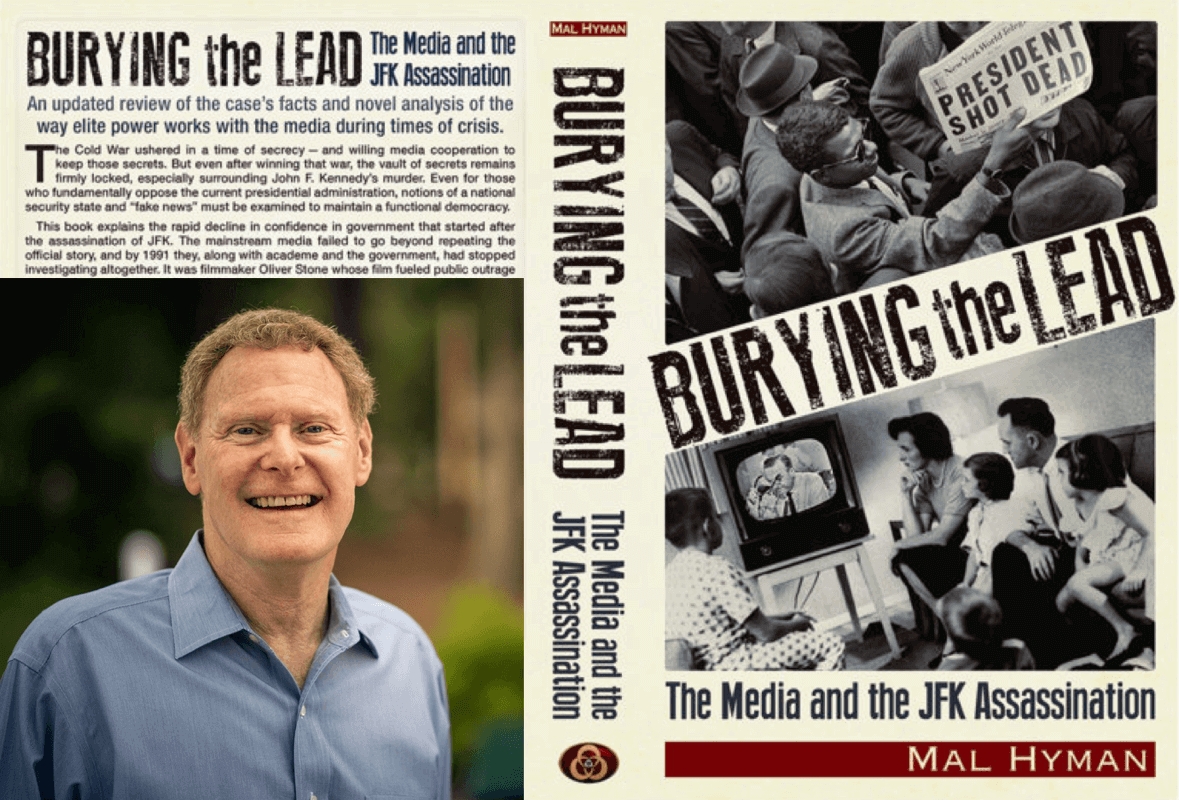
  • Mal Hyman, Burying the Lead: The Media and the JFK Assassination

    Mal Hyman, Burying the Lead: The Media and the JFK Assassination

    I

    Burying the Lead is an exceptionally readable history of the half-century of deception and propaganda surrounding the JFK assassination that has been promulgated by the mainstream media, who as Hyman aptly demonstrates, were instrumental in maintaining the “Big Lie”. Chronologically structured, Hyman centers his survey of the media on their coverage of events immediately after President Kennedy’s death and extends his analysis to the later congressional probes into the CIA’s dirty tricks bag, the Reagan and Bush administrations’ handling of the declassification of sensitive documents, and the eventual breakthrough event that was Oliver Stone’s 1991 film JFK, which led to a renewed public interest in the psychic trauma of the assassination and, eventually, the further release of thousands of sealed documents. The book succeeds in doing what so many like it have failed to do: 1) It circumscribes the players likely involved in the crime of the century; 2) Provides a cogent and compelling motive that even die-hard true believers in the official version of the JFK narrative will be hard pressed to refute; and 3) Manages to keep the reader not just glued to the page, but emotionally invested in a case whose repercussions directly affect us today.

    II

    Mal Hyman—former public school teacher, U.N. liaison and U.S. Congressional candidate, and current college professor—draws on a lifetime of reading and primary source research to bring readers one of the most robust and compelling sagas of the United States at mid-century. He is particularly interested in the inclusion of foreign views on both U.S. foreign policy and the conclusions of the Warren Commission. The first chapter, “Crisis Coverage,” is written in a racing, almost stream of consciousness fashion, with Hyman describing AP wires which at first were sending dramatically conflicting reports of the mayhem unfolding in Dallas following Kennedy’s assassination. From the four different rifles cited as the murder weapon—an Argentine Mauser, a .30-30, a British Enfield with a high power scope, and finally the infamous Mannlicher-Carcano; to wildly divergent motives cited (Cold War Soviets, a pathological loner, the Mob sick of harassment, a Castro revenge plot)—Hyman shows that left to their own devices, there were some serious journalists questioning the curious events and findings that afternoon in Dallas. Many accurately cited the dozens of witnesses who heard shots from the grassy knoll or the triple overpass. Some reporters tried to get a closer look at the bullet hole in the limousine’s windshield before being turned away by the Secret Service. But within hours of the assassination and the subsequent arrest of Lee Harvey Oswald, the propaganda and disinformation apparatus spooled up to high gear and successfully silenced any and all opposing narratives of those six fateful seconds in Dealey Plaza.

    Consider the following, which Hyman expounds on throughout the opening chapters: FBI Director Hoover immediately phoned a recently sworn in Lyndon Johnson to tell him “we have our man.” This is fascinating given the actual reports flooding FBI headquarters which directly contradicted this. No one, to my knowledge, can also explain unless the obvious setup was already firmly in place, just how or why Lee Harvey Oswald was picked up at the Texas Theater. No reliable witness saw him in the sixth floor window of the Texas School Book Depository building. The excuse that he was the only employee not at his post has also been refuted. The official tip-off for the APB has never been identified. People like Aquila Clemons, who witnessed the later Tippit shooting in nearby Oak Cliff, saw two people shoot the officer, neither of which resembled Oswald; automatic shell casings were first reported at the site of the Tippit shooting, yet Oswald had a .38 revolver, which does not eject shells. Law enforcement paraffin tests concluded Lee had not fired a rifle that day, regardless of his whereabouts. Why did seven police cars rush to the Texas Theater during a presidential assassination to investigate a man who didn’t pay for a movie ticket? None of it makes sense. And yet, despite all of these clearly established facts, which were known that day or shortly thereafter, the mainstream media conveyed almost none of them.

    What we got, instead, was a ready-made, Life magazine profile of a lone Marxist weirdo who, in a final disgruntled act of defiance, shot JFK—perhaps the most progressive and pro-détente president in American history—because he … um … well, he was a nut! As Michael Paine, Oswald’s Dallas acquaintance who was part of a State Department/CIA related family, told the Washington Post (a CIA-infiltrated newspaper) in the following few days:

    After the assassination there were reports that the killer took his time and aimed his rifle deliberately. That would be characteristic of Lee Oswald … He had little respect for people … He saw them as pawns. (Hyman, Burying the Lead p. 39)

    The irony of that statement really can’t be topped considering it was Michael’s FBI friendly wife Ruth Paine and himself who moved the intelligence community pawn Lee Oswald and his wife Marina into the Fort Worth area and helped him find the job in the TSBD. And the list goes on, but this minor vignette showcases what Hyman so well outlines in dramatic fashion: a massive cover-up whose perpetrators reach deep into the corporate, military, intelligence and media organizations of the United States. As he notes:

    The CIA has at times owned or subsidized more than 50 newspapers, news services, radio stations, periodicals, and other communications entities, sometimes in the country, but mostly overseas … At least 22 American news organizations had employed, though sometimes only on a casual basis, American journalists who were also working for the CIA. The organizations included ABC, CBS, Time, Life Newsweek, the New York Times, Associated Press and United Press International, the Scripps-Howard chain of newspapers, the Hearst newspaper chain, the Christian Science Monitor, the Wall Street Journal, the Louisville Courier-Journal, Forbes … College Press Service, Business International, the McLendon Broadcasting Organization, and the Copley News Services, among others. (Hyman, p.56)

    All of this was part of CIA Deputy Director of Plans Frank Wisner’s Operation Mockingbird, colloquially referred to in the agency as “Wisner’s Wurlitzer”. With this apparatus, he could make the press dance to whatever tunes best fit the intelligence community’s agenda. It’s interesting to note that propaganda was officially outlawed by Congress in the United States under the U.S. Information and Educational Exchange Act of 1948.

    Understanding that Cold War tensions might give rise to the continuing expansion of WWII-style propaganda, the Smith-Mundt Act, as it became known, enjoined the State Department to

    … tell the truth; explain the motives of the United States; bolster morale and extend hope; give a true and convincing picture of American life, methods, and ideals; combat misrepresentation and distortion; and aggressively interpret and support American foreign policy. (Sarah Nilsen: Projecting America, 1958. p. 4)

    And while this thoughtful and prescient legislation had good intentions, little did those signing it understand the monster that was forming right down the block out of the remains of the OSS.

    III

    Hyman spends a considerable amount of time balancing a fascinating and nuanced history of the formation of the CIA with the media’s contemporaneous reporting on both the agency’s dirty deeds and the critics of the Warren Commission. He also includes some previously—at least to my knowledge—unexplored clippings from international newspapers around the time of the assassination, including some prescient Indian and French takes on things like the ease with which Jack Ruby shot Oswald, the conspicuous lack of Secret Service protection in Dallas that day, and the almost cartoonish serendipity with which CE399 -the pristine magic bullet—was found in Parkland Hospital after the fact. Concurrent with his coverage of this is his survey of the history of the media’s infiltration by, and increasingly close ties with, the CIA. With only a few dissenting voices during the height of the Cold War, Hyman does an excellent job showing readers just how rare it was for anyone in a position of influence in the media to challenge the dominant narratives of the age. John Swinton, Chief of Staff for the New York Times, in a bold gesture at the 1953 New York Press Club gala, told the audience:

    There is no such thing, at this date in history, as an independent press. You know it and I know it. There is not one of you who dare to write your honest opinions, and if you did, you know beforehand that it would never appear in print … any of you who would be so foolish as to write honest opinions would be out on the streets looking for another job. (Hyman, pp. 54-55)

    The author also cites Walter Karp of Harper’s, who lamented, “It is a bitter irony of source journalism that the most esteemed reporters are precisely the most servile. For it is by making themselves useful to the powerful that they gain access to the ‘best’ sources.” (Hyman, p.46)

    And yet the vast majority of the MSM, both then and now, did precisely that. This reinforced the myths promulgated by the power elite and advanced the belief that if any major abuses of power from the top were actually as grotesque and far-reaching as what the evidence surrounding the assassination of JFK suggests, Americans would have turned on the evening news or opened the morning newspaper over breakfast to discover the truth of the matter. Let’s not forget that it was around this time that the CIA, in an internal memo, advised its embedded sources in the press to promulgate the buzzword “conspiracy theory” to discredit anyone challenging the Warren Report. As this declassified 1967 cable explains:

    Conspiracy theories have frequently thrown suspicion on our organization, for example by falsely alleging that Lee Harvey Oswald worked for us. The aim of this dispatch is to provide material for countering and discrediting the claims of the conspiracy theorists, so as to inhibit circulation of such claims in other countries.

    In other words, legitimate investigations—which by definition seek to expose conspiracies of one sort or another—are to be attacked.

    Abraham Lincoln was assassinated by an extensive conspiratorial network involving overseas agents; Austria’s Archduke Franz Ferdinand was shot by conspirators in an open car in broad daylight, which precipitated World War I; secret backroom deals between the OSS, the Vatican, U.S. politicians and other opportunists secured the release and expatriation of thousands of high-ranking Nazi war criminals to South America and the U.S. at the end of World War II. The 1954 overthrow of Jacobo Árbenz in Guatemala was a CIA-planned conspiracy involving hundreds of people sworn to secrecy. An international conspiratorial cabal involving officials from U.S., Belgium, and Katangese rebels planned the capture and murder of Patrice Lumumba seven years later. All of these are demonstrably provable conspiracies. But in the face of all that, the evidence that might erode the great shining lie surrounding the assassination of our nation’s progressive leadership in the 1960s, this evidence is shunted off as “conspiracy theories.” And, of course, no one can prove theories, which in actual scientific discourse are not qualitatively less significant than say “laws,” but actually denote a separate but equally sound paradigm based on complex natural or physical interactions rather than the direct relations of say two objects in a gravitational field. Darwin’s concept of evolution by natural selection is a theory. Newtonian gravity is a law. Einstein’s notion of General Relativity is a theory, but is understood as true. As I’ve always said, I am a proud conspiracy theorist, as should any historian be. It’s our job to investigate the relationships of human beings, some of which have ulterior motives. The above-cited memo is itself proof that conspiracies are real; a secret team of intelligence officers decided to discredit critics of a major American mystery. We were not privy to this meeting and it was intended to obfuscate the truth. A textbook conspiracy if ever there was. But only if you believe in that sort of thing.

    Hyman also does a fine job detailing the various congressional committees that during the mid to late seventies first opened Pandora’s box and discovered that the CIA’s surveillance of American citizens’ mail was just the tip of the iceberg. From assassination units, both domestic and foreign, to witch doctors like Sidney Gottlieb—who from a CIA-sponsored laboratory had cooked up his exotic poisons and killing devices—to the CIA’s bizarre but very real trauma-based mind control experiments on unwitting American subjects, it wasn’t looking good for the intelligence community. And yet, as Hyman notes, the fallout was essentially inconsequential. What could and should have been a legal mandate for the Central Intelligence Agency to come forward with its tax-payer-funded ledger of dirty deeds turned into the smug reply of people like Counterintelligence Chief James Angleton, who famously told committee members, “It is inconceivable that a secret arm of the government has to comply with all the overt orders of the government.”

    IV

    Perhaps the most significant achievement of this book, besides its comprehensiveness and exquisite delivery, is Hyman’s treatment of JFK’s foreign policy. Only a handful of authors, I feel, have sufficiently addressed just how much John Kennedy diverged, both practically and philosophically, from his Eastern Establishment colleagues and advisers in the White House and Pentagon. Hyman takes readers through each of the struggles of the Third World that faced a young JFK during his brief tenure in office, from the inherited Congo Crisis, to Sukarno’s bid to nationalize Indonesia’s natural resources, to the infamous thirteen days of the Cuban Missile Crisis, which brought the United States and the Soviet Union to the brink of nuclear war.

    There is now enough evidence, both from declassified documents and in the form of fine secondary sources, to adamantly make the case that JFK’s primary antagonism with the power elite– and what ultimately led them to assassinate him—stemmed from his radically progressive views of the developing world. While he and his brother Robert strove to effect tangible street-level change on America’s domestic race issue—and did, to a large extent through things like affirmative action, legal investigations of racist hiring practices and meetings with prominent civil rights leaders—they attempted to apply their visions of a better human future most boldly in the Third World. Consider, as Hyman does, Kennedy’s absolutely prescient analysis of the Middle East in 1951:

    The fires of nationalism are ablaze … A Middle East Command operating without the cooperation and support of the Middle Eastern countries … would intensify every anti-western force now active in the area, [and] from a military standpoint would be doomed to failure. The very sands of the desert rise to oppose the imposition of outside control on the destinies of these proud people … Our intervention on behalf of England’s oil interests in Iran directed more at the preservations of interests outside of Iran than at Iran’s own development … Our failure to deal effectively after three years with the terrible tragedy of more than 700,000 Arab refugees [Palestinians], these are things that have failed to sit well with Arab desires, and make empty the promises of the Voice of America.

    Already, just years after its creation, the CIA had overthrown the secular democratically elected leader of Iran, Mohammad Mossadeq in their first ever orchestrated coup. This ushered in nearly three decades of violent oppression and torture under Shah Reza Pahlavi, who happened to be future CIA Director Richard Helms’ pal from Swiss boarding school. The proximate motive given was that Iran was exhibiting strange communist tendencies in its decision to keep the profits of its own oil sales from Britain, a nation that had extorted billions from what it essentially viewed as a backwater desert satrapy.

    Thus was born a classic CIA playbook: using the mantra of an international communist conspiracy to disguise its ulterior motives of protecting corporate interests. Similarly, Jacobo Árbenz, the 25th president of Guatemala, exhibited these same nationalist economic tendencies in 1954. When he requested a fair return on land owned by the United Fruit Company—which had been ripping off Guatemala to the tune of millions in back taxes for years—the CIA-backed paramilitary army of Carlos Castillo-Armas marched into Guatemala City and staged a coup. With CIA assets going so far as to plant Marxist literature in Árbenz’ private study, later dumping a large crate of Soviet weapons near a beach, just in time for CIA-approved reporters to discover them. President Eisenhower presided over this operation, codenamed PBSUCCESS, which he viewed as a spectacular covert feat. Castillo-Armas, a brutal ex-chief of police who had been living in exile in Honduras, was featured on the cover of Time magazine a year later, with a glowing review of his visit to the United States entitled, “Guest from Guatemala.” (Time, Nov. 7, 1955)

    Kennedy had already recognized the folly of this behavior. Consider his 1957 speech on Algeria to the U.S. Senate:

    The most powerful force in the world today … is man’s eternal desire to be free and independent … We did not learn in Indochina … Did that tragic episode not teach us that whether France likes it or not, or has our support or not, their overseas territories are sooner or later, one by one, inevitably going to break free and look with suspicion on the Western nations who impeded their steps to independence … The time has come to face the harsh realities of the situation and to fulfill its responsibilities as leader of the free world. (Hyman, p.457)

    Secretary of State John Foster Dulles, along with brother and Director of CIA Allen Dulles, both suggested to Eisenhower that dropping nuclear bombs on the Vietnamese threatening to overtake the French forces trapped at Dien Bien Phu could win the war. To say that Kennedy’s and the viewpoints of figures like Allen Dulles slightly differed, as is so often regurgitated in the mainstream histories of his presidency, is not just inaccurate but dishonest. They were diametrically opposed. And this played out in dramatic fashion when the two were forced to work together after the 1960 election. Similarly, the author notes this sentiment of solidarity with the Third World was a theme running deeply throughout Kennedy’s tenure as both a senator and as president, not a grandstanding ploy or an appeal to the far-left voter base. As he told the Senate two years later, in 1959, regarding Central African turmoil, “Call it nationalism. Call it anti-colonialism … Africa is going through a revolution … The word is out—and spreading like wild fire in nearly a thousand languages and dialects—that it is no longer necessary to remain forever poor or forever in bondage.”

    These words eerily parallel the 1960 victory speech given by president elect Patrice Lumumba to throngs of ecstatic Congolese:

    We are deeply proud of our struggle, because it was just and noble and indispensable in putting an end to the humiliating bondage forced upon us. That was our lot for the eighty years of colonial rule and our wounds are too fresh and much too painful to be forgotten. We have experienced forced labor in exchange for pay that did not allow us to satisfy our hunger, to clothe ourselves, to have decent lodgings or to bring up our children as dearly loved ones. (“Speech at the Ceremony of the Proclamation of the Congo’s Independence, June 30, 1960”)

    President Eisenhower refused to meet with Lumumba when he flew to Washington, and later signed off on his assassination.

    Too often critics of non-mainstream JFK assassination theories smugly resort to arguing lack of motive for a non-Oswald shooter, or intelligence community backing. Why, we’ve heard again and again, would other rich white Eastern Establishment power elites assassinate one of their own? Even I, who have an extensive background in 20th-Century foreign policy, was reminded of this in my graduate training, with a few memorable professors conceding that basically Jack Kennedy was a cooler, younger version of say, Eisenhower, or a more sophisticated version of Johnson with a better tailored suit. But he was not fundamentally any less hawkish than either of his presidential bookends. Yes, Oliver Stone suggested Kennedy’s likely withdrawal of advisers from Vietnam as the contributing cause of the military-industrial complex’s decision to remove him. But, they would remind me, we all know that’s just a theory. Had they read NSAM 263? Did they not also realize there were no combat troops in Vietnam in November 1963 when Kennedy was killed? Kennedy presided over Operation Mongoose and the “failed” exile-invasion of Cuba, they often repeated, so he was no stranger to using gunboat diplomacy.  

    Let’s examine these claims, as Hyman does to a great extent in his final and excellent last chapters. As authors like James DiEugenio, Richard Mahoney, Col. Fletcher Prouty and others have shown, President Kennedy had an immediate, actionable withdrawal and de-escalation order effective upon his return from Dallas that month. This was not a verbal agreement or handshake over drinks that has been anecdotally passed through the research community. It’s all clearly spelled out in NSAM 263, a National Security Action Memorandum that concretely establishes JFK’s divergence from the Joint Chiefs of Staff and the Central Intelligence Agency’s cold warrior, Manichean view of the free and communist worlds.

    As we know through John Kenneth Galbraith’s biographer Richard Parker, Kennedy had previously tried for an appeal to Hanoi for a neutralist diplomatic solution to the Vietnam problem with Nehru of India playing the broker. As Gareth Porter showed in his book The Perils of Dominance, this effort was sabotaged by the State Department’s Averill Harriman. Similarly, we know, from a variety of his foreign policy dealings in the Third World, that President Kennedy was entirely more nuanced in his understanding of nationalism than most people in the room during briefings. Kennedy correctly understood that the quick and sloppy conflation of liberation, decolonization, or resource-redistribution movements in places like the Congo, Indonesia and ultimately, Vietnam, with Soviet Communism, was a dangerous game to play. Because it dismissed the forces of nationalism.

    The fallout from the intelligence and military communities’ efforts to prop up pro-U.S. dictators has been much explored by authors like William Blum, (Killing Hope), David Schmitz (Thank God They’re On Our Side), and Max Friedman (Rethinking Anti-Americanism), and is beyond the scope of this review to accurately survey. Suffice it to say, Hyman does an excellent job of unpacking these critical departures between an increasingly isolated John and Robert Kennedy during times like the 1962 Cuban Missile Crisis. Or to use another example, in a June 20th, 1961 meeting, General Lemnitzer and Allen Dulles “proposed an official plan for a surprise nuclear attack on the Soviet Union.” (Hyman, p. 424.) Like he did before and would do again, Kennedy, according to aides present, walked out in disgust. Around this same time, people like General Lucius Clay in West Berlin were mobilizing their tanks to make a move against the Soviets. Strategic Air Command, without the president’s authority, began deploying nuclear-equipped long-range bombers, even going so far as to cross established international airspace parallels which essentially signaled to the Soviets that this was not a routine drill. It’s amazing, at least to me, that not only did the nuclear-armed superpowers not destroy humanity during the Missile Crisis, but that the world’s most important two-week vigil landed in the lap of figures like John and Robert Kennedy. Replay the events with Eisenhower/Nixon in power. It doesn’t end well. We now know that had a full blown invasion with U.S. air support taken place it would have faced over a quarter of a million Cuban and Soviet ground troops who had dozens of tactical nuclear missiles poised to repel an amphibious invasion.

    It also cannot be stressed enough that the Bay of Pigs invasion was both thrown in his lap due to its delayed planning during the Eisenhower/Nixon administration, and designed to fail without full-blown U.S. naval and carrier-based air support—and likely the landing of 100,000 ground troops. The myth that Kennedy got “cold feet,” as my grandpa Marcel used to tell me back in Florida, was a pure creation of … wait for it … the CIA! Allen Dulles and E. Howard Hunt paid a CIA-cleared journalist to ghostwrite their completely honest, objective, 100-percent transparent evaluation of President Kennedy’s failure of nerve in Fortune magazine, a journal run by … wait for it … a CIA asset on payroll! We know this through documents revealed in Allen Dulles’ personal papers at the Princeton University collection. And Kennedy knew this intuitively. As Hyman cites him telling his friend, Undersecretary of the Navy Paul Fay:

    Now in retrospect, I know damn well they didn’t have any intention of giving me the straight world on this … Looking back at the whole Cuban mess, one of the things that appalled me was the lack of broad judgment by the heads of the military services. They wanted to fight and probably calculated that if we committed ourselves part way and started to lose, I would probably give the OK to pour in whatever else was needed. (Hyman, p. 424)

    We are arguably all still here because of JFK’s acumen during the Cuban Missile Crisis, yet this is almost never explored by the media, who portray the harrowing events and their unspectacular, negotiated resolution as somehow inevitable. Nothing could be further from the truth, and Hyman spends considerable time hammering this point home in his final chapters. Which, I should add, follow a lengthy and extremely interesting unpacking of Lyndon Johnson’s behavior after the events of Dealey Plaza, which should appeal to those on the fence regarding his culpability and seeming complicity at times with the conspirators.

    Philosophically, as Hyman conclusively shows readers, John F. Kennedy represented a psychic break from the entrenched corporate/military/industrial power elites, whose post-traumatic irrationality, myopic reductionism and retrograde colonial opportunism dominated American politics at mid-century. Shaken to the core by the implications of Soviet dominance over vast reaches of Europe and Asia in the wake of the Second World War, and seeking a much-needed bogey man to fulfill their Hegelian negative-identity criteria, by which national worth can only be defined in opposition to a foreign adversary or internal enemy, U.S. policy makers at the height of the Cold War largely viewed the Kennedys as traitors. Traitors to the great mantle of tremendous military might fortuitously bequeathed to an otherwise backwater new nation called the United States in the wake of the Second World War’s global carnage. Traitors to the corporate interests who cared little what a million Congolese suffered under CIA-backed dictators like Mobutu, so long as their diamond and cobalt mines in Katanga poured forth abundance. Traitors to the then-as-now accepted postwar view that the United States is an exceptional nation with an exceptional, quasi-religious historical mission which despite hundreds of overthrows, embargoes, assassinations, lies, and disinformation campaigns by its politicians and intelligence officers, is fundamentally well-meaning and just.

    Anyone interested in tracing the origins of this dark legacy will be doing themselves a favor by picking up Burying the Lead. It is one of those rare things: a balanced, engaging, fascinating look at the slimy underbelly of the American power structure. And the hired guns of the media who cover up for them.


    Addendum, May 30, 2019

    The John Swinton quote used in the above review is misattributed in time. John Swinton passed away in 1901. He made the statement in 1880, after he had concluded his employment with the New York Times and was working at the New York Sun. Please see the following for more information: https://www.constitution.org/pub/swinton_press.htm

  • The Murder of Hammarskjold

    The Murder of Hammarskjold


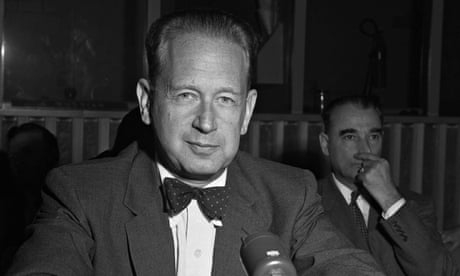
    Dag Hammarskj ld 011For a long time this site has tried to point out that the Congo struggle was one of the most important, yet underreported, foreign policy episodes that took place during the Kennedy administration. Sloughed off by the likes of MSM toady David Halberstam, it took writers like Jonathan Kwitny and Richard Mahoney to actually understand the huge stakes that were on the table in that conflict, namely European imperialism vs African nationalism. Kennedy had radically revised America’s Congo policy from Dwight Eisenhower to favor the latter. Not knowing he was dead, JFK was trying to support Congo’s democratically elected leader Patrice Lumumba. JFK was also one of the few Western leaders trying to help UN Secretary General Dag Hammarskjold stop the Europeans from crushing Congo’s newly won independence.

    In September of 1961, just eight months after Lumumba was murdered, Hammarskjold died in a plane crash. It was officially ruled an accident. But there were doubts from the beginning. For example, Harry Truman told the New York Times, that Hammarskjold was on the verge of getting something done “when they killed him.” It now turns out that Kennedy’s ambassador to Congo, Edmund Gullion, also suspected Hammarskjold’s plane was shot down. And he suspected it the night it happened. This key fact was not revealed for fifty years.

    Below we link to three stories in the press of late that have finally circulated about the true circumstances of what happened to the Secretary General, the man who Kennedy called, “the greatest statesman of the 20th century.”

    It is nice that the MSM is finally catching up to what we wrote about 20 years ago in Probe Magazine.  In particular:

    In the first of these two articles, Jim DiEugenio lays out the overall struggle of Kennedy and Hammarskjold to keep Congo free and united against the imperial forces of Belgium and England. In the second, Lisa Pease examines the murders of Lumumba and Hammarskjold within eight months of each other. Those assassinations left Kennedy standing alone. When he was killed, the imperialists triumphed.

    During the ensuing decade, CTKA continued to focus on this important story, again underscoring the links between Kennedy and Hammarskjold, but now reinforced by the work of historian Greg Poulgrain with regard to their cooperation over Indonesia. See:

    Finally, two decades later, the MSM is acknowledging that work. We don’t like to toot our own horn, but … Honk! Honk!

  • Jim Garrison: The Beat Goes On

    Jim Garrison: The Beat Goes On


    Would Jim Garrison have been forgotten if Oliver Stone had never met the late Ellen Ray? If the reader is unaware of who Ellen Ray was let me inform you of her importance in history. (her obituary)

    Ellen Ray was the wife of Bill Schaap. They ran a publishing company called Sheridan Square Press. Sheridan Square did not just release books. They also published magazines like the illustrious Covert Action Information Bulletin and Lies of our Times. If our readers do not know about those two periodicals, it is their loss. The first dealt with the Central Intelligence Agency and its allies; the second was concerned with media analysis. They were well done and important journals.

    Ellen Ray had known Jim Garrison a long time—going all the way back to his original investigation of the John Kennedy murder in the late sixties. She always thought highly of him and his work. So when Garrison thought of writing a book on his inquiry in the eighties, Sheridan Square was one of the houses he thought of releasing it through. But before that, Garrison had had an offer from a much bigger publishing house. That deal did not go through since the proofreader the house assigned to the book was Sylvia Meagher. Now as everyone knows, this site is a sincere admirer of Meagher and her fine book, Accessories After the Fact. But as most insiders also realize, Meagher was one of the early critics who developed a phobia—some would call it a mania—about Jim Garrison and his inquiry. (The others would include Josiah Thompson and Paul Hoch.) Even someone like Jerry Policoff, who was a close friend of Meagher, once said that Sylvia should not have been assigned to review Garrison’s book: “My God, she contributed money to Clay Shaw’s defense!”

    Well, predictably, Meagher’s analysis contributed to Garrison returning his advance. But that may have been fortunate, because now he turned to Ellen Ray and Sheridan Square Press. They assigned him Zachary Sklar as his editor. Zach was a distinguished journalism professor and contributor to Sheridan’s two publications. It was a fortunate pairing. Originally, Garrison had written his book from a third person point of view. But when he met Zach, the editor convinced him that since the DA was an actual participant in the story he was telling, it would be more effective if he wrote the book as a first person narrative. I think most people today would say that was a good choice.

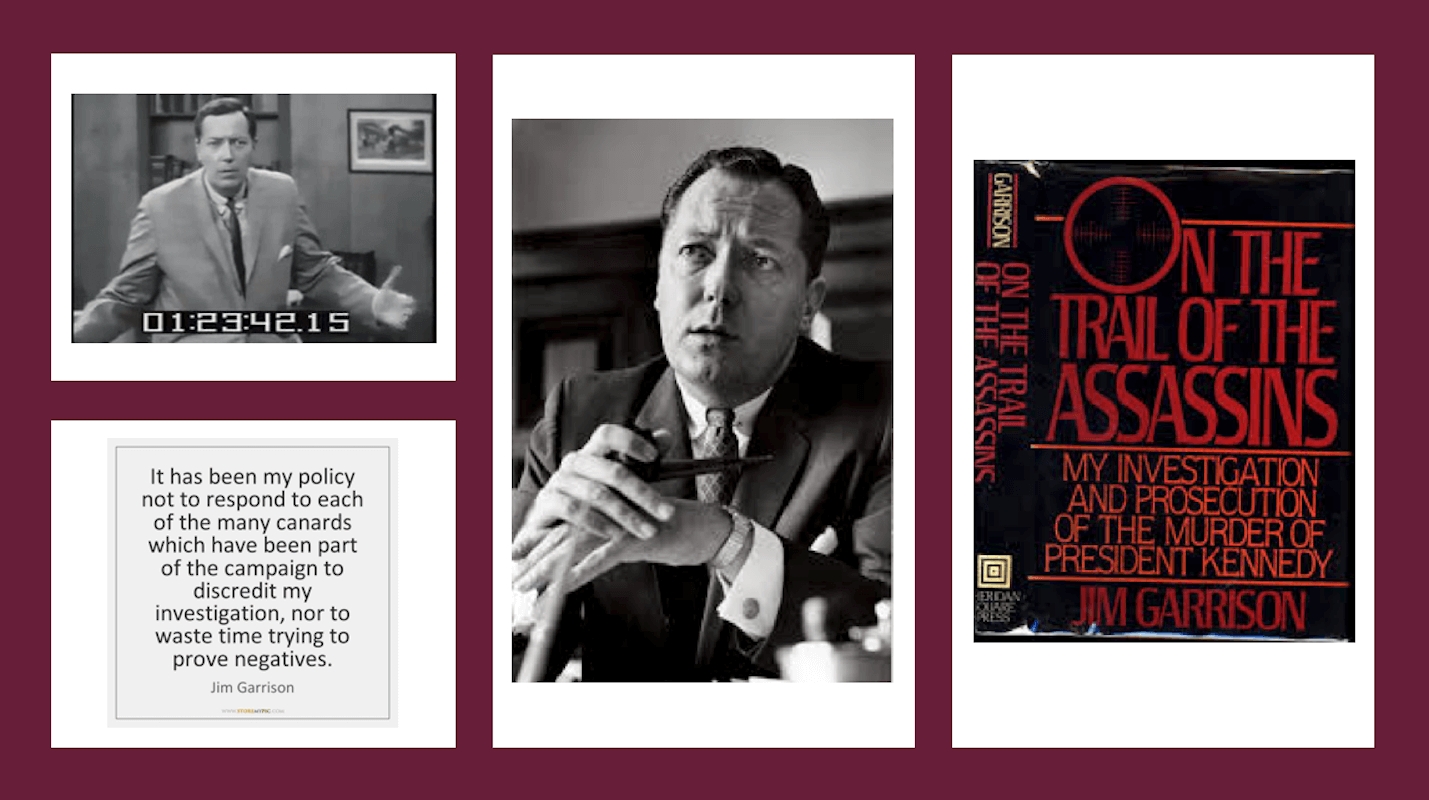
    On the Trail of the Assassins sold about forty thousand copies when it was originally released in hard cover. The thoroughly annotated book revealed many new things about Garrison’s investigation that most outsiders did not know about. It also exhibited Garrison’s firm grasp on the entire evidentiary record of the JFK case and also Kennedy’s place in history. Overall, it was a real contribution to the library of books on the assassination of President Kennedy.

    But what happened later was probably even more significant. At a film festival in Havana, Ellen Ray met up with Oliver Stone. She told him words to the effect: “Have I got a book for you!” Stone read Garrison’s book and decided to bring it to the big screen. He did so in December of 1991.

    But this was the JFK assassination. And it was Jim Garrison. As the DA noted in his book, there were many media critics of his inquiry. And they struck at him in what can only be called a vicious and personal manner. Some of them hid their relationships with the intelligence community, e.g., James Phelan, Walter Sheridan, and Hugh Aynesworth. Even more buried was the cooperation between these men and Clay Shaw’s lawyers. (See Destiny Betrayed, second edition, chapter 11 for an analysis of this nexus.) That sixties wave of media critics was not going to let Oliver Stone bring back Jim Garrison and the JFK case in any kind of fair or salutary manner. So they decided to do a preemptive strike on Stone’s film.

    In what was probably an unprecedented campaign in the history of American cinema, the MSM attacked the film JFK seven months in advance of its release. In fact, Ben Bradlee and the The Washington Post sent George Lardner to Dallas to write a story as the film was being shot in Dealey Plaza.

    Lardner’s article began with one of the truly snarky remarks in recent journalistic history. In watching a rehearsal of the Dealey Plaza sequence, Lardner noted that Stone had ordered up five shots in the assassination sequence. The reporter then wrote: “Five shots? Is this the Kennedy assassination or the Charge of the Light Brigade?” Through their acoustical testing, the House Select Committee on Assassinations had concluded that there were four shots fired. But as researcher Donald Thomas revealed at Cyril Wecht’s Duquesne Conference in 2003, those same sound technicians told Chief Counsel Robert Blakey that they detected five shots. Blakey told Thomas that he did not think it was possible to sell that many shots to the committee, so their report only analyzed and accepted four. In other words, this was a political decision, not a scientific one. There is real evidence that there were five shots, but somehow that did not matter to Lardner. After all, it’s the JFK case.

    Lardner’s article was the first volley in a seven-month MSM campaign that was intended to make sure that the reception of JFK was jaundiced in advance. Many of the same people who attacked Garrison back in the sixties were brought back to do so again, like Aynesworth and Edward Epstein. The fact that neither of these men was at all credible or objective on the subjects of the Kennedy assassination or Jim Garrison was irrelevant. The goal was to savage the film before it had a fair hearing. That is how radioactive this subject was, even thirty years later.

    In spite of this assault, JFK did well at the box office, both at home and abroad. It was nominated for eight Oscars, including Best Picture. But to show the reader just how nutty the anti-JFK crusade was, consider the following. On the eve of the Oscars, an anonymous author bought an ad in the trade journal Variety. The ad asked that no voters cast their ballot for the film as Best Picture. Researcher Rich Goad did some detective work and found out that the ad was paid for by the late Warren Commission counsel David Belin.

    Besides bringing the Kennedy assassination back into the limelight, JFK was the main cause for the creation of the Assassination Records Review Board (ARRB). For at the end of the film, Stone added a subtitle revealing that the files of the House Select Committee were being kept secret until the year 2027. This created a sensation in Washington. Tens of thousands of citizens now called their representatives, sent them letters or faxed them in order to do something about this travesty. It worked. The Board was created. It was a unique agency that was made up of private citizens appointed by the president. That agency had a staff that read and researched documents that were now to be declassified. If an intelligence agency objected, that agency had to show why the document should be kept secret. This reversed the previous Freedom of Information Law, which put the burden of proof on the requester, who had to show why it should be declassified. But even today, twenty years after the ARRB closed its doors, the government is still maintaining secrecy over thousands of documents.

    That Board has a decidedly mixed record of achievement. But it did do some good work on the Garrison angle of the JFK case.   In fact, the Board even went to court with then New Orleans DA Harry Connick to salvage a file cabinet full of documents remaining from the Garrison investigation. After being shown up in the press, Connick resisted turning over the materials. But the Justice Department eventually secured the documents. The Garrison family also turned over thousands of pages that the late DA had in his personal effects.

    Garrison had always insisted that, for various reasons, he was never able to reveal most of the evidence he had secured from 1967-69. After authors like William Davy, Joan Mellen and myself went through what the ARRB attained, we had to agree. The Garrison files in the Archives today hold an abundance of utterly fascinating material on a wide array of subjects dealing with many aspects of the JFK case. Does the MSM reveal any of this to the public? Nope. One of the most embarrassing aspects of the three-week binge that the media went on last year in anticipation that the JFK files were finally going to be completely declassified was this: No one chronicled what the ARRB had already released. Which was significant. It was about 2 million pages of material that opened up new vistas on subjects like Rose Cheramie, Kennedy and Vietnam, and the medical evidence in the JFK case. Guests like Larry Sabato, Phil Shenon and Gerald Posner did not want to discuss those topics. Nether did their hosts like NBC stooge on JFK, Rachel Maddow.

    It is easy to understand why this would occur. As Upton Sinclair once said: It is hard to make journalists understand something when their paycheck depends on them not understanding it. Contrary to popular belief there is no such thing as a liberal media. In the twentieth century, and up until today, the American media has been controlled by an oligarchical class. Some authors call this class the Eastern Establishment. Some call it the Power Elite.   As sociologist Donald Gibson explained in his fine book Battling Wall Street, President Kennedy was not a part of that group. He never joined the Council on Foreign Relations; he did not join any secret societies at Harvard; he didn’t like working intelligence during World War II. He got transferred out to the South Pacific and served with a bunch of Joe Six Pack guys on what were close to suicide missions. As this author demonstrated in the second edition of Destiny Betrayed, both in the Senate and in the White House, Kennedy was opposed to much of what this Power Elite was doing abroad, especially in the Third World. (See Destiny Betrayed, second edition, pp. 21-33) After his death, the progress that he did make in the White House was largely halted, and then reversed. (pp. 367-77) Due in part to the ARRB, we know much more about these changes, especially regarding Indochina.

    Jim Garrison was probably the first critic of the Warren Commission who understood this matter. And it is probably one of the reasons the MSM decided to smear him beyond recognition. This goes on to the present day. In a recent article in a regional journal called 64 Parishes, a writer named Alecia Long decided to pick up the infernal and eternal anti-Garrison cudgel. The New Orleans Times Picayune has always liked to go after Garrison and so they are now carrying it on their web site.

    To anyone who is familiar with the territory, the first reaction is, “Oh my aching back!” The ten-page article is simply a compendium of every MSM caricature of Garrison and his Kennedy case that one can imagine—except Long does not even mention the ARRB. She only alludes to what they did in about a half a sentence. As we shall see, this was a wise choice on her part.

    The preposterous thesis of her essay is that somehow, by his clever use of the media, Garrison was able to advance his case, his cause and his reputation. She uses Garrison’s 30-minute talk on NBC as proof of this. She even opens her article by asking why NBC agreed to give the DA this platform. She does not answer her rhetorical question until several pages later. There, she finally says that in June of 1967, “NBC ran an hour-long special sharply critical of Garrison’s claims and the methods used by his investigators.” This is an understatement. Most objective observers considered the Walter Sheridan production a straight-out hatchet job. But she tries to bolster the program’s credibility by adding, “The special featured several witnesses who claimed to have been offered bribes in exchange for providing testimony damaging to Shaw.”

    What she does not note is that these so-called “witnesses” were later exposed, either in court, or by their own confessions, as being bogus. (DiEugenio, pp. 239-43) And more than one witness—for instance, Fred Leemans and Marlene Mancuso—testified as to the unethical and threatening tactics used by Sheridan for the program. It was Sheridan who fabricated these phony on-air statements by threatening and intimidating Garrison’s witnesses. Mancuso did not succumb to his bullying, so she was not on the show. Leemans did and went on the program. But both of them signed affidavits revealing the extent to which Sheridan and his cohorts would go to in order to flip Garrison’s witnesses. For example, Leemans was told, “… if I did not change my statement and state that I had been bribed by Jim Garrison’s office, I and my family would be in physical danger.” (DiEugenio, p. 240) Somehow, Long missed those statements, which gravely undermine her thesis because logically, they explain why the Federal Communications Commission decided to grant Garrison the time to counter Sheridan’s handiwork. But even at that, the FCC only gave Garrison a half hour, compared to Sheridan’s full hour, which contradicts the idea of equal time embedded in the now defunct Fairness Doctrine.

    She also questions why, when granted the time, Garrison did not answer Sheridan’s charges in more specific terms. As the DA stated throughout his Playboy interview, if he had done that, it would have given Shaw’s lawyers a pretext to move to get his case thrown out of court, since it would prejudice prospective jurors.

    With the release of Garrison’s files by the ARRB, the idea that Garrison did not have a factual basis for his case against Shaw is revealed to be utterly false. There is no doubt today that Shaw used the pseudonym of Clay Bertrand. The declassified files contain over ten witnesses who stated this was the case. It is further revealed that the FBI knew this as well. And finally, attorney Dean Andrews knew it—and lied about it.   As a consequence, Garrison never got to ask Shaw the key question: “Why did you call Andrews and ask him to go to Dallas to defend Oswald?” (DiEugenio, pp. 387-88)

    It is also now shown that Shaw lied about his association with the CIA. That association has turned out to be a long service and a lucrative one. Not only did Shaw lie about it at his own trial, the CIA continually lied about it, and Robert Blakey fell for it. In the HSCA volumes, Shaw is referred to as part of a large businessman’s contact program in the Agency. Not true. Shaw was a well-compensated contract agent from at least the fifties. (Joan Mellen, Our Man In Haiti, pp. 54-55) In the sixties, he had a covert security clearance code name that was the same as Howard Hunt’s. (DiEugenio, pp. 383-87) The CIA tried desperately to cover up these facts, even going as far as altering Shaw’s files. (William Davy, Let Justice Be Done, p. 200) The ARRB later discovered the CIA had gone even further and destroyed Shaw’s 201 file.


    (or open in a new window.)


    As the late Yale educated attorney Allard Lowenstein once said regarding the Robert Kennedy assassination: in his experience as a lawyer, people who have nothing to hide don’t hide things. Somehow, Long does not think any of this new material is relevant to any discussion of Jim Garrison today.

    In addition to this secrecy about Shaw, which hurt Garrison’s case, Long does not detail any of the other methods of obstruction that the CIA and the FBI used against Garrison. Nor does she elucidate any of the meetings that Shaw’s lawyers had in Washington soliciting this kind of aid, which ended up being bountiful. The declassified files of the ARRB contain literally scores of pages on this subject. This features interference with the serving of Garrison’s subpoenas. And further, the setting up of a special committee within the CIA to survey actions to take against Garrison before, during, and after the trial of Clay Shaw. At the first meeting of this super-secret group, James Angleton’s assistant, Ray Rocca, said that he felt that Garrison would convict Shaw in the Kennedy case. (DiEugenio, pp. 269-74) Perhaps in their quest to stop that from happening, on the eve of the trial, at least three prospective witness for the prosecution were physically attacked before they testified: Richard Case Nagell, Clyde Johnson and Aloysius Habighorst. None of these men ended up testifying. (p. 294)

    As mentioned previously, one of the most bizarre statements that the author makes is that Garrison was proficient at using the media and manipulating them for his own benefit. How anyone can make such a statement today is simply inexplicable. As authors like William Davy and myself have shown, the media utterly destroyed Jim Garrison. Before Garrison took on the Kennedy assassination, he had a promising career ahead of him as a Louisiana politician. Many thought he could have been governor or senator from the state. (DiEugenio, pp. 172-74) That career was utterly wrecked by the two-year roasting he took in the press from almost every outlet imaginable: CBS, NBC, NY Times, Life Magazine, Saturday Evening Post, to name just a few. Garrison was eventually defeated in his District Attorney re-election bid due to two sets of phony pinball kickback charges, which he defeated at trial. But the publicity weakened his position and strengthened his opponent Harry Connick, who defeated him in a close election in 1973. (See chapter 19 of Garrison’s book.) To most legal observers, Connick turned out to be a very poor DA compared to Jim Garrison.

    After Garrison was retired from the DA’s office, it took him years to recover from the ordeal he went through. At that time, people who visited him in New Orleans said he had a small office that he rented from a larger firm. This is the man who likely would have been residing in the governor’s mansion if not for the JFK case. That media manipulation Long describes did the DA a lot of good, didn’t it?

    Long is so utterly biased that she actually credits Judge Herbert Christenberry. This is the judge who threw out Garrison’s attempt to try Shaw on perjury charges after his acquittal. Today, there is little or no doubt that Shaw lied numerous times at his conspiracy trial. For instance, about his employment by the CIA, about his friendship with David Ferrie, about his use of an alias. And according to Garrison assistant Steve Jaffe, this time Garrison was not going to make the same mistake he did at the conspiracy trial. He was going to use every witness he had against Shaw.

    Judge Herbert Christenberry should never have presided over this hearing. Moreover, there should have never been a hearing in the first place. As Garrison notes in his book, the idea of a federal judge inserting himself into a state case was quite unusual, since there was a law against it. But that is what happened. Shaw’s lawyers moved to have a state case considered in federal court. (Garrison, p. 253)

    Why did they do this?

    Because Christenberry’s wife had written a letter to Shaw after his acquittal. This was also after Garrison filed the perjury charges. The letter uses the plural pronoun “we”, so it clearly describes both husband and wife’s sentiments. The Christenberrys congratulated Shaw on the outcome of the trial. They sympathized with him over what the DA had done to the poor man. They continued by saying how much better the proceedings would have been if the case had been allotted to federal court and Judge Christenberry. But unfortunately, Caroline Christenberry could not voice these sentiments during the trial for risk of being labeled prejudiced in advance. (Destiny Betrayed, second edition, p.315)

    If there was ever an attempt to solicit a case, this was it. That letter is in the National Archives today. It appears Long has never heard of it.

    This article proves the very worst about the JFK case. Everyone hoped that the declassification of the files would aid in the public’s understanding of what that case was really all about, what impact it had on the personages involved and also on American history. That will not happen with people like Long. At the end of her original essay as published in the periodical 64 Parishes, it is revealed that her piece is part of something called the “Democracy and the Informed Citizen Initiative”, which is sponsored by the Federation of State Humanities councils. The Andrew Mellon Foundation was part of the support for that initiative. In other words, the Power Elite Kennedy opposed is still thriving.

    But further, as Anthony Thorne discovered, Long made up her mind about this matter without looking at any documents. She said, “I don’t want to dig through CIA and FBI documents for the rest of my life.” She then gave the back of her hand to the myriad books on the JFK case: “I find the basic premise of many these books to be problematic and would then note [sic] take those as seriously as historical studies.”

    The books don’t matter. The documents don’t matter. Typical MSM historian on the JFK case.   Which is why her article is worthless. It is the vacuity and speciousness of work like this that helps drive readers to the likes of Alex Jones. Perhaps unbeknownst to her, Long is adding to his minions.

  • Edmund Gullion, JFK, and the Shaping of a Foreign Policy in Vietnam

    Edmund Gullion, JFK, and the Shaping of a Foreign Policy in Vietnam


    In the 1951 photograph above, General Jean de Lattre de Tassigny is leading a contingent through the streets of Saigon at a time when France was engaged in a losing cause during the First Indochina War. In the back of the pack, a young congressman from Massachusetts, John F. Kennedy, is observing the conditions on the ground in a war effort that was at the time receiving substantial American aid. Kennedy’s younger brother Robert accompanied him on the trip. RFK later ran on an anti-war platform at the height of the Vietnam War, shortly before his assassination in 1968. This study explores the impact of the 1951 trip to Vietnam on John F. Kennedy, his association with the diplomat Edmund Gullion, and the evolving vision of JFK for American foreign policy in Vietnam, which was articulated in a major address given in 1954.

    Edmund Gullion (1913-98) enjoyed a distinguished career as a diplomat followed by a second life in academia as Dean of the Fletcher School of Law and Diplomacy at Tufts University, where he trained a generation of foreign officers. As a Southeast Asian specialist, he held senior positions at the American Embassy in Saigon from 1949-52 during the First Indochina War. At a time when the Truman administration was ramping up aid for France in an effort to salvage its colonial outpost in Southeast Asia, Gullion was an advocate of Vietnamese independence. Later, at a critical juncture in America’s involvement in Vietnam in 1963, Gullion asked a colleague, “Do you really think there is such a thing as a military solution for Vietnam?”1

    Gullion was also a confidant of the young Congressman and World War II hero John F. Kennedy, who visited Saigon in 1951. Congressman Kennedy was there to observe up close the conditions of a foreign colonial war in progress, in preparation for his run for the Senate the next year against Henry Cabot Lodge. Later, he used Gullion as a sounding-board as he was shaping his own views on America’s role in Southeast Asia and the Third World. During his presidency, JFK appointed Gullion as ambassador to the Congo.2 Gullion’s oral interviews and the words of JFK himself help to shed light on the congressman’s formation as a statesman in the period before he acceded to the presidency. The year 1954 is an especially important crossroads in the history of Vietnam and a turning point for JFK in articulating a foreign policy for Southeast Asia.

    Young John F. Kennedy was an inveterate traveler. When he was a Harvard student, he took time out to travel to Europe, the Balkans, and the Middle East in 1939, witnessing first-hand the ominous signs of the coming war. During the war itself, he survived an attack on his PT boat in the Solomon Islands, heroically rescuing a badly burned crew member and guiding his men to safety until they were rescued. At the close of the war in 1945, he worked as a journalist, attending the United Nations Conference on International Organization in San Francisco and the Potsdam Conference. As a congressman from Massachusetts, Kennedy embarked on a seven-week, 25,000-mile trip in 1951. Accompanied by his brother Robert and his sister Patricia, Kennedy visited Israel, Pakistan, Iran, India, Singapore, Thailand, French Indochina (Vietnam), Korea, and Japan. Upon his return home, he conveyed to the press that his goal for the trip was to learn “how those peoples regarded us and our policies, and what you and I might do in our respective capacities to further the cause of peace.”3

    At the time, he described in a radio interview what he believed should be the primary goal of combatting communism in the Third World, which was “not the export of arms or the show of armed might but the export of ideas, of techniques, and the rebirth of our traditional sympathy for and understanding of the desires of men to be free.”4 When Kennedy met with Indian Prime Minister Jawaharlal Nehru, he asked Nehru for his view on the current war in French Indochina. Nehru replied that the military and financial assistance provided to the French by the United States was a “bottomless hole” because the war was an example of doomed colonialism.5 Upon arriving in Vietnam, the Kennedy entourage observed Charles de Gaulle and the top brass of the French military as the war was in progress. But, more significantly, the young Congressman was to have a fateful meeting with an American consular officer named Edmund Gullion.


    II

    While the French were optimistic about retaining their colonial empire with American support, Gullion had recognized in 1951 that they would not prevail. Kennedy had known Gullion since 1947 when they had conferred about a speech the congressman was to give on foreign policy. Now, they met privately on the top of the Hotel Majestic in Saigon. Earlier in the day, Kennedy had been told by the French commander, General Jean de Lattre de Tassigny, that with 250,000 troops, it would be impossible for the French to lose.6 But as JFK listened to the twilight mortar shells exploding in the distance from the artillery of the Viet Minh, Gullion informed him that

    In twenty years there will be no more colonies. We’re going nowhere out here. The French have lost. If we come in here and do the same thing, we will lose, too, for the same reason. There’s no will or support for this kind of war back in Paris. The homefront is lost. The same thing would happen to us.7

    Congressman Kennedy would never forget the prophetic words of Gullion. A decade later, in the now famous debates in the White House in November of 1961, he recalled them to his cabinet members. As John Newman and James Blight have described, these men were pressing him as commander-in-chief to augment military advisors in Vietnam with American combat troops, a request that JFK adamantly rejected.8

    When Kennedy returned from his 1951 trip, it was clear that he was deeply affected by the words of Gullion. Robert Kennedy later recalled that the experience had been “very very major” [sic] in shaping his older brother’s vision for American foreign policy in the countries he had visited.9 In describing this period in Kennedy’s life, historian Herbert S. Parmet writes that,

    … at a time of containment as the sine qua non of meeting the spread of the ‘international Communist conspiracy,’ Jack Kennedy was evolving into a spokesman for a more sophisticated view. He was beginning to call attention to the soft spot of the Western cause, to the frustration of a region that had long contended with colonial domination.10

    In March of 1952, Kennedy spoke to an audience in Everett, Massachusetts, voicing his opposition to sending American troops to assist the French in Indochina. In April, he addressed a Knights of Columbus chapter in nearby Lynn, stating that “we should not commit our ground troops to fight in French Indochina.”11 In an editorial in The Traveler,the Congressman received praise for taking a stand against the status quo: “Mr. Kennedy is doing a service in prodding our conscience.”12 It was clear in 1952 that Kennedy was as outspoken of American aid to the French as he was against the French colonial war itself.

    Gullion returned to Washington in 1953, at which time he renewed his association with Kennedy, who had recently been elected to the Senate. They had many conversations and bonded in their minority opinion about the policy of pouring aid into the French war effort in Indochina. The State Department even suspected Gullion of contributing to Kennedy’s speeches on foreign policy. But Gullion recalls an independently minded Kennedy, who not only did not require Guillon’s assistance as a speechwriter, but was shaping a vision entirely on his own. In reflecting on his meetings with Kennedy in an oral history interview in 1964, Gullion modestly recalled that from the very first speech in which Kennedy had sought Gullion’s aid in 1947, the young politician was thinking for himself:

    Actually, it was a very realistic and an advanced kind of perspective that he had, and it was his own. My own contributions to it were factual, and I volunteered some opinions and some sentences, but I was somewhat surprised and, I suppose, my own very youthful egoisms somewhat checked when I saw the finished product and realized how much of this was Kennedy and how little of it was mine. It was quite an interesting product.13

    Gullion also recalled that after his 1951 trip, Kennedy’s “stance on Indochina certainly went against the prevailing opinion …. Now when he came back he prepared an address in the Senate which was one of his most important.”14 In his work on this major address, Kennedy conferred with Gullion, and, once again, his views were “entirely his own,” according to Gullion.15

    JFK’s speech in the Senate came at a turning point in the modern history of Vietnam in the year 1954. After a brutal, fifty-seven day standoff in northwestern Vietnam, Dien Bien Phu fell to the forces of Ho Chi Minh on May 7. With aid from the Chinese and Russians, the Viet Minh commander Võ Nguyen Giáp had amassed troops and, most importantly, heavy artillery that negated the formidable French airpower. The collapse and surrender of the French that followed were the result of Giáp’s brilliant tactical campaign at Dien Bien Phu. In July, French Prime Minister Pierre Mendès-France put his signature to the Geneva Accords that effectively marked the end of French control of Indochina. The Geneva agreement stipulated that in the nation’s transition to independence, there would be a temporary partition of the country pending a national election to be held in the summer of 1956.

    But the United States never signed the Geneva agreements, and almost immediately, the CIA aggressively began to transform Vietnam with the same zeal that had just effected regime changes in Iran and Guatemala. Now, to counter Ho Chi Minh in the north, the search was on for a United States backed leader in the south, whose rise to power would be facilitated by the CIA specialist in black operations, Edward Lansdale. In early 1954 and prior to the French defeat at Dien Bien Phu, Ngo Dinh Diem was made prime minister of Vietnam by France’s longstanding puppet ruler Bao Dai. Within the next two years, Diem would take control of South Vietnam through the sophisticated psychological warfare and propaganda campaigns of Lansdale.16 With Diem in place, Secretary of State John Foster Dulles was able to boast that, “We have a clean base there now, without a taint of colonialism. Dien Bien Phu was a blessing in disguise.”17 The elections that were to unify Vietnam never occurred in 1956, because the United States knew that Ho Chi Minh would be elected in a landslide. Instead, the partition between North and South Vietnam was no longer “temporary,” the North Vietnamese were identified as the “communists,” and, propped up by American economic and military support, the “free” nation of South Vietnam under Diem came into existence.18


    III

    As the turbulent events of 1954 were unfolding in Vietnam, and a month before Dien Bien Phu collapsed, John F. Kennedy rose to deliver an address in the Senate on April 6, 1954. The structure of the speech was a detailed, year-by-year recapitulation of the massive American support given to the struggling French mercenary army through administrations of both a Democrat (Truman) and a Republican (Eisenhower). Kennedy had done his homework for the speech. This included sending a list of forty-seven detailed questions to Secretary of State John Foster Dulles about the purpose of American involvement in Vietnam.19 But Kennedy was not aware that the United States national security network had already recognized the futility of American intervention in Vietnam by 1954. In 1971, the release of the secret Pentagon Papers revealed that in 1954,

    … unless the Vietnamese themselves show an inclination to make individual and collective sacrifices required to resist Communism, which they have not done to date, no amount of external pressure and resistance can long delay complete Communist victory in Vietnam.20

    With that knowledge, the Eisenhower administration continued its unalloyed engagement in Vietnam.

    On the floor of the Senate, Kennedy prefaced his chronological survey by demanding the government’s accountability to the American people for adventurism and potential war in Vietnam:

    If the American people are, for the fourth time in this century, to travel the long and tortuous road of war—particularly a war which we now realize would threaten the survival of civilization—then I believe we have a right—a right which we should have hitherto exercised—to inquire in detail into the nature of the struggle in which we may become engaged, and the alternative to such struggle. Without such clarification the general support and success of our policy is endangered.21

    Kennedy was most likely expressing to Eisenhower his personal outrage when he had learned that secret discussions had occurred about deploying atomic warfare in Vietnam to support the fading French prospects of victory. In his speech, Kennedy’s concerns for disclosure were being raised prior to the outcome of the battle of Dien Bien Phu and months before the American subversion of the Geneva Accords that resulted in the artificial division of Vietnam against the will of the Vietnamese people. As he was speaking in the Senate, there was as yet no design for a portion of Vietnam to become an American client state led by a puppet ruler like Diem. It was precisely such a scenario that Kennedy feared.

    Kennedy then went on to warn of the dangers of an American military commitment to Vietnam in the wake of the French struggle he had observed in 1951, based on his first-hand experience and the perspectives he had gleaned from Edmund Gullion:

    But to pour money, materiel, and men into the jungles of Indochina without at least a remote prospect of victory would be dangerously futile and self-destructive. I am frankly of the belief that no amount of American military assistance in Indochina can conquer an enemy which is everywhere and at the same time nowhere, “an enemy of the people” which has the sympathy and covert support of the people.22

    In hindsight, the prophetic nature of Kennedy’s 1954 address underscores a set of lessons that would eventually be learned the hard way by the policymakers after the horrific number of American and Vietnamese casualties during the war that unfolded between 1965-75. Kennedy closed his address by issuing a warning about the potential consequences of military adventurism in Vietnam, including a nod to Thomas Jefferson’s prudence and caution, prior to leaping into the unknown with a military entanglement abroad:

    The time to study, to doubt, to review, and revise is now, for upon our decisions now may well rest the peace and security of the world, and, indeed, the very continued existence of mankind. And if we cannot entrust this decision to the people, then, as Thomas Jefferson once said: “If we think them not enlightened enough to exercise their control with a wholesome discretion, the remedy is not to take it from them but to inform their discretion by education.”23

    This coda to Kennedy’s speech could have been a road map to the future to avoid what became the tragedy of the Vietnam War.


    IV

    JFK’s tour-de-force Senate address of 1954 was not political grandstanding. Rather, it was a carefully formulated examination of the question of American intervention in Vietnam at a pivotal moment for both nations. Prior to the Senate speech, Kennedy had spoken to the Cathedral Club in Brooklyn, New York, stressing that the French could not withstand the united forces of Ho Chi Minh, who “has influence penetrating all groups of society because of his years of battle against French colonialism.”24 As he would say again in late 1961 to his advisors, the situation was far different from the recent Korean conflict, wherein an independent government in the south was threatened by the invading communists from the north. Even before the Geneva Accords had mandated free elections to unify Vietnam and before Eisenhower began to use the expression “domino theory,” Kennedy had identified the unique circumstances of Vietnam’s long struggle for independence, as distinct from a nation that America could potentially “lose” to communism.

    After the Senate speech, Kennedy followed up with a television appearance, indicating that the French could not possibly retain Indochina and that again, as he would say seven years later, “American intervention with combat troops would not succeed.”25 In another 1954 speech in Los Angeles, Kennedy asserted that the American people “have been deceived for political reasons on the life and death matters of war and peace.”26 He reiterated this theme before the Whig-Cliosophic Society of Princeton University and the Executives Club in Chicago, stressing above all the importance of recognizing independent movements for nationhood in the Third World and distinguishing them from the global expansion of communism. In response to Vice President Richard Nixon’s call to send American ground troops into Vietnam, Kennedy responded that if we were to do that, “We are about to enter the jungle to do battle with the tiger.”27 By the end of 1954, an imaginary line would be drawn across Vietnam as a result of the Geneva Accords. But a very different line was being drawn in the sand by John F. Kennedy: one that proscribed American military intervention. The 1954 Senate speech, which was addressed to President Eisenhower, was a prescient warning about repeating the mistakes of the French. Ultimately, it was advice that was ignored after the death of President Kennedy by his successors, Lyndon B. Johnson and Richard M. Nixon.

    In Adlai Stevenson’s bid to unseat Eisenhower as president, Kennedy delivered speeches in support of Stevenson in the run-up to the 1956 presidential election. But when he discussed foreign policy, Kennedy refused to engage in partisan politics. In describing American interference in the developing nations of Africa and Southeast Asia, Kennedy observed that

    … the tragic failure of both Republican and Democratic administrations since World War II to comprehend the nature of this revolution, and its potentialities for good and evil, has reaped a bitter harvest today. And it is by rights and by necessity a major foreign policy campaign issue that has nothing to do with anti-communism.28

    After such speeches, the Stevenson election team asked Kennedy to refrain from making further foreign policy remarks in the course of the campaign. Senator Kennedy was unsuccessful in his quest for the nomination of Vice President on the Stevenson ticket. Which was probably a blessing in disguise.

    During the late 1950s, the focus of Southeast Asian foreign policy of the Eisenhower administration was on preventing the nation of Laos from becoming the first fallen domino. During the 1960 presidential campaign, Kennedy stressed that we would never succeed in Laos against “guerrilla forces or in peripheral wars … We have been driving ourselves into a corner where the choice is all or nothing.”29 As a senator, Kennedy had recognized that “public thinking is still being bullied by slogans which are either false in context or irrelevant to the new phase of competitive coexistence in which we live.”30 By the time he was elected President in 1960, Kennedy had the wisdom to see beyond the Cold War slogans of “the domino theory,” “godless communism,” and “Soviet master plan.” In his first year in office as President, Kennedy traveled to Vienna for a summit with Khrushchev. While en route, he was warmly received in Paris by President Charles de Gaulle. After Kennedy presented de Gaulle with a gift of an original letter written from George Washington to the Marquis de Lafayette, de Gaulle proffered advice to Kennedy on Vietnam, telling him that intervention in Southeast Asia would be “a bottomless military and political quagmire.”31

    This counsel reflected the lessons learned by de Gaulle himself from Dien Bien Phu and Algeria. But John F. Kennedy hardly needed this advice from de Gaulle, as his thinking about the emerging nations of Africa, the Middle East, and Southeast Asia had been formed after a decade of close study and hands-on experience during his travels. His 1954 address in the Senate could be a blueprint even today for correcting the misguided American attempts at “nation building” abroad.32 From the time he traveled to Vietnam until his death, Kennedy had the clarity of thinking to understand that the struggle in Vietnam was the story of nationalism, not a Cold War intrigue. And the thinking that informed his vision was guided at the outset by the words he had heard in 1951 from Edmund Gullion.


    Afterword

    The history of the Vietnam War is invariably delineated by historians as a continuum of escalating involvement from the administrations of Eisenhower to Kennedy to Johnson to Nixon in the form of an incremental progression.33 This essay challenges that notion as apparent in the vision of John F. Kennedy, one that vehemently opposed conventional warfare in Vietnam. According to JFK’s speechwriter Theodore Sorensen, Vietnam was

    … not central to the foreign policy of the Kennedy presidency. Berlin was, Cuba, the Soviet Union, but not Vietnam. Vietnam was a low-level insurrection at that point.34

    While there were sixteen thousand military advisors in Vietnam at the time of his assassination on November 22, 1963, Kennedy had resisted the pressure to send in combat forces. According to Sorensen, Kennedy listened to his hawkish advisors, “but he never did what they wanted.”35 Similarly, Võ Hong Nam, the son of the North Vietnamese general Võ Nguyên Giáp, informed researcher Mani Kang, in an interview in 2011, that “President Kennedy was finally changing his foreign policy in regards to Vietnam in 1963” and “he was withdrawing.”36

    The military historian John M. Newman observes that “at 12:30 P.M., on Friday, November 22, the rifle shots rang out in Dealey Plaza that took the president’s life. His Vietnam policy died with him.”37 Lyndon Johnson’s decision to use the Gulf of Tonkin affair as the pretext to send combat troops into Vietnam, escalate the war, prop up a string of South Vietnamese dictators in a client state, and, finally admit failure, when choosing not to run for reelection as President in 1968, has tended to erase the memory of JFK’s goal of withdrawing all military advisors no later than 1965.

    Speaking before a large gathering at the LBJ Library on May 1, 1995, Robert McNamara, JFK’s Secretary of Defense and, later, one of the principal policymakers of the Vietnam War under LBJ, recalled the strategic meetings of the National Security Council (NSC) on October 2 and October 5, 1963, wherein, against the will of the majority of the NSC committee members, President Kennedy had made the determination for complete withdrawal of United States military advisors from Vietnam by December 31, 1965. Historian James DiEugenio has effectively summarized the psychology that JFK was using against a powerful national security network that opposed his plan for withdrawal from Vietnam:

    Kennedy had based his withdrawal plan on taking advantage of the differences between what the real battlefield conditions were and what the Pentagon said they were. Knowing that the American-backed South Vietnam effort there was failing, the Pentagon was disguising this with a whitewash of how bad things really were. Therefore, Kennedy was going to hoist the generals on their own petard: If things were going so well, then we were not needed anymore.38

    In Kennedy’s plan, the initial phase-out of one thousand advisors would be accomplished by the end of 1963. A public announcement would be made to set these decisions “in concrete.”39 McNamara’s recall of the NSC meeting was corroborated when, in the late 1990s, the Assassination Records Review Board (ARRB) released tape recordings of key meetings during the Kennedy presidency, including those of the National Security Council sessions of October 2 and October 5, 1963, wherein all of McNamara’s points were confirmed. McNamara’s voice appears on the tape, stating, “We need to get out of Vietnam, and this is a way of doing it.”40 Shortly after the NSC meetings, JFK approved the Top Secret National Security Action Memo 263. Declassified in the early 1990s, the document identifies the first phase of the withdrawal of one thousand U.S. military personnel by the end of 1963. The combination of contemporary eyewitness testimony, oral history, recollections of statesmen, tape recordings of meetings, documentary evidence, and, above all, President Kennedy in his own words, points to his capacity as commander-in-chief to steer the United States away from what became the tragedy of the Vietnam War following his assassination.


    Notes

    1 Wolfgang Saxon, “Edmund Asbury Gullion, 85, Wide-Ranging Career Envoy,” obituary, The New York Times, March 31, 1998. (https://www.nytimes.com/1998/03/31/world/edmund-asbury-gullion-85-wide-ranging-career-envoy.html)

    2 At a critical stage in the crisis of the Diem regime in Vietnam in the summer of 1963, JFK wanted to appoint Gullion as ambassador in Saigon. But Secretary of State Dean Rusk opposed the nomination of Gullion in favor of an opposition party member, the Republican Henry Cabot Lodge. In an effort to show bipartisan unity, JFK went along with Rusk. But the appointment of Lodge was a grave mistake that eventually JFK would regret. Robert Kennedy had also preferred the selection of Gullion, warning his brother that Lodge would create “a lot of difficulties in six months.” RFK’s words were prophetic, especially at the time of the CIA-backed assassination of Ngo Dinh Diem that occurred six months later and unbeknownst to the President. James W. Douglass, JFK and the Unspeakable: Why He Died and Why It Matters (Mary Knoll, NY: Orbis Books, 2008), 151.

    3 Robert Dallek, An Unfinished Life: John F. Kennedy—1917-1963 (New York: Little Brown and Company, 2003), 165.

    4 Dallek, 167.

    5 Dallek, 168.

    6 Douglass, 93.

    7 Douglass, 93.

    8 Kennedy’s advisors included Robert McNamara, Dean Rusk, McGeorge Bundy and his brother William, and Eugene Rostow and his brother Walt. These were the men identified by journalist David Halberstam as “the best and the brightest” of the intellectuals in JFK’s administration. After the president’s assassination, these civilian policy makers would be complicit with Lyndon Johnson as the chief architects of the disastrous war in Vietnam.

    9 Herbert S. Parmet, Jack: The Struggles of John F. Kennedy (New York: The Dial Press, 1980), 228.

    10 Parmet, 228.

    11 Parmet, 228.

    12 Parmet, 228.

    13 Oral History with Edmund A. Gullion, July 17, 1964.

    14 Oral History with Edmund A. Gullion, July 17, 1964.

    15 Oral History with Edmund A. Gullion, July 17, 1964.

    16 The clandestine operation of Lansdale has been documented with great thoroughness by Talbot and Douglass, as per bibliography.

    17 Richard Mahoney, JFK: Ordeal in Africa (Oxford and New York: Oxford University Press, 1983), 139. Quoted in James DiEugenio, Destiny Betrayed—JFK, Cuba, and the Garrison Case, second edition (New York: Skyhorse Publishing, 2012), 24.

    18 The 1958 bestselling novel The Ugly American, written by Eugene Burdick and William J. Lederer, exposed the smooth tactics of counterintelligence, propaganda, and force exerted by American operatives to win “hearts and minds” in a fictitious Southeast Asian nation. The thinly veiled portrait of Lansdale was apparent in the wily character of Colonel Edwin Hillendale, whose psychological ploys sought to convert the nation to the American way. Senator John F. Kennedy loved the novel and purchased one hundred copies for distribution to the entire United States Senate. He also paid for a large advertisement of the book in The New York Times.

    19 Mahoney, 15.

    20 The Complete Pentagon Papers, The New York Timesonline, 1945-67 (http://www.documentcloud.org/documents/205509-pentagon-papers-part-iv-a-4.html)

    21 John F. Kennedy, Senate Address on Indochina, April 6, 1954 (https://www.jfklibrary.org/Research/Research-Aids/JFK-Speeches/United-States-Senate-Indochina_19540406.aspx)

    22 John F. Kennedy, Senate Address on Indochina, April 6, 1954. Shortly after the period in which Edmund Gullion was stationed in Vietnam, Charlton Ogburn became an intelligence officer in Southeast Asia, writing memos to the State Department and warning of the dangers of military involvement in Vietnam. His voice was completely ignored by the overconfident civilian leaders in Washington. Ogburn believed that the reach of the authorities was “totalitarian” in nature, a reality that was grasped by Plato, who may have been the first to identify the amorphous power of the “State” in the example of ancient Athens. For Ogburn, Vietnam was a “laboratory” for understanding how dogma is wielded by authority figures. He later recalled that “we lost over fifty thousand lives in Vietnam because the authorities could not be budged. Their appraisal of themselves was based on their being right …. They had to be right.” 
The passage of time would prove Ogburn to be correct in his assessment of Vietnam. Writing in 1989, Andrew Jon Rotter in The Path to Vietnam—Origins of the American Commitment to Southeast Asia (Ithaca, New York: Cornell University Press, 1989) refers to Ogburn’s dispatches to State Department officials as “startling and prophetic” in his early critique of the false assumptions guiding U.S. policy. Ogburn concluded one of his memos to Dean Rusk with a statement that spoke for the rights of Third World nations caught up in the Cold War. Referring to the people of Southeast Asia, Ogburn wrote, “Darn it, they are the ones who are threatened with a fate worse than death—not we.” Around the same time, John F. Kennedy was making virtually the same argument in his Senate speech of April 4, 1954.

    23 John F. Kennedy, Senate Address on Indochina, April 6, 1954.

    24 Parmet, 281.

    25 Parmet, 286.

    26 Parmet, 285.

    27 Parmet, 285.

    28 Remarks of Senator John F. Kennedy at the Los Angeles World Affairs Council Luncheon at the Biltmore Hotel on September 21, 1956. (https://www.jfklibrary.org/Research/Research-Aids/JFK-Speeches/Los-Angeles-CA-World-Affairs-Council_19560921.aspx)

    29 Arthur Schlesinger, Jr., A Thousand Days—John F. Kennedy in the White House (New York: Fawcett, 1965), 310-11.

    30 Quoted in James DiEugenio, Destiny Betrayed—JFK, Cuba, and the Garrison Case, second edition (New York: Skyhorse Publishing, 2012), 25.

    31 Dallek, 397. Prior to acceding to the presidency, Kennedy paid a visit to General Douglas MacArthur who, like de Gaulle, advised him to “never get involved in a land war in Asia.” (https://www.cnn.com/2016/09/08/politics/caroline-kennedy-axe-files)

    32 As observed by biographer David Talbot, “Kennedy’s thinking about the historical imperative of Third World liberation was remarkably advanced. Even today, no nationally prominent leader in the United States would dare question the imperialistic policies that have led our country into one military nightmare after another. Kennedy understood that Washington’s militant opposition to the world’s revolutionary forces would only reap ‘a bitter harvest.’” Talbot, The Devil’s Chessboard—Allen Dulles, the CIA, and the Rise of America’s Secret Government (New York: Harper Collins, 2015), 362.

    33 In the popular Steven Spielberg film The Post, the screenwriters lump together on multiple occasions the American Presidents from Eisenhower to Nixon, suggesting that each President was on board with military intervention in Vietnam, as the American commitment grew exponentially from one administration to the next. But the historical record suggests that this was not the case during Kennedy’s thousand-day presidency.

    34 David Talbot, Brothers—The Hidden History of the Kennedy Years (New York: Free Press, 2007), 215.

    35 Talbot, Brothers, 215.

    36 Mani Kang, “General Giap Knew,” Kennedys and King, August 30, 2013. (https://kennedysandking.com/john-f-kennedy-articles/general-giap-knew)

    37 John M. Newman, JFK and Vietnam—Deception, Intrigue, and The Struggle for Power (self-published, 2016), 458.

    38 James DiEugenio, Reclaiming Parkland—Tom Hanks, Vincent Bugliosi, and the JFK Assassination in the New Hollywood (New York: Skyhorse Publishing, 2016), 188.

    39 James K. Galbraith, “Exit Strategy: In 1963, JFK Ordered a Complete Withdrawal From Vietnam,” Boston Review (September 1, 2003).

    40 Galbraith.


    Works Cited Bibliography

    The Personal Papers of Edmund A. Gullion. The John F. Kennedy Library, Boston, Massachusetts (https://archive2.jfklibrary.org/EAGPP/EAGPP-FA.xml )

    Historic Speeches of John F. Kennedy. The John F. Kennedy Library, Boston, Massachusetts (https://www.jfklibrary.org/JFK/Historic-Speeches.aspx )

    The Complete Pentagon Papers, The New York Timesonline, 1945-67 (http://www.documentcloud.org/documents/205509-pentagon-papers-part-iv-a-4.html )

    Dallek, Robert. An Unfinished Life: John F. Kennedy—1917-1963. New York: Little Brown and Company, 2003.

    DiEugenio, James. Destiny Betrayed—JFK, Cuba, and the Garrison Case, Second Edition. New York, Skyhorse Publishing, 2012.

    DiEugenio, James. Reclaiming Parkland—Tom Hanks, Vincent Bugliosi, and the JFK Assassination in the New Hollywood. New York: Skyhorse Publishing, 2016.

    Douglass, James W. JFK and the Unspeakable: Why He Died and Why It Matters. Mary Knoll, NY: Orbis Books, 2008.

    Galbraith, James K. “Exit Strategy: In 1963, JFK Ordered a Complete Withdrawal From Vietnam,” Boston Review, September 1, 2003.

    Mahoney, Richard. JFK: Ordeal in Africa. Oxford and New York: Oxford University Press, 1983.

    Newman, John M. JFK and Vietnam—Deception, Intrigue, and the Struggle for Power, second edition. Self-published, 2016.

    Parmet, Herbert S. Jack: The Struggles of John F. Kennedy. New York: The Dial Press, 1980.

    Rotter, Andrew Jon. The Path to Vietnam—Origins of the American Commitment to Southeast Asia. Ithaca, New York: Cornell University Press, 1989.

    Saxon, Wolfgang. “Edmund Asbury Gullion, 85, Wide-Ranging Career Envoy. “ Obituary, The New York Times, March 31, 1998.

    Schlesinger, Arthur, Jr. A Thousand Days—John F. Kennedy in the White House. New York: Fawcett, 1965.

    Talbot, David. Brothers—The Hidden History of the Kennedy Years. New York: Free Press, 2007.

    Talbot, David. The Devil’s Chessboard: Allen Dulles, the CIA, and the Rise of America’s Secret Government. New York: Harper Perennial, 2016.

  • The CIA and Mafia’s “Cuban American Mechanism” and the JFK Assassination

    The CIA and Mafia’s “Cuban American Mechanism” and the JFK Assassination


    KUsomething:

    “Jesus, you don’t look so good!”

    WOsomething:

    “Look who’s talking, I’ve never seen you so baggy-eyed.”

    KUsomething:

    “I don’t handle the heat very well. I wonder how the Old Man is doing. Apparently, it’s a lot hotter a few floors down.”

    WOsomething:

    “Tell me, have you seen AMHINT-24 around?”

    KUsomething:

    “You mean the one who bumped into GPFLOOR in the courthouse after his rumble on…”

    WOsomething:

    “No that was AMSERF-1.”

    KUsomething:

    “Then was it the guy who got all those articles written about him with the help of AMHINT-5? … I thought he was AMDENIM-1.”

    WOsomething:

    “AMHINT-24 was in on the brouhaha on … uh, Canoe  Street; he also helped Don Santo Junior recruit AMLASH with the help of their friend AMWHIP-1. It gets a little confusing because many were part of AMSPELL… Then when you throw in the 30 or so AMOTs living here… Maybe AMSHALE-1 will help clear things up when he joins us.”

    KUsomething:

    “I don’t think we will be seeing him here, he seems to have gotten most of his shit together… I doubt he would even speak to me anyway, after getting shot at and all…”

    WOsomething:

    “Well, I can think of only a few others who might be soon joining us. Hopefully, they won’t blame us like the others do.”

    KUsomething:

    “Man it’s hot!”


    Introduction

    In 2013, just before the fiftieth anniversary of JFK’s assassination, this author completed a study on how North American history books describe the JFK assassination and how their authors justify their writings. The most distributed books overwhelmingly portrayed the crime as one perpetrated by a lone nut, and their key sources are the Warren Commission along with a few authors who re-enforce this notion.

    After corresponding with the historians, it became clear that almost all were unfamiliar, if not completely unaware, of critical information that came out in the half-century that followed. Many of the post-Warren Commission sources cannot simply be fluffed off as conspiracy theorist machinations. These include five subsequent government investigations; one civil trial; a number of mock trials; three foreign governments’ analysis of the assassination; and some groundbreaking work by a number of dedicated, independent researchers.

    In a subsequent article, it was demonstrated that most government investigations that followed (and therefore should have trumped) the Warren Commission, as well as the only civil trial about the case, proved that a conspiracy took place and that the Warren Commission hardly even investigated this possibility.

    When one considers the written conclusions from many of the reports, jury decisions and comments from investigation insiders, which contradict the Warren Commission report, it is clear that many of these historians were in breach of their own code of conduct by woefully disrespecting the official record. Furthermore, they showed no effort in following the proper historical research methodology that can be summarized as follows:

    1. Identification of the research problem (including formulation of the hypothesis/questions);
    2. Systematic collection and evaluation of data;
    3. Synthesis of information;
    4. Interpreting and drawing conclusions.

    By stopping all research beyond the obsolete Warren Commission report and limiting themselves to a few discredited authors, historians never made it to step two in their work. In fact, the impeaching of the Warren Commission by both the Church Committee and the HSCA should have stimulated investigators, journalists and historians to start anew with one of the hypotheses being that there was a probable conspiracy.

    Over and above underscoring historians’ ignorance of the work of their own institutions, this author sought to contribute to the data collection step in the research by analyzing previous plots to assassinate JFK and bringing out patterns that should have been impossible to ignore and that clearly pointed the finger at persons of interest in the case. In a fourth article, Oswald’s touch-points with some sixty-four plausible or definite intelligence-connected characters (since updated to seventy-five) underscored the Warren Commission’s hopelessly inaccurate and simplistic description of him as a lone malcontent.

    Another source of valuable information that historians are oblivious to comes from what foreign governments knew about the conspiracy. Cuba in particular was very motivated to monitor many of the persons of interest in the Kennedy assassination; for them their survival was at stake!

    Gaeton Fonzi, as an investigator for both the Church Committee and the HSCA, was perhaps the first to sink his teeth into the confusing world of Cuban exiles who were involved in plots to remove Castro. This allowed him to better connect the dots with CIA and Mafia forces that were influencing them. In doing so, researchers who were effective in disproving Warren Commission conclusions would now be better prepared to identify the plotters. Malcolm Blunt, John Newman, Bill Simpich and others began deciphering CIA cryptonym codes related to a hornet’s nest of secrets and covert operations that Allen Dulles kept hidden from his Warren Commission colleagues. In doing so, he deprived them of crucial information that could well have brought the spotlights right back on him.

    On the Mary Ferrell Foundation website, we can now find a database of CIA cryptonyms and pseudonyms carefully designed to designate people, organizations, operations and countries. For example, cryptonyms that begin with the letters AE relate to Soviet Union sources, in particular defectors and agents, and those that start with LI refer to operations, organizations, and individuals related to Mexico City. The category, which has by far the most cryptonyms, is the one that starts with the letters AM, which were used for protecting the identity of operations, organizations, and individuals relating to Cuba. As we will see, an impressive number of crypto-coded jargon revolves around the world of Oswald and the Big Event.

    In this article, we will: first, assess what some foreign intelligence services concluded about the assassination; second, explore how seemingly different factions came together to form one of America’s most ruthless team of covert operators, assassins, saboteurs and terrorists that wreaked havoc abroad and on American soil for decades; third, describe the make-up and some of the covert actions of what the Cubans called The CIA and Mafia’s “Cuban American Mechanism”; and finally, see how this obscure, misunderstood entity came to play a role on November 22, 1963.


    France, Russia and Cuba nix the Warren Commission report

    It is important to preface this section by recognizing that the quality of foreign government data is sometimes difficult to evaluate. Some would argue, perhaps rightly, that it does not always come with primary source information, that the data is old and that there could be hidden biases. On the other hand, we will see that foreign intelligence also had different sources that would logically have been well connected and positioned to observe the goings-on in and around the persons of interest, including Oswald himself; that they may in fact have had fewer biases than those controlling U.S. investigations; and that their research is much more recent than the sources lone-nut backers rely upon. As a matter of fact, Cuban analysis takes into account key ARRB declassified documentary trails that Warren Commission backers’ hero Gerald Posner could not do when he wrote Case Closed just before the ARRB vaults of classified documents were opening. In an open-ended investigation, not looking into what these sources can reveal is simply derelict.

    It was not only foreigners who suspected foul play the minute Ruby terminated Oswald; dark thoughts were omnipresent in the U.S. The very first media reactions clearly indicated that Oswald was bumped off in order to seal his lips.

    In an article written for the Washington Post, and published one month after the assassination, former president Harry Truman, who had established the CIA in 1947, opined that the CIA was basically out of control:

    For some time I have been disturbed by the way the CIA has been diverted from its original assignment… This quiet intelligence arm of the President has been so removed from its intended role that it is being interpreted as a symbol of sinister and mysterious foreign intrigue– and subject for cold war enemy propaganda.

    He said the CIA’s operational dutiesshould be terminated.” Allen Dulles, then sitting on the Warren Commission, tried unsuccessfully to get Truman to retract the story. Some have speculated that the timing of the writing of this article was linked to the assassination.

    Shortly after the media congratulations greeted the Warren Commission Report release, valiant independent researchers such as Vincent Salandria, Penn Jones, Sylvia Meagher and Mark Lane played key roles in debunking it. Some foreign governments were also forming their own opinions about what really took place.

    Neither Jackie Kennedy nor Bobby Kennedy believed the Warren Commission, nor did they trust U.S. intelligence to find the underlying cause of what really happened. According to the late William Turner and Jim Garrison investigator Steve Jaffe, they received information from French intelligence, which had monitored Cuban exiles and right-wing targets in the U.S. (perhaps because they felt some of the attempts on De Gaulle’s life stemmed from the U.S.). They reported that the president had been killed by a large rightwing domestic conspiracy.

    As for the Russian reaction to the JFK assassination, the most recent ARRB releases leave no doubt about where they stood on the matter. In 2017, a CIA note describing Nikita Khrushchev’s feelings about the assassination was declassified. It revealed a May 1964 conversation between the Soviet leader and reporter Drew Pearson, where the head of state said he did not believe American security was so “inept” that Kennedy was killed without a conspiracy. Khrushchev believed the Dallas Police Department to be an “accessory” to the assassination. The CIA source “got the impression that Chairman Khrushchev had some dark thoughts about the American Right Wing being behind this conspiracy.” When Pearson said that Oswald and Ruby both were, “mad” and “acted on his own … Khrushchev said flatly that he did not believe this.”

    The research community also gained access to a J. Edgar Hoover memo sent to Marvin Watson, Special Assistant to the President on December 2, 1966, which described what Russian intelligence believed about the murder:

    The Memo also adds this explosive point made after two years of Russian intelligence efforts that had been intended for internal use only:

    We can safely guess that this only hardened Khrushchev’s opinions.

    When interviewed by NBC’s Megyn Kelly in 2017, Vladimir Putin stated, “There is a theory that Kennedy’s assassination was arranged by the United States intelligence services,” Putin told Kelly. “So if this theory is correct, and that can’t be ruled out, then what could be easier in this day and age than using all the technical means at the disposal of the intelligence services and using those means to organize some attacks, and then pointing the finger at Russia?”

    Though one can question his motives, there is no doubt that the ex-lieutenant colonel in the KGB had easy access to the intelligence on which he could base such a tantalizing statement.

    The most vocal foreign leader about the assassination was Fidel Castro.

    The Cuban leader was perhaps the first person to remark publicly that something was awry in the JFK case. He learned of the assassination on the day it happened while engaging in diplomatic discussions with one of JFK’s secret envoys, a French journalist named Jean Daniel. Immediately upon getting the news, Castro remarked to his visitor: “This is an end to your mission of peace. Everything is changed.” Later Castro commented: “Now they will have to find the assassin quickly, but very quickly, otherwise, you watch and see, I know them, they will try to put the blame on us for this thing.” A day later, after frantically following all the cables about the subject, the early ones linking Oswald to pro-Communist and Cuban interests, he felt it confirmed a plot to blame him so as to give the U.S. the excuse it needed to invade his country.

    Cuba was plunged into crisis-mode, the overthrow of the Island was already a clear and present danger and it would be under assault for decades. Its security and intelligence forces went into even higher gear. Among them, some Cuban exiles in the U.S. who had access to privileged information on plots to remove Castro, which intersected with the one to remove Kennedy— perceived to be the biggest roadblock into regaining an empire to be plundered once again by ruthless opportunists.


    The hit team: Was it a mosaic of diverse groups and organizations, or a well-tuned, synchronized network?

    One of the biggest problems researchers have in convincing skeptical audiences that there was, in fact, a large-scale conspiracy behind the coup d’état is that the involvement of so many different factions would have been too complex to pull off. In fact, here is what two historians remarked in their correspondence with me when I challenged their writings:

    • Was it Cubans, the CIA, the Mafia, Lyndon Johnson, the Federal Reserve . . . many of the villains contradict each other?
    • I’m always reminded of the headline in the comedy newspaper, The Onion, which read something like: JFK ASSASSINATED BY CIA, FBI, KGB, MAFIA, LBJ, OSWALD, RUBY, IRS, DEA, DEPT OF ED, DEPT. OF COMMERCE AND MORE! That about sums up the feeling from professional historians about those proposing we rethink the JFK assassination.

    Of course, it would have helped to ask who the persons and groups of interest were. Something the Cubans did. Out of all the foreign governments that looked into the assassination, Cuban intelligence efforts were the most persistent and the best connected. Their findings were eventually revealed. Thanks to some of their writings and exchanges with serious assassination researchers, we can better understand how interrelated some of the suspects were before, during and after the assassination. Their stories begin in the early part of the twentieth century.


    Cuba pre-revolution: Enrique Cirules, The Mafia in Havana, a Caribbean Mob story, 2010
    Enrique Cirules (1938 – 18 December 2016) was a Cuban writer. His books include Conversation with the last American (1973), The Other War (1980), The Saga of La Gloria City (1983) Bluefields (1986), Ernest Hemingway in the Romano Archipelago (1999) The Secret life of Meyer Lansky in Havana (2006) and Santa Clara Santa (2006).
    Enrique Cirules  

    His The Mafia in Havana won the Literary Critic’s Award in 1994, and its 2010 edition is the basis for most of this section.

    This book goes significantly farther than what its title suggests, as it chronicles how a network of imperialist-exploiters from 1930 to the revolution in 1959 plundered the Island. It sheds light on how the foursome of the Mafia, U.S. intelligence, Captains of U.S. industry and the Cuban elite ran a rigged system with an invisible government pulling the strings using Cuban figureheads for the benefit of so few.

    The Mafia actually began running alcohol in Cuba in the early 1920s; however, the creation of a large criminal empire began in 1933 when Lucky Luciano tasked Meyer Lansky, the top Mafia financier, to begin a relationship with Fulgencio Batista who by then controlled Cuba’s Armed Forces. Batista used this position to influence Cuban presidents until he was elected president in 1940 and would go on to become a long-lasting American puppet dictator who made off with some 300 million dollars by the time he was forced to leave as Castro and his band of rebels were closing in on Havana.

    Cuba was an ideal location for the Mafia: only ninety miles off U.S. shores, virgin territory, with neither laws nor taxes to worry about, and Cuban leaders in their pockets. For a long time the Mafia operations were organized under Lansky who was the number one chieftain in Cuba, drug tsar Santo Trafficante Sr., Amadeo Barletta, and Amletto Batisti who actually established a bank to finance his Mafia interests. By the 1940s, the Mafia was careful to select Cuban nationals to participate in their operations. One wealthy Cuban who did well under this regime was Julio Lobo (AMEMBER-1) who was an important player in the sugar and banking industries. He also connects well with some of the Cubans of interest in the JFK assassination.

    By the end of World War II, the Mafia controlled casinos, prostitution, and the drug trade. Cuba was a stopping point for heroin destined to the U.S. and a key market for cocaine. They also began taking over banks they used to finance shady deals, get their hands on Cuban subsidies and launder Cuban and U.S. based rackets. At around the same time they took over important parts of the media. Trafficante even began training undercover agents within Cuban political groups. Barletta at one point was the sole representative of General Motors in Cuba. He also owned media outlets and many businesses.

    By far the most powerful of the foursome was Lansky, who is said to have been aware of everything that went on in Cuba. He intimidated all the leaders, including Batista. Lansky always kept a low profile, but he was well known by all the power brokers and key operators who governed the country. He was suspected of having maneuvered to block his ex-boss Luciano from gaining entry on the Island after his expulsion from the U.S. His high rank in the pecking order could be seen by his refusal to allow credit to the Vice-President of the republic in one of the casinos, his snubbing of the Minister of the Interior who sought to exchange greetings with him and by even pressuring Batista himself into protecting Mafia-friendly policies. An invisible government was now in charge of Cuba where profits of the Mafia empire were greater than the rest of the Cuban economy.

    By 1956, other U.S. mobsters, including Sam Giancana and Carlos Marcello, wanted in, which led to a bloody mob battle in the U.S. coined the Havana Wars.

    U.S. industry leaders took their share of the spoils as the Rockefellers used their banks to quickly take over large segments of the economy in the early 1930s. By the 1950s, Rockefeller interests owned much of the sugar, livestock and mining industries.

    Where one could find American imperialism thriving, not far away was Sullivan & Cromwell, the leading international lawyer/lobbyists of the era who joined their clients on Cuban soil and opened doors for others like the Schroeder Bank. Through the Dulles brothers, who were partners in the firm, the symbiosis with U.S. intelligence and government was ensured as John Foster Dulles later became Secretary of State and Allen Dulles would go on to head the CIA.

    The free reign in Cuba could not have worked without the efforts of U.S. intelligence, who became the gatekeepers of the Island as early as 1902 when they infiltrated the Cuban military. By the 1930s, they were using Mafiosi, journalists, lawyers, businessmen, politicians all over the Island. During the war years, Franklin Roosevelt became alarmed by the trend towards Marxism and was particularly worried about Cuba. The key diplomat he designated to ensure that Batista would squash any rebellion was no other than Meyer Lansky, because of his excellent relations with the dictator.

    Fearing a revolt, the U.S. took steps to fake a demonstration of democracy to give the Cuban people the impression that they had a voice. They convinced Batista to call an election in 1944 that the U.S. rigged to place another puppet, Doctor Ramon Martin (AMCOG-3), in power. The new leader could not take two steps without a Batista henchman breathing down his neck. During this era, Carlos Prío would have a stint as prime minister while Tony Varona was second in command—both of whom would go on to become key leaders of Cuban exiles in Miami. The invisible government later created a crisis around these political leaders so that Batista could come back in 1952 and save the day—so many smoke screens all marketed to the populace as a showcase of democracy by the Mafia and CIA-run media.

    By 1955, when a rebellion threat was growing again, Lyman Kirkpatrick, inspector general of the CIA, was making repeated trips to Cuba to help Batista, who had been scouted by the U.S. in the early 1940s. Cirules produced a letter from Allen Dulles to Batista where he reminds him of their recent meeting and the decision to have the new head of the Bureau of Repression of Communist Activities, General Tamayo, come to Washington to receive special training.

    In 1958, Castro took over and the Imperialist-Finance-Intelligence-Mafia network was forced out with many of their Cuban protégées. But not without a futile last stand from Tony Varona, who haplessly tried to lead the police forces.

    As we will see, many of the persons of interest in the JFK assassination did not just join forces sometime around 1962 to develop a plot to remove JFK. They were part of a well-connected network of very cunning people in existence for many years, if not decades, who desperately shared the same goal to regain their former power and wealth, who were very secretive, who planned the removal of Castro and who came to see JFK as an obstacle and a traitor. For some of them, their obsessions and their violence persisted for decades.

    Journalists and historians never asked themselves who these people whose names kept popping up from deep event to deep event were. If they had looked into their backgrounds, they would have discovered a ruthless cast of characters, who were linked to the Mafia and/or intelligence and/or U.S. imperialist forces and/or the Cuban elite. This network, which scattered away from Cuba in 1958, would quickly coalesce again in Miami and spread to New Orleans, Dallas and other American cities. What followed was an onslaught of assassination attempts against Castro, acts of terrorism that would span 40 years and a regime change in the U.S. on November 22, 1963, during lunchtime in full public view on a sunny day.


    American style state-sponsored terrorism

    The network of many of the persons of interest in the JFK assassination had its origins some thirty years before the revolution, and while many faces changed over time, the gangs lived on for decades with a moral compass that was pointed towards hell.

    Before discussing this partnership and Dealey Plaza, it is worth underscoring the forty years of fury unleashed on Cuba, and its friends, in the form of covert action according to the perpetrators, terrorist acts according to the victims. We will let the reader decide. The following is a partial list:

    • In March 1960, the Belgian steamship La Courbe loaded with grenades was blown up in Havana, killing 101 and injuring over 200;
    • In 1961, a volunteer teacher and a peasant were captured and tortured to death;
    • Also in 1961, explosives in cigarette packages were used to blow up a store;
    • In 1962, the Romero farming family were murdered by counter-revolutionaries;
    • In 1964, a Spanish supply ship was attacked;
    • In 1965, led by Orlando Bosch, terrorists bombed sugar cane crops;
    • In 1970, two fishing vessels were hijacked and their crews of 12 kidnapped;
    • In 1981, dengue fever broke out in Cuba killing 151 people, including 101 children; terrorist Eduardo Arocena admitted to the crime in a federal court in New York;
    • In 1994, terrorists from Miami entered Cuba and murdered a Cuban citizen;
    • In 1997, explosives were detonated in the Copacabana, killing an Italian tourist;
    • In 2003, the Cuban vessel Cabo Corriente was hijacked.

    The targets were not only confined to Cuban territory:

    • During the years that followed the revolution, British, Soviet and Spanish ships carrying merchandise to and from Cuba were attacked;
    • In 1972, Cuban exiles blew up a floor where there was a Cuban trade mission in Montreal killing one person;
    • In 1974, Orlando Bosch admitted sending letter bombs to Cuban embassies in Lima, Madrid and Ottawa;
    • The terrorists were particularly active in 1976: explosions were set off in the Cuban embassy in Madrid and the offices of a Cuban aviation company; two Cuban diplomats were kidnapped, tortured and assassinated; two other Cuban diplomats were murdered in Lisbon; a bomb exploded in a suitcase just before being put on a Cuban airline in Jamaica; terrorists downed a Cuban airliner that had departed from Barbados, killing all 73 aboard.

    Even U.S. soil was fair game for the terrorist cells:

    • In 1975, a Cuban moderate living in Miami was shot and killed;
    • Cuban diplomats were killed in New Jersey and New York City in 1979 and 1980;
    • In 1979, a TWA plane was targeted, but the bomb went off in a suitcase before departure.

    Overall, Cuba counted 3500 who died and 2000 who were injured because of these acts of aggression to go along with billions of dollars in damage.

    The terrorists, who had become full-fledged Americans, were well known to authorities but acted with impunity:

    • Orlando Bosch (AMDITTO-23) told the Miami press that “if we had the resources, Cuba would burn from one end to the other.”
    • There was not much remorse if we base ourselves on what Guillermo Novo Sampol had to say after a Cuban airline exploded in midflight, killing 73 passengers: “When Cuba pilots, diplomats or members of their family die—this always makes me happy.”
    • Convicted terrorist Luis Posada Carilles (AMCLEVE-15) confirmed in a New York Times interview that they had received training in the use of explosives by the CIA.

    Fabian Escalante’s investigation
    Fabian Escalante joined the Department of State Security in 1959. Escalante was head of a counter-intelligence unit and also part of a team investigating a CIA operation called Sentinels of Liberty, an attempt to recruit Cubans willing to work against Castro. At the request of the U.S., he presented the HSCA with a report on Cuban findings about the JFK assassination that was never published by the committee because of some of the information it contained. He is recognized as a leading authority on the CIA in Cuba and Latin America.
    Fabian Escalante  

    Some of his critics state that he seems to base most of his analysis on the work of American researchers and that he is biased. In his defense, it is important to note that very few American investigators have gone through as much committee-based research as Escalante. While it is true that some of his sources like Tosh Plumlee and Chuck Giancana are not convincing for many, he himself tempers his observations by often emphasizing that more research should be done to follow-up on leads ignored by U.S. media and intelligence. His exchanges with people like Dick Russell and Gaeton Fonzi helped push the analysis forward. As we will see, some of his insights certainly go an awful lot farther than what we can see on CNN. In the following sections, we will look at Escalante’s work, which will be at times bolstered by findings from other sources that dovetail with his analysis.

    Cuban intelligence, though lacking in structure during the days that followed the revolution, had privileged access to informants in the U.S. and Cuba who at times penetrated exile groups in the U.S. and their antennas on the Island. They also captured combatants who revealed secrets they kept about the assassination. Furthermore, they were able to obtain information from their Russian counterparts. Finally, they kept abreast of all U.S. research in the subject to a degree far superior to what historians or mainstream media ever did. By 1965, a Cuban spy, Juan Felaifel Canahan, had infiltrated CIA special missions groups in Miami and won Cuban exile leader Manuel Artime’s confidence. Artime was involved in the plot to assassinate Castro code-named AMLASH, which brought together the CIA, Mafia, and Cuban exiles in the master plan. It was only after 1975, after the publication of a Church Committee report, that they suspected that this partnership was behind the assassination of JFK.

    In 1993, during his retirement, after launching a security studies center, he again put together all the pieces of the puzzle he could put his hands on. His research would be enriched by ARRB releases. Even Escalante admits that he does not have full access to all the Cuban files, but what he does know is worth listening to.

    In 1995 Wayne Smith, chief of the Centre for International Policy in Washington, arranged a meeting on the assassination of John F. Kennedy, in Nassau, Bahamas. Others in attendance were: Gaeton Fonzi, Dick Russell, Noel Twyman, Anthony Summers, Peter Dale Scott, John M. Newman, Jeremy Gunn, John Judge, Andy Kolis, Peter Kornbluh, Mary and Ray LaFontaine, Jim Lesar, Russ Swickard, Ed Sherry, and Gordon Winslow. In 2006, his book analyzing the assassination, JFK: The Cuba Files, was published. While some of Cuba’s sources are deemed contestable by some reputable researchers, it is clear that they had access to sources that not even the FBI could have tapped. Their findings may not be perfect but they certainly are more fact-based and up to date than anything a historian will find in the Warren Commission report.


    The network factions

    In JFK: The Cuba Files, Escalante describes how the departure of Cuban exiles, CIA operators and Mafiosi from the Island, where they had originally joined forces, gave birth to what he called the CIA and Mafia’sCuban American Mechanism”. Its members were based mostly in Miami and were trained to do a lot of the dirty work to get their empire back in a manner that was plausibly deniable by their supervisors.

    Most researchers are aware of the influence the business elite had on U.S. foreign policy. It is now fully accepted that regime change in the 1950s in the Middle East was for the benefit of U.S. and British oil magnates, and the removal of Arbenz in Guatemala was asked for by United Fruit and made good on by Dulles and a cadre of CIA officers who mastered the art of delivering a coup. Many of these specialists were involved in covert actions against Cuba and some became persons of interest in the JFK assassination.

    Escalante demonstrates the importance of the corporate elite in dictating U.S. policy by quoting a statement made by Roy Robottom, Assistant Undersecretary of State for Hemispheric Affairs: “… In June 1959 we had taken the decision that it was not possible to achieve our objectives with Castro in power … In July and August, we had been drawing up a program to replace Castro. However, certain companies in the United States informed us during that period that they were achieving some progress in negotiations, a factor that led to a delay …” By the end of 1959, J.C. King, head of the CIA’s Western Hemisphere Division, recommended the assassination of Castro. In March 1960, Eisenhower approved the overthrow under a project codenamed Pluto.

    The Mechanism assumed a life of its own after the failed Bay of Pigs in 1962, and held JFK responsible for the debacle.


    Structuring the Cuban exiles

    The author describes how “venal officials, torturers, and killers from the Batista Regime fled Cuba and sought refuge in the United States” to escape justice in Cuba, and began forming groups with an eye to re-taking the Island. In this chaos, the Mafia, the CIA, and the U.S. State Department would quickly aid them. This is what also gave birth to the Miami Cuban Mafia. Some of the prominent leaders were of course Batista puppets, including Carlos Prío Socarrás, who was President of Cuba from 1948-52, and Tony Varona, who was Vice President under Prío, also a Mafia associate. They led the Revolutionary Democratic Front (FRD) (AMCIGAR), an umbrella group for hundreds of smaller groups. The FRD was eventually replaced by the Cuban Revolutionary Council (CRC) (AMBUD) which was conceived by the CIA as a government in waiting.

    The command structure of the Cuban exiles was focused at first on the Bay of Pigs invasion. After this fiasco, in 1961, the management of the Cuban exiles centered on acts of sabotage and terrorism under the Operation Mongoose program led by Edward Lansdale and William Harvey. Harvey was later exiled to Rome after almost messing up the delicate Missile Crisis negotiations when he intensified covert actions against Cuba.

    In the early 1960s, JMWAVE in Miami became the largest CIA station with over 400 agents overseeing some 4000 Cuban exile assets, Mafia partnerships and soldiers of fortune. The Cuban exile counter-revolutionary organizations were so numerous (over 400) and weirdly connected that Richard Helms of the CIA had to send Bobby Kennedy a handbook to explain the situation. Some groups were more political in nature, others military. Many had antennas in Cuba.

    The handbook describes the unstable structure as follows:

    Counter-revolutionary organizations are in fact sponsored by Cuban intelligence services for the purpose of infiltrating “unities” creating provocations, collecting bona fide resistance members into their racks and taking executive action against them. It is possible that the alleged “uprising” on August 1962, which resulted in the well-nigh final declination of the resistance ranks, was the result of just such G-2 activities.Guerrilla and sabotage activities have been further reduced by lack of external support and scarcity of qualified leadership. Exile leaders continue to hold meetings, to organize to expound plans of liberation, and to criticize the United States “do nothing policy.”But it is the exceptional refugee leader who has the selflessness to relinquish status of leadership of his organization or himself by integrating into a single strong unified and effective body. “Unidades” and “Juntas” are continually being created to compete with one another for membership and U. S. financial support. They print impressive lists of member movements, which in many instances are only “pocket” or paper groups. Individuals appear to leadership roles in several or more movements simultaneously, indicating either a system of interlocking directorates or pure opportunism.

    In order to place in perspective the hundreds of counter-revolutionary groups treated herein, it is necessary to understand the highly publicized CRCConsejo Revolucionario Cubano—Cuban Revolutionary Council). The CRC is not included in the body of this handbook because it is not actually a counter-revolutionary group, but rather a superstructure, which sits atop all the groups willing to follow its direction and guidance in exchange for their portions of U. S. support for which the CRC is the principal channel.

    The CRC was originally known as the FRD (Frente Revolucionary Democratica) and was not officially called CRC or Consejo until the fall of 1961.The Consejo has always been beset with factionalism and internal dissension. It and its leader Dr. Jose Miro Cardona have been continually criticized by Cuban exile leaders for a “do nothing” policy. The CRC does not participate in activities within Cuba but acts as a coordinating body for member organizations. It has delegations in each Latin American country as well as in France and Spain. Besides the main office located in Miami, it has offices in Washington, New York, and New Orleans. CRC gives financial support to member groups for salaries, administrative expenses and possible underground activities in Cuba.

    The following is a list of the groups (the handbook gives additional information on each group-membership numbers in U.S. and Cuba, key members, year of foundation etc.):

    Part I: Leading Organizations [7 groups]

    1. Movimiento Revolucionario 30 de Noviembre – 30 Nov, MRTN, M-30-11 — 30 November Revolutionary Movement
    2. Movimiento de Recuperacion Revolucionario – MRR — Movement for Revolutionary Recovery
    3. Unidad Revolucionaria – U. R., Unidad — Revolutionary Unity
    4. Directorio Revolucionario Estudiantil D.R.E. — Students Revolutionary Directorate (DRE) (
    5. Rescate Democratico Revolucionario RDR — Revolutionary Democratic Rescue
    6. Movimiento Revolucionario del Pueblo — Revolutionary Movement of the People
    7. Movimiento Democrata Cristiano MDC — Christian Democrat Movement

    Part II describes those organizations currently judged to be above average in importance. [52 groups]. See appendix 1 (note: in this author’s opinion Alpha 66 in this group became very important).

    Part III describes those judged to be of little apparent value, paper organizations, or small disgruntled factions.

    The CIA ensured funding to the tune of $3 million a year according to CIA operative E. Howard Hunt. U.S. militia forces recruited some of the other Cuban exiles. Two CIA stations were key in the destabilization efforts: one in Mexico City, where David Phillips played a key role; the other in Madrid, headed by James Noel. Both spies were very active in Cuba before the revolution.

    Captain Bradley Ayers trained commandos. Training grounds could be found in Florida and near New Orleans, where Guy Banister, David Phillips, and David Ferrie were seen in the company of Cuban exiles and soldiers of fortune. According to Escalante, the Mafia, represented by John Roselli, exercised control as an executive and got involved as a supplier of weaponry. The Mafia could even count on CIA watercraft to bring in narcotics and arms. Finally, as Escalante continues, organizations created by private citizens interested in freeing “Cuba” popped up in various cities seeking additional and illegal funds for the huge cost of the operation and lobbying effort. Escalante cites as examples: in his native Texas, George H. W. Bush as one of those “outstanding Americans”, along with Admiral Arleigh Burke and his Committee for a Free Cuba; and in New Orleans, there was the Friends of Democratic Cuba.

    A repressive police and intelligence apparatus, called Operation 40, was formed to cleanse captured territories of communists and other adversaries. Mercenaries like Gerry Patrick Hemming, through his group called Interpen, and Frank Sturgis and his International Anticommunist Brigade, offered their services for waging the secret war. Private citizens and corporations joined the Mafia by getting involved in financing operations and launching NGOs such as the Friends of Democratic Cuba in New Orleans, located at 544 Camp Street. Here, Lee Harvey Oswald would eventually set up his Fair Play for Cuba Committee office and hob-nob with Cuban exiles he was supposedly at odds with.

    Operation Tilt, undertaken in 1963, and sponsored by Clare Boothe Luce (Life Magazine) and William Pawley (QDDALE), who were two close friends of Allen Dulles, is a clear example of how big business, Mafia, Cuban exiles and intelligence teamed up on an anti-Castro mission that went against JFK policy. Described by Gaeton Fonzi, among others, the scheme can only be seen as reckless and quasi-treasonous. In the winter of 1962, Eddie Bayo (Eduardo Perez) claimed that two officers in the Red Army based in Cuba wanted to defect to the United States. Bayo added that these men wanted to pass on details about atomic warheads and missiles that were still in Cuba despite the agreement that followed the Cuban Missile Crisis. Bayo’s story was eventually taken up by several members of the anti-Castro community, including Nathaniel Weyl, William Pawley, Gerry P. Hemming, John Martino, Felipe Vidal Santiago and Frank Sturgis. Pawley became convinced that it was vitally important to help get these Soviet officers out of Cuba. William Pawley contacted Ted Shackley at JMWAVE. Shackley decided to help Pawley organize what became known as Operation Tilt or the Bayo-Pawley Mission. He also assigned Rip Robertson, a fellow member of the CIA in Miami, to help with the operation. David Sanchez Morales, another CIA agent, also became involved in this attempt to bring out these two Soviet officers.

    On June 8, 1963, a small group, including William Pawley, Eddie Bayo, Rip Robertson, Virgilio Gonzalez, Eugenio Martinez, John Martino. Richard Billings and Terry Spencer, a journalist and photographer working for Life Magazine, boarded a CIA flying boat. After landing off Baracoa, Bayo and his men got into a 22-foot craft and headed for the Cuban shore. The plan was to pick them up with the Soviet officers two days later. However, Bayo and his men were never seen again. It was rumored that he had been captured and executed. However, his death was never reported in the Cuban press.

    William Pawley’s background is particularly revealing. Gaeton Fonzi points out in his book, The Last Investigation: “Pawley had also owned major sugar interests in Cuba, as well as Havana’s bus, trolley and gas systems and he was close to both pre-Castro Cuban rulers, President Carlos Prío and General Fulgencio Batista.” (Pawley was one of the dispossessed American investors in Cuba who early on tried to convince Eisenhower that Castro was a Communist and urged him to arm the exiles in Miami.)


    Lee Harvey Oswald and the subterfuge according to Escalante

    Like most Americans, the Cubans found Oswald’s murder by a nightclub owner in the basement of the Dallas Police headquarters simply too convenient. His immediate portrayal as communist and pro-Castro made them strongly suspect that this was all a ruse to attack Cuba.

    Within days of the assassination, Castro stated the following: “ … It just so happened that in such an unthinkable thing as the assassination a guilty party should immediately appear; what a coincidence, he (Oswald) had gone to Russia, and what a coincidence, he was associated with FPCC! That is what they began to say … It just so happens that these incidents are taking place precisely at a time when Kennedy was under heavy attack by those who felt his Cuba policy was weak …”

    When Escalante analyzed all they could find on Oswald (post-assassination cryptonym: GPFLOOR), he was led to the following hypothesis:

    1. Oswald was an agent of the U.S. intelligence service, infiltrated into the Soviet Union to fulfill a mission.
    2. On his return, he continued to work for U.S. security services.
    3. Oswald moved to New Orleans in April 1963 and formed links with Cuban organizations and exiles.
    4. In New Orleans, Oswald received instructions to convert himself into a sympathizer with the Cuban Revolution.
    5. Between July and September 1963, Oswald created evidence that he was part of a Cuba-related conspiracy.
    6. In the fall of 1963, Oswald met with a CIA officer and an agent of Cuban origin in Dallas, Texas, to plan a covert operation related to Cuba.
    7. In September 1963, Oswald met with the Dallas Alpha 66 group and tried to compromise Cuban exile Silvia Odio.
    8. Oswald attempted to travel to Cuba from Mexico.
    9. Oswald was to receive compromising correspondence from Havana linking him to the Cuban intelligence service.
    10. The mass media, directed by the CIA and Mafia’s “Cuban American Mechanism,” was primed to unleash a far-reaching campaign to demonstrate to the U.S. public that Cuba and Fidel Castro were responsible for the assassination.

    Through his investigation, he found evidence of the parallel nature of plans of aggression against Cuba and the assassination of Kennedy. The Cubans simply found that there were too many anti-Castro Cuban exiles in Oswald’s realm, suggesting a role in a sheep dipping operation. They show that his history as a provocateur in his pre-Russia infiltration days was similar to his actions in New Orleans, and that James Wilcott, a former CIA officer in Japan, testified to the HSCA that “ … Oswald was recruited from the military division with the evident objective of turning him into a double agent against the Soviet Union …” Escalante also received material on Oswald in 1977 from their KGB representative in Cuba, Major General Piotr Voronin. Then, in 1989, while in the Soviet Union, he met up with Pavel Iatskov, colonel of the first Directorate of the KGB, who had been in Mexico City during Oswald’s visit.

    Iatskov stated the following: “At the end of the 1970s, when the investigation into the Kennedy assassination was reopened, I was in Moscow, and at one point … one of the high-ranking officers from my directorate … commented that Oswald had been a U.S. intelligence agent and that his defection to the Soviet Union was intended as an active step to disrupt the growing climate of détente …” They speculated that Oswald was there to lend a blow to Eisenhower’s peace endeavors by giving away U-2 military secrets, which dovetailed into the downing of Gary Powers a few short weeks before a crucial Eisenhower/ Khrushchev summit.

    It was through some of their intelligence sources in the U.S. that the Cubans found out about the formation of the Friends of Democratic Cuba and its location in the famous Camp Street address. They identified Sergio Arcacha Smith, Carlos Bringuier and Frank Bartes as exiles who were often there and who were visited by Orlando Bosch, Tony Cuesta, Antonio Veciana, Luis Posada Carilles, Eladio del Valle, Manual Salvat, and others. This same source recognized Oswald as someone who was in a safe house in Miami in mid-1963. Escalante believes that Oswald did in fact visit Mexico City with the intention to try to get into Cuba, to push the incrimination of Castro even further.


    Letters from Cuba to Oswald—proof of pre-knowledge of the assassination

    In JFK: the Cuba Files, a thorough analysis of five bizarre letters that were written before the assassination in order to position Oswald as a Castro asset is presented. It is difficult to sidestep them the way the FBI did. The FBI argued that they were all typed from the same typewriter, yet supposedly sent by different people. Which indicated to them that it was a hoax, perhaps perpetrated by Cubans wanting to encourage a U.S. invasion.

    However, the content of the letters and timeline prove something far more sinister according to Cuban intelligence. The following is how John Simkin summarizes the evidence:

    The G-2 had a letter, signed by Jorge that had been sent from Havana to Lee Harvey Oswald on 14th November, 1963. It had been found when a fire broke out on 23rd November in a sorting office. “After the fire, an employee who was checking the mail in order to offer, where possible, apologies to the addressees of destroyed mail, and to forward the rest, found an envelope addressed to Lee Harvey Oswald.” It is franked on the day Oswald was arrested and the writer refers to Oswald’s travels to Mexico, Houston and Florida …, which would have been impossible to know about at that time!

    It incriminates Oswald in the following passage: “I am informing you that the matter you talked to me about the last time that I was in Mexico would be a perfect plan and would weaken the politics of that braggart Kennedy, although much discretion is needed because you know that there are counter-revolutionaries over there who are working for the CIA.”

    Escalante informed the HSCA about this letter. When he did this, he discovered that they had four similar letters that had been sent to Oswald. Four of the letters were post-marked “Havana”. It could not be determined where the fifth letter was posted. Four of the letters were signed: Jorge, Pedro Charles, Miguel Galvan Lopez and Mario del Rosario Molina. Two of the letters (Charles & Jorge) are dated before the assassination (10th and 14th November). A third, by Lopez, is dated 27th November, 1963. The other two are undated.

    Cuba is linked to the assassination in all the letters. In two of them an alleged Cuban agent is clearly implicated in having planned the crime. However, the content of the letters, written before the assassination, suggested that the authors were either “a person linked to Oswald or involved in the conspiracy to execute the crime.”

    This included knowledge about Oswald’s links to Dallas, Houston, Miami and Mexico City. The text of the Jorge letter “shows a weak grasp of the Spanish language on the part of its author. It would thus seem to have been written in English and then translated.

    Escalante adds: “It is proven that Oswald was not maintaining correspondence, or any other kind of relations, with anyone in Cuba. Furthermore, those letters arrived at their destination at a precise moment and with a conveniently incriminating message, including that sent to his postal address in Dallas, Texas …. The existence of the letters in 1963 was not publicized or duly investigated, and the FBI argued before the Warren Commission to reject them.”

    Escalante argues: “The letters were fabricated before the assassination occurred and by somebody who was aware of the development of the plot, who could ensure that they arrived at the opportune moment and who had a clandestine base in Cuba from which to undertake the action. Considering the history of the last 40 years, we suppose that only the CIA had such capabilities in Cuba.”


    Jack Ruby’s links to Trafficante

    Escalante is of the opinion that Jack Ruby and Trafficante were acquainted and that Ruby did in fact visit Trafficante when the latter was detained in Cuba in 1959. Here is his rationale:

    1. Ruby’s close friend Louis McWillie ran Trafficante’s Tropicana Casino;
    2. Ruby’s visits to Cuba after accepting invitations from McWillie, coincide with the detention of Trafficante and other Mafiosi;
    3. McWillie told the HSCA that he made various visits to the Tiscornia detention center during Ruby’s visits;
    4. After Ruby’s stays in Miami, he met with Meter Panitz (partner in the Miami gambling syndicate) in Miami. McWillie spoke with Panitz shortly before the visits. Trafficante was a leading gangster in Florida. Ruby kept this hidden from the Warren Commission;
    5. Ruby’s entries and exits logistics dispel any idea that he went to Cuba for vacation purposes;
    6. Ex-gun-runner and Castro friend Robert McKeown told the HSCA that Ruby approached him to try and get Castro to meet him in the hope of getting the release of three prisoners. McKeown also had contacts with Prío before and after the revolution and had met Frank Sturgis;
    7. John Wilson Hudson, a British journalist, was also detained in Tiscornia at the same time as Trafficante (confirmed by Trafficante). Wilson gave information to the U.S. embassy in London recalling an American gangster-type called Ruby had visited Cuba in 1959 and had frequently met an American gangster called Santo. Prison guard Jose Verdecia confirmed the visits of Trafficante by McWillie and Ruby when shown a photo. He also confirmed the presence of a British journalist.

    Operation 40

    “We had been operating a damned Murder Inc. in the Caribbean.”

    ~ President Johnson

    In 1973, after the death of Lyndon Johnson, The Atlantic published an article by a former Johnson speechwriter named Leo Janos. In “The Last Days of the President,” LBJ not only made this stunning statement but also expressed a highly qualified opinion that a conspiracy was behind the murder of JFK: “I never believed that [Lee Harvey] Oswald acted alone, although I can accept that he pulled the trigger.” Johnson thought such a conspiracy had formed in retaliation for U.S. plots to assassinate Fidel Castro; he had found after taking office that the government “had been operating a damned Murder Inc. in the Caribbean.” It is very likely that Johnson garnered this information from reading the CIA Inspector General Report on the plots to kill Castro.

    There is compelling evidence that it is through Operation 40 that some of the assassins that Johnson may have been referring to received their training and guidance. The existence of this brutal organization of hit men was confirmed to the Cuban G-2 by one of the exiles they had captured: “The first news that we have of Operation 40 is a statement made by a mercenary of the Bay of Pigs who was the chief of military intelligence of the invading brigade and whose name was Jose Raul de Varona Gonzalez,” says Escalante in an interview with Jean-Guy Allard:

    In his statement this man said the following: in the month of March, 1961, around the seventh, Mr. Vicente Leon arrived at the base in Guatemala at the head of some 53 men saying that he had been sent by the office of Mr. Joaquin Sanjenis (AMOT-2), Chief of Civilian Intelligence, with a mission he said was called Operation 40. It was a special group that didn’t have anything to do with the brigade and which would go in the rearguard occupying towns and cities. His prime mission was to take over the files of intelligence agencies, public buildings, banks, industries, and capture the heads and leaders in all of the cities and interrogate them. Interrogate them in his own way.

    The individuals who comprised Operation 40 had been selected by Sanjenis in Miami and taken to a nearby farm “where they took some courses and were subjected to a lie detector.” Joaquin Sanjenis was Chief of Police in the time of President Carlos Prío. Recalls Escalante: “I don’t know if he was Chief of the Palace Secret Service but he was very close to Carlos Prío. And, in 1973 he dies under very strange circumstances. He disappears. In Miami, people learn to their surprise—without any prior illness and without any homicidal act—that Sanjenis, who wasn’t that old in ‘73, had died unexpectedly. There was no wake. He was buried in a hurry.”

    Another Escalante source concerning Operation 40 was one of its members and a Watergate burglar: “And after he got out of prison, Eugenio Martinez came to Cuba. Martinez, alias ‘Musculito,’ was penalized for the Watergate scandal and is in prison for a time. And after he gets out of prison—it’s the Carter period, the period of dialogue, in ‘78, there is a different international climate—Eugenio Martinez asks for a contract and one fine day he appears on a boat here … and of course he didn’t make any big statements, he didn’t say much that we didn’t know but he talked about those things, about this Operation 40 group, about what they had done at the Democratic Party headquarters …”

    In the Cuba Files, Escalante underscores a reference to Operation 40 by Lyman Fitzpatrick, CIA Inspector General, in his report on the Bay of Pigs: “…the counter-intelligence and security service which, under close project control, developed into an efficient and valuable unit in support of the FRD, Miami base, and the project program. By mid-March 1961, this security organization comprised 86 employees of whom 37 were trainee case officers, the service having graduated four classes from its own training classes, whose instructor was (censored) police officer. (Probably Joaquin Sanjenis)”

    A memo by Arthur Schlesinger Jr. refers to this organization and its dark mission:

    Schlesinger’s Memo June 9, 1961
    MEMORANDUM FOR MR. RICHARD GOODWIN

    Sam Halper, who has been the Times correspondent in Habana and more recently in Miami, came to see me last week. He has excellent contacts among the Cuban exiles. One of Miro’s comments this morning reminded me that I have been meaning to pass on the following story as told me by Halper. Halper says that CIA set up something called Operation 40 under the direction of a man named (as he recalled) Captain Luis Sanjenis, who was also chief of intelligence. (Could this be the man to whom Miro referred this morning?) It was called Operation 40 because originally only 40 men were involved: later the group was enlarged to 70. The ostensible purpose of Operation 40 was to administer liberated territories in Cuba. But the CIA agent in charge, a man known as Felix, trained the members of the group in methods of third degree interrogation, torture and general terrorism. The liberal Cuban exiles believe that the real purpose of Operation 40 was to “kill Communists” and, after eliminating hard-core Fidelistas, to go on to eliminate first the followers of Ray, then the followers of Varona and finally to set up a right-wing dictatorship, presumably under Artime. Varona fired Sanjenis as chief of intelligence after the landings and appointed a man named Despaign in his place. Sanjenis removed 40 files and set up his own office; the exiles believe that he continues to have CIA support. As for the intelligence operation, the CIA is alleged to have said that, if Varona fired Sanjenis, let Varona pay the bills. Subsequently Sanjenis’s hoods beat up Despaign’s chief aide; and Despaign himself was arrested on a charge of trespassing brought by Sanjenis. The exiles believe that all these things had CIA approval. Halper says that Lt Col Vireia Castro (1820 SW 6th Street, Miami; FR 4 3684) can supply further details. Halper also quotes Bender as having said at one point when someone talked about the Cuban revolution against Castro: “The Cuban Revolution? The Cuban Revolution is something I carry around in my check book. Nice fellows.

    Arthur Schlesinger, Jr.

    Frank Sturgis, one of its members and a Watergate burglar, allegedly told author Mike Canfield: “this assassination group (Operation 40) would upon orders, naturally, assassinate either members of the military or the political parties of the foreign country that you were going to infiltrate, and if necessary some of your own members who were suspected of being foreign agents … We were concentrating strictly in Cuba at that particular time.”

    In November 1977, CIA asset and ex-Sturgis girlfriend, Marita Lorenz gave an interview to the New York Daily News in which she claimed that a group called Operation 40, that included Orlando Bosch and Frank Sturgis, were involved in a conspiracy to kill both John F. Kennedy and Fidel Castro. “She said that they were members of Operation 40, a secret guerrilla group originally formed by the CIA in 1960 in preparation for the Bay of Pigs invasion … Ms. Lorenz described Operation 40 as an ‘assassination squad’ consisting of about 30 anti-Castro Cubans and their American advisors. She claimed the group conspired to kill Cuban Premier Fidel Castro and President Kennedy, whom it blamed for the Bay of Pigs fiasco … She said Oswald … visited an Operation 40 training camp in the Florida Everglades. The idea of Oswald, or a double, being in Florida is not far-fetched. The 1993 PBS Frontline documentary “Who Was Lee Harvey Oswald?” had a photo of Oswald in Florida, which they conspicuously did not reveal on the program.

    In Nexus, Larry Hancock not only provides another confirmation of this outfit’s existence but describes part of its structure and its role: Time correspondent Mark Halperin stated that Operation 40 members “had been trained in interrogation, torture, and general terrorism. It was believed they would execute designated Castro regime members and Communists. The more liberal and leftist exile leaders feared that they might be targeted following a successful coup.”

    Hancock also asserts that “documents reveal that David Morales, acting as Counter-intelligence officer for JMARC, had selected and arranged for extensive and special training of 39 Cuban exiles, designated as AMOTs …. Sanjenis was the individual who recruited Frank Sturgis … They would identify and contain rabid Castroites, Cuban Communists …” A final confirmation of Operation 40 comes from Grayston Lynch (a CIA officer involved in the Bay of Pigs): “The ship Lake Charles had transported the men of Operation 40 to the Cuban landing area. The men had been trained in Florida, apart from the regular Brigade members, and were to act as a military government after the overthrow of Castro.”

    Other than Morales, Sanjenis, Sturgis, and Felix (probably Felix Rodriguez), it is difficult to pin down names of actual members with certainty. This author has not found any documentary traces. But there is no doubt that it existed and that it was a Top Secret project that was rolled over into the Bay of Pigs so that President Kennedy would not know about it. It was so secret that, according to Dan Hardway’s report for the HSCA, Richard Helms commissioned the study on Operation 40 to be done by his trusted aide Sam Halpern. Hardway wrote that only one person outside the Agency, reporter Andrew St. George, ever saw that report. Exactly who was in Operation 40 is a moot point; what is important to retain is that the most militant and violent Cuban exiles were recruited and trained by the CIA to perform covert operations against Cuba, Castro, and anyone who would get in their way no matter what country they were in and no matter who they were.


    The Mechanism’s Team Roster: The Big Leagues

    Out of the thousands of Cuban exiles living in the U.S., only a select few could be counted on to be part of the covert activities that would be used to remove Castro, and that became useful for the removal of Kennedy. These received special training in techniques used for combat, sabotage, assassinations and psychological warfare. The training would be provided by people such as Morales, Phillips and perhaps some soldiers of fortune.

    When analyzing these figures, it is easy to see how many were, or could easily have been, linked to one another before and after the revolution and during the November 22, 1963, period. It is only by understanding the universes of the factions that worked together on that dark day that we can explain how Oswald and Kennedy’s lives came to their tragic ends.

    The first 18 persons profiled were considered the most suspicious by the Cuban researchers. Because the Cuban data precedes 2006, we will enrich some of the pedigrees with more current information.

    Table 1

    Other persons of interest come from JFK: The Cuba Files and various other sources:

    Table 2


    Aftermath of the assassination

    “Operation 40 is the grandmother and great-grandmother of all of the operations that are formed later.”

    ~ Fabian Escalante

    The assassination of JFK was a landmark moment in American history. The country would go on to be rocked by a series of scandals that would see public confidence in politicians and media go into a tailspin. LBJ gave us Vietnam and Martin Luther King, Malcolm X, Bobby Kennedy and John Lennon saw their freedom of speech rights contested, with extreme prejudice. Watergate, Iran/Contra, George Bush Junior’s weapons of mass destruction, and the Wall Street meltdown would follow. Now even U.S. grounds are the target of foreign rebels who have mastered the art of using terrorism tactics similar to those that were used against Cuba.

    The role some of the members of the Mechanism played in future deep events adds credence to what is alleged about them regarding the removal of JFK. Their murderous accomplishments have their roots in the Dulles brothers’ worldviews. Allen Dulles’ protégé E. Howard Hunt became one of Nixon’s plumbers. In 1972, after Arthur Bremer attempted to assassinate presidential candidate George Wallace, Nixon aide Charles Colson asked Hunt to plant evidence in Bremer’s apartment that would frame George McGovern, the Democratic opponent. Hunt claims to have refused. Hunt, with his ex-CIA crony James McCord, and Cuban exiles Bernard Barker, Virgilio Gonzalez, Eugenio Martinez, together with Frank Sturgis, would all be arrested, and then let off rather easily for their roles in Watergate. Hunt would even demand and collect a ransom from the White House for his silence. In 1985, Hunt would lose the Liberty Lobby trial that, in large part, verified the infamous CIA memorandum from Jim Angleton to Richard Helms stating that they needed to create an alibi for Hunt being in Dallas on November 22, 1963.

    Recruited by David Morales in 1967, Felix Rodriguez succeeded in his mission to hunt down and terminate Che Guevara in Bolivia. Rodriguez kept Guevara’s Rolex watch as a trophy. He also played a starring role in the Iran/Contra scandal. In the 1980s, Rodriguez was the bagman in the CIA’s deal with the Medellin cartel and often met with Oliver North. He was also a guest of Ronald Reagan and George H. W. Bush at the White House.

    In 1989, Loran Hall and his whole family were arrested for drug dealing.

    As discussed earlier, Novo Sampol, Carilles (who also had links to Iran Contra), and Orlando Bosch continued in their roles in American-based terrorist activities for decades. Arrested in Panama, Luis Posada Carriles and Guillermo Novo were pardoned and released by Panama, in August, 2004. The Bush administration denied putting pressure on for the release. The Bush administration cannot deny providing safe haven to Bosch after an arrest in Costa Rica, which saw the U.S. decline an offer by the authorities to extradite Bosch to the United States.

    Veciana continued for a while to participate in attempts to assassinate Castro. He eventually outed David Atlee Phillips. For his candor, he was possibly framed and thrown in jail on narcotics trafficking charges. He was also shot at. The Mafia may not have regained their Cuban empire, but they no longer had the Kennedys breathing down their necks. American imperialists and captains of industry set their sights on the exploitation Vietnam, Indonesia, the Middle East, Africa and cashed in on conflicts.


    Risky Business

    Being a member of the Mechanism also came with its share of professional risks—namely, short life expectancies. When the Warren Commission whitewash was taking place, there were few worries. When the more serious Garrison, Church and HSCA investigations were in full swing, the word cutoff took on a whole new meaning. Intelligence did not seem to bother too much about being linked to rowdy exiles and Mafiosi when it came to removing a communist; the removal of JFK … well, that must have been a different matter. There were many deaths that occurred before 1978 which were timely and varied from suspicious to murderous:

    William Pawley died of a self-inflicted gunshot wound, in January 1977.

    Del Valle was murdered in 1967 when Garrison was tracking him down, shortly after David Ferrie’s suspicious death.

    Sanjenis simply vanished in 1973.

    Artime, Prío, Masferrer, Giancana, Hoffa, Roselli and Charles Nicoletti were all murdered between 1975 and 1977.

    Martino, Harvey and Morales all died of heart attacks.

    Out of some 45 network members discussed in this article, 18 did not survive the end of the HSCA investigation, 8 were clearly murdered and 7 of other deaths were both timely and suspicious.


    Trafficante’s links

    The unholy marriage of the CIA and the Mafia with the objective of removing Castro was initiated by Allen Dulles and Richard Bissell. They had Sheffield Edwards go through Robert Maheu (a CIA cut-out asset), to organize a partnership with mobsters Giancana and Trafficante using Johnny Roselli as the liaison. The CIA gave itself plausible deniability and the Mafia could hope to regain its Cuban empire and a have the ultimate get-out-of-jail-free card in their back pockets.

    William Harvey, author of executive action M.O. ZR/RIFLE, eventually oversaw the relationship between himself and Roselli, which involved assassination expert David Morales as Harvey’s special assistant.

    Trafficante, who spoke Spanish, was the ideal mobster to organize a Castro hit because of his long established links on the Island. He was also seen as the CIA’s translator for the Cuban exiles. Through Tony Varona and Carlos Tepedino (AMWHIP-1), they tried to get Rolando Cubela (AMLASH) to murder Castro. Trafficante and his friends have very close ties to the Kennedy assassination, to the point where Robert Blakey (head of the HSCA) became convinced the mob was behind it. Blakey now seems to be open to the idea that the network was a lot larger.

    Trafficante’s links to persons of interest

    Victor Hernandez connects to Trafficante through his participation in the attempts to recruit Cubela, a potential hitman who had access to Castro. He wound up joining Carlos Bringuier in a Canal Street scuffle with Oswald that the arresting officer felt was for show. This was a key sheep-dipping moment of the eventual patsy. Loran Hall met Trafficante when the two were in jail in Cuba. He ran into him a couple of times in 1963. When the Warren Commission wanted the Sylvia Odio story to go away, Hall helped in the pointless tale that he in fact was one of the people who had met her.

    Rolando Masferrer had links with Alpha 66, Trafficante and Hoffa. According to William Bishop, Hoffa gave Masferrer $50,000 to kill JFK. Frank Sturgis connects with so many of the people of interest in the JFK assassination that it would require a book to cover it all. He likely received Mafia financing for his anti-Castro operations. He is alleged to have links with Trafficante. So does Bernard Barker, who some think may have been impersonating a Secret Service agent behind the grassy knoll.

    Fabian Escalante received intelligence (in part from prisoner Tony Cuesta) that Herminio Diaz and Eladio del Valle were part of the hit team and were in Dallas shortly before the assassination. Robert Blakey had the Diaz story corroborated by another Cuban exile. Diaz was Trafficante’s bodyguard and a hitman. Del Valle worked for Trafficante in the U.S. and was an associate of his in Cuba. It is important to note that Diaz’ background fits well with what is alleged, however some doubt the hearsay used to accuse him.

    John Martino showed pre-knowledge of the assassination and admitted a support role as a courier. He also helped in propaganda efforts to link Castro with Oswald. He worked in one of Trafficante’s Cuban casinos.

    As we have seen in an earlier section, Jack Ruby’s links to Trafficante are many. He is known to have spoken often with underworld personalities very closely linked to Trafficante, Marcello and the Chicago mob during the days leading up to the assassination. These include McWillie, James Henry Dolan and Dallas’ number two mobster Joe Campisi. We all know what he did two days after the coup. His seeming nonchalance in implicating others may have led to his demise while in jail.

    The following excerpts from the HSCA report should leave no doubt in the historians’ minds about the significance of just who Ruby’s friends were, what he was up to, and just how badly the Warren Commission misled the American people by describing him as another unstable loner:

    … He [Ruby] had a significant number of associations and direct and indirect contacts with underworld figures, a number of whom were connected to the most powerful La Cosa Nostra leaders.

    … Ruby had been personally acquainted with two professional killers for the organized crime syndicate in Chicago, David Yaras and Lenny Patrick. The committee established that Ruby, Yaras and Patrick were in fact acquainted during Ruby’s years in Chicago.

    … The committee also deemed it likely that Ruby at least met various organized crime figures in Cuba, possibly including some who had been detained by the Cuban government.

    … The committee developed circumstantial evidence that makes a meeting between Ruby and Trafficante a distinct possibility …

    … The committee concluded that Ruby was also probably in telephonic contact with Mafia executioner Lenny Patrick sometime during the summer of 1963.

    … The Assassinations Committee established that Jack Ruby was a friend and business associate of Joseph Civello, Carlos Marcello’s deputy in Dallas.

    … Joe Campisi was Ruby’s first visitor after his imprisonment for murdering the President’s alleged assassin. (Incredibly, the Dallas Police did not record the ten-minute conversation between Oswald’s murderer and a man known to be a close associate of Carlos Marcello’s deputy inDallas.)

    … The committee had little choice but to regard the Ruby-Campisi relationship and the Campisi-Marcello relationship as yet another set of associations strengthening the committee’s growing suspicion of the Marcello crime family’s involvement in a conspiracy to assassinate President Kennedy or execute the President’s alleged assassin or both.

    As for Jack Ruby’s connections with the Marcello organization in New Orleans, the committee was to confirm certain connections the FBI had been aware of at the time of the assassination but had never forcefully brought to the attention of the Warren Commission.

    Jack Ruby’s connections to the mob and his actions before, during and after the assassination were obviously a chokepoint for HSCA investigators. If we analyze Trafficante’s points of contact with very suspicious figures, one can easily argue that we have another.

    All these relationships should be enough to suggest that Trafficante played a role in the hit, at the very least in the recruitment of Ruby to eliminate Oswald. Over and above being tightly connected with key leaders of the Cuban exile community, he has at least nine (seven definite) links with people who became actors in the Kennedy assassination and/or Oswald’s universe (five definite and four plausible). Any serious investigator cannot file this away as coincidental or innocuous.


    David Phillips’ links to Oswald

    For a historian, pushing data collection further in this area and synthesizing the data would lead them to a new hypothesis: They would concur with Blakey that the mob was involved in the assassination.

    This would lead to a completely new area of investigation (that Blakey sadly dismissed) regarding who was complicit with the mob, which would invariably lead to data collection around CIA mob contacts such as William Harvey and David Morales who link up with our next subject. David Phillips’ overlap with the world of Oswald left some investigators from the Church and HSCA Committees with the feeling that they were within striking distance of identifying him as one of the plotters. That is when George Joannides and George Bush came in and saved the day.

    For exhibit 2, we can lazily accept that the entwinement of Phillips’ world with Oswald’s was mere happenstance, or conclude logically that it was by design:

    Phillips’ links to Oswald

    If Oswald was in fact a lone malcontent who somehow drifted by chance into the Texas School Book Depository, how can one even begin to explain so many ties with a CIA officer who just happened to be in charge of the Cuba desk in Mexico City, running the CIA’s anti-Fair Play for Cuba Committee campaign, and one of the agency’s premier propaganda experts? The perfect person to sheep-dip Oswald and to apply ZR/RIFLE strategies of blaming a coup on an opponent, ties into over 20 different events that were used to frame Oswald, blame Castro or hide the truth. He also connects well with up to six other patsy candidates who, like Oswald, all had links with the FPCC and made strange travels to Mexico City. It is no wonder the HSCA and Church Committee investigators found him to be suspicious and lying constantly, even while under oath.

    He made no fewer than four quasi-confessions, and his close colleague E. Howard Hunt confirmed his involvement in the crime.

    David Phillips’ name does not appear anywhere in the Warren Commission report. Nor in the 26 accompanying volumes. Which is especially startling in light of the fact that he was running the Agency’s anti-FPCC crusade.


    Conclusion

    JFK’s assassination has been partially solved. The arguments that can satisfy the skeptics are not yet fully streamlined and the willingness of the fourth estate and historians to finally shed light on this historical hot potato is still weak.

    Blue-collar and violent crimes perpetuated by individuals get the lion’s share of the publicity and serve to divert attention away from what is really holding America back. Behind the Wall Street meltdown, there were scores of white-collar criminals who almost caused a full-fledged depression. How many went to jail? Who were they? It is pure naiveté to believe that such crimes will get the attention of politicians, yet the limited studies on the matter indicate that they cost society over ten times more than blue-collar crime.

    State-crimes are almost never solved, let alone investigated. Politicians, media and the power elite fear being dragged into the chaos that would be caused by a collapse of public trust and avoid these issues like the plague. However, every now and then, a Church Committee does come along and exposes dirty secrets that, instead of hurting the country, will help straighten the course. The catalyst often comes from the youth who were behind the downfall of Big Tobacco and are now taking on the NRA.

    This article helps dispel the notion that the Cuban exiles, Mafia and CIA partnership was too complicated to have taken place. There is still explaining to do on how the Secret Service and Dallas Police Department were brought in to play their roles, but researchers like Vince Palamara have already revealed a lot in these areas. At least four of the people Oswald crossed paths with in the last months of his life had cryptonyms (Rodriguez, Hernandez, Bartes and Veciana). If the alleged sightings of him with other Cuban exiles are to be believed and other cryptonyms were to be decoded, that number would more than triple. Still other crypto-coded figures, who may not have met him, played a role in framing him. Still others are persons of interest in the assassination itself. By really exploring Oswald’s universe, we can get a glimpse of who some of the first line players and their bosses were. It is world of spooks, Mafiosi, Cuban exiles and shady businessmen who were part of, or hovered around, the “Cuban-American Mechanism”.

    If we were to push this exercise even further and explore the universes of Phillips, Morales and Harvey, we would fall into the world of Allen Dulles, a world brilliantly looked into by David Talbot in The Devil’s Chessboard and also by Fletcher Prouty. Understanding Dulles’ CIA and Sullivan & Cromwell’s links to the power brokers of his era would probably go a long way in explaining how the plot was called.

    It is this author’s opinion that today’s power elite are not far away from having the conditions needed to let this skeleton out of the closet. Their cutoff is time: most of the criminals have already passed away. Another cutoff may be Allen Dulles himself: he is long dead and he was not a formal part of the CIA when the crime took place. But as Talbot showed, the trails to him are still quite palpable.

    He may end up being the one who takes the most heat. And deservedly so.


    Appendix: Cuban exile groups judged to be of average importance in CIA handbook


    Asociacion de Amigos Aureliano AAA — Association of Friends of Aureliano

    Asociacion de Amigos de Aureliano – Independiente AAA-I — Association of Friends of Aureliano – Independent

    Accion Cubana AC — Cuban Action

    Asociacion Catolica Universitaria ACU – Catholic University Group

    Agrupacion de Infanteria de Combat AIC — Combat Infantry Group

    Alianza para la Libertad de Cuba ALC — Alliance for the Liberty of Cuba

    Agrupacion Montecristi (AM) — Montecristi Group

    Buro Internacional de la Legion Anticomunista BILA — International Bureau Anti-Communist Legion

    Batallon de Brigada BB — Brigade Battalion

    Bloque de Organizaciones Anti-Comunista BOAC — Bloc of Anti-Communist Organizations

    Comite Anti-Comunista de Ayuda a la Liberacion Cubana CACALC — Anti-Communist Committee to Aid Cuban Liberation

    Comite Coordinador de Organizaciones Democraticas Cubanas en Puerto Rico CCODC — Coordinating Committee of Democratic Organizations for Cuban in Puerto Rico

    Cruzada Femenina Cubana CFC — Cuban Women’s Crusade

    Confederacion Profesionales Universitarios Cubanos en el Exilio — Confederation of Cuban University Professional in Exile

    Confederacion de Trabajadores de Cuba en Exilio CTCE — Confederation of Cuban Workers in Exile

    Directorio Magisterial Revolucionario DMR — Revolutionary Teachers Directorate

    Ejercito Invasor Cubano EIC — Cuban Invading Army

    Ejercito Libertador de Cuba ELC — Liberating Army of Cuba

    Ejercito de Liberacion Nacional (ELN) — National Liberation Army

    Frente Anticomunista Cristiano FAC — Christian Anti-communist Front

    Fuerzas Armadas de Cuba En El Exilio (FACE) — Armed Forces of Cuba in Exile

    Fuerza Anticomunista de Liberacion (in US) FAL — Anti-Communist Liberation Force

    Fuerzas Armadas y Civiles Anticomunistas FAYCA — Armed Forces and Civilian Anti-Communists

    Federacion Estudiantil Universitaria FEU — University Students’ Federation

    Frente de Liberacion Nacional FLN — National Liberation Front

    Frente Nacional Democratica Triple A (FNDTA) — National Democratic Front (Triple A)

    Frente Organizado Anticomunista Cubano FOAC — Organized Anti-Communist Cuban Front

    Frente Obrero Revolucionario Democratico Cubano FORDC – Labor Revolutionary Democratic Front of Cuba

    Frente Revolucionaria Anti-Comunista FRAC — Anti-Communist Revolutionary Front

    Frente Unido de Liberacion Nacional FULN — United Front of National Liberation

    Gobierno Interno de Liberacion Anticomunista GILA — Internal Government of Anti-Communist Liberation

    Ingenieros de Combate Commando 100 — (Commando 100 Combat Engineers)

    Juventud Anticomunista Revolucionaria JAR — Revolutionary Anti-Communist Youth

    Junta Nacional Revolucionaria JNR — National Revolutionary Unity

    Junta Revolucionaria Cubana JURE — Cuban Revolutionary Unity

    Movimiento de Accion Revolucionaria MAR — Revolutionary Action Movement

    Movimiento Democratica Liberacion MDL — Democratic Movement for Liberation

    Movimiento Democratico Martiano MDM — Marti Democratic Movement (also Frente Democratico Martiano)

    Movimiento Masonico Clandestino MMC — Masonic Clandestine Movement

    Movimiento Revolucionario Accion Cubana MRAC — Cuban Action Revolutionary Movement

    Movimiento Recuperacion Revolucionaria Cubano — Cuban Revolutionary Recovery Movement

    Organizacion Autentico OA – Authentic Organization

    Operacion ALFA 66 — Operation ALPHA 66

    Organizacion del Ejercito Secreto Anticomunista OESA — Organization of the Anti-Communist Secret Army

    Pro-Gobierno Constitucional de Cuba en Exilio PGCC — Pro-Constitutional Government of Cuba

    Partido Revolucionario Cubana (Autentico) PRC — Cuban Revolutionary Party (Autentico)

    Resistencia Agramonte RA — Agramonte Resistance

    Segundo Frente Nacional de Escambray SFNE — Second National Front of the Escambray

    Unidad Cubana de Accion Libertadora UCAL — Cuban Union of Liberating Action

    Unidad de Liberacion Nacional (de Cuba) ULN — National Liberation Unity

    Union Nacional Democratica “Movimiento 20 de Mayo” UND — Democratic National Union “May 20”

    Union Nacional de Instituciones Revolucionarias UNI — National Union of Revolutionary Institutions


    The author wishes to express his thanks to Kennedys And King and to Chris La May for their proofreading and assistance with graphics.


    Addendum

    The following FBI teletype shows how the cooperation between the Mafia and the anti-Castro Cubans continued right up to the month of the assassination, despite JFK’s orders to cease and desist. The FBI informant states that Trafficante offered to pay for the arms and ammo purchased from the mob by the Cubans through him, provided they could demonstrate it would be used in efforts against Castro. [The editors]
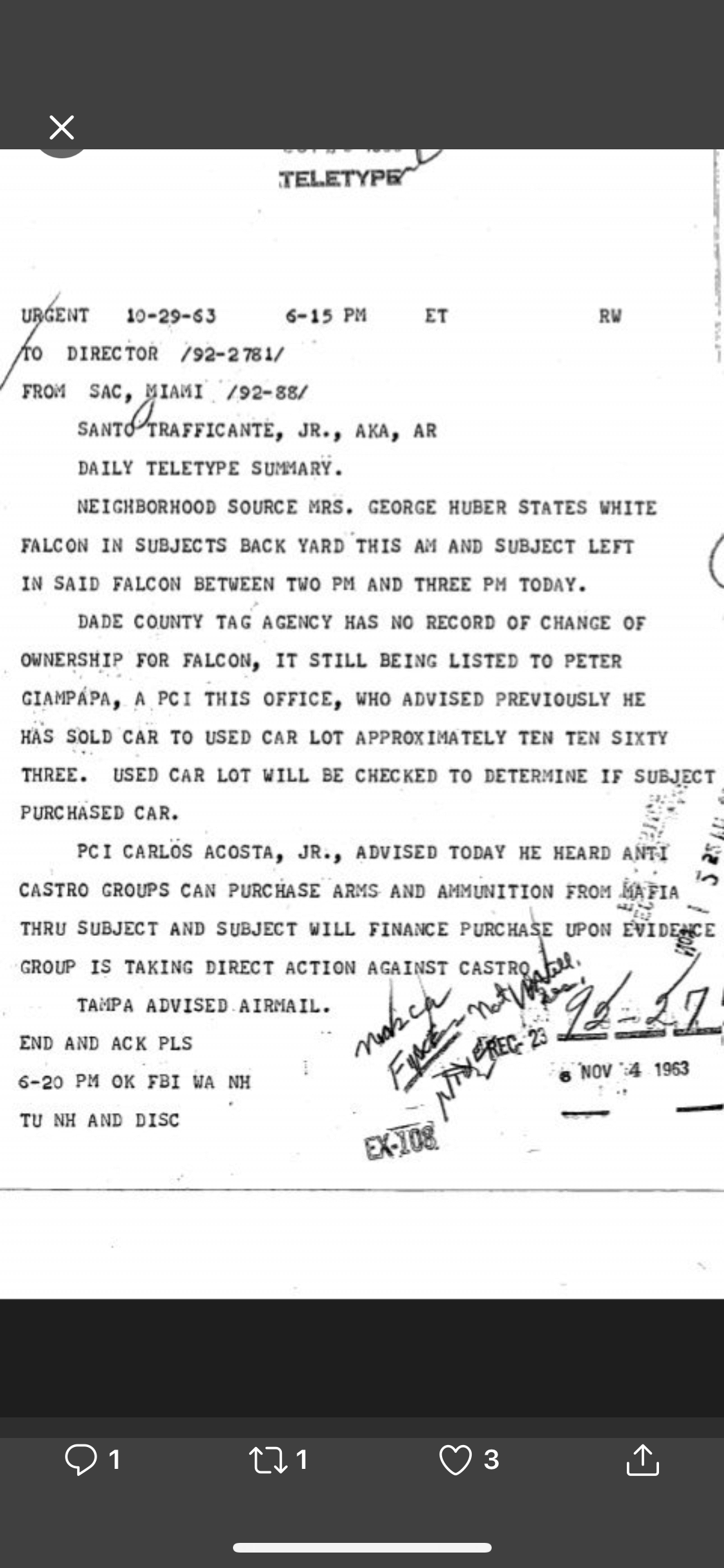
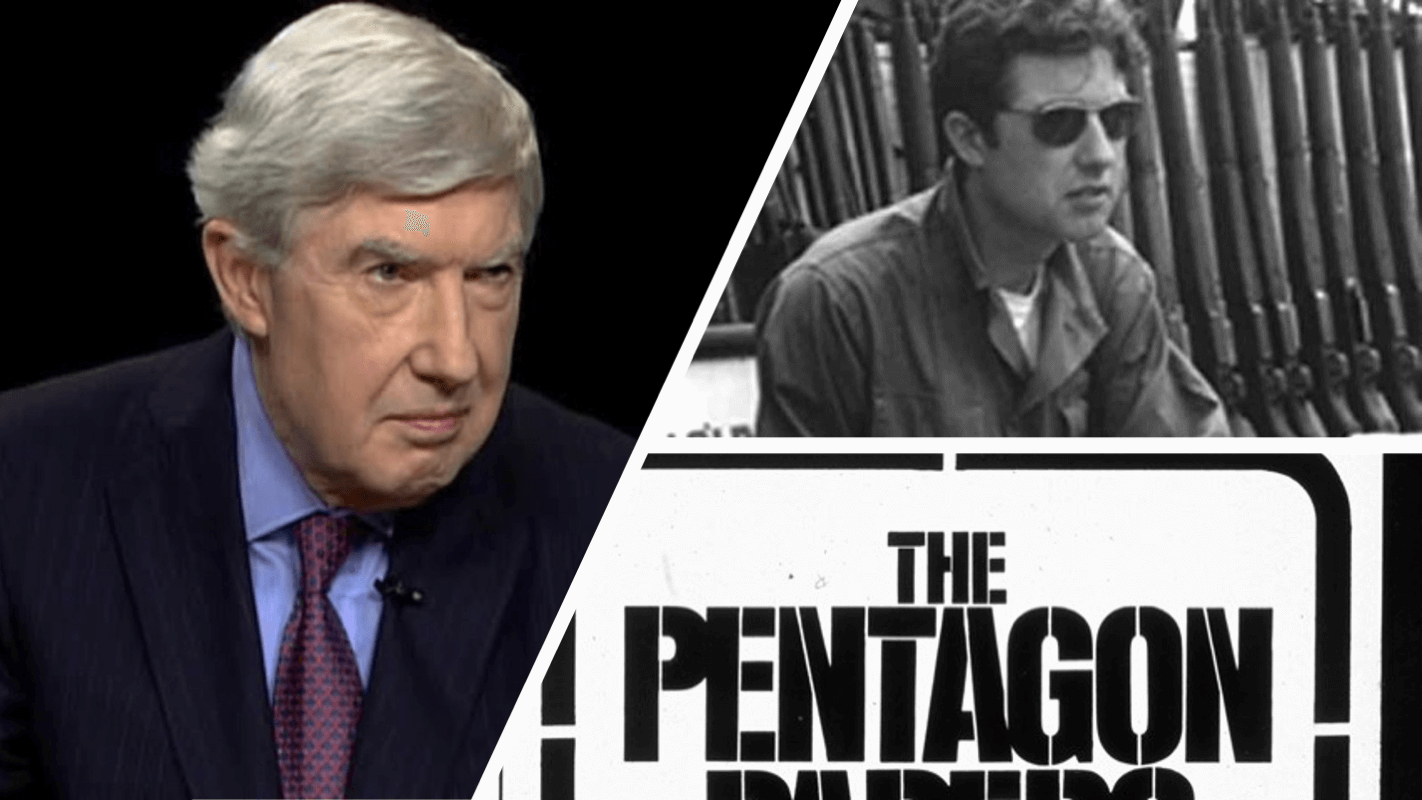
    fbi trafficante

  • Does Paul Street get paid for this junk?

    Does Paul Street get paid for this junk?


    I really hope the answer to the question posed by this article’s title is no. Why? Because Street’s latest exercise in fruitiness is nothing but a recycling of two previous columns he wrote. His current article, which was supposed to be a salute to the memory of Martin Luther King, is really no such thing. It is actually a cheapening of King’s memory, because Street chose to elevate King at the same time that he denigrates President Kennedy. But beyond that, the article is ironically titled, “Against False Conflation: JFK, MLK and the Triple Evils”, since Street himself is guilty of conflating one column he did in January on King with another he did in February on Kennedy. The latter was posted at Truthdig; the former at Counterpunch. What he does in his current effort at the latter site is largely a cut-and-paste job of the two articles. Which is what I mean about hoping he does not get paid for this stuff.

    I demolished his February piece on Kennedy at length already. (See Paul Street Meets Jane Hamsher at Arlington for the ugly details) But what he does now is make believe that demolition did not happen, and he simply modifies it slightly to serve as the first part of his worthless essay. So if he is getting paid, it’s easy money.

    When I heard of what he had done, I emailed Counterpunch and asked if I could reply on site. After four days I received no reply. Therefore, I will reply here again. And to place Street on warning: whenever I hear about more of his nonsensical writing on the subject, I will reply in the future. Especially since his scholarship is so bad that this is like shooting fish in a barrel. In fact, Kennedys and King may end up with a special section called “Street is a Dead End”.

    As I stated, Street slightly modified the first part of his hatchet job on President Kennedy. He opens his article by aseerting that he does not pretend to know the full stories behind who killed Kennedy or King. But he cannot help but list the lone gunman option first. Anyone who has the slightest interest in the subject would howl with laughter at anyone who would proffer that option today. That Street leaves it open tells us a lot about the argument he wishes to make. For if he did admit that JFK was killed by a high-level plot, it would tend to undermine his nonsensical thesis.

    This is especially true in light of the fact that so many of President Kennedy’s policies were altered and then reversed after his death. For example, there were no American combat troops in Vietnam on the day Kennedy was killed. By the end of 1965, not only were there 175,000 combat troops in theater, but also Rolling Thunder—the greatest air bombardment campaign in history—was operating over North Vietnam.   We can make other comparisons to the same effect from the scholarly literature that Street refuses to consult. For example, by reading Richard Mahoney’s JFK: Ordeal in Africa, one can see that a very similar trend followed in Congo. By reading Lisa Pease’s essay about the giant conglomerate Freeport Sulphur, one can see the same trend line in Indonesia. (See JFK, Indonesia, CIA & Freeport Sulphur) By reading just a few pages from Donald Gibson’s masterful volume, Battling Wall Street, one can see that it occurred in the Dominican Republic as well. (See pages, 76-79) By reading Robert Rakove’s fine overview of Kennedy’s revolutionary foreign policy, one can see that the same thing happened in the Middle East, where Kennedy favored Gamel Abdel Nasser. After his death, Johnson and Nixon moved back to favoring Iran and Saudi Arabia, with disastrous results. (See Kennedy, Johnson and the Non Aligned World.) The story of Africa outside the Congo also followed a similar plot line. And the reader can see that by reading Philip Muehlenbeck’s Betting on the Africans.

    What is remarkable about Street’s articles is that there is no evidence at all in any of them that he read any of this material. Consequently, in addition to the ignorance he shows on the subject, there is also a tinge of arrogance involved. Does he think that since he knows better, somehow he is above reading the latest scholarship on the subject? Well, that is one way that he can keep his screeds coming, isn’t it?

    The other point that he implies with his opening is that the assassinations of the Sixties are not really linked in any way. Again, this is quite a difficult thesis to swallow. Lisa Pease and I wrote a 600-page book on that very subject called The Assassinations. There, with rather intricate and up-to-date evidence, we tried to show how the four major assassinations of the decade—President Kennedy, Malcolm X, King, Robert Kennedy—all shared similar characteristics in both their outlines and design, and in the cover-ups afterwards. We also offered a final essay in which we tried to show that it was the cumulative effect of those murders that brought us to the election of 1968: the coming of Richard Nixon and the rise of the hard right to power—a phenomenon that drastically altered the social and economic landscape of this country, and from which it may never recover. One only needs to look at what happened after Nixon left office: how Jerry Ford allowed Donald Rumsfeld and Dick Cheney to bring the Committee on the Present Danger into the White House and do battle with the CIA over their estimate of the Soviet Threat, an unprecedented event. The people they brought in—Paul Nitze, Paul Wolfowitz—thought as Rumsfeld and Cheney did: namely, that Henry Kissinger, Nixon, and Alexander Haig were too moderate. (See Jerry Sanders, Peddlers of Crisis.)  

    That remarkable, little noted occasion had two effects. First, it gave birth to the neoconservative movement, and its later cast of characters, e.g., Jeanne Kirkpatrick and Richard Perle. Second, it was the final burial of Kennedy’s progressive, visionary foreign policy. And I do not just mean his attempt at détente with Cuba and the USSR. I also mean his attempt to mold a policy concerning the Third World which was not bound to Cold War ideology, but which was characterized instead by an effort to understand and ameliorate the problems of nations coming out of the debilitating state of European colonialism.

    Indonesia and Congo offer the two most notable examples. And if Street had done a little bit of reading on the subject he would have known better. For as Susan Williams wrote in her study of the murder of Dag Hammarskjold, Harry Truman made a curious comment when he heard about the UN Secretary General’s death. He said, “Dag Hammarskjold was on the point of getting something done when they killed him. Notice, I said ‘When they killed him.’.” (Susan Williams, Who Killed Hammarskjold?, p. 232) Why on earth did Truman say this? We did not learn why until Australian scholar Greg Poulgrain published another book Street has never read.   It is called The Incubus of Intervention. In examining how Kennedy’s Indonesian policy was opposed by Allen Dulles, the author talked to George Ivan Smith, a close friend and colleague of Hammarskjold’s at the United Nations. Smith revealed that Hammarskjold and Kennedy were secretly cooperating not just on the Congo, but on the problem of Dutch occupation of West Irian, which Indonesian leader Achmed Sukarno felt should be a part of Indonesia. Smith added that Kennedy had let former Democratic president Truman in on that cooperation. That is why Truman made the comment he did. (Poulgrain, pp. 77-78. For a fuller discussion of the Hammarskjold/Kennedy nexus, see Hammarskjold and Kennedy vs. The Power Elite)

    What is so remarkable—in fact, admirable—about this revelation is this: Kennedy kept his pledge to Hammarskjold even after the UN Secretary General was killed! As anyone who reads Mahoney’s book, or Lisa Pease’s essay, or Poulgrain’s book will see, Kennedy was diligent throughout his abbreviated term on both fronts. He personally visited the United Nations on two occasions to ensure that the UN would not forget what Hammarskjold was doing in Congo after he died. And Kennedy allowed American troops into battle to stop the secession of the Katanga province, a move sponsored by Belgium and, to a lesser extent, by England. (See Desperate Measures in the Congo)

    The same was true of Indonesia. Kennedy stuck by Sukarno until the end. He engineered the ceding of West Irian to Indonesia under the negotiated guidance of his brother Robert. President Kennedy had also arranged a state visit to Jakarta in 1964, in part to stave off the confrontation between Sukarno and the United Kingdom over the creation of the Malaysia federation. When Sukarno wanted to expel foreign corporations, Kennedy negotiated new agreements with them so that Indonesia would benefit from the profit split, which JFK requested be 60/40 in Indonesia’s favor. After Sukarno was overthrown, that split was 90/10 in favor of the companies. (Poulgrain, p. 242) Without Kennedy, Sukarno lasted less than two years. President Johnson now backed Malaysia in the dispute with Sukarno, and consequently, Sukarno withdrew from the United Nations. As Lisa Pease notes in her above-referenced article, President Johnson altered Kennedy’s policy towards Sukarno very quickly, and within 12 months the CIA started to plot his overthrow.

    These are just two examples. But they typify President Kennedy’s overall foreign policy. If Street can show me another president since him who did these kinds of things in two separate instances—that is, attempt to foster a revolutionary, nationalist government against European imperialists, and work with the United Nations to do so—I would very much like to hear about them.

    Ignoring the above two cases, Street brings up Vietnam in relation to the issue of Kennedy and the Third World. Here Street says that there has been since 1991 an ongoing debate on whether Kennedy was going to withdraw. He states that the debate was between Oliver Stone and Jamie Galbraith on one side, and Noam Chomsky and Rick Perlstein on the other. He then claims that, somehow, the latter two writers have won that debate. First off, Chomsky has not done any new work on Vietnam since before 1991. But secondly, other authors have done new and important work that is based on new material. Real historians like Howard Jones, David Welch and David Kaiser have uncovered new evidence to make the original argument, first offered by John Newman in 1992, even stronger. For Street to even bring up Perlstein shows just how threadbare he is. For Perlstein did nothing but reiterate Chomsky’s dated, musty and unconvincing polemics. To note just one difference in the quality of scholarship: Welch offered up declassified tapes of Lyndon Johnson actually admitting that he knew Kennedy was withdrawing from Indochina and thus had to cover up the fact he was breaking with that policy. (Welch, Virtual JFK, pp. 304-14) I ask the reader, how much more proof does one need? Well, how about Assistant Secretary of Defense Roswell Gilpatric revealing that his boss Robert McNamara told him that Kennedy had given him orders to wind down the war? (Welch, p. 371) Is Street, who was not there, going to say he knows better than Johnson and Gilpatric, who were in the room?

    This relates to the overall comparison of King with the Kennedys. As anyone who studies American history understands, after the Civil War, the states of the former confederacy passed local and state laws which created the conditions of segregation throughout the southeast: from Texas to the Atlantic Ocean. No one wanted to challenge these laws out of fear of violent retribution from white terrorist groups, but also because of the political price that was going to be exacted. The most that any president did was Harry Truman, who decided to integrate the armed forces. Which really did not cost him much politically, since it was invisible stateside.

    From the beginning, the Kennedys decided that they were going to take the issue on, no matter what the price. They decided they were going to use the Brown vs. Board decision as a legal basis to break down the structure of segregation. Kennedy announced this before he was elected. And he stated he was prepared to lose every southern state at the Democratic Convention because of that stand. (Harry Golden, Mr. Kennedy and the Negroes, p. 95) Which, of course, completely contradicts Street’s dictum that the Kennedys were constricted on civil rights because of votes in the South.

    But prior to that, during the debate over the 1957 civil rights act, Kennedy stressed the prime role of Title 3 in the bill. That clause allowed the Attorney General to enter into a state to enforce school desegregation. When Kennedy, in no uncertain terms, came out for Title 3, he began to lose support in the South. It got worse when he made a speech in Jackson, Mississippi—let me repeat: Jackson, Mississippi—where he reiterated that he supported the Brown vs. Board decision as the law of the land. (Golden, p. 95) Again, this is before he entered the White House.

    It did not change once he was elected. Kennedy had his civil rights advisor Harris Wofford draft a long memorandum on how to strategically attack the segregation problem. Wofford advised that the president use a series of executive actions to forge a path and build momentum until it was possible to pass a bill over a filibuster in the Senate. (Irving Bernstein, Promises Kept, p. 47) To anyone who studies Kennedy’s presidency, it is common knowledge that this memorandum furnished the design of his plan to attack the bastions of southern racism.

    His brother, Attorney General Robert Kennedy, understood this out of the gate. To the Kennedys, civil rights were simply a matter of doing the right thing. As RFK said, “it was the thing that should be done.” (Robert Kennedy in his Own Words, edited by Edwin Guthman and Jeffrey Schulman, p. 105) The Attorney General announced this in public at his famous Law Day speech at the University of Georgia in May of 1961. In other words, three months after the inauguration, RFK went into the Deep South and said he was going to support Brown vs. Board in the courts. Does Street think this helped him get votes for his brother in the South?

    Quite the contrary. But, as many have noted, what these pronouncements did was provide a catalyst for the civil rights movement. They finally had someone in the White House who was on their side. This sparked King and his allies to incite even larger displays of civil disobedience. As Bobby Kennedy noted later, the emerging images and films of Bull Connor’s actions to stamp out the Birmingham demonstration were the impetus that made his civil rights bill possible. JFK used to joke about it by calling it ‘Bull Connor’s Bill’. (Guthman and Schulman, p. 171) It was that, plus Kennedy’s showdown with Governor Wallace at the University of Alabama, that provoked Bobby Kennedy to suggest his brother go on national television and make his famous speech about civil rights. That powerful oration was then followed by the Kennedys helping King arrange the March on Washington in August of 1963. (Bernstein, pp. 103; 114-15) This provided the ballast to start Kennedy’s civil rights bill on its path through Congress.

    One of the most bizarre things Street says in his article is that, somehow, the Kennedys were responsible for things like the killing of civil rights workers in the South. In his mad crusade, is he trying to blame the Kennedys for the rise of the Klan? That began about ninety years before Kennedy entered the White House. Or is Bobby Kennedy to be blamed for J. Edgar Hoover’s lack of rigor in counteracting white racists? As Burke Marshall, who was in charge of the civil rights division at Justice, once noted, it was Bobby Kennedy who had to push Hoover and the FBI into investigating civil rights matters. (Guthman and Schulman, p. 139)

    In his zealous jihad, Street can do what he wants to rewrite history and rearrange the make-up of government bodies. He can blame the whole Reconstruction Era on President Kennedy. He can ignore what Hoover failed to do. He can discount all the previous Attorney Generals before RFK. He can erase the record of all the presidents from Lincoln to Kennedy who did next to nothing on civil rights issues. He can cast a blind eye to the virtual inaction of President Eisenhower and Vice President Nixon in the six years after Brown vs. Board. But there is one simple truth that no one can deny: the Kennedys did more for civil rights in three years than all the previous 18 presidents did in nearly a century. That is an ineradicable fact.

    And Street’s hero, Martin Luther King, knew it. This is why, in March of 1968, King told his advisors that he would be behind Bobby Kennedy in the election. At this time, both McCarthy and President Johnson were in the race, but RFK had not formally declared. King preferred Bobby Kennedy over McCarthy for the specific reason that Kennedy had a stronger record on civil rights than the Minnesota senator. And he knew Kennedy would withdraw from Vietnam. (Martin Luther King, Jr: The FBI File, edited by Michael Friedly and David Gallen, p. 572)

    But further, as Arthur Schlesinger revealed through Marian Wright, it was Bobby Kennedy who gave King the idea for the Poor People’s Campaign in Washington. He suggested it to her, and then she relayed it to King. (Schlesinger, Robert Kennedy and His Times, pp. 911-12) So much for Street’s charge that the Kennedys never wanted to redistribute wealth. King very much liked what RFK offered as a candidate. As he told his inner circle, Bobby Kennedy could become an outstanding president and there was no question that King was going to formally endorse him. (Schlesinger, p. 912) But I am sure Street would say: Well, King was wrong about that one. Even though he was there.

    The judging of presidents is a comparative exercise. There is no absolute standard to propose. Mother Theresa, or an equivalent, would not have been a viable candidate. With the declassification process we have had—and which Street is apparently oblivious to—presidents like Johnson and Nixon have looked worse, Nixon much worse. But the more documents we get on JFK, the better his administration appears. Street does not read them, so he does not know. But whether he denies it or not, the bottom line is simple: King was right.

    It’s always nice to be able to hoist a pretentious gasbag on his own petard.

  • John Allen Stern, C.D. Jackson: Cold War Propagandist for Democracy and Globalism

    John Allen Stern, C.D. Jackson: Cold War Propagandist for Democracy and Globalism


    I. “The American Century”

    In this concise and penetrating analysis of a largely forgotten Cold War propagandist and public relations figure, John Allen Stern paints a complex picture of the genesis of the Cold War, capturing not only the singular influence of C.D. Jackson on 1950s American foreign policy, but the broader contradictions of the ideological battle waged against the Soviet Union by the United States.

    As has been exhaustively portrayed in many a book on the Cold War, almost immediately following the cessation of hostilities after the Japanese surrender in August of 1945, the United States found itself alone among the world’s nations in terms of hegemonic potential, nuclear capabilities and industrial might. There exists much debate as to the actual established beginning of the Cold War, and the breaking with Franklin Roosevelt’s more friendly American/Soviet aims. Many have placed the milestone—at least thematically—shortly after Churchill’s famous March of 1946 speech in Fulton, Missouri. There Churchill decried an “Iron Curtain” descending over Europe, a phrase previously used by Nazi Foreign Minister Count Lutz Schwerin von Krosigk a year earlier. Others have pointed to George Kennan’s “Long Telegram,” sent in February, 1946 while he was the U.S. Chargé d’affaires in Moscow as the most tangible departure in U.S. Foreign policy vis-à-vis the Soviet Union for the coming decade.

    In his message to the Secretary of State, Kennan described the CCCP as, “a political force committed fanatically to the belief that with the U.S. there can be no permanent modus vivendi.” His prescription was for “a long-term, patient but firm and vigilant containment of Russian expansive tendencies.” (George Kennan, “Telegraphic Message from Moscow”, 2/22/1946)

    It may be accurate to judge the posture of U.S. policy planners towards the Soviet Union in the wake of World War II as provocative, belligerent, and essentially counter-productive to their purported goal of fostering global stability. But it is worth getting into the minds of those who had just witnessed the apocalyptic horror of an unprecedented total war, the death toll of which exceeded 60 million in only six years. The unlocking and eventual unleashing of the devastating power of atomic weaponry, coupled with the economic and ideological vacuum into which Western Europe descended after the defeat of the Nazis, presented a formidable challenge to even the most sophisticated foreign relations experts. To many, everything west of the Berlin Occupation Zone lay open to communist infiltration, particularly those nations like France with previously strong socialist factions. To others, like C.D. Jackson, the new mantle of global authority gained in the wake of the Second World War presented a unique opportunity for the United States to lead the world on a moral crusade for the hearts and minds of people in beleaguered communist territories. For those who stood at this great juncture in the 20th Century, the Soviet Union loomed like a dark shadow, poised, many felt, to marshal its forces and complete its unfinished conquest of the “free world.”

    Charles Douglas Jackson stepped into this tense scene of early Cold War uncertainty when he accepted his role as special assistant to President Eisenhower. Coming from Life—where he worked alongside Henry Luce, the publisher of this quintessentially American magazine—Jackson brought both his persuasive charm and astute political observations to the job; earning the admiration of many disparate personalities, from the president to the newly appointed director of the Central Intelligence Agency, Allen Dulles. One of the first global flash points on which Jackson cut his teeth was the coup the CIA sponsored against the democratically elected leader of Guatemala, Jacobo Árbenz, in which capacity Jackson quietly aided intelligence planners in the dissemination of disinformation preceding the overthrow. While ostensibly executed as a clandestine removal of a potential communist leader about to fall into Moscow’s waiting hands, an equally compelling financial motive from the board of directors at United Fruit was also responsible for the green-lighting of the caper. It was, after all, Sullivan and Cromwell, a top American law firm that covertly supported the Nazi war machine during WWII, who represented United Fruit. And it was also John Foster Dulles, made partner at the firm during the 1930s, who was Secretary of State under Eisenhower in the summer of 1954 when the plot was unfolding, and his brother Allen, who was Director of the CIA and also a leading board member of the firm.

    Why this familiar incident bears repeating is that throughout his monograph, Stern does an excellent job of exposing this revolving door of mid-century American politics. With a near-monopoly on credibility, magazines like Life were, along with other titans of journalism like the Washington Post and The New York Times, arbiters of truth, and promulgated to a large extent the narratives of what America stood for, what its enemies sought, and how hardworking officials in Washington were vigilantly keeping them safe in their peaceful suburban enclaves. As authors like Carl Bernstein have detailed, Luce was deeply supportive of the CIA. In a 1977 exposé entitled “The CIA and the Media,” he writes, “For many years, Luce’s personal emissary to the CIA was C.D. Jackson, a Time Inc. vice-president who was publisher of Life magazine from 1960 until his death in 1964.” (Rolling Stone, 10/22/1977) It was Life which later bought the rights, within a day of its shooting, to the infamous Zapruder film in November of 1963, and closely guarded it from the public until its eventual leak on Geraldo Rivera’s “Good Night America” show in 1975, deeming it unsuitable for the American psyche. The film—altered or original—shows President Kennedy’s head snapping dramatically back and to the left. Could that possibly have persuaded Luce and his associates in the intel community from releasing it? Honest folks that they were? But I digress.

    What’s also of note is a December 6, 1963 Life article written by Paul Mandel. This extremely telling piece of the cover-up includes statements like, “Oswald was an ex-marine sharpshooter,” and “Oswald had both the time and the ability to zero-in three times.” (Life, 12/6/1963) This is interesting, given that no one—without cheating—has been able to recreate the fantastic feat in the allotted six seconds of the Warren Commission’s official findings. This includes the legendary Carlos Hathcock, a USMC sniper during the Vietnam War who held a world record—later surpassed—for a confirmed kill at 1.4 miles. (James DiEugenio, “The Lost Bullet: Max Holland Gets Lost In Space,” 11/30/2011) When he left the service, Oswald was a poor shot according to his marksmanship performance reviews. Similarly, Mandel states unequivocally that a Clayton E. Wheat Jr., director of the NRA, actually reproduced this shot in a controlled setting for Life. He “fired an identical-make rifle with an identical sight against a moving target over similar ranges for Life last week. He got three hits in 6.2 seconds.” (“The Lost Bullet”) However, as researcher Pat Speer has observed,

    Someone at the (Warren) Commission recalled the claim in the December 6 issue of Life Magazine that Oswald’s purported shots had been duplicated by someone at the NRA, and asked the FBI to look into it. The FBI report forwarded by Hoover is quite damaging to Life’s credibility. While Life claimed the shooter was an official of the NRA, it turned out the shooter had merely been recommended by the NRA. The shooter, Clayton Wheat, moreover, admitted that he’d had 8 or 9 practice shots and had used a 7.35mm Carcano in his tests, not the 6.5 mm Carcano purportedly used by Oswald. He also acknowledged that he’d fired on a moving deer target traveling slowly, 3-5 mph, right to left over 33 feet, and not at a human head and shoulders-sized target traveling 12 mph away on an angle over a distance of 100 feet or so. He also mentioned that that he’d fired at the target from a distance of 150 feet, from approximately 10 degrees above horizontal, as opposed to firing from a distance of 160-265 feet from approximately 22-16 degrees above horizontal for the purported shots on Kennedy from the sniper’s nest. In short, he didn’t reproduce the shots at all.” (Patrick Speer, A New Perspective on the John F. Kennedy Assassination, Vol. 2, p. 22)

    Equally telling is the other blatant lie in Mandel’s piece for Life, which seeks to explain the testimony of a Parkland Hospital doctor who had told investigators that the president’s throat wound was an entrance wound. Mandel claims this was due to Kennedy’s turning and waving at the crowd: “His throat is exposed—to the sniper’s nest—just before he clutches it.” (Life, 12/6/1963) Mandel cites the then-unreleased Zapruder film as proof of this, having personally viewed it. Yet no extant version of the film actually portrays this, raising serious doubt over his conclusion.

    That C.D. Jackson, on behalf of Allen Dulles, also had a CIA asset, Isaac Don Levine, ghostwrite Marina Oswald’s story for Life is equally suspect. (Stern, p. 122) Though the piece was never published, Levine, a member of the Tolstoy Foundation, a CIA-backed anti-communist front organization with ties to C.D. Jackson’s Psychological Strategy Board going back to the 1950s, spent a full week with Marina Oswald immediately before her testimony to the Warren Commission. (George Michael Evica, A Certain Arrogance, p. 225)

    Life’s publisher Henry Luce, a dedicated and vocal anti-communist, was quick to realize the unprecedented historical opportunity afforded America in the wake of the Allied victory in Europe. No serious historian can deny that the Soviet Union, however repressive and internally corrupt it truly was, actually saved Europe from fascism. Yet this was almost never spoken of in the West, and to be honest, rarely is today. During Operation Barbarossa, the German codename for the June, 1941 invasion of the Soviet Union, Hitler sent 180 divisions (nearly 3.8 million men, 3,800 tanks, 5,400 aircraft and 18,000 artillery pieces) on a mission of conquest and racial extermination which ultimately left over 20 million Russians and Ukrainians dead, as opposed to the forty-five German divisions facing the combined British, Free French, Canadian, Australian, New Zealander, and American forces in late 1942.

    Luce and his pal Jackson, like many Americans in the wake of the Second World War, viewed the outcome as something akin to divine providence, and were quick to draft a persuasive narrative of good versus evil, of a benevolent emancipatory American intervention which paved the way for the liberation of Hitler’s Fortress Europe—a narrative which continues to persuade today. There is no denying the tremendous sacrifices of the American forces in their quest to free Europe from the dark bondage of the Nazi regime. My own grandfather, a French Resistance fighter who helped rescue downed Allied pilots, never forgot that striking image of Operation Overlord’s enormous flotilla anchored off his foggy coast. But it was not a singular effort. Hitler officially declared war on the United States on December 11, 1941, four days after the Japanese attacked Pearl Harbor. It was not until November, 1942 that the American expeditionary force touched down in North Africa to begin its actual combat operations against the Afrika Corps led by Erwin Rommel. After a slow and bloody slog across Tunisia, a 1943 invasion of Sicily and subsequent landings on the Italian mainland, a full three years had elapsed from when Soviet troops began fighting for their existence as a people until the D-Day landings in June, 1944. Stalin never forgot this. And, as history would have it, the famous image of American GIs and Soviet troops embracing on the sunny banks of the Elbe river before the Russians stormed Berlin quickly dissolved into the dreaded specter of the Red Menace in the wake of that tragic global conflagration.

    For figures like C.D. Jackson, the arc of the post-war era of the late 1940s and early 1950s represented the unfolding of Luce’s “American Century,” the title of a sensational feature Luce wrote in a February, 1941 issue of Life Magazine. This thematic portrayal and its subsequent economic, strategic and propagandistic initiatives are best summarized by Stern, who explains,

    It entailed economic liberation for the United States through the integration of American business with markets and resources worldwide, for which governmental institutions were to provide the necessary “atmosphere” for expansion. That amounted to the extension abroad of American business interests, long strapped by the backward thinking of many corporate leaders. The American Century would bring as well, political and economic unity between the United States and Western Europe, along with Japan. It promised to raise living standards around the world, especially in Africa, Southeast Asia, the Middle East and Latin America—areas soon to be collectively defined as the “Third World,”—where a wealth of natural resources made them vulnerable targets for communist incursion. Above all, the American Century was to instill among Americans a sense of destiny and mission, a conviction that our way of life was right for the world, and that it was our time to rule. (Stern, p. 25.)


    II. “It’s Not Propaganda if You Tell the Truth”

    Author Stern goes to great lengths to explain the various propaganda methods and delivery systems the United States employed in its quest to combat Soviet encroachment, both in continental Europe and the world over. Citing cases like Radio Free Europe, which C.D. Jackson actually designed and helped run, and lesser-known programs, like the comical anti-communist pamphlets shoved in balloons and floated over the Iron Curtain by the tens of thousands, he does a nice job of detailing the subtler methods of Cold War spy-craft and propaganda, and gives a compelling, if cursory exposition on the intellectual history of Western social manipulation. He states,

    C.D. Jackson and President Eisenhower would answer the bellicose cries of the saber-rattlers with a clarion call of their own. Jackson outlined his “Strategy for Survival” in a rapidly changing and dangerous world: What would win the day, he promised in sermon-like prose to a wide and diverse audience, was propaganda: ‘We had better get used to it, because goodness knows we need it, and just because Dr. Goebbels and the Kremlin have debased it, that is no reason why we cannot elevate it.’ He made palatable the idea of ‘an official propaganda organization’—which, he confessed, many citizens found dishonest and un-American—by comparing it to teaching ‘a word of wonderful meaning.’

    What is striking when one takes in the ramifications of these propaganda programs is the contempt with which many of their theorists viewed the American masses. Harold Lasswell, a longtime friend of political commentator Walter Lippmann, and himself an influential Yale law professor, is quoted in Stern’s book as arguing,We must recognize the ‘ignorance and stupidity (of) … the masses’ and not succumb to democratic dogmatisms about men being the best judges of their own interests.” (Stern, 43) This art of “manufacturing consent,” later critiqued by the likes of Noam Chomsky in an eponymous book, became a fundamental part of American society by the time the Second World War had begun to unfold.

    I should note that Edward Bernays, a cousin of Sigmund Freud, was a pioneer of American propaganda. Yet conspicuously absent from Stern’s book is a discussion of the Committee on Public Information, or “Creel Commission,” which arguably was the true genesis of full-blown American war propaganda. It employed Bernays, along with George Creel, Carl Byoir and others to sell the First World War to an isolationist general population. Though he touches on the earlier role Bernays played in Calvin Coolidge’s presidency during the mid 1920s, it’s odd that given his otherwise excellent monograph, this important propaganda think-tank, which lasted from 1917 to 1919, is not mentioned. Indeed, Josef Goebbels, the Nazi Propaganda Minister, often cited Bernays as the greatest influence in shaping his own policies in Germany, and Adolf Hitler was a great admirer of him as well, even citing the Committee on Public Information as a template for his own efforts. (Dan Nimmo and Chevelle Newsome, Political Commentators in the United States in the 20th Century: A Bio Critical Sourcebook, p. 66)

    It would also have been nice if Stern had mentioned how Hitler glossed the cover of Henry Luce’s Time Magazine in 1938 in full regalia as “Man of the Year,”; or how the Führer had actually hired New York advertising agency Carl Byoir & Associates in 1933—the same Carl Byoir of Creel Commission notoriety—to actively promote “positive images” of the Third Reich. (The Observer, 12/22/2014). These collusive links between the purported bastion of democracy in the free world, the United States of America, and one of the most violent and destructive regimes in human history, remains a curious gap in Stern’s story, and are a necessary window into comprehending the Soviet Union’s very real fear of a re-armed Germany in the wake of the Second World War.


    III. “The Hidden Hand”

    What Stern does an exceptional job of showcasing is the impasse at which more nuanced thinkers found themselves when confronted with die-hard cold warriors like the Dulles Brothers and certain members of the Joint Chiefs of Staff. An especially telling episode from 1953 is one in which a young Tom Braden, fresh out of the CIA academy, overhears Walter Bedell-Smith, now undersecretary of State, on a McCarthyist tirade regarding a new appointment to the U.S. Information Program, one of the departments of the wider public relations umbrella network described in Stern’s book. Braden recalled, “I remember walking into Allen Dulles’ office one day soon after I joined the CIA, and I could hear “Beetle” Smith, whose office door adjoined the Director’s, roaring out from beyond his front door: ‘They got that goddamned communist Nelson Rockefeller running psychological warfare.’ I went into Allen’s office and said I don’t want to work here anymore. I don’t want anything to do with this.” (Stern, p. 110).

    For figures like Jackson, who by no means sought neutralism or appeasement with the Eastern Bloc, there existed a kind of middle ground. Stern does a fine job of showing the small ways in which people like him served as a necessary buffer to the brinkmanship of the war-hawks. As he notes,

    Whereas Jackson wanted to quietly capture the loyalties of the non-aligned nations and make inroads into the Eastern Bloc, as well as strengthen our position with England and France—both of whom recognized the inherent emptiness of communist dialectics and the military threat posed by Russia, but accepted coexistence and especially trade with the Soviet States—(John Foster) Dulles opted for outright coercion and applied bullying tactics.” (Stern, p. 101)


    Time and time again this story has been repeated, and Stern’s book is a necessary primer for the arm-twisting the intelligence apparatus would employ on JFK during his brief tenure as president. What is both interesting and arguably under-reported in the scholarship, is how even a former Supreme Commander of Allied Forces in Europe like Dwight Eisenhower was feeling the pressure of his newly-formed intelligence and propaganda machine.

    As Stern notes, in 1956 the CIA had urged the president to parachute weapons and supplies to the disillusioned Hungarian protesters who had taken to the streets in open rebellion against the Soviet Union. This rebellion was largely due to Western propaganda imperatives broadcast over Radio Free Europe. When he refused, many members of the intelligence community saw only weakness, not Eisenhower’s real concerns over provoking a potential nuclear exchange between the superpowers. (Stern, pp. 3-4) Also interesting to note—and the author does—is how the figures the United States had selected to lead the failed Hungarian uprising were largely former members of the fascist Arrow Cross Party. Arrow Cross had been instrumental in WWII in aiding the Nazis’ Jewish extermination program in Hungary after the Germans captured and deposed the Hungarian Regent, Miklós Horthy, through a daring commando operation led by SS Major Otto Skorzeny. Stern argues, “In contrast, Jewish refugees from the uprising told the French Press that, ‘Soviet soldiers had saved their lives.’” (p. 4) And thus in the first chapter of the book, we see the contradictions and moral hazards inherent in the intelligence and propaganda communities’ Realpolitik approach to communism, a theme that would continue to generate blowback and further tarnish the image of the United States in the decades to come.

    While Eisenhower fully supported the CIA’s overthrows of both Mossadeq in Iran and Árbenz in Guatemala, he seemed fearful enough of a final apocalyptic showdown with the Soviet Union to pursue a watered down form of détente. And it was C.D. Jackson himself who wrote the president’s iconic “Atoms for Peace” address to the UN General Assembly in 1953. This rhetorically moving—if somewhat disingenuous—speech deserves reading, as the language is quite revealing in terms of Jackson’s power to persuade:

    … for me to say that the defense capabilities of the United States are such that they could inflict terrible losses upon an aggressor—for me to say that the retaliation capabilities of the United States are so great that such an aggressor’s land would be laid waste—all this, while fact, is not the true expression of the purpose and the hope of the United States. To pause there would be to confirm the hopeless finality of a belief that two atomic colossi are doomed malevolently to eye each other indefinitely across a trembling world. To stop there would be to accept helplessly the probability of civilization destroyed—the annihilation of the irreplaceable heritage of mankind handed down to us generation from generation—and the condemnation of mankind to begin all over again the age-old struggle upward from savagery toward decency, and right, and justice. Surely no sane member of the human race could discover victory in such desolation. Could anyone wish his name to be coupled by history with such human degradation and destruction?

    Eisenhower continues:

    We never have, and never will, propose or suggest that the Soviet Union surrender what rightly belongs to it. We will never say that the peoples of the USSR are an enemy with whom we have no desire ever to deal or mingle in friendly and fruitful relationship. On the contrary, we hope that this coming conference may initiate a relationship with the Soviet Union which will eventually bring about a freer mingling of the peoples of the East and of the West—the one sure, human way of developing the understanding required for confident and peaceful relations. Instead of the discontent which is now settling upon Eastern Germany, occupied Austria and the countries of Eastern Europe, we seek a harmonious family of free European nations, with none a threat to the other, and least of all a threat to the peoples of the USSR. (Dwight D. Eisenhower, “Atoms for Peace,” 12/8/1953)


    How much of this was purely stagecraft is debatable, and as Stern notes, many within the CIA, like Tom Braden, felt it was likely a ploy to ensure the United States remained dominant in terms of nuclear first-strike capability, and served to alleviate growing tensions with Western allies in Europe who feared a Third World War extinction event. This constant shadow play, both within the U.S. foreign policy circles and in the diplomatic tensions between the United States and the Soviet Union, are a highlight of the book. As Stern reveals, it is never really clear just where even moderates like Jackson ultimately stand within this dynamic. To be clear, this is fine contribution to scholarship, for too often a monolithic Eastern Bloc is juxtaposed against a Red-baiting West in conventional narratives of the Cold War, with figures like Jackson either relegated to tertiary roles in the grand scheme of things or altogether excluded. Even sinister figures like Allen Dulles are shown in their rare finer moments, including Stern’s vignette where Senator Joe McCarthy, the towering figure of anti-communism, responsible for the nationwide purges of purported Soviet sympathizers, is attempting to fire none other than the CIA’s own Deputy Director of Intelligence, William Bundy. His crime: contributing $400 to the Alger Hiss Defense Fund.

    Braden was in Dulles’ office one day with William Bundy, and the Director told Bundy, ‘get out of here and I’ll deal with it.’ Dulles then went directly to Eisenhower and said, in Braden’s words, he wasn’t going to ‘fuck about with this mess from Wisconsin.’ Dulles bluntly told the president ‘he would resign unless McCarthy’s attacks were stopped.’ (Stern, 99)


    IV. Ignorance is Strength

    The late American political theorist Sheldon Wolin once described the United States as an “inverted totalitarian” society. By this he contrasts its more subtle and sophisticated methods of coercion and control with the more overt and brute-force tactics seen in places like the former Soviet Union. In his prescient book Democracy Incorporated, Wolin argues,

    Antidemocracy (sic), executive predominance, and elite rule are basic elements of inverted totalitarianism. Antidemocracy does not take the form of overt attacks upon the idea of government by the people. Instead, politically it means encouraging what I have earlier dubbed ‘civil demobilization,’ conditioning an electorate to being aroused for a brief spell, controlling its attention span, and then encouraging distraction or apathy.” (Sheldon Wolin, Democracy Incorporated: Managed Democracy and the Specter of Inverted Totalitarianism, 2008, p. 239å)

    Figures like C.D. Jackson, Bernays, and Luce all served this function of the state. Stern presents a fine account of precisely how this was accomplished in mid-century America, one largely unbeknownst to the general public. With dramatically fewer outlets—no internet, for one—from which to gather a comprehensive and serious view of current events, the average American in the 1950s and early 1960s was largely dependent on what these back-channel propaganda handlers were manufacturing. Though a few independent investigative outfits like Ramparts managed to get some of the less-than-savory episodes in American foreign and domestic policies out into the world, their circulation was dwarfed by the essentially monolithic mainstream print and television media.

    What truly struck me about Stern’s book was the timeliness of its publication. As we gear up for another year of the media’s predictable fear mongering— e.g., “Russia hacked the election,” “Putin murders journalists,” “Russia has weaponized Pokemon Go” (an actual CNN headline)—it’s good to have a source like this book to connect the dots. What’s fascinating is how in the epilogue, written in 2012, he notes that, with the Soviet Union gone and Russia now no longer a threat to the West, our bogeyman has become Islamic fundamentalism. Which, of course, is true; even with the alleged murder and burial at sea of Osama Bin Laden the United States is still mired in a never-ending multiple-theater “war on terror.” But how curious that even six years ago no one in America, at least not seriously, was talking about a renewed Cold War with Russia. Certainly not your average person or generally circulated periodical. And yet just last year, in an October 2017 issue, The Economist ran a sensational cover story entitled, “A Tsar is Born: As the world marks the centenary of the October Revolution, Russia is once again under the rule of the tsar.” Vladimir Putin is featured in an artistic rendering in full 19th– Century Imperial Russian military dress: in place of his bar of ribbons we find a rectangular image of a prisoner’s hands gripping a prison cell’s iron bars, under which hangs a red sickle and hammer medal. That this iconic image symbolizes the ideological opposite of their “tsar” portrait is never explained. But that’s not the point. The point is he’s a tsar, okay? Tsar = bad. Now go watch football and check your Facebook feeds folks. It would make Edward Bernays proud.

    Silly headlines like this serve as reminders of the entrenched philosophical notion of what the 19th-century Prussian philosopher G.W. Hegel once called “negative identity,” or defining yourself by that to which you stand opposed. And CD Jackson: Cold War Propagandist for Democracy and Globalism is a painful reminder of this pernicious attitude that continues to saturate both our government and media. The insights gleaned from this short text are a truly valuable addition for U.S. historians and those interested in the creation and dissemination of propaganda in a professedly free and democratic society. To these ends, Stern succeeds in showing how one forgotten figure of the past played his hand at shaping the landscape of U.S.-Soviet relations behind the scenes.

    While it would have been nice to know more about Jackson the human being—he serves more as a cryptic cipher around which is spun an investigative exposition on the Cold War propaganda apparatus—perhaps that was exactly the author’s intent, despite the fact that the title of the book would suggest a more biographical approach to the reader. Similarly, the subject would seem to lend itself better to a more chronological narration of how the psychological warfare departments and shell companies rolled out during the Cold War evolved, with planners learning from past successes and mistakes and adapting to the exigencies of the time. The book is, in fact, strangely disjointed in its organization, and Jackson himself is curiously quoted only a few times in the body of primary source evidence the author cites. Perhaps, as Stern mentions in his introduction, this owes itself to the relative scarcity of information on him. But the omission does weaken what ostensibly is a case study of this person’s life and times.

    In conclusion, however, I must say that C.D. Jackson: Cold War Propagandist for Democracy and Globalism was a pleasure to read, and I highly recommend it to anyone wishing to fill in the gaps in Cold War historiography.