Tag: DOMESTIC POLICY
-

Michael Kazin and the NY Review vs JFK
Michael Kazin is a professor of history at Georgetown. The New York Review of Books is a leftwing, tabloid formatted political, cultural, and intellectual review. It specializes in contemporary political events, books, and the arts. In their May 27th issue, this respected publication allowed Mr. Kazin to do something that should have been prevented. Kazin was supposed to be reviewing part one of Fredrik Logevall’s, two volume biography of John F. Kennedy, JFK: Coming of Age in the American Century.
What’s disturbing about Kazin’s review is this: it is not a review. After reviewing books for approximately two decades—and studying literary criticism for longer than that—I understand what the process entails. The most important thing about critiquing a book is an analysis of the text of the book. What that means is the critic describes what the author has written and analyzes both what is there and also what the author left out that might have altered his argument. When that process is completed, the critic evaluates the book in relation to other works in the field as a measure of value. Of course, there are many, many biographies of John F. Kennedy that Kazin could have used as a measuring rod.
What is striking about Kazin’s review is that it is really a polemic against John Kennedy. Kazin used Logevall’s book as a springboard to trash the man and his career. One can easily detect this by noting how much of Kazin’s “review” deals with matters outside the time frame of the book, which only goes up to 1956. In fact, one can see what the “reviewer” is up to in his first sentence:
Why, nearly six decades after his murder, do Americans still care so much about and, for the most part, continue to think so highly of John Fitzgerald Kennedy?
If one has to ask that question, then obviously one is about to assault those people who do so. Kazin follows that up by pulling a page out of the Larry Sabato/Robert Dallek playbook. He now writes that Kennedy achieved little of lasting significance in his presidency.
Again, please note: this is a review of a book that only extends itself to 1956. But Kazin is now talking about something Logevall has not gotten to yet. Beyond that, he is making a judgment about the years that the book does not address! Clearly, Kazin has an uncontrollable agenda about the Kennedy years in the White House that his editors allowed him to spew. He more or less writes that Kennedy achieved nothing of value either domestically or in foreign policy. I would think that signing two executive orders for affirmative action in his first year would count as something of value. (Irving Bernstein, Promises Kept, p. 56) After all, no previous president had done that. In foreign policy, I would think that constructing the Alliance for Progress and refusing to recognize the military overthrow of the democratically elected Juan Bosch in Dominican Republic would be something to address.
But if Kazin did note just those two things about Kennedy’s foreign policy, then he would create a polemical problem for himself, because then the reader would ask: What happened to those two programs? The answer would be that Lyndon Johnson pretty much neutralized both of them. (Click here for details)
In the last instance, concerning Dominican Republic, LBJ did more than that. In 1965, he launched an invasion to preserve the military junta and prevent Bosch from regaining power,which was a clear reversal of what Kennedy’s policy was. (Donald Gibson, Battling Wall Street, pp. 78–79) Pretty clever guy that Kazin.
As one can see from the above linked article, Bobby Kennedy was very upset about what Johnson had done to the Alliance for Progress. As was RFK, Senator William Fulbright was beside himself about the Dominican Republic invasion. Fulbright’s staff had done some research by consulting sources on the ground. They concluded that Johnson had lied about the true state of affairs, especially concerning alleged atrocities by Bosch’s forces. (Joseph Goulden, Truth is the First Casualty, p. 166)
That Johnson deception in the Caribbean paralleled another, even larger one: the Gulf of Tonkin resolution. In fact, it was Fulbright’s outrage over LBJ’s subterfuge in the Dominican Republic that provoked him into reviewing what Johnson had done to get America into Vietnam. One of Fulbright’s staffers, Carl Marcy, had reviewed both instances and he now believed Johnson had lied about each. He wrote a memo to Fulbright about it. He concluded that what Johnson had done in the last 24 months helped explain what happened to:
…turn the liberal supporters of President Kennedy into opponents of the policies of President Johnson, and the rightwing opponents of Eisenhower and Kennedy into avid supporters of the present administration. (ibid)
Feeling that he had been suckered, in 1966 Fulbright began his famous televised hearings on the Vietnam War. This is what began to split the Democratic Party asunder and aided the election of Richard Nixon. This is why it was smart for Kazin not to go there.
The above points out just how wildly askew Kazin is in foreign policy. But as far as domestic policy goes, in addition to the two affirmative action laws, Kennedy granted federal employees the right to form unions and, by 1967, there were 1.2 million who had joined. That idea then spread to state and local government. In 1962, Kennedy signed the Manpower Development and Training Act aimed to alleviate African-American unemployment. In April of that year, Kennedy went on national television to begin what economist John Blair later termed “the most dramatic confrontation in history between a president and a corporate management.” (Gibson, p. 9) This was Kennedy’s battle against the steel companies who had reneged on an agreement he had worked out with them between management and labor. Kennedy prevailed after his brother, the attorney general, began legal proceedings against the steel cartel. If Kazin can indicate to me a recent president who has made such an address against another corporation or group of aligned businesses, I would like to hear it.
In 1962, Kennedy tried to pass a Medicare bill. It was defeated by a coalition of conservative southern senators and the AMA. At the time of his death, Kennedy was planning to revive the bill through Congressman Wilbur Mills. (Bernstein, pp. 246–59) But also, on June 13, 1963, Kennedy made a speech to the National Council of Senior Citizens. This was part of those remarks:
There isn’t a country in Western Europe that didn’t do what we are doing 50 years ago or 40 years ago, not a single country that is not way ahead of this rich productive, progressive country of ours. We are not suggesting something radical and new or violent. We are not suggesting that the government come between the doctors and his patient. We are suggesting what every other major, developed, intelligent country did for its people a generation ago. I think it’s time the United States caught up.
In fact, one can argue that Kennedy proposed universal healthcare way before Barack Obama did. All one has to do is just look at this speech:
How did Professor Kazin miss that one? It didn’t take deep research. After all, it’s on YouTube. Please note: in this speech Kennedy talks about how progressive goals for the public can be attained through government leadership and action.
By 1960, because of his vote to table the measure, it was established that Richard Nixon was not going to advocate for federal aid to education. President Kennedy favored such aid and appointed a task force to study the issue. (Bernstein, p. 224) By October of 1963, Congress had passed the first federal aid to education bill since 1945. It would be signed into law by President Johnson.
That last sentence is also apropos of the War on Poverty. It was not Lyndon Johnson who originated the War on Poverty, it was John Kennedy. Kennedy was influenced by the publication of Michael Harrington’s book The Other America. This provoked Kennedy to begin a series of talks with his economic advisor Walter Heller concerning the subject of how best to attack poverty. (Thurston Clarke, JFK’s Last Hundred Days, pp. 242–43) Kennedy decided he would make this an election issue and he would visit several blighted areas to bring it to national attention.
Bobby Kennedy set his close friend David Hackett to actually study the problem of geographical areas of poverty and how it caused juvenile delinquency. (Edward Schmitt, President of the Other America, p. 68) In fact, JFK had allotted millions for demonstration projects to study possible cures for the problem. Hackett was also allowed a staff of 12 to do investigations and research for him. (Allen Matusow, The Unraveling of America, pp. 111–12) At his final meeting with his cabinet, Kennedy mentioned the word “poverty” six times. Jackie Kennedy took the notes of that meeting to Bobby Kennedy after her husband’s death. The attorney general had them framed and placed on his wall. (Schmitt, pp. 92, 96)
So, between Heller and Hackett, and his plans around the 1964 election, the president seemed off to a good start. It took very little time for Johnson to place his own stamp on the program. Over RFK’s protests, Johnson removed Hackett from his position. (Matusow, p. 123) Heller resigned in 1964 in a dispute over the Vietnam War. LBJ then did something really odd. He appointed Sargent Shriver to run the War on Poverty. As Harris Wofford notes, everyone was puzzled by the decision to retire Hackett and replace him with Shriver, for the simple reason that Shriver already had a job in the administration: running the Peace Corps. (Wofford, Of Kennedys and Kings, p. 286) Consequently, the management of the program suffered. By 1968, Shriver had gone to Paris to serve as ambassador and LBJ had more or less abandoned the program. (Matusow, p. 270)
This relates to the whole shopworn mythology that Kazin uses on the race issue. If anything shows his almost monomaniacal obsession, it’s this. Recall, Logevall’s book goes up to 1956. Kazin says that young JFK avoided the race issue for purposes of politics. Then how does one explain that in 1956 Kennedy made these remarks in New York:
The Democratic party must not weasel on the issue…President Truman was returned to the White House in 1948 despite a firm stand on civil rights that led to a third party in the South. We might alienate Southern support, but the Supreme Court decision is the law of the land.
Again, it takes no deep research to find this speech, because it was printed on page 1 of the New York Times of February 8, 1956. Kennedy did the same thing the next year in, of all places, Jackson, Mississippi. He said the Brown v. Board decision must be upheld. (Harry Golden, Mr. Kennedy and the Negroes, p. 95) How could doing such a thing gain him political advantage in that state? As author Harry Golden notes, at this point Kennedy began to lose support in the south and to receive angry letters over his advocacy for the Brown decision.
It was obvious what Senator Kennedy was pointing at: President Eisenhower and Vice President Nixon were not supporting Brown vs. Board. In fact, as many historians have noted, Eisenhower had advised Earl Warren to vote against the case. (The Atlantic, “Commander vs Chief”, 3/19/18) The other civil rights issue that Kazin brings up is even fruitier. His complaint is that Kennedy did not try and pass his own civil rights bill in the Senate. Kennedy was elected to the Senate in 1952 and Lyndon Johnson became the senate Democratic leader in 1953. LBJ became the Majority Leader in 1954. As most knowledgeable people know, Johnson voted against every civil rights bill ever proposed in Congress from the time he was first voted into the House in 1937. Was the junior senator from Massachusetts going to override the powerful Majority Leader from his own party? It was Johnson and Eisenhower who were responsible for fashioning a civil rights bill. And they didn’t.
After Eisenhower had been humiliated by Republican governor Orval Faubus during the Little Rock Crisis at Central High in 1957, he tried to save face. He and Nixon sent up a draft for a Civil Rights Commission to investigate abuses. The concept behind it was to split the Democratic Party: Norther liberals vs Southern conservatives. Johnson cooperated by watering down the bill even more to prevent the schism. Why did LBJ cooperate? Because he was thinking of running for the presidency and he saw what being against the issue had done to his mentor Richard Russell’s national ambitions. Senator Kennedy did not like the bill; he thought it was too weak. Johnson had to personally lobby JFK to get him to sign on. (Rowland Evans and Robert Novak, Lyndon Johnson: The Exercise of Power, pp. 122–25; 136–7) In a letter to a constituent, Kennedy wrote that he regretted doing so and hoped to be able to get a real bill one day with real teeth.
From the day he entered the White House, Kennedy was looking to write such a bill. Advised by Wofford that such legislation would not pass in the first or second year, he did what he could through executive actions and help from the judiciary. He then submitted a bill in February of 1963. As Clay Risen shows in his book The Bill of the Century, it was not Johnson who managed to get it through. This was and is a myth. JFK began with a tremendous lobbying effort himself. After he was assassinated, it was Bobby Kennedy, Hubert Humphrey, and Republican senator Thomas Kuchel who were the major forces to finally overcome the southern filibuster. Also, as most knowledgeable people know, it was not Johnson who managed to pass the 1965 Voting Rights Act. That was owed to Martin Luther King’s galvanizing demonstration in Selma, Alabama. Johnson could not get an extension of Kennedy’s housing act through either. It was the occasion of King’s assassination that allowed it to pass.
Plain and simple: Kennedy did more for civil rights than FDR, Truman, and Eisenhower combined. That is an historical fact. (Click here for the short version and here for the long version)
Kazin writes something that I had to read twice to believe. He says that in his congressional races, from 1946–58, Kennedy never said or did “anything that might annoy his largely Catholic, increasingly conservative white base In Massachusetts.” I just noted his 1956 speech about civil rights in New York. But just as important, as readers of this web site know, from his visit to Saigon in 1951 and onward, Kennedy spoke out strongly against the establishment views of both Democrats and Republicans on the Cold War, especially as it was fought in the Third World. Kennedy assailed both the policies of Dean Acheson and John Foster Dulles as being out of touch and counter-productive in the struggles of former colonies to become free of imperialist influence. He noted this in 1956 during the presidential campaign:
…the Afro-Asian revolution of nationalism, the revolt against colonialism, the determination of people to control their national destinies…In my opinion the tragic failure of both Republican and Democratic administrations since World War II to comprehend the nature of this revolution, and its potentialities for good and evil, has reaped a bitter harvest today—and it is by rights and by necessity a major foreign policy campaign issue that has nothing to do with anti-Communism. (Richard Mahoney, JFK: Ordeal in Africa, p. 18)
Kennedy’s five year campaign to find an alternative Cold War foreign policy culminated with his famous Algeria speech the next year. There, he assailed both parties for not seeing that support of the French colonial regime would ultimately result in the same conclusion that occurred three years previous at Dien Bien Phu in Indochina. Kennedy’s speech was such a harsh attack on the administration that it was widely commented on in newspapers and journals. The vast majority of editorials, scores of them, decried the speech in no uncertain terms, as did Eisenhower, Foster Dulles, Nixon, and Acheson. But it made him a hero to the peoples of the Third World, especially in Africa. (Mahoney, pp. 20–24) This completely undermines another comment by Kazin: that Kennedy had “to surrender to the exigencies of cold war politics and the ideological make up of his party as he rose to the top of it.” As John Shaw wrote in his study of Kennedy’s senate years, JFK’s challenge to Foster Dulles allowed him to become a leader in foreign policy for his party and “to outline his own vision for America’s role in the world,” which Kennedy then enacted once he was in the White House. (JFK in the Senate, p.110) These were almost systematically reversed by Johnson. (Click here for details)
Toward the end of his article, Kazin goes off the rails. He says there is no memorial statue of JFK in Washington. Well Mike, there is none of Truman or FDR either. He says there is no holiday for JFK. Again, there is none for Franklin Roosevelt either. And they have recently combined the Lincoln and Washington holidays into a single President’s Day. He also says that President Joseph Biden made no mention of the Kennedys in his campaign or during his brief presidency. Biden did make reference to RFK as his hero in law school, more than once. (See for example NBC news story of August 23, 2019, on a speech Biden gave in New Hampshire.) And Biden has RFK’s bust in the Oval Office and he transported a wall painting of President Kennedy from Boston to place in his study.
If Kazin did not know any of the above, then it must be pretty easy to get tenure at Georgetown. If he did and ignored it all, then his editors should have never let this travesty pass. It does a disservice to the readers and it should be corrected. In a fundamental and pernicious way, it misinforms the public.
Addendum:
We urge our readers to write Mr. Kazin and complain to the NY Review of Books. There is no excuse for this kind of display of factual and academic ignorance and arrogance.
JFK addressed the definition of a liberal and why he was one in a 1960 campaign speech. This speech is a good source to reference in any response to Mr. Kazin. (Click here for details)
-

Truthdig, Major Danny Sjursen and JFK
 On April 6, 2019 Truthdig joined the likes of Paul Street and Counterpunch in its disdain for scholarship on the subject of the career and presidency of John F. Kennedy. To say the least, that is not good company to keep in this regard. (see, for instance, Alec Cockburn Lives: Matt Stevenson, JFK and CounterPunch, and Paul Street Meets Jane Hamsher at Arlington) What makes it even worse is that the writer of this particular article, Major Danny Sjursen, was a teacher at West Point in American History. In that regard, his article is about as searching and definitive as something from an MSM darling like Robert Dallek. The problem is, Truthdig is not supposed to be part of the MSM.
Sjursen’s article is part of a multi-part series about American History. The title of this installment is “JFK’s Cold War Chains”. So right off the bat, Sjursen is somehow going to convey to the reader that President Kennedy was no different than say Dwight Eisenhower, Harry Truman, or Richard Nixon or Lyndon Johnson in his foreign policy vision.
Almost immediately Sjursen hits the note that the MSM usually does: Kennedy was really all flash and charisma and achieved very little of substance in his relatively brief presidency. And the author says this is true about both his foreign and domestic policy. Like many others, he states that Kennedy hedged on civil rights. I don’t see how beginning a program the night of one’s inauguration counts as hedging.
On the evening of his inauguration, Kennedy called Secretary of the Treasury Douglas Dillon. He was upset because during that day’s parade of the Coast Guard, he did not see any black faces. He wanted to know why. Were there no African American cadets at the Coast Guard academy? If not, why not? (Irving Bernstein, Promises Kept, p. 52) Two days later, the Coast Guard began an all-out effort to seek out and sign up African American students. A year later they admitted a black student. By 1963 they made it a point to interview 561 African American candidates. (Harry Golden, Mr. Kennedy and the Negroes, p. 114)
This was just the start. At his first cabinet meeting Kennedy brought this incident up and said he wanted figures from each department on the racial minorities they had in their employ and where they ranked on the pay scale. When he got the results, he was not pleased. He wanted everyone to make a conscious effort to remedy the situation and he also requested regular reports on the matter. Kennedy also assigned a civil rights officer to manage the hiring program and to hear complaints for each department. He then requested that the Civil Service Commission begin a recruiting program that would target historically black colleges and universities for candidates. (Carl Brauer, John F. Kennedy and the Second Reconstruction, pp. 72, 84) Thus began the program we now call affirmative action. Kennedy issued two executive orders on that subject. The first one was Executive Order 10925 in March of 1961, three months after his inauguration.
Kennedy’s civil rights program extended into the field of federal contracting in a way that was much more systematic and complete than any president since Franklin Roosevelt. (Golden, p. 61) In fact, it went so far as to have an impact on admissions of African American students to private colleges in the South. As Melissa Kean noted in her book on the subject, Kennedy tied federal research grants and contracts to admissions policies of private southern universities. This forced open the doors of large universities like Duke and Tulane to African American students. (Kean, Desegregating Private Higher Education in the South, p. 237)
I should not have to inform anyone, certainly not Major Sjursen, about how this all ended up at the University of Mississippi and then the University of Alabama. The president had to call in federal marshals and the military in order to escort African American students past the governors of each state. In both cases, the administration had helped to attain court orders that, respectively Governors Ross Barnett and George Wallace, had resisted. That resistance necessitated the massing of federal power in order to gain the entry of African American students to those public universities.
After the last confrontation, where Kennedy faced off against Governor Wallace, he went on national television to make the most eloquent and powerful public address on civil rights since Abraham Lincoln. Anyone can watch that speech, since it is on YouTube. By this time, the summer of 1963, Kennedy had already submitted a civil rights bill to Congress. He had not done so previously since he knew it would be filibustered, as all other prior bills on the subject had been. Kennedy’s bill took one year to pass. And he had to mount an unprecedented month-long personal lobbying campaign to launch it. (Clay Risen, The Bill of the Century, p. 63) When one looks at Kennedy’s level of achievement in just this one domestic field and locates and lists his accomplishments, it is clear that he did more for civil rights in three years than FDR, Truman and Eisenhower did in nearly three decades (see chart at end).
The reason for this is that the Kennedy administration was the first to state that it would enforce the Brown vs. Board decision of 1954. The Eisenhower administration resisted enacting every recommendation sent to it by the senate’s 1957 Civil Rights Commission. (Harris Wofford, Of Kennedys and Kings, p. 21) As Michael Beschloss has written, Eisenhower actually tried to persuade Earl Warren not to vote in favor of the plaintiffs in that case.
Kennedy endorsed that decision when he was a senator. In fact, he did so twice in public. The first time was in New York City in 1956. (New York Times, 2/8/56, p. 1) The second time he did so was in 1957, in of all places, Jackson, Mississippi. (Golden, p. 95) Attorney General Robert Kennedy then went to the University of Georgia Law Day in 1961. He spent almost half of his speech addressing the issue: namely that he would enforce Brown vs Board. Again, this speech is easily available online and Sjursen could have linked to it in his article. So it would logically follow that in 1961, the Kennedy administration indicted the Secretary of Education in Louisiana for disobeying court orders to integrate public schools. (Jack Bass, Unlikely Heroes, p. 135)
Once one properly lists and credits this information, its easy to see that the Kennedy administration was intent on ripping down Jim Crow in the South even if it meant losing what had been a previous Democratic Party political bastion. (Golden, p. 98) Kennedy’s approval rating in the South had plummeted from 60 to 33% by the summer of 1963. He was losing votes for his other programs because of his stand on civil rights. But as he told Luther Hodges, “There comes a time when a man has to take a stand….” (Brauer, pp. 247, 263-64)
In addition to that, Kennedy signed legislation that allowed federal employees to form unions. (Executive Order 10988 , January 17, 1962) This was quite important, since it began the entire public employee union sector movement, today one of the strongest areas of much diminished labor power. In March of that same year, Kennedy signed the Manpower Development and Training Act aimed at alleviating African American unemployment. (Bernstein, pp. 186-87)
On April 11, 1962 Kennedy called a press conference and made perhaps the most violent rhetorical attack against a big business monopoly since Roosevelt. Thus began his famous 72-hour war against the steel companies. Kennedy had brokered a deal between the unions and the large companies to head off a strike and an inflationary spiral in the economy. The steel companies broke the deal. Robert Kennedy followed the speech by opening a grand jury probe into monopoly practices of collusion and price fixing. He then sent the FBI to make evening visits to serve subpoenas on steel executives. No less than John M. Blair called this episode “the most dramatic confrontation in history between a President and corporate management.” (Donald Gibson, Battling Wall Street, p. 9) When it was over, the steel companies rescinded their price increases.
Three months later, Kennedy tried to pass a Medicare bill. It was defeated in Congress. But on the day of his assassination, he was working with Congressman Wilbur Mills to bring the bill back for another vote. (Bernstein, pp. 256-58) In October of 1963, Kennedy’s federal aid to education bill was passed. This was the first such bill of its kind. (Bernstein, pp. 225-230)
At the time of his assassination, due to the influence of Michael Harrington’s The Other America, Kennedy was working on an overall plan to attack urban poverty. As careful scholars have pointed out, the War on Poverty was not originated by Lyndon Johnson. Kennedy had been working on such a program with the chairman of his Council on Economic Advisors, Walter Heller, for months before his murder. (Edward Schmitt, The President of the Other America, pp. 92, 96) As more than one commentator has written, what Johnson did with the Kennedy brothers’ draft of that plan was quite questionable. (Wofford, p. 286 ff.) To cite just one example, LBJ retired the man—David Hackett—who the Kennedys had placed in charge of the program.
I could go on with the domestic side, pointing to Kennedy’s almost immediate raising of the minimum wage, his concern for lengthening unemployment benefits, his establishment of a Women’s Bureau, the comments by labor leaders that they just about “lived in the White House”, etc., etc. In the face of all this, for Sjursen to write that Kennedy’s administration contained “so few tangible accomplishments” or did nothing for unemployed African Americans, this simply will not stand up to a full review of the record.
Sjursen’s discussion of Kennedy’s foreign policy is equally obtuse and problematic. He begins by saying that Kennedy fulfilled “his dream of being an ardent Cold Warrior.” He then writes that “Kennedy was little different than—and was perhaps more hawkish than—his predecessors and successors.”
In the light of modern scholarship, again, this will simply not stand scrutiny. Authors like Robert Rakove, Philip Muehlenbeck, Greg Poulgrain, and Richard Mahoney—all of whom Sjursen ignores—have dug into the archival record on this specific subject. They have shown, with specific examples and reams of data, that Kennedy forged his foreign policy in conscious opposition to Secretaries of State Dean Acheson, a Democrat and Republican John Foster Dulles.
This confrontation was not muted. It was direct. And it began in 1951, even before Kennedy got to the Senate, let alone the White House. His visit to Saigon in that year and his meeting with a previous acquaintance, State Department official Edmund Gullion, about the French effort to recolonize Vietnam, was the genesis for a six-year search to find a new formula for American foreign policy in the Third World. Congressman Kennedy was quite troubled with Gullion’s prediction that France had no real chance of winning its war against Ho Chi Minh and General Vo Nguyen Giap. Upon his return to Massachusetts, he began to make speeches and write letters to his constituents about the problems with America’s State Department in the Third World. In 1954, Senator Kennedy warned that
… no amount of American military assistance in Indochina can conquer an enemy which is everywhere and at the same time nowhere, an enemy of the people which has the sympathy and covert support of the people.
In 1956, he made a speech for Adlai Stevenson in which he criticized both the Democratic and Republican parties for their failures to break out of Cold War orthodoxies in their thinking about nationalism in the Third World. He stated that this revolt in the Third World and America’s failure to understand it, “has reaped a bitter harvest today—and it is by rights and by necessity a major foreign policy campaign issue that has nothing to do with anti-Communism.” (Richard Mahoney, JFK: Ordeal in Africa, pp. 15-18) Stevenson’s office wired him a message asking him not to make any more foreign policy statements associated with his campaign.
My question then to Mr. Sjursen is: If you are too extreme for the liberal standard bearer of your party, how can you be “little different than” or even “more hawkish” than he is?
This was all in preparation for his career-defining speech of 1957. On July 2 of that year, Kennedy spoke from the floor of the Senate and made perhaps the most blistering attack on the Foster Dulles/Dwight Eisenhower Cold War shibboleths toward the Third World that any American politician had made in that decade. This was Kennedy’s all-out attack on the administration’s policy toward the horrible colonial war going on in Algeria at the time. He compared this mistake of quiet support for the spectacle of terror that this conflict had produced with the American support for the doomed French campaign to save its colonial empire in Indochina three years previously. He assaulted the White House for not being a true friend of its old ally. A true friend would have done everything to escort France to the negotiating table rather than continue a war it was not going to win and which was at the same time tearing apart the French home front. In light of those realities, he concluded by saying America’s goals should be to liberate Africa and to save France. (John F. Kennedy, The Strategy of Peace, pp. 66-80)
Again, this speech was assailed not just by the White House, but also by people in his own party like Stevenson and Harry Truman’s Secretary of State Dean Acheson. (Mahoney, p. 20) Of the over 130 newspaper editorials it provoked, about 2/3 were negative. (p. 21) A man who was “little different” than his peers would not have caused such a torrent of reaction to a foreign policy speech. To most objective observers, this evidence would indicate that Kennedy was clearly bucking the conventional wisdom as to what America should be doing in the Third World with regards to the issues of nationalism, colonialism and anti-communism. As biographer John T. Shaw later wrote about these speeches, what Kennedy did was to formulate an alternative foreign policy view toward the Cold War for the Democratic party. And this was his most significant achievement in the Senate. (John T. Shaw, JFK in the Senate, p. 110) But for Mr. Sjursen and Truthdig, this is all the dark side of the moon.
By not noting any of this, Sjursen does not then have to follow through on how Kennedy carried these policies into his presidency. A prime example would be in the Congo, where Kennedy pretty much reversed policy from what Eisenhower was doing there in just a matter of weeks. The man who Kennedy was going to back in that struggle, Patrice Lumumba, was hunted down and killed by firing squad three days before the new president was inaugurated. Eisenhower and Allen Dulles had issued an assassination order for Lumumba in the late summer of 1960. (John Newman, Countdown to Darkness, p. 236) After he was killed, the CIA kept the news of his death from President Kennedy until nearly one month after Lumumba was killed. But on February 2, not knowing he was dead, Kennedy had already revised the Eisenhower policy in Congo to favor Lumumba. (Mahoney, p. 65) In fact, this was the first foreign policy revision the new president had made. Some have even argued that the plotting against Lumumba was sped up to make sure he was killed before Kennedy was in the White House. (John Morton Blum, Years of Discord, p. 23)
How does all of the above fit into the paradigm that Sjursen draws in which the Cold War heightened under Kennedy and his vision had no room for nuances of freedom and liberty? Does anyone think that Eisenhower would have reacted to Lumumba’s death with the pained expression of grief that JFK did when he was alerted to that fact? Eisenhower was the president who ordered his assassination. (For an overview of this epochal conflict and how it undermines Sjursen and Truthdig, see Dodd and Dulles vs Kennedy in Africa)
One of the most bizarre statements in the long essay is that Kennedy was loved by and enamored of the military. The evidence against this is so abundant that it is hard to see how the author can really believe it. But by the end of the 1962 Missile Crisis, the Joint Chiefs of Staff were openly derisive of JFK. They told him to his face that his decision to blockade Cuba instead of attacking the island over the missile installation was the equivalent of Neville Chamberlain appeasing Hitler at Munich. (James DiEugenio, Destiny Betrayed, Second Edition, p. 57) They were also upset when he rejected the false flag scenarios outlined in their Operation Northwoods proposals, e.g., blowing up an American ship in Cuban waters. These were designed to create a pretext for an invasion of the island. He also writes that Kennedy deliberately chose the space race since it was a popular way to one-up the Russians. This ignores the fact that Kennedy thought it was too expensive and wanted a joint expedition to the moon with the Soviets. According to the book One Hell of a Gamble by Tim Naftali and Aleksandr Fursenko, Kennedy actually attempted to do this earlier, in 1961, but was turned down by Nikita Khrushchev.
Sjursen blames the failure of the Bay of Pigs on Kennedy. First of all, the Bay of Pigs invasion was not Kennedy’s idea. And anyone who studies that operation should know this. It was created by Eisenhower and Allen Dulles. Dulles and CIA Director of Plans Dick Bissell then pushed it on Kennedy. They did everything they could to get Kennedy to approve it, including lying to him about its chances of success. The important thing to remember about this disaster is that Kennedy did not approve direct American military intervention once he saw it failing. This had been the secret agenda of both Dulles and Bissell, who knew it would fail. (DiEugenio, p. 47)
Kennedy later suspected such was the case and he fired Dulles, Bissell and Charles Cabell, the CIA Deputy Director. There is no doubt that if Nixon had won the election of 1960, he would have sent in the Navy and Marines to bail out the operation. Because this is what he told JFK he would have done. (Arthur Schlesinger, A Thousand Days, p. 288) And today, Cuba would be a territory of the USA, like Puerto Rico. Again, so much for there being no difference between what came before Kennedy and what came after.
Sjursen then tries to connect the Bay of Pigs directly to the Missile Crisis. As if one was the consequence of the other. Graham Allison, the foremost scholar on the Missile Crisis, disagreed. And so did John Kennedy. After the Bay of Pigs, Kennedy had a meeting with Khrushchev in Vienna. He found the Russian leader obsessed with the status of Berlin. So much so that during the Berlin Crisis in the fall of 1961, the Soviets decided to build a wall to separate East from West Berlin. In the fine volume The Kennedy Tapes, still the best book on the Missile Crisis, it is revealed that Berlin is what Kennedy believed the Russian deployment was really about. (See Probe Magazine, Vol. 5, No 4, pp. 17-18) That whole crisis was not caused by Kennedy. It was provoked by Nikita Khrushchev. And again, Kennedy did not take the option extended by many of his advisors, that is, using an air attack or an invasion to take out the missiles. He insisted on the least violent option he could take. One person died during those thirteen days. He was an American pilot. Kennedy did not take retaliatory action.
I should not even have to add that Sjursen leaves out the crucial aftermath of the Missile Crisis: that Kennedy developed a rapprochement strategy with both Fidel Castro and Nikita Khrushchev. Both of these are well described by Jim Douglass in his important book JFK and the Unspeakable. (see pp. 74-90 for the Castro back-channel; pp. 340-51 for the Kennedy/Khrushchev détente facilitated by Norman Cousins) The rapprochement attempt with Russia culminated with Kennedy’s famous Peace Speech at American University in the summer of 1963. Which, like Kennedy’s Algeria speech, Sjursen does not mention.
Predictably, Sjursen ends his essay with Kennedy and Vietnam. He actually writes that Kennedy’s policies there led the US “inexorably deeper into its greatest military fiasco and defeat.” What can one say in the face of such a lack of respect for the declassified record?—except that all of that record now proves that Kennedy was getting out of Vietnam at the time of his murder. (Probe Magazine, Vol. 5 No. 3, pp. 18-21) That Johnson knew this at the time, and he consciously altered that withdrawal policy, and then tried to cover up the fact that he had. And we have that in LBJ’s own words today. (Virtual JFK, by James Blight, pp. 306-10) There was not one combat troop in Vietnam when Kennedy was inaugurated. There was not one there on the day he was killed. By 1967, there were over 500,000 combat troops in theater.
Many informed observers complain about the censorship and distortion so prevalent on Fox News. But I would argue that when it comes to this subject, the journals on the Left do pretty much the same thing, ending up with the same result: the misleading of its readership. I would also argue the very process—from the editor on down to the choice of author and sources used—skews the facts and sources as rigorously and as stringently as Fox. On two occasions, I have asked Counterpunch to print my reply to anti-Kennedy articles they have written. I sent an e-mail to Truthdig to do the same with this essay. As with Counterpunch, I got no reply. This would suggest that there is a Wizard of Oz apparatus at work, one which does not wish to see the curtain drawn. Such a contingency reduces this kind of writing to little more than playing to the crowd. With Fox, that crowd is on the right. With Counterpunch and Truthdig, it is on the left. In both cases, the motive is political. That is no way to dig for truth.
-

The Kennedys and Civil Rights: How the MSM Continues to Distort History, Part 4
Part 4: Assaulting the Ghetto: LBJ vs. the Kennedys
As I have tried to show in this series, the gestalt message contained in the books under discussion—that President Kennedy had no vision of what he wanted to do in regards to civil rights—is not supported by the record. (For an expression of that idea, see Bryant, pp. 471-73) John F. Kennedy did have a vision. It was articulated as far back as 1956, when he stated in a New York City speech that Harry Truman must be given credit for trying to pass a civil rights bill and added that Democrats must not waver on the issue. (NY Times, 2/8/56) It was reiterated when he voted for Title III of the Civil Rights Act of 1957. He advocated for that part of the bill because it would have given the attorney general expansive powers to file lawsuits on both voting rights and school integration issues. (Golden, pp. 94-95) In 1960, he told his civil rights advisory team that they could use information garnered by the Civil Rights Commission to break the back of voter discrimination in the South. (Golden, p. 139)
That goal was also contained in Harris Wofford’s memo, which was delivered to JFK in late December of 1960. (Nick Bryant writes that this was a thousand word memo; Wofford says it was 30 pages long, a rather significant difference. Since Wofford wrote it, I think we can trust him. See Bryant, p. 225; Wofford, p. 130) That memo advised he do as much as possible with executive orders and the judiciary, with the idea that this pressure would eventually cause something to break in the legislature. As we have seen, that is what President Kennedy did. When he placed an omnibus civil rights bill before Congress in February of 1963, he stated he felt he had gone as far as he could with executive orders; it was now time for the legislature to do its part. (Risen, p. 36) Contrary to what Bryant implies, the president then conducted one of the longest and most comprehensive lobbying actions ever in order to get the bill passed. (Bryant, p. 410; Risen, pp. 62-63) Based upon the actions of Bull Connor in Birmingham, and the president’s conversation with Dick Gregory, the February 1963 bill was revised and fortified. Again, contrary to what Bryant writes, the president did not lose interest in the bill that fall. (Bryant, pp. 450-52) He directly intervened in the legislative process in October. (Thurston Clarke, JFK’s Last Hundred Days, p. 249) He also told Philip Randolph, “I know this whole thing could cost me the election but I have no intention of turning back, now or ever.” (Golden, p. 98)
Michael Harrington 
At this point in the discussion, we should pay particular attention to the last part of that statement, as it is one more indication that Kennedy did have a vision. And he and his brother were ahead of almost everyone—as we shall see, most certainly James Baldwin and Jerome Smith. For as his bill was moving through Congress, he was already thinking beyond its parameters. In June of 1963, Kennedy told a group of labor leaders that something would have to be done for the Negro. He continued by saying that we all owed them a debt of gratitude for being “in the streets” and calling our attention to the American Dream. (Golden, p. 131) What did JFK mean by this?
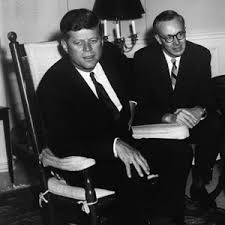
Walter Heller & JFK As several authors have written, earlier in the year, the president had read Dwight MacDonald’s 13,000-word review of Michael Harrington’s book about the poor, The Other America. It left an indelible impression on him. In October of 1963, Homer Bigart had written a long article in The New York Times about pockets of poverty in Kentucky. The impact of those two articles caused a series of discussions between the president and his chief economic advisor, Walter Heller. (Clarke, pp. 242-43) Heller had written him a memo well before the Bigart article appeared. In it he stated that although the economy was expanding overall, there were pockets of poverty that were resistant to growth. Over months of discussion, the staunch Keynesian economist had to admit that in those pockets, people were “caught in a web of illiteracy, lack of skills, poor health and squalor.” After giving the president some statistics on the matter, Heller suggested what he called an “attack on poverty”. Kennedy told Heller that he was going to make this an election issue and he would visit some blighted areas in order to enter it onto the national stage.
In other words, the “War on Poverty”, or as some call it, the “Second Reconstruction”, was not President Johnson’s idea. But beyond that, there is something else lurking here as a back-story. Something that Thurston Clarke did not touch upon. And, in fact, few authors have ever discussed it. This back-story concerns the figure of David Hackett.
II
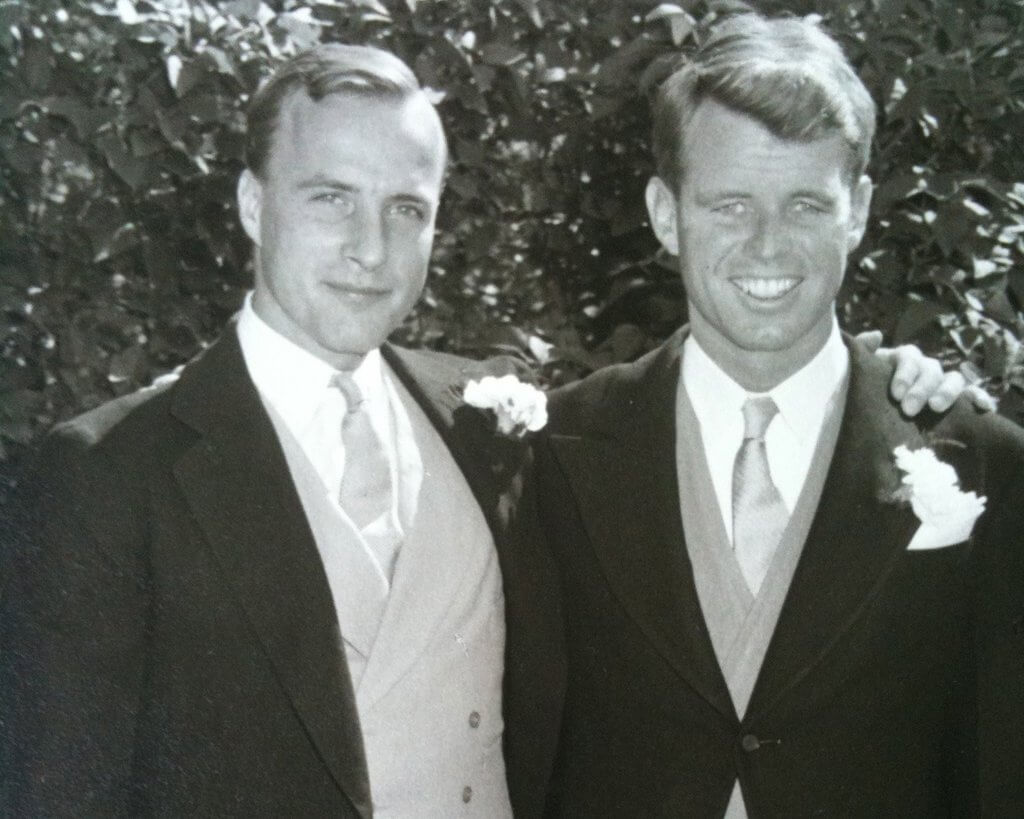
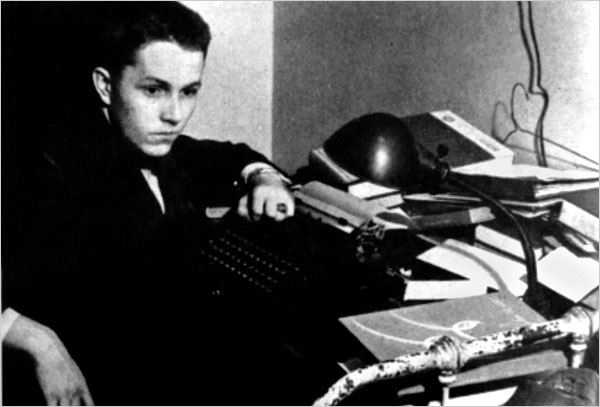
David Hackett & RFK Like William Vanden Heuvel with the Prince Edward Schools crisis, Hackett was a friend of the Kennedy family. Specifically, he attended prep school with Robert Kennedy. He was such a good athlete that novelist John Knowles modeled the charismatic figure of Phineas in A Separate Peace on him. (See this bio)
Influenced by the work of his sister Eunice Shriver, one of the first things Robert Kennedy did as attorney general was to take a dual interest in the rights of the poor to have attorneys and also the problems and causes of juvenile delinquency. (Edward R. Schmitt, President of the Other America, p. 68) The siblings convinced President Kennedy to issue an executive order creating the President’s Committee on Juvenile Delinquency. The committee had a three-year life span and JFK made Hackett the executive director. Hackett had a wide mandate. The attorney general wanted his friend to explore the issue in all of its dimensions and manifestations. Which he did. Sometimes he and RFK would just take a stroll through Harlem or the slum areas of Washington DC. Hackett would then introduce Kennedy to someone he knew, preferably a gang member, and the three would talk. Other times, Hackett would show RFK the shabby conditions of schools or recreation areas. The attorney general was moved by these and so he invited celebrities—Cary Grant, Chuck Connors, Edward R. Murrow—to come into those blighted neighborhoods to give talks to the kids who lived there. (Schmitt, pp. 69-70) The attorney general would also attain appropriations to repair some of these facilities.
The question that Hackett eventually began to hone in on was this: What caused the problem of delinquency? In doing so, he first reviewed the literature. He then interviewed some of the authorities in the field: for instance, sociologist Lloyd Ohlin and psychiatrist Lawrence Kumrie. He then traveled outside the east coast to the Watts ghetto and East LA barrio. (Schmitt, pp. 71-72)
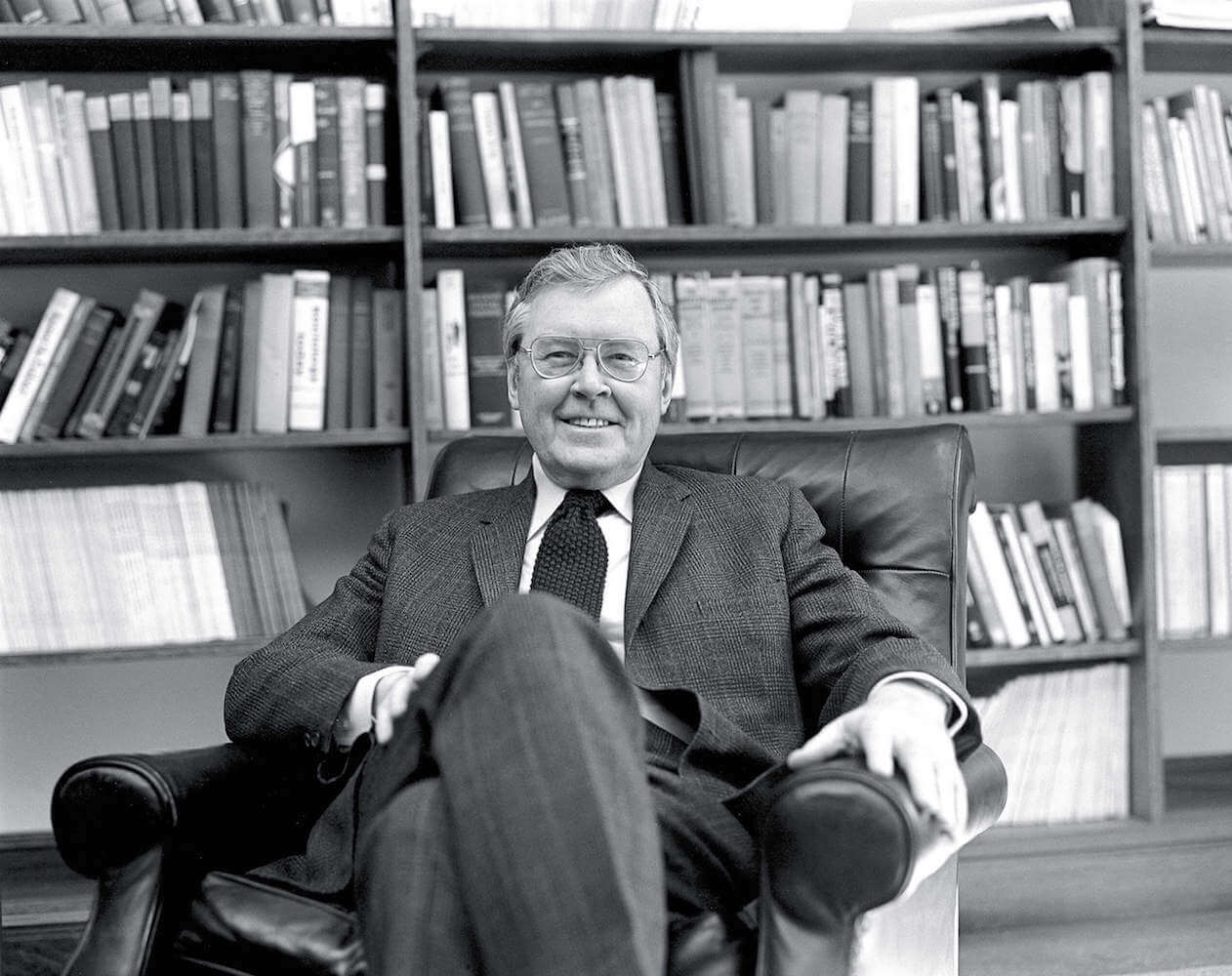
Lloyd Ohlin After doing this research and field investigation, Hackett formulated two broad conclusions. First, he agreed with Ohlin and his approach to the subject. Ohlin co-wrote a book called Delinquency and Opportunity. That volume challenged the accepted paradigm that the problem was one of individual adjustment. It made the case that the real underlying problem was the poverty of the slum area and how that constricted opportunities for youth. To remedy the situation, one therefore had to supply more and better opportunities for youth in blighted areas. The second conclusion that Hackett came to was that this was not a simple phenomenon. What made it worse was the paucity of past efforts in the field, rendering it difficult to ensure that new programs would work. After all, Ohlin’s book had just been published in 1960. It was thus unlikely a solution could be found by the traditional remedy of starting up a series of FDR/New Deal-type programs. (Schmitt, p. 72)
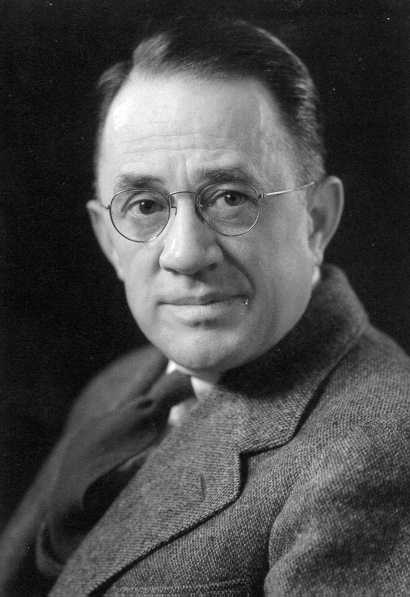
Leonard Cottrell In the latter part of 1961, President Kennedy proposed a bill that would create 16 demonstration projects funded at 30 million dollars and provide Hackett a staff of 12 full-time employees. (Allen Matusow, The Unraveling of America, pp. 111-112) A year later, when Harrington’s book came out, Eunice Shriver recommended forming a domestic version of the Peace Corps. (When Johnson enacted his War on Poverty this ended up being called VISTA.) But there was one point that Hackett disagreed with Ohlin about. The sociologist suggested a top-down schedule of opportunities that those in the community could choose to participate in, e.g., jobs for teenagers, legal services, day care centers, or local centers offering government services. Hackett brought in a new expert, Leonard Cottrell of the Sage Foundation. They decided that the choice of options should not originate from the top down, but from the bottom up. In other words, the poor should choose what they wanted to pick from. Hackett called this “the competent community”. (Matusow, p. 117)
With respect to this proposal, there are two points the reader should keep in mind. First, after doing his study, Hackett understood that there was no established meme via which to frame the problem—let alone cure it. Until the day he died, he always insisted that there needed to be continual assessment as to what was working and what was not. (Schmitt, p. 92) Related to this, Hackett wanted to expand the number of demonstration projects. He reasoned that it was necessary to test what would work with differing ethnic groups; that is, what worked in East LA might not work in South Central. After he expanded his focus from delinquency to the circumstances of poverty, he knew there was more work to be done. (Matusow, p. 121) Second, he also insisted that a pure influx of funds would not solve the problem. There needed to be research and planning behind it. He convinced Bobby Kennedy on that point. (Schmitt, p. 84)
Both men understood the urgency of the problem. From what they had read and seen, America was sitting on a ticking time-bomb. This is not after-the-fact revisionism. While everyone was concentrating on the South, Hackett and Bobby Kennedy were examining sociological predicaments elsewhere that could not be solved by an accommodations bill or a voting rights act. In these places, the problems were not simple and the remedy was not as direct. In fact, RFK predicted that riots would erupt soon if nothing was done. (Schmitt, p. 86) He told a Senate committee in February of 1963 that America was “racing the clock against disaster … We must give the members of this new lost generation some real hope in order to prevent a shattering explosion of social problems in the years to come.”
Two and a half years later, when Martin Luther King visited Watts after the riots, that was the message he had for President Johnson. (See the film King in the Wilderness) As we saw in Part 2, this was the subject—northern race relations—that Bobby Kennedy wanted to discuss with James Baldwin and his friends at their meeting in New York in May of 1963. Through the work of Hackett, the attorney general understood that the problems of discrimination in the northern ghetto were not the same as segregation laws in the South. After the riot at Ole Miss, in the fall of 1962, he told Arthur Schlesinger words to the effect: if you think this is bad, wait till you see what we are headed for up north. (Ellen B. Meacham, Delta Epiphany, chapter 3) Because the circumstances were so different, he and Hackett knew that creative ideas were needed. That is what he wanted from people like Baldwin, Lorraine Hansberry and Lena Horne. He and Burke Marshall were lawyers; they did not need any advice on whether or not they could arrest the likes of Bull Connor. But they were now about to set sail on uncharted waters and they wanted some input. The fact that authors like Larry Tye and Michael Eric Dyson completely miss the hidden epic tragedy of that wasted opportunity demonstrates the kind of writers they really are. The real truth of Dyson’s pitiful book could be illustrated with an aerial picture of the Watts riots on the front cover with RFK’s words of warning on the back. That, Mr. Dyson, is what truth really sounds like.
III
Needless to say, no other administration had ever gone this far in this specific field. As author David Farber has noted, Harrington’s book—which eventually sold over a million copies—surprised America. This is one of Harrington’s most quoted passages:
The other America … is populated by failures, by those driven from the land and bewildered by the city, by old people suddenly confronted with the torments of loneliness and poverty, and by minorities facing a wall of prejudice. (The Age of Great Dreams, p. 18)
As Farber observed, the reason the book had such an impact was that during the forties, fifties and early sixties, the topic of poverty was pretty much non-existent. But in 1943, the mechanical cotton-picker displaced tens of thousands of workers, mostly African Americans, in the south. The problem was that since these laid-off workers had little skill and less education, there was no real future for them in the north. This may have been what Richard Russell had in mind when he told his colleague Senator Harry Byrd that what he feared if John Kennedy got elected was that he would go beyond even the Democratic platform. (Brauer, p. 53) The insight may have originated from Russell’s personal exposure to Kennedy while they were in the Senate. And indeed, as we have seen, that is what the president was doing at the time of his death, before his civil rights bill passed.
To crystallize how the Kennedys conceived the dilemma they would eventually face, let me quote Robert Kennedy:
You could pass a law to permit a Negro to eat at Howard Johnson’s restaurant or stay at the Hilton Hotel. But you can’t pass a law that gives him enough money to permit him to eat at that restaurant or stay at that hotel. I think that’s basically the problem of the Negro in the North. (Guthman & Shulman, p. 158)
That was not the entire problem of course. But the basic idea was that the matter was more complex and insidious once you got out of the South. As the president told Heller at their last meeting on the topic, “Yes, Walter, I am definitely going to have something in the line of an attack on poverty … I don’t know what yet.” (Schmitt, p. 93) To show how interested he was, at his final meeting with his cabinet, President Kennedy mentioned the word “poverty” six times. After his death, Jackie Kennedy took the notes of that meeting to Bobby Kennedy. The attorney general had them framed and put up on his wall. (Schmitt, pp. 92, 96)
As with many of President Kennedy’s policies, once it was assumed by Lyndon Johnson, it was changed. One of the underlying traps was what Hackett warned the Kennedys about. This problem could not be solved by constructing a New Deal program and blindly throwing money at it. As intimated above, the reason for this was that an unambiguous or certain remedy for it had not been identified. Hackett was still managing and evaluating his experimental projects, and JFK was not ready to commit to a specific program either. He wanted to do something, but he was not sure what it was.

FDR & LBJ A significant difference in the backgrounds of Lyndon Johnson and John Kennedy is that Kennedy did not arrive in Congress until after Franklin Roosevelt’s death, while Johnson was there in the thirties. He prided himself on being a New Dealer. He ran the National Youth Administration in Texas, which meant he supervised 20,000 youths. One of his proudest moments occurred during FDR’s visit to Galveston, when Johnson had all of his boys lined up for the president’s visit. (Nancy Colbert, Great Society, pp. 36-38) Unlike what Ohlin and Harrington were writing about—and what Heller was describing to the president—Roosevelt was not facing peculiar pockets of poverty amid a generally thriving economy. FDR was confronted with a massive, nationwide economic blowout that covered almost the whole country. He was facing a macroeconomic problem: how can I revive the entire economy by using Keynesian solutions? In the meantime, he had to provide aid to literally millions of people who were unemployed. And those people crisscrossed all kinds of economic, ethnic and racial boundaries. FDR’s New Deal was like a combination giant fire engine, ambulance corps, and cafeteria truck dropping supplies and services throughout the country in an attempt to stimulate the economy, give people jobs, and provide relief programs so they would not starve.
As Hackett told RFK, this was not the situation America faced in 1962. It was much more localized and much more complicated. As we have seen, Kennedy was going to run on it in 1964 in order to transform it into a national issue. He did not plan on starting his program until after the 1964 election. (Bruce J. Schulman, Lyndon B. Johnson and American Liberalism, p. 71) What happened after his death shows how important one man can be in determining the currents of history.
Walter Heller met with Johnson the day after Kennedy’s murder. The economist told the new president about the ideas he and JFK had reviewed for relieving poverty. Johnson told him that it sounded like his kind of program and he wanted to go full tilt on it. He then added that John Kennedy was a bit too conservative for his taste. (Schmitt, p. 96) When Heller got back to him with the demonstration projects that were running under Hackett, Johnson almost eliminated the entire program. In his eyes, such a project had to be big and bold in order to win congressional approval and make a rhetorical impact with the public. (Schulman, p. 71; Matusow, p. 123)
But there was another aspect to why LBJ trotted the program out before it was ready. The new president understood that the civil rights act making its slow way through Congress was really Kennedy’s. As I have noted, Clay Risen’s book, The Bill of the Century, proves that point. But Kennedy’s poverty program had not been formally announced or written up. Therefore, Johnson could present it as his own. (Evans and Novak, pp. 431-33) Also, like a star athlete in sports, LBJ wanted to set records in getting bills passed. (Farber, p. 106) He ended up doing both.
Just six weeks after he met with Heller, Johnson now appeared before the nation in an evening version of the State of the Union address. He announced to that nationwide audience that:
This administration, today, here and now, declares unconditional war on poverty in America … It will not be a short or easy struggle, no single weapon or strategy will suffice, but we shall not rest until that war is won. The richest nation on earth can afford to win it. We cannot afford to lose it.
This kind of rhetoric about a program whose specific points had not even been worked out yet! A bit over four months later, Johnson would announce the Great Society. Most analysts have differentiated the Great Society from the War on Poverty. The main agency for the latter was called the Office of Economic Opportunity (OEO). In five years, from 1965-70, OEO was granted 1.5% of the budget for all of its programs. Had that money been instead sent to each person living in poverty in America, the total would have come to about seventy dollars a year. (Maurice Isserman & Michael Kazin, America Divided, p. 192) How can you lift someone out of poverty spending that small sum? As many have said, the latter got lost and distracted by the former.
The greater expenditure on the Great Society was of particular consequence in this regard, because programs like Medicare, highway beautification, the National Endowment for the Arts, the creation of the Department of Transportation, and public broadcasting generally favored the middle class. Programs like air and water purification, and consumer protection, these favored almost all citizens. The problem with this panoply of programs was that when Johnson announced the Great Society at the University of Michigan on May 22, 1964, he did it with the same, if not more, extravagant language that he did his War on Poverty. In retrospect, what makes that even more shocking is this: Johnson had not run for president yet! For that matter, he had not even been formally nominated as the candidate of his party in the 1964 election. That would not occur for three more months, in August at Atlantic City.
In Johnson’s almost manic attempt to differentiate himself from his predecessor, what Hackett warned against was now going to happen. Johnson was going to play the New Dealer. He was going to create and pass an anti-poverty program well before the 1964 election. Yet before that was even passed, he was going to announce something even bigger: the Great Society. Needless to say, all this hubbub necessitated that the cautious Hackett be retired to the sidelines. Which he was. While Johnson was putting together his package, David Hackett—the man who ran the program for three years, who knew more about it than anyone—was now working on Bobby Kennedy’s senatorial campaign in New York. RFK tried to intervene. In January of 1964, he wrote the president a memo: “In my opinion, the anti-poverty program could actually retard the solution of these problems” unless Hackett’s basic approach was used. (Matusow, p. 123) At the time he was shunted aside, Hackett was working on something he called “competence and knowledge”. Using Ohlin’s opportunity approach, he wanted the people in these affected areas to have a complete knowledge of the opportunities at their disposal. And he wanted them to be able to designate their own leaders who could then competently use those opportunities in order to improve the lives of those they represented. It is safe to say that this was a continuation of Hackett’s dispute with Ohlin and his siding with Cottrell. Hackett wanted what he called his “community action experiments” to resemble something like a socialist democratic laboratory.
It didn’t end up that way.
IV
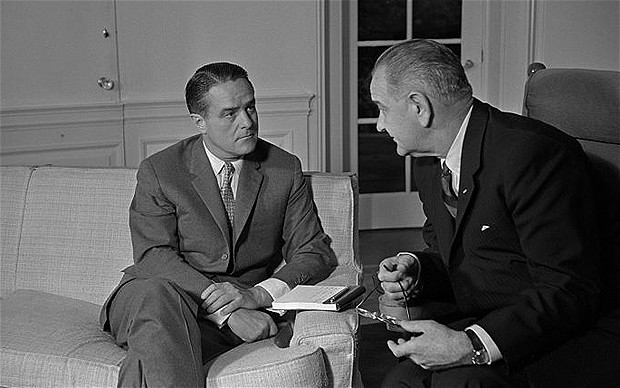
Sargent Shriver & LBJ With unwise alacrity, Johnson sent his program to Congress in March of 1964. (Matusow, p. 125) As Harris Wofford notes in his book, the choice Johnson made to replace Hackett with as supervisor of his War on Poverty surprised many people. On February 1, 1964, he appointed Sargent Shriver to lead it. (Wofford, p. 286) As Wofford further writes, what was so surprising about this was that Shriver already had a position in the administration. He was running what many saw as a great success: JFK’s Peace Corps. Why have him running two programs? Why not make directing the War on Poverty a full-time job? With someone like, say, Bill Moyers running it?
Later in the year, Heller would also leave the White House. What made that decision worse was that Heller wanted to preserve much of what Hackett had done, whereas Shriver did not believe in the community action program, which was Hackett’s central idea. Shriver memorably said, “It will never fly.” (Wofford, p. 292) But he couldn’t kill it, since Robert Kennedy was still attorney general. Instead, he added other elements to it: a job training program, a summer jobs program, a work-study program, assistance to small farms and small business, and the aforementioned VISTA program. This brought in other parts of the administration, like the Department of Agriculture and the U. S. Office of Education. Bobby Kennedy had targeted help for pre-school children that would bypass the regular school system. This is how Head Start and Upward Bound entered into the overall program. (Schmitt, p. 114) These were probably the two best parts of the entire OEO schedule.
But what quickly became one of the problems with the overall program was a lack of administrative oversight. When Johnson turned it over to Shriver, he said, “You just make this thing work. I don’t give a damn about the details.” (Isserman & Kazin, p. 109) As Bruce J. Schulman noted in his book about Johnson, the president did not speak very much or spend any amount on the oversight or administration of the Great Society or the War on Poverty. (Schulman, p. 95) He argues that Johnson understood that the sooner underlying problems were exposed, the sooner Congress would cut back on them. So, in essence, he tried to ignore them. The other problem was the visible and vocal disagreement about Hackett’s ideas for community action.
As almost every commentator on the subject has observed, what came to be called the Community Action Program (CAP) fell prey to forces on the right and left. Hackett always said that he was not done fully defining what the program should be at the time he left. But he and Bobby Kennedy did agree on a stricture called “maximum feasible participation.” (MFP) This was their way of keeping the CAP democratic and also out of the hands of the local and state bureaucracies that had already failed their citizens in these areas. Another reason Kennedy tried to push MFP was that he knew that veteran local politicians would see the OEO money as simply a bounty they could get to and then spend on their own favorite programs, which did not benefit the people he and Hackett wanted to help.
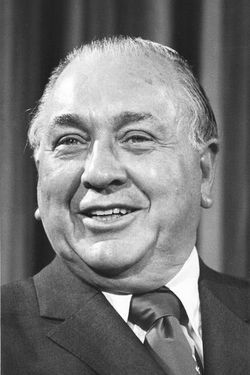
Richard Daley He was correct. Mayor Richard Daley said, “We think the local officials should have control of this program.” (Matusow, p. 125) Another city official said, “You can’t go to a street corner with a pad and pencil and tell the poor to write you a program. They don’t know how.” (Farber, p. 107) That last comment was nonsense. Hackett did not envision the citizenry writing the programs. He wanted the local poor to be able to vote on what kind of opportunities they should have through their community action grant. But it showed why Hackett and Kennedy feared that CAP would be taken over by already standing local agencies.
When RFK arrived in the Senate, he had the opportunity to debate one of Daley’s cronies on this issue. Like Daley, the Chicago schools superintendent argued that the education programs of OEO should be taken over by his school district. Senator Kennedy then asked, if that occurred, what would safeguard the targeted children’s rights to get the benefits of the grants? The superintendent’s answer was that it would be the school community in the form of local groups of parents. From his experience in walking the streets of Harlem with Dave Hackett, the senator replied thusly:
Many of them do not have parents. They do not have two parents anyway. They might have one parent, and maybe they have a group in the community that is going to come down and make their protest known; but a lot of times that is very difficult. They are working for seven or eight dollars a day and making forty or fifty dollars a week. It is difficult to take off and go down and protest … I think we have a special responsibility to those people who are less fortunate then we are, to make sure that the money that is being expended is going to be used so that the next generation will not have to have these kinds of hearings. (Schmitt, pp. 115-16)
Later, RFK continued in this vein by saying:
The institutions which affect the poor—education, welfare, recreation, business, labor—are huge, complex structures, operating outside their control. They plan programs for the poor, not with them. Part of the sense of helplessness and futility comes from the feeling of powerlessness to affect the operation of these organizations. (Matusow, p. 126)
What Kennedy and Hackett were saying was rather simple: How can we trust the same people who allowed these inequities in the first place with the millions meant to cure them? (Schulman, p. 94) Author Schulman then listed a few examples that proved the Hackett/Kennedy warning. To cite one: a Camden New Jersey physical education program was subsidized with OEO money, yet it was a class for middle class students. I can also state from my own experience that such was the state of affairs. At the high schools I worked at which were entitled to what is called Title 1 funds, the administration tries to get the faculty behind a program that will benefit the majority of the students. As I recall, there was never any consideration given to targeting the students that Hackett and Kennedy wanted to single out and help. Many commentators concluded that this problem stemmed from the lack of oversight Johnson built into the program. (Schulman, p. 95)
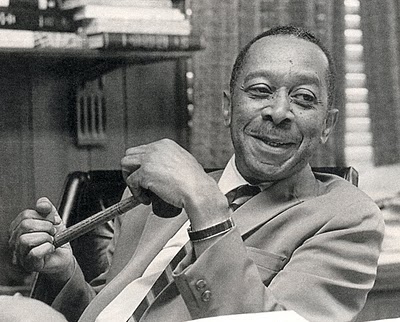
Kenneth Clark The other problem was something that was not foreseen by Hackett and Kennedy. In some cities, the CAP was taken over by, let us say, some persons on the left who also did not understand its original aims. In Harlem, respected sociologist Kenneth Clark was forced out and Livingston Wingate spent a lot of money producing the street plays of Leroi Jones. When the board argued about these productions, Wingate brought in some thugs to intimidate them. (Matusow, pp. 257-59) Wingate paid himself 25 grand a year, close to two hundred thousand today. When Kenneth Marshall, a civil rights worker who worked with Clark, examined the program records, he said he simply did not think that many of the offerings were useful. And most of the 20 million disappeared without a trace left behind. (Matusow, p. 260)
V
This is not to say that the whole thing was a boondoggle, as, for reasons of agitprop, some on the right have claimed. As noted, there were some good programs designed for the poor and underprivileged: Head Start, Upward Bound, and Legal Services, for example. And in some places, the CAP concept did succeed as it was designed. For instance, in Ellen Meacham’s book Delta Epiphany, she describes a community action center she was familiar with. It was in Mississippi and it was called Coahoma Opportunities. It offered what Hackett had envisioned. It maintained an array of services that would aid those who needed them: tutors who could help young children learn to read, Legal Services as a way to claim Social Security benefits, help with emergency food aid, placing a child in Head Start, a guide to gaining a summer job, job training that paid while you were learning, and help in finding a credit union. The reason it worked was because it had fine leadership. Aaron Henry was the head of the state branch of the NAACP, and his partner was a local white businessman who saw the program benefiting the business community and contributing to racial harmony. (Meacham, chapter 8) That is what Hackett wanted the CAP to be. The problem, as I have tried to state, was not so much the concept as its execution.
Eventually the administration gave in to the local and business leaders on CAP. By 1967, Johnson had folded his cards on community action. He allowed them to be taken over by the local entities Hackett feared. Shriver left to become ambassador to France. In the end, LBJ had lost all faith in it and said it was being run by “kooks and sociologists”. (Matusow, p. 270)
The beginning of Johnson losing faith started in Watts in the late summer of 1965. To his credit, I have never read anything that states that Bobby Kennedy had his “I told you so” moment at this time, even though, as we have seen, he did predict it. On August 11, 1965, a slightly drunken motorist, Marquette Frye, who was on parole for robbery, was stopped and pulled over by a highway patrolman, Lee Minikus. Frye resisted arrest. As he did, a crowd began to gather at the intersection of Avalon and 116th Street. It quickly swelled to a thousand. The police had to call in reinforcements. The crowd began hurling rocks and bottles. They then began to shout the chant that became the chorus to the hundreds of riots that would soon follow: “Burn, baby, burn.” (Matusow, p. 360)
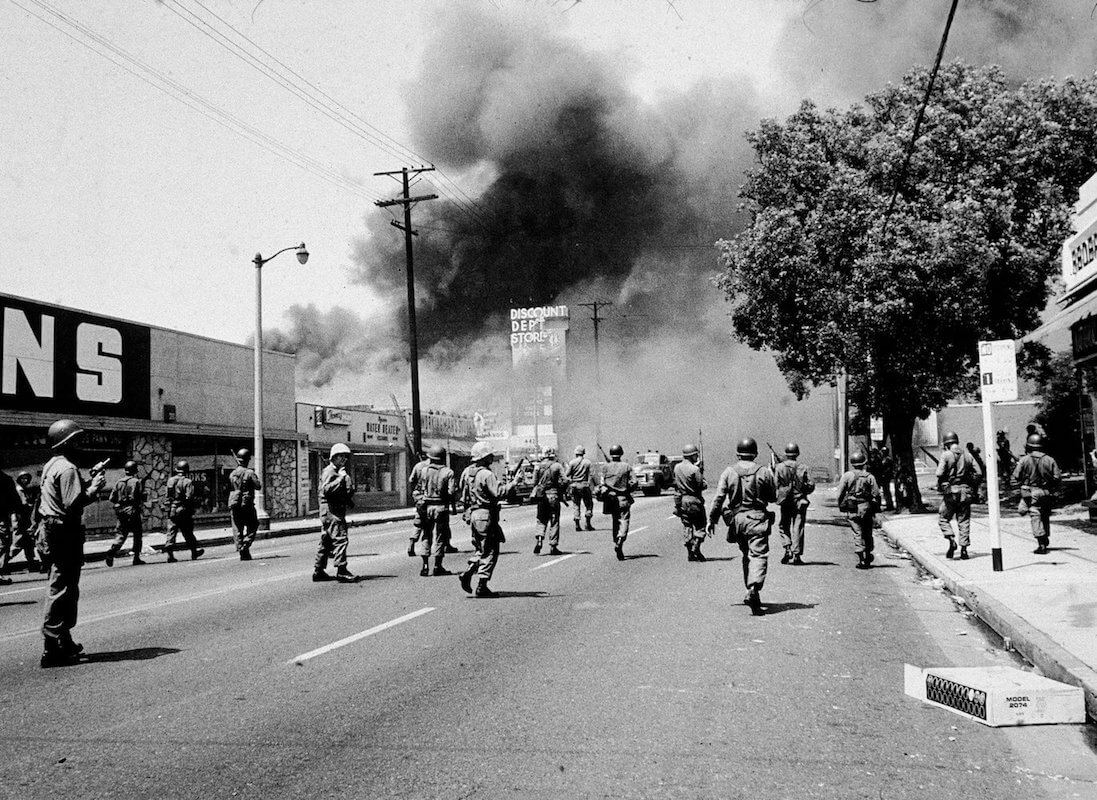
Watts 1965 During the next six days, a 46-square-mile section of Los Angeles turned into a battle zone. The conflagration raged for the better part of this period. At one time or other, nearly 30,000 residents participated in the looting, sniping and torching. A crowd estimated at 60,000 cheered them on. The local authorities called in 2,300 National Guardsmen. They were sent in on the fourth day and this started to bring things under control. (Matusow, p. 361) They joined a force of about 1,700 local and state police. When it was all over, there were 34 dead, 1,072 injured, 977 buildings damaged, and nearly 4,000 arrests.
Johnson was stunned by Watts. It exploded just one week after he had signed into law the Voting Rights Act of 1965. It was King’s Selma demonstration that had made that act possible. But both men had cooperated in the process. According to his chief domestic aide, Joe Califano, after Watts, LBJ refused to take King’s calls for a period of 24 hours: “He just wouldn’t accept it. He refused to look at the cables from Los Angeles describing the situation.” (Schulman, p. 112) When he came out of it, Johnson asked, “How is it possible, after all we’ve accomplished? How could it be?” (Schmitt, p. 120) Politically, the riots handcuffed the president. He had to issue a statement condemning the looting and lawlessness, but he also understood that if he went too far, a backlash would now ensue against the War on Poverty.
Why did Watts explode? To its residents, the arrest of Frye seemed to symbolize what the white community of Los Angeles thought of the neighborhood. Nearly 2/3 of Watts high school students had flunked at least one grade; almost that many had dropped out. Forty per cent of its residents had no cars, which in a commuter city made it tough to find a job. African American unemployment was three times that of whites. (Farber, p. 113) Bobby Kennedy commented on this police symbolism when he said the law did not protect those in the ghetto from paying too much for inferior goods; from having their furniture repossessed, or “from having to keep lights turned on the feet of children at night to keep them from being gnawed on by rats.” (Schmitt, p. 120)

Detroit 1967 The volcanic eruption in Watts initiated an annual series of rolling explosions of summer riots, most of them in the north. In 1966, 43 urban ghettoes went up in flames, in 1967 there were 167 incinerations, in 1968, there were over 125. (Farber, p. 115; “The Legacy of the 1968 Riots,” The Guardian, April 4, 2008) In 1967, eight American cities were occupied by the National Guard. (Matusow, p. 362)
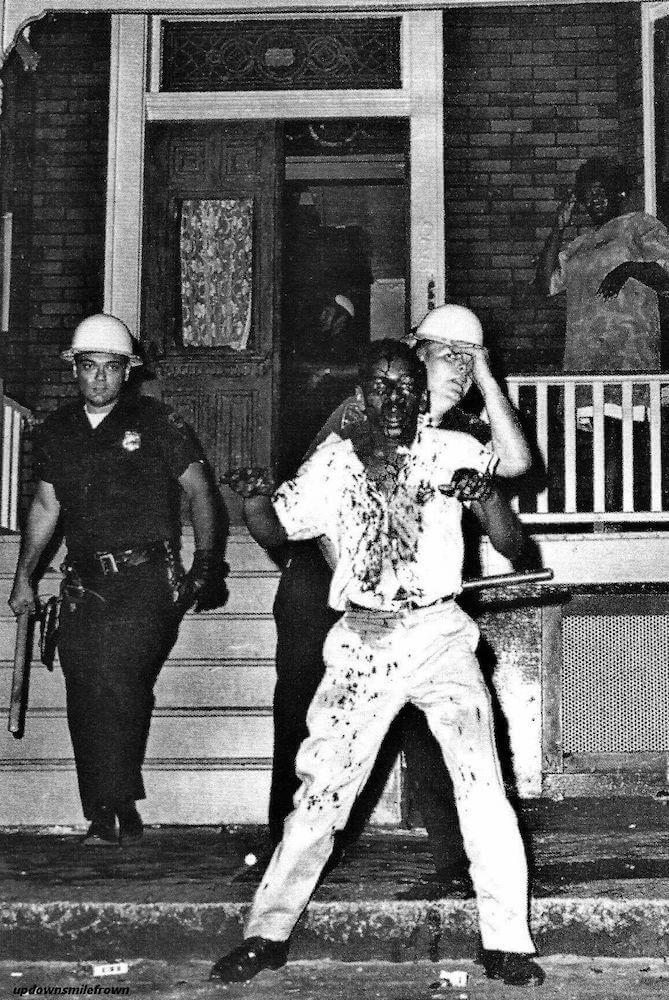
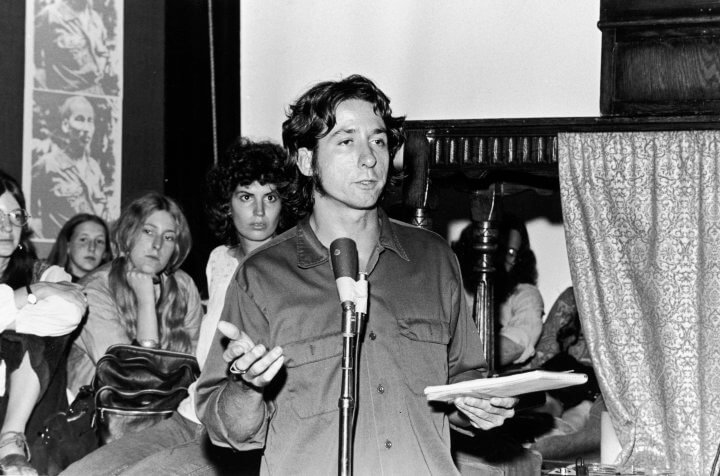
Newark 1967 The 1967 Newark and Detroit riots actually surpassed Watts in their ferocity. In Newark, the violence resulted in a maelstrom: the Guardsmen were firing on police and the police returned fire. The Guardsmen then fired into a housing project, killing three women. The governor called in SDS leader Tom Hayden, who had done a study of inner-city Newark. Hayden told him to withdraw the Guard. A few hours later, things calmed down. (Matusow, pp. 362-63) One week later, on July 23, 1967, the worst riot in a century broke out in Detroit. Governor George Romney had to request the White House send in the army to quell the insurrection. It ended with 43 dead, 7000 arrested, 1,300 buildings burned down and 2,700 businesses looted. (Matusow, p. 363)
Tom Hayden By 1966, both King and longtime civil rights lawyer Joe Rauh had split with Johnson. (Randall Woods, LBJ: Architect of American Ambition, p. 699) One reason for this was that Johnson—with America going up in flames—continued to escalate in Vietnam, thereby contributing to student unrest and devoting a huge amount of money to a senseless war that neither Rauh nor King could understand. A war that, at that time, was killing or wounding an inordinate number of men of color. King later decided to memorialize the War on Poverty:
A few years [ago] there was a shining moment, as if there was a real promise of hope for the poor. Then came the build-up in Vietnam, and I watched the program broken and eviscerated as if it were some idle political plaything of a society gone mad on war … So I was increasingly compelled to see the war as an enemy of the poor and to attack it as such. (Isserman & Kazin, p. 192)
But Johnson insisted that he could still do all three; that is, wipe out poverty, build his Great Society and fight a large land war in Indochina—and win all of them. He said as much in his January 12, 1966 State of the Union address. This contributed to his growing credibility gap—for the simple reason that very few people saw it that way, especially with more and more cities being incinerated while more and more troops were coming home in body bags. All of this caused another sociological and historical milestone to manifest itself.
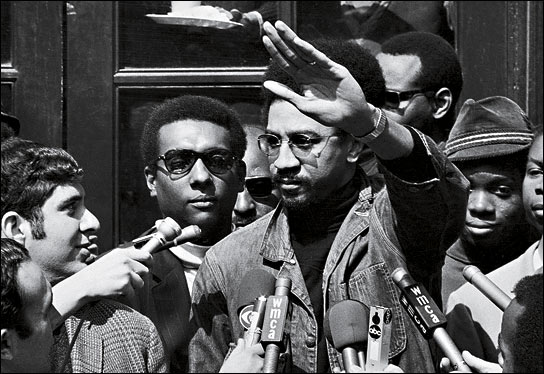
Stokely Carmichael & H. Rap Brown As the country seemed to be spinning out of control, not only did this contribute to the rise of rightwing backlash and demagoguery (e.g., Alabama Governor George Wallace entering the national scene); it also contributed to the rise of a leftwing militancy, both in the civil rights movement and the student protest movement. We thus witnessed the appearance on the scene of people like Stokely Carmichael and H. Rap Brown in the former and Bernardine Dohrn and the Weathermen group in the latter. In 1966, Carmichael directly confronted King on a march in Mississippi with his new slogan, “Black Power”. He later said that integration was a “subterfuge for the maintenance of white supremacy.” He then added that people of color would not be beaten up anymore: “Black people should and must fight back.” (Matusow, p. 355) Carmichael, and later Brown, meant this to be their version of the militancy and separatism of the late Malcolm X. First Carmichael and then Brown used this extremism to take over the Student Nonviolent Coordinating Committee. (Isserman & Kazin, pp. 174-75) Apparently, few members noticed that this approach contradicted what their acronym stood for. Carmichael—who wanted to start an “anti-imperialist guerilla war in the ghetto to free the Afro-American colony”—was directly responsible for inciting riots after speaking engagements. (Matusow, p. 365)
Johnson responded to this by going first to the CIA and starting up Operation MH/CHAOS. When he did not like the results he got there, he went to the FBI, and reactivated COINTELPRO. These were illegal spying programs on these two groups, which also utilized subversive operations to destabilize them. (Schulman, p. 146) Coupled with this, in the fall of 1967, he also made an appearance in Kansas City for the International Association of Chiefs of Police. (Matusow, p. 215)
Bobby Kennedy was not taking that path. In early 1967, he met with SDS founder Tom Hayden for an exchange of ideas. Hayden later said that Kennedy wanted to get the networks to run documentaries on what life was really like in the ghettoes. He also wanted them to broadcast what the real poverty statistics there were. (Schmitt, p. 175) Six months later, when Detroit erupted, Kennedy predicted this would be the death knell of the Great Society. When Senator Kennedy tried to propose a new package of bills, the White House refused to back it. (Schmitt, p. 190)
The White House also failed to back its own proposals. In the wake of Newark and Detroit, Johnson had appointed what he called the National Advisory Commission on Civil Disorders. This was helmed by Illinois governor Otto Kerner and was therefore referred to as the Kerner Commission. It was composed of some visionary personages, for example Senator Edward Brooke of Massachusetts and Congressman Jim Corman of California. On February 29, 1968, they handed in their remarkable report. Its most quoted passage asserted that America was becoming “two societies, one black and one white—separate and unequal.” (Joseph A Palermo, In His Own Right, p. 161) One of its recommendations was to adopt ideas similar to RFK’s: a triangular union of private business, government grants and community leadership to rebuild impoverished communities. Both Robert Kennedy and Martin Luther King were disappointed that Johnson pretty much ignored the report and its guidelines. (Palermo, pp. 161-62)
As many have commented, it was this splitting of the Democratic/liberal coalition over the issues of Vietnam and urban rioting which gave the GOP/conservative coalition their golden opportunity to break it asunder. Conservative strategists like Kevin Phillips and Pat Buchanan began to write up plans to do so. (Isserman & Kazin, pp. 216-17, 272-73) In 1967-68, the promise of 1963-64 became a distant memory. Politicians like Ronald Reagan and Richard Nixon now went to work on their “law and order” themes in the shadows and smoke of Watts, Detroit and Newark while the Living Room War raged each night on TV and the police clubbed SDS protestors in the streets. What caused it all to be even more made-to-order for the right wing is reflected in a comment by Johnson to Bill Moyers after he signed the Civil Rights Act of 1964. The president remarked, “I think we just delivered the South to the Republican Party for my lifetime and yours.” (Schulman, p. 76)
Inspired by the example of George Wallace, Republicans like Nixon and Reagan strove to siphon off the racist vote in the South. This resulted in Nixon’s infamous Southern Strategy, and Reagan’s equally infamous appearance at the Neshoba County Fair in Mississippi in 1980 to kick-start his campaign. The location of that fair was just seven miles from the site where the bodies of three murdered civil rights workers had been found sixteen years prior (Read further about this here). This technique has been a standby for the GOP ever since, and has been amplified to new levels by Donald Trump.
VI
We will oppose … with every facility at our command, and with every ounce of our energy, the attempt being made to mix the white and Negro races in our classrooms. Let there be no misunderstanding, no weasel words, on this point: we dedicate our every capacity to preserve segregation in the schools.
~Virginia Governor James L. Almond Jr.
I would like to close this series by discussing two fascinating and important projects that get little detailed attention, either by the MSM or even in academia. The first deals with a topic that we discussed in passing in Part 3: the Prince Edward County Schools crisis. The second is a subject not addressed yet: Robert Kennedy’s Bedford Stuyvesant restoration.
As I, and many others, have shown, President Eisenhower and Vice-President Nixon did next to nothing to support or enforce the Brown decision. This holds true when it was first announced in 1954, and when it was restated in 1955. The decision made by the Republican administration was unfortunate, since without any enforcement, the Brown case now became a rallying cry for the rightwing establishment in the South. What is worse, as we have also shown: when Eisenhower and Nixon did mention it, it was with disdain.
In Virginia, the state legislature mounted a policy of “massive resistance”. In 1958, following the Orval Faubus example in Arkansas, schools were closed rather than allow African American students to register. When this policy was overturned by the courts, Prince Edward County officials defied the decision. The County Board of Supervisors decided to cut off funding to the Prince Edward Schools altogether. Private academies for white students now opened which excluded pupils of color. This policy was upheld by Richmond newspaper columnist James Kilpatrick and his good friend William F. Buckley.
As a result, Prince Edward’s African American students had no schools to attend. In other words, rather than integrate and obey the law, the power brokers in Virginia, egged on by Kilpatrick, resurrected the claims of John C Calhoun: interposition can override the central government. What made this all the worse was that, as Nancy Mclean notes in her book Democracy in Chains, it was a 1951 walk-out protesting segregated schools that caused Prince Edward to be included in the Brown v Board filing. (Mclean, p. 6)
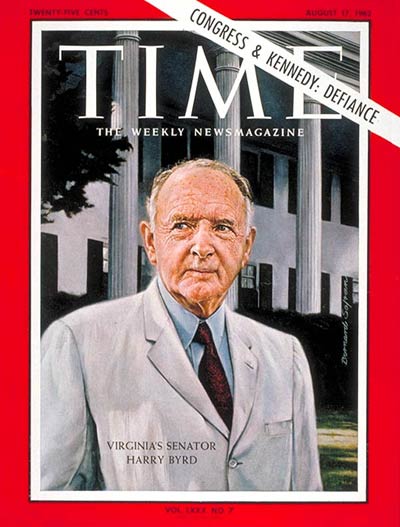
Harry F. Byrd Consequently, students of color decided to cross over into North Carolina, or find relatives elsewhere who would let them move in, to continue their education. (Lee, p. 2) At this time, Senator Harry Byrd was one of the dominant forces in Virginia and he vigorously opposed the Brown decision. Along with Governor Almond, this made Virginia—even though it was in the upper South—quite reactionary. As analyst V. O. Key wrote at the time, “Compared to Virginia, Mississippi is a hotbed of democracy”. (Lee, p. 14) Local liberal leaders appealed to the White House to enter the fray in some way. Eisenhower actually encouraged the creation of the white private schools. (Lee, pp. 49-50)
The Byrd/Almond nexus was quite powerful. Religious ministers did not speak out for fear of being transferred. When an education administrator complained, he was forced to resign. When Almond tried to sell the former schools, which were now empty, half the school board resigned. (Lee, pp. 68-74) Professors who wrote against these decisions were spied upon, harassed and sometimes fired. (Lee, p. 78) But that still was not enough. With the likes of Kilpatrick leading the way, laws were now passed to outlaw the NAACP in the state. And the agency was now forced to turn over its membership rolls. (Lee, p. 79) In 1960, when a 13-year-old who had been out of school for a year wrote the White House, the reply was he should express his feelings to the local officials. (Lee, p. 90)
Two months after President Kennedy’s inauguration, Robert Kennedy called the Virginia attorney general to Washington for a meeting. When that did not get very far, a month later RFK and Burke Marshall filed a suit to join the legal action. As one commentator has written, the filing of the Kennedy/Marshall lawsuit all but stopped the Byrd/Almond movement to close down all public schools. (Lee, p. 156) The problem was that the Fourth Circuit Court of Appeals was not as law-abiding as the Fifth Circuit in the Deep South, so the progress in gaining favorable decisions was much slower, at least until President Kennedy was allowed to appoint two of his choices to that court. (Lee, p. 100)
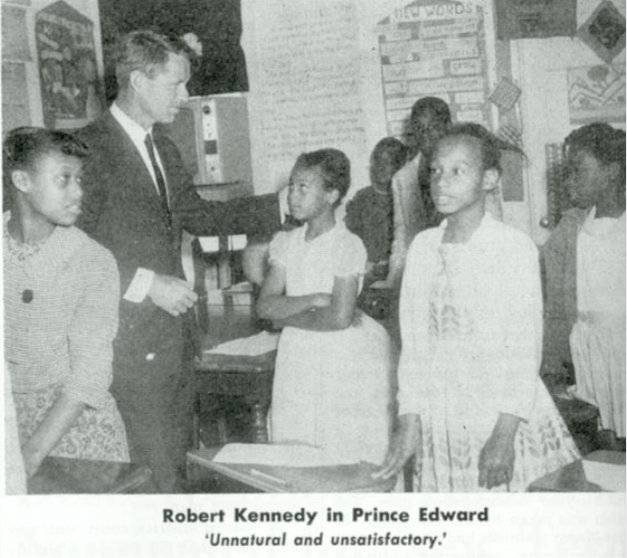
While all this stalling was going on, the Kennedys decided to make a bold, unprecedented move. JFK had told Burke Marshall he wanted to make Prince Edward a high priority. (Lee, p. 258) In February of 1963, after President Kennedy mentioned the Prince Edward case in his civil rights speech, the Kennedys decided to erect a new school system in Prince Edward, from grade school through high school. (Lee, pp. 33-34) As he did with Dave Hackett, Bobby Kennedy recruited a friend, William Vanden Heuvel, and gave him the assignment of creating the Free Schools system out of nothing in Prince Edward. (Lee, p. 292) By this time, four years had gone by. Some students did not even know how to hold a pencil. (Lee, pp. 314-15)

William Vanden Heuvel Vanden Heuvel, with Bobby Kennedy and the president backing him all the way, did the seemingly impossible. He secured 1.2 million in grants and hired an integrated school faculty and staff with Dr. Neil Sullivan as his superintendent. Sullivan got threatening phone calls, and his car was shot at. Some children were afraid to come to school since they had no shoes or proper attire. Vanden Heuvel got them the clothes. There was a remarkable class ratio of 12-1 in the high school. The system opened on September 16, 1963 with nearly 1,600 students, including four whites. The Free Schools were an oasis in the desert. It showed what could be done in the face of complete adversity.
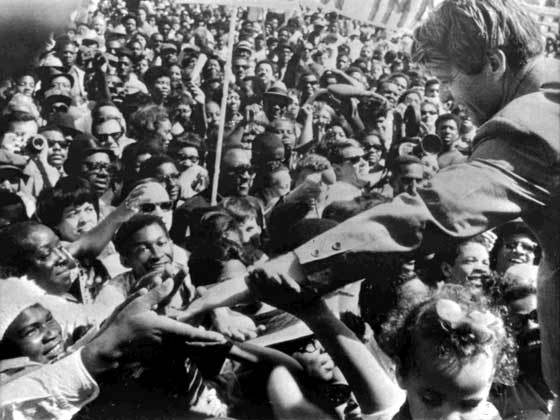
RFK in Watts RFK visited Watts in November of 1965. When he returned, he told a couple of his staffers, Ed Edelman and Adam Walinsky, to continue with Hackett’s research, but to take it a step further. He wanted ideas on how to address the entire phenomenon of the urban ghetto and how to structurally transform it. They did so, and in January of 1966, the senator gave three speeches on the subject of race and poverty. (John Bohrer, The Revolution of Robert Kennedy, pp. 255-61) Those speeches marked the birth of the Bedford Stuyvesant Restoration project. It was RFK’s answer to Lyndon Johnson and the New Deal.
Bedford Stuyvesant was a ghetto in the Brooklyn area of New York. It had a population of 400,000. This made it the second largest ghetto in America outside the south side of Chicago. It covered 9 square miles. There was no hospital, college or local newspaper. After he gave his speeches, the senator asked Walinsky and Edelman to start fashioning a project for Bedford Stuyvesant that would put those ideas into action. Bobby Kennedy’s idea was to form a tripartite partnership between the federal government, businesses and foundations, and the residents, to transform the area and revive it.
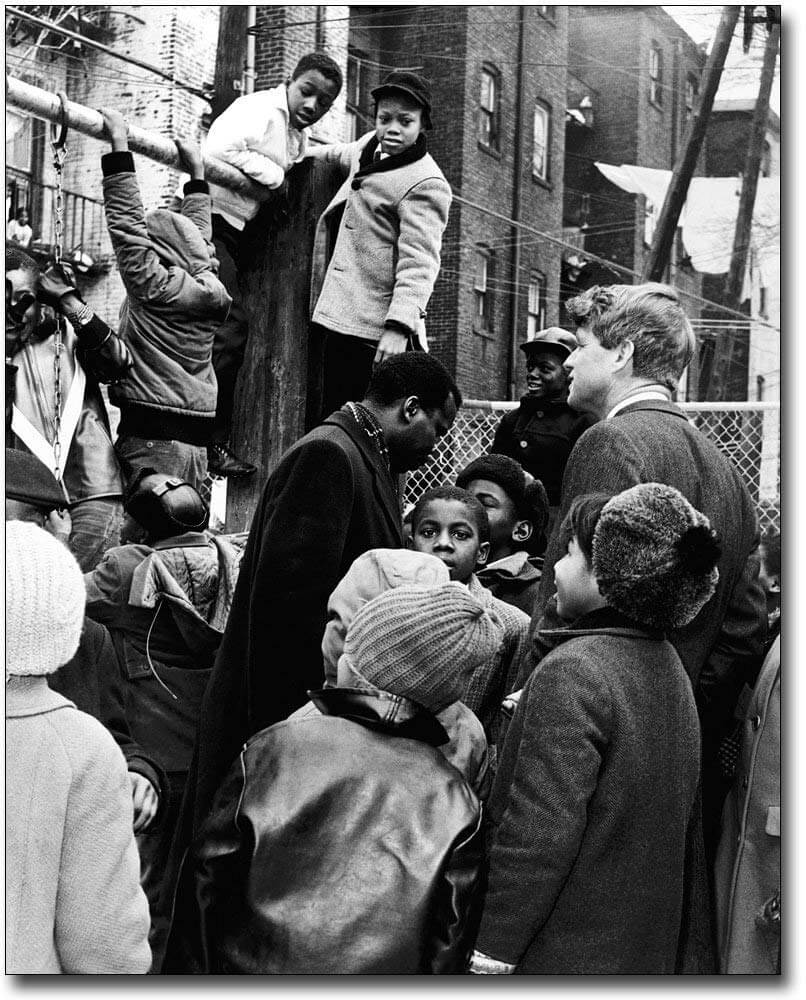
RFK in Bedford Stuyvesant He first got the business community to chip in by going to people like financier Andre Meyer and IBM chairman Tom Watson. He also secured foundation grants. (Schmitt, p. 151) He used that money to hire the local unemployed to do restoration for the fronts of local homes, a program that ended up being exceedingly popular. (Schmitt, p. 162) The plan’s next step was to push for tax incentives in order to get businesses to move there. He also attained a mortgage pool of money that allowed residents to secure low down payment FHA loans to finance real estate deals. He brought in a Dodge car lot. He got Watson to locate a factory there. He even convinced the City University of New York to open a branch, which was later named Medgar Evers College. (Schmitt, p. 165) John Doar became the chief executive officer of the restoration.
Restoration Plaza
The Bedford Stuyvesant Restoration Corporation
was established in 1967 as one of the first community
development corporations in the United States.He announced the formation of what he called the community development corporation on December 10, 1966 at Public School 305 in Bedford Stuyvesant. He said that he was now going beyond community action in order to gain the power to act with “the power to command resources of money, mind and skill.” (Schmitt, p. 155)
The Bed-Stuy project was a qualified success, not a total success as the Prince Edward School District was. The reason it did not attain that instant stature was that Bobby Kennedy got involved in the 1968 race for the presidency. Yet, apart from whatever may currently be occurring there, no less than Michael Harrington once stated concerning this project, “It is extremely satisfying to witness a social idea that works.” (Schmitt, p. 166) The CDC idea was in fact widely imitated. Today there are over 4000 of them, and companies that specialize in that field. Bobby Kennedy and Dave Hackett made a formidable reply to Johnson’s New Deal. One that has echoed down through the decades.
VII
Whatever the ambitions of these four authors were, as the reader can see, their efforts to belittle what the Kennedys did for civil rights do not stand up to scrutiny. Instead, upon actual inspection, they simply reveal their own poverty. (Again, I would make a mild exception in this regard for David Margolick.)
As Harrington said of RFK, “As I look back on the sixties, he was the man who actually could have changed the course of American history.” (Wofford, p. 420)
Journalist Pete Hammill wrote RFK before the presidential race of 1968:
I wanted to remind you that in Watts, I didn’t see pictures of Malcolm X or Ron Karenga on the walls. I saw pictures of JFK. That is your capital in the most cynical sense. It is your obligation in another, the obligation of staying true to whatever it was that put those pictures on those walls. (Schmitt, p. 221)
As Brenda Luckett, one of the young African Americans Bobby Kennedy saw in the impoverished Mississippi delta in 1967, said after his death, “We felt like Kennedy was purged. He should have gotten out. It’s like we knew they were going to kill him for helping black people.” (Meacham, chapter 12)
Charles Evers, brother of the murdered Medgar, said of him, “Mr. Kennedy did more to help us get our rights as first class citizens than all of the other US attorney generals put together.” (Arthur Schlesinger, A Thousand Days, p. 976)
But this sentiment had been previewed several years earlier. During the Freedom Riders’ episode, when King arrived in Montgomery, the citizens rallied to him and realized that something new was afoot. One youth said, “President Kennedy is on our side.” A woman said, “Bless God! We now have a president who’s going to make sure we can go anywhere we want like the white folks in this country.” (Brauer, p. 103)
Unfortunately, it did not last very long. One is left to imagine what America would be like today if President Kennedy had lived, and Bobby Kennedy and Dave Hackett had run the War on Poverty. Without Vietnam, and those men in charge, it is even possible that America would not have burned.
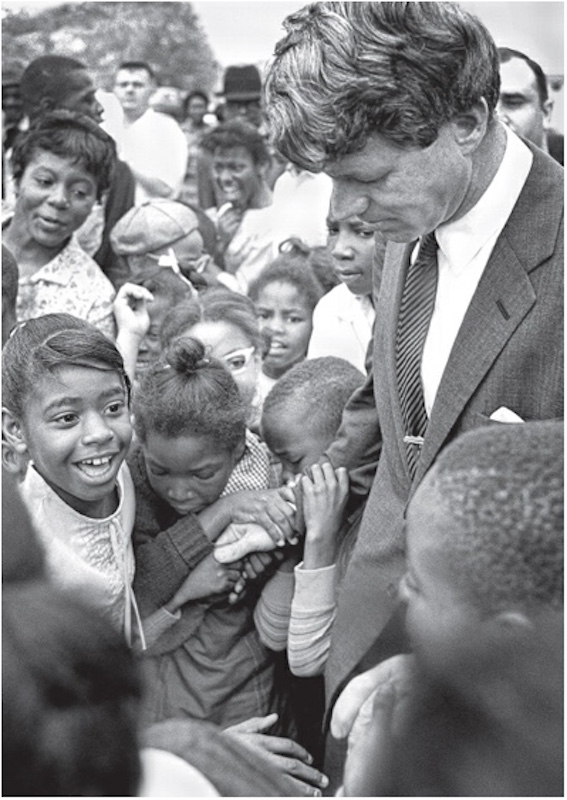
A Summary of Major Points Made by this Essay
- Reconstruction ended up as a failure for the liberated slaves of the South. And due to several odd and adverse Supreme Court decisions afterwards, the Reconstruction laws and amendments were neutralized. (Part 1, section 1)
- From 1876 to 1932, no president did anything to alleviate what had occurred in the South thanks to the rise of the Redeemer movement. In fact, some of them clearly sided with that movement. (Part 1, section 2)
- Franklin Roosevelt and Harry Truman, respectively, passed the FEPC law and integrated the military under pressure from the prominent civil rights leader Philip Randolph. But they were constricted from doing much else by the southern bloc in Congress and the threat of a filibuster. (Part 1, section 3)
- Charles Hamilton Houston began the modern civil rights movement by initiating a systematic challenge to the Supreme Court decision in Plessy v Ferguson. This ended in the epochal Brown v Board decision. (Part 1, section 3)
- Because of the Brown decision, Dwight Eisenhower had an opportunity to move in a major way on the issue, since he won two resounding victories in 1952 and 1956. For political purposes, he and Richard Nixon largely avoided the issue. (Part 1, section 3)
- Senator John Kennedy was not enthralled by southern interests on the race issue. This is shown by his 1956 public statement of support for Truman’s civil rights bill; his speech declaring his support for the Brown decision in 1957; his vote for Title III of the civil rights bill, also in 1957, and his reference to the issue in several speeches in the 1960 campaign. (Part 2, section 1)
- Senator Kennedy addressed the issue during the 1960 campaign several times, accentuating its moral dimension. He spent several moments criticizing the Eisenhower administration on their performance during his second debate with Richard Nixon. (Go to the 13:45 mark here)
- President Kennedy did not delay in addressing the problem once he got into office. In fact, he got to work on it his first day, originating an affirmative action program that would eventually spread across the entire expanse of the federal government. (Part 2, section 3)
- It was not possible to pass an omnibus civil rights bill in 1961. The evidence in support of that conclusion is overwhelming. (Part 2, section 1)
- It was also not possible to alter the filibuster rules in 1961. The Democrats had tried to do this prior to Kennedy, and they tried to do it several times after Kennedy’s death. It was not achieved until 1975. (See pages 6 and 7 of this paper)
- Attorney General Robert Kennedy took on school desegregation within weeks of entering office and did things in that regard in New Orleans and Prince Edward County, Virginia that Eisenhower had never done. (Part 3, section 1)
- The Kennedys worked closely with the Fifth Circuit Court of Appeals in order to ensure voting rights, integrate colleges and enforce the Brown decision. Again, this had not been done prior to 1961. (Part 3, sections 2 & 5)
- JFK extended fair hiring practices to contracting companies who did work for the federal government and private colleges which got research grants from Washington. This helped integrate business and higher education in the South. (Part 3, section 3)
- The Kennedy administration did more to advance civil rights in three years than the prior 18 did in nearly a century. This is simply a matter of record. (See the chart at the end of Part 3.)
- Kennedy tried to get a civil rights bill on voting rights in 1962 but he could not defeat the filibuster. (Part 3, section 3)
- In February of 1963, Kennedy announced he had gone as far as he could through executive orders and the judiciary, and that he was submitting an omnibus civil rights bill to Congress. (Part 3, section 6)
- The implications of the encounter between RFK and James Baldwin in May of 1963 have been wildly distorted and pulled out of context. The discussion Kennedy wanted to have with those attending that meeting concerned what he had been working on with David Hackett: ways to approach racism and discrimination in the north. Baldwin and Jerome Smith hijacked the agenda and thereby wasted a golden opportunity. The danger of an eruption of inner-city violence, which Kennedy predicted and wished to talk about, was confirmed 27 months later with the Watts riots. (Part 2, section 3; Part 3, section 4; Part 4, section 2)
- Due to Fred Shuttlesworth’s highly publicized demonstrations in Birmingham, JFK’s confrontation with George Wallace in Tuscaloosa, and his televised speech on the subject, the February 1963 bill was redrawn and strengthened. It eventually passed in 1964 due to the efforts of RFK, Hubert Humphrey and Thomas Kuchel, not LBJ. This eliminated Jim Crow. (Part 3, sections 5 & 6)
- John Kennedy was working on an attack on poverty before his civil rights bill was sent to Congress. This effort had begun in 1961 with the research of David Hackett on the issues of poverty and delinquency. (Part 4, sections 1 & 2)
- LBJ appropriated that program as his own, and retired Hackett. He started it up before the research was completed. It ended up being taken over by interests who did not center it on the people it was designed for. The mishandling of this program, it could be argued, exacerbated the issue, and, as Bobby Kennedy predicted, America descended into a nightmare of riots and killings for four straight summers, 1965-68. (Part 4, section 5)
- Republican strategists Kevin Phillips and Pat Buchanan advised candidates on how to use this violence to manipulate white backlash and break up the Democratic Party coalition. Richard Nixon and Ronald Reagan did so, and this strategy, which has been used ever since, has risen to new heights under Donald Trump. (Part 4, section 5)
A Selected Bibliography
- Jack Bass, Unlikely Heroes. New York: Simon & Schuster, 1981.
- Patrick Henry Bass, Like a Mighty Stream. Philadelphia: Running Press, 2002.
- Michael Berman, The Politics of Civil Rights in the Truman Administration. Columbus, OH: Ohio State University Press, 1970.
- Irving Bernstein, Promises Kept. New York: Oxford University Press, 1991.
- John Bohrer, The Revolution of Robert Kennedy: From Power to Protest after JFK. New York: Bloomsbury Press, 2017.
- Herb Boyd, Baldwin’s Harlem. New York: Atria Books, 2008.
- Carl M. Brauer, John F. Kennedy and the Second Reconstruction. New York: Columbia University Press, 1977.
- Thurston Clarke, JFK’s Last Hundred Days. New York: Penguin Press, 2013.
- Andrew Cohen, Two Days in June. Toronto: Signal, 2014.
- Nancy A. Colbert, Great Society. Greensboro, NC: Morgan Reynolds, 2002.
- Charles Euchner, Nobody Turn Me Around. Boston: Beacon Press, 2011.
- Rowland Evans & Robert Novak, Lyndon B. Johnson: The Exercise of Power. New York: New American Library, 1966.
- David Farber, The Age of Great Dreams. New York: Hill & Wang, 1994.
- Eric Foner, with Joshua Brown, Forever Free. New York: Knopf, 2005.
- Harry Golden, Mr. Kennedy and the Negroes. Greenwich, CT: Fawcett, 1964.
- Lawrence Goldstone, Inherently Unequal. New York: Walker and Company, 2011.
- Edwin Guthman & Jeffrey Shulman, Robert Kennedy in His Own Words. Toronto: Bantam, 1988.
- Maurice Isserman & Michael Kazin, America Divided. New York: Oxford University Press, 2000.
- William P. Jones, The March on Washington. New York: W. W. Norton, 2013.
- John F. Kennedy, Profiles in Courage. New York: Avon, 1956.
- Brian E. Lee, A Matter of National Concern. Unpublished Ph. D. thesis. Chapel Hill, NC: University of North Carolina, 2015.
- David Leeming, James Baldwin: A Biography. New York: Knopf, 1994.
- Nicolas Lemann, Redemption. New York: Farrar, Straus & Giroux, 2005.
- Nancy MacLean, Democracy in Chains. New York: Viking, 2017.
- Allen J. Matusow, The Unraveling of America. New York: Harper & Row, 1984.
- Ellen B. Meacham, Delta Epiphany. Jackson, MS: University Press of Mississippi, 2018.
- Diane McWhorter, Carry Me Home. New York: Simon and Schuster, 2001.
- Joseph Palermo, In His Own Right. New York: Columbia University, 2001.
- Clay Risen, The Bill of the Century. London: Bloomsbury Press, 2014.
- Arthur Schlesinger, Robert Kennedy and His Times. New York: Houghton Mifflin Company, 1978.
- Arthur Schlesinger, A Thousand Days. New York: Houghton Mifflin, 1965.
- Edward R. Schmitt, President of the Other America. Boston: University of Massachusetts Press, 2010.
- Bruce J. Schulman, Lyndon B. Johnson and American Liberalism. Boston: Bedford Books, 1995.
- Frank Sikora, The Judge. Montgomery, AL: River City Publishing, 1992.
- Theodore Sorenson, Kennedy. New York: Harper and Row, 1965.
- Harris Wofford, Of Kennedys and Kings. Pittsburgh: University of Pittsburgh Press, 1980.
- Randall Woods, LBJ: Architect of America Ambition. New York: Free Press, 2006.
Go to Part 1
Go to Part 2
Go to Part 3
-
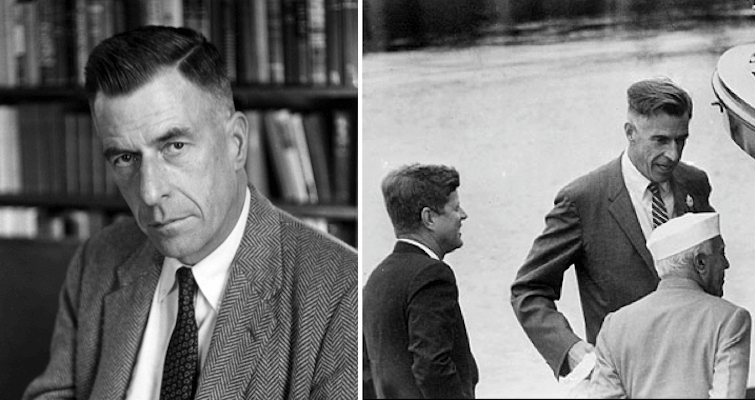
John Kenneth Galbraith: A Hero in our Time
As many who are interested in the JFK case know, John Kenneth Galbraith was truly A Man for All Seasons. There are few men in public life who pulled off the triple crown like he did: serving with distinction as a public figure, an academician, and as a man of letters. Specifically, Galbraith was an advisor to Presidents Franklin Roosevelt, Harry Truman, John Kennedy and Lyndon Johnson; he served as an instructor at Harvard for over 25 years; was a writer and editor at Fortune and, all told, wrote over forty books. Two of them are considered classics: The Great Crash and The Affluent Society. To have performed just one of those endeavors would make an individual a significant figure in American life. To have done all of them is a remarkable achievement. To have done them with the wit and style that Galbraith possessed makes what he did just about unique in modern American history.
Galbraith was born in Ontario, Canada in 1908. He was granted an undergraduate degree at a branch of the University of Toronto in 1931. He then went to the University of California, Berkeley to attain his Masters and Ph. D. in agricultural economics. After graduation he taught at both Harvard and Princeton from 1934-40. He worked in the Office of Price Administration for Roosevelt, and then as one of the directors of the Strategic Bombing Survey under Truman. In the last position, he disagreed with his boss, the eternal hawk Paul Nitze, on the effectiveness of the bombing over Germany in reducing war production. After this he went to work at Henry Luce’s Fortune and then in 1949 he was appointed a full professor in economics at Harvard.
Galbraith had a role in writing the summary reports for both the bombing survey of Germany and Japan. He concluded that war production had expanded during the bombing of Germany. Some strategic targets were impacted; others were not. But bombing had not decided the war in Europe. The air war cost America more than it did the Germans; it was just that the USA could afford it at the time. The real value of the bombing was in support of ground troops. They had won the war. (Richard Parker, John Kenneth Galbraith, p. 183)
Galbraith’s input into the summary survey of the bombing of Japan was probably even more important at dispelling myths. He described the terrible fire bombings of Japanese cities that sometimes consumed as many as 16 square miles, causing massive numbers of civilian deaths, but barely touching industrial production. He then wrote that in all probability, Japan likely would have surrendered in December of 1945, or maybe even in November, without the two atomic bombs being dropped. (Summary Report, Pacific War, July of 1946, p. 26)
These insights by a skilled economist like Galbraith seem to be quite valuable, especially in light of the later emphasis placed on bombing in both the Korean War and especially the war in Indochina. The tons of bombs dropped over Indochina exceeded the tonnage dropped over both Germany and Japan during World War II. In fact, it was not even close. Yet none of the countries in Indochina—Laos, Cambodia and Vietnam—had a real industrial base as did Japan and Germany. Most of the population made its living from agriculture. So Galbraith had a real perspective on this issue during his advisory years with President Kennedy.
It was during his first stretch of employment at Harvard that he met young John Kennedy. From 1936-39, Galbraith tutored JFK at Winthrop House. (Parker, p. 324)
It is difficult to overestimate how much Galbraith liked writing and being on the faculty at Harvard. For instance, in 1946, he turned down an offer from Nelson and David Rockefeller to become chief economist for the Rockefeller family. (Parker, p. 222) I should not have to inform our readers the kind of money and status that position would have offered him.
In 1956, Senator Kennedy sought his advice on an agricultural issue. After that, Kennedy developed a rather close relationship with Galbraith as an unpaid advisor. The relationship deepened after the launch of Sputnik in 1957. The two would often meet in Cambridge when Kennedy was in Boston. Kennedy came to rely on Galbraith briefing him before his major appearances. (Parker, p. 325)
In 1960, Galbraith was one of candidate Kennedy’s floor managers at the Los Angeles Democratic convention. He then wrote several speeches for the nominee during the campaign and prepped him for the third debate with Richard Nixon. He was at Kennedy’s campaign headquarters the night of the election. (Parker, p. 336)
As most people who have studied Kennedy’s political career know, he had a genuine interest in the huge country of India. He felt that being the largest democracy in the world, and sitting in south Asia, it was of large strategic importance. In the late fifties, he wrote an article for The Progressive on the subject. With Senator John Sherman Cooper, he drew up an aid bill for the country. (Cooper had been President Dwight Eisenhower’s ambassador to India.)
But another reason Kennedy viewed India to be of central importance is because of its proximity to Red China, and also to the former countries of French Indochina. If there were tensions in that area—as there were bound to be—then India could be both a counterweight, and also a nearby emissary. If such were the case, Kennedy would need a man whom he trusted implicitly to be the ambassador there. Which is why he chose Galbraith for the position.
But with the kind of relationship the two men had, Galbraith was still advising Kennedy on a wide variety of subjects. On economics, Galbraith was a disciple of the great Englishman John Maynard Keynes. So he urged Kennedy to adapt an expansive economic policy in order to encourage growth. As almost any observer of the Kennedy presidency knows, the years 1961-66 were probably unmatched in post-war American economic history. Gross National Product averaged 5% growth each year, employment grew 2.5% each year, unemployment receded to 3.9%, poverty declined by a third and inflation was at a quite manageable 2 per cent. All of this was done with no significant budget deficits and a positive balance of payments.
To show how in sync Galbraith was with Kennedy, during his confirmation hearings, the economist suggested that the USA recognize Red China. This created quite a stir on the committee. (Parker, p. 351) But as our readers know through the recently posted interviews with State Department official Roger Hilsman, this is what Kennedy had discussed with Hilsman as early as 1961.
Galbraith tried to warn Kennedy about committing to the Bay of Pigs operation. He also warned about using American ground troops in Laos. (Parker, pp. 354-56) Kennedy agreed with this and told Richard Nixon, “I just don’t think we ought to get involved in Laos, particularly where we might find ourselves fighting millions of Chinese troops in the jungle.” (Galbraith, Ambassador’s Journal, pp. 45-48)
And, of course, there was Vietnam. Kennedy had been advised by the likes of Edmund Gullion, Nehru of India, and General Douglas MacArthur on the subject. They all advised him not to send in combat troops. Galbraith agreed with them. Inside the Kennedy White House, he sided with Chester Bowles and George Ball for non-intervention. In prior treatments of precisely what Galbraith’s role was in these debates, the picture painted of it was, to say the least, a bit murky.
For instance, in David Halberstam’s long book The Best and the Brightest, Galbraith is portrayed as being some kind of outsider, on the periphery of Kennedy’s circle. (Halberstam, p. 152) To state it kindly, Halberstam’s book has not aged well. To be unkind, today it seems quite misleading; so much so that this author would call it pernicious. In addition to getting the role of Robert McNamara wrong, the highly praised Halberstam also mischaracterized Galbraith’s part.
John Newman came closer to what the true facts and characterizations were in his milestone book JFK and Vietnam, first published in 1992. There, Newman wrote that Galbraith had written Kennedy in March of 1962 after visiting Vietnam. He was quite derisive about America being involved there at all. He suggested a neutralist political solution, similar to what the administration was negotiating for in Laos. (Newman, p. 236) This is more accurate but is still unsatisfactory since it is incomplete.
Galbraith’s role in all this began even before the famous two week long November, 1961 debate over committing combat troops to Saigon. In July of 1961, Galbraith wrote the president, warning him about the information he was getting about Indochina. He said that President Ngo Dinh Diem was not the right man to lead South Vietnam. He had alienated the public to a much further degree than the newspaper reporters have let on. (Galbraith, Letters to Kennedy, pp. 76-77) But it turns out that Galbraith was directly involved in the November debates.
The ambassador was in Washington to accompany Prime Minister Jawaharlal Nehru on a state visit. Galbraith had already heard about the mission President Kennedy had sent General Max Taylor and Deputy National Security Advisor Walt Rostow on in October. The ambassador feared America’s entry into a war in Vietnam would be a disaster. It could endanger Kennedy’s domestic programs, tear the Democratic Party apart, and perhaps provide the opening for a new conservative era in American politics. (The Nation, February 24, 2005, “Galbraith and Vietnam”)
Galbraith had arranged the luncheon to be at the Newport Rhode Island home of Jackie Kennedy’s mother, so no other State Department representative would be there. Kennedy and Galbraith asked the Indian leader to participate in a neutralist solution for Vietnam. They even asked him to talk to Ho Chi Minh about forming a UN observer team as a first step in that direction. Nehru was non-committal except for saying that America should not get into a shooting war in Indochina. (Galbraith, A Life in our Times, pp. 470-77)
The next day in Washington, Galbraith made a beeline for Rostow’s office. He questioned Rostow about the actual contents of the report. Rostow said it was highly classified. Then the phone rang. With Rostow distracted, Galbraith stole a copy of the report from his desk and left. (The Nation, 2/24/2005)
Reading it back at his hotel, the ambassador was stunned. He realized that this report and its recommendations would create the first commitment of combat troops to Saigon and that would then be the pretext for an open-ended conflict. The first group of 8,000 men were to go in under the guise of “flood relief workers”. The report recommended deepened cooperation between the CIA and Saigon’s intelligence, more covert operations and massive training of Vietnamese soldiers. Plus the use of a sprayed herbicide which Secretary of State Dean Rusk told Kennedy was really a weed killer. (At first this was called Agent Purple, it later turned into Agent Orange.)
Kennedy had seen Galbraith the day before the Newport meeting. Realizing there was going to be a long debate over the Taylor-Rostow report, he had asked him to prepare a paper to contest direct American involvement. This now became the basis for his memo to the president. JFK read both documents and then postponed the meeting on Vietnam. Meanwhile, Galbraith did something that the president had already done. (Jim Douglass, JFK and the Unspeakable, p. 107) The ambassador started leaking stories to the press that Kennedy was opposed to the escalation his advisors were pressing on him. Before Galbraith left to return to India, he told Kennedy it would be a good idea if he stopped off in Saigon. JFK agreed and then instructed the ambassador to report back to him alone. (The Nation, 2/24/2005; Parker, p. 370-72)
At the crucial meeting, which occurred on November 11, Galbraith’s biographer Richard Parker notes something that Newman did not mention, namely that Bobby Kennedy was in the room. Later, authors like David Kaiser and Gordon Goldstein did write about this information, based upon recovered notes. In what appears to be a mapped out plan, the Attorney General would repeatedly deny any suggestion of ground troops by saying flatly, “We are not sending combat troops. Not committing ourselves to combat troops.” (David Kaiser, American Tragedy, p. 113) Then the president would add that if there was ever going to be a troop detachment sent in it would be a multilateral mission, under the aegis of the UN or SEATO. (Parker, p. 371)
As most of us know, this two week long debate ended with Kennedy issuing NSAM 111. That order significantly increased the number of American advisors to over 15,000 and it sent in more equipment, like helicopters. But this is as far as Kennedy was going to go. He was going to aid Saigon, but he was not going to fight their war for them. He never allowed combat troops into theater. In fact, there was not one more combat troop in Vietnam on the day Kennedy was killed than on the day he was inaugurated. The president even wanted to replace Frederick Nolting as ambassador to Saigon with George McGhee, who he knew was opposed to intervention. But Dean Rusk, who had been one of the leaders for troop insertion during the debate, nixed this idea by saying Nolting should stay since he had Diem’s confidence. (Parker, p. 376)
It seems to this author that with the information about Bobby Kennedy’s role in the November, 1961 debates, the attempt by Kennedy to replace Nolting, and the now fully revealed role of Galbraith, this episode is even more clearly a demarcation line than before. Kennedy simply was opposed to transforming Vietnam into America’s war, and he knew that was what it would become if ground troops were placed in theater. As the president had told Arthur Schlesinger:
They want a force of American troops. They say it’s necessary in order to restore confidence and maintain morale … The troops will march in; the bands will play, the crowds will cheer, and in four days everyone will have forgotten. Then we will be told we have to send in more troops. It’s like taking a drink. The effect wears off and you have to have another … The war in Vietnam could be won only so long as it was their war. If it were ever converted into a white man’s war, we would lose as the French had lost a decade earlier. (Gordon Goldstein, Lessons in Disaster, p. 63)
Upon Galbraith’s return to Asia, he did file a report from Saigon. In fact, he eventually filed three of them. These all ended up being back channel cables, meaning they bypassed the usual State Department protocols. They were laced with Galbraith’s blend of impatience and sarcasm: “Who is the man in your administration who decides what countries are strategic? I would like to … ask him what is so important about this real estate in the Space Age.” (The Nation, 2/24/2005) And again, Halberstam was wrong about what happened as a result of these, just as he was wrong about how Kennedy regarded his advice in November of 1961. For Galbraith was not on the periphery, he was at the center of the story—in two ways.
First, Kennedy attempted to follow up on the ambassador’s proposal to open negotiations for a neutralist Vietnam settlement through India. Unfortunately, he tasked the wrong person with the mission. Averill Harriman was Kennedy’s point man on the attempts to defuse the Laotian situation with a coalition government. Apparently he did not feel the same way about Vietnam. In December of 1961, Harriman had been appointed to Assistant Secretary of State for East Asian and Pacific Affairs. Kennedy asked Harriman to send instructions to Galbraith about pursuing a peace plan by having Indian and Russian diplomats approach Hanoi. Harriman suggested a delay, which the president agreed to. But Kennedy concluded “that instructions should nevertheless be sent to Galbraith, and that he would like to see such instructions.” Harriman said he would send them. (Douglass, p. 119) Harriman did send instructions, but “he struck the language on de-escalation from the message with a heavy pencil line.” The diplomat dictated a memo to his colleague Edward Rice which changed the de-escalation approach to a threat of escalation of the war unless Hanoi accepted American terms. When Rice tried to rewrite the memo with the original instructions, Harriman again struck Kennedy’s language. He then simply killed the telegram altogether. (Gareth Porter, Perils of Dominance, pp. 158-59)
Galbraith’s other attempt at de-escalation was more successful. In early April of 1962, the ambassador was visiting the Kennedy family for a weekend at Glen Ora, their rented estate in the Virginia countryside. Jackie Kennedy had just made an official visit to India and they were watching a TV special about it. He then told the First Lady about his talk with the president about the situation in Saigon, his later visit to Defense Secretary Robert McNamara, and the memo he left behind. (Parker, p. 389)
It turned out that Kennedy had been giving the Galbraith memos about Vietnam a lot of attention. He wanted the ambassador to put his thoughts in writing and give a copy to McNamara. In that memo, Galbraith stated American policy should keep the door open for a political solution. We should also measurably reduce our commitment to the present leadership of South Vietnam. He then added that the advisors who were already there should not be involved in combat and kept out of any combat commitment. Their roles should become as invisible as the situation allowed. (Newman, p. 236)
As described in JFK and Vietnam, this memo was mightily resisted by the Pentagon, because, just five months after sending in advisors and equipment, Kennedy now had an alternative. Newman also notes that Kennedy had said at that time “he wished us to be prepared to seize upon any favorable moment to reduce our commitment, recognizing that the moment might yet be some time away.” (Newman, p. 236) In other words, Galbraith had just given Kennedy support for what he really wanted to do in Indochina. As both Douglass and Newman have written, Galbraith’s visit to Washington and the handing off of his memo to McNamara were the beginning of Kennedy’s withdrawal plan from Vietnam. (Newman, p. 237; Douglass, p. 119)
The very next month, in May of 1962, Robert McNamara now delivered a surprising message to his subordinates in Vietnam. Arriving in Saigon for one of his so-called SecDef meetings, McNamara asked some of the higher-ups to stick around after the formal meeting ended. The defense secretary now echoed what the president had told Arthur Schlesinger: “It was not the job of the U.S. to assume responsibility for the war but to develop the South Vietnamese capability to do so.” (Douglass, p. 120) He then asked when they thought Saigon would be able to assume sole responsibility for all actions. The secretary got no satisfactory reply, since everyone was shocked by the question. So he proceeded to tell the commander in charge of the American advisory command, General Paul Harkins, “to devise a plan for turning full responsibility over to South Vietnam and reducing the size of our military command, and to submit this plan at the next conference.” As Jim Douglass notes, Kennedy and McNamara only wanted a plan for withdrawal at this time. For as he had told Galbraith in November of 1961, “You have to realize that I can only afford so many defeats in one year.” (Galbraith, A Life in Our Times, p. 469) The president was referring to the Bay of Pigs and Laos, the latter of which he knew the Pentagon would consider a defeat.
It took quite a long time for the commanders of all departments in Vietnam to prepare their withdrawal schedules for McNamara. More than a year to be exact. But finally, in May of 1963, at a SecDef meeting in Hawaii, they were presented to McNamara. McNamara said they were not fast enough and requested they be accelerated “to speed up replacements of U.S. units by GVN units as fast as possible.” (Douglass, p. 126) This plan was then coordinated with Kennedy’s NSAM 263 order and its accompanying report, which dictated that a thousand men would be withdrawn from Vietnam by the end of 1963, and all American advisors would be removed by 1965. So much for Galbraith being at Halberstam’s “periphery”. In a very real sense, the ambassador had provided the rationale for Kennedy’s withdrawal plan.
Galbraith always said that he would only serve under Kennedy for a bit more than two years since he had to get back to Harvard in order not to lose tenure. How badly did Kennedy want him to stay? He offered him the ambassadorship to the USSR. (Parker, p. 406) If Kennedy had lived, and Galbraith had taken that position, one can only imagine how relations between the two superpowers would have turned out. But the fact that JFK offered him the position shows what the president had in mind for the future. He saw how visionary Galbraith was on Vietnam, and he wanted to try more of that with Russia.
Galbraith continued to be an advisor to the White House after Kennedy’s assassination. But he and President Johnson simply did not agree on Indochina policy, and Galbraith really did not like how the escalation of the Vietnam War began to downsize the War on Poverty. In January of 1966, he wrote a memo to Johnson saying that America had no national interest at stake in Vietnam. A few months later he tried again. He offered to write a speech that would set the stage for American withdrawal. Johnson did not appreciate the advice. And that was about it for their relationship. (Parker, p. 431)
But about four months before that happened, and probably provoking the exchange, Galbraith had shared a dinner with Richard Goodwin, Carl Kaysen, Arthur Schlesinger, and Defense Secretary McNamara. By this time, January of 1966, each of these men, except for McNamara, had left the White House. Galbraith described the meeting as jarring. McNamara was extremely emotional as he described what was happening in Indochina and at the White House. The Defense Secretary said the war was spinning out of control. Rolling Thunder, the bombing campaign Johnson had banked on, was not effective. Johnson was getting depressed over the results. But he still seemed insistent on victory, even if it meant more escalation. If America did not find a way out soon, we would lose the war. (Kai Bird, The Color of Truth, p. 345; Galbraith, A Life in our Times, pp. 482-83) This is why he wrote to LBJ. Instead, Johnson escalated the war further. He then pushed McNamara out of office. But it was very likely that dinner which caused McNamara to begin the task of writing the Pentagon Papers.
Galbraith now wrote a book entitled How to Get out of Vietnam. It sold 250,000 copies. Along with Schlesinger and Goodwin, he organized a protest group called Negotiations Now. He had concluded that if LBJ would not end the war, someone who would must run against him in 1968. Things go so bitter between the two men that Johnson told White House advisor John Roche to start attacking Galbraith in the press. (Parker, p. 432)
Galbraith finally did find someone to run against Johnson. It was Senator Eugene McCarthy. When Bobby Kennedy later announced he was also in the race, Galbraith was in a sticky position. But he felt he should be loyal to his first choice, so he stuck with McCarthy, even though after Johnson made his shocking announcement not to run, it was apparent RFK was the stronger candidate with a better chance to defeat Richard Nixon in the fall.
After Robert Kennedy was assassinated, McCarthy, for all intents and purposes, dropped out of the race. After Kennedy’s funeral, Galbraith visited him in Washington. He later wrote the following about that meeting:
Gene was deeply depressed; the death of Robert Kennedy showed the hopelessness of the game. What had been real would now be pretense; what had been pleasure was now pain … I pleaded that he carry on. The banality of my argument still rings flatly in my ears. Gene remained sad and unmoved, but proposed another talk in Cambridge a few days later. This we had with Coretta King and a number of McCarthy’s local supporters present. His mood was better … but I don’t believe that Eugene McCarthy’s heart was ever again wholly in the battle. (Galbraith, A Life in our Times, p. 499)
The Kennedy administration was responsible for being the first to bring some remarkable men into the White House, or promoting them to their highest positions. These individuals were not just outstanding civil servants; they were extraordinary men in their own right. People like Robert Kennedy, George Ball, Richard Goodwin, Harris Wofford, Ted Sorenson, Sargent Shriver, Arthur Schlesinger, Edmund Gullion, Adam Yarmolinsky and G. Mennen Williams were all distinguished individuals and personalities who have yet to be surpassed in talent and achievement by those who followed. As a group no other administration comes close.
John Kenneth Galbraith is one of the most distinguished of them all.
-
Speaking the Unspeakable: The Assassination and Martyrdom of Thomas Merton
Was the hero of Jim Douglass’ book murdered in 1968?
Read the review of Hugh Turley & David Martin, The Martyrdom of Thomas Merton, by Edward Curtin
-

John R. Bohrer, The Revolution of Robert Kennedy
 Next year will mark the fiftieth anniversary of the assassination of Senator Robert Kennedy. Consequently there have been three biographies published about RFK in the last 16 months. Last year we had the Henry Kissinger endorsed book by Larry Tye entitled Bobby Kennedy: The Making of a Liberal Icon. That work was so agenda driven, with so little new information, that it was quite difficult to read. (Click here for my review) A couple of weeks ago we had the publication of Chris Matthews’ book on RFK. Judging from Matthews’ book on John Kennedy, the volume does not hold much promise; but we will be fair in our upcoming review.
This past June, John R. Bohrer published an unusual book about RFK. Entitled The Revolution of Robert Kennedy, it focuses on the period of time from after President Kennedy’s assassination to the end of 1966. In other words, it covers only three years, but they were crucial years. To anyone really interested in RFK, it seems to me a volume of the greatest interest. Not only is it unique in its focus, but, unlike Tye, Bohrer has done some valuable research on his subject, and unearthed some new and important information about the senator. His book shows that you can reveal a lot about a person if you study your subject from a small window but tell more about that frame than others do.
In his introduction, Bohrer mentions something I was not aware of. Bobby Kennedy had offered to resign his position as Attorney General in advance of his brother’s 1964 reelection campaign. It had become clear to RFK that the opposition to his actions in the civil rights arena had done much to alienate both Democratic voters and politicians in the south. He saw this as being a serous liability to President Kennedy’s 1964 reelection. JFK refused to entertain the offer, but on November 20, 1963 Bobby Kennedy was despondent about the issue and still thought it was the right thing to do. After all, as the author notes, Bobby had run JFK’s 1952 senatorial campaign. In 1956, as a kind of dress rehearsal for 1960, he joined up with Adlai Stevenson’s presidential campaign. So he knew how brutal these things could become, and the impact his name and acts could have on the calculus for 1964.
Bohrer portrays the assassination of President Kennedy as something that seriously affected Robert Kennedy and made him rethink his ideas about politics, in the sense that ideas and ideals mattered. It should not be all about practicality and vote counting. In fact, one of the recurring words in his speeches after his brother’s death was “revolution”. In visiting Peru, he told students who had assembled to meet him that the revolution was their responsibility. They must be wise and humane so that it will be peaceful and successful: “But a revolution will come whether we will it or not. We can affect its character, we cannot alter its inevitability.” (Bohrer, p. 8) That speech was made while RFK was a senator from New York. Ask yourself the last time you heard a US senator encourage revolution anywhere in the world.
II
When Attorney General Robert Kennedy got the word of his brother’s death, he talked with his press secretary Ed Guthman. The latter commented that this might bring people together. RFK replied prophetically that no, this was going to make things worse. (Bohrer, p. 12) He actually pondered whether he should resign. But President Johnson sent Clark Clifford to persuade him to stay in his position. Within days, FBI Director J. Edgar Hoover had pulled RFK’s private line out of his inner office. And with that, the Attorney General realized that his power in the Justice Department had been severely curtailed. As long as his brother was president, he had some leverage over Hoover. Without the White House behind him, Hoover was free to chart his own course. (p. 15) Again, he thought of resigning. But he decided to stay on until the Civil Rights bill that he and his brother had worked so hard for was passed. A main thesis of Bohrer’s book is that although his brother was gone, and JFK had been the main fulcrum of his life, Bobby now began to search for a new rudder. And that would turn out to be keeping the legacy of President Kennedy alive. Because, as the book outlines, in addition to Hoover, RFK saw certain moves that President Johnson made as being counter to what his brother had been about.
One of these was the ascension of Thomas Mann on the Latin American desk of the State Department. Under President Kennedy, Mann had been Ambassador to Mexico. Within three weeks of his murder, Mann was promoted by Johnson to Secretary of State for Inter-American Affairs, and also to govern the US Agency for International Development. As Arthur Schlesinger has noted, and as RFK agreed, this double appointment seemed aimed at neutralizing JFK’s rather moderate Alliance for Progress program in Latin America. (Bohrer, p. 19)
In fact, a couple of months later, Mann held a conference for the State Department’s Latin American diplomatic corps. During his address, he did not mention the Alliance for Progress. He said the USA should not intervene against dictators if they were friendly to American business interests. But they should oppose communists whatever their policies would be. The speech was leaked to the press and characterized as advocating American commercial profits over Latin American political reform. The policy became known as the Mann Doctrine. (Walter LaFeber Inevitable Revolutions, p. 157)
Mann’s speech was instrumental in the American backed coup that occurred several weeks later in Brazil. The following year, Mann and Johnson worked together in order to halt the movement to reinstall Juan Bosch in the Dominican Republic. President Kennedy had ordered severe economic sanctions against the military plotters who had ousted the democratically elected President Bosch in September of 1963. In their opposition to Bosch, Mann and LBJ’s actions eventually led to a large military intervention by the Marines to halt his restoration. (See LaFeber, pp. 157-58; Donald Gibson, Battling Wall Street, pp. 78-80)
What RFK and Schlesinger understood was that Johnson’s favoring of Mann’s hardline approach was a direct challenge to what Kennedy wished to achieve with his Alliance for Progress. (For a long, detailed analysis of this program under JFK, see Schlesinger’s Robert Kennedy and His Times, pp. 494-574) One of the aims of the 1961 Alliance program was to stimulate economic growth by making loans to Latin American countries directly from the American treasury; this afforded lower interest rates and less stringent policy strictures than going through the World Bank.
To understand who Mann was and what he did in Latin America, one only has to comprehend that in reviewing the Alliance for Progress, historians like Schlesinger and LaFeber divide it in half: the Kennedy version versus the Johnson version. As Alliance administrator William D. Rogers stated about the Mann/LBJ takeover: “… a more dramatic shift in tone and style of US Alliance Leadership would have been difficult to imagine.” (Schlesinger, p. 721) As for President Kennedy’s oratorical hopes for the Alliance causing peaceful revolution, LBJ assistant Harry McPherson termed that: “A lot of crap.” As LaFeber notes, the Mann/LBJ revision of the Alliance consisted largely of dismantling it. But also in tilting it away from economic investment and toward military build ups. (LaFeber, p. 156) As Juan Bosch later noted of JFK’s intent to use the Alliance for Progress for democratization and structural change, those aims died with Kennedy in Dallas. (Schlesinger, p. 722) Bobby Kennedy predicted what the outcome of that abandonment would be: “The people of Latin America will not accept this kind of existence for the next generation. We would not, they will not. There will be changes.” Considering the violence that swept through Central America in the eighties, and the more peaceful revolutions that occurred in the new millennium, Kennedy was correct. (For the latter, see Oliver Stone’s documentary film, South of the Border.)
A significant achievement of the book is its detailed explication of Robert Kennedy’s opposition to what LBJ did in another theater of Third World conflict, South Vietnam. The accepted version of RFK’s thoughts and actions on this subject has been that his tacit acceptance of what Johnson did in Indochina from 1964-66 suggested that he was in agreement with it. With what Bohrer has unearthed for his book, that view is simply untenable today.
When young Adam Walinsky first joined Senator Kennedy’s staff, Kennedy told him that Johnson was more conservative than most people thought he was. (Bohrer, p. 141) Walinsky recommended that they not confront Johnson directly, but on the edges of policy, thus not inciting an open feud. So Kennedy took his time in making his disagreement over Indochina public. But as early as 1964, he told Johnson that he did not think the war should be escalated into a full-blown military conflict. (p. 70) Kennedy felt that raising the military component to a higher level would not work. There had to be some attempt at a political settlement. But also, our side had to offer more significant aid to the people of South Vietnam. Johnson feigned at agreeing with this approach. But, as we all know, that is not the path he took. (p. 152) In June of 1964, shortly after telling Johnson about his ideas, Attorney General Kennedy confided to Schlesinger that he believed “the situation in Vietnam may get worse and become a serious political liability to the administration.” (p. 72)
It did get worse after the Gulf of Tonkin Resolution was passed two months later, and Johnson began air attacks against the north. When the Viet Cong retaliated by detonating bombs on new American air bases, the retaliatory air attacks increased. Kennedy was also disappointed that, while escalating, Johnson seemed to rely for advice and courage on former President Eisenhower. (p. 152)
Journalist David Halberstam—who was a full-fledged Hawk at the time—got wind of this and criticized Bobby on the grounds of arrogance: How dare he think he was smarter than the likes of LBJ and Eisenhower? Unlike them, Bobby thought he could win the war without dropping tons of bombs and using overwhelming force. Needless to say, Halberstam’s half-baked ideas would lead to an epochal disaster. And only when it peaked out in 1968, with over 500,000 combat troops in Vietnam, and the war devolved into ”dropping tons of bombs and using overwhelming force,” did Halberstam begin to see that he and his colleague Neil Sheehan were utterly and completely wrong about a path to victory. But, to my knowledge, neither author ever admitted that the Kennedys were right.
III
Although some members of JFK’s staff wanted to resign after his assassination, the Attorney General advised them to stay on at least until the presidential election of 1964, if only in order to push Johnson into following through on President Kennedy’s goals on civil rights, unemployment insurance, and aid to education. In January of 1964, there was a boomlet to draft Bobby Kennedy as Johnson’s vice-president. Democratic leaders like Peter Crotty of New York, and Paul Corbin, who was working a write-in vote for Bobby in New Hampshire, were a major part of this effort. (Bohrer, pp. 31-39) Without visiting the state, Kennedy got over 25,000 write-in votes in New Hampshire. (p. 47) By April, a poll showed that 47% of the public wanted the Attorney General to serve as vice-president. An aide, Fred Dutton, advised him to make more speaking engagements to boost that figure. Up until that time, Kennedy had only made two speeches after his brother’s death. The first was little more than a courtesy appearance for the UAW, the second was a speech on civil rights. Kennedy now began to negotiate personally with GOP Senator Everett Dirksen over the civil rights bill in progress through Congress. (p. 55) To show how intent he was on seeing the bill pass, he visited Prince Edward County Virginia, a school district that had closed down its school system rather then integrate. The Kennedys had been instrumental in raising private funds to keep the system open. RFK visited the area again to present a large check to the Teachers’ Union to sustain issuing paychecks. Shortly after, in a visit to West Georgia College, he was asked about George Wallace’s popularity. He replied that people who vote for Wallace “…want the Negroes to be quiet, but the Negroes are not going to be quiet.” He then managed to continue his reply with what was now becoming his favorite word: “This is a revolution going on in connection with civil rights and the Negroes.” (pp. 58-59)
In an oral history given as he began to find his own voice, Kennedy stated the differences between him and the new president. He said LBJ had made it clear that it was not really the Democratic Party anymore. It was now an All-American party and the businessmen like it. All the people who opposed JFK now like it. He concluded with, “I don’t like it much.” (p. 60)
Those sentiments are remarkably consistent with what Senator William Fulbright would conclude in 1966 as he began to investigate the reasons for the escalation in Vietnam. Namely, conservatives opposed to President Kennedy were now supporting LBJ, while liberals who supported President Kennedy were now opposed to the new president. In the late spring of 1964, Bobby Kennedy began to formulate a countering political strategy: running for the Senate from New York. As he said, there he would be the “head of the Kennedy wing of the Democratic Party.” (p. 60)
Bobby Kennedy was leaving the Senate seat in Massachusetts to his brother Teddy. His brother-in-law, Steve Smith, had been at work organizing President Kennedy’s presidential campaign. New York was to be a big part of that campaign. So Smith now switched to recommending RFK run for the Senate in New York against Republican Kenneth Keating. After all, the Attorney General had lived in New York for about ten years. (pp. 62-63) Bobby now put out the word that he would resign from Johnson’s cabinet after the civil rights bill was passed and signed. As the author notes, one of the things that bothered the AG was that he believed that Johnson saw Vietnam as a military problem. Kennedy did not see it that way. He thought a purely military effort would not be successful. He also did not like Secretary of State Dean Rusk, who was also a Hawk on Vietnam. (pp. 70-71) Because of this, Kennedy was not happy when Johnson chose General Maxwell Taylor as the new ambassador to Vietnam. RFK liked Taylor because of his advocacy of low intensity warfare through Special Forces, like the Green Berets. But Kennedy thought that LBJ chose the general to give him cover for a military escalation. Which turned out to be the case. (p. 74)
The civil rights bill passed in the latter part of June, 1964. A few days later, Ben Bradlee of Newsweek asked Kennedy what he would like to do in life now. Kennedy replied that he would like to maintain all the energy and excitement his brother had generated and harness it. (p. 88) Bradlee printed this and Johnson was quite naturally perturbed. During the signing of the bill, LBJ let Bobby know how perturbed he was. Within earshot, he handed a signing pen to J. Edgar Hoover and told the FBI Director, “You deserve several of these.” If anything told the Attorney General he was persona non grata with the new power axis, that did. (p. 90) Further, Johnson now arranged the upcoming Democratic convention so that the salute to President Kennedy came on the last night, instead of the first. Johnson was worried because Bobby Kennedy was now outpolling Hubert Humphrey for vice president by a margin of 2-1. In July, Johnson called in the Attorney General and read off a list of potential vice presidential nominees he would not consider, with Bobby being on the list. (p. 100) The next month in Atlantic City at the Democratic convention, it was obvious that Johnson had made the right decision for himself politically. When Robert Kennedy appeared at the podium an oceanic ovation took place that lasted over ten minutes. In the public eye, Robert Kennedy was the heir apparent to his brother. It was time to begin his ascension to the throne.
IV
Robert Kennedy declared himself a candidate for the Senate on August 25, 1964 at his home in Glen Cove, Long Island. As he began to campaign, something unusual began to happen which no one recalled seeing before. In his public appearances, a reaction set in similar to Beatlemania: people began to tear his clothes off, rip his cuff links, and shake hands with him so hard that after doing this repeatedly, it caused the candidate’s hands to bleed. (p. 117) His managers, fearing for his health, demanded he not campaign each day and take off one day per week to recover.
His advisors also found out that Kennedy did not speak well in rehearsed commercials for the camera. But he did do well in unrehearsed Q-and-A periods after delivering a speech, especially with young people. So this is what they broadcast. (p. 124) Kennedy ended up defeating Keating by ten points.
Once in the Senate, RFK visited his brother’s grave at night. In fact, after a friend watched this happen once, he realized that the groundskeeper had an arrangement with Bobby to let him in when no one was there. (p. 147) In the Senate, Robert Kennedy decided to do what he could to maintain what he perceived to be his brother’s legacy. He fought against closing Veterans Hospitals for budgetary reasons. He got the administration’s requested allotment cut in half. He moved for adding testing provisions to a large education bill—and he got that through. He fought Governor Nelson Rockefeller on getting grants for New York state’s impacted poverty areas. He won that battle also. (pp. 148-50) By his eleventh week in office, the new senator was getting a thousand letters per day.
One of his pet issues was something his brother was an early advocate for: gaining home rule for Washington D. C. He said about this objective that, because the District of Columbia was predominantly African-American, home rule was being held back for the reason that “there are many people who don’t want progress made here.” (p. 161) He further added that, in his view, the problem fundamentally was not about race, but about poverty. There was a reason he accentuated this point. RFK had kept his notebook from President Kennedy’s last cabinet meeting. In his notes he had written down the word “poverty” seven times. So this was another way of continuing the policies his older brother had left behind. (p. 159) To him, if America did not attack the problems of broken homes in the ghetto, and the effect that had on education, then there would be no real improvement.
RFK and his brother Senator Ted Kennedy were very much involved in extending the Civil Rights Act with the Voting Rights Act of 1965. They also wanted to add a clause that would eliminate the poll tax. That failed, and an amendment had to be passed to eradicate the tax. (pp. 165-66) The bill passed in large part because of the 1964 electoral landslide, which gave the Democrats 68 seats in the Senate. As Walinsky later said, it was, “A crazy time. I mean we were going to reshape American society, all of us. There was a new bill every day.” (p. 166)
But there was a shadow hanging over it all. In early April of 1965, Johnson gave a hawkish speech about Vietnam. This was just after the first combat troops had landed at DaNang Air Base, and Rolling Thunder, Johnson’s air campaign against the north, was in its initial stages. Again, RFK advised Johnson against taking the militaristic path in Vietnam. Sounding like his fallen brother, he added that America should make it clear to the Saigon government that we will not be staying there to fight the war for them. He even asked Johnson to fire Dean Rusk and replace him with the more moderate Bill Moyers. (p. 168) But since he was a Democrat, and American troops had been committed into theater, he also felt obligated to vote for Johnson’s appropriations for escalation, even though he did not approve of the actions. He explained, “If I voted for it without saying anything, it would have appeared that I approved of it—which I didn’t.” (p. 175)
In his public speeches he again returned to his favorite word, revolution. He praised students who marched on Washington as demonstrating the “essence of the American Revolution.” (p. 180) At a commencement address he stated, “We are the heirs of a revolution that lit the imagination of all those who seek a better life for themselves and their children.” He added that there was also a revolution aimed against America. After hundreds of years of domination by the West he said, America buys 8 million cars per year, while those in formerly colonized countries go without shoes. He told the graduates, that they “have an unparalleled opportunity—not to find a world, but to make one.” (p. 179)
Kennedy had no qualms about taking on big lobbies or big business. He railed in public about the growing power of the NRA, a lobby which he characterized as spending huge amounts of cash distorting the facts, and which placed a minimal inconvenience above saving the lives of thousands of Americans each year. (p. 182) He called in the CEO’s of the Big Three auto companies and questioned them about how much money their companies were making while spending so little on research into safety matters. (pp. 200-01) He also moved against the tobacco companies. He was the first to propose a warning label on cigarette packages. (p. 203) Senator Kennedy even tried to get right-to-work statutes repealed. These were laws, mostly in the south, that weakened unions since they allowed employees in a shop to opt out of union membership while enjoying union benefits. (p. 203)
Reading Bohrer’s book, it is very hard to defend the MSM meme that RFK was a reluctant warrior on civil rights and the plight of African Americans. For the simple reason that he never let go of the issue. At times he went beyond what most civil rights advocates were talking about. Frequently, his ideas echoed Martin Luther King’s. At a VISTA indoctrination in Harlem, Kennedy said, “It is one thing to assure a man the legal right to eat in a restaurant: it is another thing to assure that he can earn the money to eat there…” (p. 205) He was sometimes at pains to delineate the differences for black Americans in the south versus the north. For example, he stated, “Civil rights leaders cannot, with sit-ins, change the fact that adults are illiterate. Marches do not create jobs for their children.” (p. 205)
In one of his most controversial statements about the issue, the former Attorney General talked about the differing ways in which the law is looked upon by middle class and wealthy Caucasians as opposed to downtrodden minorities. To the more privileged group, the law is looked upon as a friend who preserves and protects property and personal safety. But to the latter group, the law seems different: “The law does not fully protect their lives, their dignity, or encourage their hope and trust for the future.” (p. 206) Kennedy was attacked for this statement by several media outlets including the Christian Science Monitor, the New York Times and Time. They characterized his comments as a sitting senator encouraging youths to break the law. Kennedy stood by his statement. He said that the Watts riots of 1965 would be repeated “across the nation if we don’t act quickly.” (p. 206)
As noted above, another point that Bohrer’s book effectively contravenes is the idea that Kennedy was late to oppose Johnson’s escalation of the Vietnam War. As shown, Kennedy had done this in private with LBJ in 1964. That same year, in an address at Caltech, he did so publicly in an indirect way. He stated that guerilla warfare and terrorism arose from the conditions desperate people live under, and they cannot be put down by force alone. He then said, “Over the years, an understanding of what America really stands for is going to count far more than missiles, aircraft carriers and supersonic bombers.” (p. 190)
What surprised many commentators inside the beltway was that the first term senator’s attempt to forge his Kennedy wing of the Democratic Party was working. For example, one evening there were two competing Washington social events arranged. One was by the Kennedys; one by the wealthy Washington hostess and former ambassador to Luxembourg, Perle Mesta. Mesta had backed Johnson against JFK in 1960. The Kennedy gathering outdrew Mesta’s by a 10-1 ratio. (p. 183)
In the midst of this entire rising furor came the invitation to speak in South Africa.
V
Ian Robertson was a member, and eventual president, of the longstanding National Union of South African Students (NUSAS). From its founding in 1924, this group had opposed the apartheid system in their country. In July of 1965, Robertson extended an invitation to Kennedy to speak at Cape Town University in the spring of 1966. After doing so, he challenged the authorities to deny Kennedy entry. Robertson was now placed under house arrest. Not only did Kennedy accept, he made the invitation public, thereby making it harder for the South African government to deny him entry. Reporter Murray Kempton wrote, “It is unlikely he will ever go. What is extraordinary is the fact of the invitation …. Senator Kennedy has a name at which lonely men grasp in their loneliness.” (p. 227)
Kempton was wrong. Kennedy had every intention of speaking in South Africa. But at the time that journey was being arranged, RFK also decided to also take an expedition to Latin America. What Kennedy did south of the border, and the very fact that he was determined to go to South Africa—these factors defined who he was at this time, and also where he was in the makeup of our political system. As we shall see, he had by now clearly inherited his brother’s mantle, and in some ways, gone beyond it.
Before going to Latin America, Kennedy was to be briefed on the political conditions in the countries he was visiting, and also what the State Department wanted him to say and not say while he was there. So he and two assistants showed up at the State Department and were briefed by Jack Vaughn. As Vaughn went through the countries Kennedy was to visit, and advised him on what to say if anyone asked him about the American invasion of the Dominican Republic, the senator began to fully understand how much Johnson had overturned President Kennedy’s Alliance for Progress program. By the time it was ending, RFK registered his disgust at what had happened:
Well, Mr. Vaughn, as I see it, then, what the Alliance for Progress has come down to is that you can abolish political parties and close down the Congress and take away the basic freedoms of the people and deny your political opponents any rights at all and banish them from the country, and you’ll get a lot of our money. But if you mess around with an American oil company, we’ll cut you off without a penny. Is that it?
Vaughn then replied, “That’s about the size of it.” Walking out of the meeting, Kennedy said to one of his assistants, “It sounds like we’re working for United Fruit again.” (p. 231)
What Kennedy said and did while on this voyage south seemed designed to show that he, for one, was not working for United Fruit. In addressing crowds in Lima, Peru, he told them to emulate the men who liberated Latin America from the Spanish Empire: San Martín and O’Higgins. He urged them on by saying, “You can do as they can. You cannot do less.” He then went beyond that. He urged them to emulate the justice of their Indian ancestors, the Incas, who punished nobles more harshly than they did the peasants for breaking identical laws. (p. 233) In Lima, Santiago and Buenos Aires, he repeated what had become his motto: “The responsibility of our times is nothing less than revolution.” (p. 233)
In speaking of the history of the United States, he told crowds that the revolution in the American political system that they should look at was Franklin Roosevelt’s New Deal. Because that example demonstrated “the power of affirmative free government.” To RFK it was a hallmark of the state combining the twin ideals of social justice and liberty. (p. 234)
In Peru, Kennedy made part of his itinerary a visit to the high altitude city of Cuzco, the capital of the Inca civilization. There, young children followed him shouting “Viva Kennedy”, ripping his pants and tearing his cheek, drawing blood. On their way back down, he stopped to talk to some peasant farmers tilling the land. When they told him they paid high prices for powdered milk donated through the US Food for Peace program, he turned to the Peace Corps aide with them and told him to look into the matter. He then asked aloud, “What happened to all our AID money? Where is it going?” He then added that the ambassador to Peru, Wesley Jones, “might as well have been the ambassador from Standard Oil.” (p. 235)
The high point of the Peru part of the visit was a meeting with intellectuals and artists in Lima, at a gathering that resembled a salon on the west side of Manhattan. Bobby was being assailed about all the problems that the Rockefeller owned oil companies had caused and mistakes America had made. RFK asked why they always looked to the USA first. The answer was that the USA would not let them do anything about Rockefeller’s International Petroleum Company. Kennedy replied that they could not have it both ways, cursing the USA and then blaming the State Department. The solution was simple: nationalize the oil company. Someone responded that David Rockefeller had been there and warned them if they did anything to his oil company all aid would be cut off.
The senator’s response to this should serve as a model to any doctrinaire leftist who still thinks that the Kennedys were part of the Eastern Establishment. He tartly replied, “Oh, come on! David Rockefeller isn’t the government. We Kennedys eat Rockefellers for breakfast.” (p. 235)
In Chile, he offered to debate with communist students on an equal time basis. But after he gave his speech and offered the time to the other side, no one took him up on it. (p. 240) Then, in the mining town of Concepcion, he went down into a coal mine. When he came back up he said, “If I worked in this mine, I’d be a communist too.”
In Brazil, three youths were arrested on charges of plotting to kill the senator. Bobby asked that they be released. They were not, but the charges were then lessened. RFK then sent a messenger to the jail to ask them to write down any questions they had about him. (p. 244) He then visited a sugar cane field and talked to the workers. They told him that their landlord was paying them three days wages for six days work. The senator walked directly to the property owner’s house and started yelling at him for not paying his workers a decent wage. (p. 245) He then went to the presidential palace. After visiting with the newly installed government ushered in by the previous year’s CIA sponsored coup, he was being driven back to his hotel when he saw some of the crowd being struck by soldiers trying to keep them away from his car. He jumped out of the car and shouted, “Down with the government! On to the palace!”
His visit to Latin America was so incendiary that much of it was not reported in American newspapers. (p. 245)
VI
At the time of his death in August of 1965, United Nations representative Adlai Stevenson was working on at least one—perhaps two—ways of negotiating out of Vietnam. One was through the UN Secretary General U Thant. A second rumored one was initiated by Ho Chi Minh, using Italy and India as go-betweens. (p. 250) Bobby Kennedy heard about these through his contacts in the White House. He was very disappointed they came to naught, and shared his chagrin with columnist Joe Kraft. Kraft then wrote a column in which he said that the senator opposed what Johnson was doing in Indochina, but could not confront the White House about it out of loyalty to the president and also to his party.
In December of 1965, echoing Martin Luther King, Kennedy said that we should not forsake the domestic battle against poverty for a war abroad because it would divide the nation. (p. 252) Heeding Kennedy’s words to accept an offer for a bombing halt at Christmas 1965, Johnson did so, although he told Defense Secretary Robert McNamara it went against his “natural inclinations.” Both Senators Fulbright and Kennedy urged Johnson to use the interim halt as a negotiating tool for some kind of settlement. When LBJ resumed bombing at the end of January 1966, Kennedy said if bombing Indochina is our answer to the problem there, we were headed for a disaster. He added that, “The danger is that the decision to resume may become the first in a series of steps on a road from which there is no turning back—a road which leads to catastrophe for all mankind.” (p. 264)
The next month RFK called a press conference. The reaction to this conference shows just how much Johnson and the unquestioning press—specifically David Halberstam and Neil Sheehan—had tilted the scales toward intervention. This press conference was called a few months after Halberstam had published his book, The Making of Quagmire. That book was an all out attack on American policy toward Saigon from the right. Kennedy suggested a power sharing coalition government in South Vietnam, which included the communists. (p. 269) In retrospect, this was a very sensible solution for everyone: Hanoi, Saigon, and the USA. Kennedy was viciously attacked by both the MSM and Washington politicians, even those from his own party. Vice-President Humphrey said this would be like placing an arsonist in the fire department. The Chicago Tribune called him Ho Chi Kennedy. Forgetting Vietnam was one country, The Washington Post said it would be rewarding aggression. (pp. 271-74).
Incredibly, Kennedy visited both Ole Miss and the University of Alabama in 1966. At Ole Miss, he revealed to the crowd just how politically motivated Governor Ross Barnett was before the James Meredith riot broke out there in 1962. In negotiations with Barnett, the governor had asked Kennedy if he could have a federal marshal pull a gun on him so it would look like he was physically intimidated into going along with integrating the college. Kennedy was not responsive. So Barnett called him back and said, no, he wanted all the marshals to pull guns on him. The students roared with laughter at that one. (p. 285)
At Christmas, 1965, Kennedy threw a series of celebrations of the holidays in the Bedford Stuyvesant area of Brooklyn. It was his way to begin to follow through on President Kennedy’s nascent attempt at a war on poverty. It was his way to generate interest in a developing program to attack the poverty cycle in the inner cities. He gave a series of three speeches on the subject. The aim was to break up the ghettoes and offer subsidies to those who wished to leave. For those who stayed, Kennedy wanted to give more aid to schools to improve education, offer tax breaks to companies to relocate there, and free legal advice for tenants to fight predatory landlords. The idea was to go beyond the New Deal. He envisioned this program to be a combination public-private community development corporation, the aim being to offer a diversified program to end inner city poverty and eradicate ghettoes. (pp. 255-61)
There can be no better way to end this review than to describe Kennedy’s eventual journey to South Africa at the request of the courageous Ian Robertson. I should preface this by saying Kennedy really had nothing to gain from this visit. The South Africa cause was so vague and nebulous in 1966 it did not even register as a blip on the political screen. And, due to what he and his brother had done from 1961-63, there was no domestic political benefit for him because he already had the African–American vote tied up.
The South African government denied any American reporters entry into the country. Four who tried to sneak in were rounded up and placed on a plane to Rhodesia. (p. 294) The visual record we have of this momentous event consists largely of grainy black and white home movies. No member of the government would meet with him. And the only press representatives on hand were those who supported apartheid. Unlike in the USA and Latin America, spectators did not rush to grab him, since it was considered an offense for a black man to shake hands with a white man. At his first speaking engagement Kennedy stood an empty chair next to him to signify the absence of Robertson. Robertson had been charged with the Suppression of Communism Act. Which evidently meant that, in South Africa, RFK was considered a communist.
When he visited Robertson at his apartment, the government would allow no one else to be present, not even friendly journalists. The first thing he asked Robertson was if the place was bugged. He then told him to stomp his feet to throw the surveillance off temporarily. Kennedy then asked him questions about his country and how he felt about Vietnam. He told him how badly he felt about his house arrest. He closed the meeting by giving him a copy of President Kennedy’s book Profiles in Courage. It was signed by Jackie Kennedy. (p. 295)
He then went to make his memorable speech at the University of Cape Town—to, of course, an all white audience. That speech has one of the most brilliant openings in the history of modern American oratory. He began by saying he was glad to be in a country settled by the Dutch, taken over by the British, and now a republic. A nation in which the natives had been subdued and with whom relations remained problematic; a land which defined itself by a hostile frontier; a land which once imported slaves and now had to solve the residue of that problem. He then stopped, smiled, and said, “I refer, of course, to the United States of America.” (p. 295)
He then talked about the responsibilities of a republic, which South Africa had become in 1961. And how that model of government was intended to guarantee individual rights for its citizens. He added that he meant all of the citizenry. He then talked about governments that denied freedom and would label as “‘communist’ every threat to their people.” He continued with how his family had felt the sting of prejudice because they were looked down upon as being Irish in New England. He mentioned the fact that Martin Luther King had won the Nobel Prize because of his struggle in the USA. He ended his speech in South Africa with the following:
Each time a man stands up for an ideal or acts to improve the lot of others or strikes out against injustice, he sends forth a tiny ripple of hope, and crossing each other from a million different centers of energy and daring, those ripples build a current which can sweep down the mightiest walls of oppression and resistance.
He then closed with, “Each of us have our own work to do.”
This is a fine book. The best volume on Robert Kennedy I have read since Arthur Schlesinger’s two volume set in 1978. If you want to know about Bobby Kennedy’s life, the Schlesinger book is your choice. But if you want to know who RFK was in his last years, this is the book to read. No politician I know of ever did or said these kinds of things at home and abroad. I strongly recommend the book as a Christmas gift for your children and younger loved ones. Through it, they will be reminded that, not that long ago, the political spectrum was not defined by the likes of Hillary Clinton and Donald Trump. And you did not have to hold your nose before entering the voting both. We all owe thanks to John Bohrer. He is to be congratulated for capturing the essence of a good man who became a great man. The vivid memory this book draws reminds all of us just what America could have been.
-
Max Fine, Kennedy’s Medicare Task Force Member, On Medicare For All
By Zaid Jilani, At: The Intercept
-

Larry Tye, Bobby Kennedy: The Making of a Liberal Icon
Before opening Larry Tye’s biography of Robert Kennedy, I had some qualms about it. Why? Because when I turned to the back cover I saw that none other than Henry Kissinger had given the book his endorsement. The man many commentators think should be tried as a war criminal, who, for instance, supervised Richard Nixon’s expansion of the Vietnam War into Cambodia and Laos, was praising a book about Robert Kennedy. I then noted another blurb by journalist Marvin Kalb. In 1974, Kalb, along with his brother Bernard, wrote one of the first biographies of Kissinger. (Historian Theodore Draper called it a hagiography.) The Kalbs compared the validity of Kissinger’s diplomacy to George Washington’s likeness on a dollar bill. A judgment which, to say the least, does not hold up today. These endorsements, quite naturally, gave me pause.
After reading the book, that pause was justified. Approximately the last 75 pages of Tye’s work are adequate and, in one or two places, actually moving. The problem with that observation is simple arithmetic: the book contains 447 pages of text. Therefore, those last 75 pages comprise about 1/6 of the volume. The rest of the book is not just below average; in many places it is worse than that, and in more ways than one.
Tye tips us off to his agenda quite early. In his preface, he calls Robert F. Kennedy a commie baiter who was egged on by his father and Joe McCarthy. He adds that Kennedy practiced Machiavellian tactics to win his brother the presidency. He then says that he was also part of the plots to eliminate Fidel Castro. He tops this off by writing that “an assassin halted his campaign of conciliation.” (p. xi) I wrote in my notes: “Tye is off to a bad start.” I was correct.
I
Tye titles his first chapter “Cold Warrior”. In order to make this stick, he employs what military experts would call a pincers movement. He wants to envelop young Robert within the grasp of his father Joseph Kennedy, and his first legislative boss, Senator Joseph McCarthy. How anyone today could compare RFK with his father is really kind of inexplicable. But this is one of Tye’s unrepentant and recurrent proclamations. (Tye, p. 5) In this reviewer’s experience and knowledge there can be no better witness to this issue than Jackie Kennedy, since she was close to Joe Kennedy, and was even more familiar with his three surviving sons. She told Arthur Schlesinger that RFK was the son who was least like his father. (See Robert Kennedy and His Times, p. 102) For instance, RFK did not have any interest in or aptitude for business. In fact, by 1957, he was a pro-labor advocate. Also, unlike his father, he was a devoted family man. Again, unlike his father, and more like President Kennedy, he was not an isolationist in his foreign policy outlook. Another point: RFK was quite aware of and sensitive to the plight of both the poor and minority groups. So where Tye gets this comparison is rather puzzling. After reading and taking notes on his book, in my view he does not come close to proving it. Jackie Kennedy appears correct on this point.
It is interesting to note how Tye shoehorns RFK into this Cold Warrior box. One way he does so is by leaving out the name of Edmund Gullion. In 1951, in preparing for his run for the Senate a year later, congressman John Kennedy took a trip to the Far East. One of the places he visited was Saigon, South Vietnam. He was determined to find out the true status of the colonial war there between the Viet Minh and Ho Chi Minh on one side, and the colonial government of France on the other. After all, the USA was bankrolling a large part of the French war effort. One of the men that John Kennedy consulted with was a man he had formed a glancing relationship with in Washington a few years before. Gullion met with the 34-year-old John Kennedy at a rooftop restaurant. He told him that France would never win the war. Ho Chi Minh had fired up the young Viet Minh to such a degree that they would rather die than go back under French colonialism. France could not win a war of attrition. The home front would not support it.
In 1983, when it was first reported at length in Richard Mahoney’s book JFK: Ordeal in Africa, this meeting had a jarring effect on the reader, for the simple reason that about 99% of President Kennedy biographers had left it out. But since that time, several other authors—like this reviewer—have not just mentioned it, but detailed it. So it is hard to imagine that Tye is not aware of it. The reason that it should be important to him is simple: Robert Kennedy was there. (James DiEugenio, Destiny Betrayed, Second edition, p. 21) RFK later said that Gullion’s words had had a profound impact. As Arthur Schlesinger writes, when JFK opposed American intervention at Dien Bien Phu in 1954, RFK agreed. (ibid, p. 125) And on the issue of anti-communism and its relationship with anti-colonialism, RFK pretty much mirrored his brother: You could not consider anti-communism in the Third World without considering the impact of colonialism. (ibid, p. 133) RFK wrote in the pages of New York Times Magazine “… because we think that the uppermost thought in all people’s minds is Communism …. We are still too often doing too little too late to recognize and assist the irresistible movements for independence that are sweeping one dependent territory after another.” In his visit to Russia in 1955 with Justice William O. Douglas, which Tye mentions, RFK saw a different side of Russian life and became rather sympathetic with its citizens. He even wrote down some of the good things about the USSR. (Schlesinger, p. 134)
But the main way Tye tries to turn Robert Kennedy into a Cold Warrior is through his service as assistant counsel under McCarthy on his Senate investigative committee. He partly does this by using some rather questionable and controversial sources, like M. Stanton Evans and Ralph de Toledano. The former was present at William F. Buckley’s estate when Buckley founded the Young Americans For Freedom. Evans actually wrote the charter for that right-wing group. He then went on to work for Buckley’s National Review for 13 years. Just a few years before Evans died in 2015, he wrote an apologia for Joe McCarthy. De Toledano was so anti-communist that OSS chief Bill Donovan would not include him in covert operations in Europe during World War II. He then became a close friend of Richard Nixon during the Alger Hiss trials, and later was a co-founder of National Review. He wrote a quite negative book about Robert Kennedy in 1967, in anticipation of his run for the presidency. (In this regard it is important to note that Tye also uses two other dubious sources in this section: conservative hit-man Victor Lasky’s Robert F. Kennedy: The Myth and the Man and Burton Hersh’s absolutely atrocious Bobby and J. Edgar.)
Robert Kennedy served as assistant counsel on McCarthy’s committee for about six months. According to most observers, he composed one of the very few reports that had any value to it. This was a documented study of how some American allies—like Greece and England—extensively traded with China during the Korean War, consequently being part of the effort against the USA in that conflict. Even McCarthy’s liberal critics described the report as being factually accurate and soberly written. (Schlesinger, p. 108) Unlike most of Chief Counsel Roy Cohn’s work, it did not accuse people of being traitors. And Robert did not take part in the hunting down of alleged subversives in the State Department. (ibid, p. 106)
In fact, RFK and Cohn bumped heads at this time over the way the chief counsel was conducting the committee. Bobby also complained to McCarthy that although Cohn’s recklessness was attracting a lot of press, it would eventually collapse the committee. He likened what Cohn was doing to a toboggan ride down a slope ending with a crash into a tree. (ibid, p. 110) But McCarthy decided to stick with Cohn. So, in the summer of 1953, RFK resigned.
About six months later, he returned. He wrote a letter to a friend at this time, saying, “I think I will enjoy my new job.” (ibid, p. 115) This time he was chief counsel to the Democratic minority. He spent about three times longer in this role as he did as assistant counsel to Cohn. Therefore, some dramatizations of this episode use his role as minority chief counsel and discount his prior work. (See the HBO film Citizen Cohn) He went head to head with Cohn, and more often than not, he came out in front. In fact, the two became such bitter rivals that, on one occasion, they almost came to blows. (ibid, pp. 117-18) Even a local newspaper, The Boston Post, went after RFK for his determined and public opposition to Cohn.
As RFK predicted, McCarthy imploded. One cause was Cohn’s close friendship with David Schine, a draftee who Cohn tried to get special privileges for in the army. Bobby Kennedy wrote the questions for each Democratic senator on this issue. (ibid) The second cause was McCarthy’s fatal showdown with attorney Joseph Welch, who had been hired to specifically defend the army against the McCarthy/Cohn assault. Welch’s famous “Have you no decency sir” riposte punctured McCarthy in front of 20 million spectators.
When the Army-McCarthy hearings ended in June of 1954, Bobby Kennedy wrote the minority report. It was highly critical of McCarthy’s leadership. Parts of it were so extreme that the committee would not sign off on the whole report. RFK wrote that there was no excuse for McCarthy’s failure to rein in Cohn. Or how irresponsible many of Cohn’s charges turned out to be. He then concluded with: “The Senate should take action to correct this situation.” (ibid, p. 118) For all intents and purposes, this was the beginning of the movement to censure McCarthy. That motion arose on the Senate floor a month later. It was passed on December 2, 1954.
Under the new leadership of Sen. Karl Mundt, Robert Kennedy had even more power. He used it mainly to wrap up what was left of Cohn’s charges: the Irving Peress, and Annie Lee Moss cases and the accusation of communist infiltration of defense plants. No charges were ever filed.
From the above synopsis it’s fairly easy to deduce that RFK was stuck in a bad situation and he tried to make the best of it. When he could not, he resigned. Given the opportunity to return under more propitious circumstances, he atoned for his earlier errors. Based upon that, it’s not justified to call Bobby a Cold Warrior, or to have the episode cast a shadow over his entire career.
II
The next major section of the book deals with RFK’s confrontation with Teamsters’ leader Jimmy Hoffa. In 1956, the Democrats took control of the Senate and with that, the leadership of the sub-committee on investigations passed to Senator John McClellan. Because he appeared to be eminently fair in wrapping up the McCarthy/Cohn fracas, a few journalists got in contact with Robert Kennedy, trying to interest him to use his chief counsel’s office to go after a real danger: organized crime influence on labor unions. Kennedy and McClellan went in that direction and this resulted in RFK’s four-year long pursuit of Hoffa. Tye seems to have no serious problems with this episode in young Kennedy’s career. The worst he can say about it is that it was used to boost Senator John Kennedy’s profile in his attempt to attain the White House.

JFK & RFK on the McClellan committee Which is kind of ridiculous. The reason JFK ended up on the committee was because of complaints by Teamster leaders Dave Beck and Hoffa. They protested that McClellan’s committee was the wrong place for these hearings; they should be held before the Labor Committee. McClellan resisted this since he thought that committee was too friendly with labor and would not pursue the complaints vigorously. Because they did have a valid point, the solution was to form a special committee, half from McClellan’s committee and half from the Labor Committee. Since JFK was on the latter, that is how he got on the special committee. Is Tye saying that Beck and Hoffa brought up this objection at the request of RFK to get his brother on the committee?
What is odd about this section is that the reviewer could find few, if any, questions or comments by Tye about some of the techniques used by RFK to finally imprison Hoffa. Some distinguished authors, e.g., Victor Navasky and especially Fred Cook, have raised some serious questions about the methods used by Kennedy’s office to enlist witnesses to testify against Hoffa. Many of these methods were employed by Kennedy’s investigator Walter Sheridan, who remains pretty much untouched by Tye. (For a look at these charges, see Cook’s multi-part series in The Nation which culminated in his article “The Hoffa Trial” on 4/27/64.)
Another oddity about this section is that much of the political background of the issue goes unexplored. The Republicans on the special committee, for instance archconservative Barry Goldwater, wanted RFK to delve into the Teamsters so they could use that issue to tar labor unions in general. But once they saw how RFK was bringing in organized crime as an influence on Hoffa, they actually began to side with Hoffa, since this would detract from their real aim. (See review of James Neff’s Vendetta, by Alex Lichtenstein, Washington Post July 17, 2015.) When John Kennedy tried to pass legislation aimed at this particular influence in order to sanitize union elections, the Republicans hijacked his legislation and turned it into the union weakening Landrum-Griffin bill. That act was such a twisting of JFK’s original intent that he took his name off of it. (Schlesinger, pp. 188-92)

Walter Reuther & RFK Another fascinating aspect of RFK’s service on this committee was the Kohler company investigation. And again, Tye pretty much discounts the episode. The Republicans on the committee, especially Goldwater, wanted RFK to inquire into this long running UAW strike against Kohler plumbing in order to investigate UAW leader Walter Reuther. Goldwater did not foresee the consequences. First, Reuther turned out to be a forceful witness for the rights of labor and abuses by corporations. Secondly, Bobby Kennedy actually visited the home of Kohler in Sheboygan, Wisconsin. He was appalled at some of the working conditions there, and at what the company called a “lunch break”, which lasted about five minutes. (ibid, pp. 183-87) This had two effects. First, it resulted in a strong personal and professional relationship between RFK and Reuther. For example, Kennedy later called on Reuther to bus in as much of his membership as possible to attend Martin Luther King’s 1963 March On Washington. Second, it ended in the largest fine ever awarded over a strike. Kohler was ordered to pay three million dollars in back wages to the strikers and to give their pension fund another 1.5 million.
RFK’s focus on Hoffa’s ties with organized crime caused his interest to spread into a general inquiry into the workings of what had become known as the Cosa Nostra in America. As a result, in 1959, the McClellan Committee was nicknamed the Rackets Committee. For the first time the American public was exposed to organized crime figures like Anthony Provenzano and Sam Giancana. Many authors have concluded that it was this part of RFK’s congressional service, his exposure of Mob influence in labor unions and on the national scene, which really made him into a national figure.
III
From here, Tye segues into the 1960 presidential election and RFK’s role as his brother’s campaign manager. At the beginning of the chapter he writes that what Bobby did in this campaign would later embolden the likes of Richard Nixon and Lyndon Johnson. (Tye, p. 87) That theme is repeated later on. (see pp. 106, 121) One has to wonder: What in God’s name is Tye up to with those comparisons? Does he really think that no one remembers what Richard Nixon and his political hatchet man Murray Chotiner did to, first Jerry Voorhis in the 1946 congressional race, and then Helen Douglas in the 1950 senatorial race? These have become famous today because of the new low they hit in creating red baiting campaign tactics. Tye also seems to trust the reader not being aware of revelations about how Allen Dulles helped finance Nixon’s run against Voorhis, a man who was opposed to both big banking and big oil, which Dulles represented at his law firm Sullivan and Cromwell. (David Talbot, The Devil’s Chessboard, pp.162-63) Or how Nixon was on the take from private companies in 1946 because he would not run for office at a financial sacrifice to himself. (ibid, p. 165) Chotiner portrayed the anti-communist Voorhis as a tool and fellow traveler of the Kremlin. This included voters getting anonymous phone calls during the last week saying that they should know Voorhis was a communist before they voted for him. (ibid, p. 166)
What made it all the worse was that Nixon knew it was all a fabrication. When a Voorhis backer later confronted him with those last minute phone calls Nixon took the opportunity to give him an education in realpolitik. He coolly replied, “Of course I knew Jerry Voorhis wasn’t a communist. I had to win. That’s the thing you don’t understand. The important thing is to win. You’re just being naïve.” (ibid) I could continue on with Nixon’s run against Douglas which was, in some ways, even worse than the Voorhis campaign. But the point is obvious: What could someone as corrupt and feckless as Nixon learn from Robert Kennedy?
The comparison with Johnson is just as bad. Maybe worse. One just has to conjure up the lawlessness of Texas politics in the thirties and forties, which is when LBJ got his start. Through the efforts of several Johnson biographers, we know about the associations of LBJ with such unsavory characters as Herman and George Brown of Brown and Root, the giant construction firm that eventually evolved into Halliburton. In return for steering contracts their way, the brothers financed Johnson’s congressional and senatorial campaigns. (Joan Mellen, Faustian Bargains, pp. 7-9) When a government accountant tried to expose the illicit relations between LBJ and Brown and Root, he was framed for soliciting contributions from his staff. He was acquitted, but decided to leave government service. Johnson also used extortion tactics to gain newspaper endorsements. (ibid, p. 9) There is also circumstantial evidence that the Brown and Root connection helped finance Johnson’s purchase of KTBC radio in Austin, which was the beginning of Johnson’s personal fortune in media.
But this is all prelude to Johnson’s infamous 1948 race for the senate against Coke Stevenson. The results of that race shifted back and forth for a solid week after the election was over. Johnson actually wiretapped Stevenson’s phone lines. Johnson had made a deal with south Texas political boss George Parr to rig the vote. This culminated in the notorious Box 13. This was a late arriving vote tally—five days after the polls closed—in which 203 ballots were “discovered”. Those results tilted the election to Johnson. Of the 203, a miraculous 202 were votes for Johnson. Which was even worse than the Parr controlled Duval county results, which were 94% for Johnson. Curiously, those 203 names were assembled in alphabetical order. When eleven of the 203 voters in Box 13 were interviewed, they said they had not even voted. Journalist Ronnie Dugger later found precinct official Luis Salas, who admitted he had performed the fraud for Parr and Johnson. Salas had a picture of the smiling officials who held the ballot box in their hands. The capper to all this is that when Dugger interviewed LBJ for his biography, Johnson had the very same picture. (Click here for Jason Matteson’s essay on this subject)
Are we really to believe that Tye is not aware of this whole tawdry affair? It has been written about extensively since at least 1982, when Dugger’s book on Johnson, The Politician, was first published. Are we also to think that Tye is not aware of Johnson’s later associations with the likes of Billy Sol Estes and Bobby Baker and his bribery actions with Don Reynolds? (For the last, see Mellen, pp. 160-64)
But in practical terms, in his book, does Tye excavate anything like the above to make his bombastic comparison stick? He mentions some dirty tricks in the primary campaign against Hubert Humphrey, but he admits he cannot trace these through to Bobby Kennedy. And his prime attempt at doing the same in the general election smacks of desperation. In 2011, over a half-century after the election, the Washington Post published an article by Mark Feldstein. (1/14/2011) This was yet another reworking of a story that was published in 1962. Since then it has been reported several times, for instance in the book Empire, a long biography of Howard Hughes by Donald Bartlett and James B. Steele. Somehow, Tye ignores all the previous reporting and accepts this one at face value (Tye, p. 123), even though in serious ways it contradicts the others.
Back in 1956, Howard Hughes made a loan of $205,000 to Donald Nixon, Richard Nixon’s brother. Donald’s business enterprise, named Nixon burgers, was a kind of fast food place mixed in with a grocery store. It was about to go under unless it got a fast infusion of cash. Hughes was always attuned to these situations since he was all too intent on compromising politicians or their next of kin. After Nixon and Eisenhower won re-election in November, Hughes supplied the loan in December of 1956. Up until that time, the IRS was resisting granting Hughes a large tax exemption for Hughes Medical Center. They recognized it as a scam that was simply a way for Hughes to dodge taxes on profits from his other divisions. But, lo and behold, one month after Hughes notified the Vice-President that all was in place with the loan, the IRS reversed itself. Hughes got the phony exemption, which allowed him to save millions. The loan was supposed to be mortgaged by a plot of land in Whittier—except the land value was estimated at only 50,000 dollars. By most measures one would have to conclude that Hughes was buying influence, not making a business transaction. (Bartlett and Steele, p. 204)
Through Drew Pearson, the story got out in a fragmentary way in the waning days of the 1960 election. Very few newspapers picked it up and Nixon dismissed it as a last-minute smear unworthy of comment. In 1962, Nixon lied about the loan in his book Six Crises, saying that the Whittier property more than covered the amount of the loan. That year, Nixon decided to return to politics by running for governor of California. This time, the Hughes loan would be a much larger story since now editors were ready for it. The Long Beach Press Telegram decided to run a long story on the loan since they had editorialized about it back in 1960. That story was published in that newspaper and in the magazine The Reporter in April of 1962. James Phelan, who many people in the JFK field have qualms about—including me— wrote it. But in this instance, Phelan did not seem to have a dog in the fight. And there were adequate records to back up what he wrote. And later reporting by, for example, Hughes manager Noah Dietrich, has also borne out the basic facts as he presented them.
Hughes tried to cover up the loan by using two layers of disguise. The first was a lobbyist by the name of John Waters. But since Waters had done some work for Hughes, the trustee of the mortgage was changed to an accountant named Philip Reiner. Complicating the matter was that, after Donald Nixon eventually went bankrupt, a gas station was built over the Whittier lot. Reiner was sent the rent checks by the station, which amounted to $800 per month. When Reiner surrendered the check to Nadine Henley at Hughes headquarters in Hollywood, it was returned to him. Hughes wanted no paper trail linking him to the lot. So Reiner spent the money. But later, an accountant at Hughes Tool Company in Houston began raising a ruckus about what had happened to the loan for $205,000, well over a million dollars today. Reiner’s cut-out, a lawyer named Frank Arditto, now asked him what happened to the payments, knowing full well that he had given Reiner permission to cash the checks. Realizing he was being made the fall guy, Reiner hired an attorney. With an election coming up, the consul realized that his client would make a good asset for the Democrats, who would protect him. He got in contact with Robert Kennedy, who turned him over to an assistant named Jim McInerney. McInerney decided to subsidize Reiner for the money Arditto was demanding, sixteen thousand dollars. McInerney then put together a package of documents, affidavits, trust deeds, and receipts. He gave them to three outlets: St Louis Post Dispatch, Time magazine, and Drew Pearson. No one would run with it since it was so late in the campaign.
But Nixon then made a mistake. Hearing about McInerney’s report, he launched a preemptive cover story to conceal the actual circumstances of the loan and the role of Hughes. These lies infuriated Pearson. He now decided to publish the story. (These details are in Phelan’s 1982 book, Scandals, Scamps and Scoundrels. Reiner later sued Hughes and won a $150,000 out of court settlement. See The Desert Sun, 2/22/72)
When one compares this with the Post version, as adapted by Tye, it is unsettling. That version opens with Nixon complaining that the 1960 election had been stolen from him. It then says that the document package was picked up at McInerney’s office, not sent out. In a completely unprecedented twist—with no evidence advanced—it states that the Hughes cash was given to Dick Nixon to purchase a home in the Washington area. The wildest part then states that RFK acquired the story for money, and then a burglary was arranged at Reiner’s office to get the documents. In his text, Tye never mentions the earlier version of this story; therefore, he does not point out the differences between the two, which means he does not have to attempt to reconcile them. In his footnotes he does not even alert the reader to the other version. But the worst part of the improbable tale, and its innate spin, is that all culpability by Nixon is now gone. That poor Red-baiter Nixon is reduced to a helpless victim pondering what happened to him at the hands of Kennedy power. In this new version, there is not even a note of irony about how Voorhis and Douglas must have felt. Talk about (multi-leveled) historical revisionism.
IV
In this review, I will not divert much from the main topic in order to critique at any length or detail some of the comments that Tye makes about John F. Kennedy. If I did, the review would be about 50% longer. I will simply note that some of the things the author says about John Kennedy are rather obtuse, and not supported by the record. For instance, at the beginning of Chapter Four, dealing with JFK ‘s entry to the White House, the author writes that neither Eisenhower nor Wilson had been as brazen as Jack in running for President as an untested leader. I don’t understand what this means. The only elected political office Woodrow Wilson held prior to winning the presidency was a two-year stint as governor of New Jersey. Which is two years longer in office than Eisenhower. In comparison, John Kennedy had served in Congress and the Senate in Washington for 14 years prior to the 1960 election. About the 1960 race, Tye also writes that the politics of Nixon and Kennedy did not differ much. (p. 121) This is a Chris Mathews style blurring of the record. To use just two examples which occurred while JFK was in the Senate and Nixon was vice-president: 1) Kennedy opposed 1954’s Operation Vulture, the White House plan to use atomic weapons to aid the French at Dien Bien Phu; (op. cit Talbot, p. 361) 2) Kennedy’s monumental 1957 speech about why the USA should not support the doomed French colonial war in Algeria provoked barbed and snide remarks from Nixon in the White House. (Richard Mahoney, JFK: Ordeal in Africa, p. 29)
Tye’s depiction of Robert Kennedy running the Justice Department is, to be kind, equally myopic. The author is adequate in describing the new Attorney General’s war against organized crime. (Tye, pp. 142-45) He describes Kennedy’s attempts at fairness in going after Democratic politicians who had broken the law. (ibid, pp. 145-47) He also briefly describes RFK’s final neutering of the Smith Act by having the sentence of CPUSA member Junius Scales commuted. (p. 157) Again, when it comes to the complexities of the Hoffa case, he seems to have little problem accepting the prosecution’s dubious witness Ed Partin. In fact, he actually adds on to Partin’s sensational charges of Hoffa’s intent to kill RFK by adding the late arriving and dubious Frank Ragano story about Hoffa trying to choke Bobby to death at the Justice Department. (Tye, p. 152) To be fair, he does say that RFK’s pursuit of Hoffa was so unrelenting, so single-minded, that it created sympathy for the Teamster leader.
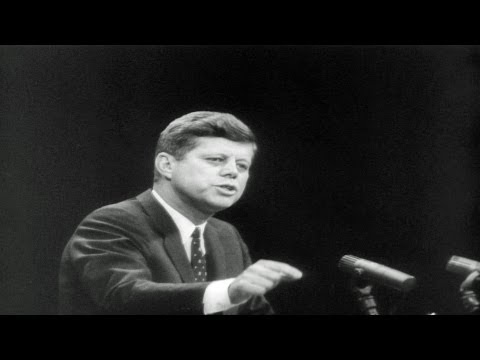
JFK responds to U.S. Steel’s defiance
(click image for YouTube video)Tye deals with the 1962 steel crisis in about one page (pp. 163-64). His account is so skeletal, so skimpy, that one would think all the commotion was about whether or not FBI agents should phone business executives late at night. To get my bearings back on this momentous event, I reviewed what is perhaps the best account: Donald Gibson’s chapter-long treatment in Battling Wall Street. Gibson begins his discussion by quoting the late, illustrious economist John Blair, who called the episode, “The most dramatic confrontation in history between a President and a corporate management.” (Gibson, p. 9) The only other instance that rivals it was Harry Truman’s intervention in a steel strike ten years before, but that was during a full-blown war in Korea. President Kennedy had worked on an industry-wide labor agreement for a year, mainly through Secretary of Labor Arthur Goldberg. In late March, he thought he had one. But it was broken via a personal visit to the White House by US Steel chairman Roger Blough. He told JFK he would announce a price increase in 30 minutes, which is what the President and Goldberg had been promised would not occur. The President then uttered his famous quote, “My father always told me that all businessmen were sons-of-bitches, but I never believed it until now.” (Irving Bernstein, Promises Kept, p. 143) Within 24 hours JFK went on national television to condemn the steel companies. He said that Americans would find it hard to accept that “a tiny handful of steel executives … can show such utter contempt for the interests of 185,000,000 Americans.” (Gibson, p. 13)
One day later, RFK announced formation of a grand jury and the delivery of subpoenas. Records, both personal and corporate, were seized. The aim was to establish if criminal conspiracy laws had been violated. The Attorney General also had the FBI march into executive offices for interviews. (Schlesinger, p. 421) Within 72 hours the crisis was over and the price increase rescinded. There can be little doubt that the Attorney General’s actions hurried the settlement. Especially in light of the fact that, in 1961, as a continuation of an investigation under the Eisenhower administration of price-fixing by electric companies, RFK had actually placed seven business executives in prison. Five were from General Electric and Westinghouse. (See The Great Price Conspiracy by John Herling.) And contrary to popular belief, and what Tye implies, based on information from the 1962 steel inquiry, RFK began new actions against US Steel in late 1963. (Gibson, p. 13)
V
This same pattern, shrinking a large achievement, is followed with respect to the Attorney General’s actions in the civil rights arena. In this instance, however, Tye’s writing is even more problematic, since RFK’s achievements there are clearly epochal, no prior Attorney General coming even close to them.

Harris Wofford & JFK Tye does something with the subject that I don’t recall seeing before. He begins his discussion of the Kennedy program in 1963, at a meeting RFK had with some militant black leaders like James Baldwin. Most accounts of the Kennedy civil rights program begin with a review of what had been done by the Eisenhower-Nixon administration and then segues into the memo written by Harris Wofford. After campaigning for Kennedy, Wofford was appointed JFK’s special assistant on civil rights. In late December of 1960, before the inauguration, Wofford wrote a memo that outlined a program for achieving equal rights for black Americans. He then recommended his friend and colleague, attorney Burke Marshall, to be the Justice Department lawyer in charge of the issue. (Bernstein pp. 42-43)
Just the information above counters two observations Tye makes. First, that the Kennedy administration had no plan to attain civil rights, and second, that RFK took on issues willy-nilly. (Tye, p. 205) Wofford, a central figure by anyone’s estimation, is discounted by Tye. Surprisingly, he is only mentioned once in his chapter on the subject. Yet his memo was both acute and realistic, and it was more or less followed by the administration. He wrote that the only branch of government that had achieved anything so far was the judiciary. He then wrote that the administration would have to press the issue through executive actions in order to put pressure on Congress to pass legislation, something that, for political reasons, Congress would not be ready to do in the first year or two. Wofford also mapped out the country geographically and recommended what actions needed to be taken and where. For example, he recommended legal assaults on states that restricted voting rights, and strictures in contracting to open up corporations to black employment. (Bernstein, pp. 47-48) As historian Irving Bernstein notes in his book, once Robert Kennedy became Attorney General, he followed this program. (See Promises Kept, Chapter 2)
When the Kennedy administration took office, it was evident that the Brown vs. Board decision, and the Civil Rights Acts of 1957 and 1960 were not having any kind of real impact. One reason for this was the Eisenhower administration’s lack of rigor in enforcing them. Senator John Kennedy, during the debate on the Civil Rights Act of 1957, said he championed Title 3 of that proposed act because it allowed the Attorney General to enter into individual states to attack cases of voting discrimination and school segregation. And this is what Robert Kennedy was doing once he became Attorney General. On May 6, 1961, at the University of Georgia’s Law Day, RFK announced that, unlike his predecessor, he would strongly enforce the Brown vs. Board decision. And RFK also began filing lawsuits in southern states based upon the low rates of voter turnout there. In his first year in office, RFK filed more than twice as many cases than Eisenhower had in his entire second administration. As writers like Harry Golden have pointed out, this plan was not just recommended by Wofford’s memo. Candidate Kennedy had approved it in no uncertain terms during the campaign in a meeting with his civil rights advisory board. (Harry Golden, Mr. Kennedy and the Negroes, pp. 105, 139)
In the face of all this, how does the author actually begin his chronicle of the administration’s civil rights campaign? He ignores much of what I have noted above. He begins his actual chronicle with the Freedom Riders campaign, which started in May of 1961. He uses this for two reasons. He wants to show that 1) RFK was behind the curve, and 2) He uses the incident to call the AG a liar. He achieves the first in part by ignoring the comment that Senator James Eastland made to RFK after his confirmation. He told Kennedy that his predecessor had never filed a voting rights case against his home state of Mississippi. The next day President Kennedy wrote a note to his brother telling him to begin filing cases. (Golden, p. 100) This, of course, preceded the Freedom Riders campaign.
The second objective is achieved by saying that RFK was alerted to the incident in advance. Yet the AG said he was not aware of the demonstration. To use one example, as an FBI informant later revealed, J. Edgar Hoover was well aware of the planned violence against the Freedom Riders. That information was not passed to Hoover’s boss, the Attorney General. (Schlesinger, p. 307) A letter that the demonstration organizer had sent to the Attorney General was routed to Burke Marshall instead. He either never got it or he did not inform Kennedy about it. (Bernstein, p. 63)
But beyond that, is Tye implying what I think he is implying? That somehow, even if he had known about it, RFK would not have anticipated the violence the Freedom Riders would encounter? That is: vicious racists attacking the buses with baseball bats, lead pipes and bicycle chains. With people being pulled off the buses, thrown to the ground and then beaten and bloodied. All this while both the police and FBI did nothing. In this regard, I should note the following. At his meeting with President Kennedy about taking the job, both men understood there were going to be battles in the civil rights area right off the bat. (Ronald Goldfarb, Perfect Villains, Imperfect Heroes, p. 10) But also, I could find no mention by the author of the protest RFK made as a member of the Harvard football team when a southern opponent refused to let a black member of the team stay in the same hotel. That was in 1947. (Schlesinger, p. 71) Secondly, Tye seriously underplays the actions Kennedy took as leader of the Legal Forum at the University of Virginia in 1951. RFK invited black diplomat Ralph Bunche to speak there. He knew it would raise a ruckus, since UV was the team that did not want to play Harvard back in 1947. What made it more problematic was that Bunche wrote Kennedy a letter saying that he did not wish to appear before an audience that featured segregated seating. Yet, state law required this. More or less on his own, Kennedy took the case through four levels of campus government saying that he would not give up, since he thought disallowing Bunche would be morally indefensible. (Schlesinger, p. 90) Bunche ended up speaking to an integrated audience that was about 1/3 black. But beyond those personal experiences, the Greensboro lunch-counter sit-ins had taken place in North Carolina during the presidential campaign of 1960. And further, RFK was already supervising the New Orleans school desegregation crisis against the likes of Leander Perez in early 1961. (Robert Kennedy in His own Words, edited by Edwin Guthman and Jeffery Schulman, p.81)
What really happened with the revolution in civil rights that took place under Bobby Kennedy is fairly simple to understand. First, the failure of the Eisenhower administration to use any of the judicial and legislative achievements attained in the fifties built up large amounts of pent up frustration. For example, from 1955 to 1960, the courts had made a series of rulings that segregation in busing was not constitutional. If those rulings had been enforced, there would have been no need for the Freedom Riders. (Bernstein, pp. 62-63) But John F. Kennedy’s candidacy represented something different to black Americans. From his speeches on European colonialism in Africa back in 1957, to his speech in Jackson, Mississippi that year, telling southerners they must abide by Brown vs. Board, to his comments in New York during the 1960 primary that he would risk losing the south since this was a moral issue to him, and his later call during the general election to Coretta King while her husband was in jail, all these and more, caused that frustration to unleash itself once Kennedy won the election. Finally, someone was in the White House who was ready to do something about civil rights. For instance, it was John Kennedy’s election that inspired James Meredith to apply to the University of Mississippi. (Bernstein, p. 76)
And they were correct. By the summer of 1963, in less than three years, that synergy had turned the tide. With John Kennedy’s landmark speech in June of 1963 on the issue, and Robert Kennedy’s stewardship of King’s March on Washington, the battle was essentially won. Kennedy’s civil rights act was going to pass. As Wofford predicted, it could not have passed earlier. But I must note, even with this—the reversal of a century of Jim Crow and segregation in less than three years—Tye is still not satisfied. About President Kennedy’s nationally televised speech he writes that Kennedy had wanted to redefine America’s place in the world, but he had not come close before. (Tye, p. 229) To say the least, many would disagree. For example, President Kennedy reversed the Eisenhower agenda in Third World nations like Congo, Indonesia, and Laos in 1961. Tye also states that Robert Kennedy’s confrontation with Governor George Wallace at the University of Alabama was “scripted”. If one watches the classic documentary about this showdown at Tuscaloosa, Crisis, the viewer will see that all the way through, the AG did not know what Wallace was going to do. Wallace had deliberately decided not to talk to RFK to settle the matter in advance. So at the White House, the AG suggested that the students might have to be forced through one of the furthest doors Wallace was standing in front of. If the episode had been scripted, RFK would never have suggested such a dangerous alternative. After all, Wallace had 900 state troopers there, and Bobby Kennedy had brought in 3000 guardsmen.
But in the long run Wallace and his henchman, Mississippi governor Ross Barnett, had won. By creating these dramatic confrontations at Tuscaloosa and Oxford, they had made it appear that Bobby Kennedy was invading the state. Which conjured up images of President Lincoln and General Grant marching on Richmond in 1865. So even though Wallace lost on integration, he won the larger political stake: the South was lost to the Democrats after 1964. And this followed from the fact that, unlike Hoover, Attorney General Herbert Brownell, Eisenhower and Nixon, Bobby Kennedy viewed this as something that had to be done. Indeed, at times RFK sounded like Malcolm X on the issue: “We’ll have to do whatever is necessary.” And what made it even worse is that RFK was fully aware of what was happening in the political arena. He was writing off state after state for his brother’s re-election in 1964. (Guthman and Shulman, pp. 76, 82) This whole tragic dimension—the moral plane losing out to the political factors—is lost on Tye.
But it wasn’t lost on Martin Luther King. In 1967, it was Bobby Kennedy who suggested King lead his Poor People’s March to Washington. (Schlesinger, p. 911) And for the 1968 primary election, King made it clear to his advisors that he was backing Kennedy over Lyndon Johnson and Eugene McCarthy, and there was no real question about it. (Martin Luther King: The FBI File, p. 572)
VI
I began to lose a lot of faith in the author when, about halfway through the book, he began to insert the work of the late David Heymann. (pp. 191-92) And while we are at it, Tye also sources writers like Kitty Kelley, Chuck Giancana, and Ron Kessler. To be clear, towards the end, he doesn’t actually endorse Heymann; he throws his work out there for discussion. The problem is that Heymann has been discredited about as far as an author can be discredited. And since that discreditation has been well publicized, it is hard to believe that Tye doesn’t know about it. He even gives play to Heymann’s book, saying that RFK and Jackie Kennedy had an affair after JFK was killed. That book, and Heymann’s reputation, was thoroughly savaged by Lisa Pease. And today, it has been shown beyond any doubt that Heymann was a professional confabulator, one who not only made up interviews he did not do, but even created interview subjects who did not exist. Beyond that, he even manufactured a fictional police department so he could refer to their reports. (See this Newsweek story) Tye uses a story about RFK making out with Candy Bergen that was vehemently denied by a furious Bergen in 2014 in an article for Newsweek. That Newsweek story was published two years before the author’s book. Can he really have missed it? Meanwhile, Tye does not quote what the late FBI officer in charge of domestic intelligence for Hoover said about Kennedy’s party life. In his book The Bureau, William Sullivan wrote that Hoover would send agents out to follow Kennedy around at night. They could never find him in any compromising situations. He would nurse one drink all night and then leave the party.
This is all apropos of Tye’s chapter on RFK and Cuba, and also other foreign affairs. That chapter is surely one of the worst in the book. In order to discuss it, we must briefly mention President Kennedy’s policy, since Tye does so. Near the beginning of the chapter, Tye writes, in relation to Operation Zapata, the code name for the Bay of Pigs invasion, that “The new president was determined to act.” (Tye, p. 242) This is contrary to just about everything that has been written about Zapata. Even Allen Dulles, the progenitor of the operation, has stated that the project was a kind of orphan child that Kennedy had adopted, but he had no real love or affection for. (Trumbull Higgins, The Perfect Failure, p. 103) When Arthur Schlesinger asked him what he thought about the concept, JFK replied he thought about it as little as possible. (ibid, p. 102) Contrary to what Tye states, the CIA had to entice the new president into going along with it. They did this in a variety of ways. This included presenting him with false estimates of the resistance to Castro on the island, having Dulles wildly overstate the possibilities of the project’s success, and actually predicting that once the invasion landed, much of the Cuban militia would defect. (Peter Kornbluh, Bay of Pigs Declassified, pp. 294-95) But beyond that, Tye persists in the idea that President Kennedy cancelled D-Day air strikes. (Tye, p. 242) Thanks to the declassification of Lyman Kirkpatrick’s Inspector General report, and the availability of General Maxwell Taylor’s White House report, this has been exposed as a myth propagated by the CIA.
Now, what did Robert Kennedy have to do with Zapata? Just about nothing. He was briefed on the operation four days before the invasion force was launched from Central America. (ibid, p. 301) The importance of RFK in regards to Zapata is his role afterwards in serving as President Kennedy’s watchdog on the Taylor review board. This was a panel set up by President Kennedy to delve into the CIA’s creation and launching of the invasion. Tye seriously underplays RFK’s role on Maxwell Taylor’s board. For instance, he does not mention RFK’s cross-examination of Allen Dulles; or Joseph Kennedy’s aid in helping uncover the Bruce-Lovett report, which had previously been critical of Dulles; nor does he mention the termination of director Dulles, Deputy Director Charles Cabell, or operations supervisor Dick Bissell. (Tye, p. 245) JFK did this because he came to the conclusion he had been lied to about every aspect of the operation. Why? Because Dulles knew the plan would not succeed. The director had banked on Kennedy sending in American forces when he saw it failing. Kennedy did not. With the declassification process on Zapata, several respected authors, including Jim Douglass in JFK and the Unspeakable, have demonstrated this was the case. It is questionable whether the president could have understood all this without his brother’s role on the Taylor panel. As far as I can see, this is all left out by Tye.
As Tye recognizes, it was largely RFK’s part on the Taylor board that convinced the president not to trust the CIA or the Pentagon. Thus Robert Kennedy assumed a larger presence in foreign policy matters. When Operation Mongoose—the secret war against Cuba—was formulated, RFK served as a kind of ombudsman over that project. As David Corn wrote in Blonde Ghost—his biography of the project’s administrator Ted Shackley—the CIA greatly resented this. For now they had to present detailed plans to RFK for every raid into Cuba.
This gives Tye the opportunity to do what I thought he would. He tries to say that Mongoose included the elimination of Fidel Castro and since RFK knew all about the project, he had to have known about the plots to kill Fidel. (p. 253) This is wrong on two scores. First, it is clear from the declassified record on Mongoose that assassination plots were not a part of the program. The CIA had arranged plans to liquidate Castro, but these were apart from official plans. Secondly, the CIA Inspector General report on the plots specifically states that they were kept from the Kennedys. This includes the phase of the plots that CIA officer William Harvey was supervising with mobster John Roselli during Mongoose. (The Assassinations, edited by James DiEugenio and Lisa Pease, p. 327) When RFK found out about them he called in Director John McCone and Director of Operations Richard Helms and he made it clear that this kind of thing was disgraceful and had to be stopped. (Goldfarb, p. 273) But the CIA deliberately deceived RFK and continued in them. In fact, when JFK was assassinated, they had a representative meeting with a Cuban national codenamed AM/LASH, delivering him murder weapons. Again, the CIA lied about this and said it had been authorized by Robert Kennedy. It was not. (David Talbot, Brothers, pp. 229-30)
After all this rather flawed history—about Zapata, about Mongoose, about the CIA plots to assassinate Fidel Castro—Tye concludes with a remarkable reverie. (p. 254) I actually had to read it twice. He says that the clandestine operations against Cuba were the inspiration for things like Ronald Reagan’s war against the Sandinistas in Nicaragua, and Richard Nixon’s CIA overthrow of Salvador Allende in Chile. Somehow, Tye leaves out the fact that the CIA had been doing this kind of thing long before the Kennedys came to power. Can Tye really not be aware of the CIA overthrow of Mossadegh in Iran in 1953? The Agency overthrow of Arbenz in Guatemala the year after? Or their attempt to militarily overthrow Sukarno in Indonesia in 1958? Or the backing by Eisenhower and Allen Dulles of the murder plots against Patrice Lumumba of the Congo in 1960? The idea that this kind of thing was all new in 1961 is a little ludicrous. And as more than one author—for example, Jim Douglass—has shown, the Kennedys were attempting to both halt and reverse these regressive actions in the Third World.
But the main focus of this dubious chapter is the 1962 Missile Crisis. As is his consistent tendency, Tye’s goal seems twofold: 1) He wants to label Robert Kennedy a liar, and 2) He wants to blame RFK for the crisis in the first place. He does this by saying that the reason for the Russian placement of the atomic armada in Cuba was because of Mongoose, and the possibility of a second invasion. Therefore, he concludes that RFK was not forthcoming about the real cause of the crisis in his book on the subject, Thirteen Days. (Tye, p. 239)
Again, to say this is flawed history is understating it. One way Tye achieves this is by not revealing the full expanse of the nuclear arsenal the USSR had secretly moved into Cuba. That arsenal included 40 missile launchers and 60 medium- and long-range nuclear tipped rockets. The former could fly 1,200 miles; the latter 2,400 miles. Consequently, the long-range missiles could reach almost any major city in the USA, excepting the Pacific Northwest. There were 140 surface to air missile defense launchers to protect the launching sites. Those batteries would be accompanied by a wing of the latest Soviet jet fighter, the MIG-21, plus a detachment of 45,000 Soviet combat troops. That troop detachment included four motorized rifle regiments and over 250 units of armor. To finish off the nuclear launch triad, the Russians had sent in 40 IL-28s, an armed nuclear bomber which had a speed of 560 MPH and a range of 4,500 miles. Finally, they had constructed a submarine pen with 11 subs, 7 of them with 1-megaton nuclear weapons. That explosive power is about 80 times the torque of the Hiroshima blast. (Probe Magazine, May-June 1998, p. 17)
That array made it possible to hit every major city in America. One would use the bombers and subs for the southeast quadrant, targeting cities like Houston, New Orleans and Miami. The missiles could be used for targets in the northeast, Mideast, Midwest and southern California. With that revealed, here is my question: How was this designed to thwart a Cuban exile boat raid into say Varadero on the Cuban north coast? Do you incinerate 200,000 people in Atlanta in response to an eight-man raid that sabotaged an electricity plant? As many commentators have noted, it would be like killing a fly with a cannon—you would blow up your house in the process. To stop another invasion, all one would have needed to do was to give Castro tactical nuclear weapons, which the Russians did, and/or the SAM missiles and MIG jets. But such was not the case, not by a long shot.
As scholars who have studied the crisis for decades have concluded, what Nikita Khrushchev was assembling in Cuba was a first strike capability. Something that the USSR did not have at the time, and would not attain for about four more years. In the nuclear planning policy of deterrence, this capability was considered necessary to stop your opponent from executing their first strike. In fact, in a meeting in July of 1961, Allen Dulles had asked President Kennedy to do just that: to launch a first strike against Russia. Kennedy not only refused, he walked out of the meeting. (James Douglass, JFK and the Unspeakable, p. 235)
The most respected scholar in the field, Harvard’s Graham Allison, has concluded that with this first strike capability, Khrushchev was going to maneuver Kennedy into surrendering West Berlin. (Essence of Decision, p. 105) In their Vienna Summit in the summer of 1961, Khrushchev had made the question of Berlin a real bone of contention with Kennedy: since West Berlin was within East Germany, it should be a part of that Russian dominated country. Kennedy did not see it that way. He felt that if he surrendered Berlin, it could unravel the whole American/European alliance. Something he was not willing to do. In fact, during the meetings in the White House on this subject, Kennedy repeatedly referred to Berlin as the reason for the crisis. (op. cit. Probe, p. 18)
Another point that Tye scores his subject on is that RFK pondered whether an air strike would be enough to get the missiles out, or if there needed to be an invasion. At this first meeting President Kennedy had just listed four options his advisors had mapped out for him. Robert Kennedy then chimes in:
We have the fifth one really, which is the invasion [which was already raised by Maxwell Taylor]. I would say that you’re dropping bombs all over Cuba if you do the second, air and the airports, knocking out their planes, dropping it on all their missiles. You’re covering most of Cuba. You’re going to kill an awful lot of people, and we’re going to take an awful lot of heat on this. And then—you know the heat. You’re going to announce the reason that you’re doing it is because they’re sending in these kinds of missiles.
Well, I would think it’s almost incumbent upon the Russians then, to say, Well we’re going to send them in again. And if you do it again, we’re going to do the same thing in Turkey” or “we’re going to so the same thing to Iran.” (The Kennedy Tapes, edited by Ernest May and Philip Zelikow, p. 66)
Does this sound like RFK is pushing for an invasion? He is making an overall air strike, which is what Secretary of Defense Robert McNamara had described, sound very unappealing. As Steven Schneider writes, Bobby Kennedy was against even the air strike option, comparing it to what the Japanese did to America at Pearl Harbor. So how could he have been for an invasion? (Robert F. Kennedy, pp. 56-57) In fact, after an unsettling meeting with congressional leaders who thought the agreed upon blockade of Cuba was too weak, the brothers were shaken by the sabre rattling. They both agreed that the blockade was the least JFK could do without being impeached. (op. cit. Probe, p. 16)
The crisis was resolved by the blockade, meetings between newsman John Scali and KGB agent Alex Feklisov, Khrushchev’s annoyance with Castro’s recklessness, and a meeting between Robert Kennedy and Russian ambassador Anatoly Dobrynin. The arrangement was that the Russians would remove the atomic arsenal from Cuba, in return for a no invasion pledge on Cuba from Kennedy, and the later removal of American missiles from Turkey. Kennedy wanted the last to be kept under wraps since he thought it would hurt American standing in Europe. But Robert Kennedy had assured Dobrynin that this would be part of the deal at his meeting with him. Needless to day, Tye scores both RFK and Ted Sorenson—who edited Thirteen Days after Kennedy’s death—for not making the deal more explicit in the final version of the book. This is really kind of penny ante even for this book. Bobby Kennedy’s diaries made the deal explicit. Sorenson edited them to make it less so, since that is the way his boss, John Kennedy—for reasons stated above—wished it to be. (See “Anatomy of a Controversy”, by Jim Hershberg at the online National Security Archive.)
This is largely what Tye uses to call RFK a liar and accuse him of being a hawk during the Missile Crisis. But then he goes beyond that. He actually writes that the stance taken in Thirteen Days is what influenced Lyndon Johnson to do what he did in Vietnam! (p. 273) This is wild even for Tye. First, LBJ was at most of the meetings during the Missile Crisis. When you read those transcripts you will see that he was more hawkish than the Kennedys. (See especially the meeting of 10/27/62, Probe, op. cit. p. 23) Secondly, Johnson was against Kennedy’s policy of no American combat troops in Vietnam from 1961! Against Kennedy’s wishes, on his trip there in May of 1961, he suggested that Premier Diem of South Vietnam request combat troops from Washington. (John Newman, JFK and Vietnam, p. 72) Later, after John Kennedy was killed, Johnson told Defense Secretary Robert McNamara how he had been against withdrawing from Vietnam, as Kennedy was planning to do; but he kept his mouth shut since he was only Vice-President. (Virtual JFK, by James Blight, p. 310) Does it get any clearer than that? But in the end the claim is actually nonsensical, for what reasonable person could even compare the two situations? In one you had a superpower secretly moving a first strike nuclear capability 90 miles from Florida, thereby upsetting the balance of power; in the other, you had a years-long, anti-colonial, peasant rebellion 9,000 miles away—one that had no direct impact on America’s national security. Not even Johnson could possibly equate the two. If I didn’t know better, I would say that Tye is trying to blame Johnson’s epochal disaster in Indochina—which was expanded and completed by Nixon and Kissinger—on Bobby Kennedy’s book. Which, in view of the record, is absurd.
As the reader can see, most of the book is like this. Is it worth reading? No, because of all the textual problems mentioned above. Is it worth buying? No, since I can see no real value for it as a reference work. Which leaves the final question: Why did the author write the book? Only Larry Tye can answer that question.