Tag: DAG HAMMARSKJOLD

  • Hammarskjold and Kennedy vs. The Power Elite

    Hammarskjold and Kennedy vs. The Power Elite


    indonesia header


    As many CTKA readers and observers of JFK symposiums will know, since the 2013 Cyril Wecht conference in Pittsburgh, one of the topics I have been researching and talking about is John F. Kennedy’s reformist foreign policy. To some people this seemed kind of pointless. After all, in virtually every JFK assassination book Kennedy’s foreign policy boiled down to Vietnam and Cuba. What else was there?

    Quite a lot. What was new in my speech mostly came from Philip Muehlenbeck’s volume, Betting on the Africans, which had been published the year before. (Click here for a review) Later, I discovered Robert Rakove’s book, Kennedy, Johnson and the Nonaligned World. That book serves as a fine compliment to Muehlenbeck. (Click here for the CTKA review) I used much of the Rakove material to present my altered versions of the 2013 presentation at both the JFK Lancer in 2013 and 2014 and the AARC Conference in 2014.

    These two books form a thematic line that extends back to Richard Mahoney’s landmark volume JFK: Ordeal in Africa. That book was a trailblazing effort in the field of excavating what Kennedy’s foreign policy really was, and where its intellectual provenance came from. It was published in 1983. Even though it bore the Oxford University Press imprimatur, it had little influence. It virtually had little or no impact in the categories of Kennedy biography, studies of the Kennedy presidency, or the JFK assassination field. Which, in retrospect, is stunning. Because what Mahoney did in that book was revolutionary. In a systematic way, he traced the beginnings of President Kennedy’s foreign policy ideas. He did this with a wealth of data he garnered from weeks spent at the JFK Library. He used this ignored information to show how Kennedy’s ideas on the east/west struggles in the Third World originated, why they were different than President Eisenhower’s, and how they manifested themselves once he became president. No other book I had read elucidated this progress in such a detailed and rigorous way. In fact, when I was done with the book I actually felt like I had been snookered by relying on historians like Herbert Parmet, William Manchester, and Richard Reeves for my information on Kennedy’s presidency and foreign policy. Mahoney made them look like hacks.

    It became clear to me that there was, quite literally, a war going on. And as unsatisfactory as the Parmet, Reeves, and Manchester books were (with Manchester I am referring to his presidential profile book Portrait of a President) these would be superseded by even worse JFK books later: biographies by John H. Davis, Robert Dallek, Thomas Reeves, and worst of all—perhaps the worst imaginable—Sy Hersh’s pile of rubbish The Dark Side of Camelot.

    In 2008 Jim Douglass made a clean break with all the calculated trash. His fine volume, JFK and the Unspeakable, has become something of a classic. It has actually crossed over and is sourced in books outside strictly the JFK assassination or JFK presidency fields. I wrote a very approving essay about Jim’s book. (Click here)

    Douglass did an exceedingly good job in elucidating Kennedy’s Vietnam and Cuba policies between the covers of one book. But with the new scholarship by Rakove and Muehlenbeck, the Douglass book seems rather narrowly focused today. And with the even newer book by Greg Poulgrain, The Incubus of Intervention (see my recent review), we can now add Indonesia to Africa and the Middle East as objects of Kennedy’s reformist foreign policy. In fact, Douglass is on to this. He actually pointed out that I should read and review the Poulgrain book.
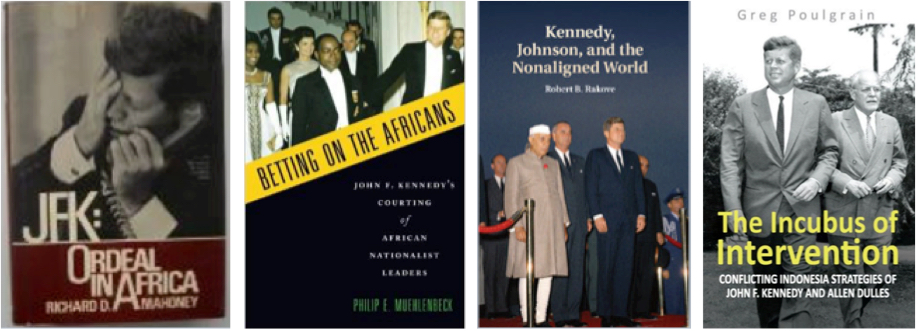
    Four trailblazing books on Kennedy’s foreign policy

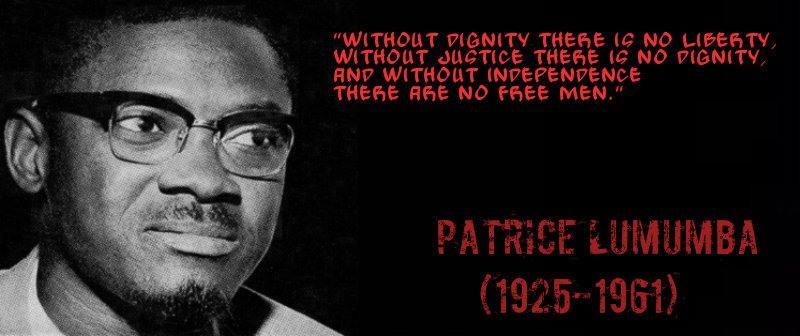
    But the Kennedy Enlightment really began with Mahoney. And although his book dealt with three African trouble spots, the majority of the book was focused on the colossal Congo crisis. Which, like other problems, Kennedy inherited from President Eisenhower. As we learn more about the Congo conflagration, we begin to see how large and complex that struggle was. Large in the sense that, in addition to the UN, several nations were directly involved. Complex in the sense that there were subterranean agendas at work. For instance, although England and France ostensibly and officially supported the United Nations effort there, they were actually subverting it on the ground through third party agents. In fact, when one studies the seething cauldron that was the Congo crisis, there are quite a few villains involved. There are only three heroes I can name: Patrice Lumumba, Dag Hammarskjold and John F. Kennedy. All three were murdered while the struggle was in process. Their deaths allowed the democratic experiment in Congo to fail spectacularly. Ultimately, it allowed one form of blatant exploitation, colonialism, to be replaced by another, imperialism.

    II

    To sketch in the background: In 1960, Belgium was going to leave Congo after brutally colonizing the country for generations. But their plan was to leave so abruptly that the nation would collapse inwardly for lack of leadership. Belgium would then return in order to protect the Belgian assets still there. As we shall see, the CIA was in agreement on this. Especially when Patrice Lumumba was democratically elected as Prime Minister. As Jonathan Kwitny noted, Lumumba was the first democratically elected leader of an African nation emerging from the long era of European colonialism. Ideally, Lumumba could have set a precedent. That did not happen. And the reason it did not happen was largely because of outside interference.

    Within days of June 30th, Congo independence, the Belgian plan began to work. Rioting took place and Belgian soldiers began to fire into crowds. On July 11th, the regional governor of the immensely wealthy Katanga province, Moise Tshombe, declared his state was seceding from Congo. Tshombe was egged on by the Belgians and British who wanted mineral rights. In exchange, they promised him military aid and mercenaries if Lumumba attacked Katanga. (Kwitny, p. 55)

    As Kwitny notes in Endless Enemies, the CIA and the National Security Council did not like Lumumba. After all, he had the gumption to ask for aid in kicking out the Belgians, who were now parachuting troops back in. Lumumba asked for aid from the USA, the USSR and the United Nations. The first declined, the second seemed amenable to sending arms, and Secretary General Dag Hammarskjold decided to send in a UN expeditionary force. The fact that Lumumba went to the USSR was enough for CIA station chief Larry Devlin to portray him as a communist. On August 18th he wired DCI Allen Dulles that Congo was experiencing a classic communist takeover. He then added that anti-West forces were rapidly gaining power and Congo was on the verge of becoming another Cuba. (ibid, p. 59)
    This was preposterous. There was no “anti-West force” build-up in Congo. In fact, England and Belgium were sending in troops and mercenaries. These were later joined by the French, who also wanted a stake in Katanga. But Devlin concluded by saying that Lumumba should be “replaced” by a pro-Western group. (ibid) This is just days after Lumumba visited the USA asking for help to expel the Belgians. Ambassador Clare Timberlake contributed the same kind of utter distortion. He told Washington that Lumumba wanted troops in order to expel the Belgians and then nationalize all industry and property. Lumumba would then invite communist bloc experts in to run the economy. (ibid, pp. 59-60)

    The Devlin/Timberlake cables had their intended impact. Within 48 hours DCI Allen Dulles and President Eisenhower agreed that Lumumba had to be neutralized. (ibid, p. 62) The CIA took two tracks to achieve this aim. First, Timberlake and his deputy Frank Carlucci tried to get President Kasavubu to stage a coup. He said no. So Devlin went to military colonel Josef Mobutu and asked him to eliminate Lumumba. In September, Kasavubu finally relented and dismissed Lumumba. Lumumba then said he was dismissing Kasavubu. With a Mexican standoff holding, Devlin then went to Mobutu and asked him to arrest Lumumba. But the UN emissary there, Rajeshwar Dayal, prevented the action. And Lumumba now became somewhat of a prisoner in his own home. Kasavubu then dissolved parliament, which had backed Lumumba. (p. 66) The second track of the CIA’s program now kicked in: assassination plots to kill Lumumba. (ibid, p. 67)

    As the reader can see, in the space of two months, the Americans and Europeans had pretty much destroyed whatever hope there was for the first democratic nation to emerge and survive in post-colonial Africa. In fact, one could fairly say that they strangled African democracy in the cradle. From here, it got worse. Devlin now wanted Mobutu to eliminate not just Lumumba, but his deputy Antoine Gizenga. (ibid) But Dayal and Hammarskjold kept him protected also.

    When Mobutu’s troops began to battle with the UN mission, Lumumba made an impulsive, perhaps reckless, decision. He escaped from Dayal’s protection and tried to flee to Stanleyville, his political base. With Devlin’s help, Mobutu captured him. And after severely beating him, returned him to the capital of Leopoldville.

    Three things then happened that sealed Lumumba’s fate. First, Russian planes carrying supplies and arms started arriving in Stanleyville. Second, two CIA assassins also arrived on the scene. And third, John F. Kennedy was about to be inaugurated. Because of these factors, , instead of having Lumumba killed by the CIA agents, or risk a more sympathetic policy under Kennedy, on January 13, 1961, Mobutu had Lumumba shipped to Moise Tshombe in Katanga. As Devlin must have known, this meant he would be killed soon. Four days later, he was. (ibid, p. 69)

    The information about his death was kept from President Kennedy for almost a month. He did not learn about Lumumba’s murder until February 13th. He learned of it on a phone call with UN Ambassador Adlai Stevenson. White House photographer Jacques Lowe captured the moment in a crystalline photograph:
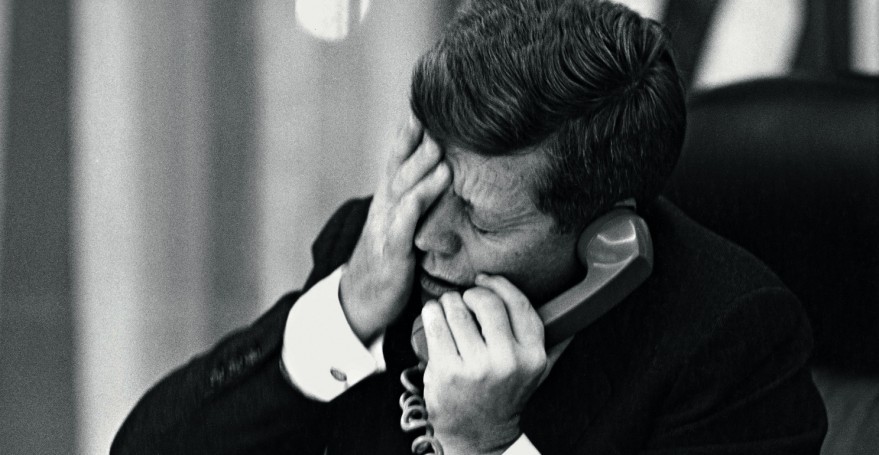
    Kennedy hears of Lumumba’s murder from Adlai Stevenson
    (photo by Jacques Lowe)

    Perhaps no photo from the Kennedy presidency summarizes who Kennedy was, and how he differed from what preceded him and what came after him, than this picture.

    III

    In the wake of Lumumba’s murder, Dag Hammarskjold was not about to give up. Secretary General Hammarskjold was from Sweden and his family had a long history in public service. His father had been a regional governor and then Sweden’s prime minister. Two of his older brothers had also spent time in government service, one as a governor and the other working with the League of Nations. As an economist, Dag worked for the Finance Ministry and coined the term “planned economy”. He and his brother Bo helped launch the Swedish welfare state.
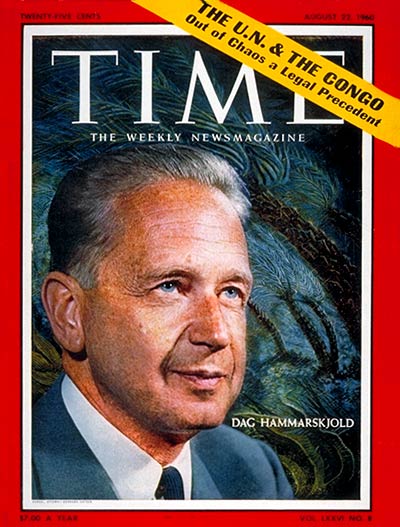
    Dag Hammarskjold
    August 27, 1960

    Hammarskjold first worked with the Swedish delegation at the United Nations. He then, rather unexpectedly, was voted its second Secretary General in 1953. As writer Susan Williams notes, his ascendancy coincided with the beginning of the de-colonization process in Africa and Asia. By 1960, 47 of the 100 UN members came from this Afro/Asia bloc. (Williams, Who Killed Hammarskjold? p. 23) In 1960 alone, 16 African nations had joined the UN. Hammarskjold decided to tour the continent in late 1959. He had harsh words for the apartheid regime of the Union of South Africa. Therefore, he became an enemy of white supremacists on that continent. And with those nations who still held colonies there, or were trying to unduly influence their former colonies e.g. France, England, Portugal and Belgium. (ibid, p. 24)

    Because of his Swedish background and his work in civil service and planned economies, Hammarskjold had a special sensitivity to these new and awakening nations. He understood that, individually, these states felt weak and isolated. But as members of the UN, they felt part of a world community that could elevate their stature. Or, as he put it, the function of the UN was to protect the weak against the strong. (ibid)

    Hammarskjold suspected what the Belgian secret agenda was before they pulled out of Congo. Therefore he sent Ralph Bunche, part of the American delegation, there as independence was enacted. King Baudouin of Belgium was there for the official proceeding. He actually praised what Belgium had done for Congo and specifically singled out Leopold II for praise. Which would be like giving credit to John Calhoun in the struggle for civil rights for Black Americans. Lumumba felt he had to respond. He said, words to the effect, “we are your monkeys no more”. (Williams, p. 31)

    There can be little doubt that tensions began to build because of this exchange. Also because, in the ranks of the army, Belgians still remained in command centers. When violence broke out, Lumumba blamed it on the Belgians in the military and accused the former mother country of trying to recolonize Congo—which was accurate. As civilian Belgians tried to leave the country, Baudouin sent in troops to protect them. A week later, Tshombe announced the Katanga secession. Katanga contained about 60% of Congo’s mineral wealth. Tshombe was clearly in alliance with the giant mining conglomerate Union Miniere, a Belgian/British transnational. For immediately after this announcement, the company said it would not pay its corporate taxes to the Congo capital of Leopoldville anymore. It would now pay them to Elisabethville, the capital of Katanga. (ibid, p. 33) The company also extended Tshombe a large loan. Further, Belgian advisors began to flock to Katanga as well as British mercenaries from nearby Rhodesia. Congo was going to be stillborn.

    Lumumba now turned to Hammarskjold for help. The Secretary General immediately passed UN Resolution 143. This demanded that the Belgians leave Congo and promised assistance to Lumumba until the nation was able to defend itself. Within 48 hours, there were 3,500 UN troops on the ground in Congo. Although he was now being accused of acting too late by the USSR, Hammarskjold proclaimed he would not recognize either Mobutu or Kasavubu as the leader of Congo. (Williams, p. 39) But when Lumumba was murdered, the Russians again criticized the Secretary General for doing too little, too late.

    Hammarskjold replied by passing resolution 161. There were now 15,000 UN troops in Congo, they were now allowed to use military force. The mission was to expel all foreign troops, and Parliament would be reconvened under UN protection. The Secretary General clearly saw Congo as a defining moment for both the UN and his leadership. (ibid, p. 41)

    The UN commander on the ground, Conor Cruise O’Brien, demanded Tshombe step down and Katanga rejoin Congo. To strengthen himself, Tshombe now recruited French veterans of the OAS, the terrorist group of army veterans who had split off from French president Charles DeGaulle over Algerian independence.
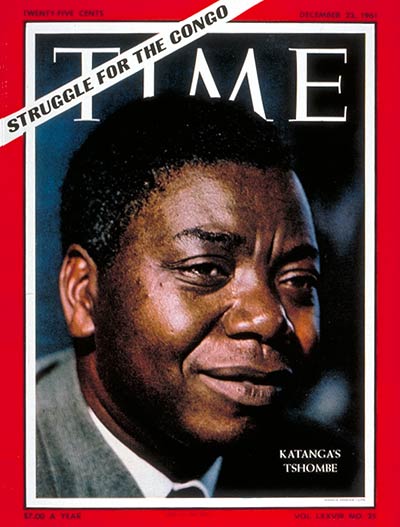
    Moise Tshombe
    December 22, 1961

    In the face of this, O’Brien launched two offensives into Katanga. The first was called Operation Rumpunch, and the second was named Operation Morthor. The first operation was quite successful, the second was not. About half of Elisabethville was still under Tshombe’s control. (ibid, p. 49) By this time, the British premier of the African Federation—Roy Welensky— was clearly favoring Katanga, as was the Union of South Africa. Welensky, working with his colleague on African Affairs, Baron Cuthbert Alport, was also secretly supplying mercenaries from Rhodesia to Tshombe. (ibid, p. 51)

    As a result of this secret policy, Welensky now shifted troops into Ndola, the main airport for Rhodesia, which was just a few miles from the border with Congo. Welensky shipped in food, supplies and arms from as far away as Australia. (ibid, p. 53) Rhetorically, Welensky went as far as to compare the UN troops in Congo to the Nazis.

    This information is important. Since we are about to discuss the second high profile murder over the Congo Crisis: that of Dag Hammarskjold. Today I, and many others, call it a murder, not a suspicious death. The state of the evidence seems to me to clearly denote that this was a planned assassination. After considering some of the work of Susan Williams and others, the reader will likely agree.

    IV

    Hammarskjold flew into Congo on September 13, 1961. He was surprised to hear about Operation Morthor, since he maintained he had not authorized it. While there, the Battle of Jadotville began. This was fought between a company of Irish UN troops and mercenaries employed by Tshombe. During the battle, Tshombe requested a meeting with Hammarskjold.

    This was to occur on September 17th, in Ndola, a city in British controlled Rhodesia. Tshombe requested no reporters be alerted. But, Baron Alport was there. He stationed himself in the airport manager’s office, right below the control tower. As previously stated, also on hand was a temporary arm of the Rhodesian Ministry of Defense set up by Welensky. Hammarskjold was to arrive aboard a DC6 piloted by a Swede. Below him, on the runway, were 18 Rhodesian planes and two American DC3’s. (ibid, p. 68) In referring to the last, a Rhodesian air squadron leader told the UN Commission that there were “underhand things going on” at the airport, “with strange aircraft coming in, planes without flight plans and so on. There were American planes sitting on the airfield with engines running, likely transmitting messages.” (Lisa Pease, “Midnight in the Congo”, Probe, Vol. 6 No. 3 p. 20) Further, another witness said the American planes were full of sophisticated communications equipment. (Williams, p. 188)

    Hammarskjold’s flight never landed at Ndola. And there is no tape recording of the approach of the plane. But there were notes kept. According to the written record, the last message from the plane was that the pilot was descending from 16,000 to 6,000 feet. (Williams, p. 70) At this point, Ndola lost contact with the plane. Because it was around midnight, no search party was sent out. Alport made a comment that the plane must have landed elsewhere. He then suggested the control room staff retire at around 3:00 AM. Yet, there were reports being filed around this time that several witnesses had independently seen a large ball of fire go off in the sky in the nearby vicinity. (ibid, p. 72) At 7 AM, a UN plane flew into Ndola to begin a search for Hammarskjold and the 15 other lost passengers of the Albertina. The pilot was arrested upon touching down. (ibid, p. 73)

    The airport manager did not return until 9 AM, three hours after dawn. The search did not start until an hour later. The wreckage of the plane was found at about 3 PM, eight miles from the airport. There was one survivor, Harold Julien. He would pass away six days later. But not before he said the plane was in flames before it hit the ground. Further, the plane was determined to be under power, and the landing gear was lowered. Although all the passengers were severely burned, Hammarskjold was not—at all. Further, in something that simply cannot be explained, there was a playing card stuffed into his ruffled tie. Although it is not possible to determine what the card is from the photos, a witness at the scene said it was the ace of spades. (Williams, p. 7) Another oddity, Alport ended up with Hammarskjold’s briefcase. (ibid, p. 85) These anomalies suggest someone was at the crash scene before the official first responders arrived. As we shall see, the evidence for this is more than circumstantial.

    Two of the security guards on the plane had bullets in their bodies. This was officially explained by saying that the heat of the crash had caused ammunition to explode. But a Swedish expert who had done experiments on this topic said that, even if this were so, the projectiles would not have enough force to penetrate the bodies. (See Pease, and Williams, p. 6) What makes this even more fascinating is the testimony of Major General Bjorn Egge. Egge had been the head of the UN military information mission in Congo. He had flown to the Ndola hospital, where the victims had been transported. When he saw Hammarskjold’s body he noticed what appeared to be a bullet hole in his forehead. (Williams, p. 5) That hole is not apparent in the autopsy photos Williams saw. But when the photos were shown to forensic experts, two of them said it appeared the photo had been retouched at the forehead. (ibid, p. 9)

    Let us now consider sole survivor Julien’s crucial testimony: that the plane was in flames before it hit the ground. (Williams, p. 94) There is much evidence to corroborate this key point. Charles Southall was a Navy intelligence analyst in 1961. At the time, he was attached to the NSA base on the island of Cyprus. On the night of the crash, he was at home. His commanding officer called him and said he should come out and listen to a recorded communication intercept he had captured. This was the only time such a thing happened while he was in Cyprus, so Southall did so. He said that, on the recording, he heard a pilot say he was descending on the DC6. He then heard what he thought was the sound of a cannon firing. Then, the pilot said, “I’ve hit it…It’s going down.” (Williams, p. 143) Someone in the office recognized the pilot’s voice, and the NSA had a dossier on him. When the Swedish government reopened the case in 1992, Southall tried to communicate with them through the American State Department. But the Swedes found out about him through an independent source and he was interviewed more than once. (ibid, p. 147)

    Southall’s testimony is echoed by the words of Swedish flying instructor Tore Meijer. He was stationed as a flight teacher to the Ethiopian Air Force in 1961. On the night of the crash, he was listening to a short wave radio he had just bought. Therefore, he was testing various frequencies. (ibid, p. 152) He picked up a conversation that included mention of the Ndola airport. In his own words, he then described the following: “The voice says, he’s approaching the airport, he’s turning—he’s leveling—where the pilot is approaching the actual landing strip. Then I hear the same voice saying, “another plane is approaching from behind, what is that?” The voice then said, “He breaks off the plan…he continues.” Meijer said he lost the contact at this point.

    The idea that another plane intercepted Hammarskjold’s is corroborated by at least seven witnesses on the ground. (Pease, p. 20) For example, Dickson Buleni said he saw a smaller plane above the larger plane dropping something that looked like fire on it. (Williams, p. 117) This testimony is similar to that of Timothy Kankasa and his wife. (ibid, pp. 93, 122) But the Kankasas revealed something that may be even more interesting. They said that the crash was not initially discovered at around 3 PM on the 18th. Timothy and a few other residents of Twapia Township discovered it about six hours earlier. Further, the couple stated that this information was reported to local officials. Timothy also said he had reported it to the first investigating body from Rhodesia, but it had been edited out of his testimony. (ibid)

    Again, there is independent corroboration for this earlier successful search, which punctures the 15-hour official lag time between the crash and the discovery of the plane wreckage. Colonel Charles Gaylor had been instructed by the USAF to fly to Ndola to help escort Hammarskjold to any other destination he wished to fly to as a result of his work there. Therefore, he was awaiting the landing of the Albertina that night. When Hammarskjold’s plane did not land, Gaylor retired so he could wake up and begin searching for the lost plane. He found it the next morning and relayed the information to the Ndola airport. Gaylor said that the Rhodesian planes did not show up until four hours later. (ibid, p. 188)

    Another witness, who also saw a second plane in the sky, built on this disturbing indication of a deliberate and immediately enacted cover up as to the discovery of the wreckage. He saw two Land Rover type vehicles rushing at high speed toward the scene within an hour of the crash. (See Pease, “Midnight in the Congo”, p. 20) He and another witness then saw the vehicles return after they saw and heard a large fireball explosion. (Williams, p. 105)

    One should note in regards to this testimony: when studying the photos of the wreckage of the Albertina, it certainly does not look like the plane simply crashed. Because the damage is just too extensive. It does appear that there was at least one explosion. But further, there do not seem to be any photos taken of Hammarskjold in situ. (Williams, pp. 13, 111) Because of this lack, because of the delay in the “discovery”, because of the testimony of Bjorn Egge about a bullet hole in Dag’s forehead, because of the experts who detected signs of tampering with the photos, because of the lack of any burns, because of all this, some have suggested that Hammarskjold may have survived the crash. And I should add one more point on this issue. Williams could not find any official autopsy reports. There are only summaries and conclusions. (p. 8)

    From just this brief précis of the evidence, the reader can see that the original story, which said the crash was due to pilot error, is simply not credible today. The evidence indicates that Hammarskjold’s plane was sabotaged. A cover up, which seems preplanned, then ensued. The motive—as with Lumumba’s murder— was to make sure that Congo would not be an independent country. One in which the citizenry would be able to enjoy the fruits of its own prodigal resources. Which is what Lumumba had promised his followers during his campaign. With both Lumumba and Hammarskjold done away with, that aim now seemed unattainable.

    V

    As Susan Williams writes in her book, John Kennedy was an unflinching admirer of Hammarskjold. After his death, Kennedy summoned one of his assistants into the oval office. The president told Sture Linner that, compared to Hammarskjold, he was a small man. Because, in his view, Dag Hammarskjold was the greatest statesman of the 20th century. (p. 239)

    When Kennedy came into office, one of the reversals he made of President Eisenhower’s foreign policy was in Congo. He had tried to make the issue of the rising tide of African nationalism part of the 1960 campaign. For he attempted to differentiate himself from his opponent Richard Nixon on the point. (See Philip Muehlenbeck, Betting on the Africans, pp. 37-41) This was a legitimate point of difference. At a National Security Council meeting, the vice-president once claimed that “some of the people of Africa have been out of the trees for only about fifty years.” Budget Director Maurice Stans replied that he “had the impression that many Africans still belonged in trees.” (ibid, p. 6) Kennedy did not at all share in this view. From at least 1957, with his powerful Senate speech on the French/Algerian crisis, Kennedy had become a staunch advocate of favoring African nationalism and liberation over the concerns of our European colonialist allies. (ibid, p. 36) For in that speech he actually stated that a true ally of France would not have done what Eisenhower and Nixon had with Algeria. Which was to either remain silent on the conflict, or even supply France with weapons. A true friend would have pointed out the folly of the colonial struggle. And then escorted France to the bargaining table to foster her exit from a hopeless and expensive civil war. (The full text of this visionary speech is in the book The Strategy of Peace, edited by Allan Nevins, pp. 66-80)

    When Kennedy was inaugurated, he immediately enacted policies to carry out these differing views on Africa. As Muehlenbeck demonstrates, he did so on a number of different fronts. But the policy reversal that was done fastest was in Congo. Which he requested his first week in office. And which he approved on February 2nd. (See “Dodd and Dulles vs. Kennedy in Africa,” by James DiEugenio, Probe, Vol. 6 No. 2, p. 21) Upon hearing of this, Ambassador Timberlake sent word to Allen Dulles that Kennedy was breaking with Eisenhower, and his new program was more or less a sell-out to the Russians. When Hammarskjold got wind of the reversal, he told Dayal that they could soon expect an organized backlash to Kennedy’s reformist policy. Which, in large part, backed Lumumba—not realizing he was dead—and was open to negotiations with Russia over a militarily neutralized Congo. Kennedy also opposed the secession of Katanga and was willing to cooperate with the UN in an attempt to keep Congo free and independent.

    In other words, for all intents and purposes, Kennedy agreed with the outlines of what Hammarskjold was doing. To make the distinction clear, he recalled Timberlake. (ibid, p. 22) Then, in September, Hammarskjold was killed.

    At this point two remarkable things occurred in the immense Congo struggle. First, former President Harry Truman made a stunning comment. He said, “Dag Hammarskjold was on the point of getting something done when they killed him. Notice that I said, ‘When they killed him.’ ” (Williams, p. 232) Author Greg Poulgrain later shed some light on the origins of this surprising comment. He interviewed Hammarskjold’s close friend and colleague at the UN, George Ivan Smith. It turns out that Hammarskjold and Kennedy were cooperating, not just on Congo, but on the problem of the Dutch occupation of West Irian, which Indonesian leader Achmed Sukarno felt should be part of Indonesia. (Poulgrain, The Incubus of Intervention, pp. 77-78) Smith also added that Kennedy had let Harry Truman know about these discussions. Which seems logical, since Truman was the only previous Democratic president still alive.

    The second remarkable development was that Kennedy decided to shoulder on with what Hammarskjold had begun in the Congo. In other words, by himself, he was going to oppose the imperialist forces of England, France, and Belgium. Which all desired to split Katanga away from Congo. And then make both states pawns for European multinational corporations. There can be very little doubt that this was Kennedy’s aim. Why? Because, after Hammarskjold’s demise, he went to the UN to pay tribute to his legacy. He then appointed Edmund Gullion as his ambassador to Congo.

    Anyone who knows anything about Kennedy will realize, it was Gullion who first altered JFK’s consciousness on the subject of the appeal of communism in the Third World. This occurred on Senator Kennedy’s visit to Saigon in 1951. JFK never forgot the prediction that Gullion made at that time. Namely that France would not win the war in Indochina. When Kennedy gained the White House, he brought Gullion in as an advisor on colonial matters. And now he sent him to Leopoldville to attempt to compensate for the loss of Hammarskjold. As Richard Mahoney wrote, this indicated just how important Kennedy thought the Congo was. Because no ambassador in the entire administration had more secure access to the oval office than Gullion. (Mahoney, JFK: Ordeal in Africa, p. 108) Kennedy then went further. He made George Ball his special advisor on Congo inside the White House. Ball later became famous as the one man willing to argue against President Johnson during his disastrous escalation of the Vietnam War. But even in 1961 Ball had a reputation as something of a maverick on foreign policy.
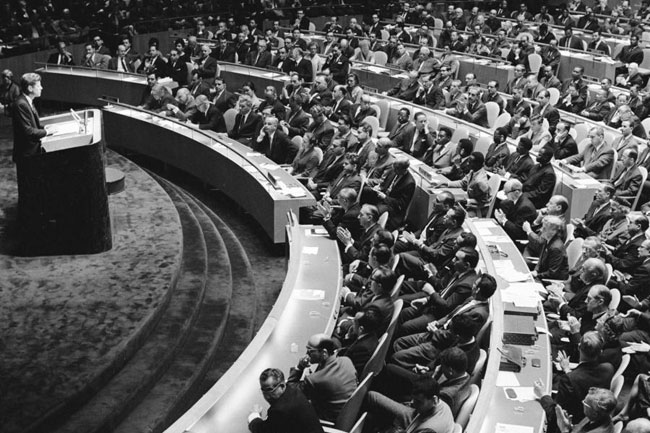
    Kennedy addresses U.N. General Assembly
    September 25, 1961

    Addressing the General Assembly at the memorial for Hammarskjold, Kennedy said, “Let us here resolve that Dag Hammarskjold did not live or die in vain.” He backed this up by having his UN delegation vote for a use of force resolution to deport the mercenaries and advisory personnel out of Katanga. (DiEugenio, p. 23) In doing so, Kennedy was militarily moving against his formal allies, the British, French and Belgians. For those nations were all paying lip service to the UN forces. But not so clandestinely, they were undermining the mission. Therefore, Kennedy was not just honoring Hammarskjold rhetorically. He was continuing his policies—and pushing the UN into following him. In fact, when hostilities broke out in Katanga with Tshombe trying to block highways used by UN troops, Kennedy told the new UN leader U Thant, who was wavering on the commitment, not to worry at all about European reaction. He would take care of that. He then said in public, these leaders should spend less time criticizing the UN and more time convincing Tshombe to negotiate a truce with the new leader of Congo, Cyrille Adoula. (Mahoney, p. 117)

    Kennedy also had to deal with the big guns of the MSM who seemed to favor Tshombe. That is: Time magazine, who put him on their cover; William F. Buckley, who (incredibly) compared Katanga’s secession to the Hungarian uprising of 1956; and Sen. Thomas Dodd, who actually visited Tshombe in Katanga to show his support. In the face of this, Kennedy decided to use economic warfare. He told the representatives of the giant Union Miniere mining corporation that unless they significantly cut their monthly stipend to Tshombe, he would unleash a terrific attack on Katanga, and then turn over the company’s assets to Adoula. This achieved its aim. The stipend was significantly reduced. (DiEugenio, p. 24)
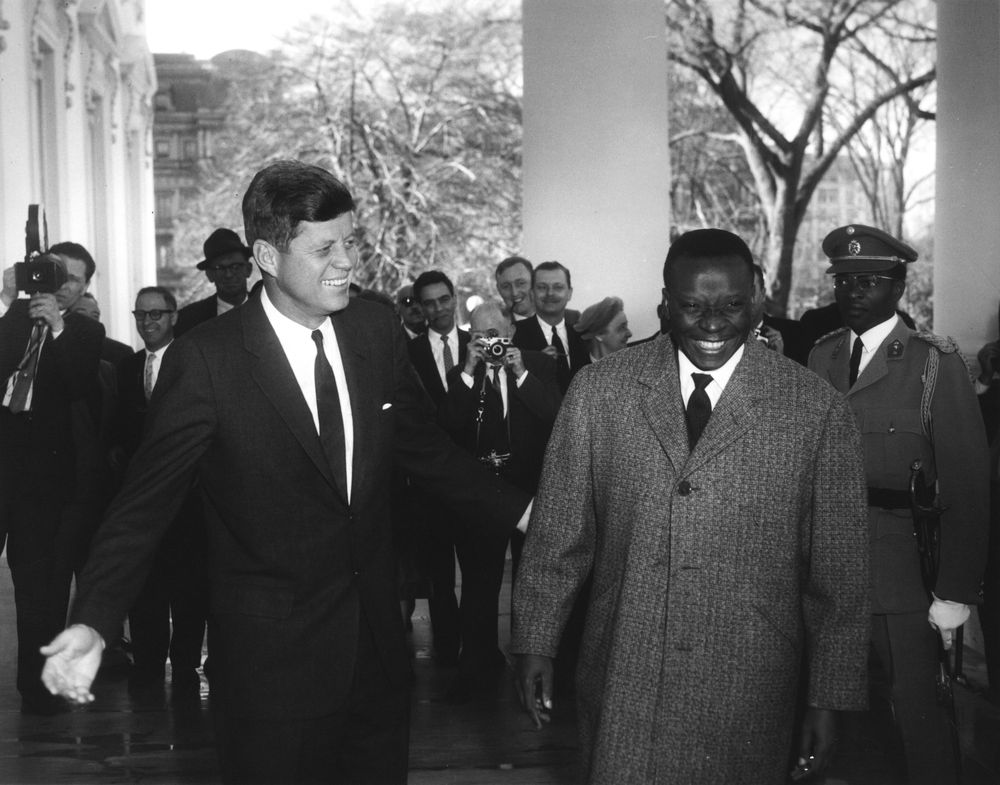
    Kennedy and Cyrille Adoula at the White House

    Kennedy then brought Adoula to New York. In his address to the United Nations, the African leader criticized Belgium and praised Congo’s national hero, Patrice Lumumba. (Mahoney, p. 134) In reaction, Tshombe’s supporters then wanted to bring him to the USA to counter this appearance. Gullion argued against it. He suggested denying Tshombe a visa on the basis that he was not a real representative of Congo. Kennedy listened to arguments for and against the denial. He then sided with Gullion and denied the visa. (DiEugenio, p. 24)

    On the day before Christmas of 1962, Katangese troops fired on a UN helicopter and outpost. Kennedy had previously forced the issue on his White House staff by demanding a unanimous vote to back the military invasion of Katanga. George Ball, who was holding out for more negotiations, came over to the Kennedy/Gullion side. So now the USA fully backed Operation Grand Slam, the UN attempt to finally take Elisabethville, capital of Katanga. By January 22, 1963 Grand Slam had succeeded on all fronts. Tshombe, predictably, fled to Rhodesia. As Adlai Stevenson, Kennedy’s representative to the United Nations wrote, it was that body’s finest hour.

    VI
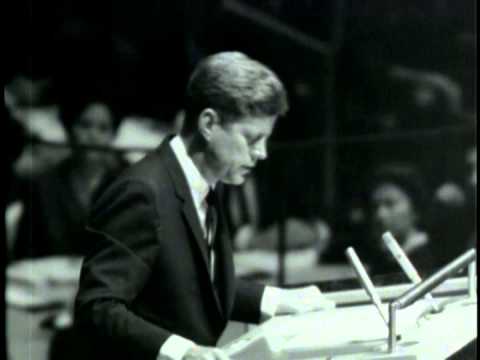
    Kennedy addresses U.N. General Assembly
    September 20, 1963

    The UN had never before done what Hammarskjold had committed it to in Congo. That is, send a large military force into an independent nation to put down an internal civil war. But Hammarskjold had done so at Lumumba’s request. Both men had been murdered over that struggle. With Hammarskjold gone, the United Nations did not want to stay after Grand Slam was completed. In fact, it’s an open question if Grand Slam would have been launched without Kennedy’s visit to the UN the year before. But because of the expense, controversy, and length of the expedition, the UN leadership wanted to leave Congo in 1963. Even with Adoula’s position precarious and the Congolese army a rather unreliable force. Again, Kennedy took it upon himself to go to New York. On September 20, 1963 Kennedy addressed the UN General Assembly on this very subject. He said he understood how a project like this would lose its attraction after its initial goals were met. Because then the bills would come due. But he urged the UN to do what it could to preserve the gains they had made. He also asked that they do all in their power to maintain Congo as an independent nation in its fragile state. He concluded the UN should complete what Hammarskjold had begun.

    Kennedy’s speech turned around the consensus opinion to depart. The UN voted to keep the peacekeeping mission there. But later in 1963, things began to unravel. Kasavubu decided to disband Parliament. This ignited a leftist rebellion from Stanleyville. There was an assassination attempt on Mobutu. With this, Mobutu, already a darling of the CIA, now became the Pentagon’s poster boy at Fort Benning.

    Mobutu Sese Seko
    with Prince Bernhard of the Netherlands
    (1973)

    After Kennedy’s murder, President Johnson sided with the CIA and the Fort Benning crowd. As the Stanleyville rebellion picked up steam, the CIA now descended on the American embassy and took it over. It became the base for an air operation run by Cuban exile pilots. Incredibly, Belgium now became an ally of the USA. Tshombe was asked back to Congo by Mobutu. Tshombe immediately found a treasure trove of Chinese documents and a defector who now said China was behind the leftist rebellion. (Kwitny, p. 79) Needless to say, within 18 months, Johnson and the CIA had reversed the Kennedy/Hammarskjold program. Adoula and Kasavubu were dismissed or forced out; Gullion left. In 1966 Mobutu installed himself as military dictator. The riches of the Congo were now mined by the European forces Lumumba asked Hammarskjold to remove. Like Suharto in Indonesia, Mobutu became one of the richest men in the world. His holdings in Belgian real estate alone topped 100 million dollars. (Kwitny, p. 87) Like Suharto, he reigned for three decades. And like the Indonesia dictator, when he fell, he left his country in a destabilized, anarchic state with poverty predominating. In other words, where they were at the beginning.

    One of the most fascinating revelations in Greg Poulgrain’s The Incubus of Intervention was this: In addition to JFK working with the Secretary General Hammarskjold on Congo, the two were also working on a design for Indonesia. (Poulgrain, p.77) They were planning on a solution to the West Irian problem. Which was part of the former Dutch Empire that Netherlands did not want to let go. Probably because of the great mineral wealth there, which likely even surpassed that of Katanga. Further, the two men were also working on a plan to aid countries coming out of colonialism. This was called OPEX. This was a UN group that would send professionals of all kinds into these areas to aid their development. Not as advisors, but as servants of the new country. This is the plan Hammarskjold had in mind for West Irian. In their original concept, Hammarskjold would play the lead role in both Congo and Indonesia, with Kennedy supporting him. With the Secretary General’s 1961 murder, Kennedy had to soldier through both situations himself. He was doing a fairly good job, until he too was assassinated. In fact, he had planned on a state visit to Jakarta in 1964, a first for an American president.

    As one can see from this discussion, and also Poulgrain’s book, Kennedy’s policies were reversed in both countries shortly after his murder. (See again the above-cited review; also, this interview with the author) The results were horrendous for the citizens of both countries. For when Mobutu and Suharto took over, any idea of having the prodigal natural resources of both states aid in fostering its citizenry was lost. Because of the two overthrows, Lumumba and Sukarno did not funnel the money into improvements for the daily lives of their citizens, through building infrastructure, energy sources, hospitals, primary and secondary schools etc. Instead it went to the shareholders of the exploiting companies and into the pockets of Mobutu and Suharto.

    As Jonathan Kwitny has noted, Congo could have been a sterling example of a nation crippled by colonialism, now being set free. And aided by the USA, allowed to grow and nurture, and thereby be a model—for not just Africa—but the rest of the world. That is what Hammarskjold and Kennedy had hoped for. Just as they had imagined for Sukarno and Indonesia. Instead, something contrary to that occurred. Or as Kwitny wrote:

    The democratic experiment had no example in Africa, and badly needed one. So perhaps the sorriest, and the most unnecessary, blight on the record of this new era, is that the precedent for it all, the very first coup in post-colonial African history, the very first political assassination, and the very first junking of a legally constituted democratic system, all took place in a major country, and were all instigated by the United States of America. (Kwitny, p. 75)

    Kennedy and Hammarskjold understood this moral and practical quandary. It was not until recently that the importance of the Hammarskjold/Kennedy relationship has been highlighted. I and others have also tried to show that Kennedy’s foreign policy should be seen not just as a series of individual instances, but in the gestalt. That is, as part of an overall pattern. Largely because of his sensitivity to these Third World issues—which was not at all the case with Eisenhower, Johnson and Nixon. But this gestalt concept has been very late in arriving. Because the cover up about the facts of Kennedy’s real foreign policy has been more stringent and assiduous than the cover up about the facts of his assassination.

    Too often we think of that foreign policy in terms of just Cuba and Vietnam. As seen above, that view foreshortens history. It’s the way the other side wants us to see Kennedy—a view without Hammarskjold. Constricted by this deliberate obstruction, we fail to see who Kennedy really was. Not only does that foreshortened view cheat history, it cheats Kennedy—and helps conceal the secrets of his assassination.
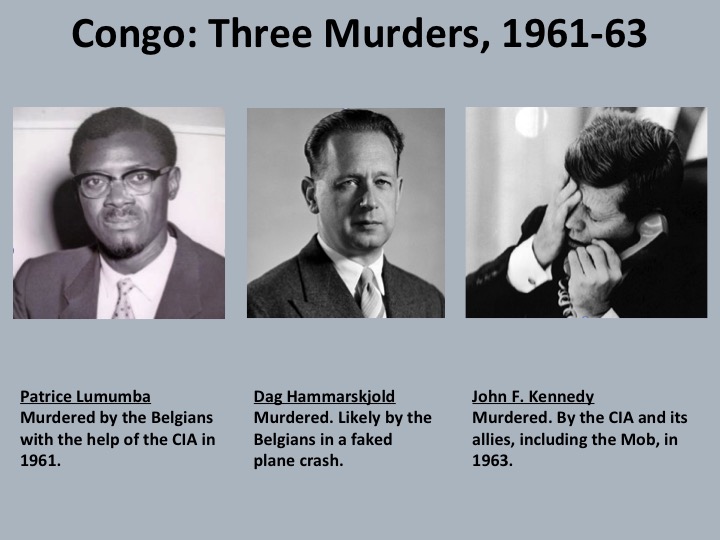
    from “JFK’s Foreign Policy: A Motive for Murder”
    JFK Lancer conference, November 2014

    Addendum

    See now U.N. to Probe Whether Iconic Secretary-General Was Assassinated for the discovery of the original SAIMR documents.

  • Will the UN reopen the Dag Hammarskjold case?

    Spy messages could finally solve mystery of UN chief’s death crash

    by Jamie Doward, At: The Guardian

  • Midnight in the Congo: The Assassination of Lumumba and the Mysterious Death of Dag Hammarskjold


    From the March-April, 1999 issue (Vol. 6 No. 3) of Probe


    “In Elizabethville, I do not think there was anyone there who believed that his death was as accident.” – U.N. Representative Conor O’Brien on the death of U.N. Secretary-General Dag Hammarskjold

    “A lot has not been told.” – Unnamed U.N. official, commenting on same


    The CIA has long since acknowledged responsibility for plotting the murder of Patrice Lumumba, the popular and charismatic leader of the Congo. But documents have recently surfaced that indicate the CIA may well have been involved in the death of another leader as well, U.N. Secretary-General Dag Hammarskjold. Hammarskjold died in a plane crash enroute to meet Moise Tshombe, leader of the breakaway (and mineral-rich) province of Katanga. At the time of his death, there was a great deal of speculation that Hammarskjold had been assassinated to prevent the U.N. from bringing Katanga back under the rule of the central government in the Congo. Fingers were pointed at Tshombe’s mercenaries, the Belgians, and even the British. Hardly anyone at the time considered an American hand in those events. However, two completely different sets of documents point the finger of culpability at the CIA. The CIA has denied having anything to do with the murder of Hammarskjold. But we all know what the CIA’s word is worth in such matters.

    In the previous issue of Probe, Jim DiEugenio explored the history of the Congo at this point in time, and the difference between Kennedy’s and Eisenhower’s policies toward it. In the summer of 1960, the Congo was granted independence from Belgium. The Belgians had not prepared the Congo to be self-sufficient, and the country quickly degenerated into chaos, providing a motive for the Belgians to leave their troops there to maintain order. While the Belgians favored Joseph Kasavubu to lead the newly independent nation, the Congolese chose instead Patrice Lumumba as their Premier. Lumumba asked the United Nations, headed then by Dag Hammarskjold, to order the Belgians to withdraw from the Congo. The U.N. so ordered, and voted to send a peacekeeping mission to the Congo. Impatient and untrusting of the U.N., Lumumba threatened to ask the Soviets for help expelling the Belgian forces. Like so many nationalist leaders of the time, Lumumba was not interested in Communism. He was, however, interested in getting aid from wherever he could, including the Soviets. He had also sought and, for a time, obtained American financial aid.

    Hatching an Assassination

    In 1959, Lumumba had visited businessmen in New York, where he stated unequivocally, “The exploitation of the mineral riches of the Congo should be primarily for the profit of our own people and other Africans.” Affected minerals included copper, gold, diamonds, and uranium. Asked whether the Americans would still have access to uranium, as they had when the Belgians ran the country, Lumumba responded, “Belgium doesn’t produce any uranium; it would be to the advantage of both our countries if the Congo and the U.S. worked out their own agreements in the future. 1 Investors in copper and uranium in the Congo at that time included the Rockefellers, the Guggenheims and C. Douglas Dillon. Dillon participated in the NSC meeting where the removal of Lumumba was discussed.

    According to NSC minutes from the July 21, 1960 meeting, Allen Dulles, head of the CIA and former lawyer to the Rockefellers, sounded the alarm regarding Lumumba:

    Mr. Dulles said that in Lumumba we were faced with a person who was Castro or worse … Mr. Dulles went on to describe Mr. Lumumba’s background which he described as “harrowing” … It is safe to go on the assumption that Lumumba has been bought by the Communists; this also, however, fits with his own orientation.2

    Lawrence Devlin, referenced in the Church Committee report under the pseudonym “Victor Hedgman,” was the CIA Station Chief in Leopoldville (now Kinshasa). On August 18th, Devlin cabled Dulles at CIA headquarters the following message:

    EMBASSY AND STATION BELIEVE CONGO EXPERIENCING CLASSIC COMMUNIST EFFORT TAKEOVER GOVERNMENT…. WHETHER OR NOT LUMUMBA ACTUALLY COMMIE OR JUST PLAYING COMMIE GAME TO ASSIST HIS SOLIDIFYING POWER, ANTI-WEST FORCES RAPIDLY INCREASING POWER CONGO AND THERE MAY BE LITTLE TIME LEFT IN WHICH TAKE ACTION TO AVOID ANOTHER CUBA.3

    The day this cable was sent, the NSC held another meeting at which Lumumba was discussed. Robert Johnson, a member of the NSC staff, testified to the Church Committee that sometime during the summer of 1960, at an NSC meeting, he heard President Eisenhower make a comment that sounded to him like a direct order to assassinate Lumumba:

    At some time during that discussion, President Eisenhower said something – I can no longer remember his words – that came across to me as an order for the assassination of Lumumba…. I remember my sense of that moment quite clearly because the President’s statement came as a great shock to me.4

    The Church Committee report on the Alleged Assassination Plots Involving Foreign Leaders recorded that Johnson “presumed” Eisenhower made the statement while “looking toward the Director of Central Intelligence.”5 With or without direct authorization, on August 26, 1960, Allen Dulles took the bull by the horns. He cabled Devlin in the Congo station the following message:

    IN HIGH QUARTERS HERE IT IS THE CLEAR-CUT CONCLUSION THAT IF [LUMUMBA] CONTINUES TO HOLD HIGH OFFICE, THE INEVITABLE RESULT WILL AT BEST BE CHAOS AND AT WORST PAVE THE WAY TO COMMUNIST TAKEOVER OF THE CONGO WITH DISASTROUS CONSEQUENCES FOR THE PRESTIGE OF THE U.N. AND FOR THE INTERESTS OF THE FREE WORLD GENERALLY. CONSEQUENTLY WE CONCLUDE THAT HIS REMOVAL MUST BE AN URGENT AND PRIME OBJECTIVE AND THAT UNDER EXISTING CONDITIONS THIS SHOULD BE A HIGH PRIORITY OF OUR COVERT ACTION.6

    Assassination requests would normally have gone to Richard Bissell. Because Bissell was away on vacation, Dulles told Eisenhower he would take care of Lumumba. According to Dulles family biographer Leonard Mosley, Dulles put Richard Helms in charge of preparing the assassination plot. A few days later, Helms produced a “blueprint” for the “elimination” of Lumumba.7 Although the Church Committee report includes no references to Helms’ involvement, this is certainly plausible. One of the first people involved in the plot to kill Lumumba was Dr. Sidney Gottlieb, who enjoyed Richard Helms’ patronage within the agency. As Helms moved up in the Agency, so too did Gottlieb.8 Gottlieb is identified as “Joseph Scheider” in the Church Committee report. Gottlieb was the grandfather of the CIA’s mind control programs, as well as the producer of exotic and deadly biotoxins for the CIA’s “Executive Action” programs.

    After returning from vacation, Bissell approached Bronson Tweedy, head of the CIA’s Africa Division, about exploring the feasibility of assassinating Lumumba. Gottlieb also conversed with Bissell, and claimed Bissell had indicated they had approval from “the highest authority” to proceed with assassinating Lumumba.

    By September 5, the situation in the Congo had deteriorated badly. Kasavubu made a radio address to the nation in which he dismissed Lumumba and six Ministers. Thirty minutes later, Lumumba gave a radio address in which he announced that Kasavubu was no longer the Chief of State. Lumumba called upon the people to rise up against the army. Just over a week later, Joseph Mobutu claimed he was going to neutralize all parties vying for control and would bring in “technicians” to run the country.9 According to Andrew Tully, Mobutu was “discovered” by the CIA, and was used by CIA to take charge of the country when the favored Kasavubu lost authority. The CIA’s relationship with Mobutu is pertinent to the ultimate question of the CIA’s final culpability in the assassination of Lumumba. Tully refers to Mobutu as “the CIA’s man” in the Congo.10 When Mobutu claimed power, he called on the Soviet-bloc embassies to vacate the country within 48 hours.11 John Prados wrote that Mobutu was “cultivated for weeks by American diplomats and CIA officers, including Station Chief Devlin.”12

    Gottlieb was sent to the Congo to meet Devlin. The CIA cabled Devlin that Gottlieb, under the alias of “Joseph Braun,” would arrive on approximately September 27. Gottlieb was to announce himself as “Joe from Paris.” The cable bore a special designation of PROP. Tweedy told the Church Committee that the PROP designator was established specifically to refer to the assassination operation. According to Tweedy, its presence restricted circulation to Dulles, Bissell, Tweedy, Tweedy’s deputy, and Devlin. Tweedy sent a cable through the PROP channel saying that if plans to assassinate Lumumba were given a green light, the CIA should employ a third country national to conceal the American role.13 Clearly, from the start, deniability was the highest concern in the assassination plotting.

    The toxin was supposed to be administered to Lumumba orally through food or toothpaste. This effort was clearly unsuccessful, if it had ever been fully attempted. Gottlieb’s and Devlin’s testimony conflicted regarding the disposal of the toxins. Both said they disposed of all the toxins in the Congo River. But if one of them did this, the other is lying, and both could be lying to protect the continued presence of toxic substances, as indicated by a cable from Leopoldville to Tweedy, dated 10/7/60:

    [GOTTLIEB] LEFT CERTAIN ITEMS OF CONTINUING USEFULNESS. [DEVLIN] PLANS CONTINUE TRY IMPLEMENT OP.14

    In October 1960, Devlin cabled Tweedy a cryptic request for him to send a rifle with a silencer via diplomatic pouch, a violation of international law:

    IF CASE OFFICER SENT, RECOMMEND HQS POUCH SOONEST HIGH POWERED FOREIGN MAKE RIFLE WITH TELESCOPIC SCOPE AND SILENCER. HUNTING GOOD HERE WHEN LIGHTS RIGHT. HOWEVER AS HUNTING RIFLES NOW FORBIDDEN, WOULD KEEP RIFLE IN OFFICE PENDING OPENING OF HUNTING SEASON.15

    There is no evidence to suggest a silenced rifle was or was not pouched at this point. The CIA did, however, send rifles to be used to assassinate Rafael Trujillo by diplomatic pouch to the Dominican Republic.

    A senior CIA officer from the Directorate of Plans was dispatched to the Congo to aid in the assassination attempt. Justin O’Donnell, referred to in the Church Committee records as “Father Michael Mulroney,” refused to be involved directly in a murder attempt against Lumumba, saying succinctly, “murder corrupts.”16 But he was not opposed to aiding others in the removal of Lumumba. He told the Church Committee:

    I said I would go down and I would have no compunction about operating to draw Lumumba out [of U.N. custody], to run an operation to neutralize his operations….17

    O’Donnell planned to lure Lumumba away from U.N. protection and then turn Lumumba over to his enemies, who would surely kill him. “I am not opposed to capital punishment,” O’Donnell explained to the Church Committee. He just wasn’t going to pull the trigger himself.

    O’Donnell requested that CIA asset QJ/WIN be sent to the Congo for his use. O’Donnell claimed he wanted QJ/WIN to participate in counterespionage. (The CIA’s IG report, however, indicated that QJ/WIN had been recruited to assassinate Lumumba.18) O’Donnell’s plan, which appears to have been successful, was for QJ/WIN to penetrate the defenses around Lumumba and encourage Lumumba to “escape” his U.N. guard. Once in the open, Mobutu’s forces could then arrest Lumumba and kill him. In the end, this is exactly what appears to have happened. Although O’Donnell denied that QJ/WIN had anything to do with Lumumba’s escape, arrest and murder, a cable to CIA’s finance division from William Harvey implies otherwise:

    QJ/WIN was sent on this trip for a specific, highly sensitive operational purpose which has been completed.19

    Another CIA operative, code-named WI/ROGUE, was dispatched to aid in the Congo operation. The CIA provided WI/ROGUE plastic surgery and a toupee “so that Europeans traveling in the Congo would not recognize him.” WI/ROGUE was described as a man who would “dutifully undertake appropriate action for its execution without pangs of conscience. In a word, he can rationalize all actions.”20

    WI/ROGUE was apparently assigned to Devlin. a report prepared for the CIA’s Inspector General described the preparation to be undertaken for his use:

    In connection with this assignment, WI/ROGUE was to be trained in demolitions, small arms, and medical immunization.21

    While in the Congo, WI/ROGUE undertook to organize an “Execution Squad.” One of the people he attempted to recruit was QJ/WIN. QJ/WIN did not know whether WI/ROGUE was CIA or not, and refused to join him. Both O’Donnell and Devlin claimed WI/ROGUE had no authority to convene an assassination team. But that assertion seems hard to believe, given that a capable assassin was assigned to a group plotting the permanent removal of Lumumba. And given that WI/ROGUE was to be trained in “medical immunization” it seems possible WI/ROGUE was to administer the poisons brought to the Congo by Gottlieb.

    The CIA, while accepting responsibility for plotting to kill Lumumba, disavows responsibility for his eventual murder. The Church Committee bought this line from the CIA and concluded the same in their report. Yet within the report and elsewhere on the record are events that belie that conclusion. For example, a cable from Devlin to Tweedy implies possible CIA foreknowledge of Lumumba’s escape which led to his death:

    POLITICAL FOLLOWERS IN STANLEYVILLE DESIRE THAT HE BREAK OUT OF HIS CONFINEMENET AND PROCEED TO THAT CITY BY CAR TO ENGAGE IN POLITICAL ACTIVITY…. DECISION ON BREAKOUT WILL PROBABLY BE MADE SHORTLY. STATION EXPECTS TO BE ADVISED BY [unidentified agent] OF DECISION MADE…. STATION HAS SEVERAL POSSIBLE ASSETS TO USE IN EVENT OF BREAKOUT AND STUDYING SEVERAL PLANS OF ACTION.22

    The Church Committee believed that one CIA cable seemed to indicate the CIA’s lack of foreknowledge of Lumumba’s eventual escape. But in another instance they cited this troubling passage, which indicates likely CIA involvement in his capture:

    [STATION] WORKING WITH [CONGOLESE GOVERNMENT] TO GET ROADS BLOCKED AND TROOPS ALERTED [BLOCK] POSSIBLE ESCAPE ROUTE.23

    According to contemporaneous cable traffic, the CIA was kept informed of Lumumba’s condition and movements during the period following his escape. Some authors believe that the CIA was directly involved in his capture. Andrew Tully acknowledges that “There were reports at the time that CIA had helped track him down,” but adds, “there is nothing on the record to confirm this.” However, nearly all authors agree that Lumumba was captured by Mobutu’s troops, and Mobutu was clearly, as Tully called him, “the CIA’s man” in the Congo.

    By January of 1961, Devlin was sending urgent cables to CIA Director Allen Dulles stating that a “refusal [to] take drastic steps at this time will lead to defeat of [United States] policy in Congo.”24 That particular cable was dated January 13, 1961. The very next day, Devlin was told by a Congolese leader that the captive Lumumba was to be transferred to a prison in Bakwanga, the “home territory” of his “sworn enemy.” Three days later, Lumumba and two of his closest supporters were put on an airplane for Bakwanga. In flight, the plane was redirected to Katanga “when it was learned that United Nations troops were at the Bakwanga airport.” Katanga claimed, on February 13, 1961, that Lumumba had escaped the previous day and died at the hands of hostile villagers. However, the U.N. conducted its own investigation, and concluded that Lumumba had been killed January 17, almost immediately upon arrival in Katanga. Other accounts vary. Some accounts indicated that on the plane, Lumumba and his supporters were so badly beaten that the Belgian flight crew became nauseated and locked themselves in the flight deck. Another account indicated that Lumumba was beaten “in full view of U.N. officials” and then driven to a secluded house and killed. But a contradictory version indicated that U.N. officers were not allowed in the area where the plane carrying Lumumba landed, and that the U.N. officials only had a glimpse at a distance of the prisoners when they disembarked. By all accounts, however, this was the last time any of the prisoners were seen in public alive.

    In a bizarre footnote to this story, former CIA man John Stockwell wrote of a CIA associate of his who told him one night of his adventure in Elizabethville (now Lubumbashi), “driving about town after curfew with Patrice Lumumba’s body in the trunk of his car, trying to decide what to do with it.” Stockwell added that his associate “presented this story in a benign light, as though he had been trying to help.”25 And in a similarly incriminating statement, CIA officer Paul Sakwa remembered that Devlin subsequently “took credit” for Lumumba’s assassination.26 In an open letter to CIA Director Admiral Stansfield Turner, Stockwell wrote:

    Eventually he [Lumumba] was killed, not by our poisons, but beaten to death, apparently by men who had agency cryptonyms and received agency salaries.27

    From the CIA’s own evidence, the CIA sought to entice Lumumba to escape protection. They then monitored his travel, assisted in creating road blocks, and when he was captured, encouraged his captors to turn him over to his enemies. The CIA had a strong relationship with Mobutu when Mobutu had the power to decide Lumumba’s fate. And then there are the admissions reported by Stockwell and Sakwa. How can anyone, in the light of such evidence, claim the CIA was not directly responsible for Lumumba’s murder?

    Hammarskjold’s Last Flight

    The CIA could not have been satisfied solely with the death of Lumumba. One of the barriers to completing the takeover of the Congo remained the United Nations, and more specifically, U.N. Secretary-General Dag Hammarskjold.

    Dag Hammarskjold’s heritage stemmed from that of a Swedish knight. Subsequent generations had served as soldiers and statesmen. It seemed only fitting that with such a heritage, Hammarskjold would be drawn to a life of governmental service. He grew up in the Swedish capital among a group of progressive economists, intellectuals, and artists. He sought out companions and mentors from these fields. But Hammarskjold was on a strong spiritual quest as well, seeking his own divine purpose and contemplating the sacrifices of others for the common good. He was an intensely private man who never married. Because of this, many assumed he must have been a homosexual. Hammarskjold always denied this, and once wrote a Haiku addressing his frustration at having to deal with this constant accusation:

    Because it did not find a mate
    they called
    the unicorn perverted.28

    Speaking four languages and having a reputation as an agile negotiator, Hammarskjold was a natural choice for the United Nations. Always gravitating toward roles of leadership, he came ultimately to serve in the highest position of that body during one of the most difficult periods in its existence.

    When he took office, the United States was embroiled in virulent McCarthyism. His predecessor at the U.N. had bent over backwards to please American sponsors by expelling suspected communists from the ranks of the U.N. When Hammarskjold took his place, his first acts focused on rebuilding badly damaged morale among the U.N. workers. Once in office, he traveled the world seeking peace and reconciliation among warring factions. He felt that dispatching U.N. troops on peacekeeping missions was a necessary, if poor substitute for failed political negotiations. In 1958, Hammarskjold was unanimously reelected to a second five-year term as Secretary-General.

    By far, Hammarskjold’s biggest challenge was the Congo. Hammarskjold understood the complexity of the political situation there and resisted moves that would put the people in that country at risk of exploitation. When Katanga seceded, the Soviets were furious that Hammarskjold didn’t send troops in to prevent the secession, and claimed Hammarskjold was siding with colonialists. Lumumba too lashed out at Hammarskjold for not responding in force. Hammarskjold’s hands were tied, however, by the American, British, French and Belgium factions which wanted to see Katanga secede in order to maintain access to the great mineral wealth there. But Hammarskjold did not give in completely to these non-native interests, and sent U.N. troops between the warring Congo and Katanga forces to see that one side did not annihilate the other. Hammarskjold had originally been impressed with Lumumba, but his opinion of him declined as Lumumba increasingly acted in an irresponsible manner. The country virtually fell apart in September when first Kasavubu (another Congo leader in the CIA’s pocket29), then Lumumba, and ultimately Mobutu claimed to be the country’s leader. One of the few world leaders openly supporting Hammarskjold’s policy in the Congo was President John Kennedy.

    Hammarskjold died in a plane crash sometime during the early morning hours of September 8, 1961. He was flying aboard the Albertina to the Ndola airport at the border of the Congo in Northern Rhodesia, where he was to meet with Tshombe to broker a cease-fire agreement. The pilot of the Albertina filed a fake flight plan in an attempt to keep Hammarskjold’s ultimate destination hidden. Despite this and other measures taken to preserve secrecy, less than 15 minutes into the flight the press was reporting that Hammarskjold was enroute to Ndola.

    At 10:10, the pilot radioed the airport that he could see their lights, and was given permission to descend from 16,000 to 6,000 feet. Then the plane disappeared. It was found the next day, crashed and burnt at a site about ten miles from the airport. The unexplained downing of the plane gave rise immediately to rumors of attack and sabotage.

    Two of Hammarskjold’s close associates, Conor O’Brien and Stuart Linner, had been targets of assassination attempts. Several attempts had been made in Elizabethville on O’Brien. And gunmen tried to lure Linner to Leopoldville, then under Kataganese control. One gunman even made his way into Linner’s office before being apprehended. Forces both inside and outside the Congo made clear that they did not approve of the U.N.’s handling of affairs there. U.N. forces were continually attacked. And Hammarskjold himself had received various threats. Because of this obvious animosity, it was no stretch for people to believe Hammarskjold’s death was no accident.

    The origin of the plan to meet at Ndola was itself under dispute. O’Brien asserted in print on three different occasions that the location had been chosen by Lord Lansdowne. As one author noted,

    He was doing more than accuse Lansdowne of not telling the truth. He was implying the Britisher was partly responsible for a journey that ended in disaster.30

    The British government has always insisted the choice of Ndola was Hammarskjold’s. But the British were clearly working against Hammarskjold by siding with Katanga. The British colony of Northern Rhodesia also sent food and medical supplies to Katanga. Rhodesia’s Roy Welensky served as a media conduit for Tshombe. Clearly, the British had a motive to get rid of Hammarskjold, who stood in the way of Katanga’s independence, and therefore their denial regarding the choice of Ndola should be weighted accordingly. In fact, leaders from around the world accused Britain of being directly responsible. The Indian Express, India’s largest daily, wrote, “Never even during Suez have Britain’s hands been so bloodstained as they are now.” Johshua Nkomo, President of the African National Democratic Party in Southern Rhodesia, said “The fact that this incident occured in a British colonial territory in circumstances which look very queer is a serious indictment of the British Government.” The Ghanian Times ran an editorial headed “Britain: The Murderer.” Note that this prophetic piece was written in 1961:

    The history of the decade of the sixties is becoming the history of political and international murders. And one of the principal culprits in this sordid turn in human history is that self-same protagonist of piety – Britain.

    Britain was involved, by virtue of her NATO commitments, in the callous murder of the heroic Congolese Premier, Patrice Lumumba.

    But Britain stands alone in facing responsibility for history’s No. 1 international murder – the murder of United Nations Secretary-General Dag Hammarskjold.31

    Due to public interest and obvious questions, both the British-contolled Northen Rhodesian government and the U.N. convened commissions to investigate the incident. Two of the earliest claims regarding the crash were given focus by both commissions: reports of a second plane, and reports of a flash in the sky near the airport. Seven different witnesses told the Rhodesian commission of a second plane in the vicinity of the Ndola airport. In Warren Commission-like fashion, the Rhodesian authorities waved away these sightings under various excuses. The only plane officially recorded to be in the vicinity was Hammarskjold’s, therefore the witnesses had to be wrong. But the airport was not using radar that night, and another plane could easily have been in the area. One witness chose not to talk to the Rhodesian authorities and went directly to the U.N.. He too had seen a second plane, following behind and slightly above a larger plane. After the plane crashed and exploded, he saw two Land Rover type vehicles rush at “breakneck speed” toward the site of the crash. A short time later, they returned. Asked why he hadn’t shared his account with the Rhodesians, the witness replied simply, “I do not trust them.” The U.N. report theorized that perhaps people had seen the plane’s anti-collision beam and thought it represented a second plane. However, some of the witnesses claimed the second plane flew away from the first after the crash, negating that theory. 32 Earwitness evidence was also suggestive. Mrs. Olive Andersen heard three quick explosions at the time when the plane would have passed overhead. W. J. Chappell thought he heard the sound of a low-flying plane followed by the noise of a jet, followed later by three loud crashes and shots as if a canon was firing.33

    Assistant Inspector Nigel Vaughan was driving on patrol that night about ten miles from the site of the crash. He told investigators that he saw a sudden light in the sky and then what seemed to be a falling object. But he placed the sighting an hour after the plane disappeared, and so his testimony is ignored. However, other witnesses also claimed to see a flash in the sky that night, including two police officers, one of which thought the sighting important enough to report to the airport.

    Adding to suspicion of a broader plot was the fact that, despite the Albertina’s having announced its arrival at the airport, no alarm was raised when the plane did not land. In fact, Lord Alport sent the airport people home, claiming the Albertina’s occupants must have simply changed their mind and decided not to land there. No search and rescue operation was launched until well into the following morning.Later examinations of the bodies showed that Hammarskjold may well have survived the initial crash, although he had near-fatal if not fatal injuries. There was a small chance that had he been found in time, his life may have been saved.

    Royal Rhodesian Air Force Squadron Leader Mussell told the U.N. commission that there were “underhand things going on” at that time in Ndola, “with strange aircraft coming in, planes without flight plans and so on.” He also reported that “American Dakotas were sitting on the airfield with their engines running,” which he imagined were likely “transmitting messages.”

    Beyond the strange circumstances surrounding the downing of the plane, the plane itself contained interesting, if controversial evidence. 201 live rounds, 342 bullets and 362 cartridge cases were recovered from both the crash site and the dead bodies. Bullets were found in the bodies of six people, two of whom were Swedish guards. The British Rhodesian authorities concluded that the ammunition had simply exploded in the intense heat of the fire, and just happened to shoot right into the humans present. But this contention was refuted by Major C. F. Westell, a ballistics authority, who said,

    I can certainly describe as sheer nonsense the statement that cartridges of machine guns or pistols detonated in a fire can penetrate a human body.34

    He based his statement on a large scale experiment that had been done to determine if military fire brigades would be in danger working near munitions depots. Other Swedish experts conducted and filmed tests showing that bullets heated to the point of explosion nonetheless did not achieve sufficient velocity to penentrate their box container.35

    If someone aboard the plane fired the bullets found in these bodies, who would it have been? P. G. Lindstrom, in Copenhagen’s journal Ekstra Bladet, wrote that one of Tshombe’s agents in Europe told him that an extra passenger had been aboard who was to hijack the plane to Katanga. No evidence of an additional body was found in the wreckage, however.

    Transair’s Chief Engineer Bo Vivring examined the plane and noted damage to the window frame in the cockpit area, as well as fiberglass in the radar nose cone, and concluded that these injuries were likely bullet holes. He told the Rhodesian commission months later, “I am still suspicious about these two specimens.”36

    In their final report, the Federal Rhodesian commission concluded that the incident was the result of pilot error, and denied any possibility that the plane was in any way sabotaged or attacked. The U.N. took a more cautious stance, declining to blame the pilot. But they were unable to pinpoint the cause, and refused to rule out the possibility of sabotage or attack. In contrast, the Swedish government, along with others carried the strong opinion that the plane had been shot from the ground or the air, or had been blown up by a bomb.

    And there the matter lay, as far as the public was concerned. No one would know for sure. Some had suspicions. In a curious episode, Daniel Schorr once questioned whether the CIA was behind the murder. The question must be set in its original context.

    In January of 1975, President Ford was hosting a White House luncheon for New York Times publisher Arthur Sulzberger, among others, when the subject of the Rockefeller commission came up. One of the Times’ editors questioned the overtly conservative, pro-military bent of the appointees. Ford explained that he needed trustworthy citizens who would not stray from the narrowly defined topics to be investigated so they wouldn’t pursue matters which could damage national security and blacken the reputation of the last several Presidents. “Like what?” came the obvious question, from A. M. Rosenthal. “Like assassinations!” said clumsy ex-Warren Commission member Ford, who added quickly, “That’s off the record!” But Schorr took the question to heart, and wondered what Ford was hiding. Shortly after this episode, Schorr went to William Colby, then CIA Director, and asked him point blank, “Has the CIA ever killed anybody in this country?” Colby’s reply was, “Not in this country.” “Who?” Schorr pressed. “I can’t talk about it,” deferred Colby. The first name to spring to Schorr’s lips was not Lumumba, Trujillo, or even Castro. It was Hammarskjold.37

    Is there any evidence of British or CIA involvement in Hammarskjold’s death? Sadly, the answer is yes. Of both. In 1997, documents uncovered by the South African Truth and Reconciliation Commission indicated a conspiracy between the CIA and MI5 to remove Hammarskjold. Messages written on the letterhead of the South Africa Institute for Maritime Research (SAIMR), covering a period from July, 1960 to September 17, 1961, the date of Hammarskjold’s crash, discussed a plot to kill Hammarskjold named Operation Celeste. The messages, written by a commodore and a captain whose names were expunged by the Truth and Reconciliation Commission, reference Allen Dulles. According to press reports, the most damning document refers to a meeting between CIA, SAIMR, and the British intelligence organizations of MI5 and Special Operations Executive, at which Dulles agreed that “Dag is becoming troublesome…and should be removed.” Dulles, according to the documents, promised “full cooperation from his people.” In another message, the captain is told, “I want his removal to be handled more efficiently than was Patrice [Lumumba].”

    Later orders to the captain state:

    Your contact with CIA is Dwight. He will be residing at Hotel Leopold II in Elizabethville from now until November 1 1961. The password is: “How is Celeste these days?” His response should be: “She’s recovering nicely apart from the cough.”38

    According to the documents, the plan included planting a bomb in the wheelbay of the plane so that when the wheels were retracted for takeoff, the bomb would explode. The bomb was to be supplied by Union Miniere, the powerful Belgian mining conglomerate operating in the Katanga province. However, a report dated the day of the crash records that the “Device failed on take-off, and the aircraft crashed a few hours later as it prepared to land.”39

    A British Foreign Officer spokesman suggested to the press that the documents were Soviet disinformation.40 The documents were also dismissed as fakes by a former Swedish diplomat, but according to news reports, “they bear a striking resemblance to other documents emanating from SAIMR seven years ago … These documents show the SAIMR masterminded the abortive 1981 attempt to depose Seychelles president Albert RenÈ. It was also behind a successful 1990 coup in Somalia.”41

    The reference to cooperation between MI5 and CIA is not farfetched either. British and American interests worked together to defeat Mossadegh in Iran. In his book that was originally banned in Britain for revealing too many state secrets, former MI5 officer Peter Wright described how William Harvey, the head of the CIA’s “Executive Action” programs, accompanied by CIA Counterintelligence Chief James Angleton, visited MI5 in 1961 to ask for help finding assassins.42 And according to Paul Lashmar in his book Britain’s Secret Propaganda War 1948-1997, the British secretly aided in the overthrow of Sukarno in 1965, a coup for which the CIA bears a great deal of responsibility.

    Brian Urquhart, a former U.N. Under-Secretary-General and the author of an extensive biography of Dag Hammarskjold, stated that “The documents seem to me to make no sense whatsoever.” He praised Bishop Desmond Tutu for saying there was no verification for the authenticity of these documents. But Urquhart went too far when he said, “Even supposing there was any such conspiracy, which I strongly doubt, there is no conceivable way they could have got within any kind of working distance of Hammarskjold’s plane in time.”43 In fact, the plane was left unguarded for four hours. There was general security at the airport, but anyone who knew what they were doing would have no trouble gaining access to the plane. The cabin was secured, but the wheelbay, hydraulic compartments and heating systems were accessible.44 Urquhart also contends that saboteurs would have attacked the wrong plane, as Lansdowne and Hammarskjold switched planes that day. But if the saboteurs were as sophisticated as the CIA was with Lumumba, that information would have been known in advance by the necessary parties. What if the plotters themselves occasioned the switch of the planes? Urquhart shows himself to be a man of limited imagination in this regard. Urquhart caps his comments by adding that he had seen “20 or 30 different accounts” over the years of how Hammarskjold was killed, and that “if one is true all the other 29 are false.” In the words of Buffy the Vampire Slayer, “Does the word ‘duh’ mean anything to you?” There can be only one truth. Having 29 false leads would not negate the truth of the remaining one.

    While Bishop Tutu conceded the documents may be disinformation, he added the following qualifier:

    It isn’t something that is so bizarre. Things of that sort have happened in the past. That is why you can’t dismiss it as totally, totally incredible.45

    In the Independent of 8/20/98, author Mary Braid wrote that “In 1992, ex-U.N. officials said mercenaries hired by Belgian, U.S. and British mining companies shot down the plane, as they believed their businesses would be hurt by Hammarskjold’s peace efforts.” The key here is to understand that these assertions are not mutually exclusive. The CIA has shown its disdain for official government positions on more than several occasions, and has a long track record of working with private corporations to effect a foreign policy dictated more by business needs than political ones. In the Congo, we saw that the CIA apparently pursued a triple track. They planned poison, gun, and escape-capture-kill plans as they sought to remove Lumumba from the scene. If they were intent on getting rid of Hammarskjold, as the Truth Commission discoveries suggest, the CIA may have employed both bomb planters and mercenaries.

    Has anyone ever claimed responsibility for Hammarskjold’s death? Surprisingly, the answer is yes. A longtime CIA operative claimed he personally shot down the plane.

    Confessions of a Hitman

    In 1976, Roland “Bud” Culligan sought legal assistance. After serving the CIA for 25 years, Culligan was angry. He had performed sensitive operations for the company and felt he deserved better treatment than to be put in jail on a phony bad check charge so the agency could “protect” him from foreign intelligence agents. He had been jailed since 1971, and now the agency was disavowing any connection with him. His personal assets had mysteriously vanished, and his wife Sara was being harassed. But Culligan had kept one very important card up his sleeve. He had kept a detailed journal of every assignment he had performed for the CIA. He had dates, names, places. And Culligan was a professional assassin.

    Culligan sought the aid of a lawyer who in turn required some corroborative information. The lawyer asked Culligan to provide explicit details, such as who had recruited him into the CIA, who was his mutual friend with Victor Marchetti, and could he describe in detail six executive action (E.A.) assignments. Culligan answered each request. One of the executive actions he detailed was his assignment to kill Dag Hammarskjold.

    Culligan described first in general terms how he would receive assignments:

    It is impossible, being here, to recall perfectly all details of past E.A.’s Each E.A. was unique and the execution was left to me and me alone. Holland [identified elsewhere as Lt. Gen. Clay Odum] would call, either by phone or letter memo. At times I would be “billed” by a fake company for a few dollars. The number to call was on the “bill.” I have them all. I studied each man, or was introduced by a mutual friend or acquaintance, to dispell suspicion. I was not always told exactly why a man was subject to being killed. I believed Holland and CIA knew enough about matter to be trusting and I did my work accordingly…. By the time I was called in, the man had become a total loss to CIA, or had become involved in actual plotting to overthrow the U.S. Gov, with help from abroad. There were some exceptions.

    …When an E.A. was planned, I was given all possible details in memo form, pictures, verbal descriptions, money, tickets, passports, all the time I needed for plan and set up. I and I alone called the final shot or shots.

    Culligan matter-of-factly described five other EAs. But when he told of Hammarskjold, it was out of sequence and in a different tone than the other descriptions:

    The E.A. involving Hammarskjold was a bad one. I did not want the job. Damn it, I did not want the job…. I intercepted D.H’s trip at Ndola, No. Rhodesia (now Zaire). Flew from Tripoli to Abidjian to Brazzaville to Ndola, shot the airplane, it crashed, and I flew back, same way…. I went to confession after Nasser and I swore I would never again do this work. And I never will.

    Culligan did not want his information released. He only wanted to use it to pressure the CIA into restoring his funds, clearing his record, and allowing his wife and himself to live in peace. When this effort failed, a friend of Culligan’s pursued the matter by sending Culligan’s information to Florida Attorney General Robert Shevin.

    Shevin was impressed enough by the documentation Culligan provided to forward the material along to Senator Frank Church, in which he wrote,

    It is my sincere hope and desire that your Committee could look into the allegations made by Mr. Culligan. His charges seem substantive enough to warrant an immediate, thorough investigation by your Committee.

    Culligan was scheduled to be released from prison in 1977. He wrote the CIA’s General Counsel offering to turn in his journal if he was released without any further complications. But once out of jail, Culligan found himself on the run continuously, fearing for his and his wife’s life. A friend continued to write public officials on Culligan’s behalf, saying,

    There are forces that operate within our Government that most people do not even suspect exist. In the past, these forces have instituted actions that would be repugnant to the American people and the world at large. I have always wanted to see this situation handled quietly and honorably without a lot of publicity. Unfortunately, the agencies, bureaus, and services involved are devoid of honor. This story is extremely close to going public soon and when it does, I fear for the effect upon our Country and her position in the world community.

    The story never did go public, until now. And this is only a piece of what Culligan had to say.46 You can’t see all of what he had to say. These files remain restricted at the National Archives, withdrawn by the CIA, unavailable to researchers. Not even the Review Board could pry forth the tape Culligan made in jail detailing his CIA activities. And no wonder. Want to hear one of Culligan’s bombshells? In the list of Executive Actions Culligan detailed, three related to the Kennedy assassination. Culligan wrote that he was hired to kill three of the assassins who had participated in, as he called it, the “Dallas E.A.” Apparently, the three were asking for larger sums to cover their silence. Culligan recruited them for a mission and told them to meet him in Guatemala. When they showed up, he killed all three.

    Is Culligan to be believed? Why can’t we know for certain? Where are the leaders who are not afraid to confront the demons of the past, to genuinely seek out the truth about our history? Who will take this information and pursue it where it leads? Because no one pursued the truth about Lumumba at the time, and no one found the truth about Hammarskjold’s death, assassination remained a viable way to change foreign policy. Malcolm X, the two Kennedy brothers and Martin Luther King fell prey to the same forces. When will the media serve the public, instead of the ruling elite, by finally reporting the truth about the assassinations of the sixties?

    Notes

    1. Gerard Colby with Charlotte Dennett, Thy Will Be Done (New York: HarperCollins, 1995), pp. 325-326.

    2. Church Committee, Alleged Assassination Plots Involving Foreign Leaders (Washington: U.S. Government Printing Office, 1975), p. 57, hereafter Assassination Plots.

    3. Assassination Plots, p. 14.

    4. Assassination Plots, p. 55

    5. Assassination Plots, p. 55.

    6. Assassination Plots, p. 15.

    7. Leonard Mosley, Dulles: A Biography of Eleanor, Allen, and John Foster Dulles and Their Family Network (New York: The Dial Press, 1978), pp. 462-463. From his notes, Mosley’s source for this appears to have been Richard Bissell.

    8. John Marks, The Search for the Manchurian Candidate (New York, W. W. Norton & Co. Inc., 1979), p. 60.

    9. Brian Urquhart, Hammarskjold (New York: Alfred A. Knopf, 1972), p. 451.

    10. Andrew Tully, CIA: The Inside Story (New York: Crest Books, 1963), pp. 178, p. 184.

    11. Hammarskjold was later to write that policy in the Congo “flopped” and cited as two defeats “the dismissal of Mr. Lumumba and the ousting of the Soviet embassy.” Urquhart, p. 467.

    12. John Prados, Presidents’ Secret Wars (Chicago: Ivan R. Dee, 1996), p. 234.

    13. Assassination Plots, p. 23.

    14. Assassination Plots, p. 29.

    15. Assassination Plots, p. 32.

    16. Assassination Plots, p.38n1.

    17. Assassination Plots, p. 39.

    18. Assassination Plots, p. 45.

    19. Assassination Plots, p. 44.

    20. Assassination Plots, p. 46.

    21. Assassination Plots, p. 46.

    22. Assassination Plots, p. 48.

    23. Assassination Plots, p. 48

    24. Assassination Plots, p. 49.

    25. John Stockwell, In Search of Enemies (New York: W. W. Norton & Company, Inc., 1978), p. 105.

    26. Richard D. Mahoney, JFK: Ordeal in Africa (New York: Oxford University Press, 1983), p. 67.

    27. Mahoney, p. 71, citing the letter as published in the International Herald-Tribune of April 25, 1977.

    28. Urquhart, p. 27.

    29. William Blum, Killing Hope (Monroe: Common Courage Press, 1986), p. 158.

    30. Arthur Gavshon, The Mysterious Death of Dag Hammarskjold (New York: Walker and Company, 1962), p. 167. Gavshon was, according to the biography on the back flap of his book, a “veteran diplomatic correspondent for one of the world’s biggest new agencies and from his London vantage point has had access to the confidential information known to the diplomats and governments riding the dizzying Congolese merry-go-round.”

    31. Gavshon, p. 50.

    32. Gavshon, p. 237.

    33. Gavshon, p. 17.

    34. Gavshon, p. 58.

    35. Gavshon, p. 58.

    36. Gavshon, p. 57.

    37. Daniel Schorr, Clearing the Air (Boston: Houghton Mifflin Company, 1977), pp. 143-145.

    38. Mail & Guardian (of Johannesburg, South Africa), 8/28/98.

    39. Mail & Guardian, 8/28/98.

    40. The Atlanta Journal and Constitution, 8/20/98.

    41. Mail & Guardian, 8/28/98.

    42. Peter Wright, Spy Catcher (New York: Dell, 1988), pp. 203-204.

    43. Anthony Goodman, Reuters, 8/19/98.

    44. Gavshon, p. 8.

    45. The Atlanta Constitution and Journal, 8/22/98.

    46. For more information on Culligan, see Kenn Thomas’ interview of Lars Hansson in Steamshovel Press #10, 1994.

  • Dodd and Dulles vs. Kennedy in Africa


    Introduction

    The following essay by Jim DiEugenio appeared in the January-February 1999 issue of Probe (Vol. 6 No. 2).  It is largely based on a much and sorrowfully overlooked book by Richard Mahoney entitled JFK: Ordeal in Africa. That book contains probably the best look at President Kennedy’s views of foreign policy, especially in the Third World. It concentrates on the Congo crisis of the late fifties and early sixties, following it from Eisenhower, to Kennedy, to Johnson. Mahoney really did use the declassified record, as he visited the Kennedy library for weeks to attain documents to fill in the record. In examining this record, there can be no doubt about the facts, the actions, and the conclusions. In relation to his predecessor, and his successor, Kennedy was not a Cold Warrior, and he did not buy the Domino Theory. And he was in conflict with those who did, hence the title of the essay.

    But this essay, and Mahoney’s book, go beyond just the Congo crisis and Kennedy’s sympathy for Lumumba. It explains why he held those beliefs about the Third World, and why they extended to Vietnam. As Mahoney notes, Kennedy was in Saigon when the French colonial empire there was crumbling. And it is there where he met Edmund Gullion, the man who would be his teacher on the subject of European colonialism. After learning his lessons, Kennedy returned home, where he tried to break the logjam of anti-communist boilerplate in the debate between the Dean Acheson Democrats and John Foster Dulles Republicans. His 1957 speech on the floor of the Senate about Algeria is still thrilling to read today–but it was a bombshell at the time. It is that speech we have to keep in mind in explaining the things he did not do as president: no Navy forces at the Bay of Pigs, no invasion during the Missile Crisis, and no combat troops into Vietnam. By the end of this essay we then see why Kennedy had those ingrained sympathies. In his revealing conversation with Nehru, we see that he never forgot where he came from i.e. Ireland had been subjugated by Britain for 800 years.

    The following is not polemics. It is actually history. It tells the truth about an important event. But as it does so, it reveals the true character of the men who helped mold it: Eisenhower, Allen Dulles, Lumumba, Thomas Dodd, Joseph Mobutu, Hammarskjold, Moise Tshombe, Cyrille Adoula, Johnson and, primarily, JFK. In doing that, it becomes larger than its subject, as it magnifies the moment and the people molding it. It therefore elucidates a complex episode, and by doing so, it empowers the reader with real information. Which is what good history usually does.


    “In assessing the central character …
    Gibbon’s description of the Byzantine general
    Belisarius may suggest a comparison:
    ‘His imperfections flowed from the contagion of the times;
    his virtues were his own.’”
    ~
    Richard Mahoney on President Kennedy

    As Probe has noted elsewhere (especially in last year’s discussion of Sy Hersh’s anti-Kennedy screed, The Dark Side of Camelot), a clear strategy of those who wish to smother any search for the truth about President Kennedy’s assassination is to distort and deny his achievements in office. Hersh and his ilk have toiled to distort who Kennedy really was, where he was going, what the world would have been like if he had lived, and who and what he represented. As with the assassination, the goal of these people is to distort, exaggerate, and sometimes just outright fabricate in order to obfuscate specific Kennedy tactics, strategies, and outcomes.

    This blackening of the record – disguised as historical revisionism – has been practiced on the left, but it is especially prevalent on the right. Political spy and propagandist Lucianna Goldberg – such a prominent figure in the current Clinton sex scandal – was tutored early on by the godfather of the anti-Kennedy books, that triple-distilled rightwinger and CIA crony Victor Lasky. In fact, at the time of Kennedy’s death, Lasky’s negative biography of Kennedy was on the best-seller lists. Lately, Christopher Matthews seemed to be the designated hitter on some of these issues (see the article on page 26). Curiously, his detractors ignore Kennedy’s efforts in a part of the world far from America, where Kennedy’s character, who and what he stood for, and how the world may have been different had he lived are clearly revealed. But to understand what Kennedy was promoting in Africa, we must first explore his activities a decade earlier.

    The Self-Education of John F. Kennedy

    During Kennedy’s six years in the House, 1947-1952, he concentrated on domestic affairs, bread and butter issues that helped his middle class Massachusetts constituents. As Henry Gonzalez noted in his blurb for Donald Gibson’s Battling Wall Street, he met Kennedy at a housing conference in 1951 and got the impression that young Kennedy was genuinely interested in the role that government could play in helping most Americans. But when Kennedy, his father, and his advisers decided to run for the upper house in 1952, they knew that young Jack would have to educate himself in the field of foreign affairs and gain a higher cosmopolitan profile. After all, he was running against that effete, urbane, Boston Brahmin Henry Cabot Lodge. So Kennedy decided to take two seven-week-long trips. The first was to Europe. The second was a little unusual in that his itinerary consisted of places like the Middle East, India, and Indochina. (While in India, he made the acquaintance of Prime Minister Nehru who would end up being a lifelong friend and adviser.)

    Another unusual thing about the second trip was his schedule after he got to his stops. In Saigon, he ditched his French military guides and sought out the names of the best reporters and State Department officials so he would not get the standard boilerplate on the French colonial predicament in Indochina. After finding these sources, he would show up at their homes and apartments unannounced. His hosts were often surprised that such a youthful looking young man could be a congressman. Kennedy would then pick their minds at length as to the true political conditions in that country.

    If there is a real turning point in Kennedy’s political career it is this trip. There is little doubt that what he saw and learned deeply affected and altered his world view and he expressed his developing new ideas in a speech he made upon his return on November 14, 1951. Speaking of French Indochina he said: “This is an area of human conflict between civilizations striving to be born and those desperately trying to retain what they have held for so long.” He later added that “the fires of nationalism so long dormant have been kindled and are now ablaze….Here colonialism is not a topic for tea-talk discussion; it is the daily fare of millions of men.” He then criticized the U. S. State Department for its laid back and lackadaisical approach to this problem:

    One finds too many of our representatives toadying to the shorter aims of other Western nations with no eagerness to understand the real hopes and desires of the people to which they are accredited.

    The basic idea that Kennedy brought back from this trip was that, in the Third World, the colonial or imperial powers were bound to lose in the long run since the force of nationalism in those nascent countries was so powerful, so volcanic, that no extended empire could contain it indefinitely. This did not mean that Kennedy would back any revolutionary force fighting an imperial power. Although he understood the appeal of communism to the revolutionaries, he was against it. He wanted to establish relations and cooperate with leaders of the developing world who wished to find a “third way,” one that was neither Marxist nor necessarily pro-Western. He was trying to evolve a policy that considered the particular history and circumstances of the nations now trying to break the shackles of poverty and ignorance inflicted upon them by the attachments of empire. Kennedy understood and sympathized with the temperaments of those leaders of the Third World who wished to be nonaligned with either the Russians or the Americans and this explains his relationships with men like Nehru and Sukarno of Indonesia. So, for Kennedy, Nixon’s opposition toward Ho Chi Minh’s upcoming victory over the French in Vietnam was not so much a matter of Cold War ideology, but one of cool and measured pragmatism. As he stated in 1953, the year before the French fell:

    The war would never be successful … unless large numbers of the people of Vietnam were won over from their sullen neutrality and open hostility. This could never be done … unless they were assured beyond doubt that complete independence would be theirs at the conclusion of the war.

    To say the least, this is not what the Dulles brothers John Foster and Allen had in mind. Once the French empire fell, they tried to urge upon Eisenhower an overt American intervention in the area. When Eisenhower said no, Allen Dulles sent in a massive CIA covert operation headed by Air Force officer Edward Lansdale. In other words, the French form of foreign domination was replaced by the American version.

    Kennedy and Africa

    Needless to say, the Eisenhower-Nixon-Dulles decision on Indochina had an epochal ring that can be heard down to the present day. But there was another developing area of the world where Kennedy differed with these men. In fact it is in the news today because it still suffers from the parallel pattern of both Indochina and Indonesia, i.e. European colonialism followed by American intervention. In 1997, after years of attempted rebellion, Laurent Kabila finally ousted longtime dictator Joseph Mobutu in the huge African state of Congo. But Kabila’s government has proven quite weak and this year, other African states have had to come to his aid to prop him up. In late November, the new warring factions in that state tentatively agreed to a cease-fire in Paris brokered by both France and the United Nations. The agreement is to be formally signed in late December. If not, this second war in two years may continue. As commentators Nelson Kasfir and Scott Straus wrote in the Los Angeles Times of October 19th,

    What Congo so desperately needs and never has enjoyed is a democratic assembly, one that can establish a constitution that will allow the country’s next president to enjoy sufficient legitimacy to get started on a long overdue development agenda.

    There was a Congolese leader who once could have united the factions inside that country and who wanted to develop its immense internal resources for the Congolese themselves: Patrice Lumumba. As with Achmed Sukarno of Indonesia, Lumumba is not talked about very much today. At the time, he was viewed as such a threat that the Central Intelligence Agency, on the orders of Allen Dulles, planned his assassination. Lumumba was killed just before President Kennedy was inaugurated.

    Yet, in the media commentaries on the current crisis, the epochal changes before and after Kennedy’s presidency that took place in the Congo are not mentioned. As with Indonesia, few commentators seem cognizant of the breaks in policy there that paved the way for three decades of dictatorship and the current chaos. One thing nobody has noted was that Mobutu came to absolute power after Kennedy’s death in a policy decision made by the Johnson administration. This decision directly contradicted what Kennedy had been doing while in office. Kennedy’s Congo effort was a major preoccupation of his presidency in which many of his evolving ideas that originated in 1951 were put to the test and dramatized in a complex, whirring cauldron. The cauldron featured Third World nationalism, the inevitable pull of Marxism, Kennedy’s sympathy for nonaligned leaders, his antipathy for European colonialism, and the domestic opposition to his policies both inside the government and without. This time the domestic opposition was at least partly represented by Senator Thomas Dodd and CIA Director Allen Dulles. This tortured three-year saga features intrigue, power politics, poetic idealism, a magnetic African revolutionary leader, and murder for political reasons. How did it all begin?

    Kennedy Defines Himself

    In 1956, the Democrats, always sensitive to the charge of being “soft on communism”, did very little to attack the Eisenhower-Nixon-Dulles foreign policy line. When they did, it was with someone like Dean Acheson who, at times, tried to out-Dulles John Foster Dulles. Kennedy was disturbed by this opportunistic crowd-pleasing boilerplate. To him it did not relate to the reality he had seen and heard firsthand in 1951. For him, the nationalistic yearning for independence was not to be so quickly linked to the “international Communist conspiracy.” Kennedy attempted to make some speeches for Adlai Stevenson in his race for the presidency that year. In them he attempted to attack the Manichean world view of the Republican administration, i.e. that either a nation was allied with America or she was leaning toward the Communist camp:

    the Afro-Asian revolution of nationalism, the revolt against colonialism, the determination of people to control their national destinies….In my opinion, the tragic failure of both Republican and Democratic administrations since World War II to comprehend the nature of this revolution, and its potentialities for good and evil, has reaped a bitter harvest today – and it is by rights and by necessity a major foreign policy campaign issue that has nothing to do with anti-communism. (Speech in Los Angeles 9/21/56)

    This was too much even for the liberal Stevenson. According to author Richard Mahoney, “Stevenson’s office specifically requested that the senator make no more foreign policy statements in any way associated with the campaign.” (JFK: Ordeal in Africa p. 18)

    Kennedy objected to the “for us or against us” attitude that, in Africa, had pushed Egypt’s Gamel Abdul Nasser into the arms of the Russians. He also objected to the self-righteousness with which people like Dulles and Nixon expressed this policy. John Foster Dulles’ string of bromides on the subject e.g. “godless Communism”, and the “Soviet master plan”, met with this response from Senator Kennedy: “Public thinking is still being bullied by slogans which are either false in context or irrelevant to the new phase of competitive coexistence in which we live.” (Mahoney p. 18)

    Kennedy on Algeria

    Kennedy bided his time for the most fortuitous moment to make a major oratorical broadside against both political parties’ orthodoxies on the subject of Third World nationalism. He found that opportunity with France’s colonial crisis of the late 1950’s: the struggle of the African colony of Algeria to be set free. By 1957, the French had a military force of 500,000 men in Algeria committed to putting down this ferocious rebellion. The war degenerated at times into torture, atrocities, and unmitigated horror, which when exposed, split the French nation in two. It eventually caused the fall of the French government and the rise to power of Charles De Gaulle.

    On July 2, 1957, Senator Kennedy rose to speak in the Senate chamber and delivered what the New York Times was to call “the most comprehensive and outspoken arraignment of Western policy toward Algeria yet presented by an American in public office.” (7/3/57) As historian Allan Nevins wrote later, “No speech on foreign affairs by Mr. Kennedy attracted more attention at home and abroad.” (The Strategy of Peace, p. 67) It was the mature fruition of all the ideas that Kennedy had been collecting and refining since his 1951 trip into the nooks and corners of Saigon. It was passionate yet sophisticated, hard-hitting but controlled, idealistic yet, in a fresh and unique way, also pragmatic. Kennedy assailed the administration, especially Nixon and Dulles, for not urging France into a non-military solution to the bloody crisis. He even offered some diplomatic alternatives. He attacked both the United States and France for not seeing in Algeria a reprise of the 1954 Indochina crisis:

    Yet, did we not learn in Indochina … that we might have served both the French and our own causes infinitely better had we taken a more firm stand much earlier than we did? Did that tragic episode not teach us that, whether France likes it or not, admits it or not, or has our support or not, their overseas territories are sooner or later, one by one, inevitably going to break free and look with suspicion on the Western nations who impeded their steps to independence. (Ibid p. 72)

    The speech ignited howls of protest, especially from its targets, i.e. Eisenhower, John Foster Dulles, Acheson, and Nixon. The latter called it “a brashly political” move to embarrass the administration. He further added that, “Ike and his staff held a full-fledged policy meeting to pool their thinking on the whys underlying Kennedy’s damaging fishing in troubled waters.” (Los Angeles Herald-Express 7/5/57) Mahoney noted that, of the 138 editorials clipped by Kennedy’s office, 90 opposed the speech. (p. 21) Again, Stevenson was one of Kennedy’s critics. Jackie Kennedy was so angry with Acheson’s disparaging remarks about the speech that she berated him in public while they were both waiting for a train at New York’s Penn Central.

    But abroad the reaction was different. Newspapers in England and, surprisingly, in France realized what the narrowly constricted foreign policy establishment did not: Kennedy knew what he was talking about. The speech was a mature, comprehensive, and penetrating analysis of a painful and complicated topic. As one French commentator wrote at the time:

    Strangely enough, as a Frenchman I feel that, on the whole, Mr. Kennedy is more to be commended than blamed for his forthright, frank and provocative speech…. The most striking point of the speech … is the important documentation it revealed and his thorough knowledge of the French milieu.

    As a result, Kennedy now became the man to see in Washington for incoming African dignitaries. More than one commented that they were thrilled reading the speech and noted the impact it had on young African intellectuals studying abroad at the time. The Algerian guerrillas hiding in the hills were amazed at its breadth of understanding. On election night of 1960 they listened to their wireless radios and were alternately depressed and elated as Nixon and Kennedy traded the lead.

    Ike and the Congo

    Once in office, Kennedy had very little time to prepare for his first African crisis. It had been developing during the latter stages of the Eisenhower administration and like Laos, Vietnam, and Cuba it was a mess at the time Kennedy inherited it. With John Foster Dulles dead and Eisenhower embittered over the U-2 incident and what it had done for his hopes for dÈtente, Allen Dulles and, to a lesser extent, Nixon had an increasingly stronger pull over National Security Council meetings. This was even more true about subject areas which Eisenhower had little interest in or knowledge about.

    In June of 1960, Belgium had made a deliberately abrupt withdrawal from the Congo. The idea was that the harder the shock of colonial disengagement, the easier it would be to establish an informal yet de facto control afterward. Before leaving, one Belgian commander had written on a chalkboard:

    Before Independence = After Independence

    As hoped for, the heady rush of freedom proved too much for the new Congolese army. They attacked the Europeans left behind and pillaged their property. The Belgians used this as a pretext to drop paratroops into the country. In response, the democratically elected premier, Patrice Lumumba and President Joseph Kasavubu asked United Nations Secretary General Dag Hammarskjold for help. At his request, the United Nations asked Belgium to leave and voted to send a peacekeeping mission to the Congo.

    At this point, the Belgians made a crucial and insidious move. Realizing Hammarskjold would back the newly elected government against the foreign invaders, Belgium began to financially and militarily abet the secession of the Congo’s richest province, Katanga, in the southeast corner of the state. There was a primitive tribal rivalry that served as a figleaf for this split. But the real reason the Belgians promoted the break was the immense mineral wealth in Katanga. They found a native leader who would support them and they decided to pay Moise Tshombe a multimillion dollar monthly bounty to head the secessionist rebellion. As Jonathan Kwitny has noted, some of the major media e.g. Time and the New York Times actually backed the Belgians in this act. Yet, as Kwitny also notes:

    Western industrial interests had been egging Tshombe on toward succession, hoping to guarantee continued Western ownership of the mines. They promised to supply mercenaries to defend the province against whatever ragtag army Lumumba might assemble to reclaim it. (Endless Enemies, p. 55)

    In spite of the Belgian plotting and Tshombe’s opportunistic betrayal, Allen Dulles blamed Lumumba for the impending chaos. His familiar plaint to the National Security Council was that Lumumba had now enlisted in the Communist cause. This, even though the American embassy in Leopoldville cabled Washington that the Belgian troops were the real root of the problem. The embassy further stated that if the UN did not get the Belgians out, the Congo would turn to someone who would: the Russians. Further, as Kwitny and others have noted, Lumumba was not a Communist:

    Looking at the outsiders whom Lumumba chose to consult in times of trouble, it seems clear that his main socialist influence in terms of ideas … wasn’t from Eastern Europe at all, but from the more left-leaning of the new African heads of state, particularly, Kwame Nkrumah of Ghana. (p. 53)

    As Mahoney makes clear in his study, Nkrumah was a favorite of Kennedy’s who the new president backed his entire time in office.

    Eisenhower Turns on Lumumba

    At this inopportune moment, July of 1960, Lumumba visited Washington for three days. Eisenhower deliberately avoided him by escaping to Rhode Island. Lumumba asked both Secretary of State Christian Herter and his assistant Douglas Dillon for help in kicking out the Belgians. The response was purposefully noncommittal. Meanwhile, the Soviets helped Lumumba by flying in food and medical supplies. Rebuffed by Washington, Lumumba then asked the Russians for planes, pilots, and technicians to use against Katanga. This was a major step in sealing his fate in the eyes of Allen Dulles. Larry Devlin, the CIA station chief in Leopoldville (then the capital of the Congo), wired CIA headquarters that the Congo was now experiencing “a classic Communist effort” to subjugate the government. Within 24 hours, Dulles, apparently with Eisenhower’s approval, set in motion a series of assassination plots that would eventually result in Lumumba’s death. Ironically, on the day the plots originated, Lumumba made the following radio address to his citizens:

    We know that the US understands us and we are pleased to see the US position in bringing about international peace…. If the Congolese place their confidence in the US, which is a good friend, they will find themselves rewarded. (Mahoney, p. 44)

    What the unsuspecting Lumumba did not know was that Eisenhower’s advisers had already made up their mind about him. As Douglas Dillon told the Church Committee, the National Security Council believed that Lumumba was a “very difficult, if not impossible person to deal with, and was dangerous to the peace and safety of the world.” (Kwitny, p. 57) Imagine, the newly elected premier of an undeveloped nation whose army could not even stop an internal secession was now threatening the safety of the world. But, to reiterate, there is little evidence of Lumumba even being a Communist. As Kwitny notes, “all through his brief career … he had publicly pledged to respect private property and even foreign investment” (p. 72). (Kwitny also could have noted that Dillon was hardly an unbiased source. As revealed in the book Thy Will be Done, Dillon was a co-investor with his friend Nelson Rockefeller in properties inside the Belgian Congo and therefore had an interest in it remaining a puppet state.)

    Lumumba wanted the UN to invade Katanga. Hammarskjold refused. At this point Lumumba made his final, fatal error in the eyes of the Eisenhower establishment. He invited the Russians into the Congo so they could expel the Belgians from Katanga. Simultaneously, the Belgians began to work on Kasavubu to split him off from, and therefore isolate, Lumumba. The CIA now begin to go at Lumumba full bore. The CIA station, led by Devlin, began to supersede the State Department policy-making apparatus. Allen Dulles began to funnel large amounts of money to Devlin in a mad rush to covertly get rid of Lumumba. At the same time, Devlin began to work with the Belgians by recruiting and paying off possible rivals to Lumumba i.e. Kasavubu and Joseph Mobutu. This tactic proved successful. On September 5, 1960 Devlin got Kasavubu to dismiss Lumumba as premier. But the dynamic and resourceful Lumumba got the legislative branch of government to reinstate him. When it appeared Lumumba would reassert himself, Dulles redoubled his efforts to have him liquidated. (The story of these plots, with new document releases plus the questions surrounding the mysterious death of Hammarskjold will be related in the second part of this article.)

    With a split in the government, Hammarskjold was in a difficult position. He decided to call a special session of the UN to discuss the matter. At around this time, presidential candidate Kennedy wired foreign policy insider Averill Harriman a query asking him if Harriman felt Kennedy should openly back Lumumba. Harriman advised him not to. Since he felt that there was little the US could do unilaterally, he told the candidate to just stay behind the United Nations. (Interestingly, Harriman would later switch sides and back Tshombe and Katanga’s secession.) Kennedy, whose sympathies were with Lumumba, took the advice and backed an undecided UN. In public, Eisenhower backed Hammarskjold, but secretly the CIA had united with the Belgians to topple Lumumba’s government, eliminate Lumumba, and break off Katanga. Lumumba’s chief African ally, Kwame Nkrumah of Ghana, made a speech at the UN in September of 1960 attacking Western policy in the Congo. Kennedy now made references in his speeches to Nkrumah which – not so subtly – underlined his split with Eisenhower over the Congo.

    The Death of Lumumba

    As of late 1960, the situation in the Congo was a chaotic flux. Hammarskjold’s deputy on the scene, Rajeshwar Dayal of India, refused to recognize the Kasavubu-Mobutu regime. Dayal went further and decided to protect Lumumba and his second in command, Antoine Gizenga, from arrest warrants made out for them by this new government. The American ambassador on the scene, Clare Timberlake, was now openly supporting the pretenders, Kasavubu and Mobutu. His cables to Washington refer to Lumumba as a Communist with ties to Moscow. With Timberlake’s sympathies now clear, and the Belgians pumping in more war supplies to Katanga, Lumumba’s followers decided to set up their own separatist state in the northwest Congo, the province of Orientale with a capital at Stanleyville.

    In November of 1960, Dayal rejected the Kasavubu-Mobutu government and blamed them for playing a role in murder plots against Lumumba. Following this declaration – and exposure of covert action – the US openly broke with Hammarskjold on Congo policy. The State Department issued a press release stating (incredibly) that it had “every confidence in the good faith of Belgium.” (Mahoney, p. 55) The White House further warned the UN that if Hammarskjold tried any compromise that would restore Lumumba to power, the U. S. would make “drastic revision” of its Congo policy. As Kwitny notes, this clearly implied that the US would take unilateral military action to stop a return to power by Lumumba.

    Dayal had tried to save Lumumba’s life against Devlin’s plots by placing him under house arrest, surrounded by UN troops in Leopoldville. On November 27th, Lumumba tried to flee Congo territory and escape to his followers in Stanleyville. Devlin, working with the Belgians, blocked his escape routes. He was captured on December 1st and returned to Leopoldville. (There is a famous film of this return featuring Lumumba bloody and beaten inside a cage, being hoisted by a crane, which Timberlake tried to suppress at the time.) Enraged, Lumumba’s followers in Stanleyville started a civil war by invading nearby Kivu province and arresting the governor who had been allied with the Leopoldville government.

    At this juncture, with his followers waging civil war, the Congolese government not recognized by the UN, and Lumumba still alive, the possibility existed that he could return to power. On January 17th, Lumumba was shipped to Kasai province which was under the control of Albert Kalonji, a hated enemy of Lumumba. There he was killed, reportedly on orders of Katangese authorities, probably Tshombe, but surely with the help of the CIA. As author John Morton Blum writes in his Years of Discord, the CIA cable traffic suggests that Dulles and Devlin feared what Kennedy would do if he took office before Lumumba was gone (p. 23). Kwitny also notes that the new regime may have suspected Kennedy would be less partial to them than Eisenhower was (p. 69). He further notes that Kasavubu tried a last minute deal to get Lumumba to take a subordinate role in the government. Lumumba refused. He was then killed three days before JFK’s inauguration.

    Although he was murdered on January 17th, the news of his death did not reach Washington until February 13, 1961.

    Kennedy’s new Policy

    Unaware of Lumumba’s death, Kennedy requested a full-scale policy review on the Congo his first week in office. Kennedy had made an oblique reference to the Congo situation in his inaugural address. He had called the UN, “our last best hope” and pledged to support “its shield of the new and the weak”. Once in office he made clear and forceful those vague insinuations. On his own, and behind the scenes, he relayed the Russians a message that he was ready to negotiate a truce in the Congo. Ambassador Timberlake got wind of this and other JFK moves and he phoned Allen Dulles and Pentagon Chief Lyman Lemnitzer to alert them that Kennedy was breaking with Eisenhower’s policy. Timberlake called this switch a “sell-out” to the Russians. Upon hearing of the new policy formation, Hammarskjold told Dayal that he should expect in short order an organized backlash to oppose Kennedy.

    On February 2nd, Kennedy approved a new Congo policy which was pretty much a brisk departure from the previous administration. The new policy consisted of close cooperation with the UN to bring all opposing armies, including the Belgians, under control. In addition, the recommendation was to have the country neutralized and not subject to any East-West competition. Thirdly, all political prisoners should be freed. (Not knowing Lumumba was dead, this recommendation was aimed at him without naming him specifically.) Fourth, the secession of Katanga should be opposed. To further dramatize his split with Eisenhower and Nixon, Kennedy invited Lumumba’s staunch friend Nkrumah to Washington for an official visit. Even further, when Nehru of India asked Kennedy to promise to commit US forces to the UN military effort and to use diplomatic pressure to expel the Belgians, Kennedy agreed. But although his policies were an improvement, Kennedy made a tactical error in keeping Timberlake in place.

    The Republican Timberlake now teamed with Devlin and both ignored the new administration’s diplomatic thrust. They continued their efforts to back the increasingly rightwing Kasavubu-Mobutu government with Devlin also helping Tshombe in Katanga. When Congo government troops fired on the newly strengthened and JFK-backed UN forces, Timberlake stepped over the line. In early March of 1961 he ordered a US naval task force to float up the Congo River. This military deployment, with its accompanying threat of American intervention, was not authorized by the Joint Chiefs of Staff, let alone Kennedy. Coupled with this was another unauthorized act by Devlin. The CIA, through a friendly “cut-out” corporation, flew three French jet trainers into Katanga. Kennedy was enraged when he heard of these acts. He apologized to Nkrumah and recalled Timberlake. He then issued a written warning that the prime American authority in countries abroad was the ambassador. This included authority over the CIA station.

    Enter Thomas Dodd

    At this point, another figure emerged in opposition to Kennedy and his Congo policy. Clearly, Kennedy’s new Congo policy had been a break from Eisenhower’s. It ran contra to the covert policy that Dulles and Devlin had fashioned. To replace the Eisenhower-Nixon political line, the Belgian government, through the offices of public relations man Michael Struelens, created a new political counterweight to Kennedy. He was Senator Thomas Dodd of Connecticut. As Mahoney notes, Dodd began to schedule hearings in the senate on the “loss” of the Congo to communism, a preposterous notion considering who was really running the Congo in 1961. Dodd also wrote to Kennedy’s United Nations ambassador Adlai Stevenson that the State Department’s “blind ambition” to back the UN in Katanga could only end in tragedy. He then released the letter to the press before Stevenson ever got it.

    One of the allies that Dodd had in his defense of the Katanga “freedom fighters”, was the urbane, supposedly independent journalist William F. Buckley. As Kwitny wittily notes, Buckley saw the spirit of Edmund Burke in the face of Moise Tshombe. Dodd was a not infrequent guest on Buckley’s television show which was then syndicated by Metromedia. Buckley’s supposed “independence” was brought into question two decades ago by the exposure of his employment by the CIA. But newly declassified documents by the Assassination Records Review Board go even further in this regard. When House Select Committee investigator Dan Hardway was going through Howard Hunt’s Office of Security file, he discovered an interesting vein of documents concerning Buckley. First, Buckley was not a CIA “agent” per se. He was actually a CIA officer who was stationed for at least a part of his term in Mexico City. Second, and dependent on Buckley’s fictional “agent” status, it appears that both Hunt and Buckley tried to disguise Buckley’s real status to make it appear that Buckley worked for and under Hunt when it now appears that both men were actually upper level types. Third, when Buckley “left” the Agency to start the rightwing journal National Review, his professional relationship with propaganda expert Hunt continued. These documents reveal that some reviews and articles for that journal were actually written by Hunt, e. g. a review of the book The Invisible Government.

    In other words, the CIA was using Buckley’s journal as a propaganda outlet. This does much to explain that journal’s, and Buckley’s, stand on many controversial issues, including the Congo crisis and the Kennedy assassination. It also helps to explain the Republican William F. Buckley allying himself with Democrat Tom Dodd in defending the Katanga “freedom-fighters.”

    The Death of Hammarskjold

    In September of 1961, while trying to find a way to reintegrate Katanga into the Congo, Hammarskjold was killed in a suspicious plane accident (to be discussed in part two of this article). At this point, with Hammarskjold gone, Timberlake recalled, and Dodd carrying the propaganda battle to him, Kennedy made a significant choice for his new ambassador to replace Timberlake in the Congo. He chose Edmund Gullion for the job. As Mahoney writes:

    Kennedy’s selection of Edmund Gullion as ambassador was of singular consequence to Congo policy. In the President’s view, Gullion was sans pareil among his Third World ambassadors – his best and brightest. There was no ambassador in the New Frontier whose access to the Oval Office was more secure than his. (p. 108)

    Gullion had been one of Kennedy’s early tutors on foreign policy issues and the pair had actually first met in 1948. Later, Gullion was one of the State Department officials Kennedy sought out in his 1951 visit to Saigon. He had been important in convincing Kennedy that the French position in Vietnam was a hopeless one. In 1954, when Kennedy began attacking the Eisenhower administration’s policy in Indochina, he had drawn on Gullion as a source. The White House retaliated by pulling Gullion off the Vietnam desk. As Mahoney states about the importance of Gullion’s appointment by Kennedy:

    In a very real sense, the Congo became a testing ground of the views shared by Kennedy and Gullion on the purpose of American power in the Third World.… Both Kennedy and Gullion believed that the United States had to have a larger purpose in the Third World than the containment of communism. If the US did not, it would fall into the trap of resisting change…. By resisting change, the US would concede the strategic advantage to the Soviet Union. (p. 108)

    What Gullion and Kennedy tried to do in the Congo was to neutralize the appeal of the extremes i.e. fascism and communism, and attempt to forge a left-right ranging coalition around a broad center. This policy, and Kennedy’s reluctance to let Katanga break away, was not popular with traditional American allies. When British Prime Minister Harold Macmillan questioned Kennedy’s intransigence on Katanga, Kennedy wrote back:

    In our own national history, our experience with non-federalism and federalism demonstrates that if a compact of government is to endure, it must provide the central authority with at least the power to tax, and the exclusive power to raise armies, We could not argue with the Congolese to the contrary. (Ibid. p. 109)

    This precarious situation, with both domestic and foreign opposition mounting against him, seemed to galvanize the usually cool and flexible Kennedy. He went to New York to pay tribute to Hammarskjold’s memory. He then moved to supplement Gullion inside the White House. George Ball was appointed as special adviser on the Congo. Even in 1961, Ball had a reputation as a maverick who was strongly opposed to US intervention in Vietnam. Ball agreed with Kennedy and Gullion that a political center had to be found in the Congo. The administration concentrated their efforts on the appointment of Cyrille Adoula as the new premier. Adoula was a moderate labor leader who, unfortunately, had little of the dynamism and charisma of Lumumba. By the end of 1961 he had moved into the premier’s residence in Leopoldville.

    But there was one difference between Ball and Gullion on American Congo policy post-Hammarskjold. Ball seemed willing to compromise on the issue of Katanga’s autonomy; perhaps even willing to negotiate it away for a withdrawal of all mercenary forces from the Congo. But it seems that Kennedy’s visit to New York for Hammarskjold’s wake at the UN stiffened his resolve on this issue. Before the General Assembly, Kennedy had stated: “Let us here resolve that Dag Hammarskjold did not live or die in vain.” He then backed this up by allowing Stevenson to vote for a UN resolution allowing the use of force to deport the mercenaries and advisory personnel out of Katanga.

    Dodd in Katanga

    One week after the November 24, 1961 UN resolution, Senator Dodd was in Katanga. Moise Tshombe had already labeled the resolution an act of war and had announced he would fight the deployment of the UN force. Dodd was at Tshombe’s side when he toured the main mining centers of Katanga attempting to drum up support for the anticipated conflict. Dodd later did all he could to intimidate Kennedy into withdrawing U. S. support for the mission by telling him that Tshombe’s tour had elicited a “tremendous” popular response amid “delirious throngs” of both blacks and whites.

    While in Katanga, a curious event occurred in the presence of Thomas Dodd. Dodd was being feted at a private home in Elizabethville when Katangese paratroopers broke into the house. They took hostage two UN representatives, Brian Urquhart and George Ivan Smith. A State Department employee, Lewis Hoffacker, bravely attempted to stop the kidnapping and managed to get Smith away from his abductors. But he couldn’t get Urquhart away. Under heavy threats from the UN military commander, Colonel S. S. Maitro, Urquhart was released shortly afterwards, albeit in badly beaten condition. The event is curious because it poses some lingering questions: 1) How did the paratroopers know about the location of the private party? 2) Dodd was not molested. Were the soldiers advised not to touch him? 3) Unlike Hoffacker, it does not appear that Dodd used his influence to intervene in the abduction. If so, why not?

    Whatever the odd circumstances surrounding this event, and whatever Dodd’s actions in it were, it proved to be the causus belli in the war for Katanga. Shortly afterwards, Katangese tanks blockaded the road from the UN headquarters to the airport. The UN troops attacked the roadblocks and heavy fighting now broke out. Supplemented by U. S. transport planes, the UN effort was logistically sound. So the Katangese had to resort to terrorist tactics to stay even. They used civilian homes, churches, and even hospitals to direct fire at UN troops. The troops had no alternative except to shell these targets. Kennedy and the UN began to take a lot of criticism for the civilian casualties. But when the new Secretary General, U Thant, began to waiver ever so slightly, Kennedy gave him the green light to expand the war without consulting with the other Western allies who were not directly involved with the military effort. When Secretary of State Dean Rusk relayed the allies’ complaints over the expansion of the war, Kennedy replied that “some of our friends should use their influence on Tshombe.” (Mahoney p. 117) He further told Rusk that there would be no consideration of a cease-fire until Tshombe agreed to talk to Adoula.

    The Propaganda War over Katanga

    Once the shooting started in earnest, the propaganda war also began to heat up. A full page ad appeared in the New York Times. It compared Katanga to the Soviet client state of Hungary in its 1956 crisis. One of the signers for the ad was Buckley’s young conservative group, the Young Americans for Freedom. Time magazine placed Tshombe on its cover. Kennedy fought back by getting Eisenhower to issue a statement in support of his policies. He also sent an emissary to break up any attempted alliance between Dodd and southern senator Richard Russell of Georgia. When the same State Department officer tried to get in contact with Nixon, the former vice-president told him not to waste his time.

    In December of 1961, Tshombe sent word to Kennedy that he wanted to negotiate. Tshombe was in a weak position as fighter jets were strafing his palace. Kennedy sent Gullion and former UN official Ralph Bunche to mediate the talks. The session did not go well. Tshombe, in the middle of the talks wished to leave to consult with other dignitaries from his government. Gullion would not allow it but he did get Tshombe to recognize the Congo’s constitution and place his soldiers under Kasavubu’s authority. He would then be allowed to run for the Congolese parliament. This would have been enough for Ball to agree to a cease-fire. But immediately upon his return to Katanga, Tshombe denounced the bargain and the violence was renewed.

    Tshombe’s ploy almost worked. Adoula’s leftist followers lost faith in him and began to leave for Stanleyville. Britain and France defected from the mission. Congress did not want to refinance the UN effort to put down the revolt. Even Ball advised Kennedy to cut his losses and leave. It appears that it was Gullion who decided to press on in the effort to break Katanga and it seems it was his advice, and his special relationship with Kennedy, that kept the president from losing faith.

    Kennedy’s Economic Warfare

    In 1962, Kennedy decided to hit Tshombe where it hurt. A joint British-Belgian company named Union Miniere had been bankrolling the Katangan war effort in return for mineral rights there. Kennedy, through some British contacts now attempted to get the company to stop paying those fees to Tshombe. Union Miniere refused. They replied that they had billions wrapped up in Katanga and could not afford to risk the loss. Kennedy now went through the American ambassador in England to the Belgian representatives of the company. He told them that unless a good part of the stipend to Katanga was curtailed, he would unleash a terrific attack on Katanga and then give all of Union Miniere over to Adoula when the Congo was reunified. This did the trick. The revenues going to Tshombe were significantly curtailed. The cutback came at an important time since Tshombe had already run up a multimillion dollar debt in resisting the UN effort.

    To counter these moves, Dodd forged an alliance with Senator Barry Goldwater, the ultraconservative senator from Arizona. Their clear message to Tshombe was that he should hold out until the 1964 presidential election in which Goldwater had already expressed an interest in running. Kennedy countered by bringing Adoula to both New York and Washington. In his speech at the United Nations, Adoula paid tribute to “our national hero Patrice Lumumba” and also criticized Belgium. (Mahoney, p. 134) At his visit to the White House, Adoula pointed to a portrait of Andrew Jackson and told Kennedy how much he admired Old Hickory. Remembering his history, and clearly referring to Tshombe and Katanga, Kennedy made a toast to Adoula quoting Jackson’s famous reply to secessionist John Calhoun, “Our federal union; it must be preserved.” Two months after the visit, Kennedy wrote a letter to Adoula:

    These three months have been trying for us. I am searching for an agreement to end the armaments race and you are searching for an agreement to reunite your country…. You may be assured that we will spare no effort in bringing about this end. (Ibid p. 135)

    The supporters of Tshombe needed to retaliate for the success of the Adoula visit. Tshombe’s press agent, Michel Struelens arranged for him to appear on a segment of Meet the Press, a rally at Madison Square Garden, and a press conference at the National Press Club in Washington. Dodd invited Tshombe to testify before his subcommittee. In the face of all this advance fanfare, Kennedy made it clear that he was considering not granting Tshombe a visa into the country. Gullion and Stevenson argued that it was not a legal necessity since Tshombe was not a real representative of the Congolese government. Kennedy’s legal adviser, Abram Chayes argued against the denial. In the end, Kennedy again sided with Gullion and denied the visa. Again, Kennedy took a barrage of criticism for this maneuver. His father’s old friend, Arthur Krock, accused the administration of evasion and of denying Tshombe his right to be heard. The John Birch Society now formally entered on Katanga’s side. Even Herbert Hoover lent his name to pro-Katanga statements.

    The Last Round

    Denied access to the US, Tshombe now set about rearming his military. Kennedy decided to push for economic sanctions followed by a blockade. But Kennedy tried one last time to open negotiations with Tshombe. But by October of 1962 these had proved futile. Moreover, Adoula misinterpreted Kennedy’s negotiation attempt as backing out on his commitment to the Congo. Adoula now turned to the UN and the Russians in hopes of one last knockout blow against Tshombe. On November 2, 1962 the first clashes began. Gullion worked overtime to get Adoula to stop courting the Russians. Kennedy then wrote to Rusk and Ball that he wanted both men to come to a conclusion on what the American role should be in the renewed hostilities. Finally, Ball decided on the use of force, even if it meant the direct use of American air power.

    On December 24, 1962 Katangese forces fired on a UN helicopter and outpost. The UN now moved with a combined land and air strike code-named Operation Grand Slam. By December 29th, Elisabethville, the capital of Katanga was under heavy siege. By the second week of January, the UN advance was proceeding on all fronts. By January 22nd, Katanga’s secession effort was over. As Stevenson said later, it was the UN’s finest hour. Kennedy wrote congratulatory notes to all those involved. To George McGhee, special State Department emissary on the Congo, Kennedy wrote that the task had been “extraordinarily difficult” but now they were entitled to “a little sense of pride.” (Mahoney p. 156)

    The Congo: 1963

    A few months after Katanga had capitulated and Tshombe had fled to Rhodesia, the UN, because of the huge expense of the expedition, was ready to withdraw. Kennedy urged U Thant to keep the force in the Congo; he even offered to finance part of the mission if it was held over. But the UN wanted its forces out, even though it looked like Adoula’s position was weakening and the Congolese army itself was not stable or reliable. Kennedy had a difficult choice: he could quit the Congo along with the UN, or the US could try to stay and assume some responsibility for the mess it was at least partly responsible for. Kennedy chose to stay. But not before he did all he could to try to keep the UN there longer. This even included going to the UN himself on September 20, 1963 to address the General Assembly on this very subject:

    a project undertaken in the excitement of crisis begins to lose its appeal as the problems drag on and the bills pile up…. I believe that this Assembly should do whatever is necessary to preserve the gains already made and to protect the new nation in its struggle for progress. Let us complete what we have started.

    The personal appearance and the speech were enough to turn the UN around. The body voted to keep the peacekeeping mission in place another year. Adoula wired Kennedy his sincere gratitude.

    But in October and November things began to collapse. President Kasavubu decided to disband Parliament and this ignited an already simmering leftist rebellion. Gizenga’s followers called for strikes and army mutinies. They tried to assassinate Mobutu. Kennedy followed the new crisis and wanted a retraining of the Congolese army in order to avert a new civil war. But there was a difference between what Kennedy wanted and what the Pentagon delivered. By October of 1963, Mobutu had already become a favorite of the Fort Benning crowd in the Army, the group that would eventually charter at that military site the School of the Americas, an institution that would spawn a whole generation of rightwing Third World dictators. Kennedy had wanted the retraining carried out by Colonel Michael Greene, an African expert who wanted the retraining to be implemented not just by the US but by five other western countries. Kennedy also agreed with U Thant that there should be African representation in the leadership of that program. Yet Mobutu, with the backing of his Pentagon allies, including Army Chief Earle Wheeler, managed to resist both of these White House wishes. In November, Kennedy ordered a progress report on the retraining issue. The Pentagon had done little and blamed the paltry effort on the UN.

    1964: LBJ reverses Kennedy’s policies

    In 1964, the leftist rebellion picked up strength and began taking whole provinces. President Johnson and National Security Adviser McGeorge Bundy decided that a weakened Adoula had to be strengthened with a show of American help. The CIA sent Cuban exile pilots to fly sorties against the rebels. When the UN finally withdrew, the US now became an ally of Belgium and intervened with arms, airplanes and advisors. Incredibly, as Jonathan Kwitny notes, Mobutu now invited Tshombe back into the Congo government (p. 79). Further, Tshombe now blamed the revolts on China! To quote Kwitny:

    In a move suspiciously reminiscent of a standard US intelligence agency ploy, Tshombe produced what he said were some captured military documents, and a Chinese defector who announced that China was attempting to take over the Congo as part of a plot to conquer all of Africa. (p. 79)

    With this, the Mobutu-Tshombe alliance now lost all semblance of a Gullion-Kennedy styled moderate coalition. Now, rightwing South Africans and Rhodesians were allowed to join the Congolese army in the war on the “Chinese-inspired left”. Further, as Kwitny also notes, this dramatic reversal was done under the auspices of the United States. The UN had now been dropped as a stabilizing, multilateral force. This meant, of course, that the tilt to the right would now go unabated. By 1965, the new American and Belgian supplemented force had put down the major part of the rebellion. General Mobutu then got rid of President Kasavubu. (Adoula had already been replaced by Tshombe.) In 1966, Mobutu installed himself as military dictator. The rest is a familiar story. Mobutu, like Suharto in Indonesia, allowed his country to be opened up to loads of outside investment. The riches of the Congo, like those of Indonesia, were mined by huge western corporations, whose owners and officers grew wealthy while Mobutu’s subjects were mired in abject poverty. As with the economy, Mobutu stifled political dissent as well. And, like Suharto, Mobutu grew into one of the richest men in the world. His holdings in Belgian real estate alone topped one hundred million dollars (Kwitny p. 87). Just one Swiss bank account was worth $143 million. And like Suharto, Mobutu fell after three decades of a corrupt dictatorship, leaving most of his citizenry in an anarchic, post-colonial state similar to where they had been at the beginning of his reign.

    The policies before and after Kennedy’s in this tale help explain much about the chaos and confusion going on in Congo today. It’s a story you won’t read in many papers or see on television. In itself, the events which occurred there from 1959 to 1966 form a milestone. As Kwitny writes:

    The democratic experiment had no example in Africa, and badly needed one. So perhaps the sorriest, and the most unnecessary, blight on the record of this new era, is that the precedent for it all, the very first coup in post-colonial African history, the very first political assassination, and the very first junking of a legally constituted democratic system, all took place in a major country, and were all instigated by the United States of America. (p. 75)

    Whatever Kennedy’s failures as a tactician, whatever his equivocations were on taking quick and decisive action, he realized that nationalism would have to have its place in American foreign policy. As Mahoney concludes, Kennedy did what no other president before or after him had done. He established “a common ground between African ideals and American self-interest in the midst of the Cold War.” (p. 248) As Kwitny notes, this was the basis of Lumumba’s (undying) appeal:

    Lumumba is a hero to Africans not because he promoted socialism, which he didn’t, but because he resisted foreign intervention. He stood up to outsiders, if only by getting himself killed. Most Africans … would say that the principal outsider he stood up to was the United States. (p. 72)

    Mahoney relates an anecdote which helps explain why Kennedy understood the appeal of Lumumba. It has little to do with his 1951 trip to Saigon, although it may help explain why he sought out the people he did while he was there. The vignette illuminates a lot about the Kennedy mystery, i.e. why the son of a multimillionaire ended up being on the side of African black nationalism abroad and integration at home. In January of 1962, in the midst of the Congo crisis, Kennedy was talking to Nehru of India when, presumably, the great Indian leader was lecturing him on the subject of colonialism. Kennedy replied:

    I grew up in a community where the people were hardly a generation away from colonial rule. And I can claim the company of many historians in saying that the colonialism to which my immediate ancestors were subject was more sterile, oppressive and even cruel than that of India.

    Kennedy, of course, was referring to the conquest and subjugation of Ireland by the British. A colonization that has now lasted for 800 years. Clearly, Kennedy never forgot where his family came from.

    It is also clear that in his brief intervention in the politics of the newly liberated continent of Africa, its new progressive leaders realized Kennedy’s sensitivity to their painful and precarious position. They also seem to have realized what Kennedy the politician was up against, and what may have caused his death.

    Kwame Nkrumah of Ghana – a clear leftist who Kennedy had backed against heavy odds and who was perhaps the greatest of that period’s African leaders – was overcome with sadness upon hearing of the young American president’s death. In a speech at that time, he told his citizens that Africa would forever remember Kennedy’s great sensitivity to that continent’s special problems. (Mahoney, p. 235) Later, when the American ambassador handed Nkrumah a copy of the Warren Report, he thumbed through it and pointed to the name of Allen Dulles as a member of the Warren Commission. He handed it back abruptly, muttering simply, “Whitewash.”


    In part two, Lisa Pease explores the covert action underlying the plots against Lumumba and new evidence which has surfaced regarding the mysterious death of Dag Hammarskjold.