Tag: CUBA

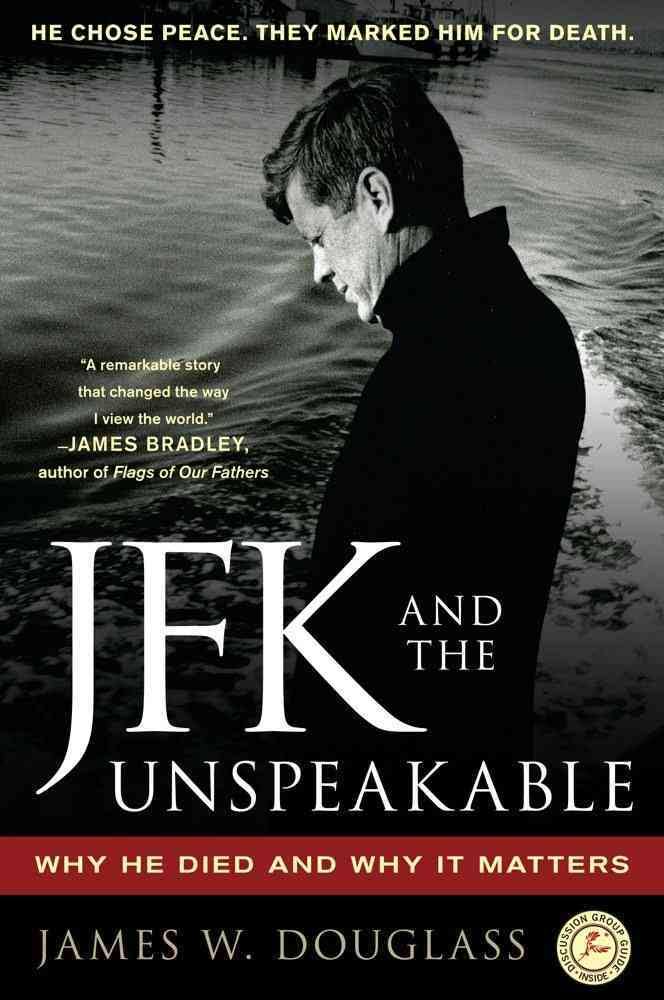
  • Brian Latell, Castro’s Secrets


    The End of an Obsession: A Review of “Castro’s Secrets”

    After almost half a century of conspiracy theories on the JFK assassination, a former CIA analyst and current research associate at the Institute of Cuban and Cuban-American Studies (ICCAS) at the University of Miami has accidentally given the conclusive evidence that Castro had nothing to do with Oswald or Kennedy’s death. In his latest book, Castro’s Secrets (Palgrave Macmillan, 2012), Dr. Brian Latell insisted on unveiling a conspiracy of silence: Castro would have known in advance Oswald was going to kill Kennedy and chose to remain silent about it. Far from making even a circumstantial case against Castro, Dr. Latell actually paved the way for critical thinking which erases any cloud of suspicion.

    The Comer Clark Allegation

    Castro’s foreknowledge is an old story that was first broken by late British journalist Comer Clark. This was a story entitled “Fidel Castro Says He Knew of Oswald Threat to Kill JFK” (National Enquirer, London, October 15, 1967, pages 4-5). On July 9, 1967, Clark flew to Havana and tried to carry out an interview with Castro, but it was flatly denied. (note)

    Nevertheless, Clark wrote that an impromptu interview had taken place anyway. It took place on a sidewalk at a pizzeria in front of a cheering crowd. The claim was that Castro told Clark,

    “Yes,I heard of Lee Harvey Oswald’s plan to kill President Kennedy. It’s possible I could have saved him. I might have been able to, but I didn’t. I never believed the plan would be put into effect.”

    Castro went on and explained that Oswald visited the Cuban Embassy in Mexico City twice. The second time he said something like: Someone ought to shoot that President Kennedy. Then Castro said,

    “And this was exactly how it was reported to me; ‘Maybe I’ll try to do it.”

    This was less than two months before the American President was assassinated. The House Select Committee on Assassinations (HSCA) contacted Fidel about this accusation. On April 3, 1978, he replied that since he never went to public restaurants, the man must have invented the story.

    Congressman Christopher Dodd (D/Connecticut) stressed that it was ridiculous that the head of a country would give a print interview in a pizzeria. (HCSA Report, Volume III, pages 207-09). Dodd could have further added that he would never do so in a crowd and certainly not about such a sensitive matter.

    Anthony Summers further undermined the Clark tale. He discovered that Clark, who was now deceased, had a reputation for selling sensational and sometimes spurious stories. When Summers talked to Clark’s widow, she said that he never mentioned such an interview to her. Beyond that, Nina Gadd, Clark’s secretary, said that it was she who originated the story, even though she had never even been to Cuba. Gadd supposedly did this based not upon Clark, but what she heard from a Latin American foreign minister. (Summers, Conspiracy, p. 364)

    Nevertheless, the Final Report of HSCA (U.S. Government Printing Office, 1979, page 122) said that the substance of Clark’s interview with Castro had been independently reported to the U.S. Government by a highly confidential and reliable source: Oswald had indeed vowed in the presence of Cuban consulate officials to assassinate the President. But further investigation led the HSCA to believe that Oswald did not voice such a threat to Cuban officials, and however reliable the confidential source may be, it would be in error in this instance.

    The Jack Childs report

    Although Chief Counsel Robert Blakey would not reveal who the source was, it turned out to be Jakob “Jack” Childs, codenamed NY 694-S by the FBI. Jack had engaged with his brother Morris in the Operation SOLO (1958-77). Their mission was to infiltrate the Communist Party of the United States (CPUSA), in order to gather intelligence about its relations with the USSR and other communist regimes. On May 20, 1964, Jack Childs flew from Moscow to a beach in Cuba on the SOLO Mission 15. He allegedly spent ten days there and was able to talk with Castro about the JFK assassination.

    Childs reported to FBI Director J. Edgar Hoover that Castro received the information about Oswald’s appearance at the Cuban Embassy in Mexico in an oral report from “his diplomats” in the Embassy. (John Newman, Oswald and the CIA, p. 428) According to Childs, Castro was told about this immediately:

    ˜I was told this by my people in the Embassy exactly how he (Oswald) stalked in and walked in and ran out. That in itself was a suspicious movement, because nobody comes to an Embassy for a visa (they go to a Consulate). [Castro] stated that when Oswald was refused his visa at the Cuban Embassy in Mexico City, he acted like a madman and started yelling and shouting on his way out, ‘I’m going to kill this bastard. I’m going to kill Kennedy.’ [Castro] was speaking on the basis of facts given to him by his embassy personnel, who dealt with Oswald, and apparently had made a full, detailed report to Castro after President Kennedy was assassinated.” (FBI Records: The Vault – SOLO, http://vault.fbi.gov/solo. See part 63, pgs. 58-59).

    The old sleuth Hoover summed up to Warren Commission General Counsel, James Lee Rankin, on June 17, 1964: The information furnished by our source at this time as having come from Castro is consistent with and substantially the same as that which appears in Castro’s speech of November 27, 1963. No further action is contemplated by this Bureau. (Warren Commission Document 1359).

    The Latell Report

    In the June 2012 edition of the electronic newsletter, The Latell Report, published by the ICCAS-UM , Dr. Latell summed up: Childs learned that Castro received the information about Oswald’s appearances at the Cuban embassy, because he was told about it immediately. Fidel spoke to Childs on the basis of facts given to him by his embassy personnel, who dealt with Oswald, and apparently made a full, detailed report. By trimming the phrase “after President Kennedy was assassinated” from the Childs report, Dr. Latell turned this alibi into a smoking gun against Castro, who had denied any foreknowledge of Oswald in both his speech at the University of Havana on November 27, 1963, and his Radio/TV appearance on November 23, 1963.

    Dr. Latell boasts about catching Castro in a lie, but only by keeping hidden the actual time ”after President Kennedy was assassinated” in which Castro knew about Oswald. Childs also tapers the story by furnishing the exact location of the Oswald outburst: the Cuban embassy, not the consulate, located in a separate building. The Lopez Report [a.k.a. “Oswald, the CIA, and Mexico City”, 1978] actually states that the CIA photographed the visitors to the Cuban diplomatic compound from two different windows in a third floor apartment at 149 Francisco Marquez Street (see pages 12 ff.) because the entrance to the embassy was on the corner of Tacubaya Alley and the entrance to the consulate, on the corner of Zamora Street.

    Moreover Childs came to the foregone conclusion that Castro had nothing to with the assassination. After discussing his statements with Beatrice Johnson, the CPUSA representative in Cuba, Childs and Johnson decided never to talk again about the issue because it was dynamite. Hoover took it seriously, but Dr. Latell does not. He dared to manipulate time and location for making his point, and no wonder the issue exploded in his hands.

    The HSCA’s Sound Judgment

    Unaware of the actual circumstances, the least the HSCA could do was discard that Oswald voiced threat to Cuban officials. Why? Because both the outgoing and incoming Cuban consuls in Mexico City, Eusebio Azcue and Alfredo Mirabal, testified (HCSA Report, Volume III, pages 127-58 and 173-78, respectively) that they did not recall hearing Oswald threatening Kennedy’s life while dealing with him about an in-transit Cuban visa to go to the Soviet Union. Neither did the Mexican employee Silvia Duran (JFK Exhibit F-440A), who attended Oswald three times on the same day, September 27, 1963, regarding his visa application (JFK Exhibit F-408).

    Based only on newspapers, Castro knew that the HSCA—especially the authors of the Mexico City report, Ed Lopez and Dan Hardway—had extensive information about phone conversations in Mexico City. Azcue and Mirabal were forced to truthfully testify to avoid being potentially caught in a lie at a public hearing in the United States. And one will search in vain for any such threats in the transcripts declassified today in the Lopez Report.

    As Newman writes, the problem with the Childs Report as issued to Hoover is that there is no specificity in it: Who were the diplomats who heard this threat? On what day was it made? How was it communicated from Mexico City to Havana? And how could the CIA not have known about it with all their audio surveillance installed? (Newman, p. 428) But beyond that, in a private interview Newman gave to Jim DiEugenio in San Francisco, the former intelligence analyst showed him the actual Childs report as given to Hoover. Newman told DiEugenio that, because he had seen hundreds of such informant reports, he could tell by the formatting that it was a forgery.

    The First Defector

    For disputing HSCA logic discounting Childs, Dr. Latell resorts to defectors from the Castro General Directorate of Intelligence (acronym DGI in Spanish). The first one, Vladimir Rodriguez-Lahera, would have told the CIA that Castro lied when he publicly denied any knowledge of Oswald. The legend says Vladimir defected to Canada around April 24, 1964, and the CIA codenamed him AMMUG-1.

    His debriefing (RIF 104-10400-10118) included that “the only possible fabrication known by this source was the specific denial by Fidel Castro on a television program [November 23, 1963], of any Cuban knowledge of Oswald.” For turning the possible fabrication into evidence, Dr. Latell swallows AMMUG-1, saying that the most routine matters at the Cuban diplomatic compound in Mexico City were reported directly to Castro. This author begs to disagree. Neither Castro nor any other Chief of Government has time for being informed about visa applications or nasty applicants.

    By May 8, 1964, the CIA realized AMMUG-1 didn’t know what he was talking about. He ended up admitting: “I have no personal knowledge of Lee Harvey Oswald or his activities.” His CIA handler wrote: “The source does not claim to have any significant information concerning the assassination of President Kennedy or about the activities of Oswald.” Even so, Dr. Latell keeps on agonizing about an AMMUG-1 report that Oswald was in contact with DGI officers before, during and after his visits to the Cuban consulate.

    AMMUG-1 did not give the slightest conjecture about after. In regards to ‘during’ the Mexico City trip, he stated that senior intelligence officer Manuel Vega mentioned that Oswald had gone to the Cuban consulate two or three times in connection with a visa. AMMUG-1 didn’t recall anything else about Oswald contacting DGI officers, but added: he felt sure that he would have done so because Vega had said that Oswald had returned several times and [it was] the usual procedure [for] expediting the granting of visas to DGI agents: if the visa applicant does not utter indicative phrases, the DGI officers tell the applicant to return in a few days. This house of cards falls down not only because Oswald came three times on the same day to the Cuban embassy. (See Warren Report, p. 734-35, below) But AMMUG-1 felt sure there was a contact during under the premise that Oswald was a DGI agent. This implies a contact before, but at this point AMMUG-1 became entirely pointless.


    CLICK ON IMAGES TO ENGLARGE

    AMMUG-1 page 1
    AMMUG-1 page 3
    WR page 734
     
    AMMUG-2 page 1
    AMMUG-3 page 3
    WR page 735


    He said that he thought that Luisa Calderon might have had contact with Oswald because he learned about 17 March 1964, that she had been involved with an American in Mexico. (The DGI had intercepted a letter to her by an American who signed his name as Ower, phonetic, or something similar. He said she had been followed and seen in the company of an American. He did not know if this could have been Oswald.)

    The problem with this is that the Calderon story today is a non-sequitir. If one is not familiar with it, it goes like this: Luisa was a Cuban Embassy employee who was heard on a tapped phone line saying words that were translated as, “I knew almost before Kennedy.” As Rex Bradford pointed out, in the 70’s this became a teaser for, “Did she have foreknowledge of the assassination?” The HSCA could not interview Luisa. But with AMMUG-1 saying to the CIA in 1964 that Oswald may have met with Calderon in 1963 during visits prior to the September-October journey, Luisa’s story now grew even heavier with suspicion.

    As Bradford notes, this call was intercepted at 5:30 PM. So the question becomes: “Were there any other calls previous to this where Luisa could have heard of the assassination?” It turns out there were two such calls. In the first one, captured at 1: 30, she expressed surprise on hearing the news of Kennedy’s death, and she said she did not believe it and asked who did it. As Bradford notes on his Luisa Calderon page at Mary Ferrell Foundation, it is odd that the CIA apparently did not show this other transcript to the HSCA to settle the matter once and for all.

    Neither Calderon nor Mirabal led to Dr. Latell’s suggestion that the DGI was acquainted with Oswald and had started a file on him when he was a Marine stationed (December 22, 1958 – September 11, 1959) in California. The specific account on Oswald attempting to get in with Castroite consular officials in Los Angeles in early 1959 suggests quite the contrary. Former marine (1954-58), Castroite pilot (1959-60) and anti-Castro soldier of fortune (1960-62) Gerald Patrick Hemming stated that he thought Oswald might have been on the Naval Intelligence payroll. “You know, a penetrator. I told the [Castroite] leadership to get rid of him. (Dick Russell, The Man Who Knew Too Much: Hired to Kill Oswald and Prevent the Assassination of JFK, Carroll & Graf, 1992, page 178).

    The Most Valuable Defector

    The last straw in Dr. Latell’s unveiling of a conspiracy of silence is a classic non sequitur fallacy slipped by Major Florentino Aspillaga, a Castro intelligence officer until the year 1985 who defected from Czechoslovakia to Austria in June, 1987. Being hardly 16 years old, Aspillaga already had the standing assignment of electronically detecting CIA agents and infiltration teams. On November 22, 1963, he got an unprecedented order around 9:00 or 9:30 am EST: “Listen to any small detail from Texas.” At 1:40 pm EST, CBS anchor Walter Cronkite broke the news in Dallas, Texas: three shots were fired at President Kennedy’s motorcade. Aspillaga drew the conclusion: Castro knew Kennedy would be killed.

    Whatever the reason Castro would have had to give the order, the most unlikely is some foreknowledge about Oswald’s intention to shoot Kennedy, because it would imply that Castro must have been sure about Oswald’s whereabouts on November 22, 1963. The well-known, and quite eventful journey of Oswald makes such foreknowledge by Castro highly improbable. Shortly before Oswald left New Orleans for Mexico City, his wife Marina Oswald (nee Prusakova) had moved to Irving, about 17 miles from Dallas, for the birth of their second child. She stayed at her friend Ruth Paine’s home. Oswald came back from Mexico City on October 2, 1963, when nobody, including God and the CIA, knew whether he would still be in Dallas or elsewhere by the time of the “still in the talking stage” JFK visit. Oswald arrived in Dallas on October 3, 1963, and checked in at the YMCA. The day before, the FBI Field Office in New Orleans was tasking Dallas, Fort Worth, and even Malvern (Arkansas) for ascertaining Oswald’s whereabouts.

    After failing to get hired at Padgett Printing in Dallas, Oswald hitchhiked to Ruth Paine’s house in Irving. He returned to Dallas on October 7, 1963, but couldn’t get a job again and went again to Irving on October 12. He came back to Dallas on October 14. As Ruth Paine mentioned that he was having trouble finding work, her neighbor Linnie Mae Randle hinted about an opening at the Texas School Book Depository (TSBD), where her brother Buell Frazier was employed. Paine called Oswald and he began to work at the TSBD on October 16, 1963.

    Apart from the strange order to use intelligence resources for knowing details that will be surely available by listening to the commercial radio, Aspillaga’s credibility is as weak as his reasoning. He told Dr. Latell that he had previously given the information about that order only to the CIA in 1987. Then it must be fully explained why the CIA didn’t come forward with Aspillaga to the Assassination Records Review Board (ARRB), which gathered records from 1994 to 1998 after the fireworks made by Oliver Stone with his film JFK (1991). It also makes everyone wonder why Aspillaga abstained from revealing the issue to the media. In June 1988, for instance, he referred to Castro 69 times during a radio interview with Tomas Regalado in Miami, but not even once to Kennedy.

    Dr. Latell wrote in his book he owes a special debt of gratitude to Aspillaga. But both have put themselves in a delicate spot with an anecdote delivered a la carte 25 years later for connecting Castro to Oswald. Dr. Latell abjures social science by messing around with DGI defectors, despite his own foreknowledge about the methodological circumstance that their tales couldn’t be compared with Castro’s archives. The blame is not on Castro for shielding them from outsiders, but on Dr. Latell, since he used the creative imagination of Cuban defectors for writing a non-fiction book instead of a novel about the JFK assassination.


    Note: typically meant wiretaps. (back)

    Note: HSCA Interview of Fidel Castro (back)

    Note: Link to MFF file. (back)

  • HSCA Interview with Fidel Castro


    INVESTIGATION OF THE ASSASSINATION OF PRESIDENT JOHN F. KENNEDY MONDAY, SEPTEMBER 18, 1978 HOUSE OF REPRESENTATIVES, SELECT COMMITTEE ON ASSASSINATIONS, Washington, D. C.


    KENNEDY SELECT COMMITTEE ON ASSASSINATIONS
    Name: Fidel CASTRO RuzDate: April 3, 1978 Time: 6: 30 p.m.
    Address: Havana, CubaPlace: Presidential offices
    Interview: Present were President Fidel CASTRO and his interpreter, Senorita Juanita Vera, Captain Felipe Villa, Senor Ricardo Escartin, Zenen Buergo, and Alfredo Ramirez (representing the Government of Cuba). Also present representing the Government of the United States were Congressmen Louis STOKES, Richardson Preyer, Christopher Dodd and staff personnel of HSCA: G. Robert Blakey, Chief Counsel, Gary Cornwell, Deputy Chief Counsel and Edwin Lopez, Researcher/Translator.


    Interview of Fidel Castro Excerpt A

    STOKES: Mr. President, did it come to your attention shortly after the assassination that Lee Harvey oswald, who was the accused assassin, had had contact with your Embassy in Mexico City?

    CASTRO: Yes. In fact, it was after Kennedy’s death that he caught my attention. Because here nobody receives news about anyone filing applications for a visa. These things are always solved through the Office of the Minister of Foreign Affairs. So it never is taken to the government. You know, it is not necessary. This is normal routine work. None of us has anything to do with visas. Some officials knew about it when somebody in particular filed an application there. But tens – or maybe hundreds of thousands of people file applications. But when Kennedy was assassinated and Oswald’s actions were published in the newspapers, the officials who had handled visa applicaitons realized that this Oswald could be the same Oswald who had gone to the Consulate in order to apply for a visa. That is why we had news about it, you know? After Kennedy’s death we learned that a man by the name of Oswald had gone to the consulate and filled out an application for a visa – that he had been told that we did not normally give an intransit visa until the country of destination granted one. And, then we were told that a person had gotten very upset and had protested in an irate manner because he could not receive a visa. This was the news I had, more or less. the rest you know.

    STOKES: We were wondering your…

    CASTRO: There is something I would like to add in that connection. You see, it was always very mcuh suspicious to methat a person who later appeared to be involved in Kennedy’s death would have requested a visa rom cuba. Because, I said to myself – what would have happened had by any chance that man come to cuby – visited Cuba – gone back to the States and then appeared involved in Kennedy’s death? That would have really been a provocation – a gigantic provocation. Well, that man did not come to Cuba simply because that was the norm we rejected visa applications…like that. In those days the mechanism was very rigid because, of course, we had suspicions of anyone who tried to come to Cuba. People in charge of granting visas asked themselves: Why does (this applicant) want to come to Cuba? What kind of counter-revolutionary activity could he carry out in cuba? Maybe the people thought that the person was a CIA or FBI agent, you know, so it was very difficult for a north American, just from his own wishes, to come to Cuba – because systematically we denied the visas. So, I think that there could always be an exception, but in those times it was very, very difficult to have anyone from the United States come into Cuba because there was a tremendous suspicion and because in general permits to (travel to cuba) were denied. Now, if it was a transit visa going toward another country – let’s say had the Soviet Union granted the visa, you may be sure that our Consul would have granted the transit visa because the person would not be coming to Cuba only, but would be going to another country. The person would have to come (here) and if the Soviets would have granted the visa, then that would have accredited the person..like, you know, the person would have been given a transit visa because I feel that if the Soviets had granted the visa, then he would have come here. (In that era) it was not so crazy (that he tried) to come to Cuba because if he had obtained the visa from another country, it would have been for certain that our Consul would have granted him the visa to stop here. Now, can you imagine if that person had been to Cuba in October and then in November the President of the United states would have been killed? That is why it has always been something a very obscure thing – something suspicious because I interpreted it as a deliberate attempt to link Cuba with Kennedy’s death. That is one of the things that seemed to me very strange…

    STOKES: Let me ask you this question, Mr. President. One of the persons that we have talked with since we have been here in Havana has been your former Consul, Mr. Azcue, who was produced at our request by your officials here. He told us that with reference to the man who appeared at your Embassy and who filled out an application for an intransit visa, that the photograph which appears on the visa application is the photograph of the man who died in the United States as Lee Harvey Oswald, but, that this man was not the individual who had appeared at your Embassy in Mexico City. And, my question would be in two parts: One, have you had an opportunity to talk with Mr. Azcue? And secondly, from all the information available to you, would this be your opinion alsothat the man who appeared at the Embassy was an imposter?

    CASTRO: Actually, I don’t have an opinion about that. I wouldn’t be able to say whether I’ve met Azcue once. I don’t remember now. I have no recollection at present of having met Azcue. Because I had been given the information about all that, I myself did not know whether he was in Mexico or here. It is very likely that I have seen him some time; however, I don’t recall having met Azcue those days. Secondly, about the idea of an imposter, I have no special theory on that. As far as I have understood, Azcue has an idea on that. I’ve heard those comments before comments about the possibility of a difference, that he noticed the difference between the person who appeared requesting the visa and the person known as Oswald. But, I don’t have a theory on that. It is likely that there could be two different people. But, now I am thinking if the person had obtained the visa, would he have visited Cuba? That is a hypothesis. What did he want the visa for? From my point of view, the individual could have come to Cuba and compromised us. He would have us compromised. It seems to me that to apply for the visa had the purpose of having the individual come to Cuba. Now, we would have to enter into many conjectures to reach a conclusion on that. Because where did he get the passports? Where did he find the passports that he was taking there? Where was Oswald’s passport? What became of Oswald’s passports? Those papers should be somewhere. I don’t know what could have been the sense of sending another man, but I wouldn’t dare deny that posibility. Actually, we would have to know what would have been the purpose. Why would another person have been sent? I don’t know whether you would have a theory about that. Personally, I don’t have a theory.

    Villa: About the possibility of an imposter, in public sources we have read that the possibility exists that there could be a double that carried out some actions that the real Oswald did not on some occasions in 1963.

    CASTRO: There is something that I can guarantee. The Cuban government believes that Azue is a serious and honest man; and that he has never said something differently from what he said the first time. He has more or less kept his story as far as I know. I mean, he is a person you can trust. He is a trustful man. That is all I can say about Azcue. But, I amy say that if many people have elaborated theories, I am not among them.


    EXCERPT B

    Comer Clark’s Allegation

    Cornwell: One passage reads as follows: An interview in July 1967 with a British journalist, Comer Clark…do you have the translation of it there?

    Villa: Yes.

    CASTRO: Let me see it. I have it here.
    Pause: (Approximately one minute while President CASTRO reads it.)

    CASTRO: This is absurd. I didn’t say that.

    Cornwell: Did the interview ever occur?

    CASTRO: It has been invented from the beginning until the end. I didn’t say that. How could I say that? It’s a lie from head to toe. If this man would have done something like that, it would have been our moral duty to inform the United States. You understand? Because if a man comes here, mentions that he wants to kill Kennedy, we are (being provoked), do you realize that? It would have been similar to a mad person. If somebody comes to us and said that, it would have been similar to a mad person. If somebody comes to us and said that, it would have been our moral responsibility to inform the United States. How could we accept a man from Mexico to Cuba who tells us that he is going to kill President Kennedy? If somebody is trying create provocation or a trap, and uhwe would have denounced him. Sure, a person coming here or even in one of our embassies saying thatand that never happenedin no part, as far as I know.

    Escartin: That refers to the interview you spoke about in the beginning.

    CASTRO: But how could they interview me in pizzeria? I never to to public restaurants and that man invented that. That was invented rom the upper to the bottom. I do not remember that. And, it is a surprise for me to se because I couldn’t have said that. You have to see who wrote it. And, what is the job of that journalist? What is engaged in? And, what prestige has this journalist? Not the one that wrote that book, but the origin of that version. You should have to find who he is and why he wrote it, and with whom he is relatedand which sense they have to attribute those words which are absolutely invented. I think it is possible that you would be able to find out who that journalist was. Do you have some news about about that journalist in that newspaper?

    Villa: He was in Cuba and tried to carry out an interview with you.

    CASTRO: Let me tell you. of every one hundred interviews that are requested of me I only grant one because if I were to give all the interviews that I am requested to, you can be sure that I would not be able to have anything but twenty-four hours of my life to have interviews. I would not have enough time to do anything else. Barbara Walters waited three years for an interviewjust almost three years. And even that of Moyers. I didn’t want to have that Moyers interview. He started talking and the truth is that he was very insistent form the time he came down from the airplane and in spite of the fact that there was no commitment from me regarding the interview. I granted one. There are a lot of interview. I granted one. there are a lot of interview requests and it is very difficult, but I would never have given a journalist an interview in a pizzeria.

    Dodd: I don’t even give interviews in a pizzeria. (back)

    Villa: Another element commander. That interview was published in a sensationalist or yellow press from the United States. It is a non-serious newspaper.

    CASTRO: Especially at that time, a lot of barbaric things were publisheda lot of lies.


    EXCERPT C

    Use of Assassinations As a Political Weapon

    CASTRO: ……………….It was really something inconceivable – could have the idea of killing the President? First, because that would have been a tremendous insanity. The Cuban Revolutionaries and the people who have made this Revolution have proven to be intrepid and to make decisions in the right moment. But, we have not proven to be insane people. The leaders of the Revolution do not do crazy things and have always been extremely concerned to prevent any factor that could become a kind of an argument or a pretext for carrying out agression against our country. We are a very small country. We have the United States 90 miles from our shore which is a very large, powerful country economically, technically, militarily. So, for many years we lived concerned that an invasion could take palce..I mean, indirect and at the end a direct aggression. We were very close to that. Yet look at the conclusions we draw. If the elections of 1960 had not been won by Kennedy, but Nixon instead, during the Bay of Pigs, the United States would have invaded Cuba. We mean that in the midst of the fight that Kennedy followed the line that had been already traced.

    There is no doubt that we appreciate very highly the fact that Kennedy resisted every kind of pressure not to have the Marines land in our country. Because, there were many people who wanted the Marines to land here. Nixon himself was in favor of that. Had Nixon been President during the Bay of Pigs invasion, a landing by the military army of the United States would have taken place. We are absolutely convinced of that. However, Kennedy resisted all the pressures and he did not do that. What would that have meant for us? The destruction of the country? Hundreds of thousands, maybe millions of deaths? Because, undoubtedly the people would fight. The people I am absolutely sure about. An invasion of Cuba by the United States would have cost hundreds of thousands of lives, maybe millions of lives. We were aware of that. We have an American military base in our territory, by force. And, it is not assumed that anyone is going to have a military base on someone else’s territory, if it is not on the basis of an agreement. However, the United States has military bases in many places of the world, but here, it is by force. From that base, many provocations have been carried out against Cuba. There were people wounded..there were people killed. What did we do?

    We brought our guards away from the lines, from the fence. We never shot at them. Why? Because we made every possible effort so that an incident of that kind would not become a pretext to be attacked. So, we have followed the policy. We had an American boat just three miles away from us for years, a warship full of electronic communications equipment and never a hostile action was carried against that warship. So, there are many events that have proven how careful Cuba has always been to prevent the perpetration of an invasion. We could have died heroically – no doubt about it. Now, that would have been a victory for our people. They’re willing to be sacrificed and to die. Yet, it would have been just another page in history..nothing else. So, we have always been very much aware to not give The United States the pretext..the possibility..for (an invasion.) What was the cause of the missile crisis? The need we had to seek protection in case of an (invasion) from the United States. We agreed on the installation of the (stategic) missiles, because undoubtedly that diminished the danger of direct aggression. That became a danger of another kind, a kind of a global danger we became, but we were trying to protect our country at all times. Who here could have operated and planned something so delicate as the death of the united States President. That was insane. From the ideological point of view it was insane. And from the political point of view, it was a tremendous insanity. I am going to tell you here that nobody, nobody ever had the idea of such things. What would it do? We just tried to defend our folks here, within our territory. Anyone who subscribed to that idea would have been judged insane..absolutely sick. Never, in twenty years of revolution, I never heard anyone suggest nor even speculate about a measure of that sort, because who could think of the idea of organizing the death of the President of the United States. That would have been the most perfect pretext for the United States to invade our country which is what I have tried to prevent for all these years, in every possible sense. Since the United States is much more powerful than we are, what could we gain from a war with the United States? The United States would lose nothing. The destruction would have been here. The United States had U-2 air surveillancing for almost fifteen years. The planes flew over our territory every day. The women said that they called not go over their terrace naked for the U-2 would have taken a picture of them. That thing we could not allow to happen, you know, because it was demoralizing. So, there were, you know, those flights just fery close to the soil. Those kind of flights was really demoralizing for our people. It was impossible to let them continue to do that, so we had to shoot at them. On the following day after the missile crisis, we had the need to shoot at those planes, because to have allowed that would have created a demoralization among our people. And, I say that if we allowed that, you wouldn’t have been able even to play baseball here. Because those planes came just twenty meters from here, so it was really demoralizing. See, the U-2 came very high, you know, and I tell you, Cuba has been characterized by following a firm policy, a policy of principles. Our position was known after the missile crisis. We were not in a position to make any concessions. That is a known position, but Cuba, the leaders of the Cuban Revolution, have never made that kind of insanity, and that I may assure you. And the biggest kind of insanity that could have gone through anyone’s mind here would have been that of thinking of killing the President of the United States. Nobody would have thought of that. In spite of all the things, in spite of all the attempts, in spite of all the irritation that brought about an attitude of firmness, a willingness to fight, that was translated by our people into a spirit of heroism, but it never became a source of insanity. I’ll give you practical reasons. Apart from our ideology, I want to tell you that the death of the leader does not change the system. It has never done that. And, the best example we have is Batista. Batista murdered thousands of our comrades. If there was anyone in which that kind of revenge was justified, it was Batista. However, our movement did very difficult things, but it never had the idea of physically eliminating Batista. Other revolutionary groups did, but never our movement. We had a war for twenty-five months against Batista’s army and spent seven years under Batista’s dictatorship with thousands dying. But, it never came to our minds..we could have done it, very well, but we never thought about that, because it was different from our feelings. That is our position. That is why we are interested. That is why I was asking you whether you are really hopeful to give serious conclusions on this. On your part, if there is something we could give you, we would, without any kind of precondition. The information we have offered you is not conditioned to anything. In spite of the fact that the problem is thorny, that doesn’t stop this Committee here from giving the impression that we are being judged here, that we are being tried.


    EXCERPT D

    Statements Made By Fidel CASTRO At the Brazilian Embassy on September 7, 1963

    CASTRO: ……………….Then a journalist asked me…and the purpose I had…I don’t remember literally what I said, but I remember my intention in saying what I said and it was to warn the government that we know about the (attempted) plots against our lives. I mean, in one way or the other to let the United States government know that we knew about the existence of those plots. So, I said something like those plots start to set a very bad precedent, a very serious one that that could become a boomerang against the authors of those actions…but I did not mean to threaten by that. I did not mean even that..not in the least..but rather, like a warning that we knew; that we had news about it; and that to set those precedents of plotting the assassination of leaders of other countries would be a very bad precedent..something very negative. And, if at present, the same would happen under the same circumstances, I would have no doubt in saying the same as I said (then) because I didn’t mean a threat that. I didn’t say it as a threat. I did not mean by that that we were going to take measures – similar measures – like a retaliation for that. We never meant that because we knew that there were plots. For three years we had known that there were plots against us. So, the conversation came about very casually, you know, but I would say that all these plots or attempts were part of the everyday life.

    I do remember about being in the Brazilian Embassy at that time..that I did make a statement in that sense…in the sense that I was informed of the plots and that that was a very bad precedent to form the various principles in relation to..


    KENNEDY SELECT COMMITTEE ON ASSASSINATIONS
    Name: Fidel CASTRO Ruz
    Date: April 3, 1978 Time: 6: 30 p.m.
    Address: Havana, CubaPlace: Presidential offices
    Interview: Present were President Fidel CASTRO and his interpreter, Senorita Juanita Vera, Captain Felipe Villa, Senor Ricardo Escartin, Zenen Buergo, and Alfredo Ramirez (representing the Government of Cuba). Also present representing the Government of the United States were Congressmen Louis STOKES, Richardson Preyer, Christopher Dodd and staff personnel of HSCA: G. Robert Blakey, Chief Counsel, Gary Cornwell, Deputy Chief Counsel and Edwin Lopez, Researcher/Translator.
    The meeting opened and President CASTRO stated:

    CASTRO: Do you have the supposed statements that I have made? I have tried to remember. There is an individual who says that he interviewed me in a restaurant. That is very strange. I tried to recall him, you know. I tried to recall (the proposed) interview and on one occasion (he) said that it was in a (pizzeria). I just reached a conclusion not only because of the circumstances in which he says the interview was made, but also because of the content of the interview…or the alleged interview. I am absolutely certain that that interview never took place. Now, I will have to check that about the (alleged interview at the Brazilian Embassy) because that is true. I mean it’s true that I went to the Brazilian Embassy. I’ve been trying to remember, and I recall the following: It is not that I found out that an attempt was being plotted. Villa, when did the interview occur?

    Villa: On September the seventh, 1963. You spoke about the topic with Bill Moyers.

    CASTRO: Then I had know for a long time. It was not recent because the attempt against our lives started to be planned here a long time before that. I could say that from 1959 that was known to us. We were constantly arresting people trained by the CIA and being provided equipment by the CIA that would come to the country with explosives, with the telescopic target rifles, even bazookas every kind of weapon. Here they organized, since very early, plots at Grantanamo base. So, that was very well known to us. Then a journalist asked me..and the purpose I had…I don’t remember literally what I said, but I remember my intention in saying what I said and it was to warn the government that we know about the (attempted) plots against our lives. I mean, in one way or t he other to let the United States government know that we knew about the existence of those plots. So, I said something like those lots start to set a very bad precedent, a very serious onethat that could become a boomerang against the authors of those actions…but I did not mean to threaten by that. I did not mean even that..not in the least..but rather, like warning that we knew; that we had news about it; and that to set those precedents of plotting the assassination of leaders of other countries would be a very bad precedent..something very negative. And, if at present, the same would happen under the same circumstances, I would have no doubt in saying the same as I said (then) because I didn’t mean a threat by that. I didn’t say it as a threat. I did not mean by that that we were going to take measures – similar measures – like a retaliation for that. We never meant that because we knew that there were plots. For three years we had known that there were plots against us. So, the conversation came about very casually, you know; but I would say that all these plots or attempts were part of the everyday like.

    I do remember about being in the Brazilian Embassy at that time…that I did make a statement in that sense…in the sense that I was informed of the plots and that that was a very bad precedent to form the various principles in relation to…I remember (another nefarious precedent) was that of the hijacking of planes. The first planes hijacked in this area were Cuban planes, and the hijacking of the planes was encouraged by the United Stated government. Even an amount of money was offered as a reward to the people that hijacked a Cuban plane. And later what happened? well, it was all the way around terrorist elements and insane elements and every kind of people. (Once) the precedent was established, these people started to hijack planes. And that is what I may tell you is part of that experience. And I repeat again that if a similar situation would come about, I could say just the same words I could say just just same. Now, I cannot guarantee because I don’t have the exact recollection. I don’t have the exact copy of what I said literally. And, of course, one always has to be careful with the versions even on a given statement. But that he had interviewed me in the restaurant, and writing the things he wrote? There was a deliberate purpose of creating confusion, of planting confusion and trying to have Cuba involved in these events.

    STOKES: Mr. President, as a result of the statements or the conversation you had with this gentleman at that time, did you ever hear from President Kennedy?

    CASTRO: I am trying to recall the date. I can tell you that in the period in which Kennedy’s assassination took place Kennedy was changing his policy toward Cuba. I mean by that he was not adopting measures, not in fact. The whole style and aggressive measures against Cuba existed for many years. First of all, the Bay of Pigs; then the missile crisis; then the pirate attacks those attacks which were organized in central America and Miami, at a time at which they sent the mother boats to attack the refineries, the warehouses, boats, merchant ships, port installations and even the (innocent) population was also attacked in those days by these people. It has been known later – more or less – for how long these actions lasted. Now at that time, Kennedy was starting to question all these things. One of the facts, one of the events, was that an American official from the United Nations called my house. I don’t speak English, so he spoke to one of my comrades who was with me there. After that, I’ve been able to go with more accuracy through those things. And, I think it was Atwood. I think it was Atwood because later he was appointed Ambassador to Guinea, and that was very significant because it was the first time such a thing happened – – the first time such a gesture came about. And, you could see undisputably that a new trend was coming (into) existence in the sense of established contacts. So, it was a sort of a change (in) policy. I don’t recollect exactly what month it was. Have you been able to reconstruct the time at which Atwood (phoned me) at my house?

    Escartin: We have been able to reconstruct that date around (inaudible).

    CASTRO: Well, that was after the missile crisis, I think. That was after the Bay of Pigs and the missile crisis. I was of the opinion that the only man who could change that policy was Kennedy himself, because it seemed to me that at that time it was not a time of the Bay of Pigs. At that time he had more experience. And, he had much more authority. Maybe after the missile crisis, he had much more influence. I was convinced that Kennedy was the man with enough talent and enough courage to question and change that policy. And, people started to (feel) about it. And I felt that a positive act was that famous speech he made at the American University. It was a speech about the need for peace, the need for prevention of war, the destructions that Hitler’s invasion on the Soviet Union had caused. (He expressed this) in terms that he had not used for a long time that had not been used in the American theory for a long time. I have read all over that speech again. I cannot say that that’s a perfect (speech), I feel that it had some gaps, but if you bear in mind what he said, at the moment he said it, in the midst of the cold war, there is no doubt that those statements were of a tremendous value. Now, in addition to that, the unfortunate circumstance happened that in the days previous to Kennedy’s death a french journalist visited our country Jean Daniels. Then he told me..he said that he was interested in having a discussion about a special topic with me. I remember that I took him with me to Veradero. Then, in the morning it was the morning on the way to Verado and also at the beach he was explaining to me his purpose. We were taking about all this. And, I would say that he was bringing a kind of message from Kennedy. In substance, as far as I remember now, he himself has spoken about this on several occasions. But, the most important thing was he told me that Kennedy had explained to him the great danger that existed during the missile crisis, and that Kennedy asked himself whether I (also) was aware of the whole danger that was announced at the time of the missile crisis. But, he was (somewhat) traumatized with all the remembrances of those days. When Kennedy found out that this journalist was coming to Cuba – he had a long talk with this journalist. (He asked the journalist to talk with me, and then return to Washington with a response). We were just talking in those terms. He had to finish explaining to me everything he had talked about with Kennedy and I had to give him an answer about all this. But then at lunchtime or after lunch I don’t remember quite well the first news started to arrive by radio that an attempt against Kennedy had taken place and that he had been seriously wounded precisely at the moment that we were having that talk and that came to be another symptom, that Kennedy was questioning the policy that had been followed so far. Maybe he was elaborating some formula in order to have that policy changed. (From our) point of view, Mr. Kennedy was the only man that at that point had the authority and enough courage in order to bring about the change in that policy. That was my opinion at that time.

    STOKES: Do you remember the name of the journalist?

    CASTRO: Jean Daniel, a french journalist very well known enjoys prestige. He (had) met with Kennedy for some time, and he was well impressed with Kennedy and he was precisely letting us know (about) the whole interview with Kennedy, and the things that he had talked about with Kennedy regarding Cuba. It was assumed that I had to tell him something so that he would go back and convey it to Kennedy. But, before we had just finished with our conversation, the news arrived of the attempt against Kennedy’s life. Actually, we were very much concerned and immediately we suspected that an effort could be made in order to try to link us…to link that death attempt with the Cuban problems. Because immediately, you know, it seemed to (us that) also within that atmosphere of a cold war, some people could try to have us linked with Kennedy’s death to the point that we were very concerned and we thought about the measures that we could take in the face of a danger of that sort.

    STOKES: Mr. President, I think perhaps in that respect that it might be good for you to tell us what your reaction and that of the Cuban people was to the assassination of President Kennedy.

    CASTRO: I have no objection in telling you my reaction. It was a natural and logical reaction. Actually, I felt sad about it. I received that news with bitterness. Reasons? First, I think an event of that nature always produces that reaction even when it is a political adversary. It’s kind of a repulsion, a rejection. In the second place, I think I have said before that Kennedy was an adversary that we had sort of become used to. I mean that political, a strong political struggle existed. But, he was a known adversary. He was somebody we knew. We had (undergone) the Bay of Pigs, we had had the missile crisis so many things had happened. And, at least he was an adversary we knew about. And all of a sudden, you have the impression that something is missing…that something is missing. (Thirdly,) on the basis of very deep political feelings, I think the first thing I learned from Marxism was the idea that situations, societies and social processes do not depend on men, but rather that there is a system; and the system cannot be changed by changing the men even on the basis of an old controversy. For the very past century among revolutinaries, between these who thought that the Czar should be eliminated or that the emperor had to be eliminated because they were the chiefs. That was the theory of dictatorships. Marxists always have been opposed to the idea of killing or having a person killed. That was a very much debated topic among the Marxist (elements). That is one of the first things the Marxists learned; and that it doesn’t make sense to kill the political leaders…to such an extent that in our own experience here (in Cuba) it never came to our minds the idea that Batista’s regime could be eliminated by eliminating the person. We attacked a regiment with 120 men…over 120 men…one of the strongest regiments of the country…in order to take hold of the weapons and to start a struggle against Batista. And, it never came to our minds the idea of killing Batista. If we had wanted to eliminate Batista, we would have been able to. Later 82 men came back to the country from Mexico in a boat that was barely 60 feet long. We traveled 1500 kilometers. We started a war in Sierra Maestra and it never came to our minds the idea of eliminating Batista physically. (Some) people thought that killing Batista would change the system.

    And finally, maybe one of the things that I regretted the most was that I was convinced that Kennedy was starting to change, himself. And, I was going by the (impression) that I was here talking to that man who was bringing a message from him. Actually, I was sad. I was very badly depressed. The impression I got was very bad. I was very sad about it. He was an adversary; a man with his personal characteristics..being intelligent..you may always have the adversaries, but you have an assessment of them as a person, as an intellectual, as political leaders. To a certain extent we were honored in having such a rival. He was not mediocre. He was an outstanding man. And, that was my reaction.

    STOKES: Mr. President, did it come to your attention shortly after that assassination that Lee Harvey Oswald, who was the accused assassin, had had contact with your Embassy in Mexico City?

    CASTRO: Yes. In fact, it was after Kennedy’s death that he caught my attention. Because here nobody receives news about anyone filing applications for a visa. These things are always solved through the Office of The Minister of Fieign Affairs. So it never is taken to the government. You know, it is not necessary. This is normal routine work. None of us has anything to do with visas. Some officials knew about it when somebody in particular filed an application there. But tens – or maybe hundreds of thousands of people file applications. But when Kennedy was assassinated and Oswald’s actions were published in the newspapers, the officials who had handled visa applications realized that this Oswald could be the same Oswald who had gone to the Consulate in order to apply for a visa. That is why we had news about it, you know? After Kennedy’s death we learned that a man by the name of Oswald had gone to the Consulate and filled out an application for the visa – that he had been told that we did not normally give an intransit visa until the country of destination granted one. And, then we were told that a person had gotten very upset and had protested in an irate manner because he could not receive a visa. This was the news I had, more or less. The rest you know.

    STOKES: We were wondering your…

    CASTRO: There is something I would like to add in that connection. You see, it was always very much suspicious to me that a person who later appeared to be involved in Kennedy’s death would have requested a visa from Cuba. Because, I said to myself – what would have happened had by any chance that man come to Cuba – visited Cuba – gone back to the States and then appeared involved in Kennedy’s death? That would have really been a provocation – a gigantic provocation. Well, that man did not come to Cuba simply because that was the norm we rejected visa applications … like that. In those days the mechanism was very rigid because, of course, we had suspicions of anyone who tried to come to Cuba. People in charge of granting visas asked themselves: Why does (this applicant) want to come to Cuba? What kind of counter-revolutionary activity could he carry out in Cuba? Maybe the people thought that the person was a CIA or FBI agent, you know, so it was very difficult for a North American, just from his own wishes, to come to Cuba because systematically we denied the visas. So, I think that there could always be an exception, but in those times it was very, very difficult to have anyone from the United States come into Cuba because there was a tremendous suspicion and because in general permits to (travel to Cuba) were denied. No, if it was a transit visa going toward another country – let’s say had the Soviet Union granted the visa, you may be sure that our consul would have granted the transit visa because the person would not be coming to Cuba only, but would be going to another country. The person would have to come (here) and if the Soviets would have granted the visa, then that would have accredited the person..like, you know, the person would have been given a transit visa because I feel that if the Soviets had granted the visa, then he would have come here. (In that era) it was not so crazy (that he tried) to come to Cuba because if he had obtained the visa from another country, it would have been for certain that our Consul would have granted him the visa to stop here. Now, can you imagine if that person had been to Cuba in October and then in November the President of the United States would have been killed? That is why it has always been something a very obscure thing something suspicious because I interpreted it as a deliberate attempt to link Cuba with Kennedy’s death. That is one of the things that seemed to me very strange. (The facts of the events) seemed very strange also. As it was published, Oswald would have shot several times at a car that was moving with a telescopic (rifle). (I remember) when he trained in Mexico in order to come to Cuba to make revolution we had several guns like that and it could be that we learned almost everything that could be learned about telescopic pistols, even the differences between different pistols; a normal pistol with a trigger, an automatic pistol and a telescopic (rifle). It is much more practical if you use a normal sight…when you try to focus a moving target and you (do it) more accurately..with that kind than with a telescopic sight. A telescopic sight view gun should be used against a fixed target not a moving one It is very difficult. And, I tell you it seemed very strange that he used that weapon and that those shots could have been made with that kind of weapon. Because, when you shoot the first charge you have to take the weapon away from your face to (focus) it again, to try to find the object again..the target..and you lose time it is quite difficult. I don’t know whether later things were technical proof – technical tests were made to see whether – just a normal shooter at that distance and at that speed of the car could have (accurately made such shots). That was something else that was very suspicious to me. But, as far as we are concerned, what was most strange was Oswald’s attempt to visit Cuba.

    STOKES: Realizing, Mr. President, the enormity of the appearance of Oswald at your Embassy and realizing the significance that it had relative to the assassination itself, was it important enough that you summon individuals who would have knowledge about his appearance to talk with you or to submit written reports relative to this matter?

    CASTRO: I think what happened was the following: Nobody knew that. The comrades who had news of that, after the events took place, they reported it, I think, to the Minister of Foreign Affairs. So, the only thing we did was when the Warren Commission was created and it requested information bout this, it was agreed to send all the information we had at that time…I recall that we were consulted with something about the visa application and we were willing to offer all the information they wanted. Now it was assumed that they were conducting the investigation. If they had wanted some additional action on our part (material from us), they should have (requested) it. But, they did not request any other (information) since…as far as I have understood…here we spoke with the people (our people) who had been in Mexico and our people went into the details of what really happened. And, that was very well clarified. Beyond this, there was not much more that we could do. You can imagine there was not much that we could contribute. As far as I have understood, the Mexican lady who used to work at the Consulate was later the object of many pressures even some kind of persecution.

    Villa: She was arrested by the Mexican police with the purpose of finding out what he had said at the Consulate.

    CASTRO: All that they said it was assumed that they wanted her to say that also while at the Embassy he had made reference to killing Kennedy. So the Mexican police had the purpose of having the Mexican declare that.

    Villa: Exactly.

    CASTRO: And, who were the people interested in that? Who could be the people interested in that?
    Villa: To us that is very clear.

    CASTRO: But, that is something worth to be taken into account. Why would that lady become the object of that oppression? What do you know about this lady now?

    Villa: She lives in Mexico at present. She used to work in the Consulate and she was sympathetic of the Cuban revolution.

    CASTRO: She, of course, has a very high meritand that after that, knowing how these things are, a person that did not enjoy the diplomatic immunity could have been coerced. She could have been blackmailed and she could have been submitted by fear, you know, in order to have her make a statement that would be against Cuba harmful to Cuba. So, it was a tremendous merit that this Mexican lady did behave the way she did because you know how the people are in some countries of the world. They take a helpless woman without any kind of protection and then she can be forced to say anything. One question I would like to raise with you because we are speaking about that topic about which we are very pleased to give you all the opinions and all the cooperation that you might request that is in our hands. Now, do you think you are going to be able to bring out something really clear on the whole work you’re doing? Do you think you are going to be able to reach a clear conclusion?

    STOKES: Mr. President, that is the precise reason why we are here in your country. One of the things we said to your top officials Friday morning at our first session was that we came to your country without any preconceived ideas or notions or conclusions of any type. We have tried to pursue the entire investigation in a fair and objective manner, searching only for the truth. The assassination of President Kennedy was a traumatic experience for the American people. And in addition to the trauma which was incurred by them, we found that a Gallup Poll in January of 1977 revealed that 81% of the American people believe that someone other than Lee Harvey Oswald participated in the assassination of President Kennedy. Only 19% believe that he was a lone assassin. Consequently, the mandate given this Committee by the House of Representatives was for us to investigate all of the facts and circumstances surrounding the assassination of President Kennedy. Precisely, it is our job to ascertain who killed the President. Did such a person have help either before or after that assassination? And then to ascertain in that respect whether there was or was not a conspiracy to kill the President. Additionally, we are charged with the responsibility to ascertain the performance with the responsibility to ascertain the performance of our own agencies in the United States; that is, the FBI, CIA, Secret Service, all of the American agencies that participated in some way in the investigation conducted by the Warren Commission. And then lastly, our mandate is to make recommendations to the United Stated congress based upon our findings as a result of the total investigation. So we have approached the investigation in that way hoping that we will be able to ascertain the truth of these facts and then be able to put to bed the theories, the rumors, the speculation that presently exists around the assassination of President Kennedy.

    CASTRO: Have you had a broad access to all the pollible sources of information?

    STOKES: Yes, we have. If you have reference to our own agencies and our own files, the answer is yes, we have.

    CASTRO: Are you optimistic about the fact that you’ll be able to reach a sound conclusion on this problem? Are you optimistic about it?

    STOKES: We are optimistic that even though the job is an awesome responsibility for the eleven men and one woman who are members of this committee, along with the staff of 115 people, all of whom we feel are dedicated to this task, our final report will be one that will be a highly professional and competent job.

    CASTRO: Any other question that you would like to raise I would be pleased to answer.

    STOKES: Could we for a moment, Mr. President, go back to the moment you learned about Lee Harvey Oswald having been at your Embassy in Mexico City? Do you recall a speech that you made on the 23rd of November?

    CASTRO: This is on the twenty…the speech on the 23rd. Did we have the data at that time that Oswald had been at the Embassy?

    Villa: No. No.

    CASTRO: So very likely we did not have it. I think I learned about that some days later and not immediately.
    Villa: You mentioned that in the speech on November the 27th.

    STOKES: 27th – all right. Then my question would be firstly in two parts. One, if he remembered the speech he made on November 27th, and then secondly….

    CASTRO: But, you should not confuse the man with the system.

    STOKES: Yes, right, right. That’s what you told us earlier, right.

    CASTRO;That would be a negative fact for the interest of humanity. These ideas I’ve always had about this.

    STOKES: And with reference to the second part of my question regarding the matters which occurred at the Cuban Embassy in Mexico City which you referred to in the November 27th speech. Do you recall from whom you learned what had transpired at your Embassy?

    CASTRO: I cannot recall. It should have been through foreign Relations or maybe the Minister of the Interior. Somebody reported to me. We were just reported to about the facts that a gentleman had appeared at the Embassy requesting a visa by the same name as the man accused of having assassinated Kennedy. I don’t remember how it was told to the American authorities. I remember the Warren commission requested through the Swiss Interest Section all the information we had about it. And, immediately, we put at their disposal all the materials we had. Because of course, we were interested more than anyone else in those events being clarified. We were more interested than anyone. At the first moment we were somewhat, you know, uncertain about what was behind this whether there were some people that wanted to use that in order to promote an aggression against Cuba. We had many reasons to suspect that because tremendous things had happened in that sense. We thought that maybe some very reactionary element could have wanted to eliminate Kennedy and just on the way try to eliminate Cuba, you know. That’s why we were observing the whole development of events. But, some days later it started to be clearly seen that it was not a campaign orchstrated against Cuba. But, I’m not – I have no doubt in the least that if they had had the least evidence to link Cuba, that would have been done. A tremendous campaign would have been made and a very dangerous situation would have been created for us. But, now you have to bear in mind, at least to the extent that we know, that the Warren Commission did not make any charge against Cuba, nor did it conduct any effort in that sense. We were under the impression though, that they were working objectively or that if they were able to discover something, they would handle it. They would expose it. But, we thought that the danger that we were concerned about in the very first moments were then no longer so bad. The fact that somebody went to the Embassy was what brought about the suspicion that somebody had tried to link Cuba. The other theory is that this individual decided himself just because of his initiative to visit Cuba – with what purpose? That nobody knows. You would have to have good doses of naivete to think that he was the one who planned the trip to Cuba that he planned the trip to the Soviet Union himself. Actually, all of that is very strange, you know, very rare that he tried to go to the Soviet Union; that he tried to go through Cuba no other place, but through Cuba; because to go to the Soviet Union you don’t have to go to Cuba necessarily. And to this we could add the further event that this individual who could have been able to clarify all because who could have shed more light on this than he himself – Oswald – 24 or 48 hours later. How many hours after the event?

    Villa: 28 hours.

    CASTRO: He was killed 28 hours after the event. And the only explanation given by the assassin was a sentimental reason. As far as I recall from what I read at that time he said that he had seen Kennedy’s widow crying and seen the whole drama. He decided to take revenge with his own hand. And later on it was known that he was not a kind of a sentimental man; I mean to say he’s a psychotic character and in the very face of the policemen – killed the supposed author of Kennedy’s death. Because, who could have verified that better? Why was this man killed? I do know that you have more information than I do much more information than I may have on Jack Ruby’s personality..and, if Jack Ruby for a kind of strictly sentimental reason would have gone there to the very police station and in the face of the policemen killed the supposed author of Kennedy’s death. All this seemed to us very strange. And that is why we have such importance to the effort he made in the Cuban Embassy. It was a kind of an attempt by somebody to have Cuba involved in the whole affair, in the whole issue. Another reasonable fact which I think deserves attention, a fact that deserves attention – and that is something that was known after wards when the Senate Committee conducted their investigations was that practically the same day that Kennedy was killed, a CIA agent was going to have an interview. I do not know whether he had planned that interview with an important agent (Cubela) in order to assassinate me. I felt that a poison was going to be given to that person who was supposed to kill me. So, that is another element which is very suspicious. The same day Kennedy is killed, well about those same days, I get an attempt, a very urgent attempt by an individual with a plan to assassinate me. The Senate (Intelligence Committee) did not give his name, but we know who he was. And, there is no doubt that if one person had the possibility to carry out that attempt, it was that person. Because, he was a man who came from the revolutionary ranks and he had very much good relations with us. So, I would say that among the very many attempts, plans, plots, collaboratins of the CIA, this was one that had many possibilities of success because that individual had access to us. And that visit practically coincided that’s a very suspicious coincidence with the Kennedy assassination – very..We did not learn this until the Senate Committee investigation was conducted. Now, in connection with this Embassy, what were you interested in in connection with the Embassy and the visit?

    STOKES: Let me ask you this question, Mr. President. One of the persons that we have talked with since we have been here in Havana has been your former Consul, Mr. Azcue, who was produced at our request by your officials here. He told us that with reference to the man who appeared at your Embassy and who filled out an application for an intransit visa, that the photograph which appears on the visa application is the photograph of the man who died in the United States as Lee Harvey Oswald, but, that this man was not the individual who had appeared at your Embassy in Mexico City. And, my question would be in two parts; One, have you had an opportunity to talk with Mr. Azcue? And secondly, from all the information available to you, would this be your opinion also that the man who appeared at the Embassy was an imposter?

    CASTRO: Actually, I don’t have an opinion about that. I wouldn’t be able to say whether I’ve met Azcue once. I don’t remember now. I have no recollection at present of having met Azcue. Because I had been given the information about all that, I myself did not know whether he was in Mexico or here. It is very likely that I have seen him some time; however, I don’t recall having met Azcue those days. Secondly, about the idea of an imposter, I have no special theory on that. As far as I have understood, Azcue has an idea on that. I’ve heard those comments before comments about the possibility of a difference, that he noticed the difference between the person who appeared requesting the visa and the person known as Oswald. But, I don’t have a theory on that. It is likely that there could be two different people. But, now I am thinking if the person had obtained the visa, would he have visited Cuba? That is a hypothesis. What did he want the visa for? from my point of view, the individual could have come to Cuba and compromised us. He would have us compromised. It seems to me that to apply for the visa had the purpose of having the individual come to Cuba. Now, we would have to enter into many conjectures to reach a conclusion on that. Because where did he get the passports? Where did he find the passports that he was taking there? Where was Oswald’s passport? what became of Oswald’s passports? Those papers should be somewhere. I don’t know what could have been the sense of sending another man, but I wouldn’t dare deny that possibility. Actually, we would have to know what would have been the purpose. Why would another person have been sent? I don’t know whether you would have a theory about that. Personally, I don’t have a theory.

    Villa: About the possibility of an imposter, in public sources we have read that the possibility exists that there could be a double that carried out some actions that the real Oswald did not on some occasions in 1963.

    CASTRO: There is something that I can guarantee. The Cuban government believes that Azcue is a serious and honest man; and that he has never said something differently from what he said the first time. He has more or less kept his story as far as I know. I mean, he is a person you can trust. He is a trustful man. That is all I can say about Azcue. But, I may say that if many people have elaborated theories, I am not among them. I have not operated on a theory like that. I just see many strange things that are not logical. It started with the very attempt of the person to come to Cuba; the calibre of weapon used, the absolutely abnormal way in which those people behaved. I mean there have always been many strange things that made me (suspicious) about other people. I tell you, I read the book. I read that book “The Death of the President” written by Manchester. Manchester had the theory that this man acted alone and he argues a lot. He makes a kind of psychoanalytical (study) of Oswald and he defends the (lone assassin theroy). Many people have a different theory. So, I have not been able to elaborate I wouldn’t dare elaborate a theory for with me, everything would be speculation. On our account and because of our interest, some time ago we started gathering elements in order to have a better founded idea, you know. And, that is why our people started to gather materials and information. A group of comrades has been working in this direction. But, I am very much aware that we don’t have access to (sources: of information which are fundamental. We have no access to the CIA archives or the FBI archives. We don’t have access to the Warren Commission’s files. How could we do something really well founded? When the Cuban government saw the senate Committee Report, it was something real and it was that that individual who was the man to be given the weapon to kill me in Paris. This man never spoke about that. He was tried and was sentenced on account of the attempts, the plots against our lives. Those plans (had been continuous) and he sent weapons to Cuba until he was discovered. He confessed and told us the truth, but he never spoke about that interview in which he was going to be given the weapon to kill me and that was published by the Senate Committee. He never made reference to that. That person is alive because I had to request some leniency. I mean, because his crime was very serious. It was a tremendous betrayal. It was treason, and at that time to participate in such an action was very severely sanctioned. And, following a tradition with individuals that had participated in the revolution, whenever it has been possible to prevent drastic measures, we have done so. This gentleman had been a revolutionary leader. He had been a good revolutionary fighter, and the public opinion was very irritated about it. His crime was really very serious. I wrote a letter to the Cuban Tribunal morally condemning him (but asking for leniency). I did it for the public opinion…That is Cubela’s case. We learned that later when the Senate committee report appeared. But, all these elements made us think about the advisability or organizing some investigation on our account. We had hoped that being in contact with your Committee could give us some elements of judgment for our own information. But, as far a I know, you don’t contribute many elements of judgment because as I have been told you cannot make use of most of the information you possess. I have been told that one of our hopes was to receive some information. We are giving as much information as we have and we are receiving nothing.

    STOKES: One thing I would like to say and I think you ought to know is that many Americans are ashamed of the CIA and the degrading attempts that they’ve made on your life. And, that’s something that disturbs many, many decent Americans and I think you ought to know that. Mr. President, with your permission I’d like to defer to my other colleagues, if they have any questions, if that is agreeable to you.

    CASTRO: Yes, please.

    STOKES: Mr. Preyer?

    Preyer: Mr. President, you mentioned that you believe that you could transfer power of chains of government without killing the head of the government. That is the tradition of our country also. I speak personally and not forour government, but I join Chairman STOKES in saying that when I read about AMLASH, Cubela and the church Committee reports I was shocked and outraged. I am confident that is the overwhelming reaction of the American people. I am convinced that the President did not know about that; the head of the CIA, John McCone, did not know of that; or our other high officials; and that this was an aberration of small group and that it would have shocked our high officials just as it shocks me if they had known of it. The fact that the Church Report on AMLASH came from the Agency from the government itself rather than being leaked through a newspaper story or something of that sort.

    Interpreter: Excuse me, I didn’t get that last part. I am sorry.

    Preyer: Well, the fact that the information on AMLASH and Cubela was revealed by our government agencies themselves and was now brought out against their will through a leak or newspaper story, I think, indicates the strong feeling in our government that this kind of thing must never happen again. And, we have set up now a House Intelligence Committee and a Senate Intelligence Committee, both new, to insure that it does not.
    On the question of our not giving information, but receiving it, let me say we have a common interest in arriving at a final answer, a clear answer, to the question of the assassination of President Kennedy. We are seeking your help in that and your officials have indicated to us they are willing to continue working to help on that. Our Committee goes out of existence at the end of this year. When we file our final report, there will be a great deal of information in it.

    CASTRO: Is it going to be public?

    Preyer: It will be public which will be of interest to you. Until that time, because of our different jurisdictional problems, there is some evidence which does not belong to us which we cannot release. But in the final analysis, the full report will make available much information of interest to you and may answer many of the rumors. In the meantime, one reason we press so hard for information is that this is the last opportunity that will probably be made in our country to reach a final answer. The last chance where an official body of Congress an official governmental body will make a judgment on this question. That is why we hope that any information that bears on this subject that may come up in the next few months and any effort that could be made, even strenuous effort, would be justified because this opportunity may not come again. And I hope very much that we will be able to give clear answers to the questions. Your help will assist very much.

    CASTRO: I think you are right in what you are saying. When I spoke about the hope of obtaining some information, it was not but a hope. It is absolutely our curiosity, you know. But, it is absolutely evident that we have the duty of handling over all the information we may gather. We are very much interested in having Kennedy’s assassination clarified because in one way or the other attempts have been made to try to have Cuba involved in it. We have our conscience clear. There is nothing so important as having your conscience clean absolutely clean. That’s why it is not a matter of conscience, but rather a matter of political, historical interest to have all these problems clarified. It is also true that the fact that the United States has conducted an investigation on the (attempts on our people) and the fact that (it) has been made public is a very correct thing to do very right. Of course, I (hear) that in that publication many names were not disclosed on reasons of safety. When we conduct an investigation, in general, we publish everything because..anyway..but I would have liked for the Senate report to have been more complets. It should have not protected so many people in the interest of the national security because that, you know, diminishes its moral value. It diminishes the moral value of the publication. However, I coincide with you that the fact that the investigation had been conducted and that all those materials were released is something highly positive. Now, you see, I was recalling Bill Moyers’ report. Bill Moyers made a very important report of all these attempts all these logs on terrorist groups. Now, then, there is one point in which an intimation is made that Kennedy’s death could have been a result of all these attempts against our lives. It is to say to a certain extent Moyers’ report which has many positive things can leave the doubt that Cuba could have had some participation in that because there is a Representative of Congress speaking I thing I spoke later, and at the end a senator spoke that said that he had no doubts about that topic. So, we are very much..we are highly interested in that party being satisfied. Because, even when the Senate Intelligence Report was released, in some people the idea could have become stronger that Kennedy’s death could have been our revenge for all that had been planned against us. If Cuba had something to do with Kennedy’s death, it would have been indirectly because many people were trained in hanling weapons and many things that were not normal were done, and under the shade of these irregularities, terrorism (arises and) develops, so (that) all these acts become the (norm). It was precisely in that sense that I said that it was a nefarious precedent. Can you imagine that in the (entire) world I was one of the naive people who thought that these things could not happen. Not in the Middle Ages, but now in this era in which the whole apparatus of the government can remain very quiet and promote the killing of leaders of other countries? What is to happen to the world in the nuclear era if that becomes a practice? Now we are lucky that all those plans were a failure. We have not had to (regret the) death of any comrade leader of the revolution. Our attitude is not given that of hatred or resentment. On very rare occasions do we talk to visitors about these problems. That belongs in the past. It happened a long time ago and still the prints existstill the poor things exist. You have to see he terrorist attack against a Cuban plane in flight a plane that exploded. Before that plane fell down, all the people got burned alive. Seventy-four people died. Who perpetrated that crime but people who ere trained by the CIA? We suspect that some CIA agent had to do with that terrorist act. It’s very strange, because that happened after Angola. The United States had adopted a very violent attitude towards us and Nixon made forceful statements against us. One of the individuals who was recently arrested in Miami because he was involved in the preparation of terrorist activities was just declared non-guilty in a trial and he defended himself by saying simply that he had been in the White House. He said who he had spoken with and who gave him the weapons, and precisely those facts, those events, took place a week before the attempt before the sabotage on the cuban plane in flight. And, he is just defending himself by saying that in the trial. He is one of the persons that was in the group who perpetrated the sabotage. Now, I am going to tell you something. I think that now Carter is – I don’t know what Party you belong to – and it is not interesting to the part of what I’m going ot say, if I hurt someone’s sensitivity I apologize for that, but I would have not trused Johnson. I may say sincerely, I sincerely believe that Johnson would have followed that line, of the attempts against people’s lives, terrorism, subversion. I have no doubt that Nixon was a man without scruples. I was always under a bad impression. I was convinced of that. But now, I see that this President of the United States would not be capable of resorting to that kind of action. There are two things in this connection: One, I think there is an attitude in the public opinion as to that Watergate affair, and the Senate investigations have contributed to create a sort of consciousness. I also think that the politicians have taken that into account, and I think also that personally Carter is a man of a differently mentality. If I am asked whether I think Carter would be capable of plainning these kinds of actions, I would say no. I would say I don’t think him capable of doing such a thing. I am quite convinced. In that sense, we feel more relaxed. We had to defend ourselves from these actions for many years. You should not think that I like to be surrounded by people. I think you have to be alone. I would like to have a normal life. We have taken many measures in all these years preventing attempts with different kinds of explosives and weapons, attempts with poison, and actually we are not saying all. I will tell you something. I would even say that I underestimated the CIA somewhat because I thought them capable of many things, but when I read the Senate Committee Report, I confess that I had not thought so much. because, all that from bacterias, viruses, poisons, a shell with explosives, I don’t know how many tremendous things. But it was not only that. I want you to know that if we would have been careless, they would have brought a microphone and put it over there in one of the ashtrays and one mike over there in that seat and everything. There were not only subversive activities, but also espionage. There were many activities related to espionage. I remember that around the day in which the sabotage against our plane took place, the CIA asked in a question, to one of their agents here, whether I was going to travel to Africa, whether he could find out what place I was going to visit, what means of transportation I was going to use, I mean, a whole set of investigation which was not political, but rather that could be used for anything else. Now, going back to this topic, one of the things I’ve gone into recently with some people, is why Cuba – it was realy something inconceivable – could have the idea of killing the President?

    First, because that would have been a tremendous insanity. The Cuban Revolutionaries and the people who have made this Revolution have proven to be intrepid and to make decisions in the right moment. But, we have not proven to be insane people. The leaders of the Revolution ot not do crazy things and have always been extremely concerned to prevent any factor that could become a kind of an argument or a pretext for carrying out aggression against our country. We are a very small country. We have the United States 90 miles from our shore which is a very large, powerful country economically, technically, militarily. So, for many years we lived concerned that an invasion could take place. I mean, indirect and at the end a direct aggression. We were very close to that. Yet look at the conclusions we draw. If the elections of 1960 had not been won by Kennedy, but Nixon instead, during the bay of Pigs, the Unites States would have invaded Cuba. We mean that in the midst of the fight that Kennedy followed the lined that had been already traced. There is no doubt that we appreciate very highly the fact that Kennedy resisted every kind of pressure not to have the Marines land in our country. Because, there were many people who wanted the Marines to Land here. Nixon himself was in favor of that. Had Nixon been President during the Bay of Pigs invasion, a landing by the military army of the United States would have taken place. We are absolutely convinced of that.

    However, Kennedy resisted all the pressures and he did not do that. What would that have meant for us? The destruction of the country? Hundreds of thousands, maybe millions of deaths? Because, undoubtedly the people would fight. The people I am absolutely sure about. An invasion of Cuba by the United States would have cost hundreds of thousands of lives, maybe millions of lives. We were aware of that. We have an American military base in our territory, by force. And, it is not assumed that anyone is going to have a military base on someone else’s territory, if it is not on the basis of an agreement. However, the United States has military bases in many places of the world, but here, it is by force. From that base, many provocations have been carried out against Cuba. There were people wounded..there were people killed. What did we do? We brought our gruard away from the lines, from the fence. We never shot at them. Why? Because we made every possible effort so that an incident of that kind would not become a pretext to be attacked. So, we have followed the policy. We had an American boat just three miles away from us for years, a warship full of electronic communications equipment and never a hostile action was carried against that warship. So, there are many events that have proven how careful Cuba has always been to prevent the perpetration of an invasion. We could have died heroically – no doubt about it. Now, that would have been a victory for our people. They’re willing to be sacrificed and to die. Yet, it would have been just another page in history..nothing else. So, we have always been very much aware to not give the United States the pretext..the possibility.. for (an invasion.) What was the cause of the missile crisis? The need we had to seek protection in case of an (invasion) from the United States. We agreed on the installation of the (strategic) missiles, because undoubtedly that diminished the danger of direct aggression. That became a danger of another kind, a kind of a global danger we became, but we were trying to protect our country at all times. Who here could have operated and planned something so delicate as the death of the United States President. That was insane. From the ideological point of view it was insane. And from the political point of view, it was a tremendous insanity. I am going to tell you here that nobody, nobody ever had the idea of such things. What would it do? We just tried to defend our folks here, within our territory. Anyone who subscribed to that idea would have been judged insane..absolutely sick. Never, in twenty years of revolution, I never heard anyone suggest nor even speculate about a measure of that sort, because who could think of the idea of organizing the death of the President of the United States. That would have been the most perfect pretext for the United States to invade our country which is what I have tried to prevent for all these years, in every possible sense. Since the United States is much more powerful than we are, what could we gain from a war with the United states? The United States would lose nothing. The destruction would have been here. The United States had U-2 air surveillancing for almost fifteen years. The planes flew over our territory every day. The women said that they could not go over their terrace naked for the U-2 would have taken a picture of them. That thing we could not allow to happen, you know, because it was demoralizing. So, there were, you know, those flights just very close to the soil. Those kind of flights was really demoralizing for our people. It was impossible to let them continue to do that, so we had to shoot at them. On the following day after the missile crisis, we had the need to shoot at those planes, because to have allowed that would have created a demoralization among our people. And, I say that if we allowed that, you wouldn’t have been able even to play baseball here. Because those planes came just twenty meters from here, so it was really demoralizing. See, the U-2 came very high, you know, and I tell you, Cuba has been characterized by following a firm policy, a policy of principles. Our position was known after the missile crisis. We were not in a position to make any concessions. That is a known position, but Cuba, the leaders of the Cuban Revolution, have never made that kind of insanity, and that I may asssure you. And the biggest kind of insanity that could have gone through anyone’s mind here would have been that of thinking of killing the President of the United States. Nobody would have thought of that. In spite of all the things, in spite of all the attempts, in spite of all the irritation that brought about an attitude of firmness, a willingness to fight, that was translated by our people into a spirit of heroism, but it never became a source of insanity. I’ll give you practical reasons. Apart from our ideology, I want to tell you that the death of the leader does not change the system. It has never done that. And, the best example we have is Batista. Batista murdered thousands of our comrades. If there was anyone in which that kind of revenge was justified, it was Batista. However, our movement did very difficult things, but it never that the idea of physically eliminating Batista. Other revolutionary groups did, but never our movement. We had a war for twenty-five months against Batista’s army and spent seven years under Batista’s dictatorship with thousands dying. But, it never came to our minds..we could have done it, very well, but we never thought about that, because it was different from our feelings. That is our position. That is why we are interested. That is why we are interested. That is why I was asking you whether you are really hopeful to give serious conclusions on this. On our part, if there is something we could give you, we would, without any kind of precondition. The information we have offered you is not conditioned to anything. Inspite of the fact that the problem is thorny, that doesn’t stop this Committee here from giving the impression that we are being judged here, that we are being tried.

    STOKES: We certainly don’t want in any way to convey that, in fact, uh,…

    CASTRO: No, no, no. I mean not you. I am not thinking of you. I mean that some people could see it that way; that Cuba has been investigated by the Committee.

    STOKES: Well, Mr. President, one thing we have done in that respect, we even said to your Cuban Interest Section in Washington when we first began that we wanted to come down here and do this part of the investigation very quietly without any fanfare, without any publicity, and this is the overall way we have tried to conduct our whole investigation.. everything is being done quietly in executive session until such time that we compile all he data so that we don’t in any way declaim or degrade anyone. Then, hopefully, at the end we can come out with a report that everyone will respect.

    CASTRO: There is something which is not secret. If I may ask you, is there anything true, or how much could be true about those publications which state that many people who could have had a part in Kennedy’s death have died in accidents and things like that?

    STOKES: This is one of the difficulties of attempting to conduct an investigation thirteen years after the event has occurred. Obviously, there are people who in the normal course of the investigation we would have wanted to talk with, we cannot talk with because they are now deceased. This is one of the difficulties that we face. I yield to Congressman Dodd.

    Dodd: Mr. President, I won’t take much time. I think most of the questions have been asked. I wish we had…

    CASTRO: I have time. Please don’t mind about my time. I made no other commitment today, so I would have time. Nobody is waiting for me.

    Dodd: I wish we had an evening just to talk about the Peace Corps, but we will save that for another time. A tape is played?

    There are a couple of things here. The question you asked of Chairman STOKES – the one regarding the optimism we have over reaching a final conclusion in regard to this effort is one that I think we all ask ourselves almost every day. It is the question that is very important in the minds of many, many people, not only in government, but also of course, the American people are concerned about our efforts. I said today in one of our meetings that I strongly suspected that your grandchildren and my grandchildren will be reading books about the assassination, just as we read them today about the assassination, just as we read them today about the assassination of Lincoln, another historical figure that had been assassinated, and where the suspicion of conspiracy has existed. I think we would be fooling ourselves if we tried to suggest that at the conclusion of our hearings we were going to end once and for all, all of the speculation for all time. I don’t think that is possible.
    But, what we are going to try and do, and I think that what we have done successfully over the past year and a half, is to approach this case with an open mind and not prejudge the case. And, the temptations are great to do that. For every day we almost see a new theory. But, we are determined to proceed through this process listening to all sides and then using that evidence that we are able to collect, to reach as definitely as we can, regarding those points that have been nagging at the consciences and minds of the people all across the earth.

    Two other points: One is that we intend not only to publish our hearings and the conclusion that we reach. We also intend to use every available means of communication in the United States, hopefully television, radio, to conduct open public hearings, not only showing our conclusions, but how we arrived at those conclusion. We suspect that many, many people do not want to read a boring report, but would rather be better informed by radio and television and newspapers. We intend to hide nothing, to release all information without any fear whatsoever as to where that information leads or what our conclusions would be. I think, I know I can speak for myself, and I’m sure I can speak for everyone else on this Committee. I wouldn’t serve on this committee if I didn’t think in the end that I could say to my constituents that I had done an honest and thorough job and that I wasn’t hiding anything from them. And, my last point is, Mr. President, that had some of your government officials not mentioned it today, we would have, but it was very encouraging to hear it come from them, that they would like to continue to keep the lines of communication open between themselves, your government and our Committee. And, as that old Chinese proverb goes – a journey of a thousand miles begins with a single step. And I think this is a good beginning and I want to just say here and now that I have been deeply impressed by your statements. I find your logic compelling and I gurantee you that we will do the very best job we can, including the final report.

    CASTRO: How many legislators do your have on this committee?

    STOKES: There are twelve in all, one lady and eleven men.

    CASTRO: Don’t you all have to be involved in elections at the end of this year now?

    STOKES: Uh huh. Yes, we do.

    CASTRO: And how would you be able, how would you manage to carry out all this work, and take care of the election campagins at the same time? How would you?

    Dodd: He doesn’t have any trouble at all. (About another Congressman.) (Laughter)

    CASTRO: And you work personally in the campaigns, don’t you? I mean, with all this? The twelve, I mean the twelve people on the Committee work together, perticipate in all hearings and all the interviews and all that?

    STOKES: The committee…I have been in Congress ten years, Mr. President, and I serve on several other committees in the House. And, I know in general they are hard working committees. but, I have never seen twelve people who have worked together the way this committee has. We work extremely long hours, we have worked into the night when the occasion necessitated it. We have worked Saturdays and Sundays when it was necessary and remained in Washington to work on Committee matters. We just have twelve people who are dedicated to the fact that this is an opportunity to do something of historic nature and they are dedicated to devoting the time that it requires. In addition to the twelve Members of Congress, we have a staff of 115 people. The staff is headed up by Professor Blakey. You might be interested in knowing that we spent three months searching for a director of the staff. And, we were extremely concerned that we get a person of the highest professional ability, along with integrity that cannot be compromised in any respect, and one who would direct the staff in a way that we would let the chips fall where they may in the final analysis. And to that degree, I am sure…

    CASTRO: Now he as to continue working while you run the reelection campaign.
    (Laughter)

    STOKES: But, when we go home he has to keep on working right here.

    CASTRO: You would have to go to meet your constituents and then..that would be the most important moment of all these efforts, you know? The moments to draw the conclusions…Would it be possible for you to finish up the report when due? Don’t you need more time?

    STOKES: We promised the House of Representatives (laughter) that there would be no further requests for time. I am not worried about time; it is the money part. The House is appropriating about five million dollars over the two-year period forus to complete this investigation…and

    CASTRO;And only 115 people?

    STOKES: Well, Mr. Barber of Maryland who watches the purse strings of the House says it involves a lot of money. We have had to face that kind of opposition on the floor of the House of Representatives.
    Blakey: Mr. President, I have no questions to ask of you, but less we as guests only asked questions and did not respond to any of yours, let me answer at least in part that question you asked.

    You expressed some interest in what we call the mysterious death projects. The literature about the Kennedy assassination is filled with instances of people who have in some way been connected to the assassination and have themselves died under mysterious circumstances. We are looking into those deaths and seeing whether there are sinister explanations for them. Let me comment on one of them: Now, this is not from our investigation, but from my own information, and he may be a man of some interest ot you. Let me put it in context for you. I cannot comment on many of the facts in the investigation. As you put it, much of the information is limited by matters of national security. For example, in our country, it has never been officially acknowledged that AMLASH was Rolando Cubela and nothing that we say here today should be read as an indication on our part that that is true or not true. But to continue..Sam Giancana, who was a Mafia leader in Chicago, who according to the Senate Intelligence Report, directly plotted on your life, was a person who was under investigation by myself in the department of Justice and ironically on November 22nd, 1963, I was with the Attorney General, Robert Kennedy, in a meeting of the Organized Crime session and among the subjects taken up at that time was the Attorney General’s personal interest in my work in seeking to prosecute Sam Giancana. I bring this to your attention for two reasons: First, to express to you the feeling of one who has spent a great deal of his life working to see to it that members of the Mafia in the united States consistent with due process receive justice. I know from personal knowledge that Robert Kennedy shared those concerns. He would never have been knowingly involved in using those people to plot an assassination of you. And, while I cannot speak of personal knowledge of the President of the United States, there was not difference between them. I say that to express my sense of shame and outrage that members, according to the Senate intelligence Report, of the CIA were involved in that. Those people who were in charge of our government at that level in my judgment had no knowledge. But to respond more particularly to your question, it is unlikely that Sam Giancana died because he testified before the Senate Intelligence committee. As I indicated to some of the members of your staff, Mr. Giancana was responsible for the death of hundreds of people in Chicago, and the remarkable thing is not that he died then, but that he had not been killed much earlier.

    STOKES: The last gentleman here, Mr. President, is Gary Cornwell. Gary is the deputy Chief Counsel for the Kennedy Subcommittee and he would have direct responsibility in terms of the final work product related to the Kennedy investigation. I separate out the Kennedy assassination because as you know we are investigating also the assassination of Dr. Martin Luther King. Two murder investigations are going at the same time.

    CASTRO: The five million dollars is for both?

    Blakey: You ought to also know, Mr. President, that this is the budget attributable to the Committee itself. In fact, the United States Senate, particularly the people who were responsible for the Church Committee investigation, have been helping this Committee. The Federal Bureau of Investigation ahs a relatively large staff devoted to getting their foles made available to us. We have actually received cooperation form the Central Intelligence Agency. Some members of the staff would say not as fast and as full as we might like, but the final report is not in. The police departments in Dallas and in Memphis have been helping us and if you consider the work that was done in 1963 and 1964, the actual available resources in the United States devoted to these investigations are considerable more than five million dollars.

    CASTRO: May I suggest something? Why don’t you investigate also Oswald’s personality in one sense, whether Oswald was also a member of any intelligence agency in the United States?

    Blakey: That is among the issues that we are looking into.

    CASTRO: I think that is a very important thing. Because, for me, Oswald’s personality – it’s a mystery.. that first he was in the Army, the Navy,[Marines] and later he appears in the Soviet Union. He married a Soviet citizen. He came back to the States. I still get the impression that this individual’s personality is that of a spy. It is the typical way you recruit a spy and send him to another country. This seems to me very important. I think it is very important to go very deeply into his past, to see if at any time it was possible to really know about his personality. That would be very important.

    Blakey: Of all the questions I think we will answer, that I feel with a degree of certainty, we will. I should also add, Mr. President, that if you consider the resources that your staff has also devoted to this organization and the time and effort they have put into it, the five million dollars grows even more.(laughter)

    CASTRO: Sure, they have been working. But as you know, our contribution is very modest because I think that the fundamental things for the investigation could be conducted only in the United States. And, what we can do is very little, very little. But from the first moment we made the decision to make available anyone you wanted to talk with. I think that your task is a hard one. Hard, because your prestige is at stake with the investigation. You face a task of tremendous responsibility and in that sense I think avery hard job has been assigned to you.

    STOKES: We share your feelings on that, Mr. President.

    Blakey: Their job is harder. They are politicians. They must run for reelection. I can always go back and teach.

    CASTRO: Will the report be many volumes?
    (Laughter)
    How big is the Warren Committee Report? When will the Warren Committee Report be published?

    Blakey;The Warren Commission has already been published.

    CASTRO: Warren Commission?

    Blakey: Commission. Yes.

    CASTRO: Warren Commission, what was it?

    Villa: It was twenty-six volumes. We had two copies of the summary, but we have not seen the twenty-six volumes.

    CASTRO: Have you read all that?

    Villa: Yes, we have.

    CASTRO: We have to say that the Warren Commission was objective. They did not try to commit Cuba. You were a Federal Judge. Then, are you the man with the most experience in this kind of business.

    Preyer: Well, in the federal courts we didn’t have to deal with anything as complex as this with so many remors and so many facets to it. Usually, we had a narrow question, so this is really a new experience for me.

    CASTRO: They would give their lives to discover something decisive, you know?
    (Laughter)
    Is there anyone else you would like to meet?

    Villa: Piniero. Piniero worked at the Ministry of Interior at that time. They are interested in speaking to Piniero because he met with Santo Trafficante in the early sixties and gave him 24 hours to leave the country, and also because he met with Ascue.

    CASTRO: We did not even have a Ministry of Interior at that time. He worked as some kind of investigator, but at that time we did not have a Minister of Interior. I think it was for the Army. Some things we have now that w e did not have then. They were created, you know, in the course of the years. The first year everybody did whatever they wanted. There was chaos, you know. The state was not organized, so the people came in and out, absolutely free. There were not the controls that existed later, that were created later, especially in the first year of the revolution. I recall a social problem. All the casinos were closed and thousands of people were unemployed without a solution to the problem. So, we had to take back that measure to gain time to find an economic solution for the people who would remain unemployed when the casinos were closed. So, the state had to cover the salaries of all the people who worked there. And, I want to tell you something else: As you know, recently there was a television conference where efforts were being made in order to have the Cuban government involved in drug traffic, smuggling drugs. That is very curious, you know. I don’t know why that theory is expounded now. It is a very recent invention. It happens that we are the one country in this hemisphere that has cooperated the most with the United States without any purpose, I mean, we have no intention of doing the United States a disfavor. but, anyway, on the basis of Cuba’s belief with regard to drugs, very severe measures were implemented to prevent them. We have become the number one cooperators of the United States in this area. You don’t know how many boats we have captured here that come along Cuban coasts carrying drugs. You don’t know how many planes we have taken here carrying drugs and, of course, over the past twenty years the individuals who have been involved in drug traffic have always been sentenced, always. These were not people that could affect us. They were just going and coming from South America and Central America to the Untied States. And, they just happened to come here by chance. Dozens of people have been searched on account of drug traffic, on account of the international drug traffic laws. We have eliminated drug use in cuba and I myself wonder why it is we have to cooperate with the United States if when the embargo was imposed on our country we could have planted ten thousand acres of marijuana and become the largest supplier of marijuana to the United States in combination with all those people. We did not do that since we were blockaded and knowing that in the United States there is a market for marijuana even though the government in this country has fought the most against drugs. Besides in Cuba we don’t have drug problems, but we had to even uproot the last plants of marijuana planted in the mountains. And actually, look at how we’re being paid back now; they pay us back by trying to link us into the drug traffic. It’s incredible, you know. We can say it like that; this is the government that has fought the most against drug traffic in this hemisphere. No discussion about it. And, we are lucky that we don’t have that problem ourselves because unless the State imported cocaine and marijuana, that problem has almost disappeared.
    (Laughter.)

    Translator left; said she would be around.
    Second translator arrives.

    CASTRO: Well, we have almost finished.

    Escartin: Who was the one who made that impeachment about the drug problem where Reprsetative Wolff participated?
    He was the head of the Committee.

    CASTRO: Why did he do that? Do you know the address, because I am going to write them a note.

    (Laughter. )

    CASTRO: And, I am going to ask a budget for stamps and paper. I’m going to sabotage the next election.

    Escartin?Even though he made some political statements with a certain prestige, he is deceitful. It seems that there are some statements made by him on the basis of an investigation and that this man used them as he wished trying to attain certain political objectives of propaganda because you have explained our stand regarding that. And, there is something strange there: A Cuban Counter-Revolutionary was mentioned who made an operation with Columbia which seems to have serious drug problems…and they tried to link him with us. Afterwards, Hernandez-Cartaya who was a Counter-Revolutionary, particiated in the Bay of Pigs. He made some declaration saying that he was anti-CASTRO and that he had nothing to do with this.

    CASTRO: Just two old friends down there defended me. The President of Columbia defended me also, so I have to thank some two persons who defended me.

    Escartin: It is interesting that Hernandez-Caraya was retained there by the FBI. It seems that somebody is trying to solidify this story…that’s the situation.

    STOKES;Mr. President, before we continue, Gary Cornwell, I think, has a couple of questions to ask you.

    Cornwell: Mr. President, there was a book published by Daniel Schorr called “Clearing the Air”. If you haven’t read the book, I would like to read one passage.

    CASTRO: I haven’t read that. You know about that book?

    Villa: I haven’t.

    Cornwell: One passage reads as follows:

    “An interview in July 1967 with a British journalist, Comer Clark..”, do you have the translation of it there?

    Villa: Yes.

    CASTRO: Let me see it. Yes, I have it here. This is absurd.

    Pause: (approximately one minute while President CASTRO reads it.)

    CASTRO: This is absurd. I didn’t say that.

    Cornwell: Did the interview ever occur?

    CASTRO: It has been invented from the beginning until the end. I didn’t say that. How could I say that? It’s a lie from (head to toe). If this man would have done something like that, it would have been our moral duty to inform the United States. You understand? Because if a man comes here, mentions that he wants to kill Kennedy, we are (being provoked), do you realize that? It would have been similar to a mad person. If somebody comes to us and said that, it would have been our moral responsibility to inform the United States. How could we accept a man from Mexico to Cuba who tells us that he is going to kill President Kennedy? If somebody is trying to create provocation or a trap, and uh…we would have denounced him..sure, a person coming here or even in one of our embassies saying that..and that never happened..in no part, as far as I know.

    Villa: That refers to the interview you spoke about in the beginning.

    CASTRO: But how could they interview me in a pizzeria? I never go to public restaurants and that man invented that. That was invented from the upper to the bottom because you asked me about the Brazilian Embassy and I have no obligation to that and never said it was true. That in the Brazilian Embassy I talked about this problem of the attempt. That was true. I could deny it, but I don’t because it was strictly the truth. I didn’t remember who the journalist was nor…but I have the idea that something like that was discussed and that there was a declaration at the Brasilian Embassy. I can’t assure it because I don’t remember it, but it probably occurred…Later on they tried to present it as a threat and I didn’t do it with that intention. Of course, I didn’t do it with that intention. But, not that other interview. I do not remember that. And, uh, it is a surprise for me to see because I couldn’t have said that. You have to see who wrote it. And, what is the job of that journalist? What is he engaged in? And, what prestige has this journalist? Not the one that wrote that book, but the origin of that version. You should have to find who he is and why we wrote it, and with whom he is related….and which sense they have to attribute those words which are absolutely invented. I think it is possible that you would be able to find out who that journalist was. Do you have some news about that journalist in that newspaper?

    Villa: He was in Cuba and tried to carry out an interview with you.

    CASTRO: Let me tell you. Of every one hundred interviews that are requested of me I only grant one because if I were to give all the inteviews that I am requested to, you can be sure that I would not be able to have anything but twenty-four hours of my life to have interviews. I would not have enough time to do anything else. Barbara Walters waited three years for an interview..just almost three years. And even that of Moyers..I didn’t want to have that Moyer interview. He started talking and the truth is that he was very insistent from the time he came down from the airplane and in spite of the fact that there was no commitment from me regarding the interview. There are a lot of interview requests and it is very difficult, but I would never have given a journalist an interview in a pizzeria.

    Dodd: I don’t even give interviews in a pizzeria.

    Villa: Another element commander…That interview was published in a sensationalist or yellow press from the United States. It is a sensationalist newspaper.

    CASTRO: Especially at that time, a lot of barbaric things were published. They are still being written. Yesterday I was reading an English paper, I don’t remember its name, speaking about Angola, and saying that we in military operations against the blacks killed thousands of women and children and so forth. And, I also mentioned before the declaration of that Representative about the drug traffic. Previous to that incident they tried to implicate us in that. If there is somebody in this world that has accustomed himself to listen to the worst things without losing sleep, it is us. The campaigns that were carried out, directed campaigns that were carried out throughout the world – in western continents and also in the United States – against Cuba and all of us had no precedents. There are a lot of people that are badly informed about Cuba, and we have nothing to hide, nothing. They have spoken about tortures in Cuba, and that was a tradition from the war..during the Revolutionary War. We never put a finger on another person because we created an awareness in our people. We condemned torture and I can assure you that this is a principal that knows not a single exception in our country, because it would have the repulsion of all the world..Why are our policemen so efficient..especially the security policemen who protected all of us? Do you know why? Because, it was precisely a police which did not carry out torture. There are a lot of countries where they apply torture and they never discover anything. They never became policement in themselves. Now our people couldn’t be able to receive any information by means of torture, and they develop intelligence, and the technique of investigation and of prevention. There is a time in which we had more than one hundred counter-revolutionary organizations and all of them were penetrated. We knew more than the counter-revolution armies when a person was arrested because there were some things that he didn’t remember: who he met, which places and so forth. I’m going to tellyou, there was a time in which penetration of our people increased so much that in turn they became the heads of some of those counter-revolutionary organizations. The police wouldn’t be able to develop a technique of investigation and they wouldn’t have investigated anything if they just took one person and tried to destroy him. That tradition will never serve. A true police is one which is developed and that will seek intelligent ways of obtaining information. Batista’s policement tortured and didn’t discover anything. And, for us there is no problem. Security has a lot of advantages because all of the people are militants within the Revolution – country people, children, neighbors, students, peasants and the women. Everybody is organized and, that is why. Through the agents we know everything that is going on. Let me tell you something. One day a parrot was lost. In Havana, we told this to the Committees for the Defense of the Revolution – about trying to find out where this parrot was, and they found the parrot. Some other time, a woman was at the hospital. She had a daughter. Her daughter was robbed from the hospital, so we had to find the girl. Everybody assumed that it was a mental case of somebody. Of course, that was not published in the newspapers. Why not? We did not want any panic. We called up all the CDRs and forty-eight hours later, the girl appeared. One person in one place had a child and they hadn’t seen that she was pregnant. That woman was obsessed about having a child and she went to the hospital dressed up like a nurse and she took the girl. And, after forty-eight hours, they found her. There was something else: Here we never have a political kidnapping. Here we never have a terrorist activity. We find out earlier. There were some counter-revolutionaries. But, there is something. The greatest part of them went ot the United States, especially the wealthy people. The social base of the counter-revolution was transferred to the United States. The United States wanted to take from us the doctors and the professions – they got half of the doctors. Out of six thousand doctors, they got three thousand. But then that forced us to concentrate on a school of medicine. Now we have twelve thousand doctors – almost one thousand are abroad in different countries working. We have thirty-five hundred students at the Cuban Medicine School. By 1985 with the new facilities now in progress we will enroll some seven thousand students every year. We are going to train thirty-three thousand students at the University. Our doctors are distributed throughout the country, and before they were all located in the Captiol. So, if the United States wanted to take our professional personnel, they forced us to develop a new system. Fortunately, they didn’t take only technical people, but also wealthy people, deliquents, pimps…
    (Laughter).

    and exploiters of vices such as drugs, gangsters and all that type of people. They went to the United States. They opened the doors because before the Revolution they had a limit. The United States couldn’t receive more then ten thousand and there were a lot of people who wanted to go there trying to find some jobs or social programs. Then, when the Revolution triumphed, the United States opened its doors. Can they repeat that procedure with some other countries? No, they can’t. What would happen if the United States opened the way for all those Mexicans who want to go to the United States trying to find jobs? What about all the Brazilians, Colombians, Peruvians..? They opened the doors and they took the social ground work of the Counter Revolution. So, they left the houses. Those houses were turned into schools and dwelling houses for humble people. You understand? And all those who left here, they left these houses for humble people..and, in the country, the most humble people stayed. You understand? What resources they need to carry on the Revolution and what social ground work they need for making Counter Revolution, they don’t have. That is why the country is defending itself. And that is why we were able to depend on intelligence, and not torture. Thousands of times, they have sid that in Cuba we torture. It is like that, but people of all nations know how things were and are in Cuba. We never had any persons disappear. It wasn’t a new invention. We would never have that. We never found a dead man in the street. We were forced to legisate tough laws, but nobody was ever sanctioned except through the courts and through previous law. Since we were in the Sierra Maestra, we started making the first law. We said to the people..Well, the assassins and torturers are going to be punished. Nobody will take revenge in their own hands. That was a promise we made to the people. The torturers were punished and also the criminals, who generally are not punished. You can see now that things are going on in Chile and in some other countries. They are doing unbelievable things. Sometimes I have heard some stories about things going on there, and they are unbelievable. That is why we are not in agreement with their thinking. We have been accused of denying a man his human rights; that is to say that things are worse here then in Chile, Brazil and so forth. Who are they going to tell that story in this case? But, in spite of it all, we have survived. And the campaigns did not manage to destroy us.

    REST OF INTERVIEW CONSISTS OF PERSONAL REMARKS

  • Noam Chomsky’s Sickness unto Death

    Noam Chomsky’s Sickness unto Death


    ChomskyNoam Chomsky’s attempt to obfuscate President Kennedy’s policy to withdraw from Vietnam turned out to be rather unsuccessful. If one recalls, at the time that Oliver Stone’s JFK was released, Chomsky wrote an article for Z Magazine and then published a book called Rethinking Camelot. Beneath all the excess verbiage, Chomsky was saying the following:

    1. That NSAM 263, issued in October 1963, did not actually mean what it said. Namely that Kennedy was planning on removing all American advisors from Vietnam.
    2. NSAM 273, signed by LBJ after Kennedy’s death, did not actually impact or alter NSAM 263.
    3. All the witnesses that John Newman, Fletcher Prouty and Peter Scott adduced to bolster the fact that Kennedy was withdrawing from Vietnam, these men were all either biased or wrong.
    4. Vice-President Johnson was not really all that bad of a guy. And there was no real break in Vietnam policy when he took over. After all, he and Kennedy were essentially the same man in the sphere of foreign policy.

    To put it mildy, Chomsky’s attempt to promulgate this line was not effective. Especially when the Assassination Records and Review Board unearthed even more documents supporting Kennedy’s plan. These were enough to influence even the mainstream media into writing news articles about Kennedy’s plan to withdraw from Vietnam. (Probe Vol. 5 No. 3 pgs. 19-21) These new documents were released by the ARRB on December 22, 1997. Within days, the New York Times headlined a story with, “Kennedy Had a Plan for Early Exit in Vietnam.” The Associated Press story read, “New Documents Hint that JFK Wanted U.S. out of Vietnam.” The Philadelphia Inquirer story was bannered, “Papers support theory that Kennedy had plans for a Vietnam pullout.”

    The work of the ARRB on the Vietnam issue also influenced academia. Scholars like Howard Jones, David Kaiser and Gordon Goldstein wrote a number of new books. Each of them ignored Chomsky and endorsed the Newman/Prouty/Scott view as expressed in the Stone film. This culminated in a milestone event. In 2005 a group of nearly 20 authorities on the subject met at St. Simons Island off the coast of Georgia. After two days of reviewing documents and debating the subject, a vote was taken. Half the attendees said Kennedy would not have escalated in Vietnam as Johnson did. (Virtual JFK, edited by James Blight, p. 210) This conference resulted in both a book and film, Virtual JFK, which argued that President Kennedy and Vice-President Johnson had different views on the war. Wisely, and pointedly, Chomsky was not invited to this conference.

    Soundly defeated on this issue, Chomsky did not retreat with his tail between his legs. Instead, he has now navigated to a different aspect of Kennedy’s foreign policy: Cuba.

    JFK

    President John F Kennedy in his office during a meeting with Secretary of Defense Robert McNamara and Vice-president Lyndon B Johnson, at the White House in Washington, DC, 1961.

    Photograph: Henry Burroughs/AP

    This year is the fiftieth anniversary of the Cuban Missile Crisis. Chomsky has chimed in with an article for The Guardian of London. (It can be read here). This article confirms what has been clear to many for a long time. Chomsky is not a historian. And when he gets anywhere near having to deal with the Kennedy assassination, or Kennedy’s presidency, his work is so bad as to be embarrassing. In that regard, he is really a polemicist. Polemicists, by definition, can’t write good or accurate history. And for anyone who did not understand that, this useless article proves it once more.

    Today, there have been at least three books published based upon the actual transcripts of the deliberations of the so-called ExComm. That is, the committee of Kennedy’s advisers assembled to discuss paths of action during the thirteen days that constituted the crisis. The first was The Kennedy Tapes by Ernest May and Philip Zelikow. The second, Averting ‘The Final Failure’ is by Kennedy archivist Sheldon Stern. The third is called The Presidential Recordings, edited by May, Zelikow and Tim Naftali.

    These books are absolutely essential to understanding who President Kennedy really was. Because in this instance, you actually do not have to rely upon memoirs, or memoranda written later. You actually have the words of the participants as spoken right in front of you. And for any objective person, these discussions show just how different Kennedy was from the vast majority of his advisors. This includes Vice-President Johnson, National Security Advisor McGeorge Bundy, and Secretary of State Dean Rusk. At one stage or another these three men all advocated armed intervention to resolve the crisis. And Johnson did not even like the ultimate resolution to the crisis: withdrawal of the American Jupiter missiles from Turkey in exchange for the Russian withdrawal of the missiles from Cuba. He talks about it as leaving the impression “that we’re having to retreat. We’re backing down.” (May and Zelikow, p. 586) Johnson said this even though the Polaris missiles–which were to later serve the same purpose as the Jupiters–were much more modern in both range and accuracy. And since they were submarine launched, they were more difficult to detect and preemptively target. Towards the end of the crisis, Johnson was actually using Kennedy’s nationally televised speech of October 22nd–in which he alerted the pubic to the danger of the Russian installed missiles–against him. The vice-president was saying that the public was going to be disappointed in Kennedy’s performance when compared to his words: “The president made a fine speech. What else have you done?” Even Johnson’s rather friendly biographer, Bob Caro, points out in The Passage of Power that, compared to JFK, during these discussions, Johnson was much more militant in tone and confrontational in approach.

    What does Chomsky say about this most important Kennedy/Johnson juxtaposition? Not a word. Which is about what he said in comparing the policies carried out by President Johnson in Vietnam after Kennedy was killed. In the game of poker, this is called a ‘tell’. Or as Peter Scott terms it, it’s a negative template. Chomsky won’t touch this evidence since it pretty much disintegrates his argument that there was no difference between Kennedy and Johnson in foreign policy.

    So Chomsky now devises another way to attempt to explain why Kennedy sounded so much more dovish during these debates than nearly anyone else in the room. He says that since Kennedy had ordered the installation of the taping system, he knew they were being recorded while the others did not. Again, Chomsky leaves out two important points here. The first is the reason Kennedy ordered the recording devices installed in the first place. As professor Ernest May has stated more than once–for example on ABC’s Nightline–he installed the system because he was upset about how many participants had misrepresented what they said during the discussions leading up to the Bay of Pigs invasion. With the taping system, there could be no argument about who said what and when. Secondly, these tapings were not made public for nearly four decades after Kennedy’s death. If there was some kind of plan to get them out sooner–and show how statesmanlike JFK was compared to everyone else–it was not very effective.

    But the point which Chomsky again avoids is this: Kennedy sounds dovish and level-headed here just as he did during the debates in November of 1961 over whether or not to send combat troops into Vietnam. (See the notes of military attaché Howard Burris dated 11/15/61 in the book Virtual JFK, pgs. 281-83) In other words, it is all of a piece, because it’s the same man. And the taping system is irrelevant to the issue. Why? Because it was not installed in 1961. In that instance, as he was during the Missile Crisis, Kennedy was virtually alone in holding out against the commitment of combat troops to Southeast Asia. And almost every commentator has noted this point, from David Kaiser to Gordon Goldstein. For his own personal, polemical reasons, Chomsky cannot.

    Another piece of flapdoodle that Chomsky tries to peddle here is the actual cause of the crisis. He says that the Russians moved the missiles onto the island in reaction to Operation Mongoose, the secret war against Cuba. To preserve this mythology, Chomsky ignores two pieces of evidence. First, the subterfuge Khrushchev practiced in transporting the weapons across the Atlantic, and second the size and scale of the deployment. Concerning the latter, the eventual arsenal was to consist of the following: 40 land based ballistic missile launchers and sixty missiles. The missiles were of both the medium (1,200 miles) and long–range variety (2,400 miles). These missiles were much more powerful than those used against Hiroshima and Nagasaki. The 9 missile sites were to be protected by 140 air-defense missile launchers. In addition there were to be 40 IL-28 bombers, each capable of carrying a nuclear weapon. This air arm would be supplemented by a submarine pen made up of 11 subs, 7 of them capable of launching nuclear missiles. In other words, the Russians could now threaten America with a nuclear missile arsenal capable of hitting the 100 largest American cities by land, sea and air.

    In addition to this, there was to be a Russian army of 45, 000 troops, with 250 tanks, supplemented by a wing of the latest Russian fighter aircraft, the MiG 21. There were also 80 nuclear-capable cruise missiles for coastal defense. Each of these had the explosive capability of the bombs dropped on Japan in 1945. (May and Zelikow, pgs. 676-77) And, as Kennedy later discovered through U2 photography, the Russians had even given the Cubans a number of Luna ground to ground rockets with a 30 mile range and 2 kiloton warheads. Because of their short range these were termed tactical nukes since they could be used in battlefield circumstances. (ibid, p. 475)

    With these facts on the table, here is my question to the former MIT professor: What use would these nuclear weapons be against a speedboat full of Cuban exiles with rifles, grenades and dynamite sent in to blow up a power plant? Would this not be equivalent to the antique analogy of using a cannon to kill a fly in your house? Why blow up your house trying to kill a fly? Could the Russians and Cubans be this stupid?

    Which relates to the subterfuge. What made Kennedy so suspicious about the deployment was the secrecy surrounding it. Multiplying that was the Russians lying about it. For instance, to choose just one instance, Russian Foreign Minister Andrei Gromyko lied to Kennedy on October 17th by saying that this was only a defensive deployment. If the aim was simply to try and neutralize Mongoose, then all that was needed was the conventional forces. And Khrushchev would have won a great international propaganda victory by announcing a Cuban-Russian military alliance in public, for instance at the United Nations. He could have claimed the diplomatic high ground by saying that this was purely a defensive alliance to defend Cuba from external aggression. If the idea was to fend off a possible invasion then the tactical nukes would have done the trick. And again, an alliance made in public would have been sympathetic to most of the world.

    But he did not. There is no evidence he even contemplated such a public announcement. Why? Because the real motive behind the massive deployment was much wider in scope. It was a way for the Russians to close the missile gap. At the time, only twenty of the Soviet long-range missiles could hit the USA from Russian territory. With what was going into Cuba, the Russians now had a formidable first-strike effort stationed 90 miles away from Miami. And anyone who understands the nuclear terminology of that day will understand how important a credible first strike force was. Secondly, once the secret installation was complete, Khrushchev could then announce it and ask for the thorn in his side to be removed: namely West Berlin. (See Slate, “What the Cuban Missile Crisis Should Teach Us”, by Fred Kaplan. See also May and Zelikow, pgs. 678-79, 691)

    This had been something that had seriously bothered the Russians since the days of the Berlin Airlift of 1948-49. And, more recently, Khrushchev had hectored Kennedy about it at their summit meeting in Vienna in 1961. This would be a significant change in the political calculus of Europe. What Chomsky does by covering up these key facts is to falsely blame President Kennedy while excusing some very irresponsible and reckless gambling by Nikita Khrushchev.

    Chomsky continues in this jingoistic mode when he then names what he thinks should be called the most dangerous moments of the crisis. One of them is on October 27th, when the U. S. Navy, trying to enforce Kennedy’s blockade, had orders to make the Russian submarines surface before they violated the quarantine line. Each Russian submarine carried a nuclear tipped torpedo. American destroyers were to drop depth charges to make the subs surface. Naturally, Chomsky does not reveal the actual instructions given to the American destroyers. They first were to drop “four or five harmless explosive sound signals”, after which the subs should emerge and proceed due east. And, in fact, the State Department told European governments about this technique, including the Russians, in advance. (National Security Archive, Briefing Book No. 399) The problem was that the Russian subs were not getting much information from Moscow and never got this message. They were monitoring Miami stations instead, which of course were carrying much more militant messages. (New York Times, 10/22/12)

    The other moment that Chomsky details is the round the clock B 52 bombers holding their fail safe points in the sky in case of an attack. He states that one pilot, Don Clawson, revealed that there was little control over these flights from Strategic Air Command, and that a rogue pilot could have easily started nuclear war. Chomsky does not say that his source for this is an almost do it yourself book published nine years ago by Clawson himself. The book is a rollicking memoir written 40 years after the fact. In other words, there was no formal input from SAC HQ about what measures really were in place in case this occurred. And Chomsky did not crosscheck his source to see if there was. (This last is a recurrent polemical practice of Chomsky’s.)

    If anyone were to list the most dangerous moments of the crisis, they would have to include three events that need no cross checking. For they have been in the record for decades. The first would be the episode that caused the only fatality by enemy fire during the entire 13-day crisis. That would be the death of Rudolf Anderson. Anderson was America’s top U-2 pilot in 1962. The plane he was flying was clearly marked with Air Force insignia. Khrushchev had assured Kennedy that the Russians would only fire if fired upon. (May and Zelikow, p. 571) The U-2 was a surveillance plane. It was not furnished with missiles or machine guns, only cameras under its wings. And everyone knew that. But, apparently, the Cubans decided to use their Russian furnished surface to air missile sites (SAM’s) near Banes, Cuba to knock the plane down and kill Anderson.

    The information about Anderson’s death was turned over to President Kennedy during an ExComm meeting at 4 PM on October 27th, the day before the crisis ended. (ibid) It gave needed ballast to the hawks in attendance, e.g. General Maxwell Taylor and Assistant Secretary of Defense, Paul Nitze. (ibid, pgs. 571-73) It also seems to have been one of the reasons why Defense Secretary Robert McNamara became more militant during the last two days of the crisis. (The other factor influencing McNamara seems to be Johnson’s not very subtle war mongering.) Following the news of Anderson’s death, there were pleas by Taylor, Bundy and Nitze to immediately take out the SAM sites. (ibid, pgs. 571-72) McNamara moved to take out the Banes SAM site and begin a much larger air attack against the island on the 31st. (ibid, pgs. 571, 575) Kennedy dutifully listened to these proposed courses of action due to this provocation. He then skillfully bent the discussion around to formulating a reply to Khrushchev’s letter requesting a deal for the Jupiters. (ibid, p. 576) There ended up being no retaliation to this reckless shoot down of an unprotected surveillance pilot. (Which, one could argue, was really tantamount to murder.) In fact, there was actually a contingency plan in place which necessitated an agreed upon retaliation. Kennedy overruled that plan and held back the air strike. (ibid, p. 695)

    Another dangerous moment came when Castro actually wanted to launch nuclear missiles against the USA. (ibid, p. 688) In other words to strike first, therefore surely starting a chain reaction leading to nuclear Armageddon. Or as Fidel Castro put it none too subtly to the Russian representative, he was ready to launch against the USA and risk incinerating Cuba in a counter attack. Alexander Alekseev was shocked. But he dutifully relayed the message to Moscow. (The Armageddon Letters, edited by James Blight and Janet Lang, p. 116) At the conclusion of the crisis, Khrushchev chastised Castro for even proposing such an act under these circumstances. He characterized such a proposal to carry out a nuclear first strike against enemy territory as “very alarming”. He continued with: “Naturally you understand where that would lead us. It would not be a simple strike, but the start of thermonuclear world war.” (May and Zelikow, op cit.)) Apparently, since Castro was and is a Marxist, in Chomsky’s book, these kind of inexcusable acts are to be ignored. To dramatize the polemicist’s double standard: Imagine what Chomsky would say if President Kennedy was on record uttering such a thing. But not only does Chomsky not comment on this nutty request by Castro, he does something even worse. He does not tell the reader about it. That act of censorship tells you all you need to know about Chomsky’s fairness and honesty in this article.

    There was another nominee for most dangerous moment. And again, you will not find it in Chomsky’s article. During the crisis, CIA officer William Harvey—a man who despised the Kennedys—secretly dispatched several teams of Cuban exile paratroopers onto the island. (Larry Hancock, Nexus, p. 80) Harvey never fully revealed what the mission of these men actually was. But since he constantly assailed the Kennedys for not having the guts to get rid of Castro once and for all, one can imagine what he had in mind. Furthering this thesis was the fact that these men were on a secret radio frequency, so that when Bobby Kennedy found out about it, he could not recall them directly. (ibid, p. 70) RFK was enraged when he found out what Harvey had done. And this was the beginning of the end for Harvey’s storied CIA career. The reason Chomsky will not touch this incident is that it violates another aspect of his special and peculiar ideology. Namely, his belief that the CIA only performs functions requested by the president. Yet, under Kennedy, the CIA often enacted autonomous actions.. (And there are many examples in both Hancock’s book and Jim Douglass’ JFK and the Unspeakable.) But Chomsky cannot admit this, no matter how foolish it makes him look. Because it would indicate that, 1.) The CIA and President Kennedy had different aims, and 2.) The Agency did not just enact policy. At times, it made its own.

    Let us continue with just how bad the Marxist leadership was leading up to and during the crisis. On September 4th, after getting preliminary intelligence reports about construction on Cuba, Kennedy had specifically warned the Russians about using the island as a forward base in the Americas. And he told Russian ambassador Anatoly Dobrynin that he would not tolerate purely offensive weapons in Cuba. He then said the same in public. (Blight and Yang, pgs. 58-59) In his reply to Kennedy’s warning, Khrushchev again lied. He said the only nuclear missiles he had trained on the USA were based in Russia. (ibid, p. 62) In July of 1962, Castro asked him: What would happen if the USA discovered the installation in progress before it was completed? Khrushchev responded with a reply so ridiculous that it must have disheartened Fidel. The Russian premier said he would send out the Baltic fleet as a show of support. (May and Zelikow, p. 677) This silly response, from a man who held the fate of the world in his hands, showed that Khrushchev had not thought through all the possibilities the dangerous installation entailed. To top it all off, the premier tried to end game the worst scenario. That is the Americans launching a counterforce attack on the Cuban missiles. The premier felt that even if this was 90% effective, “even if one or two big ones were left—we could still hit New York, and there wouldn’t be much of New York left.” When Khrushchev was ousted from office in 1964, his irresponsible actions before and during the crisis were named as prime reasons for his removal. (May and Zelikow, p. 690) Again, none of this is deemed worth mentioning by Chomsky. Probably because in his world no Marxist can do anything wrong.

    Chomsky also tries to imply that the resolution to the crisis was done by the Russians alone. He mentions the arrival of Khrushchev’s letter of October 26th at the State Department. This letter outlined a deal that would entail the removal of the Russian missiles in return for a pledge by Kennedy not to invade Cuba. The Russians later added that they also wanted the Jupiter missiles removed. Kennedy agreed to both parts of the deal. But what Chomsky leaves out is that Kennedy himself proposed the Jupiter swap more than a week before. At an ExComm morning meeting of October 18th he specifically proposed a direct trade of the Jupiters in Turkey for the Russian missiles in Cuba. (May and Zelikow, p. 137) On October 23rd he authorized his brother Robert to create a back channel to Russian Ambassador Dobrynin through Russian representative Georgi Bolshakov. (ibid, pgs. 343-46) This culminated in a formalization of the Jupiter deal as an adjunct to the no-invasion pledge. Chomsky criticizes Kennedy for not announcing this at the time. He leaves out the fact that JFK anticipated that Castro would create problems with verifying the removal of all arms of the nuclear triad from Cuba. And therefore it would take awhile for the Russians to complete their part of the deal. He was correct about this. It took over a month to complete the negotiations for verification. (May and Zelikow, pgs. 664-66)

    Chomsky’s failings as a historian are nowhere more obvious then in his discussion of Cuban-American relations in 1962-63. For instance, he writes that a plot to assassinate Castro was apparently initiated on the day of Kennedy’s murder. Chomsky is referring to the so-called AM/LASH plot. This maneuvering of the CIA with disenchanted Cuban national Rolando Cubela was not initiated in November of 1963. It had been going on for many months. And it had nothing to do with the Kennedys. (James DiEugenio, Destiny Betrayed, Second Edition, p. 73) The CIA deliberately kept it secret from JFK since they knew he would not approve it. Chomsky cannot admit this, even though it’s true, because it again shows the CIA and Kennedy at cross-purposes. He follows this by saying Mongoose was terminated in 1965. Wrong again. Mongoose was ended on November 29, 1962 at an NSC meeting of that day. (See Volume XI of Foreign Relations of the United States, Document 217) Chomsky mentions an attack on Cuba of November 8th. What he does not say is this was a response to a devastating Cuban attack in Venezuela that “had reportedly destroyed or disrupted one-sixth of the [oil] refining capacity of Venezuela….” (May and Zelikow, p. 639. Chomsky adds a reference to a contemplated invasion of Venezuela here. This appears to be fabricated since there is no such mention of any such event in the transcripts.)

    But the real point is that Kennedy began to dismantle Mongoose almost immediately after the Russian removal was verified. Cuban exile operations were severely curtailed, stipends were withdrawn, and groups were disbanded. By mid-1963, for all intents and purposes,Mongoose had been all but eliminated. As CIA official Desmond Fitzgerald wrote to President Johnson in 1964, in the second half of 1963 there were all of five raids against Cuba. The entire commando force consisted of fifty men. (Op, cit. DiEugenio, p. 70) Kennedy had clearly decided to pursue back channel negotiations with Castro with the goal of achieving normalization of relations with Cuba. The goal appeared to be in sight when Castro got the news of Kennedy’s death. He then turned to Kennedy’s representative Jean Daniel and said, “Everything is changed. Everything is going to change.” Castro was correct. Johnson showed no interest in continuing Kennedy’s goal of détente with Cuba. (ibid, pgs. 73-75) When Chomsky writes that the majority of Americans favor normalization of relations with Cuba, yet our leaders dismiss this opinion, one does not know whether to laugh or cry. Johnson cut off Kennedy’s eleven months of negotiations to achieve just that. And no American president since has ever come as close as JFK did to doing just that. And Castro himself admitted this at the time.

    The silliest part of this all too silly article is toward the end. Chomsky writes that war was avoided in 1962 “by Khrushchev’s willingness to accept Kennedy’s hegemonic demands.” When he writes something like that, one wonders if, unawares, Chomsky has Alzheimer’s disease. It was Khrushchev’s attempt to establish hegemony over West Berlin that originated the crisis. It was his insistent ignoring of Kennedy’s warnings over this first strike capability that brought the crisis to fruition. It was the premier’s lies about his intent that exacerbated it all. It was Castro’s orders to kill an American pilot that almost escalated the crisis beyond saving. And it was Castro who wanted to launch a first strike that would have led to Armageddon. The deal that Kennedy had contemplated all along was a good one for the Russians. Cuba stayed protected as a Marxist bastion, as it has to this day. After negotiations with NATO ally Turkey the Jupiters were removed. All that the USA got was the removal of a first strike threat—one which should have never been installed. And needless to say the Russians eventually caught up and actually surpassed America as a nuclear power. Gaining no real advantage at a great financial cost.

    Chomsky has now been proven both wrong and misleading on both Kennedy and Vietnam, and the Missile Crisis. But it’s worse than that. Chomsky simply has no regard for facts or evidence in the two cases. The mark of a good historian is that he provides balance and proper context first. He then produces the totality of the evidence, or close to it. His conclusion then follows inductively from the evidence. Chomsky violates each one of these strictures. Which is why his conclusion is so easily reduced to absurdity. In fact, his performance here is so bad, that when linked to his record in defending Pol Pot, his friendly ties to Holocaust deniers, and his flip-flop on the question of Kennedy’s assassination, the best thing his friends and colleagues can do is advise him to retire. The man is 84 years old. And his mental faculties seem to be failing him. Rather than embarrass himself further, it would be better if he spent the twilight of his life fishing off the Massachusetts coast. That would be better for him, the historical record, and us.

  • James W. Douglass, JFK and the Unspeakable

    James W. Douglass, JFK and the Unspeakable

    This book is the first volume of a projected trilogy. Orbis Books has commissioned James W. Douglass to write three books on the assassinations of the 1960’s. The second will be on the murders of Malcolm X and Martin Luther King, while the third will be on the assassination of Bobby Kennedy.

    This is one of the few books on the Kennedy case that I actually wished was longer. In the purest sense, Jim Douglass is not a natural writer. But it seems to me he has labored meticulously to fashion a well organized, thoroughly documented, and felicitously composed piece of workmanship that is both comprehensible and easy to read. These attributes do not extend from simplicity of design or lack of ambition. This book takes in quite a lot of territory. In some ways it actually extends the frontier. In others it actually opens new paths. To achieve that kind of scope with a relative economy of means, and to make the experience both fast and pleasant, is quite an achievement.

    I should inform the reader at the outset: this is not just a book about JFK’s assassination. I would estimate that the book is 2/3 about Kennedy’s presidency and 1/3 about his assassination. And I didn’t mind that at all, because Douglass almost seamlessly knits together descriptions of several of Kennedy’s policies with an analysis of how those policies were both monitored and resisted, most significantly in Cuba and Vietnam. This is one of the things that makes the book enlightening and worthy of understanding.

    One point of worthwhile comparison would be to David Talbot’s previous volume Brothers. In my view, Douglass’ book is better. One of my criticisms of Talbot’s book was that I didn’t think his analysis of certain foreign policy areas was rigorous or comprehensive enough. You can’t say that about Douglass. I also criticized Talbot for using questionable witnesses like Angelo Murgado and Timothy Leary to further certain dubious episodes about Kennedy’s life and/or programs. Douglass avoided that pitfall.

    One way that Douglass achieves this textured effect is in his quest for new sources. One of the problems I had with many Kennedy assassination books for a long time is their insularity. That is, they all relied on pretty much the same general established bibliography. In my first book, Destiny Betrayed, I tried to break out of that mildewed and restrictive mold. I wanted to widen the lens in order to place the man and the crime in a larger perspective. Douglass picks up that ball and runs with it. There are sources he utilizes here that have been terribly underused, and some that haven’t been used before. For instance, unlike Talbot, Douglass sources Richard Mahoney’s extraordinary JFK:Ordeal in Africa, one of the finest books ever written on President Kennedy’s foreign policy. To fill in the Kennedy-Castro back channel of 1963 he uses In the Eye of the Storm by Carlos Lechuga and William Attwood’s The Twilight Struggle. On Kennedy and Vietnam the author utilizes Anne Blair’s Lodge in Vietnam, Ellen Hammer’s A Death in November, and Zalin Grant’s Facing the Phoenix. And these works allow Douglass to show us how men like Henry Cabot Lodge and Lucien Conein did not just obstruct, but actually subverted President Kennedy’s wishes in Saigon. On the assassination side, Douglass makes good use of that extraordinary feat of research Harvey and Lee by John Armstrong, the difficult to get manuscript by Roger Craig, When They Kill a President, plus the work of little known authors in the field like Bruce Adamson and hard to get manuscripts like Edwin Black’s exceptional essay on the Chicago plot. Further, he interviewed relatively new witnesses like Butch Burroughs and the survivors of deceased witnesses like Thomas Vallee, Bill Pitzer and Ralph Yates. In the use of these persons and sources, Douglass has pushed the envelope forward.

    But it’s not just what is in the book. It is how it is molded together that deserves attention. For instance, in the first chapter, Douglass is describing the Cuban Missile Crisis at length (using the newest transcription of the secretly recorded tapes by Sheldon Stern.) He then segues to Kennedy’s American University speech. At this point, Douglass then introduces the figure of Lee Harvey Oswald and his relation to the U-2 (p. 37). This is beautifully done because he has been specifically discussing the U-2 flights over Cuba during the Missile Crisis, and he subliminally matches both Kennedy and Oswald in their most extreme Cold War backdrops. He then switches back to the American University speech, contrasting its rather non-descript reception in the New York Times with its joyous welcome in Russia, thus showing that Kennedy’s efforts for dÈtente were more appreciated by his presumed enemy than by the domestic pundit class.

    These artful movements would be good enough. But the design of the book goes further. As mentioned above, in his first introduction of Oswald Douglass mentions the Nags Head, North Carolina military program which launched American soldiers into Russia as infiltrators. Near the end of the book (p. 365), with Oswald in jail about to be killed by Jack Ruby, Douglass returns to that military program with Oswald’s famous thwarted phone call to Raleigh, North Carolina: the spy left out in the cold attempting to contact his handlers for information as how to proceed. But not realizing that his attempted call will now guarantee his execution. Thus the author closes a previously prepared arc. It isn’t easy to do things like that. And it doesn’t really take talent. One just has to be something of a literary craftsman: bending over the table, honing and refining. But it’s the kind of detail work that pays off. It maintains the reader’s attention along the way and increases his understanding by the end.

    II

    One of the book’s most notable achievements is the 3-D picture of the Castro-Kennedy back channel of 1963. Douglass’ work on this episode is detailed, complete, and illuminating in more ways than one. From a multiplicity of books, periodicals, and interviews, the author produces not opinions or spin on what happened. And not after the fact, wishy-washy post-mortems. But actual first-hand knowledge of the negotiations by the people involved in them.

    It started in January of 1963. Attorney John Donovan had been negotiating the release of the Bay of Pigs prisoners when Castro’s physician and aide Rene Vallejo broached the subject of normalizing relations with the USA (p. 56). Right here, Douglass subtly tells us something important. For Vallejo would not have broached such a subject without Castro’s permission. In approaching these talks, Dean Rusk and the State Department wanted to establish preconditions. Namely that Cuba would have to break its Sino/Soviet ties. Kennedy overruled this qualification with the following: “We don’t want to present Castro with a condition that he obviously cannot fulfill.” NSC assistant Gordon Chase explained Kennedy’s intercession, “The President himself is very interested in this one.” (pgs. 57-58)

    Because the State Department was cut in at the start, the CIA got wind of the opening. Douglass makes the case that David Phillips and the Cuban exiles reacted by having the militant group Alpha 66 begin to raid Russian ships sailing toward Cuba. Antonio Veciana later stated that Phillips had arranged the raids because, “Kennedy would have to be forced to make a decision and the only way was to put him up against the wall.” (p. 57) The initial raid was followed by another a week later.

    Phillips did indeed force Kennedy into making a decision. At the end of March, the Justice Department began to stop Cuban exiles from performing these raids off of American territory. This resulted in crackdowns and arrests in Florida and Louisiana. And it was this crackdown that provoked a bitter falling out between the leaders of the CIA created Cuban Revolutionary Council and President Kennedy. Dr. Jose Miro Cardona stated that the “struggle for Cuba was in the process of being liquidated” for “every refugee has received his last allotment this month, forcing them to relocate.” (p. 59) The CRC had been a special project of both Phillips and Howard Hunt. As the Associated Press further reported in April, “The dispute between the Cuban exile leaders and the Kennedy administration was symbolized here today by black crepe hung from the doors of exiles’ homes.” (Ibid)

    Clearly, Kennedy was changing both speeds and direction. At this time, Donovan visited Castro and raised the point of Kennedy clamping down on the exile groups. Castro replied to this with the provocative statement that his “ideal government was not to be Soviet oriented.” (p. 60) When newscaster Lisa Howard visited Castro in late April, she asked how a rapprochement between the USA and Cuba could be achieved. Castro replied that the “Steps were already being taken” and Kennedy’s limitations on the exile raids was the first one. (p. 61)

    As Douglass observes, every Castro overture for normalization up to that point had been noted by the CIA. And CIA Director John McCone urged “that no active steps be taken on the rapprochement matter at this time.” (p. 61) Deftly, the author points out that– almost simultaneous with this–Oswald inexplicably moves from Dallas to New Orleans to begin his high profile pro-Castro activities. And later that summer, CIA case officers will secretly meet with Rolando Cubela to begin another attempt on Castro’s life.

    Oblivious to this, the back channel was now picked up and furthered by Howard and William Attwood. Howard reported that Castro was even more explicit now about dealing with Kennedy over the Russian influence in Cuba. He was willing to discuss Soviet personnel and military hardware on the island and even compensation for American lands and investments. The article she wrote at this time concluded with a request that a government official be sent to negotiate these matters with Fidel. (p. 70) This is where former journalist and then diplomat Attwood stepped in. Knowing that Attwood had talked with Castro before, Kennedy instructed him to make contact with Carlos Lechuga. Lechuga was Cuba’s ambassador at the United Nations, and Kennedy felt this would be a logical next step to continue the dialogue and perhaps set some kind of agenda and parameters. Howard arranged the meeting between the two opposing diplomats. Attwood told Lechuga that Kennedy felt relations could not be changed overnight, but something “had to be done about it and a start had to be made.” (p. 71) Lechuga replied that Castro had liked Kennedy’s American University speech and he felt that Castro might OK a visit by Attwood to Cuba. This, of course, would have been a significant milestone.

    A funny and revealing thing happened next. Both sides alerted the other that they would be making boilerplate anti-Cuba and anti-America speeches. (Adlai Stevenson would be doing the anti-Cuba one at the UN.) This clearly implies that the players understood that while relations were warming in private, motions had to be gone through in public to please the pundit class.

    Howard then requested that Vallejo ask Castro if Fidel would approve a visit by Attwood in the near future. Attwood believed this message never got through to Castro. So Kennedy decided to get the message to Castro via Attwood’s friend, French journalist Jean Daniel. (p. 72) What Kennedy told Daniel is somewhat stunning. Thankfully, and I believe for the first time in such a book, Douglass quotes it at length. I will summarize it here.

    Kennedy wanted Daniel to tell Castro that he understood the horrible exploitation, colonization, and humiliation the history of Cuba represented and that the people of Cuba had endured. He even painfully understood that the USA had been part of this during the Batista regime. Startlingly, he said he approved of Castro’s declarations made in the Sierra Maestra Mountains. He added, “In the matter of the Batista regime, I am in agreement with the first Cuban revolutionaries. That is perfectly clear.” Daniel was somewhat taken aback by these sentiments. But, Kennedy continued, the dilemma now was that Cuba — because of its Soviet ties — had become part of the Cold War. And this had led to the Missile Crisis. Kennedy felt that Khrushchev understood all these ramifications now, after that terrible thirteen days.

    The president concluded with this, “…but so far as Fidel Castro is concerned, I must say I don’t know whether he realizes this, or even if he cares about it.” Kennedy smiled and then ended Daniel’s instructions with this: “You can tell me whether he does when you come back.”

    Daniel then went to Havana. On November 19th Castro walked into his hotel. Fidel was fully aware of the Attwood/Lechuga meetings. He was also aware of Kennedy’s briefing of Daniel. He had found out about this through Howard. In fact, he had told her he did not think it would be a good idea for him to meet Attwood in New York. He suggested that the meeting could be arranged by picking up Attwood in Mexico and flying him to Cuba. Castro also agreed that Che Guevara should be left out of the talks since he opposed their ultimate aim. Attwood said that Lechuga and he should meet to discuss a full agenda for a later meeting between himself and Castro. This was done per Kennedy’s instructions, and JFK wanted to brief Attwood beforehand on what the agenda should be. Things were heading into a higher gear.

    Daniel was unaware of the above when Castro walked into his room for a six-hour talk about Kennedy. (pgs. 85-89) I won’t even attempt to summarize this conversation. I will only quote Castro thusly, “Suddenly a president arrives on the scene who tries to support the interest of another class … ” Clearly elated by Daniel’s message, Castro and the journalist spent a large part of the next three days together. Castro even stated that JFK could now become the greatest president since Lincoln.

    On the third day, Daniel was having lunch with Fidel when the phone rang. The news about Kennedy being shot in Dallas had arrived. Stunned, Castro hung up the phone, sat down and then repeated over and over, “This is bad news … This is bad news … This is bad news.” (p. 89) A few moments later when the radio broadcast the report stating that Kennedy was now dead, Castro stood up and said, “Everything is changed. Everything is going to change.” (p. 90)

    To say he was prophetic is putting it mildly. Attwood would later write that what it took 11 months to build was gone in about three weeks. By December 17th it was clear that President Johnson was brushing it all aside. Retroactively, Attwood came to conclude that it had all really ended in Dealey Plaza. He finalized his thoughts about the excellent progress made up to that point with this: “There is no doubt in my mind. If there had been no assassination we probably would have moved into negotiations leading toward normalization of relations with Cuba.” (p. 177)

    Douglass has done a real service here. Gus Russo will now have an even more difficult time in defending the thesis of his nonsensical book. No one can now say, as the authors of Ultimate Sacrifice do that these negotiations were “headed nowhere.” And if they do, we will now know what to think of them.

    III

    Equally as good as the above is Douglass’ work on Kennedy and Vietnam. Especially in regards to the events leading up to the November coup against Ngo Dinh Diem and the eventual murder of both he and his brother Ngo Dinh Nhu.

    Taking a helpful cue from David Kaiser’s American Tragedy, Douglass begins his discourse by analyzing Kennedy’s single-minded pursuit of a neutralization policy in neighboring Laos. (pgs. 98-101) Douglass exemplifies just how single-minded JFK was on this by excerpting a phone call the president had with his point man on the 1962 Laos negotiations, Averill Harriman: “Did you understand? I want a negotiated settlement in Laos. I don’t want to put troops in.” (p. 104)

    Unfortunately, no one felt the same way about Vietnam. Except President Kennedy. The Pentagon, the CIA, Lyndon Johnson and the Nhu brothers all looked askance at Laos as a model for Vietnam. (p. 106) Even the one general that JFK favored, Maxwell Taylor, told him to send in combat troops as early as 1961. (Ibid) After Taylor’s visit there, Ambassador Frederick Nolting wired Kennedy that “conversations over the past ten days with Vietnamese in various walks of life” showed a “virtually unanimous desire for introduction US forces in Viet Nam.” (p. 107) In other words, his own ambassador was trying to sell him on the idea that the general populace wanted the American army introduced there. Finally, both Secretary of Defense Bob McNamara and his assistant Ros Gilpatric also joined the chorus. As Taylor later recalled, no one was actually against it except President Kennedy “The president just didn’t want to be convinced … . It was really the President’s personal conviction that U.S. ground troops shouldn’t go in.” (Ibid) But in 1961, Kennedy was not yet ready to withdraw. So he threw a sop to the hawks and approved a new influx of 15, 000 advisers.

    In April of 1962, John K. Galbraith sent a memo to Kennedy proposing a negotiated settlement with the North Vietnamese. The Joint Chiefs, State Department, and Harriman vigorously opposed the idea. It was too much like Laos. (pgs 118-119) But Kennedy liked the proposal. And in the spring of 1962 he instructed McNamara to initiate a plan to withdraw American forces from South Vietnam. In May of 1962, McNamara told the commanders on the scene to begin to plan for this as the president wanted to see the blueprint as soon as it was ready.

    To put it mildly, the military dragged its heels. It took them a year to prepare the outline. In the meantime Kennedy was telling a number of friends and acquaintances that he was getting out of Vietnam. Douglass assembles quite an impressive list of witnesses to this fact: White House aide Malcolm Kilduff, journalist Larry Newman, Sen. Wayne Morse, Marine Corps Chief David Shoup, Canadian Prime Minister Lester Pearson, Asst. Sec. of State Roger Hilsman, Sen. Mike Mansfield, Congressman Tip O’Neill, and newspaper editor Charles Bartlett, among others. Mansfield, for one, wrote that Kennedy had become unequivocal on the subject of withdrawal by the end of 1962. (p. 124)

    In May of 1963, at the so-called SecDef meeting in Honolulu, the generals in Vietnam finally presented their withdrawal plan. McNamara said it was too slow. He wanted it revised and speeded up. In September, Kennedy and McNamara announced the order — NSAM 263 — to begin the withdrawal. It consisted of the first thousand troops to be out by the end of the year. Which, of course, would be reversed almost immediately after his death. (See Probe, Vol. 5 No. 3 p. 18.)

    The parallel story that Douglass tells — with grim skill and painful detail — is of the tragic demise of the Nhu brothers. It is the clearest and most moving synopsis of that sad tale that I can recall. It begins in May of 1963 with the famous bombing of the Hue radio station during a Buddhist holiday. A Buddhist rally was in progress there to protest another discriminatory edict passed by the Catholic Diem. The importance of this bombing, and the subsequent firing into the crowd–which left seven dead and fifteen wounded–cannot be minimized. As many commentators have noted, this localized incident mushroomed into a full-blown political crisis, spawning huge strikes and large street demonstrations. The twin explosions that shook the building were first blamed on the Viet Cong. Then on the South Vietnamese police. Which enraged the Buddhist population against Diem even further since his brother Nhu was in charge of the security forces. It was a milestone in the collapse of faith by the State Department in Diem. And it eventually led them to back the coup of the generals against the Nhu brothers.

    What Douglass does here is introduce a new analysis based on evidence developed at the scene. Because of the particular pattern of destruction on both the building and the victims, the local doctors and authorities came to the conclusion that it had to have been caused by a certain plastic explosive — which only the CIA possessed at the time. A further investigation by a Vietnamese newspaper located the American agent who admitted to the bombing. (p. 131) This puts the event in a new context. Douglass then builds on this in a most interesting and compelling manner.

    As mentioned above, the Hue atrocity caused even the liberals in the State Department to abandon Diem. So now Harriman and Hilsman united with the conservative hawks in an effort to oust him. In late August, they manipulated Kennedy into approving a cable that gave the go-ahead to a group of South Vietnamese generals to explore the possibility of a coup. (Afterwards, at least one high staffer offered to resign over misleading Kennedy about McNamara’s previous approval of the cable.) The leading conservative mounting the effort to dethrone Diem was Henry Cabot Lodge. Kennedy had planned to recall Ambassador Nolting and appoint Edmund Gullion to the position. And, as readers of the Mahoney book will know, Gullion was much more in tune with Kennedy’s thinking on Third World nationalism. He had actually tutored him on the subject in 1951 when Congressman Kennedy first visited Saigon. But Secretary of State Dean Rusk overruled this appointment, and suggested Lodge for the job. Lodge lobbied hard for the position because he wanted to use it as a springboard for a run for the presidency in 1964.

    Many, including myself, have maintained that if there was a black-hatted villain in the drama of Saigon and the Nhu brothers in 1963, it was Lodge. Douglass makes an excellent case for that thesis here. Before moving to Saigon, Lodge consulted with, of all people, Time-Life publisher Henry Luce. He went to him for advice on what his approach to Diem should be. (p. 163) Kennedy’s foe Luce advised Lodge not to negotiate with Diem. Referring him to the work of a journalist in his employ, he told Lodge to engage Diem in a “game of chicken”. What this meant was that unless Diem capitulated on every point of contention between the two governments, support would be withdrawn. The ultimate endgame would be that there would be nothing to prop up his rule. And this is what Lodge did. With disastrous results.

    From the time of the August cable, Lodge plotted with CIA officer Lucien Conein to encourage the coup and to undermine Diem by ignoring him. Even though, as Douglass makes clear, this is contrary to what JFK wanted. Kennedy grew so frustrated with Lodge that he sent his friend Torby McDonald on a secret mission to tell Diem that he must get rid of his brother Nhu. (p. 167)

    It was Lodge who got John McCone to withdraw CIA station chief John Richardson who was sympathetic to Diem. Lodge wanted McCone to replace him with Ed Lansdale. Why? Because Lansdale was more experienced in changing governments. Richardson was withdrawn but no immediate replacement was named. So in September of 1963, this essentially left Lodge and Conein in charge of the CIA’s interaction with the generals. And it was Conein who had been handling this assignment from the beginning, even before Lodge got on the scene. Around this time, stories began to emanate from Saigon by journalists Richard Starnes and Arthur Krock about the CIA being a power that was accountable to no one.

    It was Lodge, along with establishment journalist Joe Alsop — who would later help convince Johnson to create the Warren Commission — who began the stories about Diem negotiating a secret treaty with Ho Chi Minh. (p. 191) This disclosure — looked upon as capitulation– further encouraged the efforts by the military for a coup. In September, Kennedy accidentally discovered that the CIA had cut off the Commodity Import Program for South Vietnam. He was taken aback. He knew this would do two things: 1.) It would send the South Vietnamese economy into a tailspin, and 2.) It would further encourage the generals because it would convey the message the USA was abandoning Diem. (p. 195)

    On October 24th, the conspirators told Conein the coup was imminent. JFK told Lodge he wanted to be able to stop the coup at the last minute. (Conein later testified that he was getting conflicting cables from Washington: the State Department was telling him to proceed, the Kennedys were telling him to stop.) At this time Diem told Lodge he wanted Kennedy to know he was ready to carry out his wishes. (p. 202) But Lodge did not relay this crucial message to Kennedy until after the coup began.

    The rest of Douglass’ work here confirms what was only suggested in the Church Committee Report. Clearly, Conein and Lodge had sided with the generals to the ultimate degree. And, like Lenin with the Romanov family, the generals had decided that Diem and his brother had to be terminated. Lodge and Conein helped the coup plotters to facilitate the final bloody outcome. In turn, by using the Alsop-Lodge story about the Diem/Ho negotiations, the CIA egged on the murderous denouement. (p. 209) Not knowing Lodge was subverting Kennedy’s actual wishes, Diem kept calling the ambassador even after the coup began. This allowed Lodge to supply his true location to Conein after the brothers had fled the bombed presidential castle. So when the brothers walked out of the Catholic Church they had taken refuge in, they thought the truck that awaited them was escorting them to the airport. But with the help of their two American allies, the generals had arranged for the truck themselves. And the unsuspecting Nhu brothers walked into the hands of their murderers.

    Kennedy was so distraught by this outcome he decided to recall Lodge and fire him. He had arranged to do this on November 24th. Instead, President Johnson called the ambassador back with a different message: the US must not lose in Vietnam. (p. 375)

    These are the best twin summaries on Kennedy’s 1963 Vietnam and Cuba policies that I have seen between the covers of one book. After his death, the negotiations with Cuba would disappear forever. And, with even more alacrity, Lyndon Johnson now embarked on an escalation into a disastrous war in Southeast Asia whose price, even today, is incalculable. Douglass makes a convincing case that neither would have occurred if JFK had lived. I leave it to the reader to decide whether those two irrevocable alterations directly and negatively impacted the lives of tens of millions in America, Cuba, and Southeast Asia.

    IV

    Generally speaking, Douglass has done a good job of choosing some of the better evidence that has appeared of late to indicate a conspiracy. What he does with Ruth and Michael Paine, especially the former, is salutary.

    Michael Paine did not just work at Bell Helicopter. He did not just have a security clearance there. His stepfather, Arthur Young, invented the Bell helicopter. His mother, Ruth Forbes Paine Young, was descended from the Boston Brahmin Forbes family — one of the oldest in America. She was a close friend of Mary Bancroft. Mary Bancroft worked with Allen Dulles as a spy during World War II in Switzerland. This is where Dulles got many of his ideas on espionage, which he would incorporate as CIA Director under Eisenhower. Bancroft also became Dulles’ friend and lover. She herself called Ruth Forbes, “a very good friend of mine.” (p. 169) This may explain why, according to Walt Brown, the Paines were the most oft-questioned witnesses to appear before the Commission.

    Ruth Paine’s father was William Avery Hyde. Ruth described him before the Warren Commission as an insurance underwriter. (p. 170) But there was more to it than that. Just one month after the Warren Report was issued, Mr. Hyde received a three-year government contract from the Agency for International Development (AID). He became their regional adviser for all of Latin America. As was revealed in the seventies, AID was riddled with CIA operatives. To the point that some called it an extension of the Agency. Hyde’s reports were forwarded both to the State Department and the CIA. (Ibid)

    Ruth Paine’s older sister was Sylvia Hyde Hoke. Sylvia was living in Falls Church, Virginia in 1963. Ruth stayed with Sylvia in September of 1963 while traveling across country. (p. 170) Falls Church adjoins Langley, which was then the new headquarters of the Central Intelligence Agency, a prized project of Allen Dulles. It was from Falls Church that Ruth Paine journeyed to New Orleans to pick up Marina Oswald, who she had been introduced to by George DeMohrenschildt. After she picked Marina up, she deposited her in her home in Irving, Texas. Thereby separating Marina from Lee at the time of the assassination.

    Some later discoveries made Ruth’s itinerary in September quite interesting. It turned out that John Hoke, Sylvia’s husband, also worked for AID. And her sister Sylvia worked directly for the CIA itself. By the time of Ruth’s visit, Sylvia had been employed by the Agency for eight years. In regards to this interestingly timed visit to her sister, Jim Garrison asked Ruth some pointed questions when she appeared before a grand jury in 1968. He first asked her if she knew her sister had a file that was classified at that time in the National Archives. Ruth replied she did not. In fact, she was not aware of any classification matter at all. When the DA asked her if she had any idea why it was being kept secret, Ruth replied that she didn’t. Then Garrison asked Ruth if she knew which government agency Sylvia worked for. The uninquiring Ruth said she did not know. (p. 171) This is the same woman who was seen at the National Archives pouring through her files in 1976, when the House Select Committee was gearing up.

    When Marina Oswald was called before the same grand jury, a citizen asked her if she still associated with Ruth Paine. Marina replied that she didn’t. When asked why not, Marina stated that it was upon the advice of the Secret Service. She then elaborated on this by explaining that they had told her it would look bad if the public found out the “connection between me and Ruth and CIA.” An assistant DA then asked, “In other words, you were left with the distinct impression that she was in some way connected with the CIA?” Marina replied simply, “Yes.” (p. 173)

    Douglass interpolates the above with the why and how of Oswald ending up on the motorcade route on 11/22/63. Robert Adams of the Texas Employment Commission testified to having called the Paine household at about the time Oswald was referred by Ruth — via a neighbor– to the Texas School Book Depository (TSBD) for a position. He called and was told Oswald was not there. He left a message for Oswald to come down and see him since he had a position available as a cargo handler at a regional cargo airline. Interestingly, this job paid about 1/3 more than the job Oswald ended up with at the TSBD. He called again the next day to inquire about Oswald and the position again. He was now told that Lee had already taken a job. Ruth was questioned about the Adams call by the Warren Commission’s Albert Jenner. At first she denied ever hearing of such a job offer. She said, “I do not recall that.” (p. 172) She then backtracked, in a tactical way. She now said that she may have heard of the offer from Lee. This, of course, would seem to contradict both the Adams testimony and common sense. If Oswald was cognizant of the better offer, why would he take the lower paying job?

    In addition to his work on the true background of the Paines, which I will return to later, Douglass’ section on the aborted plot against Kennedy in Chicago is also exceptional. The difference between what Douglass does here and what was done in Ultimate Sacrifice is the difference between confusion and comprehension. After they were informed of a plot, the police arrested Thomas Vallee on a pretext. Interestingly Dan Groth, the suspicious officer in on the arrest of Vallee, was later part of the SWAT team that assassinated Black Panthers Fred Hampton and Mark Clark in 1969. (p. 204) Groth took several lengthy leaves from Chicago to Washington for special training under the auspices of the FBI and CIA. Groth never had a regular police assignment, but always worked counter-intelligence, with an early focus on the Fair Play for Cuba Committee. (Ibid)

    Thomas Vallee, the presumed patsy, is just as interesting. The Chicago version of Oswald had suffered a severe concussion during the Korean War. It was so debilitating, he was discharged and then collected disability payments. When he got home he was in a bad car crash and suffered serious head injuries, which caused him to slip into a two-month coma. (p. 205) He was later diagnosed as mentally disturbed with elements of schizophrenia and paranoia. The CIA later recruited him to train Cuban exiles to assassinate Castro. It was these connections which probably helped maneuver him to be in a warehouse overlooking President Kennedy’s parade route for a scheduled visit to the Windy City. After his arrest, and the cancellation of the early November visit, the police tried to track down his license plate. They found out they couldn’t. (p. 203) The information was “locked”. Only the FBI could “unlock” it.

    I should also note the author’s probing of the enduring mystery of Carl Mather and Collins Radio. This originates from the sighting of an Oswald double about ten minutes and eight blocks from his arrest at the Texas Theater. Around 2:00 PM, auto mechanic T. F. White noticed a Ford Falcon that first drove past, and then parked oddly in the lot of El Chico Restaurant. Which was across the street from White’s garage. He told his boss about the man in the car who seemed to be hiding. White walked over to get a closer look. About ten yards away from the car, he stopped as the man in the white T-shirt looked right at him. (p. 295) Before he left the lot, he wrote down the license plate number of the car. When he went home that night and saw Oswald’s face on TV, he told his wife that this was the man he saw in the Falcon.

    Local Dallas broadcaster and future mayor Wes Wise heard about White’s experience. When he interviewed him, White gave him the license number. Wise called the FBI. The Bureau traced the license to one Carl Mather of Garland, Texas. But the license number was on Mather’s Plymouth, not a Falcon.

    Mather did high-security communications work for Collins Radio, a major contractor for the CIA. How major and sensitive? Collins had outfitted raider ships for sabotage missions off the coast of Cuba. They also installed communication towers in Vietnam. Further, Mather had installed electronics equipment on Air Force Two. (p. 297) After Wise’s call, the Bureau wanted to talk to Mather. But Mather didn’t want to talk to the Bureau. So they talked to his wife Barbara. She surprised the G-men by saying her husband had been a close friend of J. D. Tippit. How close? When Tippit was shot, his wife phoned them. Many years later, the HSCA also wanted to talk to Mather. He didn’t want to talk to them either. They persisted. He relented upon one condition: he wanted a grant of immunity from prosecution. But he still had no explanation for how his license ended up on a car with an Oswald double in it right after Oswald’s arrest. This is all interesting, even engrossing, on its own. But the author takes it further. Citing the valuable work of John Armstrong, he then builds a case that there were two Oswalds at the Texas Theater on November 22, 1963. One was arrested and taken out the front door. The second Oswald was hiding in the balcony and later escorted out the back by the police. Before anyone gets too dismissive, there are two Dallas Police Department reports that refer to Oswald being in the balcony of the theater. (p. 293) And there are two witnesses who saw an Oswald lookalike escorted out the rear: Butch Burroughs and Bernard Haire. (I should add here, in a 4/8/08 interview I did with Armstrong for this review, he said there was a sheriff’s officer who also saw this second Oswald on the stairs between the mezzanine and the first floor.) The author postulates that the man who exited the rear is the man who ended up in the Falcon. He then wraps this up by saying that this double was ultimately flown out of Dallas on a military transport plane. This is based on the testimony of retired Air Force officer Robert Vinson. It is contained in a 52-page affidavit given to his attorney James P. Johnston of Wichita, Kansas.

    I would like to conclude this section by noting Douglass’ attention to the pain and suffering inflicted upon those who have tried to tell the truth as they knew it about the JFK case. Their only misfortune being that what they saw and knew was not conducive to the Warren Commission’s mythology.

    Most of us are aware of what happened to Richard Case Nagell. How he was railroaded and incarcerated after he was arrested in El Paso, Texas on September 20, 1963. (pgs. 152-158) But Douglass sheds light on what happened to three other important witnesses. Jim Wilcott and his wife worked for the Agency out of the Tokyo station. On the day of the assassination, Wilcott pulled a 24-hour security shift. That evening, more than one employee told him that the CIA had to have been involved in Kennedy’s killing. When Wilcott asked how they knew this, the response was that they had handled disbursements for him under a cryptonym. Also, he had been trained by the Agency as a double agent at Atsugi. (pgs. 146-147) Later, both Jim and his wife quit the Agency. They then went public with their knowledge. Jim lost his private sector job, started receiving threatening phone calls, and had the tires on his car slashed.

    Abraham Bolden was a Secret Service agent who had asked to leave the White House in 1961. He did not care for the lackadaisical practices of the White House detail. (p. 200) On October 30, 1963 Bolden was in Chicago when the local agents were briefed on what they knew about an attempt being planned on JFK’s life there. After Vallee’s arrest and the foiling of the plot, Bolden felt a foreboding about Kennedy’s upcoming trip to Dallas. When Kennedy was killed, Bolden noted the similarities between what had occurred in Dallas and what almost occurred in Chicago. In May of 1964 he was in Washington for a Secret Service training program. (p. 215) He tried to contact the Warren Commission about what he knew. The day after his call to J. Lee Rankin, he was sent back to Chicago. Upon his arrival he was arrested. The pretense was that he was trying to sell Secret Service files to a counterfeiter. Upon his arraignment he was formally charged with fraud, obstruction of justice, and conspiracy. (Ibid) Needless to say, Bolden was convicted based upon perjured testimony. (The phony witness later admitted this himself.) He was imprisoned at Springfield where he was placed in a psychiatric unit. (p. 216) He was given mind-numbing drugs. But other inmates alerted him to the nature of the drugs in advance. So he knew how to fake taking the pills. While in prison, his family endured a bombing of their home, setting fire to their garage, and a sniper shooting through their window. Mark Lane, while working for Garrison, visited him in 1967. Lane then wrote about Bolden’s knowledge of the plot in Chicago. When the prison authorities learned about this, they placed Bolden in solitary confinement. He was finally released in 1969.

    Compared to the fate of Ralph Yates, Bolden did all right. On November 20, 1963 Yates was making his rounds as a refrigerator mechanic for the Texas Butcher Supply Company in Dallas. That morning he picked up a hitchhiker on the R. L. Thornton Expressway. The man had a package with him that was wrapped in brown paper. When Yates asked him if he would prefer to place it in the back of the pickup, the passenger said no. They were curtain rods and he would rather keep them in the cab. (p. 351) The conversation rolled around to the subject of Kennedy’s upcoming visit. The man asked Yates if he thought it was possible to kill Kennedy while he was there. Yates said that yes, it was possible. The hitchhiker then asked if Yates knew the motorcade route. Yates said he did not, but it had been in the paper. The man asked if he thought it would now be changed. Yates said that he doubted it. The passenger asked to be let off at a stoplight near Elm and Houston. Yates then returned to his shop and told his colleague Dempsey Jones about the strange conversation. (p. 352)

    After the assassination, Yates noted the hitchhiker’s resemblance to Oswald. So he volunteered his experience with him to the FBI. They brought him back for a total of four interviews. It became clear they did not want to believe him. The reason being that Oswald was not supposed to be on the expressway at that time. They finally gave him a polygraph test. The agents then told Yates’ wife that, according to the machine, her husband was telling the truth. But, they concluded, the reason was that “he had convinced himself that he was telling the truth. So that’s how it came out.” (p. 354) The FBI told Yates that he needed help. So they sent him to Woodlawn Hospital, where he was admitted as a psychiatric patient. To quote the author, “From that point on, he spent the remaining eleven years of his life as a patient in and out of mental health hospitals. ” (Ibid) Such was the price for disturbing the equilibrium of the official story.

    V

    In this last section, I want to tie together four strands Douglass deals with. I also want to suggest how they fit together not just in a conspiratorial design, but a design against this particular president.

    In addition to his elucidation of the Castro/Kennedy back channel, Douglass also deals with Kennedy’s back channel to Khrushchev. Kennedy had gotten off to a rocky start with the Russians because of the Bay of Pigs debacle and the roughness of the 1961 Vienna summit. But toward the end of 1961, he and the Russian premier had established a secret correspondence. The first letter was delivered by Georgi Bolshakov to Pierre Salinger wrapped in a newspaper. (p. 23) Khrushchev seemed to be trying to tell Kennedy that although he may have seemed unreasonable in Vienna, he was dead set against going down a path to war that would lead to the death of millions. The letter was 26 pages long, and Khrushchev mentioned hot spots on the globe like Laos and Berlin. Kennedy dutifully responded. And the correspondence went on for a year. It was then supplemented by two unlikely cohorts: Pope John XXIII, and Saturday Review editor Norman Cousins. Cousins had been the intermediary between John and the premier. When Kennedy heard of this, he decided to have Cousins carry messages to Khrushchev for him also. In fact, it seems that it was actually Cousins who provided the impetus for Kennedy to make his remarkable American University speech of June 10, 1963. (p. 346)

    This speech is one of the centerpieces of the book. Douglass prints it in its entirety as an appendix. (pgs. 382-388) He also analyzes it at length in the text. (pgs. 41-45) Khrushchev was ecstatic about the speech. He called it, “the greatest speech by any American president since Roosevelt.” (p. 45) So inspired was he that he countered the speech and the renewed correspondence in multiple terms: 1.) A limited test ban treaty 2.) A non-aggression treaty between NATO and the Warsaw Pact, and 3.) He encouraged Castro in his back channel with Kennedy. Douglass places much importance on the last and he uses Russian sources, including Khrushchev’s son, to bolster it. (pgs 68-69)

    There was another person at the time tiring of the Cold War and his role in it. Except he had a much lower profile than the four luminaries depicted above. His name was Lee Harvey Oswald. As Marina once said, Oswald “liked and approved of the President and he believed that for the United States in 1963, John F. Kennedy was the best president the country could hope to have.” (p. 331) At the New Orleans Public Library, he checked out William Manchester’s profile of JFK, Portrait of a President, Kennedy’s own Profiles in Courage, and a book called The White Nile. The last he read only because Manchester noted that Kennedy had read it recently. (Ibid) When Kennedy spoke on the radio about the test ban treaty, Lee listened intently and told Marina that he was making an appeal for disarmament. Curiously, he also informed his wife that Kennedy would actually like to pursue a more gentle policy with Cuba. But unfortunately he was not free to do so at the time. Doesn’t sound like the Krazy Kid planning on murdering JFK does it?

    The night after Kennedy’s test ban speech, Oswald gave a speech of his own at Spring Hill College in Mobile, Alabama. His cousin, Eugene Murret was a seminarian there and he invited him to talk about his experiences in the Russian system. Douglass uses Oswald’s notes on the speech to inform us what he was thinking at the time. And, for the man depicted by the Warren Commission, its extraordinary. Away from New Orleans, away from his handlers, away from scripted situations arranged by others, Oswald said some surprising things. He first chided his audience. Sounding like JFK, the man he admired, he warned them that military coups are not a far away thing in some banana republic in South America. It could happen here, in the USA, their own country. (Ibid) Which organization could do such a thing? He said it could not come from the army, because of its many conscripts, its large and cumbersome structure, its huge network of bases. Amazingly, he specifically mentioned Kennedy relieving Edwin Walker of his command as evidence it would not come from there. Walker, the man he derisively dismisses here, is the man he was already supposed to have tried to shoot!

    He then said that from his experience in both Russia and America, “Capitalism doesn’t work, communism doesn’t work. In the middle is socialism and that doesn’t work either.” (p. 473) He concluded that by returning to the USA, he was choosing the lesser of two evils. This does not remotely suggest the ideological zealot debating Ed Butler about the merits of Marxism, who was passing out flyers begging for fair treatment for Cuba, who got into street fights with anti-Castro Cubans who perceived him as a defender of Fidel. Here, in a secluded place, many miles away from Clay Shaw, David Ferrie, and Guy Banister, he sounds like a spy ready to come in from the cold. Ready to retire to a desk job under the president he admired.

    But his handlers weren’t ready to retire him just yet. As Ruth Paine left her stay in Falls Church to head south to pick up Marina, Oswald allegedly embarked on what Philip Melanson called his Magical Mystery Tour to Mexico. The object of this final charade of course was to depict Oswald as trying to obtain visas for Cuba and the Soviet Union. As Douglass describes it, this utterly intriguing journey is multi-layered. What Oswald seems to think he is doing is the final act of what he did in New Orleans: discrediting the FPCC. Which had been an operation the CIA had that was ongoing. As John Newman has pointed out, David Phillips and James McCord were in on it. But there was also something else going on here. After the fact, the CIA seems to have tried to create a questionable trail, one that would suggest Oswald was trying to get into contact with Valery Kostikov. Kostikov worked at the Soviet consulate but was also a KGB agent who the FBI had discovered was involved in assassination plots. (p. 76) But as the author demonstrates here, the record of this trip is so fraught with inconsistencies, improbabilities, conflicting testimony and outright deception that it “inadvertently revealed more about the CIA” than about Oswald. (p. 75)

    The author notes the witnesses at the Cuban embassy who could not identify the man they saw as Oswald. Using the fine work of Newman, Douglass shows that at least some of the calls attributed to Oswald are dubious. (p. 76) He also adroitly notes that, prior to the assassination, the CIA held this alleged Kostikov/Oswald association close to its vest. If they had not, then it is highly probable that Oswald would not have been on the president’s motorcade route on 11/22. Which, shortly after his return, was insured by the Paines not telling Oswald about the other job offer. Douglass astutely relates the final way his presence there was ultimately clinched. A man at the Bureau, Marvin Gheesling, deactivated Oswald’s FLASH warning on 10/9/63. This meant that Oswald was not placed on the Security Index in Dallas. Again, if he would have been on this list, it is very likely the Secret Service would have had him under surveillance prior to November 22nd. Hoover was furious when he found out what Gheesling had done. He had him censured and placed on probation. On the documents censuring him he wrote, “Yes, send this guy to Siberia!” (p. 178) Later, on the marginalia of another document, he wrote that the Bureau should not trust the CIA again because of the phony story the Agency had given them about Oswald in Mexico City. (Ibid)

    As others have noted, the combination of Oswald moving around so much plus the late-breaking, dubious, but explosive details of the Mexico City trip, all caused the system to overload in the wake of the JFK assassination. On November 23rd, after talking to Hoover by phone and John McCone in person, Johnson was quite clear about his fear of nuclear war. He told his friend Richard Russell that the question of Kennedy’s murder had to be removed from the Mexico City arena. Why? Because “they’re testifying that Khrushchev and Castro did this and did that and kicking us into a war that can kill forty million Americans in an hour.” (p. 231) The manufactured trail in Mexico helped freeze any real attempt to search for the actual facts of this case. It was too dangerous. And there was a second built-in element that curtailed any real investigation. The fact that the FBI was short changed on information about Oswald — by the files not getting from New Orleans to Dallas quickly enough, and by the CIA withholding crucial information about Oswald in Mexico City — this helped pitch the Bureau into a CYA mode. For clearly, their surveillance of Oswald had been faulty. His activities in New Orleans, his alleged attempts to contact Kostikov in Mexico, his threatening message left at the Dallas FBI office, all of these should have put him on the Security Index.

    But as Donald Gibson has noted, the safety valve to all this soon emerged. First, Jock Whitney’s New York Herald Tribune put out the cover story about a disturbed Oswald being a “crazed individual” with “homicidal fantasies”. (Probe, Vol. 7 No. 1 p. 19) This, of course, began to detract from the Oswald as the Marxist-motivated, Kostikov-employed assassin. It created a new profile for Oswald. He was now the lonely and disturbed sociopath. As Gibson further showed, a day after this, the lobbying effort of Eugene Rostow, Dean Acheson, and Joe Alsop would convince Johnson to create the Warren Commission. (Probe, Vol. 3 No. 4 p. 8) And at one of its very early meetings, Allen Dulles passed out a book promoting this particular view of American assassinations.

    If all Douglass had written about the technique of the cover-up was the above, he would have done a salutary and exceptional job. But he has gone further. And this makes his writing on the subject both new and even more valuable. Carol Hewett once wrote a quite interesting article (Probe, Vol. 4 No. 3) about how Ruth Paine “discovered” Oswald’s alleged letter to the Russian embassy in Washington. The date of this letter is November 9th. In the letter Oswald writes about “recent events” in Mexico with a man he calls Comrade Kostin. (This has usually been taken to mean Kostikov, although Hewett pointed out that there actually was a Soviet agent named Kostin.) Oswald went on to write, “I had not planned to contact the Soviet embassy in Mexico so they were unprepared, had I been able to reach the Soviet embassy in Havana as planned, the embassy there would have had time to complete our business.” (p. 228, Douglass’ italics.) The author comments, “here the letter deepens the Soviet involvement in the plot and extends the complicity to Cuba.” In other words, “the business” would have been part of a co-conspiracy between the two communist countries. Further, Oswald betrayed knowledge in the letter that Eusebio Azcue, an employee at the Cuban consulate, had been replaced. But this did not happen until November 18 –the day the letter arrived at the Soviet embassy. How Oswald knew this would happen in advance has never been adequately explained.

    In his call to Johnson on November 23rd, Hoover mentioned the letter. But he played down its more explosive and conspiratorial elements. (p. 229) But it was not until 1999, when Boris Yeltsin turned over long-secret documents to President Clinton, that we got the contemporaneous Soviet reaction to the arrival of this letter. The Soviet diplomats considered it a clear provocation against them. (p. 230) They also considered it a deception, since they had no such ties to Oswald. They also noted it was typed yet other letters that he wrote to them were handwritten. They thus concluded it was a forgery. Or perhaps someone had dictated it to him–perhaps as a completion of the FPCC counter-intelligence operation. But most significantly, the Soviets felt the letter was “concocted by those … involved in the President’s assassination.” (p. 230) To disown it, they turned it over to the State Department on November 26th.

    But, by then, the FBI already had two copies of the letter. One from a mail intercept program and one via Ruth Paine. Ruth Paine gave FBI agent Jim Hosty her handwritten copy of the letter on November 23rd. As Hewett pointed out, how and why she copied this letter was a matter of a long colloquy spread over three days between her and the Warren Commission. Altogether, she gave three different reasons as to why she copied the letter. She finally decided on this: since Oswald left it on her secretary desk, he must have wanted her to read it! The shifting and unconvincing excuses all seem a way to disguise and obfuscate one simple but revealing fact: she was spying on Oswald. And this spying went as far as copying his private correspondence without his permission. (For who she is spying and why is, of course, never broached.) Further, her copy of the letter differs in some interesting ways from the typewritten one. As the author notes, it de-emphasizes Oswald’s contacts with the communist embassies. Instead, it emphasizes his differences with the FBI. It also replaces the pregnant phrase “time to complete our business” with phrases like “time to assist me” referring to a travel process. (p. 233) Amazingly, it was this Ruth Paine version of the letter — not the one Oswald allegedly typed and mailed — that the Warren Commission used in its analysis of what the correspondence meant. The Commission then returned Oswald’s rough draft, the one Ruth copied, not to Marina, but to Ruth. According to Carol Hewett, Ruth’s handwritten copy is nowhere to be found today. (Hewett interview, 4/8/08)

    There are many fascinating aspects to Ruth Paine’s role with this letter. So many that one could write a lengthy essay about it. One thing I wish to point out here. The FBI could not make their version of the letter public since it would have revealed their intercept program. Clearly, the State Department did not want to reveal their version. Because by November 26th, Johnson had decided to bury the allegations about Oswald in Mexico City to avoid the threat of conflagration. But by Ruth Paine’s spying on Oswald, it was possible to circulate a softer version of the letter, thus further labeling him a communist who had problems with American authority. Douglass has finally brought this episode, and Ruth Paine’s role in it, into bold relief.

    I do have some reservations about the book. Let me note them briefly. Douglass, like several others before him, couldn’t resist mentioning and misinterpreting David Morales’ remarks as quoted by Gaeton Fonzi in The Last Investigation. (p. 57) Second, he places more faith in some assassination witnesses than I do, e.g. Ed Hoffmann. And I disagree with his characterization of JFK as a ‘cold warrior” who “turned” during the Missile Crisis. If Kennedy was actually a cold warrior when he entered office, he would have sent in the Navy and Marines to complete the job at the Bay of Pigs. Which is what a real cold warrior, Richard Nixon, told him to do. He also would have sent combat troops into Vietnam in 1961, when all of his advisers said it was necessary.

    But overall, and overwhelmingly, this is a rich, rewarding, and reverberating book. One that does two things that very few volumes in the field do: it both illuminates and empowers the reader. I strongly recommend purchasing it. It is the best book in the field since Breach of Trust.

  • Russ Baker, Family of Secrets


    This book has a rather deceptive title. In two ways.

    First, although it says it will be about the Bush family, strictly speaking, it really is not. There are only a few pages about Prescott Bush, father of George H. W. Bush, the man who really started off the whole regime. But further, there is next to nothing on important figures in George’s brood like Neil, Marvin, and especially, Jeb Bush. Which means that the book really examines the careers of two men only: George Bush Sr. and Jr.

    But it’s even more constricted than that. From a careful reading of the volume, the book spends over 40% of its text on just three events in the lives of those two men. In order they are: Senior’s alleged involvement in the JFK case and Watergate; and Junior’s much debated service in the Texas Air National Guard. That’s it. Check for yourself. Think for a moment of all the rather dark and deadly things those two men have been involved with. Its hard to believe that Baker makes short work of the following: the Iran/Contra affair, the elimination of the Sandinistas through lethal means, the October Surprise, Gulf War I, Oliver North’s drug running, the election heists of 2000 and 2004, the incredible intelligence failure that resulted in 9-11, the phony pretenses for Gulf War II, and the 2007 collapse of the American economy. That list is, of course, selective and reductive. But Baker gives all of these matters the once over. In fact, some are not dealt with at all. It is an odd choice.

    Baker would probably say that there have been reams written about the above topics. Which is true. Yet, there are two salient points to be made in that regard. First, one can always do more digging into matters like the above. For the simple reason that they are very large and complex subjects that have yet to be exhausted. One great comparison is what Jim Hougan did with Watergate. By the time he issued Secret Agenda in 1984, there had been scores of books written on the matter. Yet his book made you reconsider the whole affair from Step 1. Secondly, the Bush family role in the above events I listed is certain. It is not a matter of manufacture, conjecture or speculation. As we shall see, that is not the case with two of the three areas that Baker has chosen to concentrate his book on.

    I

    Let us start with what I perceive to be the strength of the book. This would be the discussion of George Bush Jr. and his rather weird and spotty service in the Texas Air National Guard. Baker had written about this subject previously and at length in publications like The Nation. So this is clearly something he had followed through time as the issue gradually mushroomed in importance. The climax of its public debate was the veritable explosion that erupted at CBS in 2004-05. As Baker describes it, Dan Rather and others were dragged over the coals when they used some questionable copied documents to explain the gaps in President Bush’s service in the Guard.

    The problem all began in 1968, after Bush Jr. graduated from Yale. Once out of college, George would lose his student deferment and almost certainly be eligible for a tour in Vietnam. The problem was this: although the Bush clan supported the war in public for political fodder, they secretly understood it was a terrible mistake that was not worth fighting in, much less dying over. So they had to finesse George W. Bush dodging his impending service in Indochina. The clan decided on an exit ticket: W. would join the National Guard.

    Specifically, George would join the 147th Fighter Wing of the Texas Air National Guard. The trouble was that, understandably, many young men in Texas wanted to join this group at the time. It was nicknamed the “Champagne Unit” because many of the offspring of wealth and power joined up to dodge combat in Vietnam (p. 139) In fact, special positions were created to accommodate the many demands for entry. (ibid)

    The Bush story has been that George talked to unit commander Lt. Col. Walter Staudt and Staudt told him positions were open. (p. 138) In reality, strings were pulled by state Speaker of the House, Ben Barnes, to get Bush Jr. into the unit. (p. 139) But, once in, W. got even more special treatment. Usually, to be commissioned a second lieutenant, one has to either attend officer training school, pull 18 prior months of service, or have 2 years of ROTC. Bush did none of these, but he still got the commission. (p. 140) Secondly, the unit paid to train Bush to be a pilot from square A. Which was another exception to procedure. The unit usually either borrowed trained pilots from the Air Force or further trained those who had had some experience. Bush had none. (p. 139)

    And then there were the strange interludes, let us call them vacations. After George Jr. took six weeks of basic training in San Antonio, he got a two-month leave to work on Ed Gurney’s Senate campaign in Florida. (p. 140) Gurney’s campaign was being run by a friend of Bush Sr. named Jimmy Allison. It was after this episode that Bush Jr. took his first training lessons, on both a Cessna and a simulator, in Valdosta, Georgia. That took about a year. (p. 141) He then returned to the Houston area and Ellington Field for the “more daunting task of learning to fly a real fighter jet.” (ibid)

    In the summer of 1970, having completed his jet pilot training, his full-time obligation now transformed to a part-time status, usually referred to as a “weekend warrior”. But after this, in early 1972, something began to go wrong with Bush’s flying career. For some reason that has never been fully explained, he was taken out of the cockpit and placed in a two-pilot training plane. (p. 148) From which he had already graduated. Sort of like going back to trainer wheels after one has learned to ride a bicycle. On these regressive two-seater flights, his friend Jim Bath sometimes accompanied him. It didn’t seem to work. Because back in the F-102, he needed three passes before he made a landing. In fact, he had become such a liability in the air that, according to the author, the last documented record of him flying alone is April 16, 1972. (ibid) He then left both the unit and the state. The problem is he had not fulfilled his time obligation yet. This now begins the second stage of murkiness to the Bush National Guard saga: in addition to not flying again, did he or did he not fulfill the rest of his service obligation?

    The latter question is partly covered up by another political campaign. George Jr. said he now was going to work on another Allison managed enterprise. This one was the senate run of Red Blount in Alabama. So George Jr. requested a transfer to the 187th Tactical Reconnaissance unit in Montgomery at Dannelly Field. The question then became: Did Bush Jr. then fulfill his service at Dannelly? Well, the former base commander said the following: “I’m dead certain he didn’t show up.” (p. 150) And in fact, as Baker writes, “no credible records or eyewitnesses ever emerged to back” his claim of fulfilling his weekend service requirement in Alabama. (ibid) In fact, former members of the Dannelly unit ran ads offering monetary rewards in a Guard periodical to anyone who had any evidence that George Jr., had fulfilled his service. No one replied to the ads. (ibid) But Baker did find a number of witnesses who testified to Bush being a rather boisterous drunk during the Blount campaign, and two who said he combined his alcohol intake with illicit drugs. (p. 151)

    And this angle perhaps links to why George had to get out of flying, and also the 147th. According to a witness who talked to Jerry Killian, Bush’s wing commander, Bush was getting the jitters about flying. Killian said he “was having trouble landing, and that possibly there was a drinking problem involved.” (ibid)

    After Blount’s loss in November of 1972, George Jr. packed his bags and returned to Texas. But he did not return to Ellington as he was supposed to do so. He first went to Washington DC and then to Florida for the holidays. He then returned to Dannelly in Alabama for a routine x-ray, except, oddly, it was done by a dentist. (p. 153) He also called a former female Blount worker and invited her to dinner. Over dinner, he told her he was there for guard training. As Baker notes, this sure sounds like George Jr. was laying in a future CYA trail to disguise the facts that a.) he had not served in Alabama and b.) he was not returning to Ellington.

    Junior now went back to Texas to try to allegedly fulfill his service requirement. Except his superiors did not want him back. (p. 154) In fact, there is no record of him serving back at Ellington after Alabama. Further, no paperwork for alternative service in Alabama was ever sent to Ellington. (p. 156) As Baker logically deduces, “Just about all the evidence suggests that George W. Bush went AWOL from National Guard duty in May 1972 and never returned, thus skipping out on two years of a six-year military obligation.” (ibid) Clearly, someone was pulling strings for Bush Jr. As Texas reporter Jim Moore wrote, if Guardsmen missed drills or were late they were hunted down and arrested. If they missed a second exercise you could be made eligible for the draft. (p. 157) Who was doing the pulling for W.? Well, at around this time, George Bush Sr. was becoming head of the Republican National Committee.

    From the beginning of Junior’s political career his handlers knew this National Guard episode was going to be a problem. When Moore first questioned W. about it during a debate for the Texas governorship in 1994, he was later accosted by campaign advisers Karen Hughes and Karl Rove. (pgs. 407-08) They wanted to make it clear that these questions were somehow out of bounds. But as Bush’s career advanced along to the point that he was now considering running for president, the issue would not go away. And it appears that when the presidency got on their radar screens, the Bush team fiddled with the files.

    According to Guard manager Bill Burkett, this began in 1997. After a call from a Bush staffer, he saw some Guardsman in a room with Bush’s file. It was being pilfered. One of the documents discarded was a ‘counseling statement’. This explained why George was being grounded and the changes in assignment, slot, and his wages. (p. 411) Burkett first made these claims at that time. He then wrote letters to state legislators. He then phoned Bush adviser Dan Bartlett. (ibid) Burkett was then sent to Panama in 1998. He got sick on his way back and had problems getting his medical benefits. People who tried to help him in the Guard were fired.

    As Baker summarizes it, whatever one thinks of Burkett, there are documents missing from Bush’s Guard file that should be there. For instance, on how Texas handled his transfer to Alabama, and also a panel report that should have been written up after Bush stopped flying. (p. 412) Further, “microfilm containing military pay records for hundreds of Guardsmen, including Bush, was irreversibly damaged”. (ibid) This also occurred in 1997, the year when Burkett’s reported pilfering incident allegedly happened.

    What is so utterly fascinating about this whole sorry tale is that no MSM source did any real reporting on it until late May of 2000. This was when W. had more or less vanquished the GOP field and was closing in on the presidential nomination. Only then did reporter Walter Robinson of the Boston Globe break a story , which included interviews with Bush’s former commanders who did not recall seeing him in Alabama or Texas in 1972 or ’73. (ibid)

    Mickey Herskowitz made this saga even more interesting. Herskowitz was a longtime Texas sportswriter who also co-wrote several biographies of celebrities e.g. John Connally and Mickey Mantle. The writer knew George Bush Sr. and he suggested that he co-write a book with his son in time for the 2000 presidential campaign. Karl Rove OK’d the project and W. said he would do it if he didn’t have to work too hard. He also wanted to know how much money was in it. (p. 420) But W. also worried if there was enough material there for a book since he thought he had not really accomplished all that much. Therefore he felt it might be a good idea to focus on his policy objectives. When Herksowitz asked what those would be, W. replied, “Ask Karl.” (ibid)

    The pair had about twenty meetings about the book. Herskowitz said that although Bush was reserved about his National Guard service, he did say some interesting things. The writer asked him what he did about his obligation once he went to Alabama and served on the Blount campaign. Bush replied, “Nothing. I was excused.” (p. 420) This may or may not be true. But it contradicted the cover story that was already out there, and also later cover stories to come. Bush also told the author that he never flew a plane again after he left the Texas Guard in 1972, either military or civilian.

    There was one other tantalizing thing that W. told Herskowitz. He said that his father “had all this political capital built up when he drove the Iraqis out of Kuwait, and he wasted it … If I have a chance to invade … if I had that much capital, I’m not going to waste it. I’m going to get everything passed that I want to get passed…” (p. 423)

    This is a very important statement of course. For the attacks of 9-11 gave W. the opportunity to invade Iraq. And to complete the job that he thought his father had not. Even if Saddam Hussein had nothing to do with 9-11! That is how predisposed W. was on this issue before the 2000 campaign even began. And the fact that he had dodged his military service in Vietnam, and then gone AWOL in the Air National Guard personally made it easy for him to commit tens of thousands of young men to an awful war, since he had never come close to fighting in one. Therefore, with the terrible war in Iraq as a backdrop, Bush Jr. and his Guard service should have loomed large in the debate over sending young men into a questionable war. That the national media never pursued this angle with any relish or consistency tells us all we need to know about the state of the MSM at that time. Especially since W. was now sending National Guard troops to serve in Iraq. (p. 440)

    In 2004, right before the re-election campaign, things did heat up. Burkett appeared on Hardball and made his accusation about seeing Bush aides clean up the Guard records. This story had some bounce, as it later appeared on the CBS News and in the New York Times. (p. 447) Then two things happened to suck any helium left out of the balloon.

    First John Kerry, and his campaign manager Bob Shrum, made one of the biggest miscalculations in the history of presidential races. Rather than attacking the first four years of W.’s presidency, they decided to center Kerry’s nominating convention, and a large part of his early campaign, on his service in Vietnam. Baker properly scores them for this. It was a misguided strategy, especially in light of the fact that there was so much in the Bush presidency to go after. But we all know what made it worse. Karl Rove created the whole phony Swift Boat Veterans for Truth mirage. And, unchallenged at first by the Kerry campaign and the press, this Rove manufacture was allowed to disseminate through rightwing outlets like Fox News.

    The second event that helped bury the issue was the Dan Rather-Mary Mapes-CBS News bloodbath. Most of us know this story by now. Burkett got hold of some documents about George’s service in the Texas Guard. One seemed to depict a transfer from Killian due to George’s inability to meet standard on his pilot training, and his failure to get a physical. (p. 456) This, and 3-4 other documents whetted Mapes’, Rather’s 60 Minutes producer, appetite. She wanted to use the documents for a 60 Minutes segment on the issue.

    There were two problems with this. First, Burkett got them from a source who did not want his name divulged. In fact, this mysterious source did not even turn them over to Burkett. A go-between named ‘Lucy Ramirez’ did so. Consequently, the provenance of the documents was under a cloud. Second, the documents themselves were copies. Further, Mapes had Burkett fax them to CBS in New York. (p. 457) This resulted in further distortion of the lettering on the papers.

    Everyone knows what happened next. Via what appeared to be some GOP operatives who just happened to view the show, the Bush allies on the Internet began to question whether the documents were real or fakes. This created a tempest in the midst of an election campaign i.e. the whole phony issue of whether or not the “liberal media” was out to get a sitting GOP president. CBS management did a bad job in meeting this challenge. They eventually gave in and authorized an “independent panel”. Which, of course, was not really independent. Their job was to essentially get rid of or demote everyone involved with the program. How bad was this panel? They never even investigated or ruled on whether the documents were actually genuine.

    If Bush Jr. had planned it all in advance, it could not have turned out better for him. Through the Swift Boat mirage, his military service backfired on Kerry. And because of the Web attack, Bill Burkett, and the whole Texas Guard issue was taken out like a machete had cut it away.

    Beyond any doubt, this is the high point of the book. Baker combines some original reporting with work by people like Moore and Mapes to put together a good, juicy, and factually solid summary of this whole sorry episode. What it all says about W., and even worse, the national media, seems to me to be of the utmost importance and interest. The former abdicated his responsibility to the Guard. And the latter abdicated its responsibility to the public.

    II

    If the rest of Family of Secrets was as sound as this section, the book would have been a good and valuable effort. In my view, such is not the case. In fact, it’s not even close. And the bad part is that the rest of the book really means upwards of 90% of it. Baker’s reporting on Bush Sr. does not reveal anywhere near the amount of factual data, reliable testimony, logical inference, and investigative reporting that he does on the Texas Guard story. And since, as I note above, these other areas take up much more space than this first story, the overall effort suffers mightily for that.

    A clear objective of the book is to counter and modify the work of Joseph McBride for the Nation. In two essays done in 1988, McBride unearthed documents and interviews that indicated that Bush Sr. was involved in providing cover for Cuban exiles for the CIA. McBride did not go any further than what the documents indicated. He came to the conclusion that Bush’s actual CIA status-whether he was an agent or asset– could not be really evaluated. But it looked like he was a businessman used as an asset. One of the main objectives of Baker’s book is to somehow show that Bush Sr. was much more than just a CIA asset at the time of the Bay of Pigs. In fact, Baker tries to insinuate that Bush Sr. was a CIA officer from the fifties onward. In fact, his chapter on Bush Sr. becoming CIA chief in the mid-seventies makes this objective clear. It is entitled “In From the Cold”.

    Generally speaking the argument is made through three steps: 1.) Bush’s alleged service as an agent in the fifties 2.) His alleged role in the JFK case, and 3.) His alleged role in the Watergate effort to bring down President Nixon.

    I cannot do any better than Seamus Coogan did in his brief discussion of the import of the 1988 McBride articles. (Click here to view his essay.) The relatively brief McBride articles are also reprinted on pages 371-78 of Mark Lane’s book Plausible Denial. McBride does not pass judgment on what Bush actually was up to in the Agency. But he did interview a trusted source who said Bush had probably helped with the Bay of Pigs. Which would make sense. For as Seamus noted, Bush’s oil company operated off of Cay Sal island, about 40 miles off the coast of Cuba.

    Now, inexplicably, Baker writes that the McBride articles elicited a collective yawn from the media at the time of publication. (p. 11) Not really so. As McBride notes in his second piece, his story “received wide coverage in the media.” The Bush team’s initial denials, and the CIA’s break with tradition to issue a formal reply were extraordinary. It was made worse when, in a dumb stroke, the Agency tried to say the document actually referred to a different George Bush. McBride tracked down this second George Bush, who did work for the CIA at the time. From the interview, it is very hard to believe the memo from J. Edgar Hoover, warning of a possible exile attempt to attack Cuba in the wake of JFK’s death, referred to him. (Lane, pgs. 376-78) All this mucking about created a buzz in the press. Especially considering the fact that, back then, there was no Internet to speak of at all. But I think Baker wants to characterize it as much less than it was in order to somehow portray himself as a pioneer in uncovering the long ignored clandestine career of Bush Sr. In other words, McBride’s work was the tip of the iceberg and it greatly understated who Bush Sr. was and what his ties to the Agency really were. It took Baker to reveal it. Let us evaluate his case for the long withheld clandestine career of George Bush Sr.

    He begins his excavation on page 12. He says that researcher Jerry Shinley has found a document that places Bush’s service with the CIA back into the early fifties. The problem is that the phrasing in this document is quite ambiguous. It says that through a Mr. Gale Allen the CIA had learned in 1975 that Bush had knowledge of a terminated project dealing with proprietary commercial projects in Europe. Bush learned of them through CIA officer Tom Devine. Now, the fact that Devine told his sometime oil business partner about a since deceased CIA project does not mean that Bush Sr. was in the CIA. In the memorandum’s terms, at least as Baker presents it, the wording suggests what I just wrote: Bush had acquired the knowledge through Devine. Another problem is that Bush’s commercial projects were not in Europe, but in America and the Caribbean. So I got the feeling that, unlike with the Air Guard story, the author was stretching his data thin.

    That impression was strengthened when I discovered that, Baker was relying largely on one source for the rest of his information about Bush and the CIA prior to the Bay of Pigs. That source was the same one that John Hankey used in an online discussion with me, namely Joseph Trento’s 2005 book entitled Prelude to Terror. Let me explain why this creates a problem.

    Trento is a longtime writer on intelligence matters. In fact, he figures importantly in Lane’s Plausible Denial. But it’s the way he figures in that book that should have given Baker and Hankey pause. Trento is not an intelligence writer in the way that say Jim Hougan is. Hougan is a digger, a man who does not accept the world of intelligence by its surface measures or by what its maestros tell him. And it’s that skepticism that makes him a trusted and valuable source.

    Trento is not a digger. And he trusts what most of his sources tell him. To the point that sometimes he just writes their declarations out in sentence form. A good example of this would be his previous 2001 book, The Secret History of the CIA. Which, to put it mildly, did not live up to its title. Since two of Trento’s most trusted sources were CIA operators like James Angleton and Robert Crowley, the book has a definite spin to it. For example, in spite of much contrary evidence, it says that it was not Henry Cabot Lodge who spawned the coup against Ngo Dinh Diem in Vietnam, but President Kennedy. (Trento, p. 252) Trento, listening unswervingly to Angleton, characterizes Lee and Marina Oswald as Russian agents, and the Kennedy assassination as a KGB plot. (pgs. 258ff) Trento mentions the fact that George DeMohrenschildt said he had been told by the CIA to contact Oswald. But Trento, quoting Angleton writes, “Angleton, however, maintained that DeMohrenschildt worked for the KGB and that he was the Oswalds’ control officer.” (ibid, p. 258) He also adds that DeMohrenschildt took his own life in 1983, when in fact he died mysteriously in 1977. (ibid) Angleton tells Trento that Oswald’s cavorting around with Cubans in New Orleans was a KGB charade to blame the assassination on Cuba and not Russia. (ibid, p. 260)

    I could go on and on in this vein but let me just add this: Trento tells us that another of his sources, William R. Corson, was dispatched to Dallas by President Johnson to begin his own investigation of the case. (Trento, p. 267) And that Corson ended up working for the Warren Commission. Corson told Trento that Cuban DGI agents convinced Jack Ruby to kill Oswald. (ibid) Need I say that this last is right out of a Gus Russo disinformation script. And for the same reason. Just as Russo is ‘oh so trusting’ of his CIA sources, so is Trento.

    But what makes this last bit even more interesting is that of his three major sources, Corson is probably the most trustworthy. Corson was a military intelligence officer who served in Vietnam and wrote a highly critical book on US involvement in that struggle. But part of the problem is that Corson died in 2000. The two Trento books under discussion were both published afterwards. So whatever corrective influence Corson could have had on these last two books was probably weakened.

    In spite of all the compromising elements I have listed, its from Trento’s Prelude to Terror that Baker gets the large part of the rest of his information about George Bush and his previously secret ties to the CIA. In light of all I have outlined above, here is a question that Baker should have asked himself: “If this information about George Bush is true and viable, then why didn’t Trento use it in his previous book? After all, it was titled The Secret History of the CIA. Wouldn’t George Bush be part of that?”

    What makes this even worse is that in the area of Prelude to Terror where the early CIA employment of Bush is discussed, virtually every endnote is to an interview with a CIA officer. (See Prelude to Terror, pgs. 362-64) In other words, it’s all anecdotal. But furthering my original point, these interviews were almost all done many years ago. So why didn’t Trento use them in the previous book? It doesn’t help matters that almost all these interview subjects are now dead, so they can’t be cross-checked. Why should they be? Consider this: “It was in the late 1950’s that the covert operations culture called upon George H. W. Bush’s talents. Bush was at first a tiny part of Operation Mongoose, the CIA’s code name for their anti-Castro operations.” (ibid, p. 16) Baker didn’t seem to notice that the CIA could not have first called on Bush in the late 50’s to be part of Mongoose because Mongoose did not begin until 1962.

    Finally, let me add one last word about why the use of this book seems suspect to me. The general message of Trento’s tome is that the use of private intelligence networks, set up by people like Ted Shackley, has led to our present problems in places like Afghanistan. (ibid, pgs. 316-17). The book blames some of this on George Bush Sr. because of his well-known ties to the Saudi Arabian monarchy. It is also highly critical of this network’s Saudi ties to Pakistan and the death of President Zia. In fact, it blames the Saudis inability to keep control of Pakistan’s atomic weapons quest as the reason why the quest became Islamicized, that is, anti-Israel in intent. Who is a major source for Trento’s view of Bush and the Saudis in all this: Angleton’s scribe Edward Epstein. (See p. 324) I should note that one of Angleton’s later responsibilities in the CIA was supervising the Israeli desk and interfacing with Mossad.

    Baker writes not a word of caution, qualification, or warning about any of the above. That’s how much he wants to make Bush Sr. a longtime CIA operator. And the drive does not stop there. Not by any means.

    III

    As most commentators on the life of George Bush Sr. acknowledge, by the early sixties, he was trying to transition out of his previous petroleum business life style. He wanted to get into national politics-a goal at which he later succeeded in a big way. So in 1963 he was living in Houston and became chairman of the Harris County Republican Party. As such he was supporting Barry Goldwater for president. He also decided to run for the senate against liberal Democratic incumbent Ralph Yarborough. An important point to enumerate here, as Webster Tarpley and Anton Chaitkin do in George Bush: The Unauthorized Biography, is this: Bush was in on the beginning of the revival of the GOP in the south. And, unlike Dwight Eisenhower’s GOP version, it was a particularly virulent strain of the GOP. One that would eventually and naturally evolve into the Newt Gingrich slash and burn version, whose intent would be to essentially raze the New Deal.

    According to Tarpley, Bush had run hard for the county office in 1962, with his wife in tow. They went from meeting to meeting telling listeners that there had to be a viable two party system in Texas. It was from this county position that Bush decided to scaffold his run against Yarborough. He announced his candidacy on September 10, 1963. He would have to win a primary first before he took on the populist Yarborough.

    Just about all the above is missing from Baker’s treatment of Bush’s first senatorial run. To Baker, all this rather interesting drama takes a back seat to what he perceives as the real and hidden importance in that run: George Bush’s role as a covert CIA operative in the killing of John F. Kennedy. In fact, Baker devotes more pages to this subject than any other. (About 90 of them.) He begins his Chapter 4 on a rather unusual note, one that will establish his creeping solipsistic view. He actually implies that Bush became chair of the Harris country party not for the above stated political ends. Oh no. He did it so he could travel all over Texas. Why? Because “Bush’s political work, like his oil work, may have been a cover for intelligence activities.” (Baker, p. 49 By the way, the supposition about his oil work being a cover is largely from Trento.)

    A few pages later, on page 52, Baker introduces what will clearly be the main entrée for his theory of Bush the covert operator in the Kennedy hit. This is the Parrott memorandum. It is to Baker what the above-mentioned Hoover memorandum about Cuban exiles was to John Hankey in his film JFK 2. That is, Baker is going to drag every single piece of nuanced meaning he possibly can out of it. If the Parrott memo were a cow, Baker would have worked every last drop of not just milk–but blood, water, and tissue from it. To the point that someone would have had to kill the cow to put it out of its misery.

    To provide the background: on 11/22/63, George H. W. Bush called the FBI. He said that he had heard in recent weeks that a member of the Young Republicans named James Parrott had been talking about killing Kennedy when he arrived in Houston. The FBI characterized Parrot as rightwing, a quasi-Birchite, a student at University of Houston, and active in politics in the area. Further, that a check of Secret Service indices revealed that they had a report that Parrott had threatened to kill Kennedy in 1961. The FBI interviewed Parrott’s mother and then Parrott himself. They found out that Parrott had been discharged from the Air Force for mental reasons in 1959. Parrott said that he had been in the company of another Republican activist at the time of the shootings. Bush at first denied making the call, and then he said he did not recall making it. (See Tarpley, Chapter 8b.)

    In light of the above basic facts, let us watch what Baker does with this. First of all, if you were a covert CIA operator in on the Kennedy plot, would you announce in advance that you would be in Dallas to give a speech on the evening of 11/21? Further, would you put that announcement in the newspapers? Well, that is what Bush did in the Dallas Morning News on 11/20.

    At the actual time of the assassination, Bush was in Tyler, Texas. The author says he made the FBI call about Parrott to establish an alibi. This makes no sense. Why? Because Bush already had an alibi. As Kitty Kelley established, the vice-president of the Kiwanis Club-a man named Aubrey Irby-was with Bush at the time of Kennedy’s murder. Along with about a hundred other people. For Bush was about to give a luncheon speech at the Blackstone Hotel. He had just started when Irby told him what had happened. Bush called off the speech. (Baker, p. 54) Question for the author: With about 101 witnesses, why would you need a phone call to establish your alibi?

    The author then writes that Bush told the FBI he would be in Dallas later on the 22nd, and that he would be staying at the Sheraton that night. Baker finds it suspicious that he did not stay the night as he said he was going to. Or as Baker writes in his full Inspector Javert-or John Hankey-mode: “Why state that he expected to spend the night at the Dallas Sheraton if he was not planning to stay?” (p. 59) Well Russ, maybe he was planning to. But because he later realized that Dallas would not be a real good place to campaign in that night, he changed his mind. I mean don’t you think the populace was mentally preoccupied?

    What Baker does with the figure of Parrott is just as odd. As Tarpley wrote, the man had been discharged from the Air Force for psychiatric reasons. He was from the rabid right in Texas, which is pretty rabid. And the Secret Service had a source that said he had made a threat against Kennedy after the Bay of Pigs. Baker soft pedals all this to the max. He tries to make Parrott into a sweet misunderstood lad who Bush somehow magically picked out to provide him an alibi he didn’t need. I could find no mention in Baker of the previous Secret Service file threat by Parrott which Tarpley mentions. And because that is not here, an important part of the story get jumbled.

    In Bush’s report to the Bureau, he mentioned a man named Keary Reynolds as someone who may have told him about Parrott. From Parrott and his mother, Baker says that Reynolds actually came to Parrott’s house to ask him to paint some signs for the GOP campaign. So this now becomes Reynolds giving Parrott an alibi. (Which, like Bush, he did not need. Because, as I wrote above, he had been with another Republican activist.)

    Baker then interviews Reynolds. Reynolds does not recall making the paint job offer or visiting the Parrot house. (pgs. 61-63) He says he vaguely recalled the name because a young man had come around HQ previously and someone told him that he had threatened JFK. He also recalled escorting Parrott to the Secret Service office on 11/22 because of that. So what Reynolds does is back up the Secret Service having a threat file on Parrott. He also seems to back up Bush hearing about this reactionary around HQ. Finally, he seems to undermine the whole “visit to Parrott’s house to offer a job” thesis. Reynolds says he was never at the Parrott home. Parrott and his mom may have fibbed about that to conceal the fact that the Secret Service called him in that day because of his past history. And also perhaps because of the Bush phone call.

    But Baker is still not done. Barbara Bush is apparently part of the plot, or at least the cover up. Barbara Bush wrote a note about her activities on 11/22/63. Addressed just generally to members of her family, it talks about her being at a beauty parlor when she heard the news on the radio of Kennedy being shot. (Baker, pgs. 53-54) Again, Baker gives the letter the Javert-Hankey going over. First, he asks where was George? Russ, Kitty Kelley already established where George was. Did you expect him to be at the hairdresser’s with his wife during a primary campaign? Back then, guys used combs and Brylcreem. Baker then asks why the letter had not surfaced earlier. Maybe because this was Barbara’s first book of personal memoirs? As far as I can see, that was the case. Barbara Bush did write one book previously called Millie’s Book, but that was really a children’s book about the White House, wryly written from the point of view of her dog. Baker/Hankey then asks for the original, which he says he cannot get since Bush and his wife would not talk to him for the book. I wonder why.

    What I think Baker is getting at-and he’s always getting at something or other– is this: Somehow Barbara faked this letter years later to establish another alibi. But again, for who? Her husband already had one. (I really hope Baker does not mean for herself.) Further, back in 1994 when her book was published, who harbored any suspicions about Bush Sr. and the JFK case? Hankey and Baker were years off.

    The rest of this overlong JFK section is, for me, even worse than the above. It basically amounts to what I scored Lamar Waldron and Thom Hartmann for in their two bad books: guilt by name association. A friend of the Bushes was letting them use their plane during the campaign. I think Baker means us to believe that this was not a friendly gesture between friends: Mr. Zeppa was really an accessory to the plot as he squired Bush around. Don’t ask me how or why. Jack Crichton was a pal of Bush’s in the Texas GOP. But Crichton, in turn, was a friend of Deputy Police Chief Lumpkin who was driving the pilot car in Kennedy’s motorcade. What that means is never made clear. But Baker also brings up the fact that Crichton provided a translator for Marina Oswald who wrongly worded her Russian phrases. What Baker leaves out is that Marina had a few translators, and they were all questionable.

    In spite of the speciousness of the above, Baker caps it off with Jack Ruby’s famous speech in an empty courtroom about people in “very high positions” putting him in the place he was in after his conviction for murder. (p. 118) I actually think Baker wants to imply that Ruby was referring to Bush.

    If he was doing that, all I can say is, Baker has as much unearned chutzpah as John Hankey. And in regards to the JFK case, he also has about as much balance and judgment as his soul brother does. Let us note just how misguided the guy is. For the sake of argument, let us grant him one of his premises in regards to the Parrott episode: That it was a charade meant to divert attention. (And with all I pointed out above, that is a very generous grant of credit.) Here’s my question: What would be the point of a diversion if both Bush and Parrott had credible alibis? Which they did. This is what the author says: “Poppy Bush was willing to divert the investigative resources of the FBI on one of the busiest days in its history.” (p. 65) When I read that I had a Hankeyian moment: I didn’t know whether to laugh or cry. Can Mr. Investigative Journalist Russ Baker really be this ignorant about the FBI and the Kennedy murder? As Tony Summers discovered long ago, J. Edgar Hoover was “working” on the Kennedy case from the racetrack the next day. (Summers, Official and Confidential, p. 315) As everyone except perhaps Baker knows, Hoover had closed the case against Oswald within about 2-4 hours. (Vanity Fair, 12/94, p. 90) He did so for many reasons, including the strong possibility that Oswald was an FBI informant. So the fix was in almost immediately. And it never let up. The idea that somehow Hoover was actually going to investigate 1.) Who Oswald really was, and 2.) What the true circumstances of the murder were is a preposterous tenet. But that is somehow what Baker is proposing: the Parrott episode somehow upset Hoover’s apple cart.

    Concerning J. Edgar Hoover and the JFK case, Baker is only slightly less silly than John Hankey.

    IV

    As was established in The Unauthorized Biography of George Bush, from their days in the oil business in Texas, Bush Sr. knew George “the Baron” DeMohrenschildt. This was probably because the Baron partnered an oil investment firm with Eddie Hooker. (Baker, p. 75) Hooker had been Bush’s roommate at Phillips Academy in Andover, Massachusetts. (ibid, p. 72) And they had stayed friends through the years.

    After giving a brief but serviceable overview of the Baron and his brother Dimitri, plus the development of the White Russian community in Dallas, the author begins to describe why the Baron was in Haiti at the time of Kennedy’s assassination. According to Baker, it was only the Baron’s distance from Dallas at the time of the murder that allowed his actions to escape the purview of the Warren Commission. (p. 113) Again, this shows how shallow Baker is on his view of the Kennedy case. Can he really be serious? Who the heck did not escape the purview of the Warren Commission? You can make a pretty good list of all those they had myopia about. In addition to DeMohrenschildt, there was Ruth and Michael Paine, David Ferrie, Clay Shaw, Guy Banister, Kerry Thornley, Sergio Arcacha Smith, Sylvia Duran, and even Sylvia Odio (who the Commission never took seriously). And that’s just those dealing with Oswald’s direct associations. The Commission was a set-up from the start. And it was meant to be so. Whether DeMohrenschildt was in Haiti or not.

    He then compounds the above with this thundering truism: “The bottom line is that the Warren Commission did not assign a seasoned criminal investigator to figure out DeMohrenshildt’s relationship with Oswald and his larger circle of connections.” (p. 127) Oh really Russ? Maybe Baker doesn’t know that the Commission had no private ‘seasoned criminal investigators’ on their staff. They relied on the FBI, CIA and Secret Service. Who, as most informed observers realize, were covering things up. Baker didn’t know this? Maybe that’s why they publish him in the New York Times.

    The author found out the real reason that DeMohrenschildt was able to escape scrutiny. It wasn’t actually because of the above. It was the blinding obfuscation of the sisal plant. Hold on a moment. Let me explain this Bakeresque idiom. See, once DeMohrenschildt handed off Oswald to the Paines, he left Texas for Haiti. Before departing he and his partner had a couple of meetings with government agents i.e. the CIA and Army intelligence. He and his business partner Clemard Charles were then paid almost $300,000 by the Haitian government for geologic testing and a prospective sisal plantation. There has always been a question about whether or not this money was really a disguised reward for his mission with Oswald.

    As far as I can see, Baker ignores the money angle. He then says that the sisal proposal was a cover to disguise what DeMohrenschildt was really doing. (pgs. 104-105) I am assuming Baker means what he already did with Oswald. But here’s my question: Who was the sisal motif supposed to fool? Critics of the Commission have always been suspicious of the Baron and his Haiti payoff. The money may have been for his Oswald duties, or it may have been for a role in a later coup against the Duvaliers in Haiti. Which attempt did take place, and Charles was jailed for his perceived role in it. But the point is, what did Baker think was going to be discussed and put on paper before the two left? Did he really think the CIA or Army intelligence was going to write that the Baron was now coming off his clandestine assignment with the future patsy in the upcoming JFK murder? Or that the interviewers were going to outline the upcoming overthrow attempt? These kinds of thing do not get written about in memoranda.

    About 140 pages later, the DeMohrenschildt story gets picked up again. This time it’s in the midst of the hurricane created by the Church Committee, the Pike Committee, and the formation of the House Select Committee on Assassinations to reopen the JFK case. In September of 1976, the Baron wrote a short letter to the new CIA Director, George Bush. (p. 268) In it the Baron described the painful situation he now found himself in: he said his phone was bugged, he was being followed, and the FBI would not help him. He thanked his old acquaintance and asked him if he could do something to help.

    If anything, the Baron was underestimating his drastic situation. He did not describe two other elements. First, the psychological treatments he was getting, actually electroshock. This may have been from the loss of his daughter three years hence; or, as Jim Marrs has written, a mysterious doctor may have inflicted it on him. (Baker, p. 271) Secondly, the weird figure of Willem Oltmans was pursuing him, trying to get him to “confess” to his role in the Kennedy murder.

    Oltmans was a Dutch journalist who knew DeMohrenschildt from a few years back– 1968 to be exact. (HSCA testimony of Oltmans, p. 10) Just precisely what he was up to, or why he pursued George insistently over the years, these have never really been explained. But its interesting that after George suddenly died on 3/29/77-allegedly a suicide-Oltmans began to spread the news that the Baron had confessed to him before he supposedly took his life. It was a bizarre plot that involved Russian KGB agents with Texas oilmen. But, according to Oltmans, the Baron himself was also involved and Oswald had acted on his instructions in this plot. (ibid, p. 28). Oltmans began his campaign to tell the world of this right after his former friend died. He testified before the HSCA in closed session on April 1, 1977. When one reads this deposition you will note that the longer Oltmans talks, the less Deputy Counsel Bob Tanenbaum believes him.

    At around this time, reporter Jerry Policoff of New Times met with Oltmans in New York. Policoff had secured notes DeMohrenschildt had made while working on a manuscript left with his lawyer. The notes expressed his considerable fear of Oltmans and the reason he had fled from him in Amsterdam. He felt the journalist was trying to drug him in order to get him to say things he did not want to say. He also thought Oltmans was bisexual and was making a homosexual pass at him. Oltmans had heard that Jerry had secured the notes and got in touch with him to meet. Oltmans reacted to the notes by saying they were forgeries. Policoff said he was confident they were genuine. Oltmans then made some thinly disguised threats on his health. Policoff left. Oltmans’ behavior left Policoff with the strong suspicion he was some kind of intelligence asset. (Communication with Policoff, 6/24/10)

    Yet Oltmans was only one side of a pincers movement. Once George ran away from Amsterdam to escape him, Edward Epstein awaited him in the USA. And he promised the Baron thousands of dollars to just sit and talk with him about Oswald. In fact, Epstein was the last person to see him before DeMohrenschildt died. On the morning of his death, he had been subpoenaed by the HSCA. Epstein wanted to talk to George since he had been working on a biography of Oswald for Reader’s Digest. Epstein’s unofficial adviser was James Angleton. The book that derived from this effort, Legend, insinuates that the Baron was a KGB control agent for Oswald. The reader should note here the rough parallel with what Oltmans eventually was selling.

    Bush made two replies to the 9/76 missive by the Baron. One was to his staff, which had forwarded the letter to him. These are rough bullet notes saying the following: that he did know DeMohrenschildt, that the Baron got involved with dealings in Haiti, that his name was prominent in the Oswald affair, that the Baron knew Oswald prior to the JFK murder, at one time DeMohrenschildt had money, Bush had not heard from him in years, and he was not sure what his role was in the JFK matter. (p. 267)

    On the whole this is accurate. But Baker takes issue with the last two points. Concerning the first, he says that Bush was in contact with the oil geologist in 1971, and that DeMohrenschildt had written Bush a note when he became GOP County Chair in 1973. Bush may or may not have gotten that note. If he did not, he had not heard from him in about six years. Concerning the last, if Bush was not in on the JFK plot, then in 1976, that was a quite defensible stance.

    Bush wrote the Baron a brief letter back saying he sympathized with his situation. But although there was media attention to his case, he could not find any official interest right then. He then said he wished he could do more, and then signed off. Considering the fact that Epstein and Oltmans were likely working off the books for Angleton, his observation about “official interest” was probably correct. Thus ended the Bush/Baron relationship. Almost like he knows he has very little here, Baker tags on some meandering scuttlebutt about a man named Jim Savage who delivered the Baron’s car to him in Palm Beach on his return from Amsterdam. Its another of his Scrabble type name association games: Kerr-McGee, the FBI, Sun Oil, even the Pew family. (pgs. 275-277)

    The above two sections are pretty much the sum total of Baker’s work on Bush Sr. and the JFK murder. If anyone can find anything of significance here, something that somehow changes how we look at the case, please let me know. In all honesty, I can’t.

    V

    As threadbare as Baker’s work is on the JFK case, his two chapters on Bush Sr. and Watergate are probably worse (pgs. 175-252). In fact, having read much on the contemporary political scandals that have rocked the American scene, I would rank Baker’s work on Watergate with some of the most pretentiously empty political reporting I can recall. It’s so bad that it made me think he had a desperate rationale behind it all. (Which I will discuss later.)

    Baker begins his section on Watergate with a discussion of a scandal that is not even normally associated with Watergate. In fact, it may not even be a scandal. In early 1970, Richard Nixon authorized H. R. Haldeman to funnel funds from White House contributors to some 1970 congressional campaigns. The idea was to reward Nixon loyalists with campaign cash and ignore those who were not perceived as such.

    There are two important things to remember about the so-called Townhouse Operation. First, the machinations behind it occurred before any of the planning of the crimes associated with Watergate began. This would be the missions done by the infamous Plumbers units who did burglaries and surveillance operations. The planning of Townhouse predates the summer 1970 hiring of Howard Hunt by Charles Colson by about six months. (Jim Hougan, Secret Agenda, pgs. 32-33) Hunt did not start recruiting members of his Plumbers Unit until April of 1971. (Hougan, p. 29) Their first operations did not formulate until two months later with the NY Times exposure of the secret Pentagon Papers. (ibid) It was then that things like the burglary of Dan Ellsberg’s psychiatrist’s office and the forgery of documents linking President Kennedy with the death of Ngo Dinh Diem began. (ibid, p. 33) In fact, in the rather lengthy three articles of impeachment against Nixon prepared by the House of Representatives, you will not find any specific mention of the Townhouse Operation. (Click here)

    Further, none of the money funneled into Townhouse was used to finance the Plumbers illegal capers. Third, in a technical sense, it is hard to argue that Townhouse was illegal. For the simple reason that laws regulating campaign funds, and their eventual usage, were not enacted until after the Watergate scandal. In other words, although it was a ‘slush fund’, it was not a violation of law. For these reasons I was curious as to why the author began with Townhouse, an event which you seldom see even mentioned in chronicles of Watergate-either conventional or revisionist.

    And make no mistake, Baker has drunk deep the revisionist history of Watergate. So in an effort to set up a Nixon vs. CIA backdrop, he mentions Nixon’s desire to attain secret CIA files that Richard Helms was reluctant to turn over. (p. 181) He says that Nixon wanted CIA files on the days near the end of the Kennedy administration. Hmm, maybe dealing with the Kennedy assassination? Problem: the paragraph where he mentions this is not footnoted. But the next paragraph is. In that paragraph Baker has John Ehrlichman telling Bob Haldeman that the CIA is holding something back and the way they are acting, it must be dynamite. The problem with this quote is that when I looked it up in the source Baker named, The Haldeman Diaries, I couldn’t find it where he said it was. I then searched that book for all references to CIA Director Richard Helms, who Baker said Nixon demanded the documents from. Still no luck.

    Now, most informed observers know that there are two sources for this ‘secret file” tale. Haldeman wrote about a meeting with Richard Helms in which he was instructed by Nixon to mention the whole “Bay of Pigs thing”. Helms came unglued when he did. So Haldeman came to believe that the phrase was a code term for the JFK murder. (See pgs. 38-39, of Haldeman’s The Ends of Power. But oddly, in those pages, Haldeman writes that although he actually wanted to do a private inquiry into the JFK case, Nixon turned it down.)

    Another source for this is Ehrlichman’s roman a clef novel, The Company. In that work, Ehrlichman is referring specifically to the secret Bay of Pigs Inspector General report. But what Baker writes here is simply confusing. He refers to “[relevant files] … regarding the turbulent and little-understood days leading up to the end of the Kennedy administration”. These secret CIA documents do not exist anywhere that I know of in file form. So what Baker is referring to, and why he uses it, are things never really made clear. And the author reveals his own confusion when he later contradicts himself by saying the files Nixon was seeking were about the Bay of Pigs. Which, of course, was at the beginning of the Kennedy presidency. (Baker, p. 200)

    The reader should note: with Townhouse, which is not really part of Watergate, and these nebulous “secret CIA files”, Baker is off to a rather unpromising start. He never recovers.

    As I said, Baker has read much of the Watergate revisionist library. He will now cherry pick from it in a way worthy of the likes of Lamar Waldron in order to fulfill his own agenda. Incredibly, the author writes the following: “My independent research takes … the facts in a completely new direction. It leads to an even more disturbing conclusion as to what was really going on, and why.” (Baker, p. 204) As we will see, Baker did next to no new research on Watergate. And his new direction is a fabricated one that I can guarantee no one will follow in the future since it is based upon quicksand.

    It was under Nixon that George Bush actually became a player on the national stage. In fact, one can argue that it was Nixon who salvaged Bush’s political career. Bush had tried to break into that national theater in two runs for the senate from Texas. He first lost to Ralph Yarborough and then to Lloyd Bentsen. Afterwards, Nixon gave Bush a job first as United Nations Ambassador and then as chair of the Republican National Committee. Nixon made it clear that although he perceived Bush to be part of the Eastern Establishment-of which he was not-he liked and trusted him. And no serious commentator whether of a conventional or a revisionist stripe-e.g. Stanley Kutler or Jim Hougan-has ever proffered that George Bush had anything to do with what happened to Nixon during Watergate. Like most Republicans, he supported him through the crisis as long as he could. His advice basically consisted of advising Nixon to tell his whole part of the story as truthfully as possible. One can read any number of Watergate books and this is what will come through.

    Baker can’t settle for that. Why? Because if Watergate was a CIA operation, it doesn’t fit his agenda of defining George Bush as this super duper Agency Black Operator from way before the Bay of Pigs. So as with the Kennedy assassination, he has to create a function for him in this labyrinthine plot. At first he dredges up Townhouse. And at first he does not tell the reader that Bush himself was a prime recipient of those funds-that is how much Nixon liked him. He then links this at the end with a call Bush made as RNC chair to Lowell Weicker. (p. 233) Weicker was a Republican member of the Senate Watergate Committee, which investigated those crimes in televised hearings. Bush, now chair of the RNC, asks Weicker if he should destroy the Townhouse records. Baker, in super conspiratorial high gear, casts this as being a ploy to get Weicker mad, knowing that Weicker was also a recipient of some of the funds, though in a much smaller way.

    To me this is ridiculous. First, Weicker needed no egging on to be outraged against the crimes of Watergate. From the beginning of his career, which goes back further than Baker outlines, Weicker has always been 1.) An independent minded politician who defies easy categorization, and 2.) Against corruption in government. For a Republican, he is so independent minded that Ted Kennedy actually presented him with a Profiles in Courage award. The idea that a character like him needed egging on, or else his actions would have been different , is completely unjustified in light of his record. Both before Watergate and after.

    Second, far from Baker’s spin, the purpose of the call seems to be for Bush to keep himself out of Townhouse, since he was the largest beneficiary of the funding. This may be why Baker soft-pedals this fact until near the end of the discussion. In fact, in his discussion of this phone call, he never reveals that Bush ranked first in Townhouse funding. (pgs. 232-33)

    To me, this angle yields about zero. But Baker has a fallback.

    As I said, the author has drunk deep in the literature of Watergate revisionism. So he is familiar with the books, Secret Agenda and Silent Coup. But you will see very little of the revolutionary discoveries about the Watergate break-in from the former in this book. This is at first seemingly odd. Why? Because it was those actions that 1.) Made the scandal front-page news 2.) Sprung a trap on Nixon which he did not at first understand and from which he could not escape 3.) Is the clearest indication that the break-in was deliberately sabotaged by CIA operatives masquerading as Nixon campaign workers.

    The above is undeniably true. But the problem for a guy with an agenda the size of Baker’s is this: there is no evidence that Bush had anything of any substance to do with any of it, in any aspect.

    So what does the ever-inventive author do? He goes over to the inferior revisionist book on the subject, Silent Coup. He borrows their aggrandizement of the role of John Dean in the scandal. Why? Please sit down before I write this. Its because in March of 1973, in a phone call with Nixon, Bush-at the urging of others– suggested sending Dean to testify before the Watergate Committee. (p. 213) That’s about it.

    The reader should understand something: in March of 1973 Nixon was being attacked in the media because of his stonewalling of the Watergate Committee. (Stanley Kutler, The Wars of Watergate, p. 268) In fact, he was being specifically pilloried over this issue that Bush is talking to him about. That is, his invoking blanket executive privilege over public testimony by members of his staff. Nixon even said that the doctrine of executive privilege was not subject to question by the other branches of government. (ibid) What made it worse was that Dean was supposed to be writing a report on Watergate for the White House at the time. So he should have been an important witness. (ibid) Further, because Dean had cooperated with acting Director of the FBI Patrick Gray on Watergate, the threat was that if Dean did not testify, Gray would not be approved. (ibid, p. 269) So this made the issue Bush was addressing important booth in Congress and in the media. How bad did it get? It got so heated that three conservative GOP senators, Jim Buckley, John Tower, and Norris Cotton all implored the president to get Dean before congress. (ibid, p. 270) Weicker even wanted Haldeman to testify at this rather earl date. (ibid)

    So Bush was doing what several other Republican leaders were. By not informing you of that, by not specifically mentioning the circumstances and acts of many others, Baker tries to make what Bush did into some covert conspiratorial act. Which it is not. And that’s bad journalism. In fact, this whole section on Watergate is really a confession of bankruptcy on Baker’s part. Failing to find anything to implicate Bush in either the conventional or revisionist versions of Watergate, he concocted something that, for all intents and purposes, doesn’t exist. And then, after he produces nothing, he has the Hankeyan chutzpah to state that Bush was actually behind it all. (p. 232) Which is nothing but pretentious and bombastic balderdash.

    I almost don’t want to go on. But I should mention that what Baker does with the JFK and Watergate episodes is symptomatic of the rest of the book. He wants to somehow implicate the Bushes in crimes for which there is next to no evidence, while not reporting on the ones for which there is plenty of evidence. Therefore, somehow the Bushes are also involved in BCCI, the stealing of the Marcos Gold, and even the Phoenix Program. And there is about as much evidence in those instances as what Baker produces in the JFK and Watergate cases. My question then is: Why stop there? Why not involve them in the King and RFK cases Russ? (I hope I didn’t give him any ideas.)

    The overall poor quality of this book worries me. We are at a crossroads in America between the fall of the Old Media and the rise of the New. (See here for a view of that.) We know what we got from the Old Media, which is still hanging on. But if the New Media means a choice between the likes of The Huffington Post and The Daily Beast on the one hand, and the unfounded conspiracy mongering of the likes of Alex Jones and Family of Secrets on the other, then are we really any better off than we were before?

    I’m not sure.

  • Lamar Waldron, with Thom Hartmann, Legacy of Secrecy


    Ultimate Legacy: A Book Review by William Davy


    Legacy of Secrecy (Updated Edition)
    The Long Shadow of the JFK Assassination
    By Lamar Waldron with Thom Hartmann
    Counterpoint. 922 pp. $24.95


    Attention JFK researchers: You can fold up the tents and go home. The case has been solved! Yep, Lamar Waldron (and presumably co-author Thom Hartmann) have closed the case for us. According to the revised edition of Legacy of Secrecy (the sequel to the equally absurd Ultimate Sacrifice), the grassy knoll shooter has been identified. And he is none other than (drum roll please) … Watergate burglar Bernard Barker. That’s right; one of Howard Hunt’s handpicked Cuban operatives was the perpetrator of the dirty deed. You see, he was hired by Mafia boss Santos Trafficante who was working with fellow Mobsters Roselli and Marcello, the Teamsters, Cubans, assorted racists and some rogue CIA officers who all coalesced to ,,, ah, forget it. I’m confused too.

    As we head into 2010, the “Mafia did it” theory grows exponentially in asininity. (In light of Jim Douglass’ JFK and the Unspeakable, “extinct” would be the better word). Yet these forays into the bizarre ether of Waldron’s fantasies should now be familiar to readers of his logically challenged volumes. For those who aren’t already painfully aware of Ultimate Sacrifice‘s central thesis, it is thus: JFK and RFK had planned an invasion of Cuba led by Cuban exiles (which would also require a massive full-scale military invasion of the island) for December 1 of 1963 to coincide with an American planned and supported coup d’Ètat led by one of Fidel Castro’s closest associates. This bloody coup was to also include the assassination of Castro. Of course, these invasion plans were postponed by JFK’s death at the hands of the Mafia in Dallas on November 22nd.

    That these central premises fail to pass even the basic of smell tests is an understatement. Let’s review: The supposed Kennedy invasion plan would have required a military commitment (according to Joint Chiefs’ estimates) of roughly 100,000 troops – approximately our military footprint in Iraq today. Waldron would have us believe that the Kennedys withheld this critical bit of information from Secretary of Defense McNamara, Secretary of State Rusk, Vice President Johnson, the Joint Chiefs, NSC head McGeorge Bundy and a host of others for fear that it would “leak out.” Yet Waldron would have his credulity-strained audience also believe that bottom feeders like David Ferrie, Jack Ruby, the Mob and the most notorious blabbermouths of all, the anti-Castro Cubans, all had advance knowledge of the plan! The Mafia, apparently as confused as Waldron, decided to bump off JFK instead of waiting a couple of weeks for the coup plan to commence, which would have secured their former toehold on gambling and vice on the island. However, not even his brother’s assassination was going to stop RFK from proceeding with the deadly plan. Waldron claims further that the gung ho Bobby was prepared to reactivate the coup plan within weeks of his brother’s murder. That RFK was in no condition or position to do so is blatantly obvious to anyone who has read (and processed) David Talbot’s book Brothers. On top of all of this, Castro’s guy, Juan Almeida, who was to lead the treasonous coup against Fidel, is still a high ranking official in the Castro government today. (Of course, the actual reasons for the subsequent cover-up are rendered senseless by Waldron’s thesis).

    Ultimate Sacrifice, first published in 2005, took 904 pages to lay out its half-baked theory. In 2009 Waldron and Hartmann followed up their magnum opus with the sequel Legacy of Secrecy where their inane theorizing was applied to the MLK and RFK assassinations. And yes, the Mafia was responsible there too. You see, New Orleans Mob boss Marcello was a racist and wanted King bumped off because MLK supposedly declared war on the Mafia (I’m not making this up folks). A purported third volume will pin the assassination of Trotsky on the Mafia as well (just kidding). With Legacy weighing in at 922 pages, the combined goofiness reaches a whopping 1,826 pages, rivaling Vincent Bugliosi’s overblown mess, Reclaiming History.

    Now we have the obligatory “revised edition” of Legacy of Secrecy. Released in soft cover, the revision includes an addendum where Waldron lays out his shocking new Barker “revelation.” Of course, as in the earlier volumes, the nonsense is presented with a patina of scholarship – copious footnotes referencing newly released documents that supposedly support Waldron’s contentions. I say supposedly because in most cases they don’t. For instance, in Ultimate Sacrifice Waldron refers to a key document purportedly titled “Plan for a Coup in Cuba”. In fact the document is titled “State-Defense Contingency Plan for a Coup in Cuba” which takes on a totally different relevancy given its full title. Other documents apparently ignored by Waldron include a Defense Department document that refers to the invasion plan as a “sexy” contingency and not a concrete plan. Another document from the JMWAVE CIA station in Miami dated February 9th, 1964 claims the coup plot “may be nothing more than pure rumor or wishful thinking.”

    During his short tenure in office, Kennedy and his advisors crafted numerous contingency plans. SIOP-62, the plan to launch the entire American nuclear arsenal in one massive pre-emptive strike, was one such contingency. But by Waldron’s logic, JFK was on the threshold of initiating Armageddon. This trend continues in the revised Legacy of Secrecy. Waldron states that New Orleans private detective Guy Banister was originally considered as the CIA cutout for the CIA/Mafia Castro assassination plots (a role that ultimately did fall to former FBI man, Robert Maheu). This is supported by a footnote that references two CIA documents. So far, so good. Fortunately for the reader (and unfortunately for Waldron) both documents are available on-line at the Mary Ferrell website. Waldron could actually have been on to something here, but the documents he cites are too equivocal to make that leap. The closest they come is that Banister’s detective agency was being considered as a business cover (under Project QKENCHANT) and that he was subsequently not utilized. But as we’ve seen, this peculiar interpretation of the written record is standard operating procedure in Waldron’s oeuvre. Other questionable conclusions are Barker’s affiliation with David Ferrie due to their mutual pedophilia(!), and the aforementioned “Barker on the grassy knoll revelation.”

    Barker’s presence in Dealey Plaza adds to an already bloated cast of characters. Apparently in an effort to cover all of his bases, Waldron also has on hand in Dealey Plaza: Eladio del Valle, Herminio Diaz, Michel Victor Mertz, Charles Nicoletti, Gilberto Policarpo Lopez, and an unnamed Roselli assassin. Whew! Waldron’s grassy knoll has become more crowded than a Wal-Mart on Black Friday.

    Just as ludicrous is Waldron’s contention that two attempts on the President’s life occurred earlier in November in Chicago and Tampa (both Mob sponsored of course). While there is convincing evidence of a Chicago plot (presented decades ago by Edwin Black and not the one proposed by Waldron), the Trafficante backed Tampa plot has its problems as well. The St. Petersburg Times reported in its November 23rd, 2005 edition that a Florida Department of Law Enforcement special agent, Ken Sanz was working as a consultant on a book about Trafficante. Asked about the Tampa/Trafficante plot, Sanz replies, “In all the research I’ve done on the matter, I’ve never heard of such things. Never. And quite frankly, it’s fresh on my brain.” But straining the bounds of credibility even further, Waldron would have us believe that JFK and RFK were fully cognizant of the two attempts, yet proceeded with the fateful Dallas motorcade on November 22nd!

    Further, there is an almost pathological use of conditionals; may have, perhaps, could have, if, etc. Conversely, there is an overabundance of hackneyed declaratives where conditionals should have been used, as well as an over-reliance on unnamed sources. And yet this dogged pursuit and elucidation of the documentary record is supposed to be the sine qua non of these two books. (Along with the dubious information they gleaned from interviewing Cuban exile Harry Ruiz Williams).

    Unlike my previous, lengthier review of Bugliosi’s swollen tome which inspired me to invoke Shakespeare at its conclusion, I’ve purposely kept this review mercifully short as James DiEugenio has already done yeoman’s work in revealing the fallaciousness of Waldron and Hartmann’s two main volumes. Besides, it’s difficult to make much ado about nothing. (Oops, there I go again).

  • Gus Russo Marches On: Or, Rust Never Sleeps


    The current issue of American Heritage (Winter 2009) contains an article that is actually featured on the cover. It is called “Did Castro OK JFK’s Assassination?” It is by Gus Russo and Stephen Molton, and it is meant as a combination summary/excerpt from their new book Brothers in Arms. After having read Russo’s first book on the JFK case Live By the Sword, and then suffered through both the TV specials he worked on – for PBS in 1993, and ABC in 2003 – I admit I didn’t have the stomach to read the whole book. But I felt it necessary to at least comment on the book via the article. I thought that would spare me a lot of unnecessary work and mental anguish. I was right.

    Anybody who understands the game that Russo learned to play can quickly guess what the book is going to be like from the title. The work will generally concentrate on the USA/Cuba policy from about 1959-1963 to the near absence of anything else in the Kennedy presidency. It will then use many questionable sources from both the CIA and Cuba to cast the Kennedy brothers in the worst light. It will also try and take advantage of the reader’s lack of knowledge of the JFK case in order to distort certain subjects and episodes. The overall aim is twofold: 1.) To slightly modify but support the Warren Commission, and 2.) To trash the Kennedy brothers. These two aims are inextricably linked in the Russo/Molton scheme. That’s because the design is the oldest one in the CIA playbook on the JFK case: Blame the assassination on Oswald, the Cuban sympathizer out to avenge the plots against Fidel Castro by killing the US head of state. This, of course, is what David Phillips thought of doing by bribing an Antonio Veciana relative working for Cuban intelligence in 1964. (See Gaeton Fonzi’s The Last Investigation, p. 143). But Phillips tried to work this same deception even earlier, on 11/25/63, right after Oswald was killed by Jack Ruby. At that time he was using another asset of his from Nicaragua, Gilberto Alvarado. On that day, Alvarado walked into the American Embassy in Mexico City. He told the authorities there that in September, he had seen Oswald with two Cubans at the Cuban consulate. They passed money to Oswald while talking about a murder plot. (See Anthony Summers, Conspiracy, pgs 415-419) In the former case, Phillips called off the effort, perhaps because the earlier Alvarado effort had fallen flat. Alvarado first failed a polygraph and then confessed to manufacturing the story. On the subject of Phillips’ propaganda about the JFK case, in part three of my review of Reclaiming History, I note that Ed Lopez and Dan Hardway of the House Select Committee on Assassinations came to an interesting conclusion about all these “Oswald killed JFK for Castro” stories which surfaced in the wake of the JFK murder. Namely, that every story in this regard was linked to a David Phillips asset. The CIA/Phillips ploy had at least three goals. First, to conceal the actual perpetrators of the plot. Second, to take advantage of Oswald’s undercover intelligence status. Third, to attempt to provoke a full invasion of Cuba in retaliation for the murder of the American president. This last is something that the CIA and Pentagon wanted Kennedy to do for three years. Yet he refused.

    Russo reactivated this tall tale in his previous book, and he and Molton try and dress it up and rerun it again here. Predictably, they begin the article by apologizing for the Warren Commission. They write that the Warren Report was “in hindsight, as accurate as possible.” (p. 20) So clearly they are headed for the concept that certain intelligence operations Oswald crossed over had to remain hidden by the US government. Then the authors pull something that seemed to me to be really dishonest. To impress upon the reader the idea that upper echelon leaders understood that the Commission could not tell the whole truth for national security reasons, they relate the famous conversation of September 18, 1964 between President Johnson and Warren Commissioner Richard Russell. In a taped call of that day, they both said that they did not believe the main conclusion of the Warren Report. In fact, Russell said, “I don’t believe it” and LBJ replied with “I don’t either.” (Ibid) The authors try and present this as both men not believing in the element of a conspiracy involving Oswald as the sole assassin. In other words, they understood Oswald was being egged and urged on by shadowy Cuban intelligence (G-2) cohorts. Yet, as Gerald McKnight makes clear in his fine study of the Commission, this is not what the two were discussing. Russell was talking to Johnson about his resistance to the single bullet theory that was being rammed down his throat by Chief Counsel J. Lee Rankin. (Breach of Trust, pgs 283-284) So the proper contextual grounding of this phone call cannot be a conspiracy with just Oswald as the lone gunman. What the two men are objecting to, the SBT, is the basis of Oswald as the lone assassin. Without it, there is more than one assassin. By not fully informing the reader of the context, Russo and Molton distort its meaning.

    Russo and Molton follow this up with another distortion in aid of their “Oswald as Castro agent” agenda. They try to say that Johnson and Robert Kennedy controlled the Warren Commission investigation. In their terms, they “directed its focus.” (Russo and Molton p. 20) See, LBJ and RFK suspected the whole Oswald retaliation story and wanted to keep it from the public. This is more malarkey. The Assassination Records Review Board (ARRB) has now declassified every transcript of the Warren Commission executive sessions. In addition, the working papers of the Commission, as held by Rankin, were also turned over. McKnight based his definitive volume about the Commission largely on these ARRB materials. There is no trace in them of any direct influence by Johnson or RFK. The Warren Commission needed no such help in centering on Oswald alone as the killer. In reading the transcripts of the executive sessions and the testimony in the Commission volumes, it seems clear that the most influential commissioners were Allen Dulles, Gerald Ford, and John McCloy. And these three had their minds made up virtually from the beginning. In fact, in a famous anecdote, Dulles passed out a book at an early meeting that described previous presidential assassinations as the work of disturbed misfits. (McKnight, p. 92) Further, Rankin was a longtime crony of J. Edgar Hoover, and the Commission was overwhelmingly reliant on the FBI for its information. The FBI had closed the case against Oswald in early December. And on December 12, 1963 Hoover told Rankin that a.) Oswald was a skilled marksman, and b.) The bullet on Connally’s stretcher had come from Oswald’s rifle. (McKnight, p. 94) These were both false statements. Today, the former is universally agreed upon as false by everyone except Russo. The latter would be proved false by a later interview of Parkland Hospital employee O. P. Wright, one of the two men who first discovered the bullet. (Josiah Thompson, Six Seconds in Dallas, pgs. 175-176) And that Hoover lied about this key fact, and that Rankin accepted the lie tells you all you need to know about the report being, in the authors’ words, “as accurate as possible.” It also tells you why both LBJ and RFK were essentially irrelevant to the proceedings of the Commission. Once the FBI verdict was submitted, Hoover was not going to let the Commission stray from its essential findings. And with McCloy, Dulles, and Ford involved, he didn’t meet much resistance. (I will touch on Johnson’s actual influence later.)

    But in spite of all the errors, distortions, and misrepresentations on just the first page of the excerpt, Russo and Molton insist they actually have the truth. And they add that they will now piece together and “tell the real story for the first time.” (Op. cit. p. 20)

    They begin by saying that Kennedy was in the grip of a Cold War paradigm that was especially true for Cuban relations. They say that President Eisenhower and Vice-President Richard Nixon had been plotting a coup in Cuba. Further, that assassination was part of it. Thus the historical backdrop is dubious at the start. It is true that Eisenhower did OK a plan to overthrow the Castro government. But he was urged on in this by CIA Director Allen Dulles. It was Dulles who first proposed the trade embargo on Cuba and urged Eisenhower to try and spread it to all American allies in order to isolate the island. Many commentators, including Harry Truman, have said it was this move which almost guaranteed that Castro would be thrown into the arms of the Russians. Which may have been the crusty old Director’s aim all along. (I have always respected Dulles’ brains as much as I didn’t the uses to which he put them.) In fact, in this whole preliminary Cuban/American discussion, there is no mention of Dulles or the CIA! Which is incredible. Because it is Dulles and the Agency which will continue with the overthrow plot and push it on the new president after Eisenhower leaves office. This resulted in the disastrous Bay of Pigs invasion. And its utter failure caused President Kennedy to fire its main architects, Dulles, Deputy Director Charles Cabell, and Director of Plans Dick Bissell. If you can believe it, in this article, the authors never mention this crucial information.

    Instead, they jump immediately to November of 1961 and Operation Mongoose. And then they distort that also. They say that RFK was closely involved with Mongoose but they leave out the main reason: after they were deceived on the Bay of Pigs, the Kennedys did not trust the CIA anymore. If you leave out the Bay of Pigs debacle, you can shove that crucial fact under the rug. And because this is Gus Russo, the essay tries to state that the Kennedys were part of the CIA’s attempts to assassinate Castro. The problem here is that both the CIA Inspector General Report on the plots to kill Castro, and the records of Mongoose have both been declassified by the ARRB. No reasonable person can state today that those records reveal what Russo says they do. In fact, Russo still uses the notorious liar Sam Halpern to try and insinuate the opposite. Halpern has been exposed many times by, among others, David Talbot and myself as being a fabricator on this issue. Russo and Molton then write that the Missile Crisis was precipitated over Mongoose. Yet in what is probably the best book on the Missile Crisis, The Kennedy Tapes, the authors disagree. In a long and detailed analysis based on declassified Soviet records, they note that Khrushchev first surfaced the idea of shipping nuclear missiles to Cuba in April of 1962. Why? This is one month after the US had completed its installation of Jupiter missiles in Turkey. (Ernest May and Philip Zelikow, The Kennedy Tapes, p. 674) That same month, the US resumed nuclear tests in the Pacific. The combination of these two events – both in April of 1962 – coincide with Khrushchev’s first private discussions of the matter with friend and Politburo member Anastas Mikoyan and then with defense minister Rodion Malinovsky. (Ibid p. 675) Further, when Castro was first approached about the installation, he was reluctant to accept it. He felt – correctly – that Cuba was being used to change the global balance of power. (Ibid p. 676) Castro felt that the deployment of the nuclear missiles would itself create an intense crisis. By ignoring all this new, relevant and documented information, the authors can then distort the causes of the Missile Crisis.

    When Russo and Molton go outside of Cuba, they have the same monomaniacal agenda. They actually can write that after Rafael Trujillo of the Dominican Republic and Ngo Dinh Diem of South Vietnam were killed, “Fidel became even more certain that he was the next hit on the Kennedys’ list.” (p. 24) This is ridiculous. In the case of Diem, Jim Douglass’ fine book JFK and the Unspeakable shows in exquisite detail that the responsible parties for the murder of Diem were Henry Cabot Lodge and Lucien Conein. (See especially pages 202-209) Not only did Kennedy not know what the two were up to, he was so distraught by what had happened he decided to fire Lodge. As for Trujillo, he had become such a brutal dictator, even his Latin American neighbors urged the US to get rid of him somehow. Yet, there is no evidence that Kennedy ever knew of, let alone approved of a plot. The actual assassination of the man was more or less a spur of the moment outburst. (See William Blum, The CIA: A Forgotten History pgs. 196-197)

    Around this point in the excerpt, Russo and Molton go into high gear and begin to describe their plot to kill President Kennedy. To say it is flimsy is to give it too much credibility. Predictably, they trot out the mildewed and disputed Daniel Harker AP story from September of 1963. Every writer in this vein – Jean Davison for example – uses this reportage and none of them seem to note that Castro disputes the story as written. (HSCA interview of Castro 4/3/78) And they also fail to note that there are two stories from this Castro encounter at the Brazilian Embassy in Havana. The second one, reported by the UPI and printed in the NY Times of 9/9/63 does not say the same thing as the Harker AP story. The latter quotes Castro as saying “If US leaders are aiding terrorist plans to eliminate Cuban leaders, they themselves will not be safe. Let Kennedy and his brother Robert take care of themselves, since they too can be the victims of an attempt which will cause their death.” (p. 25) The UPI fourteen-paragraph story had none of this in it. As the authors note, the Harker story appeared in the New Orleans Times Picayune. The unproven assumption is that Oswald read it and this helped ignite his homicidal tendency to kill Kennedy. So Russo and Molton give us a disputed newspaper story that was assumed to be read by Oswald as key evidence in motivation.

    What is the rest of the plot? Well, essentially it is a rerun of the script Gus Russo wrote for German film director Wilfried Huismann. The film he made out of Russo’s work was called Rendezvous with Death and was shown on German television in January of 2006. This documentary was so full of holes, and used so many dubious witnesses that Russo apparently decided to clean it up the second time around. For instance, it actually relied on the David Phillips inspired and aforementioned Gilberto Alvarado story as its keystone. Even though that fable has been discredited for decades. Yet Huismann and Russo did not tell the audience this. Nor did they tell them about Phillips’ association with Alvarado or how this paralleled other efforts by Phillips. I should also add here that in the original telling, Alvarado said he saw Oswald and the two G-2 agents in Mexico City on September 18th. Yet Oswald was not supposed to be in Mexico at that time.

    Russo and Huismann then built on this phony foundation with people like Pedro Gutierrez. In the Gutierrez instance, Phillips found someone who got the date right. This guy said he saw Oswald in Mexico City on September 30th. But he says he saw a payoff to Oswald right in front of the Cuban Embassy! That G-2 would arrange the murder of JFK right in front of CIA cameras is ludicrous.

    Russo also got his Witness for All Seasons, Martin Underwood, a posthumous gig. Why, I don’t know. Maybe the Germans didn’t know about his poor track record. But it seems whenever Russo needs someone to bolster some unbelievable point of his, he trots this guy out. Underwood was an employee of Mayor Richard Daley who Daley loaned to Kennedy as an advance man for his 1960 campaign. Russo originally tracked him down for Sy Hersh and ABC to bolster one of the many fallacious tales spouted by the late Judith Exner. For the shameless Hersh, Underwood said he saw Exner leaving a train with a bag of money in Chicago when she met Sam Giancana. Well, when Underwood was called to testify before the ARRB about this incident the Hersh/Russo/Exner fabrication collapsed. Underwood “denied that he followed Judith Campbell Exner on a train and that he had no knowledge about her alleged role as a courier. ” (ARRB Final Report, p. 136)

    For the German TV special, Underwood – who later worked for LBJ – passed on a secret report, which he only wanted revealed after his death. The secret report alleged that Winston Scott, CIA Mexico City station chief, told Underwood that one of Castro’s top G-2 agents, Fabian Escalante, was in Dallas on the day of Kennedy’s murder. And the CIA missed that fact. The implication being that the Agency’s miscue caused JFK’s murder.

    One problem with this is that, contrary to the claim above, Underwood told this story while he was alive. And a further problem with it is that he could produce no “report” when the ARRB asked him for it. Russo had given the ARRB notes, but Underwood said he wrote those notes for use in Hersh’s book. That is, they were written in the nineties, not in the sixties when Russo and Huismann say the “Underwood Report” originated. Yet Underwood insisted Scott had told him this. But when he did send the ARRB his notes from Mexico, they only briefly mentioned Scott, and there was no mention at all of the JFK assassination. When the ARRB asked him to testify under oath, Underwood wisely and understandably declined. (ARRB Final Report, p. 135) One last problem with the fabled “Underwood Report”. Scott’s biographer, Jefferson Morley, spent years researching the man’s life. In 2008, he published his book on Scott, entitled Our Man in Mexico. There is no mention of either Underwood or the Escalante story in the volume. Did Scott only tell the Escalante story to Underwood? Why?

    Realizing this was all thin gruel for anyone familiar with the JFK case, Russo and Huismann came up with a new witness. This is a guy named Oscar Marino – which is a pseudonym. Marino said that Oswald volunteered to kill JFK. And Russo and Molton repeat this claim for this article. What is this based upon? Well, when Vincent Bugliosi called Russo, Russo said it was based upon Alvarado’s allegation! (Reclaiming History, End Notes, p. 736) With that, we know what to think of Marino. He has all the credibility of Underwood. But that didn’t matter to Russo and Molton. As I said, they repeat the quote here. (p. 29)

    In American Heritage, Russo and Molton say that Oswald’s shooting at Gen. Walker in April of 1963 was supposed to be an audition for G-2. Further, the authors say that Oswald ordered the rifle used in that shooting, the Mannlicher Carcano. Here is the problem with that. If this is so, then the bullet changed both color and caliber from April to December. Because as Gerald McKnight notes, the original bullet was silver in color and not of the 6.5 caliber used in the Carcano. (Breach of Trust, pgs 48-49) The FBI and Warren Commission altered its color and dimension to incriminate Oswald. Somehow, Russo and Molton leave out that pertinent fact.

    From here, the authors transition to Oswald’s trip to Mexico City. They say that Oswald was declined for a visa to Cuba at the Cuban Embassy because of his erratic behavior. Not accurate. Whoever was at the Cuban Embassy – Oswald or an imposter – was declined because he wanted an in-transit visa to Cuba. The ultimate destination was Russia. Oswald could not get a visa at the Russian Embassy. This is why the Cubans turned him down. They then relate how Oswald went to a local university to get some student leftists to vouch for him in his pursuit of a visa. They say that when Oscar Contreras, the leader of the group, called the Cuban Embassy he was told to forget it since Oswald was unstable. Again, not accurate. Eusebio Azcue told Contreras that he should forget Oswald – or whoever impersonated him – because he was probably an agent provocateur. In other words, he was a CIA operative. This is why Contreras did not help. (Gaeton Fonzi, The Last Investigation, p. 290) This undermines their whole thesis. So the authors leave it out.

    The excerpt/summary ends in a crescendo of unintended satire. The authors write that because of the assassination, LBJ ended the secret war against Cuba. But the assassination almost forced a nuclear war against Russia based upon Oswald’s activities in Mexico City. (Russo and Molton, p. 29) What the authors leave out is that Johnson now eliminated the back channel Kennedy had been working on to create dÈtente with Castro. And that move caused the freeze out in relations between the two nations to persevere for 45 years. They also leave out the fact that the fear of atomic war with Russia was largely created by the phony Mexico City tapes the CIA sent to Dallas and Washington the night of the assassination. The ones that contained an imposter’s voice, not Oswald’s. And the whole idea that Oswald was meeting with a KGB agent in Mexico City to plan the murder of Kennedy was a fiction set up before the fact by James Angleton and David Phillips. (See John Newman, Oswald and the CIA, Chapters 18 and 19.) It was this false pretense which threatened atomic war that frightened Johnson. (James Douglass, JFK and the Unspeakable, p. 231) This fear was used to coax Earl Warren into helming the Warren Commission and conducting it in such a shameful manner. This also undermines their phony thesis.

    That’s pretty important information to keep from the reader. But its par for the course for Russo and Molton. American Heritage should be ashamed of itself for putting such a worthless piece of tripe in its magazine. Let alone on its cover. Shame on you.

  • Lamar Waldron, with Thom Hartmann, Legacy of Secrecy – Update


    My review of Legacy of Secrecy was cross-posted at various sites on the web. And Ed Sherry did a mass mailing of it to his large JFK list. This caused some interesting feedback.

    First off, there was a primary witness involved who can shed some light on how President Kennedy felt about the contingency plans. Some of which, like OPLAN 312, I specifically mentioned in my review. Sherry was temporarily based at Homestead AFB in Florida in November of 1962. He was an Army Intelligence officer who monitored the plans and kept track of all circulating copies from dawn to dusk. While in Florida on TDY from Virginia, he was temporary custodian of all 48 copies of the Contingency Plan for two weeks. He knew the subject well as he had typed in many of the revisions and addendums to the original plan. When Kennedy visited the base in late November of 1962, it was Sherry who typed the briefing for him on the plan. About ten days after Kennedy left Florida, Sherry recalls getting a classified code word to cancel the plans and return home. Kennedy was going to keep his word to the Russians about his no invasion pledge of Cuba. Sherry recalls that there were a lot of unhappy officers when JFK canceled the plans. Recall, these were contingency plans JFK was cancelling.

    Second, another reader sent Sherry an e-mail concerning my review. Recall, according to Waldron and Hartmann, the coup was set for December 1, 1963. According to a CIA cable, the plotter in chief, Juan Almeida, was on a flight to Algeria on November 28th. He was the head of a 162 man Cuban delegation that had been arranged well in advance. This is incredible. What are we to believe in light of it? Almeida was going to run the coup and its resulting chaos from Africa? Further, this reader said the National Security Agency was monitoring traffic in Cuba closely at the time. They detected nothing suspicious going on there.

    But it’s even worse than that. The reader (who wishes to remain anonymous) told Waldron about this a long time ago. And in fact, when I learned this, it did ring a bell with me. And sure enough, it is in Legacy of Secrecy. On page 280, Waldron and Hartmann mention the flight to Algeria. Ignoring the fact that the trip had been prearranged, they now try to say that Almeida left because Castro suspected something was going on. But what is the evidence he suspected Almeida? The authors list none. So why did Almeida leave if the coup was to take place within 72 hours, and he was to be running it from the island? If you can believe it, and you probably can, the authors never answer that question. They never even pose it. Since the evidence indicates that Almeida left because there was no coup scheduled, and he was not a part of it. In their nearly fanatical clinging to a discredited theory, Hartmann and Waldron remind us of the likes of David Belin, David Slawson and, even worse, John McAdams.

    But perhaps even more shameful is the way their promoters cling to it also. In my review of Legacy of Secrecy, I mentioned one of them: Mark Crispin Miller. I also could have mentioned another, Gore Vidal. I know through two sources that Miller read my review of Ultimate Sacrifice. This did not stop him from promoting that book on his blog. And he later also praised Legacy of Secrecy. And in terms that are rather unrestrained. (In fact, they remind me of the bought and paid for movie blurbs that adorn the ads for so many lousy films these days.) Take this for example: “Legacy of Secrecy is the astounding sequel to their Ultimate Sacrifice, which came out in 2005; and this new volume is as thorough and meticulous in its research as it ground-breaking predecessor.” Further on, Miller writes, “…the authors demonstrate that the long suppression of the facts about Jack Kennedy ‘s murder set the stage for the killings, five years later, of both Martin Luther King Jr., and Bobby Kennedy.”

    All of this breathless hyperbole makes me ask a sensible question: Did Miller read the books? As I discussed in my review of the latter book, the authors demonstrate no linkage between C-Day and the murders of King and RFK. How the heck could there be? The book says Ray killed King, and the weight of the evidence dictates that Sirhan killed Robert Kennedy. Was Ray in on C-Day? Was Sirhan?

    And the last word I would use to describe the work of Hartmann and Waldron is “meticulous”. Even worse is ” ground-breaking”. What ground did they break? As I mentioned in my review of Legacy of Secrecy, Gus Russo wrote about the contingency plans years before Waldron and Hartmann did. And as I and others have proven nine ways to Sunday, the authors grievously mischaracterize them. And by doing so, they create a false theory, actually a misleading mythology. As for being meticulous, how can Miller write that with a straight face? What kind of meticulous writers deliberately disguise the source for Edwin Black’s wonderful work on the Chicago Plot? And once that is done, the same writers twist that work into something it is not. What kind of authors don’t even look up the proper date of Jim Garrison’s flight to New York with Russell Long? And then attribute something to those two men that could not have happened if they got the date right? Is hiding the name of Bernardo DeTorres from the reader “meticulous”? Is then altering his background from a dyed-in-the-wool CIA officer to a protÈgÈ of Trafficante meticulous? Yes, in one way it is: its meticulously misleading.

    Miller’s mindless praise for these two awful books is so skewed that it made me wonder if he, like Waldron and Hartmann, had an agenda. It turns out he does. And like Vidal, it is to denigrate Oliver Stone’s film JFK. Consider the following: “…the authors show that that long cover-up was driven not by an enormous dark alliance of complicit US agencies and corporations … but by a lot of entities compelled by motives infinitely more prosaic. (Bobby also helped maintain the cover-up.)” Further on, Miller continues that although there was a conspiracy and the Warren Commission was a crock, “all such secrecy was not proof of complicity, as Oliver Stone would have us all believe … Rather, that cover-up but [sic] motivated by a raft of other, largely more innocuous … concerns …”

    Of course, this is exactly what I wrote that the aim of Ultimate Sacrifice was. After my long analysis of how these “meticulous” researchers had altered the evidence, I concluded that they did this to detract from the real evidentiary trail and confabulate out of whole cloth an already discredited one: Robert Blakey’s Mafia did it theory. But they tried to disguise this around their phony C-Day scenario. Which has now collapsed.

    But none of this matters to Miller. Why?

    Because he has enlisted in the Noam Chomsky/Alex Cockburn ranks. Like them, he styles himself a leader of the Left. And he explains how that fits into his agenda about these two volumes: “These books are absolute must-reads because they liberate us from the dangerous assumption … that anyone who dares to speak up for the good will be cut down by violence, at the hands of an almighty, inescapable cabal. That fatalistic view is one that we cannot afford to hold-and one that is, in fact, unfounded, as these two books so powerfully demonstrate.”

    The last thing I would say is that these two books “powerfully demonstrate” their thesis. I have demonstrated that in detail. When the Cuban coup leader is in Africa, you have some problems. When neither the Secretary of Defense, or State, or National Security Adviser or Director of Plans for the CIA knows about your upcoming invasion, you have more problems. When your chief “confessor” is suffering from Alzheimer’s while a jailhouse informant is coaxing him, well, that’s the ball game.

    But, like Chomsky and Cockburn, this is beside the point for Miller. Facts don’t matter. And if facts don’t matter, then truth doesn’t matter either. Why? Because he knows what is good for the progressive public. And if they need to be served up pabulum, so be it.

    I disagree with Miller. But I agree with Bob Tanenbaum, the first Chief Counsel of the JFK investigation for the House Select Committee on Assassinations. And he knows a heck of a lot more about the JFK case than Miller or Vidal do. During a speech in Chicago in 1993, he outlined how the CIA, and especially David Phillips, obstructed his investigation into Oswald’s activities in Mexico City. And when he wanted to confront Phillips with perjury charges the committee backed down. He ended his speech by posing this question: “Does anybody really believe that certain people in the executive intelligence agencies are more equipped to handle the truth than the American people? If so, then we will redefine the nature of our democracy. And that’s something I’m not prepared to do.”

    That’s the real question about all this. The question that Waldron and Hartmann wish to disguise. The question that the likes of Miller and Robert Stone don’t think the American public can handle. So in this regard, and with an almost cosmic irony, Stone and Miller resemble the former heads of the major networks, i.e. Bill Paley and David Sarnoff. Except the pabulum that Waldron and Hartmann give the public is not the old pig in a poke of the Warren Commission. But Blakey’s Mob did it pig. A pig with lipstick, eye shadow, and mascara.

    But only someone either too ignorant or too willing to be gulled would have been taken in by the makeover.

  • Lamar Waldron, Ultimate Sacrifice


    The first time I heard Lamar Waldron’s name was through the auspices of Gus Russo. It was at the famous (or infamous) 1993 ASK Conference in Dallas. Now, after reading Waldron’s book Ultimate Sacrifice (co-written with Thom Hartmann), I think it is relevant and enlightening to describe some of the things that happened back in 1993. Somehow, some way, Russo had been given control over a panel and had also invited some rather odd guests to attend, e.g. Ed Butler. As described elsewhere (see my article on Russo in Probe Vol. 6 No. 2 p. 12) it was at this conference that Russo basically reversed course from his earlier days and went over to the “Krazy Kid Oswald” camp. He had completed work on his shockingly one-sided PBS special and at this conference he and Mark Zaid began to forcefully divorce themselves from any kind of conspiracy angle. For example: The late Larry Harris had gotten several witnesses to arrange themselves in Dealey Plaza. Zaid went there and passed out leaflets attempting to discredit them. Zaid also helmed a panel on Oswald and he proclaimed that Oswald had no ties to the intelligence community. Zaid also was screaming at people who used the Zapruder film to advocate conspiracy: “You know more than Dr. Luis Alvarez, huh!” The conference culminated in a shouting match between Dr. Cyril Wecht and Russo over his loaded PBS special.

    It was during this singular conference that I first heard Lamar Waldron speak. Apparently, Waldron was another one of Russo’s invitees. On the panel he helmed, Russo had given Waldron a solid hour to expound on his “Project Freedom” thesis. This was an extraordinary amount of time: 20-25 minutes had been the outer limits before Waldron appeared. The talk Waldron gave has become one of the main concepts of the book under discussion. In retrospect, considering where Russo had been and was headed, I now fully understand why he was promoting Waldron. I recall listening to Waldron for about 10 minutes and being puzzled as to how the unconvincing hodge-podge he had assembled fit together. I walked out. When I returned he had fielded a question by mentioning that Robert Kennedy controlled JFK’s autopsy at Bethesda. Even at that time this idea was dubious simply because of, among other things, Pierre Finck’s testimony at the Clay Shaw trial. In light of that evidence I remember thinking: Lamar Waldron has an agenda the size of a football stadium.

    After reading Ultimate Sacrifice I think I was wrong. Lamar Waldron has an agenda the size of the Grand Canyon. I can also see why Waldron needed an hour. The authors are nothing if not long winded. They make the likes of Joan Mellen, Dick Russell (in his revised version), and Noel Twyman look like models of brevity. The book’s text comes in at 786 pages. With photos, exhibits, and footnotes the hardcover edition is 875 pages. It was published by Carroll & Graf, a house that is notorious for skimping on editing, fact, and source checking (see the works of Harrison Livingstone.) As we shall see, this book needed serious help in all those areas. In no way does it justify its length. Most of the book is a tedious rehash of the work of dubious authors, so it could have easily been half as long. And what makes that aspect worse is, when all is said and done, they have not proven any of the central tenets of the volume. Even though, as we shall see, they have brazenly cherry-picked the evidence they present.

    The book is divided into three parts. Part One deals with the so-called discovery of C-Day. That is, a plan for a coup in Cuba to be carried out by the Pentagon and the CIA. This would be coordinated with the murder of Castro by a secret collaborator on the island. The murder would be blamed on the Russians, this would create a crisis on the island and that would precipitate an invasion by a large flotilla of Cuban exiles led by Manuel Artime, Tony Varona, Eloy Menoyo, Manolo Ray and a group of Fort Benning trained Cuban militia. A provisional government would then be erected. This first part of the book also discusses the CIA-Mafia plots against Castro, two previous assassination attempts in Chicago and Tampa and profiles of major players involved in C-Day. (Part of the book’s turgidness comes from repetition. There was no need to discuss the two previous plots against JFK here since they are detailed much later.)

    Part Two deals further with the CIA-Mafia plots, and what they see as the actual perceived build-up to the assassination by the Mob. Part Three is essentially a chronicle of November 1963. It includes longer versions of the Chicago and Tampa attempts, the actual assassination, and how that impacted C-Day, and a final chapter entitled The Legacy of Secrecy, in which the authors trace how the assassination enabled a cover-up of C-Day and how this had an effect on events afterwards.

    If one examines the text, the first of many curious aspects becomes evident. The longest part of the volume is the middle section, which is not actually about C-Day. It is really about the Mob’s motivation, planning, pretexts, and precedents for killing JFK. And this is really the subject of the last section also. So by my rough estimate, about 2/3 of the book is not about what the author’s trumpet as their great discovery. The larger part of the book is actually a kind of concentration and aggrandizement of all the Mob-did-it books rolled into one. As we shall see, this book is actually a new (and fatuous) spin on an old and discredited idea, namely Robert Blakey’s Mob-did-it theory. The reader can see this just by browsing through the footnotes, which I did for this review. The familiar faces are all there: John Davis, Dan Moldea, Blakey, the HSCA volumes, David Scheim, even, startling enough, Frank Ragano. They are all quoted abundantly and, as we shall see, indiscriminately. I can literally say that this book would not exist in its present (bloated) form without that gallery of authors.

    But before dealing with that aspect of the book, let’s deal with Part One, where Waldron and Hartmann present the concept of C-Day to us. The plan I summarized above was scheduled for December 1, 1963, nine days after JFK was killed. The sources for this is a series of CIA documents codenamed AM/WORLD, interviews with former Kennedy Secretary of State Dean Rusk, and a man named Harry Williams who was a friend of Bobby Kennedy’s and was allegedly coordinating this plan with the exiles.

    In the hardcover edition of the book, they do not name the coup leader, but they very strongly hint that it was Che Guevara. They do everything except underline his name in this regard. Whole chapters are written about him. Now, considering that, I had a hard time digesting the logic of AM/WORLD. As anyone would who has read the history of Castro’s revolution. We are to believe that Che Guevara, the man who came to symbolize worldwide Marxist rebellion, would betray that lifetime struggle, murder his partner in revolution, ally himself with the capitalist colossus of the north, and blame the murder of his friend on his Russian communist allies. Further, he would then cooperate in a provisional government with the likes of CIA stooges like Artime and Varona. Had Che Guevara undergone a rapid and extreme conversion without anyone noticing? Did the bearded revolutionary icon really believe that by killing Castro and throwing in his lot with Artime, Varona and the CIA that he would be purifying the communist zeal of 1959 which Castro had somehow subdued?

    To put this strange scenario on the page, the authors leave out some facts that made Che Guevara the living legend he was. And also the facts of his death, when he was hunted down and killed in Bolivia with the help of the CIA. (Poor devil, he actually thought the guys who killed him were his allies.) Let’s fill in some of those expurgated pages. After Castro’s revolution took hold, he began rounding up all the higher ups left over from the Batista government. He then arranged a series of show trials before he imprisoned and/or executed them. The number put before the firing squad is estimated at about four hundred and up. The man in charge of the phony trials and summary executions was Che Guevara. So the idea that he would turn around and be palsy-walsy with Artime and Varona, who were much closer to Batista than to him, is kind of weird. In 1959 he may have had them shot or imprisoned. Second, one of the reasons Che left Cuba is that he wanted to spread the Marxist revolt abroad, whereas Castro was trying to solidify it at home. Yet the authors want us to believe that Guevara would put an end to this foothold right in the place he struggled to establish it. Third, during the Missile Crisis, it was feared that the US would launch a huge armada to invade the island. The Russians had given the Cubans not just ballistic missiles, but tactical nukes. Reportedly these were under the control of the Cubans. It was Che Guevara who urged Castro to use them to vaporize any invasion crossing the Caribbean. If you buy this book, a year later he was inviting them with open arms to take over the island he was willing to partially nuke in order to save. Maybe Che Guevara had a nervous breakdown in the interim? Or did he really believe that Artime, Varona and the CIA would allow him, Ray and Menoyo to construct a leftist paradise after the invasion?

    Evidently, others, like David Talbot in Salon, had some trouble with this aspect of the book. So in the trade paper version, the authors changed their tune. The new identity of the coup leader is Juan Almeida. Now Almeida does not really fit the profile the authors describe in the hardcover version. That is, a person of such enormous stature and appeal that he could seamlessly replace Castro, convincingly blame the murder on the Russians, and then set up this Provisional Government with a group of people who had invaded their country two years ago and then almost nuked it 13 months before. Further, he is still alive and in the titular position of Revolution Commander. There is a recent photo of him with Raul Castro at a session of the National Assembly in Havana. It was after the trade paper version was released. I wonder what the conversation was like between the two when Raul learned of Juan’s plan to murder his brother, and probably him, and turn the country over to the CIA, the Pentagon, and Artime.

    What makes this switch even more bracing is the person who rode to the rescue for Waldron and Hartmann. It was none other than Liz Smith. The same Liz Smith who is always good for a blurb on the books of John Davis. Who is always there for a “Kennedys and the murder of Monroe” spiel (which, predictably, figures in this volume on pp. 402-407). And who has always been an avid promoter of Judith Exner. In fact she penned the last installment before Exner passed away. (Of course, Exner appears here more than once.) In her column in the New York Post dated 9/22/06 she says she found out about the coup leader’s actual identity through some new CIA documents. Hmmm. (She is not known as an ace archival researcher.)

    Another interesting aspect of this coup in Cuba idea is who knew about it and who did not. According to Talbot, Secretary of Defense Robert McNamara did not know. Even though the authors insist that it was more a Pentagon operation than a CIA one. (Even more puzzling: they state on p,. 42 that the operation could rise to the level of a full-scale invasion by US forces. When were they going to tell McNamara, the day before?) And although the authors use Rusk to bolster their claim, he says he did not know about it at the time, but learned about it later. National Security Adviser McGeorge Bundy did not know about it either since he told author David Corn that in 1963, the operations against Cuba were winding down to a dribble. So the three highest Cabinet level officers, who should have known about such an operation, somehow were left in the dark.

    But the authors know who was in the light. They were:

    • Jack Ruby 
    • Guy Banister
    • David Ferrie
    • David Morales
    • Howard Hunt
    • John Martino
    • Richard Nixon
    • Carlos Prio
    • Santo Trafficante
    • Jimmy Hoffa
    • Carlos Marcello
    • Sam Giancana
    • Johnny Roselli
    • David Phillips
    • Rolando Masferer
    • Bernard Barker
    • James McCord
    • Michael Mertz
    • Charlie Nicoletti
    • Gilberto Lopez
    • Richard Cain
    • Frank Sturgis
    • George Nonte

    And I saved the best for last: Lee Harvey Oswald. So the Kennedys were so careless that the word about this secret operation leaked out to people like Ruby and Ferrie; but yet they were paradoxically so careful that they managed to keep it from McNamara. Now some people would think this odd. The authors anticipate this by saying that some people in the administration knew and some did not. They even go to the lengths of depicting meetings at which some know about it and some do not. (p. 51) Even when it’s actually under discussion. Yet, to use a figurative example, McNamara never said to Richard Helms, “Dick, did you say we were sponsoring a coup in Cuba next month?” To which Helms must have replied, “Oh no Bob, the Cubana Coupe is a new car model I’m buying.”

    The aspect of who knew and who did not is so tenuous, so questionable, so minutely balanced on the head of a pin that serious questions arise about those who the authors say were witting. As stated above, Helms was supposed to be knowledgeable about C-Day. Yet there is a revelatory anecdote about this issue in his book, A Look Over My Shoulder (pgs 226-227). Helms got word of a large arms cache that had landed in Venezuela from Cuba. It was allegedly shipped to help some communist guerillas there. In other words, Castro was exporting revolution into South America. Something the Kennedys did not want him to do. Helms was so alarmed by this that he personally went over to see Robert Kennedy to plead his case for emergency action. After all it was three tons of armaments. RFK passed on it and told him to go see the president. He did and he even took over one of the rifles supposedly found, presumably to convince JFK of the urgency of the situation. Here was the casus belli. Yet JFK was non-plussed. But Helms did salvage something for his efforts. He asked for and got a photo of Kennedy.

    What I find so interesting about this episode is the date Helms places it on: November 19, 1963. Did Helms forget C-Day was coming up in 12 days? Did he want to move it up because he knew the Mafia was going to kill JFK? Was it all a silly charade? Or maybe Helms just wanted the picture. But that’s not all. In Joseph B. Smith’s book Portrait of A Cold Warrior (p. 383), he refers to the seizure of this cache of arms. He apparently got some reports on it, and skillful and veteran analyst he was, he quickly deduced it was planted. So if we take Ultimate Sacrifice seriously, Helms went to the trouble of creating a phony provocation when he knew that C-Day was less than two weeks off.

    But the capper is this: both the Helms and Smith books appear in the footnotes to Ultimate Sacrifice.

    David Talbot raised an interesting point about the central thesis. If the Kennedys were sponsoring a coup in Cuba for December 1st, why would the Mafia, and some Cubans, conspire to assassinate him nine days before? It’s especially odd since one would think that the exile Cubans who Waldron and Hartmann say knew about it, like say Masferer and Sturgis, would likely want it to succeed. After all, they had been working for this for years. Interestingly, the authors don’t even mention some of the Cubans who are highly suspect in the JFK case, like say Bernardo DeTorres and Sergio Arcacha Smith. Now, if Smith was involved in JFK’s murder, it is really odd. He was part of the Cuban Revolutionary Council (CRC) as was Varona, who the authors maintain was one of the major players in the operation. Yet Varona apparently never told his colleague Smith. Or maybe there was nothing to tell. For as Bill Davy noted in Probe Magazine (Vol. 7, No. 2, p. 5), FBI informants within the CRC, including leader Jose Miro Cardona, were disgusted with Kennedy in 1963 over his Cuba policy. After a high level meeting in Washington, Cardona came away with the feeling that “the United States policy is now one of peaceful co-existence with Communist Cuba.” More to the point, “the United States has no plan to free Cuba of Communism.” The Justice Department report continued that the CRC’s feeling about the US was “very bad, and they feel they had been abandoned in their fight.” Is this perhaps why people like Smith and DeTorres became suspect in the JFK case and why Smith tried to set up the seemingly pro-Castro Oswald, in order to provoke an attack against Cuba? You won’t read a sentence about that in Ultimate Sacrifice.

    Although the authors mention the Lisa Howard/William Attwood back channel to Castro in the attempt for dÈtente with Cuba, they downplay it (p. 113), and later they actually dismiss it as meaningless. They also do not mention Kennedy’s 1963 letter to Khruschev, which Davy quotes: “I have neither the intention nor the desire to invade Cuba. I consider that it is for the Cuban people themselves to choose their destiny.” (Davy, op. cit.) And of course, Waldron and Hartmann ignore the important Peter Kornbluh article in Cigar Aficionado (summarized in Probe, Vol. 7 No. 1 pp. 8-9). Probably because it paints a quite different picture of the quest for dÈtente. When Castro learned of Kennedy’s death, he told JFK’s envoy in the process, “This is an end to your mission of peace. Everything is changed.” And as Kornbluh notes, Castro was right. LBJ pursued it no further.

    This rigorous, systematic refusal to acknowledge or confront contrary evidence is nowhere more demonstrable than in the treatment of the Bay of Pigs and the Missile Crisis. One would think that in a book concentrating on Cuban-American relations from 1960-63, these two events would get special treatment. One would be dead wrong. Combined they get all of five pages. Even though there have been reams of documents declassified on both events by the Assassinations Records Review Board, they use none of it. Incredibly, they ignore both the CIA Inspector General Report by Lyman Kirkpatrick, and the White House sponsored Taylor Report on the Bay of Pigs. Concerning the Missile Crisis, they fail to quote from the landmark book The Kennedy Tapes, which is the closest thing we have to a verbatim account of the crisis. This was unfortunate for me since I wanted to get their take on why JFK would not OK an invasion during those two events when everyone in the situation room was demanding it, yet he would OK one in 1963 when tensions had decreased and fewer people were egging him on. If you essentially skimp the two incidents, you can dodge the question.

    II

    The second part of the book is about the plotting of the Mafia Dons to assassinate President Kennedy. It also discusses the idea that the Mob discovered the C-Day plan, and then used this to somehow cover up their murder plot. This is the new twist to another Mob based scenario.

    This part of the book is heavily — and I mean heavily — reliant on the authors of three decades ago whose books were spawned by the work of the House Select Committee’s unremitting focus on the Mob. Waldron and Hartmann line them all up and use them profusely and without care: Dan Moldea, John Davis, Robert Blakey and Dick Billings, David Scheim. Even Frank Ragano and Aaron Kohn appear. As we shall see, some of the statements made in this section of the book are rather startling.

    But even I was surprised at what the authors pulled in Chapter 33. Like Joan Mellen, they want to rewrite the history of the CIA-Mafia plots. To do so they question the best source we have on that subject, namely the 1967 Inspector General Report done for Richard Helms at the request of President Johnson. They say it is incomplete and that it leaves out certain aspects. Maybe this is so, and maybe it is not. For instance, there are rumors that the writers of the report actually did interview John Roselli. Did Waldron and Hartmann actually stumble upon this tape, or transcript or at least the interviewer? Is this what they found that was left out? That would truly be new and important.

    But that isn’t it. What is it then? None other than Dan Moldea (pp. 380-390).

    They actually say that material in Moldea’s 1978 book The Hoffa Wars should have been in the IG Report. I had to smile.

    Let me explain. After I read Moldea’s disgraceful book on the RFK case, I was shocked at its shoddiness (Probe Vol. 5 No. 4, p. 10, and The Assassinations pgs 610-631). I wondered how someone like this ever got started. So I went back and borrowed his first volume, the book on Hoffa. I took 30 pages of notes and came to the conclusion that it was almost as bad as his RFK book. (I never reviewed it since we decided to discontinue Probe.) Since Moldea is relying a lot on Walter Sheridan and other such sources, the portrait of Hoffa is aggrandized and sensationalized. The reason for this is twofold. Sheridan furnished Moldea with his prime witness against Hoffa, Ed Partin. Second, Moldea was writing right after the revelations of the Church Committee Report, which exposed in public the CIA-Mafia plots to kill Castro. Partin, Sheridan, and Moldea had a problem with those plots. Hoffa wasn’t in on them. So Sheridan let Moldea borrow Partin so he could further his mendacious magic act. And Waldron and Hartmann suck this all up — and expand it even further.

    But being indiscriminate with a writer like Moldea is like a boxer leaving his chin exposed in the ring. You’re looking for trouble. When Sheridan was heralding Partin as his star witness he had to do a lot of rehab work on him. Because writers like Fred Cook had shown that Partin had a criminal record that, to say the least, was rather compromising. So he decided to give Partin a lie detector test. Needless to say, since Sheridan arranged it, he passed with flying colors. But years later, something interesting happened to this test. A professional society of polygraph technicians got hold of the raw data from it. They were worried that less than scrupulous people were abusing legal ethics in using the machine. So a team of the country’s leading experts studied the results and unveiled their findings at a convention. They concluded that Partin was deceptive throughout, but he almost broke the machine at the part where he related Hoffa’s plot to murder RFK. Partin was so bad that the society deduced that the administrator of the test had to turn down the detection device to ensure the results Sheridan wanted. Ace archivist Peter Vea mailed me these documents over a decade ago and I discussed them at the 1995 COPA Conference in Washington. Vea later sent me a newspaper story about one of the original technicians being later convicted for fraud. So the information has been out there for about 12 years. Somehow, Waldron and Hartmann missed it. (And so did Moldea since he was still vouching for Partin in 1997 when his RFK book was published.)

    But as I said, Moldea’s book came out in 1978. Well after Hoffa was convicted and passed away so mysteriously. So the act Partin did for Sheridan was not enough for Moldea. Watergate and the Church Committee had occurred in the interim. So for Moldea, Partin added some current sex appeal to his already fatuous story. He now told Moldea that Carlos Marcello contributed a half million to Nixon’s campaign in 1968 (Moldea pp. 108, 260). The go-between was Hoffa. Hoffa was also supplying arms to Castro before he took over Cuba (Ibid. p. 107). Waldron and Hartmann use these tales and source them to Moldea– without telling the reader that the source is Partin! At one point they even refer to this proven liar as a most trusted source. In this day and age, with all we know about Partin, this is academic irresponsibility.

    But if Moldea is bad, what can one say about Frank Ragano? Ragano is mentioned many times by Moldea in his Hoffa book. Ragano was an attorney for Hoffa, Marcello and Trafficante. He did this for many years. And during this time, many of these Mafia did it books emerged. But it was not until Oliver Stone’s JFK came out that he decided to write about how his three clients conspired to kill President Kennedy. The other curious thing about the timing of Ragano’s 1993 book Mob Lawyer, is that he was in trouble with the IRS over back taxes and cried out that he was being persecuted: perhaps for his much delayed broadcast about his clients assassination conspiracy? Or maybe he was just using the delayed expose to plea bargain the charge down? Whatever the case, Ragano made two mistakes in his coming out party. First, he sold Moldea the old chestnut about Jim Garrison’s investigation of Clay Shaw being a method to divert attention away from Marcello. I exposed this for the canard it was at the 1994 COPA Conference, and Bill Davy expanded on it in his book, Let Justice Be Done (pgs 149-167). Evidently, Ragano had not done his homework on the issue. And that crack investigative reporter Moldea was not up to checking it out beforehand. (See Ragano’s biography at spartacus.schoolnet.) Second, Ragano tried to get cute and was a bit too specific about Trafficante’s convenient deathbed confession to him. He said it occurred on March 13, 1987 in Tampa. He says the ailing Don called him and asked him to come down and pick him up. When Ragano arrived to take him for a spin, the dying 72-year-old Mob boss trotted out to the car in pajamas and robe. He told Ragano that he and his underworld cohorts had erred. They should have killed Bobby, not John. His conscience cleansed by his confession to his consigliore, Trafficante passed away a few days later.

    Unfortunately for Ragano, Tony Summers checked up on his belatedly revealed tale. According to Summers, who sources several witnesses, Trafficante was living in Miami in March of 1987 and had not been to Tampa for months. He was very ill at the time and was receiving kidney dialysis and carrying a colostomy bag. Further, Summers interviewed at least two witnesses who placed Trafficante in Miami on that day. There are also hospital records that put him in Miami’s Mercy Hospital for dialysis treatment on both the day before and the day after the Ragano “confession”. And Trafficante’s doctor in Tampa said he was not there on March 13th. (Vanity Fair 12/94) Now, from Miami to Tampa is about 280 miles. To think that a 72 year old dying man would drive four hours one way and then four hours back — between dialysis treatments — to do something he could have done with a call on a pay phone strains credulity to the breaking point. To postulate that he would fly the distance is just as bad. Did he buy two seats in order to put his colostomy bag next to him? Ragano told Summers he could produce other witnesses. But only if he was sued for libel. Since it is next to impossible for a family to sue for a deceased member over libel, Ragano was being real gutsy.

    Another spurious author used extensively in this section is Davis, who they refer to as a “noted historian” (p.264) and later (p. 768) as an “acclaimed historian.” (The authors are quite liberal in their use of the term “historian”: Tony Summers, Peter Dale Scott, even Tad Szulc are all given the title. Yet none of them are historians.) Others, like Bill Davy and myself have questioned the methodology of this “noted historian”. As I once wrote of him, although Davis likes to use a large bibliography to lend weight and academic ballast to his work, he does not footnote his text. And as Davy and I have both pointed out, even the freight of his pretentious bibliography is spurious. In his two books on the JFK assassination, Mafia Kingfish and The Kennedy Contract, Davis listed two primary sources: the transcript of the Clay Shaw trial and 3, 000 pages of CIA documents. He said they were housed at Southeastern Louisiana University at Hammond. Davy checked and I called. They aren’t there. (Probe Vol. 5, No.1, p. 9) In that same issue, in discussing his Kennedy biography, Dynasty and Disaster, I showed how Davis distorted his sources to twist words and events into something they do not really mean. And sometimes into the opposite of what they mean. I then demonstrated how his lack of footnoting made this hard to detect for a novice.

    But Ultimate Sacrifice ignores all this. The book uses Davis, and even some of the claims that Davy actually addressed head on. For instance: the 7,000-dollar payoff, which Marcello supposedly admitted in his HSCA executive session testimony. The problem here is he actually didn’t admit it. (Ibid) Further, Davy and I interviewed U.S. Attorney Jon Volz who was in on the prosecution that put Marcello away. He and his cohorts listened to years of surveillance on Marcello, including the storied “Brilab tapes”. Volz told us, “There’s nothing on those tapes.” (Ibid). In fact, Volz told us that far from the fearsome, all-inspiring Mafia Don Davis makes him out to be, Marcello was kind of slow and dull. Further, Waldron and Hartmann use their “noted historian”, to make Marcello an all encompassing Mafia Superman, his Hitlerian reach extending throughout ten states, Central America, the Caribbean and beyond. (Ultimate Sacrifice p. 264). Funny, because Volz told us that, by the time he prosecuted him, Marcello was not even the number one godfather in Louisiana. Anthony Carolla was.

    But Waldron and Hartmann need to use Davis to exalt Marcello because they want us to believe, as Davis and Blakey do, that Marcello was reaching through to Oswald through Guy Banister and David Ferrie. Repeatedly, throughout the volume, Ferrie and Banister are referred to as “working for Marcello.”. In no other book I have ever encountered have I seen this rubric used with these two men anywhere to the extent it appears here. Further, Banister and Ferrie are pretty much cleaned off of their other well-documented ties to the CIA and the FBI. There is almost no mention of Ferrie’s ties to the Bay of Pigs, how he trained Cuban exiles for that operation, how he engineered aquatic equipment like a miniature submarine, how he watched films of the debacle with his friend Sergio Arcacha Smith. There is also no mention of Ferrie’s attempts to recruit young men for MONGOOSE. And it’s almost the same for Banister. Again, this was an eccentric trend that was started with Blakey and Billings at the end of the HSCA. Ferrie had worked for Wray Gill, one of Marcello’s local attorneys. So Blakey shorthanded this into Ferrie working for Marcello. In 1962 and 1963, Ferrie got Banister some investigatory work through his Gill employment. But not even the HSCA and Blakey construed this as Banister being an employee of Marcello. Waldron and Hartmann do this throughout. Again, this is deceptive and journalistically irresponsible. But, as I will show later, its part of a grand design.

    But it’s not just Marcello who gets the Superman treatment. Apparently modeling themselves on Davis, they attempt to enlarge John Roselli beyond any dimensions I have ever read. Roselli was seen previously as a second tier Mafia figure, right below the top Godfathers who sat on the national council. And his affable demeanor, brains, and facility in conversation made him a good ambassador and envoy for the Cosa Nostra to gain entry into things like the film business and the CIA-Mafia plots. This book goes way beyond that to places I had never seen or imagined. Did you know that Roselli was somehow in on the murder of Castillo Armas in Guatemala in 1957? How about the assassination of Trujillo in the Dominican Republic in 1961? If you can believe it, the dapper, satin shirted, silk tied Roselli was in training with the Cuban exiles at JM/WAVE. He even makes an appearance at Banister’s office at 544 Camp Street. Roselli is somehow involved with Marilyn Monroe in a mÈnage a trois with Frank Sinatra and Sam Giancana before she tries to warn the FBI about a Mob hit on RFK. (This whole episode with Monroe has to be read to be believed. Its on pages 405-409.) And with Waldron and Hartmann, its Roselli who introduced Judith Exner to Senator Kennedy, since Roselli is trying to play it safe in the 1960 election (p. 390). And as the Mob plot heats up, he maneuvers her around to somehow monitor JFK.

    Except it’s not true. Unfortunately, I read Exner’s book My Story (see The Assassinations pp. 329-338 for my essay on Exner). In that book, Exner describes her first meeting with Senator Kenendy. She met him through a dinner hosted by Peter Lawford and Frank Sinatra (see pp. 86-89). In that book, contrary to what Ultimate Sacrifice clearly implies, there is not a hint that John Roselli had anything to do with her relations with JFK. In their further aggrandizement of Roselli, they attempt to place him in Dallas on 11/22/63 but they qualify this by saying that none of the sources meet their standard of reliability. (p. 712) But they state the accusation anyway by noting the multiplicity of accounts. Also, according to them, Roselli had no alibi for that day. When I looked up their multiplicity of sources, I smiled and shook my head. The three were James Files, Robert Plumlee, and Chauncey Holt. Gary Aguilar wrote a searing expose on the whole Files affair, which resulted in a rather embarrassing video on the JFK case. (Probe Vol. 3 No. 6 p. 27) Plumlee has been marketing his story for years about flying various people in and out of Dallas before and after the assassination. He figured in one of the early cuts of that video which the producer tried to sell to investors. The late Chauncey Holt was trying to sell himself as one of the three tramps for a number of years. The fact that the authors include these men is critical comment in and of itself.

    III

    But even using all these dubious books and authors, with their questionable sources and bibliographies, Waldron and Hartmann still suffer greatly from the “conditional syndrome”. That is, something can happen only if something else occurs i.e. the contingency or assumption factor. To give the reader a representative sample:

    • If Roselli had told David Morales that Ruby would be helpful in the fall 1963 CIA-Mafia plot, Morales would have had no reason to doubt him. (565)
    • It is possible that the call was related to Oswald…or a trip Ruby would soon make to Chicago… (566)
    • And even on November 1, Ferrie might have flown to Chicago instead of back to New Orleans, if the Chicago assassination plan had not been uncovered …(577)
    • Phillips was saying that about Oswald in the context of an autobiographical novel, but it could indicate that the CIA’s “plan we had devised against Castro” was similar to the way JFK was killed. (p. 580)
    • The sad thing is that the Mafia may have taken the very plan that the CIA had intended to use against Castro…and used it instead to kill JFK in an open limousine. That could account for the comments of Bobby and David Atlee Phillips after JFK’s death. (P. 581)

    And my favorite:

    • Morales probably engaged in business with Trafficante associate John Martino in the years after JFK’s death. On the other hand, Morales may have simply provided help and information to Roselli during his nighttime drinking binges. (p. 584, italics are mine in all excerpts)

    I am reminded of Cyril Wecht’s response to one of Michael Baden’s inventive rationales for the single bullet theory: “Yeah, and if my mother had a penis she’d be my father.” The book is literally strewn with these kinds of “would have” “could have” “might have” scenarios. In the sample above, I culled from a span of 20 pages and I cited six passages, leaving at least one other one out. Go ahead and do the math for a text of 786 pages. There must be well into the hundreds of these Rumsfeldian “unkown unknowns” populating this book– like autumn leaves in a Pennsylvania backyard. When I wrote my introduction to Bill Davy’s fine work, Let Justice Be Done, I noted that one of its qualities is the author used very few of these types of clauses. He didn’t have to. I also noted that the Mafia theory advocates were noted for these kinds of contingency phrases. Since Ultimate Sacrifice is essentially the “Mega Mob Did It” opus, it amplifies the usage of them exponentially. Which leaves one to ask: If you need so many of these clauses then what is the real value of the book and its research?

    Hand in glove with the above feature is the “he had dinner with him” syndrome. Peter Dale Scott’s works were rich in this kind of thing and then Robert Blakey brought it to new heights in the field. Waldron and Hartmann continue in this tradition.

    • Back in Dallas on Thursday evening November 20, Ruby had dinner with … Ralph Paul. Paul was associated with Austin’s Bar-B-Cue, where one of the part-time security guards was policeman J. D. Tippit. (p. 713)
    • The Teamster organizer was an associate of Frank Chavez, linked to Jack Ruby by FBI reports. (p. 740)
    • Ruby called the home of friend Gordon McLendon, owner of KLIF radio, who was close to David Atlee Phillips and had a connection to Marcello. (747)

    If you use the sources the authors use, and a lot of conditional phrasing, and you make the connections as oblique and inconsequential as a Bar-B-Cue pit, then you can just about connect almost anything and anyone. Sort of like the Six Degrees of Separation concept. You can even come close to duplicating that masterpiece of disinformation, Nomenclature of an Assassination Cabal, aka The Torbitt Document (which is not a document and is therefore even deceptive in its nickname.) The point is that now, with the work of the ARRB, we don’t need to do this anymore. Waldron and Hartmann want to take us back to the Torbitt days.

    In this middle section of the book, which allegedly describes the plotting of the assassination, appear some of the most bizarre statements and chapters I have encountered in the JFK library of books. Which is saying a lot. After reading chapters 29-31, I actually wrote in my notes, “The preceding three chapters are three of the most ridiculous I have ever read in the literature.”

    But that is par for the course in this book. Did you know that:

    1. Guy Banister joined the plot because he was a segregationist. (pp. 457-458)
    2. John Roselli personally met RFK in Miami prior to the Missile Crisis. (This is on pp 408-409 and comes via Moldea and the incontinent Gerry Hemming.)
    3. The USA continued to support the corrupt and brutal Somoza dictatorship in Nicaragua because the Somozas knew too much about C-Day. ( p.158)
    4. Banister encountered Oswald in New Orleans in the first quarter of 1963 and relayed the information that he would be a perfect patsy for JFK to Marcello. (p. 456)
    5. Hoffa attempted to actually strangle RFK to death with his bare hands in a Justice Department office. (p. 430)
    6. Marilyn Monroe committed suicide because the Mob was pressuring her to blackmail RFK. (p. 407)
    7. In 1963 Oswald was about to announce to the nation his undercover role in an effort to achieve dÈtente between the Soviet Union and America. (p. 458, 463)
    8. Senator Thomas Dodd was above reproach. (p. 462.)
    9. It was Banister who got Oswald to take a shot at Edwin Walker in an attempt to get publicity for a white supremacist ally. (p. 467)
    10. The Mafia arranged for Antonio Veciana to meet with Oswald and Phillips in 1963. (p. 485)

    These are all strained at best. And some — like the Nicaragua charge — are jocular. Some fly in the face of direct evidence. (For the case against Dodd for instance, see Probe Vol. 3 No. 5, Vol. 3 No. 6, and Vol. 6 No.2, plus Bob Tanenbaum’s novel Corruption of Blood for his own suspicions of the man.) In the face of all this the idea that Dodd is “beyond reproach” is goofy.

    IV

    Part Three of Ultimate Sacrifice deals with the attempts on President Kennedy’s life in Chicago and Tampa, the assassination in Dallas, the ensuing cover-ups of the assassination and C-Day, and the effects of all this for the country. Waldron and Hartmann lend great import to Chicago and Tampa and depict them both as being Mob-oriented, and later of being covered up because of some revelations about C-Day. The evidence about the latter is pretty much diaphanous. But some of the circumstances surrounding the Chicago attempt are interesting. And what the authors do with them is even more so.

    The authors declare that their treatment of the Chicago attempt is the most extensive yet. Whether it is or isn’t, it is almost indecipherable. Through their usual tortuous logic and maneuvering, they somehow get Michael Mertz on the scene (with the help of the always useful Gerry Hemming.) They attempt to link the man who was being set up, Thomas A. Vallee, to John Martino, simply because Valle had once been a member of the John Birch Society and Martino was part of their Speaker’s Bureau. (p. 630) They conclude that Trafficante, Roselli and Marcello were behind the whole thing and Richard Cain was in on the cover up. The book cites former Secret Service agent Abraham Bolden who says that two of the suspected four man hit team were named Rodriguez and Gonzalez. They then surmise that those Hispanic names are important because those were two names of members in the Tampa branch of the FPCC. Which, in a spellbinding leap of logic, they connect to the Chicago attempt. (p. 625)

    One of the major sources that Ultimate Sacrifice uses for the two chapters on Chicago is a writer named Edwin Black. Today, Edwin Black is an illustrious author of several famous books like War on the Weak, which is about how famous philanthropies sponsored eugenics experiments in America, and The Transfer Agreement, which is about the founding of the Israeli state. .

    Unlike Ultimate Sacrifice, if you read Black, you get the idea that the Secret Service actually did a fair job once they were tipped off. Even though understaffed, they got help from the local police and did a quick job in apprehending Vallee and rolling up part of the cell. All of this was done before JFK’s scheduled arrival (which was eventually cancelled). Another difference is that although Bolden is a major source for Black, there is no mention of the two surnames, Gonzalez and Rodriguez. And then there are the important things Black discovered which Ultimate Sacrifice leaves out. Consider:

    1. Like Oswald, Vallee was a former Marine who was stationed at a U-2 base in Japan. (Black, p. 5)
    2. Like Oswald, the cover unit for Vallee’s probable CIA recruitment was something called Joint Technical Advisory Group.(ibid)
    3. Vallee had spoken bitterly of JFK, “We lost a lot of good men at the Bay of Pigs. (Ibid. p. 6)
    4. One of the men who arrested him, Dan Groth, was suspected of being a CIA undercover agent. And Groth inexplicably left off his arrest report the fact that Vallee had 750 rounds of live ammo in the trunk of his car. Further he said his notation of “M-1 rifle” on the report was a typo. This was one reason why Vallee could not be detained, since the charge for pulling him over — which was nothing but a pretext–was a minor traffic infraction. (Ibid p. 31)

    But the most startling thing Ultimate Sacrifice leaves out is the codename of the original FBI informant who tipped off the Secret Service. It was “Lee”. (Black, p. 5)

    Instead of all the Sturm und Drang Ultimate Sacrifice presents, if one reads Black one could conclude that Oswald was doing in Chicago what he did in New Orleans. As revealed later by FBI worker William Walter, although Oswald was serving as a CIA agent provocateur, he was also a likely informant for the FBI. And in the milieu he worked — the CIA and rightwing sponsored Cuban exile community — he tipped off the Bureau as to a plot he heard concerning the murder of JFK in Dallas. According to Black, he may have done it in Chicago also. One could also conclude that Groth screwed up his arrest report so that Vallee could not be thoroughly interrogated. And finally, Black adds that while he was pursuing his inquiry into the Chicago attempt, he was followed and investigated not by the Mafia, but by the DIA. (Black, p. 3)

    Until I read this book I did not know Black had written about the Kennedy assassination. Jim Douglass, who contributed to The Assassinations, pointed something out to me. Although Ultimate Sacrifice uses Edwin Black, you could never locate his original work from it. For if you try and match up the mentions of his name and use of his material in the text to the footnotes, you will discover something puzzling. Namely, you can’t. The authors footnote Edwin Black’s work to a man named George Black and to George Black’s book entitled The Good Neighbor. When you find The Good Neighbor, you will see that there is nothing in it about President Kennedy’s assassination. The book is about US foreign policy in Central America. Douglass, who is writing his own book on the JFK case, sent me Edwin Black’s actual essay on Chicago. That long essay was the cover story of a periodical titled Chicago Independent dated November 1975, which was edited by Black and his wife. You won’t find this essay in the footnotes in the two chapters about Chicago in Ultimate Sacrifice. To dismiss this mismatching as all a mistake one must believe the following:

    1. Waldron and Hartmann confused two completely different authors
    2. They confused two completely different subjects
    3. They mistook a book for a magazine article.

    One other aspect of this scholarly failure puzzles me. Waldron and Hartmann have about eleven footnotes to George Black’s book. Not one of them cites a page number. Probably because they can’t. Try and find another book they use for multiple but blind citations. The reason I find this all so bracing is that when I read Edwin Black’s essay I was struck by how clear it was compared to Ultimate Sacrifice, how different the interpretation of events was, and — as I have shown here — the crucial things what Waldron and Hartmann leave out. Ninety nine percent–or more–of the book’s readership can’t really conclude this or see the difference in the two treatments. When one does see the difference one has to at least postulate that the authors of Ultimate Sacrifice didn’t want you to find Edwin Black’s essay. Why?

    The work on the alleged Mob oriented Tampa plot directly follows the two chapters on Chicago. It begins with the rather hoary Joseph Milteer-William Somersett taped conversation. Somersett was an FBI informant who recorded his calls with Milteer. Milteer was a moderately well off southern racist who was associated with the extremist anti-civil rights group the National States Rights Party (NSRP). Somersett shared his beliefs but was against the use of violence to achieve them. On the tape, Milteer talks about a possible scenario for killing Kennedy with a high-powered rifle from a tall building.

    To say the least, it is problematic to use Milteer for the Tampa scenario since according to many sources (Henry Hurt, Michael Benson, Anthony Summers), if Milteer is talking about any location on the tape, it is Miami not Tampa. Further, Milteer had no detectable ties to the Mafia. But that doesn’t daunt our authors. They again use their Six Degrees of Separation technique. See, Milteer’s group had ties to associates of Guy Banister. And remember, Banister was doing work for Marcello. So that takes care of that. After utilizing this technique, the authors then shift into another one of their hundreds of “conditional syndrome” phraseologies:

    • Banister likely would have used Milteer in a supporting role for the JFK plot…Milteer himself would have made a logical person to take some of the blame if needed, given his far right credentials and public anti-Kennedy stance. (p. 662)

    They go on to write that Milteer could have even been used as a linkage to Vallee in Chicago. (Ibid.) Six Degrees is one handy tool to have at hand.

    The main Mafioso they link to Tampa is, of course, Trafficante. They use former Tampa police Chief J. P. Mullins, who has since died, as a source. Apparently, they never talked to Florida Department of Law Enforcement special agent Ken Sanz who is alive and an authority on Trafficante. He told the St. Petersburg Times (11/23/05) that he never heard of Trafficante’s involvement in the affair. Even though he has done years of research on Trafficante and is serving as a consultant to a book on the man.

    Between the two attempts on JFK, the authors interpolate a chapter on President Kennedy’s speech in Miami on November 18th. They say that part of the address was supposed to be aimed at the C-Day leader as a note of encouragement that the operation was ongoing. Oddly, they do not quote or paraphrase here that part of the speech under discussion. Basically, Kennedy said that Castro and his crowd had made Cuba into a victim of foreign imperialism, meaning the Russians. And that they together were now trying to expand revolution into South America. He then added:

    This, and this alone, divides us. As long as this is true, nothing is possible, without it, everything is possible. Once this barrier is removed, we will be ready…to work with the Cuban people in pursuit of the progressive goals which a few short years ago stirred the…sympathy of many people throughout the hemisphere.

    Now, some of the Kennedy people who worked on the speech were Arthur Schlesinger and Dick Goodwin. The authors quote Schlesinger as saying that only Kennedy’s staff had input into the speech. But then, Waldron and Hartmann bring a contradicting author on stage. It is Seymour Hersh and his hatchet job of a book The Dark Side of Camelot. They use this book to say that the CIA and Desmond Fitzgerald had a hand in the paragraph above. They footnote Hersh on this, but they give no page number for the reference. When you find the material in Hersh’s book, you will see that he is not even talking about the same speech. (Hersh, p. 440) He is writing about an address President Kennedy gave in Palm Beach ten days earlier. Hersh’s source is a former investigator for the Church Committee who is quoting a former CIA liaison to the committee. Further, the original source, Seymour Bolton, died in 1985 (Hersh’s book is full of second hand sources quoting deceased acquaintances.) If one studies the work of CIA liaisons with congressional inquiries one understands their purpose is to do one thing: protect the CIA at all costs. In this instance Bolton was trying to sell the Church Committee on the idea that the paragraph was inserted by CIA officer Desmond Fitzgerald as a message to Rolando Cubela, a CIA asset in Cuba who the Agency had enlisted to kill Castro. Cubela was not the coup leader. So Ultimate Sacrifice shifts both the speech and the alleged target of the message. So how do they show in this chapter that the speech was a message to the coup leader? Or maybe they were thinking no one would notice these things?

    But it’s actually worse than that. If one looks at the passage, does it not sound as if Kennedy is saying that he just wants Castro and Che Guevara to abstain from exporting Marxist revolution into South America? And if this would stop, the USA and Cuba could then establish a dÈtente? And that jibes with what Kennedy was trying to do through his triple back channel of Lisa Howard, William Attwood, and Jean Daniel. (Which, interestingly enough, the authors try to discount in this very chapter on page 670. Probably to make their unsupported scenario more palatable.) If we look at the passage in that way, then Kennedy’s special envoy Attwood can shed some valuable light on the Miami address:

    • It was intended to help me by signaling to Castro that normalization was possible if Cuba simply stopped doing the Kremlin’s work in Latin America (such as trying to sabotage — vainly as it turned out — the upcoming Venezuelan elections). (Attwood, The Twilight Struggle, p. 262)

    This concept of the speech, that it was an olive branch extended to Castro and not a war overture to Cubela–or whomever Waldron and Hartmann are referring to–is echoed in an article by Daniel published shortly after the assassination entitled “Unofficial Envoy” (The New Republic 12/14/63 ). And his information was from the most primary source of all: JFK himself.

    Now, if we are not blinded by the likes of Sy Hersh and Seymour Bolton, we should note Attwood’s mention of the upcoming Venezuelan elections. We should also note the date of the Miami speech, and also the date of the Richard Helms anecdote about the Venezuela arms cache that I mentioned earlier. The speech was on November 18th. Helms went to see Robert Kennedy and the president the next day with his phony story about the arms caches sent by Castro to Venezuela, a country that Attwood says JFK was worried about Cuba interfering in. Doesn’t it seem more likely that Helms and Fitzgerald were trying to force Kennedy into backing up the very words he had delivered the night before? Helms is figuratively telling JFK: “This is what you warned Castro about last night Mr. President. And look, today we discover he is doing just what you warned him not to do. What are you going to do about it? We have to do something. ” Far from sharing this C-Day agenda about Cuba, it would seem to me that the CIA was trying to get inside this overture for dÈtente, in order to take advantage of it and snuff it out just as it got rolling.

    V

    And this is a real problem with the book, its handling of the CIA. I never thought I would see a book about the JFK case that would vouch for the honesty of Richard Helms. But this one tries to ( pp. 44-45). About the only guy with less credibility than Helms on the assassination would be David Phillips. But Ultimate Sacrifice tries to rehabilitate Phillips’ words and writings on the JFK case (p. 562). And they even go beyond that. It tries to say that the things he did, he didn’t really do. Why? Because he did them without knowing he was being manipulated by the likes of Banister and the Mob. I’m not kidding:

    • By having Oswald use the FPCC and build a very public (and well-documented) pro-Castro cover … Phillips played right into the hands of Banister and others planning JFK’s assassination … (p. 473)

    By no means is this the only place they serve as defense attorneys for Phillips. They do it at least four other times (pp. 241, 509, 531, 532). Poor Dave, flying from JM/WAVE, to Mexico City, to Langley. He was so busy he didn’t realize that his street operative Banister was setting him up the whole time. What a fool.

    When David Talbot reviewed the book (all too kindly) in Salon, he pointed out this clear aspect of the work: the authors’ defense tract for the Agency. Waldron and Hartmann wrote Talbot to defend themselves:

    • … our book exposes Mafia-compromised CIA assets, extensive CIA intelligence failures, unauthorized operations, and the stonewalling of Robert Kennedy and government committees by certain CIA officials — all under the veil of secrecy covering AM/WORLD.

    In other words, they issued a non-denial denial. I like that: e.g. Clay Shaw and Ferrie manipulating Oswald in Clinton-Jackson was one of many “CIA intelligence failures”. I like even better the phrase “Mafia-compromised CIA assets”. See, Ferrie and Banister were working with Marcello, not the CIA. And this device is probably the reason that the book barely mentions Shaw, and amazingly, does not mention at all Ruth and Michael Paine. It would have been tough, even for these inventive authors, to make them into “Mafia-compromised” figures in the landscape.

    But the problem with the non-denial denial is that the authors cannot deny their book. To list every instance where they try to immunize the CIA would literally take pages. But how’s this for starters:

    • Later chapters show how some of those CIA assets were unknowingly manipulated by the Mafia in their plot to assassinate JFK. (p. 51)
    • More than anything, the CIA’s decades-long organizational cover up was designed to hide intelligence failures and protect reputations…(p.59)
    • Just because certain names have been linked to C-Day…It does not mean that any particular CIA officials were knowingly involved in JFK’s assassination. (p. 62)
    • Phillips and the CIA had their own agenda for Oswald, an agenda that had nothing to do with JFK’s assassination. (p. 173)
    • Harry Williams told us which one of the C-Day participants he felt was knowingly involved in JFK’s assassination (and it was not someone like E. Howard Hunt or James McCord)…(p. 187)
    • The Dallas meeting between Oswald and David Atlee Phillips probably eliminates Phillips from knowingly being involved in JFK’s assassination…(p. 531)

    And on and on and on. There must be at least 20 such passages in the book. But the one that takes the cake is this:

    • Two months later, when Ms. Odio saw Oswald on TV after JFK’s assassination, she fainted … That was exactly what the Mafia wanted … (p. 164)

    When I read that, I didn’t know whether to laugh or cry. Or do both and go bipolar. To her everlasting credit, when Sylvia Meagher examined the Odio incident four decades ago, she postulated that it showed a conspiracy between the Cuban exiles, the CIA, and elements of the reactionary right (Accessories After the Fact pgs 384-86). But according to Ultimate Sacrifice, the poor deluded lady was wrong. And we are all lost sheep. Why? Because we either didn’t know or ignored the incredibly powerful fact that Rolando Masferer’s brother lived in Odio’s complex. And Masferer — you guessed it — knew a couple of mobsters. What do the authors leave out? That many Cuban exiles lived in that complex, and that you could have picked out others who had relations to every group that was funding anti-Castro operations.

    What I have described with the Odio incident is absolutely systematic throughout the book. Especially in a section called “Three Oswald Riddles”. For instance, the authors write that Oswald did actually order the rifle, but probably at the behest of someone working for the Mafia (p. 460). And somehow Richard Cain would get the info into the media after the fact. (p. 465) The problem with that wild and irresponsibly speculative scenario is that today, due to people like Raymond Gallagher, (Probe Vol. 5 No. 6, p. 10) and especially John Armstrong, we can show that it is highly doubtful that Oswald ever ordered that rifle. In a tour de force performance in his book Harvey and Lee, Armstrong demonstrates, almost beyond a shadow of a doubt, that Oswald could not have ordered the rifle. (pgs 438-487) And he shows that-guess what-the people who manufactured the phony evidence afterwards weren’t mobsters.

    This consistent pattern of distorting, smudging, and obfuscating good evidence in favor of amorphous, and sometimes non-existent, Mafia “connections” has one of its highlights in Mexico City. Ignoring all the questions about entrance and exit into the country (see for example my first book Destiny Betrayed p. 264) Ultimate Sacrifice maintains that Oswald really did go to Mexico and onward to Mexico City. (p. 540) Ignoring the problems with the sign-in sheet at the hotel (DiEugenio op. cit. ), they further believe that Oswald stayed in Mexico City. And further, they say it was him at both the Cuban and Soviet consulates. Now to go into all the disputes about what the witnesses who saw him say the person who was there looked like would take several pages (for a decent summary see Tony Summers, Conspiracy pgs 343-352). But the capper for me is that they say he was there actually trying to get to Cuba! (In aid of C-Day of course.) Now many authors have noted the scene he created, what a nuisance he was, how truculent he was in attitude. How him raising his voice caused others to look around and even come out of their cubicles. How he didn’t even seem to know the right protocol to get a visa. How his calls to the Soviet Embassy arrived on the wrong day or during times when the staff was not there. Even Castro commented later that anyone trying to get to Cuba does not do what Oswald did. Again, Waldron and Hartmann either ignore all this or try to explain it away. And the only way to explain this obtuse balderdash in Ultimate Sacrifice is in light of the authors’ previous comments about Phillips. They are trying to get him (and his assistant Ann Goodpasture) off the hook about their manipulation of an Oswald imposter in Mexico City. Further, they wish to disguise how the CIA used the incident to 1.) frame Oswald, and 2.) force President Johnson into a cover up after the fact.

    Although I had hints about what Ultimate Sacrifice was up to before this, when I read this section the proverbial light went on in my head. And the light spelled out the name of Robert Blakey. Let me explain the clear parallel. As writers like Gaeton Fonzi and myself have pointed out, Blakey had a problem at the end of the HSCA inquiry. His committee had turned up a lot of evidence showing that the CIA was involved in the conspiracy, and also that the military had covered up that fact with the autopsy. How did Blakey solve that problem? He dismissed most of the investigators and kept a small coterie of trusted associates to write the Final Report and edit the published volumes. In that report, and in the volumes, he did all he could to minimize any CIA involvement and to disguise the true facts of the autopsy. He then stowed away a massive amount of raw evidence, much more than the Warren Commission did.

    This worked for awhile. It fell apart when the Assassination Records Review Board began to declassify much of the hidden record. People like Gary Aguilar and David Mantik began to expose how Blakey had hidden what really happened in Bethesda. John Newman and Bill Davy began to delve into the new revelations about Mexico City and New Orleans. I wrote an article with these new documents to indicate what Blakey had done. (See The Assassinations pp. 51-89) In other words, the cat was out of the bag.

    What Ultimate Sacrifice tries to do is put the cat back in the bag. It tries to repeat what Blakey did. It says: All this striking, powerful new evidence the ARRB released is not what you think. You say the military deliberately disguised the autopsy and may have forged the x-rays? You’re wrong. Bobby Kennedy controlled the autopsy. You think the Lopez Report on Mexico City says an Oswald imposter was there under the control of David Phillips? Wrong again, its C-Day and Richard Cain. You read Fonzi’s The Last Investigation and think the Odio incident is a more powerful indicator now of CIA and CIA affiliated Cuban exile involvement? Wrong once more, you fool. That’s just what Roselli and the Mafia wanted you to think.

    But if we are all fools, that leaves the question Talbot asked: Why would the Mafia kill JFK if they knew he was going into Cuba in a few days? Did they not want back into the island to get their hotels and casinos back? The authors answered this in their letter to him by saying, “…the Kennedys tried to exclude the Mafia from any involvement in the coup plan, and any involvement in Cuba after the coup.” Like almost every aspect of the book, this is preposterous. Concerning the first contention, that the Kennedys excluded the Mob from the plan: Really? You mean RFK didn’t call up Giancana and say, “Hey Sam, we’re going into Cuba on December 1st. Meet me then in Havana at the Tropicana and I’ll sell you your hotels back.” About the latter part, keeping them out of the liberated Cuba: How would it be possible to ensure that the Mafia would be kept off the island? Did the Kennedys plan on occupying every square mile of the place with a 150,000 man army and protecting the long shoreline with a naval armada indefinitely? Would they do background checks on every Cuban on the island and every one coming in to see they had no ties to the Mafia? (This in the days before computers.) Even though two of the alleged coup leaders, Varona and Artime, already had ties to the Mob? But this is the kind of thing one has to swallow to accept this abomination of a book.

    One of the most puzzling things about Ultimate Sacrifice is that some have actually taken it seriously. Peter Scott has said it is well documented. My question to Peter: Well-documented with what? Frank Ragano and Ed Partin? If you don’t analyze the footnotes you might be impressed. Unfortunately for my mental health, I did so I’m not impressed. Vince Palamara has gone on Amazon.com to praise the book as one of the best ever written on the case. Vince is supposed to be an authority on the Secret Service. Did he not notice what the authors did with Edwin Black’s seminal essay on Chicago? That people like this, and others, could be bamboozled by a dreadful and pretentious pastiche shows how rudderless the research community has become.

    When Gus Russo introduced Lamar Waldron in Dallas many years ago, he clearly meant him to be the fair-haired Luke Skywalker, rescuing the Jedi research community from the hordes of the Galactic Empire. What many didn’t recall, then or later, was that Luke Skywalker’s father turned out to be Darth Vader.

  • Lamar Waldron, with Thom Hartmann, Legacy of Secrecy


    Lamar Waldron and Thom Hartmann wasted little time in writing a sequel to their first book Ultimate Sacrifice. That long and portentous volume was originally published in November of 2005. Some authors take awhile to fill the tank between new entries in assassination research. But not them. Just three years after their original foray they have now come out with a new volume. This one is called Legacy of Secrecy. And, at 864 pages, it is almost as long as the first book. Taken together, the length of the two volumes begins to approach Vincent Bugliosi territory. Which, of course, is a dubious distinction.

    The authors write that the original length of this book was a little more than three hundred pages. The reason the book clocked in much longer was their desire to include the RFK and MLK cases. What is so odd about their attempt to do so is that, in their discussions of those two cases, they do not come close to relating them to what is their main thesis about the JFK case. The reader will recall that this is the concept of C-Day. That is, the so-called plan for a coup in Cuba that was scheduled for December 1, 1963. This was to partly consist of a Cuban exile invasion from the USA organized by the Pentagon and CIA. The plan was to have the so-called “coup leader” —who was acting as a double agent on the island—murder Castro, blame it on the Russians, call a state of emergency, and arrange for a flotilla of Cuban exiles to invade Cuba. The Pentagon would wait in the wings in case they were needed. Since the sizeable Russian force remaining in Cuba would hardly take this laying down, they probably were going to be needed. Yet, when David Talbot asked Kennedy’s Secretary of Defense Robert McNamara if he was aware of the upcoming invasion, McNamara said he never knew about it. And as I mentioned in that earlier review, neither did the other two Cabinet level officers who not only should have known, but had to have known. Namely Secretary of State Dean Rusk and National Security Adviser McGeorge Bundy. A truly fantastic state of affairs to present to the reader. But the authors proceeded anyway. Even presenting meetings at which some officials knew about C-Day and some did not.

    Who was the so-called “coup leader” who was going to pull off bloody treason in the new socialist state? In the hardcover edition of the book, he was not actually named. But it was very strongly hinted that he was Che Guevara. For reasons I stated in my review, this was topping an incredible scenario with an incredible choice for a double agent. David Talbot also called them on this point in his review in Salon. So on the way to the soft cover edition, aided by Liz Smith, the name was now revealed to be Juan Almeida. But here’s the problem. For such a daring and bold plan one needed a coup leader the size and stature of Guevara. If for no other reason, to galvanize the Cuban public into turning on their Russian allies. Which would be no easy feat. Almeida had no such outsize stature. And the possibility exists he would have been rolled over by a combination of the Russians plus the Cubans still loyal to Castro. Which, in light of the objective, would have made things even worse than before.

    In this new volume, for the first three parts of the book, the authors essentially discuss the JFK case, with the accent on C-Day again. That is up until about page 470. From there until about page 700 they mainly discuss the Martin Luther King and Robert Kennedy cases. Here’s the problem with their presentation: I could find no credible linkage between the C-Day plotting and the other two cases. And since their argument about the other two cases is remarkably unconvincing, I really do not understand why they included King and RFK. But even the scope of those three epochal cases wasn’t enough for these two radical-and insatiable—revisionists. The authors include a closing section on Watergate. Again, I don’t know why. But I will make a guess later.

    I

    Although I have briefly summarized the key concept of Ultimate Sacrifice, I strongly recommend that the reader read the first section of my original review for a more detailed discussion of the concept of C-Day. (That can be read here. ) One of the problems the authors have with their thesis is that writers who have since read these documents e.g. Jeff Morley and William Davy, do not agree with the spin Waldron and Hartmann place on them. (After my review came out, Davy told me, “Jim, those are contingency plans, and they are labeled as such.”) Not even Peter Dale Scott, who had some praise for aspects of the book, buys into them as C-Day.

    But perhaps the most devastating response to the book is by the writer who helped launch Lamar Waldron and his C-Day thesis into the research community. In my previous review, I detailed how Waldron was introduced by none other than Gus Russo at the 1993 Dallas ASK Conference. So one would think that the man who introduced the co-writer of the volume would stand beside the book. One would be wrong. Apparently, Russo got a bit perturbed at the authors for taking credit for revealing the documents to the world for the first time. Which they did on page two of the previous volume. Why did he feel like that? Because Russo discussed them in Live By the Sword eight years earlier. (Russo, pgs 176-179)

    In fact, in his conversations with Vincent Bugliosi, Russo goes after the C-Day concept with abandon. Russo actually tackles one of Waldron’s prime sources, Harry Williams. Russo questions how Williams could have known about these plans since it is “abundantly clear” that the documents refer to Manuel Artime’s “Central American operation and have nothing to do with a December ‘coup’ or ‘C-Day”‘ as Waldron refers to it.” (Reclaiming History, End Notes, p. 762) In fact, parts of the plans actually refer to Artime’s group, the MRR, in code. And right below this, Artime himself is also mentioned in code. (CIA record of 6/28/63) Waldron tries to counter this by saying that Williams told the authors that Artime was actually serving under him. But where is the documentary proof of this? Because to anyone who knows anything about Artime’s special place in the CIA, it seems ridiculous on its face. This, I believe, is the beginning of a serious questioning of Williams as a source for the authors. It is an issue I will take up later.

    Vincent Bugliosi, agreeing with Davy, quotes from parts of the plans to demonstrate their true nature. For instance, the CINCLANT (Commander in Chief of the Atlantic Fleet) OPLANS 312 and 316 were prepared “in case of a revolt in Cuba.” (op. cit. Bugliosi, p. 758, italics added) The plans were prepared by the US Army under the Joint Chiefs of Staff and are entitled “State-Defense Contingency Plans for a Coup in Cuba”. (ibid) The fact that they are labeled State-Defense makes it even more incredible that neither McNamara nor Rusk knew about the upcoming invasion. But in light of the use of the word “contingency” in the title, that fact is made understandable. In other words, it was never a “go” project. In fact, one draft of the plan, under the above Contingency Plan title, was dated October 21, 1963. Just one month before the assassination. So it must have been clear to everyone what the nature of the project really was by the time of Kennedy’s murder. In fact, one of documents even says that no invasion should be contemplated unless there is active aggression by Castro and/or the Soviets “that threaten the peace or security of the Hemisphere.” (Undated Army memo to the President by Sterling Cottrell. Record No. 198-10004-10072) Since I have taken a lot of space in criticizing Reclaiming History, I am glad to give Bugliosi credit for this part of the book. Especially when he is backed up by the likes of William Davy.

    Now let’s get back to the late Harry Williams. Williams first surfaced on the JFK case through the work of William Turner and Warren Hinckle (especially the former) in their fine book The Fish is Red. Turner spent hours interviewing Williams for that book because the volume largely focused on American relations with Cuba during the Kennedy years. But when I talked to Turner about Waldron’s thesis he told me that Williams never mentioned anything about the C-Day concept to him in any of their interviews. Further, when Waldron sent him a thank you note with a copy of Ultimate Sacrifice, Turner told me he wanted no thanks for that book. But with Legacy of Secrecy, this situation gets even worse. Because in this installment, Williams now talks about things that are not only not in The Fish is Red, but they are not even in Ultimate Sacrifice. Or at least, I don’t recall them. And some of these belated revelations are so bombastic, I am sure I would have.

    For instance, as I said, in the hardcover version of Ultimate Sacrifice Juan Almeida was not mentioned as the “coup leader”. The emphasis was clearly on Che Guevara. But now, the authors write that Williams told them that Cyrus Vance of the Army was fully aware of Almeida’s role. (Legacy of Secrecy, p. 22) Since Vance helped supervise plans that were labeled as “contingency”, one might ask: His role in what? There is an incredible passage on page 287 that is supposed to describe a meeting that RFK had with President Johnson after Kennedy’s assassination. The subject was C-Day. Since, conveniently, only Johnson and RFK were there, the source for this discussion is Harry Williams, allegedly channeling RFK. According to the roundabout sourcing LBJ told RFK he was not continuing with the C-Day plans, but he would continue to fund some of RFK’s favorite Cuban groups. This paragraph is actually not footnoted at all. But since the authors date other interviews that they did with Williams as taking place in 1992, they had to have known this for the first book. But yet it appears here for the first time. As does the following information (p. 296). RFK made sure that the CIA provided for Almeida’s family members after LBJ decided to halt the C-Day plans. (How one can halt a contingency plan remains the authors’ secret.) This bit of information comes from 1992 interviews with Williams. Again, it first surfaces here. Finally, through an unnamed RFK aide, Williams kept in contact with RFK all the way up to 1968-even during the presidential campaign. (p. 621) They even met privately during this hectic campaign time. And when they did, amidst all the swirling campaign pressures and furious updates, the subject of Almeida and his family “always came up”. (The entire paragraph that contains this information has no footnotes.)

    But there is one last bit of belated info from Williams that needs to be noted. In Ultimate Sacrifice, I discussed and criticized the authors’ treatment of Oswald in Mexico City. One of the reasons I did so is that the authors seemed to accept the CIA’s story that it was Oswald there the entire time. Well in Legacy of Secrecy they surface a relevant piece of belated information from Williams in that regard. According to Waldron and Hartmann, Harry Williams saw a picture of Oswald entering the Mexico City Cuban Embassy. (p. 234) Somehow, this wasn’t deemed important enough to include in their previous discussion of Oswald in Mexico City in 2005. Even though the discussion then was much more detailed than it is here. How did Williams see this photo? Through an unnamed Cuban exile linked to Artime. The reason he showed the photo to Williams is not mentioned. And worse, the authors apparently never were curious enough to ask that question of Williams. What makes it odd is that very, very few people have ever mentioned any picture of Oswald. Or claimed to have seen it. And when they have, it is described as shot from an angle and behind. So the identification is not really probative. The only person who has ever stated that such a photo definitely did exist was Winston Scott, the Mexico City station chief at the time of Oswald’s visit. Why he, or anyone else inside the CIA’s surveillance operation, would show such a photo to some unnamed Cuban exile escapes me. And why this exile would be allowed to keep such a photo is even more of a mystery. Especially in light of the fact that the CIA, under intense pressure by the investigators for the House Select Committee on Assassinations (HSCA), could produce no such picture. Which, of course, fed suspicions that Oswald never really entered the Cuban Embassy. But somehow, over lunch or a baseball game, an anonymous exile showed Williams this invaluable photo.

    With what the authors have now done to Williams’ credibility, plus the near universality of agreement on the true nature of the C -Day plans, the end should be spelled out for this entire “second invasion” thesis. Because the only other “on the record” source they had for it the first time around was Dean Rusk. Yet Rusk made it clear that he only heard of such a plan after he left office. Which makes me believe that, while in office, the contingency plans were so contingent that they never even made it to the Secretary of State’s desk. And with the collapse of the C-Day scenario, their use of it is now seen as what I argued it was before: a pretext to do a new spin on a Mob did it book.

    II

    Let’s return to the frequent and disturbing use of unnamed sources in the book. This kind of sourcing for crucial and controversial pieces of evidence is something that recurs throughout Legacy of Secrecy. For instance, the authors just happened to have an unnamed Naval Intelligence source who was monitoring Oswald. And guess what? This anonymous source also saw this photo of Oswald in Mexico City! (ibid) So, by accident, Waldron and Hartmann have found almost as many people who have seen this photo as are mentioned in the entire Lopez Report. How do the authors know that it was the Mafia that killed JFK? Well an unnamed top Kennedy aide revealed to them “the leading roles of Marcello, Trafficante, and Roselli in JFK’s murder”. And guess what? This top Kennedy aide knew all about C-Day. Must be nice to have sources like that.

    But its even better to have one like the following. Every serious commentator on the JFK autopsy (e.g. Gary Aguilar, David Mantik) has noted the overwhelming evidence that the military controlled that medical procedure and not the Kennedys. (I have used many of these sources in Reclaiming Parkland) These sources extend to the autopsists themselves, and even to Commander Galloway of the Bethesda Medical Center. The House Select Committee on Assassinations (HSCA), and the Assassinations Records Review Board (ARRB) both did extensive investigations about what happened that night. Every significant witness was talked to at least once. And many were talked to twice. In fact, there is a road map to follow in this regard. The FBI agents on hand, Jim Sibert, and Frank O’Neill, had a list of those people present. But apparently, they missed someone. Because the authors have yet another crucial unnamed source who says he was at the autopsy. And, you guessed it, this guy also knew about C-Day. And contrary to dozens of other witnesses, including the autopsists themselves, this mysterious source—who escaped the HSCA and ARRB dragnet—knew that RFK had full knowledge of what happened that night. And further, that RFK probably even directed the autopsy. (p. 184) Hmm. Then why did Bobby Kennedy sign a document that granted “no restrictions” during the procedure? Why did Galloway testify that there were no instructions coming into the autopsy room from the Kennedy suite above? Why did Pierre Finck testify that it was the military that interfered with the autopsy during his famous appearance at the trial of Clay Shaw? But most importantly, in regard to the value of Legacy of Secrecy, why do the authors not mention any of the above proven and pertinent facts? Maybe because it brings into question the information rendered by their unnamed source?

    But the prolific use of unnamed sources for crucial information does not end with the JFK case. It also figures importantly in this volume for the King case. According to the authors, prior to the King assassination, a man named Hugh Spake collected money used in the King plot from workers at an Atlanta auto plant. And further, the authors posit that James Earl Ray called Spake the morning of the assassination. (pgs. 496-498) What is the basis for these rather dramatic revelations? Well if one turns to page 814 in the footnotes, the following sourcing appears: ” … from confidential interviews conducted from early 1976 (when author Lamar Waldron was briefly employed at the Lakewood General Motors Auto Plant) to 2007.” This does not inspire confidence. Especially in light of the fact that Spake passed away three years ago. Therefore I don’t understand the need to shield these sources after the subject is dead. Further, the southern rightwing racist groups the authors say he was associated with have gone into eclipse. Secondly, the author never explains why he was doing an investigation of the King case 34 years ago. I know Waldron says he has been studying the JFK case for a long time. But the King case?

    In addition to the ready use of unnamed sources, there is an all too frequent use of unreferenced information in general. It is almost as bad here as it was with Joan Mellen’s A Farewell to Justice. The authors have always been desperate to bring Carlos Marcello into the nexus of the CIA-Mafia plots to kill Castro. So here they say that some recently declassified files relating to Cuban operations reveal that a certain unnamed case officer was a liaison between the CIA and Marcello. (p. 102) The entire paragraph in which this is revealed lacks footnotes. A few pages later (p. 106), we are informed that three unconfirmed reports place Roselli in Dallas on 11/22/63. This information is also not footnoted. But since the sources they do use also say that a woman drove Roselli and a Miami sharpshooter to the grassy knoll at the far end of Dealey Plaza, we can imagine what the unconfirmed reports are like. In mentioning CIA officer John Whitten and his investigation of Mexico City, the authors write that Richard Helms “knew that Oswald was also linked to his unauthorized Castro assassination operations … ” This is an extremely puzzling statement. This information does not appear in the Inspector General report on the subject. It also does not appear in the Church Committee volumes. To my knowledge, neither Helms nor the CIA has ever uttered a word to this effect. So from where did the authors garner this? Its almost like they are indulging in posthumous mindreading. (As we shall see, they do this with Helms in another instance.)

    It gets worse. According to Legacy of Secrecy, LBJ learned about the C-Day plans in the aftermath of the assassination from Hoover and CIA Director John McCone. (pgs. 171-172) Again, this goes unsourced. And it does not appear in the declassified phone transcripts made available by the ARRB. According to even more secret sources, Naval Intelligence began to shred files from its “tight surveillance” on Oswald on the afternoon of November 24, 1963. ONI also did their own secret investigation of the JFK murder. The authors’ anonymous source actually saw the summary report and its “hundreds of supporting documents”. (p. 247) And another anonymous source, independently vouched for this report. (ibid) Finally in this unfootnoted, anonymous sourcing field, the authors state that RFK knew about David Ferrie’s relationship to Carlos Marcello back in 1963, maybe even earlier (p. 403). Again, this is strange. Not even Jim Garrison knew about this in 1963. And as everyone knows, when Garrison passed the Ferrie lead onto the FBI, they at first dropped it. And they then covered it up for the Warren Commission. But RFK knew about it before all this. But the prize in this regard goes to a paragraph on page 404. This paragraph deals with New Orleans matters. Mainly an alleged connection between Marcello and Dean Andrews, plus Clay Shaw’s ties to the CIA. The attached footnote to this information reads as follows:

    1994.05.09.10:43:33:16005 (p. 810, footnote 19).

    That’s right. Just a line of numbers related to nothing. And no one noticed this pre-publication. Maybe because they didn’t care?

    The continual use of this unscholarly practice—I could have named a dozen other similar instances—is a grievous shortcoming. Especially in a book that is attempting to revise the historical record on a serious subject. It indicates that, unlike with John Newman’s JFK and Vietnam, the writers do not have the factual data to fulfill their new paradigm. Probably because the paradigm doesn’t exist.

    Another sure sign of this lack of a factual basis is their recurrent use of the assumptive mode. When they need something to happen, they just assume it did. As I demonstrated in my earlier review, one of their aims is to shift the cause of the JFK cover-up. It did not occur because Oswald was some kind of intelligence operative. Oh, no. The main reason was fear of exposing C-Day. Now, since Hoover was the mainspring of the cover up, the authors must write that, “over the coming days, Hoover would no doubt learn more about the … coup plan … ” (p. 171) They offer no evidence for this and no source I have ever read on Hoover refers to it. After JFK is assassinated Santo Trafficante is carefree and smiling. Why? Because “Trafficante knew Jack Ruby, and he apparently felt confident that Ruby would be able to take care of silencing Oswald.” (p. 180) Yet I could find no evidence in the book to certify Trafficante’s arrangement with Ruby in advance. Why is the tape of the Hoover/LBJ call on November 23rd, at 10:01 AM missing? According to the authors, “one possibility” is that if LBJ had been briefed on C-Day he could have mentioned it in passing to Hoover on this call. (p. 225) Even though, as I said earlier, there is no evidence that Hoover-or LBJ for that matter-ever knew about C-Day. And certainly nothing would indicate that these plans caused the FBI or Warren Commission cover-up. When RFK met with Helms after the 1967 Jack Anderson story first publicly exposed the CIA-Mafia plots, they “probably discussed” not just that subject, but the 1963 C-Day plan and “the current status of Almeida and his family.” (p. 419) Even though there is no mention of C-Day in the CIA’s Inspector General Report on those plots.

    The most objectionable part of this whole fatuous C-Day cover-up story is that it detracts from the real cause of the cover-up. As demonstrated by writers like John Newman and John Armstrong, that would be the fabricated Mexico City tapes that were sent to Washington and Dallas the evening of the assassination. And which were then made to disappear. Why? Because the voice on the tapes was not Oswald’s. And that would have exposed the whole charade in Mexico City. And as both Newman and the Lopez Report reveal, the three main culprits in that pre-planned charade were James Angleton, David Phillips, and Anne Goodpasture. Which completely vitiates what the authors write at the end of Chapter 17. Namely, that no evidence exists implicating any CIA official above David Morales in the JFK murder.

    They also write that there is no confession to indicate any CIA officer’s participation besides Morales’ either. They neatly avoid David Phillips’ teary-eyed, deathbed confession about being in Dallas on the day of the assassination. Which he himself made to his own brother. (Dick Russell, The Man Who Knew Too Much, 2003 edition, p. 272) And, if you can believe it, in the entire volume there is not one mention of Richard Case Nagell. In fact, I don’t recall his name being in Ultimate Sacrifice either. So in 1,700 pages of writing about the JFK assassination Waldron and Hartmann choose to profusely quote liars like Frank Ragano and Ed Partin. But they couldn’t find the space to mention the man who Jim Garrison called, “the most important witness there is”.

    III

    Which brings us to their discussion of Jim Garrison, who was largely avoided in Ultimate Sacrifice. Although they mention aspects of Garrison’s inquiry earlier, the main part of this discussion leads off at Chapter 29. Their first page makes for an interesting intro. They try to disarm the reader by saying they have reviewed all the “books, articles, and documents” about the DA and have come to the conclusion that he “emerges as neither devil nor saint”. (p. 373) The implication being that after a long and painstaking review, Waldron and Hartmann are going to be fair-minded and objective about a controversial subject. As we shall see, that doesn’t happen. They also add that they will focus on things not talked about previously that reveal the Garrison investigation in a new light. Again, that is not done. With the agenda the authors have, how could it?

    I should note, the Garrison inquiry is mentioned prior to this chapter and its earlier treatment foreshadows what will come. For instance, the authors try to explain David Ferrie’s trip to Texas on the day and night of the assassination as an attempt to retrieve his library card from Oswald. (p. 177) This is odd. It is true that Ferrie was asking for that card from Oswald’s former landlady in New Orleans. But as Dick Russell notes in On the Trail of the JFK Assassins Ferrie told his friend Ray Broshears that he was waiting for a phone call at the skating rink concerning flying participants in the plot out of Texas. (Russell, p. 107) Secondly, wouldn’t it be kind of stupid for Ferrie to look for that card in Dallas? I mean, was he going to go to Ruth Paine’s house and ask her if the police found it yet? Or walk into the Dallas jail and ask Chief Curry if he could have his card back? With those greased eyebrows and that mohair wig?

    A second instance prior to Chapter 29 indicates the quality of their scholarship on the Garrison inquiry. They say that in 1964 Garrison called Robert Kennedy to talk to him about some of his ideas on the JFK case. But RFK hung up on him after some desultory conversation. (p. 254) The source for this piece of nonsense? None other than trashy biographer C. David Heymann. The authors never realize that Garrison could not have any theories to discuss with RFK at the time of this call because he was not investigating the JFK case in 1964. As I thoroughly demonstrated in my review of the book Regicide, Heymann cannot be trusted on anything concerning the JFK case. As is likely here, he has been shown to manufacture interviews. (This reliance on untrustworthy writers is another problem with the book that I will address later.)

    What is the “new light” that Waldron and Hartmann shed on the Garrison investigation? Well they hint at it early on, before they even discuss Garrison in a systematic way. They say that the FBI backed off the investigation of David Ferrie and Guy Banister not because of their ties to Oswald and Clay Shaw. But because of their links to Marcello. This is bizarre since no one knew about any Banister-Marcello tie until 15 years later. And it wasn’t what the authors present it as anyway. As I pointed out in my review of Ultimate Sacrifice, the HSCA stated that Ferrie got Banister some investigative work through Wray Gill, one of Marcello’s lawyers. And Waldron and Hartmann shorthanded this into a Banister-Marcello connection. They continue this eccentric characterization here. Yet, as anyone knows who has studied what Garrison called the “Banister Menagerie”, Banister did not do investigative work. This was just a front for his Cuban exile/CIA missions and other intelligence work he did e.g. planting infiltrators into college campuses. The people around his office who actually did investigative work were hangers-on like Jack Martin and Bill Nitschke. By this kind of logic, Martin and Nitschke were tied into the Mafia.

    Why is it important to note this bizarre interpretation? Because when all is said and done, the “new light” the authors shed on the Garrison inquiry is really a hoary and disproven platitude. By about the middle of Chapter 37 Waldron and Hartmann are merely echoing the likes of their trusted authorities like John Davis, Dan Moldea, and David Scheim. They say that by 1968 Garrison’s inquiry and his pursuit of Clay Shaw became a “grotesque sideshow” (p. 466). Why? Because it was a diversion away from the true perpetrators of the crime. Who of course were Marcello, Trafficante and Roselli. (pgs. 405, 421, 465) The origins of this discredited concept actually goes back almost forty years. To the infamous Life magazine hatchet job penned by FBI toady Sandy Smith. (William Davy, Let Justice Be Done, p. 162)

    One of the strongest indicators of their faulty scholarship about Garrison is their use of some questions that allegedly the New York Times sent to the DA. (p. 370) They say they found a copy of these questions in Garrisons’ files. One of the questions was about Ferrie’s rumored, at that time, association with Marcello. The questions were dated November 21, 1966. What the authors do with these questions and Garrison’s famous airplane trip with Senator Russell Long has to be detailed to understand their agenda on the subject. They actually try and say that because Long allegedly had ties to Marcello, and because Long’s trip with Garrison came after the date of the questions, therefore Long convinced Garrison not to go after Marcello. (ibid) This is fevered John Davis propaganda of a virulent strain. And they have nothing of substance to back it except the NY Times questions. And they then cheat on this. How? By moving the Long/Garrison plane ride back to December of 1966. This way Garrison’s discussion with Long about the JFK case comes after the alleged letter from the Times. But there is a big problem with it all. They are wrong about the date of the trip. The function that Garrison attended in New York occurred on November 13, 1966. In other words, it was before the date of the letter. (Davy, p. 57) But this is silliness anyway. Garrison had briefly investigated Ferrie back in 1963. And there are indications that he had intermittently started back onto the JFK case prior to the Long conversation. But his primary focus at these early points was on Oswald. And in 1966 and early 1967 it was on Oswald’s connections as an agent provocateur being run by Banister. Which Marcello had nothing to do with.

    What the authors do with Garrison and Bernardo DeTorres is even worse. De Torres is an incredibly intriguing personage who the HSCA showed a strong interest in. In fact, he was actually questioned in Executive Session. Gaeton Fonzi writes about DeTorres in his fine book, The Last Investigation. Except he conceals his name by calling him by the pseudonym “Carlos”. DeTorres had been a military coordinator for the Brigade 2506 part of the Bay of Pigs invasion. (Davy, p. 148) He was strongly suspected of being in Dallas on 11/22/63. And even of having pictures of Kennedy being killed in Dealey Plaza. He had been offered a large sum of money for the photos by Life magazine. (See Probe Vol. 3 No. 6) Further, DeTorres claimed to know that Oswald was not involved in the assassination since he knew who actually was involved. And he knew this because “they were talking about it before it even happened.” (Fonzi, p. 239) Later on, DeTorres worked with legendary CIA arms specialist Mitch Werbell, who some suspect of being involved in designing the weaponry used in Dealey Plaza. (See Spooks, by Jim Hougan, pgs 35-36)

    What few people knew prior to the ARRB process is that DeTorres first surfaced as a suspect during the Garrison investigation. He was one of the very early infiltrators sent in by the CIA. Allegedly recommended to the DA by a policeman, he told Garrison that he had important information about the murder. He also used Miami DA Richard Gerstein as a reference. (Davy, ibid) Since he was from Miami, Garrison gave him the assignment of questioning Eladio Del Valle, Ferrie’s colleague who Cuban G-2 strongly suspected of being part of the JFK plot. Not very long after DeTorres was sent to question him, Del Valle’s mutilated corpse was found near the front stairs of DeTorres’ Miami apartment. (ibid) This was at the same time that Ferrie was mysteriously found dead in his apartment. The HSCA later developed evidence that DeTorres was filing reports on Garrison for the Miami CIA station JM/WAVE as he was serving as a double agent in his office. By the time he worked with Werbell, the Cuban exile community knew that Bernardo was the man to see if you had a problem. Why? Because he had “contacts on a high level with the CIA in Washington D.C.” (ibid)

    All of this is absolutely riveting information. And it was not readily available until the time of the ARRB. The backward light it shines on Garrison is nearly blinding. Why? One reason is that Clay Shaw defenders sometimes say that the CIA was “monitoring” Garrison because he was accusing them in the press of being involved in the JFK conspiracy. But the DeTorres penetration occurred before the Garrison inquiry was even made public. And it also occurred before the DA had decided on the CIA as his prime suspect. So before Garrison made any public comments about the CIA, a highly connected Agency plant was sent in and was filing reports with JM/WAVE. And further, DeTorres may have been involved in the setting up of Del Valle because of his association with Ferrie. And it should be noted here that Richard Case Nagell was on the trail of both Ferrie and Del Valle in the spring of 1963 (Dick Russell, The Man Who Knew Too Much, 2003 edition, p. 182). Which, of course, is months before the assassination.

    What Waldron and Hartmann do with all this remarkable information about DeTorres is kind of shocking. (pgs 387-88) They do refer to him as a spy in Garrison’s camp. But they never mention him by name! Then, differing with Garrison authority Bill Davy, they say he was recommended to the DA not by the police, but by another Cuban. And finally Del Valle, “Garrison’s [unnamed] investigator”, and Rolando Masferer (What?) all had ties to Santo Trafficante. So the implication is that the Florida Don had Del Valle killed. Why? Because if he was linked to the JFK assassination, his empire would collapse. That’s what they write. (p. 387) How he would be linked to the Kennedy assassination at this point in time is never explained. In fact, I don’t think we are supposed to ask. But by concealing DeTorres’ name, his background, his ties to JM/WAVE, and the circumstances of Del Valle’s murder, it reverses the logical deduction of what happened to Del Valle. In other words, the censorship and tortured logic conceals a CIA operation and deliberately disguises it as Mafia oriented. The exposure of the above information about DeTorres proves this could not have been by accident. So does their concealment of his name. They didn’t want you to know his name because then you would find out how tied in with the CIA he was. It’s the same thing they did with Edwin Black’s work on the Chicago plot. And as before, this had to have been done by design. ( I will return to Black’s work later.)

    Predictably, the flip side of the coin is also manifest here. If the deluded DA was being led astray, his attacker Walter Sheridan was on the right track. Because, of course, Sheridan suspected the Mafia, especially Carlos Marcello. (p. 465) A lot of their material about Sheridan and Garrison is drawn from David Talbot’s book Brothers. In my review of that volume I minutely examined why Talbot was wrong about his depiction of what Sheridan was doing in New Orleans for NBC, and why he was doing it. The idea that Sheridan strongly suspected that Marcello was behind the JFK killing was brought into question by a conversation that Irving Davidson had on the day the HSCA report was issued. Lobbyist Davidson was a lifelong friend of Marcello’s who also knew Sheridan. And Sheridan, who is sourced in those HSCA volumes, told Davidson that the HSCA report was a piece of crap. (Bugliosi, op. cit., p. 1175) As I said in my review of Brothers, the question now becomes: What did Sheridan actually believe about the JFK case? And further: Was he deliberately leading the HSCA astray? This is a question that Talbot sidestepped. And so do the present authors.

    IV

    As in the first book, the authors make some truly unbelievable statements that are almost perverse in their logic and sense. For instance, they write that if the idea behind the assassination was to provoke an invasion of Cuba, the conspirators would have kept Oswald alive longer so he would have been the focus of an outcry against Fidel. (p. 239) In reality, the longer Oswald was kept alive, the higher the risk was that he would betray who he really was to the authorities. In fact, this risk was seriously broached while he was being held. First, through his attempted call to Raleigh, North Carolina, and second, when the FBI listened to the Mexico City tapes and discovered the voice on them was not Oswald’s. And at this point, Oswald did not even have a lawyer. So the longer he was held, the higher the risk he would declare himself an undercover agent.

    Why did suspicion fall upon Oswald after the assassination? Legacy of Secrecy poses a novel approach to that mystery. Waldron and Hartmann posit that it was due to Oswald’s friendly relations with minority employees. This created suspicion about him in the aftermath of the crime. (p.121) Of course, they present no evidence for this rather strange and revolutionary theory.

    The Tom Tilson story about a man escaping down the railway embankment behind the grassy knoll has been discredited for many years (p. 116), most notably by Canadian author Peter Whitmey. But it gets trotted out here again. And in fact, it gets embellished. They say the man running to a car and throwing something in the back resembled Jack Ruby.

    The interpretation that Waldron and Hartmann put on the alleged attempt by Oswald to shoot General Edwin Walker is startling-even for them. It begins with an incredible report that Oswald was in a New Orleans jail around April 1, 1963. (p. 263) Yet, he had not moved there yet. The authors insinuate that this was somehow part of the congressional investigations into the ordering of weapons through the mail. They then imply that somehow the Walker shooting was manipulated by Walker and his allies to divert attention away from themselves and also people like Marcello, Banister and Joseph Milteer. (p. 265) Conveniently left out of how the Walker tale was manipulated are two key elements. The first is Ruth Paine. She produced the note about the escapade allegedly left by Oswald, which had no fingerprints on it. This was turned over to the police on November 30, 1963. So even though the police had searched the Paine residence twice, they did not find it. It was this note that first caused the FBI to look at Oswald as a suspect in the Walker shooting. (John Armstrong, Harvey and Lee, p. 512) Second, it was this note which caused the FBI to switch both the caliber and the color of the bullet the Dallas Police retrieved from the Walker residence to match the ammunition of the Mannlicher Carcano. (Gerald McKnight, Breach of Trust, p. 49) Incredibly, the authors do not even mention Ruth Paine’s role in this charade and they minimize what the FBI did to transform the bullet. Even though McKnight shows that the FBI knew they were participating in a deception. (ibid pgs 49-50)

    In this regard I must note that the authors pay me a backhanded compliment in this book. My review of Ultimate Sacrifice was fairly coruscating and it received some notoriety within the research community. Waldron and Hartmann clearly read it and took it seriously because they try and counteract several of my criticisms. One of the most serious ones was my relating of an anecdote in Richard Helms’ autobiography entitled A Look Over my Shoulder. On November 19, 1963 Helms visited Robert Kennedy’s office and told him that Castro was shipping a large amount of arms into Venezuela in order to upset their upcoming elections. (Helms, pgs 226-27). Helms has RFK saying nothing. He looks at the evidence the CIA took in—a foreign made submachine gun allegedly retrieved from an arms cache-and told Helms to go see President Kennedy. Helms and his assistant do so and JFK asked a couple of questions about how that large a shipment of weapons got through. They then left and later that day, Helms asked Kennedy’s assistant, Ken O’Donnell, for a picture.

    Now, in my original critique I posed the question that if C-Day was coming up in 12 days, and if all the principals involved in this episode were knowledgeable about it i.e. RFK, JFK and Helms, why would the CIA Director of Plans even bother to see the Kennedys if he knew we were invading Cuba shortly? This story shot a harpoon into the guts of their whole C-Day scenario. Because the authors maintained that even though McNamara, Rusk, and Bundy did not know about C-Day, Helms did. And it would be impossible for all four not to know. But this story, in Helms’ own book, indicates he did not. When they relate this tale in Legacy of Secrecy (p. 36), they leave out the capper. In his book, Portrait of a Cold Warrior (p. 383), CIA analyst Joseph B. Smith mentions this specific arms seizure. And from the reports on it, he deduced that the CIA planted the weapons. So if Helms knew about C-Day, why did he go to the trouble of planting those weapons if he knew we were invading Cuba anyway?

    This is their hapless reply to that question: Helms was testing JFK to see if he was getting cold feet about the invasion. But the problem is there is not any indication of this in Helms’ book. On anyone’s behalf. But further, the authors now contradict themselves in another important way to give their phony spin a pretext in reality. In their first book, they characterized JFK’s back channel to Castro through people like Lisa Howard, Jean Daniel, and William Attwood as going nowhere. In my review, I showed this was false. There was progress being made and JFK was very interested in that progress continuing. I postulated that what Helms was actually trying to do with the planted arms cache was to scuttle those talks since he knew that JFK did not want Cuba interfering in Venezuela’s elections. Now, sit down before you read the next sentence. Waldron and Hartmann have stolen my explanation and try and make it work for them! Now they say that Helms was doing all this to ensure the invasion against the back channel’s imminent success. Without noting that in their previous volume they said there would be no point in doing such a thing since the talks were useless.

    To me, the rearranging of facts, recasting of events, and posthumous mindreading into Helms’ psyche, all this is not scholarship. Plain and simple, it is CYA.

    Another instance where they try and counteract my critique is in regards to their alleged “confession” from Santo Trafficante about his role in the JFK assassination. Using Tony Summers’ work (Vanity Fair, 12/94), I showed that the originator of this tall tale, Mafia lawyer Frank Ragano, was almost surely lying. Why? Because Ragano placed Trafficante in Tampa on the day of his phony confession. He could not have been there since 1.) He was undergoing dialysis treatments and was using a colostomy bag, 2.) Summers interviewed two witnesses who placed him in Miami on the day, 3/13/87, he made the ersatz confession in Tampa. 3.) His doctor in Tampa did not see him on the day in question, and 4.) His relatives said he had not been to Tampa in months. In the face of all this, the authors still vouch for Ragano’s veracity. (p. 757) But they do not tell the reader about the colostomy bag, which would make the 280 mile drive or flight to Tampa ludicrous. And they leave out the two witnesses who placed him in Miami, and the fact he did not see his doctor while in Tampa.

    A third effect of my review is that now the authors properly source Edwin Black’s groundbreaking work on the attempt to kill President Kennedy in Chicago. If one recalls, in Ultimate Sacrifice they tried to disguise the proper source of this essay by footnoting that magazine article to a book by one George Black. A book that did not even discuss JFK’s assassination. Here, they properly source it but incredibly, they never even note how they failed to do so in the first book. They then indirectly confirm my worst fears about why they did not. On page 787, in the Acknowledgments, they write the following sentence: “The work of the following people was useful in our research, even though at times we may differ with some in our conclusions”. The first name listed of people they disagree with in conclusions is Edwin Black’s. In other words, they didn’t like what Black did with the Chicago plot. So they apparently wanted no one to find his work since it would contradict their own. With no thanks to Waldron and Hartmann, you can read Black’s essay here.

    What can one say about this kind of scholarship and honesty? Except that in each instance I mention, the evidence indicates that the authors knew about the information that I used. They chose to ignore it. And in the case of Black, they tried to bury it.

    V

    One of the reasons they desperately hang on to the Ragano/Trafficante fantasy is because they want to ballyhoo this “confessional” motif as evidence that they were right about the actual JFK culprits in Ultimate Sacrifice. That is, the Mafia killed JFK. So they hang on to the specious Ragano declaration because they need it for the Trafficante part of their confessionals. Even though it almost certainly did not happen.

    They also use “confessions” by John Martino and David Morales. These are also dubious. In the case of Morales (p. 97), how can you call what he said a “confession”? After raging against what JFK did at the Bay of Pigs, he then said “Well, we took care of that son of a bitch didn’t we.” (Gaeton Fonzi, The Last Investigation, p. 390) As John Simkin, among others, has commented, this can be fairly interpreted as being nothing but cheap braggadocio. Going further than that, I would be willing to wager that you could have heard dozens of remarks by both the Cuban exiles and CIA operators about JFK down through the years. Does that mean they were all involved in his assassination? But further, Morales was a CIA man all the way. So how does this prove their Mob-did-it thesis?

    In my review of Larry Hancock’s Someone Would Have Talked, I commented on the case of John Martino. The information Martino allegedly conveyed through friends and relatives—which is hard to keep track of since, 35 years later, it keeps on growing—does not connote Martino being part of a plot. To quote myself in my critique of that book, “As summarized above, the information Martino had could have been communicated to him through several of his Cuban exile friends. None of it connotes Martino being part of the plot. And Hancock advances no affirmative evidence to prove that point.” And as I noted in that review, the other person Hancock uses, Richard Case Nagell, is a much more valuable witness than Martino. For me, and in practical terms, Nagell is worth ten times what Martino is worth.

    Another “confession” Waldron and Hartmann use is allegedly by John Roselli. This one they source to Richard Mahoney’s book Sons and Brothers. This is the sum and substance of the “Roselli confession” as it appears on page 229 of that book: “Washington attorney Tom Wadden, a longtime friend and attorney of Roselli’s, subsequently confirmed Roselli’s role in plotting to kill the president.” One natural question in response to this single sentence is: What plotting was he talking about? What exactly did Roselli do? Because if there are no details, there is no confession. But it’s actually worse than that. Because Mahoney never even interviewed Wadden. He got this from Bill Hundley, a former Justice Department lawyer under RFK. Wadden is mentioned exactly one other time in Mahoney’s book. That is on page 333 along with a group of other Mafia attorneys like Jack Wasserman. Before I read about this “startling confession” I wondered why I did not recall any other author sourcing it in the ten years since the Mahoney book had been published. Now I know.

    Obviously, in light of the above, the authors were getting desperate to come up with something of substance. So early on in the book, they foreshadow what will be their “crown jewel” in this regard. (pgs 46-51) That is a confession by Carlos Marcello. They refer to this as the “CAMTEX documents” since Carlos Marcello was in a Texas prison when they originated. And they mischaracterize them at the start. They say that these documents were discovered at the National Archives in 2006 (p. 47) The implication being that no one ever saw them before. Which is false. Ace Archives researcher Peter Vea sent them to me in 1997. Which is ten years before Waldron and Hartmann found them. They also write that the contents are being published in Legacy of Secrecy for the first time. (p. 46) Again, this is misleading. Vincent Bugliosi referred to them in Reclaiming History. (See the End Notes file, pgs. 658-659)

    Both of the above shed light on why no one used them before. When Peter sent me the documents, he titled his background work on them as “The Crazy Last Days of Carlos Marcello.” Peter had done some work on Marcello’s health while he was incarcerated. And between that, and the reports that came out at the time of his 1993 death, he and I concluded that at the time of the CAMTEX documents Marcello was suffering from the onset of Alzheimer’s disease. Today, the accepted gestation period for the disease is about seven years. There is little doubt that by 1988-89 Marcello’s Alzheimer’s was in full and raging bloom. And at this time period, Marcello’s general health was beginning to collapse through a series of strokes. Now, the time period of Marcello’s talks with the jailhouse informant who is one of the sources for the CAMTEX documents begins in 1985. So if you do the arithmetic you will see that Marcello’s Alzheimer’s was very likely well along by then. And later on, when told about the jailhouse informant’s accusation that he had Kennedy killed, Marcello replied that this was “crazy talk”. (Bugliosi op cit p. 658)

    And in fact it is. The CAMTEX documents actually have Marcello meeting with Oswald in person and in public at his brother’s restaurant. (p. 50) But that’s nothing. According to CAMTEX, Marcello set up Ruby’s bar business and Ruby would come to Marcello’s estate to report to him! And so after being seen in public with both the main participants, he has the first one kill Kennedy and the second kill Oswald. But yet, the authors are so intent on getting the CAMTEX documents out there that they don’t note that these contradict their own conclusion written elsewhere in the same book. Namely that Oswald didn’t shoot Kennedy. (p. 121)

    VI

    This is already too lengthy to go into any long discussion of the parts of the book devoted to the King case, the RFK case, and Watergate. But, in my view, these are even worse than the JFK section of the book. Which is saying something. For instance, they conclude that James Earl Ray killed King. Without telling the reader that the rifle he allegedly used needed to be properly calibrated by machine. And it wasn’t. Who put Ray up to it? Well it was Joseph Milteer, with the help of Carlos Marcello. (Talk about the Odd Couple.) What’s the evidence for this? Almost all of it is the unnamed sources I noted above. ( In fact, Chapter 52 about Milteer and Spake meeting Ray in Atlanta comes off as near self-parody.)

    And what these two do with Grace and Charlie Stephens is simply appalling. They actually smear her and try and rehabilitate him! This is the woman who, when the authorities went to her to get an ID on Ray, refused to sign the papers because the man she saw in the boarding house the day of the murder was smaller and older. She still refused when they offered her a 100,000 dollar reward. Even though she was poor. When they took the same deal to her husband Charles, he readily made the identification. Even though he was falling down drunk at the time of the shooting. When he tried to collect on the money, the offer was withdrawn. He sued and his efforts failed. So this drunk became the witness that got Ray extradited back for his phony trial. Just so his lawyer Percy Foreman could sell him down the river.

    And what happened to Grace? She got stashed away in a mental institution for ten years. When Mark Lane finally found her there he asked her if he could talk to her about the King case. She agreed. But she told him she was not going to lie about the man she saw at the boarding house. Lane said that was fine. He just wanted her to tell the truth. She did, and the man she saw was not Ray.

    Attempting to rehab Charlie Stephens is like rehabbing Howard Brennan in the JFK case. (All this information on the Stephens matter is reported in Code Name Zorro by Lane and Dick Gregory.) Further, if you can believe it-which you probably can by now-they ignore all the new material generated on the MLK case in the nineties. That is during the attempt by Judge Joe Brown to get the case retried at the time. But yet this is the newest material generated on that case. But it doesn’t fit their agenda. So they ignore it.

    They also strongly imply that Sirhan shot RFK (p. 686). Yep, hypnotized himself into doing it at the request of the Mafia. (p. 666) And that night at the Ambassador Hotel, Sirhan had those drinks to steel himself to kill RFK. (p. 629) See, Sirhan was a compulsive gambler who was losing hundreds of dollars. (p. 626) And … you get the drift by now, don’t you? Incredibly, in the entire section on the RFK case there is not one mention of either MK/Ultra or William J. Bryan. And Bryan is the man who most suspect of programming Sirhan. In fact, there is much evidence to show this is the case. Further, they say it was not Thane Cesar who shot RFK. (p. 641) Even though he was the only person in perfect position to deliver the fatal shot. In fact, any of the RFK shots. Shane O’Sullivan disconnected Michael Wayne from Khaiber Khan in Who Killed Bobby? to minimize that conspiracy angle. Waldron and Hartmann do the opposite: they discount Khan and do not even mention Michael Wayne. (pgs. 660)

    What was the reason for the RFK cover-up? According to them one of the reasons was whether or not drug trafficking played a role in the case. (Read it yourself on p. 680) See, the LAPD acted then and now “not as part of a massive orchestrated cover-up, but to avoid embarrassment and scandal for the department.” (p. 686) If you read Lisa Pease’s review of An Open and Shut Case you will see that what caused the cover-up. It was the probable 14 shots fired that night when Sirhan’s weapon could only fire eight. Further, the acoustics tape indicates the shots came from two directions and therefore from at least two assassins. And Sirhan was not one of the assailants of RFK. Because if he was, they would not have had to substitute the bullet evidence at the Wenke Panel hearings. Which is what the evidence indicates happened. Incredibly, the book does not even mention those proceedings supervised by Judge Wenke. Which would be like discussing the JFK case and never mentioning the HSCA. Further, and perhaps even more shocking, the work done on the newly discovered audio tape of the shooting by sound technician Phil Von Pragg is also never discussed. Even though the cable TV special based on this key discovery was broadcast a year before the book came out.

    And how do the authors support the nonsense they write about these two cases? By using authors like Gerald Posner in the King case and Dan Moldea in the RFK case.

    Their section on Watergate is just as outlandish. They say that the whole motivation behind the two year scandal was Nixon’s attempt to get the Inspector General’s Report on the CIA-Mafia plots. When that seems like thin gruel (because Nixon is not in the report), they shift over to the Inspector General’s Report on the Bay of Pigs operation. (pgs 716-17) The point of all this thrashing about? The usual. The arrests at the Watergate were not engineered by Helms and the CIA. (p. 720) Even though, as Jim Hougan has proven in Secret Agenda, CIA agents James McCord and Howard Hunt deliberately sabotaged the break-in that night. And there are two sources-one through Hougan and one through Washington lawyer Dan Alcorn— that say Helms was alerted to the arrests as they happened.

    I don’t want to leave the impression that the book is utterly worthless. It’s not quite that horrendous. There are some good tidbits in it. For instance, a CIA agent actually reviewed Edward Epstein’s book Inquest when it was published. And this became the model for the famous “Countering the Critics” CIA memorandum prepared for Helms. (p. 380) There is a good description of how LBJ, Earl Warren, and Hoover plotted against the critical movement. (pgs 356-61) The authors note how quickly Johnson shifted the tone and attention in South Vietnam after Kennedy’s death. (p. 275) Finally, they show that it was Arlen Specter who actually composed Dave Powers’ false affidavit about where the direction of the shots came from in Dealey Plaza. (p. 308)

    Unfortunately, that’s about it for the positives. Which is a really bad batting average for a book of over 800 pages. Yet none of the travesty listed above stops people like Rex Bradford and John Simkin from having Waldron do interviews on their web sites. Which makes me think the assassinations are really more of a business interest for these two entrepreneurs than a pursuit of historical truth.

    Let me conclude with one last point. One which I actually was not going to bring up at all. But I have to. Because, near the end, the authors bring it up themselves. Some of the supporters of Ultimate Sacrifice, like Mark Crispin Miller, have said that I accused Waldron of being some kind of agent in my review of that book. I did not. If you read the review carefully, I was talking about Gus Russo in that regard. And I have analyzed the Russo issue at length in my essay “Who is Gus Russo?” But the authors go out of their way to address this charge by saying that they “want to make it clear that they have never worked for the CIA.” (p. 768) This may be technically true. But it is not the whole story. And we know this from the proverbial Horse’s Mouth. A few years ago, Hartmann was giving a talk in Philadelphia, Pennsylvania about one of his many other books. Two JFK researchers were in attendance, Jerry Policoff and Steve Jones. They were both taken aback by one of his early statements. He admitted quite openly to having past ties to both the CIA and corporate America. The question then becomes: If he was open about that then, why is he being disingenuous about it now? To give Legacy of Secrecy the credibility it does not have on its own? Another question: Does Waldron know about this? Or is he just along for the ride?