Tag: CLAY SHAW

  • NOLA Express Interview with Mark Lane

    NOLA Express Interview with Mark Lane


    In the spring of 1968, Mark Lane was in New Orleans helping Jim Garrison with his case against Clay Shaw. While there, Lane met with the editors of an alternative newspaper called NOLA Express. He granted them an interview, which became part of his FBI file. We have extracted that interview for our readers to peruse. We should note that the FBI had surveillance on Lane almost everywhere he went at this time. He was not only aiding Garrison, but he also was helping young men resist the draft.

    Rob Couteau pointed out the interview which is housed at Black Vault.


    (Click here to open the document in another page.)

    Dennis Riches has provided this typed transcription of the Mark Lane interview.


    (Click here to open the document in another page.)

  • NATO’s Secret Armies, Operation Gladio, and JFK

    NATO’s Secret Armies, Operation Gladio, and JFK

    The very word “secrecy” is repugnant in a free and open society; and we are as a people inherently and historically opposed to secret societies, to secret oaths, and to secret proceedings. We decided long ago that the dangers of excessive and unwarranted concealment of pertinent facts far outweighed the dangers which are cited to justify it. Even today, there is little value in opposing the threat of a closed society by imitating its arbitrary restrictions. Even today, there is little value in insuring the survival of our nation if our traditions do not survive with it. And there is very grave danger that an announced need for increased security will be seized upon by those anxious to expand its meaning to the very limits of official censorship and concealment. That I do not intend to permit to the extent that it is in my control.

    – John F. Kennedy, addressing the American Newspapers Publishers Association, April 27, 1961

    I. JFK in Italy

    On 1 July 1963, less than five months before his assassination, John F. Kennedy was escorted by motorcade through Rome, passing a large crowd gathered beside the Roman Coliseum, where gladiatorial contests were once held. The Latin-based gladiator is rooted to the Celtic term gladius, or sword. In Italy, the gladio of the ancient warriors was characterized by a short double-edged blade.
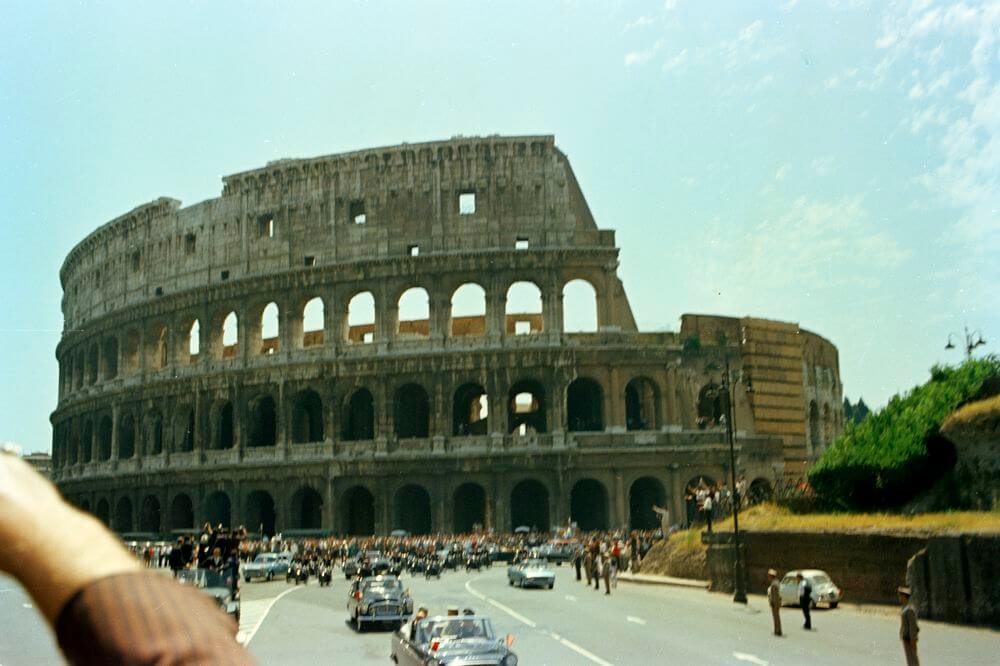
    JFK motorcade passing the Colosseum

    That evening, Kennedy was the special guest at a banquet held in the Quirinale Palace and arranged by the Italian president, Antonio Segni. One of the dignitaries Kennedy was due to confer with was Pietro Nenni, head of Italy’s Socialist Party (PSI). Nenni’s greatest hope was that JFK would lend his support to the “opening to the left” (l’apertura a sinistra): a plan frowned upon by the Eisenhower administration, which would create a left-of-center coalition between the Socialists and Italy’s ruling party, the Christian Democrats. Nenni was not disappointed. Deeply moved by their intense conversation, he left the meeting with tears of joy in his eyes. Shortly afterward, Kennedy would give his official approval to l’apertura and ask labor leader Victor Reuther and his brother Walter, president of the United Auto Workers, to help generate financial aid to the Socialists.

    President Kennedy at the Quirinale Palace

    Upon his return from Europe, the president remarked to his special assistant Arthur Schlesinger (the man who had initially convinced Kennedy to support l’apertura): “So far as I could see, everyone in Italy is for an opening to the left.” For any scholar familiar with the history of Operation Gladio, such a remark could mean only one of two things. Either Kennedy was playing his cards very close to his vest with a man who had already earned his trust and confidence, or he was completely uninformed on the subject of Italy’s postwar clandestine “stay-behind” guerrilla army: a virulently anticommunist, antisocialist, and one might even say antidemocratic organization, code-named Gladio.

    As the Swiss historian Dr. Daniele Ganser explains in his book about NATO’s secret armies,

    When John F Kennedy became president in January 1961 the policy of the United States toward Italy changed because Kennedy, unlike his predecessors Truman and Eisenhower, sympathized with the PSI [Italian Socialist Party]. He agreed with a CIA analysis that in Italy “the strength of the socialists, even without aid from outside, means that left-wing sentiment looked forward to a democratic form of socialism.” Yet Kennedy’s plans for reform met with stiff resistance from both the U.S. State Department and the CIA.1

    JFK at City Hall in Rome

    Indeed, there were shadowy forces back in Washington that remained hell-bent on thwarting the president’s goals and whose actual alliance was to a power elite that transcended the agenda of any mere president. At this historical moment, the covert “powers that be” were, in part, represented by some rather sinister overt figures who also liked to linger in those shadows, as “spooks” are wont to do.

    One was James Angleton, the CIA’s chief of Counterintelligence, who played a singular role in rescuing and recruiting some of the more bestial Fascists who were later to serve in Operation Gladio, such as Prince Junio Valerio Borghese (aka “The Black Prince”), commander of an anti-partisan campaign that murdered hundreds of Italian communists who had fought against Mussolini. Prince Borghese, “in close collaboration with the CIA in Rome on the night of December 7, 1970 started the second right-wing Gladio coup d’état in Italy, code-named Tora Tora”2 (now known as the Borghese coup). As historian Stuart Christie notes, “Angleton became the key American figure controlling all right wing and neofascist political and paramilitary groups in Italy in the postwar period.”3

    Another notable spook was Richard Helms, the CIA’s Deputy Director for Plans, who, along with Allen Dulles, helped to establish MKULTRA, a barbaric mind-control program that even the CIA’s current website admits broke the Nuremberg Code that “prohibits experimentation with humans without their consent.”

    And then there was Bill Harvey. Although Harvey wasn’t part of the upper echelon, he was a hard-boiled operator who was placed in charge of running some important missions. One was Task Force W, part of Operation Mongoose, the CIA’s covert war against Cuba. Another was ZR/RIFLE, the Agency’s assassination program designed to eliminate foreign leaders. Harvey had particularly incurred the wrath of the president’s brother, Attorney General Robert Kennedy, because of his insubordination during the Cuban Missile Crisis. In the midst of delicate negotiations between JFK and Soviet Premier Khrushchev that narrowly avoided World War III, Harvey had the temerity to secretly launch three boat missions against Cuba. As a result, an utterly furious RFK demanded he be sacked. Instead, Richard Helms quietly shipped Harvey off to Europe as a means of protecting him. Harvey was appointed as the CIA’s Rome station chief, where he would work closely with certain right-wing members of the Italian secret service.

    We should also highlight the figure of Allen Dulles, who, although officially “retired” in 1961 at JFK’s insistence, continued to exert significant influence behind the scenes.4 Dulles’s Operation Paperclip and Gehlen Operation had rescued Nazis from prosecution at the Nuremberg trials (either by changing their names or altering their résumés) so they could later be used as scientists and engineers in American research projects and also as intelligence officers against the USSR for West Germany. Paperclip paved the way for similar compromises with unrepentant Fascists, Nazis, and right-wing terrorists who were recruited to serve in the secret Gladio network throughout Europe, all with NATO’s consent.

    Dulles directed the creation of Gladio from its inception. In the words of Dr. Ganser: “Dulles during his time as Director of CIA had been the brain behind the secret anti-Communist armies. When the Gladio secret armies were discovered across Western Europe in 1990, an unnamed former NATO intelligence official explained that ‘though the Stay Behind operation was officially started only in 1952, the whole exercise had been in existence for a long time, in fact ever since it was born in the head of Allen Dulles.’”5

    Approaching NATO headquarters in Naples

    In a story that was first reported by David Talbot in The Devil’s Chessboard, as soon as Kennedy returned to Washington, Dino Pionzio,6 the “CIA’s leading operator in Italy,” approached Aldo Moro’s administrative secretary (and future prime minister) Sereno Freato. Dino wanted to pick his brain about Moro’s recent conversation with Kennedy during the Rome visit. (Moro, a prominent member of the Christian Democrats, would serve his first term as prime minister beginning on December 4th of that year.) This was when Pionzio—and the powers that be—learned that JFK and Moro had agreed to advance the goals of l’apertura or the “opening to the left.” Talbot adds: “Dulles and the CIA felt they had a proprietary relationship with the Christian Democrats, ever since those early Cold War days when the agency began funneling money to the Italian party.”

    As Daniele Ganser likes to point out, rigging the 1948 Italian election was the first operation ever conducted by the recently formed CIA. Some of it was done out of the office of the Dulles brothers law firm, Sullivan and Cromwell. (James Angleton would also play an important role in helping to steal that ’48 election.) An electoral success by the Christian Democrats would allow for a non-Communist Italy to join NATO the following year. Once that was accomplished, the direction of the Italian government would fall under the secret control of NATO’s clandestine operational arm, Gladio. During the Cold War, Britain and the United States were both deeply alarmed over the prospect of a coalition government in Italy that included the Socialists and the Communists. According to Italian magistrate Felice Casson, to undermine such collaboration a “strategy of tension”—the disruption of ordinary civilian life by prefabricated social violence and chaos—would be put into place by forces within the State.

    Pionzio’s meeting with Freato put the Christian Democrats on notice: their budding alliance with the Socialists did not enjoy full support in Washington, particularly in national security circles […] The CIA’s attempt to subvert the aperture was one more flagrant example of how the agency sought to undermine the Kennedy presidency, as well as Italian democracy.7

    JFK attending ceremony at NATO headquaters, Naples

    Nonetheless, that November—in a move that would later help to seal his fate—Aldo Moro went ahead and created a coalition government that included the Socialists. The following summer, when JFK-hater Bill Harvey arrived in Rome to assume his position as CIA station chief, he didn’t waste any time. In a page taken right out of the Gladio script, Harvey tried to convince Renzo Rocca, an espionage chief working with Italian intelligence (or SIFAR) “to use his ‘action squads’ to carry out bombings of Christian Democratic Party offices and newspapers—terrorist acts that were to be blamed on the left.”8 This was a foreshadowing of what would occur in the years ahead, during Italy’s infamous Anni di piombo, or “Years of Lead”: a period extending from the late Sixties to the late Eighties. Even Harvey’s deputy in Rome, Felton Wyatt, who served as a principal CIA liaison with Operation Gladio, later professed to be shocked by Harvey’s extremism.

    Perhaps it’s no coincidence that the escalating violence of the “Years of Lead” coincided with the appointment of General Lyman Lemnitzer as Supreme Allied Commander Europe of NATO (SACEUR). In his position as SACEUR from 1963 to 1969, Lemnitzer would have the final word over the activities of Gladio.

    Lemnitzer served as Chairman of the Joint Chiefs of Staff from 1960 to 1962, but was relieved of his position by JFK shortly after Lemnitzer approved of Operation Northwoods. This plan proposed the staging of false-flag operations, including terrorist bombings in Florida and in the nation’s capital, that would have wounded Cuban refugees (and, one assumes, other innocent bystanders). Northwoods also proposed the blowing up of an American ship harbored in Guantanamo Bay—and then blaming all the terror on pro-Castro Miami Cubans. As if to illustrate that such false-flag mayhem was nothing new, the Northwoods memo even makes reference to the sinking of the USS Maine in Cuba, another probable act of state-directed violence that conveniently served as a trigger for the Spanish-American war.

    On March 13, 1962, Lemnitzer submitted his Northwoods plan to Secretary of Defense Robert McNamara. Fortunately, Northwoods was never carried out, and it remains uncertain whether JFK ever saw the original memo. However, three days later, at a Cuba strategy meeting held in the Oval Office, Lemnitzer “informed Kennedy that the Joint Chiefs ‘had plans for creating plausible pretexts to use force [against Cuba], with the pretexts either attacks on U.S. aircraft or a Cuban action in Latin America for which we would retaliate.’” According to Air Force officer Edward Lansdale, the president replied “bluntly that we were not discussing the use of U.S. military force.”9 Lemnitzer’s relationship with Kennedy was antagonistic and his persistence in trying to convince JFK to take military action against Cuba finally forced the president’s hand. A few months later, Kennedy denied Lemnitzer a second term and informed the general that he would instead be serving at the helm of NATO.

    Kennedy’s motorcade, featuring a fully enclosed security phalanx, driving through Naples

    In his 2018 memoir, American Values, Robert Kennedy Jr. calls Lemnitzer a “warmongering general” and “a Cold War fanatic,” adding:

    That Operation Northwoods memo should serve as a warning to the American people about the dangers of allowing the military to set goals or standards for our country.10

    The Northwoods memo is unique only insofar as it remains the single official document released by the government that spells out a plan for terror directed against American citizens on domestic soil. No doubt, there were other equally insane military contingency plans floating around which have either remained classified or been destroyed.11 But Northwoods clearly illustrates how this sort of amoral “strategic” thinking was typical of the power elite. In the years ahead, the same strategy of false-flag pandemonium was actually carried out in Europe, especially in places such as Italy, France, Germany, Belgium, Turkey, and Greece, all of which suffered some of the worst State-sponsored terror that was unleashed by NATO’s secret army.

    Gladio was coordinated by NATO and run by various European secret services under the supervision of the CIA and Britain’s MI6. All this is the subject of Daniele Ganser’s groundbreaking and encyclopedic tome, NATO’s Secret Armies: Operation GLADIO and Terrorism in Western Europe (which I have relied upon for most of the Gladio-related information in this essay). Building on earlier works such as Philip Willan’s seminal Puppetmasters (an examination of Gladio in Italy) and British reporter Peter Murtagh’s The Rape of Greece, Ganser has constructed the first in-depth examination of the Gladio network as it unfolded throughout all of Western Europe.

    In various interviews with Dr. Ganser, the listener may notice a frequent use of the term “data” and the question of whether certain statements are adequately supported by such objective facts. A quick look at his background is illuminating in this regard: Ganser was Senior Researcher at the Center for Security Studies at the prestigious Federal Institute of Technology (ETH), in Zurich. He studied at Basel University in Switzerland, at Amsterdam University in the Netherlands, and at the London School of Economics and Political Science. (Perhaps not surprisingly, Ganser’s history professors at this most prestigious British institution had never heard of Gladio: an omission that Ganser compares to a specialist on late-twentieth-century history having never been schooled about the Vietnam War!) Thus, as a serious historian who gradually grew fascinated with the subject of secret warfare and the eventual exposure of the Gladio network, Ganser’s first question concerned the nature of the extant factual data and how it might support this seemingly outlandish tale. As a result, his narrative proceeds from one fact to the next, with a minimum of speculation or theoretical detour. For those familiar with some of the more ungrounded and meandering sallies into this territory, such an approach is surely welcomed.

    Dr. Daniele Ganser

    II. The Secret Armies

    Perhaps there exists no better summary of Operation Gladio than the opening paragraph of Ganser’s meticulously researched, scholarly account:

    As the Cold War ended, following judicial investigations into mysterious acts of terrorism in Italy, Italian Prime Minister Giulio Andreotti was forced to confirm in August 1990 that a secret army existed in Italy and other countries across Western Europe that were part of the North Atlantic Treaty Organization (NATO). Coordinated by the unorthodox Warfare section of NATO, the secret army had been set up by the U.S. secret service, Central Intelligence Agency (CIA), and the British secret intelligence service (MI6) or (SIS) after the end of the Second World War to fight communism in Western Europe. The clandestine network which, after the revelations of the Italian Prime Minister, was researched by judges, parliamentarians, academics, and investigative journalists across Europe, is now understood to have been code-named “Gladio” (the sword) in Italy, while in other countries that Network operated under different names […] In each country the military secret service operated the anti-Communist party within the state in close collaboration with the CIA or the MI6, unknown to parliaments and populations. In each country, leading members of the executive, including prime ministers, presidents, interior ministers, and defense ministers were involved in the conspiracy, while the “Allied Clandestine Committee” (ACC), sometimes also euphemistically called the “Allied Co-ordination Committee” and the “Clandestine Planning Committee” (CPC), less conspicuously at times also called “Coordination and Planning Committee” of NATO’s Supreme Headquarters Allied Powers Europe (SHAPE), coordinated the networks on the international level. The last confirmed meeting of ACC with representatives of European secret services took place on October 24, 1990 in Brussels.12

    As mentioned earlier, the Italian gladio weapon was made with a double-edged blade. Likewise, from the inception of this covert operation, the secret armies served a dual purpose. One was to remain behind enemy lines in the event of a Soviet invasion and to operate as a guerilla resistance network. Gladio soldiers were supplied with arms caches composed of explosives, sophisticated radio communication equipment, and light weapons that were secretly stockpiled, hidden in caves, or buried at various sites across Europe.

    But the other function of the “stay-behind” was to sabotage political parties, elected representatives, or left-wing supporters that NATO and its CIA bedfellows deemed inappropriate. And the methods used were utterly Machiavellian. As briefly discussed above, various acts of State-fabricated terror were set into motion that led to the deaths of hundreds of civilians, and these crimes were subsequently blamed on the left. Sometimes, this involved the creation of fictional “left-wing” groups that were, in fact, nonexistent and the planting of falsified evidence that included anonymous phone calls or letters (often penned in the stereotypical style of B-movies).

    As we find throughout history, legitimate leftists who had nothing to do with violence were seized by the police and forced into the role of the patsy. For example, in the 1969 Piazza Fontana bombing, Giuseppe Pinelli, a mild-mannered pacifist, anarchist, and autodidact—Pinelli had been too poor to pursue studies in school—was escorted to police headquarters in Milan. He was on friendly terms with the local authorities and was allowed to drive his scooter to the police station. Detained and subjected to a prolonged examination, Pinelli never survived his interrogation. Shortly before midnight on December 12th , he went flying through a fourth-floor window, plummeting to his death. At first, police claimed that Pinelli had committed suicide. Then, a 1975 inquiry ludicrously concluded that he’d “fainted” out the window. Pinelli was eventually cleared of any involvement in the Piazza Fontana bombing. His murder inspired Nobel Prize laureate Dario Fo to write a play, Accidental Death of an Anarchist, that immortalized this man of such humble origins who had been employed as a railroad worker.

    Giuseppe Pinelli

    At other times—as in the case of Italy’s Red Brigades—extant left-wing groups were steered to violence once the leadership of these groups was usurped. After the former leaders were pushed aside—either disgraced, imprisoned, or killed—the new leaders (in reality, agents provocateurs) directed State-sponsored murder disguised as a “radical left” action. In this context, one might speak of turning an entire organization into a patsy. In other cases, when government intel agencies were tipped off to impending terrorist actions fomented by either the right or left, a passive “stand back and do nothing” approach was taken—if such acts simultaneously served a “higher” goal of the Deep State (the “state within the state,” from the Turkish derin devlet), such as incriminating the left and strengthening the call for increased security measures at the sacrifice of civil liberties and freedom.

    Thus, the “double-edged sword” shifts from a literal to a figurative meaning: “Something that can have both favorable and unfavorable consequences; something that has both good and bad parts or results.”

    It’s also important to note that secret armies were established in certain European countries even before the existence of NATO (1949) and its Gladio network. In 1944, Winston Churchill ordered the establishment of one such covert army in Greece, known by the acronym LOK. In France, a secret army was created immediately after the end of the war. Once again, fear of the electoral strength of the Communist Party and the left was the issue; as always, the “solution” was the installation of a right-wing dictatorship.

    On July 30, 1947, the existence of the French secret army was suddenly revealed to a startled populace: “French Socialist Minister of the Interior Edouard Depreux lifted the veil and declared to a baffled population that a secret right-wing army had been erected in France behind the back of the politicians, with the task to destabilize the French government. ‘Toward the end of 1946 we got to know of the existence of a black resistance network, made up of resistance fighters of the extreme right, Vichy collaborators, and monarchists,’ Depreux explained. ‘They had a secret attack plan called Plan Bleu, which should have come into action toward the end of July, or on August 6, [1947].’”13 Although the army was shuttered following public outcry, another was created shortly afterward to replace it.

    Although Ganser doesn’t venture into the subject of the FBI’s Counterintelligence Program (COINTELPRO, which heavily infiltrated the American Communist Party) or the CIA’s domestically-based Operation CHAOS,14 similar acts of infiltration and incitement to violence were also occurring on U.S. soil during this same period. To cite just two examples, members of the Weather Underground in Cincinnati were taught the art of bomb making by an ex-Green Beret and Vietnam veteran named Larry Grathwohl: an agent provocateur and FBI informant who also supplied them with guns.15 And the Fair Play for Cuba Committee (FPCC) was infiltrated by an intel asset named Lee Harvey Oswald, whose sudden thrust into the limelight on November 22, 1963 served the dual purpose of providing a patsy for the JFK assassination and destroying the FPCC. As Republican Senator Richard Schweiker, a member of the U.S. Senate Select Committee on Intelligence, remarked in 1975: “We do know Oswald had intelligence connections. Everywhere you look with him, there are fingerprints of intelligence.” (No better one-line description of what Oswald was up to has ever emerged.) It was only recently revealed that Richard Gibson, co-founder of the FPCC, offered his assistance to the CIA in July 1962 and officially worked for the Agency as a spy (code name: QRPHONE-1) from 1965 to 1977.16 Perhaps an even better example of CIA/FBI domestic infiltration and destruction can be found in the history of the Black Panther movement, which featured the CIA’s drug-induced manipulation of Huey Newton,17 and the Bureau’s role in manipulating police to assassinate Panther leaders Mark Clark and Fred Hampton.18 Informants who assisted in these Black Panther murders were effectively paid a “bounty” in the form of bonuses personally approved by FBI Director J. Edgar Hoover.19 And, as antiwar activist Noah Chomsky recalls: “Government agencies financed, helped organize, and supplied arms to right-wing terrorist groups that carried out fire bombings, burglaries, and shootings … In most cases [it was] the FBI, although one right-wing terrorist in Chicago claims that his group was financed and directed in part by the CIA.”20 Thus, the link between such actions in the U.S. and Europe is revealed not only in the modus operandi, but in the presence of high-ranking personnel who supervised such operations, both here and abroad.

    J. Edgar Hoover, director of the FBI from to 1935-72

    So, who were these modern-day “gladiators”? As Ganser is quick to note, not every European nation fell subject to such abyssmal acts; and many soldiers who served in the Gladio network considered themselves to be patriots whose sole job was to defend their country against the Soviet Union. For example, in the Cold War period that Ganser covers in his book (1945–1990), Norway, Switzerland, and Austria were never victimized by false-flag attacks. And many Scandinavians who enlisted in the stay-behinds later objected to even being called a “Gladio” soldier. But when we study the events that occurred during this same period in Italy, France, Germany, Belgium, Turkey, and Greece, a wholly different picture emerges. That is, many Gladio operatives were hardened right-wing fanatics who thought nothing of participating in terror, torture, and the taking of innocent lives in the service of a “higher” cause—one they often spoke of with a religious fervor. Not surprisingly, the ranks of the Gladio armies were brimming with recalcitrant Nazis and Fascists. As one neofascist confessed after his arrest: “The personnel was recruited in circles where anti-communism was at its strongest; that is to say on the far right.”21 To make matters worse, some of the directors and leading figures of national intelligence agencies were also recycled from these same Nazi and Fascist networks.

    One of the most infamous was General Reinhard Gehlen, whom Hitler appointed as chief of Foreign Armies East in 1942, and whose secret service career with the Nazis was focused on fighting the Soviet Union. According to author Christopher Simpson, “Gehlen derived much of his information from his role in one of the most terrible atrocities of the war: the torture, interrogation, and murder by starvation of some four million Soviet prisoners of war.”22 Gehlen was rewarded for such niceties by being scooped out of Germany by the Americans and shipped with his top staff to Fort Hunt, Virginia. After a cordial meeting with Allen Dulles, it was decided that Gehlen would be given a new assignment. Once the general and his crew were shipped safely back to Germany, he became the director of the “Gehlen Organization”: West Germany’s top intelligence agency, which also integrated other brutal, incorrigible Nazis into its structure. According to Ganser:

    When the Gladio scandal erupted in 1990, an unnamed former NATO intelligence officer explained that the covert action branch of the CIA under Frank Wisner, in order to set up the German secret army, had “incorporated lock, stock, and barrel the espionage outfit run by Hitler’s spy chief Reinhard Gehlen. This is well known, because Gehlen was the spiritual father of Stay Behind in Germany and his role was known to the West German leader, Konrad Adenauer, from the outset.” According to the unnamed NATO officer, U.S. President Truman and German Chancellor Adenauer had “signed a secret protocol with the U.S. on West Germany’s entry into NATO in May 1955, in which it was agreed that the West German authorities would refrain from active legal pursuit of known right-wing extremists. What is not so well known is that other top German politicians were privy to the existence of secret resistance plans.”23

    Thus, the State-controlled terrorists were given carte blanche to operate without fear of reprisal.

    Reinhard Gehlen

    Ganser devotes the first three chapters of his chronicle to establishing the basic facts behind the Gladio network; its eventual exposure; and the subsequent refusal of NATO, CIA, and MI6 to even acknowledge its existence. The next dozen chapters go into greater detail about all twelve European nations that hosted the Gladio networks, with a chapter on each national history. Condensing this complex, baroque narrative must have been a daunting task, but the author pulls it off brilliantly. In the course of this essay, we will touch upon just a few highlights, but this barely does justice to the rich contents of NATO’s Secret Armies.

    As Ganser explains, the invitation to join NATO was itself a double-edged sword. Western European nations were pressured to participate in the alliance and reap its benefits. Yet, to do so, they were forced to sign secret protocols that essentially stripped them of their sovereignty. NATO would have the final word regarding whether an elected official or his party could continue to serve or whether, instead, he should be besmirched, overthrown, or killed. The protocols remained a secret to many of the leaders of these countries. Communist, socialist, or left-leaning parliamentarians could not be trusted—so went the logic—to keep this arrangement secret. Neither could many of the prime ministers or presidents. Besides fearing a backlash from the public, NATO feared the Soviets might be informed. Thus, only “trustworthy” leaders were privy to such information. And, in certain cases, the signatories of these agreements were right-wing directors of intel agencies rather than the democratically elected leaders of said countries.

    President Kennedy may have also fallen into this category of so-called untrustworthy men who would remain uniformed about the details of Operation Gladio.24 After all, the president was viewed by many on the extreme right as a “communist appeaser.” Kennedy would establish backchannels of communication with Soviet Premier Nikita Khrushchev during and after the Cuban Missile Crisis, and he was also on the verge of attempting a rapprochement with Cuba’s leader, Fidel Castro.25 We should also note that, as early as 1967, New Orleans District Attorney Jim Garrison was well aware of the foreign policy connection to the JFK assassination. In his On the Trail of the Assassins, Garrison states his belief that Clay Shaw’s motivation to participate in the conspiracy “stemmed from Shaw’s history as a CIA operative and his desire, shared by the hard-core cold warriors in the intelligence community, to stop Kennedy’s attempt to turn around U.S. foreign policy.”26

    As it turns out, it was not just Kennedy’s foreign policy in Vietnam and Cuba they wanted to reverse, but his policy in key strategic areas around the globe, including Indonesia and the Congo. Congo possessed copper, gold, diamonds, cobalt, and the world’s largest and most densely concentrated deposit of uranium oxide. (The high-grade uranium used in the atom bomb dropped on Hiroshima was derived from a Congolese mine in Katanga.) Indonesia was one of the very few nations that surpassed Congo in resource wealth. It was brimming with silver, copper, gold, and vast reserves of oil. It still hosts one of the world’s largest—if not the largest—copper and gold mine. This immense wealth at least partly explain why the CIA supervised several assassination plots of the Congo’s nationalist leader, Patrice Lumumba. They succeeded just three days before Kennedy’s inauguration—and the Agency managed to keep it a secret from JFK for the next twenty-four days. It also explains why, after failing to overthrow Sukarno in Indonesia in 1958, the Agency directed a successful coup in 1965 that cost at least a half million innocent lives. And which Allen Dulles may have been secretly involved with, even though JFK had retired him in late 1961. (See the upcoming book by Greg Poulgrain, JFK vs Allen Dulles: Battleground Indonesia)

    As early as 1959, while Chairman of the African Subcommittee of the Senate Foreign Relations Committee, Kennedy clearly carved out his position: “Call it nationalism, call it anti-colonialism, call it what you will, Africa is going through a revolution … The word is out—and spreading like wildfire in a thousand languages and dialects—that it is no longer necessary to remain forever poor or forever in bondage.” Years after Kennedy was killed, Fidel Castro told Robert F. Kennedy, Jr: “If your uncle had lived, the relationship between our countries would have been very different. He was a great president, an unusual man with love for children and a powerful understanding of the military and large corporations that run your country. We were on a road to peace.”27 This is exactly what the military-industrial complex did not want.

    Kennedy’s willingness to negotiate with nationalist leaders of nonaligned Third World nations and his increasingly anti-colonialist foreign policy which would have cost powerful multinational corporations billions of dollars—especially in places such as Africa and Indonesia—28 would have placed him in a far more dangerous position than, say, Charles de Gaulle or Aldo Moro, both of whom were also victims of assassination attempts. Moro was kidnapped and killed; Charles de Gaulle survived numerous close-calls with death; both leaders were targeted in these attacks by members of the Gladio network. In the latter case, this was admitted by the French chief of the secret services (DGSE), Admiral Pierre Lacoste, in 1990. But, unlike Kennedy, de Gaulle had a countermeasure in place that wasn’t available to JFK. That is, he possessed his own extensive network of loyal military and secret service personnel that were willing to engage in “unorthodox” operations to avenge their president and war hero. This included former members of the Service d’Action Civique, a veritable Gaullist praetorian guard, and loyalists in the Service de Documentation Extérieure et de Contre-Espionnage (SDECE). After the failed Generals’ Putsch of April 21–26, 1961, de Gaulle’s SDECE operatives were said to have placed bombs in Algerian cafes frequented by the same Gladio/OAS (Organisation Armée Secrète) members who had tried to eliminate de Gaulle—and blew them to smithereens. “The old general was willing to fight with equal ferocity.”29 Indeed, “like few others, Charles de Gaulle had been at the center of secret warfare in France for most of his lifetime.” And during the attempted coup, President de Gaulle called directly upon les français—the ordinary French citizens—to help rally against such seditious threats:

    And all over France, millions of people did rush to the aid of their nation. The following day, a general strike was organized to protest the putsch…. Over ten million people joined the nationwide demonstrations, with hundreds of thousands marching in the streets of Paris, carrying banners proclaiming “Peace in Algeria’ and shouting, “Fascism will not pass!” Even police officer associations expressed “complete solidarity” with the protests.30

    Although President Kennedy lent his full support to de Gaulle, Allen Dulles and the CIA—who had a hand in the coup attempt—were not pleased. Besides sending his press secretary, Pierre Salinger, to the Élysée Palace, Kennedy phoned the French ambassador, Hervé Alphand, to convey his assurances that he was opposed. But also to warn him about what they were both up against: “The CIA is such a vast and poorly controlled machine that the most unlikely maneuvers might be true.” The president had learned his lessons about CIA duplicity during the Bay of Pigs Invasion, which had occurred just days before, on April 17, 1961. Someone was clearly trying to overload the president’s work schedule.

    President De Gaulle greeted by a grateful populace in 1961, after the failed Generals’ Putsch

    Once de Gaulle was informed about the secret Gladio network, in 1966 he decided to remove France from the military portion of NATO and kick NATO headquarters out of France. (Until then, it was located in Paris.) His memo signaling this withdrawal takes on a deeper dimension in light of what we now know about the secret NATO protocols that, in essence, nullified a nation’s freedom: “France is determined to regain on her whole territory the full exercise of her sovereignty.”

    De Gaulle denounced the protocols as an infringement of national sovereignty. Similar secret clauses were also revealed in other NATO states [… historian] Giuseppe de Lutiss revealed that when becoming a NATO member, Italy in 1949 had signed not only the Atlantic Pact but also secret protocols that provided for the creation of an unofficial organization “charged with guaranteeing Italy’s internal alignment with the Western Bloc by any means, even if the electorate was to show a different inclination.”31

    After its expulsion by de Gaulle, NATO set up shop in Brussels. In the years ahead, Belgium became the sorry host of horrific domestic terrorism, thanks to this same Gladio network.

    III. Gladio Exposed

    The unraveling public exposure of Gladio traces back to a terrorist attack in the small village of Peteano, in 1972. The Carabinieri (Italy’s national gendarmerie) received an anonymous tip about an abandoned car. When they arrived on the scene and opened the trunk, three policemen were killed by an explosion. Shortly afterward, the Red Brigades were said to have claimed responsibility for the terror. In addition, an official investigator reported that the explosive material used in the attack could definitively be attributed to the Red Brigades network.

    Peteano car bomb, 1972

    Eighteen years later, in the summer of 1990, a courageous, resolute Italian magistrate named Felice Casson was busy at work, combing through data on right-wing terrorism that was stored in the archives of the military secret service. Casson’s research led him to conclude that there were unquestionable links between terrorist operations and the State. He said that a “strategy of tension” had been intentionally developed in order to eviscerate left-leaning political parties, both in Italy and elsewhere. The purpose of this strategy, he continued, was to:

    Create tension within the country to promote conservative, reactionary social and political tendencies. While this strategy was being implemented, it was necessary to protect those behind it, because evidence implicating them was being discovered. Witnesses withheld information to cover right-wing extremists.

    Judge Casson (who now serves on the Italian Senate) discovered that an operator named Vincenzo Vinciguerra, a member of a paramilitary terrorist organization called Ordine Nuovo, was behind the crime. (Gladio researcher Philip Willan characterizes Vinciguerra as a “virulent fascist of psychopathic ruthlessness.”)32 Arrested and placed on trial in 1984, Vinciguerra bluntly stated that he was protected and enabled by the government’s own intelligence and security organizations, which shared his extremist anti-Communist views:

    With the massacre of Peteano and with all those that have followed, the knowledge should by now be clear that there existed a real live structure, occult and hidden, with a capacity of giving a strategic direction to the outrages. [This structure] lies within the state itself. There exists in Italy a secret force parallel to the armed forces, composed of civilians and military men, in an anti-Soviet capacity, that is, to organize a resistance on Italian soil against a Russian army.

    [This] super-organization, lacking a Soviet military invasion which might not happen, took up the task, on NATO’s behalf, of preventing a slip to the left in the political balance of the country. This they did, with the assistance of the official secret services and the political and military forces.

    According to Vinciguerra, all the bombings that followed the Peteano massacre stemmed from the same “single, organized matrix.”33 Most chilling of all, Vinciguerra fleshed out the strategy of tension in a manner that only a hardened killer could who had participated in its every step:

    You had to attack civilians, the people, women, children, innocent people, unknown people far removed from any political game. The reason was quite simple. They were supposed to force these people, the Italian public, to turn to the State to ask for greater security. This is the political logic that lies behind all the massacres and the bombings which remain unpunished, because the State cannot convict itself or declare itself responsible for what happened.34

    For students of the theater, this pithy statement could be viewed as the climactic dialogue of a key protagonist that serves to encapsulate the principal theme of the drama and, more importantly, suddenly illuminates what lies at its core. As we shall see, Vincenzo Vinciguerra’s revelations did not exist in a vacuum.

    On December 7, 1970, Gladio’s right-wing extremists launched a coup that was code-named Tora Tora. According to Philip Willan’s Puppetmasters, the coup was named after the Japanese attack on Pearl Harbor that had also occurred on 7 December, in 1941. Although it was called off at the last moment, one paramilitary group had already entered the Interior Ministry and distributed 180 machine guns to their Gladio comrades. As a result of all this, Italian politicians and parliamentarians on the left were sent a clear message regarding how easily they could be humbled, pushed aside, or done away with. Part of the coup plan “called for the arrest of left-wing political and trade union leaders as well as leading journalists and political activists who were to be shipped away and locked up in the Gladio prison in Sardinia.”35

    Puppetmasters, by Philip Willan

    Giovanni Tamburino, an investigative magistrate of the Italian city Padua, critically investigated the Tora Tora operation and, to his massive surprise … discovered the involvement of a mysterious secret army, later discovered to be Gladio. Thereafter, he arrested Vito Miceli, the acting director of the SID [Servizio Informazioni Difesa, Italy’s foreign intelligence service] who before had directed NATO’s Security Office in Brussels. Tamburino charged Miceli with “promoting, setting up, and organizing, together with others, a secret association of military and civilians aimed at provoking an armed insurrection to bring about an illegal change in the constitution of the state and the form of government.” His data suggested that a mysterious armed organization existed within the state, and as its real code-name Gladio had not yet been discovered, the structure during questioning was referred to as “Super-SID.”

    Placed on trial on November 17, 1974, “an angry Miceli shouted: ‘A super SID on my orders? Of course not! But I have not organized it myself to make a coup d’état. This was the United States and NATO who asked me to do it!’” In 1977, Miceli confessed: “There has always been a certain top secret organization, known to the top authorities of the state and operating in the domain of the secret services, involved in activities that have nothing to do with intelligence gathering.”36

    In 1990, after Prime Minister Giulio Andreotti was forced to admit the reality of Gladio, parliamentarians launched an investigation. In 1995, they produced a 370-page report, which tepidly stated that the “CIA [had] enjoyed maximum discretion” in Italy during this period. Five years later, a second parliamentary investigation concluded that the U.S had supported the “strategy of tension” (i.e., terror) in order to “stop the PCI [Italian Communist Party] and to a certain degree also the PSI [Italian Socialist Party] from reaching executive power in the country.” The Senate report also concluded:

    Those massacres, those bombs, those military actions had been organized or promoted or supported by men inside Italian state institutions and, as has been discovered more recently, by men linked to the structures of United States intelligence.37

    Note the term: “structures” of U.S. intelligence. This leaves the door open to include not only the CIA but other intel agencies such as the Pentagon’s Defense Intelligence Agency (DIA).

    Further highlighting the significance of Vinciguerra’s admission, Ganser adds: “In marked contrast to other right-wing terrorists that had collaborated with the Italian military secret service and walked free, Vinciguerra after his revelations was sentenced for life and imprisoned.”38

    Additional confirmation surfaced in the testimony of General Giandelio Maletti, former head of Italian counterintelligence. During a March 2001 trial of right-wing terrorists accused of the Piazza Fontana massacre (a bombing that killed sixteen and wounded eighty), the general made a telling remark: “The impression was that the Americans would do anything to stop Italy from sliding to the left.” And he added: “The CIA, following the directives of its government, wanted to create an Italian nationalism capable of halting what it saw as a slide to the left; and, for this purpose, it may have made use of right-wing terrorism … Don’t forget that Nixon was in charge and Nixon was a strange man … a man of rather unorthodox initiatives.” Later on, at the ripe age of seventy-nine, Maletti revealed another quintessential element in the Gladio equation: “‘Italy has been dealt with as a sort of protectorate’ of the United States. ‘I am ashamed to think that we are still subject to special supervision.’”39

    Piazza Fontana bombing

    Maletti’s reference to Nixon is significant. When we examine the strange death of Aldo Moro, the shadow of Nixon’s henchman, Secretary of State Henry Kissinger, will be seen flickering across the final act of the Moro tragedy. Also of significance is the general’s use of the term “unorthodox”: that adjectival euphemism most often employed in intel circles to describe inhumane or terrorist methods generated from within their own agencies.

    Unfortunately, besides Italy, the only countries to initiate parliamentary investigations were Belgium and Switzerland. In this sense, Vinciguerra had the final word when he proclaimed: “The State cannot condemn itself.”

    Following Judge Casson’s exposure of the Italian Gladio, journalists approached French President François Mitterrand to ask about a possible French connection. But Mitterrand, who was often referred to as “l’Dieu” (God), quickly attempted to sidestep the matter and sweep it under a rug. “When I arrived [Mitterrand was first elected in 1981], I didn’t have much left to dissolve. There only remained a few remnants, of which I learned the existence with some surprise, because everyone had forgotten about them.” Although the French president was also known as the “Old Fox,” Prime Minister Andreotti’s own foxiness was clearly on par with that of his French counterpart. Refusing to allow Mitterrand to assume a smug, paternalistic high road, Andreotti slyly pointed out that the French Gladio representatives were also seated at the last Allied Clandestine Committee meeting held in Brussels, which had occurred as recently as October 24, 1990. At this point, Mitterrand assumed his most well-known persona: that of an old French fox with sealed lips.

    In Belgium, the falling dominoes of Gladio revelations made a spectacular, clattering crash on November 7, 1990 when Socialist Defense Minister Guy Coeme announced, during a special televised broadcast, that NATO’s secret army had been active in Belgium since the Cold War. Coeme’s climactic statement was: “I want to know whether there exists a link between the activities of this secret network and the wave of crime and terror which our country suffered from during the past years.”40 One of the more notable terrorist acts that the defense minister was referring to was the dreadful Brabant Massacres, a grisly series of attacks in which innocent men, women, and children were gunned down in places such as shopping markets by masked, hooded men with shotguns. The Brabant Massacres resulted in twenty-eight deaths, with another twenty-two injured. Journalist Phil Davison remarked: “If the object was to sow terror, the killers chose the perfect targets: women, children, and the elderly, cut down by rapid gunfire while wheeling their trolleys through a local supermarket.”41

    A 2017 memorial ceremony in Aalst, Belgium, for victims killed and injured by the Brabant assassins. The mayor of Aalst, criticizing the Justice Department, said: “You have failed for years in correctly dealing with the victims, and the investigation has been extremely unprofessional. There are so many questions that remain. Who is lying? Who is telling the truth?”

    A parliamentary investigation subsequently discovered that the secret army had been structured into two separate branches of the Belgian secret services. One (SDRA8) was located within the military secret service; the other (STC/Mob) was contained within the civil secret service. (Many of the Gladio stay-behinds were disguised in this way: like a graduated series of Chinese boxes.)

    To properly investigate possible connections to terrorism, parliamentarians demanded to see a list of the Gladio soldiers, or even a list with their names excised and replaced by birth dates, in order to compare them to known terrorist suspects. To maintain confidentiality, the Senate commission agreed that the list would be shown only to three judges, who were investigating the case.

    But their efforts to arrive at the truth were blocked, and the investigation went nowhere. Despite pressure and protest from the Senate, M. Raes, director of the state security service, and Lieutenant Colonel La Grande, chief of the military secret service, effectively prevented any deeper, more meaningful probe. They also refused to hand over the lists. Thus, Defense Minister Coeme’s crucial question about terrorist links to Gladio was left hanging in midair.

    The parliamentarians were equally outraged with the CIA and MI6 over their refusal to hand over their own identical list of Belgium’s “gladiators.” (Washington and London possessed a master copy of every single Gladio soldier operating in Europe, along with a complete set of fingerprints.) Apparently, avenging the deaths of innocent civilians and meting out justice to their murderers was not high on the American Empire’s to-do list. Furthermore, the parliamentarians would even be ridiculed by their own security chief, who had the audacity to post a victory message in the Belgian newspaper Le Soir: “‘Give us the names!’ ‘Never!’ reply the ‘Gladiators.’ The hour of truth has come. This is Brussels calling. Dear friends in Operation Stay Behind. Section SDRA8 [the military secret service] assures you of its very high esteem and thanks you for your devotion to your country. They guarantee that the pressures and threats will be empty and that undertakings will be honored. Adolphe is looking well!”

    Once the Senate concluded that the encoded message originated from Lieutenant Colonel La Grande, both La Grande and Raes were forced to resign.
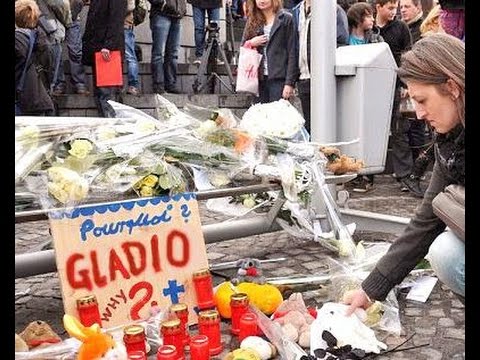
    Brabant Massacre memorial incribed with phrase: “Why, Gladio?”

    It was later confirmed that a neo-Nazi group called Westland New Post (WNP) was connected with the stay-behind Gladio army. A WNP member named Michele Libert confessed that the head of WNP regularly met with U.S. Embassy officials. WNP chief Paul Latinus eventually informed journalist Rene Haquin that American military secret services had instructed him to construct WNP.

    When the Gladio scandal spread to Germany, a socialist parliamentarian named Hermann Scherer called for an investigation of what he termed a reprehensible Ku Klux Klan-like group. But Scherer withdrew his request upon learning that members of his own Socialist Party had participated in hushing up Gladio’s existence. All this occurred amidst growing outcries in the press over the shameful history of Reinhard Gehlen and his Nazi-staffed “Gehlen Organization.”

    But the exposure of Gladio in Germany could actually be traced back to September 9, 1952, when a gentleman named Hans Otto strolled into police headquarters in Frankfurt. According to government records, Otto, a former SS officer, claimed “to belong to a political resistance group, the task of which was to carry out sabotage activities and blow up bridges in case of a Soviet invasion.” Otto’s dramatically climactic line was: “Although, officially, neofascist tendencies were not required, most members of the organization featured them.” Otto added: “The financial means to run the organization had been provided by an American citizen with the name Sterling Garwood.” In addition, he claimed that his group had assembled blacklists of communists and socialists who were to be gathered up and executed in case of a national emergency.

    Otto revealed that the name of this secret army was Technischer Dienst des Bundes Deutscher Jugend (TD BDJ). August Zinn, Prime Minister of the Hessen region, called for a judicial investigation. TD BDJ members were arrested … and then, as early as 30 September, allowed to walk free when a higher court in Karlsruhe stepped in and, behind Zinn’s back, mysteriously ordered the release of these Nazi secret soldiers. A baffled and exasperated Zinn concluded: “The only legal explanation for these releases is that the people in Karlsruhe declared that they had acted upon American direction.”
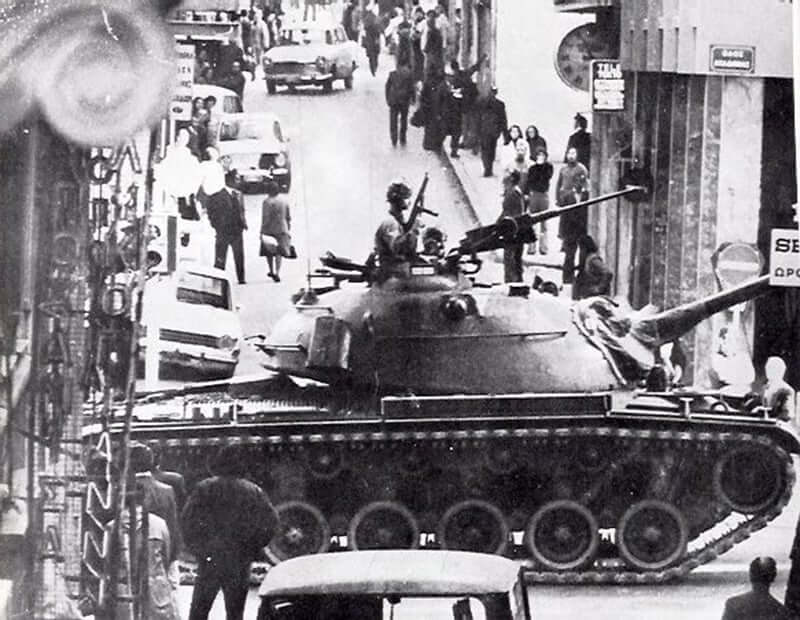
    Greece 1967 coup

    Another problem with parliamentary investigations was that in some of the countries that hosted Gladio all forms of democracy had already been eclipsed. Spain and Portugal were in the throes of long-term dictatorships. Turkey underwent three coup d’états; and its Gladio network was so deeply integrated into the traditional structures of government that the State was, in effect, synonymous with Gladio itself. Neighboring Greece underwent a Gladio-controlled coup in 1967 that ushered in the infamous Regime of the Colonels, a dictatorship that lasted until 1974.

    The Hellenic cradle of democracy had also hosted an early military use of napalm, when the United States sprayed the countryside with this incendiary liquid in order to decimate the same communist partisans who had fought in unison with the Allies in attempting to defeat the Nazis. Via “Operation Torch,” the U.S.,

    used chemical warfare to defeat the Greek partisans by dropping thousands of gallons of napalm on Greece. In late 1948, the Greek resistance, which on their native soil had defeated both the German Nazis and the British troops, collapsed. The end of the Civil War meant total victory for the Greek Right and its patron, the United States.43

    Thus, all across postwar Europe, the United States was not only obsessed with avoiding a “slip to the left”; it was actively promulgating a push to the right, even if this resulted in dictatorship.

    General Talat Turhan, torture victim

    In Turkey, the 1990 revelations lent a new voice to former Turkish General Talat Turhan, who had been brutally tortured by the Turkish Gladio (code-named Counter-Guerrilla). “When it was discovered in 1990 that Italy had an underground organization called Gladio, organized by NATO and controlled and financed by the CIA, which was linked to acts of terrorism within the country, Turkish and foreign journalists approached me and published my explanation as they knew that I have been researching the field for years.”44 General Turhan called for an independent European Union investigation into Gladio in order to bypass the immovable roadblocks that would inevitably be raised by the Turkish military should the government even attempt to initiate its own probe. However, a subsequent Counter-Guerilla scandal that occurred in 1996 led to a seven-month investigation after thousands took to the streets in protests. It concluded with the Turkish prime minister admitting, in a television broadcast watched by millions, that an “execution squad was formed within the state,” and that “all parts of the state were aware of what was going on.” Derin devlet, indeed.45

    *   *   *

    Ganser titles the third chapter of his book “The Silence of NATO, CIA, and MI6.” Like the backpedaling of President Mitterrand, NATO’s response suggests that its leadership was also caught off guard:

    After almost a month of silence, on Monday November 5, 1990, NATO categorically denied Andreotti’s allegation concerning NATO’s involvement in Operation Gladio and the secret armies. Senior NATO spokesman Jean Marcotta said at SHAPE headquarters in Mons, Belgium that “NATO has never contemplated guerilla war or clandestine operations; it has always concerned itself with military affairs and the defense of Allied frontiers.” Then, on Tuesday November 6, a NATO spokesman explained that NATO’s denial of the previous day had been false. The spokesman left journalists only with a short communiqué which said that NATO never commented on matters of military secrecy and that Marcotta should not have said anything at all. The international press protested against the ill-advised public relations policy of the military alliance when it related with bitterness: “As shock followed shock across the Continent, a NATO spokesman issued a denial: nothing was known of Gladio or stay-behind. Then a seven-word communiqué announced that the denial was “incorrect” and nothing more.”46

    Alas, doublespeak had reached new heights.

    MI6 also refused comment, but a Conservative Party member named Rupert Allison told the Associated Press: “‘We were heavily involved and still are … in these networks.’ The British ‘certainly helped finance and run, with the Americans,’ several networks and, through the MI6 together with the CIA, were directly involved.”47

    Gladio’s exposure in 1990 occurred during America’s Gulf War. Although the secret army was widely reported by the European press, it was given scant attention by the U.S. media. Both President Bush and the CIA refused to comment. But several middle-ranking retired CIA officers were more forthcoming. One was Thomas Polgar, a thirty-year Agency veteran who “explained with an implicit reference to CPC [NATO’s Clandestine Planning Committee] and ACC [NATO’s Allied Clandestine Committee] that the stay-behind programs were coordinated by ‘a sort of unconventional warfare-planning group linked to NATO.’ In their secret headquarters the chiefs of the national security armies ‘would meet every couple of months in different capitals.’”48

    And twelve years earlier, one “Company Man” made the following statements in his memoir:

    He said that a covert branch of the CIA, the Office of Policy Coordination (OPC), “had undertaken a major program of building, throughout those Western European countries that seemed likely targets for Soviet attack, what in the parlance of the intelligence trade were known as ‘stay-behind nets,’ clandestine infrastructures of leaders and equipment trained and ready to be called into action as sabotage and espionage forces when the time came.” His assignment was to “plan and build such stay-behind nets in Scandinavia.” The author also referred to the hidden arm caches: “These nets had to be coordinated with NATO’s plans, the radios had to be hooked to a future exile location, and the specialized equipment had to be secured from CIA and secretly cached in snowy hideouts for later use.”49 Although he never mentions the word “Gladio,” he clearly describes some of its key elements.

    The book’s publication aroused ire in Scandinavian circles, but somehow these shocking revelations seemingly passed unnoticed by the other European nations aligned with NATO. William Colby’s memoir (with its unwittingly amusing title) Honorable Men: My Life in the CIA, was penned in an attempt to enhance the battered image of the CIA during the late Seventies. Thus, the former Director of Central Intelligence was careful to never admit that, besides preventing a Soviet advance, the armies had also served a more diabolical function.

    As a case in point: terrorism experts employed by the Pentagon’s Defense Intelligence Agency (DIA) had produced a classified training manual known as Field Manual 30–31 (along with two equally barbaric appendices, 31A and 31B). The 140-page booklet, which was translated into several languages, offers “advice for activities in the fields of sabotage, bombing, killing, torture, terror, and fake elections.” It also instructs the secret soldiers to “carry out acts of violence in times of peace and then blame them on the Communist enemy in order to create a situation of fear and alertness.” (The strategy of tension.) “Alternatively, the secret soldiers are instructed to infiltrate the left-wing movements and urge them to use violence.” All this reads like a virtual Bible and explicit blueprint for what occurred during the Years of Lead. And it makes the Northwoods document pale in comparison, or even read like a “limited hangout” admission, since Northwoods was never enacted whereas the Field Manual was actively used in training offered by the American government to Gladio operators. As Ganser notes, FM 30–31 “stressed explicitly as its main point that the involvement of the Pentagon had to remain secret under all circumstances.” According to the manual, “Only those persons who are acting against the revolutionary uprising shall know of the involvement of the U.S. Army in the internal affairs of an allied country.”

    Military officers running the Turkish Gladio net received their training at the U.S. government’s notorious School of the Americas. And one of the principal manuals used for their instruction was FM 30–31. In 1973, in the midst of a rash of inexplicable terrorist attacks that rocked Turkey, a Turkish newspaper announced the publication of the manual. Shortly thereafter, the journalist who had obtained it was “disappeared.” After FM 30–31 was translated and published in Turkey, it soon surfaced in Spain and Italy. With the 1990 exposure of NATO’s secret armies, interest in the manual was reawakened, and researchers explored its connection to Gladio.50

    Since the Gladio scandal involved all twelve member states that then composed the European Union, it was perhaps inevitable that Gladio was finally discussed by the European Parliament. A debate was held on November 22, 1990 (oddly enough, on the anniversary of the JFK assassination).

    The Greek parliamentarian Vassillis Ephremidis was particularly outspoken during his E.U. address: “It was set up by the CIA and NATO, which while purporting to defend democracy were actually undermining it and using it for their own nefarious purposes.” Calling for further investigation and referring to the Gladio-imposed Greek dictatorship (the bloody Reign of the Colonels), he added: “The Democracy we are supposed to have been enjoying has been, and still is, nothing but a front.” The truth at last. Next, one of the French parliamentarians, Monsieur De Donnea, took a diametrical viewpoint, preferring to address the need to maintain the secrecy of those employed in the clandestine groups. “We must therefore pay tribute to all those who, while the Cold War lasted, worked in these networks.” But De Donnea also paid lip service to the need to investigate possible connections to terrorism. Dutch parliamentarian Vandemeulebroucke next took an opposing view: “We are entitled to attribute to it all the destabilization, all the provocation, and the terrorism that have occurred in our countries over these four decades.” After stating, “This affair leaves a bad taste in the mouth,” he made it clear that it was the very secrecy of the networks that most troubled him. He added: “I should like to protest most strongly against the fact that the American military, whether through SHAPE, NATO, or the CIA, think they can interfere in what is our democratic right.”

    Following this debate, the E.U Parliament passed a resolution that included a seven-point introduction featuring some very frank, unambiguous language.

    Whereas for over forty years this organization [Gladio] has escaped our Democratic controls and has been run by the secret services of the states concerned in collaboration with NATO … whereas such clandestine networks may have interfered illegally in the internal political affairs of Member States or may still do so … whereas in certain Member States military secret services (or uncontrolled branches thereof) were involved in serious cases of terrorism and crime … whereas these organizations operated and continue to operate completely outside the law … whereas the various “Gladio” organizations have at their disposal independent arsenals … thereby jeopardizing the democratic structures of the countries … and greatly concerned at the existence of decision-making and operational bodies which are not subject to any form of democratic control … the resolution of the E.U. parliament condemns the clandestine creation of manipulative and operational networks and calls for full investigation.

    The resolution that followed this preamble attempted to address each of the points raised in the introduction, including dismantling the networks and instituting judicial parliamentary investigations. But sadly enough, as Dr. Ganser concludes: “The dog barked loudly, but it did not bite. Of the eight actions requested by the EU parliament not one was carried out satisfactorily. Only Belgium, Italy, and Switzerland investigated their secret armies with a parliamentary commission, producing a lengthy and detailed public report.” Although the resolution was also sent to NATO and the U.S., neither President Bush or NATO Secretary General Manfred Wörner publically replied or supported an investigation.51

    *   *   *

    In 1992, filmmaker Allan Francovich produced an important BBC documentary about Gladio. In the film, he presents a copy of Field Manual 30–31 to Ray Cline, former head of the Directorate of Intelligence for the CIA. (Cline held this position from 1962 until 1966.) In his filmed response, Cline replies unequivocally: “This is an authentic document.” But when Francovich filmed a similar interaction with William Colby, who had served as CIA director from 1973 to 1976, the former director evasively claimed: “I have never heard of it.” (But then, why would he state otherwise? Colby was, after all, an “honorable man.”) Gladio kingpin Licio Gelli—a character we shall soon explore—was far more forthcoming: “The CIA gave it to me.”52

    One result of the Gladio exposé was to resurrect interest in one of its prime players. Daniele Ganser views Licio Gelli as a parallel figure to Reinhard Gehlen. Like Gehlen, despite his dishonorable past, Gelli was accorded royal treatment by the United States. No stranger to fascists, Gelli fought for Franco in the Spanish Civil War. He served alongside the SS in World War II. One of Gelli’s more marketable skills involved the liberal use of torture. A political chameleon, near the end of the war Gelli played both sides and nimbly switched allegiances when the time seemed right.

    For such an undereducated man, his rise to power seems incredible. (Philip Willan says that Gelli “was only semi-educated, having been expelled from school at the age of thirteen for striking the headmaster.”53) In 1969, Henry Kissinger and U.S. General Haig (who ran NATO as SACEUR from 1974–1979) authorized Gelli to “recruit four-hundred high ranking Italian and NATO officers into his lodge.”54 This was a secret Masonic group called Propaganda Due (P2), of which Gelli would eventually become—at the very least—titular head. (The widow of prominent bank chairman Roberto Calvi claimed that P2’s real director was Giulio Andreotti.55 This might explain why Licio liked to confess that his childhood dream had been to become a puppet master.) Gelli was invited to the inaugurations of American presidents Ford and Carter; during Reagan’s administration the former SS associate even scored a front-row seat.

    Near the end of his life, Licio Gelli proclaimed: “I am a fascist and will die a fascist.”

    The significance of Gelli’s Propaganda Due Lodge (P2) is paramount to an understanding of the Gladio operation in Italy—and beyond. Gladio and P2 were U.S. funded; both were, in Ganser’s words, “parallel governments.” The membership list of Propaganda Due consisted of a virtual “Who’s Who” of powerbrokers and leading military and government officials. In no uncertain terms, P2 was the Italian power elite. The Lodge was also linked to leading right-wing figures in Latin America. (P2 was active in Uruguay, Brazil and Argentina.)

    In 1981, during an investigation of Mob-connected Michele Sindona and the collapse of his bank, police broke into Gelli’s house shortly after Gelli had fled the scene and discovered a list of 962 Propaganda Due members. Although probably not complete, the list included figures such as the future prime minister Silvio Berlusconi and the heads of all three Italian intelligence services. Another prominent member was Stefano delle Chiaie, an Italian neofascist connected to Operation Condor, a U.S.-backed program of State terror and assassination in Latin America. Gladio’s tentacles were, in fact, transatlantic, and they exercised a firm grip on events in various Latin American countries. (Delle Chiaie would also play an important role in the kidnap and murder of Aldo Moro.) As Philip Willan explains:

    The membership list discovered in 1981 showed that 195 high-ranking officers from all branches of the military belonged to the lodge. There were officers from the Carabinieri paramilitary police, six from the police, and thirty-seven from the finance police; nine belonged to the Air Force, twenty-nine to the Navy, and fifty to the Army […] “As can be seen at a glance, the membership lists reveal a map of the highest levels of military power, with individuals who have often played a central role in particularly significant moments of the recent history of our country, as well as in events of a subversive nature,” the P2 Commission commented.56

    No wonder that Gelli—tipped off by someone within the State apparatus about the imminent visit of the Carabinieri at dawn—had decided to join his neofascist pals in Latin America. (He was rumored to have found safe harbor in General Augusto Pinochet’s Chile.) Narrowly missing arrest, he lacked even the time to scoop up his secret papers. Gelli would later be charged with obstructing justice in the investigations of the Piazza Fontana bombing: one of several bombs that exploded in various locations in Rome in a single day, December 12, 1969. (Piazza Fontana was also the first of a series of dreadful acts that ushered in Italy’s Years of Lead. In 1969, there were 398 terrorist attacks in Italy, a figure that steadily increased each year, culminating at 2,513 attacks in 1979.)

    At an airport in Rome in 1982, additional documents were found in a suitcase in the possession of Gelli’s daughter. Titled “Memorandum on the Italian Situation” and “Plan of Democratic Rebirth,” they characterized the trade unions and the Italian Communist Party as enemies of the State. (Italy’s largest union had lent its support to the Socialist and Communist Parties.) Equally troubling, they called for a disruption of the planned “Historic Compromise” that Aldo Moro was then working on: the integration of Italy’s Communist Party (PCI) into a coalition with the Christian Democrats (DCI), thus sharing the executive branch of government. As former Culture Minister Dario Franceschini explained: “He convinced the two winners of an election, neither of which had a majority, to support a government,” (Note that the PCI had distanced itself from Moscow and was functioning more along the lines of Eurocommunism or what we would today regard as a socialist democratic party.) Moro’s Historic Compromise was taking things a step further than merely inviting the Socialist Party in out of the cold, as Pietro Nenni and Moro had been planning during JFK’s visit in the summer of 1963. Instead, it was promoting something that was at the heart of NATO’s greatest fear.

    Striking workers at FIAT, 1969

    Gelli’s documents called for the installation of a right-wing authoritarian (but so-called democratic) government. There remains little doubt that the P2 roster represented the hand-picked leadership of this new regime. In 1981, the P2 Commission run by Tina Anselmi concluded that Propaganda Due was a criminal organization: “It tried to influence and condition political life in our country, above all by acting through the secret services, which it controlled for many years.” Anselmi added: “These people did not intend to talk about Masonic brotherhood or business. Besides, businessmen were underrepresented in the lodge.”57 Not surprisingly, Gelli and his Propaganda Due Lodge had been expelled by the Masonic Grand Orient of Italy, in 1976.

    *   *   *

    Almost eleven years after President Kennedy’s death, this time it was Aldo Moro who would board a plane and fly cross the Atlantic. Like Kennedy, he would not live long upon his return to the homeland. Accompanied by Italian President Giovanni Leone, Moro was traveling to Washington:

    to discuss the inclusion of the Italian left in the government. But their hopes were shattered. … In a heavy confrontation with Henry Kissinger … the Italian representatives were told that under no circumstances must the Italian left be included in the Italian government. Italy had to remain firmly and strongly within NATO. The visit weighed heavily on Aldo Moro, who had already lived through both the Piano Solo Gladio coup and the Tora Tora Gladio coup and hence had no illusions concerning the influence of the United States on Italy’s First Republic.

    Upon his return to Italy, Moro was sick for days and contemplated his complete withdrawal from politics. “It’s one of the few occasions when my husband told me exactly what had been said to him without telling me the name of the person concerned,” Moro’s wife Eleonora later testified. “I will try and repeat it now: “You must abandon your policy of bringing all the political forces in your country into direct collaboration. Either you give this up or you will pay dearly for it.”
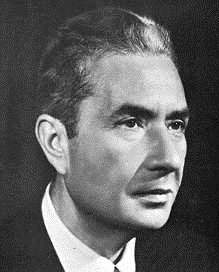
    Aldo Moro

    Nonetheless, on March 16, 1978, the courageous politician gathered together the documents related to the Historic Compromise between the Christian Democrats (DCI) and the Communist Party (PCI). He then traveled, with his bodyguards, to the Italian parliament in Rome, “where he was determined to present the plan to include the Italian Communists in the executive.” After Moro’s ominous meeting with Kissinger in Washington, he had requested a bulletproof car, but his request was denied. As Moro and his five bodyguards cruised through a residential suburb of Rome, the car was ambushed.

    Six assailants opened fire, killing all five of Moro’s bodyguards in what appeared to be a highly professional operation. Only one of Moro’s guards managed to return a couple of rounds.

    Moro was captured unharmed and held hostage for fifty-five days in a drama that took the strategy of tension to new heights. His body was later found riddled with bullets and stuffed into the trunk of a car abandoned in central Rome, on Via Caetani. This despite the fact that the streets were swarming with secret service. The precise location was a symbolic one: “parked halfway between the headquarters of the DCI [Christian Democrat Party] and the headquarters of the PCI [Italian Communist Party].”58 Although the kidnapping and execution were blamed on the Red Brigades, “the professional skill of the principal gunman did not correspond to that of any known Red Brigades member.”59

    Renato Curcio and Alberto Franceschini, the original leaders of the Red Brigades, were already in jail; and the titular, ersatz leader, Mario Moretti, was secretly linked to the Italian State. In addition, the building where Moro was supposedly held captive was located on the Via Gradoli, a neighborhood under the complete control of the Mafia (those cozy bedfellows of Gladio and the Italian State). And the Via Gradoli had already been under police surveillance before the kidnapping on March 16th.

    Scene of the Moro kidnapping

    Two days after Moro’s abduction, the police finally paid a visit to 96 Via Gradoli, knocking on the door of apartment 11, a Red Brigades base controlled by Mario Moretti. When there was no response, the neighbors assured them that the gentleman in residence was “respectable,” so they left and never returned. At least, this was the official story. In fact, one neighbor in the building had informed the police that she heard Morse code transmissions at night. The police later claimed to have never received this information even though the woman had requested that her written statement be delivered to “a senior officer of her acquaintance.”

    In early April, the police also received a tip that included the word Gradoli. Instead of searching Via Gradoli, they took a trip to an Italian town of that same name. Even Moro’s wife “suggested that the tip could refer to the name of a Rome street but was told by Interior Minister Cossiga that no such street was listed in the Yellow Pages map of the city. The street exists and was listed.”60

    There may also have been a symbolic aspect (witting or unwitting) to the location of Aldo Moro’s corpse on the Via Caetani. Mino Pecorelli, an Italian journalist with numerous high-level sources and connections, published a magazine that specialized in producing encoded messages that would have tried the patience of a Sherlock Holmes. On May 23, 1978, it featured a particularly puzzling tale.

    Mino published what appears to be an eyewitness account of the scene in Via Caetani, where the body of Aldo Moro was dumped in the boot of a car, parked next to the high wall which runs down one side of the street. A “blond woman” is present among the bystanders at the scene and comments that behind the wall lie “the remains of the Theater of Balbus, Rome’s third amphitheatre.” She continues: “I read in a book that in those days runaway slaves and prisoners were taken there so that they could fight one another to the death. Who knows what there was in the destiny of Moro that his death should be discovered next to that wall? The blood of yesterday and the blood of today.” Pecorelli is talking about “gladiators” in the context of Moro’s death, but until mid-1990 very few people could have understood what he meant.

    Among other things, Philip Willan concludes that Pecorelli, who was renowned for his vast net of secret service contacts, “appears to be hinting that the gladiators were in some way implicated in Moro’s murder.”61

    Corpse of Aldo Moro discovered on Via Caetani

    Pecorelli was assassinated one year after Aldo Moro. In an article featured in the May 9, 2003 Guardian newspaper, Willan reports: “A Perugia appeals court convicted Giulio Andreotti of ordering his murder. The court ruled that the killing was carried out at the behest of the seven-time prime minister to prevent Mr. Pecorelli from making damaging revelations about the Moro case in his magazine, Osservatore Politico. Mr. Pecorelli’s writings attained an added significance last November, when a Perugia appeals court convicted Giulio Andreotti of ordering his murder.”

    Giulio Andreotti—that perennial éminence grise who served as prime minister on and off from 1972 to 1992—was no stranger to the most privileged and elite corridors of byzantine Italian politics, and for the most part he sailed unfettered through such convoluted and dangerous labyrinths. Serving his second term (1976–1979) during the time of the Moro kidnapping, he didn’t hesitate. Andreotti immediately blamed the Red Brigades and “cracked down on the left: 72,000 roadblocks were erected, and 37,000 houses were searched. More than six million people were questioned in less than two months.”62

    But convincing evidence suggests that Moro’s kidnapping was carried out by a Deep State apparatus with ties to Lucio Gelli and Propaganda Due. And that furthermore, leading conservative forces in the Christian Democrats Party stood back and did nothing even though Moro could easily have been rescued. And clearly, the assassination had served its purpose, in that Moro’s Historic Compromise died with its author.

    The Moro assassination has been subject to nearly the same level of microanalysis as the JFK coup (in Europe, it’s referred to as the “JFK assassination of Italy”). And the results of this analysis point to the same sort of inexplicable, contradictory facts. Including the complex involvement of figures known to continually weave their way in and out of intelligence services, positions of political power, mafia circles, and the military: the handmaidens of what is traditionally referred to as the power elite. But one danger of microanalysis is that it may miss or forget the bigger picture. The macrocosm focus of each of these murders rests upon the issue of foreign policy.

    IV: JFK, Gladio, and Permindex

    James DiEugenio describes Clay Shaw as a “well-dressed, dignified, upstanding representative of upper-crust New Orleans”63 who, among other things, was the director of the International Trade Mart. One of the reasons District Attorney Jim Garrison remained so intrigued by the elusive figure of Shaw is that, while he prosecuted Shaw for participating in a conspiracy to kill President Kennedy, he came across information in the Italian press that tied Shaw not only to the CIA—a connection Garrison had already suspected—but to two highly suspicious organizations that he categorized as the “twin international intelligence combines, the Centro Mondiale Commerciale (World Trade Center) and Permindex.”64 Before elaborating on what has been learned about these entities since Garrison’s time, it might be helpful to summarize his own words as they appear in his 1988 account, On the Trail of the Assassins.

    Clay Shaw

    Garrison says that the news articles exposed “Shaw’s secret life as an Agency man in Rome trying to bring Fascism back to Italy.” This remark resonates with added implications given what we now know about Gladio on the one hand (whose fascist operators were specially trained in the use of patsies) and, on the other, Shaw’s numerous associations not only with members of the global economic elite but with a lowly “nobody” and future patsy named Lee Harvey Oswald. Recall that Garrison’s investigation discovered that Shaw had driven Oswald to Clinton, Louisiana in a black Cadillac during the summer of 1963, where they were seen by numerous members of this small town, who later positively identified them. Other credible witnesses to this hours-long visit identified a third man accompanying Shaw and Oswald: right-wing extremist David Ferrie, an intriguing presence in the events of November 22nd. (Ferrie also appears in a 1950s photograph with Oswald, who joined Ferrie’s Civil Air Patrol when Lee was only fifteen years old.)

    The Italian dailies Paese Sera and Corriere della Sera reported on the Permindex scandal in 1967, with Paese Sera publishing a six-part series in March. In the years ahead, both Permindex and Centro Mondiale Commerciale (CMC) would exhibit visible strands directly connecting them to Gladio operators.

    “Centro Mondiale Commerciale,” continues Garrison, “had initially been formed in Montreal but then moved to Rome in 1961. Among the members of its board of directors … was one Clay Shaw from New Orleans.” Another director was Ferenc Nagy, the “exiled former premier of Hungary and the former head of its leading anti-Communist political party. Nagy also was described by the Italian newspapers as the president of Permindex (ostensibly a foundation for a permanent exposition and an offshoot of the Centro Mondiale Commerciale). Nagy, the Italian newspaper said, had been a heavy contributor to fascist movements in Europe.” Another Permindex director was Giuseppe Zigiotti, president of the Fascist National Association for Militia Arms.

    Garrison also paraphrases from Paris Flammonde’s The Kennedy Conspiracy (1969): “The Centro was apparently representative of the paramilitary right in Europe, including Italian Fascists, the American CIA, and similar interests. [Flammonde] described it as ‘a shell of superficiality … composed of channels through which money flowed back and forth, with no one knowing the sources or the destination of these liquid assets.’” In 1962, both Permindex and CMC were expelled from Italy for “subversive intelligence activity.”

    Paese Sera reported that Centro Mondiale Commerciale (CMC) “was a creature of the CIA … set up as a cover for the transfer of CIA … funds in Italy for illegal political-espionage activities.” And here’s the punch line: Centro Mondiale Commerciale represented “the point of contact for a number of persons who, in certain aspects, have somewhat equivocal ties whose common denominator is anti-communism so strong that it would swallow up all those in the world who have fought for decent relations between East and West, including Kennedy.” In his inimitably laconic manner, Garrison drolly concludes:

    That just happened, as well, to be a trenchant one-line description of the parent organization, the Central Intelligence Agency. As for Permindex, which Clay Shaw also served as a director, the Italian press revealed that it had, among other things, secretly financed the opposition of the French Secret Army Organization (OAS) to President de Gaulle’s support for Independence for Algeria, including its reputed assassination attempts on de Gaulle.65

    These were prescient, far-reaching statements, especially for the time. I would posit that this last fact—the funding of OAS assassination attempts by an organization (Permindex) with a CIA man on its board (Shaw) who also served as a director—is the clearest indication that Permindex may have been working hand-in-hand with Gladio. The key question is whether Permindex was also funding various other Gladio operations, either in Italy or abroad.

    Jim Marrs, an indefatigable researcher and author of Crossfire: The Plot That Killed Kennedy (1989, 2013), notes that the 1962 edition of Who’s Who in the South and Southwest lists Shaw as a member of the Permindex Board of Directors. In the 1963–64 edition, however, the reference to Permindex is deleted. Marrs goes on to discuss how Permindex’s major stockholder Louis Bloomfield reportedly “established Permindex in 1958 as part of the creation of worldwide trade centers connected with CMC.” There is also evidence that Bloomfield may have worked with the British/Canadian Special Operations Executive William Stephenson.

    Permindex “began to draw attention in 1962, when French President Charles de Gaulle publically accused the company of channeling funds to the outlawed Secret Army Organization (OAS). De Gaulle identified several major and well-known international companies as investors in Permindex, which had made several attempts on de Gaulle’s life.”

    Another intriguing fact that brings us to the penumbra of Gladio: both CMC and Permindex were expelled from Italy in 1962 “for subversive activities connected to those in the much-publicized Propaganda-2 masonic lodge scandal … in which the lodge was accused of attempting to overthrow the Italian government and set up a fascist regime.” Marrs also cites the work of whistleblower Victor Marchetti, author of The CIA and the Cult of Intelligence (1974) and former assistant to the CIA’s deputy director. Marchetti revealed that Clay Shaw and David Ferrie were each employed by the Agency and that CIA Director Richard Helms “repeatedly voiced concern over the prosecution of Shaw and even instructed top aides to ‘do all we can to help Shaw.’”66

    Perhaps no other researcher knows more about how, why, and to what great extent the Agency stepped in to secretly defend Shaw—and to keep an eye on the bothersome Garrison—than James DiEugenio. As DiEugenio writes in the second edition of Destiny Betrayed (1992, 2012), a researcher named Peter Vea “discovered a very important document while at the National Archives in 1994,” a CIA memo that stated “Shaw had a covert security approval in the Project QKENCHANT” in 1967, “meaning that Shaw was an active covert operator for the CIA while Garrison was investigating him.”

    The author goes on to explain that financial backing for Permindex came from J. Henry Schroder Banking Corporation, a firm “that had been closely associated with Allen Dulles” via the latter’s law firm, Sullivan and Cromwell. Dulles eventually became the bank’s General Counsel. Its “founder, Baron Kurt von Schroeder, was associated with the Third Reich, especially Heinrich Himmler.” Apparently, the Swiss were none too happy to learn of all this; as a result, Permindex was forced to leave Switzerland and relocate to Rome.

    The board of directors of Permindex was packed with the crème de la crème of fascist scoundrels: “Bankers who had been tied up with fascist governments, people who worked the Jewish refugee racket during World War II, a former member of Mussolini’s cabinet, and the son-in-law of Hjalmar Schact, the economic wizard behind the Third Reich, who was a friend of Shaw’s. These people would all appeal to the conservative Shaw.” Nagy, one of Permindex’s founding members, was a friend of OAS leader and former governor general of Algeria, Jacques Soustelle. As we have seen, the OAS “later made several attempts on de Gaulle’s life, which the CIA was privy to.” According to French news reports, a few months before the Generals’ Putsch against de Gaulle in April 1961, Soustelle had met with the CIA’s Deputy Director for Plans, in Washington.

    DiEugenio also describes how, the day after Kennedy was shot, Shaw, under his alias Clay Bertrand, “called his lawyer friend Dean Andrews” and asked Andrews to defend Oswald.67 This is not at all surprising since a CIA agent named David Phillips “was managing the CIA’s anti-FPCC program [anti-Fair Play for Cuba Committee], of which Oswald was a part of.”68

    The subject of Permindex and the Centro Mondiale Commerciale (CMC) doesn’t make an appearance in either Puppetmasters or NATO’s Secret Armies. But it has been explored at length by Michele Metta, author of a recently published book, CMC: The Italian Undercover CIA and Mossad Station and the Assassination of JFK. Thanks to Metta’s work, we now have conclusive proof that Shaw served on the CMC board of directors; that fascist-supporter Ferenc Nagy (director of CMC and president of Permindex) was a CIA asset; and that numerous connections exist between CMC and Licio Gelli’s P2 Masonic Lodge.

    Michele Metta’s recently published book on CMC and Permindex

    Metta has also documented an attempt to defeat JFK’s presidential election. That is, a pact between U.S. and Italian Freemasons to “influence Italian immigrants in the USA to vote against Kennedy” (this in the words of Enzo Milone, Grand Master of the Freemasons). The plot was hatched by CIA agent Frank Gigliotti and organized by Giuseppe Pièche. The latter figure served on CMC’s board and was a former general under Mussolini.

    Apparently, Dr. Gigliotti was no middling, low-level functionary. Instead, “he was a CIA agent with great power.” Metta cites a September 30, 1952, letter written by Gigliotti to President Truman, in which “Gigliotti showed a decisive tone of command by asking Truman to fire [Walter] Bedell Smith, who was then director of the CIA … As a matter of fact, Bedell Smith was actually fired; and it was exactly thanks to this firing that, from February 1953, Allen Dulles reached the top of the CIA. The latter was a Freemason himself.”69

    In Puppetmasters, Philip Willan reveals that Gigliotti played an important role in the Masonic world of Lucio Gelli. Gelli’s Propaganda Due Lodge (P2) was part of the Grand Orient of Italy. After the Second World War, the “revival of freemasonry in Italy … was encouraged by both the British and the Americans” as a means of steering Italian masons toward appropriate political interests and objectives, i.e., anti-Communism. Indeed, there were American lodges established for each NATO base in Italy.

    Gelli was given the task of working for the unification of the various Italian masonic groupings and to improve relations with the Catholic Church … In 1971, he was made secretary of P2. This accelerated Masonic promotion was personally instigated by Grand Master Giordano Gamberini, who has been dubbed “the traveling-salesman of anti-communism.” On his retirement in 1970, Gamberini was given responsibility for contacts with foreign masonic lodges and with the CIA.

    Willan concludes that Gelli’s close association with this figure probably explains Gelli’s rapid ascent in the masonic world. Again, fear of the “Communist Peril” was at the heart of all these NATO/CIA/freemasonry relationships.

    Until its confiscation by Mussolini’s forces, the seat of the masonic order of the Grand Orient of Italy was the Palazzo Guistiniani, a palace in Sant’ Eustachio, Rome. After the war, pressure from American freemasonry led to its return to the Grand Orient. “A key role in the negotiations was played by one Frank Gigliotti, a former OSS and then CIA agent,” who attended the official signing-over ceremony with the American ambassador and the Italian Finance Minister, in 1960.70 The palace is now the official residence of the President of the Italian Senate.

    Palazzo Guistiniani

    From Metta we learn that the aforementioned Italian intel asset, Giuseppe Pièche, “with the complicity of the … Italian Interior Minister Mario Scelba, created and directed a Servizio Antincendi” (an agency for fire prevention). According to Metta, this seemingly innocuous institution served a hidden purpose: “In reality [it] obscured a Stay-Behind structure. He was helped in this venture by a soon-to-be member of P2, [Count] Edgardo Sogno.” “In the 1990s [Sogno] made several public declarations clearly qualifying this Antincendi as a NATO project linked to the Gladio network.”71

    The implications of all this are enormous, because here we find a clear, visible link between a CMC board member (Pièche) and the Gladio stay-behind. Pièche’s colleague Count Sogno was associated with supporters of the 1970 Borghese coup and was a conspirator in the planned seizure of the Quirinale Palace in 1974. Philip Willan informs us that the Count, like Licio Gelli, possessed “high-level U.S. and NATO contacts.”72

    Metta notes that Giuseppe Pièche protected neofascist groups and filed secret reports on Italian progressives through this “fire prevention” mechanism. (This is confirmed in declassified CIA documents cited by the author.) He adds that Italian intel documents “reveal a strong symbiosis between the Antincendi and the so-called Gehlen organization,”73 which, as we have seen, was another Gladio-related group.

    The other significant finding to emerge from Metta’s research is the evidence he provides linking Centro Mondiale Commerciale (CMC) to the CIA. A recently declassified memo from the CIA’s International Organizations Division (“the CIA branch occupied in psychological warfare both at home and abroad”) documents that Ferenc Nagy had asked the CIA to place an American businessman on Permindex’s board and a CIA agent on its staff. Nagy also asked the Agency to invest in Permindex so that it could subsequently participate in the firm’s management. Metta’s data also conclusively proves that Clay Shaw was serving on CMC’s board.74

    Metta reproduces a CIA memo on Jean-René Souètre, a member of the dissident OAS that tried to kill de Gaulle. Souètre was “in Fort Worth on the morning of November 22nd” (so was JFK) “and in Dallas in the afternoon.” (Ditto.) “The French believe that he was expelled to either Mexico or Canada.” (In fact, Souètre was apprehended within forty-eight hours of the JFK assassination.) The memo continues: “Subject is believed to be identical with a Captain who is a deserter from the French army and an activist in the OAS. The French are concerned because of de Gaulle’s planned visit to Mexico.”75 (One wonders: if the French were so worried about de Gaulle, why weren’t the Americans equally concerned about the fate of President Kennedy?) As James DiEugenio points out, Souètre had developed contacts with radical rightwing elements in Dallas and New Orleans, and also with anti-Castro Cubans.

    Jean-René Souètre

    CIA documents on Souètre were declassified in 1976 and have long held the interest of JFK researchers. To fully comprehend their significance, one must recall that, as a young senator, on July 2, 1957, JFK delivered a speech to the Senate chamber that had a radical impact on the entire situation in Algeria. As James DiEugenio points out, “It was Kennedy’s powerful Algeria speech that helped collapse the Fourth Republic and brought de Gaulle to power.” DiEugenio concludes:

    But the speech had even more impact than that. As Alistair Cooke noted, the way the speech was perceived by the [Eisenhower] White House, and the derogatory comments made by its occupants, had now vaulted Kennedy’s profile into high relief in Europe. He was the man pointing out their dogged and doomed attempts to hang onto fading empires. In America he had made himself the Democrat that Eisenhower had to “do something about.” … five months after making the watershed Algeria speech, on December 12, 1957, Time published its first cover story on Kennedy. It was titled, “Man Out Front.”

    And in the speech, Kennedy called for the French withdrawal from their Algerian colony, something that the OAS would have been livid about. Kennedy said that France’s “overseas territories are sooner or later, one by one, inevitably going to break free and look with suspicion on the Western nations who impeded their steps to independence.” Kennedy later added: “The time has come for the United States to face the harsh realities of the situation and to fulfill its responsibilities as leader of the free world … in shaping a course toward political independence for Algeria.”76

    As mentioned earlier, the renegade OAS officers were tied to Gladio, especially in its international functioning. And this “worldwide” aspect brings us to our final point:

    Metta discusses various characters who weave their way in and out of Aginter Press: a right-wing terrorist organization, located in Lisbon, with strong ties to the OAS. This would make sense since, as revealed by Philip Muehlenbeck in his book, Betting on the Africans, Kennedy had tried to talk the Portugese dictator Salazar into freeing the African colonies of Mozambique and Angola. When this did not work, Kennedy sent aid to the rebels there. (Muehlenbeck pp. 107–11) Aginter also received support from the CIA. Metta reproduces memoranda generated from a “special branch of the Italian Carabinieri” that reviews how the aforementioned Guido Giannettini (the right-wing journalist and intel agent who helped to develop the strategy of tension) “‘met [OAS officer Yves] Guerin-Serac in 1964 in Lisbon, and presented him to Captain Jean Souètre of the OAS.’” The documents add that “Souetre was given by [Guerin-]Serac the command of mercenaries recruited by Aginter.”77

    Metta believes that “Aginter Press was born of a marriage between the OAS and the so-called Gehlen Organization.”78 According to Daniele Ganser, although posing as a press agency, Aginter was actually a branch of Gladio. What’s special about Aginter is that it featured a virtual import-export group of assassins. Bear in mind the word international. Ganser devotes most of his ninth chapter, “The Secret War in Portugal,” to this Gladio/Aginter Press operation.

    When Gladio was exposed in 1990, the Portuguese newspaper O Jornal “informed a stunned audience in the country that ‘The secret network, erected at the bosom of NATO and financed by the CIA … had a branch in Portugal in the 1960s and the 1970s. It was called “Aginter Press” and was allegedly involved in assassination operations in Portugal as well as in the Portuguese colonies in Africa.’” (My emphasis.) And note the widening global thread in what follows. Ganser continues:

    Aginter Press was no press at all. The organization did not print books or anti-Communist propaganda leaflets but trained right-wing terrorists and specialized in dirty tricks and secret warfare in Portugal and beyond. The mysterious and brutal organization was supported by the CIA and run by European right-wing officers who, with the help of the PIDE [International and State Defense Police], recruited fascist militants. The investigation of the Italian Senate into Gladio and the secret war and massacres in Italy discovered that Italian right-wing extremists had also been trained by Aginter Press, while in Portugal it was revealed that a sub-branch of Aginter Press called “Organisation Armée contre Communisme Internationale” (OACI) had also operated in Italy. The Italian senators found that the CIA supported Aginter Press in Portugal and that the secret organization was led by Captain Yves Guerin, better known by his adopted name of Yves Guérin-Sérac.79

    Judge Salvini, who worked with the Italian Senate investigation, explored the ominous link between Yves Guérin-Sérac and Guido Giannettini:

    Giannettini was an Italian active in the OAS support network during the Algerian War. He was also a paid agent of the Italian intelligence agency SIFAR, and a linchpin between right-wing extremists and the Italian intel services. A principal figure in the State’s manipulation of terror and the intellectual development of the strategy of tension, in November 1961 Giannettini held a three-day seminar at the United States Central Naval Academy at Annapolis on “The Techniques and Prospects of a Coup d’Etat in Europe.” Philip Willan tells us that Giannettini’s manual, Techniques of Revolutionary War (1965), was also on the recommended reading list (along with Hitler’s Mein Kampf) at the Ordine Nuovo’s summer camp for aspiring fascists. (“Selective terrorism,” Giannettini writes, “is carried out by eliminating particular men carefully chosen for a series of motives,” one of which is “because their removal will provoke harsh reprisals which increase the tension, creating an irreversible process leading to civil war.”)80

    Yves Guérin-Sérac

    Former OAS Captain Yves Guillou, aka Yves Guérin-Sérac, ran Aginter Press. Guérin-Sérac was also implicated, along with Giannettini, in the Italian “State massacre” known as the Piazza Fontana bombing. Moreover, Guérin-Sérac was considered to be its mastermind. Ganser rightly characterizes him as “an unmatched strategist of terror.” He had skillful mentors. During the French Indochina War (1946–1954), Guérin-Sérac served as French liaison officer with the CIA. During the Korean War he was awarded a Bronze Star Medal from the United States. He was also a chief protagonist in the attempted OAS coup against de Gaulle.

    After the failed OAS rebellion, he boasted: “The others have laid down their weapons, but not I. After the OAS, I fled to Portugal to carry on the fight and expand it to its proper dimensions—which is to say, a planetary dimension.” (In other words: worldwide.) Next, Guérin-Sérac rounded up his fugitive OAS pals who, along with other extremists, set up shop at Aginter Press headquarters in Lisbon. Ganser adds: “The OAS diaspora strengthened militant right-wing networks internationally.”81 We should bear this in mind since Aginter had what might be called global subsidiaries.

    After the fall of Portugal’s dictatorship, Guérin-Sérac fled to Franco’s Spain. Meanwhile, the new Portuguese secret service [SDCI] launched an investigation. It concluded that Aginter had four principal functions:

    First, it had been an internationally well-connected “espionage bureau run by the Portuguese police and, through them, the CIA, the West German BND or ‘Gehlen Organisation,’ the Spanish Dirección General De Seguridad, South Africa’s BOSS, and, later, the Greek KYP.” Next to this intelligence gathering task Aginter Press had secondly functioned as a “center for the recruitment and training of mercenaries and terrorists specializing in sabotage and assassination.” According to the SDCI document, Aginter Press had thirdly been a “strategic center for neofascist and right-wing political indoctrination operations in sub-Saharan Africa, South America, and Europe in conjunction with a number of sub-fascist regimes, well-known right-wing figures, and internationally active neofascist groups.” Fourth, Aginter Press had been a secret anti-Communist army, an “international fascist organization called “Order and Tradition” with a clandestine paramilitary wing called OACI, “Organisation Armée contre le Communisme International.”

    From Guérin-Sérac’s newly established digs in Madrid, among other acts of terror, he organized attacks abroad that were blamed on the Algerian liberation movement. His bombs were deposited at the Algerian Embassies in France, Germany, Italy, and Great Britain. One unexploded mechanism that failed to detonate in Frankfort was found to contain C–4. In Judge Salvini’s words, C–4 is “an explosive exclusively used by the U.S. forces, which has never been used in any of the anarchist bombings.”

    In these investigations data has emerged which confirms the links between Aginter Press, Ordine Nuovo, and Avanguardia Nazionale” Judge Salvini explained to the Italian senators investigating the secret war in Italy and beyond. “It has emerged that Guido Giannettini had contacts with Guerin-Serac in Portugal ever since 1964. It has emerged that instructors of Aginter Press … came to Rome between 1967 and 1968 and instructed the militant members of Avanguardia Nazionale in the use of explosives.” Judge Salvini concluded that, based on the available documents and testimonies, it emerges that the CIA front Aginter Press had played a decisive role in secret warfare operations in Western Europe and had started the great massacres to discredit the Communists in Italy.82

    From all this, we may conclude that Gladio, far from being a local phenomenon strictly anchored within its respective host nations was, in reality, a fluid network with complex international appendages. (As mentioned earlier, this nexus extended even to Latin America.) Whether such poisonous strands reached into Dallas in 1963 through figures like Yves Guérin-Sérac—with his sick dream of a “planetary dimension” of State-sponsored terror—remains a question. And the implications of his OAS colleague, Jean Souètre, shadowing the movements of JFK on that fateful day are intriguing.

    *   *   *

    On November 22, 1963, after his scheduled departure from Dealey Plaza, the next stop on the president’s agenda was supposed to be a luncheon at the Dallas Trade Mart. A year after Kennedy’s death, this business center became host to a bronze sculpture of an eagle with its wings spread, created by artist Elisabeth Frink. Engraved upon its platform is a line from William Blake’s “Marriage of Heaven and Hell: “When thou seest an eaglethou seest a portion of genius lift up thy head!” A second engraving reads: “Placed in memorial by the friends of President John Fitzgerald Kennedy who awaited his arrival at the Dallas Trade Mart Nov. 22, 1963.”83

    Elisabeth Frink’s “Eagle” sculpture at the Dallas Trade Mart, in memory of President John F. Kennedy

    For Blake, this majestic creature was a symbol of the soaring, unfettered creative imagination—and even the genius of special talent.84 Diametrically opposed to this we find the symbol of the crow, subject of another of Blake’s “Proverbs of hell”: “The eagle never lost so much time as when he submitted to learn of the crow.”

    In another proverb, Blake writes: “The crow wish’d every thing was black, the owl, that every thing was white.” Unfortunately, John F. Kennedy was all too often forced to suffer the presence of crows, as was Aldo Moro. The kind of “thinking outside the box” exemplified by Moro and JFK—who both dared to steer a foreign policy course against the powerful tide of the powers that be—was a direct threat to the crows, who could imagine no other way of dealing with it.

    Interview with Dr. Daniele Ganser

    Bibliography:


    David Black, ACID: A New Secret History of LSD (London: Vision Paperbacks, 2001).

    [The title of Black’s book is perhaps misleading since so much of it concerns the “extraordinary career” of Ronald H. Stark, an MKULTRA asset who played an important role in right-wing terrorism in Italy and, in particular, in the secret undermining of the Red Brigades. The last three chapters chronicle Stark’s life in Italy during the Years of Lead: his connections to the Mafia, Propaganda Due, the Italian secret service, the Palestine Liberation Organization, and certain American Embassy officials. Besides all this (no doubt, as part of his MKULTRA assignment), Stark was one of the world’s largest independent producers of LSD, a substance that did a marvelous job of distracting the youth movement and destroying the disciplined work and clear thinking of political groups the world over. No wonder that Dick Helms once called it “dynamite.” Stark is also featured in Philip Willan’s Puppetmasters and in Acid Dreams, by Martin A. Lee and Bruce Shlain.]

    James DiEugenio, Destiny Betrayed: JFK, Cuba, and the Garrison Case, Second Edition (New York: Skyhorse Publishing, 2012).

    Daniele Ganser, NATO’s Secret Armies: Operation GLADIO and Terrorism in Western Europe (London and New York: Routledge, 2005).

    Daniele Ganser, “Terrorism in Western Europe: An Approach to NATO’s Secret Stay-Behind Armies,” Orbis: A Journal of World Affairs, p. 74.

    Michele Metta, CMC: The Italian Undercover CIA and Mossad Station and the Assassination of JFK (independently published, 2018).

    Jefferson Morley, The Ghost: The Secret Life of CIA Spymaster James Jesus Angleton (New York: St. Martin’s Press, 2017).

    David Talbot, The Devil’s Chessboard: Allen Dulles, the CIA, and the Rise of America’s Secret Government (New York: HarperCollins, 2015).

    Philip Willan, Puppetmasters: The Political Use of Terrorism in Italy (Lincoln, NE: Author’s Choice Books, 1991).

    Notes:


    1 Daniele Ganser, NATO’s Secret Armies: Operation GLADIO and Terrorism in Western Europe (London and New York: Routledge, 2005), p. 70.

    2 Ganser, NATO’s Secret Armies, p. 76.

    3 Stuart Christie, Stefano delle Chiaie, (London: Anarchy Publications, 1984), p. 4, as quoted in Daniele Ganser, NATO’s Secret Armies, p. 65.

    4 After the failed Bay of Pigs invasion, JFK forced the resignation of Allen Dulles. His official letter of resignation was released by the White House on November 29, 1961. Exactly two years later, on November 29, 1963, President Johnson appointed Dulles to the Warren Commission, in which capacity Dulles served as its “single most active member” (as noted by James DiEugenio in Destiny Betrayed: JFK, Cuba, and the Garrison Case, Second Edition (New York: Skyhorse Publishing, 2012), p. 394). According to author David Talbot, even after his resignation Dulles continued to meet with CIA officials and to direct secret operations. See David Talbot, The Devil’s Chessboard: Allen Dulles, the CIA, and the Rise of America’s Secret Government (New York: HarperCollins, 2015), pp. 545–48.

    5 Daniele Ganser, NATO’s Secret Armies, p. 59.

    6 Dino’s “claim to fame was the time he spent as CIA deputy chief of station in Santiago, Chile, in 1970, during the massive CIA destabilization of the Allende government.” Covert Action Information Bulletin, number 33, winter 1990, archive.org.

    7 David Talbot, The Devil’s Chessboard: Allen Dulles, the CIA, and the Rise of America’s Secret Government (New York: HarperCollins, 2015), p. 468. For a detailed account of these events, see pp. 463–78.

    8 Talbot, The Devil’s Chessboard, p. 475.

    9 Talbot, Brothers. The Hidden History of the Kennedy Years (New York: Free Press, 2008), pp. 107-08.

    10 Robert F. Kennedy Jr, American Values: Lessons I Learned from My Family (New York: HarperCollins Publisher, 2018), pp. 135, 215, 368.

    11 Although Danielle Ganser doesn’t explore the subject of Northwoods (or Lemnitzer) in his book, in various interviews he discusses its significance as a “military-industrial-complex” document. The first person to serve in the position as SACEUR was General Dwight D. Eisenhower (1951–1952). Eisenhower was followed by General Alfred M. Gruenther (1953–1956) and General Lauris Norstad (1956–1962). Kennedy replaced Norstad with Lemnitzer in 1963. After Lemnitzer’s departure in 1969, the other generals appointed to SACEUR during the Cold War (all Americans) were Andrew J. Goodpaster (1969–1974), Alexander M. Haig (1974–1979), and Bernard W. Rogers (1979–1987). These men stood at the helm of NATO during a period of the bloodiest terrorist violence in Western Europe. (In Italy alone there were 398 terrorist attacks in 1969, a figure that continued to rise, reaching its peak at 2,513 in 1979.) Rogers was followed by General John R. Galvin, who served from 1987–1992.

    12 Ganser, NATO’s Secret Armies, p. 1.

    13 Ganser, NATO’s Secret Armies, p. 88.

    14 Amidst growing opposition to the Vietnam War, in 1965 President Johnson asked the CIA to launch a program to surveil and counter domestic dissent. Authorized by Johnson in 1967, the program, later known as Operation CHAOS, was greatly expanded by President Nixon. All this occurred despite the fact that the Agency is legally forbidden to engage in domestic spying. The program was developed by James Angleton under Richard Helms. It maintained at least 10,000 files on American citizens.

    15 Martin A. Lee; Bruce Shlain, Acid Dreams: The Complete Social History of LSD: The CIA, the Sixties, and Beyond (New York: Grove Weidenfeld, 1992), p. 232.

    16 Jefferson Morley, “CIA Reveals Name of Former Spy—and He’s Still Alive.” Newsweek, May 15, 2018, newsweek.com.

    17 “CIA agent John Stockwell said the CIA waged psychological warfare on Huey Newton from the time he left prison until his death.” John L. Potash, Drugs as Weapons Against Us (Walterville, OR: Trine Day, 2015), p. 241.

    18 “FBI dirty tricks, the Senate intelligence committee later discovered, provoked ‘shootings, beatings, and a high degree of unrest’ in the Black Panther movement. For two Panthers in Chicago, the FBI tactics brought sudden death. Fred Hampton and Mark Clark died in a hail of gunfire, and three others were wounded, when police burst into their apartment at 4:00 a.m. on December 3, 1969. It later emerged that the police had fired ninety-eight rounds, the Panthers—maybe—one. “In 1982, after persistent litigation, the survivors were awarded $1.85 million in damages against the police, in a case that revealed the killings had been the direct result of action by the FBI. The Bureau had provided the police with detailed information on Hampton’s movements, along with a floor plan of the apartment. Veteran agent Wesley Swearingen quoted a Chicago colleague as telling him: ‘We told the cops how bad these guys were, that the cops had better look out or their wives were going to be widows … We set up the police to go in there and kill the whole lot.’” Anthony Summers, Official and Confidential. The Secret Life of J. Edgar Hoover (New York: Putnam, 1993), pp. 458–59.

    19 One informant was paid $300 “for uniquely valuable services”: information that helped the FBI to locate Fred Hampton and arrange for him to be killed while he was asleep in bed. The snitch was Fred Hampton’s bodyguard, William O’Neal. Curt Gentry, J. Edgar Hoover: The Man and the Secrets (New York: W. W. Norton & Company, 1991), pp. 620–21.

    20 Noam Chomsky, Introduction to Nelson Blackstock, Cointelpro: The FBI’s Secret War on Political Freedom (New York: Pathfinder Press, 1988), as quoted by David Black, ACID: A New Secret History of LSD (London: Vision Paperbacks, 2001), p. 107.

    21 Philip Willan, Puppetmasters: The Political Use of Terrorism in Italy (Lincoln, NE: iUniverse, 2002), p. 141.

    22 Christopher Simpson, Blowback: America’s Recruitment of Nazis and Its Effects on the Cold War (London: Weidenfeld & Nicolson, 1988), p. 44, as quoted by Ganser in NATO’S Secret Armies, p. 191.

    23 Ganser, NATO’s Secret Armies, p. 193, quoting from the British periodical, Searchlight, January 1991.

    24 This is my speculation, not necessarily Ganser’s.

    25 In his autobiography, Fidel Castro says: “It’s my opinion—I’ve said this before—that if Kennedy had survived, it’s possible that relations between Cuba and the United States would have improved.” In a footnote to this remark, Ignacio Ramonet adds: “In 2003 a conversation between President Kennedy and his national security advisor, McGeorge Bundy, was made public; it showed that the president wanted to explore a rapprochement with Cuba, and had agreed to the possibility of a secret meeting with an emissary from Havana, on the suggestion of Fidel Castro.” Fidel Castro and Ignacio Ramonet, My Life. A Spoken Autobiography. Trans. Andrew Hurley (New York: Scribner, 2009), pp. 592, 709.

    26 Jim Garrison, On the Trail of the Assassins (New York: Warner Books, 1988), pp. 293–294.

    27 Robert F. Kennedy Jr, p. 262.

    28 See Richard Mahoney, JFK: Ordeal in Africa; Philip Muehlenbeck, Betting on the Africans: John F. Kennedy’s Courting of African Nationalist Leaders; Greg Poulgrain, The Incubus of Intervention: Conflicting Indonesia Strategies of John F. Kennedy and Allen Dulles; Robert Rakove, Kennedy, Johnson and the Nonaligned World.  These represent some of the most significant developments in JFK research and focus on Kennedy’s brilliant yet rarely discussed foreign policy innovations, many of which could not help but incur the wrath of the power elite, both in the U.S. and abroad.

    29 Talbot, The Devil’s Chessboard, p. 423.

    30 Talbot, The Devil’s Chessboard, p. 420.

    31 Ganser, NATO’s Secret Armies, pp. 98–99. In 1961, Richard Helms spread disinformation against Paese Sera, claiming the CIA had nothing to do with supporting the OAS generals and their attempt to assassinate de Gaulle. This was an outright lie.

    32 Willan, Puppetmasters, p. 138.

    33 In a 5 December 1990 interview with the Guardian, Vinciguerra further elaborated: “The terrorist line was followed by camouflaged people, people belonging to the security apparatus or those linked to the state apparatus through rapport or collaboration. I say that every single outrage that followed from 1969 fitted into a single, organized matrix.”

    34 Ganser, NATO’s Secret Armies, p. 7.

    35 Ganser, NATO’s Secret Armies, p. 76.

    36 Ganser, NATO’s Secret Armies, p. 78.

    37 Ganser, NATO’s Secret Armies, p. 82.

    38 Ganser, NATO’s Secret Armies, p. 8.

    39 Willan, “Terrorists ‘Helped by CIA’ to Stop Rise of Left in Italy,” Guardian, March26, 2001, as cited by Ganser, NATO’s Secret Armies, p. 6.

    40 Ganser, NATO’s Secret Armies, p. 17.

    41 Ganser, NATO’s Secret Armies, p. 144.

    42 Ganser, NATO’s Secret Armies, p. 147.

    43 Ganser, NATO’s Secret Armies, p. 215.

    44 Ganser, Terrorism in Western Europe: An Approach to NATO’s Secret Stay-Behind Armies,” Orbis: A Journal of World Affairs, p. 74, fpri.org/orbis.

    45 Ganser, NATO’s Secret Armies, p. 20.

    46 Ganser, NATO’s Secret Armies, p. 25.

    47 Ganser, NATO’s Secret Armies, p. 36.

    48 Ganser, NATO’s Secret Armies, p. 33.

    49 Ganser, NATO’s Secret Armies, pp. 56–57.

    50 Ganser, NATO’s Secret Armies, pp. 230–35.

    51 Ganser, NATO’s Secret Armies, pp. 20–24.

    52 Ganser, NATO’s Secret Armies, p. 235.

    53 Willan, Puppetmasters, p. 55.

    54 Ganser, NATO’s Secret Armies, p. 74.

    55 Willan, Puppetmasters, p. 57.

    56 Willan, Puppetmasters, p. 59.

    57 Willan, Puppetmasters, p. 75.

    58 Ganser, NATO’s Secret Armies, pp. 79–80.

    59 Willan, Puppetmasters, p. 215.

    60 Willan, Puppetmasters, p. 241.

    61 Willan, Puppetmasters, p. 158. One wonders why the tale’s narrator is described as a “blond.” Was this supposed to be the portrait of an American and, thus, a reference to U.S. government influence?

    62 Ganser, NATO’s Secret Armies, p. 80.

    63 DiEugenio, p. 93.

    64 Garrison, p. 137.

    65 Garrison, pp. 101–03.

    66 Jim Marrs, Crossfire: The Plot That Killed Kennedy (New York: Basic Books, 2013), pp. 470–71.

    67 DiEugenio, pp. 385–87. Regarding Shaw’s connections to the economic elite: “The first speaker for the International Trade Mart opening in 1948 was brought down from New York, William McChesney Martin, who later became Federal Reserve Chairman. The companies that promoted the creation of these kinds of bodies were called The World Trade Corporation, headed by Winthrop Aldrich, chair of the Chase National Bank. Herbert Brownell was on the board. The year before it was created, Aldrich and Allen Dulles made speeches promoting the idea of world trade at a luncheon in New York. The other body that promoted these marts was the World Commerce Corporation (WCC), started in 1945 as the British American Canadian Corporation. The WCC board included former Secretary of State Edward Stettinius, and former OSS Director William Donovan, and William Stephenson who ran British intelligence in the USA during World War II.” DiEugenio, June 25, 2019, private communication, citing Donald Gibson, The Kennedy Assassination Cover-Up (Huntington, NY: Nova Science Publishers, 2000) for most of this information.

    68 DiEugenio, p. 395.

    69 Michele Metta, CMC: The Italian Undercover CIA and Mossad Station and the Assassination of JFK (independently published, 2018), pp. 14–15.

    70 Willan, Puppetmasters, pp. 57–59.

    71 Metta, p. 16.

    72 Willan, Puppetmasters, p. 110.

    73 Metta, p. 130.

    74 Metta, pp. 91–92. “This evidence is very important because it confirms that this company’s purpose was not just to provide an exhibition hall for companies wanting to sell their products, but that there was also an intelligence aspect to it.” John Kowalski, “The Canadian Archives, Michele Metta, and the Latest on Permindex.” February 8, 2019, kennedysandking.com.

    75 Metta, p.134.

    76 DiEugenio, pp. 27–28.

    77 Metta, pp. 132–34.

    78 Metta, p.130.

    79 Ganser, NATO’s Secret Armies, p. 115.

    80 Willan, Puppetmasters, p. 204.

    81 Ganser, NATO’s Secret Armies, p. 116.

    82 Ganser, NATO’s Secret Armies, pp. 120–22.

    83 The “divine in man” was one of three main themes in Frink’s work.

    84 “The eagle, which was reputed to be able to gaze unblinded on the sun, is the symbol of genius.” S. Foster Damon and Morris Eaves, A Blake Dictionary: The Ideas and Symbols of William Blake (Hanover, NH: Dartmouth College Press, 2013), p. 112.
  • Jim Garrison vs NPR:  The Beat Goes on (Part 3)

    Jim Garrison vs NPR: The Beat Goes on (Part 3)

    Sticky Wicket is an NPR program series that is a co-production of two radio stations in Louisiana.  The series’ objective is to cover controversial subjects in that state’s political history between important figures and the press (e.g. Huey Long’s relationship with the media).  Quite naturally, the series decided to devote a segment to Jim Garrison and his inquiry into the assassination of President Kennedy.   The producer and hostess of the show is one Laine Kaplan-Levenson.  She is a reporter for WWNO in New Orleans. 

    One would think that a reporter/producer affiliated with NPR would have noted something as important as the creation of the Assassination Records Review Board (ARRB) and the fact that they declassified 2 million pages of documents on the assassination of John F. Kennedy in the nineties. Especially since many of those documents dealt with the New Orleans aspect of the Kennedy case. In fact, when the ARRB closed up in 1998, they kept on releasing documents on what was called a phased publication platform.  That is, a document would be delayed for release until say, 2005.  One would naturally have thought Levenson would have been interested in what was supposed to be the final releases scheduled for 2017.  Or perhaps there would be a question or statement as to why it has taken over fifty years to release all the secrets Washington has been keeping about the murder of President Kennedy. And since the show on Jim Garrison did not air until November of 2018, one would think that Levenson would have taken notice of the fact that President Trump reneged on his promise to release all the JFK documents.  After all, this happened in late 2017 and dominated the air waves for about three weeks.  Trump faltered and instead announced a panel to review the final documents and delayed their release until 2021.  Which means, as Jim Garrison predicted in his famous Playboy interview, two generations of Americans—nearly three—will have died off by the time of the last release of JFK documents.

    If you listen to Levenson’s program, you will not hear anything about the ARRB.  Or about what President Trump did in stopping the release of JFK classified documents.  You will not hear anything about how Jim Garrison predicted such a thing would happen back in 1967.  Nor will you hear anything about the new documents concerning Oswald’s activities in the summer of 1963 in New Orleans. In fact, in listening to the program and taking notes, I do not recall anyone uttering a sentence about Oswald being in New Orleans in the summer of 1963.  Let alone describing his rather odd activities there.  (If anyone can show me where I missed that information please let me know.)

    Why is all that important and relevant information ignored?  First of all, if Levenson read anything on New Orleans and the JFK case, she did not reveal it.  (She even gets the title of Garrison’s bestselling book on the case wrong.) Second, her two main interview subjects were Alecia Long and Rosemary James.  Long is a professor of history at LSU.  She was the subject of the first essay in this series. If one goes to the end of that article, the reader will see that Professor Long said that she does not intend to look through FBI and CIA documents for the rest of her life on the JFK case.  Her essay showed that she probably didn’t spend half an hour doing that kind of work. But if one does not at least spend some time on those pieces of evidence, then what does one base one’s research on?  Well, if one reads that article, one will see that Long recycled just about every ersatz cliché that the MSM constructed back in the sixties in its mad crusade to destroy Jim Garrison.  In Long’s ten-page essay, there was not a single reference to any of the treasure trove of declassified documents that the ARRB produced. And that is a huge lacuna in her work, because these documents tell us so much about what happened to Jim Garrison. For example, there was something called the Garrison Group at CIA headquarters. That body was created by order of Director Richard Helms. It was designed to calculate the implications of what Garrison was doing in New Orleans before, during, and after the trial of Clay Shaw. At the first meeting, Counter-Intelligence chief James Angleton’s first assistant predicted that, if left alone, Garrison would attain a conviction of Clay Shaw. (James DiEugenio, Destiny Betrayed, Second Edition, p. 270) As the documents then show, task forces were designed and there was much interference in the Shaw legal proceedings. (Ibid, pp. 271-78) This interference continued all the way up to and during the actual trial itself. It included the actual physical harassment of Garrison’s witnesses (e.g. Richard Case Nagell and Aloysius Habighrost). (Ibid, p. 294) At a talk he gave in Chicago in 1992, Deputy Chief Counsel of the House Select Committee on Assassinations, Robert Tanenbaum, said he saw the CIA documents describing these kinds of actions. They came out of Helms’ office. (Probe Magazine, Vol. 3 No. 5) If she had surfed the web, she could have found that interview. 

    Just how bad is this program?  Well, right off the bat, the intent to distort and demean is blatant. In speaking of Garrison’s campaign to clean up the French Quarter of B girl drinking, the show says that Garrison was actually picking up known prostitutes and then letting them go.  And that Garrison actually participated in the raids on the French Quarter.  This is almost as absurd as Fred Litwin saying that the raids were targeted at gay bars. Garrison was out to stop a racket by which the ownership of the club got some of its girls to more-or-less cozy up to a patron with hints at consensual sex. As the B girl got the mark more and more intoxicated, the drinks would be watered down.  At the end of the night, the guy was so drunk that the club would have to call for a taxi and the girl did not go back to the hotel with him.  There was then a split afterwards between the club and the girl.  (Washington Post 2/10/63)

    This practice had been going on for years. It is really difficult to believe that no one involved with this program, especially James and Long, could misconstrue it as prostitution.  Or that Garrison would go on the raids himself.  That would have tipped off the bar owner as to what was happening.  The reason it had been going on for years is that the previous DA and the police department were either on the take or just looked the other way.  Garrison did not.  He planned his campaign in advance using teams of undercover agents who would make notes of what happened.  This would be used as evidence and the DA would then make arrests.  But the real object was to shut down the illicit clubs in order to make the owners pay a financial price. Garrison would often go to civil court, where he could extract larger fines against the owners. His campaign went on for months and was exceptionally successful.  To use one example:  the DA shut down nine clubs in just two days! (DiEugenio, p. 170)

    I think the reason that the show wishes to completely distort Garrison’s achievement is simple:  because it makes it easier for the program to demean the man and then disfigure his Kennedy assassination probe.  Therefore, right here, in the opening moments we know this will not be journalism. 

    The program goes on to play a short snippet from Garrison’s appearance on NBC in the summer of 1967. Sticky Wicket tries to say that Garrison held himself out as the only person who could tell the truth to the American public about the JFK case. To anyone who knows the facts, what is so impressive about this appearance is how well this speech has held up in light of the facts revealed since.  Like Alecia Long, Sticky Wicket does not fully reveal the reasons why Garrison was on NBC.  The reason was that Garrison petitioned the Federal Communications Commission under the Fairness Doctrine. Producer/former intelligence officer Walter Sheridan and NBC had made a one-hour program that was such a hatchet job that Garrison was granted 30 minutes to reply. (The Fairness Doctrine does not exist today; it was eliminated by the FCC under the Reagan administration.)  As the ARRB has shown, Sheridan used all kinds of unethical and shocking practices in the production of this program. (DiEugenio, pp. 237-43) Sticky Wicket is so conceptually and intellectually shoddy that it tries to say a witness that Sheridan recruited against Garrison was actually suborned by the DA.

    Rosemary James was the reporter who took credit for first exposing Garrison’s inquiry in the New Orleans States Item. Her story ran on the front page for February 17, 1967.  This program states that James found out about the story through a combination of leaks and going through receipts the DA had filed to in order to pay for investigators travel expenses to inquire into the JFK case.  The program then says that she was shifted over to the DA’s office and that is how she ran into the Garrison inquiry. 

    In reality, what happened is that the newspaper’s original reporter on the police beat and the DA’s office had discovered that Garrison was calling witnesses before the grand jury for questioning on the Kennedy case. The paper had run a rather short notice on this on January 23, 1967, over three weeks before the James front page story.  The original reporter’s name was Jack Dempsey. William Davy and myself interviewed him at length in New Orleans in 1994. It turns out that, contrary to what James has tried to say, Garrison was very upset with the first story by Dempsey. He called him into his office and threatened him with a jail term if he refused to tell him who his source was.  When Dempsey said he could not reveal his source, Garrison threatened him with contempt. Clearly shaken, the editors decided to switch reporters.  Unlike what James has maintained, Dempsey said that Garrison was furious when James told him they were going to run the story as a feature.  He denied everything. (DiEugenio, pp. 221-22)

    The reason for this is easy to understand.  As the declassified files reveal, before Garrison’s probe was exposed, he was making a lot of progress. Afterwards, it was open season on him.  And he was targeted by the big guns of the media.  NBC sent in Sheridan, Newsweek sent in Hugh Aynesworth, and the Saturday Evening Post sent down James Phelan. Many writers have shown how these men obstructed Garrison once his inquiry was out in the open.  In fact, the only sensible thing that is uttered through the entire 30 minutes of this program is by James when she says if she had known what was going to happen, she would have recommended leaving that matter alone.

    One reason she may have said this is due to another matter that, surprisingly—almost shockingly—the program leaves out.  Five days after the James story ran, David Ferrie was found dead in his apartment. Although the coroner ruled Ferrie had died because of a ruptured berry aneurism, he left two typed, unsigned suicide notes.  A later coroner, Frank Minyard, pointed out that in photos, one could see bruising on the inside of Ferrie’s mouth and inside the lower lip. Minyard theorized that Ferrie could have been poisoned with some kind of solution that could have caused the aneurism. (DiEugenio, pp. 225-26) About three days prior, Ferrie had talked to Lou Ivon, Garrison’s chief investigator. Ivon later told William Davy that Ferrie seemed frightened to the point that he acted like “a wild man”.   He admitted he worked for the CIA and that he knew Lee Oswald. (William Davy, Let Justice be Done, p. 66) When one adds to this the fact that Oswald was seen with Ferrie in the summer of 1963 at the office of Guy Banister and in the Clinton-Jackson area north of New Orleans, then this would help demonstrate why he was Garrison’s chief suspect. (Davy, pp. 41, 103-110) After all, Oswald was supposed to be a communist.  He was the sole member of the Fair Play for Cuba Committee (FPCC) in New Orleans. He had stamped one of the FPCC pamphlets he was handing out in New Orleans with the address of Guy Banister’s offices. Banister’s place was a clearing house for anti-Castro Cuban exiles. Yet, the rightwing extremist Banister had given the allegedly communist Oswald a room there to print up his FPCC literature. (Davy, p. 39) If you leave out all of these key evidentiary details—which Levenson, James and Long do—then you can avoid the obvious question: Why would the rightwing nut Banister give a room to a communist?

    If you are this one-sided, you can also leave out how Garrison got on to Clay Shaw. The program tries to insinuate that somehow the media was losing interest in Garrison’s inquiry and, therefore, Garrison’s arrest of Shaw was some kind of ruse to gain attention.  As Bill Davy and others have demonstrated, Garrison had called Shaw in for questioning as early as December of 1966.  Davy analyzed why Shaw’s answers during questioning provoked Garrison’s further interest in the man. (Davy, pp. 63-64) As his inquiry began to pick up steam, Garrison discovered that Shaw knew Ferrie, Banister, and Oswald. And he was seen in the Clinton/Jackson area with Ferrie and Oswald. (Davy, pp. 93-94, 106) The idea that this program leaves, that somehow Shaw was an admirer of President Kennedy, is contradicted by no less than Ferrie himself. Ferrie said that Shaw hated JFK. (Davy, p. 66)

    How shoddy is this program?  It says that the name ‘Clay Bertrand’ is in the Warren Report as someone who plotted with Oswald to kill Kennedy. Question:  Does NPR employ fact checkers?  Anyone can check the index of the Warren Report and find that the name Bertrand is not there. The name of Bertrand came up because New Orleans attorney Dean Andrews mentioned him in his testimony to the Warren Commission.  (See Commission volumes, at Volume XI, pp. 325-39) Andrews told the commission that Bertrand had called him on November 23rd to go to Dallas to defend Oswald.  No one could find a Clay Bertrand in New Orleans.  Therefore, this had to have been an alias.  Sticky Wicket tries to say that Garrison also could not locate Bertrand, since Andrews was not going to reveal his true identity. This is misleading in two senses. First, it leaves out why Andrews would not reveal who Bertrand really was.  The reason being that he feared for his life if he did. (DiEugenio, p. 181) Secondly, Garrison found out that Bertrand was Shaw.  The evidence for this is simply overwhelming today and appears in more than one form. This includes declassified FBI reports that Alecia Long won’t read. (Davy, pp. 192-93; DiEugenio, p. 388) Those reports reveal that the Bureau was investigating Shaw in 1963 as part of their JFK inquiry. By not revealing any of this information, NPR does not then have to pose the questions as to:

    1. Why was the FBI investigating Shaw in 1963?
    2. Why did Shaw lie about using the Bertrand alias?

    The program also uses the same technique that James Kirkwood did in his abysmal and obsolete book, American Grotesque. Namely, that somehow Garrison’s prosecution ruined Shaw’s life. But Sticky Wicket goes beyond that and says that New Orleans high society dropped him like a hot potato. As anyone who studies Shaw knows, he had at least three sources of income during his career. These included his job as manager at the International Trade Mart (ITM), his real estate holdings in the French Quarter, and the fees paid to him by the CIA as a highly valued contract agent.  Shaw had retired from the ITM in 1965. Therefore, Garrison’s prosecution had nothing to do with that. The idea that this would impact his real estate holdings is simply a non-starter. (Click here for an example) The CIA eventually declassified documents which show he was well compensated for his services dating back to the fifties.  This was another point, Shaw’s declassified CIA career, which the defendant lied about and which the program completely ignores. (Joan Mellen, Our Man In Haiti, p. 54) As per the expenses for his defense, everyone except NPR knows that Shaw’s defense team was getting tons of help from Washington.  They refused to admit this, but in those pesky declassified documents that Long does not read, it is clear that his lawyers actually solicited this help. (The Assassinations, edited by James DiEugenio and Lisa Pease, pp. 33-50) And they ended up getting aid from the CIA and the FBI.  This included the CIA planting informants in Garrison’s office (e. g. Bill Boxley). (DiEugenio, pp. 278-85)

    As per the falling out with the Sterns, this tenet by Rosemary James would appear to contradict what Kirkwood wrote in his book. The Sterns hosted dinners at which they wined and dined incoming media in favor of Shaw after he was charged. (Destiny Betrayed, first edition, p. 157; Davy p. 78). Further, their local TV station, WDSU, served as an outpost for Garrison critics like Jim Phelan and Rick Townley. (Davy, p. 136; Destiny Betrayed, first edition, p. 202). Finally, the Walter Sheridan produced NBC attack program was partly produced out of WDSU and Sheridan used money funneled to him by the CIA associated local law firm of Monroe and Lemann for its creation.  (DiEugenio, Destiny Betrayed, second edition, p. 238). These all occurred after Shaw was charged.

    The idea that Garrison pursued publicity for his inquiry, proposed by Long and repeated here, is simply fatuous. As noted above, his appearance on NBC was provoked by Sheridan’s hatchet job under the Fairness Doctrine. His appearance on The Tonight Show, which is also mentioned, was prompted by Mort Sahl.  Garrison did not “pursue” either one.  The program actually says that Shaw’s home was “raided” in July. And this is how Garrison uncovered proof of Shaw’s far out homosexual practices.  In my interview with assistant DA Jim Alford, he told me that Shaw’s home was searched when he was arrested.  And Garrison did not say anything about this homosexual aspect in the two years between Shaw’s arrest and his trial. The idea that Garrison once proposed that Kennedy’s assassination was done as a homosexual thrill killing is something not backed up in Garrison’s files. The only place I have ever seen that subject proposed is in the work of the late Jim Phelan, who—with the release of declassified documents—has real credibility problems on this matter today. (Destiny Betrayed, Second edition, pp.243-49) And, of course, the program says that Perry Russo was hypnotically programmed to recall the name of Bertrand.  This worn out cliché was exposed in detail by both William Davy and also Joe Biles, in his book In History’s Shadow. (Davy, pp. 121-23, Biles, pp. 44-46) After reading those two accounts, it can be seen that this was a cheap trick put together by Phelan and Shaw’s lawyers.  The MSM, which I did not think NPR, was part of, then latched on to it.  Another error is that private investigator William Gurvich defected from Garrison’s staff toward the end of the investigation. Gurvich defected in 1967, on the eve of Sheridan’s broadcast special. (Davy, pp. 136-37). And, from reading his testimony before the Grand Jury, they did not take his charges against Garrison seriously.

    Toward the end, the show goes bonkers.  Levenson does nothing to try and rein in the anti-Garrison mania of either James or Long. They propose the idea that Garrison did not suffer any consequences at all because of the pursuit of his case against Shaw. Pure bunk. Jim Garrison was one of the most popular figures in the state in 1966. Many commentators thought he could be either governor or senator. Because of his prosecution of Shaw, the Power Elite in New Orleans ganged up on him and backed the Justice Department attempt to remove him from office.  This was done through the candidacy of the DOJ liaison to the Shaw trial, Harry Connick. That was coupled with two phony prosecutions against Garrison originating from the US attorney’s office, where Connick worked. Garrison exposed these trials at length in his book, On the Trail of the Assassins. (See Chapter 19) It was the publicity from those trials that weakened him and eventually let Connick into the DA’s office. It is incredible that no one on the program notes that this was a calamity for the city of New Orleans.  For the simple reason that Connick was a disaster as a DA. (For just one serious problem, click here; click here for another)

    As a result of his case against Shaw, Garrison went from being a probable governor to renting an office in a large law firm and Connick became one of the most incompetent DA’s in America.  But the aim of the ordeal Garrison went through was not just to get him out of office.  It was also to serve as an example to others:  “See what we did to the guy who was set to be the governor of the state?  Try and mess with the JFK case and the same thing will happen to you.”  With one exception, Richard Sprague and the House Select Committee on Assassinations, it has worked. 

    There is barely a mention at all of what befell Garrison.  Alecia Long actually says that Clay Shaw’s civil liberties were violated.  This is ridiculous. Shaw was not just indicted by a grand jury.  He also had a preliminary hearing, after which the presiding judge could have thrown out Garrison’s case.  He did not.  Therefore, what civil liberties were violated in the criminal case? No one on the program mentions that Connick incinerated much of the evidence Garrison had left in his office after he left.  And he fought the ARRB in court not to give back what he had left. (DiEugenio, Destiny Betrayed, second edition, p. 320) In that respect, the American people were deprived of the results of one of the very few valuable inquiries into the murder of President Kennedy, which no one on this show seems to give one iota about.

    When asked by one reader about how bad her work was on Jim Garrison and JFK, Long replied that she had her sources and the reader had his. What she did not add is that FBI and CIA associated journalists like Phelan, Sheridan, and Hugh Aynesworth, are not credible sources. But ARRB declassified documents, which the government hid for generations, are. They tell us why the Kennedy case and the Garrison inquiry were so dangerous to the power elite. And they show us how NPR, Long, James, and Laine Kaplan-Levenson have produced a pile of irrelevant rubbish. Better no one broadcasting on the subject than tripe like this.

  • The Canadian Archives, Michele Metta, and the latest on Permindex

    The Canadian Archives, Michele Metta, and the latest on Permindex


    67df04ded316a5b3c8f749febe0cedd2 SA review of

    CMC: The Italian Undercover CIA and Mossad Station and the Assassination of JFK

    by Michele Metta

    with two Appendices

    In his book, Michele Metta has provided his readers with a glimpse into the world of Centro Mondiale Commerciale (CMC). But along with that, the author gives us an insight into the politics of post-war Italy that is quite encompassing and incisive. It’s very clear that Italy was a hard target of American interests in the Cold War. With the help of some books published in Italy that would not normally be available to an Western audience, Metta takes us further into those attempts to control Italian politics.

    Centro Mondiale Commerciale came to the attention of Jim Garrison’s investigation into John F. Kennedy’s assassination because Clay Shaw, the man he would accuse of participating in a plot to murder Kennedy, was a member of its board of directors. As more than one author had noted, that shadowy corporation had a rather curious background prior to opening in Rome amid much hoopla. They had previously been thrown out of Switzerland due to the controversial nature of some of its members, and also due to the mystery surrounding the company’s financial backing.

    The charge made by Garrison against Shaw is one of the reasons why there is so much discussion on the internet about CMC, located in Rome Italy, and its associated company Permindex, located in Basel, Switzerland. The discussion has also included much unreliable and/or unverified information that is rooted in accusations made by Lyndon Larouche’s Executive Intelligence Review (EIR) and David Copeland, aka William Torbitt, who wrote Nomenclature of an Assassination Cabal. This includes stories depicting Permindex as a front company operated by Montreal lawyer, Louis M. Bloomfield, from which Bloomfield supervised assassinations. These stories have been circulating for many decades and for some people these stories about Bloomfield and Permindex are considered as fact.

    When I discovered that an Italian journalist, Michele Metta, had done research on CMC, I was hopeful. Finally, a study of this company that would not build on the falsehoods created by Larouche and Copeland, and instead would provide the reader with a narrative supported by actual evidence. What I found however, was a bit of both. Metta provides evidence that actually proves that Shaw was on the board of directors of CMC, that CMC member Ferenc Nagy was a CIA asset, and that another CMC member, Georges Mandel, aka Giorgio Mantello, was connected to Israeli intelligence. The author further describes connections between CMC and the notorious Italian organization, Propaganda Due (P2), that is linked to the “Strategy of Tension” that was responsible for a wave of bombings and violence in Italy. He also provides connections to persons involved in Kennedy’s assassination. But the book falls short in another aspect of its story. Metta attempts to link CMC to the “Strategy of Tension” and the assassination of John F. Kennedy. Although he makes some interesting connections in those regards, he does not really achieve his aim.

    The book however does an excellent job at showing connections. Metta’s research links many members of CMC to Mussolini’s old fascist guard and neo-fascists associated with the “Strategy of Tension.” He does this by providing names of CMC members and then describing their personal histories. He demonstrates that these ardent cold warriors dreaded socialist and communist parties controlling the Italian government, and were prepared to go to great lengths, including violence, to stop them from achieving power. These are the same people who would also oppose Kennedy’s soft-on-communism foreign policy, including his conciliatory attitude towards leftists in the Italian government. These numerous right-wing connections to CMC make it apparent that it could be used as a vehicle for promoting subterfuge in Italian politics and perhaps even play a role in Kennedy’s assassination. But connections alone do not constitute proof. The fact that one person knows another, and that person is somehow connected to CMC is not proof that CMC played a role in the Dallas plot. These numerous right-wing connections, however, create a lot of suspicion about this company’s activities, a suspicion so great that it demands further investigation into its operations. It also shows that Garrison’s interest in the organization was merited and that later attempts to somehow demonstrate that this was all a KGB disinformation ploy are not founded. But more research is needed to provide the actual details of how CMC participated in Kennedy’s assassination. Metta does not provide this important evidence. For example, when he attempts to link the financing of the plot to Valerio Borghese and CMC, he offers only more connections, instead of how money went into CMC’s bank account and then out to the assassination team.

    The author informs us of other events he tries to link to the members of the CMC: for example, interfering with President Jimmy Carter’s re-election bid in 1980 and an assassination attempt on his life. He also tries to tie CMC to the assassination of Italian politician, Aldo Moro, in 1978. But again Metta offers only connections between people as proof that CMC played a role in these events.

    Before examining his book in more detail, we must first examine the question mentioned earlier: why all the interest in CMC/Permindex, and why it has continued to be a topic of interest for Kennedy researchers for such a long time.


    II

    As previously stated, this interest in CMC began with Jim Garrison’s prosecution of Clay Shaw for conspiracy in the death of President Kennedy. In his investigation he found out that Shaw, who had been the manager of the International Trade Mart (ITM) in New Orleans, had also served on the board of directors of CMC. To the casual observer, Shaw’s appointment made sense. CMC, like Permindex and the ITM, were both created to provide a showcase for goods produced by different companies. Given his many years of experience managing the ITM, he appears to have been a good candidate for work with CMC. But Garrison’s suspicions were raised when he discovered that Montreal lawyer, Louis M. Bloomfield, who he believed was a former member of the Office of Strategic Services (OSS), a precursor to the CIA, was a major stockholder in CMC.1 Garrison also indicated in his book that Le Devoir, a French-language Canadian newspaper, had published an article in 1967 that stated that Bloomfield had done espionage work for the United States government and was a major stockholder in Permindex.2 While I have yet to see credible evidence that Bloomfield was an OSS agent, Garrison was right about his suspicions regarding CMC. Once the public found out about them it was only a matter of time before stories, ever the more wild, began to circulate about both Permindex and Bloomfield. These accusations came to Bloomfield’s attention, and in a letter to I. G. Alk in 1979 he lamented:

    There is an outfit calling itself the North American Labour Party run by some fellow called Larouche, apparently whose propaganda is not treated seriously, but whose propaganda accuses me and other prominent Canadians of all sorts of heinous crimes. (Exhibit 13 )

    These attacks and the perceived damage to his reputation, along with other misinformation about him, were the probable reasons for his wife to ask Library and Archives Canada (LAC) not to release his papers to the public. The archive’s compliance with her wishes resulted in two lawsuits against them. (A discussion of these two lawsuits and a third one brought by me can be found in Appendix 1.)

    Metta continues in this vein. He believes Bloomfield to be a stockholder in the companies and states that he founded Permindex. (p. 7) The evidence from LAC does not support these statements. He is not a direct shareholder nor a founder of Permindex. (A description of his actual role with these two companies can be found in Appendix 2.)


    III

    One of the insights I gained about the anti-Kennedy forces in Metta’s book is found in a pact made between Italian and American Freemasons against Kennedy, which included a member of CMC and the CIA. This is an important assertion, since it is implying that CMC is involved in an anti-Kennedy plot. It also shows a connection between a member of CMC’s board of directors and the CIA. (p. 10) This pact involved Dr. Gigliotti, who was a CIA agent, and was organized by Giuseppe Pièche. (p. 13) Pièche was a member of CMC’s board of directors. (p. 15) The purpose of this pact was to oppose Kennedy’s bid for the 1960 presidential election. In a letter from the Grand Master of the Freemasons, Enzio Milone, to the Christian Democratic Member of Parliament, Elio Rosati, dated September 24, 1960, he told them to:

    … propagate as much as possible the protestant idea—influence Italian immigrants in the USA to vote against Kennedy … (p. 10.)

    But is the pact subversive? To many people, including this reviewer, it looks like typical election politics: encouraging a certain ethnic group to vote a certain way. The fact that it stemmed from a foreign country, Italy, is also not that unusual.

    Giuseppe Pièche, who organized the above-mentioned anti-Kennedy pact, also provides a link between CMC and far-right Italian politics. This connection is important because CMC has always been a suspicious entity, the suspicion being that the company owed its existence to a motive other than profit. And Metta does provide the reader with reasons to be suspicious. Pièche was a general in Mussolini’s army. If this isn’t enough of a fascist credential, Metta goes on to state that he and Mario Scelba “created and directed” the Servizio Antincendio [Fire Service]. He was assisted in the Fire Service by Edgardo Sogno who was connected to P2 and who later told the press that the Fire Service was a NATO organization linked to the Gladio network. (p. 13.4) The author also informs the reader that Pièche and Sogno created and ran an organization called “Pace e Libertà” [Peace and Freedom], which received funding from Allen Dulles. (pp. 14-15) These are credentials that should make any reader be wary. But then Metta makes a strained conclusion. He states that Pièche was a member of the CMC Board of Directors; that Antonio Trabuchi, who was present at the signing of the Freemasons’ pact, was a also a member of the government led by Fernando Tramboni, who wanted to make Italy into a dictatorship (pp. 9, 15); and finally, that Tramboni’s son-in-law, Franco Micucci Cecchi, was also a member of CMC (p. 15).

    From these facts he concludes: “Therefore, there is ample evidence so far to sustain that CMC was behind the pact against JFK.” (p. 15) Yet, he has already told us that the pact against Kennedy was between American and Italian Freemasons. (p. 9) If CMC was the catalyst for the pact, he should have demonstrated how CMC’s board of directors had created and implemented it.


    IV

    Metta then introduces a new statement into his narrative. It is an assertion which is truly sinister, one that implies Freemason participation in Kennedy’s death. At a meeting of the Sacro Collegio del Rito [Sacred Panel of Rites] held on December 5, 1981, which Metta describes as “… the high assembly of top Italian Freemasons,” there were concerns about a document in the possession of Enzo Milone, whose letter described the anti-Kennedy pact of 1960 mentioned above. (p. 16)

    At this meeting, Milone stated: “Everything happening [today] had its matrix in what occurred in 1962.” (p. 18) During this meeting, Franco Nataloni stated that: “If these papers were to get into the hands of the D.C. Tina ANSELMI, this could put all of us in trouble.” (p. 19)

    The Freemasons had a good reason to be concerned about Tina Anselmi. She led an Italian government commission of inquiry that could connect Italian Freemasons to P2 and other subversive activities. (p. 9) Metta then reminds us that the statement regarding what happened in 1962 was after Kennedy was elected and was residing in the White House at the time, so it does not have anything to do with their pact to block his election to the presidency. He goes on to state: “Milone says 1962; when Kennedy is already in the White House, and to stop him means something else; it means things like Dallas.” (p. 18)

    Is he implying that 1962 was the year that the Freemasons began their plot to assassinate Kennedy? It certainly seems like it because he mentions Dallas. But what actually did occur was a lot less sinister. The author also states: “Besides, in 1962 the plot against JFK started involving a key figure of the Italian Intelligence and Freemasonry: Giovanni De Lorenzo, an individual who was closely linked to the CMC …” ( p. 24)

    But the plot was not an assassination plot; it was a five-point plan to oppose left-wing parties in Italy. These are enumerated by Metta (pp. 34-35):

    • Point 1. Program diverse actions for possible emergency situations.
    • Point 2. Intensify finances to the forces which oppose the political swing [to the left].
    • Point 3. Support single leaders in the Christian Democratic Party (DC) and political lobbies willing to rally around the new President of the Republic Antonio Segni (Segni, like Gronchi before him, placed full trust in General De Lorenzo), who did not like the party’s opening to the left.
    • Point 4. Support any action which seeks to weaken the structure of the Socialist Party and favor any kind of internal split.
    • Point 5. Strengthen voices in the media who are able to influence public opinion in the field of economics and politics.

    As can be seen, this was a plan to disrupt the attempt being made by left-wing parties to gain the confidence of Italian voters. As David Talbot mentioned in his book on Allen Dulles, The Devil’s Chessboard, Kennedy thought that the ruling party in Italy, the Christian Democrats, should open itself up to the Socialists. This “plot against Kennedy” thus was in opposition to “l’apertura a sinistra”, the opening to the left that Kennedy would propose on a trip to Rome the next year. (Talbot, p. 464)


    V

    Metta does however create some suspicion about CMC’s connections to the Masonic Lodge P2. P2 was, according to the author, linked to the “Strategy of Tension,” which was responsible for much violence in Italy, including the Bologna railway station massacre that killed 85 people and injured over 200 people in 1980. The goal of these attacks was to terrorize the Italian public into accepting an authoritarian government. (p. 21) Led by Licio Gelli and financier Michele Sindona, P2 was declared by the Anselmi Commission to be a criminal organization. P2 was a remarkably dangerous and secret society. Their influence extended beyond Italy, as far away as Argentina. As a result of the Anselmi Commission, it was eventually outlawed.

    Metta believes that the P2 lodge and CMC were so closely linked that: “In fact, we are now about to discover in how many infinite ways the CMC is indistinguishable from the Masonic Lodge P2 …”(p. 21)

    The evidence he cites to connect CMC to P2 is a company called IAHC, which was a subsidiary of CMC. (p. 21) He then tells us that its board of directors meetings were held at the office of Roberto Ascarelli, whom he also links to Licio Gelli, found guilty of the Bologna massacre. (pp. 21-22) Anselmi’s commission stated that P2 also met at Ascarelli’s office. (ibid)

    This is important evidence. It certainly creates a link between P2 and CMC’s subsidiary IAHC, and therefore to CMC itself. Sharing the same offices is similar to the situation Lee Harvey Oswald found himself in, sharing office space with Guy Banister at 544 Camp Street in New Orleans. But while this is evidence of possible collaboration between CMC and P2 through its subsidiary, IAHC, it does not prove conclusively that CMC is indistinguishable from P2. Metta is relying on a connection, and while that is important, it does not tell the reader what subversive activities IAHC participated in. Although this is definitely a step forward in describing CMC, more research is needed to show how IAHC participated in P2 operations and how it participated in the Dallas plot.


    VI

    Metta also tries to explain to the reader another aspect of the assassination plot; how it was financed. His attempt to link Valerio Borghese to the Dallas plot gets mired in a large number of connections. It does create suspicion that certainly warrants further research, but does not prove that CMC was somehow connected to Kennedy’s murder.

    Borghese was a naval officer under Mussolini. After the war he was rescued and then mentored by James Angleton. Nicknamed the Black Prince, he became a hardline fascist political figure in postwar Italy. He took part in an attempted coup in 1970. After it failed, he fled to Spain where he lived out the last years of his life.

    Metta introduces the reader to a bank called Credito commerciale e industriale, which is abbreviated to Credicomin. Credicomin was bought by a company called Società finanziara italiana (SFI). On the board of directors of SFI is a man named Antonio Covo, whose brother-in-law is Giovanni Gronchi, who is linked to CMC members, (p. 47). He then tells us that Credicomin came into the hands of Ramfis Trujillo (p. 50), the son of Rafael Trujillo, the former dictator of the Dominican Republic. Borghese then became Credicomin’s president and Trujillo deposited 10 billion lira into Credicomin. This money promptly disappeared. (p. 50) He also adds to the mix the story Gerry Hemming gave to a newspaper in 2005, in which he said that Ramfis Trujillo and Johnny Abbes Garcia, Rafael Trujillo’s former intelligence director who tried to assassinate Fidel Castro, met in Haiti in February 1963 to finance Kennedy’s assassination. (p. 49) He also mentions that the telephone number of Marcella Borghese, a cousin of Valerio Borghese, was found in Clay Shaw’s telephone book. (p. 50)

    Though some have doubts about Hemming, if this is all accurate, it does look sinister. Shaw, the accused Kennedy plotter, knows Borghese’s cousin. Money is disappearing from a bank controlled by Ramfis Trujillo, who Hemming accused of meeting in Haiti to finance the Dallas plot. These are certainly interesting links; but there is a problem. Metta does not tell us how CMC participated in the financing of the assassination. Yes, Shaw was on CMC’s board of directors and Gronchi is connected to CMC, but what exactly did CMC do to facilitate the financing of Kennedy’s murder? These connections between SFI, Credicomin, Borghese, Trujillo and Shaw also do more to implicate Credicomin than CMC in Kennedy’s assassination, because money disappeared from a Credicomin bank account, not from CMC’s bank account.


    VII

    Metta does however produce real evidence that links CMC to the CIA. Here he provides a document from which the following facts emerge: Dr. Ferenc Nagy, President of Permindex, had asked the CIA to place an American businessman on the board of Permindex and also that a CIA agent be placed on the staff of Permindex. Nagy then goes further. He even asks CIA to invest money in Permindex so that it can have input into the management of the company. (p. 87 fn. and p. 88, Exhibit 25) This evidence is very important because it confirms that this company’s purpose was not just to provide an exhibition hall for companies wanting to sell their products, but that there was also an intelligence aspect to it. This evidence is further corroborated by a document provided by Metta that shows that CIA asset Clay Shaw was a member of CMC’s board of directors.6

    Metta establishes another link between CMC and an intelligence agency. Georges Mandel, aka Giorgio Mantello, a member of CMC, was connected to the Israeli Intelligence Service (ILS). Quoting a CIA memorandum, the author states: “ … at Point 5, makes a very detailed but also formidable revelation: witnesses identified Georges Mandel alias Giorgio Mantello, as belonging to the Israeli spy network.” (p. 114) He also informs us that he was employed by the Banque Pour le Commerce Suisse-Amérique Centrale in Geneva that hired ILS agents. (p. 114)

    There are now three persons linked to Permindex and CMC—Nagy, Shaw and Mandel—who have or had intelligence connections. It is getting harder to believe that this company’s only purpose was commercial. But once again it must be said that these intelligence connections alone do not support Metta’s theory that CMC played a role in the Dallas plot. What is needed is evidence that the intelligence assets used CMC as a conduit to carry out the plot.


    VIII

    In his narrative Metta tries to link the Organisation de l’Armée Secrète (OAS) to Kennedy’s murder and CMC. The challenge here is to see if he offers proof that the OAS, the same organization that was behind assassination attempts on Charles de Gaulle, was involved in Kennedy’s murder, and then connect the dots to CMC.

    He does offer some proof about a possible OAS involvement in the Dallas plot. He provides the reader with the contents of a CIA memorandum which states that Jean Souetre was:

    … in Fort Worth the morning on 22 November and in Dallas in the afternoon. (p.128)

    The memorandum also states that Souetre: “… is believed to be identical with a Captain who is a deserter from the French army and an activist in the OAS.”

    He then presents us with more incriminating information. He reminds us that Fernando Tamborini, who was linked to the masonic pact against Kennedy and whose son-in-law, Franco Micucci Cecchi, was a member of CMC, had a “special office” that was, quoting SISMI papers: “… probably, also the headquarters for OAS activities in Italy (at least at the high level).” (p. 131)

    The Souetre presence in Dallas on November 22, 1963 has always been fascinating, for more than one reason. For instance, the OAS had been bitterly opposed to Kennedy since 1957, when he advocated for Algerian independence. Metta does make a connection between the OAS and Tamborini, but this connection is attenuated because the SISMI paper qualifies the identification of Tamborini’s office with “probably”. He then attempts to connect the OAS to CMC using Tamborini’s son-in-law but does not provide evidence to show how Cecchi involved CMC in the Dallas plot. Again, this is new and interesting evidence, but it does not go as far as it should in the details.


    IX

    Connections, connections, connections; this is the core of Metta’s book. He attempts to show that a myriad of connections between the far-right of Italian politics, the CIA, Israeli intelligence and CMC all came together to plot and carry out the assassination of John F. Kennedy. The author even states after describing still more connections between members of CMC and various right-wing personalities: “Yes, for the umpteenth time, everything is connected.” (p. 139)

    But connections are a double-edged sword. Connections can draw the attention of the reader to important relationships between members of the CMC and fascists, and perhaps even to the Dallas plot because the likely suspects were members of the far-right. But connections alone are not enough, because they do not show the crucial details of how Kennedy was murdered: who gave the orders, how the plot was organized, how the snipers were recruited, and what role CMC played in this tragic event.

    Metta does make an interesting connection between the P2 and CMC subsidiary IAHC, but this needs more work because he does not tell the reader what subversive activities it was involved in.

    He also fails to show the reader how CMC was used as a conduit in the Dallas plot. For example, he attempts to link the financing of the assassination to Borghese, Trujillo, Credicomin, Shaw and CMC, but here again we have that double-edged sword. These connections are interesting: missing money, Shaw on the board of directors of CMC and Shaw with Borghese’s cousin’s telephone number. But he does not show how the money went from Credicomin’s bank account to CMC’s bank account and from there to the actual plotters. These connections do raise suspicions, and they should be investigated further. But by themselves they do not prove that CMC acted as financier for the Dallas plot.

    He also provides evidence to establish that there were at least three people, Nagy, Shaw and Mandel, who were connected to intelligence agencies. This is important because it confirms the suspicions of the newspaper Paesa Sera that there was more to CMC than just providing exhibition space for companies to sell their products.

    Metta also includes CMC links to events that occurred after the assassination. He attempts to connect CMC to election meddling by participating in a plot to scandalize President Carter’s brother and to an attempt on Jimmy Carter’s life. He also tries to connect CMC to the murder of Aldo Moro, but CMC’s alleged role in these two events does not inform us about the events of 1963 in Dallas.

    Metta’s book also has a problem with its format: the book does not have an index. This creates a lot of difficulty for the reader because so much of what the author writes about is connections. Attempting to follow the histories of different persons mentioned in his book is difficult without knowing on which pages a person is mentioned. This requires the reader to re-read whole sections of the book to locate information about an individual and this is frustrating. Particularly for a reviewer. Hopefully, this will be improved in a later edition.


    Appendix 1: The Bloomfield Papers Law Suits

    In 1978, Montreal attorney Louis M. Bloomfield donated his personal papers to Library and Archives Canada (LAC). His papers contained a wide variety of items, including a large number of his letters, articles and manuscripts written by him, including photographs. A complete list of what he donated to LAC can be found in the archives finding aid. (Exhibit 3)7 When he donated his papers to LAC he stipulated that all items donated by him were to be released to the public, without any restrictions whatsoever, 20 years after his death. In the intervening years, between the time of his death and the papers’ release date, his wife, Mrs. Justine Cartier, now remarried, would act as literary executrix. Her control of the documents would cease 20 years after his death.

    In 1984, while on a trip to Israel, Bloomfield passed on. In 2004, Maurice Philipps, author of a book about Kennedy’s assassination called De Dallas à Montréal, asked LAC to grant him access to Bloomfield’s papers. According to his will, this should have been done automatically because 20 years had elapsed since his death. The archives consulted with Bloomfield’s widow and asked her about granting Philipps access to her husband’s papers. She told them to deny Philipps access. The archives complied with her wishes, even though her request contravened her husband’s stipulation. Philipps, after being informed that he could not access Bloomfield’s papers, asked the Federal Court of Canada to review the archive’s decision to not allow him to review Bloomfield’s papers. In 2006 the Court ruled in Philipps’ favour and ordered LAC to review their decision.8

    In 2007, after consulting with Mrs. Cartier, the archives made a decision to release some of Bloomfield’s papers, and to hold others back. The papers that were held back were those deemed by LAC to be subject to “solicitor-client privilege” (SCP). This was due to Bloomfield’s status as a lawyer, and they would therefore be released 50 years after the last date in the file in which those papers were contained. The archives created a document that listed all items in the Bloomfield papers and indicated which ones were open for public review and which ones would only be released when the documents were 50 years old. (Exhibit 4) Philipps appealed this decision and asked that all files be released immediately. This time the Court ruled in favour of the archives. Their decision to hold certain files back for 50 years would stand.9

    As a result of his actions, Philipps was finally able to review some of Bloomfield’s papers. He created a website called “I Have Some Secrets for You” in which he provided copies of letters written by Bloomfield in regard to his work with Permindex. Philipps discovered some interesting communications in this first release, specifically between Bloomfield, Permindex and David Rockefeller. Apparently, Ferenc Nagy was trying to solicit funds for Permindex from one of the richest men in America. There was also a CIA connection since Nagy had invited the Agency to use this new company in Rome for any purposes it wished. There is more, as the reader can see by clicking through to his web site.

    I began my own research into Bloomfield’s papers in 2012. The examination began with those files that were already open and then continued with those papers that could only be reviewed after they were 50 years old. This required me to return to LAC as different papers, which had reached 50 years of age, were opened by LAC for review by the public. I accessed them on a number of occasions, and as late as 2017 had been granted access to them. In January 2018, I asked for those papers that were now available for review and was told by the archives that they could not be viewed by the public. The reason given by LAC was that those files were considered to be covered by SCP. In an email from Guy Berthiaume, Librarian and Archivist of Canada, he stated that it was not Mr. Bloomfield’s prerogative to donate his legal papers to the archives because SCP protects communications between a lawyer and his client from being divulged to the public. In response to this decision by LAC to not release his papers to me I submitted an “Application for Judicial Review” to the Federal Court of Canada asking the Court to review the archive’s decision.10 In my case I argued that Bloomfield’s papers were not subject to SCP because they did not meet the legal test for privilege that can be found in Canadian case law. The archive agreed to do a second review of those files they deemed to be subject to SCP. They subsequently released over 2,000 documents to me and held back just 69 documents. The archives also agreed to update the access forms on their website so future researchers would be aware that, except for the 69 documents held back by them, his papers can now be accessed without waiting for them to reach 50 years of age.

    But what would cause the archives, after two previous court cases, to again try to block public access to Bloomfield’s papers? I do not have a definite answer to this question but do have a theory. The most likely cause of this problem was the October 2017 release of Kennedy assassination documents as stipulated by the Assassination Records Review Board in Washington. The release of these documents is rooted in the decision by the United States government, taken in the 1992 President John F. Kennedy Assassination Records Collection Act, to declassify all documents pertaining to Kennedy’s murder in 25 years. Therefore all documents were to be released in 2017. When the time came for the documents to be open to the public, the media was full of stories about the releases. I was still able to access Bloomfield’s documents as late as November 2017, but with all of the media attention given to the JFK documents release, a decision was made to block access to them. The reason for blocking access to them, using the excuse that they were subject to SCP, was most likely caused by all of the media hoopla in America.


    II

    On December 18, 2018, LAC released to me over 2,000 documents previously deemed subject to SCP. These files had been reviewed by the archives and deemed to be not subject to SCP. Only 69 documents from the Bloomfield papers were not released because LAC claims they are subject to SCP. A list of Bloomfield’s correspondence that will not be released is in Exhibit 5.

    A review of the papers that were released did not reveal anything new. The documents found there were the same ones that had previously been considered subject to SCP and held back for 50 years, and these I had reviewed on a number of occasions since 2012. The papers released in 2018 are comprised of letters and cablegrams from Bloomfield to his business associates and other personal contacts. The fact that interesting connections were found but nothing incriminating is not surprising because it appears that Bloomfield was not actually a shareholder in either Permindex or Centro Mondiale Commerciale. His role with these two companies was to protect the interests of certain other shareholders who may have been from the class of the Power Elite. If he had dealings with Director Clay Shaw, or was aware of the company’s intelligence connections, he did not include these documents with the papers he donated to the archives. A review of the correspondence in Exhibit 5 also reveals that important Permindex and Centro Mondiale Commericale figures such as Georges Mantello, Joseph Slifka, Hans Seligman and others, do not appear as recipients on the list of 69 documents that will not be released.


    Appendix 2: Bloomfield’s Role in Permindex and Centro Mondiale Commerciale

    For a long time Bloomfield has been the object of suspicion on many internet forums, and also in some books. Some have insinuated he was the mastermind behind the creation of Permindex, which has allegedly organized a few assassinations. These rumours began during the Jim Garrison investigation. Garrison had been given articles written about Permindex by writers like Ralph Schoenmann and the late Paris Flammonde. But Garrison, for whatever reasons, never brought this information up at the trial of Clay Shaw. After the acquittal of Shaw, a man named David Copeland, using the alias of William Torbitt, wrote a pamphlet called Nomenclature of an Assassination Cabal. This pamphlet began to circulate widely in the research community. And it was here, for the first time, that both Bloomfield and Permindex were accused of being part of the JFK assassination. In fact, the very first chapter of the pamphlet focuses on Permindex and names Bloomfield as the top supervisor of the plot. As Jim DiEugenio, in his book Destiny Betrayed, Second Edition notes, there are many, many scholarly problems with this pamphlet, one being that its few references do not check out.

    Years later, in 1981, Lyndon Larouche—in an issue of Executive Intelligence Review written by Jeffery Steinberg and Peter Goldman—published at length about Permindex. Again, Bloomfield was a central focus of that long essay. For the most part, author Michele Metta thankfully does not go that far. He does not accuse Bloomfield of being the leader of an assassination team, but the evidence does indicate that he made some skewed assumptions about Bloomfield’s role with Permindex. He also raises some suspicions about him because he corresponded with the late George H. W. Bush.

    In his book, he states that Bloomfield was the founder of Permindex. But he does not supply a source for the statement. Without evidence from the author to support it, we need to look to the Bloomfield papers for an answer. What does Bloomfield have to say about his relationship to Permindex?

    In a letter from Bloomfield to J. Metzger dated April 8, 1960, he informs him: “…I am not the Treasurer of Permindex but am acting solely in the capacity of lawyer for certain shareholders.” (Exhibit 611 ) Who these shareholders are, he does not tell us, but we now know he is stating that he is not an investor in Permindex.

    In a letter to Enrico Mantello dated January 21, 1960 he writes: “I would have never undertaken this job if I had not been assured of your cooperation.” (Exhibit 712 ) Those are not the words of a founder, they are a statement being made by a representative.

    In a letter to Tibor Rosenbaum dated July 12 1961, Bloomfield discusses ownership positions in a syndicate created to buy the shares of a development called Marina Reale (Exhibit 813 ):

    … so the position today…

    George Mantello 25%
    Enrico Mantello (and Tim Fales) 25%
    Dov Biegun 10%
    Joseph Slifka 15%
    L.M. Bloomfield (in trust for clients) 10%
    Max and Moe Pascal 7 ½%
    Nate Dolin 7 ½%
    Total 100%.

    Again it appears from the evidence that Bloomfield is acting on his client’s behalf and does not have a financial stake in Marina Reale.

    Metta also tries to raise suspicion about Bloomfield’s correspondence with George H. W. Bush, a director of the CIA, who later became both Vice President and President of the United States. His cites as evidence Bloomfield’s connection to Bush, the implication being that since they knew each other, there must be wrong-doing here. He also states that the correspondence between Bloomfield and Bush has been blocked from public access. This is not accurate today. The files are available for public review because LAC only blocked access to those files that they deemed to be subject to SCP. Given that Bloomfield was not Bush’s lawyer, their correspondence is open for review. He also states that the correspondence is “dense”, suggesting that they exchanged many letters. (p.110.) This writer could find only 18 items in Bush’s file and they do not discuss Permindex or CMC, or conspiratorial matters. All of these items can be found in Exhibit 9.14  This does not mean that we can automatically excuse President Bush, or Bloomfield for that matter. It is simply stating that the evidence is not there in these files.

    A question that must also be posed is why Larouche and Copeland would accuse Bloomfield of such major crimes. In Copeland’s case the reason seems to be to simply obfuscate the Kennedy case. At the early date he began to circulate his pamphlet, very little was known about Permindex or the CMC. Thus the field was wide open to attribute all kinds of illicit actions to those bodies. A review of available literature can provide some insights into Larouche’s motivation. His organization and much of his writing tends to accuse the United Kingdom for many international problems. It is not an exaggeration to say that, to the editors of Executive Intelligence Review, Great Britain is the locus of much of the evil in the world. In the 1981 article we mentioned earlier, the authors attempted to connect Bloomfield to the legendary Canadian/British intelligence officer William Stephenson. In 1940, Winston Churchill sent Stephenson to New York as the chief of British Security Coordination. He was also the chief liaison to American intelligence during that conflict. His office was located in Rockefeller Plaza in New York City. There is no evidence in Bloomfield’s war file that he worked with Stephenson; his correspondence, however, indicates that he may have known Stephenson in the 1950s. (Exhibit 10)15 Bloomfield felt that there was also a tinge of anti-Semitism in these accusations. For instance, the Anti-Defamation League had written that, “The LaRouche operation has been marked since 1978 by continuous emanations of anti-Semitism. Its publications single out prominent Jews, Jewish families, and Jewish organizations for particular abuse.”16

    Bloomfield was affected by this anti-Semitic campaign because only a year later, in 1979, in a letter to I. G. Alk, he told him what Larouche was saying about him and other prominent Canadians. (Exhibit 1)


    Exhibits

    Exhibit 1 – Bloomfield letter to I. G. Alk

    Exhibit 2 – Nagy asks CIA to make Permindex a CIA front company

    Exhibit 3 – Bloomfield collection finding aid

    Exhibit 4 – Bloomfield collection file release dates

    Exhibit 5 – Bloomfield collection files not released by Library and Archives Canada

    Exhibit 6 – Bloomfield role with Permindex/CMC

    Exhibit 7 – Bloomfield role with Permindex/CMC

    Exhibit 8 – Bloomfield role with Permindex/CMC

    Exhibit 9 – Bloomfield Bush Correspondence

    Exhibit 10 – Bloomfield connection to William Stephenson


    Notes

    1 Jim Garrison, On the Trail of the Assassins, Warner Books Edition, New York 1991, p. 101.

    2 Garrison, p. 102.

    3 Library and Archives Canada, Louis M. Bloomfield, MG 31-E25, Container 29 File 16, General Business Correspondence 1979.

    4 Gladio in Italy was part of a larger group of secret armies under the command of NATO that operated in different countries using different names. In Denmark it was called “Absalon”, in Norway it was called “ROC” and in Belgium it was called ‘SDRA8.” They were set up by the CIA and MI-6, and their job was to act as a stay-behind orce that would operate in countries that might be occupied by the Soviets after an invasion of Western Europe. Their objective was to help local resistance movements in occupied territories, evacuating pilots who were shot down and sabotaging enemy supply lines. This network was modeled on the British Special Operations Executive that sent soldiers behind enemy lines during World War II to fight a secret war. Daniele Ganser, NATO’s Secret Armies: Operation Gladio and Terrorism in Western Europe, Frank Cass, London 2005, pp. 1-2.

    5 Metta’s source for this document is CIA. HSCA Segregated CIA Collection, (microfilm—reel 17: Ruiz-Webster), Memorandum: Subject—Trace results on persons connected with Centro Mondiale Commerciale (World Trade Center). NARA Record Number: 104-10181-10114. The document in exhibit 2 was sourced from The Black Vault website.

    6 On p. 8 of Metta’s book is a link to a website that contains documents provided by the author. One of the documents shows that Clay Shaw was on CMC’s board of directors.

    7 Library and Archives Canada, Louis M. Bloomfield, MG31-E25.

    8 Philipps v. Librarian and Archivist of Canada, Date: 2006-11-14, File numbers: T-1517-05. A copy of the Court’s decision, including the facts of Philipps’ case and legal issues can be found on the Federal Court’s website.

    9 Philipps v. Librarian and Archivist of Canada, Date: 2008-09-16, File numbers: T-1192-07. A copy of the Court’s

    decision, including the facts of Philipps’ case and legal issues can be found on the Federal Court’s website.

    10 John Kowalski v. Guy Berthiaume, Librarian and Archivist of Canada, File numbers: T-381-18. While documents have been released, the facts of this case and legal issues has not been published on the Court’s website.

    11 Library and Archives Canada, Louis M. Bloomfield, MG 31-E25, Container 23, File 1, Letter Book 14, 1960.

    12 Library and Archives Canada, Louis M. Bloomfield, MG 31-E25, Container 23, File 1, Letter Book 14, 1960.

    13 Library and Archives Canada, Louis M. Bloomfield, MG 31-E25, Container 23, File 3, Letter Book 16 1960-1961.

    14 Library and Archives Canada, Louis M. Bloomfield, MG 31-E25, Bush, George (Sr.)—Correspondence 1976-1984, Container 16, file 1.

    15 Library and Archives Canada, Louis M. Bloomfield, MG 31-E25, Container 19, File 1, Letter Book 3, 1953-1954.

    16 The LaRouche Political Cult: Packaging Extremism A case study, Anti-Defamation League of B’nai B’rith, New York, Spring 1986, p.2.

  • The Crimes of Quillette

    The Crimes of Quillette


    I’ll say this for Fred Litwin: He knows where to go to advance his cause.

    On Steve Paikan’s Ontario TV show The Agenda, Litwin stated that nothing in the declassified files of the ARRB indicated anything about a conspiracy in the JFK case. This is simply and utterly false. As I wrote about Litwin’s essay on Jim Garrison, this statement proves one of two things: 1.) He did not read any of the declassified files, or 2.) He did read them and is deliberately misrepresenting them. In my review I proved that such was the case with several specific examples. This exposure reduces Litwin to the level of Leslie Nielson as Lt. Frank Drebin in The Naked Gun: proclaiming to a gatheringcrowd there was nothing to see as, behind him, bombs explode a fireworks factory. But this is the kind of poseur that Litwin is, except he is not nearly as funny as Nielson.

    In addition to his interview, Litwin has also done an article for an online journal. That online journal is something called Quillette, which I never knew existed until someone pointed out the Litwin article. I would have never found this journal on my own, and I would not have been missing anything.

    Quillette is a libertarian inspired anti-PC, anti-liberal journal founded by one Claire Lehmann. Journalist Bari Weiss grouped Lehmann as a member of the Intellectual Dark Web, along with the likes of Jordan Peterson and Ben Shapiro. (See this article for info on Peterson) Shapiro is the snarky right-winger who went on MSNBC to defend gun rights by handing the host, Piers Morgan, a copy of the constitution. Unfortunately Morgan, a Brit, did not reply with, “Ben, do you also believe that African Americans should count as 3/5 of a person for census purposes? Because that is what this document says. Should they, and also women, be allowed to vote? Because under this document they were not.” As Alice Dreger wrote, opinions are not scholarship, and that is what the members of this group generally offer. (“Why I escaped the ‘Intellectual Dark Web’’’, Chronicle of Higher Education, 5/11/2018) She could have added that snark does not denote intelligence. As with the Shapiro exchange, it’s often just an excuse for being a smartass. Quillette published the so-called “Google memo” by James Damore, in which he accused that company of practicing reverse discrimination which somehow hurt Asians and whites and males. The right loves this kind of thing since it is a way to repudiate the affirmative action policies originated by President Kennedy. Except, by reading some of their articles concerning JFK, I would be willing to wager than no one at Quillette even knows that JFK started that policy. The Intellectual Dark Web is really the cover layer for the rise of the Trumpian alt-right. If the reader understands all that, then everything that follows is as natural as water running over a rock.

    I

    On September 27, 2018, Quillette published an article by Litwin based on his book I Was a Teenage JFK Conspiracy Freak. That article tried to make the case that somehow the KGB was involved in fostering JFK conspiracy thinking in the USA by planting disinformation stories. Litwin, not the most original researcher, largely based his piece on the work of Max Holland. He labels Holland an historian—which he is not. Two of the three pieces that Holland says are KGB produced disinformation are not disinfo at all. I dealt with them in my critique of Holland’s original article that The Daily Beast was dumb enough to print. As I noted there, the late Mark Lane did not get secret donations from the KGB. And he proved this in his book, The Last Word. (pp. 92-96) As I showed in my critique of Litwin’s essay on Jim Garrison, the last thing in the world that Permindex was was a creation of the KGB. And Shaw’s association with it was something he himself acknowledged. I demonstrated this, not just in my previous essay on Litwin, but also in my lengthy exposure of Holland.

    The third piece of alleged KGB mischief that Litwin brings up is the famous “Dear Mr. Hunt letter”. In book form this was first produced in Henry Hurt’s volume Reasonable Doubt. It is a note dated November 8, 1963, and addressed to a Mr. Hunt. It is written in cursive and reads, “I would like information regarding my position. I am only asking for information. I am asking that we discuss the matter fully before any steps are taken by me or anyone else. Thank you.” Oswald’s signature follows. (See HSCA Vol. 4, p. 337) Again, Litwin says this was part of a Russian intelligence operation codenamed Arlington.

    One of the problems with that pronouncement is that the Dallas Morning News ran a story saying they had three handwriting analysts look at the note: Mary Harrison, Allan R. Keon and Mary Duncan. They compared it to samples of Oswald’s writing. All three concluded it was genuine. (NY Times, April 4, 1977) The trio belonged to a professional organization called the Independent Association of Questioned Document Examiners. Harrison said she would be comfortable going into court and presenting her analysis. Litwin gets around this problem by saying that the NY Times wrote of the note’s possible authenticity. As the reader can see, that is not what the Times reported. The HSCA did not make a conclusive judgment about the note because it was a photocopy. (Henry Hurt, Reasonable Doubt, p. 236) On this point, Ms. Harrison stated that reproductions are often presented in court.

    Most of the Litwin/Holland material was produced by KGB defector Vasili Mitrokhin. Making the Mitrokhin case look even worse on this matter is the work of researcher Greg Doudna. Doudna did his best to track down the evidence Mitrokhin had purloined from the KGB showing the note was a forgery. In Mitrokhin’s book, The Sword and the Shield, there is a footnote referencing some original papers at a British university. (Mitrokhin and Christopher Andrew, pp. 228-29) Greg got in contact with the curator at Churchill Archives Centre, Churchill College, and part of the University of Cambridge. To cut to the chase, there is no evidence for this forgery in the Mitrokin collection. All there exists to back up that footnote is a typed draft of the book. This is the kind of scholarship Litwin offered and Quillette accepted. (E-mail communication with Doudna, 11/28/2018)

    Mitrokhin was a former KGB archivist who became a defector. Apparently, neither Litwin, nor anyone at Quillette, ever read Amy Knight’s coruscating review of his role in the wave of alleged Soviet defectors finding their home with Anglo-American publishers and newspapers owned by the likes of Rupert Murdoch. As she points out, when first drafts by these defecting authors were not sensational enough, they were spiced up. And presto! They now included information like, well, how about Niels Bohr, Enrico Fermi and Robert Oppenheimer were giving atomic secrets to the USSR? And Oppenheimer recruited Klaus Fuchs—who actually was a spy—to Los Alamos, the location of the Manhattan Project. Knight, a real scholar in the field of Soviet studies, had some fun with that one. (“The Selling of the KGB”, Wilson Quarterly, Winter 2000) She had more fun with the source for both Holland and Litwin. The idea that an archivist did not have access to a copier for 12 years and therefore had to scribble down notes from documents, instead of copying the documents themselves, this simply strains credulity. But if one sees this new field of exchange as a marketable continuation of the Cold War—with impoverished KGB agents finding a way to make mucho bucks from an American/British Establishment that has a lot invested in the justification of that Cold War—then it makes sense. Somehow, the anti-PC Quillette fails to acknowledge that angle. Which indicates what their political correctness is all about.

    In fact, on the matter of the JFK case, Quillette is Establishment to the hilt—and beyond. On the 55th anniversary of the murder of President Kennedy, they gave Litwin an encore. They ran an echo to his book. One of the editors, Jamie Palmer, penned a piece called “My Misspent years of Conspiracism”. All I can say to Mr. Palmer is that if this was an audition for the big-time MSM, he should be getting a few calls from the Fox network in the near future.

    II

    In Litwin’s book, he says that what originally convinced him there was a conspiracy in the JFK case was ABC TV’s public showing of the Zapruder film in 1975. In Palmer’s Bildungsroman, it was his viewing of the film JFK. But even in describing that experience the reader can see why, as with Litwin, Palmer ended up being a Warren Commission shill. He writes that somehow the Mr. X character in that film turned out not to be credible. That character is based on Fletcher Prouty, and virtually everything he related from his own experience at the meeting in Washington with the Jim Garrison character has turned out to be accurate. That Mr. X/Garrison conversation on a park bench concerning Vietnam has revolutionized our thinking about that entire conflict. It inspired several books that have advanced the film’s thesis even further. Namely, that President Kennedy was not going to escalate the Vietnam quagmire any further, that no combat troops would be sent into theater, and the advisors America had there were going to be recalled. From what I have seen of Quillette, they would not print scholars like David Kaiser or Gordon Goldstein or James Blight. That’s not what they are about. Litwin is.

    Palmer is unintentionally funny when he gets to the turning point of his personal saga. He says that his original beliefs about the case were reversed when he watched the 2003 program on the assassination that was produced by Peter Jennings at ABC and broadcast in England by the BBC. This site carries an entire section consisting of 16 critical articles demonstrating why Jennings’ show was a three-ring circus. From Jennings’ hiring of Gus Russo as his main consultant, to the “computer simulation” of the Magic Bullet, the program was a set up to revivify the corpse of the Warren Report. Our articles expose that agenda in gruesome detail. Somehow, Palmer swallowed it whole. In fact, he calls this program “a masterpiece of methodical argument”.

    Palmer goes on to describe certain parts of that “methodical argument” for an entire section of his long essay. What is incredible about his recitation is that, with one exception, it is all recycled Warren Commission drivel used to convict Oswald in 1964. Are we to believe that in over ten years of his belief that Oswald was innocent Palmer never read any of this material? Not even in books critical of the Commission? For he now says that he sees that Stone was remiss by not including the shooting attempt at General Edwin Walker in his film. Palmer writes, “Oswald had tried to assassinate someone else in April 1963.” The case against Oswald in the Walker shooting has been well examined by, among others, Gerald McKnight in his fine book Breach of Trust. That book is 13 years old, so if Palmer wanted to check up on that incident, he could have.

    First off, the Walker shooting was investigated by the Dallas Police for over seven months and Oswald was never a suspect. Why? For one, the best witness was Kirk Coleman. He ran out of his neighboring house right after hearing the shot. He saw two men escaping, in two separate cars. Further, when he was shown pictures of Oswald by the FBI, he failed to identify him as either man. (McKnight, p. 57) But beyond that, a cursory look at the Warren Report reveals that Oswald did not drive, or own a car. Another witness, Robert Surrey, told the police that two nights before the shooting he had seen two men casing Walker’s house. They left in a Ford. Again, he said that neither man looked like Oswald. (McKnight, p. 58) Tough to go into court when the two eyewitnesses deny the defendant was there.

    But it’s worse than that. The bullet recovered from the scene of the crime, which missed Walker from about 25 feet away, was not the correct ammunition for the alleged Oswald rifle. In newspaper and police accounts it was reported as a 30.06 projectile, not 6.5 mm. Plus, it was steel jacketed, not copper jacketed as was the ammunition used for the Oswald rifle, and therefore was a different hue. (James DiEugenio, The JFK Assassination: The Evidence Today, p. 100) The reason the FBI and the Warren Commission had to pin the Walker shooting on Oswald was because there was next to nothing in his past to connect him to such an outburst of murderous violence as occurred in Dealey Plaza, and later, with the killing of Patrolman Tippit. In the Marines, Oswald accidentally injured himself when a derringer went off as he opened a locker. He then had a dispute with an officer and threw a drink in his face. (James DiEugenio, Destiny Betrayed, second edition, p. 130) What makes that sum total even weaker is that Oswald liked and admired President Kennedy. (Dick Russell, On the Trail of the JFK Assassins, p. 206)

    The one exception to his warmed over Warren Commission refuse is contained in Palmer’s final and thunderous J’accuse against Stone. The author concludes his conversion story by praising the ABC-produced Dale Myers computer simulation of the Magic Bullet done for the Jennings program. That simulation was supposed to show the Warren Commission was correct in saying that one bullet went through both John Kennedy and Governor John Connally, making seven wounds, smashing two bones, and emerging from its journey in pretty much unscathed condition, missing only 3 grains of its original mass. There have been several devastating critiques of this simulation. All Palmer had to do was search the web and he would have found them. In our section on this site, we feature three full-scale dismantlings of Myers and his cartoon. The Single Bullet Theory, the sine qua non of the Warren Report, simply did not happen. And when one has to cut as many corners as Myers does in order to create a Rube Goldberg contraption to say it did, then such is the proof of the plot. That Mr. Palmer did not consult any of these critiques says a lot about his personal bias and also his honesty with his readers. He actually writes that he found Myers’ simulation “too convincing to dismiss”.

    Robert Harris showed how easy it was to dismiss. He demonstrated that Myers deliberately misplaced the positions of Kennedy and Connally in the car for ABC. Harris proved this was the case by using actual images from the Zapruder film to demonstrate that Myers had jammed the two victims much closer together than they were, thereby foreshortening the firing trajectory. Myers also changed the position of the two men and altered the image of the car within the same traveling shot. He did this in order to conceal the fact that when placed in their proper perspective, the Magic Bullet comes in way too low to strike Connally in the right rear shoulder. In spite of all this, Palmer concludes this section of his essay by saying that if this same technique would have been used to demonstrate a frontal shot, he would have considered it “decisive and final”. I would like to inform Quillette that by using these techniques, one could simulate a sniper hitting Kennedy and Connally from the top of the Hertz sign in Dealey Plaza. But for Palmer and Quillette, in keeping with Mr. Litwin’s approach, it’s not the accuracy of the presentation that matters, it’s the result. Or to use an old realpolitik adage: the ends justify the means.

    III

    But Palmer has to maintain his whole “personal saga” pretense. So he now shifts gears into the New Orleans aspect of Stone’s film and also to Garrison’s book, On the Trail of the Assassins. But, like Litwin, Palmer refuses to acknowledge an important aspect of the overall calculus: the Assassination Records Review Board (ARRB). Litwin simply misrepresents the discoveries of that body. Palmer simply ignores them. As I noted in my review of Litwin, this tactic is convenient for Warren Report shills since so much of what Garrison was talking about back in 1967 has turned out to be accurate. In fact, because Garrison was correct on much of what he said, the FBI and CIA had to cover up the facts, and the CIA had to launch subversive operations against him.

    Part of the subversion was to launch infiltrators into Garrison’s camp. As Garrison describes in his book, one of them was a man he called Bill Boxley, his real name being William Wood. In Stone’s film, he and co-screenwriter Zach Sklar named him Bill Broussard. Palmer actually calls the character, “a composite of various Garrison staffers” and “is allotted the role of the villain in Stone’s film”. Wrong again. From talking with co-screenwriter Zach Sklar, Broussard was based upon Boxley. And if anything, Stone and Sklar underplayed the damage Boxley did to Garrison. This author spent several pages dealing with the havoc the man unleashed, and also the investigative files he stole—some of which were never recovered. (DiEugenio, Destiny Betrayed, pp. 278-85) If you can believe it, Palmer actually tries to make the guy some kind of hero. What is even more bizarre is that Palmer also relies upon Tom Bethell, the man who was supposed to be in charge of Garrison’s archive. On the eve of the Shaw trial, Bethell turned over the DA’s trial brief to Shaw’s defense. Through research into the Garrison files declassified by the ARRB, Peter Vea discovered that, unlike what Bethell tried to imply years later, he did not admit this to Garrison. Lou Ivon, Garrison’s assistant, conducted an investigation and found out Bethell was the culprit. According to Peter’s work, Bethell broke down and wept upon discovery. Before Garrison could decide what to do with his case, he fled to Dallas. As stated to this author in a conversation he had with the late Mary Ferrell’s estranged son, for whatever reason, Bethell ended up at her doorstep. With touchstones like this, you can do a lot to downgrade Jim Garrison.

    And Palmer cannot let go of Litwin’s false idea that somehow Garrison’s witness Perry Russo was drugged and fed leading questions to get him to identify Shaw as Bertrand. In my review of Litwin I showed this was not the case. It was a trick set up by Shaw’s lawyers with the aid of compromised journalist James Phelan. They rearranged the two sodium pentothal (truth serum) sessions to make it appear that this is what occurred. When read in their true order no such thing happens. Russo introduced the character of Bertrand on his own without being coached. The two best exposures of this charade are by Lisa Pease (Probe Magazine, Vol. 6 No. 5, p. 26), and Joe Biles in his book on Garrison entitled In History’s Shadow (pp. 43-47). Both have been available for over 15 years.

    But Palmer goes beyond Litwin. He says that Perry Russo flunked his polygraph test according to the administrator. The administrator he is referring to is one Ed O’Donnell. O’Donnell was a policeman who Garrison had tried to draw up on charges for police brutality against African American suspects. Both he and Ray Jacob, another technician used by the DA, were intent on unsettling Russo in order to get the wrong indications on the test. (Joan Mellen, A Farewell to Justice, p. 147) When Russo complained to Garrison about these tactics, Garrison called O’Donnell into his office. He asked him if he had a tape of Russo denying that Shaw/Bertrand was at a gathering at Ferrie’s apartment. The policeman said no he did not. Yet he had told Russo he did. Garrison terminated his services upon hearing this. (Clay Shaw trial testimony of 2/26/69) The proof of who O’Donnell really was is that he ended up being an advisor to Shaw’s defense team at the trial. (Mellen, p. 309)

    If you continually and falsely smear the DA’s investigation, and then assume that Oswald shot Kennedy—which we know today did not and could not have happened—then you can characterize Garrison’s inquiry as “inconsequential”. But you would have to add that the Richard Schweiker/Gary Hart investigation for the Church Committee was also meaningless, and the Richard Sprague/Robert Tanenbaum phase of the House Select Committee on Assassinations (HSCA) was also adrift. The problem with saying that is you are now dismissing two fine senators and two excellent prosecutors. Between them, Sprague and Tanenbaum prosecuted about two hundred homicide cases. The combined record was one loss in well over twenty years. Sprague was the lawyer who prosecuted the famous Jock Yablonski murder conspiracy case and convicted corrupt labor leader Tony Boyle. (DiEugenio, Destiny Betrayed, p. 326) According to Tanenbaum, when he was privately briefed on the Church Committee inquiry by Schweiker, the senator told him that, in his view, the CIA had killed Kennedy. He then handed him a research file compiled by his chief investigator Gaeton Fonzi. (Probe Magazine, Vol. 3 No. 5, p. 24) Need I add that this was the same conclusion that Garrison had come to a decade earlier? But Dale Myers and ABC have magically made this information “inconsequential”. And with a stroke of his pen, or keyboard, Palmer has made Schweiker, Hart, Sprague, Tanenbaum and Fonzi all disappear. In fact, from his perspective, they never existed.

    Without that backdrop, and without the relevant discoveries of the ARRB about New Orleans, then you may as well be writing about Jim Garrison from the viewpoint of some MSM hack journalist in 1968. For instance, like Litwin, Palmer wants to discount the fact that we can now prove that the mysterious Clay Bertrand, who called Dean Andrews, was really Clay Shaw. (DiEugenio, Destiny Betrayed, pp. 385-86) He fails to mention that we know today that it was Shaw and his friend David Ferrie who were escorting Oswald around the villages of Clinton and Jackson 100 miles north of New Orleans in the late summer of 1963. They were trying to register Oswald to vote in a parish far away from where he lived so he could get a job at a mental hospital. (Bill Davy, Let Justice be Done, pp. 101-17) Shaw lied about all these matters: that he knew Ferrie, or Oswald, that he used the Bertrand alias, and that he was in Clinton-Jackson with those two men that summer. Shaw also knew Guy Banister. (Davy, pp. 93-94) Oswald spent many days of that fateful summer of 1963 in Banister’s office preparing his Fair Play for Cuba Committee flyers and pamphlets, with Banister’s address on the early copies. (Davy, pp. 37-42)

    Somehow, Palmer does not understand that it was these activities in New Orleans that summer that were injected into the media within hours of President Kennedy’s murder and did much to convict Oswald in the public mind as the sociopathic communist who killed the president for ideological reasons. It thus makes sense that Shaw would call his acquaintance Andrews to go to Dallas to defend Oswald—not knowing Oswald was going to be killed within 48 hours of his apprehension. Shaw would know that Andrews could be compromised, or be used as an incompetent lawyer.

    This is where, as they say, the plot thickens, and again, Palmer leaves it out. Through the ARRB, we know today that Oswald was not a sociopathic communist. He was very likely working through Banister as a CIA agent provocateur. The CIA had set up an anti-FPCC campaign under the tutelage of David Phillips, who was one of the men running that operation. (Davy, p. 286) Further, a man fitting the description of Phillips was in Banister’s office in 1961 trying to arrange a citywide telethon for the Cuban exile cause. (Davy, pp. 21-24) Phillips’ was also seen in film made of one of the nearby New Orleans CIA training camps, a film which the HSCA temporarily had in their possession. Along with Oswald and Banister, witnesses also identified him as being in the film. (Davy, pp. 30-31)

    With this background now filled in a bit, Palmer may want to ask himself if it explains the curious provenance of Oswald’s pamphlet, “The Crime Against Cuba” by Corliss Lamont. Oswald stamped it with 544 Camp Street, Banister’s address. Oswald’s version of the pamphlet was printed in 1961. It had gone through at least four more printings by the time Oswald was leafleting with it in 1963. Yet his was from the first edition. The CIA purchased 45 copies of the original edition in 1961. Is this how Oswald got the outdated version, perhaps through Phillips who was running the subversive program against the FPCC? To make it all a bit more curious, Oswald wrote about his altercation with the Cuban exiles, which got him arrested and the pamphlet confiscated, before it happened. (Davy, p. 38)

    As the reader can see, these are the provocative questions that Oswald’s activities in New Orleans pose when they are presented with the full information we have today. Much of it was available at the time of the Jennings special. Mr. Jennings was not going to touch it. We explain why in our special section reviewing that very poor and unethical documentary. In a nutshell, in 1984, ABC Nightly News did a report on the exposure of a CIA front company in Hawaii and the Agency’s involvement in a possible murder plot. It was a fascinating two-part installment. CIA Director William Casey was very upset by that reporting. So he arranged to have some of his friends and colleagues at Capital Cities buy the network. Jennings, the host of the program, got the message. After Casey and Cap Cities bought the network, Jennings, who had originally stood by the story, now said he had no problem with the CIA’s denial of it.

    Palmer closes his essay with a reference to Litwin’s book, saying that somehow the technical panels set up by the HSCA on things like forensic pathology, photographic evidence and the rifle tests sealed the deal against Oswald. By now, one really wonders just what Palmer was doing in those ten years he doubted the Warren Commission. He certainly was not reading the journals on the subject. Because if he had been, he would have known that people like Dr. Gary Aguilar, Dr. David Mantik and this author completely took apart these very flawed tests made by the HSCA. And, in fact, the chair of the HSCA, Robert Blakey, also took one of them back, the one he relied upon as the lynchpin of his case against Oswald, namely the Comparative Bullet Lead Analysis (CBLT). He has now termed it junk science. (For a full scale, in-depth analysis, see The Assassinations, edited by James DiEugenio and Lisa Pease, pp. 69-85; pp. 250-91) Those 58 pages simply devastate the so-called findings that Litwin, in four pages, trumpets. And one will find evidence in those pages indicating that the HSCA simply and knowingly misrepresented some of their forensic findings.

    IV

    At the end of Palmer’s article, he sourced a previous piece in Quillette from 2017. This was from one Craig Colgan. Colgan fits right in with Quillette’s agenda. He once wrote an article about the National Museum of African American History and Culture and complained that although there was an exhibit for Anita Hill there was none for Clarence Thomas. Anita Hill was the first woman who actually brought the issue of sexual harassment into national consciousness. The fact that she was an African American testifying against the Establishment-backed Thomas made what she did even more courageous. (See this article)

    The title of Colgan’s November 25, 2017 piece was “Are the JFK Conspiracies Slowly Dying?” He begins his article with a reference to Dylan Avery and his film on 9-11 called Loose Change. He then says that since Avery has backed away from some of his more extreme statements, perhaps those who attack the Warren Report should also. Toward the end of the piece, he says he would allow a kind of Robert-Blakey-inspired Oswald-did-it-with-some help concept. And that is what the JFK critical community should be aiming for.

    I don’t know very much about the 9-11 controversy. But I do know that the official investigating committee issued a report without an accompanying set of volumes of evidence. The Warren Commission issued an over-800-page report with 26 volumes of testimony and evidence. The incredible thing about the early critics is this: some of them actually read those volumes. They came to a clear conclusion: the evidence in the volumes did not support the tenets of the report. The late Maggie Field wrote an unpublished book in which she reproduced pages from the report”s conclusions, then juxtaposed to them extracts from the supporting volumes of evidence that directly contradicted them. One could similarly refer to Sylvia Meagher’s classic study Accessories After the Fact. Unlike with 9-11, then, in the case of President Kennedy’s murder, there is nothing to retreat from. In fact, as tens of thousands of declassified pages have later been released, Field’s book has not just been ratified; it has been shown to be too mild, for we know today certain agencies were concealing evidence that would have indicated how parts of the plot and, even moreso, the cover-up, worked. (For example, see section III of this essay and the discoveries about David Phillips and New Orleans.)

    At this point, one must accentuate the fact that even though Quillette is known as a scientific and technically oriented journal, that is what is completely missing from any of its articles on the JFK case. For instance, Colgan mentions a conversation he had with Gary Aguilar about his critique—co-written with Cyril Wecht—of the PBS special Cold Case JFK which aired at the 50th anniversary of the JFK murder. But he does not devote a single sentence to the total demolition of that series that Aguilar and Wecht performed—in a peer review journal on ballistics! And he does not link to the two-part review. Nor does he note that, although Gary offered to pay for both their flight and hotel accommodations, the father and son team who were featured on that program refused to debate him in public.

    Colgan also notes the decline in the public’s belief that there was a plot behind Kennedy’s murder. This is accurate. At the fiftieth anniversary of Kennedy’s death, Hart Associates did a poll for Larry Sabato’s book, the Kennedy Half Century. It statedthat 75% of the public did not believe the Commission’s lone gunman verdict. This was down from the over 90% during the time that Stone’s film JFK premiered. (Sabato, p. 416) The reason for this is simple to discern. Due to Stone’s film, for about one year—from 1991-92—there was actually an open discussion in the media about Kennedy’s murder. And there were actually programs and front-page stories in magazines that addressed it in an even-handed way. The Power Elite was quite upset by that hubbub. They did three things to counter it. Random House, through editor Bob Loomis and publisher Harold Evans, decided to recruit Gerald Posner and give his book one of the most massive publicity barrages in recent publishing history. We know this from the lawsuit the late Roger Feinman launched against Random House concerning that book.

    Secondly, they decided that there would be no more open debate on the issue in the media—and there has not been. We know this from written communications between researcher Walt Brown and Loomis as well as from Alec Baldwin’s speech in Houston last year at a dinner during the JFK mock trial. Baldwin said he had approached NBC with a proposal for a documentary program on Kennedy for the 2013 anniversary. It was rejected without a hearing, with words to this effect: We have reconciled ourselves to the official version. Another example would be what happened in Dallas at the fiftieth anniversary. With the world’s media on hand, Mayor Mike Rawlings completely controlled and cordoned off Dealey Plaza so that no critic could be heard by them. (See our report on the subject as well as this one at jfkfacts.org)

    Third, virtually every single program since—and there have been more than a few—has endorsed the Warren Report, specifically the Single Bullet Fantasy and the no-frontal-shot concept. The problem with these productions is that each one has falsified the facts of the case. (See this video or read this essay)

    Judging from their articles, Quillette is really more of a politically oriented journal than a scientific or technical one. At that, they should have understood the politics of the Warren Commission. The policies of the most active member of that body, Allen Dulles, were opposed to those of President Kennedy. But from this review, the reader can see that both Litwin and Quillette were more in sympathy with Dulles than JFK.

  • Jim Garrison vs. Fred Litwin: The Beat Goes On (part 2)

    Jim Garrison vs. Fred Litwin: The Beat Goes On (part 2)


    In the field of JFK assassination studies, those who advocate for the Warren Commission have always had a special and personal problem with Jim Garrison. After all, the New Orleans DA was an elected official who did not just challenge the Warren Commission; he actually put together an alternative theory of Kennedy’s assassination. That theory created intense interest and attracted a public following.

    This created a serious problem for the MSM. The press had embraced the Warren Report, all 800 pages of it. Now came an accomplished District Attorney who was saying that their much-ballyhooed report on the death of President Kennedy was rubbish. By doing that, Garrison was not just upsetting the MSM’s apple cart, but also the FBI, the Secret Service and the White House. After all, they had all cooperated and worked for several months on this much anticipated report. Could they all have been so easily taken in by the Dallas Police? Or was there something else at work? Perhaps a deliberate cover-up? If so, why? What could be behind such an evil act and its elaborate concealment?

    By raising these questions, Garrison was upsetting the establishment. Therefore, he was harshly attacked by all elements of the power structure. Almost no one in the media—except the LA Free Press, Ramparts and Playboy magazines—gave him a fair hearing. Every major newspaper, magazine, and TV network discounted or attacked him—none treated him fairly or even handedly. Elements of the government illegally spied on him, sent infiltrators into his camp, wired his office, tapped his phone, and launched subversive operations against his investigative efforts. (See William Davy, Let Justice be Done, Chapter 12) When Garrison complained about these actions, the MSM ignored him. Today, after the disclosures of the Assassination Records Review Board, they cannot be ignored. For the simple matter that the acts of subversion can now be proven with declassified documents.

    There is another important element to the cacophony enveloping New Orleans that has also been revealed. That is the incessant efforts of Clay Shaw’s attorneys to enlist as much help as possible from Washington DC. (James DiEugenio, Destiny Betrayed, second edition, pp. 261-78) What makes this secret solicitation so curious is that, for two solid years, the media portrait of Shaw was that he was as clean as the driven snow. If such were the case, then why were Shaw’s lawyers so desperate for help from the CIA and the FBI? And why did the Agency and Bureau give it to them? Was there something that those two executive intelligence agencies knew that they weren’t telling the public? If so, what was it?

    Through the ARRB, we have now discovered that there was a lot to hide about Clay Shaw. And neither the FBI nor the CIA had planned on letting the public know about it. If not for the ruckus created by Oliver Stone’s 1991 film JFK, no one may have ever discovered any of it.

    Now comes one Fred Litwin. Litwin has written two books. They have both publication and thematic similarities. The first was called Conservative Confidential. That book is about his coming out as a gay man and also traveling politically from left to right, eventually emerging as an activist conservative in the gay community in Ottawa, the capital of Canada. What I found interesting about the first book is that, although I had never heard of Litwin, evidently some powerful people had. The book was blurbed by the likes of Conrad Black, and Daniel Pipes. Black is a former international newspaper magnate who was convicted of fraud and obstruction of justice in America and banned from running a company or serving on any boards in Ontario. Pipes is a rightwing veteran of several think tanks who wrote a book labeling almost anyone who believes in political conspiracies as being inherently paranoid. In Chapter 1, Pipes specifically pointed to the African American community. Nice fan base. After making a lot of money in the computer field, Litwin is involved in lecture presentations, music, film festivals and publishing today. (For an example of the people he sponsors, go here)

    Litwin’s second book is called I Was a Teenage JFK Conspiracy Freak. Like his first, it was published through his own company, Northern Blues. From the title, one does not need much explication as to the similarity in theme. With the JFK case, as with his politics, Litwin has now seen the light. Like St. Paul on the way to Damascus, he had a vision. Except, unlike with Paul, his was not of a vision of a resurrected Christ appearing before him. It was Lee Harvey Oswald firing three shots in six seconds from the sixth floor of the Texas School Book Depository; scoring two of three direct hits to the head and shoulder area of JFK. A feat that, without cheating, no expert has ever been able to duplicate. One of those bullets went through Kennedy’s back, rising upward slightly, even though it was originally traveling downward. Without striking bone, it then went left to right, even though it was fired from right to left. It made a perforating exit from Kennedy’s neck, one that was smaller than its entrance—even though exits are supposed to be larger. It then went through Connally’s body and as it exited his chest it veered right towards his wrist, and then deflected left into his thigh. It emerged from his thigh and was found in the rim of a stretcher, except no one knows whose stretcher it was. (The Impossible One-Day Journey of CE 399; see also Was the CE 399 Magic Bullet Planted?)

    When it was found there was almost no deformation of the bullet, and no blood or tissue on it. After smashing two bones in Connally, it was missing only three grains of its mass. (WC Vol. III pp. 428-30) As Gary Aguilar and Josiah Thompson have shown, CE 399 was so specious as evidence that the FBI had to lie about its identification. (The Magic Bullet: Even More Magical Than We Knew?) As others have said, to believe all this, one must have had some kind of religious experience. Especially if one did not buy into it at first.

    But there is another oddity about Litwin. The present author has been in this field for going on three decades. I have read a rather large amount of material on the subject. This includes research journals from both America and abroad. I do not recall coming across Mr. Litwin’s name in any of them. Apparently, the man kept his beliefs about a JFK plot rather close to his vest.

    I am not going to deal with the entirety of Litwin’s book. Anyone who can propagate that the evidence for more than one gunman in the JFK case has weakened over time does not deserve extended scrutiny. Neither does anyone who is on friendly terms with the likes of Daniel Pipes. But there is a chapter of Litwin’s book available online. It happens to be his chapter on Jim Garrison. Since that is 16 downloadable pages, it should serve as an example of the quality of his work.

    As I have previously said in dealing with the anti-Garrison crowd, if there was one area that the Assassination Records Review Board did a decent job on, it was in declassifying a lot of interesting documents on the New Orleans aspect of the Kennedy case. In two previous review essays on the subject, I have been critical of the fact that none of these documents were anywhere to be seen in the work under discussion. Specifically, this would include the essay by Don Carpenter at Max Holland’s site (Max Holland and Donald Carpenter vs Jim Garrison and the ARRB), and Alecia Long’s essay at 64 Parishes (Jim Garrison: The Beat Goes On).

    Litwin continues to manifest that revealing trait. In the 16 pages, I could find no evidence that he used even one single piece of declassified documentation. When an author does this, it immediately tells the reader much more about him than the writer’s ostensible subject. That is, Mr. Litwin does not give one iota about the declassified record. He is not interested in what the new information is. He does not want to know what the CIA and FBI knew about Clay Shaw back in the sixties, or why it was deemed so taboo that the public had to be kept in the dark about it.

    Which leaves us with two alternative theorems. Either Litwin does not know about this new information; or he does know about it but does not want the reader to be aware of it. Both explanations are pretty unappetizing. But they tell us much about Litwin and his book.

    By the third paragraph, the author exposes the serious fault lines in his work. He writes that Jim Garrison cracked down on vice in the French Quarter by raiding gay bars. How anyone can write something like that is incomprehensible. Once Garrison became famous through the exposure of his JFK inquiry, many people wrote about this 1962 crusade. Almost ten years ago, there was a book written on the subject by author James Savage. What Garrison was cracking down on was a racket called ‘B girl drinking’. The B-girl would sit with a male customer and, as long as he paid for the liquor, she would entice him with hints of sex to be had. (Washington Post, 2/10/63) The girl’s drinks would be very watered down, and as the mark got inebriated, the host would then shortchange him. Afterwards, the poor guy was taken to a cab to get to his hotel; the house got 2/3 of the take, the girl got 1/3.

    I would like to ask Mr. Litwin the obvious question he is seemingly unaware of: If the racket involved a female employee with a male customer, how could these be gay bars?

    What Litwin does next is as bad as the above. He does all he can to denigrate the value of the information that Jack Martin relayed to Garrison’s office within 48 hours after the assassination. For instance, he does not fully explicate why Guy Banister exploded and pistol-whipped his former investigator/employee Mr. Martin. Martin had made some rather incriminating comments, like implicating Banister in the Kennedy assassination. Martin specifically said: “What are you going to do—kill me like you all did Kennedy?” Martin later said that if Banister’s secretary had not intervened, he thought Banister might have killed him. (HSCA Volume 10, p. 130) After the assault, Banister threw some money at his victim. On his way to the hospital, Martin told an acquaintance: “The dirty Nazi bastards did it to him in Texas, and to me here.” (Affidavit of Martin and David Lewis to Jim Garrison 2/30/68)

    Since Martin was describing events on the day of the assassination, who does Litwin think Martin was referring to when he said, “Did it to him in Texas?” In light of the Martin’s previous comment, it was probably President Kennedy.

    What was the specific reason for Banister’s assault? Again, Litwin does not fully reveal that aspect. As Garrison’s staff later discovered, the FBI in New Orleans—namely agent Regis Kennedy—later thought that Martin might have pilfered Banister’s files on Oswald. (Garrison memorandum from Andrew Sciambra, 10/28/68) In fact, a part-time employee at Banister’s office, Mary Brengel, told the House Select Committee on Assassinations (HSCA) that she felt that both Banister and his secretary Delphine Roberts knew what was going to happen in Texas that day. (HSCA interview of 4/6/78)

    It was Roberts who rescued Martin. Banister then swore her to secrecy and kept her out of the office after the bloody incident with Martin. (Anthony Summers, Conspiracy, p. 294) So when Garrison interviewed her, she was tight-lipped. Later she did reveal things to the HSCA, specifically to investigator Bob Buras. On his second attempt to get her to talk to him, Roberts told Buras that Oswald was at Banister’s office and had a few private meetings with him. He was allowed to use a second floor room to print up his anti-Castro materials. (HSCA interview of 7/6/78) Reporter Scott Malone later found a corroborating witness for this information. Brengel told him that Roberts said Oswald had been at 544 Camp Street, Banister’s office, that summer. (James DiEugenio, Destiny Betrayed, second edition, p. 111) When this author interviewed another Banister employee, Dan Campbell, he also revealed that Oswald had been in Banister’s office that summer. In a separate interview with this writer, so did his brother Allen. (Destiny Betrayed, p. 112)

    In other words, it makes perfect sense for Banister to have had a file on Oswald and for Martin to be interested in it on the day of the assassination. It also follows that, as Roberts told Buras, Banister was upset when he heard that Oswald had handed out flyers in New Orleans with Banister’s office address of 544 Camp Street on them. (HSCA Buras interview.)

    Litwin’s depiction of David Ferrie is about as limited and dubious as his work on Banister. Litwin writes that when the FBI and Secret Service questioned Ferrie, he denied knowing Oswald, or having anything to do with Kennedy’s assassination. Litwin leaves it at that. Which is rather uncurious of him. For as anyone who reads Ferrie’s FBI statement has to acknowledge, Ferrie lied his head off to the Bureau. And it is hard to buy the argument that they did not know he was lying. For instance, Ferrie said he never owned a rifle with a telescopic sight and would not know how to use one. This, from a man who was a trainer for both the Bay of Pigs invasion and Operation Mongoose. (HSCA interview of John Irion, 10/18/78; Davy pp. 28-31; CIA memo of October 1967, “Garrison Investigation: Belle Chasse Training Camp”)

    Ferrie also said that he did not know Oswald and Oswald was not a member of his Civil Air Patrol (CAP) unit in New Orleans. This was another lie that Litwin seems comfortable with. In this case, all the Bureau had to do was question some of the other members of that CAP unit to find out Ferrie was lying. Jerry Paradis, who later became a corporate attorney, told the HSCA that he knew Ferrie and Oswald were members of the same CAP unit because he was also a member and he saw them together at a meeting. (HSCA interview of 12/15/78) Anthony Atzenoffer said the same about Ferrie and Oswald at the CAP meetings. (HSCA interview of 1/2/79) As we all know, in 1993, PBS discovered a photo of Oswald and Ferrie at a CAP cookout and showed it on TV.

    But there is something even more incriminating about Ferrie which indicates that not only was he knowingly lying to the FBI but was also trying to scoop up evidence that would prove his perjury. For in the days immediately following the assassination, Ferrie was looking for that CAP picture of him with Oswald. He called a former CAP member, Roy McCoy, to find out if he had a copy. The FBI had to know Ferrie was doing this. Why? Because McCoy and his wife later called the Bureau and told them about Ferrie’s search for the photo of him with the alleged assassin of President Kennedy. In other words, the FBI was complicit in Ferrie’s cover-up. (New Orleans FBI report of 11/27/63)

    Somehow, Litwin did not think that any of this information about Banister, Ferrie and their ties to Oswald—or the attempts to conceal it—is worth conveying to the reader. Nor does he feel it necessary to note the FBI’s odd reaction to Ferrie’s perjury and attempts at obstruction of justice. This writer would beg to disagree with Mr. Litwin. And again, the fact that he does not reveal it says a lot about his intent as an author.

    Litwin trudges onward with Dean Andrews. Andrews was the New Orleans lawyer who said that a man named Clay Bertrand called him on Saturday, November 23, 1963, and asked him to go to Dallas to defend the alleged assassin of JFK, Lee Harvey Oswald. Again, it takes Litwin about two sentences to descend into travesty. First, he says that Andrews was in hospital and heavily sedated at the time he got this call—which is supposed to cast doubt on the credibility of the claim. Twenty-three years ago, the estimable William Davy checked on this point through the hospital records. Those records indicate that Andrews got the call at least four hours before he was sedated. (Davy, p. 52) Litwin then writes that the call was actually from a man named Eugene Davis. This is also wrong. The name of Eugene Davis did not enter the record until NBC produced its hatchet job on Jim Garrison in the summer of 1967. Davis subsequently denied this under oath. And Andrews was then convicted of perjury. (Davy, p. 302; Jim Garrison’s interview in Playboy,10/67)

    Today there is no doubt who Clay Bertrand was. And through the efforts of British researcher Martin Hay, we now know that Andrews admitted that Bertrand was Clay Shaw. The late Harold Weisberg did some work for Jim Garrison in New Orleans. He developed a friendly relationship with Andrews and talked to him on several occasions. In an unpublished manuscript, Weisberg wrote that Andrews admitted to him that Shaw was Bertrand. But the lawyer told him he was not to say anything about this without his permission. (See the unpublished book Mailer’s Tale, chapter 5, p. 11, at the Weisberg online archives at Hood College)

    Although Andrews’ word would have probative value in this instance, with the work of the Assassination Records Review Board there is simply no question today that Shaw was Bertrand. And, again, the FBI knew this. There are two declassified FBI reports from 1967 in which the Bureau is given information that such was the case. (FBI teletypes of February 24, and March 23, 1967) In a third FBI report of March 2nd 1967, Bureau officer Cartha DeLoach states that they had information about Shaw in relation to the Kennedy case in December of 1963! Somehow, Mr. Litwin did not find that interesting. Many people would disagree. They would also be upset to know that the public had to wait over 30 years to find out that the FBI agreed with Jim Garrison. In light of these revelations Litwin is unintentionally humorous when he writes that the FBI could not find out who Bertrand was. They did know who he was. They did not want to tell anyone because it would support Garrison.

    But Litwin is intent on trying to show that Garrison was somehow deluded by Andrews. So he trots out another discredited tale that is about fifty years old. He says that Andrews made up the name of Manuel Garcia Gonzalez and that Garrison ended up believing him. Again, this tells us more about Litwin than it does Andrews or Garrison. Andrews actually gave Garrison two names: Gonzalez and Ricardo Davis. Both of these were names of real people. (Larry Hancock, Someone Would have Talked, pp. 349-50) And if the reader wants to see just how interesting Gonzalez was, please read this. Dean Andrews was anything but ignorant or dishonest. This is why—as he told Garrison, Mark Lane and Anthony Summers—he was in fear for his life.

    Predictably, Litwin uses an old trick that reporter James Phelan and Shaw’s lawyers originated in the sixties to discredit Perry Russo. Russo told Garrison that he heard Ferrie and Shaw, at a gathering with a Leon Oswald, speak about killing Kennedy. Garrison had Russo undergo both truth serum and hypnosis. By mixing up Russo’s two interviews under sodium pentothal, Phelan made it appear that Dr. Esmond Fatter was leading the witness. But Garrison submitted the two transcripts to the HSCA, and he had them clearly marked and dated in his own files, which this author had access to. When read in their correct order, not backwards, there is no leading of the witness. Russo comes up with the name Bertrand and describes him as the big white-haired guy—which he was—on his own. (See Probe Magazine, Vol. 6, No. 5, p. 26) Again, this canard was exposed nearly twenty years ago.

    Like Donald Carpenter, Litwin is intent on not revealing the declassified record about Clay Shaw, even though the ARRB did interesting work in that area. It is clear now that, as declassified CIA documents reveal, Shaw was a valuable and well-compensated contract agent from the fifties. Joan Mellen prints the declassified document that proves this in her book about George DeMohrenschildt, Our Man in Haiti, on pp. 54-55. That book was published six years ago. Is there any reason for Litwin not to refer to it? That document also explains why Shaw committed perjury on the stand when asked about this issue. (Davy, p. 185) When you add in Shaw’s covert security clearance for the project QK ENCHANT and his probable clearance for ZR CLIFF, then it is obvious why the CIA considered him a valuable agent. It also helps explain why, as the ARRB discovered, the CIA destroyed Shaw’s 201 file. (ARRB Memo from Manuel E. Legaspi to Jerry Gunn, dated 11/14/1996) The internal lie about Shaw by the CIA—that he was only part of Domestic Contacts like 100,000 other businessmen—shows the lengths they felt they had to go to in order to construct a cover-up about their prized employee. Like the FBI, the last thing the Agency wanted to admit was that Jim Garrison was right about Clay Shaw—which he was.

    Litwin never acknowledges, let alone confronts, any of these documents. He tries to escape from Shaw’s CIA employment by using the excuse that Shaw’s service with the mysterious European entity called Permindex was a tall tale manufactured under Soviet influence and passed on to a leftist newspaper in Italy, the same excuse the likes of Max Holland uses.

    This is more malarkey. The State Department wrote up memos about Permindex at the time the organization was creating a large controversy in Switzerland. Due to the character and suspected criminal backgrounds of members of its board, the controversy got so disturbing it caused the entity to move to Rome. This information was declassified back in 1982 due to a Freedom of Information lawsuit by Bud Fensterwald. They extend from February 1957 to November of 1958 and Shaw is featured in these cables. Bill Davy and others have used these in their books about Garrison’s investigation of Shaw. Again, the FBI was aware of the CIA role in Permindex and how Shaw figured in it. (Davy, p. 100)

    Canadian researcher Maurice Phillips recently discovered even more interesting memos about Permindex in the Louis Bloomfield archive in Montreal. Shaw had been on the board of Permindex, and Bloomfield was a corporate counsel. It turns out that Permindex was likely operating not just as a CIA shell, but at a level above that. Phillips has discovered memoranda which show that Bloomfield was soliciting funds for the endeavor from some of the wealthiest people in the world, for instance, David Rockefeller and Edmond deRothschild. (Letter from Bloomfield to Dr. E. W. Imfeld of 2/10/60) Phillips also discovered a memo revealing that one of the founders of Permindex, Ferenc Nagy, was a CIA asset. Because of that status, he invited the Agency to use this new “business” entity in any capacity they wished. (CIA memo of March 24, 1967, released in 1998)

    Question for Mr. Litwin: did the Soviets manufacture those State Department cables back in the fifties? And somehow insert the Bloomfield correspondence into his personal papers? Once we dispose of this silliness, the obvious question all this leaves, and which Litwin wants to avoid is: What was Shaw doing in the middle of all this?

    The discoveries of Maurice Phillips were quite detrimental to the cover story about Shaw, Bloomfield and Permindex. So much so that, in violation of Bloomfield’s will, his heirs have now tried to stop any more information from being released from his papers. The totality of the declassified record reveals that the cover-up about Shaw was wide, deep, systematic and is ongoing a half century later. This is how fearful the Establishment was about Jim Garrison’s discoveries and where they would lead.

    And that is the fact that Litwin’s article is meant to divert us from. As noted, I could not find one single reference to a primary source record in the entire 16 pages of his essay. Instead of relying on these newly released documents, who does Litwin choose to trust? Well, how about Hugh Aynesworth? If that isn’t bad enough, then how about James Phelan? It’s one thing to use a discredited reporter; it’s another not to tell the reader that he is provably related to the FBI, the CIA, or both. Also that both men denied those relationships prior to the documents being released showing such was the case. Can one say anything worse about a journalist? But that does not seem to bother Litwin at all. (For Phelan, see Probe Magazine, Vol. 6 No.4, pp. 5 and 32, and FBI memo from Wick to DeLoach of April 3, 1967; for Aynesworth see a Western Union teletype of May 13, 1967 which he sent to both the White House and the FBI.)

    By using his discredited sources instead of the declassified record, Litwin is able to conceal the fact that Shaw committed perjury at least four times at his trial:

    1. He lied about his association with the CIA, as amply demonstrated above.
    2. He lied about his use of the alias Clay Bertrand, as is also amply demonstrated above.
    3. He lied about his relationship with David Ferrie. (Affidavits to the DA of 6/27/67, 10/9/68, FBI teletype of 3/5/67, Probe Magazine, Vol. 4 No. 4, p. 8. The last two sources refer to secretaries who saw the two together.)
    4. He lied about not knowing Oswald. (Interview of attorney Samuel Exnicios by Joan Mellen 1/8/02; Davy, pp. 101-17)

    Do innocent people tell this many lies under oath, thereby risking decades in prison? Shaw had to lie, because if he didn’t it would have exposed him to too many questions that he would not have been able to explain away. Like, “Why did you call Andrews and ask him to go to Dallas to defend Oswald?” And, “Why were you and Ferrie escorting Oswald around the Clinton/Jackson area attempting to register him to vote in a place he didn’t live?”

    In the face of all this—quite relevant—perjury, what does Litwin do? Besides avoiding it all, he runs to another risible source: Paul Hoch. Hoch had been misleading the critical community on New Orleans for so long that, when the ARRB opened its doors, he did not want to be exposed as a charlatan. He therefore stood in front of a crowd of about 300 people in Chicago in 1993 and told them to ignore any new releases that came from the Board about Clay Shaw. I wish I was kidding about that, but unfortunately I was there. For that reason, and many others, Hoch simply has no credibility on the issue today. By following Hoch’s advice, Litwin now has custard pie all over his face. Or as they say in the field of information technology, which both men worked in: garbage in, garbage out.

    Not that it matters. If this excerpt is any measure of his book—and from a preview I saw, it is—then Litwin did not write it to educate any members of the public. Neither did he wish to elucidate any of the issues that have now been accented by the releases of the ARRB. And he certainly doesn’t give a damn about the assassination of President Kennedy.

    What he has done is enhance his status with the kinds of people who backed his first book, that is, Conrad Black and Daniel Pipes. He has become a member in good standing of the Culture Warrior crowd. If one looks at his book from that Machiavellian perspective, then like George W. Bush and his disaster in Iraq: Mission Accomplished.

  • Jim Garrison: The Beat Goes On

    Jim Garrison: The Beat Goes On


    Would Jim Garrison have been forgotten if Oliver Stone had never met the late Ellen Ray? If the reader is unaware of who Ellen Ray was let me inform you of her importance in history. (her obituary)

    Ellen Ray was the wife of Bill Schaap. They ran a publishing company called Sheridan Square Press. Sheridan Square did not just release books. They also published magazines like the illustrious Covert Action Information Bulletin and Lies of our Times. If our readers do not know about those two periodicals, it is their loss. The first dealt with the Central Intelligence Agency and its allies; the second was concerned with media analysis. They were well done and important journals.

    Ellen Ray had known Jim Garrison a long time—going all the way back to his original investigation of the John Kennedy murder in the late sixties. She always thought highly of him and his work. So when Garrison thought of writing a book on his inquiry in the eighties, Sheridan Square was one of the houses he thought of releasing it through. But before that, Garrison had had an offer from a much bigger publishing house. That deal did not go through since the proofreader the house assigned to the book was Sylvia Meagher. Now as everyone knows, this site is a sincere admirer of Meagher and her fine book, Accessories After the Fact. But as most insiders also realize, Meagher was one of the early critics who developed a phobia—some would call it a mania—about Jim Garrison and his inquiry. (The others would include Josiah Thompson and Paul Hoch.) Even someone like Jerry Policoff, who was a close friend of Meagher, once said that Sylvia should not have been assigned to review Garrison’s book: “My God, she contributed money to Clay Shaw’s defense!”

    Well, predictably, Meagher’s analysis contributed to Garrison returning his advance. But that may have been fortunate, because now he turned to Ellen Ray and Sheridan Square Press. They assigned him Zachary Sklar as his editor. Zach was a distinguished journalism professor and contributor to Sheridan’s two publications. It was a fortunate pairing. Originally, Garrison had written his book from a third person point of view. But when he met Zach, the editor convinced him that since the DA was an actual participant in the story he was telling, it would be more effective if he wrote the book as a first person narrative. I think most people today would say that was a good choice.

    On the Trail of the Assassins sold about forty thousand copies when it was originally released in hard cover. The thoroughly annotated book revealed many new things about Garrison’s investigation that most outsiders did not know about. It also exhibited Garrison’s firm grasp on the entire evidentiary record of the JFK case and also Kennedy’s place in history. Overall, it was a real contribution to the library of books on the assassination of President Kennedy.

    But what happened later was probably even more significant. At a film festival in Havana, Ellen Ray met up with Oliver Stone. She told him words to the effect: “Have I got a book for you!” Stone read Garrison’s book and decided to bring it to the big screen. He did so in December of 1991.

    But this was the JFK assassination. And it was Jim Garrison. As the DA noted in his book, there were many media critics of his inquiry. And they struck at him in what can only be called a vicious and personal manner. Some of them hid their relationships with the intelligence community, e.g., James Phelan, Walter Sheridan, and Hugh Aynesworth. Even more buried was the cooperation between these men and Clay Shaw’s lawyers. (See Destiny Betrayed, second edition, chapter 11 for an analysis of this nexus.) That sixties wave of media critics was not going to let Oliver Stone bring back Jim Garrison and the JFK case in any kind of fair or salutary manner. So they decided to do a preemptive strike on Stone’s film.

    In what was probably an unprecedented campaign in the history of American cinema, the MSM attacked the film JFK seven months in advance of its release. In fact, Ben Bradlee and the The Washington Post sent George Lardner to Dallas to write a story as the film was being shot in Dealey Plaza.

    Lardner’s article began with one of the truly snarky remarks in recent journalistic history. In watching a rehearsal of the Dealey Plaza sequence, Lardner noted that Stone had ordered up five shots in the assassination sequence. The reporter then wrote: “Five shots? Is this the Kennedy assassination or the Charge of the Light Brigade?” Through their acoustical testing, the House Select Committee on Assassinations had concluded that there were four shots fired. But as researcher Donald Thomas revealed at Cyril Wecht’s Duquesne Conference in 2003, those same sound technicians told Chief Counsel Robert Blakey that they detected five shots. Blakey told Thomas that he did not think it was possible to sell that many shots to the committee, so their report only analyzed and accepted four. In other words, this was a political decision, not a scientific one. There is real evidence that there were five shots, but somehow that did not matter to Lardner. After all, it’s the JFK case.

    Lardner’s article was the first volley in a seven-month MSM campaign that was intended to make sure that the reception of JFK was jaundiced in advance. Many of the same people who attacked Garrison back in the sixties were brought back to do so again, like Aynesworth and Edward Epstein. The fact that neither of these men was at all credible or objective on the subjects of the Kennedy assassination or Jim Garrison was irrelevant. The goal was to savage the film before it had a fair hearing. That is how radioactive this subject was, even thirty years later.

    In spite of this assault, JFK did well at the box office, both at home and abroad. It was nominated for eight Oscars, including Best Picture. But to show the reader just how nutty the anti-JFK crusade was, consider the following. On the eve of the Oscars, an anonymous author bought an ad in the trade journal Variety. The ad asked that no voters cast their ballot for the film as Best Picture. Researcher Rich Goad did some detective work and found out that the ad was paid for by the late Warren Commission counsel David Belin.

    Besides bringing the Kennedy assassination back into the limelight, JFK was the main cause for the creation of the Assassination Records Review Board (ARRB). For at the end of the film, Stone added a subtitle revealing that the files of the House Select Committee were being kept secret until the year 2027. This created a sensation in Washington. Tens of thousands of citizens now called their representatives, sent them letters or faxed them in order to do something about this travesty. It worked. The Board was created. It was a unique agency that was made up of private citizens appointed by the president. That agency had a staff that read and researched documents that were now to be declassified. If an intelligence agency objected, that agency had to show why the document should be kept secret. This reversed the previous Freedom of Information Law, which put the burden of proof on the requester, who had to show why it should be declassified. But even today, twenty years after the ARRB closed its doors, the government is still maintaining secrecy over thousands of documents.

    That Board has a decidedly mixed record of achievement. But it did do some good work on the Garrison angle of the JFK case.   In fact, the Board even went to court with then New Orleans DA Harry Connick to salvage a file cabinet full of documents remaining from the Garrison investigation. After being shown up in the press, Connick resisted turning over the materials. But the Justice Department eventually secured the documents. The Garrison family also turned over thousands of pages that the late DA had in his personal effects.

    Garrison had always insisted that, for various reasons, he was never able to reveal most of the evidence he had secured from 1967-69. After authors like William Davy, Joan Mellen and myself went through what the ARRB attained, we had to agree. The Garrison files in the Archives today hold an abundance of utterly fascinating material on a wide array of subjects dealing with many aspects of the JFK case. Does the MSM reveal any of this to the public? Nope. One of the most embarrassing aspects of the three-week binge that the media went on last year in anticipation that the JFK files were finally going to be completely declassified was this: No one chronicled what the ARRB had already released. Which was significant. It was about 2 million pages of material that opened up new vistas on subjects like Rose Cheramie, Kennedy and Vietnam, and the medical evidence in the JFK case. Guests like Larry Sabato, Phil Shenon and Gerald Posner did not want to discuss those topics. Nether did their hosts like NBC stooge on JFK, Rachel Maddow.

    It is easy to understand why this would occur. As Upton Sinclair once said: It is hard to make journalists understand something when their paycheck depends on them not understanding it. Contrary to popular belief there is no such thing as a liberal media. In the twentieth century, and up until today, the American media has been controlled by an oligarchical class. Some authors call this class the Eastern Establishment. Some call it the Power Elite.   As sociologist Donald Gibson explained in his fine book Battling Wall Street, President Kennedy was not a part of that group. He never joined the Council on Foreign Relations; he did not join any secret societies at Harvard; he didn’t like working intelligence during World War II. He got transferred out to the South Pacific and served with a bunch of Joe Six Pack guys on what were close to suicide missions. As this author demonstrated in the second edition of Destiny Betrayed, both in the Senate and in the White House, Kennedy was opposed to much of what this Power Elite was doing abroad, especially in the Third World. (See Destiny Betrayed, second edition, pp. 21-33) After his death, the progress that he did make in the White House was largely halted, and then reversed. (pp. 367-77) Due in part to the ARRB, we know much more about these changes, especially regarding Indochina.

    Jim Garrison was probably the first critic of the Warren Commission who understood this matter. And it is probably one of the reasons the MSM decided to smear him beyond recognition. This goes on to the present day. In a recent article in a regional journal called 64 Parishes, a writer named Alecia Long decided to pick up the infernal and eternal anti-Garrison cudgel. The New Orleans Times Picayune has always liked to go after Garrison and so they are now carrying it on their web site.

    To anyone who is familiar with the territory, the first reaction is, “Oh my aching back!” The ten-page article is simply a compendium of every MSM caricature of Garrison and his Kennedy case that one can imagine—except Long does not even mention the ARRB. She only alludes to what they did in about a half a sentence. As we shall see, this was a wise choice on her part.

    The preposterous thesis of her essay is that somehow, by his clever use of the media, Garrison was able to advance his case, his cause and his reputation. She uses Garrison’s 30-minute talk on NBC as proof of this. She even opens her article by asking why NBC agreed to give the DA this platform. She does not answer her rhetorical question until several pages later. There, she finally says that in June of 1967, “NBC ran an hour-long special sharply critical of Garrison’s claims and the methods used by his investigators.” This is an understatement. Most objective observers considered the Walter Sheridan production a straight-out hatchet job. But she tries to bolster the program’s credibility by adding, “The special featured several witnesses who claimed to have been offered bribes in exchange for providing testimony damaging to Shaw.”

    What she does not note is that these so-called “witnesses” were later exposed, either in court, or by their own confessions, as being bogus. (DiEugenio, pp. 239-43) And more than one witness—for instance, Fred Leemans and Marlene Mancuso—testified as to the unethical and threatening tactics used by Sheridan for the program. It was Sheridan who fabricated these phony on-air statements by threatening and intimidating Garrison’s witnesses. Mancuso did not succumb to his bullying, so she was not on the show. Leemans did and went on the program. But both of them signed affidavits revealing the extent to which Sheridan and his cohorts would go to in order to flip Garrison’s witnesses. For example, Leemans was told, “… if I did not change my statement and state that I had been bribed by Jim Garrison’s office, I and my family would be in physical danger.” (DiEugenio, p. 240) Somehow, Long missed those statements, which gravely undermine her thesis because logically, they explain why the Federal Communications Commission decided to grant Garrison the time to counter Sheridan’s handiwork. But even at that, the FCC only gave Garrison a half hour, compared to Sheridan’s full hour, which contradicts the idea of equal time embedded in the now defunct Fairness Doctrine.

    She also questions why, when granted the time, Garrison did not answer Sheridan’s charges in more specific terms. As the DA stated throughout his Playboy interview, if he had done that, it would have given Shaw’s lawyers a pretext to move to get his case thrown out of court, since it would prejudice prospective jurors.

    With the release of Garrison’s files by the ARRB, the idea that Garrison did not have a factual basis for his case against Shaw is revealed to be utterly false. There is no doubt today that Shaw used the pseudonym of Clay Bertrand. The declassified files contain over ten witnesses who stated this was the case. It is further revealed that the FBI knew this as well. And finally, attorney Dean Andrews knew it—and lied about it.   As a consequence, Garrison never got to ask Shaw the key question: “Why did you call Andrews and ask him to go to Dallas to defend Oswald?” (DiEugenio, pp. 387-88)

    It is also now shown that Shaw lied about his association with the CIA. That association has turned out to be a long service and a lucrative one. Not only did Shaw lie about it at his own trial, the CIA continually lied about it, and Robert Blakey fell for it. In the HSCA volumes, Shaw is referred to as part of a large businessman’s contact program in the Agency. Not true. Shaw was a well-compensated contract agent from at least the fifties. (Joan Mellen, Our Man In Haiti, pp. 54-55) In the sixties, he had a covert security clearance code name that was the same as Howard Hunt’s. (DiEugenio, pp. 383-87) The CIA tried desperately to cover up these facts, even going as far as altering Shaw’s files. (William Davy, Let Justice Be Done, p. 200) The ARRB later discovered the CIA had gone even further and destroyed Shaw’s 201 file.


    (or open in a new window.)


    As the late Yale educated attorney Allard Lowenstein once said regarding the Robert Kennedy assassination: in his experience as a lawyer, people who have nothing to hide don’t hide things. Somehow, Long does not think any of this new material is relevant to any discussion of Jim Garrison today.

    In addition to this secrecy about Shaw, which hurt Garrison’s case, Long does not detail any of the other methods of obstruction that the CIA and the FBI used against Garrison. Nor does she elucidate any of the meetings that Shaw’s lawyers had in Washington soliciting this kind of aid, which ended up being bountiful. The declassified files of the ARRB contain literally scores of pages on this subject. This features interference with the serving of Garrison’s subpoenas. And further, the setting up of a special committee within the CIA to survey actions to take against Garrison before, during, and after the trial of Clay Shaw. At the first meeting of this super-secret group, James Angleton’s assistant, Ray Rocca, said that he felt that Garrison would convict Shaw in the Kennedy case. (DiEugenio, pp. 269-74) Perhaps in their quest to stop that from happening, on the eve of the trial, at least three prospective witness for the prosecution were physically attacked before they testified: Richard Case Nagell, Clyde Johnson and Aloysius Habighorst. None of these men ended up testifying. (p. 294)

    As mentioned previously, one of the most bizarre statements that the author makes is that Garrison was proficient at using the media and manipulating them for his own benefit. How anyone can make such a statement today is simply inexplicable. As authors like William Davy and myself have shown, the media utterly destroyed Jim Garrison. Before Garrison took on the Kennedy assassination, he had a promising career ahead of him as a Louisiana politician. Many thought he could have been governor or senator from the state. (DiEugenio, pp. 172-74) That career was utterly wrecked by the two-year roasting he took in the press from almost every outlet imaginable: CBS, NBC, NY Times, Life Magazine, Saturday Evening Post, to name just a few. Garrison was eventually defeated in his District Attorney re-election bid due to two sets of phony pinball kickback charges, which he defeated at trial. But the publicity weakened his position and strengthened his opponent Harry Connick, who defeated him in a close election in 1973. (See chapter 19 of Garrison’s book.) To most legal observers, Connick turned out to be a very poor DA compared to Jim Garrison.

    After Garrison was retired from the DA’s office, it took him years to recover from the ordeal he went through. At that time, people who visited him in New Orleans said he had a small office that he rented from a larger firm. This is the man who likely would have been residing in the governor’s mansion if not for the JFK case. That media manipulation Long describes did the DA a lot of good, didn’t it?

    Long is so utterly biased that she actually credits Judge Herbert Christenberry. This is the judge who threw out Garrison’s attempt to try Shaw on perjury charges after his acquittal. Today, there is little or no doubt that Shaw lied numerous times at his conspiracy trial. For instance, about his employment by the CIA, about his friendship with David Ferrie, about his use of an alias. And according to Garrison assistant Steve Jaffe, this time Garrison was not going to make the same mistake he did at the conspiracy trial. He was going to use every witness he had against Shaw.

    Judge Herbert Christenberry should never have presided over this hearing. Moreover, there should have never been a hearing in the first place. As Garrison notes in his book, the idea of a federal judge inserting himself into a state case was quite unusual, since there was a law against it. But that is what happened. Shaw’s lawyers moved to have a state case considered in federal court. (Garrison, p. 253)

    Why did they do this?

    Because Christenberry’s wife had written a letter to Shaw after his acquittal. This was also after Garrison filed the perjury charges. The letter uses the plural pronoun “we”, so it clearly describes both husband and wife’s sentiments. The Christenberrys congratulated Shaw on the outcome of the trial. They sympathized with him over what the DA had done to the poor man. They continued by saying how much better the proceedings would have been if the case had been allotted to federal court and Judge Christenberry. But unfortunately, Caroline Christenberry could not voice these sentiments during the trial for risk of being labeled prejudiced in advance. (Destiny Betrayed, second edition, p.315)

    If there was ever an attempt to solicit a case, this was it. That letter is in the National Archives today. It appears Long has never heard of it.

    This article proves the very worst about the JFK case. Everyone hoped that the declassification of the files would aid in the public’s understanding of what that case was really all about, what impact it had on the personages involved and also on American history. That will not happen with people like Long. At the end of her original essay as published in the periodical 64 Parishes, it is revealed that her piece is part of something called the “Democracy and the Informed Citizen Initiative”, which is sponsored by the Federation of State Humanities councils. The Andrew Mellon Foundation was part of the support for that initiative. In other words, the Power Elite Kennedy opposed is still thriving.

    But further, as Anthony Thorne discovered, Long made up her mind about this matter without looking at any documents. She said, “I don’t want to dig through CIA and FBI documents for the rest of my life.” She then gave the back of her hand to the myriad books on the JFK case: “I find the basic premise of many these books to be problematic and would then note [sic] take those as seriously as historical studies.”

    The books don’t matter. The documents don’t matter. Typical MSM historian on the JFK case.   Which is why her article is worthless. It is the vacuity and speciousness of work like this that helps drive readers to the likes of Alex Jones. Perhaps unbeknownst to her, Long is adding to his minions.

  • Canadian Archives sued over release of Louis Mortimer Bloomfield papers


    In some Kennedy assassination circles, where theories about who was responsible for the murder of President John F. Kennedy are discussed, Louis Mortimer Bloomfield, Montreal lawyer and philanthropist, has for many decades been considered a suspect. Bloomfield is mentioned is several books on the JFK case, including Jim Garrison’s best-seller On the Trail of the Assassins. Michael Benson’s desk encyclopedia Who’s Who in the JFK Assassination, devotes two pages to him. In reading those pages, Bloomfield relates to both Clay Shaw and the mysterious European organization called Permindex. The suspicions about him did not stop Bloomfield from donating his personal papers to Library and Archives Canada (LAC). He donated his papers to LAC with only one stipulation, that they be made available to the public 20 years after his death.1 He died in 1984 and in 2004, Montreal based researcher Maurice Philipps asked LAC to give him access to Bloomfield’s papers and LAC said no. Philipps took the archives to court and in 2006 the court ordered LAC to release Bloomfield’s papers to the public.2

    Now LAC has done it again. They have again barred the public from accessing Bloomfield’s papers. The reason cited for their action is “client-solicitor” privilege. As the papers donated to the archives contain letters from Bloomfield to his clients, they are protected by “client-solicitor” privilege and therefore cannot be viewed by the public. But this argument does not sync with the facts of this case. When the files were to be opened to the public in 2004, it was not “client-solicitor” privilege that was the stated reason for barring access to them. The reason for their refusal was Bloomfield’s widow, Mrs. Justine Stern Bloomfield, who asked that they not be released until 10 years after her death citing “… privacy concerns and safeguarding Mr. Bloomfield’s reputation.” 3

    So why did LAC again block access to Bloomfield’s papers? There can be any number of reasons; it could be fallout from the release of the JFK files in 2017. Did this trigger concerns that more conspiracy theories would be created about Bloomfield’s alleged participation in JFK’s assassination? Is there information in the files that they do not want the public to see? In his letters to his clients did he mention the name of Clay Shaw or some other person that may have been investigated by Jim Garrison during his investigation of Kennedy’s murder? The result of their action however can only create more suspicion about Bloomfield. What do they not want the public to see?

    Support, however, for the opening of his papers to the public has come from an unlikely source: Bloomfield’s nephew, Harry Bloomfield, who is also a lawyer and who lives in Montreal. In a story regarding Philipp’s battle with LAC to gain access to Bloomfield’s papers, it was stated that “Bloomfield’s nephew says he sees no reason to keep the papers shielded from public view. Montrealer Harry Bloomfield says the fight to keep his uncle’s papers behind a veil of secrecy is likely fuelling conspiracy theories tying Bloomfield to JFK’s assassination—theories that he says are completely unfounded.”4

    This author has taken LAC back to court. In the case of John Kowalski v Guy Berthiaume, Librarian and Archivist of Canada, the author has asked the Federal Court of Canada to overturn LAC’s decision to block access to Bloomfield’s papers. The case will be heard by the court over the next few months and the author will update Kennedys and King on the outcome of it when it has been decided by the court.


    1 Philipps v. Librarian and Archivist of Canada, Date: 2006-11-14, Neutral citation 2006 FC 1378,

    File numbers: T-1517-05, section 3, Federal Court of Canada, Federal Court Decision database.

    2 Philipps v. Librarian and Archivist of Canada, “Judgement.”

    3 Philipps v. Librarian and Archivist of Canada, section 10.

    4 E. Thompson “Dispute over releasing archives keeps lid on potential link to JFK’s death” CanWest News Service, January 27, 2007.

  • Michele Metta interviews Jim DiEugenio on JFK, the CIA, Shaw, and Italy


    Michele Metta is an Italian journalist whose recent discovery of documents concerning Centro Mondiale Commerciale-Permindex has resulted in a number of groundbreaking essays on the interconnections between Italian fascists, US and Italian politicians, and the intelligence communities.


    MM:

    Hi, Jim. First, let me say I am honored to interview one of the best experts in the world on the plot that killed JFK. Welcome. An introductory question, just to break the ice: your name suggests Italian roots. Is that so?

    JD:

    Yes, both my parents were Italian.

    MM:

    Where does your passion towards that fundamental watershed of history, John Kennedy’s assassination, come from?

    JD:

    One day, many years after it was published, I picked up the Playboy interview with Jim Garrison. I was really puzzled because the guy seemed to make so much sense to me, much more sensible than the Warren Commission. So it seemed to me that he had been unfairly attacked by the media. So that posed the question as to why he had been attacked. Which meant that the mainstream media was not interested in getting to the bottom of the JFK case. And that has been verified by the new document releases that came out this year. Unfortunately we had to wait fifty years for those documents.

    MM:

    You are author of several astonishing books that I strongly recommend to everyone. One of them, Destiny Betrayed, highlights the greatness of Jim Garrison. Would you please explain it to our readers?

    JD:

    In the second edition of Destiny Betrayed, we see two things at work. First, how a very small bit of information, the address of Guy Banister on a pamphlet Oswald was handing out in New Orleans, mushroomed into the first real investigation into the Kennedy assassination, three years after JFK was murdered. In other words, the peeling back of Oswald’s true role as an undercover intelligence agent began to rearrange the circumstances of the crime. Second, the massive force used by the CIA, the FBI and the mass media to smear and to squelch Garrison’s investigation was unprecedented on a domestic level at that time. It’s usually the kind of campaign the CIA would use abroad to attack a designated political opponent. That is how seriously they took Garrison as a threat.

    MM:

    Why did JFK have to die?

    JD:

    In my opinion, this is not just a matter of any one policy issue. Some people say it was over Cuba, some over Vietnam. Kennedy was breaking with the status quo over several issues, both domestically and in foreign policy. And he did it pretty quickly. For example, he changed Eisenhower’s Congo policy within a matter of days after being inaugurated. In Indonesia, he decided to back Sukarno, when the CIA had previously tried to overthrow him. Domestically, he wanted to open up more state banks as opposed to Federal Reserve branches to make it easier to borrow money, and, unlike Eisenhower and Nixon, he really was going to move ahead on civil rights, through his brother Bobby Kennedy. In retrospect, it’s really kind of remarkable how much he did in less than three years to further the liberal ideal of progressive change. And by 1963, the Powers That Be said, “Enough is enough.”

    MM:

    What are the biggest bombshells you reveal in your excellent books?

    JD:

    In the second edition of Destiny Betrayed, I think it’s the fact that Allen Dulles went to see former president Harry Truman in April of 1964, while Dulles was sitting on the Warren Commission. Truman had written an editorial for the Washington Post, which was published about one month after Kennedy’s death. But he started it about 8 days after the assassination. He said the CIA had gotten out of control and he never foresaw such a thing when he signed the National Security Act. Dulles wanted him to retract that editorial. Truman would not. But as Dulles left, he said words to the effect that Kennedy had not really chastised the CIA for usurping his policy in Vietnam. Meaning, Dulles thought that this is why Truman had written the editorial!Which is a remarkable admission, because no one at that time thought the JFK murder was over the Vietnam issue. The other aspect was the number of infiltrators the CIA sent to obstruct Garrison’s investigation, and the lengths they went to in their surveillance and in misleading him. One of them, Gordon Novel, was hired by Allen Dulles himself to bug Garrison’s office.

    MM:

    You do more than write books. You are also the soul of other projects. For example: websites. Do you want to talk a bit about this?

    JD:

    Me and a friend of mine, Al Rossi, maintain the website kennedysandking. com, and I think it’s a good site with news and stories and visual essays about the assassinations of the Sixties: both Kennedys, Martin Luther King and Malcolm X. The Internet is one of the last bastions of freedom of speech in America. And I think it’s important to take advantage of it while it lasts. Because, with very rare exceptions, the mainstream media does not cover these cases to any serious degree. But yet, they are central to history in my view. Things would have been quite different if those four men had lived.

    MM:

    Are you satisfied or disappointed with the very recent release of documents about John Kennedy?

    JD:

    I am not satisfied with the way it was done. I do not think President Trump should have yielded to pressure brought upon him at the last minute by the CIA and FBI to thwart the actual letter of the law. This has allowed literally thousands of pages of documents to be released in redacted form, or even with whole pages blanked out. This battle will now have to probably be waged in court because Trump gave in.

    MM:

    As you know, I uncovered the CMC documents. Centro Mondiale Commerciale was the Italian branch of Permindex. On the CMC Board of Directors there was Clay Shaw. Thanks to those exclusive documents, I demonstrated the importance of so many Italian characters for a real understanding of what’s behind November 22, 1963. However, to my surprise, on this I met with the hostility of some US researchers. Fortunately, there are excellent exceptions: one is Oliver Stone, who has openly praised my findings. Another excellent exception is you. After taking this opportunity to warmly thank you both, I also want to ask you please to explain the risks of an examination of the JFK Assassination too confined to the US side.

    JD:

    I think it constricts the picture. Because what Kennedy was doing was not limited to just the USA. Therefore, his murder had an impact that was worldwide. And the people who were opposed to him were very aware of the things he was doing in his foreign policy. In regards to that shadowy entity called the CMC, the revelations about it are still coming out today, through people like you. And as far as Italy goes, in David Talbot’s book, The Devil’s Chessboard, he shows how Kennedy was pushing for a policy to pull the socialists into the mainstream of Italian politics. A policy opposed by William Harvey, a CIA officer stationed in Italy, and also the publishing family the Luces. In my opinion, after Kennedy’s death, that policy was countered by the “strategy of tension” that began to terrorize Italy. See, it always puzzled me that Clay Shaw said he was a Wilson-FDR-JFK liberal. If so, why did he have the name and address of a member of the Borghese family in his address book?And why was he a part of this Permindex association with so many wealthy, and rightwing, worldwide members in it? Because, as the new documents reveal, Clay Shaw lied on the stand when he said he was not associated with the CIA. He was a highly compensated contract agent, and his role with the CMC was a part of that, according to FBI agent Regis Kennedy. But further, the CIA we now know did all they could to cover up this part of his life, including destroying documents about him that would show how useful he was to them. In my opinion, his association with Permindex in Italy was the key to opening the door on Shaw.


    (Slightly edited for continuity)