Tag: CIA

  • Imperial Blowback and the CIA’s ‘Tainted Source’


    Among the most recent redactions lifted on documents related to the assassination of President John F. Kennedy housed at the National Archives are two lines in a fifteen-page memorandum from presidential aide Arthur Schlesinger, Jr.—“SUBJECT: CIA Reorganization”—written in June 1961 at Kennedy’s request. In the memo, Schlesinger proposes “a fairly drastic rearrangement of our current intelligence set-up.” Although almost a page-and-a-half remains redacted, recently disclosed text includes the title sentence of the blocked-out section: “3. The Controlled American Source (CAS) represents a particular aspect of CIA’s encroachment on policy-making functions.”

    Read the rest of the article here. (The American Conservative)

  • For Reasons of National Security – Reframing the Assassinations of the 1960s and the Case Against the CIA – Part 2

    For Reasons of National Security – Reframing the Assassinations of the 1960s and the Case Against the CIA – Part 2


    Muddied Waters and the People Who Talked

    “They muddy the water to make it seem deep,” is one of Nietzsche’s many poignant aphorisms. Often seen as a critique of scholars who obfuscate a lack of depth through intellectual gloating, I think it can apply to the CIA treatment of the Kennedy case. Theories ridiculous and worthwhile still abound regarding the Kennedy assassination, distracting from a simple truth: that the CIA has demonstrated continued mendacity regarding the murder of a president and is still withholding documents directly related to it. As Jefferson Morley put it, we don’t need a theory to point out that the CIA’s behavior is suspicious. The agency has muddied the waters for decades with false stories, but has now backed itself into a corner. They are at a loss for available cover stories, so stonewalling and kicking the can down the road is the best recourse they have.

    A couple of questions that continue to be begged regarding these examples of CIA dishonesty:

    1. Just what are they actually hiding?
    2. And why has the agency felt so inclined to fabricate so many differing, and false narratives over the years when the case against Oswald is supposedly so ironclad, even sacrosanct?

    Though I do not claim to know the answers, the following discussion may provide indications as to why. A more specific, yet related question relevant to document disclosure is this: which higher up was authorizing the operations concerning Joannides and the militant DRE? This is especially important as it relates to the activity surrounding Oswald in the summer of 1963. Disclosure of such information could potentially confirm well-founded suspicions regarding an intelligence operation involving Oswald, and as we will postulate, possible conspirators in the assassination.

    The erroneous stories promoted by various CIA affiliates over the years were often characterized by the implication of some sort of Cuban and/ or Soviet conspiracy involving Oswald. In his book Legend, this is what Edward Epstein postulated, and we know that book was cooperated on with James Angleton. David Phillips was one of the agency officers promoting what are now provably false stories of such an international plot, even while the official government position precluded any idea of conspiracy. One bogus story involved an informant named Gilbert Alvarado, who claimed to have seen Oswald at the Cuban Embassy in Mexico City receiving money from a red haired Cuban for the purposes of assassinating the President. Various aspects of the story, including the initial date Alvarado claimed the exchange took place, did not add up, and thus the story was eventually retracted, adding to the air of suspicion surrounding why the tale was treated so seriously in the first place and promoted by the like of Phillips. (Scott,Dallas ’63, pg. 26-29)

    Phillips’ behavior and contradictory statements regarding the Oswald legend bothered House Select Committee members, including Richard Sprague who stated while questioning Phillips, “to some degree you have slithered around what are quotes by people in the news media.” Again, why, if Oswald was a lone nut-job, would Phillips continue to tell such conflicting stories? (Morley, “JFK Most Wanted”) From the obfuscation regarding the supposed surveillance of Oswald at the embassies in Mexico City, to the Alvarado story, Phillips’ behavior has justifiably aroused concern from investigators and researchers over the years. House Select investigator Gaeton Fonzi’s book The Last Investigation is particularly enlightening when it comes to this particular topic, and also the matter in general of how the CIA obstructed the HSCA’s investigation.

    In another fascinating exchange, attorney and author Mark Lane met with Phillips for a recorded debate at the University of Southern California in 1977. At one point during the debate, Phillips back-pedaled even further than he had on previous occasions, stating that “I have not said that there was not a conspiracy to kill Jack Kennedy…I don’t know what happened in Dallas.” (Our Hidden History) Phillips is not the only CIA officer who attempted retreat into “limited hang out” territory over the years. Other key players have come to terms with how the government’s official story has devolved into further implausibility.

    While speaking to reporter Seymour Hersh, counter intelligence czar James Angleton cryptically stated, “A mansion has many rooms. I’m not privy to who struck John.” Former CIA station chief Rolf Mowatt-Larsenn attempted to decode the puzzling language so typical of Angleton: “The mansion refers to CIA. The rooms refer to compartments, where we hide information, control information. ‘I’m not privy’ doesn’t necessarily mean ‘I don’t know,’ or ‘I don’t suspect.’ ‘I’m not privy’ [means] ‘I wasn’t in the loop.’” To Mowatt-Larsenn this confirmed “…at a gut level, if not on an analytical basis, that he [Angleton] had a suspicion [of a plot to kill JFK], if not more than that.” Not only did Seymour Hersh feel the same way, but he also felt Angleton was attempting to avoid some guilt or blame by implicating another faction of the agency. When speaking to this analysis, Jefferson Morley contended, “This story, however, tests the limits of Mowatt-Larssen’s theory that ‘CIA rogues’ ambushed Kennedy in Dealey Plaza. Angleton was one of the most powerful men in the agency. If he condoned a plot, then complicity in the assassination reached the highest levels of government and was not confined to the Miami station, as Mowatt-Larssen contends.” (Morley, “CIA Tradecraft”) Nonetheless, it’s worth explaining what sort of “rogues” Mowatt-Larssen could have been referring to.

    The Bays of Pigs fiasco and its aftermath came to exemplify two divergent paths of American foreign policy. On one path, detente combined with reluctance to invade militarily (i.e. Kennedy), and on the other, bellicose, “anti-communist” colonialism with a proclivity towards assassination. In the latter camp was a CIA, Cuban exile contingent with real skin in the game. They had seen their compatriots captured and killed due to what they thought was all Kennedy’s doing, and later saw Kennedy moving towards detente with the man who was their mortal enemy, Fidel Castro. Career CIA officer and assassin David Morales labeled Kennedy’s Bay of Pigs conduct as “traición (betrail/treason).” (Scott, Dallas ’63, pg.51) Another career CIA officer, E. Howard Hunt stated,

    Under the [Kennedy] administrations philosophy, the real enemy became poverty and ignorance; any talk of an international communist conspiracy was loudly derided. Detente and a positive approach of easing international tensions filled the Washington air, to the wonderment of those who still remembered Budapest, the Berlin wall, and the fate of Brigade 2506 [at the Bay of Pigs]. (Howells)

    The Miami Station and Morales

    More telling than Robert Kennedy being suspicious of the CIA following his brother’s death (Morley, Scorpions’ Dance, pg.54), or the public being suspicious, or even President Johnson suspecting a CIA plot (ibid, pg. 87) there is this: the CIA was suspicious of the CIA. In a recently un-redacted memo, officer Donald R. Heath details a specific and internal investigation the Agency secretly conducted soon after Kennedy’s death. In attempting to come clean in this 1977 memorandum, Heath details that, as part of the intra-agency investigation, he requested “…all possible data on any Cuban exile” his colleagues knew of “who disappeared just before or right after the Kennedy murder and has since been missing from Miami under suspicious circumstances.” Going further, Heath asked for info on associates who may have been approached during 1963 by Cuban exiles who were seeking “assistance in getting sizeable (sic) amounts of funds, weapons or cars.” Heath’s requests also included a “list of all Cuban exiles or Cubano-Americans” who would have been “capable of orchestrating the murder of President Kennedy in order to precipitate an armed conflict between Cuba and the USA.” (Heath Jr.) We don’t know what, if any answers Heath received regarding this inquiry.

    The CIA’s Miami JM/WAVE station in Miami was the location in which many of the agency’s Cuban exile operations were based, including those directed by previously mentioned head of para-military operations, David Morales, who happened to lead the same sorts of militant Cuban and unaccountable “shadow” groups detailed as suspicious in the Heath memo. (Hancock, pg. 111-112) Beyond his being a specialist in liquidation, Morales did not hide his contempt for John or Robert Kennedy. In a story corroborated by both Morales’ lawyer Robert Walton, and lifelong friend Ruben Carbajal, Morales ended an alcohol fueled, anti-JFK tirade by muttering, “Well, we took care of that son of a bitch, didn’t we?” (ibid, pg. 115). Walton, on a separate occasion, paraphrased another of Morales’ concerning comments, one that implicated him (Morales) in both Kennedy brother murders: “I was in Dallas when we got that motherfucker [John Kennedy], and I was in Los Angeles when we got the little bastard [Robert Kennedy].” (RFK Must Die)

    In a 1994 letter to John Tunheim, Bradley Ayers, a CIA officer once stationed at JM/WAVE, claimed that there were nine individuals based at the Miami station who had “intimate operational knowledge of the circumstances surrounding the assassination” of John F. Kennedy. This list included station chief Theodore Shackley and David Morales. Interestingly, Ayers also stated that Morales would often be “off station” from JM/WAVE during 1963, frequently traveling to Mexico City, the scene of the aforementioned intrigue regarding an Oswald imposter.(Hancock, pg. 113)

    It’s one thing to hear some farfetched, alien type conspiracy theory related to Kennedy’s death. It’s another to have corroborated stories regarding people like Morales, especially as it relates to potential motive and means, and the fact that the milieu Oswald found himself in in 1963 regarding Cuban operations involved very specific individuals (e.g. Joannides) whose operations we know for a fact, constitute a part of the documents the CIA is still withholding. To someone not familiar with the particular details we’ve been covering, some unknown like David Morales bragging about killing the Kennedys is just another of many anecdotal “confessions” made by mob bosses and others over the decades. In light of what we now know about Morales, however, the statement is disturbing.

    There were also other CIA officials who, at the very least, were suspicious of their cohorts when it came to the Kennedy assassination. Richard Helms, director of CIA covert operations in 1963, was caught off guard in a 1992 CBS interview when asked about potential agency involvement. The exchange was televised as follows:

    Helms: I am simply stating this on television, because I would like the American public to understand, that the CIA was not involved in that assassination, regardless of what anybody says. I tell you, we checked up on it later, not only at the time, but when the Warren Commission was sitting and so forth, [to] be sure that nobody had been in Dallas on that particular day.
    Richard Schlesinger (interviewer): You did that in November of 1963?
    Helms: Of course.
    Schlesinger: Why did you do that? Had anybody accused the CIA at the time?
    [At this point, Helms’ body language changes. He’s visibly uncomfortable and is at a loss for words. After a few moments of silence, he responds.]
    Helms: The place was in an uproar, the country was in an uproar. There was a great concern that this might have been a foreign doing of some kind.
    Schlesinger: So who asked you to check where your own agents were?
    Helms: We did that in our own.
    Schlesinger: Why?
    Helms: Well, because I just thought it was a wise thing to do.
    Schlesinger: Why?
    [Helms once again appears to be flustered, and pauses. With a slight smirk that expressed his discomfort, he stutters into his next response.]

    Phillips and Mexico City

    So what could Helms have been privy to, or at the very least been suspicious of? Groups like the David Morales led Special Affairs Staff of JM/WAVE? David Phillips? Phillips, in his new 1963 role at CIA, not only answered to the Special Affairs Staff, but also handled the intel regarding Cuba which came out of Mexico, intel that undoubtedly included information and surveillance regarding the person who identified themself as Lee Oswald. (Scott, Dallas ’63, pg. 52-53) All of this being in addition to his previous psychological warfare operation against the FPCC. Plus the fact that Howard Hunt told the HSCA that Phillips helped create the DRE. These three situations represent massively important events in pre-assassination knowledge of Oswald, and Phillips was (at least) tangentially involved in all three. Still withheld information and documentation regarding the nexus that links JM/WAVE, affiliated Cuban exiles, and Oswald in 1963 is what is still being treated with the utmost secrecy by the CIA in 2023.

    Whatever happened in Mexico City in the fall of 1963, it bears the marks of spy craft. Someone knew how to manipulate the Oswald file to not only frame him and implicate the Cubans and/or Soviets, but also leave what author John Newman has called a “World War III virus” that would lead to a pressure to accept a more safe, “lone nut” conclusion on the Warren Commission’s part. In order to help convince Chief Justice Earl Warren to head the Commission, President Johnson brought up the potential of global nuclear annihilation that had to be avoided. The questionable information about a potential communist conspiracy apparent in Mexico City, which Johnson was privy to, most certainly played into not only influencing Warren to sign on, but also indicates how a “lone nut” conclusion was further necessitated by the dangerous intel. (DiEugenio, JFK Revisited, pg.92-93) There can be little doubt that Warren was fiercely intimidated and did not want to go anywhere near a real investigation. In fact, at first, he did not even want them to either gather evidence or call witnesses. (DiEugenio, Destiny Betrayed, p. 359).

    Whoever was manipulating the Oswald and Mexico City intelligence had to be within the CIA; or at the very least, had to have intimate working knowledge of the CIA’s files on Oswald, the complete overview of which was only available to James Angleton. The conspirators were also almost certainly aware of the fact that the intel coming out of Mexico City involved the highly secret LIENVOY intercept program, the potential disclosure of which would have leveraged other unwitting government officials into cover up of any related circumstance. (Scott, Dallas ’63, pg.48) What likely began as a separate counterintelligence operation involving Oswald ended up being co-opted by a more clandestine “dark operation” that was utilized in the plot to kill the president, and force a cover up on people privy to the sensitive knowledge of the original intelligence operation(s). (Newman, xv)

    Here we have a two for one motive: get rid of Kennedy and lay the blame at Castro’s door step. Or as the Heath memo stated, “precipitate an armed conflict between Cuba and the USA.” This is right out of the CIA playbook, specifically, officer William Harvey’s playbook. In his handwritten notes regarding ZR/Rifle, an agency assassination program which drew from underworld figures, Harvey wrote, “Cover: planning should include provision for blaming Czechs or Sovs in case of blow. Should have phony 201 in RI to backstop this, documentation therein forged and backdated. Should look like a CE [CounterEspionage] file.” (Mary Ferrell Foundation, Cryptonym ZRRifle) Considering not only the legend of Oswald’s supposed pro-Castro sympathies, the attempted framing of the Soviets in the Oswald imposter wiretaps from Mexico City, but also the strange treatment of Oswald’s 201 file, the correlations with Harvey’s notes are uncanny.

    William Harvey: From Rome to Dallas?

    Harvey, another figure of suspicion to the House Select Committee, was a notorious drunk known for his “thug” like behavior. (Talbot, pg. 502) He was essentially banished to the Rome CIA station following the Cuban Missile Crisis of 1962 for his highly dangerous, unauthorized, cowboy like predilection towards war. Robert Kennedy had made clear to then CIA director John McCone that all covert operations against Cuba were to be halted during the crisis. After Kennedy found out that Harvey had ignored this order by sending out commando teams for a potential invasion of Cuba, Harvey was demoted and sent to Italy. Harvey was aware that Bobby Kennedy was responsible for having him reprimanded, and it was no secret that he “hated Bobby Kennedy’s guts with a purple passion.” (Spartacus Educational, “William K. Harvey”) It just so happened that Harvey’s ZR/Rifle assassination program was housed within Staff D, the same arm of the CIA that controlled intercept info out of Mexico City. Harvey was also linked with Morales, both on an operational level (sometimes in unauthorized mingling with the likes of mobster Johnny Rosselli), but also in an outwardly shared, venomous hatred of the Kennedy brothers. (Scott, Dallas ’63, pp. 17, 51)

    Harvey’s deputy at the Rome CIA station, Mark Wyatt, recounted that in November of 1963, Harvey coincidentally traveled to Dallas, and tried brushing it off with some innocuous excuse to the effect of “I’m here to see what’s happening.” (Talbot. 477) House Select Committee investigator Dan Hardway detailed how his team requested from the CIA the travel vouchers of William Harvey for the fall of 1963. Details of Harvey’s simple whereabouts from the 1960s should in theory, not be damning. Yet the agency has still refused to release such documents. Hardway also stated of Harvey:

    We considered him one of our prime suspects from the very start. He had all the key connections— to organized crime, to the CIA station in Miami where the Castro plots were run, to other prime suspects like David Phillips. (Talbot, p.477)

    In a 2016 Freedom of Information Act Request, I personally asked the CIA for the November 1963 travel logs of Harvey, E. Howard Hunt, and David Atlee Phillips. The agency replied eleven months later. They wrote that they “did not locate any records responsive” to my request. Regarding the records that still exist, or that the public has access to, our means of proper historical evaluation is handicapped. And although no “smoking gun” document(s) exist, or may ever come to light necessarily, the activity of certain CIA members connected with Oswald and affiliated organizations in Mexico City and Miami is highly suggestive of a matrix where a potential conspiracy to assassinate President Kennedy could have been hatched.

    False Flags and Alien Conspiracies

    The sentiment of Kennedy enemies in the CIA represented a portion of the jingoistic, and mutinous milieu the president found himself in, the existence of which extended into the military. Operation Northwoods, a false flag operation proposed to the president by his Joint Chiefs of staff, not only typified a foreign policy approach anathema to the direction JFK was heading—rapprochement with Cuba–but provides further context to the assassination when seen as another means for preemptive war.

    The plans for Northwoods essentially called for both staged and actual acts of terrorism conducted by the United States that were to be blamed on Cuba which included, but were not limited to these ideas: “A ‘Remember the Maine’ incident” in which the US would “blow up a US ship in Guantanamo Bay and blame Cuba…” and a “terror campaign…pointed at refugees seeking haven in the United States” in which they would “sink a boatload of Cubans en route to Florida (real or simulated).” (Mary Ferrell Foundation, “Operation Northwoods”) Kennedy was having none of it. But it is worth noting the correlation with what the Kennedy assassination ended up representing in light of Oswald being painted as a Castro agent: a potential false flag means of galvanizing support for war against Cuba. This gets closer to the fuller historical context of the assassination, not just bits of anecdotal information blaming a “lone nut” with no motive.

    A further means for providing context involves a discussion of how we have come to think about assassinations. As alluded to in the work of Peter Scott, the socio-political milieus surrounding events like the Kennedy assassination, especially when discussed by government investigative bodies, are often viewed as aberrations rather than structural issues more inherent or endemic to how our political economy has operated. Scott brings up the previously mentioned HSCA chief counsel Robert Blakey as an example. Blakey, when discussing potential Mafia involvement in the assassination, framed the information from the point of view of an isolated issue, instead of recognizing how deeply involved the Mafia was with the CIA for the purposes of attempting to execute Castro, and for instance, illicit drug smuggling and weapons trafficking during the period in question. All of which were concealed by a sometimes complicit law enforcement. (Scott, Deep Politics, Pg. 72) The Iran Contra scandal is also among a long list of numerous related incidents that come to mind on the topic of “supra-constitutional,” and unaccountable activity by the CIA and affiliated underworld organizations.

    Similarly, the danger also exists of lumping real issues of historical importance in with “alien conspiracies,” either for reasons of stifling conversation, or for the sake of avoiding the discomfort surrounding this subject. We must not conflate legitimate issues with Qanon chat room fodder. Especially in the early decades of the CIA, assassinations, coups and the like were, although covered up, the norm and far from rare, especially at the behest of corporate interests. (Talbot, pg. 248) These state sponsored acts of assassination and terrorism extended well beyond the government of any one nation, and represented a warped zeitgeist in certain intelligence and military circles against “communism.” William Harvey, along with many of his compatriots, participated in an organization born of these circles called Operation Gladio. This multinational effort involved “stay behind groups” following World War II which conducted sabotage and terrorist operations for the purposes of stifling progressive government movements in Europe and to push against Soviet expansion into the continent. In a startling example of Northwoods style plans come to fruition, Gladio networks succeeded in bombing public locations in Italy, including the Bologna railway, killing hundreds of innocent civilians, and after the fact, blaming radical left wing groups. (Howells)

    As Tim Howells put it:

    Clearly these men firmly believed that the war against communism was too important to be entrusted to the democratically elected government of the United States. Extraordinary measures were justified to save the American people from themselves.” (ibid)

    The “patriots” working for the government such as Harvey, Phillips, Morales and the like would have made no distinction between eliminating foreign targets and a president who they considered a threat to the American way of life. To them, Kennedy was a communist traitor and had to be removed for reasons of national security. It may be naive to think that the covert assassination tactics utilized by the intelligence community abroad haven’t ever come to roost here at home. Are we mistakenly trying to make ourselves an exception by thinking “It could happen in banana republics, but never here”?

    It is also mistaken to ascribe to the way Warren Commission defenders continue to misinterpret theories regarding potential CIA involvement. One way is how they try to imply or present that researchers are arguing that the entire Agency was involved, which is fudging the issue. We need intelligence agencies to help defend the country, but the fact that certain people who have worked for the CIA over the years did morally reprehensible and highly illegal things is not up for debate. Institutions chartered to defend the public interest and people who operate beyond constitutional boundaries while working for said institutions are not mutually exclusive in this case. Just because we need agencies like the CIA, doesn’t mean there does not need to be reform on some level. That reform starts with regaining an already damaged public trust. Trust is earned, not coerced. Would current CIA officials care to defend the record of the likes of Morales, Dulles, and Harvey? Then by all means, defend their valor and release the apparently innocuous, yet still classified material regarding the assassination.

    Truman and Dulles: December 1963

    It’s telling that on December 22nd, 1963, a month to the day after JFK was killed, former president Harry Truman published an op-ed that expressed how he was perturbed by what the CIA had become since he signed its existence into law in 1947. Truman wrote that he was, “disturbed by the way the CIA had been diverted from its original assignment.” Further that, “It has become an operational and sometimes policy making arm of the government” of a “sinister” nature. He went even further, stating, “There is something about the way that the CIA has been functioning that is casting a shadow over our historic position and I feel we need to correct it.” (DiEugenio, Destiny Betrayed, pg. 378-380) It turned out that Truman started writing the piece on December 1st. In other words, a bit more than one week after Kennedy was killed. Admiral Sidney Souers, who offered input on the drafting, congratulated Truman on the editorial and said that Dulles “caused the CIA to wander far from the original goal established by you, and it is certainly a different animal than I tried to set up for you. (ibid)

    As much as Souers liked the piece, Allen Dulles did not. And recall, he was sitting on the Warren Commission at this time. In April of 1964, he went so far as to visit Truman at his home in an effort to have the story retracted. Truman denied the former spy man’s request, but Dulles went on to tell CIA counsel Lawrence Houston that Truman had confessed being in error, which was a complete lie. (Morley, “After JFK Was Killed”)

    Even more fascinating was Dulles’ parting words for Truman in which he rejected another recent “attack” that the CIA had incurred in the press. This was most likely referring to the October 1963 New York Times/Washington Daily News op-eds, written by Richard Starnes and Arthur Krock that took issue with the Agency’s Vietnam policy. This included the damning statement of an insider source who labeled Central Intelligence as a “malignancy” which the White House couldn’t even rein in. Vietnam was another issue Kennedy had been at loggerheads with the CIA as well as the military establishment over. Yet the full extent of this dispute was not really known during the period in question. Given the reason for Dulles’ visit, it’s interesting how he seemed to be implying that Truman’s own attacks were somehow correlated, being that no one had yet connected the dots between Vietnam policy and the bad blood between Kennedy and the CIA. It was almost as if Dulles knew what Truman was implicitly stating in his op-ed, and had revealed a guilty conscience. (DiEugenio, Destiny Betrayed pg.380-381)

    Disclosure and Deep Politics

    A blanket excuse that the intelligence community continues to use for withholding certain pertinent documents relating to the JFK case is that it’s “for reasons of national security.” To playdevil’s advocate for a minute: what is the possible double meaning of this tired phrase the CIA and National Security Council continue to stall with? It can’t be for reasons of endangering agents in the field. Everyone in question has long since passed. That the agency is protecting “sources and methods” is dubious sixty years after the fact, and a potentially never-ending excuse. I can’t help but wonder if “for reasons of national security,” is a veiled admission in that, if the full extent of documents were released, faith in the national security state would be compromised to an unparalleled degree and undermine our national security institutions. Modern distrust of the federal government has already been stoked by the CIA’s ongoing mendacity, however, and coming clean is the only healthy way forward.

    It could be the case that we find ourselves at a point of historical revisionism in the United States, one that may be painful, but necessary for a more effective politics. We have already revised the way we look at other key historic events in our country’s past, darker instances included. For decades it was suspected that the Reagan campaign’s “October Surprise” of the 1980 election involved a treasonous, multinational negotiation that resulted in the stalled release of American hostages in Tehran, Iran, thus putting the death nail in president Jimmy Carter’s re-election bid. Once a ridiculed “conspiracy theory” by congressional committees, admission over the existence of such a plot has been conceded, even in mainstream circles.

    In a recent New York Times article, former Reagan aide Ben Barnes confirmed then campaign manager and soon to be CIA director William Casey’s skullduggery. Casey had met with Iranian intelligence officials in Europe during the summer of 1980, and in exchange for the delayed release of American hostages at the embassy in Tehran, offered the shipment of arms via Israel and into Tehran. The plan succeeded. Carter’s reelection hopes were dashed, and the hostages were released within minutes of Ronald Reagan’s inauguration. As Jefferson Morley noted, not only does this demonstrate how unacknowledged “extra-constitutional” conspiracies can affect the political direction of the country, it also shows how we can actually come to terms with the reality of such events when the weight of unavoidable evidence demands and the veil of official orthodoxy is lifted. (Morley, “Once Ridiculed”)

    With the killing of both Kennedy brothers, the shift in policy President Kennedy was taking became an aberration, rather than the norm. It is an aberration that has prevailed in the executive branch ever since. This topic, possibly to the same degree that discussion surrounding potential high-level assassination plots, has largely been unacknowledged in mainstream discourse. I struggle to remember any such coverage of the implications of Kennedy’s markedly different foreign policy approach in any school textbook, for instance. This is what we might call a case of covered history versus not covered history. As an example, the Bay of Pigs is covered in high school textbooks. What is not properly covered is the full extent of the fallout from the event in terms of how it pitted Kennedy against the CIA and vice versa. And the list goes on: Covered- CubanMissileCrisis, vs Not Covered- the detenteKennedy was moving towards with Russia and Castro, and the secret back channel correspondence he had with both.

    A common thread here, despite various mistakes President Kennedy made during his short term in office, was reluctance on his own part toward committing to full-scale war. In the 6 major instances in which the president’s advisors urged him toward war, both nuclear and otherwise, he avoided it.

    1. At the Bay of Pigs, Kennedy refused to commit US forces in Cuba.
    2. In Laos, he opted to support a neutral government away from Soviet or American influence.
    3. At the Berlin Wall in 1961, he ordered the unauthorized tank brigade of US general Lucius Clay to retreat from the wall after the Soviets paralleled Clay’s dangerous tactic.
    4. In November of 1961, he turned down his Joint Chiefs, who proposed a massive introduction of American ground troops into Vietnam.
    5. As mentioned above, in March of 1962, Kennedy turned down Northwoods.
    6. During the Cuban Missile Crisis of October 1962, in what hawkish Air Force General Curtis LeMay insanely likened to the Nazi appeasement in Munich, Kennedy avoided the recommended first nuclear strike against Cuba and the Soviets, opting for a negotiated weapons removal of both parties instead.

    All of this was in addition to Kennedy’s anti-colonialist stance and support of Third World development and self-determination free of foreign influence. (Wiesak, pg. 53, 59, 143) Not to ignore his unprecedented moves toward disarmament referenced in his United Nations addresses (ibid, pg. 184) and “peace speech” of June 1963. All of these were among many issues that made the president a legitimate threat against hard liners in the security state and connected financial interests. (ibid, 62, 65; Talbot, pg. 549) This very real and highly volatile anti-Kennedy sentiment not only pervaded the CIA, but also the military establishment and related right-wing, nationalist circles. (Scott, Dallas ’63, pg.126,130-131,141). The evidence for this is how quickly and thoroughly Kennedy’s policies were altered and then reversed after his death. (See JFK Revisited, by James DiEugenio, pp. 209-221). And further, how much of the Third World went into mourning upon learning of his assassination. (ibid)

    It’s worth noticing that anti-war, particularly anti-Vietnam war sentiment, was a through line in the major political figureheads who were assassinated in the 1960s (i.e. Martin Luther King, Robert F. Kennedy). It would serve us better if, in fact, this kind of uncovered history, as it were, was more common knowledge rather than niche knowledge. This is tantamount to what Scott might call the “deep political” history of America: A history of a country that continues to have issues related to disclosure and unwarranted secrecy.

    As of this writing, the CIA is trying do away with a law set in place by congress thirty years ago pertaining to the release of all JFK assassination files i.e.. The JFK Records Collection Act of 1992. The statute set forth by congress included an October 26th, 2017 deadline for full disclosure of all relevant documents. Not only has the CIA disregarded that deadline four times in the past six years, but they are now trying to do away with a deadline altogether, essentially and undemocratically determining the law themselves. Their new, misleadingly named “transparency plan” would allow for the president to be removed from the declassification process, forever allowing the intelligence agencies (e.g. CIA, NSA, Pentagon) themselves to have the perpetual final say, and group withheld JFK material in with classified files that have nothing to do with the assassination. (Nagle)

    It’s safe to say that what is lurking in those files is not innocuous. The CIA is holding a steaming bag of trash and telling us it doesn’t stink. But they cannot have it both ways. They can’t withhold the documents saying they’re innocuous and also tell us they’re too sensitive to be released. At this point, any defense of the government’s official position requires a serious mental game of Twister. But the effectiveness of their gaslighting only goes so far as the unwarranted and assumed virtue of their “official” capacity or position allows. The wizard behind the curtain is telling us to look away, but we know too much of the context relating to the situation for this to be the case. Without this context, our knowledge amounts to “Well, the CIA is telling us that such and such thing is the case. They’re designated to defend the country, and know what they’re talking about, so that thing must be so.” This type of circular reasoning allows for their excuses to be treated as ex cathedra, as infallible. “Rome has spoken, the case is closed.”

    Part of the discomfort of this 60 year old event, and a big reason many avoid pondering a conspiracy of the nature we’ve been alluding to, involves recognizing the fact that the democratic ethos of America was lost on November 22nd, 1963. Further, that our institutions don’t always function healthily or follow the democratic, constitutional, or moral standards we have come to expect of them. For instance, how did the media miss the story that the Commission volumes were published in November of 1964 and, 3 months later, Lyndon Johnson was sending the first combat troops to Vietnam. Something that Kennedy refused to do in three years.

    The president’s death signified a pushback of private, illicit power against the public state. Which is where the true power of democracy should lie, but is not guaranteed. It’s not that the remaining documents in question are going to detail a plot to kill John Kennedy. It’s the possibility that when seen in context of what else has been disclosed, the record will get us closer to coming to terms with our country’s collective shadow, and allow us to begin to write a better, more informed, and more robust history. Context means everything.


    Go to Part 1 of 2


    References

    1. Black Op Radio “#1129 – Jefferson Morley” Accessed 21 May 2023.
    2. Central Intelligence Agency. Countering Criticism of the Warren Report
    3. Dale, Alan. “Thank You, Phil Shenon” Assassination Archives and Research Center, Accessed 2 May 2023.
    4. DiEugenio, James. Destiny Betrayed: JFK, Cuba, and the Garrison Case. 2nd ed., Skyhorse, 2013.
    5. DiEugenio, James.JFK Revisited: Through the Looking Glass. Skyhorse Publishing Company, Incorporated, 2022.
    6. DiEugenio, James. “The Devil is in the Details: By Malcolm Blunt with Alan Dale” Accessed 2 May 2023.
    7. Good, Aaron. American Exception. Simon and Schuster, 21 June 2022.
    8. Hancock, Larry. Someone Would Have Talked – Updated! JFK Lancer Productions, 1 Nov. 2010.
    9. Harding, Lee . “The CIA’s Media Assets.” Frontier Centre for Public Policy, 28 June 2021,.
    10. Harvard University. “Max Holland”, Davis Center, 6 May 2022, Accessed 21 May 2023.
    11. Heath Jr., Donald R. “1963-1964 Miami Station Action to Aid Investigation of the Murder of John Kennedy”, National Archives
    12. Howells, Tim. “Kennedy and the Cold Warriors: The Case for a ‘Big Conspiracy.’”, Kennedy Assassination Chronicles, Volume 7, Issue 3, Accessed 2 May 2023.
    13. Kreig, Andrew. “CIA Implicated in JFK Murder and Ongoing Cover-Up, Experts Allege on C-SPAN”, Accessed 21 May 2023.
    14. Mary Ferrell Foundation. “Cryptonym: ZRRIFLE”, Accessed 22 May 2023.
    15. Mary Ferrell Foundation. “Operation Northwoods”, Accessed 23 May 2023.
    16. Morley, Jefferson. “After JFK Was Killed, Harry Truman Called for Abolition of the CIA”, JFK Facts, 18 Apr. 2023, Accessed 23 May 2023.
    17. Morley, Jefferson. “CIA Tradecraft & JFK’s Assassination:“I’m Not Privy to Who Struck John””, JFK Facts, 8 Feb. 2020, Accessed 22 May 2023.
    18. Morley, Jefferson. “Jefferson Morley: Presentation at the Washington Press Club”, 26 Dec. 2022, Accessed 21 May 2023.
    19. Morley, Jefferson. “JFK Most Wanted: Dave Phillips’ CIA Operations Files”, JFK Facts, 27 June 2017, Accessed 22 May 2023.
    20. Morley, Jefferson. “Once Ridiculed, the October Surprise Deal Is Now Confirmed”, JFK Facts, 20 Mar. 2023, Accessed 23 May 2023.
    21. Morley, Jefferson. Scorpions’ Dance: The President, the Spymaster, and Watergate. St. Martin’s Press, 2022.
    22. Morley, Jefferson. “The CIA’s New Spin on Lee Harvey Oswald”, JFK Facts, 4 Jan. 2023, Accessed 21 May 2023.
    23. Nagle, Chad. “The CIA’s Sinister “Transparency Plan” for JFK Files”, JFK Facts, 5 Apr. 2023, Accessed 23 May 2023.
    24. Newman, John. Where Angels Tread Lightly. Apr. 2015.
    25. Our Hidden History. “Mark Lane vs David Atlee Phillips, USC (1977)”, 14 Dec. 2016, Accessed 22 May 2023.
    26. Phillips, David Atlee. The Night Watch. Atheneum Books, 1977.
    27. RFK Must Die, Directed by Shane O’Sullivan, 2007.
    28. Scott, Peter. Dallas ’63: The First Deep State Revolt against the White House. Open Road Integrated Media, 2018.
    29. Scott, Peter. Deep Politics and the Death of JFK. Berkeley, Calif., Univ. Of Calif. Press, 2004.
    30. Spartacus Educational. “Bradley Ayers”, Spartacus Educational, Accessed 22 May 2023.
    31. Spartacus Educational. “William K. Harvey”, Spartacus Educational, Accessed 22 May 2023.
    32. Stahl, Lesley. “The New World of AI Chatbots like ChatGPT”, 5 Mar. 2023, Accessed 21 May 2023.
    33. Talbot, David. “Inside the Plot to Kill JFK: The Secret Story of the CIA and What Really Happened in Dallas”, Salon, 22 Nov. 2015, Accessed 21 May 2023.
    34. Talbot, David. The Devil’s Chessboard: Allen Dulles, the CIA, and the Rise of America’s Secret Government. Harper Perrenial, 2016.
    35. Vaccaro The Crooner.“Richard Helms Needed to Work on His Plausible Denial Face”, 28 Nov. 2013, Accessed 22 May 2023.
    36. Vazakas, Vasilios. “Creating the Oswald Legend – Part 4”, Accessed 21 May 2023.
    37. Virtual JFK: Vietnam If Kennedy Had Lived. Directed by Masutani Koji, International Film Circuit, 2008.
    38. Wiesak, Monika.America ’s Last President: What the World Lost When It Lost John F. Kennedy. Monika Wiesak, 2022.
  • For Reasons of National Security – Reframing the Assassinations of the 1960s and the Case Against the CIA – Part 1

    For Reasons of National Security – Reframing the Assassinations of the 1960s and the Case Against the CIA – Part 1


    Nearly sixty years after the fact, documents related to the assassination of John F. Kennedy are still making headlines, and are still being withheld in part or in full by the National Archives at the direction of the CIA and other factions of the national security state. Within hours following Kennedy’s death, long before the Warren Commission was even a thought, the case against alleged killer Lee Harvey Oswald was being deemed open and shut by the likes of then FBI director J. Edgar Hoover. (See, Dale in sources at end) This fait accompli conclusion aimed to pre-empt any public discourse long before any serious investigation could really take place. In September 1964, the Warren Commission went on to fully endorse that strangely premature thesis. Case closed; iron clad; Oswald did it. And yet, despite it being presented as so cut and dry, the public is still not fully privy to all of the documents pertaining to the assassination. By all accounts, this now constitutes a violation of the law, and does not help the Central Intelligence Agency when it comes to public suspicion.

    The CIA, long the subject of many a conspiracy discussion, is at the center of these continued withholdings and will be the focal point of our discussion here. They continue to stonewall, having pressured both presidents Trump and Biden to withhold relevant documents, despite the fact that full release was mandated by congress to take place by October 2017. So why has the CIA remained such a prime entity of suspicion regarding the Kennedy assassination? Why not discuss some Soviet or Cuban conspiracy, or a pure and simple mob hit? Why not simply accept the Oswald did it conclusion as essentially correct, and the rest as craziness? There are enough theories out there to make one’s head spin, and the mere mention of the JFK assassination can even elicit an air of absurdity. And that is part of the problem. Theories so absurd have been conflated with matters of real concern in this regard, and the topic has, for those not wishing to pay attention, been relegated to a trivial level of non-importance or a sort of comic politics.

    The goal of this essay is not to delve into the minutiae of the Kennedy case (e.g. number of shots fired, medical evidence), but to offer aid to someone not familiar with the particulars of the case in reframing how they approach this world changing event particulalry as it relates to the ongoing fight for relevant document disclosure and declassification. And for those who are more ardent researchers, I suggest key tenets that we need to remind ourselves of as we move forward.

    Hidden History and the Warren Commission

    “History is not what happened, but what the surviving evidence said happened. If you can hide the evidence and keep the secrets, then you can write history.” (Morley, Scorpion’s Dance, p.45) After coming across this quote in researcher and journalist Jefferson Morley’s recent book Scorpions’ Dance, it reminded me of the power of the documentary record concerning any historical event; how first impressions related to a documentary record–no matter how complete or incomplete, dubious or not–can leave an imprint on the public psyche at large, an imprint that can be hard to maintain an objective distance from and can lead to deeply entrenched a priori assumptions. Some examples of such a priori thinking as they relate to the Kennedy assassination are as follows:

    1) Government institutions always have the public’s best interest in mind, and are able to properly investigate instances where that may not be the case

    2) There was no reason to distrust the Warren Commission, the “blue ribbon” panel of government officials tasked with investigating the assassination.

    For many, the government in particular, the Warren Commission Report, released in 1964, represented the only trustworthy review of the documentary record. That review concluded that Lee Harvey Oswald, a disaffected 24 year old with Communist sympathies who had once attempted defection to the Soviet Union, killed President Kennedy and acted alone. Oswald— a man full of contradictions–a man who they said wanted to make his mark on history, yet denied killing the president. He was a man with no clearly defined motive; a “commie nut” that wanted to kill a leader who was moving towards detente with the Soviet Union and Cuba; a man that apparently came out of the blue without warning, yet as we will expand upon, was of prime interest to the upper echelons of American intelligence for years prior to the assassination (JFK Revisited, pg. 195). So does the Warren Commission’s conclusiondeserve to be inherently trusted? Without knowing who affected the commission’s conclusions and how it operated, believing that much was unjustified at best, and some was willfully ignorant at worst.

    Less than delving into the many misgivings of the Warren Commission’s investigation, it is paramount to know who comprised the Commission, and the fact that the CIA–which are and were of prime suspicion regarding the Kennedy case–not only had key associates who were highly active in its proceedings (e.g. Allen Dulles), but that that same agency, along with the FBI, purposively hampered the Warren Commission investigation. This is not a theory. This is evident via the documentary record, as we shall see. Then chief justice of the Supreme Court Earl Warren, the namesake of the commission, was not the commission’s most active or influential member. In reality, he quickly became the ceremonial head of a severely compromised investigation. The previously mentioned Allen Dulles, former director of the CIA, was the most active commission member, and a huge reason behind why the commission’s investigation was in fact so compromised. (Talbot, pg.575-578; DiEugenio, JFK Revisited, pg.100)

    Dulles’ mere presence on the commission should have signified a huge red flag. Two years prior to John Kennedy’s death, Dulles had been fired from the CIA by Kennedy himself following the Bay of Pigs disaster. Though he took public responsibility for the debacle, Kennedy realized that he had been duped by Dulles and the CIA. who According to a highly critical Inspector General’s report, the Cuban forces were potentially outnumbered by about a 100 to 1. (DiEugenio, Destiny Betrayed, pg.45)

    A now declassified CIA document regarding preparation for the invasion acknowledged the fact that, in order for the invasion to be successful in the way that the agency intended, Department of Defense cooperation was necessary (ibid, pg.44). The evidence now available points towards the fact that the CIA sold Kennedy a bill of goods, explaining that the strength of the awaiting Cuban exile uprising would be enough to topple the Castro government. (Wiesak, pg. 25, Howells) In all likelihood, the plan was designed to fail so that the President would be forced to send in the U.S. military. But Kennedy did not succumb to the pressure of the CIA or the military, and the operation ended in complete failure and embarrassment. CIA trained Cuban exiles were captured and killed. (Wiesak, pg. 26-27) Agents were despondent and not only blamed the president, but expressed ongoing, venomous hatred toward him. There was no love lost between both parties, with Kennedy privately stating that he would “shatter the CIA into a thousand pieces and scatter it to the winds.” (DiEugenio, Destiny Betrayed, pg.52) The CIA’s budget was cut, the president intended to restructure the agency, and in the fall of 1961, he ordered the agency members in charge of the Bay of Pigs operation to step down: Director of Plans Richard Bisssell, Deputy Director Charles Cabell, and Director Allen Dulles.

    When appointed to the Warren Commission, Dulles became the epitome of the fox guarding the hen house; an investigation that because of him and CIA counter intelligence chief James Angleton, completely ignored, or was not granted access to, critical information regarding the President’s alleged killer, Lee Harvey Oswald. But what was the CIA hiding? In a nutshell, it was the intense interest they had in Oswald, and the volumes of relevant documented material relating to him dating all the way back to 1959. Angleton, who was the only person with full access and overview to Oswald’s CIA files, coordinated the CIA response to the Warren Commission. (Scott, Dallas ’63, pg. 90)

    Oswald: Defector or Pawn of Intelligence?

    In October of 1959, Lee Harvey Oswald, after leaving the Marines, moved to the Soviet Union and voiced his intention to renounce his citizenship at the U.S. Embassy in Moscow. Richard Snyder, the embassy attaché who reported back to U.S. Intelligence, was one of two who spoke with Oswald. In addition to voicing his intention to renounce his citizenship, Oswald also stated that he had something of “special interest” regarding his time in the military that he intended to divulge to the Soviets. This information was relayed to the intelligence community back home with top secret security implications, yet alarm bells strangely failed to go off within the CIA. This would not be the only time information concerning Oswald would be treated in such a way by the Agency, despite it all taking place at the height of cold war tensions. But what exactly was Oswald threatening to turn over to the Soviets? The implication, no doubt, was the information Oswald had on the highly secretive U2 spy plane program the CIA was involved with. (DiEugenio, JFK Revisited, pg.193)

    Oswald had once been a radar operator stationed in Atsugi, Japan which was a base for the U2. Then, in what looked like a bizarrely reckless performance, was announcing his intention to commit an act of espionage at the U.S. embassy in Moscow by turning the information over to the Soviets. (DiEugenio, review of The Devil Is in the Details) Figures high up in the CIA certainly recognized the implications of Oswald’s statements, yet no action was ever taken to charge Oswald with any crime. James Angleton never disclosed this sensitive information about the U2 program and Oswald to the Warren Commission, despite the fact that he oversaw the highly compartmentalized and closely guarded documentary record on Oswald, much of which made its way through no less than seven government agencies from 1959 onward.

    Just on the surface, Oswald’s brazen actions were strange and suspicious. Here’s a man who, in the post-McCarthy era, traveled to Russia with announced intention to defect, hinted at committing an act of treason and espionage, and yet, was allowed to reenter the United States and live his life as normal without facing any charges. But the actions do make sense, as author Peter Scott has explained, when seen in context of a counterintelligence operation—a mole-hunt in which the CIA was testing for traitors in its ranks. James Angleton was in charge of such operations at the CIA, specifically what are called “marked card” operations, where false and dichotomous information is inserted into files to test for leaks. Oswald’s files routed through CIA, and the State Department, among others, contained purposeful errors, omissions and other various anomalies which created bifurcation of the record, making legitimate information on Oswald closely guarded, and thus the man himself, hard or impossible to track down. (Scott, Dallas ’63, pg.57-59) There are for example, many repeated instances of Oswald’s name being mislabeled as “Lee Henry Oswald” with important information pertaining to “Lee Harvey Oswald” being attached to such files, Oswald’s physical description contradicting his actual appearance (ibid, pg.91), and disparities in the State Department and Marine files over whether Oswald actually renounced has citizenship or not. As Scott explains, if a false age for Oswald is purposely inserted into a file, and sources tell the originating agency that some outside party has heard that Oswald is that same, false age, the agency has narrowed their search for an intelligence leak and potential double agent. Information pertaining to Oswald’s actual age, on the other hand, would reveal nothing (ibid, pg.59)

    Former CIA officials have since acknowledged the existence of in house, false defector programs used for counter intelligence purposes. Long time Agency officer Pete Bagley–one of many CIA employees who saw files on Oswald–spoke to the fact that he (Oswald) had to be a “witting” player in such in an operation. (DiEugenio, JFK Revisited, Pg.194). Otto Otepka, then of the U.S. State Department, also knew such programs existed. After inquiring about a list of “defectors” that included Lee Harvey Oswald, Otepka was essentially censured and blackballed by the CIA. His office was bugged and raided, and his career took a turn for the worst. Otepka was getting too close to a highly guarded operation when he asked the CIA which defectors were legitimate and which belonged to the Agency. He was let go from his state department position the month of the Kennedy assassination (Scott, Dallas ’63, pg. 101-102).

    It’s also worth noting the specific manner in which the documents regarding Oswald were routed and treated in CIA channels. Unlike, for example, defector Robert Webster, whose files were routinely routed to the Soviet Russia (SR) division, Oswald’s were treated much more unusually. Instead, they were kept closer to the vest by initially going through the office of security (OS) and James Angleton’s counter intelligence office (CI). Additionally, the opening of what is called a 201 (personality file) which should have been another routine matter, especially in the case of a defector, was not initiated for Oswald until over a year after his defection. (Vazakas) Oswald’s files were being treated with secret scrutiny on a need to know basis.

    It was JamesAngleton’s clear intention to “wait out” the Warren Commission and not divulge any of this incriminating record regarding Oswald, especially when it came to events that transpired inMexico City in the weeks leading up to the assassination. These events, in the author’s opinion, constitute some of the strongest indications of a pre-assassination conspiracy.

    Mexico City, the CIA, and Anti-Castro Operations

    During the period of late September to early October 1963, someone using the name Lee Harvey Oswald visited both the Cuban and Soviet embassies in Mexico City in an apparent attempt to acquire an in transit visa for travel to the Soviet Union. The CIA conducted heavy surveillance of both the embassies in question as part of one of the largest and most sensitive intelligence outposts they had anywhere in the world. But it wasn’t until the 1990s, following the passage of the JFK Records Act, that some relevant and startling information about this event became known. Someone who was almost certainly an imposter was the individual actually surveilled at both embassies using Oswald’s name. Tapes and transcripts of the telephone conversations the person in question made at the embassies were recorded, only to be later acknowledged by J. Edgar Hoover after the assassination as not being a match to the Lee Harvey Oswald arrested in Dallas. (DiEugenio, JFK Revisited, pg.93)

    Beyond the fact that the recorded voice itself didn’t match, the description of the mystery person given by those working at the embassies was at odds with that of the real Oswald. Additionally, the subject was documented as having spoken very poor “broken” Russian. By almost all accounts, Oswald was fluent in Russian. Worse still was that the CIA did not have any photographs of Oswald entering or leaving either embassy, despite photography being a routine matter of the heavy surveillance being conducted there. Psychological warfare specialist and chief of the CIA’s Western Hemisphere operations at the time, David Phillips, who we will discuss later, likely perjured himself in the 1970s when asked about the surveillance in question. Phillips’ bogus explanations included the assertion that the Agency’s surveillance camera system happened to be down during the period in question, and that the missing audio of these highly sensitive phone conversations regarding the president’s alleged assassin had been destroyed as a matter of routine. (Kreig) But perhaps worst of all, was the information regarding who the Oswald imposter was in contact with during some of the documented correspondence, one Valery Kostikov.

    Kostikov was known by the CIA at the time to be in charge of “wet affairs” for the KGB in the western hemisphere: “wet affairs” being lingo for assassinations (Scott, Dallas ’63, pg. 88) The information regarding this correspondence, which should have been treated with extreme urgency, was known to a faction of CIA in early October of 1963, but was only properly disseminated after the assassination of President Kennedy. The standard security “Flash” which should have been attached to Oswald’s inter-government agencies files from that point forward was also conveniently removed. This allowed him (Oswald) to secure his job at the Texas School Book Depository building which overlooked the future Presidential parade route whilst avoiding necessary surveillance by the FBI and the like. (Talbot. Pg. 542) James Angleton said nothing to the Warren Commission about these most sensitive facts relating to Mexico City (Scott, Dallas ’63, pg. 12-13). Additionally, Angleton’s Counter Intelligence staff lied in October 1963 when asked about their latest information on Oswald, stating that their most recent receipt dated back to his 1962 return to the Unites States (ibid, pg.91) Thus if one accepts the Warren Commission’s verdict,they are not simply accepting some “blue ribbon” panel of independent, government investigators. They are by default, accepting a CIA coerced and disguised conclusion.

    The agency, for one reason or another, was pre-empting secret discourse within the halls of Washington regarding assassination culpability, and as we shall see, public discourse as well. The deeper context of this as it relates to Oswald suggests that he was likely acting as an agent provocateur for American intelligence, and that his apparent pro-Castro activities were eventually adopted to frame him for the murder of the president. The DRE (Directorio Revolucionario Estudiantil), a CIA supported anti-Castro group, came into contact with Oswald during the summer of 1963, resulting in a public fracas and subsequent arrest of Oswald himself. Oswald had drawn a fair amount of attention during this period by offering his services to the CIA sponsored DRE, members of whom ended up in the aforementioned scuffle with Oswald in the streets of New Orleans when they saw him leafleting for a pro-Castro cause, the Fair Play For Cuba Committee. (DiEugenio, Destiny Betrayed, pg. 159) The FPCC, as of the summer of 1963, was one of the foremost pro-Castro advocacy groups in the United States. Oswald was handing out flyers for the committee, oddly enough, near the heart of the intelligence community in New Orleans. In what was almost certainly a telling mistake, the address stamped on the leaflets in question was 544 Camp Street, an address connected to the very building used by virulent anti-communist and ex-FBI man Guy Bannister. Bannister was also affiliated with the Cuban Revolutionary Council, a CIA sponsored, militant organization comprised mainly of Cuban exiles that conducted clandestine raids on Cuba in effort to overthrow Fidel Castro. (ibid, pgs. 119, 179)

    Additionally, audio and video recordings of Oswald debating his supposed pro-Marxist and Castro views against certain DRE affiliates were obtained during this time, adding to the eventual media maelstrom of information brought to national attention in the days after the assassination. The DRE and their affiliates were, in large part, responsible for the dissemination of this material that aimed to shape public opinion. As Jefferson Morley has noted, within hours of the gunfire in Dallas, the AMSPELL [CIA code name for DRE] network delivered an intelligence coup: Kennedy’s killer was a Castro supporter. Ted Shackley of the CIA’s JM/WAVE station in Miami relayed the info about Oswald’s pro-Castro FPCC activities in New Orleans, activities that had also been, interestingly enough, recorded on film and photo and publicized in the summer of 1963. The DRE was remarkably well informed about the suspected assassin who had been in custody for barely two hours. Jose Lanuza of AMSPELL began contacting the press almost immediately upon receipt of the info, including Pulitzer Prize winning Hal Hendrix of the Miami Herald, later revealed to be a CIA asset. The CIA’s propaganda machine was at work from the get go, and barely anyone was aware, other than the agency itself, that the information going out to the press was being generated by the agency’s own affiliates. (Morley, Scorpion’s Dance, pg. 55-56)

    Oswald’s ostentatious activities under the FPCC name were not only strange for a supposed communist to be performing, but were actually unsanctioned by the FPCC itself. What was not known for decades was the fact that the CIA and FBI had joint anti-FPCC propaganda campaigns at this time. The CIA effort of which was coordinated at first by none other than David Phillips, the same man who happened to control the flow of intelligence out of Mexico City and also said Oswald was merely a “blip” on the CIA’s proverbial radar. (DiEugenio, Destiny Betrayed pg. 158; Phillips, pg. 139)

    Phillips, as noted, dodged important questions under oath before the HSCA when asked about the supposed surveillance of Oswald from the Soviet and Cuban and embassies in Mexico City. All of Oswald’s activities related to the FPCC and DRE have the earmarks of a counterintelligence or COINTELPRO style operation. This includes the planting of deceptive information, the leaking of information, and the use of law enforcement to harass or arrest. (Jefferson Morley: Presentation) The CIA officer who acted as liaison with the DRE was one George Joannides. Documents related to Joannides, who passed away in 1990, happen to be among the ones the CIA is still withholding.

    It’s clear by now that Oswald was not merely a “blip” on the CIA’s radar. This was an outright and now verifiable lie on Phillips’, and by association, Angleton’s part. So why the lie? To simply cover up the fact that they had pre-assassination knowledge of Oswald? That Oswald worked for them and ended up killing the president resulting in potential embarrassment for CIA? It seems to go beyond that. They knew what he was up to for years. It defies logic that in the weeks before the assassination, where Oswald should have been treated as a Code Red subject, he could have shaken free of his years’ worth of additional history with the U.S. intelligence community and was allowed to be anywhere near the president’s motorcade in Dallas.

    The Conspiracy Theory Conspiracy and Limited Hang Outs

    There is another a priori assumption that often surrounds discussion of the Kennedy assassination which deserves our attention: “If there was a conspiracy, the Warren Commission or any other investigative government body would have uncovered it.” Conspiracy, the dirty word that inevitably stands out here, is of prime importance, especially concerning the kind of associations or imprints that same word has left on public discourse.

    When covering the Kennedy assassination in the decades since, media outlets have often avoided touching serious discussion of conspiracy with a ten-foot pole. Part of this may have to do with not wanting to tarnish the relationship many major publications and networks have had over the years with sources of exclusive, intelligence inside the CIA. (Talbot, pg. 211, 585; Harding) But a large part of this phenomenon, no doubt, is a lingering product of the CIA’s ongoing tactics, originating with an operation beginning in the 1960s following Kennedy’s death to discredit “conspiracy theorists.” The term itself was not coined by the agency, but the weaponization of the term, fittingly enough, was its doing.

    Following criticism from the likes of authors such as the late Mark Lane, a propaganda campaign to counter Warren Commission detractors took shape in the latter half of the 1960s at the behest of the CIA. In early 1967, a key CIA dispatch in particular was disseminated to media assets asking for assistance in labeling such critics as “conspiracy theorists”. The idea was to label them as not of sound judgment, or as the victims of communist propaganda. This highly detailed and multi-faceted strategy can be found under CIA document number 1035-960.

    The late author Lance DeHaven-Smith has accurately noted that the term was seldom used prior to the Kennedy assassination and that its weaponization in this way constituted a “conspiracy theory conspiracy”. One in “which “state actors intervene in society to help create a prevailing common sense wherein reasonable suspicions of high criminality are reflexively dismissed and stigmatized by our sense making institutions.” (Good, pg.10)

    I have come to label terms like conspiracy theorist as “emotionally charged shielding phrases,” which aim to shut down critical thinking and simply quash an argument whether it happens to be well founded or not. Another example of such a phrase involves the questioning of a given critic’s “patriotism” (e.g. accusing the CIA of skullduggery is “unpatriotic” and “insulting to our institutions”). But hiding behind the use of these pejoratives is simply not good enough anymore, and the CIA seems to know that this is the case. Besides stonewalling and their abdication of responsibility to the law (e.g.. The JFK Records Act), another one of their tactics involves the use of what have been called “limited hang out” discussions.

    Former CIA officer Victor Marchetti described a “limited hangout” strategy as “spy jargon for releasing some of the hidden facts, in order to distract the public from bigger, more explosive information.” (Talbot, “Inside the Plot to Kill JFK”) A recent example of this CIA goal-post moving trickery can be seen in the recent way in which the agency has tacitly changed their position on Oswald’s alleged activities in Mexico City. Recognizing that their previous cover story, that of Oswald being a mere “blip” on their radar, as being untenable, the agency has changed its tune, saying instead that they “never engaged Oswald.” (Morley, “The CIA’s New Spin”)

    I myself have observed defenders of the Warren Commission resort to a kind of limited hang out reflex when presented with issues in the official narrative. During my final semester in college I was enrolled in a science course, and was allowed to author an essay on various issues dealing with the medical and ballistics evidence related to the Kennedy assassination. When I first proposed the idea and some potential sources, the professor of the class took issue with what I intended to write about, referring me instead to a Newsweek article authored by one Max Holland entitled “The Truth About the Kennedy Assassination.” During the course of a follow up discussion in which I explained several of issues of the assassination story as they related to the article, Oswald, and the CIA, it surprised me to find out that the professor was not aware, or perhaps, was not concerned with the fact that Max Holland had written the Newsweek article. Holland, after all, is a well-known Warren Commission flack, and has received awards from the Agency’s publication for his work.

    While the professor seemed to have an open mind with my concerns, and acknowledged that the CIA’s business often dealt in “lies,” he essentially explained that he would find it hard to believe any potential cover up involving the Agency as being anything more than a concealment of something relatively embarrassing. To me, this epitomized a limited hang out argument: tacitly admitting to holes in the official story, getting closer to the truth, but presenting a different, more palatable story that does not consider more sinister possibilities, even in the face of concerning information that gives credence to the latter.

    Through their stonewalling and underhanded maneuvers, the agency has turned potentially groundbreaking investigations into limited hang-outs. The House Select Committee on Assassinations (HSCA) of the 1970s pursued leads that often pointed right to the doorstep of the CIA, but were barred from entry. Case in point: while attempting to investigate the links between the DRE and Oswald, investigators from the HSCA were assigned to work with a formerly retired CIA officer who acted as liaison between the committee and the Agency. The CIA then proceeded to play dumb when the committee inquired about who their CIA case officers were back in the summer of 1963. In fact the DRE case officer was George Joannides, the same man the Agency brought out of retirement to be their liaison. By not disclosing what Joannides was actually responsible for back in 1963, the CIA had pretended to investigate itself, and once again obstructed an official government investigation into the assassination of the president. (DiEugenio, JFK Revisited, pg. 66; Black Op Radio, 40:00) It was not until years after the HSCA investigation that the critical role George Joannides had played while working for Central Intelligence were revealed. As previously mentioned, records regarding Joannides and his operations concerning the DRE happen to be among those that are still partially or fully redacted nearly sixty years after the assassination, and over thirty years after Joannides’ death.

    G. Robert Blakey, former chief counsel of the HSCA’s investigation, helped coordinate their work with the CIA believing, for years after the fact, that the proceedings had been as thorough and honest as possible. After Jefferson Morley revealed the truth to Blakey regarding Joannides, Blakey revoked his statements of belief in the Agency, and affirmed that they had not cooperated with the HSCA investigation. (ibid, 43:00). There are gaps in the historical record, and the CIA had been filling in the blanks with their own story. This, to borrow a term from cognitive scientist and artificial intelligence researcher Gary Marcus, amounts to “authoritative bullshit.” (Stahl) Marcus uses his term when describing how AI blends truth and fiction together so seamlessly that it comes off as a voice of trustworthy authority to a layperson. I think the term can also apply here, especially when considering the occasional undue reverence we automatically give to certain institutions simply because of their assumed “authority.”


    Go to Part 2 of 2

  • Uncovering Popov’s Mole

    Uncovering Popov’s Mole


    Introduction

    For anyone who has analyzed the JFK assassination, it does not take much analysis to see through the Warren Commission depiction of Oswald being a demented sociopathic killer. It is also clear that Oswald’s sojourn in Russia from 1959 to 1962, and his provocative behavior on behalf of the Fair Play for Cuba Committee during the summer of 1963 in New Orleans were intelligence linked missions.

    This author’s articles at KennedysAndKing (Oswald’s Intelligence Connections and Exposing the FPCC) exhaustively demonstrate much of this. No-one said it better than Senator Richard Schweiker of the Church Committee when he famously stated: “We do know Oswald had intelligence connections. Everywhere you look with him, there are fingerprints of intelligence.” (Dick Russell, On the Trail of the JFK Assassins, p. 44)

    What kind of asset Oswald was, is one question that deserves our attention. Oswald was a fan of the spy series, I Led three Lives, he did work as a radar operator on a U-2 spy plane base in Atsugi Japan and learned Russian. A number of researchers believe that it was his Civil Air Patrol mentor, David Ferrie, who helped map out a game-plan for Oswald to become involved with intelligence. On the flip side, he was a high-school drop-out with the writing skills of a dim-witted 12 year old, horrid with a gun and not professionally stable. This was no James Bond or George Smiley. Perhaps only Oswald may have thought of himself as a bonafide spy. So, what was he really to the CIA: an organization that takes pride in its image and resources?

    Carlos Bringuier of the Directorio Revolucionario Estudiantil (DRE), had gotten into what was likely a staged fight with Oswald on Canal Street in New Orleans in August of 1963. He later wrote a press release that was published the day after the assassination to position Castro as being in cahoots with Oswald.

    The DRE was actually set up under CIA operative William Kent in 1960, working for David Phillips, Chief of Cuban Operations. Later, with Phillips in Mexico City, Kent was George Joannides’ supervisor. George is now infamous for his role in sabotaging the HSCA. Kent’s daughter told HSCA investigator Gaeton Fonzi that her father never mentioned Oswald except one time over dinner. He stated that Oswald was a “useful idiot”.

    Handing out FPCC flyers in New Orleans in 1963 to help flush out communists stands out as a perfect task for such a pawn. In this author’s Prior Plots article, other useful idiots like Oswald are profiled who performed similar functions. One of the confirmed informants is even described as a fruitcake by one of his intel contacts.

    Who would take on such a degrading task one may ponder? Someone who may think of himself as a big man, someone who could use quick cash (Oswald told his lawyer Dean Andrews that he was being paid 20 dollars a day to hand out flyers), someone who may have been promised a good job, (Oswald thought he was going to join NASA), someone who had trouble doing regular work… Perfect for becoming a patsy.

    There are a few aspects of Oswald’s mission in Russia that always puzzled me. Just what was it? Entering Russia with no idea where one may end up? Ultimately at a Minsk radio factory? Some have suggested that, using his relationship with the US spy plane in Atsugi, Japan, that Oswald may have been told to observe how Russians interrogate and handle defectors. It is likely that Oswald was debriefed in Europe before his return to American, but that this was kept hidden.

    Uncovering Popov’s Mole by John Newman delineates these queries with much more precision. The provocative and well-documented thesis of the book is that the CIA was using Oswald as bait to flush out a mole in the CIA… But there was another higher-level strategy going on that Newman also exposes: one that would make sure that this endeavor failed.

    How would that be possible? Newman makes the case that the molehunter was most likely the actual mole.

    The Author’s Propitious Background

    What makes the author such a positive asset for the JFK research community is his unique combination of professional experience, work ethic and his network. Having spent twenty years in Army Intelligence, he comprehends the inner workings of espionage and he is a meticulous researcher. Having recently spoken to him, one can see how his data mining through intelligence files is so careful that he keeps finding new pieces of the puzzle. He even let me in on some tantalizing discoveries he is making about a likely traitor with FPCC links… This is fascinating to me because of my interest in David Atlee Phillips and the FPCC. (Click here)

    John is also a trusted network member and benefits from his relationships with other eminent researchers such as Malcolm Blunt, James DiEugenio, and others of this stripe. It is through the efforts of Newman and his colleagues that some key CIA cryptonyms have been deciphered. Without people like him, we would not likely know about how a realm of Cuban intelligence-linked family members, the Rodriguez clan, entered Oswald’s world and created a direct link between Oswald’s summer in New Orleans and the CIA’s Miami station JM/Wave.

    His book JFK and Vietnam (1992) is credited for proving that JFK had no intentions of starting a war in Vietnam, which is directly contrary to what is written in history books. Newman also penned Oswald and the CIA which is credited for countering intelligence claims that there was no intelligence interest in Oswald after his return from Russia. The author adroitly demonstrates that the removal of Oswald from watch lists by the CIA and the FBI shortly before the assassination, and his presence in the Texas School Book Depository adjacent to JFK’s motorcade route should be viewed with the highest degree of suspicion.

    Newman is not married to his original writings. His thoughts evolve with new information. For instance, he, like many, once argued that Oswald’s handler was James Angleton who was the architect of the maneuvering of Oswald. (Click here) His most recent book represents a reversal on this, at least with respect to Oswald`s sojourn in Russia. The author confirmed to me that his recent findings will have a major impact on his planned writings.

    John is not infallible, and some of his sources outside of his data mining are questionable: Double Cross and Judy Exner come to mind.

    This book critic has read three out of four books in a series of writings (with more to come), where Newman is gradually zeroing in on a likely scenario around JFK’s assassination. The first three books are titled: Where Angels Tread Lightly: The Assassination of President Kennedy: Volume 1 (2015), Countdown to Darkness: The Assassination of President Kennedy Volume II (2017) and Into the Storm: The Assassination of President Kennedy Volume III (2019).

    The accomplishments in his first two are many: Through his research, Newman sets the table by identifying characters and developments during the pre-Bay of Pigs era that would later come into play during the assassination: Frank Sturgis, David Phillips, Santo Trafficante, Bernard Barker, June Cobb, Manuel Artime are but some of the players who readers get to know.

    One of the key points this reviewer tried to demonstrate in his article The CIA and Mafia’s Cuban-American Mechanism was that the Cuban Exiles, Intelligence operators and Mafiosi who became persons of interest in the assassination were part of a network that had its roots in Cuba during the Batista dictatorship and later coalesced in Miami under the scrutiny of JM Wave. Newman nails this down even further. His description of Cuban economic policy and its disastrous effects on American business (example Freeport Sulphur) and mafia interests are also well chronicled and explains the repercussions to the USA and Cuba that was certain to follow.

    In Countdown to Darkness, the author shows that Oswald’s CIA file management is unique and is clearly different from what was done with other “defectors”, proving that his mission in Russia was in fact an intelligence stratagem. The other highly significant revelation was to show that the USA’s removal of Lumumba in the Congo was part of an agreement to gain European support for the eventual overthrow of Castro.

    Having read the first two books, it was my intention to go on to the third one soon, but I was sidetracked by Uncovering Popov’s Mole when it was exposed to CAPA members in November 2022. Though it is referred to as Volume 4 of the series, it can be read independently from the other books without loss of continuity.

    While performing research for his series, Newman kept uncovering major pieces around the unsolved mystery of a high-level mole who caused untold damage to US spy operations and was the reason Oswald wittingly went to Russia most likely not knowing that he was being used as bait to flush out a mole and even less cognizant that the molehunter himself was the mole and that the hunt was designed to fail. This was so important to the author, that UPM became a priority to write about and insert itself into the all-important series Newman continues to work on.

    Anyone who has taken a deep dive into the Kennedy Assassination will tell you that it is quite a daunting endeavor. With all the sloppy work from some conspiracy mongers and the counterattacks by defenders of the Warren Commission, simply finding reliable authors is a stiff challenge. Some of the most informative books tend to be long, dry and complex. The number of names and titles that come up are often in the hundreds, mixed with dates, cryptonyms and aliases. I find that simply getting used to the multiethnic cast of characters to be at times overwhelming. John Newman’s books require extreme focus as the reader must absorb a steady flow of complex facts from the secret world of spooks.

    UPM has the added element of including many characters with Russian names. If you are looking for a LeCarré style thriller, it is not written in that way. Yet, in its own way it is riveting and dramatic.

    The significance of what is presented is as monumental in scope as the classic Tinker, Taylor, Soldier, Spy.

    Except that this story is not fictional.

    Newman’s Thesis

    It is important to add that the author is proposing a thesis. This one is almost Biblical in terms of implications.

    The Thesis: “A high level mole in US intelligence, revealed to the Russians that the US was running one of their agents, Pyotr Popov, causing him to be apprehended and put to death by Moscow but not before telling his US handlers that there was a mole in US intelligence who betrayed him. This was certain to initiate a US based mole hunt that had to be independent of James Angleton’s CI/SIG Division where the mole was thought to have burrowed into. The hunt involved sending Oswald to Russia as a marked card dangling U2 spy plane secrets. The kicker is that the CIA molehunter, Bruce Solie, was in fact the mole who was in the perfect position to thwart the hunt and present false conclusions.”

    If this theory is proven… The ramifications are monumental:

    1. It would mean that James Angleton, chief of counterintelligence for the Central Intelligence Agency (CIA) from 1954 to 1975, would have been fooled a second time by a traitor. In 1963, high level British intelligence officer Kim Philby, was a double agent for the Soviets right under Angleton’s nose.
    2. American intelligence would have been highly compromised for decades. Angleton himself revealed sensitive secrets to the molehunter for years… A crushing blow to the Allen Dulles tenure.
    3. Oswald’s mission in the Soviet Union can be seen through a completely different prism. One that may take a decade to fully understand.
    4. The CIA’s inability to uncover the mole in the middle of the Cold War should put into question the security of the nation as a whole.
    5. All we thought we knew about Angleton and his possible role in the assassination has to be put into question.

    In this review, a lot of focus will be placed on the forewords, the introduction and section 1. These are where the thesis, its foundation and key facts are laid out in front of us without any punches being pulled. The reader will be drawn in and begging for more. After the opening fireworks, the author bolsters and defends his thesis by putting the cornerstones under a microscope… full of wonderful nuggets but with much of the bombshell in the rear mirror. The effect is a reverse crescendo for entertainment seekers, for JFK assassination scholars the overall effect should be mind-blowing… Even for those who are not sold on some of the major conclusions, the events described and the personalities we are introduced to are fascinating and demand our attention.

    Uncovering Popov’s Mole
    Third Party Endorsements and a Strong Start:

    When presenting a case, a theory or launching anything really that shakes the grounds of current perceptions or values, it is a time-tested practice to refer to opinion leaders and recognized experts for a stamp of approval to escape the missionary, lone wolf status often labeled on trend-setters.

    John Newman sets the tone quickly in his book by positioning his writings as a thesis. He then gets favorable reviews from Peter Dale Scott, Malcolm Blunt (two researcher/writers- who are known for their efforts in this specific subject area) as well as none-other than the late high-level CIA officer Tennent Pete Bagley who is quoted as saying: “That Solie provided rock-like protection to Nosenko, there is no doubt. Why, is the question. The bond was sealed by Nosenko’s marrying Solie’s wife’s sister. Let’s add Solie to the short list.”

    Bang: With that one snippet out of the starting blocks of the book, one should conclude that this will not be some off-the-wall fabulation… if one knows who Bagley, Solie and Nosenko are, which is far from a given.

    Figuring out who is who and the inner workings espionage operations of this Cold War superpower maneuvering is not for the James Bond audience, at least 80% of it, but everything is there for a Shakespearian drama spinoff based on a real case that is still mesmerizing to say the least. At first, I did not think that in the myriad of mysteries in the JFK Cold Case that my already heavily occupied headspace would have more room for another mystery. Breaking news for my fellow JFK researchers: Newman’s research opens a pandora’s box around the relations between the CIA – perhaps the world’s most important organization during the Cold War, Oswald—the useful idiot, and the murder of JFK.

    UPM Introduction

    Some critics of Newman’s earlier work underline his hesitance to point to the CIA institutionally as a suspect in the assassination. I cannot really comment as I have only read three books out of the four, he has penned in his current series of writings. In his introduction of UPM, whatever he has written in the past, I see no inhibitions in pointing to strong intel links to the hit. Within his five hypotheses to what was involved in a conspiracy, he points to an Oswald agent handler tasking him to look pro-Castro and CIA manipulation of his files.

    This reviewer does not interpret this as a CIA institutional coup. It is far from conclusive that the head of the CIA, John McCone was involved. CIA-ousted Allen Dulles, sanctioned by the rich and powerful, may have designed an operation that could have been carried out by coup specialists in the Dulles network which included regime change operatives from within and outside the outfit… How wide the involvement was is still a matter of debate. The need to compartmentalize must have been a priority.

    While working on Into the Storm and Armageddon, Newman combined post 2018 document releases with previous ones and amassed a multitude of clues for him to add a sixth hypothesis: “The not yet uncovered mole, CIA double agent Piotr Popov warned about before being executed by the Russians, had knowledge of the ultra-sensitive U2 program. His understanding of it became the peg upon which the flypaper of Oswald, a U2 radar operative with security clearance, was dangled in 1959.”

    Newman argues that what everyone to this date wrongly believed was an ensuing Angleton mole hunt, was in fact a misdirection by the genuine molehunter, Bruce Solie, who was the chief of the research branch in the security research staff of the Office of Security. UPM presents evidence and a rationale that Solie was also the real mole.

    In the introduction, Newman passes on his valuable knowledge on the importance of human intelligence penetration in espionage and the potential damage caused by even a staff level leaker if he has access to strategic information. The reader is also introduced to Pete Bagley, a veteran in the analysis of double-agents and a key source for Newman who he met through Malcolm Blunt. Bagley revealed how a mole hunt in 1956 helped uncover Edward Ellis Smith who became a deep cover KGB operative after being compromised in a sex trap. The key to uncovering Ellis: travel records. If one can believe it, Solie travel records obtained in 2010 trough Ancestry.com became a key piece of evidence for Newman.

    Newman predicts that the reader will find the book to be repetitious, it is intentionally so. The teacher in Newman believed that firming up premises on a continual basis was key to solidifying his thesis. He calls his technique a military methodology of stacked transparencies spanning over a significant time period.

    In Newman we have an interesting mix of academia and intelligence expertise so needed in the community of researchers. There are not many intelligence insiders like Victor Marchetti, William Sullivan and Fletcher Prouty who were willing to reveal secrets from a scandalous past. Through Newman, bolstered by Bagley, UPM delivers gold for researchers that can only increase their knowledge, sharpen their wits and open new roads that can lead us farther away from the Warren Commission Fairy Tale and closer to the whole truth.

    Section 1

    In his first three chapters, the author explains who Popov was and introduces Oswald’s role in a false mole hunt orchestrated by Solie, which is the reason Oswald defected to the enemy.

    In 1952 Popov defects, in 1957 he was uncovered. Throughout 1958 the KGB created a scenario by which they could arrest him without revealing their source in the CIA. Before his arrest, he warned his US handler about a KGB mole who could betray technical details of the US’s U2 spy planes. During his six years of work, it is estimated that he had passed on the equivalent of half a billion dollars in research value. One thing that Bagley revealed was that it was clear that the strain on Popov built up to a point that he was drinking too much, taking on a mistress and acting recklessly.

    Perhaps this is one of the reasons that Newman’s work is at a thesis level. It became easy to argue that Popov compromised himself by becoming a loose cannon.

    Another potential source for the KGB may have been their mole inside British Intelligence, George Blake, who happened to be in proximity of a translator who was working on a Popov letter.

    After Popov’s execution and intensified efforts to penetrate foreign spy networks under Khrushchev, Lee Harvey Oswald was dispatched to Russia as a false defector wrapped in U2 flypaper as a lure to help identify Popov’s mole, incorrectly said to be in the CIA Soviet Russia Division.

    The KGB devised a plan using their mole to get Angleton to look in the wrong places. It worked and culminated in turning him into becoming a paranoid mole hunter driven almost mad by the end of his career.

    Bagley who helped handle Popov later plays a key role when stationed in Bern, Switzerland where he accepts Yuri Nosenko’s defection in 1962. Nosenko became very controversial: likely a false defector who deflected attention away from the KGB mole and who, by 1964, made false claims about Oswald being of no interest to the KGB.

    By the end of chapter 1, readers are exposed to Solie’s KGB handler Vladislav Kovschuk, Oleg Gribanov who planned the false mole hunt, Popov’s boss Alexi Kriatov, Dmitry Polyakov a GRU Colonel, defector Anatoly Golitsyn who used his own sources to warn Angleton of the mole, and a host of other Russian and American names plus a number of pseudonyms… I had to read the book twice and create a special file just to keep track… This why UPM is a challenging read. But espionage books as well as the JFK assassination are bound to be complex and is why researchers like Newman are so important.

    He goes on to show how both Russia and Washington, after JFK’s assassination, needed to distance themselves from Oswald who became the uninteresting lone nut. The reality was that tabs were kept on Oswald everywhere he went, including by the KGB while he was in Minsk. During his retirement, Pete Bagley when shown incoming documents from other agencies and their subversion right after Oswald defected, realized that Oswald had to be a witting fake defector. It was only late in his writing the current series of books, that Newman realized a mistake he and other researchers were making: The mole hunt was designed to fail.

    One extremely important nuance is introduced in chapter 2… This was an OS mole hunt and not an Angleton (CI/SIG) mole hunt. Angleton was limited to supporting the operation and not leading it, because his own unit was potentially where the mole was hidden. This meant that all incoming information would be diverted to the OS from all other agencies as instructed (normally the Soviet Russia Division (SRD) would have been the key recipient). The director of the OS was Sheffield Edwards who oversaw six staff-level components including the Security Research Staff headed by Paul Gaynor who tasked Bruce Solie, who was Chief of his Research Branch, to run the mole hunt.

    It is Solie who duped a trusting Angleton into thinking that the mole worked out of the SRD of the Directorate of Plans. Worse, Solie gained access to a lot of what Angleton knew. Solie also lied to both CIA-FBI liaison Jane Roman and the FBI’s Sam Papich by claiming that OS had no records on Oswald after he defected.

    Oswald’s file was again given special treatment upon his return to the US in May 1962 up until the assassination and became accessible in a sensitive Cuban Affairs Staff (SAS) file “held very closely on a need-to-know basis” according to Roman.

    In late 1963, this file as well as Oswald’s behavior culminating in the Mexico City affair where “Oswald” was being connected with Castro, Khrushchev and their agents in order to frame all of them for the assassination. This was at a time that American hawks were pushing for the nuclear elimination of Russia and planning all sorts of false flag operations. The only way to avoid such a catastrophe was to turn Oswald into a lone nut… A route favored by LBJ, Cuba and Russia.

    With the right screenplay and a committed producer, Newman already has the material needed, after only two chapters, for a blockbuster movie… There are 16 chapters.

    In chapter three, the conveyor belt of information keeps flowing: Newman points out that the American Consulate had advance knowledge that Oswald would get electronics training while in Russia once again suggesting the presence of a mole; Despite a questionable performance by likely false defector Nosenko, Solie was able to shore up his bona fides and create doubt around a likely real defector by the name of Golitsyn and destroy operations against Soviet Intelligence; Only in 1998 when the ARRB was nearing the end of its mandate did a new piece of the puzzle come to light… A 1981 genuine defector, Sergei Papushin, revealed some of the hidden history in Minsk that destroyed the Nosenko persona Solie helped peddle and any notion that Oswald was of no interest to the Russians.

    This information, because of intelligence sensitivity, would only be released to the public in 2017. How Papushin defected and later revealed what he knew about Oswald and Marina is fascinating. What he had to say, if true, sheds light in the very murky Russia part of the Oswald chronology.

    According to this defector:

    Oswald, who was considered an agent, was being handled by two teacher agents named Sluzer and Yurshack, who were colleagues of Papushin at the Minsk KBG Higher School of Counterintelligence.

    The KGB considered using Oswald as a source after his return to the US but ended up rejecting the idea. Papushin also stated the following:

    Oswald was considered unstable and a bit crazy by one of the handlers.

    Oswald fell into a deep depression before returning to the US.

    Marina, also considered an agent, was a swallow (plant) used to recruit men by getting them in bed.

    Marina was interested in Oswald, but more interested in escaping Russian poverty.

    As we can see Newman in Section one sets the foundation for an explosive thesis… What goes on from here? The author diligently develops the founding blocs by weaving back and forth through time, dissecting the evidence piece by piece. Painstakingly, we are exposed to evidence such as reports, travel documents, chronologies and observations from one of the premier insiders in this era of counterespionage: Pete Bagley.

    Section 2

    This section is devoted to the background information during the Truman, Eisenhower and Kennedy presidencies around the escalation of the Cold War. Here the author does a masterful job in explaining the growing rift between Kennedy and the Pentagon and how Kennedy’s attempts to defuse Armageddon policies by introducing measured response concepts to being attacked and a no cities-first strike policy probably added to the motives to remove him. He also exposes quite neatly, how Maxwell Taylor, his go-to person to set arguments against military involvement in Vietnam, was offered the CIA director position to succeed Dulles. In an Et-Tu Brute moment, Newman also points out that Taylor made a side-deal with Admiral Lemnitzer- who was not a JFK fan to say the least. Newman concludes that Taylor became Lemnitzer’s spy inside the Oval Office.

    The Russians are not spared by the author in their role in the escalation by pointing out how they refused offers by the US of a controlled arms race.

    Section 3

    In this section Newman does a great job of presenting Yuri Nosenko’s false flag defections in 1962 and 1964. Bagley was one who doubted his bona fides all along. In 1962, during his CIA provocation, Nosenko tried to direct Bagley away from Golitsyn’s leads on Popov`s mole. In 1964 when he defected for good, suddenly, he was bringing knowledge about Oswald… Programmed by SCD Chief Gribanov, he claimed that Oswald was seen in Russia as a nuisance. The goal here was to definitively distance themselves from Oswald after the assassination. This also suited the lone nut narrative going on the US. Nosenko’s lies were only released after 1991 and the fall of the Berlin Wall. In fact, Nosenko did not know that experienced KGB operatives interviewed Oswald from the get-go when he was in Russia. By his own contradictory statements and real defector Golitsyn’s revelations it became easy to deduce that Nosenko was muddying wells.

    Sergei Papushin’s 1981 description of Oswald’s handling in Minsk further obliterates Nosenko’s yarns.

    Newman deduces that it was highly likely that through their mole, they knew Oswald was a flytrap during his Russian sojourn.

    One thing that is perplexing in this section is that the mole could have convinced the CIA that the buffoon, Nosenko, was a genuine defector. Bagley certainly smelled a rat. Nosenko was even polygraphed. The thesis is not clear on the results of the polygraph- but there was definite deception on certain questions. Angleton who was duped by Philby and other moles in MI-6, got taken for a ride again. This for me is difficult to fathom. Could it be that the pressure around propping up the lone nut b.s. be the reason everyone played ball. Newman suggests this was certainly a motive in 1966 for the FBI who were only too happy to swallow a new defector’s endorsement of Nosenko and the lone nut scenario and not risk damage to their image.

    Whatever the explanation, a genuine defector, Golitsyn, was eventually thrown under the bus according to Newman who analyzed his interview in 1964 by Angleton with a fine-tooth comb. It was made clear that Golitsyn was suspicious of Solie and begged to see CIA files that he could have decoded and perhaps zero in on or clear Solie.

    Nosenko was so bad that the KGB sent in a second fake defector in 1966, Igor Kochnov, who helped prop him up, weaken Golitsyn and helped dispose of another bona fide defector: Nikolay Artomonov. Solie actually was appointed by Helms to run Kochnov for a time. Newman points out that Angleton fed Solie secrets that were hence made accessible to Kochnov… The Soviet Bloc Division was rendered operationally useless, thus turning the CIA inside out… Poor, poor Angleton. The FBI and the CIA’s Leonard McCoy and Bruce Solie were only too eager to endorse Kochnov and deem Nosenko bona fide.

    Section 4

    In this section Newman focuses on how the KGB countered the Golitsyn defection in 1961 with Nosenko’s first provocation against the CIA in 1962 in Geneva. Golitsyn confirmed Popov’s warnings about a mole and clearly did not trust Solie despite attempts by Angleton to reassure him.

    The author uses the successful penetration of French intelligence by the KGB to buttress his description of M.O.s used against the CIA.

    The readers are introduced to Sergey Kondrashev, a legendary Russian high-ranking intelligence officer who developed a cordial relationship with Pete Bagley during their retirements and who divulged important clues about Russian penetration.

    In 1957 Kondrashev recruited embassy clerk, Edward Smith, in the US Moscow embassy which led to the eventual placement of the KGB mole in the CIA. Newman shows how Solie’s 1962 trip to Geneva dovetails with the provocations and his support of Nosenko.

    The Golistyn story is tragic. His analysis in 1964 of the Nosenko false flag operation, his exchanges with Angleton and his eventual demise leave this reviewer with the sickening feeling that the CIA would have uncovered the mole had they supported him. Golitsyn even establishes a link between messages coming in from the U.S. to Nosenko’s commander Gribanov… a channel later confirmed by Pete Bagley! Newman shows how Gribanov led other successful penetrations in a number of countries` intelligence organizations and common threads involving other double agents and Nosenko. Golitsyn even convinced French debriefers of the treason taking place in their headquarters with extremely detailed information. Unfortunately for Golitsyn who avoided Solie like the plague, Angleton spilled the beans on him to Solie thus facilitating his later discrediting.

    Another, more difficult to prove, part of the thesis is Newman’s demonstration of CIA leaks of secret intelligence to Moscow. This, according to Newman, proves that there was indeed a high-level mole in the CIA. Newman zeroes in on the mole by ruling out all those who could not have access to what was being leaked based on compartmentalization protocols… ergo a short list that includes Solie (and perhaps others in the CI staff) … the molehunters!

    Then there is this… In 1962, Angleton likely tells Solie about Golitsyn`s threatening revelations, Solie heads to Paris two weeks later at the same time as does a senior KGB officer (Mikhail Tsymbal) from Moscow, who was known to run French moles and is linked to Nosenko… which is followed a short time later by Nosenko’s first clumsy provocation.

    Other than through Golitsyn, Newman proves that Nosenko was a provocateur using other sources, along with demonstrable lies flowing out of Nosenko’s mouth.

    Key to accepting all this malarkey coming in months before the Warren Report was issued: Russia was off the hooks with regard to any connections it could have been accused of having with Oswald, the FBI was spared some of the embarrassment of letting a Russian connected defector be on the motorcade route, and the Warren Commission could peddle the lone-nut scenario and stifle all talk of confederates including foreign ones… Thrown under the bus with all of this: Golitsyn and any possible progress of uncovering the mole.

    This brings us to Solie, was he building up Nosenko to help deflect from the Golitsyn leads, or was he told to play ball also? Afterall, the Dulles- Angleton complicity in the Warren Commission manipulation was in full swing.

    In this section, Newman also does and excellent job of describing the backdrop of US atomic war mongering led by hawks who wanted the obliteration of China and Russia during a window where the US had an overwhelming nuclear advantage. He advances that JFK’s approval of Operation Mongoose was the worst decision of his presidency (I believe that keeping Dulles and Hoover in place was even worse). The author says that the JCS knew in advance of Khruschev’s plans to equip Cuba with Nukes but kept it hidden to force JFK’s hand to strike the communist world ruthlessly and decisively.

    Section 5

    In the last section of UPM, Newman presents a summation to prove that Solie is a reasonable candidate in the search of Popov’s mole.

    His description of the year 1956 and its importance with respect to the Cold War as well as Eisenhower’s fear of Nuclear Armageddon paves the way in explaining the mole’s strategic importance for the Soviets and sets the stage for JFK’s entry into a madhouse of ruthless hawks who were itching for an all-out war. LeMay pushed for more: the dropping of 133 A-Bombs over Russian cities. Eisenhower had the crustiness, standing and wisdom to handle reckless mad bombers like Lemay and Lemnitzer. JFK fell victim to some of their manipulation at first and when he ended up countering them, he paid the ultimate price.

    It was during this time, that the US forged ahead in filling the vacuum left by weakened European allies in the sphere of influence being eyed by the Soviets. It was also at this time that the US began their very provocative U2 spy plane flights over Russia. The Russians intensified penetrations of Western intelligence with the U2 technology in their sights. Angleton was the conduit through which the KGB compromised both MI-6 via Kim Philby and the CIA via another mole… quite possibly Bruce Solie.

    Newman uses Philby’s candid memoirs to reveal how he made mincemeat out of Angleton. Then in 1957, Solie takes over duping the Ghost. Incredibly, almost, Newman uses an Ancestor.com record to show that Solie traveled to Beirut while Philby was there and suggests this could be part of the passing of an Angleton-sting baton.

    After reading this part of the book, no-one can accuse Newman’s account of lacking in detail… The full summary of Solie’s recruitment, travels, fingerprints of deceit are put together in a compelling narrative.

    One of the highlights of section 5 is Newman’s description of a battle between Angleton and Golitsyn where he tries hard but fails to convince him to trust Solie who was pitching Nosenko’s genuineness to David Slawson of the Warren Commission.

    The reason John does not qualify Solie as being more than “a candidate” and asks the reader to come up with his own opinions is explained thoroughly in his final chapter: Cold War research of espionage is fraught with compartmentalization.

    Nevertheless, he uses “an evidentiary hierarchy based on an abundance of independent sources” to nail down his case. He summarizes the arguments presented throughout under five levels: 1) Evidence that there was in fact a mole. 2) Evidence that Golitsyn’s defection in 1961 led to the dispatch of the provocateur: Nosenko. 3) Nosenko’s 1964 mission of covering up KGB interest in Oswald when he was in Minsk. 4) Proof of communications between the mole and the KGB and 5) The case for Bruce Solie being the mole.

    The most difficult to prove is the last one. Newman focuses on who could have had access to the secrets being leaked, Solie’s timely travels, his design of a false mole hunt, the Philby-Solie continuum in the duping of Angleton, Solie’s behavior in 1964 to discredit Golitsyn and prop up Nosenko.

    Not to be ignored is the eerie five-page epilogue that Newman bases on Shadrin by Hurt. In 1975, a seemingly sociopathic Solie dooms another defector who is guaranteed certain death. The book ends with Solie staring blankly forward while accompanying the grieving defector’s bride.

    Conclusion

    This is really a fascinating book. I can easily imagine a movie deal in the works. On the surface, the thesis seems to rest on solid foundations. What makes this reviewer hesitant to fully endorse it, is that it needs to be peer-reviewed by other hard to come by free-speaking intelligence experts.

    After reading this book a second time, pursuing parallel sources of information and taking time to breathe it all in, my feeling is that if Solie is innocent, how can one explain the very suspicious chain of events put forth by the author.

    But even if one remains un-convinced that Solie was the elusive mole, there is so much more to this book that is worth its weight in gold:

    1. Oswald was likely a useful idiot being used as a marked card during his Russia sojourn. This goes a long way in explaining the very incriminating administration of his CIA files as uncovered by Betsy Wolf of the HSCA.
    2. Nosenko was clearly a plant, that the FBI, CIA and others were keen to accept as genuine to protect their own image and to support the lone nut scenario that excluded foreign influence in the assassination.
    3. Newman identifies for the first time, how the Russians handled Oswald in Minsk and who his handlers were.
    4. Marina is described as an unwilling “Swallow” or plant used in honey traps, who wanted out from this role and to escape Eastern Bloc poverty.
    5. The CIA was clearly stung by Russian penetration as were European allies and NATO.
    6. Angleton comes across as a twice jilted narcissistic, sucker.
    7. Oswald was seen as unreliable and weird by the Russians and of no use as a double agent.

    What other, recent JFK body of work has revealed this much?

    These are but a few of the seismic revelations from this unique book. It is important to note that Newman is still ferreting away in the files and finding nuggets that are bewildering and that are trailblazing in the very dark corners of the plotters’ universe. There are a number of paths to find the guiding hands, Newman has sunk his teeth into one.

    UPM is complex and could have been made easier for the reader to follow. Clearly a picture section for the main characters with short bios as well as a summary timeline carrying us through Popov’s defection to the downfall of Angleton would have helped us keep better track of events and characters.

    Also, the aftermath of Solie’s ultimate victory in 1966, other than in the epilogue, is thin. Afterall, he retired in 1981. This leaves this reader pondering what other damage was unleashed by the mole and if other traces could be found around similar treasonous behavior that should have followed. For instance, this reviewer found some links between Solie and Richard Case Nagell that may be worth digging into. (I have sent these to the author).

    Also, the Dulles attitude and behavior in all of this is a big unknown. This reviewer thinks that perhaps what was true for Hoover and his fear of embarrassment must have been doubly-so for a megalomaniac like Dulles. How did this influence Angleton?

    When it comes to linking intelligence involvement with the assassination, the author seems to have gone from dismissive in some of his early bodies of work to prudent and methodical in his current writings. His premises clearly point to handling of Oswald by intelligence-linked persons of interests. Because of compartmentalization, and the rogue tint to some of the characters whose names come up in other research, the author still remains non-committal on the nuts and bolts of the coup. But he should not be labeled as someone who is pulling punches on his employers of the past, he is still circling the wagons and has much more to reveal… especially in areas where most of us have less expertise.

    Was Solie the high-level mole who turned the CIA inside out? The thesis makes sense on the surface.

    Should Solie be on a short list of candidates? Yes

    Is Uncovering Popov’s Mole worth our attention? Most definitively!

    There should be more to come from John… Stay tuned!
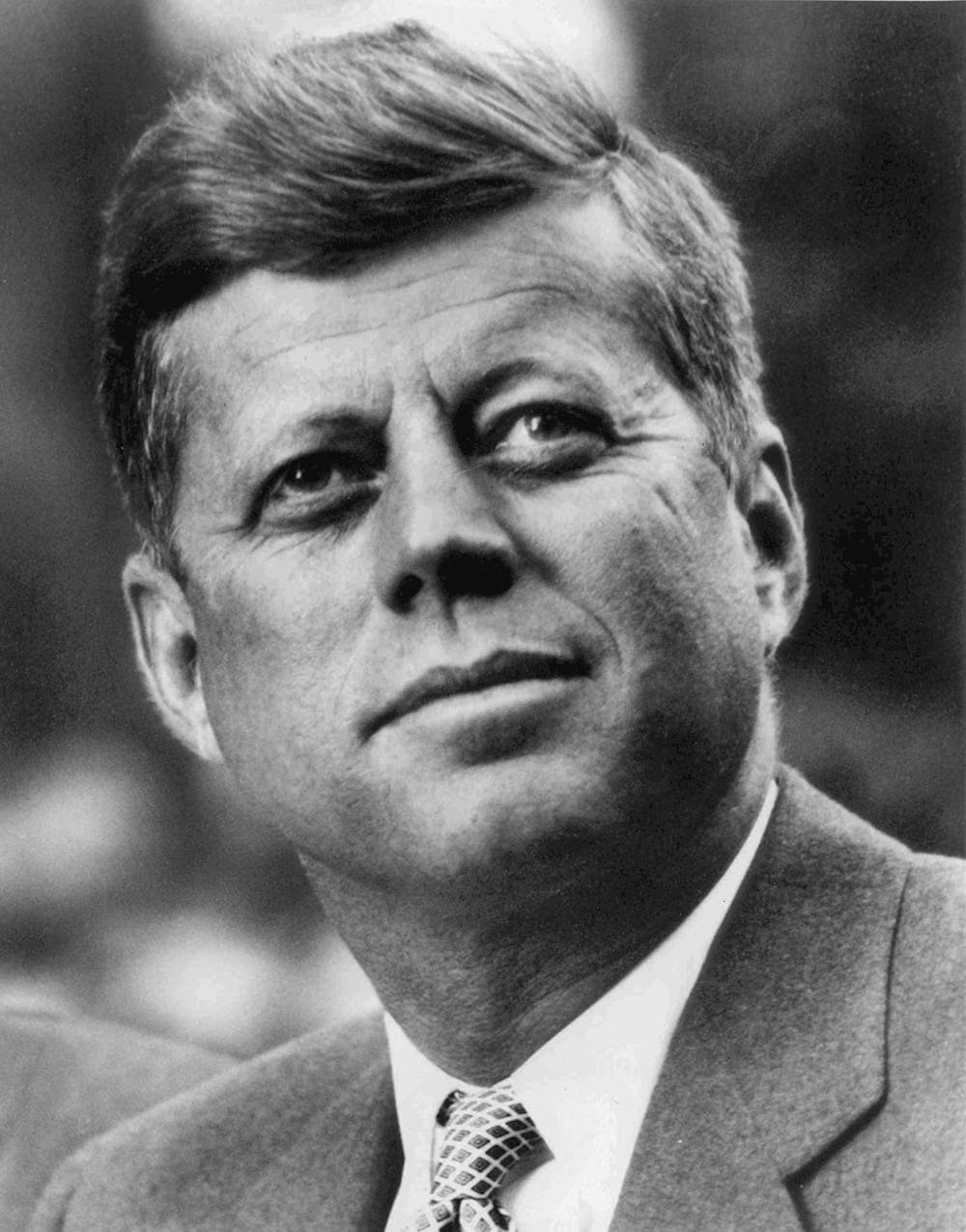
  • Does Tim Weiner Believe his own BS?

    Does Tim Weiner Believe his own BS?


    Robert Kennedy Jr. probably never expected the assassination of his uncle to take a prominent position in his campaign for the presidency. But it was almost predestined that he would be asked about the matter by some people in the media. He was, and to his credit, he did not dodge the question. On more than one occasion, including WABC Radio in New York, the query popped up. He answered honestly and courageously: He thought the CIA was complicit in the John F. Kennedy murder.

    That is all that Tim Weiner needed to hear. He replied with the following tweet:

    I cannot emphasize enough that this is a lie first promulgated by the KGB in 1967, and that RFK Jr is acting as a useful idiot for the Kremlin.

    Hmm. Does this mean that both Ron Paul, a former candidate for the presidency , and Tucker Carlson, the former highest rated cable TV host, are also both “useful idiots” for the Kremlin? Why does Tim not say that if he thinks it’s the gospel truth?

    One reason is simple: It is not true. This is a phony story put out by Warren Commission apologist Max Holland. When the ersatz Russia Gate winds were blowing, Max Holland decided to transfer the focus from Hillary Clinton and her accusations to the JFK case. And the horrid online ‘zine Daily Beast actually ran with it. I blasted Holland’s article to bits back in 2017. (Click here) I actually showed that this story itself, part of the Mitrohkin archives, was manufactured for the defecting Russian agent to curry favor with the British and American intelligence agencies he was seeking monetary rewards and solace from. Because the Mitrokhin ‘archives”, as Russian scholar Amy Knight noted, was a mildly ludicrous creation. In fact, in more than one instance, it was proven to be utterly false. But for someone like Holland, that did not matter one iota.

    Tim Weiner used to write for the New York Times. He now writes for Rolling Stone. How that once proud and honest journal has fallen with his arrival. Rolling Stone was the place where Carl Bernstein published his epochal exposure of the CIA’s Operation Mockingbird. (Click here) During the early days of the House Select Committee on Assassinations (HSCA), Rolling Stone printed intelligent and penetrating stories about the JFK case. With the arrival of the NY Times vet, all that appears to be gone.

    For this is the second time in less than 17 months that Weiner has trotted out this mildewed and utterly false story to detract attention from any real examination of the true circumstances surrounding the JFK case. Tim, why not answer these questions for us?

    1. Would the Magic Bullet, CE 399, ever be admitted into any court in America after a pre-trial evidentiary hearing?
    2. What happened to the baseball sized hole that disappeared from the back of JFK’s head, the one that 41 people saw and some drew pictures of for the HSCA?
    3. If Oswald killed Kennedy, as you seem to imply, why did none of the four secretaries on the 4th floor of the Texas School Book Depository see or hear him on the only stairs leading down from the 6th floor to the first after the shooting?
    4. If the evidence in the case is solid against Oswald why did autopsy photographer John Stringer, under oath, deny he took the extant pictures of Kennedy’s brain in the National Archives?
    5. If the Warren Commission was correct, why did Admiral George Burkley tell the interviewer at the Kennedy Library in 1964 that he did not wish to comment on their verdict? Geez Tim, maybe because Burkley signed a document which placed the back wound at the level of T -3 which would make it all but impossible to exit through the throat?

    So Tim, why not ask your guru Mr. Holland about these? The man who made one of the worst documentaries ever on the JFK case, The Lost Bullet. See what excuses he tosses you and how he hems and haws as he tosses them. I could go on with about 40 statements just like this one and would love to have you reply to them in open debate. But I know you would never show up. The point is this: the Warren Commission was dead wrong. And you were dead wrong when you said that well, Lee Oswald probably got off a lucky shot. How can that be Tim if the ballistics and x-ray evidence portrays Kennedy’s head shot going from front to back? Geez did Oswald run around Dealey Plaza and shoot Kennedy from front and back? Love to hear you say that with a straight face.

    For the record, there were at least four people who thought the CIA was involved in the JFK murder before Tim says the KGB put out a story about it. The first one was Bobby Kennedy. Within momnets of hearing his brother had been killed, he called John McCone, the CIA Director, and asked him if his agency was involved in this horror. One can read all about that in David Talbot’s book, Brothers. It is shocking to me that Weiner shows no knowledge of this at all.

    After RFK, there was Los Angeles attorney Stanley Marks, German expatriate writer Joachim Joesten, and New Orleans DA Jim Garrison. But beyond that, Garrison arrested CIA contract agent Clay Shaw before the alleged KGB story ever ran in the Italian leftist newspaper Paesa Sera. And let us not forget what President Johnson told his chief of staff Marvin Watson after reading the Inspector General Report on the CIA/Mafia plots to kill Castro, a report he commissioned from Director Richard Helms. He said that the CIA was in on the JFK murder. That deduction was based on the CIA’s own report in the spring of 1967, not an Italian newspaper. (City Watch, article by Jefferson Morley, January 3, 2022)

    Let me repeat that again so Tim can maybe understand it: Garrison arrested CIA contract agent Clay Shaw before the alleged KGB story ever ran in the Italian leftist newspaper Paesa Sera.

    So how can Holland’s accusation be true? But beyond that, Garrison called the CIA covert security cleared Shaw in for questioning in December of 1966! (William Davy, Let Justice be Done, p. 63). This was almost three months before the alleged KGB story ran.

    In other words, there is no evidence at all that Garrison was ever influenced by the Italian article: to either suspect Shaw or to arrest the CIA agent. And if I use the terms CIA agent or covert security cleared, its because the declassified records of the Assassination Records Review Board (ARRB) prove that Shaw was just that. (Davy, p. 95; Joan Mellen, Our Man in Haiti, p. 54). It would be nice if Rolling Stone would allow someone like myself, Oliver Stone, Jefferson Morley or John Newman to write about some of these new discoveries made by the ARRB relevant to the JFK case. But as I said, those glory days appear to be long gone for Rolling Stone.

    Robert Kennedy Jr. is not the first person on the presidential campaign trail to say the Warren Commission was a pile of sludge. Al Gore did it when he was running for vice-president way back in 1992. And its an interesting story how that came about. When Gore first came to Washington as a congressman from Tennessee, he was asked a favor by a fellow Tennessean, Bud Fensterwald. Fensterwald was an attorney and founder of the Assassination Archives and Research Center in Washington. He asked Gore for just a stretch of time—about 45 minutes every Friday—before he flew back to Tennessee. Bud asked Gore to drop by his office at that time and he would have some documents arrayed on a desk for him to read. He would not consult with him about them, he just wanted him to read them.

    Congressman Gore agreed to the arrangement. After about a year Gore told Fensterwald: “You are correct. It was a conspiracy.’ And Gore never went back on this. In fact he said as much during that 1992 campaign. So by that accounting—Gore, Paul, and RFK Jr.—that makes three candidates for office who agreed the Warren Report is and was bunk.

    One last point about RFK Jr. If Tim Weiner was a real reporter—which he is not on this case—he would have done something elementary to any journalism 101 class. He would have called Bobby up and asked him how he came to such a conclusion. Bobby would have told him what he told me. He was giving a speech in the New York area and was waiting in the green room to be called on stage. He noticed that Jim Douglass’s book, JFK and the Unspeakable was in the bookshelf. He read a few pages and later on he ordered the book. Like many people who have read that book he was duly impressed. So much so that he ended up calling Jim Douglass. Bobby was struck by Jim’s emphasis on Kennedy’s Peace Speech at American University in the summer of 1963. So much so that the two ended up working on a very interesting article. It was called “John F. Kennedy’s Vision of Peace”.

    I saved the punchline for last. It was published in Rolling Stone on November 20. 2013. Would that happen today? I doubt it.

  • Robert Kennedy Jr. blames CIA for JFK assassination


    “The evidence is overwhelming that the CIA was involved in the murder, and in the cover-up.” Read the rest of the news article here.

  • Dave Emory’s 27-part series on JFK Revisited, with Jim DiEugenio

    Dave Emory’s 27-part series on JFK Revisited, with Jim DiEugenio


    jd emory jfkr


      For The Record #1262 Interview #1 with Jim DiEugenio
      For The Record #1263 Interview #2 with Jim DiEugenio
      For The Record #1264 Interview #3 with Jim DiEugenio
      For The Record #1265 Interview #4 with Jim DiEugenio
      For The Record #1266 Interview #5 with Jim DiEugenio
      For The Record #1267 Interview #6 with Jim DiEugenio
      For The Record #1268 Interview #7 with Jim DiEugenio
      For The Record #1269 Interview #8 with Jim DiEugenio
      For The Record #1270 Interview #9 with Jim DiEugenio
      For The Record #1271 Interview #10 with Jim DiEugenio
      For The Record #1272 Interview #11 with Jim DiEugenio
      For The Record #1273 Interview #12 with Jim DiEugenio and Dr. Gary Aguilar
      For The Record #1274 Interview #13 with Jim DiEugenio and Dr. Gary Aguilar
      For The Record #1275 Interview #14 with Jim DiEugenio and Paul Bleau
      For The Record #1276 Interview #15 with Jim DiEugenio and Paul Bleau
      For The Record #1279 Interview #16 with Jim DiEugenio and John Newman
      For The Record #1280 Interview #17 with Jim DiEugenio and John Newman
      For The Record #1281 Interview #18 with Jim DiEugenio and David Talbot
      For The Record #1282 Interview #19 with Jim DiEugenio and David Talbot
      For The Record #1283 Interview #20 with Jim DiEugenio
      For The Record #1284 Interview #21 with Jim DiEugenio
      For The Record #1285 Interview #22 with Jim DiEugenio
      For The Record #1286 Interview #23 with Jim DiEugenio
      For The Record #1287 Interview #24 with Jim DiEugenio
      For The Record #1288 Interview #25 with Jim DiEugenio
      For The Record #1289 Interview #26 with Jim DiEugenio and Lisa Pease
      For The Record #1290 Interview #27 with Jim DiEugenio and Lisa Pease