Tag: CIA
-

The Newly Declassified JFK Assassination Files
October 26, 2017 was supposed to be the last day for secrecy in the John F. Kennedy assassination. After 54 years, all the files on that case were finally supposed to be open to the public. In fact, President Trump actually tweeted about this occasion twice, saying how much he looked forward to it. This was a good indication that all the files would now be declassified, since only the president could halt that process.
But on October 26th, President Trump gave in to last minute pleas from the CIA and FBI. He decided not to declassify everything. He now said that he would delay things until April of 2018 so that only very small bits of information like an agent’s real name or address would be concealed. The media then told us that only 300 documents would be deferred until that new release date of April, 2018. As we shall see, this often quoted 300 number is simply wrong and vastly understates what is still being withheld.

Richard Helms The mainstream media (MSM) has been guilty of futher distortions. On a few occasions, they have reported old information as if it were new: for instance, regarding a memorandum written by FBI Director J. Edgar Hoover about convincing the public that Oswald was the lone assassin (see further below); or the transcript of then Ambassador to Iran Richard Helms’ testimony to the Rockefeller Commission which is supposedly cut off just as he is responding to the question of whether Oswald was a CIA asset. In both cases, this information has been known for some time; in the latter, the full document providing Helms’ response (in the negative) has been long available. As much as one might be inclined to excuse journalists for not being deeply familiar with the case, and thus unaware that they were inappropriately sensationalizing, it is hard to pardon the smugness with which the media asked us, for the most part, and without adequate knowledge, to accept their word that there was not anything really interesting in these releases. Like Lt. Frank Drebin in The Naked Gun, they were telling us, “Move on. Nothing to see here.”
Having actually reviewed many of these documents, I would respectfully disagree. One might ask, for instance, why the following (old) information, which has resurfaced through the release of either previously unseen documents, or of documents which have had previous deletions removed, was not mentioned. Might it possibly be because some of it concerns the mainstream media—specifically, how they cooperated with the FBI, the Warren Commission, and perhaps the CIA, in order to uphold in the public eye the dubious tenets of the Warren Report?
Consider the following previously withheld documents:
- In an FBI document dated 2/1/67, it is noted that information received from the CIA reveals that The New York Times had lost faith in the Warren Report and was working on a full-scale exposé of its tenets, which it did not consider reliable anymore. That information was attained by talking to an informant of that Agency (the former head of the FPCC, Richard Thomas Gibson) who knew a reporter on the Times. We have actually had this information in nuce for a while: see the original memo from the Director of Plans to Hoover, in which the informant’s name is redacted, but in which the source at the Times, reporter Peter Khiss (misspelled ‘Kihss’ in the documents) is revealed.
- An FBI teletype dated 12/11/63 reveals that NBC was preparing a program on the JFK case, but the producer’s policy would be to televise only “those items which are in consonance with” the FBI report.
Then, there are the following documents which were re-released but with redactions now filled in:
- A document which contains the minutes of a meeting on December 6, 1963, between LBJ and CIA Director John McCone; while the missing information which has now been filled in is of much interest (there were discussions at this point about the banning of underground tests, and the situations in Cambodia and Malaysia), one bit of “old” information contained here, and which again has gone largely unnoticed, is striking: a highly reliable CIA source reported that Russian intelligence was trying, through an Indian intermediary, to prod LBJ, RFK and Earl Warren into a thorough investigation of President Kennedy’s assassination.
- A CIA memorandum which was actually classified as OPEN IN FULL and already figured in the 1995 ARRB releases, but which has oddly received little attention, reveals that on November 23, 1963, Deputy Director of Plans Richard Helms wrote the FBI that voice comparisons of calls made to the Soviet Embassy in Mexico City had indicated the caller on September 28 was the same one as the caller identifying himself as Oswald on the October 1 call. This clashes with the story coming out of Mexico City by then, which was that no voice comparisons had been done because the recording of the 9/28 call had been destroyed before the second call on 10/1. But what is even more curious about this memo is that by November 23rd, the FBI already knew that the voice on the tape claiming to be Lee Oswald was not the same as that of the man in custody in Dallas.
- Making the above document even more interesting is a CIA Mexico City cable from just three days later. This information has also been available for some time. The Agency had two informants in the Cuban embassy in Mexico City. Neither recalled Oswald being there at any time. Yet the Warren Report said he was there on three occasions. Was he or wasn’t he? Again, if the MSM does not tell you about these reports, then that question cannot be raised. (In the re-released version, John Whitten’s name, formerly not visible, now appears, but the identities of the two assets, whose cryptonyms were LITAMIL-7 and LITAMIL-9, had already been deciphered.)

Roger Feinman These five documents alone raise some troubling questions. One being, how can we uphold a democracy when broadcast agencies like NBC collude with intelligence agencies to spin the facts about the murder of the president? Or when the New York Times decides that it does not believe the Warren Report, but then goes on to say that it does? What happened to that full-blown exposé of the Warren Commission that the Times was planning? Well, perhaps the same as what happened to a CBS special critical of the Warren Report. We know through the late CBS employee Roger Feinman that CBS reporters wanted to do a special critical of the Commission. But due to pressures from above, the reporters were discouraged from that, and CBS decided to do a four-night segment supporting the Warren Report. (See “How CBS News Aided the JFK Cover-Up”)

CBS correspondent
Eddie BarkerWhat happened at CBS is further elucidated in another declassified teletype from the FBI recovered by researcher Bill Davy (available prior to the current releases in Section 30 of the FBI Warren Commission HQ Liaison File 62-109090). This memo reveals that as early as January of 1967, CBS had decided to slant its upcoming late June multi-night documentary into, quite literally, a hatchet job. CBS was going to take books critical of the Warren Commission, like Mark Lane’s Rush to Judgment, and, as the memo, says, “tear them apart”. The informant providing this information to the Bureau was Eddie Barker, a local Dallas CBS correspondent who would appear on the CBS program. Barker, quite naturally, requested anonymity. But he added that the documentary would not be critical of the FBI and would support the Warren Report. Barker understood that the executives at CBS had already been in contact with members of the Warren Commission. He specifically mentioned Warren Commissioners John McCloy, Allen Dulles, and former Chief Counsel J. Lee Rankin. It was his opinion that they would cooperate with the production, which had not actually begun yet. One would think all this would be an interesting question for members of the so-called New Media like Rachel Maddow, or Josh Marshall, to address. But as we shall see, they did not.
Media specials and articles in places like Politico have also recently recast the spotlight on Oswald’s alleged visit to Mexico City. Ever since 1964, there have been serious issues with the way the Warren Report treated this supposed trip. One problem is that the CIA, which had covert multi-camera photo surveillance on both the Cuban and Russian embassies Oswald visited, could not produce a single photo of alleged assassin Oswald entering or exiting either building—even though he made a total of five combined visits to both places. That would mean the Agency should have ten pictures of Oswald in Mexico City. But as early as November 23, 1963, the CIA reported that it could find no picture of Oswald entering either place.
Noteworthy in this regard is the original rough draft of Warren Commission lawyer David Slawson’s report on the Warren Commission visit to Mexico City, which has also been re-released (it was previously released with restrictions in the 90s). Present in this version is a description of the meeting that Slawson, William Coleman and Howard Willens had with station chief Winston Scott. They inquired if Scott had a photo of Oswald at either the Russian or Cuban embassy. Scott replied in the negative. He said this was due to lack of manpower, funding and proper lighting supplements (see both the previous and current releases at pp. 25-26). There is no way to characterize that reply as less than a deception. From the declassified Lopez Report, however, we know that the CIA had full-time coverage of both embassies during operating hours, and that Oswald did not enter either embassy at night (see Oswald, The CIA and Mexico City: The Lopez-Hardway Report [Mary Ferrell Foundation, 2003], esp. pp. 12-46). This information tends to bring Scott into the web of the cover-up about Mexico City, the CIA and Oswald.
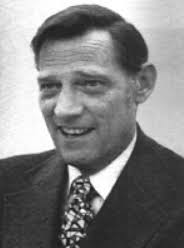
David Phillips 
Anne Goodpasture The two documents referred to earlier deepen this mystery. On November 23, 1963, CIA officer Richard Helms forwarded the above-mentioned memo to the Director of the FBI, J. Edgar Hoover. In it Helms wrote that voice comparisons made of phone intercepts at the Russian Embassy in late September and early October indicated that these conversations are “probably the person who identified himself as Lee Oswald on 1 October 1963.” There are two serious problems with this statement by Helms. First, the CIA officer in Mexico City, David Phillips, would later tell the HSCA that no voice comparisons were made, since the tapes had routinely been destroyed within seven or eight days of their origination. (Destiny Betrayed, Second Edition, p. 354) This is, in fact, what the first cable [MEXI 7023, 11/23/63, para 2] from Anne Goodpasture suggested, at least for the 9/28 recording. Goodpasture then followed this with another cable [MEXI 7025, 11/23/63, para 4] suggesting that it was the translator (Boris Tarasoff) of the two calls who connected the two speakers, i.e., that he “recognized” the 10/1 caller to be the same as the 9/28 one. Tarasoff, however, testified to the HSCA that he did no voice comparisons per se (see further Oswald, The CIA and Mexico City, pp. 164-167).
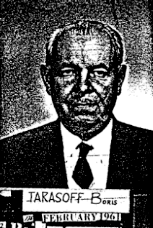
Boris Tarasoff But secondly, and perhaps more importantly, the FBI had already discovered on the day they got the Helms memo that the voice on the tape was not the same as that of the man held in custody in Dallas. In fact, Hoover had already memorialized that fact in a memorandum, and also in a phone call with President Lyndon Johnson. (Destiny Betrayed, p. 357) So where did Helms get his information from? And what was it based on? And why in heaven’s name is the MSM reporting that it was Oswald in communication with the Russian embassy, when the FBI determined that the voice on the tapes was not him? But further, the other document shows us that the CIA informants inside the Cuban embassy had told the Agency they had no knowledge of a visit by Oswald at any time. These kinds of evidentiary problems have led some to believe, with justifiable cause, that Oswald was impersonated, both at the consulates and on the phone, in Mexico City. But if the public is not informed of the facts in these documents then they cannot even begin to comprehend that thesis.

Nikita Khrushchev with JFK 
Washington correspondent
Drew PearsonOr the following fact: the CIA knew that Russian Premier Nikita Khrushchev did not believe the official story about Oswald and, in fact, was quite dismissive about it in discussions with Washington reporter Drew Pearson. Pearson and his wife had met Khrushchev and his wife in late May, 1964, while on vacation in Cairo. Pearson met with the CIA station chief there afterwards and told him about their conversations on the subject and how Khrushchev did not believe American security forces could be so inept. Pearson added that he could make no headway at all trying to change the Russian couple’s understanding. The Russian leader thought a right-wing coup had taken place. Apparently, Khrushchev felt this way from the start, since there is the previous report from December 6, 1963, that the KGB was trying to tell President Johnson, Chief Justice Earl Warren and Attorney General Robert Kennedy that no stone should be left unturned in their inquiry into Kennedy’s assassination. This report joins others on Charles DeGaulle, Fidel Castro, and Achmed Sukarno, adding to the list of world leaders who did not believe the lone gunman solution to the assassination.

DeGaulle, Sukarno and Castro all questioned the lone gunman explanation
Let us step back now a moment to review how we have arrived at our present state of knowledge. In 1998 the Assassination Records Review Board (ARRB) closed its doors after four years. It had been created due to the uproar over Oliver Stone’s film JFK. At the end of that film, it was revealed that the files of the 1979 House Select Committee on Assassinations (HSCA)—the last inquiry into Kennedy’s death—were classified until 2029. Few people knew about this massive classification, or that the HSCA had concluded that Kennedy was killed as a result of a probable conspiracy. Assaulted by thousands of phone calls and telegrams due to their exposure to these facts, Congress created the ARRB to begin to declassify two million pages of Kennedy assassination related documents.

John Tunheim and members of the ARRB meet with President Clinton It is clear today that the Board had neither the lifespan nor funding to properly complete its assignment. That assignment was not only to declassify all federal files, but also to search other repositories and seek out hidden pieces of evidence that could elucidate the circumstances of Kennedy’s murder. For the last three weeks—actually longer—we have been watching the leftover residue of their work, which results from the fact that the enabling legislation for the Board said there should be nothing still withheld 25 years after the law was passed in 1992. This clause in the legislation is what this furious debate has been all about.
The MSM did an unsatisfactory job in covering the four-year life of the Board. There were some rather sensational discoveries unearthed by that body. Some authorities would state that this new information altered the calculus of the Kennedy case. But the public never heard of it because the MSM either did not know about it, or they did know about it and failed to make it public. (See “The State of the JFK Case 50 Years Out”)
That poor prior performance has been repeated for the last three weeks. It spiraled upward into a paroxysm of chattering nabobs on Thursday, October 26th. The congressional legislation that gave birth to the Board allowed them to, at their close, grant what they called “postponements” to certain documents: that is, a document’s release would be delayed for say two years or ten years. The most sensitive documents would be given the longest postponement, which would be 25 years past the signing of the legislation, i.e., October 26, 2017. The most commonly based exemptions were if a document endangered an agent’s identity, or if it could cause the exposure of an ongoing operation. The usual numbers given for such 20-year postponements are 3,571 documents withheld in full, and approximately 32,900 still redacted in part. This past July, Martha Murphy, who is running the release project at the National Archives, declassified 441 documents in full. On October 26, contrary to what was commonly passed off in the media, there were only 52 of those documents released to the public. In the two releases since, there have been very few added to that sum. As of today, there are still over 2,700 JFK classified documents that the public has never seen!

Rex Bradford These numbers come from Rex Bradford at the Mary Ferrell Foundation, and Gary Majewski, who has been a consultant on this project at the kennedysandking.com website. They have been confirmed by Jim Lesar, a Washington Freedom of Information Act attorney. One reason that the public was so misinformed is that none of the TV hosts consulted with Lesar or Bradford, who know much more about the subject than anyone the MSM used as authorities. In other words, only 52 of the “withheld in full” documents were declassified on Thursday, October 26th; and only 2,800 of the over 28,600 documents “released with deletions” were re-released on that day. What this means is, that amid all of the media hoopla, about 2% of the former, and less than 10% of the latter were finally released. And here we are, 54 years after Kennedy was killed. Twenty years after the Board closed down. In retrospect, what President Trump did was probably about the worst thing he could have done. Because if he had followed the law, it is very likely that everything would have been declassified on that day.

Jim Lesar What makes that failure even more important is another aspect of that Thursday release. Shockingly, several of the 52 withheld in full documents still contained redactions! For instance, a 1975 CIA document describes an Agency training camp set up outside of New Orleans in advance of the Bay of Pigs invasion. In scanning over the document, I have discovered there are easily 25 deletions still in it. The reason the document may be important is that Oswald’s New Orleans friend David Ferrie was one of the trainers at this base, and CIA officer David Phillips—a suspect in the JFK murder—was in charge of sterilizing it after the invasion. (William Davy, Let Justice be Done, pp. 30-31)
But on top of that, many of the released documents are not just redacted; they contain many pages that are completely blank. And the CIA is getting very good at doing this. Now they do not even black out, or white out pages. It looks like they just photocopy a blank page over and over, or cover the entire document page with a blank sheet, so one cannot decipher anything. For example, one CIA document on Jim Garrison is supposed to be 11 pages long. Yet 8 of those pages are blanked out completely.
In addition to that lengthy redaction, there is a fascinating memo from the internal email messages of the ARRB about even more extensive concealment. In a message dated November 14, 1996, the Board is describing its approach to the CIA about documents concerning Clay Shaw and the New Orleans CIA station. In its final paragraph, it is revealed that the Board intended to ask for information about the destruction of Shaw’s 201 file. If this is accurate, then it is something that no one has ever revealed before. The closest anyone has come to it is the discovery in Bill Davy’s book Let Justice be Done that a certain “Y file” of Shaw’s had also been destroyed (p. 200). If both statements are true, and both of these refer to separate files, then they lend credence to what Gordon Novel wrote to researcher Mary Ferrell in a letter during the House Select Committee proceedings in 1977. He stated that during the Warren Commission hearings, the CIA had deliberately concealed Shaw’s true status with the Agency. Novel would appear to be a good source since he was hired by Allen Dulles to infiltrate Garrison’s office (Destiny Betrayed, Second Edition, pp. 232-33).
Beyond the outright concealment of pages or destruction of files, there are documents that the National Archives admits are simply illegible. But they declassify them anyway. Calling them illegible does not do justice to how bad they really are (see this example). Even if one scanned them using OCR software, that would not improve readability, since there is so little to recognize in them.
Another way the law is being circumvented is that in some of these releases the cover sheet describes a report, giving the reader the originating agency, the author and the subject, and listing a page count. But it does not then include the report itself! This has been done several times (see, for example, this CIA file).

Earle Cabell, CIA asset
and mayor of Dallas on 11/22/63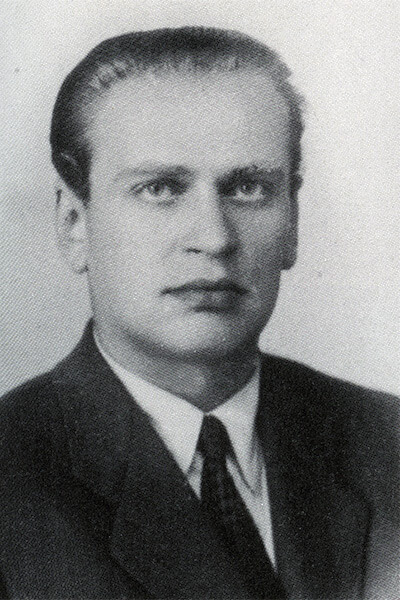
Soviet defector Yuri Nosenko There is still another category of documents that has not been discussed by the MSM. This category was labeled by the Board as “NBR”, Not Believed Relevant. It is fairly clear today that this rubric was abused. For instance, one of the most fascinating July releases was on Earle Cabell, the mayor of Dallas in 1963. It was revealed that he was a CIA asset at the time of the assassination. According to former intelligence analyst John Newman, that document was previously classified as NBR. How anyone could deem such information irrelevant is unfathomable. Lesar told this author that files on Yuri Nosenko were also deemed irrelevant. Nosenko was the Soviet defector who arrived in America in 1964 and said that the KGB had never recruited Oswald while he was in the USSR for approximately three years. CIA officer James Angleton then more or less had him imprisoned and tortured for nearly 36 months to try and make him admit he was sent over to mislead the CIA about Oswald. Author Edward Epstein, an Angleton idolater, wrote a book—Legend—endorsing Angleton over Nosenko and portraying Oswald as a communist spy. Again, it is extremely puzzling to think Nosenko documents would be labeled as irrelevant. Luckily, Murphy declassified many of the Nosenko documents and the Cabell document. But, according to Lesar, there are tens of thousands of these NBR documents that the Review Board allowed to be deferred. They must be located and declassified.
In its vapid coverage of the JFK releases, the MSM largely ignored things that were new and important, and focused, as we have already mentioned, on papers which had been released before in whole or in part. Two of the worst examples of this kind of presentation were by representatives of the so-called New Media, i.e., cable television and online journalism.

Rachel Maddow 
Tom Pettit Rachel Maddow reran a segment that had been filmed back in 1993 featuring deceased newsman Tom Pettit. Pettit visited the National Archives on the first day of the ARRB declassification. He apparently did not understand the difference between documents that were declassified and ones that were already among the exhibits of the Warren Commission, that flawed 1964 investigation into President Kennedy’s assassination, because he pointed to documents in the latter as if they had been newly declassified that day. (See this full report on that segment)

Nicholas Katzenbach On October 27th, Josh Marshall at Talking Points Memo discussed an 11/24/63 memorandum written by FBI Director J. Edgar Hoover (alluded to above) in which he stated that he was concerned that something must be issued in order to convince the public that Oswald is the real assassin. That document is a forerunner to the famous and long ago declassified document which would be typed the next day by Assistant Attorney General Nicholas Katzenbach, who Hoover had talked to the night of the 24th, after Oswald had been shot. Marshall then said that this did not necessarily indicate that Hoover had any doubts about the case and that it was not incriminating of his investigation.

Josh Marshall Apparently, Marshall was unaware of one of the keystones of the JFK case, namely the Single Bullet Theory, aka the Magic Bullet. Hoover never bought into that dictum. Which is why the original FBI report on the JFK case was not included in the Warren Commission volumes. The Warren Commission’s shooting scenario maintains that one shot, aimed at his skull, killed Kennedy; a second shot went through both Kennedy and Texas Governor John Connally, making seven wounds, and smashing two bones in the two men; and one shot missed the limousine by 200 feet, hitting the curb on a different street, and dislodging the concrete upwards, cutting the face of bystander James Tague. Hoover rejected this and said all three shots hit both men in the car. How did he manage to bypass the shot that ricocheted upward and hit Tague? He quite literally erased it. He had it carved out, pasted over and shipped back to Washington. (James DiEugenio, Reclaiming Parkland, p. 252) In other words, Hoover tried to make his verdict stick by altering the evidence. A rather important point which Marshall either is unaware of, or does not want his readers to know about.
The two men who know the state of these documents best, Bradford and Lesar, were nowhere to be seen on the domestic MSM. (Although Bradford did get on abroad.) Instead, we had people like Gerald Posner, Larry Sabato, and Philip Shenon, who conveyed none of the important information that would have explained what was really happening, or what was in the new documents.

Media darlings Gerald Posner, Larry Sabato & Philip Shenon
But there is an even larger story here about the pernicious effects of secrecy and how it has worked in the JFK case. And it’s one that no one has written about. Ramon Herrera is a computer information technology expert with a strong interest in the JFK case. He decided to clone the entire records database of the online JFK collection at the National Archives. He used some revolutionary “scraping” software he developed together with a friend from abroad. The process lasted a week and he repeated it four times, then wrote programs to compare the results, record number by record number, to make sure they were identical. With this exact copy in hand, he then extended the capability which NARA provides by making the field “Current Status” searchable. That allowed him to count the number of records for each of the three categories: “Postponed in Full”, “Released with Deletions” and “Open”. Herrera came up with a remarkable discovery. His number of records classified “Postponed in Full” is over three times as large as the official number: 9,718. One reassuring aspect of his work is that his number of “Released with Deletions” documents is very close to NARA’s. This would seem to indicate that either the Archives records on the JFK case are wrong, or Martha Murphy has not updated her database to insure a proper count of what has been released and what is being withheld.
What all of this reveals is that the ARRB process was, in large part, subverted. The Review Board did some good and valuable work. But as Lesar told this writer, Congress wanted to get rid of the public pressure, but they also wanted to do it fast and cheap. But when one is dealing with a subject that strikes at the heart of the national security state—as the JFK case does—there is no fast and cheap way to approach it. For the simple reason that the executive intelligence agencies understand the technique of waiting an opposing agency out; that is, the CIA knew it was going to be with us long after the Board left. In fact, British researcher Malcolm Blunt found an Agency internal document which contained words to that effect. Written in late 1995, the author wrote that the Agency considered the Board not so much a releasing agency—but as one setting dates for future review: in other words, as a review and postpone apparatus. In many ways, that seems to have been the case, so the Agency packed in as many postponed documents as they could. It also appears that with what President Trump did on October 26th, there will be a lot of court hearings for Jim Lesar to attend to clean up the mess that Trump and the media made of this momentous occasion.
But as Lesar informed me, there might even be instances that he cannot salvage. While trying a case directly related to the ARRB process, the attorney was advised to visit a sitting general. The general told him that after the Board disbanded, there were a lot of burning parties going on in Washington. That is how deep the secrets of the JFK case go in the capital. Which is why the MSM has never been able to deal with the subject.
-
Fourth Public Release of JFK Assassination Records
Latest Group of JFK Assassination Records Available to the Public, at: National Archives JFK Record Collection
-

The Intelligence Community Flips Off America
“The United States is a nation of laws: badly written and randomly enforced.”
~Frank Zappa
© November 4, 2017
James Angleton set the strategy in 1964. “Jim would prefer to wait out the Commission,” as one CIA memo about Warren Commission inquiries put it.[1] They are still doing that as well as running their propaganda campaign against anyone who questions the lone-nut theory, their “best truth” according to David Robarge.[2]
I recently published an article about the delay in releasing records under the 1992 JFK Records Collections Act. In that article I explained the CIA’s play to discredit those who question their lone-nut theory best truth and suggested that their historian, David Robarge, has told us what to look for in the documents that are still being withheld.[3] In that article I suggested we should look for information regarding covert operations against Cuba that would “circumstantially implicate CIA in conspiracy theories” – Mr. Robarge’s words.[4] While I doubt the existence of a “smoking gun,” the circumstantial evidence we might look for in the delayed files could show a correlation between Lee Harvey Oswald’s activities in New Orleans and Mexico City in the late summer and fall of 1963 and CIA covert operations that were occurring at that time.[5] I specifically suggest that we look to files on operations involving George Joannides, the Directorio Revolucionario Estudiantil (“DRE”) and David Phillips. These are files, or at least some of them, that are in the JFK records that were scheduled for release.
On October 26, 1992, the U.S. Congress passed S. 3006, with only one amendment and very little, if any, opposition. The Senate bill, introduced by Senator John Glenn of Ohio, was signed the same day by the President George H.W. Bush and became Public Law 102-526, (“JFK Records Act”). Among other things the JFK Records Act provided for the collection, preservation and eventual release of all records related to the 1963 assassination of President John F. Kennedy with minimal exceptions. It mandates, in clear and unambiguous language, “[e]ach assassination record shall be publicly disclosed in full, and available in the Collection no later than the date that is 25 years after the date of enactment of this Act.” The Act allows an exemption to this explicit mandatory requirement only if the President “certifies” that the release of each withheld document “is made necessary by an identifiable harm to” either 1) military defense; 2) intelligence operations; 3) law enforcement; or 4) the conduct of foreign relations and “the identifiable harm is of such gravity that it outweighs the public interest in disclosure.”[6]
NARA released some of the files that I have been waiting for yesterday, November 3, 2017. The Excel spreadsheet listing the released files include four files referenced to David Atlee Phillips and one file referenced to the DRE.[7] Of the files referencing Phillips, three are of an unspecified nature and one is listed as his Office of Personnel (OP) file. The DRE file is listed as “CIA file on DRE AMSPELL operations.”
AMSPELL is a CIA cryptonym for DRE, the anti-Castro Cuban group that was run by George Joannides in 1963, that had the encounter with Oswald in New Orleans in 1963, and published the first conspiracy theory blaming Castro in their CIA financed newspaper in Miami on November 25, 1963. The file released yesterday, for such an active group, is a very thin 87 pages of which 61 are expurgated in full. Of the remaining 26 pages, many are largely expurgated. The Phillips files are even worse. The three files of unspecified type may be some of his operational files. These files are even more highly expurgated than the AMSPELL file. Taking the 73 page long file RIF 104-10177-10135 as an example:
- 3 pages are a confidential notice that the file has been processed and retired which notice is reprinted in full;
- 3 pages are the file’s routing sheet that has been partially released with redaction of any significant information;
- 2 pages are a 1975 FOIA request from The Bay City Times, a newspaper in Bay City, Michigan, reproduced in full;
- 1 page is a “Document Transfer and Cross Reference” form indicating that records of a project apparently named “Furioso C” have been removed from this file and sent to another section of the CIA with a redaction that not only removes the substantive entry but also the name of the space on the form where the entry was made;
- 2 pages are partially redacted memoranda;
- 3 pages are Security information forms for Project Furioso C with all substantive information redacted; 2 pages are a Project Financial Data form from 1952 with no substantive information that is not redacted;
- 6 pages are partially redacted routing sheets for documents, none of which have the routed document attached;
- 1 page is a partially redacted cable from 1952;
- 2 pages are copies, unredacted of logs of HSCA access to the file, showing that I saw the file in 1978.
The remaining 48 pages are redacted in full.
The file that is listed as David Atlee Phillips’s OP file is not as heavily redacted as the other three Phillips files although many of the documents, mainly personnel forms, it contains have been cleansed of any significant data. That, however, is not the end of the story on this file. The file starts with a few items of post-retirement correspondence between him and the CIA in 1975 and then proceeds chronologically backwards from his retirement in 1975. I have not yet been able to go through the 358 page file to carefully study all the documents, but I have gone through it well enough to note that all his fitness reports between 1956 and 1965 are missing – not redacted, just simply not there. Indeed, so far as I have been able to find, there is no record whatsoever of a document in the file dated between 1961 and 1965 – not redacted, just simply not there.
There has been no explanation, let alone a presidential certification, that the massive redactions in these “released in full” documents meet any of the mandatory exemptions that allow withholding. No identifiable harm is specified. No rationale is given as to why the secrets protected outweigh the public interest in disclosure. These files are not in compliance with the law no matter what the main stream media says. They are an in-your-face flipped bird to the American public. They basically tell us that the CIA is saying that they don’t have to comply with the law of the land and that they will not tell us their secrets and that there is nothing we can do about it. I’ve been here before. It was in a small room in CIA Headquarters in late 1978. I had been fighting to see a file generated by the CIA debriefing of Johnny Roselli. Scott Breckinridge and George Joannides had just handed me a highly redacted file that violated the HSCA/CIA Memorandum of Understanding mandating unexpurgated access by HSCA to CIA files. They stood by, grinning, as they watched my reaction upon opening the file to find it largely expurgated. They were grinning so hard because they knew they had waited out the HSCA and there was nothing I could do about it. The Angleton strategy still worked. It is still working today.
This release not only demonstrates that the Angleton strategy is still being applied. It also illustrates the point I have been making about what they are covering up. There may well be nothing we can do about it. It appears our lawmakers are spineless in the face of the intelligence community. Joseph Burkholder Smith, a retired CIA officer, told me and Gaeton Fonzi in 1978, “You represent Congress. What the f*** is that to the CIA? You’ll be gone in two years and the CIA will still be there.” To paraphrase that to fit the situation in which we now find ourselves: “You are the people that Congress supposedly represents. What’s that to the CIA? You’ll forget about it in a few weeks or so.”
But I won’t. I wrote a letter to my Senator yesterday before I saw the travesty that was the day’s release of JFK documents by NARA. Probably a futile gesture, but one I had to take anyway. Here’s what I told him:
Please allow me first to introduce myself a bit. While I am your constituent, I do not believe we have ever met. I was born and raised in Webster County, West Virginia, and still reside on the farm my grandfather purchased in the 1940’s outside of Cowen. I am a graduate of WVU – 1976 – and while there got to know some of the members of your family. I had the privilege of running your first cousin Tim Manchin’s campaign for a seat on the WVU student government Board in the mid-70’s. I am a 1980 graduate of Cornell Law School and a former law clerk for Justice Tom McHugh of the West Virginia Supreme Court. I took a year and a half leave of absence from law school to work as a researcher for the U.S. House of Representatives Select Committee on Assassinations in 1977-1978. My primary area of responsibility in the Committee’s work was to investigate the Central Intelligence Agency and Lee Harvey Oswald in Mexico City. Most of the work I produced for the Committee remains classified. I am presently registered to vote in Webster County with an Independent affiliation.
I am aware that the Republicans in this state are trying to mount a serious challenge to you in the upcoming election and I am presently considering whether to become involved in the campaign and, if I do, who I am going to support. In that regard, and in view of your position on the Senate Select Committee on Intelligence, your position on an issue that is very important to me will influence whether I decide to actively support you in the upcoming election. That issue is the release – or I should say, the failure to release – the records currently held in the JFK Records Collection by the National Archives and Records Administration. While the records, and access to them, is of great interest to me, the real issues raised by the failure to release them are much more fundamental than just access to the assassination records. It is these fundamental issues that I want to explain and upon which I wish to hear your opinion.
On October 26, 1992, the U.S. Congress passed S. 3006, with only one amendment and very little, if any, opposition. The Senate bill introduced by Senator John Glenn of Ohio was signed the same day by the President George H.W. Bush and became Public Law 102-526 which is codified at 44 U.S.C. § 2107 note (“JFK Records Act”). Among other things the JFK Records Act provided for the collection, preservation and eventual release of all records related to the 1963 assassination of President John F. Kennedy with minimal exceptions. Among its other provision, the JFK Records Act, at § 5(g)(2)(D), mandates in clear and unambiguous language “[e]ach assassination record shall be publicly disclosed in full, and available in the Collection no later than the date that is 25 years after the date of enactment of this Act.” The Act allows an exemption to this explicit mandatory requirement only if the President “certifies” that the release of each withheld document “is made necessary by an identifiable harm to” either 1) military defense; 2) intelligence operations; 3) law enforcement; or 4) the conduct of foreign relations and “the identifiable harm is of such gravity that it outweighs the public interest in disclosure.” [Emphasis added.]
I note that this is a law duly enacted and adopted by the democratic processes of this country in 1992 – a country where we supposedly pride ourselves on being a nation of laws, a nation where the law applies to each and to all regardless of status or position. On October 26, 2017, as I am sure you are aware, President Donald Trump, at the request of the Central Intelligence Agency and other intelligence community members, disregarded the clear provisions of the law and postponed release of ninety percent of the remaining withheld documents in the JFK Records Collection for an additional six months. In doing this, the President made no findings, issued no orders and certified nothing, merely issuing a statement through the press office saying that all documents will be released “with redactions only in the rarest of circumstances” by April 26, 2018.
The President’s action was not only without authority in law, it was also taken in patent violation of the clear, unambiguous and mandatory terms of a law that your institution passed. In this situation, I would be tempted to file a suit against the President if it were not for the facts that: 1) the Courts have already held that the JFK Records Act does not provide a basis for any private cause of action for U.S. citizens, Assassination Archives and Research Center v. Dep’t. of Justice, 43 F.3d 1542, 1544 (D.C. Cir. 1995); 2) Federal Court litigation is too expensive to allow access to a normal citizen trying to hold his government accountable; and 3) it would take more than six months to get a case through to a decision in Federal Court so the action would represent no type of check or correction to the problem.
The real problem that this presents is that it is showing to the nation that the intelligence agencies of our nation are not subject to the laws of the nation. They are effectively above the law. At their request, or pressure, the President of the United States will violate the clear mandates of enacted legislation. And, to date, the reaction of our elected representatives in Congress seems to reinforce the fact that no one is willing to stand up to such blatant disregard of the clear provisions of the duly enacted laws of the nation. I understand that it is the executive branch that is charged with the enforcement of the laws your branch enacts and, in this case, it is the executive branch that is violating the law so there can be little realistic expectation of enforcement from them. But this is the heart of the problem and why it is incumbent upon the Congress to act. At a minimum there should be oversight hearings. At a minimum the Congress should not be seen to willingly acquiesce in executive contempt for the Legislative branch of government and the law of the land.
This action on the part of the intelligence community, the National Archives, and the Executive is only the latest in a long string of actions that disregard the provisions of the JFK Records Act that also subvert and cover up the information related to the assassination of our 35th president. Those other actions are beyond the present scope of this letter, but are things about which I would be glad to speak with you if you have any interest, so I will not go into them here.
To my knowledge there has been no coverage or explanation of why the intelligence community has requested this delay of the President. It was made in secret. What reason have they given for the delay? What kind of pressure have they brought to bear? How can they force a president to so blatantly disregard the law? If they can do this in regard to disclosure of fifty-year-old records, in what else can they exercise a like secret influence that corrupts the laws of the nation? What affect does the existence and use of such secret power have on our democracy? If these things – not just the documents but the method of influence – remain always secret, then how can a citizenry be sufficiently informed so as to exercise their franchise to any real purpose? How can we have faith in our democracy, let alone our government, if this kind of practice is allowed to continue unchallenged? These are the questions that I would like to have answered. But, to make it easier for you, I note you are in a unique position in regard to these issues due to your membership on the Senate Select Committee on Intelligence. Are you at least going to call and press for public hearings on any of these issues? Or are you going to join the vast majority of our representatives and once again cower before the intelligence agencies? Will you stand up for your constituents’ right to participate in their government on an informed basis? Will you stand for holding our government to a standard of open honesty before its citizens and against allowing the real affairs of state to be conducted in secret and in disregard of the laws enacted by the peoples’ representatives?
I anxiously await your answer.
The questions I asked Joe Manchin in that letter are even more pressing today. I don’t know if he’ll even answer, let alone do anything. Maybe like Chuck Grassley, he’ll send out an apparently frustrated tweet. Or maybe, like the main stream press, he’ll tout the release of the documents, hoping no one will look to see what a travesty the “release” is because of the massive redactions. At this point all I can do is try to tell the truth about this whole state of affairs. I also encourage you to not take this insult to your intelligence and ability to govern yourselves without reaction. Do something. If nothing else, circulate this article to everyone you know. Refuse to accept the cancer of secrecy that destroys our liberty and ability to govern ourselves. Get involved. Get informed. Stay informed. Read and follow http://2017jfk.org/home/ and http://jfkfacts.org/. Join the AARC at http://aarclibrary.org/aarc-membership/. Join CAPA at http://capa-us.org/membership/. If those who exercise the power in this country have such blatant contempt for the law, then the time for serious peaceful civil disobedience may be upon us. Get the word out. Don’t be silent any longer. This is not an issue of the left or the right. Do something. Say something. And don’t stop until you are heard.
Notes
[1]. Raymond Rocca to Richard Helms, Memo Re Response to Rankin, 5 Mar 1964, NARA Record No. 1993.06.24.14:59:13:840170, available at https://www.maryferrell.org/showDoc.html?docId=98075#relPageId=1&tab=page
[2]. David Robarge, “DCI John McCone and the Assassination of President John F. Kennedy,” Studies in Intelligence, (Vol. 57, No. 3, 09/2013), Approved for Release and declassified, 09/29/2014, at page 20. Available at http://nsarchive.gwu.edu/NSAEBB/NSAEBB493/docs/intell_ebb_026.PDF. Robarge wrote: “The DCI was complicit in keeping incendiary and diversionary issues off the commission’s agenda and focusing it on what the Agency believed at the time was the ‘best truth’: that Lee Harvey Oswald, for as yet undetermined motives, had acted alone in killing John Kennedy.” For my commentary on the CIA’s “best truth”, see “Thank You, Phil Shenon,” available at https://realhillbillyviews.blogspot.com/2015/10/. Note that the “best truth” was conditioned by “at the time” leaving open the real possibility that alternative cover stories may have to be brought to play in the event that time undermined what the Agency considered to be the best truth for them.
[3]. Dan Hardway, “What Were They Hiding and What Should We Look For,” 30 Oct 2017, available at https://realhillbillyviews.blogspot.com/2017/10/what-were-they-hiding-and-what-should_30.html
[4]. Robarge, n. 2 above, at p. 9.
[5]. This is addressed in more detail at JFKFacts, Exclusive: “JFK investigator on how CIA stonewalled Congress,” http://jfkfacts.org/hardway–declaration–cia–stonewalled–jfkinvestigation/; Declaration of Dan L. Hardway, Morley v. CIA, CA # 03-02545-RJL, D.C.D.C. 11 May 2016, Docket No. 156.
[6]. 44 U.S.C. § 2107 note § 5(g)(2)(D). Emphasis added.
[7]. https://www.archives.gov/research/jfk/2017-release, RIF Nos. 104-10176-10121, 104-10177-10135, 104-10177-10134, 104-10194-10026, and 104-10170-10121.
-
Third Public Release of JFK Assassination Records
553 Newly Released CIA Documents Posted, at: National Archives JFK Record Collection
-

Rachel Maddow, JFK and Easy Money
In the lead up to the final declassification of the long awaited secret files on President Kennedy’s assassination, there were literally dozens of TV broadcast segments alerting the public to what President Trump had decided to do and what it all meant. Not one of these programs went beyond the surface of the event. And most of them relied on nothing but general information, questionable guests, and past clichés about the case to create their segments. Incredibly, the MSM even trotted out Mr. Plagiarism, Gerald Posner, for some appearances. No one noted that Posner has not done any work of the JFK case in twenty years. And his discredited book Case Closed was written and published before the creation of the Assassination Records Review Board (ARRB) in 1994. Therefore, not only was Posner not familiar with the current batch of declassified files, he was not aware of what was in the two million pages declassified from 1994-1998. But that did not stop Michael Smerconish from hosting him on his CNN show as an authority.
But probably the worst of the segments happened to be one of the longest ones, timing in at almost ten minutes. This took place on October 25th, the day before the documents were supposed to be released. It was on MSNBC’s Rachel Maddow Show.
MSNBC has a reputation, and a niche, in cable television as being a liberal haven. Compared to say Fox, that is true. But many would question just how liberal, and honest, the cable network is. For instance, Melissa Harris-Perry was an acute, well-informed host who really tried to book rarely heard voices onto her program. In fact, her show was the only Sunday talk show that did not utilize a majority of white males as guests. After four years, she was forced out in early 2016. She concluded that, since she was an African-American female, they did not want to hear her comments on election returns that year. Try and find anything online, or anywhere else, that Maddow said or wrote about Perry’s highly publicized dispute with management. My other point would be this: How liberal and honest can MSNBC be if Chris Matthews is the longstanding bellwether of the network? This is the man who actually wrote a book—Kennedy and Nixon—that tried to equate the political career of John Kennedy with that of Richard Nixon. He then wrote a completely inadequate biography of JFK. In all the years I listened to the Bay-area blowhard, I never heard anything but inside-the-beltway pabulum from the man. For this he makes five million a year. Nice work if you can get it.
Maddow has followed the Matthews paradigm on the Kennedy case, and she has also steered away from Perry’s dangerous list of guests. Her show on October 25th is a prime exhibit for what is wrong with cable news. It also demonstrates why the so-called cable revolution—begun by Ted Turner back in 1979—has been such a disappointment. Maddow’s program started off with her spoken intro to the subject of the long delayed release of the JFK assassination files. She began by showing footage of Oswald being held in detention. (To her credit, she did say Oswald was the “alleged” assassin.) She then said that as Oswald was being transferred in the basement of the Dallas jail, he was shot and killed. She added that NBC had a reporter there covering that event. His name was Tom Pettit . She then ran the NBC footage of Jack Ruby shooting Oswald. Pettit said three times that “Oswald has been shot”, and he topped it off with, “There’s no question Oswald has been shot.”
After this memorable footage was shown, Maddow said not one word about it. She just left it with Pettit ’s rather vapid and repetitive, “Oswald has been shot.” No comment on how Jack Ruby entered the building, or how the House Select Committee on Assassinations concluded that the Warren Commission was dead wrong when they wrote Ruby came down the Main Street ramp. No observations on how the Dallas Police covered up that Ruby had help entering the building, and that even the Warren Commission suspected such was the case. (Reclaiming Parkland, by James DiEugenio, pp. 229-30) Nor did she mention that the night before, Oswald had attempted to make a call to one John Hurt in North Carolina, a former military intelligence officer. But that call was aborted on orders of the Secret Service. Nor did she say that Ruby had called the police the night before and warned dispatcher Billy Grammer not to transport Oswald the next day or “We are going to kill him.” (ibid, p. 224, italics added) Maddow did not even state that this event meant there would be no trial for Oswald, and thus he would not have any defense against the Dallas Police charges. Nor did she say that when the Warren Commission was constructed, they failed to give Oswald any defense at all, while violating almost every protection constitutionally afforded to the accused.
Instead of any of that, which seems pretty important in setting the table for the JFK case, what did Maddow talk about instead? Well, Maddow seems to think Tom Pettit is more important then the murder of Oswald by Jack Ruby. She now mentioned his presidential interviews and some of the broadcast awards he had garnered. She chose to do that because she wanted to set up something that was really kind of inexcusable. The Pettit synopsis was used to bridge the time gap from 1963 to the release of Oliver Stone’s film JFK in 1991. She described the film as positing a theory for a broader conspiracy in the Kennedy case. She then added that there had always been theories like that, without describing any of the evidence that Stone’s film advanced. Including how Ruby actually did get into the police basement.
Our hostess then added that Stone’s film caused the enactment of the JFK Act in 1992. But she did not say that the last title card of the film noted that the files of the House Select Committee on Assassinations—which shuttered in 1978—were classified for over fifty years. The exposure of that fact embarrassed some of the people who were involved with that classification, like Committee Chairman Louis Stokes. And this caused hearings to be held on Capitol Hill to declassify the remaining files and let Americans see what was being kept secret. Besides missing much of that, she then added something completely unwarranted. She said the idea behind this law was to “tamp down some of the assassination conspiracy theories”. The idea behind the law was to eliminate the secrecy that enshrouded one of the most pivotal events of the second half of the twentieth century. To let the public in on what, until then, only certain people in the executive intelligence community were allowed to know. And thus let the public make up its own mind about the matter. The irony of her pronouncements here is that they were all done against the background of scenes from Stone’s film.
From here, Maddow then segued to 1993. And we now saw why she built up Tom Pettit . Because she now cuts to Pettit ’s original segment from the first day that the JFK Act declassified any of the long secret files. This was before the Assassination Records Review Board was even constructed. Consequently, if one attempted on that day to see these files, more often than not, what you would get is a RIF notice. Which meant that the file had been tagged by its originating agency—be it the FBI, CIA, or State Department—and it would remain secret until the yet to be appointed Review Board ordered it declassified. And the vast majority of the 2 million pages that were to be declassified had to go through that process.
Why did she choose to show this particular report? Because Pettit ’s segment is pretty much worthless. He shows us documents that he does not even know had already been declassified and are a part of the Warren Commission volumes. And he relates facts that anyone with any familiarity with the case would have already known. For example, that Oswald had defected to the Soviet Union and returned with a Russian wife. Pettit would then smugly and stupidly say, “We already knew that.” Which would be a little like saying that President Kennedy was killed in Dallas in 1963; but we already knew that.
Pettit began his report by saying the documents released that day showed that the CIA was deeply involved in the JFK investigation. This is false on two counts. The two chief investigative arms of the Warren Commission were the FBI and the Secret Service. The CIA was mainly involved with Oswald in Russia and Mexico. (And also trying to get information on foreign authors the Commission wanted to discredit, like Thomas Buchanan and Joachim Joesten.) What is quite puzzling about the Warren Commission is that the CIA produced little about Oswald in either country. In fact, as was demonstrated in the documents released this past July by the National Archives, the Agency, in the immediate days after the assassination, could not find any evidence that Oswald had been in Mexico City. This failure was driving them to distraction. Because they were stuck with audiotapes, allegedly of Oswald’s voice, in the Cuban and Russian consulates in Mexico City. So the question now became: How did the CIA capture his voice, but have no evidence he was there? And the answer to this was that—as the FBI soon discovered—it was not Oswald’s voice on the tapes. So the Agency decided to turn over this evidentiary problem about Oswald being in Mexico City to their friends in the Mexican government, specifically the Interior Department.
Yet, in another document released this past July—which Maddow or her staff could have easily attained—it is shown that the men involved in running that investigation were not at all cooperative with the Warren Commission representatives sent to investigate the crime. In fact, as the rough draft of Commission lawyer David Slawson’s report reveals, he, William Coleman and Howard Willens were given the run around by the officers running the Mexican arm of the investigation. (Slawson Report “Trip to Mexico City” 4/22/64) This is an important point that was smudged in the final draft of Slawson’s report, which was declassified twenty years ago by the ARRB. Again, Maddow’s staff could have easily gotten hold of that report, too. The reports would have shown that the three Warren Commission representatives had all of one meeting with the man running the inquiry in Mexico. That man, Luis Echeverria, would soon become the President of Mexico.
In reading that rough draft, they also would have learned that CIA station chief Winston Scott lied to the Commission attorneys on a key point: Namely, why he could produce no pictures of Oswald in Mexico City. (Slawson report, p. 25) Scott told his visitors that the reasons there were no photos were that the CIA was limited to daylight hours, there was not enough manpower, lack of funds, and no artificial light. This was nonsense. To take just one example: the Soviet consulate was covered by (at least) two cameras. One operated from 2 PM until darkness each day except Sunday (when the consulate was not open). The other operated from dawn to 2 PM, except Sunday. Since today we know that Oswald was supposed to be at the Soviet consulate on Friday and Saturday before 2 PM, the CIA should have four photos of him. (See John Newman, Oswald and the CIA, p. 356; DiEugenio, p. 292) Scott was blowing smoke at the Commission—which is understandable on his part. What is not understandable is that the three investigators readily accepted it.
But since neither Maddow nor her staff has looked at these July 2017 hidden files, she sticks with Tom Pettit back in 1993. What does Tom tell us? Well, I hate to inform Rachel of this, but Tom misinformed his audience. He told them that in these declassified files it is revealed that Oswald returned home by bus from Mexico City under the name of H. O. Lee. Tom is wrong here on two points. That information was not declassified in 1993. It is in the Commission volumes, labeled as Commission Exhibit 2530 Commission Exhibit 2530. So when Pettit then adds his refrain, “We already knew that.” Well duh? Tom, it’s in the 26 volumes, so why are you showing it to us? But there is something even worse about CE 2530, and Pettit was not going to tell us about it. And Maddow’s staff did not fact check his 24 year old report.
As noted above, the CIA decided to solve its problem about Oswald being/or not being in Mexico City by turning over its inquiry to Echeverria, who was a friend and colleague of Scott. (Jefferson Morley, Our Man In Mexico, pp. 262, 275) The FBI did not join this inquiry until February. A point that surprised even the Commission lawyers in Mexico. (Slawson rough draft, p. 65) When the Bureau did finally arrive, they had problems with what Echeverria had done. For instance, there was no record of Oswald leaving Mexico through the border by bus, but there was a record he left by car. (FBI cable to Mexico City 3/12/64) The Bureau did not want that information to stand because Oswald had no car and probably could not drive, implying Oswald was with someone. After a while, the FBI finally thought they located the buses Oswald used to leave Mexico. But they could not locate his name on a bus manifest. (ibid) Through a confidential informant, they then discovered that his name was supposed to be on a reservation request made out by a travel agency. But when they found the travel agency and the reservation number, the woman said that particular form was blank. Then another confidential source showed up at the travel agency and discovered a carbon of this form with O. H. Lee’s name on it. But when the FBI checked on the exchange of this form for a ticket, the attendant said the man she recalled exchanging it was tall with a great deal of hair. This could not have been Oswald. (John Armstrong, Harvey and Lee, p. 685)
This is what Tom Pettit did not tell us about “what we already knew” because he didn’t know it. And this is the quality of the fact-checking Maddow’s staff did. If you can believe it, based on Pettit ’s fraudulent first day report, Rhodes scholar Maddow labeled the entire ARRB process “a bust”. This about a four year long inquiry that declassified 2 million pages of documents, produced Chief Counsel Jeremy Gunn’s milestone inquiry into the medical evidence, and yielded a largely unredacted version of the finest study of Mexico City, the HSCA’s Lopez Report. That report makes Slawson’s two Mexico City reports look like kindergarten coloring books. But again, the viewer does not know this since Maddow and her staff likely never read the Lopez Report. Which, again, they could have easily secured if they called the National Archives.
Maddow concluded by guesting another alleged authority, author and former New York Times reporter Philip Shenon; even though Shenon had been on MSNBC three days earlier. One thing she could have asked Shenon is: Why in your book A Cruel and Shocking Act, do you say that Earl Warren, in some kind of deal with the Kennedys, refused to have the Commission look at the autopsy X rays and photos? First of all, the Kennedys had no control over the autopsy evidence in 1964; it was the property of the Secret Service. Secondly, during an exchange in the Commission’s executive session hearings, it was revealed to John McCloy that the Commission did have a secured room that housed this evidence. (Gerald McKnight, Breach of Trust, p. 171)
But there is no way she was going to ask Shenon about the problems with his book. She then began to characterize those interested in this subject as being “crazy” about the next day’s release. There was not one comment on why on earth it would be necessary to keep 3100 files and tens of thousands of documents secret 54 years after Kennedy was killed. In other words, it was the critics who were touched, not those who want secrecy ad infinitum. When she asked Shenon just what was going to be released, he escaped into some gas about how much the government knew about Oswald. When in fact, just by looking at the National Archives spreadsheet, one can see that there are documents on the CIA/Cuban exile base JM/WAVE, the alleged CIA assassination program ZR/Rifle, and files on suspects like Bill Harvey, David Phillips, Howard Hunt and James Angleton. Harvey, Phillips and Hunt were all in Dallas in November for no apparent reason.
But Shenon was allowed to spew his usual pap about how the CIA and FBI somehow knew that Oswald was talking about killing the president in advance. As I showed near the end of my review of Shenon’s ersatz book, the evidence he uses for this was all created after the fact by the most dubious sources and in the most dubious places. And it has been decimated by experts like John Newman and Arnaldo Fernandez.
The wrap up to all this was so condescending, it was almost a parody. Maddow asked Shenon something like: how much crazinesss do you expect about this tomorrow? (The second time she used the C-word in regard to those who are interested in the case.) And also, do you expect a lot of tumult tomorrow? To which Shenon said, sight unseen, that a lot of the documents should be difficult to decipher, but it would be like Christmas for the army of conspiracy theorists looking for material to support their concepts. When I used the word parody above, I meant that the back-and-forth was parodic of the two conversants. Because Maddow never asked Shenon about his bizarre theory that somehow Castro controlled Oswald through Silvia Duran in Mexico City at the Cuban consulate and she knew he was ready to strike for Fidel.
But if Maddow and her staff had done their homework, and really wanted to educate and interest their audience, she would have confronted Shenon with a record declassified this past July. It was an FBI document, dated February 1, 1967. The Bureau’s William Brannigan had discovered through the CIA that Shenon’s employer, The New York Times, had now lost faith in the Oswald-did-it confection. They were now engaged in a “special project involving a full-scale exposé of the Warren Report.” The memo said that this Times project would conclude that the Commission’s conclusions were not reliable. That investigative project was never enacted. And one can only guess that when the Agency got that report, they forwarded it to former Warren Commissioner Allen Dulles, who got in contact with Arthur Sulzberger, publisher of the Times, because Dulles was a good friend of the family. Since Maddow is part of that mediaocracy, this would have been too far outside the confines for her to bring up. In fact it would have blown up the whole segment.
Maddow’s show was pretty much symptomatic of the MSM’s attitude toward these releases. It was Leslie Nielson/Frank Drebin time from The Naked Gun. Well if you ignore what happened in Vietnam, Cambodia and Indonesia just two years after Kennedy was killed, then yep it’s just a board game for kids on Christmas. But personally, I think it’s pretty difficult to ignore the deaths of about 5.5 million people, most of them innocent, defenseless civilians. It’s like asking someone to forget about the Holocaust.
What these shows do is all too easy. In this one Maddow’s staff fished out some archival footage from NBC, did some research on Pettit, got permission to show parts of JFK and called up Shenon. As shown above, it results in nothing but aimless and uninformed banter. Great for the highly paid participants, but a disservice to the causes of public information, history and democracy. On this issue, all of these recent programs, not just Maddow’s, are pretty much indistiguishable from the likes of Bill O’Reilly or Sean Hannity. In the cause of journalistic irresponsibility, on the subject of JFK, left meets right. The hosts and producers simply don’t know anything and really don’t care to learn. Which is bad since, as shown above, it is an epochal subject. But unfortunately, it strikes at the feet of the Power Elite, the one that Shenon and Maddow work for and prosper at.
I don’t really mean to single out Maddow. As I said, I did not see one good program in this ongoing boring and ultimately stultifying circus. But I did want to show that even some of the most promising figures in the media have succumbed to the radioactivity of the JFK case. Maddow attended Stanford and Oxford. She has a Ph. D. in philosophy. But as director Martin Ritt once said of actor Richard Burton, “I don’t care how talented he is. It’s how he uses that talent that concerns me.” Whatever promise Maddow showed in her early days back at WRSI in Northampton Mass. or at Air America, she has now settled into a formulaic, smooth oiled-rail routine at MSNBC. I’d wish her well on that success, but it’s not the success I had imagined for her.
-

William Turner speaks with Hal Verb and Elsa Knight Thompson
Listen to the audio on YouTube.
Moderator
I am in the studio with William Turner, staff writer of Ramparts Magazine, and author of a forthcoming book, Police USA, which will be published by Putnam, Invisible Witness, Bobbs Merrill, and The Garrison Case, Award Books. Mr. Turner is a former FBI agent. He wrote the essay “The Inquest” in June Ramparts, outlining Garrison’s case, and the “The Press Versus Garrison” in the September Ramparts. This is not Mr. Turner’s first appearance in our studio. Quite a number of years ago now, several years ago, Mr. Turner appeared over this station when he was originally in the process of leaving the FBI, and us no more popular with the authorities. And so, he’s been a lot of places, and done a lot of things since then.
The second person we have with us is Mr. Harold Verb, who is a reporter for The Berkeley Barb, and has also been doing some work at San Francisco State, conducting a seminar, I believe, on the assassination of President Kennedy, and the Warren Commission report.
Now, what we’ve asked these two to come and chat with us about is what’s going on in New Orleans, and what role Jim Garrison has played in this, where it is now, and how they estimate its significance, its relevance, is it more than simply a theory that Mr. Garrison is working with? Perhaps you could bring us up to date on some of the facts, Mr. Turner.
William Turner
I’d be glad to talk about Jim Garrison’s case. Actually, Garrison first got into the assassination investigation the day after the assassination. On that Saturday, he called what he termed a brainstorming session of his staff, and they went over any possible New Orleans angles, or persons who were erratic enough to have been involved in a conspiracy. At that time, they came up with the name of David William Ferrie, who you will recall died this year, on February 22nd, after he became involved in Garrison’s current investigation.
Now, at that time, Ferrie had a rather mysterious trip to the state of Texas, leaving the afternoon of the assassination. And on that trip, he went first to Houston by car, where he appeared at an ice skating rink, and according to the owner now, he stood by the telephone for several hours on that Saturday afternoon. He apparently received a call, and then went to Galveston.
Now, Garrison was waiting for him when he got back on Sunday to New Orleans, and picked him up, and turned him over to the FBI for interrogation, because of the very suspicious nature of this trip. In other words, Garrison thought it was a very curious trip, by a curious man, at a curious time.
The FBI released him, and apparently the reason was that, number one, Ferrie had not left on that trip until well after the assassination; say, five or six hours. And also, because they determined that his small airplane was not airworthy at the time, and therefore, he couldn’t have been in on an escape plan. Now, there the matter rested, and as Garrison puts it, he said, “I had confidence in the competency of the FBI.” He himself is a former agent of the FBI. He was in approximately a year. And interestingly enough, he was in the same office that I was in, Seattle.
So, it was not until last fall when he was riding a plane to New York with Senator Russell Long of Louisiana, that his interest was renewed. Apparently, they were discussing the various books that had come out, and Senator Long the statement that he really believed that there was more to it than Oswald. And they conversed on it. When Garrison got back to New Orleans, he went into virtual seclusion, pouring over The Warren Report and its volumes, and he quietly launched his inquiry. And on the basis of the initial returns in this inquiry, he became convinced that, indeed, there was an assassination plot, and that the assassination plot had at least one aspect in New Orleans.
So, that is how he got started on it, and as you know, it’s still going on.
Elsa Knight Thompson
Well in what form is it still going on? Would one of you … How is he proceeding at this point, and where does he intend to … Has it just simply become a private investigation now? There’s nobody up for trial at the moment, is there?
William Turner
Well, yes; there is. Clay Shaw is scheduled for trial. But, let me put it this way, that Shaw was arrested … I believed it was the latter part of February. And through all kinds of legal maneuvering … maneuvering is a word that the judge down there, not mine. It’s been postponed and held off, and a trial date has not yet been set. However, Garrison stresses that he does not believe that Shaw is at the center of any web of conspiracy, that he is a peripheral participant in this. And therefore, he has a motion in open court to speed up the trial of Shaw so that he can sort of clear the decks with his own investigation.
As it is, he was held up with all these legal motions in the Shaw case. He does not have a greatly enlarged staff, and they have their normal criminal case load to handle. And he also has been subjected to attacks from Life Magazine, which insinuates that he is somehow sympathetic to organized crime, which is laughable; because probably of all the district attorneys in the nation, he has done more to clean up organized crime than anyone. By NBC, CBS, the bulk of the national media, the mass media, and therefore, he would like to be able to devote more time to the investigation.
But, he does have an investigation. He’s got main files that are set up somewhat like the FBI’s. He has an archivist to handle the Garrison archives. He has men who are specializing in the Kennedy assassination investigation, and I’ve spent a total of two weeks inside his office down there, and every day, there’s a new angle.
Elsa Knight Thompson
Well, tell me, in as much as there must be quite a few people who wish he would dry up and blow away, can he as prosecuting attorney just sit there and utilize that much taxpayer’s money to follow up on something simply because he believes in it? Is there any chance or possibility of actual either legal or political pressure to make him stop this?
William Turner
There have been all kinds of pressures brought to bear. Now, Garrison was carrying on his inquiry in secret. This is the best way, of course, to carry on an inquiry; at least in its initial stages. Now, the States-Item newspaper in New Orleans checked the disbursements of his office and found that there were what they consider these exorbitant travel expenses. People were going to Miami, they were going to Chicago, San Francisco. And this is the way they got wind of what he was doing, and they broke it in the paper.
Well, Garrison, at that time … Number one, there was a loud hue and cry that he was expending public funds on a wild goose chase. Now, he didn’t want to come out and release all his evidence to substantiate that it was not a wild goose chase. Therefore, they formed a group, businessmen in New Orleans formed a group, called Truth or Consequences, Incorporated; which is privately financing the assassination investigation. They signed up and contributed so much a month, and this is what is really subsidizing his assassination investigation.
Elsa Knight Thompson
But, through the prosecuting attorney’s office, or separate from the prosecuting attorney’s office?
William Turner
Well, through the office. Through the office. Now, you’ve mentioned pressures brought to bear. You get in his office down there, and you almost feel like you’re in maybe a Russian embassy on US soil, the way he’s been treated. For one thing, there is an organization down there called the Metropolitan Crime Commission. An ex-FBI agent by the name of Aaron Kohn is the head of this.
Now, of course, this is again, a privately subsidized operation, and Mr. Kohn has to have organized crime around in order for himself to exist. And it seems that, since Garrison’s investigation has come up, Kohn has been inordinately active in trying to say that there’s organized crime in the parish of Orleans. He’s been called before the grand jury down there several times to try and specify what he means by this, and he’s been unable to do so.
Nevertheless, that is one pressure point. As I mentioned, the national press is another pressure point. Bobby Kennedy’s former investigator Walter Sheridan was down there from the inception of Garrison’s investigation, and he has attempted … There is a legal allegation that he has attempted public bribery in getting to Garrison’s witnesses. It is alleged that Perry Russo, who is a key witness in the Shaw case, was offered some money by Sheridan. Sheridan allegedly told him that, “We’ll get you to California, and they won’t be able to extradite you from there.” And various other types of either intimidation or lures. They’ve been using the carrot and stick down there.
Elsa Knight Thompson
Yes, Hal.
Hal Verb
Yes. One of the things that Bill has mentioned are these different pressure points, and he’s pointed out the press, nationally and locally, has not given the Garrison case a fair shake. We can speak about the local press here. I think the only fair shake that they have given Garrison is that there is no news that is covered in the local press here that gives space to anything he says to counter the charges that are against him. I’ll specifically mention one. For example, when Life Magazine said that Garrison had been connected with the mafia, and this was reported in the press, Garrison had an instant reply to that, and he said, “I don’t even know Carlos Marcello,” and that was the specific individual who Life Magazine had tied him in with. “I wouldn’t even know him if he were sitting right here next to me.”
Now, this thing has never even appeared locally; I doubt if there are a few people here in the Bay Area, or in the whole state for that matter, who even know about this remark. This is typical; NBC, CBS will present their program, giving their version of what they say are both sides of the story, when in fact, it is only one side.
Elsa Knight Thompson
Yes. I believe you had something about some TV coverage that you wanted to talk about. Would this be the time that you would like to go into that a little more fully?
Hal Verb
Yes. There seems to have been what I would regard as a massive attempt to, if not obstruct the investigation, to at least put obstacles in the way of it that would prevent Garrison’s case from really coming to court, or at least having his say, with respect to what he has presented. For example, CBS presented a four part series late in the summer, I think it was the end of June, in which they references specifically to Garrison’s case. And one of the things that they mentioned was the kind of attempts that were by Garrison’s office, allegedly, what they said to bribe and intimidate witnesses.
And, for example, they pointed to a writer for the … This is a quote from one of the transcripts that I have of the four part series. They said there was a writer for the Saturday Evening Post who said he had read transcripts of what went on at those sessions. Now, the fact is that there were never any such transcripts, and this writer had actually seen Sciambria’s notes. And what this writer was trying to show was that this particular person had written a document, or statements, in which he had said that a key witness, Perry Raymond Russo, had lied about what he had presented as evidence.
The fact is that this was never the case, because there were in fact memorandums that were prepared, and that this writer actually was aware of the existence of these memorandums. Now, this did not get into TV coverage.
Elsa Knight Thompson
Well. Where would you like to go from here on this? What is Garrison’s theory? You say that the man, Shaw … Ferrie, is dead. There seem to be an awful lot of dead people connected with the whole situation …
William Turner
The tabulation goes on and on.
Elsa Knight Thompson
Yes. So, Ferrie’s dead, whatever it was he was supposed to be doing. Now, what about Shaw, and what is Garrison’s overall …
William Turner
Well, all right. In broad terms, it is this … And I think that this will also explain the orchestrated attack on him. Garrison believes that Oswald, number one, was a CIA agent, and that he probably had been trained at the Atsugi base in Japan when he was in the Marine Corps. This would have been back around 1957, ’58. Atsugi, reportedly, is a U2 installation. And in the restricted documents … there’s still classified documents in the archives … There’s a very tantalizing one entitled “Oswald’s access to U2 information”.
Now, necessarily, this means that when Oswald went to the Soviet Union, he was a CIA operative. And, of course, there is liberal evidence to back this up; most of it suggestive, rather than direct. But, for one thing, when he came back, he told a fellow employee in Dallas, where he was working in a photographic lab, about the disbursement of Soviet military forces, how they did not intermingle, or armored divisions with infantry. And then, he said, “I didn’t notice any vapor trails over Minsk.” Minsk is where he was when he was in the Soviet Union, for most of his stay.
Now, Garrison believes that Oswald’s leftist activity in New Orleans and Dallas, his attempts to insinuate himself into the confidence of the Fair Play for Cuba Committee, the Socialist Workers Party, the Communist Party USA, was nothing more than an attempt to erect a facade. Such a façade would have given him, perhaps, easier access to communist countries. It would have given him, once in, a freer movement.
Now, when Oswald went to the Soviet Embassy … or, excuse me, the Cuban embassy in Mexico City, he very careful listed all these affiliations with these groups; which, of course, existed only in his own mind. He never was formally accepted into any of them.
Now, who was Oswald then, if he was not really a leftist; who was he? Well, Garrison’s evidence will show that Oswald was affiliated with a group in New Orleans, which was anti-Castro in nature, and was paramilitary in nature, that was composed … down in that area, there is a tremendous cross-pollination of people who are members of the Minutemen, who are Cuban exiles, violently opposed to Castro, who are even members of the KKK. And it was with one of these factions with whom Oswald was traveling.
Now, with that in mind, how does the CIA come into it? Because Garrison believes that CIA is the reason that there is this orchestrated attack on him. Well, very simply, it was the CIA which sponsored these anti-Castro groups, which were supposed to, even after the Bay of Pigs failure, never relinquish their dreams of re invading Cuba. And, as a matter of fact, these groups were very active, and training in the environs of New Orleans. Garrison found one of their bases where one of the founders of the Minutemen had been arrested by the FBI and secretly let go. His name never appeared in the newspapers.
These people became very disenchanted with President Kennedy after what they call all his promises about freeing Cuba, and not coming through. And then, his apparent rapproachment with Cuba, which was in the works at the time of the assassination, was being handled through the Cuban ambassador, Carlos Lechuga and the United Nations, and through an intermediary, an ABC newswoman, who was on very close personal terms … Lisa Howard; very close personal terms with Castro.
So, what Garrison believes is these anti-Castro groups, which had been nurtured by the CIA, one of the factions, a spin off from this group, got out of hand, set up Oswald as the patsy, and assassinated Kennedy in Dealey Plaza. And Dealey Plaza ––
Elsa Knight Thompson
In other words, he doesn’t think the CIA ordered Kennedy’s assassination, but simply that a group that had been involved and financed by the CIA, went its own way …
William Turner
Right. The CIA, by its very nature, is compartmentalized, or cellular … They used to talk about communist party cells, and how one didn’t know the other. And this is exactly the structure the CIA, and it’s very easy for one of these CIA cells to become so involved in deceit, duplicity, assassination, murder, to go off and do something like this. And the operation at Dealey Plaza had all the earmarks of a paramilitary type of ambush. No question about it.
Elsa Knight Thompson
And Ferrie and Shaw were involved in that group? Is that …
William Turner
Now the legal allegations against Shaw are that he conspired, it’s a conspiracy charge, in New Orleans with David Ferrie and Oswald to assassinate the president. Garrison’s legal bill in particular states that a session in which they discussed and planned an assassination … talk, or particulars, culminated in what happened at Dealey Plaza. And, as I said before however, Garrison has gone no farther in his charges on Shaw. However, he has independent evidence to back up Shaw’s identity as Clay Bertrand, as you may know that is a big bone of contention; Shaw says he is not Clary Bertrand. Garrison says he is.
Now, Clay Bertrand comes into this way; immediately after the assassination, a New Orleans attorney, Dean Andrews, who had handled what he calls the “gay swishers” in New Orleans, and also Oswald … Oswald apparently wanted his discharge changed; said that, immediately after the assassination, he received a phone call from this man whom he knew as Clay Bertrand. And Clay Bertrand was a man who had referred Oswald to his office. And he said that Bertrand asked him if he would defend Oswald against the assassination charges. Of course, before anything further could be done, Oswald himself was killed.
Now, as I say, it is part of Garrison’s allegations that Clay Shaw is in fact the man using the name Clay Bertrand; and this he intends to prove in court. Also, the facts of the conspiracy. One of the allegations, and to prove this, is that Clay Shaw met in Baton Rouge with Jack Ruby and with Oswald. And he has a witness that will testify to this. So, this is the case against Shaw, which as I say, is up for … It has not yet been set on the calendar, but will come off late this year, or early next.
Elsa Knight Thompson
Does he have any witnesses who claim to have been a member of this group themselves? Or, is this all inferential evidence? Do you know whether or not anyone within the little right wing CIA, whatever you want to call it, type group that this plot took place in according to him; is there anyone who was a part of that, that he has been able to get as a witness?
William Turner
Unfortunately, no. Because, obviously, these people would be accessories before the fact, at the very least, if not participants, accessories after the fact. And certainly, you talked about the mysterious deaths; these people would not be very prone to talk, knowing what the penalty might be.
Elsa Knight Thompson
Well, but he must have found it out some way. I wondered, if by any chance, it was a question of someone from the group informing even if, for reasons that would be very obvious, that this would be protected.
William Turner
Let me put it this way, then, that there have been people who have been within the group, or on the periphery of it, who have been able to give him at least part of a story. No one has come ––
Elsa Knight Thompson
Well, that’s what I was at. I wasn’t expecting that anyone who had helped to plan the assassination of the president would come along and say, “I was a member of a conspiracy.”
William Turner
Like former Minutemen, for example. Yes, there have been a couple of those.
Elsa Knight Thompson
Because, for example, as far as I know, it’s never been absolutely proven that such a group existed, and that Oswald was a member of it. Well, anybody who had ever been in that group would be a valuable witness to that much.
William Turner
This is true.
Elsa Knight Thompson
I was wondering what the depth was on the witness situation.
William Turner
Yeah. There has been no one, unfortunately, who has been able to tell them that, “Yes, I was in this group. Yes, I was part of the assassination team at Dealey Plaza. Yes, so and so and so and so shot from behind the grass …”
Elsa Knight Thompson
No, I understand that, Bill. But, the point is that sometimes you have a group that might be composed of, say, 10 or 15 people, and that doesn’t mean that there wouldn’t be a minority, even within so small a group, that was doing something. But, at least that any one of those 15 people could testify, the people who belong to this group, and who normally came to our meetings were so and so, so and so. And if Oswald, and Ferrie, and Shaw were three of them, then that much would be established. It was that kind of evidence, I was thinking.
William Turner
Right Elsa. There have been a couple of cracks in this little structure. There have been.
Elsa Knight Thompson
Well, that looks as if he’s gotten that far, anyway.
William Turner
Yes, he has.
Elsa Knight Thompson
And with this, does he think this is involved … Well, you mentioned the fact that there was Cuban participation in these groups.
William Turner
Cuban exile.
Elsa Knight Thompson
Yes.
William Turner
Yes, right.
Hal Verb
May I make a point about this?
Elsa Knight Thompson
Yes.
Hal Verb
Very early in the … when the whole case about Garrison’s investigation broke, there were charges that pro-Castro Cubans had somehow been involved. And some of the press had picked up the story that, at first, Garrison ––
Elsa Knight Thompson
This is pro-Castro Cubans?
Hal Verb
This is pro-Castro Cubans.
Elsa Knight Thompson
Yes. This is the, “Was he right? Was he left?”
Hal Verb
Riight. The pro-Castro elements were involved in the assassination, and the press allegedly stated, or stated that, allegedly, Garrison had actually conceived of this as possibly one of the elements in the conspiracy. I’m talking about certain sections of the press. The fact is that, at no time was this a possibility when Garrison launched his investigation. In fact, through all of the investigations that he has conducted, there’s one thing that does stand out, and that is that Oswald, who does play, of course, an important role in this whole case, all his associations during his entire trip, both through New Orleans and Dallas, were with elements that can be considered paramilitary, right wing groups, and that all his associations were primarily of a right wing, extremist nature.
There is no evidence to show that he was, as the press had identified him, as a leftist. This was merely a cover ––
Elsa Knight Thompson
Well, I guess it did come out that he had made approaches to certain left wing groups. But, I remember that, within days, or at least very shortly after the assassination, that there was also a news item about the fact that, at one time, he had volunteered to train people to go in on the Bay of Pigs invasion. In other words, a completely contrary story. Now, that hit the press sometime very quickly after the assassination, and then died. I never saw anything more about that, but I clearly remember this, because it made a great deal more sense in the context of what one knew about Oswald, than the other story. And so, I do remember it.
Hal Verb
Yes. I think what you’re referring to is an incident when Oswald had approached a anti-Castro refugee by the name of Carlos Bringuier, in New Orleans. And, apparently, it’s my belief that when Oswald had done this, he had blown his cover, so to speak, about his connections with the CIA, at this particular point. Because Bringuier had become immediately suspicious of Oswald, that he was a double agent.
Now, while he was in New Orleans, Oswald managed to get himself a lot of publicity. I think this was on the part of an expected cover that he was expected to assume. He got on a program, on radio, WDSU, in which he debated a person who was connected with a group called INCA, which was the Information Council of the Americas Now, this group was connected with right wing, anti-Castro refugees, and had extensive operations in connection with Latin American revolutions.
Now, the thing about this INCA group is that a number of individuals who connected with this particular group, one of them, for example, is a man by the name of Mario Bermudez, who is the man who helped arrange the trip for Clay Shaw when he was here in San Francisco. Now, if you’ll recall, one of the things that Perry Raymond Russo had said in his testimony before the grand jury, was that part of the ploy that was to be executed on the day of November 22nd, when President Kennedy was killed, part of this plot would have to have the principals of the case in other cities at the time, so that no suspicion would be drawn upon them.
It was just curious to see that this man, Bermudez, is arranging a trip for Clay Shaw, the man who has now been charged with conspiring to kill the president. And here is this group, INCA, which manages to arrange this particular debate with Oswald while he’s in New Orleans.
Elsa Knight Thompson
With Oswald taking a view contrary, at that point, to the right wing view. Is that ––
Hal Verb
On this program, he took a view that he was a leftist who identified with the Castro revolution.
Elsa Knight Thompson
Yes. That’s what I mean. Yes. Quite. But, there was … I do distinctly remember seeing the item that he had … In spite of the fact that he was supposed to be on this Friends of Cuba … What was the name of the committee? You know …
William Turner
Fair Play for Cuba.
Elsa Knight Thompson
Fair Play for Cuba, and so on; that he also had been in … had volunteered, at one time, to train people to go in on the Bay of Pigs invasion, Cuban exiles. Which, would be ––
William Turner
This is probably the Carlos Bringuier episode, because he appeared voluntarily at Bringuier office. Bringuier was probably one of the best known of the anti-Castro exiles down there. And, as a sign of good faith, he presented Bringuier with his Marine Corps drill manual, or field manual. And Bringuier felt that he couldn’t be trusted, and maybe was a plant, and had nothing more to do with him. Although, that little altercation, where Bringuier, when Oswald was out in front of the International Trade Mart with his Fair Play for Cuba hand bills, and Bringuier comes up, and his little altercation. And Oswald said, “Well, go ahead; hit me if you want, Carlos.” It almost sounds like it was staged; that Oswald really was trying to say, “Well, I’m on your side.” All the evidence points that way.
Elsa Knight Thompson
Well, everything that one has ever read would give one the impression, certainly, that Oswald, whether by design, and whether on behalf of just himself, or other people, was certainly playing both sides of the street.
William Turner
Oh, yeah.
Elsa Knight Thompson
And so, you therefore have your choice as to which side of the street he was really in the pay of.
William Turner
Well, why would Oswald be associating with a guy like Jack Ruby, and Garrison has abundant evidence to show that he was. Why would he be associating with a man like that, who really is apolitical, on the surface, at least. This isn’t somebody that Oswald would just pick up and associate with, because he didn’t really like nightlife all that much to go to the Carousel Club.
Elsa Knight Thompson
What role does Garrison figure Ruby did play in it?
William Turner
Garrison feels that Ruby was manipulated in this thing, probably by the Dallas police. Now, Dallas police is too general; probably by key people within the Dallas police. And, for example, Hal mentioned Jim Phelan’s article in the Saturday Evening Post, which made Garrison look a little ridiculous. And one of the means of ridicule that Phelan used in this was to quote Garrison as saying that you have to look at this through the looking glass, almost like Lewis Carroll. And this was a source of great hilarity. But, it’s really true; you do have to look at certain aspects of it in the looking glass. You have to look at Oswald in the looking glass. You have to look at Ruby.
His facade was that he would go around in the time between the assassination and his own killing of Oswald, and he’d go down to the postal box, where [Bernard] Weissman’s answers to his advertisement, the black bordered ad, “Wanted for Treason”, President Kennedy, was coming in, and said, “Oh, isn’t that awful?” And draw attention to himself there. He would go out in the middle of the night and call up one of his employees, Larry Crafard, at the club, and go out and photograph the billboard that says, “Impeach Earl Warren” … “Isn’t that awful?” And these tender remarks about Jacqueline Kennedy, about sparing her the ordeal; in other words, this was an attempt to draw attention to the fact that he was really very pro Kennedy, and very incensed that anybody would kill Kennedy, and therefore, it creates a certain illusion. And that’s what Garrison means by the looking glass.
Elsa Knight Thompson
Yes. I can see that. But, where does he think Ruby really was? Does he think that Ruby was a part of this conspiracy?
William Turner
Oh, certainly.
Elsa Knight Thompson
And it’s obvious that if there were a conspiracy, that Mr. Oswald was very definitely the patsy.
William Turner
Yeah. Well, for example ––
Elsa Knight Thompson
Whatever he expected to be, that’s what he was.
William Turner
Yeah. I’ll illustrate by the statement of one witness, sworn statement, in Garrison’s files. I can’t name the man, but it really doesn’t make any difference, he’s evaluated as probably a reliable witness. This man was an artist, sort of a transient artist. He’d go from town to town, and then he got a little bit on the shorts in Dallas, and he went into the Dallas … Or, no; he went into the H.L. Hunts son’s business office, and asked if he could give him a little dough, or something, and H.L. Hunt’s son said, “Well, I don’t give out any … You go down to the Dallas police department, give them your social security number, and they’ll take care of you.”
Now, this man said he went down there, he gave his social security number, the officer fixed him up with some kind of a chit that would get him a full tank of gas, and he was given a little pocket money. And he said, at that point, Jack Ruby came up, and said, “Well, maybe I can get you at least a temporary job.” And he said that Ruby gave him a certain amount of money, a nominal sum, and said, “You go down to Alexandria, Louisiana, and check in the Bentley Hotel there, and somebody’ll contact you further.”
Now, this man, and his wife corroborates this, they went, and the hotel records corroborate it; they went to the Bentley hotel … At least they corroborate that they checked in there fine. His story is that he was no sooner in there, than he was contacted by a man, his phone rang, “Come down to the lobby,” and it was Oswald. And Oswald conferred with him, and made a, what at the time, he considered a very cryptic statement, to the effect that very soon, some Catholic leaders will be killed. Which, he interpreted …
Elsa Knight Thompson
Well, what could Oswald say he was supposed to do, or anything? What did they confer about?
William Turner
He said he’d be contacted further. He was just confirming that he arrived, and then there was no further contact. And after a few days, this guy left. Now, the whole annals of this thing is filled with these kinds of fits and starts, they seemed. But, there was another incident; a man by the name of Donald Norton, who claims that he is a former CIA “unpeople” who worked for CIA on certain assignments, said, number one, that at one time, he was sent to Atlanta, and that he met a man at the Atlanta Airport, who gave him … He was a courier. Norton was a courier. He was to deliver this amount of money to Havana. And this was in ’58, before Castro got to power. And that the man who gave him the money was an Eastern Airlines pilot named Hugh Ferris.
Well, he later identifies Hugh Ferris as being Dave Ferrie, and Ferrie was indeed an Eastern Airlines pilot. He also said he was on another courier assignment to Monterrey, Mexico. And that, in the course of this assignment, he delivered money to Oswald, a man he now identifies as Lee Oswald. This was in September of ’62. And then took documents from Oswald, he doesn’t know what they were, and delivered them to Calgary, Alberta, Canada, where a man gave him the password, “It’s a fine day in Tulsa.” And it was an oil firm employee. And he delivered the documents to him. He got paid by the assignment. He said he got $5,000 for that assignment.
Now, again, this man has been subjected ––
Elsa Knight Thompson
You think it all happens on TV, but I guess it doesn’t.
William Turner
I can guarantee ––
Elsa Knight Thompson
I mean, it’s just beyond ––
William Turner
–– that this thing is almost surrealistic. At times, I feel it’s too James Bond-ish to be true. But, the facts are there, and it really is the way it’s turning out.
Elsa Knight Thompson
And he feels, then, that all of this, or at least a good deal of it, can be brought to light during the trial of this guy Shaw, if he can get ––
William Turner
No, he doesn’t. Garrison has made a statement; he says, “I just hope the American people don’t think that the Shaw trial is going to bring out everything. And actually, we can only introduce what is material and relevant.” And, as he said, Shaw is not at the center of this at all. Shaw was off to the side somewhere. Ergo, he won’t be able to tell the whole story at this trial. And I know that he has a couple of other arrests in mind. But, this, of course, as I say, he is so freighted now, with the Shaw trial, and with this attack against him, that he just has to clear the decks.
Elsa Knight Thompson
And he wants to get the Shaw trial over with before he starts on what he considers to be the next step in ––
William Turner
Yeah. He’s made a motion in open court. And again, the attempt to abort the Shaw trial is very evident. And again, Shaw himself seems to have CIA connections. Now, the foreign press has reported this. I have not read word one about it in the domestic press. But, in 1958, Shaw was on the board of directors of a Rome corporation called the World Trade Center. Now, Shaw, through his attorney, admits he was on this board of directors. He said, however, he was merely asked to be on it by his own broad of directors at the International Trade Mart.
Now, on this board of directors are some very strange people. One of them is a secretary of the Italian neo-fascist party. Another is the son-in-law of Nazi finance minister, Hjalmar Schacht. Another is a fellow who is now an executive of the Bank of Montreal, and he’s a former OSS major, by the name of LM Bloomfield. This group was kicked out of Italy, the World Trade Center, because although it seemed to have plenty of money, it never did any ostensible business, and they suspected, the Italian police, that it was a CIA front. It is now headquartered in Johannesburg, South Africa, under the same name; probably a more friendly climate.
It also had a subsidiary corporation in Switzerland, which likewise, was ousted by the Swiss police, because it was suspected of being a conduit for funds for the OAS Movement; the Algeri-Français movement in Algeria. So, I must say that if Mr. Shaw can explain this in terms of his innocently being asked to go on the board, I will have to say then that the entire board of directors of the International Trade Mart in New Orleans are either extremely naive, or involved with the CIA.
Elsa Knight Thompson
Yes, Hal.
Hal Verb
May I just make this point? Bill has brought up an interesting point, and that is the deeper you get involved in this, the more the connections you see, not only with respect to quasi legal, and also secret groups, such as the CIA, and other operations, but you can see this involves the connections of people who are more or less in a position where they can use people for certain ends.
Now, for example, Clay Shaw, we’ll say, is in a position as director of the International Trade Mart, to oversee operations of the second largest sea port in this country. Now, even Gordon Novel, who was one of the witnesses that Garrison is seeking to extradite from another state, and in fact has had very little success … which, Bill has mentioned that there have been obstructions. One of the things he’s had difficulty in is getting people extradited from different states. There are three states now that have refused to extradite material witnesses in this case.
Anyway, Gordon Novel, who was a very interesting character in this whole case, who also has admitted publicly that he has CIA connections, is reported to have said that Clay Shaw himself probably was connected with the CIA. So, what I’m trying to say here is that you can understand why, then, the Shaw trial would be blocked from coming to court, because the connections that are involved here go very deep within the government, as I see it. This is my belief why that trial is being obstructed. Not only in so far as Shaw’s involvement in the assassination, I think it has a lot to do with connections that the government has set up.
Elsa Knight Thompson
Now, I would think that Mr. Garrison’s life was not worth much on the open market if he proceeds with this. Does he travel with a bodyguard? Does he feel secure? And what motivates this man? Now, you’ve met him, you’ve talked to him; what’s he in this for? You hear the crack, “Well, it’s a lot of cheap publicity. He can’t prove anything. But, it’s putting him on the front pages of all the papers,” and all this kind of thing. I would suspect that it was also, “I want to put him in his coffin.”
William Turner
Well, I believe that this could be the case, Elsa. When I first went down to New Orleans, after his case broke, I really had some reservations about what a Southern prosecuting attorney was going to be like, and what his motives might be.
Elsa Knight Thompson
It did seem a little unlikely, the whole thing, when it first began to break.
William Turner
It did seem a little unlikely. I have now come to the conclusion that Jim Garrison is an unusual man, in an unusual place, at an unusual time. Now, the allegations have been bandied around that he got into this thing for political ends. And I can only say that, if this was his motivation, that he is extremely ignorant of how politicians get elected.
Elsa Knight Thompson
So, I should think it would indicate rather bad judgment.
William Turner
Extremely bad judgment. Now, as I say, I was prepared to meet a Southern prosecuting attorney. I had a stereotype in my mind, which is always bad, but I did. And I ran into a man who was unusual in any region of the country. Garrison was at Dachau, and I think this made an indelible impression on him. Now, before the … He’s also extremely well ––
Elsa Knight Thompson
What do you mean he was at Dachau?
William Turner
With the Allied Armies that came upon Dachau. Yeah, I’m sorry. I should have elucidated a bit on that. And I think that the residual sight there just indelibly impressed him. Because when he wrote an introduction to a very well accepted criminology book, before this whole investigation came up … Now, understand that the very fact that he was asked to write this introduction is somewhat an honor. Before this, he was well known in criminology circles. It is a very sensitive and historically based introduction, and he goes back to Dachau, and the apathy of the German people that permitted this to happen. And he draws a parallel with the Kitty Genovese case in New York, where 36 people watched in their windows as this girl was slowly killed.
And he talks about this lack of commitment, and lack of involvement. And maybe I just read the tail end of this allegory that he brings up at the end of his introduction, and he’s talking about some extraterrestrial being who happens upon our self-destroyed Earth at some future date, and happens upon this human skull, and here’s what Garrison writes in his allegory; he puts the words in the mouth of this being:
“Alas, poor man; a fellow of most infinite jest, of most excellent fancy. Where are your gibbets now? Your thumb screws, and your gallows? Your treasured hates and your cruelties? What happened to your disinterested millions? Your uncommitted and uninvolved; your preoccupied and bored? Where today are their private horizons and their mirrored worlds of self? Where is their splendid indifference now?”
Now, this is Garrison, really, when you talk to the man. We were both in the FBI, and he asks me about a particular weapon that’s in a photograph, and I said, “I don’t know what it is, Jim. Matter of fact, I don’t like guns.” And he said, “Isn’t that funny? I don’t either.” So, he’s a rather unusual prosecutor, and he’s an extremely sensitive man. He told me a year ago, before this whole thing started, he said, “I was, vis-à-vis Vietnam, I was what you might call a mild hawk. I’m really a dove now. This whole thing has changed my thinking.”
Now, if this is a fool, or a knave, or a political opportunist, so be it, but I just don’t believe it. And I think that the press has portrayed him in this light, and they have portrayed him in this light in a very calculated manner. And I think that we have a very definite problem here in New Orleans. As Garrison puts it, “I am probably the only prosecutor, not defendant, that has been convicted in the press prior to trial.” And if they can silence Garrison … And when I say “they”, I mean the orchestrated attack obviously from Washington, obviously involving the mass media; if they can silence Garrison, I’m afraid they’ll be able to silence anyone. If they can portray him in an unfair light, I think they can do it to anyone. And I think that there’s over and above, or maybe parallel to the issue of who killed Kennedy, there is this issue of the press in the United States. And it’s completely slanted coverage of what is going on down there.
Elsa Knight Thompson
Is there anything else you would like to say about what you envisage as the future progress of this, before we close the interview? Either of you? Or, both of you?
William Turner
Well, I think that, as I say, every day, there seems to be a new development in Garrison’s case; not that it makes the papers, but internally. I have seen his evidence, practically all of it, at any rate. Because having researched the Minutemen a year and a half ago, and the Minutemen being involved in this thing, I would suppose that much of the information I have is valuable to his investigation. I would say that he has a very excellent case. It gets better every day. And if … As we both stated, that if we were back in the FBI, and we had 6,000 agents around the country, and we could get on that teletype and mark it urgent, and send out these leads that this assassination conspiracy would be solved inside of three weeks, and the conspirators would be in jail.
But, as I’ve outlined to you, Garrison has very limited jurisdiction, only within the parish of Orleans. He has encountered all kinds of obstructionist tactics from the FBI, from the national press, from the governors of the various states, from people within his own bailiwick, even from an infiltrator in his own organization, who CBS gave national coverage to, and CBS has yet to report that Dean Andrews has been convicted of perjury.
Elsa Knight Thompson
Dean Andrews, I take it, was the man you referred to as having infiltrated the Garrison ––
William Turner
No. William Gurvich is the one who infiltrated down there, and then went on and made some very anti-Garrison statements, and saying that the man didn’t have a case. And CBS interrupted its four part series to put Gurvich on. But, they didn’t interrupt their series the next night to report that Gurvich had been allowed to testify as to what factual material he had before the grand jury in New Orleans, and the grand jury decided that he didn’t have any facts. They didn’t interrupt their program for that.
Elsa Knight Thompson
Well, what about the man who was convicted of perjury? Because I don’t know who he is.
William Turner
Dean Andrews is the attorney in New Orleans who … I originally told you that Clay Shaw is alleged to be Clay Bertrand. Dean Andrews is the attorney who Bertrand referred Oswald to, and he’s the one that got the phone call the day after the assassination, from Clay Bertrand, to defend Oswald. And, at the ––
Elsa Knight Thompson
And did he perjure himself about this?
William Turner
Yes. It was about this. He was very … With no qualifications at all, he told the Warren commission that he could positively identify this Clay Bertrand, and if he ever got his hands on him, he’d drag him right in. So, he’s hauled before some kind of a hearing down there to see whether he can identify Clay Shaw or not as Clay Bertrand, and he says, “I wouldn’t be able to identify anyone as whether it was Clay Bertrand or not.” He’s completely changed his story.
And when Mark Lane tried to interview him, well, this was two years ago; why, first he said, “Yes. Fine. Come on up.” And by the time Mark Lane got to his office, he said, “Gosh, I’m sorry; I can’t discuss anything about it. I called Washington, and they have, in effect, told me that if I say anything, I’ll get a hole in my head.” So, he said, “I’ll take you to dinner, though.”
So, this is the kind of thing that constantly comes up; this intimidation of witnesses, trying to either bribe them, or lure them to tell a different story.
Elsa Knight Thompson
Yes, Hal.
Hal Verb
Yes. Bill mentioned Bill Gurvich. I want to show the very subtle ways in which the press can distort the picture. CBS had presented Bill Gurvich. And, in fact, the press throughout the country had presented Bill Gurvich as Garrison’s chief investigator. Now, the fact is that Gurvich was never the chief investigator. As a matter of fact, if I’m not correct, Bill, isn’t the assistant ranking district attorney the chief investigator for ––
William Turner
Yeah. Garrison’s office doesn’t really have a pecking order there, but Charles Ward is the senior district … But, they have a man, a detective, posted from the New Orleans Police Department who really is the chief investigator. His name is Louis Ivon.
Hal Verb
That’s correct.
William Turner
And he succeeded a man by the name of Pershing Gervais when Gervais resigned a year or two ago.
Hal Verb
Right. Now, CBS, in presenting this, didn’t present Gurvich’s real relationship to this Garrison investigation. He wasn’t on the payroll. He had volunteered his information, or his services. And this, of course, did not come out in the CBS interview. Another curious and interesting thing about this is the timing of Gurvich’s resignation, or declining to associate himself any further with this investigation. When did this occur? This occurred at the end of June of this year, 1967, when at the very time, the Associated Press, and CBS, and NBC were all coming out with their programs. I don’t think that this timing is just accidental; in my own view, I think this was a deliberate timing, to create the impression that Garrison was a totally discredited figure, and that his investigation had no validity to it.
Elsa Knight Thompson
But, I gather from all the detailed information and statements that you have given, and also the overall complexion of what you both had to say, that you feel that Garrison has a case, and that this is a man of high ideals and integrity who is attempting to do something that he believes in. Would that be ––
William Turner
I definitely feel that Garrison is a very committed man, and that he feels that this is very definitely a conspiracy here, and that come hell or high water, it’s his duty to investigate that conspiracy, to bring to justice those who were involved in it, and at least as far as his own jurisdiction in Orleans parish is concerned. And it would have been far more in his own interest, as far as political aspirations, any future aspirations, to have merely said, when Ferrie died, “Well, there goes my chief witness. That’s my case,” and forget it. He would have had a much better chance at becoming Louisiana senator, or whatever these aspirations are supposed to be. And I certainly hope he does have political ambitions, because I’d like to see a man of his caliber in high office.
Elsa Knight Thompson
Well, as I understand it, he says that he’s going to go on with this if it takes him the next 30 years. But, I believe that now our time is up, and I want to thank you very much, William Turner and Hal Verb, for coming in to our studios.
This transcript has been edited for grammar and flow.
-

The Larry and Phil Show, Part 3
On July 25th of this year, in The Washington Post, Larry Sabato and Philip Shenon co-authored a column in which they both recommended that President Trump not grant any appeal that an agency of government could make to delay any final releases of JFK-related assassination documents. When the Assassination Records Review Board closed its doors in 1998, they allowed that any document that they had exempted from release would have to be declassified in 2017. Included in that legal exemption were documents endangering an agent in place, or an ongoing operation. It was hard to believe 35 years after Kennedy’s assassination such a risk could be run. But the ARRB did allow for a large number of documents to be so withheld. It is well-nigh impossible to think that excuse could exist 54 years later. And it is also hard to fathom that, even if it did, that danger would outweigh the benefits to the public of finally getting to look at what the government had kept hidden from them on the JFK case. After all, many intelligent commentators have held that the secrecy about Kennedy’s death in 1963 provoked a corrosive effect upon the public’s belief in the government’s credibility.
Which is almost the exact argument that Sabato and Shenon used in their July article. They wrote:
We know we speak for an army of historians, political scientists, journalists, and concerned citizens … when we say that it is time for the federal government to release everything …. This is the moment for full transparency about a seminal event that cost many Americans’ trust in their government.
Although Sabato and Shenon got the number of documents released in July wrong, they were correct in saying that the July release was only a partial one. At that time, the National Archives had planned on doing more partial releases until the last day the law allowed for a final release, which was October 26, 2017. The authors advised that the president not listen to any possible appeal from the CIA, the FBI, the Secret Service or any other intelligence agency that wished to further delay declassification. They wrote that when it came to JFK’s murder, there were no secrets worth keeping at this late date. As for the necessity of keeping any spy’s identity secret, “logic suggests that almost all those people are now dead …”
Sabato and Shenon closed with their usual two standard trademarks. First, that somehow 21st-century forensic science has demonstrated Oswald was the lone assassin, and that if there was a conspiracy, Oswald was still the trigger man. But they closed with a request to Trump that he must release these last documents, for if the message is that the USA cannot “tell the truth about the murder of the president, it could not be expected to be honest about anything else.”
About ten days later, the duo printed another article, this time in the online journal Politico. Here they wrote that they had reviewed some of the documents released in July—although the evidence in the article suggested they had only read one. And that release revealed that somehow the CIA may have known that Oswald had killed Kennedy to avenge the CIA/Mafia plots to kill Castro. The idea that Oswald was inspired by Cuban propaganda to kill JFK is quite old. In fact, there was an entire book written about it in 1970 by Albert H. Newman, a former Newsweek correspondent. In 1984, that hoary idea was then repeated by Jean Davison in her equally bad and error-filled book Oswald’s Game. (See my review) Shenon then repeated the “Oswald was inspired by Castro” premise in his book A Cruel and Shocking Act. That volume was timed for release on the 50th anniversary of JFK’s death.
In this new article, the authors again repeated their claim that somehow 21st century forensic science had proven that Oswald acted alone. More than one person—most notably forensic pathologist Cyril Wecht—has appealed to Sabato and Shenon to please make public their evidence backing up that forensic claim. For the only instance of any such “21st century” testing was done by the father and son team of Lucien and Michael Haag for the PBS series Nova; it was entitled Cold Case: JFK. That program was literally skewered by Gary Aguilar and Wecht in a twenty-page reply published in a professional forensic journal over two installments. (“NOVA’s Cold Case: JFK – the Junk Science Behind PBS’s Recent Foray into the Crime of the Century”) The Haags were so thoroughly thrashed that they have refused to debate either Aguilar or Wecht in public. Even though Aguilar has offered to pay their air fare and hotel bill. This author knows of no other such 21st century demonstration.
But the idea behind the August 3rd story, that somehow the CIA only suspected a motive for what Oswald did and had no active role in the cover up, this was also quite questionable. And it was taken up by more than one commentator. (For an example, see “New Files Confirm the JFK Investigation Was Controlled by the CIA – Not ‘Botched’ as Some Pretended”) It is clear today that the CIA was deliberately obstructing more than one attempt to find out the truth about Oswald and the assassination. To name three examples, it has now been shown that they obstructed the Warren Commission, the Garrison investigation, and the House Select Committee on Assassinations. Nevertheless, Sabato and Shenon did not say anything in this column to revise or retract their previous plea for full disclosure of the ARRB documents.
Just two days ago, however, on October 16th, they seemed to hit an off-key note. In another co-authored article for Politico, the headline reads, “The JFK Document Dump Could be a Fiasco”. The authors mentioned that the National Archives had altered their original schedule, which was to release the final JFK documents in a staggered schedule over three months. One obvious reason this was done was so the CIA, FBI, Secret Service and other executive intelligence agencies could buy time to convince the White House to grant their appeals for delay.
But the authors criticize the decision on different grounds. They write that “with everything public at once, pandemonium is all but guaranteed, since major news organizations around the world will want to know, almost instantly, what is in the documents that is new and potentially important.” They warn that the result could be that many journalists will “reach overly hasty, cherry-picked conclusions from individual documents.” The other alternative would be for them to “throw up their hands, assuming that the confusion over the documents is simply more proof of why it is impossible to know the full truth about JFK’s death.” What makes that last statement seem a bit prejudicial is the article’s opening sentence. There Sabato and Shenon proclaim, “The federal government’s long campaign to try to choke off rampant conspiracy theories about the November, 1963 assassination of President John F. Kennedy is threatening to end this month in massive confusion, if not chaos.” They then prognosticate the worst nightmare possible for them, especially if Trump decides on further delay: it “will simply help fuel a new generation of conspiracy theories.”
This author does not follow that logic. For the simple reason that with one lonely exception, Sabato and Shenon—over three installments—have never mentioned or reviewed a single document that was released from the July disbursement. So if you always ignore what was disbursed, how can the pattern of disbursement have an impact on the content of the disbursement?
One reaction to their writing would be: Why aren’t Shenon and Sabato actually reviewing the files and describing what is in them? Another would be, why has no MSM outlet done something similar? In fact, the only lengthy discussion of any of the newly released July documents was by this author on Black Op Radio on September 14, 2017. (Click here and scroll down to that date) With the help of researcher Gary Majewski, host Len Osanic and I shared some of these delayed secrets with the audience. Which made for a most appreciative reaction.
But there is also a conclusion about the remaining documents that Sabato and Shenon seem to want to avoid. That is this: contrary to their standard refrain, maybe there is material in those long hidden papers that contravenes their recurring thesis: namely, that there is nothing of real importance there that would alter the tenets of the Warren Commission. Is that not one logical conclusion for continued classification after 54 years? Why, after over a half century, and so much controversy and damage to their reputations, would the CIA, FBI, or Secret Service still want to conceal records on the JFK case? In light of the fact of how much suspicion such secrecy has already created, why not walk down the path described by Sabato and Shenon in their first article: full disclosure? Especially when some senators and congressman have already recommended that path as the only wise one to take.
After the July release, many people complained about a long download time. There seems to be something more than just computer efficiency that made NARA alter their schedule. The evidence would suggest that there are people in high positions who want to maintain the cover-up about Kennedy’s assassination. If so, why? And if Trump agrees with that plea, the public will need to be fully informed as to why he went along with it.
This author would like to say he trusts that Sabato and Shenon will report that possible outcome accurately. But by their past record in all this, he has some reservation about the matter.