Tag: CIA PLOTS

  • Cold Case Hammarskjold

    Cold Case Hammarskjold


    On the night of September 17, 1961, Secretary General of the United Nations Dag Hammarskjold boarded his plane, the Albertina, in Leopoldville. He had authorized a mission that was unprecedented in UN history. The UN had committed troops to put down a rebellion against the new African nation of Congo by a breakaway state called Katanga.

    Hammarskjold was trying to arrange a cease fire between the UN forces and the Katangese mercenaries. He was to land at the Ndola airport in Northern Rhodesia, a British protectorate. His plane crashed several miles from the airport. In addition to the Secretary General, 14 other people perished. There was a survivor who died six days later. Although the first local inquiry, done by British colonial authorities, blamed the crash on pilot error, there have always been suspicions of foul play. A number of witnesses saw a large fireball explode in the sky around the airport. The survivor, Harold Julien, said the plane was in flames before it crashed. More than one witness said they had seen a smaller plane behind and above the Albertina. But in spite of these observations, the UN’s inquiry was inconclusive.

    In 2011, English scholar Susan Williams wrote a book entitled Who Killed Hammarskjold? It contained both the older evidence combined with new evidence, which she had traveled the world tracking down. This included two servicemen, one Swedish and one American, who heard recorded messages saying that the second plane was in hot and hostile pursuit of the Albertina. She also wrote that witnesses saw land rovers driving to the scene of the crash within an hour; other witnesses said they had reported the crash much earlier than the official time of discovery, which was 3 PM the next day. These would be indications that:

    1. There was an attempt to shoot down the Albertina
    2. That there was a group of men on the ground who got to the crime scene before its official discovery
    3. There was a deliberate delay in getting rescuers to the scene

    But, perhaps, the most memorable detail revealed about the crime scene in the Williams book was this: photos showed an unidentifiable playing card stuffed into the dead Hammarskjold’s ruffled tie. A witness said it was the ace of spades. The ramifications of that picture are quite malevolent.

    Williams’ book was so well sourced and provocative that it caused a new UN investigation. That inquiry has stretched on over several years, because it has been stymied by the lack of cooperation from countries like South Africa, England and the USA. But the renewed interest in Hammarskjold’s death has also inspired a new film titled Cold Case Hammarskjold. The documentary was made by Danish director Mads Brugger in consultation with Swedish investigator Goran Bjorkdahl.

    Brugger begins his film with an animated depiction of the crash. He then cuts to a hotel room, where he is dressed in white dictating the story of his search. Through that narrative device, plus the use of chapter headings, he filters his six-year search for the facts. After giving us some background on Hammarskjold’s struggle to make the UN an effective advocate for nations emerging from colonialism, we join in Bjorkdahl’s field investigation. Not only did the witnesses see the plane in flames before it hit the ground, but they said the lights outside the airport went dim after the crash. Further, the air traffic controller’s notes were lost and then reconstructed two days later. In an interview with the first civilian photographer on the scene, he describes an oddity that Williams also noted: all the bodies were burned and charred—except Hammarskjold’s. Was Hammarskjold thrown from the plane on impact? We also learn that the Albertina was unguarded for two hours before it took off for Ndola. This had fostered suspicion that a bomb could have been planted on board.

    The other suspected method of murder was fire from the following plane. The film investigates this aspect and focuses on the Belgian mercenary pilot Jan Van Risseghem, nicknamed the Lone Ranger. Through declassified documents, we learn he had been suspected of causing the crash by the American ambassador to Congo, Edmund Gullion. But the film ends up ruling this out when they learn through scientific testing of a metal plate from the Albertina that the holes were not made by bullets.

    This leads Brugger and Bjorkdahl to investigate a fascinating lead that was first uncovered by the South African Truth and Reconciliation Committee (TRC) in 1998. These were documents outlining a plot to kill Hammarskjold codenamed Operation Celeste. The film shows the press conference at which these documents were first announced to the public by Bishop Desmond Tutu. For her book, Susan Williams wrote two chapters about the documents. The papers originated in 1961 from an agency called the South African Institute for Maritime Research (SAIMR). The TRC revealed that they were discovered in a file related to the 1993 assassination of Chris Hani, the leader of the South African Communist Party. The TRC did not do any extensive investigation or forensic testing to affirm the validity of the documents. But to say they were explosive is understating what was in them. In sum, they described a plot in which Hammarskjold would be removed by means of some kind of air accident, which SAIMR would be free to devise on its own. The sanction for the SAIMR operation was through both British intelligence and Director Allen Dulles of the CIA. The directions call for SAIMR to infiltrate the airport and that Hammarskjold’s assassination be pulled off more efficiently than the murder of revolutionary Congo leader Patrice Lumumba—which the CIA also had a significant role in. Operation Celeste consisted of two main techniques: planting a bomb on the Albertina and having a fighter plane follow as a fallback, if the bomb did not explode. The SAIMR after-action report stated that the bomb did not go off upon takeoff, therefore the fighter plane followed. But the bomb did go off before the landing. The fighter pilot is not necessarily Van Risseghem. Williams thought it could refer to Hubert F. Julian, an African-American mercenary pilot. Julian appears to have been in the employ of Moise Tshombe, leader of the breakaway state of Katanga, which the UN had been trying to reincorporate back into Congo.

    At the time of their exposure, the SAIMR documents were attacked by both British intelligence and the CIA as being planted forgeries, perhaps by the KGB. This film takes the exploration of SAIMR further than Williams did. Williams had an unnamed source talk about the group. Brugger has two sources who agreed to be filmed. In addition, he found the family of a former member of SAIMR who was murdered. The chief witness in the film is a former SAIMR operative named Alexander Jones. Jones said that, while he was employed by SAIMR, he saw three pictures from the Hammarskjold crash site. One of the men he saw in the photo was Keith Maxwell, an action operative of SAIMR. The other person he recognized was an agent codenamed Congo Red, also involved in the group. Were these men in the land rovers that the witnesses saw driving toward the crash site? Were they driving to the scene to see if anyone survived the crash? And was their function to do away with the survivors?

    Maxwell later revealed a roman-à-clef manuscript to the mother of the young girl, Dagmar Fiels, that Jones believes SAIMR assassinated. In that manuscript, he disguises the name of the supervisor of the plot as a man named “Wagman”. Both Williams and Brugger understand this to be a nom de plume for SAIMR operative Bob Wagner. The information in the SAIMR documents closely aligns with the manuscript. The film reveals the only picture ever discovered of Maxwell.

    Although Cold Case Hammarskjold does attempt to place the murder of Hammarskjold in a wider political context, my one serious reservation about the picture is that I wish it would have done more in that aspect. The political struggle in Congo went on for approximately five years, beginning with the Eisenhower administration, going through the Kennedy administration and concluding with LBJ. It was no less than an epochal conflict that impacted the entire continent. The film does not deal, at all, with the murder of Patrice Lumumba, yet that is why Hammarskjold was there. Lumumba had asked the UN to help him get the Belgian imperialists out of his newly independent country. Belgium had brutally colonized Congo for decades. They had promised to set the country free. But they had now returned by dropping paratroopers back in country on the pretext of restoring order. Hammarskjold was trying to keep the country independent from a recurrence of European colonialism or imperialism. President John Kennedy was also quite sympathetic to what Hammarskjold was attempting to do. The murders of these three men—Lumumba, Hammarskjold, and Kennedy—caused the reversion of Congo back to European imperialism. Jonathan Kwitny commented on this in his book Endless Enemies:

    The democratic experiment had no example in Africa and badly needed one. So perhaps the sorriest, and the most unnecessary, blight on the record of this new era, is that the precedent for it all, the very first coup in post-colonial African history, the very first political assassination, and the very first junking of a legally constituted democratic system, all took place in a major country and were all instigated by the United States of America. (p. 75)

    The death of Lumumba had been ordered by Dwight Eisenhower at an NSC meeting and then initiated by Allen Dulles. (John Newman, Countdown to Darkness, p. 227) Therefore, in that aspect, the SAIMR documents concerning Dulles’ putative role in Hammarskjold’s death are consistent with the discoveries of the Church Committee. Hammarskjold’s vision of the UN was as a world congress where the poor, nascent and weaker nations would have a platform to speak out against the rich, powerful and established ones. What SAIMR seems to have been was a kind of paramilitary, off the shelf, secret commando group. One which had covert support and sanction from not just South Africa, but also the USA and England. In other words, SAIMR was doing dirty work for both colonial and white supremacy interests. Once Hammarskjold was killed, Kennedy did his best to carry out what he perceived as the UN Secretary General’s aims. It was a creditable effort. But after Kennedy’s assassination, the whole enterprise went south in a hurry. Seeing the writing on the wall, the United Nations pulled out. Then President Johnson and the CIA decided to neutralize the last of Lumumba’s followers. This resulted in Josef Mobutu becoming the strong man backed by imperial interests, which is what Hammarskjold was trying to prevent.

    As President Kennedy said of him, “Dag Hammarskjold was the greatest statesman of the 20th century.” As the film states, the history of modern Africa might have been different had he survived. Thanks to Williams, and now Brugger, we are a lot closer to what actually happened to this admirable statesman. With their work, no one can call his death a plane accident again.

  • Review of Stephen Kinzer, Poisoner in Chief:  Sidney Gottlieb and the CIA Search for Mind Control (Henry Holt and Co., 2019)

    Review of Stephen Kinzer, Poisoner in Chief: Sidney Gottlieb and the CIA Search for Mind Control (Henry Holt and Co., 2019)


    I

    In his latest book on the Central Intelligence Agency’s history of dirty tricks, longtime historian Stephen Kinzer attempts to paint a picture of the vast and shadowy tapestry that was the American intelligence apparatus at mid-century, using one of its most infamous henchmen, Dr. Sidney Gottlieb, head of the Technical Services Division of the CIA, as its focal point. While the title would suggest that Kinzer has unearthed new biographical information about this sinister character, I found little that was not already available in other surveys of the field. Knowing the quotidian details of Sid’s family life, his habits, and his strange charm really did not advance a story, which was essentially a rehash of known facts repackaged as a biography of what Kinzer deems the CIA’s “Poisoner in Chief.” While there is some survey value in this book regarding the technical perspective of how the CIA dreamt up its machinations of torture, mind-control, psychological warfare, and exotic poisons, its real strength is in Kinzer’s narrative flair. I read it in a single, very uncomfortable sitting. And for that, I feel it does play a valuable role in the historiography of this unsettling topic, one of which most Americans are barely aware, or at best, would rather forget, despite its present-day relevance.

    Kinzer begins his book with a stark postwar vignette:

    White flags hung from many windows as shell-shocked Germans measured the depth of their defeat. Hitler was dead. Unconditional surrender had sealed the collapse of the Third Reich. Munich, like many German cities, lay in ruins. With the guns finally silent, people began venturing out. On a wall near Odeonsplatz, someone painted:  “CONCENTRATION CAMPS DACHAU—BUCHENWALD—I AM ASHAMED TO BE GERMAN.” (p.13)

    The Allies were faced with some of their most trying decisions after the Soviet Union’s capture of Berlin and the subsequent surrender of all Nazi forces in Europe. Many Allied officials knew that ideologies as entrenched, compelling, and destructive as fascism died hard. Just because their nation was in ruins, leaderless, and at the mercy of rampaging Red Army troops on one end and embittered, battle-weary Americans on the other, this did not necessarily mean the German people would go quietly into the night and embrace ideas like peaceful co-existence with their European brethren, or even American-style “democracy.” Some, like Roosevelt’s Secretary of the Treasury, Henry Morgenthau, wanted Germany reduced to an agricultural backwater with no future prospect of industrial production, military rearmament, or political clout in a world they had only years earlier sought to conquer and rule. Others had different ideas.

    As the OSS would soon discover, clandestine warfare and the implied threat of biological warfare had played a major role in both the Japanese and German governments’ early chess moves. As new to the game, that spy agency was only beginning to understand these matters. While Roosevelt begrudgingly fulfilled Winston Churchill’s 1944 request for half a million bomblets filled with anthrax, by the time the batch was coming off the production lines of a converted factory in Indiana, the Nazis had surrendered.

    In the ensuing discoveries made in the wake of German capitulation, however, word soon spread that Nazi doctors like Kurt Blome had weaponized dozens of biological agents, diseases, and plagues. Further, that he had been in friendly competition with the sadistic Japanese scientist and biological researcher Shiro Ishii, whose Unit 731 committed human atrocities on captured Allied and Chinese soldiers and civilians that would have made Caligula wince. Much like in their technical advances in rocketry, jet propulsion, tanks, artillery, and submarines, the Nazis were apparently leaps and bounds ahead of the United States in this dark field too. OSS officers on the ground were curious and would soon make a choice that would color and shape the moral landscape of the newly formed CIA in the years to come. As Kinzer notes:

    Nazi doctors had accumulated a unique store of knowledge. They had learned how long it takes for human beings to die after exposure to various germs and chemicals, and which toxins kill most efficiently. Just as intriguing, they had fed mescaline and other psychoactive drugs to concentration camp inmates in experiments aimed at finding ways to control minds or shatter the human psyche. Much of their data was unique, because it could come only from experiments in which human beings were made to suffer or die. That made Blome a valuable target—but a target for what? Justice cried out for his punishment. From a U.S. Army base in Maryland, however, came an audaciously contrary idea:  instead of hanging Blome, let’s hire him. (p.14)

    The author then continues:

    For a core of Americans who served in the military and in intelligence agencies during World War II, the war never really ended. All that changed was the enemy. The role once played by Nazi Germany and Imperial Japan was assumed by the Soviet Union and, after 1949, “Red China.” In the new narrative, monolithic Communism, directed from the Kremlin, was a demonic force that mortally threatened the United States and all humanity. With the stakes so existentially high, no sacrifice in the fight against Communism—of money, morality, or human life—could be considered excessive. (p.25)

    The psychic shock of totalitarian ideologies, unleashed in those roughly five and a half brutal years of WWII, was an enduring one for the case officers and assets that now made up the fledgling CIA. And with President Truman’s signing of the National Security Act in 1947, clandestine operations were essentially ratified in legal writ, with the stamp of the highest offices of government, a decision Truman would famously lament in his retirement. As Kinzer shows, the nebulous and ill-defined limits circumscribing this new shadow warfare were quickly pushed to their logical end by those who seemed to believe nothing was too extreme when the fate of the “free world,” as they understood it, was concerned. Given an unprecedented opportunity to play James Bond, an almost unlimited budget to fund new and exciting ways to overthrow governments, assassinate leaders, poison food supplies, and expose innocent people to mind-shattering substances in their search for mind control, they took the ball and ran with it. Things fell into place. Truman left office in 1953 and President Eisenhower and his Secretary of State, John Foster Dulles, were all too willing to use the CIA to achieve political ends. With John’s brother, Allen Dulles, now appointed as head of the Central Intelligence Agency, the circle was complete:  foreign policy would be a spy’s game, with very real conventional wars interspersed for flavor, but essentially, a secret and enduring war in the shadows. And to play the game, they needed the tools.

    Kinzer’s ability as a storyteller is pronounced in these early chapters. The book at this point reads like a John Le Carré novel, as much as it does a well-researched, thoroughly footnoted monograph of the early Cold War. Familiar names are given a face, a voice, a temper:  Wild Bill Donovan, Bill Harvey, Ira Baldwin, and of course, a young Jewish man from the Bronx named Sid with a club foot and a stammer who was studying biology back in the States.

    II

    Lysergic acid diethylamide, LSD, or “acid” on the street, plays a central role in Kinzer’s book, with many chapters devoted to the CIA’s explorations into its potential to manipulate human beings for political and social engineering ends. Wilson Greene, an officer of the United States Chemical Corps, discovered scattered reports and rumors of a Swiss doctor named Albert Hoffmann, who Kinzer believes is the first person ever to have had an acid trip. Though Hoffmann, who worked for the Swiss pharmaceutical company Sandoz, had taken this journey in 1943, it would not reach Washington until 1949. Kinzer describes the thesis of Greene’s paper to government officials, entitled:  “Psychochemical Warfare:  A New Concept of War:”

    Their will to resist would be weakened greatly, if not entirely destroyed, by the mass hysteria and panic which would ensue. The symptoms which are considered to be of value in strategic and tactical operations include the following:  fits or seizures, dizziness, fear, panic, hysteria, hallucinations, migraine, delirium, extreme depression, notions of hopelessness, lack of initiative to do even simple things, suicidal mania. Greene proposed that America’s military scientists be given a new mission. At the outer edge of imagination, he suggested, beyond artillery and tanks, beyond chemicals, beyond germs, beyond even nuclear bombs, might lie an unimagined cosmos of new weaponry:  psychoactive drugs. Greene believed they could usher in a new era of humane warfare. (p.29)

    This, along with reports of recently-returning soldiers from the Korean War who seemed to sympathize more with the enemy they were sent to kill than their American brethren, led some policy planners in Washington to suspect that the Reds were up to more than conventional propaganda. That, as Kinzer notes, none were actually “brainwashed” as Washington suspected, but simply critical of what they viewed as a hypocritical, unjust, capitalistic and segregated mid-century America, didn’t matter in the binary option set of hard line anti-communists like CIA officers Dulles, James Angleton, Richard Helms, and their colleagues. These were the same people who essentially green-lit what would eventually turn into the MK-ULTRA program, whose directive was to probe the limits of the human psyche, with the express aim to eventually discover how a fully functional person could be “depatterned” and remade, as it were, in the image of his or her handler for any number of field-deployable roles.

    While that program is exhaustively detailed elsewhere, Kinzer does add some colorful vignettes to the story that seem like they jumped from the pages of a Thomas Pynchon novel rather than the historical record:  secretly dosing colleagues at dinner parties, most famously Frank Olson, who of course “jumped or fell” from a 13-story Manhattan hotel room after having an acid-induced nervous breakdown and frantically seeking an exit from the intelligence field, paying crooked cops in cash to sit behind two-way mirrors in rented San Francisco brothels to watch prostitutes try to illicit sensitive information from acid-dosed patrons, injecting an elephant at an Oklahoma zoo with a lethal dose of LSD, releasing “benign” but actually toxic bacterial aerosols off the coast of California (Operation Seaspray) to test their dispersal pattern on an unaware American population getting their Sunday morning newspapers. The list goes on and only gets more absurd as it does.

    What Kinzer accomplishes in Poisoner in Chief is to show just how unscientific so much of what we call MK-ULTRA and its hundred-plus “sub-projects” really were. With little oversight, and an actual legal license to kill, torture, abduct, and abscond, the early case officers and assets tasked to the CIA’s biological and mind-control initiatives were dangerously out of control, yet in some sense, legally justified, given the vague language and imperatives of the National Security Act which legitimized their activities. As George White, the crooked cop mentioned earlier, said years later in a grateful letter to his mentor and boss, Sidney Gottlieb, “… it was fun, fun, fun. Where else could a red-blooded American boy lie, kill and cheat, steal, deceive, rape, and pillage with the sanction and blessing of the All-Highest?” (p.155)

    Indeed. Where else but in the CIA?

    III

    Poisoner in Chief proceeds predictably enough through the sixties and seventies, with the major uses of Gottlieb’s Technical Services Division of the CIA highlighted against the backdrop of a given foreign policy episode. Crafting ever sillier ways to kill Fidel Castro—boots laced with thallium to make his mighty beard fall out, exploding ornate seashells to catch his eye on one of his frequent scuba dives, and botulin-laced cigars that only needed to be held between the lips for seconds to kill—Gottlieb and his junior staff of kids from local technical colleges and workshops were never out of ideas. Poisoned tubes of toothpaste for the first democratically elected leader of the Congo? No problem. “Joe from Paris” (Gottlieb’s code-name in the Congo operation) will arrive in Leopoldville shortly. So will QJ/WIN, the backup shooter. Standby.

    This is an exciting part of the book and provided a rare glimpse into the devil’s workshop that was TSS (Technical Services Staff). But, at the same time, it contains some critical oversights that must be addressed. Namely viewing President Kennedy as a younger, fresh-faced continuation of Eisenhower, and someone who laid the groundwork for Johnson, rather than as someone opposed to either of his executive bookends. A president who was rather unique in his conciliatory vision of peaceful coexistence; a president who, unbelievable as it may sound today, had genuine empathy for the developing nations of the world. This is not a debatable point in 2019, despite the MSM’s dogged, fifty-five-year smear campaign against a most promising U.S. leader, as any reader at Kennedys and King should know by now.

    Yet there is a real political vacuum in this section of the book. In his tracing of the Gottlieb attempts to poison Patrice Lumumba of the Congo, there is no mentioning of how these plots were hurried in late 1960 after John F. Kennedy won the election. Yet, there are authors who have come to this conclusion after reading the cable traffic. (John Morton Blum, Years of Discord, pp. 175-76) Almost everyone agrees today that Kennedy clearly favored Lumumba in his struggle to free Congo from European imperialism. And it appears that the CIA knew that.

    As most authors also realize today, the CIA plots with the Mafia to assassination Fidel Castro did not have presidential sanction. This was the conclusion expressed by the Church Committee in 1975 and is fortified by the release by the Assassination Records Review Board of the CIA Inspector General Report on that subject. Yet, in the face of all this, plus the declassified files of the Assassination Records Review Board, former New York Times reporter Kinzer claims,

    Plotting against Castro did not end when Eisenhower left office at the beginning of 1961. His successor, John F. Kennedy, turned out to be equally determined to “eliminate” Castro. The spectacular collapse of the CIA’s 1961 invasion of Cuba at the Bay of Pigs intensified his determination. Kennedy and Attorney General Robert Kennedy, his brother, relentlessly pressured the CIA to crush Castro and repeatedly demanded explanations of why it had not been accomplished. Samuel Halpern, who served at the top level of the covert action directorate during this period, asserted that “the Kennedys were on our back constantly … they were just absolutely obsessed with getting rid of Castro.” Richard Helms felt the pressure directly. “There was a flat-out effort ordered by the White House, the President, Bobby Kennedy—who was after all his man, his right-hand man in these matters—to unseat the Castro government, to do everything possible to get rid of it by whatever device could be found,” Helms later testified. “The Bay of Pigs was a part of this effort, and after the Bay of Pigs failed, there was even a greater push to try to get rid of this Communist influence 90 miles from United States shores … The principal driving force was the Attorney General, Robert Kennedy. There isn’t any question about this.” (p.122)

    First, to take the testimony of a practiced liar like Richard Helms regarding his sworn enemies, the Kennedy brothers, at face value, is almost comical. Richard Helms ordered Sidney Gottlieb to shred every accessible document pertaining to MK-ULTRA before congressional investigations discovered his illegal program’s dirty paper trail. Helms famously walked into the Oval office with a rifle, plopped it on JFK’s desk, and said the CIA had just discovered (through acid-based swaths), a Soviet serial number on the stock, and that the gun was from Cuba, strengthening, so he thought, his case that Kennedy should immediately invade the island before the Russians had time to reinforce Castro. Kennedy asked to see more proof, since Helms said the magic acid test only worked for a few seconds and then destroyed the numbers it allegedly revealed. Kennedy then waved him out of the office to finish opening his daily mail. Not exactly hell-bent, as Kinzer would have us believe.

    Allen Dulles and Richard Bissell planned the Bay of Pigs to fail, stacking the initial invasion waves with the lowest quality, most poorly trained groups of the Cuban exiles slated for the assault. They did this anticipating that Kennedy would cave once reports got back to him that they could not get off the beach and capture strategic inland objectives without naval and air support (and, in all likelihood, the landing of U.S. Marines). Kennedy later understood this and complained about it. But the lie was fortified when Allen Dulles and E. Howard Hunt commissioned a ghost-written article in Fortune that created the narrative Kinzer and others have fraudulently promulgated:  JFK got cold feet and “called off” the air support, leaving those poor Cuban exiles stranded on the beach. Kennedy inherited the operation from Eisenhower, reluctantly green-lit it only because the CIA was lying to him at every step, and when he realized its quixotic goals were impossible without escalation and the commitment of non-clandestine U.S. forces, sat anxiously in his briefing room as it fell apart. He then quietly fired Dulles, Bissell, and Cabell.

    Similarly, to say that Robert Kennedy was hell bent on killing Castro is to fail to acknowledge the declassification of the CIA’s Inspector General report on the CIA/Mafia plots. That long report states that Robert Kennedy had to be briefed about the plots by the CIA after the FBI accidentally discovered them. Obviously, if the Kennedys had been in on them, there would have been no briefing necessary. But making it worse, the CIA told Robert Kennedy that they would now put a halt to them, since RFK was very upset by the briefing. This was a lie. The plots continued along without his knowledge, pairing mobster John Roselli and CIA officer Bill Harvey. (The Assassinations, edited by James DiEugenio and Lisa Pease, pp 327-28) The obvious question that Kinzer does not ask is:  Why would the CIA have to lie to RFK, if he was in agreement with the plots? Kinzer also overlooks the apparent understanding of Castro’s own feelings towards the matter. He ignores the fact that it was largely Robert Kennedy, through Soviet back channels during the Cuban Missile Crisis, who averted what looked almost certainly to be a nuclear Armageddon. That incident provided a perfect opportunity to invade Cuba and overthrow Castro. Afterwards, Castro suggested a détente with Washington and JFK obliged him. It’s easy to see why the CIA hated both of the brothers. And while this misreading of history is only a few paragraphs of an otherwise fairly well researched and engaging book, it provides a disappointing and misleading aspect that readers unfamiliar with the true history of the Kennedys’ views about the developing world. If anyone disagrees, it would be good for them to fact-check for themselves. Reading the IG report would be a good place to start. (Click here for that link)

    Overall, while largely a repackaging of long-known facts, the book is an interesting introduction for those unacquainted with the dark side of the CIA at mid-century and into the latter years of the Cold War. Gottlieb remains a mysterious, infrequently quoted figure in the book, with a few interspersed interviews with his children and friends. Perhaps most interesting is Kinzer’s chapters on Gottlieb’s attempted retirement and disappearance from the TSS, floating around abroad, in a leper colony in India and other exotic hideouts. His very face and name would have remained unknown to the general public and, likely, the research community had it not been for late 70s probes like the Church Committee. Kinzer does a fine job here and this probably represents the only unique aspect of the book, focusing as it does on their attempts to see how deep the CIA’s rabbit hole was when they stumbled upon the last surviving documents detailing projects like MK-ULTRA and MKNAOMI.

  • The Tragic ‘Years of Lead’: Puppetmasters Author Philip Willan Talks about the Manipulation of Terrorism, the Global War on the Left, and the Links between the JFK and Aldo Moro Assassinations

    The Tragic ‘Years of Lead’: Puppetmasters Author Philip Willan Talks about the Manipulation of Terrorism, the Global War on the Left, and the Links between the JFK and Aldo Moro Assassinations


    A prolific journalist and regular contributor to the UK’s Guardian newspaper, Philip Willan is author of The Last Supper: The Mafia, the Masons, and the Killing of Roberto Calvi (2007), recently revised and updated under the title The Vatican at War: From Blackfriars Bridge to Buenos Aires (2013). In 1991, he published what would eventually become a classic history on the crimes of politically-motivated violence that occurred during Italy’s horrendous Years of Lead. Puppetmasters: The Political Use of Terrorism in Italy is both an in-depth analysis and a chronicle of such events. Its publication date is also significant. Just a year before, Italian Prime Minister Giulio Andreotti acknowledged the existence of a top-secret NATO operation, code-named Gladio. This clandestine network featured paramilitary groups that, in certain cases, employed rabidly right-wing operators whose sympathies lay closer to fascism and “black” terror than to democratic institutions. Questions concerning the interweaving threads between Gladio and right-wing terror constitute a principal theme running throughout Puppetmasters. The author also explores how left-wing or “red” terror was manipulated and possibly controlled by Western security forces in order to cripple Italy’s Communist Party and enfeeble the Socialist Party.

    Willan’s approach is that of a scholar: balanced, even-handed, and firmly rooted to the facts. At the same time, this highly informative tome, which is packed with fascinating material on every page, remains eminently readable and engaging. It unfolds like a detective story; but, unlike most pulp fiction, there are pieces to this puzzle that will forever remain missing and strands that will be left dangling in a suggestive variety of patterns and shapes. (This includes the question of covert CIA involvement in Italy and how certain figures involved in this drama may also have played a role in the deaths of Aldo Moro and JFK.) In his own words: “The story of secret service manipulation of left-wing terrorism is highly controversial and will certainly never be told in full.”

    The overarching theme of the tale is reflected in a quote from a book about marionettes that appears halfway through the account:

    Finally, the profound difference that exists––even at a psychological level––between the two methods of moving the ‘wooden actor’ should be emphasized: the puppet constitutes a prolongation of the puppetmaster’s hand, a direct amplification of his movements; it is given life by the arm and fingers of the person maneuvering it. The marionette, in contrast, is moved in an indirect manner, which I have heard compared by some marionettists to the act of playing a stringed musical instrument: and it therefore requires attention of a rational type.

    –– Italo Sordi, Introduction to Pëtr Bogatyrëv’s Il Teatro delle Marionette (The Marionette Theatre), Brescia, 1980.

    Willan deftly fleshes out this idea in the context of his overall story: “If many right-wing terrorists were glove puppets,” he says, “with their manipulator’s hand inserted up their backs and controlling their every move,”

    left-wing terrorists were more like marionettes, dancing on the end of invisible strings; their manipulation was an altogether subtler art. The ideal for the secret service marionette-masters was, after all, to use left-wing extremists to serve their conservative cause without any direct contact or collusion. This was their greatest theatrical exploit, to have their genuine adversaries unwittingly follow the secret service script. Nevertheless, a number of people involved in left-wing terrorism appear to have been in direct contact with Western secret services, marionettes controlled by real, if barely discernible, strings.

    One figure that was in a position to know about such things was General Gianadelio Maletti, director of counter-espionage for Italy’s SID, or Defense Information Service. In a series of notes that were later confiscated by police in 1980 (and included in the P2 Commission report), Maletti contemplates how such manipulation may have been enacted. In an entry titled “Guard Dogs,” he rhetorically asks: “Is Italy the master of its own destiny?” After contemplating the role of foreign intel services in his native land (including the CIA, DIA, and FBI), Maletti wonders: “To what extent do our allies have an interest in maintaining an inefficient, corrupt, and therefore weak ruling class in power” in Italy, “an ‘awkward’ industrial rival of its Western partners in the 1960s.”

    In a series of telegraphically rendered reflections, the final entry in the general’s document includes, among other things, a reference to Gladio. “The coup plots originate a long way off (1947-48 …) and they go far. The hypotheses of urban guerrilla warfare … of the intervention of groups secretly trained by the ‘Parallel SID’ [Gladio]: who are the puppetmasters operating in Italy to keep the country tied to ‘choices’ made 30 years ago?” Note how the term choices is presented between quotation marks. With witting irony, Maletti is reminding us that these “choices” were not in fact “chosen” by Italy but, instead, were imposed upon her by an external power. Just to be perfectly clear, he adds: “The ‘hypothesis’” is “in fact no such thing” (i.e., it is a certainty). Maletti might have known a thing or two: both he and his boss, a bitter rival named General Vito Miceli, head of military intelligence, were imprisoned ”for protecting right-wing extremists.”

    Like a main chord sung to lead an orchestral improvisation hovering beneath, the term puppetmasters appears at several notable points in the narrative. In this deftly staged opera played out between puppets and puppeteers, marionettes and marionettists, an obvious candidate for such a role appears in the figure of one Licio Gelli, Venerable Master of Propaganda Due: a masonic lodge that served as a secret “parallel government.”

    In the interview that follows, Willan refers to Gelli as “the representative of American intelligence interests in Italy” who “might have been in a position to give instructions to the leaders of the Italian secret services.” He also remembers Gelli as an attention-seeking performer who loved to tantalize journalists by dangling cryptic, subtly worded, “sibylline” phrases. No wonder that, when Gelli was once asked in a carefully contrived, staged interview, “How do you reply to the question: ‘What do you want to be when you grow up?’” he unhesitatingly replied: “A puppetmaster.” Indeed, as we shall see in a moment, the Venerable Master of Propaganda Due (P2) played a principal role in many of these pivotal and horrific events. Willan also raises the question of whether Prime Minister Andreotti’s decision to reveal the official Gladio network may have served as a smokescreen to divert attention away from some of the more diabolical forces at work behind the scenes during the Years of Lead, a period that even members of La Cosa Nostra refer to as the “tragedies.”

    Rob Couteau: What led to your interest in Gladio? Were you living in Italy during the Years of Lead?

    Philip Willan: I’ve had a base in Italy for more than fifty years. I came here with my parents when I was nine years old. My father worked at the Food and Agriculture Organization here at the United Nations. I went to boarding school and university in England, and I came over here for holidays while a lot of things were going on that I wasn’t really aware of.

    My family lived in a modern suburb of Rome called EUR. A lot of the time that I was staying with them I wouldn’t even go into the center of Rome. I was very young and not particularly interested in the topics that would interest me later. Also, I was living in another environment when the left-wing protests were at their height. At a particular period in the 1970s, more or less every Saturday, large crowds would congregate in the center of Rome. There’d be violence, and the place would be full of tear gas, and there’d be fighting with the police. But I wouldn’t be aware of that, because I’d be in school in the UK, or in the EUR, blithely unaware.

    RC: I thought I might begin by asking about the strategy of tension. What are its origins, and who first coined the term?

    PW: I think it was in an article by Leslie Finer for the Observer, coining the term to describe the particularly right-wing terrorism, coup plots, and terrorist bombings that had the effect of shoring up the Christian Democrat-dominated governments and ensuring there was no slippage into a left-wing or communist government.

    RC: You refer to it as “an action of destabilizing in order to stabilize.”

    PW: Yes. I think that sums it up, rather clearly and accurately, that this was going on.

    RC: In 1965, the Alberto Pollio Institute held a three-day conference in Rome, “branded as the ‘momento zero’ of the strategy of tension.” It “endorsed the view that ‘the Third World War is already under way.’” What’s the historical significance of this meeting? And what came out of it over the years; what influence did it have?

    PW: It laid the theoretical groundwork for what came afterward, and the variety of people attending was very significant as well. You had representatives of the military and the secret services. But also, young right-wing militants, and a very strong representation of extreme right-wing opinion among the participants and the speakers. So, it was an important moment in the sort of worlds that probably came together subsequently, to do what they felt was needed: to take stock and decide that they needed to do something. In their eyes, the Western system was under a permanent assault from communism in all sorts of forms and guises; therefore, they needed to “up their game” and respond in kind to the type of assault that they felt they were being subjected to.

    RC: What was so special about postwar Italy that it attracted so much covert action and monkey business such as this?

    PW: Italy’s position made it a sort of fault line for conflict in multiple ways. For one thing, clearly, they’d been on the losing side in the war. They were governed immediately afterward by the Allied government Commission, dominated by the United States, and also with the British playing an important role, after the end of the war.

    Italy itself had been divided. Mussolini, when he was firmly in control, had enormous support from the people; the resistance was a very minority activity to be involved in. In the latter stages, when there was the Armistice and the Italian government effectively changed sides, and Mussolini had his last-stand Republic of Salò all under complete control of the Germans, then many more Italians became involved in the resistance, and joined the partisans, and fought in the latter stages against Fascism. So, again: that fault line within Italy. More or less everybody had gone along with him for a long time, with a very small minority resisting from the very beginning. And then, larger numbers, particularly members of the Communist Party, being a strong component of the anti-Fascist resistance.

    With a change of tide in the war, more and more people join in the winning side at the end. So you had a very bitter civil war in the last stages, and atrocities committed by Fascists against anti-Fascist Italians and Italian civilians. There were also reprisals against Fascists after the war. So there was a very bitter atmosphere in Italy as the conflict came to an end. And then, very quickly, maybe even before the “hot war” finished in the Second World War, there was this realignment for what was going to become the Cold War.

    And then there was Italy’s strategic position in the Mediterranean. Because of the fact that, in the latter stages of the war, the communists had been leading players in the resistance, and the fact that, in the postwar years––particularly in the 1970s––the Italian Communist Party became the largest communist party in Western Europe, this was a major source of worry for the Western system.

    And there were other fault lines. For example, the presence of the Vatican as a major anticommunist force: a global presence with global interests, and with its representatives suffering persecution behind the Iron Curtain. And itself divided to some extent: the Catholic Church divided by liberation theology and worker priests, and a component of the church sympathetic to left-wing causes; but probably, at the highest levels in the Vatican, there were some very conservative people, for whom it would be natural to be allied with United States. And working with the CIA, for example, to combat communism.

    The other area of conflict and division for Italy revolved around the question of how to align itself in relation to the Middle East. It was a country that didn’t have a great oil supply of its own, so it was dependent on oil imported from Arab-state oil-producing countries. There was also concern that Italy, and the Vatican, needed for Italy to have good relations with those countries, because there was a lot of concern for Christian minorities living in Islamic-dominated countries. And then, the other side was: sympathy with Israel, and close intelligence ties, and arms trading with Israel. So, there was this unresolved conflict. You know, “We want to be friends with everybody, so maybe we could be selling arms under the table to the PLO; but, at the same time, we’ll be helping Israel and collaborating with Mossad. A tricky balancing act. I think the Italian military intelligence service was very divided on this issue, as well. There was a faction that was in favor of Israel, and there was a faction that supported the Palestinian cause and wanted good relations with the Arab world.

    RC: A very complex situation.

    PW: Indeed, yes.

    RC: You brought up the Vatican, so I’m going to jump ahead to a question I’d planned to ask at the very end. It seems very clear now that from 1945 to 1990, the Cold War period, there was a worldwide covert war against the left: something we don’t hear about at school. In The Last Supper, you refer to an “undeclared global war” and discuss the banking mechanisms at work behind it. These include the Vatican bank, called the IOR or Institute for Religious Works, run by Archbishop Marcinkus, which supported murderous right-wing regimes in Latin America. And then, banks run by Michele Sindona and Roberto Calvi, such as Banco Ambrosiano, which had direct ties to the Vatican. You also include this incredible quote: you say that Carlo Bordoni, a money trader, testified that Propaganda Due (P2) member Michele Sindona was “involved in politico-financial operations” in “Uruguay, Chile, Argentina, Taiwan, and Greece. In Greece … Sindona had been active in financing the Regime of the Colonels.” What role did these financial institutions, linked very strongly to the Vatican, play in this global war on the left?

    PW: I think it provided a very useful conduit for funds they needed to support the right-wing causes and that were in conflict with communism. The IOR itself, by its very nature, had a global reach and was intended to support Catholic institutions, religious orders, monasteries and convents, and Catholic activities around the globe. But they also needed to be able to do that discreetly, because there would be parts of the world where Catholic activities might be sensitive or subject to prosecution. For example, in Islamic States. Or at that time, in countries behind the Iron Curtain. So, the mechanism was there to transfer money discreetly around the globe. And if there was a feeling that the right thing to do was to support Catholic activities that the CIA was involved in, combating communism around the globe, it was also a natural alliance between these institutions. Particularly with a man of Lithuanian descent such as Marcinkus, in charge of the Vatican Bank. He would have a natural affinity with his fellow countryman in the United States. But even more, there was sensitivity to the plight of Catholics who were left behind in Eastern Europe and in his own country of Lithuania. So, he was a natural for the role of CIA ally and assistant in this global battle.

    In the case of Roberto Calvi and the Banco Ambrosiano, one of the theories as to why the bank went bankrupt was that they had given too much money to the Solidarity Trade Union, in Poland. And therefore, there was this big hole in the bank’s finances. One of the theories behind Calvi’s murder, which left him hanging from scaffolding on the Blackfriar’s Bridge in London, was that some of this money was being laundered on behalf of the Mafia and possibly the Magliana crime gang in Rome. And when Calvi was unable to repay it, because it ended up supporting anti-Communist workers in Poland, these people didn’t take kindly to being bilked by somebody and were consequently directly involved in his murder, in London.

    RC: The Mafia does get a little touchy when it comes to money being paid back, doesn’t it?

    PW: [Laughs] Yes, it is an important issue for them. 

    RC: You say that evidence submitted at Roberto Calvi’s murder trial shows that Calvi and Archbishop Marcinkus were both “involved in laundering drug money for Cosa Nostra, taking over a role that had previously belonged to Sindona,” whom you call a “Mafia-linked murderer.” Strange bedfellows with the Vatican! And you include some of the testimony of Richard Brenneke, who says that the CIA sold illegal drugs to the Mafia. You conclude that some of this subsequent money laundering may have intersected with the Vatican bank, and with banks controlled by P2 members Calvi and Sindona.

    So, am I correct in understanding all this? Some of these laundered funds, which went through Vatican banks, were then channeled to Licio Gelli’s secret masonic lodge, Propaganda Due, to then pay for terrorism that killed ordinary citizens?

    PW: I think it’s a fair assumption that this happened. I don’t think we can actually trace concrete examples of it, and give instances of particular sums ending up in particular hands, and then being used to kill ordinary citizens on the street, or on trains, or railway stations in the country.

    One of the areas where there’s a particularly strong suspicion that this happened is with the Bologna railway station bombing. There’s a strong suspicion that it happened, and there are particular money flows that, it has been suggested, could have been connected to this atrocity.

    When I spoke to Roberto Calvi’s son, Carlo Calvi, in Canada, it was a hypothesis that obviously was very upsetting for him: to think that his father could have been involved in something like that. But it was, I think, something he was prepared to contemplate if it helped to draw the truth: the true picture of what had happened. And if it also helped to identify the people who were responsible for his murder. It was a traumatic idea, but it was something he was prepared to contemplate, and discuss. And certainly, that he didn’t rule out as being unthinkable.

    RC: But the evidence submitted at the murder trial is pretty solid in terms of showing that the Vatican bank laundered Mafia money, correct?

    PW: Yes, that is correct. The evidence was presented at the trial, and the judges of the various stages consented that it was factually correct. Yes, it is one of the findings of the trials.

    RC: It’s an amazing story. This I also found fascinating: You say that, from 1969 to 1976, in elections for the Chamber of Deputies, support for the Italian Communist Party or PCI steadily increased. During this same period, the “parabola of electoral support for the PCI was … paralleled by the amount of terrorist activity” in Italy. There were 398 attacks in 1969 and 2,513 during 1979. This is just mind-blowing. It seems clear now that only the right-wing could gain from this terror, and that the violence was coordinated by Western security forces, i.e., Operation Gladio. Are we correct to assume that some of this was paid for by these Vatican-linked banks?

    PW: I think it’s a fair assumption that they were actively involved in this global campaign. And that Propaganda Due was a strongly anticommunist organization, and it had key people in control of these institutions. So, it’s logical to assume that their resources were available to P2 when they were needed and that they would have been used. So, yes, I think it’s a fair assumption.

    I think on the question of Gladio’s involvement in all this, at least in the case of Italy, I know there are number of colleagues who believe that the official Gladio organization, which was revealed by Andreotti in 1990, may have been something of a smokescreen for other right-wing organizations that really did the dirty work. And that, instead, the official Gladio may have become a scapegoat for other people. It’s a complicated question and still open for debate. But there is this suggestion that it’s perhaps not correct to blame everything on the officially recognized Gladio that was set up in the immediate post-war years, and that had very few known members, according to the official accounts, but that it may have been used as a smokescreen for other organizations.

    RC: But even given if that’s true, the official Gladio did not bend over backward to try to stop the unofficial right-wing terrorists. And the CIA did not bend over backward to stop them either. I mean, they must have known about them, right?

    PW: Yes, I think that is correct: that there almost certainly was a level of contact and complicity. I think one of the big questions that are still open about the role of the CIA is to what extent the CIA knew about things that were going to happen and did nothing to prevent them from happening. And to what extent it actually controlled the people who were doing these things and then and encouraged them and backed their activities. That, I think, is still is open for debate. And there may have been things that may have gone down in different ways in the different episodes. But there’s a constant element, which tended to be that right-wing atrocities were supposed to set the stage for a right-wing coup. And, for one reason or another, the coup never actually went through, was never fully accomplished. But the people who were doing these things, what they were aiming for was a reaction of horror; revulsion on the part of the public; atrocities that were nearly always initially blamed on the left or on anarchists. And creating a climate where the people would have been happy to go along with a military government and were willing to support them.

    RC: Regarding what you just said about the official and unofficial Gladio: you write that when General Serravalle first took command of the Italian Gladio in 1971, he was “shocked by the extremist views” expressed by many of the gladiators. Serravalle also “speculated that Gladio may have been made public ‘because it was the presentable part of the whole thing.’” He added: “By fixing the searchlights on Gladio, the shadows behind it will grow and will serve to conceal ‘the usual suspects.”’ What did he mean by this remark? Was referring to what you were just talking about?

    PW: I think he was. He was probably a basically decent man who was uncomfortable with what was happening, and he was instrumental in trying to withdraw some of these weapons that had been hidden in underground caches around the country. And when he realized or suspected what was going on, he took action to try and prevent his organization from being complicit in those extreme activities. So, even within Gladio, it wasn’t this monolith where they were all fanatics colluding. There were some people who had deep misgivings about it. And General Serravalle was one of them.

    RC: And he was rewarded for all this, first by a probable assassination attempt: the plane he was supposed to be flying on blew up. And then he was fired after just a few years.

    PW: Yes. I think, in many cases, people who registered their objection to what was happening, or became whistleblowers, did, in many cases, meet with mysterious, suspicious deaths. Not Serravalle himself. I suspect his career was probably cut short. But a number of other people who had sensitive information on the coup plots and links to the terrorist activities died in mysterious car accidents, or apparent suicides. A pretty large number came to a sticky end.

    RC: In his book, Of Terrorism and the State, Gianfranco Sanguinetti writes that once a terrorist group has been infiltrated and taken over by the secret services, it “becomes nothing more than a defensive appendage of the State.” You add that, by 1974, most of the original leadership of the Red Brigades was imprisoned and subsequent leaders were “suspected of collusion with the secret services.” How would you characterize the differences between the old, original Red Brigades and the post-1974 group?

    PW: The question of the manipulation and infiltration of left-wing terrorism in Italy is very complex and has not, by any means, been clarified so far. But I do think it’s true that the first generation of Red Brigades were nearly all, unquestionably, idealists who dedicated their lives to the armed struggle. And who, in the early years, carried out acts of violence that were mainly demonstrative. There was an escalation over time, particularly with the new leaders after 1974. There was an escalation with the first generation, too, but I think they were less bloodthirsty and less ready to take human lives than their successors.

    Clearly, in a conflict like that, there’s an almost inevitable escalation in any case: that lives are lost on both sides. Both sides commit atrocities, and the hatred grows as the conflict moves forward. But the question, really, is whether key figures in the leadership of the Red Brigades after 1974 might have been working for Italian secret services, or the CIA, or the CIA via Italian secret services. And that, obviously, has huge implications.

    All of that comes to a head with the kidnapping of Aldo Moro, who was the mastermind behind the agreement for some form of power sharing with the Communist Party, known as the “Historic Compromise.” And who probably wanted Italy to move toward a situation where there could be a genuine democratic alternation, eventually, between the Christian Democrats and the Communist Party, as the two major political forces in the country, and who probably wasn’t on the point of selling out to the extent that he was perceived abroad.

    The country was moving to a situation where the Communist Party would give parliamentary support to a Christian Democrat-dominated government: that the Communist Party would actually support the government in parliament, which they had never agreed to do before. It’s said that he felt he needed to explain this to Allied countries: that he was still in control; he wasn’t opening the door to the communist enemy. And that it was a sort of recognition of force majeure: that the situation was such that they couldn’t avoid this. But he needed to explain it to Allied leaders, and, effectively, he didn’t have the time to do that.

    And there, the question is whether the Red Brigades would want to kidnap and eliminate a political leader like Aldo Moro for their own genuine reasons; or whether, ultimately, Western- and United States anxiety about what Moro was doing was the real reason why they kidnapped him and held him for fifty-five days, and then executed him in cold blood at the end of that time.

    RC: The short version of what I’m going to ask you is: Do you have any doubt that Red Brigades leader Mario Moretti was an agent of the state? The longer version involves things such as the Hyperion language school in Paris, where he made solo trips, about which an Italian police report states: “The Hyperion … is suspected of being the most important CIA office in Europe.” Also, there’s an interesting quote in this regard that you included by Gianfranco Sanguinetti: “All secret terrorist groups are organized and run by a hierarchy which is kept secret even from their own members.” What do you think about Moretti?

    PW: There are very good reasons to be suspicious of him. At the same time, there’s the fact that he has spent many years in prison. There are suggestions that maybe his treatment in prison was somewhat privileged. I’m not sure if whether, now, he still returns to prison to sleep at night and is allowed out in the day, to work. But one of the big questions about these figures who are suspected of having worked for the CIA, or Italian intelligence, is how they accept to pay for what they did with long prison sentences. And, if they were working for the secret services, how, after all these years, it still hasn’t emerged with clarity if that was this case: that they haven’t been convincingly denounced by their fellow Red Brigades members and with plausible, convincing evidence to make it clear that, at the end of the day, they were working for the other side.

    So, it remains an open question. But, clearly, it is very important and significant, because it completely changes the whole complexion of what happened. You know, they may have been useful idiots who served the interest of the opposite side; because they were naïve, and because they were sort of pushed in one direction or another. And obviously, it’s a completely different story if they were controlled and given their orders by the secret services. And particularly if those orders were to kidnap Aldo Moro and then to kill him. That would be a tremendous, extraordinary reality, if they had done that: secretly working for a Western intelligence organization.

    RC: In that regard, you talk about how, in the May 2, 1978 edition of Mino Pecorelli’s rather hermetic magazine, Osservatore Politico [Political Observer], Mino predicts that the first generation of the Red Brigades, who were in prison, would barter their silence in exchange for a general amnesty. He concludes: “The Red Brigades acted on behalf of others, Italians or foreigners, Italians and foreigners.” Was he correct regarding the reason for their silence? And how prescient was he in this prediction?

    PW: I think he was pretty prescient, actually. Because although many of them did spend many years in prison, eventually there was a kind of political settlement, and most of them were let out. In fact, one of the aspects where Italy, on the surface at least, comes out with considerable credit is how these people ultimately renounced the armed struggle, and paid a certain penalty of years in prison, and then were released and reintegrated into society.

    There has been a sort of reconciliation effort, which is ongoing even now, with meetings between relatives of the victims and certain members of the Red Brigades who were the perpetrators. In many cases, representatives of the Catholic Church actually played an important role in this reconciliation. Which has been very significant in some ways in that, despite the fact that there have been very strong social tensions in Italy because of the economic crisis, and the fact that the Italian economy has not been growing for years, and that there have been violent demonstrations and social conflict, there’s never been, so far, a return to the extreme conflict of terrorism. It’s as though the country’s been inoculated against that by the terrible experiences they had during the last century. But it’s one of these great puzzles as to what really did happen.

    On the other hand, of course, one could equally see that if these people had been working for the secret services, it’s the kind of thing they could never, ever publicly acknowledge. And the fact this secrecy has effectively held for all these years could be underpinned by the fact that lives would be at stake, one way or the other, if there was a public admission of what really happened. And assuming it’s true that some of these people were used by the intelligence organizations, in theory the lives of the people who had betrayed their comrades could be directly at risk. And equally, with the people who perhaps know that they were betrayed: that would be a very dangerous allegation to make, and they might have to pay for it with their lives.

    Mino Pecorelli, who was often very prescient and very well informed, paid for his excess of information and excessive candor with his life. He was shot dead in the street in Rome. And his death has remained substantially mysterious, and with this aura of mystery and sort of threat hanging around it. So, that also is an element of what perhaps we don’t know: large chunks of the story. Those were dangerous times, and the danger hasn’t entirely gone away perhaps.

    RC: Aldo Moro visited the United State in the role of foreign minister in September 1974. His meeting with Henry Kissinger was described as “traumatic.” Moro’s widow confirms that he was threatened while he was there. Mino published several slightly veiled death threats against Moro. And then, on September 13, 1975, Mino Pecorelli’s magazine reported: “An official visiting Rome with [President Ford] told us: ‘I see darkness. There’s a Jacqueline in the future of your peninsula,’” referring to JFK’s widow, Jacqueline Kennedy. What do you feel are the parallels between John Kennedy’s and Aldo Moro’s assassinations, specifically in terms of their mutual political outlook and the forces at work behind their murder?

    PW: I think there is a strong parallel between the two cases: that they were two leaders who wanted to open dialogue with the left and change the way things had been done in the past. And Moro, throughout his political career, had been involved with that kind of dialogue with the left. First, with the Socialist Party, in opening up to an alliance with them, which, in the 1960s, was seen as a very sinister development by members of the military establishment, and the intelligence services, and the far right. And so, he was the object of hostility, and threats, and even kidnap plots of the far-right from way back, because of his opening to the Socialists. And then he went a step further in the 1970s, when he was going so far as to open up a dialogue, and some measure of power sharing, with the Communist Party; and maybe conservative political forces saw that as going a step too far.

    That is obviously paralleled by Kennedy’s approach to global politics, and neocolonialism, and a desire for a new and more progressive future. And I think it’s interesting that the sort of conspiratorial forces that were arrayed against them contained shared elements. In the book by Michele Metta, which I noticed you mention in your article, he describes the forces arrayed around organizations such as the Centro Mondiale Commerciale (CMC) and Permindex, which involved all sorts of interests and forces that we know were involved in anticommunist activities and sometimes in violent and illegal activities, such as with P2.

    Figures who had been important in the Fascist regime, people with all sorts of conspiratorial threads, run through these organizations and are brought together. And I think it’s very interesting that Michele Metta’s documents show that board meetings of the CMC took place near the Spanish Steps in Rome in the offices of a lawyer who was a member of P2. And, already, that created a sort of symbiosis between those organizations. And Metta’s documents also seem to indicate a presence of Israeli intelligence interests and possible connections to Mossad.

    It’s very interesting that, in the highly conspiratorial period after the Second World War in Italy, you had someone like James Jesus Angleton playing a very significant role. He was somebody who, in his career, dealt with Italy and, clearly, with Cold War requirements in postwar Italy. He also dealt with the Vatican. And he also dealt with Israel. He had very close personal links to Mossad. And so he, in himself, tied together these various interests and forces and geographical areas. And he was also a hard-line anticommunist, who possibly eventually succumbed to a certain degree of paranoia.

    So, figures like him, and the organizations that they came into contact with, were the kind of instruments that, if you needed to do what happened, they were ideally suited. And the question is: Can we prove the connections and prove that “Subject A” really did these things and he discussed what needed to be done in these particular fora, where we know these people had an opportunity to meet.

    There’s quite a lot of information available now about the sort of conspiratorial fora where the decisions very likely were made, and where they could have been made, and where the kinds of interests that were represented would want those kinds of actions and outcomes. As far as I’m aware, we don’t have the things that make the connection that prove the crime and the order for it. But I do think that people such as Angleton represented exactly the interests and forces that were at work at that time. And it’s very interesting that he brought together, through his own personal contacts and friendships, the people who could do the necessary and were in the necessary positions of power.

    The other thing that I’ve thought for a long time is that the terrible things that occurred in Italy in the postwar era may have been the result of the people responsible for running the show having cut their teeth on the real war, where it was clear that “anything went” in order to win. You know: “No holds barred.” And it was an absolute struggle for survival, and you couldn’t be too prissy to get about what you did and how you did it. And that people with that experience and that mindset then ran the Cold War operations afterward. And they probably felt that the conflict that they were engaged upon was similarly vital. And again, the struggle for survival, and that you couldn’t be too particular about what you did and getting your hands dirty. And that mental conditioning of the warriors of the Second World War, who became the warriors of the Cold War, possibly explains certain things that most people in a democratic society would never have countenanced. But with these people, their history made them what they were and dictated that they were prepared to do these things for what they thought was a supremely important cause.

    RC: The euphemism that they love to employ is “unorthodox.”

    PW: Yes! [Laughs]

    RC: I’m sure this is purely coincidental. But it’s strange that we have Licio Gelli’s mattress company, called Permaflex; and then we have this very shadowy institution that Metta talks about in his book, Permindex. Just wondering if that ever struck you as being odd.

    PW: I never noticed that; it’s never occurred to me. Yes, it’s an interesting coincidence.

    RC: Moro’s former secretary, Sereno Freato, allegedly told the Moro Commission: “Find the people behind the Pecorelli murder and you will find those behind that of Aldo Moro.” This is an interesting statement, especially since Andreotti was initially convicted for the murder of Pecorelli in 2002, later overturned. What role do you believe Andreotti played in Moro’s death and in Operation Gladio? I know that’s a hard question, because he’s such a foxy figure, and he covered his trail so well. And it seems that there’s not enough that we know about this incredibly important person.

    PW: Yes, he is a really crucial figure in all of this. I think that he really was America’s man in Italy and also the Vatican’s man in Italy. He had a long career, and he was defense minister on numerous occasions and prime minister as well. He was prime minister when Moro was kidnapped. And we don’t really know of anything that he personally did to try and save him, to save his party colleague.

    As you mentioned, he was prosecuted for Pecorelli’s murder. First acquitted, then actually convicted on appeal, and then finally re-acquitted in the third stage of the justice system. So there was certainly strong reason to be suspicious of his role in relation to Pecorelli. And Pecorelli’s death is often linked to what he may have known about the Moro kidnapping and, particularly, if he had access to the full document that Moro wrote while he was prisoner, which we now have an incomplete version of, and where Moro launched a very bitter attack on Andreotti. And conceivably, there was more that was even more damaging to Andreotti; and that was the part that has been subtracted, and that has never emerged.

    RC: As you say, Andreotti refused to do anything to help Aldo Moro when he was kidnapped, parallel to how the CIA refused to help in the search, which is just absolutely incredible!

    What do you think Mino’s real motivation was, particularly in the later years of his life? Earlier on, it seems as if he’s often working for blackmail purposes. You know, “I won’t publish it if you buy this painting.” That sort of thing. But near the end, this former P2 member appears like a muckraking, investigative journalist, who’s publishing things that clearly put his life in danger. What do you think was going on in his mind toward the end? Was there any self-righteous indignation, or am I being a completely naive American in thinking this?

    PW: No, I think that’s probably right: that he really had the sort of journalistic bug, and that was why he published these things that he shouldn’t have published. And he was looking for scoops, and he preferred to publish them if he could.

    In fact, his reputation has been somewhat rehabilitated in more recent times. His sister is still alive and has devoted her life to campaigning for his rehabilitation. In one of the court cases concerning him, the judges actually say very respectful things about him: that he did have this enthusiasm for investigative journalism and was a very good investigator. And obviously, he had extraordinary sources. And that he had this natural desire to publish and be damned, and that he deserves credit for that.

    RC: You refer to his “hermetic, elusive style.” You know, when I read these quotes by him, in part they almost strike me as a kind of cultivated, high avant-garde literature. They’re incredibly witty, and the wordplay that he uses! For example, in 1975, he referred to Aldo Moro as “Moro … bondo,” as in the Italian word for moribund: “moribondo.” He loved wordplay, and he was a talented writer in many ways.

    PW: Yes, I think that’s right. He was a very brilliant individual. And he was, it seems, a very one-man show. There were other people who worked with him on the magazine. But they don’t seem to have known what he was really up to, or what his sources were.

    RC: You say he had a lot of sources with the secret services, too.

    PW: That’s right, yes. I think there was even a period when a secret service officer named Nicola Falde was directly in charge in the office.

    RC: What did you mean when you said it’s possible that he was threatened if he published certain things, but also threatened if he didn’t publish certain things? Who was threatening him?

    PW: I think that’s something that he himself confided to his colleagues. It’s quite likely that he found himself in the middle of one of these battles between secret service factions. There was a faction that was loyal to Moro, and there was a faction that was loyal to Andreotti. There were all sorts of issues over which the secret services could be divided: Israel, or the Arab states, or the PLO. He had access to very delicate information. And so, this idea that: if one faction wants something to come out, they entrust it to him; but it could be with the understanding that if it doesn’t come out you will be in very serious trouble. Whereas, obviously, the idea that the people who don’t want something to come out are going to do something nasty to you: that is more or less normal.

    RC: I’m fascinated by your relationship with Licio Gelli. How many times did you meet with him in person?

    PW: I must have met him about three or four times.

    RC: How did you get him to warm up to you, and confide in you, to level that he did?

    PW: It was interesting that, over time, you could see he was becoming increasingly relaxed in talking about these topics that, closer to the time, would have been very sensitive. He’d been very tight-lipped about a lot of these stories. And then it became such an ancient history, and the direct protagonist might be gone from the scene. You could see that he gradually became more and more relaxed. But I also think that, when he was older and living in his villa outside Arezzo, he enjoyed the attention of journalists coming to talk to him, maybe getting bored or lonely at a point. I certainly noticed that if you went to interview him with a television camera he loved that, and he would keep talking and be very much available. If it was just you and the tape recorder, it was less gratifying to him. But definitely, there was a period of thawing on his part, and eventually he could be more indiscreet.

    RC: One P2 member claimed that Gelli reacted to the Moro murder by saying: “We have finally resolved the Moro problem.” What do you suspect Licio Gelli’s role was in Aldo Moro’s kidnap and death?

    PW: If it’s true that the intelligence services had a high-level person infiltrated into the Red Brigades leadership, then Gelli might well have known that and might have been running the show to some extent. Because it seems that, as the representative of American intelligence interests in Italy, he might have been in a position to give instructions to the leaders of the Italian secret services, so his organization would have been very much focused on what had happened. And that particular quote where he sort of assumes responsibility for what had happened––“The main part’s been done. Now let’s see how it pans out”––is very significant and raises the question as to whether that operation was conducted on the orders of people like Gelli. [On the day that Moro was abducted, Gelli’s secretary Nara Lazzerini overheard him make this remark to two of his colleagues.]

    RC: You say the Carabinieri raided his house early one morning. How long before this did Gelli leave the country? And was he tipped off?

    PW: I think he’d left maybe a matter of weeks before. Possibly tipped off, or possibly a lucky coincidence for him.

    RC: Do we know where he ended up in Latin America?

    PW: He had a strong presence in Uruguay. He may also have had some sort of a presence, and possibly properties, in Brazil, as well. But definitely, Uruguay was a base for him, where he was protected and was well “in” with the regime. And of course, he had historically very strong links to Argentina, and to Peron, and to the anti-Communists …

    RC: I believe he had dual citizenship with Argentina.

    PW: Yes. He was the economic attaché at their embassy in Rome, and he had very strong links to freemasonry in Argentina. And particularly, he had a personal friendship with Emilio Massera, who was a member of P2 and was the head of the Navy there, which was the armed force that was one of the most heavily involved in torturing and killing dissidents in the “Dirty War” in Argentina.

    RC: Well, Philip, that’s quite a story. Just a couple of final questions: What do you think Ronald Stark’s main task was when––how convenient!––he was imprisoned in the same place as the Red Brigades? Was his main task to teach them a Morse code that Gladio was already familiar with, so they could listen in?

    PW: I’m not sure. I mean, that’s another very mysterious part of the story. Stark himself is a fascinating character. Again, it’s difficult to say whether he’s a criminal interested in making money from drugs, who now has to cut a deal with State organizations and do things for them as well. Or whether he was an intelligence operative who’s very convincing, whose deep cover was as this drug manufacturer and dealer. And, as well, what his connections might have been to Israel for the Mossad, on top of everything else. And whether his activities really made a difference in Italy. Or whether the intelligence that he gathered from talking to the Red Brigades leaders in prison, whether those were significant contacts, and he then passed the information back to the United States and also to Italian intelligence officers. And whether that influenced the outcome of what was happening. Or, as you say, if he could get them to adopt a code that could then be comfortably broken by Gladio or by the CIA. Clearly, that would be an important breakthrough.  

    RC: Is there anything you could share with us that you’ve learned since beginning your new research on Aldo Moro’s death?

    PW: I think one of the things to come out of the Parliamentary Commission of Inquiry is the possible involvement in the case of a building on a street called Via Massimi in Rome, which was actually owned, curiously enough, by the IOR. There was an extraordinary collection of people with a connection to the building or actually living there. It was on a hill and, at one stage, was the highest building overlooking Rome and not overlooked by any other building. Archbishop Marcinkus reportedly had an apartment there. And Cardinal Egidio Vagnozzi: an interesting character who had been the Vatican’s diplomatic representative in the United States going back sometime, and involved in some sensitive diplomatic activities in relation to the United States. And also, somebody named Omar Yahia, who had Libyan intelligence contacts. And in particular, there was an office of a company called TumCo and the man behind it, John Tumpane. They were involved in American military logistics, particularly in servicing American airbases in Turkey, for example.

    So there’s a sort of concentration of extraordinary characters in this building. It was almost too good to be true from the point of view of a novel writer. And the suggestion is that Moro may have been held there, in the early days of the kidnap. This seems to have been endorsed by the president of the Commission, who wrote a book with an Italian journalist, after the Commission completed its work. And that, at the very least, the cars used by the Red Brigades in the kidnap may have been concealed in the garage of this building. Interestingly enough, Mino Pecorelli has a cryptic reference to a “complicit garage.” He was promising further revelations about “the complicit garage” that was involved in the story. And if this does turn out to be true, it’s an extraordinary development. Some people are still a bit skeptical about it, and there’s still no real clarity on it.

    To top everything else, the Commission had its own investigators work on this particular topic. And then, when they were concluding their work, they passed the information to the prosecutors in Rome, to continue. Which had the result that everything that they found out so far is covered by judicial secrecy. And may remain in that condition for a number of years.

    RC: In perpetuity, no doubt!

    PW: Yes! And the feeling is that the Rome magistrates know that their duty is to bury the sensitive aspects of the story. And they work very efficiently to achieve that.

    RC: Well, we can end with the words of the unrepentant terrorist, Vincenzo Vinciguerra, who said: “the State cannot convict itself.”

    PW: [Laughs] Indeed, a very sensible view. Well, it’s been a great pleasure talking to you.

    RC: This has been such a great talk. Thanks so much for your time, Philip.

  • NATO’s Secret Armies, Operation Gladio, and JFK

    NATO’s Secret Armies, Operation Gladio, and JFK

    The very word “secrecy” is repugnant in a free and open society; and we are as a people inherently and historically opposed to secret societies, to secret oaths, and to secret proceedings. We decided long ago that the dangers of excessive and unwarranted concealment of pertinent facts far outweighed the dangers which are cited to justify it. Even today, there is little value in opposing the threat of a closed society by imitating its arbitrary restrictions. Even today, there is little value in insuring the survival of our nation if our traditions do not survive with it. And there is very grave danger that an announced need for increased security will be seized upon by those anxious to expand its meaning to the very limits of official censorship and concealment. That I do not intend to permit to the extent that it is in my control.

    – John F. Kennedy, addressing the American Newspapers Publishers Association, April 27, 1961

    I. JFK in Italy

    On 1 July 1963, less than five months before his assassination, John F. Kennedy was escorted by motorcade through Rome, passing a large crowd gathered beside the Roman Coliseum, where gladiatorial contests were once held. The Latin-based gladiator is rooted to the Celtic term gladius, or sword. In Italy, the gladio of the ancient warriors was characterized by a short double-edged blade.
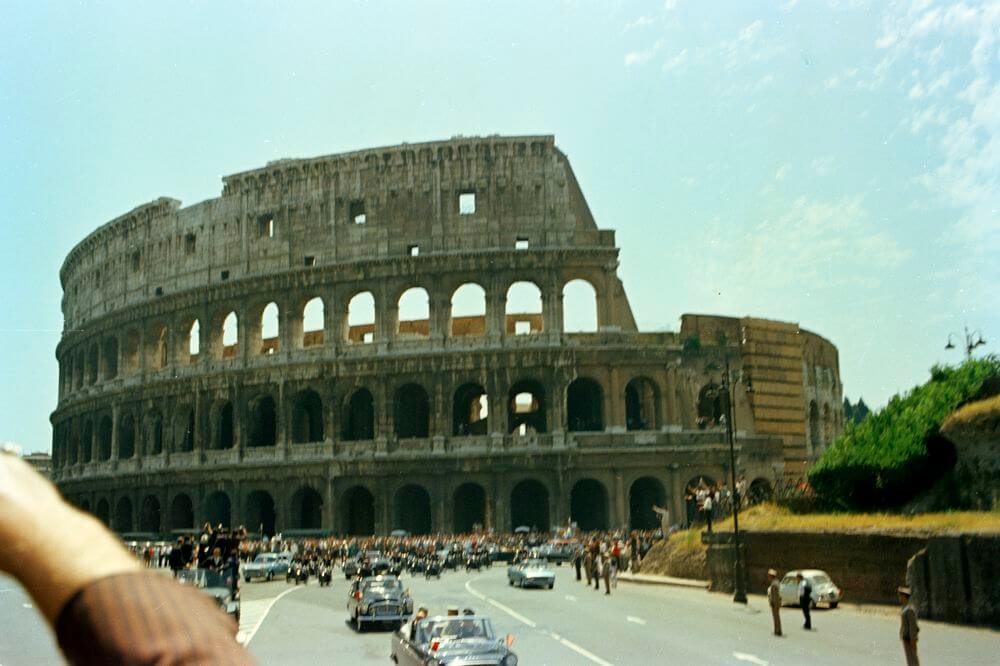
    JFK motorcade passing the Colosseum

    That evening, Kennedy was the special guest at a banquet held in the Quirinale Palace and arranged by the Italian president, Antonio Segni. One of the dignitaries Kennedy was due to confer with was Pietro Nenni, head of Italy’s Socialist Party (PSI). Nenni’s greatest hope was that JFK would lend his support to the “opening to the left” (l’apertura a sinistra): a plan frowned upon by the Eisenhower administration, which would create a left-of-center coalition between the Socialists and Italy’s ruling party, the Christian Democrats. Nenni was not disappointed. Deeply moved by their intense conversation, he left the meeting with tears of joy in his eyes. Shortly afterward, Kennedy would give his official approval to l’apertura and ask labor leader Victor Reuther and his brother Walter, president of the United Auto Workers, to help generate financial aid to the Socialists.

    President Kennedy at the Quirinale Palace

    Upon his return from Europe, the president remarked to his special assistant Arthur Schlesinger (the man who had initially convinced Kennedy to support l’apertura): “So far as I could see, everyone in Italy is for an opening to the left.” For any scholar familiar with the history of Operation Gladio, such a remark could mean only one of two things. Either Kennedy was playing his cards very close to his vest with a man who had already earned his trust and confidence, or he was completely uninformed on the subject of Italy’s postwar clandestine “stay-behind” guerrilla army: a virulently anticommunist, antisocialist, and one might even say antidemocratic organization, code-named Gladio.

    As the Swiss historian Dr. Daniele Ganser explains in his book about NATO’s secret armies,

    When John F Kennedy became president in January 1961 the policy of the United States toward Italy changed because Kennedy, unlike his predecessors Truman and Eisenhower, sympathized with the PSI [Italian Socialist Party]. He agreed with a CIA analysis that in Italy “the strength of the socialists, even without aid from outside, means that left-wing sentiment looked forward to a democratic form of socialism.” Yet Kennedy’s plans for reform met with stiff resistance from both the U.S. State Department and the CIA.1

    JFK at City Hall in Rome

    Indeed, there were shadowy forces back in Washington that remained hell-bent on thwarting the president’s goals and whose actual alliance was to a power elite that transcended the agenda of any mere president. At this historical moment, the covert “powers that be” were, in part, represented by some rather sinister overt figures who also liked to linger in those shadows, as “spooks” are wont to do.

    One was James Angleton, the CIA’s chief of Counterintelligence, who played a singular role in rescuing and recruiting some of the more bestial Fascists who were later to serve in Operation Gladio, such as Prince Junio Valerio Borghese (aka “The Black Prince”), commander of an anti-partisan campaign that murdered hundreds of Italian communists who had fought against Mussolini. Prince Borghese, “in close collaboration with the CIA in Rome on the night of December 7, 1970 started the second right-wing Gladio coup d’état in Italy, code-named Tora Tora”2 (now known as the Borghese coup). As historian Stuart Christie notes, “Angleton became the key American figure controlling all right wing and neofascist political and paramilitary groups in Italy in the postwar period.”3

    Another notable spook was Richard Helms, the CIA’s Deputy Director for Plans, who, along with Allen Dulles, helped to establish MKULTRA, a barbaric mind-control program that even the CIA’s current website admits broke the Nuremberg Code that “prohibits experimentation with humans without their consent.”

    And then there was Bill Harvey. Although Harvey wasn’t part of the upper echelon, he was a hard-boiled operator who was placed in charge of running some important missions. One was Task Force W, part of Operation Mongoose, the CIA’s covert war against Cuba. Another was ZR/RIFLE, the Agency’s assassination program designed to eliminate foreign leaders. Harvey had particularly incurred the wrath of the president’s brother, Attorney General Robert Kennedy, because of his insubordination during the Cuban Missile Crisis. In the midst of delicate negotiations between JFK and Soviet Premier Khrushchev that narrowly avoided World War III, Harvey had the temerity to secretly launch three boat missions against Cuba. As a result, an utterly furious RFK demanded he be sacked. Instead, Richard Helms quietly shipped Harvey off to Europe as a means of protecting him. Harvey was appointed as the CIA’s Rome station chief, where he would work closely with certain right-wing members of the Italian secret service.

    We should also highlight the figure of Allen Dulles, who, although officially “retired” in 1961 at JFK’s insistence, continued to exert significant influence behind the scenes.4 Dulles’s Operation Paperclip and Gehlen Operation had rescued Nazis from prosecution at the Nuremberg trials (either by changing their names or altering their résumés) so they could later be used as scientists and engineers in American research projects and also as intelligence officers against the USSR for West Germany. Paperclip paved the way for similar compromises with unrepentant Fascists, Nazis, and right-wing terrorists who were recruited to serve in the secret Gladio network throughout Europe, all with NATO’s consent.

    Dulles directed the creation of Gladio from its inception. In the words of Dr. Ganser: “Dulles during his time as Director of CIA had been the brain behind the secret anti-Communist armies. When the Gladio secret armies were discovered across Western Europe in 1990, an unnamed former NATO intelligence official explained that ‘though the Stay Behind operation was officially started only in 1952, the whole exercise had been in existence for a long time, in fact ever since it was born in the head of Allen Dulles.’”5

    Approaching NATO headquarters in Naples

    In a story that was first reported by David Talbot in The Devil’s Chessboard, as soon as Kennedy returned to Washington, Dino Pionzio,6 the “CIA’s leading operator in Italy,” approached Aldo Moro’s administrative secretary (and future prime minister) Sereno Freato. Dino wanted to pick his brain about Moro’s recent conversation with Kennedy during the Rome visit. (Moro, a prominent member of the Christian Democrats, would serve his first term as prime minister beginning on December 4th of that year.) This was when Pionzio—and the powers that be—learned that JFK and Moro had agreed to advance the goals of l’apertura or the “opening to the left.” Talbot adds: “Dulles and the CIA felt they had a proprietary relationship with the Christian Democrats, ever since those early Cold War days when the agency began funneling money to the Italian party.”

    As Daniele Ganser likes to point out, rigging the 1948 Italian election was the first operation ever conducted by the recently formed CIA. Some of it was done out of the office of the Dulles brothers law firm, Sullivan and Cromwell. (James Angleton would also play an important role in helping to steal that ’48 election.) An electoral success by the Christian Democrats would allow for a non-Communist Italy to join NATO the following year. Once that was accomplished, the direction of the Italian government would fall under the secret control of NATO’s clandestine operational arm, Gladio. During the Cold War, Britain and the United States were both deeply alarmed over the prospect of a coalition government in Italy that included the Socialists and the Communists. According to Italian magistrate Felice Casson, to undermine such collaboration a “strategy of tension”—the disruption of ordinary civilian life by prefabricated social violence and chaos—would be put into place by forces within the State.

    Pionzio’s meeting with Freato put the Christian Democrats on notice: their budding alliance with the Socialists did not enjoy full support in Washington, particularly in national security circles […] The CIA’s attempt to subvert the aperture was one more flagrant example of how the agency sought to undermine the Kennedy presidency, as well as Italian democracy.7

    JFK attending ceremony at NATO headquaters, Naples

    Nonetheless, that November—in a move that would later help to seal his fate—Aldo Moro went ahead and created a coalition government that included the Socialists. The following summer, when JFK-hater Bill Harvey arrived in Rome to assume his position as CIA station chief, he didn’t waste any time. In a page taken right out of the Gladio script, Harvey tried to convince Renzo Rocca, an espionage chief working with Italian intelligence (or SIFAR) “to use his ‘action squads’ to carry out bombings of Christian Democratic Party offices and newspapers—terrorist acts that were to be blamed on the left.”8 This was a foreshadowing of what would occur in the years ahead, during Italy’s infamous Anni di piombo, or “Years of Lead”: a period extending from the late Sixties to the late Eighties. Even Harvey’s deputy in Rome, Felton Wyatt, who served as a principal CIA liaison with Operation Gladio, later professed to be shocked by Harvey’s extremism.

    Perhaps it’s no coincidence that the escalating violence of the “Years of Lead” coincided with the appointment of General Lyman Lemnitzer as Supreme Allied Commander Europe of NATO (SACEUR). In his position as SACEUR from 1963 to 1969, Lemnitzer would have the final word over the activities of Gladio.

    Lemnitzer served as Chairman of the Joint Chiefs of Staff from 1960 to 1962, but was relieved of his position by JFK shortly after Lemnitzer approved of Operation Northwoods. This plan proposed the staging of false-flag operations, including terrorist bombings in Florida and in the nation’s capital, that would have wounded Cuban refugees (and, one assumes, other innocent bystanders). Northwoods also proposed the blowing up of an American ship harbored in Guantanamo Bay—and then blaming all the terror on pro-Castro Miami Cubans. As if to illustrate that such false-flag mayhem was nothing new, the Northwoods memo even makes reference to the sinking of the USS Maine in Cuba, another probable act of state-directed violence that conveniently served as a trigger for the Spanish-American war.

    On March 13, 1962, Lemnitzer submitted his Northwoods plan to Secretary of Defense Robert McNamara. Fortunately, Northwoods was never carried out, and it remains uncertain whether JFK ever saw the original memo. However, three days later, at a Cuba strategy meeting held in the Oval Office, Lemnitzer “informed Kennedy that the Joint Chiefs ‘had plans for creating plausible pretexts to use force [against Cuba], with the pretexts either attacks on U.S. aircraft or a Cuban action in Latin America for which we would retaliate.’” According to Air Force officer Edward Lansdale, the president replied “bluntly that we were not discussing the use of U.S. military force.”9 Lemnitzer’s relationship with Kennedy was antagonistic and his persistence in trying to convince JFK to take military action against Cuba finally forced the president’s hand. A few months later, Kennedy denied Lemnitzer a second term and informed the general that he would instead be serving at the helm of NATO.

    Kennedy’s motorcade, featuring a fully enclosed security phalanx, driving through Naples

    In his 2018 memoir, American Values, Robert Kennedy Jr. calls Lemnitzer a “warmongering general” and “a Cold War fanatic,” adding:

    That Operation Northwoods memo should serve as a warning to the American people about the dangers of allowing the military to set goals or standards for our country.10

    The Northwoods memo is unique only insofar as it remains the single official document released by the government that spells out a plan for terror directed against American citizens on domestic soil. No doubt, there were other equally insane military contingency plans floating around which have either remained classified or been destroyed.11 But Northwoods clearly illustrates how this sort of amoral “strategic” thinking was typical of the power elite. In the years ahead, the same strategy of false-flag pandemonium was actually carried out in Europe, especially in places such as Italy, France, Germany, Belgium, Turkey, and Greece, all of which suffered some of the worst State-sponsored terror that was unleashed by NATO’s secret army.

    Gladio was coordinated by NATO and run by various European secret services under the supervision of the CIA and Britain’s MI6. All this is the subject of Daniele Ganser’s groundbreaking and encyclopedic tome, NATO’s Secret Armies: Operation GLADIO and Terrorism in Western Europe (which I have relied upon for most of the Gladio-related information in this essay). Building on earlier works such as Philip Willan’s seminal Puppetmasters (an examination of Gladio in Italy) and British reporter Peter Murtagh’s The Rape of Greece, Ganser has constructed the first in-depth examination of the Gladio network as it unfolded throughout all of Western Europe.

    In various interviews with Dr. Ganser, the listener may notice a frequent use of the term “data” and the question of whether certain statements are adequately supported by such objective facts. A quick look at his background is illuminating in this regard: Ganser was Senior Researcher at the Center for Security Studies at the prestigious Federal Institute of Technology (ETH), in Zurich. He studied at Basel University in Switzerland, at Amsterdam University in the Netherlands, and at the London School of Economics and Political Science. (Perhaps not surprisingly, Ganser’s history professors at this most prestigious British institution had never heard of Gladio: an omission that Ganser compares to a specialist on late-twentieth-century history having never been schooled about the Vietnam War!) Thus, as a serious historian who gradually grew fascinated with the subject of secret warfare and the eventual exposure of the Gladio network, Ganser’s first question concerned the nature of the extant factual data and how it might support this seemingly outlandish tale. As a result, his narrative proceeds from one fact to the next, with a minimum of speculation or theoretical detour. For those familiar with some of the more ungrounded and meandering sallies into this territory, such an approach is surely welcomed.

    Dr. Daniele Ganser

    II. The Secret Armies

    Perhaps there exists no better summary of Operation Gladio than the opening paragraph of Ganser’s meticulously researched, scholarly account:

    As the Cold War ended, following judicial investigations into mysterious acts of terrorism in Italy, Italian Prime Minister Giulio Andreotti was forced to confirm in August 1990 that a secret army existed in Italy and other countries across Western Europe that were part of the North Atlantic Treaty Organization (NATO). Coordinated by the unorthodox Warfare section of NATO, the secret army had been set up by the U.S. secret service, Central Intelligence Agency (CIA), and the British secret intelligence service (MI6) or (SIS) after the end of the Second World War to fight communism in Western Europe. The clandestine network which, after the revelations of the Italian Prime Minister, was researched by judges, parliamentarians, academics, and investigative journalists across Europe, is now understood to have been code-named “Gladio” (the sword) in Italy, while in other countries that Network operated under different names […] In each country the military secret service operated the anti-Communist party within the state in close collaboration with the CIA or the MI6, unknown to parliaments and populations. In each country, leading members of the executive, including prime ministers, presidents, interior ministers, and defense ministers were involved in the conspiracy, while the “Allied Clandestine Committee” (ACC), sometimes also euphemistically called the “Allied Co-ordination Committee” and the “Clandestine Planning Committee” (CPC), less conspicuously at times also called “Coordination and Planning Committee” of NATO’s Supreme Headquarters Allied Powers Europe (SHAPE), coordinated the networks on the international level. The last confirmed meeting of ACC with representatives of European secret services took place on October 24, 1990 in Brussels.12

    As mentioned earlier, the Italian gladio weapon was made with a double-edged blade. Likewise, from the inception of this covert operation, the secret armies served a dual purpose. One was to remain behind enemy lines in the event of a Soviet invasion and to operate as a guerilla resistance network. Gladio soldiers were supplied with arms caches composed of explosives, sophisticated radio communication equipment, and light weapons that were secretly stockpiled, hidden in caves, or buried at various sites across Europe.

    But the other function of the “stay-behind” was to sabotage political parties, elected representatives, or left-wing supporters that NATO and its CIA bedfellows deemed inappropriate. And the methods used were utterly Machiavellian. As briefly discussed above, various acts of State-fabricated terror were set into motion that led to the deaths of hundreds of civilians, and these crimes were subsequently blamed on the left. Sometimes, this involved the creation of fictional “left-wing” groups that were, in fact, nonexistent and the planting of falsified evidence that included anonymous phone calls or letters (often penned in the stereotypical style of B-movies).

    As we find throughout history, legitimate leftists who had nothing to do with violence were seized by the police and forced into the role of the patsy. For example, in the 1969 Piazza Fontana bombing, Giuseppe Pinelli, a mild-mannered pacifist, anarchist, and autodidact—Pinelli had been too poor to pursue studies in school—was escorted to police headquarters in Milan. He was on friendly terms with the local authorities and was allowed to drive his scooter to the police station. Detained and subjected to a prolonged examination, Pinelli never survived his interrogation. Shortly before midnight on December 12th , he went flying through a fourth-floor window, plummeting to his death. At first, police claimed that Pinelli had committed suicide. Then, a 1975 inquiry ludicrously concluded that he’d “fainted” out the window. Pinelli was eventually cleared of any involvement in the Piazza Fontana bombing. His murder inspired Nobel Prize laureate Dario Fo to write a play, Accidental Death of an Anarchist, that immortalized this man of such humble origins who had been employed as a railroad worker.

    Giuseppe Pinelli

    At other times—as in the case of Italy’s Red Brigades—extant left-wing groups were steered to violence once the leadership of these groups was usurped. After the former leaders were pushed aside—either disgraced, imprisoned, or killed—the new leaders (in reality, agents provocateurs) directed State-sponsored murder disguised as a “radical left” action. In this context, one might speak of turning an entire organization into a patsy. In other cases, when government intel agencies were tipped off to impending terrorist actions fomented by either the right or left, a passive “stand back and do nothing” approach was taken—if such acts simultaneously served a “higher” goal of the Deep State (the “state within the state,” from the Turkish derin devlet), such as incriminating the left and strengthening the call for increased security measures at the sacrifice of civil liberties and freedom.

    Thus, the “double-edged sword” shifts from a literal to a figurative meaning: “Something that can have both favorable and unfavorable consequences; something that has both good and bad parts or results.”

    It’s also important to note that secret armies were established in certain European countries even before the existence of NATO (1949) and its Gladio network. In 1944, Winston Churchill ordered the establishment of one such covert army in Greece, known by the acronym LOK. In France, a secret army was created immediately after the end of the war. Once again, fear of the electoral strength of the Communist Party and the left was the issue; as always, the “solution” was the installation of a right-wing dictatorship.

    On July 30, 1947, the existence of the French secret army was suddenly revealed to a startled populace: “French Socialist Minister of the Interior Edouard Depreux lifted the veil and declared to a baffled population that a secret right-wing army had been erected in France behind the back of the politicians, with the task to destabilize the French government. ‘Toward the end of 1946 we got to know of the existence of a black resistance network, made up of resistance fighters of the extreme right, Vichy collaborators, and monarchists,’ Depreux explained. ‘They had a secret attack plan called Plan Bleu, which should have come into action toward the end of July, or on August 6, [1947].’”13 Although the army was shuttered following public outcry, another was created shortly afterward to replace it.

    Although Ganser doesn’t venture into the subject of the FBI’s Counterintelligence Program (COINTELPRO, which heavily infiltrated the American Communist Party) or the CIA’s domestically-based Operation CHAOS,14 similar acts of infiltration and incitement to violence were also occurring on U.S. soil during this same period. To cite just two examples, members of the Weather Underground in Cincinnati were taught the art of bomb making by an ex-Green Beret and Vietnam veteran named Larry Grathwohl: an agent provocateur and FBI informant who also supplied them with guns.15 And the Fair Play for Cuba Committee (FPCC) was infiltrated by an intel asset named Lee Harvey Oswald, whose sudden thrust into the limelight on November 22, 1963 served the dual purpose of providing a patsy for the JFK assassination and destroying the FPCC. As Republican Senator Richard Schweiker, a member of the U.S. Senate Select Committee on Intelligence, remarked in 1975: “We do know Oswald had intelligence connections. Everywhere you look with him, there are fingerprints of intelligence.” (No better one-line description of what Oswald was up to has ever emerged.) It was only recently revealed that Richard Gibson, co-founder of the FPCC, offered his assistance to the CIA in July 1962 and officially worked for the Agency as a spy (code name: QRPHONE-1) from 1965 to 1977.16 Perhaps an even better example of CIA/FBI domestic infiltration and destruction can be found in the history of the Black Panther movement, which featured the CIA’s drug-induced manipulation of Huey Newton,17 and the Bureau’s role in manipulating police to assassinate Panther leaders Mark Clark and Fred Hampton.18 Informants who assisted in these Black Panther murders were effectively paid a “bounty” in the form of bonuses personally approved by FBI Director J. Edgar Hoover.19 And, as antiwar activist Noah Chomsky recalls: “Government agencies financed, helped organize, and supplied arms to right-wing terrorist groups that carried out fire bombings, burglaries, and shootings … In most cases [it was] the FBI, although one right-wing terrorist in Chicago claims that his group was financed and directed in part by the CIA.”20 Thus, the link between such actions in the U.S. and Europe is revealed not only in the modus operandi, but in the presence of high-ranking personnel who supervised such operations, both here and abroad.

    J. Edgar Hoover, director of the FBI from to 1935-72

    So, who were these modern-day “gladiators”? As Ganser is quick to note, not every European nation fell subject to such abyssmal acts; and many soldiers who served in the Gladio network considered themselves to be patriots whose sole job was to defend their country against the Soviet Union. For example, in the Cold War period that Ganser covers in his book (1945–1990), Norway, Switzerland, and Austria were never victimized by false-flag attacks. And many Scandinavians who enlisted in the stay-behinds later objected to even being called a “Gladio” soldier. But when we study the events that occurred during this same period in Italy, France, Germany, Belgium, Turkey, and Greece, a wholly different picture emerges. That is, many Gladio operatives were hardened right-wing fanatics who thought nothing of participating in terror, torture, and the taking of innocent lives in the service of a “higher” cause—one they often spoke of with a religious fervor. Not surprisingly, the ranks of the Gladio armies were brimming with recalcitrant Nazis and Fascists. As one neofascist confessed after his arrest: “The personnel was recruited in circles where anti-communism was at its strongest; that is to say on the far right.”21 To make matters worse, some of the directors and leading figures of national intelligence agencies were also recycled from these same Nazi and Fascist networks.

    One of the most infamous was General Reinhard Gehlen, whom Hitler appointed as chief of Foreign Armies East in 1942, and whose secret service career with the Nazis was focused on fighting the Soviet Union. According to author Christopher Simpson, “Gehlen derived much of his information from his role in one of the most terrible atrocities of the war: the torture, interrogation, and murder by starvation of some four million Soviet prisoners of war.”22 Gehlen was rewarded for such niceties by being scooped out of Germany by the Americans and shipped with his top staff to Fort Hunt, Virginia. After a cordial meeting with Allen Dulles, it was decided that Gehlen would be given a new assignment. Once the general and his crew were shipped safely back to Germany, he became the director of the “Gehlen Organization”: West Germany’s top intelligence agency, which also integrated other brutal, incorrigible Nazis into its structure. According to Ganser:

    When the Gladio scandal erupted in 1990, an unnamed former NATO intelligence officer explained that the covert action branch of the CIA under Frank Wisner, in order to set up the German secret army, had “incorporated lock, stock, and barrel the espionage outfit run by Hitler’s spy chief Reinhard Gehlen. This is well known, because Gehlen was the spiritual father of Stay Behind in Germany and his role was known to the West German leader, Konrad Adenauer, from the outset.” According to the unnamed NATO officer, U.S. President Truman and German Chancellor Adenauer had “signed a secret protocol with the U.S. on West Germany’s entry into NATO in May 1955, in which it was agreed that the West German authorities would refrain from active legal pursuit of known right-wing extremists. What is not so well known is that other top German politicians were privy to the existence of secret resistance plans.”23

    Thus, the State-controlled terrorists were given carte blanche to operate without fear of reprisal.

    Reinhard Gehlen

    Ganser devotes the first three chapters of his chronicle to establishing the basic facts behind the Gladio network; its eventual exposure; and the subsequent refusal of NATO, CIA, and MI6 to even acknowledge its existence. The next dozen chapters go into greater detail about all twelve European nations that hosted the Gladio networks, with a chapter on each national history. Condensing this complex, baroque narrative must have been a daunting task, but the author pulls it off brilliantly. In the course of this essay, we will touch upon just a few highlights, but this barely does justice to the rich contents of NATO’s Secret Armies.

    As Ganser explains, the invitation to join NATO was itself a double-edged sword. Western European nations were pressured to participate in the alliance and reap its benefits. Yet, to do so, they were forced to sign secret protocols that essentially stripped them of their sovereignty. NATO would have the final word regarding whether an elected official or his party could continue to serve or whether, instead, he should be besmirched, overthrown, or killed. The protocols remained a secret to many of the leaders of these countries. Communist, socialist, or left-leaning parliamentarians could not be trusted—so went the logic—to keep this arrangement secret. Neither could many of the prime ministers or presidents. Besides fearing a backlash from the public, NATO feared the Soviets might be informed. Thus, only “trustworthy” leaders were privy to such information. And, in certain cases, the signatories of these agreements were right-wing directors of intel agencies rather than the democratically elected leaders of said countries.

    President Kennedy may have also fallen into this category of so-called untrustworthy men who would remain uniformed about the details of Operation Gladio.24 After all, the president was viewed by many on the extreme right as a “communist appeaser.” Kennedy would establish backchannels of communication with Soviet Premier Nikita Khrushchev during and after the Cuban Missile Crisis, and he was also on the verge of attempting a rapprochement with Cuba’s leader, Fidel Castro.25 We should also note that, as early as 1967, New Orleans District Attorney Jim Garrison was well aware of the foreign policy connection to the JFK assassination. In his On the Trail of the Assassins, Garrison states his belief that Clay Shaw’s motivation to participate in the conspiracy “stemmed from Shaw’s history as a CIA operative and his desire, shared by the hard-core cold warriors in the intelligence community, to stop Kennedy’s attempt to turn around U.S. foreign policy.”26

    As it turns out, it was not just Kennedy’s foreign policy in Vietnam and Cuba they wanted to reverse, but his policy in key strategic areas around the globe, including Indonesia and the Congo. Congo possessed copper, gold, diamonds, cobalt, and the world’s largest and most densely concentrated deposit of uranium oxide. (The high-grade uranium used in the atom bomb dropped on Hiroshima was derived from a Congolese mine in Katanga.) Indonesia was one of the very few nations that surpassed Congo in resource wealth. It was brimming with silver, copper, gold, and vast reserves of oil. It still hosts one of the world’s largest—if not the largest—copper and gold mine. This immense wealth at least partly explain why the CIA supervised several assassination plots of the Congo’s nationalist leader, Patrice Lumumba. They succeeded just three days before Kennedy’s inauguration—and the Agency managed to keep it a secret from JFK for the next twenty-four days. It also explains why, after failing to overthrow Sukarno in Indonesia in 1958, the Agency directed a successful coup in 1965 that cost at least a half million innocent lives. And which Allen Dulles may have been secretly involved with, even though JFK had retired him in late 1961. (See the upcoming book by Greg Poulgrain, JFK vs Allen Dulles: Battleground Indonesia)

    As early as 1959, while Chairman of the African Subcommittee of the Senate Foreign Relations Committee, Kennedy clearly carved out his position: “Call it nationalism, call it anti-colonialism, call it what you will, Africa is going through a revolution … The word is out—and spreading like wildfire in a thousand languages and dialects—that it is no longer necessary to remain forever poor or forever in bondage.” Years after Kennedy was killed, Fidel Castro told Robert F. Kennedy, Jr: “If your uncle had lived, the relationship between our countries would have been very different. He was a great president, an unusual man with love for children and a powerful understanding of the military and large corporations that run your country. We were on a road to peace.”27 This is exactly what the military-industrial complex did not want.

    Kennedy’s willingness to negotiate with nationalist leaders of nonaligned Third World nations and his increasingly anti-colonialist foreign policy which would have cost powerful multinational corporations billions of dollars—especially in places such as Africa and Indonesia—28 would have placed him in a far more dangerous position than, say, Charles de Gaulle or Aldo Moro, both of whom were also victims of assassination attempts. Moro was kidnapped and killed; Charles de Gaulle survived numerous close-calls with death; both leaders were targeted in these attacks by members of the Gladio network. In the latter case, this was admitted by the French chief of the secret services (DGSE), Admiral Pierre Lacoste, in 1990. But, unlike Kennedy, de Gaulle had a countermeasure in place that wasn’t available to JFK. That is, he possessed his own extensive network of loyal military and secret service personnel that were willing to engage in “unorthodox” operations to avenge their president and war hero. This included former members of the Service d’Action Civique, a veritable Gaullist praetorian guard, and loyalists in the Service de Documentation Extérieure et de Contre-Espionnage (SDECE). After the failed Generals’ Putsch of April 21–26, 1961, de Gaulle’s SDECE operatives were said to have placed bombs in Algerian cafes frequented by the same Gladio/OAS (Organisation Armée Secrète) members who had tried to eliminate de Gaulle—and blew them to smithereens. “The old general was willing to fight with equal ferocity.”29 Indeed, “like few others, Charles de Gaulle had been at the center of secret warfare in France for most of his lifetime.” And during the attempted coup, President de Gaulle called directly upon les français—the ordinary French citizens—to help rally against such seditious threats:

    And all over France, millions of people did rush to the aid of their nation. The following day, a general strike was organized to protest the putsch…. Over ten million people joined the nationwide demonstrations, with hundreds of thousands marching in the streets of Paris, carrying banners proclaiming “Peace in Algeria’ and shouting, “Fascism will not pass!” Even police officer associations expressed “complete solidarity” with the protests.30

    Although President Kennedy lent his full support to de Gaulle, Allen Dulles and the CIA—who had a hand in the coup attempt—were not pleased. Besides sending his press secretary, Pierre Salinger, to the Élysée Palace, Kennedy phoned the French ambassador, Hervé Alphand, to convey his assurances that he was opposed. But also to warn him about what they were both up against: “The CIA is such a vast and poorly controlled machine that the most unlikely maneuvers might be true.” The president had learned his lessons about CIA duplicity during the Bay of Pigs Invasion, which had occurred just days before, on April 17, 1961. Someone was clearly trying to overload the president’s work schedule.

    President De Gaulle greeted by a grateful populace in 1961, after the failed Generals’ Putsch

    Once de Gaulle was informed about the secret Gladio network, in 1966 he decided to remove France from the military portion of NATO and kick NATO headquarters out of France. (Until then, it was located in Paris.) His memo signaling this withdrawal takes on a deeper dimension in light of what we now know about the secret NATO protocols that, in essence, nullified a nation’s freedom: “France is determined to regain on her whole territory the full exercise of her sovereignty.”

    De Gaulle denounced the protocols as an infringement of national sovereignty. Similar secret clauses were also revealed in other NATO states [… historian] Giuseppe de Lutiss revealed that when becoming a NATO member, Italy in 1949 had signed not only the Atlantic Pact but also secret protocols that provided for the creation of an unofficial organization “charged with guaranteeing Italy’s internal alignment with the Western Bloc by any means, even if the electorate was to show a different inclination.”31

    After its expulsion by de Gaulle, NATO set up shop in Brussels. In the years ahead, Belgium became the sorry host of horrific domestic terrorism, thanks to this same Gladio network.

    III. Gladio Exposed

    The unraveling public exposure of Gladio traces back to a terrorist attack in the small village of Peteano, in 1972. The Carabinieri (Italy’s national gendarmerie) received an anonymous tip about an abandoned car. When they arrived on the scene and opened the trunk, three policemen were killed by an explosion. Shortly afterward, the Red Brigades were said to have claimed responsibility for the terror. In addition, an official investigator reported that the explosive material used in the attack could definitively be attributed to the Red Brigades network.

    Peteano car bomb, 1972

    Eighteen years later, in the summer of 1990, a courageous, resolute Italian magistrate named Felice Casson was busy at work, combing through data on right-wing terrorism that was stored in the archives of the military secret service. Casson’s research led him to conclude that there were unquestionable links between terrorist operations and the State. He said that a “strategy of tension” had been intentionally developed in order to eviscerate left-leaning political parties, both in Italy and elsewhere. The purpose of this strategy, he continued, was to:

    Create tension within the country to promote conservative, reactionary social and political tendencies. While this strategy was being implemented, it was necessary to protect those behind it, because evidence implicating them was being discovered. Witnesses withheld information to cover right-wing extremists.

    Judge Casson (who now serves on the Italian Senate) discovered that an operator named Vincenzo Vinciguerra, a member of a paramilitary terrorist organization called Ordine Nuovo, was behind the crime. (Gladio researcher Philip Willan characterizes Vinciguerra as a “virulent fascist of psychopathic ruthlessness.”)32 Arrested and placed on trial in 1984, Vinciguerra bluntly stated that he was protected and enabled by the government’s own intelligence and security organizations, which shared his extremist anti-Communist views:

    With the massacre of Peteano and with all those that have followed, the knowledge should by now be clear that there existed a real live structure, occult and hidden, with a capacity of giving a strategic direction to the outrages. [This structure] lies within the state itself. There exists in Italy a secret force parallel to the armed forces, composed of civilians and military men, in an anti-Soviet capacity, that is, to organize a resistance on Italian soil against a Russian army.

    [This] super-organization, lacking a Soviet military invasion which might not happen, took up the task, on NATO’s behalf, of preventing a slip to the left in the political balance of the country. This they did, with the assistance of the official secret services and the political and military forces.

    According to Vinciguerra, all the bombings that followed the Peteano massacre stemmed from the same “single, organized matrix.”33 Most chilling of all, Vinciguerra fleshed out the strategy of tension in a manner that only a hardened killer could who had participated in its every step:

    You had to attack civilians, the people, women, children, innocent people, unknown people far removed from any political game. The reason was quite simple. They were supposed to force these people, the Italian public, to turn to the State to ask for greater security. This is the political logic that lies behind all the massacres and the bombings which remain unpunished, because the State cannot convict itself or declare itself responsible for what happened.34

    For students of the theater, this pithy statement could be viewed as the climactic dialogue of a key protagonist that serves to encapsulate the principal theme of the drama and, more importantly, suddenly illuminates what lies at its core. As we shall see, Vincenzo Vinciguerra’s revelations did not exist in a vacuum.

    On December 7, 1970, Gladio’s right-wing extremists launched a coup that was code-named Tora Tora. According to Philip Willan’s Puppetmasters, the coup was named after the Japanese attack on Pearl Harbor that had also occurred on 7 December, in 1941. Although it was called off at the last moment, one paramilitary group had already entered the Interior Ministry and distributed 180 machine guns to their Gladio comrades. As a result of all this, Italian politicians and parliamentarians on the left were sent a clear message regarding how easily they could be humbled, pushed aside, or done away with. Part of the coup plan “called for the arrest of left-wing political and trade union leaders as well as leading journalists and political activists who were to be shipped away and locked up in the Gladio prison in Sardinia.”35

    Puppetmasters, by Philip Willan

    Giovanni Tamburino, an investigative magistrate of the Italian city Padua, critically investigated the Tora Tora operation and, to his massive surprise … discovered the involvement of a mysterious secret army, later discovered to be Gladio. Thereafter, he arrested Vito Miceli, the acting director of the SID [Servizio Informazioni Difesa, Italy’s foreign intelligence service] who before had directed NATO’s Security Office in Brussels. Tamburino charged Miceli with “promoting, setting up, and organizing, together with others, a secret association of military and civilians aimed at provoking an armed insurrection to bring about an illegal change in the constitution of the state and the form of government.” His data suggested that a mysterious armed organization existed within the state, and as its real code-name Gladio had not yet been discovered, the structure during questioning was referred to as “Super-SID.”

    Placed on trial on November 17, 1974, “an angry Miceli shouted: ‘A super SID on my orders? Of course not! But I have not organized it myself to make a coup d’état. This was the United States and NATO who asked me to do it!’” In 1977, Miceli confessed: “There has always been a certain top secret organization, known to the top authorities of the state and operating in the domain of the secret services, involved in activities that have nothing to do with intelligence gathering.”36

    In 1990, after Prime Minister Giulio Andreotti was forced to admit the reality of Gladio, parliamentarians launched an investigation. In 1995, they produced a 370-page report, which tepidly stated that the “CIA [had] enjoyed maximum discretion” in Italy during this period. Five years later, a second parliamentary investigation concluded that the U.S had supported the “strategy of tension” (i.e., terror) in order to “stop the PCI [Italian Communist Party] and to a certain degree also the PSI [Italian Socialist Party] from reaching executive power in the country.” The Senate report also concluded:

    Those massacres, those bombs, those military actions had been organized or promoted or supported by men inside Italian state institutions and, as has been discovered more recently, by men linked to the structures of United States intelligence.37

    Note the term: “structures” of U.S. intelligence. This leaves the door open to include not only the CIA but other intel agencies such as the Pentagon’s Defense Intelligence Agency (DIA).

    Further highlighting the significance of Vinciguerra’s admission, Ganser adds: “In marked contrast to other right-wing terrorists that had collaborated with the Italian military secret service and walked free, Vinciguerra after his revelations was sentenced for life and imprisoned.”38

    Additional confirmation surfaced in the testimony of General Giandelio Maletti, former head of Italian counterintelligence. During a March 2001 trial of right-wing terrorists accused of the Piazza Fontana massacre (a bombing that killed sixteen and wounded eighty), the general made a telling remark: “The impression was that the Americans would do anything to stop Italy from sliding to the left.” And he added: “The CIA, following the directives of its government, wanted to create an Italian nationalism capable of halting what it saw as a slide to the left; and, for this purpose, it may have made use of right-wing terrorism … Don’t forget that Nixon was in charge and Nixon was a strange man … a man of rather unorthodox initiatives.” Later on, at the ripe age of seventy-nine, Maletti revealed another quintessential element in the Gladio equation: “‘Italy has been dealt with as a sort of protectorate’ of the United States. ‘I am ashamed to think that we are still subject to special supervision.’”39

    Piazza Fontana bombing

    Maletti’s reference to Nixon is significant. When we examine the strange death of Aldo Moro, the shadow of Nixon’s henchman, Secretary of State Henry Kissinger, will be seen flickering across the final act of the Moro tragedy. Also of significance is the general’s use of the term “unorthodox”: that adjectival euphemism most often employed in intel circles to describe inhumane or terrorist methods generated from within their own agencies.

    Unfortunately, besides Italy, the only countries to initiate parliamentary investigations were Belgium and Switzerland. In this sense, Vinciguerra had the final word when he proclaimed: “The State cannot condemn itself.”

    Following Judge Casson’s exposure of the Italian Gladio, journalists approached French President François Mitterrand to ask about a possible French connection. But Mitterrand, who was often referred to as “l’Dieu” (God), quickly attempted to sidestep the matter and sweep it under a rug. “When I arrived [Mitterrand was first elected in 1981], I didn’t have much left to dissolve. There only remained a few remnants, of which I learned the existence with some surprise, because everyone had forgotten about them.” Although the French president was also known as the “Old Fox,” Prime Minister Andreotti’s own foxiness was clearly on par with that of his French counterpart. Refusing to allow Mitterrand to assume a smug, paternalistic high road, Andreotti slyly pointed out that the French Gladio representatives were also seated at the last Allied Clandestine Committee meeting held in Brussels, which had occurred as recently as October 24, 1990. At this point, Mitterrand assumed his most well-known persona: that of an old French fox with sealed lips.

    In Belgium, the falling dominoes of Gladio revelations made a spectacular, clattering crash on November 7, 1990 when Socialist Defense Minister Guy Coeme announced, during a special televised broadcast, that NATO’s secret army had been active in Belgium since the Cold War. Coeme’s climactic statement was: “I want to know whether there exists a link between the activities of this secret network and the wave of crime and terror which our country suffered from during the past years.”40 One of the more notable terrorist acts that the defense minister was referring to was the dreadful Brabant Massacres, a grisly series of attacks in which innocent men, women, and children were gunned down in places such as shopping markets by masked, hooded men with shotguns. The Brabant Massacres resulted in twenty-eight deaths, with another twenty-two injured. Journalist Phil Davison remarked: “If the object was to sow terror, the killers chose the perfect targets: women, children, and the elderly, cut down by rapid gunfire while wheeling their trolleys through a local supermarket.”41

    A 2017 memorial ceremony in Aalst, Belgium, for victims killed and injured by the Brabant assassins. The mayor of Aalst, criticizing the Justice Department, said: “You have failed for years in correctly dealing with the victims, and the investigation has been extremely unprofessional. There are so many questions that remain. Who is lying? Who is telling the truth?”

    A parliamentary investigation subsequently discovered that the secret army had been structured into two separate branches of the Belgian secret services. One (SDRA8) was located within the military secret service; the other (STC/Mob) was contained within the civil secret service. (Many of the Gladio stay-behinds were disguised in this way: like a graduated series of Chinese boxes.)

    To properly investigate possible connections to terrorism, parliamentarians demanded to see a list of the Gladio soldiers, or even a list with their names excised and replaced by birth dates, in order to compare them to known terrorist suspects. To maintain confidentiality, the Senate commission agreed that the list would be shown only to three judges, who were investigating the case.

    But their efforts to arrive at the truth were blocked, and the investigation went nowhere. Despite pressure and protest from the Senate, M. Raes, director of the state security service, and Lieutenant Colonel La Grande, chief of the military secret service, effectively prevented any deeper, more meaningful probe. They also refused to hand over the lists. Thus, Defense Minister Coeme’s crucial question about terrorist links to Gladio was left hanging in midair.

    The parliamentarians were equally outraged with the CIA and MI6 over their refusal to hand over their own identical list of Belgium’s “gladiators.” (Washington and London possessed a master copy of every single Gladio soldier operating in Europe, along with a complete set of fingerprints.) Apparently, avenging the deaths of innocent civilians and meting out justice to their murderers was not high on the American Empire’s to-do list. Furthermore, the parliamentarians would even be ridiculed by their own security chief, who had the audacity to post a victory message in the Belgian newspaper Le Soir: “‘Give us the names!’ ‘Never!’ reply the ‘Gladiators.’ The hour of truth has come. This is Brussels calling. Dear friends in Operation Stay Behind. Section SDRA8 [the military secret service] assures you of its very high esteem and thanks you for your devotion to your country. They guarantee that the pressures and threats will be empty and that undertakings will be honored. Adolphe is looking well!”

    Once the Senate concluded that the encoded message originated from Lieutenant Colonel La Grande, both La Grande and Raes were forced to resign.
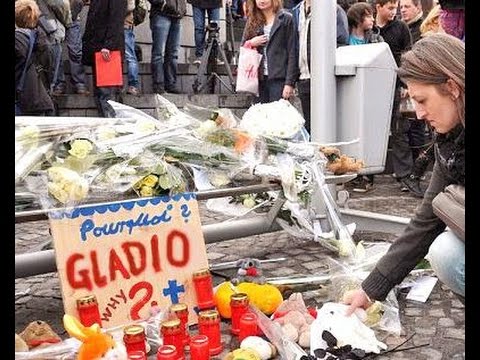
    Brabant Massacre memorial incribed with phrase: “Why, Gladio?”

    It was later confirmed that a neo-Nazi group called Westland New Post (WNP) was connected with the stay-behind Gladio army. A WNP member named Michele Libert confessed that the head of WNP regularly met with U.S. Embassy officials. WNP chief Paul Latinus eventually informed journalist Rene Haquin that American military secret services had instructed him to construct WNP.

    When the Gladio scandal spread to Germany, a socialist parliamentarian named Hermann Scherer called for an investigation of what he termed a reprehensible Ku Klux Klan-like group. But Scherer withdrew his request upon learning that members of his own Socialist Party had participated in hushing up Gladio’s existence. All this occurred amidst growing outcries in the press over the shameful history of Reinhard Gehlen and his Nazi-staffed “Gehlen Organization.”

    But the exposure of Gladio in Germany could actually be traced back to September 9, 1952, when a gentleman named Hans Otto strolled into police headquarters in Frankfurt. According to government records, Otto, a former SS officer, claimed “to belong to a political resistance group, the task of which was to carry out sabotage activities and blow up bridges in case of a Soviet invasion.” Otto’s dramatically climactic line was: “Although, officially, neofascist tendencies were not required, most members of the organization featured them.” Otto added: “The financial means to run the organization had been provided by an American citizen with the name Sterling Garwood.” In addition, he claimed that his group had assembled blacklists of communists and socialists who were to be gathered up and executed in case of a national emergency.

    Otto revealed that the name of this secret army was Technischer Dienst des Bundes Deutscher Jugend (TD BDJ). August Zinn, Prime Minister of the Hessen region, called for a judicial investigation. TD BDJ members were arrested … and then, as early as 30 September, allowed to walk free when a higher court in Karlsruhe stepped in and, behind Zinn’s back, mysteriously ordered the release of these Nazi secret soldiers. A baffled and exasperated Zinn concluded: “The only legal explanation for these releases is that the people in Karlsruhe declared that they had acted upon American direction.”
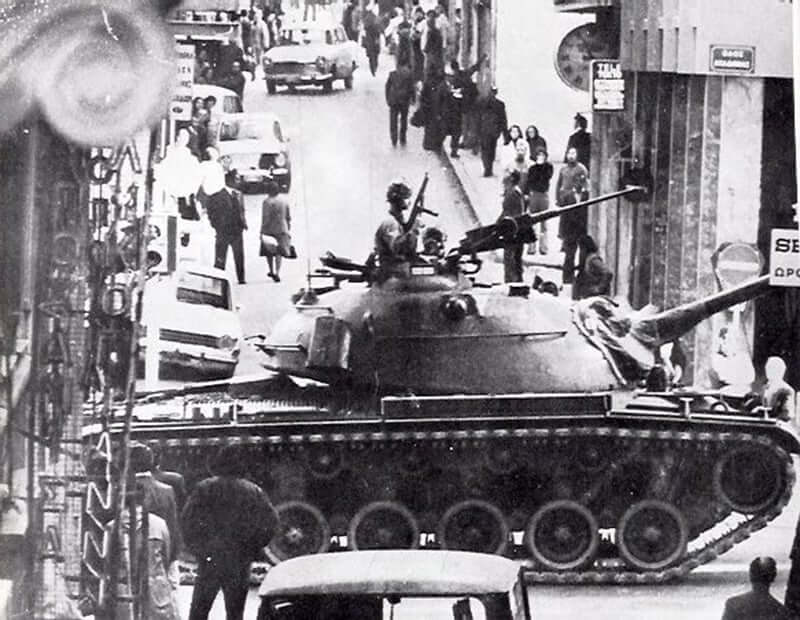
    Greece 1967 coup

    Another problem with parliamentary investigations was that in some of the countries that hosted Gladio all forms of democracy had already been eclipsed. Spain and Portugal were in the throes of long-term dictatorships. Turkey underwent three coup d’états; and its Gladio network was so deeply integrated into the traditional structures of government that the State was, in effect, synonymous with Gladio itself. Neighboring Greece underwent a Gladio-controlled coup in 1967 that ushered in the infamous Regime of the Colonels, a dictatorship that lasted until 1974.

    The Hellenic cradle of democracy had also hosted an early military use of napalm, when the United States sprayed the countryside with this incendiary liquid in order to decimate the same communist partisans who had fought in unison with the Allies in attempting to defeat the Nazis. Via “Operation Torch,” the U.S.,

    used chemical warfare to defeat the Greek partisans by dropping thousands of gallons of napalm on Greece. In late 1948, the Greek resistance, which on their native soil had defeated both the German Nazis and the British troops, collapsed. The end of the Civil War meant total victory for the Greek Right and its patron, the United States.43

    Thus, all across postwar Europe, the United States was not only obsessed with avoiding a “slip to the left”; it was actively promulgating a push to the right, even if this resulted in dictatorship.

    General Talat Turhan, torture victim

    In Turkey, the 1990 revelations lent a new voice to former Turkish General Talat Turhan, who had been brutally tortured by the Turkish Gladio (code-named Counter-Guerrilla). “When it was discovered in 1990 that Italy had an underground organization called Gladio, organized by NATO and controlled and financed by the CIA, which was linked to acts of terrorism within the country, Turkish and foreign journalists approached me and published my explanation as they knew that I have been researching the field for years.”44 General Turhan called for an independent European Union investigation into Gladio in order to bypass the immovable roadblocks that would inevitably be raised by the Turkish military should the government even attempt to initiate its own probe. However, a subsequent Counter-Guerilla scandal that occurred in 1996 led to a seven-month investigation after thousands took to the streets in protests. It concluded with the Turkish prime minister admitting, in a television broadcast watched by millions, that an “execution squad was formed within the state,” and that “all parts of the state were aware of what was going on.” Derin devlet, indeed.45

    *   *   *

    Ganser titles the third chapter of his book “The Silence of NATO, CIA, and MI6.” Like the backpedaling of President Mitterrand, NATO’s response suggests that its leadership was also caught off guard:

    After almost a month of silence, on Monday November 5, 1990, NATO categorically denied Andreotti’s allegation concerning NATO’s involvement in Operation Gladio and the secret armies. Senior NATO spokesman Jean Marcotta said at SHAPE headquarters in Mons, Belgium that “NATO has never contemplated guerilla war or clandestine operations; it has always concerned itself with military affairs and the defense of Allied frontiers.” Then, on Tuesday November 6, a NATO spokesman explained that NATO’s denial of the previous day had been false. The spokesman left journalists only with a short communiqué which said that NATO never commented on matters of military secrecy and that Marcotta should not have said anything at all. The international press protested against the ill-advised public relations policy of the military alliance when it related with bitterness: “As shock followed shock across the Continent, a NATO spokesman issued a denial: nothing was known of Gladio or stay-behind. Then a seven-word communiqué announced that the denial was “incorrect” and nothing more.”46

    Alas, doublespeak had reached new heights.

    MI6 also refused comment, but a Conservative Party member named Rupert Allison told the Associated Press: “‘We were heavily involved and still are … in these networks.’ The British ‘certainly helped finance and run, with the Americans,’ several networks and, through the MI6 together with the CIA, were directly involved.”47

    Gladio’s exposure in 1990 occurred during America’s Gulf War. Although the secret army was widely reported by the European press, it was given scant attention by the U.S. media. Both President Bush and the CIA refused to comment. But several middle-ranking retired CIA officers were more forthcoming. One was Thomas Polgar, a thirty-year Agency veteran who “explained with an implicit reference to CPC [NATO’s Clandestine Planning Committee] and ACC [NATO’s Allied Clandestine Committee] that the stay-behind programs were coordinated by ‘a sort of unconventional warfare-planning group linked to NATO.’ In their secret headquarters the chiefs of the national security armies ‘would meet every couple of months in different capitals.’”48

    And twelve years earlier, one “Company Man” made the following statements in his memoir:

    He said that a covert branch of the CIA, the Office of Policy Coordination (OPC), “had undertaken a major program of building, throughout those Western European countries that seemed likely targets for Soviet attack, what in the parlance of the intelligence trade were known as ‘stay-behind nets,’ clandestine infrastructures of leaders and equipment trained and ready to be called into action as sabotage and espionage forces when the time came.” His assignment was to “plan and build such stay-behind nets in Scandinavia.” The author also referred to the hidden arm caches: “These nets had to be coordinated with NATO’s plans, the radios had to be hooked to a future exile location, and the specialized equipment had to be secured from CIA and secretly cached in snowy hideouts for later use.”49 Although he never mentions the word “Gladio,” he clearly describes some of its key elements.

    The book’s publication aroused ire in Scandinavian circles, but somehow these shocking revelations seemingly passed unnoticed by the other European nations aligned with NATO. William Colby’s memoir (with its unwittingly amusing title) Honorable Men: My Life in the CIA, was penned in an attempt to enhance the battered image of the CIA during the late Seventies. Thus, the former Director of Central Intelligence was careful to never admit that, besides preventing a Soviet advance, the armies had also served a more diabolical function.

    As a case in point: terrorism experts employed by the Pentagon’s Defense Intelligence Agency (DIA) had produced a classified training manual known as Field Manual 30–31 (along with two equally barbaric appendices, 31A and 31B). The 140-page booklet, which was translated into several languages, offers “advice for activities in the fields of sabotage, bombing, killing, torture, terror, and fake elections.” It also instructs the secret soldiers to “carry out acts of violence in times of peace and then blame them on the Communist enemy in order to create a situation of fear and alertness.” (The strategy of tension.) “Alternatively, the secret soldiers are instructed to infiltrate the left-wing movements and urge them to use violence.” All this reads like a virtual Bible and explicit blueprint for what occurred during the Years of Lead. And it makes the Northwoods document pale in comparison, or even read like a “limited hangout” admission, since Northwoods was never enacted whereas the Field Manual was actively used in training offered by the American government to Gladio operators. As Ganser notes, FM 30–31 “stressed explicitly as its main point that the involvement of the Pentagon had to remain secret under all circumstances.” According to the manual, “Only those persons who are acting against the revolutionary uprising shall know of the involvement of the U.S. Army in the internal affairs of an allied country.”

    Military officers running the Turkish Gladio net received their training at the U.S. government’s notorious School of the Americas. And one of the principal manuals used for their instruction was FM 30–31. In 1973, in the midst of a rash of inexplicable terrorist attacks that rocked Turkey, a Turkish newspaper announced the publication of the manual. Shortly thereafter, the journalist who had obtained it was “disappeared.” After FM 30–31 was translated and published in Turkey, it soon surfaced in Spain and Italy. With the 1990 exposure of NATO’s secret armies, interest in the manual was reawakened, and researchers explored its connection to Gladio.50

    Since the Gladio scandal involved all twelve member states that then composed the European Union, it was perhaps inevitable that Gladio was finally discussed by the European Parliament. A debate was held on November 22, 1990 (oddly enough, on the anniversary of the JFK assassination).

    The Greek parliamentarian Vassillis Ephremidis was particularly outspoken during his E.U. address: “It was set up by the CIA and NATO, which while purporting to defend democracy were actually undermining it and using it for their own nefarious purposes.” Calling for further investigation and referring to the Gladio-imposed Greek dictatorship (the bloody Reign of the Colonels), he added: “The Democracy we are supposed to have been enjoying has been, and still is, nothing but a front.” The truth at last. Next, one of the French parliamentarians, Monsieur De Donnea, took a diametrical viewpoint, preferring to address the need to maintain the secrecy of those employed in the clandestine groups. “We must therefore pay tribute to all those who, while the Cold War lasted, worked in these networks.” But De Donnea also paid lip service to the need to investigate possible connections to terrorism. Dutch parliamentarian Vandemeulebroucke next took an opposing view: “We are entitled to attribute to it all the destabilization, all the provocation, and the terrorism that have occurred in our countries over these four decades.” After stating, “This affair leaves a bad taste in the mouth,” he made it clear that it was the very secrecy of the networks that most troubled him. He added: “I should like to protest most strongly against the fact that the American military, whether through SHAPE, NATO, or the CIA, think they can interfere in what is our democratic right.”

    Following this debate, the E.U Parliament passed a resolution that included a seven-point introduction featuring some very frank, unambiguous language.

    Whereas for over forty years this organization [Gladio] has escaped our Democratic controls and has been run by the secret services of the states concerned in collaboration with NATO … whereas such clandestine networks may have interfered illegally in the internal political affairs of Member States or may still do so … whereas in certain Member States military secret services (or uncontrolled branches thereof) were involved in serious cases of terrorism and crime … whereas these organizations operated and continue to operate completely outside the law … whereas the various “Gladio” organizations have at their disposal independent arsenals … thereby jeopardizing the democratic structures of the countries … and greatly concerned at the existence of decision-making and operational bodies which are not subject to any form of democratic control … the resolution of the E.U. parliament condemns the clandestine creation of manipulative and operational networks and calls for full investigation.

    The resolution that followed this preamble attempted to address each of the points raised in the introduction, including dismantling the networks and instituting judicial parliamentary investigations. But sadly enough, as Dr. Ganser concludes: “The dog barked loudly, but it did not bite. Of the eight actions requested by the EU parliament not one was carried out satisfactorily. Only Belgium, Italy, and Switzerland investigated their secret armies with a parliamentary commission, producing a lengthy and detailed public report.” Although the resolution was also sent to NATO and the U.S., neither President Bush or NATO Secretary General Manfred Wörner publically replied or supported an investigation.51

    *   *   *

    In 1992, filmmaker Allan Francovich produced an important BBC documentary about Gladio. In the film, he presents a copy of Field Manual 30–31 to Ray Cline, former head of the Directorate of Intelligence for the CIA. (Cline held this position from 1962 until 1966.) In his filmed response, Cline replies unequivocally: “This is an authentic document.” But when Francovich filmed a similar interaction with William Colby, who had served as CIA director from 1973 to 1976, the former director evasively claimed: “I have never heard of it.” (But then, why would he state otherwise? Colby was, after all, an “honorable man.”) Gladio kingpin Licio Gelli—a character we shall soon explore—was far more forthcoming: “The CIA gave it to me.”52

    One result of the Gladio exposé was to resurrect interest in one of its prime players. Daniele Ganser views Licio Gelli as a parallel figure to Reinhard Gehlen. Like Gehlen, despite his dishonorable past, Gelli was accorded royal treatment by the United States. No stranger to fascists, Gelli fought for Franco in the Spanish Civil War. He served alongside the SS in World War II. One of Gelli’s more marketable skills involved the liberal use of torture. A political chameleon, near the end of the war Gelli played both sides and nimbly switched allegiances when the time seemed right.

    For such an undereducated man, his rise to power seems incredible. (Philip Willan says that Gelli “was only semi-educated, having been expelled from school at the age of thirteen for striking the headmaster.”53) In 1969, Henry Kissinger and U.S. General Haig (who ran NATO as SACEUR from 1974–1979) authorized Gelli to “recruit four-hundred high ranking Italian and NATO officers into his lodge.”54 This was a secret Masonic group called Propaganda Due (P2), of which Gelli would eventually become—at the very least—titular head. (The widow of prominent bank chairman Roberto Calvi claimed that P2’s real director was Giulio Andreotti.55 This might explain why Licio liked to confess that his childhood dream had been to become a puppet master.) Gelli was invited to the inaugurations of American presidents Ford and Carter; during Reagan’s administration the former SS associate even scored a front-row seat.

    Near the end of his life, Licio Gelli proclaimed: “I am a fascist and will die a fascist.”

    The significance of Gelli’s Propaganda Due Lodge (P2) is paramount to an understanding of the Gladio operation in Italy—and beyond. Gladio and P2 were U.S. funded; both were, in Ganser’s words, “parallel governments.” The membership list of Propaganda Due consisted of a virtual “Who’s Who” of powerbrokers and leading military and government officials. In no uncertain terms, P2 was the Italian power elite. The Lodge was also linked to leading right-wing figures in Latin America. (P2 was active in Uruguay, Brazil and Argentina.)

    In 1981, during an investigation of Mob-connected Michele Sindona and the collapse of his bank, police broke into Gelli’s house shortly after Gelli had fled the scene and discovered a list of 962 Propaganda Due members. Although probably not complete, the list included figures such as the future prime minister Silvio Berlusconi and the heads of all three Italian intelligence services. Another prominent member was Stefano delle Chiaie, an Italian neofascist connected to Operation Condor, a U.S.-backed program of State terror and assassination in Latin America. Gladio’s tentacles were, in fact, transatlantic, and they exercised a firm grip on events in various Latin American countries. (Delle Chiaie would also play an important role in the kidnap and murder of Aldo Moro.) As Philip Willan explains:

    The membership list discovered in 1981 showed that 195 high-ranking officers from all branches of the military belonged to the lodge. There were officers from the Carabinieri paramilitary police, six from the police, and thirty-seven from the finance police; nine belonged to the Air Force, twenty-nine to the Navy, and fifty to the Army […] “As can be seen at a glance, the membership lists reveal a map of the highest levels of military power, with individuals who have often played a central role in particularly significant moments of the recent history of our country, as well as in events of a subversive nature,” the P2 Commission commented.56

    No wonder that Gelli—tipped off by someone within the State apparatus about the imminent visit of the Carabinieri at dawn—had decided to join his neofascist pals in Latin America. (He was rumored to have found safe harbor in General Augusto Pinochet’s Chile.) Narrowly missing arrest, he lacked even the time to scoop up his secret papers. Gelli would later be charged with obstructing justice in the investigations of the Piazza Fontana bombing: one of several bombs that exploded in various locations in Rome in a single day, December 12, 1969. (Piazza Fontana was also the first of a series of dreadful acts that ushered in Italy’s Years of Lead. In 1969, there were 398 terrorist attacks in Italy, a figure that steadily increased each year, culminating at 2,513 attacks in 1979.)

    At an airport in Rome in 1982, additional documents were found in a suitcase in the possession of Gelli’s daughter. Titled “Memorandum on the Italian Situation” and “Plan of Democratic Rebirth,” they characterized the trade unions and the Italian Communist Party as enemies of the State. (Italy’s largest union had lent its support to the Socialist and Communist Parties.) Equally troubling, they called for a disruption of the planned “Historic Compromise” that Aldo Moro was then working on: the integration of Italy’s Communist Party (PCI) into a coalition with the Christian Democrats (DCI), thus sharing the executive branch of government. As former Culture Minister Dario Franceschini explained: “He convinced the two winners of an election, neither of which had a majority, to support a government,” (Note that the PCI had distanced itself from Moscow and was functioning more along the lines of Eurocommunism or what we would today regard as a socialist democratic party.) Moro’s Historic Compromise was taking things a step further than merely inviting the Socialist Party in out of the cold, as Pietro Nenni and Moro had been planning during JFK’s visit in the summer of 1963. Instead, it was promoting something that was at the heart of NATO’s greatest fear.

    Striking workers at FIAT, 1969

    Gelli’s documents called for the installation of a right-wing authoritarian (but so-called democratic) government. There remains little doubt that the P2 roster represented the hand-picked leadership of this new regime. In 1981, the P2 Commission run by Tina Anselmi concluded that Propaganda Due was a criminal organization: “It tried to influence and condition political life in our country, above all by acting through the secret services, which it controlled for many years.” Anselmi added: “These people did not intend to talk about Masonic brotherhood or business. Besides, businessmen were underrepresented in the lodge.”57 Not surprisingly, Gelli and his Propaganda Due Lodge had been expelled by the Masonic Grand Orient of Italy, in 1976.

    *   *   *

    Almost eleven years after President Kennedy’s death, this time it was Aldo Moro who would board a plane and fly cross the Atlantic. Like Kennedy, he would not live long upon his return to the homeland. Accompanied by Italian President Giovanni Leone, Moro was traveling to Washington:

    to discuss the inclusion of the Italian left in the government. But their hopes were shattered. … In a heavy confrontation with Henry Kissinger … the Italian representatives were told that under no circumstances must the Italian left be included in the Italian government. Italy had to remain firmly and strongly within NATO. The visit weighed heavily on Aldo Moro, who had already lived through both the Piano Solo Gladio coup and the Tora Tora Gladio coup and hence had no illusions concerning the influence of the United States on Italy’s First Republic.

    Upon his return to Italy, Moro was sick for days and contemplated his complete withdrawal from politics. “It’s one of the few occasions when my husband told me exactly what had been said to him without telling me the name of the person concerned,” Moro’s wife Eleonora later testified. “I will try and repeat it now: “You must abandon your policy of bringing all the political forces in your country into direct collaboration. Either you give this up or you will pay dearly for it.”
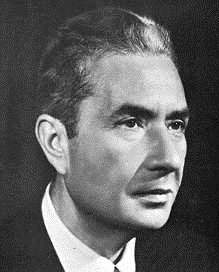
    Aldo Moro

    Nonetheless, on March 16, 1978, the courageous politician gathered together the documents related to the Historic Compromise between the Christian Democrats (DCI) and the Communist Party (PCI). He then traveled, with his bodyguards, to the Italian parliament in Rome, “where he was determined to present the plan to include the Italian Communists in the executive.” After Moro’s ominous meeting with Kissinger in Washington, he had requested a bulletproof car, but his request was denied. As Moro and his five bodyguards cruised through a residential suburb of Rome, the car was ambushed.

    Six assailants opened fire, killing all five of Moro’s bodyguards in what appeared to be a highly professional operation. Only one of Moro’s guards managed to return a couple of rounds.

    Moro was captured unharmed and held hostage for fifty-five days in a drama that took the strategy of tension to new heights. His body was later found riddled with bullets and stuffed into the trunk of a car abandoned in central Rome, on Via Caetani. This despite the fact that the streets were swarming with secret service. The precise location was a symbolic one: “parked halfway between the headquarters of the DCI [Christian Democrat Party] and the headquarters of the PCI [Italian Communist Party].”58 Although the kidnapping and execution were blamed on the Red Brigades, “the professional skill of the principal gunman did not correspond to that of any known Red Brigades member.”59

    Renato Curcio and Alberto Franceschini, the original leaders of the Red Brigades, were already in jail; and the titular, ersatz leader, Mario Moretti, was secretly linked to the Italian State. In addition, the building where Moro was supposedly held captive was located on the Via Gradoli, a neighborhood under the complete control of the Mafia (those cozy bedfellows of Gladio and the Italian State). And the Via Gradoli had already been under police surveillance before the kidnapping on March 16th.

    Scene of the Moro kidnapping

    Two days after Moro’s abduction, the police finally paid a visit to 96 Via Gradoli, knocking on the door of apartment 11, a Red Brigades base controlled by Mario Moretti. When there was no response, the neighbors assured them that the gentleman in residence was “respectable,” so they left and never returned. At least, this was the official story. In fact, one neighbor in the building had informed the police that she heard Morse code transmissions at night. The police later claimed to have never received this information even though the woman had requested that her written statement be delivered to “a senior officer of her acquaintance.”

    In early April, the police also received a tip that included the word Gradoli. Instead of searching Via Gradoli, they took a trip to an Italian town of that same name. Even Moro’s wife “suggested that the tip could refer to the name of a Rome street but was told by Interior Minister Cossiga that no such street was listed in the Yellow Pages map of the city. The street exists and was listed.”60

    There may also have been a symbolic aspect (witting or unwitting) to the location of Aldo Moro’s corpse on the Via Caetani. Mino Pecorelli, an Italian journalist with numerous high-level sources and connections, published a magazine that specialized in producing encoded messages that would have tried the patience of a Sherlock Holmes. On May 23, 1978, it featured a particularly puzzling tale.

    Mino published what appears to be an eyewitness account of the scene in Via Caetani, where the body of Aldo Moro was dumped in the boot of a car, parked next to the high wall which runs down one side of the street. A “blond woman” is present among the bystanders at the scene and comments that behind the wall lie “the remains of the Theater of Balbus, Rome’s third amphitheatre.” She continues: “I read in a book that in those days runaway slaves and prisoners were taken there so that they could fight one another to the death. Who knows what there was in the destiny of Moro that his death should be discovered next to that wall? The blood of yesterday and the blood of today.” Pecorelli is talking about “gladiators” in the context of Moro’s death, but until mid-1990 very few people could have understood what he meant.

    Among other things, Philip Willan concludes that Pecorelli, who was renowned for his vast net of secret service contacts, “appears to be hinting that the gladiators were in some way implicated in Moro’s murder.”61

    Corpse of Aldo Moro discovered on Via Caetani

    Pecorelli was assassinated one year after Aldo Moro. In an article featured in the May 9, 2003 Guardian newspaper, Willan reports: “A Perugia appeals court convicted Giulio Andreotti of ordering his murder. The court ruled that the killing was carried out at the behest of the seven-time prime minister to prevent Mr. Pecorelli from making damaging revelations about the Moro case in his magazine, Osservatore Politico. Mr. Pecorelli’s writings attained an added significance last November, when a Perugia appeals court convicted Giulio Andreotti of ordering his murder.”

    Giulio Andreotti—that perennial éminence grise who served as prime minister on and off from 1972 to 1992—was no stranger to the most privileged and elite corridors of byzantine Italian politics, and for the most part he sailed unfettered through such convoluted and dangerous labyrinths. Serving his second term (1976–1979) during the time of the Moro kidnapping, he didn’t hesitate. Andreotti immediately blamed the Red Brigades and “cracked down on the left: 72,000 roadblocks were erected, and 37,000 houses were searched. More than six million people were questioned in less than two months.”62

    But convincing evidence suggests that Moro’s kidnapping was carried out by a Deep State apparatus with ties to Lucio Gelli and Propaganda Due. And that furthermore, leading conservative forces in the Christian Democrats Party stood back and did nothing even though Moro could easily have been rescued. And clearly, the assassination had served its purpose, in that Moro’s Historic Compromise died with its author.

    The Moro assassination has been subject to nearly the same level of microanalysis as the JFK coup (in Europe, it’s referred to as the “JFK assassination of Italy”). And the results of this analysis point to the same sort of inexplicable, contradictory facts. Including the complex involvement of figures known to continually weave their way in and out of intelligence services, positions of political power, mafia circles, and the military: the handmaidens of what is traditionally referred to as the power elite. But one danger of microanalysis is that it may miss or forget the bigger picture. The macrocosm focus of each of these murders rests upon the issue of foreign policy.

    IV: JFK, Gladio, and Permindex

    James DiEugenio describes Clay Shaw as a “well-dressed, dignified, upstanding representative of upper-crust New Orleans”63 who, among other things, was the director of the International Trade Mart. One of the reasons District Attorney Jim Garrison remained so intrigued by the elusive figure of Shaw is that, while he prosecuted Shaw for participating in a conspiracy to kill President Kennedy, he came across information in the Italian press that tied Shaw not only to the CIA—a connection Garrison had already suspected—but to two highly suspicious organizations that he categorized as the “twin international intelligence combines, the Centro Mondiale Commerciale (World Trade Center) and Permindex.”64 Before elaborating on what has been learned about these entities since Garrison’s time, it might be helpful to summarize his own words as they appear in his 1988 account, On the Trail of the Assassins.

    Clay Shaw

    Garrison says that the news articles exposed “Shaw’s secret life as an Agency man in Rome trying to bring Fascism back to Italy.” This remark resonates with added implications given what we now know about Gladio on the one hand (whose fascist operators were specially trained in the use of patsies) and, on the other, Shaw’s numerous associations not only with members of the global economic elite but with a lowly “nobody” and future patsy named Lee Harvey Oswald. Recall that Garrison’s investigation discovered that Shaw had driven Oswald to Clinton, Louisiana in a black Cadillac during the summer of 1963, where they were seen by numerous members of this small town, who later positively identified them. Other credible witnesses to this hours-long visit identified a third man accompanying Shaw and Oswald: right-wing extremist David Ferrie, an intriguing presence in the events of November 22nd. (Ferrie also appears in a 1950s photograph with Oswald, who joined Ferrie’s Civil Air Patrol when Lee was only fifteen years old.)

    The Italian dailies Paese Sera and Corriere della Sera reported on the Permindex scandal in 1967, with Paese Sera publishing a six-part series in March. In the years ahead, both Permindex and Centro Mondiale Commerciale (CMC) would exhibit visible strands directly connecting them to Gladio operators.

    “Centro Mondiale Commerciale,” continues Garrison, “had initially been formed in Montreal but then moved to Rome in 1961. Among the members of its board of directors … was one Clay Shaw from New Orleans.” Another director was Ferenc Nagy, the “exiled former premier of Hungary and the former head of its leading anti-Communist political party. Nagy also was described by the Italian newspapers as the president of Permindex (ostensibly a foundation for a permanent exposition and an offshoot of the Centro Mondiale Commerciale). Nagy, the Italian newspaper said, had been a heavy contributor to fascist movements in Europe.” Another Permindex director was Giuseppe Zigiotti, president of the Fascist National Association for Militia Arms.

    Garrison also paraphrases from Paris Flammonde’s The Kennedy Conspiracy (1969): “The Centro was apparently representative of the paramilitary right in Europe, including Italian Fascists, the American CIA, and similar interests. [Flammonde] described it as ‘a shell of superficiality … composed of channels through which money flowed back and forth, with no one knowing the sources or the destination of these liquid assets.’” In 1962, both Permindex and CMC were expelled from Italy for “subversive intelligence activity.”

    Paese Sera reported that Centro Mondiale Commerciale (CMC) “was a creature of the CIA … set up as a cover for the transfer of CIA … funds in Italy for illegal political-espionage activities.” And here’s the punch line: Centro Mondiale Commerciale represented “the point of contact for a number of persons who, in certain aspects, have somewhat equivocal ties whose common denominator is anti-communism so strong that it would swallow up all those in the world who have fought for decent relations between East and West, including Kennedy.” In his inimitably laconic manner, Garrison drolly concludes:

    That just happened, as well, to be a trenchant one-line description of the parent organization, the Central Intelligence Agency. As for Permindex, which Clay Shaw also served as a director, the Italian press revealed that it had, among other things, secretly financed the opposition of the French Secret Army Organization (OAS) to President de Gaulle’s support for Independence for Algeria, including its reputed assassination attempts on de Gaulle.65

    These were prescient, far-reaching statements, especially for the time. I would posit that this last fact—the funding of OAS assassination attempts by an organization (Permindex) with a CIA man on its board (Shaw) who also served as a director—is the clearest indication that Permindex may have been working hand-in-hand with Gladio. The key question is whether Permindex was also funding various other Gladio operations, either in Italy or abroad.

    Jim Marrs, an indefatigable researcher and author of Crossfire: The Plot That Killed Kennedy (1989, 2013), notes that the 1962 edition of Who’s Who in the South and Southwest lists Shaw as a member of the Permindex Board of Directors. In the 1963–64 edition, however, the reference to Permindex is deleted. Marrs goes on to discuss how Permindex’s major stockholder Louis Bloomfield reportedly “established Permindex in 1958 as part of the creation of worldwide trade centers connected with CMC.” There is also evidence that Bloomfield may have worked with the British/Canadian Special Operations Executive William Stephenson.

    Permindex “began to draw attention in 1962, when French President Charles de Gaulle publically accused the company of channeling funds to the outlawed Secret Army Organization (OAS). De Gaulle identified several major and well-known international companies as investors in Permindex, which had made several attempts on de Gaulle’s life.”

    Another intriguing fact that brings us to the penumbra of Gladio: both CMC and Permindex were expelled from Italy in 1962 “for subversive activities connected to those in the much-publicized Propaganda-2 masonic lodge scandal … in which the lodge was accused of attempting to overthrow the Italian government and set up a fascist regime.” Marrs also cites the work of whistleblower Victor Marchetti, author of The CIA and the Cult of Intelligence (1974) and former assistant to the CIA’s deputy director. Marchetti revealed that Clay Shaw and David Ferrie were each employed by the Agency and that CIA Director Richard Helms “repeatedly voiced concern over the prosecution of Shaw and even instructed top aides to ‘do all we can to help Shaw.’”66

    Perhaps no other researcher knows more about how, why, and to what great extent the Agency stepped in to secretly defend Shaw—and to keep an eye on the bothersome Garrison—than James DiEugenio. As DiEugenio writes in the second edition of Destiny Betrayed (1992, 2012), a researcher named Peter Vea “discovered a very important document while at the National Archives in 1994,” a CIA memo that stated “Shaw had a covert security approval in the Project QKENCHANT” in 1967, “meaning that Shaw was an active covert operator for the CIA while Garrison was investigating him.”

    The author goes on to explain that financial backing for Permindex came from J. Henry Schroder Banking Corporation, a firm “that had been closely associated with Allen Dulles” via the latter’s law firm, Sullivan and Cromwell. Dulles eventually became the bank’s General Counsel. Its “founder, Baron Kurt von Schroeder, was associated with the Third Reich, especially Heinrich Himmler.” Apparently, the Swiss were none too happy to learn of all this; as a result, Permindex was forced to leave Switzerland and relocate to Rome.

    The board of directors of Permindex was packed with the crème de la crème of fascist scoundrels: “Bankers who had been tied up with fascist governments, people who worked the Jewish refugee racket during World War II, a former member of Mussolini’s cabinet, and the son-in-law of Hjalmar Schact, the economic wizard behind the Third Reich, who was a friend of Shaw’s. These people would all appeal to the conservative Shaw.” Nagy, one of Permindex’s founding members, was a friend of OAS leader and former governor general of Algeria, Jacques Soustelle. As we have seen, the OAS “later made several attempts on de Gaulle’s life, which the CIA was privy to.” According to French news reports, a few months before the Generals’ Putsch against de Gaulle in April 1961, Soustelle had met with the CIA’s Deputy Director for Plans, in Washington.

    DiEugenio also describes how, the day after Kennedy was shot, Shaw, under his alias Clay Bertrand, “called his lawyer friend Dean Andrews” and asked Andrews to defend Oswald.67 This is not at all surprising since a CIA agent named David Phillips “was managing the CIA’s anti-FPCC program [anti-Fair Play for Cuba Committee], of which Oswald was a part of.”68

    The subject of Permindex and the Centro Mondiale Commerciale (CMC) doesn’t make an appearance in either Puppetmasters or NATO’s Secret Armies. But it has been explored at length by Michele Metta, author of a recently published book, CMC: The Italian Undercover CIA and Mossad Station and the Assassination of JFK. Thanks to Metta’s work, we now have conclusive proof that Shaw served on the CMC board of directors; that fascist-supporter Ferenc Nagy (director of CMC and president of Permindex) was a CIA asset; and that numerous connections exist between CMC and Licio Gelli’s P2 Masonic Lodge.

    Michele Metta’s recently published book on CMC and Permindex

    Metta has also documented an attempt to defeat JFK’s presidential election. That is, a pact between U.S. and Italian Freemasons to “influence Italian immigrants in the USA to vote against Kennedy” (this in the words of Enzo Milone, Grand Master of the Freemasons). The plot was hatched by CIA agent Frank Gigliotti and organized by Giuseppe Pièche. The latter figure served on CMC’s board and was a former general under Mussolini.

    Apparently, Dr. Gigliotti was no middling, low-level functionary. Instead, “he was a CIA agent with great power.” Metta cites a September 30, 1952, letter written by Gigliotti to President Truman, in which “Gigliotti showed a decisive tone of command by asking Truman to fire [Walter] Bedell Smith, who was then director of the CIA … As a matter of fact, Bedell Smith was actually fired; and it was exactly thanks to this firing that, from February 1953, Allen Dulles reached the top of the CIA. The latter was a Freemason himself.”69

    In Puppetmasters, Philip Willan reveals that Gigliotti played an important role in the Masonic world of Lucio Gelli. Gelli’s Propaganda Due Lodge (P2) was part of the Grand Orient of Italy. After the Second World War, the “revival of freemasonry in Italy … was encouraged by both the British and the Americans” as a means of steering Italian masons toward appropriate political interests and objectives, i.e., anti-Communism. Indeed, there were American lodges established for each NATO base in Italy.

    Gelli was given the task of working for the unification of the various Italian masonic groupings and to improve relations with the Catholic Church … In 1971, he was made secretary of P2. This accelerated Masonic promotion was personally instigated by Grand Master Giordano Gamberini, who has been dubbed “the traveling-salesman of anti-communism.” On his retirement in 1970, Gamberini was given responsibility for contacts with foreign masonic lodges and with the CIA.

    Willan concludes that Gelli’s close association with this figure probably explains Gelli’s rapid ascent in the masonic world. Again, fear of the “Communist Peril” was at the heart of all these NATO/CIA/freemasonry relationships.

    Until its confiscation by Mussolini’s forces, the seat of the masonic order of the Grand Orient of Italy was the Palazzo Guistiniani, a palace in Sant’ Eustachio, Rome. After the war, pressure from American freemasonry led to its return to the Grand Orient. “A key role in the negotiations was played by one Frank Gigliotti, a former OSS and then CIA agent,” who attended the official signing-over ceremony with the American ambassador and the Italian Finance Minister, in 1960.70 The palace is now the official residence of the President of the Italian Senate.

    Palazzo Guistiniani

    From Metta we learn that the aforementioned Italian intel asset, Giuseppe Pièche, “with the complicity of the … Italian Interior Minister Mario Scelba, created and directed a Servizio Antincendi” (an agency for fire prevention). According to Metta, this seemingly innocuous institution served a hidden purpose: “In reality [it] obscured a Stay-Behind structure. He was helped in this venture by a soon-to-be member of P2, [Count] Edgardo Sogno.” “In the 1990s [Sogno] made several public declarations clearly qualifying this Antincendi as a NATO project linked to the Gladio network.”71

    The implications of all this are enormous, because here we find a clear, visible link between a CMC board member (Pièche) and the Gladio stay-behind. Pièche’s colleague Count Sogno was associated with supporters of the 1970 Borghese coup and was a conspirator in the planned seizure of the Quirinale Palace in 1974. Philip Willan informs us that the Count, like Licio Gelli, possessed “high-level U.S. and NATO contacts.”72

    Metta notes that Giuseppe Pièche protected neofascist groups and filed secret reports on Italian progressives through this “fire prevention” mechanism. (This is confirmed in declassified CIA documents cited by the author.) He adds that Italian intel documents “reveal a strong symbiosis between the Antincendi and the so-called Gehlen organization,”73 which, as we have seen, was another Gladio-related group.

    The other significant finding to emerge from Metta’s research is the evidence he provides linking Centro Mondiale Commerciale (CMC) to the CIA. A recently declassified memo from the CIA’s International Organizations Division (“the CIA branch occupied in psychological warfare both at home and abroad”) documents that Ferenc Nagy had asked the CIA to place an American businessman on Permindex’s board and a CIA agent on its staff. Nagy also asked the Agency to invest in Permindex so that it could subsequently participate in the firm’s management. Metta’s data also conclusively proves that Clay Shaw was serving on CMC’s board.74

    Metta reproduces a CIA memo on Jean-René Souètre, a member of the dissident OAS that tried to kill de Gaulle. Souètre was “in Fort Worth on the morning of November 22nd” (so was JFK) “and in Dallas in the afternoon.” (Ditto.) “The French believe that he was expelled to either Mexico or Canada.” (In fact, Souètre was apprehended within forty-eight hours of the JFK assassination.) The memo continues: “Subject is believed to be identical with a Captain who is a deserter from the French army and an activist in the OAS. The French are concerned because of de Gaulle’s planned visit to Mexico.”75 (One wonders: if the French were so worried about de Gaulle, why weren’t the Americans equally concerned about the fate of President Kennedy?) As James DiEugenio points out, Souètre had developed contacts with radical rightwing elements in Dallas and New Orleans, and also with anti-Castro Cubans.

    Jean-René Souètre

    CIA documents on Souètre were declassified in 1976 and have long held the interest of JFK researchers. To fully comprehend their significance, one must recall that, as a young senator, on July 2, 1957, JFK delivered a speech to the Senate chamber that had a radical impact on the entire situation in Algeria. As James DiEugenio points out, “It was Kennedy’s powerful Algeria speech that helped collapse the Fourth Republic and brought de Gaulle to power.” DiEugenio concludes:

    But the speech had even more impact than that. As Alistair Cooke noted, the way the speech was perceived by the [Eisenhower] White House, and the derogatory comments made by its occupants, had now vaulted Kennedy’s profile into high relief in Europe. He was the man pointing out their dogged and doomed attempts to hang onto fading empires. In America he had made himself the Democrat that Eisenhower had to “do something about.” … five months after making the watershed Algeria speech, on December 12, 1957, Time published its first cover story on Kennedy. It was titled, “Man Out Front.”

    And in the speech, Kennedy called for the French withdrawal from their Algerian colony, something that the OAS would have been livid about. Kennedy said that France’s “overseas territories are sooner or later, one by one, inevitably going to break free and look with suspicion on the Western nations who impeded their steps to independence.” Kennedy later added: “The time has come for the United States to face the harsh realities of the situation and to fulfill its responsibilities as leader of the free world … in shaping a course toward political independence for Algeria.”76

    As mentioned earlier, the renegade OAS officers were tied to Gladio, especially in its international functioning. And this “worldwide” aspect brings us to our final point:

    Metta discusses various characters who weave their way in and out of Aginter Press: a right-wing terrorist organization, located in Lisbon, with strong ties to the OAS. This would make sense since, as revealed by Philip Muehlenbeck in his book, Betting on the Africans, Kennedy had tried to talk the Portugese dictator Salazar into freeing the African colonies of Mozambique and Angola. When this did not work, Kennedy sent aid to the rebels there. (Muehlenbeck pp. 107–11) Aginter also received support from the CIA. Metta reproduces memoranda generated from a “special branch of the Italian Carabinieri” that reviews how the aforementioned Guido Giannettini (the right-wing journalist and intel agent who helped to develop the strategy of tension) “‘met [OAS officer Yves] Guerin-Serac in 1964 in Lisbon, and presented him to Captain Jean Souètre of the OAS.’” The documents add that “Souetre was given by [Guerin-]Serac the command of mercenaries recruited by Aginter.”77

    Metta believes that “Aginter Press was born of a marriage between the OAS and the so-called Gehlen Organization.”78 According to Daniele Ganser, although posing as a press agency, Aginter was actually a branch of Gladio. What’s special about Aginter is that it featured a virtual import-export group of assassins. Bear in mind the word international. Ganser devotes most of his ninth chapter, “The Secret War in Portugal,” to this Gladio/Aginter Press operation.

    When Gladio was exposed in 1990, the Portuguese newspaper O Jornal “informed a stunned audience in the country that ‘The secret network, erected at the bosom of NATO and financed by the CIA … had a branch in Portugal in the 1960s and the 1970s. It was called “Aginter Press” and was allegedly involved in assassination operations in Portugal as well as in the Portuguese colonies in Africa.’” (My emphasis.) And note the widening global thread in what follows. Ganser continues:

    Aginter Press was no press at all. The organization did not print books or anti-Communist propaganda leaflets but trained right-wing terrorists and specialized in dirty tricks and secret warfare in Portugal and beyond. The mysterious and brutal organization was supported by the CIA and run by European right-wing officers who, with the help of the PIDE [International and State Defense Police], recruited fascist militants. The investigation of the Italian Senate into Gladio and the secret war and massacres in Italy discovered that Italian right-wing extremists had also been trained by Aginter Press, while in Portugal it was revealed that a sub-branch of Aginter Press called “Organisation Armée contre Communisme Internationale” (OACI) had also operated in Italy. The Italian senators found that the CIA supported Aginter Press in Portugal and that the secret organization was led by Captain Yves Guerin, better known by his adopted name of Yves Guérin-Sérac.79

    Judge Salvini, who worked with the Italian Senate investigation, explored the ominous link between Yves Guérin-Sérac and Guido Giannettini:

    Giannettini was an Italian active in the OAS support network during the Algerian War. He was also a paid agent of the Italian intelligence agency SIFAR, and a linchpin between right-wing extremists and the Italian intel services. A principal figure in the State’s manipulation of terror and the intellectual development of the strategy of tension, in November 1961 Giannettini held a three-day seminar at the United States Central Naval Academy at Annapolis on “The Techniques and Prospects of a Coup d’Etat in Europe.” Philip Willan tells us that Giannettini’s manual, Techniques of Revolutionary War (1965), was also on the recommended reading list (along with Hitler’s Mein Kampf) at the Ordine Nuovo’s summer camp for aspiring fascists. (“Selective terrorism,” Giannettini writes, “is carried out by eliminating particular men carefully chosen for a series of motives,” one of which is “because their removal will provoke harsh reprisals which increase the tension, creating an irreversible process leading to civil war.”)80

    Yves Guérin-Sérac

    Former OAS Captain Yves Guillou, aka Yves Guérin-Sérac, ran Aginter Press. Guérin-Sérac was also implicated, along with Giannettini, in the Italian “State massacre” known as the Piazza Fontana bombing. Moreover, Guérin-Sérac was considered to be its mastermind. Ganser rightly characterizes him as “an unmatched strategist of terror.” He had skillful mentors. During the French Indochina War (1946–1954), Guérin-Sérac served as French liaison officer with the CIA. During the Korean War he was awarded a Bronze Star Medal from the United States. He was also a chief protagonist in the attempted OAS coup against de Gaulle.

    After the failed OAS rebellion, he boasted: “The others have laid down their weapons, but not I. After the OAS, I fled to Portugal to carry on the fight and expand it to its proper dimensions—which is to say, a planetary dimension.” (In other words: worldwide.) Next, Guérin-Sérac rounded up his fugitive OAS pals who, along with other extremists, set up shop at Aginter Press headquarters in Lisbon. Ganser adds: “The OAS diaspora strengthened militant right-wing networks internationally.”81 We should bear this in mind since Aginter had what might be called global subsidiaries.

    After the fall of Portugal’s dictatorship, Guérin-Sérac fled to Franco’s Spain. Meanwhile, the new Portuguese secret service [SDCI] launched an investigation. It concluded that Aginter had four principal functions:

    First, it had been an internationally well-connected “espionage bureau run by the Portuguese police and, through them, the CIA, the West German BND or ‘Gehlen Organisation,’ the Spanish Dirección General De Seguridad, South Africa’s BOSS, and, later, the Greek KYP.” Next to this intelligence gathering task Aginter Press had secondly functioned as a “center for the recruitment and training of mercenaries and terrorists specializing in sabotage and assassination.” According to the SDCI document, Aginter Press had thirdly been a “strategic center for neofascist and right-wing political indoctrination operations in sub-Saharan Africa, South America, and Europe in conjunction with a number of sub-fascist regimes, well-known right-wing figures, and internationally active neofascist groups.” Fourth, Aginter Press had been a secret anti-Communist army, an “international fascist organization called “Order and Tradition” with a clandestine paramilitary wing called OACI, “Organisation Armée contre le Communisme International.”

    From Guérin-Sérac’s newly established digs in Madrid, among other acts of terror, he organized attacks abroad that were blamed on the Algerian liberation movement. His bombs were deposited at the Algerian Embassies in France, Germany, Italy, and Great Britain. One unexploded mechanism that failed to detonate in Frankfort was found to contain C–4. In Judge Salvini’s words, C–4 is “an explosive exclusively used by the U.S. forces, which has never been used in any of the anarchist bombings.”

    In these investigations data has emerged which confirms the links between Aginter Press, Ordine Nuovo, and Avanguardia Nazionale” Judge Salvini explained to the Italian senators investigating the secret war in Italy and beyond. “It has emerged that Guido Giannettini had contacts with Guerin-Serac in Portugal ever since 1964. It has emerged that instructors of Aginter Press … came to Rome between 1967 and 1968 and instructed the militant members of Avanguardia Nazionale in the use of explosives.” Judge Salvini concluded that, based on the available documents and testimonies, it emerges that the CIA front Aginter Press had played a decisive role in secret warfare operations in Western Europe and had started the great massacres to discredit the Communists in Italy.82

    From all this, we may conclude that Gladio, far from being a local phenomenon strictly anchored within its respective host nations was, in reality, a fluid network with complex international appendages. (As mentioned earlier, this nexus extended even to Latin America.) Whether such poisonous strands reached into Dallas in 1963 through figures like Yves Guérin-Sérac—with his sick dream of a “planetary dimension” of State-sponsored terror—remains a question. And the implications of his OAS colleague, Jean Souètre, shadowing the movements of JFK on that fateful day are intriguing.

    *   *   *

    On November 22, 1963, after his scheduled departure from Dealey Plaza, the next stop on the president’s agenda was supposed to be a luncheon at the Dallas Trade Mart. A year after Kennedy’s death, this business center became host to a bronze sculpture of an eagle with its wings spread, created by artist Elisabeth Frink. Engraved upon its platform is a line from William Blake’s “Marriage of Heaven and Hell: “When thou seest an eaglethou seest a portion of genius lift up thy head!” A second engraving reads: “Placed in memorial by the friends of President John Fitzgerald Kennedy who awaited his arrival at the Dallas Trade Mart Nov. 22, 1963.”83

    Elisabeth Frink’s “Eagle” sculpture at the Dallas Trade Mart, in memory of President John F. Kennedy

    For Blake, this majestic creature was a symbol of the soaring, unfettered creative imagination—and even the genius of special talent.84 Diametrically opposed to this we find the symbol of the crow, subject of another of Blake’s “Proverbs of hell”: “The eagle never lost so much time as when he submitted to learn of the crow.”

    In another proverb, Blake writes: “The crow wish’d every thing was black, the owl, that every thing was white.” Unfortunately, John F. Kennedy was all too often forced to suffer the presence of crows, as was Aldo Moro. The kind of “thinking outside the box” exemplified by Moro and JFK—who both dared to steer a foreign policy course against the powerful tide of the powers that be—was a direct threat to the crows, who could imagine no other way of dealing with it.

    Interview with Dr. Daniele Ganser

    Bibliography:


    David Black, ACID: A New Secret History of LSD (London: Vision Paperbacks, 2001).

    [The title of Black’s book is perhaps misleading since so much of it concerns the “extraordinary career” of Ronald H. Stark, an MKULTRA asset who played an important role in right-wing terrorism in Italy and, in particular, in the secret undermining of the Red Brigades. The last three chapters chronicle Stark’s life in Italy during the Years of Lead: his connections to the Mafia, Propaganda Due, the Italian secret service, the Palestine Liberation Organization, and certain American Embassy officials. Besides all this (no doubt, as part of his MKULTRA assignment), Stark was one of the world’s largest independent producers of LSD, a substance that did a marvelous job of distracting the youth movement and destroying the disciplined work and clear thinking of political groups the world over. No wonder that Dick Helms once called it “dynamite.” Stark is also featured in Philip Willan’s Puppetmasters and in Acid Dreams, by Martin A. Lee and Bruce Shlain.]

    James DiEugenio, Destiny Betrayed: JFK, Cuba, and the Garrison Case, Second Edition (New York: Skyhorse Publishing, 2012).

    Daniele Ganser, NATO’s Secret Armies: Operation GLADIO and Terrorism in Western Europe (London and New York: Routledge, 2005).

    Daniele Ganser, “Terrorism in Western Europe: An Approach to NATO’s Secret Stay-Behind Armies,” Orbis: A Journal of World Affairs, p. 74.

    Michele Metta, CMC: The Italian Undercover CIA and Mossad Station and the Assassination of JFK (independently published, 2018).

    Jefferson Morley, The Ghost: The Secret Life of CIA Spymaster James Jesus Angleton (New York: St. Martin’s Press, 2017).

    David Talbot, The Devil’s Chessboard: Allen Dulles, the CIA, and the Rise of America’s Secret Government (New York: HarperCollins, 2015).

    Philip Willan, Puppetmasters: The Political Use of Terrorism in Italy (Lincoln, NE: Author’s Choice Books, 1991).

    Notes:


    1 Daniele Ganser, NATO’s Secret Armies: Operation GLADIO and Terrorism in Western Europe (London and New York: Routledge, 2005), p. 70.

    2 Ganser, NATO’s Secret Armies, p. 76.

    3 Stuart Christie, Stefano delle Chiaie, (London: Anarchy Publications, 1984), p. 4, as quoted in Daniele Ganser, NATO’s Secret Armies, p. 65.

    4 After the failed Bay of Pigs invasion, JFK forced the resignation of Allen Dulles. His official letter of resignation was released by the White House on November 29, 1961. Exactly two years later, on November 29, 1963, President Johnson appointed Dulles to the Warren Commission, in which capacity Dulles served as its “single most active member” (as noted by James DiEugenio in Destiny Betrayed: JFK, Cuba, and the Garrison Case, Second Edition (New York: Skyhorse Publishing, 2012), p. 394). According to author David Talbot, even after his resignation Dulles continued to meet with CIA officials and to direct secret operations. See David Talbot, The Devil’s Chessboard: Allen Dulles, the CIA, and the Rise of America’s Secret Government (New York: HarperCollins, 2015), pp. 545–48.

    5 Daniele Ganser, NATO’s Secret Armies, p. 59.

    6 Dino’s “claim to fame was the time he spent as CIA deputy chief of station in Santiago, Chile, in 1970, during the massive CIA destabilization of the Allende government.” Covert Action Information Bulletin, number 33, winter 1990, archive.org.

    7 David Talbot, The Devil’s Chessboard: Allen Dulles, the CIA, and the Rise of America’s Secret Government (New York: HarperCollins, 2015), p. 468. For a detailed account of these events, see pp. 463–78.

    8 Talbot, The Devil’s Chessboard, p. 475.

    9 Talbot, Brothers. The Hidden History of the Kennedy Years (New York: Free Press, 2008), pp. 107-08.

    10 Robert F. Kennedy Jr, American Values: Lessons I Learned from My Family (New York: HarperCollins Publisher, 2018), pp. 135, 215, 368.

    11 Although Danielle Ganser doesn’t explore the subject of Northwoods (or Lemnitzer) in his book, in various interviews he discusses its significance as a “military-industrial-complex” document. The first person to serve in the position as SACEUR was General Dwight D. Eisenhower (1951–1952). Eisenhower was followed by General Alfred M. Gruenther (1953–1956) and General Lauris Norstad (1956–1962). Kennedy replaced Norstad with Lemnitzer in 1963. After Lemnitzer’s departure in 1969, the other generals appointed to SACEUR during the Cold War (all Americans) were Andrew J. Goodpaster (1969–1974), Alexander M. Haig (1974–1979), and Bernard W. Rogers (1979–1987). These men stood at the helm of NATO during a period of the bloodiest terrorist violence in Western Europe. (In Italy alone there were 398 terrorist attacks in 1969, a figure that continued to rise, reaching its peak at 2,513 in 1979.) Rogers was followed by General John R. Galvin, who served from 1987–1992.

    12 Ganser, NATO’s Secret Armies, p. 1.

    13 Ganser, NATO’s Secret Armies, p. 88.

    14 Amidst growing opposition to the Vietnam War, in 1965 President Johnson asked the CIA to launch a program to surveil and counter domestic dissent. Authorized by Johnson in 1967, the program, later known as Operation CHAOS, was greatly expanded by President Nixon. All this occurred despite the fact that the Agency is legally forbidden to engage in domestic spying. The program was developed by James Angleton under Richard Helms. It maintained at least 10,000 files on American citizens.

    15 Martin A. Lee; Bruce Shlain, Acid Dreams: The Complete Social History of LSD: The CIA, the Sixties, and Beyond (New York: Grove Weidenfeld, 1992), p. 232.

    16 Jefferson Morley, “CIA Reveals Name of Former Spy—and He’s Still Alive.” Newsweek, May 15, 2018, newsweek.com.

    17 “CIA agent John Stockwell said the CIA waged psychological warfare on Huey Newton from the time he left prison until his death.” John L. Potash, Drugs as Weapons Against Us (Walterville, OR: Trine Day, 2015), p. 241.

    18 “FBI dirty tricks, the Senate intelligence committee later discovered, provoked ‘shootings, beatings, and a high degree of unrest’ in the Black Panther movement. For two Panthers in Chicago, the FBI tactics brought sudden death. Fred Hampton and Mark Clark died in a hail of gunfire, and three others were wounded, when police burst into their apartment at 4:00 a.m. on December 3, 1969. It later emerged that the police had fired ninety-eight rounds, the Panthers—maybe—one. “In 1982, after persistent litigation, the survivors were awarded $1.85 million in damages against the police, in a case that revealed the killings had been the direct result of action by the FBI. The Bureau had provided the police with detailed information on Hampton’s movements, along with a floor plan of the apartment. Veteran agent Wesley Swearingen quoted a Chicago colleague as telling him: ‘We told the cops how bad these guys were, that the cops had better look out or their wives were going to be widows … We set up the police to go in there and kill the whole lot.’” Anthony Summers, Official and Confidential. The Secret Life of J. Edgar Hoover (New York: Putnam, 1993), pp. 458–59.

    19 One informant was paid $300 “for uniquely valuable services”: information that helped the FBI to locate Fred Hampton and arrange for him to be killed while he was asleep in bed. The snitch was Fred Hampton’s bodyguard, William O’Neal. Curt Gentry, J. Edgar Hoover: The Man and the Secrets (New York: W. W. Norton & Company, 1991), pp. 620–21.

    20 Noam Chomsky, Introduction to Nelson Blackstock, Cointelpro: The FBI’s Secret War on Political Freedom (New York: Pathfinder Press, 1988), as quoted by David Black, ACID: A New Secret History of LSD (London: Vision Paperbacks, 2001), p. 107.

    21 Philip Willan, Puppetmasters: The Political Use of Terrorism in Italy (Lincoln, NE: iUniverse, 2002), p. 141.

    22 Christopher Simpson, Blowback: America’s Recruitment of Nazis and Its Effects on the Cold War (London: Weidenfeld & Nicolson, 1988), p. 44, as quoted by Ganser in NATO’S Secret Armies, p. 191.

    23 Ganser, NATO’s Secret Armies, p. 193, quoting from the British periodical, Searchlight, January 1991.

    24 This is my speculation, not necessarily Ganser’s.

    25 In his autobiography, Fidel Castro says: “It’s my opinion—I’ve said this before—that if Kennedy had survived, it’s possible that relations between Cuba and the United States would have improved.” In a footnote to this remark, Ignacio Ramonet adds: “In 2003 a conversation between President Kennedy and his national security advisor, McGeorge Bundy, was made public; it showed that the president wanted to explore a rapprochement with Cuba, and had agreed to the possibility of a secret meeting with an emissary from Havana, on the suggestion of Fidel Castro.” Fidel Castro and Ignacio Ramonet, My Life. A Spoken Autobiography. Trans. Andrew Hurley (New York: Scribner, 2009), pp. 592, 709.

    26 Jim Garrison, On the Trail of the Assassins (New York: Warner Books, 1988), pp. 293–294.

    27 Robert F. Kennedy Jr, p. 262.

    28 See Richard Mahoney, JFK: Ordeal in Africa; Philip Muehlenbeck, Betting on the Africans: John F. Kennedy’s Courting of African Nationalist Leaders; Greg Poulgrain, The Incubus of Intervention: Conflicting Indonesia Strategies of John F. Kennedy and Allen Dulles; Robert Rakove, Kennedy, Johnson and the Nonaligned World.  These represent some of the most significant developments in JFK research and focus on Kennedy’s brilliant yet rarely discussed foreign policy innovations, many of which could not help but incur the wrath of the power elite, both in the U.S. and abroad.

    29 Talbot, The Devil’s Chessboard, p. 423.

    30 Talbot, The Devil’s Chessboard, p. 420.

    31 Ganser, NATO’s Secret Armies, pp. 98–99. In 1961, Richard Helms spread disinformation against Paese Sera, claiming the CIA had nothing to do with supporting the OAS generals and their attempt to assassinate de Gaulle. This was an outright lie.

    32 Willan, Puppetmasters, p. 138.

    33 In a 5 December 1990 interview with the Guardian, Vinciguerra further elaborated: “The terrorist line was followed by camouflaged people, people belonging to the security apparatus or those linked to the state apparatus through rapport or collaboration. I say that every single outrage that followed from 1969 fitted into a single, organized matrix.”

    34 Ganser, NATO’s Secret Armies, p. 7.

    35 Ganser, NATO’s Secret Armies, p. 76.

    36 Ganser, NATO’s Secret Armies, p. 78.

    37 Ganser, NATO’s Secret Armies, p. 82.

    38 Ganser, NATO’s Secret Armies, p. 8.

    39 Willan, “Terrorists ‘Helped by CIA’ to Stop Rise of Left in Italy,” Guardian, March26, 2001, as cited by Ganser, NATO’s Secret Armies, p. 6.

    40 Ganser, NATO’s Secret Armies, p. 17.

    41 Ganser, NATO’s Secret Armies, p. 144.

    42 Ganser, NATO’s Secret Armies, p. 147.

    43 Ganser, NATO’s Secret Armies, p. 215.

    44 Ganser, Terrorism in Western Europe: An Approach to NATO’s Secret Stay-Behind Armies,” Orbis: A Journal of World Affairs, p. 74, fpri.org/orbis.

    45 Ganser, NATO’s Secret Armies, p. 20.

    46 Ganser, NATO’s Secret Armies, p. 25.

    47 Ganser, NATO’s Secret Armies, p. 36.

    48 Ganser, NATO’s Secret Armies, p. 33.

    49 Ganser, NATO’s Secret Armies, pp. 56–57.

    50 Ganser, NATO’s Secret Armies, pp. 230–35.

    51 Ganser, NATO’s Secret Armies, pp. 20–24.

    52 Ganser, NATO’s Secret Armies, p. 235.

    53 Willan, Puppetmasters, p. 55.

    54 Ganser, NATO’s Secret Armies, p. 74.

    55 Willan, Puppetmasters, p. 57.

    56 Willan, Puppetmasters, p. 59.

    57 Willan, Puppetmasters, p. 75.

    58 Ganser, NATO’s Secret Armies, pp. 79–80.

    59 Willan, Puppetmasters, p. 215.

    60 Willan, Puppetmasters, p. 241.

    61 Willan, Puppetmasters, p. 158. One wonders why the tale’s narrator is described as a “blond.” Was this supposed to be the portrait of an American and, thus, a reference to U.S. government influence?

    62 Ganser, NATO’s Secret Armies, p. 80.

    63 DiEugenio, p. 93.

    64 Garrison, p. 137.

    65 Garrison, pp. 101–03.

    66 Jim Marrs, Crossfire: The Plot That Killed Kennedy (New York: Basic Books, 2013), pp. 470–71.

    67 DiEugenio, pp. 385–87. Regarding Shaw’s connections to the economic elite: “The first speaker for the International Trade Mart opening in 1948 was brought down from New York, William McChesney Martin, who later became Federal Reserve Chairman. The companies that promoted the creation of these kinds of bodies were called The World Trade Corporation, headed by Winthrop Aldrich, chair of the Chase National Bank. Herbert Brownell was on the board. The year before it was created, Aldrich and Allen Dulles made speeches promoting the idea of world trade at a luncheon in New York. The other body that promoted these marts was the World Commerce Corporation (WCC), started in 1945 as the British American Canadian Corporation. The WCC board included former Secretary of State Edward Stettinius, and former OSS Director William Donovan, and William Stephenson who ran British intelligence in the USA during World War II.” DiEugenio, June 25, 2019, private communication, citing Donald Gibson, The Kennedy Assassination Cover-Up (Huntington, NY: Nova Science Publishers, 2000) for most of this information.

    68 DiEugenio, p. 395.

    69 Michele Metta, CMC: The Italian Undercover CIA and Mossad Station and the Assassination of JFK (independently published, 2018), pp. 14–15.

    70 Willan, Puppetmasters, pp. 57–59.

    71 Metta, p. 16.

    72 Willan, Puppetmasters, p. 110.

    73 Metta, p. 130.

    74 Metta, pp. 91–92. “This evidence is very important because it confirms that this company’s purpose was not just to provide an exhibition hall for companies wanting to sell their products, but that there was also an intelligence aspect to it.” John Kowalski, “The Canadian Archives, Michele Metta, and the Latest on Permindex.” February 8, 2019, kennedysandking.com.

    75 Metta, p.134.

    76 DiEugenio, pp. 27–28.

    77 Metta, pp. 132–34.

    78 Metta, p.130.

    79 Ganser, NATO’s Secret Armies, p. 115.

    80 Willan, Puppetmasters, p. 204.

    81 Ganser, NATO’s Secret Armies, p. 116.

    82 Ganser, NATO’s Secret Armies, pp. 120–22.

    83 The “divine in man” was one of three main themes in Frink’s work.

    84 “The eagle, which was reputed to be able to gaze unblinded on the sun, is the symbol of genius.” S. Foster Damon and Morris Eaves, A Blake Dictionary: The Ideas and Symbols of William Blake (Hanover, NH: Dartmouth College Press, 2013), p. 112.

  • The Hidden Hand:  The Assassination of Malcolm X

    The Hidden Hand: The Assassination of Malcolm X


    “I know, too, that I could suddenly die at the hands of some white racists. Or I could die at the hands of some Negro hired by the white man.”

    ~ from The Autobiography of Malcolm X


    Conspiracy theories have engulfed the four major American political assassinations of the 1960s since inception. Even before the controversial Warren Commission was empaneled, reasonable doubts emerged about Lee Harvey Oswald being the lone assassin of President John F. Kennedy in Dallas on November 22, 1963.

    Within days of the assassination of Dr. Martin Luther King Jr. in Memphis on April 4, 1968, his confidantes and constituents expressed skepticism over government claims that James Earl Ray, an ill-educated, inept stick-up artist from the south side of St. Louis acted alone.1

    When Robert F. Kennedy was felled inside a Los Angeles hotel during a campaign stop on June 6, 1968, many Americans questioned the official version about a poor Palestinian immigrant shooting the presidential candidate in the back of the head, primarily because key eyewitnesses stated that Sirhan Bishira Sirhan was facing Kennedy when he fired.2

    More than half a century later, government accounts stick to the “lone assassin” theory in those cases despite overwhelming evidence to the contrary. Most Americans harbor the delusion that every government but their own assassinates its citizens on occasion.

    Only in the fourth case, the assassination of Malcolm X, is there incontrovertible proof of conspiracy. On February 21, 1965, Malcolm X, a charismatic African American revolutionary, was shot to death inside New York City’s Audubon Ballroom just seconds after greeting a crowd of about three hundred. To many, the assassination was the predictable culmination of a battle between him and the black separatist sect that ousted him eleven months earlier.3

    Once home to Rabbi Max Koppel and Congregation Emes Wozedek in the 1930s4, the Audubon was located in a Washington Heights neighborhood bordering Harlem, where Malcolm had until recently headed Muhammad’s Mosque Number Seven. (Malcolm X was born Malcolm Little in Omaha, Nebraska in May 1925.)

    Now an orthodox Muslim, Malcolm used the Audubon for weekly rallies sponsored by his newly formed group, the Organization of Afro-American Unity (OAAU). The group was patterned after the Organization of African Unity (OAU), founded in 1963 with the goal of uniting African nations that had recently wrestled their independence from American, Russian, and European colonialism.

    Both the OAU and OAAU had a common goal: to promote Pan Africanism as a vehicle for alleviating economic, social, and political oppression. Sensing that his organizational skills, intelligence, and understanding of American politics could be instrumental in altering the world’s geopolitical landscape, African, Asian, and Latin American leaders had begun appealing to Malcolm X to champion their causes.

    An electrifying orator, Malcolm had impressed Third World leaders during two extended trips to Africa in April and July of 19645. The first trip occurred weeks after his official break with the so-called Nation of Islam, a quasi-religious group promoting segregation in a quixotic quest for a separate nation within America exclusively for African Americans.

    Malcolm X drew large crowds during rallies in Harlem. His popularity was seen as a national security risk by the FBI.

    Malcolm quit the sect in March 1964 after discovering that Elijah Muhammad, the leader of the NOI who claimed to be a divine prophet, had fathered over half a dozen children by at least six of his former personal secretaries, some of them teenagers. Muhammad denied the allegations and blamed Malcolm for spreading malicious “rumors,” precipitating helter-skelter plots against Malcolm, former national representative of the NOI.

    Nearly a dozen attempts were made on his life between December 1963, when Malcolm was suspended as spokesman for the NOI, and February 1965. He was ostensibly excommunicated for describing the assassination of President John F. Kennedy as a case of the “chickens coming home to roost.” (At the time, the Central Intelligence Agency was suspected of the actual or attempted assassination of numerous Asian, African and Latin American heads of state, among them Patrice Lumumba of the Congo, Jacobo Arbenz of Guatemala, and Fidel Castro of Cuba.6 As such, Malcolm postulated that American violence against foreign leaders had boomeranged and claimed the life of an American president.)

    Newspaper account of the suspension of Malcolm X from the Nation of Islam in December 1963.

    But the underlying cause of his suspension was a scandal that had shaken Malcolm to his core. In 1962, a rumor began circulating that Elijah Muhammad had fathered children by several of his secretaries. Since nonmarital and extramarital sexual relations were verboten and grounds for expulsion, almost no one in the sect believed it, and certainly not about their “infallible” messiah (Muhammad claimed to have been educated by God in “the person of Wallace D. Fard,” founder of the Nation of Islam in Detroit in 1931.) For them, anyone making such an outlandish claim was a demonic hypocrite “worthy of death.” Like the majority of NOI members, Malcolm ignored the salacious gossip. In the fall of 1963, however, the rumors were confirmed by three unimpeachable sources: Wilfred X Little, minister of the Detroit NOI mosque and Malcolm’s oldest brother, and Wallace Muhammad, Elijah’s son and putative heir to the throne upon his father’s demise. The third source was none other than Elijah himself.7

    UPI story broke in early 1964 about paternity suit filed by two young black women against Elijah Muhammad, the married leader of the Nation of Islam.

    In explaining his actions during a private meeting at his Chicago mansion, Elijah said that his extramarital affairs were merely the fulfillment of biblical prophecy. “When you read about how David took another man’s wife, I’m that David,” he said. “You read about Noah, who got drunk—that’s me. You read about Lot, who went and laid up with his own daughters. I have to fulfill all of those things.”8 Weeks after recovering from the paralyzing shock of the confession, Malcolm suggested that Elijah permit his ministers to tell their assemblies that his moral transgressions were akin to what other prophets had done and yet held favor with God.

    Thinking that Elijah had approved, Malcolm told several prominent ministers that the rumors were true, and that they should explain it in biblical terms to followers. Several ministers, among them Louis X [Farrakhan] of Boston, called Muhammad and told him that Malcolm was one of the “hypocrites” spreading the rumors about the secretaries.9

    Louis Farrakhan denounced Malcolm X in Muhammad Speaks newspaper as the “chief hypocrite” in the Nation of Islam and said that Malcolm was “worthy of death.”

    Elijah summoned Malcolm to his home in Phoenix and castigated him for telling them. Malcolm apologized, saying that he thought he had Elijah’s approval. Elijah retorted that he had in no way approved of Malcolm’s suggestion and said that his three-month suspension for the JFK comment was now indefinite. A few days after the meeting, Elijah contacted several prominent East Coast members of the NOI and said that Malcolm was the sect’s chief hypocrite and that it was therefore time to “close his eyes.”10

    Declassified FBI memo summarizes wiretapped telephone conversation between NOI leader Elijah Muhammad and a Boston mosque official in which murdering Malcolm X is discussed.

    Several attempts to kill Malcolm soon followed. When he discovered from a prominent Muslim that Elijah had sanctioned the plots to kill him, Malcolm publicly denounced the Nation of Islam and warned that any further attempts to harm him would be met with the biblical justice. He vowed to exact an “eye for an eye, a tooth for a tooth, and a life for a life.”

    Malcolm was bearing a heavy cross when he arrived at the Audubon on February 21. The war with Muhammad had taken its toll; it was one man fighting a legion of zealots. Associates were alarmed by his appearance that morning. They recall him looking haggard, anxious, and exhausted.

    The most notable attempt to kill him had occurred seven days earlier. Around two o’clock on Valentine’s Day, Molotov cocktails crashed through bedroom windows of his tiny Elmhurst home. If his four-year-old daughter had not been awakened by breaking glass, Malcolm and his wife Betty would have perished along with their four daughters. Betty was pregnant with twin girls.11

    An around-the-clock harassment campaign which followed the bombing had unnerved Malcolm. He told several colleagues that he could understand why Elijah Muhammad wanted him silenced, but he could not fathom the religious leader approving the murder of women and children to accomplish that goal.

    He was debilitated by the fire not only because of the near-death of his entire family, but because, he said, the fire revealed that the NOI’s attempts were being aided by the New York Police Department, the New York Fire Department and possibly even the federal government. “The police in this country know what’s going on. This is a conspiracy that leads to my death,” he said at a press conference.12

    A few hours after the fire, investigators claimed that they discovered an unlit Molotov cocktail on a dresser in his daughters’ bedroom. The explosive concoction was in a whiskey bottle. Police officials insinuated that Malcolm might have set the house on fire because he had been evicted days earlier by court order. NOI officials who filed the lawsuit repeated the claim, noting that Malcolm’s home legally belonged to the sect.

    New York Police Department and Nation of Islam both argue that Malcolm X firebombed his own house.

    Malcolm and Betty dismissed the speculation as nonsense. To begin with, Betty replied, they would never have alcoholic beverages in their home. Malcolm said angrily that only a madman would set fire to his home with his family asleep inside. Moreover, a black fireman who secretly met with them said that he saw a white man in a firefighter’s uniform place the Molotov cocktail on the dresser after the fire was extinguished. The revelation nearly caused Malcolm to have a psychotic break, the reason being that he knew his death was both imminent and inevitable if governmental forces were in cahoots with the Nation of Islam. A close friend noticed his agitated state and arranged for him to see a doctor to get something to help him sleep.

    On the evening of February 20, Malcolm checked into a downtown New York hotel under a pseudonym. Nearly undone by the arson attack, he took a sedative and fell asleep. His rest was interrupted, however, by the loud ringing telephone. “Wake up, Mr. Small,” the caller said before hanging up. The call was ominous because only his wife and two close aides knew where Malcolm planned to stay that evening. Unbeknownst to him, a group of Muslims had shown up at the hotel a few hours after he checked in, demanding the desk clerk to tell them which room Malcolm X was in. The clerk said he knew nothing about Malcolm X being there.

    At three o’clock on February 21, with his wife and children looking on, Malcolm stood at the podium on the ballroom’s stage. “As Salaam Alaikum,” he said, meaning “peace be with you.”

    Suddenly, two young black men seated in the middle of the room stood up and started arguing. “Niggah,” one of them said, “get your hand out of my pocket!”

    “Hold it, hold it, hold it,” Malcolm pleaded. Three young black men on the center front row stood up, removed firearms from underneath their coats, and fired at Malcolm. Two were armed with handguns while the third had a sawed-off shotgun. A tall tout black man with the shotgun crouched before the stage and fired twice, striking Malcolm in the chest. Three pellets landed near his heart. The force of the blasts hurled Malcolm backward, and his head hit the stage with a loud thud.

    During the ensuing pandemonium, the shotgun assassin wrapped up his weapon in a jacket and dropped it on the ballroom floor as he escaped. The assassin with the German Luger fired at crowd members trying to capture him as he made his escape. The third gunman wasn’t so lucky. He was shot in his left thigh by a member of Malcolm’s security team. As he fell, he dropped his .45 automatic and was tackled and beaten by the crowd.

    On the afternoon of the assassination, police were conspicuous by their absence. On past Sundays, there were nearly two dozen officers present in and outside the Audubon. Police arrived as people dragged the man outside. As police tangled with Malcolm’s supporters for custody of the assassin, the other two assassins and the two men who caused the initial distraction escaped.

    Thomas Hagan, the wounded suspect, refused to divulge the name of his accomplices. Eyewitnesses, however, gave police descriptions consistent enough to lead them to Norman 3X Butler and Thomas 15X Johnson, lieutenants in the Harlem mosque where Malcolm was minister until his ouster. Butler and Johnson were well-known as enforcers with a reputation for brutalizing wayward Muslims.13 In fact, they were awaiting trial for attempted murder of Benjamin Brown, a NOI defector who had recently opened his own storefront mosque. When the defector refused to remove a photograph of Elijah Muhammad from the front window, Butler and Johnson went to his home. After he opened the door, Johnson shot him at point-blank range in his chest with a rifle. The defector somehow managed to survive the blast.

    Butler was arrested on February 26 and Johnson shortly thereafter. All three suspects pleaded not guilty. Following a joint trial one year later, a jury found them all guilty of the assassination and each received a life sentence.14

    Case closed, or so it seemed.

    Butler and Johnson both steadfastly denied involvement in the assassination. Their case was buttressed by some of Malcolm’s chief aides, who claimed that it would have been virtually impossible for Butler and Johnson to have entered the ballroom that day without detection by the OAU’s security team.

    But Johnson and Butler had shaky alibis. Both men, incredulously, claimed to have been immobilized by leg injuries at the time of the assassination. Johnson’s case was helped somewhat by eyewitness accounts, nearly all of whom described the shotgun assassin as a tall, stout, dark-skinned black man sporting a short beard.15 Johnson had a caramel-colored complexion, was of average height, and clean-shaven but for a pencil mustache. Conversely, eyewitnesses described Butler perfectly. One of them, Sharon X Poole, even said that she recognized him as a fellow member of the Harlem mosque.16

    Although Norman 3X Butler denies involvement in the assassination of Malcolm X, he appears on film outside the Audubon Ballroom moments after the murder, attempting to get a look at Malcolm X’s body.”

    For ten years, there was little to refute the official version of the assassination. Malcolm X was killed as a result of a feud with Elijah Muhammad stood as gospel despite suspicions by his admirers and Third World leaders of American government involvement.

    In March 1971, white radicals broke into the FBI’s document storage facility in Media, Pennsylvania and made off with a goldmine of files detailing the agency’s decades-long clandestine wars against political and social organizations of every hue and stripe, the Ku Klux Klan and Nation of Islam among them.17 A counterintelligence program—COINTELPRO—which started in the 1950s to combat the spread of Communism in America, soon engulfed thousands of groups, even the benign National Association for the Advancement of Colored People (NAACP).

    When several thousand pages were released from the COINTELPRO operations against Malcolm X in the early 1980s, they revealed a massive campaign against him and the Nation of Islam. The initial campaign, started in 1953 (a year after he was released from prison), was intended to retard the astronomical growth of the Nation of Islam.

    They also show that in 1964, following a complaint by White House aide Benjamin H. Read that Malcolm’s affiliations with Third World leaders were damaging American foreign policy in Africa, the Central Intelligence Agency was asked to consider killing Malcolm X.

    White House official Benjamin H. Read asked the CIA to consider treating Malcolm X the way it did hostile foreign leaders.

    Richard Helms, the CIA’s Deputy Director of Plans, told Read that the CIA had serious qualms about killing American citizens but would nonetheless explore the possibility of neutralizing Malcolm.18 The FBI had been spying on the Nation of Islam since the 1940s after its male members refused to register under the Selective Service Act. By 1964, it had informants in the highest ranks of not only the NOI but inside Malcolm’s Organization of Afro-American Unity as well.

    In addition to being under surveillance by the CIA and FBI, the New York Police Department’s Bureau of Special Services and Investigation (nicknamed BOSSI) had Malcolm under close surveillance and had several high level informants in the OAU. At least one of them, Eugene “Gene” Roberts, was a member of Malcolm’s security detail and on duty at the hour of reckoning.

    Gene Robert (in circle) was an undercover NYPD detective who infiltrated Malcolm X’s organization and became part of his main security detail.

    Malcolm X had been on around-the-clock surveillance by the FBI for more than six months before his assassination. Transcripts of wiretapped telephone conversation between Malcolm X and other prominent black activists are included in the files, some of them heavily redacted.

    Declassified FBI documents include a detailed account of the FBI sending anonymous letters to Elijah Muhammad’s wife and NOI ministers across the country about Elijah’s extramarital activities. Bureau agents bragged in several memos about starting the disputes which led to the ouster of Malcolm from the NOI and fomenting a war between Malcolm and Elijah Muhammad.19

    The FBI was alarmed that Malcolm X had begun courting Dr. Martin Luther King Jr. and other civil rights leaders following his ouster from the Nation of Islam in March 1964.

    While the CIA and State Department have been reticent to release many documents from their files on Malcolm X, those released thus far reveal an urgent counterintelligence campaign to “neutralize” Malcolm X after several African and Arab countries offered him financial support in 1964 and vowed to support his petition to the United Nations in which he accused the United States government of violating the human rights of African Americans.

    Along with Che Guevara, the physician-turned-revolutionary who played a major role in Cuban revolution of 1959, Malcolm X was expected to be one of the preeminent attractions at the Second Asian-African Congress commencing on February 26 in Algeria. The conference was postponed due to the overthrow of Ahmed Ben Bella, an event most reputable historians attribute to the CIA and British intelligence.20 Ben Bella and Malcolm had become friends, and the Algerian leader was a staunch supporter of both Malcolm X and the civil rights movement.

    The CIA was concerned about Malcolm X’s impact on US foreign policy in Africa.

    Declassified FBI and CIA documents suggest that the American government was extremely eager to prevent Malcolm from attending at all cost. He was assassinated five days before the aborted assembly. As it happens, Malcolm’s assassins were recruited in late June 1964, within weeks of the White House’s request to the CIA to handle Malcolm X the way it did hostile foreign leaders.21

    In April 2011, Newark NOI member William Bradley was identified as the shotgun shooter. The day after the New York Times asked the Justice Department whether it would investigate the allegations against Bradley, a spokesman said that there was nothing the FBI could do because no federal laws had been violated.

    William Bradley (standing, in circle), the man who fired the shotgun at Malcolm X, was captured on film outside the Audubon as he attempted to free assassin Thomas Hagan from police and angry Malcolm X supporters.

    That was, of course, an egregious error. The assassins had traveled from New Jersey to New York to assassinate Malcolm X. Traveling across state lines to commit murder is a federal crime. And under both federal and state laws, there is no statute of limitations for murder.

    The Justice Department’s hasty decision to reject reopening the case involving the civil rights movement leader Malcolm X was predictable. After all, it was revealed more than three decades ago that the man seen in the famous Life magazine photo administering mouth-to-mouth resuscitation to Malcolm X was none other than Gene Roberts, an undercover detective for BOSSI. Moreover, a top aide to Elijah Muhammad was linked to the FBI. Although he has denied any involvement with the FBI and the Malcolm X assassination, prosecutors of Malcolm’s assassins had an eyewitness willing to testify that the aide met at the Americana Hotel with the assassins the night before the assassination.


    Notes

    1 Schechtman, Jeff. “The Plot to Kill King: A Look at Who Really Killed Martin Luther King,” April 4, 2018. https://whowhatwhy.org/2018/04/04/the-fbi-in-peace-war-and-assassination/.

    2 “The Robert F. Kennedy Assassination,” https://www.maryferrell.org/pages/Robert_Kennedy_Assassination.html

    3 Drash, Wayne. “Malcolm X Killer Freed After 44 Years,” April 28, 2010. http://www.cnn.com/2010/CRIME/04/26/malcolmx.killer/index.html

    4 Lowenstein, Steven M. Frankfurt on the Hudson: The German-Jewish Community of Washington Heights, 1933-1983, Its Structure and Culture (Detroit: Wayne State University Press, 1991). pp. 109-110. Also see:   http://www.nypap.org/preservation-history/audubon-ballroom.   Rabbi Mas Koppel, founder of the Emes Wozedek Congregation, was murdered in 1974. Seigel, Max H. “Neighbors Call Slain Rabbi Friend to All,” New York Times, December 18, 1974, A49.

    5 Jacobs, Sean. “When Malcolm X Went to Africa,” June 2011. https://africasacountry.com/2011/06/malcolm-x-in-africa1/

    6 “Alleged Assassination Plots Involving Foreign Leaders,” (1975). https://cia.gov/library/readingroom/document/cia-rdp83-01042r000200090002-0

    7 Haley, Alex with Malcolm X. The Autobiography of Malcolm X (New York: Grove Press, 1965) See, in general, ‘Chapter 16: Out.”

    8 Ibid.

    9 Ibid.

    10 FBI Main file on Malcolm X, memo dated March 23, 1964.

    11 “Malcolm X’s Home is Firebombed in 1965,” (reprint) New York Daily News. https://www.nydailynews.com/news/crime/malcolm-x-home-firebombed-1965-article-1.2529655

    12 Scott, Stanley. “Recalls Prophetic Words: Newsman Witnesses Murder of Malcolm X,” Desert Sun, February 22, 1965, pA6.

    13 Newman, Andy and John Eligon. “Killer of Malcolm X is Granted Parole,” New York Times, March 19, 2010, A13.

    14 “Three Men Convicted of the Assassination of Malcolm X in 1966,” New York Daily News. https://www.nydailynews.com/news/crime/men-convicted-murder-malcolm-x-1996-article-1.2558206

    15 Based on documentary footage from local television news in the archives of the University of Los Angeles Film School.

    16 Kihss, Peter. “Malcolm X Shot to Death at Rally Here; Three Other Negroes Wounded—One is Held in Killing,” New York Times, February 22, 1965, A1.

    17 Mazzetti, Mark. Burglars Who Took On FBI Abandon Shadows,” New York Times, January 7, 2014, p. A1.

    18 CIA file on Malcolm X, memo from Richard Helms dated August 11, 1964.

    19 See, in general, the FBI New York Field Office file on Malcolm X and the New York Police Department’s Bureau of Special Services and Investigations file on Malcolm X.

    20 Gleijeses, Piero. Conflicting Missions: Havana, Washington, and Africa, 1959-1976. (North Carolina: University of North Carolina Press, 2011).

    21 The assassins, all of them from the Newark mosque of the Nation of Islam, was recruited in late June 1964, according to Thomas Hagan.


    Also of interest:


  • John Newman, Countdown to Darkness, Volume 2

    John Newman, Countdown to Darkness, Volume 2


    John Newman has just released the third part of his series on the murder of John F. Kennedy. Titled Into the Storm, we are running an excerpt from it on our site, while linking to another excerpt. This review deals with the second volume, Countdown to Darkness. It is indefinite as to how long this series will be. I originally heard it would be a five-volume set. But now I have heard from other sources it may be six. (I will comment on this length factor later.)

    Countdown to Darkness assesses several subjects. Some of these the author deals with well. Some of his treatments disappoint. The point is the book is wide-ranging in scope, as I imagine the rest of the series will be. It does not just deal with topics relating to the JFK murder. There are subjects dealt with that are more in keeping with a history of Kennedy’s presidency. Therefore, the book is broad based.

    Countdown to Darkness begins with the peculiar arrangement surrounding the dissemination of Oswald’s file at CIA. This valuable information is a combination of Newman’s examination of the file traffic, plus insights gained by the estimable British researcher Malcolm Blunt. Those insights were achieved through Blunt’s discussions with the late CIA officer Tennent Bagley. In this analysis, Newman repeats his previous thesis that although the first Oswald files went to the Office of Security, they should have gone to the Soviet Russia Division. (p. 3; all references to the e-book version) He expands on this by saying this pattern appears to have been prearranged. The mail distribution form was altered in advance to make this happen. (p. 2) One effect of this closed off routing was that there was little chatter about Oswald’s implied threat to surrender radar secrets. When Blunt talked to Bagley, Malcolm told him about this dissemination pattern. Bagley asked Blunt if he thought this was done wittingly. When Malcolm said he was not sure, the CIA officer replied he should be—because it was set up that way in advance. Blunt said that this disclosure was “a significant departure from Bagley’s normal cautious phrasings.” (p. 30)


    II

    From here, the book turns to Cuba and President Dwight Eisenhower’s intent to overthrow Castro. CIA Director Allen Dulles with Vice President Richard Nixon first discussed this idea in 1959. The initial planning on the project was handed to J. C. King and Richard Bissell; the former was Chief of the Western Hemisphere, the latter was Director of Plans. (p. 32) The author traces the familiar story of how the original idea—to integrate a guerilla force onto the island to hook up with the resistance—began to evolve into something larger in January of 1960. This was coupled with the Allen-Dulles-inspired embargo, which extended to include weapons from England. This was meant to force Castro to go to the Eastern Bloc and the USSR for arms. (pp. 36-37) Dulles also wanted to sabotage the sugar crop, but Eisenhower turned that request down.

    Bissell turned over the architecture of the overthrow plan to CIA veteran officer Jake Esterline. (p. 48) Esterline had been a deputy on the 1954 task force in the coup against Arbenz in Guatemala. Like David Talbot before him, the author points out the fact that warnings about the overall design problems, and how the objective differed from Guatemala, were deep-sixed. (p. 55) By March of 1960, Eisenhower started talking about a different approach, a strike force type invasion. The president wanted OAS support for this plan. And here the author introduces something new to the reviewer: his concept of Eisenhower’s Triple Play. That is, in order to achieve such outside support, the White House and CIA would rid Latin America of a thorn in its side, namely, the bloodthirsty dictator of the Dominican Republic, Rafael Trujillo. (p. 90) This will later expand into an attempt to also get NATO behind the overthrow. Hence, Ike’s Triple Play will include the assassination of Patrice Lumumba of Congo.

    One of the contingencies upon which Eisenhower based his overthrow of Castro was the establishment of a government in exile. This consisted of the banding together of several individual groups of Cuban exiles under an umbrella called the Revolutionary Democratic Front, or FRD. (p. 127) This endeavor ended up being quite difficult, for two reasons. First, some prominent exile members, like Tony Varona, did not want to join. Second, a principal officer involved for the CIA, Gerry Droller (real name Frank Bender), had rather poor organizational skills. The author gives us more than one example of this trait. (pp. 129-32)

    As the operation morphed from a guerilla-type incursion into a brigade invasion concept, more managers were grafted onto the project. The author first names Henry Hecksher. (p. 140) Hecksher worked with David Phillips on the Arbenz overthrow, then went to Laos, and then was assigned to Howard Hunt’s favorite exile, Manuel Artime, in 1963-64. (pp. 142-44) Another person named by the author as part of this expansion is Carl Jenkins.(p. 147) Jenkins worked at the Retalhuleu military base in Guatemala. A base was also set up in Nicaragua and some of the Alabama National Guard pilots were enlisted.

    As the brigade concept was escalating, false information was entered into the information flow. Undersecretary of State Douglas Dillon said only 40% of the Cuban populace would end up supporting Castro. (p. 170) Which, to put it mildly, turned out to be almost ludicrously wrong. Castro now began to import a flow of Eastern Bloc arms through Czechoslovakia. (p. 171) As this occurred, Eisenhower, through Dulles, began to activate the Trujillo aspect of the Triple Play. This appears to have been set in motion between February and April of 1960. (p. 172)

    When Castro began to seize oil companies like Texaco, Esso and Shell, Vice President Nixon began to urge Eisenhower into action. He recommended “strong positive action” to avoid becoming labeled, “uncle Sucker” throughout the world. (p. 174) National Security Advisor Gordon Gray said much the same thing: “… the U.S. has taken publicly about all it can afford to take from the Castro government ….” (p. 174)

    On July 9, 1960, Nikita Khrushchev threatened the USA with ICBMs over Cuba. Eisenhower replied that America would not be intimidated by these threats. (p. 176) The author mentions that at this time there was an attempt by the Agency to solicit a Cuban pilot to assassinate Raul Castro. Newman scores author Evan Thomas for distorting this as the pilot’s idea, when the impetus was clearly from the CIA. (p. 182) General Robert Cushman, working on the staff of Richard Nixon, urged Howard Hunt to use as much skullduggery as possible to get rid of Castro. (pp. 184-85)

    But as the Inspector General report by Lyman Kirkpatrick later revealed, the attempt to arm and supply the dissidents on the island was not working. In fact, at times, it was counter-productive, since Castro’s forces would recover the supplies and arms. As the threat grew, Russia sent in more arms to the island: tanks, mortars, cannons. With these advantages Castro began to close in on the resistance. And this was another reason the original guerilla plan was modified into a brigade-sized invasion. (p. 185)


    III

    We now come to what this reviewer feels is probably the highlight of the first two books in the series: the author’s work on the assassination of Patrice Lumumba of the Congo. Newman devotes four chapters to this subject. In my opinion the result is one of the best medium-length treatments of the Congo crisis I have read. As noted above, Eisenhower felt that by getting involved in Belgium’s colonial problems, this would encourage NATO allies to stand by him in his attempt to overthrow Castro. After all, the NATO alliance began in 1948 with the Brussels Treaty.

    As early as May 5, 1960 Allen Dulles was aware that Belgium was attempting to set up a breakaway state in the Congo called Katanga. This was two months before the ceremony formalizing the Belgian withdrawal from its African colony. (p. 153) Katanga was the richest region in Congo, and perhaps one of the richest small geographical areas in the world. If the Katanga secession were successful, it would do much to benefit Belgium and its covert ally England, at the same time that it would damage the economy of the new state of Congo.

    Dulles was predisposed to favor Belgium because of his prior career as a corporate lawyer with the global New York law firm of Sullivan and Cromwell. That firm represented many companies that benefited from low wage conditions in the Third World. Therefore Dulles and his deputy Charles Cabell began to smear independence leader Patrice Lumumba at National Security meetings in advance of his assuming power. Combined with the fact that the Belgian departure was not total, this pitted Lumumba against both the former imperialists and the growing malignancy of the USA. (p. 154)

    Lumumba’s stewardship was not just hurt by the Katanga secession, but also by the fact that Belgium had removed Congo’s gold reserves and placed them in Brussels prior to independence being declared. (p. 155) With little cash on hand, Lumumba’s army mutinied and spun out of control. This created the pretext for Belgium to send in paratroopers. The Belgians now began to fire on the Congolese. On July 11th, Katanga declared itself a separate state. By July 13, 1960, two weeks after independence, the Belgians occupied the Leopoldville airport and Lumumba decided to break relations with Brussels. The next day the United Nations, under Secretary General Dag Hammarskjold, passed a resolution to send troops to Congo. In the meantime Allen Dulles was working overtime to tell anyone on the National Security Council and in the White House that Lumumba would tie Congo to Egypt’s Gamal Abdel Nasser, Castro and the Communist Bloc. (pp. 162-63)

    This tactic worked. When Lumumba arrived in Washington to ask for supplies, loans and aid in expelling the Belgians, Eisenhower was not on hand to greet him. Instead, Lumumba talked to Secretary of State Christian Herter and Under Secretary Douglas Dillon. They lied to him by saying they were working through Hammarskjold. (p. 220) This left Lumumba little choice but to ask Russia for supplies. The USSR sent him transport planes and technicians. (p. 222)

    When the Russians sent Lumumba the military aid, it sealed his fate. On August 18, 1960 Leopoldville station chief Larry Devlin sent a cable that was drawn in the most hyperbolic terms imaginable. Devlin told CIA HQ that Congo was now experiencing a classic communist takeover, and there was little time to avoid another Cuba. (p. 223) This was clearly meant as a provocation. It worked. On the day this cable arrived, Eisenhower instructed Dulles to begin termination efforts against Lumumba. This was kept out of the meeting record. It was not revealed until the investigations of the Church Committee. The recording secretary to the meeting, Robert Johnson, told the committee that it was too sensitive to be included in the minutes. (p. 227)

    The plot began the next day. Director of Plans Dick Bissell told Devlin to begin action to replace Lumumba with a pro-Western leader. On August 26, Allen Dulles sent an assassination order to Devlin that authorized a budget of $100,000 to terminate Lumumba, the equivalent of close to a million dollars today. (p. 236) Bissell now called in the head of the Africa Division, Bronson Tweedy, and they began to assemble a list of assets they could employ in order to do the job. (p. 246) One of these was the infamous Dr. Sydney Gottlieb, who began to prepare poisons for use in the assassination. Devlin also got President Joseph Kasavubu to remove Lumumba from his position as prime minister. At this point Hammarskjold sent his own emissary, Rajeshwar Dayal, to Congo to protect Lumumba.

    This was necessary because, in addition to Gottlieb, Devlin now bribed the chief of the army, Josef Mobutu, to also assassinate Lumumba. (p. 265) At around this time, two CIA-hired killers, codenamed QJ WIN and WI ROGUE, both arrived in Leopoldville. Not knowing each other, they both stayed at the same hotel. Gottlieb then arrived in Congo. (p. 268) In September of 1960, with a multiplicity of lethal assets on hand, Tweedy now cabled Devlin to produce an outline of how he planned on terminating Lumumba.

    The use of the two codenamed assassins in Congo marks the beginning of the ZR/Rifle program. This was the CIA’s mechanism for exterminating foreign leaders. It began under Eisenhower in September of 1960. (p. 280) The next month it was taken over by CIA officer William Harvey. ZR/Rifle was sort of like the reverse side of Staff D, which was a burglary program to break into embassies and steal codebooks. Harvey and his assistant Justin O’Donnell recruited safe crackers, burglars and document forgers for that part of the program. (pp. 284-85) When Harvey testified before the Church Committee, he lied about the use of ZR/Rifle in the Lumumba case. He was fully aware of what the two men were doing in Congo. (p. 290)

    Mobutu now tried to arrest Lumumba, but Dayal blocked the attempt. Three things happened in November of 1960 that penned the final chapter. CIA officer Justin O’Donnell arrived in Congo to supervise the endgame. John Kennedy, who the CIA knew sympathized with Lumumba, was elected president. And third, America and England cooperated in seating Kasavubu’s delegation at the United Nations. This last event provoked Lumumba into escaping from Dayal’s house arrest. O’Donnell had decided that the CIA should not actually murder Lumumba. But they would help his enemies do the deed. Therefore, Devlin cooperated with Mobutu to cut off possible escape routes to Lumumba’s base in Stanleyville. He was captured, imprisoned and transferred to Elizabethville in Katanga. (p. 295) Lumumba was executed by firing squad and his body was soaked in sulphuric acid. When the acid ran out, his corpse was incinerated. (p. 296) Thus was the sorry end of the first democratically elected leader of an independent country in sub-Saharan Africa.

    As I said, for me, this section on Lumumba is the highlight of the first two volumes.


    IV

    Another topic that the author spends significant time on is the CIA/Mafia plots to kill Castro. The author traces this idea from Allen Dulles to Dick Bissell. He believes that Eisenhower gave his tacit approval to the plots. He also believes that Bissell dissembled in his testimony on how the plots were hatched, and he mounts several lines of evidence to demonstrate this. (p. 327) Bissell dissembled in order to conceal the fact that it was he who approved of giving the assignment to the Mafia through CIA asset Robert Maheu. By mid-August of 1960, the CIA’s Technical Services Division was at work manufacturing toxins to place in Castro’s cigars.

    Maheu offered gangster Johnny Roselli $150, 000 to kill Castro. (p. 331) Both Allen Dulles and his deputy Charles Cabell were briefed on this overture in late August by Chief of Security Sheffield Edwards, who was part of the Mafia outreach program. Meetings were arranged with Roselli in Beverly Hills and New York City. Maheu and CIA support officer Jim O’Connell masqueraded as American businessmen who wanted to protect their interests by getting rid of Castro. But Maheu eventually told Roselli that O’Connell was CIA. Therefore, the veneer of plausible deniability was lost. (p. 333) Roselli now began to recruit Cubans in Florida for the murder assignment. He also arranged a meeting in Miami for Maheu to be introduced to Sam Giancana and Santo Trafficante, respectively the Mafia dons for Chicago and Tampa. When this occurred the author writes that, because of the reputations and history of these two men, the plots and the association should have been reassessed and approval cancelled. They were not.

    They should have been. Because the recruitment of Giancana was a huge liability. Not just because of his history of being a hit man; but also because of his inability to keep a secret. Feeling emboldened, since he was now in the arms of the government, he bragged about his role in the plots to at least two people. From there the word spread to others, including singer Phyllis McGuire. Giancana revealed both the mechanism of death—poison pills—and the projected date of the assassination—November of 1960. (p. 334-35) Through his network of informants, FBI Director J. Edgar Hoover found out about Giancana’s dangerous chatter. But Hoover did not know that the CIA had put him up to it. The Director told Bissell about it, but Bissell did not inform Hoover about his role as recruiter.

    Maheu now arranged to have McGuire’s room wired for sound in Las Vegas. This was done for two reasons. First, to see if she was talking about the plots; and second, as a favor to Giancana, who suspected she was cheating on him with comedian Dan Rowan. The police discovered this illegal bugging. In addition to the security problem, this all had disturbing repercussions when Attorney General Robert Kennedy began his crusade against organized crime in 1961. (p. 336)

    Along with these assassination plots, on November 3, 1960, National Security Officer Gordon Gray came up with the idea of using Cuban exiles dressed as Castro soldiers to stage an attack on Guantanamo Bay as a pretext for an invasion. (p. 346) As the author suggests, the very fact that the murder plots and this false flag operation were contemplated show that those involved in managing the strike force invasion understood that its chances for success were low. (pp. 345-46) To further that miasma of doubt, at this same meeting, a question was asked about “direct positive action” against Fidel, his brother Raul and Che Guevara.

    There was good reason for both the doubt and the fallback positions, because about two weeks later, CIA circulated a memo admitting that there would not be any significant uprisings on the island due to any incursion, and also that the idea of securing an air strip on the island was also not possible unless the Pentagon was part of the attempt. (p. 348) This memo was not shared with the incoming President Kennedy. The author deigns that it was not shared because the internal uprising myth was used to manipulate Kennedy into going along with the operation. It thus became part and parcel with the new “brigade strike force” concept. (pp. 352-53)

    On January 2, 1961, Castro broke relations with the United States. The favor was returned two days later. These actions caused the training of the exiles in Central America to be expanded, and also for the action against Trujillo to be accelerated. (p. 355) On January 4th, Chief of the CIA paramilitary section wrote a memo to one of the operation’s designers, Jake Esterline. The memo said the invasion would be stuck on the beach unless an uprising took place or there was overt military action by the USA. (p. 355) As the author notes, this is another indication that the people involved at the ground level understood that, left to its own devices, the prospects for the invasion were fey. Hawkins added that Castro’s military forces were growing. They would soon include featured tanks, artillery, heavy mortars and anti-aircraft batteries. Given those facts, Hawkins warned that:

    Castro is making rapid progress in establishing a communist-style police state that will be difficult to unseat by any means short of overt intervention by US military forces. (p. 356, Newman’s italics)

    Since Bissell was a supervisor of both the assassination plots and the invasion, one wonders if he was banking on the murder of Castro to bail out what looked like an upcoming failure on the beach. In fact, as the author notes, at NSC meetings of January 12 and also January 19, the idea of overt intervention was brought up again. What made the time factor even more pressing was that the CIA had information that the shiploads of these munitions would reach Cuba in mid-March and continue with daily arrivals after that. This is why Hawkins urged that the invasion be launched in late February and no later than March 1. (p. 356) This would not happen, since Kennedy rejected the first proposal for the operation, namely the Trinidad landing site.


    V

    Kennedy had two meetings on the subject during his first week in office. At neither did he appear enthusiastic about it. On February 3, 1961 the Joint Chiefs wrote a ten-page report in which they viewed the plan favorably. This was something of a reversal from their previous assessments. But they cautioned that the plan was reliant on indigenous support from the island, meaning defections from Castro. They foresaw that if the force retreated to the mountains it might need overt American intervention. But even with these reservations, the executive summary at the end was positive. (pp. 363-64) Newman comments that one way to explain this reversal is that the Joint Chiefs felt that if the CIA plan failed, they would be called in to save the day and collect the glory.

    Kennedy now chimed in with his reservations about having the operation look too much like a World War II amphibious assault. He asked if it were possible to configure it more like a guerilla operation. (p. 366) This was a harbinger of what was to come from the president, who clearly never liked the operation in the first place. Knowing this, those pushing the plan tried to convince Kennedy that the strike force would ignite a rebellion on the island, even though they knew that such was not the case. (p. 383) Newman writes that this manipulation was done so that JFK would not cancel the operation—the gamble being that he would feel obligated to send in the Pentagon once he saw the invasion faltering. This hidden agenda to the Bay of Pigs episode was pretty well established in 2008 by Jim Douglass in his fine book JFK and the Unspeakable.

    At White House insistence, the location of the plan was moved away from Trinidad, 170 miles southeast of Havana, at the foothills of the Escambray Mountains. (p. 389) The reason for the switch was that Trinidad had a population of about 26,000 people. This decreased the odds of surprise and opened up the possibility of civilian casualties. Trinidad also did not have a proper length airfield for B-26 bombers. For these reasons, the locale was shifted to the Bahia de Cochinos (Bay of Pigs), east of the Zapata Peninsula. The CIA now went to work tailoring a plan for the new location.

    There was a serious problem with these delays. The longer it took to launch the operation, the more time Castro had to import weaponry from the USSR. The arms supplies began arriving in earnest on March 15. After that, one or two ships would unload per day. (p. 392) At this point, both Esterline and Hawkins wanted to leave the project.

    As the author notes, another important alteration was that the air cover and assaults were gradually whittled down in frequency and scope. This was owed to the reluctance of Kennedy and Secretary of State Dean Rusk to reveal the hand of American involvement. The first Hawkins-Esterline plan featured well over one hundred sorties in five different waves. (p. 390) When Kennedy asked Bissell how long it would take for the invasion force to work its way off the beachhead, he replied about ten days. In light of what actually happened, this was absurd, since no beachhead was ever established to break out of.

    As late as an April 4 meeting, Kennedy was still trying to argue for an infiltration plan. Inserting groups of 200-250 men and developing a build-up from there. Kennedy was trying to make it appear less as an invasion and more as an internal uprising. The CIA replied that this would only alert Castro, and each group would then be eliminated. (p. 394) The next day Kennedy asked assistant Arthur Schlesinger what he thought of the project. Schlesinger said he opposed it. He felt that Castro was too entrenched to be displaced by a single landing force. And if the landing did not cause uprisings, logic would dictate American intervention. The author notes the late date of this cogent observation: ten days before the launch from Central America. Newman also notes the fact that no one from the Pentagon pointed this out at the meeting; just as there was no real discussion of the air cover plan. Making it all the worse: Kennedy had instructed Bissell to tell the brigade leaders that no American military forces would participate or support the invasion in any way. (p. 393)

    But further, Kennedy drastically cut back on the amount of air sorties he would allow. And this is what had Esterline and Hawkins ready to depart the project. (p. 396) As stated previously, they insisted there had to be five waves of air strikes and over 100 individual sorties. Kennedy and Rusk opposed this aspect. Newman blames the Joint Chiefs for not stepping in and pointing out the difference between the Esterline/Hawkins design and what was happening to it. The author, citing Bissell, now says that what was left was the strikes scheduled the day before, and also the D-Day air strikes. Newman, citing Bissell, says that Kennedy then cancelled the latter the day before they were scheduled. (pp. 399-400) I was surprised to see the author adopt this interpretation of the controversial issue. This is a point of dispute which I will delve into later.

    The invasion was an utter failure and the battle was decided within the first 24 hours. There was no surprise. There were no defections. And in the first 24 hours there was no Allen Dulles. Bissell had encouraged him to keep a speaking engagement in Puerto Rico. Dulles did keep it. Newman makes an interesting observation about this. Dulles kept the engagement to give the appearance that the operation was really Bissell’s. Therefore, after the Navy saved the day, he should be forced to resign while Dulles kept his job. (p. 402)

    What no one thought would happen did happen at midnight on April 18. Joint Chiefs Chairman Lyman Lemnitzer and Navy Chief Arleigh Burke tried to convince the president that he must intervene. (p. 403) Kennedy turned down this last attempt to get him to commit American power into the failed beachhead. Dulles’ plan to overthrow Castro and save his position had failed.

    Burke was relieved of duty in August of 1961. Later in the year, Dulles, Bissell and Cabell were also terminated. Lyman Lemnitzer was moved to NATO command and replaced by General Maxwell Taylor. In a conclusion, the author writes that after doing the research for this book, he has now downgraded his opinion about Eisenhower as a president. (pp. 404-405) After doing my own work on the man, I would have to agree. But I would make this judgment not just on foreign policy but also with civil rights. Eisenhower had some remarkably good circumstances accompanying his presidency; for instance, a growing economy, positive net trade balance in goods and services, a great military advantage over the USSR, and a unified populace behind him. In retrospect, he had a lot of political capital to make some daring decisions with, both abroad and on the domestic scene. For whatever reason, he chose not to. He passed those decisions on to his successor.


    VI

    I might as well begin the negative criticism with the subject of the Bay of Pigs. As the reader can see from my above synopsis, the author advocates for the stance put forth by Allen Dulles and Howard Hunt in their Fortune magazine article, saying that Kennedy cancelled the D-Day air strikes. (September, 1961, “Cuba: The Record Set Straight”) And that somehow this was the fatal blow delivered to the enterprise. (Newman, p. 400)

    I would have thought that by now, this stance would have been discredited. In the penetrating report delivered by CIA Inspector General Lyman Kirkpatrick, he poses the hypothetical: Let us assume that Castro’s air corps had been neutralized. That would have left about 1,500 troops on the beach against tens of thousands of Castro’s regular army, reinforced by a hundred thousand or more men in reserve. And the Russians had been delivering shiploads of artillery, mortars and tanks every day for over a month, the very weapons one uses to stop an amphibious invasion on the ground. (Peter Kornbluh, Bay of Pigs Declassified, pp. 41, 52. This book contains most of the Kirkpatrick Report and its appendixes.) What made this aspect even worse is something Newman barely mentions: the element of surprise. One reason Kennedy moved the operation out of Trinidad is that the area was too populated, which would mitigate against that element. The Zapata peninsula was sparsely populated and the CIA said there was no paramilitary patrol there. This turned out to be false. There was a police force at Playa Giron beach the night of the landing. (Kornbluh, p. 37) They alerted Havana. Castro had his troops, with armor and artillery, on the scene within ten hours. But it’s actually worse than that. Castro had so thoroughly penetrated the operation by his intelligence sources that he knew when the last ship left Guatemala. (Kornbluh, p. 321) Therefore, on high alert, he was literally waiting for the landing. To top if off, the other element that the CIA said would be important to the invasion’s success, mass defections from the populace, was non-existent. In fact, Castro later crowed about how even the small number of people on the scene had backed him against the exiles. (Kornbluh, pp. 321-22) Therefore, with no defections, no surprise, being massively outnumbered, and with mortars, tanks and artillery shelling the force on the beach, as Kirkpatrick wrote: What difference would it have made with or without Castro’s air corps in operation?

    But I would further disagree with the author’s presentation. There is today an ample body of evidence that the so-called D-Day air strikes were not actually cancelled. They were contingent on being launched from an airfield on the island, which is one reason the Zapata Peninsula was chosen. Prior to the invasion, the CIA had agreed to this in their March 15th outline of the plan. In fact, they mention the issue three times in that memo. (Kornbluh, pp. 125-27) Further, both the Kirkpatrick Report and the White House’s Taylor Report mention this stipulation. (Kornbluh, p. 262; Michael Morrisey, “Bay of Pigs Revisited”, The Fourth Decade, Vol. 1 No. 2, p. 20) In the latter, the report states that National Security Advisor McGeorge Bundy explicitly told CIA Deputy Director Charles Cabell that such would be the case. (p.23)

    This speaks to another issue directly related to the alleged cancellation of the D-Day air strikes. Newman says that both Cabell and Bissell went to the office of Dean Rusk and pleaded their case for the strikes. Rusk was against it and he then got Kennedy on the line and he was also against it. This disagrees with both Dan Bohning’s book, The Castro Obsession, and Peter Kornbluh’s fine volume, Bay of Pigs Declassified. Both of those works say that Rusk offered to get Kennedy on the line, but the offer to talk to JFK in person was turned down. (Bohning, p. 48, Kornbluh p. 306) There is a good reason why Cabell would not want to talk to Kennedy about this subject. It comes from an unexpected source, namely Howard Hunt. In his book on the subject, Give Us this Day, he describes being at CIA headquarters monitoring the operation. He writes that Cabell actually stopped the D-Day strikes from lifting off. Cabell did so because he knew this was not part of the final plan! (Hunt, p. 196)

    Newman’s source for much of this rather controversial material is Dick Bissell’s memoir, Reflections of a Cold Warrior. To put it mildly, between his role in the CIA/Mafia Castro plots and the Bay of Pigs—and his dissembling about both—one would think that any author would look at what Bissell had to say about those topics with an arched eyebrow. Larry Hancock, who is quite familiar with the Bay of Pigs, actually called Bissell an inveterate liar on the subject. For instance, he kept on lying to Esterline and Hawkins about his meetings with Kennedy and about the cutting down of the air strikes. He also told them that if there was too much cut back, he would abort the project. He did not. (e-mail communication with Hancock, 2/23/19)

    If for some reason the author feels all of this information is wrong and Bissell was correct, then he should have at least acknowledged the discrepancy and explained why he felt such was the case.

    But probably worse than this are the two chapters Newman devotes to Judith Exner, Sam Giancana and Kennedy. Before I read this book, I would have thought I would have never seen anything like that topic in a book penned by Newman, for the simple reason that he has almost always been circumspect about the sources he uses for his writing. What caused him to drop his guard on this topic is inexplicable to this reviewer. But whatever the reason, he did.

    And he dropped it all the way down. He buys into just about everything Exner ever authored. To the point that he actually writes that the Church Committee allowed her to get away with lying to them. But that somehow, some way, she did tell the truth to—of all people—Seymour Hersh for his hatchet job on JFK, The Dark Side of Camelot. (p. 203) And I should add, it is not just Hersh. The author’s sources for these two chapters include people like Tony Summers on both Exner and Frank Sinatra, and Chuck Giancana on Sam Giancana. I don’t know how he missed the likes of Randy Taraborrelli and Sally Bedell Smith.

    If one is going to buy Exner’s stories, one has to examine them in order and be complete about the inventory, or relatively so. The first time she ever spoke in public about her affair with JFK was in her book, My Story, published in 1977. That book was co-authored by Ovid Demaris, an experienced crime author who wrote a fawning book about J. Edgar Hoover called The Director. He also co-wrote a book called Jack Ruby, which pretty much takes the stance toward Oswald’s killer that the Warren Commission did. In that work, he also went out of his way to criticize the Warren Commission critics, like Mark Lane. So right from the beginning, one could at least find evidence that Exner was being used as a vehicle.

    My Story was 300 pages long. Demaris was anti-JFK, and he made this clear in his own introduction. If Exner had anything significant to say beyond her Church Committee testimony, she had the opportunity and, in Demaris, the correct author to do it with. She did not. But eleven years later, she did. In a February 29, 1988 cover story for People magazine, Exner was now billed as “the link between JFK and the Mob.”

    What did that title signify? Exner was now telling America that, since she knew both Giancana and Kennedy, they were using her as a messenger service for things like buying elections and also the CIA/Mafia plots to kill Castro. But this was all done with Exner being unaware of what she was doing. Newman writes that Exner likely first talked about this in 1992 with talk show host Larry King. (Newman, p. 203) The author apparently never looked up this 1988 story. This allows him to miss some important aspects of the Exner saga.

    There was another key point in the Exner tales. This came in 1997 with a double-barreled blast from both Liz Smith in Vanity Fair and Hersh in his hatchet job. All one needed to do is compare the installments for an internal analysis to see if they were consistent with each other. One easily finds out they are not. For instance, in 1977 Exner said the idea that she had an abortion was a lie spread about her by the FBI. She denies it in the most extreme terms. She actually said she wanted to kill the agent for slandering her. (The Assassinations, edited by James DiEugenio and Lisa Pease, p. 336) But in 1997, she now said she did have an abortion and beyond that, it was JFK who impregnated her. Major revisions like that should raise serious doubts in anyone’s mind about Exner and how she was being used.

    But that’s not all. For People magazine, Exner said she was not cognizant of her role as a message carrier. She never bothered reading any of the messages between Giancana and Kennedy, or opening any of the containers. But as Michael O’Brien later wrote, this was contradicted in 1997 for Smith, to whom she said that Kennedy showed her what was in one of the large envelopes. Supposedly it was $250,000. Somehow, in 1983, she forgot about being shown that much money. (Washington Monthly, December 1999, p. 39)

    There is another whopper in this trail of horse dung. In 1992, when asked by Larry King if Bobby Kennedy had anything to do with this message-carrying service or if she had any kind of relations with him at all, she said no she did not. Either Exner lost track of all the lies she told, or her handlers didn’t give a damn, because in 1997 this was reversed. Now she said that when she was at the White House having lunch with JFK, Bobby would come by and pinch her on the neck and ask if she was comfortable carrying those messages back and forth to Chicago for them. (Washington Monthly, p. 39)

    If Newman had done his homework on this, he would have discovered just how and why the 1983 fantasy version started. Exner knew she could make money off her story. Contrary to what Newman writes, she ended up making hundreds of thousands of dollars selling her tall tales to the anti-Kennedy press. (DiEugenio and Pease, p. 330) She was paid $50,000 to sit down with Kitty Kelley for the People story in 1983. (O’Brien, p. 40)

    As biographer George Caprozi later revealed, the two did not get along at all. The problem was that Kelley kept on trying to pump Exner for information about Frank Sinatra. She was preparing one of her biographies about him at the time. Exner did not like this and so the two fought like cats and dogs. Nothing productive came out of the meetings. Since they had to pay both women, the editors decided that they themselves would pen the story. (DiEugenio and Pease, p. 334) I should not have to ask Newman, or anyone reading this review, who owns People magazine. The purview of the cover story would come under the aegis of Time-Life. The people who hid the Zapruder film for eleven years; who edited the stills from the film so as not to reveal the head snap; the same people who, on February 21, 1964, placed a dubious photo of Oswald on their cover with the alleged weapons he used to kill Officer Tippit and JFK. In 1983, the time of the story’s publication, the principals were all dead: Sam Giancana, John Roselli and John F. Kennedy. With Exner bought off, the story was libel-proof.

    Finally, to prove that Exner was being used as an anti-Kennedy vehicle, consider the Martin Underwood appendage to the saga. By 1997, Exner had gone hog-wild with her mythology. She now said she was carrying money and messages to Chicago from the White House and she would deliver them to a train station with Giancana waiting for her. This was so silly on its face that Hersh knew he needed a corroborating witness for it. So apparently, with help from Gus Russo, he tried to recruit Martin Underwood to accompany Exner in this film noir scenario. Underwood had worked for Mayor Richard Daley in Chicago and then did some advance work in 1960 for the Kennedy campaign. But the Exner follies now collapsed. Under questioning from the Assassination Records Review Board, Underwood would not go along with the scheme and said he knew nothing about such train travel or Judith Exner. (O’Brien, p. 40; see also “ Who is Gus Russo?”)

    I could go on and on. But I think the above is enough to expose Judy Exner for what she was: a lying cuss. Someone who would sell her soul for money and tinsel to the likes of Hersh, Smith and Time-Life. She did not deserve one sentence in this book, let alone two chapters.

    Let me make one final overall criticism. I have reviewed parts one and two of the series. Countdown to Darkness ends with the debacle at the Bay of Pigs. That took place in April of 1961. Kennedy had been in office for all of three months. I don’t have to tell the reader how long this series could be if the author keeps up this pace. The overall title of the series is The Assassination of President Kennedy. That is not what the series is really about. The book is really about the Kennedy administration. For instance, Volume 3, Into the Storm, features chapters on the association of the Kennedy administration with Martin Luther King. Unless the author is going to say the Klan killed Kennedy, I fail to see how that fits the overall rubric.

    When I was talking about and reviewing Vincent Bugliosi’s elephantine Reclaiming History, I wrote that because something is bigger does not make it better. In my opinion, with an astute and sympathetic editor, these first two volumes could easily have been collapsed into one—with the Exner garbage completely cut. More does not automatically connote quality. Sometimes it’s just more. I had the same complaint about Doug Horne’s five volumes series. Our side does not have to compete with the late Vince Bugliosi to exhibit our knowledge or bona fides. This is a long way of saying that I really hope Newman contains himself, or finds a decent editor who he respects and will listen to. He should stop at five volumes.

    There is a saying among actors: Sometimes, less is more.


    SEE ALSO: